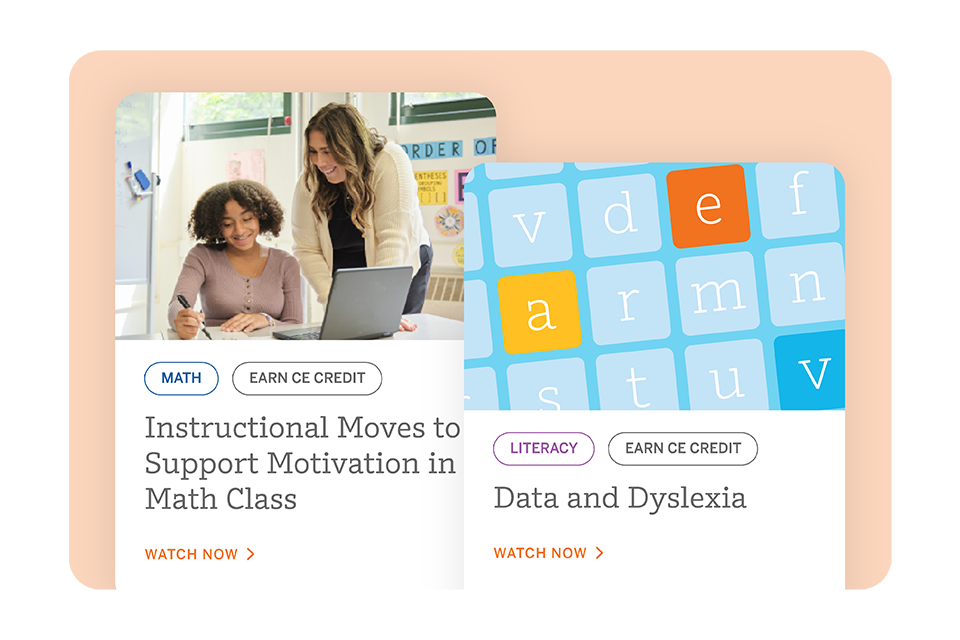
Amplify’s webinar library is a collection of valuable insights on the teaching and learning topics you care about. From quick tips to continuing education (CE) credit options, each webinar is designed to support educators across Amplify CKLA, Amplify ELA, Amplify Science, Amplify’s math programs, and the Science of Reading. Explore these free professional learning opportunities from the Amplify team below.
Amplify CKLA for Georgia
Powerful, personalized reading instruction that engages students and saves teachers time
Boost Reading is our personalized reading program for grades K–5. Its captivating storylines engage students in powerful reading instruction and practice. Whether students are learning to read fluently or sharpening their comprehension skills, Boost Reading accelerates their growth while freeing educators up to work with small groups or individual students.
Science of Reading-based support for every student
Students come to school with a range of abilities and achieve mastery at different rates. Providing each learner with the specific support they need to progress can be challenging. Enter Boost Reading’s personalized reading literacy program.
“Your team has taken a weight off my shoulders and I am so grateful and can’t thank you enough! My biggest concern during this time was how can I keep pushing my readers at their level—and giving them what they need—and Boost Reading solved that.”
Jeanine
2nd-grade teacher, Chicago, IL
“This program is extremely engaging and interactive for each student. They begged to get on Boost Reading and they cried when it was time to log off! This program is a great addition to our curriculum.”
Brittany
2nd grade teacher, Utah
“My students love the program, and they don’t even realize they are learning some tough concepts. Their reading scores are improving even since the beginning of the year.”
Amber
Junior High ELA teacher, California
Our approach
Leveraging compelling storytelling and the latest research, Boost Reading helps students achieve true mastery of the concepts they need to become strong, life long readers. See the research behind the program.
More than a digital worksheet
Built on the Science of Reading, Boost Reading offers a fresh, modern program that builds on student strengths while adapting to their needs.
A program students love
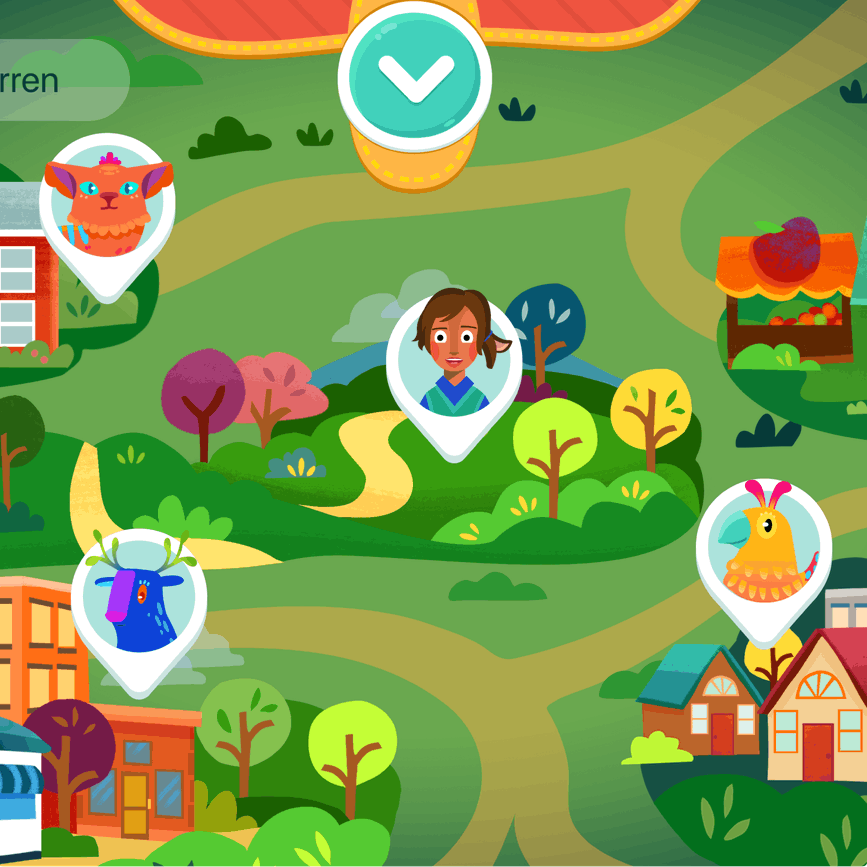
Boost Reading offers an out-of-this world learning experience for students. The program’s age-appropriate narratives create a learning experience that leaps off the screen.
The right experience for every student
The program meets all students where they are with powerful individualized instruction and practice, enabling student growth at all reading levels.
Proven results
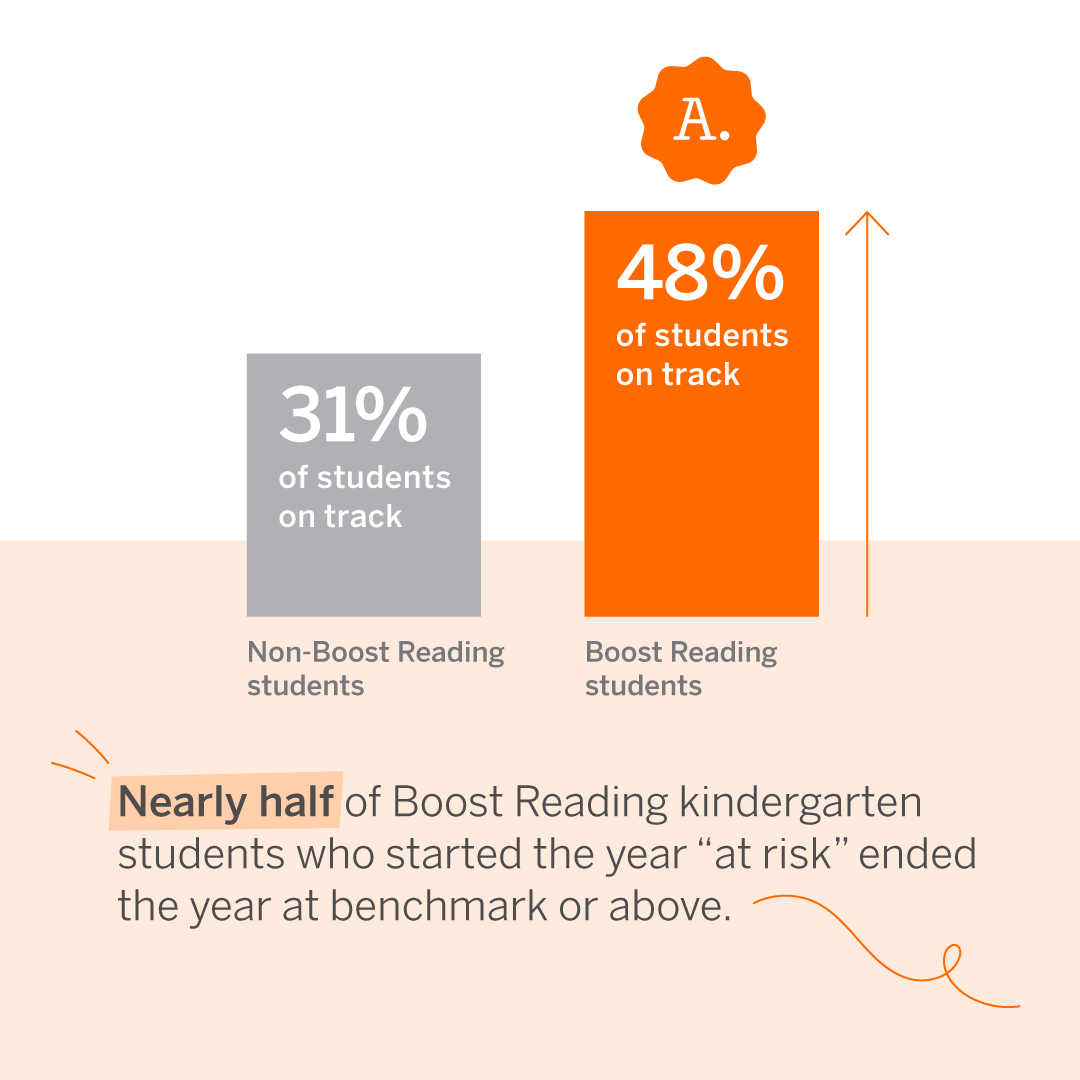
Boost Reading works. Efficacy studies show significant growth for students using Boost Reading. In as little as 30 minutes a week, Boost Reading accelerates growth for all students and helps multilingual learners close the gap with their peers. Learn more here.
Free white paper
Comprehension processes: The missing link in reading comprehension
Students of Boost Reading use digital texts that adapt to their needs via an adaptive algorithm that unlocks each book at the exact right point in a reader’s development.
Personalized instruction
Boost Reading adapts to each reader’s unique needs across 13 skill areas, sending students on their own personalized reading journey. The programs offer both remediation and enrichment through a comprehensive range of instruction—from foundational skills to comprehension to close reading.
Engagement engineering
Using the science behind engagement and motivation, Boost Reading is built to deliver compelling narrative experiences that speak to students’ stories of growth and development. This personal connection allows students to directly map their progress in the storyline to their reading effort and growth, helping them understand the value of effort and practice.
Based on the Science of Reading
Boost Reading is built on the latest research in the Science of Reading. It provides the explicit, systematic foundational skills essential for every student—and it goes beyond. It’s the only program that focuses on the things our brain does while we’re reading that allow us to make sense of text—also known as comprehension processes. Learn more about comprehension processes on Science of Reading: The Podcast.
Instruction based on student data
Boost Reading features an automatic placement tool that requires no prior assessment. The program is able to pinpoint the most effective starting point for each student and provide them an engaging reading program personalized for their exact individual needs. The program also integrates directly with Amplify’s mCLASS® with DIBELS® 8th Edition assessment as well as other third party assessments.
Reports at every level
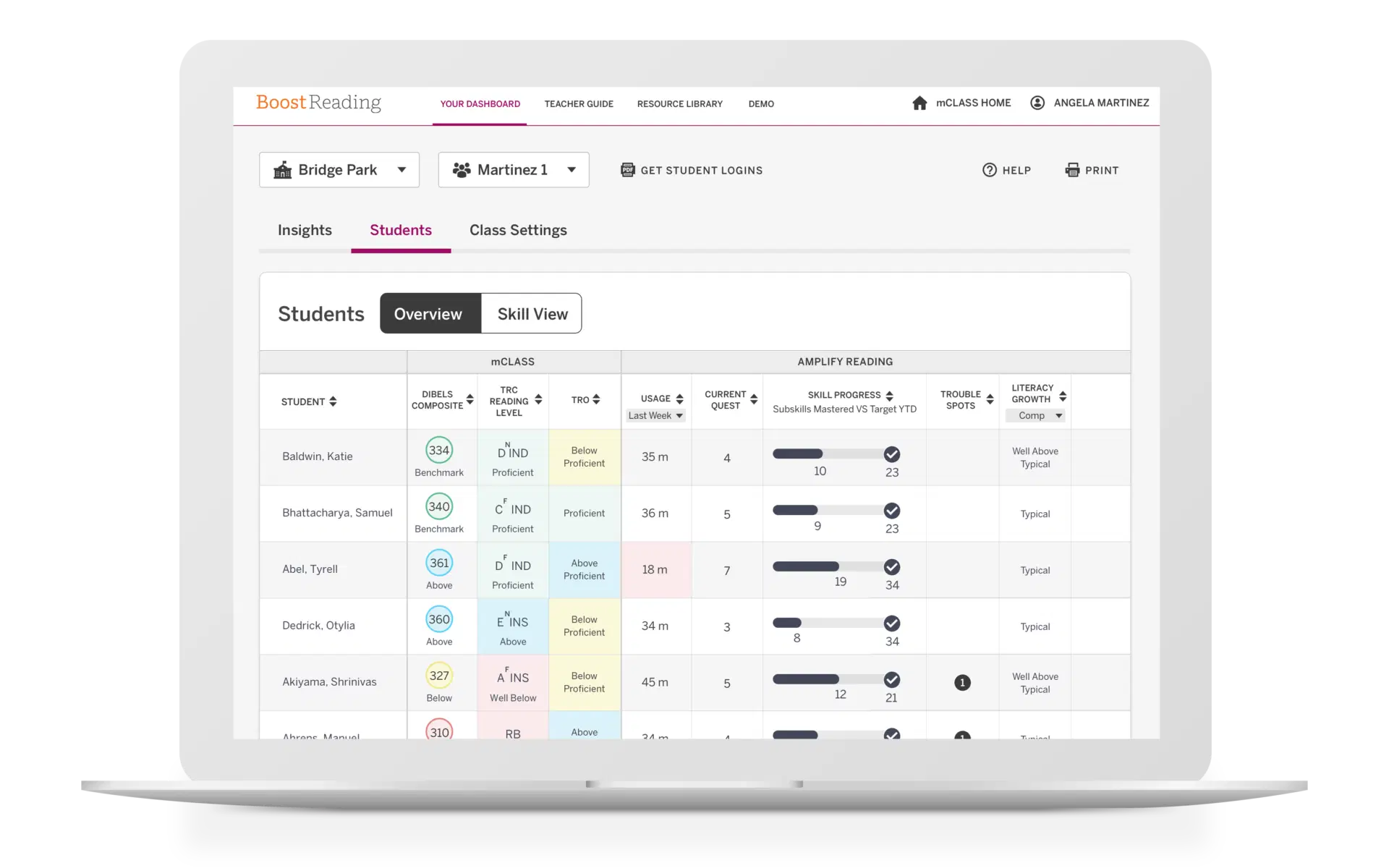
Boost Reading provides actionable insights into students’ reading development across 13 literacy skill domains. The program creates reports for classroom teachers, literacy specialists, principals and district leaders, and even parents and caregivers at home.
Explore more Science of Reading-based programs.
Our programs are designed to support and complement one another. Learn more about our related programs.
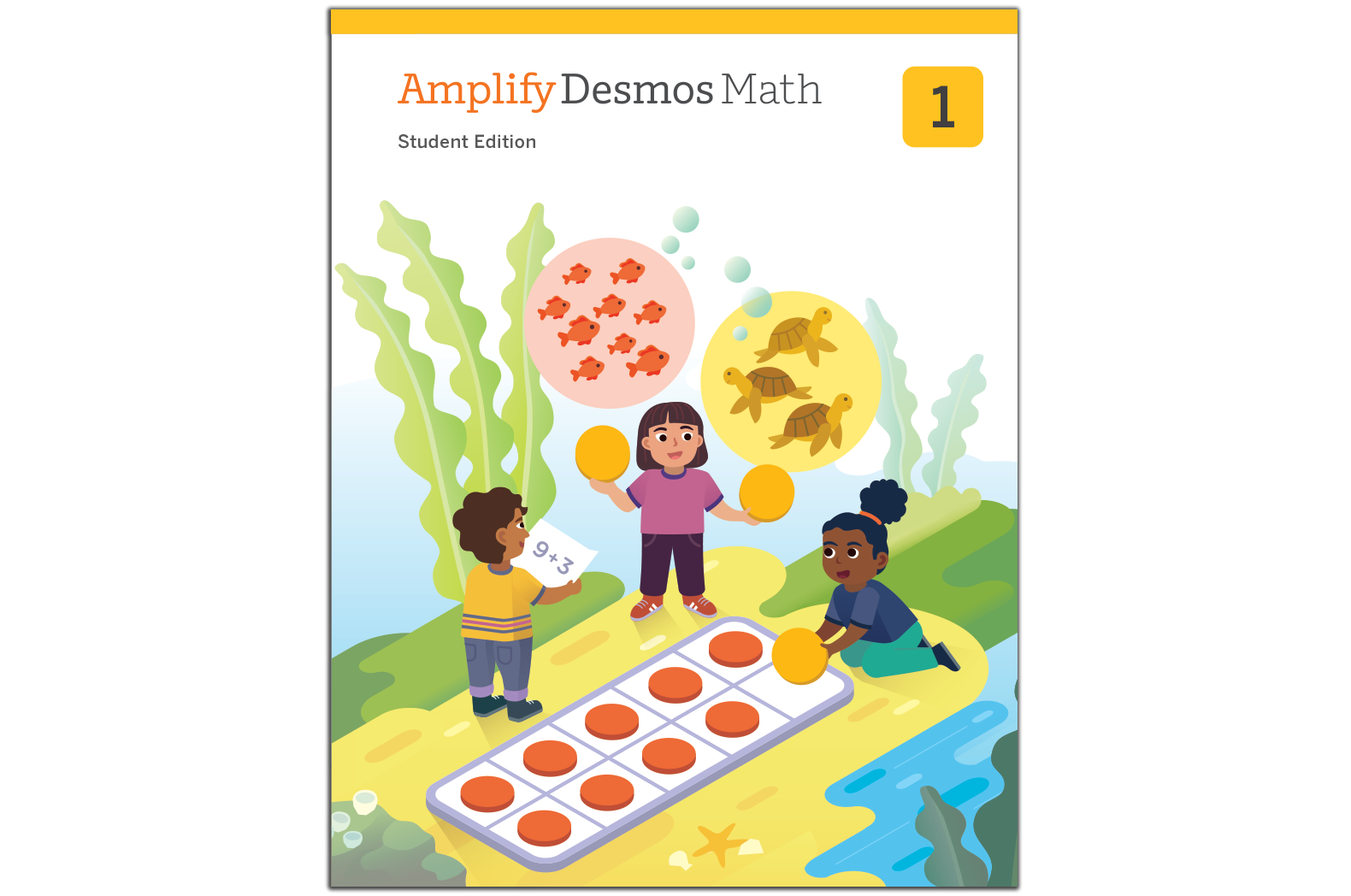
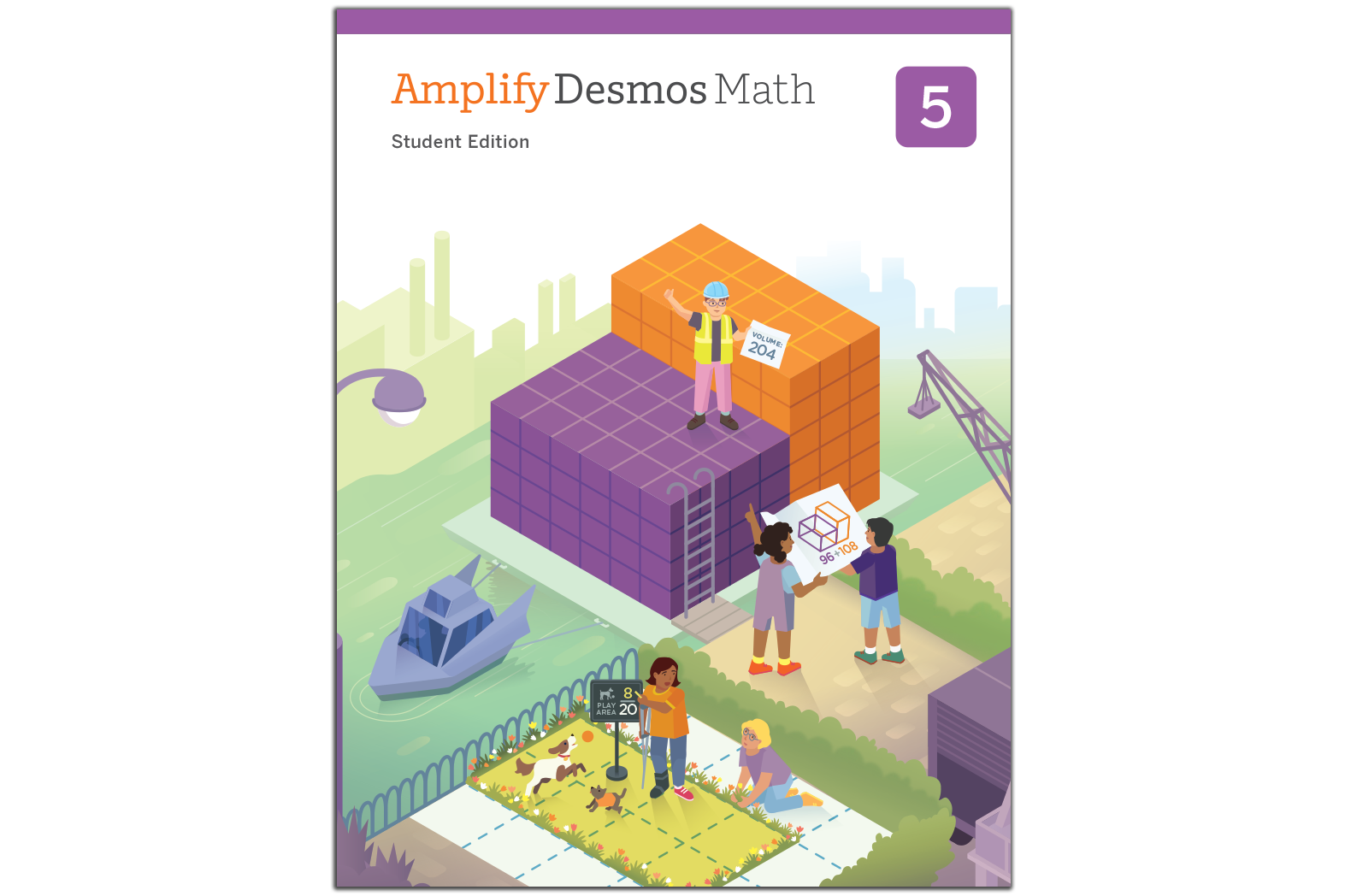
Amplify Desmos Math K-5 thoughtfully combines conceptual understanding, procedural fluency, and application. Each lesson is designed to tell a story by posing problems that invite a variety of approaches before guiding students to synthesize their understanding of the learning goals.
Scroll to learn more about the program and explore sample materials.
About the program
We believe in math that motivates. Our structured approach to problem-based learning builds on students’ curiosity to develop lasting grade-level understandings for all students.
The program motivates students with interesting problems they are eager to solve. Teachers can spend more time where it’s most impactful: creating a collaborative classroom of learners.
A powerful suite of math resources
Amplify Desmos Math combines the best of problem-based lessons, intervention, personalized practice, and assessments into a coherent and engaging experience for both students and teachers. Feel free to explore our grade-level ancillary samplers to learn more about assessment and reporting, intervention, and differentiation:
mCLASS® Assessments, along with daily formative checks, measure not only what students know, but how they think. The asset-based assessment system provides teachers with targeted, actionable insights, linked to core and intervention resources. Visit our mClass Math site to learn more.
Core instruction
Amplify Desmos Math lessons pair problems students are eager to solve with clear instructional moves for teachers. With low-floor, high-ceiling tasks every student can actively participate and be a part of the math community. Unit- and lesson-level core assessments give teachers data at their fingertips to guide and differentiate instruction.
Differentiation
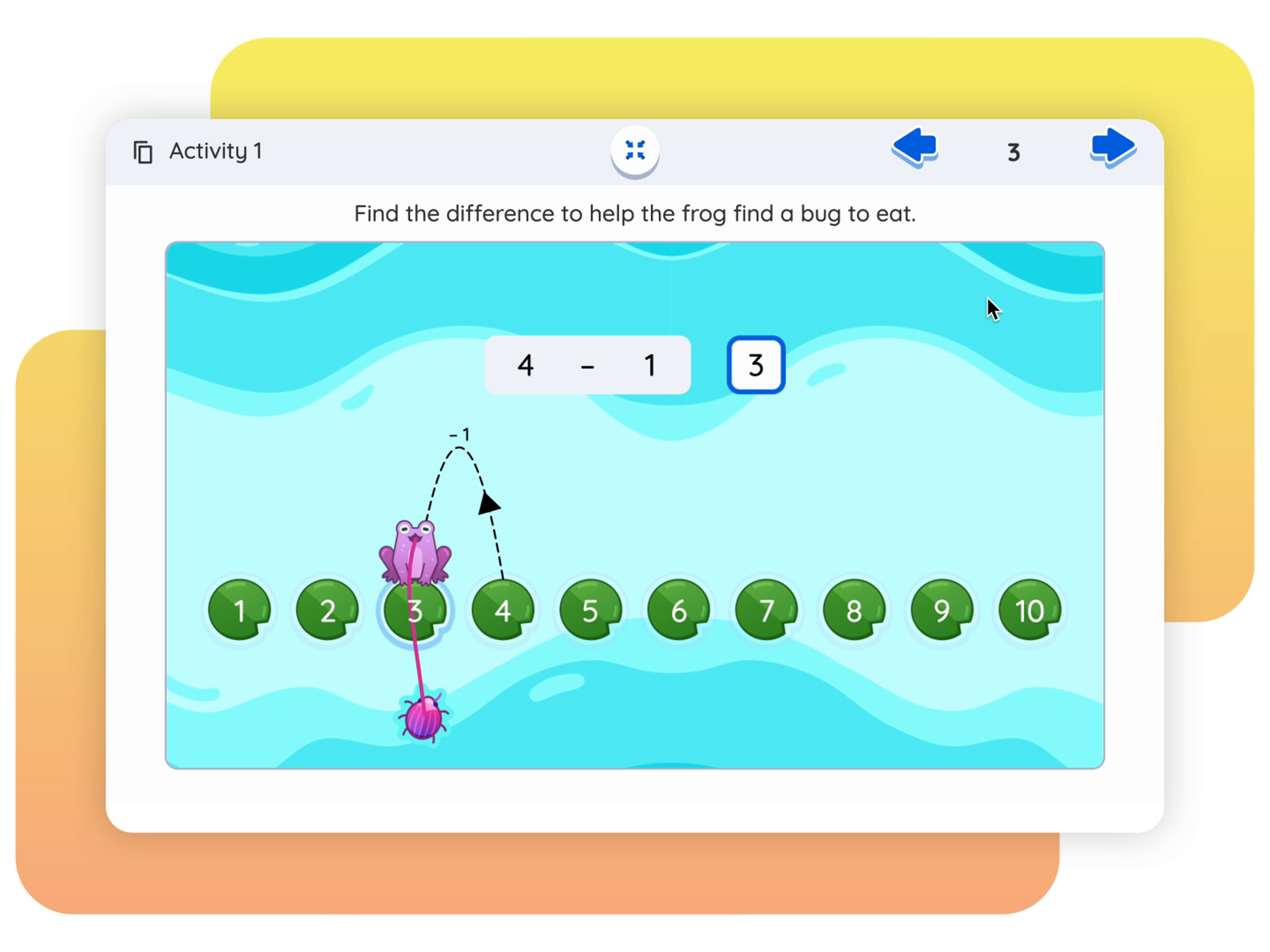
Boost Personalized Learning activities help students access grade-level math through engaging, independent digital practice. Responsive Feedback adjusts to students’ work, providing item-level adaptivity to further support their learning and offer personalized differentiation. Visit our Boost Math site to learn more.
Embedded intervention
Integrated resources like Mini-Lessons, Fluency Practice, and Math Adventures provide targeted intervention on a specific concept or skill connected to the daily lesson. Extensions are also available to stretch students’ understanding.
Multilingual Learners
To support multilingual/English learners, Amplify Desmos Math incorporates research-based Math Language Routines (MLRs) by providing language modality strategies like sentence frames where appropriate, both in the teacher language provided for each task and in the differentiation support section found throughout the program. For further information on math language development, please see pg. 82 of the Amplify Desmos Math Program Guide.
Review Resources
To support your review of Amplify Desmos Math here are links to important K-5 review resources:
Amplify Desmos Math Correlations to Washington State Standards:
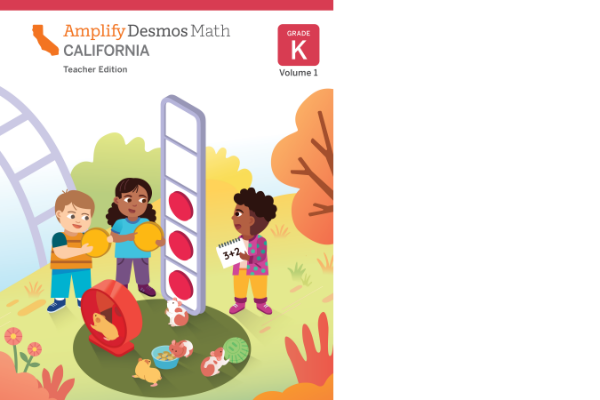
Click the links in the drop-down sections below to explore sample materials from each grade. To see sample student responses, please click on the Teacher Edition pages and scroll to “Sample Student Work” (first one is about 30 pages in) or click on Intervention and Extension resources.
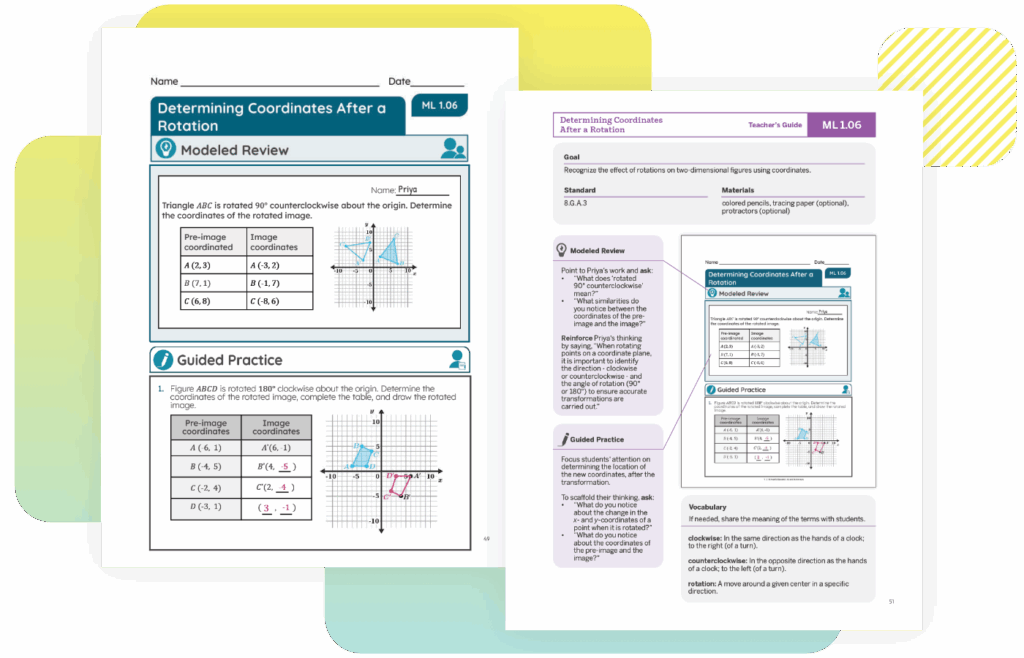
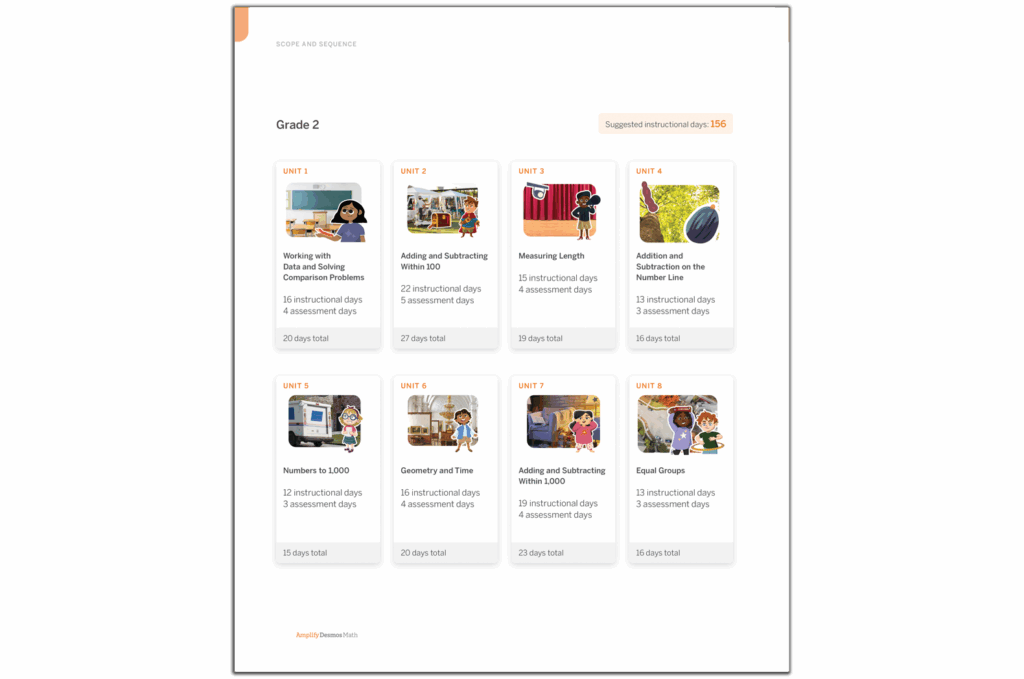
Planning and instructional guidance is visual, organized, and easy-to-follow. To help you review the program, we have included samples from a complete sub-unit on this site: Unit 2, Sub-Unit 1: Counting and Comparing Objects.
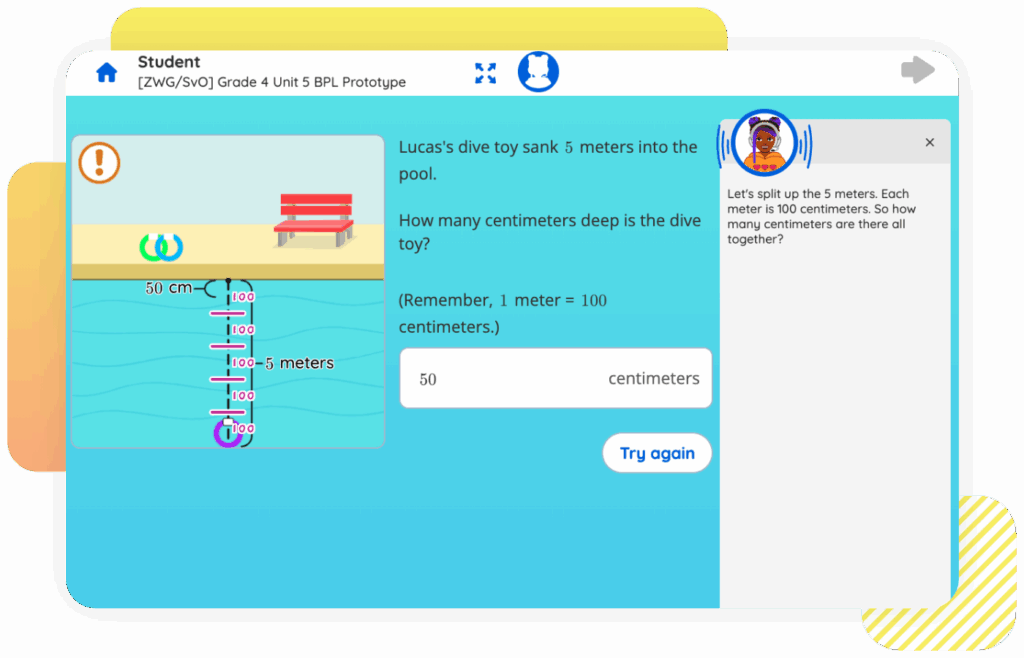
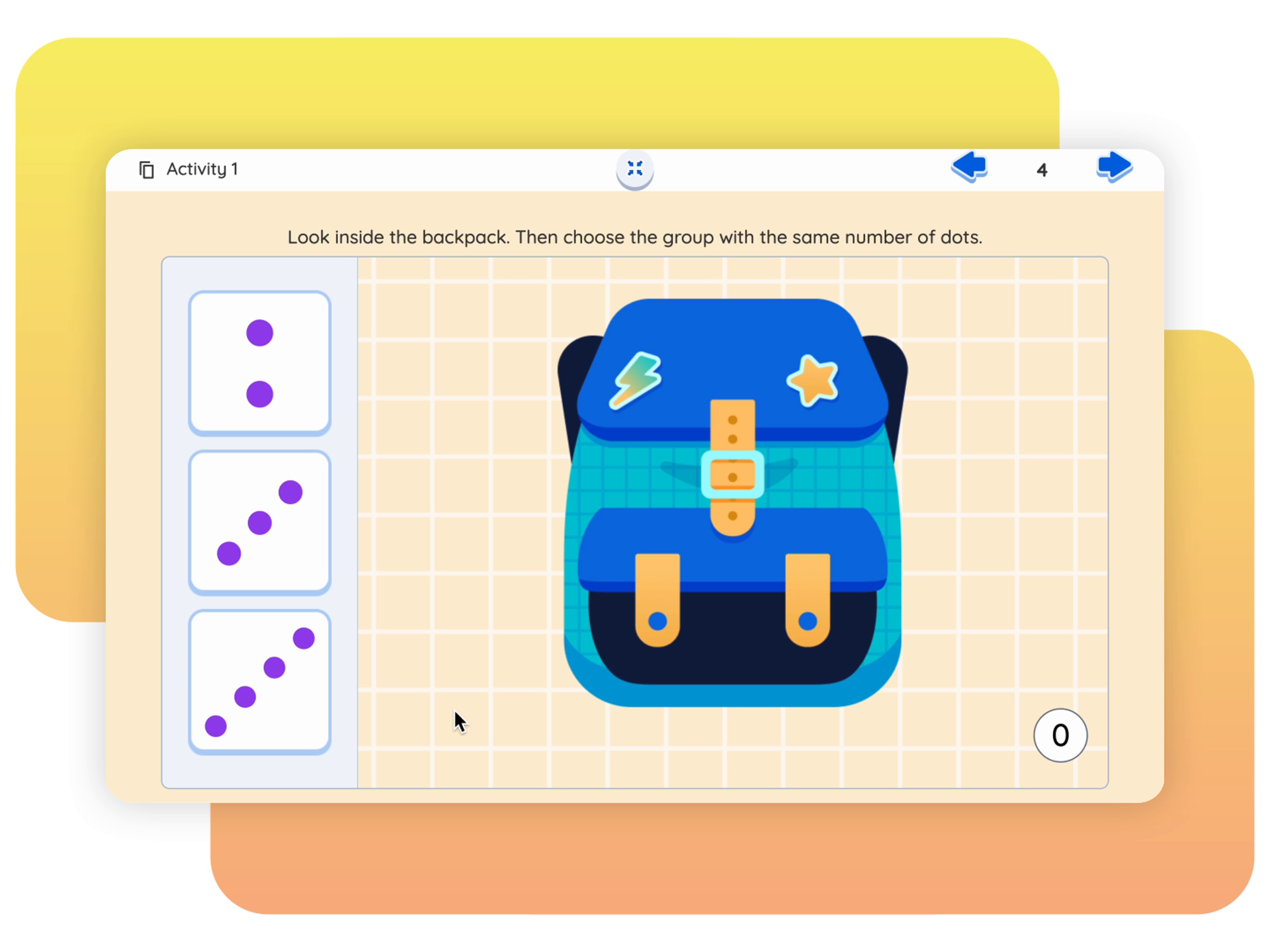
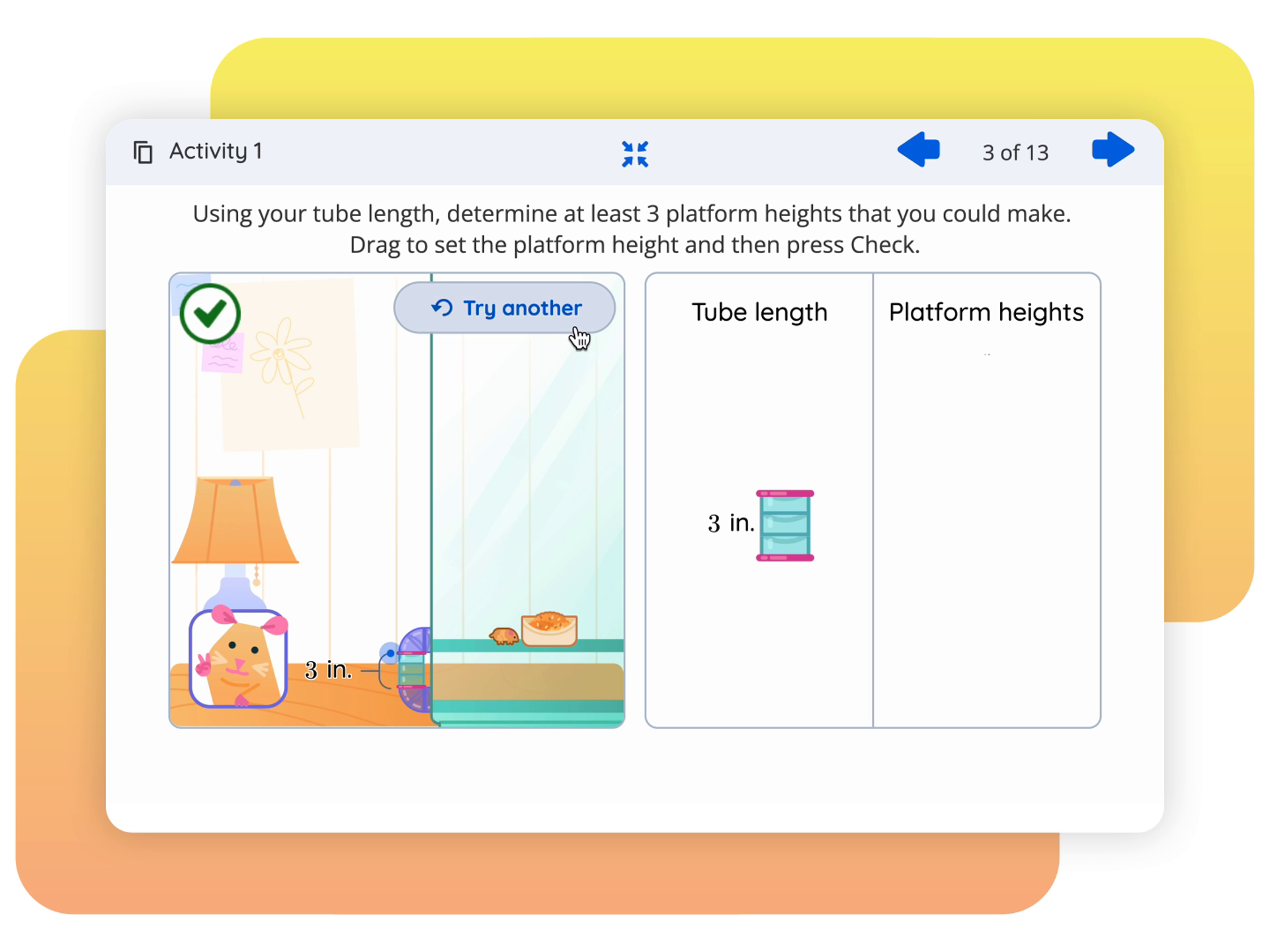
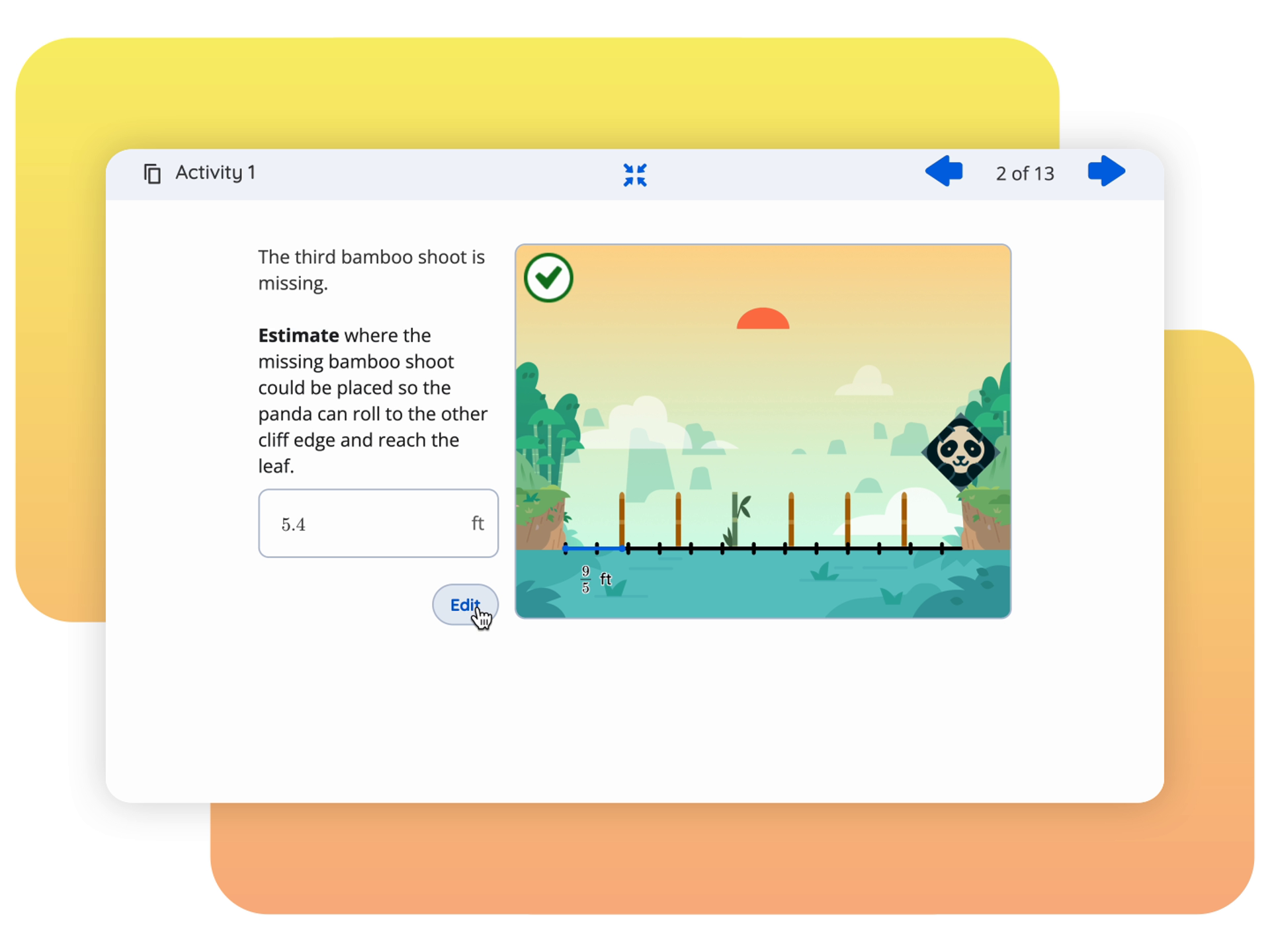
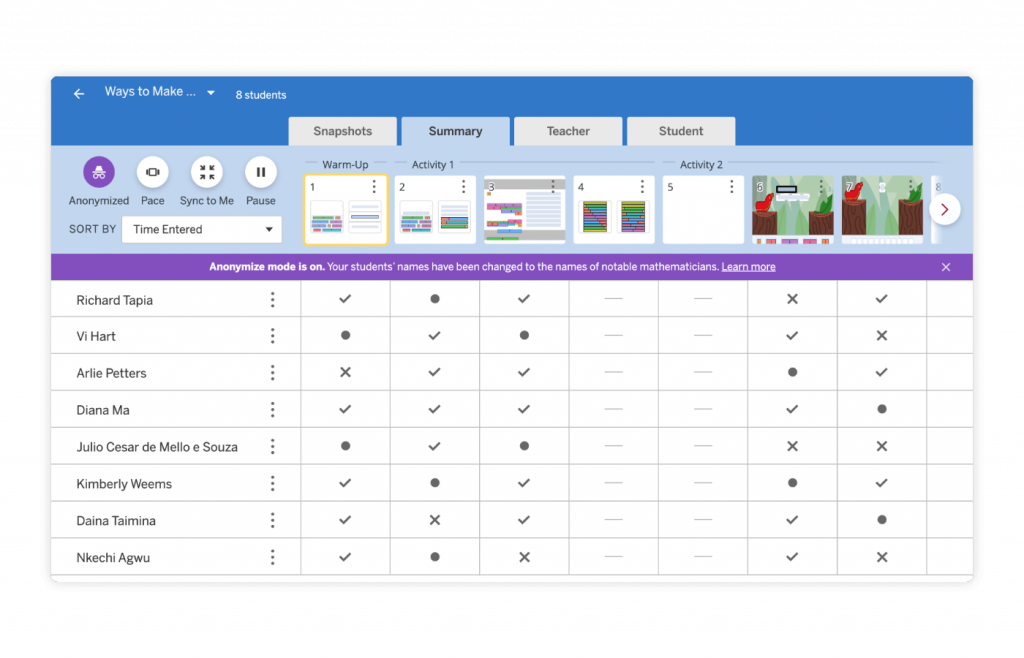
In this lesson, students apply their understanding of how to compare groups of images as they determine which group has more or fewer and then compare their strategies by guiding a bear through a path that has more mushrooms than the other.
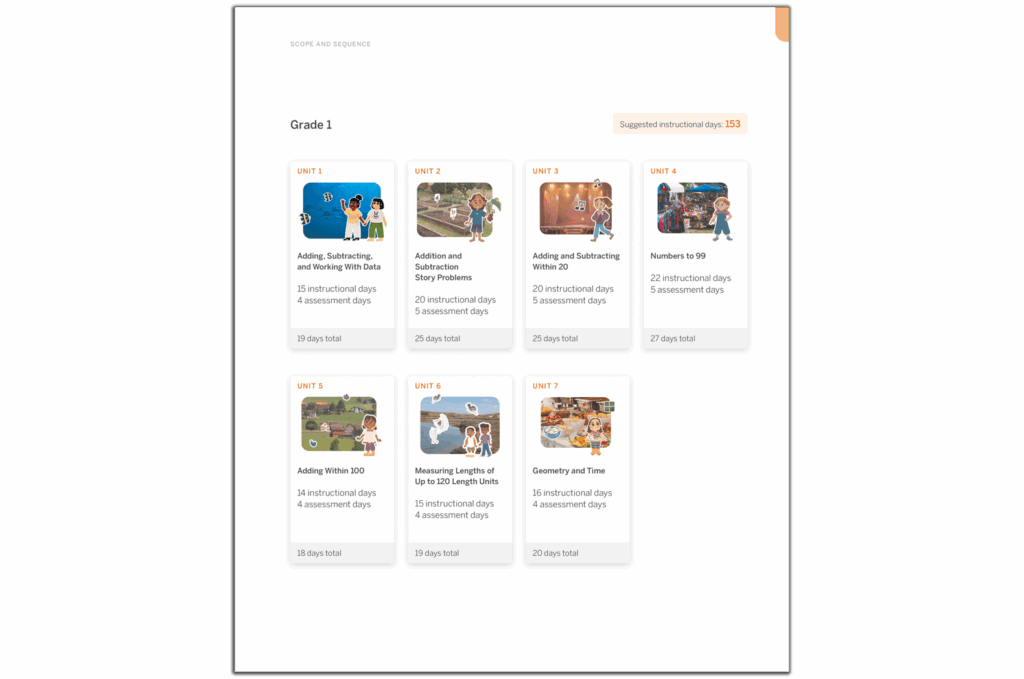
Planning and instructional guidance is visual, organized, and easy-to-follow. To help you review the program, we have included samples from a complete sub-unit on this site: Unit 2, Sub-Unit 1: Story Problems in Maui.
Planning and instructional guidance is visual, organized, and easy-to-follow. To help you review the program, we have included samples from a complete sub-unit on this site: Unit 2, Sub-Unit 1: Adding and Subtracting.
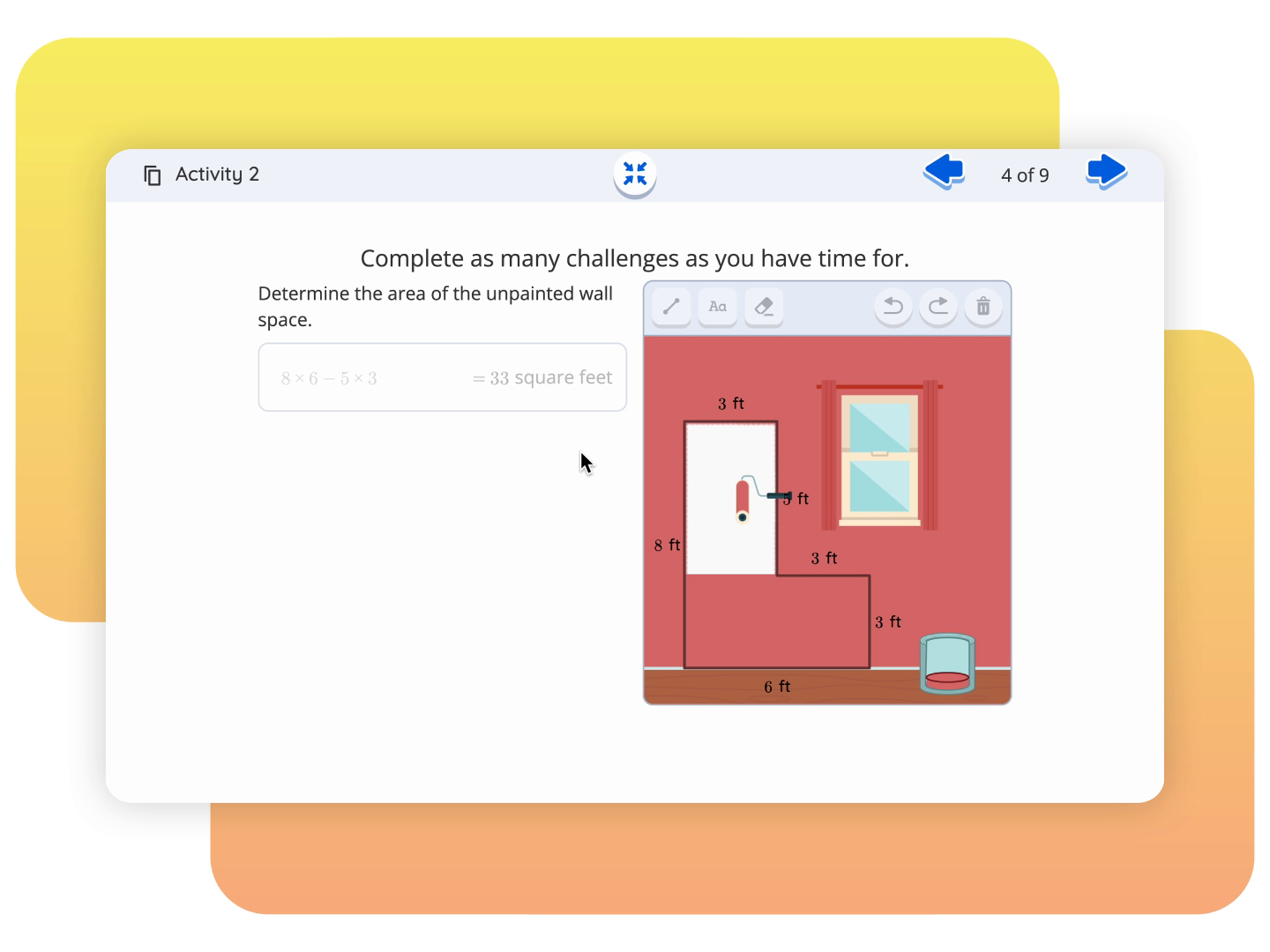
Planning and instructional guidance is visual, organized, and easy-to-follow. To help you review the program, we have included samples from a complete sub-unit on this site: Unit 2, Sub-Unit 1: Concepts of Area Measurement.
Planning and instructional guidance is visual, organized, and easy-to-follow. To help you review the program, we have included samples from a complete sub-unit on this site: Unit 2, Sub-Unit 1: Size and Location of Fractions.
Planning and instructional guidance is visual, organized, and easy-to-follow. To help you review the program, we have included samples from a complete sub-unit on this site: Unit 2, Sub-Unit 1: Fractions as Quotients.
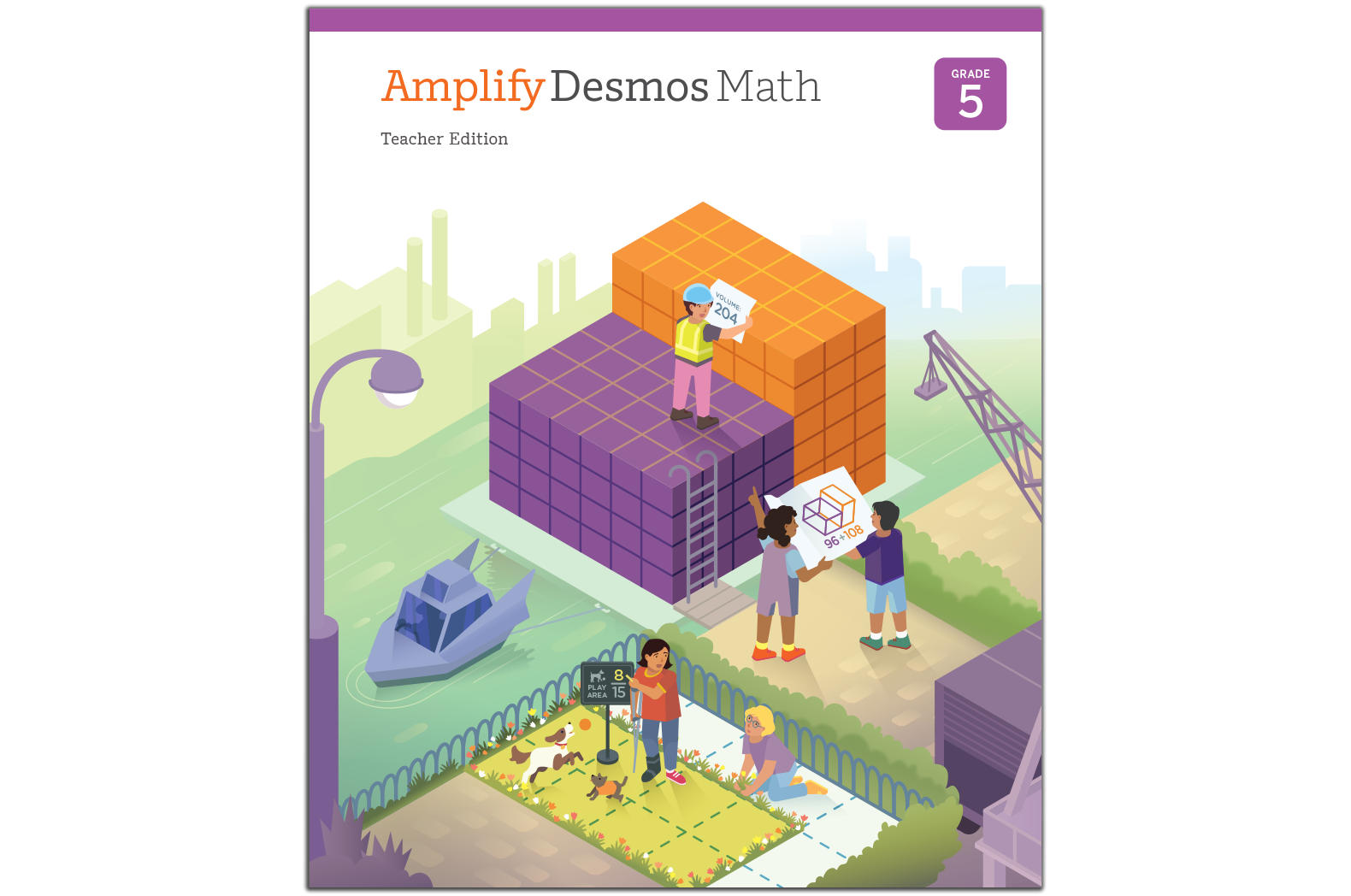
Students decompose a figure into rectangular prisms and determine the volume of the figure by adding the volumes of the individual prisms.
Contact Us
If you have any questions throughout your review process or need additional samples, please don’t hesitate to contact:
Alicia O’Neil
Account Executive
425-890-6103
aoneil@amplify.com
Request additional samples
Ready to learn more? Connect with an Amplify Desmos Math expert to request additional program samples.
Screen and intervene faster with mCLASS DIBELS 8th Edition: California SB 114 Approved
California educators, Amplify’s mCLASS Assessment Suite is one of three approved screeners in California for Reading Difficulties at K–2.
mCLASS® DIBELS® 8th Edition is an all-in-one system for Science of Reading-based reading difficulties screening, progress monitoring, and instruction for grades K-6. Amplify’s Spanish language assessment, mCLASS Lectura, works in tandem with DIBELS 8th Edition’s English assessments to help teachers understand where their Spanish-speaking students are in their English and Spanish literacy paths.
About the program
mCLASS offers teacher-administered assessment, intervention, and personalized instruction for grades K–6. Know exactly how to monitor and support every student in your classroom, with features like:
Precise one-minute measures based on over three decades of predictive data.
Reading difficulties screening in one tool.
Instruction that highlights observed patterns and recommends activities.
Robust reports for teachers, specialists, administrators, and parents.
The right measures at the right time
With mCLASS DIBELS 8th Edition, you’ll assess students based on grade-specific curriculum and instructional standards, in accordance with SB 114 guidelines.
mCLASS DIBELS 8th Edition offers one-minute, easy-to-administer measures of processing speed, phonological awareness, alphabetic principle, and word reading.
DIBELS® 8th Edition subtest alignment with SB 114
Screening Area
mCLASS DIBELS 8th Edition Measure
Grade K
Grade 1
Grade 2
Grade 3
Grade 4–6
Rapid naming ability
Letter Naming Fluency (LNF)
Phonological awareness
Phoneme Segmentation Fluency (PSF)
Alphabetic principle
Nonsense Word Fluency (NWF)
Word reading
Word Reading Fluency (WRF)
Word reading
Oral Reading Fluency (ORF)
Comprehension
Maze
Validated as a universal screener
Strong reliability and validity evidence shows that DIBELS 8th Edition can effectively assess students in key skills linked reading difficulty. The research supporting DIBELS 8th Edition, conducted by the University of Oregon, is rigorous, meets high technical standards, and empowers educators to make well-informed decisions.
mCLASS DIBELS 8th Edition provides rich data that helps you make informed instructional decisions and seek out further dyslexia screening evaluation if needed:
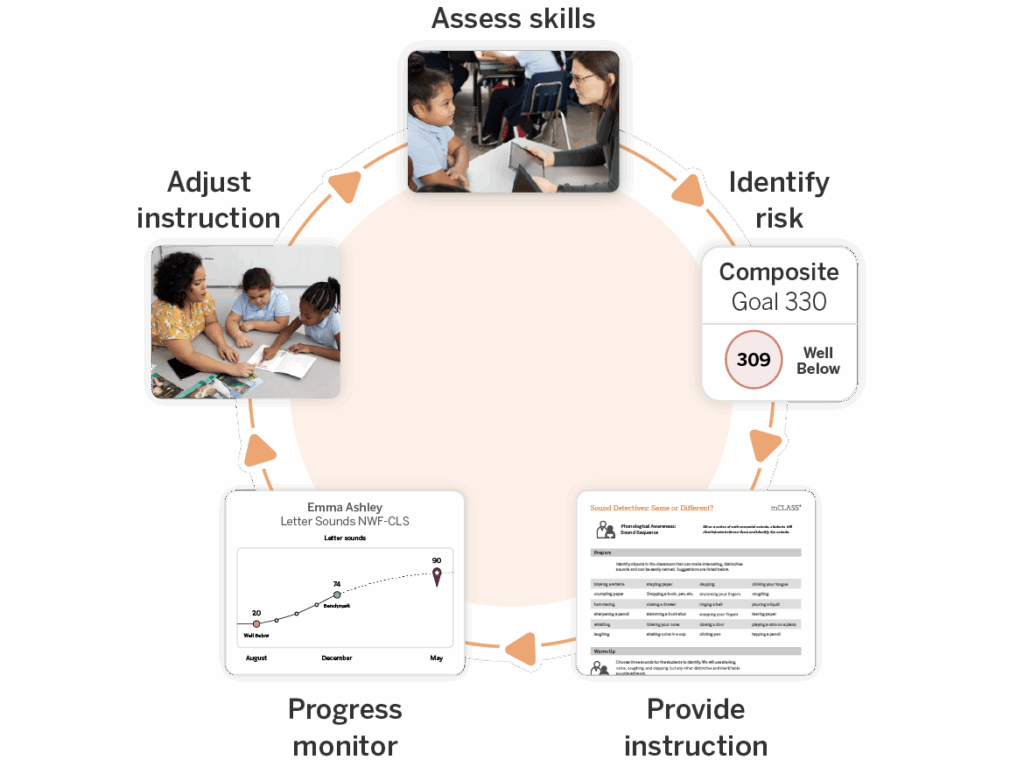
Assess skills: mCLASS DIBELS 8th Edition and additional measures in Rapid Automatized Naming (RAN), Spelling, Vocabulary, and Oral Language accurately assess students’ abilities.
Identify risk: The DIBELS 8 composite score shows each student’s risk level, with ‘Well Below Benchmark’ indicating a need for intensive support. Students who are also ‘Well Below Benchmark’ in RAN and/or Spelling have an additional Risk Indicator icon next to their name.
Provide instruction: The mCLASS Instruction feature analyzes student error patterns to key dyslexia-related subtests, then recommends small groups and explicit, multi-sensory activities for reinforcing skills.
Progress monitor: mCLASS includes progress-monitoring measures to track student growth in letter sounds, alphabetic principle, word reading, oral reading fluency, and comprehension, so that informed instructional decisions can be made.
Adapt instruction: mCLASS displays indicators based on progress monitoring performance that indicate when a change in instruction may be needed. It also updates instruction recommendations using the latest data.
In addition to identifying students with symptoms of dyslexia, mCLASS DIBELS 8th Edition data recommends early intervention, personalized instruction, and core instruction within Amplify’s early literacy suite. Based on the Science of Reading, Amplify’s early literacy suite programs follow an explicit and systematic structure, build knowledge, and instruct on all of the foundational skills essential to literacy development.
By assessing with mCLASS DIBELS 8th Edition and its Spanish counterpart, mCLASS Lectura, you’ll know with confidence whether a student truly shows signs of reading difficulties or is experiencing difficulties learning a new language.
When used together, mCLASS DIBELS 8th Edition and mCLASS Lectura feature a Dual Language Report that analyzes screening results in both languages. The report also details how each student can leverage their strengths from one language to support growth in the other.
Equal skill coverage in English and Spanish
Screening areas
English measure
Spanish measure
Description*
Letter Naming and RAN
Letter Naming Fluency (LNF)
Fluidez en nombrar letras (FNL)
Grades K–1: Naming letters in print. 1 minute, 1:1 administration.
Phonological Awareness (Segmentation)
Phonemic Segmentation Fluency (PSF)
Fluidez en la segmentación de sílabas (FSF) & Fluidez en la segmentación de fonemas (FSF)
Grades K–1: Hearing and using sounds or syllables in spoken words. 1 minute, 1:1 administration.
Phonological awareness (Elision)
¿Qué queda? (QQ)
Grades K–2: Produce the part of a word that remains after deleting a syllable or phoneme. 1 minute, 1:1 administration.
Letter-Sound Knowledge
Nonsense Word Fluency Correct Letter Sounds (NWF-CLS)
Fluidez en los sonidos de letras (FSL)
English: Grades K–3: Identify letter-sound correspondences in the context of pseudo-words. Spanish: Grades K-1: Identify letter-sounds in isolation. 1 minute, 1:1 administration.
Letter-Sound Knowledge (Receptive)
Fluidez en los sonidos de las letras K-Inicio (FSL K-Inicio)
Grade K: Identify (point to) which letter makes a certain sound. Untimed, 1:1 administration
Decoding
Nonsense Word Fluency Words Recoded Correctly (NWF-WRC)
Grades K–3: Reading common words easily, quickly and correctly.1 minute, 1:1 administration.
Fluency
Oral Reading Fluency (ORF)
Fluidez en la lectura oral (FLO)
Grades 1–6: Reading connected text with accuracy and automaticity. 1 minute, 1:1 administration.
Reading Comprehension
Maze
¿Cuál palabra? (CP)
Grades 2–6: Understanding meaning from texts. 3 minutes, group administration.
Vocabulary
Vocabulary
Vocabulario
Grades K–3: Knowledge of grade-specific words. 15 minutes, group administration.
Encoding
Spelling
Ortografía
Grades K–3: Arranging letters correctly to spell words with grade appropriate features 15 minutes, group administration.
RAN (Numbers)
Rapid Automatized Naming
–
Grades K–3: Correctly and quickly naming visual symbols, such as numbers. 3-4 minutes, 1:1 administration.
Language Comprehension
Oral Language
Lenguaje oral
Grades K–2: Demonstrate the ability to use words and phrases acquired through conversations, reading and being read to, and responding to texts. 5 minutes, 1:1 administration.
*Students can be assessed using off-grade measures when information on specific skills is needed.
Dyslexia resources for families
Families play a crucial role in helping children overcome reading challenges. mCLASS DIBELS 8th Edition and mCLASS Lectura provide a Home Connect letter after each screening to explain the results in family-friendly language, recommend activities, and direct families to a free website for additional at-home support.
Developmentally appropriate
Computer-based assessments that require students to complete tasks silently or independently may over-identify students for intervention services, especially young learners who are still developing focus and attention abilities.
mCLASS requires students to actively demonstrate their proficiency in producing letter sounds, forming words, and reading texts. This approach to assessment aligns with the California Reading Difficulties Risk Screener Selection Panel (RDRSSP) guidelines for effective screening of reading challenges. By choosing mCLASS for reading difficulties screening, you’ll gain accurate information about a student’s risk for dyslexia, and gain the capability to monitor every student’s path to reading proficiency.
Please watch the navigation videofor a short overview of the mClass platform, and reach out to your Amplify Account Executive (contact information below) for demo access credentials.
Questions?
Looking to speak directly with your local representative? Get in touch with a California team member to learn more about our early literacy suite or request a demo account.
CENTRAL VALLEY and CENTRAL COAST Demitri Gonos Senior Account Executive (559) 355-3244 dgonos@amplify.com
VENTURA and L.A. COUNTY Jeff Sorenson Associate Account Executive (310) 902-1407 jsorenson@amplify.com
ORANGE and L.A. COUNTY Lauren Sherman Senior Account Executive (949) 397-5766 lsherman@amplify.com
SAN BERNARDINO and L.A. COUNTY Michael Gruber Senior Account Executive (951) 520-6542 migruber@amplify.com
RIVERSIDE and L.A. COUNTY Erin King Sales Director, CA (512) 673-8526 eking@amplify.com
SAN DIEGO COUNTY Kirk Van Wagoner Senior Account Executive (760) 696-0709 kvanwagoner@amplify.com
BUTTE, DEL NORTE, HUMBOLDT, and SHASTA COUNTY
DISTRICTS UNDER 2250 ENROLLMENT
Kevin Mauser
Lead Account Executive
(815) 534-0148
kmauser@amplify.com
Amplify Science-arch
CKLA – Knowledge Research Units for K–5
Amplify Science K–5 Review Toolkit
Simplify your science curriculum review journey with the Amplify Science Review Toolkit. Within this Toolkit, you’ll find program overview information, classroom videos, evaluation rubrics, and a free sample unit.
Don’t forget to check out our to the PA STEELS standards here.
What is Amplify Science?
A collaboration between the curriculum experts at UC Berkeley’s Lawrence Hall of Science and instructional technology experts at Amplify, Amplify Science is a comprehensive program that blends literacy-rich activities, hands-on investigations, and interactive digital tools. Amplify Science empowers students to think, read, write, and argue like 21st-century scientists and engineers. Highly adaptable and user-friendly, the program gives schools and individual teachers flexibility with their technology resources and preferences.
The program is backed by gold-standard research and is currently used by thousands of teachers across the US.
See Amplify Science in action
Amplify Science in Action: a week in the life (K–5)
What does a week in the life of an Amplify Science teacher look like? We asked Keneisha Charleston, a second-grade teacher from Chicago Public Schools, to talk through an example of what one week of using Amplify Science is like in her classroom.
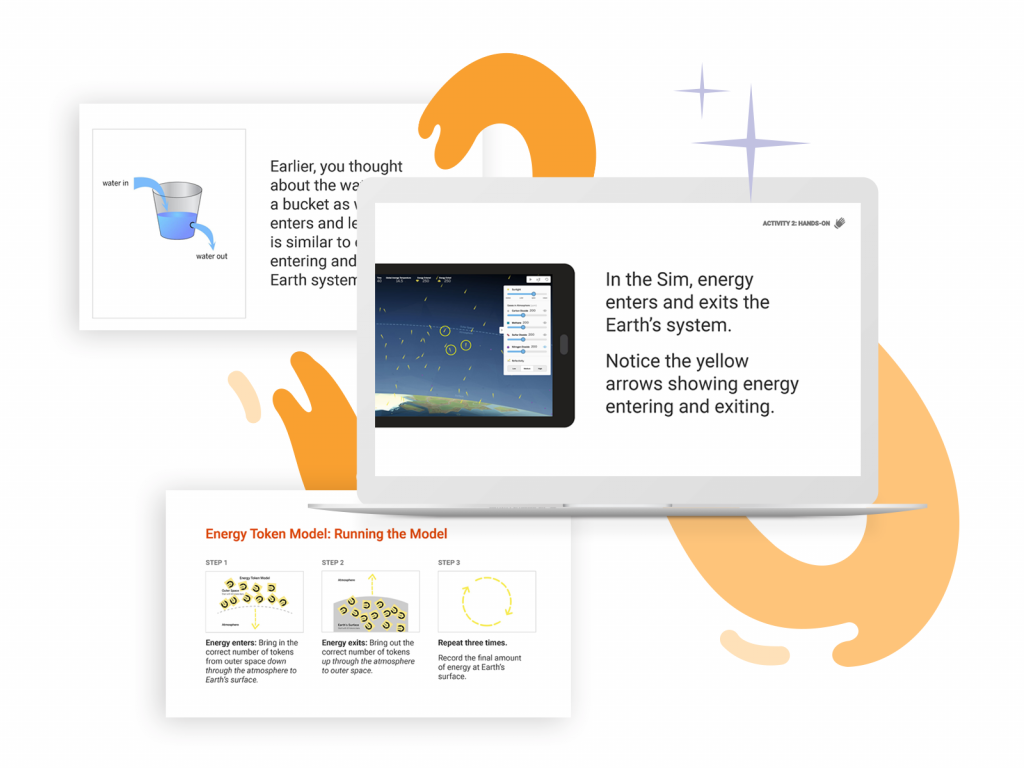
In Amplify Science, students take on the role of a scientist or engineer to actively investigate compelling phenomena through engaging hands-on investigations, immersive digital simulations, comprehensive reading and writing activities, and lively classroom discussions.
See what Amplify Science looks like in a classroom with more topical videos:
Amplify Science is rooted in the research-based Do, Talk, Read, Write, Visualize model of learning. Students engage with science and engineering practices, figure out disciplinary core ideas, and utilize and apply crosscutting concepts in multiple modalities across thoughtful, structured lessons, all centered around engaging anchor phenomena. Learn more about how a unique mix of activities and modalities provide students with multiple points of entry into the instruction.
Join the Lawrence Hall of Science for a series of free webinars! Curriculum experts will explore why embedded engineering and phenomena-based science instruction deliver results, with examples from Amplify Science.
Webinars are scheduled throughout the spring, and you can always sign to watch a recording if you’re unable to attend live.
With six levels of embedded differentiation and assessments, teachers can make sure students are gaining key skills while not interrupting instruction. Because the program does this work in the background, teachers have more time doing what they love.
Also, only Amplify offers the 100-Day Pathway, a built-in guide to covering required content for each grade level in just 100 days while allowing teachers to add supplemental lessons and activities.
Knowledge Matters in Middle School
Amplify ELA has been recognized by the Knowledge Matters Campaign as a high-quality, knowledge-building literacy curriculum.
The Campaign highlights Amplify ELA as a program that infuses wonder and excitement into every learning experience—forging connections across grade levels and providing comprehensive support for both students and educators.
Through its engaging digital program, powerful differentiation and assessment tools, and step-by-step instructional guides, our curriculum responds directly to the challenges and opportunities faced by middle school students and teachers.
With text always at the center, students are encouraged to make ideas and opinions about meaning for themselves. Rather than focusing on right or wrong answers, they develop ideas and opinions on relevant, real-world, texts.
We provide six levels of differentiated support.
Multiple entry points and six levels of embedded differentiated support allow every student, regardless of fluency or ability level, to engage with the same complex texts and curriculum.
We assess while you instruct.
Embedded assessments and reports provide insight into each student’s progress without having to interrupt daily instruction. With data being collected at every learning moment, teachers can respond to student needs faster than ever before.
Amplify your teaching with ELA PD!
Amplify ELA offers targeted professional development (PD) sessions designed to optimize teaching strategies, enhance student engagement, and ensure effective curriculum delivery. Gain insights and techniques to make the most of your instructional time.
Amplify ELA is a rigorous core curriculum that empowers teachers and engages middle school students.
Student Edition
Available digitally and in print, the student materials guide middle schoolers through complex texts and writing by:
Engaging students with high-quality narrative and informational texts.
Providing videos, audio supports, and digital experiences that capture their attention.
Keeping all of their writing in one place with a personal Writing Journal.
Teacher Edition
Available digitally and in print, the Teacher Edition contains all the information teachers need to facilitate classroom instruction, including:
Detailed lesson plans.
Video teacher tips embedded in the lesson.
Standards alignment and exit tickets.
Real-time differentiation strategies.
Robust reporting.
Interactive Quests
Quests are fun, week-long immersions into a specific, multilayered topic. They enable students to practice analytical reading, writing, speaking, and listening skills—all while building a strong classroom community.
Digital library for independent reading
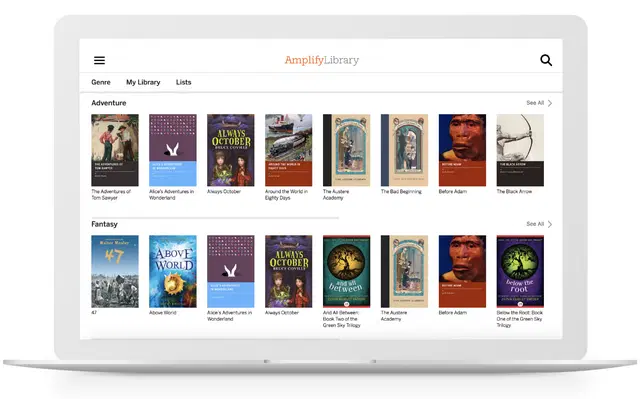
The expansive Amplify Library includes more than 700 digital fiction, nonfiction, classic, and contemporary titles.
Amplify ELA makes teachers’ lives easier
Our program ensures that standards are covered, skills are taught, and students are prepared with proper scaffolding and encouragement.
Introducing new units for Amplify CKLA and Amplify Caminos K–5
As part of our commitment to creating even richer and more wide-ranging curricula, we are excited to release six new units for both Amplify CKLA and Amplify Caminos!
Our brand-new Knowledge Research units carry forward the powerful and proven instructional approach of both Amplify CKLA and Amplify Caminos while also:
Adding more variety to engage students from many walks of life. The rich topics and highly visual components featured in these units provide students with even more “windows and mirrors” and perspectives as they work to build knowledge.
Adding more authentic literature. Each new research unit revolves around a collection of high-interest authentic trade books that will spark more curiosity and inspire more inquiry.
Adding more flexibility. Units can be implemented for extended core instruction during flex periods, district-designated Pausing Points, or enrichment periods.
Units cover a variety of rich and relevant topics:
With these new units, students will soar to new heights with Dr. Ellen Ochoa, Amelia Earhart, and the Tuskegee Airmen. They’ll feel the rhythm as they learn about Jazz legends Miles Davis, Tito Puente, and Duke Ellington. And they’ll explore the far reaches of the world with Jacques Cousteau, Matthew Henson, and Eugenie Clark.
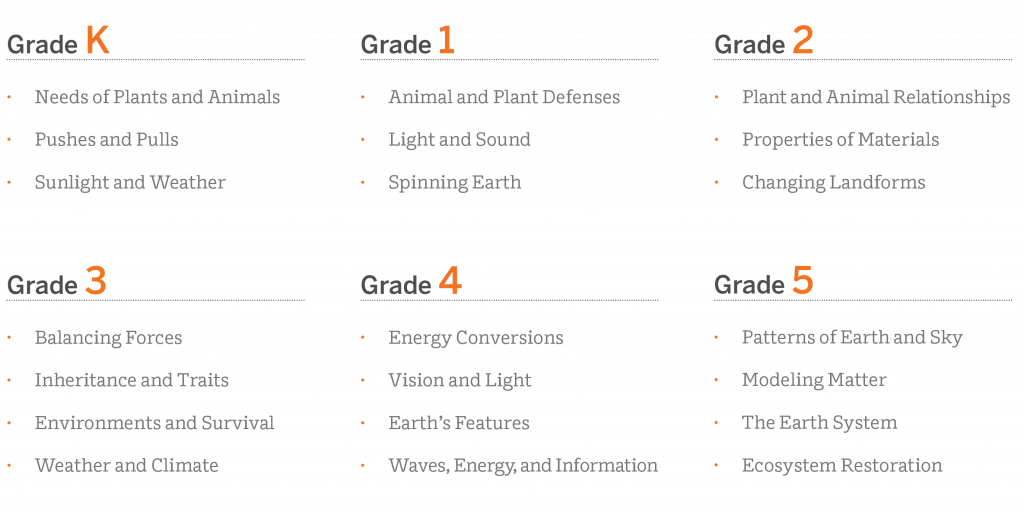
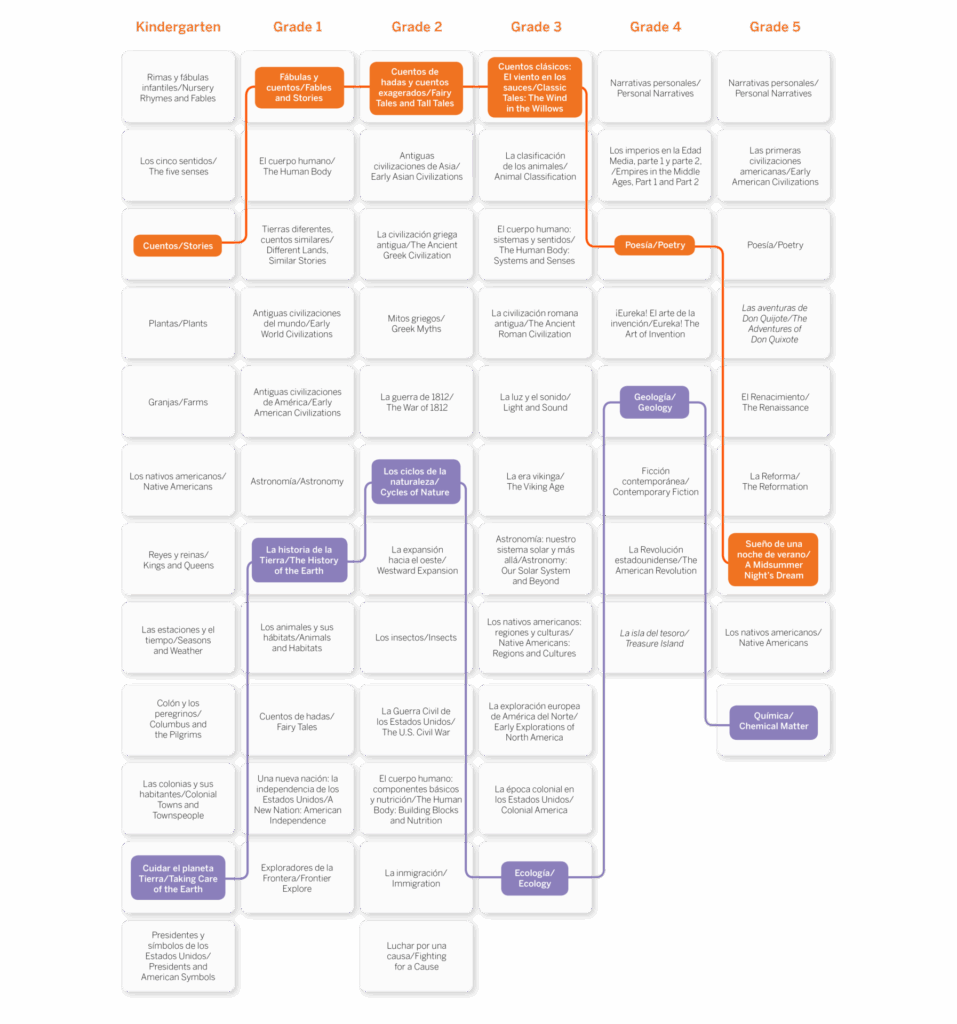
Grade K: Art and the World Around Us/El arte y el mundo que nos rodea
Grade 1: Adventure Stories: Tales from the Edge of the World/Cuentos de aventuras: relatos desde los confines de la Tierra
Grade 2: Up, Up, and Away: The Age of Aviation/¡A volar! La era de la aviación
Grade 3: All That Jazz/Jazz y más
Grade 4: Energy: Past, Present, and Future/Energía: pasado, presente y futuro
Grade 5: Beyond Juneteenth: 1865 to present/Más allá de Juneteenth: de 1865 al presente
Units are available in English and Spanish, and will include the following components:
Teacher Guide
Student Activity Books
Image Cards
Trade Book Collection
Digital Components (grades K–3 and 5)
Grade K: Art and the World Around Us/El arte y el mundo que nos rodea
“Every child is an artist,” said Picasso, meaning that every child uses art to explore and understand the world around them. Art and the World Around Us honors that truth by introducing Kindergarten students to some of the ways in which artists have explored and understood the worlds around them, too.
This domain introduces students to artists from different time periods, countries, and cultures. Throughout the unit, students learn about different kinds of art and how artists use the world around them as they make art. They also connect this to what they have already learned about the earth, plants, and animals in other Amplify CKLA and Amplify Caminos domains: Farms/Granjas, Plants/Plantas, and Taking Care of the Earth/Cuidar el planeta Tierra. In addition, students connect this to what they have learned about sculptors in the Presidents and American Symbols/Presidentes y símbolos de los Estados Unidos domain. As they explore different artists and artistic traditions, they develop their ideas about how humans are connected to each other and to the world around them.
As you read the texts in this unit, students may observe ways in which the characters or subjects are both similar to and different from students. This is a good opportunity to teach students awareness and sensitivity, building on the idea that all people share some things in common, and have other things that make them unique. This unit also offers an excellent opportunity to collaborate with your school’s art teacher, as many lessons have suggested activities to help students understand the kind of art they are studying.
Within this unit, students have opportunities to:
Use details to describe art.
Identify three ways to create art.
Identify characteristics of cave art.
Sequence the steps of making pottery.
Describe how artists can create work connected to the world around them.
Describe what makes Kehinde Wiley’s portraits unique.
Explain how the texture of a surface can affect artwork created on it.
Explain what a sculpture is.
Describe what makes James Turrell’s artwork about the sky unique.
Explain what a museum is and what kinds of things you can see or do there.
Instruction in this unit revolves around the following collection of high-interest authentic trade books. One copy of each trade book is included with the unit materials.
The First Drawing by Mordicai Gerstein
Van Gogh and the Sunflowers by Laurence Anholt
My Name is Georgia by Jeanette Winter
A Life Made by Hand by Andrea D’Aquino
Rainbow Weaver by Linda Elovitz Marshall
Luna Loves Art by Joseph Coelho
Grade 1: Adventure Stories: Tales from the Edge of the World/Cuentos de aventuras: relatos desde los confines de la Tierra
This domain introduces students to adventure stories set around the world and challenges students to dig into the adventures through research. By listening to the Read-Alouds and trade books, students increase their vocabulary and reading comprehension skills, learn valuable lessons about perseverance and teamwork, and become familiar with gathering information for research.
In this unit, students study the careers of real-world explorers Dr. Eugenie Clark and Sophia Danenberg, marvel at the inventions of Jacques Cousteau, think critically about how teamwork and collaboration can make greater adventures possible, learn about the science and technology that enable adventures, and research some of the ways humans have confronted challenges at the edges of the world, from the oceans below to space above.
Each lesson in the domain builds students’ research skills as they ask questions, gather information, and write a paragraph about their findings. Students share what they have learned about adventures in an Adventure Gallery Walkthrough. By taking on the persona of one of the adventurers they meet in the Read-Alouds and trade books, students deliver their final paragraphs as if they are a “speaking portrait” of that person. Students are invited to dress up as that adventurer if they desire.
In addition, teachers can set aside time outside of the instructional block to create the picture frames students will hold as they present to the Adventure Gallery Walk guests. Frames can be made from shirt boxes, cardboard, construction paper, or any art supplies that are on hand. This might be an opportunity to collaborate with the school’s art department if resources are available. Another option is to ask students to make their frames at home with their caregivers. On the day of the Adventure Gallery Walk, students will be the hosts and take on specific jobs, such as welcoming the guests, describing their work throughout the unit, and pointing out the areas of study on the domain bulletin board. You can find a complete list of student jobs in Lesson 13.
This unit builds upon the following Amplify CKLA and Amplify Caminos units that students will have encountered in the previous grade.
Nursery Rhymes and Fables/Rimas y fábulas infantiles (Kindergarten)
Stories/Cuentos (Kindergarten)
The specific core content targeted in these domains is particularly relevant to the Read-Alouds students will hear in Adventure Stories: Tales from the Edge of the World. The background knowledge students bring to this unit will greatly enhance their understanding of the trade books used in this unit.
Instruction in this unit revolves around the following collection of high-interest authentic trade books. One copy of each trade book is included with the unit materials.
My Name is Gabito/Me llamo Gabito by Monica Brown
Tomas and the Galápagos Adventure by Carolyn Lunn
The Astronaut with a Song for the Stars: The Story of Dr. Ellen Ochoa by Julia Finley Mosca
Mae Among the Stars by Roda Ahmed
Shark Lady: The True Story of How Eugenie Clark Became the Ocean’s Most Fearless Scientist by Jess Keating
Manfish by Jennifer Berne
Keep On! The Story of Matthew Henson, Co-Discoverer of the North Pole by Deborah Hopkinson
The Top of the World: Climbing Mount Everest by Steve Jenkins
Grade 2: Up, Up, and Away: The Age of Aviation/¡A volar! La era de la aviación
With this domain, students head up, up, and away with an introduction to the soaring history of aviation. Students learn the stories of early aviators, such as the Montgolfier brothers, the Wright brothers, Aída de Acosta, and Amelia Earhart.
During the unit, students study the science of flight, including the physics concept of lift, and research the social impacts of the world of flight. Finally, students let their research skills take flight as they explore key figures from the world of aviation.
The lessons in this domain build on earlier Grade 2 CKLA and Amplify Caminos domains about the westward expansion, early Greek civilizations, and Greek myths, and lay the foundation for learning about other periods of world history in future grades.
This unit builds upon the following Amplify CKLA and Amplify Caminos units that students will have encountered earlier in the year.
The Ancient Greek Civilization/La civilización griega antigua (Grade 2)
Greek Myths/Mitos griegos (Grade 2)
Westward Expansion/La expansión hacia el oeste (Grade 2)
The specific core content targeted in these domains is particularly relevant to the Read-Alouds students will hear in Up, Up, and Away: The Age of Aviation. The background knowledge students bring to this unit will greatly enhance their understanding of the trade books used in this unit.
Instruction in this unit revolves around the following collection of high-interest authentic trade books. One copy of each trade book is included with the unit materials.
Up and Away!: How Two Brothers Invented the Hot-Air Balloon by Jason Henry
The Glorious Flight: Across the Channel with Louis Blériot by Alice and Martin Provensen
The Flying Girl: How Aída de Acosta Learned to Soar by Margarita Engle
Wood, Wire, Wings: Emma Lilian Todd Invents an Airplane by Kirsten Larson
Helicopter Man: Igor Sikorsky and His Amazing Invention by Edwin Brit Wyckoff
The Tuskegee Airmen Story by Lynn Homan and Thomas Reilly
Skyward: The Story of Female Pilots in WWII by Sally Deng
Aim for the Skies: Jerrie Mock and Joan Merriam Smith’s Race to Complete Amelia Earhart’s Quest by Aimee Bissonette
Grade 3: All That Jazz/Jazz y más
This domain teaches students about the vibrant music, poetry, and culture of the Jazz Age in the United States. Students learn about famous writers and musicians like Langston Hughes, Louis Armstrong, Billie Holiday, Melba Liston, Tito Puente, and Miles Davis. They study how the jazz art form took root in the South, then spread to the North to become the sound of the Harlem Renaissance, eventually connecting people around the world in musical expression.
During this unit, students perform guided research to further explore both the history of jazz and what jazz is today. They develop research skills and then use those skills to find deeper connections between the stories and music of the Jazz Age and music today. As students learn about the world of jazz, they collaborate and share ideas with their classmates. They also practice sharing feedback focused on their written work, and, at the end of the unit, students present their research to the group.
The lessons give students opportunities to dive into the rhythms and stories of jazz, utilizing the knowledge sequence in this unit to:
Collaboratively generate research questions about jazz, jazz musicians, contemporary musicians from the state where they live or have lived, and the evolution of jazz music.
Utilize Read-Alouds, independent reading, and partner reading to learn about the Jazz Age, the Harlem Renaissance, jazz music, and biographies of celebrated jazz musicians and writers.
Research the answers to their generated questions, gather information, write a short research essay about a famous jazz musician, write a short essay about a contemporary musician from the state where they live or have lived, and give a presentation about their research.
Within this unit, students have opportunities to:
Ask relevant questions and make pertinent comments
Identify details in texts
Determine key ideas of texts by evaluating details
Make text-based inferences
Generate questions based on prior knowledge and gathered information
Synthesize details across texts to demonstrate comprehension
Discuss and explain an author’s purpose
Identify and cite reliable primary and secondary sources of information
Compose a well-organized and focused informative essay
Make connections between topics
Present information using appropriate media
Instruction in this unit revolves around the following collection of high-interest authentic trade books. One copy of each trade book is included with the unit materials.
Birth of the Cool: How Jazz Great Miles Davis Found His Sound by Kathleen Cornell Berman
Little Melba and Her Big Trombone by Kathryn Russell-Brown
Benny Goodman and Teddy Wilson: Taking the Stage as the First Black and White Jazz Band in History by Lesa Cline-Ransome
Tito Puente, Mambo King by Monica Brown
Drum Dream Girl: How One Girl’s Courage Changed Music by Margarita Engle
Duke Ellington: The Piano Prince and His Orchestra by Andrea Pinkney
In this unit, students also read the poem “Harlem” by Langston Hughes. (Available for free through the Academy of American Poets website and the Poetry Foundation website, with recorded audio available through the website for John Hancock College Preparatory High School.)
Grade 4: Energy: Past, Present, and Future/Energía: pasado, presente y futuro
With this domain, students become tomorrow’s problem solvers in this study of energy in the United States. Analytical reading skills are developed by examining the challenges of early energy innovators. Students then read about current energy practices and young energy change-makers across the world.
Throughout the unit, students conduct research into different sources of energy and present a proposal, putting them in the shoes of future energy innovators. They also use the knowledge sequence in this unit to:
Collaboratively analyze texts to identify cause-effect and problem-solution relationships.
Generate questions and conduct research about energy.
Write an opinion essay making their case for a fuel of the future.
Create energy proposals using primary and secondary resources.
This unit builds upon the following Amplify CKLA units that students will have encountered in previous grades as well as earlier in the year.
Plants/Plantas (Grade K)
The History of the Earth/La historia de la Tierra (Grade 1)
Eureka! Student Inventor/¡Eureka! El arte de la invención (Grade 4)
The specific core content targeted in these domains is particularly relevant to the Read-Alouds students will hear in Energy: Past, Present, and Future. The background knowledge students bring to this unit will greatly enhance their understanding of the trade books used in this unit.
Instruction in this unit revolves around the following collection of high-interest authentic trade books. One copy of each trade book is included with the unit materials.
Buried Sunlight: How Fossil Fuels Have Changed the Earth by Molly Bang and Penny Chisholm
Energy Island: How One Community Harnessed the Wind and Changed their World by Allan Drummond
The Boy Who Harnessed the Wind: Picture Book Edition by William Kamkwamba and Bryan Mealer
Grade 5: Beyond Juneteenth: 1865 to present/Más allá de Juneteenth: de 1865 al presente
Within this domain, Students learn about General Granger’s announcement in Galveston, Texas on June 19, 1865, a day marked in history as Juneteenth. Texts and multimedia sources will support foundational knowledge-building about the end of slavery in the United States. A review of the first freedom announcement, President Lincoln’s Emancipation Proclamation, provides students with background knowledge to further emphasize the significance of Juneteenth in American history.
This unit also takes students on a journey beyond Juneteenth, as they study specific contributions of African Americans from 1865 to the present day. Students participate in a virtual field trip to Emancipation Park in Houston, Texas and use the knowledge sequence in this unit to:
Collaboratively generate research questions about Juneteenth, The Great Migration, innovators and inventors, education, the humanities, activists, and allies.
Use Read-Alouds, independent, and partner reading to learn about African American contributions from 1865 to the present.
Research to find answers to their generated questions, gather information, and write a four-chapter Beyond Juneteenth book.
This unit builds upon the following Amplify CKLA units that students will have encountered in previous grades.
Native Americans/Los nativos americanos (Grade K)
A New Nation: American Independence/Una nueva nación: la independencia de los Estados Unidos (Grade 1)
The U.S. Civil War/La Guerra Civil de los Estados Unidos (Grade 2)
Immigration/La inmigración (Grade 2)
Native Americans/Los nativos americanos (Grade 5)
The specific core content targeted in these domains is particularly relevant to the Read-Alouds students will hear in Beyond Juneteenth: 1865 to present. The background knowledge students bring to this unit will greatly enhance their understanding of the trade books used in this unit.
Instruction in this unit revolves around the following collection of high-interest authentic trade books. One copy of each trade book is included with the unit materials.
All Different Now: Juneteenth, the First Day of Freedom by Angela Johnson
The Great Migration: An American Story by Jacob Lawrence
Sing a Song: How “Lift Every Voice and Sing” Inspired Generations by Kelly Starling Lyons
Side by Side/ Lado a lado: The Story of Dolores Huerta and Cesar Chavez/ La Historia de Dolores Huerta y Cesar Chavez by Monica Brown
Of Thee I Sing: A Letter to My Daughters by Barack Obama
Putting equity first
When so much about the world needs to shift, so urgently… here are a few places to start.
Listen: Educator, author, and leader Shawn Joseph shares his passion for social justice and discusses his work advocating for equity in education, shedding light on what he calls the “silent crisis” in literacy instruction.
Learn: Share Shawn Joseph’s discussion guide with your colleagues. Which insights are the most relevant to your district this year?
Lead: Take a look at this curated collection of multicultural and social justice books. Could one spark discussion for your students?
Lead: Share this infographic on the journey to freedom with your class. Ask students to select an event to research and present a two-minute video talk.
Leveraging the science of reading
Go deep on the insights and practices that will help our classrooms (remote or otherwise)–based on the latest science, and adaptable to every shift in the educational landscape.
Learn: Susan Lambert talks to Language Magazine about the science of reading and what it means right now.
Building strong foundational skills
Strong, systematic sound-first instruction is critical to helping students learn to decode and can increase student success. Learn how specific skills can increase your impact.
Learn: Start with Emily Hanford’s “Hard Words” article.
Listen: Jasmine Lane on the importance of equity, and how early literacy teachers can make a difference.
Listen: Bruce McCandliss on the changes a child’s brain shows when learning to read
Lead: Challenge a colleague to this Scarborough’s Rope activity–work through a sample lesson from your district and point out elements of the reading rope.
Sharing knowledge resources
Students need to be able to both read words and get the meaning of what they’re reading. Find out how to help them build key background knowledge from the get-go, so that it compounds over time.
Listen: Tim Shanahan on four crucial aspects in teaching reading and his views on teaching reading in middle school as an extension of evidence-based early literacy practices
Learn: Take a look at Achieve the Core’s overview of the importance of building knowledge and the groundbreaking “baseball study“
Assessing what students need
Assessment this year is more important than ever before–and also more challenging. What does this extended summer slide look like? How can you find time to review what’s needed, while still moving forward?
Learn: Catch up on dyslexia risk factors and state legislation with our dyslexia toolkit.
Listen: Nancy Nelson on the importance of universal screeners in literacy instruction.
Lead: What can you offer struggling readers and their caregivers? Take a look at the IDA’s COVID-19 Resource Guide.
Thriving through remote learning
Everything about this school year has changed–yet your work is more important than ever before. How can you support your students, and your colleagues, in this new normal? Stop by Amplify Anywhere for ideas that may help.
Though it feels like the landscape is changing every day, we know we’ve got to find a way to get students back to learning. What will your school day look like? What reinforcement might you need to do in order to ensure equity? We will continue to share resources to support your journey.
Learn: In this recorded webinar, explore some ways CARES Act funding might support your students.
Learn: Hear from Baltimore educator Lucas Drerup on making middle school ELA both enjoyable and rigorous for students.
Listen: Jackson-Madison CAO Jared Myracle shares his thoughts on change management and the science of reading.
Listen: Doug Lemov, managing director of Uncommon Schools, discusses the role of technology in the classroom and remote instruction, and how educators can reconsider how they approach literacy.
If you were already thinking about new literacy resources–you’ve now got even more ideas about what high quality looks like. How will your literacy program work for all students? How do you need your literacy resources to support you in the classroom, in remote learning, and for every scenario in between?
Listen: Hear nationally recognized reading experts and authors David and Meredith Liben discuss evidence based solutions and more.
Lead: Download this K-8 ELA Instructional Materials Evaluation Guide. Share with your district leadership. What resources will you all need next year (and beyond) to do the best job possible for your students?
Lead: Talk to a few colleagues in the coming weeks. What are they seeing right now? What are they planning to improve next year?
Staying strong and staying connected!
Looking for ways to connect with other educators and stay updated on the latest research and trends in the science of reading? Check out a few more ways to do so below.
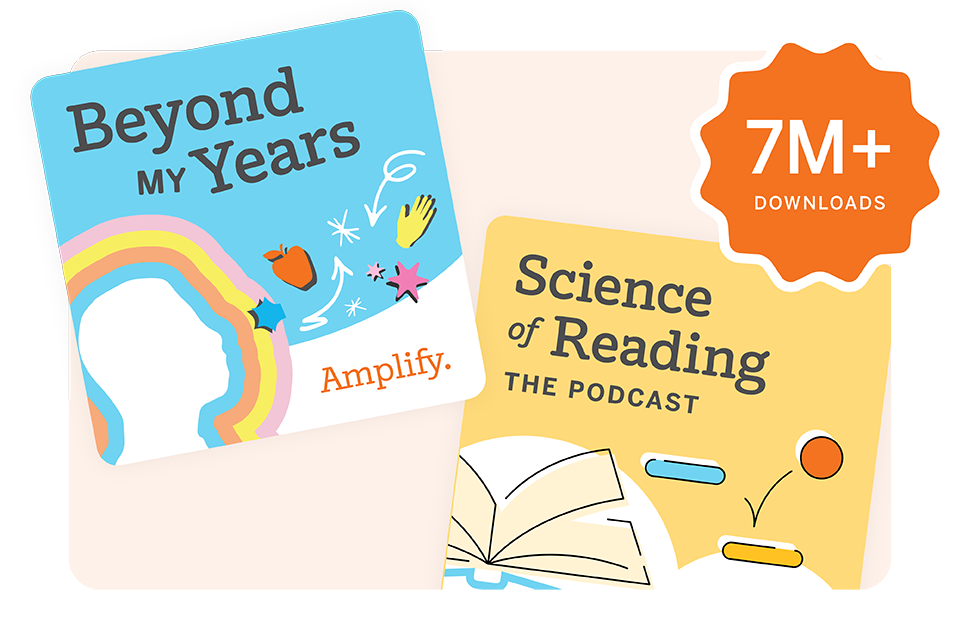
Science of Reading: The Podcast delivers the latest insights from researchers and practitioners in early reading. Further your professional development with each episode by subscribing and downloading them now.
Science of Reading: The Community is built for those committed to fostering conversation around the science of reading and implementing best practices in the classroom (including the virtual classroom).
Ready for more? Complete the form below to stay up-to-date on the latest resources.
Supporting you in any scenario
Whether your school is engaged in in-person, hybrid, or remote instruction, we know how important it is for teachers and administrators to understand every student’s literacy and math development. mCLASS has a collection of resources to help you plan for a variety of scenarios. We’ve got you covered—no matter what you’re anticipating this school year.
How to use mCLASS during remote learning
Planning to assess remotely? No problem. Our guides will help you feel comfortable and confident assessing remotely with all of our mCLASS literacy and math assessments, while mCLASS’s free online measures, at-home learning packets, and family resources ensure you have effective, easy-to-use tools to support students during remote learning.
Remote assessment guidance
The remote assessment guides provide recommendations and best practices for assessing one-on-one remotely with mCLASS. They cover when to assess, how to assess using a video meeting or call, how to interpret scores this back-to-school season, and how to take the next instructional steps.
Professional development videos
The mCLASS Training Site on mCLASS Home will include best practices and professional development videos on remote assessment and using data for remote instruction.
At-home packets
mCLASS Instruction will be aligned to each student, regardless of whether they are ahead of or behind their classmates. For schools using DIBELS® 8th edition, teachers are able to use mCLASS Instruction (based on the latest data available) to download the packet for each child. These activities can be used for at-home learning during periods of extended remote learning or over the summer.
Family resources
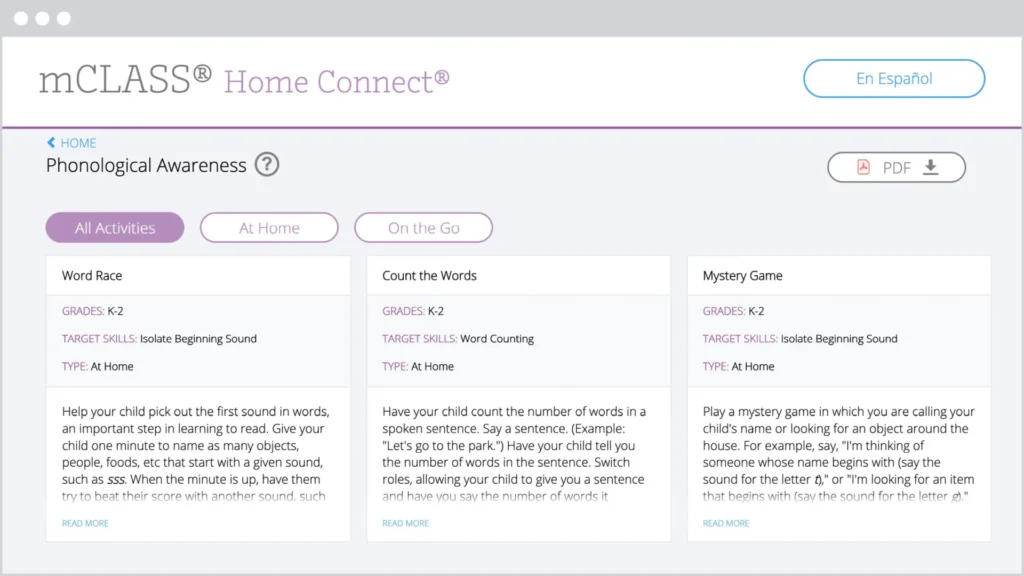
The mCLASS Home Connect website houses resources for parents and caregivers, including at-home lessons organized by skill to help students at home during remote learning. Our mCLASS parent/caregiver letters in English and Spanish ensure that families know how to best support their child.
Personalized reading with Boost Reading
Boost Reading, our supplemental reading program, leverages your mCLASS data to provide remediation and enrichment. Students can use Boost Reading on their own at home for engaging instruction and practice in phonological awareness, phonics, vocabulary, comprehension processes, and close reading. Find more information on Boost Reading here.
How to use mCLASS during hybrid learning
We know that the school year will look different for every district. You may be considering staggered schedules or alternating between remote and in-person days. mCLASS’s resources for hybrid learning ensure that students continue to develop critical foundational skills both in the classroom and at home.
In-person days
Remote days
Teacher-administered assessments
Remote teacher-administered assessments or student-led online measures
Small-group and individual teacher-led lessons with mCLASS instruction
At-home packets for independent practice
Progress-monitoring assessments
Home Connect resources with family activities
Boost Reading
Boost Reading
Frequently asked questions
“What resources should I use on remote days if my students have limited technology access?” If students have limited or no access to technology during remote learning days, at-home packets and Home Connect resources can be printed in advance and sent home for students to complete during remote learning days.
“What resources should I use for extended remote learning if my students have limited technology access?” We understand that access to technology is a significant barrier for many of our students. If students have limited or no access to technology during extended periods of remote learning, the mCLASS guides provide alternatives for conducting benchmark assessments, such as assessing by phone. Additionally, at-home learning packets can be printed and sent home for students to continue working on skills.
All Amplify customers:
Can speak directly with a customer support representative through numerous channels:
Live Chat is available from 8:00 a.m. – 6:00 p.m. Eastern Time, Monday through Friday.
You can also call us at our toll-free number at (800) 823-1969 from 7:00 a.m. to 7:00 p.m., Eastern Time, Monday through Friday.
You will find a wealth of information to support your implementation at mclass.amplify.com under the Training tile. Our online help system is also a great resource.
In addition, our Educational Support Team can provide help administering assessments, interpreting results, and planning for instruction or intervention. Email them at edsupport@amplify.com.
Click the buttons below to explore the Amplify Science California Program Guide. You can access the full digital Teacher’s Guide from the Program Guide to explore the program.
Grade 3 Lesson Prep Videos can be found in the Resources section in the Amplify Science- Elementary group in Schoology. Access code: W4PK-W466-63F5B
Grade 4 Lesson Prep Videos can be found in the Resources section in the Amplify Science- Elementary group in Schoology. Access code: W4PK-W466-63F5B
Grade 5 Lesson Prep Videos can be found in the Resources section in the Amplify Science- Elementary group in Schoology. Access code: W4PK-W466-63F5B
New Teachers – Start Here
To start using Amplify Science quickly in your classroom, check out the following onboarding videos. They cover what you need to know to get started fast, from unpacking materials to logging in and navigating the digital Teacher’s Guide.
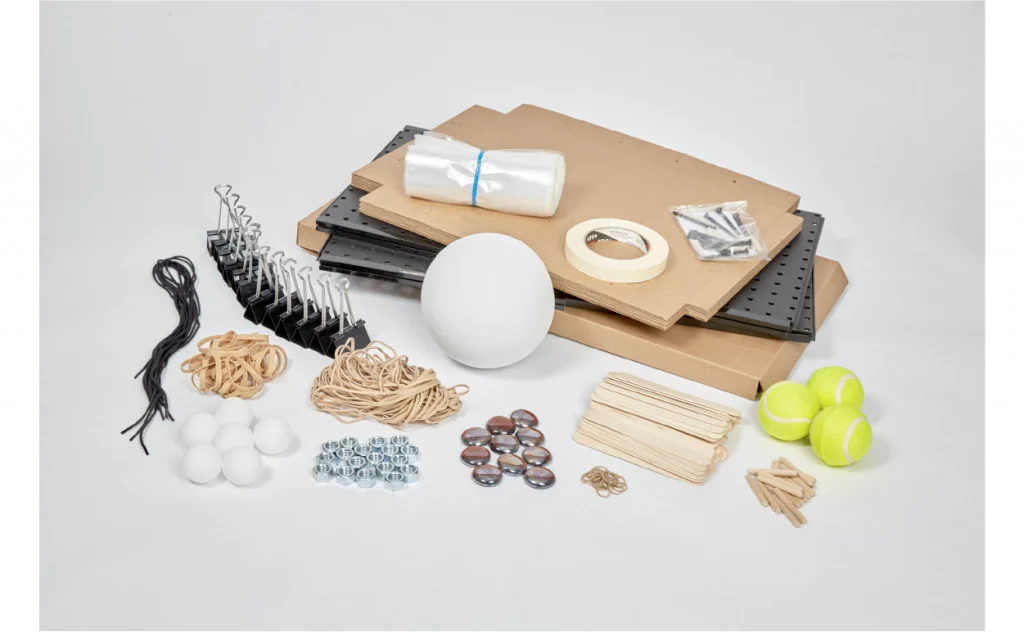
The following videos give you a quick look into our Amplify Science classroom kits. For each grade level, we have a video for the first unit in the scope and sequence, and we show you how to unpack the kits for all the units.
We have developed an educational support team of former teachers and administrators who provide pedagogical support for every Amplify curriculum, assessment, and intervention program. This service is completely free for all educators who are using our programs and includes:
Guidance for developing lesson plans and intervention plans
Information on where to locate standards and other planning materials
Recommendations and tips for day-to-day teaching with Amplify programs
Support with administering and interpreting assessment data and more
Amplify Science was developed by the science education experts at UC Berkeley’s Lawrence Hall of Science and the digital learning team at Amplify.
Remote learning resources
Click the link below to access our remote learning resources. Content includes: Lesson Guides, Student Investigation notebook pages, unit-specific books and articles, Classroom Slides, home investigations, and video recordings of teachers teaching the lessons for every grade level!
For FCPS modeled lessons, videos, and content click here.
Click the orange button below to access the Fayette County Public Schools Navigator site which includes all district specific information on K–8 curriculum.
Learn more about professional learning support in Lexington from Patti Works, Amplify’s Professional Learning Partner.
Caregiver resources
Click the button below to visit our brand-new Caregiver Resources Site, with overview information for families about the Next Generation Science Standards and Amplify Science, as well as resources to support back-to-school nights at your school.
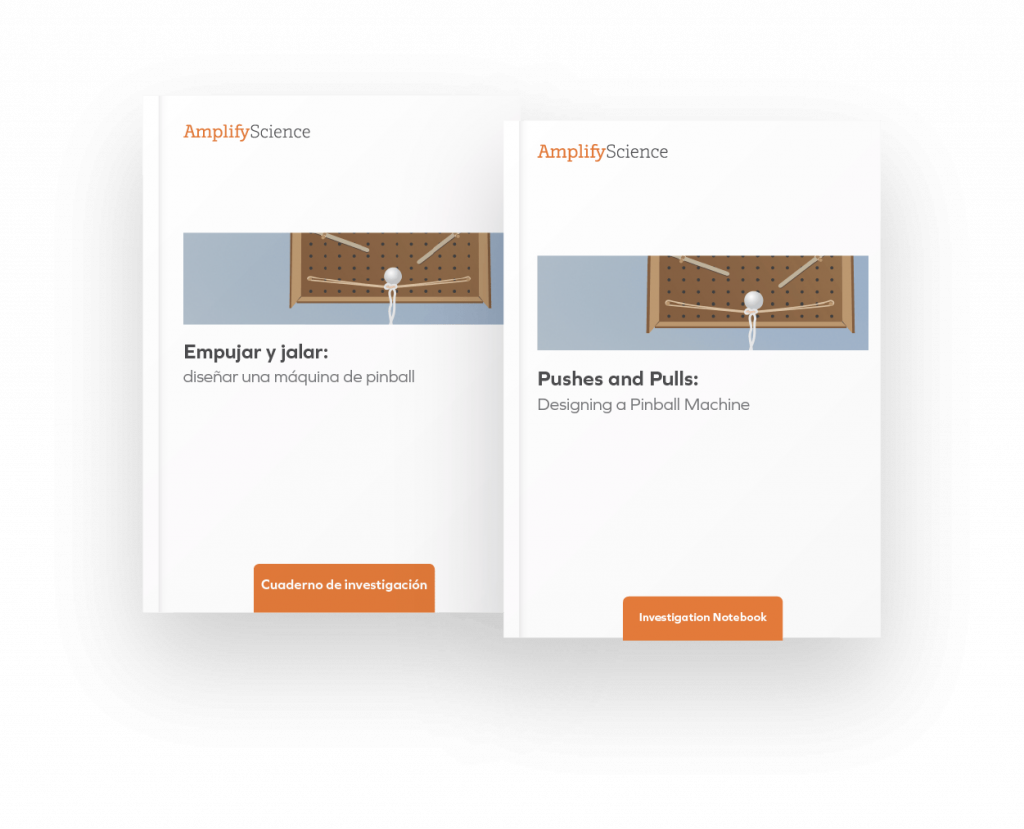
Student facing materials available in Spanish include the Student Books (K–5) and the Student Investigation Notebooks (K–8), as well as printed classroom materials and assessments (K–8).
Click here for more information on K–5 Spanish resources.
Click here for more information on 6–8 Spanish resources.
Tech requirements
To ensure that your hardware and network meet the minimum technical requirements for optimal performance and support of your digital curriculum products, please see Amplify’s customer requirements page.
To ensure access to Amplify Science, add the URLs on this page to the corresponding district or school-level filters.
Help
Our technical and program support is included and available from 7 a.m. to 7 p.m. ET, Monday through Friday, through a variety of channels, including a live chat program that enables teachers to get immediate help in the middle of the school day.
For your most urgent questions:
Use our live chat within your program
Call our toll-free number: (800) 823-1969
For questions regarding ongoing support, professional learning, partnerships and implementation:
Inspiring the next generation of Florida scientists, engineers, and curious citizens
Amplify Science Florida is a brand-new blended science curriculum for grades 6-8 that meets 100 percent of the Next Generation Sunshine State Standards for Science.
The national edition of Amplify Science for middle school was recently rated all green by EdReports. Read the review on EdReports.
Grounded in research and proven effective
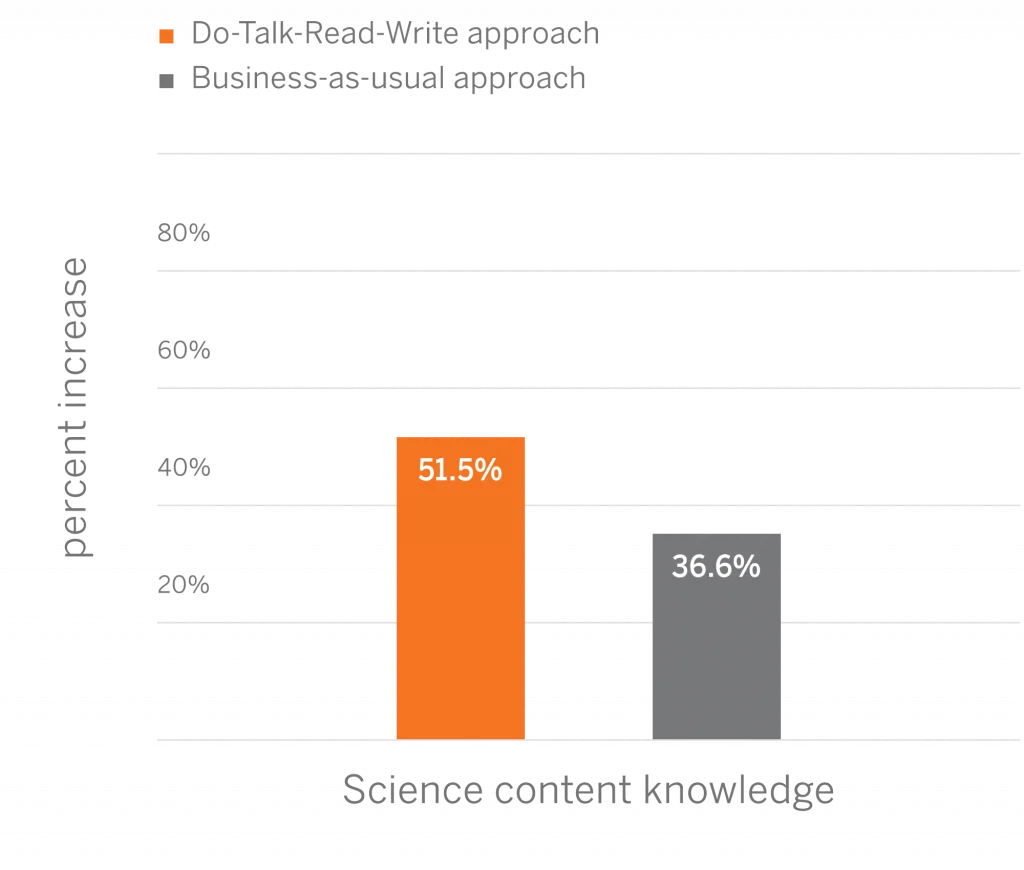
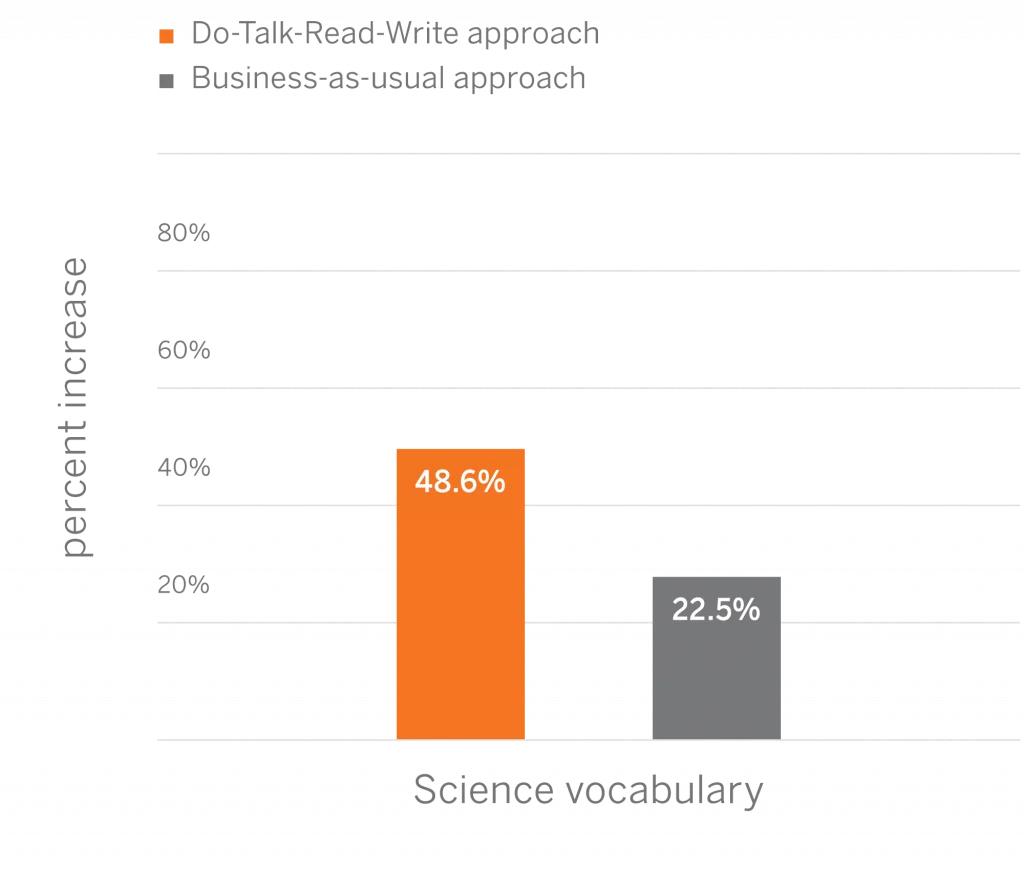
UC Berkeley’s Lawrence Hall of Science, the authors behind Amplify Science Florida, developed the Do, Talk, Read, Write, Visualize approach, and gold standard research shows that it works. Our own efficacy research is pretty exciting, too.
DEEP UNDERSTANDING
Do, Talk, Read, Write students outperform their peers.
ENGLISH LANGUAGE LEARNERS EXCEL
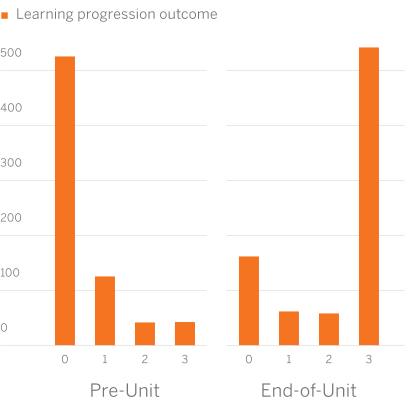
ELLs who used Do, Talk, Read, Write outperformed their ELL peers.
PROGRESS THROUGH THE LEARNING PROFESSION
Progress through the learning progression for all middle school implementations, 2017-18 school year.
What educators say
“Just looking through the Amplify Science curriculum, I’m wishing I could go back in time and learn these concepts with these resources! I love that Amplify is more focused on diving deeper into fewer concepts over the year, rather than grazing the surface of more topics.”
Lizzie
Middle school teacher, KIPP charter network
What educators say
“In using this program, I have seen that my students are completely engaged and are able to visualize models of concepts using the simulations that they otherwise would not be able to visualize. The program is not about rote memory of facts—rather, it addresses the bigger picture and assesses a deeper understanding of science concepts.”
Julie
Science teacher, Georgia
What educators say
“The engineering units are engaging and really helped me better understand the new standards. I love being able to walk around and talk to students as they explore solutions, make claims, and reason with their peers.”
Karla
Science teacher, California
A powerful partnership
Amplify Science Florida was developed by the science education experts at UC Berkeley’s Lawrence Hall of Science and the digital learning team at Amplify. As the Hall’s first curriculum designed to address the Next Generation Sunshine State Standards for Science, Amplify Science Florida reflects state-of-the-art practices in science teaching and learning.
Our approach
Each unit of Amplify Science Florida engages students in a relevant, real-world problem where they investigate scientific phenomena, engage in collaboration and discussion, and develop models or explanations in order to arrive at solutions.
Rooted in research
Amplify Science Florida is rooted in the Lawrence Hall of Science’s Do, Talk, Read, Write, Visualize model of learning. This research-based approach presents students with multiple modalities through which to explore the curriculum.
A flexible, blended program
Amplify Science Florida includes hands-on activities, print materials, and powerful digital tools to support online and offline teaching and learning. Highly adaptable and user-friendly, the program gives schools and individual teachers flexibility based on their technology resources and preferences.
Students take on the roles of scientists and engineers.
In each unit, students take on the role of a scientist or engineer to investigate a real-world problem. These problems provide relevant contexts through which students investigate phenomena.
Phenomena-based teaching and learning
Download the “What’s so phenomenal about phenomena?” e-book
The middle school science articles serve as sources for evidence collection and were authored by science and literacy experts at the Lawrence Hall of Science.
Student Investigation Notebooks
Available for every unit, the Student Investigation Notebooks provide space for students to:
record data
reflect on ideas from texts and investigations
construct explanations and arguments
Available with full-color article compilations for middle school units
Digital student experience
Students access the digital simulations and modeling tools, as well as lesson activities and assessments, through the digital student experience. Students can interact with the digital student experience as they:
conduct hands-on investigations
engage in active reading and writing activities
participate in discussions
record observations
craft end-of-unit scientific arguments
Teacher’s Guides
Available digitally and in print, the Teacher’s Guides contain all of the information teachers need to facilitate classroom instruction, including:
detailed lesson plans
unit and chapter overview documentation
differentiation strategies
standards alignments
in-context professional development
Hands-on materials kits
Hands-on learning is at the heart of Amplify Science Florida. Each unit kit contains:
consumable and non-consumable hands-on materials
print classroom display materials
premium print materials for student use (sorting cards, maps, etc.)
The Louisiana Department of Education is committed to providing literacy instruction for all by:
Aligning core curriculum, instruction, and assessments with the Science of Reading.
Providing appropriate literacy interventions to address difficulty with reading development.
Implementing practices based on the Science of Reading in every classroom, every day.
Offering aligned resources to parents, guardians, and family members.
Built on decades of research at the Center on Teaching and Learning at the University of Oregon (a national center for early childhood assessment and instruction), the mCLASS suite meets Louisiana’s early literacy goals for its students with a robust core curriculum and a suite of reporting, grouping, lesson, and caregiver support features.
DIBELS measures at each grade level
Measure
Grade K
Grade 1
Grade 2
Grade 3
Letter naming fluency
Phonemic segmentation fluency
Nonsense word fluency
Word reading fluency
Oral reading fluency
Maze (basic comprehension)
Enrollment resources
EOY enrollment timeline:
3/3- 3/17: Admin Portal closed
Students and staff are still able to log into mCLASS
Students are still able to assess Progress Monitoring
No EOY assessments taking place at this time
Data Reporting (classroom and aggregate reports) is still available
3/18: Admin Portal reopens
4/1: EOY begins
Student Transfers:
For instructions on transferring students into a district from a different district within the state, see the Transferring Students section of the Test Coordinator Manual: K–3 EOY.
To add students to your district who are transferring to your school from outside of LDOE, please follow the process in the Enrolling Students section of this article.
End of Year and G3 Summer window resources
Test Coordinator Manual (District and School Test Coordinators only): This manual provides instructions for administrative tasks for DTCs and STCs.
Test Administrator Manual for the Secure K–2 End of Year Literacy Assessment: This manual for Test Administrators provides instructions for administering the secure EOY assessment.
Tech User Guide: This manual for District and School Technology Coordinators provides instructions for installing the safe browser (Windows/Mac) or kiosk mode applications (Chromebook) needed for secure EOY assessment.
Accessibility and Accommodations Manual: This manual includes information about the accessibility features offered for secure EOY assessment, as well as the standard DIBELS 8th Edition Accommodations.
New Troubleshooting for ChromeOS Kiosk Mode guide is available for Technology Coordinators supporting Test Administrators who encounter an error message when launching the Chrome kiosk mode applications.
How to: Install the Safe Exam Browser
This section provides instructions for installing the Safe Exam Browser (SEB), which is needed to assess K-2 students during EOY in Louisiana. Depending on your device type, download the SEB app from the Apple App Store or this site.
If you are using a Chromebook, you will use kiosk mode instead of the SEB. The Tech User Guide includes instructions for installing the applications needed to use kiosk mode, as well as instructions for installing the SEB and additional information to set up devices for secure End of Year (EOY) assessment.
Depending on your browser, a download page may open in a new tab, displaying the download progress. When the download is complete, close the tab.
For instructions on installing the SEB, see the Tech User Manual.
Progress Monitoring
This guide provides instructions for administering progress monitoring (PM) assessments in Louisiana schools.
Please note that the steps for accessing and administering PM assessments are different for schools with an mCLASS Intervention license than for schools that do not have an mCLASS Intervention license.
Amplify Tutoring: HDT driven by mCLASS data
Grounded in evidence-based practices and taught by caring, consistent tutors, our high-impact tutoring programs use high-quality instructional materials and data-driven mCLASS® products to empower students.
Data-driven, personalized instruction
Research-backed solutions tailored to support your MTSS framework
Customizable–before, during or after school year-long, semester-long and summer programming
Comprehensive program management and staffing support
Professional development
Amplify professional development (PD) provides learning experiences that intentionally develop the knowledge and skills you need for effective and self-sustaining implementation.
Go to the PD Library to access self-paced online courses, webinar recordings, videos, and more to help you learn how to administer and score the assessment and develop a deeper understanding of reporting and instruction.
If you are interested in purchasing additional PD for your school or district, please reach out to your account executive.
Additional mCLASS information
mCLASS gives you instant results and clear next steps for each student. Quick and actionable reports provide detailed insight into students’ reading development across foundational literacy skills for teachers, specialists, administrators, and caregivers.
Additional resources around mCLASS reporting can be found by navigating to the Programs & Apps section and then selecting PD Library.
To continue your own professional learning around the Science of Reading, join your colleagues who’ve subscribed to our podcasts and communities!
Science of Reading: The Podcast delivers the latest insights from researchers and practitioners in early reading. Further your professional development with each episode by subscribing and downloading now.
Science of Reading: The Community is built for those committed to fostering conversation around the Science of Reading and implementing best practices in the classroom (including the virtual classroom).
What does classroom instruction look like when it is based on Science of Reading practices? We’ve outlined a Science of Reading action plan to guide your evaluation in our new FREE ebook, Science of Reading: Making the shift.
The mCLASS Home Connect website houses literacy resources for parents and caregivers, including at-home lessons organized by skill to help students at home during remote learning. Our mCLASS parent/caregiver letters in English and Spanish ensure that families know how to best support their students.
mCLASS support
Our chat agents are standing by to assist you! Simply log in at my.amplify.com/login/louisiana and select the orange button in the lower right corner to chat live with our support team.
Important note: Our support hours are Monday through Friday, 7 a.m. to 6 p.m. CT.
Get in touch with us to learn more about bringing other high-quality Amplify programs to your school or district.
Professional development for assessment and intervention programs
Amplify professional development (PD) provides learning experiences that intentionally develop the knowledge and skills you need for effective and self-sustaining implementation.
Learn how to administer and score your assessment and develop a deeper understanding of reporting and instruction by investing in professional development.
Amplify professional development has been vetted by Rivet Education’s team through a rigorous three-step process and is listed in the Professional Learning Partner Guide.
Change is more likely to stick and get results if you take a systemic approach. Partner with us to do just that by developing a learning plan that will drive your program implementation, enrich your instructional practices, and increase student impact.
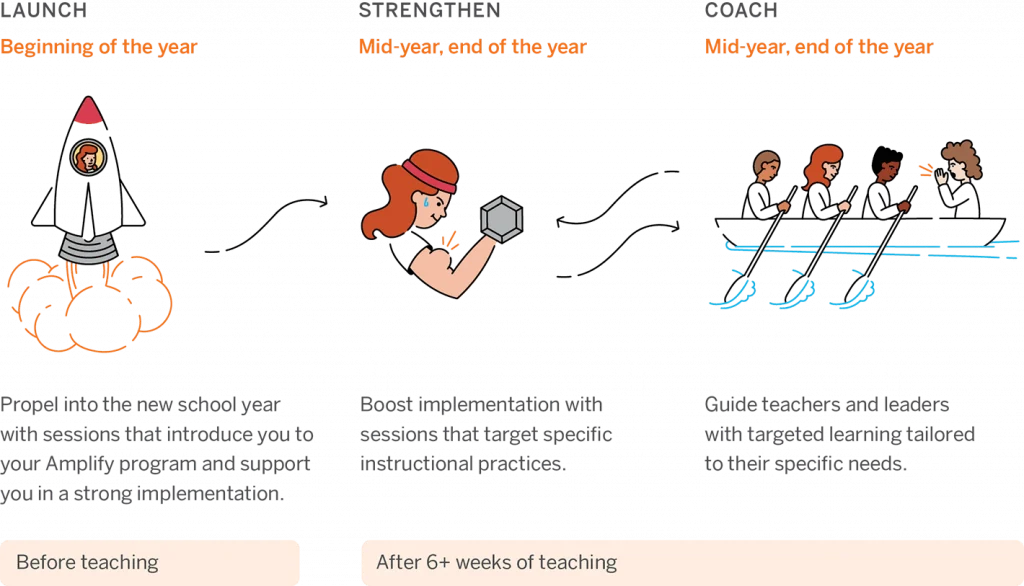
Amplify’s professional development is designed to ensure successful, sustained implementation of our programs. Sessions are strategically bundled to provide continuous support, adapting to your K–8 educators’ evolving needs throughout the year.
Prepare
Begin
Practice
Advance
Program-agnostic sessions will set up educators for success in areas such as the Science of Reading and/or problem-based approaches to math.
Program-aligned packages will support those who are new to Amplify’s programs.
Program-aligned packages will support those who have experience using Amplify’s programs.
Offerings will support advanced implementation, build capacity for instructional leaders, certify in-house trainers to deliver Launch sessions, and more.
Our packages include:
Launch sessions: Propel your teachers into the new school year by introducing them to their Amplify program, laying a strong foundation for effective implementation.
Strengthen sessions: Enhance implementation with mid-year sessions that target specific instructional practices, providing the support needed to enhance program efficacy.
Coach sessions: Provide tailored guidance and support for educators and leaders to address specific needs, refining and advancing their instructional practices.
About Amplify assessment and intervention programs
Amplify’s high-quality programs make it easier for K–8 educators to teach inspiring, impactful lessons that celebrate and develop the brilliance of their students. Equipped with tools that provide robust scaffolding and differentiated instruction, assessment, and intervention, educators gain real-time insights and can provide personalized, actionable plans that support every learner.
Learn how to get the most out of your assessment and intervention program(s) through Amplify’s PD.
Assessment
mCLASS® DIBELS® 8th Edition (grades K–8)
mCLASS Lectura (grades K–6)
mCLASS DIBELS 8th Edition and mCLASS Lectura biliteracy
mCLASS Math (grades K–8)
Intervention
mCLASS Intervention
We provide PD sessions for all Amplify programs. Contact your account executive to discuss the extended catalog of PD session options or request a quote.
mCLASS Assessments
We’ve created professional development offerings that will help you meet your unique needs this school year. Explore the Begin and Practice packages available for mCLASS DIBELS 8th Edition (K–8), mCLASS Lectura (K–6), and/or mCLASS Math (K–8) by selecting the session titles to learn more.
Please note that mCLASS DIBELS 8th Edition and mCLASS Lectura biliteracy sessions are currently unavailable for the Hybrid 4 and Virtual 4 packages.
*Assessment Strengthen sessions should be scheduled after the most recent benchmark window has closed for participants to work with their own data.
Coach session
Suggested enhancements
On-site
On-site or virtual
6 hr.
3 hr.
Begin: Administration and instruction essentials for K–8 teachers
On-site or virtual, 6 hours
Dive into the essentials of your mCLASS assessment program. Learn how to administer and score the assessment(s) and leave ready to leverage mCLASS reports and lessons to accelerate data-driven student outcomes.
Language: The mCLASS Lectura session is facilitated in English or Spanish.
Begin: Administration and reporting training for K–8 leaders
On-site or virtual, 3 hours
Prepare to implement your assessment program(s) at your school site(s). Determine systems-level actions that will ensure assessment fidelity and leave ready to leverage key admin reports to support data-informed decisions.
Language: The mCLASS Lectura session is facilitated in English only.
Begin: Creating a data-driven classroom for K–8 teachers
On-site or virtual, 3 hours
Dive deep into mCLASS reports and instructional recommendations to drive stronger student outcomes in your classroom. You will leave ready to leverage mCLASS progress monitoring and grouping tools to support a robust MTSS program.
Language: The mCLASS Lectura session is facilitated in English or Spanish.
Begin: Building a data-driven culture for K–8 leaders
On-site or virtual, 3 hours
Cultivate a schoolwide culture of data-driven practices. Use mCLASS reports to drill into key school-level data and leave with a systems-level action plan to drive stronger student and teacher outcomes.
Language: The mCLASS Lectura session is facilitated in English or Spanish.
Begin: Strengthen Focus: Goal setting and growth outcomes for K–8 teachers
Virtual, 1 hour
Learn how to use mCLASS Zones of Growth (Zonas de crecimiento for mCLASS Lectura) reports to set meaningful, ambitious, and attainable student goals that drive student progress and growth.
Begin: mCLASS Math: Asset-based assessment training for K–5 or 6–8 teachers
On-site or virtual, 3 hours
Dive into the essentials of your mCLASS Math assessment program. Learn how these assessments both highlight students’ strengths and help identify what’s next through an asset-based approach. Leave ready to administer assessments and understand reporting.
Begin: mCLASS Math: Student thinking and instructional next steps for K–5 teachers
On-site or virtual, 3 hours
Explore how mCLASS Math helps determine what students know in relation to grade-level content, and how to use data to inform instructional next steps that support, strengthen, and stretch student thinking. Dig into your own student data and leave with actionable next steps that connect directly to the ways your students are thinking about mathematics.
Begin: Strengthen Focus: mCLASS Math: Leveraging assessment data to strengthen mathematical explanations for K–5 teachers
Virtual, 1 hour
Dig into mCLASS Math to reveal what students understand about mathematical concepts and give them the tools to become more clear and confident communicators in math class.
*Assessment Strengthen sessions should be scheduled after the most recent benchmark window has closed for participants to work with their own data.
Coach session
Suggested enhancements
On-site
On-site or virtual
6 hr.
3 hr.
Practice: Creating a data-driven classroom for K–8 teachers
On-site or virtual, 3 hours
Dive deep into mCLASS reports and instructional recommendations to drive stronger student outcomes in your classroom. You will leave ready to leverage mCLASS progress monitoring and grouping tools to support a robust MTSS program.
Language: The mCLASS Lectura session is facilitated in English or Spanish.
Practice: Building a data-driven culture for K–8 leaders
On-site or virtual, 3 hours
Cultivate a schoolwide culture of data-driven practices. Use mCLASS reports to drill into key school-level data and leave with a systems-level action plan to drive stronger student and teacher outcomes.
Language: The mCLASS Lectura session is facilitated in English or Spanish.
Practice: Goal setting and growth outcomes for K–8 teachers
Virtual, 1 hour
Learn how to use mCLASS Zones of Growth (Zonas de crecimiento for mCLASS Lectura) reports to set meaningful, ambitious, and attainable student goals that drive student progress and growth.
Language: The mCLASS Lectura session is facilitated in English.
Amplify intervention PD sessions
Each intervention program offers Launch and Coach sessions for up to 30 participants per program for year one and beyond. Our interactive sessions are available on-site or virtually, empowering teachers and leaders anywhere with the tools and skills they need to inspire all students to think deeply, creatively, and for themselves.
mCLASS Intervention
mCLASS Intervention is a staff-led Tier 2 and Tier 3 reading intervention program that does the heavy lifting of data analysis and lesson sequencing, freeing up teachers to teach the reading skills each student needs. View the table and select the session title to learn more about each mCLASS Intervention PD session.
Prepare to deliver mCLASS Intervention lessons and learn how to administer the diagnostic and progress monitoring measures through this on-demand course. This subscription includes an individual seat to the course, which takes approximately 3 hours to complete. Participants will be able to access and revisit the course as needed for up to one year.
Support teachers and leaders with learning experiences tailored to meet their specific needs.
Coach session
On-site, 6 hours
Coach sessions focus on building internal school and district capacity and leadership excellence to accelerate data-driven student outcomes for teachers using mCLASS Intervention. Coaching is customized to meet a school or district’s needs and can include observations, modeling, real-time coaching, and/or co-planning.
Coach sessions focus on building internal school and district capacity and leadership excellence to accelerate data-driven student outcomes for teachers using mCLASS Intervention. Coaching is customized to meet a school or district’s needs and can include observations, modeling, real-time coaching, and/or co-planning.
Want to extend learning for teachers and leaders? Have a unique need that you’d like to address? Seeking targeted coaching options? Our package enhancements allow you to tailor your PD experience to meet the needs of your staff.
Enhancement options are available for the following assessment programs:
mCLASS DIBELS 8th Edition
mCLASS Lectura
mCLASS DIBELS 8th Edition and mCLASS Lectura biliteracy
Enhancements can be purchased for all teachers/leaders or a subset of educators.
Enhancement offerings for assessment programs
Add the following session to any assessment or intervention package.
On-site or virtual, 6 hours; On-site or virtual, 3 hours
Coach sessions focus on building internal school and district capacity and leadership excellence to accelerate data-driven student outcomes for teachers using mCLASS. Coaching is customized to meet a school or district’s needs and can include observations, modeling, real-time coaching, and/or co-planning.
Administration and instruction essentials for teachers
Online course, self-paced
Dive into the essentials of your mCLASS assessment program through this on-demand course. Learn how to administer and score the assessment and leave ready to leverage mCLASS reports and lessons to accelerate data-driven student outcomes. This subscription includes an individual seat to the course, which takes approximately 8 hours to complete. Participants will be able to access and revisit the course as needed for up to one year.
mCLASS DIBELS 8th Edition: Calibration course for teachers
Online course, self-paced
Ensure accuracy and reliability of mCLASS DIBELS 8th Edition test administration through this on-demand course. Review how to administer and score each teacher-administered measure, then calibrate your scoring through scoring mastery checks. This subscription includes an individual seat to the course, which takes approximately 1–3 hours to complete, depending on learner needs. Participants will be able to access and revisit the course as needed for up to one year.
mCLASS DIBELS 8th Edition: Transition course for DDS teachers
Online course, self-paced
Prepare to administer and score the DIBELS 8th Edition assessment in the mCLASS platform through this on-demand course. Learn the essentials of your mCLASS assessment program and leave ready to leverage mCLASS reports and lessons to accelerate data-driven student outcomes. This subscription includes an individual seat to the course, which takes approximately 8 hours to complete. Participants will be able to access and revisit the course as needed for up to one year.
Additional sessions and online courses are also available for other mCLASS programs (Paper DIBELS 8th Edition and mCLASS Intervention Universal).
To learn more about enhancing your Amplify experience by purchasing other mCLASS programs and/or accompanying PD sessions, please contact your account executive.
Contact us
mCLASS dyslexia screener for CA
Publisher presentation
The Lawrence Hall of Science
Developed by the science education experts at UC Berkeley’s Lawrence Hall of Science and the digital learning team at Amplify, our program features:
A phenomena-based approach where students construct a complex understanding of each unit’s anchor phenomenon.
A blend of cohesive storylines, hands-on investigations, rich discussions, literacy-rich activities, and digital tools.
Carefully crafted units, chapters, lessons, and activities designed to deliver true 3-dimensional learning.
An instructional design that supports all learners in accessing all standards.
Instructional model
The Amplify Science program is rooted in the proven, research-based pedagogy of Do, Talk, Read, Write, Visualize. Here’s how each element works:
DO
First-hand investigations are an important part of any science classroom, and Amplify Science has students getting hands-on in every unit—from building models of protein molecules to experimenting with electrical systems.
TALK
Student-to-student discourse and full-class discussions are an integral part of the program. Students are provided with numerous opportunities to engage in meaningful oral scientific argumentation, all while fostering a collaborative classroom environment.
READ
Students read scientific articles, focusing their reading activities on searching for evidence related to their investigation and, importantly, on asking and recording questions as they read through fascinating texts on 21st-century topics.
WRITE
Following real-world practices, students write scientific arguments based on evidence they’ve collected, making clear their reasoning about how a given piece of evidence connects to one of several claims.
VISUALIZE
By manipulating digital simulations and using modeling tools to craft visualizations of their thinking— just as real scientists and engineers do—students take their learning far beyond the confines of what they can physically see in the classroom in an exciting and authentic way.
Program structure
Our cyclical lesson design ensures students receive multiple exposures to concepts through a variety of modalities. As they progress through the lessons within a unit, students build and deepen their understanding, increasing their ability to develop and refine complex explanations of the unit’s phenomenon.
It’s this proven program structure and lesson design that enables Amplify Science to address 100% of the NGSS, and support students in mastering the Oregon Science Standards.
Unit types
While every unit delivers three-dimensional learning experiences and engages students in gathering evidence from a rich collection of sources, each unit also emphasizes a particular science and engineering practice.
In grades K–2:
One unit emphasizes the practice of investigation.
One unit emphasizes the practice of modeling.
One unit emphasizes the practice of engineering design.
In grades 3–5, students experience the three unit types above, plus:
One additional unit that emphasizes the practice of argumentation.
Investigation units focus on the process of strategically developing investigations and gathering data to answer questions. Students are first asked to consider questions about what happens in the natural world and why, and are then involved in designing and conducting investigations that produce data to help answer those questions.
Modeling units provide extra support to students engaging in the practice of modeling. Students use physical models, investigate with computer models, and create their own diagrams to help them visualize what might be happening on the nanoscale.
Engineering design units provide opportunities for students to solve complex problems by applying science principles to the design of functional solutions, and iteratively testing those solutions to determine how well they meet preset criteria.
Argumentation units provide students with regular opportunities to explore and discuss available evidence, time and support to consider how evidence may be leveraged in support of claims, and independence that increases as they mount written arguments in support of their claims.
Unit sequence
Our lessons follow a structure that is grounded in regular routines while still being flexible enough to allow for a variety of learning experiences.
In fact, our multi-modal instruction offers more opportunities for students to construct meaning, and practice and apply concepts than any other program. What’s more, our modular design means our units can be flexibly arranged to support your instructional goals.
Program components
Available digitally and in print, our unit-specific reference guides are chock full of helpful resources, including scientific background knowledge, planning information and resources, color-coded 3-D Statements, detailed lesson plans, tips for delivering instruction, and differentiation strategies.
Hands-on learning is an essential part of Amplify Science, and is integrated into every unit. Students actively participate in science, playing the roles of scientists and engineers as they gather evidence, think critically, solve problems, and develop and defend claims about the world around them. Every unit includes hands-on investigations that are critical to achieving the unit’s learning goals.
More hands-on with Flextensions: Hands-on Flextensions are additional, optional investigations that are included at logical points in the learning progression and give students an opportunity to dig deeper if time permits. These activities offer teachers flexibility to choose to dedicate more time to hands-on learning. Materials referenced in Hands-on Flextension activities will either be included in the unit kit or are easily sourced. Supporting resources such as student worksheets will be included as downloadable PDF files.
Our kits include enough non-consumable materials to support a class of 36 students and enough consumable items to support 72 students. In other words, each kit can last two years! Plus, our unit-specific kits mean teachers just grab the tub they need and then put it all back with ease.
Each unit of Amplify Science K–5 includes six unique Student Books written by the Lawrence Hall of Science specifically for the program. These content-rich nonfiction and informational texts provide opportunities for students to search for evidence relevant to their firsthand investigations, see science practices and dispositions modeled, extend their science knowledge, provide real world connections as they master reading-to-learn and close reading skills, and construct evidence-based arguments.
Important note: Students in grades K–5 are never asked to read alone. Rather, books are read to, with, and by students with ample scaffolding and support provided by the teacher. Big Books are read aloud or together with the class to introduce ideas. Student Books allow for small-group reading and reading in pairs.
Available for every unit, our Student Investigation Notebooks contain instructions for activities and space for students to record data and observations, reflect on ideas from texts and investigations, and construct explanations and arguments.
In grades K–5, one copy of the Student Investigation Notebook is included in each unit’s materials kit for use as a blackline master. Each notebook is also available as a downloadable PDF on the Unit Guide page of the digital Teacher’s Guide.
Amplify Science offers digital experience licenses that make elementary instruction more flexible for students and teachers, as well as providing additional means to engage in remote, hybrid, or in-person learning!
Student-facing digital lessons With the digital experience, students can engage with digital lesson content in one cohesive experience. It’s the same content from Amplify science in a new, integrated format where students can interact with slides, Sims, modeling tools, videos, books, and more.
Digital student notebook pages Students can draw, write, record audio, and insert images into their Investigation Notebook pages. Their work is automatically saved and delivered to you in real time. When students edit their work, those edits are immediately reflected on your teacher work review page. You can access student responses by clicking “View Work,” where you can see students’ Investigation Notebook pages from the lesson, updating live.
[IMAGE TO COME]
Assign in Amplify The digital experience allows flexibility with optional features like scheduling assignments in advance and setting due dates. Teacher can use Scheduling to determine the date and time that the assignment appears in Student Home. They also have the flexibility to schedule when assignments appear and use dates to remove assignments from Student Home.
Assign in LMS You can also assign lessons via our integrations with Google Classroom and Microsoft Teams, or by copying a lesson link and sharing it with students through the platform of your choice. The assignment link you send will provide students with direct access to the full lesson—slides, videos, digital tools, and worksheet activities—no student platform navigation required!
Teacher platform and presentation Teacher-facing lesson content—including sample teacher talk, student responses, pedagogical support, and possible student responses—shows on a teacher’s private Teacher Guide tab. Students only see the lesson slides that are being presented.
Explore your print samples
Amplify Science physical samples can be found at the Hamersley Library at Western Oregon University. There you’ll find unit-specific Teacher’s References Guides, Student Investigation Notebooks, and sets of Student Books for each grade level.
A note about the Teacher’s Reference Guides:
It’s important that your committee sees the full breadth and depth of our instruction. For that reason, we provided a copy of each of our unit-specific Teacher Reference Guides.
Rest assured that teachers do not use these robust reference guides for day-to-day teaching. For that, we have a hands-free TG!
A note about the Materials Kits:
Hands-on learning is at the heart of Amplify Science, and is integrated into every unit. In order to make hands-on learning more manageable for busy teachers, Amplify Science materials are organized into unit-specific kits.
Our unit-specific kits:
Include more materials — We give teachers enough non-consumable materials to support a class of 36 students and enough consumables to support 72 student uses. In other words, each kit will last two years.
Are more manageable — Unlike other programs that require large groups of students to share limited sets of materials, our kits include enough to support small groups of 4–5 students.
Include supportive videos — Each hands-on activity provides clear instructions for the teacher, with more complex activities supported by video demonstrations and illustrations.
At your request, we did not include our materials kits with our submissions samples. However, we did provide grade-specific lists of all materials included in each kit, which you can also find with the links below.
To help familiarize yourself with navigating the digital platform, watch the below navigational video.
Explore as a student
When you’re ready to explore the student learning experience on your own, follow these instructions to access the Amplify Science digital student platform.
Click the Access Amplify Science Platform button below.
Select Log in with Amplify.
Enter the student username and password found on your unique login flyer enclosed in your physical sample box.
Click the Science icon.
Click on the Grade Menu in the top center of the screen and select any grade.
As you prepare for the upcoming school year, we’re making it easier than ever to support your students with Amplify Science. From time-saving tools to expanded instructional resources, these improvements will further enhance your ability to engage students in rigorous, hands-on learning while streamlining your teaching experience.
Updates
Educator Home: Stream filtering by student
You can now filter your Stream by student name and see all the assignments for each particular student. You can also preview student work right from the Stream to check in on their progress.
Noteworthy features
PD Library
Amplify Science’s PD Library is your go-to destination for self-paced professional development. Whether you’re new to Amplify Science or looking to deepen your expertise, you’ll find high-quality training and resources tailored to your needs.
Caregiver Hub
Empower families and caregivers to support student learning with the Amplify Science Caregiver Hub, a dedicated resource that provides curriculum overviews, background information, and helpful tools to extend learning beyond the classroom.
Bite-Sized Science Moments in Amplify Classroom
Explore a growing library of free science activities that are designed to be flexibly implemented in your day. Each activity takes between 5–20 minutes to complete, and can be used within a science block or any time!
The digital experience
The digital experience is an add-on license for K–5 teachers and students that makes lesson planning and student engagement easier than ever. With ready-to-use slides-based lessons, integrated teacher prompts and guidance, interactive student opportunities, robust professional development resources, and more, this tool keeps everything in one place.
*Interested in using the digital experience? Contact your account representative to learn more.
Amplify Science classroom showcase
Looking for inspiring classroom examples from educators nationwide who are bringing Amplify Science to life? Check out the Amplify Science classroom showcase!
mCLASS dyslexia screener for CA
Screen and intervene faster with mCLASS DIBELS 8th Edition.
California educators, did you know mCLASS® DIBELS® 8th Edition is the industry’s first all-in-one universal and dyslexia screener? This means with just one screener, you’ll gain a complete picture of your students’ grade-level reading abilities and dyslexia risk factors. Our gold-standard assessment identifies students who need more support, then recommends targeted instruction they’ll love.
About the program
mCLASS offers teacher-administered assessment, intervention, and personalized instruction for grades K–6. Know exactly how to monitor and support every student in your classroom, with features like:
Precise one-minute measures based on over three decades of predictive data.
Universal and dyslexia screening in one tool.
Instruction that highlights observed patterns and recommends activities.
Robust reports for teachers, specialists, administrators, and parents.
The right measures at the right time
With mCLASS DIBELS 8th Edition, you’ll assess students based on grade-specific curriculum and instructional standards, in accordance with International Dyslexia Association (IDA) guidelines.
mCLASS DIBELS 8th Edition offers one-minute, easy-to-administer measures of processing speed, phonological awareness, alphabetic principle, and word reading.
DIBELS® 8th Edition subtest alignment with IDA Guidelines
Dyslexia Screening Area
mCLASS DIBELS 8th Edition Measure
Grade K
Grade 1
Grade 2
Grade 3
Grade 4–6
Rapid naming ability
Letter Naming Fluency (LNF)
Phonological awareness
Phoneme Segmentation Fluency (PSF)
Alphabetic principle
Nonsense Word Fluency (NWF)
Word reading
Word Reading Fluency (WRF)
Word reading
Oral Reading Fluency (ORF)
Comprehension
Maze
Validated as a universal screener and a dyslexia screener
Strong reliability and validity evidence shows that DIBELS 8th Edition can effectively assess students in key skills linked to both dyslexia and broader reading difficulty. The research supporting DIBELS 8th Edition, conducted by the University of Oregon, is rigorous, meets high technical standards, and empowers educators to make well-informed decisions.
mCLASS DIBELS 8th Edition provides rich data that helps you make informed instructional decisions and seek out further dyslexia screening evaluation if needed:
Assess skills: mCLASS DIBELS 8th Edition and optional dyslexia screenings in Rapid Automatized Naming (RAN), Spelling, Vocabulary, and Oral Language accurately assess students’ abilities.
Identify risk: The DIBELS 8 composite score shows each student’s risk level, with ‘Well Below Benchmark’ indicating a need for intensive support. Students who are also ‘Well Below Benchmark’ in RAN and/or Spelling have an additional Risk Indicator icon next to their name.
Provide instruction: The mCLASS Instruction feature analyzes student error patterns to key dyslexia-related subtests, then recommends small groups and explicit, multi-sensory activities for reinforcing skills.
Progress monitor: mCLASS includes progress-monitoring measures to track student growth in letter sounds, alphabetic principle, word reading, oral reading fluency, and comprehension, so that informed instructional decisions can be made.
Adapt instruction: mCLASS displays indicators based on progress monitoring performance that indicate when a change in instruction may be needed. It also updates instruction recommendations using the latest data.
In addition to identifying students with symptoms of dyslexia, mCLASS DIBELS 8th Edition data recommends early intervention, personalized instruction, and core instruction within Amplify’s early literacy suite. Based on the Science of Reading, Amplify’s early literacy suite programs follow an explicit and systematic structure, build knowledge, and instruct on all of the foundational skills essential to literacy development.
By assessing with mCLASS DIBELS 8th Edition and its Spanish counterpart, mCLASS Lectura, you’ll know with confidence whether a student truly shows signs of dyslexia or is experiencing difficulties learning a new language.
When used together, mCLASS DIBELS 8th Edition and mCLASS Lectura feature a Dual Language Report that analyzes dyslexia screening results in both languages. The report also details how each student can leverage their strengths from one language to support growth in the other.
Equal skill coverage in English and Spanish
Dyslexia screening areas
English measure
Spanish measure
Description*
Letter Naming and RAN
Letter Naming Fluency (LNF)
Fluidez en nombrar letras (FNL)
Grades K–1: Naming letters in print. 1 minute, 1:1 administration.
Phonological Awareness (Segmentation)
Phonemic Segmentation Fluency (PSF)
Fluidez en la segmentación de sílabas (FSF) & Fluidez en la segmentación de fonemas (FSF)
Grades K–1: Hearing and using sounds or syllables in spoken words. 1 minute, 1:1 administration.
Phonological awareness (Elision)
¿Qué queda? (QQ)
Grades K–2: Produce the part of a word that remains after deleting a syllable or phoneme. 1 minute, 1:1 administration.
Letter-Sound Knowledge
Nonsense Word Fluency Correct Letter Sounds (NWF-CLS)
Fluidez en los sonidos de letras (FSL)
English: Grades K–3: Identify letter-sound correspondences in the context of pseudo-words. Spanish: Grades K-1: Identify letter-sounds in isolation. 1 minute, 1:1 administration.
Letter-Sound Knowledge (Receptive)
Fluidez en los sonidos de las letras K-Inicio (FSL K-Inicio)
Grade K: Identify (point to) which letter makes a certain sound. Untimed, 1:1 administration
Decoding
Nonsense Word Fluency Words Recoded Correctly (NWF-WRC)
Grades K–3: Reading common words easily, quickly and correctly.1 minute, 1:1 administration.
Fluency
Oral Reading Fluency (ORF)
Fluidez en la lectura oral (FLO)
Grades 1–6: Reading connected text with accuracy and automaticity. 1 minute, 1:1 administration.
Reading Comprehension
Maze
¿Cuál palabra? (CP)
Grades 2–6: Understanding meaning from texts. 3 minutes, group administration.
Vocabulary
Vocabulary
Vocabulario
Grades K–3: Knowledge of grade-specific words. 15 minutes, group administration.
Encoding
Spelling
Ortografía
Grades K–3: Arranging letters correctly to spell words with grade appropriate features 15 minutes, group administration.
RAN (Numbers)
Rapid Automatized Naming
–
Grades K–3: Correctly and quickly naming visual symbols, such as numbers. 3-4 minutes, 1:1 administration.
Language Comprehension
Oral Language
Lenguaje oral
Grades K–2: Demonstrate the ability to use words and phrases acquired through conversations, reading and being read to, and responding to texts. 5 minutes, 1:1 administration.
*Students can be assessed using off-grade measures when information on specific skills is needed.
Dyslexia resources for families
Families play a crucial role in helping children overcome reading challenges. mCLASS DIBELS 8th Edition and mCLASS Lectura provide a Home Connect letter after each dyslexia screening to explain the results in family-friendly language, recommend activities, and direct families to a free website for additional at-home support.
Developmentally appropriate
Computer-based assessments that require students to complete tasks silently or independently may over-identify students for intervention services, especially young learners who are still developing focus and attention abilities.
mCLASS requires students to actively demonstrate their proficiency in producing letter sounds, forming words, and reading texts. This approach to assessment aligns with IDA guidelines for effective screening of reading challenges. By choosing mCLASS for dyslexia screening, you’ll gain accurate information about a student’s risk for dyslexia, and gain the capability to monitor every student’s path to reading proficiency.
mCLASS offers teacher-administered assessment, intervention, and personalized instruction for grades K–6. Know exactly how to monitor and support every student in your classroom, with features like:
Precise one-minute measures based on over three decades of predictive data.
Universal and Reading Difficulties screening in one tool.
Instruction that highlights observed patterns and recommends activities.
Robust reports for teachers, specialists, administrators, and parents.
The right measures at the right time
With mCLASS DIBELS 8th Edition, you’ll assess students based on grade-specific curriculum and instructional standards, in accordance with International Dyslexia Association (IDA) guidelines.
mCLASS DIBELS 8th Edition offers one-minute, easy-to-administer measures of processing speed, phonological awareness, alphabetic principle, and word reading.
DIBELS® 8th Edition subtest alignment with SB 114 requirements
RDRP Screening Area
mCLASS DIBELS 8th Edition Measure
Grade K
Grade 1
Grade 2
Grade 3
Grade 4–6
Rapid naming ability
Letter Naming Fluency (LNF)
Phonological awareness
Phoneme Segmentation Fluency (PSF)
Alphabetic principle
Nonsense Word Fluency (NWF)
Word reading
Word Reading Fluency (WRF)
Word reading
Oral Reading Fluency (ORF)
Comprehension
Maze
Language Comprehension
Oral Language
Vocabulary
Vocabulary
RAN
Rapid Automatized Naming (Numbers)
Encoding
Spelling
OPTIONAL
Validated as a universal screener and a dyslexia screener
Strong reliability and validity evidence shows that DIBELS 8th Edition can effectively assess students in key skills linked to both dyslexia and broader reading difficulty. The research supporting DIBELS 8th Edition, conducted by the University of Oregon, is rigorous, meets high technical standards, and empowers educators to make well-informed decisions.
mCLASS DIBELS 8th Edition provides rich data that helps you make informed instructional decisions and seek out further dyslexia screening evaluation if needed:
Assess skills: mCLASS DIBELS 8th Edition and optional dyslexia screenings in Rapid Automatized Naming (RAN), Spelling, Vocabulary, and Oral Language accurately assess students’ abilities.
Identify risk: The DIBELS 8 composite score shows each student’s risk level, with ‘Well Below Benchmark’ indicating a need for intensive support. Students who are also ‘Well Below Benchmark’ in RAN and/or Spelling have an additional Risk Indicator icon next to their name.
Provide instruction: The mCLASS Instruction feature analyzes student error patterns to key dyslexia-related subtests, then recommends small groups and explicit, multi-sensory activities for reinforcing skills.
Progress monitor: mCLASS includes progress-monitoring measures to track student growth in letter sounds, alphabetic principle, word reading, oral reading fluency, and comprehension, so that informed instructional decisions can be made.
Adapt instruction: mCLASS displays indicators based on progress monitoring performance that indicate when a change in instruction may be needed. It also updates instruction recommendations using the latest data.
In addition to identifying students with symptoms of dyslexia, mCLASS DIBELS 8th Edition data recommends early intervention, personalized instruction, and core instruction within Amplify’s early literacy suite. Based on the Science of Reading, Amplify’s early literacy suite programs follow an explicit and systematic structure, build knowledge, and instruct on all of the foundational skills essential to literacy development.
By assessing with mCLASS DIBELS 8th Edition and its Spanish counterpart, mCLASS Lectura, you’ll know with confidence whether a student truly shows signs of of reading difficulties or is experiencing difficulties learning a new language.
When used together, mCLASS DIBELS 8th Edition and mCLASS Lectura feature a Dual Language Report that analyzes Reading Difficulties screening results in both languages. The report also details how each student can leverage their strengths from one language to support growth in the other.
Equal skill coverage in English and Spanish
mCLASS Lectura subtest alignment with SB114
RDRP screening areas
English measure
Spanish measure
Description*
Letter Naming and RAN
Letter Naming Fluency (LNF)
Fluidez in nombrar letras (FNL)
Grades K–1: Naming letters in print. 1 minute, 1:1 administration.
Phonological Awareness (Segmentation)
Phonemic Segmentation Fluency (PSF)
Fluidez en la segmentación de sílabas (FSS) & Fluidez en la segmentación de fonemas (FSF)
Grades K–1: Hearing and using sounds or syllables in spoken words. 1 minute, 1:1 administration.
Phonological Awareness (Elision)
–
¿Qué queda? (QQ)
Grades K–2: Produce the part of a word that remains after deleting a syllable or phoneme. 1 minute, 1:1 administration.
Letter Sound Correspondence Knowledge
Nonsense Word Fluency Correct Letter Sounds(NWF-CLS)
Fluidez en los sonidos de letras (FSL)
English: Grades K–3: Identify letter-sound correspondences in the context of pseudo-words. Spanish: Grades K-1: Identify letter-sounds in isolation. 1 minute, 1:1 administration.
Letter-Sound Knowledge (Receptive)
–
Fluidez en los sonidos de las letras K-Inicio (FSL K-Inicio)
Grade K: Identify (point to) which letter makes a certain sound. Untimed, 1:1 administration.
Decoding
Nonsense Word Fluency Words Recoded Correctly (NWF-WRC)
Fluidez en los sonidos de las sílabas (FSL)
Grades K–3: Identify letter-sound correspondences in the context of pseudo-words. Spanish: Grades K–1: Identify letter-sounds in isolation. 1 minute, 1:1 administration.
Word Reading
Word-Reading Fluency (WRF)
Fluidez en las palabras (FEP)
Grades K–3: Reading common words easily, quickly and correctly.1 minute, 1:1 administration.
Fluency
Oral Reading Fluency (ORF)
Fluidez en la lectura oral (FLO)
Grades 1–6: Reading connected text with accuracy and automaticity. 1 minute, 1:1 administration.
Reading Comprehension
Maze
¿Cuál palabra? (CP)
Grades 2–6: Understanding meaning from texts. 3 minutes, group administration.
Vocabulary
Vocabulary
Vocabulario
Grades K–3: Arranging letters correctly to spell words with grade appropriate features. 15 minutes, group administration.
Encoding
Spelling
Ortografía
Grades K–3: Arranging letters correctly to spell words with grade-appropriate features. 15 minutes, group administration.
RAN (Numbers)
Rapid Automatized Naming
–
Grades K–3: Correctly and quickly naming visual symbols, such as numbers. 1-2 minutes, 1:1 administration.
Language Comprehension
Oral Language
Lenguaje oral
Grades K–2: Demonstrate the ability to use words and phrases acquired through conversations, reading and being read to, and responding to texts. 5 minutes, 1:1 administration.
*Students can be assessed using off-grade measures when information on specific skills is needed.
Families play a crucial role in helping children overcome reading challenges. mCLASS DIBELS 8th Edition and mCLASS Lectura provide a Home Connect letter after each screening to explain the results in family-friendly language, recommend activities, and direct families to a free website for additional at-home support.
Developmentally appropriate
Computer-based assessments that require students to complete tasks silently or independently may over-identify students for intervention services, especially young learners who are still developing focus and attention abilities.
mCLASS requires students to actively demonstrate their proficiency in producing letter sounds, forming words, and reading texts. This approach to assessment aligns with IDA guidelines for effective screening of reading challenges. By choosing mCLASS for universal screening, you’ll gain accurate information about a student’s risk for reading difficulties, and gain the capability to monitor every student’s path to reading proficiency.
Looking to speak directly with your local representative? Get in touch with a California team member to learn more about our early literacy suite or request a demo account.
Dan Pier Vice President, West (415) 203-4810 dpier@amplify.com
Erin King Sales Director, CA (512) 736-3162 eking@amplify.com
NORTHERN CA Wendy Garcia Senior Account Executive (510) 368-7666 wgarcia@amplify.com
BAY AREA Lance Burbank Account Executive (415) 830-5348 lburbank@amplify.com
CENTRAL VALLEY and CENTRAL COAST Demitri Gonos Senior Account Executive (559) 355-3244 dgonos@amplify.com
VENTURA and L.A. COUNTY Jeff Sorenson Associate Account Executive (310) 902-1407 jsorenson@amplify.com
ORANGE and L.A. COUNTY Lauren Sherman Senior Account Executive (949) 397-5766 lsherman@amplify.com
SAN BERNARDINO and L.A. COUNTY Michael Gruber Senior Account Executive (951) 520-6542 migruber@amplify.com
RIVERSIDE AND L.A. COUNTY Brian Roy Senior Account Executive (818)967-1674 broy@amplify.com
SAN DIEGO COUNTY Kirk Van Wagoner Senior Account Executive (760) 696-0709 kvanwagoner@amplify.com
BUTTE, DEL NORTE, HUMBOLDT, and SHASTA COUNTY and DISTRICTS UNDER 2250 ENROLLMENT Kevin Mauser Lead Account Executive (815) 534-0148 kmauser@amplify.com
Professional development for assessment and intervention programs
Amplify professional development (PD) provides learning experiences that intentionally develop the knowledge and skills you need for effective and self-sustaining implementation.
Learn how to administer and score your assessment and develop a deeper understanding of reporting and instruction by investing in professional development.
Amplify professional development has been vetted by Rivet Education’s team through a rigorous three-step process and is listed in the Professional Learning Partner Guide.
Change is more likely to stick and get results if you take a systemic approach. As our partner, you’ll develop a learning plan that will drive your program implementation, enrich your instructional practices, and increase student impact.
Amplify’s professional development is designed to ensure successful, sustained implementation of our programs. Through strategically bundled packages, our PD sessions provide continuous support that adapts to your educators’ evolving needs.
Prepare
Begin
Practice
Advance
Program-agnostic sessions will set up educators for success in areas such as the Science of Reading and/or problem-based approaches to math.
Program-aligned packages will support those who are new to Amplify’s programs.
Program-aligned packages will support those who have experience using Amplify’s programs.
Offerings will support advanced implementation, build capacity for instructional leaders, certify in-house trainers to deliver Launch sessions, and more.
Our packages include:
Launch sessions: Propel your teachers into the new school year by introducing them to their Amplify program, laying a strong foundation for effective implementation.
Strengthen sessions: Boost implementation with mid-year sessions that target specific instructional practices, providing the support needed to enhance program efficacy.
Coach sessions: Provide tailored guidance and support for educators and leaders to address specific needs, refining and advancing their instructional practices.
About mCLASS Texas® assessment PD packages:
Begin packages: Ideal for the first year of implementation, these packages help educators transition to evidence-based practices. Each package includes Launch and Strengthen sessions to set the foundation and support the initial phases of program adoption.
Format options: On-site, Hybrid, Virtual
Components: One Launch session introduces and supports a strong implementation and one Strengthen session deepens understanding of the program.
Practice packages: Designed for the second year of implementation and beyond, these packages deepen educators’ knowledge and refine their practice. They focus on continuous improvement, using data to drive instructional decisions and enhance student outcomes.
Format options: On-site, Hybrid, Virtual
Components: Two Strengthen sessions expand practice and drive outcomes. We recommend enhancement Coach sessions for ongoing support and addressing customized needs.
About mCLASS Intervention PD sessions:
Each intervention program offers Launch and Coach sessions for up to 30 participants per program for year one and beyond.
Our interactive sessions are available on-site or virtually, empowering teachers and leaders anywhere with the tools and skills they need to inspire all students to think deeply, creatively, and for themselves.
About Amplify assessment and intervention programs
Amplify’s high-quality programs make it easier for educators to teach inspiring, impactful lessons that celebrate and develop the brilliance of their students. Empowering teachers with tools to provide robust scaffolding and differentiated instruction, assessment, and intervention programs take the hassle and guesswork out of assessments with real-time, actionable plans personalized for every learner.
Learn how to get the most out of your assessment and intervention program(s) through Amplify’s PD.
Assessment
mCLASS Texas
mCLASS Lectura Texas
mCLASS Texas + Lectura
Intervention
mCLASS Intervention
We provide PD sessions for all Amplify programs. Contact your account executive to discuss the extended catalog of PD session options or request a quote.
mCLASS Texas Assessments
We’ve created professional development offerings that will help you meet your unique needs this school year. Explore the Begin and Practice packages available for mCLASS Texas Edition and mCLASS Lectura Texas by selecting the session titles to learn more.
Please note that mCLASS Texas and mCLASS Texas + Lectura biliteracy sessions are currently unavailable for the Hybrid 4 and Virtual 4 packages.
*Assessment Strengthen sessions should be scheduled after the most recent benchmark window has closed for participants to work with their own data.
Coach session
Suggested enhancements
On-site
On-site or virtual
6 hr.
3 hr.
Begin: Administration and instruction essentials for teachers
On-site or virtual, 6 hours
Dive into the essentials of your mCLASS Texas assessment program. Learn how to administer and score the assessment and leave ready to leverage mCLASS Texas reports and lessons to accelerate data-driven student outcomes.
Language: The mCLASS Lectura Texas session is facilitated in English or Spanish.
Begin: Administration and reporting training for leaders
On-site or virtual, 3 hours
Prepare to implement your assessment program(s) at your school site(s). Determine systems-level actions that will ensure assessment fidelity and leave ready to leverage key admin reports to support data-informed decisions.
Language: The mCLASS Lectura Texas session is facilitated in English only.
Begin: Creating a data-driven classroom for teachers
On-site or virtual, 3 hours
Dive deep into mCLASS Texas reports and instructional recommendations to drive stronger student outcomes in your classroom. You will leave ready to leverage mCLASS Texas progress monitoring and grouping tools to support a robust MTSS program.
Language: The mCLASS Lectura Texas session is facilitated in English or Spanish.
Begin: Building a data-driven culture for leaders
On-site or virtual, 3 hours
Cultivate a schoolwide culture of data-driven practices. Use mCLASS Texas reports to drill into key school-level data and leave with a systems-level action plan to drive stronger student and teacher outcomes.
Language: The mCLASS Lectura Texas session is facilitated in English or Spanish.
Begin: Strengthen Focus: Goal setting and growth outcomes for teachers
Virtual, 1 hour
Learn how to use mCLASS Texas Zones of Growth (Zonas de crecimiento for mCLASS Lectura) reports to set meaningful, ambitious, and attainable student goals that drive student progress and growth.
*Assessment Strengthen sessions should be scheduled after the most recent benchmark window has closed for participants to work with their own data.
Coach session
Suggested enhancements
On-site
On-site or virtual
6 hr.
3 hr.
Practice: Creating a data-driven classroom for teachers
On-site or virtual, 3 hours
Dive deep into mCLASS Texas reports and instructional recommendations to drive stronger student outcomes in your classroom. You will leave ready to leverage mCLASS Texas progress monitoring and grouping tools to support a robust MTSS program.
Language: The mCLASS Lectura Texas session is facilitated in English or Spanish.
Practice: Building a data-driven culture for leaders
On-site or virtual, 3 hours
Cultivate a schoolwide culture of data-driven practices. Use mCLASS Texas reports to drill into key school-level data and leave with a systems-level action plan to drive stronger student and teacher outcomes.
Language: The mCLASS Lectura Texas session is facilitated in English or Spanish.
New session for mCLASS Lectura Texas and mCLASS Texas + Lectura biliteracy
Practice: Goal setting and growth outcomes for teachers
Virtual, 1 hour
Learn how to use mCLASS Texas Zones of Growth (Zonas de crecimiento for mCLASS Lectura Texas) reports to set meaningful, ambitious, and attainable student goals that drive student progress and growth.
Language: The mCLASS Lectura Texas session is facilitated in English.
Amplify intervention PD sessions
Intervention programs
Each intervention program offers Launch and Coach sessions for up to 30 participants per program for year one and beyond.
mCLASS Texas Intervention
mCLASS Intervention is a staff-led Tier 2 and Tier 3 reading intervention program that does the heavy lifting of data analysis and lesson sequencing, freeing up teachers to teach the reading skills each student needs. View the table and select the session title to learn more about each mCLASS Intervention PD session.
Prepare to deliver mCLASS Intervention lessons and learn how to administer the diagnostic and progress monitoring measures through this on-demand course. This subscription includes an individual seat to the course, which takes approximately 3 hours to complete. Participants will be able to access and revisit the course as needed for up to one year.
Support teachers and leaders with learning experiences tailored to meet their specific needs.
Coach session
On-site, 6 hours
Coach sessions focus on building internal school and district capacity and leadership excellence to accelerate data-driven student outcomes for teachers using mCLASS Intervention. Coaching is customized to meet a school or district’s needs and can include observations, modeling, real-time coaching, and/or co-planning.
Coach sessions focus on building internal school and district capacity and leadership excellence to accelerate data-driven student outcomes for teachers using mCLASS Intervention. Coaching is customized to meet a school or district’s needs and can include observations, modeling, real-time coaching, and/or co-planning.
On-site or virtual, 6 hours; On-site or virtual, 3 hours
Coach sessions focus on building internal school and district capacity and leadership excellence to accelerate data-driven student outcomes for teachers using mCLASS Texas. Coaching is customized to meet a school or district’s needs and can include observations, modeling, real-time coaching, and/or co-planning.
Administration and instruction essentials for teachers
Online course, self-paced
Dive into the essentials of your mCLASS Texas assessment program through this on-demand course. Learn how to administer and score the assessment and leave ready to leverage mCLASS Texas reports and lessons to accelerate data-driven student outcomes. This subscription includes an individual seat to the course, which takes approximately 8 hours to complete. Participants will be able to access and revisit the course as needed for up to one year.
Course options: mCLASS Texas, mCLASS Lectura Texas, and/or mCLASS Math
Additional sessions and online courses are available for other mCLASS programs (mCLASS Express, mCLASS Math, and mCLASS Intervention Universal).
To learn more about enhancing your Amplify experience by purchasing other mCLASS Texas programs and/or accompanying PD sessions, contact your account executive.
Contact us
We’re here to provide answers and guidance as you explore your PD options. Fill out the form to connect with us and discover how Amplify PD can enhance your educational journey.
Amplify CKLA usage & branding guidelines
Welcome to Amplify’s guidelines on using CKLA materials both under its Open Education Resource (OER) license (CC BY-NC-SA) and Amplify’s license to school districts. These guidelines apply to all variants of the CKLA program, including those not authored by Amplify. These guidelines address the following programs:
Amplify CKLA
Amplify Texas ELAR/SLAR
TEA’s K-5 RLA Literacy / SLAR program
TEA’s Bluebonnet Learning K-5 Reading Language Arts
CKF Core Knowledge Language Arts
Amplify is committed to supporting educators in using CKLA resources to enhance classroom learning while protecting the integrity of the CKLA program and Amplify’s exclusive rights.
Our goal is to encourage impactful, efficacious use of the program while providing clear guidelines on permissible and prohibited uses.
1. Amplify’s license and what it means
Amplify partnered with the Core Knowledge Foundation (CKF) to develop the Amplify Core Knowledge Language Arts (CKLA) curriculum. You can learn more about this program and Amplify’s partnership with CKF here.
Amplify holds the exclusive commercial license to all CKLA content. In more than a decade of partnership, we have worked with CKF to enhance and supplement the program, now in its third edition nationally. Amplify licenses Amplify CKLA and Amplify ELAR/SLAR Texas to school districts, along with a full suite of assessment, intervention, and supplemental products, as well as professional development and coaching services. Learn more here.
As the exclusive commercial partner for CKLA, Amplify is the only organization permitted to use the materials commercially.
If your organization purchases CKLA materials from Amplify, you get the customary usage rights for those purchased materials specified in Amplify’s Customer Terms & Conditions.
2. Open Non-Commercial license
Some versions of the CKLA program are available under a Creative Commons NonCommercial license (CC BY-NC-SA 4.0). This includes Amplify Texas ELAR/SLAR, TEA’s K–5 RLA Literacy / SLAR program, TEA’s Bluebonnet Learning K–5 Reading Language Arts and CKF Core Knowledge Language Arts.
CC BY-NC-SA is the OER license for these materials. The license allows users to share and adapt the materials, as long you follow these terms:
Attribution — You must give appropriate credit, provide a link to the license, and indicate if changes were made.
NonCommercial — You may not use the material for commercial purposes.
ShareAlike — If you remix, transform, or build upon the material, you must distribute your contributions under this same CC BY-NC-SA license.
Below we explain how Amplify and CKF apply these terms to common situations — which uses are permitted under the licenses, and which uses are prohibited or require a special permission or commercial arrangement.
Materials licensed under Creative Commons licenses are known as Open Education Resources (OER), and Amplify is proud to have been one of the earliest champions of OER materials in K-12. We believe that OER materials enable a widespread adoption of high quality materials and innovative adaptations by educators for their classrooms, alongside commercial versions that include a full suite of supports.
3. Permitted uses of CKLA content
In these guidelines, when we say “CKLA Content”, we are referring to all versions of the program that was based on the original content from CKF, both those under OER licenses and commercially licensed. Many uses by educators are permissible under either the commercial or OER license. The only difference is that your rights under the commercial license only last as long as that license is maintained by your school or district.
Amplify encourages educators to leverage CKLA Content to foster innovative and effective learning experiences. Below are uses that are permitted without any additional license, as long as you follow attribution guidelines and share-alike requirements.
Classroom Activities and Custom Materials. Educators may create supplementary activities, worksheets, lesson plans, and projects based on the CKLA Content for use within their classroom or school. For these purposes, educators may incorporate portions of the CKLA Content.
Sharing and Selling Materials based on CKLA Content. Educators may also share classroom activities and custom materials with other educators, including by selling the materials on sites like Teachers Pay Teachers. However, if these materials are sold, they may not include CKLA Content.
For any materials you create, you are required to follow our attribution and disclaimer guidelines below.
If you are unsure whether your planned use qualifies as “non-commercial” or is otherwise permitted by Amplify please reach out to us directly.
4. Restricted uses of CKLA program content
To protect the CKLA program’s value and respect Amplify’s exclusive commercial rights, certain uses of the CKLA content are prohibited without first obtaining a commercial license. Amplify reserves the right to enforce these restrictions to protect our rights.
No third party may embed, republish, or incorporate any portion of the CKLA content in products or services intended for sale, licensing, or other commercial purpose. Examples of prohibited uses include embedding CKLA content as a part of digital platforms, apps, or resources marketed to educators or the public, as well as using the content as an input or training data for such products.
This prohibition applies to all types of individuals and organizations (both for-profit and non-profit), and applies to both paid and free uses.
See “Commercial License and Partnerships” below for information on commercial arrangements.
4. Commercial licenses and partnerships
For those interested in using CKLA content in a way that may be commercial, Amplify offers various licensing options. These negotiated licenses allow approved partners to use the CKLA content within their commercial products under specific terms and conditions.
To inquire about a commercial license or discuss a partnership opportunity, please contact our partnerships team at partnerships@amplify.com.
5. Attribution and branding guidelines
Our trademarks are valuable assets of Amplify and its licensors, and we want to ensure our users and partners use them correctly. These trademarks include the Amplify, Core Knowledge Language Arts, and CKLA word marks and logos. These marks and logos may only be used if you have an existing partnership with us, and you’ve reached out to Amplify to secure our approval to use them.
If you are creating materials based on CKLA Content in accordance with the guidelines above, you are required to include the following attribution in a reasonably perceptible location on each copy of those materials:
“These materials are based on Amplify CKLA but are not affiliated with, sponsored by, reviewed, approved, or endorsed by Amplify Education, Inc. or the Core Knowledge Foundation. ‘Amplify’, ‘CKLA’ and other marks are the property of Amplify Education, Inc. and its licensors.”
Why these guidelines matter
Amplify’s goal is to support educational access to high-quality curriculum resources while protecting the intellectual property and integrity of the CKLA program. By adhering to these guidelines, you help ensure that CKLA remains an accessible and respected resource for educators while supporting its continued improvement.
For additional questions on using the program, or if you need further clarification on any of these points, please contact us.
This document is for informational purposes only; references to third-party programs do not imply endorsement or affiliation, and all trademarks are the property of their respective owners.
This document is for informational purposes only; references to third-party programs do not imply endorsement or affiliation, and all trademarks are the property of their respective owners.
Grade 6
Unit 1: Area and Surface Area
Lesson 2: Finding Area by Decomposing and Rearranging
This document is for informational purposes only; references to third-party programs do not imply endorsement or affiliation, and all trademarks are the property of their respective owners.
Topic 4: Representing Proportional Relationships with Graphs
Lesson 10: Introducing Graphs of Proportional Relationships Lesson 11: Interpreting Graphs of Proportional Relationships Lesson 12: Using Graphs to Compare Relationships Lesson 13: Two Graphs for Each Relationship
This document is for informational purposes only; references to third-party programs do not imply endorsement or affiliation, and all trademarks are the property of their respective owners.
Grade K
Unit 1: Position, Length, Height, and Sorting
Lesson 2: Describe and Compare Length and Height, Session 3
This document is for informational purposes only; references to third-party programs do not imply endorsement or affiliation, and all trademarks are the property of their respective owners.
This document is for informational purposes only; references to third-party programs do not imply endorsement or affiliation, and all trademarks are the property of their respective owners.
Amplify and SFUSD Partnership
We recognize and respect the unique differences of each of our partnering districts—and that includes San Francisco USD.
Out of the box, Amplify Caminos offers districts a rich, comprehensive, research-based SELA experience. That said, no two districts are exactly alike. To that end, we are committed to working with San Francisco USD to ensure that Amplify Caminos addresses the needs of your community. This includes providing implementation guidance and support, as well as collaborating with your staff to determine which domains need to be modified or exchanged.
What is Amplify Caminos?
Amplify Caminos is a core Spanish language arts program for grades TK–5 that delivers:
Authentic instruction built from the ground up for the Spanish language.
A unique research-based approach truly built on the Science of Reading.
A combination of explicit foundational skills with meaningful knowledge-building.
Embedded support and differentiation that gets all students reading grade-level texts together.
Opportunities for students to see the strengths and experiences that all people share while also celebrating each others’ unique identities and experiences.
Watch the video below to learn more about Amplify Caminos for Grades K–2.
Watch the video below to learn more about Amplify Caminos for Grades 3–5.
How does Amplify Caminos work?
Amplify Caminos is built on the science of how kids learn to read—in Spanish.
Amplify Caminos is all about helping you teach students how to read, all while giving them authentic and engaging reasons to read. That’s why Amplify Caminos develops foundational skills and builds knowledge in tandem.
Knowledge: Through complex and authentic Spanish read-alouds with an emphasis on classroom interactivity, oral comprehension, and contextual vocabulary, students start to build their awareness of the world around them—and the way the reading skills they’re building give them access to it.
Skills: Starting with the sounds at the core of the Spanish language, students practice their phonemic awareness, handwriting skills, vocabulary, spelling, and grammar. Through daily practice, students become aware of the connection between reading and writing, building confidence as they go.
Respecting the development differences between grade ranges, Amplify Caminos teaches foundational skills and background knowledge as two distinct strands in grades K–2, and combines them into one integrated strand in grades 3–5.
Grades K–2: Every day, students in grades K–2 complete one full lesson that explicitly and systematically builds foundational reading skills in the Amplify Caminos Lectoescritura strand, as well as one full lesson that builds robust background knowledge to access complex text in the Amplify Caminos Conocimiento strand. Through learning in each of these strands, students develop the early literacy skills necessary to help them become confident readers and build the context to understand what they’re reading.
Grades 3–5: In grades 3–5, the Amplify Caminos Lectoescritura and Conocimiento strands are integrated in one set of instructional materials. Lessons begin to combine skills and knowledge with increasingly complex texts, close reading, and a greater writing emphasis. Students can then use their skills to go on their own independent reading adventures.
What do Amplify Caminos students explore?
Amplify Caminos builds students’ knowledge about the world.
In addition to teaching all students to crack the written code (which is vital for equity), the Amplify Caminos program helps students see the strengths and experiences we all share while celebrating their own unique identities and experiences.
This is accomplished through the exploration of topics and text that feature people who resemble students and familiar situations or experiences while also exposing them to people whose appearances, lives, beliefs, and backgrounds differ from their own.
Engaging domains
Amplify Caminos builds knowledge coherently across subjects and grades.
Throughout the program, students use their skills to explore domains that relate to storytelling, science, and the history of our world as seen through the eyes of many different groups.
Carefully selected to build from year-to-year, our grade-appropriate topics help students make and deepen connections while also reading, writing, and thinking creatively and for themselves.
New Knowledge Research Units for Grades K–5
Our brand-new Knowledge Research units carry forward Amplify Caminos’ powerful and proven instructional approach while also:
Adding more diversity. The rich topics and highly visual components featured in these units provide students with even more “windows and mirrors” and perspectives as they work to build knowledge.
Adding more authentic literature. Each new research unit revolves around a collection of high-interest authentic trade books that will spark more curiosity and inspire more inquiry.
Adding more flexibility. Units can be implemented for extended core instruction during flex periods, district-designated Pausing Points, or enrichment periods.
Units cover a variety of rich and relevant topics:
With these new units, students will soar to new heights with Dr. Ellen Ochoa, Amelia Earhart, and the Tuskegee Airmen. They’ll feel the rhythm as they learn about Jazz legends Miles Davis, Tito Puente, and Duke Ellington. And they’ll explore the far reaches of the world with Jacques Cousteau, Matthew Henson, and Eugenie Clark.
Grade K: El arte y el mundo que nos rodea
Grade 1: Cuentos de aventuras: relatos desde los confines de la Tierra
Grade 2: ¡A volar! La era de la aviación
Grade 3: Jazz y más
Grade 4: Energía: pasado, presente y futuro
Grade 5: Más allá de Juneteenth: de 1865 al presente
Units will be made available in English and Spanish, and will include the following components:
Why we added this unit: “Every child is an artist,” said Picasso, meaning that every child uses art to explore and understand the world around them. El arte y el mundo que nos rodea honors that truth by introducing Kindergarten students to some of the ways in which artists have explored and understood the world around them.
This domain introduces students to artists from different time periods, countries, and cultures. Throughout the unit, students learn about different kinds of art and how artists use the world around them as they make art. They also connect this to what they have already learned about the earth, plants, and animals in other Caminos domains: Granjas, Plantas, and Cuidar el planeta Tierra. In addition, students connect this to what they have learned about sculptors in the Presidentes y símbolos de los Estados Unidos domain. As they explore different artists and artistic traditions, they develop their ideas about how humans are connected to each other and to the world around them.
As you read the texts in this unit, students may observe ways in which the characters or subjects are both similar to and different from students. This is a good opportunity to teach students awareness and sensitivity, building on the idea that all people share some things in common, even as they have other things that make them unique. This unit also offers an excellent opportunity to collaborate with your school’s art teacher, as many lessons have suggested activities to help students understand the kind of art they are studying.
Within this unit, students have opportunities to:
Use details to describe art.
Identify three ways to create art.
Identify characteristics of cave art.
Sequence the steps of making pottery.
Describe how artists can create work connected to the world around them.
Describe what makes Kehinde Wiley’s portraits unique.
Explain how the texture of a surface can affect artwork created on it.
Explain what a sculpture is.
Describe what makes James Turrell’s artwork about the sky unique.
Explain what a museum is and what kinds of things you can see or do there.
Trade books in this unit: Instruction in this unit revolves around the following collection of high-interest authentic trade books. One copy of each trade book is included with the unit materials.
Georgia O’Keeffe por Erica Salcedo
Yayoi Kusama: De aquí al infinito por Sarah Suzuki
Tejedora del arcoíris por Linda Elovitz Marshall
Las tijeras de Matisse por Jeanette Winter
El museo por Susan Verde
Quizás algo hermoso: Cómo el arte transformó un barrio por F. Isabel Campoy
Sample materials: Take a sneak peek at the rich instruction and engaging activities for this unit by viewing the PDFs below.
Why we added this unit: This domain introduces students to adventure stories set around the world and challenges students to dig into the adventures through research. By listening to the Read-Alouds and trade books, students increase their vocabulary and reading comprehension skills, learn valuable lessons about perseverance and teamwork, and become familiar with gathering information for research.
In this unit, students study the careers of real-world explorers Dr. Eugenie Clark and Sophia Danenberg, marvel at the inventions of Jacques Cousteau, think critically about how teamwork and collaboration can make greater adventures possible, learn about the science and technology that enable adventures, and research some of the ways humans have confronted challenges at the edges of the world, from the oceans below to space above.
Each lesson in the domain builds students’ research skills as they ask questions, gather information, and write a paragraph about their findings. Students share what they have learned about adventures in an Adventure Gallery Walkthrough. By taking on the persona of one of the adventurers they meet in the Read-Alouds and trade books, students deliver their final paragraphs as if they are a “speaking portrait” of that person. Students are invited to dress up as that adventurer if they desire.
In addition, teachers can set aside time outside the instructional block to create the picture frames students will hold as they present to the Adventure Gallery Walk guests. Frames can be made from shirt boxes, cardboard, construction paper, or any art supplies that are on hand. This might be an opportunity to collaborate with the school’s art department if resources are available. Another option is to ask students to make their frames at home with their caregivers. On the day of the Adventure Gallery Walk, students will be the hosts and take on specific jobs, such as welcoming the guests, describing their work throughout the unit, and pointing out the areas of study on the domain bulletin board. You can find a complete list of student jobs in Lesson 13.
How this unit builds knowledge: This unit builds upon the following Caminos units that students will have encountered in the previous grade.
Rimas y fábulas infantiles (Kindergarten)
Cuentos (Kindergarten)
The specific core content targeted in these domains is particularly relevant to the Read-Alouds students will hear in Cuentos de aventuras: relatos desde los confines de la Tierra. The background knowledge students bring to this unit will greatly enhance their understanding of the trade books used in this unit.
Trade books in this unit: Instruction in this unit revolves around the following collection of high-interest authentic trade books. One copy of each trade book is included with the unit materials.
My Name Is Gabito/Me llamo Gabito por Monica Brown
Galápagos Girl/Galapagueña por Marsha Diane Arnold
My Name Is Gabriela/Me llamo Gabriela por Monica Brown
El viaje de Kalak por María Quintana Silva y Marie-Noëlle Hébert
Señorita Mariposa por Ben Gundersheimer
Sharuko, el arqueólogo peruano/Peruvian Archaeologist Julio C. Tello por Monica Brown
Abuelita fue al mercado por Stella Blackstone
Sample materials: Take a sneak peek at the rich instruction and engaging activities for this unit by viewing the PDFs below.
Why we added this unit: With this domain, students head up, up, and away with an introduction to the soaring history of aviation. Students learn the stories of early aviators, such as the Montgolfier brothers, the Wright brothers, Aida de Acosta, and Amelia Earhart.
During the unit, students study the science of flight, including the physics concept of lift, and research the social impacts of the world of flight. Finally, students let their research skills take flight as they explore key figures from the world of aviation.
The lessons in this domain build on earlier Grade 2 Caminos domains about the westward expansion, early Greek civilizations, and Greek myths, and lay the foundation for learning about other periods of world history in future grades.
How this unit builds knowledge: This unit builds upon the following Caminos units that students will have encountered earlier in the year.
La civilización griega antigua (Grade 2)
Mitos griegos (Grade 2)
La expansión hacia el oeste (Grade 2)
The specific core content targeted in these domains is particularly relevant to the Read-Alouds students will hear in ¡A volar! La era de la aviación. The background knowledge students bring to this unit will greatly enhance their understanding of the trade books used in this unit.
Trade books in this unit: Instruction in this unit revolves around the following collection of high-interest authentic trade books. One copy of each trade book is included with the unit materials.
¡A volar! Todo sobre aviones por Jennifer Prior
Amelia sabe volar por Mara dal Corso
Héroes de la aviación que cambiaron el mundo por Dan Green
El niño que alcanzó las estrellas por José M. Hernández
La niña que aprendió a volar por Sylvia Acevedo
Buenas Noches Capitán Mamá por Graciela Tiscareño-Sato
Sample materials: Take a sneak peek at the rich instruction and engaging activities for this unit by viewing the PDFs below.
Why we added this unit: This domain teaches students about the vibrant music, poetry, and culture of the Jazz Age in the United States. Students learn about famous writers and musicians like Langston Hughes, Louis Armstrong, Billie Holiday, Melba Liston, Tito Puente, and Miles Davis. They study how the jazz art form took root in the South, then spread to the North to become the sound of the Harlem Renaissance, eventually connecting people around the world in musical expression.
During this unit, students perform guided research to further explore both the history of jazz and what jazz is today. They develop research skills and then use those skills to find deeper connections between the stories and music of the Jazz Age and music today. As students learn about the world of jazz, they collaborate and share ideas with their classmates. They also practice sharing feedback focused on their written work, and, at the end of the unit, students present their research to the group.
The lessons give students opportunities to dive into the rhythms and stories of jazz, utilizing the knowledge sequence in this unit to:
Collaboratively generate research questions about jazz, jazz musicians, contemporary musicians from the state where they live or have lived, and the evolution of jazz music.
Utilize Read-Alouds, independent reading, and partner reading to learn about the Jazz Age, the Harlem Renaissance, jazz music, and biographies of celebrated jazz musicians and writers.
Research the answers to their generated questions, gather information, write a short research essay about a famous jazz musician, write a short essay about a contemporary musician from the state where they live or have lived, and give a presentation about their research.
How this unit builds knowledge: Within this unit, students have opportunities to:
Ask relevant questions and make pertinent comments
Identify details in texts
Determine key ideas of texts by evaluating details
Make text-based inferences
Generate questions based on prior knowledge and gathered information
Synthesize details across texts to demonstrate comprehension
Discuss and explain an author’s purpose
Identify and cite reliable primary and secondary sources of information
Compose a well-organized and focused informative essay
Make connections between topics
Present information using appropriate media
Trade books in this unit: Instruction in this unit revolves around the following collection of high-interest authentic trade books. One copy of each trade book is included with the unit materials.
¡Esquivel! Un artista del sonido de la era espacial por Susan Wood
Ray Charles por Sharon Bell Mathis
Tito Puente, el Rey del Mambo por Monica Brown
Me llamo Celia, la vida de Celia Cruz por Monica Brown
¡Azúcar! por Ivar Da Coll
In this unit, students also read the poem “Harlem” by Langston Hughes. (Available for free through the Academy of American Poets website and the Poetry Foundation website, with recorded audio available through the website for John Hancock College Preparatory High School.)
Sample materials: Take a sneak peek at the rich instruction and engaging activities for this unit by viewing the PDFs below.
Why we added this unit: With this domain, students become tomorrow’s problem solvers in this study of energy in the United States. Analytical reading skills are developed by examining the challenges of early energy innovators. Students then read about current energy practices and young energy change-makers across the world.
Throughout the unit, students conduct research into different sources of energy and present a proposal, putting them in the shoes of future energy innovators. They also use the knowledge sequence in this unit to:
Collaboratively analyze texts to identify cause-effect and problem-solution relationships.
Generate questions and conduct research about energy.
Write an opinion essay making their case for a fuel of the future.
Create energy proposals using primary and secondary resources.
How this unit builds knowledge: This unit builds upon the following Caminos units that students will have encountered in previous grades as well as earlier in the year.
Plantas (Grade K)
La historia de la Tierra (Grade 1)
¡Eureka! Estudiante inventor (Grade 4)
The specific core content targeted in these domains is particularly relevant to the Read-Alouds students will hear in Energía: pasado, presente y futuro. The background knowledge students bring to this unit will greatly enhance their understanding of the trade books used in this unit.
Trade books in this unit: Instruction in this unit revolves around the following collection of high-interest authentic trade books. One copy of each trade book is included with the unit materials.
La historia de los combustibles fósiles por William B. Rice
El niño que domó el viento por William Kamkwamba y Bryan Mealer
Sample materials: Take a sneak peek at the rich instruction and engaging activities for this unit by viewing the PDFs below.
Why we added this unit: Within this domain, Students learn about General Granger’s announcement in Galveston, Texas on June 19, 1865, a day marked in history as Juneteenth. Texts and multimedia sources will support foundational knowledge-building about the end of slavery in the United States. A review of the first freedom announcement, President Lincoln’s Emancipation Proclamation, provides students with background knowledge to further emphasize the significance of Juneteenth in American history.
This unit also takes students on a journey beyond Juneteenth, as they study specific contributions of African Americans from 1865 to the present day. Students participate in a virtual field trip to Emancipation Park in Houston, Texas and use the knowledge sequence in this unit to:
Collaboratively generate research questions about Juneteenth, The Great Migration, innovators and inventors, education, the humanities, activists, and allies.
Use Read-Alouds, independent, and partner reading to learn about African American contributions from 1865 to the present.
Research to find answers to their generated questions, gather information, and write a four-chapter Beyond Juneteenth book.
How this unit builds knowledge: This unit builds upon the following Caminos units that students will have encountered in previous grades.
Los nativos americanos (Grade K)
Una nueva nación: la independencia de los Estados Unidos (Grade 1)
La Guerra Civil de los Estaods Unidos (Grade 2)
La inmigración (Grade 2)
Los nativos americanos (Grade 5)
The specific core content targeted in these domains is particularly relevant to the Read-Alouds students will hear in Más allá de Juneteenth: de 1865 al presente . The background knowledge students bring to this unit will greatly enhance their understanding of the trade books used in this unit.
Trade books in this unit: Instruction in this unit revolves around the following collection of high-interest authentic trade books. One copy of each trade book is included with the unit materials.
Martí’s Song for Freedom/Martí y sus versos por la libertad escrito por Emma Otheguy
¡Celebremos Juneteenth! escrito por Carole Boston Weatherford
Side by Side/Lado a Lado: The Story of Dolores Huerta and Cesar Chavez/La Historia de Dolores Huerta y César Chávez escrito por Monica Brown
Canto de alabanza para el día: Poema para la ceremonia inaugural del mandato de Barack Obama escrito por Elizabeth Alexander, traducido por Rodrigo Rojas
Sample materials: Take a sneak peek at the rich instruction and engaging activities for this unit by viewing the PDFs below.
Amplify Caminos puts a variety of texts in the hands of students every day.
Amplify Caminos includes both transadaptations and authentic texts written by Latin American and Spanish authors. In addition to featuring a diverse range of authors and topics, our texts represent individuals and characters with a broad range of identity factors, including socioeconomic status, age, ability, race, ethnicity, country of origin, religion, and more.
Amplify Caminos texts include:
Authentic literature: Authentic literature exposes students to a variety of text types and perspectives to deepen their knowledge of fascinating topics in social studies, science, literature, and the arts. Authentic texts support text-to-self, text-to-world, and text-to-text connections for readers.
Decodable Student Readers: Amplify Caminos is built on the conviction that equitable instruction is vital to an effective program. Decodable Student Readers at grades K–2 are newly re-designed to celebrate students’ diverse experiences and feature individuals with a broad range of identity factors, including socioeconomic status, age, ability, race, ethnicity, country of origin, religion, and more.
ReadWorks® texts: Amplify and ReadWorks have partnered to deliver high-quality texts curated to support the Amplify Caminos Knowledge Sequence and to extend student learning. Texts include high-interest nonfiction articles in topics in social studies, science, literature, and the arts. These texts are accompanied by vocabulary supports and standards-aligned formative assessment opportunities. Teachers can monitor their students’ progress using the ReadWorks reporting features.
Amplify Caminos Trade Book Collection Guide
Each book in our authentic literature collection was selected specifically to support and enhance the content of the K-2 Conocimiento Strand. These anchor texts are intended for use as an introduction to each domain—engaging students, piquing their curiosity, and building initial background knowledge—before diving into the deeper content of the domain Read-Alouds.
Every trade book has an instructional guide that includes the following:
Author and illustrator
Book summary
The Essential Question of the Knowledge domain, connecting the book to the domain
Key Tier 2 and Tier 3 vocabulary words found in the book
A group activity to reinforce and extend students’ knowledge and understanding
A performance task to help gauge students’ comprehension of concepts in the text
Writing prompts to expand understanding and critical thinking
Text complexity ratings and descriptors for quantitative, qualitative, and reader/task categories
Detailed information about text complexity ratings and descriptors; additional uses for the books before, during, and after domain instruction; and the complete list of domains and books for each grade level can be found in the More About the Books section of this guide.
What makes Amplify Caminos different?
Built on the Science of Reading
Built out of the latest research in the Science of Reading, Amplify Caminos delivers explicit instruction in both foundational literacy skills (systematic phonics, decoding, and fluency) and background knowledge in grades K–2 with an integrated approach to explicit instruction in grades 3–5.
Explicit systematic skills instruction
The skills instruction in Amplify Caminos was distinctly developed with the Spanish language in mind. Its foundational lessons are specific to the language, rather than a direct translation from Amplify CKLA’s English skills instruction.
Reading instruction begins with the vowels first, then the most common consonants, and finally the least common consonants. Students will blend and segment sounds to form syllables, and syllables to form words.
Although Spanish has a highly predictable orthography, there are a few silent letters (h is always silent, u is silent after g or q), as well as letters that can make different sounds, depending on the letters that follow them. For that reason, syllables with these letters are taught somewhat later in the progression. The same is true for syllables with infrequently occurring consonants, such as z, k, x, and w.
Coherent knowledge instruction
While students are learning how to read, the Conocimiento strand gives them authentic and engaging reasons to read.
Amplify Caminos uses spiral learning to reinforce every student’s ability to develop skills like reading, writing, speaking, and listening in Spanish that can be transferred to English. As students engage with their lessons, they explore the similarities and differences in grammar, vocabulary, writing, and language use between Spanish and English. This bridge helps students learning two languages to strengthen their knowledge in both.
Through cross-curricular content, students explore units that relate to storytelling, science, and the history of our world in a holistic and thoughtful way. With these units, you’ll bring the world to your students, showing them how reading can become an exciting, rewarding, and useful part of their lives.
Embedded differentiation for all learners
Amplify Caminos provides built-in differentiation strategies and supports in every lesson.
Apoyo a la enseñanza y desafío: Support and Challenge suggestions in every lesson provide assistance or opportunities for more advanced work toward the goal of the lesson.
Notas culturales: These point-of-use notes provide additional information about the traditions, foods, holidays, word variations, and more from across the Spanish-speaking world.
Apoyo adicional: Every lesson in the Lectoescritura (Skills) Strand provides additional support activities suggested to reinforce foundational skills instruction. These activities can be given to any student who requires extra help, including students with special needs.
Systematic and cohesive writing instruction
Writing instruction in Amplify Caminos builds systematically and cohesively within and across grades.
In Grades K-2, writing mechanics—including handwriting and spelling—are taught in the Amplify Caminos Lectoescritura strand. Starting in Grade 1, instruction includes four steps in the writing process: planning, drafting, editing, and publishing and features lessons that have modeling, collaboration, and sharing. As students gain skills and confidence, they are able to take on more of these steps independently. Students learn to use planning techniques, including brainstorming and graphic organizers.
Beginning in Grade 4, the Amplify Caminos writing process expands to also include sharing and evaluating. In Grades 4 and 5, the writing process is no longer conceptualized as a series of scaffolded, linear steps (an important change from the Grade 3 writing process). Rather, students move between components of the writing process in a flexible manner, similar to the process mature and experienced writers follow naturally.
Amplify Caminos’ writing instruction provides a clear progression through the text types in each grade.
Because Amplify Caminos has two strands of lessons in Grades K-2, Lectoescritura and Conocimiento, students are exposed to both narrative and informational texts throughout the year. In Grades 3-5, the integrated units feature study in literary, informational, or a mix of both types of texts, depending on the content of the unit.
Grades K–2 introduce and establish the key elements of each text type, allowing students to gain comfort and confidence writing narratives, opinions, and informative texts. This enables students to practice thinking about content in different ways, offering more depth and breadth to their understanding of core content and of the writing text types.
By Grade 3, students will have gained significant practice in narrative, opinion/argumentative, and informational/explanatory forms of writing and will continue to apply those skills through Grade 5.
How does Amplify Caminos integrate with the other parts of the literacy system?
Amplify Caminos + mCLASS® Lectura
Achieve complete parity between English and Spanish assessments with mCLASS Lectura for K–6. mCLASS Lectura allows teachers to connect with their Spanish-speaking students face-to-face, one-on-one, and in the language most comfortable to them. The result? Valid and reliable student data reports available in both English and Spanish, enabling teachers to pinpoint where their Spanish-speaking or emergent bilingual students really are in their skill development and what instruction to prioritize.
Amplify Caminos + Amplify Reading
Amplify Reading is an engaging, adaptive digital program that extends the learning in Amplify Caminos. Amplify Reading offers support to a large sub-group of English learners (ELs) through Spanish voice-over. Spanish voiceover instructions are available in vocabulary and sentence-level comprehension games so ELs can build their vocabulary, language, and critical comprehension skills before moving into analyzing complex texts
Demo access and sample materials
Ready to explore on your own? First, watch the videos below to learn about the program’s components and how to navigate the digital platform.
Physical materials walkthrough video
Digital navigation video
Demo access
Next, follow the instructions below to access your demo account.
Click the CKLA and Caminos Demo button below.
Select Log in with Amplify.
To explore as a teacher, enter this username: t1.sfusdreviewer@demo.tryamplify.net
To explore as a student, enter this username: s1.sfusdreviewer@demo.tryamplify.net
Enter the password: Amplify1-sfusdreviewer
Click the Programs and apps menu
Select CKLA Teacher Resource Site
Select the desire grade level
Use the toggle to switch between English (CKLA) and Spanish (Caminos) resources.
Finally, click on the grade levels below to explore your requested sample units.
Each book in our authentic literature collection was selected specifically to support and enhance the content of the K-2 Conocimiento Strand. These anchor texts are intended for use as an introduction to each domain—engaging students, piquing their curiosity, and building initial background knowledge—before diving into the deeper content of the domain Read-Alouds.
Every trade book has an instructional guide that includes the following:
Author and illustrator
Book summary
The Essential Question of the Knowledge domain, connecting the book to the domain
Key Tier 2 and Tier 3 vocabulary words found in the book
A group activity to reinforce and extend students’ knowledge and understanding
A performance task to help gauge students’ comprehension of concepts in the text
Writing prompts to expand understanding and critical thinking
Text complexity ratings and descriptors for quantitative, qualitative, and reader/task categories
Download the Amplify Caminos Trade Book Collection Guide for Grades K–2. Detailed information about text complexity ratings and descriptors; additional uses for the books before, during, and after domain instruction; and the complete list of domains and books for each grade level can be found in the More About the Books section of this guide.
This document is for informational purposes only; references to third-party programs do not imply endorsement or affiliation, and all trademarks are the property of their respective owners.
Grade 6
Chapter 1: Use Positive Rational Numbers
enVision Math
Desmos Classroom
Lesson 1: Fluently Add, Subtract, and Multiply Decimals
This document is for informational purposes only; references to third-party programs do not imply endorsement or affiliation, and all trademarks are the property of their respective owners.
This document is for informational purposes only; references to third-party programs do not imply endorsement or affiliation, and all trademarks are the property of their respective owners.
This document is for informational purposes only; references to third-party programs do not imply endorsement or affiliation, and all trademarks are the property of their respective owners.
Eureka Math® crosswalk to Amplify Desmos Math free lessons
Lesson 3: Interpreting and Computing Division of a Fraction by a Fraction—More Models Lesson 4: Interpreting and Computing Division of a Fraction by a Fraction—More Models
Lesson 7: Ordering Integers and Other Rational Numbers Lesson 8: Ordering Integers and Other Rational Numbers Lesson 9: Comparing Integers and Other Rational Numbers
Topic F Writing and Evaluating Expressions and Formulas
Lesson 18: Writing and Evaluating Expressions—Addition and Subtraction Lesson 19: Substituting to Evaluate Addition and Subtraction Expressions Lesson 20: Writing and Evaluating Expressions—Multiplication and Division Lesson 21: Writing and Evaluating Expressions—Multiplication and Addition
Lesson 5: Identifying Proportional and Non-Proportional Relationships in Graphs Lesson 6: Identifying Proportional and Non-Proportional Relationships in Graphs
Lesson 2: Using the Number Line to Model the Addition of Integers Lesson 3: Understanding Addition of Integers Lesson 4: Efficiently Adding Integers and Other Rational Numbers Lesson 5: Understanding Subtraction of Integers and Other Rational Numbers
Lesson 22: Using Sample Data to Compare the Means of Two or More Populations Lesson 23: Using Sample Data to Compare the Means of Two or More Populations
Lesson 2: Solving for Unknown Angles Using Equations Lesson 3: Solving for Unknown Angles Using Equations Lesson 4: Solving for Unknown Angles Using Equations
This document is for informational purposes only; references to third-party programs do not imply endorsement or affiliation, and all trademarks are the property of their respective owners.
Welcome, North Carolina educators!
Families and caregivers, welcome to Amplify Desmos Math K–5!
Welcome to the Amplify Desmos Math K–5 Caregiver Hub. We hope your student enjoys exploring math, working with friends to solve problems, and learning new and interesting concepts. And we hope you enjoy the math journey with them! Below are some suggestions and resources for how you can support their learning at home.
For every unit of the program, we’ve created a Caregiver Resource that provides a summary of key concepts, plus a problem from the lesson practice set you can work through with your student. You’ll find a Caregiver Resource for each unit, in both English and Spanish.
Sub-Unit 2 – Using the Standard Algorithms to Add and Subtract Decimals
Sub-Unit 3 – Multiplying a Whole Number and a Decimal Using the Distributive Property
Sub-Unit 4 – Dividing Whole Numbers by Decimals Less Than 1
Access Amplify Desmos Math at home.
In addition to a print Student Edition workbook, your student will have digital access to all learning, practice, and assessment materials through the Amplify platform. The digital curriculum can be accessed in school and at home by following these instructions:
Amplify Desmos Math supports blended learning with supporting print materials and a unique digital experience. All K–5 lessons are available in a write-in Student Edition book. Many of the lessons include hands-on activities with manipulatives, tools that help students understand abstract concepts by making them tangible. Your student will also work with digital devices for an age-appropriate number of lessons.
When students use devices, teachers can monitor their work in real time, making sure they get the exact support that they need at every part of the lesson, in and outside of class.
Components of a lesson
Students in an Amplify Desmos Math classroom can be seen (and heard!) asking questions, debating answers, justifying their thinking, grappling with problems, and working together and independently.
A typical Amplify Desmos Math lesson includes:
Warm-up: A short, attention-getting problem to pique students’ interest in the lesson.
Activities: One to two mini-activities that challenge students’ problem-solving skills.
Synthesis: Discussion to review and bring together the important concepts from the lesson.
Show What You Know and Reflection: Questions for students to show what they know from the lesson. (Note: The Show What You Know lesson assessment is optional for kindergarten and grade 1.)
Centers: Student-led activity stations that reinforce the math learned during lesson activities through interactive and often game-like formats. In kindergarten and grade 1, time for Centers is built into the last 15 minutes of every lesson.
To support, strengthen, and stretch students’ learning after the lesson, Amplify Desmos Math offers options for:
Differentiation: Mini-Lessons, Centers, Extensions, Boost Personalized Learning, and Fluency Practice.
Practice: Additional problems your student’s teacher may assign for classwork or homework.
Support math learning at home.
You can support your student’s math learning outside of school in many ways:
Your student’s teacher may assign practice problems at the end of each lesson for classwork or homework. If your student has already completed the practice problems for the lesson, ask them to walk you through how they solved each problem, or talk about any parts that were challenging for them. Ask your student follow-up questions to encourage the use of math language as they explain their thinking, such as, “How do you know?,” “How can you show your thinking?,” or “How would you describe that?” If students are stuck, ask support questions, such as, “What information do you know here?” or “How could you represent this problem?”
Your student’s teacher may introduce a Center game with students in the lesson or beyond the lesson. These games are aligned to the math of the unit and can be played with students outside of class. Your student’s teacher may introduce a Center game to students during or after completing a lesson, or you may need to teach the game before you play by using easy-to-follow instructions. Sign up for a free account to explore Centers and additional K–5 content in our Featured Collections.
Each unit in Amplify Desmos Math begins with a read-aloud story to engage students and provide context for the math of the unit. Elements and characters from the Unit Story then appear in lessons throughout the unit.
Relate math to daily activities at home, whether grocery shopping, preparing a meal, or planning for a trip to the store. Your student can help you figure out how many more apples there are than oranges in the grocery cart, show how to split a sandwich into fourths, or figure out how much change you’ll receive in exchange for a $10 bill. Encourage your student to point out ways that you use math in your daily tasks.
Remind your student that getting stuck is part of the process and a necessary—beneficial, even!—part of learning. Many students (and adults) fear making mistakes. But research shows that making mistakes helps our brains grow. When your student gets stuck on a problem, encourage them to keep trying different strategies, even if they’re not sure if they are right.
Get more information.
Have a question about Amplify Desmos Math? Visit our help library to search for articles with answers to your program questions. For additional support, please contact your student’s teacher.
The Amplify CKLA 1st Edition experience is no longer supported as of January 1st, 2023. The 1st Edition has been a wonderful and essential part of our CKLA journey, but as we expand our program, we want to make sure we serve teachers with updated instruction that blends powerful content and a digital experience that meets the needs of all learners. On this page you will find more information about next steps, and resources we’d like to share with you as you prepare for this change.
FAQ
When did support for CKLA 1st Edition end?
Due to the age of the digital experience, the original CKLA 1st edition website began to experience a loss of functionality on June 30, 2022. Print materials, including consumable Activity Books, are no longer available for purchase as of December 22, 2022.
What does this mean for me as a 1st Edition user?
You may continue to use your print materials, but your access to digital content will be limited. We strongly encourage you to explore the all-new digital experience and updated content in the CKLA 2nd Edition to see how it could transform your classroom.
Who can I talk with if we have additional questions?
As part of our commitment to creating even richer and more wide-ranging curricula, we have built on the foundation of the 1st Edition to release a new edition of Amplify CKLA with a collection of program enhancements that can save you time and help you reach every student. Built on feedback from users all over the country, the CKLA 2nd Edition has a number of fantastic resources and tools, including:
The Teacher Resource site, a website with digital versions of physical materials, digital components, and a full suite of planning documents to help keep you on course throughout Amplify CKLA, along with our Professional Learning site, which gives teachers and administrators access to free PD professional development modules, model lessons, and a wealth of resources to develop expertise.
Our brand-new Knowledge Research Units that carry forward our powerful and proven instructional approach while also adding increased variety, authentic literature, and instructional flexibility. With one unit per grade K–5, each is built around a trade book, and is supported with a Teacher Guide, Student Activity Books, Image Cards, and digital license.
Redesigned Skills Readersfor grades K–2 to increase representation of characters and illustrators, to better showcase the content, and to look more like trade books! Selected updates have also been made to texts.
Novel Guides for grades 3–5, which provide 15 full days of instruction on contemporary trade books, as well as writing prompts that help students navigate the authentic literature they love.
The Intervention Toolkit, which provides easy-to-use resources to assist teachers in filling gaps in students’ foundational skills. Teachers have access to hundreds of activities to support phonics, fluency, comprehension, handwriting, and other key skills.
The Amplify CKLA Hub, a place where students can access digital resources independently from anywhere, taking full advantage of the instructional multimedia experiences that Amplify CKLA has to offer.
For grades K–2, Knowledge Builder videos to introduce each domain, Sound Library videos and songs for each sound in the English language, and audio-enabled eBooks of grade-level Student Readers.
For grades 3–5, access to the Vocab App for independent practice with domain vocabulary and audio-enabled eBooks in English and Spanish.
At an additional cost, you can experience additional CKLA offerings, including:
A new K–5 digital experience that makes instruction more flexible for students and teachers in in-person, hybrid, and remote classrooms. Everything you need is in one place, making it easier and more engaging than ever to plan lessons, present digital content, and review student work.
Writing Studio, which provides a full sequence of targeted writing activities that are tied both to writing standards and to the CKLA domains.
Language Studio, an English language-development companion program to CKLA. Our carefully developed program follows the CKLA Knowledge Domains, previewing and reinforcing skills and content from core instruction using instruction specifically built for English Language Learners.
If you’d like to learn more about upgrading to CKLA 2nd Edition, use the form below to get in contact with an Amplify representative!
Contact your Amplify representative
Supporting mCLASS® students at home
Dear educator,
Below you will find guidance and resources to support your students’ learning at home. Please visit this site again soon for updated information and materials.
How to use these materials
Guided skills practice
mCLASS® Home Connect provides resources for families to practice and reinforce important literacy skills at home. Send an email to parents in English or Spanish to let them know about it.
Caregiver-assisted reading activities
Email a packet to caregivers to help families reinforce and practice literacy skills at home.
The mCLASS Math Activities Guide includes many activities that caregivers can do with their children. The activities focus on early elementary math skills, ranging from counting to multiplication.
When you share these activities with parents, please let them know we suggest the following substitutions:
household objects that are easy to count (e.g. coins) instead of chips
paper clips or rubber bands instead of unifix cubes
paper instead of chalkboard/overhead projectors
Number cards and dot cards are at the end of the guide.
Skill Maps & Instructional Resources
The mCLASS® Interactive Skill Maps help teachers and caregivers identify early elementary students’ reading needs and find high-quality resources for addressing them.
Amplify Reading
Amplify is offering free access to a remote learning version of Amplify Reading through the end of the school year. Amplify Reading uses mCLASS benchmark data to automatically place students in the program and does not require additional enrollment data for mCLASS users. Learn how to gain access here.
Guidance on Remote Assessment
Some districts have asked for information about assessing students between now and the end of the school year. In collaboration with our research partners, we’ve created guidance for administering the following assessments remotely:
We’re offering a suite of online assessments, measuring comprehension, spelling and vocabulary, to help you learn about your students’ current reading skills. Learn more here.
How to Deliver mCLASS® Small Group Instruction Remotely
To help you continue building students’ literacy skills during school closures, we developed guidance on how to deliver mCLASS Small Group Instruction remotely.
How to Deliver mCLASS® Intervention Remotely
If you use mCLASS® Intervention to support struggling readers, watch videos and read guidance on how to continue serving students via your virtual learning platform. Learn more here.
Office hours
To best support you as you adjust to the new realities of remote learning, we’ve been hosting Remote Learning Office Hours for CKLA, Amplify Science, Amplify ELA, and mCLASS.
These product-specific sessions have been focused on remote learning resources, tools, and solutions.
These office hours sessions have included:
Overviews of our remote learning resources
Tips based on questions from educators
A chance to share ideas about how to support students during remote learning
Opportunities for Q&A with our Amplify team
Click below to watch a recording of a previous session.
DPI is committed to providing literacy instruction for all by:
Aligning core curriculum, instruction, and assessments with Science of Reading.
Providing appropriate literacy interventions to address difficulty with reading development.
Implementing practices based on the Science of Reading in every classroom every day.
Providing aligned resources to parents, guardians and family members.
mCLASS is built on decades of research at the Center on Teaching and Learning at the University of Oregon, a national center for early childhood assessment and instruction. The measures are already in use in many districts in North Carolina. With the additional mCLASS suite including reporting, grouping, lessons and caregiver support, DPI’s early literacy goals for North Carolina students will be met.
North Carolina mCLASS DIBELS 8 requirements
DIBELS 8th Edition fulfills legislative requirements for K-3 students with sub test measures for:
Phonemic awareness
Phonics
Fluency
Vocabulary
Comprehension
For the above reasons, the state will begin using DIBELS 8 data for EVAAS purposes effective 2021-22 from MOY-EOY for Kindergarten, BOY-EOY for all 1-2 teachers, and BOG-EOG for grade 3.
DIBELS measures at each grade level
Measure
Grade K
Grade 1
Grade 2
Grade 3
Letter naming fluency
Phonemic segmentation fluency
Nonsense word fluency
Word reading fluency
Oral reading fluency
Maze (basic comprehension)
Required additional measures at each grade level below
Oral language
Vocabulary
Amplify assessment invalidation process
Teacher requests approval for an invalidation from a school-level administrator and provides a valid reason for requesting the invalidation.
School-level administrators reach out to the district Read to Achieve (RtA) contact to approve the invalidation.
District RtA contact approves the request and notifies the school-level administrator who notifies the teacher.
Teacher invalidates assessment.
Professional Learning
Stay tuned for new registration links!
Preparing for BOY:
To support district, charter, and school leaders, Amplify will offer the following webinar(s) to help you prepare for a successful MOY administration using the mCLASS tools. The webinars will focus on navigating mCLASS, enrollment, required assessments, and other frequently asked questions. The webinars will be one hour in length; we will record the sessions and post them here.
All of our monthly webinars will be linked in the online course. You will access the North Carolina Online Course to view previous webinars.
When you open your course you will see a navigation panel along the left hand side.
At the top of this panel, you will see a small back arrow by the title mCLASS in North Carolina Initial Training.
Click on that back arrow to be taken to the beginning of the course with the introduction.
When you land on that Introduction page along the left panel, you will see the welcome to the course.
Scroll down that left panel to the section titled Monthly Recorded Webinars, within that section you will see a link to the page where we are posting the webinars, click on the “this page” link.
mCLASS DIBELS 8th Edition online course
As part of the implementation of mCLASS with DIBELS 8th Edition for the 2023-24 school year, all North Carolina educators will have access to a self-paced online course as a support for a successful implementation and to serve as a resource throughout the school year.
Learn how to:
Administer and score mCLASS with DIBELS 8th Edition Interpret student data Identify students’ instructional need Access skills-focused lessons.
Plan differentiated instruction.
Please contact your district for access information to the online course. Districts received the link for the course in the DPI memo. Please reach out to your DPI consultant for assistance.
Monthly Webinar recordings will be placed on the Online Course site upon the completion of each session.
In addition, PSUs may purchase additional remote or in-person training sessions. Amplify offers in-person training options pending:
agreement to Amplify’s Covid safety guidelines, and
confirmation of availability for the requested training date.
The Excellent Public Schools Act of 2021 defines “Reading camp” as an additional educational program outside the instructional calendar that the local school administrative unit offers as a literacy intervention to:
any third-grade student who does not demonstrate reading proficiency and
any second-grade student who demonstrates difficulty with reading development. Local school administrative units may offer a reading camp as a literacy intervention to any first-grade student who demonstrates difficulty with reading development.
Resources
The resources below review the Summer Benchmark assessment, Reading Camp data, and explain enrollment for Reading Camp.
School Level Reading Camp: Use this guide if your district is hosting Reading Camp at each individual school site
Reach out to your Customer Success Manager for questions
Additional Support:
To further support districts and charters with questions that may arise before or during Reading Camp, Amplify will offer a series of office hours. During these office hours, districts and charters can come with any questions they have surrounding Reading Camp to get answers live. Sessions will be held weekly, starting May 29th and ending on July 17th. Sessions will be 30 minutes in length.
Office hours will be held every Thursday from 11:00 am to 11:30 am. Participants can join the call here.
May 29th
June 5th
June 12th
June 19th
June 26th
July 3rd
July 10th
July 17th
Please note that this is not a presentation, but a chance to ask questions and receive specific support.
Enrollment resources
Each night, DPI extracts rostering files from Infinite Campus and sends them to Amplify. Changes in the enrollment system are captured in mCLASS the next day. As a reminder, no manual changes can take place in mCLASS.
In order to be included in the staff file sent to mCLASS from Infinite Campus, staff members must have a Read to Achieve role assigned to them. It is also important to ensure staff members are active, have a district assignment (Navigation to verify district assignment: Search Staff > Census > Staff > District Assignments), and an email address associated with NCEdCloud; If a staff member receives a “user not found” message when attempting to log in to mCLASS via NCEdCloud, this means they do not have a staff record enrolled in mCLASS.
Additional troubleshooting documents around enrollment can be found here.
mCLASS gives you instant results and clear next steps for each student. Quick and actionable reports provide detailed insight into students’ reading development across foundational literacy skills for teachers, specialists, administrators, and caregivers.
We at Amplify and the team at the University of Oregon are here to provide continued guidance and support around collecting and using DIBELS® 8th Edition data.
This guide offers recommendations for benchmark assessment with DIBELS as well as tips for interpreting benchmark data during our unpredictable school disruptions.
Amplify Service Hub Now Live: The Service Hub is an online portal which allows district- and school-level administrators to create support tickets, check on ticket status, and view reports related to support cases. Educators who have an RtA Admin role have access to the Service Hub. You can access the Service Hub here. Log in with the SSO Login icon and search for North Carolina Public Schools. Your NCEdCloud credentials will enable you to access the Service Hub.
Learn about navigating, viewing insights, and more in the
mCLASS Lectura is available for all students enrolled in a Dual Language program. When mCLASS Lectura is used with D8 teachers have access to the dual language report. This report provides side-by-side data of the student’s performance in Spanish and English.
Then mCLASS suggests actual strategies and specific activities to promote cross-linguistic transfer for bilingual students.
If you have students that would benefit from this assessment but are not enrolled in a dual language program, individual licenses can be purchased. Please reach out to your CSM and Jennifer Eason, your Account Executive, for more information.
Science of Reading resources
To continue your own professional learning around the Science of Reading, subscribe and join with your colleagues.
Science of Reading: The Podcast delivers the latest insights from researchers and practitioners in early reading. Further your professional development with each episode by subscribing and downloading them now.
Science of Reading: The Community is built for those committed to fostering conversation around the Science of Reading and implementing best practices in the classroom (including the virtual classroom).
What does classroom instruction look like when it is based on Science of Reading practices? We’ve outlined a Science of Reading action plan to guide your evaluation in our new FREE ebook, Science of Reading: Making the shift.
Caregiver supports
The mCLASS Home Connect website houses literacy resources for parents and caregivers, including at-home lessons organized by skill to help students at home during remote learning. Our mCLASS parent/caregiver letters in English and Spanish ensure that families know how to best support their child.
Support
NCDPI has been provided with its own dedicated support line: +1 (888) 890-2505 The current national support line will remain available and include the North Carolina option on the phone tree throughout the fall.
FAQs
Interested in learning more?
Amplify and NC DPI are collaborating on this FAQ. Please continue to check back, as we are updating this based on questions we receive about mCLASS and the current NC implementation.
Get in touch with us to learn more about bringing other high-quality Amplify programs to your school or district.
Welcome, reviewers!
Thank you for taking the time to review Amplify ELA for grades 6–8. With Amplify ELA, we enable teachers to foster skills through texts and develop their students’ ability to build meaning through reading. Students dive into complex texts to make observations, grapple with interesting ideas, and find relevance for themselves.
Amplify ELA offers middle school teachers rich texts, opportunities to form better connections with their students through powerful differentiation and assessment tools, and step-by-step instructional guides and resources that save them time and simplify their days.
Overview
This site will allow you to experience our blended program, with access to the Amplify ELA print materials, digital curriculum, and resources to support your review. Our blended model enables teachers to design instruction based on their classroom needs and resources. Our engaging print edition highlights the many digital experiences teachers can share with students through classroom projections. Teachers can make choices about when their students use devices while providing 100-percent standards coverage and without compromising learning.
Amplify ELA’s embedded, easy-to-find features include:
Full standards coverage. Standards are clearly labeled in each lesson overview, so teachers can save time planning and get back to what they love—teaching.
Six levels of differentiation. Based on each student’s needs and the performance measures within Amplify ELA reports, a teacher can choose the differentiation level that’s right for everyone.
Assessments. Teachers benefit from uninterrupted instructional time and a continuously updated picture of each student’s progress with key skills and standards.
Powerful feedback tools. Comprehensive tools help teachers maximize both the quantity and quality of feedback.
Robust reporting. Our reporting app offers information on student progress to help inform instructional decisions.
Digital program
The content and instruction in Amplify ELA’s digital program mirror the content provided in the print Teacher Edition and Student Edition, though the digital program offers more opportunity to engage students through the use of multimedia and a variety of learning apps. Teachers will find embedded apps to help with scoring, providing student feedback, and reporting on the digital platform, accessible whether students or working with devices or in print.
The following FAQ contains the answers to some of the most common questions that we receive from pilot teachers like you.
Still have questions? Your dedicated pilot support coordinator would be happy to help. His or her contact information can be found in the pilot support brochure you received during your pilot implementation training. If you prefer, request that your pilot support coordinator gets in touch with you by completing this form.
Program questions
It’s true. Our teacher’s guide does not look like the typical guide that comes with a traditional textbook. Here’s why: we aren’t a traditional textbook program. Rather, we’re a next generation curriculum designed to support a shift to a whole new way of teaching science.
With this shift, your district will be faced with supporting a wide-variety of needs from a wide-variety of teachers. For that reason, the resources required to successfully implement a new program will vary considerably from teacher to teacher. That’s precisely why our Teacher’s Reference Guide is chock full of so many rich and varied resources. From scientific background knowledge to suggested teacher talk, standards maps to materials lists, and lesson preparation notes and classroom management tips to strategies for differentiating instruction, this guide is truly meant to serve as an instructional reference.
For everyday instructional use, we recommend that busy classroom teachers use Classroom Slides, which are now available for most K–5 units and will be coming soon for grades 6–8.
Also known as our hands-free TG, Classroom Slides are a brand-new teaching resource that makes delivering daily instruction easy and fun. With a fully customizable PPT available for every lesson of the program, teachers can put down the Teacher’s Guide and focus on what matters most—their students.
Classroom Slides are:
Available offline, which means no more sweating unreliable internet connections.
Streamlined for easy lesson delivery, including lesson visuals, activity instructions and transitions, animations, investigation setup videos, technology support, and more.
Fully editable, allowing teachers to incorporate their own flavor, flair, and favorite resources.
Our development team is working as quickly as possible to make Classroom Slides available to all teachers. That said, at this time they are only available for the first and second units of each grade K–5, with the remaining units being released over the next few months. Due to the popularity of Classroom Slides at the elementary level, development for grades 6–8 is now underway, with all units scheduled for completion by the 2020-2021 school year.
Not to worry. Amplify Science California was developed with plenty of wiggle room built right into the program. This means that you can relax knowing that there’s ample time to get it all done.
Most curricula provide 180 days of lessons despite knowing that the typical classroom can’t possibly complete everything in a given school year. Rather than asking you to wade through unnecessary content, we designed a program that addresses 100 percent of the California NGSS in just 66 days at grades K–2 and 88 days at grades 3–5, and 146 days at grades 6–8.
While we took great care in ensuring cohesiveness across units and grade levels, we also know that the ability level of your students changes from year to year. As a result, you need a program that provides adaptable and flexible pacing, and that empowers you to make instructional decisions in the moment.
As you evaluate how well Amplify Science California can accommodate your pacing needs, consider the following:
Progress Builds: Our Progress Builds describe the way in which students’ understanding of the central phenomenon should develop and deepen over the course of a unit. Each Progress Build defines several levels of understanding, with each level integrating and building upon the knowledge and skills from lower levels. Because these Progress Builds are directly tied to the program’s system of assessments, teachers are armed with the data they need to make informed decisions about when to move on, when to slow down, and when to revisit a concept and dive deeper.
Multiple at-bats: Rather than introducing a concept on Monday, testing for mastery on Friday, and knowing students will forget everything by the next Tuesday, we set out to help students build meaningful and lasting knowledge that they can retain and transfer over the course of the entire unit. We accomplish this by giving students multiple opportunities (a.k.a. “at-bats”) to encounter, explore, and experience a concept. Said another way, Amplify Science California is actually made up of a series of multi-modal “mini-lessons”. This intentional cyclical and iterative design mirrors the 5Es, allows teachers the flexibility to speed up or skip ahead once students have demonstrated mastery, and empowers students to learn concepts more deeply than any other program.
Extension activities: When some students are ready to move on and others are not, our unit extension activities can be a big help. Found in the Lesson Brief section of both the digital and printed Teacher’s Guide, these activities ensure that advanced learners remain engaged and challenged while teachers help the rest of the class build the foundational knowledge they need to be successful later in the unit.
What’s important to remember is that more hands-on doesn’t necessarily mean better, at least according to the California NGSS. That’s because only two of the eight Science and Engineering Practices (SEPs) are directly related to hands-on learning.
Just as scientists gather evidence from many types of sources, so do students in the Amplify Science California program. Like scientists, students gather evidence from physical models, digital models, texts, videos, photographs, maps, and data sets. By doing so, we provide students more opportunities than any other program to practice using all of the practices called out in the California NGSS Framework.
NGSS 8 Science Practices
Asking questions
Developing and using models
Planning and carrying out investigations
Analyzing and interpreting data
Using mathematics and computational thinking
Constructing explanations
Engaging in arguments from evidence
Obtaining, evaluating, and communicating information
While all of our units engage students in gathering evidence from a rich collection of sources, the reliance on different types of evidence (and evidence sources) varies according to unit. For instance, some units lend themselves to meaningful hands-on experiences, while in other units the phenomena students are investigating are too slow, too dangerous, or too big to be observed directly. In those units, students rely more heavily on other evidence sources such a physical models or simulations.
Unit types in grades K–5 In each K–5 grade, there is one unit that emphasizes investigation, one that emphasizes modeling, and one that emphasizes design. In addition, in grades 3–5, there is also one unit that emphasizes argumentation.
Unit types in grades 6–8 Each 6–8 grade features three types of units: Launch, Core, and Engineering Internships. Each year has one Launch unit, six Core units, and two Engineering Internships.
For teachers who wish to supplement the lessons with even more hands-on activities, optional “flextension” activities are included in many units.
As a blended curriculum, districts who adopt Amplify Science California are outfitted with a variety of print and digital resources as well as hands-on materials kits. To explore the specific components of the program, visit our What’s Included page.
As our customers will tell you, when you adopt Amplify Science California, you aren’t just buying a science curriculum, you’re joining a family. As such, along with materials, your adoption of Amplify Science California also includes care and support through a variety of staff and resources, including: customer support specialists, pedagogical support specialist, implementation specialists, professional learning specialists, educational partnership managers, and more.
Technical questions
To ensure that your hardware and network meet the minimum technical requirements for optimal performance and support of your digital curriculum products please see Amplify’s customer requirements page.
Absolutely! While 1:1 scenarios are great, they aren’t required. That’s because all Amplify Science California lessons were designed with device sharing in mind, and never assume that every student has a separate device.
When the use of practice apps is called for in a lesson, you have several options:
If internet access is unavailable—“Preload” the digital tool on your device or devices for use offline.
If limited student devices are available—Have students do the activities in pairs or small groups.
If no student devices are available—Project the digital tool to the class and either “drive” the digital tool yourself or invite students to “drive” by using your device.
learning.amplify.com gives you access to the digital Teacher’s Guide and also gives your students (grades 6–8) access to the digital student experience.
apps.learning.amplify.com/elementary gives your students (grades 2–5) access to any practice apps referenced in the instruction. The teacher will either need to log in using their credentials, or have student accounts set up.
Tech headaches are never fun. However, implementing the following tips can help you keep the tech gremlins away.
Display the student URLs near the classroom display materials.
Before you start a unit, download all unit and lesson resources using the Offline Guide found in the Unit Guide of your digital Teacher’s Guide. In the event that connectivity issues strike, you will still be able to conduct your lessons without interruption.
Use Chrome or Safari if possible as these are our preferred browsers.
Disable pop-up blockers on all devices being used to support lessons.
Be prepared for some webpages to open in a new tab and for PDF files to download automatically.
Check and test your connections to any projection devices that you might be using throughout the lesson.
Display the student URLs near the classroom display materials.
Welcome back to Amplify Science!
On this page, you’ll find helpful resources, for returning educators, to support you and your students to ensure you have a successful year with Amplify. Let’s dig in.
Professional learning resources
Amplify Science K-5
When you’re ready to log in to learning.amplify.com and get started, begin by watching the navigation video for grades K–5 to familiarize you with the digital organization of materials. Visit the PD Library to learn how to find everything you need to teach with this video about navigating Amplify Science. Note: login required!
Amplify Science 6-8
When you are ready to log in to learning.amplify.com and get started, begin by watching the navigation video for grades 6–8 to familiarize yourself with the digital organization of materials. Visit the PD Library to learn how to find everything you need to teach with this video about navigating Amplify Science. Note: login required!
Program Hub
Access self-study professional resources on our Amplify Science program hub (log-in required). Here you will find resources and videos on:
Remote learning resources
Training videos
Hands-on Investigation Videos
Professional Development Library
The Professional Development Library is a space for educators to learn more about Amplify Science through short, engaging video collections. The PD Library can be located on the Program & Apps menu when logged into the program. Watch the training videos based on your grade band to learn more about pacing, planning, and teaching Science!
Level up your Amplify Science experience with our We Are Scientists webinars! We showcased expert classroom teaching strategies and offered educator tips and tricks on how to get creative with learning with your students.
For a refresher on navigating and locating resources in the digital Teacher’s Guide, access the page for new users for mini on-boarding videos.
What’s new for 2024-25? Amplify Science is launching exciting new and updated features for the upcoming school year. Click here to check out improvements designed to save you time, extend your reach, and support your efforts to deliver the rigorous and riveting learning experiences your students deserve.
Planning guides Planning guides for grades K–5 walk you through strategies for planning for a unit, including which resources to locate in either the print or digital Teacher’s Guide to most effectively plan:
Additional resources If you’re interested in learning more about each unit’s anchor phenomena, the Student Books in each unit, and more program features, download the resources below:
For a refresher on navigating and locating resources in the digital Teacher’s Guide, access the page for new users for mini on-boarding videos.
What’s new for 2024-25? Amplify Science is launching exciting new and updated features for the upcoming school year. Click here to check out improvements designed to save you time, extend your reach, and support your efforts to deliver the rigorous and riveting learning experiences your students deserve.
Planning guide Our planning guide walks you through strategies for planning for a unit, including which resources to locate in either the print or digital Teacher’s Guide to most effectively plan. Click here to download.
Additional resources If you’re interested in learning more about each unit’s anchor phenomena, the Student Books in each unit, and more program features, download the resources below:
Timely technical, program, and pedagogical support Our technical and program support is included and available from 8 a.m. to 7 p.m. ET, Monday through Friday, through a variety of channels, including a live chat program that enables teachers to get immediate help in the middle of the school day. As a part our support, Amplify also has an Educational Support Team of former teachers and administrators who provide instructional support for every Amplify curriculum, assessment, and intervention program.
mCLASS® Intervention (formerly known as Burst: Reading) is a staff-led reading intervention that does the heavy lifting of data analysis and lesson sequencing, freeing up teachers to teach the reading skills each student needs.
We’ve created a wide suite of professional development offerings that will help you meet your unique needs this school year. Find out more below!
Plan your professional development
We’re excited to partner with you on your Amplify journey. Flexible professional development pathways have been designed to meet your needs.
Recommended Professional Development Plan
Our team has curated a recommended professional learning path from initial launch to continuous support. Use the Professional Development Planning Guide below to discuss the plan that best meets your school or district needs with your Account Executive.
Do you also use Amplify CKLA, mCLASS, and/or Boost Reading?
View the planning guide below to explore learning plans for teachers and leaders who are either new to or currently using multiple early literacy products.
What’s the difference between mCLASS Intervention and mCLASS Intervention Universal?
An mCLASS Intervention school screens with mCLASS with DIBELS® 8th Edition.* An mCLASS Intervention Universal school screens with any other screener on the market. Some of the most common are iReady, iStation, MAP, AIMSweb, and paper/pencil DIBELS.
What else is different?
Here are a few other areas in which the programs differ:
Area
mCLASS Intervention
mCLASS Intervention Universal
Onboarding process
Does not require Amplify’s Implementation team to explain staff and student enrollment because staff and students are already enrolled in our system.
Requires Amplify’s implementation team to explain staff and student enrollment since the tech coordinator hasn’t yet enrolled any students in mCLASS.
Professional development
Facilitator does not spend time practicing DIBELS measures with staff because they’re already familiar with these measures.
Facilitator spends time practicing DIBELS measures with staff because they usually haven’t administered them before.
Assessments
These schools administer DIBELS to all students because they have paid to use mCLASS as a screener.
These schools administer DIBELS only to intervention students because they haven’t paid to use mCLASS as a screener.
*Utah and Colorado schools screen with mCLASS: Acadience Reading (formerly called mCLASS:DIBELS Next).
Getting optimal results with mCLASS Intervention
There are two critical roles at a school that need to work together in order for mCLASS Intervention to deliver optimal results. At some schools, an individual may hold both roles.
Intervention Coordinator Oversees the mCLASS Intervention program, groups students, determines group assignments and adjusts schedules, and works closely with your school’s Interventionists.
Interventionist Teaches mCLASS Intervention lessons to small groups of students based on the assignments and schedules provided by your school’s Intervention Coordinator and progress monitors students every two weeks.
mCLASS initial training + mCLASS Intervention initial training
2 days (12 hours); consecutive
Prepare to launch mCLASS Intervention with fidelity! This bundle is intended for schools or districts who are implementing mCLASS Intervention for the first time and want the highest levels of support.
The first day will prepare all educators to administer the mCLASS assessment.
The second day will prepare all educators (including Intervention Coordinators) to implement mCLASS Intervention, including instruction on how to prepare for lessons, practice lesson delivery, administer the diagnostic and progress monitoring measures, and configure grouping and scheduling for maximum effectiveness.
Audience: Intervention Coordinators and Interventionists, maximum 30 participants Modality: Onsite
mCLASS initial training + mCLASS Intervention initial training
2 days (12 hours) or 4 half days (12 hours); non-consecutive
Prepare to launch mCLASS Intervention with fidelity! This bundle is intended for schools or districts who are implementing mCLASS Intervention for the first time and want the highest levels of support.
The first part will prepare all educators to administer the mCLASS assessment.
The second part will prepare all educators (including Intervention Coordinators) to implement mCLASS Intervention: how to prepare for lessons, practice lesson delivery, administer the diagnostic and progress monitoring measures, and configure grouping and scheduling for maximum effectiveness.
Audience: Intervention Coordinators and Interventionists, maximum 30 participants Modality: Onsite/Remote
Launch
mCLASS Intervention initial training
1 day onsite (6 hours) or 2 half days (6 hours)
This session is intended for those schools or districts that have been trained in mCLASS in the past.
This training will prepare all educators (including Intervention Coordinators) to implement mCLASS Intervention: how to prepare for lessons, practice lesson delivery, administer the diagnostic and progress monitoring measures, and configure grouping and scheduling for maximum effectiveness.
Audience: Intervention Coordinators and Interventionists, maximum 30 participants Modality: Onsite/Remote
Interventionists online course
Self-paced
This PD is an individual seat to our self-paced, on-demand online course that contains approximately 3 hours of training. Participants will learn how to prepare for lessons and administer the diagnostic and progress monitoring measures. Participants will access and revisit the course anytime for up to one year as a refresher.
Strengthen your implementation of mCLASS Intervention with a Coaching session for your teachers and/or leaders! A certified mCLASS Intervention facilitator can visit 1–2 school sites per day. Participants may choose from a variety of topics that include, but are not limited to: observing lessons and providing feedback, analyzing mCLASS Intervention data and planning instruction, refining groups and schedules, or co-planning and modeling lessons.
Audience: Intervention Coordinators and/or Interventionists, maximum 30 participants Modality: Onsite
Coaching session
Half day (3 hours)
Strengthen your implementation of mCLASS Intervention with a Coaching session for your teachers and/or leaders! A certified Intervention facilitator will visit one school site. Participants may choose from a variety of topics that include, but are not limited to: observing lessons and providing feedback; analyzing mCLASS Intervention data, reviewing student progress, and planning next steps; refining groups and schedules; or co-planning and modeling lessons.
Audience: Intervention Coordinators and/or Interventionists, maximum 30 participants Modality: Onsite
Coaching session
60 min.
Strengthen your implementation of mCLASS Intervention with a quick Coaching session to improve implementation or student outcomes. During this remote hourly session, a certified mCLASS Intervention facilitator will help school leaders and/or Intervention Coordinators review usage, student progress data, and work to define an opportunity and develop a solution.
Audience: Intervention Coordinators and/or Interventionists, maximum 30 participants Modality: Remote
Prepare to launch mCLASS Intervention Universal with fidelity! This package is intended for schools or districts implementing mCLASS Intervention Universal for the first time and want the highest levels of support.
Session 1 will prepare Intervention Coordinators to develop the school’s mCLASS Intervention Universal implementation plan, learn how to strategically group students, and schedule intervention supports.
Session 2 will prepare Interventionists to do an in-depth exploration of lesson activities and engage in real-time practice with diagnostic and progress monitoring measures.
Both sessions should be scheduled at least two weeks apart so the Intervention Coordinator has time to group students, draft schedules, and select the team of interventionists.
Audience: Session 1: Intervention Coordinators, maximum 30 participants Session 2: Interventionists, maximum 30 participants Modality: Hybrid
Remote PD Package
3 half days (9 hours)
Prepare to launch mCLASS Intervention Universal with fidelity! This package is intended for schools or districts implementing mCLASS Intervention Universal for the first time.
Session 1 will prepare Intervention Coordinators to develop the school’s mCLASS Intervention Universal implementation plan, learn how to strategically group students, and schedule intervention supports.
Both sessions should be scheduled at least two weeks apart so the Intervention Coordinator has time to group students, draft schedules, and select the team of interventionists.
Audience: Session 1: Intervention Coordinators, maximum 30 participants Session 2: Interventionists, maximum 30 participants Modality: Remote
Launch
Training for Interventionists
1 day onsite (6 hours) or 2 half days remote (6 hours)
This one-day training will ensure that Interventionists are prepared to teach mCLASS Intervention Universal with fidelity and accurately progress monitor students with the mCLASS platform throughout the year. Participants will do an in-depth exploration of lesson activities and engage in real-time practice with diagnostic and progress monitoring measures.
This session is ideal for new Interventionists at a school or district that has been previously implementing mCLASS Intervention Universal. We encourage the Coordinator to attend this session as well.
Audience: Interventionists (Intervention Coordinators welcome), maximum 30 participants Modality: Onsite/Remote
Training for Intervention Coordinators
Half day (3 hours)
This half-day training will ensure that Intervention Coordinators are prepared to launch mCLASS Intervention Universal at their school site(s) with fidelity and best practice. Participants will consider grouping and scheduling configurations to make the most of the program, and create launch plans.
This session is paired with the Training for Interventionists full-day session.
Audience: Intervention Coordinators, maximum 30 participants Modality: Remote
Coach
Coaching session
1 day onsite (6 hours)
Strengthen your implementation of mCLASS Intervention Universal with a Coaching session for your teachers and/or leaders! A certified mCLASS Intervention Universal facilitator can visit 1–2 school sites per day. Participants may choose from a variety of topics that include, but are not limited to: observing lessons and providing feedback, analyzing mCLASS Intervention Universal data and planning instruction, refining groups and schedules, or co-planning and modeling lessons, maximum 30 participants.
Audience: Intervention Coordinators and/or Interventionists, maximum 30 participants Modality: Onsite
Coaching session
Half day onsite (3 hours)
Strengthen your implementation of mCLASS Intervention with a Coaching session for your teachers and/or leaders! A certified Intervention facilitator will visit one school site. Participants may choose from a variety of topics that include, but are not limited to: observing lessons and providing feedback; analyzing mCLASS Intervention data, reviewing student progress, and planning next steps; refining groups and schedules; or co-planning and modeling lessons.
Audience: Intervention Coordinators and/or Interventionists, maximum 30 participants Modality: Onsite/Remote
Coaching session
60 min.
Strengthen your implementation of mCLASS Intervention with a quick Coaching session to improve implementation or student outcomes. During this remote hourly session, a certified mCLASS Intervention facilitator will help school leaders and/or Intervention Coordinators review usage, student progress data, and work to define an opportunity and develop a solution.
Audience: Intervention Coordinators and/or Interventionists, maximum 30 participants Modality: Remote
Pricing
We offer the following pricing for training sessions and packages:
Session type
Pricing
mCLASS + mCLASS Intervention initial training bundle, 2 days onsite, consecutive
$4,800
mCLASS + mCLASS Intervention initial training bundle, 2 days onsite, non-consecutive
$6,400
mCLASS + mCLASS Intervention initial training bundle, 4 half days remote
mCLASS Intervention Universal training for Interventionists, onsite
$3,200
mCLASS Intervention Universal training for Interventionists, remote
$1,500
1-day coaching session, onsite
$3,200
Half-day coaching session, onsite
$2,500
Remote coaching, hourly
$350
Please note that the prices are general ranges and may be subject to change.
Contact
Amplify welcomes the opportunity to partner with schools and districts to design professional development plans and answer your questions.
If you would like to order any of our professional development services, please contact your local Amplify sales representative or call (800) 823-1969.
Amplify Science resources for Chicago Public Schools
Exciting updates are coming for Desmos Math 6–A1!
As you return to school in 2023, Desmos Math 6–A1 will be releasing new and exciting features that save you time, extend your reach, and support you with delivering grade-level math to all students.
Collaborate on collections
We love connection and creativity for students and teachers. Now, teachers can work together to collaboratively create collections of activities. Get your whole department involved! To get started, find the dropdown menu in your collection and select “manage editors.” Add as many editors as you want, then dive in.
Algebra 1 is now available
Students can now meet the complete cast of Algebra 1 characters, from Shelley the Snail to Carlos’s fish, while deepening their understanding of algebraic relationships, functions, and statistics.
Hablamos español!
The full Desmos 6–A1 curriculum is available in Spanish. To access, click on the globe icon in the top right-hand corner and select Español (LATAM).
Beautiful new design updates
We’ve updated the appearance of our entire digital platform to provide a cohesive experience for users across Amplify and Desmos Classroom. We’re continuing to improve accessibility while considering use of color, contrast, font sizes, text spacing, and hierarchy. These exciting navigation updates will mean an updated look and feel. You’ll still be able to access every feature you know, plus more!
New features you can add to your lessons
Polypad
Using Polypad inside Desmos Math 6–A1 activities is easy—just add a Polypad component! You can start by creating Polypad content, or easily importing pre-made Polypad content.
Learn more in our latest Polypad Pointer video:
Challenge Creator
Add a social and creative experience to lessons with Challenge Creator! Teachers can now design their own challenges for students to create, share, and discuss ideas in activities. Check out our activity or try building your own.
Students can now share their thinking in more ways!
If you need help, just click on the Amplify chat icon in the button right-hand corner of your screen. You can ask a question or share your feedback. Our team is here to help you!
Amplify Program Usage Guidelines
If you would like to use Amplify’s tools or content in your work, please review the following guidelines to determine whether your specific use is allowed or if you require a request for approval.
Amplify’s goal is to support educational access to high-quality curriculum while protecting the intellectual property and integrity of our programs. For additional questions about permissible and prohibited uses, please reach out to the customer care and support team.
Throughout this five-part series, we will cover the main components of the Science of Reading (SoR) and provide additional resources and research to guide your exploration and implementation of this important movement.
Say you’re given a passage of text to read. This particular paragraph describes half an inning of a made-up baseball game.
After you read the passage, you are asked to reenact the scene.
Which is more likely to aid your success?
A. Your ability to read
B. Your knowledge of baseball
C. It makes no difference
Would you be surprised to know the answer is actually B?
In part one of our series, “What is the Science of Reading anyway?,” we discussed the two main components of the Science of Reading: decoding (converting written words into speech) and language comprehension (understanding that speech). We also provided in-depth coverage of both learning and teaching how to decode the symbols of the English alphabet and strengthen the reading muscle.
LANGUAGE COMPREHENSION
In 1988, two young researchers and 64 students took part in an experiment that has forever changed how we think about reading and comprehension. One by one, the students were handed the same story covering half an inning of a made-up baseball game and asked to reenact it.
To the researchers’ surprise, they found that reading ability had little impact on how well kids understood the story—but knowledge of baseball did. In fact, students who were weak readers did as well as strong readers if they had knowledge of baseball.
Teaching knowledge explicitly improves reading comprehension. As Willingham has said, “Reading tests are knowledge tests in disguise.”
Researchers at the Haskins Lab at Yale tested this theory and found an extraordinarily high correlation between how well a 7-to-9-year-old child can recognize words and how well they comprehend text.
Common teaching mistake — Strategy instruction
So if reading comprehension is driven by a student’s vocabulary and knowledge, are widely taught strategies like finding the main idea equally critical?
Many strategies make intuitive sense: Stopping and re-reading when comprehension breaks down, for instance, is helpful for many children. But teaching the main idea strategy over and over is less helpful.
It is hard to find the main idea of a piece of writing if you don’t really understand any of the ideas in it. And even if you know a strategy — like re-reading when stuck — you also need to be well-versed in when to apply the strategy. You need to notice that you didn’t understand the text.
Often, strategy instruction neglects to offer students practice with identifying the situations in which they should use the strategy.
In the 1940s, a skills shift began to take place in education systems throughout the world. Its effects can be traced in the U.K., Sweden, Germany, and, most recently, France. This shift brought an emphasis on reading and math, squeezing out the broader knowledge taught in the sciences and social sciences. Some have linked the decline in standardized test scores—the SAT in the U.S. and the DEPP national exam in France—to this shift.
The National Survey of Science and Mathematics Education reported that today, classes in grades K–3 spend just 19 minutes per day on science and 16 minutes per day on social science.
To counter this loss of broader knowledge in our students, research suggests that we teach comprehension strategies in moderation and use the freed-up time to build knowledge (and vocabulary).
But simply exposing students to everyday speech doesn’t build a strong vocabulary. In a typical conversation, there are around 20 unusual words—such as dismayed or zeal—per 1000 words. Newspapers and books contain more than twice as many. Rich vocabulary, then, is gained not solely through speech, but through reading. Rich vocabulary, then, is gained not solely through speech, but through reading—especially when reading a variety of text types.
Mental models
Some readers with good word recognition, vocabulary, and knowledge are still weak comprehenders. Why might this be the case?
After students read a passage, they aren’t likely to recall the precise wording, but they will probably remember the ideas. Researchers use the term mental model to describe the structure you create in your mind to perform this feat of comprehension. Think of the process of building a mental model as a sort of micro-comprehension. Weak comprehenders build poor models. Hence, when asked prediction or mapping character development questions, they answer poorly.
There are four critical skills students need to improve their mental modeling:
Decoding the usage of anaphoras (she, they, him). Some early readers can’t reliably figure out who the pronoun is referring to, especially in ambiguous text.
Understanding the use of markers to signal ways that the text fits together — connectives, (like so, though, whenever) structure cues, and directions. Inexperienced readers may not know that but, though, yet, and however signal that something opposite follows.
Writers make assumptions about what can be left unstated. For instance, when they read “Carla forgot her umbrella and got very wet today,” good readers will use their prior knowledge to conclude that it rained. Weaker readers who fail to make these gap-filling inferences wind up with gaps in their mental model.
When something doesn’t make sense, you stop, re-read, and try to figure it out. Weaker readers just keep going—not because they’ve failed to figure it out, but because they’ve failed to notice that they don’t understand. They need explicit instruction in monitoring comprehension as they read.
Overview
Think of reading as a suitcase that you need two keys to open. The first key is word-level decoding, a skill that becomes automatic and fluent. The second key is language, vocabulary, and domain-specific knowledge. The more words you can decode, the more new words — and their meanings — you can learn. Similarly, the more knowledge you have on a topic, the more you can soak up on the same topic — and on related topics.
These two keys make up the Science of Reading. When schools focus heavily on one key or the other, the suitcase doesn’t open. So now the greater task of applying this knowledge in the classroom awaits us.
For more in-depth examples, brain scans, and information about the Science of Reading, download our free primer:
Aligning MTSS to the Science of Reading: Five critical elements of a research-based system
How science and data can help us deliver the instruction and interventions that help all kids read
Watching kids learn to read? Magic. Learning how kids learn to read? Science.
As you likely know, the Science of Reading encompasses the pedagogy and practices proven by extensive research to effectively teach children how to read. The growing body of evidence around the Science of Reading tells us that with explicit, systematic instruction, all students can learn to read at or near grade level.
So as educators, we can think of it as the science of teaching reading.
In this post, we’ll look closer at that science in the classroom and explore how it delivers literacy skills in a way that meets the needs of all students. We’ll describe the critical elements of a complete Science of Reading system—including, but not limited to, a Science of Reading curriculum—and explore how it aligns with a Multi-Tiered System of Supports (MTSS) framework.
We’ll also underscore the importance of data in informing instructional decisions—but in a way that might surprise you.
The five critical elements of a Science of Reading system
Strong core instruction grounded in Science of Reading principles is crucial. But in isolation, even that’s not enough. To be powerful and effective, a literacy system needs to bring together assessment, curriculum, intervention, personalized learning, and ongoing professional development.
An effective early literacy system aligns the following five key components with the principles of the Science of Reading. This way, each component shares a research-based foundation and works to meet the needs of all students.
Universal and dyslexia screening. Assessment should include universal screening, dyslexia screening, and progress monitoring to identify at-risk students with actionable data and align instruction to areas of greatest need.
Core instruction. A high-quality core program includes explicit, systematic instruction in foundational skills and a coherent approach to building background knowledge and vocabulary.
Personalized learning. Effective personalized learning programs support both remediation and acceleration. They can reinforce core instruction or serve as a supplement to provide teachers with a taste of what research-based instructional tools can do.
Intervention. Intervention should be staff-led and data-driven, with students’ needs clearly identified and frequently monitored.
Science of Reading professional development. Districts across the country are making the shift to the Science of Reading. As you evaluate where to start, begin by sharing and cultivating a learning community among colleagues. The more knowledge you gain, the easier it will be to identify which areas to prioritize.
How MTSS aligns with the Science of Reading
The approach described above can integrate powerfully with MTSS.
For a thoughtful discussion of this kind of integration with examples from real classrooms, listen to this recent episode of Amplify’s Science of Reading: The Podcast, with guest Dr. Brittney Bills, curriculum coordinator at Grand Island Public Schools.
In this episode, Dr. Bills described the difference between reading interventions grounded in a MTSS framework, and Response to Intervention (RTI). By definition, RTI reading is a response and solution to an identified problem. Though RTI is necessary and effective, MTSS can help prevent struggles in the first place.
Dr. Bills also shared one core idea that might surprise you: When it comes to differentiating instruction, small groups are not always the most effective approach. Instead, she introduces the concept (included in the MTSS model) of a class-wide intervention.
In Dr. Bills’s experience, grouping can take time away from instruction. “You might have a group of kids getting this five-minute intervention three times a week, and that group of kids getting that ten-minute intervention two times a week … we piecemeal that out,” she says.
But data can lead us to different decisions: “If 60% or more of your students are demonstrating a need for, say, oral reading fluency, then you would implement a class-wide intervention,” says Dr. Bills. “The reality is that we have more kids than not who have the same difficulties.”
Paraphrasing reading expert Dr. Steven Dykstra, Bills says, “We don’t need more individualized instruction. We need better cookie cutters.”
Of course, we still need data to guide us, Bills notes. “We want to leverage data to make decisions that are going to help us arrive at our outcomes or our goals in the most efficient and effective means possible.”
How Amplify can help
Amplify’s been turning that science into great literacy instruction for two decades. And through our Science of Reading podcast and free professional development events, we’re constantly working with the best experts in the field to make our programs even better—and to share the latest insights with teachers, because we believe the Science of Reading is for everyone.
Amplify’s early literacy suite is based on 20 years of experience with the Science of Reading. The assessment and intervention power of mCLASS®, the core instruction of Amplify CKLA®, and the personalized learning of Amplify Reading come together in a complete system that saves you time and aligns your literacy practices.
The suite comprises a family of programs that are all built on the Science of Reading and connect with one another. What makes it powerful?
It’s a cohesive literacy solution to support MTSS and RTI.
Aligned resources do away with the need for piecemealing.
Data drives next steps for whole-group, small-group, and individual student instruction.
Dyslexia toolkit for teachers
What do students at risk for dyslexia struggle with?
Delay in learning tasks such as tying shoes, telling time
Difficulty expressing self
Inattentiveness, distractibility
Inability to follow directions
Left-right confusion
Difficulty learning alphabet, times tables, words of songs
Difficulty learning rhymes
Poor playground skills
Difficulty learning to read
Mixing order of letters or numbers when writing
Reversing letters or numbers
Supporting students with dyslexia: What can you do?
According to the International Dyslexia Association official publication of Perspectives on Language and Literacy, Vol. 44, 2018, here are six steps to help your struggling students:
1. Screen for dyslexia
Become involved in implementing or improving universal screening programs for dyslexia by reminding administrators about specific laws.
If you suspect your student has dyslexia, request that common reading and writing skills associated with dyslexia are assessed (e.g., basic reading skills [phonics and sight word identification], spelling, reading rate).
2. Dyslexia training for teachers and reading specialists
Advocate for the appointment of a specific person in charge of dyslexia training.
Request specific teacher training that includes structured literacy programs (e.g., explicit, systematic reading instruction, phonics instruction, etc.). Request dyslexia awareness training for all K–12 teachers.
3. Eligibility for accommodations and services for students with dyslexia
Become involved in the Response to Intervention, Multi-tiered system of support, or a similar system at your school. Ensure that the accommodations and services that are provided are appropriate for students with dyslexia.
Collaborate with colleagues to evaluate the effectiveness of accommodations and services being provided to students with dyslexia.
4. Classroom instruction for students with dyslexia
Become familiar with differentiated instruction strategies (e.g., use of centers during instruction).
Learn and help colleagues learn about specific reading programs designed to help students with dyslexia (e.g., structured literacy programs).
5. Dyslexia handbook
Request that your state or district develop a dyslexia handbook to guide teachers and offer other states’ handbooks as a reference.
6. Dyslexia awareness
Consult with fellow educational professionals in your school(s) to hold events and encourage discussions about dyslexia during October (National Dyslexia Month).
DIBELS® 8th Edition is validated for the following measures:
DIBELS 8th Edition Subtest Alignment with Dyslexia Screening Areas
Rapid Naming Ability
Phonological Awareness
Alphabetic Principle
Word Reading
Letter Naming Fluency
Phonemic Segmentation Fluency
Nonsense Word Fluency
Word Reading Fluency
Oral Reading Fluency
How mCLASS can help you identify and support at-risk students
mCLASS® with DIBELS® 8th Edition’s free dyslexia screening measures provide additional screening for risk of dyslexia in students in grades K–3 through subtests that help identify early warning signs of reading difficulty. Measures include:
Vocabulary
Encoding
Rapid Automatized Naming (RAN)
Word Reading Fluency (WRF)
Letter Naming Fluency (LNF)
Phonemic Segmentation Fluency (PSF)
What does problem-based math learning unlock for students? Part 2
Webinar series recap, part 2 of 3
Our webinar series explores how problem-based learning engages all students in grade-level math every day, and how instructors can bring problem-based learning into their classrooms.
We reviewed part 1 of the series in this blog post. Now, in part 2, we dig deeper into this key aspect of problem-based learning: transferring responsibility for learning to the students.
So…now what? “If you watched Kristin Gray’s webinar,” says educator Kathleen Sheehy, “You may be thinking, ‘I learned so much about the power of problem-based learning. Where do I get started?’”
In this webinar, Sheehy joins fellow educator Ben Simon to explore how teachers can truly make that key shift toward student-centered instruction. “It is a journey. So we are going to talk about the small shifts that teachers and others can make that add up to something big,” Sheehy says.
The role of the teacher in student-centered learning
Most adults were not taught to do math this way as kids—and many teachers were not taught to teach math this way. When teachers have a lot of content to get across in limited time, it can feel risky to shift to a style that requires a bit of letting go.
“Student-centered instruction helps us embrace the idea that people can come at math ideas from different directions,” says Sheehy. “It’s collaborative and social. It focuses on problem-solving with an emphasis on multiple strategies and flexible thinking.”
Problem-based math learning may not be the sage-on-a-stage model, where the teacher stands up front and acts as the only math expert in the room—but it doesn’t mean the teacher relinquishes control, either. You can have both student-focused instruction and solid classroom management.
“It’s not a free-for-all. It’s very structured,” says Sheehy. “The teacher also plays a role in providing instruction and then guiding their students to the key takeaways they want for them.”
Building stakeholder investment
To be most effective, problem-based learning needs to be not only focused on the student but supported by the community as well. This means you aren’t the only one who needs to adjust to the new approach.
What actions can you take to build stakeholder investment? How can you get the principal, other teachers, parents, and kids (who are also accustomed to another style of learning) involved and excited?
Be able to articulate a really compelling reason why student-centered instruction is right for your students. The following are just a few research-backed examples:
It helps students develop deeper and longer-lasting mathematical understanding.
It helps students grow as problem-solvers, engaging them in productive struggle and collaboration and learning core life skills.
It helps students develop a growth mindset, which reduces math anxiety, boosts math confidence, and helps them relinquish the idea that someone either is or is not a math person.
When the teacher is the supporter of knowledge, not the gatekeeper, students lead the learning process and feel more confidence with and connection to math, says Sheehy.
How and where do you communicate these ideas? Sheehy and Dixon have found that providing a short hands-on math experience with problem-based learning examples can be very effective. This enables stakeholders to experience the difference themselves, especially when conducted in a low-stakes scenario like a parent math night or PD training.
Sheehy also suggests asking them what they think the impact of student-centered learning would have been for them when they were students. “We’ve heard people say things like, ‘I would have been way less anxious about math if I’d learned it this way,’” she says.
Making a plan to start the shift
“We’re not expecting to create a masterpiece overnight. It takes time to develop the teacher and student skills and to establish everything that needs to be in place,” Sheehy says, “You can’t get better at all the things all at once.”
Where to start? “Size up the shift,” she says, and make a plan.
“Using very clear look-fors can enable educators to decide where to focus,” says Sheehy. “‘What would I look for if I walked into a classroom that is beginning to engage in student-centered instruction?’”
Here are a few key elements to look for:
Management of materials, routines, and classroom setup in a way that facilitates collaboration.
Establishment of a classroom community (using norms charts, etc.) around the core idea that everybody belongs there and is a mathematician.
A teachable structure that models the thinking process and creates predictability, allowing students to focus.
Sheehy and Dixon have found that a focus on these three areas helps teachers name what they are trying to improve in a systematic way.
“Once I tackle this first area and feel successful with that, I know what I’m going to tackle next, and after that,” says Sheehy. “These look-fors can help you make informed decisions that, little step by little step, can help you eventually get to where you want to be.”
How Amplify Math supports problem-based learning
Amplify Math is designed to support problem-based learning, so you’re making that shift every time you teach. The program specifically supports teachers in the planning and delivery of problem-based lessons, and enables them to monitor student progress and differentiate instruction based on real-time data.
Lessons start with warm-ups that tap into prior knowledge, then move into problems that require collaboration to solve. Teachers monitor, engage, and ultimately synthesize student work into the main idea. There are also ample opportunities for practice and reflection.
What does problem-based math learning unlock for students? Part 3
Webinar series recap, part 3 of 3
We hope you’ve enjoyed reading about—and watching—parts one and two of our three-part webinar series on student-centered learning. The earlier segments explored the thinking and framework behind student-centered instruction.
In this section—a sneak peek at a new lesson from Desmos Math 6–A1—we explore what it actually looks like in practice (and in a fish tank).
Read on for a look at how problem-based math instruction creates memorable learning experiences, and how you can find inspiration to do the same in your classrooms. (Impatient to find out? You can also just go straight to the full recording!)
Carlos’s fish: A different type of real-life problem
The idea for this lesson arose from the real-life experience of Desmos Classroom engineer Carlos Diaz, who found himself in possession of a “magic” toy aquarium. (For more of the entertaining backstory, watch the demo!)
The aquarium contained small fish that grow when you add water—by up to 400%, according to the package.
Takeaway 1: We are always surrounded with inspiration for student-driven math lessons, we just have to keep our eyes open.
Takeaway 2: Green did keep his eyes open, and they were drawn immediately to that 400%. He was skeptical—”At 400% larger, will they even fit?”—and then inspired. “We need to test this thing out,” he thought.
A stream of other questions came forth: Does the scale factor apply to lengths, volumes, something else? Would the growth be linear, or exponential? (Would Carlos ever have to clean the tank?)
The power of open-ended questions
We can’t tell you how large the fish grew (spoiler!) but we can tell you that they did (metaphorically) bust out of their tank and into a lively math lesson.
In the lesson, students look at the toy and are asked: What do you see? What do you notice? What do you wonder?
This type of question helps form the basis of student-centered learning. Here, students are not presented with a fixed set of variables and parameters and asked to solve strictly within them. Rather, they’re presented with a relevant or real-world problem and invited to reference background knowledge, previously learned content, new information, and even imagination.
Potential for exponential growth
From there, a teacher can guide students to make connections between a situation in context and the type of solution or equation that might be relevant. Students can explore collaboratively why one strategy might work better than another.
In this case, a teacher can help students determine that they’ll need to calculate exponential growth (mass), and support them in deciding the best way to do so. Then, having arrived thoughtfully at an approach, they can actually solve the problem and find an answer.
In other words, teachers leading student-driven learning transfer responsibility to those students. Teachers set up the lessons and activities and then provide just enough information and scaffolding to allow students to learn and reinforce math concepts, apply knowledge, and discover new approaches.
Let’s put it this way. Science has found that—contrary to popular belief—goldfish can remember things for not just weeks or months, but years. With student-focused learning, your students will, too.
Learn more.
Register for a free trial for access to this and other lessons.
If you’re reading this, someone taught you to read! You might remember learning your letters with a standout teacher, or simply curling up with a loved one to point out pictures and sound out words.
No matter who stands out to you, it takes a constellation of people to help children learn to read—both inside classrooms and beyond, and from district leadership to student families.
And we want to celebrate Science of Reading stars!
That’s why we created the Science of Reading Star Awards. Read on for more information about them, including how to nominate someone for the 2023 Awards. (If you’re already ready to nominate a star in your community, go right ahead!)
Reading educator awards for teachers who shine.
We launched this awards program in 2021—a year when schools, educators, and students were still working to bounce back from pandemic challenges and into a new normal. Even then, educators drove change, leading their school communities on a journey to the Science of Reading.
Our inaugural award program honored educators who championed and advocated for the Science of Reading in their classrooms, schools, or districts.
They generated buy-in. They inspired their peers and students. They successfully brought research-based instruction, phonics instruction, and foundational literacy skills into their approaches—and had remarkable gains to show for it.
Our 2021 awards, both finalists and winners, celebrated:
Teachers who directly impacted their students and served as role models for their colleagues by applying the Science of Reading.
Winner: Anila Nayak, instructional coach and reading intervention teacher, Los Angeles Unified School District, California.
She says: “The Science of Reading is becoming my North Star because it’s guiding me to give the best that research has shown for my students.”
Principals who have supervised the successful shift to the Science of Reading in many classrooms across several grades.
She says: “We know our kids come from all different backgrounds, different opportunities, and parents who read or don’t. By teaching them in this manner, we’re leveling the playing field. Those kids who may be economically disadvantaged, [but] they’re going to be readers just like the kids whose parents bought them 100,000 books.”
District leaders who have driven or are driving change using the Science of Reading.
Winner: Alli Rice, elementary ELA lead, Kansas City, Kansas Public Schools
She says: “Teachers are saying things like ‘I never really thought my kids could have a discussion about the Renaissance during language arts class, but they are doing it.’”
Winner: Brittney Bills, curriculum coordinator, Grand Island Public Schools, Nebraska
She says: “I believe the Science of Reading is about hope. Knowing 95% of students are cognitively able to read at grade level with the right explicit instruction was empowering for me and the teachers I support.”
Nominate a Science of Reading star!
Inspired? Now think of the educators in your world—especially those devoted to literacy. Do you know someone who has transformed their classroom and empowered their students with the Science of Reading? What about someone who’s gone above and beyond core instruction based in the Science of Reading to apply these evidence-based practices in less traditional ways in areas like assessment, intervention, biliteracy, and beyond? (And yes, this person might be you!) We also have new categories this year, to honor both the traditional, and less traditional, Science of Reading champions!
A free professional development session with Susan Lambert, host of Science of Reading: The Podcast.
A library of Science of Reading books to guide their journey.
A subscription to The Reading League Journal.
A spotlight on an episode of Science of Reading: The Podcast.
The Grand Prize winner will receive full conference registration and associated travel costs to Big Sky Literacy Summit in Big Sky, Montana, Sept. 2023 (dates forthcoming).
Their stories and perspectives may help you discover how you can drive change in your classroom, school, and district with the Science of Reading!
New professional development series for science educators
New year’s resolutions generally don’t work—unless, experts say, they’re specific, measurable, and backed by science (like … getting more sleep so you feel more rested). So if you’ve resolved (or at least planned) to do more science professional development this year, we got you.
Our new, free, on-demand professional development webinars are ready to be added to your calendar. Designed for the era of NGSS, they offer research-based ways for you to engage your students deeply in science this year. (But we hope you’ll find a way to get more sleep, too!)
Phenomena-based science learning for next-level engagement
The Next Generation Science Standards (NGSS) are designed to deliver this key shift: Students go from learning about to figuring out. Instead of delivering information, teachers invite students to explore the power of phenomena-based learning in science. By focusing first on real-life scenarios and thoughtful questions over abstract correct answers, this approach cultivates students’ voices and curiosity. It gets them to the right answers—but in a way that helps them think, read, write, and argue like real scientists and engineers.
The NGSS also delivers three-dimensional science instruction. This means that each standard includes the following three dimensions:
Science and Engineering Practices: the actual behaviors that scientists and engineers engage in as they investigate and create.
Cross-cutting Concepts: concepts that appear across and link various domains of science. They include: Patterns, similarity, and diversity; cause and effect; scale, proportion, and quantity; systems and system models; energy and matter; structure and function; and stability and change.
Disciplinary Core Ideas: The fundamental scientific ideas that make up the core content of the NGSS.
A look at our webinars
Featuring curriculum experts from UC Berkeley’s Lawrence Hall of Science, our webinars will show you what these approaches look like in real classrooms.
COURSE 1
Establishing a Culture of Figuring Out in Your Next Generation Science Classroom
Lead with Phenomena and the Three Dimensions Will Follow
Reframe your K–8 science instruction by focusing on phenomena. Learn about the shift in science teaching and classroom practices toward one where students are figuring out, not learning about.
Learn about an approach to teaching and learning science that not only meets state science standards, but can also be used to support accelerated student learning across all subject areas.
This is a powerful affirmation not only of our program, but also of every Desmos Math 6–8 student who benefits from the high-quality instructional materials, student-centered instruction, and thoughtful technology in the math classroom.
The power of math technology
Here’s a bit about the program. Based on Illustrative Mathematics’ IM 6–8 Math™ and Open Up Resources, Desmos Math 6–8 features interactive, standards-aligned lessons that are easy to use and fully customizable.
The program empowers teachers with an engaging curriculum that helps them:
Celebrate student brilliance.
Put student ideas at the center of instruction.
Drive student achievement every day.
The technology in the program is purposeful: students are empowered to explore new ideas, and our teacher dashboard helps teachers bridge those ideas together. Whether teachers are observing student learning on our lesson summary page or guiding productive discussions with our conversation toolkit, our facilitation tools make teaching more effective and more fun.
The rigorous EdReports review process
EdReports.org is an independent nonprofit designed to improve K–12 education. Among other things, its expert reviews help equip teachers with the highest-quality instructional materials.
Their review process is necessarily individualized and rigorous. Educator teams develop rubrics and evidence guides; recruit expert reviewers with a collective thousands of years of experience; then conduct rigorous, evidence-based reviews.
The reviews collect evidence about important characteristics of high-quality instructional materials. These include the presence of standards, how well they are sequenced, and how deeply they are included.
Reviews take 4–6 months. Ultimately, multiple educators will analyze every page of the materials, calibrate their findings, and reach a unified conclusion.
And in our case, it was this: Desmos Math 6–8 received perfect scores from EdReports and met expectations for every one of their gateways.
IM 6–8 Math™ and Illustrative Mathematics® are trademarks of Illustrative Mathematics, which is not affiliated with Amplify. Amplify is not an IM Certified Partner. EdReports and associated marks and logos are trademarks of EdReports.org, Inc.
EdReports.org is an independent nonprofit designed to improve K–12 education. Among other things, its expert reviews help equip teachers with the highest-quality instructional materials.
National Reading Month: Making reading in elementary schools fun
Happy National Reading Month!
Of course, every month is reading month—and every day is reading day!
But March makes National Reading Month official, and we’d like to help you celebrate.
“Brain Builders” is an animated video series you can share with your students to help them understand what the brain does in order to read—placing reading science in the hands (and brains!) of students.
Your kids will join Minh on his journey as his babysitter, Tamara, helps him cultivate a love for reading—while also learning a bit of cognitive science. The series includes 13 episodes that you won’t want to miss!
”Reading Buddies” makes learning to read fun (with the help of a talking dog, of course). Created by a pair of performers during the COVID-19 quarantine, the show became a smash hit when The Reading League came on to help it grow.
The series is based on the Science of Reading—but that’s not why students like it! They get to follow and practice along with Dusty the Dog as his person, Dott, teaches him to read. All the while, the kids are learning the underlying components of skillful word reading such as phonological awareness, letter names/sounds, and blending sounds.
And for a little good old-fashioned coloring, we’ve also created this literary reference sheet for your students to bring alive with their own imaginations.
We hope you enjoy celebrating your kids’ brains and creativity!
Meet Margaret Goldberg, co-founder of The Right to Read Project, to get her take on Brain Builders and the importance of the comprehension strand of the Science of Reading.
You might say math and tech go hand in hand. And these days, of course, kids and tech go literally hand in hand. So it makes sense that using digital tools in the math classroom can help teachers reach students, and teach the math content they need to learn. But truly integrating technology into math instruction is not just a matter of adding random gadgets and gizmos. We need to do more—especially if we want to leverage the power of math technology to engage all students.
Why integrate technology into the math classroom
Integrating technology into instruction delivers numerous benefits in the classroom–perhaps especially in the math classroom.
Numerous studies suggest that technology can support student learning in the math classroom. This tech might take the form of graphic calculators, digital manipulatives, or learning software. In general, such tools have been shown to help students improve both their understanding of math concepts and their performance on tests.
Thoughtful tech has these effects in part because it can make math more engaging. Students are generally more excited to dive into a visually appealing and interactive program than a black-and-white math textbook.
Integrating technology into a math classroom also means:
Personalized learning: Students can work at their own pace and get tailored guidance and feedback.
Collaboration: Students can work together regardless of their physical location.
Real-world applications: Technology can simulate real-world scenarios that require mathematical reasoning and critical thinking skills.
Saving teachers time: Technology helps teachers assess learning more effectively, providing real-time feedback and helping them identify where students need support.
Preparing students for the future: After all, most jobs require the use of technology!
How to integrate technology into the math classroom
The most effective technology approaches in the math classroom are active, not passive. They also invite deep thinking and productive struggle rather than speed and rote memorization.
The National Council of Teachers of Mathematics (NCTM) includes this guidance in its Principles to Action:
“An excellent mathematics program integrates the use of mathematical tools and technology as essential resources to help students learn and make sense of mathematical ideas, reason mathematically, and communicate their mathematical thinking.”
The NCTM recommends that teachers: “incorporate mathematical tools and technology as an everyday part of the mathematics classroom, recognizing that students should experience ‘mathematical action technologies’ and physical or virtual manipulatives to explore important mathematics.”
Here are just a few approaches that enhance engagement:
Use interactive whiteboards or projectors: You can display math problems and solutions, diagrams, graphs, and simulations, allowing students to interact with and manipulate visual representations of math concepts.
Use graphing calculators and virtual manipulatives: They can help students visualize and solve complex math problems, and prepare them for more advanced mathematical concepts.
Use gamification techniques: Can make math more engaging and fun for students.
Use online collaboration tools: These tools can help students work together on math problems and projects, even when they are not in the same physical location.
Use select social media and other online platforms: To create math communities where students can collaborate, share resources, and ask questions.
Use math software and apps: These programs can help students practice math, solve problems, and visualize math concepts in 3D or interactive models.
How Desmos Math 6–A1 delivers
Desmos Math 6–A1 is just that kind of program. It provides dynamic and interactive digital math learning experiences, alongside flexible and creative print activities. Its teacher dashboard is designed to encourage classroom discussion and collaboration. It invites students to explore a variety of approaches—and invites teachers to celebrate and develop interesting thinking in their classrooms.
And we know it works. Teachers and students in our pilot program said that students learned more with Desmos Math 6–A1 than with their prior program. (See case studies in a large midwestern school district and in Naugatuck Public Schools.)
What’s more, Desmos Math 6–8 has earned perfect scores and an all-green rating from EdReports. This is a powerful affirmation not only of our program, but also of high-quality instructional materials, student-centered instruction, and thoughtful technology in the math classroom.
Can you do long division in your head and calculate tips in your sleep? Or does the mere thought of arithmetic keep you up at night?
If you fall into the latter camp, you’re not alone.
Math anxiety is real—and an established body of research proves it. In fact, data shows that math anxiety affects at least 20% of students.
And its effects can be damaging in both the immediate and long term. It can bring down student performance both in and beyond math, and in and outside the classroom.
Fortunately, we’re also learning how teachers can help students manage math anxiety—and succeed wherever it’s holding them back.
We explored this topic on a recent episode of Math Teacher Lounge, our biweekly podcast created specifically for K–12 math educators. This season is all about recognizing and reducing math anxiety in students, with each episode featuring experts and educators who share their insights and strategies around this critical subject.
Dr. Gerardo Ramirez, associate professor of educational psychology at Ball State University, has been studying math anxiety for more than a decade. He joined podcast hosts Bethany Lockhart Johnson and Dan Meyer to share his insights.
So let’s take a look at what math anxiety is—and is not. We’ll also explore what impact it has on learning, and what we can do about it.
What is math anxiety?
Math anxiety is more than just finding math challenging, or feeling like you’re “not a math person.” Dr. Ramirez offers this definition: “[Math anxiety] is a fear or apprehension in situations that might involve math or situations that you perceive as involving math. Anything from tests to homework to paying a tip at a restaurant.”
Math anxiety may cause sweating, rapid heartbeat, shortness of breath, and other physical symptoms of anxiety.
But while math anxiety has some similarities with other forms of anxiety, it’s exclusive to math-related tasks, and comes with a unique set of characteristics and influences.
Math anxiety can lead sufferers to deliberately avoid math. And this avoidance can not only result in a student not learning math, but also limiting their academic success, career options, and even social experiences and connections. This can look like anything from getting poor grades in math class, to tension with family members over doing math homework.
Parents and teachers can suffer from math anxiety, too. In fact, some research suggests that when teachers have math anxiety, it’s more likely that some of their students will, too.
What causes math anxiety?
It’s not correlated to high or low skill or performance in math. Students who generally don’t do well in math can experience math anxiety because they assume they’ll do poorly every time. Students who have been pressured to be high-achieving experience math anxiety because they’re worried they won’t meet expectations.
Other triggers may include:
Pressure. Pressure from parents or peers to do well in math can create anxiety, especially if the person feels that their worth or future success is tied to their math abilities.
Negative past experiences. Someone who has struggled with math or gotten negative feedback about their math skills might develop math anxiety. They may start to avoid or fear math, making it even harder to approach and improve.
Learning style. Different people have different learning styles. When someone’s learning style doesn’t match the way math is taught in their class or school, they may struggle and develop anxiety.
Cultural factors. When students hear things like, “Boys are better at math,” it can increase math anxiety in girls who may absorb the notion that they are already destined to underachieve.
Math anxiety and working memory
Dr. Ramirez has researched the important relationship between math anxiety and working memory.
Working memory refers to the ability to hold and manipulate information in short-term memory. People with math anxiety often have poorer working memory capacity when it comes to math-related tasks. This is thought to be due to the cognitive load created by anxiety, which can interfere with the ability to manage information in working memory.
The result? A negative feedback loop. Poor working memory can lead to further math anxiety, and increased anxiety can further impair working memory.
However, it’s important to note that not all individuals with math anxiety experience a decline in working memory capacity. Some may have average or above-average working memory capacity but still experience math anxiety. In such cases, the anxiety may be related to negative beliefs about one’s ability to perform math tasks, rather than an actual cognitive deficit.
What we can do about math anxiety
Even though math anxiety is a distinct type of anxiety, interventions such as cognitive behavioral therapy, exposure therapy, and mindfulness approaches have been shown to be effective in reducing it.
It starts, says Dr. Ramirez, with normalizing the anxiety.
“If you’re a student and you’re struggling with math and I tell you, ‘Yeah, it’s hard, it’s OK to struggle with math,’ that makes you feel seen. And that’s gonna lead you to want to ask me more for help, because I’m someone who understands you,” says Dr. Ramirez. “And that’s a great opportunity.”
Amplify’s professional development provides a variety of learning experiences over multiple years to incrementally develop and apply the knowledge and skills needed for effective and self-sustaining implementation.
Gain insights into effective instructional techniques, and develop a deeper understanding of your Amplify program(s) by investing in professional development.
The foundation for long-lasting and sustainable change
Partner with members of our professional learning team to plan long-lasting and sustainable change for your school or district. Change is more likely to stick and get results with deliberate planning. We can support your through this journey to drive your professional improvement, enrich your instructional practice, and increase student impact.
Professional learning journey
Every school and district is unique. That’s why we offer flexible delivery options to best meet your specific needs and objectives.
Our professional development programs come in packages or individual sessions, available both on-site and virtually, to help you get the most out of your Amplify program(s).
You can also customize your learning experience by adding extra sessions, such as Science of Reading, supporting multiliterate learners, and a problem-based approach to math, to build on your base package.
Prepare
Begin
Practice
Advance
Prepare learning experiences will help shift literacy and math instruction and deepen understanding of research-based practices to support new program implementation.
Program-aligned packages will support those who are new to Amplify’s programs. You’ll build the foundational knowledge and skills necessary to begin teaching with your Amplify program(s).
Program-aligned packages will support those who have experience using Amplify’s programs. You’ll refine instructional skills, expand knowledge of your Amplify program(s), and explore more advanced instructional strategies.
Program-aligned offerings will support advanced implementation to deepen understanding of content and pedagogy and build-in house capacity to support a robust, sustainable implementation.
Professional development helps teachers stay motivated and inspired to grow professionally. Demonstrate your commitment to your staff by empowering them with professional development packages that include on-site or virtualLaunch, Strengthen, or Coach sessions, all of which will orient you and your team to the full features of Amplify programs.
You can also personalize your learning experience by adding enhancement sessions to base packages.
Launch
On-site and virtual Launch sessions introduce Amplify programs and support strong implementation. Self-paced, online courses are also available for select Amplify programs and include an on-demand subscription for 12-months.
After learning about the program’s foundational principles and key features, you’ll practice administering it within a collaborative environment.
Strengthen
On-site and virtual Strengthen sessions deepen understanding of the program. Session offerings are targeted and meant to take your practice—and your students’ learning—to the next level.
Offered as part of core packages, as well as enhancements, Strengthen sessions are intended to effectively address your students’ needs. Examples include:
A focus on data analysis.
Examining student writing.
Targeted intervention instruction.
Coach
On-site and virtual Coach sessions are tailored to elevate instructional practices and meet the unique needs of teachers and/or leaders.
Partner with an Amplify coach who will support you in planning customized sessions leveraging our menu of supports, which can include:
Lesson modeling by an Amplify facilitator.
Classroom observations and debriefs.
Grade-level planning.
Commit to sustainable change for long-term impact
Learning may ebb and flow between phases depending on your teachers’ and leaders’ needs, experiences, and professional goals. Amplify professional development aims to continually grow, develop, and refine instructional practices to support student learning and achievement.
Frequently asked questions
We value your partnership and aim to provide you with the highest quality learning experiences. Check out our frequently asked PD questions below, along with responses.
Facilitated in both English and Spanish, specialized biliteracy sessions should be scheduled for teachers using both curricula and/or assessments. Sessions are available to support the use of both Amplify CKLA and Amplify Caminos core programs or mCLASSⓇ DIBELSⓇ 8th Edition and Lectura assessment programs. Substitute a biliteracy session for the 6-hour initial training in your package, or add these sessions on to your package for your biliteracy teachers.
Speak to our team to learn more!
Order and payment support
If you’re ready to submit your price quote, purchase order, or payment, visit our Ordering Support site for more information.
Connect with fellow Science of Reading or science advocates in one of our public Facebook groups. Join a community or tune into one of our podcasts today:
Beyond My Years podcast: Listen to chronicles from the classroom.
Amplify customers can join our exclusive, program-specific Facebook communities to ask pedagogical questions, share Amplify teaching hacks, and more!
Get in touch with a PD expert
The importance of reading fluency in effective literacy instruction
There’s a difference between the ability to sound out words on a page and the ability to truly understand their meaning. That difference? Reading fluency.
Fluency is one of the five foundational reading skills. (The other four, as you likely know, are phonological awareness, phonics, vocabulary, and comprehension.) Fluency connects readers not just to words, but to emotions and expressions, characters and connotations. And it’s also where reading really starts to foster joy.
In this post, we’ll explore what fluency is, why it matters, and how to successfully incorporate it into your literacy instruction.
Defining fluency
The International Literacy Association defines reading fluency as “reasonably accurate reading, at an appropriate rate, with suitable expression, that leads to accurate and deep comprehension and motivation to read.”
In other words, fluency is not just reading fast. And it goes beyond merely decoding words, to developing a deep understanding of what they’re trying to say. Fluency allows readers to connect ideas, recognize patterns, and infer meanings.
“I call fluency the bridge to comprehension,” says Kent State literary education professor Tim Rasinski, discussing the topic on Amplify’s Science of Reading: The Podcast.
Why fluency in reading matters
Rasinski is also director of Kent State’s award-winning reading clinic, and in his podcast episode, he describes encountering students as old as grade 5 who have decoding skills, but not fluency. “[These students] can sound words out, but if you were to hear them read orally, it would be slow, laborious reading in a monotone,” he says. According to Rasinski, these students aren’t getting “much joy and satisfaction, or even comprehension” from their reading.
While oral expression in reading is not the ultimate goal, it is an indicator. “The way you read orally reflects the way you read silently,” Rasinski says. “Most of us would say when we read silently we ‘hear’ ourselves with our internal voice.”
When readers develop fluency, they also develop:
Comprehension. As decoding becomes more effortless, readers can focus on understanding meaning. Fluent readers recognize words automatically, allowing them to dedicate cognitive resources to complex sentence structures and connections among ideas. They grasp both main points and nuances. All told, they get what they’re reading.
Confidence. Fluent readers are more likely to feel accomplished, proud, and motivated with regards to their reading abilities. And it’s a virtuous cycle: As their confidence grows, they’re more likely to engage in and enjoy reading—and continue to improve.
Vocabulary. Fluency plays a significant role in vocabulary acquisition and language development. Fluent readers encounter a larger variety of words in context. This exposure enhances their language and communication skills across academic topics and life experiences.
Academic success. Fluency helps students read to learn. As students advance through school, fluency becomes increasingly important for comprehension and analysis of more advanced and content-rich texts.
Emotional connection. Fluency enables readers to connect with the characters, emotions, experiences, and implications in a given text. That’s what makes reading immersive and enjoyable—in the moment and for a lifetime.
The fluency journey: learning and assessment
The Science of Reading tells us that foundational reading skills must be taught explicitly and systematically, and fluency is no exception. Developing reading fluency is a gradual process that requires consistent practice and exposure to different types of texts. There are several stages and skills that support the development of reading fluency.
Fluency starts with accuracy in decoding. As students practice and improve their phonics skills, they can accurately recognize and decode more and more words. This helps them move from laborious reading toward more efficient reading.
Speed comes as a result of accuracy. As students become more accurate in decoding, they can read words more quickly. Accuracy helps reduce the time it takes to identify and process each word, allowing for a smoother and faster reading experience.
Fluency practice helps with automaticity. And the more students develop both accuracy and speed, the more they develop automaticity.
As you may know, there’s a tool called Oral Reading Fluency (ORF) that reading professionals use as a quick-read thermometer of sorts to measure reading speed and accuracy. It’s a simple assessment, measuring how many words a student reads correctly in an unpracticed passage. It’s considered one of the best indicators of a student’s reading progress.
“It works! It has validity. It gives us good, useful information,” says researcher, educational consultant, and author Dr. Jan Hasbrouck on Science of Reading: The Podcast. That’s why it’s widely used—but, she adds, it’s also widely misunderstood.
It is a reliable and helpful measure of fluency in terms of reading rate and accuracy, she says. At the same time, “It was unfortunate to put the label ‘fluency’ on it,” she says. “We reading teachers think of fluency as something much more multifaceted and complex that at minimum includes prosody, or expression. It is accuracy, rate, expression, metacognition, background knowledge—it’s all of this stuff that really experienced reading teachers think of as fluency.”
Fluency best practices for literary instruction
Automaticity frees up cognitive space for comprehension, but fluency isn’t just about reading fast—it’s also about making meaning, which is where prosody comes in.
Prosody refers to the rhythm, intonation, and expression used by someone reading aloud.
But it’s not just for the natural performers in the classroom. Prosody can be influenced. How do we help students develop that external, and internal, prosodic voice?
Through targeted read-aloud practice. By explicitly teaching students about prosody and providing systematic practice opportunities, educators can nurture fluency and comprehension simultaneously—a connection to overall reading success that is well-supported by evidence-based research.
Some fluency strategies include:
Reader’s Theater in the classroom: Students don’t have to be skilled actors to take on roles and read from scripts. Theater activities allow them to practice recognition and expressions of drama and emotion as they bring the lines to life.
Assisted reading: When students read aloud simultaneously with a more fluent reader, they practice their own skills while also hearing someone else make meaning of the same text. This can also take the form of choral reading, i.e., students reading aloud as a group, focusing on using appropriate intonation and expression. Reading together allows them to practice prosody in a supportive and collaborative environment.
Consistent reinforcement and rewards: Rasinski works with students on snippets of text, first with prosody modeled by teachers, then practiced alone and together (repeated reading), then performed for each other or even parents or other adults who offer praise. This regular practice helps boost the confidence and motivation that assists students in developing fluency. “We want children to experience reading success every single day,” says Rasinski.
A phenomena-based 6–8 middle school science curriculum
Amplify Science for grades 6–8 is a phenomena-based science curriculum that is designed to give middle school students engaging, realistic experiences that mirror how scientists and engineers actually work. To do this, the Lawrence Hall of Science and Amplify created a middle school science program that includes compelling hands-on investigations, print resources, and digital modeling tools and simulations that work seamlessly together to enable students’ investigations and explorations.
Units at a glance
Amplify Science is organized around units where students are introduced to compelling phenomena and real-world problems, develop and strengthen claims by collecting evidence and testing assumptions, and apply their learning in new contexts.
When we think of fluency, especially as a goal, we might think of speaking or reading a language. But fluency is also a goal in learning math! So what is math fluency? And what does it look like in the math classroom? In Season 6, Episode 1 of our Math Teacher Lounge podcast, Amplify’s own Jason Zimba helps us understand—using some analogies to baseball and chicken, of course.
Definitions of math fluency
We can develop fluency in many things, from coding to cooking. On the Math Teacher Lounge podcast, Amplify Chief Academic Officer of STEM Jason Zimba recounted becoming fluent in…roast chicken.
Jason describes practicing one particular recipe until it was perfect. For Jason, that meant not just that the outcome was flawless or delicious, but that he was eventually able to make it from memory, without thinking—and to naturally adjust and calculate for variables like a smaller or larger chicken, or an unfamiliar oven.
Math fluency works the same way. Practice brings effortlessness—freeing up time and mind space for new opportunities.
The word “fluency” comes from the Latin fluentia, which means “flowing.” When applied to math, it means ”skill in carrying out procedures flexibly, accurately, efficiently, and appropriately,” says podcast host and math teacher and advocate Dan Meyer. As with someone fluent in a language (or a recipe), someone fluent in math is able to think and calculate mathematically without struggle or effort—that is, with fluidity.
Podcast host and elementary educator Bethany Lockhart Johnson adds this informal description: “It’s that thing you don’t even think about anymore. ‘Cause it’s in there. You’re not still thinking about addition facts, because you’ve got it. And it fuels you. It’s the foundation that allows you to do all the other cool stuff.”
Fluency in the math classroom
What does fluency look like in practice? A young learner fluent in math will be able to smoothly recite the number word list in order (“one, two, three…”) and write the numerals from 0 to 9. As the student grows, so does their fluency with multi-digit calculation, rational-number arithmetic, and eventually even variable expressions.
“It’s a wordless but still somehow almost verbal sort of fluency, with properties of operations as the grammar of the language,” says Jason.
But “it’s not fact recall,” he says. “Recall is remembering or just knowing. Fluency refers to calculation.”
Why and how to improve math fluency
There are different paths to fluency, but all can lead to “conceptual richness and mathematical joy,” says Dan.
If fluency provides that crucial foundation, what happens to students who are not math-fluent?
“When kids don’t have access to [fluency], it keeps them from diving into the juicy parts of math,” says Bethany. “Math is so much bigger than addition facts, but when they don’t know those addition facts, that becomes all math is.”
Without fluency, students miss opportunities to progress in (and enjoy) math, and may even develop math anxiety.
So how can you support math students in developing fluency?
For one thing, it’s important not to underestimate the value of practice and repetition. These approaches—especially when used in combination with other, more organic modes—can be highly productive, says Jason. “I worry about whether discomfort with repetitive practice is short-changing students of the power and confidence that fluency can bring.”
Dan compares it to achieving excellence in a sport—”like shooting from the same spot on the court over and over again,” he says. That kind of rote repetition is valuable in sports, and should also have its place in math instruction.
It’s also important for students to understand why they’re learning and even drilling their numbers, arithmetic, or times tables, Jason notes. They need to be “invested in understanding and agreeing that this is going to do something for them.”
One thing that helps: providing students a sense that they’ve accomplished something. “We need to have moments for them to reflect on what has been learned and what is now easy that was previously hard,” Dan says. He calls this process “humanizing fluency”—and Math Teacher Lounge will be here all season to help math educators do just that.
Save the date
Join us at NCTM in October for a live Math Teacher Lounge podcast recording with Dan Meyer and special guest Jennifer Bay-Williams! We’ll be investigating math fluency and finding fun ways to get all students engaged in math instruction.
Math Teacher Lounge LIVE! NCTM | Oct. 27 | 2:30 p.m. EST (doors at 2:15) | Room 158AB
The Science of Reading has shown repeatedly and definitively that background knowledge is much more than a nice-to-have when it comes to literacy. In fact, it’s a must.
One recent independent study led by Sonia Q. Cabell, Ph.D., and Hyejin Hwang, Ph.D., conducted two trials of more than 1,200 kindergarten students. Reading comprehension tests revealed that students who used a knowledge-building curriculum, such as Amplify CKLA, showed statistically significant positive effects on both social studies knowledge and vocabulary, even over just one semester.
So here’s what teachers need to know about the knowledge-building students require, starting early, to develop foundational literacy skills for life.
The power of knowledge and language comprehension, in action
Read the following passage.
Start by putting your clay on the bat as close to the center as possible, then turn your wheel on at full speed. After adding water often enough to keep the clay glossy, adjust it until it’s barely wobbling, then cone it up and center it further. Cone down and then open the clay. Lower your wheel speed to halfway and start pulling the walls. Compress the floor, and then start shaping. When you’re happy with your shape, use your wire tool to remove it from the bat, and set it aside to start drying before you trim, glaze, and fire it.
If you were ever trained in pottery, you probably understood a lot of that. If you weren’t, you could likely read the words and sense the tone, but most of the content would not make sense (Cone up? Cone down?) or stick in your mind at all.
That’s exactly how background knowledge powers reading comprehension.
The knowledge gap
Elementary students confront disparities in their background knowledge every day. Some have houses full of books and summers full of trips. One kid has a pet turtle, another celebrates Diwali, another grew up in the family restaurant. As you can probably imagine, they’d all get and retain a wide range of understanding from passages about, say, amphibians, alfredo sauce, and the Alps.
Not all foundational literacy instruction is built to access the knowledge students bring to the classroom, or to grow the knowledge they need to understand what they’re reading.
What’s more, having less background knowledge is correlated with socioeconomic status, with students who come from lower income families generally having less background knowledge than those who come from higher-income families. That’s how we know that knowledge is also a matter of fairness.
The role of writing instruction
Writing instruction grounded in the content of a knowledge-based curriculum can be a crucial contributor to knowledge-building, according to Wexler. It can help teachers:
Identify which gaps in background knowledge are holding a given student back.
Instruct students at higher grade levels, even if students reach those levels with gaps in background knowledge.
Boost learning across subjects.
Improve the quality of student writing itself, because it’s grounded in a topic they can say something about.
Foster comprehension by familiarizing students with the complex syntax of written language in their own writing.
The power of knowledge to connect
Big picture: Connecting to a student’s background knowledge can help unlock their full potential as a reader, writer, and member of the classroom and school community.
Allison Rice, elementary ELA curriculum coach for Kansas City Kansas Public Schools, tells this story about a girl in her class: “All through Unit 1 and halfway through Unit 2, she had not really participated or spoken in class, until they got to the lesson on Diwali. She celebrates Diwali. And all of a sudden, she had 1,000 things to contribute. Then her parents came in, they had never been into the school, and they finally felt welcomed and comfortable enough to come in and share about their culture, and the whole grade level had a huge party.”
This student was able to use her culture—and her knowledge—to create community in her classroom. “Here’s this little girl,” says Rice, “who for the first time has felt seen and reflected.”
A phenomena-based K–5 elementary science curriculum
Amplify Science for grades K–5 is a phenomena-based science curriculum that is designed to give elementary students engaging, realistic experiences that mirror how scientists and engineers actually work. To do this, the Lawrence Hall of Science and Amplify created an elementary science program that includes compelling hands-on investigations, print resources, and digital modeling tools and simulations that work seamlessly together to enable students’ investigations and explorations.
Amplify Science is organized around units where students are introduced to compelling phenomena and real-world problems, develop and strengthen claims by collecting evidence and testing assumptions, and apply their learning in new contexts.
Introducing the 2024 Science of Reading Star Awards
There’s more than one way to name a star. You can honor someone you admire by symbolically attaching their name to a star in the night sky…or you can nominate a teacher you admire or a district lighting the way for students for Amplify’s third annual Science of Reading Star Awards!
As we like to say, it takes a constellation of people to help children learn to read—from district leadership to student families, and from inside the classroom to out there the real world. It also takes science—specifically, the science of teaching reading. And it takes leaders who can successfully lead their district in the shift to a curriculum grounded in the Science of Reading, educators who thoughtfully connect students and their families to the impact of the Science of Reading, and teachers who artfully use evidence-based reading instruction to light the way for their students.
We want to celebrate all of these Science of Reading stars!
That’s why we created the Science of Reading Star Awards. Read on for more information about them, including how to nominate someone (or an entire school or district) for the awards. (And if you’re already ready to nominate a star, go right ahead!)
Honoring stellar educators, leaders, schools, and districts in the Science of Reading
We launched this awards program in 2021—a year when schools, educators, and students were still working to bounce back from pandemic challenges and into a new normal. Even then, educators drove change, leading their school communities on a journey to the Science of Reading.
Our awards program honors educators who advocate for and champion the Science of Reading in their classrooms, schools, and districts. They generate buy-in. They inspire their peers and students. They successfully bring research-based materials, phonics instruction, and foundational literacy skills into their approaches—and have remarkable gains to show for it.
These award-worthy educators can include/have included:
Teachers who’ve connected with their students and served as role models for their colleagues by applying the Science of Reading.
Principals or district leaders who’ve supervised a successful shift to the Science of Reading in many classrooms across several grades.
Schools or districts that are driving changes and seeing incredible results using the Science of Reading.
Meet (and learn from) some of our previous winners!
Javonna L. Mack, Lead Content Teacher, Caddo Parish Schools, LA
Award: Changemaker
How did it feel to be selected as a Star Award finalist?
I was and am still over-the-moon excited about being selected as an Amplify Changemaker Star Award finalist. I was very humbled by becoming the winner. It is an amazing feeling of accomplishment when you receive awards. It has become a hallmark of the hard work I have done in my district to support our push in the Science of Reading.
Do you have any advice for educators submitting to the Science of Reading Star Awards for the first time?
Make sure to tell your story. Be clear and concise. Remember to be reflective of all the ways that you have supported your district. I advise that you speak with your peers and gain feedback as to the ways that you have impacted the work they do. Detail your support. Be unique and track and celebrate your achievements.
Shennoy Barnett, Kindergarten Teacher, Johnston County Public Schools, NC
Award: Data Dynamo
How did it feel to be selected as a Star Award finalist?
It was an amazing feeling even to be considered as a semi-finalist, and an even greater one to be selected as a winner, given that it was my first year using the tool.
Do you have any advice for educators submitting to the Science of Reading Star Awards for the first time?
Your hard work and dedication with your students through [the] Science of Reading will tell your story. Even if you are not selected as a finalist, you are still a winner as you are using an amazing tool and touching the lives of your students.
Anila Nayak, Instructional Coach, Intervention Teacher, Los Angeles Unified School District, CA
Award: Science of Reading Superstar Teacher
How did it feel to be selected as a Star Award finalist?
I felt exhilarated at first and later responsible for sharing my learning about how best to teach children to read. It certainly made me more energized to work harder and continue to improve my practice. The award validated my efforts and steered my obsession to become an efficient and knowledgeable reading teacher.
Do you have any advice for educators submitting to the Science of Reading Star Awards for the first time?
Write your compelling narrative about the impact you make each day in the lives of young readers who need you most. You have the tools to reach students who may be struggling but just have not been reached yet. Tell about how you evolved into an expert despite challenges and how learning about the best ways to teach is an absolutely rich experience. After all, you are impacting so many students through your work. Show your pride, because you are doing important work. The Awards journey opens you up to a community of experts and makes you feel a part of new horizons; you get to listen to many experts and read about the new knowledge that is impacting our understanding of how literacy grows.
You can meet all of our 2023 winners here. Their stories and perspectives may help you discover how you can drive change in your classroom, school, and district with the Science of Reading!
Nominate a Science of Reading star!
Inspired? Now think of the educators in your world—especially those devoted to literacy. Do you know someone who has transformed their classroom and empowered their students with the Science of Reading? (And yes, this person might be you!) How about a school or district that has established strong evidence-based practices and seen incredible results? We also have new categories this year to honor both the traditional and less traditional Science of Reading champions!
A spotlight on an episode of Science of Reading: The Podcast.
Honorary Amplify Ambassadorship.
Science of Reading starter library.
Tons of swag!
The grand prize winner in the District and School categories will receive a regional event hosted by Amplify. The grand prize winner in the Individual category will be given full conference registration and associated travel costs to NCTE in Boston, in Nov. 2024.
Just like certain functions and number sequences, even the most successful podcasts reach a natural end. And that’s true of Math Teacher Lounge. After six seasons and more than 40 episodes, co-hosts Bethany Lockhart Johnson and Dan Meyer are heading off to work on other exciting projects.
So let’s take a look at the podcast’s farewell episode, as well as some highlights from earlier seasons.
Highlights from this math podcast
On the final episode of Math Teacher Lounge, our hosts walk through the past ten episodes on math fluency. They highlight key conversations on defining and assessing fluency, fluency development in a bilingual math classroom setting, and the potential pitfalls of relying too heavily on so-called fake fluency.
“I think every guest has answered a question that we’ve had about fluency and then also opened up new areas of investigation for us,” says Dan. “Whether that’s thinking about community more deeply through fluency or assessment or classroom practices, all these different folks offered us a glimpse into their expertise and then pointed at paths towards more learning.”
Spanning six seasons, the podcast has reached thousands of educators while exploring a wide range of topics including the joy of math, math anxiety, and (of course) math fluency. Guests have included Amplify’s Jason Zimba, Reach Capital’s Jennifer Carolan, and Baltimore County Public Schools’s John W. Staley, Ph.D.
Some of the most popular episodes included:
Investigating math anxiety in the classroom (S5E1) with Gerardo Ramirez, Ph.D., associate professor of educational psychology at Ball State University. Ramirez helped our hosts and listeners understand what math anxiety is and is not, what impact it has on learning, and what we can do about it.
Building math fluency through games (S6E7) with University of Louisville professor Jennifer Bay-Williams, Ph.D., who—in a special live recording at NCTM 2023—showed how games can bring both fluency and joy into the math classroom.
Cultivating a joy of learning with Sesame Workshop (S5E3) with Dr. Rosemarie Truglio, senior vice president of curriculum and content for Sesame Workshop. Dr. Truglio shared how to cultivate a growth mindset in young children and point them toward academic achievement and long-term success.
Professional development—and more—to look forward to
Bethany and Dan will continue working on a host of other exciting projects, including webinars and conference appearances. On March 12, Dan will also participate in the Amplify 2024 Math Symposium: a free, virtual, five-hour event that will help educators strengthen math instruction, bolster student agency, and build math proficiency for life.
The following key Math Symposium sessions (featuring your favorite Math Teacher Lounge guests and host Dan Meyer) will help you learn even more about those popular topics in math:
Dan Meyer
How to Invite Students into More Effective Math Learning | 3:15 p.m. EDT
Gerardo Ramirez Ball State University
How Student’s Personal Narratives Shape Math Learning | 12:15 p.m. EDT
Jennifer Bay-Williams University of Louisville
Bringing Math to Life: How Games Build Fluency and Engagement | 1:00 p.m. EDT
Akimi Gibson Sesame Workshop
Developing Young Children’s Identities and Competencies as Mathematicians | 4:00 p.m. EDT
Beyond prompts: How to teach writing for middle school student success
Writing is hard. Natalie Wexler, who co-wrote The Writing Revolution: A Guide to Advancing Thinking Through Writing in All Subjects and Grades, has described it as “the hardest thing we ask students to do.”
And writing is also hard to teach—perhaps especially to middle schoolers.
Writing education experts such as Steve Graham, Ph.D., say that, as important as writing is, it often gets less attention due to competing educational demands, like the need to teach subjects connected to high-stakes testing, the pressure to teach to a given test, and the siloing of writing as an independent skill untethered to content.
But writing is essential—not just as a means of expressing knowledge, but also as a means of building it. That’s why, when it comes to middle-school writing instruction, we need to go beyond just writing prompts. So how can teachers provide the strongest possible writing instruction for middle-school students? Keep reading.
Student writing: Why it matters
Learning to write makes you a better writer, but it also makes you a better reader—and a better learner.
In a meta-analysis of more than 100 studies, Steve Graham and Michael Hebert, Ph.D., found that writing about text improves comprehension and learning even more than reading alone, reading and rereading, or reading and discussing.
“Combining reading and writing is part of the Science of Reading,” writes literacy educator Tim Shanahan, Ph.D. “If you want better reading scores, the Science of Reading says do not neglect writing, nor dispatch it to someplace else in the curriculum. When you feel especially pressured to improve reading achievement, that is the time to embrace more tightly the combination of reading and writing.”
Shanahan also notes that readers who write and writers who read are best equipped to observe what authors do to convey meaning and what readers need in order to understand writing.
Current ELA standards recognize the interplay between reading and writing by articulating these goals: using writing to improve learning from text and using the reading of multiple texts to improve the writing of syntheses or reports.
Writing activities for middle school
Even with challenges and constraints, educators can find ways to engage students and transform their writing. When planning writing activities with your middle-school students, it’s important to keep them captivated, incorporate writing instruction throughout your lessons, and differentiate to meet the needs of all of your students. Here are some principles that will help:
Detach writing from getting it “right.”Seymour Papert theorized that students become better thinkers when they’re not attached to one outcome—not afraid to be “wrong.” Of course, sometimes there is a correct answer, but it’s the process of seeking it that counts. Offer writing assignments that encourage—and reward—risk-taking and creativity.
Integrate writing everywhere. Help students build both knowledge and writing skills by including writing exercises across subjects, including science.
Scaffold with sentence frames and modified prompts. Middle-school students often know what they want to say, but not how to say it, especially if they are multilingual learners. Sentence frames and modified prompts—such as “Tom convinces his friends to whitewash the fence by saying…”—can help with that. They reduce linguistic barriers, enabling students to produce writing and speech more complex than what they could have done on their own—and giving you a sense of their level of understanding.
Writing can be a powerful tool to help students deepen their comprehension of written text, expand their knowledge, and develop as communicators. Learn more about the best strategies and activities to use in your classroom. These will put you on the best path for helping your students thrive as writers, readers, communicators, and lifelong learners.
Connecting science and literacy: The power of language
We’ve talked about how scientists need literacy skills in order to be scientists. They can’t do their jobs without reading, writing, listening, and communicating.
How can science teachers remove language barriers to make sure all students are able to access prior knowledge—and acquire more? And how can teachers leverage language to create optimal learning conditions for their science students? Why should they?
Let’s find out what webinar co-hosts Eric Cross and Susan Gomez Zwiep, Ph.D., had to say!
Language and science sense-making
Contrary to stereotype, scientists aren’t just loners in labs. Susan Gomez Zwiep, former middle school science teacher and senior science educator at BSCS Science Learning, credits a colleague with this pearl: “If I’m just doing science myself, and not talking to anybody, that’s not science. That’s just me in my head.”
So science teachers need to give students every possible opportunity to get out of their heads. And if language is a barrier—whether students are learning English, or challenged by science vocab—teachers can help remove it.
This principle is especially important in the context of phenomena-based learning, says Gomez Zwiep. “Rather than telling students ideas, and then proving those ideas correct by showing them a phenomenon, we show them the phenomena and engage them in science sense-making to develop that understanding,” she says. “Language is central to science sense-making and communicating that sense-making.”
Students also bring their prior knowledge to scientific sense-making. And, as Gomez Zwiep points out, prior knowledge is often embedded in the language a student uses at home, or just their own non-scientific vernacular. “I have to use that when I first engage with the phenomenon,” she says. “Otherwise, I’m limiting the resources that kids bring to the learning environment.”
Language in a “safe” science classroom
“If I had to learn science in my second language, I would be struggling with not only everyday vocabulary, but also content-specific vocabulary,” says Eric Cross, host of Amplify’s Science Connections podcast. “You would never actually know what I knew or what I was bringing to the table.”
The goal is to create an environment where students feel comfortable exploring, using whatever language is accessible to them, and then guiding them to conclusions—and precise scientific language. “A classroom requires trust. It requires relationship building,” says Gomez Zwiep. “If a student is worried about saying something a particular way, that’s where all their cognitive energy is going instead of actually talking about the science.”
The key? Put scientific ideas first, and the language will come. “We used to wait until kids had English in order to learn science. And now we’re starting to see that language emerges from learning experiences,” says Gomez Zwiep. “So it’s a product of learning, not a prerequisite.”
Educators are expected to balance and deliver assessment, differentiated curriculum, opportunities for higher-level thinking, and remediation—not to mention engaging content that holds student interest and hones early literacy skills. We’ve got to become efficient in numerous systems and platforms in order to pull it all off and help students succeed in early reading. It sounds nearly impossible—and I can honestly say that earlier in my career, it felt that way, too.
What changed that? The Amplify literacy suite. These products have not only fostered incredible growth among our students, but also transformed my experience as a teacher and, now, a literary coach.
I started my journey with Amplify products as a seasoned mCLASS® DIBELS® customer, where I put a lot of stock in the reading foundations’ measures and the data this system offers. The program led to rich data discussions and conversations around appropriate interventions and necessary classroom supports, yet it sometimes felt out of alignment with the curriculum content we used at the time. Our students weren’t always able to put their skills into practice in real time.
Then, a couple of years ago, the Science of Reading became a priority and we adopted Amplify CKLA. This program brought us worldly topics to expand our learners’ experiences, levels of rigor, differentiation, cyclical units of study, and science-based methods. This was the systematic, explicit early literacy curriculum we needed to connect skills and content!
Extending that connection, we found that mCLASS DIBELS paired with Boost Reading provided another layer of support for our students. This combo creates a personalized pathway to strengthen and challenge each learner at their level through engaging, interactive play. Together, these programs provide the perfect blend of actionable data and customized learning.
And just when I thought one platform could never meet the needs of all my students, we added mCLASS Intervention—the culminating piece to the suite, which serves our Tier 3 students (a group that includes even those who have received the Dyslexia Indicator through the mCLASS DIBELS assessment).
Balancing the needs of our readers can be overwhelming. We’re operating in a time of heightened need for proper reading instruction. Our world has never been more connected, and communication has never been a more important skill. The Amplify literacy suite is truly the most effective, balanced approach I have found. It meets your needs from start to finish—whether you’re the student, educator, interventionist, administrator, or parent.
Listen to inspiring advice for educators, from educators at Teacher Connections—a collection of videos with practical advice and tools from your very own Amplify Ambassadors.