Archived Professional Learning Resources for NYC (K-8)

Welcome! This page contains archived professional learning resources designed for the New York City Department of Education Amplify Science adoption for grades K–8.

2023-24 Sessions

Previous Years

Winter 2021 materials:

Fall 2020 materials:

Summer 2020 materials:

Fall 2019 materials:

Summer 2019 materials:

  • Needs of Plants and Animals Presentation (Year 1 schools)
  • Needs of Plants and Animals Presentation (Year 2 schools)

Winter 2021 materials:

Fall 2020 materials:

Summer 2020 materials:

Fall 2019 materials:

Summer 2019 materials:

Winter 2021 materials:

Fall 2020 materials:

Summer 2020 materials:

  • K-5 New Teacher Orientation with Participant Notebook
  • Grades 2-3 Utilizing Program Assessments Effectively Webinar
  • Reaching All Learners for Grades 2-3 Webinar
  • Grade 2 Returning Teacher Remote Learning: Guided Planning Workshop Webinar

Fall 2019 materials:

Summer 2019 materials:

  • Plant and Animal Relationships Presentation (Year 1 schools)
  • Plant and Animal Relationships Presentation (Year 2 schools)

Spring 2021 materials:

  • Unit 4: Focusing on Evidence of Learning for New Teachers Webinar

Winter 2021 materials:

Fall 2020 materials:

Summer 2020 materials:

  • Grade 3 New Teacher Orientation Webinar with Participant Notebook
  • Grades 2-3 Utilizing Program Assessments Effectively Webinar
  • Reaching All Learners for Grades 2-3 Webinar
  • Grade 3 Returning Teacher Remote Learning: Guided Planning Workshop Webinar

Fall 2019 materials:

Summer 2019 materials:

Winter 2021 materials:

Fall 2020 materials:

Summer 2020 materials:

  • Grade 4 New Teacher Orientation Webinar with Participant Notebook
  • Grades 4-5 Utilizing Program Assessments Effectively Webinar
  • Reaching All Learners for Grades 4-5 Webinar
  • Grade 4 Returning Teacher Remote Learning: Guided Planning Workshop Webinar

Fall 2019 materials:

Summer 2019 materials:

  • Energy Conversions P(Year 1 schools)
  • Energy Conversions Energy Conversions (Year 2 schools)

Winter 2021 materials:

Fall 2020 materials:

Summer 2020 materials:

  • Grade 5 New Teacher Orientation Webinar with Participant Notebook
  • Grades 4-5 Utilizing Program Assessments Effectively Webinar
  • Reaching All Learners for Grades 4-5 Webinar
  • Grade 5 Returning Teacher Remote Learning: Guided Planning Workshop Webinar

Fall 2019 materials;

Summer 2019 materials:

Winter 2022 materials:

Spring 2021materials:

Winter 2021materials:

Fall 2020 materials:

Summer 2020 materials:

Fall 2019 materials:

Summer 2019 materials:

Winter 2022 materials:

Spring 2021 materials:

Winter 2021 materials:

Fall 2020 materials:

  • Grade 7: Progress Builds & Embedded Assessments Webinar
  • Grade 7: Amplify Science Remote & Hybrid Resources Webinar

Summer 2020 materials:

Fall 2019 materials:

Summer 2019 materials: 

Winter 2022 materials:

Spring 2021 materials:

Winter 2021 materials:

Fall 2020 materials:

  • Grade 8: Progress Builds & Embedded Assessments Webinar
  • Grade 8: Amplify Science Remote & Hybrid Resources Webinar

Summer 2020 materials:

Fall 2019 materials:

Summer 2019 materials:

Welcome!

As the 2021-2022 school year continues to pose new challenges, you’re likely thinking about making your classroom responsive to student needs due to the covid-19 pandemic.

Got additional questions? Use Zoom to attend office hours with Nadya Awadallah, the DOE’s Elementary Science Lead on Fridays from 12-1pm.

Meeting ID: 835 9458 3142

Passcode: 263518

NYC Newsletters

Educator Spotlight Submission

Calling all NYC DOE educators! Do you know an educator who has gone above and beyond? Would you like to highlight your teaching experience for others? Submit nominations here to see them featured as a spotlight in a future edition of our monthly newsletter and on our Instagram pages!

Introduction

This page includes planning, implementation, and professional learning resources for NYC schools using Amplify Science. Please take a moment to familiarize yourself with the categories in the navigation bar on the left side of the page so that you’ll be able to easily find what you need.

Most New York City educators come here looking for specific information, but if you’re new to Amplify Science, we recommend you read through the program guide to learn a little about the program. 

New to Amplify? – Start HERE!

Teachers and Administrators 

Step 1: Review the Amplify Science Navigation Essentials K-5 Video 

Step 2: Review your Scope and sequence/course structure calendar

Step 3: Review the Unpacking the Kit Videos listed below to understand what’s in your unit 1 kit

Step 4: Access your unique log in information to log-in to the Amplify Science Curriculum outlined below under Login support

Step 5: Log into the platform and access our Program Hub.  Select Using this site for self study for a complete suite of training videos and resources for an initial orientation video series

Step 6: Log into the curriculum and begin studying the Unit Map and Teacher’s Guide resources and begin planning your first lesson. Print out the NYC Program Guide for essential program information.

Step 7: Administrator’s ONLY – Review the K-5 Admin Orientation presentation for an overview on the program. Review materials under Admin Resources. 

NOTE: Should you need any additional guidance on how to get started with prep (or anything else!), please feel free to get in touch with our pedagogical support team. They are available Monday-Friday from 7AM-7PM EST. You can reach them via the chat icon in the lower right- hand corner of your screen when logged in, through email (help@amplify.com), or via phone (800-823-1969).

Getting started resources

NYC Resource Site overview – quick links

Technology requirements

Login support

Materials

  • Materials lists – lists of kit contents by unit
    K | 1 | 2 | 3 | 4 | 5
  • Spanish materials lists – lists of Spanish print kit contents by unit
    K | 1 | 2 | 3 | 4 | 5
  • Kit-level packing detail (chart) – high-level information regarding kits including dimensions, weights, etc. 

Unpacking your first Amplify Science classroom kit

All Amplify Science units coming with kits that include hands-on and print materials. The number of boxes (sometimes referred to as “tubs”) varies depending on the unit.

21-22 Login Update

The temporary login credentials for fall ’21 have been deactivated. 

Please make sure you check out the Getting started resources > Login support below for instructions around teacher and the NYC shared student logins.

If there are any issues, please confirm with your STARS programmer that your classes are finalized and then contact the Amplify Help Desk at help@amplify.com or at 1-800-823-1969.

Planning and implementation resources

Use our NYC Field Trip List to plan an engaging field trip for your students!

Use the resources below to plan out your year and ensure you are teaching each standard to mastery.

NYC DOE Supplemental Guiding Documents: Curriculum Gaps

Admin resources

Remote and hybrid learning resources

In response to the shifts towards remote learning, Amplify has created resources for using our programs remotely. Please visit our Program Hub accessible via your Teacher Platform for all of our hybrid and remote learning supports which includes guidance for teachers and parents/guardians.

Additionally, please see below where you’ll find the recordings from our recently held webinars on our remote learning resources and some best practices for implementing Amplify Science in a distance learning setting.

Resource guides

  1. K-8 Remote and hybrid learning guide

On-demand remote learning videos

Professional Learning Opportunities

Interested in attending training? Check out and sign up for this year’s PL offerings here!

All 2021-2022 PL session materials will be uploaded below under Professional learning resources.

Amplify Science Back-to-School Recorded Webinars – Amplify held a series of national office hours throughout the summer and fall to share information about our new resources to support remote and hybrid learning– including recommendations about what to prioritize from your curriculum and essential refresher topics, such as how to navigate your program and find the best planning resources. Feel free to watch all recorded sessions at your convenience.

21-22 Professional learning resources

Fall 2021 materials:

Summer 2021 materials:

Fall 2021 materials:

Summer 2021 materials:

Fall 2021 materials:

Summer 2021 materials:

Fall 2021 materials:

Summer 2021 materials:

Fall 2021 materials:

Summer 2021 materials:

Fall 2021 materials:

Summer 2021 materials:

20-21 Professional learning resources

Winter 2021 materials:

Fall 2020 materials:

Summer 2020 materials:

Winter 2021 materials:

Fall 2020 materials:

Summer 2020 materials:

Winter 2021 materials:

Fall 2020 materials:

Summer 2020 materials:

  • K-5 New Teacher Orientation with Participant Notebook
  • Grades 2-3 Utilizing Program Assessments Effectively Webinar
  • Reaching All Learners for Grades 2-3 Webinar
  • Grade 2 Returning Teacher Remote Learning: Guided Planning Workshop Webinar

Spring 2021 materials:

  • Unit 4: Focusing on Evidence of Learning for New Teachers Webinar

Winter 2021 materials:

Fall 2020 materials:

Summer 2020 materials:

  • Grade 3 New Teacher Orientation Webinar with Participant Notebook
  • Grades 2-3 Utilizing Program Assessments Effectively Webinar
  • Reaching All Learners for Grades 2-3 Webinar
  • Grade 3 Returning Teacher Remote Learning: Guided Planning Workshop Webinar

Winter 2021 materials:

Fall 2020 materials:

Summer 2020 materials:

  • Grade 4 New Teacher Orientation Webinar with Participant Notebook
  • Grades 4-5 Utilizing Program Assessments Effectively Webinar
  • Reaching All Learners for Grades 4-5 Webinar
  • Grade 4 Returning Teacher Remote Learning: Guided Planning Workshop Webinar

Winter 2021 materials:

Fall 2020 materials:

Summer 2020 materials:

  • Grade 5 New Teacher Orientation Webinar with Participant Notebook
  • Grades 4-5 Utilizing Program Assessments Effectively Webinar
  • Reaching All Learners for Grades 4-5 Webinar
  • Grade 5 Returning Teacher Remote Learning: Guided Planning Workshop Webinar

19-20 Professional learning resources

Summer 2019 materials:

Fall 2019 materials:

Spring 2020 materials:

  • Reaching ALL Learners: Utilizing Program Assessments Effectively in Grades K & 1 – Participant Notebook

Summer 2019 materials:

Fall 2019 materials:

Spring 2020 materials:

  • Reaching ALL Learners: Utilizing Program Assessments Effectively in Grades K & 1 – Participant Notebook

Summer 2019 materials:

Fall 2019 materials:

Spring 2020 materials:

  • Reaching ALL Learners: Utilizing Program Assessments Effectively in Grades 2 & 3 – Participant Notebook

Summer 2019 materials:

Fall 2019 materials:

Spring 2020 materials:

  • Reaching ALL Learners: Utilizing Program Assessments Effectively in Grades 2 & 3 – Participant Notebook

Summer 2019 materials:

Fall 2019 materials:

Summer 2019 materials:

Fall 2019 materials;

Caregiver Resources

Caregiver letters – information about Next Generation Science Standards by grade level

K | 1 | 2 | 3 | 4 | 5

Caregiver Hub

Questions

Amplify Science K–5 FAQs

For general questions about the Amplify program (navigation, pedagogy, login), please reach out:

Email – scihelp@amplify.com
Phone – call toll-free at (800) 823-1969, Monday to Friday 7 a.m.–7 p.m. ET

Amplify Chat – click the Amplify Chat icon within the individual teacher account

Amplify Science Resources for NYC (6-8)

This page has been archived. For the latest information, please visit the NYC Resource Site.

Welcome!

As the 2021-2022 school year kicks into full gear, you’re likely thinking about making your classroom responsive to student needs due to the covid-19 pandemic.

Got additional questions? Use Zoom to attend office hours with Adaliz Gonzalez, the DOE’s Middle School Science Lead on Thursdays from 3-4pm.

Meeting ID: 852 2280 0969

Passcode: 528986

A powerful partnership

Amplify Science was developed by the science education experts at UC Berkeley’s Lawrence Hall of Science and the digital learning team at Amplify.

The word "Amplify" is written in large, orange letters with a period at the end on a light background.
The logo for The Lawrence Hall of Science, University of California, Berkeley, features blue text on a light background and is recognized by educators using Amplify Science for middle school science programs.

NYC Newsletters

Educator Spotlight Submission

Calling all NYC DOE educators! Do you know an educator who has gone above and beyond? Would you like to highlight your teaching experience for others? Submit nominations here to see them featured as a spotlight in a future edition of our monthly newsletter and on our Instagram pages!

Introduction

This page includes planning, implementation, and professional learning resources for NYC schools using Amplify Science. Please take a moment to familiarize yourself with the categories in the navigation bar on the left side of the page, so that you’ll be able to easily find what you need.

Most New York City educators come here looking for specific information, but if you’re new to Amplify Science, we recommend you read through the program guide to learn a little about the program. 

New to Amplify? – Start HERE!

Teachers and Administrators 

Step 1: Review the Amplify Science Overview Video.

Step 2: Review the NYC Scope and sequence for 21-22 school year.

Step 3: Review the Unpacking the Kit Videos listed below to understand what’s in your unit 1 kit.

Step 4: Access your unique Log-in information to log-in to the Amplify Science Curriculum outlined below under Login support

Step 5: Log into the platform and access our Program Hub.  Select Using this site for self study for a complete suite of training videos and resources for an initial orientation video series.

Step 6: Log into the curriculum and begin studying the Unit Map and Teacher’s Guide resources and begin planning your first lesson. Print out the NYC Program Guide for essential program information.

Step 7: Administrator’s ONLY – Review the new administrator orientation presentation for an overview of the program. Review other materials under Admin Resources

NOTE: Should you need any additional guidance on how to get started with prep (or anything else!), please feel free to get in touch with our pedagogical support team. They are available Monday-Friday from 7AM-7PM EST. You can reach them via the chat icon in the lower right- hand corner of your screen when logged in, through email (help@amplify.com), or via phone (800-823-1969).

Getting started resources

Login Support

Materials

Unpacking your first Amplify Science classroom kit

21-22 Login Update

The temporary login credentials for fall ’21 have been deactivated. 

Please make sure you check out the Getting started resources > Login Support below for instructions around teacher and student logins. If there are any issues, please confirm with your STARS programmer that your classes are assigned correctly and then contact our Amplify Help Desk at help@amplify.com or at 1-800-823-1969 for further assistance.

Implementation resources

21-22 NYC Scope and Sequence and Pacing Guide

Use our NYC Field Trip List to plan an engaging field trip for your students!

NYC Companion Lesson Guides 

The format of the NYC Companion Lessons is similar to other Amplify Science lessons. Some companion lessons are designed to require more than a single class period to teach, so each lesson includes pacing suggestions. Science Background sections support teachers with the science content introduced in the lessons. For students’ written work, possible student responses are included at the end of each lesson guide.

The Lesson Guides are available in the last section of each unit’s print Teacher’s Guide and can be downloaded from the tables in the downloads section below.

NYC Companion Lesson Copymasters
Each NYC Companion Lesson has an accompanying Copymaster (for creating student sheets) that can be copied and distributed to students or used as a visual reference. The NYC Companion Lessons require students to have physical copies of the student sheets. The copymasters are available to download as printable PDF files from the tables in the downloads section below.

Grade 6 Lesson guides and Copymasters

  • Companion lesson: Insert after Lesson 2.2
  • Time frame: 60 minutes (can spread across multiple class periods)
  • NYSP–12SLS: PE: MS-PS3-6, DCI: PS3.B
  • Links (click to download):
  • Companion lesson: Insert after Lesson 3.3
  • Time frame: Two 45-minute class periods
  • NYSP–12SLS: PE: MS-PS2-3, MS-PS2-5, DCI: PS2.B
  • Links (click to download):
  • Companion lesson: Insert after Lesson 3.3 and after Investigating Non-Touching Forces
  • Time frame: 60 minutes (first and second reads can be spread across two class periods)
  • NYSP–12SLS: PE: MS-PS2-5, MS-PS2-3, DCI: PS2.B
  • Links (click to download):
  • Companion lesson: Insert after Lesson 2.5
  • Time frame: 105 minutes (can be spread across multiple class periods)
  • NYSP–12SLS: PE: MS-PS1-6, DCI: PS1.B
  • Links (click to download):
  • Companion lesson: Insert after Lesson 3.4
  • Time frame: 60 minutes (first and second reads can be spread across two class periods)
  • NYSP–12SLS: PE: MS-LS2-5, DCI: LS2.C, LS4.D
  • Links (click to download):
  • Companion lesson: Insert after Lesson 1.3
  • Time frame: 60 minutes (first and second reads can be spread across two class periods)
  • NYSP–12SLS: PE: MS-ESS2-4, DCI: ESS2.C
  • Links (click to download):
  • Companion lesson: Insert after Lesson 3.3*
  • Time frame: 90 minutes (can be spread across multiple class periods)
  • NYSP–12SLS: PE: MS-PS1-7, MS-ESS2-6, DCI: PS1.A, ESS2.C
  • Links (click to download):

*Note: The homework assignment for Ocean, Atmosphere, and Climate Lesson 3.3 (reading the article “Deep Ocean Currents: Driven by Density”) should be assigned after the Investigating Deep Ocean Currents companion lesson rather than after Lesson 3.3.

Grade 7 Lesson Guides and Copymasters

  • Companion lesson: Insert after Lesson 3.2
  • Time frame: 60 minutes (first and second reads can be spread across two class periods)
  • NYSP–12SLS: PE: MS-LS1-3, DCI: PS3.D, LS1.A
  • Links (click to download):
  • Companion lesson: Insert after Lesson 3.3 or later
  • Time frame: Three 45-minute class periods, each several days apart
  • NYSP–12SLS: PE: MS-LS1-8, DCI: LS1.D
  • Links (click to download):
  • Companion lesson: Insert after Lesson 3.5
  • Time frame: 60 minutes (first and second reads can be spread across two class periods)
  • NYSP–12SLS: PE: MS-LS1-6, MS-LS1-7, DCI: LS1.C, PS3.D
  • Links (click to download):
  • Companion lesson: Insert after Lesson 2.2
  • Time frame: 60 minutes (first and second reads can be spread across two class periods)
  • NYSP–12SLS: PE: MS-PS1-4, DCI: PS3.A
  • Links (click to download):
  • Companion lesson: Insert after Lesson 1.3
  • Time frame: 60 minutes
  • NYSP–12SLS: PE: MS-PS1-7, DCI: PS1.A
  • Links (click to download):
  • Companion lesson: Insert after Lesson 2.3, 2.4, or 2.5
  • Time frame: Two 45-minute class periods
  • NYSP–PE: MS-PS1-8, MS-PS1-2 DCI: PS1.A, PS1.B
  • Links (click to download):

Grade 8 Lesson Guides and Copymaster

  • Companion lesson: Insert after Lesson 2.2
  • Time frame: 90 minutes (can be spread across multiple class periods)
  • NYSP–12SLS: PE: MS-PS3-2, MS-PS3-5
  • Links (click to download):

NYC Companion Kits

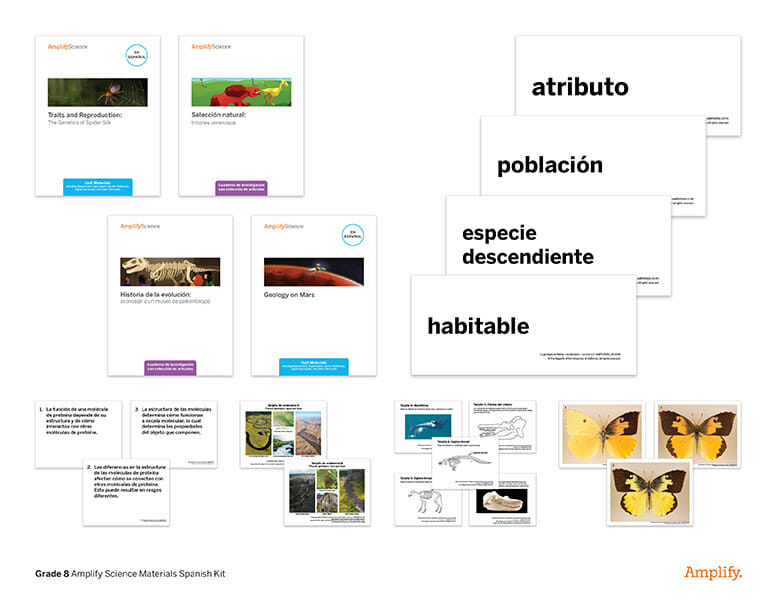
Materials needed to teach Amplify Science lessons are provided in a kit for each unit. While some materials used in the NYC Companion Lessons are also found in a unit’s kit, materials specific to the companion lessons are provided in NYC Companion Kits. The contents of each kit and any additional materials needed to teach the companion lessons are listed in the PDFs provided below. Please select your grade to view or download the list.

NYC Student Editions (print)
The NYC Student Editions are durable student references that compile all reading material required for a grade level, including the articles students read for NYC Companion Lessons. Students reading in the Student Edition should annotate the text directly with sticky notes to achieve the full benefits of Active Reading. The Active Reading approach was designed as an interactive process in which students highlight and annotate digital or hard copies of articles directly. Printable versions of the articles are available in the downloads section below.

It is recommended that NYC teachers insert this additional lesson between Lessons 3.1 and 3.2 in order to have students complete a reading assignment in class along with an additional Sim activity.

  • Lesson: Earth, Moon and Sun: Modeling Seasons
  • Lesson Placement: Insert between Lessons 3.1 and 3.2*
  • Links (click to download):

*If teaching this Modeling Seasons lesson, do not assign reading “The Endless Summer of the Arctic Tern” article for homework in Lesson 3.1. However, students should still model a lunar eclipse with the Modeling Tool for homework, as they will be revisiting and revising this model in Lesson 3.3.

NYC Investigation Notebooks (for teacher download)

* includes NYC Companion Lesson Copymaster(s)

* includes NYC Companion Lesson Copymaster(s)

  • Geology on Mars
  • Earth, Moon, and Sun
  • Force and Motion
  • Engineering Internship: Force and Motion
  • Magnetic Fields*
  • Light Waves
  • Traits and Reproduction
  • Natural Selection
  • Evolutionary History

* includes NYC Companion Lesson Copymaster(s)

Admin resources

Remote and hybrid learning resources

In response to the shifts towards remote learning, Amplify has created resources for using our programs remotely. Please visit our Program Hub accessible via your Teacher Platform for all of our hybrid and remote learning supports which includes guidance for teachers and parents/guardians.

Additionally, please see below where you’ll find the recordings from our recently held webinars on our remote learning resources and some best practices for implementing Amplify Science in a distance learning setting.

Resource guides

Professional learning opportunities

Interested in attending training? Check out and sign up for this year’s PL offerings here!

Election Day 21-22 PL

Grade 6 Guided Planning Presentation and Webinar

Grade 7 Guided Planning Presentation and Webinar

Grade 8 Guided Planning Presentation and Webinar

Grades 6-8 Unpacking Phenomena Presentation and Webinar

All 2020-2021 PL session materials can be found below under Professional learning resources.

Amplify Science Back-to-School Recorded Webinars – Amplify held a series of national office hours throughout the summer and fall to share information about our new resources to support remote and hybrid learning– including recommendations about what to prioritize from your curriculum and essential refresher topics, such as how to navigate your program and find the best planning resources. Feel free to watch all recorded sessions at your convenience.

Archived Professional Learning Resources

Winter 2022

Spring 2021

Winter 2021

Fall 2020

Summer 2020

Summer 2019- Harnessing Human Energy and Thermal Energy

Fall 2019- Population and Resources with Participant Notebook

Winter 2022

Spring 2021

Winter 2021

Fall 2020

  • Grade 7: Progress Builds & Embedded Assessments Webinar
  • Grade 7: Amplify Science Remote & Hybrid Resources Webinar

Summer 2020

Summer 2019 – Microbiome and Metabolism

Fall 2019 – Phase Change with Participant Notebook

Winter 2022

Spring 2021

Winter 2021

Fall 2020

  • Grade 8: Progress Builds & Embedded Assessments Webinar
  • Grade 8: Amplify Science Remote & Hybrid Resources Webinar

Summer 2020

Summer 2019 –  Geology on Mars and Earth, Moon, Sun

Fall 2019 – Force and Motion with Participant Notebook

Caregiver resources

Caregiver Hub

Questions

For general questions about the Amplify program (navigation, pedagogy, login), please reach out:

Email – scihelp@amplify.com
Phone – call toll-free at (800) 823-1969, Monday to Friday, 7 a.m.–7 p.m.  ET

Amplify Chat – click the Amplify Chat icon within the individual teacher account

Welcome to Amplify Science!

This site contains resources designed to support Clark County’s use of Amplify Science for grades K–8. Check back for exciting updates!

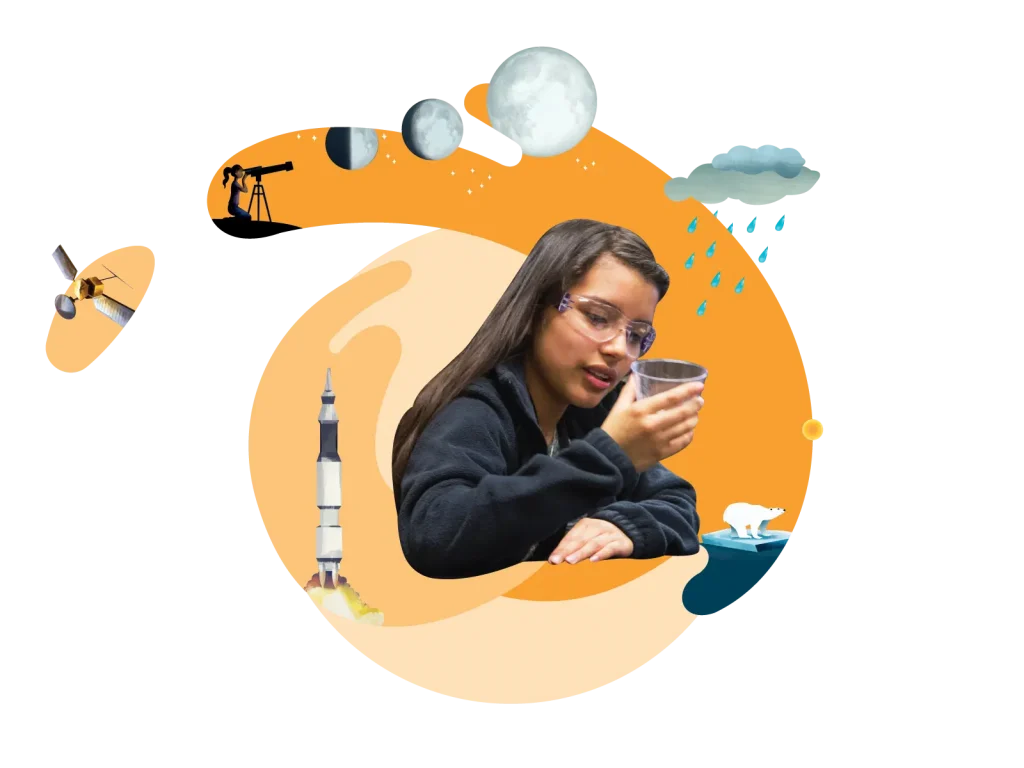
A woman holding a glass, overlaid with illustrations of a telescope, rocket, polar bear, and rain.

Program Introduction

Learn more about Amplify Science

Click the buttons below to explore the Amplify Science Program Guide. You can access the full digital Teacher’s Guide from the Program Guide to explore the program.

Clark County Training Sessions – Reference Materials

2021-2022 Session Materials

Unit 2: Standard Curriculum Relaunch / Guided Planning

New Teacher Training Part 1

2020-2021 Session Materials

New Teacher Orientation Part I

Returning and New Teacher Part II

Orientation Sessions

Remote Learning Session

Unit 2 Unpacking Session Materials

Unit 3 Unpacking the Unit Phenomenon

Unit 4 Unpacking Amplify Science for Hybrid Learning

2021-2022 Session Materials

Unit 2: Standard Curriculum Relaunch / Guided Planning

New Teacher Training Part 1

2020-2021 Session Materials

New Teacher Orientation Part I

Returning and New Teacher Part II

Orientation Sessions

Remote Learning Session

Unit 2 Unpacking Session Materials

Unit 3 Unpacking the Unit Phenomenon

Unit 4 Unpacking Amplify Science for Hybrid Learning

2021-2022 Session Materials

Unit 2: Standard Curriculum Relaunch / Guided Planning

New Teacher Training Part 1

2020-2021 Session Materials

New Teacher Orientation Part I

Returning and New Teacher Part II

Orientation Sessions

Remote Learning Session

Unit 2 Unpacking Session Materials

Unit 3 Unpacking the Unit Phenomenon

Unit 4 Unpacking Amplify Science for Hybrid Learning

2021-2022 Session Materials

Gr 8 Scope and Sequence 2021-22

2020-2021 Session Materials

Grade Level Orientation and Refresher

[Synchronous Session Agenda] LAUSD MS, Summer 21

Navigating Program Essentials

[Asynchronous Session Agenda] LAUSD MS, Summer 21

Remote Learning Session (6-8)

Grade 6

Gr 6 Scope and Sequence 2021-22

Grade 7

Gr 7 Scope and Sequence 2021-22

Grade 8

Gr 8 Scope and Sequence 2021-22

New! Lesson Prep Videos

Unit 1

Grade 3 Lesson Prep Videos can be found in the Resources section in the Amplify Science- Elementary group in Schoology. Access code: W4PK-W466-63F5B

Grade 4 Lesson Prep Videos can be found in the Resources section in the Amplify Science- Elementary group in Schoology. Access code: W4PK-W466-63F5B

Grade 5 Lesson Prep Videos can be found in the Resources section in the Amplify Science- Elementary group in Schoology. Access code: W4PK-W466-63F5B

Remote Learning Resources

We’ve created some guidance on resources you can send home with students and ways for you to adapt our K-5 or 6-8 curriculum for remote learning.

Learn more at Remote Learning Resources for Amplify Science

Onboarding: What to expect

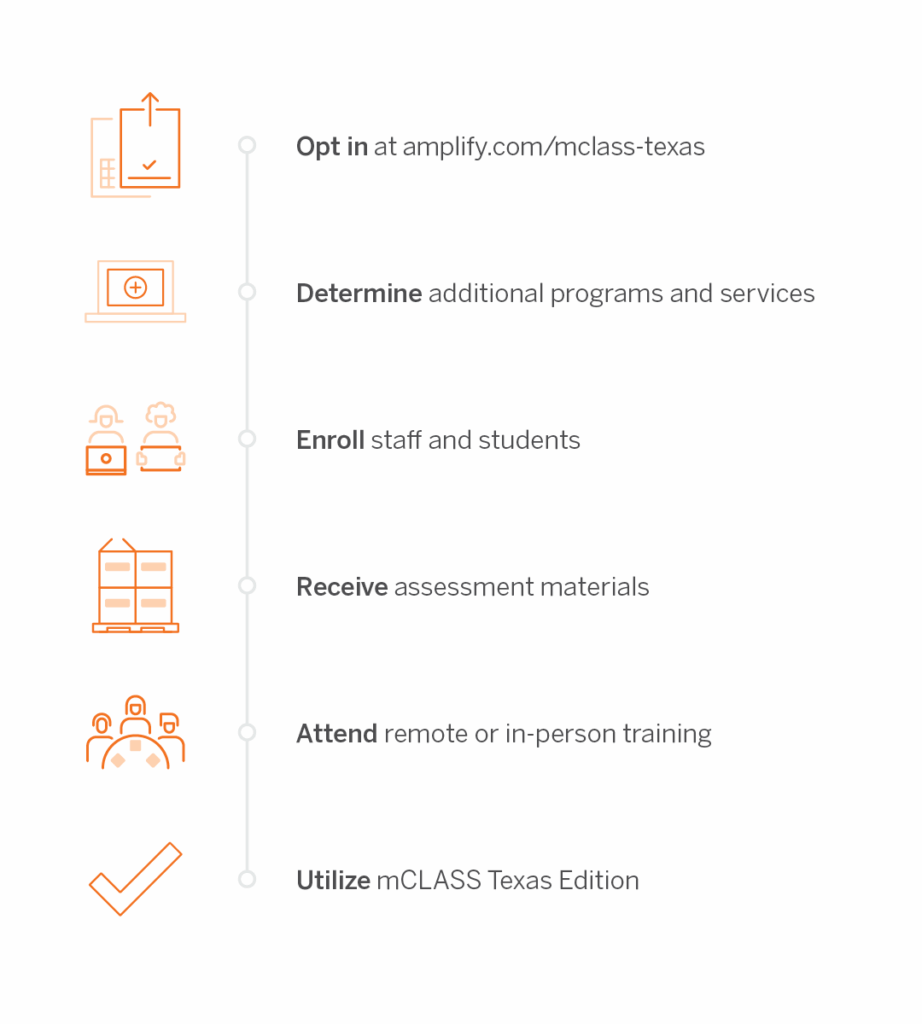
Welcome to Amplify Science! To help you know what’s coming next, we created the following visual that outlines the steps of the onboarding process. You can use it as a reference.

Icons illustrating steps for teachers: attend workshop, log into guide, gather materials, ensure student access to tools, prepare lesson.

Onboarding videos

To start using Amplify Science quickly in your classroom, check out the following onboarding videos. They cover what you need to know to get started fast, from unpacking materials to logging in and navigating the digital Teacher’s Guide.

Unpacking your first hands-on materials kit

The following videos give you a quick look into our Amplify Science classroom kits. For each grade level, we have a video for the first unit in the scope and sequence, and we show you how to unpack the kits for all the units.

A woman in a classroom setting demonstrates a large book with illustrations while sitting at a desk. She gestures towards the book, which is held open. An orange play button overlay is centered on the image.

Looking for help?

Powerful (and free!) pedagogical support

Amplify provides a unique kind of support you won’t find from other publishers. We have developed an educational support team of former teachers and administrators who provide pedagogical support for every Amplify curriculum, assessment, and intervention program. This service is completely free for all educators who are using our programs and includes:

  • Guidance for developing lesson plans and intervention plans
  • Information on where to locate standards and other planning materials
  • Recommendations and tips for day-to-day teaching with Amplify programs
  • Support with administering and interpreting assessment data and more

To reach our pedagogical team, use our live chat within your program, call (800) 823-1969, or email edsupport@amplify.com

Timely technical and program support

Our technical and program support is included and available from 7 a.m. to 7 p.m. ET, Monday through Friday, through a variety of channels, including a live chat program that enables teachers to get immediate help in the middle of the school day.

For your most urgent questions:

  • Use our live chat within your program
  • Call our toll-free number: (800) 823-1969

For less urgent questions:

A powerful partnership

Amplify Science was developed by the science education experts at UC Berkeley’s Lawrence Hall of Science and the digital learning team at Amplify.

The word "Amplify" is written in orange bold letters with a period at the end against a white background.
The logo for The Lawrence Hall of Science, University of California, Berkeley, features blue text on a light background and is recognized by educators using Amplify Science for middle school science programs.

Back to school 2020–21 updates

Back to school 2020 is coming! Click here for more information on all of the improvements and new features we’re adding to Amplify Science for the new school year.

Program introduction

Onboarding: what to expect

Welcome to Amplify Science! To help you know what’s coming next, we created the following outline of the steps of the onboarding process. You can use it as a reference.

Administrators receive launch email

  • Share the information with teachers
  • Submit the shipping survey sent to your email

Log In

  • Go to learning.amplify.com
  • Click on Log in with Clever or Google 
  • Enter your FCPS credentials
  • Demo Account for full access to Amplify Curriculum without access to personalized class rosters:
    • Go to learning.amplify.com
    • Click on login with Amplify
    • Username: t.Fayette2020@tryamplify.net
    • Password:  AmplifyNumber1

Ensure you have received all materials and components

  • Teachers have access to a series of “Unboxing your materials kit” videos. If you’re interested in watching those, click here.

Check out the professional learning opportunities and/or access the Getting Started Resources below.

If you need assistance, please see the help resources or reach out to your Educational Partnerships Manager or PD manager at caffleck@amplify.com, pworks@amplify.com with any questions.

K–5 resources

To ensure your first day using Amplify Science in the classroom is as seamless and smooth as possible, we recommend reviewing the following checklist before the first day of school.

A graphic with the text "Pre-launch checklist for teachers" and an orange "Download PDF" button below. An icon of a checklist with a down arrow is on the left.

What’s coming to my school?

Each unit of Amplify Science comes with a hands-on materials kit. Each hands-on materials kit arrives in one to three boxes and contains:

  • Consumable materials for two uses of 25 or 36 students (depending on school purchase)
  • Non-consumable materials
  • Classroom wall materials
  • Premium print materials (card sorts, vocabulary rings, etc.).
  • 18 copies of each Student Book (5 titles each unit, K–1 will receive 5 big books per unit)
  • A blackline master of the Student Investigation Notebook

You can find complete materials lists for each unit in the following PDF. This information is also available in the digital Teacher’s Guide within the program.

Button for downloading a PDF of a K-5 materials list. An icon of a document with a downward arrow is on the left.

Onboarding videos

Our team has created a series of short videos to help get you started with Amplify Science:

What’s online?

Planning strategies

How to log in and navigate

NGSS introduction

Planning guides

As you prepare to plan for a unit, download our planning guides to help walk you through the most important resources to locate in either the print or digital Teacher’s Guide to help you plan:

    Additional resources

    If you’re interested in learning more about each unit’s anchor phenomena, the Student Books in each unit, and more program features, download the resources below:

      Big gains but slow progress in reading readiness

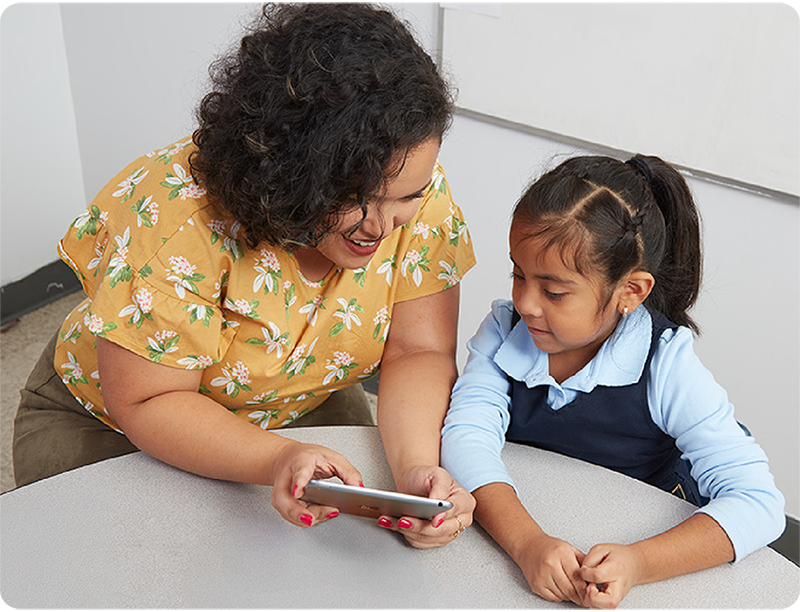
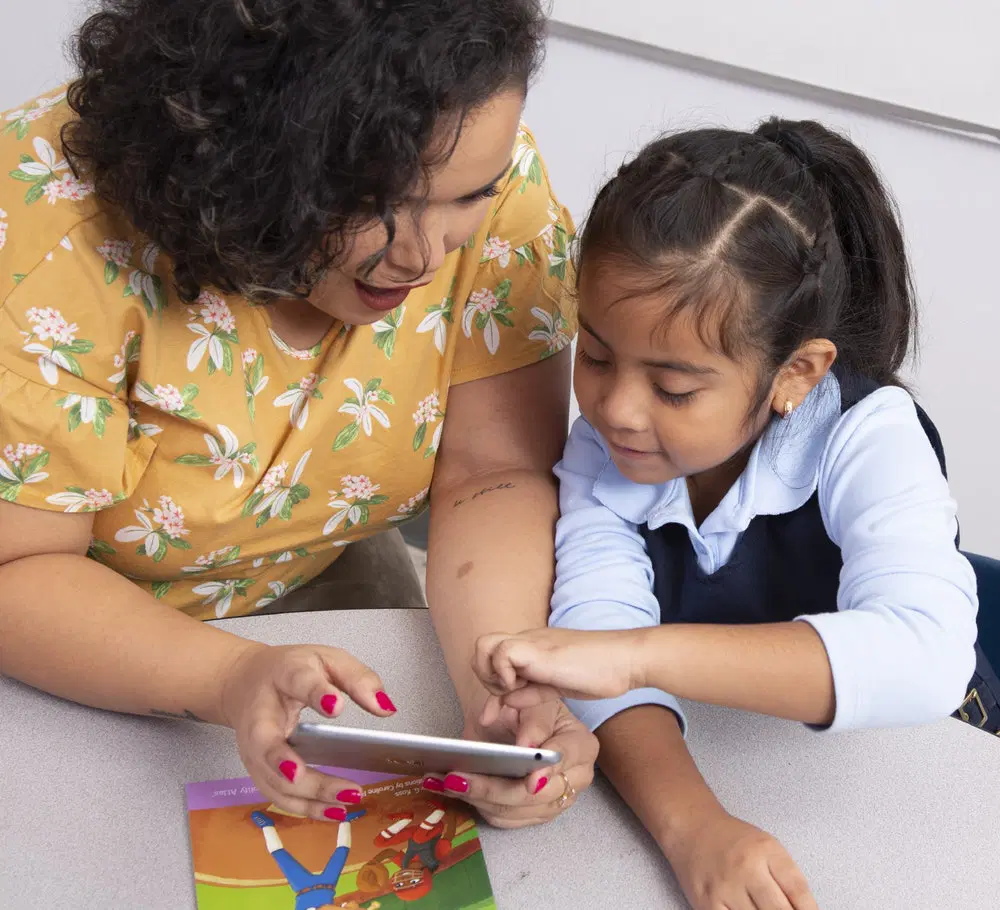
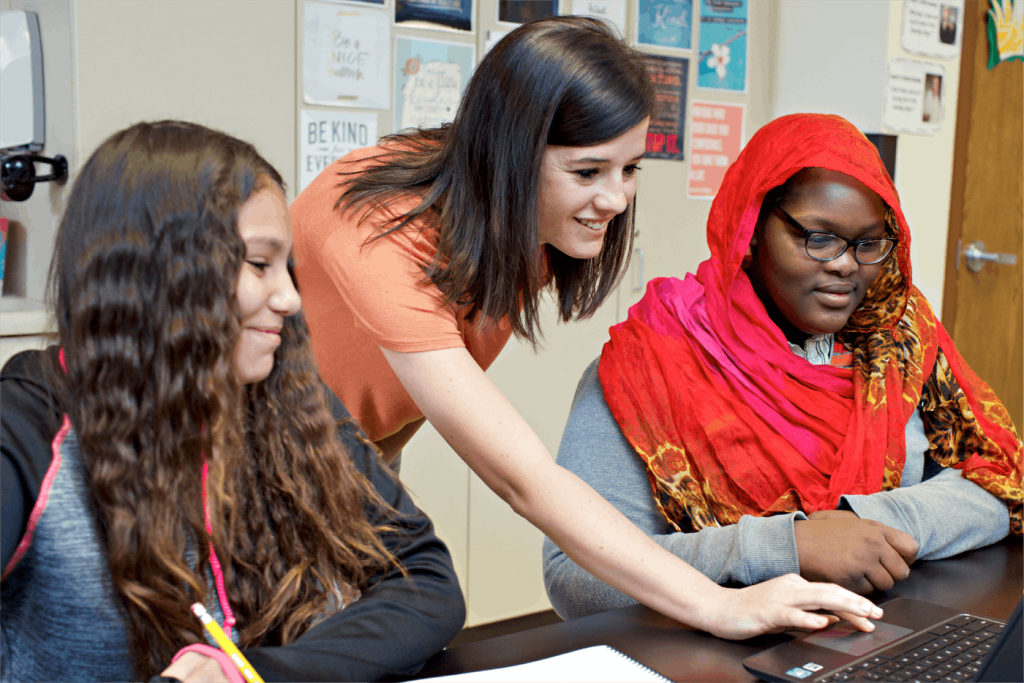
      A woman shows a young girl something on a smartphone while they sit together at a table in a classroom, exploring reading comprehension strategies.

      Amplify’s end-of-year research brief for 2024–25 shows that the youngest learners have made the greatest progress with foundational reading skills in the last five years: more kindergarteners, first graders, and second graders are on track to learn to read and fewer are far behind than at any time since the pandemic.

      Kindergarteners made the biggest strides in the knowledge and skills measured by elementary reading assessments, with 70% on track to learn to read—a 21-point improvement since the pandemic.

      Post-pandemic slide

      In 2020–21 (the year students returned to school after the pandemic shutdowns), only 55% of K–2 students were on track to learn to read by the end of the year.

      The youngest cohort struggled the most, with only 49% of kindergarteners at or above benchmark.

      More students on track to learn to read

      But by the end of the 2024–25 school year, the overall picture of reading readiness was much brighter.

      Our data shows a 13-point increase, with 68% of the youngest readers at or above benchmark.

      First and second graders were also far ahead of where they were five years ago, with improvements of 14 and 8 points, respectively.

      Progress slowing

      While our 2024–25 end-of-year early reading data shows significant progress relative to 2020-21, the picture is less rosy when we compare it to last year:

      • Overall, the number of K–2 students at or above literacy benchmarks was only one percentage point higher at the end of 2024–25 than it was at the end of the previous school year.
      • Within that cohort, both kindergarten and first graders saw a 2% increase, but second graders only saw a 1% increase.

      Fewer students far behind

      Similarly, our data showed a significant drop in the number of young readers well below benchmark between the post-pandemic school year and the 2024–25 school year.

      • Kindergarteners, again, showed the most improvement, with the number of students far behind dropping from 38% in 2020–21 to 20% at the end of the 2024–25 school year.
      • Among first graders, we saw a 12-point decline in students who were not on track to learn to read compared to 2020–21
      • Second graders showed the least improvement, with a decline of six percentage points relative to 2020-21.

      Improvements among this cohort followed a similar trend to those of the at-benchmark readers: a noticeable decline over five years, but a barely noticeable year-over-year improvement.

      • Only 1% fewer students across K–2 were far behind at the end of this year compared to the year before.

      More improvement during the school year

      Our data also revealed some good news about annual progress in early literacy development:

      • Across K–2, students showed a bigger improvement in reading readiness than they did in prior years.
      • By the end of the 2024–25 school year, 70% of kindergarten students were on track to learn to read, compared to 36% at the beginning of the year (the greatest improvement since 2020–21).
      • First graders had a 19% improvement by the end of the 2024–25 school year (70% on track by end of year) compared to 56% in 2021.
      • Second graders showed an 11-point increase in reading readiness from beginning to end of year (65% to 54%).

      Putting the Science of Reading to work for students

      “Grades K–2 remain critical years for literacy development,” said Susan Lambert, Chief Academic Officer of elementary humanities at Amplify and host of Science of Reading: The Podcast. “To support young readers, educators need data-driven insights into student reading development and instructional practices that are based in the Science of Reading.”

      Research has shown that data-driven strategies and tools provide the best support for young learners’ future academic success. Here are a few of the ways teachers, administrators, and parents can put them into practice:

      • Administering elementary reading assessments three times a year, to monitor student risk level for reading challenges
      • Supporting students at risk for not learning to read by analyzing data from reading assessments and making informed decisions
      • Allocating extra classroom time and resources to help students who aren’t on track
      • Monitoring progress and making adjustments as needed
      • Ensuring that evidence-based reading instruction is offered at every grade level
      • Instilling a love of reading in and out of school, in partnership with caregivers and community

      Let’s keep the conversation going! Join the discussion in our Amplify learning communities.

      Dive into the findings in our End-of-Year Report.

      More to explore

      Science of Reading: The Podcast

      Beyond My Years podcast

      Science of Reading

      Science of Reading: A New Teacher’s Guide ebook

      2025

      September 18, 2025

      Edutopia: “Using Virtual Manipulatives in Math Class”

      Read Full Article

      August 19, 2025

      Education Week: “Here’s Why It’s Important for Teachers to Have a Say in Curriculum”

      Read Full Article

      August 18, 2025

      Investors Hangout: “Amplify Classroom Revolutionizes K-12 Teaching Experience”

      Read Full Article

      August 5, 2025

      WhaTech: “K-12 Online Education Market Set for Strong Expansion, Reaching $349.77 Billion by 2029”

      Read Full Article

      August 4, 2025

      Education Week: “Districts Using ‘High-Quality’ Reading Curricula Still Supplement With Other Materials. Why?”

      Read Full Article

      July 9, 2025

      K-12 Dive: “Youngest students see big reading gains post-COVID on DIBELS assessment”

      Read Full Article

      June 25, 2025

      The 74: “How Districts in Georgia, Maryland and D.C. Are Raising Reading Proficiency”

      Read Full Article

      May 28, 2025

      Open PR: “K-12 Online Education Market Forecast 2025-2034: Comprehensive Analysis And Growth Opportunities”

      Read Full Article

      May 27, 2025

      District Administration: “Early literacy: How to implement programs that start strong”

      Read Full Article

      May 20, 2025

      EdSource: “California schools prepare to introduce universal reading screening”

      Read Full Article

      April 23, 2025

      The 74: “Eric Adams Expands Reading, Math Curriculum Mandates to All NYC Middle Schools”

      Read Full Article

      April 21, 2025

      Daily News: “NYC expanding reading, math curriculum overhaul to more schools”

      Read Full Article

      March 19, 2025

      Education Next: “School Reinvention in Practice”

      Read Full Article

      February 28, 2025

      K-12 Dive, “Test yourself on this week’s K-12 news”

      Read Full Article

      February 26, 2025

      K-12 Dive: “Only 56% of K-2 students are ready to read”

      Read Full Article

      January 24, 2025

      Chalkbeat Philadelphia: “Two AI-powered charter schools could soon open in Pennsylvania”

      Read Full Article

      January 16, 2025

      Tech & Learning: “What is Polypad and How Can Teachers Use It?”

      Read Full Article

      2024

      December 18, 2024

      EdSource: “State takes another step toward mandatory testing for reading difficulties in 2025”

      Read Full Article

      December 6, 2024

      Chalkbeat Philadelphia: “Philadelphia is now spending over $100 million on its curriculum overhaul. Here’s a breakdown.”

      Read Full Article

      November 27, 2024

      Lincoln Journal Star: “Lincoln Public Schools drops a classification rating on statewide assessment”

      Read Full Article

      November 6, 2024

      EdNC: “New K-3 literacy data shows growth in skills for North Carolina students”

      Read Full Article

      October 1, 2024

      The 74: “As NY District Implements Science of Reading, Parents Push for New Focus on Math”

      Read Full Article

      September 18, 2024

      Tech & Learning: “Tech & Learning Announces Winners of Best for Back to School 2024”

      Read Full Article

      August 22, 2024

      Chalkbeat Philadelphia: “Philadelphia school board renews charters, funds tutoring and a new science curriculum”

      Read Full Article

      August 2, 2024

      EdNC: “‘Dedication of our teachers’ praised in an update on the state’s science of reading journey”

      Read Full Article

      July 31, 2024

      The 74: “Classroom Case Study: To Maximize the Impact of Curriculum Mandates, Follow the Science of Reading”

      Read Full Article

      July 23, 2024

      Chalkbeat: “Should teachers customize their lessons or just stick to the ‘script’?”

      Read Full Article

      July 7, 2024

      The Economist: “Will artificial intelligence transform school?”

      Read Full Article

      June 24, 2024

      Chalkbeat: “Math instruction overhaul: NYC unveils new curriculum mandate for middle and high schools”

      Read Full Article

      June 6, 2024

      EdNC: “Perspective | Teachers are the heroes of the literacy story in North Carolina”

      Read Full Article

      May 24, 2024

      The Dallas Morning News: “How Don Quixote changed a Dallas public school classroom”

      Read Full Article

      May 2, 2024

      Akron.com: “Tutoring program at Summit Academy Akron Elementary School attracts national interest”

      Read Full Article

      April 25, 2024

      Edutopia: “Using Tech Tools to Energize Young Students’ Math Learning”

      Read Full Article

      April 4, 2024

      EdNC: “State Board hears update on district ESSER spending, literacy data, and Restart schools”

      Read Full Article

      March 22, 2024

      Thomas B Fordham Institute: “Five takeaways from Ohio’s baseline survey of elementary reading curricula”

      Read Full Article

      March 15, 2024

      The 74: “New Data: Despite K-2 Reading Gains, Students Face a ‘Much Harder Journey’ Ahead”

      Read Full Article

      March 5, 2024

      The 74: “Case Study: How One Texas School District Is Repurposing Staff Development Time to Embrace the Science of Reading”

      Read Full Article

      February 21, 2024

      Times Record News: “UPDATED: Texas Education Commissioner Mike Morath likes what he sees at local school”

      Read Full Article

      February 19, 2024

      Chalkbeat: “Chicago Public Schools recover from pandemic declines more than other districts, study shows”

      Read Full Article

      February 7, 2024

      The 74: “Building Oral Language Skills and Equity Through High-Quality Reading Curriculum”

      Read Full Article

      2023

      December 19, 2023

      The 74: “Best Education Articles of 2023: Our 23 Most Important Stories About Students, Schools & Learning Recovery ”

      Read Full Article

      December 8, 2023

      Education Week: “Aligned Science Curriculum, Better Scores? Research Finds a Connection”

      Read Full Article

      December 6, 2023

      WRAL News: “Reading readiness rises in NC’s K-3 classrooms, new data shows”

      Read Full Article

      November 27, 2023

      The Dallas Morning News: “Dallas’ new lessons aim to keep kids on track, but some worry about limiting teachers”

      Read Full Article

      November 2, 2023

      Fort Worth Report: “Black students in Fort Worth ISD still struggle to read at grade level”

      Read Full Article

      October 31, 2023

      Chicago Tribune: “Lake Forest-area schools take stock of state grades; ‘While we celebrate our successes, we acknowledge that the journey … is ongoing’”

      Read Full Article

      October 19, 2023

      Chalkbeat: “NYC eyes middle and high school literacy overhaul. It’s asking families to weigh in.”

      Read Full Article

      October 16, 2023

      The 74: “As Virginia Rolls Out Ambitious Statewide High-Dosage Tutoring Effort This Week, 3 Keys to Success”

      Read Full Article

      October 6, 2023

      Language Magazine: “Embracing Bilingual Assessment”

      Read Full Article

      September 18, 2023

      Tech & Learning: “Best for Back to School 2023”

      Read Full Article

      September 18, 2023

      Chalkbeat: “Chicago Public Schools hired hundreds of tutors with federal COVID money. Can they keep them?”

      Read Full Article

      September 7, 2023

      EdNC: “Perspective | Union County Public Schools empowers educators, elevates readers”

      Read Full Article

      August 14, 2023

      Chicago Parent: “Common Core Math: How to Help Your Kids”

      Read Full Article

      August 6, 2023

      The News & Observer: “NC sees big increase in reading skills among K-3 students. Is the state back on track?”

      Read Full Article

      August 4, 2023

      The 74: “Slow Literacy Gains, Long COVID in Kids: 7 Insights into Pandemic Recovery and Aftermath in U.S. Schools”

      Read Full Article

      August 3, 2023

      EdNC: “State Board of Education: New reading data, parental leave, and a call to support public schools”

      Read Full Article

      July 28, 2023

      Houston Public Media: “New literacy curriculum is among the many changes coming to HISD”

      Read Full Article

      July 17, 2023

      Houston Chronicle: “Mike Miles says HISD schools will teach the ‘science of reading.’ Here’s what that means.”

      Read Full Article

      July 11, 2023

      The 74: “‘Education’s Long COVID’: New Data Shows Recovery Stalled for Most Students”

      Read Full Article

      July 6, 2023

      Houston Chronicle: “HISD superintendent gives voluntary schools one last chance to back out of New Education System”

      Read Full Article

      June 29, 2023

      The Report Card: “Larry Berger on Curriculum”

      Read Full Article

      June 2, 2023

      EdWeek Market Brief:”K-12 Dealmaking: Substitute Teaching Startup Secures $38M; Amplify Raises Undisclosed Series C”

      Read Full Article

      May 25, 2023

      The 74: “Expanding Access to Tutors: Nonprofit Grants $6 Million to 32 Learning Organizations Across 20 States to Help More Students”

      Read Full Article

      April 21, 2023

      The 74: “The ‘Transformation is Real’ as Science of Reading Takes Hold in N.C. Schools”

      Read Full Article

      April 18, 2023

      The 74: “Louisiana District Ravaged by Hurricane & COVID is Bouncing Back with Science”

      Read Full Article

      April 5, 2023

      WFAE: “NC midyear reading data shows gains, but third-grade goals remain elusive”

      Read Full Article

      April 5, 2023

      EdNC: “K-3 students show growth in literacy skills, mid-year DPI data show”

      Read Full Article

      March 24, 2023

      The 74: “COVID & School Recovery: Critics Warn Washington Bill Would Reduce Classroom Learning Time By 4 Hours a Week”

      Read Full Article

      March 24, 2023

      Edutopia: “Using Collective Leadership to Make a Major Shift in Your District”

      Read Full Article

      March 15, 2023

      K-12 Dive: “California at center of latest push for science-based reading approaches”

      Read Full Article

      March 7, 2023

      District Administration: “ESSER pressure: How one district intends to spend wisely as deadline looms”

      Read Full Article

      March 3, 2023

      The 74: “‘The Other Long COVID’ Affecting Kids: Missed Opportunities”

      Read Full Article

      March 2, 2023

      3 WTKR: “More students on track to learn to read in 2022-2023 school year since start of pandemic, researchers say”

      Read Full Article

      March 2, 2023

      ABC 7: “Reading skills rebounding for young students following pandemic disruptions”

      Read Full Article

      March 1, 2023

      K-12 Dive: “By The Numbers: DIBELS testing shows improved reading progress over last two years”

      Read Full Article

      February 27, 2023

      The 74: “Exclusive: Despite K-2 Reading Gains, Results Flat for 3rd Grade ‘COVID Kids’”

      Read Full Article

      February 27, 2023

      Education Week: “Students’ Early Literacy Skills Are Rebounding. See What the Data Show”

      Read Full Article

      February 7, 2023

      The 74: “Using High-Quality Curriculum Doesn’t Mean You Can’t Still Have Fun Learning”

      Read Full Article

      January 13, 2023

      NPR: “Can a middle school class help scientists create a cooler place to play?”

      Read Full Article

      January 6, 2023

      News & Record: “After a numbing low, NC students now heading in ‘right direction’ in reading, math”

      Read Full Article

      January 5, 2023

      CBS17.com: “K-3 students in NC make significant strides on literacy exams, DPI says”

      Read Full Article

      2022

      December 20, 2022

      District Administration: “Literacy Under the Lights: 10 ways to bring the community back together”

      Read Full Article

      December 14, 2022

      The 74: “14 Charts This Year That Helped Us Better Understand Covid’s Impact On Students Teachers and Schools”

      Read Full Article

      December 14, 2022

      The 74: “Learning Loss Is Worse than NAEP Showed. Middle School Math Must Be the Priority”

      Read Full Article

      November 21, 2022

      Voicebot.ai: “SoapBox Labs Brings Child-Centered Voice AI to Dyslexia Detection Assessment”

      Read Full Article

      October 24, 2022

      Education Week: “Two Decades of Progress, Nearly Gone: National Math, Reading Scores Hit Historic Lows”

      Read Full Article

      October 20, 2022

      The 74: “Exclusive Literacy Data: Small Gains Since Last Fall, But No Reading Rebound”

      Read Full Article

      August 30, 2022

      The 74: “Test English Learners in the Languages They Speak at School and at Home”

      Read Full Article

      August 29, 2022

      WTKR TV NC: “News 3 investigates childhood literacy rates, raising money to give books to local kids for new school year”

      Read Full Article

      August 28, 2022

      EdNC: “Elementary students made growth last year in skills that lead to reading proficiency, new data show”

      Read Full Article

      August 18, 2022

      SHRM Blog: “The Great Resignation Skipped Us. Here’s why.”

      Read Full Article

      August 16, 2022

      Forbes: “Curious About Knowledge-Building Curricula? Check Out This Website”

      Read Full Article

      July 20, 2022

      District Administration: “Out-of-school STEM learning is much more powerful when it’s inclusive”

      Read Full Article

      July 19, 2022

      Chalkbeat: “The state of learning loss: 7 takeaways from the latest data”

      Read Full Article

      June 28, 2022

      The Preschool Podcast: “Early literacy strategies that stick with Darryl from Run-DMC and Makeda from Nickelodeon [Podcast]”

      Listen To The Podcast

      May 24, 2022

      Forbes: “States That Want To Boost Literacy Should Keep An Eye On Texas”

      Read Full Article

      April 24, 2022

      Business Ecosystem Alliance: “Ecosystems in Education–Collaborating to Efficiently Serve the End User”

      Watch Full Video

      April 18, 2022

      KQED Mind Shift: “Weighing the best strategies for reading intervention”

      Read Full Article

      April 15, 2022

      Fordham Institute: “Assessing a standards-aligned physical science curriculum”

      Read Full Article

      March 23, 2022

      The Baltimore Sun: “National test scores show student gains from in-person learning in all but a critical group: new and pre-readers | COMMENTARY”

      Read Full Article

      March 15, 2022

      NPR: “Two years ago schools shut down around the world. These are the biggest impacts”

      Read Full Article

      March 11, 2022

      The Hub – Dallas ISD: “Students at Greiner and Anson Jones Elementary find success in reading and writing with a new program”

      Read Full Article

      March 10, 2022

      NY Daily News: “Read it and weep: The new reading instruction emergency”

      Read Full Article

      March 10, 2022

      WISH TV Indianapolis: “Study shows student performance plummeted during pandemic”

      Read Full Article

      March 9, 2022

      New York Post: “Young students have suffered ‘alarming’ drops in reading skills during pandemic”

      Read Full Article

      March 9, 2022

      The Daily Caller: “Childhood Literacy Plummeted Following Pandemic Shutdowns, Studies Show”

      Read Full Article

      March 8, 2022

      The New York Times: “It’s ‘Alarming’: Children Are Severely Behind in Reading”

      Read Full Article

      March 7, 2022

      Education Next: “The Education Exchange: Pandemic Hurt Younger Students’ Learning Worse, Amplify Data Suggest”

      Listen to the Podcast

      February 28, 2022

      The 74: “Our 12 Best Education Articles in February: Reflections on 700 Days of COVID Chaos, Setting a Bar for Unmasking in Schools, Burying Schools in Record Requests & More”

      Read Full Article

      February 24, 2022

      The Daily Advertiser: “Reading scores improve slightly, but pre-COVID reading levels are ‘the wrong goal’”

      Read Full Article

      February 24, 2022

      Wall Street Journal: “The School Shutdowns and Lost Literacy”

      Read Full Article

      February 23, 2022

      K-12 Dive: “DIBELS data illustrates pandemic reading setbacks”

      Read Full Article

      February 22, 2022

      ABC 7 Buffalo: “Children falling behind in reading”

      Read Full Article

      February 18, 2022

      The Carolina Journal: “Report: Elementary students lag in literacy due to pandemic”

      Read Full Article

      February 16, 2022

      The 74: “‘We Have First-Graders Who Can’t Sing the Alphabet Song’: Pandemic Continues to Push Young Readers Off Track, New Data Shows”

      Read Full Article

      February 16, 2022

      Education Week: “More Than 1 in 3 Children Who Started School in the Pandemic Need ‘Intensive’ Reading Help”

      Read Full Article

      February 4, 2022

      Literary Hub: “EXCLUSIVE: Watch Joshua Bennett Discuss A.R. Ammons’s poem “Cascadilla Falls”

      Read Full Article

      January 26, 2022

      The Ross Kaminsky Show: “Susan Lambert and the Literacy Gap”

      Listen to the podcast

      January 19, 2022

      K-12 Dive: “Report: Colorado reading law update boosts quality of literacy curriculum”

      Read Full Article

      2021

      December 15, 2021

      Chalkbeat: “How Denver plans to address a drop in early elementary reading scores”

      Read full article

      December 8, 2021

      The SHRM Blog: “What’s the Best Work Perk of All? Contributing to the Social Good”

      Read full article

      November 13, 2021

      Hechinger Report: ‘The Reading Year’: First grade is critical for reading skills, but kids coming from disrupted kindergarten experiences are way behind”

      Read full article

      October 20, 2021

      Hechinger Report: “OPINION: Younger students were among those most hurt during the pandemic”

      Read full article

      September 2, 2021

      EdSurge: “An Edtech User’s Glossary to Speech Recognition and AI in the Classroom”

      Read full article

      September, 2021

      SIIA Education: “ED TECH SUCCESS STORIES”

      Read full article

      August 23, 2021

      CNN: “Irish tech firm helps kids’ voices be heard”

      Read full article

      August 18, 2021

      SoapBox Labs: “Can Speech Recognition Help Children Learn to Read?”

      Read full article

      August 12, 2021

      FOX Chicago Broadcast Interview: “Pandemic widens literacy gap for students”

      Read full article

      August 3, 2021

      T.H.E Journal: “More Students of Color at Risk in Reading After Pandemic”

      Read full article

      July 28, 2021

      The 74: “Early Reading Skills See a Rebound From In-Person Learning, But Racial Gaps Have Grown Wider, Tests Show”

      Read full article

      July 28, 2021

      K-12 Dive: “Reports: Math, reading progress slowed during first full school year of pandemic”

      Read full article

      July 20, 2021

      EdNC: “The mCLASS reading assessment tool is back in North Carolina classrooms, but it’s going to look different”

      Read full article

      July 5, 2021

      WBAL: “Baltimore students from all socio-economic backgrounds get a chance to ‘Amplify’ their learning skills”

      Read full article

      June 15, 2021

      Language Magazine: “Using Evidence to Overcome Adversity”

      Read full article

      May 7, 2021

      The Dallas Morning News: “How can a one-minute kindergarten test help teachers tackle the ‘COVID slide’?”

      Read full article

      April 20, 2021

      Education Week: “How Teachers and Curriculum Will Shape Ed Tech’s Future: A CEO Makes the Case”

      Read full article

      March 24, 2021

      The Hechinger Report: “OPINION: Children will need summer tutors to make up for pandemic learning loss”

      Read full article

      March 23, 2021

      Education Week: “Most States Fail to Measure Teachers’ Knowledge of the ‘Science of Reading,’ Report Says”

      Read full article

      March 17, 2021

      Axios: “How online education and tutoring could fight COVID learning loss”

      Read full article

      March 16, 2021

      USA Today: “Students are struggling to read behind masks and screens during COVID-19, but ‘expectations are no different’”

      Read full article

      March 16, 2021

      The 74: “Schools and COVID, a Year Later: 12 Months After Classrooms Closed, 12 Key Things We’ve Learned About How the Pandemic Disrupted Student Learning”

      Read full article

      February 25, 2021

      K–12 Dive: “Reading gaps widen in mid-year data, especially for K-1 students of color”

      Read full article

      February 24, 2021

      The 74: “One Year into Pandemic, Far Fewer Young Students are on Target to Learn How to Read, Tests Show”

      Read full article

      February 17, 2021

      NBC Los Angeles: “Local Students Design Rovers in Mission to Mars Student Challenge”

      Read full article

      February 5, 2021

      District Administration: “To save literacy, focus first on high-quality core instruction”

      Read full article

      February 4, 2021

      The Hechinger Report: “5 ways schools hope to fight Covid-19 learning loss”

      Read full article

      January 5, 2021

      The 74: “Science Matters Now More than Ever. The Time to Start Teaching It Is in Elementary School”

      Read full article

      2020

      December 15, 2020

      Education Week: “Students’ Reading Losses Could Strain Schools’ Capacity to Help Them Catch Up”

      Read full article

      December 9, 2020

      Education Post: “How to Help Beginning Readers During the Pandemic”

      Read full article

      December 3, 2020

      American Consortium for Equity in Education: “The Importance of Quality Curriculum With Industry Voice”

      Read full article

      September 29, 2020

      The 74: “Beyond the Scantron: Ed Tech CEO Larry Berger on Why the Pandemic Is No Excuse to Abscond Accountability and ‘Disruptions Are Great Opportunities to Try Something New’”

      Read full article

      May 25, 2020

      The 74: “Class Disrupted Podcast Episode 2: Why Is My Child Doing So Many Worksheets Right Now?”

      Read full article

      February 5, 2020

      Getting Smart Podcast: “Larry Berger on EdTech Past and Future”

      Read full article

      Use stimulus funding to drive transformation.

      Learn about ESSER I, II, and III funding (or CARES, CRRSA, and ARP), and how to use these funds to help with learning recovery and acceleration. Districts have significant flexibility in how to use the ESSER money, with ESSER II and III specifying that some of the funds should be used to address unfinished learning.

      Given the enormous influx of resources flowing into K–12, now is the time to drive important, sustainable change in your district. All Amplify programs and services meet the criteria for the funding, and our early literacy suite can be particularly helpful in driving reading growth in grades K–5.

      Where to start: Watch our stimulus funding overview.

      Julia Gonzales, vice president of government relations at Amplify, walks you through what you need to know about federal stimulus funding.

      Five fast facts

      Here are the essential facts you need to know about the latest stimulus funding, also known as ESSER III or the American Rescue Plan (ARP).

      1. It’s okay to keep using products and services you’ve purchased. As long as funds are assigned to spending categories and paid to vendors by each fund’s deadlines—and the purchases are allowable uses—it’s okay to keep using products and services after those dates.
      2. Schools and districts have a lot of leeway in how to use the money. ESSER III funds may be used to propel your vision of teaching and learning post-pandemic, so try to think about both short-term needs and your longer term ambitions for the district.
      3. At least 20 percent must be used to address unfinished learning. For example, schools and districts can use the funding to bolster the strength of in-school core instruction, differentiated practice, and intervention, as well as for summer learning, after school, and extended day activities.
      4. The money is available now. Act quickly! Schools and districts can access ESSER III stimulus funds right now, and districts are moving very fast to spend these dollars. The deadlines are around the corner: All ESSER III funds must be assigned to a spending category by Sept. 30, 2024, and paid to vendors four months after that.
      5. Note: State Education Agencies can request an extension with the U.S. Department of Education. See the following table for more information on timelines.
      6. It’s okay to keep using products and services you’ve purchased. As long as funds are assigned to spending categories and paid to vendors by each fund’s deadlines—and the purchases are allowable uses—it’s okay to keep using products and services after those dates.

      Ready to learn more?

      Fill out this form and we’ll be in touch with you shortly.

      Find out how much funding is coming your way.

      Use this tool from Whiteboard Advisors to search by state and district to see approximately how much money is coming to your region.

      Amplify is an allowable expense.

      See how spending categories for ESSER III (ARP), ESSER II (CRRSA), and ESSER I (CARES) specifically align with Amplify programs and trainings. Download our chart of allowable uses.

      Amplify programs align to stimulus priorities.

      Amplify can help accelerate literacy learning for all students with an early literacy suite that includes Amplify CKLABoost ReadingmCLASS®, and mCLASS Intervention, as well as professional learning and coaching. Each of our research-based literacy programs can be added to an existing literacy system at a district, and can be used together as an integrated suite.

      Timelines for funding

      Curious how long federal stimulus funds are available? See our chart with funding details, including timelines and deadlines.

      ESSER I (CARES)ESSER II (CRRSA)ESSER III (ARP)
      Signed into lawMarch 2020December 2020March 2021
      Total education funds$30.7 billion$82 billion$170 billion
      Total K–12 funds$13.2 billion$54 billion$122 billion
      Obligation deadline
      When funds must be assigned to a spending category.
      March 13, 2020–
      Sept. 30, 2022
      March 13, 2020–
      Sept. 30, 2023
      March 13, 2020–
      Sept. 30, 2024
      Liquidation deadline
      When vendors must be paid for the work contracted.
      April 1, 2024Feb. 1, 2024Feb. 1, 2025
      Potential liquidation deadline,
      if extended

      The deadline if a state education agency requests and receives an extension from the US DOE.
      March 30, 2024March 30, 2025March 30, 2026

      For more information about deadlines and rules, please see the US DOE guidance.

      Ready to learn more?

      Fill out this form and we’ll be in touch with you shortly.

      Programs

      Spotlight submission

      Don’t forget you can nominate educators for our Spotlight section. Submit nominations here.

      If you have any questions, please email educatornewsletter@amplify.com.

      Amplify Reading named 2020 CODiE Award Finalist for Best Game-Based Curriculum Solution

      Brooklyn, NY (April 20, 2020) — Amplify, a publisher of next-generation curriculum and assessment programs, today announced that Amplify Reading has been named a 2020 SIIA CODiE Award finalist in the Best Game-Based Curriculum Solution category. Award finalists represent applications, products, and services from developers of educational software, digital content, online learning services, and related technologies across the Pre-K–12 and higher education sectors.

      Amplify Reading is a state-of-the-art supplemental digital literacy program that combines captivating storytelling, the latest literacy research, and sophisticated adaptivity to provide students with the exact instruction they need when they need it. Research has shown that the program enables students to make better-than-expected progress, reduces students’ risk for reading difficulty, and helps close achievement gaps for English learners.

      Amplify Reading offers 50+ research-based games, each mapped to specific skills and standards that augment educators’ core instruction. The program also features an in-product companion called a Curioso who grows as younger students acquire skills. For older students, Amplify Reading immerses pre-teens in an interactive graphic novel where they join a rebel group to take on the machines and fight for the right to read again.

      “It’s an honor to be named a finalist in the 2020 SIIA CODiE Awards,” said Melissa Ulan, senior vice president and general manager, supplementals, at Amplify. “We are thrilled to receive this recognition of Amplify Reading as an innovative and highly engaging program that helps students become strong and confident readers.”

      For more than 30 years, the SIIA CODiE Awards are the premier awards for the software and information industries, recognizing product innovation and excellence. The awards are organized by industry categories in education technology and business technology. Amplify Reading was honored as one of 157 finalists across the 37 education technology categories.

      The SIIA CODiE Awards are the industry’s only peer-reviewed awards program. Educators and administrators serve as judges and conduct the first-round review of all education nominees. Their scores determine the SIIA CODiE Award finalists, and SIIA members then vote on the finalist products. The scores from both rounds are tabulated to select the winners.

      CODiE Award winners in education technology will be announced online May 19, 2020.

      Details about the finalists can be found here.

      About Amplify

      A pioneer in K–12 education since 2000, Amplify is leading the way in next-generation curriculum and assessment. Our captivating core and supplemental programs in ELA, math, and science engage all students in rigorous learning and inspire them to think deeply, creatively, and for themselves. Our formative assessment products turn data into practical instructional support to help all students build a strong foundation in early reading and math. All of our programs provide teachers with powerful tools that help them understand and respond to the needs of every student. Today, Amplify serves five million students in all 50 states. For more information, visit amplify.com.

      About the SIIA CODiE™ Awards

      The SIIA CODiE Awards is the only peer-reviewed program to showcase business and education technology’s finest products and services. Since 1986, thousands of products, services and solutions have been recognized for achieving excellence. For more information, visit https://www.siia.net/codie.  

      About Software and Information Industry Association (SIIA)

      SIIA is an umbrella association representing 800+ technology, data and media companies globally. Industry leaders work through SIIA’s divisions to address issues and challenges that impact their industry segments with the goal of driving innovation and growth for the industry and each member company.  This is accomplished through in-person and online business development opportunities, peer networking, corporate education, intellectual property protection and government relations. For more information, visit siia.net.

      A powerful partnership

      Amplify Science was developed by the science education experts at UC Berkeley’s Lawrence Hall of Science and the digital learning team at Amplify.

      The word "Amplify" is written in orange bold letters with a period at the end against a white background.

      Back to school 2020–21 updates

      Back to school 2020 is coming! Click here for more information on all of the improvements and new features we’re adding to Amplify Science for the new school year.

      Program introduction

      Onboarding: what to expect

      Welcome to Amplify Science! To help you know what’s coming next, we created the following outline of the steps of the onboarding process. You can use it as a reference.

      Administrators receive launch email

      • Share the information with teachers
      • Submit the shipping survey sent to your email

      Log In

      • Go to learning.amplify.com
      • Click on Log in with Clever or Google 
      • Enter your FCPS credentials
      • Demo Account for full access to Amplify Curriculum without access to personalized class rosters:
        • Go to learning.amplify.com
        • Click on login with Amplify
        • Username: t.Fayette2020@tryamplify.net
        • Password:  AmplifyNumber1

      Ensure you have received all materials and components

      • Teachers have access to a series of “Unboxing your materials kit” videos. If you’re interested in watching those, click here.

      Check out the professional learning opportunities and/or access the Getting Started Resources below.

      If you need assistance, please see the help resources or reach out to your Educational Partnerships Manager or PD manager at caffleck@amplify.com, pworks@amplify.com with any questions.

      6–8 resources

      To ensure your first day using Amplify Science in the classroom is as seamless and smooth as possible, we recommend reviewing the following checklist before the first day of school.

      What’s coming to my school?

      Each unit of Amplify Science comes with a hands-on materials kit. Each hands-on materials kit arrives in one to three boxes and contains:

      • Consumable materials for five uses of 40 students
      • Non-consumable materials
      • Classroom wall materials
      • Premium print materials (card sorts, vocabulary rings, etc.).

      You can find complete materials lists for each unit in the following PDF. This information is also available in the digital Teacher’s Guide within the program.

      Onboarding videos

      Our team has created a series of short videos to help get you started with Amplify Science:

      What’s online?

      Planning strategies

      How to log in and navigate

      NGSS introduction

      Introduction to Classwork

      Planning guide

      As you prepare to plan for a unit, download our planning guide to help walk you through the most important resources to locate in either the print or digital Teacher’s Guide to help you plan.

      Additional resources

      Personalized learning grounded in the Science of Reading

      Surveying the landscape

      Recent data shows that far fewer young students are on target for reading proficiency than in previous years. In fall 2020, kindergarteners were 6 percent less likely to be on track in reading than they were in the 2019–20 school year.

      How do we reverse these trends? A personalized learning program steeped in research-based literacy practices can be your first step. In this blog, we introduce personalized learning programs for early literacy, discuss why they should be aligned with the Science of Reading, and outline the key features that all effective personalized learning programs should have to support ALL students.

      What is personalized learning?

      “Personalized learning in literacy education is an approach in which teaching and other learning experiences build on each student’s strengths, address each student’s needs, spur student motivation and agency, and help all students meet grade-level standards and, ultimately, achieve college and career readiness.” 

      — Student Achievement Partners

      Achieve the Core outlines a set of key components every personalized program should include to accelerate literacy:

      — Achieve the Core, 2020

      How can I bring the Science of Reading into personalized learning?

      Not all personalized learning programs should be treated equally. Programs should provide explicit, systematic foundational skills, continue to build background knowledge, and support core Science of Reading instruction. Focusing on the things we do while we’re reading that allow us to make sense of text — also known as comprehension processes — is a key component of supporting beginning readers.

      How will I know if a personalized learning program is based on research about how children learn to read?

      We’ve provided a checklist of key features to look for when selecting a personalized learning program grounded in the Science of Reading.

      1) Look for a program that complements your Science of Reading instructional practices.

      The content of a personalized program should support your core Science of Reading instruction.

      Look for research-based instruction aligned to Scarborough’s Reading Rope, a focus on comprehension processes and language structures in addition to foundational skills, and personalization that adapts based on student needs.

      2) Look for a program that employs a whole-child approach.

      A whole-child approach focuses on students’ individual strengths and needs.

      Look for targeting of skill practice at the just-right level in ALL areas, a focus on students’ individual strengths as well as their needs, and more opportunities for success, all of which build student confidence.

      3) Look for a program that uses an adaptive scope and sequence.

      In an adaptive model, students progress along a unique pathway through a learning map that adapts based on their performance.

      Look for full adaptivity — where students progress along a pathway that adapts on multiple dimensions, not just one. The program should offer data to place students into personalized pathways and continue to analyze student performance data to determine the skills they practice and when.

      4) Look for a program that acts as a digital tutor to save teachers time.

      A program that aims to save you time provides students with differentiated instruction and pathways when they’re really struggling.

      Look for a program that provides scaffolding and differentiated pathways to students when they’re struggling, and offers precursor and ancillary skill development and advancement opportunities before revisiting challenging content. Programs should alert teachers with targeted resources to support students and keep them moving.

      5) Look for a program that motivates students intrinsically.

      Programs that focus on intrinsic motivation leverage a growth mindset theory to ensure that students have fun while they learn.

      Look for a program that rewards persistence as much as performance and ensures students have fun while they learn.

      Personalized learning supplemental tool: Amplify Reading

      Amplify Reading is a personalized learning program powered by the Science of Reading. The program blends compelling storytelling with research-based instructional practices to offer:

      • Personalized instruction across 13 different critical skill areas that adapt to each student’s needs while building on their strengths.
      • Explicit practice in comprehension processes, phonics, and vocabulary.
      • Extra support and scaffolds for struggling readers and English learners.
      • An immersive game-play design that motivates students and makes learning to read fun.

      To learn how this program can accelerate reading growth in your district, request a personalized walkthrough below.

      Request a walkthrough

      Amplify Reading – Amplify Reading

      Proven to boost critical reading skills and captivate students Based on the science of reading, Amplify Reading…readingsuccess.amplify.com

      Work cited

      Liben, Meredith, et al. “What Principles Must Underlie Successful Personalized Learning?” Peers and Pedagogy, 27 Oct. 2020

      Remote & hybrid learning

      Rich, engaging content is at the center of Amplify CKLA instruction. Students build subject area knowledge in history, science, literature, and the arts by learning to read and write. We have built new resources to make our high-quality preK–5 program easy to use in remote or hybrid settings during the 2020–2021 school year.

      Supporting back to school 2021–2022

      As students return to school this fall, Amplify Core Knowledge Language Arts® (CKLA) will be offering resources to help you flexibly transition from the physical classroom to at-home learning as needed. This includes a new digital Hub for students to access videos, readers, and an interactive Vocab App from anywhere, and the Foundational Skills Boost to help students fill in gaps from spring 2020.

      Amplify Core Knowledge Language Arts (CKLA) will be offering resources to help you flexibly transition from the physical classroom to at-home learning as needed. This includes a new digital Hub for students to access videos, readers, and an interactive Vocab App from anywhere, and the Foundational Skills Boost to help students fill in gaps from spring 2020.

      Foundational Skills Boost website

      To address foundational skills instruction missed during COVID-19 school closures, we are providing a free resource for educators and parents. This new website includes video-based instruction for students in Grades 1–3, covering the last nine weeks of the previous school year to give students the boost they need. The video-based, self-guided lessons pull from Amplify CKLA instructional resources and are designed for students to complete independently, either at home or in the classroom. Access it here!

      The site features:

      • Video lessons targeting phonemic awareness and phonics
      • Decodable readers for practice
      • Optional teacher-led small group activities
      • Family resources for additional practice
      • planner for educators and caregivers to track students’ progress.

      Scope and Sequences: These documents show the scope and sequence of the Foundational Skills Boost.

      These documents show how Foundational Skills Boost aligns with the Amplify CKLA grade-level curriculum. If you’re using Amplify CKLA, download the PDFs below to use with Foundational Skills Boost.

      Back-to-school instructional recommendations

      • Begin grade-level instruction with Unit 1 in every grade, utilizing recommended instructional minutes.
      • In grades 1–3, CKLA instruction begins with review from the previous year.
      • For grades 4–5, you may choose the optional novel guide unit to start the school year.
      • For grades 1–3, we recommend you schedule an additional 30-minute instructional block for unfinished foundational skills instruction from spring 2020. We will offer the Foundational Skills Boost for use during this block.

      New back-to-school features for remote and hybrid learning

      Recorded daily Read-Alouds

      Teachers and students will have access to video recordings of all K–2 Knowledge Read-Alouds with pictures from the Flip Books.

      Digital Hub for students and teachers

      Students can now access materials that support K–5 instruction from anywhere, including student Readers in an audio-enabled eReader. Teachers will find multimedia resources on the Hub and digital versions of all instructional components on the Teacher Resource Site.

      Parent access

      Parents will now have access to important student resources via the digital Hub. We will have a parent login available and a letter in both English and Spanish that explains how to use the resources.

      Skills at home

      Grade-level foundational skills guidance for parents includes instructions and materials to teach and practice grade-level phonics at home. Resources include sound videos, Readers, and a how-to video with editable instructions that teachers can customize to meet individual classroom needs.

      How to use Amplify CKLA during remote learning

      We’ve developed a variety of resources to ensure you have the tools you need to support students in developing foundational skills and building background knowledge—no matter where learning is happening. On the following pages, you’ll find information on using Amplify CKLA for extended periods of remote learning, both in situations where students have access to technology and those where technology is limited.

      For remote learning with access to technology at home, we recommend teacher-led virtual lessons for daily Skills Strand lessons in K–2 and daily lessons in 3–5, while students access application activities, recorded Knowledge Strand Read-Alouds, and the Foundational Skills Boost online. In the Student Hub, students will have access to K–2 Skills Strand components such as student Readers and the Sound Library, K–2 Knowledge components like Knowledge Builders, and the 3–5 Vocab App.

      Grade level Instructional resources
      Kindergarten
      • Skills units: Teacher-led instruction, digital Hub (Sound Library and Readers starting in Unit 6)
      • Knowledge domains: digital Hub (Knowledge Builder video) and recorded daily Read-Alouds
      • Amplify Reading for independent, student-driven skill Practice
      Grades 1–2
      • Foundational Skills Boost website for daily lessons
      • Skills units: Teacher-led instruction, Student Hub (Sound Library and student Reader), Activity Books
      • Knowledge domains: Student Hub (Knowledge Builder video), recorded daily Read-Alouds, Activity Books (Word documents)
      • Amplify Reading for independent, student-driven skill Practice
      Grade 3
      • Foundational Skills Boost website for daily lessons
      • Units: Teacher-led instruction, Student Hub (Readers, Vocab App), Activity Books (Word documents)
      • Amplify Reading for independent, student-driven skill practice
      Grades 4–5
      • Units: Teacher-led instruction, Student Hub (Readers, Vocab App), Activity Books (Word documents)
      • Novel guides: Optional
      • Amplify Reading for independent, student-driven skill practice

      Amplify CKLA’s resources ensure students can continue learning at home. If students have limited access to technology, Activity Books and student Readers can be sent home with editable family letters. If students have access to a smartphone, K–2 Knowledge Strand recorded Read-Alouds are mobile friendly, as are Student Readers and other multimedia on the Hub.

      Grades K–2 sample daily schedule

      Foundational skills lesson

      Teacher-led virtual Skills lesson on Zoom or a similar platform

      Independent skills practice

      Students use the Hub to practice sound-spellings in the eReader, using the audio as additional support. Then, they complete an activity page.

      Independent Knowledge Read-Aloud

      Students engage with the daily recorded Read-Aloud

      Knowledge discussion and application

      Teacher-led virtual knowledge discussion and application

      Foundational Skills Boost

      For students in grades 1–2, we recommend setting aside an additional 30 minutes for Foundational Skills Boost lessons covering unfinished instruction from the previous year. Foundational Skills Boost lessons are video modules that students can complete on their own at home.

      laptop icon

      Grades 3–5 sample daily schedule

      Young girl wearing glasses and pink headphones looks at a laptop screen while sitting at a desk in a classroom, participating in a Remote Learning Language Arts Program.

      Teacher-led virtual lesson on Zoom or a similar platform

      Students use the Hub to access the eReader, using the audio as additional support. Students complete daily application activities online.

      Students work on vocabulary in the Vocab App on the Hub.

      Teacher-led virtual discussion in conjunction with independent reading and writing

      Foundational Skills Boost

      For students in grade 3, we recommend setting aside an additional 30 minutes for Foundational Skills Boost lessons covering unfinished instruction from the previous year. Foundational Skills Boost lessons are video modules that students can complete on their own at home.

      laptop icon

      Resources for remote learning with limited student access to technology

      Grade level Instructional resources
      Kindergarten
      • Skills units: Activity Books that include home support for families
      • Knowledge domains: Mobile-friendly recorded daily Read-Alouds
      Grades 1–2
      • Skills units: Student Readers, Activity Books that include home support for families
      • Knowledge domains: Mobile-friendly recorded daily Read-Alouds
      • Foundational Skills Boost: Take-home support
      Grade 3
      • Student Readers, Activity Books for independent practice
      • Foundational Skills Boost: Take-home support
      Grades 4–5
      • Student Readers, Activity Books for independent practice
      • Optional: Novel guides

      How to use Amplify CKLA during hybrid learning

      We know that back to school will look different for every district. You may be considering staggered schedules or alternating between remote and in-person days. Amplify CKLA’s resources for hybrid learning ensure that students continue to develop critical foundational skills both in the classroom and at home.

      Resources for hybrid learning with student access to technology

      Grade level Remote days In-person days
      Kindergarten
      • Skills Strand in the Hub: Independent activities and practice with Student Readers (starting with Unit 6) and Sound Library
      • Knowledge Strand: Daily recorded Read-Aloud
      • Digital or print activity pages
      • Amplify Reading for independent, student-driven skill practice
      • Skills Strand units: Daily lessons
      • Knowledge Strand domains: Daily lessons
      Grades 1–2
      • Foundational Skills Boost module
      • Skills Strand in the Hub: Independent activities and practice with student Readers (starting with Unit 6) and Sound Library
      • Knowledge Strand: Daily recorded Read-Aloud
      • Digital or print activity pages
      • Amplify Reading for independent, student-driven skill practice
      • Skills units: Daily lessons
      • Knowledge domains: Daily lessons
      Grade 3
      • Foundational Skills Boost module
      • Student Hub: Student Reader, Vocab App
      • Digital or print activity pages
      • Amplify Reading for independent, student-driven skill practice
      • Units: Daily lessons
      Grades 4–5
      • Student Hub: Student Reader, Vocab App
      • Digital or print activity pages
      • Novel guide independent reading and writing
      • Amplify Reading for independent, student-driven skill practice
      • Units: Daily lessons
      • Novel guide discussion

      We understand that access to technology is a significant barrier for many of our students. Amplify CKLA’s resources ensure students are able to continue to develop their skills in any learning environment. Following is a plan for maximizing both in-person and remote days when students have limited access to technology.

      Grade level Remote days In-person days
      Kindergarten
      • Student Readers (starting in Unit 6)
      • Skills Activity Books with take-home support
      • Daily recorded Read-Aloud (mobile friendly)
      • Knowledge Activity Books
      • Skills units: Daily lessons
      • Knowledge domains: Daily lessons
      Grades 1–2
      • Student Readers
      • Skills Activity Books with take-home support
      • Daily recorded Read-Aloud (mobile friendly)
      • Knowledge Activity Books
      • Skills units: Daily lessons
      • Knowledge domains: Daily lessons
      Grade 3
      • Foundational Skills Boost: Take-home support
      • Student Readers
      • Activity Books
      • Foundational Skills Boost
        modules
      • Units: Daily lessons
      Grades 4–5
      • Student Readers
      • Activity Books
      • Novel guide independent reading and writing
      • Units: Daily lessons
      • Novel guide discussion

      Welcome, Texas educators!

      mCLASS® Texas Edition has been selected as the Texas Education Agency (TEA)–approved alternative free Reading Diagnostic Tool for Kindergarten and as one of the free options for grades 1–2, as legislated by HB3.

      mCLASS Texas Edition provides a full K–6 assessment solution, enabling you to leverage and connect valuable student data from the beginning of their literacy journey to later grades, reflecting a reliable and valid view of every student’s progression.

      Introducing mCLASS Lectura!  This revolutionary Spanish assessment ensures complete parity between English and Spanish-speaking students.  

      *For mCLASS Texas Edition customers who have already opted into the program, please visit our onboarding site to learn how to get started. 

      A teacher sits at a table with three young students, holding a tablet. Phonetic symbols /r/, /d/, and /e/ appear around them.
      Flowchart showing five components of a reading program: assessment suite, core instruction, skill boosting, intervention, and professional development, arranged in sequential steps.

      What is mCLASS Texas Edition?

      mCLASS Texas Edition is an integrated, gold standard literacy system that offers teacher-administered assessment and holistic instruction for grades K–6. Teachers often complain about the need to cobble together a number of different tools. They don’t trust their screener so they use something else to monitor progress.

      The mCLASS comprehensive system includes efficient one-minute measures, a built-in dyslexia screener, teacher-led and student-driven instruction, intervention, and robust reports for teachers and administrators. It’s all you’ll need to monitor and support every type of student learner in your classroom.

      We’re excited to introduce mCLASS Lectura! mCLASS Lectura works with mCLASS’s DIBELS 8th Edition to deliver universal and dyslexia screening in both languages. This powerful tool is the only assessment to offer a dual language instructional report that shows how a student is reading in each language.

      Built for Texas educators

      TEA has established a bold vision for teaching and learning by:

      1. Enabling universal, multidimensional assessment.
      2. Supporting differentiated instruction based on diagnostics.
      3. Making the resulting data useful for teachers and parents.

      mCLASS Texas Edition is built on decades of research at the Center on Teaching and Learning at the University of Oregon, a national center for early childhood assessment and instruction. The measures are already in use in hundreds of districts in Texas.

      CLICK HERE to explore a walkthrough of mCLASS Texas Edition and mCLASS Lectura (or click the image to the right).

      A promotional graphic for mclass literacy suite describing benefits for grades k-6, featuring text and images of children engaging in classroom activities.
      Tablet displaying a student performance table. Columns for assessment times; rows for performance levels. Percentages and student counts are provided in each assessment area and level.

      mCLASS® Texas Edition and mCLASS Lectura Reporting

      Quick and actionable reports provide detailed insight into students’ reading development across foundational literacy skills for classroom teachers and literacy specialists, principals and district leaders, and parents and guardians at home.

      mCLASS Texas Edition gives you instant results and clear next steps for each student. 

      When mCLASS Texas Edition is used in tandem with the brand new, mCLASS Lectura, educators will have access to a dual language instructional report that shows how a student is reading in each language.

      Personalized learning for every student

      Boost Reading (formerly Amplify Reading) is a K–8 student-driven literacy program that provides both remediation and enrichment for all students, leveraging the power of compelling storytelling to engage students in personalized reading instruction and practice.

      At its heart, there are 3 main areas that make Boost Reading a unique supplemental learning program:

      • The program meets all students where they are with powerful individualized instruction and practice
      • Age-appropriate narratives create a learning experience that leaps off the screen
      • Research shows Boost Reading improves student performance–particularly among English Learners–reducing the overall percentage of students at risk of reading difficulty.
      A laptop screen displays a colorful cartoon map with various buildings and character icons, including a school, store, and several avatars on a green landscape.
      A screen shows a syllable segmentation exercise for "húmedo," with a timer at the top reading 0:21 and a "Salir" button.

      Introducing mCLASS Lectura: Dual Language assessment and instruction for K-6!

      Here’s what mCLASS Lectura delivers to help teachers know what instruction to prioritize:

      • An authentic dual language assessment that works in tandem with mCLASS Texas Edition to deliver universal and dyslexia screening in both languages.
      • The only assessment to offer a dual language instructional report that shows how a student is reading in each language.  This helps the teacher tailor instructional recommendations for each student based on the identified transferable skills from one language to another.
      • Complete parity between English and Spanish solutions at all levels, with full coverage of the key foundational skills required by Texas

      Click here to learn more about mCLASS Lectura.

      Dyslexia screening: Catch at-risk students early

      Early intervention is critical. mCLASS Texas with DIBELS 8th Edition aligns to the state’s rigorous requirements around dyslexia screening as outlined in the Texas Dyslexia Handbook.

      Check out mCLASS Texas measures for DIBELS and Lectura here.

      Get universal and dyslexia screening in one single powerful tool—no additional assessment system required.

      Emergency Rules Related to Dyslexia Screening are available that address the 2019-20 school year kindergarten end-of-year dyslexia screening and have implications for the 2020/2021 school year 1st grade BOY administration of Commissioner-approved or LEA designated reading instrument. This new screening requirement applies to 1st grade students who were not screened for dyslexia at EOY of their kindergarten year.

      Download our dyslexia toolkit to learn more.

      Icons of a red open book, yellow puzzle piece, blue ear, and blue eye on a black background.
      A smiling girl with dark hair in pigtails sits at a desk, looking to the side. She is wearing a light blue shirt and has an open book in front of her.

      mCLASS Texas Alignment with the Texas Essential Knowledge and Skills (TEKS)

      mCLASS Texas Edition includes multiple measures. In English, it includes DIBELS 8th Edition and screeners of vocabulary, spelling, and oral language. In Spanish, it includes IDEL, screeners of vocabulary, oral language, and spelling. 

      Curious about required kindergarten beginning-of-year measures for ECDS Texas? Check out more details here!

      Complete K–6 solution

      Amplify also provides additional top-rated literacy programs that connect with mCLASS Texas Edition to give educators a robust, comprehensive package that covers all of their instructional needs. 

      • mCLASS Intervention is a staff-led reading intervention for K–6 that performs data analysis and lesson sequencing with Tier 2 and Tier 3 small-group intervention to get struggling readers back on track.
      • Text Reading and Comprehension (TRC) for K–6 provides teachers with additional comprehension measures within the mCLASS platform, featuring a digital reading record and connected book sets.
      • mCLASS Math offers universal screening and progress monitoring with diagnostic interviews to provide a rich view of at-risk students and gauge the effectiveness of math instruction.
      Young student in blue shirt writing in a notebook while sitting at a desk in a classroom, looking forward with focus.
      Yellow speech bubble with three dots inside, indicating a message or conversation in progress.

      Frequently asked questions

      Interested in learning more? Read this FAQ we’ve put together based on questions we’ve received about mCLASS Texas Edition.

      Remote and hybrid assessment and learning guide

      mCLASS® Texas Edition has created a collection of resources to help users plan for a variety of scenarios for the 2020–2021 school year.

      *The TEA has offered a a one-time waiver to school districts for the 2020-2021 school year. They continue to encourage LEAs to adopt a kindergarten screener, as districts will still need to meet dyslexia screening requirements for grades K and 1 for the 2020–21 school year.

      Cover of a remote and hybrid learning guide showing application icons, and images of diverse students engaged with digital devices.

      Contact your Texas representative

      Looking to speak directly with an mCLASS Texas Edition representative? Get in touch with the mCLASS Texas team to learn more about using the program:

      Email: texas@amplify.com

      Professional portrait of a smiling man wearing a dark suit jacket and white shirt, set against a black background.

      Raymundo Rodriguez, M.Ed.

      Vice President, South Central

      Portrait of a woman with white hair, smiling, wearing a black blazer against a light brown background.

      Marty Pitts

      Senior Account Executive

      A woman with shoulder-length blonde hair, wearing a black blazer and a silver necklace, smiles at the camera against a light background.

      Mindi Jones

      District Manager, South Central

      Portrait of a smiling woman with long brown hair, wearing a red top and earrings, set against a white background.

      Carla Small

      Senior Account Executive

      Woman with long black hair, wearing hoop earrings and a red top, smiling at the camera with a blurred indoor background.

      Mary Brown

      Senior Account Executive

      Smiling woman with short blonde hair wearing a dark top, posed against a light-colored, textured background.

      Katie Gentry-Funk

      Senior Account Executive

      Man with short dark hair wearing a blue suit jacket and white shirt, facing the camera and smiling slightly, standing in front of a neutral background.

      Hector Gomez

      Account Executive

      Smiling man with short dark hair and a beard, wearing a red textured sweater, standing in an outdoor setting with buildings in the background.

      Mark Ramos

      Account Executive, Inside Sales

      A person with short, brown hair wearing a maroon shirt and black cardigan is shown in a circular portrait with a blurred nature background.

      Melanie Ferry

      Senior Account Executive, Inside Sales

      Smiling woman with long brown hair, wearing a black shirt and hoop earrings, against a gray background.

      Kelley Simpson

      Account Executive, Inside Sales

      Opt in today

      Fill out the form to sign up for mCLASS/mCLASS Lectura! If you have any questions as you complete the form, you can reach our Texas team at texas@amplify.com.

      Flowchart outlining steps to utilize mCLASS Texas Edition: opt in, determine programs, enroll staff and students, receive materials, attend training, and utilize the edition.

      January updates

      mCLASS Updates for January 2020

      As national data shows dismal literacy scores, Amplify Reading program demonstrates strong outcomes for academically vulnerable students

      BROOKLYN, N.Y.–Amplify, a publisher of next-generation curriculum and assessment programs, released the results of a year-long study on the impact of Amplify Reading, a data-based personalized learning program for K–5 built on the Science of Reading. Across all grades, Amplify Reading students outperformed non-Amplify Reading students after using the program during the 2020–21 school year, with particularly striking outcomes for students identified as ‘at-risk’ for not reaching grade-level benchmarks.

      The study compared more than 50,000 K–5 students who used Amplify Reading for 30 minutes per week during the 2020–21 school year with a group of over 160,000 students who did not use Amplify Reading, matched on key student and school characteristics across the United States. Students were measured by educators using mCLASS® with DIBELS® 8th Edition, the gold-standard literacy assessment developed by the University of Oregon. Students who used Amplify Reading in all grades made significantly greater gains from the beginning to end of year in word reading, oral reading fluency and comprehension. Additionally, Amplify Reading students who began the year ‘at risk’ were 36% more likely to end the year at or above benchmark compared to a matched comparison group of students who did not use Amplify Reading. Students made these gains during the 2020–21 school year despite interrupted instruction and other challenges related to the pandemic.

      “Amplify Reading consistently drives student growth, even in inconsistent times,” said Melissa Ulan, senior vice president and general manager of supplementals at Amplify. “Given the enormous toll COVID disruptions have taken on our early literacy learners, it’s heartening to see students clearly making gains, especially our most academically vulnerable students, so that educators can implement the most effective strategies to catch students up and accelerate growth.”

      The research study, which meets the Every Student Succeeds Act’s (ESSA) Tier 2 Moderate Evidence showed significant and positive effects on student reading outcomes for all grade levels. Notably, 65% of kindergarten students in the Amplify Reading group finished the year on track for reading success, compared to 50% of the comparison group. Across all grades, Amplify Reading students outperformed non-Amplify Reading students, with 59% finishing the year at benchmark compared to 52% of students in the comparison group.

      Students were considered on track for reading success if their mCLASS DIBELS composite score was at benchmark or above.

      Amplify Reading is a reading acceleration program for grades K–5 that leverages the power of compelling storytelling to engage students in personalized reading instruction and practice. Whether students are just learning to read or mastering comprehension, Amplify Reading presents the skills that they need, at a pace that supports their individual development. It provides students with targeted and engaging instruction and practice in the key skills that students need to become successful readers: Phonological Awareness, Phonics, Decoding, Fluency, Vocabulary, Comprehension, and Close Reading.

      About Amplify

      A pioneer in K–12 education since 2000, Amplify is leading the way in next-generation curriculum and assessment. Our core and supplemental programs in ELA, math, and science engage all students in rigorous learning and inspire them to think deeply, creatively, and for themselves. Our formative assessment products help teachers identify the targeted instruction students need to build a strong foundation in early reading and math. All of our programs and services provide educators with powerful tools that help them understand and respond to the needs of every student. Today, Amplify serves more than 14 million students in all 50 states. For more information, visit amplify.com.

      Contacts
      Kristine Frech
      media@amplify.com

      Amplify Desmos Math Summer bridge program

      This upcoming back-to-school season is sure to be anything but normal. It will be critical to use the summer months to tend to unfinished learning and prepare students for the math to come. 

      Illustration of a virtual classroom screen with nine diverse children displayed in a grid format, each in separate colored squares.
      Text message conversation between two children discussing an enjoyable online math lesson, with one child admitting to cheating.

      Thinking ahead

      Amplify is offering free complete middle school and Algebra 1 units that support a number of typical summer school or bridge programs. The lessons are based on the highly rated Illustrative Mathematics program and designed to make problem-based instruction easier for teachers and more exciting for students.

      Units available (June 2020)

      COURSE UNITS  
      6
      Expressions and Equations (19 lessons)
      Key for algebra readiness (variables)
      Rational Numbers (19 lessons)
      Key for algebra readiness (negatives)
      7
      Expressions, Equations, and Inequalities (23 lessons)
      Key for algebra readiness
      Angles, Triangles, and Prisms (18 lessons)
      8
      Associations in Data (9 lessons)
      Data and modeling skills are critical
      Exponents and Scientific Notation (15 lessons)
      Understanding exponential behavior in today’s world is critical
      Algebra 1
       Introduction to Exponentials (22 lessons)
      Understanding exponential behavior in today’s world is critical
       Introduction to Quadratic Functions (23 lessons)
      A key connection to physics

      Find a complete list of lessons available here.

      Materials available June 2020

      • Complete unit Teacher’s Guide available online or for printing
        • Delivery format: Google Docs
      • Complete unit Student Edition pages available online or for printing
        • Delivery format: Google Docs
      • Digital lessons
        • Delivery format: Desmos
      • Pre- and post-assessments
        • Delivery format: Desmos and Google Docs
      A text message exchange between two individuals discussing a math work arrangement, with a friendly and supportive tone.

      Making the materials work for you

      We’re offering free, asynchronous professional learning resources to help your teachers quickly get up to speed with the Amplify Desmos Math lessons. These resources include:

      • Quick-start videos for each unit, including a unit overview and a walkthrough of the print and digital lessons.
      • Pacing suggestions for a variety of summer school scenarios.
      • Regularly scheduled office hours in July and August with an Amplify Desmos Math product expert.

      Proposed learning models

      Icons representing three educational models: in-school lessons, mix of at-home and in-school lessons, and digital lessons, each with brief descriptions.
      A laptop screen displaying a presentation slide titled "detecting counterfeit coins," with graphs, text, and images of coins.

      Samples

      Printable Google Docs

      Including Teacher Edition pages, Student Edition pages, and practice

      Digital lessons powered by Desmos

      The early reading gender gap may be smaller than it seems.

      Bar chart with three groups showing two bars each; values for young learners increase from beginning to end of year, reaching the highest literacy benchmarks at the end.

      Amplify’s 2024–25 research brief on the latest end-of-year literacy data showed improvement in early literacy across grades K–2, with more young learners on track to learn to read and fewer far behind than at any time since the pandemic.

      Compared to 2020–21, 8% more second graders, 14% more first graders, and 21% more kindergarteners were at or above benchmark.

      We also found that while boys in grades K–2 score the same or better than girls of the same age in reading readiness at the beginning of the year, girls improved more during the school year, narrowing gaps and sometimes outperforming boys by end of year.

      A complex picture of early readers

      The data present a nuanced picture of gender disparities in early literacy.

      Among K–2 students who were on track to learn to read at the end of the 2024–25 school year, boys began the year with the same or better early reading scores than girls.

      Bar chart showing percent of male and female young learners in Grades K–2 on track for reading readiness in 2024–25, with scores increasing from beginning to end of year across all groups.

      But in spite of this slim advantage, girls were ahead of boys by the end of kindergarten and first grade. Girls again narrowed the gap in second grade, but boys were still slightly ahead at the end of the year.

      Similarities below the literacy benchmark

      The story was similar for K–2 students at risk of not learning to read.

      Across K–2, girls scored the same or better than boys, and the same trend emerged with students who were on track: During the year, girls showed more improvement than boys.

      As a result, by the end of the year, fewer girls were at risk of not learning to read than boys.

      Bar chart showing the percent of young learners in grades K–2 at risk of not learning to read at three points in the 2024–25 year, grouped by grade and gender, based on reading assessments.

      Toward reading readiness

      The latest end-of-year data show that student performance in early reading is at the highest levels since the lows of the pandemic five years ago. More students are on track for learning to read and fewer are far behind in grades K–2. But despite these successes, broad literacy trends across the United States remain a concern, as year-over-year progress across all early grades has slowed. As schools and districts align on priorities ahead of the new school year, they must take into account students who are learning to read. It’s important that schools and districts invest in a reliable universal screener, high-quality core curriculum, evidence-based interventions, and professional development.

      “Grades K–2 remain critical years for literacy development,” said Susan Lambert, Chief Academic Officer of elementary humanities at Amplify and the host of Science of Reading: The Podcast. “To support young readers, educators need data-driven insights into student reading development and instructional practices that are based in the Science of Reading.”

      Teachers and administrators can best support all students with data-driven strategies and tools for reaching literary benchmarks, including:

      • Administering elementary reading assessments three times a year to monitor student risk level for reading challenges.
      • Supporting students at risk for not learning to read by analyzing data from reading assessments and making informed decisions.
      • Allocating extra classroom time and resources to help students who aren’t on track.
      • Monitoring progress and making adjustments as needed.
      • Ensuring that evidence-based reading instruction is offered at every grade level.
      • Instilling a love of reading in and out of school, in partnership with caregivers and community.

      How we gather data

      Amplify mCLASS, our teacher-administered literary assessment and intervention suite for grades K–6, is powered by Dynamic Indicators of Basic Early Literacy Skills (DIBELS) 8th Edition—an observational assessment collected by teachers interacting with students one on one, either live or over video, typically administered three times a year (beginning, middle, and end of year).

      At the end of the school year, our report highlights reading scores by comparing Amplify mCLASS with DIBELS benchmark data from the preceding six school years (2019–20 through 2024–25).

      Our data represent approximately 250,000 students in a matched set of 1,400 schools in 43 states. The schools in the source data are slightly more likely to be in large urban metropolitan areas than the nation overall, but perform comparably to the much larger mCLASS national population.

      Additional resources

      Let’s keep the conversation going! Join the discussion in our Amplify learning communities.

      Dive into the findings in our End-of-Year Report.

      More to explore

      Science of Reading: The Podcast

      Beyond My Years podcast

      Science of Reading

      Science of Reading: A New Teacher’s Guide ebook

      New York City Spotlight (clone)

      To view this protected page, enter the password below:


      Welcome

      Elementary Literacy Program – Family Welcome Letter

      Lectoescritura en Español – Carta de bienvenida para las familias

      Grade K

      Grade 1

      Grade 2

      Grade 3

      Grade 4

      Grade 5

      Welcome

      Elementary Literacy Program – Family Welcome Letter

      Lectoescritura en Español – Carta de bienvenida para las familias

      Grade K

      Grade 1

      Grade 2

      Grade 3

      Grade 4

      Grade 5

      Inspiring the next generation of California scientists, engineers, and curious citizens

      Amplify Science California is an immersive and engaging core curriculum authored by UC Berkeley’s Lawrence Hall of Science and built specifically for the California NGSS.

      An illustration of a whale with jellyfish and turtles from Amplify Science

      Program overview

      Amplify Science California is a brand-new blended science curriculum for grades TK–8 that meets 100 percent of the Next Generation Science Standards and the California Science Framework. With Amplify Science California, students learn to talk, read, write, think, and argue like real scientists and engineers through investigations of real-world problems and scientific phenomena, gaining the skills needed to master the California NGSS.

      In Amplify Science, students take on the role of a scientist or engineer and are introduced to a relevant, real-world problem. They engage in investigations using hands-on materials, reading selections, rich media, and more to draft, strengthen, and defend their claims about the unit anchor phenomenon and how to solve the problem.

      The Amplify Science assessment system is grounded in the principle that students benefit from regular and varied opportunities to demonstrate understanding through performance. Read more about Amplify assessments in Grades K-5 and 6-8.

      A powerful partnership

      Amplify Science California was developed by the science education experts at the University of California, Berkeley’s Lawrence Hall of Science and the digital learning team at Amplify.

      The logo for The Lawrence Hall of Science, University of California, Berkeley, features blue text on a light background and is recognized by educators using Amplify Science for middle school science programs.

      The University of California, Berkeley’s Lawrence Hall of Science is a recognized leader in PreK-12 science education, producing groundbreaking curriculum products for more than 40 years, including the international award-winning Seeds of Science/Roots of Reading®. The Hall’s curriculum materials are used in one in four classrooms across the nation.

      Read more about The Hall’s research-proven Do, Talk, Read, Write, Visualize multimodal learning model.

      The word "Amplify." is written in large, orange serif font on a light gray background.

      Amplify has been pioneering digital education products for more than 15 years, empowering teachers across the country to offer more personalized instruction and accelerate the potential of their students to become more active, engaged learners. Amplify has supported more than 200,000 educators and three million students in all 50 states.

      Designed in California for California

      Since their release in 2013, the Next Generation Science Standards (NGSS) have raised the bar for science education. Moving the focus of instruction away from memorization and toward active engagement and critical thinking, the standards teach students to think like scientists and engineers and grapple with core scientific principles, in addition to supporting deep learning of concepts that cut across science domains. Amplify Science has been designed from the ground up to meet 100 percent of the Next Generation Science Standards and respond to the instructional shifts called for by the National Research Council’s Framework for K–12 science education (2012).

      Classroom Slides (grades K–8)

      Digital collage of various devices displaying educational content about earth’s energy system, including graphs and text explanations.

      Science time just got a whole lot easier. With our new Classroom Slides, you can put down the Teacher’s Guide and focus on what matters most—your students. Plus, with Classroom Slides, lesson prep is as quick as a click!

      Classroom Slides are:

      • Available for back to school 2020–2021, for grades 6–8. Classroom slides are already rolling out for grades K–5.
      • Downloadable for offline use, which means no more sweating unreliable internet connections.
      • Streamlined for easy lesson delivery, including lesson visuals, activity instructions and transitions, animations, investigation setup videos, technology support, and more.
      • Fully editable, allowing you to incorporate your own flavor, flair, and favorite resources.

      Classroom Slides are available as downloadable PowerPoint files to help guide you and your students through the lesson with images, videos, questions, and instructions. Slides for grades 6–8 will be released on a rolling basis over the course of the 2020-2021 school year. Below you’ll find a prototype from the Earth’s Changing Climate unit.

      A brochure on K–5 slides can be downloaded here.
      A flyer on 6–8 slides can be downloaded here.

      Transitional Kindergarten

      Amplify Science TK includes three units, one for each science domain: Earth science, life science, and physical science. The physical science unit includes an engineering design challenge.

      Three circular icons representing Earth Science (sun over horizon), Life Science (butterfly and leaf), and Physical Science (book and magnet), each labeled below with its respective field.

      Units are structured to allow you to make decisions about how best to teach your students and include options for whole-group, small-group, and center-based instruction.

      Learn more about the program.

      Start your review

      If you have received Amplify Science California materials for review, fill out the form and select the course model you are interested in to access the digital Program Guide and supporting materials. For technical questions regarding your review, contact support at (844) 505-4621 or CAreviewersupport@amplify.com.

      Making the most of your stimulus funding

      There are literally billions of dollars left in ESSER stimulus funds—and regardless of the role you serve in K–12 education, some of those dollars can help you and your students. Though you have until Sept. 30, 2024, to assign these funds, it’s never too early to ensure that you and your colleagues are taking advantage of what’s available to you to invest in your students and classrooms. 

      While 20% of your district’s funding must target instructional loss caused by the pandemic, you can direct the rest toward your specific needs—whether you need print instructional materials, dual language supports, or personalized learning to help your students catch up.

      We’re happy to guide you through the current funding landscape and offer some tips for claiming your funding and helping get your students back on track.

      Overview of the stimulus funding landscape

      We’ve reached historic levels of federal investment to support the recovery of K–12 education. The American Rescue Plan (ARP) has supplied our nation’s schools with three buckets of ESSER stimulus funds:

      • $13 billion under the CARES Act in March 2020 (ESSER I)
      • $54 billion under the CRSA in December 2020 (ESSER II)
      • $122 billion under the ARP in March 2021 (ESSER III)

      This brings the total funds to $189 billion—a staggering amount available to help you, your students, and your colleagues. ESSER III funds must be assigned by Sept. 30, 2024, but this doesn’t mean the programs and services you purchase will expire. Your state can request an 18-month extension to liquidate the funds, and the changes needed to transform student performance and other school needs aren’t bound by this date.

      As you consider how to spend your funding, keep in mind that there are 16 types of allowable expenses, including learning software; summer learning and after-school programs for at-risk students; and activities that support federal requirements, such as ESEA and Titles I, II, III, and IV.

      Spending priorities across states

      Within the boundaries of allowable expenses, many states have already begun deciding how they want to target the specific needs of their districts.

      Stimulus investments must reflect your district’s needs while taking into account the unique skills and gaps of individual students.

      At the state level, Georgia is prioritizing student mental health and wellbeing, while Massachusetts is taking on that issue in addition to figuring out how to measure learning loss and helping districts reopen safely. 

      New York is emphasizing early childhood education, staff training, maintaining operations, and education technology. Kansas has similar goals with learning software, in addition to a focus on continuing operations, providing sanitation supplies, and catering to remote students’ needs.

      One report tracking stimulus funding in 1,040 school districts across 35 states found patterns among school needs. More than half the districts studied set aside funds for summer learning, a third plan to pay for transportation, and a quarter will invest in online platforms.

      Amplify programs fit the bill

      All Amplify programs and services meet the funding criteria, including our literacy, dual language, and STEM suites.

      Our literacy suite is made up of high-quality instructional materials that are based on evidence, which is one of the purchasing requirements in the American Rescue Plan. These programs provide students with personalized instruction—whether it’s at the core, supplemental, or intervention levels.

      For more detailed information about using stimulus funding to get your students back on track in reading, watch our recent webinar to learn more about Amplify Reading, our personalized reading program for grades K–5, and mCLASS, our early foundational literacy assessment.

      Want to learn more about ESSER and how to use these funds thoughtfully? Visit our stimulus funding webpage where you’ll have access to a tracking tool that allows you to search by state and district to see approximately how much money is headed your way. As you explore ways to use the funds available to you, be mindful about the long-term impacts of the choices you’re making, and listen to your teachers, students, and overall school community. Creating or expanding upon an instructional system that includes core curriculum, a reliable assessment tool, and personalized and supplemental learning is a great way to set your teachers and students up for success now and in the future.

      Welcome, California Reviewers for 6–8!

      BACK TO WELCOME PAGE

      We’re so honored you’re considering Amplify Science California—the #1 most adopted NGSS curriculum across the state.

      • It meets 100% of the NGSS.
      • It has demonstrated effectiveness across all student groups.
      • It helps students make the shift from learning about to figuring out scientific concepts.
      • It empowers students to think, read, write, and argue like real scientists and engineers each and every day.
      • It can flexibly adapt to remote and hybrid learning scenarios.
      A person wearing safety goggles examines a glass of water. The background includes illustrations of space exploration, a rocket, a polar bear, and weather symbols such as clouds and raindrops.

      Overview

      Developed by UC Berkeley’s Lawrence Hall of Science, our program features:

      • phenomena-based approach where students construct a complex understanding of each unit’s anchor phenomenon.
      • A blend of cohesive storylines, hands-on investigations, rich discussions, literacy-rich activities, and digital tools.
      • Newly crafted units, chapters, lessons, and activities designed to deliver true 3-dimensional learning.
      • An instructional design that supports all learners in accessing all standards.

      Hear what these educators have to say about the program. >

      Explore your grade

      Get started by watching this class share what they’re figuring out with Amplify Science. >

      Select a grade level below to learn more about how we make rich learning accessible to all students at every grade.

      Grades 6–8 Integrated

      Grades 6–8 Domain

      Explore our webinars

      By Amplify Staff | May 10, 2024

      Uncovering Synergies between K–8 Literacy & Science

      Read post
      By Amplify Staff | March 26, 2024

      Science Connections: Science and Literacy

      Read post
      By Amplify Staff | March 26, 2024

      Science Connections: AI and instruction, part two

      Read post
      By Amplify Staff | January 8, 2024

      Creating the conditions for a successful K–8 Science implementation

      Read post
      By Amplify Staff | January 8, 2024

      Evaluating & selecting high-quality K–8 Science instructional materials

      Read post
      By Amplify Staff | November 30, 2023

      Science Connections: Accelerating K–8 Science learning with the Science of Reading | Amplify

      Read post
      By Amplify Staff | November 7, 2023

      What It Means to Teach Scientists (for you and for the scientists!) | Amplify Science

      Read post
      By Amplify Staff | October 23, 2023

      K–8 STEM & Science Educator Panel | Amplify Science

      Read post
      By Amplify staff | June 20, 2023

      K–8 Science Program & Resources & Program: K–8 literacy intervention | Amplify Science

      Read post
      By Amplify Staff | June 20, 2023

      Finding Connections to K–8 Science & Literacy Educator Roundtable | Amplify Science

      Read post
      By Amplify Staff | February 24, 2023

      K–8 Literacy and Science Instruction Integration | Amplify Science

      Read post
      By Amplify staff | September 13, 2022

      Embedded & Immersive Engineering | Amplify Science

      Read post
      By Amplify Staff | August 30, 2022

      Addressing Essential Literacy Skills Through Science | Amplify Science

      Read post
      By Amplify Staff | August 15, 2022

      Integrating Code-to-Learn Experiences in Middle School Science Classrooms | Amplify Science

      Read post
      By Amplify staff | August 6, 2022

      Establishing a Culture of Figuring Out in Your Next Generation Science Classroom | Amplify Science

      Read post
      By Amplify Staff | August 2, 2022

      Boost Back-to-School Engagement and Deep Learning Through Science | Amplify Science

      Read post
      By Amplify Staff | July 20, 2022

      Integrating Code-to-Learn Experiences in Middle School Science Classrooms | Amplify Science

      Read post
      By Amplify staff | March 15, 2022

      K–5 NGSS Science Program Overview | Amplify Science

      Read post
      By Amplify Staff | April 26, 2022

      Literacy Integration and Differentiation in Early Education, With Kelly Young | Amplify Science

      Read post
      By Amplify Staff | July 21, 2022

      How to Enhance the Remote Learning Experience, With Abony Parker | Amplify Science

      Read post
      By Amplify staff | March 7, 2022

      Using Tech to Build Online Relationships for Educators, With Eric Cross | Amplify Science

      Read post
      By Amplify Staff | March 29, 2022

      Adapting Classroom Instruction for Student Engagement, With Julie Moore | Amplify Science

      Read post
      By Amplify Staff | March 16, 2021

      Building Engagement in Synchronous & Asynchronous Learning, With Shad Lacefield | Amplify Science

      Read post
      By Amplify staff | July 27, 2020

      Phenomena-Based Learning in an NGSS Curriculum | Amplify Science

      Read post
      By Amplify Staff | July 27, 2020

      What Is Phenomena-Based Teaching & Learning? | Amplify Science

      Read post

      First-of-its-kind voice-powered assessment to help educators understand and accelerate the literacy development of remote learners

      BROOKLYN, New York—August 25, 2020—Amplify, a publisher of next-generation curriculum and assessment programs, today announced the release of a voice-enabled reading assessment for grades 1–6, created in collaboration with Dublin-based SoapBox Labs, which develops accuracy and privacy driven voice technology for children. Text Reading Online is the first literacy assessment of its kind to enable remote evaluation of oral reading fluency, accuracy, and comprehension—critical indicators of reading development for young readers.

      “Given the realities of teaching and learning in a pandemic, educators are seeking approaches to assessing a child’s independent reading when they cannot be together in person,” said Larry Berger, chief executive officer at Amplify. “We are pleased to offer Text Reading Online as a part of the overall mCLASS literacy suite to help educators assess their students’ reading development remotely, including the accurate identification of learning loss and how best to address it, this year.”

      Reading accuracy, fluency, and comprehension are important indicators of whether students are making the transition from learning to read to reading to learn. Like most early literacy assessments, however, evaluation of oral reading fluency typically requires direct in-person observation of students by trained educators. By enabling educators to understand and evaluate fluency, accuracy, and comprehension development, even in a remote setting, Text Reading Online can help educators tailor instruction and avoid reading loss during a critical developmental stage.

      To perform the assessment, students read two texts aloud: the first text is at the student’s grade level, the second is adapted based on the student’s performance on the initial text. Students then answer a set of text-dependent comprehension questions to evaluate their degree of understanding. Data from the assessment, including reading rate and specific error types, provides educators with near real-time feedback, which they can use to identify areas of focus and cater lessons to each child’s needs.

      Named one of Europe’s hottest startups by Wired UK in 2019, SoapBox Labs was founded by Dr. Patricia Scanlon, whose popular TEDx talk explains the ways in which technology can “transform a child’s reading journey.” In 2018, Scanlon was named to the Forbes list of Top 50 Women in Tech globally.

      “This is about making educators’ lives just a little bit easier by providing them with tech-enabled tools that allow them to engage in accurate and private literacy assessment for all their students,” said SoapBox Labs CEO Dr. Patricia Scanlon. “But the implications are even more far reaching. The moment for voice tech in learning has arrived, and we view our work as essential in the development of a more inclusive, equitable education future.”

      Text Reading Online will be available for free to all of Amplify’s mCLASS customers during the 2020-2021 school year. Visit the Text Reading Online page on Amplify.com to learn more.

      ***

      About Amplify
      A pioneer in K–12 education since 2000, Amplify is leading the way in next-generation curriculum and assessment. Our captivating core and supplemental programs in ELA, math, and science engage all students in rigorous learning and inspire them to think deeply, creatively, and for themselves. Our formative assessment products turn data into practical instructional support to help all students build a strong foundation in early reading and math. All of our programs provide teachers with powerful tools that help them understand and respond to the needs of every student. Today, Amplify serves five million students in all 50 states. For more information, visit amplify.com.

      About SoapBox Labs
      SoapBox Labs develops award-winning voice technology for kids modeled on kids’ speech, language, and behaviors. Proprietary and built from the ground up, our accurate, private, and age-appropriate voice technology powers immersive play and learning experiences, including literacy and language learning tools, for children ages 2 to 12 years old. To view demos, download reports and white papers, or learn more about how our technology powers third party education and toy companies, go to www.SoapBoxLabs.com.

      Early reading data reveal progress overall, with varying outcomes for boys and girls 

      BROOKLYN, NY (July 2, 2025) – Amplify, a publisher of next-generation curriculum and assessment programs, today released a research brief on the latest K–2 end-of-school-year literacy data. Findings suggest that overall, more young students are on track to learn to read and fewer are behind than during the pandemic—8 percent more second graders, 14 percent more first graders, and 21 percent more kindergartners are at or above benchmark compared to the 2020-21 school year. 

      However, year-over-year improvements have slowed. Since the 2023-24 school year, the percentage of students on track has only improved by 1-2 points in each grade.

      The data also show a nuanced picture of gender disparities in early reading. Across K–2, boys score the same or better than girls in reading readiness at the beginning of the year. But as the year progresses, girls show more improvement than boys, narrowing gaps and sometimes outperforming them by the end of the year.

      “Five years out from the pandemic, we’re seeing encouraging signs that early literacy recovery is taking hold as more students across all early grades are on track to learn to read, with kindergarteners and first graders leading the recovery,” said Paul Gazzerro, director of customer data at Amplify.

      Despite these successes, literacy trends across the United States remain a concern, as year-over-year progress remains slow. 

      “Grades K–2 remain critical years for literacy development,” said Susan Lambert, chief academic officer of elementary humanities at Amplify. “To support young readers, educators need data-driven insights into student reading development and instructional practices that are based in the Science of Reading.” 

      Amplify encourages districts and schools to analyze end-of-year data by school, grade, and classroom, and create integrated plans that:

      • Administer benchmark assessments three times per year to monitor levels of risk for reading difficulties. 
      • Analyze student data and make informed decisions to support students who are at risk for not learning to read.
      • Allocate additional instructional time and resources for at-risk students.
      • Regularly monitor progress for students, making adjustments as needed.
      • Ensure all students receive instruction that is evidence-based. 
      • Instill a love of reading during school programs, with caregiver and community support.

      About Amplify

      A pioneer in K–12 education since 2000, Amplify is leading the way in next-generation curriculum and assessment. Our core and supplemental programs in ELA, math and science engage all students in rigorous learning and inspire them to think deeply, creatively and for themselves. Our formative assessment products help teachers identify the targeted instruction students need to build a strong foundation in early reading and math. All of our programs and services provide educators with powerful tools that help them understand and respond to the needs of every student. Today, Amplify serves more than 15 million students in all 50 states and on six continents. For more information, visit Amplify.com.

      Media Contact: Kristine Frech; media@amplify.com

      The latest edition of Amplify ELA receives highest rating from EdReports for grades six through eight

      Brooklyn, NY— (June 4, 2020) Amplify ELA’s second edition for middle school received an all-green rating and perfect scores from EdReports for grades six through eight. Green ratings represent EdReports’ highest ranking, indicating that the curriculum meets expectations for every gateway of their rigorous, educator-led reviews for quality curriculum programs.  

      Amplify ELA is a standards-aligned, blended language arts curriculum that places text at the center of every lesson. The second edition features rich, updated content and captivating illustrations that reflect the diversity of the students that use the program every day.

      Amplify ELA’s new edition was crafted to respond to the distinct challenges and opportunities faced by middle school students and their teachers. This blended program supports digital, print, and hybrid classrooms. It also features Amplify’s Embedded Assessment Measure (EAM), which is a game-changer for teachers. With EAM, assessment moments are woven into the instructional sequence and embedded in student activities and assignments. Students don’t feel they are being assessed, but teachers get powerful data on their progress to support stronger whole-class instruction and effective personalized support.

      “We are delighted to see this all-green rating,” said Alexandra Clarke, senior vice president of product and general manager for ELA curriculum at Amplify, “At a time when student engagement is more crucial than ever, Amplify ELA is designed to support teachers in connecting with middle school students across ever-changing instructional scenarios. With resources they can trust and fully integrated insights, data, and guidance, educators can spend their time bringing great texts to life. We’re thrilled to see that reality recognized by EdReports.”

      Amplify ELA enables educators to establish classroom environments where students thrive academically, socially, and emotionally, while developing the essential skills of reading, writing, speaking, and listening.

      About Amplify

      A pioneer in K–12 education since 2000, Amplify is leading the way in next-generation curriculum and assessment. Our captivating core and supplemental programs in ELA, math, and science engage all students in rigorous learning and inspire them to think deeply, creatively, and for themselves. Our formative assessment products turn data into practical instructional support to help all students build a strong foundation in early reading and math. All of our programs provide teachers with powerful tools that help them understand and respond to the needs of every student. Today, Amplify serves more than five million students in all 50 states. For more information, visit amplify.com.

      Contact: media@amplify.com

      Amplify announces launch of new integrated mCLASS® early literacy suite to support all students in reading on grade level by third grade

      Brooklyn, NY – (January 28, 2019) Amplify, a company that creates next-generation curriculum and assessment programs, announced today that it is launching a new mCLASS suite that includes both teacher-led and adaptive student-driven instruction, as well as the mobile version of the DIBELS 8th Edition assessment developed by the Center on Teaching and Learning at the University of Oregon’s College of Education. The updated mCLASS early literacy suite integrates assessment, instruction, and intervention programs to help educators easily provide rich, differentiated reading instruction for all students. The new mCLASS suite is available for educators to begin using in the 2019–2020 school year.

      “At Amplify, we are laser-focused on early literacy and research-based identification of risk, and we are committed to providing teachers with highly effective, time-saving tools to help every student read on grade level by the end of third grade, ” said Krista Curran, senior vice president and general manager, Assessment and Intervention, at Amplify. “For this reason, we’re excited to launch an enhanced version of our gold-standard mCLASS early literacy suite to better support the more than 120,000 educators and 1.65 million students who are using the program across the country today. We have improved our mCLASS assessments and reporting, and added screening for reading difficulties such as dyslexia as well as adaptive instruction tailored to each student’s specific needs. This integrated suite means schools can help support all students in becoming confident readers with one easy-to-use tool.”

      Amplify launched the first version of mCLASS in 2001, making mCLASS one of the longest-running and most extensively researched early literacy programs on the market today. mCLASS has served more than 14 million students in all 50 states over the last 18 years.

      Developed by the University of Oregon, where DIBELS research has been going on for decades, DIBELS 8th Edition is founded on a substantially strong, valid and reliable research base for identifying and supporting struggling readers, including those at risk for dyslexia. As of fall 2018, approximately 21 states have passed legislation for dyslexia screening in order to support the early identification of students at risk for dyslexia, and more states are currently considering enacting similar legislation. The screening tools in the new edition of mCLASS help educators meet the demands of the new legislation.

      “We are excited to deepen our partnership with Amplify with the introduction of mCLASS DIBELS 8th Edition,” said Hank Fien, director, Center on Teaching and Learning at University of Oregon. “Our launch of DIBELS 8th Edition represents our continued commitment to providing evidence-based assessments, reporting, coaching and interventions as part of our education extension mission. This partnership, along with the Center on Teaching and Learning’s ongoing commitment to the highest standards of evidence, make DIBELS 8th Edition a powerful tool for educators.”

      mCLASS with DIBELS 8th Edition features improved assessments, deeper insight into students’ instructional needs, and more intuitive reporting. It offers reduced assessment time and more useful data through adaptive test design and new skill profiles that better support differentiated instruction.

      The updated mCLASS suite also offers adaptive, student-led instruction for the first time in the form of mCLASS: Amplify Reading Edition, in which mCLASS results send students on a highly engaging, game-based journey to learn the specific skills they need to advance their literacy skills. This new option enhances the mCLASS instructional experience, which will also include even more resources for teacher-led instruction.

      About Amplify
      A pioneer in K–12 education since 2000, Amplify is leading the way in next-generation curriculum and assessment. Our captivating core and supplemental programs in ELA, math, and science engage all students in rigorous learning and inspire them to think deeply, creatively, and for themselves. Our formative assessment products turn data into practical instructional support to help all students build a strong foundation in early reading and math. All of our programs provide teachers with powerful tools that help them understand and respond to the needs of every student. Today, Amplify serves four million students in all 50 states. For more information, visit amplify.com.

      About University of Oregon’s Center on Teaching and Learning
      The Center on Teaching and Learning (CTL), one of the largest research centers at the University of Oregon (UO), was established in 2000 as part of the College of Education. Over the last decade, CTL has been awarded 75+ state and federal research grants. CTL is committed to conducting rigorous research on the design, delivery and efficacy of curriculum, instruction, and assessment as individual elements used in schools, especially in the primary, elementary, and middle school grades. CTL’s mission is to conduct, translate, and disseminate research that focuses on the solutions to serious but practical problems in school systems.

      Media contact: media@amplify.com

      Amplify announces integration of goal-setting product, Huddle, into its line of curriculum products

      Brooklyn, NY (January 21, 2020) — Amplify, a publisher of next-generation curriculum and assessment programs, and Huddle, the maker of student goal-setting technology, have announced the integration of Huddle’s goal-setting product into Amplify’s portfolio of blended curriculum programs. Amplify will have exclusive access to incorporate Huddle’s technology and feature set within the school market.

      “Huddle offers an exciting opportunity for Amplify to bring core curriculum programs  into the classroom that help students not only engage deeply in academic content but also develop a mindset for success,” said Larry Berger, founder and chief executive officer of Amplify. 

      “In response to schools seeking ways to help their students develop a growth mindset, we sought to create a tool that enables more conversations between students and teachers about their goals and makes it easy to keep students motivated along the way,” commented Sean Farrell, co-founder and chief executive officer of Huddle. “We are honored to have the opportunity to broaden Huddle’s reach and excited to see it grow within the Amplify family.”

      Huddle’s Co-Founder and Chief Academic Officer Kathleen Sheehy noted, “Amplify is known for creating instructional materials that are high quality and designed with students in mind. We know that the students and teachers who use Amplify’s programs are going to love Huddle’s useful and engaging tools for helping every student accomplish their goals.”

      One of the unique aspects of Huddle’s technology is its ability to integrate seamlessly with existing digital products. Rather than require teachers and students to log into another site or app, Huddle can embed itself within the programs they use everyday while bringing a host of goal-setting, coaching, and motivational features that enhance their experience.

      About Amplify

      A pioneer in K–12 education since 2000, Amplify is leading the way in next-generation curriculum and assessment. Our captivating core and supplemental programs in ELA, math, and science engage all students in rigorous learning and inspire them to think deeply, creatively, and for themselves. Our formative assessment products turn data into practical instructional support to help all students build a strong foundation in early reading and math. All of our programs provide teachers with powerful tools that help them understand and respond to the needs of every student. Today, Amplify serves five million students in all 50 states. For more information, visit amplify.com.

      About Huddle

      Founded in 2018, Huddle provides a digital solution to help students create personal and academic goals, automatically track their progress, and facilitate 1:1 meetings with teachers to check in and discuss progress.

      Amplify earns Digital Promise’s Research-Based Design Product Certification for Amplify Reading

      Brooklyn, NY (February 10, 2020) — Amplify, a publisher of next-generation curriculum and assessment programs, was among only thirteen education companies awarded Digital Promise’s first Research-Based Design Product Certification for its commitment to consulting and incorporating research findings in its supplemental reading program, Amplify Reading.

      The new product certification is intended to serve as a rigorous, reliable signal for consumers, including school administrators, educators, and families, looking for evidence of research-based educational technology products. 

      “Schools and families want to know which edtech products can actually help students learn,” said Karen Cator, president and CEO of Digital Promise. “Digital Promise’s Product Certifications are designed to help strengthen consumers’ confidence in choosing research-based products, while recognizing product developers doing the important work of incorporating valid research into their designs.”

      Amplify Reading is a K–8 supplemental reading program that provides students with practice and instruction in the underlying phonological awareness, phonics, vocabulary, comprehension, and close reading skills that are essential for fluent reading with strong comprehension. It engages and motivates a diverse array of learners with an adaptive story-driven adventure through a variety of activities, including mini-games, vocabulary practice, ebooks, and interactive instruction in close reading topics.

      “Receiving this Digital Promise Product Certification solidifies Amplify’s commitment to all students across all entry points of learning, abilities, and demographics through intentional research methodology,” said Melissa Ulan, senior vice president and general manager, supplementals at Amplify. 

      About Digital Promise
      Digital Promise is a nonprofit organization that builds powerful networks and takes on grand challenges by working at the intersection of researchers, entrepreneurs, and educators. Digital Promise’s vision is that all people, at every stage of their lives, have access to learning experiences that help them acquire the knowledge and skills they need to thrive and continuously learn in an ever-changing world. For more information, visit the Digital Promise website and follow @digitalpromise for updates.

      About Amplify
      A pioneer in K–12 education since 2000, Amplify is leading the way in next-generation curriculum and assessment. Our captivating core and supplemental programs in ELA, math, and science engage all students in rigorous learning and inspire them to think deeply, creatively, and for themselves. Our formative assessment products turn data into practical instructional support to help all students build a strong foundation in early reading and math. All of our programs provide teachers with powerful tools that help them understand and respond to the needs of every student. Today, Amplify serves five million students in all 50 states. For more information, visit amplify.com.

      Contact: media@amplify.com

      Amplify Education welcomes executive Paul Griffin

      Brooklyn, NY (February 24, 2020) — Amplify, a publisher of next-generation curriculum and assessment programs, announced today the appointment of Paul Griffin as vice president of strategic urban initiatives. In Griffin’s new role, he will partner with sales managers across Amplify and work with large urban accounts and superintendents. Griffin previously served as head of national partnerships at Lexia Learning and director of urban initiatives at Houghton Mifflin, where he built relationships with key urban school districts and decision-makers across the nation.

      “Amplify is thrilled to welcome Paul Griffin to the company,” said Rita Schaefer, senior vice president and national sales manager at Amplify. “Paul’s extensive K–12 experience, strong record of success, and long-standing ties within the industry will allow us to deliver the dynamic opportunities that educators and students across the country deserve.”

      At Lexia Learning, Griffin worked with sales teams and district administrators to bring learning solutions to schools nationwide; at Houghton Mifflin he was the organization’s trusted liaison to member districts of the Council of Great City Schools. He has a long history of participation with nationally recognized organizations such as the Council of Urban Boards of Education (CUBE), The School Superintendents Association (AASA), the National Alliance of Black School Educators (NABSE), and the Association of Latino Administrators and Superintendents (ALAS).

      Griffin is a former advisory board member of the National League of Cities, Youth, Education and Families Institute. He holds The President’s Award from the National Alliance of Black School Educators, the organization’s highest honor, as well as the California Alliance of African American Educators’ Corporate Leadership Award. He has been listed in Ebony Magazine’s 100 most influential Black Americans. Griffin continues to have a strong interest in increasing educational excellence across the country.

      About Amplify

      A pioneer in K–12 education since 2000, Amplify is leading the way in next-generation curriculum and assessment. Our captivating core and supplemental programs in ELA, math, and science engage all students in rigorous learning and inspire them to think deeply, creatively, and for themselves. Our formative assessment products turn data into practical instructional support to help all students build a strong foundation in early reading and math. All of our programs provide teachers with powerful tools that help them understand and respond to the needs of every student. Today, Amplify serves five million students in all 50 states. For more information, visit amplify.com.

      Contact: media@amplify.com 

      Amplify’s mCLASS® Texas Edition chosen to support Texas’ youngest learners

      Brooklyn, NY (April 27, 2020) — Amplify, a publisher of next-generation curriculum and assessment programs, announced today that mCLASS® Texas Edition has been selected as the Texas Education Agency (TEA)-approved alternative free Reading Diagnostic Tool for Kindergarten and as one of the free options for grades 1–2, as legislated by HB3.

      mCLASS Texas Edition provides a full K–6 assessment solution, enabling Texas educators to leverage and connect valuable student data from the beginning of a student’s literacy journey to later grades, reflecting a reliable and valid view of every student’s progression.

      “Amplify is honored to partner with TEA,” said Krista Curran, senior vice president & general manager, assessment and intervention at Amplify. “mCLASS Texas Edition helps educators in the state of Texas know how to support their students’ journey in becoming confident readers.”

      In addition to English assessments, mCLASS Texas Edition provides screening and diagnostic assessments for Spanish literacy, with Spanish assessment and instruction tools that are unique to Spanish language development and support biliteracy development in dual language settings. 

      mCLASS Texas Edition includes:

      • Efficient one-minute DIBELS® 8th Edition and IDEL (Spanish) measures, plus additional Amplify-developed measures that fulfill TEA’s Language and Literacy requirements
      • Engaging, personalized instruction to provide remediation and enrichment for all students
      • A built-in dyslexia screener with a risk indicator that clearly shows at-risk students and meets the state’s K–1 requirements
      • Instruction that highlights observed patterns from students’ assessment results and recommends activities to target skill deficits
      • Robust classroom and administrator-level reports that give instant results and clear next steps for each student

      Amplify is offering a free demo of mCLASS Texas Edition, along with live weekly webinars covering topics such as: Getting Started with mCLASS Texas, Data and Reporting, Dyslexia Measures, and Grouping and Instruction.

      About Amplify

      A pioneer in K–12 education since 2000, Amplify is leading the way in next-generation curriculum and assessment. Our captivating core and supplemental programs in ELA, math, and science engage all students in rigorous learning and inspire them to think deeply, creatively, and for themselves. Our formative assessment products turn data into practical instructional support to help all students build a strong foundation in early reading and math. All of our programs provide teachers with powerful tools that help them understand and respond to the needs of every student. Today, Amplify serves more than five million students in all 50 states. 

      For more information, visit amplify.com.

      Contact: media@amplify.com

      TEA announces additional innovative learning solutions for K-12 English and Spanish and K-5 science to support schools across Texas

      AUSTIN, Texas—October 5, 2020—The Texas Education Agency today announced the next set of instructional materials—covering K-12 English Language Arts and Reading (ELAR), K-5 Spanish Language Arts and Reading (SLAR), and K-5 Science—that will be made available to school systems through the Texas Home Learning 3.0 (THL 3.0) initiative. Like other THL 3.0 offerings, these instructional materials are optional, digitized, customized for Texas, and aligned to Texas Essential Knowledge and Skills (TEKS)—the state standards for what students should know and be able to do.

      TEA has partnered with Amplify for K-8 ELAR and K-5 SLAR, Odell Education for 9-12 ELAR, and Great Minds for K-5 Science to develop and deliver this next set of high-quality resources including TEKS-aligned unit and lesson plans. Additional materials will be released on a continuous basis. Before release, all THL 3.0 instructional materials undergo a rigorous review that includes Texas teacher feedback to confirm alignment with TEKS and quality standards. Additional THL 3.0 instructional materials for other subjects and grade levels will be announced over the coming weeks.

      “As the pandemic continues to disrupt public education across our state, TEA is committed to supporting schools with effective distance learning resources,” said Texas Education Commissioner Mike Morath.

      Amplify’s K-5 Texas Elementary Literacy Program for ELAR and SLAR and 6-8 Amplify ELAR Texas are TEKS-aligned language arts curriculum designed to support Texas learners in the classroom, at home, or wherever learning takes place. Built on the science of teaching reading, the K-5 Amplify Texas Elementary Literacy Program combines foundational skills with content knowledge—so that learning to read and reading to learn develop together. The 6-8 Amplify ELAR Texas program is a TEKS-aligned, blended language arts curriculum that places text at the center of every lesson. Designed specifically for Texas middle schools, this flexible program supports digital, print, and hybrid classrooms.

      “We are thrilled to partner with TEA to provide Texas teachers and students with the highest quality reading and language arts programs that align to TEKS standards,” said Larry Berger, chief executive officer of Amplify. “Amplify’s flexible core and supplemental materials will support Texas educators and students whether learning is happening at home, in school, or some of each.”

      Odell Education’s Texas High School Literacy Program, which covers 9-12 ELAR, is an innovative program created specifically for Texas high school students and educators. It is designed to support seamless learning in a variety of contexts. The program empowers teachers and students through dynamic activities centered on rich texts and topics as they develop TEKS-aligned literacy skills, habits, and knowledge.

      “We are thrilled to partner with Texas educators to develop an exciting new literacy program for the high school students in Texas,” says Odell Education CEO Judson Odell. “Thanks to the tremendous commitment of the Texas Education Agency, Texas high schoolers will have a flexible program for this year and beyond that fosters the literacy they need to thrive wherever their path may lead them.”

      Great Minds’ K-5 PhD Science TEKS Edition is a phenomenon-based program in which teachers facilitate the learning, but students own it. In every module, students explore authentic phenomena to build an enduring understanding of core science concepts through hands-on investigations and evidence-based learning. And now it is being adapted to align with the TEKS and, in partnership with TEA through its Texas Home Learning initiative, will be available as an open education resource for all schools and districts in the state.

      “Science education should start early, and it should be comprehensive,” says Pam Goodner, Great Minds Chief Academic Officer for Science. “Texas recognizes that students need coherent instruction that builds knowledge from lesson to lesson to develop deep scientific understanding. PhD Science TEKS Edition will deliver what the state is seeking to help students act as scientists to observe, model, investigate, and understand the world around them.”

      THL 3.0 is a comprehensive initiative to support school systems, teachers, parents, and students during the public health crisis and beyond with high-quality instructional materials, technology solutions, and professional development resources. TEA previously announced that it will offer all Texas school systems a world-class Learning Management System (LMS) from PowerSchool’s Schoology for two years at no cost. Nearly 400 Texas school systems have already signed up, with another 200 currently engaging with the Schoology team.

      For more information on Texas Home Learning 3.0, please click here.

      The Texas Education Agency news release is available here.

      Amplify announces new board member Michael Camuñez

      Brooklyn, NY (October 21, 2020) – Amplify, a publisher of next-generation curriculum and assessment programs, announced today that it appointed a new board member, Michael Camuñez to its board of directors.

      Camuñez serves as president and chief executive officer of Monarch Global Strategies LLC, a bi-national consulting firm providing strategic advice and advocacy to companies doing business in emerging economies, with a particular emphasis on Mexico and Latin America. Previously, Camuñez served as one of the nation’s leading commercial diplomats as the assistant secretary of commerce at the International Trade Administration, where he managed a global portfolio to help lead the U.S. government’s efforts to open new markets for U.S. goods and services. Prior to that, he also served as special counsel to the president at the White House.

      “We are honored and excited to have Michael Camuñez join the board of Amplify,” said Amplify CEO Larry Berger. “His unique experience in political, legal, economic, and international worlds means he brings critical insight to our company as we continue growing and serving educators and students across the country and, in time, the globe.”

      “Amplify’s mission to revolutionize education and expand access to learning through technology is not only exciting, it’s essential to help bridge the equity gap and accelerate learning for millions of children in the U.S. and around the world,” stated Camuñez. “I’m thrilled to be joining such an important endeavor with such a talented team.”

      Camuñez joins Amplify’s existing board members: Russlynn Ali, CEO and co-founder, XQ Institute; Brad Powell, managing director, investments at the Emerson Collective; Margaret Spellings, president and CEO of Texas 2036; and Larry Berger, CEO at Amplify.

      About Amplify
      A pioneer in K–12 education since 2000, Amplify is leading the way in next-generation curriculum and assessment. Our core and supplemental programs in ELA, math, and science engage all students in rigorous learning and inspire them to think deeply, creatively, and for themselves. Our formative assessment products turn data into practical instructional support to help all students build a strong foundation in early reading and math. All of our programs provide teachers with powerful tools that help them understand and respond to the needs of every student. Today, Amplify serves seven million students in all 50 states. For more information, visit amplify.com.

      Contact: media@amplify.com

      Amplify appoints Paul Sheppard as Chief Financial Officer

      BROOKLYN, NY (January 14, 2021) — Amplify, a publisher of next-generation curriculum and assessment programs, announced today the appointment of Paul Sheppard as chief financial officer. Sheppard previously served as chief financial officer of Entangled (now Guild Education) and has held senior positions at several other education companies, including McGraw-Hill and Pearson.

      As CFO at Entangled, a venture capital and advisory firm focused on education innovation, Sheppard helped the company implement best practices at scale across several departments, including finance, accounting, and operations. In 2020, Entangled was sold to Guild Education. 

      “Paul Sheppard is both an innovator and trusted leader who consistently delivers results. He is also deeply committed to our mission, which is important to us,” said Amplify CEO Larry Berger. “As an accomplished executive with demonstrated success in the education and corporate training sectors, Paul will further drive our financial planning and business growth, enabling Amplify to serve more educators and students across the country.”

      During his time at McGraw-Hill, Sheppard served as chief operating officer for Learning Science Platforms and vice president of strategy. He helped transition the core business to a digital subscription model and led major research on the future of education. In his earlier career, Sheppard served as vice president of corporate development and strategy for Pearson.

      About Amplify
      A pioneer in K–12 education since 2000, Amplify is leading the way in next-generation curriculum and assessment. Our core and supplemental programs in ELA, math, and science engage all students in rigorous learning and inspire them to think deeply, creatively, and for themselves. Our formative assessment products turn data into practical instructional support to help all students build a strong foundation in early reading and math. All of our programs provide teachers with powerful tools that help them understand and respond to the needs of every student. Today, Amplify serves seven million students in all 50 states. For more information, visit amplify.com.

      A teacher assists two students working at a table with a laptop and books, surrounded by colorful illustrations of a cyclist, a bird, and a dinosaur.

      Join us for an Oklahoma Amplify Science workshop

      These fun and informative workshops will give you a sneak peak into Amplify Science for grades K-8. Enjoy dinner with your colleagues and Amplify Science team, preview the program, walk away with free samples, and maybe even a door prize!

      Space is limited—register today!

      In-person workshops

      Agenda

      4:00 p.m. Registration
      4:30 p.m. Workshop
      5:30 p.m. Dinner and door prizes

      Tuesday, September 29

      Stride Bank Center
      301 S. Independence Street
      Enid, OK 73701

      Wednesday, September 30

      Hampton Inn & Suites Stillwater West
      615 S. Country Club Road
      Stillwater, OK 74074

      Thursday, October 1

      Science Museum

      2020 Remington Place

      Oklahoma City, OK 73111

      Tuesday, October 20

      Oklahoma Aquarium

      300 Aquarium Drive

      Jenks, OK 74037

      Thursday, October 22

      Sam Noble Museum 

      University of Oklahoma

      2401 Chautauqua Avenue

      Norman, OK 73072

      Virtual workshops

      Agenda 

      4:00 p.m. Workshop begins
      4:45 p.m. Q&A
      5:00 p.m. Dinner gift card and door prizes

      Wednesday, October 21

      4:00 p.m. CDT

      Tuesday, October 27

      4:00 p.m. CDT

      Wednesday, October 28

      4:00 p.m. CDT

      Thursday, October 29

      4:00 p.m. CDT

      Submit the form to register for an event!

      The fine print

      While we’ve made every effort to ensure that this invitation is consistent with the gift and ethics rules adopted by most jurisdictions, we recognize that many public officials are subject to rules that do not permit acceptance of this offer or require approval of other officials at your agency. If you do plan to attend our event, please ensure that acceptance of our invitation is fully compliant with your local rules regarding travel, lodging, and meals for events with vendors. Please let us know if we can provide any additional information to support your determination.

      2020 Math Leadership Summit logo with geometric shapes and text; "sponsored by Amplify" appears in orange.

      Join us!

      Meet like-minded educators Lorem ipsum dolor sit amet, consectetur adipiscing elit, sed do eiusmod tempor incididunt ut magna aliqua.

      March 2–4

      The US Grant Hotel, San Diego

      About the event

      Join us for two days of interactive and inspirational talks with math education leaders from around the country to discuss where math education is headed. Meet like-minded K–12 leaders as well as change-makers from major universities, EdTech companies, and professional learning organizations dedicated to improving teacher experiences and student outcomes in mathematics. 

      We’re hosting an optional pre-conference workshop featuring Patrick Callahan and Chris Weber on Monday, March 2. The pre-conference starts at 12 p.m.

      What to expect:

      • Two full days of keynote and breakout sessions covering a variety of K–12 math topics
      • Sessions led by district leaders sharing their work to raise math achievement
      • Evening networking events
      • Engaging speakers with a variety of expertise
      • Insights you can put to use in your district immediately
      Aerial view of a city skyline with tall buildings along a waterfront, under a blue sky with scattered clouds.

      Meet a few of our speakers

      Use this version when there are multiple presenters.

      Jason Zimba

      Founding Partner of Student Achievement Partners

      Lead writer of the Common Core State Standards for Mathematics

      Sunil Singh

      Founding Partner of Student Achievement Partners

      Lead writer of the Common Core State Standards for Mathematics

      Christina Lincoln-Moore

      Founding Partner of Student Achievement Partners

      Lead writer of the Common Core State Standards for Mathematics

      Use this version when there is only one presenter, rather than many.

      A woman with curly blonde hair wearing a white blouse is shown next to a book titled "The Knowledge Gap" with a colorful background.

      Natalie Wexler

      Lorem ipsum dolor sit amet, consectetur adipiscing elit, sed do eiusmod tempor incididunt ut labore et dolore magna aliqua. Quis ipsum suspendisse ultrices gravida dictum fusce. Convallis posuere morbi leo urna molestie. In metus vulputate eu scelerisque felis imperdiet proin fermentum leo.

      Lorem ipsum dolor sit amet, consectetur adipiscing elit, sed do eiusmod tempor incididunt ut labore et dolore magna aliqua. Quis ipsum suspendisse ultrices gravida dictum fusce.

      Event agenda

      Monday, March 2

      Arrivals

      Pre-conference workshop featuring Chris Weber and Patrick Callahan

      Sessions begin at 1 p.m. Pacific and include:

      • Adult and Student Mindsets and Math Supports
      • Enhanced Mathematics

      3:00 p.m. Hotel check-in available

      6:00 p.m. Welcome reception and dinner

      Tuesday, March 3

      8:30 a.m. Sessions begin

      Sessions include:

      • Math milestones with Jason Zimba
      • Unfinished learning with Phil Daro
      • Powerful moments in math class with Mike Flynn
      • Utilizing math history to embrace equity, failure, and authentic problem-solving in leadership communities with Sunil Singh
      • Radical change in high school mathematics: Addressing wicked problems of tracking, acceleration, and curricular change with Mike Steele

      6:30 p.m. Evening event

      Wednesday, March 4

      8:30 a.m. Sessions begin

      Sessions include:

      • Embedding problem-solving into your curriculum with Fawn Nguyen
      • Writing in mathematics: The power of mathematics explanations with Jessica Balli
      • Talk Number 2 Me: Mathematics and mindfulness with Christina Lincoln-Moore
      • Writing in mathematics: The power of mathematical explanations with Patrick Callahan

      4:00 p.m. Departures

      Submit the form to register for the event!

      Note: this is a Hubspot form but, when this page is used, we will be using Gravity forms. I put in an HS form now since the CSS has not been added.

      A laptop displays an educational website about balancing forces and floating trains, with a matching teacher's guide booklet beside it.
      • This field is hidden when viewing the form

      The fine print

      While we’ve made every effort to ensure that this invitation is consistent with the gift and ethics rules adopted by most jurisdictions, we recognize that many public officials are subject to rules that do not permit acceptance of this offer or require approval of other officials at your agency. If you do plan to attend our event, please ensure that acceptance of our invitation is fully compliant with your local rules regarding travel, lodging, and meals for events with vendors. Please let us know if we can provide any additional information to support your determination.

      Four images: an abstract landscape, children working on a project at a classroom table, an illustrated sea turtle underwater, and a spacecraft orbiting in space.

      Join us!

      Amplify Science: Wisconsin professional learning workshop

      Join UC Berkeley’s Lawerence Hall of Science for a day of professional learning to support your implementation of Amplify Science. Workshop sessions and breakouts will benefit both those just starting in Amplify Science and those already well along their implementation journey. Teams are encouraged to attend!

      When: April 29, 2020

      8:30 a.m.–3:30 p.m.

      Where: Pyle Center

      Rooms 325/326

      702 Langdon Street

      Madison, WI 53706

      About the event

      Overview of the day:

      • Welcome and introductions
      • Unpacking storylines
      • Morning breakouts: Coherence in Amplify Science
      • Lunch provided
      • Afternoon breakouts: Planning for strategic implementation of the Amplify Science Assessment system
      • Reflections and closing
      A modern building labeled “Pyle Center” with large windows and a sign out front, seen from the street at dusk, surrounded by trees and landscaping.

      Submit this form to register for the event!

      Two books titled "The Knowledge Gap" and "The Writing Revolution" by Natalie Wexler, beside a portrait of a woman with short, curly hair and a blue top.

      Leadership and literacy brunch with Natalie Wexler

      with Amplify and Riverside USD 

      Thursday, February 27, 2020

      9:30–11:30 a.m. PST

      Location:
      Benjamin Franklin Elementary School – Library
      19661 Orange Terrace Parkway
      Riverside, CA 92508

      Registration deadline: Space is limited at this free event! RSVP by February 20 to secure your spot. 

      Who should attend: Supervisors, ELA and reading directors, curriculum coordinators, and principals. 

      About the event

      Join us for a free brunch, author talk, and book signing with education writer and author Natalie Wexler on February 27 from 9:30–12 a.m.

      During our time together, Natalie will discuss the latest research around reading, writing, and engagement in elementary school, along with the key findings of her book The Knowledge Gap: The Hidden Cause of America’s Broken Education System—and How to Fix It (2019).

      As our guest, you’ll:

      • Meet and hear from education writer and author Natalie Wexler.
      • Mingle with other district leaders from Riverside USD and surrounding areas.
      • Enjoy a delicious brunch with colleagues.
      • Leave with a signed copy of Natalie Wexler’s book The Knowledge Gap: The Hidden Cause of America’s Broken Education System—and How to Fix It (2019).

      Agenda:

      9:30 a.m.: Arrive, check in, and visit our brunch buffet.
      10–11 a.m.: Hear from Natalie Wexler
      11–11:15 a.m.: Q&A with Natlie Wexler
      11:15–11:30 a.m.: Book signing

      Banquet room set up for an event with round tables, black chairs, floral centerpieces, and place settings, next to large windows and doors overlooking an outdoor patio.
      A woman with short curly blonde hair is smiling next to the cover of the book "The Knowledge Gap" against a background with blue, yellow, and orange curved stripes.

      Natalie Wexler

      Natalie Wexler is an education writer and the author of The Knowledge Gap: The Hidden Cause of America’s Broken Education System—and How to Fix It (2019). She is also the co-author, with Judith C. Hochman, of The Writing Revolution: A Guide to Advancing Thinking Through Writing in All Subjects and Grades (2017) and a senior contributor to Forbes. Her articles and essays have appeared in The New York Times, The Washington Post, The Atlantic, and other publications. Before turning to education, Wexler worked as a freelance writer and essayist on a variety of topics, and as a lawyer and legal historian. She lives in Washington, D.C.

      Submit this form to register for the event!

      Two books titled "The Knowledge Gap" and "The Writing Revolution" by Natalie Wexler, beside a portrait of a woman with short, curly hair and a blue top.

      Leadership and literacy brunch with Natalie Wexler

      with Amplify and Riverside USD 

      Thursday, February 27, 2020

      9:30–11:30 a.m. PST

      Location:
      Benjamin Franklin Elementary School – Library
      19661 Orange Terrace Parkway
      Riverside, CA 92508

      Registration deadline: Space is limited at this free event! RSVP by February 20 to secure your spot. 

      Who should attend: Supervisors, ELA and reading directors, curriculum coordinators, and principals. 

      About the event

      Join us for a free brunch, author talk, and book signing with education writer and author Natalie Wexler on February 27 from 9:30–12 a.m.

      During our time together, Natalie will discuss the latest research around reading, writing, and engagement in elementary school, along with the key findings of her book The Knowledge Gap: The Hidden Cause of America’s Broken Education System—and How to Fix It (2019).

      As our guest, you’ll:

      • Meet and hear from education writer and author Natalie Wexler.
      • Mingle with other district leaders from Riverside USD and surrounding areas.
      • Enjoy a delicious brunch with colleagues.
      • Leave with a signed copy of Natalie Wexler’s book The Knowledge Gap: The Hidden Cause of America’s Broken Education System—and How to Fix It (2019).

      Agenda:

      9:30 a.m.: Arrive, check in, and visit our brunch buffet.
      10–11 a.m.: Hear from Natalie Wexler
      11–11:15 a.m.: Q&A with Natlie Wexler
      11:15–11:30 a.m.: Book signing

      Natalie Wexler

      Natalie Wexler is an education writer and the author of The Knowledge Gap: The Hidden Cause of America’s Broken Education System—and How to Fix It (2019). She is also the co-author, with Judith C. Hochman, of The Writing Revolution: A Guide to Advancing Thinking Through Writing in All Subjects and Grades (2017) and a senior contributor to Forbes. Her articles and essays have appeared in The New York Times, The Washington Post, The Atlantic, and other publications. Before turning to education, Wexler worked as a freelance writer and essayist on a variety of topics, and as a lawyer and legal historian. She lives in Washington, D.C.

      Submit this form to register for the event!

      Logotipo de la Cumbre de Liderazgo en Matemáticas 2020, patrocinada por Amplify. Presenta formas geométricas y texto estilizado "2020" sobre un fondo blanco.

      Join us!

      Meet like-minded educators Lorem ipsum dolor sit amet, consectetur adipiscing elit, sed do eiusmod tempor incididunt ut magna aliqua.

      March 2–4

      The US Grant Hotel, San Diego

      About the event

      Join us for two days of interactive and inspirational talks with math education leaders from around the country to discuss where math education is headed. Meet like-minded K–12 leaders as well as change-makers from major universities, EdTech companies, and professional learning organizations dedicated to improving teacher experiences and student outcomes in mathematics. 

      We’re hosting an optional pre-conference workshop featuring Patrick Callahan and Chris Weber on Monday, March 2. The pre-conference starts at 12 p.m.

      What to expect:

      • Two full days of keynote and breakout sessions covering a variety of K–12 math topics
      • Sessions led by district leaders sharing their work to raise math achievement
      • Evening networking events
      • Engaging speakers with a variety of expertise
      • Insights you can put to use in your district immediately

      Meet a few of our speakers

      Use this version when there are multiple presenters.

      Jason Zimba

      Founding Partner of Student Achievement Partners

      Lead writer of the Common Core State Standards for Mathematics

      Sunil Singh

      Founding Partner of Student Achievement Partners

      Lead writer of the Common Core State Standards for Mathematics

      Christina Lincoln-Moore

      Founding Partner of Student Achievement Partners

      Lead writer of the Common Core State Standards for Mathematics

      Use this version when there is only one presenter, rather than many.

      Promotional image featuring an author next to her book titled "the knowledge gap," set against a background of colorful geometric shapes.

      Natalie Wexler

      Lorem ipsum dolor sit amet, consectetur adipiscing elit, sed do eiusmod tempor incididunt ut labore et dolore magna aliqua. Quis ipsum suspendisse ultrices gravida dictum fusce. Convallis posuere morbi leo urna molestie. In metus vulputate eu scelerisque felis imperdiet proin fermentum leo.

      Lorem ipsum dolor sit amet, consectetur adipiscing elit, sed do eiusmod tempor incididunt ut labore et dolore magna aliqua. Quis ipsum suspendisse ultrices gravida dictum fusce.

      Event agenda

      Monday, March 2

      Arrivals

      Pre-conference workshop featuring Chris Weber and Patrick Callahan

      Sessions begin at 1 p.m. Pacific and include:

      • Adult and Student Mindsets and Math Supports
      • Enhanced Mathematics

      3:00 p.m. Hotel check-in available

      6:00 p.m. Welcome reception and dinner

      Tuesday, March 3

      8:30 a.m. Sessions begin

      Sessions include:

      • Math milestones with Jason Zimba
      • Unfinished learning with Phil Daro
      • Powerful moments in math class with Mike Flynn
      • Utilizing math history to embrace equity, failure, and authentic problem-solving in leadership communities with Sunil Singh
      • Radical change in high school mathematics: Addressing wicked problems of tracking, acceleration, and curricular change with Mike Steele

      6:30 p.m. Evening event

      Wednesday, March 4

      8:30 a.m. Sessions begin

      Sessions include:

      • Embedding problem-solving into your curriculum with Fawn Nguyen
      • Writing in mathematics: The power of mathematics explanations with Jessica Balli
      • Talk Number 2 Me: Mathematics and mindfulness with Christina Lincoln-Moore
      • Writing in mathematics: The power of mathematical explanations with Patrick Callahan

      4:00 p.m. Departures

      Submit the form to register for the event!

      Note: this is a Hubspot form but, when this page is used, we will be using Gravity forms. I put in an HS form now since the CSS has not been added.

      • This field is hidden when viewing the form

      The fine print

      While we’ve made every effort to ensure that this invitation is consistent with the gift and ethics rules adopted by most jurisdictions, we recognize that many public officials are subject to rules that do not permit acceptance of this offer or require approval of other officials at your agency. If you do plan to attend our event, please ensure that acceptance of our invitation is fully compliant with your local rules regarding travel, lodging, and meals for events with vendors. Please let us know if we can provide any additional information to support your determination.

      Supplemental curriculum programs

      Amplify’s supplemental programs in ELA focus on essential concepts in these critical subjects, captivating students with immersive experiences while building skills
      that are foundational to future academic success.

      Un niño señala una palabra en un gráfico del aula mientras un profesor sonriente observa.
      Illustration of a child reading a book in a whimsical setting with oversized objects like a pencil and bees, and books titled "the green zoo", "the job hunt", and "fables".

      Amplify CKLA Skills

      Amplify CKLA Skills—which earned an “all-green” rating from EdReports—offers the explicit skills instruction needed in today’s K–5 classrooms.

      Read the review on EdReports.

      Designed for Tier 1 support and built on a systematic scope and sequence, it provides teachers with clear, rigorous instructional materials; high-engagement classroom manipulatives; and decodable books written by popular, award-winning writers. The program solidifies the development of critical skills like phonological awareness, phonics, alphabetic principles, grammar, and writing.

      Boost Reading

      Boost Reading is a Science of Reading-based personalized learning program for grades K–5 that leverages the power of compelling storytelling to engage students in reading instruction and practice. The program provides each learner with the specific support they need and helps achieve off-the-charts reading growth. Boost Reading is a 2020 CODiE Award finalist and recipient of Digital Promise’s Research-Based Design product certification.

      An animated scene depicting an orange cat standing on a tree log, surrounded by waterfalls, vegetation, and a word-matching game interface.
      A futuristic cityscape with a figure in a red hood looking at a large digital billboard displaying a "wanted for unlawful reading" alert.

      Boost Close Reading

      Boost Close Reading is an immersive supplemental reading program for grades 6–8 that engages students through an interactive graphic novel. Through high-interest storytelling and guided instruction, the program motivates middle schoolers to question what they read, think critically, and build the close reading skills that will spark success in high school and beyond.

      Ready to learn more?

      Fill out this form, and we’ll be in touch with you shortly.

      Your Beyond My Years 2024 recap!

      In August of last year, our teaching podcast Beyond My Years took its first steps—and in no time we were exploring a lot of new territory on our journey to soak up teacher advice and wisdom from seasoned educators across the globe. Their experiences became our experiences. So let’s recap some of the top moments of 2024.

      In 2024 on Beyond My Years we:

      Traveled 3,469 miles to Stasia, Alaska.

      We ventured all the way to the northernmost part of Alaska alongside Patti and Rod Lloyd to teach in a rural indigenous community. Joining such a rich and unique culture as outsiders taught Patti and Rod the importance of learning from their students.

      “Even though they’re coming to me at five and six years old, they are coming with a lot of rich knowledge that I don’t have. And if I remain open and work with them, I’ve got a lot to learn.” —Rod Lloyd

      Went back to school at the age of 80.

      When the United Kingdom put out a call in 2020 for retired educators to return to aid a national shortage, Eric Jones knew he still had more left to teach, even at the age of 80! He knows that to stay in the education field as long as he has you need to celebrate and honor all areas of what a teacher does. When you honor every piece of the work you can do, you can make sure every moment stays aligned with your goals and serves your students.

      “I like teaching kids things they didn’t know before and now they’re excited about. I love the idea that they will then move on into realms of industry and economic success that I would never dream of.” —Eric Jones

      Shared our first Amplify podcast episode entirely in Spanish.

      We even had our first bonus episode entirely in Spanish with Luz Selenia Muñoz. She taught us that some things transcend language—like the importance of knowing the “why” behind student behavior. According to Luz, whether your classroom is monolingual or multilingual, it is important to make connections with your students. You will see what they need and know what their triggers are. Behavior improves when you understand what your kids are going through.

      “Yo creo que le diría que tenga paciencia. Paciencia. Que respire. Que las cosas van a mejorar cada día.” —Luz Selenia Muñoz

      “I think I would tell them to be patient. Be patient. Breathe. Things will change for the better with every passing day.” —Luz Selenia Muñoz

      Took time for ourselves.

      Kamphet Pease called out the overachiever in all of us educators. An important piece of teacher advocacy: We all took a hard look at our school to-do lists together and recognized that we have to do better at prioritization—including prioritizing self-care.

      “Make sure you take care of yourself as well. Take the time to go for a walk, take the time to take a bubble bath, cook for yourself, whatever you find enjoyment in.” —Kamphet Pease

      Want even more of the best of the best from season one of Beyond My Years, which is brought to you by the team that produces Science of Reading: The PodcastDownload our key takeaways, a curated collection of invaluable wisdom and practical guidance from our lineup of inspiring educator guests.

      More to explore:

      Welcome to the 2020–2021 Texas Pilot site

      To view this protected page, enter the password below:


      Program introduction

      Professional learning

      What will you find in the Professional Learning section?

      Whether you’re launching into a new program or looking to strengthen your skills, Amplify’s professional learning sessions will support your needs.

      • Register now to join new and upcoming learning sessions.
      • On-demand sessions offer timely insights to support your mCLASS implementation.
      • Webinar recordings from 2020-2021 or 2021-2022 ensure you don’t miss a thing.

      Amplify is working in partnership with the Kindergarten Assessment Support (KAS) Initiative to provide virtual professional development trainings to teacher, specialists, and campus/district leader users of mCLASS Texas Kindergarten across the state of Texas. These trainings are funded by the KAS Grant and will be provided at no charge to participants. Please note that all content will be focused on kindergarten only.

      You will find a list of sessions below that you can register for. Sessions will be updated on an ongoing basis. To register, educators can enter the Session ID number into the Region 4 ESC search bar (https://www.escweb.net/tx_esc_04/) to sign up for the session(s) and to secure a spot or type ‘mclass’ into the search bar; all virtual sessions are capped at 30 participants.

      For more information about the KAS Initiative, please visit https://tea.texas.gov/academics/early-childhood-education/data-driven-instruction-best-practices.

      All mCLASS Texas Edition users will have access to free online modules. Contact your district for details about accessing these modules.

      For those districts that want to support teachers in a more comprehensive approach we will work to ensure that the professional learning section supporting each mCLASS Texas Edition rollout meets each district’s unique needs. Here is a professional learning catalog to show the breadth and depth of what we offer.

      Remote assessment

      mCLASS Texas Edition can be administered in many ways, including remotely. This site will give guidance on the various ways to administer mCLASS Texas Edition to best support your students in any learning environment.

      Watch the Remote Assessment Guidance Office Hours recording here.
      Documents referenced during Office Hours are linked below.

      Administrators, welcome to mCLASS Texas Edition!

      Here you’ll find information about enrollment and licensing, technical requirements, professional learning resources, and more.

      Onboarding: What to expect

      Welcome to mCLASS Texas Edition! To help you know what’s coming next, we created the following visual that outlines the steps of the onboarding process. You can use it as a reference.

      Illustration depicting a step-by-step process for professional learning and enrollment, featuring icons for requests, calls, enrollment, emails, online modules, and classroom applications.

      Enrollment and licensing

      Amplify provides services to fit the different types of enrollment needs for various times of year:

      •  Self-Service Enrollment (SSE) is a batch enrollment tool that you can use to import large amounts of student, staff, and class information into the Amplify system at the beginning of the school year or any time you need to update your enrollment data.
      • Auto Self-Service Enrollment (Auto SSE) is a service for automatically sending enrollment data from your computer to Amplify, which does not require intervention after you initiate the process, and which can be run at any time of year. You must have the ability to run scripts in order to use Auto SSE.
      • Amplify also offers the Manual Enrollment tools on the Amplify Administration page, which you can use at any time of year to add or update enrollment information by entering the information directly into Amplify, rather than uploading spreadsheets.

      Preparing your materials

      Click here to access a list of the print materials included in each mCLASS Texas Edition kit.

      Image of a promotional flyer for mclass® texas, detailing educational materials for teaching literacy to students from kindergarten through 6th grade, with various text sections and an image of a child studying.

      Technology requirements and guidelines

      To ensure that your hardware and network meet the minimum technical requirements for optimal performance and support of your digital curriculum products, please see Amplify’s customer requirements page.

      To ensure access to mCLASS, add the URLs on this page to your corresponding district or school-level filters.

      Teachers, welcome to mCLASS Texas Edition!

      Here you’ll learn about the program, how to set up your device, and how to get help when using mCLASS Texas Edition.

      Onboarding: What to expect

      A step-by-step guide for mCLASS preparation: review launch email, watch training module, log in to mCLASS, set up assessment device, prepare to teach mCLASS in the classroom.

      Logging in to mCLASS Home

      mCLASS Home is where you access mCLASS reporting, instruction, and other helpful resources. Follow these steps to log in:
      1. Navigate to mclass.amplify.com.
      2. You will need your Amplify user name and password to log in. If you forget your password, you can follow the instructions below to generate a new one.

      • Click “Forgot Password”
      • Enter your Amplify username and your district or school email address. Click Send. Then follow the instructions in the email you receive to reset your password.

      If you have not received an Amplify username and password, please contact your
      school or district administrator.

      Setting up your assessment device

      Assessments are administered using the mCLASS app. The mCLASS app is installed by creating a shortcut from Chrome™ (Safari for iPads) on your device’s desktop or home screen. Click the link for your device for installation instructions:
      iPad
      Chromebook
      Windows device

      Note that you need your Amplify username and password to install the mCLASS app. If you have not received it, please contact your school or district administrator.

      Dyslexia screening

      mCLASS® Texas DIBELS® 8 and IDEL assess the updated skills required for dyslexia screening. We’ve got you covered!

      Click here to learn more about the Texas Dyslexia handbook updates.

      Looking for help?

      Our technical and pedagogical support teams are available from 7 a.m. to 7 p.m. ET, Monday through Friday.

      For your most urgent questions

      • Use our live chat within your program
      • Call our toll-free number: (800) 823-1969

      For less urgent questions, send us an email!

      Grade 6

      Chapter 1: Use Positive Rational Numbers

      enVision MathDesmos Classroom
      Lesson 1: Fluently Add, Subtract, and Multiply DecimalsUnit 5
      Lesson 1: Dishing Out Decimals
      Lesson 2: Decimal Diagrams and Algorithms
      Lesson 2: Fluently Divide Whole Numbers and DecimalsUnit 5
      Lesson 13: Movie Time
      Lesson 4: Understand Division with FractionsUnit 4
      Lesson 13: Movie Time
      Lesson 6: Divide Mixed NumbersUnit 4
      Lesson 6 Fill the Gap
      Lesson 7: Solve Problems with Rational NumbersUnit 4
      Lesson 3: Flour Planner

      Chapter 2: Integers and Rational Numbers

      Lesson 1: Understand IntegersUnit 7
      Lesson 1: Can You Dig It?
      Lesson 2: Represent Rational Numbers on the Number LineUnit 7
      Lesson 4: Order in the Class

      Chapter 3: Numeric and Algebraic Expressions

      Lesson 4: Write Algebraic ExpressionsUnit 6
      Lesson 8: Products and SumsTake Away (coming soon!)
      Lesson 6: Generate Equivalent Expressions Unit 6
      Lesson 8: Products and SumsTake Away (coming soon!)

      Chapter 4: Represent and Solve Equations and Inequalities

      Lesson 1: Understand Equations and SolutionsUnit 6
      Lesson 1: Weight for It
      Lesson 6: Understand and Write InequalitiesUnit 7
      Lesson 7: Tunnel Travels
      Lesson 9: Use Patterns to Write and Solve Equations
      Lesson 10: Relate Tables, Graphs, and Equations
      Unit 6
      Lesson 16: Subway FaresTake Away (coming soon!)

      Chapter 5: Understand and Use Ratio and Rate

      Lesson 1: Understand RatiosUnit 2
      Lesson 1: Pizza Maker
      Lesson 2: Generate Equivalent RatiosUnit 2
      Lesson 4: Fruit Lab
      Lesson 4: Represent and Graph RatiosUnit 2
      Lesson 10: Disaster Preparation
      Lesson 5: Understand Rates and Unit RatesUnit 3
      Lesson 6: Soft Serve
      Lesson 6: Compare Unit RatesUnit 3
      Lesson 6: Soft Serve

      Chapter 6: Understand and Use Percent

      Lesson 1: Understand PercentUnit 3
      Lesson 9: Lucky Duckies

      Chapter 7: Solve Area, Surface Area, and Volume Problems

      Lesson 1: Find Areas of Parallelograms and RhombusesUnit 1
      Lesson 3: Exploring Parallelograms, Part 1
      Exploring Parallelograms, Part 2
      Lesson 5: Represent Solid Figures Using NetsUnit 1
      Lesson 10: Renata’s Stickers

      Chapter 8: Display, Describe, and Summarize data

      Lesson 2: Summarize data Using Mean, Median, and ModeUnit 8 
      Lesson 11: Toy Cars
      Lesson 4: Display Data in Frequency Tables and HistogramsUnit 8 
      Lesson 5: The Plot Thickens
      Lesson 7: Summarize Data DistributionsUnit 8 
      Lesson 3: Minimum Wage

      Grade 7

      Chapter 1: Rational Number Operations

      enVision MathDesmos Classroom
      Lesson 1: Relate Integers and Their OppositesUnit 5
      Lesson 1: Floats and Anchors
      Lesson 3: Add Integers
      Lesson 4: Subtract Integers
      Unit 5
      Lesson 4: Draw Your Own
      Lesson 10: Integer Puzzles
      Lesson 5: Add and Subtract Rational NumbersUnit 5
      Lesson 4: Draw Your Own
      Lesson 10: Integer Puzzles
      Lesson 6: Multiply IntegersUnit 5
      Lesson 10: Integer Puzzles
      Lesson 7: Multiply Rational NumbersUnit 5
      Lesson 10: Integer Puzzles
      Lesson 9: Divide Rational NumbersUnit 5
      Lesson 10: Integer Puzzles

      Chapter 2: Analyze and Use Proportional Relationships

      Lesson 3: Understand Proportional Relationships: Equivalent RatiosUnit 2
      Lesson 1: Paint
      Lesson 4: Describe Proportional Relationships: Constant of ProportionalityUnit 2
      Lesson 6: Two and Two
      Lesson 5: Graph Proportional RelationshipsUnit 2
      Lesson 8: Dino Pops

      Chapter 3: Analyze and Solve Percent Problems

      Lesson 1: Analyze Percents of Numbers
      Lesson 2: Connect Percent and Proportion
      Unit 4
      Lesson 1: Mosaics
      Lesson 4: Solve Percent Change and Percent Error ProblemsUnit 4
      Lesson 5: Percent Machines
      Lesson 12: Posing Percent Problems (coming soon!)
      Lesson 5: Solve Markup and Markdown ProblemsUnit 4
      Lesson 5: Percent Machines
      Lesson 12: Posing Percent Problems (coming soon!)

      Chapter 4: Generate Equivalent Expressions

      Lesson 3: Simplify ExpressionsUnit 6
      Lesson 10: Collect the Squares
      Lesson 4: Expand ExpressionsUnit 6
      Lesson 10: Collect the Squares
      Lesson 6: Add Expressions
      Lesson 7: Subtract Expressions
      Unit 6
      Lesson 10: Collect the Squares

      Chapter 5: Solve Problems Using Equations and Inequalities

      Lesson 4: Solve Inequalities Using Addition or Subtraction
      Lesson 5: Solve Inequalities Using Multiplication or Division
      Unit 6
      Lesson 16: Shira the Sheep
      Lesson 6: Solve Two-Step Inequalities
      Lesson 7: Solve Multi-Step Problems
      Unit 6
      Lesson 16: Shira the Sheep

      Chapter 6: Use Sampling to Draw Inferences About Populations

      Lesson 1: Populations and SamplesUnit 8
      Lesson 10: Crab Island
      Lesson 2: Draw Inferences from DataUnit 8 
      Lesson 10: Crab Island
      Lesson 3: Make Comparative Inferences About Populations
      Lesson 4: Make More Comparative Inferences About Populations
      Unit 8
      Lesson 10: Crab Island

      Chapter 7: Probability

      Lesson 1: Understand Likelihood and ProbabilityUnit 8
      Lesson 1: How Likely?
      Lesson 2: Prob-bear-bilities

      Chapter 8: Solve Problems Involving Geometry

      Lesson 1: Solve Problems Involving Scale DrawingsUnit 1 Lesson 1: Scaling Machines Lesson 7: Will It Fit?
      Lesson 3: Draw Triangles with Given ConditionsUnit 7
      Lesson 5: Can You Build It?
      Lesson 4: Solve Problems Using Angle RelationshipsUnit 7
      Lesson 2: Friendly Angles
      Lesson 4: Missing Measures
      Lesson 5: Solve Problems Involving Circumference of a CircleUnit 7
      Lesson 3: Measuring Around
      Lesson 6: Solve Problems Involving Area of a CircleUnit 3
      Lesson 9: Area Challenges

      Grade 8

      Chapter 1: Real Numbers

      enVision MathDesmos Classroom
      Lesson 4: Evaluate Square Roots and Cube RootsUnit 8
      Lesson 4: Root Down
      Lesson 6: Use Properties of Integer ExponentsUnit 7  
      Lesson 3: Power Pairs
      Lesson 9: Understand Scientific NotationUnit 7  
      Lesson 9: Specific and Scientific
      Lesson 11: Balance the Scale

      Chapter 2: Analyze and Solve Linear Equations

      Lesson 3: Solve Multi-Step EquationsUnit 4
      Lesson 5: Equation Roundtable
      Lesson 5: Compare Proportional RelationshipsUnit 3
      Lesson 1: Turtle Time Trials
      Lesson 6: Connect proportional Relationships and SlopeUnit 3
      Lesson 4: Flags
      Lesson 8: Understand the y-intercept of a LineUnit 3
      Lesson 4: Flags

      Chapter 3: Use Functions to Model Relationships

      Lesson 1: Understand Relations and FunctionsUnit 5
      Lesson 1: Turtle Crossing
      Lesson 2: Guess My Rule
      Lesson 2: Connect Representations of FunctionsUnit 5
      Lesson 5: The Tortoise and the Hare
      Lesson 5: Intervals of Increase and DecreaseUnit 5
      Lesson 1: Turtle Crossing

      Chapter 4: Investigate Bivariate Data

      Lesson 1: Construct and Interpret Scatter PlotsUnit 6  
      Lesson 3: Robots
      Lesson 2: Analyze Linear AssociationUnit 6  
      Lesson 4: Dapper Cats
      Lesson 6: Find the Fit
      Lesson 5: Interpret Two-Way Relative Frequency TablesUnit 6  
      Lesson 11: Finding Associations

      Chapter 5: Analyze and Solve Systems of Linear Equations

      Lesson 2: Solve Systems by GraphingUnit 4  
      Lesson 11: Make Them Balance
      Lesson 12: Line Zapper

      Chapter 6: Congruence and Similarity

      Lesson 1: Analyze TranslationsUnit 1
      Lesson 1: Transformers
      Lesson 2: Spinning, Flipping, Sliding
      Lesson 4: Moving Day
      Lesson 2: Analyze Reflections
      Lesson 3: Analyze Rotations
      Unit 1
      Lesson 1: Transformers
      Lesson 2: Spinning, Flipping, Sliding
      Lesson 4: Moving Day
      Lesson 6: Describe DilationsUnit 2
      Lesson 1: Sketchy Dilations
      Lesson 2: Dilation Mini Golf
      Lesson 7: Understand Similar FiguresUnit 2
      Lesson 6: Social Scavenger Hunt
      Lesson 9: Interior and Exterior Angles of TrianglesUnit 1
      Lesson 12: Puzzling It Out

      Chapter 7: Understand and Apply the Pythagorean Theorem

      Lesson 1: Understand the Pythagorean TheoremUnit 8
      Lesson 8: Triangle-Tracing Turtle
      Lesson 3: Apply the Pythagorean Theorem to Solve ProblemsUnit 8
      Lesson 10: Taco Truck

      Chapter 8: Solve Problems Involving Surface Area and Volume

      Lesson 2: Find Volume of CylindersUnit 5
      Lesson 11: Cylinders
      Lesson 3: Find Volume of ConesUnit 5
      Lesson 13: Cones

      Algebra 1

      Topic 1: Solving Equations and Inequalities

      Lesson 1-2: Solving Linear EquationsWorking Backwards
      Lesson 1-3: Solving Equations with Variables on Both SidesSolving Strategies
      Same Position
      Lesson 1-4: Literal Equations and FormulasSubway Seats
      Various Variables
      Lesson 1-5: Solving Inequalities in One VariablePizza Delivery

      Topic 2: Linear Functions

      Lessons 2-1 to 2-3 Forms of Linear EquationsSubway Seats
      Five Representations

      Topic 3: Linear Functions

      Topic 4: Systems of Linear Equations and Inequalities

      Lesson 4-1: Solving Systems of Equations by GraphingLizard Lines
      Lesson 4-2: Solving Systems of Equations by SubstitutionShape It Up
      Lesson 4-5: Systems of Linear InequalitiesQuilts
      Seeking Solutions

      Topic 5: Piecewise Functions

      Lesson 5-2: Piecewise-Defined FunctionsPumpkin Prices

      Topic 6: Exponents and Exponential Functions

      Lesson 6-2: Exponential FunctionsCarlos’s Fish
      Revisiting Visual Patterns, Part 1
      Lesson 6-4: Geometric SequencesSequence Carnival
      More Visual Patterns

      Topic 8: Quadratic Functions

      Lesson 8-1: Key Features of a Quadratic FunctionQuadratic Visual Patterns
      Lesson 8-2: Quadratic Functions in Vertex FormOn the Fence
      Plenty of Parabolas
      Lesson 8-5: Linear, Exponential and Quadratic ModelsDetroit’s Population, Part 1
      Detroit’s Population, Part 2
      Sorting Relationships
      Lesson 8-3: Quadratic Functions in Standard FormRobot Launch
      Lesson 8-4: Modeling with Quadratic FunctionsStomp Rockets

      Topic 9: Solving Quadratic Equations

      Lesson 9-2: Solving Quadratic Equations by FactoringTwo for One
      Parabola Zapper
      Shooting Stars
      Lesson 9-5: Completing the SquareSquare Tactic
      Lesson 9-6: The Quadratic Formula and the DiscriminantStomp Rockets in Space

      Topic 10: Working with Functions

      Lesson 10-1: The Square Root functionPlane, Train, and Automobile
      Lesson 10-3: Analyzing Functions GraphicallyCraft-a-Graph
      Lesson 10-7: Inverse FunctionsChip the Robot

      Topic 11: Statistics

      Lesson 11-4: Standard DeviationFinding Desmo

      Disclaimer

      This document is for informational purposes only; references to third-party programs do not imply endorsement or affiliation, and all trademarks are the property of their respective owners.

      Boost Reading

      • Boost Reading (K–5) is available for purchase!
      • Boost Lectura (K–2) is available for purchase! Learn more here.

      We are excited to share a fun Boost Reading resource that teachers can use to creatively connect with their students, while motivating them to increase their weekly Boost Reading usage. These Digital Classroom Assets have been loaded onto a Powerpoint, so that the images and slides can be used in many and varied ways to support remote instruction.

      Share this Boost Reading Log to your students and they can keep track of their weekly BR time. Tip: If families have access to a printer, they can print out the file for daily use at home. Put scotch tape over the area for the date and minutes and make it a wipe-off surface! Sample photo.

      Looking for ways to motivate your students? We’ve created resources to support remote engagement with Boost Reading Fun. Digital downloads below.

      Click here to go back to the LAUSD homepage.

      A person in a red hooded outfit sits near skyscrapers at night, looking at a digital billboard displaying a

      Boost Reading

      What is Boost Reading?

      • An integrated solution that leverages your DIBELS data to place students in the right learning progression for their skills.
      • A supplemental digital curriculum that teaches literacy skills through a captivating game world.
      • An adaptive, research-based program that immerses students in language, decoding, and comprehension and differentiates instruction based on student progress.

      Boost Reading Reporting Guide

      A comprehensive new resource is now available for you and your teachers. This Boost Reading Reporting Guide will help you navigate through all of the progress data that is available on the Teacher Dashboard and in Administrator Reports.

      Implementation Resources

      Boost Reading (K-2) is available for all schools! When your students are not learning from you, they can continue to learn on their own. And the more your kids are on it, the better they do in reading.

      This year, we have made it easier than ever for teachers and students. Students do not have to wait to be assessed on DIBELS to be placed into the program.

      When a student uses Boost Reading for the first time, the program determines the initial level of content they will see, based on their unique learning needs.

      Students are placed into the adaptive learning map by using their most recent supported assessment data or by taking an alternate placement activity provided by the Boost program.

      Once they are assessed in DIBELS, the program will automatically adjust based on that data and will give them the skills they need practice in. Teachers and students are able to directly connect to Boost Reading from the Amplify app within Schoology using their SSO. (Teachers no longer need a class login or QR code for their students.) Teachers and administrators have additional reporting features on the Boost Reading dashboard to support the progress of students.

      1. Log into Schoology at lms.lausd.net.

      2. Locate Amplify app and find Amplify’s Educator Home page.

      3. Click into and directly connect to Boost Reading. (No additional login required.)

      Additional Resources

      Boost Reading Fun Pack

      Frequently asked questions

      The following FAQ contains the answers to some of the most common questions that we receive from pilot teachers like you.

      Still have questions? Your dedicated pilot support coordinator would be happy to help. His or her contact information can be found in the pilot support brochure you received during your pilot implementation training. If you prefer, request that your pilot support coordinator gets in touch with you by completing this form.

      A teacher discusses educational content in front of a whiteboard while students in the classroom raise their hands eagerly.

      Program questions

      It’s true. Our teacher’s guide does not look like the typical guide that comes with a traditional textbook. Here’s why: we aren’t a traditional textbook program. Rather, we’re a next generation curriculum designed to support a shift to a whole new way of teaching science.

      With this shift, your district will be faced with supporting a wide-variety of needs from a wide-variety of teachers. For that reason, the resources required to successfully implement a new program will vary considerably from teacher to teacher. That’s precisely why our Teacher’s Reference Guide is chock full of so many rich and varied resources. From scientific background knowledge to suggested teacher talk, standards maps to materials lists, and lesson preparation notes and classroom management tips to strategies for differentiating instruction, this guide is truly meant to serve as an instructional reference.

      For everyday instructional use, we recommend that busy classroom teachers use Classroom Slides, which are now available for most K–5 units and will be coming soon for grades 6–8.

      Also known as our hands-free TG, Classroom Slides are a brand-new teaching resource that makes delivering daily instruction easy and fun. With a fully customizable PPT available for every lesson of the program, teachers can put down the Teacher’s Guide and focus on what matters most—their students.

      Classroom Slides are:

      • Available offline, which means no more sweating unreliable internet connections.
      • Streamlined for easy lesson delivery, including lesson visuals, activity instructions and transitions, animations, investigation setup videos, technology support, and more.
      • Fully editable, allowing teachers to incorporate their own flavor, flair, and favorite resources.

      Our development team is working as quickly as possible to make Classroom Slides available to all teachers. That said, at this time they are only available for the first and second units of each grade K–5, with the remaining units being released over the next few months. Due to the popularity of Classroom Slides at the elementary level, development for grades 6–8 is now underway, with all units scheduled for completion by the 2020-2021 school year.

      Not to worry. Amplify Science California was developed with plenty of wiggle room built right into the program. This means that you can relax knowing that there’s ample time to get it all done.
       
      Most curricula provide 180 days of lessons despite knowing that the typical classroom can’t possibly complete everything in a given school year. Rather than asking you to wade through unnecessary content, we designed a program that addresses 100 percent of the California NGSS in just 66 days at grades K–2 and 88 days at grades 3–5, and 146 days at grades 6–8.

      While we took great care in ensuring cohesiveness across units and grade levels, we also know that the ability level of your students changes from year to year. As a result, you need a program that provides adaptable and flexible pacing, and that empowers you to make instructional decisions in the moment.

      As you evaluate how well Amplify Science California can accommodate your pacing needs, consider the following:

      Progress Builds: Our Progress Builds describe the way in which students’ understanding of the central phenomenon should develop and deepen over the course of a unit. Each Progress Build defines several levels of understanding, with each level integrating and building upon the knowledge and skills from lower levels. Because these Progress Builds are directly tied to the program’s system of assessments, teachers are armed with the data they need to make informed decisions about when to move on, when to slow down, and when to revisit a concept and dive deeper.

      A chart titled Animal and Plant Defenses Progress Build outlines three levels of understanding about survival strategies in animals and plants.

      Multiple at-bats: Rather than introducing a concept on Monday, testing for mastery on Friday, and knowing students will forget everything by the next Tuesday, we set out to help students build meaningful and lasting knowledge that they can retain and transfer over the course of the entire unit. We accomplish this by giving students multiple opportunities (a.k.a. “at-bats”) to encounter, explore, and experience a concept. Said another way, Amplify Science California is actually made up of a series of multi-modal “mini-lessons”. This intentional cyclical and iterative design mirrors the 5Es, allows teachers the flexibility to speed up or skip ahead once students have demonstrated mastery, and empowers students to learn concepts more deeply than any other program. 

      Graphic showing a research process with four steps: spark intrigue with a real-world problem, explore evidence, explain and elaborate, and evaluate claims, connected in a cycle with arrows.

      Extension activities: When some students are ready to move on and others are not, our unit extension activities can be a big help. Found in the Lesson Brief section of both the digital and printed Teacher’s Guide, these activities ensure that advanced learners remain engaged and challenged while teachers help the rest of the class build the foundational knowledge they need to be successful later in the unit.

      What’s important to remember is that more hands-on doesn’t necessarily mean better, at least according to the California NGSS. That’s because only two of the eight Science and Engineering Practices (SEPs) are directly related to hands-on learning. 

      Just as scientists gather evidence from many types of sources, so do students in the Amplify Science California program. Like scientists, students gather evidence from physical models, digital models, texts, videos, photographs, maps, and data sets. By doing so, we provide students more opportunities than any other program to practice using all of the practices called out in the California NGSS Framework.

      NGSS 8 Science Practices

      1. Asking questions
      2. Developing and using models
      3. Planning and carrying out investigations
      4. Analyzing and interpreting data
      5. Using mathematics and computational thinking
      6. Constructing explanations
      7. Engaging in arguments from evidence
      8. Obtaining, evaluating, and communicating information

      While all of our units engage students in gathering evidence from a rich collection of sources, the reliance on different types of evidence (and evidence sources) varies according to unit. For instance, some units lend themselves to meaningful hands-on experiences, while in other units the phenomena students are investigating are too slow, too dangerous, or too big to be observed directly. In those units, students rely more heavily on other evidence sources such a physical models or simulations.

      Unit types in grades K–5
      In each K–5 grade, there is one unit that emphasizes investigation, one that emphasizes modeling, and one that emphasizes design. In addition, in grades 3–5, there is also one unit that emphasizes argumentation.

      Unit types in grades 6–8
      Each 6–8 grade features three types of units: LaunchCore, and Engineering Internships. Each year has one Launch unit, six Core units, and two Engineering Internships.

      For teachers who wish to supplement the lessons with even more hands-on activities, optional “flextension” activities are included in many units.

      As a blended curriculum, districts who adopt Amplify Science California are outfitted with a variety of print and digital resources as well as hands-on materials kits. To explore the specific components of the program, visit our What’s Included page.

      As our customers will tell you, when you adopt Amplify Science California, you aren’t just buying a science curriculum, you’re joining a family. As such, along with materials, your adoption of Amplify Science California also includes care and support through a variety of staff and resources, including: customer support specialists, pedagogical support specialist, implementation specialists, professional learning specialists, educational partnership managers, and more.

      Technical questions

      To ensure that your hardware and network meet the minimum technical requirements for optimal performance and support of your digital curriculum products please see Amplify’s customer requirements page.

      Absolutely! While 1:1 scenarios are great, they aren’t required. That’s because all Amplify Science California lessons were designed with device sharing in mind, and never assume that every student has a separate device. 

      When the use of practice apps is called for in a lesson, you have several options:

      • If internet access is unavailable—“Preload” the digital tool on your device or devices for use offline.
      • If limited student devices are available—Have students do the activities in pairs or small groups.
      • If no student devices are available—Project the digital tool to the class and either “drive” the digital tool yourself or invite students to “drive” by using your device.

      learning.amplify.com gives you access to the digital Teacher’s Guide and also gives your students (grades 68) access to the digital student experience.

      apps.learning.amplify.com/elementary gives your students (grades 25) access to any practice apps referenced in the instruction. The teacher will either need to log in using their credentials, or have student accounts set up.

      Tech headaches are never fun. However, implementing the following tips can help you keep the tech gremlins away.

      • Display the student URLs near the classroom display materials.
      • Before you start a unit, download all unit and lesson resources using the Offline Guide found in the Unit Guide of your digital Teacher’s Guide. In the event that connectivity issues strike, you will still be able to conduct your lessons without interruption.
      • Use Chrome or Safari if possible as these are our preferred browsers.
      • Disable pop-up blockers on all devices being used to support lessons.
      • Be prepared for some webpages to open in a new tab and for PDF files to download automatically.
      • Check and test your connections to any projection devices that you might be using throughout the lesson.
      • Display the student URLs near the classroom display materials.

      Amplify’s universal and dyslexia screening in one too

      Measure what matters 

      Table listing literacy skills assessed in the "screening area" and "mclass assessments," with check marks indicating coverage of specific skills like phonological awareness and reading fluency.

      mCLASS® with DIBELS 8th Edition® provides a formative assessment solution that supports the identification of students at risk for reading difficulties, including difficulty related to dyslexia. DIBELS 8th Edition was developed by the University of Oregon with the primary focus of ensuring that the measures are able to meet state-level dyslexia screening requirements.

      How mCLASS identifies students at risk of dyslexia

      When screening for risk, nothing can replace the power of listening to a child read—listening to their strengths as a reader AND their struggles.

      With mCLASS, teachers administer predictive one-minute assessment measures that involve listening to students interact with sounds, letters, words, and text while screening for reading difficulties.

      Table showing academic performance metrics for grade 1 students at the beginning of the year, highlighted row for student jon bell with various scores.

      Identifying at-risk students: What comes next?

      Research and statistics about dyslexia in early literacy

      90 percent of students who struggle in third grade will continue to struggle at the end of elementary school if they do not receive the intervention.

      74 percent of students who are poor readers in third grade will be poor readers in ninth grade, and, in general, have a higher risk of academic failure and school dropout.

      According to a 2015 National Assessment of Educational Progress study, only 35 percent of fourth-grade students were proficient in reading. Most of these children will spend the rest of their time in school trying to catch up

      mClass solutions

      mCLASS Instruction provides teachers with a single view of the personalized, blended instruction (teacher-led and online) that is available to support individual student or small-group needs in skill areas directly assessed in the mCLASS assessment.

      Employ teacher-led instruction for whole classes, small-groups, and individual students, including activities created by Susan Hall, author of I’ve DIBEL’d, Now What, are provided for skill practice.

      Additional instructional resources for comprehension include grade-level passages that provide more practice.

      Get online student instruction and practice with Amplify Reading, which places students in a personalized instruction path based on mCLASS assessment data and adapts based on progress in the curriculum. Students engage with skills-based games as well as an eReader.

      Receive rigorous, teacher-led intervention with mCLASS Intervention to address students most in need of support.

      Teachers can download a letter with student assessment results to send home to parents and guardians, or use as a basis for discussion at conferences. Home Connect letters describe how the measures relate to skills development. Progress bars indicate the student’s performance on each measure.

      Home Connect extends reporting to parents and guardians in a way that is easily understood and provides suggestions for positive action.

      Dylexia Resources and Materials

      Resources

      Dyslexia toolkit

      Cover of a "dyslexia toolkit" brochure with images of children engaged in various classroom activities including reading, writing, and working in groups, and a teacher leading a class.

      View now

      Dyslexia Screening and Dibels 8th edition

      View now

      Connecting the science of reading to assessment

      Recorded on: Tuesday, February 4, 2020 at 2–3 p.m. ET

      What exactly does the science of reading say about early literacy assessment? Hear from an expert on how to align assessment to the science of reading.

      Register and watch now on demand

      Science of Reading toolkit

      Illustration of a person holding a book with colorful ribbons flowing out, symbolizing streams of knowledge, alongside text about using science reading insights.

      View toolkit

      Request a demo

      mCLASS with Amplify Reading offers Amplify Reading’s engaging and adaptive instructional layer alongside mCLASS’s best-in-class literacy assessment. Simply complete the form to request a demo, and an Amplify sales representative will be in touch.

      Get to know Amplify ELA

      Start by taking a look at the Amplify ELA Program Guide, where you’ll find:

      • Grade-level overviews for grades 6–8 (pages 11–31)
      • Amplify ELA pedagogy (page 10)
      • Sample lesson routine (page 38)
      • Amplify ELA foundations (pp 70-80)

      Want to go deeper or look at Amplify ELA’s approach to writing, vocabulary, grammar, and differentiation? Check out the Table of Contents for all this and much more! 

      Navigating the curriculum

      Amplify ELA is a truly blended curriculum, designed specifically for grades 6–8. The program includes instructional guidance and student materials for a year of instruction, with lessons and activities that keep students engaged every day. Materials can be accessed either digitally or through print materials, depending on what your class needs.

      Navigating in print

      1. Watch this video exploring the print resources available for students and teachers in Amplify ELA.
      2. Follow this link to open an ebook version of the print materials for your grade level and explore Unit A (the first unit).

      Navigating digital

      1. Watch this video exploring the digital curriculum platform and the many resources available for teachers and students.
      2. Log in to the curriculum at learning.amplify.com using the demo account and password provided by your Sales rep.
      3. Once you have finished the tour, try out the scavenger hunt below!

      Amplify ELA Scavenger Hunt

      Inside a lesson

      1. Overview & planning

      Screenshot of an educational webpage for "Lesson 2: Your Movie Crew" on Amplify ELA, showing lesson navigation, overview, and a stylized illustration of a masked figure.

      The Lesson Brief equips teachers with the tools they need to plan instruction. It begins with an Overview, which describes the big ideas students will grapple with and summarizes the lesson’s sequence of activities. Next, there is a Preparation section, which points out key moments and materials to prepare. The Preparation section also describes the location and content of the lesson’s Exit Ticket.

      The Lesson Brief also includes: the Lesson Objective, which details the reading, writing, and/or speaking and listening objectives; Words to Use, which points out key vocabulary from the reading; Skills & Standards, which lists the focus and coverage standards; and Differentiation, which describes differentiated supports and provides additional suggestions for modifying activities.

      2. Vocab App

      The Vocab App helps students master vocabulary words through game-like activities based on morphology, analogy, synonyms/ antonyms, and deciphering meaning. These activities help students develop dictionary skills by focusing on parts of speech, etymology, and multiple meanings. There are also activities for ELL-appropriate words from the unit’s texts, asking students to match an English definition, Spanish translation, context sentence, audio pronunciation, and visual definition. These activities also align to vocabulary standards.

      Vocab App (Teacher View)

      3. Work Visually

      Visualization activities are an essential part of Amplify ELA, as they open the door to more comprehensive understanding of complex texts. In these learning experiences, students break apart the text in visual ways or use visual cues to “see” key details as they construct meaning.

      In this early lesson from grade 7, students unpack propaganda images and short videos from the Chinese Cultural Revolution to build their understanding of the setting before beginning the memoir Red Scarf Girl.

      Other units include visualization activities such as using an app to “see” the evidence for and against scientific theories, making storyboards and planning visual adaptations of texts to “read like a movie director,” and comparing and contrasting illustrations with key textual moments.

      4. Author Videos & Dramatic Readings

      Students benefit from using listening comprehension skills as they build fluency with complex texts. In these close reading experiences, students listen to the text, perform the text out loud, or watch a dramatic reading of the text.

      In this lesson, students listen and watch as author Ji-Li Jiang reads the opening prologue of her memoir, Red Scarf Girl. Her facial expressions, tone of voice, and emphasis help students develop early ideas about what matters to this narrator.

      Additional author videos and dramatic readings are embedded in other units. In Unit 8D: Shakespeare’s Romeo & Juliet, students watch WordPlay Shakespeare videos where actors perform each selected scene next to the text of that excerpt. In Unit 8B: Liberty & Equality, two members of the Marvel cinematic universe—Chadwick Boseman and Elizabeth Olsen—offer masterful performances of Narrative of the Life of Frederick Douglass, an American Slave and A Confederate Girl’s Diary.

      5. Reading/eReader

      Reading standards establish high expectations for all students, even as they enter the middle grades at a variety of reading levels. In Amplify ELA lessons, students access universal supports embedded in the eReader (and built into the print versions of the text) to help them participate fully in grade-level activities.

      Point-of-use vocab in print: The print Student Edition places key vocabulary words and their relevant definitions in the text margin to support students and keep them reading.

      Reveal: By clicking on these pre-selected words, students access short contextual definitions for key and challenging vocabulary.

      Highlight, Bookmark, and Notes: The digital highlighting, bookmarking, and annotation tools allow students to save and review any text notes from any lesson.

      Text size and line spacing: Students can adjust text size and line spacing to find what works best for them

      6. Writing

      Two or three times a week, students complete their reading work by developing a piece of writing to refine their reading analysis. They write for 10–15 minutes, focusing on one claim in response to a prompt, and using evidence from the text in support of their claim.

      In this lesson, students build on their discussion of the setting and their analysis of the passage to determine the author’s point of view at the start of her memoir.

      Differentiated supports: Five levels of differentiated supports can be assigned in the moment or in advance to help every student work productively. Levels can be assigned ahead of time (by simply dragging and dropping students into groups) and students remain in their assigned levels until they’re changed by the teacher. For more information on differentiation in Amplify ELA, click here.

      Automated Writing Evaluation: The Automated Writing Evaluation (AWE) tool has been developed in conjunction with Amplify’s regular writing activities, which ask students to use textual evidence to develop one focused idea or claim about the text and communicate that idea clearly and effectively to an audience. AWE is a tool designed to help teachers understand, track, and support student skill progress with these key foundational skills, which are a strong indicator of a student’s analytic writing proficiency. AWE provides auto scores for Focus and Conventions, allowing teachers to prioritize their assessment of a student’s progress with Use of Evidence, a skill that is relatively new for many middle-grade students.

      7. Share

      Establishing a supportive writing community in the classroom helps students develop their voices as writers. Each writing activity is coupled with a sharing session, where clear routines and student-facing feedback protocols support students as they share and respond to each other’s writing. Here, students try out their writing with an audience of their peers to figure out how to express their ideas in a clear and convincing way. In addition, these sharing sessions allow students to learn from the range of perspectives in the classroom.

      Clear and consistent Response Starters ensure that students provide feedback that targets key skills and focuses on where a student is using a skill effectively, fostering an effective and supportive feedback environment.

      8. Solos

      Solos are an important part of the ELA curriculum, and are designed to be completed as homework—but not every student has a computer at home. However, most students DO have access to a mobile device. The new Mobile Solos give every student access to this part of the curriculum, protecting valuable classroom time for lessons and group activities.

      Navigating the first unit

      Dig into Unit A

      It’s time to continue your journey by exploring the first unit!

      1. Choose a 6th-, 7th-, or 8th-grade Unit A.
      2. Find the Print Materials for your grade level’s Unit A and review the unit overview. (password: middle678school)
      3. Log in to the curriculum and navigate to your chosen unit.
      • Scroll down to the unit guide. Open each section and read it.
      • Read the background and context document in the Materials section.
      • Go to Sub-unit 3 and read the Sub-unit Overview.
      • Choose two lessons to explore further.
      • Open the first lesson and read the Lesson Overview. Be sure to open and read each section in the Lesson Overview.
        • Open each activity tab and read the teacher Instructional Guide. Familiarize yourself with the entire lesson and note where students are building reading and writing skills
        • Repeat with the second lesson.

      Diving Deeper

      Check out Amplify ELA’s professional learning website, featuring self-guided training modules and videos to help you with planning and pacing, navigation, and learning key curriculum features. 

      You can log in using your Amplify credentials or the demo account and password provided by your sales rep.  

      Additional support

      As you continue to explore the curriculum, you may also want to take a look at the Amplify ELA Resources Website, which is full of additional information on the program. If you have any questions, please contact us through the Amplify Help section.

      And you’ll find even more information by watching this session from our Literacy Symposium, in which Sarah Kitzmiller from the Niswonger Foundation and Teddy Redding from Amplify discuss some of the challenges of the 2020–21 school year. 

      Amplify’s Literacy Symposium session: Focusing on the Fundamentals to Start the Year Right

      You may choose to view other sessions from the Literacy Symposium as well, all accessible from the schedule menu in the top left corner. 

      This webinar also offers valuable insight, with Baltimore City middle school ELA teacher Lucas Drerup describing his experiences with Amplify ELA and discussing how he brings middle school ELA to life, even in a remote teaching setting. 

      How to bring middle school ELA to life: A teacher’s perspective

      Support

      New study provides evidence that assessing multilingual students in their home languages can improve educational outcomes

      new Amplify study of K–3 Spanish-speaking multilingual learners (MLs) shows that more of these students were identified as at risk for not learning to read when their early literacy skills were measured only in English.

      Read the research brief. Findings reveal that using only English-language assessments for early literacy can lead to a higher rate of misidentifying Spanish-speaking MLs as at-risk for reading difficulties, underscoring the importance of comprehensive dual-language assessments that help educators better understand their students’ early literacy skills.

      For the study, Amplify analyzed data from an intact group of Spanish-speaking MLs in grades K–3 who have Spanish literacy data from mCLASS® Lectura assessments and English literacy data from mCLASS DIBELS® 8th Edition assessments at the beginning, middle, and end of the 2023–2024 school year.

      Responding to changing demographics

      Changing demographics in the United States public school population necessitate the availability of reliable and valid universal screening assessments for literacy in languages other than English. In 2020, for example, approximately 5 million public school students—10 percent of all students—identified as MLs. For the majority of these students (75 percent), Spanish is one of the top five languages spoken in their state. Unfortunately, an English-only approach to screening bilingual students may underestimate their knowledge and skills, given that limited English proficiency can adversely affect a student’s performance on English measures. Moreover, an English-only approach to assessment fails to capture the knowledge and skills MLs have in their home language that can be leveraged to support their English literacy development through processes of cross-linguistic transfer.

      The importance of bilingual assessment

      When MLs are assessed in English only, the skills students have from another language may go unrecognized. Educators may see these students as generally struggling readers simply because they are not able to demonstrate fully their literacy skills in English. However, these students likely have knowledge and skills in Spanish and may need support transferring those skills from Spanish to English. Assessing students in their home languages enables educators to identify areas of strength and areas that require further support, ensuring a more comprehensive assessment of their overall language and literacy abilities.

      A dual-language approach to early literacy assessment has powerful implications, including:

      • Providing more accurate information about whether students need intervention.
      • Giving educators a more complete understanding of students’ literacy skills, including which skills they possess in each language.
      • Helping educators support students’ language development needs with more precision.

      “Although the availability of universal screening assessments for Spanish-speaking MLs has increased in recent years, it’s still not where it needs to be,” said Kajal Patel Below, vice president of biliteracy at Amplify. “Our hope is that this study will shed light on the extent to which the identification of reading intervention support varies for MLs when assessed in both their home language and in English.”

      Supporting student literacy development in both languages

      A dual-language approach to literacy assessment for Spanish-speaking multilingual learners provides educators with a more comprehensive understanding of students’ literacy development in both languages, highlighting student strengths and bringing to light opportunities for improvement. As the data included in this brief indicate, significantly greater percentages of Spanish-speaking MLs were identified as needing intervention when assessed only in English, providing further evidence that a monolingual approach to assessment fails to capture students’ true range of literacy skills.

      Read the full report for more insights and recommendations.

      More about the study

      The goals for this study were to better understand the extent to which the identification of reading intervention support varies for Spanish-speaking MLs when they are assessed in Spanish and English. Amplify analyzed data from an intact group of Spanish-speaking MLs in grades K–3 who have Spanish literacy data from mCLASS Lectura assessments and English literacy data from mCLASS DIBELS 8th Edition assessments at the beginning, middle, and end of the 2023–2024 school year.

      During the 2023–2024 school year, more than 212,000 students in grades K–6 were assessed at least once with mCLASS Lectura. These students were enrolled in schools located across 30 states and the District of Columbia (representing four census regions and all nine census divisions) and one country outside of the United States. Of these, the data for this study were from students who had assessment scores from beginning, middle, and end-of-year in both Spanish and English. Our sample includes more than 21,000 Spanish-speaking MLs in grades K–3 who have data on both assessments at all three times of year.

      Welcome, Arizona educators!

      The Arizona Department of Education just released its first-ever list of approved universal literacy screeners. According to the state, these screeners “shall be used by schools in the 2020-2021 school year to meet the requirements of both the Move On When Reading (MOWR) legislation and the dyslexia screening legislation.”
       
      We’re excited to announce that mCLASS® with DIBELS® 8th Edition and mCLASS RAN is on that list.

      A teacher shows a tablet to a young student at a table; below, a girl listens in class. Two squares feature icons of a book and a puzzle piece on colored backgrounds.

      Why mCLASS?

      mCLASS® with DIBELS® 8th Edition and mCLASS RAN is a single solution that meets all of the requirements of the law.

      • It’s a universal early literacy screenerdyslexia screener, and diagnostic tool in one.
      • It includes immediate and actionable literacy instruction and intervention strategies based on student performance.
      • It’s flexible and can be implemented in a variety of scenarios, including in-person, remote, and hybrid learning environments.
      • It allows for non-paper assessment and scoring as well as offline assessment capabilities.
      • It includes a variety of parent notification resources and at-home reading strategies.
      A timeline with milestones from 2000 to 2018 shows Amplify’s focus on literacy, with a large play button in the center and the text: "We have been laser-focused on literacy for two decades.

      Funding

      Schools may utilize Move On When Reading (MOWR)Early Literacy Grants, or federal CARES Act funds to purchase assessments to meet both MOWR legislation and the dyslexia screening legislation (A.R.S §15-701 and A.R.S. §15-4704).
       
      Visit our CARES Act resource hub or download this CARES Act flyer to learn more.

      Young girl with curly hair sits indoors, looking at a tablet device with a focused expression.

      More than a test

      mCLASS is an integrated, gold standard literacy system that closes the knowing-doing gap. By combining assessment, reporting, and instruction in one, it eliminates the need for cobbled together tools.

      • Data gathered through efficient one-minute measures is made available to teachers instantly.
      • Easy-to-read reports make teachers aware of potential reading difficulties as well as observed patterns.
      • Ready-to-teach literacy instruction and intervention strategies help teachers target specific skill deficits immediately.

      Remote learning

      mCLASS has created a collection of resources to help you plan for a variety of scenarios for the 2020–2021 school year.
       
      Whether your school is engaged in in-person, hybrid, or remote instruction, we know how important it is for teachers and administrators to have a full picture of every student’s literacy development.
       
      Download our Remote and Hybrid Learning Guide to learn more.

      A person sitting at a desk using a laptop, with a bookshelf containing books, a fish tank, and a soccer ball nearby.

      Personalized practice

      Amplify Reading is the practice and remediation companion to mCLASS.
       
      At its heart, there are three main areas that make Amplify Reading a unique and essential supplemental learning program for the 2020-2021 school year.

      • The program meets all students where they are with powerful individualized instruction and practice.
      • Age-appropriate narratives create a learning experience that leaps off the screen.
      • Research shows Amplify Reading improves student performance–particularly among English Learners–reducing the overall percentage of students at risk of reading difficulty.

      Get in touch

      Ready to discuss how mCLASS can support your specific needs? A brief 30-minute call is all we need to determine if mCLASS with DIBELS 8th Edition is the right fit for you.
       
      Simply fill out the form below and we’ll be in touch.

      Man with a trimmed beard and shaved head, wearing a dark suit, blue shirt, and orange tie, posing against a plain white background.

      Tommy Gearhart

      Senior Account Executive

      A woman with shoulder-length brown hair smiles in front of a brick wall.

      Laina Armbruster

      Account Executive

      A smiling man in a jacket is shown in a black-and-white portrait with a blurred outdoor background.

      Laina Armbruster

      Field Manager

      Request a meeting

      S3-04: Using AI and ChatGPT in the science classroom

      A graphic with the text "Science Connections" and "Amplify" features colorful circles and curved lines on a dark gray background.

      In the latest episode of the Science Connections podcast, we explore AI in education and its impact on students. Listen as I sit down with teachers Donnie Piercey and Jennifer Roberts to discuss ChatGPT and how we can use it to build science and literacy skills in K–12 classrooms while preparing students for the real world.

      And don’t forget to grab your Science Connections study guide to track your learning and find additional resources!

      We hope you enjoy this episode and explore more from Science Connections by visiting our main page!

      DOWNLOAD TRANSCRIPT

      Jennifer Roberts (00:00:00):

      If a kid graduates from school without knowing that AI exists, they’re not gonna be prepared for what they face out in the world.

      Eric Cross (00:00:07):

      Welcome to Science Connections. I’m your host, Eric Cross.

      Eric Cross (00:00:12):

      This season of the podcast, we’re making the case for everyone’s favorite underdog, science. Recently we’ve been highlighting the magic that can come from integrating science and literacy. So if you haven’t checked out those recent episodes, definitely go back in your feed after you’re done with this one. This time around, we’re going to deep dive into what artificial intelligence means for literacy instruction, and how science can be a force for good, in responsibly exposing students to AI. To help me out, I’m joined by two extremely accomplished educators. Jen Roberts, a veteran high-school English teacher from San Diego, who among many things runs the website LitAndTech.com. And I’m also joined by fifth-grade teacher Donnie Piercey. In addition to being Kentucky’s 2021 Teacher of the Year, Donnie also has an upcoming book about bringing AI into the classroom. Whether you’ve never heard of ChatGPT or whether you’re already using it every day, I think you’ll find this a valuable discussion about the intersection of science, English, and technology. Here’s Jen and Donnie.

      Eric Cross (00:01:17):

      So first off, welcome to the show. It’s good to see you all. What I wanna do is kind of start off by introducing both of you. And so we’ll just go K–12. So <laugh>, Donnie.

      Jennifer Roberts (00:01:30):

      Donnie goes first.

      Eric Cross (00:01:31):

      Donnie’s gonna go first. Donnie out in Kentucky. Just a little background. What do you teach; how long you’ve been in the classroom; and what are you having fun with right now?

      Donnie Piercey (00:01:38):

      Yeah, so my name is Donnie Piercey. I’m a fifth-grade teacher from Kentucky. Live and teach right here in Lexington, Kentucky, right in the center of the state. I’m the 2021 Kentucky Teacher of the Year. But I’ve been teaching elementary school for the past … I think this is year 16 or 17. It’s long enough where I’ve lost count, and I can’t even count on fingers anymore. My friends like to joke that I’ve taught long enough where now I can count down. You know, it’s like, “All right, only so many more years left.” But yeah, teach all subjects. Science definitely is one of the subjects that I don’t just try to squeeze into my day, but make sure that … it’s not even a devoted subject, but one that I definitely try to — don’t just have that set time, but also try to do some cross-curricular stuff with it. So definitely the rise of AI in these past few months, which feels like years by this point, has definitely played quite the role, in not just changing the way that I’ve been teaching science, but really all my subjects. So, excited to chat with y’all about it.

      Eric Cross (00:02:47):

      Nice. I’m excited that you’re here. And Jen?

      Jennifer Roberts (00:02:51):

      Hi, I’m Jen Roberts. I teach ninth-grade English at Point Loma High School, and that’s where I usually stop when I introduce myself. But for your sake—

      Eric Cross (00:03:00):

      I will keep introducing you if you stop there. <laugh>

      Jennifer Roberts (00:03:04):

      I am nationally board-certified in English Language Arts for early adolescence. I am the co-author of a book called Power Up: Making the Shift to 1:1 Teaching and Learning, from Stenhouse, with my fabulous co-author Diana Neebe. Shout out to Diana. I blog at LitAndTech.com about teaching and technology and literacy and the intersection of those things. And I’m looking forward to talking about how AI is showing up in my classroom and the fun things I’m doing with it.

      Donnie Piercey (00:03:31):

      And one of us is actually secretly a robot, and you have to guess which one.

      Jennifer Roberts (00:03:35):

      Have to guess which one. Yes. <laugh>

      Eric Cross (00:03:37):

      That would be super-meta. And you were the CUE — Computer-Using Educator — outstanding teacher or educator? Whatever. Either one. Of the year.

      Jennifer Roberts (00:03:45):

      I was the CUE ’22 Outstanding Educator. Yes. And I’ve won a few other things as well.

      Eric Cross (00:03:53):

      The gaming backpack.

      Jennifer Roberts (00:03:54):

      I’ve won a gaming backpack recently! Yes. I once won an iPad in a Twitter chat.

      Eric Cross (00:03:58):

      What?

      Donnie Piercey (00:03:58):

      What’s a gaming backpack? Hold on. We need to talk about that.

      Jennifer Roberts (00:04:01):

      We will talk about that. <laugh> And then, I was once a finalist for county Teacher of the Year. That’s as close as I got to Donnie. Donnie was the Kentucky Teacher of the Year. He got to go to the White House and stuff. That was exciting.

      Donnie Piercey (00:04:13):

      <laugh> I mean, to be fair, there’s only three million people in Kentucky, and about what, 50 million people that live in California? <Laugh> So odds are definitely stacked in my favor, I think.

      Jennifer Roberts (00:04:23):

      So you’re saying we’re even there? Is that, is that what you’re going for?

      Donnie Piercey (00:04:25):

      Yeah, evens out. Evens out.

      Eric Cross (00:04:27):

      So I’ve been looking forward to talking to you both for a while now, and talking about artificial intelligence. It’s like the big thing. And both of you, at different ends of the spectrum and in my life, have contributed to this. Donnie, you’ve been sharing so much great information online about how you’re using AI in elementary. Jen, you are the reason I got into education technology years ago, right when I was becoming a teacher. And so being able to talk with you both about it excites me a lot. So first off, for the listeners who may not have any experience with it — and there’s still a lot of people out there who have not been exposed to it, haven’t got their feet wet with it yet — I’m hoping we could start off maybe with an explanation of … we could do AI, ChatGPT, I know that’s the big one. But simply explaining what it is, just for the new person. And whoever wants to start off can tell us about it. Or maybe we’ll start … we’ll, let’s actually, let’s do this: Let’s continue going like K–12? So Donnie, maybe you could … what’s your pitch to the new person of, “Hey, this is what it is”?

      Donnie Piercey (00:05:31):

      All right. So, AI, artificial intelligence, probably the way that most people are exposed to it, at least since November when it launched, is through ChatGPT. Where if you Google it, you know it’s made by a company called OpenAI. The best way to describe what it is … when you go there for the first time, make an account, it’s free. You have like a little search window, looks like a Google search bar. And instead of searching for information, you can ask it to create stuff for you. So for example, like on Google search, you might type in a question like, “Who was the 19th president of the United States?” Where on ChatGPT, instead of just searching for information, it creates stuff for you. So you could say, you could ask it to, “Hey, write a poem about the 19th president of the United States.” Or, “Write a short little essay comparing, I don’t know, Frederick Douglass to Martin Luther King Jr.” And it would do that for you. You know, that’s most people’s first exposure to AI, at least in these past few months. Instead of … you know, it’s artificial intelligence, but it’s not just chatbots. There’s lots of other AI that exist out there.

      Jennifer Roberts (00:06:47):

      And I think that’s the thing: that people don’t realize how much AI is already in their lives.

      Donnie Piercey (00:06:51):

      For sure. Yeah.

      Jennifer Roberts (00:06:52):

      You know, they just haven’t seen … the term that I see being used a lot now is “generative AI.” AI that can produce something. It can produce writing, it can produce art, it can produce a script, it can produce a character. But the AI that has been helping you pick what to watch next on Netflix and the AI that’s helping Google help you get where you wanna go on Google Maps faster, those are forms of artificial intelligence as well.

      Donnie Piercey (00:07:21):

      Yeah. I mean, even those, when you get that that message in Gmail, and instead of having to type out that response that says, “Yeah, that sounds great,” you can just click the little button that says, “Yeah, that sounds great.” I mean, that’s been in Gmail for years, but that’s artificial intelligence too.

      Eric Cross (00:07:39):

      Absolutely. So why is it important, do you think, for educators to, to be familiar with it? Like, why are we all so excited about it?

      Jennifer Roberts (00:07:47):

      So, educators need to know what kids are into, and kids are obviously into ChatGPT. And anyone who’s an educator right now has probably already had something cross their desk — or more likely their computer screen — that was written by AI and passed off as a student’s own work. And that is, of course, the great fear among teachers everywhere, that this is what kids are just gonna do these days and they won’t be able to catch it and children won’t be doing their own work and this and this. But I think the big reason teachers need to know what’s going on is because teachers need to be futurists. Our clientele will live in the future. We teach kids, kids will become adults, adults will live in the world. And so if we’re not thinking about and trying to predict on some level what’s gonna happen 5, 10, 15 years from now … we might be wrong, but what if we’re right?

      Jennifer Roberts (00:08:38):

      And if we’re not at least trying to think about what is their future world gonna look like, then we’re not serving our students well. I did a whole night talk on that. So I think ChatGPT is part of that. I teach seniors. I had this moment of realization I felt a few months ago. I’m like, “This is gonna be the world they graduate into. They need to know what this is before they leave me.” If I don’t teach them how to use this well, and not the way they’re using it — which is to copy and paste the teacher’s assignment and drop it into ChatGPT and take whatever it spits out and turning that in without even looking at it — if I don’t teach ’em how to use it critically, if I don’t teach them how to write effective prompts, if I don’t teach them how to use the AI as a tool, as a collaborator, then they’re gonna graduate into a world where they lose out to people who do know how to do that. And I think the advantage goes to kids who have access and knowledge of what’s in front of them and what’s available, and can use all of the tools at their disposal. Because when you’re writing in school and you write with a collaborator, that could be considered cheating. But when you do that out in the adult world, that’s considered doing a good job. <Laugh> Being a team player. <Laugh> You know, adults don’t work alone for the most part. And adults are expected to churn out beautiful, perfect content no matter how they got there. So if I’m not teaching my kids how to use this, they’re not being ready. They’re not gonna be ready to be the adults that I want them to be.

      Donnie Piercey (00:10:07):

      A hundred percent agree. And I also believe … as you know, I teach elementary school. I also don’t think anybody is saying that on the first day of kindergarten, you hand a kid a Chromebook and load up an AI chatbot or ChatGPT and say, Hey, this thing’s gonna do all your work for you for the next 12 years; just coast through life. You don’t have to think creatively. You don’t have to learn how to develop a paragraph or learn how to write a speech or develop an idea. Like, I don’t think anybody’s saying that, because as an elementary school teacher, there’s many days when I’m like, “Y’all, we’re just putting the Chromebooks away today and we’re just gonna go old-school. We’re just gonna maybe just jot down five quick ideas and stand up and present those ideas to the class.”

      Donnie Piercey (00:10:54):

      Because while AI definitely will, like you were saying, Jen, play a significant role in the lives of our students who are, not just graduating, but the 10- and 11-year-olds in my classroom this year. A significant role in their lives. It’s also really important to recognize that we’re not saying that this means that “Hey, kids don’t have to work anymore.” They still have to put forth that effort. There’s still — one of the ways that you become a good writer is by trial and error. And sometimes that trial and error comes through talking to a teacher or talking like you were saying to a peer or collaborating with a peer and saying to them, “Well, this sentence here, this paragraph here, really doesn’t make sense.” And I do believe one of the ways — especially as AI starts to become more fine-tuned and starts to be embedded more and more in tools like Google Docs and Microsoft Word — is it’s almost going to be a tutor to students.

      Donnie Piercey (00:11:56):

      Mm-hmm. <affirmative> Where I could very easily see in a few years, or maybe a few months, who knows what Google or any of these other big companies has rolling out, where a student could highlight a paragraph that they wrote simply, and then say, “Hey, proofread this for me,” or “Check for coherence.” Or even just ask a simple question: “Does this paragraph make sense?” Because you can already do that. You can copy a paragraph over into a chatbot and say, “Hey, does this make sense?” You know, “Rate my idea from one to 10,” and it’ll do that for ’em.

      Jennifer Roberts (00:12:26):

      We did that last week <laugh>.

      Donnie Piercey (00:12:28):

      Yeah. Right. I mean, that’s the thing. That technology exists now. It’s just not totally embedded yet. But based on what I’ve read and what I’ve seen, that’s gonna happen sooner rather than later. And it’s really, really important that we teach our students that, “No, you’re not just gonna use this, this tool to cheat, but you can use this tool to help you become a more creative student.”

      Jennifer Roberts (00:12:50):

      This is the use case in my classroom. Can I talk about that? You ready for that?

      Eric Cross (00:12:53):

      Please.

      Jennifer Roberts (00:12:54):

      OK.

      Eric Cross (00:12:54):

      Please.

      Jennifer Roberts (00:12:55):

      So my ninth graders are writing a comparative analysis essay, where I took them to the student art gallery and I made them pick two pieces of completely unknown student art and take notes on it, so they could go back and write this essay. And as soon as we got back to class, I said, can ChatGPT write this for you? And they all kind of froze ’cause I didn’t tell them what ChatGPT was. And they weren’t sure if they were allowed to know or not. And finally one of them kind of bravely raised his hand and said, “No.” And I said, “Why not?” And he said, “Well, the AI hasn’t seen the art. How can it write an essay about art when the art is completely original that we just went and looked at?” I said, “It’s almost like I planned it that way, isn’t it?” And they laughed nervously. And then I said, “Does that mean it can’t help us with this assignment?” And they said, “Well, no — of course it can’t help us, because it has not seen the art.” And I said, “Well. …” And I open ChatGPT, and I typed in what they were trying to do: “I need to write a comparative analysis essay comparing two pieces of student art on these reasons. And I need to choose which one did it better, basically. Can you help me with an outline?” and ChatGPT produced a lovely outline. And I looked at that with my students and we looked at it together and I said, “This is what it gave us. Would this be helpful to you?” And they’re like, “Yeah, that would be helpful to us.” So we — to be clear here, I was the only one using ChatGPT in the room. They were not actually using it. We were using it together. I copied and pasted the outline that it gave us and put it in their learning management system where they could access it so they could use the outline that the robot provided, and then they could use that to make their own writing better. So then I let them write for a little while, and, after they’d written for a little while, I said, “Does anybody wanna let me share your first paragraph with ChatGPT and see what it thinks of how you’re doing?” And a brave student raised his hand and we took his paragraph and we put it in ChatGPT, and it spit back advice. We said, “This is what I have so far for my first paragraph. Do you have any advice for me?” And we gave it the writing, and the first piece of advice it gave back was very generic, you know, “Add a hook,” you know, like kind of thing. But after that, it started to get more specific about things he was actually doing in his writing. And it started to give him some feedback. And we looked at that together as a class. And I said, “Does any of that feedback help you?” And he said, “Oh yeah, absolutely. I’m gonna go add some revisions to my paragraph.” And other students did too. They looked at the feedback he got and used that to improve their writing. And so everybody went and revised. And I said, “Look, if you take what the robot gives you and you copy and paste it, and you turn it in as your own work, it’s gonna get flagged for plagiarism. And that’s not gonna go well. But if it gives you writing advice the same way I would give you writing advice, and you decide that advice is good, and you take that advice and you incorporate it into your own writing yourself, then the robot’s making you better, but you’re still the one doing your own writing.” And the writing they turned in from that assignment was, was better. It wasn’t written by ChatGPT; it was still about the student art that they found in the gallery. But I showed them a path. Like, it can help you with an outline, it can help you with feedback. Right? These are fair ways to use it that’s gonna make you better. And they really liked that. They really liked — no one had shown them that before. The idea that you don’t just take the teacher’s prompt and give it to it … like, these are new uses to students and worked well.

      Eric Cross (00:16:17):

      So right now, you both just laid out these ways that you’re using it. And I do this with people that I’m trying to introduce to ChatGPT or AI. ‘Cause I get excited. Anyone could write a 500-word persuasive essay on the use of color in The Great Gatsby or The Outsiders, and they can get something back within seconds. But for a lot of educators, it might feel like the sky is falling.

      Donnie Piercey (00:16:43):

      Oh, understandably! Understandably. I mean, that totally makes sense.

      Eric Cross (00:16:49):

      What would you say to them? Donnie, go ahead.

      Donnie Piercey (00:16:51):

      Yeah. Well, I feel like every teacher kind of goes through the same experience when they see like a generative chatbot. I mean, all these major companies are gonna start incorporating AI, the generative AI piece. And a lot of times, when they see it for the first time, two things. First they’ll say “Oh, but I’ll know that that’s not my students’ writing.” Which, frankly, I think is a good thing, because that tells me that the teachers know their students’ writing. They’ve seen them write in person. They’ve conferenced with them one-on-one. And if a student were to turn something in to me, who I know might be a struggling writer, maybe it’s not their strength, and all of a sudden they’re turning in this10-page dissertation-worthy thesis written at a PhD level, I’m like, “All right, man, you’re nine. Can we talk about where this came from?” <laugh> But I also don’t think that at like the heart, I don’t feel like kids want to cheat. I really don’t. I feel like sometimes like kids are in a situation where they’re like, “OK, I’ve got nothing left. I gotta get this assignment done.” And when those kind of things happen, that’s when we as teachers, we have those one-on-one conversations. Even when I showed my students ChatGPT and even some of the AI image-generating stuff for the first time, and I talked to them about, “What do y’all think about this?” Because, you know, they’re under 13. In my district, ChatGPT is blocked for students. Staff, we have access to it. And that’s just because one, it’s so new, and at the same time, we need to figure out, “What’s the best way they can go about using this tool?” But when we were talking about it as a class, you know, I didn’t want to ignore the elephant in the room. So I asked them, I said, “Hey, do you feel like this is something that you all would use to. …” I mean, I used the word. I said “cheat.” And to be honest, the majority of the students in my class, they were taken aback. They’re like, “What? You think we just would cheat all the time?” Right? <Laugh> And I’m like, “Oh, well good. I’m glad to know that integrity is still alive and well.” But yeah, that’s definitely my thoughts on it, as far as not only the student integrity piece — I think that that’s the big thing that you need to just bring up with your students. Because again, I like to think that I’ve seen my students write enough that if they were going to turn something in that wasn’t their voice, or it didn’t sound like them, like I could have that conversation. And don’t be surprised, too, if in the next … I don’t know, one month to a year, there’s lots of AI detectors that exist. A lot of them are these like third-party things. You can go ahead, but I would not be surprised if in the next year or so, like you start to see those AI detectors be built into Google Docs, into Microsoft Word, into even Canva. And honestly, it’s almost like a fail-safe button for teachers, that we could say “All right, this is telling me that this is 99% probably written by AI.” So you can have that conversation with a student that way.

      Jennifer Roberts (00:20:03):

      I mean, if you’re worried about it, Formative, right now, will even tell you if something is copy-and-pasted into the boxes that they give you for students to write in. I find that kids who cheat are desperate, you know. Especially at the high school level. They’re panic mode. And, and usually their panic comes from, “I have no idea how to even start this assignment.” And so part of what I wanna use ChatGPT for is to lower that barrier for them. Like, you’ve got an assignment, you don’t know where to start. Tell the robot, tell ChatGPT, about the assignment and ask it for a list of steps. You know, ask it for an outline. Ask it for a time management plan. I see so much tremendous potential for this to help many of my students with IEPs who have executive functioning issues.

      Donnie Piercey (00:20:49):

      Oh, a hundred percent, right?

      Jennifer Roberts (00:20:51):

      Yes, a hundred percent. This can be their personal assistant who, you know, instead of me sitting with them one-on-one and saying, you know, “This is the task you need to do, let’s break it down into these six discrete chunks,” the artificial intelligence can do that for them. And it can do that for teachers too. <laugh>

      Donnie Piercey (00:21:09):

      Jen, I was just thinking about, how long until we see like the phrase artificial intelligence written onto a student’s IEP? I could see that happening very, very soon.

      Jennifer Roberts (00:21:20):

      Right? They should be able to use that. And then, also, of course, all of its amazing beneficials for teachers. I had to completely rewrite a unit of my curriculum. I knew what I wanted to do. I had some ideas of things I wanted to put in there. And I resorted to, I went to EducationCopilot.com and typed in my stuff that I had: You know, what standards I wanted to cover, what outcomes I was hoping for mm-hmm. <affirmative>. And it generated an eight-week unit for me. And I actually told it then to go back and do it as a 12-week unit so that I’d have more stuff in there to go and cherry-pick to decide what I really wanted to do. But it gave me ideas. It gave me places to start. It saved me an hour of just brainstorming. And I don’t think that was cheating. I still got to go in and decide which ideas were valid. And I still got to … you know, I mean, I’m a teacher. Can I get accused of cheating? I don’t think that’s a thing. It’s—

      Eric Cross (00:22:18):

      That’s collaborating! It’s collaborating!

      Donnie Piercey (00:22:20):

      Collaborating! It’s a feature! It’s a feature.

      Jennifer Roberts (00:22:22):

      It’s Tony Stark talking to Jarvis. You know, they’re figuring it out together.

      Donnie Piercey (00:22:26):

      Oh, when you use the AI, Jennifer, do you call yours Jarvis? In my class we call him Jeeves. ‘Cause remember Ask Jeeves?

      Jennifer Roberts (00:22:33):

      I think Eric calls it Jarvis.

      Eric Cross (00:22:35):

      Yeah. Jarvis is gonna be the AI’s name when, when I can get that fully functioning. There are some things that you had said, I just wanna circle back on. Donnie, Jen — so what I heard was like, best intentions. The part you said about integrity and students wanting to cheat … even the mindset that we go in assuming our students, what they would want to do and assuming best intentions, really kind of frames how you look at this kind of technology. And then Jen, you kind of brought up why students cheat, and realizing that either they don’t feel equipped, or maybe it’s time management, or something else. But most people — and I believe this as an educator — most students want to learn, and they want to be able to perform and achieve. And when they cheat, it’s because they didn’t feel like they could, for whatever reason. Whether it’s it’s outside factors, whether it’s something internal, motivation, whatever it is.

      Jennifer Roberts (00:23:24):

      Or they were very disconnected and just didn’t care.

      Eric Cross (00:23:27):

      Sure.

      Jennifer Roberts (00:23:27):

      This is just busy work the teacher’s giving me, so I’m gonna give it very little of my time and energy. But I think, yeah, it can be that. But if the kid cares about it, if they wanna learn, they wanna learn, you know?

      Eric Cross (00:23:40):

      Right.

      Jennifer Roberts (00:23:40):

      This is the day of the internet. Any kid can learn anything they really want to learn. And we see that all the time in our classes. The kid who has zero interest in what I’m teaching in English, but he is an expert coder, and that’s what he wants to spend his time learning. He’s like, “Can I read this C++ book as my independent reading book?” And I’m like, “You know, actually, you can. Go ahead.” <Laugh>

      Eric Cross (00:24:01):

      Yeah. And for both of you, saying that this makes content more accessible … and I think Donnie, or Jen, you said something about IEPs. I actually put in having it write an IEP to see what would happen. I gave it a prompt for a student’s ability level and I asked it to create a plan. And then I asked it to create a rationale. And it did! And it was good! I went through and vetted it. And right now … you know, a lot of it is funny, ’cause the conversation I’m having with different teachers is kind of like the Wikipedia one. Remember when Wikipedia first got out and everyone was like trying to discourage everybody from using it, because, well, it could be changed by anybody? And now everyone’s like, “Oh, check Wikipedia, and then steal the sources, ’cause they’re already done for you.” Like, the mindset has shifted since then. And I was talking to someone and they said, “Well. …” And I said, “We can use AI, it could be a tutor, these other things. …” And they said, “Yeah, but what happens?” And then insert apocalyptic scenario. Like, what happens if you don’t have access to wifi? And it reminded me of, for some reason, cooking classes. So in the 1700s you probably had to be able to farm to be able to generate your food. Right? Like, you had to get it from somewhere. But if you take a culinary class now, you just go to the grocery store. And someone might say, “Well, but you should know how to farm, ’cause what if there was this worldwide apocalypse and nobody could go to the grocery stores?” <Laugh> And you’re like, “Well, balance of probability though.” You know, it’s like we’ve been really been living in these iterations of life, and I think this next step for some folks … like, we don’t even realize, even like something like bank statements, right? So many folks are paperless. And there’s always a what-if scenario. What if you need it and the internet goes down. But we get so used to to to technology advancing and making our lives different. This kind of seems like that next iteration. And I wanna ask you this question: Are we looking at like the next calculator? The next internet, with this tech? Or do you think it’s too early to say?

      Donnie Piercey (00:26:01):

      Well, I’ve seen a lot of people compare ChatGPT to a calculator. I’ve seen that pop up on social media. There’s, “Oh well, no, this is like when the calculator was invented. Everyone was up in arms about how ‘that’s not what math students should do.’ Math should be pencil and paper, math should be this.’” However, you can give a kid a calculator and you can give ’em a word problem and they can punch in all the numbers, but they could do the wrong operation or they could put the decimal point in the wrong place, ’cause the student is still the one who’s controlling what’s on the calculator. Where with AI, all you gotta do is just copy it and then paste it into the bot and it’ll spit out whatever the question asked it for. Whether it was, you know, a 500-word rationale or proof for something in geometry, or if it’s analyzing data on a chart, it’ll do all that.

      Jennifer Roberts (00:27:00):

      Yes. But it’s not that magical. It’s back to what Eric did with the IEP. He put in a prompt and then he knew enough to ask for a rationale and then he knew enough about IEPs to critically read the results he got and make sure they actually worked for what he needed. He had to know all that. He was an expert using it to do an expert thing. My husband’s a computer scientist; he got ChatGPT to help him write an app, and it was a new programming language to him, and he could put in the data and he could ask for things that I would’ve never thought to ask for. But because he knows the language of computer science, he knew what to ask for. And when it gave him results that were bad, he could see that, and he could say, “Yes, but do it again, but without this,” or “make this part more efficient.” He, again, knew what to ask for. So I think the generative AI is, as a partner with humans, a powerful thing. But if the human doesn’t know what they’re doing, yeah. You’re still not gonna get great results.

      Donnie Piercey (00:28:03):

      <laugh> And I think that’s why I’m coming at this from the elementary school perspective, right? Because in K–5 students are still learning, like, “Hey, where does the decimal point go?” They’re still learning, you know, if you’re dividing by a two-digit number, where does the first digit go, if you go in the old long-division algorithm? And so they’re still acquiring that base-level knowledge that … I don’t know, maybe this is similar to in Jurassic Park when Jeff Goldblum says, “It didn’t take any knowledge to attain,” you know, “they stood on the shoulders of geniuses,” that whole thing. Like they had to acquire the knowledge for themselves, was his whole point. And so that’s why I don’t think it’s exactly the same as the calculator. It is definitely going to change things, in a similar way that the calculator did. But to me it’s just a whole new animal. And I don’t know if it’s going to be like the next internet, Eric — if you’re gonna get little devices that have AI built into it, like a Star Wars kind of thing, like a droid or something that follows you around — all that would be kind of cool, not gonna lie. But whether it’s something that you’ll access through the internet, something that’s built into your TV, that part I don’t know. But I do know that there’s a reason why all of these apps and all these companies are investing so much — not just energy, but time and money into it. Because they’re recognizing. “OK, this really has the potential to change things.” But if used well, and used safely, to change people’s lives for the better.

      Eric Cross (00:29:41):

      So I definitely hear that you both agree with the statement that if AI ChatGPT was used in the classroom, it could be a force for good. And literacy development. And I wanna shift gears a bit and then come back to the AI. So with that said — and we’re gonna get into some best practices in a minute — in Science Connections right now in this season, we’re making the case for how science can do more in classrooms and in schools. And so I’m I’m curious about what both of you think about the role in science fostering a better future when it comes to AI and education. And this season we’re really talking a lot about literacy. You know, in schools, so often it’s taught in a siloed way. And Donnie, you’re doing multi-subject. Jen, you’re single-subject: English. And we’ve really been trying to make this case for how science can actually support literacy, and these skills that students are trying to develop. So we’re going a little old-school, kind of diving into your content specialty, but maybe even pre-AI, or maybe AI has a component in this. But Don, maybe we’ll start with you. How has science been a way that has been helpful for your own literacy instruction? I know you do a lot of science, because I see your Google Earth stuff and the thing you did with the solar systems back in the day. And I think —.

      Donnie Piercey (00:30:54):

      Oh my gosh! You remember my <laugh> … wow.

      Eric Cross (00:30:58):

      That was amazing!

      Donnie Piercey (00:31:00):

      We haven’t done that since the pandemic. But I had my students go out, and using Google Earth, we built a scale model. Each of the students partnered up and they planned out on Google Earth a scale model of the solar system. They picked an object from around their house and we talked about like, “Don’t pick something bigger than a beach ball, or else, you know, your Neptune’s gonna end up like 10 miles away.” But you know, they just picked like a small ball, like a basketball, soccer ball, something like that. Or football, for international friends. And then we calculated the size of every other planet. And then on Google Earth, using their front lawn as where the sun was, then we went and we calculated where other planets would be, and then we actually drove to those locations and like held up the objects that would represent Neptune, Jupiter, Saturn, and all that. But it was a lot of fun.

      Eric Cross (00:31:59):

      And is that still accessible? ‘Cause I know you have some websites that you put resources out there.

      Donnie Piercey (00:32:03):

      Yeah. Yeah, I can … I wanna say on my Resources page — Resources.MrPiercey.com — I’ve got a link on there to a couple of student examples that I can share. And if not, when we get off this call, I’m gonna go on and put them on there <laugh> so people can find it. I’ll even throw on there just the assignment itself. So if you wanted to copy that and do that with your students, you could.

      Eric Cross (00:32:27):

      Donnie, the reason why I brought that up is because I saw that you had posted that or shared it a long time ago, and I just thought it was the coolest thing that you could totally do with middle-school students or high-school students. Jen, when I became a teacher, you said, “We’re all teachers of literacy.”

      Jennifer Roberts (00:32:43):

      <laugh> Yeah. I think we forgot to tell them that I was one of your professors.

      Eric Cross (00:32:47):

      Yes. <Jennifer laughs> One of the people who’ve definitely influenced and shaped my teaching. And that statement has never left my mind: that we’re all teachers of literacy. And I want to ask you, at the high-school level, how can science educators, or how can science — how have you seen it, or how does it, support literacy, when it’s done right?

      Jennifer Roberts (00:33:09):

      Like I said, I think we’re all teachers of literacy, but I think literacy is bigger than just reading and writing. I don’t think someone is literate if they can’t talk somewhat knowledgeably about what’s happening with climate change. I don’t think someone’s literate if they don’t know what’s going on in the world. And I think so much of what’s going on in the world has to do with science. We’re doing that all the time. If I could teach English just by giving kids articles about science, things to read, that would make my day. Right? We would never read another piece of fiction again. It would all be, you know, what’s happening to the ice sheet in Greenland. My students thrive on reading non-fiction. And then whenever that non-fiction touches on science is even more interesting. And whenever I can get them writing about data, particularly their own data that they collected, I think that’s building those science literacy skills as well. So I think science and English blend together very, very well. I think the literacy aspects of that are fantastic. There are more subject-specific vocabulary words, advanced vocabulary words, in science than any other discipline. And I don’t see why those shouldn’t come up in English as well. You know, my seniors will do a unit at the end of the year on the new space race. Unless I replace it with a unit about generative AI, which I’m seriously considering doing, ’cause I think they really need to learn about bias in AI algorithms and things like that. And I would like to have them read a whole bunch about that stuff. And I wanna give them the open letter that all those CEOs signed that said that AI research should slow down, and make them part of that live conversation about what’s happening in that field. So science comes into that. You know, when we read Into the Wild, we start talking about a whole bunch of scientific concepts. And when it rains in Southern California, we pull up weather maps and look at radar and talk about that and how that works.

      Donnie Piercey (00:34:59):

      That’s like once every 10 years, Jen? <Laugh>

      Jennifer Roberts (00:35:02):

      Well, actually, this year it rained a lot. It rained a lot in San Diego. Which is actually very high-interest for them. ‘Cause they wanna know, is it gonna be raining at lunchtime?

      Eric Cross (00:35:12):

      Jen, you said something … you have your students writing about data?

      Jennifer Roberts (00:35:16):

      Oh yeah.

      Eric Cross (00:35:17):

      Can you tell me more about that?

      Jennifer Roberts (00:35:19):

      So, this is something we’ve done with the ninth grade team for a long time now, is writing about their own data. So it started with a unit about stereotypes and stereotype threat. And they would collect data individually and then they would enter that data into a Google form and then we would give them the spreadsheet of the aggregate data from the whole ninth grade. And then we morphed that unit into one about academic honesty, and they filled out a survey at the beginning of the unit about their feelings about academic honesty and about experiences with academic honesty and cheating and homework and things like that. And then we would do the unit. We’d do all the readings in the unit. And they’d have these “aha” moments about things that were happening at other schools. And then at the end of the unit, we would give them back their own aggregate data and ask them to write about whether or not academic honesty was an issue at our school. And then to support that answer with evidence from their own dataset. So they had that spreadsheet to comb through and figure out, you know, where am I gonna stand on this? We give them the multiple-choice questions we gave them as the graphs, in Google Slides, so that they could write about them and talk about them, too. So yeah, getting kids to write about data. And the the sentence frames we gave them were sentence frames out of, They Say, I Say, from the chapter on writing about science. And <laugh> as they write this stuff, they’re like, “I feel so smart writing this way.” And I’m like, “I know, ’cause you’re writing about big important topics!” Right? And writing about their own data come to think of it is another great way to make an assignment both very personal to them, but also make it ChatGPT-proof, you know, if you’re looking for something that kids can’t just hand to the robot, the robot doesn’t have that data set.

      Eric Cross (00:37:08):

      Absolutely. And Donnie, at the elementary level, do you, do you make connections between science and literacy? In your class? You talked about with math, definitely with the solar system, but now, I’m curious, what are your newer projects? What have you been working on lately?

      Jennifer Roberts (00:37:23):

      What’s up now, Donnie?

      Eric Cross (00:37:24):

      Yeah, what are you doing?

      Donnie Piercey (00:37:25):

      Oh, man. Well, let me think. I’m just trying to think of some fun projects that we’ve done this year. Science that we can tie in Literacy and also some student creation. Just recently we had a … so I’ve wanted to expose my students to famous scientists that weren’t just white dudes from Europe. So for this year, what I did — and I actually used AI for this — I went into ChatGPT and I asked for 64 famous scientists and it listed them all off. And then I asked it, like, how many of these were white? And I think it said like 61 of them. You know, it had like Neil DeGrasse Tyson, and a couple of other … I didn’t know who they were. So I’m like, “All right, so we need to make this more diverse and make this more equitable.” ‘Cause you know, with the student population in my classroom, try to find equal representation to make sure they can see themselves in some of these scientists. So, eventually got it narrowed down to where I had about 64 scientists. Half are women, half are men from all continents except Antarctica. I assigned these scientists to my students. Some got two; some got three. And their assignment was to go and one, do some individual research on this person, find out what they were famous for, what they were most well-known for, turn it actually into a persuasive piece, where I said, “Hey, you’re gonna have one slide.” And I’ll tell you why I gave him one slide in a minute. On that one slide, you’ve gotta convince the person who sees it that this scientist is the most important scientist since the dawn of creation. I said, “You could use images, text — I don’t care if they were famous for something that you didn’t even understand what it was. It’s a persuasive piece. You’re 10. Go all out. Add gifs, do that whole thing.

      Eric Cross (00:39:21):

      This is awesome.

      Jennifer Roberts (00:39:21):

      I wanna do this project.

      Donnie Piercey (00:39:23):

      And if you picked up on the number 64, and I did this in March, so what we did was throughout the weeks of March Madness of the women’s and men’s NCAA tournament, whenever a game was going on, we had another round of voting. I just paired ’em up. I was gonna like seed them, like 1 to 64 — that’s just way too much work for me <laugh>. So I just kind of did random kind of thing. But all the students had to do — they just saw the slides side-by-side, and the only question they had was, “Based on what you see here, who is the most important scientist? This person or this person?” And it eventually came down to Carl Sagan going up against Marie Curie.

      Eric Cross (00:40:04):

      OK, that’s a good matchup.

      Donnie Piercey (00:40:06):

      Yeah, well, the Marie Curie slide, they just liked the radium piece. So they added like some green glowing gifs. And I said, “Guys, it doesn’t always grow glow green.” But whatever. Anyway, eventually Carl Sagan, in case you wanted to know, according to the 10-year-olds in my classroom, is the most important scientist in the history of the world. So I don’t know if I agree with that per se — I think maybe Newton or somebody else might have had something else to say about it — but fun assignment. It was a unique way to expose my students to a bunch of ideas. I remember the student that I assigned Newton, the only thing that that she knew about Isaac Newton was “Didn’t he get hit in the head with an apple?” And I said, “Well, not exactly, I think you might have read or maybe seen too many like old-school cartoons or whatever.” But she ended up doing some research. She’s like, “Oh, I’ve heard of that before! That equal and opposite reaction thing.” Didn’t know what it meant. I had another student that just got really … you know, if you’ve ever been on one of those YouTube kicks where it’s just, you go like nine levels deep onto like, “What does this theorem mean?” Student sits in back of my classroom, I walked by one day and he’s just watching something on like the fifth dimension and what it might be. And I said, “Oh, your scientist got you started on that.” So definitely was a lot of fun. Unique way to combine reading, writing, but also expose my students to some ideas. And we’re definitely gonna do it again. I’ve actually done this assignment before. I picked 64 random elements on the periodic table. But their only slide that they have to make is “What’s your element? What is it used for? And then, why is this the most important element since the dawn of creation?” <Laugh> And, you know, there’s always that student that gets hydrogen. They’re just like “Sweet!” Right? They get excited about that one. <laugh>

      Eric Cross (00:41:59):

      Explosions.

      Donnie Piercey (00:42:00):

      Yeah. But then, for that kid who likes a challenge, or that student with the “gifted” label, you give them, like, einsteinium or palladium. Some of the more challenging ones. And they go all out with this. I didn’t use AI for that one, but it was kind of fun, and I figured it’d be neat to share an idea that another teacher could try.

      Eric Cross (00:42:20):

      Well you probably have at least two teachers right now that are gonna go and try that. And we’re both looking at you. So.

      Donnie Piercey (00:42:24):

      Go for it.

      Eric Cross (00:42:25):

      Thanks for that idea. I’m imagining my students coming in with jerseys with “neon.”

      Donnie Piercey (00:42:29):

      Oh yeah. <laugh>

      Eric Cross (00:42:30):

      “Neon” on it. Just all ’80s out.

      Donnie Piercey (00:42:33):

      The game behind it, too, is you tell kids — again, this is just so the 10-year-olds in my class don’t get their feelings hurt — but I say, “Hey, and if your element gets knocked out, you just have to start cheering for whoever beats you in the tournament.” So by the end, you kind of got half the class cheering for one and half the class cheering for whatever.

      Jennifer Roberts (00:42:53):

      So the only thing I got outta that whole story that I’ve got for you is, as a child I met Carl Sagan. That’s all I got.

      Donnie Piercey (00:43:02):

      For real?

      Jennifer Roberts (00:43:02):

      For real.

      Donnie Piercey (00:43:03):

      So did he talk with that cadence and tone?

      Jennifer Roberts (00:43:06):

      Yes.

      Donnie Piercey (00:43:06):

      Like in real life? Wow.

      Jennifer Roberts (00:43:07):

      Yes. My father was one of the cinematographers on the original Cosmos. And I got to go to the set a few times.

      Donnie Piercey (00:43:14):

      That’s incredible!

      Jennifer Roberts (00:43:15):

      I did not appreciate what I was seeing as a child. But as an adult, I’m like, “That was cool. I was there.”

      Donnie Piercey (00:43:20):

      “You can see my shadow off in the distance.”

      Jennifer Roberts (00:43:23):

      I mean, maybe that’s part of why I’ve always had an interest in science. I’ve always had fantastic science teachers. Every science teacher I ever had was amazing.

      Donnie Piercey (00:43:31):

      I credit mine to Mr. Wizard. I don’t know if you ever watched Mr. Wizard and Beakman’s World?

      Eric Cross (00:43:35):

      I remember Mr. Wizard. Yep. Yep. I definitely remember Mr. Wizard, Beakman’s World, all those. That was on Nickelodeon back in the day. I had to get up early to watch that one. But there’s a YouTube video—

      Donnie Piercey (00:43:44):

      Six am!

      Eric Cross (00:43:44):

      <laugh> It was! It was super-early! But there was one, Don, I don’t know if you’ve seen this on YouTube, but it said “Mr. Wizard Is Mean,” and it’s just clips of when he’s—

      Donnie Piercey (00:43:56):

      Yelling at kids!

      Eric Cross (00:43:56):

      Chastising. Or being really direct. It’s just one after another.

      Donnie Piercey (00:44:02):

      He always asked ’em a question and if the kid, you know, didn’t answer it right, he’d be like, “Well, you’re not right, but you’re wrong.” You know, whatever. <Laugh>

      Eric Cross (00:44:14):

      I have to make sure I’m not subconsciously saying Mr. Wizard quotes when I’m talking in the classroom, when things are happening. But yeah, that video’s hilarious. So I just want to bring us back to AI, and ask this question: Do you think science has a special role to play when it comes to teaching kids about AI responsibly? Does science have a special role in that?

      Jennifer Roberts (00:44:36):

      I think the responsible piece of AI I wanna teach my students about is the part about the bias in the algorithms and the bias in the training. And I want them to understand how it works, well enough to make informed decisions about how it impacts their lives.

      Donnie Piercey (00:44:56):

      Hmm.

      Jennifer Roberts (00:44:57):

      Because I do have concerns about a tool that was trained on the internet. And the answers it gives you is the average of the internet. And do we trust the internet? And the answer from kids is always, “Well sorta, no.” <Laugh> So I want them to understand the social science behind that.

      Donnie Piercey (00:45:18):

      Yeah. And just along that same point, having the students recognize that just because, you know, you copy-and-paste a question in, the answer it spits out might not always be correct. So, teaching them that just like you would with a source that you find about a topic that you’re researching, you’ve gotta fact-check.

      Jennifer Roberts (00:45:44):

      It’s just like being a good scientist. A good scientist wouldn’t always accept a single result or the first result. You know, you would look at multiple angles. You would try things different ways. Last week I took the article my seniors were reading about victim compensation after 9-11, and in front of them, I gave ChatGPT, I said, “Are you familiar with this article by Amanda Ripley? And ChatGPT came back and said, “Oh yes, this was written in the Atlantic in 2020 and it’s about these things, blah, blah blah.” And my students looked at that and went, “That’s not the article we read.” And I said, “I know. It got it wrong. That’s amazing!” Yeah. And I was so happy that it got it wrong! ‘Cause I wanted them to see that happen.

      Donnie Piercey (00:46:21):

      And I guess one of the big science questions there, or one of the big science components there, is that idea of inquiry. Right? It’s almost like you have to teach students how to ask those deep questions about what AI spits out.

      Eric Cross (00:46:35):

      All of those tips are great. And it leads me to this last question I want to ask. New teachers that are out there — it actually doesn’t even matter; new teachers, experienced teachers, all of us are kind of new at different levels of this race. We’re all kind of starting it together. I mean, it hit mainstream. We’re all getting exposed to it. You all really dive into it. When tech comes out, I know you two really like, “OK, how can we use this to transform education and do awesome things for kids?”

      Donnie Piercey (00:47:04):

      Usually, when new tech comes out, “How can this make my life easier?” is usually the question. Yeah.

      Jennifer Roberts (00:47:09):

      “How can I save myself time with this?” Yes.

      Donnie Piercey (00:47:11):

      “How can this result in me watching more TV and you know, less grading,” sometimes.

      Eric Cross (00:47:16):

      And I start there like you, but then I end up more time that I fill with another project. And I need to learn how to stop doing that. I’m like, “Oh! I got more free time! … to go take on this other task.”

      Jennifer Roberts (00:47:28):

      Oh, all of my tech adoption is driven by “how can I work less?”

      Eric Cross (00:47:32):

      So you’re you’re talking to a new teacher, teacher’s getting exposed to this, they’re starting the school year or they’re just getting their feet wet with it. What advice would you give them about AI, incorporated into content or even just best practices? Where you’re at right now in your own journey, and someone’s asking you about it —what would you share with ’em? And Jen, I want to start with you.

      Jennifer Roberts (00:47:53):

      So, the first thing I did is I was in the middle of grading, you know, 62 essays from my seniors about Into the Wild, when ChatGPT became a thing last November. And I wanted to see what would happen. So the first thing I did was take the prompt that I had given my students and gave it to ChatGPT, ’cause I had just graded a whole bunch of those essays and my brain was very attuned to what my rubric was doing and what I was expecting as the outcome. So I could take what ChatGPT gave me as that quote unquote “essay” and evaluate it critically. And I was ready to do that. So my first advice is take something you’re already asking students to do and ask ChatGPT to do the same thing. So that as you look at the student results, you can compare that to what ChatGPTgives you. If what you’re finding is that ChatGPT can generate something that would earn a decent grade from you, you might need to change that assignment. And it doesn’t need to be a big change, but it might need a tweak or something, so that it, it does rely on the student voice, the students to do something more personal. I’m finding very helpful in my classroom is having my kids do projects where they are recording themselves on — I like Flip. So they’re writing a scene together and they’re having to record the scene together. And I’m emphasizing more of the speaking roles than the writing roles necessarily. So yes, first, take something you’re already doing, paste in to ChatGPT, see what the results are, see how that fits with what your students are doing, and then do that for every assignment you give and just sort of see what comes out of that, and see which assignments are failing and which assignments are working. ‘Cause that’s gonna give you a sense, when you do see one of those results from your students, you’ll be able to recognize it. But it’ll also help you tweak your assignments and decide, “How can I make this a little more original or a little bit more authentic for my students?” And if the robot, if the AI, can’t generate a response, what could the AI do that would be helpful to your students? Would be my next question. So can you use the AI to help them generate an outline? Can you use the AI to help them generate a list of steps to help them get started? And when you’re comfortable enough doing that by yourself, then don’t be afraid to open it in front of your class. If it’s not blocked at your school site, which I hope it’s not. Because I think the advantage goes to kids who have access to this in the long run, or at least see what it is and know what it is. Right? Because if a kid graduates from school without knowing that AI exists, they’re not gonna be prepared for what they face out in the world. So give them a chance to see you using it. Model effectively using it. I have a blog post about that. I just wrote it. LitAndTech.com. You can check that out. “Introducing 9th graders to ChatGPT.” How it went, right? There’s a chart there you can have. It’s my very first draft of this, but it seems to be very popular. So, you know, show students how it can be used as their mentor. If I can’t come read your paragraph because I have 36 kids in my classroom and I cannot stop and read everybody’s first paragraph, can you, if you want to, give your first paragraph to ChatGPT and ask for advice? And will that advice be helpful to you? So showing students how it can be used responsibly is, I think, something every teacher should be doing right now. And don’t hold back just because you’re afraid you’re gonna be teaching them what this is. They know what this is. Right?

      Donnie Piercey (00:51:13):

      They know what it is.

      Jennifer Roberts (00:51:13):

      Especially if you teach high school. They know what it is. I’ve had parents thank me for showing them how to use it responsibly. You know, this can actually be a really useful tool, but if you’re trying to make it do your work for you, it will probably fail you. If you’re trying to use it to help you do your work, it will probably be helpful. Sort of the way I’m breaking it down for them at this point. You want the great metaphor? The great metaphor is if you build a robot and send it to the top of a mountain, did you climb that mountain? No. If you build a robot and ask it to help you get to the top of the mountain, and you and the robot go together, did you climb that mountain? Yes.

      Eric Cross (00:51:53):

      I like that. I’m thinking through this. I’m processing that now.

      Donnie Piercey (00:51:57):

      Me too.

      Eric Cross (00:51:59):

      Yeah. I just imagine a robot holding my hand climbing Mount Everest and I’m like, “Yeah, I did it.”

      Donnie Piercey (00:52:04):

      If I got a robot though, like I would have to dress it like Arnold Schwarzenegger in Terminator 2. Like I would just have to.

      Eric Cross (00:52:10):

      Of course.

      Donnie Piercey (00:52:10):

      Of course.

      Eric Cross (00:52:13):

      Donnie, same question. Advice. Teachers getting immersed into it. Tips. What would you say?

      Donnie Piercey (00:52:20):

      So, I would definitely agree with everything that Jen said. Just, if anything else, to familiarize yourself with it. Almost like pretend like it’s a student in your classroom and it’s answering questions, just so that way you can see what it can do. And you’re kind of training yourself, like, “Oh, well, if I ever need examples, exemplars.” If you’re in a writing piece and you don’t wanna sit there and write out four different types of student responses — you know, advanced writer, beginning writer, whatever — great way to to do that is you just—

      Jennifer Roberts (00:52:48):

      Oh yeah. We did that.

      Donnie Piercey (00:52:48):

      —copy the prompt in and give a beautifully written piece that a fifth grader would be impressed with. Boom. It’ll do it for you. In my classroom, the way that I approach it is I kinda look at AI as almost like this butler that I don’t have to pay. That if I need it to do something for me, it’s just bookmarked. I can click it. And I mean, sometimes I just talk to it like it’s a person. And it’s almost like, in the chat window, I’m just rambling at it, what I’m trying to do. And it’s almost like I’m talking to a coworker, and I’m trying to hedge out some ideas for a lesson. Simple example: For a science lesson, if you’re trying to come up with … let’s say you’re a fifth-grade — or, sorry, I teach fifth grade. Say you’re a seventh-grade science teacher. And you’re trying to teach the students in your class about Newton’s third law of motion. You know, every action [has an ] equal and opposite reaction. Look around your room. See what you have. Maybe look around and you’re like, “All right, I got a whiteboard, microscope, I’ve got magnets, a cylinder. …” And you just copy all this stuff into ChatGPT. Say, like, “Hey, I have all of these items. Cotton balls, peanut butter, whatever.” And say, “I’m trying to teach students Newton’s third law of motion. Give me some ideas of some ways I could teach it using some of these materials.” And it’ll do it! It’ll give you like five to 10 ideas!

      Jennifer Roberts (00:54:15):

      And then tell it what your students are into. Like, my students are really into basketball. Can you work that into this lesson?

      Donnie Piercey (00:54:21):

      Yeah! They’re into the Avengers! Hey, find some way to tie Spider-Man into this. You know, that was a pun that didn’t go so well. But, you know <laugh> figure out some way that you could incorporate this and it’ll do it. And Eric, like you said, it won’t be perfect. Right? But if anything else, if you’re a starting teacher and you’re trying to brainstorm ideas — try it.

      Eric Cross (00:54:44):

      And Donnie, as you were saying that, I was thinking — first, I imagined Spider-Man shooting cotton balls with peanut butter all over them — and then my mind went to having students have these items, like you were saying. And then they create labs, working alongside AI. To do inquiry. To create a lab about something, and then going and performing and collecting data. OK, that’s — now I wanna go do that tomorrow!

      Donnie Piercey (00:55:10):

      Listen, it is so easy to do. If you have an extra computer in your classroom. … We were talking about Jarvis and Iron Man and Tony Stark earlier. Make a new chat in ChatGPT. Tell it, “I want you to pretend that you are Tony Stark. Only answer questions as if you are Tony Stark.” Or “Pretend you’re Jarvis.” Whatever. “Stay in character the whole time. I’m going to have sixth grade students come up to you and ask you questions about science or forces of nature, and only answer questions like you’re Iron Man.” And guess what? You keep that station in your classroom. Students are working on a project — you know, in elementary school, a lot of times we’ll have that, “ask three before me” — you’re supposed to ask three friends before you go and bug the teacher. Well, maybe one of those “three before me” can be that little computer station, where they go up and ask Tony Stark a question, and then it answers them as Jarvis or Iron Man. I mean, we’re really just scratching the surface with all this AI stuff. And as more and more companies and more and more creatives are gonna start to realize everything that it can do, we’re gonna start to see it more and more. And hopefully we as teachers can really figure out how to use this tool to, of course, help students, but also help them be creative and explore and learn on their own.

      Eric Cross (00:56:35):

      That’s amazing. And just both of you are just dropping gems right now. And I wanna wrap up by saying — and I’ve said this before on earlier podcasts I’ve done — but at this phase in my life, the people that I’m the biggest fans of are teachers. And it’s true. I don’t mean that in a cliche way. When I watch celebrities and things like that, when I watch professional sports, that doesn’t fill me the way it used to when I was a kid. At this point, as a professional, I get inspired by other educators who are just doing awesome things. And when I think about educators who are doing that, you two are on that list of people that make me better. And when I get better, I can do better things for my kids. And so, one, I want to thank you for staying in the classroom and continue to support students. They’re so lucky to have you both. The second thing I wanted to say is, Jen, I wanna start with you. Where can people — and I know we said at the beginning — but where can people find the stuff that you put out? You got blogs, your social, your book.

      Jennifer Roberts (00:57:28):

      I got lots of social. Twitter, I’m JenRoberts1 on Twitter. And then my blog is LitAndTech.com. And then I’m on lots of the new social too, the Mastodons, the Spoutables, the Posts — those kinds of things — as just Jen Roberts, because I got in early and I got my real name without a 1. And there was some other one I’m on recently that I’ve forgotten about. But there’s lots of ’em. They’re fun. And I’m Jen Roberts. You can find me there.

      Donnie Piercey (00:57:56):

      And I’m SergeantPepperD on AOL, if anyone’s interested.

      Eric Cross (00:58:00):

      If you wanna hit Donnie up on AIM. <Laugh>

      Donnie Piercey (00:58:03):

      SergeantPepperD.

      Jennifer Roberts (00:58:04):

      You know, speaking of rock stars and people who do amazing things, I did write a blog post about using ChatGPT in the classroom, but I hear Donnie wrote a whole book.

      Eric Cross (00:58:13):

      Oh yeah. So, Donnie! Donnie, that’s a great segue. Thanks Jen. Donnie, how do people find out more? And can you tell us about this book you wrote, that’s coming out in the summer?

      Donnie Piercey (00:58:22):

      Yeah, so the book I wrote is called 50 Strategies for Integrating AI Into the Classroom. It’s published by Teacher Created Materials. They reached out to me. They had seen some of the stuff that I was doing, not just with ChatGPT, but also some image-generating AI stuff. You know, I got featured on Good Morning America, which was kind of cool. And they saw that and they said, ‘Hey, that looks really neat.” Reached out to me and asked me to write a book. And the idea behind the book, that launches this summer, it’s just 50 ideas, 50 prompts, different things that, as a classroom teacher, that you can do. So, you know, I think there’s so many AI books that are out there now. A lot of them are big ideas, which I think are important. Definitely important discussions that need to be, have around, the ethics of AI. What’s the role that AI should play in the classroom. But I just wanted to write a book, kind of like the discussion that, that Jen and I were just having, which is like, “Can we just share a whole bunch of ideas, different things that we could try with our students?” So definitely check it out. And I appreciate you giving me a shout-out too. That was cool, Eric. Thank you.

      Eric Cross (00:59:35):

      Of course. Definitely. And Donnie, your Twitter is again. …

      Donnie Piercey (00:59:39):

      Oh, @MrPiercey, M R P I E R C E Y.

      Eric Cross (00:59:44):

      Follow Donnie. Follow Jen. Tons of stuff on there. Both of you, thank you so much. For your time, for talking about students and how we can take care of them, science, literacy, AI. I hope we can talk about this again. I feel like even if in just six months, we might be saying different things. In a year, the landscape might completely change. And that makes it really fun. But thank you both for being on the show.

      Jennifer Roberts (01:00:04):

      Thank you for having us, Eric.

      Donnie Piercey (01:00:05):

      Thank you so much, Eric. We appreciate it, bud.

      Eric Cross (01:00:10):

      Thanks so much for listening to my conversation with Jen Roberts and Donnie Piercey. Jen Roberts is a veteran English teacher at San Diego’s Point Loma High School and author of the book Power Up: Making the Shift to 1:1 Teaching and Learning. You can keep up with her at LitAndTech.com. And Donnie Piercey is a fifth-grade teacher from Lexington, Kentucky. He hosts the podcast Teachers Passing Notes. Stay up-to-date with him at Resources.MrPiercey.com. And let us know what you think of this episode in our Facebook discussion group, Science Connections: The Community. Make sure you don’t miss any new episodes of Science Connections by subscribing to the show, wherever you get podcasts. And as always, we’d really appreciate it if you can leave us a review. It’ll help more people and AI robots find the show. You can find more information on all of Amplify’s shows on our podcast hub, Amplify.com/hub. Thanks again for listening.

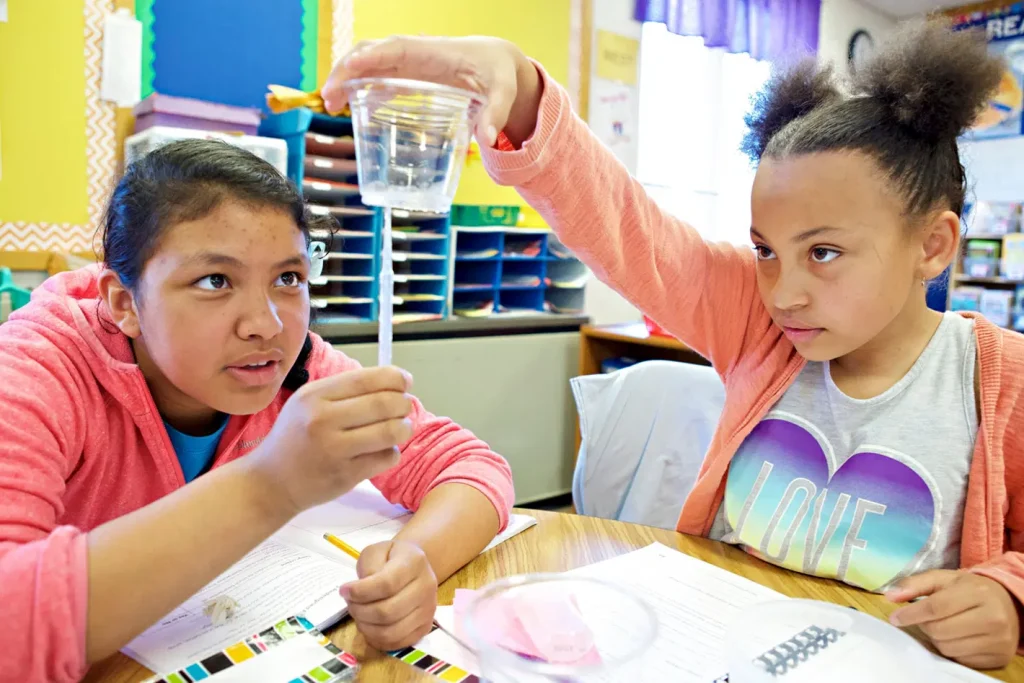
      Stay connected!

      Join our community and get new episodes every other Wednesday!

      We’ll also share new and exciting free resources for your classroom every month!

      What Jennifer Roberts says about science

      “If I’m not teaching my students how to use this, then they’re not going to turn into the adults we need them to be… If we’re not at least trying to think about what our future world is going to look like, then we’re not serving our students well.”

      – Jennifer Roberts

      High School English Teacher

      Meet the guests

      Jen Roberts is a Nationally Board Certified high school English teacher with 25+ years of experience teaching Social Science and English Language Arts in grades 7-12. She has had 1:1 laptops for her students since 2008 and is the co-author of Power Up: Making the Shift to 1:1 Teaching and Learning. A Google for Education Certified Innovator since 2011, Jen was named the CUE Outstanding Educator in 2022. Her interests include literacy instruction, standards based grading, and leveraging Google tools to make her teaching more efficient and effective.

      A woman with light skin and blond hair stands outdoors, framed by illustrated graphics including a blue flask and curved lines. Green foliage is visible in the background.

      Donnie Piercey, the 2021 Kentucky Teacher of the Year, is a fifth-grade teacher in Lexington, Kentucky.  With a passion for utilizing technology to promote student inquiry, learning, and engagement, he has been teaching since 2007. In addition to being in the classroom, he runs a podcast, Teachers Passing Notes that is produced by the Peabody Award winning GZMShows, and holds several recognitions, including a National Geographic Fellowship to Antarctica in 2018. His most recent work in Artificial Intelligence has not gone unnoticed, earning him multiple appearances on Good Morning America, the Associated Press, and PBS. His upcoming book, “50 Strategies for Integrating AI in the Classroom” published by Teacher Created Materials, is written for educators looking for practical classroom approaches to using AI. All told, Donnie has been invited to keynote and present at schools in thirty-three states and on five continents.

      A man with short brown hair and a beard smiles at the camera, wearing a red shirt, framed by a circular graphic with a blue flask icon.
      A laptop screen displays the “Science Connections: The Community” private group page, with science-themed icons decorating the background and edges.

      About Science Connections

      Welcome to Science Connections! Science is changing before our eyes, now more than ever. So…how do we help kids figure that out? We will bring on educators, scientists, and more to discuss the importance of high-quality science instruction. In this episode, hear from our host Eric Cross about his work engaging students as a K-8 science teacher. 

      S2-03: Building meaningful student connections in the science classroom

      Promotional image for a podcast episode titled "Sharita Ware: Building meaningful student connections," featuring Sharita Ware and "Science Connections" branding.

      In this episode, Eric Cross sits down with Indiana State Teacher of the Year, Sharita Ware, to talk about how to successfully build meaningful student connections in the science classroom. Sharita shares her journey from a corporate career to becoming Indiana’s 2022 Teacher of the Year, and her passion for creating project-based lessons for her students. Together, Eric and Sharita discuss how educators can teach students to love science content by building strong relationships, adding in other content areas, and supporting students’ imagination. Explore more from Science Connections by visiting our main page.

      Download Transcript

      Sharita Ware (00:00):
      I try to create that equal playing field where there’s nobody’s voice, that’s more important than anyone else’s and try to make them all feel that what they have to say is important.

      Eric Cross (00:14):
      Welcome to science connections. I’m your host Eric. My guest today is Sheta where Sheta is the 2022 Indiana state teacher of the year. And in her 10 year career, as an engineering and technology teacher, she has dedicated herself to helping students build knowledge and skills for high school and life. Beyond. In this episode, we discuss how she inspires her seventh and eighth grade students to build problem solving and critical thinking skills through hands on real world and collaborative projects. She is as humble as she is knowledgeable and through our conversation, it was easy for me to see why her students feel successful under her guidance. And now please enjoy my conversation with Sharita Ware.

      Eric Cross (00:59):
      Can I start off by saying congratulations on teacher of the year. Thank you for the state of Indiana. Um, that’s amazing. So I, I, I did watch, uh, your videos, uh, short interviews, and then you spoke, was it Purdue? Yes. You were there. And so, uh, to see if fellow seventh grade, eighth grade science teacher out there being celebrated, like I was so excited, so yeah, I wanted to congratulate you on that and, and just kind of talk to you about like your teaching journey and ask you, uh, maybe just kind of start off with your story about what brought you into, into the classroom, especially the middle school.

      Sharita Ware (01:29):
      Classroom. So what happened is when I was working in industry as an engineer and when my husband and I got married, we decided that I was gonna, um, stay home with the kids because, you know, we wanted, um, our influence to be greater on our kids than, you know, the people that would be watching them, you know, because they would ultimately spend more time with them than they would with us. And, and so, um, I stayed home and when my youngest was going to be going to kindergarten the next year, I was like, okay, what am I going to do? Cuz I really don’t necessarily feel like I need to stay at home. Mm-hmm <affirmative> but um, I knew going back to industry would be a challenge just because in my field, I, I was traveling a lot before I got married and had kids.

      Sharita Ware (02:14):
      And so I knew that that wouldn’t really be conducive to again, raising children. So I, I get this email, my inbox for Woodrow Wilson, teaching fellowship at Purdue. And they were just looking for people in stem fields to go into teaching. And I was like, okay. And it was a national search, you know, I filled out the application, we had to go in and do some sample teaching mm-hmm <affirmative>. And I was picked as, as one of the, the teachers to go through the program. And I started off thinking I wanted high school. And the really cool thing about this, uh, program is that we had long observation periods at high school and at middle schools. And so we would go to a school and we’d stay there two or three weeks. And so it, it kind of gave you right. A little bit more insight to what happened on a daily basis. And after those observations, I was like, I like middle school better than I, uh, like high school. And so I just kind of went that direction and you know, the rest is history. So

      Eric Cross (03:19):
      I feel like our stories are similar because I went into teaching thinking I wanted to do high school because I like the maturity and you a little bit more sophistication, advanced things, but yes, middle school, I felt like I can, I could get them more upstream before and kind of help shape mm-hmm <affirmative> that experience for them? Because I feel like at middle school is really where they kind of decide like what they can do based on their experiences.

      Sharita Ware (03:39):
      I found in the middle school that the kids, I mean, they just, they clamor around you and they’re like, what are we doing today? You know? And they get so excited and, um, they’re, they’re just, I don’t know, I guess in some ways, just more hungry in the sense of like they’re willingness to, um, now sometimes they’re a little reluctant, but you know, their willingness just to try new things. And I think, um, my students really what I have found over the years that they have found a safe space and I hear the kids, you know, say to me so many times that, you know, it it’s safe. I feel, I feel safe in here. And, and it’s not something that in my mind I’m thinking about, oh, I need to make this a safe place. It’s just, I guess part of just who I am as a person has created this environment of, of safety and, and the kids recognize that, you know, I don’t play favorites. You know, everybody starts out mm-hmm, <affirmative> on equal footing. I, I don’t care what your backstory is. I don’t care how many times I see you in the hallway when I’m walking during my prep. You know, when you hit my room, I’m, I’m gonna treat you the same way on day one, that I treat everybody else.

      Eric Cross (04:54):
      You really understand how to build culture with, in, with your classroom, with your students. And, and you said they feel safe, but is there anything that you do that someone could like apply? And like you found that you’ve gotten a lot of just relational capital through doing these things, or is it just your personality? Like how, how do you build those connections?

      Sharita Ware (05:12):
      You know, growing up being a, a very quiet person. I, I think a lot of times my voice was ignored because I was the quiet kid in the back of the room. And oftentimes I became seen or heard because of my work, you know, in the beginning it was kind of like, oh, she’s just this quiet girl in the back of the room. And then, you know, the first essay was due or the first project was due. And then it was like, oh, you know, then you’re the person to be on, you know, people’s teams. And, and that, I don’t know, that always kind of bothered me because, you know, I’m thinking just because you’re not the loudest person in the room doesn’t mean that you don’t have something to say, mm-hmm <affirmative>, you just might not be talking all the time. You know? And, and so for my students, I just, I try to create that equal playing field where there’s, nobody’s voice, that’s more important than anyone else’s and try to make them all feel like that what they have to say, or what they have to contribute is, is enough, is good.

      Sharita Ware (06:14):
      Enough is important as…

      Eric Cross (06:16):
      It is, as it is. And there’s probably a lot of things that you do. But in addition to building these relationships, what do you do? Like how do you make your learning fun for students?

      Sharita Ware (06:25):
      I think, um, I’m also a little bit on the silly side. Um, we do a, a Barbie prosthetic leg project, and this was after trial and error of having the kids make full size prosthetic legs. And I try to make it as real world as possible, but with none of the children being amputee or, you know, having access to someone, it was really hard for them to really visualize what needed to happen. Mm-hmm <affirmative>. And so, um, I found this Barbie that had a prosthetic leg and I was like, well, LA, so I just started collecting Barbies and chopping their legs off <laugh>. And so I have this jar of Barbie legs. And so, and I said, you’re gonna make prosthetic legs. And I lay this jar of legs on the counter and the kids are like, like they gasp and then they crack up and then they’re like, okay, this lady’s crazy. So…

      Eric Cross (07:22):
      That’s when you take off your scarf and there’s this necklace of just Barbie legs that are just around and you’re like, I’m a middle school teacher and they go, oh, okay. I understand. Yeah. Yeah. It’s totally fine. Is this a lesson that someone that you made up or is it something that you’ve re remixed? Is it something that someone could do if they looked it up anywhere?

      Sharita Ware (07:38):
      Um, so I think teach engineering has the, the full size leg that the kids make. And that’s where I initially got it from.

      Eric Cross (07:47):
      Is that the website teach engineering?

      Sharita Ware (07:49):
      Yes. And, um, I, in fact, I get lots of ideals from there. Um, and I, I always usually tweak them, but it’s, it’s one of those things that kind of gets your brain going. And so it was kind of a mixture of, uh, project lead the way gateway to technology and the teach engineering. And I think the project lead the way had us making like braces, uh, for, um, kids with, um, like cerebral palsy or, or something like that. And the kids did okay with that project. Uh, but I wanted to go just a little bit, uh, deeper with it because part of what I was wanting them to do is that context and that connection, that human connection, because for me, it’s not just enough for them to make a project. Uh, before we start this prosthetic leg, I read them a story out of a Scholastic magazine, and it’s a, a teenage girl that lost her leg in a boating accident.

      Sharita Ware (08:42):
      And she was super active, um, playing sports and running. And, and so I was, you know, trying to get the kids to, you know, make that connection, someone close to their age. Um, and then how it’s not, it’s, it’s more than about her physical healing. It’s also about her mental healing and how she had to, you know, talk to herself to say that she could, you know, recover and, and come back from this and still go on to do all of the things that she was doing before. Um, and in some ways it’s kind of cool because, um, you know, she has a running prosthetic, she has a, a swimming prosthetic, and she has her every day with the pain and toils prosthetic. So just trying to, you know, help them to see that it’s more than just the, you know, the biomedical mechanical engineering aspect of the project.

      Sharita Ware (09:30):
      And so they have to design for comfort. They have to design for, um, swelling. And then, um, they also can, if they, if they want to, they don’t have to, if they want to, they can create their own backstory. So when they get there, um, we have a day where they are introduced to their client, so they get to meet their Barbie and, and then they get to decide if they want a backstory and, and then do their research based off of that. So if it’s someone that was a runner, then they can design a prosthetic running blade. So just, they have lots of, uh, flexibility.

      Eric Cross (10:04):
      The, that aspect of adding the narrative. It does so much for like listening to it on the outside. It one, it adds this humanity to, you know, what can sometimes just feel like it may be cold, logical stem. We’re just, we’re just doing things. We’re fixing things. We’re, you know, we’re discovering things, but really the stem has value when we’re actually applying it to, to, to serve humanity or our ecosystem or whatever it is. There was a, a coding, uh, class I was doing with my students and I showed them this app called be my eyes. And it’s for people who are visually impaired and it pairs them with a volunteer. And when they call, and there’s a whole huge pool of volunteers and I’m one of them. And when my, when it happens in class, I answer and it uses the FaceTime. So the person who’s visually impaired is holding up their phone and you see what they see and you tell them and real time what’s happening.

      Sharita Ware (10:54):
      Oh, wow. That’s so cool.

      Eric Cross (10:56):
      These are, these were the things I think for students that the story, the, the human part of it, mm-hmm, <affirmative>, it must bring in so many more students into engagement.

      Sharita Ware (11:05):
      Yeah. I, I feel like it does because I, I think, um, and, you know, along the journey, they kind of lose, um, they lose sight a little bit because, you know, they get out in the lab and they have access to all of these different materials. And I think, you know, truly making it, you know, project based for me is I try not to control the materials too much. Um, I try not to make it so wide that they just get lost, but I try to throw a few curve balls in there, you know, of, of materials that really don’t make sense to use, but they kind of think they make sense to use. Um, because the, the, the meat of it is that the prosthetic leg is a similar size of the original leg and that the, the knee functions. And so I don’t limit, and I grade them off of efficient use of materials.

      Sharita Ware (11:59):
      So, and that just throws them off because I think, well, how many Popsicle sticks can I use? And I’m like, you can use as many as you like, but remember, this is a prosthetic leg that, um, your Barbie, which is one six scale, um, is going to be wearing all day. So you could think that a Popsicle stick, if you chose to use a Popsicle stick is kind of like dragging around a two by four <laugh>, you know? So do, is that what you really want to use as your material? And some of the kids really think about it and saying, okay, I’m, I’ve got this aluminum rod, okay. This is probably what I would use for my bone structure, because it’s lightweight, but yet it is supportive. And then sometimes they come up with their own ideas in terms of materials, like one student brought in his, um, 3d doodle pin mm-hmm <affirmative> and he made joints and everything with this pin.

      Sharita Ware (12:54):
      And I’m, and I had delayed buying one, cause I’m like, I, how do you have control over that thing? Mm-hmm <affirmative> he brought that in and he did probably two or three iterations of it and, and got it to work where even the knee where it bit back 90 degrees, but it stopped. He made like, so that it didn’t bend forward. It blows my mind. I’m like so many UN unexpected things have, have happened just from my, um, teaching style. Now I did have, my first few years, I had a, a teaching coach, um, come in and, um, I asked her to come into my room because I just wanted to make sure because I was not a traditional teacher. She said, this classroom is amazing. And, and I think the one thing that she helped me with was, was purpose and consistency and the sense of making sure that with the standards that all of these cool things and ways of being, um, that I was doing in my classroom, that, that I kept it purposeful and intentional. So many times as educators, I know in having student teachers again, ask yourself the question, what is the big picture I want the kids to take away. And once you ask that question, then everything that you have them do will lead to that big picture. Well, it should lead to that big picture.

      Eric Cross (14:22):
      So it sounds like they’re, you’re starting with this end goal in mind and then kind of backwards planning to get there. Yeah. Do you think you would’ve been the same type of teacher if you would’ve gone straight from college into the classroom? No. And if, if, no, as you’re shaking your head, what do you think it is about? Cause I’ve been asking myself these questions, like just over the years, what is it about coming from industry and going into the classroom? Do you feel like, is how has that impacted you in how you teach?

      Sharita Ware (14:45):
      Well, I think it’s twofold cuz I was older. I already had three children. I think the combination for me, I think is I was already a mom and I had worked in industry. So the behavior aspect of kids and, and then having that real world experience. And I, I just feel like whether it’s in the classroom, um, marriage, kids, to me, it’s 90% relationship, you know, and the rest will work itself out. That’s, that’s just my, my take on it. But I, I feel like having kids, so some of the behavioral things I kind of was aware of, you know, and just learned many times just not to react to some of the things that they did.

      Eric Cross (15:31):
      Which is huge. Right. Especially in middle school is controlling your reactions.

      Sharita Ware (15:35):
      Yes. Cuz that’s what they want. You know? And, and I had this student last year as well. She’s brilliant. And so if she cannot wrap her mind around the purpose of what you’re doing and, and you’re pushing her to do something that she doesn’t think is necessary, mm-hmm <affirmative>, she kind of has these meltdowns. And, and so we just had this, you know, I don’t know, we just came to this understanding and it, and it works to control the meltdowns. I tried to make sure. And, and I used her as a gauge because I knew she wasn’t, she wasn’t getting upset because she didn’t understand. She didn’t understand the why mm-hmm <affirmative>. And so I felt like if she got the why then so would everyone else. So when she, if she was okay with it, then I was like, okay, then I must have explained it well enough.

      Sharita Ware (16:25):
      And so in my mind that I really need to make sure they understand the, again, going back to that purpose <laugh> and intention, making sure that that is clear. And then I think that’s what gets lost. Sometimes mm-hmm <affirmative> uh, with us as teachers, we, we know where we want the kids to go and we want us to trust the process, you know, just do it because I said so, but sometimes, you know, empowering your children to under to understand the why, because that again is what allows them to be able to do bigger and greater things on their own. So on that next project comes along. They’re starting to tell you, well, first we need to make sure we understand what, um, we’re being asked to do to do. So we have to define the question. We have to make our driving question that will help us stay focused. And, and you’re just standing up there going, okay, now you don’t need me. I’ll go here and sit down. <laugh> so it’s, uh, it is really cool.

      Eric Cross (17:28):
      Now I’m thinking about my own kids. Like, do my students know the why behind the lesson we did today? It’s one area of growth that I wanna make sure I do this year with my students. And so I really appreciate that. So the, and you just hit on something that is, has been in the forefront of my mind lately and math and English as you know, tend to be prioritized in schools everywhere because it’s what state tested. And it’s what, you know, this is a whole other conversation, but I’ve been talking to math teachers frequently about one of the challenges that they experience or they’ve been telling me is that math is kind of taught. Like it’s just computational, you’re solving these problems, but it’s really separated from any real life application. A lot of times, you know, it’s pizza or gumballs or, or just fictional scenarios and students don’t perform well many times. And some of the reasons why is cuz just no connection. I don’t want to solve puzzles. Like it’s not my jam. Do you have any just inside or, or perspective on how math is, is taught in maybe a way that you think it would students would benefit more?

      Sharita Ware (18:32):
      You know how kids learn in elementary school, you’ve got this, the same teacher teaching all of the subjects. And so wouldn’t that be an awesome opportunity for you to have like these, these projects where I feel like you could, a class could legit work on the same project for a whole entire year. And so couldn’t the English be writing your persuasive letter to the mayor, asking him to do this or do that. And the process of doing that they’re, they’re, they’re writing with a purpose with a true purpose. Um, and then when they’re doing math, you know, they want, they want a new neighborhood park. So, you know, well how much is this gonna cost? Well, math, what size is it gonna be math? Let’s see what it looks like, art, you know, you just, you have all of this things. And then of course then science.

      Sharita Ware (19:32):
      So if it’s on a heel, how can we, you know, deal with erosion? And you know, you can just pull so many different things into that. And so not only are they learning, but they’re narrowed in and focused on a project, they’re, they’re able to dive deep into, you know, learning more of learning, how to express themselves and communicate with real people. So it’s more of taking these compartmentalized learning that we do in middle school and high school. Mm-hmm, <affirmative> where you’re almost learning apprenticeship style. Mm-hmm <affirmative>, you know, you have these master educators and it’s not about them being the best at math or being the best at this or that. Cuz there’s so many tools now that could help you through that. But you’re, you’re giving, you’re teaching them so many life skills and so many ways to think and problem solve that, that we’re just that the kids just don’t have.

      Eric Cross (20:27):

      I think that that is amazing. And I think that in that situation, what I’m hearing is we’re going deeper, not wider because there are a lot of different concepts that kids are expected to learn. Or I should say there are several concepts that teachers are expected to teach doesn’t necessarily mean that our kids are learning, but we’re teaching them. And this way you’re embedded it into an authentic context. Students are able to go through this cycle just like real life. And then they’re also able to build these kind of really transdisciplinary skills. Not only am I learning the math, the English, the the, but I’m also learning the interpersonal skills of being able to sell myself and present myself in a way that’s winsome. And it’s especially powerful coming from someone from industry. Last question, even just listening to you, I know you, you are this for a lot of people, but I wanted to ask you who inspires you?

      Sharita Ware (21:14):
      I think there have been lots of people over the years. Like I’m thinking of my shop teacher who has since, uh, the last few years passed away. Um, he was one of those people, I think similar personality to me, super quiet person, but he was always in the background on my journey and his name was Joe Mo and we called her Madam Carol was my 10th grade English lit teacher. And she was the one that started reading my work out in front of the class. And you know, and that just gave me courage, not so much to be seen. Uh, but that the work I was doing was, was good. And, and I think I needed that kind of encouragement. Lastly, my students inspire me because when I look at their faces and see the excitement, I think of those students for the first time and, and, and think about this seventh and eighth graders for the first time feeling like they really have something to say, they really have something to contribute of value. And, and I do it for them. You know, the reason why I am here in this moment is because of them. Um, without them, you wouldn’t be talking to me <laugh>

      Eric Cross (22:37):
      This is, this is true. This is, this is true. You would probably never say this about yourself, but you just exude a humility and a service in how you talk about your students and yourself. And I just wanna thank you for using your gifts, but I don’t wanna just call them gifts because it makes it sound like you didn’t earn ’em and your skills that you’ve earned and worked very hard to acquire over the years to go back into the classroom and leave industry, cuz you, you could have gone back to industry too, but you decided not to. And you could have worked in the industry and your hours were a little different pay is a little different, but you came back to serve the kids of Indiana and because of you and because of that choice, those students have a brighter future and believe in themselves and they’re finding their voice. And I want to thank you for that and for representing all of us stem teachers who are in middle school and being that leader. So thank you for that and thank you for being on the podcast.

      Sharita Ware (23:24):
      You’re welcome. Thank you for having me.

      Eric Cross (23:28):
      Thank so much for listening. Now we wanna hear more about you in the amazing work you’re doing for students. Do you have any educators who inspire you? You can nominate them as a future guest on science connections by emailing stem, amplifycom.wpengine.com. That’s ST E M amplifycom.wpengine.com. Make sure to click, subscribe wherever you listen to podcasts and join our Facebook group science connections, the community until next time.

      Stay connected!

      Join our community and get new episodes every other Wednesday!

      We’ll also share new and exciting free resources for your classroom every month!

      What Sharita Ware says about science

      “Sometimes, empowering your students to understand the why is what allows them to be able to do bigger and greater things on their own.”

      – Sharita Ware

      Engineer and Technology Teacher, 2020 Indiana Teacher of the Year

      Meet the guest

      Sharita Ware, a Purdue University graduate, is in her 10th year of teaching engineering and technology education to middle school students in the Tippecanoe School Corporation. Ware challenges her students with real-world, problem-based design scenarios that will help them contribute to global technology and integrated STEM. Follow her on Twitter and Instagram.

      A woman with curly black hair, glasses, and a white turtleneck smiles at the camera.

      About Science Connections

      Welcome to Science Connections! Science is changing before our eyes, now more than ever. So…how do we help kids figure that out? We will bring on educators, scientists, and more to discuss the importance of high-quality science instruction. In this episode, hear from our host Eric Cross about his work engaging students as a K-8 science teacher. Listen here!

      Overview

      With Amplify Science, students don’t just passively learn about science concepts.

      No matter where your students are learning, they take on the role of scientists and engineers to actively investigate and make sense of real-world phenomena. They do this through a blend of cohesive and compelling storylines, hands-on investigations, collaborative discussions, literacy-rich activities, and interactive digital tools.

      Watch the videos below to learn how the program empowers students to think, read, write, and argue like real scientists and engineers every day.

      Grades 6–8

      EdReports All-Green

      Amplify Science for grades K–8 has been rated all-green by EdReports.

      Read the review on EdReports.

      Program structure

      Our cyclical lesson design ensures students receive multiple exposures to concepts through a variety of modalities.

      As they progress through the lessons within a unit, students build and deepen their understanding, increasing their ability to develop and refine complex explanations of the unit’s phenomenon. It’s this proven program structure and lesson design that enables Amplify Science to address 100% of the NGSS in fewer days than other programs.

      Unit sequence

      Our lessons follow a structure that is grounded in regular routines while still being flexible enough to allow for a variety of learning experiences.

      In fact, our multi-modal instruction offers more opportunities for students to construct meaning, and practice and apply concepts than any other program. What’s more, our modular design means our units can be flexibly arranged to support your instructional goals.

      Unit 1

      Geology on Mars

      Domain: Earth and Space Science

      Unit type: Launch

      Student role: Planetary geologists

      Phenomenon: Analyzing data about landforms on Mars can provide evidence that Mars may have once been habitable.  

      Unit 2

      Plate Motion

      Domain: Earth and Space Science

      Unit type: Core

      Student role: Geologists

      Phenomenon: Mesosaurus fossils have been found on continents separated by thousands of kilometers of ocean, even though the Mesosaurus species once lived all together.  

      Unit 3

      Plate Motion Engineering Internship

      Domains: Earth and Space Science, Engineering Design

      Unit type: Engineering internship

      Student role: Mechanical engineering interns

      Phenomenon: Patterns in earthquake data can be used to design an effective tsunami warning system.    

      Unit 4

      Rock Transformations

      Domain: Earth and Space Science

      Unit type: Core

      Student role: Geologists

      Phenomenon: Rock samples from the Great Plains and from the Rocky Mountains — regions hundreds of miles apart — look very different, but have surprisingly similar mineral compositions.   

      Unit 5

      Earth, Moon, and Sun

      Domains: Earth and Space Science, Physical Science

      Unit type: Core

      Student role: Astronomers

      Phenomenon: An astrophotographer can only take pictures of specific features on the Moon at certain times.  

      Unit 6

      Ocean, Atmosphere, and Climate

      Domains: Earth and Space Science, Physical Science

      Unit type: Core

      Student role: Climatologists

      Phenomenon: During El Niño years, the air temperature in Christchurch, New Zealand is cooler than usual.  

      Unit 7

      Weather Patterns

      Domains: Earth and Space Science, Physical Science

      Unit type: Core

      Student role: Forensic meteorologists

      Phenomenon: In recent years, rainstorms in Galetown have been unusually severe.  

      Unit 8

      Earth’s Changing Climate

      Domains: Earth and Space Science, Life Science

      Unit type: Core

      Student role: Climatologists

      Phenomenon: The ice on Earth’s surface is melting.  

      Unit 9

      Earth’s Changing Climate Engineering Internship

      Domains: Earth and Space Science, Engineering Design

      Unit type: Engineering internship

      Student role: Civil engineers

      Phenomenon: Designing rooftops with different modifications can reduce a city’s impact on climate change.  

      Metabolism Engineering Internship

      Domains: Life Science, Engineering Design

      Unit type: Engineering internship

      Student role: Food engineers

      Phenomenon: Designing health bars with different molecular compositions can effectively meet the metabolic needs of patients or rescue workers.  

      Rock Transformations

      Domain: Earth and Space Science

      Unit type: Core

      Student role: Geologists

      Phenomenon: Rock samples from the Great Plains and from the Rocky Mountains — regions hundreds of miles apart — look very different, but have surprisingly similar mineral compositions.   

      Evolutionary History

      Domains: Life Science, Earth and Space Science

      Unit type: Core

      Student role: Paleontologists

      Phenomenon: A mystery fossil at the Natural History Museum has similarities with both wolves and whales.    

      Unit 1

      Microbiome

      Domain: Life Science

      Unit type: Launch

      Student role: Microbiological researchers

      Phenomenon: The presence of 100 trillion microorganisms living on and in the human body may keep the body healthy.  

      Unit 2

      Metabolism

      Domain: Life Science

      Unit type: Core

      Student role: Medical researchers

      Phenomenon: Elisa, a young patient, feels tired all the time.  

      Unit 3

      Metabolism Engineering Internship

      Domains: Life Science, Engineering Design

      Unit type: Engineering internship

      Student role: Food engineers

      Phenomenon: Designing health bars with different molecular compositions can effectively meet the metabolic needs of patients or rescue workers.  

      Unit 4

      Traits and Reproduction

      Domain: Life Science

      Unit type: Core

      Student role: Biomedical students

      Phenomenon: Darwin’s bark spider offspring have different silk flexibility traits, even though they have the same parents.  

      Unit 5

      Populations and Resources

      Domains: Life Science, Earth and Space Science

      Unit type: Core

      Student role: Biologists

      Phenomenon: The size of the moon jelly population in Glacier Sea has increased.    

      Unit 6

      Matter and Energy in Ecosystems

      Domains: Life Science, Earth and Space Science, Physical Science

      Unit type: Core

      Student role: Ecologists

      Phenomenon: The biodome ecosystem has collapsed.   

      Unit 7

      Natural Selection

      Domains: Life Science, Earth and Space Science

      Unit type: Core

      Student role: Biologists

      Phenomenon: The newt population in Oregon State Park has become more poisonous over time.  

      Unit 8

      Natural Selection Engineering Internship

      Domains: Engineering Design, Life Science

      Unit type: Engineering internship

      Student role: Clinical engineers

      Phenomenon: Designing malaria treatment plans that use different combinations of drugs can reduce drug resistance development while helping malaria patients.  

      Unit 9

      Evolutionary History

      Domains: Life Science, Earth and Space Science

      Unit type: Core

      Student role: Paleontologists

      Phenomenon: A mystery fossil at the Natural History Museum has similarities with both wolves and whales.     

      Unit 1

      Harnessing Human Energy

      Domains: Physical Science, Earth and Space Science, Engineering Design

      Unit type: Launch

      Student role: Energy scientists

      Phenomenon: Rescue workers can use their own human kinetic energy to power the electrical devices they use during rescue missions.   

      Unit 2

      Force and Motion

      Domain: Physical Science

      Unit type: Core

      Student role: Physicists

      Phenomenon: The asteroid sample-collecting pod failed to dock at the space station as planned.  

      Unit 3

      Force and Motion Engineering Internship

      Domains: Engineering Design, Physical Science

      Unit type: Engineering internship

      Student role: Mechanical engineering interns

      Phenomenon: Designing emergency supply delivery pods with different structures can maintain the integrity of the supply pods and their contents.  

      Unit 4

      Magnetic Fields

      Domain: Physical Science

      Unit type: Core

      Student role: Physicists

      Phenomenon: During a test launch, a spacecraft traveled much faster than expected.  

      Unit 5

      Thermal Energy

      Domain: Physical Science

      Unit type: Core

      Student role: Thermal scientists

      Phenomenon: One of two proposed heating systems for Riverdale School will best heat the school.   

      Unit 6

      Phase Change

      Domains: Physical Science, Earth and Space Science

      Unit type: Core

      Student role: Chemists

      Phenomenon: A methane lake on Titan no longer appears in images taken by a space probe two years apart.  

      Unit 7

      Phase Change Engineering Internship

      Domains: Engineering Design, Physical Science

      Unit type: Engineering internship

      Student role: Chemical engineering interns

      Phenomenon: Designing portable baby incubators with different combinations of phase change materials can keep babies at a healthy temperature.  

      Unit 8

      Chemical Reactions

      Domains: Physical Science, Life Science, Earth and Space Science

      Unit type: Core

      Student role: Forensic chemists

      Phenomenon: A mysterious brown substance has been detected in the tap water of Westfield.  

      Unit 9

      Light Waves

      Domains: Physical Science, Life Science, Earth and Space Science

      Unit type: Core

      Student role: Spectroscopists

      Phenomenon: The rate of skin cancer is higher in Australia than in other parts of the world.  

      Access program

      Watch the video to the right plus the ones below showing you how to navigate our digital platform. When you’re ready, follow the instructions below to log into our live demo account.

      • Click the orange button below to access the platform.
      • To explore as a teacher, enter this username (t1.cartwrightsd@demo.tryamplify.net) and this password (Amplify1-cartwrightsd).
      • To explore as a student, enter this username (s1.cartwrightsd@demo.tryamplify.net) and this password (Amplify1-cartwrightsd).
      • Choose your grade level from the drop-down menu.


      Access the digital platform now

      Navigating an Engineering Internship (Part 1)

      This Part 1 video demonstrates how Engineering Internship units invite students to design solutions for real-world problems as interns for a fictional company called Futura. In the process, they apply and deepen their learning from Core units.

      Navigating an Engineering Internship (Part 2)

      This Part 2 video demonstrates how to use the Futura Workspace to manage the immersive experience of the Engineering Internship units. This includes guidance on how to create student groups, how to review student work, and how to send students targeted feedback on their designs.

      Navigating a Launch Unit

      Launch units are the first units taught in each year of the program. The goal of a Launch unit is to introduce students to norms, routines, and practices that will be built on throughout the year.

      Navigating a Core Unit

      Core units introduce a real-world problem and support students as they figure out the anchoring phenomenon and gain an understanding of the unit’s DCIs, SEPs, and CCCs.

      Navigating our reporting tools

      Teachers of Amplify Science grades 6–8 have access to a feature called Reporting. When unit assessments are administered digitally, the Reporting tool enables teachers to analyze student performance on the unit assessments.

      Differentiation post-assessment

      Every core unit of Amplify Science 6–8 features a formal formative assessment opportunity at the mid-way point, or Critical Juncture, of the unit, which provides an important opportunity for differentiation.

      Navigating an Engineering Internship

      Engineering Internship units invite students to design solutions for real-world problems as interns for a fictional company called Futura. In the process, they apply and deepen their learning from Core units.

      Navigating Classwork and Reporting

      Classwork is our new online grading tool that gives you quick and easy access to unreviewed work, student portfolios of work, and automatically generated differentiation groups.

      Resources

      Welcome to Physical Science

      BACK TO MAIN 6–8 PAGE

      Amplify Science California is so effective you can cover 100% of the NGSS in fewer lessons than other programs.
       
      Plus, you can breathe a sigh of relief knowing we give you enough materials to support 200 students. In fact, our material kits:

      • Support small groups of 4-5 students.
      • Make organization and finding materials easy.
      • Last longer with only one of the nine kits requiring refills.
      A collage of four images: a magnet illustration, hands with a compass and balls, hands holding a bar magnet and ruler, and a graphic of Earth with compass needles.

      What students learn

      When you’re ready:

      • Find a summary of each unit below including each unit’s student role and anchor phenomenon.
      • Click on the orange “See how the unit works” link to download a helpful Unit Guide. These guides make great companions to busy reviewers looking for a big-picture understanding of how each unit works.
      An illustration from the Harnessing Human Energy unit

      Unit 1

      Harnessing Human Energy

      Student role: Energy scientists

      Phenomenon: Rescue workers can use their own human kinetic energy to power electrical devices used during rescue missions.

      An illustration from the Force and Motion unit

      Unit 2

      Force and Motion

      Student role: Physicists

      Phenomenon: The asteroid sample-collecting pod collided with the docking station and failed to dock as planned.

      See how this unit works

      An illustration from the Force and Motion: Engineering Internship unit

      Unit 3

      Force and Motion Engineering Internship

      Student role: Mechanical engineering interns

      Phenomenon: Designing emergency supply delivery pods with different structures can better protect pods and their contents.

      An illustration from the Magnetic Fields unit

      Unit 4

      Magnetic Fields

      Student role: Physicists

      Phenomenon: During its third magnetic spacecraft launcher test, a model spacecraft far exceeded its target speed.

      An illustration from the Thermal Energy unit

      Unit 5

      Thermal Energy

      Student role: Thermal scientists

      Phenomenon: Riverdale School needs a new heating system. Only one of two proposed systems is the best choice.

      See how this unit works

      An illustration from the Phase Change unit

      Unit 6

      Phase Change

      Student role: Chemists

      Phenomenon: A methane lake on Titan no longer appears in images taken by a space probe two years apart.

      See how this unit works

      An illustration from the Phase Change: Engineering Internship unit

      Unit 7

      Phase Change Engineering Internship

      Student role: Chemical engineering interns

      Phenomenon: Designing portable baby incubators with different phase change materials helps keep babies’ temperatures healthy.

      An illustration from the Chemical Reactions unit

      Unit 8

      Chemical Reactions

      Student role: Forensic chemists

      Phenomenon: A mysterious reddish-brown substance has been detected in the tap water of Westfield.

      See how this unit works

      An illustration from the Light Waves unit

      Unit 9

      Light Waves

      Student role: Spectroscopists

      Phenomenon: The rate of skin cancer in Australia is higher than other parts of the world despite getting the same or less sunlight.

      See how this unit works

      How teachers teach

      When you’re ready:

      • Scroll down and take a closer look at your classroom resources.
      • Click on the orange links below each component to see grade-specific samples.
      Most adopted curriculum for the NGSS California

      Classroom Slides

      These customizable PowerPoints are available for every lesson of the program and make delivering instruction a snap with visual prompts, colorful activity instructions, investigation set-up videos and animations, and suggested teacher talk in the notes section of each slide.

      Video introduction to Classroom Slides

      An educational website open on a laptop displaying a lesson about force and motion: docking failure in space alongside a teacher guide notebook.

      Teacher’s Reference Guide

      Available digitally and in print, our unit-specific reference guides are chock full of helpful resources, including scientific background knowledge, planning information and resources, color-coded 3-D Statements, detailed lesson plans, tips for delivering instruction, and differentiation strategies.

      Login to platform below to access

      Amplify Science California supports 3-D learning with more materials than any other program.

      Materials Kits

      Our kits include enough non-consumable materials to support 200 student uses. In other words, you have enough materials to support all five periods and small groups of 4-5 students each. Plus, our unit-specific kits mean you just grab the tub you need and then put it all back with ease.

      A digital simulation from Amplify Science

      Simulations and Practice Tools

      Our digital Simulations and Practice Tools are powerful resources for exploration, data collection, and student collaboration. They allow students the ability to explore scientific concepts that might otherwise be invisible or impossible to see with the naked eye.

      Video overview of digital tools

      An open book with two pages displaying illustrations of a space docking failure incident, titled in both spanish and english.

      Consumable Notebooks

      Available for every unit, our Student Investigation Notebooks contain instructions for activities and space for students to record data and observations, reflect on ideas from texts and investigations, and construct explanations and arguments.

      Sample Student Investigation Notebook

      Sample Student Investigation Notebook (Spanish)

      Cover of amplify science california student edition grade 8 integrated featuring illustrations of space, animals, and scientific diagrams.

      Student Edition Hardcover

      This durable Student Edition is grade-level specific and contains all of the articles that students refer to throughout the year. Districts may choose to pair these traditional student texts with our digital student experience or new 2-volume consumable notebook set.

      Line drawing of a person using a laptop, with headphones and a line illustration of a rocket launching above their head, symbolizing creativity or inspiration in Boost Reading.


      Coming Soon

      Unlike other publishers, we don’t make you wait until your next adoption to get the latest and greatest from Amplify. We’re always launching new and exciting features. What’s more, we’ll push them out to you even after you adopt us!

      See what’s coming for 2020-2021

      Navigating the program

      • Click the orange button below to access the platform.
      • Choose the resources you’d like to review.
      • Pick your grade level from the drop-down menu.
      • Scroll down to find additional grade-level resources.

      Navigating a Launch Unit

      Launch units are the first units taught in each year of the program. The goal of a Launch unit is to introduce students to norms, routines, and practices that will be built on throughout the year.

      Navigating an Engineering Internship

      Engineering Internship units invite students to design solutions for real-world problems as interns for a fictional company called Futura. In the process, they apply and deepen their learning from Core units.

      Navigating a Core Unit

      Core units introduce a real-world problem and support students as they figure out the anchoring phenomenon and gain an understanding of the unit’s DCIs, SEPs, and CCCs.

      Navigating Classwork and Reporting

      Classwork is our new online grading tool that gives you quick and easy access to unreviewed work, student portfolios of work, and automatically generated differentiation groups.

      Welcome to Life Science

      BACK TO MAIN 6–8 PAGE

      Amplify Science California is so effective you can cover 100% of the NGSS in half the time of other programs.

      Plus, you can breathe a sigh of relief knowing we give you enough materials to support 200 students. In fact, our material kits:

      • Support small groups of 4-5 students.
      • Make organization and finding materials easy.
      • Last longer with only one of the nine kits requiring refills.
      Collage of four images: underwater digital art, two students conducting a science experiment, hands constructing a structure from red straws, and an abstract painting of colorful figures.

      What students learn

      When you’re ready:

      • Find a summary of each unit below including each unit’s student role and anchor phenomenon.
      • Click on the orange “See how the unit works” link to download a helpful Unit Guide. These guides make great companions to busy reviewers looking for a big-picture understanding of how each unit works.
      An illustration from the Microbiome unit

      Unit 1

      Microbiome

      Student role: Microbiological researchers

      Phenomenon: The presence of 100 trillion microorganisms living on and in the human body keeps the body healthy.

      An illustration from the Metabolism unit

      Unit 2

      Metabolism

      Student role: Medical students

      Phenomenon: Elisa, a teenager, is tired all the time. In fact, she can’t get through the day without feeling exhausted.

      See how this unit works

      An illustration from the Metabolism: Engineering Internship unit

      Unit 3

      Metabolism Engineering Internship

      Student role: Food engineers

      Phenomenon: Health bars with different molecular compositions meet the metabolic needs of patients or rescue workers.

      An image from the Traits and Reproduction unit

      Unit 4

      Traits and Reproduction

      Student role: Biomedical students

      Phenomenon: Darwin’s bark spider offspring have different silk flexibility traits, even though they have the same parents.

      An illustration of a whale with jellyfish and turtles from Amplify Science

      Unit 5

      Populations and Resources

      Student role: Biologists

      Phenomenon: The size of the moon jelly population in the fictional Glacier Sea has experienced a puzzling increase.

      See how this unit works

      An illustration from the Matter and Energy unit

      Unit 6

      Matter and Energy in Ecosystems

      Student role: Ecologists

      Phenomenon: A sealed biodome built by a group of Econauts mysteriously crashed despite following the advice of experts.

      See how this unit works

      Cartoon image of a yellow dinosaur among green dinosaurs, all with meat and vegetables on their backs, standing in a grassy landscape.

      Unit 7

      Natural Selection

      Student role: Biologists

      Phenomenon: The rough-skinned newt population in Oregon State Park has become more poisonous over time.

      See how this unit works

      An illustration from the Natural Selection: Engineering Internship unit

      Unit 8

      Natural Selection Engineering Internship

      Student role: Clinical engineers

      Phenomenon: Designing malaria treatment plans that use different combinations of drugs can reduce drug resistance development.

      An illustration from the Evolutionary History unit

      Unit 9

      Evolutionary History

      Student role: Paleontologists

      Phenomenon: A mystery fossil at the Natural History Museum has similarities with both wolves and whales.

      See how this unit works

      How teachers teach

      When you’re ready:

      • Scroll down and take a closer look at your classroom resources.
      • Click on the orange links below each component to see grade-specific samples.
      Most adopted curriculum for the NGSS California

      Classroom Slides

      These customizable PowerPoints are available for every lesson of the program and make delivering instruction a snap with visual prompts, colorful activity instructions, investigation set-up videos and animations, and suggested teacher talk in the notes section of each slide.

      Video introduction to Classroom Slides

      An open teacher's guide and a laptop displaying an educational website on metabolism, featuring colorful chapter thumbnails.

      Teacher’s Reference Guide

      Available digitally and in print, our unit-specific reference guides are chock full of helpful resources, including scientific background knowledge, planning information and resources, color-coded 3-D Statements, detailed lesson plans, tips for delivering instruction, and differentiation strategies.

      Login to platform below to access

      Assorted laboratory supplies including beakers, measuring cylinders, test tubes, pipettes, thermometers, and chemical reagents on a white background.

      Materials Kits

      Our kits include enough non-consumable materials to support 200 student uses. In other words, you have enough materials to support all five periods and small groups of 4-5 students each. Plus, our unit-specific kits mean you just grab the tub you need and then put it all back with ease.

      A digital simulation from Amplify Science

      Simulations and Practice Tools

      Our digital Simulations and Practice Tools are powerful resources for exploration, data collection, and student collaboration. They allow students the ability to explore scientific concepts that might otherwise be invisible or impossible to see with the naked eye.

      Video overview of digital tools

      Two textbooks titled amplify science, one in spanish and english, featuring a spider on web the cover.

      Consumable Notebooks

      Available for every unit, our Student Investigation Notebooks contain instructions for activities and space for students to record data and observations, reflect on ideas from texts and investigations, and construct explanations and arguments.

      Sample Student Investigation Notebook

      Sample Student Investigation Notebook (Spanish)

      Illustration for amplify science textbook cover, featuring a woman scientist with various science symbols like dna, parrot, rocket, and dinosaur on stylized background.

      Student Edition Hardcover

      This durable Student Edition is grade-level specific and contains all of the articles that students refer to throughout the year. Districts may choose to pair these traditional student texts with our digital student experience or new 2-volume consumable notebook set.

      Line drawing of a person using a laptop, with headphones and a line illustration of a rocket launching above their head, symbolizing creativity or inspiration in Boost Reading.


      Coming Soon

      Unlike other publishers, we don’t make you wait until your next adoption to get the latest and greatest from Amplify. We’re always launching new and exciting features. What’s more, we’ll push them out to you even after you adopt us!

      See what’s coming for 2020-2021

      Navigating the program

      • Click the orange button below to access the platform.
      • Choose the resources you’d like to review.
      • Pick your grade level from the drop-down menu.
      • Scroll down to find additional grade-level resources.

      Navigating a Launch Unit

      Launch units are the first units taught in each year of the program. The goal of a Launch unit is to introduce students to norms, routines, and practices that will be built on throughout the year.

      Navigating an Engineering Internship

      Engineering Internship units invite students to design solutions for real-world problems as interns for a fictional company called Futura. In the process, they apply and deepen their learning from Core units.

      Navigating a Core Unit

      Core units introduce a real-world problem and support students as they figure out the anchoring phenomenon and gain an understanding of the unit’s DCIs, SEPs, and CCCs.

      Navigating Classwork and Reporting

      Classwork is our new online grading tool that gives you quick and easy access to unreviewed work, student portfolios of work, and automatically generated differentiation groups.

      Welcome to Grade K

      BACK TO MAIN TK–5 PAGE

      Amplify Science California is so effective you can cover 100% of the NGSS in half the time of other programs.

      You can breathe a sigh of relief knowing all you need is:

      • 66 days per year
      • 2 lessons per week
      • 45 minutes per lesson
      Four images of children engaged in science experiments: growing plants, using liquids, a girl in safety goggles mixing substances, and playing with a physics kit.

      What students learn

      When you’re ready:

      • Find a summary of each unit below including each unit’s student role and anchor phenomenon.
      • Click on the orange “See how the unit works” link to download a helpful Unit Guide. These guides make great companions to busy reviewers looking for a big-picture understanding of how each unit works.
      An illustration from Needs of Plants and Animals unit

      Unit 1

      Needs of Plants and Animals

      Student role: Scientists

      Phenomenon: There are no monarch caterpillars in the Mariposa Grove community garden ever since vegetables were planted.

      See how this unit works

      An illustration from the Pushes and Pulls unit

      Unit 2

      Pushes and Pulls

      Student role: Pinball engineers

      Phenomenon: Pinball machines allow people to control the direction and strength of forces on a ball.

      See how this unit works

      An illustration from the Sunlight and Weather unit

      Unit 3

      Sunlight and Weather

      Student role: Weather scientists

      Phenomenon: Students at one school are too cold during morning recess, while students at another are too hot during afternoon recess.

      See how this unit works

      How teachers teach

      When you’re ready:

      • Scroll down and take a closer look at your classroom resources.
      • Click on the orange links below each component to see grade-specific samples.
      Most adopted curriculum for the NGSS California

      Classroom Slides

      These customizable PowerPoints are available for every lesson of the program and make delivering instruction a snap with visual prompts, colorful activity instructions, investigation set-up videos and animations, and suggested teacher talk in the notes section of each slide.

      Video introduction to Classroom Slides

      Sample Classroom Slides

      Sample Classroom Slides (Spanish)

      Teacher’s guide and digital screen displaying the needs of plants and animals: milkweed monarchs educational material with illustrations of insects.

      Teacher’s Reference Guide

      Available digitally and in print, our unit-specific reference guides are chock full of helpful resources, including scientific background knowledge, planning information and resources, color-coded 3-D Statements, detailed lesson plans, tips for delivering instruction, and differentiation strategies.

      Login to platform below to access

      Amplify Science California supports 3-D learning with more materials than any other program.

      Materials Kits

      Our kits include enough non-consumable materials to support a class of 36 students and enough consumable items to support 72 students. In other words, each kit can last two years! Plus, our unit-specific kits mean you just grab the tub you need and then put it all back with ease.

      List of investigations by unit

      List of materials by unit

      Illustrations of two children’s book covers displayed on a tablet, titled Un día ocupado en Villa Empuja and A Busy Day in Pushville, showing a street scene.

      Big Books and Student Books

      Students are never asked to read alone. Rather, books are read to, with, and by students with ample scaffolding and support provided by the teacher. Big Books are read aloud or together with the class to introduce ideas. Student Books allow for small-group reading and reading in pairs.

      Sample Student Book (Spanish)

      List of Student Books by unit

      Sample Student Book

      Two amplify science textbooks, one in spanish and one in english, displaying pinball machine diagrams on their covers.

      Consumable Notebooks

      Available for every unit, our Student Investigation Notebooks contain instructions for activities and space for students to record data and observations, reflect on ideas from texts and investigations, and construct explanations and arguments.

      Sample Student Investigation Notebook

      Sample Student Investigation Notebook (Spanish)

      Amplify Science California and Mystery Science work together to help you transition to the California NGSS.

      Mystery Science

      Our exclusive partnership with Mystery Science means you get our NGSS core curriculum plus two years of free access to Mystery Doug and his extensive library of captivating videos that deepen students’ understanding of each unit’s phenomenon.

      Mystery Science lesson alignment

      Line drawing of a person using a laptop, with headphones and a line illustration of a rocket launching above their head, symbolizing creativity or inspiration in Boost Reading.

      Coming Soon

      Unlike other publishers, we don’t make you wait until your next adoption to get the latest and greatest from Amplify. We’re always launching new and exciting features. What’s more, we’ll push them out to you even after you adopt us!

      See what’s coming for 2020-2021

      Welcome to Grade 8

      BACK TO MAIN 6–8 PAGE

      Amplify Science California is so effective you can cover 100% of the NGSS in fewer lessons than other programs.
       
      Plus, you can breathe a sigh of relief knowing we give you enough materials to support 200 students. In fact, our material kits:

      • Support small groups of 4-5 students.
      • Make organization and finding materials easy.
      • Last longer with only one of the nine kits requiring refills.
      Collage of four images: a spaceship in space, hands using a glue gun on crafts, a solar panel connected to bulbs, and an illustration of a person surfing with neon effects.

      What students learn

      When you’re ready:

      • Find a summary of each unit below including each unit’s student role and anchor phenomenon.
      • Click on the orange “See how the unit works” link to download a helpful Unit Guide. These guides make great companions to busy reviewers looking for a big-picture understanding of how each unit works.
      An illustration from the Harnessing Human Energy unit

      Unit 1

      Harnessing Human Energy

      Student role: Energy scientists

      Phenomenon: Rescue workers can use their own human kinetic energy to power electrical devices used during rescue missions.

      An illustration from the Force and Motion unit

      Unit 2

      Force and Motion

      Student role: Physicists

      Phenomenon: The asteroid sample-collecting pod collided with the docking station and failed to dock as planned.

      See how this unit works

      An illustration from the Force and Motion: Engineering Internship unit

      Unit 3

      Force and Motion Engineering Internship

      Student role: Mechanical engineering interns

      Phenomenon: Designing emergency supply delivery pods with different structures can better protect pods and their contents.

      An illustration from the Magnetic Fields unit

      Unit 4

      Magnetic Fields

      Student role: Physicists

      Phenomenon: During its third magnetic spacecraft launcher test, a model spacecraft far exceeded its target speed.

      An illustration from the Light Waves unit

      Unit 5

      Light Waves

      Student role: Spectroscopists

      Phenomenon: The rate of skin cancer in Australia is higher than other parts of the world despite getting the same or less sunlight.

      See how this unit works

      An illustration from the Earth, Moon, and Sun unit

      Unit 6

      Earth, Moon, and Sun

      Student role: Astronomers

      Phenomenon: Pictures of specific features on the Moon can only be taken by an astrophotographer at certain times.

      See how this unit works

      Cartoon image of a yellow dinosaur among green dinosaurs, all with meat and vegetables on their backs, standing in a grassy landscape.

      Unit 7

      Natural Selection

      Student role: Biologists

      Phenomenon: The rough-skinned newt population in Oregon State Park has become more poisonous over time.

      See how this unit works

      An illustration from the Natural Selection: Engineering Internship unit

      Unit 8

      Natural Selection Engineering Internship

      Student role: Clinical engineers

      Phenomenon: Designing malaria treatment plans that use different combinations of drugs can reduce drug resistance development.

      An illustration from the Evolutionary History unit

      Unit 9

      Evolutionary History

      Student role: Paleontologists

      Phenomenon: A mystery fossil at the Natural History Museum has similarities with both wolves and whales.

      See how this unit works

      How teachers teach

      When you’re ready:

      • Scroll down and take a closer look at your classroom resources.
      • Click on the orange links below each component to see grade-specific samples.
      Most adopted curriculum for the NGSS California

      Classroom Slides

      These customizable PowerPoints are available for every lesson of the program and make delivering instruction a snap with visual prompts, colorful activity instructions, investigation set-up videos and animations, and suggested teacher talk in the notes section of each slide.

      Video introduction to Classroom Slides

      Sample Classroom Slides

      An educational website open on a laptop displaying a lesson about “ force and motion: docking failure in space” alongside a teacher’s guide notebook.

      Teacher’s Reference Guide

      Available digitally and in print, our unit-specific reference guides are chock full of helpful resources, including scientific background knowledge, planning information and resources, color-coded 3-D Statements, detailed lesson plans, tips for delivering instruction, and differentiation strategies.

      Login to platform below to access

      Amplify Science California supports 3-D learning with more materials than any other program.

      Materials Kits

      Our kits include enough non-consumable materials to support 200 student uses. In other words, you have enough materials to support all five periods and small groups of 4-5 students each. Plus, our unit-specific kits mean you just grab the tub you need and then put it all back with ease.

      List of investigations by unit

      List of materials by unit

      A digital simulation from Amplify Science

      Simulations and Practice Tools

      Our digital Simulations and Practice Tools are powerful resources for exploration, data collection, and student collaboration. They allow students the ability to explore scientific concepts that might otherwise be invisible or impossible to see with the naked eye.

      Video overview of digital tools

      List of digital tools by unit

      Device calendars by unit

      Open book displaying a bilingual spread about space docking failures, with illustrations of a spacecraft near the moon on a black background.

      Consumable Notebooks

      Available for every unit, our Student Investigation Notebooks contain instructions for activities and space for students to record data and observations, reflect on ideas from texts and investigations, and construct explanations and arguments.

      Sample Student Investigation Notebook

      Sample Student Investigation Notebook (Spanish)

      Illustration on a textbook cover showing various science themes, including an astronaut, wildlife, and cells, titled

      Student Edition Hardcover

      This durable Student Edition is grade-level specific and contains all of the articles that students refer to throughout the year. Districts may choose to pair these traditional student texts with our digital student experience or new 2-volume consumable notebook set.

      Line drawing of a person using a laptop, with headphones and a line illustration of a rocket launching above their head, symbolizing creativity or inspiration in Boost Reading.


      Coming Soon

      Unlike other publishers, we don’t make you wait until your next adoption to get the latest and greatest from Amplify. We’re always launching new and exciting features. What’s more, we’ll push them out to you even after you adopt us!

      See what’s coming for 2020-2021

      Navigating the program

      • Click the orange button below to access the platform.
      • Choose the resources you’d like to review.
      • Pick your grade level from the drop-down menu.
      • Scroll down to find additional grade-level resources.

      Navigating a Launch Unit

      Launch units are the first units taught in each year of the program. The goal of a Launch unit is to introduce students to norms, routines, and practices that will be built on throughout the year.

      Navigating an Engineering Internship

      Engineering Internship units invite students to design solutions for real-world problems as interns for a fictional company called Futura. In the process, they apply and deepen their learning from Core units.

      Navigating a Core Unit

      Core units introduce a real-world problem and support students as they figure out the anchoring phenomenon and gain an understanding of the unit’s DCIs, SEPs, and CCCs.

      Navigating Classwork and Reporting

      Classwork is our new online grading tool that gives you quick and easy access to unreviewed work, student portfolios of work, and automatically generated differentiation groups.

      Welcome to Grade 1

      BACK TO MAIN TK–5 PAGE

      Amplify Science California is so effective you can cover 100% of the NGSS in half the time of other programs.

      You can breathe a sigh of relief knowing all you need is:

      • 66 days per year
      • 2 lessons per week
      • 45 minutes per lesson
      A collage shows children demonstrating Earth's rotation with a globe, an Earth-sun diagram, a hand holding a spiked ball, and a light experiment with a lamp, paper, and a screen.

      What students learn

      When you’re ready:

      • Find a summary of each unit below including each unit’s student role and anchor phenomenon.
      • Click on the orange “See how the unit works” link to download a helpful Unit Guide. These guides make great companions to busy reviewers looking for a big-picture understanding of how each unit works.
      Illustration of sea turtles swimming among seaweed in the ocean, with a large shark in the background.

      Unit 1

      Animal and Plant Defenses

      Student role: Marine scientists

      Phenomenon: Spruce the Sea Turtle will soon be released back into the ocean, where she will survive despite predators.

      See how this unit works

      Two hands holding a paper with a drawing of a pyramid and a tree, illuminated by a flashlight, projecting another shadow of the image on the wall.

      Unit 2

      Light and Sound

      Student role: Light and sound engineers

      Phenomenon: A puppet show company uses light and sound to depict realistic scenes in puppet shows.

      See how this unit works

      Illustration showing an urban landscape divided into night on the left with a moon and stars, and day on the right with a sun, clouds, and an airplane.

      Unit 3

      Spinning Earth

      Student role: Sky scientists

      Phenomenon: The sky looks different to Sai and his grandma when they talk on the phone at night.

      See how this unit works

      How teachers teach

      When you’re ready:

      • Scroll down and take a closer look at your classroom resources.
      • Click on the orange links below each component to see grade-specific samples.
      A laptop displays a PowerPoint presentation in presenter view, with slides about observing objects in plastic containers and related sensory instructions.
      Classroom Slides

      These customizable PowerPoints are available for every lesson of the program and make delivering instruction a snap with visual prompts, colorful activity instructions, investigation set-up videos and animations, and suggested teacher talk in the notes section of each slide.

      A spiral-bound teacher’s guide and a laptop displaying an online curriculum titled “Matter and Energy in Ecosystems: Biodome Collapse” from Amplify Science.
      Teacher’s Reference Guide

      Available digitally and in print, our unit-specific reference guides are chock full of helpful resources, including scientific background knowledge, planning information and resources, color-coded 3-D Statements, detailed lesson plans, tips for delivering instruction, and differentiation strategies.

      Login to platform below to access

      Assorted party supplies including tissue paper, plastic cups, poker chips, metal rings, black brushes, toothpicks, pink candy, and a black napkin holder arranged on a white surface.
      Materials Kits

      Our kits include enough non-consumable materials to support a class of 36 students and enough consumable items to support 72 students. In other words, each kit can last two years! Plus, our unit-specific kits mean you just grab the tub you need and then put it all back with ease.

      Two children stand in a jungle with plants, rocks, and frogs on the covers of two science books titled "Modelos de ranas" and "Frog Models.
      Big Books and Student Books

      Students are never asked to read alone. Rather, books are read to, with, and by students with ample scaffolding and support provided by the teacher. Big Books are read aloud or together with the class to introduce ideas. Student Books allow for small-group reading and reading in pairs.

      Two science workbooks, one in Spanish and one in English, titled "Animal and Plant Defenses," featuring illustrated animals with spikes and shells on the covers.
      Consumable Notebooks

      Available for every unit, our Student Investigation Notebooks contain instructions for activities and space for students to record data and observations, reflect on ideas from texts and investigations, and construct explanations and arguments.

      A man wearing glasses and a maroon shirt smiles at the camera on a laptop screen with the words "MYSTERY doug" and a speech bubble saying "Doug.
      Mystery Science

      Our exclusive partnership with Mystery Science means you get our NGSS core curriculum plus two years of free access to Mystery Doug and his extensive library of captivating videos that deepen students’ understanding of each unit’s phenomenon.

      Mystery Science lesson alignment

      A person with headphones works on a laptop; a line from their head transforms into a rocket, symbolizing imagination, innovation, and the foundational skills essential for multilingual learners.
      Coming Soon

      Unlike other publishers, we don’t make you wait until your next adoption to get the latest and greatest from Amplify. We’re always launching new and exciting features. What’s more, we’ll push them out to you even after you adopt us!

      See what’s coming for 2020-2021

      Welcome to Earth and Space Science

      BACK TO MAIN 6–8 PAGE

      Amplify Science California is so effective you can cover 100% of the NGSS in fewer lessons than other programs.
       
      Plus, you can breathe a sigh of relief knowing we give you enough materials to support 200 students. In fact, our material kits:

      • Support small groups of 4-5 students.
      • Make organization and finding materials easy.
      • Last longer with only one of the nine kits requiring refills.
      A collage of images: top left, digital art of a desert scene; top right, three kids doing a science experiment; bottom left, a hand holding a jar and two others beside; bottom right, digital art of a person and child in a field.

      What students learn

      When you’re ready:

      • Find a summary of each unit below including each unit’s student role and anchor phenomenon.
      • Click on the orange “See how the unit works” link to download a helpful Unit Guide. These guides make great companions to busy reviewers looking for a big-picture understanding of how each unit works.
      A barren, rocky desert landscape with rover tracks leading to a distant vehicle on a hill under a hazy sky.

      Unit 1

      Geology on Mars

      Student role: Planetary geologists

      Phenomenon: Analyzing data about landforms on Mars can provide evidence that Mars may have once been habitable.

      Two prehistoric reptiles with long snouts and tails are near the shore, one on land and one in water, with plants, rocks, and an island in the background.

      Unit 2

      Plate Motion

      Student role: Geologists

      Phenomenon: Mesosaurus fossils have been found on continents separated by thousands of kilometers of ocean.

      See how this unit works

      Geometric design featuring a telescope, mountain, sound waves, and cosmic elements on a purple hexagonal background.

      Unit 3

      Plate Motion Engineering Internship

      Student role: Mechanical engineering interns

      Phenomenon: Patterns in earthquake data can be used to design an effective tsunami warning system.

      Illustration of a cross-section of Earth showing a volcano near the ocean. Trees, mountains, and clouds are visible above, with subterranean layers below.

      Unit 4

      Rock Transformations

      Student role: Geologists


      Phenomenon: Rock samples from different U.S. regions look different, but have similar mineral compositions.

      See how this unit works

      A city skyline at night with a prominent full moon, stars in the sky, and a bridge silhouette on the left.

      Unit 5

      Earth, Moon, and Sun

      Student role: Astronomers

      Phenomenon: Pictures of specific features on the Moon can only be taken by an astrophotographer at certain times.

      See how this unit works

      Abstract artwork depicting a bright sun with blue and orange swirling patterns next to green hills under a sky with shades of blue, orange, and red.

      Unit 6

      Ocean, Atmosphere, and Climate

      Student role: Climatologists

      Phenomenon: During El Niño years, the air temperature in Christchurch, New Zealand is cooler than usual.

      Ilustración de un pueblo con casas, campos y montañas bajo un cielo nublado con olas de viento o lluvia.

      Unit 7

      Weather Patterns

      Student role: Forensic meteorologists

      Phenomenon: The strong storms in Galetown didn’t just begin. They have become more and more severe over the years.

      See how this unit works

      Un oso polar se encuentra sobre un pequeño témpano de hielo en el océano con un sol naranja en el cielo y lejanas montañas heladas al fondo.

      Unit 8

      Earth’s Changing Climate

      Student role: Climatologists

      Phenomenon: The ice on Earth’s surface is melting.

      See how this unit works

      Abstract geometric design in shades of blue and purple featuring a hexagon with icons of a building, wrench, molecules, sun, paint can, and screwdriver.

      Unit 9

      Earth’s Changing Climate Engineering Internship

      Student role: Civil engineers

      Phenomenon: Designing rooftops with different modifications can reduce a city’s impact on climate change.

      How teachers teach

      When you’re ready:

      • Scroll down and take a closer look at your classroom resources.
      • Click on the orange links below each component to see grade-specific samples.
      A laptop displays a PowerPoint presentation in presenter view, with slides about observing objects in plastic containers and related sensory instructions.
      Classroom Slides

      These customizable PowerPoints are available for every lesson of the program and make delivering instruction a snap with visual prompts, colorful activity instructions, investigation set-up videos and animations, and suggested teacher talk in the notes section of each slide.

      Video introduction to Classroom Slides

      A printed teacher’s guide labeled “Plate Motion: Mystery of the Mesosaurus Fossils” is displayed next to a laptop showing the same curriculum’s digital interface.
      Teacher’s Reference Guide

      Available digitally and in print, our unit-specific reference guides are chock full of helpful resources, including scientific background knowledge, planning information and resources, color-coded 3-D Statements, detailed lesson plans, tips for delivering instruction, and differentiation strategies.

      Login to platform below to access

      Assorted rocks, plastic jars, stacks of clear plastic cups, wrapped candies, and scattered dice laid out on a white background.
      Materials Kits

      Our kits include enough non-consumable materials to support 200 student uses. In other words, you have enough materials to support all five periods and small groups of 4-5 students each. Plus, our unit-specific kits mean you just grab the tub you need and then put it all back with ease.

      A laptop screen displaying a map with three ecosystem options, each illustrated by different animal icons and accompanied by relevant data lists.
      Simulations and Practice Tools

      Our digital Simulations and Practice Tools are powerful resources for exploration, data collection, and student collaboration. They allow students the ability to explore scientific concepts that might otherwise be invisible or impossible to see with the naked eye.

      Video overview of digital tools

      Two booklets titled "El clima cambiante de la Tierra: la desaparición del hielo" and "Earth’s Changing Climate: Vanishing Ice" with landscape illustrations on the covers.
      Consumable Notebooks

      Available for every unit, our Student Investigation Notebooks contain instructions for activities and space for students to record data and observations, reflect on ideas from texts and investigations, and construct explanations and arguments.

      Cover of the "Amplify Science" Grade 8 textbook featuring illustrations of space, insects, technology, crowds, and scientific diagrams.
      Student Edition Hardcover

      This durable Student Edition is grade-level specific and contains all of the articles that students refer to throughout the year. Districts may choose to pair these traditional student texts with our digital student experience or new 2-volume consumable notebook set.

      A person with headphones works on a laptop; a line from their head transforms into a rocket, symbolizing imagination, innovation, and the foundational skills essential for multilingual learners.
      Coming Soon

      Unlike other publishers, we don’t make you wait until your next adoption to get the latest and greatest from Amplify. We’re always launching new and exciting features. What’s more, we’ll push them out to you even after you adopt us!

      See what’s coming for 2020-2021

      Navigating the program

      • Click the orange button below to access the platform.
      • Choose the resources you’d like to review.
      • Pick your grade level from the drop-down menu.
      • Scroll down to find additional grade-level resources.

      Navigating a Launch Unit

      Launch units are the first units taught in each year of the program. The goal of a Launch unit is to introduce students to norms, routines, and practices that will be built on throughout the year.

      Navigating an Engineering Internship

      Engineering Internship units invite students to design solutions for real-world problems as interns for a fictional company called Futura. In the process, they apply and deepen their learning from Core units.

      Navigating a Core Unit

      Core units introduce a real-world problem and support students as they figure out the anchoring phenomenon and gain an understanding of the unit’s DCIs, SEPs, and CCCs.

      Navigating Classwork and Reporting

      Classwork is our new online grading tool that gives you quick and easy access to unreviewed work, student portfolios of work, and automatically generated differentiation groups.

      Amplify CKLA Skills

      Amplify CKLA Skills—which earned an “all-green” rating from EdReports—offers the explicit skills instruction needed in today’s K–5 classrooms.

      Read the review on EdReports.

      Designed for Tier 1 support and built on a systematic scope and sequence, it provides teachers with clear, rigorous instructional materials; high-engagement classroom manipulatives; and decodable books written by popular, award-winning writers. The program solidifies the development of critical skills like phonological awareness, phonics, alphabetic principles, grammar, and writing.


      Learn more

      Boost Reading

      Boost Reading is a Science of Reading-based personalized learning program for grades K–5 that leverages the power of compelling storytelling to engage students in reading instruction and practice. The program provides each learner with the specific support they need and helps achieve off-the-charts reading growth. Boost Reading is a 2020 CODiE Award finalist and recipient of Digital Promise’s Research-Based Design product certification.


      Learn more

      Boost Close Reading

      Boost Close Reading is an immersive supplemental reading program for grades 6–8 that engages students through an interactive graphic novel. Through high-interest storytelling and guided instruction, the program motivates middle schoolers to question what they read, think critically, and build the close reading skills that will spark success in high school and beyond.


      Learn more

      Ready to learn more?

      Fill out this form, and we’ll be in touch with you shortly.

      Get in touch

      S1-09: Supporting K–8 science students in the digital world: Ricky Mason

      Podcast cover for "Science Connections," Season 1, Episode 9, featuring "Ricky Mason" discussing K–8 science education. Includes a globe illustration and decorative science-themed elements.

      In this episode, Eric sits down with Ricky Mason, chief executive officer of BrainSTEM. Ricky shares his passion for inspiring students into science careers, and his path from an engineering career with organizations like the Department of Defense, National Aeronautics and Space Administration, and the Central Intelligence Agency to starting BrainSTEM, an education program that develops creative digital tools to enable all teachers and students to dive deeper into STEM content. Ricky and Eric talk about representation in science classrooms and the importance of embedding fun within K–8 science content! Explore more from Science Connections by visiting our main page.

      Download Transcript

      Ricky Mason (00:00):

      I feel like comfort is where dreams go to die. And I’m still dreaming every night. So I’ll wake up, chasing them.

      Eric Cross (00:08):

      Welcome to Science Connections. I’m your host, Eric Cross. My guest today is Ricky Mason. Ricky is an engineer whose career included lead roles at the Department of Defense, NASA, and the CIA. Ricky transitioned to education as an adjunct faculty at the University of Kentucky. And while there, he founded BrainSTEM, an edtech company that developed a 3D virtual reality metaverse for STEM education. Today, BrainSTEM serves public school districts, private schools, and nonprofits. And in this episode, we discuss what led Ricky to creating BrainSTEM Metaversity, and how he’s using the metaverse to transform STEM learning for students. And now please enjoy my conversation with Ricky Mason. How did you, so like maybe going back doing your origin story, maybe you can talk about it, but brother, you don’t sleep. Talk about keep making moves, your hashtag, I mean, I was looking at your LinkedIn profiles, looking at your details. You get after it. I was getting tired just reading it. I was like John Hopkins, electrical engineering, real estate, starting companies. You must have that gene where it’s like four hours of sleep and then you’re like, ready to go.

      Ricky Mason (01:19):

      Yeah, man. My mom told me if I didn’t stay busy, then I’m in trouble. So when I was about 14, she told me that. I said, well, Mama, I guess I’m gonna stay busy then. And yeah, man, that’s just been my life. I feel like if I don’t keep making moves, then I’m in trouble. So, feel like comfort is where dreams go to die and I’m still dreaming every night. So I’ll wake up chasing them.

      Eric Cross (01:44):

      I feel like a kindred spirit with you. So, were you always interested in STEM like, was there something like a moment or a year where you remember you were like, this is my jam. This is what I’m gonna get into.

      Ricky Mason (01:57):

      Yeah, man. When it really clicked for me was in the fifth grade. I was at a school assembly and an IBM engineer came in and he brought a robot and he programmed it with punch cards right on the stage. And I got the opportunity to come up andyou know, put one of the punch cards in the robot to program it. And I asked him, I’m like, what is your job? He said, I’m a robotics engineer. And I went home right after that assembly and I said, Mom, that’s what I wanna do, become a robotics engineer. And my mom would take me to the libraries. Well, I felt like I was getting outta bible study on Wednesdays by going to the library. So I went there and I started researching robots.

      Ricky Mason (02:39):

      And at the time the robots that were popular were all being sent to space. And it was the spiritless. It was being sent to Mars. And I said, Mom, well, I guess I gotta become an astronaut if I’m gonna be a robotics engineer. And that’s kind of what set me out on that dream. And my mom started trying to find outlets for me to get involved in STEM, but it was really tough to find those outlets, you know, especially in that fifth to eighth grade range here in Kentucky. So that was kind of where it started for me man, when I knew that yeah, engineering is what I wanna do.

      Eric Cross (03:14):

      What does an electrical engineer do? I imagine there’s different types of specialties, but like, was there something that you specialize in that you focused on or was it, is it just kind of like a generalist field?

      Ricky Mason (03:23):

      Yeah, so I would say, yeah, man, it’s a huge field. So you could be doing anything from, you know, power, like power coming into your house. So those large power systems all the way down to nanotechnology and microchips. I like to tell people I’m a real full stack engineer, so my wheelhouse is kind of from the PCD, the little green computer chips, all the way to the cloud. Over my career, I’ve had some pretty cool jobs. One of those things was I was a test engineer for the army. So I got to test weapons up at Aberdeen Proving Ground for the Army. So I got to drive those weapons and test them before they went to theater there. After that,I worked at United Launch Alliance down at Cape Canaveral where I launched five rockets.

      Ricky Mason (04:07):

      So I was a part of the electrical ground systems team there where we were responsible for all of the electrical systems on the rocket while it was on the pad. Somonitoring the temperature of the rocket, the fuel, the entire system for safety while it was on that pad. And then finally I worked at the CIA as a computer engineer building data centers and as a data center architect for some of our remote systems and virtualizing our systems. So kind of had a broad spectrum of things there. And then finally coming back to the University of Kentucky as a research engineer and faculty. I developed drone technology for monitoring crops. So flying drones over crops with LIDAR, just like self-driving cars with high-definition cameras to pull in data about those crops, to help farmers determine about pesticides fertilizers, and the overall health of their crops from a remote location.

      Eric Cross (05:10):

      It’s so neat to hear you talk about it and to see how this is all built up to what you do now with BrainSTEM. How would you explain what BrainSTEM is? I know that’s your, that’s kind of your baby right now and what you’ve been working on a few years.

      Ricky Mason (05:23):

      Yeah, man, we started BrainSTEM in 2019 officially, but I would say BrainSTEM has been almost 10 years in coming. While I was in undergrad, I played football at the University of Kentucky. But I got hurt going into my sophomore year and that kind of shattered my dreams of football. And that’s when I really got back into engineering. One of my professors asked me to come to a robotics competition and I saw these third graders and sixth graders programming robots. And I’m like, oh my God, they’re programming robots! And I had no idea how to code or what to do with these things. And where was this a when I was a kid? And so I immediately bought one of those robots and taught myself how to program it <laugh> and then we started a robotics team in Lexington,there at a church.

      Ricky Mason (06:10):

      And we got a sponsorship from Lexmark to start that team. And that was kind of my first leap into STEM and teaching STEM and creating programs for students in STEM. I did that in undergrad and like I said, fast forward 10 years later, I’m teaching at the University of Kentucky and we’re struggling to recruit STEM students. Why aren’t students going into STEM? I hear too many adults tell me, oh man, I wish I would’ve done engineering, or I started out in engineering, but I left engineering or I wish I could go back to school for engineering or learn to code. And I’m like, I asked them like, why didn’t you do this? What happened? And often it’s like, it was the math. It was, oh, I didn’t get into it until I was in college. And I’m like, well, that’s the key.

      Ricky Mason (06:52):

      I knew I wanted to do this in the fifth grade. And I started with a plan in the fifth grade to achieve these goals and dreams. And I started doing that research and realizing that the same problem existed that I had. There was no outlet for kids to get involved in STEM, and so many kids have an affinity for STEM an early age. So we started BrainSTEM to provide access to STEM education and exposure STEM careers, STEM professionals, and just to STEM fields as a whole, because too often kids may know about the term, engineer, or the term, scientists, but they don’t really know what those people do or have a strong connection with the field or have any hands-on projects that they kind of done around those things or met anyone like me.

      Ricky Mason (07:42):

      I didn’t meet an engineer until I was in college. So that has really been impactful for some of the students that we’ve been able to touch. I had a family reach out to me. They moved to Lexington from California and they were like, man, I really want my ninth-grade son to get involved in engineering. So we started a weekend program with that one student and it went amazing. Like we competed in science fairs, we applied for different college programs and things like that. So it became an entire like mentorship program. And I’m proud to say that a year ago, he actually graduated with his bachelor’s in electrical engineering from your side of town, UCSB. It was just awesome to actually see this come full circle. And that’s kind of one of the first things that we did before we actually formalized as BrainSTEM University.

      Eric Cross (08:34):

      What will be like your elevator pitch for a teacher? If you were gonna say, this is what BrainSTEM does. I have the luxury of going through it on the site, but since we’re on a podcast, how would you kind of pitch it to people letting them know, like what, what does it do? Who does it serve?

      Ricky Mason (08:47):

      Yeah. So BrainSTEM provides STEM curriculum and STEM magnets for schools and nonprofits looking to increase access to STEM for K through 12 students. We also have launched our BrainSTEM Metaversity, a metaverse product for teachers to take their 2D Google classroom and convert it into a 3D metaverse classroom where students can collaborate during a 3D class. So all of your students show up as their avatars that they can select from our inventory of 150 avatars, and enjoy class in a 3D gameified Minecraft like World.

      Eric Cross (09:26):

      So I made my avatar by the way. It’s kind of tight, I have to say, it’s kind of tight. Hey, I’m gonna share. So those of you in the podcasts I’ll share it so you can see it. You’re not gonna be able to see it right now, but since I have the man himself I gotta share it with him just so I can get a reaction. So can you see that?

      Ricky Mason (09:43):

      Yeah. <laugh> That’s so good.

      Eric Cross (09:44):

      I feel like I wanna look like him though. I want him in real life. Like I want be able to switch to looking like my avatar

      Ricky Mason (09:52):

      <Laugh>

      Eric Cross (09:54):

      That was the first thing that I jumped on, when I went on your site, was making the avatar and I had so much fun doing it. I actually took longer than I probably wanna admit cause I was like customizing everything

      Ricky Mason (10:03):

      Yeah, man. It’s so fun. And that’s exactly what, you know, when you can show up as the person you want, it changes your whole being. I’ve seen kids that are quiet in class. They show up as their avatar and they’re talkative, they’re asking questions, they’re moving around the room, interacting with other kids. I feel like it’s almost like a superpower just to put your avatar on.

      Eric Cross (10:25):

      So what is something that a teacher could have their students go and learn or do if they, if they signed up,

      Ricky Mason (10:31):

      Let’s kick it off. So how we started with the metaverses, was teaching coding. So our first class was Minecraft and Python coding in the metaverse. So students showed up in the metaverse with our virtual instructor, that instructor led a lecture in the metaverse and then those students could collaborate on their Python games. So, they created and built the game in Python. We shared those games in the metaverse and we have our leaderboards that are in the metaverse, as they’re completing these challenges, including these games, then sharing them back in the metaverse with other students and getting that feedback on their game. So we’ve seen huge excitement from students when I can come back in and see my friend’s work. Like too often, students don’t get to see their work and that’s motivation to do better when I’m like, Jim’s gonna see my work. It’s amazing to see that motivation when students are sharing their work with other kids and not just their parent or just them and the teacher or seeing their grades. It’s been really cool to see.

      Eric Cross (11:33):

      You have that genuine audience too. Like that real-time feedback. And then like an authentic audience for students that makes everything seem, it takes it up a notch.

      Ricky Mason (11:42):

      Yeah, man. And then as we have built on this platform, so like you said with that avatar, so think if you created a really cool looking avatar and other students wanted to be that avatar, we have a way of sharing that avatar back into the world and in the inventory so that other students could then be your avatar. Or, if you create a world, we could then share that world back into the inventory, so the teacher could have class in a world that you created.

      Eric Cross (12:07):

      They’re creating content, not just consuming it. They’re actually creating content that could be shared across like grade levels or students.

      Ricky Mason (12:14):

      Well, we’re gonna say right now it’s just within your classroom. Eventually yes, we want students to be able to share that across school districts. At least we think that data will be probably limited to those kinds of realms as far as schools go. But you’ll be able to share this across sixth grade. We’ll be able to see what everyone in the sixth grade is doing in their STEM class or their game development class or their history class, per se, even if they’re giving back a presentation or what we have here in JCPS is backpack skills of success, where students are presenting on things that they’re learning that relate back to core competencies that the district is focused on. And I think that sharing those in the metaverse and doing those in the 3D world will be an awesome experience for students.

      Eric Cross (12:56):

      Are you seeing anything else as far as those skills that we see that are needed in coding? Is there something that the VR adds that was distinct from maybe just a kid with a Chromebook in his class that it’s just him in isolation doing the coding? Was there any like aha moments or surprises when they’re in the VR world doing this?

      Ricky Mason (13:13):

      I think the biggest thing is we could actually show them real examples of code working in other ways. Sofor example, if we’re working through loops, we can show them something looping. We can relate these functions to real-world things happening in the VR world so that they can see and better relate the actual concept with visuals, if that makes sense. So, you’re in loop Allen the whole time you’re learning about loops. You’re immersed in that kind of world. What we’ve seen is students really start to, you know, they it pick up and it clicks a lot faster because some of these concepts are so abstract for students to understand, when we can relate them to things in that world that they see that are in front of them, that they can grasp before we go to okay, type in “while” “”parentheses” <laugh> they can thenrelate that and pick up on those clues a lot better after they’ve seen those things in the world.

      Eric Cross (14:09):

      So they can actually visualize it in the metaverse. Whereas outside of it, it’s more just, just text-based coding and they’re not isolated. Like the first thing I’m thinking about is how like, with my own students, when they’re learning Sratch or Python, it’s not easy to share back and forth because they all are on individual accounts and they’d have to go on a different computer, or we’d have to find some way to publish it. And then all the kids would have to access it. But it sounds like in the metaversity classrooms, it’s easy for students in that same class to see each other’s work. Am I getting that right?

      Ricky Mason (14:37):

      Yeah. So most of our classrooms are limited to 24 students and in some of our breakout classrooms, we limit them to about eight students. Everybody can share their screen, so students can share their screen in the metaverse. They can share their video in the metaverse. They can share documents in the metaverse. They can share their, like I said, their code or anything that they want to share with other students. They can kind of do that. So it’s been a really cool product, I think, for students to almost find independence to work within a group, in an online setting. As they’ve been working through these problems online and remote it’s been really cool to see how they use the metaverse and break out. Even in a class, they can go off into a section because it’s all spacial. If you walk away, I can’t hear your conversation. So they can go into a little section within a metaverse class and have their own breakout. And a teacher can walk over to them. Okay. You guys are working over here. Let me walk to my next group. Just like in class. So it’s been really cool to see those students use the metaverse like that.

      Eric Cross (15:41):

      Just listening to you talk about this. One of the exciting things about emerging technologies or taking what the private sector does, and someone with a mind like yourself, and go, how do I use this for education? Like, that’s something that like excites me and you’ve run with it. But I just thought about, you’re doing an hour of code, you’ve created this metaverse, and you can bring in somebody, a professional into the metaverse, but they’re in, you know, the Bay area, but they could be a software engineer for Tesla or Google or anybody. Could they move around the metaverse and take a look at different students’ work and interact in that way.

      Ricky Mason (16:17):

      Yeah, man, we get in there. We make metaverse selfies. I drop Lambos in the metaverse, we take picture with Lambos. We have scavenger hunts in the metaverse. It’s a really awesome experience. And that’s one of the big things I think that is so powerful, is like you said, we could have that engineer, that celebrity, we could have Travis Scott, you know, in the world meeting thousands of kids motivating them because they met their STEM goals. They met their, you know, their testing school goals or whatever. These are things that kids really care about. If I get the Travis Scott avatar or the Elon Musk avatar, because I completed the Elon Musk rocket challenge, like that’s huge for me to show up in class as that avatar, like it’s just like Fortnite and it’s bringing all of those mechanics into the classroom.

      Eric Cross (17:07):

      When I hear you talk about the metaverse and I hear you talk about the potential of where you want to go with it, I think about my own students, and I think about, how they would really have a genuine interest and desire to want to do this and probably be doing it when they don’t have to, like at home at night wanting to go back into it and interact. And, you’re also building this virtual community. I mean, are you seeing that like, cause I’m hearing that?

      Ricky Mason (17:28):

      Yeah, man, building that community is huge. And I often tell people all the time, I want the STEM community to be just like the basketball community, the football community. I want students to have that camaraderie built around them for learning STEM and participating in STEM activities and competitions. Because when you see students out there at a robotics, they have the same zeal, the same, you know, everything that you find at a football competition. So we just have to get behind them and back those events with the same enthusiasm that we back sports. And that’s the environment that I want to create for STEM students and for that STEM community, because I longed for that community when I was in school. And like I said, I had it in football, but I wanted both. I wanted the best of both worlds. I wanted my robotics guys and my football guys to show up together here at the competition and have a good time.

      Eric Cross (18:23):

      You’re absolutely right. Like robotics STEM, these things, community helps fuel like people’s interest and working together. And it brings people from the outside who are seeking that community. Like, hey, my friends are doing this, I wanna kind of check it out. That’s how we recruit a wider swath of our population into it. So it’s not this kind of very narrow channel of folks who are going into STEM.

      Ricky Mason (18:45):

      If you can’t find that community. I mean for me, I felt like I was the only one playing football who was interested in robotics. So I never told anybody because I didn’t feel like that related to anybody within my vicinity. So I kept that to myself and that’s the biggest thing. I think if we get these kids just talking more about their interests, because a lot of them are interested in robotics and space and these STEM topics, but they don’t have anyone that’s really nudging them or asking them or piquing their interest in those spaces and saying, hey man, it’s okay to, you know, learn about robots. It’s okay to geek out on space. <Laugh> So that’s been my goal and that’s kind of why I felt like this was the time in my career for me to kind of do this, be a face for STEM education and inspire kids to chase their goals and dreams. Over my career, I’ve had some really cool jobs, but I felt like I could keep doing cool jobs, but I’m like at the right age to still connect with those students and inspire them to chase their dreams. And that’s why I feel like right now, man, it’s just an opportune time to get these students involved in STEM.

      Eric Cross (20:01):

      We don’t get that. Oftentimes, when we’re solely doing the cool job or simply in the private sector, we don’t get those experiences as much as we do when we’re able to actually serve our community or students or take our passion, our skill set, and use it to serve another person. I hear that like, as you describe what you’re doing now is like, there’s something beyond just, you know, the using your skills and doing cool stuff, but there’s something I hear. That’s helping people and actually doing something you believe in that resonates deeply in you. And I can hear it as you talk about it.

      Ricky Mason (20:30):

      It’s been just amazing to actually chart out that journey. Like I said, and like tell kids, like, no man, I’m from right up the block from you, cause I mean, I’m building this back at home in my hometown. And that’s the reason why I kind of came back to kind of do that in my hometown, because I really want to, you know, relate to those students and inspire, you know, students here. Nobody thinks about technology coming out of Kentucky and that’s been a gift and a curse, I guess, with launching BrainSTEM in Kentucky. When I first started, I said, we’re a STEM education company, people are asking me what is STEM? So, that was where we started out with this in 2019, all the way to, you know, hey, in 2020, we’re gonna launch a metaverse. A metaverse! What is that? It’s been amazing to try to change the minds of not only Kentuckians about STEM and the importance of STEM, but the world that a metaverse company is coming outta Kentucky. <Laugh>

      Eric Cross (21:31):

      The work that you’re doing and, it exists beyond you and you probably know this, but as a Black science educator out here in San Diego … We don’t see people who look like all of us in this work often, and I saw that you had created something, a network group, network and chill. And that was one of the things, we had touched on community, but I thought that that was so huge because we need each other.

      Ricky Mason (21:55):

      I feel like that was the biggest thing for us in engineering. Like I showed up to my first internship and I’m like, I mean, my boss was cool. Everything else was cool, but I just didn’t feel like, hey, this is a community for me. And I almost changed my major because of that. But I’m glad that I didn’t, it’s huge to have more of us represented in, in these spaces.

      Eric Cross (22:16):

      And you know, in engineering, especially when we look at the disproportionate, you know, men versus women. Like it’s not, you know, it’s not just culture, but it’s, you know, gender, all of these different things. And if we’re gonna change it, I think a program like yours that gets exposure to all kids and then giving them choice. What advice would you give to students? Or what advice I should say, do you give to students now? When you see like your younger self in the different kind of K12 grades who are thinking about their futures or they’re thinking about STEM, what do you say to them?

      Ricky Mason (22:46):

      So my biggest advice, man is start now. Whatever that big thing is, that big dream is that you have, what is that now? You’re thinking about planes. You’re thinking about robots. You’re thinking about RC cars, whatever that is. Let’s start now. Let’s get your hands on an RC car. Let’s take it apart. Let’s start coding. Let’s start thinking about those problems now. But the biggest thing is, is getting kids used to solving tough problems. Typically, most students that have an affinity for, you know, STEM — and you just know that that kid’s gonna go into, STEM — they’re problem solvers. They’re typically looking and seeking those tough problems and seeking opportunities to learn. That’s where I feel like it’s parents’ jobs to provide that environment to foster, that zeal. A five-year-old kid, we started our STEM program with them at the beginning of this month.

      Ricky Mason (23:39):

      The first day I came in after I told him I was a rocket scientist. And now he’s like, well, I wanna be a pilot. I said, if you pay attention to this class, we’re gonna get you started on your way to being a pilot. And he knows all the parts of a rocket and he knows a rocket needs an oxidizer. And he knows the fuselage, the wings, the wing flaps. He knows all the different parts of the plane and how the forces, the drag, the lift, the weight, he knows how those are working cause we talked about those in class and he has so much more confidence and it came all to fruition when a kid said, wow, I thought it was gonna be really hard to be a robotics engineer. And I’m like, no, that’s not gonna be that hard. That is exactly what we set out to do when we started BrainSTEM, was to break down those barriers and those walls and build that confidence and say, look man, you can do this. It’s easy.

      Eric Cross (24:26):

      Society doesn’t help much either because one of our terms, right, if something’s really hard, or if something’s not hard, we say it’s not rocket science. That implies that rocket science is really hard and inaccessible. If kids would hear that it kind of instills in their brain, okay. It’s really hard, it’s probably too hard for me. To that point to parents, it sounds like a lot of just exposure, like giving students the opportunity to be able to be exposed to these things and letting them create wonder from it.

      Ricky Mason (24:51):

      Yeah, man. I often tell parents we’re gonna set kids up to go pro no matter what,

      Eric Cross (24:56):

      And those skill sets transfer, whether they decide to go into coding or they decide to manage a bank, you’re still gonna be dealing with people. You’re still gonna be problem-solving. You’re still gonna have to come up with creative solutions to things. It sounds like through a program like this, they learn those skills early.

      Ricky Mason (25:12):

      Yes. And I think that one thing that parents don’t think about … We talk about all the STEM and we want smart kids, but we need those soft skills also within STEM. So those competitions, getting them involved in those communities with STEM students is really huge in presenting their ideas because oftentimes, you know, our STEM guys, we’re in a lab working and that’s where we love and that’s where we wanna be because we haven’t, you know, been prepared to talk and present our ideas. So I think that’s a huge part of what we have to teach our STEM students. And we do that by providing that community and those opportunities for them to, you know, do that.

      Eric Cross (25:47):

      Thinking about where you are now, looking back on your K-12 education, were there any teachers that stood out to you or that inspired you as I even just say that, can you think of a particular teacher or one or two?

      Ricky Mason (26:00):

      When I think about my teachers, my teachers really taught me to solve those tough problems and those subjects that you don’t kinda like <laugh>, cause I was always a great student, but my teachers helped me to focus on those subjects that I didn’t so much, you know, enjoy. So I enjoyed math and science, but English social studies, like why do I have to be here? I had two teachers during my high school career that really supported me in that regard, and helping me to be the best student all aroundfrom like I said, STEM to English and social studies, and making me realize that I have to be a well-rounded student if I’m gonna be truly successful. As far as engineering, man, I would say one guy, my teacher, Nick Bazar up at John Hopkins. During my master’s there, I had a really cool project. I got to do data forensics on a real live murder case. <Laugh> That was really inspiring because I’m like, wow, this is real life where my coding skills are being used in a jury trial <laugh>. And so that was a really cool experience to partner with my professor to kind of do that. I mean, that was just mind blowing that I got to help with that and that, I mean, he was using his programming skills to help solve a murder case.

      Eric Cross (27:22):

      What’s the best way for people to connect with you and follow your journey? And if a teacher’s interested and they’re listening to this and they’re hearing, okay, this metaverse coding thing sounds awesome, I want to get involved, I wanna know more, where can people go? What steps should they take to be able to get connected to you and what you’re doing?

      Ricky Mason (27:40):

      Yeah. So you can check us out at brainSTEMu.com, that’s brainSTEM, the letter “u” dot com and on all social medias, we’re BrainSTEMu or BrainSTEM University. Teachers, right now, we are doing our free course for teachers. So sign up at brainstemu.com. You can sign up for your class to get into a free metaverse experience, just so you can kind of check it out and get your class into the metaverse and see how your students like the metaverse, how you like teaching in the metaverse and convert one of your 2D lessons from Google classroom into a metaverse classroom. For me, I’m Ricky Mason, 5 0 2 on all social media platforms. So you can just type that in Ricky Mason502 and get with me there.

      Eric Cross (28:28):

      Nice. Well Ricky, I wanna thank you for sharing your story and creating BrainSTEM. And then for, I know you’re a man of tremendous talents and skills and accomplishments, and you’re focusing all that on not only being back in your community, but also creating something for younger versions of you and opening up opportunities that they might not otherwise have, as you said, folks are like, what is STEM? And that is exactly where we need those seeds planted. So thank you for doing that.

      Ricky Mason (28:55):

      Oh man, this is awesome. I appreciate you, man for hosting this podcast and providing this platform and sharing the message of, you know, educators and people in the space.

      Eric Cross (29:07):

      Thanks so much for joining me and Ricky today. Make sure to support Science Connections by subscribing wherever you listen to podcasts. And you could hear more from Ricky in our Facebook group, Science Connections the community, where you can check out all the exclusive content. Until next time.

      Stay connected!

      Join our community and get new episodes every other Tuesday!

      We’ll also share new and exciting free resources for your classroom every month.

      What Ricky Mason says about science

      “We just have to get behind [students] and back them with the same enthusiasm that we back sports…because I longed for that community when I was in school.”

      – Ricky Mason

      CEO, BrainSTEM

      Meet the guest

      Ricky Mason is the dynamic CEO and founder of BrainSTEM, an ed-tech company that developed a metaverse for education. His corporate career included lead engineer roles at the DoD, NASA, and CIA. Ricky transitioned to education as adjunct faculty at the University of Kentucky. While there, he started BrainSTEM to bring innovative technology and an inspirational curriculum to STEM education. Today, BrainSTEM serves public school districts, private schools, and nonprofits.

      Follow Ricky on all social media @rickymason502

      Portrait of a smiling man with a beard and short hair, wearing a white shirt, against a gray background.

      About Science Connections

      Welcome to Science Connections! Science is changing before our eyes, now more than ever. So…how do we help kids figure that out? We will bring on educators, scientists, and more to discuss the importance of high-quality science instruction. In this episode, hear from our host Eric Cross about his work engaging students as a K-8 science teacher. Listen here!

      S4 – 01. Joyful math teaching with Kanchan Kant

      Podcast cover for "Math Teacher Lounge," Season 4, Episode 1, titled "Joyful math teaching," featuring Kanchan Kant, described as a math educator and transformative leader.

      This season on the Math Teacher Lounge podcast, we follow the theme “joyful math” and uncover its meaning.

      In this episode, Kanchan Kant joins Bethany Lockhart Johnson and Dan Meyer to discuss the key, early investment she makes at the start of the school year to ensure her math teaching will be joyful for herself and for her students for the rest of the year.

      Explore more from Math Teacher Lounge by visiting our main page.

      Download Transcript

      Dan Meyer (00:00):
      Okay, we are recording. Hey folks. Welcome back to Math Teacher Lounge. (laugh)

      Bethany Lockhart Johnson (00:06):
      Hardly off to a rocking start.

      Dan Meyer (00:06):
      Yeah. Yeah. <laugh> Did you like my energy there? Hey folks. Welcome back to Math Teacher Lounge. It’s a new season with your host Dan Meyer. And…

      Bethany Lockhart Johnson (00:15):
      I’m Bethany, Lockhart Johnson. How’s your summer Dan?

      Dan Meyer (00:22):
      Summer for me feels really hectic as we prepare, here at Amplify, for the new school year, and everyone’s starting these new math programs. So I’ve been feeling quite amped up, like usual in the summer. But also, my kids started big kid school. So I’ve been seeing the educational system from the role of a parent and all the anxieties and I worry, will I be my kids’ teacher’s most annoying parent <laugh> … So what kind of math curriculum you using? Oh, have you heard of core counting? Can I lead a math center? What’s this worksheet about? I’m really worried my kids are just overall gonna hate my vibe when I come around their classes. Uh, <laugh> so lots going on with me.

      Bethany Lockhart Johnson (01:06):
      It’s already happening for me and I have a toddler.

      Dan Meyer (01:10):
      <laugh> There we go. Anyway, that’s what I’m up to. That’s how I’m feeling. I’m curious how you’re doing. We haven’t chatted in a while. We’re excited about the podcast, but it’s been a bit, you know? Bethany got a break from me and my antics over the summer. So, how are we finding you here, as we ramp up to the new season?

      Bethany Lockhart Johnson (01:24):
      Uhhhh. Well, let me just tell you, I have a toddler. That’s kind of all I need to say. Except that’s not all I will say. Of course, I’ll say more. I am exploring, I’m dipping my toe into the extracurricular toddler activities; the music classes of the toddler world, the creative movement of the toddler world. And yeah, I have lots of opinions and lots of things to say about the teachers. And I’m like, Ugh, I can’t wait to be room mom. And just like…<laugh>

      Dan Meyer (01:55):
      Just let it rip, you know?

      Bethany Lockhart Johnson (01:57):
      I have opinions on everything and just hope I don’t get kicked out of the class.

      Bethany Lockhart Johnson (02:05):
      It’s been an eventfully recharging summer and we are ready for this new season. And in fact, we’re so ready that we decided that we were gonna mix up this season. Just a, just a tiny bit. Shall I explain Dan?

      Dan Meyer (02:21):
      Yeah. Let’s do it.

      Bethany Lockhart Johnson (02:22):
      So we have loved all the different topics that we have explored in the Math Teacher Lounge world, but we kind of feel like we need to do some more deep dives. So for this season and the foreseeable seasons …

      Dan Meyer (02:38):
      We’ll see how it goes.

      Bethany Lockhart Johnson (02:38):
      Let’s stick with this season. For this season. We’re going to be exploring a singular theme.

      Dan Meyer (02:46):
      We’re not bouncing around. Yep. We’re not bouncing around from a guest to guest going on whatever shiny thing in the river bed catches our eye. We’re gonna take one theme and see where it goes. What we working with here this season?

      Bethany Lockhart Johnson (02:57):
      This season, we are going to be exploring the idea of joyful math, joyful math. And Dan, the question I have for you is, is the term joyful math one that you use on the regular?

      Dan Meyer (03:10):
      No, it definitely is not. I think that joy and math are very rarely, you know, connected in the popular mind. Number one, and number two, you know, I’m kind of an ornery fellow, so that’s not my natural kind of description of math. But we decided that it feels like an important one at the moment, because a lot of math teaching–a lot of teaching in general, math teaching in particular–math teaching is often not a joyful discipline for students, where, you know, I’ve done some research where you look at what people type into Google. And I looked at like, what they…why am I bad at X? And I looked at that for where X is math, where it’s science, where it’s reading, where it’s history. And it was just wild to see how many more hits there are out there on the Internet for “why am I bad at math?” People don’t really associate math with joy, but also we’re looking at joyful math in terms of joyful math teaching. Math teaching, teaching in general, is a tough field at the moment with a lot of teachers leaving teaching. And those who remain are having a lot of soul searching and thinking about, why am I here and how do I sustain this work? And in an environment that seems hostile to my interests or my talents, or work-life balance. And so that’ll be the theme that we’re gonna kind of uncover over the course of our season, talking to various interesting guests, including one today about, yeah, joyful math teaching and joyful math.

      Dan Meyer (04:43):
      And to help us think about what joyful math teaching looks like, we figured we’d first look at what UN-joyful math teaching looks like. It happens to be the case that we’ve been in a pandemic as you might be aware, and teaching has been challenging. And the NEA, our National Education Association, surveyed its member teachers and asked them the following question … Gave a list of issues that school employees have experienced and asked, for each one indicate how serious of a problem this is for you. This is a survey where more than half of members said they are more likely to leave or retire sooner than planned because of the pandemic. And this is almost double the numbers from July, 2020. It’s really hard to keep track of teacher departures and unfilled vacancies across states. So I don’t wanna like blow this up out of proportion, but it does indicate some real challenges in teaching. So Bethany, I was curious, what do you think like at the top of the list, like what kinds of factors, issues facing educators would you imagine there are?

      Bethany Lockhart Johnson (05:48):
      So if I’m to understand you correctly, these are reasons someone is not actively experiencing joy in the profession of teaching. Like why would they leave?

      Dan Meyer (05:58):
      Exactly.

      Bethany Lockhart Johnson (05:59):
      Well, the number one thing that came to mind for me, well, okay. Wait, wait, one other caveat I need to ask about, you said specifically pandemic-related or just in general, because if it’s pandemic-related, then I think, well, there’s health issues, right? That people are concerned about, but in general, the thing that came to mind was a lack of support from administration districts, lack of funding, and overcrowding in classrooms. Like, you know, I saw somebody had 40 students in their classroom. So those are the two things that I can imagine like top on someone’s list that would make them experience less than a joyful day.

      Dan Meyer (06:44):
      Yeah. There’s a bunch of you’re kind of identifying here. So number seven on the list is lack of respect from parents and the public, which is like 76% of teachers call that out as serious for them. Others that you kind of circled around in terms of resources go like, not enough planning or unstructured time in the job kind of ties into resources. Yeah. But there’s others that are on the list that I’m curious, you wanna take on the swing at it, given what I’ve said here,

      Bethany Lockhart Johnson (07:15):
      I feel like too much being asked of them, like being asked to wear too many hats, like they’re being asked to not only teach their class, but also cover all the vacancies and supervise recess and, you know, make a delicious, nutritious lunch. That’s what came to mind. Am am I close?

      Dan Meyer (07:33):
      Yeah. Number four on the list, unfilled job openings leading to more work for remaining staff. People covering, you know, not just the kind of external to teaching work like you’re describing, but also just taking on like losing your prep period, to take on a class that has been unfilled for all kinds of reasons. Yeah.

      Bethany Lockhart Johnson (07:54):
      Yeah. I’ve only gotten the fourth. Give me one clue, one clue about …

      Dan Meyer (07:59):
      So, I mean like, so number one is general stress from the coronavirus pandemic, you know, which I feel like …

      Bethany Lockhart Johnson (08:06):
      I mentioned that.

      Dan Meyer (08:07):
      I’ll give you that one. Yep, yep, sure. And then number two, close behind, is feeling burned out, which I think ties into what you’re describing as well. I’m giving Bethany credit on that one. The third one is very different from the ones you’ve been describing. I think I cannot in good faith give you even partial credit for this one. I’ll just say it. Student…

      Bethany Lockhart Johnson (08:28):
      Wait! Dan, this is not how you give clues.

      Dan Meyer (08:31):
      Here’s a clue. It’s student absences due to COVID19. It’s really hard to deal student absences. That’s your clue.

      Bethany Lockhart Johnson (08:40):
      That wasn’t a clue that you told me.

      Dan Meyer (08:43):
      Yeah, let’s see. I think that’s largely it. There’s also pay is too low, is on the list; student behavioral issues, on the list. And I think that about covers it. So all of that, that basket of items has led to more than half of teachers in this survey, saying that they’re more likely to leave or retire from education sooner than planned. And I don’t know. I think we all know teachers who have bailed.

      Bethany Lockhart Johnson (09:08):
      I’ve never played a board game with you, Dan, but if we ever play a board game, we’re gonna work on your clue giving, ’cause I want to keep guessing. And you just told me.

      Dan Meyer (09:22):
      Yeah. Yeah.

      Bethany Lockhart Johnson (09:22):
      In all seriousness, the <laugh>. In all seriousness, I think yes, the stress of the pandemic and students being absent, what some folks are calling unfinished learning, all of those pieces do play into it. But a lot of those things that you’re mentioning on the list are things that are not unique to the pandemic, right? Like those are things that I feel like there is some modicum of control that we could have over shifting the way the culture of the teaching profession is going so that we could create a more joyful experience for educators, administrators, and students.

      Dan Meyer (10:03):
      Yeah. Good call out. That’s exactly right. We could tax the people who are not in the classrooms more and increase the pay to classroom teachers. You know, there we go.

      Bethany Lockhart Johnson (10:11):
      Oh. Bingo. Why didn’t we ask you sooner Dan, for your wisdom.

      Dan Meyer (10:15):
      Yeah. I’m … solved by Dan. Yeah, good point though. So I read that and yeah, I think that there’s been some … people have critiqued the NEA for being very alarmist about teacher departures as the year has ramped up. It has not been quite the flood of departing teachers as was predicted and thank heavens for that, but we should still be very bummed if teachers are unhappy and wanting to leave and feel like they can’t leave. That is definitely not good. So we were really excited to bring to the table, someone who is just a very joyful teacher and one in a very intentional way. Someone who has a lot of discipline in how she approaches the job and the students in it and tries to create a joyful environment for herself, Kanchan Kant. Kanchan is a math and computer science teacher at Newton North High School in Newton, Massachusetts. She’s been sharing her love for math with her students for the past four years, while also being instrumental in setting the culture and ethos of the math department at her school in her role as the assistant department head. We welcome you on the show Kanchan to help us understand joy and math teaching. Thanks for being here.

      Bethany Lockhart Johnson (11:29):
      Welcome!

      Kanchan Kant (11:30):
      Thank you for having me. I really appreciate it.

      Bethany Lockhart Johnson (11:33):
      One of my friends, her son was asked as his first math homework assignment to write out his math bio. And I loved that idea because we got to hear a little bit about your bio from like a broader perspective. But if we were to ask about your math bio, I will speak for myself to say like, automatically certain images flash into my mind, right? To think about my relationship, my evolving relationship with math. But I’m so curious if I was to ask you, what’s your math bio? How did you become the person, mathematically speaking, that you are today? Would you mind sharing a bit about that?

      Kanchan Kant (12:10):
      Of course I would love to. So I was born and raised in India and I belong to a family which considers mathematics to be extremely important to succeed in life. My father used to have me add and subtract license plates since I was four years old, when we were out and about. I loved math in school, it just made like complete sense to me. It was logical and you know, it was my favorite subject. I loved it all through high school. I had a confidence speed breaker in undergrad. When in my second semester I almost failed the engineering math course that I took. That was the first time math felt like too much and not like my best friend, which it was supposed to be. So it was a while before I could summon the courage to take on another math course in college.

      Kanchan Kant (12:56):
      But once I did that, it was like old times. I realized I had to persevere through the challenging bits. And once I did that, it started to make sense again. And through my journey, as an educator speaking to people from various backgrounds and like coming to the United States, I realized that math is challenging for everyone at one time or another. For some people that is elementary school. And for some others, it is college or even later. Either way does not mean that you are not a math person. When I was in college, I felt I was not a math person. Whereas my sister, my very own sister said the same thing about math in middle school. Both of us use math every day. And we are definitely, definitely math people. So for me to be a math person is to persevere, to approach problem-solving in a logical manner, and to find the joy in the process ,as well as the answer.

      Dan Meyer (13:47):
      That’s wonderful. Yeah. A lot of people, have a moment where they feel like almost betrayed by what they thought was a close friend of theirs, with math, where it’s like, wait, I thought we were tight. You know, I thought we were cool. You and me. And there’s that moment. And I wonder if that’s been a useful moment for you to, you know, bring back now and then as a teacher with students who might feel that even, you know, in high school or in a secondary school as a kid.

      Kanchan Kant (14:15):
      Absolutely. Like when I talk to students and tell them, yes, I had difficulty in math too. It has not always been easy for men and there are still things I struggle with sometimes, then it’s like more modeling for them that you have to persevere, you should persevere. And once you do that, it makes sense and you can feel successful. So, almost every year I end up sharing the story with my students.

      Bethany Lockhart Johnson (14:38):
      There’s so much value in that, right? That you are sharing that vulnerability with students. And to say your relationship with mathematics has not been, you know, smooth sailing the whole way through. There were times when you had to work harder than others.

      Dan Meyer (14:55):
      Yeah. Really fun to hear about you and your father as well. I tried to ask my five-year-old to do some skip counting the other day, like, okay, cool, you’re hot stuff. You can count, you know, up by ones, but what about by twos? And the moment really fell flat. And I watched myself becoming the kind of parent who is whose enthusiasm for math is one day resented by his children. I feel a lot of, yeah, I felt your anxiety Kanchan, with math itself. And now I feel anxiety as like someone who loves math and loves to teach math and may one day alienate the people closest to him. <laugh>

      Kanchan Kant (15:31):
      I don’t like that future. I have a three-month-old. I do not like this future of mine. If I have to go through what you’re going through. Uh, oh, <laugh>

      Dan Meyer (15:38):
      You got this. So Kanchan, you’re going back to the classroom coming up here at the time of this recording. It’s a few weeks out. And we’re thinking about like the kind of ways that math teachers sustain a disposition that is joyful. How are you feeling right now, as far as going back to class after this summer? Are you feeling excited, anxious, some combo, tell us about it.

      Kanchan Kant (16:01):
      I would say combo, but more excited than anxious. I was on maternity leave, as I mentioned, before the school year ended, and I missed the students dearly. Like, my students are what gives me hope in the darkest times. They are thoughtful. They’re empathetic. They’re so eager to learn. And very soon into my teaching career, I realized that if I take the time to get to know my students and make them feel safe and seen in my class, teaching them math would be so much easier and so much more fun. So I’m a little worried about this being like fourth year into the pandemic, but let’s see. Last year I felt the students were finding it difficult to interact with and work with their classmates because they had not been doing it for so long. So I’m hoping this year would go a little better and I’m really looking forward to working with them and building community and see how it goes.

      Dan Meyer (16:53):
      So if I’m understanding you correctly, you are feeling very well recharged here. You had basically an extended summer with this maternity leave, basically just like a lot of rest and relaxation over the last, like several months. Um, if I get you here. So anyway, I’m glad for that for you. And, yeah. I also hear you on the difficulties of teaching post pandemic or mid pandemic. Anyway, thanks for sharing that.

      Bethany Lockhart Johnson (17:19):
      What I love is I hear you being so intentional, like thinking about those relationships and thinking about that community that you want to build, you know? How do you hope that you’re gonna cultivate joy in your teaching this year? I mean like, are there certain routines or disciplines that you specifically call forth or that you think other teachers should think about?

      Kanchan Kant (17:41):
      So at the start of every school year, I dedicate like about three to four weeks to set up the classroom culture, both social and academic. I call my classroom a learning community. We start with community circles, we do icebreaker activities, group building and all those kinds of things. But most importantly, we do a lot of collective problem solving. So I try to present students with problems, which can be solved using multiple strategies and have multiple entry points, basically they are low floor, high ceiling problems. These could be stretch problems that they have seen before, like concepts that they already know or logical puzzles, or just wrapping their heads around different problems. Then I have students share their strategies. The more strategies they have on the board, the more successful I think the problem was. Every year, inevitably, students come up with strategies that I’ve never ever seen before for the same problems that I do.

      Kanchan Kant (18:35):
      And so I have students come up to the board, they would share their strategies. If they’re not ready for that, they would walk me through their strategies. And I would write their name on the board with different colored markers and everything. Basically to give them choice and agency. It also shows them that the process of doing the problem is so much more important than just getting the right answer and that it is okay to make mistakes in our learning community. I use a lot of vertical whiteboards, some concepts and problems align so well with the vertical surfaces, especially when students can explore together, learn from each other. So I do a lot of that. As for routines, I would say consistency is the key. I consistently reinforce that I want to hear multiple strategies, that it is okay to make mistakes. I am willing to learn from you as much as you’re willing to learn from me. So all like that consistency in culture more than the routines, is I feel important to bring that joy.

      Dan Meyer (19:29):
      That’s super interesting. Thanks for that. So I’ve heard, I hear two common objections or two common concerns to using rich tasks or doing problem solving. And I think I heard like answers to those two common reservations within what you described there, but I wonder if we can kind of bring it to the surface. And so one of the reservations is around the time that those problems take and another is that teachers often feel like, well, I might be surprised, you know, I might not know what to do with what a student does. And I thought I was hearing like some very interesting answers to both of those kinds of reservations from you, but would you just surface those up if you have some.

      Kanchan Kant (20:09):
      So in terms of time, I feel if I spend the time at the beginning of the year, setting up that community and doing those problems, it makes learning the math and learning the concepts much more faster throughout the rest of the year. And even when I am trying, like, even throughout the year, if we are doing a warm up problem, as I call it, which has multiple strategies, that’s gonna clarify so many more concepts when we talk about those five, 10 strategies of doing the same problem, then going through multiple problems to clarify those concepts. So for me, it actually saves time instead of taking more time.

      Dan Meyer (20:43):
      Hmm. That’s super interesting. It’s an investment I’m hearing from you that, yeah, you might not be hitting the curriculum quite as hard early on, but that all of a sudden you’re in the spring and it’s like, oh wow, we’ve been moving so much faster through territory that has been more challenging. What would you say to you know, comfort concerned educators or to address the concern that I don’t know what I’ll do with these five, 10 different strategies. You say, I always see strategies that I’ve never anticipated. Like, it’s a good thing, you know, like you’re happy about that. I think that’s a very intimidating thing for lots of educators. What would you say to that?

      Kanchan Kant (21:19):
      I think like, for me, it’s a good kind of discomfort. That means like a student is teaching me something, which is actually doing two things. One modeling for them that I’m willing to learn and that I don’t know everything. And two, also telling them that they’re mathematicians. They know what they’re doing. They’re not just receivers of math, they’re actually creating it. So for me, that is very, very important.

      Bethany Lockhart Johnson (21:43):
      I love that so much. When you think about your students and you’re about to start this new school year, how do you hope your students will experience math in your classroom?

      Kanchan Kant (21:53):
      So I hope my students can see the beauty and joy of math. They can see that math is a way to see the world and not as something we have to do to get through school. So my hope for my classroom is that we can learn to problem-solve and persevere through problems and learn from each other and not just get through the curriculum. Because like, I think math is a wonderful way to learn these skills, which are so important when you get out of high school. Most importantly, I just wanna make sure that my students see themselves as mathematicians. And like one of the things that like I have to share with you that, because one of my highlights for the year has to be the Desmos art project. I do it every year for the past three years, I think since I’ve started teaching sophomores. And I do it as a unit assessment for functions and my students design something that is meaningful to them, using all the different kinds of functions and colors and shading and everything that you can think of in Desmos.

      Kanchan Kant (22:49):
      Thank you so much for that though. It is such a cool way for me to see them do that. Like I have seen such amazing creations. One of my students once made a scaled working model of a solar system wherein the planets were rotating at relative speed. The Saturn had rings and they were like asteroids and everything. And then it was beautifully done. Then there was another one who did a very, very detailed whale scenery, her reasoning. I wanna be a Marine biologist and I wanna study whales. So this is what is meaningful to me. So like that one project is just a culmination of everything that I want students to see in math and in my classroom. And like I do more of those kinds of things, but that is one thing that it’s one of the highlights of my year.

      Dan Meyer (23:32):
      That’s awesome. I love hearing that. Yeah. Shout out to the team at Desmos Studio for building and continuing to develop a tool list that so good for art and animation, even, in addition to some mathematics with a more computational kind. Yeah, that’s really exciting. What’s interesting to me is that you teach high school, and I think that like students at that age have a very well-defined sense of what math is and who they are as mathematicians. And then along you come, you know, and like offer this really interesting disruption, you know, in their sophomore year of high school that like, oh, this can be totally different, this relationship who I am. And that’s just really exciting. I imagine it’s a very surprising year. I would imagine that first month, I would imagine is a very surprising month for a lot of your sophomores.

      Kanchan Kant (24:20):
      Yeah, it is. I mean, that’s why I take that time to build that community because then that sets the tone and the relationship that we’re gonna have for the rest of the year. Students get to know how to work with each other. They get to know each other, that whole piece is like super important because of that.

      Dan Meyer (24:35):
      Yeah. That’s awesome. So here’s the thing, like we’re exploring these ideas about joyful math teaching and what it will take to cultivate restore, reclaim joy in math, teaching this next year. And you’ve offered us these really interesting ideas some, some very, you know, philosophical and some technical about how you spend time in ways that lead to joy in the spring for you and your students. Love that. We don’t want to as hosts, as researchers, investigators of this joyful math teaching idea, we don’t wanna say it’s all up to teachers to change their mindset, to do different technical practices, and that will lead to joy. We also wanna be really attentive to the environment that surrounds you, the people who are around to support you, the policy makers, the social structures that influence your joy in very significant ways. So what we would love to know from you is, how are you supported by the greater educational community in keeping your joy in your work? I’m thinking, especially about administrators, you know, front office, staff, parents, even, can you name a few ways for those sorts of people who listen to this podcast, how they can cultivate a math teacher’s joy this coming year?

      Kanchan Kant (25:54):
      I would say trust. I think more than anything, educators want administrators, parents, the greater educational community, to trust them to be professionals and experts in what they do. That does not mean that we don’t want to learn, that we don’t want feedback, that we don’t wanna get better. It just means that we keep the wellbeing of our students as our top priority. And we would like to be trusted to do just that. Also just keeping in mind that whether we like it or not, we are still adjusting to the new normal while recovering from the worst of the pandemic times. A lot of us are recovering from trauma, a lot of our students are recovering from trauma, and we need time and space for our social and emotional wellbeing.

      Dan Meyer (26:35):
      Yeah. I’m really curious, Kanchan, you’ve done a lot of work in your area with your grading team and in thinking about equitable and biased resistant instruction. I’m curious how you see those efforts lining up with creating joyful math learning conditions for all students, not just students from a dominant culture of math doing, let’s say.

      Kanchan Kant (26:55):
      For me, creating an equitable environment in a classroom is most important because once you have that, that’s when you have the relationships, that’s when you have the culture, that’s when all students actually thrive. So to that end, our school and our department has been doing a lot of work around grading practices. We actually assess how we grade students, where the bias is, what we can do to make them more bias resistant. Should we move to mastery based grading? Like that’s something I’ve been experimenting with for the past two years. Through the pandemic, I started doing mastery based grading so that my students can get more opportunities to show that they have learned the content. And so like just little things which help bridge the opportunity gap. I would say another project that our school undertakes is called the calculus project wherein we have students in Black, Latinx, and low income families sign up for that and are recommended for that. And then we do summer classes and yearlong support to preview the material for next year, not as a remedial class, but to actually set students up for success in AP classes for the coming year. So we have the community buildup. We have the courses we have like math support. It’s a very beautiful thing actually. And I’ve been working with that program for four years now. So yeah, so those are my ways of creating more equity in our school.

      Bethany Lockhart Johnson (28:19):
      That’s so beautiful and I deeply, deeply wish you had been my high school math teacher. And I have to say that the theme that I kind of keep hearing is this intentionality. How you are so intentional about your work, not just with what your students are learning, but how they’re learning it, how they are engaging with this subject and how they are building their own relationship. You talked a little bit about your relationship over the years with mathematics, but how are your students building that relationship? And so I’m just very appreciative of you sharing that with us and with our listeners. And we are so excited to have learned a little bit about, like, I feel like I got a little mini peek into your classroom.

      Kanchan Kant (29:03):
      Thank you.

      Bethany Lockhart Johnson (29:04):
      And can I say that if you are listening to this prior to October at NCTM Los Angeles, you will get to hear Kanchan Kant speak at Shadow Con. Can I give that away, Dan? Is that, is that …

      Dan Meyer (29:23):
      You can drop that. Yeah, It’s pretty top secret.

      Bethany Lockhart Johnson (29:26):
      Can I drop it?

      Dan Meyer (29:27):
      Yeah. Do it. Yeah.

      Bethany Lockhart Johnson (29:28):
      Dan and I will be in the audience cheering you on. It’s been a joy to learn with and from you, and we are so excited to just, you know, kind of keep marinating on some of these ideas about how we can continue to be intentional about creating joyful math spaces for our students. Thank you so much for joining us today.
      Kanchan Kant (29:49):
      Thank you so much. It was a real pleasure.

      Dan Meyer (29:57):
      So Bethany, I loved hearing Kanchan talk about both her, just her joyful personality, but how she cultivates joy through craft and technique through, you know, through the various ways she interacts with students in intentional ways, that those make the job more joyful for her. And I thought it was really interesting to hear her talk about how autonomy is the thing that she needs most in her job environment to feel like she can be joyful in her work. In that context, I saw … something on Twitter popped up for me in my, you know, my many Twitter wanderings. This is a segment we might call, Dan finds something on Twitter and shares it with Bethany. Which we’ll tighten that up a little bit, but I’m sending this over to you right now, and I’d love to know as you check this out, what you’re seeing and what you’re thinking and we’ll chat about how it relates to our interview here in a moment.

      Bethany Lockhart Johnson (30:47):
      All right. I’m ready, send it over. It’s opening. So this appears to be a document by the way, outlining, maybe it’s a district, maybe it’s administration, they’re outlining expectation type and expectation guidelines. Hmm. Okay. And these are lesson plan expectations. Expectation type. Timeliness. Plans are due no later than 6 p.m.. Friday prior to the week of instruction. Comprehensive, all activities for the week for all subjects taught should be included and complete by due date and time. Plans should have at minimum, the following, see template for detail. Okay. So then it goes through the things that the plans need to have, the topic title, target, the objective, the activities, the sequence, the display agendas to be displayed backward design. Okay. So basically <laugh>, we were just talking about, overwhelm. And when I see this document, listeners, have you ever received something from your administrator or anyone, let’s take it more broadly, that is requesting something of you that would take so much time to complete and be so out of touch with your lived reality that it really genuinely sucks the joy out of the experience.

      Bethany Lockhart Johnson (32:25):
      So the first thing that I see that this document, and again, the goal of whichever district’s plan this is, is that these expectations will lead–now, mind you, I am a fan of like, you know, looking ahead, I’m not a like, oh, hey, what am I gonna teach in five minutes? No, but the idea that then it lays out all of the things in such detail that you’re gonna be teaching feels like one of those pacing guides where, oh, move on to the next page, whether or not your students have any sort of sense making whatsoever. So my first thought is, oh, sad. I have to stay here. I’ll be there past 6 p.m. But I’m gonna be there trying to make the plans for the next week based on what I think my students have learned. Hmm it’s sounds like a little bit of a bummer. Dan, what did you think when you saw this and did I do a fair description of what it is?

      Dan Meyer (33:25):
      No, it’s, it’s a tough one to describe, ’cause it’s basically a wall of text and commands from an administrator who like, I just have to imagine has just like acres and acres of teachers trying to beat down their door to teach at this school, if this is how you’re gonna treat your teachers. I mean just, yeah. The idea of having a week… I’m with you, you don’t wanna just like, just jump in by the seat of your pants, but the idea of having a full week of lessons for every section you teach, every prep you teach, planned and submitted with every minute, basically morseled out to different goals. It says down here, you gotta like, for all of these, download a CSV of grades and whatnot and attach those. It’s the sort of thing, like you said, there are some edicts that you get from administration where you just have to laugh or just like, you have definitely missed like what I am willing to do here. It’s so far beyond. Yeah. I can’t imagine it. And it just felt like, yeah, it was a great way to get teachers like Kanchan to feel like a real lack of autonomy. Like it’s this would not work. I don’t think.

      Bethany Lockhart Johnson (34:33):
      And it’s not even like willing to do. Like, let’s say you’re even willing to produce it. Let’s say that me, the rule follower is like, okay. I’m gonna attempt to meet these demands. One, most teachers were just, you know, they probably would put baloney down there anyway. Not saying that I would, but I’m saying like, it’s clearly just a hoop that they’re having to jump through and two…

      Dan Meyer (35:04):
      Yeah. Compliance, right?

      Bethany Lockhart Johnson (35:05):
      Yeah. Compliance, compliance. There you go. And two, yeah, it feels like it’s about control and not trusting the teacher. And I love that. Kanchan said that trust is what she needs. Right? You’re hiring me. Yes. I still have lots to learn, but you’re trusting me and you’re creating an environment where I can continue to learn from and with my students. And if I was being asked to submit this tome every Friday before six, that is predicting, what does it say, anticipating the steps necessary for student mastery? You know, I kind of feel like maybe it’s like that one or two teachers where maybe they feel like, oh, I don’t trust that teacher or that teacher isn’t doing a good job, whatever. We better do this for all of the teachers, but then it’s not gonna change the practices of that one teacher and all the other teachers are gonna be resentful.

      Dan Meyer (36:00):
      Like if there was like feedback that came back to you on, you know, on lesson plans or there was some like something that was very constructive or productive, like maybe that would be different, but it really just feels like these are gonna go into a digital drawer somewhere and not be looked at, at all.

      Bethany Lockhart Johnson (36:15):
      Yes. The digital drawer. Like I’m gonna send you this report and then nothing is going to happen with it. Except that four hours of my time. Well, you wouldn’t do it, but <laugh>…

      Dan Meyer (36:29):
      You’ve worn me down. You’ve worn me down. I’m now putty in your hands and more compliant for the next thing. And I also just wanna shout out the administrator today, who I emailed asking about like a teacher participating in a project and this administrator said, I have a standing policy not to email teachers over summer break, which you know, as administrators out there doing just the good work, you know, trusting teachers, watching out for them, trying to be a force multiplier for teachers, making the road wider, the way easier for teachers. So shout out to y’all doing the out there. Really appreciate that.

      Bethany Lockhart Johnson (37:04):
      Okay. Wait, wait. About that email thing, quick question. Did you ever check your email over the summer?

      Dan Meyer (37:11):
      Uh, yeah. That’s one way in which I was the, you know, I just love email, you know? Oh. Someone wanted to reach out. Oh, oh, Banana Republic wants to tell me about new clothes that are on offer. <laugh> I mean like, it’s just, I love those personal emails. So yeah, I did check my email over the summer.

      Bethany Lockhart Johnson (37:26):
      Somebody emailed me recently and they emailed me at like two in the morning. And because I currently have a toddler, I received the email at four in the morning because you know, the best thing to help myself fall back asleep is to hop on my phone, right? Like I’m already up trying to get my toddler back to sleep. I might as well start scrolling. Anyway, so the person had this little thing at the bottom of their email and it said, I have, something to the effect of, I have really like wonky work hours. I may be sending this outside of the like more standard nine to five. But please don’t feel pressure in any way to respond outside of your time. Would you appreciate that, seeing that or does it make you feel like you should respond? ‘Cause I almost responded at four in the morning, and maybe that says something about …

      Dan Meyer (38:15):
      They’re telling you not to respond.

      Bethany Lockhart Johnson (38:16):
      I know it was helpful.

      Dan Meyer (38:18):
      It says don’t, but you’re like, what if they’re saying that because they really expect me to respond and this is one of many ways that you and I are different. I’m always happy to see that.

      Bethany Lockhart Johnson (38:29):
      Do you respond? I’ve texted you in the evening because you know I have some wonky hours. Do you respond to things, like where’s your boundary there? Or when you were in the classroom, where was your boundary there? Did parents have your phone number?

      Dan Meyer (38:43):
      No. I gave kids my cell phone number for a couple years and it was a wobbly experiment. But parents will email, you know, back and forth with you. And I think the best thing to like … I love just like adding some friction, some latency into the kind of the chain, you know, like I hate going like back and forth, like da, da, da, da, and then like respond and then da, da da respond. And it just like goes back and forth. So just like just sitting back for an hour or two hours, you know, not responding, just let someone cool down, calm down. Email just gets you more email. That’s like if you send an email, you are just making it more likely to get more email. It’s a, you know, it’s a problem.

      Bethany Lockhart Johnson (39:20):
      Are you one of the zero people?

      Dan Meyer (39:23):
      My inbox is at zero. Most days before work.

      Bethany Lockhart Johnson (39:26):
      You’re joking!

      Dan Meyer (39:28):
      I end work every day with inbox, at zero.

      Bethany Lockhart Johnson (39:31):
      You’re joking!

      Dan Meyer (39:32):
      That’s just, you know.

      Bethany Lockhart Johnson (39:33):
      Who are you?

      Dan Meyer (39:34):
      You know, you should take my life coaching, Bethany. I’ll give you a discount since we’re math teacher, lunch pals. But, um yeah. I can help.

      Bethany Lockhart Johnson (39:44):
      Thank you for qualifying where our pal-dom lives. I wouldn’t even tell you how many are in my inbox. Point is, if you are actively starting the school year, we celebrate you and we are here and over the next few months, we’re gonna be diving into joyful math and that definition’s gonna keep evolving. But I wanna say something that is making me feel a little joyful, Dan. You ready?

      Dan Meyer (40:15):
      Tell me.

      Bethany Lockhart Johnson (40:16):
      You and I, in person, at NCTM, the National Council for Teachers and Mathematics. It’s coming up and we are going to be recording Math Teacher Lounge, live. Live, in person! And I hear there’s gonna be like a t-shirt cannon and there’s gonna be, you know, like musicians marching through the aisles or something.

      Dan Meyer (40:46):
      A marching band?

      Bethany Lockhart Johnson (40:46):
      A marching band!

      Dan Meyer (40:46):
      Trained animals. Yeah.

      Bethany Lockhart Johnson (40:48):
      But the point is, I’m so excited, Dan. And you know, when I see you, I might just, it’s been so long since I’ve seen you, Dan. I’d love to give you a big old embrace.

      Dan Meyer (41:04):
      You might just, you might just cry. Yeah. Yeah. It’ll be great. Yeah. It’s gonna be awesome for you folks to see me and Bethany have a real awkward first hug since the pandemic. And, uh, but it’s gonna be a blast to hang with us in person. We’ll have some special guests, probably, some interesting segments. You folks should stop on by at NCTM, if you’re gonna be there. Highly recommended.

      Bethany Lockhart Johnson (41:29):
      Now, we will be broadcasting that episode. You’re gonna get to hear … we’re gonna record it live. It’s gonna happen. In the meantime, you can find us at MTLshow on Twitter, or you can find us in our Facebook group, Math Teacher Lounge. We can’t wait to hear from you. And we’d love to hear what makes math joyful for you? Where can we add a little bit more joy to you this, this season? So thrilled to be back. Thanks for listening.
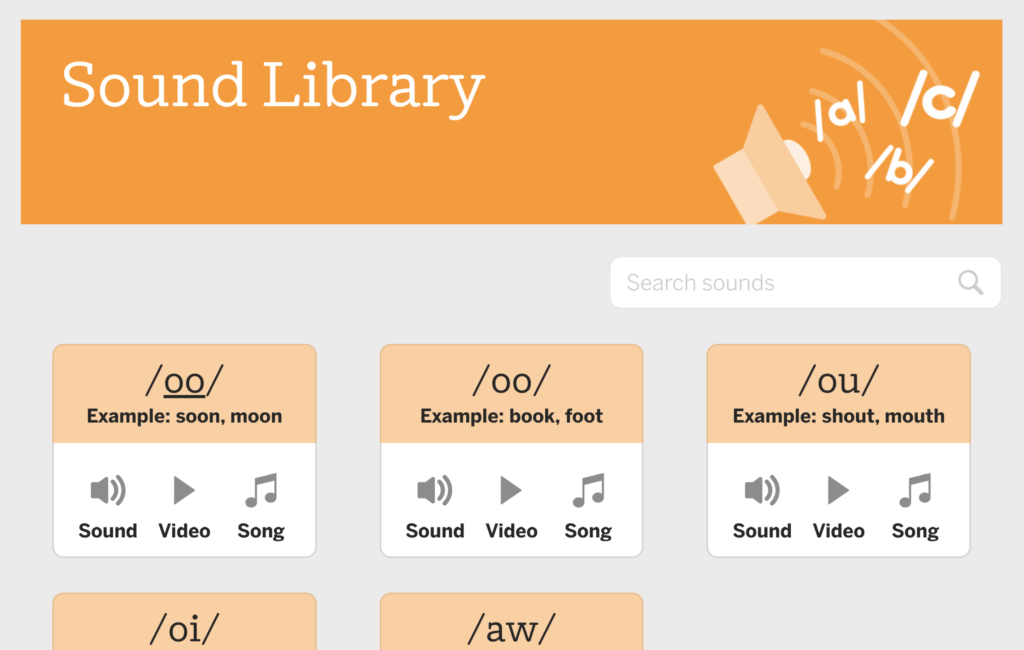
      Stay connected!

      Join our community and get new episodes every other Tuesday!

      We’ll also share new and exciting free resources for your classroom every month.

      What Kanchan Kant says about math

      “Creating an equitable environment in the classroom is most important because once you have that, that’s when you have the relationships, and that’s when all students actually thrive.”

      – Kanchan Kant

      Meet the guest

      As a math and computer science teacher at Newton North High School, Newton, MA, Kanchan has been sharing her love for math with her students for the past four years. Kanchan is instrumental in setting the culture and ethos of the mathematics department at her school in her role as the Assistant Department Head. Kanchan also leads the Math Department Grading Team and has been instrumental in making grading policies which are more equitable and bias resistant. In her new role as a Transformative Leaders of Massachusetts Fellow in collaboration with Springpoint and Barr Foundation, Kanchan looks forward to making equity and joy of learning the foundation of many more classrooms.

      Businesswoman with long dark hair, wearing a dark blazer and blue blouse, poses in a professional portrait against a light background, representing math programs.
      A graphic with the text "Math Teacher Lounge with Bethany Lockhart Johnson and Dan Meyer" on colored overlapping circles.

      About Math Teacher Lounge: The podcast

      Math Teacher Lounge is a biweekly podcast created specifically for K–12 math educators. In each episode co-hosts Bethany Lockhart Johnson (@lockhartedu) and Dan Meyer (@ddmeyer) chat with guests, taking a deep dive into the math and educational topics you care about.

      Join the Math Teacher Lounge Facebook group to continue the conversation, view exclusive content, interact with fellow educators, participate in giveaways, and more!

      Two books titled "The Knowledge Gap" and "The Writing Revolution" by Natalie Wexler, beside a portrait of a woman with short, curly hair and a blue top.

      Leadership and literacy brunch with Natalie Wexler

      with Amplify and Riverside USD 

      Thursday, February 27, 2020

      9:30–11:30 a.m. PST

      Location:
      Benjamin Franklin Elementary School – Library
      19661 Orange Terrace Parkway
      Riverside, CA 92508

      Registration deadline: Space is limited at this free event! RSVP by February 20 to secure your spot. 

      Who should attend: Supervisors, ELA and reading directors, curriculum coordinators, and principals. 

      About the event

      Join us for a free brunch, author talk, and book signing with education writer and author Natalie Wexler on February 27 from 9:30–12 a.m.

      During our time together, Natalie will discuss the latest research around reading, writing, and engagement in elementary school, along with the key findings of her book The Knowledge Gap: The Hidden Cause of America’s Broken Education System—and How to Fix It (2019).

      As our guest, you’ll:

      • Meet and hear from education writer and author Natalie Wexler.
      • Mingle with other district leaders from Riverside USD and surrounding areas.
      • Enjoy a delicious brunch with colleagues.
      • Leave with a signed copy of Natalie Wexler’s book The Knowledge Gap: The Hidden Cause of America’s Broken Education System—and How to Fix It (2019).

      Agenda:

      9:30 a.m.: Arrive, check in, and visit our brunch buffet.
      10–11 a.m.: Hear from Natalie Wexler
      11–11:15 a.m.: Q&A with Natlie Wexler
      11:15–11:30 a.m.: Book signing

      Banquet room set up for an event with round tables, black chairs, floral centerpieces, and place settings, next to large windows and doors overlooking an outdoor patio.
      A woman with short curly blonde hair is smiling next to the cover of the book "The Knowledge Gap" against a background with blue, yellow, and orange curved stripes.

      Natalie Wexler

      Natalie Wexler is an education writer and the author of The Knowledge Gap: The Hidden Cause of America’s Broken Education System—and How to Fix It (2019). She is also the co-author, with Judith C. Hochman, of The Writing Revolution: A Guide to Advancing Thinking Through Writing in All Subjects and Grades (2017) and a senior contributor to Forbes. Her articles and essays have appeared in The New York Times, The Washington Post, The Atlantic, and other publications. Before turning to education, Wexler worked as a freelance writer and essayist on a variety of topics, and as a lawyer and legal historian. She lives in Washington, D.C.

      Submit this form to register for the event!

      Two books titled "The Knowledge Gap" and "The Writing Revolution" by Natalie Wexler, beside a portrait of a woman with short, curly hair and a blue top.

      Leadership and literacy brunch with Natalie Wexler

      with Amplify and Riverside USD 

      Thursday, February 27, 2020

      9:30–11:30 a.m. PST

      Location:
      Benjamin Franklin Elementary School – Library
      19661 Orange Terrace Parkway
      Riverside, CA 92508

      Registration deadline: Space is limited at this free event! RSVP by February 20 to secure your spot. 

      Who should attend: Supervisors, ELA and reading directors, curriculum coordinators, and principals. 

      About the event

      Join us for a free brunch, author talk, and book signing with education writer and author Natalie Wexler on February 27 from 9:30–12 a.m.

      During our time together, Natalie will discuss the latest research around reading, writing, and engagement in elementary school, along with the key findings of her book The Knowledge Gap: The Hidden Cause of America’s Broken Education System—and How to Fix It (2019).

      As our guest, you’ll:

      • Meet and hear from education writer and author Natalie Wexler.
      • Mingle with other district leaders from Riverside USD and surrounding areas.
      • Enjoy a delicious brunch with colleagues.
      • Leave with a signed copy of Natalie Wexler’s book The Knowledge Gap: The Hidden Cause of America’s Broken Education System—and How to Fix It (2019).

      Agenda:

      9:30 a.m.: Arrive, check in, and visit our brunch buffet.
      10–11 a.m.: Hear from Natalie Wexler
      11–11:15 a.m.: Q&A with Natlie Wexler
      11:15–11:30 a.m.: Book signing

      Natalie Wexler

      Natalie Wexler is an education writer and the author of The Knowledge Gap: The Hidden Cause of America’s Broken Education System—and How to Fix It (2019). She is also the co-author, with Judith C. Hochman, of The Writing Revolution: A Guide to Advancing Thinking Through Writing in All Subjects and Grades (2017) and a senior contributor to Forbes. Her articles and essays have appeared in The New York Times, The Washington Post, The Atlantic, and other publications. Before turning to education, Wexler worked as a freelance writer and essayist on a variety of topics, and as a lawyer and legal historian. She lives in Washington, D.C.

      Submit this form to register for the event!

      We are the program for Tennessee’s middle school students and teachers.

      Amplify ELA is a blended curriculum designed specifically for grades 6–8. With Amplify ELA, students learn to tackle any complex text and make observations, grapple with interesting ideas, and find relevance for themselves.

      Built for middle school teachers and students

      We are the program for Tennessee’s teachers, offering rich texts that are a delight to teach, better connections with your students through powerful differentiation and assessment tools, and step-by-step instructional guides that save you time and simplify your day.

      Circular logo of EdReports featuring Read the ELA Report Review Year 2020 with a partial bar graph and book symbol in yellow and blue.

      All-green rating on EdReports

      The results are in! Amplify ELA earned an-all green rating from the independent review group.

      Read the review on EdReports.

      Our approach

      Amplify ELA lessons follow a structure that is grounded in regular routines but flexible enough to allow for a variety of learning experiences. Each grade includes six units centered on literary or informational texts, delivered in several forms of media. Your classroom will also benefit from two to three immersive learning experiences called Quests and a dedicated Story Writing unit. With our new hybrid design, teachers can make choices about when their students use devices without compromising learning and providing 100% standards coverage.

      We empower students to become critical thinkers.

      With text always at the center, students are encouraged to make meaning for themselves. They develop ideas and opinions on real-world, relevant texts, instead of focusing on right or wrong answers.

      A student using a laptop
      A student using a laptop

      We provide opportunities for all students to work “up.”

      Multiple entry points and differentiated supports allow every student, regardless of fluency or ability level, to engage deeply with the same complex texts and rigorous curriculum.

      We assess while you instruct.

      Formative assessment reports provide a continually updated picture of how each student is progressing with key skills and standards. Each learning moment provides a small piece of data, allowing you to keep teaching while building a clear understanding of student performance.

      Amplify K–12 programs - A teacher assisting two students

      Download a free white paper

      Beyond “make it fun”: Four principles of true engagement in middle school ELA

      Download the white paper

      What’s included

      Rigorous core curriculum that empowers teachers and engages middle school students

      Student Edition

      Available digitally and in print, the student materials guide middle schoolers through complex texts and writing by:

      • engaging students with high-quality narrative and informational texts
      • providing videos, audio supports, and digital experiences that capture their attention
      • keeping all of their writing in one place with the personal writing journal

      Teacher Edition

      Available digitally and in print, the Teacher’s Edition contains all of the information teachers need to facilitate classroom instruction, including:

      • detailed lesson plans
      • video teacher tips embedded in the lesson
      • standards alignment and exit tickets
      • real-time differentiation strategies
      • robust reporting

      Interactive Quests

      Quests are fun, week-long explorations where students practice analytical reading, writing, speaking, and listening skills all while building a strong classroom community.

      Digital library for independent reading

      Amplify Library: Our expansive digital library includes more than 650 fiction and nonfiction, classic, and contemporary titles.

      Amplify ELA's digital library for independent reading

      Amplify ELA makes teachers’ lives easier

      Our program ensures that standards are covered, skills are taught, and students are prepared with proper scaffolding and encouragement.

      • Embedded differentiation to support all readers.
      • Informative and streamlined assessment system.
      • Robust reporting that tracks progress.
      • Powerful feedback tools.

      Explore more programs

      Our programs are designed to support and complement one another. Learn more about our related programs.

      Two people sitting at a desk with one using a laptop and another looking on, surrounded by abstract line art and floating quotation marks, demonstrating the gold standard assessment process.

      Our research

      mCLASS Literacy

      mCLASS® DIBELS® 8th Edition is an all-in-one literacy system for universal and dyslexia screening, progress monitoring, and instruction for grades K–8. It’s quick and easy to use, and it provides clear next steps for developing confident readers.

      Research base

      A pdf document titled "dual language of mCLASS assessment" with author details and images of students and teachers on the cover.

      Research: The importance of dual language assessment in early literacy (published in 2022)

      Read more

      Cover page of the "Dynamic Indicators of Basic Early Literacy Skills, 8th Edition" Administration and Scoring Guide 2021 Edition, from the University of Oregon, College of Education.

      Research: Administration and Scoring Guide (published in 2021)

      Read more

      Cover of the "Dynamic Indicators of Basic Early Literacy Skills (DIBELS) 8th Edition Technical Manual" from the University of Oregon College of Education.

      Research: DIBELS 8th Edition Technical Manual (published in 2020)

      Read more

      Cover page of a white paper titled "mCLASS Dyslexia Screening Measures Technical Manual," with a small orange "PDF" label at the top right corner.

      Research: mCLASS Dyslexia Screening Measures Technical Manual (published in 2019)

      Read more

      Cover page of a white paper document titled "mCLASS Dyslexia Screening Measures Research Report," with an orange "PDF" label at the top right corner.

      Report: mCLASS Dyslexia Screening Measures Research (published in 2019)

      Read more

      Cover page of the "Burst Reading Assessment (Now mCLASS Intervention) Technical Manual" PDF document by Amplify.

      Research: Burst Reading Assessment (Now mCLASS Intervention) Technical Manual (published in 2019)

      Read more

      Cover of a PDF titled "Five leadership practices that drive success in K-2 literacy," featuring an adult helping a young child read. Published by Amplify.

      Research: Five leadership practices that drive success in K–2 literacy (published in 2018)

      Read more

      Cover of a PDF document titled "Examining the Efficacy of mCLASS Intervention," featuring an orange and white design. The word "Amplify" appears at the bottom, highlighting mCLASS as a gold standard assessment tool.

      Report: Examining the Efficacy of mCLASS Intervention (published in 2015)

      Read more

      Research briefs

      Cover page of a PDF research brief titled "Slow but steady: K–2 reading readiness climbs just 1–2 percentage points annually," featuring a simple bar graph illustration based on mCLASS gold standard assessment data.

      Research brief: Slow but steady: K–2 reading readiness climbs just 1–2 percentage points annually. (published February 2026)

      Read more

      A PDF cover titled "More students start the school year on track for learning to read, though momentum is slow," dated October 2025, with a stylized bar graph illustration.

      Research brief: More students start the school year on track for learning to read, though momentum is slow. (published October 2025)

      Read more

      Cover of a research brief titled "Reading scores rise overall; gender disparities present a complex picture," dated July 2025, featuring a bar chart graphic and highlighting mCLASS as the gold standard assessment, with a PDF label.

      Research brief: Reading scores rise overall; gender disparities present a complex picture. (published July 2025)

      Read more

      PDF document titled "Early literacy gains offer hope for COVID recovery, though broader literacy challenges persist nationwide," dated February 2025.

      Research brief: Early literacy gains offer hope for COVID recovery, though broader literacy challenges persist nationwide (published February 2025)

      Read more

      Cover of a PDF titled "Summer instructional loss highlights the importance of quality core instruction for the youngest grades," dated October 2024, with abstract line graph design.

      Research brief: Summer instructional loss highlights the importance of quality core instruction for the youngest grades. (published October 2024)

      Read more

      Portada de un documento PDF titulado "Nuevo estudio", que analiza la importancia de la evaluación bilingüe para los estudiantes de habla hispana, con fecha de publicación de junio de 2024. El ícono de PDF se muestra en la esquina superior derecha.

      Research brief: Different outcomes for Spanish-speaking students assessed in English and in Spanish demonstrate the importance of bilingual assessment.
      (published June 2024)

      Read more

      Cover page of a research brief titled "Middle-of-year mCLASS data show early literacy improvements are slowing, and broader U.S. literacy rates remain a concern." Gold standard assessment results, March 2024.

      Research brief: Middle-of-year data show early literacy improvements are slowing, and broader U.S. literacy rates remain a concern. (published March 2024)

      Read more

      Cover of a research brief PDF titled "With end-of-year data from gold standard assessment mCLASS showing continued academic recovery in early literacy, worries remain for third grade students," published July 2023 by Amplify.

      Research brief: With end-of-year data showing continued academic recovery in early literacy, worries remain for third grade students.(published July 2023)

      Read more

      Cover page of a research brief titled "Middle-of-year data show that academic recovery continues in early literacy," featuring a simple bar graph, an orange PDF label, and highlighting mCLASS gold standard assessment.

      Research brief: Middle-of-year data show that academic recovery continues in early literacy, with Black and Hispanic students making the greatest gains. (published February 2023)

      Read more

      A PDF cover page titled "Research Brief" discusses worsening literacy crises in U.S. schools post-COVID-19, featuring a stylized bar graph illustration, an October 2022 date, and highlights insights from mCLASS gold standard assessment data.

      Research brief: Data from the beginning of the school year show that the literacy crisis in America’s schools may be worse than it was before COVID-19; but the greatest part of the crisis existed before the pandemic. (published October 2022)

      Read more 

      Cover of a research brief titled "Amid academic recovery in classrooms nationwide, mCLASS gold standard assessment reveals risks remain for youngest students with least instructional time during critical early years.

      Research brief: Amid academic recovery in classrooms nationwide, risks remain for youngest students with least instructional time during critical early years. (published February 2022)

      Read more

      Cover page of a research brief titled "Students start to recover from COVID instructional loss," dated July 2021, featuring bar graph artwork, a PDF label, and highlighting gold standard assessment with mCLASS.

      Research brief: Students start to recover from COVID instructional loss. (published July 2021)

      Read more

      Cover page of a research brief titled "COVID-19 means more students not learning to read," dated February 2021, with PDF label and Amplify logo. Features a simple bar graph illustration and highlights results from the gold standard assessment, mCLASS.

      Research brief: COVID-19 means more students not learning to read. (published February 2021)

      Read more

      mCLASS Lectura

      Cover of a PDF document titled "Guía de administración y calificación" for mCLASS, the gold standard assessment by Amplify, featuring an orange background.

      Research: mCLASS Lectura Guía de administración y calificación

      Read more

      Stack of documents displaying the cover of the "mCLASS Lectura Technical Manual" in Spanish, labeled as a PDF—a gold standard assessment resource.

      Research: mCLASS Lectura Technical Manual

      Read more

      Cover of the "mCLASS Spelling Español Technical Manual" PDF document, featuring a plain white background with orange and gray text—a guide to mCLASS’s gold standard assessment practices.

      Research: mCLASS Spelling Español Technical Manual

      Read more

      Cover of a PDF titled "The importance of dual language assessment in early literacy," featuring author names, photos of young children in classroom settings, and referencing mCLASS as a gold standard assessment tool.

      Research: The importance of dual language assessment in early literacy

      Read more

      District success stories

      Ithaca City School District, New York: mCLASS DIBELS 8th Edition and connected intervention systems drive record-breaking literacy gains

      Read more

      Ready to learn more?

      Fill out this form, and we’ll be in touch shortly.

      An illustration of a spilled liquid with a submerged smartphone, depicting a phone accident with liquid involved, used to amplify CKLA research visibility.

      Explore more of our research.

      Learn more about the research behind our programs.

      Our research

      Boost Reading & Boost Lectura

      Leveraging compelling storytelling and the latest research, Boost Reading supplemental instruction enables students to make better-than-expected progress, reduces students’ risk for reading difficulty, and helps close achievement gaps for multilingual learners. Boost Reading meets criteria for Tier II-Moderate Evidence as an education intervention under ESSA.

      Efficacy

      Overview: Accelerating literacy growth for SY 2021-22 (published in 2023)

      Read more

      Report: Closing the literacy gap for students in K–5 (published in 2023)

      Read more

      Overview: Accelerating literacy growth for SY 2020-21 (published in 2023)

      Read more

      Report: Impact of Boost Reading on K–5 Student Growth (published in 2021)

      Read more

      Report: Impact of Boost Reading on K–2 Student Growth (published in 2019)

      Read more

      Report: Boost Reading pilot efficacy research report (published in 2019)

      Read more

      Overview: Boost Reading pilot efficacy overview (published in 2019)

      Read more

      Report: Boost Reading 6–8 efficacy research report (published in 2019)

      Read more

      Research base

      Boost Reading: The missing link in reading comprehension (published 2023)

      Read more

      Boost Reading: Foundational skills instruction on Boost Reading (2023)

      Read more

      Boost Lectura

      Overview: Advancing Spanish literacy for fall 2023 (published in 2024)

      Read more

      PDF document titled "2023–24 Efficacy Study" by Boost Lectura, showing study results, key findings, and a bar graph comparing student performance by grade level in foundational skills and among multilingual learners.

      New! Overview: Accelerating Spanish literacy for SY 2023–24 (published in 2026)

      Read more

      Ready to learn more?

      Fill out this form, and we’ll be in touch shortly.

      Explore more of our research.

      Learn more about the research behind our programs.

      Amplify Science releases substantial, free enhancements based on teacher feedback

      Brooklyn, NY (September 26, 2019) Amplify, a publisher of next-generation curriculum and assessment programs, announced substantial new enhancements to Amplify Science, its core science program authored by the University of California, Berkeley’s Lawrence Hall of Science. Teachers can now prepare and present lessons with Classroom Slides for grades K–5; review and grade student work with an intuitive Classwork tool in grades 6–8; and use new digital Spanish-language resources, accessibility supports, and additional hands-on activities. In addition, Amplify rolled out Amplify Science Transitional Kindergarten, a new program designed to introduce young students to real-world phenomena and jumpstart a lifelong love of science. 

      Based on feedback from teachers, which the Amplify team gathers on a regular basis through a variety of channels, the new elements available as part of Amplify Science this 2019-2020 school year include:

      • Classroom Slides, fully editable time-saving supports for teachers, with lesson visuals, activity instructions, animations, investigation setup videos, technology support and more.
      • Classwork, a feedback and grading tool that gives teachers easy access to unreviewed work, student portfolios and groups based on student performance.
      • New digital Spanish-language supports (available as purchased add-on licenses) that enable educators to toggle between English versions online. Educators can also select which resources students can see. 
      • New accessibility supports, including screen-readable content, keyboard navigation improvements and read-aloud support for assessments.
      • Hands-on Flextensions, new additional investigations that give teachers the flexibility to incorporate more hands-on focused activities into select units, if time permits.

      The company also debuted Amplify Science Transitional Kindergarten, a new program from UC Berkeley’s Lawrence Hall of Science that is developmentally and pedagogically appropriate and designed to foster a lifelong love of science in young students.

      Looking ahead to Back to School 2020, Amplify is already hard at work on Classroom Slides for grades 6–8 and more enhancements to the digital platform that make planning and delivering instruction even easier.

      “One of the best parts about working with K–8 educators is listening to how they actually use our program, taking their feedback seriously, and doing something with it,” said Steven Zavari, senior vice president and general manager of science curriculum at Amplify. “We are already hearing great things about the Classroom Slides and other new features available this school year, and we can’t wait to share more details with educators soon about what’s coming next year.”

      Amplify Science is a breakthrough K–8 curriculum designed from the ground up for the Next Generation Science Standards by the curriculum experts at UC Berkeley’s Lawrence Hall of Science. In each Amplify Science unit, students inhabit the role of a scientist or engineer to investigate a real-world problem, using relevant, 21st-century contexts to investigate scientific phenomena. Educators who adopt Amplify Science receive a comprehensive curriculum that includes literacy-rich activities, hands-on investigations, digital simulations, embedded assessments and robust teacher supports. Amplify Science for grades 6–8 was the only program to receive all-green ratings on EdReports.org in 2019. The K-5 program is currently in review by EdReports.

      Currently in use by more than two million students, Amplify Science has been adopted by the New York City Department of Education, Chicago Public Schools, Denver Public Schools, San Francisco Unified School District, Seattle Public Schools, the KIPP charter network, and hundreds of other districts across the country.

      About Amplify

      A pioneer in K–12 education since 2000, Amplify is leading the way in next-generation curriculum and assessment. Our captivating core and supplemental programs in ELA, math, and science engage all students in rigorous learning and inspire them to think deeply, creatively, and for themselves. Our formative assessment products turn data into practical instructional support to help students at every skill level build a strong foundation in early reading and math. Our programs provide teachers with powerful tools that help them understand and respond to the needs of all their students. Today, Amplify serves five million students in all 50 states. 

      For more information, visit Amplify.com.

      Contact: media@amplify.com

      Pandemic is putting more kids at risk of not learning to read

      (Brooklyn, NY – March 1, 2021) Amplify, a publisher of next-generation curriculum and assessment programs, released a research brief today on middle-of-school-year K-5 reading data, revealing learning losses due to the COVID-19 pandemic, especially in Grades K and 1 and among Black and Hispanic students.

      While more students in all elementary grades and demographic groups have fallen behind, the COVID-related reading losses are concentrated in kindergarten and first grade and disproportionately among Black and Hispanic students in those grades. Compared to last year, there are now twice as many Black kindergarten students at great risk for not learning to read.

      The opportunities to learn that students have lost due to COVID may have life-long consequences if they are not provided with additional instructional support. Several research studies show that absent such additional support, there is nearly a 90 percent chance that a poor reader in first grade will remain a poor reader.

      “Given this data, we encourage districts and schools to think about a comprehensive and coherent two-year plan to overcome these gaps,” said Larry Berger, Amplify chief executive officer. “If we take an all-hands-on-deck approach, use research-based practices, and provide plenty of support for educators, we can catch these students up and help them grow into confident, joyful readers.”

      “Students will need a double dose of strong core foundational skills instruction — current grade-level instruction as well as missing instruction — and some students will need additional intervention,” said Susan Lambert, chief academic officer, elementary humanities at Amplify. “Addressing lost instruction will require a deep commitment and will likely involve changes to scheduling and staffing. These efforts will support students as they catch up and grow into the strongest readers they can be.”

      The analysis compared mCLASS with DIBELS 8th Edition benchmark data from the middle of the school year 2019–20 and 2020–21 school years. Approximately 400,000 students in a matched set of over 1,400 schools in 41 states are represented.

      The number of students assessed in the 2020–21 cohort is similar to the number in the 2019–20 cohort; as a percent of the prior cohort, the current year’s numbers are approximately 90 percent, which implies an attrition rate of 10 percent, assuming that enrollment for both years was identical. That said, the differences could reflect changes in enrollment, attendance issues at time of assessment, and changes in assessment practices (some students, excluded here, have received only partial assessments).

      The data was collected using the mCLASS platform, which automates the data collection of DIBELS (Dynamic Indicators of Basic Early Literacy Skills). DIBELS is a widely used series of short tests that assess K-8 literacy developed by the University of Oregon. DIBELS is an observational assessment, collected by teachers interacting directly with students one-on-one, either live or over video. DIBELS is typically administered three times a year (beginning, middle, and end of year), and is used to identify reading difficulty, monitor progress, and inform instruction, especially for struggling readers.

      About Amplify

      A pioneer in K–12 education since 2000, Amplify is leading the way in next-generation curriculum and assessment. Our captivating core and supplemental programs in ELA, math, and science engage all students in rigorous learning and inspire them to think deeply, creatively, and for themselves. Our formative assessment products turn data into practical instructional support to help all students build a strong foundation in early reading and math. All of our programs provide teachers with powerful tools that help them understand and respond to the needs of every student. Today, Amplify serves more than seven million students in all 50 states.

      Latest school assessment data show continued academic recovery in early literacy, with Black and Hispanic students making the greatest gains

      BROOKLYN, NY (February 27, 2023) — Today, Amplify, a publisher of next-generation curriculum and assessment programs, published a research brief on national middle-of-school-year (MOY) reading data. The data show that students across the country continue to make meaningful progress in early literacy. These successes are especially evident in the lower elementary grades. Further, the measurable disparities in achievement between Black and Hispanic students and their white and Asian peers have narrowed since the prior year. Despite this progress, in every elementary grade, the students at the greatest risk for not learning to read are performing worse than they were in the middle of the 2019–2020 school year. In particular, third graders, the cohort of students with the most impacted instructional time from the pandemic, experienced no improvement from the prior school year, signaling the importance of uninterrupted instructional time that is based in the Science of Reading.

      “Literacy is a fundamental human right, and evidence-based literacy instruction is an imperative for lifelong success,” says Susan Lambert, chief academic officer of elementary humanities at Amplify. “Our nation’s students have experienced unprecedented learning disruptions over the last three years. The way forward is clear — evidence-based practices, like the Science of Reading, must guide our nation’s literacy recovery to help all of our children become confident readers.”

      Despite recent progress, literacy rates in the United States remain a crisis today. There are still too many students at risk of failing to read proficiently by the end of the third grade, an important indicator of future academic success. Educators serving students in grades K–3 need continued support to help students that are most at risk. Schools and districts can invest in a reliable universal screener, high-quality core curriculum based in the Science of Reading, evidence-based interventions and ongoing professional development to ensure educators have the tools they need to support students.

      The research brief compares mCLASS® with DIBELS® (Dynamic Indicators of Basic Early Literacy Skills) 8th Edition benchmark data from the 2019–20, 2020–21, 2021–22 and 2022–23 school years. From more than 2 million students assessed with mCLASS, approximately 300,000 students in a matched set of 1,400 schools in 43 states are represented. The schools in the source data are slightly more likely to be in large urban metropolitan areas than the nation overall.

      The data was collected using the mCLASS platform, which automates the data collection of DIBELS®. DIBELS is a widely-used series of short tests developed by the University of Oregon that assess K–8 literacy. It is an observational assessment collected by teachers interacting with students one-on-one, either live or over video. DIBELS is typically administered three times a year (beginning, middle and end of year), and it is used to identify reading difficulty, monitor progress and inform instruction, especially for struggling readers.

      About Amplify
      A pioneer in K–12 education since 2000, Amplify is leading the way in next-generation curriculum and assessment. Our core and supplemental programs in ELA, math and science engage all students in rigorous learning and inspire them to think deeply, creatively, and for themselves. Our formative assessment products help teachers identify the targeted instruction students need to build a strong foundation in early reading and math. All of our programs and services provide educators with powerful tools that help them understand and respond to the needs of every student. Today, Amplify serves more than 15 million students in all 50 states and on six continents. For more information, visit amplify.com.

      Media Contact
      Kristine Frech
      media@amplify.com

      Season 1, Episode 9

      Advancing together as educators, starring LaTonya Goffney, Ed.D.

      On this episode of Beyond My Years, Ana Torres picks up every nugget of wisdom she can from LaTonya M. Goffney, Ed.D., superintendent of schools for the Aldine Independent School District in Texas. LaTonya shares her journey through many different roles in education before she ended up in an educational leadership role. She stresses the importance of building a teaching community, including finding teacher mentorship, having people advocating for you, and valuing the work you do. LaTonya notes that if it weren’t for those that believed in her and encouraged her to strive for more, she never would have ventured to apply for the opportunities she did. She goes on to share one of her most valuable lessons: As you grow in education, you need to make sure you’re looking behind you and pulling other people up. She concludes with tips for connecting with other educators, learning from each other constantly, and continuing to grow. Taking all those lessons back to the classroom, Eric and Ana discuss pursuing professional growth opportunities, embracing your power as an educator, and focusing on excellence where you are.

      Meet Our Guest(s):

      Una persona con cabello largo y oscuro, vestida con una chaqueta gris y una camisa blanca, sonríe para un retrato.

      LaTonya M. Goffney, Ed.D

      Dr. Goffney is the superintendent of schools for Aldine Independent School District. She has significantly improved student achievement by focusing on literacy, early childhood education, and community collaboration. Her leadership and commitment to education have earned her numerous accolades, including the TASB Superintendent of the Year in 2017 and being chosen as a finalist for the 2020 AASA Superintendent Award. She actively participates in various education organizations, including the Texas School Alliance, the Texas Association of Black School Educators, and Chiefs for Change. Dr. Goffney currently serves as president of the National Alliance of Black School Educators. She holds a bachelor’s degree in history, a master’s in educational administration, and a doctorate in educational leadership from Sam Houston State University.

      Meet our host, Ana Torres.

      Ana has been an educator for 30 years, working in both the K–8 and higher education sectors. She served as an administrator and instructor at various public and private colleges and universities and as a bilingual and dual language teacher, dual language math and reading interventionist, dual language instructional coach, assistant principal, and principal in K–8 schools. Ana is currently the bilingual and multilingual specialist on Amplify’s product specialist team, and delivers literacy and biliteracy presentations across the nation. Ana’s passion and advocacy for biliteracy and multiculturalism has led her to educate leaders, teachers, and parents about the positive impact of bilingualism and biliteracy in our world.

      A woman with long dark hair and hoop earrings smiles at the camera while wearing a black blazer, standing outdoors—ready to discuss classroom challenges or share insights on her teacher podcast.
      A man with short, closely-cropped hair and a trimmed beard smiles at the camera against a light gray background, ready to inspire diverse learners in the math classroom.

      Meet our Classroom Insider, Eric Cross.

      Eric Cross is a middle school science teacher who hopes to someday be a lifelong educator, like the guests on Beyond My Years! In each episode, Eric connects with host Ana Torres to discuss her guests’ best insights gleaned from their long and rewarding careers in the classroom. Then, Eric talks about bringing some of their wisdom into his current classroom and busy life.

      Quotes

      “When you have a passion for people and you have a purpose for making a difference, and if you’re open to learning, anything is possible. And that’s what my life has demonstrated in education.”

      —LaTonya Goffney, Ed.D.

      “You’ve got to have a mentor or sponsor who tells you that you can. There’s no doubt in my mind, if I had not had mentors and people who believed in me, that I would not have attempted. I wouldn’t have applied. I wouldn’t have done it.”

      —LaTonya Goffney, Ed.D.

      “The best way to get the next job is to do a good job where you are.”

      —LaTonya Goffney, Ed.D.

      “All of us in education, we are responsible for lifting as we rise. So as you rise in a number of years, or you rise and are able to do different positions, you have to reach back and make sure that you’re pulling people behind you.”

      —LaTonya Goffney, Ed.D.

      “Public education is the profession that makes all other professions possible.”

      —LaTonya Goffney, Ed.D.

      “We can’t just be siloed. We can’t just go in our classrooms, close the door, and not be helpers one to another.”

      —LaTonya Goffney, Ed.D.

      Season 1, Episode 2

      Teaching for life, starring Eric Jones

      Today on Beyond My Years, host Ana Torres becomes a student of Eric Jones, an educator who came out of retirement at 80 years of age to help with a national teacher shortage—thus becoming the oldest paid teacher in Britain. Eric shares his insights with Ana about building a collaborative classroom and what it means to teach children, not content. He also reflects on how the trajectory of his life changed when one man recognized and encouraged his desire to be a teacher. Eric delves into how attending school in the ’50s shaped his teaching style, his experience of retiring before the smartphone era only to return when every student has one, and how his anti-bullying efforts contributed to the passing of a national law. He also discusses why his love for teaching has lasted a lifetime. Taking all those lessons back to the classroom, Eric Cross and Ana then discuss how they would apply the tenets of respect and collaboration in their own classrooms.

      A man with short brown curly hair and glasses, wearing a pink collared shirt, is smiling in front of a patterned background with books, stars, and apple icons—perfect for a teaching podcast host.

      Meet Our Guest(s):

      A middle-aged man with short brown hair, glasses, and a pink collared shirt sits in front of a wooden background, looking at the camera as he hosts his teaching podcast.

      Eric Jones

      Eric Jones, born in 1941 during World War II, was determined to become a teacher. A chance encounter with a teaching college lecturer inspired him to follow his passion, leading him to qualify as a teacher in 1969 and earning a Bachelor of Education (Hons) in 1977. Eric dedicated over 30 years to teaching, holding positions such as head of school, head of department, and deputy head at a large inner-city school in London. He briefly retired in 1993 but continued to volunteer with teenagers in drama activities and tutoring for acting exams. In 2020, Eric wrote his first novel, Finding a Sovereign.

      During an impending teaching shortage in 2022, Eric volunteered when the government asked for retired teachers to help keep schools running. Since then, he’s been teaching 1–2 days per week in local high schools. Over the years, Eric has contributed significantly to anti-bullying initiatives, co-authoring guides and speaking at conferences and media outlets. He’s won numerous awards and nominations, including a nomination by the Wychavon District Council for an arts recognition award, as well as a nomination for Best Musical in the West Midlands for a theater production he directed.
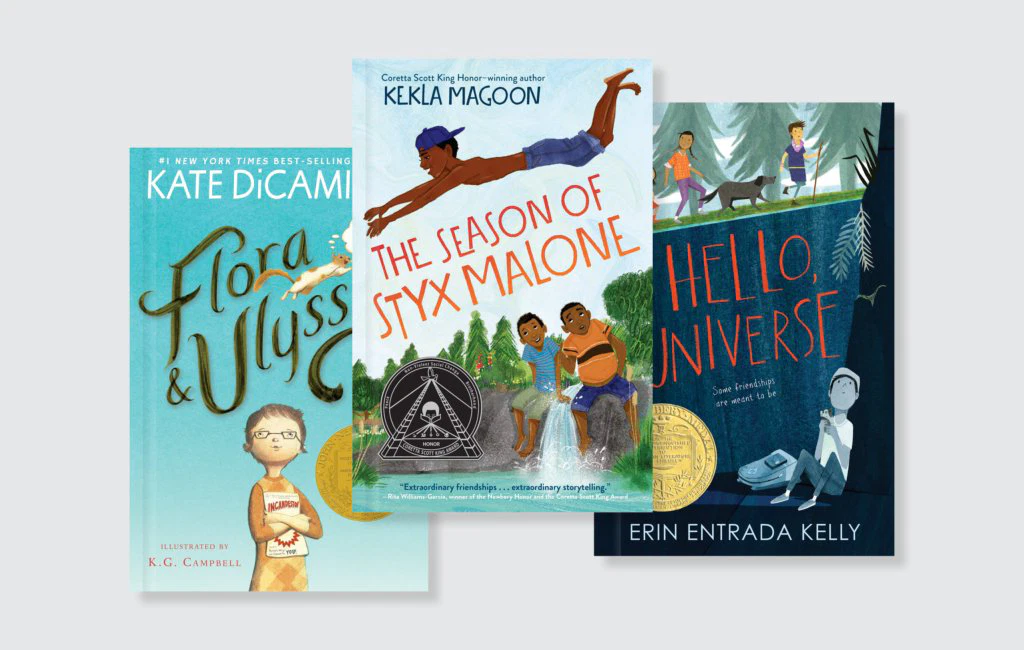
      Meet our host, Ana Torres.

      Ana has been an educator for 30 years, working in both the K–8 and higher education sectors. She served as an administrator and instructor at various public and private colleges and universities and as a bilingual and dual language teacher, dual language math and reading interventionist, dual language instructional coach, assistant principal, and principal in K–8 schools. Ana is currently the Senior Biliteracy and Multilingual Product Specialist on Amplify’s Product Specialist team, and delivers literacy and biliteracy presentations across the nation. Ana’s passion and advocacy for biliteracy and multiculturalism has led her to educate leaders, teachers, and parents about the positive impact of bilingualism and biliteracy in our world.

      A woman with long dark hair and hoop earrings smiles at the camera while wearing a black blazer, standing outdoors—ready to discuss classroom challenges or share insights on her teacher podcast.
      A man with short, closely-cropped hair and a trimmed beard smiles at the camera against a light gray background, ready to inspire diverse learners in the math classroom.

      Meet our Classroom Insider, Eric Cross.

      Eric Cross is a middle school science teacher who hopes to someday be a lifelong educator, like the guests on Beyond My Years! In each episode, Eric connects with host Ana Torres to discuss her guests’ best insights gleaned from their long and rewarding careers in the classroom. Then, Eric talks about bringing some of their wisdom into his current classroom and busy life.

      Quotes

      “He said to me, ‘You want to be a teacher, don’t you?’…I said, ‘Well, yeah, I’d love to, but I didn’t get enough qualifications when I left school. So I don’t think I’d ever really be qualified.’ And he said the magic words, ‘What are you waiting for?’”

      —Eric Jones

      “What I would say to young teachers is this: ‘Don’t teach science. Don’t teach maths. Don’t teach French. Don’t teach geography. Teach children.’”

      —Eric Jones

      “You’ve got to love teaching; you’ve got to love the kids; and you’ve really got to want to do it. Almost, dare I say, in your blood.”

      —Eric Jones

      “At the end of my 10 or 12 years of touring around and nattering on about bullying and trying to sort of quantify it in some way so that we could teach specifics…there is now a law in Britain that says every school must have an anti-bullying policy.”

      —Eric Jones

      “I like teaching kids things they didn’t know before and now they’re excited about. I love the idea that they will then move on into realms of industry and economics success that I would never dream of.”

      —Eric Jones

      “I’m in the education business. I’m not in the vengeance business. And if a boy doesn’t know how to use a knife and fork, I’ll teach him. If an infant doesn’t know how to tie shoelaces, I’ll teach him. If a child doesn’t know how to behave in society, I’ll teach him. Pleasantly, and productively, and creatively, and positively, I will teach him if that’s what he needs to learn.”

      —Eric Jones

      Summer ’24 Interlude, Episode 3

      Summer ’24 Interlude: Training teachers well from the start, with Lisa Lenhart and Rebecca Tolson

      In this Science of Reading: The Podcast episode, Susan Lambert speaks with Rebecca Tolson and Lisa Lenhart about their roles at the University of Akron’s newly established Center for Structured Literacy. They discuss their personal journeys in literacy education, the large grant received from the Ohio Department of Higher Education, and how the Center aims to prepare pre-service teachers using the Science of Reading and structured literacy. Rebecca and Lisa elaborate on the faculty’s training program, curriculum updates, and potential community impact. The conversation also touches on the emotional and professional challenges in shifting to evidence-based practices, the history of literacy legislation in Ohio, and the Center’s long-term goals—including IDA accreditation and expanding their impact on both pre-service and in-service educators.

      Meet Our Guest(s):

      Retrato de una persona sonriente con cabello rubio corto y anteojos, que viste una chaqueta marrón. La imagen está enmarcada en un círculo blanco con un ícono de libro azul y líneas naranjas en la esquina superior izquierda, lo que refleja su experiencia en el podcast "Science of Reading".

      Rebecca Tolson, Ph.D., CALT-QI

      Rebecca Tolson is the director of the Center for Structured Literacy at the University of Akron and a national literacy/dyslexia consultant and speaker. She has a doctorate in Curriculum and Instruction from the University of Akron and is a certified dyslexia therapist and qualified instructor. Rebecca is an experienced educator with over three decades of teaching experience in the classroom and private tutoring using a structured literacy approach to teach students with learning differences. Rebecca served as vice president of Literacy Initiatives at the Neuhaus Education Center, a national non-profit organization specializing in teacher professional development. She co-authored three Ohio laws related to dyslexia and was appointed to the Ohio Dyslexia Committee (ODC) in 2020. Rebecca serves as the current chair of the ODC, overseeing the implementation phase of the Ohio’s Dyslexia Guidebook. Additionally, she is an adjunct professor for Walsh University in the Master of Dyslexia Therapy (MDT) program.

      Una mujer con cabello corto y castaño sonríe, enmarcada por un círculo con un ícono de lápiz naranja en la esquina inferior derecha, sugiriendo ideas valiosas sobre lo que los docentes deben saber sobre la ciencia de la lectura.

      Lisa Lenhart, Ph.D.

      Lisa Lenhart holds a Ph.D. in Curriculum and Instruction from Kent State University. She is a distinguished professor and director of the LeBron James Family Foundation School of Education. A recipient of the University of Akron’s Researcher of the Year Award, her research interests include early language and literacy development and teacher professional development. She has published extensively in journals and has co-authored books such as Oral Language and Early Literacy in Preschool; Reading and Learning to Read; and Early Literacy Materials Selector. She has been the recipient and principal investigator (PI) of many federal and state grants, each designed to improve young children’s language and early reading skills through enhanced professional development for teachers.

      Meet our host, Susan Lambert

      Susan Lambert is the Chief Academic Officer of Elementary Humanities at Amplify, and the host of Science of Reading: The Podcast. Her career has been focused on creating high-quality learning environments using evidence-based practices. Lambert is a mom of four, a grandma of four, a world traveler, and a collector of stories.

      As the host of Science of Reading: The Podcast, Lambert explores the increasing body of scientific research around how reading is best taught. As a former classroom teacher, administrator, and curriculum developer, Lambert is dedicated to turning theory into best practices that educators can put right to use in the classroom, and to showcasing national models of reading instruction excellence.

      Retrato de una mujer caucásica sonriente con cabello rubio corto, involucrada en un podcast sobre la ciencia de la lectura, con gafas, lápiz labial rojo y un collar de perlas.

      Quotes

      “We're also making sure that our students are prepared in structured literacy, not just to one program, so they're able to understand the structure and adopt it to any program any district is using.”

      —Lisa Lenhart

      “The Center for Structured Literacy is about empowering teachers at the onset—bachelor's degree. If districts have to retrain them after they graduate, then we're not doing something right.”

      —Rebecca Tolson

      “We all have the same goal. We all want children to be good readers. We do. And it has never not been anyone's goal. We have to respect that about each other.”

      —Lisa Lenhart

      End-of-year research brief: Literacy gains among K–3 students show some, but not enough, progress

      BROOKLYN, NY (July 20, 2023) — Today, Amplify, a publisher of next-generation curriculum and assessment programs, shared a research brief on national end-of-school-year (EOY) reading data for K–3 students. The data reveal that while schools across the country have made progress in reading scores among earlier elementary grades (K–2), gains among third graders remains comparatively slow.

      According to newly released EOY data from the 2022–23 school year, students in grades K–2 demonstrated progress compared to the 2021–22 school years, with the greatest gains among Black and Hispanic students. At the same time, third graders exhibited the least improvement from two years ago and no improvement from the prior year’s third grade cohort. The slower improvements in grade 3 suggest a persistent impact on the cohort of students most affected by lost instructional time during the pandemic.

      Learning to read by the end of third grade is an important indicator of future academic success. Susan Lambert, chief academic officer of elementary humanities at Amplify, says the data demonstrates how literacy rates in the United States remain a crisis today, with too many students urgently needing support. “We need to help this generation of young students get on track in reading,” Lambert says. “The struggles of students who fall behind will not go away on their own. The older these students become, the longer it will take them to catch up.”

      Despite some progress, America still faces an early literacy crisis. To best support educators, Amplify recommends that schools and districts invest in reliable universal screeners, high-quality core curriculum aligned with the Science of Reading, evidence-based interventions, and ongoing professional development.

      The report compares mCLASS® with DIBELS® 8th Edition benchmark data from the 2019–20, 2020–21, 2021–22, and 2022–23 school years. Approximately 300,000 students from a matched set of 1,400 schools across 43 states are represented from the 2 million students nationwide assessed with mCLASS. The schools in the source data are slightly more likely to be in large urban metropolitan areas than the nation overall.

      The data was collected using the mCLASS platform, which automates the data collection of Dynamic Indicators of Basic Early Literacy Skills (DIBELS). DIBELS is a widely-used series of short tests developed by the University of Oregon that assess K–8 literacy. It is an observational assessment collected by teachers interacting with students one-on-one, either live or over video. DIBELS is typically administered three times a year (beginning, middle, and end of year) and is used to identify reading difficulty, monitor progress, and inform instruction, especially for struggling readers.

      About Amplify
      A pioneer in K–12 education since 2000, Amplify is leading the way in next-generation curriculum and assessment. Our captivating core and supplemental programs in literacy, math, and science engage all students in rigorous learning and inspire them to think deeply, creatively, and for themselves. Our formative assessment products turn data into practical instructional support to help all students build a strong foundation in early reading and math. All of our programs provide teachers with powerful tools that help them understand and respond to the needs of every student. Today, Amplify reaches more than 10 million students in all 50 states. To learn more, visit amplify.com.


      Media Contact

      Kristine Frech
      media@amplify.com

      While K–3 students are beginning to recover from COVID instructional loss, more students are still at risk of not learning to read than pre-pandemic

      (Brooklyn, NY – August 3, 2021) Amplify, a publisher of next-generation curriculum and assessment programs, released a research brief on end-of-year K–3 reading data, revealing many students have begun to recover from lost literacy instruction due to COVID-19. However, there are still more students at risk of not learning to read than pre-pandemic, especially students who are Black or Hispanic.

      As many students returned to the classroom in the spring, schools made progress in reducing the number of students who were at the greatest risk of not learning how to read. While these gains are important for overcoming instructional loss, the percentage of students at risk of not reading across grades K–3 is still higher than the 2019–20 school year due to pandemic disruptions. Moreover, these remaining instructional losses have widened the national gaps in early reading skills between Black and Hispanic students and their white counterparts.

      “To catch up to the learning levels of pre-pandemic cohorts of students, we must accelerate learning. For that, students require instruction that targets their needs more than ever. Teachers should be empowered by quality assessments to understand the specific areas in which students could benefit from support,” said Gina Biancarosa, professor in the Department of Special Education and Clinical Sciences in the College of Education at the University of Oregon. “Once their unique strengths and needs have been identified, we can spend time supporting students in targeted while continuing to deliver grade-level core instruction. Working in tandem, targeted and grade-level instruction can reach individual students equitably and help to make up for the lost opportunities to learn of the last year plus.”
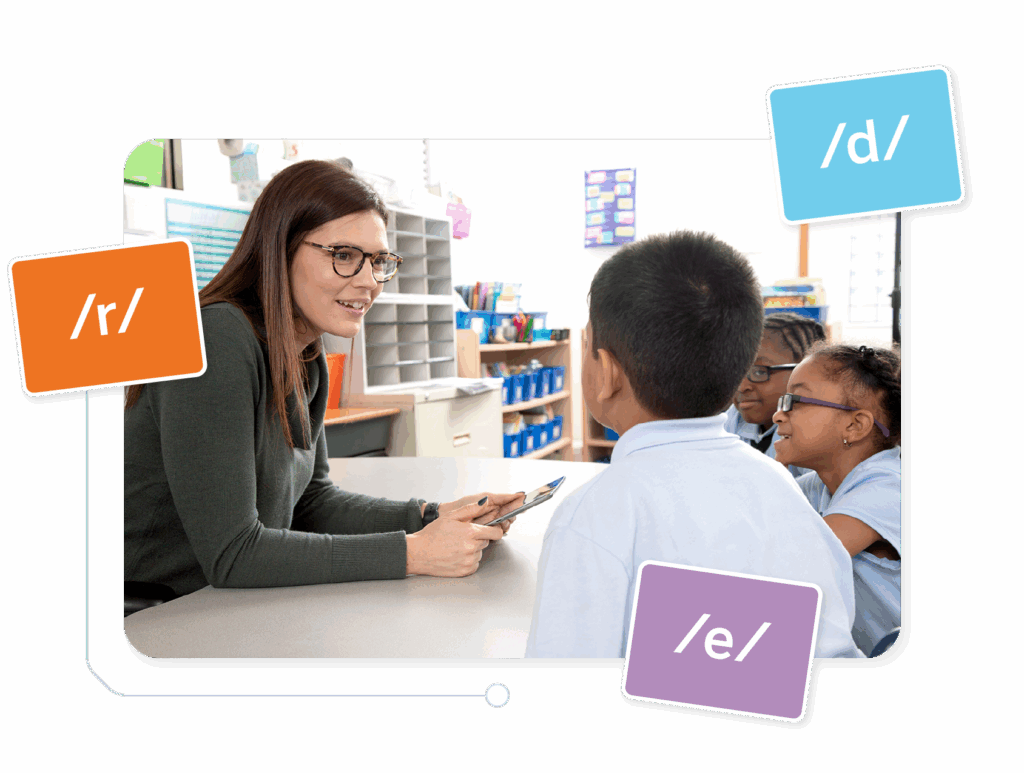
      “The age group in which our research was conducted is critical. We know that the older the students are, the longer it is going to take to catch them up,” said Susan Lambert, chief academic officer of elementary humanities at Amplify. “Based on these findings, schools and districts should anticipate recovery taking one to two years. Along with grade-level, core instruction, monitoring is essential to track individual student progress and provide the personalized support that will help all students become confident readers.”

      The report highlights the effects of COVID-19 disruptions by comparing Amplify mCLASS® with DIBELS® 8th Edition benchmark data from the 2019–20 and 2020–21 school years. Approximately 400,000 students in a matched set of over 1,400 schools in 41 states are represented. The schools in the source data are more likely to be in large urban metropolitan areas.

      The data was collected using the mCLASS platform, which automates the data collection of DIBELS (Dynamic Indicators of Basic Early Literacy Skills). DIBELS is a widely used series of short tests that assess K-8 literacy developed by the University of Oregon. DIBELS is an observational assessment, collected by teachers interacting directly with students one-on-one, either live or over video. DIBELS is typically administered three times a year (beginning, middle, and end of year), and is used to identify reading difficulty, monitor progress, and inform instruction, especially for struggling readers.

      About Amplify

      A pioneer in K–12 education since 2000, Amplify is leading the way in next-generation curriculum and assessment. Our captivating core and supplemental programs in ELA, math, and science engage all students in rigorous learning and inspire them to think deeply, creatively, and for themselves. Our formative assessment products turn data into practical instructional support to help all students build a strong foundation in early reading and math. All of our programs provide teachers with powerful tools that help them understand and respond to the needs of every student. Today, Amplify serves more than seven million students in all 50 states.

      Contact:
      Molly McCue
      media@amplify.com

      Amplify raises $215 million in a growth funding round from Learn Capital, A-Street Ventures, and current investor Emerson Collective

      (Brooklyn, NY – October 26, 2021) Amplify, a publisher of next-generation curriculum and assessment programs, announced today it has raised $215 million in a growth funding round with Learn Capital and A-Street Ventures, joining current investor Emerson Collective in this round. The funding will accelerate Amplify’s remarkable growth in providing students and teachers with high-quality, digital-forward instructional programs and helping districts address unfinished learning from the pandemic. Rob Hutter from Learn Capital and Marc Sternberg from A-Street Ventures have joined the company’s board, currently made up of Emerson Collective Managing Director and XQ Institute CEO Russlynn Ali, Amplify CEO Larry Berger, Monarch Global Strategies President and CEO Michael Camuñez, Emerson Collective Managing Director Brad Powell, and former Secretary of Education Margaret Spellings.

      Amplify currently reaches more than 10 million students in 4,000 districts across all 50 states, with a growing international presence. All three of Amplify’s existing core programs have garnered top ratings on third-party curriculum evaluation site EdReports.org, resulting in strong demand across the country, including in California, where Amplify Science was the lead publisher and won approximately 35 percent of the market in the most recent adoption. Digital supplemental program Amplify Reading also continues to gain traction, as does Amplify’s gold-standard early reading assessment, mCLASS®, which was recently selected as the K–3 formative and diagnostic assessment for North Carolina’s Read to Achieve program. By meeting the demand for research-based, technology-enabled programs, Amplify’s bookings have grown by 50 percent year-over-year for the last four years (2017-2020).

      “Our educators and our students have been hit hard by the events of the last two years, which have only exacerbated existing gaps in reading and math skills. Amplify is working to provide the best resources possible to schools and districts while they work to recover and support all students in achieving at high levels,” said board member and former secretary of education Margaret Spellings. “We are deeply grateful for our new partners, their K–12 expertise, and their ongoing commitment to investing in the high-quality, digital-forward learning our students need now and in the future.”

      Amplify plans to use the funds to make strategic acquisitions in best-of-breed education companies and to accelerate product development across its portfolio, with a focus on its digital supplemental programs.

      “Amplify has experienced remarkable growth for six years in a row, is profitable, and is earning the trust of teachers and students. This moment is urgent for accelerating our ability to serve the needs of schools and districts. The magnitude of learning loss and the range of hybrid models for delivering instruction call for the kinds of products that Amplify builds,” said Larry Berger, chief executive officer of Amplify. “As impact-oriented investors, Emerson, Learn Capital, and A-Street Ventures raised a significant round in order to help us address these urgent needs by being a rapid reaction partner for districts across the country.”

      Learn Capital, based in Silicon Valley, is one of the world’s leading venture capital funds with a dedicated focus on education technology and companies that leverage technology for better and smarter learning worldwide.

      “We focus on finding the most extraordinary teams working in education, and Amplify is a natural fit,” said Rob Hutter, head of Learn Capital. “Amplify stands at the center of a profound shift in K–12 curriculum delivery that pairs an acceleration of digital learning with an unprecedented emphasis on quality in core instructional materials design. Amplify is uniquely positioned to benefit from both of these trends, and we’re thrilled to have this opportunity to participate in the company’s journey. ”

      A-Street Ventures is a privately sponsored investment fund with a strategic focus on seeding and scaling innovative K–12 student learning and achievement solutions for students, families, and schools with a current focus on digital-first instructional materials in curriculum and new paradigms for student assessment.

      “At A-Street, we believe education can serve as a powerful engine of mobility, and now is the time for big leaps forward in transforming how students learn and how teachers teach,” said Marc Sternberg, Founder and Managing Director of A-Street Ventures. “That’s why we are excited to partner with Amplify, a company that is lifting up the quality of daily instruction and leaning into digital-forward tools to accelerate learning.”

      “We could not be happier to have Rob Hutter and Marc Sternberg join the team,” said Brad Powell, board member and managing director of Emerson Collective. “Rob and Marc each bring deep knowledge about K–12 education and share a long-term, impact-oriented vision to investment in this industry. They, along with their firms, will bring important new expertise to our governance, our network, and our brain trust. We are grateful to have such strong partners supporting Amplify’s future growth.”

      About Amplify
      A pioneer in K–12 education since 2000, Amplify is leading the way in next-generation curriculum and assessment. Our captivating core and supplemental programs in ELA, math, and science engage all students in rigorous learning and inspire them to think deeply, creatively, and for themselves. Our formative assessment products turn data into practical instructional support to help all students build a strong foundation in early reading and math. All of our programs provide teachers with powerful tools that help them understand and respond to the needs of every student. Today, Amplify reaches more than ten million students in all 50 states. To learn more, visit https://amplify.com.

      About Emerson Collective
      Emerson Collective deploys a wide range of tools—from impact investing to philanthropy to advocacy—in pursuit of a more equal and just America. Emerson focuses on creating systemic change in education, immigration, climate, and cancer research and treatment. To learn more, visit https://www.emersoncollective.com.

      About Learn Capital
      Learn Capital, based in Silicon Valley, is one of the world’s leading venture capital funds with a dedicated focus on education technology and companies that leverage technology for better and smarter learning worldwide. Since 2009, Learn Capital has backed extraordinary teams building market transforming services for every age and stage of learning, on nearly every continent. The company’s practice spans seed, early stage and emerging growth companies that are committed to the improvement of individual and societal capacities at scale, propelling the generation of inclusive prosperity worldwide. For more information and to view the fund’s portfolio, please visit http://www.learncapital.com.

      About A-Street Ventures
      A-Street Ventures is a privately sponsored investment fund with a strategic focus on seeding and scaling innovative K- 12 student learning and achievement solutions for students, families, and schools. A-Street intends to invest in a mix of early-, growth- and late-stage ventures, with a current focus on digital-first instructional materials in curriculum and new paradigms for student assessment. A-Street was founded because the time is now for big leaps forward in how students learn, and for what teaching and learning can look like; for lifting up the teaching profession by reorienting the teacher to his or her most sacred task: the human-centered work of facilitating learning; for leveraging digital-forward tools to accelerate learning; and for leaning into the surging digital access, breakthrough, and platforms that can transform at long last the Industrial Age classroom and into the modern hub of learning. For additional information about A-Street Ventures, please visit https://www.astreet.ventures and on Twitter @astreetventures.
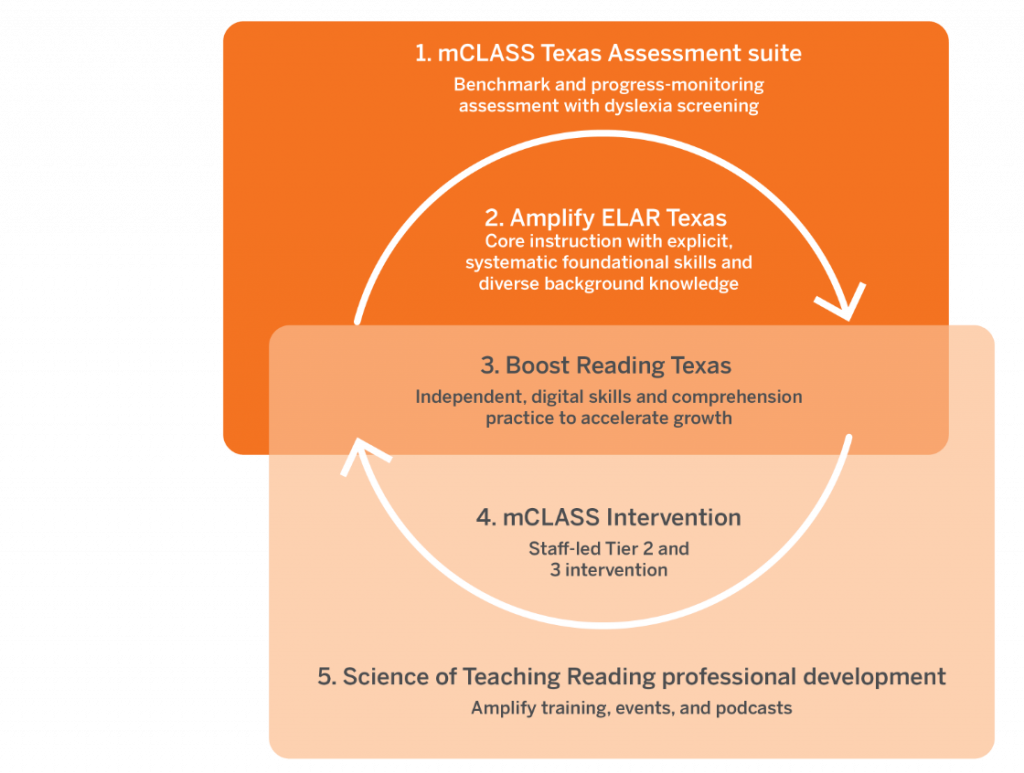
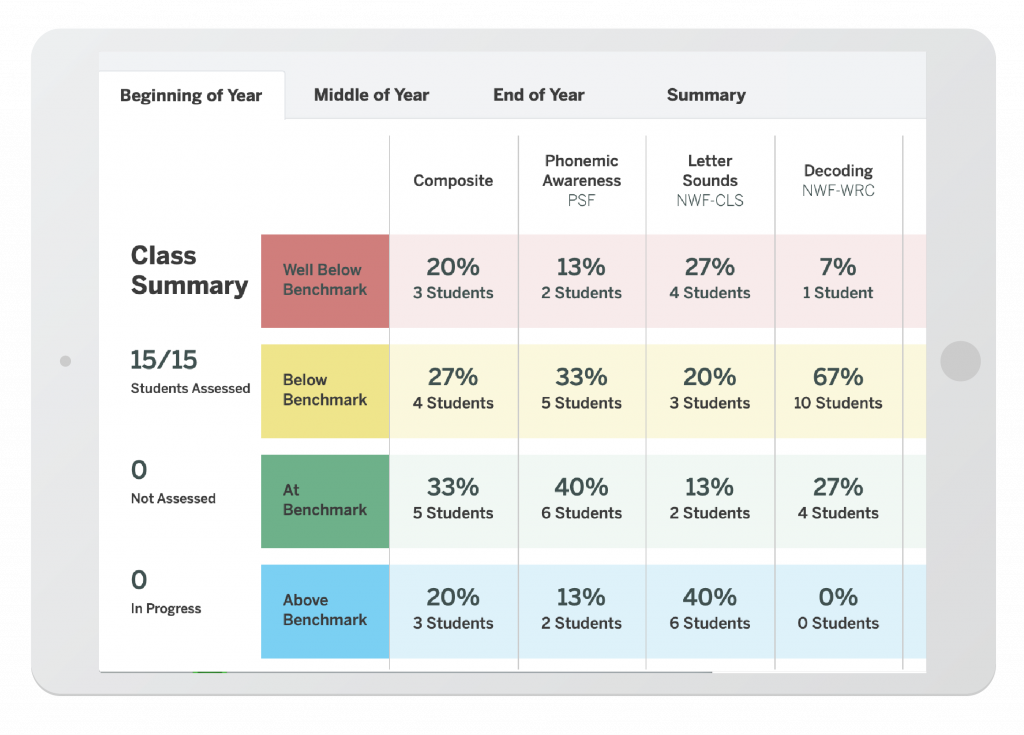
      Contact:
      Kay Moffett
      Chief Marketing Officer
      kmoffett@amplify.com