Showing results for filled rich
Oregon Enhanced ELA State Review for K–5
Amplify and SFUSD Partnership
We recognize and respect the unique differences of each of our partnering districts—and that includes San Francisco USD.
Out of the box, Amplify Caminos offers districts a rich, comprehensive, research-based SELA experience. That said, no two districts are exactly alike. To that end, we are committed to working with San Francisco USD to ensure that Amplify Caminos addresses the needs of your community. This includes providing implementation guidance and support, as well as collaborating with your staff to determine which domains need to be modified or exchanged.
What is Amplify Caminos?
Amplify Caminos is a core Spanish language arts program for grades TK–5 that delivers:
- Authentic instruction built from the ground up for the Spanish language.
- A unique research-based approach truly built on the Science of Reading.
- A combination of explicit foundational skills with meaningful knowledge-building.
- Embedded support and differentiation that gets all students reading grade-level texts together.
- Opportunities for students to see the strengths and experiences that all people share while also celebrating each others’ unique identities and experiences.
Watch the video below to learn more about Amplify Caminos for Grades K–2.
Watch the video below to learn more about Amplify Caminos for Grades 3–5.
How does Amplify Caminos work?
Amplify Caminos is built on the science of how kids learn to read—in Spanish.
Amplify Caminos is all about helping you teach students how to read, all while giving them authentic and engaging reasons to read. That’s why Amplify Caminos develops foundational skills and builds knowledge in tandem.
- Knowledge: Through complex and authentic Spanish read-alouds with an emphasis on classroom interactivity, oral comprehension, and contextual vocabulary, students start to build their awareness of the world around them—and the way the reading skills they’re building give them access to it.
- Skills: Starting with the sounds at the core of the Spanish
language, students practice their phonemic awareness, handwriting skills, vocabulary, spelling, and grammar. Through daily practice, students become aware of the connection between reading and writing, building confidence as they go.

Respecting the development differences between grade ranges, Amplify Caminos teaches foundational skills and background knowledge as two distinct strands in grades K–2, and combines them into one integrated strand in grades 3–5.
Grades K–2:
Every day, students in grades K–2 complete one full lesson that explicitly and systematically builds foundational reading skills in the Amplify Caminos Lectoescritura strand, as well as one full lesson that builds robust background knowledge to access complex text in the Amplify Caminos Conocimiento strand. Through learning in each of these strands, students develop the early literacy skills necessary to help them become confident readers and build the context to understand what they’re reading.
Grades 3–5:
In grades 3–5, the Amplify Caminos Lectoescritura and Conocimiento strands are integrated in one set of instructional materials. Lessons begin to combine skills and knowledge with increasingly complex texts, close reading, and a greater writing emphasis. Students can then use their skills to go on their own independent reading adventures.
What do Amplify Caminos students explore?
Amplify Caminos builds students’ knowledge about the world.
In addition to teaching all students to crack the written code (which is vital for equity), the Amplify Caminos program helps students see the strengths and experiences we all share while celebrating their own unique identities and experiences.
This is accomplished through the exploration of topics and text that feature people who resemble students and familiar situations or experiences while also exposing them to people whose appearances, lives, beliefs, and backgrounds differ from their own.
Engaging domains
Amplify Caminos builds knowledge coherently across subjects and grades.
Throughout the program, students use their skills to explore domains that relate to storytelling, science, and the history of our world as seen through the eyes of many different groups.
Carefully selected to build from year-to-year, our grade-appropriate topics help students make and deepen connections while also reading, writing, and thinking creatively and for themselves.
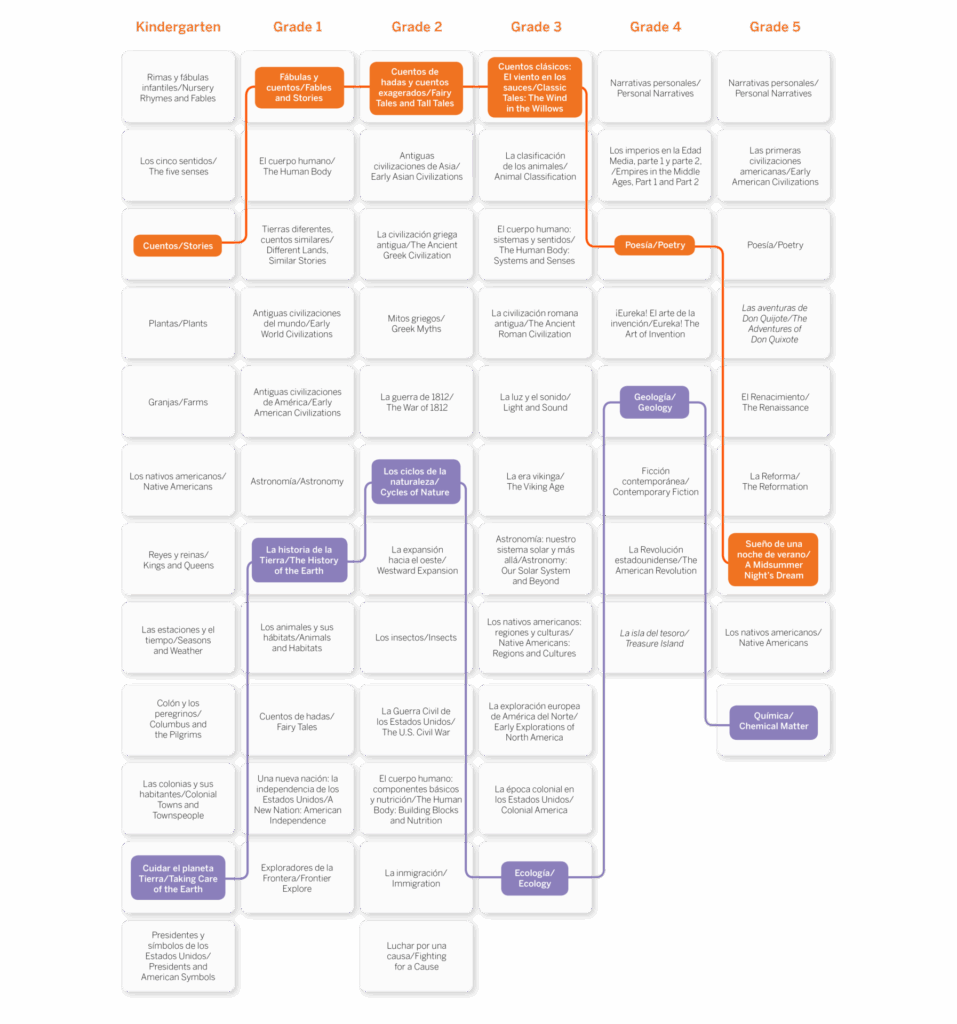
New Knowledge Research Units for Grades K–5
Our brand-new Knowledge Research units carry forward Amplify Caminos’ powerful and proven instructional approach while also:
- Adding more diversity. The rich topics and highly visual components featured in these units provide students with even more “windows and mirrors” and perspectives as they work to build knowledge.
- Adding more authentic literature. Each new research unit revolves around a collection of high-interest authentic trade books that will spark more curiosity and inspire more inquiry.
- Adding more flexibility. Units can be implemented for extended core instruction during flex periods, district-designated Pausing Points, or enrichment periods.
Units cover a variety of rich and relevant topics:
With these new units, students will soar to new heights with Dr. Ellen Ochoa, Amelia Earhart, and the Tuskegee Airmen. They’ll feel the rhythm as they learn about Jazz legends Miles Davis, Tito Puente, and Duke Ellington. And they’ll explore the far reaches of the world with Jacques Cousteau, Matthew Henson, and Eugenie Clark.
- Grade K: El arte y el mundo que nos rodea
- Grade 1: Cuentos de aventuras: relatos desde los confines de la Tierra
- Grade 2: ¡A volar! La era de la aviación
- Grade 3: Jazz y más
- Grade 4: Energía: pasado, presente y futuro
- Grade 5: Más allá de Juneteenth: de 1865 al presente
Units will be made available in English and Spanish, and will include the following components:
Why we added this unit:
“Every child is an artist,” said Picasso, meaning that every child uses art to explore and understand the world around them. El arte y el mundo que nos rodea honors that truth by introducing Kindergarten students to some of the ways in which artists have explored and understood the world around them.
This domain introduces students to artists from different time periods, countries, and cultures. Throughout the unit, students learn about different kinds of art and how artists use the world around them as they make art. They also connect this to what they have already learned about the earth, plants, and animals in other Caminos domains: Granjas, Plantas, and Cuidar el planeta Tierra. In addition, students connect this to what they have learned about sculptors in the Presidentes y símbolos de los Estados Unidos domain. As they explore different artists and artistic traditions, they develop their ideas about how humans are connected to each other and to the world around them.
As you read the texts in this unit, students may observe ways in which the characters or subjects are both similar to and different from students. This is a good opportunity to teach students awareness and sensitivity, building on the idea that all people share some things in common, even as they have other things that make them unique. This unit also offers an excellent opportunity to collaborate with your school’s art teacher, as many lessons have suggested activities to help students understand the kind of art they are studying.
Within this unit, students have opportunities to:
- Use details to describe art.
- Identify three ways to create art.
- Identify characteristics of cave art.
- Sequence the steps of making pottery.
- Describe how artists can create work connected to the world around them.
- Describe what makes Kehinde Wiley’s portraits unique.
- Explain how the texture of a surface can affect artwork created on it.
- Explain what a sculpture is.
- Describe what makes James Turrell’s artwork about the sky unique.
- Explain what a museum is and what kinds of things you can see or do there.
Trade books in this unit:
Instruction in this unit revolves around the following collection of high-interest authentic trade books. One copy of each trade book is included with the unit materials.
- Georgia O’Keeffe por Erica Salcedo
- Yayoi Kusama: De aquí al infinito por Sarah Suzuki
- Tejedora del arcoíris por Linda Elovitz Marshall
- Las tijeras de Matisse por Jeanette Winter
- El museo por Susan Verde
- Quizás algo hermoso: Cómo el arte transformó un barrio por F. Isabel Campoy
Sample materials:
Take a sneak peek at the rich instruction and engaging activities for this unit by viewing the PDFs below.
Why we added this unit:
This domain introduces students to adventure stories set around the world and challenges students to dig into the adventures through research. By listening to the Read-Alouds and trade books, students increase their vocabulary and reading comprehension skills, learn valuable lessons about perseverance and teamwork, and become familiar with gathering information for research.
In this unit, students study the careers of real-world explorers Dr. Eugenie Clark and Sophia Danenberg, marvel at the inventions of Jacques Cousteau, think critically about how teamwork and collaboration can make greater adventures possible, learn about the science and technology that enable adventures, and research some of the ways humans have confronted challenges at the edges of the world, from the oceans below to space above.
Each lesson in the domain builds students’ research skills as they ask questions, gather information, and write a paragraph about their findings. Students share what they have learned about adventures in an Adventure Gallery Walkthrough. By taking on the persona of one of the adventurers they meet in the Read-Alouds and trade books, students deliver their final paragraphs as if they are a “speaking portrait” of that person. Students are invited to dress up as that adventurer if they desire.
In addition, teachers can set aside time outside the instructional block to create the picture frames students will hold as they present to the Adventure Gallery Walk guests. Frames can be made from shirt boxes, cardboard, construction paper, or any art supplies that are on hand. This might be an opportunity to collaborate with the school’s art department if resources are available. Another option is to ask students to make their frames at home with their caregivers. On the day of the Adventure Gallery Walk, students will be the hosts and take on specific jobs, such as welcoming the guests, describing their work throughout the unit, and pointing out the areas of study on the domain bulletin board. You can find a complete list of student jobs in Lesson 13.
How this unit builds knowledge:
This unit builds upon the following Caminos units that students will have encountered in the previous grade.
- Rimas y fábulas infantiles (Kindergarten)
- Cuentos (Kindergarten)
The specific core content targeted in these domains is particularly relevant to the Read-Alouds students will hear in Cuentos de aventuras: relatos desde los confines de la Tierra. The background knowledge students bring to this unit will greatly enhance their understanding of the trade books used in this unit.
Trade books in this unit:
Instruction in this unit revolves around the following collection of high-interest authentic trade books. One copy of each trade book is included with the unit materials.
- My Name Is Gabito/Me llamo Gabito por Monica Brown
- Galápagos Girl/Galapagueña por Marsha Diane Arnold
- My Name Is Gabriela/Me llamo Gabriela por Monica Brown
- El viaje de Kalak por María Quintana Silva y Marie-Noëlle Hébert
- Señorita Mariposa por Ben Gundersheimer
- Sharuko, el arqueólogo peruano/Peruvian Archaeologist Julio C. Tello por Monica Brown
- Abuelita fue al mercado por Stella Blackstone
Sample materials:
Take a sneak peek at the rich instruction and engaging activities for this unit by viewing the PDFs below.
- Guía del maestro: Cuentos de aventuras: relatos desde los confines de la Tierra
- Cuaderno de actividades: Cuentos de aventuras: relatos desde los confines de la Tierra
- Tarjetas de imágenes: Cuentos de aventuras: relatos desde los confines de la Tierra
- Componentes digitales: Cuentos de aventuras: relatos desde los confines de la Tierra
Why we added this unit:
With this domain, students head up, up, and away with an introduction to the soaring history of aviation. Students learn the stories of early aviators, such as the Montgolfier brothers, the Wright brothers, Aida de Acosta, and Amelia Earhart.
During the unit, students study the science of flight, including the physics concept of lift, and research the social impacts of the world of flight. Finally, students let their research skills take flight as they explore key figures from the world of aviation.
The lessons in this domain build on earlier Grade 2 Caminos domains about the westward expansion, early Greek civilizations, and Greek myths, and lay the foundation for learning about other periods of world history in future grades.
How this unit builds knowledge:
This unit builds upon the following Caminos units that students will have encountered earlier in the year.
- La civilización griega antigua (Grade 2)
- Mitos griegos (Grade 2)
- La expansión hacia el oeste (Grade 2)
The specific core content targeted in these domains is particularly relevant to the Read-Alouds students will hear in ¡A volar! La era de la aviación. The background knowledge students bring to this unit will greatly enhance their understanding of the trade books used in this unit.
Trade books in this unit:
Instruction in this unit revolves around the following collection of high-interest authentic trade books. One copy of each trade book is included with the unit materials.
- ¡A volar! Todo sobre aviones por Jennifer Prior
- Amelia sabe volar por Mara dal Corso
- Héroes de la aviación que cambiaron el mundo por Dan Green
- El niño que alcanzó las estrellas por José M. Hernández
- La niña que aprendió a volar por Sylvia Acevedo
- Buenas Noches Capitán Mamá por Graciela Tiscareño-Sato
Sample materials:
Take a sneak peek at the rich instruction and engaging activities for this unit by viewing the PDFs below.
Why we added this unit:
This domain teaches students about the vibrant music, poetry, and culture of the Jazz Age in the United States. Students learn about famous writers and musicians like Langston Hughes, Louis Armstrong, Billie Holiday, Melba Liston, Tito Puente, and Miles Davis. They study how the jazz art form took root in the South, then spread to the North to become the sound of the Harlem Renaissance, eventually connecting people around the world in musical expression.
During this unit, students perform guided research to further explore both the history of jazz and what jazz is today. They develop research skills and then use those skills to find deeper connections between the stories and music of the Jazz Age and music today. As students learn about the world of jazz, they collaborate and share ideas with their classmates. They also practice sharing feedback focused on their written work, and, at the end of the unit, students present their research to the group.
The lessons give students opportunities to dive into the rhythms and stories of jazz, utilizing the knowledge sequence in this unit to:
- Collaboratively generate research questions about jazz, jazz musicians, contemporary musicians from the state where they live or have lived, and the evolution of jazz music.
- Utilize Read-Alouds, independent reading, and partner reading to learn about the Jazz Age, the Harlem Renaissance, jazz music, and biographies of celebrated jazz musicians and writers.
- Research the answers to their generated questions, gather information, write a short research essay about a famous jazz musician, write a short essay about a contemporary musician from the state where they live or have lived, and give a presentation about their research.
How this unit builds knowledge:
Within this unit, students have opportunities to:
- Ask relevant questions and make pertinent comments
- Identify details in texts
- Determine key ideas of texts by evaluating details
- Make text-based inferences
- Generate questions based on prior knowledge and gathered information
- Synthesize details across texts to demonstrate comprehension
- Discuss and explain an author’s purpose
- Identify and cite reliable primary and secondary sources of information
- Compose a well-organized and focused informative essay
- Make connections between topics
- Present information using appropriate media
Trade books in this unit:
Instruction in this unit revolves around the following collection of high-interest authentic trade books. One copy of each trade book is included with the unit materials.
- ¡Esquivel! Un artista del sonido de la era espacial por Susan Wood
- Ray Charles por Sharon Bell Mathis
- Tito Puente, el Rey del Mambo por Monica Brown
- Me llamo Celia, la vida de Celia Cruz por Monica Brown
- ¡Azúcar! por Ivar Da Coll
In this unit, students also read the poem “Harlem” by Langston Hughes. (Available for free through the Academy of American Poets website and the Poetry Foundation website, with recorded audio available through the website for John Hancock College Preparatory High School.)
Sample materials:
Take a sneak peek at the rich instruction and engaging activities for this unit by viewing the PDFs below.
Why we added this unit:
With this domain, students become tomorrow’s problem solvers in this study of energy in the United States. Analytical reading skills are developed by examining the challenges of early energy innovators. Students then read about current energy practices and young energy change-makers across the world.
Throughout the unit, students conduct research into different sources of energy and present a proposal, putting them in the shoes of future energy innovators. They also use the knowledge sequence in this unit to:
- Collaboratively analyze texts to identify cause-effect and problem-solution relationships.
- Generate questions and conduct research about energy.
- Write an opinion essay making their case for a fuel of the future.
- Create energy proposals using primary and secondary resources.
How this unit builds knowledge:
This unit builds upon the following Caminos units that students will have encountered in previous grades as well as earlier in the year.
- Plantas (Grade K)
- La historia de la Tierra (Grade 1)
- ¡Eureka! Estudiante inventor (Grade 4)
The specific core content targeted in these domains is particularly relevant to the Read-Alouds students will hear in Energía: pasado, presente y futuro. The background knowledge students bring to this unit will greatly enhance their understanding of the trade books used in this unit.
Trade books in this unit:
Instruction in this unit revolves around the following collection of high-interest authentic trade books. One copy of each trade book is included with the unit materials.
- La historia de los combustibles fósiles por William B. Rice
- El niño que domó el viento por William Kamkwamba y Bryan Mealer
Sample materials:
Take a sneak peek at the rich instruction and engaging activities for this unit by viewing the PDFs below.
Why we added this unit:
Within this domain, Students learn about General Granger’s announcement in Galveston, Texas on June 19, 1865, a day marked in history as Juneteenth. Texts and multimedia sources will support foundational knowledge-building about the end of slavery in the United States. A review of the first freedom announcement, President Lincoln’s Emancipation Proclamation, provides students with background knowledge to further emphasize the significance of Juneteenth in American history.
This unit also takes students on a journey beyond Juneteenth, as they study specific contributions of African Americans from 1865 to the present day. Students participate in a virtual field trip to Emancipation Park in Houston, Texas and use the knowledge sequence in this unit to:
- Collaboratively generate research questions about Juneteenth, The Great Migration, innovators and inventors, education, the humanities, activists, and allies.
- Use Read-Alouds, independent, and partner reading to learn about African American contributions from 1865 to the present.
- Research to find answers to their generated questions, gather information, and write a four-chapter Beyond Juneteenth book.
How this unit builds knowledge:
This unit builds upon the following Caminos units that students will have encountered in previous grades.
- Los nativos americanos (Grade K)
- Una nueva nación: la independencia de los Estados Unidos (Grade 1)
- La Guerra Civil de los Estaods Unidos (Grade 2)
- La inmigración (Grade 2)
- Los nativos americanos (Grade 5)
The specific core content targeted in these domains is particularly relevant to the Read-Alouds students will hear in Más allá de Juneteenth: de 1865 al presente
. The background knowledge students bring to this unit will greatly enhance their understanding of the trade books used in this unit.
Trade books in this unit:
Instruction in this unit revolves around the following collection of high-interest authentic trade books. One copy of each trade book is included with the unit materials.
- Martí’s Song for Freedom/Martí y sus versos por la libertad escrito por Emma Otheguy
- ¡Celebremos Juneteenth! escrito por Carole Boston Weatherford
- Side by Side/Lado a Lado: The Story of Dolores Huerta and Cesar Chavez/La Historia de Dolores Huerta y César Chávez escrito por Monica Brown
- Canto de alabanza para el día: Poema para la ceremonia inaugural del mandato de Barack Obama escrito por Elizabeth Alexander, traducido por Rodrigo Rojas
Sample materials:
Take a sneak peek at the rich instruction and engaging activities for this unit by viewing the PDFs below.
Diverse texts
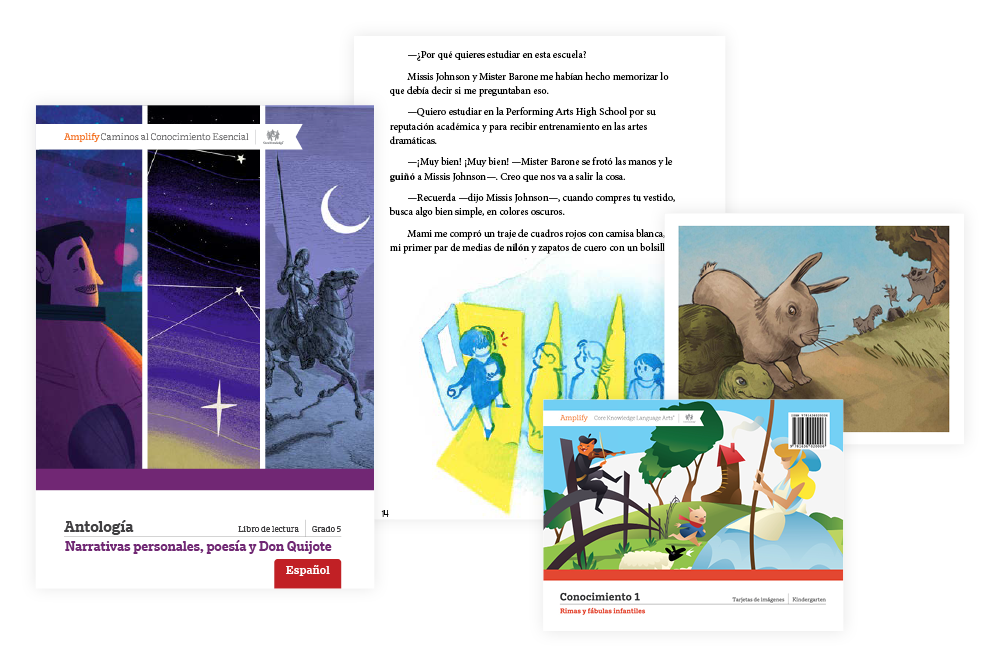
Amplify Caminos puts a variety of texts in the hands of students every day.
Amplify Caminos includes both transadaptations and authentic texts written by Latin American and Spanish authors. In addition to featuring a diverse range of authors and topics, our texts represent individuals and characters with a broad range of identity factors, including socioeconomic status, age, ability, race, ethnicity, country of origin, religion, and more.
Amplify Caminos texts include:
- Authentic literature: Authentic literature exposes students to a variety of text types and perspectives to deepen their knowledge of fascinating topics in social studies, science, literature, and the arts. Authentic texts support text-to-self, text-to-world, and text-to-text connections for readers.
- Decodable Student Readers: Amplify Caminos is built on the conviction that equitable instruction is vital to an effective program. Decodable Student Readers at grades K–2 are newly re-designed to celebrate students’ diverse experiences and feature individuals with a broad range of identity factors, including socioeconomic status, age, ability, race, ethnicity, country of origin, religion, and more.
- ReadWorks® texts: Amplify and ReadWorks have partnered to deliver high-quality texts curated to support the Amplify Caminos Knowledge Sequence and to extend student learning. Texts include high-interest nonfiction articles in topics in social studies, science, literature, and the arts. These texts are accompanied by vocabulary supports and standards-aligned formative assessment opportunities. Teachers can monitor their students’ progress using the ReadWorks reporting features.

Amplify Caminos Trade Book Collection Guide
Each book in our authentic literature collection was selected specifically to support and enhance the content of the K-2 Conocimiento Strand. These anchor texts are intended for use as an introduction to each domain—engaging students, piquing their curiosity, and building initial background knowledge—before diving into the deeper content of the domain Read-Alouds.
Every trade book has an instructional guide that includes the following:
- Author and illustrator
- Book summary
- The Essential Question of the Knowledge domain, connecting the book to the domain
- Key Tier 2 and Tier 3 vocabulary words found in the book
- A group activity to reinforce and extend students’ knowledge and understanding
- A performance task to help gauge students’ comprehension of concepts in the text
- Writing prompts to expand understanding and critical thinking
- Text complexity ratings and descriptors for quantitative, qualitative, and reader/task categories
Download the Amplify Caminos Trade Book Collection Guide for Grades K–2.
Detailed information about text complexity ratings and descriptors; additional uses for the books before, during, and after domain instruction; and the complete list of domains and books for each grade level can be found in the More About the Books section of this guide.
What makes Amplify Caminos different?
Built on the Science of Reading
Built out of the latest research in the Science of Reading, Amplify Caminos delivers explicit instruction in both foundational literacy skills (systematic phonics, decoding, and fluency) and background knowledge in grades K–2 with an integrated approach to explicit instruction in grades 3–5.

Explicit systematic skills instruction
The skills instruction in Amplify Caminos was distinctly developed with the Spanish language in mind. Its foundational lessons are specific to the language, rather than a direct translation from Amplify CKLA’s English skills instruction.
Reading instruction begins with the vowels first, then the most common consonants, and finally the least common consonants. Students will blend and segment sounds to form syllables, and syllables to form words.
Although Spanish has a highly predictable orthography, there are a few silent letters (h is always silent, u is silent after g or q), as well as letters that can make different sounds, depending on the letters that follow them. For that reason, syllables with these letters are taught somewhat later in the progression. The same is true for syllables with infrequently occurring consonants, such as z, k, x, and w.
Coherent knowledge instruction
While students are learning how to read, the Conocimiento strand gives them authentic and engaging reasons to read.
Amplify Caminos uses spiral learning to reinforce every student’s ability to develop skills like reading, writing, speaking, and listening in Spanish that can be transferred to English. As students engage with their lessons, they explore the similarities and differences in grammar, vocabulary, writing, and language use between Spanish and English. This bridge helps students learning two languages to strengthen their knowledge in both.
Through cross-curricular content, students explore units that relate to storytelling, science, and the history of our world in a holistic and thoughtful way. With these units, you’ll bring the world to your students, showing them how reading can become an exciting, rewarding, and useful part of their lives.

Embedded differentiation for all learners
Amplify Caminos provides built-in differentiation strategies and supports in every lesson.
- Apoyo a la enseñanza y desafío: Support and Challenge suggestions in every lesson provide assistance or opportunities for more advanced work toward the goal of the lesson.
- Notas culturales: These point-of-use notes provide additional information about the traditions, foods, holidays, word variations, and more from across the Spanish-speaking world.
- Apoyo adicional: Every lesson in the Lectoescritura (Skills) Strand provides additional support activities suggested to reinforce foundational skills instruction. These activities can be given to any student who requires extra help, including students with special needs.
Systematic and cohesive writing instruction
Writing instruction in Amplify Caminos builds systematically and cohesively within and across grades.
In Grades K-2, writing mechanics—including handwriting and spelling—are taught in the Amplify Caminos Lectoescritura strand. Starting in Grade 1, instruction includes four steps in the writing process: planning, drafting, editing, and publishing and features lessons that have modeling, collaboration, and sharing. As students gain skills and confidence, they are able to take on more of these steps independently. Students learn to use planning techniques, including brainstorming and graphic organizers.
Beginning in Grade 4, the Amplify Caminos writing process expands to also include sharing and evaluating. In Grades 4 and 5, the writing process is no longer conceptualized as a series of scaffolded, linear steps (an important change from the Grade 3 writing process). Rather, students move between components of the writing process in a flexible manner, similar to the process mature and experienced writers follow naturally.

Amplify Caminos’ writing instruction provides a clear progression through the text types in each grade.
Because Amplify Caminos has two strands of lessons in Grades K-2, Lectoescritura and Conocimiento, students are exposed to both narrative and informational texts throughout the year. In Grades 3-5, the integrated units feature study in literary, informational, or a mix of both types of texts, depending on the content of the unit.
- Grades K–2 introduce and establish the key elements of each text type, allowing students to gain comfort and confidence writing narratives, opinions, and informative texts. This enables students to practice thinking about content in different ways, offering more depth and breadth to their understanding of core content and of the writing text types.
- By Grade 3, students will have gained significant practice in narrative, opinion/argumentative, and informational/explanatory forms of writing and will continue to apply those skills through Grade 5.
How does Amplify Caminos integrate with the other parts of the literacy system?
Amplify Caminos + mCLASS® Lectura
Achieve complete parity between English and Spanish assessments with mCLASS Lectura for K–6. mCLASS Lectura allows teachers to connect with their Spanish-speaking students face-to-face, one-on-one, and in the language most comfortable to them. The result? Valid and reliable student data reports
available in both English and Spanish, enabling teachers to pinpoint where their Spanish-speaking or emergent bilingual students really are in their skill development and what instruction to prioritize.

Amplify Caminos + Amplify Reading
Amplify Reading is an engaging, adaptive digital program that extends the learning in Amplify Caminos. Amplify Reading offers support to a large sub-group of English learners (ELs) through Spanish voice-over. Spanish voiceover instructions are available in vocabulary and sentence-level comprehension games so ELs can build their vocabulary, language, and critical comprehension skills before moving into analyzing complex texts

Demo access and sample materials
Ready to explore on your own? First, watch the videos below to learn about the program’s components and how to navigate the digital platform.
Physical materials walkthrough video
Digital navigation video
Demo access
Next, follow the instructions below to access your demo account.

- Click the CKLA and Caminos Demo button below.
- Select Log in with Amplify.
- To explore as a teacher, enter this username: t1.sfusdreviewer@demo.tryamplify.net
- To explore as a student, enter this username: s1.sfusdreviewer@demo.tryamplify.net
- Enter the password: Amplify1-sfusdreviewer
- Click the Programs and apps menu
- Select CKLA Teacher Resource Site
- Select the desire grade level
- Use the toggle to switch between English (CKLA) and Spanish (Caminos) resources.
Sample materials
Finally, click on the grade levels below to explore your requested sample units.
Each book in our authentic literature collection was selected specifically to support and enhance the content of the K-2 Conocimiento Strand. These anchor texts are intended for use as an introduction to each domain—engaging students, piquing their curiosity, and building initial background knowledge—before diving into the deeper content of the domain Read-Alouds.
Every trade book has an instructional guide that includes the following:
- Author and illustrator
- Book summary
- The Essential Question of the Knowledge domain, connecting the book to the domain
- Key Tier 2 and Tier 3 vocabulary words found in the book
- A group activity to reinforce and extend students’ knowledge and understanding
- A performance task to help gauge students’ comprehension of concepts in the text
- Writing prompts to expand understanding and critical thinking
- Text complexity ratings and descriptors for quantitative, qualitative, and reader/task categories
Download the Amplify Caminos Trade Book Collection Guide for Grades K–2.
Detailed information about text complexity ratings and descriptors; additional uses for the books before, during, and after domain instruction; and the complete list of domains and books for each grade level can be found in the More About the Books section of this guide.
Conocimiento Strand:
- Guía del maestro, Conocimiento 12: Luchar por una causa
- Cuaderno de actividades, Conocimientos 7–12
- Rotafolio de imágenes, Conocimiento 12
- Tarjetas de imágenes, Conocimiento 12
Lectoescritura Strand:
Additional resources
- Caminos Program Guide
- Biliteracy and Science of Reading Principles
- Amplify Caminos Conocimiento Scopes and Sequences
- Grade K Knowledge Strand
- Grade 1 Knowledge Strand
- Grade 2 Knowledge Strand
- Grade 3 Integrated Strand
- Grade 4 Integrated Strand
- Grade 5 Intgrated Strand
Amplify Caminos for SFUSD
Amplify Caminos is an authentic elementary Spanish language arts program. Like its English language counterpart, Amplify CKLA, Amplify Caminos provides explicit, systematic foundational skills instruction sequenced with deep knowledge-building content to foster comprehension. When used with Amplify CKLA, Amplify Caminos provides full parity across English and Spanish that’s suitable for any dual language implementation model.

Amplify and SFUSD Partnership
We recognize and respect the unique differences of each of our partnering districts—and that includes San Francisco USD.
Out of the box, Amplify Caminos offers districts a rich, comprehensive, research-based SELA experience. That said, no two districts are exactly alike. To that end, we are committed to working with San Francisco USD to ensure that Amplify Caminos addresses the needs of your community. This includes providing implementation guidance and support, as well as collaborating with your staff to determine which domains need to be modified or exchanged.
What is Amplify Caminos?
Amplify Caminos is a core Spanish language arts program for grades TK–5 that delivers:
- Authentic instruction built from the ground up for the Spanish language.
- A unique research-based approach truly built on the Science of Reading.
- A combination of explicit foundational skills with meaningful knowledge-building.
- Embedded support and differentiation that gets all students reading grade-level texts together.
- Opportunities for students to see the strengths and experiences that all people share while also celebrating each others’ unique identities and experiences.
Watch the video below to learn more about Amplify Caminos for Grades K–2.
Watch the video below to learn more about Amplify Caminos for Grades 3–5.
How does Amplify Caminos work?
Amplify Caminos is built on the science of how kids learn to read—in Spanish.
Amplify Caminos is all about helping you teach students how to read, all while giving them authentic and engaging reasons to read. That’s why Amplify Caminos develops foundational skills and builds knowledge in tandem.
- Knowledge: Through complex and authentic Spanish read-alouds with an emphasis on classroom interactivity, oral comprehension, and contextual vocabulary, students start to build their awareness of the world around them—and the way the reading skills they’re building give them access to it.
- Skills: Starting with the sounds at the core of the Spanish
language, students practice their phonemic awareness, handwriting skills, vocabulary, spelling, and grammar. Through daily practice, students become aware of the connection between reading and writing, building confidence as they go.

Respecting the development differences between grade ranges, Amplify Caminos teaches foundational skills and background knowledge as two distinct strands in grades K–2, and combines them into one integrated strand in grades 3–5.
Grades K–2:
Every day, students in grades K–2 complete one full lesson that explicitly and systematically builds foundational reading skills in the Amplify Caminos Lectoescritura strand, as well as one full lesson that builds robust background knowledge to access complex text in the Amplify Caminos Conocimiento strand. Through learning in each of these strands, students develop the early literacy skills necessary to help them become confident readers and build the context to understand what they’re reading.
Grades 3–5:
In grades 3–5, the Amplify Caminos Lectoescritura and Conocimiento strands are integrated in one set of instructional materials. Lessons begin to combine skills and knowledge with increasingly complex texts, close reading, and a greater writing emphasis. Students can then use their skills to go on their own independent reading adventures.
What do Amplify Caminos students explore?
Amplify Caminos builds students’ knowledge about the world.
In addition to teaching all students to crack the written code (which is vital for fairness), the Amplify Caminos program helps students see the strengths and experiences we all share while celebrating their own unique identities and experiences.
This is accomplished through the exploration of topics and text that feature people who resemble students and familiar situations or experiences while also exposing them to people whose appearances, lives, beliefs, and backgrounds differ from their own.
Engaging domains
Amplify Caminos builds knowledge coherently across subjects and grades.
Throughout the program, students use their skills to explore domains that relate to storytelling, science, and the history of our world as seen through the eyes of many different groups.
Carefully selected to build from year-to-year, our grade-appropriate topics help students make and deepen connections while also reading, writing, and thinking creatively and for themselves.
New Knowledge Research Units for Grades K–5
Our brand-new Knowledge Research units carry forward Amplify Caminos’ powerful and proven instructional approach while also:
- Adding more content for students from all walks of life. The rich topics and highly visual components featured in these units provide students with even more “windows and mirrors” and perspectives as they work to build knowledge.
- Adding more authentic literature. Each new research unit revolves around a collection of high-interest authentic trade books that will spark more curiosity and inspire more inquiry.
- Adding more flexibility. Units can be implemented for extended core instruction during flex periods, district-designated Pausing Points, or enrichment periods.
Units cover a variety of rich and relevant topics:
With these new units, students will soar to new heights with Dr. Ellen Ochoa, Amelia Earhart, and the Tuskegee Airmen. They’ll feel the rhythm as they learn about Jazz legends Miles Davis, Tito Puente, and Duke Ellington. And they’ll explore the far reaches of the world with Jacques Cousteau, Matthew Henson, and Eugenie Clark.
- Grade K: El arte y el mundo que nos rodea
- Grade 1: Cuentos de aventuras: relatos desde los confines de la Tierra
- Grade 2: ¡A volar! La era de la aviación
- Grade 3: Jazz y más
- Grade 4: Energía: pasado, presente y futuro
- Grade 5: Más allá de Juneteenth: de 1865 al presente
Units will be made available in English and Spanish, and will include the following components:
- Teacher Guide
- Student Activity Books
- Image Cards
- Trade Book Collection
- Digital Components (for Grades K–3 and Grade 5 only)
Why we added this unit:
“Every child is an artist,” said Picasso, meaning that every child uses art to explore and understand the world around them. El arte y el mundo que nos rodea honors that truth by introducing Kindergarten students to some of the ways in which artists have explored and understood the world around them.
This domain introduces students to artists from different time periods, countries, and cultures. Throughout the unit, students learn about different kinds of art and how artists use the world around them as they make art. They also connect this to what they have already learned about the earth, plants, and animals in other Caminos domains: Granjas, Plantas, and Cuidar el planeta Tierra. In addition, students connect this to what they have learned about sculptors in the Presidentes y símbolos de los Estados Unidos domain. As they explore different artists and artistic traditions, they develop their ideas about how humans are connected to each other and to the world around them.
As you read the texts in this unit, students may observe ways in which the characters or subjects are both similar to and different from students. This is a good opportunity to teach students awareness and sensitivity, building on the idea that all people share some things in common, even as they have other things that make them unique. This unit also offers an excellent opportunity to collaborate with your school’s art teacher, as many lessons have suggested activities to help students understand the kind of art they are studying.
Within this unit, students have opportunities to:
- Use details to describe art.
- Identify three ways to create art.
- Identify characteristics of cave art.
- Sequence the steps of making pottery.
- Describe how artists can create work connected to the world around them.
- Describe what makes Kehinde Wiley’s portraits unique.
- Explain how the texture of a surface can affect artwork created on it.
- Explain what a sculpture is.
- Describe what makes James Turrell’s artwork about the sky unique.
- Explain what a museum is and what kinds of things you can see or do there.
Trade books in this unit:
Instruction in this unit revolves around the following collection of high-interest authentic trade books. One copy of each trade book is included with the unit materials.
- Georgia O’Keeffe por Erica Salcedo
- Yayoi Kusama: De aquí al infinito por Sarah Suzuki
- Tejedora del arcoíris por Linda Elovitz Marshall
- Las tijeras de Matisse por Jeanette Winter
- El museo por Susan Verde
- Quizás algo hermoso: Cómo el arte transformó un barrio por F. Isabel Campoy
Sample materials:
Take a sneak peek at the rich instruction and engaging activities for this unit by viewing the PDFs below.
- Guía del maestro: Cuentos de aventuras: relatos desde los confines de la Tierra
- Cuaderno de actividades: Cuentos de aventuras: relatos desde los confines de la Tierra
- Tarjetas de imágenes: Cuentos de aventuras: relatos desde los confines de la Tierra
- Componentes digitales: Cuentos de aventuras: relatos desde los confines de la Tierra
Why we added this unit:
This domain introduces students to adventure stories set around the world and challenges students to dig into the adventures through research. By listening to the Read-Alouds and trade books, students increase their vocabulary and reading comprehension skills, learn valuable lessons about perseverance and teamwork, and become familiar with gathering information for research.
In this unit, students study the careers of real-world explorers Dr. Eugenie Clark and Sophia Danenberg, marvel at the inventions of Jacques Cousteau, think critically about how teamwork and collaboration can make greater adventures possible, learn about the science and technology that enable adventures, and research some of the ways humans have confronted challenges at the edges of the world, from the oceans below to space above.
Each lesson in the domain builds students’ research skills as they ask questions, gather information, and write a paragraph about their findings. Students share what they have learned about adventures in an Adventure Gallery Walkthrough. By taking on the persona of one of the adventurers they meet in the Read-Alouds and trade books, students deliver their final paragraphs as if they are a “speaking portrait” of that person. Students are invited to dress up as that adventurer if they desire.
In addition, teachers can set aside time outside the instructional block to create the picture frames students will hold as they present to the Adventure Gallery Walk guests. Frames can be made from shirt boxes, cardboard, construction paper, or any art supplies that are on hand. This might be an opportunity to collaborate with the school’s art department if resources are available. Another option is to ask students to make their frames at home with their caregivers. On the day of the Adventure Gallery Walk, students will be the hosts and take on specific jobs, such as welcoming the guests, describing their work throughout the unit, and pointing out the areas of study on the domain bulletin board. You can find a complete list of student jobs in Lesson 13.
How this unit builds knowledge:
This unit builds upon the following Caminos units that students will have encountered in the previous grade.
- Rimas y fábulas infantiles (Kindergarten)
- Cuentos (Kindergarten)
The specific core content targeted in these domains is particularly relevant to the Read-Alouds students will hear in Cuentos de aventuras: relatos desde los confines de la Tierra. The background knowledge students bring to this unit will greatly enhance their understanding of the trade books used in this unit.
Trade books in this unit:
Instruction in this unit revolves around the following collection of high-interest authentic trade books. One copy of each trade book is included with the unit materials.
- My Name Is Gabito/Me llamo Gabito por Monica Brown
- Galápagos Girl/Galapagueña por Marsha Diane Arnold
- My Name Is Gabriela/Me llamo Gabriela por Monica Brown
- El viaje de Kalak por María Quintana Silva y Marie-Noëlle Hébert
- Señorita Mariposa por Ben Gundersheimer
- Sharuko, el arqueólogo peruano/Peruvian Archaeologist Julio C. Tello por Monica Brown
- Abuelita fue al mercado por Stella Blackstone
Sample materials:
Take a sneak peek at the rich instruction and engaging activities for this unit by viewing the PDFs below.
Why we added this unit:
With this domain, students head up, up, and away with an introduction to the soaring history of aviation. Students learn the stories of early aviators, such as the Montgolfier brothers, the Wright brothers, Aida de Acosta, and Amelia Earhart.
During the unit, students study the science of flight, including the physics concept of lift, and research the social impacts of the world of flight. Finally, students let their research skills take flight as they explore key figures from the world of aviation.
The lessons in this domain build on earlier Grade 2 Caminos domains about the westward expansion, early Greek civilizations, and Greek myths, and lay the foundation for learning about other periods of world history in future grades.
How this unit builds knowledge:
This unit builds upon the following Caminos units that students will have encountered earlier in the year.
- La civilización griega antigua (Grade 2)
- Mitos griegos (Grade 2)
- La expansión hacia el oeste (Grade 2)
The specific core content targeted in these domains is particularly relevant to the Read-Alouds students will hear in ¡A volar! La era de la aviación. The background knowledge students bring to this unit will greatly enhance their understanding of the trade books used in this unit.
Trade books in this unit:
Instruction in this unit revolves around the following collection of high-interest authentic trade books. One copy of each trade book is included with the unit materials.
- ¡A volar! Todo sobre aviones por Jennifer Prior
- Amelia sabe volar por Mara dal Corso
- Héroes de la aviación que cambiaron el mundo por Dan Green
- El niño que alcanzó las estrellas por José M. Hernández
- La niña que aprendió a volar por Sylvia Acevedo
- Buenas Noches Capitán Mamá por Graciela Tiscareño-Sato
Sample materials:
Take a sneak peek at the rich instruction and engaging activities for this unit by viewing the PDFs below.
Why we added this unit:
This domain teaches students about the vibrant music, poetry, and culture of the Jazz Age in the United States. Students learn about famous writers and musicians like Langston Hughes, Louis Armstrong, Billie Holiday, Melba Liston, Tito Puente, and Miles Davis. They study how the jazz art form took root in the South, then spread to the North to become the sound of the Harlem Renaissance, eventually connecting people around the world in musical expression.
During this unit, students perform guided research to further explore both the history of jazz and what jazz is today. They develop research skills and then use those skills to find deeper connections between the stories and music of the Jazz Age and music today. As students learn about the world of jazz, they collaborate and share ideas with their classmates. They also practice sharing feedback focused on their written work, and, at the end of the unit, students present their research to the group.
The lessons give students opportunities to dive into the rhythms and stories of jazz, utilizing the knowledge sequence in this unit to:
- Collaboratively generate research questions about jazz, jazz musicians, contemporary musicians from the state where they live or have lived, and the evolution of jazz music.
- Utilize Read-Alouds, independent reading, and partner reading to learn about the Jazz Age, the Harlem Renaissance, jazz music, and biographies of celebrated jazz musicians and writers.
- Research the answers to their generated questions, gather information, write a short research essay about a famous jazz musician, write a short essay about a contemporary musician from the state where they live or have lived, and give a presentation about their research.
How this unit builds knowledge:
Within this unit, students have opportunities to:
- Ask relevant questions and make pertinent comments
- Identify details in texts
- Determine key ideas of texts by evaluating details
- Make text-based inferences
- Generate questions based on prior knowledge and gathered information
- Synthesize details across texts to demonstrate comprehension
- Discuss and explain an author’s purpose
- Identify and cite reliable primary and secondary sources of information
- Compose a well-organized and focused informative essay
- Make connections between topics
- Present information using appropriate media
Trade books in this unit:
Instruction in this unit revolves around the following collection of high-interest authentic trade books. One copy of each trade book is included with the unit materials.
- ¡Esquivel! Un artista del sonido de la era espacial por Susan Wood
- Ray Charles por Sharon Bell Mathis
- Tito Puente, el Rey del Mambo por Monica Brown
- Me llamo Celia, la vida de Celia Cruz por Monica Brown
- ¡Azúcar! por Ivar Da Coll
In this unit, students also read the poem “Harlem” by Langston Hughes. (Available for free through the Academy of American Poets website and the Poetry Foundation website, with recorded audio available through the website for John Hancock College Preparatory High School.)
Sample materials:
Take a sneak peek at the rich instruction and engaging activities for this unit by viewing the PDFs below.
Why we added this unit:
With this domain, students become tomorrow’s problem solvers in this study of energy in the United States. Analytical reading skills are developed by examining the challenges of early energy innovators. Students then read about current energy practices and young energy change-makers across the world.
Throughout the unit, students conduct research into different sources of energy and present a proposal, putting them in the shoes of future energy innovators. They also use the knowledge sequence in this unit to:
- Collaboratively analyze texts to identify cause-effect and problem-solution relationships.
- Generate questions and conduct research about energy.
- Write an opinion essay making their case for a fuel of the future.
- Create energy proposals using primary and secondary resources.
How this unit builds knowledge:
This unit builds upon the following Caminos units that students will have encountered in previous grades as well as earlier in the year.
- Plantas (Grade K)
- La historia de la Tierra (Grade 1)
- ¡Eureka! Estudiante inventor (Grade 4)
The specific core content targeted in these domains is particularly relevant to the Read-Alouds students will hear in Energía: pasado, presente y futuro. The background knowledge students bring to this unit will greatly enhance their understanding of the trade books used in this unit.
Trade books in this unit:
Instruction in this unit revolves around the following collection of high-interest authentic trade books. One copy of each trade book is included with the unit materials.
- La historia de los combustibles fósiles por William B. Rice
- El niño que domó el viento por William Kamkwamba y Bryan Mealer
Sample materials:
Take a sneak peek at the rich instruction and engaging activities for this unit by viewing the PDFs below.
Why we added this unit:
Within this domain, Students learn about General Granger’s announcement in Galveston, Texas on June 19, 1865, a day marked in history as Juneteenth. Texts and multimedia sources will support foundational knowledge-building about the end of slavery in the United States. A review of the first freedom announcement, President Lincoln’s Emancipation Proclamation, provides students with background knowledge to further emphasize the significance of Juneteenth in American history.
This unit also takes students on a journey beyond Juneteenth, as they study specific contributions of African Americans from 1865 to the present day. Students participate in a virtual field trip to Emancipation Park in Houston, Texas and use the knowledge sequence in this unit to:
- Collaboratively generate research questions about Juneteenth, The Great Migration, innovators and inventors, education, the humanities, activists, and allies.
- Use Read-Alouds, independent, and partner reading to learn about African American contributions from 1865 to the present.
- Research to find answers to their generated questions, gather information, and write a four-chapter Beyond Juneteenth book.
How this unit builds knowledge:
This unit builds upon the following Caminos units that students will have encountered in previous grades.
- Los nativos americanos (Grade K)
- Una nueva nación: la independencia de los Estados Unidos (Grade 1)
- La Guerra Civil de los Estaods Unidos (Grade 2)
- La inmigración (Grade 2)
- Los nativos americanos (Grade 5)
The specific core content targeted in these domains is particularly relevant to the Read-Alouds students will hear in Más allá de Juneteenth: de 1865 al presente
. The background knowledge students bring to this unit will greatly enhance their understanding of the trade books used in this unit.
Trade books in this unit:
Instruction in this unit revolves around the following collection of high-interest authentic trade books. One copy of each trade book is included with the unit materials.
- Martí’s Song for Freedom/Martí y sus versos por la libertad escrito por Emma Otheguy
- ¡Celebremos Juneteenth! escrito por Carole Boston Weatherford
- Side by Side/Lado a Lado: The Story of Dolores Huerta and Cesar Chavez/La Historia de Dolores Huerta y César Chávez escrito por Monica Brown
- Canto de alabanza para el día: Poema para la ceremonia inaugural del mandato de Barack Obama escrito por Elizabeth Alexander, traducido por Rodrigo Rojas
Sample materials:
Take a sneak peek at the rich instruction and engaging activities for this unit by viewing the PDFs below.
Wide-ranging texts
Amplify Caminos puts a variety of texts in the hands of students every day.
Amplify Caminos includes both transadaptations and authentic texts written by Latin American and Spanish authors. Our texts feature a wide variety of authors, topics, individuals and characters representing many different socioeconomic statuses, ages, abilities, races, ethnicities, countries of origin, religions, and more.
Amplify Caminos texts include:
- Authentic literature: Authentic literature exposes students to a variety of text types and perspectives to deepen their knowledge of fascinating topics in social studies, science, literature, and the arts. Authentic texts support text-to-self, text-to-world, and text-to-text connections for readers.
- Decodable Student Readers: Decodable Student Readers at grades K–2 are newly redesigned to include students from all walks of life and educational backgrounds. They feature characters with a broad range of backgrounds, experiences, ages, races, religions, and more.
- ReadWorks® texts: Amplify and ReadWorks have partnered to deliver high-quality texts curated to support the Amplify Caminos Knowledge Sequence and to extend student learning. Texts include high-interest nonfiction articles in topics in social studies, science, literature, and the arts. These texts are accompanied by vocabulary supports and standards-aligned formative assessment opportunities. Teachers can monitor their students’ progress using the ReadWorks reporting features.

Amplify Caminos Trade Book Collection Guide
Each book in our authentic literature collection was selected specifically to support and enhance the content of the K-2 Conocimiento Strand. These anchor texts are intended for use as an introduction to each domain—engaging students, piquing their curiosity, and building initial background knowledge—before diving into the deeper content of the domain Read-Alouds.
Every trade book has an instructional guide that includes the following:
- Author and illustrator
- Book summary
- The Essential Question of the Knowledge domain, connecting the book to the domain
- Key Tier 2 and Tier 3 vocabulary words found in the book
- A group activity to reinforce and extend students’ knowledge and understanding
- A performance task to help gauge students’ comprehension of concepts in the text
- Writing prompts to expand understanding and critical thinking
- Text complexity ratings and descriptors for quantitative, qualitative, and reader/task categories
Download the Amplify Caminos Trade Book Collection Guide for Grades K–2.
Detailed information about text complexity ratings and descriptors; additional uses for the books before, during, and after domain instruction; and the complete list of domains and books for each grade level can be found in the More About the Books section of this guide.
What makes Amplify Caminos different?
Built on the Science of Reading
Built out of the latest research in the Science of Reading, Amplify Caminos delivers explicit instruction in both foundational literacy skills (systematic phonics, decoding, and fluency) and background knowledge in grades K–2 with an integrated approach to explicit instruction in grades 3–5.

Explicit systematic skills instruction
The skills instruction in Amplify Caminos was distinctly developed with the Spanish language in mind. Its foundational lessons are specific to the language, rather than a direct translation from Amplify CKLA’s English skills instruction.
Reading instruction begins with the vowels first, then the most common consonants, and finally the least common consonants. Students will blend and segment sounds to form syllables, and syllables to form words.
Although Spanish has a highly predictable orthography, there are a few silent letters (h is always silent, u is silent after g or q), as well as letters that can make different sounds, depending on the letters that follow them. For that reason, syllables with these letters are taught somewhat later in the progression. The same is true for syllables with infrequently occurring consonants, such as z, k, x, and w.
Coherent knowledge instruction
While students are learning how to read, the Conocimiento strand gives them authentic and engaging reasons to read.
Amplify Caminos uses spiral learning to reinforce every student’s ability to develop skills like reading, writing, speaking, and listening in Spanish that can be transferred to English. As students engage with their lessons, they explore the similarities and differences in grammar, vocabulary, writing, and language use between Spanish and English. This bridge helps students learning two languages to strengthen their knowledge in both.
Through cross-curricular content, students explore units that relate to storytelling, science, and the history of our world in a holistic and thoughtful way. With these units, you’ll bring the world to your students, showing them how reading can become an exciting, rewarding, and useful part of their lives.
Embedded differentiation for all learners
Amplify Caminos provides built-in differentiation strategies and supports in every lesson.
- Apoyo a la enseñanza y desafío: Support and Challenge suggestions in every lesson provide assistance or opportunities for more advanced work toward the goal of the lesson.
- Notas culturales: These point-of-use notes provide additional information about the traditions, foods, holidays, word variations, and more from across the Spanish-speaking world.
- Apoyo adicional: Every lesson in the Lectoescritura (Skills) Strand provides additional support activities suggested to reinforce foundational skills instruction. These activities can be given to any student who requires extra help, including students with special needs.
Systematic and cohesive writing instruction
Writing instruction in Amplify Caminos builds systematically and cohesively within and across grades.
In Grades K-2, writing mechanics—including handwriting and spelling—are taught in the Amplify Caminos Lectoescritura strand. Starting in Grade 1, instruction includes four steps in the writing process: planning, drafting, editing, and publishing and features lessons that have modeling, collaboration, and sharing. As students gain skills and confidence, they are able to take on more of these steps independently. Students learn to use planning techniques, including brainstorming and graphic organizers.
Beginning in Grade 4, the Amplify Caminos writing process expands to also include sharing and evaluating. In Grades 4 and 5, the writing process is no longer conceptualized as a series of scaffolded, linear steps (an important change from the Grade 3 writing process). Rather, students move between components of the writing process in a flexible manner, similar to the process mature and experienced writers follow naturally.

Amplify Caminos’ writing instruction provides a clear progression through the text types in each grade.
Because Amplify Caminos has two strands of lessons in Grades K-2, Lectoescritura and Conocimiento, students are exposed to both narrative and informational texts throughout the year. In Grades 3-5, the integrated units feature study in literary, informational, or a mix of both types of texts, depending on the content of the unit.
- Grades K–2 introduce and establish the key elements of each text type, allowing students to gain comfort and confidence writing narratives, opinions, and informative texts. This enables students to practice thinking about content in different ways, offering more depth and breadth to their understanding of core content and of the writing text types.
- By Grade 3, students will have gained significant practice in narrative, opinion/argumentative, and informational/explanatory forms of writing and will continue to apply those skills through Grade 5.
How does Amplify Caminos integrate with the other parts of the literacy system?
Amplify Caminos + mCLASS® Lectura
Achieve complete parity between English and Spanish assessments with mCLASS Lectura for K–6. mCLASS Lectura allows teachers to connect with their Spanish-speaking students face-to-face, one-on-one, and in the language most comfortable to them. The result? Valid and reliable student data reports
available in both English and Spanish, enabling teachers to pinpoint where their Spanish-speaking or emergent bilingual students really are in their skill development and what instruction to prioritize.

Amplify Caminos + Amplify Reading
Amplify Reading is an engaging, adaptive digital program that extends the learning in Amplify Caminos. Amplify Reading offers support to a large sub-group of English learners (ELs) through Spanish voice-over. Spanish voiceover instructions are available in vocabulary and sentence-level comprehension games so ELs can build their vocabulary, language, and critical comprehension skills before moving into analyzing complex texts

Demo access and sample materials
Ready to explore on your own? First, watch the videos below to learn about the program’s components and how to navigate the digital platform.
Physical materials walkthrough video
Digital navigation video
Demo access
Next, follow the instructions below to access your demo account.
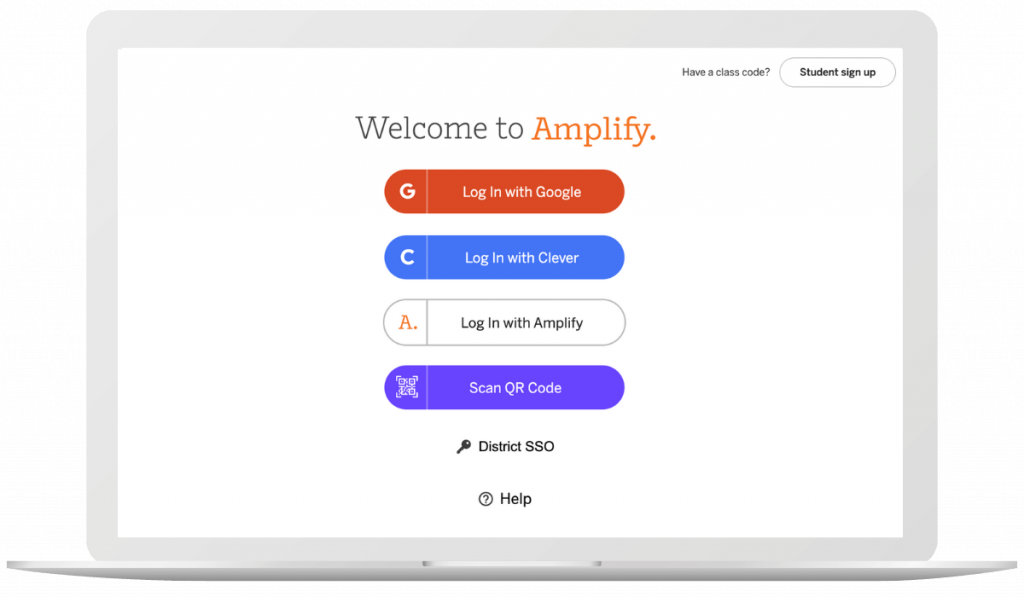
- Click the CKLA and Caminos Demo button below.
- Select Log in with Amplify.
- To explore as a teacher, enter this username: t1.sfusdreviewer@demo.tryamplify.net
- To explore as a student, enter this username: s1.sfusdreviewer@demo.tryamplify.net
- Enter the password: Amplify1-sfusdreviewer
- Click the Programs and apps menu
- Select CKLA Teacher Resource Site
- Select the desire grade level
- Use the toggle to switch between English (CKLA) and Spanish (Caminos) resources.
Sample materials
Finally, click on the grade levels below to explore your requested sample units.
Conocimiento Strand:
- Guía del maestro, Conocimiento 12: Luchar por una causa
- Cuaderno de actividades, Conocimientos 7–12
- Rotafolio de imágenes, Conocimiento 12
- Tarjetas de imágenes, Conocimiento 12
Lectoescritura Strand:
Additional resources
- Caminos Program Guide
- Biliteracy and Science of Reading Principles
- Amplify Caminos Conocimiento Scopes and Sequences
- Grade K Knowledge Strand
- Grade 1 Knowledge Strand
- Grade 2 Knowledge Strand
- Grade 3 Integrated Strand
- Grade 4 Integrated Strand
- Grade 5 Intgrated Strand
Bring the world to students with a proven PreK–5 literacy curriculum
Amplify Core Knowledge Language Arts (CKLA) is the leading early literacy curriculum grounded in the Science of Reading. By combining knowledge-building and research-based foundational skills, our instruction guides educators in developing strong readers, writers, and thinkers.
With a powerful online platform and a parallel Spanish language arts curriculum, Amplify CKLA provides a comprehensive solution for PreK–5 educators and students. Para la versión en español, haga clic aquí.
Background knowledge drives results
The Amplify CKLA PreK–5 literacy curriculum equips students with rich knowledge that intentionally builds to inspire curiosity and drive results. Explore research revealing the power of our knowledge-based curriculum including a study that meets qualifications for ESSA Tier I: Strong Evidence.
Amplify CKLA serves
38,000+
Classrooms
2,700,000+
Students
50
U.S. States and D.C.
Independently and rigorously reviewed
Amplify CKLA is among the few curricula that is both recognized by the Knowledge Matters Campaign—for its excellence in intentionally building knowledge—and rated all-green on EdReports, earning green scores across all gateways.

Our approach
Grounded in the Science of Reading and following the Core Knowledge approach, the Amplify CKLA PreK–5 curriculum combines rich content knowledge in history, science, literature, and the arts with systematic, research-based foundational skills instruction.
Grounded in the Science of Reading
As the first publisher to build a curriculum based on the Science of Reading, we put research into action with explicit systematic foundational skills instruction alongside a proven knowledge-building sequence. In collaboration with education experts and practitioners, we provide powerful resources that drive real results. Explore our Science of Reading success stories.
Developing foundational skills with explicit, systematic instruction
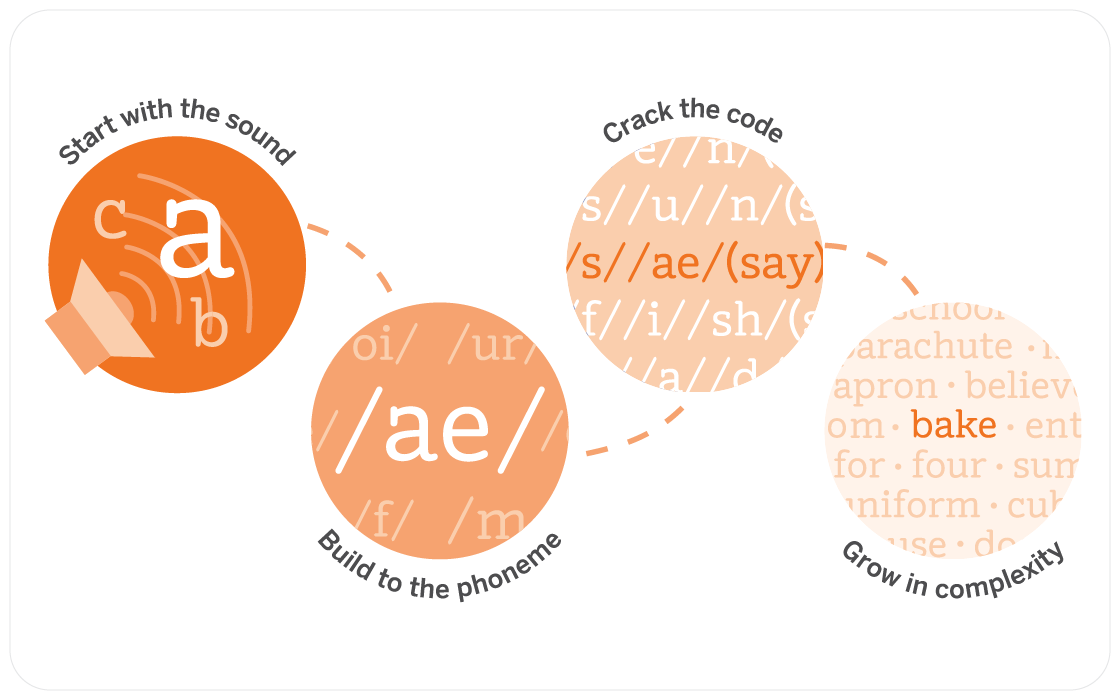
Amplify CKLA’s research-based scope and sequence progresses from simple to more complex skill development, starting with phonological and phonemic awareness. Instruction guides you in explicitly teaching the 150 spellings for the 44 sounds of English, with an intentional progression and review of skills to set your students up for success.
Following a proven knowledge-building approach
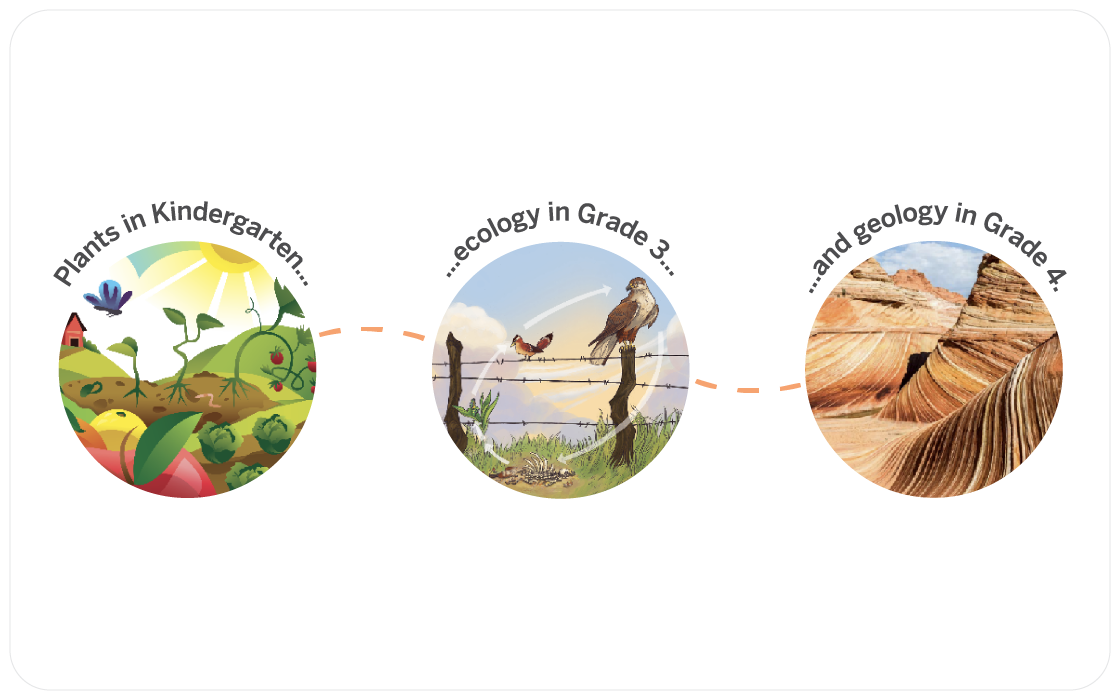
Following the Core Knowledge Sequence–a content-specific, cumulative, and coherent approach to building knowledge–students dig deeper and make connections across content areas to build a robust knowledge base for comprehending complex texts. See how the Core Knowledge curriculum is proven to improve reading scores and eliminate achievement gaps.

Built in partnership with the Core Knowledge Foundation
Amplify CKLA is the premier high-quality instructional materials offering for elementary language arts, built in partnership with the Core Knowledge Foundation to help students effectively develop deep content knowledge and foundational skills.
Cultivating biliteracy with parallel English and Spanish programs
Amplify Caminos is the perfect Spanish language arts partner to Amplify CKLA. The aligned programs combine rich content knowledge with systematic foundational skills instruction grounded in the Science of Reading that follows biliteracy principles, and supports multiple teaching models.

Amplify CKLA efficacy study
Tier I ESSA Evidence: Amplify CKLA knowledge-building improves achievement.
Download nowWhat’s included
The program provides engaging print and multimedia materials designed to build a robust literacy-rich foundation in every classroom.
CoreELD and companions
High-quality teacher materials
Amplify CKLA teachers effectively deliver instruction with print and digital resources, including:
- Teacher Guides with embedded differentiation.
- Formal and informal assessments.
- Ready-made and customizable lesson slides.
- Trade books and Novel Guides.
- Teacher resources and on-demand professional development.
Immersive student resources
Amplify CKLA students stay engaged with a variety of print and digital resources, including:
- Original decodables and read-aloud Big Books (K–2), Student Readers (3–5), and trade books (K–5).
- Student Activity Books with embedded assessments (K–5).
- Research units for independent research built around a trade book (K–5).
- Poet’s Journal and Writer’s Journal (write-in student readers for Grades 4–5).
- Quests for the Core to support immersive, problem-based learning in Grades 3–5.
Hands-on phonics materials
Multisensory phonics and foundational skills resources help students practice key skills using fun, varied approaches that build independence.
- Chaining Folder (K)
- Letter Cards (K–2)
- Syllable Cards (K–2)
- Image Cards (K–3)
- Blending Picture Cards (K)
- Consonant and Vowel Code Flip Books (1–2)
- Exclusive digital Sound Library
Robust digital experience
Amplify CKLA teacher and student resources are available through a digital experience platform that enhances instruction and saves you time. With everything you need in one place, you can effectively plan lessons, present content, and review student work.
- Ready-made yet customizable lesson presentation slide decks
- Dynamic live-review student tool
- Interactive and student-friendly experience
- LMS integration
- Knowledge Builder animated videos
- Recorded Read-Alouds
- Professional development website
- Real-time program support via email, live chat, and phone


English Language Learner program
Language Studio, designed for Amplify CKLA, provides WIDA-aligned daily instruction for English Language Learners to deepen their academic English.
Writing explorations program
A unique companion for Amplify CKLA, Writing Studio provides a deep dive into informational, narrative, and opinion writing to build strong, passionate writers.

Explore more programs based on the Science of Reading
All of the programs in our literacy suite are designed to support and complement each other. Learn more about our related programs:


Making reading comprehension connections

Comprehension isn’t just a process, or just a product—it’s both. And connecting reading and understanding is what most teachers are working on every day.
That fundamental connection was the focus of our recent Science of Reading Webinar Week: Comprehension Connections—Building the Bridge Between Reading and Understanding, a five-day, expert-filled series that unpacked what really drives comprehension, from early decoding to middle school mastery.
Here’s a quick look at what you’ll learn when you watch—and a few ideas you can use right away.
Day 1: What Is Reading Comprehension, Anyway?
Speaker: Susan Lambert, Ed.D., Chief Academic Officer, Literacy, Amplify; Host of Science of Reading: The Podcast
“Reading comprehension is more than just language comprehension. It’s language comprehension on the page, which makes it much more complex.” — Susan Lambert, Ed.D.
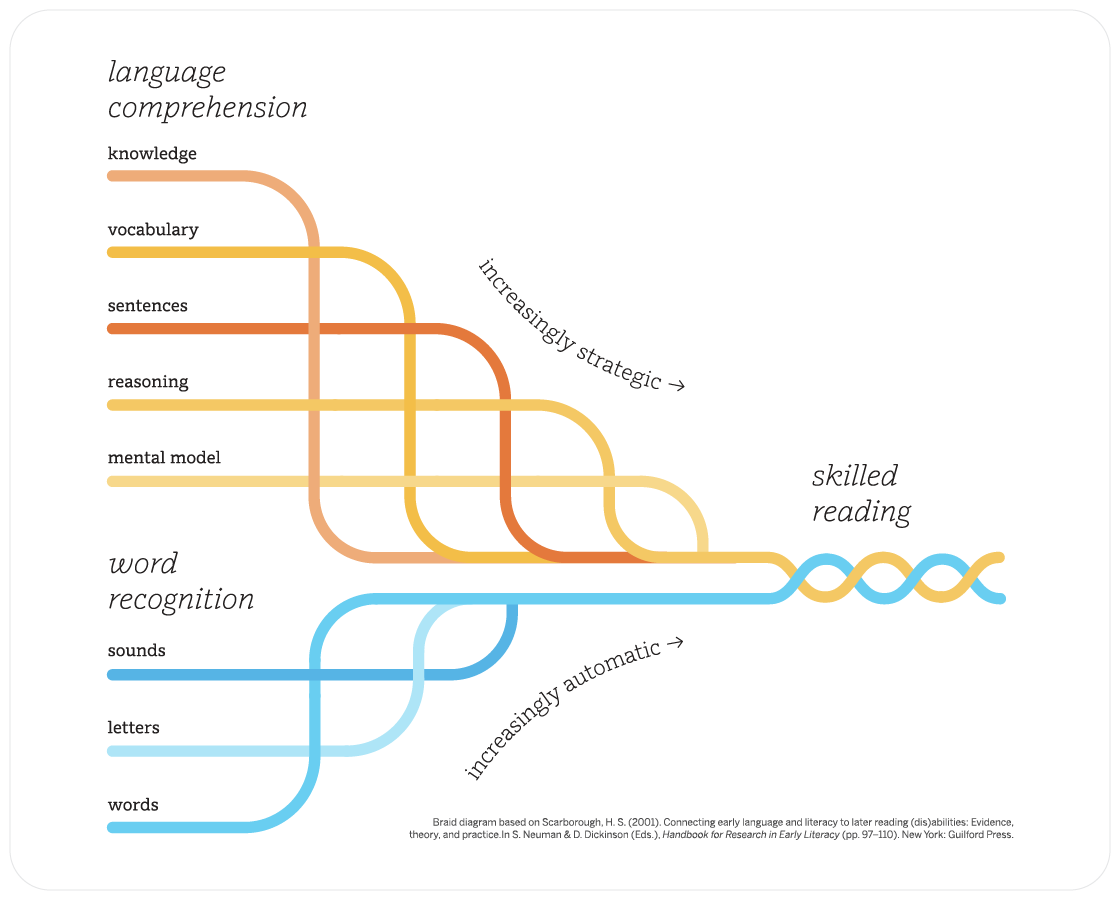
If you ask ten teachers to define comprehension, you might get twelve answers. Lambert opened the week by grounding everyone in the Science of Reading, including the Simple View of Reading and the Reading Rope. Skilled reading, she reminded viewers, is the result of multiple strands—decoding, language comprehension, and knowledge—woven together over time.
The takeaway? The most effective approaches don’t teach comprehension strategies—such as “find the main idea”—in isolation. Rather, they connect word recognition to meaning through rich texts, conversation, and writing. Whether you’re teaching second-grade reading comprehension or sixth-grade reading comprehension, students need the same thing: a clear path from sounding out words to making sense of ideas.
Day 2: Comprehension and Knowledge Building: A Two-Way Street
Speakers: Sonia Cabell, Ph.D., Sigmon Endowed Professor of Reading Education, Florida State University
HyeJin Hwang, Ph.D., Assistant Professor, Department of Educational Psychology, University of Minnesota Twin Cities
“Better background knowledge leads to improved reading comprehension, which in turn enables readers to learn more from text, thereby building additional knowledge.” —HyeJin Hwang, Ph.D.
In their session, Sonia Cabell and HyeJin Hwang explored one of the clearest findings in reading research: Comprehension and knowledge develop together. Cabell began by explaining how comprehension (including oral language, background knowledge, vocabulary, syntax, and verbal reasoning) forms one of the essential strands of the Reading Rope.
Students can’t activate knowledge they don’t yet have. Teachers need to help them build it early, and intentionally. Cabell’s research found that integrating literacy and content instruction produced gains in vocabulary and content knowledge.
Likewise, Hwang’s two large-scale longitudinal studies showed that better knowledge instruction leads to better reading, which leads to even more knowledge. These findings held true across languages and grade levels, underscoring the universal value of content-rich instruction.
Classroom takeaways:
- Plan literacy units around connected science or social studies topics to build coherent knowledge.
- Use content-rich interactive read-alouds with discussion before, during, and after reading.
- Ask inferential comprehension questions (“Why?” “How?”) that require students to connect ideas using their own words.
- Encourage quick writing or drawing tasks that help students show what they’ve learned.
Day 3: Where and How to Measure Comprehension to Drive Improvement
Speakers: Danielle Damico, Ph.D., Executive Director of Learning Science, Amplify
Gina Biancarosa, Ed.D., Ann Swindells Chair in Education, University of Oregon
“Reading comprehension is both a process and a product.” —Danielle Damico, Ph.D.
Too often, comprehension is measured only as a finished product—how well students answer questions after reading—without revealing how they built understanding along the way. This session explored what comprehension actually involves: reading words accurately, understanding their meaning, applying background knowledge, and making inferences. As researcher Sharon Vaughn, Ph.D., has described, these interconnected skills all work together as students learn to read.
Biancarosa showed how looking at comprehension as a complex process helps teachers see student thinking in action. She described the major types of inferences—lexical, bridging, gap-filling, and causal—and the importance of understanding how students connect ideas and construct meaning.
Try this:
- Treat comprehension as ongoing thinking, not a one-time test score.
- Use brief think-alouds or class discussions to get a look at how students connect ideas.
- Match assessments to the precise question you’re trying to answer.
- Let assessment guide instruction—data should lead directly to next steps.
Day 4: Comprehension in Middle School: More Important Than Ever
Speaker: Deb Sabin, Chief Academic Officer, Amplify ELA
“Writing done right encodes knowledge. And discourse done right gets into the realm of higher-order thinking.” —Deb Sabin
By the time you’re teaching fourth-grade reading comprehension through sixth-grade reading comprehension, decoding should be automatic. At this stage, the upper strands of the Reading Rope—vocabulary, background knowledge, and syntax—move to the forefront. In this session, Deb Sabin highlighted how comprehension in middle school relies on academic knowledge, disciplinary vocabulary, and structured discourse—and how it truly blossoms when reading, writing, and speaking reinforce one another.
Classroom moves that help:
- Pair writing with reading: Even short, text-based responses consolidate knowledge in long-term memory.
- Use structured discussion (“accountable talk”), where students cite text evidence and build on one another’s ideas.
- Center rich, grade-level texts that challenge thinking and vocabulary.
Day 5: Finding the Missing Link in Reading Comprehension to Boost Literacy Success
Speaker: Julie A. Van Dyke, Ph.D., Clinical Assistant Professor, Yale University Child Study Center; Research Scientist, Yale-UConn Haskins Global Literacy Hub
“Teach phonics for decoding. Teach syntax for understanding.” —Julie A. Van Dyke, Ph.D.
In the final presentation of the series, Julie Van Dyke explored an often-overlooked element of comprehension: syntax—the way words combine to create meaning. Van Dyke argued that syntax is to comprehension what phonics is to decoding.
She illustrated how the Science of Reading and the Reading Rope locate syntax within the language-comprehension strands—critical to understanding who did what to whom in complex sentences. Explicitly teaching sentence structure helps all learners, including multilingual/English learners, access higher-level meaning.
Simple practices can make a difference:
- Have students paraphrase tricky sentences. (Starter question: “Who’s doing the action?”)
- Pull strong sentences from your class texts to show how structure shapes meaning.
- Encourage students to mirror those structures in their own writing.
What linked all five sessions together? The understanding that comprehension develops when teachers connect the code, the language, and the knowledge. Whether students are decoding in second grade or crafting essays in sixth, they thrive when we help them move from reading to understanding—step by step, strand by strand.
Watch all five on-demand recordings.
More to explore:
- Download your Comprehension 101 bundle.
- Read (and comprehend!): Reading comprehension strategies grounded in science
- Listen to this special Essentials episode of Science of Reading: The Podcast, where Susan Lambert and other experts distill key reading comprehension insights.
Welcome, Seattle Public Schools, to the next chapter in the Science of Reading, with Amplify CKLA 3rd Edition!
Amplify Core Knowledge Language Arts (CKLA) helps implement the Washington State K–12 Learning Standards for English Language Arts (Common Core State Standards) by translating the Science of Reading into manageable, engaging, and effective classroom practices. For more than a decade, Amplify CKLA has transformed classrooms nationwide with its intentional knowledge building and systematic skills instruction.
Scroll down to learn how Amplify CKLA is uniquely designed to help all your students make learning leaps in literacy.
Our approach
Improve outcomes with a program that’s built on a decade of research and meets the strongest Every Student Succeeds Act (ESSA) Tier I criteria.

Grounded in the Science of Reading
As the original Science of Reading program, Amplify CKLA puts research into action with explicit, systematic foundational skills instruction and a proven knowledge-building sequence. In collaboration with education experts and practitioners, we provide powerful resources that deliver real results.
Background knowledge drives results.
Amplify CKLA follows the Core Knowledge Sequence, a content-specific, cumulative, and coherent approach to knowledge building. This approach improves reading scores and closes achievement gaps by establishing a robust knowledge base that strengthens comprehension.
In Amplify CKLA 3rd Edition, we’ve enriched our Knowledge Sequence with a wider range of perspectives and high-quality texts in new and enhanced units.
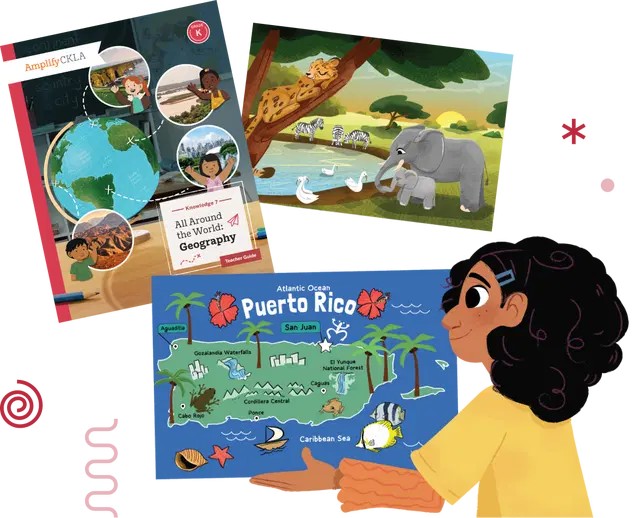
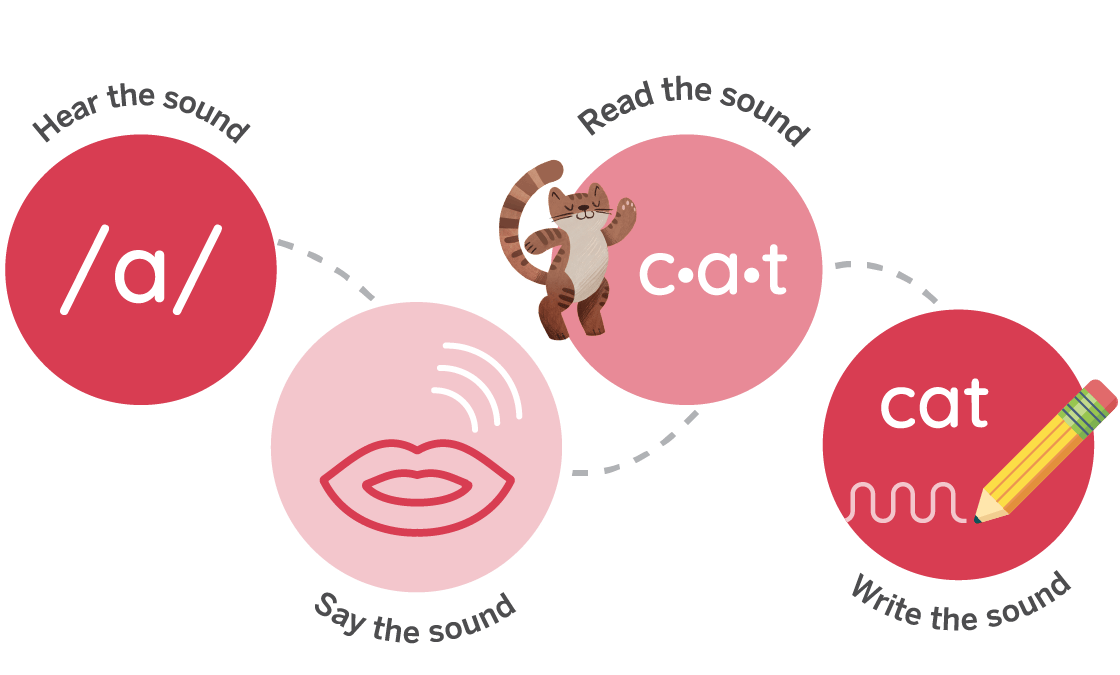
Build foundational skills for long-term success.
Students progress from simple to complex skill development starting with phonological and phonemic awareness. Instruction in Grades K–2 explicitly teaches the 150 spellings for the 44 sounds of English, following an intentional progression to ensure student success.
In our 3rd Edition, we’ve added dedicated Grade 3 foundational skills instruction that can either support core lessons or function as an intervention, based on student needs.
Daily writing deepens learning.
Grounded in the Science of Writing—the research on how kids learn to write—instruction is explicit, daily, and woven into the curriculum’s rich content. It covers both transcription (handwriting and spelling) and composition (organizing ideas into narratives) with high-impact activities like sentence-level combining and expanding, and pre-writing exercises. Writing and reading instruction are integrated so students simultaneously strengthen their communication skills, comprehension, and confidence.

High-quality, diverse texts
Amplify CKLA students are immersed in a variety of texts—complex read-alouds, decodable chapter books, trade books, and content-rich readers—that reflect varied experiences and connect to learning goals.
Readers are 100% decodable for Grades K–2, empowering students to directly apply what they’ve learned. Novel Study units for Grades 3–5 offer a mix of contemporary and classic literature, and Culminating Research Units in every grade include a set of authentic texts and trade books.
Reach all learners with differentiated support.
Scaffolds and challenges, developed in collaboration with education experts, make content accessible to every student, including multilingual and English learners. With strategies embedded right in the curriculum, teachers can deliver in-the-moment, individualized instruction to meet diverse student needs.
For a dedicated English language development program aligned to Amplify CKLA, explore Language Studio.

What’s included with Amplify CKLA
The comprehensive resources in Amplify CKLA 3rd Edition support effective literacy instruction in every classroom.
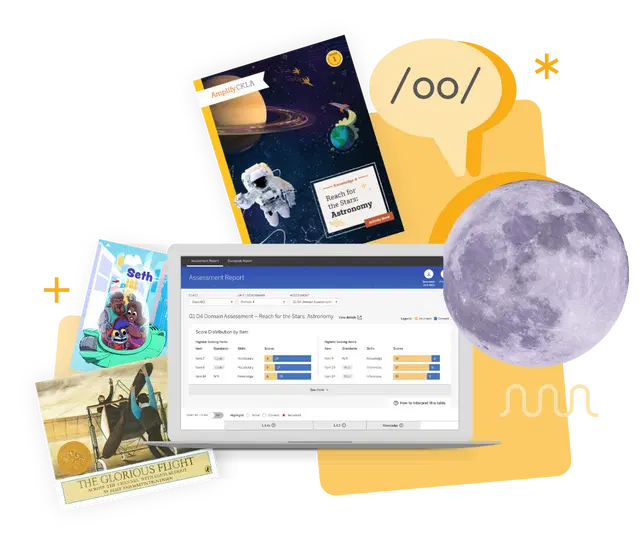

Easy-to-use teacher materials
Amplify CKLA teachers are empowered to deliver effective instruction with the following print and digital resources:
- Teacher Guides (K–5)
- Assessment Guides (K–5)
- Authentic texts and trade books (K–5)
- Knowledge Image Cards (K–2)
- Knowledge Flip Books (K–2, digital)
- Ready-made and customizable Presentation Screens (K–5, digital)
- Remediation and intervention resources (K–5)
- On-demand professional development (K–5, digital)
Immersive Amplify CKLA student resources
Amplify CKLA students stay engaged with the following print and digital resources:
- Decodable readers (K–2)
- Student Readers and novels (3–5)
- Student Activity Books (K–5)
- Poet’s Journal (3–5)
- eReaders (K–5, digital)
- Sound Library featuring articulation videos and songs (K–2, digital)
- Skill-building practice games (K–5)


Rich literary experiences
The array of high-quality, varied texts in Amplify CKLA connect to the curriculum, sparking students’ curiosity and empowering them to learn to read with confidence.
- Trade Book Collections (K–5) inspire student research in each grade’s Culminating Research Unit.
- Classic and contemporary literature (3–5) delight students in Novel Study Units.
- Increasingly complex Student Readers (K–5) develop students’ literacy across grades.
Hands-on phonics materials
Multisensory phonics and foundational skills resources engage students with fun, varied approaches that promote mastery and build independence.
- Chaining Folders and Small Letter Cards (K)
- Read-Aloud Big Books (K–1)
- Large Letter Cards (K–2)
- Sound Cards (K–2)
- Image Cards (K–3)
- Blending Picture Cards (K)
- Consonant and Vowel Code Posters and Spelling Cards (1–2)
- Sound Library (K–2, digital)
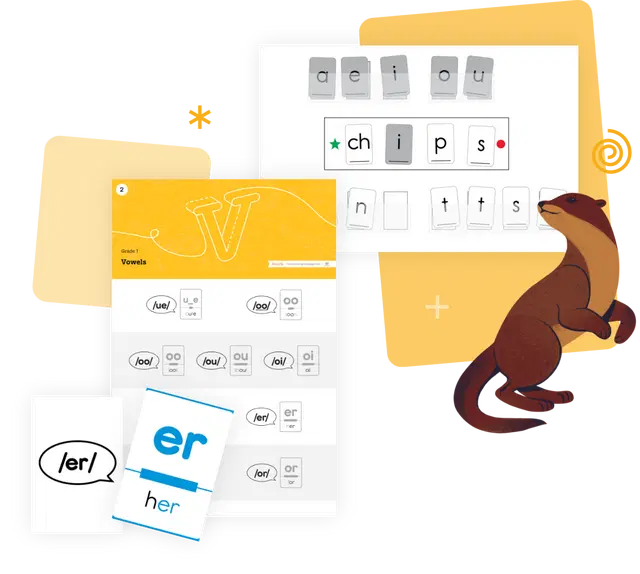
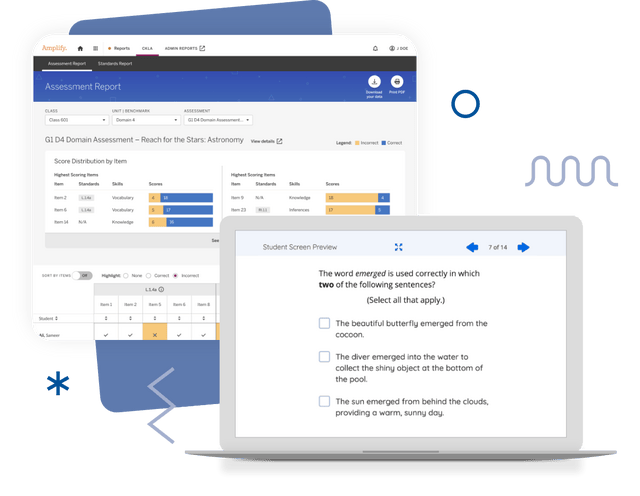
All-in-one digital platform
Our comprehensive platform simplifies your day-to-day tasks and makes it easier to plan and deliver lessons.
- Ready-made and customizable Presentation Screens
- Auto-scored digital assessments
- Standards-based reporting
- Assignable skill-building games
- Sound Library
- eReaders
Professional development (PD)
Move beyond traditional program training with Amplify’s digital PD Library, designed to fully support your shift to the Science of Reading and Amplify CKLA. Deepen your understanding with:
- Program and planning resources.
- Model lesson videos from real classrooms.
- Guidance on using Amplify’s literacy suite to provide multi-tiered support.

Language Studio: Multilingual and English language learner support
Language Studio is Amplify CKLA’s dedicated K–5 program for multilingual and English language learners. Through daily 30-minute lessons, it strengthens reading, writing, speaking, and listening skills while reinforcing core instruction. This tailored support empowers students to confidently access grade-level content as they develop academic English.

Curriculum Maps
Curriculum Maps by Grade and Strand:
Amplify Caminos program overview
¡El futuro es bilingüe! | The future is bilingual!
Amplify Caminos is a research-based core curriculum essential for Spanish literacy and grounded in the Science of Reading.
View our Amplify Caminos Program Guide to learn our approach to foundational skills by year, view skills practice with student readers and writing, and understand how the program supports teachers in meeting the needs of all students with embedded differentiation.
Amplify Caminos offers a robust and authentic elementary Spanish language arts program for grades K–5 that promotes
biliteracy and helps teachers inspire students as they become confident readers, writers, and thinkers in Spanish.
Using the program’s two strands, Caminos Conocimiento and Caminos Lectoescritura, teachers develop student
comprehension in Spanish through a program rich in background knowledge and foundational skills activities. The texts students encounter include authentic Spanish literary works that honor Spanish language development and build deep content knowledge in social studies, science, literature, and the arts.
Amplify Caminos is designed to support a variety of bilingual and dual language instructional models to meet every student’s biliteracy needs. Combined with its English language partner, Amplify Core Knowledge Language Arts (CKLA), Amplify Caminos provides a comprehensive biliteracy solution.


Amplify Caminos delivers rich, authentic experiences.
With a robust digital experience and an expanding library of online materials, Amplify Caminos provides everything needed to support, challenge, and engage your students. From digital Teacher Guides to lesson projectables, the program includes all the tools needed to successfully deliver every lesson.
How Amplify Caminos works with Amplify CKLA
Through direct instruction, both Amplify Caminos and Amplify CKLA develop reading, writing, speaking, and listening skills in their respective languages. Together, the programs empower educators to effectively foster biliteracy with:
- Intentional knowledge building that connects topics throughout the program.
- Increased metalinguistic awareness from students exploring the similarities and differences in each language while strengthening their knowledge across both.
- Instruction with high-quality Spanish and English decodable readers that provide every student with opportunities to apply skills learned and grow competency in reading.
Demo access
Explore the Amplify CKLA teacher digital resources.
First, watch the quick navigation video to the right. Then, follow the directions below.
- Go to: learning.amplify.com or click the Access CKLA Teacher Digital button below.
- Select Log in with Amplify.
- Enter the following information:
- Teacher username: t1.seattle_sd_ckla@demo.tryamplify.net
- Teacher password: Amplify1-seattle_sd_ckla
- Student username: s1.seattle_sd_ckla@demo.tryamplify.net
- Student password: Amplify1-seattle_sd_ckla
- Please note, these demo accounts expire on: February 26, 2026
- Click the CKLA button.
- Select your desired grade level from the Program drop down.
Follow the directions below to access the Student Resource Site:
- Go to: learning.amplify.com or click the Access CKLA Student Digital button below.
- Select Log in with Amplify.
- Enter the following information:
- Teacher username: t1.seattle_sd_ckla@demo.tryamplify.net
- Teacher password: Amplify1-seattle_sd_ckla
- Student username: s1.seattle_sd_ckla@demo.tryamplify.net
- Student password: Amplify1-seattle_sd_ckla
- Please note, these demo accounts expire on: February 26, 2026
- From the main page, click the backpack in the top right corner.
- Click on the grade level to select your desired grade.
Welcome to Amplify Science K–5!
Amplify Science is an engaging core curriculum designed for three-dimensional, phenomena-based learning.
With Amplify Science, Detroit students won’t just passively learn about science concepts. Instead, they will take on the role of scientists and engineers to actively investigate and figure out real-world phenomena. They will do this through a blend of cohesive and compelling storylines, hands-on investigations, collaborative discussions, literacy-rich activities, and interactive digital tools.
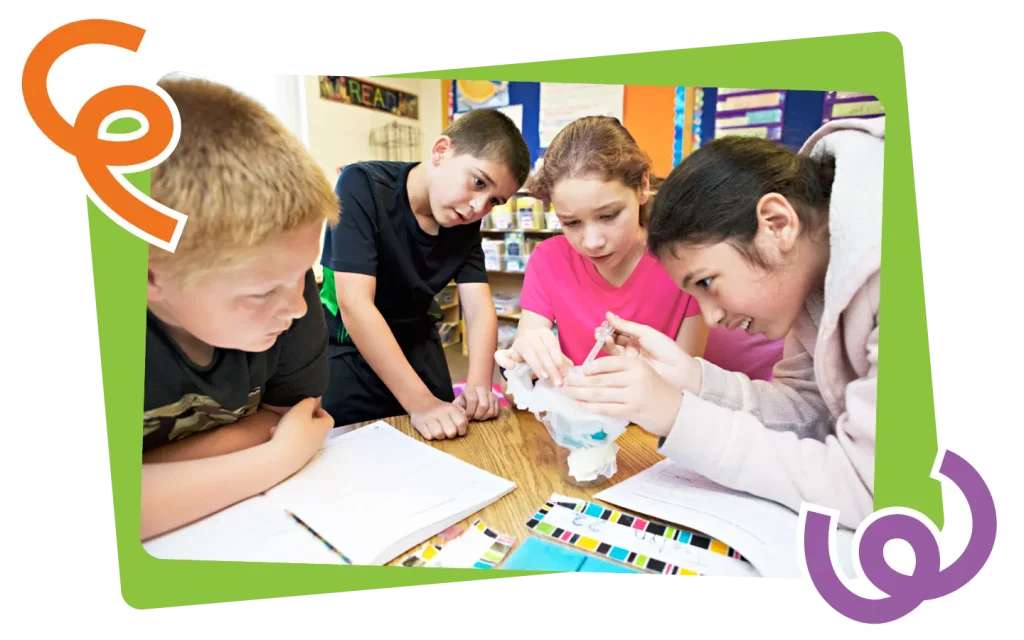
What is Amplify Science?
The Lawrence Hall of Science
Developed by the science education experts at UC Berkeley’s Lawrence Hall of Science and the digital learning team at Amplify, our program features:
- A phenomena-based approach where students construct a complex understanding of each unit’s anchor phenomenon.
- A blend of cohesive storylines, hands-on investigations, rich discussions, literacy-rich activities, and digital tools.
- Carefully crafted units, chapters, lessons, and activities designed to deliver true three-dimensional learning.
- An instructional design that supports all learners in accessing all standards.
Proven to work
Instructional model
The Amplify Science program is rooted in the proven, research-based pedagogy of Do, Talk, Read, Write, Visualize. Here’s how each element works:
Do
First-hand investigations are an important part of any science classroom, and Amplify Science has students getting hands-on in every unit—from building models of protein molecules to experimenting with electrical systems.
Talk
Student-to-student discourse and full-class discussions are an integral part of the program. Students are provided with numerous opportunities to engage in meaningful oral scientific argumentation, all while fostering a collaborative classroom environment.
Read
Students read scientific articles, focusing their reading activities on searching for evidence related to their investigation and, importantly, on asking and recording questions as they read through fascinating texts on 21st-century topics.
Write
Following real-world practices, students write scientific arguments based on evidence they’ve collected, making clear their reasoning about how a given piece of evidence connects to one of several claims.
Visualize
By manipulating digital simulations and using modeling tools to craft visualizations of their thinking— just as real scientists and engineers
do—students take their learning far beyond the confines of what they can physically see in the classroom in an exciting and authentic way.
Program structure
Our cyclical lesson design ensures students receive multiple exposures to concepts through a variety of modalities. As they progress through the lessons within a unit, students build and deepen their understanding, increasing their ability to develop and refine complex explanations of the unit’s phenomenon.
It’s this proven program structure and lesson design that enables Amplify Science to address 100% of the Next Generation Science Standards (NGSS) and support students in mastering the Pennsylvania Science Standards.

Unit types
While every unit delivers three-dimensional learning experiences and engages students in gathering evidence from a rich collection of sources, each unit also emphasizes a particular science and engineering practice.
In grades K–2:
- One unit emphasizes the practice of investigation.
- One unit emphasizes the practice of modeling.
- One unit emphasizes the practice of engineering design.
In grades 3–5, students experience the three unit types above, plus:
- One additional unit that emphasizes the practice of argumentation.
Investigation units focus on the process of strategically developing investigations and gathering data to answer questions. Students are first asked to consider questions about what happens in the natural world and why, and are then involved in designing and conducting investigations that produce data to help answer those questions.
Modeling units provide extra support to students engaging in the practice of modeling. Students use physical models, investigate with computer models, and create their own diagrams to help them visualize what might be happening on the nanoscale.
Engineering design units provide opportunities for students to solve complex problems by applying science principles to the design of functional solutions, and iteratively testing those solutions to determine how well they meet preset criteria.
Argumentation units provide students with regular opportunities to explore and discuss available evidence, time and support to consider how evidence may be leveraged in support of claims, and independence that increases as they mount written arguments in support of their claims.
Unit sequence
Our lessons follow a structure that is grounded in regular routines while still being flexible enough to allow for a variety of learning experiences.
In fact, our multi-modal instruction offers more opportunities for students to construct meaning, and practice and apply concepts, than any other program. What’s more, our modular design means our units can be flexibly arranged to support your instructional goals.
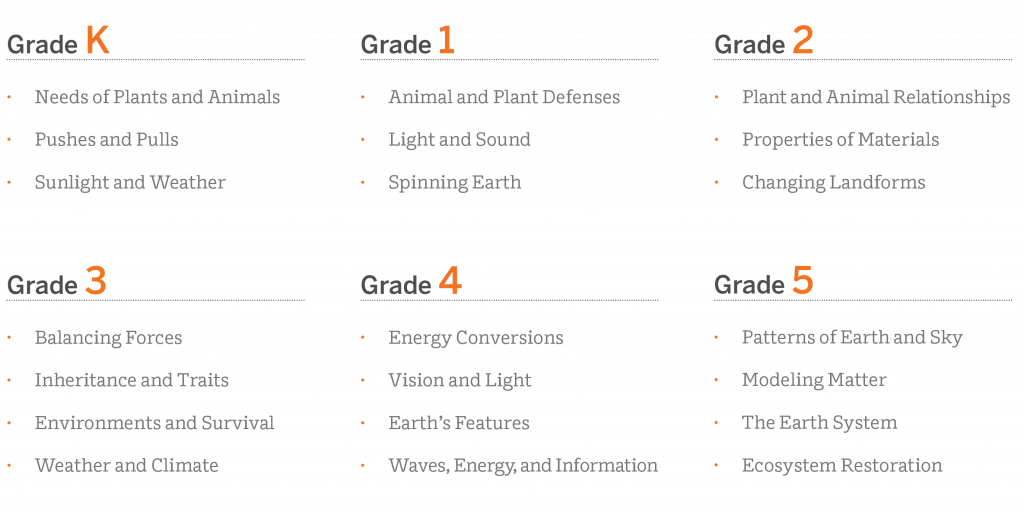
Program components
Available digitally and in print, our unit-specific reference guides are chock-full of helpful resources, including scientific background knowledge, planning information and resources, color-coded 3D Statements, detailed lesson plans, tips for delivering instruction, and differentiation strategies.

Hands-on learning is an essential part of Amplify Science, and is integrated into every unit. Students actively participate in science, playing the roles of scientists and engineers as they gather evidence, think critically, solve problems, and develop and defend claims about the world around them. Every unit includes hands-on investigations that are critical to achieving the unit’s learning goals.
More hands-on with Flextensions:
Hands-on Flextensions are additional, optional investigations that are included at logical points in the learning progression and give students an opportunity to dig deeper if time permits. These activities offer teachers flexibility to choose to dedicate more time to hands-on learning. Materials referenced in Hands-on Flextension activities will either be included in the unit kit or are easily sourced. Supporting resources such as student worksheets will be included as downloadable PDF files.
Our kits include enough materials to support 200 student uses. In other words, teachers can easily support all five periods and small groups of 4-5 students each. Plus, our unit-specific kits mean teachers just grab the tub they need and then put it all back with ease.
Each unit of Amplify Science K–5 includes six unique Student Books written by the Lawrence Hall of Science specifically for the program. These content-rich nonfiction and informational texts provide opportunities for students to search for evidence relevant to their firsthand investigations, see science practices and dispositions modeled, extend their science knowledge, provide real world connections as they master reading-to-learn and close reading skills, and construct evidence-based arguments.
Important note:
Students in grades K–5 are never asked to read alone. Rather, books are read to, with, and by students with ample scaffolding and support provided by the teacher. Big Books are read aloud or together with the class to introduce ideas. Student Books allow for small-group reading and reading in pairs.

Available for every unit, our Student Investigation Notebooks contain instructions for activities and space for students to record data and observations, reflect on ideas from texts and investigations, and construct explanations and arguments.
In grades K–5, one copy of the Student Investigation Notebook is included in each unit’s materials kit for use as a blackline master. Each notebook is also available as a downloadable PDF on the Unit Guide page of the digital Teacher’s Guide.
Amplify Science offers digital experience licenses that make elementary instruction more flexible for students and teachers, as well as providing additional means to engage in remote, hybrid, or in-person learning!
Student-facing digital lessons
With the digital experience, students can engage with digital lesson content in one cohesive experience. It’s the same content from Amplify science in a new, integrated format where students can interact with slides, Sims, modeling tools, videos, books, and more.

Digital student notebook pages
Students can draw, write, record audio, and insert images into their Investigation Notebook pages. Their work is automatically saved and delivered to you in real time. When students edit their work, those edits are immediately reflected on your teacher work review page. You can access student responses by clicking “View Work,” where you can see students’ Investigation Notebook pages from the lesson, updating live.
Assign in Amplify
The digital experience allows flexibility with optional features like scheduling assignments in advance and setting due dates. You can use Scheduling to determine the date and time that the assignment appears in Student Home. You also have the flexibility to schedule when assignments appear and use dates to remove assignments from Student Home.
Assign in LMS
You can also assign lessons via our integrations with Google Classroom and Microsoft Teams, or by copying a lesson link and sharing it with students through the platform of your choice. The assignment link you send will provide students with direct access to the full lesson—slides, videos, digital tools, and worksheet activities—no student platform navigation required!
Teacher platform and presentation
Teacher-facing lesson content—including sample teacher talk, student responses, pedagogical support, and possible student responses—shows on a teacher’s private Teacher Guide tab. Students only see the lesson slides that are being presented.

Explore your print samples
With your Amplify Science print samples, you’ll find unit-specific Teacher’s References Guides, Student Investigation Notebooks, and sets of Student Books for each grade level.
A note about the Teacher’s Reference Guides:
It’s important that you see the full breadth and depth of our instruction. For that reason, we provide a copy of each of our unit-specific Teacher Reference Guides.
Rest assured that teachers do not use these robust reference guides for day-to-day teaching. For that, we have a hands-free TG!

- Teacher Reference Guide: Unlike a typical TG that requires a series of supplemental books to support it, our encyclopedic reference guide is chock-full of everything a teacher needs to fully implement our program and the NGSS.
- Ready-to-Teach Lesson Slides: For daily instruction, teachers need their hands free. That’s why we created ready-to-teach lesson slides for every single lesson. What’s more, they are editable and include suggested teacher talk and point-of-use differentiation and other instructional tips. Click to learn more.
A note about the Materials Kits:
Hands-on learning is at the heart of Amplify Science, and is integrated into every unit. In order to make hands-on learning more manageable for busy teachers, Amplify Science materials are organized into unit-specific kits.
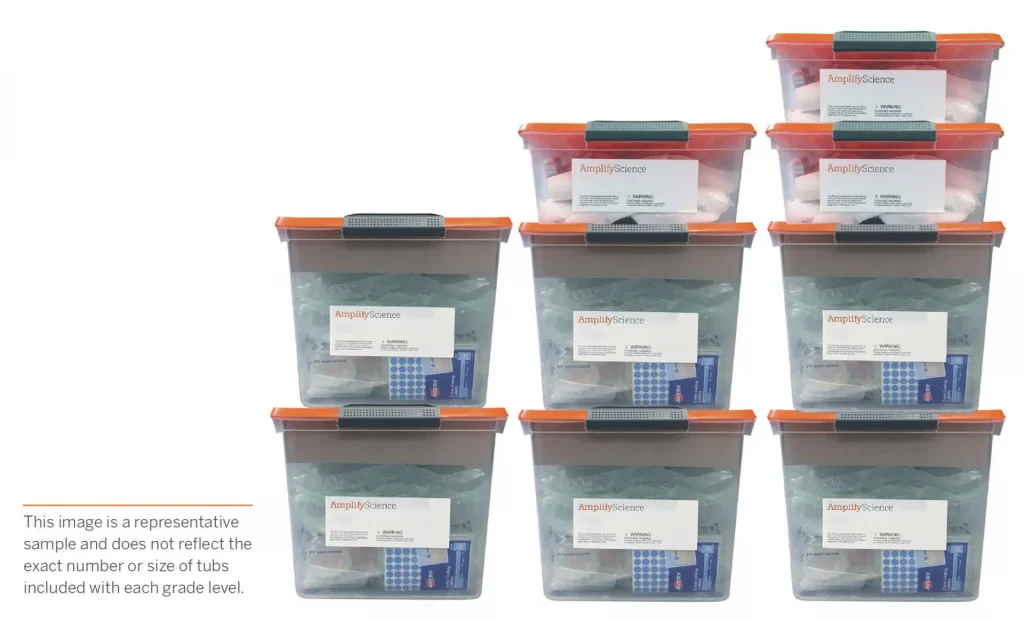
Our unit-specific kits:
What’s different about Amplify’s unit-specific material kits? They…
- Include more materials — We give teachers enough non-consumable materials to support a class of 36 students and enough consumables to support 72 student uses. In other words, each kit will last two years.
- Are more manageable — Unlike other programs that require large groups of students to share limited sets of materials, our kits include enough to support small groups of four to five students.
- Include supportive videos — Each hands-on activity provides clear instructions for the teacher, with more complex activities supported by video demonstrations and illustrations.
Grade-specific lists of all materials included in each kit:
- Grade K: Materials Kit List
- Grade 1: Materials Kit List
- Grade 2: Materials Kit List
- Grade 3: Materials Kit List
- Grade 4: Materials Kit List
- Grade 5: Materials Kit List
Access your digital samples
Explore as a teacher
When you’re ready to explore the teaching experience on your own, follow these instructions to access the Amplify Science digital teacher platform.
- Click the Access Amplify Science Platform button below and bookmark the page.
- Select Log in with Amplify.
- Enter the username: t1.dpsscience@demo.tryamplify.net
- Enter the password: Amplify1-dpsscience
- Click on Science on the left hand side.
- Click on the Grade Menu in the top center of the screen and select any grade.
- Select any unit.
To help familiarize yourself with navigating the digital platform, watch the below navigational video.
Explore as a student
When you’re ready to explore the student learning experience on your own, follow these instructions to access the Amplify Science digital student platform.
- Click the Access Amplify Science Platform button below and bookmark the page.
- Select Log in with Amplify.
- Enter the username: s1.dpsscience@demo.tryamplify.net
- Enter the password: Amplify1-dpsscience
- Click the backpack icon on the top right.
- Click Science K-5
- Select any unit.
Spanish-language support
Amplify Science is committed to providing support to meet the needs of all learners, including multiple access points for Spanish-speaking students. Developed in conjunction with Spanish-language experts and classroom teachers, several components are available in Spanish across the Amplify Science curriculum.
Spanish-language materials include:
| COMPONENT | TEACHER/STUDENT |
| Student Investigation Notebooks | Student |
| Student Books | Student |
| Printed classroom materials Unit and chapter questions, key concepts, vocabulary cards, etc. | Teacher and student |
| Copymasters | Teacher |
| Assessments | Teacher |
| Spanish teacher support license This license includes teacher talk, projections, and downloadable PDFs of all print materials in Spanish. | Teacher |
Resources to support your review
- Michigan Next Generation Science Standards Correlation K-8
- DEIA in Amplify Science
- Research behind Amplify Science
- What’s so phenomenal about phenomena? – eBook
- Phenomena in grades K–5
- Program structure for grades K–5
- Student Books in grades K–5
- Literacy-rich science instruction in grades K–5
- Approaches to assessment in grades K–5
Overview Video
The Lawrence Hall of Science
Developed by the science education experts at UC Berkeley’s Lawrence Hall of Science and the digital learning team at Amplify, our program features:
- A phenomena-based approach where students construct a complex understanding of each unit’s anchor phenomenon.
- A blend of cohesive storylines, hands-on investigations, rich discussions, literacy-rich activities, and digital tools.
- Carefully crafted units, chapters, lessons, and activities designed to deliver true 3-dimensional learning.
- An instructional design that supports all learners in accessing all standards.
Instructional model
The Amplify Science program is rooted in the proven, research-based pedagogy of Do, Talk, Read, Write, Visualize. Here’s how each element works:
DO
First-hand investigations are an important part of any science classroom, and Amplify Science has students getting hands-on in every unit—from building models of protein molecules to experimenting with electrical systems.
TALK
Student-to-student discourse and full-class discussions are an integral part of the program. Students are provided with numerous opportunities to engage in meaningful oral scientific argumentation, all while fostering a collaborative classroom environment.
READ
Students read scientific articles, focusing their reading activities on searching for evidence related to their investigation and, importantly, on asking and recording questions as they read through fascinating texts on 21st-century topics.
WRITE
Following real-world practices, students write scientific arguments based on evidence they’ve collected, making clear their reasoning about how a given piece of evidence connects to one of several claims.
VISUALIZE
By manipulating digital simulations and using modeling tools to craft visualizations of their thinking— just as real scientists and engineers do—students take their learning far beyond the confines of what they can physically see in the classroom in an exciting and authentic way.
Program structure
Our cyclical lesson design ensures students receive multiple exposures to concepts through a variety of modalities. As they progress through the lessons within a unit, students build and deepen their understanding, increasing their ability to develop and refine complex explanations of the unit’s phenomenon.
It’s this proven program structure and lesson design that enables Amplify Science to address 100% of the NGSS, and support students in mastering the standards.
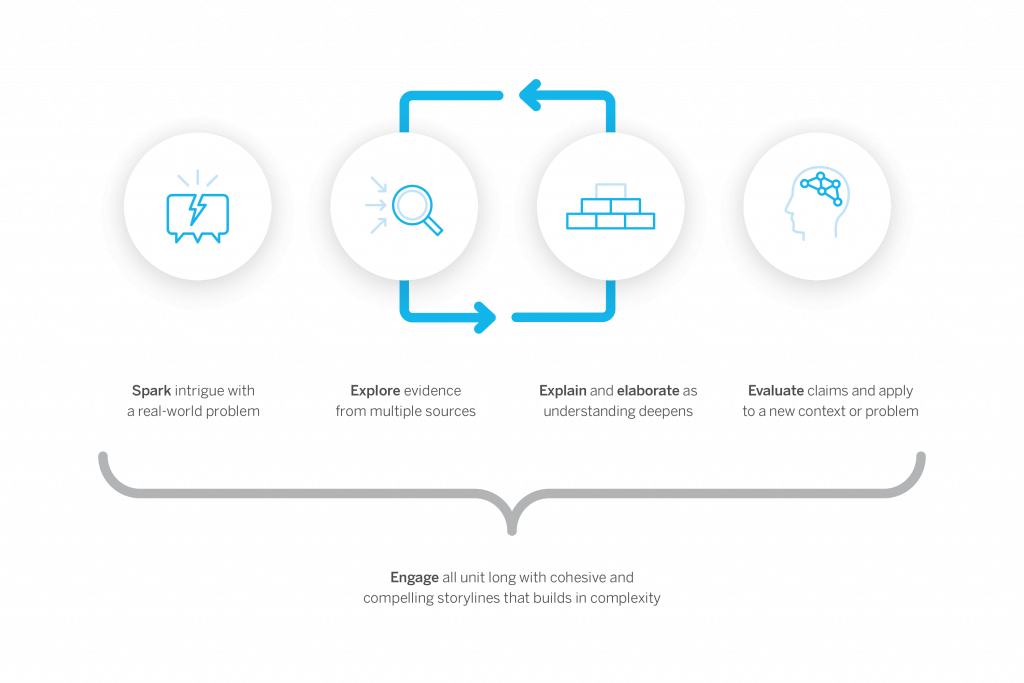
Unit types
While every unit delivers three-dimensional learning experiences and engages students in gathering evidence from a rich collection of sources, each unit also serves a unique instructional purpose.
In grades 6–8:
- One unit is a launch unit.
- Three units are core units.
- Two units are engineering internships.
Launch units are the first units taught in each year of Amplify Science. The goal of the Launch unit is to introduce students to norms, routines, and practices that will be built on throughout the year, including argumentation, active reading, and using the program’s technology. For example, rather than taking the time to explain the process of active reading in every unit in a given year, it is explained thoroughly in the Launch unit, thereby preparing students to read actively in all subsequent units.
Core units establish the context of the unit by introducing students to a real-world problem. As students move through lessons in a Core unit, they figure out the unit’s anchoring phenomenon, gain an understanding of the unit’s disciplinary core ideas and science and engineering practices, and make linkages across topics through the crosscutting concepts. Each Core unit culminates with a Science Seminar and final writing activity.
Engineering Internship units invite students to design solutions for real-world problems as interns for a fictional company called Futura. Students figure out how to help those in need, from tsunami victims in Sri Lanka to premature babies, through the application of engineering practices. In the process, they apply and deepen their learning from Core units.
Unit sequence
Our lessons follow a structure that is grounded in regular routines while still being flexible enough to allow for a variety of learning experiences.
In fact, our multi-modal instruction offers more opportunities for students to construct meaning, and practice and apply concepts than any other program. What’s more, our modular design means our units can be flexibly arranged to support your instructional goals.

Program components
Available digitally and in print, our unit-specific reference guides are chock full of helpful resources, including scientific background knowledge, planning information and resources, color-coded 3-D Statements, detailed lesson plans, tips for delivering instruction, and differentiation strategies.
Hands-on learning is an essential part of Amplify Science, and is integrated into every unit. Students actively participate in science, playing the roles of scientists and engineers as they gather evidence, think critically, solve problems, and develop and defend claims about the world around them. Every unit includes hands-on investigations that are critical to achieving the unit’s learning goals.
More hands-on with Flextensions:
Hands-on Flextensions are additional, optional investigations that are included at logical points in the learning progression and give students an opportunity to dig deeper if time permits. These activities offer teachers flexibility to choose to dedicate more time to hands-on learning. Materials referenced in Hands-on Flextension activities will either be included in the unit kit or are easily sourced. Supporting resources such as student worksheets will be included as downloadable PDF files.
Our kits include enough materials to support 200 student uses. In other words, teachers can easily support all five periods and small groups of 4-5 students each. Plus, our unit-specific kits mean teachers just grab the tub they need and then put it all back with ease.

Our digital Simulations and Practice Tools are powerful resources for exploration, data collection, and student collaboration. They allow students the ability to explore scientific concepts that might otherwise be invisible or impossible to see with the naked eye.
Available for every unit, our Student Investigation Notebooks contain instructions for activities and space for students to record data and observations, reflect on ideas from texts and investigations, and construct explanations and arguments.
In grades 6–8, one copy of the Student Investigation Notebook is included in each unit’s materials kit for use as a blackline master. Each notebook is also available as a downloadable PDF on the Unit Guide page of the digital Teacher’s Guide.
These customizable PowerPoints are available for every lesson of the program and make delivering instruction a snap with visual prompts, colorful activity instructions, investigation set-up videos and animations, and suggested teacher talk in the notes section of each slide.

Explore your print samples
With your Amplify Science print samples, you’ll find unit-specific Teacher’s References Guides and Student Investigation Notebooks for each grade level.
A note about the Teacher’s Reference Guides:
It’s important that your committee sees the full breadth and depth of our instruction. For that reason, we provided a copy of each of our unit-specific Teacher Reference Guides.
Rest assured that teachers do not use these robust reference guides for day-to-day teaching. For that, we have a hands-free TG!
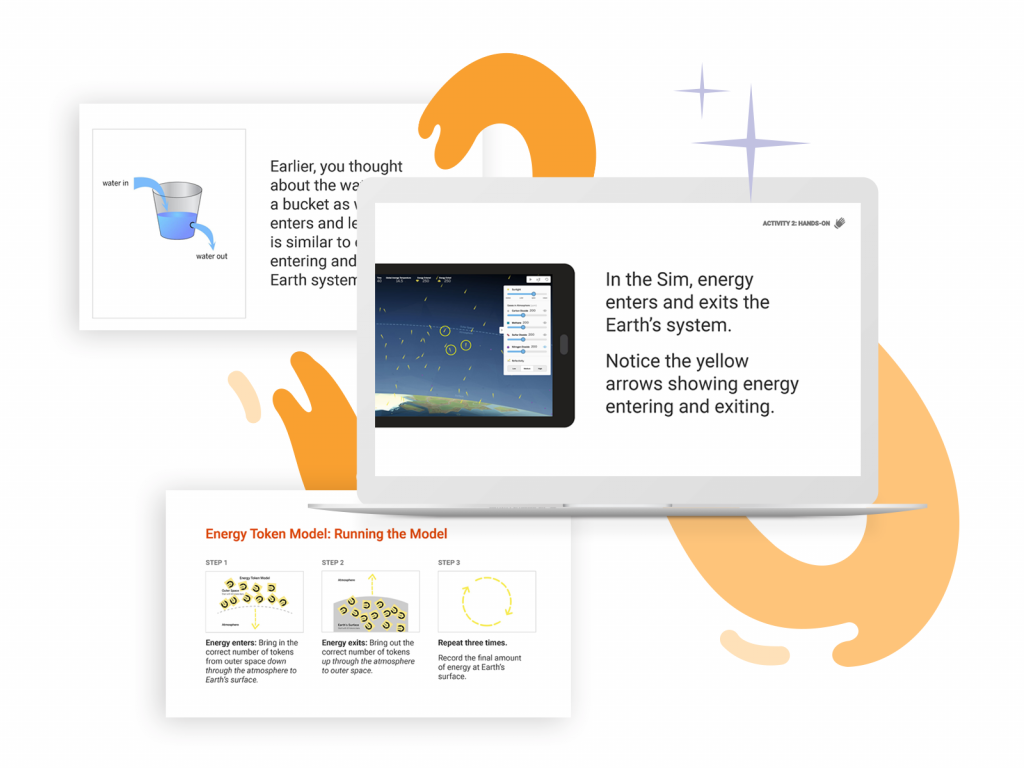
- Teacher Reference Guide: Unlike a typical TG that requires a series of supplemental books to support it, our encyclopedic reference guide is chock-full of everything a teacher needs to fully implement our program and the NGSS.
- Ready-to-Teach Lesson Slides: For daily instruction, teachers need their hands free. That’s why we created ready-to-teach lesson slides for every single lesson. What’s more, they are editable and include suggested teacher talk and point-of-use differentiation and other instructional tips. Click to learn more.
A note about the Materials Kits:
Hands-on learning is at the heart of Amplify Science, and is integrated into every unit. In order to make hands-on learning more manageable for busy teachers, Amplify Science materials are organized into unit-specific kits.
Our unit-specific kits:
- Include more materials — We give teachers enough materials to support 200 student uses.
- Are more manageable — Unlike other programs that require large groups of students to share limited sets of materials, our kits include enough to support small groups of 4–5 students.
- Include supportive videos — Each hands-on activity provides clear instructions for the teacher, with more complex activities supported by video demonstrations and illustrations.
What comes in each grade level kit? Click the links below to see the grade-specific lists of all materials included in each kit.
Access your digital samples
Explore as a teacher
Follow these instructions to explore the Amplify Science digital platform as a teacher.
- Click the Access Amplify Science Platform button below and bookmark it.
- Select Log in with Amplify.
- Enter the username: t1.jeffersoncounty@demo.tryamplify.net
- Enter the password: Amplify1-jeffersoncounty
- Click the Science icon.
- Click on the Program Menu in the top center of the screen and select any grade.
- Select any unit.
To help familiarize yourself with navigating the digital platform,watch the below navigational video.
Explore as a student
Follow these instructions to explore the Amplify Science digital platform as a student.
- Click the Access Amplify Science Platform button below and bookmark it.
- Select Log in with Amplify.
- Enter the username: s1.jeffersoncounty@demo.tryamplify.net
- Enter the password: Amplify1-jeffersoncounty
- Click the Science icon.
- Click on the Grade Menu in the top center of the screen and select any grade.
- Select any unit.
Resources to support your review
A closer look at grades 3–5
Amplify Science is based on the latest research on teaching and learning and helps teachers deliver age-appropriate, high-quality, literacy-rich instruction that enables students to take on the roles of scientists and engineers to solve real-world phenomena every day.
In the 3–5 classroom, this looks like students:
- Collecting evidence from a variety of sources.
- Making sense of evidence in a variety of ways.
- Formulating convincing scientific arguments.

Program structure
Our cyclical lesson design ensures students receive multiple exposures to concepts through a variety of modalities. As they progress through the lessons within a unit, students build and deepen their understanding, increasing their ability to develop and refine complex explanations of the unit’s phenomenon.
It’s this proven program structure and lesson design that enables Amplify Science California to teach less, but achieve more. Rather than asking teachers to wade through unnecessary content, we designed our 3–5 program to address 100% of the California NGSS in just 88 days.
Scope and sequence
Every year of our grades 3–5 sequence consists of 4 units and 88 lessons. Said another way, each unit contains 20 lessons plus two dedicated assessment days (a Pre-Unit Assessment and End-of-Unit Assessment).
Lessons for grades 3–5 are written to last a minimum of 60 minutes, though teachers can expand or contract the timing to meet their needs.

Unit types
Each unit delivers three-dimensional learning experiences and engages students in gathering evidence from a rich collection of sources, while also emphasizing a particular science and engineering practice.
In grades 3–5:
- One unit emphasizes the practice of investigation.
- One unit emphasizes the practice of modeling.
- One unit emphasizes the practice of engineering design.
- One unit emphasizes the practice of argumentation.
Investigation Units
Investigation units focus on the process of strategically developing investigations and gathering data to answer questions. Students are first asked to consider questions about what happens in the natural world and why, and are then involved in designing and conducting investigations that produce data to help answer those questions.
Modeling Units
Modeling units provide extra support to students engaging in the practice of modeling. Students use physical models, investigate with computer models, and create their own diagrams to help them visualize what might be happening on the nanoscale.
Engineering Design Units
Engineering design units provide opportunities for students to solve complex problems by applying science principles to the design of functional solutions, and iteratively testing those solutions to determine how well they meet preset criteria.
Argumentation units
Argumentation units provide students with regular opportunities to explore and discuss available evidence, time and support to consider how evidence may be leveraged in support of claims, and independence that increases as they mount written arguments in support of their claims.
Units at a glance

Balancing Forces
Domain: Physical Science
Unit type: Modeling
Student role: Engineers
Phenomenon: The town of Faraday is getting a new train that floats above its tracks.
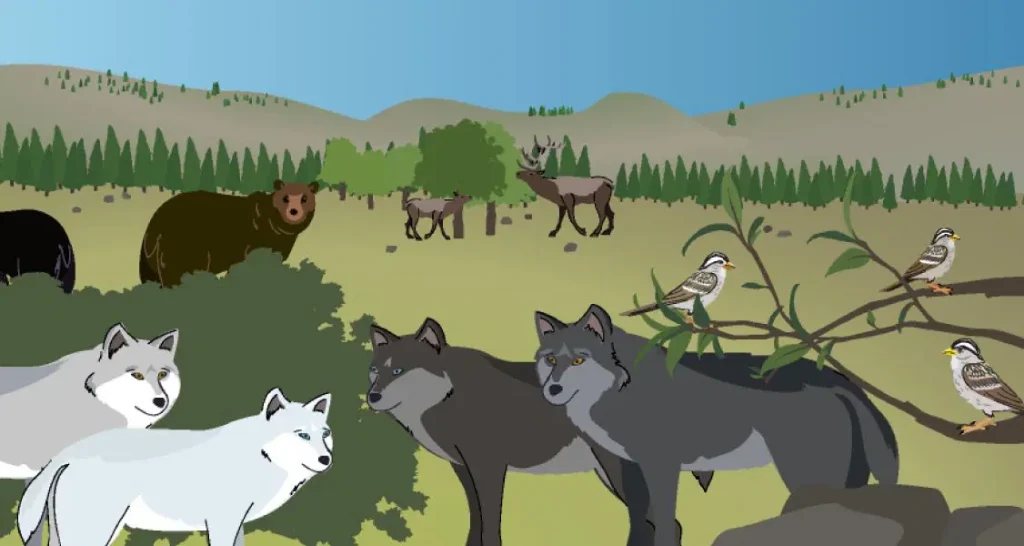
Inheritance and Traits
Domain: Life Science
Unit type: Investigation
Student role: Wildlife biologists
Phenomenon: An adopted wolf in Graystone National Park (“Wolf 44”) has some traits that appear similar to one wolf pack in the park and other traits that appear to be similar to a different wolf pack.
Environments and Survival
Domains: Life Science, Engineering Design
Unit type: Engineering design
Student role: Biomimicry engineers
Phenomenon: Over the last 10 years, a population of grove snails has changed: The number of grove snails with yellow shells has decreased, while the number of snails with banded shells has increased.

Weather and Climate
Domains: Earth and Space Science, Engineering Design
Unit type: Argumentation
Student role: Meteorologists
Phenomenon: Three different islands, each a contender for becoming an Orangutan reserve, experience different weather patterns.

Energy Conversions
Domains: Physical Science, Earth and Space Science, Engineering Design
Unit type: Engineering design
Student role: System engineers
Phenomenon: The fictional town of Ergstown experiences frequent blackouts.

Vision and Light
Domain: Physical Science, Life Science, Engineering Design
Unit type: Investigation
Student role: Conservation biologists
Phenomenon: The population of Tokay geckos in a rain forest in the Philippines has decreased since the installation of new highway lights.

Earth’s Features
Domain: Earth and Space Science
Unit type: Argumentation
Student role: Geologists
Phenomenon: A mysterious fossil is discovered in a canyon within the fictional Desert Rocks National Park.

Waves, Energy, and Information
Domains: Physical Science, Life Science, Earth and Space Science, Engineering Design
Unit type: Modeling
Student role: Marine scientists
Phenomenon: Mother dolphins in the fictional Blue Bay National Park seem to be communicating with their calves when they are separated at a distance underwater.

Patterns of Earth and Sky
Domains: Physical Science, Earth and Space Science
Unit type: Investigation
Student role: Astronomers
Phenomenon: An ancient artifact depicts what we see in the sky at different times — the sun during the daytime and different stars during the nighttime — but it is missing a piece.

Modeling Matter
Domain: Physical Science
Unit type: Modeling
Student role: Food scientists
Phenomenon: Chromatography is a process for separating mixtures. Some solids dissolve in a salad dressing while others do not. Oil and vinegar appear to separate when mixed in a salad dressing.

The Earth System
Domains: Earth and Space Science, Physical Science, Engineering Design
Unit type: Engineering Design
Student role: Water resource engineers
Phenomenon: East Ferris, a city on one side of the fictional Ferris Island, is experiencing a water shortage, while West Ferris is not.
Ecosystem Restoration
Domains:Physical Science, Life Science, Earth and Space Science, Engineering Design
Unit type: Argumentation
Student role: Ecologists
Phenomenon: The jaguars, sloths, and cecropia trees in a reforested section of a Costa Rican rain forest are not growing and thriving.
Resources
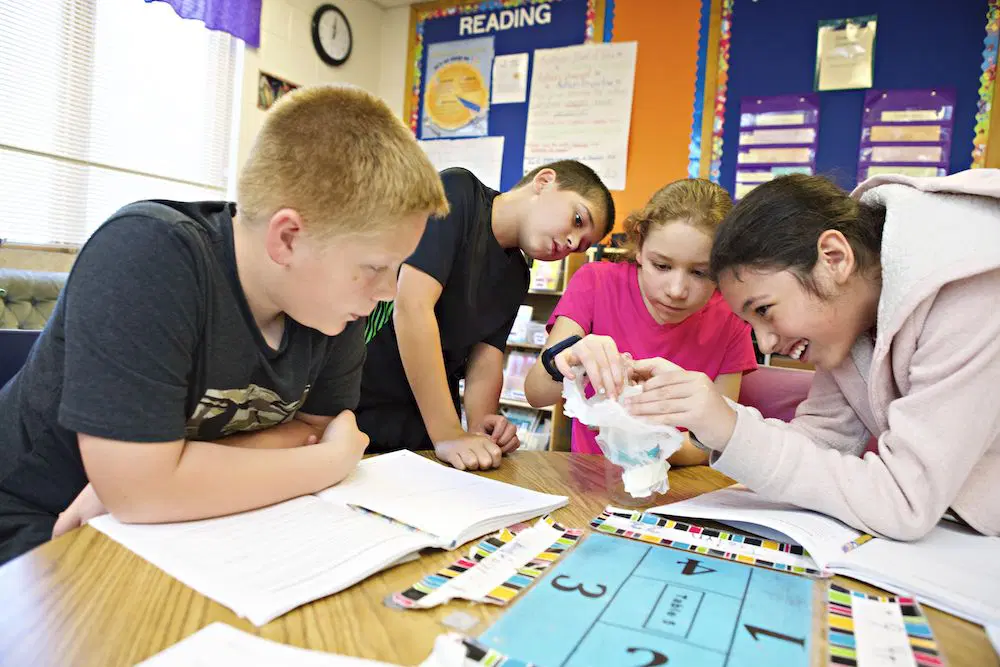

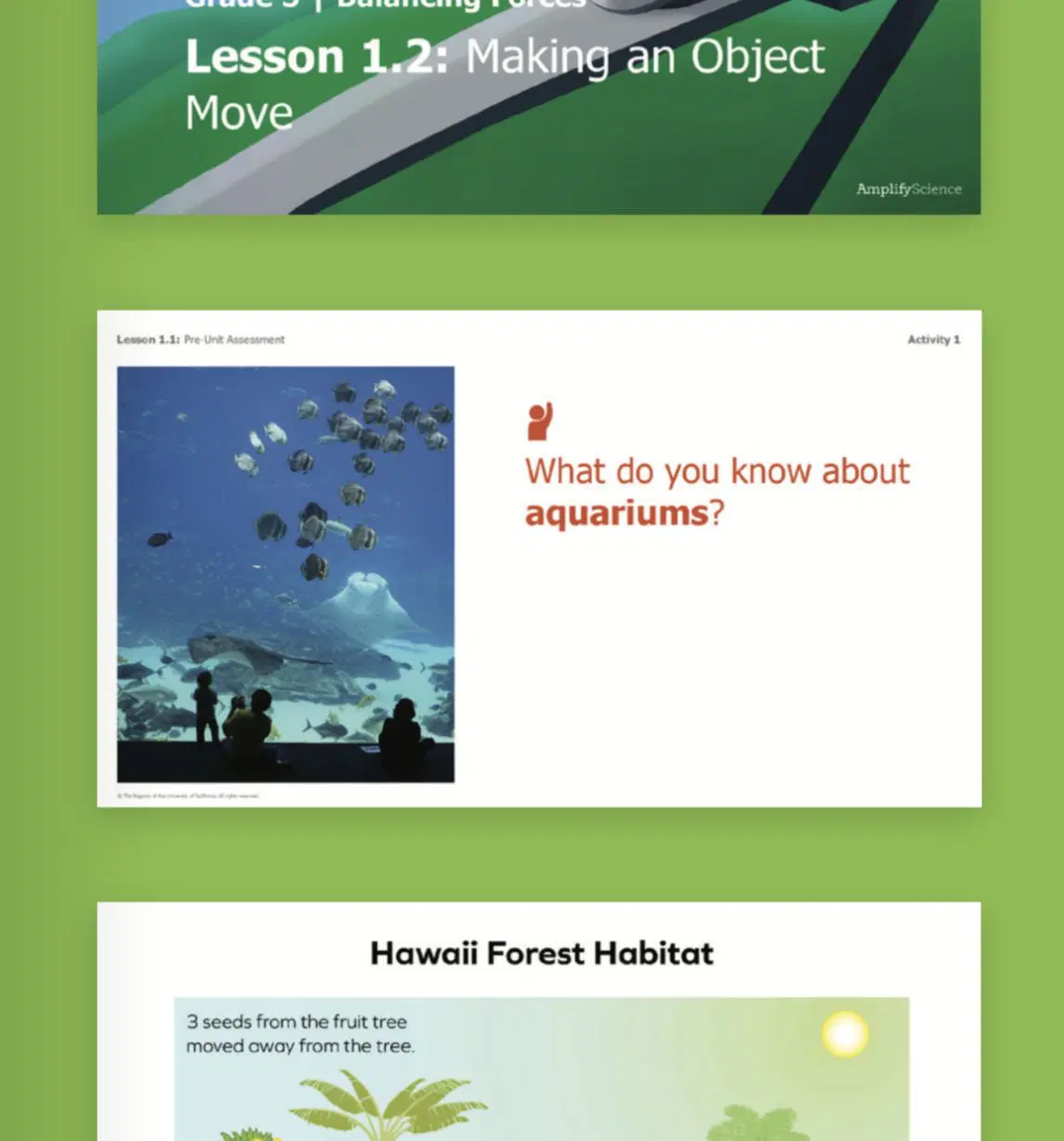

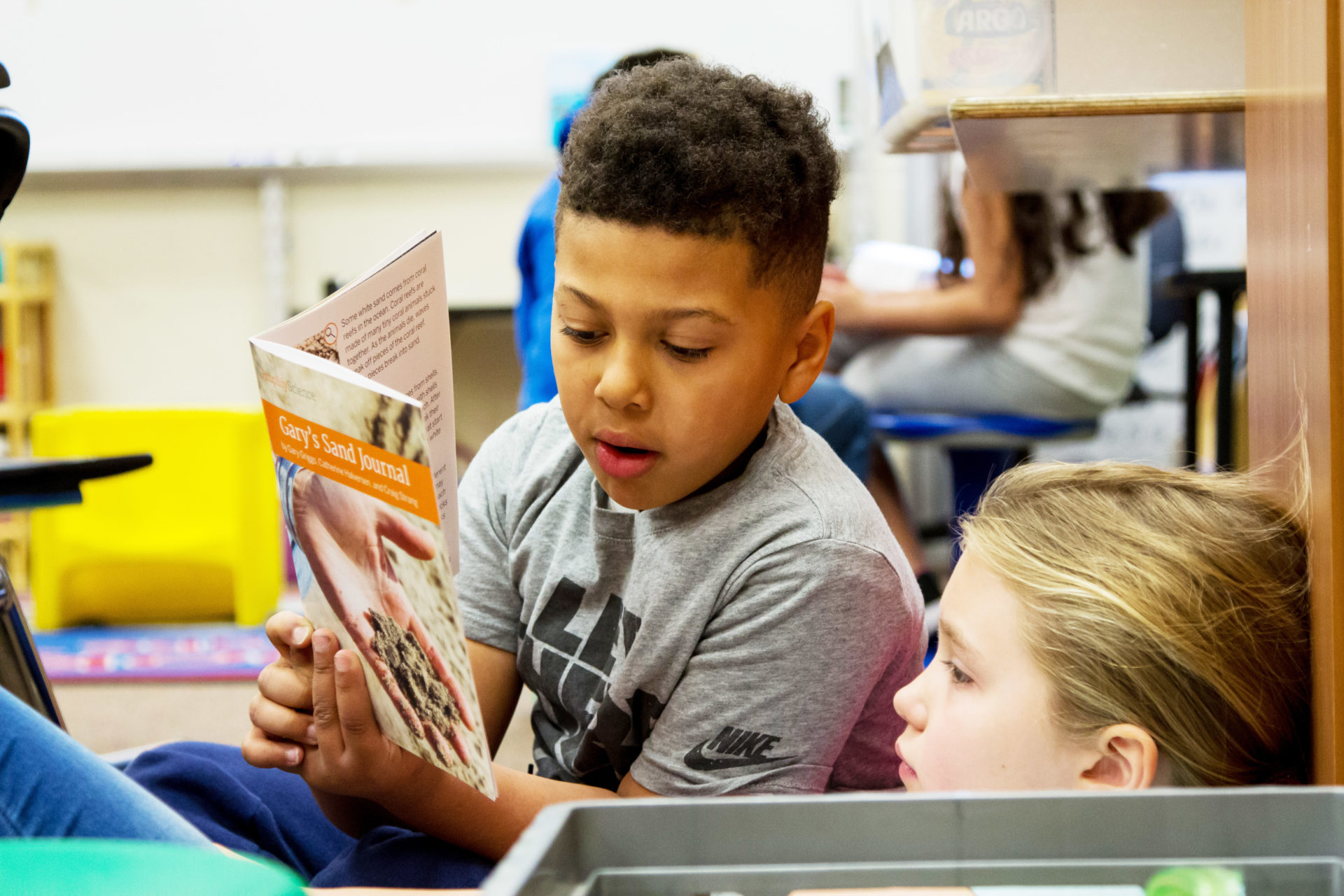

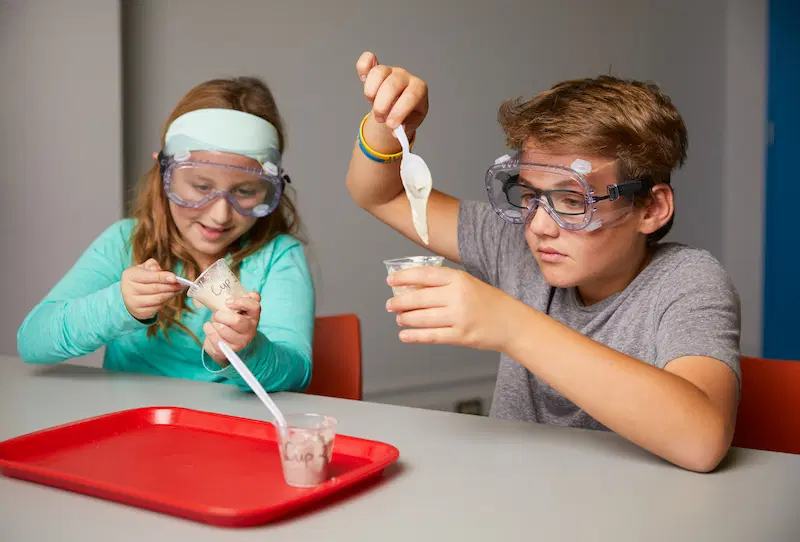
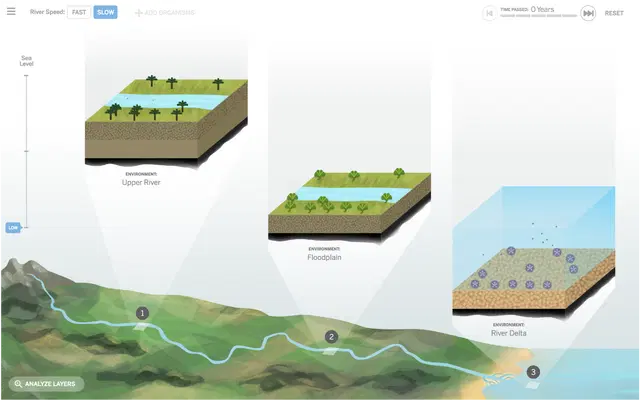
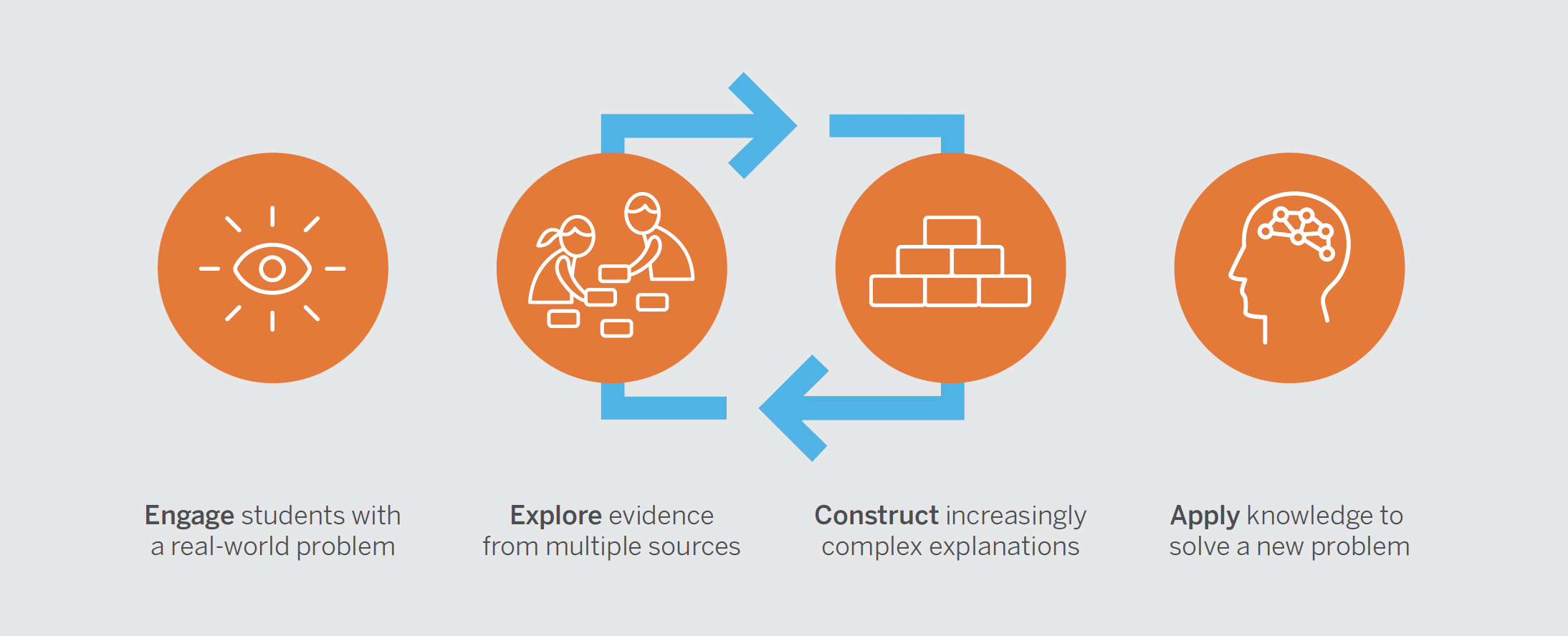


Unleash the potential of knowledge building in language comprehension
Every child is capable of becoming a skilled reader. Every classroom can provide that opportunity and drive student success, through a content-rich literacy curriculum.
We’ll show you how.
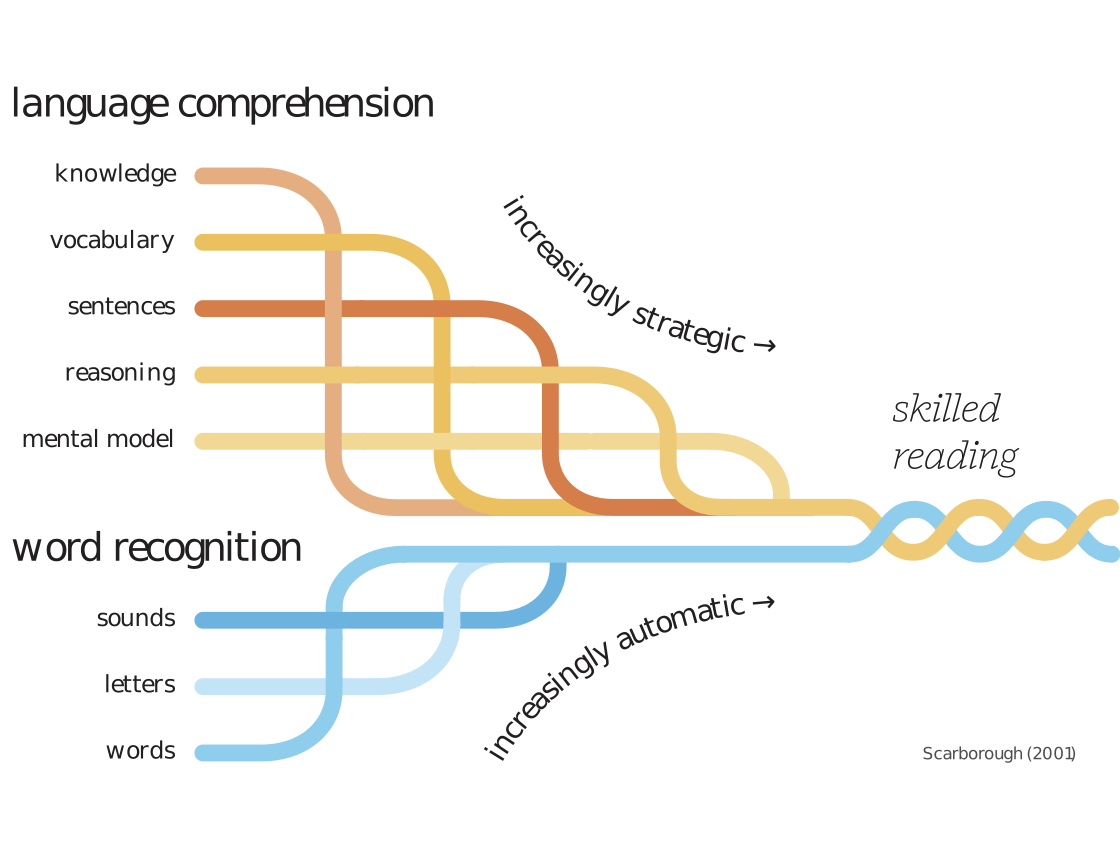
The relationship among knowledge, language comprehension, and literacy skills
The Science of Reading shows that early literacy skills are best built deliberately, on a foundation of knowledge. Knowledge building is not a result of reading and language comprehension; it’s a vital prerequisite and a fundamental part of the process. When students read a text on a familiar topic–event a tough one–they’re more likely to comprehend it. In other words: The more you know, the more, and faster, you learn.
Why is building knowledge so important?
Background knowledge—coupled with comprehension strategies—fuels students’ capacity to understand texts, answer questions, and grapple with ideas.
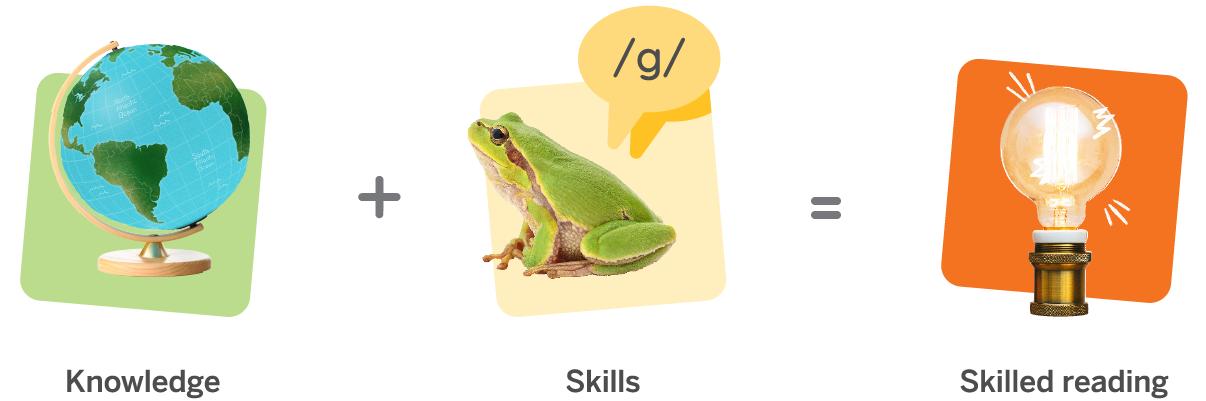
Students bring different bodies of knowledge into school. Some are whizzes at baseball or mechanics; some visit museums, have tons of books at home, and know the word “yacht.” That means their comprehension of a given topic or text will correlate with what they already know. But what happens when they learn the same content together? A recent independent study showed that a knowledge-building literacy curriculum in elementary school raised test scores and helped eliminate income-based opportunity gaps.
It is our responsibility as educators to bring the world into the classroom for all students and help them grow their literacy skills.
Literacy instruction has typically focused on decontextualized skills—finding the main idea, making inferences—before, or instead of, the content of texts and resources that students engage with. Many teachers may have been trained to “put the skills and strategies in the foreground, like a skill of the week, then bring in texts that they find suited for demonstrating the skill or strategy,” says Natalie Wexler, author of The Knowledge Gap. But science shows that harnessing skills and strategies to content is actually more effective. That is, using a coherent and systematic progression of content that helps knowledge and skills build on each other has been shown to result in better student outcomes.
“The advantage of a coherent curriculum is that the topics it covers can build on one another, with one unit providing a foundation of knowledge for others that come later, both throughout a single school year and across grade levels,” according to Barbara Davidson and David Liben. Along the way, students also cultivate curiosity and confidence, accelerating the entire process. So the more you know, the faster you learn—and that lasts a lifetime.

Getting started with knowledge based learning
Effective literacy instruction must celebrate the experiences students have but not assume each student has specific pieces of prior knowledge. Rather, it must build knowledge in the classroom. Students (and teachers) need curricula that expose them to a diverse array of new topics—spanning history, science, literature, culture, and the arts—in an intentional sequence that builds a rich and common knowledge base from which all students can draw.
Want to get started now? We’ve got an ebook to help you out.
Professional development to support your shift to the Science of Reading
Ignite literacy transformation with Amplify’s Science of Reading: The Learning Lab—an inspiring three-course series.
- Course 1: Foundations to the Science of Reading
- Course 2: Advanced Topics in the Science of Reading: Assessment and Reading Difficulties
- Course 3: Applied Structured Literacy
Crafted to the standards of the International Dyslexia Association, this self-paced online series provides unparalleled, research-backed instruction. Explore enriching activities, curated resources, and learn from Susan Lambert, chief academic officer and host of Science of Reading: The Podcast.
The best investment you can make is in knowledge, and the returns are priceless.
Learn more about the online courses or request a quote!
Tap into individual online course seats.
Before and after knowledge building: What knowledge looks like in the classroom

Making connections to what students already know
Before: Teachers “activate” students’ prior knowledge before reading.
After: Teachers build students’ knowledge explicitly for students to leverage later as background knowledge.

Developing reading comprehension
Before: Teachers focus instruction on comprehension strategies (e.g., “strategy of the day” instruction).
After: Teachers focus on content and use comprehension strategies to help students gain knowledge of that content.

Introduction of new topics and information
Before: Students learn about content-area topics individually in disconnected units of instruction.
After: Students learn topics through a coherent approach that builds knowledge within and across units of instruction.
See the remarkable difference shifting to a knowledge-building approach can make in your school. Our enlightening flyer guides you through a before-and-after journey, illustrating the profound impact of knowledge building on learning. Check it out!
What to look for in a knowledge-building literacy curriculum:

It develops content knowledge.
The program should immerse students in a given domain for weeks—that’s how they acquire academic knowledge. The content should also develop from grade to grade, so that students learning about Renaissance art can reflect on and compare to what they previously learned about art in the Middle Ages.
It leverages read-alouds for exposure to complex language.
In early grades, students’ listening comprehension outpaces their reading comprehension. Interactive read-alouds can be used to expose students to academic language and rich vocabulary. With background knowledge, vocabulary words are “the main support beams in the comprehension house.” This approach also helps teachers introduce students to new information and experiences—in a supportive and interactive environment.
It introduces students to a wide variety of topics and content.
A content-rich curriculum exposes students to broad knowledge over time in a systematic, cumulative way, which is more effective than spending several months on just one topic. And while that’s happening, students are participating in enriching discussions and writing activities so they can further interact with the content, promoting deeper engagement and supporting retention of both the knowledge and associated vocabulary.
It builds both knowledge and foundational skills.
Knowledge building is just one component of literacy development. A content-rich curriculum that helps students build both knowledge (language comprehension) and skills (word recognition) takes into account both sides of the Reading Rope, giving students everything they need to build the foundation for a lifetime of literacy success. Instead of learning to read so they can read to learn, students who use a content-rich curriculum learn to read and learn about the world at the same time, enabling them to understand what they’re reading.
At Amplify, we believe Pennsylvania students and teachers deserve high quality instructional materials.
That’s why we partner with schools across the Keystone State to meet their core curriculum, assessment, and intervention goals. With solutions grounded in research and evidence-based practices, Amplify is leading the way with rigorous and relevant learning experiences.
Select a program below to learn more.


Amplify Desmos Math (K–12)
Amplify Desmos Math is a comprehensive K–12 math suite that has everything in one place: benchmark and progress monitoring, core instruction, integrated personal learning, embedded intervention, and more. This structured, problem-based approach builds on students’ curiosity while strategically developing math fluency and lasting grade-level understanding. The program delivers:
- Engaging, discourse-rich math lessons that fuel classroom conversations and drive the learning process.
- Comprehensive integrated resources, including print and digital, along with manipulatives and Centers Kits in K–5.
- Real-time insights, data, and reporting that inform instruction and celebrate student thinking.
Flexible, social problem-solving experiences
Digital lessons should be able to bring student thinking to the surface and spark productive discussions. We bring this vision to life with interactive social, collaborative lessons powered by Desmos technology.

mCLASS early literacy assessment and intervention (K–8)
Effective universal screening and progress monitoring means that every student is an individual and targeted instruction should become a reality, not a dream.
mCLASS® is the gold-standard K–8 assessment and intervention suite for early literacy that helps every child learn to read confidently.
- Universal screening presented in one-minute measures shows where your students are, who is at risk, and where to target instruction.
- Dyslexia screening identifies students who are at risk for reading difficulties without needing an additional assessment system
- Elimination of manual assessment process gives you instant results and clear next steps for each student.
- Progress monitoring allows you to quickly adjust to student needs, based on how they are responding to instruction.
The power of mCLASS
Based on decades of leading literacy research, mCLASS lets you know exactly which part of a skill a student is struggling with, then gives you effective next steps and lesson plans.
Watch how mCLASS can help teachers:
- Save hours of time.
- Catch at-risk students earlier.
- Connect data to personalized learning.

Amplify Core Knowledge Language Arts (PreK–5)
High-quality, content-rich instruction should combine multisensory phonics instruction with knowledge-rich texts and interactive multimedia resources.
Built on the Science of Reading, Amplify Core Knowledge Language Arts® (CKLA) sequences deep content knowledge with research-based foundational skills.
- Explicit, systematic foundational skills lessons are easy to teach and exciting to learn.
- Deep knowledge-building across units and grades helps access complex text, so real comprehension can happen.
- Rich, authentic texts with engaging topics and immersive learning support students wherever they are.
Students love CKLA. But don’t just take our word for it.
Amplify CKLA is impactful for teachers, administrators, families, and most of all—students! Hear what students think about Amplify CKLA.

Boost Reading (K–5)
Authentic personalized learning should be developmentally appropriate, grounded in research, and truly adaptive.
Boost Reading is a personalized, digital supplemental reading tool for grades K–5 featuring:
- Research-based approach to critical literacy skill development that is proven to accelerate reading growth in just 30 minutes per week.
- Captivating storylines and games with powerful individualized reading instruction and practice to bridge learning gaps while learning independently.
- Actionable data that offers deeper insights into student performance and needs.
Boost Reading keeps all students playing and motivated to learn.
Boost Reading includes age-appropriate storylines that excite students’ curiosity. Regardless of their reading ability, students are placed in a year-long storyline that is developmentally appropriate for them. As students grow, so do the immersive worlds around them.

Amplify ELA (6–8)
Amplify ELA is the only program truly designed to support middle school students at this critical developmental moment. We ensure that skills are taught, standards are covered, and the test is prepped – all while bringing texts to life and differentiating instruction.
- Rich, complex text and research-based instruction at the center of every lesson to build the vocabulary, knowledge, and skills needed in middle school, high school, and beyond.
- Multiple points of entry and differentiated support allow every student, regardless of fluency or ability, to engage deeply in the same curriculum.
- Immersive digital apps that offer engaging interactive experiences where students work with key skills in brand new ways.
We are the program for middle schoolers.
Let’s face it– middle school students are different from high school students. That’s why they deserve a program of their own.

Boost Close Reading (6–8)
Middle school students need to exercise their close reading skills in order to deeply comprehend across the curriculum. Based on a riveting storyline designed especially for middle schoolers, Boost Close Reading helps students find deeper meaning in a digital journey like no other.
- Inspire engagement via high-interest storytelling, choose-your-own adventure experiences, and skill-building features.
- Explore topics like claim, evidence, reasoning, word choice, and tone in both literary and informational texts.
- Detailed teacher dashboards display student progress, performance, and usage information, offering easy-to-access insights on areas of strength and weakness.
Fight the machines and save the world.
Before the machines took over, humans could fend for themselves. Now humanity is trapped. And their only hope? You.
Amplify Science Pennsylvania (K–8)
Amplify Science Pennsylvania is a proven K–8 curriculum that develops critical thinkers who are prepared to solve problems in their communities and beyond. It features:
- Phenomena-based exploration and three-dimensional learning where students take on the roles of scientists and engineers to solve real-world problems.
- Immersive hands-on activities that teach students how to gather evidence, ask questions, and develop and defend claims.
- Literacy-rich science instruction that enables young scientists to become excellent readers, writers, and speakers.
- Custom lessons specifically designed to meet Pennsylvania’s STEELS standards.

Do, Talk, Read, Write students outperform their peers.

English language learners who use Do, Talk, Read, Write outperform their ELL peers.

Do, Talk, Read, Write increases learning outcomes.
Get Support
Contact us


Amplify Science
S5-03. Cultivating a joy of learning with Sesame Workshop
Listen as we chat with Dr. Rosemarie Truglio, senior vice president of curriculum and content for Sesame Workshop! Continuing our theme of math anxiety this season, we sat down with Dr. Truglio to chat about Sesame Street and her thoughts on how to spread a growth mindset to young children and put them on course to academic achievement and long-term success.
Listen today and don’t forget to grab your MTL study guide to track your learning and make the most of this episode!
Dr. Rosemarie Truglio (00:00):
Children don’t come with this math anxiety. Math anxiety is learned.
Bethany Lockhart Johnson (00:07):
Welcome back to Math Teacher Lounge. I’m Bethany Lockhart Johnson.
Dan Meyer (00:11):
And I’m Dan Meyer.
Bethany Lockhart Johnson (00:12):
Hello, Dan Meyer.
Dan Meyer (00:14):
Great to see you, Bethany. We are on episode three. Can you believe it?
Bethany Lockhart Johnson (00:18):
So, I feel like we’ve just started scratching the surface about math anxiety. We’ve talked to two amazing researchers. We’ve talked about what math anxiety is, how it’s often screened for some of the causes, some of the consequences … I mean, we’ve had some good conversations. Dan, what do you think?
Dan Meyer (00:38):
Definitely, I think that the consequences have only grown more dire in my head. I’m not sure how you feel about the consequences. But, you know, it is enough for me that we ask students to take mathematics for much of their childhoods, to worry about their anxiety, taking that. But to hear about from these researchers about all the different things that correlate with math achievement and math anxiety—talking about future careers, certainly, but even some other, more serious lifelong concerns? That gives me a lot of motivation to continue this study of math anxiety here with you on the show.
Bethany Lockhart Johnson (01:14):
It is really widespread. It has a big impact, not only on students, but on parents, on educators. You know, it’s—
Dan Meyer (01:23):
Multi-generational.
Bethany Lockhart Johnson (01:25):
Yes. And you know, so often when folks think of math anxiety, what I hear them say is, “Oh, yeah, in high school is when math really ramps up. That’s when anxiety starts.” But we know that it starts in our youngest learners. And our research has already backed that up. We know it. I’ve seen it in my classroom. You may have seen it with some students you work with. And let me tell you, it starts young.
Dan Meyer (01:52):
It does start early. Right now, I have a son that’s just started kindergarten, and he seems relatively math-positive, but we’ve known from our interviews on this show and other kinds of experiences that oftentimes, that feeling —that math is for me, and I am for math, and we are all friends — can turn on a single moment. It seems like one teacher says a thing that changes a student’s perception of themselves as a mathematician or of math itself. So I keep waiting with bated breath, hoping not to find that one moment that changes our current open posture towards mathematics. So now it’s time to really dive into some strategies for combating math anxiety.
Bethany Lockhart Johnson (02:34):
To help us out, we’ve called on a pretty exciting guest. I am so excited, Dan Meyer! We are being joined by Dr. Rosemarie Truglio. She is Senior Vice President of Curriculum and Content at Sesame Workshop. Sesame Workshop! As in, “Tell me how to get to Sesame Street.” Dan, I have to tell you, I spent many, many hours of my childhood watching Sesame Street. I have to ask, do you have happy Sesame Street memories? Is this part of your formation, Dan Meyer?
Dan Meyer (03:08):
At this point? In my advancing years, and the brain cells that I have left, Sesame Street is really kind of just a vibe in my head. But that vibe is such a pleasant one. One in which like nothing bad could happen. One in which learning is common and normalized and fun. And you just kind of feel at home, constantly.
Bethany Lockhart Johnson (03:33):
I don’t know about the “just the vibe” part, because for me, it is visceral. I’m there. I am actually … I mean, I might still be there.
Dan Meyer (03:42):
You could reenact some of the skits?
Bethany Lockhart Johnson (03:44):
. You didn’t watch Sesame Street with your kiddos when they were younger?
Dan Meyer (03:49):
We watched a lot of Elmo. A lot of Elmo. Yeah.
Bethany Lockhart Johnson (03:52):
Next-generation Sesame Street. Well, I think it’s so perfect that we’re gonna be talking about what Sesame Workshop does to help combat math anxiety and create a positive connection and relationship with mathematics. So I’m really excited to hear what Dr. Truglio and her team have been working on. And here’s our conversation with Dr. Truglio.
Dan Meyer (04:15):
Welcome to the show, Dr. Truglio. It is an honor.
Dr. Rosemarie Truglio (04:18):
Great to be here. Thank you for inviting me.
Dan Meyer (04:20):
You are Senior Vice President of Curriculum and Content at Sesame Workshop, which definitely sounds like the coolest job in the world to both four-year-old me and also Now me. Would you just help us help us with some backstory of how you ended up here, and what you do at Sesame Workshop?
Dr. Rosemarie Truglio (04:38):
Sure. It is a pretty cool job. And I am very fortunate that I’ve been in this position for the past 26 years. So, I am a developmental psychologist, and my job is to help Sesame Workshop identify curriculum needs, so that we could address them in the content that we create on the show and across our various platforms. So, Sesame Street is currently in its 53rd season. And we just, wrapped production for the 54th season, which we’ll debut next fall. And Sesame Street began with an experiment: Can television actually teach children school readiness skills, to have them better prepared for school? Especially those children who did not have access to formal education during the preschool years? And it is what we call a whole-child curriculum, because we’re dealing with all of the school readiness needs. So that that includes the academic needs, their social-emotional needs, and their health needs, as well as what we call these cognitive processing skills—how children learn content. Right? So it’s not just content skills, but how you approach learning and how you actually learn content. So as a grad student, I was fortunate to work at the Center for Research on the Influences of Television on Children. Very special center. It was at the University of Kansas. And my advisors, developmental psychologists, they studied the effects of television on children, both the positive effects and the negative effects. And so part of their research was to actually look at the longterm educational effects of Sesame Street. So I was working with Sesame Street content as a grad student, and then came to New York City. My first job was Assistant Professor at Teachers College, Columbia University. And when this position became available, Director of Research at the time, it was called, I took that job. And so my job was to oversee both the curriculum and the implementation of the curriculum, as well as the research. Because what we know, our co-founder, Joan Ganz Cooney has always said, for Sesame Street to be a successful educational program, production has to work closely with early childhood educators. They are the ones who know the curriculum and, and develop the curriculum goals, as well as the developmental psychologists who actually study how children are paying attention to the content. But more importantly, what are they comprehending from the content? And we all have to work together. Because even though we are the experts, the real experts are the children themselves. So nothing is deemed final until we actually show the children and see what they are learning from the content that we are producing.
Dan Meyer (07:54):
Are you referring to like, test audiences of kids then?
Dr. Rosemarie Truglio (07:57):
Yeah, I guess you could call it test audiences. I mean, I don’t. I don’t like to call it that because I see them as co-collaborators. I don’t see them as a test audience. Because, as I said, they’re the experts. It’s a collaboration. I mean, they’re the experts. And so I wanna know—
Dan Meyer (08:12):
As collaborators. I got it now. Yeah.
Dr. Rosemarie Truglio (08:14):
They help us. So that’s exactly what we tell the children too. So it’s called formative research. You know, we, we do what we call, um, storybook testing, an animated version of a storybook to have some little movement and see are they finding the story engaging, but more importantly, are they picking up on the intended educational lesson that we’re trying to teach in the story. So they are co-collaborators. they’re the ones who are helping us get the story just right for them.
Dan Meyer (08:46):
That’s really exciting, and makes me think about what classes might be like if students were regarded in that kind of lens as well. I just wanna say that my four-year-old self is on this interview as well, and is re-contextualizing all the stuff I saw as a kid. And it just felt like, at the time, you folks turned the camera on and went down to the street and we just had this real natural time. And it’s great to hear about all the intense preparation and co-construction at work and work that went into that time. Yeah,
Dr. Rosemarie Truglio (09:12):
It’s about a year preparation from start to finish. From the start of identifying, “What is the educational need? Is it an academic need? Is it a social-emotional need? Is it a health need? Is it a cognitive-processing need?” And then once we have the need identified, we have what we call a curriculum seminar. We bring in the experts who are studying this topic with preschoolers, because we wanna get it, we wanna get it right.
Bethany Lockhart Johnson (09:41):
Which, by the way, little behind the scenes: How often do you get to go to set?
Dr. Rosemarie Truglio (09:46):
So we’re in a production probably about six weeks out of the year. Covid really messed things up. ‘Cause we have to be really—we have very strict Covid protocols, but there is someone on my team—and sometimes we have to, you know, rotate for availability—but there’s always an educator on set.
Bethany Lockhart Johnson (10:06):
Awesome.
Dr. Rosemarie Truglio (10:07):
Because even though you stick to the script, questions arise; they wanna make changes; sometimes they have to cut; things are running too long and they have to cut and we gotta figure out where to cut. So there’s always an educator on set.
Bethany Lockhart Johnson (10:19):
But sometimes you go and have lunch, like—.
Dr. Rosemarie Truglio (10:21):
Oh, I go, yes. Sometimes I go—
Bethany Lockhart Johnson (10:23):
And just hang out with Big Bird, right?
Dr. Rosemarie Truglio (10:24):
Sometimes I go hang out with Big Bird. No, those are my friends!
Bethany Lockhart Johnson (10:27):
They are!
Dr. Rosemarie Truglio (10:28):
No, no, I go hang out with them. They’re my friends. Yes.
Bethany Lockhart Johnson (10:32):
When I think about Sesame Street and I think about … like, I can’t help but smile. Because I think I have such fond memories of the characters. I mean, we invited them, my mom invited them, into our home, right? And, you know, now I have a two-year-old and there’s no doubt that I’m gonna introduce him to Sesame Street. And I see how it really does feel like the folks who are doing this work, you and your team, you have a deep respect for children. So it makes sense that you call your test collaborators “collaborators,” right? They’re a part of it. And you know, I love that. And Sesame Street makes me smile. However, I’m like, we’re talking about math anxiety. And it’s so interesting, because as Dan and I were talking about our memories of Sesame Street … you know, it’s like Sesame Street feels like there’s not much anxiety. I mean, there are problems, and there’s problem solving, and it’s not like everything is perfect. But we figure it out. And it’s OK to make mistakes and it’s OK to try again. And a lot of times, we don’t see that in the math classroom—or at least, how folks talk about math. So, how do you all think about anxiety, about how to prevent it? Like, when you’re doing your work, you know that math anxiety is a real thing. But then that’s not translated in these experiences and the relationships with math that you’re building with your viewers.
Dr. Rosemarie Truglio (12:07):
Yeah, that’s a really good question, because it’s really easy, because our core audience are two- to four-year-olds and they love math. And what’s not to love, right? Because they are figuring the world out as they’re exploring the world. So you said something really interesting, that when you turn on the TV—when you turned on the TV when you were a child, and now you’re a mom of a two-year-old, we wanna make sure that the show represents content that is relevant and meaningful to our target audience. And that comes through with the characters. So all of our characters have very specific personalities, as all children do. And our characters represent all children, in terms of not only personality, but interest and learning styles, ’cause we wanna see—we wanna make sure that children see themselves in these characters. And we have a character who actually loves math. And he’s The Count.
Bethany Lockhart Johnson (13:12):
I’m like, “I know! I know who it is!” I will save you my impression. Although I have done it for my child. But I’ll save our listeners .
Dr. Rosemarie Truglio (13:20):
And you know, he’s an adult character. Some of our characters are preschoolers, like Elmo and Abby—they’re preschoolers—and Zoe. But The Count is an adult. He lives in the castle and he just loves numbers. But what’s really important is while we have The Count to explain—not explain to, but to portray to children, cause we don’t explain anything; we show children that math is more than number, right? Math is a pretty wide concept. Which is what I love about math. And the other thing about math is math language. The language of math. ‘Cause when we’re teaching children vocabulary words, we’re also teaching children the concept. Be it a math concept or a science concept or a social-emotional concept. So children don’t come with this math anxiety. Math anxiety is learned and it’s unfortunate. It’s picked up by their observations of the adults in their lives, who sometimes say out loud, “I don’t like math,” or “Math is hard,” or even worse, “I’m not good at math.” Or may even label it as math anxiety. That word won’t mean anything to a young child. But it then provides a, whaddya call it, like a negative valence for something that they never felt negative about. Because as they’re growing and interacting with the world, math is all around them. And there’s that sense of awe and wonder and joy, especially as they’re learning and they’re figuring it out. So I think we have to reframe math. Instead of saying “math anxiety,” we have to talk about the joy of math and all the wonderful joys that come with the exploration of these math concepts. Number is great. We know kids love numbers. We know that they love to count and use a big word here: enumerate . Because so many parents don’t make this distinction. They’ll say, “Oh, my child is counting!” Well, there’s rote counting, 1, 2, 3, 4, 5, 6, 7, 8, 9, 10, which is important. But then it’s like there’s an item for each number. So it’s one Cheerio, two Cheerios. And then as you point to each number, you are then figuring out what the set is, of the number of objects that you have. And then you get at what I love to call the meaningfulness of math. Right? Number has meaning. And as I said, it’s all part of your everyday activities. It’s part of—it’s in your kitchen; you’re following recipes; you’re measuring; you’re weighing. It’s at bath time, right? You could have the sorting of nested cups and you could, you know, and once again, the math language: big, bigger, biggest. These are relational concepts. You could then count what sinks and what floats, if you’re doing science. And then you could put them in two different buckets, and count. These are the items that sunk and these are the items that float. So math and bath time could be a lot of fun. And then there’s math and music. Music is so rich with math, as you talk about rhythm and tempo and dynamics and pitch and duration. That’s all math.
Bethany Lockhart Johnson (16:57):
The way that you talk about it, it is so rich, right? It is so multi-layered. And you know, I’ve shared on the podcast before: I’ve actually had parents in parent-teacher conferences say that, “Well, I wasn’t good at math either,” or “Math’s really not my thing.” And it’s really—it is, it’s rooted in that fear. And so I do see the way that you’re talking about it; I see that come through in Sesame Street. That, in a lot of ways, it’s reeducating parents, right? Because we hope that our caregivers are sitting next to their kiddo and enjoying it together and having conversations about it later. And there’s a way that parents then are also getting their own sense of what math can be, expanded. And I think there’s such a beauty in that. And I love the way that you talk about that, that you really are looking at, “Well, we wanna celebrate counting and the joyfulness of that. And let’s use math talk, you know, and let’s use these words and try out these ideas.” And it’s not because you’re trying to check some list. But you’re really exploring it and having fun together.
Dr. Rosemarie Truglio (18:03):
And you’re embracing it. And you mentioned the word “mistake.” So often when it comes to math, if you make a mistake—you make a mistake in counting or, you know, we’re not doing a lot of math equations on Sesame Street, but that’s when people feel like they can’t do math. ‘Cause they made a mistake. And that’s something that we are trying to address on Sesame Street, that it’s OK to make mistakes and you learn through mistakes. But you have to have—and I’m gonna come up with this other phrase now—you have to have what we call a growth mindset. What that means is that I may not be able to do this yet. Like, it’s called “the power of yet.” So we know that learning any concept, it takes time and practice. And how do we have children embrace the process, right? So often we focus on right and wrong. Now, there is right and wrong with math, of course. You know, there’s a right answer and there’s a wrong answer. But how do we focus, not on the end product, but the process through which you are engaging in? So let’s talk about measurement. Let’s talk about measuring the length and the width or the height of something. You might make some mistakes along the way, but you’re processing it. My son used to make all of these little structures for all his little play animals. Well, you know, he would measure and think he got it right. And then when he put the animals in, of course, you know, either the animal was too wide or it was too tall. And he would have to redo it. But you’re not redoing it from scratch, you’re redoing it now from experience. “I realize that if I’m gonna put the giraffe in with the elephant, I’m gonna need something wide as well as high.” Right? For the length, tall. And that’s process. And then, for children, when they figure it out, that “oops” and “aha”—the “aha” was like, “I did it!” And it’s so empowering, you know, giving them agency—not swooping in and saying, “All right, I’ll fix it for you. You know, we got the wide elephant and the tall giraffe and I’ll you know…”. NO! Having them do it. And another fun activity is in what we call informal measurement. And that’s like getting something of an equal size. It could be paper clips or it could be same-size blocks, and then measuring how long something is. So if it’s measured by blocks versus paperclips, you’re gonna have a lot more paperclips than you are blocks. And that kind of comparison is so fascinating for children. And so that’s measurement. And now we have counting. Like, how many paperclips long is something versus how many blocks long is something.
Dan Meyer (21:02):
So checking my understanding here, you’ve talked about how caregivers and other adults can transmit math anxiety by naming it and claiming it for themselves. And you’ve talked about, some really exciting ways that adults can involve students and kids in different kinds of math. I’d love to go upstream with you a little bit and wonder out loud, where does this anxiety come from initially? It’s gotta be more than adult one to kid two talking about anxiety, and transmitting it from human to human. What is the original spring from which all this anxiety flows?
Dr. Rosemarie Truglio (21:36):
Yeah. I do think it does—a lot of it does come from the adults in their lives. It’s unfortunate, because there is a lot of math talk about it, right? I can’t do math; I’m not good at math. Even when you’re at a restaurant and you get the bill and someone’s figuring out the tip, I can’t tell you how often it’s like, “Pass the bill, because I can’t do math.” Or if you actually then bring gender into it, you know, “Oh, girls aren’t good at math,” and that’s not true. There’s no evidence of that whatsoever, right? So in the younger grades, there’s no gender difference in terms of math ability. What’s also interesting about even socioeconomic status differences, you don’t see a lot of differences between low-income and middle-income children when it comes to math skills. Where you see differences is children’s ability to talk about their mathematical thinking. So if a child doing a math problem is asked, “How did you solve the problem?”, low-income children don’t often have the language to explain their thinking. So that’s something that we did on Sesame Street, where we focused a lot on what we call math talk. So, not just show number and show doing math, but actually narrate and giving the language. Because math literacy is one of the predictors of overall school achievement. So there’s that. They’re getting it from the adults in their lives. They’re getting it, unfortunately, sometimes from their teachers. But I think the anxiety comes from the fear of making mistakes. Because math, there is right and wrong, and always wanting to get the right answer. So that’s why this whole idea of reframing, and saying, “But really, it’s in the process.” So, you know, my son, math is not his strong suit. And I’ve been doing a lot of growth mindset with him as well. And there was a teacher that he had—I think in like 10th or 11th grade—who said, “In a test, I don’t wanna—I’m not even gonna look at the answer. I wanna see the process through which you GOT to this answer. And I’m going to grade the process. So the process could yield a right answer; it could yield a wrong answer. But you’re gonna get graded on the process. Because I wanna see how you are approaching the problem and how you’re thinking it through.” And I think that is a great example of, maybe, to try to reduce math anxiety. Because if you can get people excited about the process through which you’re learning—and that applies to all subjects, it’s not just math!
Bethany Lockhart Johnson (24:36):
I’m like, that applies to life! Right?
Dr. Rosemarie Truglio (24:38):
That applies to life!
Bethany Lockhart Johnson (24:39):
That’s so spot on. Wow. Yeah.
Dr. Rosemarie Truglio (24:41):
But I think that there’s so much focus on right and wrong, and not really understanding the value of the process. So on Sesame, we’ve been doing a lot of “oops” and “ahas.” You know, we’re gonna make mistakes, but what’s important is what do you DO when you make a mistake? So there’s a great episode with The Count. A couple of years ago. The Count was counting. Something he does every day. A lot of time, every day, ’cause he’s obsessed with counting and numbers. And he was counting an array of items.
Gladys the Cow (25:17):
I need 10 sandwiches all together.
The Count (25:22):
Well, of course.
Dr. Rosemarie Truglio (25:23):
And he made a mistake.
Elmo (25:25):
The Count?
The Count (25:25):
Hmm?
The Count (25:25):
Elmo thinks The Count made a little mistake.
The Count (25:31):
No mistake.
The Count (25:32):
Mm-hmm. Yeah.
Dr. Rosemarie Truglio (25:33):
And first time ever, did he make a mistake. And he fell apart.
The Count (25:38):
I must make sure that that never happens again. So I shall never count again.
Dr. Rosemarie Truglio (25:46):
And that’s an example of showing that, you know, you could get upset when you make a mistake, but what’s important is you gotta come back and you gotta come back to doing what you love. In his case, is counting and letting him know that it was an “oops.” But you learn that mistakes are OK. It’s OK to make a mistake and continue to do what you love.
The Count (26:13):
I must keep trying and you should, too.
Elmo (26:17):
Yeah!
The Count (26:17):
So come, let’s count the carrots together!
Elmo (26:18):
Oh, cool!
Bethany Lockhart Johnson (26:19):
And what a beautiful gift to show kiddos. Show that to kiddos, right? And to the adults. I wanna, you know, really acknowledge it, and say, “Hey look this, it’s OK.” And again, you’re giving them that language. That’s such a gift.
Dr. Rosemarie Truglio (26:34):
Thank you.
Dan Meyer (26:34):
We spend a lot of time wondering why other subjects don’t seem to suffer from this negative perception. And I think you’ve unlocked a lot of that. You’ve mentioned that there are issues that cut across different subject areas, but I think from my own experience and research and interviews, it seems that in ELA and the social sciences, there’s this aspect where you need to come up with a claim and “how are you seeing this?” And there are multiple defensible claims. And I love how you imported that generous pedagogy over into math with this example of a teacher who says, “You know what? It’s about the process here.” Disassociating answer and process.
Dr. Rosemarie Truglio (27:09):
And I think the other thing is like, when children are engaged in a project, for parents to point out: “You’re doing math!” Because they don’t realize that they’re doing math. Once again, math is so often equated solely with numbers and mathematical computations. So it was really interesting—the same is true for science. You know, when we’re talking to parents about the use of everyday—like, going to the supermarket or making dinner or bath time, there’s so much math and science in the everyday. And then when you point it out to them—”you’re doing math”—it’s like, “I’m doing math!” Like, you’re setting the table for a family of six: you’re doing math. That’s called one one-to-one correspondence. “I’m doing math: I’m setting the table.” Yeah, but you’re doing math. You can’t set the table because you have to know how many people are gonna be sitting at the table for dinner. You can’t follow a recipe without doing math. You can’t go shopping without doing math. There’s quantity; you gotta figure out how many peppers you gotta buy, or pounds. “I gotta get a bunch of potatoes and I gotta put ’em in the scale. And I have to get two pounds of potatoes.”
Bethany Lockhart Johnson (28:29):
So your book Ready for School: A Parent’s Guide to Playful Learning for Children Ages Two to Five. First, as a parent of a young toddler, I gotta say it’s such a tool; it’s such a resource. It’s very conversational. And I think about these ideas a lot, both in my work and, you know, just for fun. And yet, even if this wasn’t my chosen field, I still feel like it’s just so accessible. And I wanna flag something.
Dr. Rosemarie Truglio (29:01):
Thank you.
Bethany Lockhart Johnson (29:01):
Yeah, no. Thank YOU. . I wanna flag something that you said in the math chapter You were talking about the joy of math, and you said when it comes to our children, caregivers: “take pleasure in reading stories together, especially at bedtime, which in many households is a regular part of a child’s routine. But somehow the notion of introducing math concepts to our children seems daunting. In fact, some studies have shown that parents harbor a strong belief that while it’s important and pleasurable to support their child’s reading skills, it’s the responsibility of the schools to take care of teaching math.” And that quote, I highlighted it, I starred it! And I would love for you to say a little more about that, because you have given us already, like, a bounty of ideas that as caregivers we can do with our kiddos or the kiddos in our lives. And we’ve seen that even what they’re learning in school, it may not be the freeing, joyful math language that we hope our kiddos have access to.
Dr. Rosemarie Truglio (30:05):
Yeah, I’m glad you brought that up. Because a lot of our focus is on how children learn through playful experiences, and how they learn through play in particular. And there are so many playing, either a game or even playing ideas—like we talked about building, you know, a house for animals or building a fort. It’s just so filled with math. And I wish I could narrate for every young parent how I would hope that they would talk as they are co-engaged in this activity. And I think … we asked about, with the anxiety, the adults have to find the joy in math first. They have to see the math. That’s the problem. That’s why I hope that my book provides that. I want you to know that you are doing math and I want you to know that your child is what we call a mathematician—or in the science chapter, is a STEMist. Your child is already doing science, technology, engineering, and math. STEM is so integrated. So to acknowledge them—because babies are doing math! Babies know, they can distinguish between a small quantity and something that is a of a larger quantity and want the larger. Right? So, it’s natural for them. And they are taking it all in. I mean, the joy of watching a child just early counting: you know, one, two. And trying to then figure out the meaningfulness of two. It’s not three objects. There are actually two. And for a parent to see the joy in that I think is step one. And then to see the richness and how expansive math is, and that power of, oops, “I made a mistake, don’t freak out,” and then [not] say, “See, I’m not good at math,” but say, “Let me try again. I know I could figure this out.” Right? It’s all of that supportive language and supportive experiences that builds this mindset, a positive mindset. So that you hope that when you get into the higher grades, they’re not walking in and saying, “I can’t, I can’t do math.”
Dan Meyer (32:26):
Yeah. Super helpful. I think you point at one of the grownups—great powers in the world of kids, which is to label. To name things. And you know, you’ve talked about how grownups should ideally downplay some of their negative experiences with mathematics for the sake of the kid, but also to play up the positive stuff that they’re doing as mathematics. Like that right there, that’s math. I would love to know … you have an extremely loud megaphone to communicate messages about math and the world and everything through Sesame Street. One of the biggest that there is—and I just wonder if you could step out and imagine you had a magic wand to wave over the world in which students grow up, play and learn—what would you do like to help students have better associations or less math anxiety? And, you know, learn more about math itself?
Dr. Rosemarie Truglio (33:19):
If I had a magic wand, I would give everyone what we call a growth mindset that nothing is fixed and everything can be changed if you put the time and effort into the process, and enjoy the process. The joy of learning. I think, you know, it’s really sad. I don’t wanna be sad on your show. But when we were getting ready for the 50th anniversary, I was wondering, “What is gonna be the curriculum focus?” You know, we just came off of literacy and math literacy and social-emotional development. And we talked about the power of play. Playful learning. And building careers. Give children sophisticated play scenarios so that they could explore what they may wanna be when they grow up. Because there’s a concept: If I can see it, I can play it, I can be it. Right? So where are those portrayals? And it’s like, “What are we gonna do for the 50th?” And I had a convening of experts across all disciplines, and brought them into a room. And I said, you know, “What keeps you up at night? Like, what are you worried about?” Sort of like the State of the Union of Child Development. And this is where the sad part is. They talked about how that sense of joy, that sense of wonder, that sense of curiosity, that sense of flexible thinking and creative thinking, was disappearing in early childhood. Wow. If it’s disappearing in early childhood, we are in big, big trouble . ‘Cause I could see it disappearing later on, you know, as you advance in grade. But what do you mean, it’s disappearing in childhood? And then they talked about the fear of making mistakes. And that goes against—it’s the opposite of a growth mindset. And so we have to bring back that sense of joy, wonder, asking those why questions and embracing them. So it’s another problem parents have. They’re fine with the “why” questions until the “whys” become so difficult they don’t have the answers. And then they don’t want the “why” questions, because now they feel like they’re not smart enough to answer their child’s “why” questions. How do I flip that around to be much more positive and say, “You know, I don’t know! But let’s find out together. Let’s explore together; let’s experiment together.” That’s what I mean about the shift in the mindset, that growth mindset. We should not know all of the answers, but where’s the joy of, “Wow, I don’t know, let’s go find out together”? And that applies to math too. But you have to have that open mindset. You have to—you, as yourself, have to have that growth mindset.
Bethany Lockhart Johnson (36:20):
I love that magic wand. I want that magic wand! And I think what—like Dan said about this megaphone, this opportunity to reach so many young people, so many caregivers—what a gift! And I’m so grateful that you took time to be in the lounge with us, and that you have shared these ideas. Because truly, I think, like you said, it’s really our youngest learners, right? How can we create and cultivate these opportunities for our youngest learners to find the joy in mathematics and just in learning, right?
Dr. Rosemarie Truglio (36:54):
Yeah.
Bethany Lockhart Johnson (36:55):
So thank you. Thank you so much, Dr. Truglio. We are deeply grateful for your insight and for all the work you do. And we continue to invite the world of Sesame Street into our homes.
Dr. Rosemarie Truglio (37:08):
Thank you. Thank you for allowing us to come into your home, and for you to re-learn with your child as you’re watching Sesame Street. Because it’s very much a parenting show, as it is for a child-directed show, because we are blessed to have these wonderful human cast members who are the stand-ins for parents. And so we are often giving you the language for how to talk about and how to problem-solve together. So thank you.
Dan Meyer (37:43):
Thanks so much for listening to our conversation with Dr. Rosemarie Truglio, Senior Vice President of Curriculum and Content at Sesame Workshop.
Bethany Lockhart Johnson (37:51):
Dr. Truglio is also the author of Sesame Street Ready for School, A Parents Guide to Playful Learning for Children Ages Two to Five, and we’re gonna make sure we put a link to that in the show notes because it is really, really a rich resource. I’m diving in. I have so many ideas bookmarked that I wanna try out with my kiddo.
Dan Meyer (38:09):
Yeah, it’s really exciting to see—like, for a classroom educator, I just kinda assumed that a lot of math learning happens in the classroom context. That’s my lens. So yeah, I loved reading the book and seeing all the different opportunities for parents for just out there in the world, in front of your house, at the supermarket. All the different opportunities there are for mathematical thinking, and then to think about how to bring that into some of those routines and ideas into the classroom, into formal schooling.
Bethany Lockhart Johnson (38:35):
Exactly. Exactly. Like Dr. Truglio said, the caregivers’s disposition about mathematics matters so deeply. Your teachers’ dispositions about mathematics, their beliefs, the way that you hear people talking about math, that impacts our learners. That impacts—like, as a student, that impacts what you think is possible for yourself. So I love this, re-educating ourselves about what math can look like out in the world, in everyday conversations. I don’t know. I really, really appreciated this conversation with Dr. Truglio.
Dan Meyer (39:12):
Same. Yeah. We’d love to hear what you folks think about the work. the book, her ideas. Definitely get in touch with us. Subscribe to Math Teacher Lounge, wherever you get podcasts. And keep in touch with us on Facebook at Math Teacher Lounge Community, and on Twitter at MTL show.
Bethany Lockhart Johnson (39:27):
Also, if you haven’t already, please subscribe to Math Teacher Lounge wherever you get your podcast. And if you like what you’re hearing, please leave us a rating and a review. It’ll help more listeners find the show. And while you’re at it, let a friend know about this episode, because you enjoyed it; they might enjoy it. On our next episode, we’re gonna be chatting with Dr. Heidi Sabnani and taking a closer look at best practices for coaching teachers to reduce their own math anxiety.
Dr. Heidi Sabnani (39:56):
One of the teachers that I worked with had done her student teaching with a teacher who had math anxiety and who never taught math. And so she entered her teaching career never having taught math before or seeing it taught.
Dan Meyer (40:10):
Thanks again for listening, folks.
Bethany Lockhart Johnson (40:12):
Bye.
Stay connected!
Join our community and get new episodes every other Tuesday!
We’ll also share new and exciting free resources for your classroom every month.


Meet the guest
Rosemarie T. Truglio, Ph.D. is the Senior Vice President of Curriculum and Content at Sesame Workshop. Dr. Truglio is responsible for the development of the interdisciplinary curriculum on which Sesame Street is based and oversees content development across platforms (e.g., television, publishing, toys, home video, and theme park activities). She also oversees the curriculum development for all new show production, including Bea’s Block, Mecha Builders, Esme & Roy, Helpsters, and Ghostwriter. Dr. Truglio has written numerous articles in child and developmental psychology journals and presented her work at national and international conferences. Her current book is Ready for School! A Parent’s Guide to Playful Learning for Children Ages 2 to 5, published by Running Press (2019).
About Math Teacher Lounge
Math Teacher Lounge is a biweekly podcast created specifically for K–12 math educators. In each episode co-hosts Bethany Lockhart Johnson (@lockhartedu) and Dan Meyer (@ddmeyer) chat with guests, taking a deep dive into the math and educational topics you care about.
Join the Math Teacher Lounge Facebook group to continue the conversation, view exclusive content, interact with fellow educators, participate in giveaways, and more!
You might also like:
¡El futuro es bilingüe! | The future is bilingual!
Promote biliteracy with Amplify Caminos, a K–5 Spanish language arts curriculum that helps teachers inspire students as they become confident readers, writers, and thinkers in Spanish. The program combines rich content knowledge with systematic foundational skills instruction that is grounded in the Science of Reading and supports multiple teaching models. Para la versión en español, haga clic aquí.
Cultivating biliteracy pathways
Amplify Caminos is designed to support any biliteracy model, including English as a Second Language (ESL), transitional bilingual programs, dual language strands, and Spanish immersion programs. Combined with its English language partner, Amplify Core Knowledge Language Arts (CKLA), Amplify Caminos provides a comprehensive biliteracy solution.
Our approach
Grounded in the Science of Reading and following biliteracy principles, Amplify Caminos combines rich, varied content knowledge with systematic foundational skills instruction to deliver a research-based biliteracy curriculum.
Leveraging the Science of Reading
At the heart of the Science of Reading is the Simple View of Reading, a formula describing how skilled reading requires both language comprehension and word recognition. Amplify Caminos is built on this model, with powerful resources that drive real results.
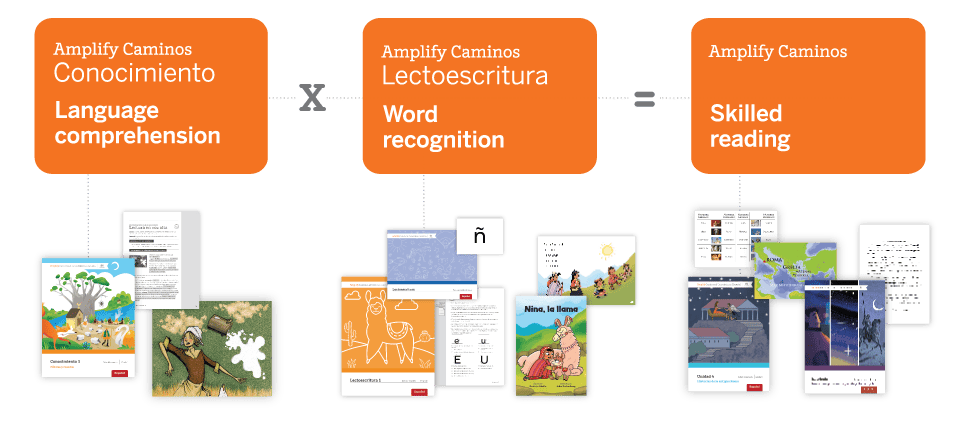

Developing foundational skills explicitly and systematically
Amplify Caminos instruction is based on how the Spanish language works. Students learn vowel sounds and common sounds before blending them to form syllables and words. Less frequent consonants and other complex elements are presented later, with an intentional progression that sets students up for success.
Building background knowledge drives results
Students dig deeper and make connections across content areas to build a robust knowledge base for comprehending complex texts. Amplify Caminos and Amplify CKLA follow the Core Knowledge Sequence—a content-specific, cumulative, and coherent approach to building knowledge—with parallel topics to support research-based and supportive Tier 1 instruction in Spanish and English.
Explore how Core Knowledge curriculum improves reading scores and eliminates achievement gaps.


Culturally relevant and challenging texts
Students learn about diverse topics and genres while better understanding themselves and the world with a variety of texts. Authentic Spanish literature, including original decodables by Latino and Hispanic authors, and transadapted texts connect knowledge topics and foundational skills instruction to provide a rich learning experience.
Being bilingual is a superpower
Bilingualism is a cognitive strength: Research attributes it to increased attention, improved working memory, greater awareness of language, and more. Honor the unique skills, strengths, and needs of your multilingual learners with Amplify Caminos and Amplify CKLA.
What’s included
Amplify Caminos features engaging print and multimedia materials—accessible from anywhere—designed to provide a robust literacy-rich foundation in every classroom.
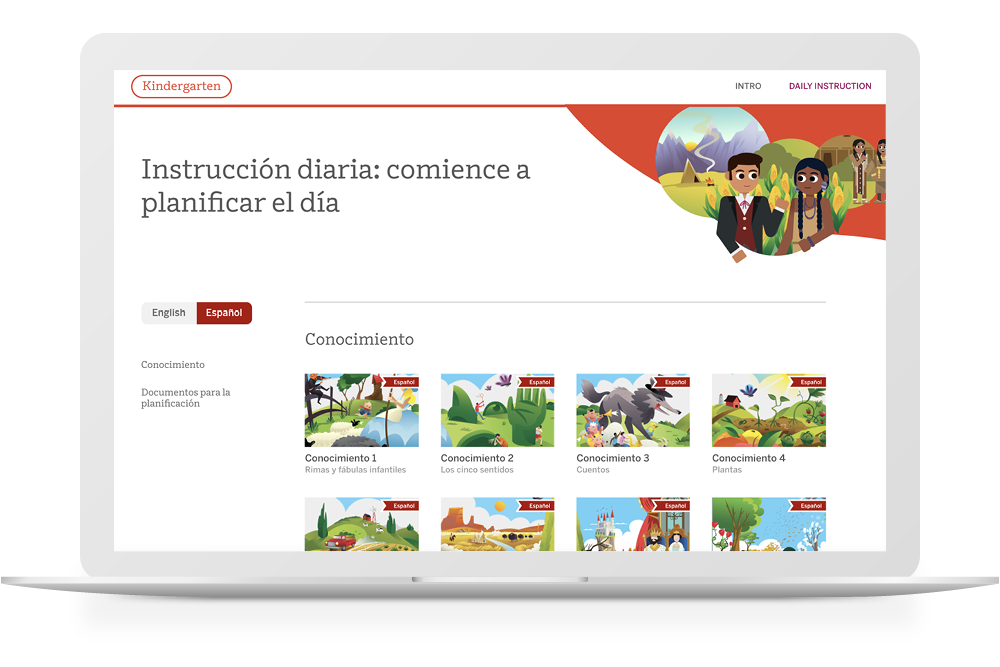
High-quality teacher materials
Amplify Caminos teachers effectively deliver instruction with print and digital resources, including:
- Teacher resources and on-demand professional development.
- Teacher Guides with embedded differentiation.
- Formal and informal assessments.
- Ready-made and customizable lesson slides.
- Bilingual Connections to support cross-linguistic transfer.
Immersive student resources
Amplify Caminos students stay engaged with a variety of print and digital resources, including:
- Original decodables and read-aloud Big Books (K–2), Student Readers (3–5), and authentic Spanish literature anthologies (4–5).
- Poet’s Journal and Writer’s Journal (write-in Student Readers for Grades 4–5).
- Student Activity Books with embedded assessments.
- Research units for independent research built around a trade book.
- Multisensory phonics materials:
- Letter Cards (K–2)
- Syllable Cards (K–2)
- Image Cards (K–3)
- Plus, digital anchor charts and a Sound Library.
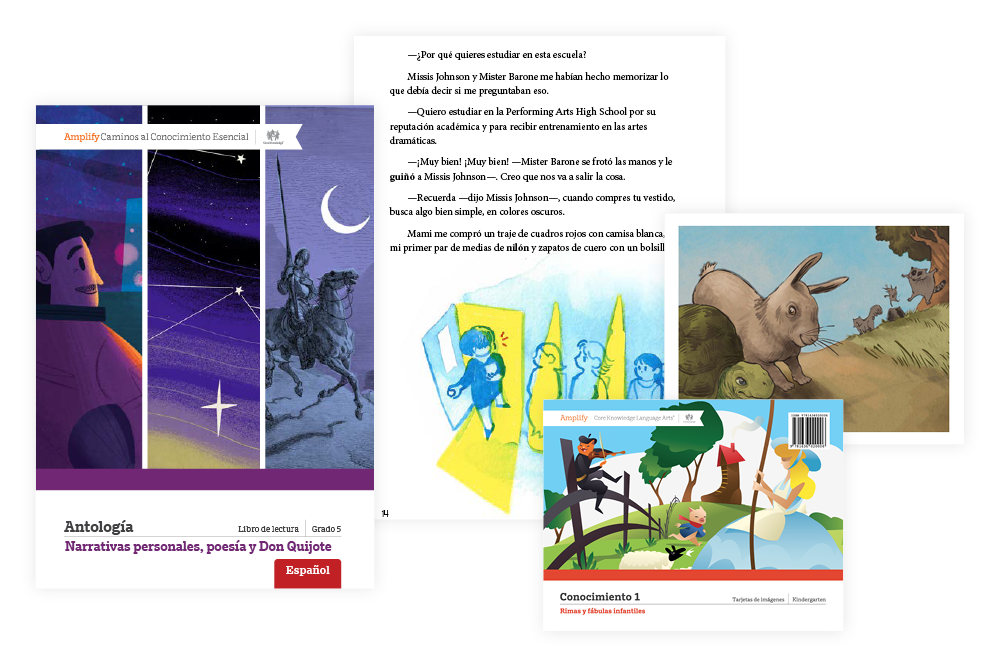
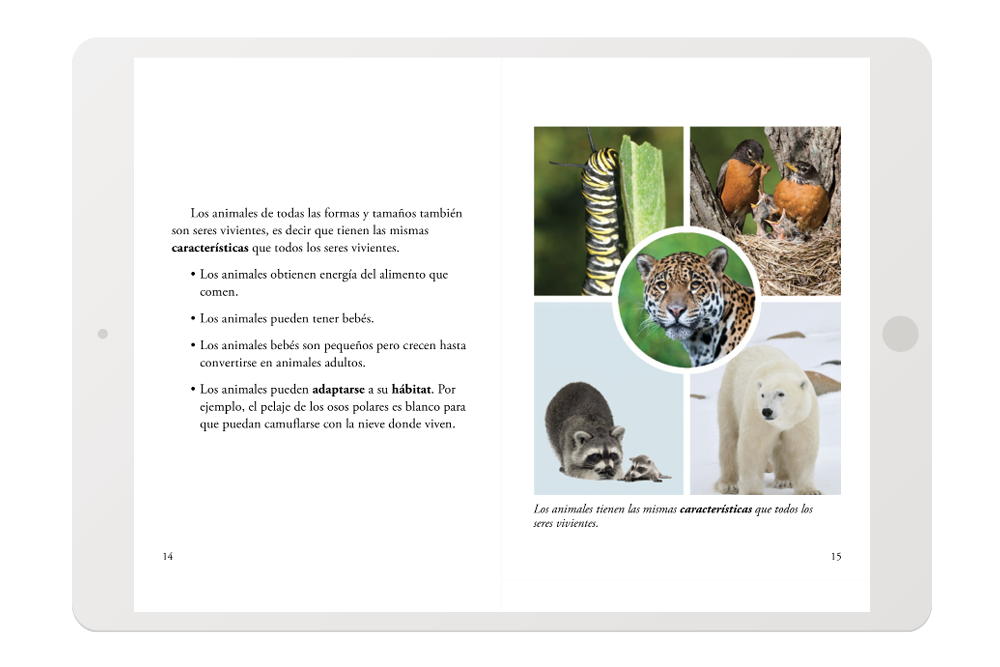
Robust digital experience
Like Amplify CKLA, Amplify Caminos is proud to be a premier high-quality instructional material (HQIM) offering in elementary language arts, with rich and research-based content—including an expanding library of engaging digital materials—that helps you authentically support, challenge, and engage your students. From digital Teacher Guides to lesson projectables, we provide all the tools needed to successfully deliver every lesson.
Explore more programs based on the Science of Reading
All of the programs in our literacy suite are designed to support and complement each other. Learn more about our related programs:


Welcome Reviewers, to Amplify Desmos Math!
Amplify Desmos Math thoughtfully combines conceptual understanding, procedural fluency, and application. Each lesson is designed to tell a story by posing problems that invite a variety of approaches before guiding students to synthesize their understanding of the learning goals.
Scroll to learn more about the program and explore sample materials.
About the program
We believe in math that motivates. Our structured approach to problem-based learning builds on students’ curiosity to develop lasting grade-level understandings for all students.
The program thoughtfully combines conceptual understanding, fluency, and application, motivating students with interesting problems they are eager to solve. Teachers can spend more time where it’s most impactful: creating a collaborative classroom of learners.
A powerful suite of math resources
Amplify Desmos Math combines the best of problem-based lessons, intervention, personalized practice, and assessments into a coherent and engaging experience for both students and teachers.

Screening and progress monitoring
mCLASS® Assessments, along with daily formative checks, measure not only what students know, but also how they think. The asset-based assessment system provides teachers with targeted, actionable insights, linked to core instruction and intervention resources.
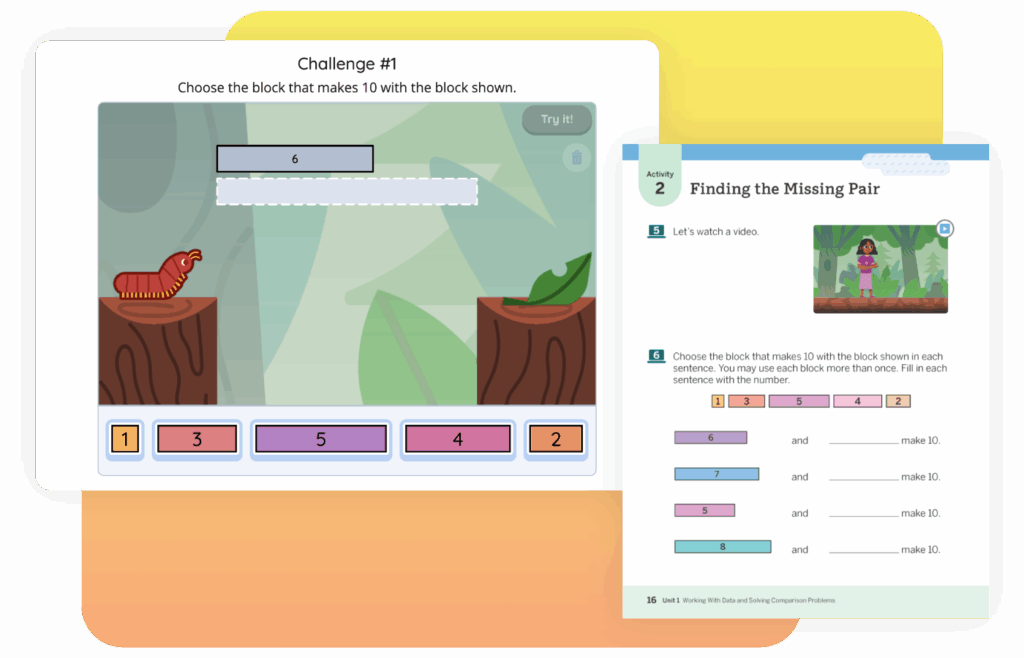
Core instruction
Amplify Desmos Math lessons provide a structured approach to problem-based learning, helping teachers create a collaborative math community with students at its center. Each lesson systematically builds on students’ curiosity to develop lasting grade-level understandings for all students.
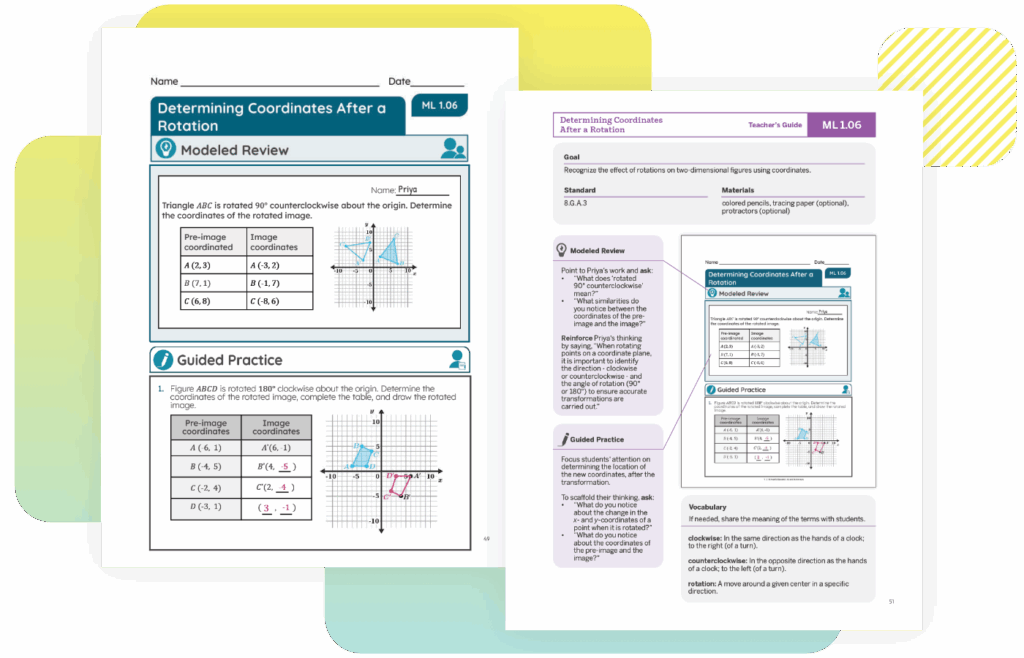
Differentiation and intervention
Integrated resources like Mini-Lessons, Fluency Practice, and Math Adventures provide targeted intervention on a specific concept or skill connected to daily instruction. Extensions are also available to stretch students’ understanding.
Boost™ Personalized Learning activities help students access grade-level math through engaging, independent digital practice. Responsive Feedback™ adjusts to students’ work, providing item-level adaptivity to further support their learning.
An approach that supports teachers
Clear, step-by-step instructional moves help teachers plan and teach student-centered lessons that use student thinking to differentiate instruction and guide to grade-level understanding. They include:
- Guidance on what to listen for and how to respond.
- Clear learning objectives to keep learning on track for each activity and lesson.
- Daily reinforcement activities to provide direct instruction when needed.
A structured approach to problem-based learning
Problem-based learning asks students to make sense of and think strategically about mathematically interesting problems. This approach allows students’ ideas to take
center stage, so they are active and engaged in their learning process. Teachers are able to hear and respond to student thinking in real time, guiding and differentiating instruction right in the moment.
Moving from “I do, We do, You do” to “You do, We do, I do”
Lessons begin by activating student’s prior knowledge and curiosity, inviting them to explore the math, collaborate, and refine their thinking. By focusing on developing student thinking first, teachers can better connect ideas, guide learning, and synthesize learning objectives.
Lessons that are rigorous and delightful
Every lesson in Amplify Desmos Math is designed to put students at the center of their learning. Utilizing research-based best practices, students engage in meaningful work based on rich problems and real-world experiences.
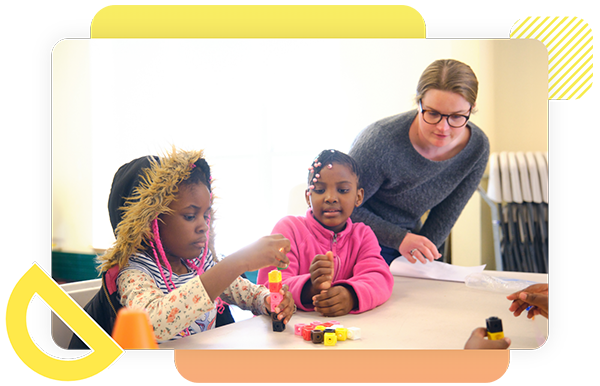
Warm-Up
Lessons begin by inviting every student to contribute to the mathematical discussion. Instructional routines are often used to build fluency, set the context, activate prior knowledge, or highlight a strategy that may be helpful in the lesson.
Rich learning activities
Math knowledge is built through experiences and meaningful interactions. Students notice, wonder, explore, calculate, predict, measure, explain their thinking, use math to settle disputes, create challenges for their classmates, and more. Teachers serve as a guide, using a Launch, Monitor, Connect framework:
- Launch: Teachers offer a short introduction to the problem or challenge
- Monitor: As students work individually, in pairs, or in groups, teachers ask questions and provide support to move student thinking closer to the intended math goal.
- Connect: Teachers connect student ideas to the Key Takeaway of the activity to help students synthesize and solidify the big ideas.
Synthesis
Teachers ensure that students end the lesson with accurate and enduring understandings of the math goal through synthesis of student ideas, explicit instruction, and reflection.
A short Show What You Know assessment allows students to show what they know about the learning goals of the lesson and reveal what they are still learning.
Differentiation and practice
Lasting understanding requires reinforcement. Every lesson offers Lesson Practice instructional recommendations to Support, Strengthen, and Stretch learning.
Print for every lesson with engaging digital experiences
Whether in print or digital form, engaging interactions enable students and teachers to openly exchange ideas. Each lesson includes student print materials, interactive teacher Presentation Screens, and digital resources for practice and differentiation. Some lessons also use manipulatives or provide options for students to use devices individually or in pairs. Device recommendations for student use are age-appropriate, with more frequent usage in middle and high school.
Demo access
Please login to the digital platform to experience our full program as part of your review. In order to access the digital platform, you’ll need to log into using your unique login credentials below.
- Click the orange button below to access the platform.
- Click “Log in with Amplify.”
- Enter the username and password:
- Username:
- Password:
- View the video for helpful platform navigation tips.
Assessments
By starting with what students already know, Amplify Desmos Math helps build a strong foundation for success to guide and support future learning. Teachers are empowered to transform every classroom into an engaged math community that invites, values, and develops student thinking. With explicit guidance on what to look for and how to respond, teachers can effectively support students as they develop their understanding.
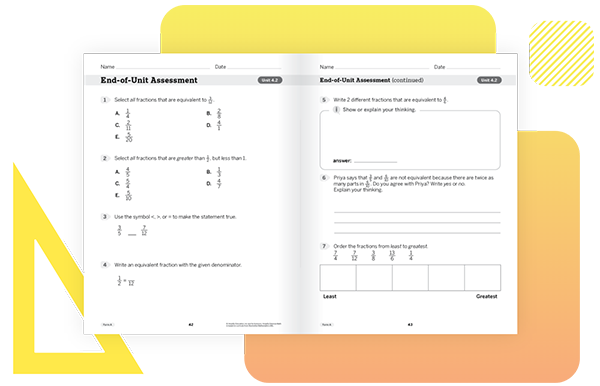
Program assessments
A variety of performance data in Amplify Desmos Math provides evidence of student learning while helping students bolster their skills and understanding.
Unit-Level Assessments
Our embedded unit assessments offer key insights into students’ conceptual understanding of math. These assessments provide regular, actionable information about how students are thinking about and processing math, with both auto-scoring and in-depth rubrics that help teachers anticipate and respond to students’ learning needs.
Lesson-Level Assessments
Amplify Desmos Math lessons are centered around sense-making and in-the-moment feedback. Daily moments of assessment provide valuable evidence of learning for both the teacher and student.
Data and reporting
Amplify Desmos Math provides teachers and administrators with unified reporting and insights so that educators have visibility into what students know about grade-level math—and can plan instruction accordingly for the whole class, small groups, and individual students.

Assessment reports
Reporting functionality integrates unit assessments, lesson assessments, personalized learning, Benchmark assessments, and Progress Monitoring for a comprehensive look at student learning.
Our reports show proficiency and growth by domain, cluster, standard, and priority concept using performance data from unit assessments. Then our reports highlight areas of potential student need to allow teachers to modify their instruction and target differentiated support.
At-a-glance views of unit-level assessment results inform your instructional planning, and you can also drill down to item-level analysis.
Standards reports
Our standards report allows you to monitor proficiency at the class and individual student levels. Proficiency and growth are shown by domain, cluster, standard, and priority concepts. Areas of potential student need are highlighted to allow teachers to modify their instruction and target differentiated support.
Administrator reports
Amplify Desmos Math provides a complete picture of student, class, and district performance, allowing administrators to implement instructional and intervention plans.
- Track student, class, and district performance with usage, completion, and assessment data.
- Accurately group students and classes with the Benchmark and Progress Monitoring data of mCLASS Assessments and allow teachers to reliably implement and track the progress of Tier 2 and Tier 3 intervention.
- Provide one data-driven solution that educators can rely on for high-quality math instruction.
Differentiation and intervention
Amplify Desmos Math views differentiation as an ongoing process where teachers are both reactive and proactive to student needs, ensuring that all students have clear pathways to proficiency. Through rich data and teacher support, Amplify Desmos Math uses flexible categories of intervention and enrichment that adjust daily according to student thinking.
In-the-moment differentiation supports are available for every lesson, both digitally and in the print Teacher Edition.
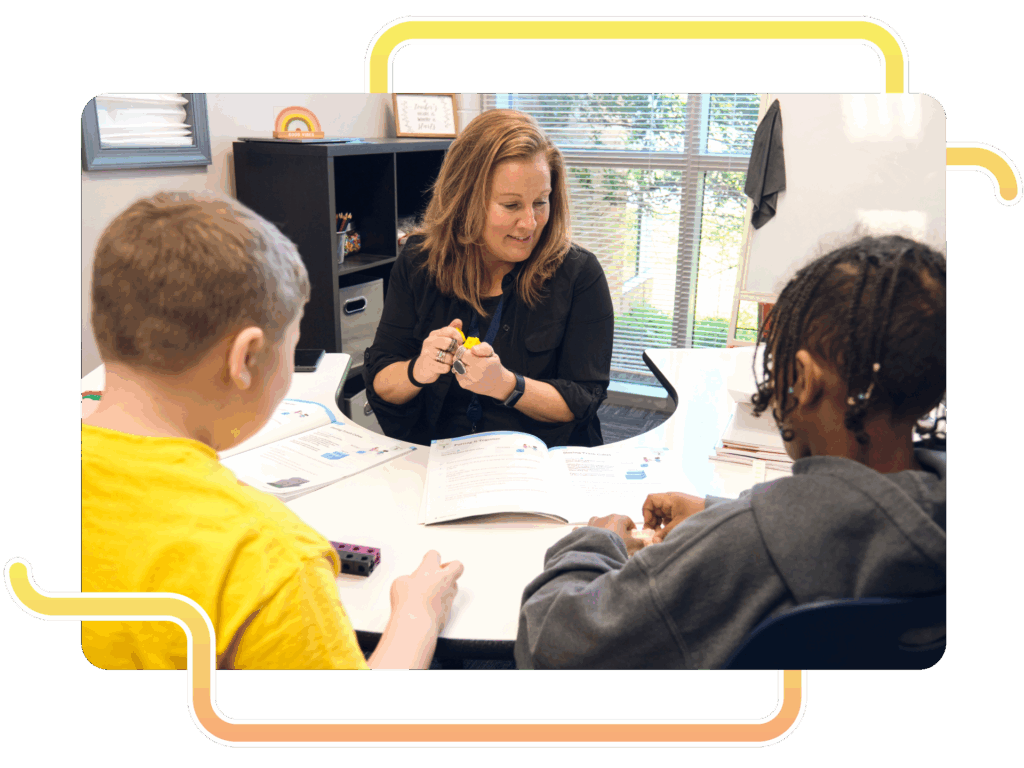

In-lesson differentiation
Within every lesson activity, teachers can use the suggestions in the Differentiation Teacher Moves table to provide in-the-moment instructional support while students are engaged in the work of the lesson. This table can help teachers anticipate the ways students may approach the activity, and provides prompts that they can use during the lesson to Support, Strengthen, and Stretch individual students in their thinking. Teachers are provided with clear student actions and understanding to look for, each matched with immediately usable suggestions for how to respond to the student thinking illustrated in each row of the table. In addition to using these suggestions in the moment as teachers monitor student work, teachers can review the Differentiation table in advance to help them anticipate how students are likely to approach the activity.
Differentiation: Beyond the Lesson
Teachers are provided with recommendations for resources to use with each group of students needing support, strengthening, and stretching after each lesson. Support, Strengthen, and Stretch resources include:
- Mini-Lessons: 15-minute, small-group direct instruction lessons targeted to a specific concept or skill
- Item Banks: Space for teachers to create practice and assessments by using filters and searching for standards, summative-style items, and more
- Fluency Practice: Adaptive, personalized practice built out for basic operations and more
- Centers (K–5): Lesson-embedded routines and practice for students that are vertically aligned across grade levels
- Extensions: Lesson-embedded Teacher Moves including possible stretch questions and activities for students
- Lesson Practice: Additional practice problems support every lesson
- Math Adventures: Strategy-based math games where students engage with math concepts and practice skills in a fun digital environment


Multilingual/English Learner supports
Supports for multilingual/English learners (ML/ELs) are called out at intentiSupports for multilingual/English learners (ML/ELs) are called out at intentional points within each lesson. These suggested supports are specific, targeted actions that are beneficial for ML/ELs. They often describe a modification to increase access to the task or provide support with contextual or mathematical language development that can often be helpful to all learners. ML/EL supports may also be attached to Math Language Routines.onal points within each lesson. These suggested supports are specific, targeted actions that are beneficial for ML/ELs. They often describe a modification to increase access to the task or provide support with contextual or mathematical language development that can often be helpful to all learners. ML/EL supports may also be attached to Math Language Routines.
Math Language Development
Every lesson in Amplify Desmos Math includes opportunities for all students to develop mathematical language as they experience the content. Amplify Desmos Math purposefully progresses language development from lesson to lesson and across units by supporting students in making their arguments and explanations stronger, clearer, and more precise. This systematic approach to the development of math language can be broken down into the following four categories of support:
- Vocabulary: Units and lessons start by surfacing students’ language for new concepts, then building connections between their language and the new vocabulary for that unit.
- Language goals: Language goals attend to the mathematics students are learning, and are written through the lens of one or more of four language modalities: reading, writing, speaking, and listening.
- Math Language Routines: Math Language Routines are used within lessons to highlight student-developed language and ideas, cultivate conversation, support mathematical sense-making, and promote meta-cognition.
- Multilingual/English learner supports: Supports for multilingual/English learners (ML/ELs) are called out at intentional points within each lesson.
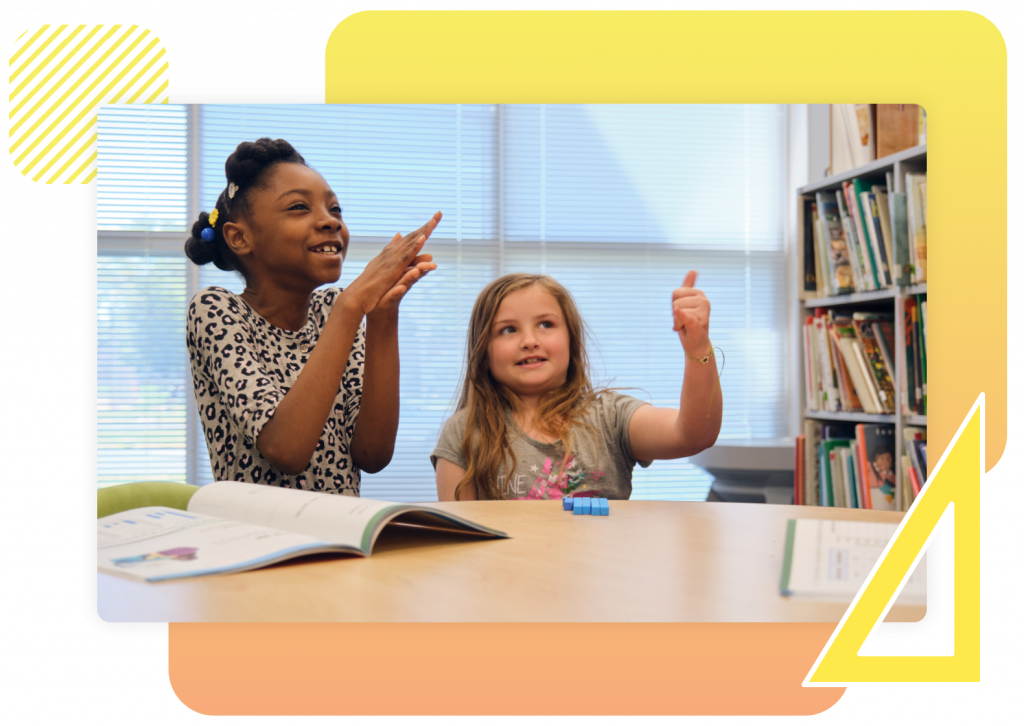

K-5 sample materials
Click the links in the drop-down sections below to explore sample materials from each grade. For a full program review, please login to the digital platform or request physical samples.
For helpful navigation tips and more program information, download the Amplify Desmos Math Program Guide.
You can also watch a product expert walk through a lesson and the available program components.
Teacher Edition
Planning and instructional guidance is visual, organized, and easy-to-follow. To help you preview the program, we have included samples from a complete sub-unit on this site: Unit 2, Sub-Unit 2: Counting and Comparing Images.

Student Edition
Motivate students with mathematics that is both rigorous and delightful. To help you preview the program, we have included samples from a complete sub-unit on this site: Unit 2, Sub-Unit 2: Counting and Comparing Images.

Ancillary sampler
Included in the ancillary sampler are examples from the program Assessment Resources, Intervention and Extension Resources, Centers Resources, Additional Practice, and Math Language Development Resources.

Featured digital lesson: Forest Friends
In this lesson, students apply their understanding of how to compare groups of images as they determine which group has more or fewer and then compare their strategies by guiding a bear through a path that has more mushrooms than the other.

Skills Unit 2 Teacher Guide
Planning and instructional guidance is visual, organized, and easy-to-follow. To help you preview the program, we have included samples from a complete sub-unit on this site: Unit 1, Sub-Unit 1: Adding and Subtracting Within 10.

Student Edition
Motivate students with mathematics that is both rigorous and delightful. To help you preview the program, we have included samples from a complete sub-unit on this site: Unit 1, Sub-Unit 1: Adding and Subtracting Within 10.

Ancillary sampler
Included in the ancillary sampler are examples from the program Assessment Resources, Intervention and Extension Resources, Centers Resources, Additional Practice, and Math Language Development Resources.

Featured digital lesson: Leaping Lily Pads!
In this lesson, students find differences when subtracting 1 and 2 from the same number by helping a frog reach a lily pad where it can eat a bug.
Teacher Edition
Planning and instructional guidance is visual, organized, and easy-to-follow. To help you review the program, we have included samples from a complete sub-unit on this site: Unit 1, Sub-Unit 1: Adding and Subtracting.

Student Edition
Motivate students with mathematics that is both rigorous and delightful. To help you preview the program, we have included samples from a complete sub-unit on this site: Unit 1, Sub-Unit 1: Adding and Subtracting.

Ancillary sampler
Included in the ancillary sampler are examples from the program Assessment Resources, Intervention and Extension Resources, Centers Resources, Additional Practice, and Math Language Development Resources.

Featured digital lesson: Ways to Make 10
Students continue to develop fluency by finding the number that makes 10 by helping a millipede reach its favorite food – a clump of leaves!

Teacher Edition
Planning and instructional guidance is visual, organized, and easy-to-follow. To help you review the program, we have included samples from a complete sub-unit on this site: Unit 1, Sub-Unit 3: Data on Scaled Graphs.

Student Edition
Motivate students with mathematics that is both rigorous and delightful. To help you preview the program, we have included samples from a complete sub-unit on this site: Unit 1, Sub-Unit 3: Data on Scaled Graphs.

Ancillary sampler
Included in the ancillary sampler are examples from the program Assessment Resources, Intervention and Extension Resources, Centers Resources, Additional Practice, and Math Language Development Resources.

Featured digital lesson: Puppy Pile
Students compare data represented on bar graphs with different scales by using animal stickers to create scaled bar graphs.

Teacher Edition
Planning and instructional guidance is visual, organized, and easy-to-follow. To help you review the program, we have included samples from a complete sub-unit on this site: Unit 1, Sub-Unit 2: Using Factors and Multiples.
Student Edition
Motivate students with mathematics that is both rigorous and delightful. To help you preview the program, we have included samples from a complete sub-unit on this site: Unit 1, Sub-Unit 2: Using Factors and Multiples.

Ancillary sampler
Included in the ancillary sampler are examples from the program Assessment Resources, Intervention and Extension Resources, Centers Resources, Additional Practice, and Math Language Development Resources.

Featured digital lesson: Hamster Homes
Students choose tube lengths to connect to platform heights for hamster homes, identifying possible heights using what they know about multiples.

Teacher Edition
Planning and instructional guidance is visual, organized, and easy-to-follow. To help you review the program, we have included samples from a complete sub-unit on this site: Unit 1, Sub-Unit 3: Volume of Solid Figures.
Student Edition
Motivate students with mathematics that is both rigorous and delightful. To help you preview the program, we have included samples from a complete sub-unit on this site: Unit 1, Sub-Unit 3: Volume of Solid Figures.
Ancillary sampler
Included in the ancillary sampler are examples from the program Assessment Resources, Intervention and Extension Resources, Centers Resources, Additional Practice, and Math Language Development Resources.
Featured digital lesson: Figures Made of Prisms
Students decompose a figure into rectangular prisms and determine the volume of the figure by adding the volumes of the individual prisms.
6-A1 sample materials
Click the links in the drop-down sections below to explore sample materials from each grade. For a full program review, please login to the digital platform or request physical samples.
For helpful navigation tips and more program information, download the Amplify Desmos Math Program Guide.
You can also watch a product expert walk through a lesson and the available program components.

Teacher Edition
Planning and instructional guidance is visual, organized, and easy-to-follow. To help you preview the program, we have included samples from a complete sub-unit on this site: Unit 6, Sub-Unit 1: Solving Equations.

Student Edition
Motivate students with mathematics that is both rigorous and delightful. To help you preview the program, we have included samples from a complete sub-unit on this site: Unit 6, Sub-Unit 1: Solving Equations.

Ancillary sampler
Included in the ancillary sampler are examples from the program Assessment Resources, Intervention and Extension Resources, Additional Practice, and Math Language Development Resources.

Featured digital lesson: Weight for It
Students use equations and tape diagrams to represent seesaw situations and to determine unknown animal weights, helping them make connections between diagrams that represent equations of the form `x+p=q` or `px=q`.

Teacher Edition
Planning and instructional guidance is visual, organized, and easy-to-follow. To help you preview the program, we have included samples from a complete sub-unit on this site: Unit 6, Sub-Unit 3: Inequalities.

Student Edition
Motivate students with mathematics that is both rigorous and delightful. To help you preview the program, we have included samples from a complete sub-unit on this site: Unit 6, Sub-Unit 3: Inequalities.

Ancillary sampler
Included in the ancillary sampler are examples from the program Assessment Resources, Intervention and Extension Resources, Additional Practice, and Math Language Development Resources.

Featured digital lesson: Shira the Sheep
Students solve inequalities with positive and negative coefficients to solve a variety of challenges featuring a fictional sheep who eats grass according to an inequality.

Teacher Edition
Planning and instructional guidance is visual, organized, and easy-to-follow. To help you preview the program, we have included samples from a complete sub-unit on this site: Unit 6, Sub-Unit 2: Analyzing Numerical Data.

Student Edition
Motivate students with mathematics that is both rigorous and delightful. To help you preview the program, we have included samples from a complete sub-unit on this site: Unit 6, Sub-Unit 2: Analyzing Numerical Data.
Ancillary sampler
Included in the ancillary sampler are examples from the program Assessment Resources, Intervention and Extension Resources, Additional Practice, and Math Language Development Resources.

Featured digital lesson: Robots
Students connect points on a scatter plot with individuals in a population and rows of data in a table. The analysis of scatter plots continues with data about the eye distances and heights of robots.

Teacher Edition
Planning and instructional guidance is visual, organized, and easy-to-follow. To help you preview the program, we have included samples from two complete sub-units on this site: Unit 2, Sub-Units 1–2: One-Variable Equations and Multi-Variable Equations.

Student Edition
Motivate students with mathematics that is both rigorous and delightful. To help you preview the program, we have included samples from two complete sub-units on this site: Unit 2, Sub-Units 1–2: One-Variable Equations and Multi-Variable Equations.
Ancillary sampler
Included in the ancillary sampler are examples from the program Assessment Resources, Intervention and Extension Resources, Additional Practice, and Math Language Development Resources.
Featured digital lesson: Shelley the Snail
Students represent the solutions of a situation using a table, a graph, and multiple forms of an equation to identify multiple combinations of blocks that can help Shelley the Snail cross a gap.
Amplify K–6 ELA programs for Fairfax County
Welcome, Fairfax County Reviewers!
Thank you for exploring our evidence-based K–6 programs built on the Science of Reading and aligned to Virginia standards and Fairfax County’s learning model.
Amplify CKLA for Grades K–5 and Amplify ELA for Grade 6 intentionally build knowledge alongside skills and are aligned within and across grades. Meaningful learning experiences for students pair with powerful instructional support for teachers to drive results.
The following resources will support your review. These include clips of Amplify programs in action; details about key features of the curriculum; and research on the real-world successes of schools, districts, and states who’ve partnered with Amplify.

Amplify CKLA for Grades K–5
Introduction to Amplify CKLA
We’re excited for you to see how Amplify CKLA provides high-quality resources to support literacy instruction for all students! This program is flexible, offering stand-alone foundational skills instruction as well as the program core English Language Arts.
Amplify CKLA Skills is built on the latest reading science and provides comprehensive instruction in all foundational reading skills, featuring:
- Phonological awareness, phonics, and word recognition.
- Strong, systematic sound-first instruction to support students in learning to decode.
- Language skills, including conventions, spelling, and grammar.
- Reading comprehension.
- Writing instruction.
CKLA for Grades K–2 provides a two-strand approach. The first is the Foundational Skills Strand (as described above) and the second is the Knowledge Strand, in which students build rich background knowledge through multidisciplinary read-alouds. CKLA takes an Integrated approach in Grades 3–5, in which lesson sequencing is especially focused on rich, worldly content.
We encourage you to check out the K–2 Knowledge Strand and 3–5 Integrated approach sections of this site to explore the components further and gain access to the engaging and diverse texts students and teachers are using in their classrooms every day!
K–2 Skills Strand
In the CKLA classroom, students practice reading while stretching themselves toward higher goals. In K–2, daily dedicated skills time gives students a solid foundation, while the upper grades integrate this instruction with knowledge lessons in which students engage with increasingly complex, content-rich texts and writing activities.
Start with the sound
All instruction starts with phonological awareness, which research has shown to benefit the greatest number of students. Students begin by learning to recognize sounds, as well as to articulate them.
Build to the phoneme
Over time, students build up their awareness of phonemes. We give teachers a variety of tools, including multisensory gestures, to help kids develop this awareness.
Crack the code
Once students can recognize sounds, they learn to form the corresponding letter codes. CKLA starts by teaching the sound-spellings that appear most frequently in English, which lets your students read and write as many words as possible, as soon as possible.
Grow in complexity
The lessons continue to challenge students as they progress, introducing complications like multisyllabic words, “tricky words,” and homophones. In each case, students encounter more complicated words as they become ready for them.
K–2 Knowledge Strand
While students are learning how to read, Knowledge Domains give them authentic and engaging reasons to read. Students will use their skills to explore domains that relate to storytelling, science, and the history of our world as seen through the eyes of many different groups. With these domains, you’ll bring the world to your students, showing them how reading can become an exciting, rewarding, and useful part of their lives.
Build connections and context
Each CKLA Knowledge Domain gives students a base of vocabulary and concepts, building on what they’ve learned in previous domains. This helps students make connections within and across grades, building a base of background knowledge that will help them navigate new and more complex texts.
Listen and understand
Students learn to listen and understand before they learn to read. By delivering knowledge through classroom read-alouds, Amplify CKLA teaches students the key comprehension skills they’ll use throughout their reading lives.
Emphasis on interactivity
Amplify CKLA prioritizes interactions between students, which challenge and encourage them to think about the material rather than simply receive it. Each lesson includes several opportunities and options for formative assessment and immediate adjustment to the needs of both the class and the individual students.
Assess what’s important
The end-of-domain digital assessments that follow Knowledge Domains are fully voice-acted, ensuring that each student’s comprehension skills are authentically tested. This not only builds students’ test-taking confidence, but gives you a more accurate picture of your class.
3–5 Integrated approach
By Grades 3–5, students have mastered the basics of decoding and are eager to use what they’ve learned to reach out to the world. Although read-alouds remain an important part of lessons, students are also encouraged to practice independent reading starting in Grade 3, developing their autonomy and confidence as readers alongside strong teacher support.
Writing and language
As students progress from K–2, writing activities start to emphasize analysis, creativity, and independent thinking about lesson materials.
Core Quests: Transforming the classroom
Each of the units in Grades 3–5 contain a Core Quest—a special unit in which all the rules of the classroom change as students engage with language in surprising new ways. In Grade 5, for example, students learn to love the dense Shakespearian language of “A Midsummer Night’s Dream” through imagery, close reading, and performance.
Key CKLA features
Built out of the latest research in the Science of Reading, Amplify CKLA delivers explicit instruction in both foundational literacy skills (systematic phonics, decoding, and fluency) and background knowledge in Grades K–2, with an integrated approach to explicit instruction in Grades 3–5.
Review this Science of Reading Toolkit to learn more about the Science of Reading best practices integrated throughout CKLA.
Great reading instruction starts with great decoding skills. When students build a solid foundation of phonological awareness and phonics, reading the words on the page becomes automatic so that comprehension and critical thinking can happen.
Our instruction is supported by:
- Step-by-step lessons with multisensory approaches, clear lesson objectives, and embedded formative assessments.
- Unmatched, 100% decodable books and student readers that feature engaging plots and relatable characters.
- An engaging sound library with fun songs and videos that develop phonological awareness.
Students build grade-appropriate subject-area knowledge and vocabulary in history, science, literature, and the arts while learning to read, write, and think creatively and for themselves.
Our instruction is supported by:
- Knowledge builders that provide a quick overview of each domain with its key ideas.
- Interactive read-alouds designed to build knowledge and vocabulary.
- Content-rich anchor texts that support students as they tackle increasingly complex text and sharpen their analytical skills.
From the printed page to the screen, we bring foundational skills and knowledge of the world to your young learners, and make the transition from classroom to home learning seamless.
Download the Amplify CKLA Components Guide to see components by grade.
Amplify Caminos is an equitable Spanish language arts program for Grades K–5 that will engage your students and inspire them to become confident readers, writers, and thinkers.
Designed to support any biliteracy model (including ESL, transitional bilingual, dual language, and Spanish immersion), Amplify Caminos can be used in tandem with Amplify CKLA to provide a fully equitable, one-to-one English and Spanish solution.
Amplify ELA for Grade 6
Amplify ELA is a blended English language arts curriculum designed specifically to prepare middle school students for high school and beyond. This interactive core curriculum brings complex texts to life with lively classroom discussions and meaningful digital experiences in which students grapple with interesting ideas and find relevance for themselves.
Amplify ELA’s built-in 100-Day Pathway outlines required content for each grade level, while providing teachers time and space to teach the supplemental lessons and activities they love.
The program has received an all-green rating on EdReports—read the review.
Amplify ELA delivers:
- A unique research-based approach designed to get all students reading grade-level text together.
- An instructional design that inspires students to read more deeply, write more vividly, and think more critically.
- A rich combination of dynamic texts, lively discussions, and interactive Quests that engages and inspires middle school students.
EdReports and Knowledge Matters Campaign
Amplify CKLA for Grades K–5 is among the few elementary core curricula to be both rated all green on EdReports (earning green scores across all gateways) and recognized by the Knowledge Matters Campaign for its excellence in intentionally building knowledge. Amplify ELA for grade 6 also earned all-green scores on EdReports.
Access FCPS reviewer platform
To experience Amplify’s K–6 ELA programs for FCPS, complete the following steps.
Access your teacher demo account:
- Access the reviewer site.
- Select Log in with Amplify.
- Enter your teacher username: t1.fcps-demo@demo.tryamplify.net
- Enter your password: Amplify1-fcps-demo
Access your student demo account:
- Access the reviewer site.
- Select Log in with Amplify.
- Enter your student username: s1.fcps-demo@demo.tryamplify.net
- Enter your password: Amplify1-fcps-demo
VA correlations
CKLA Kindergarten correlation
CKLA Grade 1 correlation
CKLA Grade 2 correlation
CKLA Grade 3 correlation
CKLA Grade 4 correlation
CKLA Grade 5 correlation
Additional reviewer resources
Amplify CKLA Program Guide (Grades K–5)
Amplify ELA Program Guide (Grade 6)
Amplify biliteracy and Science of Reading principles
Diversity, equity, inclusion, and accessibility
Text complexity
Trade books
Amplify CKLA meets Virginia Literacy Act (VLA) requirements
Get in touch
To learn more, contact Michael Kasloff at mkasloff@amplify.com.
New Mexico Educators: Welcome to Amplify Science K–5!
Amplify Science is an engaging core curriculum designed for three-dimensional, phenomena-based learning that is rated ‘all green’ on EdReports.
With Amplify Science, New Mexico students won’t just passively learn about science concepts. Instead, they will take on the role of scientists and engineers to actively investigate and figure out real-world phenomena. They will do this through a blend of cohesive and compelling storylines, hands-on investigations, collaborative discussions, literacy-rich activities, and interactive digital tools.

Amplify Science Success Story
The Lawrence Hall of Science
Developed by the science education experts at UC Berkeley’s Lawrence Hall of Science and the digital learning team at Amplify, our program features:
- A phenomena-based approach where students construct a complex understanding of each unit’s anchor phenomenon.
- A blend of cohesive storylines, hands-on investigations, rich discussions, literacy-rich activities, and digital tools.
- Carefully crafted units, chapters, lessons, and activities designed to deliver true three-dimensional learning.
- An instructional design that supports all learners in accessing all standards.

Instructional model
The Amplify Science program is rooted in the proven, research-based pedagogy of Do, Talk, Read, Write, Visualize. Here’s how each element works:
Do
First-hand investigations are an important part of any science classroom, and Amplify Science has students getting hands-on in every unit—from building models of protein molecules to experimenting with electrical systems.
Talk
Student-to-student discourse and full-class discussions are an integral part of the program. Students are provided with numerous opportunities to engage in meaningful oral scientific argumentation, all while fostering a collaborative classroom environment.
Read
Students read scientific articles, focusing their reading activities on searching for evidence related to their investigation and, importantly, on asking and recording questions as they read through fascinating texts on 21st-century topics.
Write
Following real-world practices, students write scientific arguments based on evidence they’ve collected, making clear their reasoning about how a given piece of evidence connects to one of several claims.
Visualize
By manipulating digital simulations and using modeling tools to craft visualizations of their thinking— just as real scientists and engineers do—students take their learning far beyond the confines of what they can physically see in the classroom in an exciting and authentic way.
Program structure
Our cyclical lesson design ensures students receive multiple exposures to concepts through a variety of modalities. As they progress through the lessons within a unit, students build and deepen their understanding, increasing their ability to develop and refine complex explanations of the unit’s phenomenon.
It’s this proven program structure and lesson design that enables Amplify Science to address 100% of the NGSS and support students in mastering the New Mexico STEM Ready! Science Standards.
Unit types
While every unit delivers three-dimensional learning experiences and engages students in gathering evidence from a rich collection of sources, each unit also emphasizes a particular science and engineering practice.
In grades K–2:
- One unit emphasizes the practice of investigation.
- One unit emphasizes the practice of modeling.
- One unit emphasizes the practice of engineering design.
In grades 3–5, students experience the three unit types above, plus:
- One additional unit that emphasizes the practice of argumentation.
Investigation units focus on the process of strategically developing investigations and gathering data to answer questions. Students are first asked to consider questions about what happens in the natural world and why, and are then involved in designing and conducting investigations that produce data to help answer those questions.
Modeling units provide extra support to students engaging in the practice of modeling. Students use physical models, investigate with computer models, and create their own diagrams to help them visualize what might be happening on the nanoscale.
Engineering design units provide opportunities for students to solve complex problems by applying science principles to the design of functional solutions, and iteratively testing those solutions to determine how well they meet preset criteria.
Argumentation units provide students with regular opportunities to explore and discuss available evidence, time and support to consider how evidence may be leveraged in support of claims, and independence that increases as they mount written arguments in support of their claims.
Unit sequence
Our lessons follow a structure that is grounded in regular routines while still being flexible enough to allow for a variety of learning experiences.
In fact, our multi-modal instruction offers more opportunities for students to construct meaning, and practice and apply concepts, than any other program. What’s more, our modular design means our units can be flexibly arranged to support your instructional goals.
Program components
Available digitally and in print, our unit-specific reference guides are chock full of helpful resources, including scientific background knowledge, planning information and resources, color-coded 3-D Statements, detailed lesson plans, tips for delivering instruction, and differentiation strategies.
Hands-on learning is an essential part of Amplify Science, and is integrated into every unit. Students actively participate in science, playing the roles of scientists and engineers as they gather evidence, think critically, solve problems, and develop and defend claims about the world around them. Every unit includes hands-on investigations that are critical to achieving the unit’s learning goals.
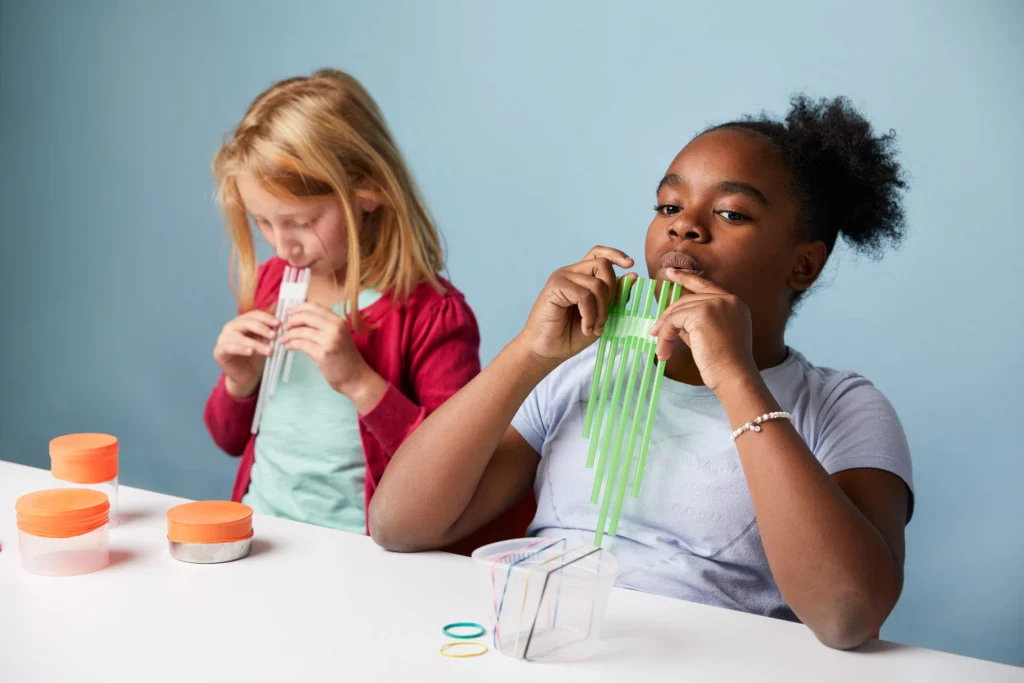
More hands-on with Flextensions:
Hands-on Flextensions are additional, optional investigations that are included at logical points in the learning progression and give students an opportunity to dig deeper if time permits. These activities offer teachers flexibility to choose to dedicate more time to hands-on learning. Materials referenced in Hands-on Flextension activities will either be included in the unit kit or are easily sourced. Supporting resources such as student worksheets will be included as downloadable PDF files.
Our kits include enough non-consumable materials to support a class of 36 students and enough consumable items to support 72 students. In other words, each kit can last two years! Plus, our unit-specific kits mean teachers just grab the tub they need for the unit and then put it all back with ease.
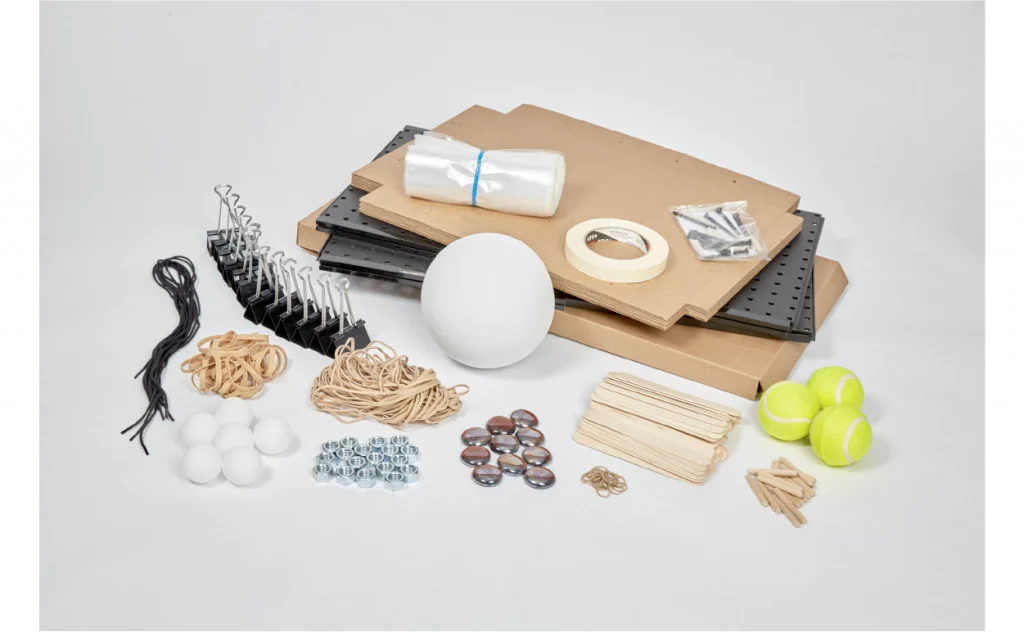
Each unit of Amplify Science K–5 includes six unique Student Books written by the Lawrence Hall of Science specifically for the program. These content-rich nonfiction and informational texts provide opportunities for students to search for evidence relevant to their firsthand investigations, see science practices and dispositions modeled, extend their science knowledge, provide real world connections as they master reading-to-learn and close reading skills, and construct evidence-based arguments.
Important note:
Students in grades K–5 are never asked to read alone. Rather, books are read to, with, and by students with ample scaffolding and support provided by the teacher. Big Books are read aloud or together with the class to introduce ideas. Student Books allow for small-group reading and reading in pairs.

Available for every unit, our Student Investigation Notebooks contain instructions for activities and space for students to record data and observations, reflect on ideas from texts and investigations, and construct explanations and arguments.
In grades K–5, one copy of the Student Investigation Notebook is included in each unit’s materials kit for use as a blackline master. Each notebook is also available as a downloadable PDF on the Unit Guide page of the digital Teacher’s Guide.
We know equity is a priority for you and it’s also important to us! Click below to view a comprehensive list of Spanish resources available to support English learners and dual-language classrooms in New Mexico. All components are available digitally. Resources also available in print are noted with an asterisk.
Amplify Science offers digital experience licenses that make elementary instruction more flexible for students and teachers, as well as providing additional means to engage in remote, hybrid, or in-person learning!
Student-facing digital lessons
With the digital experience, students can engage with digital lesson content in one cohesive experience. It’s the same content from Amplify science in a new, integrated format where students can interact with slides, Sims, modeling tools, videos, books, and more.
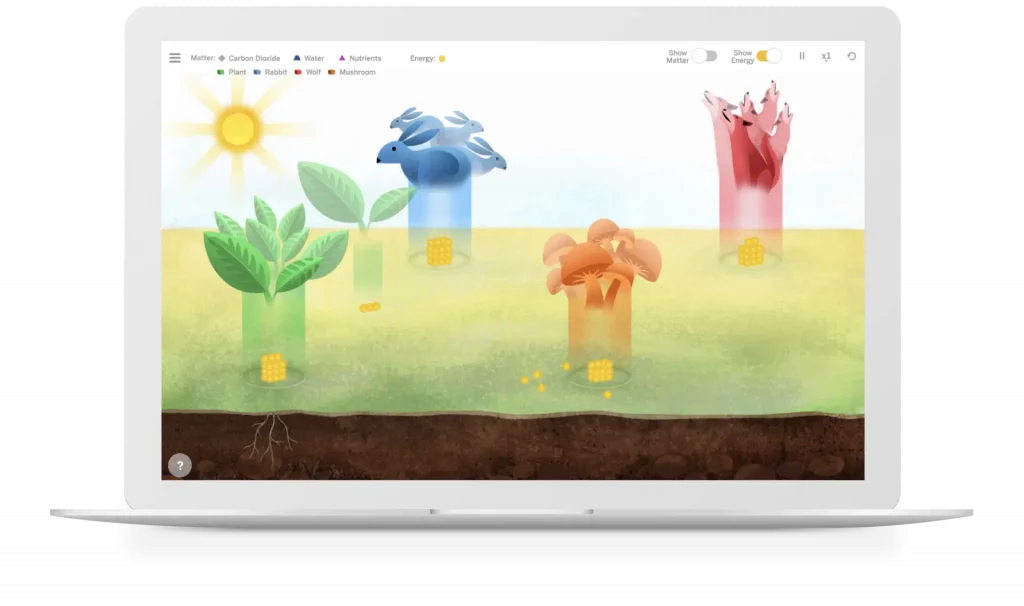
Digital student notebook pages
Students can draw, write, record audio, and insert images into their Investigation Notebook pages. Their work is automatically saved and delivered to you in real time. When students edit their work, those edits are immediately reflected on your teacher work review page. You can access student responses by clicking “View Work,” where you can see students’ Investigation Notebook pages from the lesson, updating live.
Assign in Amplify
The digital experience allows flexibility with optional features like scheduling assignments in advance and setting due dates. Teacher can use Scheduling to determine the date and time that the assignment appears in Student Home. They also have the flexibility to schedule when assignments appear and use dates to remove assignments from Student Home.
Assign in LMS
You can also assign lessons via our integrations with Google Classroom and Microsoft Teams, or by copying a lesson link and sharing it with students through the platform of your choice. The assignment link you send will provide students with direct access to the full lesson—slides, videos, digital tools, and worksheet activities—no student platform navigation required!
Teacher platform and presentation
Teacher-facing lesson content—including sample teacher talk, student responses, pedagogical support, and possible student responses—shows on a teacher’s private Teacher Guide tab. Students only see the lesson slides that are being presented.

Explore your print samples
With your Amplify Science print samples, you’ll find unit-specific Teacher’s References Guides, Student Investigation Notebooks, and sets of Student Books for each grade level.
A note about the Teacher’s Reference Guides:
It’s important that you see the full breadth and depth of our instruction. For that reason, we provide a copy of each of our unit-specific Teacher Reference Guides.
Rest assured that teachers do not use these robust reference guides for day-to-day teaching. For that, we have a hands-free TG!
- Teacher Reference Guide: Unlike a typical Teacher Guide that requires a series of supplemental books to support it, our encyclopedic reference guide is chock-full of everything a teacher needs to fully implement our program and the NGSS.
- Ready-to-Teach Lesson Slides: For daily instruction, teachers need their hands free. That’s why we created ready-to-teach lesson slides for every single lesson. What’s more, they are editable and include suggested teacher talk and point-of-use differentiation and other instructional tips. Click to learn more.
A note about the Materials Kits:
Hands-on learning is at the heart of Amplify Science, and is integrated into every unit. In order to make hands-on learning more manageable for busy teachers, Amplify Science materials are organized into unit-specific kits.
What’s different about Amplify’s unit-specific material kits? They…
- Include more materials — We give teachers enough non-consumable materials to support a class of 36 students and enough consumables to support 72 student uses. In other words, each kit will last two years.
- Are more manageable — Unlike other programs that require large groups of students to share limited sets of materials, our kits include enough to support small groups of 4–5 students.
- Include supportive videos — Each hands-on activity provides clear instructions for the teacher, with more complex activities supported by video demonstrations and illustrations.
Grade-specific lists of all materials included in each kit:
- Grade K: Materials Kit List
- Grade 1: Materials Kit List
- Grade 2: Materials Kit List
- Grade 3: Materials Kit List
- Grade 4: Materials Kit List
- Grade 5: Materials Kit List
Access your digital samples
Explore as a teacher
When you’re ready to explore the teaching experience on your own, follow these instructions to access the Amplify Science digital teacher platform.
- Click the Access Amplify Science Platform button below and bookmark the page.
- Select Log in with Amplify.
- Enter the username: t.nmk-5@demo.tryamplify.net
- Enter the password: AmplifyNumber1
- Click on Science on the left hand side.
- Click on the Grade Menu in the top center of the screen and select any grade.
- Select any unit.
To help familiarize yourself with navigating the digital platform, watch the navigational video below.
Explore as a student
When you’re ready to explore the student learning experience on your own, follow these instructions to access the Amplify Science digital student platform.
- Click the Access Amplify Science Platform button below and bookmark the page.
- Select Log in with Amplify.
- Enter the username: s.nmk-5@demo.tryamplify.net
- Enter the password: AmplifyNumber1
- Click the backpack icon on the top right.
- Click Science K-5
- Select any unit.
Resources to support your review
- Approaches to assessment in grades K–5
- Spanish Supports in Amplify Science
- New Mexico STEM Ready! Science Standards Correlation
- NGSS Alignment to Amplify Science Unit Summaries K-5
- Research behind Amplify Science
- What’s so phenomenal about phenomena? – eBook
- Phenomena in grades K–5
- Program structure for grades K–5
- Student Books in grades K–5
- Literacy-rich science instruction in grades K–5
Amplify Science Overview
The Lawrence Hall of Science
Developed by the science education experts at UC Berkeley’s Lawrence Hall of Science and the digital learning team at Amplify, our program features:
- A phenomena-based approach where students construct a complex understanding of each unit’s anchor phenomenon.
- A blend of cohesive storylines, hands-on investigations, rich discussions, literacy-rich activities, and digital tools.
- Carefully crafted units, chapters, lessons, and activities designed to deliver true 3-dimensional learning.
- An instructional design that supports all learners in accessing all standards.
Instructional model
The Amplify Science program is rooted in the proven, research-based pedagogy of Do, Talk, Read, Write, Visualize. Here’s how each element works:
DO
First-hand investigations are an important part of any science classroom, and Amplify Science has students getting hands-on in every unit—from building models of protein molecules to experimenting with electrical systems.
TALK
Student-to-student discourse and full-class discussions are an integral part of the program. Students are provided with numerous opportunities to engage in meaningful oral scientific argumentation, all while fostering a collaborative classroom environment.
READ
Students read scientific articles, focusing their reading activities on searching for evidence related to their investigation and, importantly, on asking and recording questions as they read through fascinating texts on 21st-century topics.
WRITE
Following real-world practices, students write scientific arguments based on evidence they’ve collected, making clear their reasoning about how a given piece of evidence connects to one of several claims.
VISUALIZE
By manipulating digital simulations and using modeling tools to craft visualizations of their thinking— just as real scientists and engineers do—students take their learning far beyond the confines of what they can physically see in the classroom in an exciting and authentic way.
Program structure
Our cyclical lesson design ensures students receive multiple exposures to concepts through a variety of modalities. As they progress through the lessons within a unit, students build and deepen their understanding, increasing their ability to develop and refine complex explanations of the unit’s phenomenon.
It’s this proven program structure and lesson design that enables Amplify Science to address 100% of the NGSS, and support students in mastering the standards.
Unit types
While every unit delivers three-dimensional learning experiences and engages students in gathering evidence from a rich collection of sources, each unit also emphasizes a particular science and engineering practice.
In grades K–2:
- One unit emphasizes the practice of investigation.
- One unit emphasizes the practice of modeling.
- One unit emphasizes the practice of engineering design.
In grades 3–5, students experience the three unit types above, plus:
- One additional unit that emphasizes the practice of argumentation.
Investigation units focus on the process of strategically developing investigations and gathering data to answer questions. Students are first asked to consider questions about what happens in the natural world and why, and are then involved in designing and conducting investigations that produce data to help answer those questions.
Modeling units provide extra support to students engaging in the practice of modeling. Students use physical models, investigate with computer models, and create their own diagrams to help them visualize what might be happening on the nanoscale.
Engineering design units provide opportunities for students to solve complex problems by applying science principles to the design of functional solutions, and iteratively testing those solutions to determine how well they meet preset criteria.
Argumentation units provide students with regular opportunities to explore and discuss available evidence, time and support to consider how evidence may be leveraged in support of claims, and independence that increases as they mount written arguments in support of their claims.
Unit sequence
Our lessons follow a structure that is grounded in regular routines while still being flexible enough to allow for a variety of learning experiences.
In fact, our multi-modal instruction offers more opportunities for students to construct meaning, and practice and apply concepts than any other program. What’s more, our modular design means our units can be flexibly arranged to support your instructional goals.

Program components
Available digitally and in print, our unit-specific reference guides are chock full of helpful resources, including scientific background knowledge, planning information and resources, color-coded 3-D Statements, detailed lesson plans, tips for delivering instruction, and differentiation strategies.
Hands-on learning is an essential part of Amplify Science, and is integrated into every unit. Students actively participate in science, playing the roles of scientists and engineers as they gather evidence, think critically, solve problems, and develop and defend claims about the world around them. Every unit includes hands-on investigations that are critical to achieving the unit’s learning goals.
More hands-on with Flextensions:
Hands-on Flextensions are additional, optional investigations that are included at logical points in the learning progression and give students an opportunity to dig deeper if time permits. These activities offer teachers flexibility to choose to dedicate more time to hands-on learning. Materials referenced in Hands-on Flextension activities will either be included in the unit kit or are easily sourced. Supporting resources such as student worksheets will be included as downloadable PDF files.
Our kits include enough non-consumable materials to support a class of 36 students and enough consumable items to support 72 students. In other words, each kit can last two years! Plus, our unit-specific kits mean teachers just grab the tub they need for the unit and then put it all back with ease.
Each unit of Amplify Science K–5 includes six unique Student Books written by the Lawrence Hall of Science specifically for the program. These content-rich nonfiction and informational texts provide opportunities for students to search for evidence relevant to their firsthand investigations, see science practices and dispositions modeled, extend their science knowledge, provide real world connections as they master reading-to-learn and close reading skills, and construct evidence-based arguments.
Important note:
Students in grades K–5 are never asked to read alone. Rather, books are read to, with, and by students with ample scaffolding and support provided by the teacher. Big Books are read aloud or together with the class to introduce ideas. Student Books allow for small-group reading and reading in pairs.
Available for every unit, our Student Investigation Notebooks contain instructions for activities and space for students to record data and observations, reflect on ideas from texts and investigations, and construct explanations and arguments.
In grades K–5, one copy of the Student Investigation Notebook is included in each unit’s materials kit for use as a blackline master. Each notebook is also available as a downloadable PDF on the Unit Guide page of the digital Teacher’s Guide.
Amplify Science offers digital experience licenses that make elementary instruction more flexible for students and teachers, as well as providing additional means to engage in remote, hybrid, or in-person learning!
Student-facing digital lessons
With the digital experience, students can engage with digital lesson content in one cohesive experience. It’s the same content from Amplify science in a new, integrated format where students can interact with slides, Sims, modeling tools, videos, books, and more.

Digital student notebook pages
Students can draw, write, record audio, and insert images into their Investigation Notebook pages. Their work is automatically saved and delivered to you in real time. When students edit their work, those edits are immediately reflected on your teacher work review page. You can access student responses by clicking “View Work,” where you can see students’ Investigation Notebook pages from the lesson, updating live.
[IMAGE TO COME]
Assign in Amplify
The digital experience allows flexibility with optional features like scheduling assignments in advance and setting due dates. Teacher can use Scheduling to determine the date and time that the assignment appears in Student Home. They also have the flexibility to schedule when assignments appear and use dates to remove assignments from Student Home.
Assign in LMS
You can also assign lessons via our integrations with Google Classroom and Microsoft Teams, or by copying a lesson link and sharing it with students through the platform of your choice. The assignment link you send will provide students with direct access to the full lesson—slides, videos, digital tools, and worksheet activities—no student platform navigation required!
Teacher platform and presentation
Teacher-facing lesson content—including sample teacher talk, student responses, pedagogical support, and possible student responses—shows on a teacher’s private Teacher Guide tab. Students only see the lesson slides that are being presented.
Explore your print samples
With your Amplify Science print samples, you’ll find unit-specific Teacher’s References Guides, Student Investigation Notebooks, and sets of Student Books for each grade level.
A note about the Teacher’s Reference Guides:
It’s important that you see the full breadth and depth of our instruction. For that reason, we provide a copy of each of our unit-specific Teacher Reference Guides.
Rest assured that teachers do not use these robust reference guides for day-to-day teaching. For that, we have a hands-free TG!
- Teacher Reference Guide: Unlike a typical TG that requires a series of supplemental books to support it, our encyclopedic reference guide is chock-full of everything a teacher needs to fully implement our program and the NGSS.
- Ready-to-Teach Lesson Slides: For daily instruction, teachers need their hands free. That’s why we created ready-to-teach lesson slides for every single lesson. What’s more, they are editable and include suggested teacher talk and point-of-use differentiation and other instructional tips. Click to learn more.
A note about the Materials Kits:
Hands-on learning is at the heart of Amplify Science, and is integrated into every unit. In order to make hands-on learning more manageable for busy teachers, Amplify Science materials are organized into unit-specific kits.
What’s different about Amplify’s unit-specific material kits? They…
- Include more materials — We give teachers enough non-consumable materials to support a class of 36 students and enough consumables to support 72 student uses. In other words, each kit will last two years.
- Are more manageable — Unlike other programs that require large groups of students to share limited sets of materials, our kits include enough to support small groups of 4–5 students.
- Include supportive videos — Each hands-on activity provides clear instructions for the teacher, with more complex activities supported by video demonstrations and illustrations.
Grade-specific lists of all materials included in each kit:
- Grade K: Materials Kit List
- Grade 1: Materials Kit List
- Grade 2: Materials Kit List
- Grade 3: Materials Kit List
- Grade 4: Materials Kit List
- Grade 5: Materials Kit List
Access your digital samples
Explore as a teacher
When you’re ready to explore the teaching experience on your own, follow these instructions to access the Amplify Science digital teacher platform.
- Click the Access Amplify Science Platform button below and bookmark the page.
- Select Log in with Amplify.
- Enter the username: t1.jeffersoncounty@demo.tryamplify.net
- Enter the password: Amplify1-jeffersoncounty
- Click on Science on the left hand side.
- Click on the Program Menu in the top center of the screen and select any grade.
- Select any unit.
To help familiarize yourself with navigating the digital platform,watch the below navigational video.
Explore as a student
When you’re ready to explore the student learning experience on your own, follow these instructions to access the Amplify Science digital student platform.
- Click the Access Amplify Science Platform button below and bookmark the page.
- Select Log in with Amplify.
- Enter the username: s1.jeffersoncounty@demo.tryamplify.net
- Enter the password: Amplify1-jeffersoncounty
- Click the backpack icon on the top right.
- Click Science K-5
- Select any unit.
Resources to support your review
Publisher presentation
The Lawrence Hall of Science
Developed by the science education experts at UC Berkeley’s Lawrence Hall of Science and the digital learning team at Amplify, our program features:
- A phenomena-based approach where students construct a complex understanding of each unit’s anchor phenomenon.
- A blend of cohesive storylines, hands-on investigations, rich discussions, literacy-rich activities, and digital tools.
- Carefully crafted units, chapters, lessons, and activities designed to deliver true 3-dimensional learning.
- An instructional design that supports all learners in accessing all standards.
Instructional model
The Amplify Science program is rooted in the proven, research-based pedagogy of Do, Talk, Read, Write, Visualize. Here’s how each element works:
DO
First-hand investigations are an important part of any science classroom, and Amplify Science has students getting hands-on in every unit—from building models of protein molecules to experimenting with electrical systems.
TALK
Student-to-student discourse and full-class discussions are an integral part of the program. Students are provided with numerous opportunities to engage in meaningful oral scientific argumentation, all while fostering a collaborative classroom environment.
READ
Students read scientific articles, focusing their reading activities on searching for evidence related to their investigation and, importantly, on asking and recording questions as they read through fascinating texts on 21st-century topics.
WRITE
Following real-world practices, students write scientific arguments based on evidence they’ve collected, making clear their reasoning about how a given piece of evidence connects to one of several claims.
VISUALIZE
By manipulating digital simulations and using modeling tools to craft visualizations of their thinking— just as real scientists and engineers do—students take their learning far beyond the confines of what they can physically see in the classroom in an exciting and authentic way.
Program structure
Our cyclical lesson design ensures students receive multiple exposures to concepts through a variety of modalities. As they progress through the lessons within a unit, students build and deepen their understanding, increasing their ability to develop and refine complex explanations of the unit’s phenomenon.
It’s this proven program structure and lesson design that enables Amplify Science to address 100% of the NGSS, and support students in mastering the Oregon Science Standards.
Unit types
While every unit delivers three-dimensional learning experiences and engages students in gathering evidence from a rich collection of sources, each unit also emphasizes a particular science and engineering practice.
In grades K–2:
- One unit emphasizes the practice of investigation.
- One unit emphasizes the practice of modeling.
- One unit emphasizes the practice of engineering design.
In grades 3–5, students experience the three unit types above, plus:
- One additional unit that emphasizes the practice of argumentation.
Investigation units focus on the process of strategically developing investigations and gathering data to answer questions. Students are first asked to consider questions about what happens in the natural world and why, and are then involved in designing and conducting investigations that produce data to help answer those questions.
Modeling units provide extra support to students engaging in the practice of modeling. Students use physical models, investigate with computer models, and create their own diagrams to help them visualize what might be happening on the nanoscale.
Engineering design units provide opportunities for students to solve complex problems by applying science principles to the design of functional solutions, and iteratively testing those solutions to determine how well they meet preset criteria.
Argumentation units provide students with regular opportunities to explore and discuss available evidence, time and support to consider how evidence may be leveraged in support of claims, and independence that increases as they mount written arguments in support of their claims.
Unit sequence
Our lessons follow a structure that is grounded in regular routines while still being flexible enough to allow for a variety of learning experiences.
In fact, our multi-modal instruction offers more opportunities for students to construct meaning, and practice and apply concepts than any other program. What’s more, our modular design means our units can be flexibly arranged to support your instructional goals.
Program components
Available digitally and in print, our unit-specific reference guides are chock full of helpful resources, including scientific background knowledge, planning information and resources, color-coded 3-D Statements, detailed lesson plans, tips for delivering instruction, and differentiation strategies.
Hands-on learning is an essential part of Amplify Science, and is integrated into every unit. Students actively participate in science, playing the roles of scientists and engineers as they gather evidence, think critically, solve problems, and develop and defend claims about the world around them. Every unit includes hands-on investigations that are critical to achieving the unit’s learning goals.
More hands-on with Flextensions:
Hands-on Flextensions are additional, optional investigations that are included at logical points in the learning progression and give students an opportunity to dig deeper if time permits. These activities offer teachers flexibility to choose to dedicate more time to hands-on learning. Materials referenced in Hands-on Flextension activities will either be included in the unit kit or are easily sourced. Supporting resources such as student worksheets will be included as downloadable PDF files.
Our kits include enough non-consumable materials to support a class of 36 students and enough consumable items to support 72 students. In other words, each kit can last two years! Plus, our unit-specific kits mean teachers just grab the tub they need and then put it all back with ease.
Each unit of Amplify Science K–5 includes six unique Student Books written by the Lawrence Hall of Science specifically for the program. These content-rich nonfiction and informational texts provide opportunities for students to search for evidence relevant to their firsthand investigations, see science practices and dispositions modeled, extend their science knowledge, provide real world connections as they master reading-to-learn and close reading skills, and construct evidence-based arguments.
Important note:
Students in grades K–5 are never asked to read alone. Rather, books are read to, with, and by students with ample scaffolding and support provided by the teacher. Big Books are read aloud or together with the class to introduce ideas. Student Books allow for small-group reading and reading in pairs.
Available for every unit, our Student Investigation Notebooks contain instructions for activities and space for students to record data and observations, reflect on ideas from texts and investigations, and construct explanations and arguments.
In grades K–5, one copy of the Student Investigation Notebook is included in each unit’s materials kit for use as a blackline master. Each notebook is also available as a downloadable PDF on the Unit Guide page of the digital Teacher’s Guide.
Amplify Science offers digital experience licenses that make elementary instruction more flexible for students and teachers, as well as providing additional means to engage in remote, hybrid, or in-person learning!
Student-facing digital lessons
With the digital experience, students can engage with digital lesson content in one cohesive experience. It’s the same content from Amplify science in a new, integrated format where students can interact with slides, Sims, modeling tools, videos, books, and more.
Digital student notebook pages
Students can draw, write, record audio, and insert images into their Investigation Notebook pages. Their work is automatically saved and delivered to you in real time. When students edit their work, those edits are immediately reflected on your teacher work review page. You can access student responses by clicking “View Work,” where you can see students’ Investigation Notebook pages from the lesson, updating live.
[IMAGE TO COME]
Assign in Amplify
The digital experience allows flexibility with optional features like scheduling assignments in advance and setting due dates. Teacher can use Scheduling to determine the date and time that the assignment appears in Student Home. They also have the flexibility to schedule when assignments appear and use dates to remove assignments from Student Home.
Assign in LMS
You can also assign lessons via our integrations with Google Classroom and Microsoft Teams, or by copying a lesson link and sharing it with students through the platform of your choice. The assignment link you send will provide students with direct access to the full lesson—slides, videos, digital tools, and worksheet activities—no student platform navigation required!
Teacher platform and presentation
Teacher-facing lesson content—including sample teacher talk, student responses, pedagogical support, and possible student responses—shows on a teacher’s private Teacher Guide tab. Students only see the lesson slides that are being presented.
Explore your print samples
Amplify Science physical samples can be found at the Hamersley Library at Western Oregon University. There you’ll find unit-specific Teacher’s References Guides, Student Investigation Notebooks, and sets of Student Books for each grade level.
A note about the Teacher’s Reference Guides:
It’s important that your committee sees the full breadth and depth of our instruction. For that reason, we provided a copy of each of our unit-specific Teacher Reference Guides.
Rest assured that teachers do not use these robust reference guides for day-to-day teaching. For that, we have a hands-free TG!
A note about the Materials Kits:
Hands-on learning is at the heart of Amplify Science, and is integrated into every unit. In order to make hands-on learning more manageable for busy teachers, Amplify Science materials are organized into unit-specific kits.
Our unit-specific kits:
-
- Include more materials — We give teachers enough non-consumable materials to support a class of 36 students and enough consumables to support 72 student uses. In other words, each kit will last two years.
- Are more manageable — Unlike other programs that require large groups of students to share limited sets of materials, our kits include enough to support small groups of 4–5 students.
- Include supportive videos — Each hands-on activity provides clear instructions for the teacher, with more complex activities supported by video demonstrations and illustrations.
At your request, we did not include our materials kits with our submissions samples. However, we did provide grade-specific lists of all materials included in each kit, which you can also find with the links below.
Access your digital samples
Explore as a teacher
When you’re ready to explore the teaching experience on your own, follow these instructions to access the Amplify Science digital teacher platform.
- Click the Access Amplify Science Platform button below.
- Select Log in with Amplify.
- Enter the teacher username and password found on your unique login flyer enclosed in your physical sample box.
- Click the Science icon.
- Click on the Grade Menu in the top center of the screen and select any grade.
- Select any unit.
To help familiarize yourself with navigating the digital platform, watch the below navigational video.
Explore as a student
When you’re ready to explore the student learning experience on your own, follow these instructions to access the Amplify Science digital student platform.
- Click the Access Amplify Science Platform button below.
- Select Log in with Amplify.
- Enter the student username and password found on your unique login flyer enclosed in your physical sample box.
- Click the Science icon.
- Click on the Grade Menu in the top center of the screen and select any grade.
- Select any unit.
Resources to support your review
- Oregon standards correlation for grades K–5
- QCD Science Adoption Criteria 2022 for grades K-5
- QCD IMET Citation guidance for grades K-5
- Oregon Science IMET for grades K-5 (Excel download)
- Oregon QCD-IMET Citation guidance for grades K-5
- Research behind Amplify Science
- What’s so phenomenal about phenomena? – eBook
- Phenomena in grades K–5
- Program structure for grades K–5
- Student Books in grades K–5
- Literacy-rich science instruction in grades K–5
- Approaches to assessment in grades K–5
What is Amplify Science?
The Lawrence Hall of Science
Developed by the science education experts at UC Berkeley’s Lawrence Hall of Science and the digital learning team at Amplify, our program features:
- A phenomena-based approach where students construct a complex understanding of each unit’s anchor phenomenon.
- A blend of cohesive storylines, hands-on investigations, rich discussions, literacy-rich activities, and digital tools.
- Carefully crafted units, chapters, lessons, and activities designed to deliver true three-dimensional learning.
- An instructional design that supports all learners in accessing all standards.
Proven to work
Instructional model
The Amplify Science program is rooted in the proven, research-based pedagogy of Do, Talk, Read, Write, Visualize. Here’s how each element works:
Do
Firsthand investigations are an important part of any science classroom, and Amplify Science has students getting hands-on in every unit—from building models of protein molecules to experimenting with electrical systems.
Talk
Student-to-student discourse and full-class discussions are an integral part of the program. Students are provided with numerous opportunities to engage in meaningful oral scientific argumentation, all while fostering a collaborative classroom environment.
Read
Students read scientific articles, focusing their reading activities on searching for evidence related to their investigation and, importantly, on asking and recording questions as they read through fascinating texts on 21st-century topics.
Write
Following real-world practices, students write scientific arguments based on evidence they’ve collected, making clear their reasoning about how a given piece of evidence connects to one of several claims.
Visualize
By manipulating digital simulations and using modeling tools to craft visualizations of their thinking— just as real scientists and engineers do—students take their learning far beyond the confines of what they can physically see in the classroom in an exciting and authentic way.
Program structure
Our cyclical lesson design ensures students receive multiple exposures to concepts through a variety of modalities. As they progress through the lessons within a unit, students build and deepen their understanding, increasing their ability to develop and refine complex explanations of the unit’s phenomenon.
It’s this proven program structure and lesson design that enables Amplify Science to address 100% of the NGSS and support students in mastering the Utah Science Standards.
Unit types
While every unit delivers three-dimensional learning experiences and engages students in gathering evidence from a rich collection of sources, each unit also emphasizes a particular science and engineering practice.
In grades K–2:
- One unit emphasizes the practice of investigation.
- One unit emphasizes the practice of modeling.
- One unit emphasizes the practice of engineering design.
In grades 3–5, students experience the three unit types above, plus:
- One additional unit that emphasizes the practice of argumentation.
Investigation units focus on the process of strategically developing investigations and gathering data to answer questions. Students are first asked to consider questions about what happens in the natural world and why, and are then involved in designing and conducting investigations that produce data to help answer those questions.
Modeling units provide extra support to students engaging in the practice of modeling. Students use physical models, investigate with computer models, and create their own diagrams to help them visualize what might be happening on the nanoscale.
Engineering design units provide opportunities for students to solve complex problems by applying science principles to the design of functional solutions, and iteratively testing those solutions to determine how well they meet preset criteria.
Argumentation units provide students with regular opportunities to explore and discuss available evidence, time and support to consider how evidence may be leveraged in support of claims, and independence that increases as they mount written arguments in support of their claims.
Unit sequence
Our lessons follow a structure that is grounded in regular routines while still being flexible enough to allow for a variety of learning experiences.
In fact, our multi-modal instruction offers more opportunities for students to construct meaning, and practice and apply concepts, than any other program. What’s more, our modular design means our units can be flexibly arranged to support your instructional goals.
Program components
Available digitally and in print, our unit-specific reference guides are chock-full of helpful resources, including scientific background knowledge, planning information and resources, color-coded 3D Statements, detailed lesson plans, tips for delivering instruction, and differentiation strategies.
Hands-on learning is an essential part of Amplify Science and is integrated into every unit. Students actively participate in science, playing the roles of scientists and engineers as they gather evidence, think critically, solve problems, and develop and defend claims about the world around them. Every unit includes hands-on investigations that are critical to achieving the unit’s learning goals.
More hands-on with Flextensions:
Hands-on Flextensions are additional, optional investigations that are included at logical points in the learning progression and give students an opportunity to dig deeper if time permits. These activities offer teachers flexibility to choose to dedicate more time to hands-on learning. Materials referenced in Hands-on Flextension activities will either be included in the unit kit or are easily sourced. Supporting resources such as student worksheets will be included as downloadable PDF files.
Our kits include enough non-consumable materials to support a class of 36 students and enough consumable items to support 72 students. In other words, each kit can last two years! Plus, our unit-specific kits mean teachers just grab the tub they need for the unit and then put it all back with ease.
Each unit of Amplify Science K–5 includes six unique Student Books written by the Lawrence Hall of Science specifically for the program. These content-rich nonfiction and informational texts provide opportunities for students to search for evidence relevant to their firsthand investigations, see science practices and dispositions modeled, extend their science knowledge, provide real world connections as they master reading-to-learn and close reading skills, and construct evidence-based arguments.
Important note:
Students in grades K–5 are never asked to read alone. Rather, books are read to, with, and by students with ample scaffolding and support provided by the teacher. Big Books are read aloud or together with the class to introduce ideas. Student Books allow for small-group reading and reading in pairs.
Available for every unit, our Student Investigation Notebooks contain instructions for activities and space for students to record data and observations, reflect on ideas from texts and investigations, and construct explanations and arguments.
In grades K–5, one copy of the Student Investigation Notebook is included in each unit’s materials kit for use as a blackline master. Each notebook is also available as a downloadable PDF on the Unit Guide page of the digital Teacher’s Guide.
Amplify Science offers digital experience licenses that make elementary instruction more flexible for students and teachers, as well as providing additional means to engage in remote, hybrid, or in-person learning!
Student-facing digital lessons
With the digital experience, students can engage with digital lesson content in one cohesive experience. It’s the same content from Amplify science in a new, integrated format where students can interact with slides, Sims, modeling tools, videos, books, and more.
Digital student notebook pages
Students can draw, write, record audio, and insert images into their Investigation Notebook pages. Their work is automatically saved and delivered to you in real time. When students edit their work, those edits are immediately reflected on your teacher work review page. You can access student responses by clicking “View Work,” where you can see students’ Investigation Notebook pages from the lesson, updating live.
Assign in Amplify
The digital experience allows flexibility with optional features like scheduling assignments in advance and setting due dates. You can use Scheduling to determine the date and time that the assignment appears in Student Home. You also have the flexibility to schedule when assignments appear and use dates to remove assignments from Student Home.
Assign in LMS
You can also assign lessons via our integrations with Google Classroom and Microsoft Teams, or by copying a lesson link and sharing it with students through the platform of your choice. The assignment link you send will provide students with direct access to the full lesson—slides, videos, digital tools, and worksheet activities—no student platform navigation required!
Teacher platform and presentation
Teacher-facing lesson content—including sample teacher talk, student responses, pedagogical support, and possible student responses—shows on a teacher’s private Teacher Guide tab. Students only see the lesson slides that are being presented.
Explore your print samples
With your Amplify Science print samples, you’ll find unit-specific Teacher’s References Guides, Student Investigation Notebooks, and sets of Student Books for each grade level.
A note about the Teacher’s Reference Guides:
It’s important that you see the full breadth and depth of our instruction. For that reason, we provide a copy of each of our unit-specific Teacher Reference Guides.
Rest assured that teachers do not use these robust reference guides for day-to-day teaching. For that, we have a hands-free TG!
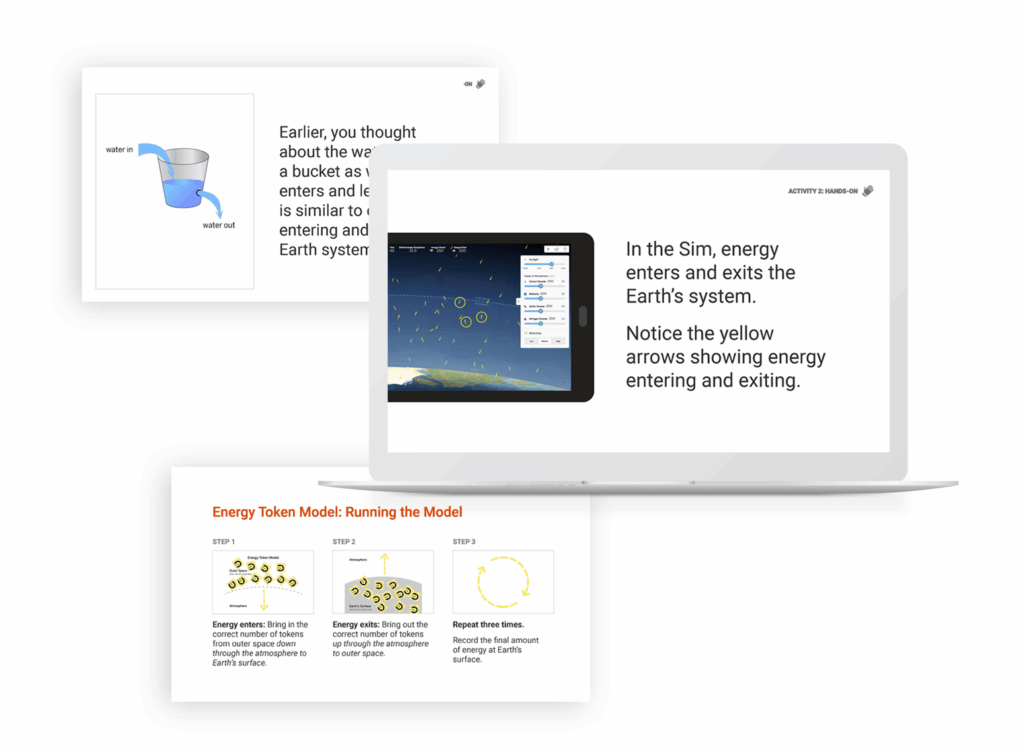
- Teacher Reference Guide: Unlike a typical TG that requires a series of supplemental books to support it, our encyclopedic reference guide is chock-full of everything a teacher needs to fully implement our program and the NGSS.
- Ready-to-Teach Lesson Slides: For daily instruction, teachers need their hands free. That’s why we created ready-to-teach lesson slides for every single lesson. What’s more, they are editable and include suggested teacher talk and point-of-use differentiation and other instructional tips. Click to learn more.
A note about the Materials Kits:
Hands-on learning is at the heart of Amplify Science, and is integrated into every unit. In order to make hands-on learning more manageable for busy teachers, Amplify Science materials are organized into unit-specific kits.
What’s different about Amplify’s unit-specific material kits? They…
- Include more materials — We give teachers enough non-consumable materials to support a class of 36 students and enough consumables to support 72 student uses. In other words, each kit will last two years.
- Are more manageable — Unlike other programs that require large groups of students to share limited sets of materials, our kits include enough to support small groups of 4–5 students.
- Include supportive videos — Each hands-on activity provides clear instructions for the teacher, with more complex activities supported by video demonstrations and illustrations.
Grade-specific lists of all materials included in each kit:
- Grade K: Materials Kit List
- Grade 1: Materials Kit List
- Grade 2: Materials Kit List
- Grade 3: Materials Kit List
- Grade 4: Materials Kit List
- Grade 5: Materials Kit List
Access your digital samples
Explore as a teacher
When you’re ready to explore the teaching experience on your own, follow these instructions to access the Amplify Science digital teacher platform.
- Click the Access Amplify Science Platform button below and bookmark the page.
- Select Log in with Amplify.
- Enter the username: t.scienceut@tryamplify.net
- Enter the password: AmplifyNumber1
- Click on Science on the left hand side.
- Click on the Grade Menu in the top center of the screen and select any grade.
- Select any unit.
To help familiarize yourself with navigating the digital platform, watch the below navigational video.
Explore as a student
When you’re ready to explore the student learning experience on your own, follow these instructions to access the Amplify Science digital student platform.
- Click the Access Amplify Science Platform button below and bookmark the page.
- Select Log in with Amplify.
- Enter the username: s.scienceut@tryamplify.net
- Enter the password: AmplifyNumber1
- Click the backpack icon on the top right.
- Click Science K-5
- Select any unit.
Resources to support your review
- Utah K-8 High Quality Instructional Materials (HQIM) Review Rubric
- K-8 Standards Alignment to Utah SEEd Standards
- Research behind Amplify Science
- What’s so phenomenal about phenomena? – eBook
- Phenomena in grades K–5
- Program structure for grades K–5
- Student Books in grades K–5
- Literacy-rich science instruction in grades K–5
- Approaches to assessment in grades K–5
- Amplify Technical Requirements
Welcome, Tigard-Tualatin School District, to the next chapter in the Science of Reading, with Amplify CKLA 3rd Edition!
Amplify Core Knowledge Language Arts® (CKLA) is approved by the Oregon Department of Education.
Truly built on the Science of Reading, Amplify CKLA helps Oregon teachers implement the Oregon English Language Arts and Literacy Standards by translating the science of reading into manageable, engaging, and effective classroom practices. For more than a decade, Amplify CKLA has transformed classrooms nationwide with its intentional knowledge building and systematic skills instruction.
Scroll down to learn how CKLA is uniquely designed to help all your students make learning leaps in literacy.
Our approach
Improve outcomes with a program that’s built on a decade of research and meets the strongest ESSA Tier I criteria.

Grounded in the Science of Reading
As the original Science of Reading program, Amplify CKLA puts research into action with explicit, systematic foundational skills instruction and a proven knowledge-building sequence. In collaboration with education experts and practitioners, we provide powerful resources that deliver real results.
Background knowledge drives results
Amplify CKLA follows the Core Knowledge Sequence, a content-specific, cumulative, and coherent approach to knowledge building. This approach improves reading scores and closes achievement gaps by establishing a robust knowledge base that strengthens comprehension.
In Amplify CKLA 3rd Edition, we’ve enriched our Knowledge Sequence with a wider range of perspectives and high-quality texts in new and enhanced units.

Build foundational skills for long-term success.
Students progress from simple to complex skill development starting with phonological and phonemic awareness. Instruction in Grades K–2 explicitly teaches the 150 spellings for the 44 sounds of English, following an intentional progression to ensure student success.
In our 3rd Edition, we’ve added dedicated Grade 3 foundational skills instruction that can either support core lessons or function as an intervention, based on student needs.
Daily writing deepens learning.
Grounded in the Science of Writing—the research on how kids learn to write—instruction is explicit, daily, and woven into the curriculum’s rich content. It covers both transcription (handwriting and spelling) and composition (organizing ideas into narratives) with high-impact activities like sentence-level combining and expanding, and pre-writing exercises. Writing and reading instruction are integrated so students simultaneously strengthen their communication skills, comprehension, and confidence.
High-quality, diverse texts
Amplify CKLA students are immersed in a variety of texts—complex read-alouds, decodable chapter books, trade books, and content-rich readers—that reflect varied experiences and connect to learning goals.
Readers are 100% decodable for Grades K–2, empowering students to directly apply what they’ve learned. Novel Study units for Grades 3–5 offer a mix of contemporary and classic literature, and Culminating Research Units in every grade include a set of authentic texts and trade books.
Reach all learners with differentiated support.
Scaffolds and challenges, developed in collaboration with education experts, make content accessible to every student—including multilingual and English learners. With strategies embedded right in the curriculum, teachers can deliver in-the-moment, individualized instruction to meet diverse student needs.
For a dedicated English language development program aligned to Amplify CKLA, explore Language Studio.
What’s included with Amplify CKLA
The comprehensive resources in Amplify CKLA 3rd Edition support effective literacy instruction in every classroom.
Easy-to-use teacher materials
Amplify CKLA teachers are empowered to deliver effective instruction with the following print and digital resources:
- Teacher Guides (K–5)
- Assessment Guides (K–5)
- Authentic texts and trade books (K–5)
- Knowledge Image Cards (K–2)
- Knowledge Flip Books (K–2, digital)
- Ready-made and customizable Presentation Screens (K–5, digital)
- Remediation and intervention resources (K–5)
- On-demand professional development (K–5, digital)
Immersive Amplify CKLA student resources
Amplify CKLA students stay engaged with the following print and digital resources:
- Decodable readers (K–2)
- Student Readers and novels (3–5)
- Student Activity Books (K–5)
- Poet’s Journal (3–5)
- eReaders (K–5, digital)
- Sound Library featuring articulation videos and songs (K–2, digital)
- Skill-building practice games (K–5)
Rich literary experiences
All the high-quality, diverse texts in Amplify CKLA connect to the curriculum, fostering your students’ curiosity and helping them learn to read with confidence.
- Trade Book Collections (K–5) inspire student research in each grade’s Culminating Research Unit.
- Classic and contemporary literature (3–5) delight students in Novel Study Units.
- Increasingly complex Student Readers (K–5) develop students’ literacy across grades.
Hands-on phonics materials
Multisensory phonics and foundational skills resources engage students with fun, varied approaches that promote mastery and build independence.
- Chaining Folders and Small Letter Cards (K)
- Read-Aloud Big Books (K–1)
- Large Letter Cards (K–2)
- Sound Cards (K–2)
- Image Cards (K–3)
- Blending Picture Cards (K)
- Consonant and Vowel Code Posters and Spelling Cards (1–2)
- Sound Library (K–2, digital)
All-in-one digital platform
Our comprehensive platform simplifies your day-to-day tasks and makes it easier to plan and deliver lessons.
- Ready-made and customizable Presentation Screens
- Auto-scored digital assessments
- Standards-based reporting
- Assignable skill-building games
- Sound Library
- eReaders
Professional development
Move beyond traditional program training with Amplify’s digital PD Library, designed to fully support your shift to the Science of Reading and Amplify CKLA. Deepen your understanding with:
- Program and planning resources
- Model lesson videos from real classrooms
- Guidance on using Amplify’s literacy suite to provide multi-tiered support
Language Studio: Multilingual and English language learner support
Language Studio is Amplify CKLA’s dedicated K–5 program for multilingual and English language learners. Through daily 30-minute lessons, it strengthens reading, writing, speaking, and listening skills while reinforcing core instruction. This tailored support empowers students to confidently access grade-level content as they develop academic English.
Curriculum Maps
- Curriculum Maps by Grade and Strand:
Amplify CKLA serves
150,000+
Classrooms
4,000,000+
Students
50
U.S. States and D.C.
Amplify Caminos program overview
¡El futuro es bilingüe! | The future is bilingual!
Amplify Caminos is a research-based core curriculum essential for Spanish literacy and grounded in the Science of Reading.
View our Caminos Program Guide to find our approach to foundational skills by year, skills practice with student readers and writing, and how Caminos supports teachers meeting the needs of all students with embedded differentiation.
Amplify Caminos offers a robust and authentic elementary Spanish language arts program for grades K–5 that promotes
biliteracy and helps teachers inspire students as they become confident readers, writers, and thinkers in Spanish.
Using the program’s two strands, Caminos Conocimiento and Caminos Lectoescritura, teachers develop student
comprehension in Spanish through a program rich in background knowledge and foundational skills activities. The texts students encounter include authentic Spanish literature that honor Spanish language development and build diverse content knowledge in social studies, science, literature, and the arts.
Amplify Caminos is designed to support a variety of bilingual and dual language instructional models to meet your student’s biliteracy needs. Combined with its English language partner, Amplify Core Knowledge Language Arts (CKLA), Amplify Caminos provides a comprehensive biliteracy solution.
Amplify Caminos delivers rich, authentic experiences.
With a robust digital experience and expanding library of online materials, Amplify Caminos provides everything needed to support, challenge, and engage your students. From digital Teacher Guides to lesson projectables, we provide all the tools needed to successfully deliver every lesson.
How Amplify Caminos works with Amplify CKLA
Through direct instruction, both Amplify Caminos and Amplify CKLA develop reading, writing, speaking, and listening skills in their respective languages. Together, the programs empower educators to effectively foster biliteracy with:
- Intentional knowledge building that connects topics throughout the program.
- Increased metalinguistic awareness from students exploring the similarities and differences in each language while strengthening their knowledge across both.
- Equitable instruction using high-quality Spanish and English decodable readers that provide students with opportunities to apply skills learned, and foster each students’ growing competency in reading.
Demo Access
Explore the CKLA Teacher Digital Resources
First, watch the quick navigation video to the right. Then, follow the directions below.
- Go to: learning.amplify.com or click the Access CKLA Teacher Digital button below
- Select Log in with Amplify.
- Enter this username: t1.ttsd_ckla_caminos@demo.tryamplify.net
- Enter this password: Amplify1-ttsd_ckla_caminos
- Click the CKLA button
- Select your desired grade level from the Program drop down
Follow the directions below to access the Student Resource Site:
- Go to: learning.amplify.com or click the Access CKLA Student Digital button below
- Select Log in with Amplify.
- Enter this username: s1.ttsd_ckla_caminos@demo.tryamplify.net
- Enter this password: Amplify1-ttsd_ckla_caminos
- From the main page, click the backpack in the top right corner.
- Click on the grade level to select your desired grade.
Welcome, Ohio educators!
Designed from the ground up to teach students to think, read, write, and argue like real scientists and engineers, Amplify Science combines literacy-rich activities with hands-on learning and digital tools to engage students in exploring compelling phenomena in every unit.

Overview
Developed by UC Berkeley’s Lawrence Hall of Science, our program features:
- A phenomena-based approach where students construct a more complex understanding of each unit’s anchor phenomenon.
- A blend of cohesive storylines, hands-on investigations, rich discussions, literacy-rich activities, and digital tools.
- Newly crafted units, chapters, lessons, and activities designed to deliver true 3-dimensional learning.
- An instructional design that supports all learners in accessing all standards.
Hear what these educators have to say about the program. >
Approach to literacy

[Video] Literacy in action (K–5)
Watch students use scientific text to obtain information and practice reading skills, while using writing prompts to create arguments using evidence.

[Video] Literacy in action (6–8)
Watch students use scientific text to obtain information and practice reading skills, while using writing prompts to create arguments using evidence.

Literacy-rich science instruction (K–5)
Immersing young students in reading, writing, and arguing like real scientists and engineers.

Elementary school
Get started by watching this class share what they’re figuring out with Amplify Science. >
In Grades K–3 we recommend the national grade level units of Amplify Science to provide students with the appropriate grade level literacy and background knowledge. Individual units are available to purchase.
When you’re ready:
- Find a summary of each unit below including each unit’s student role and anchor phenomenon.
- Download some helpful resources to support your review.
- Explore the digital Teacher’s Guide by clicking the orange “Review now” button.

Unit 1
Needs of Plants and Animals
Student role: Scientists
Phenomenon: There are no monarch caterpillars in the Mariposa Grove community garden ever since vegetables were planted.

Unit 2
Pushes and Pulls
Student role: Pinball engineers
Phenomenon: Pinball machines allow people to control the direction and strength of forces on a ball.

Unit 3
Sunlight and Weather
Student role: Weather scientists
Phenomenon: Students at one school are too cold during morning recess, while students at another are too hot during afternoon recess.

Unit 1
Animal and Plant Defenses
Student role: Marine scientists
Phenomenon: Spruce the Sea Turtle will soon be released back into the ocean, where she will survive despite predators.

Unit 2
Light and Sound
Student role: Light and sound engineers
Phenomenon: A puppet show company uses light and sound to depict realistic scenes in puppet shows.

Unit 3
Spinning Earth
Student role: Sky scientists
Phenomenon: The sky looks different to Sai and his grandma when they talk on the phone at night.

Unit 1
Plant and Animal Relationships
Student role: Plant scientists
Phenomenon: No new chalta trees are growing in the fictional Bengal Tiger Reserve in India.

Unit 2
Properties of Materials
Student role: Glue engineers
Phenomenon: Different glue recipes result in glues that have different properties.
Unit 3
Changing Landforms
Student role: Geologists
Phenomenon: The cliff on which Oceanside Recreation Center is situated appears to be receding.
Unit 1
Balancing Forces
Student role: Engineers
Phenomenon: The fictional town of Faraday is getting a new train. Unlike typical trains, this one floats, which is causing some concern among the town’s citizens.
Unit 2
Inheritance and Traits
Student role: Wildlife biologists
Phenomenon: An adopted wolf in Graystone National Park has some traits in common with one wolf pack in the park and other traits in common with a different pack.
Unit 3
Environments and Survival
Student role: Biomimicry engineers
Phenomenon: Over 10 years, a population of grove snails has changed. Populations with yellow shells have decreased, while those with banded shells have increased.
Unit 4
Weather and Climate
Student role: Meteorologists
Phenomenon: Three different islands, each a contender for becoming an orangutan reserve, experience different weather patterns.
Unit 1
Energy Conversions
Student role: System engineers
Phenomenon: The fictional town of Ergstown experiences frequent blackouts. Their electrical system seems to be failing.
Unit 2
Earth’s Features
Student role: Geologists
Phenomenon: A mysterious fossil is discovered in a canyon within the fictional Desert Rocks National Park.

Unit 3
Modeling Matter
Student role: Food scientists
Phenomenon: Some ingredients dissolve in a salad dressing while others, like oil and vinegar, appear to separate.
Unit 4
The Earth System
Student role: Water resource engineers
Phenomenon: East Ferris, a city on one side of the fictional Ferris Island, is experiencing a water shortage, while West Ferris is not.
Unit 1
Patterns of Earth and Sky
Student role: Astronomers
Phenomenon: An ancient artifact depicts what we see in the sky at different times of the day, but it appears to be missing a piece.
Unit 2
Vision and Light
Student role: Conservation biologists
Phenomenon: The population of Tokay geckos in a rain forest in the Philippines has decreased since the installation of new highway lights.
Unit 3
Waves, Energy, and Information
Student role: Marine scientists
Phenomenon: Mother dolphins in the fictional Blue Bay National Park communicate with their calves despite the distance between them.
Unit 4
Ecosystem Restoration
Student role: Ecologists
Phenomenon: The jaguars, sloths, and cecropia trees in a reforested section of a Costa Rican rain forest are not growing or thriving.
Middle school
Get started by watching this class share what they’re figuring out with Amplify Science. >
When you’re ready:
- Find a summary of each unit below including each unit’s student role and anchor phenomenon.
- Download some helpful resources to support your review.
- Explore the digital Teacher’s Guide by clicking the orange “Review now” button.

CORE
Rock Transformations
Domain: Earth and Space Science
Unit type: Core
Student role: Geologists
Phenomenon: Rock samples from the Great Plains and from the Rocky Mountains — regions hundreds of miles apart — look very different, but have surprisingly similar mineral compositions.

CORE
Phase Change
Domains: Physical Science, Earth and Space Science
Unit type: Core
Student role: Chemists
Phenomenon: A methane lake on Titan no longer appears in images taken by a space probe two years apart.

ENGINEERING INTERNSHIP
Phase Change Engineering Internship
Domains: Engineering Design, Physical Science
Unit type: Engineering internship
Student role: Chemical engineering interns
Phenomenon: Designing portable baby incubators with different combinations of phase change materials can keep babies at a healthy temperature.

CORE
Thermal Energy
Domain: Physical Science
Unit type: Core
Student role: Thermal scientists
Phenomenon: One of two proposed heating systems for Riverdale School will best heat the school.

LAUNCH
Microbiome
Domain: Life Science
Unit type: Launch
Student role: Microbiological researchers
Phenomenon: The presence of 100 trillion microorganisms living on and in the human body may keep the body healthy.

CORE
Metabolism
Domain: Life Science
Unit type: Core
Student role: Medical researchers
Phenomenon: Elisa, a young patient, feels tired all the time.

ENGINEERING INTERNSHIP
Metabolism Engineering Internship
Domains: Life Science, Engineering Design
Unit type: Engineering internship
Student role: Food engineers
Phenomenon: Designing health bars with different molecular compositions can effectively meet the metabolic needs of patients or rescue workers.
LAUNCH
Harnessing Human Energy
Domains: Physical Science, Earth and Space Science, Engineering Design
Unit type: Launch
Student role: Energy scientists
Phenomenon: Rescue workers can use their own human kinetic energy to power the electrical devices they use during rescue missions.

CODING SCIENCE INTERNSHIP
Coding Science Internship: Coral Restoration (Optional)
Domains: Life Science, Coding Science
Unit type: Coding Science Internship
Student role: Coding science interns
Phenomenon: Implementing a restoration project to improve the health of coral reef populations in Hawaii.

CORE
Ocean, Atmosphere, and Climate
Domains: Earth and Space Science, Physical Science
Unit type: Core
Student role: Climatologists
Phenomenon: During El Niño years, the air temperature in Christchurch, New Zealand is cooler than usual.

CORE
Weather Patterns
Domains: Earth and Space Science, Physical Science
Unit type: Core
Student role: Forensic meteorologists
Phenomenon: In recent years, rainstorms in Galetown have been unusually severe.

CORE
Earth’s Changing Climate
Domains: Earth and Space Science, Life Science
Unit type: Core
Student role: Climatologists
Phenomenon: The ice on Earth’s surface is melting.

ENGINEERING INTERNSHIP
Earth’s Changing Climate Engineering Internship
Domains: Earth and Space Science, Engineering Design
Unit type: Engineering internship
Student role: Civil engineers
Phenomenon: Designing rooftops with different modifications can reduce a city’s impact on climate change.

CORE
Earth, Moon, and Sun
Domains: Earth and Space Science, Physical Science
Unit type: Core
Student role: Astronomers
Phenomenon: An astrophotographer can only take pictures of specific features on the Moon at certain times.

CORE
Chemical Reactions
Domains: Physical Science, Life Science, Earth and Space Science
Unit type: Core
Student role: Forensic chemists
Phenomenon: A mysterious brown substance has been detected in the tap water of Westfield.

CORE
Light Waves
Domains: Physical Science, Life Science, Earth and Space Science
Unit type: Core
Student role: Spectroscopists
Phenomenon: The rate of skin cancer is higher in Australia than in other parts of the world.
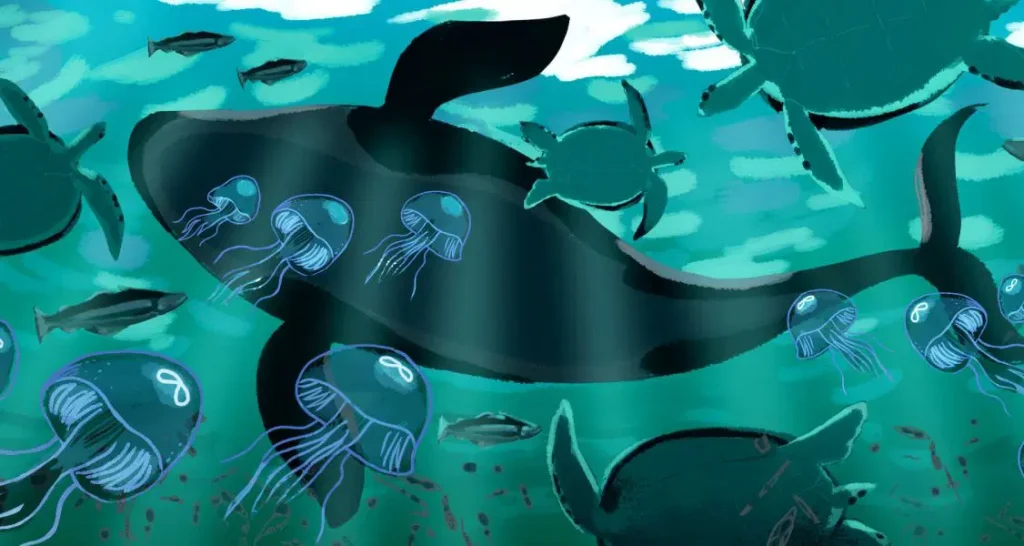
CORE
Populations and Resources
Domains: Life Science, Earth and Space Science
Unit type: Core
Student role: Biologists
Phenomenon: The size of the moon jelly population in Glacier Sea has increased.
CORE
Matter and Energy in Ecosystems
Domains: Life Science, Earth and Space Science, Physical Science
Unit type: Core
Student role: Ecologists
Phenomenon: The biodome ecosystem has collapsed.
CODING SCIENCE INTERNSHIP
Coding Science Internship: Coral Restoration (Optional)
Domains: Life Science, Coding Science
Unit type: Coding Science Internship
Student role: Coding science interns
Phenomenon: Implementing a restoration project to improve the health of coral reef populations in Hawaii.

LAUNCH
Geology on Mars
Domain: Earth and Space Science
Unit type: Launch
Student role: Planetary geologists
Phenomenon: Analyzing data about landforms on Mars can provide evidence that Mars may have once been habitable.
CORE
Plate Motion
Domain: Earth and Space Science
Unit type: Core
Student role: Geologists
Phenomenon: Mesosaurus fossils have been found on continents separated by thousands of kilometers of ocean, even though the Mesosaurus species once lived all together.
ENGINEERING INTERNSHIP
Plate Motion Engineering Internship
Domains: Earth and Space Science, Engineering Design
Unit type: Engineering internship
Student role: Mechanical engineering interns
Phenomenon: Patterns in earthquake data can be used to design an effective tsunami warning system.

CORE
Force and Motion
Domain: Physical Science
Unit type: Core
Student role: Physicists
Phenomenon: The asteroid sample-collecting pod failed to dock at the space station as planned.

ENGINEERING INTERNSHIP
Force and Motion Engineering Internship
Domains: Engineering Design, Physical Science
Unit type: Engineering internship
Student role: Mechanical engineering interns
Phenomenon: Designing emergency supply delivery pods with different structures can maintain the integrity of the supply pods and their contents.

CORE
Magnetic Fields
Domain: Physical Science
Unit type: Core
Student role: Physicists
Phenomenon: During a test launch, a spacecraft traveled much faster than expected.

CORE
Traits and Reproduction
Domain: Life Science
Unit type: Core
Student role: Biomedical students
Phenomenon: Darwin’s bark spider offspring have different silk flexibility traits, even though they have the same parents.
CORE
Natural Selection
Domains: Life Science, Earth and Space Science
Unit type: Core
Student role: Biologists
Phenomenon: The newt population in Oregon State Park has become more poisonous over time.

ENGINEERING INTERNSHIP
Natural Selection Engineering Internship
Domains: Life Science, Earth and Space Science
Student role: Clinical engineers
Phenomenon: Designing malaria treatment plans that use different combinations of drugs can reduce drug resistance development while helping malaria patients.
CORE
Rock Transformations (optional)
Domain: Earth and Space Science
Unit type: Core
Student role: Geologists
Phenomenon: Rock samples from the Great Plains and from the Rocky Mountains — regions hundreds of miles apart — look very different, but have surprisingly similar mineral compositions.

CORE
Evolutionary History
Domains: Life Science, Earth and Space Science
Unit type: Core
Student role: Paleontologists
Phenomenon: A mystery fossil at the Natural History Museum has similarities with both wolves and whales.
CODING SCIENCE INTERNSHIP
Coding Science Internship: Coral Restoration (Optional)
Domains: Life Science, Coding Science
Unit type: Coding Science Internship
Student role: Coding science interns
Phenomenon: Implementing a restoration project to improve the health of coral reef populations in Hawaii.
Resources to support your review
Select a topic below to explore helpful resources with more information about Amplify Science, the program’s development, and pedagogy.

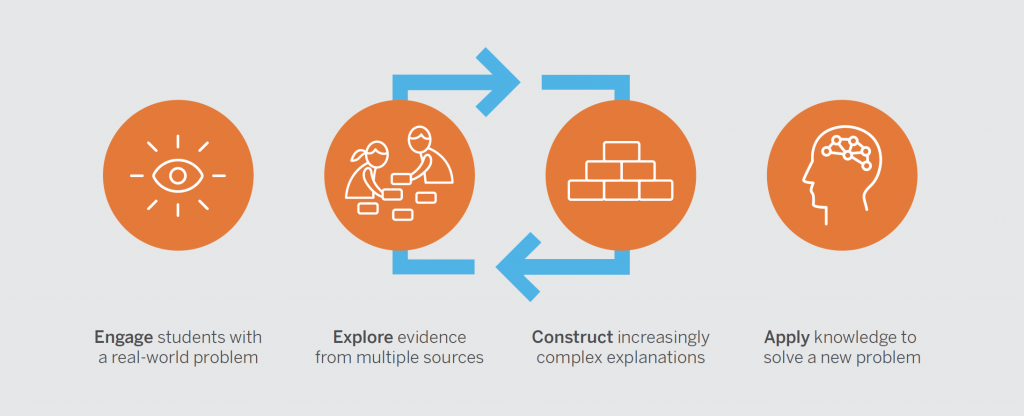

[Video] Planning in action (K–5)
Watch how easy it is for Amplify Science teachers to prep their 3-D instruction.
[Video] Planning in action (6–8)
Watch how easy it is for Amplify Science teachers to prep their 3-D instruction.


[Video] Simulations and modeling tools (K–5)
Watch how students investigate phenomena with the help of digital tools.

[Video] Simulations and modeling tools (6–8)
Watch how students investigate phenomena with the help of digital tools.

Summary of Investigations (K–5) coming soon
Explore the types of investigations that students conduct.
Summary of Investigations (6–8) coming soon
Explore the types of investigations that students conduct.

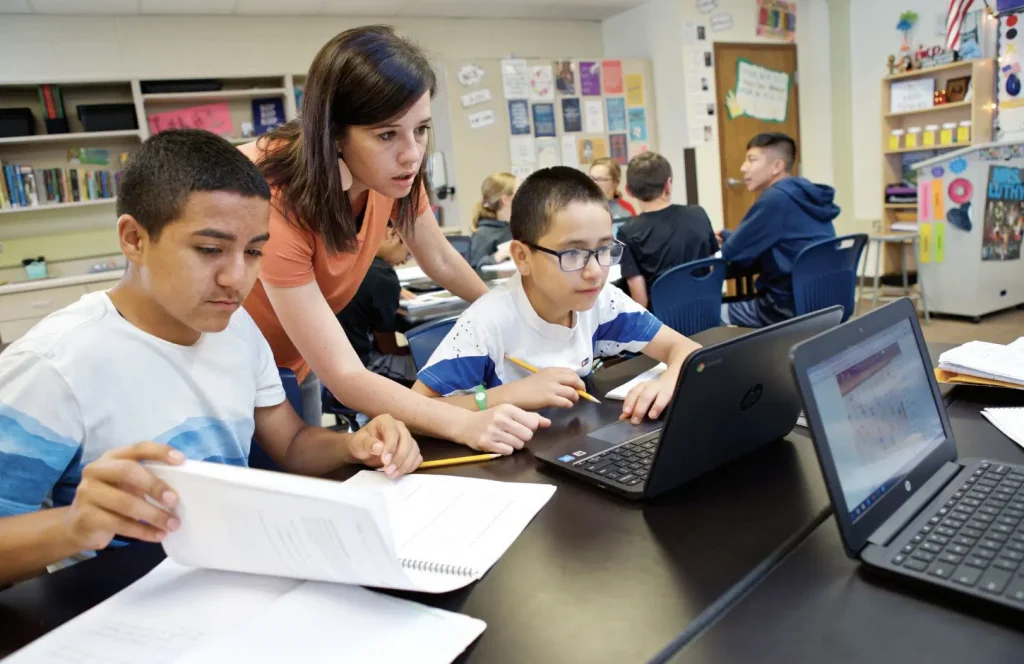
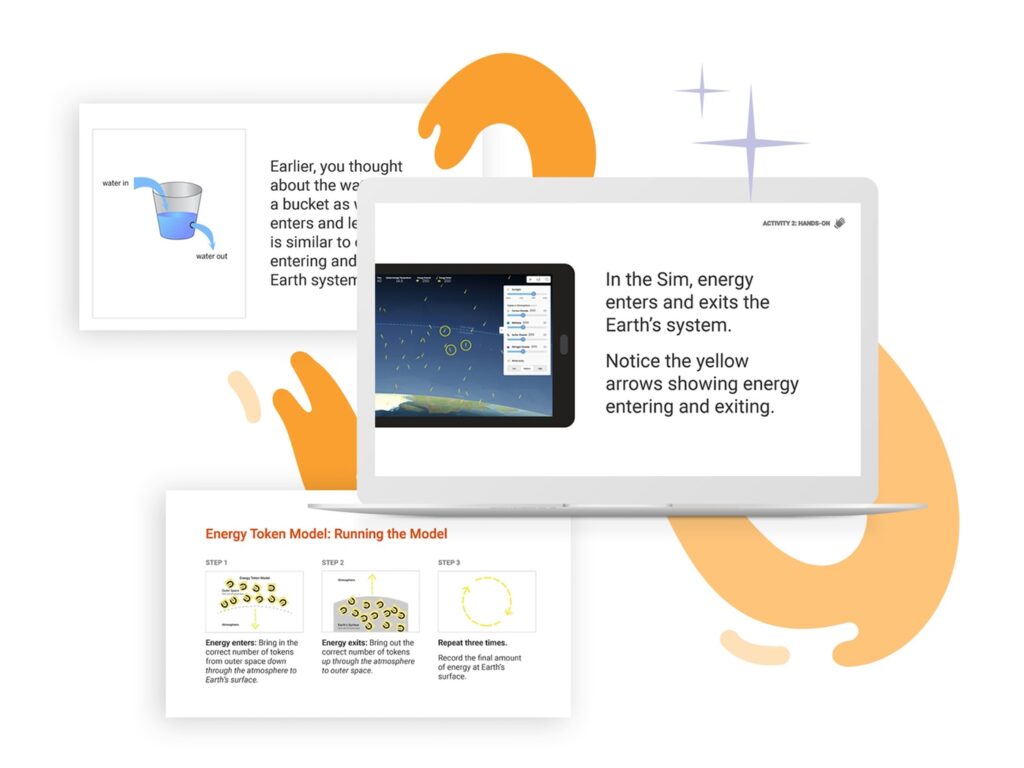


Remote and hybrid learning guide
Amplify is here to help! Amplify Science will soon feature product enhancements and new resources that will help manage the new landscape of back-to-school 2020.
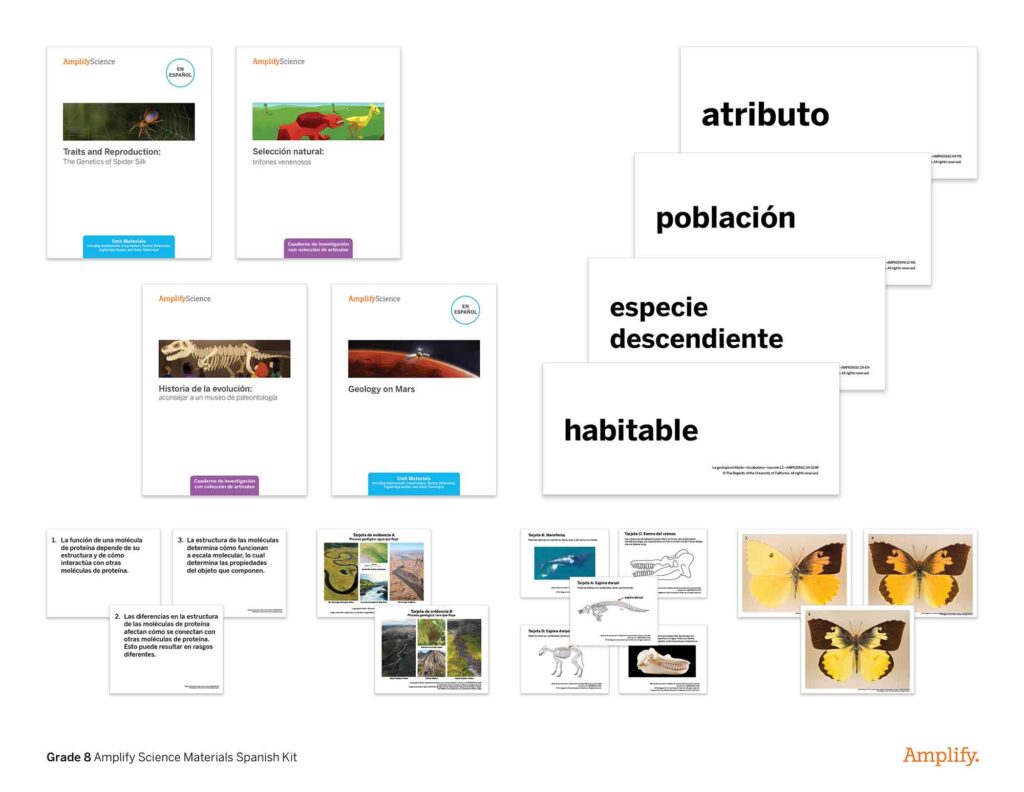

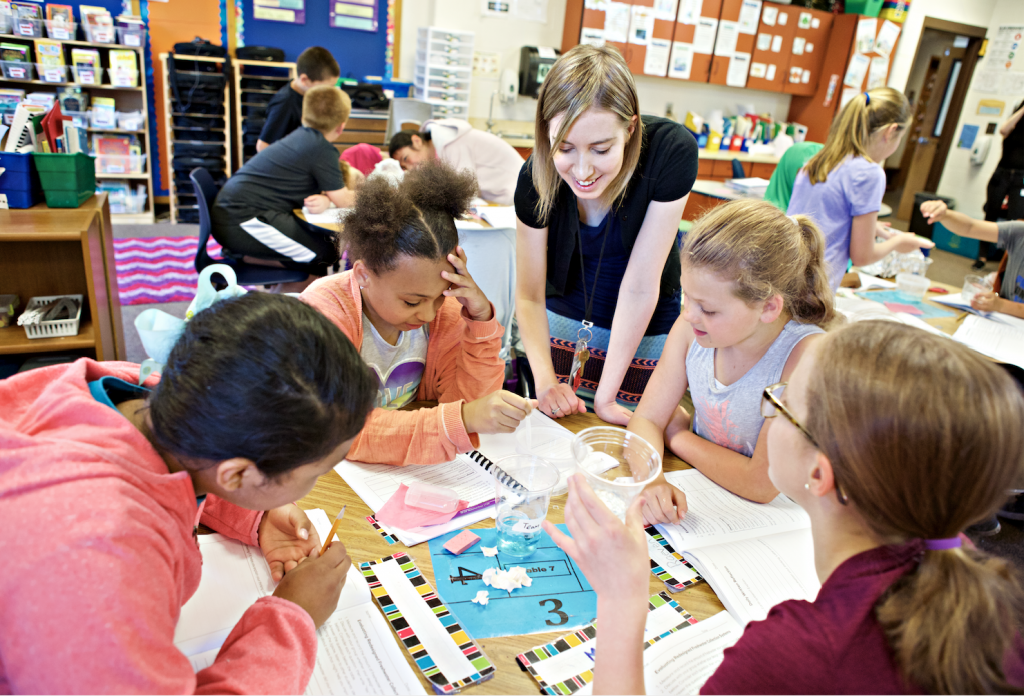

Students ready for more
Learn how we make learning more rigorous for students ready for a challenge.


NGSS Benchmark assessments
Learn more about the Next Generation Science Standards Benchmark assessments created by Amplify.


Ready to explore with digital access and physical samples?
Start your digital review and request physical samples with these three easy steps.
- Note these Ohio specific login credentials for your digital access.
Username: t.ohscience@tryamplify.net
Password: AmplifyNumber1 - Click Review now.
- Complete the form and select Log in with Amplify to input the Ohio specific login.
Contact an Amplify representative
For any questions, fill out the form to the right and a member of our sales team will reach out to you soon.
Katie Cannon
Senior Account Executive
Casie Rayes
Account executive
Matt Paupore
Senior Account Executive
Welcome, Nebraska educators!
Designed from the ground up for the NGSS to teach students to think, read, write, and argue like real scientists and engineers, Amplify Science combines literacy-rich activities with hands-on learning and digital tools to engage students in exploring compelling phenomena in every unit.
Overview
Developed by UC Berkeley’s Lawrence Hall of Science, our program features:
- A phenomena-based approach where students construct a more complex understanding of each unit’s anchor phenomenon.
- A blend of cohesive storylines, hands-on investigations, rich discussions, literacy-rich activities, and digital tools.
- Newly crafted units, chapters, lessons, and activities designed to deliver true 3-dimensional learning.
- An instructional design that supports all learners in accessing all standards.
Hear what these educators have to say about the program. >
Explore your grade level
Get started by watching this class share what they’re figuring out with Amplify Science. >
Then select your grade level below to learn more about how we make this type of rich learning accessible to all students at every grade.
Elementary school
When you’re ready:
- Find a summary of each unit below including each unit’s student role and anchor phenomenon.
- Download some helpful resources to support your review.
- Explore the digital Teacher’s Guide by clicking the orange “Review now” button.

Unit 1
Needs of Plants and Animals
Student role: Scientists
Phenomenon: There are no monarch caterpillars in the Mariposa Grove community garden ever since vegetables were planted.
Unit 2
Pushes and Pulls
Student role: Pinball engineers
Phenomenon: Pinball machines allow people to control the direction and strength of forces on a ball.
Unit 3
Sunlight and Weather
Student role: Weather scientists
Phenomenon: Students at one school are too cold during morning recess, while students at another are too hot during afternoon recess.
Unit 1
Animal and Plant Defenses
Student role: Marine scientists
Phenomenon: Spruce the Sea Turtle will soon be released back into the ocean, where she will survive despite predators.
Unit 2
Light and Sound
Student role: Light and sound engineers
Phenomenon: A puppet show company uses light and sound to depict realistic scenes in puppet shows.
Unit 3
Spinning Earth
Student role: Sky scientists
Phenomenon: The sky looks different to Sai and his grandma when they talk on the phone at night.
Unit 1
Plant and Animal Relationships
Student role: Plant scientists
Phenomenon: No new chalta trees are growing in the fictional Bengal Tiger Reserve in India.
Unit 2
Properties of Materials
Student role: Glue engineers
Phenomenon: Different glue recipes result in glues that have different properties.
Unit 3
Changing Landforms
Student role: Geologists
Phenomenon: The cliff on which Oceanside Recreation Center is situated appears to be receding.
Unit 1
Balancing Forces
Student role: Engineers
Phenomenon: The fictional town of Faraday is getting a new train. Unlike typical trains, this one floats, which is causing some concern among the town’s citizens.
Unit 2
Inheritance and Traits
Student role: Wildlife biologists
Phenomenon: An adopted wolf in Graystone National Park has some traits in common with one wolf pack in the park and other traits in common with a different pack.
Unit 3
Environments and Survival
Student role: Biomimicry engineers
Phenomenon: Over 10 years, a population of grove snails has changed. Populations with yellow shells have decreased, while those with banded shells have increased.
Unit 4
Weather and Climate
Student role: Meteorologists
Phenomenon: Three different islands, each a contender for becoming an orangutan reserve, experience different weather patterns.
Unit 1
Energy Conversions
Student role: System engineers
Phenomenon: The fictional town of Ergstown experiences frequent blackouts. Their electrical system seems to be failing.
Unit 2
Vision and Light
Student role: Conservation biologists
Phenomenon: The population of Tokay geckos in a rain forest in the Philippines has decreased since the installation of new highway lights.
Unit 3
Earth’s Features
Student role: Geologists
Phenomenon: A mysterious fossil is discovered in a canyon within the fictional Desert Rocks National Park.
Unit 4
Waves, Energy, and Information
Student role: Marine scientists
Phenomenon: Mother dolphins in the fictional Blue Bay National Park communicate with their calves despite the distance between them.
Unit 1
Patterns of Earth and Sky
Student role: Astronomers
Phenomenon: An ancient artifact depicts what we see in the sky at different times of the day, but it appears to be missing a piece.
Unit 2
Modeling Matter
Student role: Food scientists
Phenomenon: Some ingredients dissolve in a salad dressing while others, like oil and vinegar, appear to separate

Unit 3
The Earth System
Student role: Water resource engineers
Phenomenon: East Ferris, a city on one side of the fictional Ferris Island, is experiencing a water shortage, while West Ferris is not.
Unit 4
Ecosystem Restoration
Student role: Ecologists
Phenomenon: The jaguars, sloths, and cecropia trees in a reforested section of a Costa Rican rain forest are not growing or thriving.
Middle school
When you’re ready:
- Find a summary of each unit below including each unit’s student role and anchor phenomenon.
- Download some helpful resources to support your review.
- Explore the digital Teacher’s Guide by clicking the orange “Review now” button.

LAUNCH
Microbiome
Domain: Life Science
Unit type: Launch
Student role: Microbiological researchers
Phenomenon: The presence of 100 trillion microorganisms living on and in the human body may keep the body healthy.
CORE
Metabolism
Domain: Life Science
Unit type: Core
Student role: Medical researchers
Phenomenon: Elisa, a young patient, feels tired all the time.
ENGINEERING INTERNSHIP
Metabolism Engineering Internship
Domains: Life Science, Engineering Design
Unit type: Engineering internship
Student role: Food engineers
Phenomenon: Designing health bars with different molecular compositions can effectively meet the metabolic needs of patients or rescue workers.
CORE
Traits and Reproduction
Domain: Life Science
Unit type: Core
Student role: Biomedical students
Phenomenon: Darwin’s bark spider offspring have different silk flexibility traits, even though they have the same parents.
CORE
Thermal Energy
Domain: Physical Science
Unit type: Core
Student role: Thermal scientists
Phenomenon: One of two proposed heating systems for Riverdale School will best heat the school.
CORE
Ocean, Atmosphere, and Climate
Domains: Earth and Space Science, Physical Science
Unit type: Core
Student role: Climatologists
Phenomenon: During El Niño years, the air temperature in Christchurch, New Zealand is cooler than usual.
CORE
Weather Patterns
Domains: Earth and Space Science, Physical Science
Unit type: Core
Student role: Forensic meteorologists
Phenomenon: In recent years, rainstorms in Galetown have been unusually severe.
CORE
Earth’s Changing Climate
Domains: Earth and Space Science, Life Science
Unit type: Core
Student role: Climatologists
Phenomenon: The ice on Earth’s surface is melting.
Engineering Internship
Earth’s Changing Climate Engineering Internship
Domains: Earth and Space Science, Engineering Design
Unit type: Engineering internship
Student role: Civil engineers
Phenomenon: Designing rooftops with different modifications can reduce a city’s impact on climate change.
LAUNCH
Geology on Mars
Domain: Earth and Space Science
Unit type: Launch
Student role: Planetary geologists
Phenomenon: Analyzing data about landforms on Mars can provide evidence that Mars may have once been habitable.
CORE
Plate Motion
Domain: Earth and Space Science
Unit type: Core
Student role: Geologists
Phenomenon: Mesosaurus fossils have been found on continents separated by thousands of kilometers of ocean, even though the Mesosaurus species once lived all together.
ENGINEERING INTERNSHIP
Plate Motion Engineering Internship
Domains: Earth and Space Science, Engineering Design
Unit type: Engineering internship
Student role: Mechanical engineering interns
Phenomenon: Patterns in earthquake data can be used to design an effective tsunami warning system.
CORE
Rock Transformations
Domain: Earth and Space Science
Unit type: Core
Student role: Geologists
Phenomenon: Rock samples from the Great Plains and from the Rocky Mountains — regions hundreds of miles apart — look very different, but have surprisingly similar mineral compositions.
CORE
Phase Change
Domains: Physical Science, Earth and Space Science
Unit type: Core
Student role: Chemists
Phenomenon: A methane lake on Titan no longer appears in images taken by a space probe two years apart.
ENGINEERING INTERNSHIP
Phase Change Engineering Internship
Domains: Engineering Design, Physical Science
Unit type: Engineering internship
Student role: Chemical engineering interns
Phenomenon: Designing portable baby incubators with different combinations of phase change materials can keep babies at a healthy temperature.
CORE
Chemical Reactions
Domains: Physical Science, Life Science, Earth and Space Science
Unit type: Core
Student role: Forensic chemists
Phenomenon: A mysterious brown substance has been detected in the tap water of Westfield.
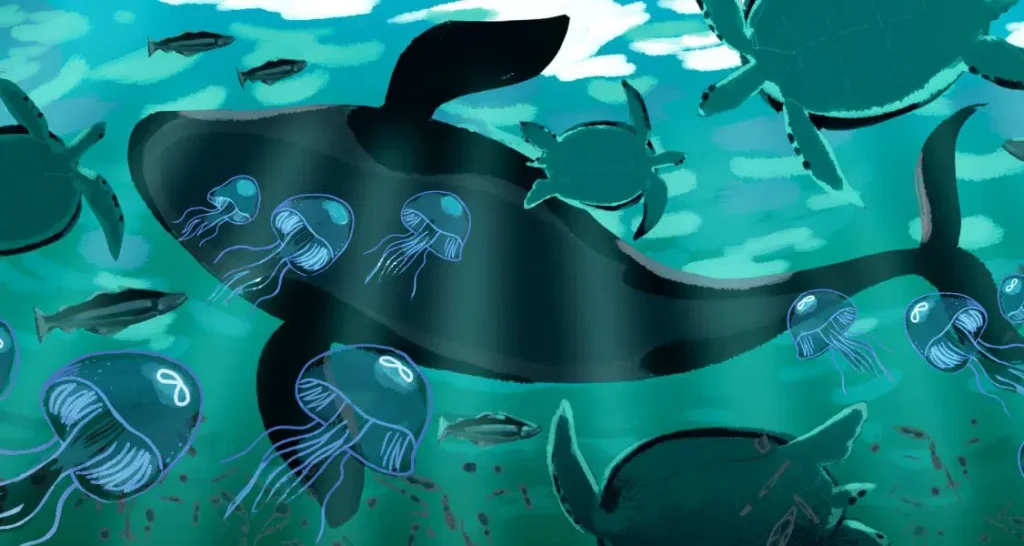
CORE
Populations and Resources
Domains: Life Science, Earth and Space Science
Unit type: Core
Student role: Biologists
Phenomenon: The size of the moon jelly population in Glacier Sea has increased.
CORE
Matter and Energy in Ecosystems
Domains: Life Science, Earth and Space Science, Physical Science
Unit type: Core
Student role: Ecologists
Phenomenon: The biodome ecosystem has collapsed.
LAUNCH
Harnessing Human Energy
Domains: Physical Science, Earth and Space Science, Engineering Design
Unit type: Launch
Student role: Energy scientists
Phenomenon: Rescue workers can use their own human kinetic energy to power the electrical devices they use during rescue missions.

CORE
Force and Motion
Domain: Physical Science
Unit type: Core
Student role: Physicists
Phenomenon: The asteroid sample-collecting pod failed to dock at the space station as planned.
ENGINEERING INTERNSHIP
Force and Motion Engineering Internship
Domains: Engineering Design, Physical Science
Unit type: Engineering internship
Student role: Mechanical engineering interns
Phenomenon: Designing emergency supply delivery pods with different structures can maintain the integrity of the supply pods and their contents.
CORE
Magnetic Fields
Domain: Physical Science
Unit type: Core
Student role: Physicists
Phenomenon: During a test launch, a spacecraft traveled much faster than expected.

CORE
Light Waves
Domains: Physical Science, Life Science, Earth and Space Science
Unit type: Core
Student role: Spectroscopists
Phenomenon: The rate of skin cancer is higher in Australia than in other parts of the world.
CORE
Earth, Moon, and Sun
Domains: Earth and Space Science, Physical Science
Unit type: Core
Student role: Astronomers
Phenomenon: An astrophotographer can only take pictures of specific features on the Moon at certain times.
CORE
Natural Selection
Domains: Life Science, Earth and Space Science
Unit type: Core
Student role: Biologists
Phenomenon: The newt population in Oregon State Park has become more poisonous over time.
ENGINEERING INTERNSHIP
Natural Selection Engineering Internship
Domains: Engineering Design, Life Science
Unit type: Engineering internship
Student role: Clinical engineers
Phenomenon: Designing malaria treatment plans that use different combinations of drugs can reduce drug resistance development while helping malaria patients.
CORE
Evolutionary History
Domains: Life Science, Earth and Space Science
Unit type: Core
Student role: Paleontologists
Phenomenon: A mystery fossil at the Natural History Museum has similarities with both wolves and whales.
Resources to support your review
Select a topic below to explore helpful resources with more information about Amplify Science, the program’s development, and pedagogy.
[Video] Planning in action (K–5)
Watch how easy it is for Amplify Science teachers to prep their 3-D instruction.
[Video] Planning in action (6–8)
Watch how easy it is for Amplify Science teachers to prep their 3-D instruction.


[Video] Simulations and modeling tools (K–5)
Watch how students investigate phenomena with the help of digital tools.
[Video] Simulations and modeling tools (6–8)
Watch how students investigate phenomena with the help of digital tools.

Students ready for more
Learn how we make learning more rigorous for students ready for a challenge.
[Video] Literacy in action (K–5)
Watch students use scientific text to obtain information and practice reading skills, while using writing prompts to create arguments using evidence

[Video] Literacy in action (6–8)
Watch students use scientific text to obtain information and practice reading skills, while using writing prompts to create arguments using evidence.
Literacy-rich science instruction (K–5)
Immersing young students in reading, writing, and arguing like real scientists and engineers.

NGSS Benchmark assessments
Learn more about the Next Generation Science Standards Benchmark assessments created by Amplify.

Remote and hybrid learning guide
Amplify is here to help! Amplify Science will soon feature product enhancements and new resources that will help manage the new landscape of back-to-school 2020.
Ready to start exploring with digital access?
Contact an Amplify representative
Laina Armbruster
larmbruster@amplify.com
(602) 791-4135
Bob McCarty
rmccarty@amplify.com
(435) 655-1731
Kristin McDonald
kmcdonald@amplify.com
(515) 240-0244
Overview
Developed by UC Berkeley’s Lawrence Hall of Science, our program features:
- A phenomena-based approach where students construct a complex understanding of each unit’s anchor phenomenon.
- A blend of cohesive storylines, hands-on investigations, rich discussions, literacy-rich activities, and digital tools.
- Newly crafted units, chapters, lessons, and activities designed to deliver true 3-dimensional learning.
- An instructional design that supports all learners in accessing all standards.
Hear what these educators have to say about the program. >
Classroom resources


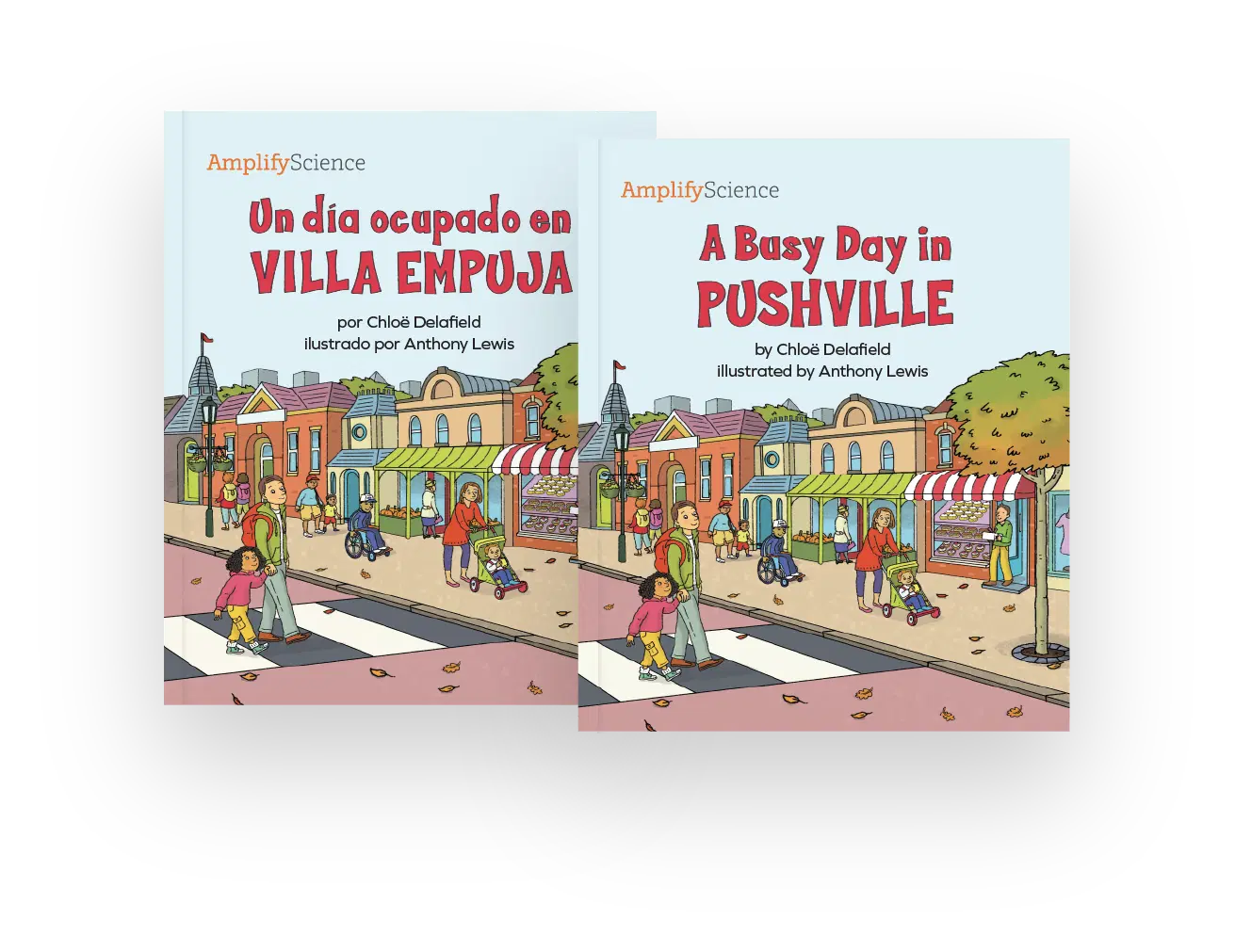
3-D teaching and learning


Hands-on

Differentiation


Literacy-rich

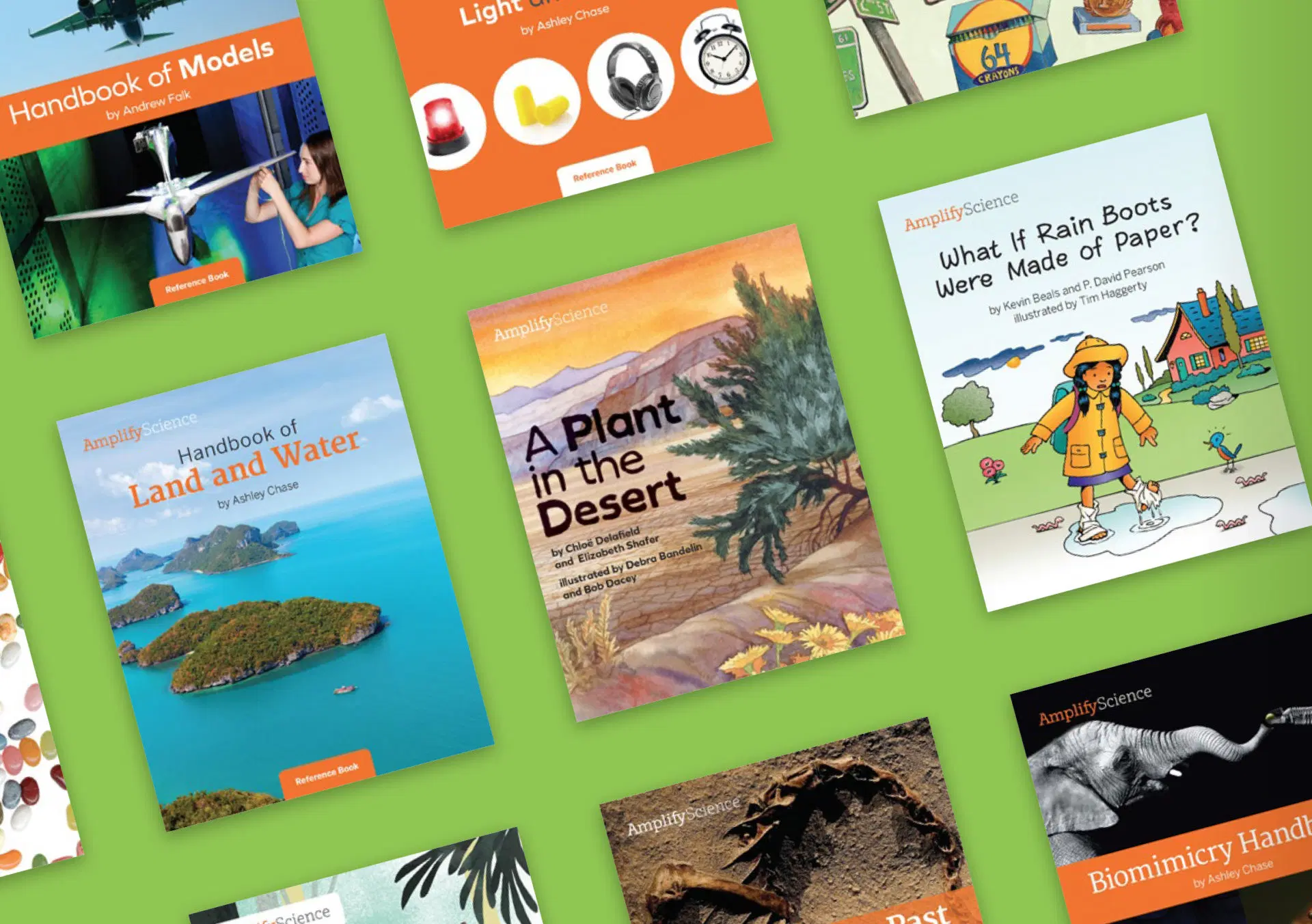
Standards and assessment


Explore your grade
Access the Science Digital Platform
Get started by watching this class share what they’re figuring out with Amplify Science. >
Select a grade level below to learn more about how we make rich learning accessible to all students at every grade.
| Grades TK–2 | Grades 3–5 |
| Grade TK | Grade 3 |
| Grade K | Grade 4 |
| Grade 1 | Grade 5 |
| Grade 2 |
Welcome, California Reviewers for 6–8!
We’re so honored you’re considering Amplify Science California—the #1 most adopted NGSS curriculum across the state.
- It meets 100% of the NGSS.
- It has demonstrated effectiveness across all student groups.
- It helps students make the shift from learning about to figuring out scientific concepts.
- It empowers students to think, read, write, and argue like real scientists and engineers each and every day.
- It can flexibly adapt to remote and hybrid learning scenarios.

Overview
Developed by UC Berkeley’s Lawrence Hall of Science, our program features:
- A phenomena-based approach where students construct a complex understanding of each unit’s anchor phenomenon.
- A blend of cohesive storylines, hands-on investigations, rich discussions, literacy-rich activities, and digital tools.
- Newly crafted units, chapters, lessons, and activities designed to deliver true 3-dimensional learning.
- An instructional design that supports all learners in accessing all standards.
Hear what these educators have to say about the program. >
Classroom resources


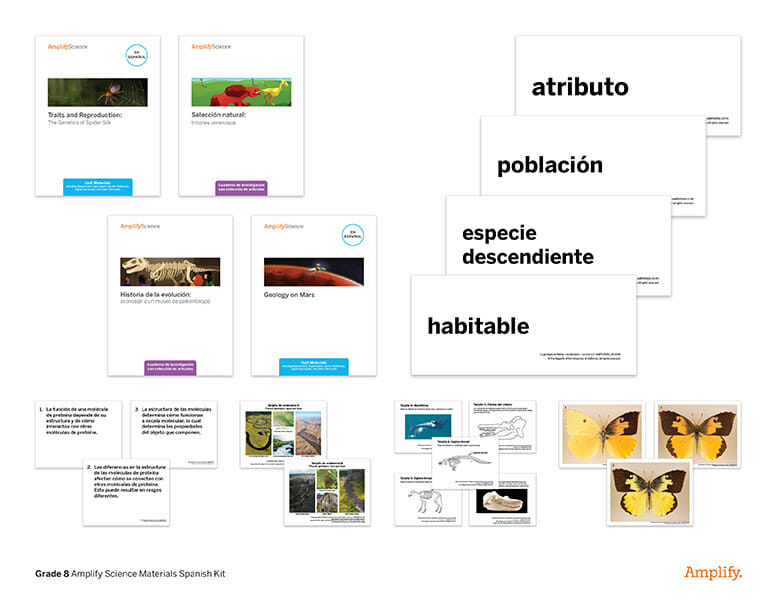
3-D teaching and learning
Hands-on

Differentiation


Literacy-rich

Standards and assessment


Explore your grade
Get started by watching this class share what they’re figuring out with Amplify Science. >
Select a grade level below to learn more about how we make rich learning accessible to all students at every grade.
|
Grades 6–8 Integrated |
Grades 6–8 Domain |
S3 – 06. Bethany and Dan take on Twitter!

In this episode, Bethany and Dan take a look at several tweets that caught the most fire on Twitter during the 2021-2022 school year. The pair answer questions about viral teaching methods, the best teaching advice you can give in three words, and if students should use pencils or pens in class. Join them as they take on those questions and several others in a fast-paced episode.
Explore more from Math Teacher Lounge by visiting our main page.
Dan Meyer (00:02):
Hey folks. Welcome back to the Math Teacher Lounge. I’m your co-host, Dan Meyer.
Bethany Lockhart Johnson (00:07):
And I am Bethany Lockhart Johnson. And I’m your co-host, Dan! Hi!
Dan Meyer (00:12):
We’re co-hosts! Hey! Great to see you.
Bethany Lockhart Johnson (00:13):
Dan, this is the last episode of Season 3. Three seasons!
Dan Meyer (00:19):
It’s gotta have a cliffhanger. What will the cliffhanger be? You know?
Bethany Lockhart Johnson (00:22):
The cliffhanger is that we love having guests! It’s one of our most favorite things, because selfishly, we love to talk to all of these amazing folks who are doing this interesting research and thinking about amazing things. But for this last episode, it’s just you and I, Dan. Cliffhanger!
Dan Meyer (00:40):
Yeah. I like this. I like this. So the cliffhanger was last episode, and people are all like, “So who’s the last guest gonna be of the season before we roll out into summer?” And yes, as Bethany said, we love all the fascinating guests we’ve had on throughout these last few seasons. And we realized…who is more fascinating to each other than both of us? You know, let’s talk to each other about things, right? <Laughs> You get that! You get that! Or am I alone here in this? We had this idea about what we should talk about here, and that’s this: I am on Twitter a lot. I’m @DDMeyer on Twitter; throw me a follow; might follow back; who knows? I don’t tweet much. Bethany, what’s your handle on Twitter? Let ’em know.
Bethany Lockhart Johnson (01:22):
I’m @LockhartEdu, and I was much more active pre-mamahood. But I’m still up in there. Go ahead.
Dan Meyer (01:30):
Yep. In there. Yeah, great. So I’ve been keeping track of the hottest conversations in math education Twitter, the conversations that the most people who kind of describe themselves as math teachers in their bios and whatnot have been replying to. We’ve got some little things working in the background, keeping track of this sort of thing. And so we are gonna bring you folks some of those extremely hot conversations, and even better than the questions—which we hope you’ll reply to and tag us in your replies—even more than those questions, we’ll bring you our answers—our answers!—to those questions. Can you believe that? We’ll fully settle these questions! Won’t we, Bethany? My gosh, won’t we?
Bethany Lockhart Johnson (02:15):
Jeez Louise! No! Dan Meyer, the point is not our final word on it! The point is this episode, we’re furthering the conversation. We wanna hear from listeners about what do you think?
Dan Meyer (02:25):
Right. You’re right. You all need someone in your life like Bethany who will help you become the best version of yourself. So here’s the deal. We have several questions in a few different categories. We’re gonna bust through some quick ones, pretty quick. And, uh, there’s some meaty ones as well. Let’s get into it! The first questions come to you all, and us, courtesy of MTL guest Howie Hua, who has a renowned knack for just creating math memes, but also conversation starters that really capture the curiosity and answers of of a grateful nation. So Howie’s first question, which I’ll pose to Bethany, is, “What’s your favorite number?” Bethany? And why is it your favorite number?
Bethany Lockhart Johnson (03:14):
Oh, I love it. OK. Well, the first thing that came to my mind is 12. ‘Cause It’s a highly divisible number. I mean, 2, 6, 3, 4—I love it. And it coincides with the day and month of my birth. Which, like, the double-digit…come on, 12, 12, 12, 12. I dunno, am I giving away, like, my bank security code <laugh> or anything by saying that?
Dan Meyer (03:41):
Yeah. What’s your favorite PIN?
Bethany Lockhart Johnson (03:43):
Let me change my PIN. Yeah, it’s just such a happy, happy number. Well, 12 is, you know, 10 and 2. Two more. Anyway. Love it. What about you, Dan? What’s your favorite number and why?
Dan Meyer (03:55):
I’m into it. I’m into it. I think I would choose 16. Because it’s the first number for me when it was like, “Oh, you can keep on making numbers forever!” Where I’m like, OK, 2times 2 is 4. Great. That’s kind of an elemental expression in mathematics. Four times 2 is 8. OK. But then, 8 times 2 is 16, and it’s like, “Oh, you can just keep doubling that thing over and over and over again!” And I can recall feeling pretty excited that numbers are just like, out there for the finding. For the taking. Cool stuff.
Bethany Lockhart Johnson (04:33):
I’m sorry. Wait, I have to interrupt. You went 2 times 4 is 8 and you didn’t go 4 times 4 is 16? You went 8 times 2 is 16? You wanted to keep the 2 the same?
Dan Meyer (04:49):
Yup. Yup. You can keep on doubling. You can keep on doubling numbers and it just keeps on going.
Bethany Lockhart Johnson (04:53):
More evidence that our brain works very differently.
Dan Meyer (04:56):
We learn more about each other…let me keep this rolling with Howie questions. OK? Howie says, “If you could co-teach with one teacher from Twitter, who would you choose?”
Bethany Lockhart Johnson (05:06):
Oh, oh, it has to be a teacher?
Dan Meyer (05:11):
Or anybody, I guess. I mean, like, I know you love Oprah.
Bethany Lockhart Johnson (05:15):
Can I co-teach with Oprah?
Dan Meyer (05:16):
Yup, yeah, so there we are. <Laugh> Yup. OK. Fair enough. We have to work Oprah into every single episode.
Bethany Lockhart Johnson (05:23):
I’d just love to sit and like, we’d read together, we’d read to the students, and then we’d talk…I mean, obviously it’d be Oprah. But if we’re thinking more of like MTBoS, like math Twitter blogosphere-land, I suppose the person I would wanna co-teach with honestly would probably be Allison Hintz. One of our former guests as well. Her book, Mathematizing Children’s Literature, with Antony Smith, that book—I just love the idea of sitting and doing a read-aloud and then diving into some juicy math that’s inspired by what comes out of that read-aloud. So yes, that’s who I pick. Allison! Let’s co-teach!
Dan Meyer (06:00):
<Laugh> Shout-out to Allison.
Bethany Lockhart Johnson (06:01):
What about you?
Dan Meyer (06:03):
I would choose MTL guest Idil Abdulkadir—because, and this relates to Allison and also Elham Kazemi—they talked about, in our episode about teacher time-outs. And I’m choosing someone who I think is—like I’ve never seen Idil teach, but I work with Idil at Desmos and think she’s fantastic. But what I really want in a co-teacher is someone that I can say, “Whoa, time out, do you see what’s going on here? This is really interesting. What should we do next about this?” And have a little strategy sesh in front of the kids and no one gets freaked out by that. And I think that that’d be a pile of fun. Idil seems like she’d be receptive to that kind of interaction, teacher to teacher. So that’s my vote right there.
Bethany Lockhart Johnson (06:48):
Opportunity for you to grow your own practice, Dan.
Dan Meyer (06:52):
Yeah, yeah, exactly. 100%.
Bethany Lockhart Johnson (06:56):
So Dan, I actually have a question for you from Howie. If we’re on the Howie tweet train, I have one from Howie too.
Dan Meyer (07:04):
Howie had some fire tweets, some fire tweets this current year. Yep.
Bethany Lockhart Johnson (07:08):
Dan, I wanna know: Do you prefer doing math in pen or pencil?
Dan Meyer (07:16):
Ooh, yeah. Oh, I see that Howie says, “I don’t mean to start any drama, BUT,” and then asks the question–
Bethany Lockhart Johnson (07:23):
But!
Dan Meyer (07:24):
I think that Howie lives for drama. I think he knows he’s messy. He lives for drama. He knows what he’s doing this with this question here. He knows.
Bethany Lockhart Johnson (07:32):
DRAAAAMAAAA!
Dan Meyer (07:32):
He knows what he’s doing. Yup. So I would just say it depends. Is that cheating? Like if I’m doing math to learn, or if we are learning in that process, then I want to use pen, actually. I wanna see the tracks of the thinking. And if we’re doing it for presentation, like if I’m presenting something, I wanna…I guess that’s an area where I’d be fine to not erase things. I don’t wanna prep it so it’s, you know…I guess you could use pen for presentation also. Just pen. Period. But I wanna see the tracks of the thinking if we’re doing some learning versus presentation. What about you?
Bethany Lockhart Johnson (08:09):
Well, I heard the voice in my head telling one of my kindergartners, “No, you cannot do that in sparkly pen. You need to do it in pencil.” And I was like, “Wait, whose voice is that?” It was one of my math teachers telling me I couldn’t do it in pen! Why couldn’t this kid do it in pen? Sure! Do it in a sparkly pen! So I wanna say do it in pen. And since usually pen is what I have around…I mean, I do crosswords in pen, Dan.
Dan Meyer (08:36):
Wow, wow. With a piece of paper and math, you have lots of room to re-revise and cross off…but those little, little boxes on the crossword, that says a lot about your commitment to pen.
Bethany Lockhart Johnson (08:46):
I got really good at making an A into an H or a P or whatever we need. So I would say, “Hey, if you’re in the room with your kiddos and you’re doing math, if somebody wants to do pen, let them do pen.” But I do know that I’ve seen teachers say you need to do pen so that I can see all of your thinking. So I think I hear what you’re saying. But do you think it should be like a classroom rule or something?
Dan Meyer (09:13):
Oh, no, no, no. I mean, I’m gonna ask you like, “How’d you get to this destination?” And I wanna know process somehow, and I think you’ll get tired of having to explain it verbally rather than just, like, showing. Just don’t erase stuff. Don’t scratch stuff off. Let’s let’s see how you’re getting there. That is what I’m into.
Bethany Lockhart Johnson (09:30):
Thanks, Howie, for that trio of thought-provoking tweets, because I genuinely wanted to know what Dan thought and what our listeners think. I mean, Dan, I gotta say: Howie, you say you don’t wanna cause drama, but I gotta say I’m with Dan on that—
Dan Meyer (09:50):
Got the gift. Got the gift for drama. We’re still friends though. So I’m happy about that. Our next section, I got a few more questions queued up here and these ones relate to advice for educators, advice for yourself. Good advice, bad advice, that kind of thing. So let’s jump in. I would love to know—this one’s from Pernille Ripp—I’m very curious, Bethany, what is the worst teaching advice you have gotten in your life, ever?
Bethany Lockhart Johnson (10:19):
<Laugh> Ooh. OK. Um, worst teaching advice was: “That’s OK, just move on anyway.” And that was in terms of pacing. It was like, students needed to do a deeper dive and the teacher who I was chatting with said, “No, no, it’s fine; it’s fine; just move on. Just move on to the next chapter.” That was probably the worst advice, because no, I don’t think that’s what I should have done at all! <Laugh>
Dan Meyer (10:48):
Right.
Bethany Lockhart Johnson (10:48):
But I was a first-year teacher and I was trying to figure it out. And I learned that that was not good advice. And I understand the pressure of pacing. But it was totally antithetical to the type of listening to my students that I want to do in my craft. And this teacher meant well, but that was not good advice, teacher! <Laugh> What about you, Dan? What is the worst teaching advice?
Dan Meyer (11:13):
I dig that. That feels similar to one of the replies to Pernille here. Frances Klein says, “Never let them know you’ve made a mistake” being particularly bad advice. You know, just this like idea of like moving along, covering your tracks, not backtracking or admitting mistakes, those all feel kind of a piece. The worst advice I think I’ve ever received, and I wasn’t given this often, but it’s echoed by a lot of the commenters here on this tweet, which is “Don’t smile until X, Y, or Z,” where X, Y, and Z are like Christmas, October, December, January. Just the idea that you’ve gotta develop—
Bethany Lockhart Johnson (11:54):
Wait, what?
Dan Meyer (11:55):
<Laugh> Did you never hear this from anybody? Don’t smile until Christmas? Perhaps this is more—
Bethany Lockhart Johnson (11:59):
I’m a kindergarten teacher! Can you imagine? If I don’t smile the second they walk in? The tears?! The parents’ tears?! The kids’ tears?! If I’m just like, stoic?
Dan Meyer (12:07):
Yeah. Well.
Bethany Lockhart Johnson (12:08):
So explain it to me.
Dan Meyer (12:10):
Well, the idea is, is that, you know, for older kids, they’re scoping you, they’re clocking you for weakness, they’re looking at you, they’re looking to take advantage. And so “don’t smile until Christmas” is like, hey, you can always relax. You can always relax your discipline, but you can’t UN-relax it if you start out, you know, Mr. Happy Pants Meyer. Which—
Bethany Lockhart Johnson (12:33):
Smile perceived as weakness.
Dan Meyer (12:36):
Yeah. Very obviously poor advice. Eventually you come to realize that like having a rapport and a relationship that is trusting and warm and demanding, that has high expectations, that’s the best kind of classroom management. Not some kind of persona built around intimidation or stoicism, that kinda thing. So, terrible, terrible advice!
Bethany Lockhart Johnson (13:01):
I feel like I did have a few of those math classes. Yeah.
Dan Meyer (13:04):
Yeah, exactly. <Laugh> You loved them, right? They were like your favorite math classes. It was a blast, right?
Bethany Lockhart Johnson (13:11):
<Laugh> So we have to ask the opposite. Thank you, Daniel Willingham, who said, “What’s the best advice you got?” But hold on, Dan, he didn’t just want the best advice. He wanted the best advice in three words.
Dan Meyer (13:26):
Oh yeah. He doesn’t, he doesn’t want a book or dissertation or even a blog post or even a tweet. He wants just three words.
Bethany Lockhart Johnson (13:32):
I think maybe that might have been to me. <Laugh>
Dan Meyer (13:34):
This is someone who’s doesn’t have much time for this advice, wants it distilled down. I’m just obviously stalling here as I try to think about this. I don’t know, there’s just like so much nuance lost here. I would say, listen to students, listen to students. I can’t say more that, I guess. I guess I’m done. I can’t say more than that there. But you’re in a bad place if you’re not listening carefully to students. How about you?
Bethany Lockhart Johnson (14:04):
- Mine is “Ask…lots…questions.”
Dan Meyer (14:11):
Nice. ‘Cause I filled in the word! I filled in the word! I was able to kinda infer that. I did that. I got that.
Bethany Lockhart Johnson (14:17):
Wait, wait, wait, wait! I could have said many! Wait, I could have said “Ask many questions.”
Dan Meyer (14:22):
Strong, strong.
Bethany Lockhart Johnson (14:25):
So yeah. You know, no isolation, like don’t put yourself in a bubble. Ask, not just, not just your students, but the teachers! Ask a lot of questions. You don’t have to have it all figured out.
Dan Meyer (14:34):
Into it. Very much into it.
Bethany Lockhart Johnson (14:37):
Thanks. Daniel. Thanks, Pernille.
Dan Meyer (14:40):
Yeah. Daniel and Pernille, Both great questions there about advice, best and worst. Another fire tweet popped up earlier this year from Dr. Khristopher Childs, which was “Name one thing every educator should stop doing.”
Bethany Lockhart Johnson (14:57):
Oh, I don’t know. This kind of ties into my best advice about asking questions.
Dan Meyer (15:03):
Stop not asking questions?
Bethany Lockhart Johnson (15:06):
<Laugh> Avoid the isolation. I really love this idea of when we can, popping into each others’ classrooms, co-teaching, building this collaborative nature. Elham Kazemi, in our interview, talked about this idea of, like you said, the teacher time-outs, learning from each other. So I feel like if we could stop isolating ourself…and I don’t mean at lunch—sometimes you need to not be in the teacher lounge at lunch. Like if you need a minute, take the minute! But in general, as a practice, how can we not be isolated and instead be learning with, and from, each other? How can we stop the isolation? That’s what I would hope every educator would stop doing. What about you, Dan?
Dan Meyer (15:54):
I think that educators should…this is gonna require a little bit of elaboration. I think educators should stop taking responsibility for things that are not in their zone of influence. I think that as a society we are asking teachers to do more and more, to become more and more of a central fixture holding together with chewing gum and twine all the various parts of a student’s life. From their health, their fitness, emotional health, that we feed students at school. It becomes very tempting, I think, there’s a lot of pressures to blame outcomes, disparate and unjust outcomes later on in life, on teachers. And teachers should just flatly refuse. And to yeah, understand what the job has been set up to do. What it’s good for. And do that with excellence and intent and a lot of effort. And then not take responsibility for the rest of it.
Bethany Lockhart Johnson (16:53):
If I asked five different people about the definition of what a teacher should be doing, I would get five different answers. So I think it’s really interesting that you say that because yeah, many, many hats, which I think, yes, can lead to burnout. Can lead to all sorts of things. We’re asking schools to be all things to all, all people. Interesting. I’m gonna think about that more. I need to hear folks’ response on that, Dan.
Dan Meyer (17:18):
Mm-Hmm. I’m curious too. I mean, yeah, there are definitely things that are in teachers’ responsibility and some that are not. That’s a tough one.
Bethany Lockhart Johnson (17:26):
OK, for help, name an example of each. And what’s something that you think every teacher should not and should be doing. ‘Cause I feel like my brain goes to some things like, you know, I had teachers who were saying, “Well, I don’t wanna have my kids have to have breakfast in my classroom in the morning. That shouldn’t be my responsibility to serve breakfast in the morning.” But I’m like, “But then your kids are eating and they’re gonna be able to learn and be more focused.” Should that be the teacher’s responsibility? I’m not saying it necessarily should, but I’m saying…I don’t know. It gets murky for me.
Dan Meyer (18:06):
Yeah, for sure. I mean, I think that we should, as a country, have a really generous social welfare net so that everyone has food at home. Where a school is not the place where some students have to go to in order to receive nutrition and nourishment. That seems sad to me. And uncommon in developed nations. I think that teachers should watch out for, should be responsible for, the mathematical development of the students they teach, up to a point, they should be responsible for learning math and creating relationships in their classes. I don’t think that teachers should accept responsibility for larger kinds of outcomes, like the health of a democracy or international competition, who goes to the moon first. That kind of thing has historically been placed at the feet of teachers. And it’s tempting when you’re a teacher, I think, to take on that responsibility because it kind of develops your social importance. And I just say, we should say no to that. And get compensation, not in terms of social importance, but rather like in spendable dollars and monies.
Bethany Lockhart Johnson (19:10):
I’m learning more about you, Dan. And you know, this is what I’ve gotten from that answer: If you’re gonna dream, dream big. Right?
Dan Meyer (19:17):
Is that what you got from that? I don’t know. I think I’m trying to dream realistically.
Bethany Lockhart Johnson (19:23):
No, like if we’re gonna say, “Maybe teachers shouldn’t be responsible for serving breakfast in the morning,” well, because we want every child to have access to nutritious and filling food at home and time to eat it in the morning, right? It’s bigger than just, “I don’t want the teacher to have to do this.” So we’re dreaming big. We’re saying this should be the LEAST that students have access to, right?
Dan Meyer (19:53):
Yeah. Yeah. I’m here now. I’m with you. I like that dream. Where we take care of folks in their lives outside of schools. So schools don’t have to be the one linchpin for every kind of social outcome. Like currently a lot of them run through a school ’cause we don’t do a good job of setting up other ways to meet those needs. And we should.
Bethany Lockhart Johnson (20:16):
And we’re also recording this in, what, two weeks, a week, after a tragedy where students and teachers were killed in the classroom. And I think both of us are taking some deep breaths and recognizing that there’s a lot of debate that is happening about what teacher’s role should be in preventing this in the future. And I don’t know if you’ve done drills in your classroom that are supposed to help mitigate disaster, but you know—collective deep breaths— <laugh> is where we’re at right now.
Dan Meyer (20:52):
Yep. The idea of “we should arm teachers” is another example of no, we should not do that. We should solve the tendency towards violence outside of the classroom so that teachers and students can teach and learn. That sounds awesome to me.
Bethany Lockhart Johnson (21:06):
Collective deep breath. Whew. OK. So what else you got for me, Dan?
Bethany Lockhart Johnson (21:33):
Ooh. So I feel like I’ve heard that in many teaching PDs. “I Do, you do, we do.” Actually I feel like I’ve seen like more “I do, we do, you do.” Like graduated release. I do it, then we’ll do it a little bit together, and then now you have permission to do it. And I feel like in directed draw, that’s a hundred percent true. Like I’m gonna show you this and then you draw it. And then you cut here and then you do it. If we’re trying to create this, like I’m teaching this new art technique. But in mathematics, I feel like that’s really not what I want my classroom to look like. I want to support my students and set them up for sense-making, and then I want them to try it out and I don’t want them to solve it the way it first comes to mind for me. I wanna see how they make sense of it and how they solve it. And then I want us to share it with each other so we can grow together. So I think time and place for “I do, you do, we do,” or “I do, we do, you do.” Or shoo-be-doo-be-doo-be. Yeah. You?
Dan Meyer (22:44):
I’ve got nothing. I have nothing to add. I thought that was just an excellent summary of a classroom I would love to be a part in, love to teach. I think it’s a certain tool in the toolbox that I think is overused. But it’s also a tool that can be useful in the case of certain kinds of operations. There are some operations that do benefit from “let me just show you how, like one way you might do this.” I don’t know. I’m like helping my kid whack a nail into a board and there’s a moment where it’s like, “Hey, actually, lemme just show you one way you can do this,” and do it, and then that’s helpful in some moments. But for so much of math, a lot of math does not relate to the operational kinds of fluency. And in those instances, it’s a little bit…it’s not a useful tool, I don’t think, for those kinds of skills and ideas.
Bethany Lockhart Johnson (23:34):
I’m thinking of tool talks in my classroom. So in kindergarten, many of the tools that we use in math and just in class in general, are new to the students. And if I tell them, this is exactly how you should use this tool, then I feel like I’m taking a lot of the sense-making away from them. But if I introduce the tool, show them how to use the tool safely, show them this is not a safe way to use the tool, chewing on this is not safe. That’s not how we use this tool. This is how we take care of it, et cetera. But then support different modes of using the tool that are gonna help them use it to solve problems and make sense, I think…but I guess—Dan, have you heard “I do, you do, we do,” or is it “I do, we do, you do”?
Dan Meyer (24:22):
I’m with you. And I think that it got clarified post-tweet. But yeah, it typically is “I do, we do, you do,” the gradual release of responsibility it’s often called. And I, I have heard people do what you described, which is…what is it? It’s “You do, we do, I do”? Like an inversion of that? Like have people do a thing that I can do that’s not too, too abstract for them, and then like “We all do something together, and then I’ll offer a summary of what we learned,” is one way that goes. I like that tool as well.
Bethany Lockhart Johnson (24:53):
I think particularly, at least I’ve seen in elementary classrooms, there’s sometimes this fear of letting students just try it out before I’ve really showed them, “but this is how it has to be.” And what I am most excited about is supporting students and creating a classroom environment where students don’t need my permission or need my direct “this is the only way to do it.” Instead, it’s like, yes, there’s lots of things we model. But there’s also like, “Hey, what do you think? How do you think this should be used?” And the joy of that exploration.
Dan Meyer (25:30):
Yeah. There’s a feeling of efficiency that comes from “I do, we do, you do,” for some kinds of math, but it’s undercut in my experience by what it cultivates in the students, which is “I’ve gotta wait until the teacher does before I can do anything.” So it pays off real diminishing returns over time. And it’s, just for me, an exhausting way to teach. Always being the bottleneck for new learning is a total drag.
Bethany Lockhart Johnson (25:55):
Ooh, what a great way to describe it. You do not wanna be the bottleneck. You want to be…what’s the other thing? The facilitator? What’s the opposite of a bottleneck? The flowing river? The…The…Help me!
Dan Meyer (26:10):
Hit us up in the replies. I dunno. The opposite of a bottleneck. That’s what you wanna…you wanna not be the opposite? No, you want, yeah. We got this here. We’ll figure it out. We’ll get back to you. <Laugh> OK. Well, folks, those were a few of this year’s fire tweets. It’s been fantastic chatting with you—
Bethany Lockhart Johnson (26:29):
Dan.
Dan Meyer (26:29):
—Bethany, About all those—
Bethany Lockhart Johnson (26:32):
Dan. You know, my favorite thing to do is interrupting you, Dan. I have to interrupt you because we can’t end fire tweets, Dan, without including a tweet from you.
Dan Meyer (26:43):
Oh, that’s true. I do have my moments. Yeah, we should. We really should. <Laugh> Do you have one in mind?
Bethany Lockhart Johnson (26:50):
No. Dan. Yes. I loved…you tweeted recently, “How many years have you been teaching?” Which, OK. “What Has been like the most influential? Like, what, OK, blah, blah, blah.” <blathering noises> You tweeted, “How many years have you been teaching? And at this point, what has most influenced how you teach?” And you gave some ideas: A methods course, PD sessions, curriculum, TV and movies, et cetera, et cetera. And I love that you put that out there because this episode is coming out as we’re wrapping up another school year. And it also got me thinking about summer and what teachers sometimes do during the summer, but what we might need to do this summer for self-care. But I’m really curious. I love that tweet. And I’m curious, Dan, what did folks say was the thing that had most influenced their teaching and what’s most influenced your teaching?
Dan Meyer (27:49):
Ooh, yeah. People’s responses to this one were really fantastic. I came into this, I was flying to the Association of Mathematics Teacher Educators conference. And I just found myself wondering, so, the pre-service year, the one year of, like, you’re learning how to teach, is how we did it in California. Like how much of that has still infused my practice? And in what ways? I don’t think I think about that stuff consciously, but I think that did like set me up with a lot of images that I would be unpacking for going on two decades now working in education. I think conversations with people, I think observing classes, I don’t think that like the one-day PDs, the one-day development days throughout the year, four times per year, I don’t think those stuck to me much. I think that this summer, I have learned so much, just an embarrassment of riches, from non-educational sources. From other disciplines. From storytelling, for instance. From how people have constructed movies I like. I am proud of the way…one of the aspects of my character that I’m proud of—it takes a lot to admit this, as I’m sure you understand, Bethany—but to integrate lots of wacky stuff and pick from it and use that to affect my practice and teaching has been really positive. So for this summer, I hope that people read a good beach book and just kinda let your teaching mind rest a little bit. And in doing so, create some openings for new ideas about education from other parts of the world. Kids! Having kids has been helpful. I don’t know! Just everything! It’s such a big job, education. Everything has so helpful. What about you? What’s an influence on your practice that might surprise me or other folks out there in MTL land?
Bethany Lockhart Johnson (29:52):
Well, I don’t know about surprise. I mean, I definitely feel similarly, like methods courses absolutely impacted my teaching. But I feel like opportunities where I was able to observe other teachers and where I was able to have conversations with folks about their practice, that has deeply impacted me. And books I’ve read. I mean, honestly, I’ve learned so much from sharing with other teachers. Like, for example, maybe I’ll bring student work and we’ll talk about it. And we kind of create this conversation together about how we wanna come back to the students based on the work we see. Those type of moments where we’re collaborating and we’re bringing multiple perspectives to the table, that I think, has really often shifted me out of my first initial reaction or what I thought I was going to do in the classroom the next day. So that continues to surprise and delight me. And thinking about this summer, I think there’s a lot of creativity and joy that can come out of the marination process, when you’re just kind of sitting back and healing yourself, whether through sleep or sunshine or time with friends and family or whatever that looks like for you. I think there’s a lot of creativity that can come from that place of fertile, you know, wellness. I never think of that as wasted time. I think of that as getting the soil ready for all that’s gonna come in the fall. And that being said, I also think it could be a fun time to dip your toes into something that you are excited to read, that you might not have a chance to read during the school year that could be teaching-related. So it’s like very low pressure, like, “Oh, I’ve really wanted to read more by this author. I’ve wanted to read this article. I’ve wanted to dip into this topic.” And not with a pressure, but just with a curiosity. And, yeah, I think so often we as teachers love learning, and to give yourself space to learn in whatever that looks like can be a real gift.
Dan Meyer (32:09):
Yes. And if you need book recommendations, hit the MTL back catalog of episodes. Loads of folks that we interviewed have real good books out.
Bethany Lockhart Johnson (32:16):
Yes!
Dan Meyer (32:16):
Think about it. Think about it.
Bethany Lockhart Johnson (32:22):
One quick recommendation: Again, gotta plug Antony Smith and Allison Hintz’s book. I read Mathematizing Children’s Literature before we did the interview, but this summer I wanna read all the children’s books that they mention. I just wanna go to the library and read all those children’s books. I wanna read them to my son. I wanna read ’em to myself. So, you know, diving into some good YA, children’s books, just, like, TLC. Dan, thank you for such a rich season and a chance to have so many interesting conversations. It is genuinely a joy to learn with and from you.
Dan Meyer (33:00):
Likewise. And always hope to see you folks on Twitter now and then. Let us know what you’re up to this summer at MTLShow on Twitter or in our Facebook group, Math Teacher Lounge. We’ll be there tuning in now and then. It’s been a treat interacting with you folks over this last season. Take care and until the new season, so long.
Stay connected!
Join our community and get new episodes every other Tuesday!
We’ll also share new and exciting free resources for your classroom every month.
Meet the guests
Dan Meyer
Dan Meyer taught high school math to students who didn’t like high school math. He has advocated for better math instruction on CNN, Good Morning America, Everyday With Rachel Ray, and TED.com. He earned his doctorate from Stanford University in math education and is currently the Dean of Research at Desmos, where he explores the future of math, technology, and learning. Dan has worked with teachers internationally and in all 50 United States and was named one of Tech & Learning’s 30 Leaders of the Future.
Bethany Lockhart Johnson
Bethany Lockhart Johnson is an elementary school educator and author. Prior to serving as a multiple-subject teacher, she taught theater and dance and now loves incorporating movement and creative play into her classroom. Bethany is committed to helping students find joy in discovering their identities as mathematicians. In addition to her role as a full-time classroom teacher, Bethany is a Student Achievement Partners California Core Advocate and is active in national and local mathematics organizations. Bethany is a member of the Illustrative Mathematics Elementary Curriculum Steering Committee and serves as a consultant, creating materials to support families during distance learning.
About Math Teacher Lounge: The podcast
Math Teacher Lounge is a biweekly podcast created specifically for K–12 math educators. In each episode co-hosts Bethany Lockhart Johnson (@lockhartedu) and Dan Meyer (@ddmeyer) chat with guests, taking a deep dive into the math and educational topics you care about.
Join the Math Teacher Lounge Facebook group to continue the conversation, view exclusive content, interact with fellow educators, participate in giveaways, and more!
You might also like:
Welcome, Utah K-8 reviewers!
Inspiring the next generation of Indiana scientists, engineers, and curious citizens
Amplify Science is a proven effective core curriculum designed for three-dimensional, phenomena-based learning that provides an immersive experience for science students. Amplify Science was developed in partnership with the science education experts at UC Berkeley’s Lawrence Hall of Science.

What is Amplify Science?
Amplify Science is a curiosity-driven science curriculum that empowers students to Do, Talk, Read, Write, and Visualize like scientists. Through phenomena-based, literacy-rich, and interactive learning experiences, students develop as critical thinkers who will gain the skills they need to solve real problems in their communities and the world.
Each unit of Amplify Science engages students in a relevant, real-world problem where they investigate scientific phenomena, engage in collaboration and discussion, and develop models or explanations in order to arrive at solutions.
Grounded in research
Developed by the science education experts at UC Berkeley’s Lawrence Hall of Science in partnership with the digital learning team at Amplify, our program features:
- A phenomena-based approach where students construct a deep understanding of each unit’s anchor phenomenon.
- A blend of cohesive storylines, hands-on investigations, lively discussions, literacy-rich activities, and digital tools.
- Carefully crafted units, chapters, lessons, and activities designed to deliver truly authentic three-dimensional learning.
- An instructional design that supports all learners in accessing all standards.

Instructional model
The Amplify Science program is rooted in the research-based proven effective pedagogy of Do, Talk, Read, Write, Visualize.
Here’s how each element works:
Do
Learners engage with scientific phenomena by conducting student-centered investigations.
Talk
Students engage in collaborative and inquisitive discussions and scientific argumentation.
Read
Reading scientific texts is an act of inquiry: Students ask questions, gather evidence, and make connections through literacy.
Write
Students write to share what they have learned and apply new evidence to strengthen written arguments and explanations.
Visualize
Students gather evidence through simulations, physical models, and modeling tools, allowing them to see and investigate complex, microscopic, or otherwise unobservable phenomena.
What’s included
Flexible resources that work seamlessly together

Grades K–5 materials

Student Books
Age-appropriate Student Books allow students to:
- engage with content-rich texts
- obtain evidence
- develop research and close-reading skills
- construct arguments and explanations

Student Investigation Notebooks
Available for every unit, the Student Investigation Notebooks provide space for students to:
- record data
- reflect on ideas from texts and investigations
- construct explanations and arguments

Simulations and practice tools (grades 2+)
Developed exclusively for the Amplify Science program, these engaging digital tools:
- serve as venues for exploration
- enable data collection
- allow students to explore scientific concepts
- show what might be impossible to see with the naked eye

Teacher’s Guides
Available digitally and in print, the Teacher’s Guides contain all of the information teachers need to facilitate classroom instruction, including:
- detailed lesson plans
- unit and chapter overview documentation
- differentiation strategies
- standards alignments
- in-context professional development

Hands-on materials kits
Hands-on learning is at the heart of Amplify Science. Each unit kit contains:
- consumable and non-consumable hands-on materials
- print classroom display materials
- premium print materials for student use (sorting cards, maps, etc.)
Grades 6–8 materials

Science articles
The middle school science articles serve as sources for evidence collection and were authored by science and literacy experts at the Lawrence Hall of Science.

Student Investigation Notebooks
Available for every unit, the Student Investigation Notebooks provide space for students to:
- record data
- reflect on ideas from texts and investigations
- construct explanations and arguments
- Available with full-color article compilations for middle school units

Digital student experience
Students access the digital simulations and modeling tools, as well as lesson activities and assessments, through the digital student experience. Students can interact with the digital student experience as they:
- conduct hands-on investigations
- engage in active reading and writing activities
- participate in discussions
- record observations
- craft end-of-unit scientific arguments

Teacher’s Guides
Available digitally and in print, the Teacher’s Guides contain all of the information teachers need to facilitate classroom instruction, including:
- detailed lesson plans
- unit and chapter overview documentation
- differentiation strategies
- standards alignments
- in-context professional development
Hands-on materials kits
Hands-on learning is at the heart of Amplify Science. Each unit kit contains:
- consumable and non-consumable hands-on materials
- print classroom display materials
- premium print materials for student use (sorting cards, maps, etc.)

Unit Sequence
Our lessons follow a structure that is grounded in regular routines while still being flexible enough to allow for a variety of learning experiences.
In fact, our multimodal instruction offers more opportunities for students to construct meaning—and practice and apply concepts—than any other program. What’s more, our modular design means our units can be flexibly arranged to support your instructional goals.


Indiana science resources to support your review

K–5 Science Resources
Contact us
Support is always available. Our team is committed to helping you every step of the way. Contact your dedicated Indiana representative here for program access, samples, and additional information.

Elizabeth Sillies Callahan
Southern IN
(513) 407-5801

Jody Kammer
Central IN
(310) 402-7837

Amanda Knipper
Northern IN
(260) 894-5123

Paige Lawrence
District enrollment below 1200
(980) 421-2608
Welcome, Texas educators!
Bring the Science of Reading to life in your classrooms.
Meet the characters at the heart of every evidence-based Amplify lesson! These characters represent the foundational skills and deep knowledge building at the core of our Science of Reading programs—discover how each one connects students to high-quality stories they’ll love.

Amplify CKLA 3rd Edition


Amplify Caminos 3rd Edition


New York
Texas ELAR Literacy Adoption
The next chapter in the Science of Reading
Introducing Amplify CKLA 3rd Edition, a K–5 core literacy program within Amplify’s literacy suite. For more than a decade, Amplify CKLA has transformed classrooms nationwide with its intentional knowledge building and systematic skills instruction. Available for the 2025–2026 school year, the 3rd Edition builds on this successful foundation to better support all students in becoming confident readers, writers, and thinkers. Together, let’s write the next chapter in the Science of Reading.
Amplify CKLA serves
150,000+
Classrooms
4,000,000+
Students
50
U.S. States and D.C.
Our approach
Improve outcomes with a program built on a decade of research, and that meets the strongest ESSA Tier I criteria.
Grounded in the Science of Reading
As the original Science of Reading program, Amplify CKLA puts research into action with explicit, systematic foundational skills instruction and a proven knowledge-building sequence. In collaboration with education experts and practitioners, we provide powerful resources that deliver real results.
Background knowledge drives results
Amplify CKLA follows the Core Knowledge Sequence, a content-specific, cumulative, and coherent approach to knowledge building. This approach improves reading scores and closes achievement gaps by establishing a robust knowledge base that strengthens comprehension.
In Amplify CKLA 3rd Edition, we’ve enriched our Knowledge Sequence with a wider range of perspectives and high-quality texts in new and enhanced units.
Build foundational skills for long-term success.
Students progress from simple to complex skill development starting with phonological and phonemic awareness. Instruction in Grades K–2 explicitly teaches the 150 spellings for the 44 sounds of English, following an intentional progression to ensure student success.
In our 3rd Edition, we’ve added dedicated Grades 3–5 foundational skills instruction that can either support core lessons or function as an intervention, based on student needs.
Daily writing deepens learning.
Grounded in the Science of Writing—the research on how kids learn to write—instruction is explicit, daily, and woven into the curriculum’s rich content. It covers both transcription (handwriting and spelling) and composition (organizing ideas into narratives) with high-impact activities like sentence-level combining and expanding, and pre-writing exercises. Writing and reading instruction are integrated so students simultaneously strengthen their communication skills, comprehension, and confidence.
High-quality, diverse texts
Amplify CKLA students are immersed in a variety of texts—complex read-alouds, decodable chapter books, trade books, and content-rich readers—that reflect varied experiences and connect to learning goals.
Readers are 100% decodable for Grades K–2, empowering students to directly apply what they’ve learned. Novel Study units for Grades 3–5 offer a mix of contemporary and classic literature, and Culminating Research Units in every grade include a set of authentic texts and trade books.
Reach all learners with differentiated support.
Scaffolds and challenges, developed in collaboration with education experts, make content available to every student—including multilingual and English learners. With strategies embedded right in the curriculum, teachers can deliver in-the-moment, individualized instruction to meet all student needs.
For a dedicated English language development program aligned to Amplify CKLA, explore Language Studio.
What’s included
The comprehensive resources in Amplify CKLA 3rd Edition support effective literacy instruction in every classroom.
Easy-to-use teacher materials
Amplify CKLA teachers are empowered to deliver effective instruction with the following print and digital resources:
- Teacher Guides (K–5)
- Assessment Guides (K–5)
- Authentic texts and trade books (K–5)
- Knowledge Image Cards (K–2)
- Knowledge Flip Books (K–2, digital)
- Ready-made and customizable Presentation Screens (K–5, digital)
- Remediation and intervention resources (K–5)
- On-demand professional development (K–5, digital)
Immersive Amplify CKLA student resources
Amplify CKLA students stay engaged with the following print and digital resources:
- Decodable readers (K–2)
- Student Readers and novels (3–5)
- Student Activity Books (K–5)
- Poet’s Journal and Writer’s Journal (3–5)
- eReaders (K–5, digital)
- Sound Library featuring articulation videos and songs (K–2, digital)
- Assignable Practice Games (K–5)
Rich literary experiences
All of the high-quality, diverse texts in Amplify CKLA connect to the curriculum, fostering your students’ curiosity and helping them learn to read with confidence.
- Trade Book Collections (K–5) inspire student research in each grade’s Culminating Research Unit.
- Classic and contemporary literature (3–5) delight students in Novel Study Units.
- Increasingly complex Student Readers (K–5) develop students’ literacy across grades.
Hands-on phonics materials
Multisensory phonics and foundational skills resources engage students with fun, varied approaches that promote mastery and build independence.
- Chaining Folders and Small Letter Cards (K)
- Read-Aloud Big Books (K–1)
- Large Letter Cards (K–2)
- Sound Cards (K–2)
- Image Cards (K–3)
- Blending Picture Cards (K)
- Consonant and Vowel Code Posters and Spelling Cards (1–2)
- Sound Library (K–2, digital)
All-in-one digital platform
Our comprehensive platform simplifies your day-to-day tasks and makes it easier to plan and deliver lessons.
- Ready-made and customizable Presentation Screens
- Auto-scored digital assessments
- Standards-based reporting
- Assignable Practice Games
- Sound Library
- eReaders
Professional Development
Move beyond traditional program training with Amplify’s digital PD Library, designed to fully support your shift to the Science of Reading and Amplify CKLA. Deepen your understanding with:
- Program and planning resources
- Model lesson videos from real classrooms
- Guidance on using Amplify’s literacy suite to provide multi-tiered support

Ready to continue your learning journey?
We also offer live, tailored professional learning sessions by expert partners to expand your Science of Reading expertise, strengthen implementation, and improve student outcomes.

A true Science of Reading early literacy suite for Grades K–5
Amplify has combined the critical elements of a Science of Reading system: assessment, core curriculum, personalized learning, and intervention. Based on 20 years of experience with the Science of Reading, this complete system saves you time and aligns your literacy practices.
- Assess with mCLASS®: A universal and dyslexia screener, powered by DIBELS 8th Edition
- Instruct with Amplify CKLA: Core curriculum to build foundational skills and knowledge
- Practice with Boost Reading™: Personalized learning program to extend and reinforce core
- Intervene with mCLASS Intervention: Staff-led Tier 2 and 3 intervention for intensive support
Language Studio: Multilingual and English language learner support
Language Studio is Amplify CKLA’s dedicated K–5 program for multilingual and English language learners. Through daily 30-minute lessons, it strengthens reading, writing, speaking, and listening skills while reinforcing core instruction. This tailored support empowers students to confidently access grade-level content as they develop academic English.
Explore more programs in Amplify’s literacy and biliteracy suite.
All of the programs in our literacy suite and our biliteracy suite are designed to support and complement each other. Learn more about our related programs:

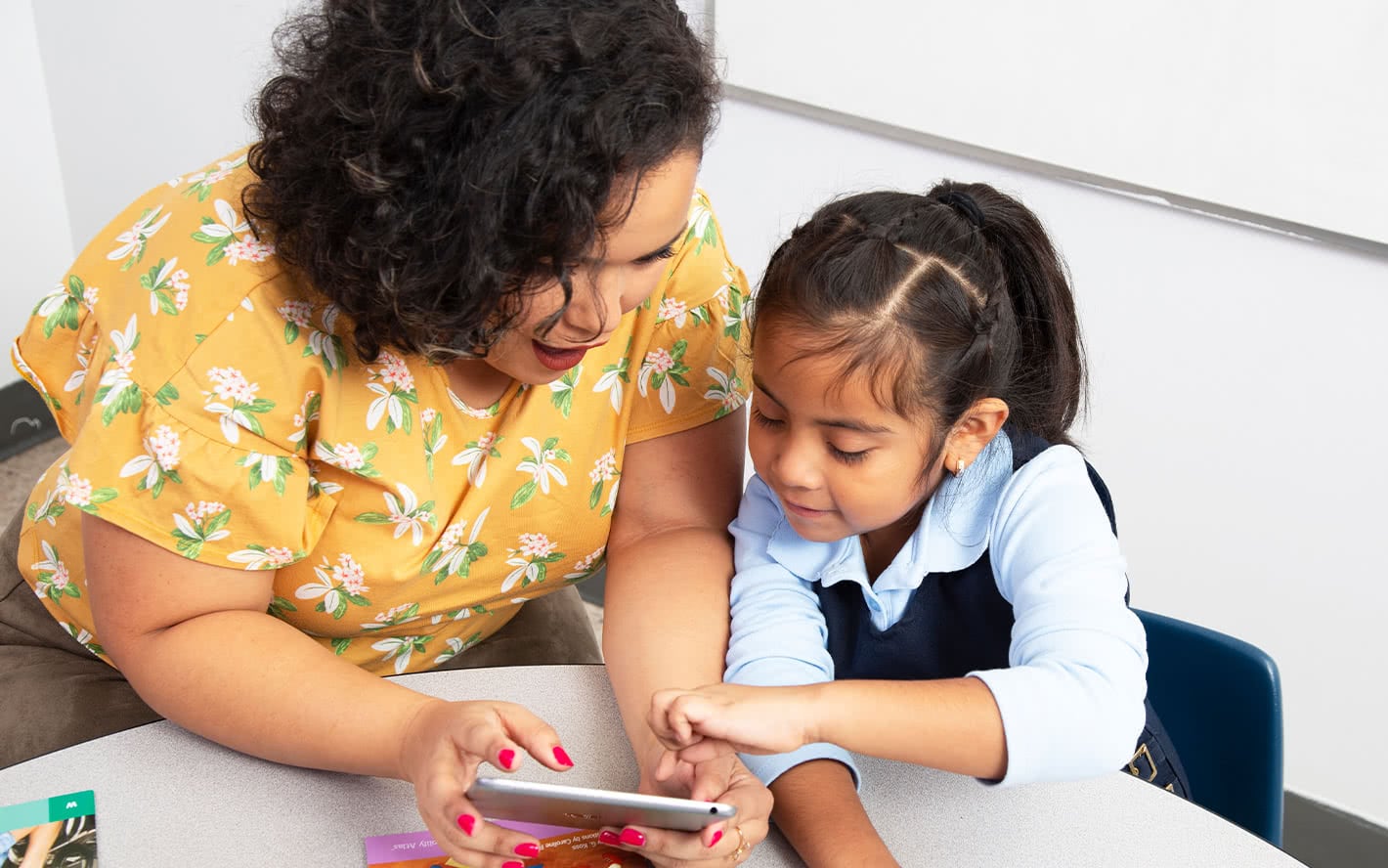
Welcome, Oak Park USD, to the next chapter in the Science of Reading, with Amplify CKLA 3rd Edition!
For more than a decade, Amplify CKLA has transformed classrooms nationwide with its intentional knowledge building and systematic skills instruction.
Scroll down to learn how CKLA is uniquely designed to help all your students make learning leaps in literacy.
Our approach
Improve outcomes with a program that’s built on a decade of research and meets the strongest ESSA Tier I criteria.
Grounded in the Science of Reading
As the original Science of Reading program, Amplify CKLA puts research into action with explicit, systematic foundational skills instruction and a proven knowledge-building sequence. In collaboration with education experts and practitioners, we provide powerful resources that deliver real results.
Background knowledge drives results
Amplify CKLA follows the Core Knowledge Sequence, a content-specific, cumulative, and coherent approach to knowledge building. This approach improves reading scores and closes achievement gaps by establishing a robust knowledge base that strengthens comprehension.
In Amplify CKLA 3rd Edition, we’ve enriched our Knowledge Sequence with a wider range of perspectives and high-quality texts in new and enhanced units.
Build foundational skills for long-term success.
Students progress from simple to complex skill development starting with phonological and phonemic awareness. Instruction in Grades K–2 explicitly teaches the 150 spellings for the 44 sounds of English, following an intentional progression to ensure student success.
In our 3rd Edition, we’ve added dedicated Grade 3 foundational skills instruction that can either support core lessons or function as an intervention, based on student needs.
Daily writing deepens learning.
Grounded in the Science of Writing—the research on how kids learn to write—instruction is explicit, daily, and woven into the curriculum’s rich content. It covers both transcription (handwriting and spelling) and composition (organizing ideas into narratives) with high-impact activities like sentence-level combining and expanding, and pre-writing exercises. Writing and reading instruction are integrated so students simultaneously strengthen their communication skills, comprehension, and confidence.
High-quality, diverse texts
Amplify CKLA students are immersed in a variety of texts—complex read-alouds, decodable chapter books, trade books, and content-rich readers—that reflect varied experiences and connect to learning goals.
Readers are 100% decodable for Grades K–2, empowering students to directly apply what they’ve learned. Novel Study units for Grades 3–5 offer a mix of contemporary and classic literature, and Culminating Research Units in every grade include a set of authentic texts and trade books.
Reach all learners with differentiated support.
Scaffolds and challenges, developed in collaboration with education experts, make content accessible to every student—including multilingual and English learners. With strategies embedded right in the curriculum, teachers can deliver in-the-moment, individualized instruction to meet diverse student needs.
For a dedicated English language development program aligned to Amplify CKLA, explore Language Studio.
What’s included with Amplify CKLA
The comprehensive resources in Amplify CKLA 3rd Edition support effective literacy instruction in every classroom.
Easy-to-use teacher materials
Amplify CKLA teachers are empowered to deliver effective instruction with the following print and digital resources:
- Teacher Guides (K–5)
- Assessment Guides (K–5)
- Authentic texts and trade books (K–5)
- Knowledge Image Cards (K–2)
- Knowledge Flip Books (K–2, digital)
- Ready-made and customizable Presentation Screens (K–5, digital)
- Remediation and intervention resources (K–5)
- On-demand professional development (K–5, digital)
Immersive Amplify CKLA student resources
Amplify CKLA students stay engaged with the following print and digital resources:
- Decodable readers (K–2)
- Student Readers and novels (3–5)
- Student Activity Books (K–5)
- Poet’s Journal (3–5)
- eReaders (K–5, digital)
- Sound Library featuring articulation videos and songs (K–2, digital)
- Skill-building practice games (K–5)
Rich literary experiences
All the high-quality, diverse texts in Amplify CKLA connect to the curriculum, fostering your students’ curiosity and helping them learn to read with confidence.
- Trade Book Collections (K–5) inspire student research in each grade’s Culminating Research Unit.
- Classic and contemporary literature (3–5) delight students in Novel Study Units.
- Increasingly complex Student Readers (K–5) develop students’ literacy across grades.
Hands-on phonics materials
Multisensory phonics and foundational skills resources engage students with fun, varied approaches that promote mastery and build independence.
- Chaining Folders and Small Letter Cards (K)
- Read-Aloud Big Books (K–1)
- Large Letter Cards (K–2)
- Sound Cards (K–2)
- Image Cards (K–3)
- Blending Picture Cards (K)
- Consonant and Vowel Code Posters and Spelling Cards (1–2)
- Sound Library (K–2, digital)
All-in-one digital platform
Our comprehensive platform simplifies your day-to-day tasks and makes it easier to plan and deliver lessons.
- Ready-made and customizable Presentation Screens
- Auto-scored digital assessments
- Standards-based reporting
- Assignable skill-building games
- Sound Library
- eReaders
Professional development
Move beyond traditional program training with Amplify’s digital PD Library, designed to fully support your shift to the Science of Reading and Amplify CKLA. Deepen your understanding with:
- Program and planning resources
- Model lesson videos from real classrooms
- Guidance on using Amplify’s literacy suite to provide multi-tiered support
Language Studio: Multilingual and English language learner support
Language Studio is Amplify CKLA’s dedicated K–5 program for multilingual and English language learners. Through daily 30-minute lessons, it strengthens reading, writing, speaking, and listening skills while reinforcing core instruction. This tailored support empowers students to confidently access grade-level content as they develop academic English.
Curriculum Maps
- Curriculum Maps by Grade and Strand:
Amplify CKLA serves
150,000+
Classrooms
4,000,000+
Students
50
U.S. States and D.C.
The next chapter in the Science of Reading
Introducing Amplify CKLA 3rd Edition, a K–5 core literacy program within Amplify’s literacy suite. For more than a decade, Amplify CKLA has transformed classrooms nationwide with its intentional knowledge building and systematic skills instruction. Available for the 2025–2026 school year, the 3rd Edition builds on this successful foundation to better support all students in becoming confident readers, writers, and thinkers. Together, let’s write the next chapter in the Science of Reading.
Amplify CKLA serves
150,000+
Classrooms
4,000,000+
Students
50
U.S. States and D.C.
Our approach
Improve outcomes with a program built on a decade of research, and that meets the strongest ESSA Tier I criteria.
Grounded in the Science of Reading
As the original Science of Reading program, Amplify CKLA puts research into action with explicit, systematic foundational skills instruction and a proven knowledge-building sequence. In collaboration with education experts and practitioners, we provide powerful resources that deliver real results.
Background knowledge drives results
Amplify CKLA follows the Core Knowledge Sequence, a content-specific, cumulative, and coherent approach to knowledge building. This approach improves reading scores and closes achievement gaps by establishing a robust knowledge base that strengthens comprehension.
In Amplify CKLA 3rd Edition, we’ve enriched our Knowledge Sequence with a wider range of perspectives and high-quality texts in new and enhanced units.
Build foundational skills for long-term success.
Students progress from simple to complex skill development starting with phonological and phonemic awareness. Instruction in Grades K–2 explicitly teaches the 150 spellings for the 44 sounds of English, following an intentional progression to ensure student success.
In our 3rd Edition, we’ve added dedicated Grades 3–5 foundational skills instruction that can either support core lessons or function as an intervention, based on student needs.
Daily writing deepens learning.
Grounded in the Science of Writing—the research on how kids learn to write—instruction is explicit, daily, and woven into the curriculum’s rich content. It covers both transcription (handwriting and spelling) and composition (organizing ideas into narratives) with high-impact activities like sentence-level combining and expanding, and pre-writing exercises. Writing and reading instruction are integrated so students simultaneously strengthen their communication skills, comprehension, and confidence.
High-quality, diverse texts
Amplify CKLA students are immersed in a variety of texts—complex read-alouds, decodable chapter books, trade books, and content-rich readers—that reflect varied experiences and connect to learning goals.
Readers are 100% decodable for Grades K–2, empowering students to directly apply what they’ve learned. Novel Study units for Grades 3–5 offer a mix of contemporary and classic literature, and Culminating Research Units in every grade include a set of authentic texts and trade books.
Reach all learners with differentiated support.
Scaffolds and challenges, developed in collaboration with education experts, make content available to every student—including multilingual and English learners. With strategies embedded right in the curriculum, teachers can deliver in-the-moment, individualized instruction to meet all student needs.
For a dedicated English language development program aligned to Amplify CKLA, explore Language Studio.
What’s included
The comprehensive resources in Amplify CKLA 3rd Edition support effective literacy instruction in every classroom.
Easy-to-use teacher materials
Amplify CKLA teachers are empowered to deliver effective instruction with the following print and digital resources:
- Teacher Guides (K–5)
- Assessment Guides (K–5)
- Authentic texts and trade books (K–5)
- Knowledge Image Cards (K–2)
- Knowledge Flip Books (K–2, digital)
- Ready-made and customizable Presentation Screens (K–5, digital)
- Remediation and intervention resources (K–5)
- On-demand professional development (K–5, digital)
Immersive Amplify CKLA student resources
Amplify CKLA students stay engaged with the following print and digital resources:
- Decodable readers (K–2)
- Student Readers and novels (3–5)
- Student Activity Books (K–5)
- Poet’s Journal and Writer’s Journal (3–5)
- eReaders (K–5, digital)
- Sound Library featuring articulation videos and songs (K–2, digital)
- Assignable Practice Games (K–5)
Rich literary experiences
All of the high-quality, diverse texts in Amplify CKLA connect to the curriculum, fostering your students’ curiosity and helping them learn to read with confidence.
- Trade Book Collections (K–5) inspire student research in each grade’s Culminating Research Unit.
- Classic and contemporary literature (3–5) delight students in Novel Study Units.
- Increasingly complex Student Readers (K–5) develop students’ literacy across grades.
Hands-on phonics materials
Multisensory phonics and foundational skills resources engage students with fun, varied approaches that promote mastery and build independence.
- Chaining Folders and Small Letter Cards (K)
- Read-Aloud Big Books (K–1)
- Large Letter Cards (K–2)
- Sound Cards (K–2)
- Image Cards (K–3)
- Blending Picture Cards (K)
- Consonant and Vowel Code Posters and Spelling Cards (1–2)
- Sound Library (K–2, digital)
All-in-one digital platform
Our comprehensive platform simplifies your day-to-day tasks and makes it easier to plan and deliver lessons.
- Ready-made and customizable Presentation Screens
- Auto-scored digital assessments
- Standards-based reporting
- Assignable Practice Games
- Sound Library
- eReaders
Professional Development
Move beyond traditional program training with Amplify’s digital PD Library, designed to fully support your shift to the Science of Reading and Amplify CKLA. Deepen your understanding with:
- Program and planning resources
- Model lesson videos from real classrooms
- Guidance on using Amplify’s literacy suite to provide multi-tiered support
A true Science of Reading early literacy suite for Grades K–5
Amplify has combined the critical elements of a Science of Reading system: assessment, core curriculum, personalized learning, and intervention. Based on 20 years of experience with the Science of Reading, this complete system saves you time and aligns your literacy practices.
- Assess with mCLASS®: A universal and dyslexia screener, powered by DIBELS 8th Edition
- Instruct with Amplify CKLA: Core curriculum to build foundational skills and knowledge
- Practice with Boost Reading™: Personalized learning program to extend and reinforce core
- Intervene with mCLASS Intervention: Staff-led Tier 2 and 3 intervention for intensive support
Language Studio: Multilingual and English language learner support
Language Studio is Amplify CKLA’s dedicated K–5 program for multilingual and English language learners. Through daily 30-minute lessons, it strengthens reading, writing, speaking, and listening skills while reinforcing core instruction. This tailored support empowers students to confidently access grade-level content as they develop academic English.
Explore more programs in Amplify’s literacy and biliteracy suite.
All of the programs in our literacy suite and our biliteracy suite are designed to support and complement each other. Learn more about our related programs:
A curiosity-driven K–8 science curriculum
Amplify Science is a K–8 phenomena-based science curriculum that blends hands-on investigations, literacy-rich activities, and interactive digital tools. The result? Elementary and middle school students who think, read, write, and argue like real scientists.
Amplify Science for grades K–8 has been rated all green by EdReports.

Our approach
Each unit of Amplify Science engages all learners in a relevant, real-world problem where they assume the role of a scientist to investigate scientific phenomena, engage in collaboration and discussion, and develop models or explanations to arrive at solutions.

A research-backed approach to 3D learning
The research-based Do, Talk, Read, Write, Visualize instructional approach—developed by UC Berkeley’s Lawrence Hall of Science—provides students with multiple opportunities and modalities with which to access science instruction. Independent research proves that this model of learning benefits all learners, and our efficacy research shows improved student achievement.
Students take on roles of scientists and engineers.
In each unit, students take on the role of a scientist or engineer to investigate a realistic problem. These problems provide relevant contexts through which students investigate real-world phenomena that are seamlessly integrated throughout the unit. By positioning students as engineers or scientists, they are actively engaged in designing innovative solutions and making sense of the world around them.


Authentic 3D learning brought to life
Amplify Science integrates the NGSS—and state standards based on them—not just at a surface level, but throughout every lesson of the unit. Students engage with science and engineering practices, figure out disciplinary core ideas, and make connections when they apply Crosscutting Concepts across thoughtfully structured, multimodal lessons.
Developed by science education experts
Amplify Science was developed by The Lawrence Hall of Science at UC Berkeley in partnership with Amplify. It reflects state-of-the-art practices in science teaching and learning, which lays the foundation for our high quality instructional materials (HQIM).

A flexible, blended program
Amplify Science includes hands-on activities, print materials, and powerful digital tools to support online and offline teaching and learning. Highly adaptable and user-friendly, the program gives schools and individual teachers flexibility based on their technology resources and preferences.
Teach science confidently, with Amplify PD expertise.
Amplify professional development (PD) connects you with dedicated learning specialists who become genuine partners in your teaching journey. Our in-house experts work closely with your grade K–5 and 6–8 teams to understand your unique classroom needs and provide ongoing support that adapts as you grow. Choose from flexible sessions—on-site, virtual, or hybrid—to build teacher confidence, strengthen instruction, and keep student curiosity thriving—all backed by our commitment to your long-term success.
What’s included
Our flexible resources work seamlessly together.
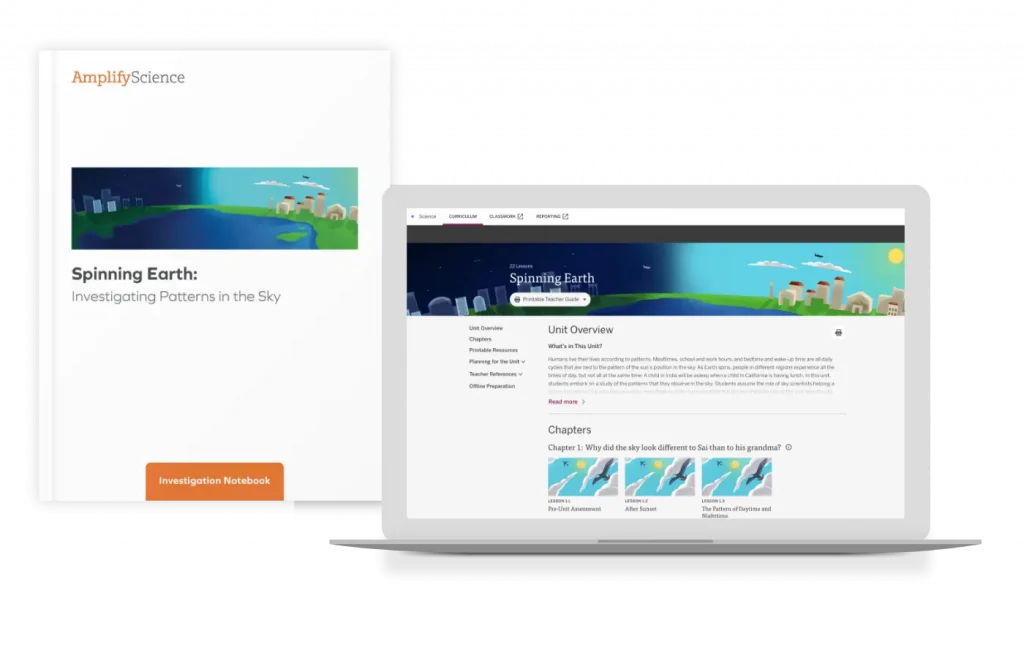
Teacher’s Guides
Available digitally and in print, the Teacher’s Guides contain all of the information teachers need to facilitate classroom instruction, including:
- Detailed lesson plans.
- Unit and chapter overview documentation.
- Differentiation strategies.
- Standards alignments.
- In-context professional development.

Student Investigation Notebooks
Available for every unit, the Student Investigation Notebooks provide space for students to:
- Record data.
- Reflect on ideas from texts and investigations.
- Construct explanations and arguments.

Student Books
Age-appropriate Student Books allow students to:
- Engage with content-rich texts.
- Obtain evidence.
- Develop research and close-reading skills.
- Construct arguments and explanations.

Simulations and Modeling Tools
Developed exclusively for the Amplify Science program, these engaging digital tools:
- Serve as venues for exploration.
- Enable data collection.
- Allow students to explore scientific concepts.
- Show what might be impossible to see with the naked eye.

Hands-on materials kits
Hands-on learning is at the heart of Amplify Science. Each unit kit contains:
- Consumable and non-consumable hands-on materials.
- Print classroom display materials.
- Premium print materials for student use (sorting cards, maps, etc.).

Teacher’s Guides
Available digitally and in print, the Teacher’s Guides contain all of the information teachers need to facilitate classroom instruction, including:
- Detailed lesson plans.
- Unit and chapter overview documentation.
- Differentiation strategies.
- Standards alignments.
- In-context professional development.
Student Investigation Notebooks
Available for every unit, the Student Investigation Notebooks provide space for students to:
- Record data.
- Reflect on ideas from texts and investigations.
- Construct explanations and arguments.
Available with full-color article compilations for middle school units
Hands-on materials kits
Hands-on learning is at the heart of Amplify Science. Each unit kit contains:
- Consumable and non-consumable hands-on materials.
- Print classroom display materials.
- Premium print materials for student use (sorting cards, maps, etc.).
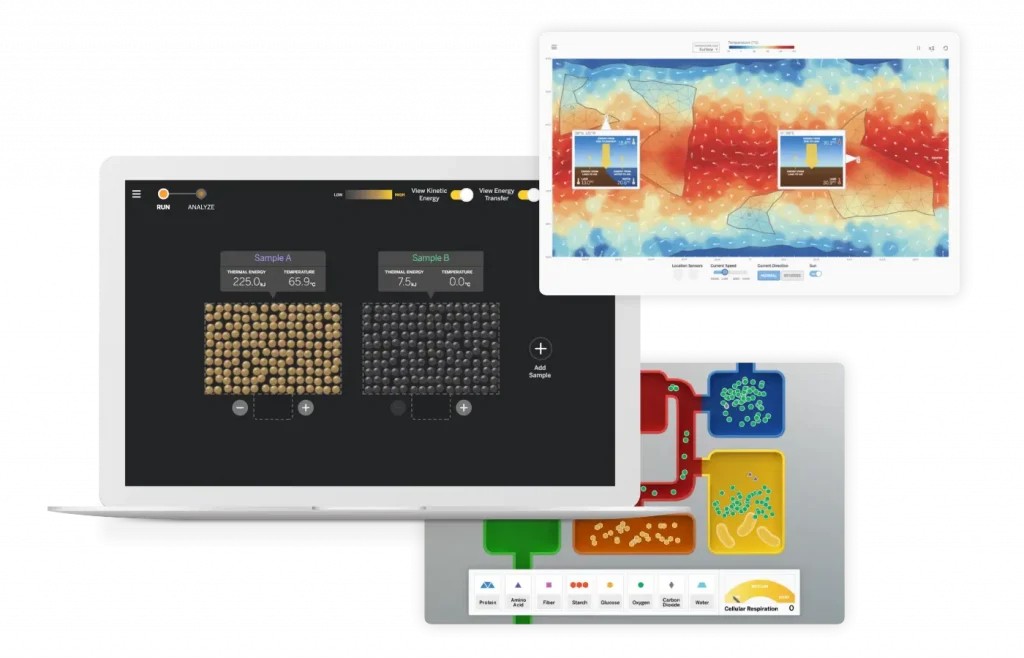
Digital student experience
Students access the digital simulations and Modeling Tools, as well as lesson activities and assessments, through the digital student experience. Students can interact with the digital student experience as they:
- Conduct hands-on investigations.
- Engage in active reading and writing activities.
- Participate in discussions.
- Record observations.
- Craft end-of-unit scientific arguments.
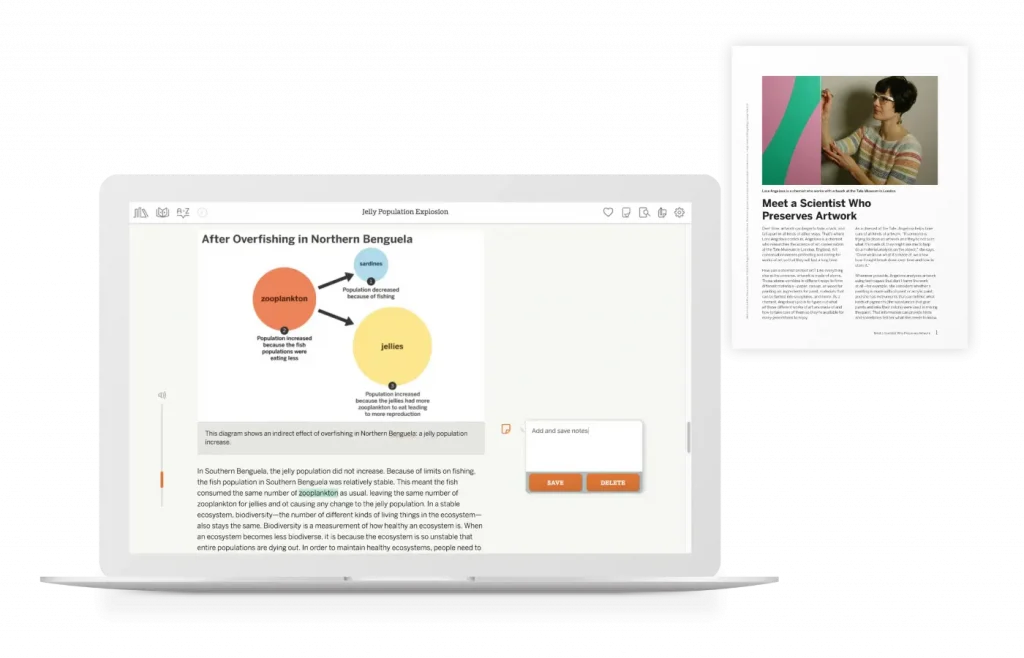
Science articles
The middle school science articles serve as sources for evidence collection and were authored by science and literacy experts at the Lawrence Hall of Science.

Explore more programs.
Our programs are designed to support and complement one another. Learn more about our related programs.


What’s included in our Spanish language arts curriculum
Amplify Core Knowledge Language Arts® (CKLA) is available in both English and Spanish. Amplify Caminos al Conocimiento Esencial, our robust Spanish language arts companion for grades K–5, supports multiple teaching models, including dual language immersion and transitional classrooms.

Year at a glance
The program’s intentional Knowledge Sequence from K–5 connects knowledge and vocabulary within a grade level and across grade levels, for deeper reading comprehension and preparation for college, career, and life. Instead of “activating prior knowledge,” Amplify Caminos helps you build it in the classroom from day one, for every child, expanding each student’s knowledge base long before they transition to reading to learn.

Units & domains at a glance
Each Knowledge Domain in grades K–2 and Unit in grades 3–5 varies in the number of days based on instructional purpose. Just as with our top-rated Amplify CKLA program, the Amplify Caminos materials engage and delight young learners with resources that are both appealing and original.
Domain
Nursery Rhymes and Fables/Rimas y fábulas infantiles
Start learning about literature with these classic Mother Goose rhymes.
Domain
The Five Senses/Los cinco sentidos
Learning about the body starts with learning about how we experience the world.

Domain
Stories/Cuentos
Learn about the parts of a book and some of the stories that go in one.

Domain
Plants/Plantas
Discover the lifecycle of plants and the history of George Washington Carver.
Domain
Farms/Granjas
Now we know how plants make their food… but what about animals?

Domain
Native Americans/Los nativos americanos
Who were the first people in America? A look at the Lenape, Wampanoag, and Lakota Sioux.

Domain
Kings and Queens/Reyes y reinas
To understand fairy tales, it’s best to first understand royalty.

Domain
Seasons and Weather/Las estaciones y el tiempo
The study of natural cycles continues with the weather and why it happens.

Domain
Columbus and the Pilgrims/Colón y los peregrinos
A look at the first contact between Europe and the Americas, and some of its results.
Domain
Colonial Towns and Townspeople/Las colonias y sus habitantes
Before the War for Independence, how did the town and country depend on one another?

Domain
Taking Care of the Earth/Cuidar el planeta Tierra
We only have one Earth—here are some ways to help care for it.

Domain
Presidents and American Symbols/Presidentes y símbolos de los Estados Unidos
Start learning about government through the lives of five presidents.
Domain
Fables and Stories/Fábulas y cuentos
Learn some of the key elements of a story through classic fables.
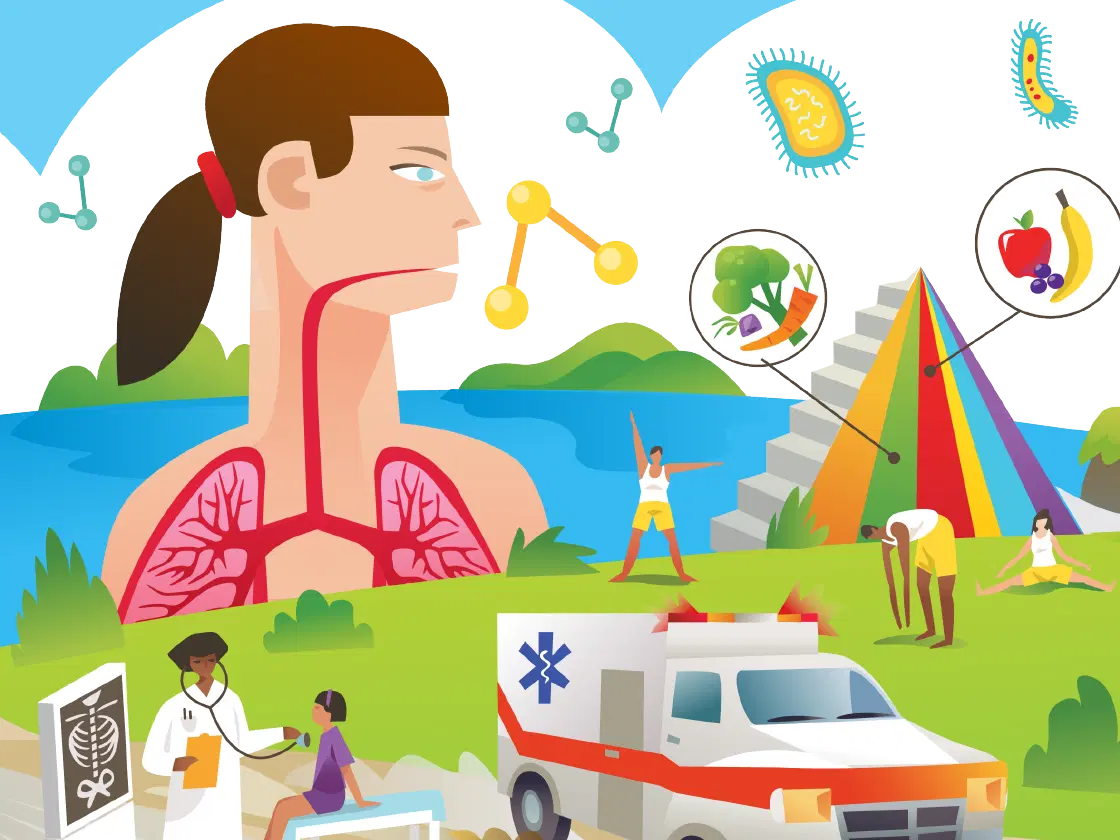
Domain
The Human Body/El cuerpo humano
What are germs? What are the organs? And what does it all have to do with health?

Domain
Different Lands, Similar Stories/Tierras diferentes, cuentos similares
A world tour of storytelling, and the stories that stay the same across the world.

Domain
Early World Civilizations/Antiguas civilizaciones del mundo
Rivers, farming, writing, and laws: just what does it take to build a civilization?
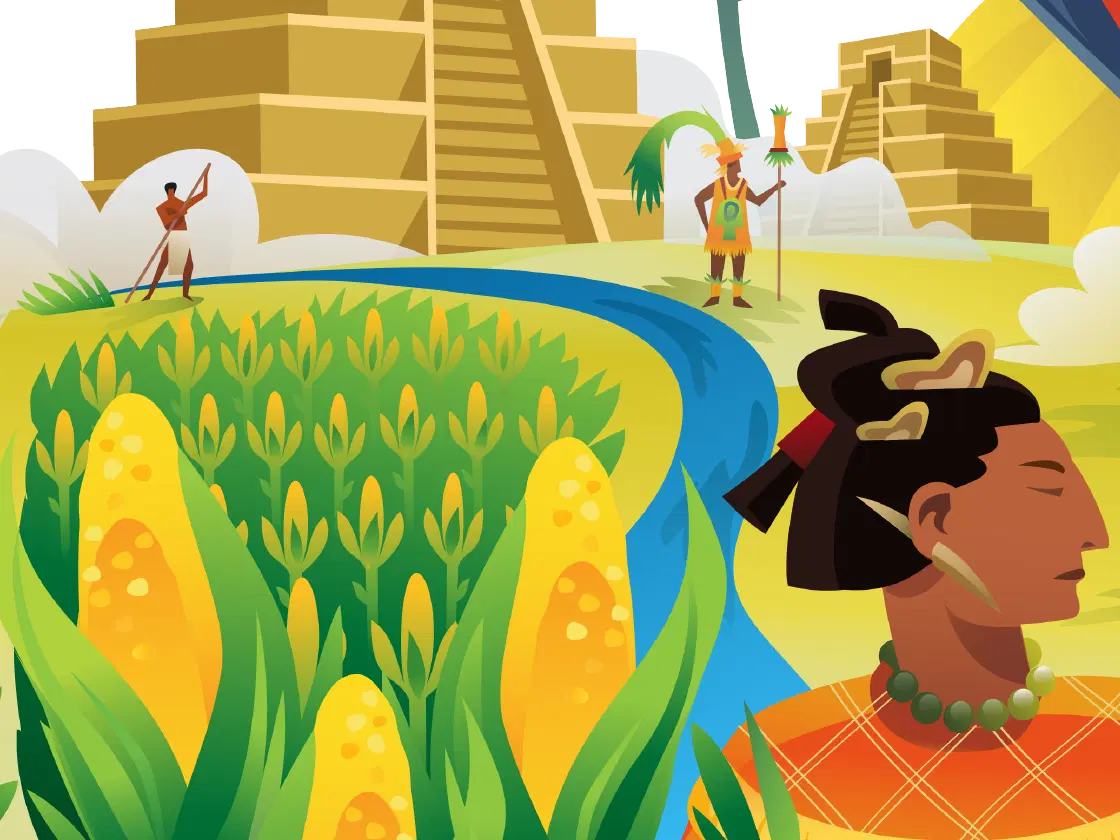
Domain
Early American Civilizations/Antiguas civilizaciones de América
What will we find in the great temples of the Aztec, Maya, and Inca civilizations?

Domain
Astronomy/Astronomía
How the Earth relates to the moon, the sun, and the rest of the planets.
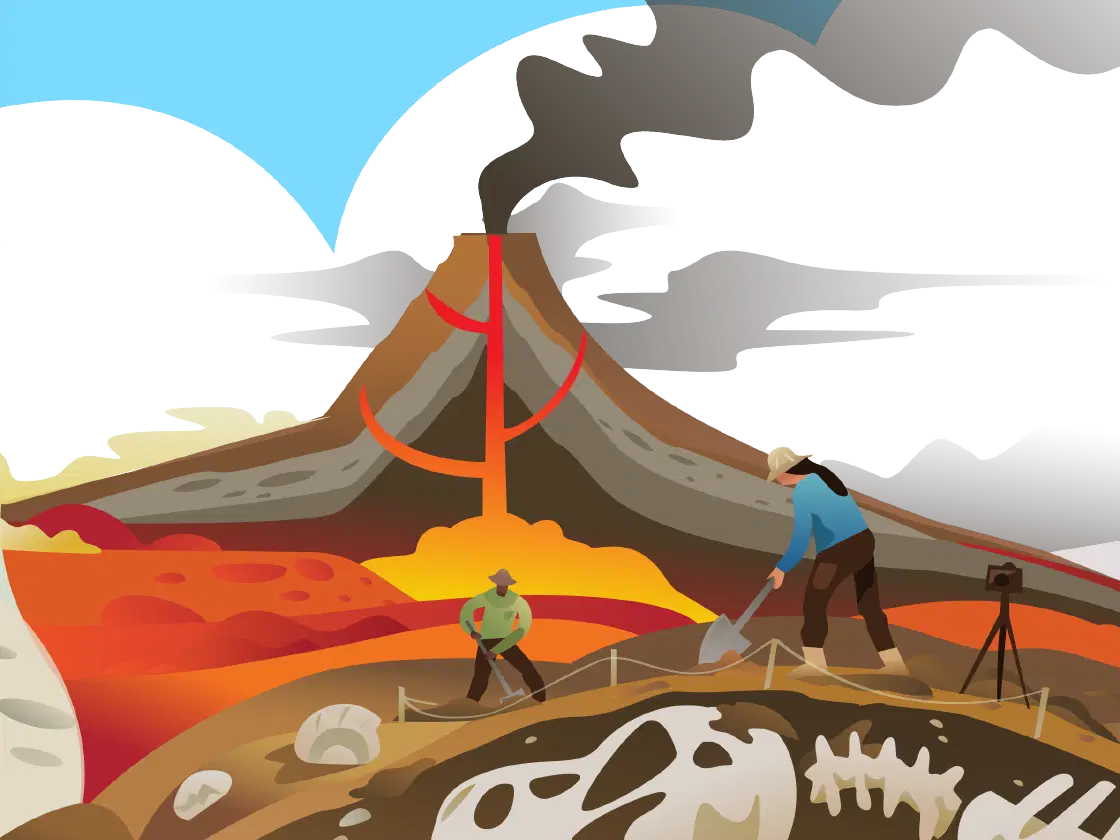
Domain
The History of the Earth/La historia de la Tierra
Just what lies beneath the Earth’s surface, and what can it teach us about the past?

Domain
Animals and Habitats/Los animales y sus hábitats
A look at the connection between how animals live and where they make their homes.
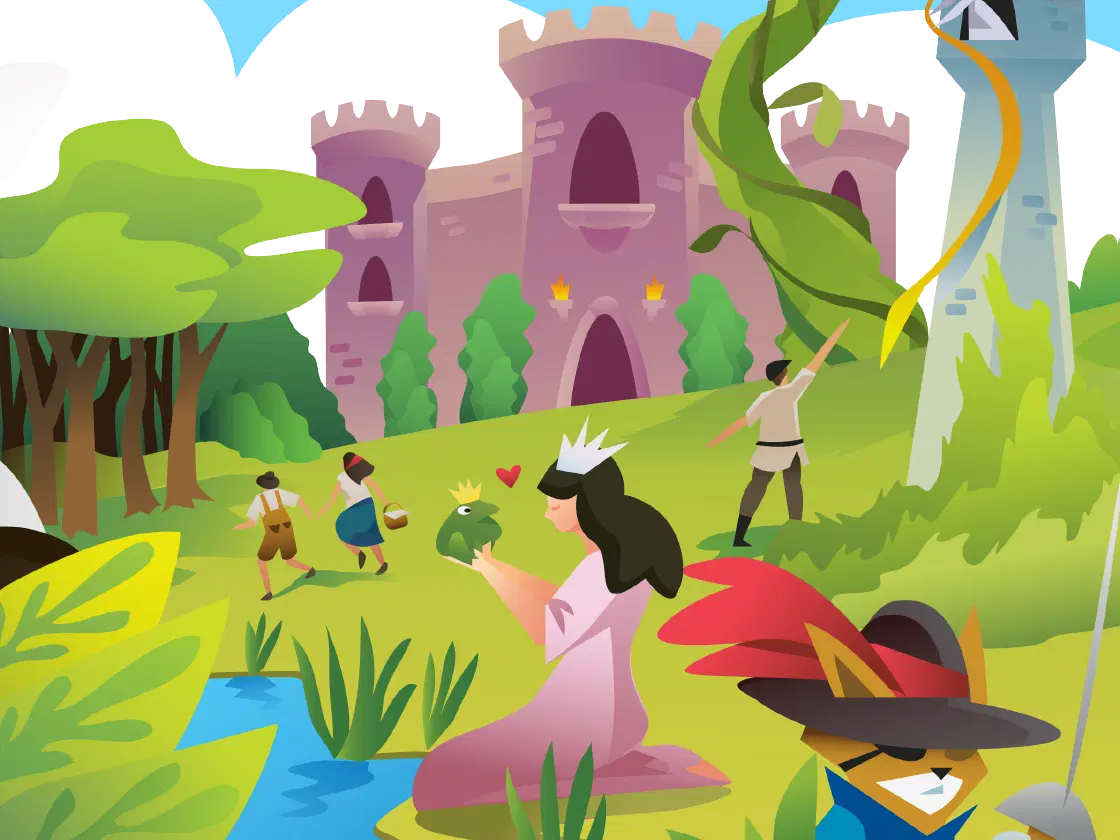
Domain
Fairy Tales/Cuentos de hadas
What do fairy tales have to teach us about how stories are told?
Domain
A New Nation: American Independence/Una nueva nación: la independencia de los Estados Unidos
The story of the birth of the United States out of the 13 Colonies.

Domain
Frontier Explorers/Exploradores de la Frontera
The story of the journey west from the newborn U.S.A. to find the Pacific Ocean.
Domain
Fairy Tales and Tall Tales/Cuentos de hadas y cuentos exagerados
Learn about exaggeration and characterization on the frontier.
Domain
Early Asian Civilizations/Antiguas civilizaciones de Asia
Tour the world of classical civilization, starting with India and China.
Domain
Ancient Greek Civilization/La civilización griega antigua
The tour continues with the philosophy and politics of Greece.
Domain
Greek Myths/Mitos griegos
Dive deep into the characters and storytelling of classic myths.
Domain
The War of 1812/La guerra de 1812
Learn about America’s “Second War for Independence.”
Domain
Cycles in Nature/Los ciclos de la naturaleza
Introducing the natural cycles that make our lives possible.
Domain
Westward Expansion/La expansión hacia el oeste
Why did pioneers go west? What happened to the people who were there?
Domain
Insects/Los insectos
Lay the grounds for animal classification by looking at solitary and social insects.

Domain
The U.S. Civil War/La Guerra Civil de los Estados Unidos
Begin to grapple with U.S. history’s central crisis over slavery.
Domain
Human Body: Building Blocks and Nutrition/El cuerpo humano: componentes básicos y nutrición
A deeper dive into the digestive system and the nutrition process.

Domain
Immigration/La inmigración
Why did people immigrate to the United States, and what did they find here?
Domain
Fighting for a Cause/Luchar por una causa
How people can do extraordinary things to make the world better for everyone.
Unit 1
Classic Tales: The Wind in the Willows/Cuentos Clásicos: El viento en los sauces
A deep dive into character, theme, and POV in classic stories from around the world.
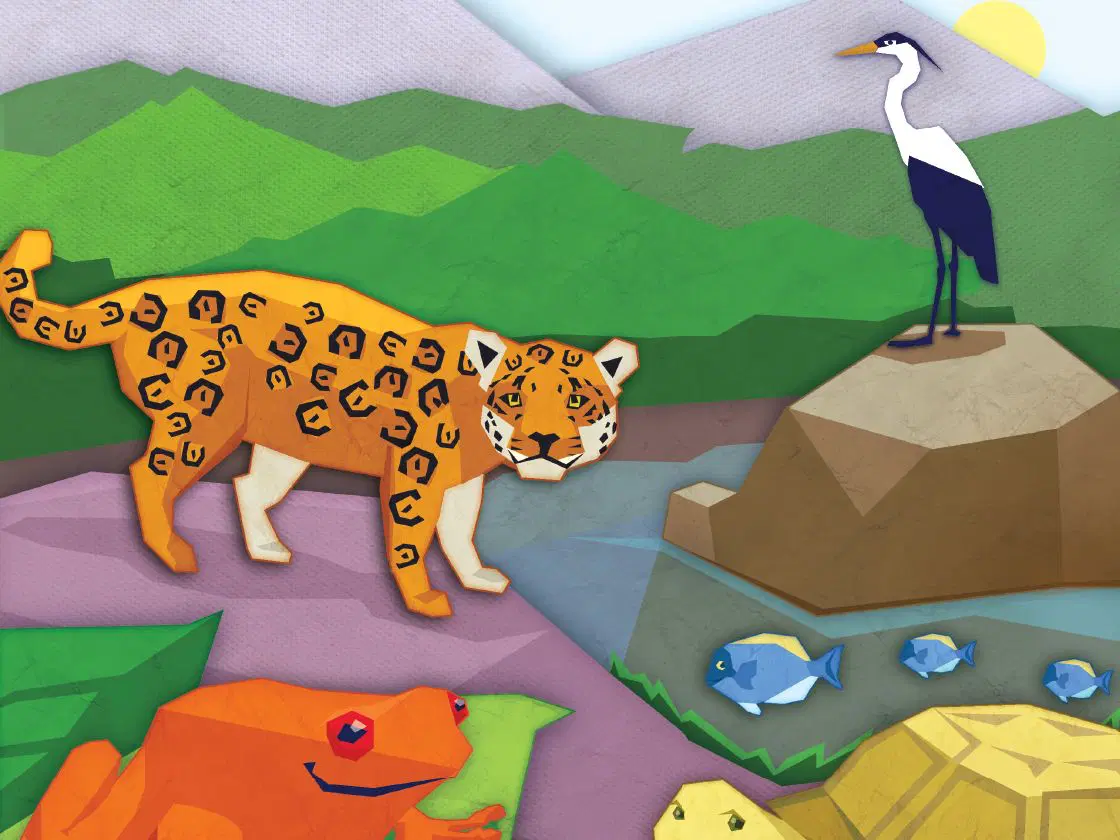
Unit 2
Animal Classification/La clasificación de los animales
How do we classify different animals by their appearance and behavior?
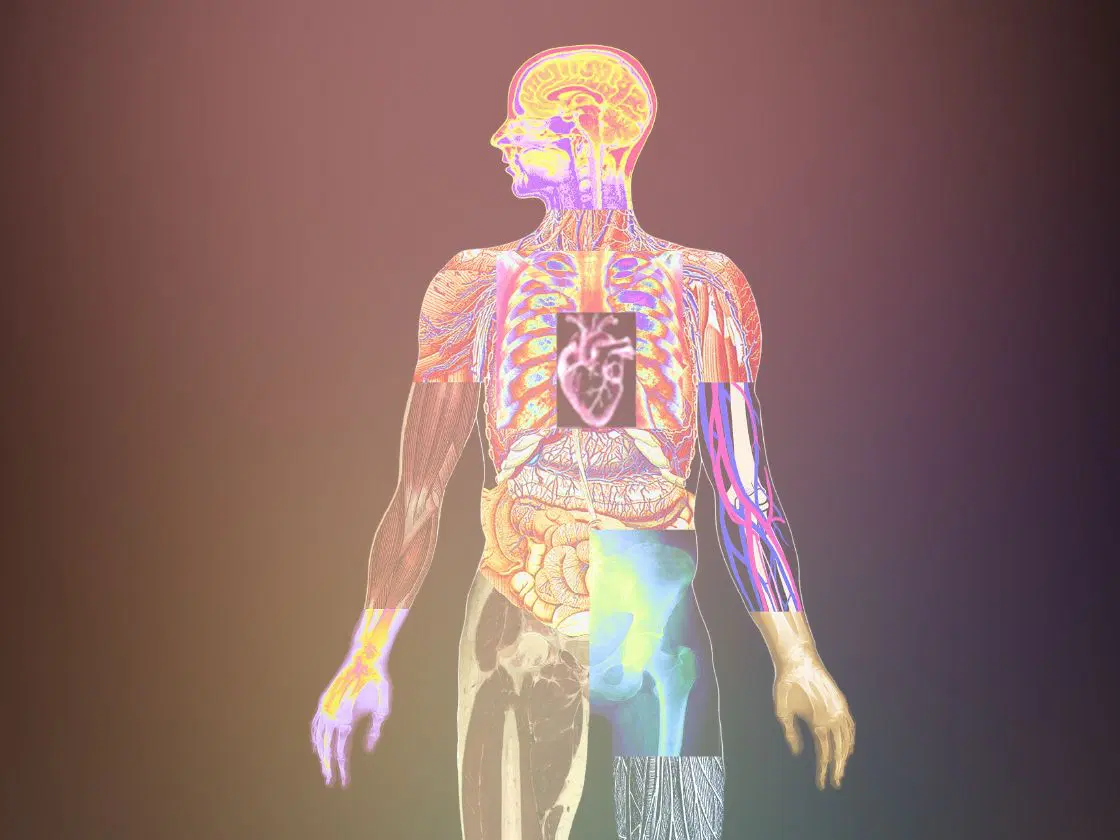
Unit 3
The Human Body: Systems and Senses/El cuerpo humano: sistemas y sentidos
Let’s take a closer look at how the skeleton, muscles, and nervous system all work.

Unit 4
The Ancient Roman Civilization/La civilización romana antigua
What is Rome’s greatest cultural contribution? In this unit, your students decide.

Unit 5
Light and Sound/La luz y el sonido
The science behind all the ways we see and hear the world.
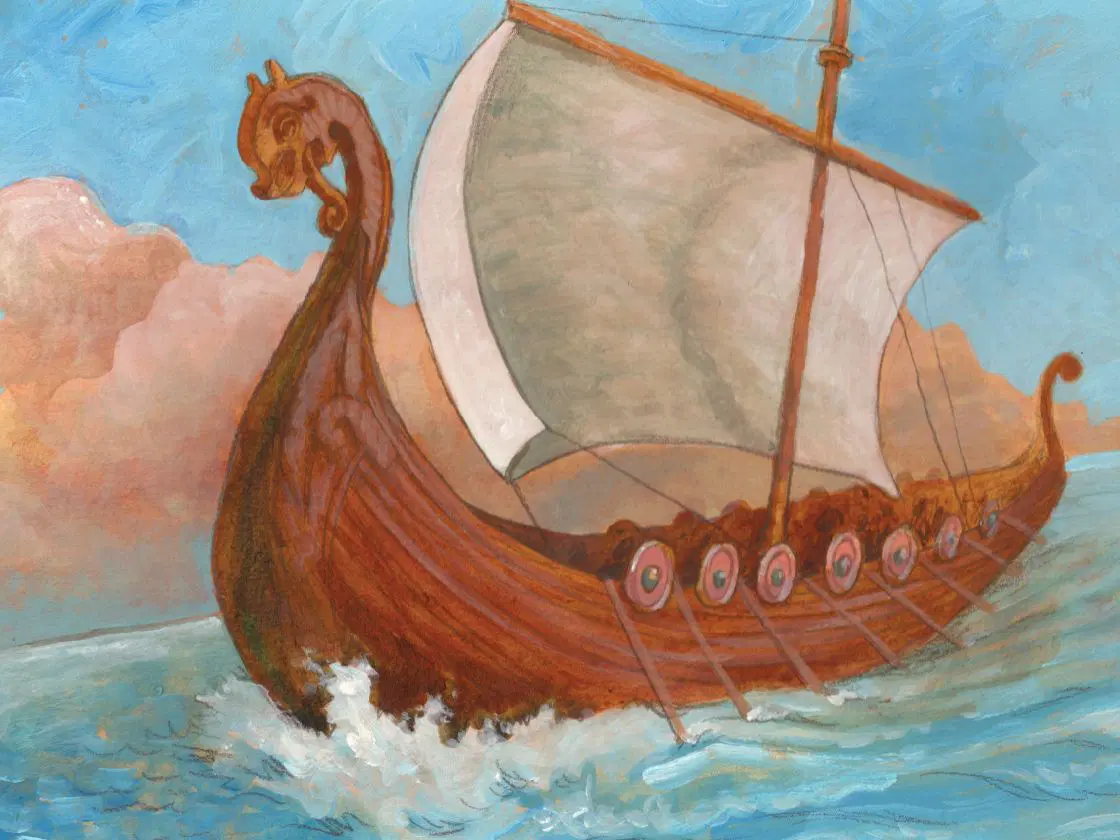
Unit 6
The Viking Age/La era vikinga
An immersive narrative experience about what life was like in Viking communities.

Unit 7
Astronomy: Our Solar System and Beyond/Astronomía: nuestro sistema solar y más allá
More about our universe, including a writing project about daily life on a space station.
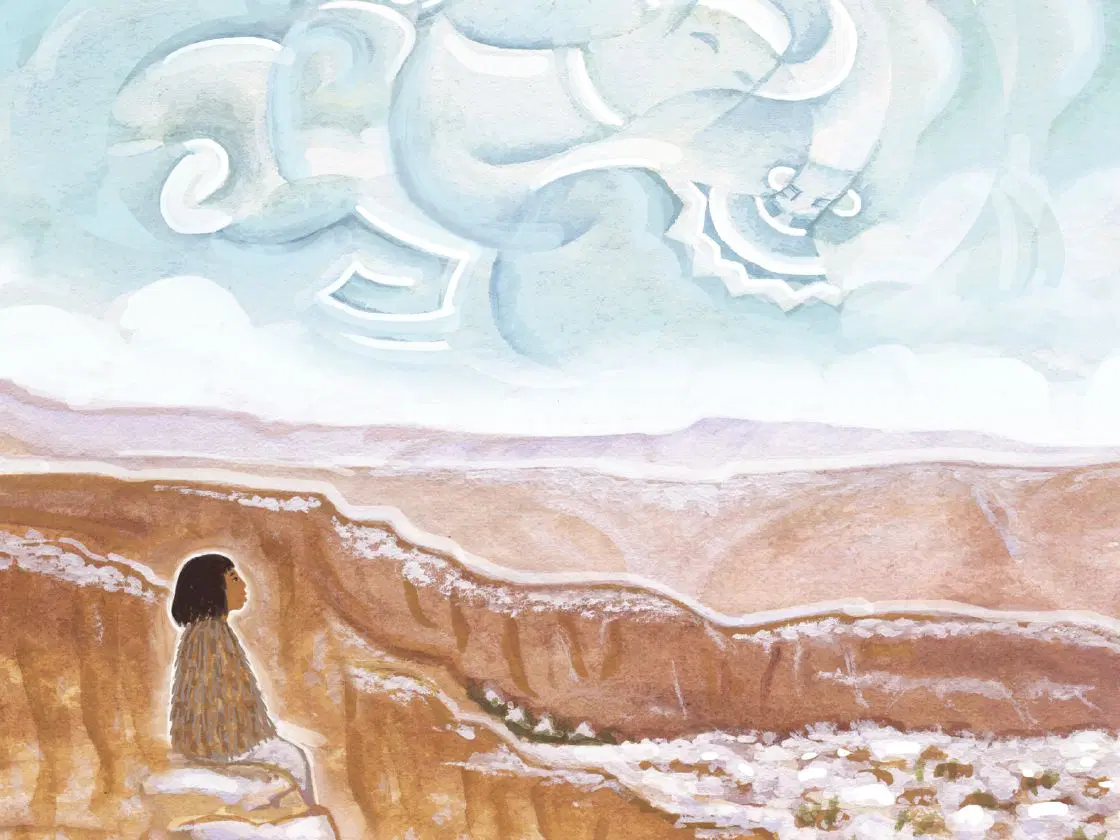
Unit 8
Native Americans: Regions and Cultures/Los nativos americanos: regiones y culturas
How did Native American nations change their way of life in different parts of the world?

Unit 9
Early Explorations of North America/La exploración europea de América del Norte
What was it like to sail to North America with the early European explorers?
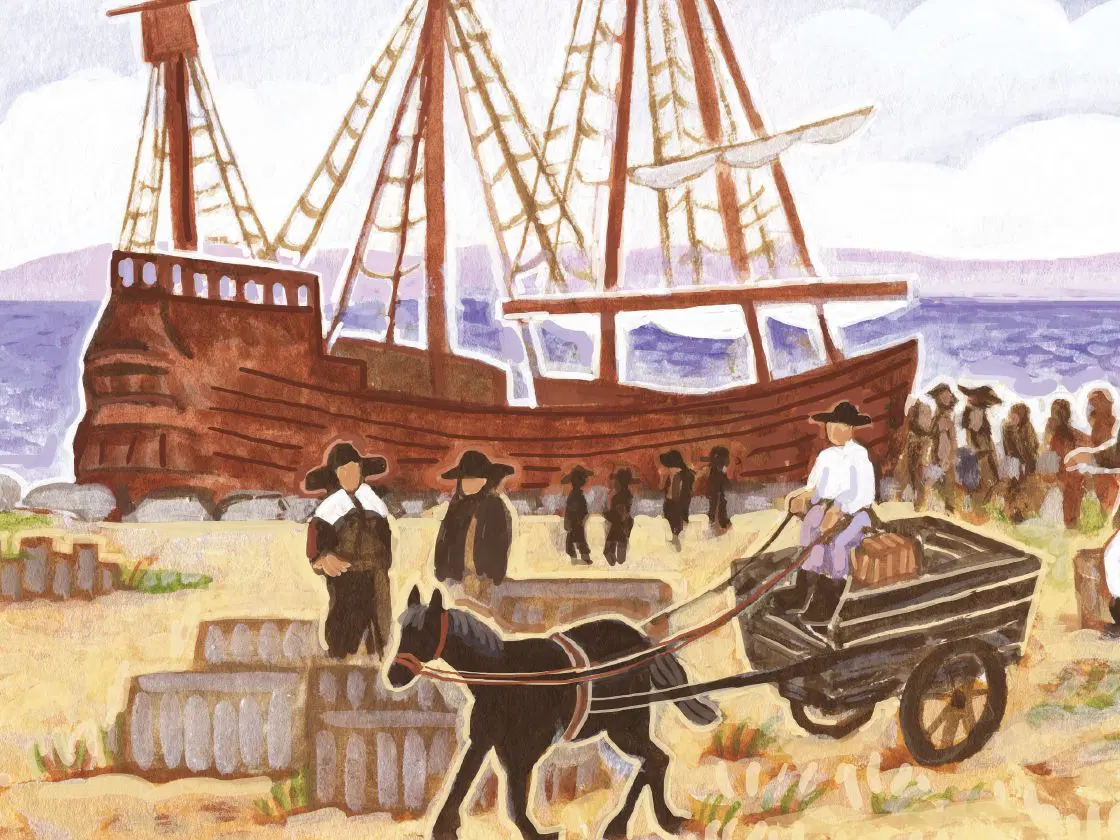
Unit 10
Colonial America/La época colonial en los Estados Unidos
A study of the very different ways of life in the different pre-U.S. colonies.
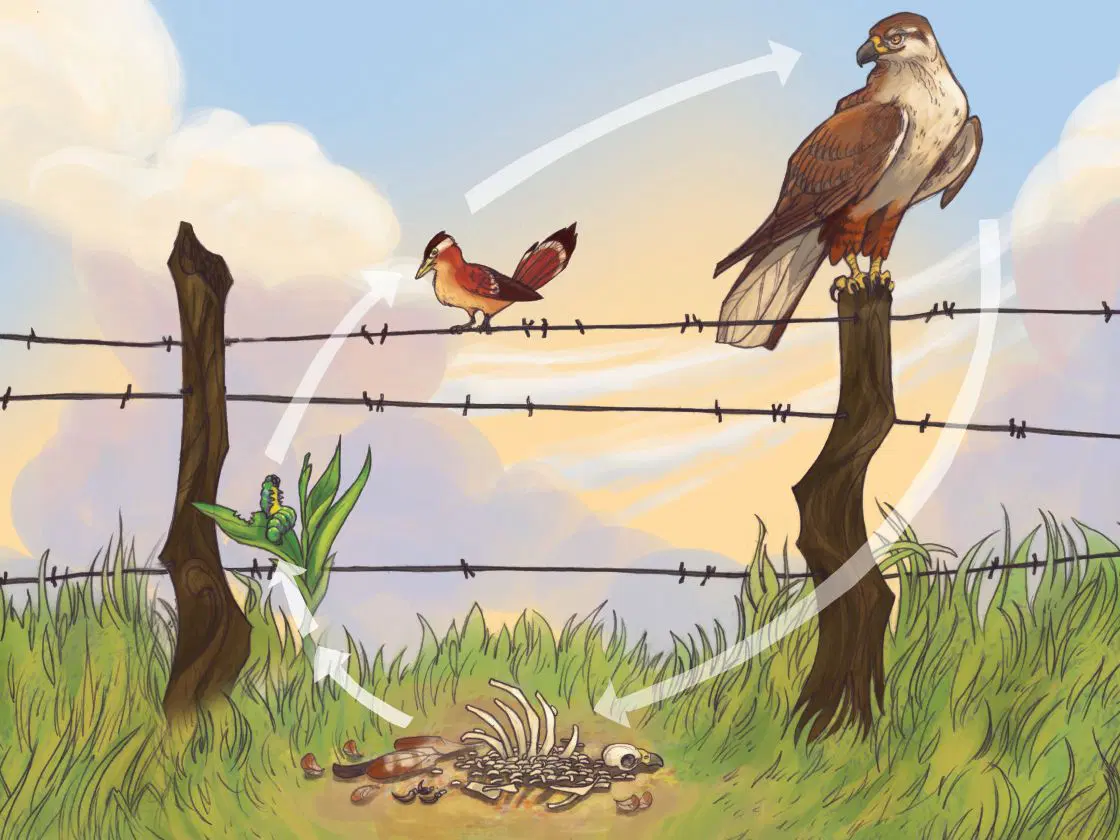
Unit 11
Ecology/Ecología
Students keep ecologist’s journals to learn about our world and how best to protect it.

Unit 1
Personal Narratives/Narrativas personales
Read stories of personal experience… and learn to reflect on your own.
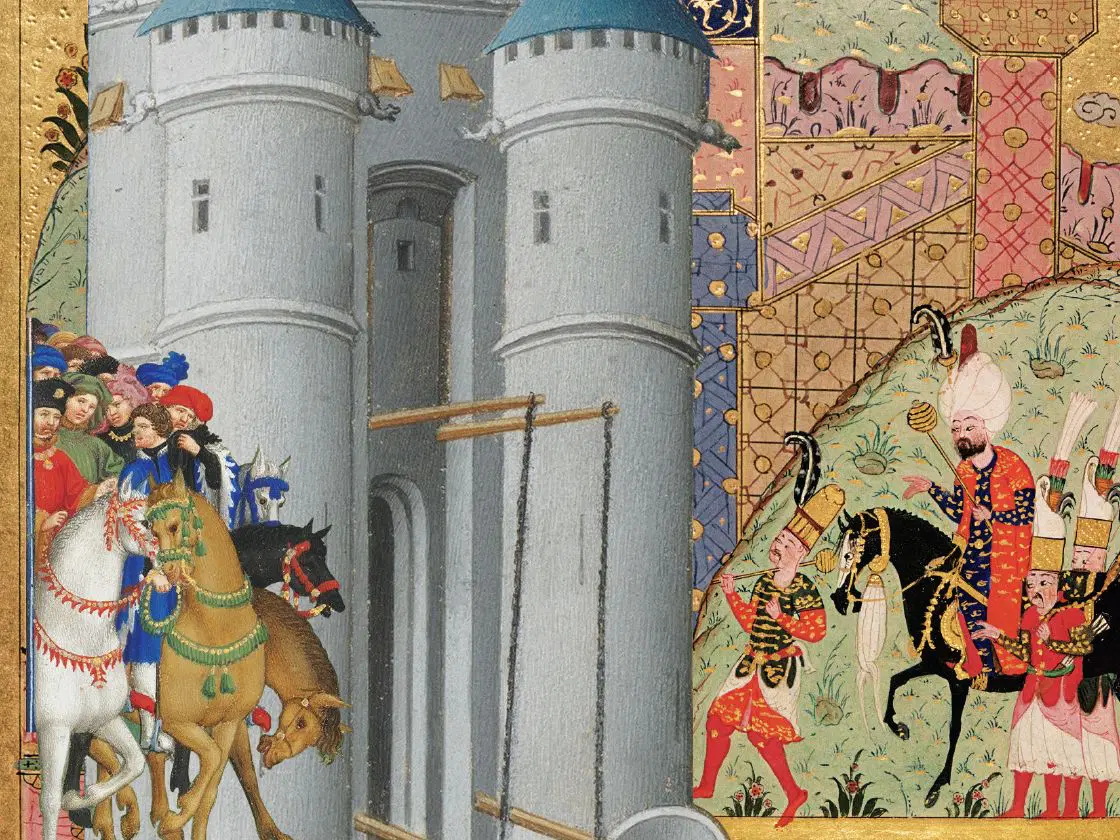
Unit 2
Empires in the Middle Ages/Los imperios en la Edad Media, parte 1 & Los imperios en la Edad Media, parte 2
Explore the medieval history of Europe and the Middle East.

Unit 3
Poetry/Poesía
Study the poetry of many nations using licensed text anthologies, and begin to write your own.

Unit 4
Eureka! Student Inventor/¡Eureka! Estudiante inventor
Transform the class into a lab for students to build and present inventions.

Unit 5
Geology/Geología
Plate tectonics, volcanoes, erosion: all the forces that shape the Earth.

Unit 6
Contemporary Fiction with excerpts from The House on Mango Street/Ficción Contemporánea con Fragmentos de La Casa en Mango Street
Explore The House on Mango Street… and write a book while doing it.
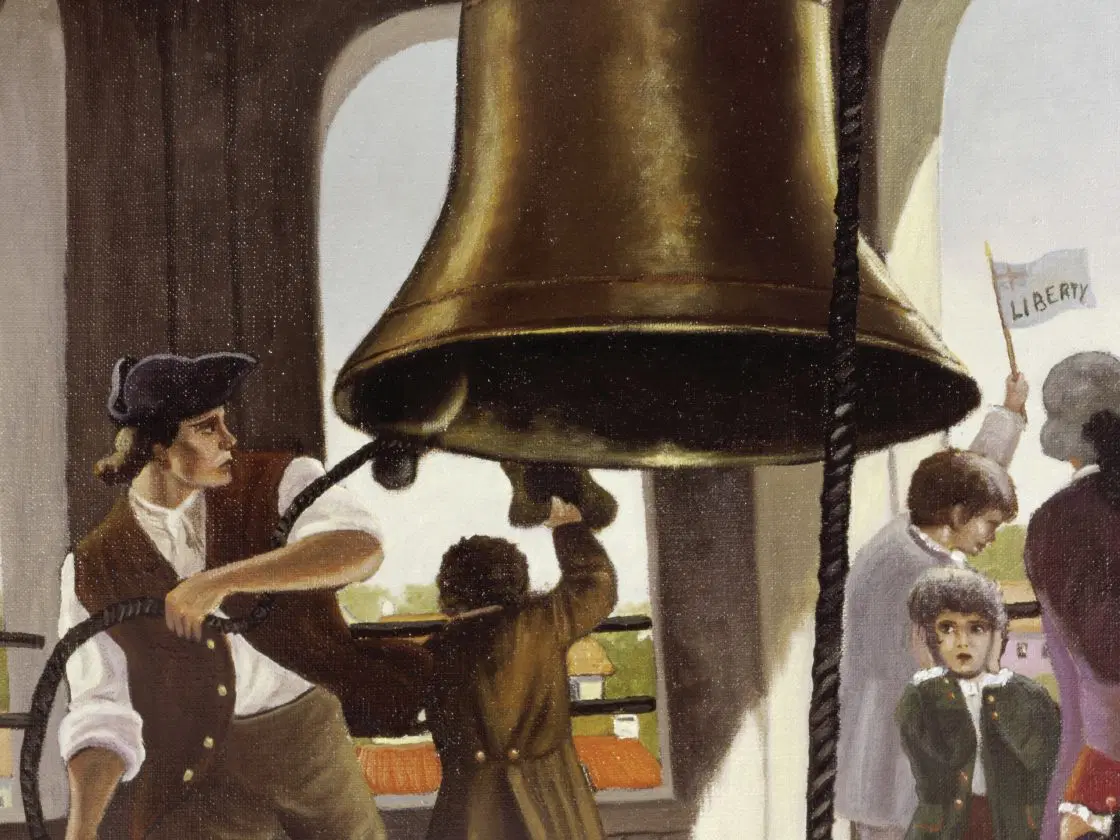
Unit 7
American Revolution/La Revolución estadounidense
Why did America seek independence? Let’s investigate the causes and effects.

Unit 8
Treasure Island/La Isla del Tesoro
How dSeek the treasure of plot in this detailed study of a classic fiction adventure.
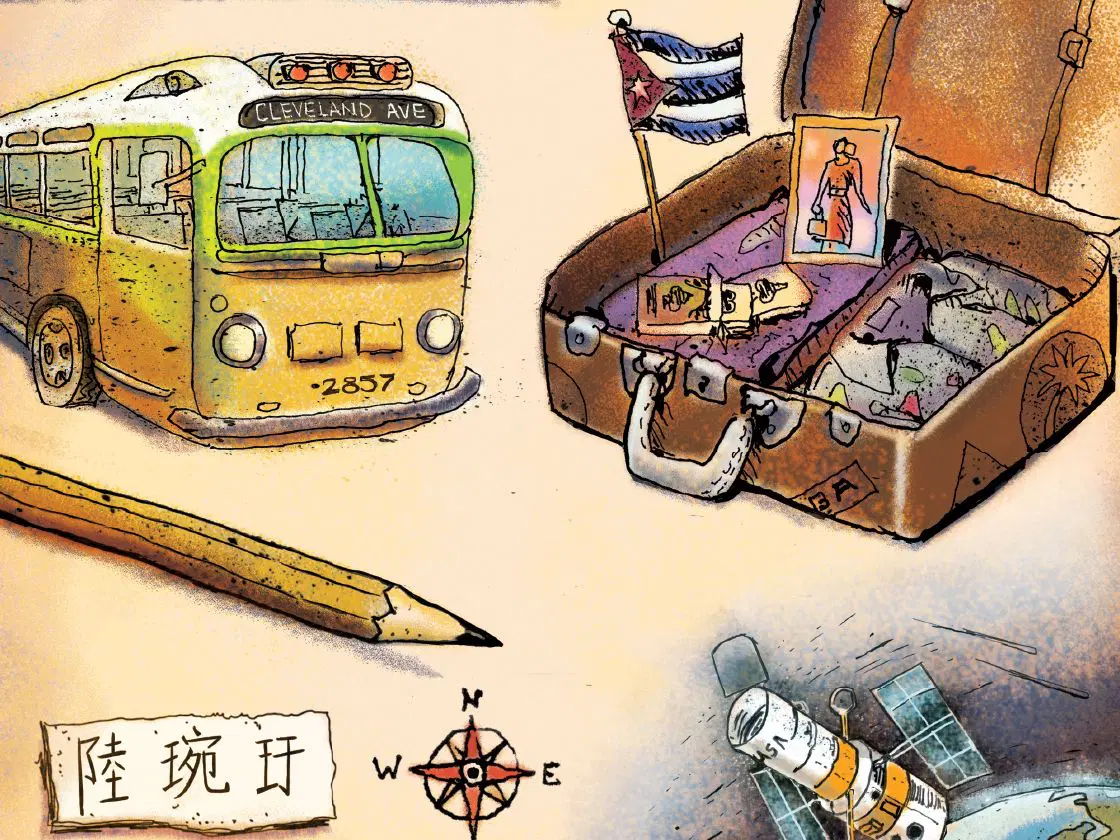
Unit 1
Personal Narratives/Narrativas personales
Through writing and sharing their writing, students begin to identify themselves as writers.

Unit 2
Early American Civilizations/Las primeras civilizaciones americanas
Students craft a codex to explain the rise and fall of the Maya, Aztec, and Inca people.

Unit 3
Poetry/Poesía
Students close read many forms of poetry… and learn to write them.

Unit 4
Adventures of Don Quixote/Las Aventuras de Don Quijote
Was Don Quixote right to fight the windmill? In this full-length novel study, students decide.

Unit 5
The Renaissance/El Renacimiento
Exploring the art and literature of the Renaissance through the works of its masters.
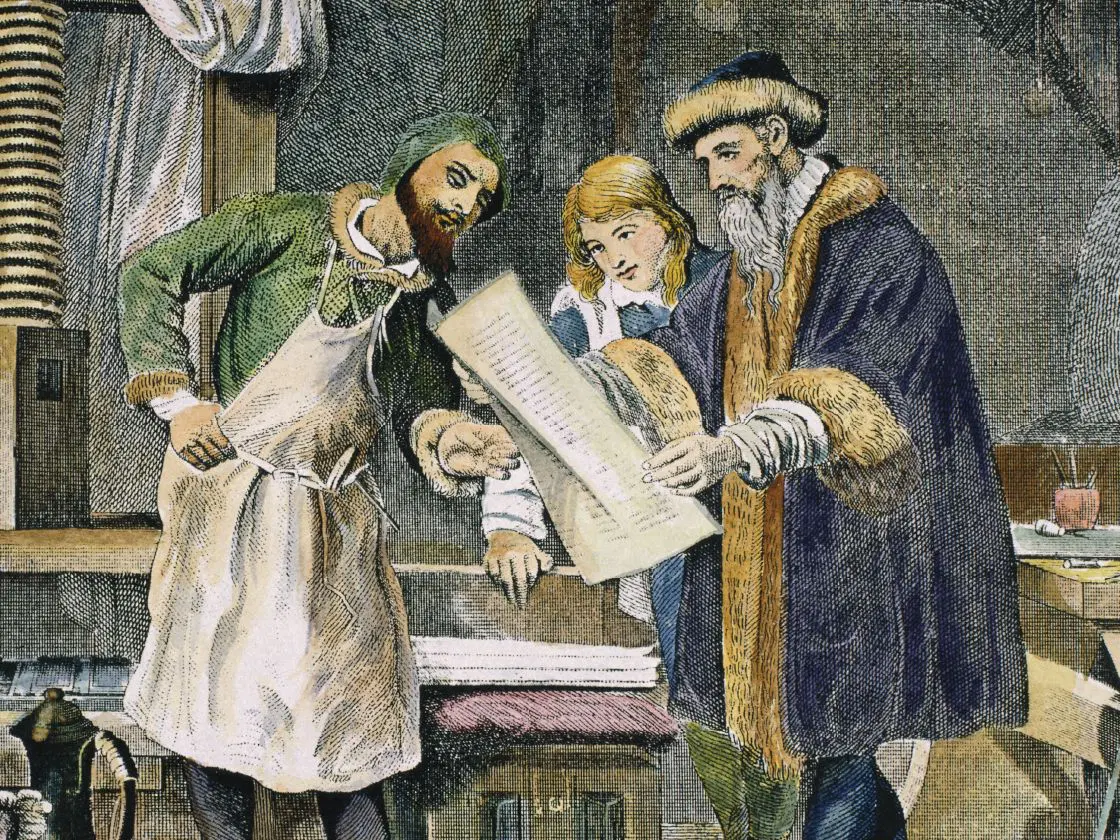
Unit 6
The Reformation/La Reforma
How did the printing press transform the religion and society of Europe?

Unit 7
William Shakespeare’s A Midsummer Night’s Dream/Sueño de Una Noche de Verano de William Shakespeare
Students enter the world of Shakespeare by reading, designing, and acting out his work.

Unit 8
Native Americans/Los nativos americanos
How did the policies of the U.S. government impact Native American culture and lives?
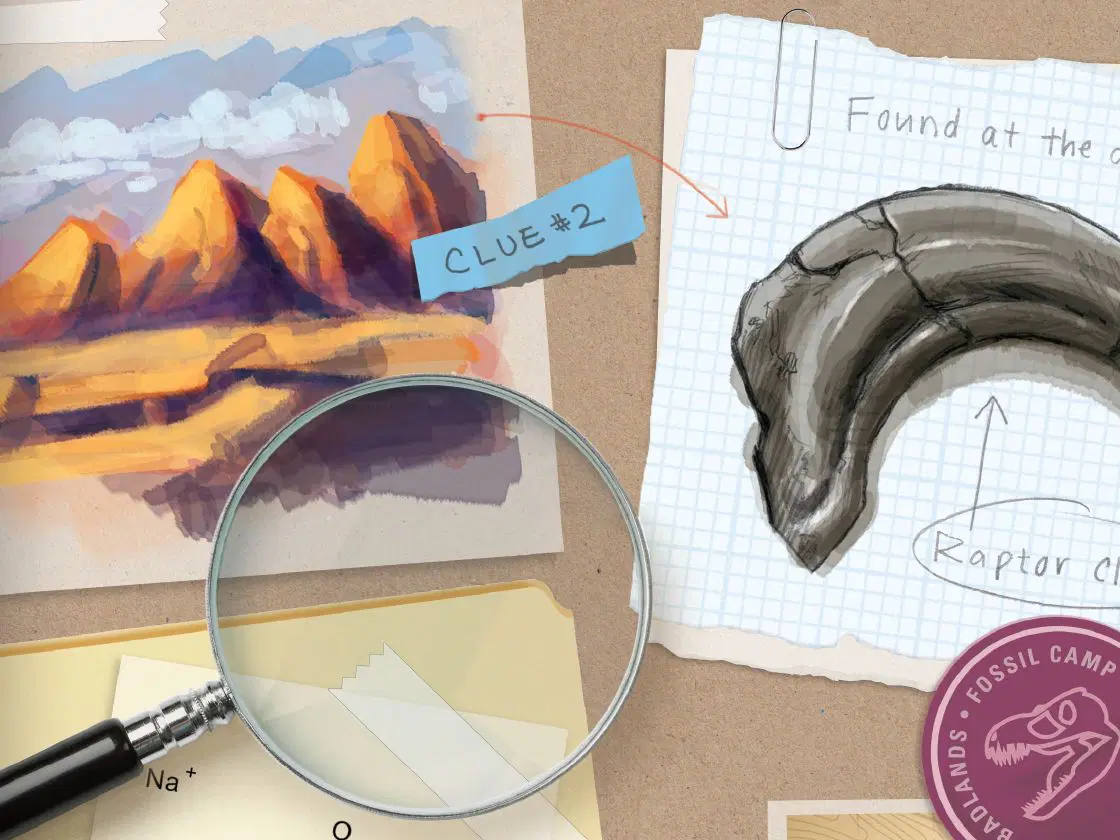
Unit 9
Chemical Matter/Química
Students use knowledge of chemistry to solve a mystery.
Print & digital components
The program includes instructional guidance and student materials for a year of instruction, with lessons and activities that keep students engaged every day.
Component
FORMAT
Knowledge (Conocimientos) Teacher Guides (K–2)
Knowledge Strand Teacher Guides contain Amplify CKLA’s cross-curricular read-alouds and application activities, all of which are standards-based to build mastery of content knowledge and literacy skills. There is one Teacher Guide per Knowledge Domain.
Print and digital
Knowledge Image Cards (K–2)
Amplify Caminos includes Image Cards for each Knowledge Domain to bring each topic to life through vivid visuals.
Print and digital
Knowledge Flip Books (K–2)
Projectable Flip Books are provided to accompany the read-alouds in each Knowledge Domain.
Digital
Teacher Guides (3–5)
Teacher Guides for grades 3–5 units are based on content-rich topics and incorporate reading, writing, speaking, and listening skills in the context of background knowledge. There is one Teacher Guide per unit.
Print or digital
Teacher Resource Site (K–5)
The program includes a one-stop-shop website for lesson projections, digital versions of all Amplify Caminos materials, lesson planning resources, multimedia (such as eBooks), and more.
Digital
Professional Learning Site (K–5)
The Professional Learning site includes training materials, best practices, and other resources to develop program expertise. Access professional development anywhere, anytime.
Digital
Component
FORMAT
Knowledge (Conocimiento) Activity Books (K–2)
Activity Books provide students with the opportunity to deepen world and word knowledge by responding to text in a diversity of ways.
Student Readers (3–5)
Student Readers serve as content-rich anchor texts for each unit. Units such as Poetry and Contemporary Fiction feature authentic texts originally written in Spanish.
Activity Books (3–5)
Activity Books in grades 3–5 provide daily opportunities for students to hone reading and writing skills within the context of each unit.
Print and digital
Explore more programs
Our programs are designed to support and complement one another. Learn more about our related programs.
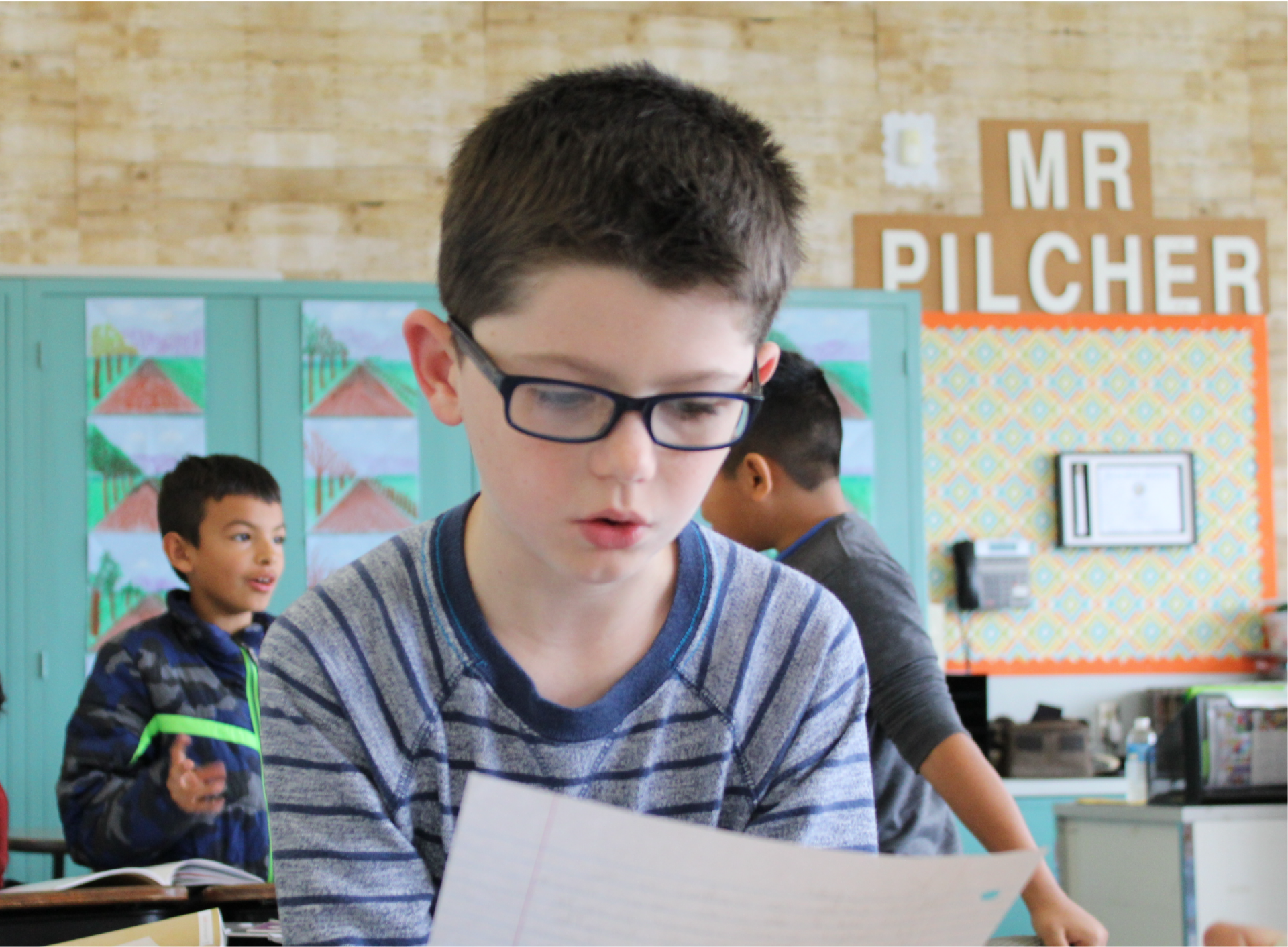
Amplify CKLA Community Review Site
Welcome to the Amplify CKLA community review site for Idaho Falls School District. This site is designed to help you learn about Amplify CKLA—a core English Language Arts curriculum for Grades K–5.
Your district leaders want to hear from you! Please share your thoughts by completing this district survey.
What is Amplify CKLA?
Amplify Core Knowledge Language Arts (CKLA) is a core English language arts program for Grades K-5 that combines phonics with rich texts designed to build content knowledge—so that students learn to read and read to learn at the same time. It is also a blended program, which means your student will be interacting with both print and digital materials.
- In Grades K–2, students complete one full lesson each day that builds foundational reading skills, as well as one full lesson that builds background knowledge.
- In Grades 3–5, foundational reading skills and background knowledge are taught together through one integrated lesson each day.
Looking for 6th grade material? Click here.
There’s no better way to understand the power of Amplify CKLA than seeing it in action. Watch Ms. Lehman’s second-graders in the video below as they learn how to decode and spell words with the long /ā/ sound.
What do students learn?
Amplify CKLA is an evidence-based program built on research about how students learn to read. This collection of research is often referred to as the Science of Reading or The Simple View of Reading. It tells us that:
- Students learn to read best when they are taught foundational reading skills (like phonics) and comprehension skills (like vocabulary and background knowledge) at the same time. That’s why Amplify includes a combination of skills and concepts in every unit.
- The more students know about a particular topic, the better they are able to comprehend what they read. That’s why Amplify CKLA incorporates rich stories, texts, and articles about a variety of topics throughout the program.
Because students learn so much with Amplify CKLA, it can be hard to review it all at once. To make it easier for you to review the program, we’ve provided links to a variety of resources below, including unit overviews and text lists by grade.
Important note:
Amplify believes in empowering teachers to make the best instructional decisions for their students. For that reason, we include a variety of optional materials for teachers to use at their own discretion. For example: Trade Books are an optional tool that teachers can choose to use to extend a lesson. These books do not come with the program and only serve as a suggestion to assist teachers in finding additional material that ties to the unit topic.
Print materials
Student Readers
These readers are uniquely designed to provide intensive practice while reading simple but authentic stories. All readers are also available as ebooks and audiobooks on the teacher resource site.
In grades K-2, these readers are chapter books that allow students to practice just-learned sound-spellings within an authentic reading experience that incorporates compelling plots and interesting characters.
In grades 3-5, readers develop close reading and other literacy skills through a selection of diverse, content-rich literary and informational texts.
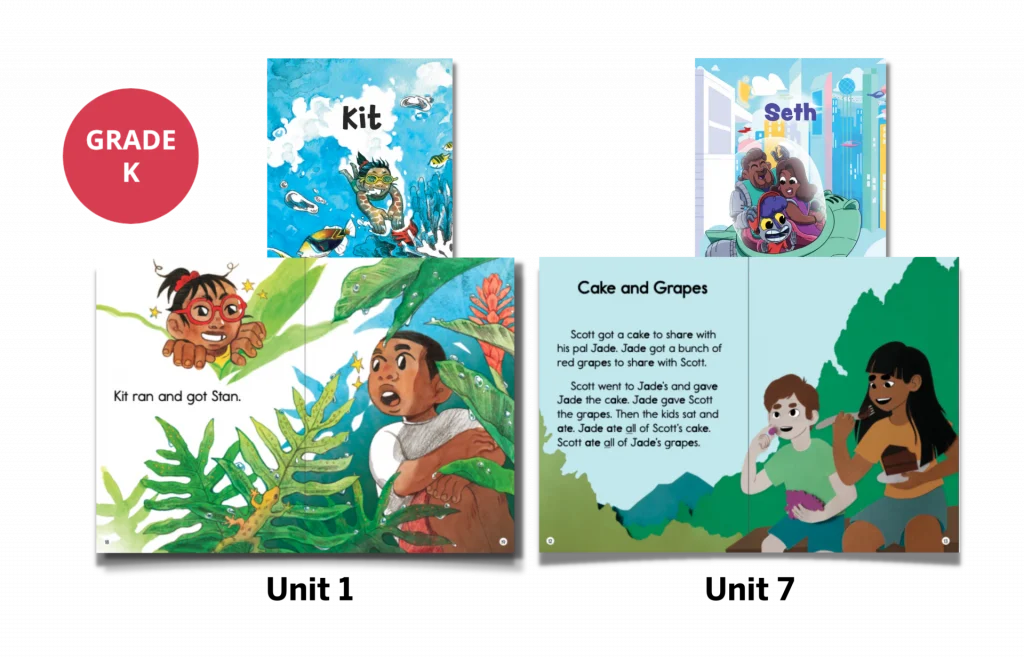
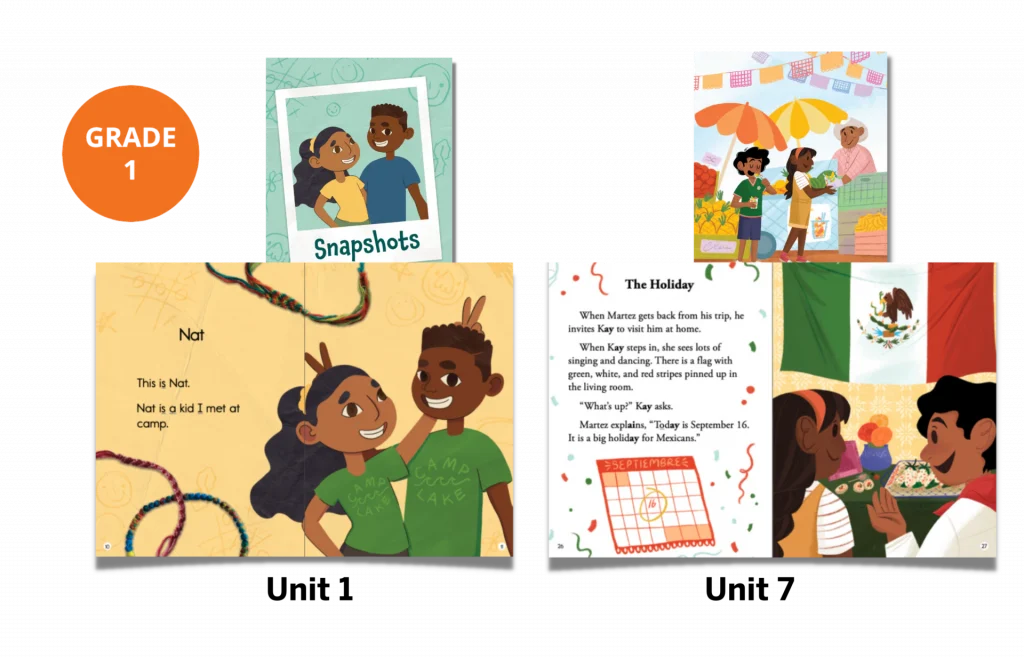
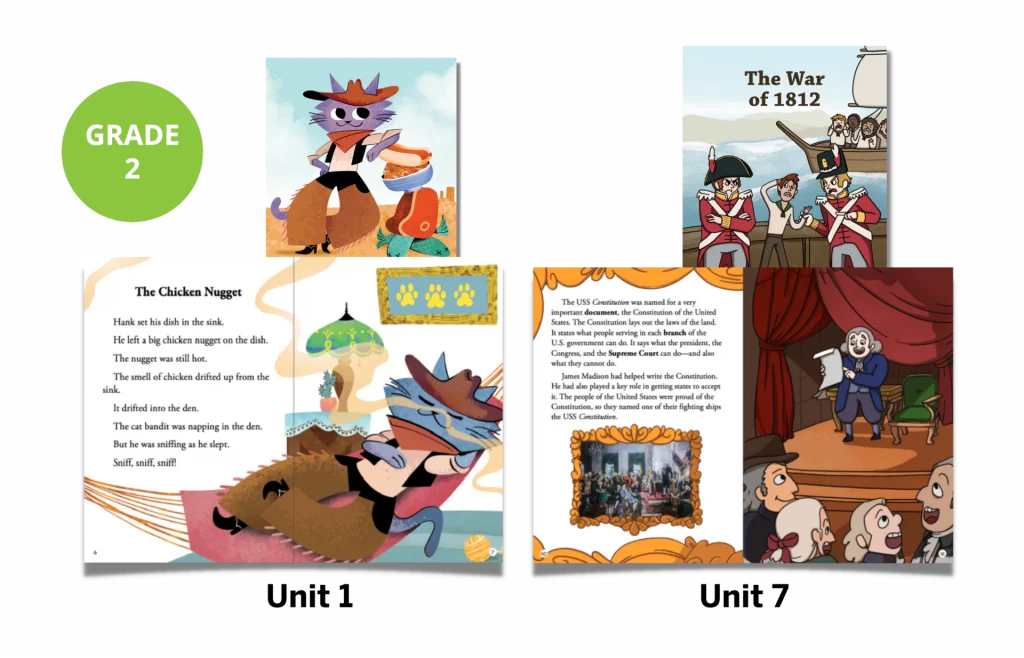
Student Activity Books
Part of the daily lessons, these activity pages ask students to respond to the text they’ve read and apply skills and knowledge. They also include assessments that track students’ skills development, to which teachers have access.
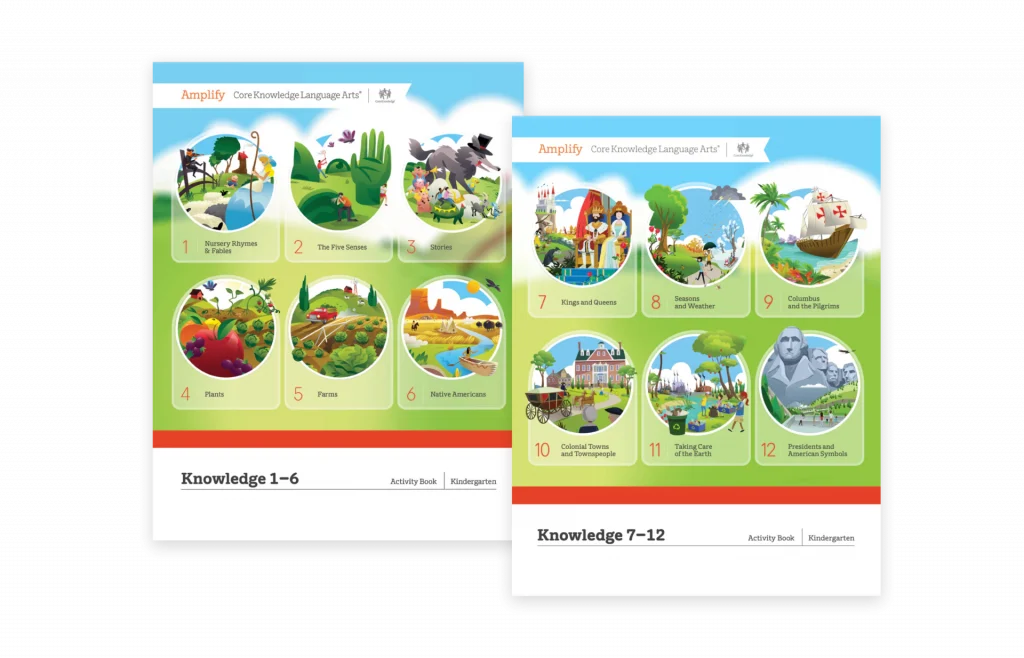
Digital materials
We are excited to announce that students will be able to access multimedia resources and engage in a new digital experience on the CKLA Hub. Unlike ever before, students can access digital resources independently from anywhere, taking full advantage of the instructional multimedia experiences that Amplify CKLA has to offer. Students can access the Hub at home, in the classroom, and on the go, making it ideal for remote learning. It’s compatible with laptops, Chromebooks, tablets, and desktops—we’ve also optimized it for mobile devices.
Knowledge Builder videos for grades K–2
Each Knowledge Domain starts with a Knowledge Builder video: a short, fun, animated story that enriches the lesson and motivates students with new characters, places, and concepts.
Recorded daily read-alouds for grades K–2
Teachers and students will have access to video recordings of all K–2 Knowledge Read-Alouds with pictures from the Flip Books.
Sound Library for grades K-2
The Sound Library uses audio sounds, catchy songs, and animated articulation videos to help students learn and master sounds.

Foundational Skills Boost for grades 1–3
Designed for grades 1–3, these video-based, self-guided lessons target critical foundational skills from the previous year’s instruction in order to fill in any gaps. They offer approximately nine weeks of instruction organized as daily lessons, with additional teacher-led small-group activities and family resources.
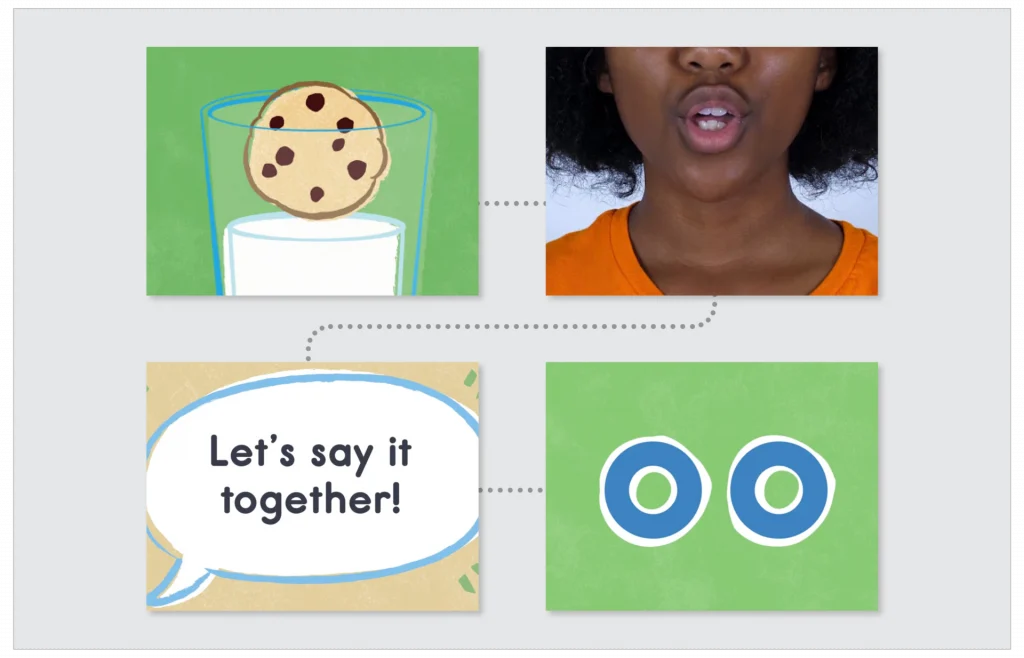
Vocab App for grades 3-5
The Vocabulary App is designed for independent practice with vocabulary. Students can use the Vocabulary App for game-like activities that challenge them.
Quests for grades 3–5
Each of the grade levels in 3–5 contains a Core Quest. In these special units, all the normal rules of the classroom change, and students engage with language in surprising new ways. For example, in grade 5, they learn to love the dense Shakespearian language of A Midsummer Night’s Dream through imagery, close reading, and performance.
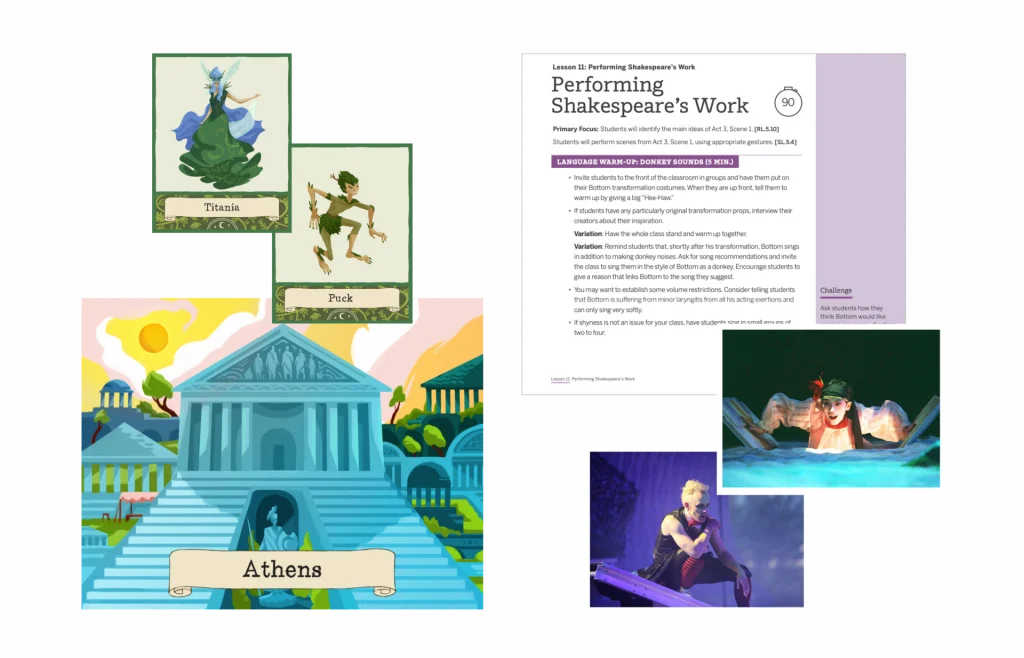
Support your child at home
Read and talk at home
- If possible, read with your child daily; even 15 minutes of reading together each day can make a huge impact.
- You can read sections of the text aloud together. If your child struggles, you might try reading the text to them with expression, and then have them read it aloud back to you.
- For additional practice, watch the recorded read-alouds with your K-2 student or have your grade 3-5 student use the Vocabulary App.
- Find moments to discuss what they are reading and discovering. Examples of questions you could ask: What stood out to you from what you read today? Were any sentences or words confusing? What was most surprising? What do you think the writer was trying to communicate? Do you agree with the writer’s ideas or descriptions? What connections can you make between what you are reading and your own life or other issues?
- Listen to your child read their written responses or have them share with a friend over video chat.
- We recommend reviewing this Protecting Kids Online article by the Federal Trade Commission addressing digital safety.
Skills practice at home
We’ve developed a set of resources for families to use with their students that includes instructions and materials to teach and practice grade-level phonics at home. Resources include sound videos, Readers, and a how-to video with editable instructions that family members can customize to meet individual student needs.

Program access
Before accessing the program, watch the below video to learn even more about Amplify CKLA! Then scroll down and follow the login instructions provided.
Take a closer look at the program with the Idaho Falls Community demo account! Follow these simple instructions to access our program digitally.
- Click the CKLA Teacher Resource Site button.
- Select Log in with Amplify.
- Enter this username: t1.ifckla@demo.tryamplify.net
- Enter this password: Amplify1-ifckla
- Select the desired grade level.
Where to go for help
Whether you have questions about your technology or want to know more about the program, Amplify’s Support Team is here to help!
Contact Support via telephone at (833) 97-Care-8 (833-972-2738) or caregiver@amplify.com.
Our support hours are Monday – Friday, 7 am – 9 PM ET, and Sunday, 10 – 6 ET.
Connecticut K-5 ELA: Explore Amplify CKLA (English) and Caminos (Spanish)
Thank you for visiting Amplify’s Core Knowledge Language Arts (CKLA) and Caminos website designed exclusively for you. We are very excited for you to further explore Amplify CKLA and Amplify Caminos and discover more about our proven, phonics-based literacy programs in English and Spanish. Begin your journey with the Introduction below and explore Amplify CKLA and Caminos.
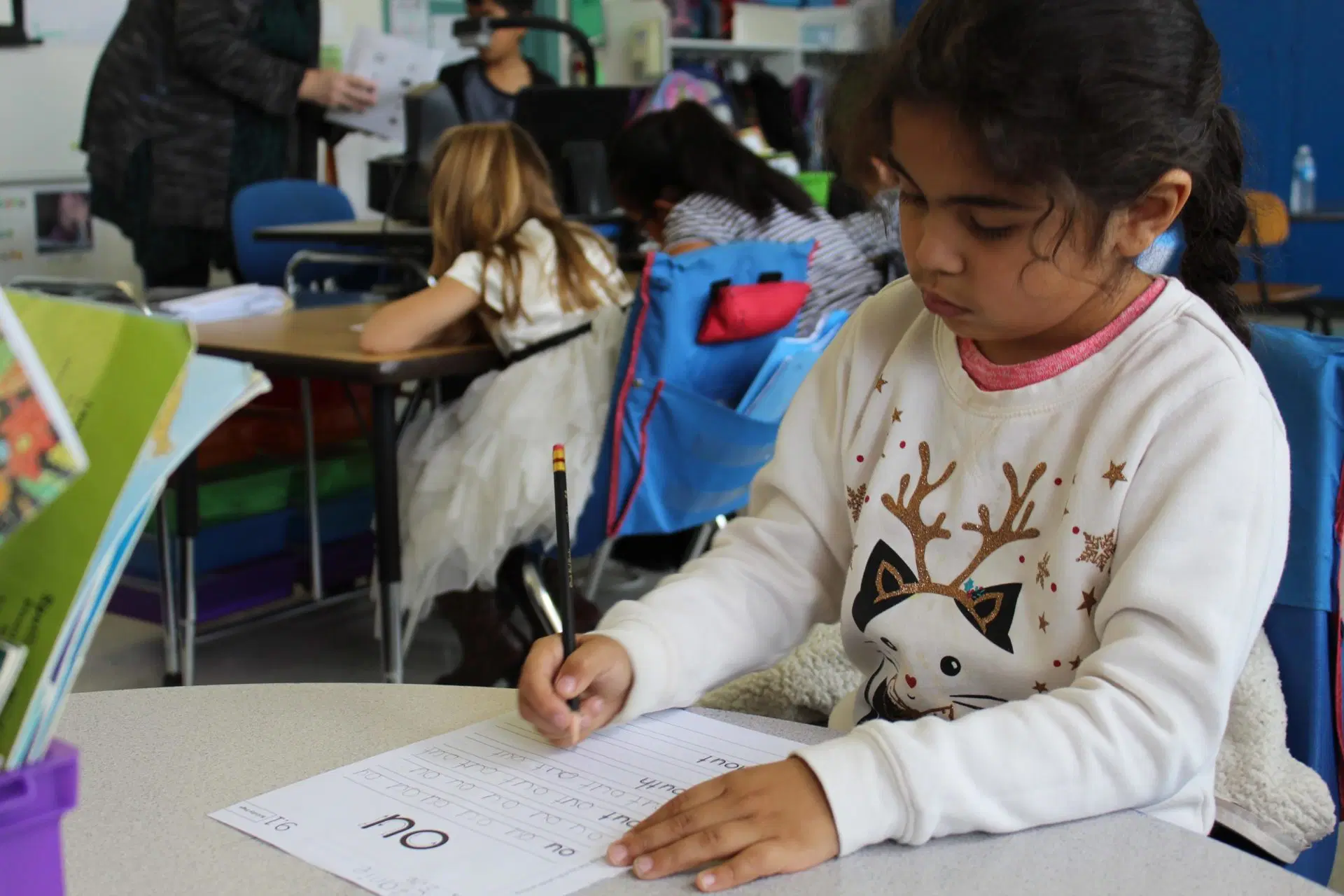
Introduction
We are excited for you to see how Amplify CKLA and Amplify Caminos provide parallel, high-quality resources in both English and Spanish for all students and multilingual learners across NYC! Both programs are flexible, offering stand-alone foundational skills instruction as well as comprehensive core English Language Arts.
Amplify CKLA Skills and Caminos Lectoescritura are entirely built on the latest reading science and provide comprehensive instruction in all foundational reading skills. These programs feature:
- Phonological awareness, phonics, and word recognition
- Strong, systematic sound-first instruction to support students in learning to decode
- Language skills, including conventions, spelling, and grammar
- Reading comprehension
- Writing instruction
CKLA and Caminos for grades K–2 provides a two-strand approach – the first strand is the Foundational Skills Strand (as described above) and the second is the Knowledge Strand, in which students build rich background knowledge through multidisciplinary Read-Alouds in both English and Spanish. Additionally, in Grades 3-5, CKLA and Caminos take an Integrated Approach, meaning everything is focused on rich worldly context.
We highly encourage you to check out the Grades K-2 Knowledge Strand section of the website and the 3-5 Integrated Approach section to explore these components further, gain access to the engaging, worldly, and diverse texts students and teachers are using in their classrooms daily, and discover so much more!
Access the program
Every day in the CKLA/Caminos classroom, students will practice their existing reading skills while stretching themselves toward new goals. In K–2, each day includes dedicated skills time to help you give students a solid foundation. In the upper grades, skills instruction becomes integrated with Knowledge lessons, and students engage with increasingly complex content-rich texts and writing activities.
Start with the sound
All instruction starts with phonological awareness, which research has shown to benefit the greatest number of students.
Students begin by learning to recognize sounds, as well as to articulate them.
Build to the phoneme
All instruction starts with phonological awareness, which research has shown to benefit the greatest number of students. Students begin by learning to recognize sounds, as well as to articulate them.
Crack the code
Once students can recognize sounds, they learn to form the corresponding letter codes. CKLA starts by teaching the sound-spellings that appear most frequently in English, which lets your students read and write as many words as possible, as soon as possible.
Grow in complexity
The lessons continue to challenge students as they progress, introducing complications like multisyllabic words, “tricky words,” and homophones. In each case, students encounter complications as they become ready for them.
While students are learning how to read, Knowledge Domains give them authentic and engaging reasons to read. Students will use their skills to explore domains that relate to storytelling, science, and the history of our world as seen through the eyes of many different groups. With these domains, you’ll bring the world to your students, showing them how reading can become an exciting, rewarding, and useful part of their lives.
Build connections and context
Each CKLA/Caminos Knowledge Domain gives students a base of vocabulary and concepts, building on what they’ve learned in previous domains. This helps students make connections within and across grades, building a base of background knowledge that will help them navigate new and more complex texts.
Listen and understand
Students learn to listen and understand before they learn to read. By delivering knowledge through classroom Read-Alouds, we teach students the key comprehension skills they’ll use throughout their reading lives.
Emphasis on interactivity
We emphasize interactions with students, challenging them and encouraging them to think about the material rather than simply receive it. Each lesson includes many options for formative assessment and immediate adjustment to your class’s needs.
Assess what’s important
End-of-domain digital assessments for Knowledge Domains are fully voice acted, ensuring that each student’s comprehension skills are being authentically tested. This not only helps build student test-taking confidence, but also gives you a more accurate picture of your class.
Step 1: Watch this video walkthrough of the CKLA/Caminos Teacher Resource Site.
Step 2: Explore the Teacher Resource Site.
- Click the CKLA/Caminos Teacher Resource button below.
- Select Log in with Amplify.
- Enter your teacher username: t.nyc-ckla-caminosK2@tryamplify.net
- Enter your password: AmplifyNumber1
- Toggle to access either English and Spanish
Step 3: Watch this video walkthrough of the CKLA/Caminos Student Hub.
Step 4: Explore the CKLA/Caminos Student Hub for Grades K-2.
- Click the CKLA/Caminos Student Hub button below.
- Select Log in with Amplify.
- Enter your student username: s.nyc-ckla-caminosK2@tryamplify.net
- Enter your password: AmplifyNumber1
- Select a grade level.
By grades 3–5, students have mastered the basics of decoding and are hungry to use what they’ve learned to reach out to the world. Although Read-Alouds remain an important part of lessons, students are also encouraged to practice independent reading starting in grade 3—striking a balance between strong teacher support and developing their autonomy and confidence as readers.
Writing and Language
As students progress from K–2, writing activities start to emphasize analysis, creativity, and independent thinking about the material students are learning.
Core Quests: Transforming the classroom
Each of the levels in grades 3–5 contains a Core Quest. In these special
units, all the normal rules of the classroom change, and students engage
with language in surprising new ways. Here in this grade 5 example, they
learn to love the dense Shakespearian language of A Midsummer Night’s
Dream through imagery, close reading, and performance.
Step 1: Watch this video walkthrough of the CKLA/Caminos Teacher Resource Site.
Step 2: Explore the CKLA/Caminos Teacher Resource Site for Grades 3-5.
- Click the CKLA/Caminos Teacher Resource button below.
- Select Log in with Amplify.
- Enter your teacher username: t.nyc-ckla-caminos35@tryamplify.net
- Enter your password: AmplifyNumber1
- Toggle to access either English and Spanish
Step 3: Watch this video walkthrough of the CKLA/Caminos Student Hub.
Step 4: Explore the CKLA/Caminos Student Hub for Grades 3-5.
- Click the CKLA/Caminos Student Hub button below.
- Select Log in with Amplify.
- Enter your student username: s.nyc-ckla-caminos35@tryamplify.net
- Enter your password: AmplifyNumber1
- Select a grade level.
Key program features
The student body of our country has been changing, and it’s changing fast. Over 10% K-12 students are english language learners who speak other languages. This skews heavily to primary grades with 15-16% in grades K-3. In 2021-2022, New York City Public Schools enrolled over 147,000 English language learners across K-12 or about 14% of students. Over 52% of those students are in elementary schools across the district with 23% in grades K-3.
Amplify Caminos uses spiral learning to reinforce every student’s ability to develop skills like reading, writing, speaking, and listening in Spanish that can be transferred to English. As students engage with their lessons, they explore the similarities and differences in grammar, vocabulary, writing, and language use between Spanish and English. This bridge helps students learning two languages to strengthen their knowledge in both.
Through cross-curricular content, students explore units that relate to storytelling, science, and the history of our world in a holistic and thoughtful way. With these units, you’ll bring the world to your students, showing them how reading can become an exciting, rewarding, and useful part of their lives.
Amplify Caminos al Conocimiento Esencial, a Spanish language arts program for Grades K–5 that will inspire and engage your students to become confident readers, writers, and thinkers.
It is designed to support any biliteracy model, including English as a Second Language (ESL), transitional bilingual programs, dual language strands, and Spanish immersion programs.
When used in tandem with Amplify CKLA, Amplify Caminos provides an one-to-one English and Spanish solution.
Built out of the latest research in the Science of Reading, Amplify CKLA delivers explicit instruction in both foundational literacy skills (systematic phonics, decoding, and fluency) and background knowledge in grades K–2 with an integrated approach to explicit instruction in grades 3–5.
Review this Science of Reading Toolkit to learn more about the Science of Reading best practices integrated throughout CKLA.
Great reading instruction starts with helping kids develop great decoding skills. By building a solid foundation of phonological awareness and phonics, reading the words on the page becomes automatic so that comprehension and critical thinking can happen.
Our instruction is supported by:
- Step-by-step lessons with multisensory approaches, clear lesson objectives, and embedded formative assessments.
- Decodable books and student readers with ebook and audiobook versions that feature engaging plots and relatable characters.
- An engaging sound library with fun songs and videos that develop phonological awareness.
- An interactive Vocab App featuring engaging activities with immediate feedback and automated, customized instruction based on student performance.
Students build grade-appropriate subject-area knowledge and vocabulary in history, science, literature, and the arts while learning to read, write, and think creatively and for themselves.
Our instruction is supported by:
- Knowledge builders that provide a quick overview of each domain with its key ideas.
- Interactive read-alouds designed to build knowledge and vocabulary.
- Content-rich anchor texts that support students as they tackle increasingly complex text and sharpen their analytical skills.
- Social and emotional learning paired with lessons in civic responsibility.
From the printed page to the screen, we bring foundational skills and knowledge of the world to your young learners, and make the transition from classroom to home learning seamless.
Download the Amplify CKLA Components Guide to see components by grade.
Additional materials to support your review
Tulsa, exciting updates in CKLA 2nd Edition!
Exciting updates in CKLA 2nd Edition!
As part of our commitment to creating even richer and more wide-ranging curricula, we have built on the foundation of the 1st Edition to release a new edition of Amplify CKLA with a collection of program enhancements that save you time and help you reach every student.

Amplify Caminos for equitable Spanish literacy
Amplify Core Knowledge Language Arts® (CKLA) is proud to introduce Amplify Caminos al Conocimiento Esencial, a Spanish language arts program for Grades K–5 that will inspire and engage your students to become confident readers, writers, and thinkers.
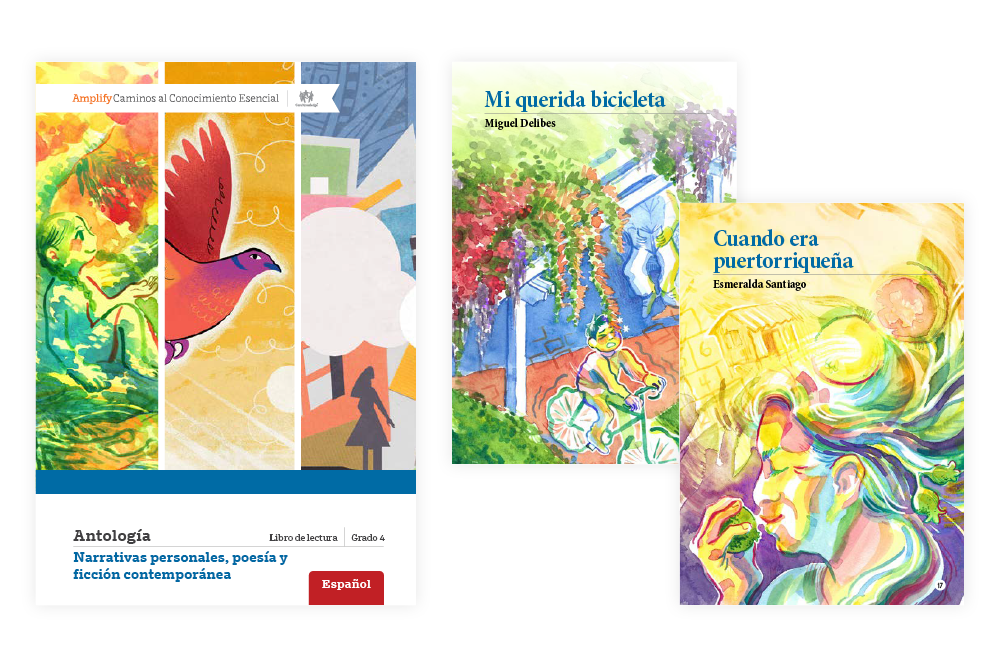
Like Amplify CKLA, Amplify Caminos is designed to spark curiosity through content-rich instruction. Amplify Caminos features complex interactive Read-Alouds and authentic Spanish literature to develop reading and writing skills and build bridges across Spanish and English.
Explore the Amplify Caminos Program Guide.
Research units to inspire inquiry and curiosity
Our brand-new Knowledge Research units carry forward Amplify CKLA’s powerful and proven instructional approach while also:
- Adding more diversity. The rich topics and highly visual components featured in these units provide students with even more “windows and mirrors” and perspectives as they work to build knowledge.
- Adding more authentic literature. Each new research unit revolves around a collection of high-interest authentic trade books that will spark more curiosity and inspire more inquiry.
- Adding more flexibility. Units can be implemented for extended core instruction during flex periods, district-designated Pausing Points, or enrichment periods.
Units cover a variety of rich and relevant topics:
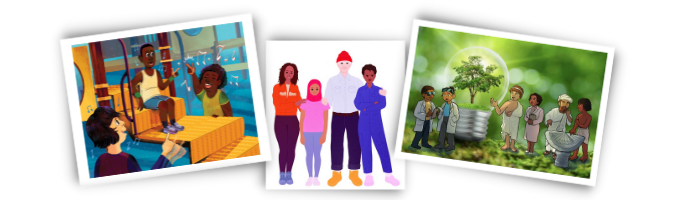
With these new units, students will soar to new heights with Dr. Ellen Ochoa, Amelia Earhart, and the Tuskegee Airmen. They’ll feel the rhythm as they learn about Jazz legends Miles Davis, Tito Puente, and Duke Ellington. And they’ll explore the far reaches of the world with Jacques Cousteau, Matthew Henson, and Eugenie Clark.
- Grade K: Art and the World Around Us
- Grade 1: Adventure Stories: Tales from the Edge of the World
- Grade 2: Up, Up, and Away: The Age of Aviation
- Grade 3: All That Jazz
- Grade 4: Energy: Past, Present, and Future
- Grade 5: Beyond Juneteenth: 1865 to present
Watch the overview webinar to learn more.
Units will be made available in English and Spanish, and will include the following components:
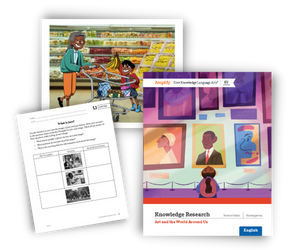
- Teacher Guide
- Student Activity Books
- Image Cards
- Trade Book Collection
- Digital Components (grades K–3 and 5)
Richly illustrated Skills Readers
Student Readers in grades K–2 are newly redesigned with gorgeous illustrations that celebrate students’ diverse experiences. The new readers feature individuals with a broad range of identities and culture, providing students with more windows and mirrors. Each reimagined reader has a unique illustration style to draw students into the engaging stories, characters, and plots.
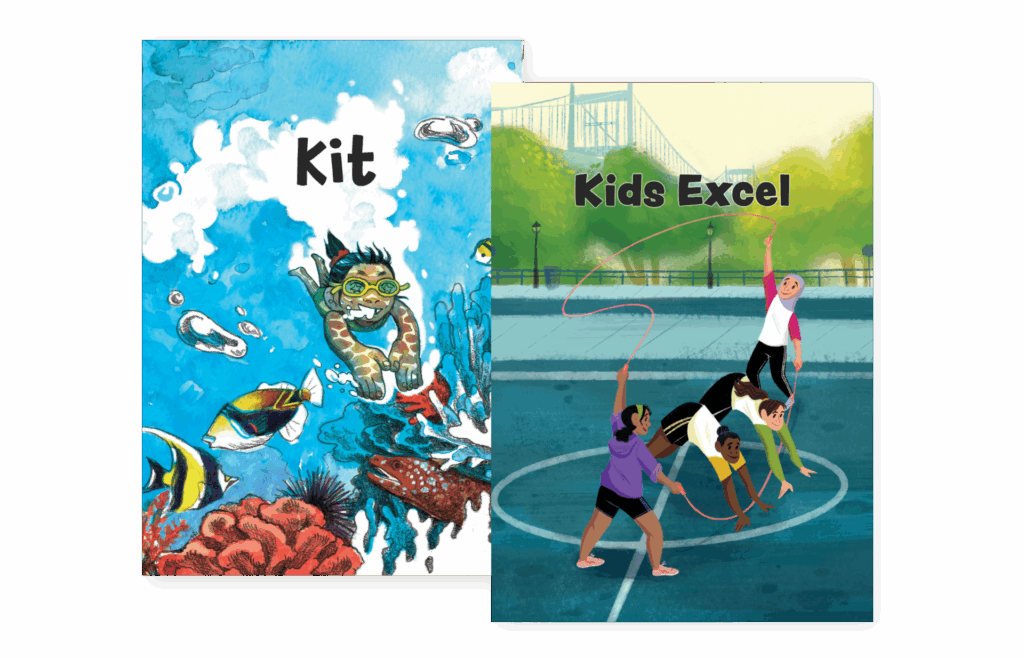
New digital platform with presentation slides
Amplify CKLA 2nd Edition is on the digital experience, a new digital platform, that makes it easier and more engaging than ever to plan lessons, present digital content, and review and assign student work online.
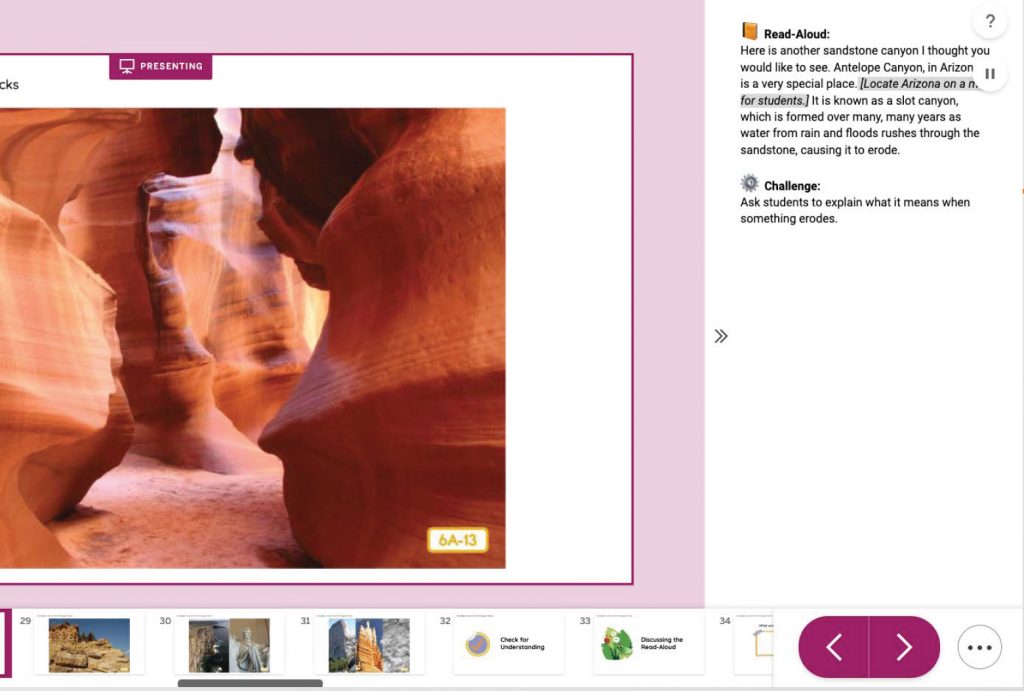
The digital experience provides ready-to-use, customizable lesson slides, complete with all the prompts from the Teacher Guide embedded in the teacher view. As teachers deliver each lesson, students engage with the content through slides that include digital activities, digital components, multimedia, Student Readers, and more. Students can complete work in the platform through digital Activity Pages that allow them to type, draw, record audio, and more.
Explore the digital experience overview brochure.
Improved layout, more focused lessons, new content and more
From 1st Edition to 2nd Edition, we made updates to make it easier to plan and deliver Amplify CKLA lessons, including a variety of ways to differentiate instruction to meet the needs of all students.
Key enhancements include:
- Scaffolds for English Language Learners added to all lessons
- In-the-moment differentiation opportunities added to support and challenge all students
- Integrated grade 3 into one instructional strand to better match students’ learning trajectories
- New layout to make Teacher Guides easier to scan and use.
New content at the beginning of each lesson:
- Primary Focus Objectives identify the goals of each lesson. Each objective is standards-aligned and corresponds to a formative assessment.
- Formative Assessment opportunities are explicitly called out in a chart at the beginning of each lesson. Formative assessments are aligned to the Primary Focus Objectives.
- Universal Access suggests modifications to the lesson to support a diversity of learning styles.
New content within each lesson:
- Support and Challenge sidebars added throughout for extensions, support, and enrichment.
- Access Supports provide scaffolds to support English Language Learners across five proficiency levels.
New content in each Skills Strand lesson:
- Additional Support section at the end of every Skills lesson provides opportunities for re-teaching and reinforcing skills taught in the lesson. Specific activities and extensions are provided to meet the needs of all learners.
New content in all grades, including:
- Grade K: Picture Reader with supporting instruction.
- Grade 3: Content integrated into one instructional strand to improve pacing and closely match students’ learning trajectories; excerpts of read-aloud text now appear in select student readers; added new Vikings Quest (problem-based interactive learning).
- Grade 4: Updated the Personal Narratives unit, added The Contraption Quest (writing across the year).
- Grade 5: Updated Personal Narratives unit, added Chemical Matter unit, added The Robot Quest (writing across the year).
- Moved Contemporary Fiction unit from grade 5 to grade 4.
- Supplemental cursive instruction and activity book added for grades 3 and 4.
Take a deeper look at the enhancements.
Language Studio for English Language Learners
Language Studio is a companion English Language Development program to 2nd Edition designed to support students learning English at all proficiency levels. Aligned to WIDA, the program helps students strengthen vocabulary and academic language skills while deepening the background knowledge developed in the core program. This unique approach provides an effective structure for moving English Language Learners students towards English proficiency.
View sample lessons to see how it works.
Multimedia Hub for teachers and students
Students will be able to access multimedia resources and engage in a new way on the Amplify CKLA Hub. Students can access digital resources independently from anywhere, taking full advantage of the instructional multimedia experiences that Amplify CKLA has to offer. Students can access the Hub at home, in the classroom, and on the go, making it ideal for remote learning. It’s compatible with laptops, Chromebooks, tablets, and desktops.
Grades K–2
Grades K–2 students will have access to Knowledge Builder videos to introduce each domain; Sound Library videos and songs for each sound in the English language; and audio-enabled eBooks of grade-level Student Readers.
Grades 3–5
Grades 3–5 students will have access to the Vocab App for independent practice with domain vocabulary and audio-enabled eBooks of grade-level Student Readers in English and Spanish.
Inspiring the next generation of Rochester scientists, engineers, and curious scholars
Dear Rochester educator,
We’re extremely excited to be part of your science review process.
Built from the ground up for three-dimensional, phenomena-based learning, Amplify Science helps your Rochester scholars go from learning about to figuring out scientific concepts.
Explore the sections below and learn how Amplify creates rigorous, relevant learning experiences for the next generation of scientists, engineers, and curious citizens.
—Jennifer Fosegan, Rochester Senior Account Executive

Standards-based and grounded in research
Amplify Science is an engaging new core curriculum designed for three-dimensional, phenomena-based learning. Developed by the science education experts at UC Berkeley’s Lawrence Hall of Science and the digital learning team at Amplify, our program is used by hundreds of schools across the country, including New York City Public Schools, Chicago Public Schools, and Denver Public Schools.
Amplify Science was designed from the ground up to meet the Next Generation Science Standards. To ensure alignment to the New York State Science Learning Standards (NYSSLS), our partners at the New York City Department of Education created additional resources that can be made available for RCSD to implement.
Instructional model
The Amplify Science program is rooted in the proven, research-based pedagogy of Do, Talk, Read, Write, Visualize. Here’s how each element works:

Phenomena-based approach
In each Amplify Science unit, students take on the roles of scientists or engineers in order to investigate a real-world problem. Students work to define the problem and collect and make sense of evidence. Once the context is clear, students collect evidence from multiple sources and through a variety of modalities.
At the end of the unit, students are presented with a brand-new problem, giving them an opportunity to apply what they’ve learned over the course of the unit to a new context. This represents a shift from asking students to learn about science to supporting students in figuring out the science.

Resources to support your review
- Recommended Scope and Sequence
- RCSD Digital Review Guide
- Amplify Science Student Books
- Phenomena in Grades K–5
- Literacy-rich science instruction
- Engineering in Amplify Science
- Amplify Science in Action classroom videos
What’s included
COMPONENT
FORMAT
Teacher’s Guides and digital experience
Available digitally and in print, the Teacher’s Guides contain all of the information teachers need to facilitate classroom instruction, including detailed lesson plans, classroom slides, high-level overview documentation, differentiation strategies, standards alignments, materials and preparation steps, teacher support strategies, and in-context professional development, possible student responses, and more.
Print and digital

Hands-on materials kits
Hands-on learning is integrated into every unit of Amplify Science. Each hands-on activity is supported through clear instructions for the teacher, as well as easily accessible materials in unit-specific kits. Each kit contains hands-on materials, both consumable and nonconsumable, and various print materials (e.g., Vocabulary and Key Concept cards). With Amplify Science, students can actively participate in science: gathering evidence, thinking critically, making observations, and communicating their claims
Kit

COMPONENT
FORMAT
Student Investigation Notebooks
Available for every unit, the Student Investigation Notebooks contain instructions for activities and space for students to record data, reflect on ideas from texts and investigations, and construct explanations and arguments.
Print and digital
Student books
The age-appropriate Student Books in Amplify Science allow students to engage with content-rich text, obtain evidence, develop research and close reading skills, and construct arguments and explanations about the ideas they are learning in class.
Print and digital

Student digital experience
Students can easily engage with the student digital experience, so effective learning can occur in every type of classroom environment.
In grades 4–5, students are introduced to digital simulations. Developed exclusively for Amplify Science, these digital tools serve as venues of exploration and data collection, allowing students to discover and construct their understanding of science concepts and phenomena.
Digital

Spanish parity
Amplify Science is committed to providing support to meet the needs of all learners. For Spanish-speaking students, greater access to rich science content is achieved with Amplify Science through the use of a pedagogical approach that offers multiple points of entry. In addition, Spanish language supports are available across the curriculum, including Spanish kits that offer Spanish versions of all student-facing print materials, as well as Spanish digital licenses for teachers. Learn more about the Spanish components available across Amplify Science.
The same rigor in terms of scientific accuracy, literacy development, and the use of rich content and language in the creation of the Amplify Science Spanish materials. To ensure equity, all Spanish materials were carefully translated using academic Spanish, paying particular attention to consistency and the use of grade-level-appropriate language in order to support language development.
Review online
Ready to explore on your own? Follow the instructions below to access your demo account.
First, watch this navigation video. Then, click the orange button “Log in to Amplify Science” to log in.
- Select Log in with Amplify.
- Enter username and password:
- Teacher username: t1.rcsdtrial@demo.tryamplify.net
- Student username: s1.rcsdtrial@demo.tryamplify.net
- Password (both teacher and student): Amplify1-rcsdtrial
Disciplinary Core Ideas (DCI) review
Each Amplify Science unit is designed around a unit-specific learning progression that aligns with NGSS disciplinary core ideas (DCI) and crosscutting concepts. The levels that comprise the unit’s learning progression are cumulative. As students progress through the unit, they are able to integrate prior understandings with new insights, and there are continuing opportunities for students to master conceptual understanding of early unit content in subsequent chapters of the unit.
This means that standards are often addressed across entire units instead of in one particular activity or lesson. Thus, the lessons noted below are examples of where the concept represented in the listed DCI is addressed, but this list should not be considered exhaustive. Instead, students have frequent opportunities to engage with these ideas throughout the unit, the grade, and the grade band.
To view the specified lessons, explore our RCSD Digital Review Guide or select a grade level below.
DCI ESS2.D: Weather and Climate
Before you begin reviewing these lessons, make sure to locate the following Student Books from your Unit Kit: What is the Weather Like Today? and Tornado! Predicting Severe Weather
Select the Sunlight and Weather unit, click Chapter 1, and locate the lessons below:
Lesson 1.1
- Activities 2 and 3, Step-by-step tab
- Student book, What is the Weather Like Today? (note: located in your Unit Kit)
Lesson 1.2
- Activities 1 and 3, Step-by-step tab
Lesson 1.3
- Activities 1 and 2, Step-by-step tab
Lesson 1.4
- Lesson Brief, Digital Resources, “Playground Weather Calendars and Playground Weather Graphs (Completed)”
- Activity 1, Step-by-step tab (especially steps 5, 9, and 10) and Teacher Support tab (“Assessment, Assessment Opportunity: Assessing Students’ Understanding of Types of Weather”)
Lesson 5.1
- Activity 1, Step-by-step tab (especially steps 6–7) and Teacher Support, Assessment tab (“Assessment Opportunity: Assessing Students’ Understanding of Weather and Why We Measure It”)
- Student book, Tornado! Predicting Severe Weather (note: located in your Unit Kit), pages 6–9
DCI PS4.A: Wave Properties
Before you begin reviewing these lessons, make sure to locate the following materials from your Unit Kit: Light and Sound Student Investigation Notebook; Student Book: What Vibrates?
Select the Light and Sound unit, click Chapter 4, and locate the lessons below:
Lesson 4.1
- Lesson Brief, Digital Resources, “Assessment Guide”
- Activity 3, Step-by-step tab (especially steps 1–12)
- Light and Sound Student Investigation Notebook, page 24 (note: located in your Unit Kit)
Lesson 4.2
- Activity 2, Step-by-step tab and On-the-Fly Assessment (hummingbird icon)
- Activity 3, Step-by-step tab and On-the-Fly Assessment (hummingbird icon)
- Activity 4, Instructional Guide
- Student book, What Vibrates? (note: located in your Unit Kit)
- Light and Sound Student Investigation Notebook, page 25 (note: located in your Unit Kit)
Lesson 4.3
- Lesson Brief, Digital Resources, “I Hear a Sound. What Vibrates? Mini-Book copymaster”
- Activity 1, Step-by-step tab (especially steps 5–11, 13), and Teacher Support tab (“Instructional Suggestion, Going Further: Sound Can Cause Vibrations”)
- Activity 3, Step-by-step tab
- Activity 4, Step-by-step tab and On-the-Fly Assessment (hummingbird icon)
DCI LS2.A: Interdependent Relationships in Ecosystems
Before you begin reviewing these lessons, make sure to locate the following materials from your Unit Kit: Plant and Animal Relationships Student Investigation Notebook; Student book A Plant is a System.
Select the Plant and Animal Relationships unit, click Chapter 1, and locate the lessons below:
Lesson 1.6
- Activities 2–4, Step-by-step tab
- Plant and Animal Relationships Student Investigation Notebook (note: located in your Unit Kit), pages 15–19
Lesson 1.7
- Activity 2, Step-by-step tab, Possible Responses tab, and Critical Juncture Assessment (hummingbird icon)
- Activity 3, Step-by-step tab
Lesson 2.2
- Activity 2, Step-by-step tab (especially steps 4–12) and Possible Responses tab
- Student book, A Plant is a System (note: located in your Unit Kit)
DCI ESS2.D: Weather and Climates
Before you begin reviewing these lessons, make sure to locate the following materials from your Unit Kit: Weather and Climate Student Investigation Notebook; Student Books Dangerous Weather Ahead and Sky Notebook.
Select the Weather and Climate unit, click Chapter 4, and locate the lessons below:
Lesson 1.4
- Activity 2, Step-by-step tab
- Student book, Sky Notebook (note: located in your Unit Kit)
Lesson 2.3
- Activity 3, Step-by-step tab and Possible Responses tab
- Weather and Climate Student Investigation Notebook, page 28 (note: located in your Unit Kit)
Lesson 3.2
- Lesson Brief, Digital Resources, “Anchorage, Queenstown, and Saint Petersburg Graphs copymaster”
- Activities 2 and 3, Step-by-step tab
Lesson 3.3,
- Activity 2, Step-by-step tab, Possible Responses tab, and On-the-Fly Assessment (hummingbird icon)
Lesson 3.6
- Activity 1, Step-by-step tab (especially steps 3–5) and On-the-Fly Assessment (hummingbird icon)
Lesson 3.7
- Lesson Brief, Digital Resources, “End-of-Unit Writing: Arguing About Future Island Weather Version A copymaster” and “Assessment Guide”
- Activity 3, Step-by-step tab (especially steps 3–7)
Lesson 4.2
- Activity 2, Step-by-step tab, Possible Responses tab, and On-the-Fly Assessment (hummingbird icon)
- Student book, Dangerous Weather Ahead (note: located in your Unit Kit)
DCI PS4.A: Wave Properties
Before you begin reviewing these lessons, make sure to locate the following materials from your Unit Kit: Student books Warning: Tsunami! and Patterns in Communication.
Select the Waves, Energy, and Information unit, click Chapters 1 and 3, and locate the lessons below:
Chapter 1
Lesson 1.4
- Activity 1, Step-by-step tab (especially steps 1, and 4)
- Student book, Warning: Tsunami! (note: located in your Unit Kit)
- Activity 2, Step-by-step tab, On-the-Fly Assessment (hummingbird icon), and Teacher Support tab (“Instructional Suggestion, Providing More Experience: Waves in Water”)
Chapter 3
Lesson 3.1
- Activity 2, Step-by-step tab (especially steps 4–8) and On-the-Fly Assessment (hummingbird icon)
- Activity 3, Step-by-step tab and Waves, Energy, and Information Simulation
Lesson 3.2
- Activity 3, Step-by-step tab, On-the-Fly Assessment (hummingbird icon), and Waves, Energy, and Information Simulation
Lesson 3.3
- Activity 4, Step-by-step tab and On-the-Fly Assessment (hummingbird icon)
- Student book, Patterns in Communication (note: located in your Unit Kit), pages 6–7
DCI LS2.A: Interdependent Relationships in Ecosystems
Before you begin reviewing these lessons, make sure to take out the following materials from your Unit Kit: Student books Restoration Case Studies and Walk in the Woods; Organism Print Name Cards: Set 1.
Select the Ecosystem Restoration unit, click Chapters 1, 2, and 3, and locate the lessons below:
Lesson 1.6
- Activity 2, Step-by-step tab, Possible Responses tab, and Ecosystem Modeling Tool (Box 2 on student apps page, “1.6 Healthy Ecosystem Model”)
- Activity 3, Step-by-step tab (especially steps 2 and 3), Possible Responses tab, and Critical Juncture Assessment (hummingbird icon)
Lesson 1.7
- Activity 2, Step-by-step tab
- Activity 3, Step-by-step tab (especially steps 3–7) and On-the-Fly Assessment (hummingbird icon)
- Printable Resources, Print Materials (8.5” x 11”), Organism Name Cards: Set 1, pages 12–17 (note: located in your Unit Kit)
Lesson 1.8
- Activity 3, Step-by-step tab (especially steps 6–8) and Possible Responses tab
Lesson 2.3
- Activity 3, Step-by-step tab (especially steps 1–4), Possible Responses tab, and Ecosystem Modeling Tool (Box 3 on student apps page, “2.3 Plant Needs Model”)
Lesson 2.5
- Activity 3, Step-by-step tab
- Student book, Restoration Case Studies (note: located in your Unit Kit)
Lesson 3.2
- Activity 2, Step-by-step tab
- Student book, Walk in the Woods (note: located in your Unit Kit), pages 6–10
Lesson 3.3
- Activity 4, Step-by-step tab and Ecosystem Restoration Simulation
Lesson 3.4
- Activity 2, Step-by-step tab, Possible Responses tab, On-the-Fly Assessment (hummingbird icon), and Ecosystem Restoration Simulation
Lesson 3.5
- Activity 2, Step-by-step tab and Teacher Support tab (“Instructional Suggestion, Going Further: Balance and Interdependence of Ecosystems: Impacts of Invasive Species”)
- Student book, Restoration Case Studies (note: located in your Unit Kit), pages 11, 31, and 47
Lesson 3.6
- Activity 2, Step-by-step tab (especially steps 4–5), Possible Responses tab, and Critical Juncture Assessment (hummingbird icon)
Lesson 3.7
- Activity 1, Step-by-step tab, Possible Responses tab, and Ecosystem Modeling Tool (Box 5 on student apps page, “3.7 No Decomposers Model”)
Looking for help?
Contact your Rochester Account Executive:
Jennifer Fosegan
(585) 590-4200
jfosegan@amplify.com
Tulsa, exciting updates in CKLA 2nd Edition!
As part of our commitment to creating even richer and more wide-ranging curricula, we have built on the foundation of 1st Edition to release a new edition of Amplify CKLA with a collection of program enhancements that save you time and help you reach every student.

Amplify Caminos for Spanish literacy
Amplify Core Knowledge Language Arts® (CKLA) is proud to introduce Amplify Caminos al Conocimiento Esencial, a Spanish language arts program that will inspire and engage your students to become confident readers, writers, and thinkers.

Like Amplify CKLA, Amplify Caminos is designed to spark curiosity through content-rich instruction. Amplify Caminos features complex interactive Read-Alouds and authentic Spanish literature to develop reading and writing skills and build bridges across Spanish and English.
Explore the Amplify Caminos Program Guide.
Research units to inspire inquiry and curiosity
Our brand-new Knowledge Research units carry forward Amplify CKLA’s powerful and proven instructional approach while also:
- Adding more content for students from all walks of life. The rich topics and highly visual components featured in these units provide students with even more “windows and mirrors” and perspectives as they work to build knowledge.
- Adding more authentic literature. Each new research unit revolves around a collection of high-interest authentic trade books that will spark more curiosity and inspire more inquiry.
- Adding more flexibility. Units can be implemented for extended core instruction during flex periods, district-designated Pausing Points, or enrichment periods.
Units cover a variety of rich and relevant topics:
With these new units, students will soar to new heights with Dr. Ellen Ochoa, Amelia Earhart, and the Tuskegee Airmen. They’ll feel the rhythm as they learn about Jazz legends Miles Davis, Tito Puente, and Duke Ellington. And they’ll explore the far reaches of the world with Jacques Cousteau, Matthew Henson, and Eugenie Clark.
- Grade K: Art and the World Around Us
- Grade 1: Adventure Stories: Tales from the Edge of the World
- Grade 2: Up, Up, and Away: The Age of Aviation
- Grade 3: All That Jazz
- Grade 4: Energy: Past, Present, and Future
- Grade 5: Beyond Juneteenth: 1865 to present
Watch the overview webinar to learn more.
Units will be made available in English and Spanish, and will include the following components:
- Teacher Guide
- Student Activity Books
- Image Cards
- Trade Book Collection
- Digital Components (grades K–3 and 5)
Richly illustrated Skills Readers
Student Readers in grades K–2 are newly redesigned with gorgeous illustrations that celebrate students’ diverse experiences. The new readers feature individuals with a broad range of identities and culture, providing students with more windows and mirrors. Each reimagined reader has a unique illustration style to draw students into the engaging stories, characters, and plots.
Review the new readers.
New digital platform with presentation slides
Amplify CKLA 2nd Edition is on Interactive Classroom, a new digital platform, that makes it easier and more engaging than ever to plan lessons, present digital content, and review and assign student work online.
Interactive Classroom provides ready-to-use, customizable lesson slides, complete with all the prompts from the Teacher Guide embedded in the teacher view. As teachers deliver each lesson, students engage with the content through slides that include digital activities, digital components, multimedia, Student Readers, and more. Students can complete work in the platform through digital Activity Pages that allow them to type, draw, record audio, and more.
Explore the Interactive Classroom overview brochure.
Improved layout, more focused lessons, new content & more
From 1st Edition to 2nd Edition, we made updates to make it easier to plan and deliver Amplify CKLA lessons, including a variety of ways to differentiate instruction to meet the needs of all students.
Key enhancements include:
- Scaffolds for English Language Learners added to all lessons
- In-the-moment differentiation opportunities added to support and challenge all students
- Integrated Grade 3 into one instructional strand to better match students’ learning trajectories
- New layout to make Teacher Guides easier to scan and use.
New content at the beginning of each lesson:
- Primary Focus Objectives identify the goals of each lesson. Each objective is standards-aligned and corresponds to a formative assessment.
- Formative Assessment opportunities are explicitly called out in a chart at the beginning of each lesson. Formative assessments are aligned to the Primary Focus Objectives.
- Universal Access suggests modifications to the lesson to support a diversity of learning styles.
New content within each lesson:
- Support and Challenge sidebars added throughout for extensions, support, and enrichment.
- Access Supports provide scaffolds to support English Language Learners across five proficiency levels.
New content in each Skills Strand lesson:
- Additional Support section at the end of every Skills lesson provides opportunities for re-teaching and reinforcing skills taught in the lesson. Specific activities and extensions are provided to meet the needs of all learners.
New content in all grades, including:
- Grade K: Picture Reader with supporting instruction
- Grade 3: Content integrated into one instructional strand to improve pacing and closely match students’ learning trajectories; excerpts of read-aloud text now appear in select student readers; added new Vikings Quest (problem-based interactive learning).
- Grade 4: Updated the Personal Narratives unit, added The Contraption Quest (writing across the year).
- Grade 5: Updated Personal Narratives unit, added Chemical Matter unit, added The Robot Quest (writing across the year).
- Moved Contemporary Fiction unit from Grade 5 to Grade 4.
- Supplemental cursive instruction and activity book added for Grades 3 and 4.
Take a deeper look at the enhancements.
Language Studio for English Language Learners
Language Studio is a companion English Language Development program to 2nd Edition designed to support students learning English at all proficiency levels. Aligned to WIDA, the program helps students strengthen vocabulary and academic language skills while deepening the background knowledge developed in the core program. This unique approach provides an effective structure for moving English Language Learners students towards English proficiency.
View sample lessons to see how it works.
Multimedia Hub for teachers and students
Students will be able to access multimedia resources and engage in a new way on the Amplify CKLA Hub. Students can access digital resources independently from anywhere, taking full advantage of the instructional multimedia experiences that Amplify CKLA has to offer. Students can access the Hub at home, in the classroom, and on the go, making it ideal for remote learning. It’s compatible with laptops, Chromebooks, tablets, and desktops.
Grades K–2
Grades K–2 students will have access to Knowledge Builder videos to introduce each domain; Sound Library videos and songs for each sound in the English language; and audio-enabled eBooks of grade-level Student Readers.
Grades 3–5
Grades 3–5 students will have access to the Vocab App for independent practice with domain vocabulary and audio-enabled eBooks of grade-level Student Readers in English and Spanish.
Northshore families, welcome to Amplify CKLA!
Welcome to the Amplify CKLA Caregiver hub for Northshore School District. We are here to support you and your child with all things Amplify!
CKLA in Action
There’s no better way to understand the power of Amplify CKLA than seeing it in action. Watch Ms. Lehman’s second graders in the video below as they learn how to decode and spell words with the long /ā/ sound.
What is Amplify CKLA?
Amplify Core Knowledge Language Arts (CKLA) is a language arts program for Grades PreK-5 that combines a multi-sensory approach to phonics with rich texts carefully sequenced to build content knowledge—so that students learn to read and read to learn at the same time.
Every day in Grades PreK–2, students complete one full lesson that builds foundational reading skills, as well as one full lesson that builds background knowledge. In Grades 3–5, students start to master the skills of reading, further opening up their worlds.
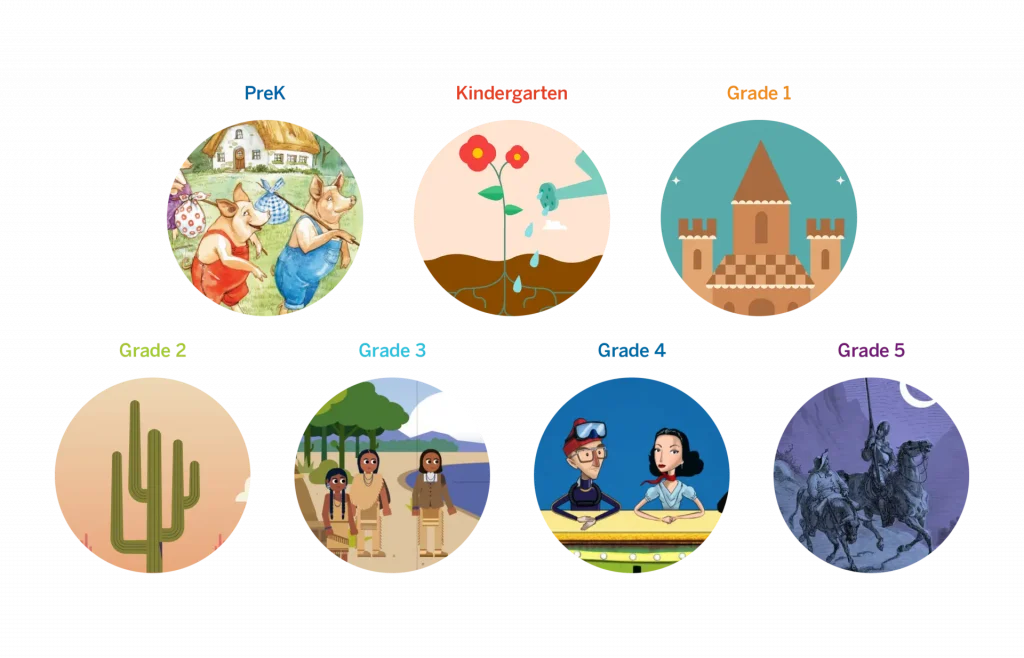
Equitable Spanish instruction
Our equivalent Spanish language arts program, Amplify Caminos, ensures our native Spanish-speaking students are equally inspired to become confident readers, writers, and thinkers.
Like Amplify CKLA, Amplify Caminos is designed to spark curiosity through content-rich instruction. Amplify Caminos features complex interactive Read-Alouds and authentic Spanish literature to develop reading and writing skills and build bridges across Spanish and English.
Most importantly, Amplify Caminos is more than just a translation. It includes transadaptations and authentic texts written by Latin American and Spanish authors across a diversity of topics and genres.
Unit Overviews
Below are quick overviews of the units your student will be working through in their grade throughout the year. Next to each unit are downloadable guides which provide a more in-depth look at the content covered and how you can help your student advance their understanding of the topics.
Materials overview
Amplify CKLA is a blended program, which means your student will be interacting with both print and digital materials.
Print materials
Student Readers
These readers are uniquely designed to provide intensive practice while reading simple but authentic stories. All readers are also available as ebooks and audiobooks on the teacher resource site, which caregivers can now access.
In grades K-2, these readers are chapter books that allow students to practice just-learned sound-spellings within an authentic reading experience that incorporates compelling plots and interesting characters.
In grades 3-5, readers develop close reading and other literacy skills through a selection of diverse, content-rich literary and informational texts.
Student Activity Books
Part of the daily lessons, these activity pages ask students to respond to the text they’ve read and apply skills and knowledge. They also include assessments that track students’ skills development, to which teachers have access.
Digital materials
CKLA Hub for grades K–5
We are excited to announce that students will be able to access multimedia resources and engage in a new digital experience on the CKLA Hub. Unlike ever before, students can access digital resources independently from anywhere, taking full advantage of the instructional multimedia experiences that Amplify CKLA has to offer. Students can access the Hub at home, in the classroom, and on the go, making it ideal for remote learning. It’s compatible with laptops, Chromebooks, tablets, and desktops—we’ve also optimized it for mobile devices.
Knowledge Builder videos for grades K–2
Each Knowledge Domain starts with a Knowledge Builder video: a short, fun, animated story that enriches the lesson and motivates students with new characters, places, and concepts.
Recorded daily read-alouds for grades K–2
Teachers and students will have access to video recordings of all K–2 Knowledge Read-Alouds with pictures from the Flip Books.

Sound Library for grades K-2
The Sound Library uses audio sounds, catchy songs, and animated articulation videos to help students learn and master sounds.
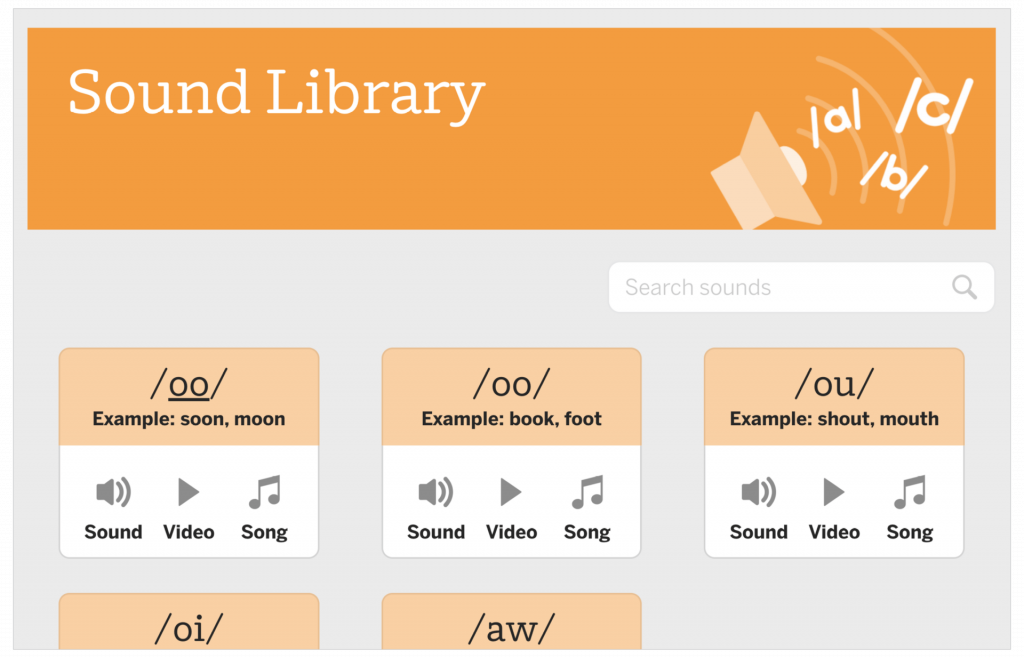
Foundational Skills Boost for grades 1–3
Designed for grades 1–3, these video-based, self-guided lessons target critical foundational skills from the previous year’s instruction in order to fill in any gaps. They offer approximately nine weeks of instruction organized as daily lessons, with additional teacher-led small-group activities and family resources.
Vocab App for grades 3-5
The Vocabulary App is designed for independent practice with vocabulary. Students can use the Vocabulary App for game-like activities that challenge them.
Quests for grades 3–5
Each of the grade levels in 3–5 contains a Core Quest. In these special units, all the normal rules of the classroom change, and students engage with language in surprising new ways. For example, in grade 5, they learn to love the dense Shakespearian language of A Midsummer Night’s Dream through imagery, close reading, and performance.
Support your child at home
Read and talk at home
- If possible, read with your child daily; even 15 minutes of reading together each day can make a huge impact.
- You can read sections of the text aloud together. If your child struggles, you might try reading the text to them with expression, and then have them read it aloud back to you.
- For additional practice, watch the recorded read-alouds with your K-2 student or have your grade 3-5 student use the Vocabulary App.
- Find moments to discuss what they are reading and discovering. Examples of questions you could ask: What stood out to you from what you read today? Were any sentences or words confusing? What was most surprising? What do you think the writer was trying to communicate? Do you agree with the writer’s ideas or descriptions? What connections can you make between what you are reading and your own life or other issues?
- Listen to your child read their written responses or have them share with a friend over video chat.
- We recommend reviewing this Protecting Kids Online article by the Federal Trade Commission addressing digital safety.
Skills practice at home
We’ve developed a set of resources for caregivers to use with their students that includes instructions and materials to teach and practice grade-level phonics at home. Resources include sound videos, Readers, and a how-to video with editable instructions that caregivers can customize to meet individual student needs.
Explore the program
Watch the below video to learn even more about Amplify CKLA!
Take a closer look at the program with our demo account! Follow these simple instructions to access our program digitally.
- Click the CKLA Teacher Resource Site button.
- Select Log in with Amplify.
- Enter this username: t1.northshoreckla@demo.tryamplify.net
- Enter this password: Amplify1-northshoreckla
- Select the desired grade level.
Where to go for help
Whether you have questions about your technology or want to know more about the program, Amplify’s Support Team is here to help!
Contact Support via telephone at (833) 97-Care-8 (833-972-2738) or caregiver@amplify.com.
Our support hours are Monday – Friday, 7 am – 9 PM ET, and Sunday, 10 – 6 ET.
Use stimulus funding to drive Rhode Island transformation
Rhode Island districts have significant flexibility in how to use the ESSER money, with ESSER II and III specifying that some of the funds should be used to address unfinished learning. Given the enormous influx of resources flowing into K-12, now is the time to drive important, sustainable change in your district.
Rhode Island recognizes how imperative it is to provide high-quality curriculum to prepare students for college and career readiness. We’ve assembled resources so you can explore how to support your district or school in adopting a high-quality program.
All K-12 Amplify programs and services meet the criteria for funding. Contact Ali Weis, account executive to learn more.
Amplify Science K–8
Amplify Science K–8 is a hands-on, phenomena-based curriculum that helps students make the shift from learning about to figuring out scientific concepts. With demonstrated unparalleled effectiveness across all student groups, Amplify Science empowers students to think, read, write, and argue like real scientists and engineers each and every day.
Developed by UC Berkeley’s Lawrence Hall of Science, our program features:
- A phenomena-based approach where students construct a more complex understanding of each unit’s anchor phenomenon.
- A blend of cohesive storylines, hands-on investigations, rich discussions, literacy-rich activities, and digital tools.
- Newly crafted units, chapters, lessons, and activities designed to deliver true 3-dimensional learning.
Hear what these educators have to say about the program, then click the orange button below to learn more.
Amplify Math K–12

Amplify Math K–12 is a brand new program designed around the idea that a core math curriculum needs to serve 100 percent of students in accessing grade-level math every day. Powered by Desmos technology, Amplify Math delivers:
- Engaging, discourse-rich math lessons that are easier to teach.
- Flexible, social problem-solving experiences both online and off.
- Real-time insights, data, and reporting that inform instruction.
Additional Amplify programs and resources
A pioneer in K–12 education since 2000, Amplify programs provide Rhode Island teachers with powerful tools that help them understand and respond to the needs of every student. View our entire suite of K-12 core and supplemental curriculum, assessment, and intervention solutions. Ready to learn even more? Contact Ali Weis, Account Executive.
Meet Ali
Hi, I’m Ali! I partner with Rhode Island school districts because I believe every student should have the opportunity for a rigorous, engaging, and impactful learning experience. For more information, please fill out the form below, and I’ll be in touch soon!
Ali Weis
Account Executive
aweis@amplify.com
(480) 510-6703

Amplify Science Success Story
The Lawrence Hall of Science
Developed by the science education experts at UC Berkeley’s Lawrence Hall of Science and the digital learning team at Amplify, our program features:
- A phenomena-based approach where students construct a complex understanding of each unit’s anchor phenomenon.
- A blend of cohesive storylines, hands-on investigations, rich discussions, literacy-rich activities, and digital tools.
- Carefully crafted units, chapters, lessons, and activities designed to deliver true three-dimensional learning.
- An instructional design that supports all learners in accessing all standards.
Proven to work
Instructional model
The Amplify Science program is rooted in the proven, research-based pedagogy of Do, Talk, Read, Write, Visualize. Here’s how each element works:
DO
Firsthand investigations are an important part of any science classroom, and Amplify Science has students getting hands-on in every unit—from building models of protein molecules to experimenting with electrical systems.
TALK
Student-to-student discourse and full-class discussions are an integral part of the program. Students are provided with numerous opportunities to engage in meaningful oral scientific argumentation, all while fostering a collaborative classroom environment.
READ
Students read scientific articles, focusing their reading activities on searching for evidence related to their investigation and, importantly, on asking and recording questions as they read through fascinating texts on 21st-century topics.
WRITE
Following real-world practices, students write scientific arguments based on evidence they’ve collected, making clear their reasoning about how a given piece of evidence connects to one of several claims.
VISUALIZE
By manipulating digital simulations and using modeling tools to craft visualizations of their thinking— just as real scientists and engineers do—students take their learning far beyond the confines of what they can physically see in the classroom in an exciting and authentic way.
Program structure
Our cyclical lesson design ensures students receive multiple exposures to concepts through a variety of modalities. As they progress through the lessons within a unit, students build and deepen their understanding, increasing their ability to develop and refine complex explanations of the unit’s phenomenon.
It’s this proven program structure and lesson design that enables Amplify Science to address 100% of the NGSS and support students in mastering the Oregon Science Standards.
Unit types
While every unit delivers three-dimensional learning experiences and engages students in gathering evidence from a rich collection of sources, each unit also emphasizes a particular science and engineering practice.
In grades K–2:
- One unit emphasizes the practice of investigation.
- One unit emphasizes the practice of modeling.
- One unit emphasizes the practice of engineering design.
In grades 3–5, students experience the three unit types above, plus:
- One additional unit that emphasizes the practice of argumentation.
Investigation units focus on the process of strategically developing investigations and gathering data to answer questions. Students are first asked to consider questions about what happens in the natural world and why, and are then involved in designing and conducting investigations that produce data to help answer those questions.
Modeling units provide extra support to students engaging in the practice of modeling. Students use physical models, investigate with computer models, and create their own diagrams to help them visualize what might be happening on the nanoscale.
Engineering design units provide opportunities for students to solve complex problems by applying science principles to the design of functional solutions, and iteratively testing those solutions to determine how well they meet preset criteria.
Argumentation units provide students with regular opportunities to explore and discuss available evidence, time and support to consider how evidence may be leveraged in support of claims, and independence that increases as they mount written arguments in support of their claims.
Unit sequence
Our lessons follow a structure that is grounded in regular routines while still being flexible enough to allow for a variety of learning experiences.
In fact, our multi-modal instruction offers more opportunities for students to construct meaning, and practice and apply concepts, than any other program. What’s more, our modular design means our units can be flexibly arranged to support your instructional goals.
Program components
Available digitally and in print, our unit-specific reference guides are chock-full of helpful resources, including scientific background knowledge, planning information and resources, color-coded 3D Statements, detailed lesson plans, tips for delivering instruction, and differentiation strategies.
Hands-on learning is an essential part of Amplify Science and is integrated into every unit. Students actively participate in science, playing the roles of scientists and engineers as they gather evidence, think critically, solve problems, and develop and defend claims about the world around them. Every unit includes hands-on investigations that are critical to achieving the unit’s learning goals.
More hands-on with Flextensions:
Hands-on Flextensions are additional, optional investigations that are included at logical points in the learning progression and give students an opportunity to dig deeper if time permits. These activities offer teachers flexibility to choose to dedicate more time to hands-on learning. Materials referenced in Hands-on Flextension activities will either be included in the unit kit or are easily sourced. Supporting resources such as student worksheets will be included as downloadable PDF files.
Our kits include enough non-consumable materials to support a class of 36 students and enough consumable items to support 72 students. In other words, each kit can last two years! Plus, our unit-specific kits mean teachers just grab the tub they need for the unit and then put it all back with ease.
Each unit of Amplify Science K–5 includes six unique Student Books written by the Lawrence Hall of Science specifically for the program. These content-rich nonfiction and informational texts provide opportunities for students to search for evidence relevant to their firsthand investigations, see science practices and dispositions modeled, extend their science knowledge, provide real world connections as they master reading-to-learn and close reading skills, and construct evidence-based arguments.
Important note:
Students in grades K–5 are never asked to read alone. Rather, books are read to, with, and by students with ample scaffolding and support provided by the teacher. Big Books are read aloud or together with the class to introduce ideas. Student Books allow for small-group reading and reading in pairs.
Available for every unit, our Student Investigation Notebooks contain instructions for activities and space for students to record data and observations, reflect on ideas from texts and investigations, and construct explanations and arguments.
In grades K–5, one copy of the Student Investigation Notebook is included in each unit’s materials kit for use as a blackline master. Each notebook is also available as a downloadable PDF on the Unit Guide page of the digital Teacher’s Guide.
Amplify Science offers digital experience licenses that make elementary instruction more flexible for students and teachers, as well as providing additional means to engage in remote, hybrid, or in-person learning!
Student-facing digital lessons
With the digital experience, students can engage with digital lesson content in one cohesive experience. It’s the same content from Amplify science in a new, integrated format where students can interact with slides, Sims, modeling tools, videos, books, and more.
Digital student notebook pages
Students can draw, write, record audio, and insert images into their Investigation Notebook pages. Their work is automatically saved and delivered to you in real time. When students edit their work, those edits are immediately reflected on your teacher work review page. You can access student responses by clicking “View Work,” where you can see students’ Investigation Notebook pages from the lesson, updating live.
Assign in Amplify
The digital experience allows flexibility with optional features like scheduling assignments in advance and setting due dates. You can use Scheduling to determine the date and time that the assignment appears in Student Home. You also have the flexibility to schedule when assignments appear and use dates to remove assignments from Student Home.
Assign in LMS
You can also assign lessons via our integrations with Google Classroom and Microsoft Teams, or by copying a lesson link and sharing it with students through the platform of your choice. The assignment link you send will provide students with direct access to the full lesson—slides, videos, digital tools, and worksheet activities—no student platform navigation required!
Teacher platform and presentation
Teacher-facing lesson content—including sample teacher talk, student responses, pedagogical support, and possible student responses—shows on a teacher’s private Teacher Guide tab. Students only see the lesson slides that are being presented.

Explore your print samples
With your Amplify Science print samples, you’ll find unit-specific Teacher’s References Guides, Student Investigation Notebooks, and sets of Student Books for each grade level.
A note about the Teacher’s Reference Guides:
It’s important that you see the full breadth and depth of our instruction. For that reason, we provide a copy of each of our unit-specific Teacher Reference Guides.
Rest assured that teachers do not use these robust reference guides for day-to-day teaching. For that, we have a hands-free TG!
- Teacher Reference Guide: Unlike a typical TG that requires a series of supplemental books to support it, our encyclopedic reference guide is chock-full of everything a teacher needs to fully implement our program and the NGSS.
- Ready-to-Teach Lesson Slides: For daily instruction, teachers need their hands free. That’s why we created ready-to-teach lesson slides for every single lesson. What’s more, they are editable and include suggested teacher talk and point-of-use differentiation and other instructional tips. Click to learn more.
A note about the Materials Kits:
Hands-on learning is at the heart of Amplify Science, and is integrated into every unit. In order to make hands-on learning more manageable for busy teachers, Amplify Science materials are organized into unit-specific kits.
What’s different about Amplify’s unit-specific material kits? They…
- Include more materials — We give teachers enough non-consumable materials to support a class of 36 students and enough consumables to support 72 student uses. In other words, each kit will last two years.
- Are more manageable — Unlike other programs that require large groups of students to share limited sets of materials, our kits include enough to support small groups of 4–5 students.
- Include supportive videos — Each hands-on activity provides clear instructions for the teacher, with more complex activities supported by video demonstrations and illustrations.
Grade-specific lists of all materials included in each kit:
- Grade K: Materials Kit List
- Grade 1: Materials Kit List
- Grade 2: Materials Kit List
- Grade 3: Materials Kit List
- Grade 4: Materials Kit List
- Grade 5: Materials Kit List
Access your digital samples
Explore as a teacher
When you’re ready to explore the teaching experience on your own, follow these instructions to access the Amplify Science digital teacher platform.
- Click the Access Amplify Science Platform button below and bookmark the page.
- Select Log in with Amplify.
- Enter the username: t1.jeffersoncounty@demo.tryamplify.net
- Enter the password: Amplify1-jeffersoncounty
- Click on Science on the left hand side.
- Click on the Program Menu in the top center of the screen and select any grade.
- Select any unit.
To help familiarize yourself with navigating the digital platform, watch the below navigational video.
Explore as a student
When you’re ready to explore the student learning experience on your own, follow these instructions to access the Amplify Science digital student platform.
- Click the Access Amplify Science Platform button below and bookmark the page.
- Select Log in with Amplify.
- Enter the username: s1.jeffersoncounty@demo.tryamplify.net
- Enter the password: Amplify1-jeffersoncounty
- Click the backpack icon on the top right.
- Click Science K-5
- Select any unit.
Resources to support your review
Welcome to Amplify Science 6–8!
Amplify Science is an engaging core curriculum designed for three-dimensional, phenomena-based learning.
With Amplify Science, Oregon students don’t just passively learn about science concepts. Instead, they take on the role of scientists and engineers to actively investigate and figure out real-world phenomena. They do this through a blend of cohesive and compelling storylines, hands-on investigations, collaborative discussions, literacy-rich activities, and interactive digital tools.
Publisher presentation
The Lawrence Hall of Science
Developed by the science education experts at UC Berkeley’s Lawrence Hall of Science and the digital learning team at Amplify, our program features:
- A phenomena-based approach where students construct a complex understanding of each unit’s anchor phenomenon.
- A blend of cohesive storylines, hands-on investigations, rich discussions, literacy-rich activities, and digital tools.
- Carefully crafted units, chapters, lessons, and activities designed to deliver true 3-dimensional learning.
- An instructional design that supports all learners in accessing all standards.
Proven to work
Instructional model
The Amplify Science program is rooted in the proven, research-based pedagogy of Do, Talk, Read, Write, Visualize. Here’s how each element works:
Do
First-hand investigations are an important part of any science classroom, and Amplify Science has students getting hands-on in every unit—from building models of protein molecules to experimenting with electrical systems.
Talk
Student-to-student discourse and full-class discussions are an integral part of the program. Students are provided with numerous opportunities to engage in meaningful oral scientific argumentation, all while fostering a collaborative classroom environment.
Read
Students read scientific articles, focusing their reading activities on searching for evidence related to their investigation and, importantly, on asking and recording questions as they read through fascinating texts on 21st-century topics.
Write
Following real-world practices, students write scientific arguments based on evidence they’ve collected, making clear their reasoning about how a given piece of evidence connects to one of several claims.
Visualize
By manipulating digital simulations and using modeling tools to craft visualizations of their thinking— just as real scientists and engineers
do—students take their learning far beyond the confines of what they can physically see in the classroom in an exciting and authentic way.
Program structure
Our cyclical lesson design ensures students receive multiple exposures to concepts through a variety of modalities. As they progress through the lessons within a unit, students build and deepen their understanding, increasing their ability to develop and refine complex explanations of the unit’s phenomenon.
It’s this proven program structure and lesson design that enables Amplify Science to address 100% of the NGSS, and support students in mastering the Oregon Science Standards.
Unit types
While every unit delivers three-dimensional learning experiences and engages students in gathering evidence from a rich collection of sources, each unit also serves a unique instructional purpose.
In grades 6–8:
- One unit is a launch unit.
- Three units are core units.
- Two units are engineering internships.
Launch units are the first units taught in each year of Amplify Science. The goal of the Launch unit is to introduce students to norms, routines, and practices that will be built on throughout the year, including argumentation, active reading, and using the program’s technology. For example, rather than taking the time to explain the process of active reading in every unit in a given year, it is explained thoroughly in the Launch unit, thereby preparing students to read actively in all subsequent units.
Core units establish the context of the unit by introducing students to a real-world problem. As students move through lessons in a Core unit, they figure out the unit’s anchoring phenomenon, gain an understanding of the unit’s disciplinary core ideas and science and engineering practices, and make linkages across topics through the crosscutting concepts. Each Core unit culminates with a Science Seminar and final writing activity.
Engineering Internship units invite students to design solutions for real-world problems as interns for a fictional company called Futura. Students figure out how to help those in need, from tsunami victims in Sri Lanka to premature babies, through the application of engineering practices. In the process, they apply and deepen their learning from Core units.
Unit sequence
Our lessons follow a structure that is grounded in regular routines while still being flexible enough to allow for a variety of learning experiences.
In fact, our multi-modal instruction offers more opportunities for students to construct meaning, and practice and apply concepts than any other program. What’s more, our modular design means our units can be flexibly arranged to support your instructional goals.

Program components
Available digitally and in print, our unit-specific reference guides are chock full of helpful resources, including scientific background knowledge, planning information and resources, color-coded 3D Statements, detailed lesson plans, tips for delivering instruction, and differentiation strategies.
Hands-on learning is an essential part of Amplify Science, and is integrated into every unit. Students actively participate in science, playing the roles of scientists and engineers as they gather evidence, think critically, solve problems, and develop and defend claims about the world around them. Every unit includes hands-on investigations that are critical to achieving the unit’s learning goals.
More hands-on with Flextensions:
Hands-on Flextensions are additional, optional investigations that are included at logical points in the learning progression and give students an opportunity to dig deeper if time permits. These activities offer teachers flexibility to choose to dedicate more time to hands-on learning. Materials referenced in Hands-on Flextension activities will either be included in the unit kit or are easily sourced. Supporting resources such as student worksheets will be included as downloadable PDF files.
Our digital Simulations and Practice Tools are powerful resources for exploration, data collection, and student collaboration. They allow students the ability to explore scientific concepts that might otherwise be invisible or impossible to see with the naked eye.
Available for every unit, our Student Investigation Notebooks contain instructions for activities and space for students to record data and observations, reflect on ideas from texts and investigations, and construct explanations and arguments.
In grades 6–8, one copy of the Student Investigation Notebook is included in each unit’s materials kit for use as a blackline master. Each notebook is also available as a downloadable PDF on the Unit Guide page of the digital Teacher’s Guide.
These customizable PowerPoints are available for every lesson of the program and make delivering instruction a snap with visual prompts, colorful activity instructions, investigation set-up videos and animations, and suggested teacher talk in the notes section of each slide.
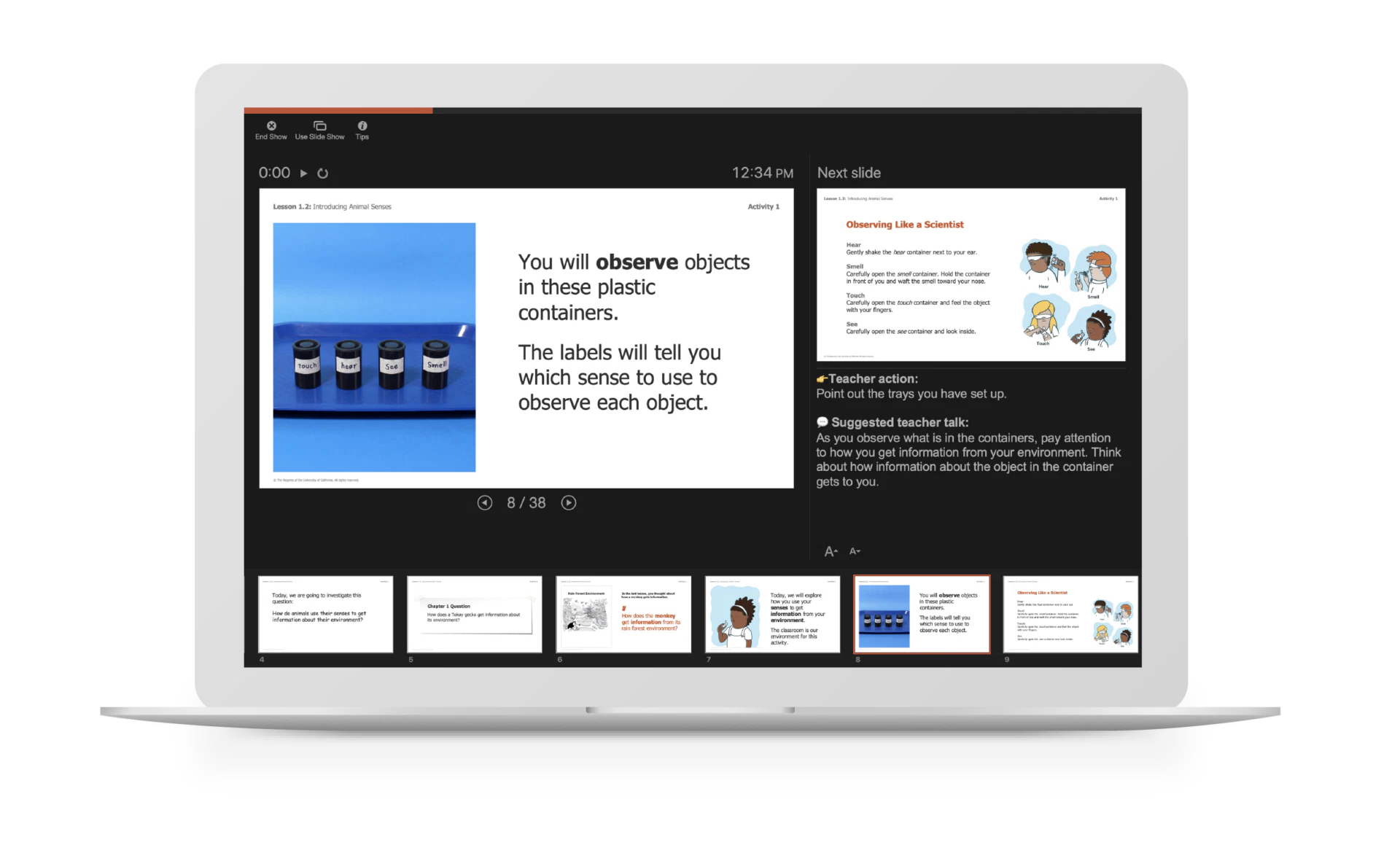
Full coverage of the Oregon Science Standards
Amplify Science was designed from the ground up to meet the Next Generation Science Standards (NGSS). As such, it aligns to the Oregon Science Standards, which were also borne out of the NGSS.
The guidance below is meant to provide support for integrating additional activities that support full coverage of Oregon’s standards. Organized by grade level, each section below will outline:
- Additional activities that support 100% alignment to the Oregon Science Standards.
- The standard being addressed with the activities.
- The recommended placement of the activities within a specific Amplify Science unit.
- PDFs of any accompanying materials that are necessary to implement the activities.
Activity Title: Meet a Scientist Who Changed How We Think About Brain Cells
About this activity: In this activity, students read a short article about a scientist who studied the nervous system.
Recommended placement: Metabolism unit, Lesson 3.2
Materials:
Instructions: Download the PDF “Meet a Scientist Who Changed How We Think About Brain Cells” above and remind students of the Active Reading guidelines. Before students read the article, invite them to share prior experiences. Then have students complete the copymaster above.
Activity Title: Meet a Scientist Who Studies Underwater Currents
About this activity: In this activity, students read a short article about a scientist who studies ocean currents.
Recommended placement: Oceans, Atmosphere, and Climate unit, Lesson 2.1
Materials:
Instructions: Download the PDF “Meet a Scientist Who Studies Underwater Currents” above and remind students of the Active Reading guidelines. Before students read the article, invite them to share prior experiences. Then have students complete the copymaster above.
Activity Title: Meet a Scientist Who Studies How the Environment Affects Our Traits
About this activity: In this activity, students read two short articles, one about current research on genes and proteins, and one about a scientist who is studying how the environment can affect our traits.
Recommended placement: Traits and Reproduction unit, Lesson 2.4
Materials:
Instructions: Download the PDF “Meet a Scientist Who Studies How the Environment Affects Our Traits” above and remind students of the Active Reading guidelines. Before students read the article, invite them to share prior experiences. Then have students complete the copymaster above.
Activity Title: Who Becomes a Space Scientist?
About this activity: In this activity, Students read a short article about a scientist who studies space.
Recommended placement: Geology on Mars unit, Lesson 3.1
Materials:
Instructions: Download the PDF “Who Becomes a Space Scientist?” above and remind students of the Active Reading guidelines. Before students read the article, invite them to share prior experiences. Then have students complete the copymaster above.
Activity Title: Meet a Scientist Who Studies How Plants Find Water Underground
About this activity: In this activity, students read a short article about a scientist who studies how plants’ roots get water.
Recommended placement: Matter and Energy in Ecosystems unit, Lesson 1.6
Materials:
Instructions: Download the PDF “Meet a Scientist Who Studies How Plants Find Water Underground” above and remind students of the Active Reading guidelines. Before students read the article, invite them to share prior experiences. Then have students complete the copymaster above.
Activity Title: Bringing Back the Buffalo
About this activity: In this activity, students change one competing population to try to decrease the other in the Sim, and read a short article about a scientist who studies buffalo.
Recommended placement: Populations and Resources unit, Lesson 3.2
Materials:
Instructions: Download the PDF “Bringing Back the Buffalo” above and remind students of the Active Reading guidelines. Before students read the article, invite them to share prior experiences. Then have students complete the copymaster above.
Activity Title: Rereading “A Continental Puzzle”
About this activity: In this activity, students reread “A Continental Puzzle” and think about how patterns were helpful to Wegener’s work.
Recommended placement: Plate Motion unit, Lesson 3.2
Materials:
Instructions: Direct students back to “A Continental Puzzle” above and remind students of the Active Reading guidelines. Before students re-read the article, invite them to share prior experiences. Then have students complete the copymaster above.
Activity Title: Meet a Scientist Who Studies Variation in Monkey Populations
About this activity: In this activity, students read a short article about a scientist who studies variation of traits in monkey populations.
Recommended placement: Natural Selection unit, Lesson 1.6
Materials:
Instructions: Download the PDF “Meet a Scientist Who Studies Variation in Monkey Populations” above and remind students of the Active Reading guidelines. Before students read the article, invite them to share prior experiences. Then have students complete the copymaster above.
Activity Title: Extinctions and Human Impacts
About this activity: The purpose of this lesson is for students to see how increases in human population and consumption of natural resources can negatively impact Earth’s systems.
Recommended placement: Natural Selection unit, Lesson 4.5
Materials:
Instructions: Download the PDF “Extinctions and Human Impacts” above and remind students of the Active Reading guidelines. Before students read the article, invite them to share prior experiences. Then have students complete the copymaster above.
Activity Title: Steno and the Shark
About this activity: In this activity, students read a short article about Nicolas Steno, a scientist from the 1600s whose studies of fossilized sharks’ teeth embedded in rock layers laid the foundation for the modern understanding of stratigraphy.
Recommended placement: Evolutionary History unit, Lesson 2.4
Materials:
Instructions: Download the PDF “Steno and the Shark” above and remind students of the Active Reading guidelines. Before students read the article, invite them to share prior experiences. Then have students complete the copymaster above.
Activity Title: Scale in the Solar System
About this activity: In this activity, students read and annotate the articles “Scale in the Solar System” and “The Solar System Is Huge.”
Recommended placement: Earth, Moon, and Sun unit, Lesson 1.2
Materials:
Instructions: Download the PDF “Scale in the Solar System” above and remind students of the Active Reading guidelines. Before students read the article, invite them to share prior experiences. Then have students complete the copymaster above.
Explore your print samples
With your Amplify Science print samples, you’ll find unit-specific Teacher’s References Guides and Student Investigation Notebooks for each grade level.
A note about the Teacher’s Reference Guides:
It’s important that your committee sees the full breadth and depth of our instruction. For that reason, we provided a copy of each of our unit-specific Teacher Reference Guides.
Rest assured that teachers do not use these robust reference guides for day-to-day teaching. For that, we have a hands-free TG!
- Teacher Reference Guide: Unlike a typical TG that requires a series of supplemental books to support it, our encyclopedic reference guide is chock-full of everything a teacher needs to fully implement our program and the NGSS.
- Ready-to-Teach Lesson Slides: For daily instruction, teachers need their hands free. That’s why we created ready-to-teach lesson slides for every single lesson. What’s more, they are editable and include suggested teacher talk and point-of-use differentiation and other instructional tips. Click to learn more.
A note about the Materials Kits:
Hands-on learning is at the heart of Amplify Science, and is integrated into every unit. In order to make hands-on learning more manageable for busy teachers, Amplify Science materials are organized into unit-specific kits.
Our unit-specific kits:
- Include more materials — We give teachers enough materials to support 200 student uses.
- Are more manageable — Unlike other programs that require large groups of students to share limited sets of materials, our kits include enough to support small groups of 4–5 students.
- Include supportive videos — Each hands-on activity provides clear instructions for the teacher, with more complex activities supported by video demonstrations and illustrations.
At your request, we did not include our materials kits with our submissions samples. However, we did provide grade-specific lists of all materials included in each kit, which you can also find with the links below.
Access your digital samples
Explore as a teacher
Follow these instructions to explore the Amplify Science digital platform as a teacher.
- Click the Access Amplify Science Platform button below and bookmark it.
- Select Log in with Amplify.
- Enter the username: t.or68sci@tryamplify.net
- Enter the password: Science5OR
- Click the Science icon.
- Click on the Grade Menu in the top center of the screen and select any grade.
- Select any unit.
To help familiarize yourself with navigating the digital platform, watch the below navigational video.
Explore as a student
Follow these instructions to explore the Amplify Science digital platform as a student.
- Click the Access Amplify Science Platform button below and bookmark it.
- Select Log in with Amplify.
- Enter the username: s.or68sci@tryamplify.net
- Enter the password: Science5OR
- Click the Science icon.
- Click on the Grade Menu in the top center of the screen and select any grade.
- Select any unit.
Resources to support your review
- Oregon standards correlation for grades 6–8
- QCD Science Adoption Criteria 2022 for grades 6-8
- QCD IMET Citation guidance for grades 6-8
- Oregon Science IMET for grades 6-8 (Excel download)
- Oregon QCD-IMET Citation guidance for grades 6-8
- Research behind Amplify Science
- Phenomena in grades 6–8
- Program structure for grades 6–8
- Active Reading in grades 6–8
- Engineering in Amplify Science
- Approaches to assessment in grades 6–8
New Mexico Educators: Welcome to Amplify Science 6–8!
Amplify Science is an engaging core curriculum designed for three-dimensional, phenomena-based learning that is rated ‘all green’ on EdReports.
With Amplify Science, New Mexico students don’t just passively learn about science concepts. Instead, they take on the role of scientists and engineers to actively investigate and figure out real-world phenomena. They do this through a blend of cohesive and compelling storylines, hands-on investigations, collaborative discussions, literacy-rich activities, and interactive digital tools.

Amplify Science Success Story
The Lawrence Hall of Science
Developed by the science education experts at UC Berkeley’s Lawrence Hall of Science and the digital learning team at Amplify, our program features:
- A phenomena-based approach where students construct a complex understanding of each unit’s anchor phenomenon.
- A blend of cohesive storylines, hands-on investigations, rich discussions, literacy-rich activities, and digital tools.
- Carefully crafted units, chapters, lessons, and activities designed to deliver true 3-dimensional learning.
- An instructional design that supports all learners in accessing all standards.
Instructional model
The Amplify Science program is rooted in the proven, research-based pedagogy of Do, Talk, Read, Write, Visualize. Here’s how each element works:
Do
First-hand investigations are an important part of any science classroom, and Amplify Science has students getting hands-on in every unit—from building models of protein molecules to experimenting with electrical systems.
Talk
Student-to-student discourse and full-class discussions are an integral part of the program. Students are provided with numerous opportunities to engage in meaningful oral scientific argumentation, all while fostering a collaborative classroom environment.
Read
Students read scientific articles, focusing their reading activities on searching for evidence related to their investigation and, importantly, on asking and recording questions as they read through fascinating texts on 21st-century topics.
Write
Following real-world practices, students write scientific arguments based on evidence they’ve collected, making clear their reasoning about how a given piece of evidence connects to one of several claims.
Visualize
By manipulating digital simulations and using modeling tools to craft visualizations of their thinking— just as real scientists and engineers do—students take their learning far beyond the confines of what they can physically see in the classroom in an exciting and authentic way.
Program structure
Our cyclical lesson design ensures students receive multiple exposures to concepts through a variety of modalities. As they progress through the lessons within a unit, students build and deepen their understanding, increasing their ability to develop and refine complex explanations of the unit’s phenomenon.
It’s this proven program structure and lesson design that enables Amplify Science to address 100% of the NGSS and support students in mastering the New Mexico STEM Ready! Science Standards.
Unit types
While every unit delivers three-dimensional learning experiences and engages students in gathering evidence from a rich collection of sources, each unit also serves a unique instructional purpose.
In grades 6–8:
- One unit is a launch unit.
- Three units are core units.
- Two units are engineering internships.
Launch units are the first units taught in each year of Amplify Science. The goal of the Launch unit is to introduce students to norms, routines, and practices that will be built on throughout the year, including argumentation, active reading, and using the program’s technology. For example, rather than taking the time to explain the process of active reading in every unit in a given year, it is explained thoroughly in the Launch unit, thereby preparing students to read actively in all subsequent units.
Core units establish the context of the unit by introducing students to a real-world problem. As students move through lessons in a Core unit, they figure out the unit’s anchoring phenomenon, gain an understanding of the unit’s disciplinary core ideas and science and engineering practices, and make linkages across topics through the crosscutting concepts. Each Core unit culminates with a Science Seminar and final writing activity.
Engineering Internship units invite students to design solutions for real-world problems as interns for a fictional company called Futura. Students figure out how to help those in need, from tsunami victims in Sri Lanka to premature babies, through the application of engineering practices. In the process, they apply and deepen their learning from Core units.
Unit sequence
Our lessons follow a structure that is grounded in regular routines while still being flexible enough to allow for a variety of learning experiences.
In fact, our multi-modal instruction offers more opportunities for students to construct meaning, and practice and apply concepts than any other program. What’s more, our modular design means our units can be flexibly arranged to support your instructional goals.
Program components
Available digitally and in print, our unit-specific reference guides are chock full of helpful resources, including scientific background knowledge, planning information and resources, color-coded 3-D Statements, detailed lesson plans, tips for delivering instruction, and differentiation strategies.

Hands-on learning is an essential part of Amplify Science, and is integrated into every unit. Students actively participate in science, playing the roles of scientists and engineers as they gather evidence, think critically, solve problems, and develop and defend claims about the world around them. Every unit includes hands-on investigations that are critical to achieving the unit’s learning goals.

More hands-on with Flextensions:
Hands-on Flextensions are additional, optional investigations that are included at logical points in the learning progression and give students an opportunity to dig deeper if time permits. These activities offer teachers flexibility to choose to dedicate more time to hands-on learning. Materials referenced in Hands-on Flextension activities will either be included in the unit kit or are easily sourced. Supporting resources such as student worksheets will be included as downloadable PDF files.
Our kits include enough materials to support 200 student uses. In other words, teachers can easily support all five periods and small groups of 4-5 students each. Plus, our unit-specific kits mean teachers just grab the tub they need and then put it all back with ease.
Our digital Simulations and Practice Tools are powerful resources for exploration, data collection, and student collaboration. They allow students the ability to explore scientific concepts that might otherwise be invisible or impossible to see with the naked eye.
Available for every unit, our Student Investigation Notebooks contain instructions for activities and space for students to record data and observations, reflect on ideas from texts and investigations, and construct explanations and arguments.
In grades 6–8, one copy of the Student Investigation Notebook is included in each unit’s materials kit for use as a blackline master. Each notebook is also available as a downloadable PDF on the Unit Guide page of the digital Teacher’s Guide.

These customizable PowerPoints are available for every lesson of the program and make delivering instruction a snap with visual prompts, colorful activity instructions, investigation set-up videos and animations, and suggested teacher talk in the notes section of each slide.

Full coverage of NGSS and New Mexico STEM Ready! Science Standards
Amplify Science was designed from the ground up to meet the Next Generation Science Standards (NGSS). As such, it aligns to the New Mexico Science Standards, which were also borne out of the NGSS.
K-8 NGSS Correlation by Dimension
K-8 NM STEM Ready! Standards Correlation
Explore your print samples
With your Amplify Science print samples, you’ll find unit-specific Teacher’s References Guides and Student Investigation Notebooks for each grade level.
A note about the Teacher’s Reference Guides:
It’s important that your committee sees the full breadth and depth of our instruction. For that reason, we provided a copy of each of our unit-specific Teacher Reference Guides.
Rest assured that teachers do not use these robust reference guides for day-to-day teaching. For that, we have a hands-free Teacher Guide!
- Teacher Reference Guide: Unlike a typical Teacher Guide that requires a series of supplemental books to support it, our encyclopedic reference guide is chock-full of everything a teacher needs to fully implement our program and the NGSS.
- Ready-to-Teach Lesson Slides: For daily instruction, teachers need their hands free. That’s why we created ready-to-teach lesson slides for every single lesson. What’s more, they are editable and include suggested teacher talk and point-of-use differentiation and other instructional tips. Click to learn more.
A note about the Materials Kits:
Hands-on learning is at the heart of Amplify Science, and is integrated into every unit. In order to make hands-on learning more manageable for busy teachers, Amplify Science materials are organized into unit-specific kits.
Our unit-specific kits:
- Include more materials — We give teachers enough materials to support 200 student uses.
- Are more manageable — Unlike other programs that require large groups of students to share limited sets of materials, our kits include enough to support small groups of 4–5 students.
- Include supportive videos — Each hands-on activity provides clear instructions for the teacher, with more complex activities supported by video demonstrations and illustrations.
Access your digital samples
Explore as a teacher
Follow these instructions to explore the Amplify Science digital platform as a teacher.
- Click the Access Amplify Science Platform button below and bookmark it.
- Select Log in with Amplify.
- Enter the username: t20.sci6-8@tryamplify.net
- Enter the password: AmplifyNumber1
- Click on Science in Your Programs
- Click on the Program drop-down menu and select your desired domain
- Select any unit.
To help familiarize yourself with navigating the digital platform, watch the below navigational video.
Explore as a student
Follow these instructions to explore the Amplify Science digital platform as a student.
- Click the Access Amplify Science Platform button below and bookmark it.
- Select Log in with Amplify.
- Enter the username: s20.sci6-8@tryamplify.net
- Enter the password: AmplifyNumber1
- Click Science in Your Programs
- Click on the Program drop-down menu and select your desired domain
- Select any unit title.
Additional resources to support your review
Welcome to Amplify Science 6–8!
Amplify Science is an engaging core curriculum designed for three-dimensional, phenomena-based learning.
With Amplify Science, Detroit students don’t just passively learn about science concepts. Instead, they take on the role of scientists and engineers to actively investigate and figure out real-world phenomena. They do this through a blend of cohesive and compelling storylines, hands-on investigations, collaborative discussions, literacy-rich activities, and interactive digital tools.
What is Amplify Science?
The Lawrence Hall of Science
Developed by the science education experts at UC Berkeley’s Lawrence Hall of Science and the digital learning team at Amplify, our program features:
- A phenomena-based approach where students construct a complex understanding of each unit’s anchor phenomenon.
- A blend of cohesive storylines, hands-on investigations, rich discussions, literacy-rich activities, and digital tools.
- Carefully crafted units, chapters, lessons, and activities designed to deliver true three-dimensional learning.
- An instructional design that supports all learners in accessing all standards.
Proven to work
Instructional model
The Amplify Science program is rooted in the proven, research-based pedagogy of Do, Talk, Read, Write, Visualize. Here’s how each element works:
Do
First-hand investigations are an important part of any science classroom, and Amplify Science has students getting hands-on in every unit—from building models of protein molecules to experimenting with electrical systems.
Talk
Student-to-student discourse and full-class discussions are an integral part of the program. Students are provided with numerous opportunities to engage in meaningful oral scientific argumentation, all while fostering a collaborative classroom environment.
Read
Students read scientific articles, focusing their reading activities on searching for evidence related to their investigation and, importantly, on asking and recording questions as they read through fascinating texts on 21st-century topics.
Write
Following real-world practices, students write scientific arguments based on evidence they’ve collected, making clear their reasoning about how a given piece of evidence connects to one of several claims.
Visualize
By manipulating digital simulations and using modeling tools to craft visualizations of their thinking— just as real scientists and engineers
do—students take their learning far beyond the confines of what they can physically see in the classroom in an exciting and authentic way.
Program structure
Our cyclical lesson design ensures students receive multiple exposures to concepts through a variety of modalities. As they progress through the lessons within a unit, students build and deepen their understanding, increasing their ability to develop and refine complex explanations of the unit’s phenomenon.
It’s this proven program structure and lesson design that enables Amplify Science to address 100% of the Next Generation Science Standards (NGSS) and support students in mastering the Pennsylvania Science Standards.
Unit types
While every unit delivers three-dimensional learning experiences and engages students in gathering evidence from a rich collection of sources, each unit also serves a unique instructional purpose.
In grades 6–8:
- One unit is a launch unit.
- Three units are core units.
- Two units are engineering internships.
Launch units are the first units taught in each year of Amplify Science. The goal of the Launch unit is to introduce students to norms, routines, and practices that will be built on throughout the year, including argumentation, active reading, and using the program’s technology. For example, rather than taking the time to explain the process of active reading in every unit in a given year, it is explained thoroughly in the Launch unit, thereby preparing students to read actively in all subsequent units.
Core units establish the context of the unit by introducing students to a real-world problem. As students move through lessons in a Core unit, they figure out the unit’s anchoring phenomenon, gain an understanding of the unit’s disciplinary core ideas and science and engineering practices, and make linkages across topics through the crosscutting concepts. Each Core unit culminates with a Science Seminar and final writing activity.
Engineering Internship units invite students to design solutions for real-world problems as interns for a fictional company called Futura. Students figure out how to help those in need, from tsunami victims in Sri Lanka to premature babies, through the application of engineering practices. In the process, they apply and deepen their learning from Core units.
Unit sequence
Our lessons follow a structure that is grounded in regular routines while still being flexible enough to allow for a variety of learning experiences.
In fact, our multi-modal instruction offers more opportunities for students to construct meaning, and practice and apply concepts than any other program. What’s more, our modular design means our units can be flexibly arranged to support your instructional goals.
Program components
Available digitally and in print, our unit-specific reference guides are chock-full of helpful resources, including scientific background knowledge, planning information and resources, color-coded 3D Statements, detailed lesson plans, tips for delivering instruction, and differentiation strategies.
Hands-on learning is an essential part of Amplify Science, and is integrated into every unit. Students actively participate in science, playing the roles of scientists and engineers as they gather evidence, think critically, solve problems, and develop and defend claims about the world around them. Every unit includes hands-on investigations that are critical to achieving the unit’s learning goals.
More hands-on with Flextensions:
Hands-on Flextensions are additional, optional investigations that are included at logical points in the learning progression and give students an opportunity to dig deeper if time permits. These activities offer teachers flexibility to choose to dedicate more time to hands-on learning. Materials referenced in Hands-on Flextension activities will either be included in the unit kit or are easily sourced. Supporting resources such as student worksheets will be included as downloadable PDF files.
Our kits include enough materials to support 200 student uses. In other words, teachers can easily support all five periods and small groups of 4-5 students each. Plus, our unit-specific kits mean teachers just grab the tub they need and then put it all back with ease.
Our digital Simulations and Practice Tools are powerful resources for exploration, data collection, and student collaboration. They allow students the ability to explore scientific concepts that might otherwise be invisible or impossible to see with the naked eye.
Available for every unit, our Student Investigation Notebooks contain instructions for activities and space for students to record data and observations, reflect on ideas from texts and investigations, and construct explanations and arguments.
In grades 6–8, one copy of the Student Investigation Notebook is included in each unit’s materials kit for use as a blackline master. Each notebook is also available as a downloadable PDF on the Unit Guide page of the digital Teacher’s Guide.
These customizable PowerPoints are available for every lesson of the program and make delivering instruction a snap with visual prompts, colorful activity instructions, investigation set-up videos and animations, and suggested teacher talk in the notes section of each slide.
Explore your print samples
With your Amplify Science print samples, you’ll find unit-specific Teacher’s References Guides and Student Investigation Notebooks for each grade level.
A note about the Teacher’s Reference Guides:
It’s important that your committee sees the full breadth and depth of our instruction. For that reason, we provided a copy of each of our unit-specific Teacher Reference Guides.
Rest assured that teachers do not use these robust reference guides for day-to-day teaching. For that, we have a hands-free TG!
- Teacher Reference Guide: Unlike a typical TG that requires a series of supplemental books to support it, our encyclopedic reference guide is chock-full of everything a teacher needs to fully implement our program and the NGSS.
- Ready-to-Teach Lesson Slides: For daily instruction, teachers need their hands free. That’s why we created ready-to-teach lesson slides for every single lesson. What’s more, they are editable and include suggested teacher talk and point-of-use differentiation and other instructional tips. Click to learn more.
A note about the Materials Kits:
Hands-on learning is at the heart of Amplify Science, and is integrated into every unit. In order to make hands-on learning more manageable for busy teachers, Amplify Science materials are organized into unit-specific kits.
Our unit-specific kits:
- Include more materials — We give teachers enough materials to support 200 student uses.
- Are more manageable — Unlike other programs that require large groups of students to share limited sets of materials, our kits include enough to support small groups of 4–5 students.
- Include supportive videos — Each hands-on activity provides clear instructions for the teacher, with more complex activities supported by video demonstrations and illustrations.
At your request, we did not include our materials kits with our submissions samples. However, we did provide grade-specific lists of all materials included in each kit, which you can also find with the links below.
Access your digital samples
Explore as a teacher
Follow these instructions to explore the Amplify Science digital platform as a teacher.
- Click the Access Amplify Science Platform button below and bookmark it.
- Select Log in with Amplify.
- Enter the username: t1.dps68sci@demo.tryamplify.net
- Enter the password: Amplify1-dps68sci
- Click the Science icon.
- Click on the Grade Menu in the top center of the screen and select any grade.
- Select any unit.
To help familiarize yourself with navigating the digital platform, watch the below navigational video.
Spanish-language support
Amplify Science is committed to providing support to meet the needs of all learners, including multiple access points for Spanish-speaking students. Developed in conjunction with Spanish-language experts and classroom teachers, several components are available in Spanish across the Amplify Science curriculum.
Spanish-language materials include:
| COMPONENT | TEACHER/STUDENT |
| Student Investigation Notebooks | Student |
| Science articles | Student |
| Video Transcripts | Student |
| Digital simulation translation keys | Student |
| Printed classroom materials Unit and chapter questions, key concepts, vocabulary cards, etc. | Teacher |
| Copymasters | Teacher |
| Assessments | Teacher |
| Digital student experience license This license gives students access to the student resources in Spanish, including instructional text, articles, and assessments. Teachers can control student access to Spanish-language content through the digital Teacher’s Guide. | Teacher |
| Spanish teacher support license This license includes teacher talk, projections, downloadable PDFs of all print resources, and video transcripts and closed captioning in Spanish. | Teacher |
Explore as a student
Follow these instructions to explore the Amplify Science digital platform as a student.
- Click the Access Amplify Science Platform button below and bookmark it.
- Select Log in with Amplify.
- Enter the username: s1.dpsscience@demo.tryamplify.net
- Enter the password: Amplify1-dpsscience
- Click the Science icon.
- Click on the Grade Menu in the top center of the screen and select any grade.
- Select any unit.
Resources to support your review
What’s New for Amplify Science 6–8!
Denver Public Schools (DPS), check out what’s new from Amplify Science 6-8! The first part of this site will take you through the updates that have been made to Amplify Science. The second will be a refresher of Amplify Science for any new users in DPS. With Amplify Science, DPS students don’t just passively learn about science concepts. Instead, they take on the role of scientists and engineers to actively investigate and figure out real-world phenomena. With culturally sustaining pedagogy, Amplify Science strives to make sure every student feels included in the science classroom.

Update: The Digital Experience
The digital experience allows students to engage with digital lessons and provides teachers with everything they need in one place—ready-to-use slides-based lessons, seamlessly integrated teacher prompts and guidance, robust PD resources, and more. It’s now easier and more engaging than ever to plan lessons, present digital content, and review student work. To learn more, click here.
Update: The PD Library
All professional development (PD) content is consolidated into the PD Library, a one-stop hub for all your self-paced PD needs. As a result, the “Professional Learning Resources” tile will no longer be available on the main Amplify Science Program Hub page. The rest of the non-PD content in the Program Hub will remain as is, including the on-demand resources.

Update: Educator & Student Home expansion
Educator and Student Home landing pages will now be available for all Amplify Science users. This Home page provides a central location to access all Amplify programs in one place and a customized stream based on your activity.
Your Amplify Science grades 6–8 students will no longer access My Work for assignments, scores, and teacher feedback. Instead, they’ll find it all on Student Home, the page they already land on when logging in to Amplify Science.
Keep in mind: Amplify Science middle school teachers will continue to have access to Classwork.

Update: Caregiver Hub
Throughout the school year, teachers can share the Amplify Science Caregiver Hub with students’ families. This site provides curriculum details, an overview of what caregivers can expect throughout the school year, and resources they can use with students at home.

What is Amplify Science?
The Lawrence Hall of Science
Developed by the science education experts at UC Berkeley’s Lawrence Hall of Science and the digital learning team at Amplify, our program features:
- A phenomena-based approach where students construct a complex understanding of each unit’s anchor phenomenon.
- A blend of cohesive storylines, hands-on investigations, rich discussions, literacy-rich activities, and digital tools.
- Carefully crafted units, chapters, lessons, and activities designed to deliver true three-dimensional learning.
- An instructional design that supports all learners in accessing all standards.
Proven to work
Instructional model
The Amplify Science program is rooted in the proven, research-based pedagogy of Do, Talk, Read, Write, Visualize. Here’s how each element works:
Do
First-hand investigations are an important part of any science classroom, and Amplify Science has students getting hands-on in every unit—from building models of protein molecules to experimenting with electrical systems.
Talk
Student-to-student discourse and full-class discussions are an integral part of the program. Students are provided with numerous opportunities to engage in meaningful oral scientific argumentation, all while fostering a collaborative classroom environment.
Read
Students read scientific articles, focusing their reading activities on searching for evidence related to their investigation and, importantly, on asking and recording questions as they read through fascinating texts on 21st-century topics.
Write
Following real-world practices, students write scientific arguments based on evidence they’ve collected, making clear their reasoning about how a given piece of evidence connects to one of several claims.
Visualize
By manipulating digital simulations and using modeling tools to craft visualizations of their thinking— just as real scientists and engineers
do—students take their learning far beyond the confines of what they can physically see in the classroom in an exciting and authentic way.
Program structure
Our cyclical lesson design ensures students receive multiple exposures to concepts through a variety of modalities. As they progress through the lessons within a unit, students build and deepen their understanding, increasing their ability to develop and refine complex explanations of the unit’s phenomenon.
It’s this proven program structure and lesson design that enables Amplify Science to address 100% of the Next Generation Science Standards (NGSS) and support students in mastering the Pennsylvania Science Standards.
Unit types
While every unit delivers three-dimensional learning experiences and engages students in gathering evidence from a rich collection of sources, each unit also serves a unique instructional purpose.
In grades 6–8:
- One unit is a launch unit.
- Three units are core units.
- Two units are engineering internships.
Launch units are the first units taught in each year of Amplify Science. The goal of the Launch unit is to introduce students to norms, routines, and practices that will be built on throughout the year, including argumentation, active reading, and using the program’s technology. For example, rather than taking the time to explain the process of active reading in every unit in a given year, it is explained thoroughly in the Launch unit, thereby preparing students to read actively in all subsequent units.
Core units establish the context of the unit by introducing students to a real-world problem. As students move through lessons in a Core unit, they figure out the unit’s anchoring phenomenon, gain an understanding of the unit’s disciplinary core ideas and science and engineering practices, and make linkages across topics through the crosscutting concepts. Each Core unit culminates with a Science Seminar and final writing activity.
Engineering Internship units invite students to design solutions for real-world problems as interns for a fictional company called Futura. Students figure out how to help those in need, from tsunami victims in Sri Lanka to premature babies, through the application of engineering practices. In the process, they apply and deepen their learning from Core units.
DPS Scope and Sequence
Our lessons follow a structure that is grounded in regular routines while still being flexible enough to allow for a variety of learning experiences.
In fact, our multi-modal instruction offers more opportunities for students to construct meaning, and practice and apply concepts than any other program. What’s more, our modular design means our units can be flexibly arranged to support your instructional goals.

Program components
Available digitally and in print, our unit-specific reference guides are chock-full of helpful resources, including scientific background knowledge, planning information and resources, color-coded 3D Statements, detailed lesson plans, tips for delivering instruction, and differentiation strategies.
Hands-on learning is an essential part of Amplify Science, and is integrated into every unit. Students actively participate in science, playing the roles of scientists and engineers as they gather evidence, think critically, solve problems, and develop and defend claims about the world around them. Every unit includes hands-on investigations that are critical to achieving the unit’s learning goals.
More hands-on with Flextensions:
Hands-on Flextensions are additional, optional investigations that are included at logical points in the learning progression and give students an opportunity to dig deeper if time permits. These activities offer teachers flexibility to choose to dedicate more time to hands-on learning. Materials referenced in Hands-on Flextension activities will either be included in the unit kit or are easily sourced. Supporting resources such as student worksheets will be included as downloadable PDF files.
Our kits include enough materials to support 200 student uses. In other words, teachers can easily support all five periods and small groups of 4-5 students each. Plus, our unit-specific kits mean teachers just grab the tub they need and then put it all back with ease.
Our digital Simulations and Practice Tools are powerful resources for exploration, data collection, and student collaboration. They allow students the ability to explore scientific concepts that might otherwise be invisible or impossible to see with the naked eye.
Available for every unit, our Student Investigation Notebooks contain instructions for activities and space for students to record data and observations, reflect on ideas from texts and investigations, and construct explanations and arguments.
In grades 6–8, one copy of the Student Investigation Notebook is included in each unit’s materials kit for use as a blackline master. Each notebook is also available as a downloadable PDF on the Unit Guide page of the digital Teacher’s Guide.
These customizable PowerPoints are available for every lesson of the program and make delivering instruction a snap with visual prompts, colorful activity instructions, investigation set-up videos and animations, and suggested teacher talk in the notes section of each slide.
Explore your print samples
With your Amplify Science print samples, you’ll find unit-specific Teacher’s References Guides, Student Investigation Notebooks, and sets of Student Books for each grade level.
A note about the Teacher Reference Guides:
It’s important that you see the full breadth and depth of our instruction. For that reason, we provide a copy of each of our unit-specific Teacher Reference Guides.
Rest assured that teachers do not use these robust reference guides for day-to-day teaching. For that, we have a hands-free Teacher’s Guide!
- Teacher Reference Guide: Unlike a typical TG that requires a series of supplemental books to support it, our encyclopedic reference guide is chock-full of everything a teacher needs to fully implement our program and the NGSS.
- Ready-to-Teach Lesson Slides: For daily instruction, teachers need their hands free. That’s why we created ready-to-teach lesson slides for every single lesson. What’s more, they are editable and include suggested teacher talk and point-of-use differentiation and other instructional tips. Click to learn more.
A note about the Materials Kits:
Hands-on learning is at the heart of Amplify Science, and is integrated into every unit. In order to make hands-on learning more manageable for busy teachers, Amplify Science materials are organized into unit-specific kits.
Our unit-specific kits:
- Include more materials — We give teachers enough materials to support 200 student uses.
- Are more manageable — Unlike other programs that require large groups of students to share limited sets of materials, our kits include enough to support small groups of 4–5 students.
- Include supportive videos — Each hands-on activity provides clear instructions for the teacher, with more complex activities supported by video demonstrations and illustrations.
At your request, we did not include our materials kits with our submissions samples. However, we did provide grade-specific lists of all materials included in each kit, which you can also find with the links below.
Access your digital samples
Explore as a teacher
Follow these instructions to explore the Amplify Science digital platform as a teacher.
- Click the Access Amplify Science Platform button below and bookmark it.
- Select Log in with Amplify.
- Enter the username: t1.dps68sci@demo.tryamplify.net
- Enter the password: Amplify1-dps68sci
- Click the Science icon.
- Click on the Grade Menu in the top center of the screen and select any grade.
- Select any unit.
To help familiarize yourself with navigating the digital platform, watch the below navigational video.
Spanish-language support
Amplify Science is committed to providing support to meet the needs of all learners, including multiple access points for Spanish-speaking students. Developed in conjunction with Spanish-language experts and classroom teachers, several components are available in Spanish across the Amplify Science curriculum.
Spanish-language materials include:
| COMPONENT | TEACHER/STUDENT |
| Student Investigation Notebooks | Student |
| Science articles | Student |
| Video Transcripts | Student |
| Digital simulation translation keys | Student |
| Printed classroom materials Unit and chapter questions, key concepts, vocabulary cards, etc. | Teacher |
| Copymasters | Teacher |
| Assessments | Teacher |
| Digital student experience license This license gives students access to the student resources in Spanish, including instructional text, articles, and assessments. Teachers can control student access to Spanish-language content through the digital Teacher’s Guide. | Teacher |
| Spanish teacher support license This license includes teacher talk, projections, downloadable PDFs of all print resources, and video transcripts and closed captioning in Spanish. | Teacher |
Resources to support your review
- DEIA in Amplify Science
- Research behind Amplify Science
- Phenomena in grades 6–8
- Program structure for grades 6–8
- Active Reading in grades 6–8
- Engineering in Amplify Science
- Approaches to assessment in grades 6–8
Contact Us
If you have any further questions as your review Amplify Science, please contact:
Monty Lammers
Senior Account Executive
719-964-4501
mlammers@amplify.com
Welcome to Amplify Science Pennsylvania
(K–5)!
Amplify Science is an engaging core curriculum designed for three-dimensional, phenomena-based learning.
With Amplify Science, Pennsylvania students shift from learning about to figuring out science through authentic three-dimensional (3D) learning and phenomena-based exploration. In each unit, students take on the role of a scientist or engineer to investigate a real-world problem. This prepares them to become critical thinkers who can solve problems in their communities and beyond.

What is Amplify Science Pennsylvania?
Customized lessons for Pennsylvania
Amplify Science Pennsylvania (K–5) combines our nationally recognized, proven curriculum with custom lessons specifically designed to ensure you are meeting Pennsylvania’s STEELS standards.

The Lawrence Hall of Science
Developed by the science education experts at UC Berkeley’s Lawrence Hall of Science and the digital learning team at Amplify, our program features:
- A phenomena-based approach in which students construct a complex understanding of each unit’s anchor phenomenon.
- A blend of cohesive storylines, hands-on investigations, rich discussions, literacy-rich activities, and digital tools.
- Carefully crafted units, chapters, lessons, and activities designed to deliver true three-dimensional learning.
- An instructional design that supports all learners in accessing all standards.
Proven to work
Instructional model
The Amplify Science Pennsylvania program is rooted in the proven, research-based pedagogy of Do, Talk, Read, Write, Visualize. Here’s how each element works:
Do
Firsthand investigations are an important part of any science classroom, and Amplify Science Pennsylvania has students getting hands-on in every unit—from building models of protein molecules to experimenting with electrical systems.
Talk
Student-to-student discourse and full-class discussions are an integral part of the program. Students are provided with numerous opportunities to engage in meaningful oral scientific argumentation, all while fostering a collaborative classroom environment.
Read
Students read scientific articles, focusing their reading activities on searching for evidence related to their investigation and on asking and recording questions as they read through fascinating texts on 21st-century topics.
Write
Following real-world practices, students write scientific arguments based on evidence they’ve collected, making clear their reasoning about how a given piece of evidence connects to one of several claims.
Visualize
By manipulating digital simulations and using modeling tools to craft visualizations of their thinking— just as real scientists and engineers
do—students take their learning far beyond the confines of what they can physically see in the classroom in an exciting and authentic way.
Program structure
Our cyclical lesson design ensures that students receive multiple exposures to concepts through a variety of modalities. As they progress through the lessons within a unit, students build and deepen their understanding, increasing their ability to develop and refine complex explanations of the unit’s phenomenon.
It’s this proven program structure and lesson design that enables Amplify Science Pennsylvania to address 100% of the Next Generation Science Standards (NGSS) and support students in mastering the Pennsylvania Science Standards.
Unit types
While every unit delivers three-dimensional learning experiences and engages students in gathering evidence from a rich collection of sources, each unit also emphasizes a particular science and engineering practice.
In grades K–2:
- One unit emphasizes the practice of investigation.
- One unit emphasizes the practice of modeling.
- One unit emphasizes the practice of engineering design.
In grades 3–5, students experience the three unit types above, plus:
One additional unit that emphasizes the practice of argumentation.
Investigation units focus on the process of strategically developing investigations and gathering data to answer questions. Students are first asked to consider questions about what happens in the natural world and why, and are then involved in designing and conducting investigations that produce data to help answer those questions.
Modeling units provide extra support to students engaging in the practice of modeling. Students use physical models, investigate with computer models, and create their own diagrams to help them visualize what might be happening on the nanoscale.
Engineering design units provide opportunities for students to solve complex problems by applying science principles to the design of functional solutions, and iteratively testing those solutions to determine how well they meet preset criteria.
Argumentation units provide students with regular opportunities to explore and discuss available evidence, time and support to consider how evidence may be leveraged in support of claims, and independence that increases as they mount written arguments in support of their claims.
Unit sequence
Our lessons follow a structure that is grounded in regular routines while still being flexible enough to allow for a variety of learning experiences.
In fact, our multimodal instruction offers more opportunities for students to construct meaning, and practice and apply concepts, than any other program. What’s more, our modular design means our units can be flexibly arranged to support your instructional goals.
Program components
Available digitally and in print, our unit-specific reference guides are chock-full of helpful resources, including scientific background knowledge, planning information and resources, color-coded 3D Statements, detailed lesson plans, tips for delivering instruction, and differentiation strategies.
Hands-on learning is an essential part of Amplify Science Pennsylvania and is integrated into every unit. Students actively participate in science, playing the roles of scientists and engineers as they gather evidence, think critically, solve problems, and develop and defend claims about the world around them. Every unit includes hands-on investigations that are critical to achieving the unit’s learning goals.

More hands-on with Flextensions:
Hands-on Flextensions are additional, optional investigations that are included at logical points in the learning progression and give students an opportunity to dig deeper if time permits. These activities offer teachers flexibility to choose to dedicate more time to hands-on learning. Materials referenced in Hands-on Flextension activities will either be included in the unit kit or are easily sourced. Supporting resources such as student worksheets will be included as downloadable PDF files.
Our kits include enough non-consumable materials to support a class of 36 students and enough consumable items to support 72 students. In other words, each kit can last two years! Plus, our unit-specific kits mean teachers just grab the tub they need for the unit and then put it all back with ease.
Each unit of Amplify Science Pennsylvania (K–5) includes six unique Student Books written by educators at the Lawrence Hall of Science specifically for the program. These content-rich nonfiction and informational texts provide opportunities for students to search for evidence relevant to their firsthand investigations, see science practices and dispositions modeled, extend their science knowledge, provide real-world connections as they master reading-to-learn and close reading skills, and construct evidence-based arguments.
Important note:
Students in grades K–5 are never asked to read alone. Rather, books are read to, with, and by students with ample scaffolding and support provided by the teacher. Big Books are read aloud or together with the class to introduce ideas. Student Books allow for small-group reading and reading in pairs.

Available for every unit, our Student Investigation Notebooks contain instructions for activities and space for students to record data and observations, reflect on ideas from texts and investigations, and construct explanations and arguments.
In grades K–5, one copy of the Student Investigation Notebook is included in each unit’s materials kit for use as a blackline master. Each notebook is also available as a downloadable PDF on the Unit Guide page of the digital Teacher’s Guide.
Amplify Science Pennsylvania offers digital experience licenses that make elementary instruction more flexible for students and teachers and provide additional means to engage in remote, hybrid, or in-person learning!
Student-facing digital lessons
With the digital experience, students can engage with digital lesson content in one cohesive experience. It’s the same content from Amplify Science Pennsylvania in a new, integrated format, in which students can interact with slides, Sims, modeling tools, videos, books, and more.
Digital student notebook pages
Students can draw, write, record audio, and insert images into their Investigation Notebook pages. Their work is automatically saved and delivered to you in real time. When students edit their work, those edits are immediately reflected on your teacher work review page. You can access student responses by clicking “View Work,” where you can see students’ Investigation Notebook pages from the lesson, updating live.
Assign in Amplify
The digital experience allows flexibility with optional features such as scheduling assignments in advance and setting due dates. You can use Scheduling to determine the date and time that the assignment appears in Student Home. You also have the flexibility to schedule when assignments appear and to use dates to remove assignments from Student Home.
Assign in LMS
You can also assign lessons via our integrations with learning management systems (LMS) such as Google Classroom and Microsoft Teams, or by copying a lesson link and sharing it with students through the platform of your choice. The assignment link you send will provide students with direct access to the full lesson—slides, videos, digital tools, and worksheet activities—no student platform navigation required!
Teacher platform and presentation
Teacher-facing lesson content—including sample teacher talk, student responses, pedagogical support, and possible student responses—shows on a teacher’s private Teacher Guide tab. Students only see the lesson slides that are being presented.
Explore your print samples
With your Amplify Science Pennsylvania print samples, you’ll find unit-specific Teacher’s References Guides, Student Investigation Notebooks, and sets of Student Books for each grade level.
A note about the Teacher Reference Guides:
It’s important that you see the full breadth and depth of our instruction. For that reason, we provide a copy of each of our unit-specific Teacher Reference Guides.
Teachers do not use these robust reference guides for day-to-day teaching. For that, we have a hands-free Teacher’s Guide!
- Teacher’s Reference Guide: Unlike a typical Teacher’s Guide that requires a series of supplemental books to support it, our encyclopedic reference guide is chock-full of everything a teacher needs to fully implement our program and the NGSS.
- Ready-to-Teach Lesson Slides: For daily instruction, teachers need their hands free. That’s why we created ready-to-teach lesson slides for every single lesson. What’s more, the slides are editable and include suggested teacher talk and point-of-use differentiation and other instructional tips. Click to learn more.
A note about the Materials Kits:
Hands-on learning is at the heart of Amplify Science Pennsylvania, and is integrated into every unit. To make hands-on learning more manageable for busy teachers, Amplify Science Pennsylvania materials are organized into unit-specific kits.
What’s different about Amplify’s unit-specific material kits?
- They include more materials. We give teachers enough non-consumable materials to support a class of 36 students and enough consumables to support 72 student uses. In other words, each kit will last two years.
- They’re more manageable. Unlike other programs that require large groups of students to share limited sets of materials, our kits include enough to support small groups of four to five students.
- They include supportive videos. Each hands-on activity provides clear instructions for the teacher, with more complex activities supported by video demonstrations and illustrations.
Grade-specific lists of all materials included in each kit:
- Grade K: Materials Kit List
- Grade 1: Materials Kit List
- Grade 2: Materials Kit List
- Grade 3: Materials Kit List
- Grade 4: Materials Kit List
- Grade 5: Materials Kit List
Spanish-language support
Amplify Science Pennsylvania is committed to providing support to meet the needs of all learners, including multiple access points for Spanish-speaking students. Developed in conjunction with Spanish-language experts and classroom teachers, several components are available in Spanish across the Amplify Science Pennsylvania curriculum.
Spanish-language materials include:
| COMPONENT | TEACHER/STUDENT |
| Student Investigation Notebooks | Student |
| Student Books | Student |
| Printed classroom materials Unit and chapter questions, key concepts, vocabulary cards, etc. |
Teacher and student |
| Copymasters | Teacher |
| Assessments | Teacher |
| Spanish teacher support license This license includes teacher talk, projections, and downloadable PDFs of all print materials in Spanish. |
Teacher |
Resources to support your review
Contact us
Support is always available. Our team is dedicated to helping you every step of the way.
Contact your dedicated Pennsylvania representative.
Welcome, Amplify ELA families!
We’re excited to welcome you and your student to the Amplify ELA program for the new school year, and to provide you with exceptional learning opportunities through ELA. We’ve assembled the following resources and guides to help you support your student and enable them to have the most productive experience with our platform throughout the year.
Para la versión en español, haga clic aquí.
What is Amplify ELA?
Amplify ELA helps students in grades 6–8 read and understand complex texts that encourage them to grapple with interesting ideas and find relevance for themselves. Amplify ELA is a blended program that includes both digital and print materials, but can also be used as a print-only version. Students using Amplify ELA read text passages closely, interpret what they find, discuss their thinking with peers, and develop their ideas in writing. The lesson structure is easy to follow, but flexible enough to allow for a variety of learning experiences and varied enough to keep students engaged.
Features include:
- Functionality that allows individual students to work at their own level while also being challenged appropriately.
- Built-in tools that allow teachers to track and respond to student work.
- The digital Amplify Library, which contains more than 700 downloadable, full-length fiction and nonfiction books.
- The Vocab App, which uses game-like activities to help students master keywords from the program’s texts. (Students using print materials will see keywords highlighted.)
- Independent writing assignments called Solos, available on mobile devices.
- Interactive projects called Quests that accompany certain units to provide additional practice with analytical reading, writing, speaking, and listening skills.
Getting started
How you can support the child in your care:
- If possible, read with your student daily; even 15 minutes of reading together each day can make a huge impact. You can read aloud sections of the text together—many middle grade students enjoy performing sections of dialogue by taking on the role of a character in a play, or adding some dramatic flair to a poem with which they are working. If your student struggles with reading aloud, you might try reading the text to them with expression, then having them read it back to you. For additional practice, there are an array of fluency activities in the program’s Flex Days. Ask your student to help you find these activities.
- Find moments to discuss what they are reading and discovering. Examples of questions you could ask: What stood out to you from what you read today? Were any sentences or words confusing? What was most surprising? What do you think the writer was trying to communicate? Do you agree with the writer’s ideas or descriptions? What connections can you make between what you are reading and your own life, or other issues you’ve heard about?
- Listen to your student read their written responses or have them share with a friend over the phone or video chat.
- Browse the Amplify Library with your student to find books they’ll enjoy and be able to read fluently and independently.
- Review this Protecting Kids Online website by the Federal Trade Commission addressing digital safety.
Accessing texts in the Amplify Library
We encourage students to utilize the core texts from the Amplify Library while at home! Please follow these steps to download a text for offline reading:
1. Navigate to the Program & Apps menu at the top of your screen and scroll through to find the Amplify Library icon. When you select it, the Amplify Library will open in a new tab.
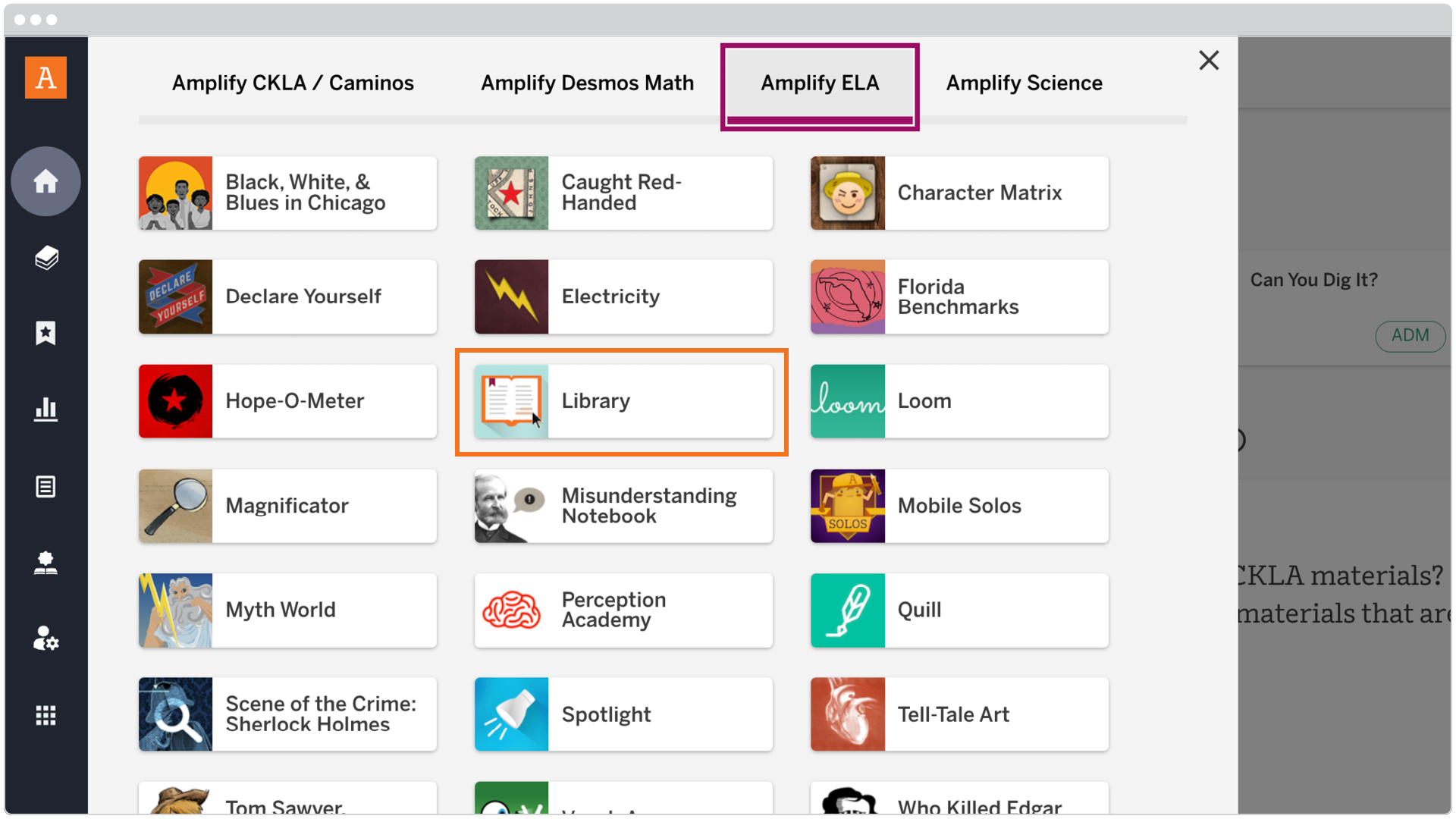
2. If prompted, follow the directions to set up a pin for the Amplify Library; otherwise, proceed to the next step.
3. In the upper right corner of your screen, search for the book you would like to download. Example: The Secret of the Yellow Death: A True Story of Medical Sleuthing.
4. Select the Download button.
5. If you lose connection while still in the Amplify Library, you can continue to access and read the downloaded book(s). If the page refreshes without internet access, or you try to login on another device without internet access, you will lose access to the downloaded book(s) until the internet connection is restored.
To retrieve your downloaded texts:
- In the Amplify Library app, open the My Library drop-down menu in the upper left corner.
- Select Downloaded.
- Choose the text you wish to read from all of your pre-downloaded texts.
Materials overview
Not every school will operate the same way, but students attending schools that have both the print and digital editions of the program will likely have the following print materials at home:
- Student Edition: This includes all of the readings and activities necessary for instruction throughout the year. Students can read the selections both digitally and in print, annotating in either format. The lessons in the print Student Edition reflect each digital lesson, but have been modified to work effectively in print.
- Writing Journals: This provides space for students to respond to Writing Prompts and complete other written assignments.
In the case that students are without access to devices or the internet, they can continue to complete key reading and writing assignments using the print Student Editions and student Writing Journals.
Teachers can also access, print, and mail student Novel Guides for up to 12 commonly taught novels. Six of these novels are available in the Amplify Library, and most should be available in a public library.
Unit overviews
Below are quick overviews of each unit your student will be working through in their grade throughout the year. Included along with each unit is a downloadable guide that provides a more in-depth look at what content is covered and how you can help your student advance their understanding of the topics.
- Unit 6A: Dahl & Narrative
- Students begin with narrative writing to quickly boost their writing production, learn the foundational skill of focus, and become comfortable with key classroom habits and routines they will use all year. Students then apply their new observational focus to some lively readings from Roald Dahl’s memoir Boy and learn how to work closely with textual evidence.
- Unit 6B: Mysteries & Investigations
- Students read like an investigator to embark on a multi-genre study of the mesmerizing world of scientific and investigative sleuthing. At the end of the unit, students write an essay explaining which trait is most useful to problem-solving investigators.
- Unit 6C: The Chocolate Collection
- The Aztecs used it as currency. Robert Falcon Scott took it to the Antarctic. The Nazis made it into a bomb designed to kill Churchill. The 3,700-year-long history of chocolate is full of twists and turns, making it a rich and rewarding research topic. In this unit, students explore primary source documents and conduct independent research to better understand the strange and wonderful range of roles that chocolate has played for centuries around the world.
- Unit 6D: The Greeks
- Greek myths help us understand not only ancient Greek culture but also the world around us and our role in it. Drawing on the routines and skills established in previous units, these lessons ask students to move from considering the state of a single person—themselves or a character—to contemplating broader questions concerning the role people play in the world and the communities they inhabit within it.
- Unit 6E: Summer of Mariposas
- The borderlands between the United States and Mexico are the place of legends, both true and fictional. Summer of the Mariposas, by Guadalupe Garcia McCall, plants a retelling of the Odyssey into this setting, launching five sisters on an adventure into a world of heroes and evildoers derived from Aztec myths and Latinx legends. On the journey, the sisters reconcile the dissolution of their parent’s marriage and find new strength in their identity and connection to Aztec lineage. Students consider how McCall uses the structure of the hero’s journey to celebrate women, heritage, and a broad definition of family. Students also have the opportunity to compare these characters’ fictional journey into Mexico to a description of one boy’s true journey into the United States.
- Unit 6F: The Titanic Collection
- In this research unit, students learn to tell the difference between primary, secondary, and tertiary sources; determine if a given source is reliable; and understand the ethical uses of information. Students then construct their own research questions and explore the internet for answers. They also take on the role of a passenger from the Titanic’s manifest to consider gender and class issues as they research and write narrative accounts from the point of view of their passenger.
- Unit 6G: Beginning Story Writing
- In this unit, students get to practice their creative writing skills and learn the elements of storytelling and character development, as well as the importance of vivid language. Students gain a sense of ownership over their writing as they experiment with the impact of their authorial choices on sentences, language, character traits, and plot twists.
- Grade 6: Grammar
- In this unit, students complete self-guided grammar instruction and practice that teachers assign to them throughout the year. Sub-units are organized by key grammar topics, so teachers can assign the content that best meets their student’s needs while making sure students work with the key grammar topics for their grades.
- Unit 7A: Red Scarf Girl & Narrative
- In this study of a highly engaging memoir of a young woman growing up in China during the Cultural Revolution, students quickly learn the history and politics of this tumultuous period by focusing on the story of someone living through the upheaval. As students follow her journey through a world turned upside down, they will track the changes in her feelings and motivations over time.
- Unit 7B: Character & Conflict
- By reading the play A Raisin in the Sun and the short story “Sucker,” students explore how people facing hardships can inflict unintentional harm on the people around them. The two narratives work together to provide opportunities for students to analyze characters’ responses to conflict and the author’s development of ideas over the course of a piece of fiction.
- Unit 7C: Brain Science
- Could you survive an iron rod through your skull? Phineas Gage did, and his gruesome-but-true story allows students to build background information and analyze other informational texts, including the contemporary The Man Who Mistook His Wife For A Hat and the relevant Demystifying the Adolescent Brain.
- Unit 7D: Poetry & Poe
- Poe’s texts always offer so much to notice, decipher, talk about—and creep us out. Since things are not always what they seem, students must use close reading skills to question whether they should believe what Poe’s narrator is telling them … or not.
- Unit 7E: The Frida & Diego Collection
- Mexico’s most famous and provocative artists, Diego Rivera and Frida Kahlo, were an extraordinary couple who lived in extraordinary times. They were both soul mates and complete opposites. Their multifaceted lives and work offer students rich and fascinating subjects to study as they examine primary source documents and conduct independent research.
- Unit 7F: The Gold Rush Collection
- In this research unit, students choose from a large collection of primary and secondary sources to learn about the wide range of people who took part in the California Gold Rush. They also take on the role of someone who lived during the gold rush and write journal entries from their perspective.
- Unit 7G: Intermediate Story Writing
- In this unit, students get to practice their creative writing skills and learn the elements of storytelling and character development, as well as the importance of vivid language. Students gain a sense of ownership over their writing as they experiment with the impact of their authorial choices on sentences, language, character traits, and plot twists.
- Grade 7: Grammar
- In this unit, students complete self-guided grammar instruction and practice that teachers assign to them throughout the year. Sub-units are organized by key grammar topics, so teachers can assign the content that best meets their student’s needs while making sure students work with the key grammar topics for their grades.
- Unit 8A: Perspectives & Narrative
- This unit aims to teach students to read like writers. They practice paying attention to the craft of writing and to the moves a good writer makes to shape the way we see a scene or feel about a character—to stir us up, surprise us, or leave us wondering what will happen next. Students closely read examples of rich, layered narrative nonfiction, analyze the techniques each author uses to make their writing resonate, and practice applying these techniques to their own narrative writing.
- Unit 8B: Liberty & Equality
- In this unit, students look at the words of a range of creators—from poet Walt Whitman to abolitionist Frederick Douglass to President Abraham Lincoln—to see how their writing contributed to an extreme shift in social organization: a whole new concept of what it means for people to be considered “equal.” They also study multiple perspectives on the Civil War, including the memoir of a girl who was enslaved, a confederate girl’s diary, and a nonfiction account of the young boys who served as soldiers during the war.
- Unit 8C: Science & Science Fiction
- Students read Gris Grimly’s Frankenstein, a graphic novel that adds captivating illustrations to an abridgment of the 1818 edition of Mary Shelley’s book. Paired with Shelley’s text, Grimly’s haunting—and, at times, horrific—representations of Frankenstein’s creature push students to wrestle with some of the text’s central themes: the source of humanity and the root of evil. Students then write an essay in which, after arguing both sides of the question, they determine whether or not Frankenstein’s creature should ultimately be considered human.
- Unit 8D: Shakespeare’s Romeo & Juliet
- Romeo and Juliet combines romance with action, offering a wide range of themes and scenes for students to read about and act out. Your middle schoolers are at the right age to identify with the lovers’ strong feelings—and also old enough to think critically about the choices Romeo and Juliet make.
- Unit 8E: Holocaust: Memory & Meaning
- This unit uses a range of primary source articles, images, and videos, as well as literary nonfiction and graphic nonfiction, to study what made the atrocities of the Holocaust possible. Students investigate how propaganda was generated and employed to create a political environment that ultimately corrupted a society. The Olympics are seen through the lens of an international propaganda campaign, providing cover for Nazis to begin eliminating non-Aryans from their culture. The final sub-unit examines the outcomes of Nazi doctrine and the impact on Jewish victims and survivors.
- Unit 8F: The Space Race Collection
- In this unit, students to put their research and close-reading skills to the test to distinguish between reliable and unreliable sources, explore primary documents, and conduct independent research to better understand the space race that took place between two of the world’s superpowers. This dramatic story offers students a rich research topic to explore as they build information literacy skills, learn how to construct their own research questions, and explore the internet for answers.
- Grade 8: Grammar
- In this unit, students complete self-guided grammar instruction and practice that teachers assign to them throughout the year. Sub-units are organized by key grammar topics, so teachers can assign the content that best meets their student’s needs while making sure students work with the key grammar topics for their grades.
- Unit 8G: Advanced Story Writing
- In this unit, students get to practice their creative writing skills. They’ll learn the elements of storytelling and character development, and the power of vivid language to grab readers and pull them into a story.
Additional activities
Quests:
You may notice your student working with peers on the same interactive project over several days, trying to solve a mystery or explain a historical event. That’s what happens when a teacher assigns a Quest: an in-depth week-long exploration that requires collaboration and deepens engagement with texts and topics.
Vocab App:
The Vocab App helps students master vocabulary words through game-like activities that challenge them to think through morphology, analogy, and synonyms/antonyms, and to decipher meaning through context.
Have a question about Amplify ELA?
Visit our help library to search for articles with answers to your program questions.
For additional curriculum support, please contact your student’s teacher.
Amplify CKLA updates for Back to School 2021
How comprehension fits into effective literacy instruction

Many of us grew up doing a classroom activity called “reading comprehension,” in which we would read a short text about, let’s say, sea turtles, then answer multiple-choice questions designed to demonstrate how much of that reading we comprehended. The next time, the reading might’ve been about the history of jazz.
Nothing against sea turtles or Dizzy Gillespie, but our approach to reading comprehension has evolved—and that’s thanks to the Science of Reading.
Let’s take a look at what we know now about how comprehension works and how to make it part of the best possible literacy instruction.
The role of comprehension in literacy instruction
Comprehension is one of the five foundational skills in reading and one of the two key components of the Simple View of Reading.
This framework lays out the two fundamental skills required for reading with comprehension:
- Decoding—the ability to recognize written words
- Language comprehension—understanding what words mean
In other words, reading proficiency is a product of word recognition and language comprehension.
The Reading Rope layers complexity onto this view, providing a visual metaphor of reading as a complex skill combining decoding skills, language comprehension, background knowledge, vocabulary, and more.
In this context, comprehension refers to the ability to understand and make meaning from written text. It involves not only accurately decoding and recognizing words, but also grasping the deeper meaning, intent, and implications of the text.
Product vs. process: The missing link in comprehension
Historically, comprehension instruction focused on the products of comprehension, rather than on the process. Students could demonstrate that they understood what they just read about sea turtles, but how did students understand it? What were their brains actually doing at the time? Answering those questions can help us better support students.
To do that, let’s look at the students who are not the best comprehenders—even though they have solid word recognition, vocabulary, and background knowledge. What’s missing?
After you read a piece of text, you’ll probably not recall its precise wording, but generally, you’ll remember the general idea. Doing so requires building a structure in your mind that researchers now call a “mental model.” The process of building a mental model is a sort of micro-comprehension.
Weak comprehenders build weak models. So when asked to analyze a character or make a prediction, their answers are not as strong as those of more advanced comprehenders.
We now know that students need four critical skills to improve their mental modeling/micro-comprehension—and thus their overall comprehension.
- Interpreting the usage of anaphoras (like she, him, them).
- Understanding the use of markers to signal ways that the text fits together — connectives (like so, though, whenever), structure cues, and directions.
- Supplying gap-filling inferences. (Writers often make assumptions about what can be left unstated, and weaker readers who fail to make these gap-filling inferences wind up with gaps in their mental models.)
- Monitoring comprehension as they read. (When something doesn’t make sense, strong readers stop, re-read, and try to figure it out, while weaker readers just keep going, failing to notice that they don’t understand.)
How background knowledge helps language comprehension
The Science of Reading demonstrates the importance of systematic and explicit phonics instruction.
But students do not have to learn phonics or decoding before knowledge comes into the equation.
“The background knowledge that children bring to a text is also a contributor to language comprehension,” says Sonia Cabell, associate professor at Florida State University’s School of Teacher Education, on Science of Reading: The Podcast. Background knowledge serves as the scaffolding upon which readers build connections between new information and what they already know. Students with average reading ability and some background knowledge of a topic will generally comprehend a text on that topic as well as stronger readers who lack that knowledge.
What we know about knowledge and comprehension should inform instruction. “I think most, if not every, theory of reading comprehension implicates knowledge,” says Cabell. “But that hasn’t necessarily been translated into all of our instructional approaches.”
So, a central question is: How can we help build background knowledge—and thus comprehension?
Broadly, we can work to use literacy curricula that intentionally and systematically builds knowledge as they go.
We can also be “intentional throughout our day in building children’s knowledge,” says Cabell, offering the example of choosing books to read aloud. She suggests we ask not just “‘Do they have the background knowledge to understand something,’ but rather ‘Can what I’m reading aloud to them build background knowledge?’”
Cabell also suggests being a little ambitious in your read-alouds: “Read aloud books a couple of grade levels above where [students are] reading right now, so that they’ll be able to engage with rich academic language.”
Comprehension instruction in the classroom
So, what does this type of comprehension instruction look like? Let’s explore a few science-informed examples:
- Systematically build the knowledge that will become background knowledge. Use a curriculum grounded in topics that build on one another. “When related concepts and vocabulary show up in texts, students are more likely to retain information and acquire new knowledge,” even into the next grades, education and literacy experts Barbara Davidson and David Liben say. “Knowledge sticks best when it has associated knowledge to attach to.”
- Present instruction that engages deeply with content. Research shows that students—and teachers, too—actually find this content-priority approach more rewarding than, in Davidson and Liben’s words “jumping around from topic to topic in order to practice some comprehension strategy or skill.”
- Support students in acquiring vocabulary related to content. Presenting key words and concepts prior to reading equips students to comprehend the text more deeply. Spending more time on each topic helps students learn more topic-related words and more general academic vocabulary they’ll encounter in other texts.
- Use comprehension strategies in service of the content. While building knowledge systematically, teachers can use proven strategies—such as “chunking” and creating graphic organizers—to develop students’ skills for understanding other texts.
- Use discussions and writing to help students learn content. Invite students to share their interpretations, supporting them in articulating their thoughts and connecting with peers’ perspectives.
- Help students forge connections. Help students draw connections among lessons and units—and to their own experiences—as they grow their knowledge together.
Comprehension goes beyond reading the words on a page. It involves actively engaging with the text, connecting ideas, drawing inferences, and relating the content to one’s own knowledge and experiences. By making sure students have the skills and knowledge they need to comprehend a text, we can help them comprehend the world.
More to explore
Welcome, Salem-Keizer School District, to the next chapter in the Science of Reading, with Amplify CKLA 3rd Edition!
Amplify Core Knowledge Language Arts® (CKLA) is approved by the Oregon Department of Education.
Truly built on the Science of Reading, Amplify CKLA helps Oregon teachers implement the Oregon English Language Arts and Literacy Standards by translating the science of reading into manageable, engaging, and effective classroom practices. For more than a decade, Amplify CKLA has transformed classrooms nationwide with its intentional knowledge building and systematic skills instruction.
Scroll down to learn how CKLA is uniquely designed to help all your students make learning leaps in literacy.
Our approach
Improve outcomes with a program that’s built on a decade of research and meets the strongest ESSA Tier I criteria.
Grounded in the Science of Reading
As the original Science of Reading program, Amplify CKLA puts research into action with explicit, systematic foundational skills instruction and a proven knowledge-building sequence. In collaboration with education experts and practitioners, we provide powerful resources that deliver real results.
Background knowledge drives results
Amplify CKLA follows the Core Knowledge Sequence, a content-specific, cumulative, and coherent approach to knowledge building. This approach improves reading scores and closes achievement gaps by establishing a robust knowledge base that strengthens comprehension.
In Amplify CKLA 3rd Edition, we’ve enriched our Knowledge Sequence with a wider range of perspectives and high-quality texts in new and enhanced units.
Build foundational skills for long-term success.
Students progress from simple to complex skill development starting with phonological and phonemic awareness. Instruction in Grades K–2 explicitly teaches the 150 spellings for the 44 sounds of English, following an intentional progression to ensure student success.
In our 3rd Edition, we’ve added dedicated Grade 3 foundational skills instruction that can either support core lessons or function as an intervention, based on student needs.
Daily writing deepens learning.
Grounded in the Science of Writing—the research on how kids learn to write—instruction is explicit, daily, and woven into the curriculum’s rich content. It covers both transcription (handwriting and spelling) and composition (organizing ideas into narratives) with high-impact activities like sentence-level combining and expanding, and pre-writing exercises. Writing and reading instruction are integrated so students simultaneously strengthen their communication skills, comprehension, and confidence.
High-quality, diverse texts
Amplify CKLA students are immersed in a variety of texts—complex read-alouds, decodable chapter books, trade books, and content-rich readers—that reflect varied experiences and connect to learning goals.
Readers are 100% decodable for Grades K–2, empowering students to directly apply what they’ve learned. Novel Study units for Grades 3–5 offer a mix of contemporary and classic literature, and Culminating Research Units in every grade include a set of authentic texts and trade books.
Reach all learners with differentiated support.
Scaffolds and challenges, developed in collaboration with education experts, make content accessible to every student—including multilingual and English learners. With strategies embedded right in the curriculum, teachers can deliver in-the-moment, individualized instruction to meet diverse student needs.
For a dedicated English language development program aligned to Amplify CKLA, explore Language Studio.
What’s included with Amplify CKLA
The comprehensive resources in Amplify CKLA 3rd Edition support effective literacy instruction in every classroom.
Easy-to-use teacher materials
Amplify CKLA teachers are empowered to deliver effective instruction with the following print and digital resources:
- Teacher Guides (K–5)
- Assessment Guides (K–5)
- Authentic texts and trade books (K–5)
- Knowledge Image Cards (K–2)
- Knowledge Flip Books (K–2, digital)
- Ready-made and customizable Presentation Screens (K–5, digital)
- Remediation and intervention resources (K–5)
- On-demand professional development (K–5, digital)
Immersive Amplify CKLA student resources
Amplify CKLA students stay engaged with the following print and digital resources:
- Decodable readers (K–2)
- Student Readers and novels (3–5)
- Student Activity Books (K–5)
- Poet’s Journal (3–5)
- eReaders (K–5, digital)
- Sound Library featuring articulation videos and songs (K–2, digital)
- Skill-building practice games (K–5)
Rich literary experiences
All the high-quality, diverse texts in Amplify CKLA connect to the curriculum, fostering your students’ curiosity and helping them learn to read with confidence.
- Trade Book Collections (K–5) inspire student research in each grade’s Culminating Research Unit.
- Classic and contemporary literature (3–5) delight students in Novel Study Units.
- Increasingly complex Student Readers (K–5) develop students’ literacy across grades.
Hands-on phonics materials
Multisensory phonics and foundational skills resources engage students with fun, varied approaches that promote mastery and build independence.
- Chaining Folders and Small Letter Cards (K)
- Read-Aloud Big Books (K–1)
- Large Letter Cards (K–2)
- Sound Cards (K–2)
- Image Cards (K–3)
- Blending Picture Cards (K)
- Consonant and Vowel Code Posters and Spelling Cards (1–2)
- Sound Library (K–2, digital)
All-in-one digital platform
Our comprehensive platform simplifies your day-to-day tasks and makes it easier to plan and deliver lessons.
- Ready-made and customizable Presentation Screens
- Auto-scored digital assessments
- Standards-based reporting
- Assignable skill-building games
- Sound Library
- eReaders
Professional development
Move beyond traditional program training with Amplify’s digital PD Library, designed to fully support your shift to the Science of Reading and Amplify CKLA. Deepen your understanding with:
- Program and planning resources
- Model lesson videos from real classrooms
- Guidance on using Amplify’s literacy suite to provide multi-tiered support
Language Studio: Multilingual and English language learner support
Language Studio is Amplify CKLA’s dedicated K–5 program for multilingual and English language learners. Through daily 30-minute lessons, it strengthens reading, writing, speaking, and listening skills while reinforcing core instruction. This tailored support empowers students to confidently access grade-level content as they develop academic English.
Curriculum Maps
- Curriculum Maps by Grade and Strand:
Amplify CKLA serves
150,000+
Classrooms
4,000,000+
Students
50
U.S. States and D.C.
Amplify Caminos program overview
¡El futuro es bilingüe! | The future is bilingual!
Amplify Caminos is a research-based core curriculum essential for Spanish literacy and grounded in the Science of Reading.
View our Caminos Program Guide to find our approach to foundational skills by year, skills practice with student readers and writing, and how Caminos supports teachers meeting the needs of all students with embedded differentiation.
Amplify Caminos offers a robust and authentic elementary Spanish language arts program for grades K–5 that promotes
biliteracy and helps teachers inspire students as they become confident readers, writers, and thinkers in Spanish.
Amplify Caminos offers a robust and authentic elementary Spanish language arts program for grades K–5 that promotes
biliteracy and helps teachers inspire students as they become confident readers, writers, and thinkers in Spanish.
View the video below to learn more about Amplify Caminos.
Using the program’s two strands, Caminos Conocimiento and Caminos Lectoescritura, teachers develop student
comprehension in Spanish through a program rich in background knowledge and foundational skills activities. The texts students encounter include authentic Spanish literature that honor Spanish language development and build diverse content knowledge in social studies, science, literature, and the arts.
Amplify Caminos is designed to support a variety of bilingual and dual language instructional models to meet your student’s biliteracy needs. Combined with its English language partner, Amplify Core Knowledge Language Arts (CKLA), Amplify Caminos provides a comprehensive biliteracy solution.
Amplify Caminos delivers rich, authentic experiences.
With a robust digital experience and expanding library of online materials, Amplify Caminos provides everything needed to support, challenge, and engage your students. From digital Teacher Guides to lesson projectables, we provide all the tools needed to successfully deliver every lesson.
How Amplify Caminos works with Amplify CKLA
Through direct instruction, both Amplify Caminos and Amplify CKLA develop reading, writing, speaking, and listening skills in their respective languages. Together, the programs empower educators to effectively foster biliteracy with:
- Intentional knowledge building that connects topics throughout the program.
- Increased metalinguistic awareness from students exploring the similarities and differences in each language while strengthening their knowledge across both.
- Equitable instruction using high-quality Spanish and English decodable readers that provide students with opportunities to apply skills learned, and foster each students’ growing competency in reading.
Demo Access
Explore the CKLA Teacher Digital Resources
First, watch the quick navigation video to the right. Then, follow the directions below.
- Go to: learning.amplify.com or click the Access CKLA Teacher Digital button below
- Select Log in with Amplify.
- Enter this username: t1.salem_keizer_3e_cam@demo.tryamplify.net
- Enter this password: Amplify1-salem_keizer_3e_cam
- Click the CKLA button
- Select your desired grade level from the Program drop down
Follow the directions below to access the Student Resource Site:
- Go to: learning.amplify.com or click the Access CKLA Student Digital button below
- Select Log in with Amplify.
- Enter this username: s1.salem_keizer_3e_cam@demo.tryamplify.net
- Enter this password: Amplify1-salem_keizer_3e_cam
- From the main page, click the backpack in the top right corner.
- Click on the grade level to select your desired grade.
Welcome, Idaho K-8 Science Reviewers!
Thank you for taking the time to review Amplify Science. On this site, you’ll find all the resources you need to learn more about this engaging and robust NGSS program. Below, you will also have the opportunity experience our program firsthand with a demo account to access the digital platform.
Amplify Science for grades K–8 has been rated all-green by EdReports. Read the review on EdReports.

Overview
With Amplify Science, students don’t just passively learn about science concepts. Instead, they take on the roles of scientists and engineers to actively investigate and make sense of real-world phenomena. They do this through a blend of cohesive and compelling storylines, hands-on investigations, collaborative discussions, literacy-rich activities, and interactive digital tools.
Listen to these educators share how the program empowers students to think, read, write, and argue like real scientists and engineers every day.
Grades K–5
Grades 6–8
Amplify Science Grades K-5 Tour for Idaho Educators
Amplify Science Grades 6-8 Tour for Idaho Evaluators

Program structure
Our cyclical lesson design ensures students receive multiple exposures to concepts through a variety of modalities. As they progress through the lessons within a unit, students build and deepen their understanding, increasing their ability to develop and refine complex explanations of the unit’s phenomenon. It’s this proven program structure and lesson design that enables Amplify Science to teach less, but achieve more.
Rather than asking teachers to wade through unnecessary content, we designed our program to address 100 percent of the NGSS and Idaho Standards in fewer days than other programs:
- In just 120 lessons at grades 6–8
- In just 66 lessons at grades K–2
- In just 88 lessons at grades 3–5

Unit types
Each unit delivers three-dimensional learning experiences and engages students in gathering evidence from a rich collection of sources, while also emphasizing a particular science and engineering practice.


Investigation units
Investigation units focus on the process of strategically developing investigations and gathering data to answer questions. Students are first asked to consider questions about what happens in the natural world and why, and are then involved in designing and conducting investigations that produce data to help answer those questions.

Modeling units
Modeling units provide extra support to students engaging in the practice of modeling. Students use physical models, investigate with computer models, and create their own diagrams to help them visualize what might be happening on the nanoscale.

Engineering Design units
Engineering design units provide opportunities for students to solve complex problems by applying science principles to the design of functional solutions, and iteratively testing those solutions to determine how well they meet preset criteria.

Argumentation units
Argumentation units are introduced at grade 3 and provide students with regular opportunities to explore and discuss available evidence, time and support to consider how evidence may be leveraged in support of claims, and independence that increases as they mount written arguments in support of their claims.
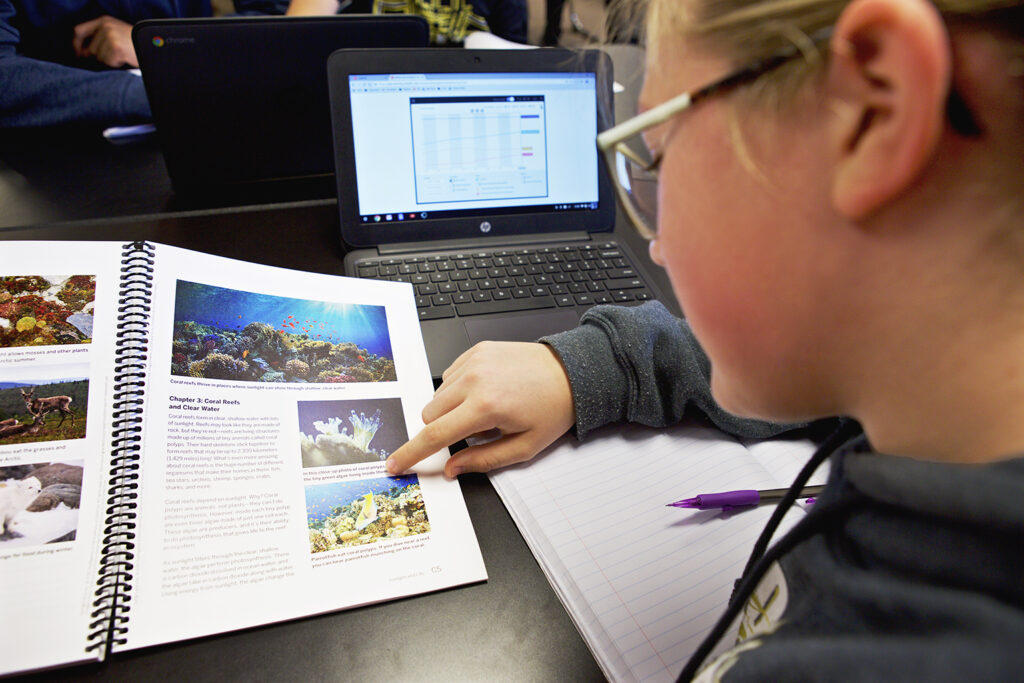
Launch units
Launch units are the first units taught in each year of Amplify Science. The goal of the Launch unit is to introduce students to norms, routines, and practices that will be built on throughout the year, including argumentation, active reading, and using the program’s technology. For example, rather than taking the time to explain the process of active reading in every unit in a given year, it is explained thoroughly in the Launch unit, thereby preparing students to read actively in all subsequent units.

Core units
Core units establish the context of the unit by introducing students to a real-world problem. As students move through lessons in a Core unit, they figure out the unit’s anchoring phenomenon, gain an understanding of the unit’s disciplinary core ideas and science and engineering practices, and make linkages across topics through the crosscutting concepts. Each Core unit culminates with a Science Seminar and final writing activity.

Engineering Internship units
Engineering Internship units invite students to design solutions for real-world problems as interns for a fictional company called Futura. Students figure out how to help those in need, from tsunami victims in Sri Lanka to premature babies, through the application of engineering practices. In the process, they apply and deepen their learning from Core units.
Idaho Science Standards Alignment
Amplify Science was built from the ground up to fully embrace the instructional shifts outlined in A Framework for K-12 Science Education (2012), the same framework on which Idaho Science Content Standards were founded. Most grade levels’ respective set of Amplify Science units therefore fully address the necessary Idaho Science Content Standards (see correlation). Grade 1 teachers should plan to also use the companion mini-lesson provided below to achieve full standards coverage for their grade.
Grade 1 Companion
Standard: 1-LS-1.3 Use classification supported by evidence to differentiate between living and non-living things.
Recommended placement: Following Lesson 1.1 of the Animal and Plant Defenses unit.
Resources: Classroom Slides
Science (Middle School Physical Science) Evaluation Form
Science (Middle School Life Science) Evaluation Form
Science Evaluation Form Middle School Earth and Space Science


Needs of Plants and Animals
Domains: Life Science, Earth and Space Science, Engineering Design
Unit type: Investigation
Student role: Scientists
Phenomenon: There are no monarch caterpillars in the Mariposa Grove community garden since vegetables were planted.
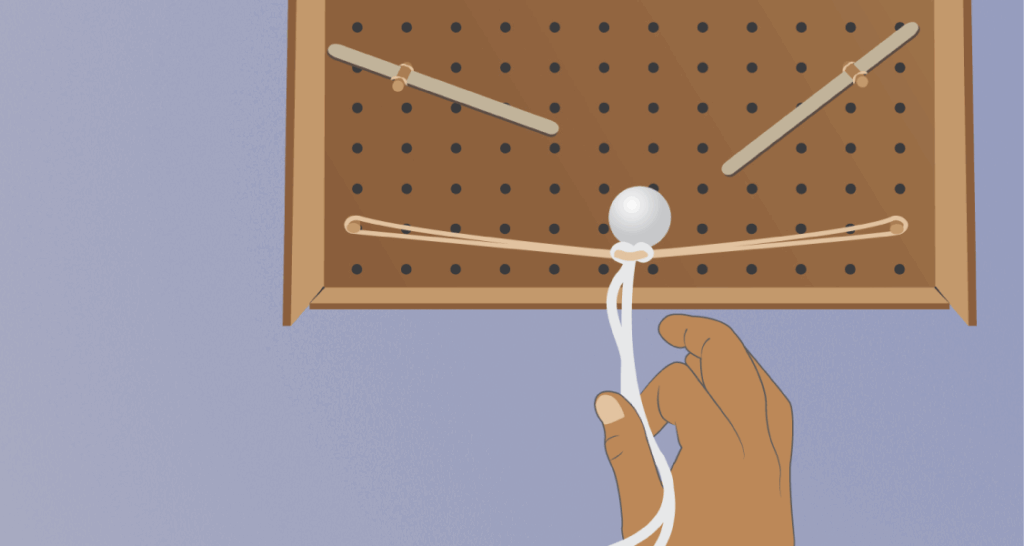
Pushes and Pulls
Domains: Physical Science, Engineering Design
Unit type: Engineering design
Student role: Pinball engineers
Phenomenon: Pinball machines allow people to control the direction and strength of forces on a ball.

Sunlight and Weather
Domains: Earth and Space Science, Life Science, Engineering Design
Unit type: Modeling
Student role: Weather scientists
Phenomenon: Students at Carver Elementary School are too cold during morning recess, while students at Woodland Elementary School are too hot during afternoon recess.

Animal and Plant Defenses
Domain: Life Science
Unit type: Modeling
Student role: Marine scientists
Phenomenon: Spruce the Sea Turtle lives in an aquarium and will soon be released back into the ocean, where she will survive despite ocean predators.

Light and Sound
Domains: Physical Science, Engineering Design
Unit type: Engineering design
Student role: Light and sound engineers
Phenomenon: A puppet show company uses light and sound to depict realistic scenes in puppet shows.

Spinning Earth
Domain: Earth and Space Science
Unit type: Investigation
Student role: Sky scientists
Phenomenon: The sky looks different to Sai and his grandma when they talk on the phone.

Plant and Animal Relationships
Domains: Life Science, Engineering Design
Unit type: Investigation
Student role: Plant scientists
Phenomenon: No new chalta trees are growing in the fictional Bengal Tiger Reserve in India.

Properties of Materials
Domains: Physical Science, Engineering Design
Unit type: Engineering design
Student role: Glue engineers
Phenomenon: Different glue recipes result in glues that have different properties.

Changing Landforms
Domain: Earth and Space Science
Unit type: Modeling
Student role: Geologists
Phenomenon: The cliff that Oceanside Recreation Center is situated on appears to be receding over time.

Balancing Forces
Domain: Physical Science
Unit type: Modeling
Student role: Engineers
Phenomenon: The town of Faraday is getting a new train that floats above its tracks.

Inheritance and Traits
strong>Domain: Life Science
Unit type: Investigation
Student role: Wildlife biologists
Phenomenon: An adopted wolf in Graystone National Park (“Wolf 44”) has some traits that appear similar to one wolf pack in the park and other traits that appear to be similar to a different wolf pack.

Environments and Survival
Domains: Life Science, Engineering Design
Unit type: Engineering design
Student role: Biomimicry engineers
Phenomenon: Over the last 10 years, a population of grove snails has changed: The number of grove snails with yellow shells has decreased, while the number of snails with banded shells has increased.

Weather and Climate
Domains: Earth and Space Science, Engineering Design
Unit type: Argumentation
Student role: Meteorologists
Phenomenon: Three different islands, each a contender for becoming an Orangutan reserve, experience different weather patterns.

Energy Conversions
Domains: Physical Science, Earth and Space Science, Engineering Design
Unit type: Engineering design
Student role: System engineers
Phenomenon: The fictional town of Ergstown experiences frequent blackouts.

Vision and Light
Domain: Physical Science, Life Science, Engineering Design
Unit type: Investigation
Student role: Conservation biologists
Phenomenon: The population of Tokay geckos in a rain forest in the Philippines has decreased since the installation of new highway lights.

Waves, Energy, and Information
Domains: Physical Science, Life Science, Earth and Space Science, Engineering Design
Unit type: Modeling
Student role: Marine scientists
Phenomenon: Mother dolphins in the fictional Blue Bay National Park seem to be communicating with their calves when they are separated at a distance underwater.

Patterns of Earth and Sky
Domains: Physical Science, Earth and Space Science
Unit type: Investigation
Student role: Astronomers
Phenomenon: An ancient artifact depicts what we see in the sky at different times — the sun during the daytime and different stars during the nighttime — but it is missing a piece.

Earth’s Features
Domain: Earth and Space Science
Unit type: Argumentation
Student role: Geologists
Phenomenon: A mysterious fossil is discovered in a canyon within the fictional Desert Rocks National Park.

Modeling Matter
Domain: Physical Science
Unit type: Modeling
Student role: Food scientists
Phenomenon: Chromatography is a process for separating mixtures. Some solids dissolve in a salad dressing while others do not. Oil and vinegar appear to separate when mixed in a salad dressing.

The Earth System
Domains: Earth and Space Science, Physical Science, Engineering Design
Unit type: Engineering Design
Student role: Water resource engineers
Phenomenon: East Ferris, a city on one side of the fictional Ferris Island, is experiencing a water shortage, while West Ferris is not.

Ecosystem Restoration
Domains:Physical Science, Life Science, Earth and Space Science, Engineering Design
Unit type: Argumentation
Student role: Ecologists
Phenomenon: The jaguars, sloths, and cecropia trees in a reforested section of a Costa Rican rain forest are not growing and thriving.

Geology on Mars
Domain: Earth and Space Science
Unit type: Launch
Student role: Planetary geologists
Phenomenon: Analyzing data about landforms on Mars can provide evidence that Mars may have once been habitable.

Earth, Moon, and Sun
Domains: Earth and Space Science, Physical Science
Unit type: Core
Student role: Astronomers
Phenomenon: An astrophotographer can only take pictures of specific features on the Moon at certain times.

Thermal Energy
Domain: Physical Science
Unit type: Core
Student role: Thermal scientists
Phenomenon: One of two proposed heating systems for Riverdale School will best heat the school.

Ocean, Atmosphere, and Climate
Domains: Earth and Space Science, Physical Science
Unit type: Core
Student role: Climatologists
Phenomenon: During El Niño years, the air temperature in Christchurch, New Zealand is cooler than usual.

Weather Patterns
Domains: Earth and Space Science, Physical Science
Unit type: Core
Student role: Forensic meteorologists
Phenomenon: In recent years, rainstorms in Galetown have been unusually severe.

Populations and Resources
Domains: Life Science, Earth and Space Science
Unit type: Core
Student role: Biologists
Phenomenon: The size of the moon jelly population in Glacier Sea has increased.

Matter and Energy in Ecosystems
Domains: Life Science, Earth and Space Science, Physical Science
Unit type: Core
Student role: Ecologists
Phenomenon: The biodome ecosystem has collapsed.

Traits and Reproduction
Domain: Life Science
Unit type: Core
Student role: Biomedical students
Phenomenon: Darwin’s bark spider offspring have different silk flexibility traits, even though they have the same parents.

Microbiome
Domain: Life Science
Unit type: Launch
Student role: Microbiological researchers
Phenomenon: The presence of 100 trillion microorganisms living on and in the human body may keep the body healthy.

Metabolism
Domain: Life Science
Unit type: Core
Student role: Medical researchers
Phenomenon: Elisa, a young patient, feels tired all the time.

Force and Motion
Domain: Physical Science
Unit type: Core
Student role: Physicists
Phenomenon: The asteroid sample-collecting pod failed to dock at the space station as planned.

Force and Motion Engineering Internship
Domains: Engineering Design, Physical Science
Unit type: Engineering internship
Student role: Mechanical engineering interns
Phenomenon: Designing emergency supply delivery pods with different structures can maintain the integrity of the supply pods and their contents.

Plate Motion
Domain: Earth and Space Science
Unit type: Core
Student role: Geologists
Phenomenon: Mesosaurus fossils have been found on continents separated by thousands of kilometers of ocean, even though the Mesosaurus species once lived all together.

Rock Transformations
Domain: Earth and Space Science
Unit type: Core
Student role: Geologists
Phenomenon: Rock samples from the Great Plains and from the Rocky Mountains — regions hundreds of miles apart — look very different, but have surprisingly similar mineral compositions.

Natural Selection
Domains: Life Science, Earth and Space Science
Unit type: Core
Student role: Biologists
Phenomenon: The newt population in Oregon State Park has become more poisonous over time.

Evolutionary History
Domains: Life Science, Earth and Space Science
Unit type: Core
Student role: Paleontologists
Phenomenon: A mystery fossil at the Natural History Museum has similarities with both wolves and whales.

Harnessing Human Energy
Domains: Physical Science, Earth and Space Science, Engineering Design
Unit type: Launch
Student role: Energy scientists
Phenomenon: Rescue workers can use their own human kinetic energy to power the electrical devices they use during rescue missions.

Phase Change
Domains: Physical Science, Earth and Space Science
Unit type: Core
Student role: Chemists
Phenomenon: A methane lake on Titan no longer appears in images taken by a space probe two years apart.

Phase Change Engineering Internship
Domains: Engineering Design, Physical Science
Unit type: Engineering internship
Student role: Chemical engineering interns
Phenomenon: Designing portable baby incubators with different combinations of phase change materials can keep babies at a healthy temperature.

Chemical Reactions
Domains: Physical Science, Life Science, Earth and Space Science
Unit type: Core
Student role: Forensic chemists
Phenomenon: A mysterious brown substance has been detected in the tap water of Westfield.

Magnetic Fields
Domain: Physical Science
Unit type: Core
Student role: Physicists
Phenomenon: During a test launch, a spacecraft traveled much faster than expected.

Light Waves
Domains: Physical Science, Life Science, Earth and Space Science
Unit type: Core
Student role: Spectroscopists
Phenomenon: The rate of skin cancer is higher in Australia than in other parts of the world.

Earth’s Changing Climate
Domains: Earth and Space Science, Life Science
Unit type: Core
Student role: Climatologists
Phenomenon: The ice on Earth’s surface is melting.

Earth’s Changing Climate Engineering Internship
Domains: Earth and Space Science, Engineering Design
Unit type: Engineering internship
Student role: Civil engineers
Phenomenon: Designing rooftops with different modifications can reduce a city’s impact on climate change.
Access program
In addition to the grade-level sample boxes that we provided, we’ve also created custom demo accounts just for Idaho reviewers.
To access the digital portion of the program, click the link below, select “Log In with Amplify,” and then refer to the Start here digital access flyer for your personalized login credentials.

Tutorial videos
Check out these videos for support on how to navigate the Amplify Science curriculum website, teacher’s guide, materials kits, and more!
Resources


A closer look at grades K–2
Amplify Science California is based on the latest research on teaching and learning and helps teachers deliver age-appropriate, high-quality, literacy-rich instruction that enables students to take on the roles of scientists and engineers to solve real-world phenomena every day.
In the K–2 classroom, this looks like students:
- Collecting evidence from a variety of sources.
- Making sense of evidence in a variety of ways.
- Formulating convincing scientific arguments.

Program structure
Our cyclical lesson design ensures students receive multiple exposures to concepts through a variety of modalities. As they progress through the lessons within a unit, their understanding gradually builds and deepens, ultimately leading to their ability to develop and refine increasingly complex explanations of the unit’s phenomenon.
It’s this proven program structure and lesson design that enables Amplify Science California to teach less, but achieve more. Rather than asking teachers to wade through unnecessary content, we designed our K–2 program to address 100% of the California NGSS in just 66 days.
Scope and sequence
Every year of our K–2 consists of 3 units and 66 total lessons. Said another way, each unit contains 20 lessons plus two dedicated assessment days (a Pre-Unit Assessment and End-of-Unit Assessment).
Lessons at grades K–1 are written for a minimum of 45-minutes, and grade 2 lessons are written for a minimum of 60-minutes—though teachers can expand or contract the timing to meet their needs.
Unit types
While every unit delivers three-dimensional learning experiences and engages students in gathering evidence from a rich collection of sources, each unit also emphasizes a particular science and engineering practice.
In each grade K–2:
- One unit emphasizes the practice of investigation.
- One unit emphasizes the practice of modeling.
- One unit emphasizes the practice of engineering design.
Investigation Units
Investigation units focus on the process of strategically developing investigations and gathering data to answer questions. Students are first asked to consider questions about what happens in the natural world and why, and are then involved in designing and conducting investigations that produce data to help answer those questions.
Modeling Units
Modeling units provide extra support to students engaging in the practice of modeling. Students use physical models, investigate with computer models, and create their own diagrams to help them visualize what might be happening on the nanoscale.
Engineering Design Units
Engineering design units provide opportunities for students to solve complex problems by applying science principles to the design of functional solutions, and iteratively testing those solutions to determine how well they meet preset criteria.
Units at a glance
Needs of Plants and Animals
Domains: Life Science, Earth and Space Science, Engineering Design
Unit type: Investigation
Student role: Scientists
Phenomenon: There are no monarch caterpillars in the Mariposa Grove community garden since vegetables were planted.
Pushes and Pulls
Domains: Physical Science, Engineering Design
Unit type: Engineering design
Student role: Pinball engineers
Phenomenon: Pinball machines allow people to control the direction and strength of forces on a ball.
Sunlight and Weather
Domains: Earth and Space Science, Life Science, Engineering Design
Unit type: Modeling
Student role: Weather scientists
Phenomenon: Students at Carver Elementary School are too cold during morning recess, while students at Woodland Elementary School are too hot during afternoon recess.
Animal and Plant Defenses
Domain: Life Science
Unit type: Modeling
Student role: Marine scientists
Phenomenon: Spruce the Sea Turtle lives in an aquarium and will soon be released back into the ocean, where she will survive despite ocean predators.
Light and Sound
Domains: Physical Science, Engineering Design
Unit type: Engineering design
Student role: Light and sound engineers
Phenomenon: A puppet show company uses light and sound to depict realistic scenes in puppet shows.
Spinning Earth
Domain: Earth and Space Science
Unit type: Investigation
Student role: Sky scientists
Phenomenon: The sky looks different to Sai and his grandma when they talk on the phone.
Plant and Animal Relationships
Domains: Life Science, Engineering Design
Unit type: Investigation
Student role: Plant scientists
Phenomenon: No new chalta trees are growing in the fictional Bengal Tiger Reserve in India.
Properties of Materials
Domains: Physical Science, Engineering Design
Unit type: Engineering design
Student role: Glue engineers
Phenomenon: Different glue recipes result in glues that have different properties.
Changing Landforms
Domain: Earth and Space Science
Unit type: Modeling
Student role: Geologists
Phenomenon: The cliff that Oceanside Recreation Center is situated on appears to be receding over time.
Resources



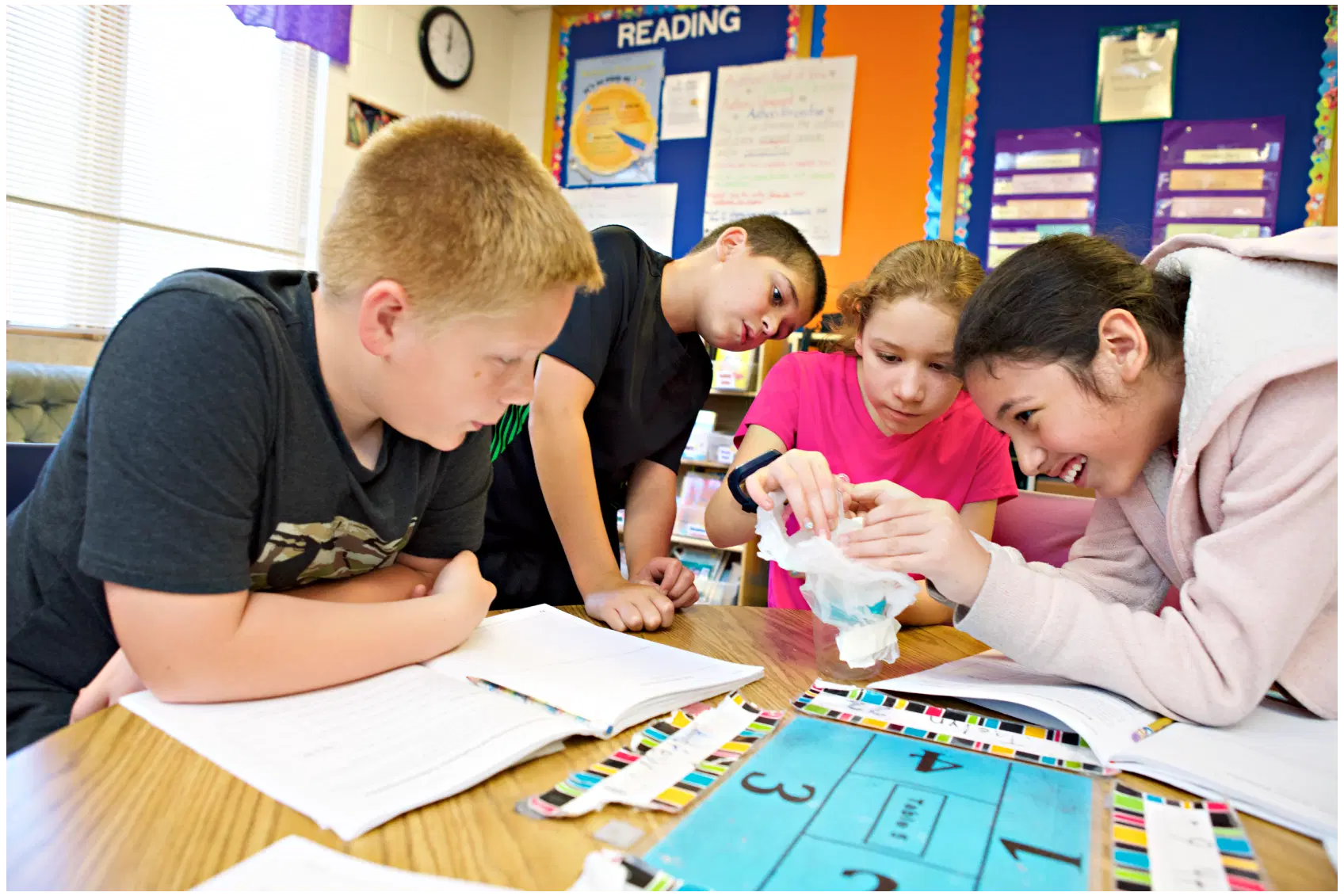

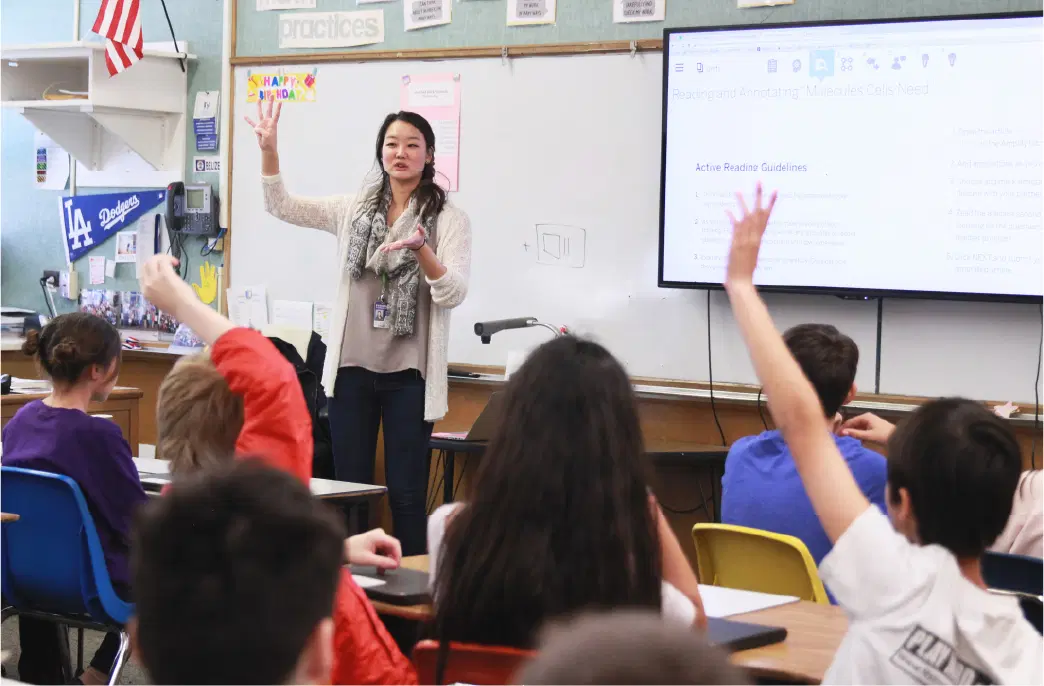
A closer look at grades 3–5
Amplify Science is based on the latest research on teaching and learning and helps teachers deliver age-appropriate, high-quality, literacy-rich instruction that enables students to take on the roles of scientists and engineers to solve real-world phenomena every day.
In the 3–5 classroom, this looks like students:
- Collecting evidence from a variety of sources.
- Making sense of evidence in a variety of ways.
- Formulating convincing scientific arguments.
Program structure
Our cyclical lesson design ensures students receive multiple exposures to concepts through a variety of modalities. As they progress through the lessons within a unit, students build and deepen their understanding, increasing their ability to develop and refine complex explanations of the unit’s phenomenon.
It’s this proven program structure and lesson design that enables Amplify Science California to teach less, but achieve more. Rather than asking teachers to wade through unnecessary content, we designed our 3–5 program to address 100% of the California NGSS in just 88 days.
Scope and sequence
Every year of our grades 3–5 sequence consists of 4 units and 88 lessons. Said another way, each unit contains 20 lessons plus two dedicated assessment days (a Pre-Unit Assessment and End-of-Unit Assessment).
Lessons for grades 3–5 are written to last a minimum of 60 minutes, though teachers can expand or contract the timing to meet their needs.
Unit types
Each unit delivers three-dimensional learning experiences and engages students in gathering evidence from a rich collection of sources, while also emphasizing a particular science and engineering practice.
In grades 3–5:
- One unit emphasizes the practice of investigation.
- One unit emphasizes the practice of modeling.
- One unit emphasizes the practice of engineering design.
- One unit emphasizes the practice of argumentation.
Investigation Units
Investigation units focus on the process of strategically developing investigations and gathering data to answer questions. Students are first asked to consider questions about what happens in the natural world and why, and are then involved in designing and conducting investigations that produce data to help answer those questions.
Modeling Units
Modeling units provide extra support to students engaging in the practice of modeling. Students use physical models, investigate with computer models, and create their own diagrams to help them visualize what might be happening on the nanoscale.
Engineering Design Units
Engineering design units provide opportunities for students to solve complex problems by applying science principles to the design of functional solutions, and iteratively testing those solutions to determine how well they meet preset criteria.
Argumentation units
Argumentation units provide students with regular opportunities to explore and discuss available evidence, time and support to consider how evidence may be leveraged in support of claims, and independence that increases as they mount written arguments in support of their claims.
Units at a glance
Balancing Forces
Domain: Physical Science
Unit type: Modeling
Student role: Engineers
Phenomenon: The town of Faraday is getting a new train that floats above its tracks.
Inheritance and Traits
Domain: Life Science
Unit type: Investigation
Student role: Wildlife biologists
Phenomenon: An adopted wolf in Graystone National Park (“Wolf 44”) has some traits that appear similar to one wolf pack in the park and other traits that appear to be similar to a different wolf pack.
Environments and Survival
Domains: Life Science, Engineering Design
Unit type: Engineering design
Student role: Biomimicry engineers
Phenomenon: Over the last 10 years, a population of grove snails has changed: The number of grove snails with yellow shells has decreased, while the number of snails with banded shells has increased.
Weather and Climate
Domains: Earth and Space Science, Engineering Design
Unit type: Argumentation
Student role: Meteorologists
Phenomenon: Three different islands, each a contender for becoming an Orangutan reserve, experience different weather patterns.
Energy Conversions
Domains: Physical Science, Earth and Space Science, Engineering Design
Unit type: Engineering design
Student role: System engineers
Phenomenon: The fictional town of Ergstown experiences frequent blackouts.
Vision and Light
Domain: Physical Science, Life Science, Engineering Design
Unit type: Investigation
Student role: Conservation biologists
Phenomenon: The population of Tokay geckos in a rain forest in the Philippines has decreased since the installation of new highway lights.
Earth’s Features
Domain: Earth and Space Science
Unit type: Argumentation
Student role: Geologists
Phenomenon: A mysterious fossil is discovered in a canyon within the fictional Desert Rocks National Park.
Waves, Energy, and Information
Domains: Physical Science, Life Science, Earth and Space Science, Engineering Design
Unit type: Modeling
Student role: Marine scientists
Phenomenon: Mother dolphins in the fictional Blue Bay National Park seem to be communicating with their calves when they are separated at a distance underwater.
Patterns of Earth and Sky
Domains: Physical Science, Earth and Space Science
Unit type: Investigation
Student role: Astronomers
Phenomenon: An ancient artifact depicts what we see in the sky at different times — the sun during the daytime and different stars during the nighttime — but it is missing a piece.
Modeling Matter
Domain: Physical Science
Unit type: Modeling
Student role: Food scientists
Phenomenon: Chromatography is a process for separating mixtures. Some solids dissolve in a salad dressing while others do not. Oil and vinegar appear to separate when mixed in a salad dressing.
The Earth System
Domains: Earth and Space Science, Physical Science, Engineering Design
Unit type: Engineering Design
Student role: Water resource engineers
Phenomenon: East Ferris, a city on one side of the fictional Ferris Island, is experiencing a water shortage, while West Ferris is not.
Ecosystem Restoration
Domains:Physical Science, Life Science, Earth and Space Science, Engineering Design
Unit type: Argumentation
Student role: Ecologists
Phenomenon: The jaguars, sloths, and cecropia trees in a reforested section of a Costa Rican rain forest are not growing and thriving.
Resources
A closer look at grades 6–8
Amplify Science California is based on the latest research on teaching and learning and helps teachers deliver rigorous and riveting lessons through hands-on investigations, literacy-rich activities, and interactive digital tools that empower students to think, read, write, and argue like real scientists.
In the 6–8 classroom, this looks like students:
- Collecting evidence from a variety of sources.
- Making sense of evidence in a variety of ways.
- Formulating convincing scientific arguments.
Is your school implementing the domain model? Click here.
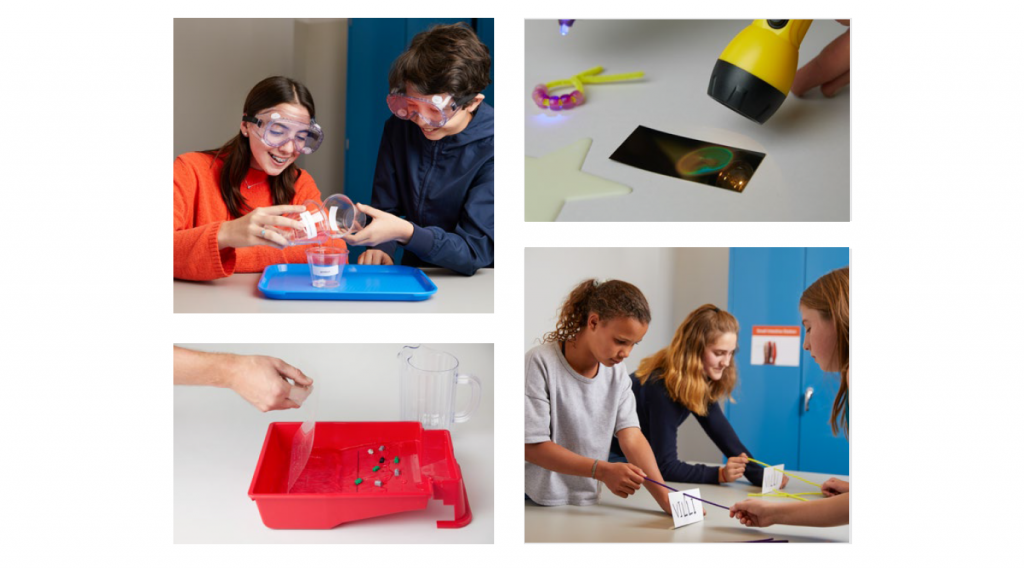
Program structure
Our cyclical lesson design ensures students receive multiple exposures to concepts through a variety of modalities. As they progress through the lessons within a unit, students build and deepen their understanding, increasing their ability to develop and refine complex explanations of the unit’s phenomenon.
It’s this proven program structure and lesson design that enables Amplify Science California to teach less, but achieve more. Rather than asking teachers to wade through unnecessary content, we designed our 6–8 program to address 100% of the California NGSS in fewer lessons than other programs.
Scope and sequence
Every year our grades 6–8 sequence consists of 9 units, with each unit containing 10–19 lessons. Lessons are written to last a minimum of 45-minutes, though teachers can expand or contract the timing to meet their needs.
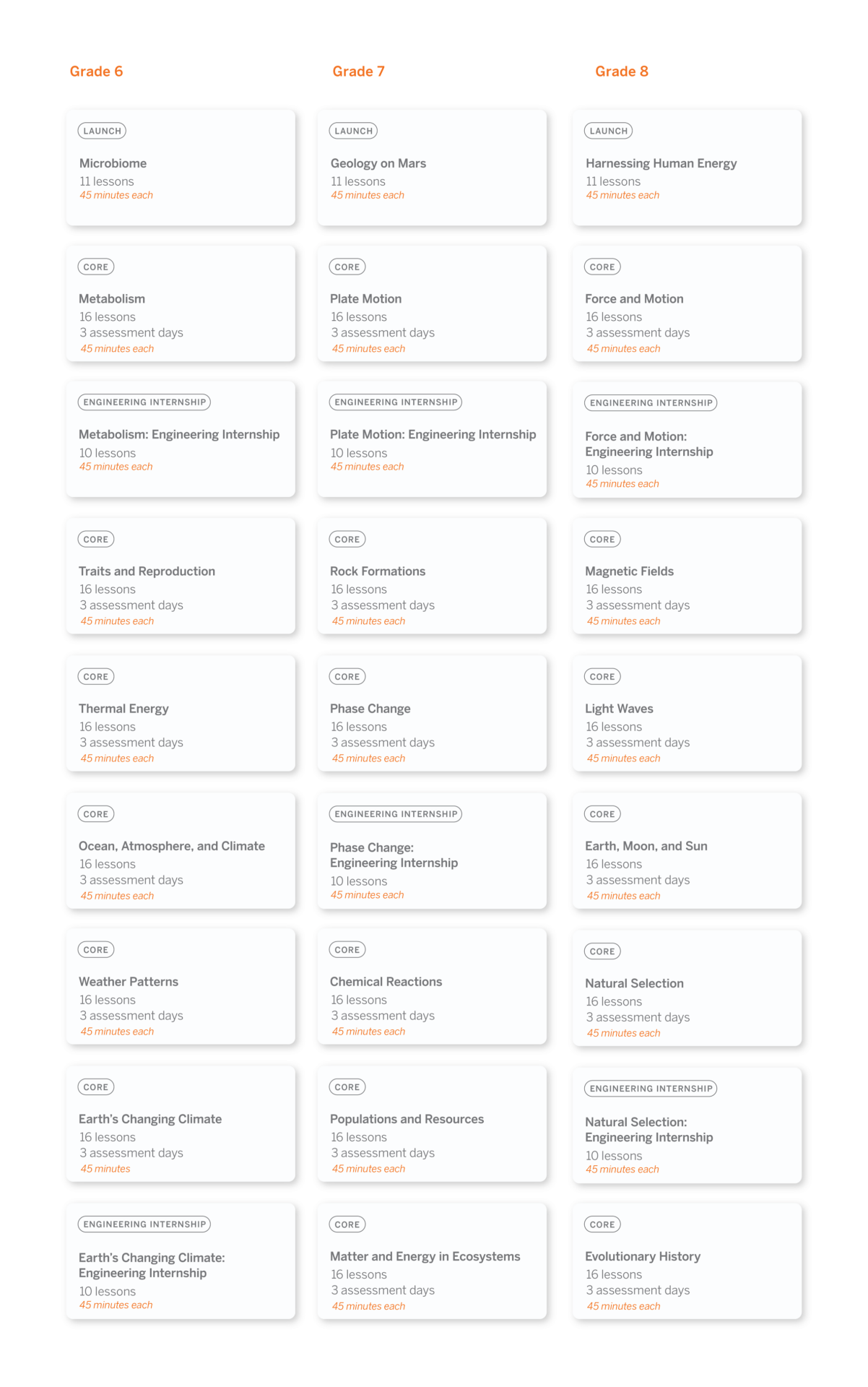
Unit types
Each unit delivers three-dimensional learning experiences and engages students in gathering evidence from a rich collection of sources, while also serving a unique purpose.
In grades 6–8, there are three types of units:
- One unit is a launch unit.
- Three units are core units.
- Two units are engineering internships.
Launch units
Launch units are the first units taught in each year of Amplify Science California. The goal of the Launch unit is to introduce students to norms, routines, and practices that will be built on throughout the year, including argumentation, active reading, and using the program’s technology. For example, rather than taking the time to explain the process of active reading in every unit in a given year, it is explained thoroughly in the Launch unit, thereby preparing students to read actively in all subsequent units.
Core units
Core units establish the context of the unit by introducing students to a real-world problem. As students move through lessons in a Core unit, they figure out the unit’s anchoring phenomenon, gain an understanding of the unit’s disciplinary core ideas and science and engineering practices, and make linkages across topics through the crosscutting concepts. Each Core unit culminates with a Science Seminar and final writing activity.
Engineering Internship units
Engineering Internship units invite students to design solutions for real-world problems as interns for a fictional company called Futura. Students figure out how to help those in need, from tsunami victims in Sri Lanka to premature babies, through the application of engineering practices. In the process, they apply and deepen their learning from Core units.
Units at a glance
Microbiome
Domain: Life Science
Unit type: Launch
Student role: Microbiological researchers
Phenomenon: The presence of 100 trillion microorganisms living on and in the human body may keep the body healthy.
Metabolism
Domain: Life Science
Unit type: Core
Student role: Medical researchers
Phenomenon: Elisa, a young patient, feels tired all the time.
Metabolism Engineering Internship
Domains: Life Science, Engineering Design
Unit type: Engineering internship
Student role: Food engineers
Phenomenon: Designing health bars with different molecular compositions can effectively meet the metabolic needs of patients or rescue workers.
Traits and Reproduction
Domain: Life Science
Unit type: Core
Student role: Biomedical students
Phenomenon: Darwin’s bark spider offspring have different silk flexibility traits, even though they have the same parents.
Thermal Energy
Domain: Physical Science
Unit type: Core
Student role: Thermal scientists
Phenomenon: One of two proposed heating systems for Riverdale School will best heat the school.
Ocean, Atmosphere, and Climate
Domains: Earth and Space Science, Physical Science
Unit type: Core
Student role: Climatologists
Phenomenon: During El Niño years, the air temperature in Christchurch, New Zealand is cooler than usual.
Weather Patterns
Domains: Earth and Space Science, Physical Science
Unit type: Core
Student role: Forensic meteorologists
Phenomenon: In recent years, rainstorms in Galetown have been unusually severe.
Earth’s Changing Climate
Domains: Earth and Space Science, Life Science
Unit type: Core
Student role: Climatologists
Phenomenon: The ice on Earth’s surface is melting.
Earth’s Changing Climate Engineering Internship
Domains: Earth and Space Science, Engineering Design
Unit type: Engineering internship
Student role: Civil engineers
Phenomenon: Designing rooftops with different modifications can reduce a city’s impact on climate change.
Geology on Mars
Domain: Earth and Space Science
Unit type: Launch
Student role: Planetary geologists
Phenomenon: Analyzing data about landforms on Mars can provide evidence that Mars may have once been habitable.
Plate Motion
Domain: Earth and Space Science
Unit type: Core
Student role: Geologists
Phenomenon: Mesosaurus fossils have been found on continents separated by thousands of kilometers of ocean, even though the Mesosaurus species once lived all together.
Plate Motion Engineering Internship
Domains: Earth and Space Science, Engineering Design
Unit type: Engineering internship
Student role: Mechanical engineering interns
Phenomenon: Patterns in earthquake data can be used to design an effective tsunami warning system.
Rock Transformations
Domain: Earth and Space Science
Unit type: Core
Student role: Geologists
Phenomenon: Rock samples from the Great Plains and from the Rocky Mountains — regions hundreds of miles apart — look very different, but have surprisingly similar mineral compositions.
Phase Change
Domains: Physical Science, Earth and Space Science
Unit type: Core
Student role: Chemists
Phenomenon: A methane lake on Titan no longer appears in images taken by a space probe two years apart
Force and Motion Engineering Internship
Domains: Engineering Design, Physical Science
Unit type: Engineering internship
Student role: Mechanical engineering interns
Phenomenon: Designing emergency supply delivery pods with different structures can maintain the integrity of the supply pods and their contents.
Chemical Reactions
Domains: Physical Science, Life Science, Earth and Space Science
Unit type: Core
Student role: Forensic chemists
Phenomenon: A mysterious brown substance has been detected in the tap water of Westfield.
Populations and Resources
Domains: Life Science, Earth and Space Science
Unit type: Core
Student role: Biologists
Phenomenon: The size of the moon jelly population in Glacier Sea has increased.
Matter and Energy in Ecosystems
Domains: Life Science, Earth and Space Science, Physical Science
Unit type: Core
Student role: Ecologists
Phenomenon: The biodome ecosystem has collapsed.
Harnessing Human Energy
Domains: Physical Science, Earth and Space Science, Engineering Design
Unit type: Launch
Student role: Energy scientists
Phenomenon: Rescue workers can use their own human kinetic energy to power the electrical devices they use during rescue missions.
Force and Motion
Domain: Physical Science
Unit type: Core
Student role: Physicists
Phenomenon: The asteroid sample-collecting pod failed to dock at the space station as planned.
Phase Change Engineering Internship
Domains: Engineering Design, Physical Science
Unit type: Engineering internship
Student role: Chemical engineering interns
Phenomenon: Designing portable baby incubators with different combinations of phase change materials can keep babies at a healthy temperature.
Magnetic Fields
Domain: Physical Science
Unit type: Core
Student role: Physicists
Phenomenon: During a test launch, a spacecraft traveled much faster than expected.
Light Waves
Domains: Physical Science, Life Science, Earth and Space Science
Unit type: Core
Student role: Spectroscopists
Phenomenon: The rate of skin cancer is higher in Australia than in other parts of the world.
Earth, Moon, and Sun
Domains: Earth and Space Science, Physical Science
Unit type: Core
Student role: Astronomers
Phenomenon: An astrophotographer can only take pictures of specific features on the Moon at certain times.
Natural Selection
Domains: Life Science, Earth and Space Science
Unit type: Core
Student role: Biologists
Phenomenon: The newt population in Oregon State Park has become more poisonous over time.
Natural Selection Engineering Internship
Domains: Engineering Design, Life Science
Unit type: Engineering internship
Student role: Clinical engineers
Phenomenon: Designing malaria treatment plans that use different combinations of drugs can reduce drug resistance development while helping malaria patients.
Evolutionary History
Domains: Life Science, Earth and Space Science
Unit type: Core
Student role: Paleontologists
Phenomenon: A mystery fossil at the Natural History Museum has similarities with both wolves and whales.
Resources
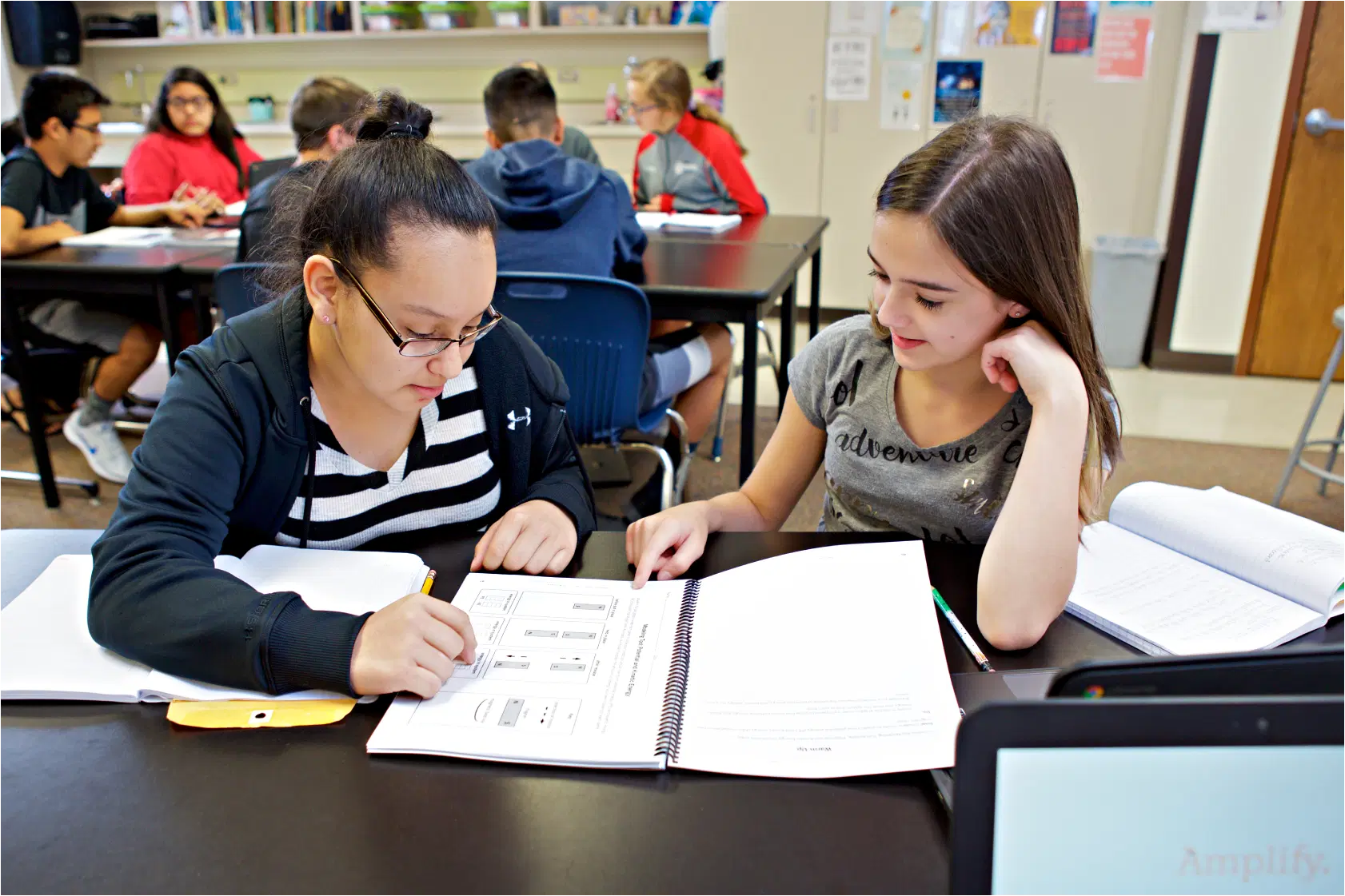


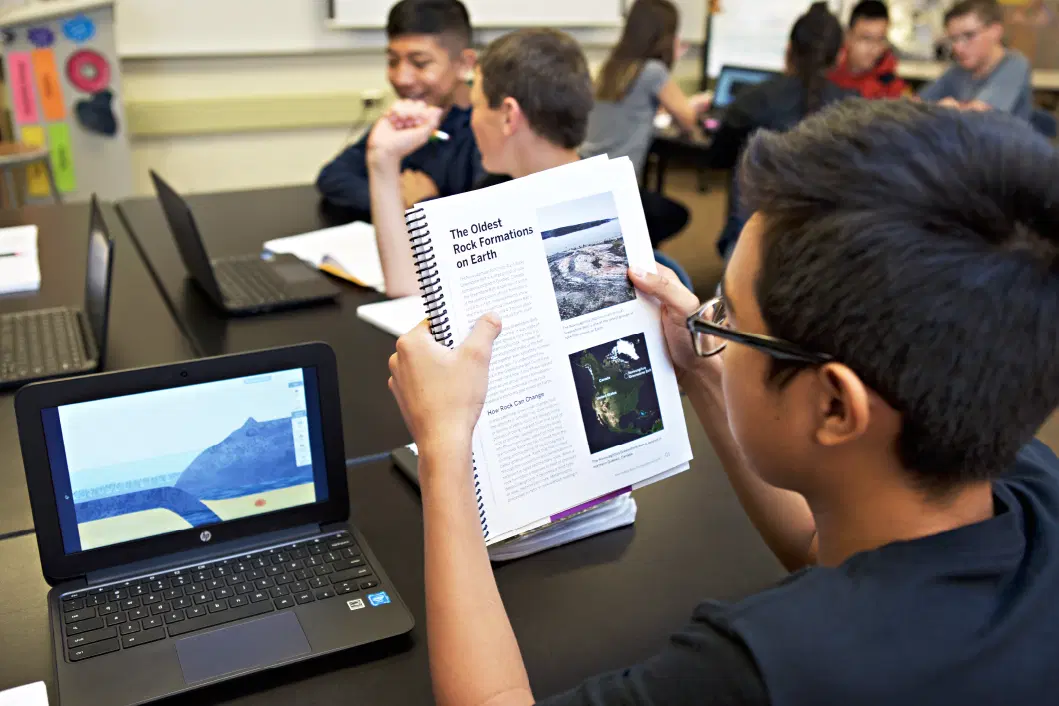


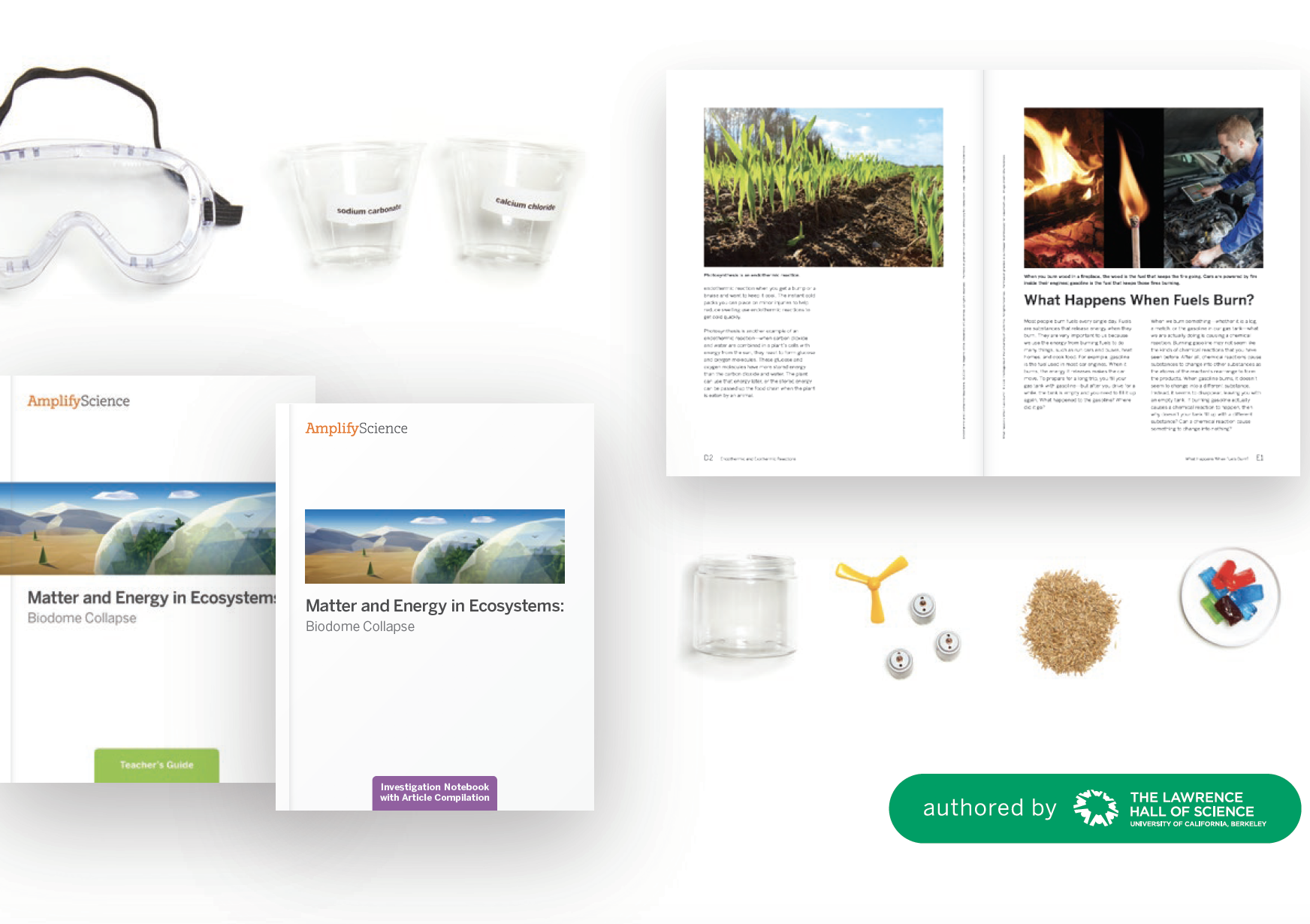
Welcome, Tennessee educators!
Amplify Core Knowledge Language Arts (CKLA) is the Tennessee program built on the Science of Reading research. Using a fundamentally different approach to language arts, CKLA sequences deep content knowledge with research-based foundational skills.

High quality instructional materials
Amplify Core Knowledge Language Arts (CKLA) has been approved by the state of Tennessee.

All-green on EdReports
EdReports, an independent curriculum review nonprofit, rates curriculum on three gateways: Text Quality, Building Knowledge, and Usability. Amplify CKLA earned a green rating in all three.
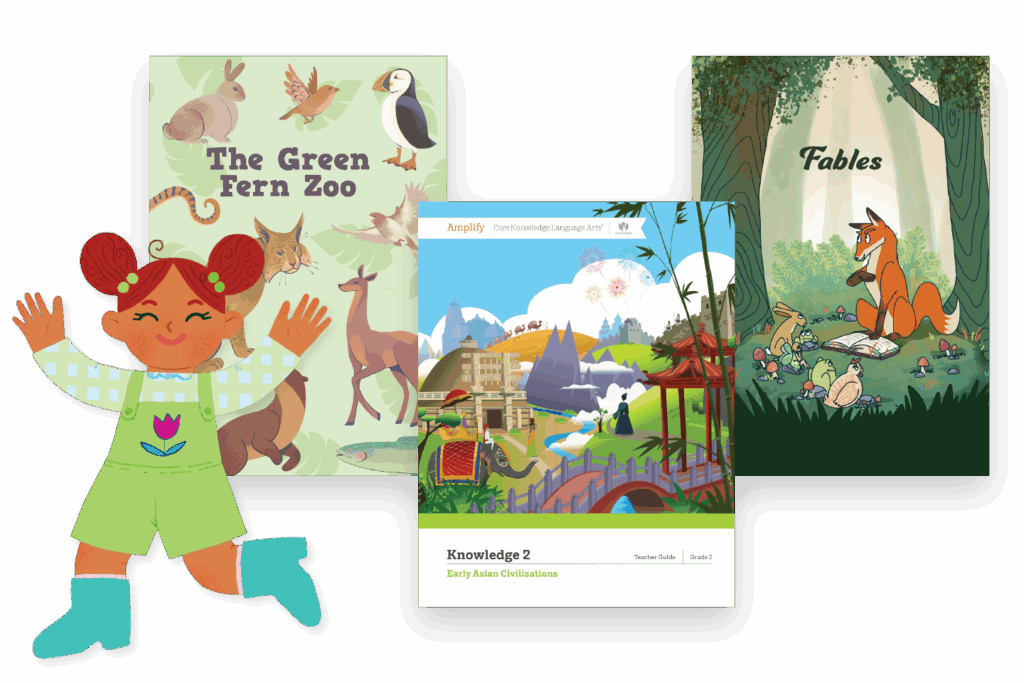
Science of Reading
Tennessee has an initiative to get 75 percent of the state’s third graders proficient by 2025. This Science of Reading toolkit will provide some insight into the research behind the Science of Reading and tools to help you support your students as they become proficient readers.

Case study
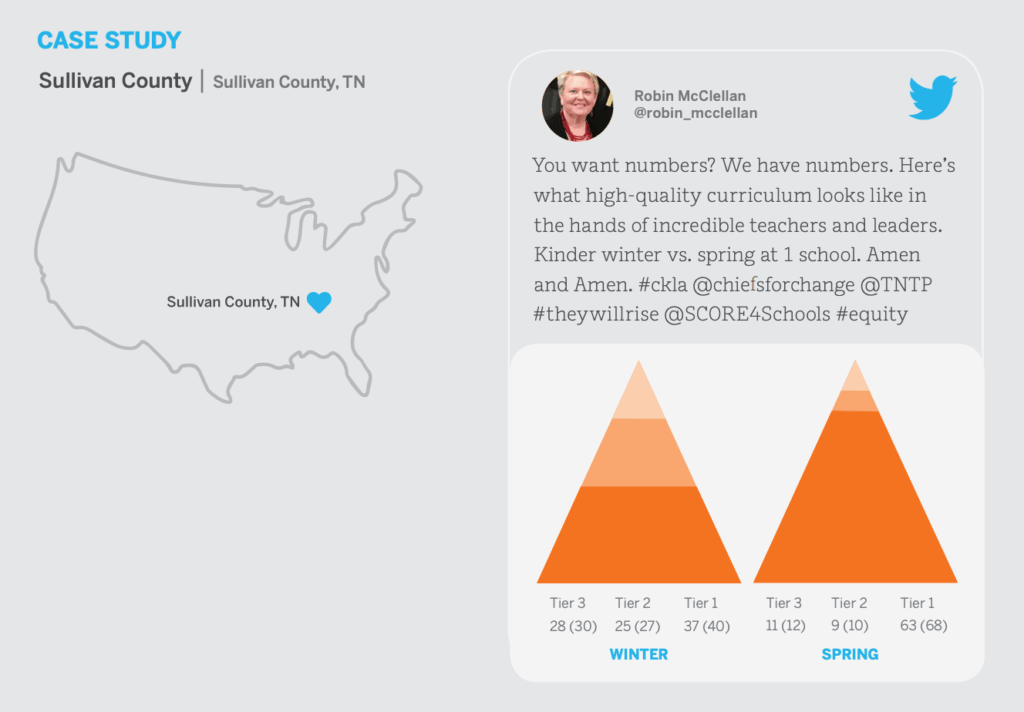
Program overview
Amplify CKLA inspires curiosity and drives results, empowering all students with rich background knowledge. See what schools are saying about our knowledge-based curriculum.
Background Knowledge drives results for Tennessee students
Our approach to building background knowledge is based on three pillars often overlooked in other curricula. It is:
- Content-specific.
Clearly-outlined content objectives are specific and support the development of knowledge in history, science, literature, culture, and the arts. - Cumulative.
Topics and vocabulary connect within and across grades, allowing students to extend knowledge and revisit topics in increasing depth in later grades. - Coherent.
When curriculum is fragmentary and disconnected, students face repetitions as well as gaps that can hinder learning. An intentional
design ensures the curriculum fits together as a whole.
Foundational skills instruction that makes a difference
Amplify CKLA’s second design principle is a research-based approach to foundational skills that gets real results.
- Explicit.
Learning isn’t left to chance. All 44 sounds and their 150 spellings in the English language are taught, practiced, and mastered, with ample opportunity to encounter each sound-spelling in diverse settings. - Sequential.
By moving in a sequence from easier to more complex in phonics and foundational reading skills, students master concepts before moving forward and gradually become more independent - Rewarding.
Learning to read should be fun. Decodabe chapter-books that feature dynamic plots and characters make kids want to read more. Engaging stories include children who discover fossils and a grandmother who flies hang gliders.
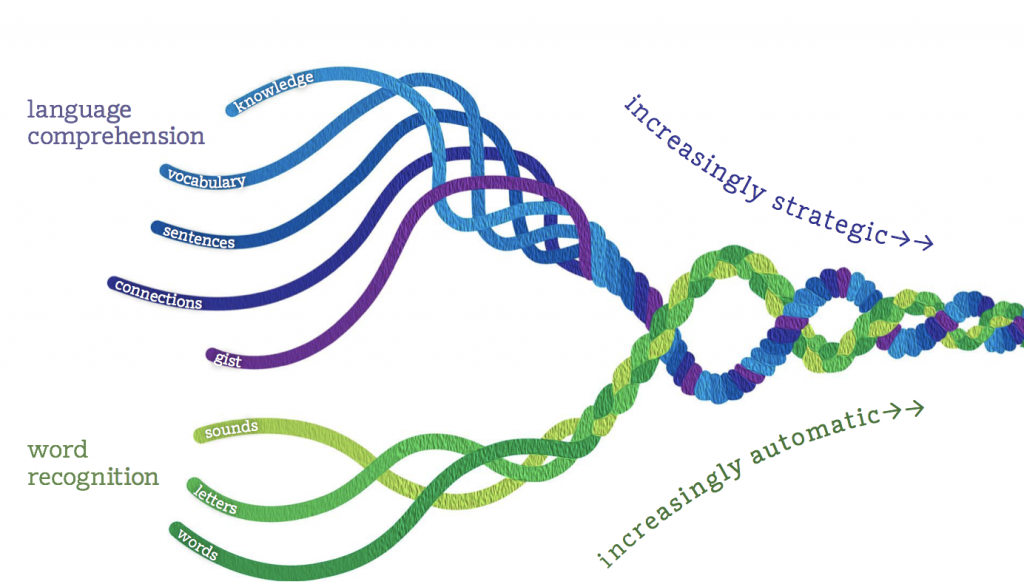
Materials
The program provides engaging print and multimedia materials designed to provide a robust literacy-rich foundation in every classroom.
Teacher Materials
Research-based lessons integrate foundational literacy skills and cross-curricular content knowledge.
- Teacher Guides
- Projectable lesson components
- Quests for the Core for Grades 3–5 (immersive, problem-based learning)
Student materials
Engaging student resources include dynamic decodable chapter books and content-rich, cross-curricular Readers.
- Student Readers
- Activity Books
- Formative Assessments
- Poet’s Journal and Writer’s Journal (write-in Readers for Grades 4–5)
Multimedia resources
Access the program’s online resources anywhere, anytime, from any device.
- Teacher and student materials
- Knowledge Builder animated videos
- Sound Library songs and videos
- Differentiation and enrichment guides
- Real-time program support via email, live chat, and phone
- Professional learning videos, webinars, and self-driven modules
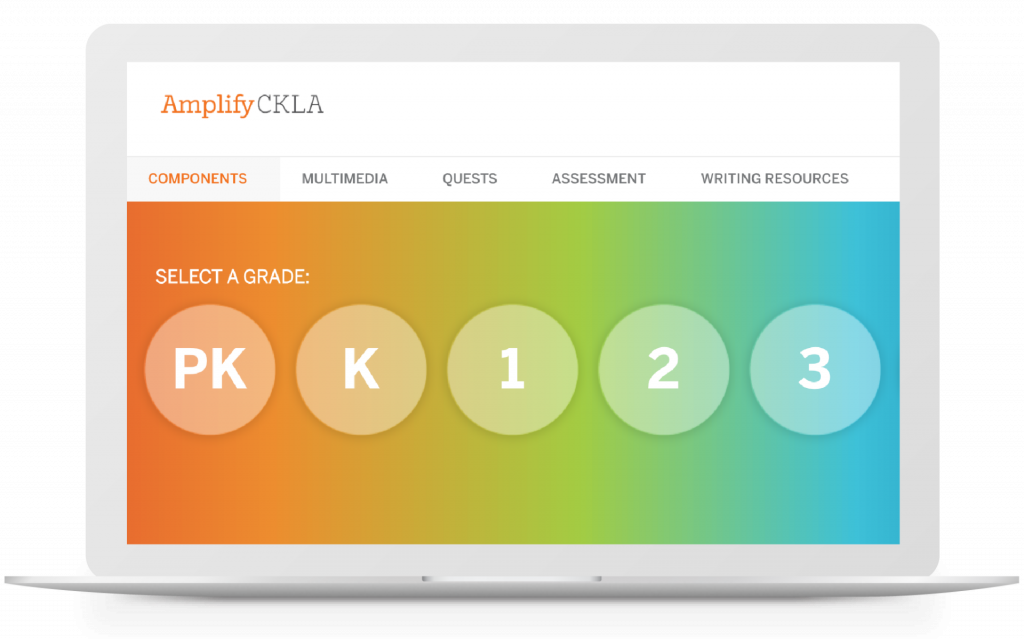

Hands-on phonics materials
Multisensory phonics and foundational skills resources give students the opportunity to practice key skills using diverse, fun approaches that build independence.
- Big Books
- Large and Small Letter Cards
- Spelling Cards
- Vowel and Consonant Code Flip Books
- Chaining Folders
Amplify CKLA In Action
Take a peek inside a classroom, spotlight experiences on knowledge and foundational skills and hear fellow educators and students discuss the power of Amplify CKLA


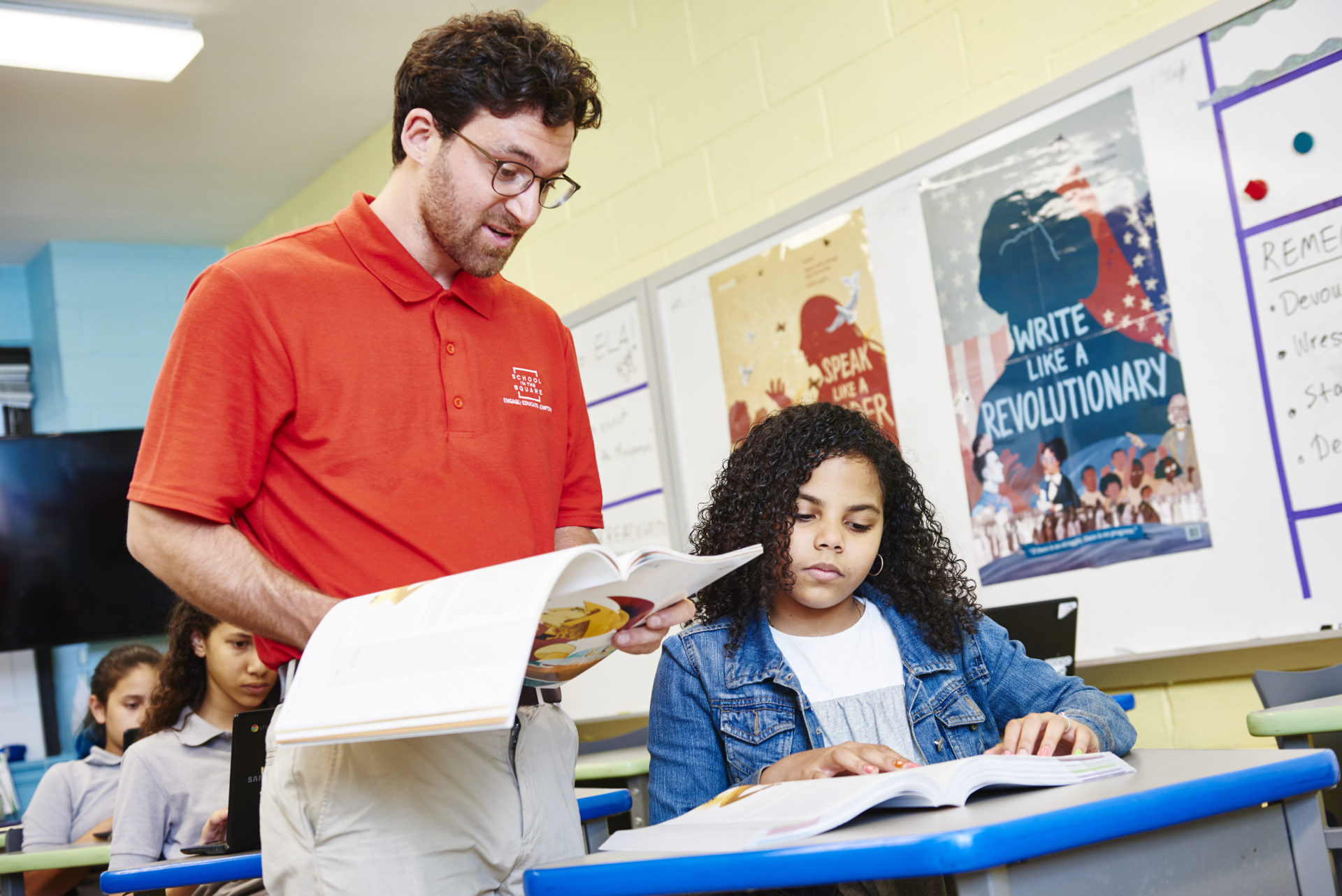

Contacts
Chasity O’Quinn
Account Executive for East Tennessee
coquinn@amplify.com
(865) 599-5101
Ann Patterson
Account Executive for West Tennessee
apatterson@amplify.com
(704) 813-7757
Welcome, Arkansas educators!
We are excited to introduce Amplify Core Knowledge Language Arts (CKLA) 3rd Edition, now an Arkansas-approved HQIM core literacy program within Amplify’s literacy suite. For more than a decade, Amplify CKLA has transformed classrooms nationwide with its intentional knowledge building and systematic skills instruction.
Rest assured that Amplify CKLA 2nd Edition remains a robust, trusted option, and our high-quality professional development and ever-growing PD Library of resources continue to be available to all CKLA partners.
Whether you’re continuing with the 2nd edition or exploring the 3rd, you’ve chosen a proven and research-based curriculum designed for lasting impact. Together, let’s write the next chapter in the Science of Reading.
A correlation of the Arkansas English Language Arts Standards to Amplify CKLA 3rd Edition is now available!

Amplify ckla servers
150,000+
Classrooms
4,000,000+
students
50+
us states and d.c.
Our approach
Improve outcomes with a program built on decades of research, that meets the strongest ESSA Tier I criteria.
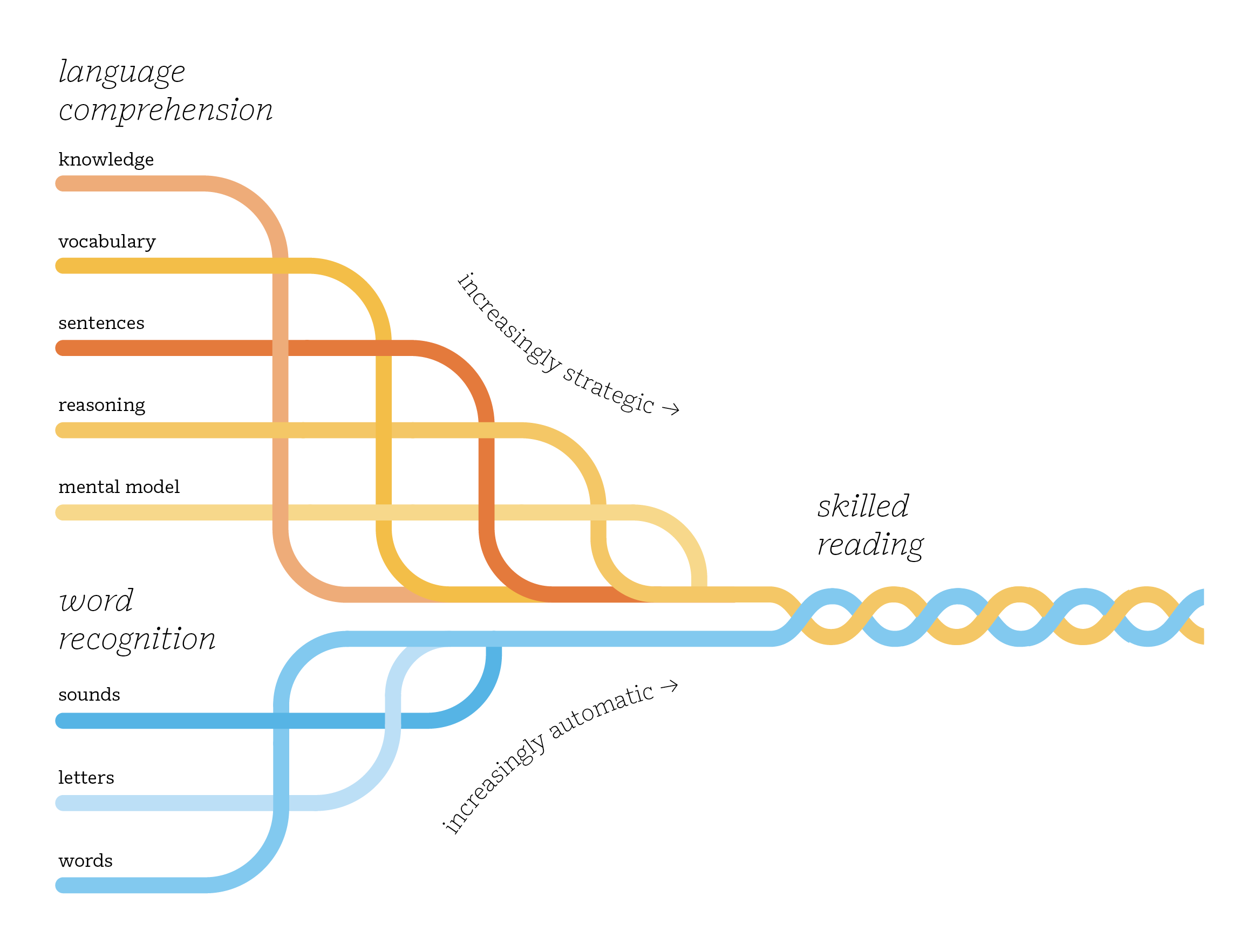
Grounded in the Science of Reading
As the original Science of Reading program, Amplify CKLA puts research into action with explicit, systematic foundational skills instruction and a proven knowledge-building sequence. In collaboration with education experts and practitioners, we provide powerful resources that deliver real results.
Background knowledge drives results for Arkansas students
Amplify CKLA follows the Core Knowledge Sequence, a content-specific, cumulative, and coherent approach to knowledge building. This approach improves reading scores and closes achievement gaps by establishing a robust knowledge base that strengthens comprehension.
In Amplify CKLA 3rd Edition, we’ve enriched our Knowledge Sequence with a wider range of perspectives and high-quality texts in new and enhanced units.
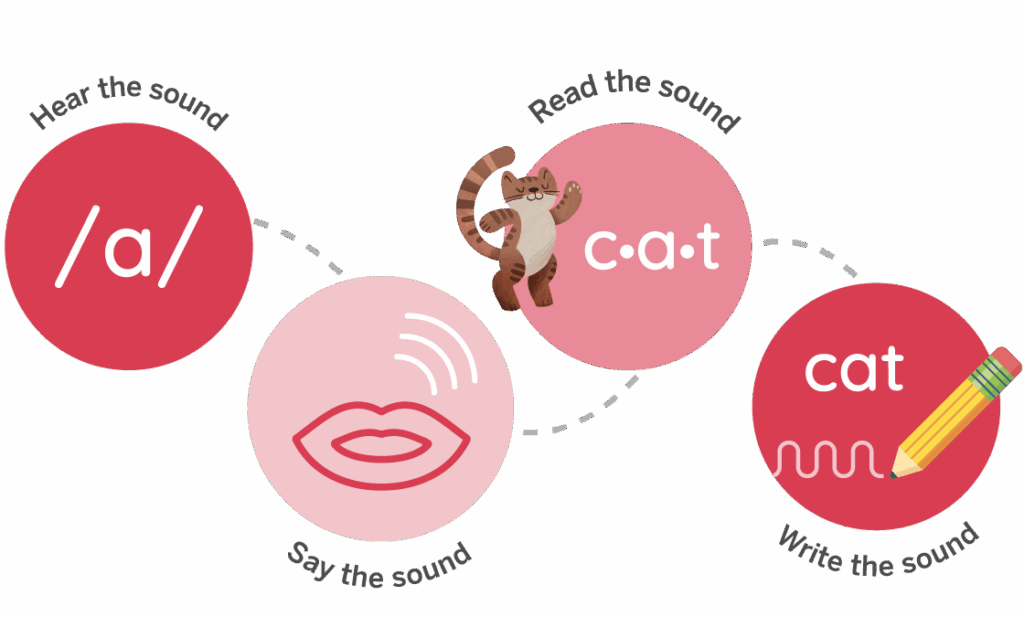
Build foundational skills for long-term success.
Students progress from simple to complex skill development, starting with phonological and phonemic awareness. Instruction in Grades K–2 explicitly teaches the 150 spellings for the 44 sounds of English, following an intentional progression to ensure student success.
In our 3rd Edition, we’ve added dedicated Grade 3 foundational skills instruction that can either support core lessons or function as an intervention, based on student needs.
Daily writing deepens learning.
Grounded in the Science of Writing—the research on how kids learn to write—instruction is explicit, daily, and woven into the curriculum’s rich content. It covers both transcription (handwriting and spelling) and composition (organizing ideas into narratives) with high-impact activities like sentence-level combining and expanding, and pre-writing exercises. Writing and reading instruction are integrated, so students simultaneously strengthen their communication skills, comprehension, and confidence.


High-quality texts
Amplify CKLA students are immersed in a variety of texts—complex read-alouds, decodable chapter books, trade books, and content-rich readers—that reflect varying experiences and backgrounds, and connect to learning goals.
Readers are 100% decodable for Grades K–2, empowering students to directly apply what they’ve learned. Novel Study units for Grades 3–5 offer a mix of contemporary and classic literature, and Culminating Research Units in every grade include a set of authentic texts and trade books.
Reach all learners with differentiated support.
Scaffolds and challenges, developed in collaboration with education experts, make content available to every student—including multilingual and English learners. With strategies embedded right in the curriculum, teachers can deliver in-the-moment, individualized instruction to meet all student needs.
For a dedicated English language development program aligned to Amplify CKLA, explore Language Studio.
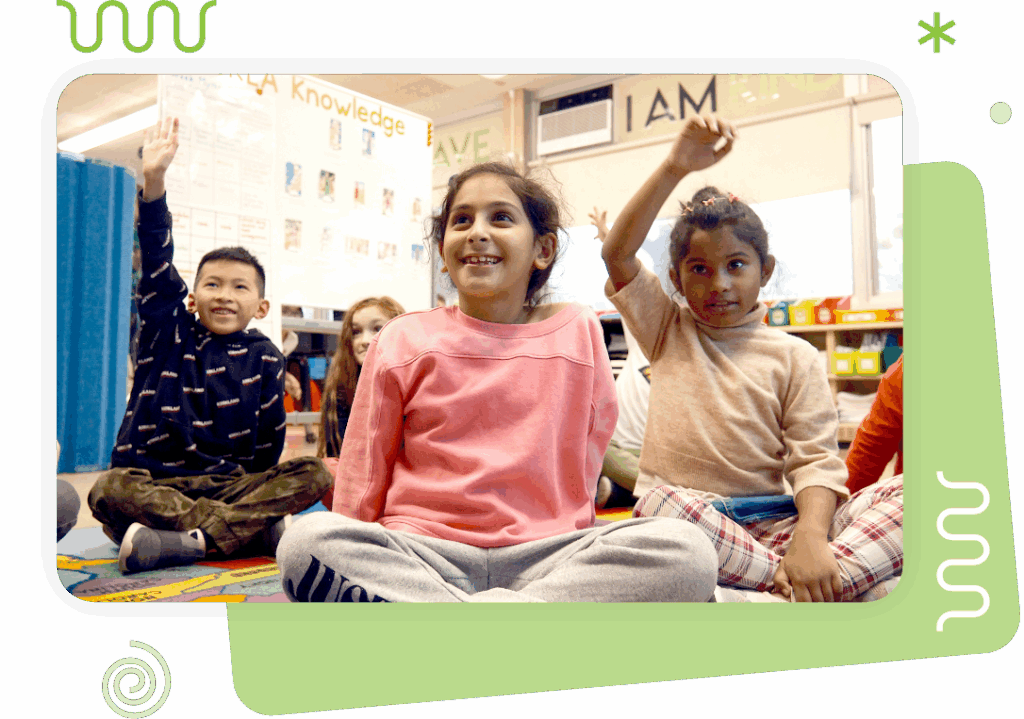
What’s included
The comprehensive resources in Amplify CKLA 3rd Edition support effective literacy instruction in every classroom.


Easy-to-use teacher materials
Amplify CKLA teachers are empowered to deliver effective instruction with the following print and digital resources:
- Teacher Guides (K–5)
- Assessment Guides (K–5)
- Authentic texts and trade books (K–5)
- Knowledge Image Cards (K–2)
- Knowledge Flip Books (K–2, digital)
- Ready-made and customizable Presentation Screens (K–5, digital)
- Remediation and intervention resources (K–5)
- On-demand professional development (K–5, digital)
Immersive Amplify CKLA student resources
Amplify CKLA students stay engaged with the following print and digital resources:
- Decodable readers (K–2)
- Student Readers and novels (3–5)
- Student Activity Books (K–5)
- Poet’s Journal and Writer’s Journal (3–5)
- eReaders (K–5, digital)
- Sound Library featuring articulation videos and songs (K–2, digital)
- Skill-building practice games (K–5)

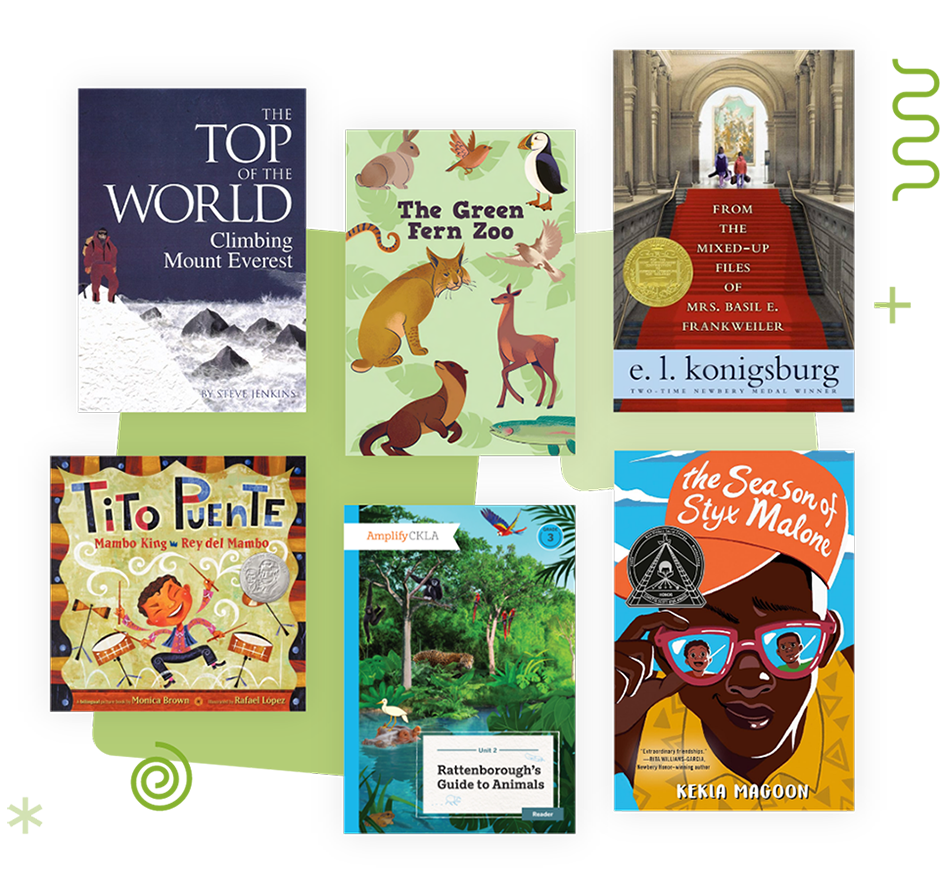
Rich literary experiences
The high-quality texts in Amplify CKLA foster students’ curiosity, reflect the wide variety of their backgrounds and experiences, and help them learn to read with confidence.
- Trade Book Collections (K–5) inspire student research in each grade’s Culminating Research Unit.
- Classic and contemporary literature (3–5) delights students in Novel Study Units.
- Increasingly complex Student Readers (K–5) develop students’ literacy across grades.
Hands-on phonics materials
Multisensory phonics and foundational skills resources engage students with fun, varied approaches that promote mastery and build independence.
- Chaining Folders and Small Letter Cards (K)
- Read-Aloud Big Books (K–1)
- Large Letter Cards (K–2)
- Sound Cards (K–2)
- Image Cards (K–3)
- Blending Picture Cards (K)
- Consonant and Vowel Code Posters and Spelling Cards (1–2)
- Sound Library (K–2, digital)
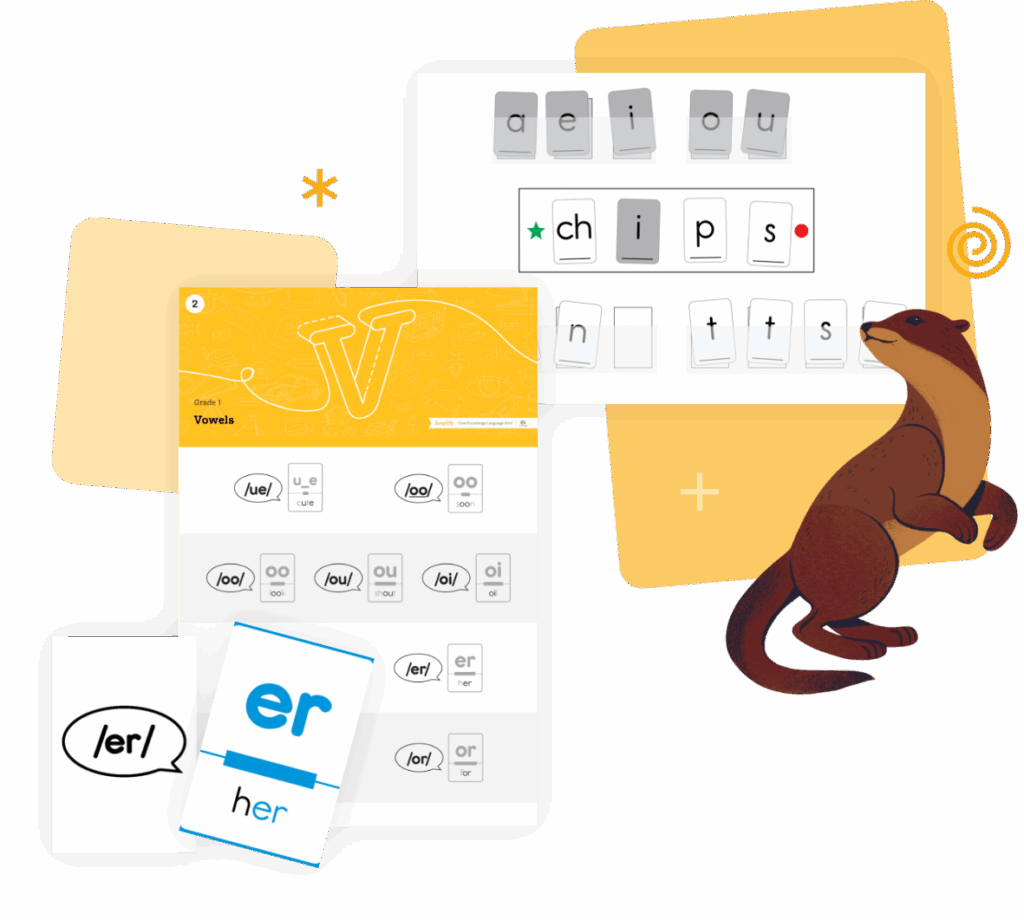
All-in-one digital platform
Our comprehensive platform simplifies your day-to-day tasks and makes it easier to plan and deliver lessons.
- Ready-made and customizable Presentation Screens
- Auto-scored digital assessments
- Standards-based reporting
- Assignable skill-building games
- Sound Library
- eReaders
Professional Development
We look forward to working alongside our Arkansas partners to build a strong foundation in Amplify CKLA. Our dedicated professional development team will continue collaborating with the ADE to provide job-embedded, on-site support that aligns with the Arkansas ELA standards and the Science of Reading.
A true Science of Reading early literacy suite for Grades K–5
Amplify has combined the critical elements of a Science of Reading system: assessment, core curriculum, personalized learning, and intervention. Based on 20 years of experience with the Science of Reading, this complete system saves you time and aligns your literacy practices.
- Assess with mCLASS®: A universal and dyslexia screener, powered by DIBELS® 8th Edition
- Instruct with Amplify CKLA: Core curriculum to build foundational skills and knowledge
- Practice with Boost Reading: Personalized learning program to extend and reinforce core
- Intervene with mCLASS Intervention: Staff-led Tier 2 and 3 intervention for intensive support
Language Studio: Multilingual and English learner support
Language Studio is Amplify CKLA’s dedicated K–5 program for multilingual and English learners. Through daily 30-minute lessons, it strengthens reading, writing, speaking, and listening skills while reinforcing core instruction. This tailored support empowers students to confidently access grade-level content as they develop academic English.
Explore more programs in Amplify’s literacy and biliteracy suite.
All of the programs in our literacy suite and our biliteracy suite are designed to support and complement each other. Learn more about our related programs:
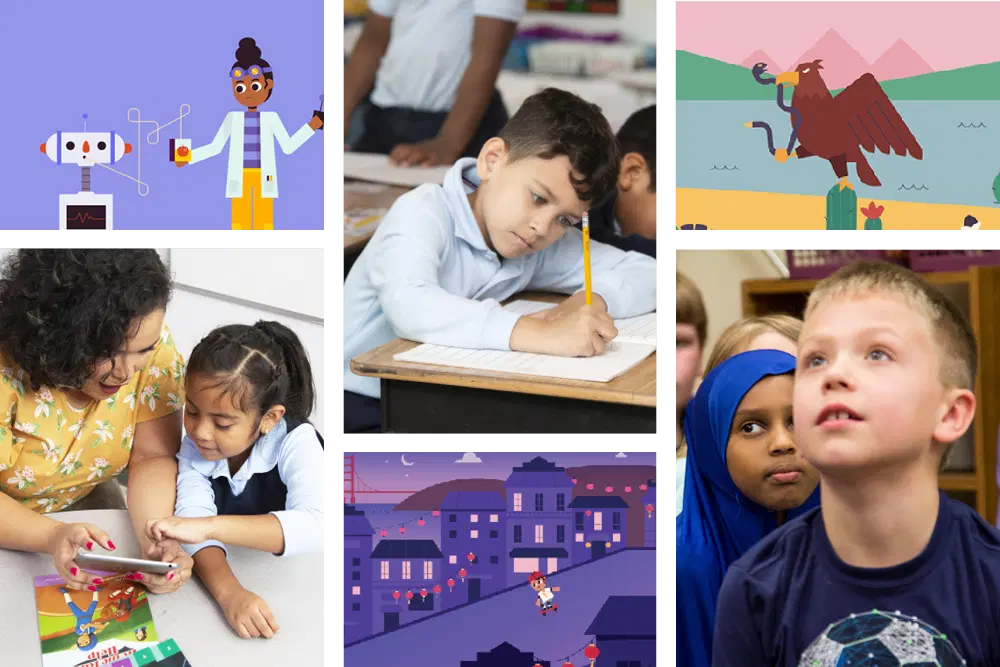
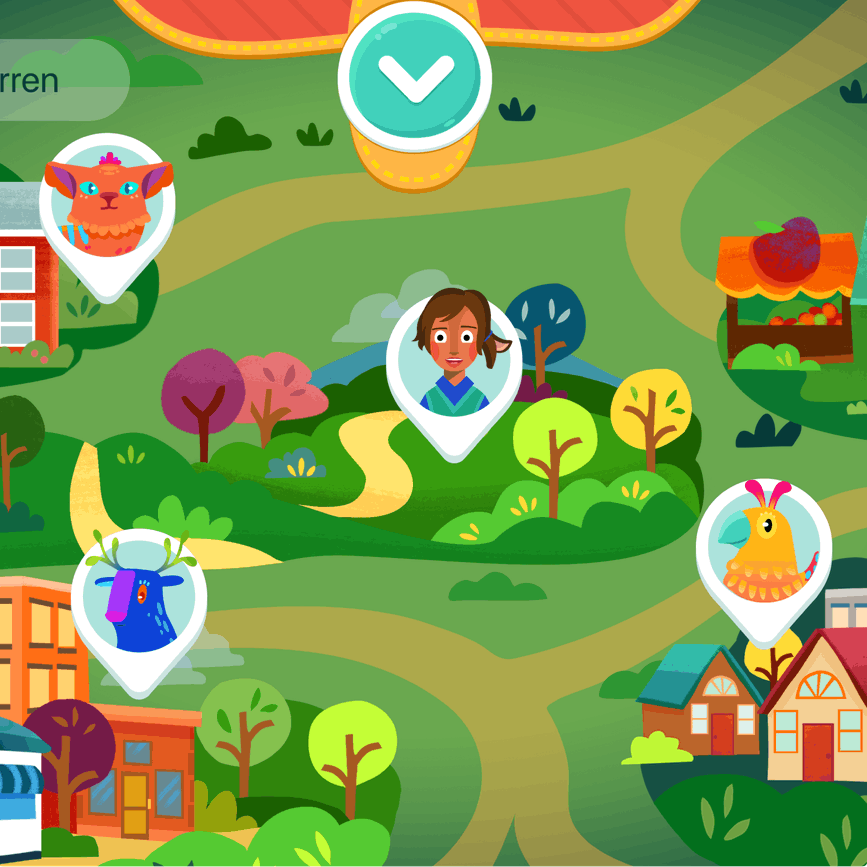
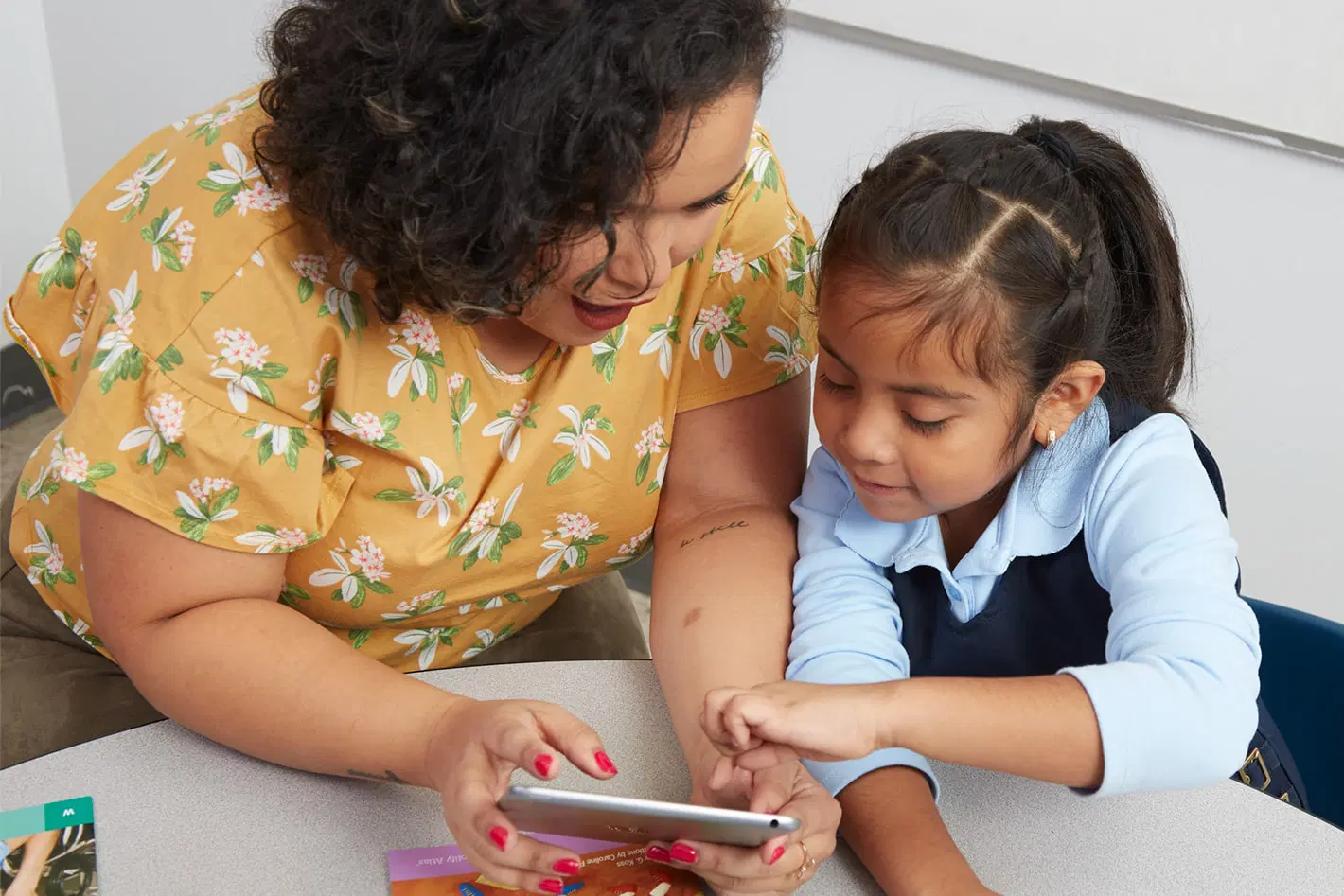
Get a demo
Fill out this form and your Account Executive Paige Benoy will contact you to set up a demo, send samples, or answer questions about Amplify CKLA.
Paige Benoy
Arkansas Account Executive
pbenoy@amplify.com
Welcome, Middle School Science Reviewers!
Thank you for taking the time to review Amplify Science for grades 6–8. On this site, you’ll find all the resources you need to learn more about this engaging and robust NGSS program. Plus, we make it easy to experience our program firsthand with a live demo account that features our interactive learning platform.

Overview
With Amplify Science, students don’t just passively learn about science concepts.
No matter where your students are learning—whether at school or at home—they take on the role of scientists and engineers to actively investigate and make sense of real-world phenomena. They do this through a blend of cohesive and compelling storylines, hands-on investigations, collaborative discussions, literacy-rich activities, and interactive digital tools.
Listen to these educators share how the program empowers students to think, read, write, and argue like real scientists and engineers every day.
EdReports All-Green
Amplify Science for grades K–8 has been rated all-green by EdReports.

Program structure
Our cyclical lesson design ensures students receive multiple exposures to concepts through a variety of modalities.
As they progress through the lessons within a unit, students build and deepen their understanding, increasing their ability to develop and refine complex explanations of the unit’s phenomenon. It’s this proven program structure and lesson design that enables Amplify Science to address 100% of the NGSS in fewer days than other programs.
Unit Sequence
Our lessons follow a structure that is grounded in regular routines while still being flexible enough to allow for a variety of learning experiences.
In fact, our multi-modal instruction offers more opportunities for students to construct meaning, and practice and apply concepts than any other program. What’s more, our modular design means our units can be flexibly arranged to support your instructional goals.
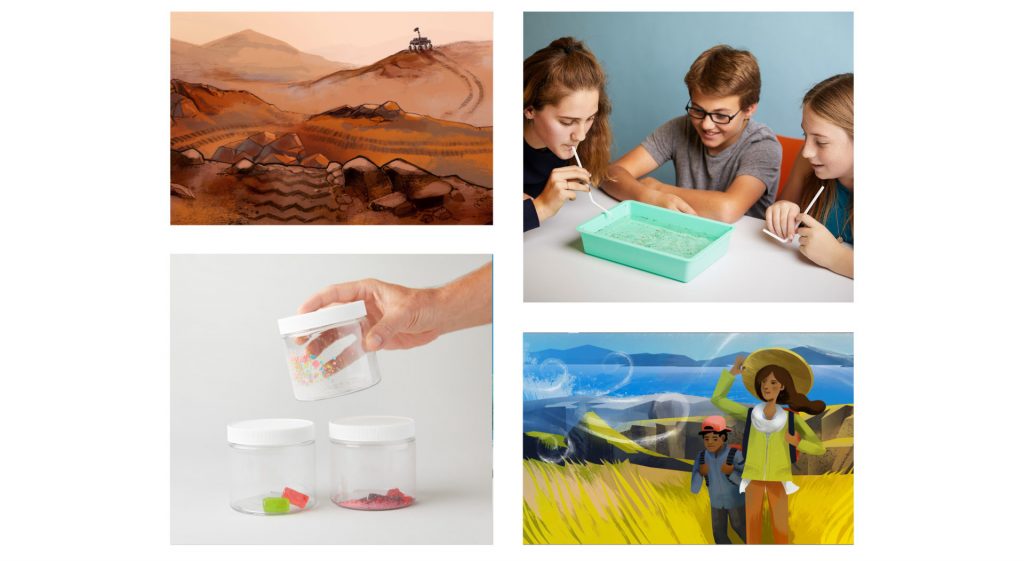
Unit 1
Microbiome
Domain: Life Science
Unit type: Launch
Student role: Microbiological researchers
Phenomenon: The presence of 100 trillion microorganisms living on and in the human body may keep the body healthy.
Unit 2
Metabolism
Domain: Life Science
Unit type: Core
Student role: Medical researchers
Phenomenon: Elisa, a young patient, feels tired all the time.
Unit 3
Metabolism Engineering Internship
Domains: Life Science, Engineering Design
Unit type: Engineering internship
Student role: Food engineers
Phenomenon: Designing health bars with different molecular compositions can effectively meet the metabolic needs of patients or rescue workers.
Unit 4
Traits and Reproduction
Domain: Life Science
Unit type: Core
Student role: Biomedical students
Phenomenon: Darwin’s bark spider offspring have different silk flexibility traits, even though they have the same parents.
Unit 5
Thermal Energy
Domain: Physical Science
Unit type: Core
Student role: Thermal scientists
Phenomenon: One of two proposed heating systems for Riverdale School will best heat the school.
Unit 6
Ocean, Atmosphere, and Climate
Domains: Earth and Space Science, Physical Science
Unit type: Core
Student role: Climatologists
Phenomenon: During El Niño years, the air temperature in Christchurch, New Zealand is cooler than usual.
Unit 7
Weather Patterns
Domains: Earth and Space Science, Physical Science
Unit type: Core
Student role: Forensic meteorologists
Phenomenon: In recent years, rainstorms in Galetown have been unusually severe.
Unit 8
Earth’s Changing Climate
Domains: Earth and Space Science, Life Science
Unit type: Core
Student role: Climatologists
Phenomenon: The ice on Earth’s surface is melting.
Unit 9
Earth’s Changing Climate Engineering Internship
Domains: Earth and Space Science, Engineering Design
Unit type: Engineering internship
Student role: Civil engineers
Phenomenon: Designing rooftops with different modifications can reduce a city’s impact on climate change.
Unit 1
Geology on Mars
Domain: Earth and Space Science
Unit type: Launch
Student role: Planetary geologists
Phenomenon: Analyzing data about landforms on Mars can provide evidence that Mars may have once been habitable.
Unit 2
Plate Motion
Domain: Earth and Space Science
Unit type: Core
Student role: Geologists
Phenomenon: Mesosaurus fossils have been found on continents separated by thousands of kilometers of ocean, even though the Mesosaurus species once lived all together.
Unit 3
Plate Motion Engineering Internship
Domains: Earth and Space Science, Engineering Design
Unit type: Engineering internship
Student role: Mechanical engineering interns
Phenomenon: Patterns in earthquake data can be used to design an effective tsunami warning system.
Unit 4
Rock Transformations
Domain: Earth and Space Science
Unit type: Core
Student role: Geologists
Phenomenon: Rock samples from the Great Plains and from the Rocky Mountains — regions hundreds of miles apart — look very different, but have surprisingly similar mineral compositions.
Unit 5
Phase Change
Domains: Physical Science, Earth and Space Science
Unit type: Core
Student role: Chemists
Phenomenon: A methane lake on Titan no longer appears in images taken by a space probe two years apart
Unit 6
Force and Motion Engineering Internship
Domains: Engineering Design, Physical Science
Unit type: Engineering internship
Student role: Mechanical engineering interns
Phenomenon: Designing emergency supply delivery pods with different structures can maintain the integrity of the supply pods and their contents.
Unit 7
Chemical Reactions
Domains: Physical Science, Life Science, Earth and Space Science
Unit type: Core
Student role: Forensic chemists
Phenomenon: A mysterious brown substance has been detected in the tap water of Westfield.
Unit 8
Populations and Resources
Domains: Life Science, Earth and Space Science
Unit type: Core
Student role: Biologists
Phenomenon: The size of the moon jelly population in Glacier Sea has increased.
Unit 9
Matter and Energy in Ecosystems
Domains: Life Science, Earth and Space Science, Physical Science
Unit type: Core
Student role: Ecologists
Phenomenon: The biodome ecosystem has collapsed.
Unit 1
Harnessing Human Energy
Domains: Physical Science, Earth and Space Science, Engineering Design
Unit type: Launch
Student role: Energy scientists
Phenomenon: Rescue workers can use their own human kinetic energy to power the electrical devices they use during rescue missions.
Unit 2
Force and Motion
Domain: Physical Science
Unit type: Core
Student role: Physicists
Phenomenon: The asteroid sample-collecting pod failed to dock at the space station as planned.
Unit 3
Phase Change Engineering Internship
Domains: Engineering Design, Physical Science
Unit type: Engineering internship
Student role: Chemical engineering interns
Phenomenon: Designing portable baby incubators with different combinations of phase change materials can keep babies at a healthy temperature.
Unit 4
Magnetic Fields
Domain: Physical Science
Unit type: Core
Student role: Physicists
Phenomenon: During a test launch, a spacecraft traveled much faster than expected.
Unit 5
Light Waves
Domains: Physical Science, Life Science, Earth and Space Science
Unit type: Core
Student role: Spectroscopists
Phenomenon: The rate of skin cancer is higher in Australia than in other parts of the world.
Unit 6
Earth, Moon, and Sun
Domains: Earth and Space Science, Physical Science
Unit type: Core
Student role: Astronomers
Phenomenon: An astrophotographer can only take pictures of specific features on the Moon at certain times.
Unit 7
Natural Selection
Domains: Life Science, Earth and Space Science
Unit type: Core
Student role: Biologists
Phenomenon: The newt population in Oregon State Park has become more poisonous over time.
Unit 8
Natural Selection Engineering Internship
Domains: Engineering Design, Life Science
Unit type: Engineering internship
Student role: Clinical engineers
Phenomenon: Designing malaria treatment plans that use different combinations of drugs can reduce drug resistance development while helping malaria patients.
Unit 9
Evolutionary History
Domains: Life Science, Earth and Space Science
Unit type: Core
Student role: Paleontologists
Phenomenon: A mystery fossil at the Natural History Museum has similarities with both wolves and whales.
Access program
Watch the video to the right plus the ones below showing you how to navigate our digital platform. When you’re ready, follow the instructions below to log into our live demo account.
- Click the orange button below to access the platform.
- Choose the resources you’d like to review.
- Pick your grade level from the drop-down menu.
- Scroll down to find additional grade-level resources.
Navigating an Engineering Internship (Part 1)
This Part 1 video demonstrates how Engineering Internship units invite students to design solutions for real-world problems as interns for a fictional company called Futura. In the process, they apply and deepen their learning from Core units.
Navigating an Engineering Internship (Part 2)
This Part 2 video demonstrates how to use the Futura Workspace to manage the immersive experience of the Engineering Internship units. This includes guidance on how to create student groups, how to review student work, and how to send students targeted feedback on their designs.
Navigating our reporting tools
Teachers of Amplify Science grades 6–8 have access to a feature called Reporting. When unit assessments are administered digitally, the Reporting tool enables teachers to analyze student performance on the unit assessments.
Differentiation post-assessment
Every core unit of Amplify Science 6–8 features a formal formative assessment opportunity at the mid-way point, or “Critical Juncture,” of the unit, which provides an important opportunity for differentiation.
Resources


Get in touch

Have questions? Bob McCarty is standing by and ready to help.
Robert “Bob” McCarty
Senior Account Executive
(435) 655-1731
rmccarty@amplify.com
Welcome, Idaho science reviewers!
Welcome to Amplify CKLA® for grades K–5!
On this site, you’ll find resources to guide you in your review.
When you’re ready to explore the material, select a grade and click the “Review” button at the bottom of this page.


About the program
Rich, engaging content is at the center of Amplify CKLA instruction. Students build subject area knowledge in history, science, literature, and the arts by learning to read and write. High-quality instructional materials simplify your planning and provide the support and resources you need.
Every day in grades K–2, students complete one full lesson that builds foundational reading skills, as well as one full lesson that builds background knowledge. In grades 3–5, students start to master the basic skills of reading, further opening up their worlds.
Hear from educators like you
Hear from teachers, administrators, and students across the country who are using Amplify CKLA in their classrooms right now.
Resources to support your review
Download the resources below before you review the program to better understand the program structure, components, digital resources, and more.
- Program guide [PDF]
- Knowledge sequence [PDF]
- Program structure brochure [PDF]
- Multimedia flyer [PDF]
- PreK–grade 5 unit summaries [PDF]
- Common Core State Standard Alignment [PDF]
- Research base [PDF]
- Impact brochure [PDF]
- ELA K-8 Instructional Materials Evaluation Guide [PDF]
Program walkthrough
Before you explore the program, watch this overview to get familiar with the program, its components, and ways to find resources for you and your students online.
Lesson walkthrough videos
Kindergarten
Before you explore the program, follow along as a kindergarten class goes through a Amplify CKLA Skills Strand lesson on tricky words.
Grade 1
In this Knowledge Strand lesson, students achieve reading proficiency with complex read-alouds, exposure to background knowledge, vocabulary practice, text-based discussions, and writing activities.
Grade 4
Curious how the two strands are integrated in grades 3–5? Watch students journey through a Quest for the Core™ lesson in which fourth graders work in teams, combining research, writing, and presentation skills to become master inventors.
Start your review
To digitally complete your review, you can explore teacher and student materials for every grade:


Amplify CKLA includes rich, diverse multimedia resources. Below you’ll find a sample of our Knowledge Builder videos and the Sound Library for foundational skills.

In Grades 3–5, we offer various multimedia resources, as well as supplemental reading resources like Novel Guides.
If you’d like to review the full program, request physical samples, or speak to a product expert for more information, fill out the form below and we’ll be in touch.

Request more information
Amplify Desmos Math Community Showcase
The promise of Next Generation Science Standards
The Next Generation Science Standards (NGSS), and other state standards like them, represent more than just new expectations—they embody a transformative vision for science education. Instead of asking students to memorize isolated facts, NGSS calls for students to think like scientists and engineers while grappling with real-world phenomena that matter to them and their communities.
This shift from learning about to figuring out develops the critical-thinking skills and problem-solving mindset students need to tackle complex challenges throughout their lives.
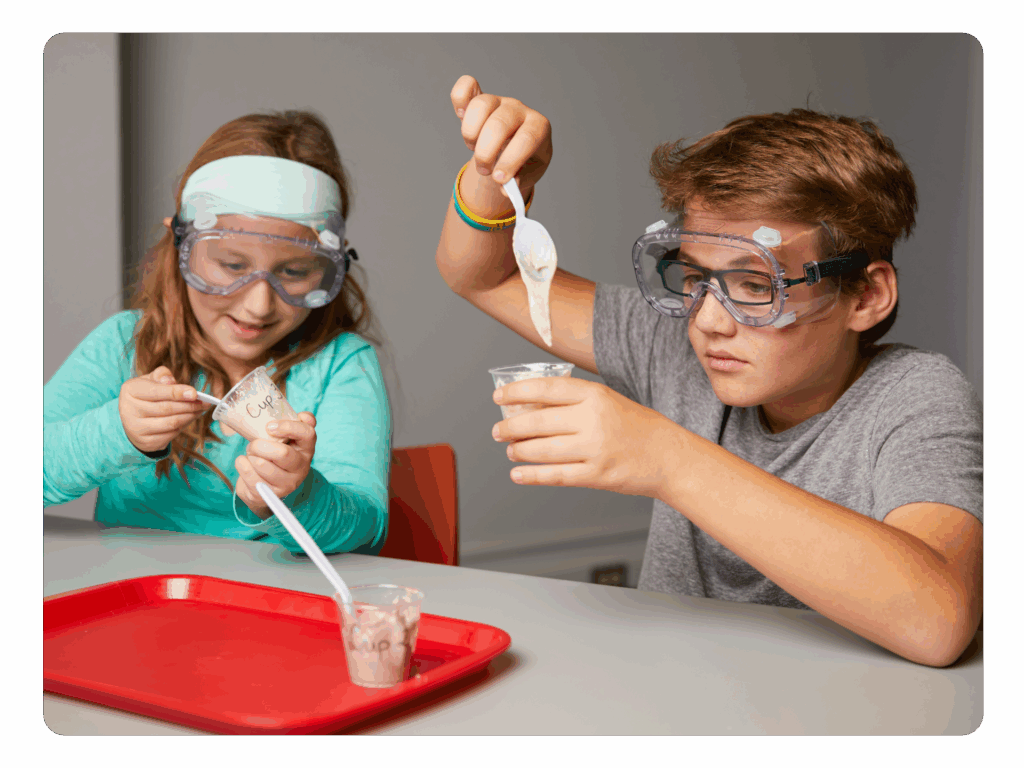
Three-dimensional (3D) learning that engages and inspires
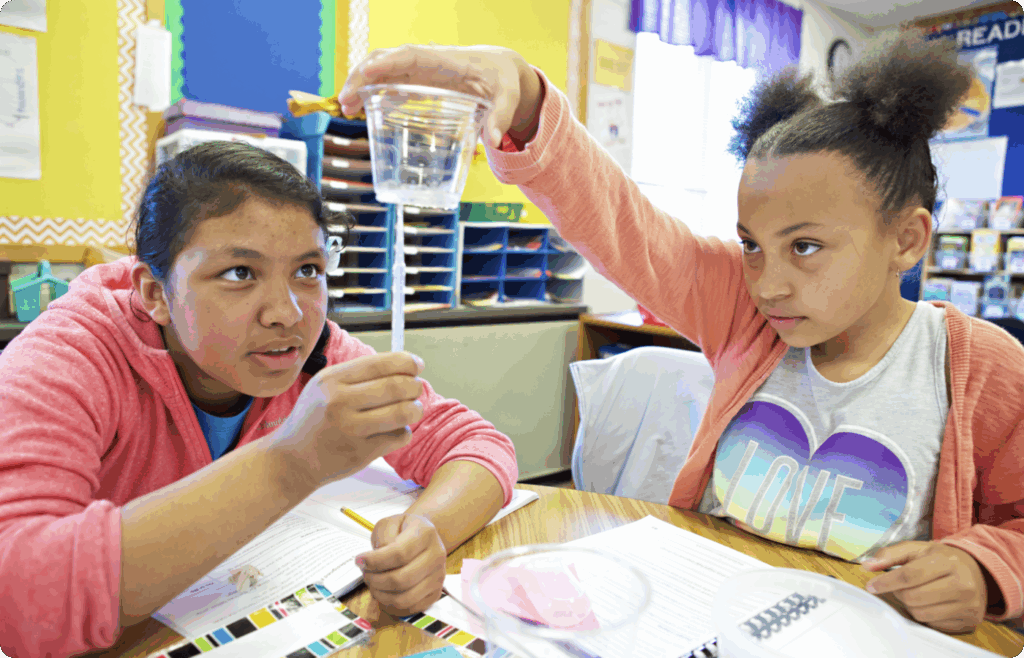
At the heart of NGSS lies three-dimensional learning, where Science and Engineering Practices (SEPs), Crosscutting Concepts (CCCs), and Disciplinary Core Ideas (DCIs) work together to create rich, meaningful learning experiences.
Science and Engineering Practices are the approaches and habits of real scientists and engineers: asking questions, developing models, planning investigations, and constructing evidence-based explanations and arguments. Working with these practices awakens student curiosity, drives student-centered learning, encourages deep and critical thinking, and creates opportunities for students to articulate their understanding in a variety of meaningful ways.
Crosscutting Concepts are the big-picture thinking tools that scientists use every day. When students use Crosscutting Concepts as a lens to examine common themes in science such as patterns, cause and effect, systems, and energy, they begin to identify and connect science ideas across disciplines.
Disciplinary Core Ideas represent the essential knowledge of science. Students figure out these science ideas through their investigation of real-world scientific phenomena, and consequently develop deep understandings of science ideas.
The student experience: from passive to passionate
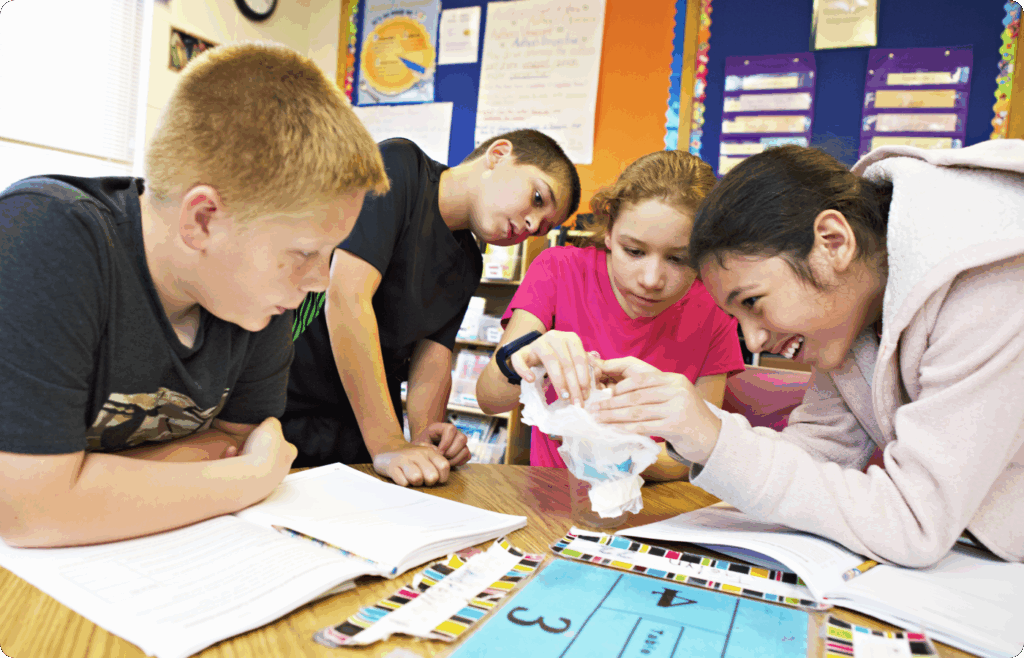
In three-dimensional science learning, students become active investigators, gathering evidence from multiple sources and constructing increasingly sophisticated scientific arguments and models about real-world phenomena. They engage in evidence-based debates, collaborate on engineering challenges, and make connections between their investigations and their own communities, as well as the world beyond. See it in action.

The literacy-rich nature of NGSS instruction means students read, write, speak, and listen like real scientists and engineers, actively questioning, analyzing, and communicating findings. This integrated approach develops both scientific understanding and communication skills—skills that transfer across all subjects and even beyond the classroom.
How Amplify Science delivers as an HQIM curriculum
Amplify Science was built from the ground up to fulfill the NGSS vision and is an HQIM (high-quality instructional materials) curriculum, characterized by the following:
- All green on EdReports. Amplify Science has been evaluated by EdReports, an independent K–12 curriculum review organization, and received the esteemed all-green rating (“meets expectations”) across all three of its gateways: Alignment to the NGSS, Coherence and Scope, and Usability. Learn more about our all-green rating.

- The real-world anchor phenomenon is deeply woven throughout each unit as the central thread. In Amplify Science, students assume the role of a real scientist or engineer to investigate a compelling phenomena in K–5 and grades 6–8. Over the course of the unit, they gather and make sense of a variety of evidence sources and develop increasingly sophisticated explanations and models as their understanding deepens. Whether investigating a mysterious fossil discovery as geologists or designing emergency supply delivery pods as mechanical engineers, students experience the kind of work done by real scientists and engineers.
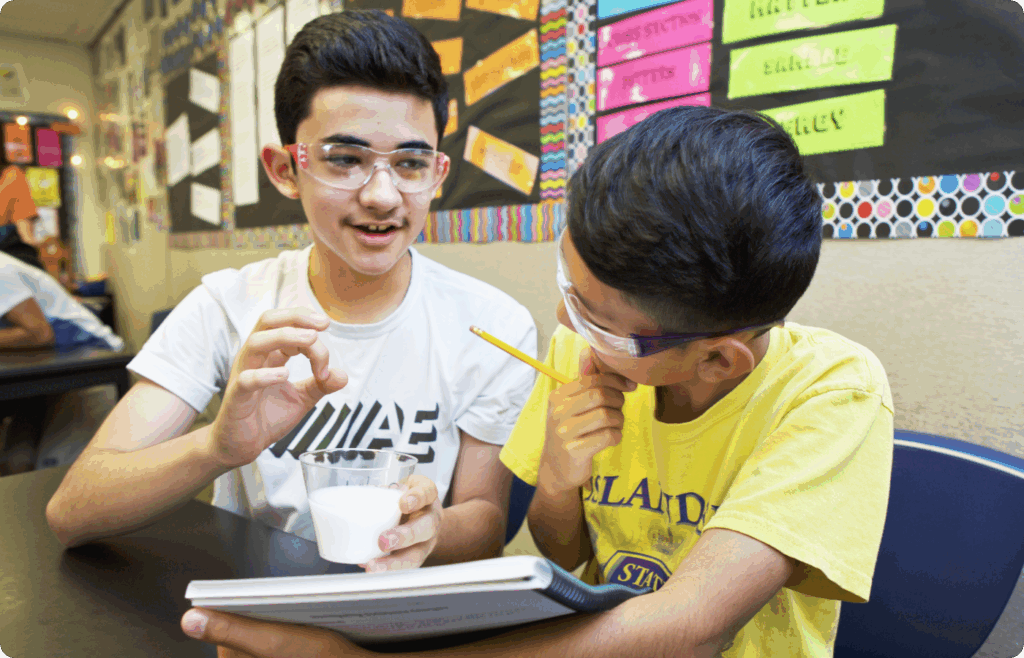
- All three dimensions of the NGSS are intentionally and thoughtfully integrated throughout every unit and across all grades. As they built Amplify Science as an HQIM curriculum, the experts at UC Berkeley’s Lawrence Hall of Science deliberately crafted each unit, chapter, and lesson with the following guiding questions in mind:
- What do we want students to figure out (specifically, what Disciplinary Core Idea or part of a DCI)?
- How do we want them to figure it out (i.e., what Scientific and Engineering Practice will they engage in to reach understanding)?
- What Crosscutting Concept can scaffold students’ understanding and connect it to other ideas about the natural world that they have learned?
This systematic approach ensures that every learning experience is purposefully designed to engage students in authentic scientific thinking while building connections across concepts and grades.
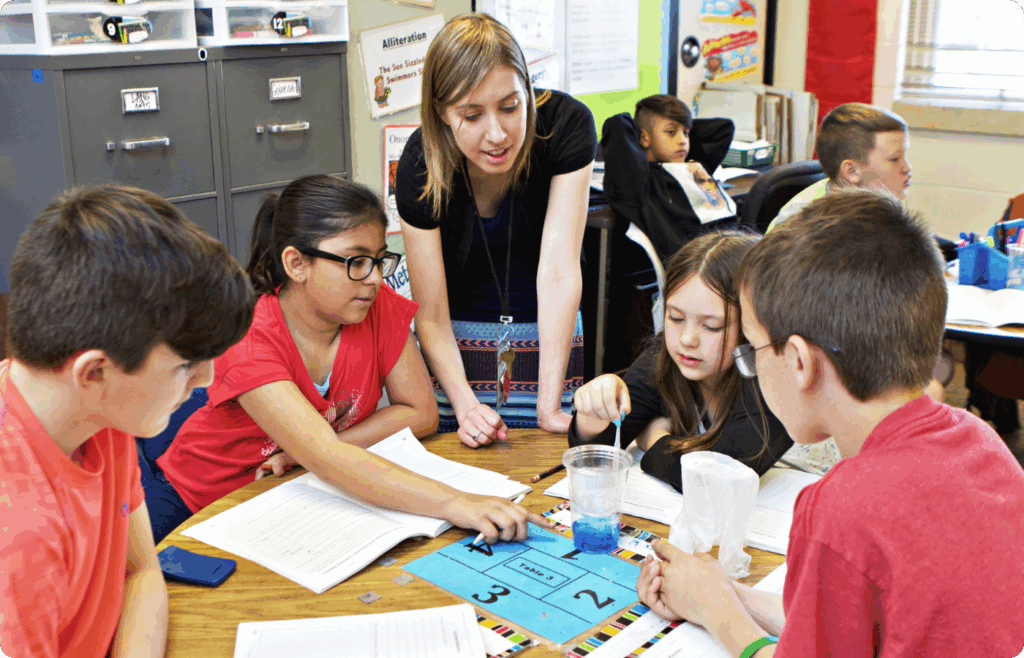
- Educators receive comprehensive implementation support. Through lesson-planning resources, science background materials, built-in assessments, and expert coaching—all provided directly through Amplify—teachers are able to confidently implement the program’s NGSS-aligned, high-quality instructional curriculum with greater ease and success.

- Multimodal learning experiences support all learners. Amplify Science ensures that everyone can access scientific concepts through the Do, Talk, Read, Write, Visualize multimodal approach that includes hands-on investigations, digital simulations, collaborative discussions, and literacy-rich activities.
- Research-based and proven effective: Get the results that matter. Students who experience true three-dimensional learning with Amplify Science, an HQIM curriculum, show increased engagement and an improvement in science learning and vocabulary. They develop confidence as thinkers and problem-solvers while maintaining curiosity about the natural world.
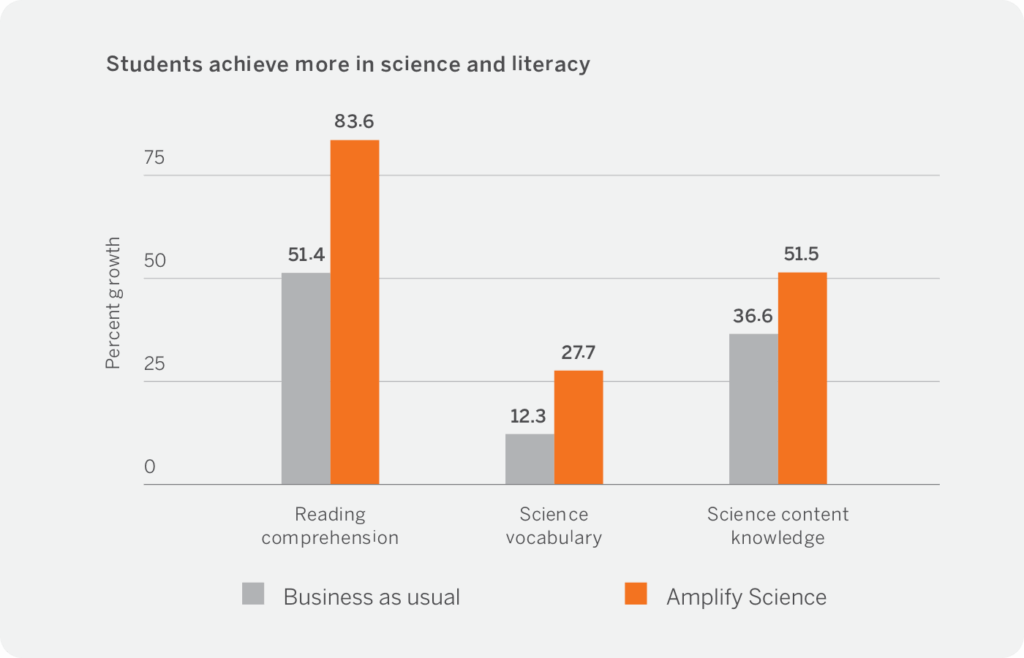
Ready to transform your science instruction with an HQIM curriculum?
Please contact your sales representative today, or download a sample unit to experience three-dimensional learning firsthand. Your future scientists, engineers, and citizens of the world are waiting!
A closer look at grades 6–8
Amplify Science is based on the latest research on teaching and learning and helps teachers deliver rigorous and riveting lessons through hands-on investigations, literacy-rich activities, and interactive digital tools that empower students to think, read, write, and argue like real scientists.
In the 6–8 classroom, this looks like students:
- Collecting evidence from a variety of sources.
- Making sense of evidence in a variety of ways.
- Formulating convincing scientific arguments.
Is your school implementing the domain model? Click here.

Program structure
Our cyclical lesson design ensures students receive multiple exposures to concepts through a variety of modalities. As they progress through the lessons within a unit, students build and deepen their understanding, increasing their ability to develop and refine complex explanations of the unit’s phenomenon.
It’s this proven program structure and lesson design that enables Amplify Science to teach less, but achieve more. Rather than asking teachers to wade through unnecessary content, we designed our 6–8 program to address 100% of the NGSS in fewer lessons than other programs.
Scope and sequence
Every year our grades 6–8 sequence consists of 9 units, with each unit containing 10–19 lessons. Lessons are written to last a minimum of 45-minutes, though teachers can expand or contract the timing to meet their needs.
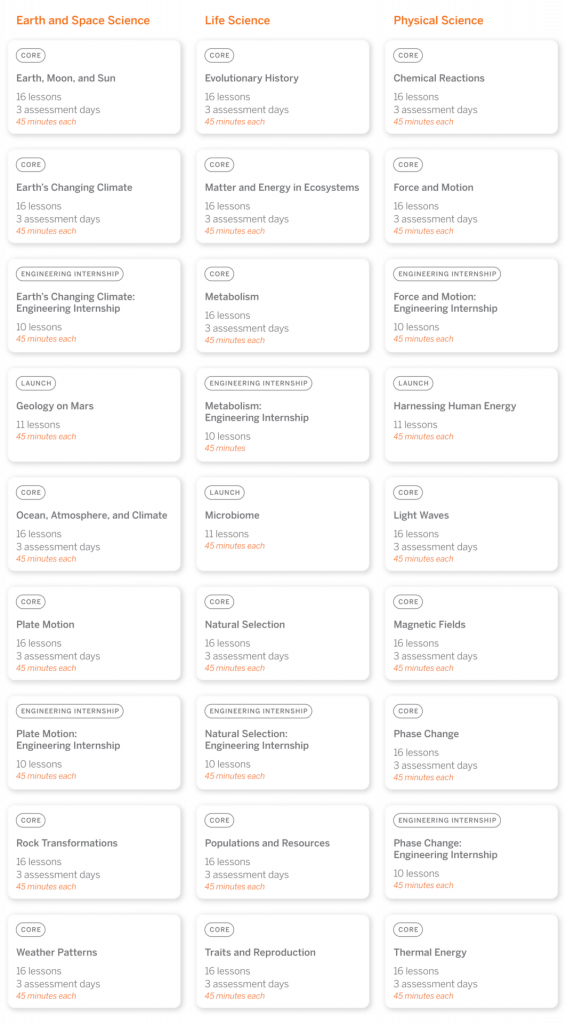
Unit types
Each unit delivers three-dimensional learning experiences and engages students in gathering evidence from a rich collection of sources, while also serving a unique purpose.
In grades 6–8, there are three types of units:
- One unit is a launch unit.
- Three units are core units.
- Two units are engineering internships.
Launch units
Launch units are the first units taught in each year of Amplify Science. The goal of the Launch unit is to introduce students to norms, routines, and practices that will be built on throughout the year, including argumentation, active reading, and using the program’s technology. For example, rather than taking the time to explain the process of active reading in every unit in a given year, it is explained thoroughly in the Launch unit, thereby preparing students to read actively in all subsequent units.
Core units
Core units establish the context of the unit by introducing students to a real-world problem. As students move through lessons in a Core unit, they figure out the unit’s anchoring phenomenon, gain an understanding of the unit’s disciplinary core ideas and science and engineering practices, and make linkages across topics through the crosscutting concepts. Each Core unit culminates with a Science Seminar and final writing activity.
Engineering Internship units
Engineering Internship units invite students to design solutions for real-world problems as interns for a fictional company called Futura. Students figure out how to help those in need, from tsunami victims in Sri Lanka to premature babies, through the application of engineering practices. In the process, they apply and deepen their learning from Core units.
Units at a glance

Microbiome
Domain: Life Science
Unit type: Launch
Student role: Microbiological researchers
Phenomenon: The presence of 100 trillion microorganisms living on and in the human body may keep the body healthy.

Metabolism
Domain: Life Science
Unit type: Core
Student role: Medical researchers
Phenomenon: Elisa, a young patient, feels tired all the time.

Metabolism Engineering Internship
Domains: Life Science, Engineering Design
Unit type: Engineering internship
Student role: Food engineers
Phenomenon: Designing health bars with different molecular compositions can effectively meet the metabolic needs of patients or rescue workers.
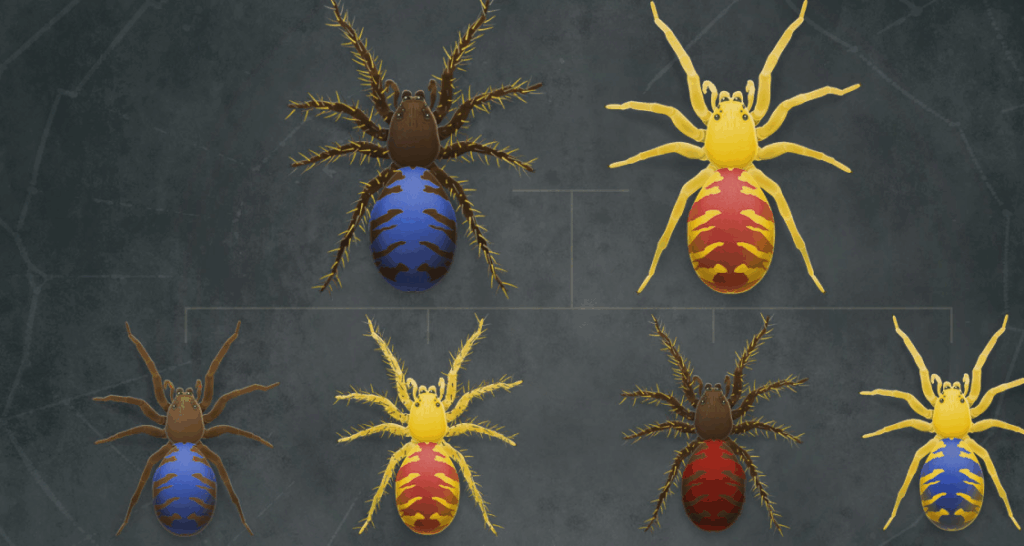
Traits and Reproduction
Domain: Life Science
Unit type: Core
Student role: Biomedical students
Phenomenon: Darwin’s bark spider offspring have different silk flexibility traits, even though they have the same parents.

Thermal Energy
Domain: Physical Science
Unit type: Core
Student role: Thermal scientists
Phenomenon: One of two proposed heating systems for Riverdale School will best heat the school.

Ocean, Atmosphere, and Climate
Domains: Earth and Space Science, Physical Science
Unit type: Core
Student role: Climatologists
Phenomenon: During El Niño years, the air temperature in Christchurch, New Zealand is cooler than usual.

Weather Patterns
Domains: Earth and Space Science, Physical Science
Unit type: Core
Student role: Forensic meteorologists
Phenomenon: In recent years, rainstorms in Galetown have been unusually severe.

Earth’s Changing Climate
Domains: Earth and Space Science, Life Science
Unit type: Core
Student role: Climatologists
Phenomenon: The ice on Earth’s surface is melting.
Earth’s Changing Climate Engineering Internship
Domains: Earth and Space Science, Engineering Design
Unit type: Engineering internship
Student role: Civil engineers
Phenomenon: Designing rooftops with different modifications can reduce a city’s impact on climate change.
Geology on Mars
Domain: Earth and Space Science
Unit type: Launch
Student role: Planetary geologists
Phenomenon: Analyzing data about landforms on Mars can provide evidence that Mars may have once been habitable.

Plate Motion
Domain: Earth and Space Science
Unit type: Core
Student role: Geologists
Phenomenon: Mesosaurus fossils have been found on continents separated by thousands of kilometers of ocean, even though the Mesosaurus species once lived all together.

Plate Motion Engineering Internship
Domains: Earth and Space Science, Engineering Design
Unit type: Engineering internship
Student role: Mechanical engineering interns
Phenomenon: Patterns in earthquake data can be used to design an effective tsunami warning system.

Rock Transformations
Domain: Earth and Space Science
Unit type: Core
Student role: Geologists
Phenomenon: Rock samples from the Great Plains and from the Rocky Mountains — regions hundreds of miles apart — look very different, but have surprisingly similar mineral compositions.

Phase Change
Domains: Physical Science, Earth and Space Science
Unit type: Core
Student role: Chemists
Phenomenon: A methane lake on Titan no longer appears in images taken by a space probe two years apart
Force and Motion Engineering Internship
Domains: Engineering Design, Physical Science
Unit type: Engineering internship
Student role: Chemical engineering interns
Phenomenon: Designing portable baby incubators with different combinations of phase change materials can keep babies at a healthy temperature. Domains: Engineering Design, Physical Science
Chemical Reactions
Domains: Physical Science, Life Science, Earth and Space Science
Unit type: Core
Student role: Forensic chemists
Phenomenon: A mysterious brown substance has been detected in the tap water of Westfield.

Populations and Resources
Domains: Life Science, Earth and Space Science
Unit type: Core
Student role: Biologists
Phenomenon: The size of the moon jelly population in Glacier Sea has increased.
Matter and Energy in Ecosystems
Domains: Life Science, Earth and Space Science, Physical Science
Unit type: Core
Student role: Ecologists
Phenomenon: The biodome ecosystem has collapsed.

Harnessing Human Energy
Domains: Physical Science, Earth and Space Science, Engineering Design
Unit type: Launch
Student role: Energy scientists
Phenomenon: Rescue workers can use their own human kinetic energy to power the electrical devices they use during rescue missions.

Force and Motion
Domain: Physical Science
Unit type: Core
Student role: Physicists
Phenomenon: The asteroid sample-collecting pod failed to dock at the space station as planned.
Force and Motion Engineering Internship
Domains: Engineering Design, Physical Science
Unit type: Engineering internship
Student role: Chemical engineering interns
Phenomenon: Designing emergency supply delivery pods with different structures can maintain the integrity of the supply pods and their contents.

Magnetic Fields
Domain: Physical Science
Unit type: Core
Student role: Physicists
Phenomenon: During a test launch, a spacecraft traveled much faster than expected.

Light Waves
Domains: Physical Science, Life Science, Earth and Space Science
Unit type: Core
Student role: Spectroscopists
Phenomenon: The rate of skin cancer is higher in Australia than in other parts of the world.

Earth, Moon, and Sun
Domains: Earth and Space Science, Physical Science
Unit type: Core
Student role: Astronomers
Phenomenon: An astrophotographer can only take pictures of specific features on the Moon at certain times.
Natural Selection
Domains: Life Science, Earth and Space Science
Unit type: Core
Student role: Biologists
Phenomenon: The newt population in Oregon State Park has become more poisonous over time.

Natural Selection Engineering Internship
Domains: Engineering Design, Life Science
Unit type: Engineering internship
Student role: Clinical engineers
Phenomenon: Designing malaria treatment plans that use different combinations of drugs can reduce drug resistance development while helping malaria patients.

Evolutionary History
Domains: Life Science, Earth and Space Science
Unit type: Core
Student role: Paleontologists
Phenomenon: A mystery fossil at the Natural History Museum has similarities with both wolves and whales.
Resources
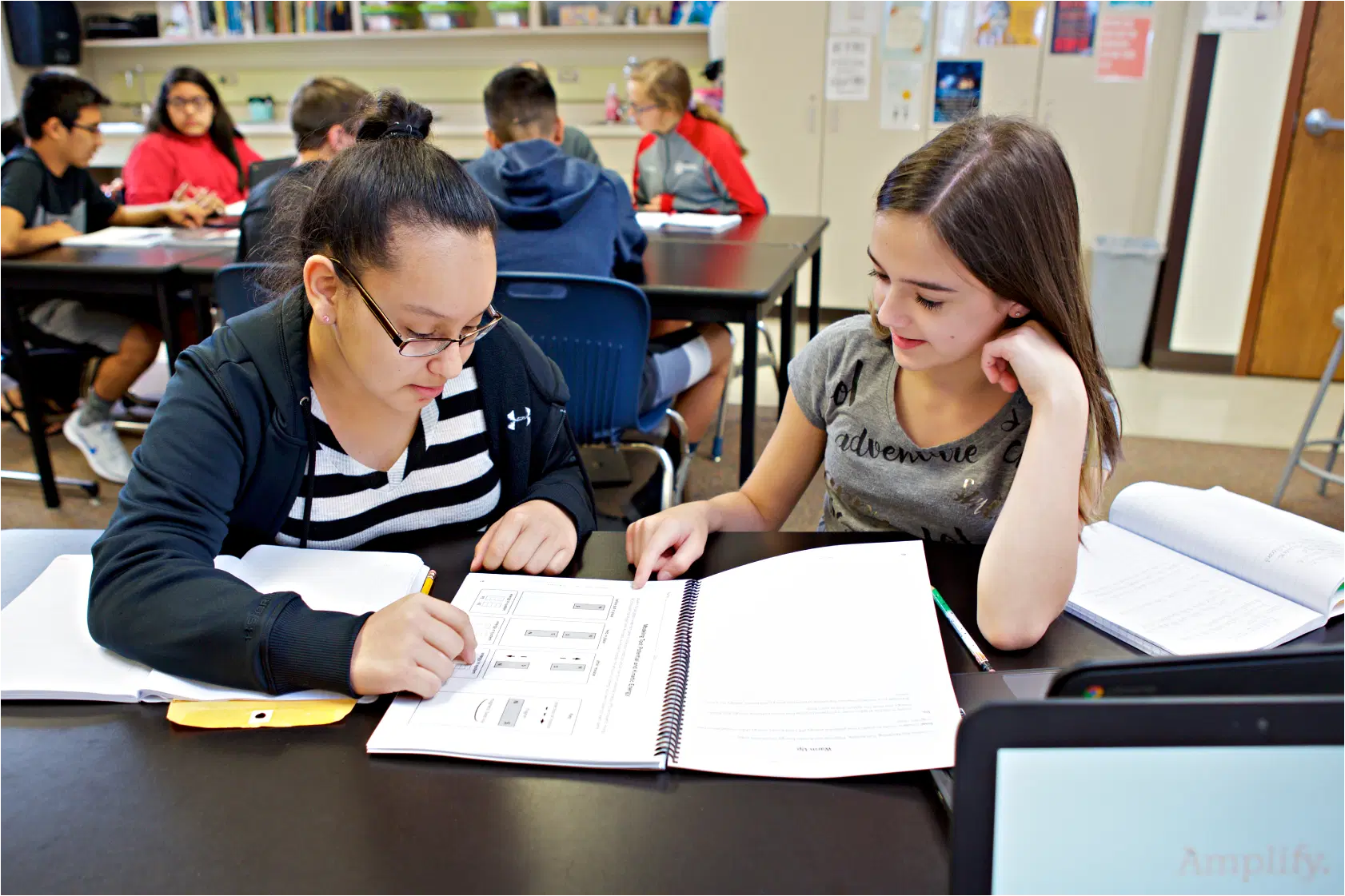

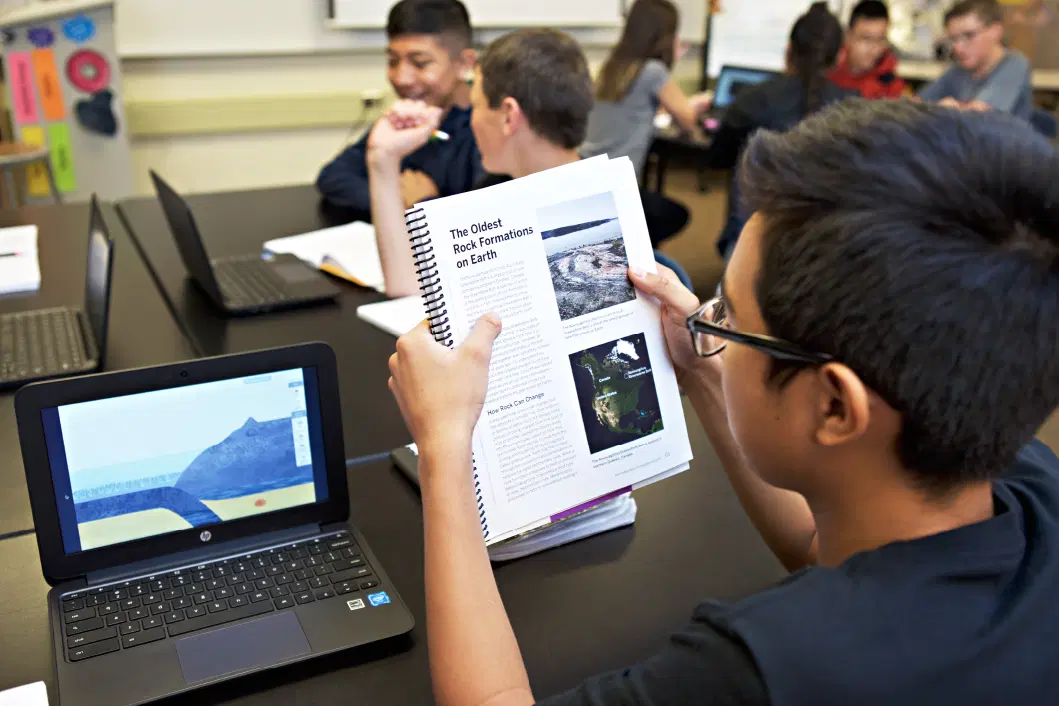

A closer look at grades 3–5
Amplify Science is based on the latest research on teaching and learning and helps teachers deliver age-appropriate, high-quality, literacy-rich instruction that enables students to take on the roles of scientists and engineers to solve real-world phenomena every day.
In the 3–5 classroom, this looks like students:
- Collecting evidence from a variety of sources.
- Making sense of evidence in a variety of ways.
- Formulating convincing scientific arguments.
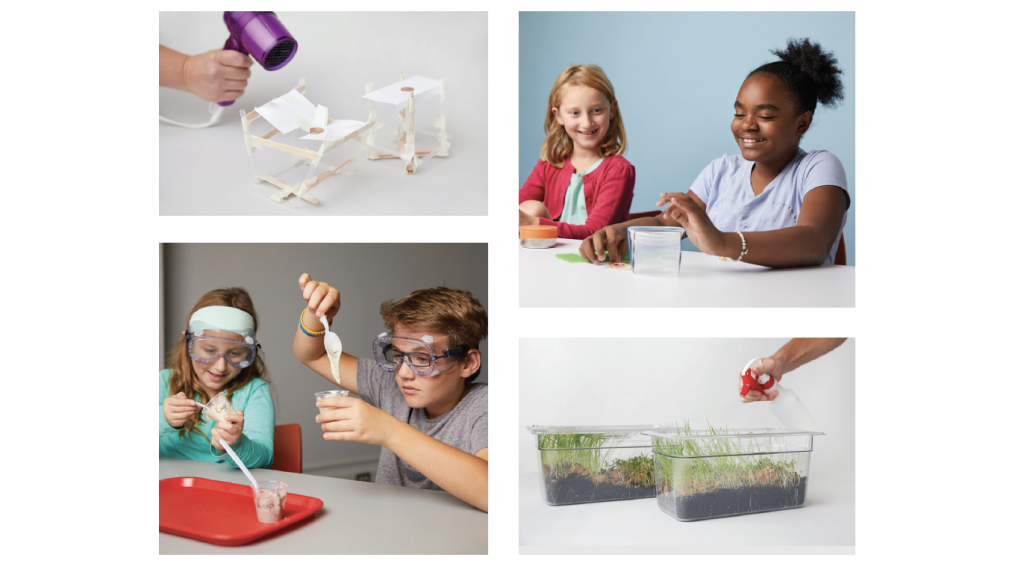

Program structure
Our cyclical lesson design ensures students receive multiple exposures to concepts through a variety of modalities. As they progress through the lessons within a unit, students build and deepen their understanding, increasing their ability to develop and refine complex explanations of the unit’s phenomenon.
It’s this proven program structure and lesson design that enables Amplify Science to teach less, but achieve more. Rather than asking teachers to wade through unnecessary content, we designed our 3–5 program to address 100% of the NGSS in just 88 days.
Scope and sequence
Every year of our grades 3–5 sequence consists of 4 units and 88 lessons. Said another way, each unit contains 20 lessons plus two dedicated assessment days (a Pre-Unit Assessment and End-of-Unit Assessment).
Lessons for grades 3–5 are written to last a minimum of 60 minutes, though teachers can expand or contract the timing to meet their needs.

Unit types
Each unit delivers three-dimensional learning experiences and engages students in gathering evidence from a rich collection of sources, while also emphasizing a particular science and engineering practice.
In grades 3–5:
- One unit emphasizes the practice of investigation.
- One unit emphasizes the practice of modeling.
- One unit emphasizes the practice of engineering design.
- One unit emphasizes the practice of argumentation.
Investigation Units
Investigation units focus on the process of strategically developing investigations and gathering data to answer questions. Students are first asked to consider questions about what happens in the natural world and why, and are then involved in designing and conducting investigations that produce data to help answer those questions.
Modeling Units
Modeling units provide extra support to students engaging in the practice of modeling. Students use physical models, investigate with computer models, and create their own diagrams to help them visualize what might be happening on the nanoscale.
Engineering Design Units
Engineering design units provide opportunities for students to solve complex problems by applying science principles to the design of functional solutions, and iteratively testing those solutions to determine how well they meet preset criteria.
Argumentation units
Argumentation units provide students with regular opportunities to explore and discuss available evidence, time and support to consider how evidence may be leveraged in support of claims, and independence that increases as they mount written arguments in support of their claims.
Units at a glance

Balancing Forces
Domain: Physical Science
Unit type: Modeling
Student role: Engineers
Phenomenon: The town of Faraday is getting a new train that floats above its tracks.

Inheritance and Traits
Domains: Life Science
Unit type: Investigation
Student role: Wildlife biologists
Phenomenon: An adopted wolf in Graystone National Park (“Wolf 44”) has some traits that appear similar to one wolf pack in the park and other traits that appear to be similar to a different wolf pack.
Environments and Survival
Domains: Life Science, Engineering Design
Unit type: Engineering design
Student role: Biomimicry engineers
Phenomenon: Over the last 10 years, a population of grove snails has changed: The number of grove snails with yellow shells has decreased, while the number of snails with banded shells has increased.
Weather and Climate
Domains: Earth and Space Science, Engineering Design
Unit type: Argumentation
Student role: Meteorologists
Phenomenon: Three different islands, each a contender for becoming an Orangutan reserve, experience different weather patterns.

Energy Conversions
Domains: Physical Science, Earth and Space Science, Engineering Design
Unit type: Engineering design
Student role: System engineers
Phenomenon: The fictional town of Ergstown experiences frequent blackouts.

Vision and Light
Domain: Physical Science, Life Science, Engineering Design
Unit type: Investigation
Student role: Conservation biologists
Phenomenon: The population of Tokay geckos in a rain forest in the Philippines has decreased since the installation of new highway lights.

Earth’s Features
Domain: Earth and Space Science
Unit type: Argumentation
Student role: Geologists
Phenomenon: A mysterious fossil is discovered in a canyon within the fictional Desert Rocks National Park.

Waves, Energy, and Information
Domains: Physical Science, Life Science, Earth and Space Science, Engineering Design
Unit type: Modeling
Student role: Marine scientists
Phenomenon: Mother dolphins in the fictional Blue Bay National Park seem to be communicating with their calves when they are separated at a distance underwater.

Patterns of Earth and Sky
Domains: Physical Science, Earth and Space Science
Unit type: Investigation
Student role: Astronomers
Phenomenon: An ancient artifact depicts what we see in the sky at different times — the sun during the daytime and different stars during the nighttime — but it is missing a piece.

Modeling Matter
Domain: Physical Science
Unit type: Modeling
Student role: Food scientists
Phenomenon: Chromatography is a process for separating mixtures. Some solids dissolve in a salad dressing while others do not. Oil and vinegar appear to separate when mixed in a salad dressing.

The Earth System
Domains: Earth and Space Science, Physical Science, Engineering Design
Unit type: Engineering Design
Student role: Water resource engineers
Phenomenon: East Ferris, a city on one side of the fictional Ferris Island, is experiencing a water shortage, while West Ferris is not.

Ecosystem Restoration
Domains:Physical Science, Life Science, Earth and Space Science, Engineering Design
Unit type: Argumentation
Student role: Ecologists
Phenomenon: The jaguars, sloths, and cecropia trees in a reforested section of a Costa Rican rain forest are not growing and thriving.
Resources


A closer look at grades K–2
Amplify Science is based on the latest research on teaching and learning and helps teachers deliver age-appropriate, high-quality, literacy-rich instruction that enables students to take on the roles of scientists and engineers to solve real-world phenomena every day.
In the K–2 classroom, this looks like students:
- Collecting evidence from a variety of sources.
- Making sense of evidence in a variety of ways.
- Formulating convincing scientific arguments.


Program structure
Our cyclical lesson design ensures students receive multiple exposures to concepts through a variety of modalities. As they progress through the lessons within a unit, their understanding gradually builds and deepens, ultimately leading to their ability to develop and refine increasingly complex explanations of the unit’s phenomenon.
It’s this proven program structure and lesson design that enables Amplify Science to teach less, but achieve more. Rather than asking teachers to wade through unnecessary content, we designed our K–2 program to address 100% of the NGSS in just 66 days.
Scope and sequence
Every year of our K–2 consists of 3 units and 66 total lessons. Said another way, each unit contains 20 lessons plus two dedicated assessment days (a Pre-Unit Assessment and End-of-Unit Assessment).
Lessons at grades K–1 are written for a minimum of 45-minutes, and grade 2 lessons are written for a minimum of 60-minutes—though teachers can expand or contract the timing to meet their needs.
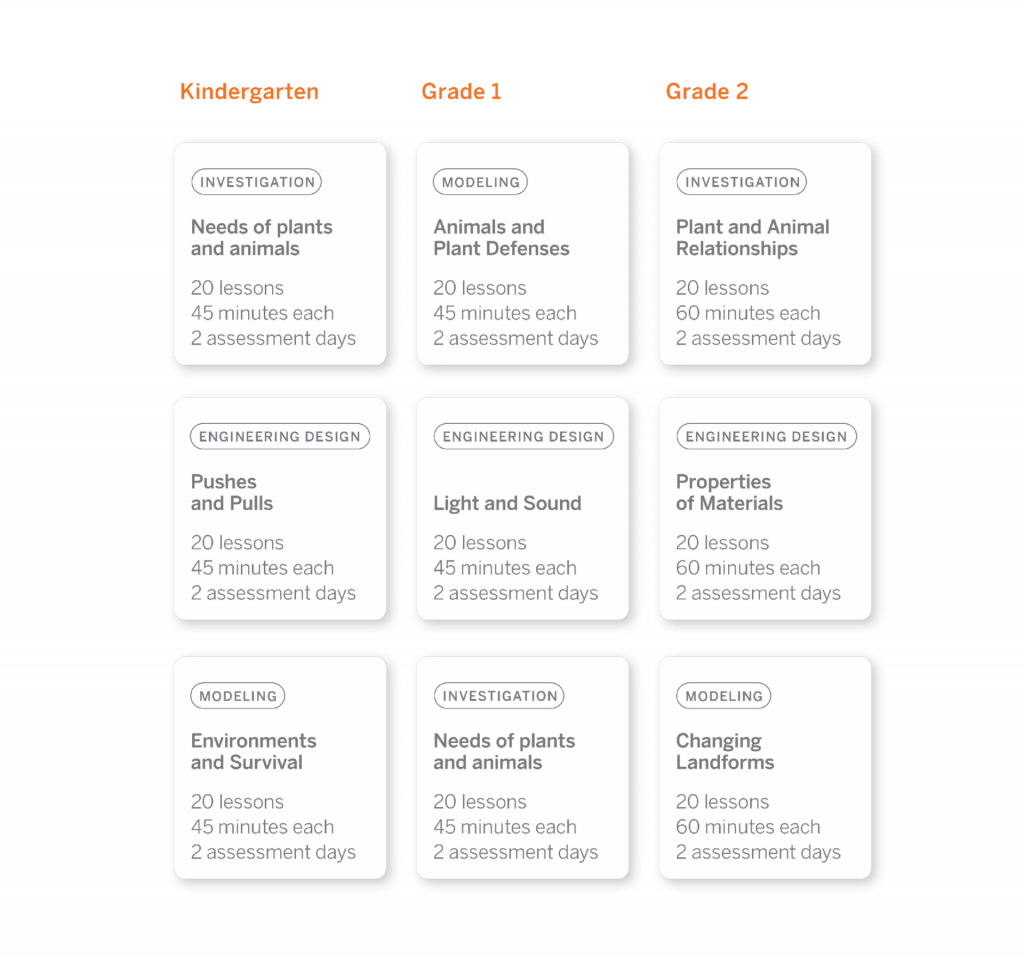
Unit types
While every unit delivers three-dimensional learning experiences and engages students in gathering evidence from a rich collection of sources, each unit also emphasizes a particular science and engineering practice.
In each grade K–2:
- One unit emphasizes the practice of investigation.
- One unit emphasizes the practice of modeling.
- One unit emphasizes the practice of engineering design.
Investigation Units
Investigation units focus on the process of strategically developing investigations and gathering data to answer questions. Students are first asked to consider questions about what happens in the natural world and why, and are then involved in designing and conducting investigations that produce data to help answer those questions.
Modeling Units
Modeling units provide extra support to students engaging in the practice of modeling. Students use physical models, investigate with computer models, and create their own diagrams to help them visualize what might be happening on the nanoscale.
Engineering Design Units
Engineering design units provide opportunities for students to solve complex problems by applying science principles to the design of functional solutions, and iteratively testing those solutions to determine how well they meet preset criteria.
Units at a glance

Needs of Plants and Animals
Domains: Life Science, Earth and Space Science, Engineering Design
Unit type: Investigation
Student role: Scientists
Phenomenon: There are no monarch caterpillars in the Mariposa Grove community garden since vegetables were planted.

Pushes and Pulls
Domains: Physical Science, Engineering Design
Unit type: Engineering design
Student role: Pinball engineers
Phenomenon: Pinball machines allow people to control the direction and strength of forces on a ball.

Sunlight and Weather
Domains: Earth and Space Science, Life Science, Engineering Design
Unit type: Modeling
Student role: Weather scientists
Phenomenon: Students at Carver Elementary School are too cold during morning recess, while students at Woodland Elementary School are too hot during afternoon recess.

Animal and Plant Defenses
Domain: Life Science
Unit type: Modeling
Student role: Marine scientists
Phenomenon: Spruce the Sea Turtle lives in an aquarium and will soon be released back into the ocean, where she will survive despite ocean predators.

Light and Sound
Domains: Physical Science, Engineering Design
Unit type: Engineering design
Student role: Light and sound engineers
Phenomenon: A puppet show company uses light and sound to depict realistic scenes in puppet shows.

Spinning Earth
Domain: Earth and Space Science
Unit type: Investigation
Student role: Sky scientists
Phenomenon: The sky looks different to Sai and his grandma when they talk on the phone.

Plant and Animal Relationships
Domains: Life Science, Engineering Design
Unit type: Investigation
Student role: Plant scientists
Phenomenon: No new chalta trees are growing in the fictional Bengal Tiger Reserve in India.

Properties of Materials
Domains: Physical Science, Engineering Design
Unit type: Engineering design
Student role: Glue engineers
Phenomenon: Different glue recipes result in glues that have different properties.

Changing Landforms
Domain: Earth and Space Science
Unit type: Modeling
Student role: Geologists
Phenomenon: The cliff that Oceanside Recreation Center is situated on appears to be receding over time.
Resources
A closer look at grades 6–8 (domain)
Amplify Science California is based on the latest research on teaching and learning and helps teachers deliver rigorous and riveting lessons through hands-on investigations, literacy-rich activities, and interactive digital tools that empower students to think, read, write, and argue like real scientists.
In the 6–8 classroom, this looks like students:
- Collecting evidence from a variety of sources.
- Making sense of evidence in a variety of ways.
- Formulating convincing scientific arguments.
Is your school implementing the integrated model? Click here.
Program structure
Our cyclical lesson design ensures students receive multiple exposures to concepts through a variety of modalities. As they progress through the lessons within a unit, students build and deepen their understanding, increasing their ability to develop and refine complex explanations of the unit’s phenomenon.
It’s this proven program structure and lesson design that enables Amplify Science California to teach less, but achieve more. Rather than asking teachers to wade through unnecessary content, we designed our 6–8 program to address 100% of the California NGSS in fewer lessons than other programs.
Scope and sequence
Every year of our grades 6–8 sequence consists of 9 units, with each unit containing 10–19 lessons. Lessons are written to last a minimum of 45 minutes, though teachers can expand or contract the timing to meet their needs.
Unit types
Each unit delivers three-dimensional learning experiences and engages students in gathering evidence from a rich collection of sources, while also serving a unique purpose.
In grades 6–8, there are three types of units:
- One unit is a launch unit.
- Three units are core units.
- Two units are engineering internships.
Launch units
Launch units are the first units taught in each year of Amplify Science California. The goal of the Launch unit is to introduce students to norms, routines, and practices that will be built on throughout the year, including argumentation, active reading, and using the program’s technology. For example, rather than taking the time to explain the process of active reading in every unit in a given year, it is explained thoroughly in the Launch unit, thereby preparing students to actively read in all subsequent units.
Core units
Core units establish the context of the unit by introducing students to a real-world problem. As students move through lessons in a Core unit, they figure out the unit’s anchoring phenomenon, gain an understanding of the unit’s disciplinary core ideas and science and engineering practices, and make linkages across topics through the crosscutting concepts. Each Core unit culminates with a Science Seminar and final writing activity.
Engineering Internship units
Engineering Internship units invite students to design solutions for real-world problems as interns for a fictional company called Futura. Students figure out how to help those in need, from tsunami victims in Sri Lanka to premature babies, through the application of engineering practices. In the process, they apply and deepen their learning from Core units.
Units at a glance
Geology on Mars
Domain: Earth and Space Science
Unit type: Launch
Student role: Planetary geologists
Phenomenon: Analyzing data about landforms on Mars can provide evidence that Mars may have once been habitable.
Plate Motion
Domain: Earth and Space Science
Unit type: Core
Student role: Geologists
Phenomenon: Mesosaurus fossils have been found on continents separated by thousands of kilometers of ocean, even though the Mesosaurus species once lived all together.
Plate Motion Engineering Internship
Domain: Earth and Space Science
Unit type: Engineering internship
Student role: Mechanical engineering interns
Phenomenon: Patterns in earthquake data can be used to design an effective tsunami warning system.
Rock Transformations
Domain: Earth and Space Science
Unit type: Core
Student role: Geologists
Phenomenon: Rock samples from the Great Plains and from the Rocky Mountains — regions hundreds of miles apart — look very different, but have surprisingly similar mineral compositions.
Earth, Sun, and Moon
Domain: Earth and Space Science
Unit type: Core
Student role: Astronomers
Phenomenon: An astrophotographer can only take pictures of specific features on the Moon at certain times.
Ocean, Atmosphere, and Climate
Domain: Earth and Space Science
Unit type: Core
Student role: Climatologists
Phenomenon: During El Niño years, the air temperature in Christchurch, New Zealand is cooler than usual.
Weather Patterns
Domain: Earth and Space Science
Unit type: Core
Student role: Forensic meteorologists
Phenomenon: In recent years, rainstorms in Galetown have been unusually severe.
Earth’s Changing Climate
Domain: Earth and Space Science
Unit type: Core
Student role: Climatologists
Phenomenon: The ice on Earth’s surface is melting.
Earth’s Changing Climate Engineering Internship
Domain: Earth and Space Science
Unit type: Engineering internship
Student role: Civil engineers
Phenomenon: Designing rooftops with different modifications can reduce a city’s impact on climate change.
Microbiome
Domain: Life Science
Unit type: Launch
Student role: Microbiological researchers
Phenomenon: The presence of 100 trillion microorganisms living on and in the human body may keep the body healthy.
Metabolism
Domain: Life Science
Unit type: Core
Student role: Medical researchers
Phenomenon: Elisa, a young patient, feels tired all the time.
Metabolism Engineering Internship
Domain: Life Science
Unit type: Engineering internship
Student role: Food engineers
Phenomenon: Designing health bars with different molecular compositions can effectively meet the metabolic needs of patients or rescue workers.
Traits and Reproduction
Domain: Life Science
Unit type: Core
Student role: Biomedical students
Phenomenon: Darwin’s bark spider offspring have different silk flexibility traits, even though they have the same parents.
Populations and Resources
Domain: Life Science
Unit type: Core
Student role: Biologists
Phenomenon: The size of the moon jelly population in Glacier Sea has increased.
Matter and Energy in Ecosystems
Domain: Life Science
Unit type: Core
Student role: Ecologists
Phenomenon: What caused the mysterious crash of a biodome ecosystem?
Natural Selection
Domain: Life Science
Unit type: Core
Student role: Biologists
Phenomenon: The newt population in Oregon State Park has become more poisonous over time.
Natural Selection Engineering Internship
Domain: Life Science
Unit type: Engineering internship
Student role: Clinical engineers
Phenomenon: Designing malaria treatment plans that use different combinations of drugs can reduce drug resistance development while helping malaria patients.
Evolutionary History
Domain: Life Science
Unit type: Core
Student role: Paleontologists
Phenomenon: A mystery fossil at the Natural History Museum has similarities with both wolves and whales.
Harnessing Human Energy
Domain: Physical Science
Unit type: Launch
Student role: Energy scientists
Phenomenon: Rescue workers can use their own human kinetic energy to power the electrical devices they use during rescue missions.
Force and Motion
Domain: Physical Science
Unit type: Core
Student role: Physicists
Phenomenon: The asteroid sample-collecting pod failed to dock at the space station as planned.
Force and Motion Engineering Internship
Domain: Physical Science
Unit type: Engineering internship
Student role: Mechanical engineering interns
Phenomenon: Designing emergency supply delivery pods with different structures can maintain the integrity of the supply pods and their contents.
Magnetic Fields
Domain: Physical Science
Unit type: Core
Student role: Physicists
Phenomenon: During a test launch, a spacecraft traveled much faster than expected.
Thermal Energy
Domain: Physical Science
Unit type: Core
Student role: Thermal scientists
Phenomenon: One of two proposed heating systems for Riverdale School will best heat the school.
Phase Change
Domain: Physical Science
Unit type: Core
Student role: Chemists
Phenomenon: A methane lake on Titan no longer appears in images taken by a space probe two years apart.
Phase Change Engineering Internship
Domain: Physical Science
Unit type: Engineering internship
Student role: Chemical engineering interns
Phenomenon: Designing portable baby incubators with different combinations of phase change materials can keep babies at a healthy temperature.
Chemical Reactions
Domain: Physical Science
Unit type: Core
Student role: Forensic chemists
Phenomenon: A mysterious brown substance has been detected in the tap water of Westfield.
Light Waves
Domain: Physical Science
Unit type: Core
Student role: Spectroscopists
Phenomenon: The rate of skin cancer is higher in Australia than in other parts of the world.
Resources
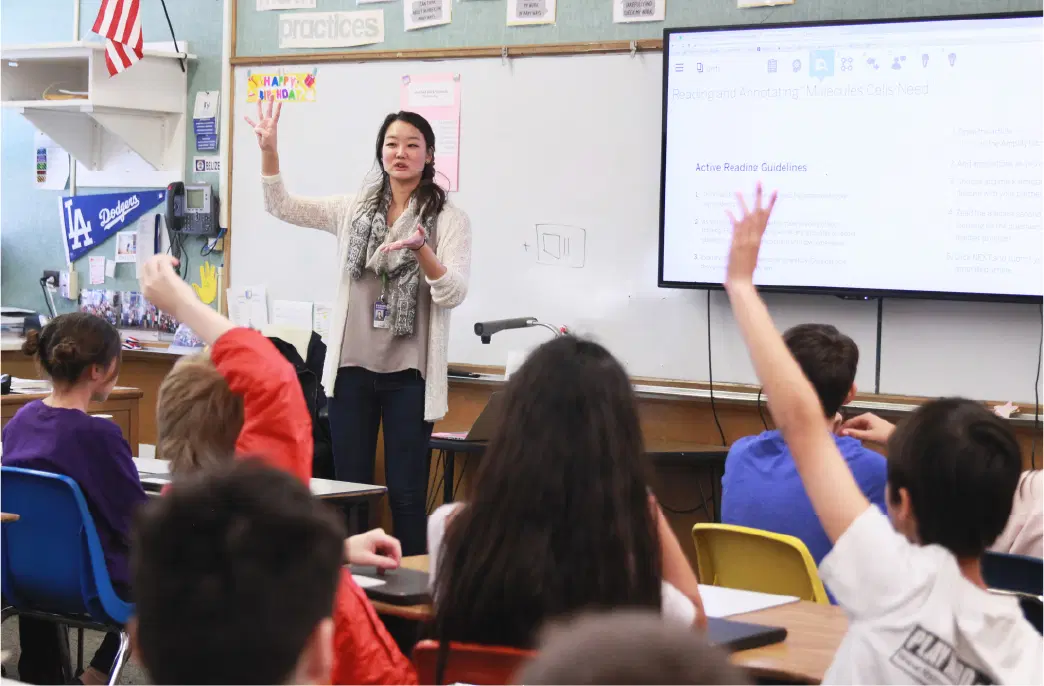
Frequently asked questions
Still have questions? We have answers. Check out the following FAQ.

Overview
- Amplify CKLA is based on research showing that closing the background knowledge gap is necessary for supporting the literacy development of all students. To that end, Amplify CKLA teaches literacy through the lens of cross-curricular domains in science, history, literature, and culture. It was developed in response to research that shows the critical impact of background knowledge on reading comprehension and college- and career-readiness.
- The program also reflects the latest early reading research showing the importance of explicit foundational skills instruction. The program develops students’ foundational literacy skills through a systematic scope and sequence with a focus on phonics.
Our research-based language arts curriculum is built on findings showing that higher-level reading comprehension depends on both automatic, fluent decoding and background knowledge. Combining well-established findings from the field of early literacy research with classroom-based feedback, Amplify CKLA ensures that children will learn to listen, speak, read, and write confidently and proficiently. For more information, view the Amplify CKLA Research Guide.
Amplify CKLA is a PreK–5 program. While the PreK and K–2 materials respect the important differences between early childhood education and formal schooling, the Grades 3–5 materials ensure a smooth transition to the academic rigors of middle school.
PreK
The focus in PreK is to maintain a developmentally appropriate early childhood setting; the structures, routines, and activities are engaging and children receive a solid foundation for future language arts instruction.
K–2
The focus in K–2 is developing fluent reading and writing skills, and enhancing language comprehension by building background knowledge and vocabulary. This is accomplished through two strands: the Skills Strand and the Knowledge Strand.
The Skills Strand focuses on decoding, encoding, grammar, handwriting, and the writing process, and it contains decodable chapter books for students to practice just-learned sound-spellings.
The Knowledge Strand builds background knowledge and vocabulary through carefully sequenced read-alouds and complex texts. Teachers read aloud stories that are more complex than the text students can decode on their own, enabling children to engage with complex texts and build background knowledge of a variety of connected topics in history, science, literature, and the arts.
3–5
In Grades 3–5, students are still focused on building reading and writing skills as well as knowledge and vocabulary, but the program no longer has two strands. The various lessons in each unit include read-alouds; whole-group, small-group, and partner reading; close reading; literal, inferential, and evaluative comprehension questions; vocabulary; grammar; writing; morphology and spelling (10–15 words per week); and unit assessments.
Program design
The Skills strand provides intentional and systematic support in building decoding skills. The lessons support learning related to phonemic awareness, sound-letter patterns (or spelling patterns), decoding (both in explicit lessons and with engaging decodable texts), writing mechanics, and writing structure and processes, for 60 minutes daily.
The Knowledge Strand develops young children’s language and background knowledge. By exposing children to rich and complex texts through daily read-alouds, engaging in text-based and analytic discussions of the text and content, and building connections from the text to the work of the classroom through extension activities, the Knowledge Strand provides daily, extensive (60 minutes) broadening and deepening of children’s oral language and comprehension.
Teaching the Skills Strand and Knowledge Strand in parallel helps students avoid cognitive overload and acquire advanced, complex vocabulary in the Knowledge Strand—in essence, reading to learn from day one—while becoming expert decoders in the Skills Strand. The program is designed to bring these two strands together in grades 3–5, as foundational skills and higher-level comprehension and meaning-making gradually intertwine.
The CKLA program takes a comprehensive approach to teaching the code of the English language in the Skills strand. While the English language has only 26 letters, these letters combine to create 150 spelling patterns that represent 44 sounds of language. In most reading programs, children are explicitly taught only a fraction of this information and must glean the rest from ad hoc and incidental exposure to these spelling patterns through text. CKLA focuses on explicitly teaching each of the 44 sounds and the 150 ways that these sounds are represented (via letters and letter combinations). This comprehensive approach assures educators that children have the knowledge they need to address any text and any word.
The Knowledge Strand reflects the fact that knowledge, comprehension, and vocabulary are intimately related. The materials are designed to provide children sustained time on a variety of domains (bodies of knowledge) through shared read-alouds and discussions. This coherent organization of content is critical to building knowledge, inferring new vocabulary, and enabling comprehension. The content-rich, intentionally sequenced nature of the read-alouds within the Knowledge Strand creates the optimal context for incidental and explicit vocabulary-learning opportunities. After the read-aloud, children analyze the text through interactive discussion questions, engage in activities that foster their comprehension of complex sentences and ideas, and extend the ideas of the read-aloud into other activities in the classroom. In this way, the lessons create rich, academically oriented, oral language experiences that promote both receptive and expressive language skills.
Amplify CKLA embeds a variety of diagnostic and classroom assessments into the program materials.
There are curriculum-based assessments of both foundational skills and content knowledge, placement assessments in Grades 1 and 2 for the Skills Strand, and end-of-year Skills Strand assessments in Grades K–3. These assessments are built into the units of instruction/domains within the Teacher Guides. In Grades 4–5, there are beginning-of-year assessments, frequent spelling assessments, and comprehensive unit assessments.
Formative Assessments are integrated into every lesson, allowing teachers to understand exactly how students are doing on meeting lesson goals and standards-based objectives.
Writing in multiple genres is taught through a process that builds from three highly scaffolded steps to seven flexible steps.
In addition to explicit lessons in handwriting, spelling, and grammar, writing is taught throughout K–5. Instruction begins with a three-step writing process: plan, draft, and edit. The process is reinforced as each new writing genre is addressed. Each genre is taught through a gradual reduction in scaffolding over a set of six lessons that includes teacher modeling, group practice, independent practice, and independent application. This systematic approach allows for continued support and predictable learning as children progress in their knowledge of text types and complexity of writing. By Grade 3, students have worked their way up to a five-step writing process: planning, drafting, revising, editing, and publishing. Beginning in Grade 4, the writing process expands to seven components: planning, drafting, sharing, evaluating, revising, and editing (and the optional component of publishing). An important change between the writing process in Grades 3–5 is that the writing process is no longer conceptualized as a series of scaffolded, linear steps that students follow in a set sequence. Rather, students move back and forth between components of the writing process in a flexible manner, similar to the process that mature and experienced writers follow. In addition to specific writing lessons, there are numerous writing opportunities for students throughout the curriculum.
Alignment to the CCSS
Fully implementing the Common Core Standards requires some shifts in prevailing instructional approaches. For early grades language arts, these shifts can be summarized as (1) balancing fiction and nonfiction text, (2) building knowledge, (3) supporting students’ capacity to learn from increasingly complex texts, (4) giving text-based answers, (5) writing from sources, and (6) explicitly supporting the acquisition of academic vocabulary. The following sections document the primary ways that Amplify CKLA meets the demands of these shifts.
- The amount of nonfiction gradually increases, reaching the 50-50 balance of fiction and nonfiction by grade 3.
- Read-alouds in the Knowledge Strand are designed according to the latest research to build knowledge and vocabulary in history, science, the arts, and more.
- The texts in both the Knowledge Strand and the Skills strand increase in complexity as the program progresses within and across grades.
- In the Skills Strand, the language and knowledge demands of the texts increase, but remain decodable based on the aspects of the code that have been taught to date.
- Both strands engage students in appropriate means of providing text-based answers—orally, pictorially, and eventually in writing.
- Together, the Skills and Knowledge Strands enable students to read and digest various sources and then write by drawing on those sources.
- In both strands of the program, Amplify CKLA teaches children the process of using the text as a springboard for understanding.
- The Knowledge Strand offers repeated exposures to academic vocabulary through authentic texts and explicit word instruction.
Materials
PreK
- Teacher Guides, Student Activity Pages, 3–4 Trade Books per domain, Flip Books, Image Cards, Transition and Center Cards, Nursery Rhymes and Songs Posters, and a Big Book (Classic Tales)
Grades K–2
- Knowledge Strand: Teacher Guides, Flip Books, Student Activity Books, Image Cards, and online resources including supplemental lessons
- Skills Strand: Teacher Guides, Activity Books, Student Readers, Big Books, Letter Cards, Spelling Cards, Individual Code Sheets, Code and Chaining Resources (Vowel/Consonant Code Flip Books, Student Chaining Folders), Blending Cards, and online resources including differentiation and remediation guides
Grades 3–5
- Teacher Guides, Student Readers, Activity Books, Poet’s Journal, Writer’s Journal, Core Quests (The Viking Age in Grade 3, Eureka: Student Inventor in Grade 4 and “A Midsummer Night’s Dream” in grade 5) and Writing Quests (The Contraption in Grade 4, The Robot in Grade 5)
Winter Wrap-Up 02: Mathematizing Children’s Literature
While we’re hard at work producing the exciting fifth season of Math Teacher Lounge: The Podcast, we’re continuing to share some of our favorite conversations from our first four seasons. This time around, we’re revisiting our popular episode that connected literacy and math!
In this episode, we sit down with Allison Hintz and Antony Smith, authors of Mathematizing Children’s Literature, to talk about what would happen if we were to approach children’s literature, and life, through a math lens–and how we can apply those same techniques to classroom teaching!
Explore more from Math Teacher Lounge by visiting our main page.
Bethany Lockhart Johnson (00:02):
Hi, I’m Bethany Lockhart Johnson.
Dan Meyer (00:04):
Hi, I’m Dan Meyer.
Bethany Lockhart Johnson (00:05):
And we are so excited for another episode of Math Teacher Lounge. And as you know, podcast format; you’re listening now. I think one beautiful thing about the podcast format is that it gives us a little bit more time to have these rich conversations. And I promise I won’t do it, but I could talk to our guests for hours, hours! Authors Allison Hintz and Tony Smith have just released Mathematizing Children’s Literature: Sparking Connections, Joy, and Wonder Through Read-Alouds and Discussion. And today we get to talk to the authors. Allison, Tony, welcome. Welcome to the lounge.
Allison Hintz (00:53):
Thank you. We’re so grateful to be here.
Bethany Lockhart Johnson (00:55):
We’re so excited to have you here. And I wanna say that my very first—was it my first math conference? Maybe it was my first math conference—up in Seattle, the CGI conference, and I’m all like, you know, wide-eyed and just like, “Can this be a place for me, this math community?” Re-envisioning my relationship with math and thinking about myself as a math teacher, what? And I went to your session on mathematizing children’s literature, and I was just so fired up. I was so wowed by your ideas, your energy, and your passion for students’ thinking. And I feel like as I read this book, I felt like I was hanging out with you. Like you were just so encouraging all the way through. Of educators, of other folks working with young people, and really guiding us how to listen with joy and with an open curious mind.
Dan Meyer (02:03):
Yeah. I would love to hear a bit about the genesis of this book for you folks. Like, I’m coming at this from a secondary educator lens. I’ve got small kids, so that’s also part of my interest here. But I love any book, any idea that seeks to merge what seems like two disparate worlds. Like it’s often the case that we feel like, well, there’s approaches for ELA and approaches for math, and they’re kind of separate disciplines. And these poor elementary teachers have to learn all of them and be experts at all of them. And here you both come along and say, “Hey, what if they are the same kind of technique?” Can you just speak to how this came about?
Allison Hintz (02:38):
Definitely. Tony, do you wanna take a try? Do you want me to start us off?
Antony Smith (02:42):
I can start. We oftentimes present and talk together and so we kinda switch back and forth. So that’s just how we are. So probably about eight or nine years ago, Allison and I, our offices were next to each other on our small campus. We’re both professors and we just happened to have a few children’s books that we looked at together and we were just thumbing through the pages. We really liked children’s literature. And we noticed that I would stop at certain points wondering about character motive or plot or sequence of events or language use. And Allison would stop at very different points in the book and notice number and concepts or something about mathematics. And that’s when we started to wonder, what would it be like if we were sharing a children’s book with a group of children and we put our ideas together? Where would we stop? What would we talk about? What would we ask children about in terms of their thinking and what they notice?
Allison Hintz (03:42):
And so we started playing with these questions that we had and started approaching stories with multiple lenses to see what kinds of things would children notice and what kinds of things might they say. And we were also on our own journey in trying to understand how to plan for and facilitate lively discussions and classrooms that surface really complex mathematics. And it felt like stories were a place where that might be a fruitful context for hearing children’s thinking. We’ve worked with a lot of teachers and students in our region. We live in the Seattle area and we’ve applied for some funding over time that’s really helped us be in a lot of community-based organizations and educational contexts and libraries and pediatricians’ offices and classrooms, various classrooms, and see what’s interesting about this and what might teachers and children do with stories that would surface complex mathematics to think about together.
Antony Smith (04:41):
Over time, we came to the realization that if we wanted to hear children’s ideas, we had to stop bombarding them with questions. <laugh> Yeah. And at first it made it worse that we were asking them math and literacy questions at the same time. And so we realized that what we needed to do was to back off and to ask children what they noticed and wondered.
Bethany Lockhart Johnson (05:01):
Can you say more about that and how that kind of evolved into mathematizing children’s literature?
Antony Smith (05:07):
We did work with a number of very thoughtful, talented classroom teachers and children’s librarians in public library systems who were just so masterful at asking open-ended prompts and questions, rather than kind of like the de facto reading quiz, that a read-aloud can become, which I’ve always disliked as a literacy educator. And we realized in our observing these read-alouds or interactive read-alouds or shared reading experiences that given the opportunity in the space and an adult who was actually listening, that children came up with all of the ideas we would have asked them about and more. So we didn’t have to be bombarding them with questions. They were already much more thoughtful than what would’ve been sufficient to answer our questions.
Allison Hintz (05:58):
And much like mathematics, it was really an iterative process. You know, we had some clunky read-aloud discussions where we were trying to accomplish so much and toggling multiple chart papers and different colored pens and all sorts of “how do we capture these ideas” and “do we separate ’em? do we keep ’em together?” And so it’s really been over time that with partners, we’ve learned these ways of having multiple reads of the same story that allow us to hear what children notice and wonder, and then to delve more deeply into their questions and their ideas through multiple reads where we might spotlight literary ideas that they notice; we might spotlight mathematical ideas that they notice. We might make purposeful integrations between those. But we found it to be most productive—and Kristin Gray really help us think about this—to have an open Notice and Wonder, get everything out much like an open-strategy share. We welcome here, record all the ideas, and it goes all over everywhere. You know, it can be a really not math-y noticing! And those are amazing! So there’s a lot of, um, yes, there is a ladybug on this page! The grandma is wearing green triangle earrings! Oh, your grandma wears green earrings! I mean, it all comes out.
Bethany Lockhart Johnson (07:27):
Wait, have you been in my classroom? ‘Cause that’s exactly— <laugh>
Allison Hintz (07:29):
<laugh> And then, you know, we think of it a lot like if math teachers might use the 5 Practices for selecting and sequencing, or if you might move from an open-strategy share to a targeted share, how can we get out all the questions that children are asking and then step back from them, take some time to really think about what they’re telling us they’re curious about, and plan some purposeful, intentional subsequent discussions that can delve more deeply into their ideas.
Dan Meyer (08:02):
I’d love to go into that a little bit more if that’s all right. Um, I’m gonna speak from someone who doesn’t have an elementary background and I’m gonna voice some worries that I had, some anxiety. One anxiety I have like in a classroom or a curriculum is when there’s no room for student ideas. Right? When it’s like, oh, there’s just room for the curriculum author or the teacher here. That is a sadness. But I when I see an instructional environment like you’re describing here, where there is openness to all kinds of different student ideas, of different levels of formality, from different kinds of cultural fonts of knowledge or wherever, I also get a little bit nervous because that, like, increases the risk that a student might come to understand that “my ideas are not good enough,” whereas in the class with no room for their ideas from their home or their language or their hobbies, like, they’re not gonna internalize the message that, “that wasn’t good enough.” And so I’m really curious as you move from the open Notice and Wonder where kids share all of themselves with you, and then you move to a targeted focus on some sort of disciplinary objective, how do you navigate that tension and help students feel like their contributions are valuable, even though we aren’t taking them up per se?
Allison Hintz (09:18):
That’s such an important question. I mean, I think we’ve grappled with this broadly in math education. I think any time we’re thinking about which ideas we choose to take up to pursue to consider, we have a responsibility to think carefully about whose ideas are being taken up and heard and considered. And so one of the tensions I hear you naming, I think, Dan, is when we engage in lively discussion where children’s thinking’s at the center, how do we make sure to upend and interrupt kinda status norms that run the risk of being deepened? Um, and I think by paying attention to whose ideas are taken up as much as which ideas are taken up, and what’s the mathematics we wanna explore is one tension. Um, another tension I might hear you naming is, you know, the complications that teachers face with time and pressure and coverage, and which mathematics ends up getting worked on. And, um, you know, it’s something we’ve really had to struggle with in mathematics education, where we move to more discussion-oriented classrooms that are really centered in sense-making to know that it takes a lot of time to do this thoughtful, thoughtful work. Um, does that begin to get at some of the tensions you’re raising? Is there, is there more you’re thinking about?
Dan Meyer (10:53):
I think it’s really helpful that you kind of broadened the scope of the question beyond your book to “this is an issue that we are, you know, really challenged by and focused on broadly in math education.” And, um, I appreciate you bringing the element in of whose idea—not just which idea is taken up, but whose idea is taken up—is an opportunity where, let’s say, multiple people raise an idea that is towards an objective the teacher has, they have the opportunity to disrupt certain kinds of status, like ideas about status, in that moment. From your perspective, like, are there techniques to say, I don’t know, parking-lot certain kinds of questions and say like, “Hey, like these are awesome”? I don’t know. I just know that I see kids at like ninth grade. They are very reticent, often. They’ve internalized totally this sense of like, “I’m not gonna just, like, share about the pants the grandma’s wearing, you know; that will not be received well.” And so I’m just kinda wondering how that happens and like, what are the ways we can disrupt that? That process?
Antony Smith (11:54):
So thinking about that, Dan, from the teacher’s perspective, in those kinds of scenarios where you wanna honor each child’s contribution, a couple of things that come to mind: One is that by, you know, initially by modeling what I as a teacher, something that I notice or wonder about, helps kind of set the expectation for what kind of response would be encouraged. And it’s broad, but it gives an example. And then also we really try to record or to chart all of the ideas that are shared so that we can revisit and honor those together. And then either later or on another day, if we choose one or two of those to explore in some way within a more focused read, then another thing that we do is have the idea investigation afterward that continues that thought, but goes back to being as open-ended as possible, so that those students or children who maybe didn’t have their idea as the one that was focused on by the group could go back to that or explore some other idea of their own, so that the idea investigation isn’t a lockstep extension activity, which is why we don’t call it that. So they could again bring in their own perspective. But I have to say from the teacher’s point of view, there is that moment of potential panic <laugh> because there is that power transfer when you’re asking children to help steer where this is going. And if you really mean it, you have to let them steer a little bit. And that can be terrifying. And, um, I always think of one teacher, Ashley, we worked with who read an adorable book, Stack the Cats, by Susie Ghahremani. And in that book, there’s a point where there are eight cats and they’re kind of trying to be a tower of cats and they fall and they’re sort of in the air on that page. And she asked her first graders—she stopped, and she asked, “How, do you think, how will the cats land?” And for about a minute and a half, the entire <laugh> class, was silent. They had their little papers; they had chart paper; they had clipboards; they had everything they needed. But that unusual phenomenon of a group of six- and seven-year-olds actually just sitting and thinking and not being peppered with activities was really stressful, but amazing. And then, after about the 90 seconds, they started out into their exploration of how the eight cats might land. They just needed a minute to think. And it’s so rare that we’re able to let children have that.
Allison Hintz (14:40):
In that same moment, Ashley, who’s a learning partner to us, she turned to us kind of quietly, like, “Should I pose a different question?” And <laugh>, we’re like, “No, let’s stick with it. Let’s see what happens.” So I think it creates this space too, this thinking culture, right? And this culture of “what does that mean to really pose a rich task?That’s open-ended, where there’s multiple access points?” Those eight cats could land in so many different ways. And there was broad access, there was a wide range of all the cats landing, and one’s on their feet, ’cause cats always land on their feet <laugh>, and there was every combination. And so, um, I think what’s really interesting—and to me, this brings back to your wonder, Dan—is, you know, “What’s the risk in openness?” And there’s always risk in openness. Um, it’s scary as a teacher, right? If I’m not the authority of knowledge and I don’t have control over where we’re gonna go, it might get into places that I didn’t anticipate. Or I don’t really feel as solid in the math as I want to. Or I don’t know what it sounds like to stick with silence and wait time, to know if my students are really in productive struggle or if that question was a flop. And so, um, I think this is some practice space for young mathematicians and teachers of mathematics, and just teachers, to explore with that openness and kind of the risk of the openness required for complex thinking to emerge.
Bethany Lockhart Johnson (16:12):
You know, it feels like the way you’re both describing this, it really is a culture shift, right? I kept feeling like I was given permission to be a beginner as I read this book. Like I was really…I loved how you said, I believe it was you, Allison, when you were in the class, you had a couple index card that you kept on your clipboard and that as you walked around, you were like, “Hey, if I don’t know what to ask, I ask one of these questions.” You know? And just this idea that, that, like Dan was saying, there is that loss of control, but that’s also a way to create this culture where students ideas are valued and we are allowing students to really generate the questions, which I thought was such an important idea to explore.
Allison Hintz (17:00):
We started this work long ago, super-excited about math-y books. And we saw a lot of potential in them and we still do. But the limitation we saw is that math-y books, they, they put forth a certain mathematics to be curious about. In some ways they tell you what mathematics to think about. So we started asking ourselves what would happen if we considered any story a chance to engage as mathematical sense-makers. And we started playing with non-math-y books and we got to a place where we could consider every story an opportunity to engage in mathematical thinking. And so we started noticing things over times, oh, these books tend to be really math-y. We call those text-dependent. We’d have to pay attention to the mathematics to understand the story. Whereas this pile of stories, these, they’re not overtly math-y. You could really enjoy the story and not pay attention to mathematics and have an amazing conversation. But what would happen if we thought of about this story as mathematical sense-makers and how might it deepen our understanding of the story? And then this other teetering pile of books, these are books where, you know, children didn’t tend to engage as overtly as mathematicians in it, but there’s opportunities in this story to go back to something—to a moment, to an illustration, to a comment—and think as mathematicians. And those were more about illustration exploring. And so, as we notice these different kinds of books, we really broaden what we thought about. And I think one of the things we really wanna think about in community through this book is what happens if we approach any story, every story, as mathematical sense-makers, because stories are alive in children’s lives, in homes and communities and in schools. And it’s a broad opportunity that we wanna take up. I was thinking, as I stay in this strait for just a moment about book selection, before we move into that process, um, Bethany in a previous MTL, you talked about representation.
Bethany Lockhart Johnson (19:12):
Mm, yeah.
Allison Hintz (19:14):
And do you remember when you shared the image of hair braiding?
Bethany Lockhart Johnson (19:19):
Yes. Vividly, yes. <laugh>.
Allison Hintz (19:22):
Yeah. And can you say just what that meant to you? What that….
Bethany Lockhart Johnson (19:27):
Yeah. Well, it was from a conference; Sunil Singh had used it and was talking about the artistry in mathematics and beauty in hair braiding. And, um, particularly, he was showing this particular image of this Black woman with her hair braided in profile and looking at the angles and the symmetry. And I shared that, you know, I spent so many hours in the beauty shop with my aunties and my mom and my grandma and continue to, to this day, that it just, it struck me immediately as familiar. And it struck me immediately as seeing an image that was reflective of my lived reality, projected as valuable and worthwhile for consideration in the world of mathematics. Which is not what I felt as a student of mathematics as a young adult or child. So it was this beautiful moment of, for me, the power of when we see images and we allow opportunities for re-envisioning what may be a common practice for that student, or may be something that they see every day.
Allison Hintz (20:44):
And in that same way, that image that was put up, we wanna think really carefully about representation in the stories that we select. And when we think of stories as mirrors or windows, we really wanna be mindful in story selection of whose stories are told and whose stories are heard. And when you said that you would sit down to listen to a story and you felt at ease or that you saw an image and you saw yourself that can be and should be something we really think carefully about when we select the stories that we select.
Dan Meyer (21:21):
It’s a wider path for representation of different kinds of people in literature, because people’s stories seem so much more present and towards the surface of their lives, versus, say, the abstractions and numbers and shapes in mathematics. It feels like more of a struggle to find ways to show people, hey, like you’re here, this, this place belongs to you. So in all these reasons, I think it’s really great you folks are using literature, which has this history of humanities, literally humanities, as a vehicle for mathematics. That seems pretty special here.
Antony Smith (21:56):
We both go to libraries and bookstores and look through books as often as we can, but also our partner, a children’s librarian, Mie-Mie Wu, helped us go through—when we would meet, she would bring three or four hundred books at a time.
Bethany Lockhart Johnson (22:13):
When you described her wheeling in the cart, oh, I wish I been in that room! <Laugh>
Antony Smith (22:18):
And the cart was, you know, probably three or four times bigger than she was sometimes. And we would go through hundreds of books and look at them and listen to her thoughts as a skilled librarian sharing with families, diverse families, and what catches the attention of a three-year-old sitting with her grandfather. And that was really a valuable, helpful experience. And it’s a partnership that continues. So in Last Stop on Market Street—and this is in the book; we talk about this, this children’s book quite a bit—in this story, CJ with his Nana, his grandmother, are riding the bus to the last stop on Market Street in San Francisco, to go, as we will find out, to help serve in a soup kitchen to help the community. And the teacher, Susan Hadreas, had the children record their ideas. She charted them in an open Notice and Wonder read. And one of the ideas that a young boy noticed was that CJ on the bus…a man with a guitar starts playing the guitar on the bus and CJ closes his eyes and it says CJ’s chest grew full. And he was lost in the sound and the sound gave him the feeling of magic. So this boy said, “I wonder, what does that feel like if you’re feeling the magic? What’s that?” And that was one of many ideas in the open Notice and Wonder, and Allison will talk about the math lens read, but first Susan went back and read with them. She had that idea, she circled it on the chart paper, and another day that week, she said, let’s go back and visit this story we really liked. And remember, we wondered what feeling the magic was like. Let’s go back through and let’s keep track of all the feelings and emotions that CJ had across the journey to the soup kitchen in this book. And so they did another read of the story; they were very familiar with it, of course, but they noticed new things and they also, every few pages, stopped and she helped chart all of the emotions that CJ experienced from envy to excitement to sadness. There’s a huge range in this book. And it was fascinating.
Allison Hintz (24:36):
I think one of the things that the children noticed was that CJ’s feelings were shaped by community. And that he shaped and shaped…he was shaped by and helped shape his community. And so the ways that he felt across the story were impacted by the other characters that he comes across. The guitar man on the bus. The bus driver who can pull a coin out from behind someone’s ear. The lady with the butterflies in the jar. Nana helping him to see the rainbow. And the students started, you know, being curious about that. How do we shape and how are we shaped by community? What communities are we a part of? This class is one community. I’m in many communities across my life. And they started to quantify the number of people in the story. So Mrs. Hedreas went back for a math lens read, and she said, let’s just keep track of and pay attention to how many people are in CJ’s life in this day. Because I can hear you starting to think about quantity. This class at the same time in other areas of the day had been working on counting collections, how to keep track, so they got out their tools. Some people pulled out ten frames, some people pulled out clipboards. They had a wide range of things they could use to help them keep track. They developed their own strategy, keep track however you want. She did a quicker read through it, flipping the pages, and then they get into these debates: <laugh> “We already counted that person!” “But they took their hat off and put it down to collect money!
Antony Smith (26:10):
“What about the dog?”
Allison Hintz (26:11):
“That’s the same person!” “Yeah, there’s a dog pound in his community!” <laugh> “Do animals count in our community?”
Bethany Lockhart Johnson (26:17):
I love it!
Allison Hintz (26:17):
“Yes, they count!” Uh, and so we went through and quantified and there was really this understanding as you saw these people throughout the story that communities can be of different sizes, but community has impact. And you have responsibility in your community to show up and to lean in and to know that bringing your full, authentic, vulnerable self, you shape people and they shape you. And what communities are people a part of. And it turned into this really interesting discussion about quantity and helped us think more about quantity and community. I think a really important moment for us and for that class was the transition from being people who almost did mathematics to a story, like counted things on a page, um, count acorns on a page in an autumn book, to being mathematicians who thought within the story.
Antony Smith (27:17):
And then two idea investigations that came from that —not at the same time, of course, but with the same group of children—one was they identified an emotion of their own and wrote and drew about that. And also, who helped them address or get out of or acknowledge that emotion. And then the other idea investigation was that all of the children drew or kind of mapped out a community that they were part of. Whether it was their neighborhood or their classroom or their soccer team or whatever it was. And so then those investigations strengthened the connections of those concepts to the lives of those children.
Bethany Lockhart Johnson (28:05):
Well, I, actually wanted to ask you about idea investigations. Because I feel like that was such an important invitation in your book. And the way I understood the idea investigation is you’re really paying attention to what’s coming up in your other reads. Right? And then these are opportunities to extend the thinking, or like you said, to extend a particular aspect: What’s your community? Can we map your community? Or what’s a particular emotion? And it was in such contrast to what I think I have probably done in my classroom more than once, which was like, “Oh, we read this story about seals. So now my story problem is gonna be about seals, right? <laugh> Like in the story, you know, Jojo, the seal had five balls. <laugh> So if Jojo still had five balls and two of them bounced away…” You know, or whatever. Right? But that’s not what an idea investigation is. Right?
Allison Hintz (29:03):
Yeah. I think this is where we also had some stumbles and can totally relate to what you’re saying as previous classroom teachers as well. We have come to a place where we are pretty in favor of a super open-ended idea investigation that takes up the things that have surfaced in the multiple reads and making sure it’s a rich task with many, many ways children can engage with that. There’s many, many, many right answers or ways to engage. Less is more there. So we moved way away from, like, even a worksheet that might have an idea from it to blank paper and math tools and places to get into some productive struggle around some of the complex things that were raised.
Antony Smith (29:59):
A challenge with worksheets is that they put a frame around children’s ideas. So either there are only three lines to write on, or there’s only a small box to draw in. Whereas a blank page really opens up the possibility. Um, and so—is it Ann Jonas who wrote Splash!? sorry, I don’t have it in front of me—the book Splash!, about animals that end up in and out of the pond, including a cat that is not happy about ending up in the pond, an idea investigation after that for very young children was, with the list of the different creatures displayed at the front of the room: On blank paper, hey, draw your own pond and decide how many of which and each type of animal you want in your pond and then write about it. Just on blank paper. And so that allowed some children to draw, like, three giant goldfish. But other children drew 17 frogs and three cats. And, and just, it lets children follow—
Bethany Lockhart Johnson (31:02):
It was theirs, right? It was theirs.
Antony Smith (31:04):
Their idea. <laugh> And that comes partly from, I think, as Allison mentioned, we both were classroom teachers before moving into academia. And I remember giving children worksheets, particularly math worksheets, where they weren’t necessarily bad, but right at the bottom, it says like, explain your strategy. And it gives two lines.
Bethany Lockhart Johnson (31:23):
Right! <laugh>
Antony Smith (31:25):
The only thing a seven-year-old can write there is “I thought.” Or “I solved it.” <laugh> And that’s not where we need to go.
Dan Meyer (31:34):
Yeah. If I could just ask the indulgence of the primary crowd here, like, I’m trying to make sense of all this. And I just wanna like, offer my perspective. My summary statement of what’s going on here. I’m trying to—I love how you both came here—
Bethany Lockhart Johnson (31:45):
<laughs> How ya doin’, Dan? How ya doin’?
Dan Meyer (31:47):
<laughs> I’m, ah, A, I’m loving this a lot. Um, B, I came in here loving how you folks are broadening the work of primary education to kind of find commonalities between these sometimes seemingly disparate kinds of teaching in ELA and math. Love that, I wanna say. But I think you folks are describing, with all these teachers you observed and your own work, is the work of attaching meaning to what students might not realize yet has meaning. Or they might think it only has one kind of meaning. But you, the teacher, with their knowledge, realizes that there are many more dimensions of meaning that can be attached to those thoughts. And I’m hearing that from you folks, when you describe A, what math is and the power of a teacher to name a thing as mathematical. Like, “Oh, you didn’t think math was that, but math is noticing; math is wondering; math is asking questions,” for one. But also this work you’re describing of how, like, first the task has to invite lots of student thoughts and then to say like, “Oh, I see that there’s a similarity to these two.” And to raise those up for a conversation or to ask a question like to extend one person’s, one student’s question a little bit more. But it’s always…I’m just hearing you folks attaching more meaning than the student might have originally thought. I appreciate the conversation. That’s really interesting.
Bethany Lockhart Johnson (33:03):
Well, and now that the book is out, I think it’s gonna keep evolving, right? Now that it’s gonna be in the hands of teachers and librarians and educators and caregivers, it’s exciting to see kind of where it goes next. Which actually brings us to our MTL challenge. Dan Meyer, do you wanna share?
Dan Meyer (33:22):
Math Teacher Lounge, we have a challenge for the folks who listen and we’d love for them to hop into the Facebook group Math Teacher Lounge, or hit us up on Twitter at @MTLShow and just, like, kind of exercise beyond listening, exercise the ideas you folks are talking about, some kind of a challenge that can help us dive deeper into your ideas. So what would you folks suggest for our crowd, for our listeners?
Allison Hintz (33:42):
I would love to invite people to playfully experiment with a favorite story, with a story that’s new to you. I would love to invite listeners to sit with a story maybe on your own, and just ask yourself as a mathematician: What do you notice and wonder in this story? Don’t feel any pressure. Maybe sit with a child or some children and listen to what they notice and wonder. Like, really listen! Don’t ask questions! But hear their questions and place children at the center and consider multiple reads. Consider continuing to pursue their questions. And we have a planning template that might support people in kind of sketching out some ideas if you’re open to playing with that too.
Bethany Lockhart Johnson (34:34):
And we will post—
Dan Meyer (34:36):
That’s awesome.
Bethany Lockhart Johnson (34:36):
—a link for that planning template in our Facebook group and on Twitter as well. So thank you so much for that resource, because I think it’ll definitely help. It could help you, like you said, it could help you kind of organize your thoughts or help you think about this work in a new way. So thank you for that resource and thank you for the amazing resource that is Mathematizing Children’s Literature. I am so excited to continue to engage with you both and with listeners as they dive into this book. If folks want to engage with you more, where can they find you? How can they reach you?
Allison Hintz (35:12):
Well, we’re on Twitter.
Bethany Lockhart Johnson (35:14):
Great.
Dan Meyer (35:15):
What’s your home address? <laugh>
Bethany Lockhart Johnson (35:24):
Wait, let me try that again. <laugh> ‘Cause it does sound like I’m like, <fake ominous voice> “Where can they find you?”
Allison Hintz (35:29):
4-2-5…. <laughs>
Antony Smith (35:32):
At the bookstore!
Bethany Lockhart Johnson (35:34):
Y’all, if folks want to continue this conversation or share these ideas or the math challenge, how can they tag you? How can they, they reach you on the World Wide Web, besides the Math Teacher Lounge Facebook group?
Antony Smith (35:50):
Yeah. Well, we are both on Twitter, and we’ve been trying to promote the hashtag #MathematizingChildrensLiterature. It’s very long, but once you type it once, your phone or computer…
Bethany Lockhart Johnson (36:01):
Easy. Yeah, those click, right? Is that what it is now?
Antony Smith (36:03):
<laugh> The other is that we do for our project, we have an Instagram account that is @MathematizeChildren’sLiterature.
Allison Hintz (36:11):
We care really deeply about hearing from people. You know, we think our ideas are constantly evolving and that there’s such exciting room to grow. And we just felt compelled to share what we were learning now so that together we could learn and build vibrant experiences for young children and teachers and families through stories. So we want to hear from people! We wanna learn about stories that are important in your lives and what children say, and grow these ideas together.
Bethany Lockhart Johnson (36:42):
And credit to Dan, you told me you went and ordered a bunch of the books they have on the suggested read list.
Dan Meyer (36:48):
Oh my gosh.
Bethany Lockhart Johnson (36:49):
You read ’em to your son.
Dan Meyer (36:50):
I got such a side-eye from my significant others around here for what I dropped on Amazon in one night! <laugh> Uh, all these books I didn’t have. Some of them I did. We are not fully illiterate around here! We do love the written word at the Meyer household! But there were a bunch that that I grabbed. I’m morseling them out day by day.
Bethany Lockhart Johnson (37:09):
Wait, at bedtime I read my one-year-old One Is a Snail, Ten Is a Crab. <laugh> And let me tell you, he had vigorous pointing and “Da? Da da da da?”
Allison Hintz (37:22):
<laugh> Aww, da da!
Bethany Lockhart Johnson (37:22):
So hey, we’re on the road. <laugh> <music> Deeply grateful, not only for your work and your beautiful book and your work, but also for the invitation to dive into the world of children’s literature in a way that many of us have not before. And it’s fun! Thank you, Tony. And thank you, Allison. And thanks for hanging out in the lounge.
Allison Hintz (37:48):
Thanks for having the lounge!
Antony Smith (37:49):
It’s been fun!
Allison Hintz (37:52):
Thank you both.
Stay connected!
Join our community and get new episodes every other Tuesday!
We’ll also share new and exciting free resources for your classroom every month.
Meet the guest
Allison B. Hintz: Dr. Hintz’s research and teaching are in the area of mathematics education. Her focus on mathematics came about during her years as a fifth grade teacher – it was alongside her students that she developed her own positive identity as a mathematician! Today she studies teaching and learning, specifically facilitating engaging discussion. Her research and teaching happen in partnership with educators and children in formal and informal settings and focuses on beliefs and practices that support all children in lively mathematics learning. She is a co-author, with Elham Kazemi, of Intentional Talk: How to Structure and Lead Productive Mathematical Discussions.
Twitter: @allisonhintz124
Antony T. Smith: Antony T. Smith is an associate professor of literacy education at the University of Washington, Bothell. He works alongside teachers to create engaging literacy-mathematics learning experiences through exploring and discussing children’s literature. He is committed to the concepts of motivation, engagement, challenge, and creativity in literacy teaching and learning.
Twitter: @smithant Instagram: mathematizechildrensliterature

About Math Teacher Lounge: The podcast
Math Teacher Lounge is a biweekly podcast created specifically for K–12 math educators. In each episode co-hosts Bethany Lockhart Johnson (@lockhartedu) and Dan Meyer (@ddmeyer) chat with guests, taking a deep dive into the math and educational topics you care about.
Join the Math Teacher Lounge Facebook group to continue the conversation, view exclusive content, interact with fellow educators, participate in giveaways, and more!
You might also like:
Winter Wrap-Up 03: Ideas to build math fluency
Join us for the third episode in our Winter Wrap-Up! In this episode from season 3 of Math Teacher Lounge: The Podcast, we sit down with Dr. Valerie Henry to talk about math fluency and what that means for students. Listen as we dig into the research, hear Val’s three-part definition of fluency, and explore her five principles for developing it.
Explore more from Math Teacher Lounge by visiting our main page.
Dan Meyer (00:03)
Hey folks. Welcome back. This is Math Teacher Lounge, and I am one of your hosts, Dan Meyer.
Bethany Lockhart Johnson (00:07):
And I’m your other host, Bethany Lockhart Johnson. Hi, Dan.
Dan Meyer (00:11):
Hey, great to see you. We have a big one this week to chat about and some fantastic guests. We are chatting about fluency, which is the sort of word and concept that I feel like people have very, very non-neutral associations with it. A lot of them are very negative, for a lot of people.
Bethany Lockhart Johnson (00:26):
I saw you frown a little. What’s up with that, Dan? You kind of, like, shrank.
Dan Meyer (00:30):
I have strong feelings about it. You know, there’s lots of ways that people go about helping people become fluent in mathematics. And a lot of them are harmful for students, and ineffective. And it got me thinking about fluency as it exists outside of the world of mathematics, where we have a lot of very clear images of it. We’re getting fluent in things all the time. Like, as humans. Human development is the story of fluency. And I just was wondering….Bethany, would you describe yourself as fluent at something outside of the world of mathematics? What is that? How’d you get fluent at it? What was the process?
Bethany Lockhart Johnson (01:05):
Hmm, I think I’m a pretty fluent reader. I read all the time. I’m a happier person if I’ve read that day. I once saw this poster in a classroom; it said “10 Ways to Become a Better Reader: Read, Read, Read, Read, Read…you know, 10 times. Get it? Reading? You get better at reading by reading! So I would say reading. And it’s been kind of cool—I have a one-year-old who, it’s been really exciting slash overwhelmingly anxiety-producing to see him get very fluent with walking slash running, ’cause he’s getting faster every day. And it’s kind of fun. When I think of what’s something somebody’s trying to get fluent with…walking! He’s trying to be more fluid. He’s practicing transitions. He doesn’t wanna hold my hand while he traverses rocky terrain. He’s getting better at it. He’s practicing. What about you? What’s something…?
Dan Meyer (02:08):
I think about driving a lot. I’m a very fluent driver and I think a lot about when I was first a driver, you know? And how l have my hands on 10 and 2, vice grip, and do not talk to me; do not ask me anything; don’t ask me my NAME. I need to focus so hard. And then a year later, you know, I’m driving with one hand, smash the turn signal, take a sip off of whatever, change the CD. And then it’s no big deal.
Bethany Lockhart Johnson (02:38):
Wait, did you pass the first time? Your test?
Dan Meyer (02:40):
Yeah, I don’t like to brag about it. <laugh> But I do all the time. <laugh> But I got a hundred on my driving test. I don’t care who knows it. And I hope it’s everybody. But I guess all of this is just to say there are areas of life where fluency feels natural, with the case of walking. There’s areas of life where fluency feels motivating, with like driving—I wanna be able to switch the CD out or whatever. And there’s areas where fluency feels terrifying and hard to come by, like mathematics, sometimes. So we have a set of guests here. Our first guest will help us figure out what do we mean by fluency? And what’s the research say about what fluency is and how students develop it in mathematics? And then our other guests will help us think about what it looks like in practice in the classroom. What are some novel, new ways to work on fluency? So first up we have Val Henry, Dr. Val Henry.
Bethany Lockhart Johnson (03:32):
So we knew we needed help with the fluency definition, because when we think about it, it’s kind of big, right? And we wanted to look at what research about fluency really says. So we called on Valerie Henry. Val is a nationally board-certified teacher, taught middle school for 17 years, and since 2002 has worked with undergraduates graduates, credential candidates as a lecturer at the University of California, Irvine, one of my alma maters. So after doing her dissertation on addition and subtraction fluency in first grade, Val created a project to study ways to build addition and subtraction and multiplication and division fluency while also developing number sense in algebraic thinking. And the pilot grew and grew over the last 18 years into a powerful daily mini-lesson approach to facts fluency called FactsWise. And when we thought of fluency, the first person I thought of was Val. Welcome, Val Henry, to the Lounge! I’m so excited to have you here. Welcome.
Valerie Henry (04:36):
Thanks, Bethany. And thanks to you, Dan. It’s great to be here today.
Dan Meyer (04:41):
Great to have you; help yourself to whatever you find in the fridge. The names that people write down on those things in the bags are just recommendations. It’s potluck-style here. I’m curious, Val, if you’re, like, on an airplane, someone asks you what you do, and you say you study fluency…what is the layperson’s definition of what does it mean to be fluent in mathematics? And if you can give a brief tour through what the research says about what works and what doesn’t that would really help us orient our conversation here.
Valerie Henry (05:12):
The first thing I have to do when I talk to somebody on a plane is define the idea of fluency. And I often use an example of tying your shoelaces. Because that works with first graders as well as adults. This idea that when we first start trying to put our shoes on and get those shoelaces tied, somebody tries to, first of all, just do it for us. But then of course maybe tries to teach us the bunny-ears approach. And we struggle and struggle as little kids and eventually either the bunny-ears approach or something else starts to work for us. But we still have to pay attention to it. We have to think hard and it’s not easy. And then over time we get to the point where we basically don’t even think about it. When I tie my shoes in the morning. I’m not thinking about right-over-left and left-over-right and all of those things. I just do it. And so that’s a good, easy example of becoming fluent with something. I think what we’re talking about today though, is the basics, the adding and subtracting that we hope kids are going to have mastered maybe by second grade, and the multiplication and division facts that we wanna maybe have mastered by third, maybe fourth grade. So now what does that mean to become fluent with those basics? I have a three-part definition that seems to match up really nicely with the common core approach to fluency. Which is, first of all, we want the answers to be correct. And then second, we want the answers to be easy to know. And so what does that mean? Well, to me, it means without needing to count,
Bethany Lockhart Johnson (07:12):
You mean without having to kind of muscle through it? Or say more about you mean.
Valerie Henry (07:16):
Well, I guess what I mean is that when you watch a young child try and solve something even as simple as two plus three, they might put up two fingers and then go 3, 4, 5 with three more fingers winding up on their hand, one or the other of their hands. While they’re doing that, they don’t really have a sense of whether even their answer is right or not, quite often. Especially when you get to the larger adding and subtracting problems, you can see a lot of errors happening as they’re trying to count. And it’s taking up cognitive energy to do that counting process, especially as you get to the larger quantities. So my definition of fluency now is “getting it right without needing to do that hard work like counting.” Now, some people might say, well, we just want them to have ’em memorized. But in my research, I’ve learned that a lot of very fluid adults don’t always have every fact memorized. In fact, if you ask a room full of adults, what’s seven plus nine, you might learn that they can all get it correct quickly, quickly…but they don’t all have it memorized. And so when you ask them, “How did you get that?” Many of them will say, “Well, I just gave one from the 7 to the 9 and I know that 10 plus 6 is 16.”
Bethany Lockhart Johnson (08:53):
That’s such an important distinction. My brain literally just did that actually!
Valerie Henry (08:58):
<laugh> Right? <laugh> But you’re fluid with it, because it doesn’t take you much cognitive energy at all.
Bethany Lockhart Johnson (09:05):
Right.
Valerie Henry (09:07):
So now we have “correct without needing to put that cognitive energy,” which usually means that you’re counting. And then the third thing is “relatively quickly,” so that you’re not spending 15 seconds trying to figure it out. Even that part-whole strategy approach can be done really quickly, almost instantaneously. Or it can take a long time. So if a student can get the answer correct within, you know, three or four seconds— is I’m pretty generous—I figure that they’re pretty darn fluent with that fact. So that’s my three-part definition of these basics, fluency.
Dan Meyer (09:55):
I love the distinction between getting it correct and getting it quick. It’s possible to be quick with wrong answers. It’s possible to be like, “Those are separate components there.” And I echo Bethany’s appreciation for this third option in between knowing it instantaneously through memorization and muscling through it. But there’s like a continuum there of how much energy it took you to come up with it that all feels extremely helpful.
Valerie Henry (10:21):
And you know, one of the things that I’ve noticed is that when kids are pressured to come up with those instantaneous answers, they often default to guessing and get it wrong.
Bethany Lockhart Johnson (10:30):
Mm, yeah.
Valerie Henry (10:30):
So that’s one of the things that I’ve learned is that as we’re trying to help students develop fluency, it’s important to start with building their conceptual understanding of what it means to do, you know, 3 times 9 and what the correct answer is, maybe using manipulatives or representations of some sort. Not skip-counting! I really have found that skip-counting just perpetuates itself in many students’ minds and that they never stop skip-counting, which means they’re putting in not very much mental energy if it’s 2 times 3 but a ton of mental energy if it’s 7 times 8. Because frankly, it’s really hard to skip count by sevens. And by eights.
Bethany Lockhart Johnson (11:18):
I can get to 14 and then I’m like, wait, wait, what was next? Right? No, no, no…21! What do you feel are some misconceptions that maybe teachers, maybe parents have about fluency in math?
Valerie Henry (11:30):
I think maybe one of the first ones is that if students count or skip-count, their answers repetitively over and over and over and over, that they’re bound to memorize them. And the study that I did back in 2004, I actually had a school that had decided that they were going to do time tests with their students every day, all year. And that undoubtedly by the end of the year, those students would be fluent.
Bethany Lockhart Johnson (12:06):
And to clarify by time test, you mean like, sit down, pencil, paper, ready, go, worksheet kind of thing.
Valerie Henry (12:15):
Yes.
Bethany Lockhart Johnson (12:16):
Some of us might remember quite vividly.
Valerie Henry (12:18):
<laugh> Very vividly. And you know, you have to get it done within a certain amount of time. So they made it fun for the students. Apparently the students enjoyed it. I was a little leery about that, but in the end, when I went and checked on the students and I did one-on-one assessments with half of the students in every class that were randomly selected so that I could get a sense of where they were with their fluency—and these were first graders—they basically had nothing memorized. They were simply counting as fast as they possibly could. And, you know, mostly getting the right answers. But they had not memorized. So that’s one of the myths, I think, is that repetitive practice of counting gets you to memorization.
Bethany Lockhart Johnson (13:10):
If I put it in front of you enough times, you’ll become fluent.
Valerie Henry (13:14):
Right, right. Now these students didn’t really get any instruction, any help learning these. They just simply tested over and over and over. So that’s another thing that I think is a misconception. It’s that if we test students, but don’t really teach them fluency, then they’re going to become fluent. If we just test them every Friday or that kind of thing. And that they’ll learn them at home. But really what that means is a few lucky kids who have parents who have the time and the energy and the background to know how to help will take that job on at home. Not that many students are really that fortunate.
Dan Meyer (14:01):
It’s almost like the traditional approach, or the approach you’re describing, confuses process and product. It says, “Well, the product is that eventually fluent students will be able to do something like this, see these problems and answer them, answer them quickly,” and says, “Well, that must be the process then as well; let’s give them that products a whole lot.” But as I hear you describe fluency with bunny ears on shoelaces, there’s these images and approaches and techniques that require a very active teacher presence to support the development of it. That’s just kind of interesting to me.
Valerie Henry (14:35):
My initial project, the pilot project that I tried, was to simply ask teachers to follow five key principles. And the first one was to do something in the classroom every day for—I told them, even if you’ve only got five or 10 minutes, work on fluency for five or 10 minutes a day, and let’s see what happens. So that was one key element was just to teach it and to give students opportunities to get what the research calls for when you’re trying to memorize, which is actually immediate feedback. When I talk about immediate feedback with my student teachers, I say, “I’m talking about within one or two seconds of trying a problem, and then sort of immediately knowing, getting feedback of whether you got the answer right or not so that your brain can kind of gain that confidence. ‘Oh, not only did I come up with an answer, but somebody’s telling me it’s the correct answer.’”
Dan Meyer (15:38):
There’s a lot of apps now in the digital world that offer students questions about arithmetic or other kinds of mathematical concepts and give immediate feedback of a sort: the feedback of “You’re right; you’re wrong” sort. Is that effective fluency development, in your view?
Valerie Henry (15:57):
I haven’t heard and I haven’t seen them being super-effective. The ways I think about this are “Immediate feedback isn’t the only thing we need.” Probably one of the biggest things that we need is for students to develop strategies. And this is one of the other things I’ve learned from international research, from countries that do have students who become very fluent very early, is that they don’t shoot straight for memorization, but they go through this process of taking students from doing some counting and then quickly moving them to trying to use logic. So, “Hey, you really are confident that 2 + 2 is 4; so now let’s use that to think about 2 + 3.” Actually, as an algebra teacher, I would much rather have students that have a combination of memorization and these strategies, than students who’ve only memorized. Isn’t that interesting that my most successful algebra students were good strategy thinkers. Not just good memorizers.
Bethany Lockhart Johnson (17:09):
So you mentioned there were five that kind of helped root this idea in like, “What can teachers do? What is the best thing that teachers can do to support with fact fluency?” So, everyday was key.
Valerie Henry (17:22):
Then the next principle that I really focus on is switching immediately to the connected subtractions so that students—
Bethany Lockhart Johnson (17:33):
Not waiting until you’ve gotten all the way through addition. But making “Ooh!”
Valerie Henry (17:38):
Totally. And I didn’t do that the first year. And when we looked at the results of the assessments at the end of the year, we realized that our students were so much weaker in subtraction than addition. So the following pilot year, we tried this other approach of doing subtraction right after the students had developed some fluency with that small chunk of addition. And we got such better subtraction results.
Bethany Lockhart Johnson (18:11):
What are the other principles?
Valerie Henry (18:13):
The biggest one is to use these strategies. So the strategies makes the third. And then the fourth I would say is to go from concrete to representational to abstract.
Bethany Lockhart Johnson (18:27):
Don’t put away those manipulatives. Don’t put away those tools.
Valerie Henry (18:31):
Oh, so important to come back to them for multiplication and division. And my fifth principle is to wait on assessment. To use it as true assessment, but not race to start testing before students have had a chance to go through this three-phase process. Which is conceptual understanding with manipulatives; building strategies, usually with representations; and then working on building some speed until it’s just that natural fluency.
Bethany Lockhart Johnson (19:07):
I wanna say thank you so much for offering your really learned perspective, because you have not only done the research, but seen it in action and seen how shifting our notions of fluency and what fluency can be and what a powerful foundation it can be for all mathematicians. Really, that shift is so powerful. And I appreciate you sharing it with our listeners and with us. So we’re so excited that we got to talk with you today, Val—
Dan Meyer (19:35):
Thank you, Dr. Henry.
Valerie Henry (19:37):
You’re welcome!
Dan Meyer (19:41):
With us now we have Graham Fletcher and Tracy Zager, a couple of people who understand fluency at a very deep and classroom level. I wanna introduce them and get their perspective on what we’re trying to solve here with fluency. So Graham Fletcher has served in education in a lot of different roles: as a classroom teacher, math coach, math specialist, and he’s continually seeking new and innovative ways to support students and teachers in their development of conceptual understanding in elementary math. He’s the author, along with Tracy, of Building Fact Fluency, a fluency kit we’ll talk about, and openly shares so much of his wisdom and resources at gfletchy.com. Tracy Johnson Zager is a district math coach who loves to get teachers hooked on listening to kids’ mathematical ideas. She is a co-author of this toolkit, Building Fact Fluency, and the author of Becoming the Math Teacher You Wish You’d Had: Ideas and Strategies from Vibrant Classrooms. Tracy also edits professional books for teachers at Stenhouse Publishers, including, yours truly. Thank you for all that insight, Tracy, and support on the book.
Bethany Lockhart Johnson (20:49):
Dan and I were talking at the beginning of the episode about things we feel like, “Hey, I’m fluent in that. I’m fluent in that.”
Dan Meyer (20:55):
Just very curious: What’s something you would like to get fluent in outside of the world of mathematics, let’s say?
Tracy Zager (21:00):
I’ll say understanding the teenage brain, as the parent of a 13-year-old and 15-year-old. That’s the main thing I’m working on becoming fluent in!
Bethany Lockhart Johnson (21:10):
Ooh!
Dan Meyer (21:13):
A language fluency, perhaps. All right, Graham. How about you?
Graham Fletcher (21:16):
For me typing, it’s always been an Achilles heel of mine. So voice-to-text has been my friend. But it’s also been my nemesis in much of my texting here and working virtually over the last couple years. So yeah, typing.
Dan Meyer (21:33):
Do you folks have some way of helping us understand the difference in how fluency is handled by instructors and by learners?
Tracy Zager (21:40):
I would say that the lay meaning of fluency is definitely a little different than what we mean in the math education realm. When we’re talking about math fact fluency, which is just one type of fluency. So you gotta think about procedural fluency and computational fluency; there are lots of types of fluency in math. And Graham and I had the luxury of really focusing in specifically on math fact fluency. We’re looking at kind of a subset of the procedural fluency. So the words you hear in all the citations are accurate, efficient, and flexible. There’s this combination of kids get the right answer in a reasonable amount of time and with a reasonable amount of work and they can match their strategy or their approach to the situation. That’s where that flexibility comes in. And there’s like lots more I wanna say about that about sort of…I think one issue that comes up around fluency is that people are in a little bit of a rush. So they tend to think of the fluency as this automaticity or recall of known facts without having to think about it. And that is part of the end goal, but that’s not the journey to fluency. So this is one of the things that Graham and I thought about a lot was the path to fluency. The goal here it’s that student in middle school who’s learning something new doesn’t have to expend any effort to gather that fact. And they might do it because they’ve done it so many different ways that they’ve got it, and now they just know it, or they might be like my friend who’s a mathematician who still, if you say, “Six times 8,” she thinks in her head, “Twelve, 24, 48…” and she does this double-double-double associative property strategy. And it’s so efficient, you would never know. And that’s totally great. That’s fine. That’s not slowing her down. That’s not providing a drag in the middle of a more complex problem or new learning. So we’re really focused on having elementary school students be able to enter the middle and high school standards without having that pull out of the new thinking.
Graham Fletcher (23:53):
And as I think about that, I think about how so many students will memorize their facts, but then they haven’t memorized them with understanding. So that when they move into middle school and they move into high school, it’s almost like new knowledge and new understanding that’s applied from a stand-alone skill.
Bethany Lockhart Johnson (24:10):
So something that felt really unique to me, Graham, as I was diving into the toolkit, is your use of images, Tracy, Graham, is the way that you use images to help students notice and wonder to start making sense of these quantities and the decomposition of numbers using images. Can you talk a little bit about how images played a part in the way that you think about this building a fact fluency?
Graham Fletcher (24:41):
What I realized is so many times when we approach math with just naked numbers with so many of our elementary students, the numbers aren’t visible. The quantities. They can’t see them; they can’t move them. They’re just those squiggly figures that we were talking about earlier on. So how is it that we make the quantities visible, to where students feel as if they can grab an apple and move it around? Because a lot of times we start with the naked numbers and then if kids don’t get the naked numbers, then we kind of backfill it. But what would happen if we start with the images? And then from there, these rich, flourishing mathematical conversations develop from the images. And I think that was the premise and the goal of the toolkit.
Tracy Zager (25:22):
When you look at how fact fluency has traditionally been taught, it’s all naked numbers. And sometimes we wrote ’em sideways. Like, that’s it. That was our variety of task type. Right? Sometimes it’s vertical; sometimes it’s horizontal. And that was it. And I’ve just known way too many kids who couldn’t find a hook to hang their hat on with that. It didn’t connect to anything. And so part of why I knew Graham was the perfect person for this project was his strength in multimedia photography, art, video. And so we started from this idea of contexts that for each lesson string in the toolkit, there’s some kind of context. An everyday object, arranged in some kind of a way that reveals mathematical structure and invites students to notice the properties. So we start with images of everyday objects: tennis balls, paint pots…um, help me out; here are a million of them. Crayons—
Bethany Lockhart Johnson (26:18):
Crayons, markers.
Tracy Zager (26:18):
Shoes, right? Sushi, origami paper, all kinds of things in the different toolkits. So there’s a series of images or a three-act task or both around those everyday objects, and then story problems grounded in that context. And then there are images with mathematical tools that bring out different ideas, but relate in some way to the image talks. And we do all of that before we get to the naked number talk. Which we do, and by the time you get to the number talk, it’s pretty quick, ’cause they’ve been reasoning about cups of lemonade. And now when you give them the actual numerals, they’re all over it.
Bethany Lockhart Johnson (27:03):
I have to say too, as somebody who—particularly in middle school—navigated math anxiety, we recently talked with Allison Hintz and Anthony Smith about their amazing book Mathematizing Children’s Literature.
Tracy Zager (27:14):
Yay!
Bethany Lockhart Johnson (27:14):
And I was explaining, like, if I sat down at the beginning of a math class and my teacher opened a picture book and said, “We’re gonna start here,” I felt my whole body relax. And if we start with this image, if we start with just looking at an image and making sense of an image, I feel like that could be such a powerful touchstone for all the work you do from there.
Tracy Zager (27:41):
That’s core. That’s a core design principle, is that invitational access. There are no barriers to entry. There’s nothing to decode. There’s nothing formal. We’ve been learning from Dan for years about this, right? Of starting with the informal and then eventually layering in the formal. I was in a class in Maine where they were doing an image talk and it’s these boxes of pencils. It’s a stack of boxes of pencils and they’re open and you can see there are 10 pencils in each box. And so there are five boxes of pencils each with 10 pencils in it. And then the next image is 10 boxes of pencils and each box is half full. So now it’s 10 boxes each with five. And the kids are talking and talking and then the third image, I think there are seven boxes each with 10 pencils in it. And she said, “What do you think the next picture’s gonna be?” And this girl said, “You just never know with these people!” <laugh> I dunno!”
Bethany Lockhart Johnson (28:37):
That’s kinda true. Knowing you both, it’s kinda true.
Tracy Zager (28:42):
Like if it’s seven boxes with 10 in it, one kid said, I think it’s gonna be 14 boxes of five. And other kids are like, I think it’s gonna be 10 boxes with seven. And they start talking about which of those there are and the relationships between—
Bethany Lockhart Johnson (28:58):
But they’re making sense of numbers!
Tracy Zager (28:59):
Totally. So all the kids felt invited. They can offer something up. They’re noticing and wondering about that image. They’re talking about it in whatever informal language or home language that they speak. And that was core to us. That was a huge priority, because honestly, one of the motivations to talk about fluency is that it’s always been this gatekeeper. It has served to keep kids out of meaningful math. Particularly kids from marginalized or historically excluded communities. So they’re back at the round table, doing Mad Minutes, while the more advantaged kids are getting to do rich problem solving. And so, we thought, what if we could teach fact fluency through rich problem solving that everybody could access? That was like square one for us.
Bethany Lockhart Johnson (29:45):
That’s huge.
Dan Meyer (29:46):
That’s great to hear. What’s been helpful for me is to understand that students who are automatic, that’s just kind of what’s on the surface of things. And that below that might be some really robust kind of foundation or scaffolding that bleeds to a larger building being built, or it might be just really rickety and not offer a sturdy place to build farther up. It’s been really exciting to hear that. I wonder if you’d comment for a moment about, in the digital age and—I’m at Desmos and our sponsors are Amplify and we all work in the digital world quite a bit. There are a lot of what report to be solutions to the fluency issue, to developing fluency in the digital world. Just lots and lots of them. Some that are quite well used, others that are just like X, Y, or Z app on the market. You can find something. Do you have perspectives on these kinds of digital fluency building apps? Like, what about them works or doesn’t work? Let us know. Graham, how about you? And then Tracy, I’d love to hear your thoughts too.
Graham Fletcher (30:47):
Yeah, I think that’s a great question, ’cause there’s a lot of shiny bells and whistles out there right now that can really excite a lot of teachers. But I always come back to what works for me as a classroom teacher is probably gonna work in a digital world as well. So what are the things that I love and honor most about being in front of students, and how can I capture that in that virtual world? I think one of the things that really helps students make connections is coherence. I think coherence, especially when you leave students for—you don’t get to talk with them after the lesson is done—so I think about how we can purposefully sequence things through a day-to-day basis. I think coherence is something that gets really lost when we talk about fluency, especially with whether it be digital or whether it be print, because what ends up happening is we say, “OK, we have all these strategies we need to teach,” and it becomes a checklist. So how is it that we can just provide students the opportunity to play around in a space, whether it be digital or in person, but in a meaningful way that allows them the time and the space and that area to breathe and think, but be coherent. And connecting those lessons along the way. And I think coherence is one thing that a lot of the times it’s harder to—when we’re in the weeds, it’s so hard and difficult to zoom back out and say, “Do all these lessons connect? How do they intentionally connect? And how do they purposefully connect?” And without coherence, everything’s kind of broken down into that granular level. So when looking at—I think about Desmos and I think about the Toolkit and I think about how Tracy and I talked a lot about, “Well, this, does it connect with the context problem, does it connect with the image talk, or the lessons? Like, how does it all connect and how are we providing students an opportunity to make connections between the day-to-day instruction and lessons that we tackle?”
Tracy Zager (32:44):
I’m reminded of a conversation that Dan, you and I had a long time ago, in Portland, Maine, in a bar. I’ll just be honest. <laugh> And we were talking about how, in the earlier days of Desmos, you were stressed out by what you saw, which was kids one-on-one, on a device, in a silent room. And you were like, no, this is not it. This is not what technology is here to serve. We can do so many things better using technology appropriately, but we can’t lose talk and we can’t lose relationships and we can’t lose formative assessment and teachers listening to kids and kids listening to each other and helping each other understand their thinking. Right? So when I think about the tech that’s out there for fact fluency, most of it is gonna violate all rules I have around time testing. So that a whole bunch of it, I would just toss on that premise. They’re really no different than flashcards. It’s just flashcards set in junkyard heaps. Or, you know, underground caverns. Or with a volcano or whatever. It’s the same thing. There are some lovely visuals—I’m thinking of Berkeley Everett’s Math Flips. Those are really pretty. Mathigon has some really nice stuff that’s digital. And I think that those resources invite you to kind of ponder and notice things and talk about them. All the tools that we design in the toolkit are designed to get people talking to each other, and give teachers opportunities to pull alongside kids and listen in and understand where they are. For example, our games, we didn’t design the games to be played digitally, even though you could, and people did during COVID, because we want kids on the rug, next to each other, on their knees; I’ve seen kids like across tables. I was in a school recently where a kid was like, “I hope you believe in God, ’cause you’re going…!” You know what I mean? <laugh>. Like they’re all pumped up.
Bethany Lockhart Johnson (34:41):
They’re invested!
Tracy Zager (34:45):
They’re psyching each other up and down and they’re interacting and it’s social and the teacher’s walking around and she’s listening to the games. And they don’t actually need any bells and whistles. They need dice and they need counters and they need this game that is actually a game. In all of our conversations, games have to actually be games. Games cannot be “roll and record.” Games have to involve strategy. They have to be fun. So in designing those games, we didn’t feel like it brought any advantage to make that a digital platform. But things that did bring advantages digitally, like the ability to project these beautiful images or to use short video in the classroom, that really was a value-add that enabled us to do something different in math class than we had done before, and to get kids talking in a different way than they ever had before. When I think about fluency, historically, if you say like, “OK, it’s time to practice our math facts,” you hear a lot of groans. And when I see a Building Fact Fluency classroom and I say, “OK, it’s BFF time!” There’s like a “YEAAAAHHH!” You know? And so that’s what we’re after.
Graham Fletcher (35:47):
It’s all about kids, really, for us. And I think at the heart of it, we made all the decisions with teachers and kids at the forefront of it.
Tracy Zager (35:55):
I know of high schoolers who are newcomers, who have experienced very little formal education, and speak in other languages, are using it as high schoolers, because it involves language and math and all the deep work in the properties and it’s accessible, but it’s also not at all condescending or patronizing. Like we designed it to be appropriate for older kids. So that’s just something that I think we’re both really proud of. One thing we thought a lot about, especially in the multiplication-division kit is how a classroom teacher could use it and a coordinating educator in EL, Title, special education, intervention could also use it because there’s so much in it, that students could get to be experts, if they got extra time in it, using something that’s related and would give them additional practice. So they could play a game a little bit earlier than the rest of the classes. And they could come in already knowing about that game, or they could do a related task. We have all these optional tasks that no classroom teacher would ever have time to teach it all. So the special educator could use it and have kids doing a Same and Different or a True/False, or some of the optional games. And then the work in both special education and general education could connect.
Dan Meyer (37:20):
I just wanna say that this is an area that for so many students, as you’ve said, Tracy, it presents a barrier. It’s a very emotionally fraught area of mathematics. And we really appreciate the wisdom you brought here. And just the care you’ve brought to the product itself. Your knowledge of teaching, knowledge of math, and yeah, especially a love for students feels like it’s really infused throughout Building Fact Fluency. If our listeners want to know more outside of this podcast, outside of the product itself, where can they find your words, your voice? Where you folks at these days? Tell ’em, Graham would you?
Graham Fletcher (37:57):
You can find us at Stenhouse, Building Fact Fluency. And then Tracy and I, currently playing around, sharing ideas a lot on Twitter, under the hashtag #BuildingFactFluency. That’s kind of where we can all come together and share ideas. And then also on the Facebook community, where there’s lots of teachers sharing ideas.
Bethany Lockhart Johnson (38:19):
If you were to ask our listeners like, “Hey, if you wanna keep thinking about this, here’s something you could try or here’s something you could go do,” what could be a challenge that we could share that could help us continue this conversation?
Graham Fletcher (38:35):
Online you can actually download a full lesson string. And a lesson string is a series of activities and resources that are purposefully connected. You can pick one or two of those from the Stenhouse web site, Building Fact Fluency. You can try the game. You can try one of those strategy-based games. You can try an image talk and just see how it goes. And just share and reflect back, whether on Twitter or on Facebook. But it’s kind of there, if you wanna give it a whirl. And as Tracy was sharing, even if you’re a middle-school teacher or a high-school teacher, we really tried to think about those middle-school and high-school students keeping it grade level-agnostic. Just so every student has those opportunities for those mathematical conversations. So download a lesson string and give it a whirl, and we’d love to hear how it goes.
Dan Meyer (39:25):
Bethany and I will be working the same challenge with people in our life.
Bethany Lockhart Johnson (39:29):
Yes.
Dan Meyer (39:29):
Enjoying some fact fluency with people in our homes, perhaps. We’ll see. And we’ll be sharing the results in the Math Teacher Lounge Facebook group. Graham and Tracy, thanks so much for being here. It was such a treat to chat with you both.
Bethany Lockhart Johnson (39:42):
I love learning with you and just helping to shift this idea of fluency into something that can be accessible and powerful and positive.
Stay connected!
Join our community and get new episodes every other Tuesday!
We’ll also share new and exciting free resources for your classroom every month.
Meet the guest
Valerie Henry has been a math educator since 1986. She taught middle school math for 17 years and has worked as a lecturer at University of California Irvine since 2002. After doing her 2004 dissertation research on addition/subtraction fluency in first grade, Valerie created FactsWise, a daily mini-lesson approach that simultaneously develops fluency, number sense, and algebraic thinking. Additionally, she has provided curriculum and math professional development for K-12 teachers throughout her career, working with individual schools, districts, county offices of education, Illustrative Mathematics, the SBAC Digital Library, and the UCI Math Project.
About Math Teacher Lounge: The podcast
Math Teacher Lounge is a biweekly podcast created specifically for K–12 math educators. In each episode co-hosts Bethany Lockhart Johnson (@lockhartedu) and Dan Meyer (@ddmeyer) chat with guests, taking a deep dive into the math and educational topics you care about.
Join the Math Teacher Lounge Facebook group to continue the conversation, view exclusive content, interact with fellow educators, participate in giveaways, and more!
You might also like:
Amplify Science California parents
Authored by UC Berkeley’s Lawrence Hall of Science, Amplify Science was designed from the ground up for the Next Generation Science Standards to teach students to think, read, write, and argue like real scientists and engineers.


Introducing Amplify Science
The program combines literacy-rich activities with hands-on learning and digital tools to engage students in exploring a compelling real-world phenomenon in every unit.
Amplify Science K-5
Our complete program for Grades K-5 recognizes the importance of students’ engagement with hands-on experiences, and amplifies those with literacy-rich activities, closely aligned digital materials and award-winning, informational books.


Amplify Science 6-8
Our complete program for grades 6-8, available now, was designed to meet 100 percent of the NGSS, and features curriculum units that make use of a rich collection of evidence sources, including digital simulations, engaging media, physical models and more.
Welcome to Amplify CKLA!
Amplify Core Knowledge Language Arts (CKLA) is a cutting-edge and effective core ELA program for students in grades K–5. It was developed in partnership with the Core Knowledge Foundation, features proven evidence-based instructional practices, and was specifically designed to help teachers implement Science of Reading principles.
Note: We’re continually adding information to this site, including specific details regarding our alignment with your non-negotiables. Keep checking back with us between now and April 20, 2023.
Getting Started
On this site, you’ll find a variety of resources designed to support your review and evaluation of the program. Before you dive in, watch the Orientation Overview and Program Overview videos below to learn about CKLA’s alignment to CCSD’s ELA adoption requirements, as well as where to find key program resources.
[Video] Orientation Overview
[Video] Program Overview
In the video below, learn about CKLA’s structure and materials, as well the research behind the curriculum.
Evidence-Based
[Video] Pedagogical Overview with Simple View of Reading
In the video below, Amplify’s Chief Academic Officer Susan Lambert shares the big picture of CKLA, and explains why it was created and the impact it’s making across the country. Below are a few portions of the video that you may find particularly helpful as you conduct your review.
- 0-1:00 Why CKLA?
- 1:00-4:40 How CKLA was built on the Simple View of Reading
- 4:40-8:00 How to review the CKLA Components
- 8:00-end Teacher Testimonial
[Features] Supporting the Simple View of Reading
Built out of the latest research in the Science of Reading, Amplify CKLA delivers explicit instruction in both foundational literacy skills (systematic phonics, decoding, and fluency) and background knowledge in grades K–2 with an integrated approach to explicit instruction in grades 3–5.
Review this Science of Reading toolkit to learn more about the Science of Reading best practices integrated throughout CKLA.
See our Science of Reading solutions in action! Click here to see a real example of how one Ohio district is implementing and educating their K–8 community on the Science of Reading as a response to Ohio’s Plan to Raise Literacy Achievement Initiative.
Great reading instruction starts with helping kids develop great decoding skills. By building a solid foundation of phonological awareness and phonics, reading the words on the page becomes automatic so that comprehension and critical thinking can happen. Our instruction is supported by:
- Step-by-step lessons with multisensory approaches, clear lesson objectives, and embedded formative assessments.
- Decodable books and student readers with ebook and audiobook versions that feature engaging plots and relatable characters.
- An engaging sound library with fun songs and videos that develop phonological awareness.
- An interactive Vocab App featuring engaging activities with immediate feedback and automated, customized instruction based on student performance.
Students build grade-appropriate subject-area knowledge and vocabulary in history, science, literature, and the arts while learning to read, write, and think creatively and for themselves. Our instruction is supported by:
- Knowledge builders that provide a quick overview of each domain with its key ideas.
- Interactive Read-Alouds designed to build knowledge and vocabulary.
- Content-rich anchor texts that support students as they tackle increasingly complex text and sharpen their analytical skills.
- Social and emotional learning paired with lessons in civic responsibility.
Easy-to-Use Materials
Amplify CKLA offers a number of digital and multimedia resources to support instruction and enhance the teacher and student experience.
- Amplify CKLA Digital Experience Site: All teacher and student materials are posted on this site for planning and information purposes, including Teacher Guides, Readers, Activity Books, Ancillary Materials, videos, additional resources, and links to other useful sites, such as the Professional Learning site.
- The Professional Learning Site: This site includes training materials, best practices, and other resources to develop program expertise. Access professional development anywhere, anytime.
- Intervention Toolkit: The Intervention Toolkit provides easy-to use resources to assist teachers in filling gaps in students’ foundational skills. Teachers will find hundreds of activities to support phonics, fluency, comprehension, handwriting, and other key skills.
- The Science of Reading: The Podcast: Hosted by Susan Lambert, The Podcast delivers the latest insights from researchers and practitioners in early reading. Each episode takes a conversational approach and explores a timely topic related to the Science of Reading.
In addition to the videos below, our CKLA Components Guide can be a helpful tool as you explore the materials provided within your sample tubs.
[Video] Physical Materials Walkthrough
As you explore your physical samples, the material walkthrough video below can be a helpful resource. In particular, we suggest watching the following portions of the video.
- 0-4:38 CKLA components for K–2
- 4:38-7:00 CKLA components for 3–5
- 7-7:30 CKLA Program Guide
- 10:12-13:20 CKLA’s Teacher Resource Site
Note: The below video covers both our K-5 program (Amplify CKLA) as well as our 6-8 program (Amplify ELA).
[Video] Digital Materials Walkthrough
In the video below, learn about CKLA’s digital tools for teachers and students across both classroom and asynchronous environments.
As you prepare to explore our digital platform, be sure to watch and refer to the video below.
Diverse Texts
In Amplify CKLA, texts serve a variety of purposes, from building background knowledge, vocabulary, and comprehension to building decoding and fluency skills.
In grades K–2, instruction is segmented between two strands: Knowledge and Skills.
- Reading within the Knowledge Strand is centered around authentic read-alouds and trade books that are intentionally sequenced to build content knowledge and vocabulary in specific domain topics around literature, history, science, and the arts. Because research shows that students’ listening comprehension outpaces their reading comprehension until their early teens, Amplify CKLA strategically uses read-aloud text in this strand, allowing students to focus their cognitive energy on gaining meaning from the words and better understanding from the images.
- Reading within the Skills Strand centers around carefully crafted Student Readers that teach students how to read. Structured as chapter books, these readers are 100% decodable and were developed to align with Amplify CKLA’s scope and sequence for phonics, directly connecting instruction to student practice in connected texts. Students use the Readers to practice decoding, fluency, and comprehension during shared reading lessons, targeted close reading sessions, in small groups, and independently.
In grades 3–5, integrated units bring the Skills and Knowledge strands together as students become increasingly automatic and strategic in their word recognition and language comprehension skills. Student reading and comprehension activities involve a variety of reading materials:
- Authentic Read-Alouds and trade books ensure students encounter a variety of perspectives as they use these complex text to increase their knowledge while practicing vocabulary and listening comprehension skills.
- Student Readers connect to each theme and are designed to increase in complexity over time, providing a continual challenge as students’ reading and listening comprehension skills develop and strengthen throughout the year.
- Novel Guides provide teachers a flexible option for extending authentic reading and text-based activities in the classroom using award-winning and acclaimed novels.
- ReadWorks articles give students access to additional high-quality texts aligned to both Amplify CKLA knowledge topics and the topics outlined in the Common Core State Standards.
Decodable Readers at Grades K–2
Our Decodable Readers are designed to progress in skills, mirroring the scope and sequence of instruction, which allows students to immediately apply what they are learning to 100% decodable text. More specifically, our decodables:
- Are uniquely designed to provide intensive practice with the CKLA code while students read compelling and engaging stories and informational texts for the first time.
- Gradually introduce students to “tricky” spelling concepts, such as different sounds that use the same letter code.
- Increase in text complexity (i.e., content, length, and vocabulary) as students progress through the grades.
- Include fiction and nonfiction text.
- Are available as ebooks and audiobooks.
Below, you can see how students grow from year-to-year across grades K–2.
Student Readers at Grades 3–5
By grades 3–5, students have mastered the basics of decoding and are hungry to use what they’ve learned to reach out to the world. Although Read-Alouds remain an important part of lessons, students are also encouraged to practice independent reading starting in grade 3 with the support of carefully crafted Student Readers. These readers are chock-full of various text types, cultural stories, and a blend of fiction and nonfiction texts that are tied to and support the overarching theme of the unit.

Read-alouds
Authentic literature exposes students to a variety of text types and perspectives to deepen their knowledge of fascinating topics in social studies, science, literature, and the arts. Authentic texts support text-to-self, text-to-world, and text-to-text connections for readers.

Trade books
Our optional Trade Book Collection (and suggested list of additional trade books) align with our grade-level topics, and extend the knowledge students are learning through an authentic text.
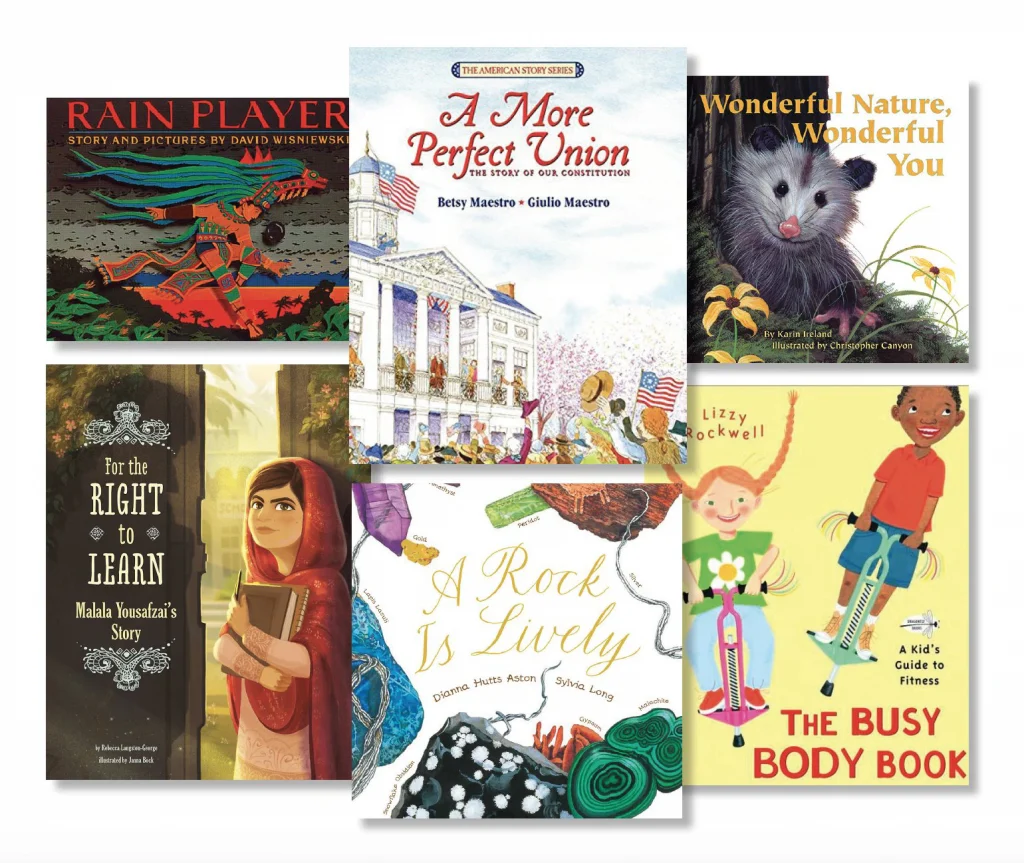
Novel Guides
Novel Guides bring students beyond the CKLA curriculum. We provide fifteen full days of instruction on contemporary trade books, as well as writing prompts that help students navigate the authentic literature they love.

ReadWorks
Amplify CKLA and ReadWorks® have partnered to deliver high-quality texts curated to support the Amplify CKLA Knowledge Sequence and to extend student learning. Texts include high-interest nonfiction articles in topics in social studies, science, literature, and the arts. These texts are accompanied by vocabulary supports and standards-aligned formative assessment opportunities. Teachers can monitor their students’ progress using the ReadWorks reporting features.
Reading resources
The following resources may be helpful as you explore our approach to reading and the role that diverse texts play in the program.
- CKLA Text Complexity Guide
- What students read in Grade K
- What students read in Grade 1
- What students read in Grade 2
- What students read in Grade 3
- What students read in Grade 4
- What students read in Grade 5
Writing
CKLA is rich with opportunities for students to develop, practice, and hone their writing skills. While the shape of writing instruction looks slightly different at each grade level, a commonality across all grades K–5 is that writing isn’t taught in isolation. Rather, it’s embedded within the context of each unit, and is connected to what students read.
At Grades K–2, writing takes place in both the Skills and Knowledge strands.
- Explicit instruction in writing skills (such as sentence structure) and handwriting takes place in the Skills Strand, and is tied to the decodable readers used within each unit.
- Extended writing and writing process activities take place in the Knowledge Strand.
At Grades 3–5, writing is embedded through the integrated units.
- Across each unit, students work on smaller, more discrete writing skills alongside their Student Reader. These skills eventually culminate at the end of each unit in the form of a writing project.
- In 4th and 5th grades, we expand writing even further with the addition of Poetry units.
Writing and text-dependent questions
The overwhelming majority of questions, tasks, and assignments in CKLA materials are text-dependent. Every CKLA unit and domain is based around key texts that are either read aloud, with a peer, or independently. These readings are followed by class discussions where students are expected to refer to these texts when answering literal, inferential, and evaluative questions, both orally during class discussions and through written responses.
- Literal questions assess students’ recall of key details from the text. These are text-dependent questions that require students to paraphrase and/or refer back to the portion of the text where the specific answer is provided.
- Inferential questions ask students to infer information from the text and to think critically. These text-dependent questions require students to summarize and/or reference the portions of the text that lead to and support the inference they are making.
- Evaluative questions ask students to build on what they have learned from the text using analytical and application skills, often to form an opinion or make a judgment. These questions require students to paraphrase and/or cite the textual evidence that substantiates their argument or opinion.
In addition, students are often asked to generate additional questions based on the texts. Students further demonstrate understanding in writing by applying what they have learned and providing evidence from the text to back up their answers and opinions. For example, Grade 3 students learning about sea exploration write a paragraph from the perspective of a sailor on John Cabot’s ship, stating their opinion of whether the hardships they experienced are worth the adventure or glory and citing examples from the text to support their response. Grade 5 students studying the Adventures of Don Quixote write a four-paragraph persuasive essay arguing whether they believe Don Quixote’s good intentions justify his often calamitous actions, using reasons and evidence from the text to support their claims.
Writing with authentic literature
Novel Guides are designed around authentic texts students love. They not only help students foster a love for reading, they also present authentic opportunities for students to express themselves through writing. Novel Guides provide daily text-based writing and discussion through five activity types:
- Ask contains questions for discussion, reflection, or brief written responses. These questions cover information all students should understand as they read the text.
- Explore prompts offer brief research opportunities centered around items mentioned in the text.
- Imagine activities promote creativity and further reflection.
- Observe items ask students to take notes or make other kinds of observations about what they have read.
- Understand questions push students to explore connections to the text.
Writing and enrichment
Writing tasks throughout the program provide almost limitless opportunities for extension. Feedback from the teacher, peers, and self-reflection provide students opportunities to strengthen their writing. For example, advanced students can be encouraged to:
- Use more complex and unusual descriptive vocabulary.
- Incorporate figurative language into their writing.
- Write multi-clause sentences with more complex joining words.
- Create longer or richer opinion, explanatory, and narrative pieces.
- Evaluate the use of informational textual characteristics and use in their own writing (e.g., headers, bullets).
Writing resources
The following resources may be helpful as you explore our approach to writing and how writing develops across the program.
Access the program
Explore as a teacher
Before logging in, watch this brief video on navigating the CKLA Teacher Resource Site.
Ready to explore as a teacher? Follow these instructions:
- Click the CKLA Teacher Resource Site button below.
- Select Log in with Amplify.
- Enter the username: t1.ccsd-k5-ckla@demo.tryamplify.net
- Enter the password: Amplify1-ccsd-k5-ckla
- Click the CKLA Teacher Resource icon
- Select a grade level
Explore as a student
Before logging in, watch this brief video on navigating the CKLA Student Hub.
Ready to explore as a student? Follow these instructions:
- Click the CKLA Teacher Resource Site button below.
- Select Log in with Amplify.
- Enter the username: s1.ccsd-k5-ckla@demo.tryamplify.net
- Enter the password: Amplify1-ccsd-k5-ckla
- Click the CKLA Teacher Resource icon
- Select a grade level
Check out these additional resources
Nevada submission resources:
- CKLA Program Alignment to the Standards (Nevada Rubric: Category 1)
- CKLA Program Social Justice Alignment (Nevada Rubric 2: Category 2)
- CKLA Grade K Lesson Alignment to the Nevada Academic Content Standards for English Language Arts
- CKLA Grade 1 Lesson Alignment to the Nevada Academic Content Standards for English Language Arts
- CKLA Grade 2 Lesson Alignment to the Nevada Academic Content Standards for English Language Arts
- CKLA Grade 3 Lesson Alignment to the Nevada Academic Content Standards for English Language Arts
- CKLA Grade 4 Lesson Alignment to the Nevada Academic Content Standards for English Language Arts
- CKLA Grade 5 Lesson Alignment to the Nevada Academic Content Standards for English Language Arts
CKLA review resources:
- CKLA Program guide
- Diversity, equity, and inclusion in CKLA
- Text complexity in CKLA
- Trade books in CKLA
- Assessments in CKLA
- Remote and hybrid learning with CKLA
- Amplify ELA Technical Specifications
- CKLA Scopes and Sequences
- Grade K Skills and Knowledge
- Grade 1 Skills and Knowledge
- Grade 2 Skills and Knowledge
- Grade 3 Integrated
- Grade 4 Integrated
- Grade 5 Integrated
Puyallup families, welcome to Amplify CKLA!
Welcome to the Amplify CKLA Caregiver Hub for Puyallup School District. This site is designed to help you learn about Amplify CKLA—a core English Language Arts curriculum.
We want to hear from you! Please share your thoughts by completing this district survey.
What is Amplify CKLA?
Amplify Core Knowledge Language Arts (CKLA) is a language arts program for Grades PreK-5 that combines a multi-sensory approach to phonics with rich texts carefully sequenced to build content knowledge—so that students learn to read and read to learn at the same time.
Every day in Grades PreK–2, students complete one full lesson that builds foundational reading skills, as well as one full lesson that builds background knowledge. In Grades 3–5, students start to master the skills of reading, further opening up their worlds.
CKLA in Action
There’s no better way to understand the power of Amplify CKLA than seeing it in action. Watch Ms. Lehman’s second graders in the video below as they learn how to decode and spell words with the long /ā/ sound.
Unit Overviews
Below are quick overviews of the units your student will be working through in their grade throughout the year. Next to each unit are downloadable guides which provide a more in-depth look at the content covered and how you can help your student advance their understanding of the topics.
Materials overview
Amplify CKLA is a blended program, which means your student will be interacting with both print and digital materials.
Print materials
Student Readers
These readers are uniquely designed to provide intensive practice while reading simple but authentic stories. All readers are also available as ebooks and audiobooks on the teacher resource site, which caregivers can now access.
In grades K-2, these readers are chapter books that allow students to practice just-learned sound-spellings within an authentic reading experience that incorporates compelling plots and interesting characters.
In grades 3-5, readers develop close reading and other literacy skills through a selection of diverse, content-rich literary and informational texts.
Student Activity Books
Part of the daily lessons, these activity pages ask students to respond to the text they’ve read and apply skills and knowledge. They also include assessments that track students’ skills development, to which teachers have access.
Digital materials
CKLA Hub for grades K–5
We are excited to announce that students will be able to access multimedia resources and engage in a new digital experience on the CKLA Hub. Unlike ever before, students can access digital resources independently from anywhere, taking full advantage of the instructional multimedia experiences that Amplify CKLA has to offer. Students can access the Hub at home, in the classroom, and on the go, making it ideal for remote learning. It’s compatible with laptops, Chromebooks, tablets, and desktops—we’ve also optimized it for mobile devices.
Knowledge Builder videos for grades K–2
Each Knowledge Domain starts with a Knowledge Builder video: a short, fun, animated story that enriches the lesson and motivates students with new characters, places, and concepts.
Recorded daily read-alouds for grades K–2
Teachers and students will have access to video recordings of all K–2 Knowledge Read-Alouds with pictures from the Flip Books.
Sound Library for grades K-2
The Sound Library uses audio sounds, catchy songs, and animated articulation videos to help students learn and master sounds.
Foundational Skills Boost for grades 1–3
Designed for grades 1–3, these video-based, self-guided lessons target critical foundational skills from the previous year’s instruction in order to fill in any gaps. They offer approximately nine weeks of instruction organized as daily lessons, with additional teacher-led small-group activities and family resources.
Vocab App for grades 3-5
The Vocabulary App is designed for independent practice with vocabulary. Students can use the Vocabulary App for game-like activities that challenge them.
Quests for grades 3–5
Each of the grade levels in 3–5 contains a Core Quest. In these special units, all the normal rules of the classroom change, and students engage with language in surprising new ways. For example, in grade 5, they learn to love the dense Shakespearian language of A Midsummer Night’s Dream through imagery, close reading, and performance.
Support your child at home
Read and talk at home
- If possible, read with your child daily; even 15 minutes of reading together each day can make a huge impact.
- You can read sections of the text aloud together. If your child struggles, you might try reading the text to them with expression, and then have them read it aloud back to you.
- For additional practice, watch the recorded read-alouds with your K-2 student or have your grade 3-5 student use the Vocabulary App.
- Find moments to discuss what they are reading and discovering. Examples of questions you could ask: What stood out to you from what you read today? Were any sentences or words confusing? What was most surprising? What do you think the writer was trying to communicate? Do you agree with the writer’s ideas or descriptions? What connections can you make between what you are reading and your own life or other issues?
- Listen to your child read their written responses or have them share with a friend over video chat.
- We recommend reviewing this Protecting Kids Online article by the Federal Trade Commission addressing digital safety.
Skills practice at home
We’ve developed a set of resources for caregivers to use with their students that includes instructions and materials to teach and practice grade-level phonics at home. Resources include sound videos, Readers, and a how-to video with editable instructions that caregivers can customize to meet individual student needs.
Where to go for help
Whether you have questions about your technology or want to know more about the program, Amplify’s Support Team is here to help!
Contact Support via telephone at (833) 97-Care-8 (833-972-2738) or caregiver@amplify.com.
Our support hours are Monday – Friday, 7 am – 9 PM ET, and Sunday, 10 – 6 ET.
Amplify Science resources for Richmond Public Schools
Welcome! This site contains supporting resources designed for the Richmond Public Schools adoption of Amplify Science.
Authored by UC Berkeley’s Lawrence Hall of Science, Amplify Science is a comprehensive program that blends literacy-rich activities, hands-on investigations, and engaging digital experiences to empower Richmond students to think, read, write, and argue like 21st-century scientists and engineers.
Click here to visit Richmond Public Schools’ Science Department page.

Welcome!
This site contains supporting resources designed for the Richmond Public Schools adoption of Amplify Science for grades 3–8. Here are some resources to get you started, but make sure to check back for exciting updates!
Program-wide resources
Click the button below to explore the Amplify Science Program Guide. You can access the full digital Teacher’s Guide from the Program Guide to explore the program.
- The Amplify Science Program Hub
- Menu of Amplify Science video tutorials
- Tech requirements
- The Caregiver Hub (English and Spanish)
Onboarding videos
To start using Amplify Science quickly in your classroom, check out the following onboarding videos. They cover what you need to know to get started fast, from unpacking materials to logging in and navigating the digital Teacher’s Guide.
Getting Started: K-5
This section allows you to become familiar with the program and to guide you through initial preparation for implementing Amplify in your classrooms. here you will find look-for-tools, pacing/planning guides, and editable documents to support unpacking the unit lessons.
Overview
- Amplify Science K-5: Program Overview
- Amplify Science K-5: Teacher’s Guide Navigation
- Recommended Scope and Sequence for Grades 3–5
Supporting literacy development
Planning resources
Planning Guides
- 3rd Grade RPS Curriculum Guide
- 4th Grade RPS Curriculum Guide
- 5th Grade RPS Curriculum Guide
- 3rd Grade Planning Guide*
- 4th Grade Planning Guide*
- 5th Grade Planning Guide*
- *Sequence of units does not match RPS’ scope and sequence.
Look-for-tools
- Establishing Common Expectations for Amplify Science Classrooms (K-5)
- Amplify Science: Getting started look-for-tool (K-8)
Planning support documents
The following materials lists and videos give you a quick look into our Amplify Science classroom kits. For each grade level, we have a video for the first unit in the scope and sequence, and we show you how to unpack the kits for all the units.
NOTE: These materials kits are not specific to the Richmond unit progression. Please reference these Richmond unit progression docs for 3–5 and 6–8 so you’ll know which kits to look for in each grade.
Materials lists
Unpacking videos
Getting Started: 6-8
This section allows you to become familiar with the program and to guide you through initial preparation for implementing Amplify in your classrooms. here you will find look-for-tools, pacing/planning guides, and editable documents to support unpacking the unit lessons.
Overview
- Amplify Science 6-8: Program Overview
- Amplify Science 6-8: Teacher’s Guide Navigation
- Recommended Scope and Sequence for Grades 6–8
Supporting literacy development
Planning resources
Planning/Pacing Guides
- 6th Grade/Integrated Life Science RPS Curriculum Guide
- 7th Grade/Physical Science RPS Curriculum Guide
- 6-8 Pacing Guide
- Grade 6-8 Planning Guide*
- *Sequence of units does not match RPS’ scope and sequence.
Look-for-tools
Planning support documents
The following materials lists and videos give you a quick look into our Amplify Science classroom kits. For each grade level, we have a video for the first unit in the scope and sequence, and we show you how to unpack the kits for all the units.
NOTE: These materials kits are not specific to the Richmond unit progression. Please reference these Richmond unit progression docs for 3–5 and 6–8 so you’ll know which kits to look for in each grade.
Materials lists
Unpacking videos
6th grade Integrated
- Metabolism: Reading “How You Are Like a Sneezing Iguana” (Lesson Guide and Copymaster)
- Metabolism: Plant Growth Investigations (Lesson Guide and Copymaster)
- Metabolism: Reading “How Do Trees Grow So Huge Without Eating?” (Lesson Guide and Copymaster)
- Populations and Resources: Reading “The Amazing Variety of Life in a Coral Reef” (Lesson Guide and Copymaster)
- Weather Patterns: Reading “What Makes Water Move?” (Lesson Guide and Copymaster)
7th grade Integrated/Physical science
- Harnessing Human Energy: Investigating Electrical Devices (Lesson Guide and Copymaster)
- Harnessing Human Energy: Investigating Non-Touching Forces (Lesson Guide and Copymaster)
- Harnessing Human Energy: Reading About Non-Touching Forces (Lesson Guide and Copymaster)
- Thermal Energy: Designing Hot and Cold Packs (Lesson Guide and Copymaster)
- Phase Change: Reading “Icy Heat” (Lesson Guide and Copymaster)
- Chemical Reactions: Identifying Substances (Lesson Guide and Copymaster)
- Chemical Reactions: Mixtures, Properties, and Separation (Lesson Guide and Copymaster)
- Magnetic Fields, Water Wheel Design (Lesson Guide and Copymaster)
Additional units
- Ocean, Atmosphere, and Climate: Investigating Deep Ocean Currents (Lesson Guide and Copymaster)
Getting Started: Admin
Admin resources
K-5 Frequently-Asked Questions
6-8 Frequently-Asked Questions
Professional learning opportunities
Check back for a list of upcoming sessions!
Frequently asked questions
We get it…pacing your instruction, especially with a new program, can be really challenging. In Amplify Science, students internalize concepts through repeated exposures over multiple days with different modalities. We say students get multiple “at-bats” with each concept. As you move through the lessons, avoid looking for concept mastery each day. Instead, try to move through the lesson according to the timing guidelines, maintaining a quick pace.
In classroom discussion activities in particular, you may be tempted to keep the conversation going to ensure that your students fully master the content in that class period. We recommend, though, if the lesson overview says discuss for 10 minutes, cut it off at 10 minutes.
Every Amplify Science unit includes hands-on investigations. But, just as scientists gather evidence from many types of sources, so do students in Amplify Science. Like scientists, students using Amplify Science also gather evidence from physical models, digital models, texts, videos, photographs, maps, and data sets. Doing so requires using the full range of the practices in multi-dimensional learning. It also offers students different ways of acquiring knowledge and experience, multiple means of expressing their understanding, and a variety of resources through which to engage with the content.
Often, students enjoy hands-on investigations, but don’t sufficiently learn key concepts from those experiences. The Amplify Science investigations are designed for efficiency and effectiveness. For teachers who wish to supplement the lessons with more hands-on activities, optional hands-on “flextension” activities are included in many units. Instructional guidance, student sheets, and other supporting resources for them are included as downloadable PDF files and materials needed are either included in the unit kit or easily sourced.
First, take a breath, and know that you will gradually internalize the program routines and overall flow. Also, remember that your students are experiencing the program for the first time with you. Together, you’ll be peeling the onion one layer at a time.
It can be intimidating to begin the school year with a brand-new curriculum: where do you start? The Richmond Resources Site will help you navigate the different supports and resources we have for new Amplify Science teachers.
The Program Hub is also a great place to direct your own, independent learning about Amplify Science instruction. Once you log into the platform, click on the directory on the top left side. Click into the Program Hub, then Professional Learning, and Getting Started. This will give you access to prioritized resources that will help you plan for your Amplify Science instruction. Additionally, the Amplify Science Help center (also accessible from the Global Navigation menu) is great for short videos about specific topics like supporting EL students, using Classwork, etc.
The variety of multimodal activities that are included in Amplify Science provides students with the opportunity to dive deeply into understanding science ideas, make science exciting to students, and allow for all students to have the benefit of multiple opportunities to access rich science content. Think about how many times you’ve taught a concept and then discovered your students had minimal recall at the end of the week. The truth is, students need multiple, varied exposures to key concepts.
In the program, we make sure that students have the opportunity to DO, TALK, READ, WRITE, and VISUALIZE every important idea. We think of this as providing students with multiple at bats— each encounter with the idea provides students with additional evidence, and the opportunity to develop deeper understanding. Students have multiple opportunities to construct their understanding of the same idea.
This multimodality may feel repetitive, but it is purposeful and impactful. Sometimes the repetition is for 1) hitting other Science and Engineering Practices, and/or 2) giving students multiple and varied opportunities to express their understanding. Many students can easily parrot back what they read and one may think they know it — but ask them to draw a model, and one might see that their understanding is only so deep. Ultimately we believe that this approach not only serves a broader range of students but will also result in more retention in the long run.
Looking for help?
Technical or pedagogical support
Amplify provides a unique kind of free support you won’t find from other publishers. Technical and pedagogical support teams are available from 7 a.m. to 7 p.m. ET, Monday through Friday.
For your most urgent questions:
- Use our live chat within your program
- Call our toll-free number: (800) 823-1969
For less urgent questions, send us an email!
- Technical support: help@amplify.com
- Pedagogical support: edsupport@amplify.comWhat is pedagogical support? We have developed an educational support team of former teachers and administrators who provide pedagogical support for every Amplify curriculum, assessment, and intervention program. This service is completely free for all educators who are using our programs and includes:
- Guidance for developing lesson plans and intervention plans
- Information on where to locate standards and other planning materials
- Recommendations and tips for day-to-day teaching with Amplify programs
- Support with administering and interpreting assessment data and more
Order exceptions
If you need to arrange for the return or exchange of items, contact help@amplify.com and be sure to identify yourself as a Richmond Public Schools teacher.
Amplify CKLA Review Site for Bonneville Joint School District #93
Welcome to the Amplify CKLA community review site for Bonneville Joint School District #93. This site is designed to help you learn about Amplify CKLA—a core English Language Arts curriculum.
What is Amplify CKLA?
Amplify Core Knowledge Language Arts (CKLA) is a core English language arts program for Grades K-5 that combines phonics with rich texts designed to build content knowledge—so that students learn to read and read to learn at the same time. It is also a blended program, which means your student will be interacting with both print and digital materials.
- In Grades K–2, students complete one full lesson each day that builds foundational reading skills, as well as one full lesson that builds background knowledge.
There’s no better way to understand the power of Amplify CKLA than seeing it in action. Watch Ms. Lehman’s second-graders in the video below as they learn how to decode and spell words with the long /ā/ sound.
What do students learn?
Amplify CKLA is an evidence-based program built on research about how students learn to read. This collection of research is often referred to as the Science of Reading or The Simple View of Reading. It tells us that:
- Students learn to read best when they are taught foundational reading skills (like phonics) and comprehension skills (like vocabulary and background knowledge) at the same time. That’s why Amplify includes a combination of skills and concepts in every unit.
- The more students know about a particular topic, the better they are able to comprehend what they read. That’s why Amplify CKLA incorporates rich stories, texts, and articles about a variety of topics throughout the program.
Because students learn so much with Amplify CKLA, it can be hard to review it all at once. To make it easier for you to review the program, we’ve provided links to a variety of resources below, including unit overviews and text lists by grade.
Print materials
Student Readers
These readers are uniquely designed to provide intensive practice while reading simple but authentic stories. All readers are also available as ebooks and audiobooks on the teacher resource site.
In grades K-2, these readers are chapter books that allow students to practice just-learned sound-spellings within an authentic reading experience that incorporates compelling plots and interesting characters.
Student Activity Books
Part of the daily lessons, these activity pages ask students to respond to the text they’ve read and apply skills and knowledge. They also include assessments that track students’ skills development, to which teachers have access.
Digital materials
We are excited to announce that students will be able to access multimedia resources and engage in a new digital experience on the CKLA Hub. Unlike ever before, students can access digital resources independently from anywhere, taking full advantage of the instructional multimedia experiences that Amplify CKLA has to offer. Students can access the Hub at home, in the classroom, and on the go, making it ideal for remote learning. It’s compatible with laptops, Chromebooks, tablets, and desktops—we’ve also optimized it for mobile devices.
Knowledge Builder videos for grades K–2
Each Knowledge Domain starts with a Knowledge Builder video: a short, fun, animated story that enriches the lesson and motivates students with new characters, places, and concepts.
Recorded daily read-alouds for grades K–2
Teachers and students will have access to video recordings of all K–2 Knowledge Read-Alouds with pictures from the Flip Books.
Sound Library for grades K-2
The Sound Library uses audio sounds, catchy songs, and animated articulation videos to help students learn and master sounds.
Foundational Skills Boost for grades 1–3
Designed for grades 1–3, these video-based, self-guided lessons target critical foundational skills from the previous year’s instruction in order to fill in any gaps. They offer approximately nine weeks of instruction organized as daily lessons, with additional teacher-led small-group activities and family resources.
Support your child at home
Read and talk at home
- If possible, read with your child daily; even 15 minutes of reading together each day can make a huge impact.
- You can read sections of the text aloud together. If your child struggles, you might try reading the text to them with expression, and then have them read it aloud back to you.
- For additional practice, watch the recorded read-alouds with your K-2 student.
- Find moments to discuss what they are reading and discovering. Examples of questions you could ask: What stood out to you from what you read today? Were any sentences or words confusing? What was most surprising? What do you think the writer was trying to communicate? Do you agree with the writer’s ideas or descriptions? What connections can you make between what you are reading and your own life or other issues?
- Listen to your child read their written responses or have them share with a friend over video chat.
- We recommend reviewing this Protecting Kids Online article by the Federal Trade Commission addressing digital safety.
Skills practice at home
We’ve developed a set of resources for families to use with their students that includes instructions and materials to teach and practice grade-level phonics at home. Resources include sound videos, Readers, and a how-to video with editable instructions that family members can customize to meet individual student needs.
Program access
Watch the below video to learn even more about Amplify CKLA digital!
Where to go for help
Whether you have questions about your technology or want to know more about the program, Amplify’s Support Team is here to help!
Contact Support via telephone at (833) 97-Care-8 (833-972-2738) or caregiver@amplify.com.
Our support hours are Monday – Friday, 7 am – 9 PM ET, and Sunday, 10 – 6 ET.