How differentiation drives success

A collage features a blue-toned figure holding a mask, silhouettes of people, butterflies, and abstract shapes against a colorful background—evoking scenes from an American classroom helping struggling readers learn by teaching phonemes.

I’d like to share a favorite success story from my ELA class that brings home the true power of differentiation.

There was one boy—let’s call him Dipper. (It’s not his real name; I just really like the show “Gravity Falls.”) Dipper was the sweetest, kindest, most wholesome eighth grader I have ever met. He was absolutely precious.

Dipper also suffered from fairly severe academic struggles. He was well below his middle school reading level, struggled to express ideas in writing, and took longer than other students to break down basic concepts. When Dipper first came to me, he couldn’t start or complete a written sentence. He was easily frustrated and often overwhelmed to the point of tears.

Spoiler: By the end of the school year, Dipper was writing multiple paragraphs and starting to connect them with transition sentences.

Here’s how he got that much closer to grade level.

Using sentence starters and scaffolds to build success

My school district had recently adopted Amplify ELA (6–8). At the outset, I placed Dipper at the differentiation level with the most support. When we talked about how a character reacted to a moment in the story, Dipper had corresponding smiley, frowny, and disgusted faces to identify feelings. He had his own lesson plan with example quotes, shortened readings, alternative questions to spark thinking, and sentence starters to help him focus on comprehension instead of getting stuck at the start.

All of these supports helped him comprehend, share his responses, and contribute to discussions.

So far, so good.

But putting those thoughts to paper—or text box—was a completely different hurdle.

Facing academic struggles with patience and persistence

I can’t talk about Dipper without talking about his one-to-one aide. Let’s call her Ms. Mabel. (Again, “Gravity Falls.” I’m telling you, check it out.)

Ms. Mabel had sat beside Dipper during every ELA class since sixth grade. She helped him stay focused and generate ideas, and she even transcribed his answers when needed. Ms. Mabel’s devotion to Dipper’s success was profound and inspirational.

And it made all the difference when it came to Writing Prompts. At first, the prompts were met with tears and tantrums, panic and disdain, all the joyful wholesomeness ripped from Dipper.

Ms. Mabel would console him and redirect his passions to the work. She would point out the sentence starters, help him copy and paste them to the text box, and have him fill in the blanks. Again and again.

And then, little by little: Less panic. Fewer tears. Sentence starters, fill in the blank. Progress.
Sentence starters, fill in the blank. Success.

Day by day, Dipper, stacking wins like pancakes at an all-you-can-eat breakfast buffet, found confidence in himself, his reading, and his writing. He went from barely being able to complete a sentence to writing multiple paragraphs with evidence to support his ideas.

We had seen Dipper grow from a tiny sixth grader into a less tiny eighth grader and had watched his initial tenacity meet with stagnation, frustration, and defeat—until this year. This year with Amplify was different.

Why it takes more than just an awesome teacher

Obviously, you can’t pin success on one factor. Dipper had many supports in place: two blocks in the resource room, a dedicated aide, supportive peers and family, and—above all—a fierce drive and work ethic.

But if you asked Ms. Mabel, she would tell you that Amplify helped, too. She found that the way the questions were broken down allowed her to teach Dipper what he misunderstood better than she had been able to in previous years. We discovered very quickly how much autonomy was built in. It wasn’t rigid. It gave us structure and trust. It made differentiation easier, clearer, and more meaningful.

Sure, maybe Dipper was also maturing. Maybe I’m just an awesome teacher. Or maybe, just maybe, we need every little bit of help we can get to do the hard work in life. Maybe we need someone to push us in the right direction. Maybe we need those guardrails to keep us on course. Some of us can start our own engines, but we all need to be able to race.

Sometimes, we need someone who can help us start our sentences so we can learn how to be the ones to finish them.

More to explore

  • Let’s keep the conversation going! Join the discussion in our Amplify learning communities.
  • Looking for inspiration? Watch Teacher Connections, a video series featuring practical advice and tools straight from fellow educators—our very own Amplify Ambassadors.
  • Dive into our podcast hub to hear from top thought leaders and educators and uncover cross-disciplinary insights to support your instruction.

Amplify CKLA 1st Edition resources

Coming March 13, Amplify will be providing links below so that you can easily access and print Student Workbook pages, which students complete as part of the daily lessons. In addition to providing daily opportunities for students to respond to text and apply skills and knowledge, Workbooks feature formative assessments for each day’s objectives.

In the meantime, Student Workbook pages are accessible and printable from the Teacher Resource site by following these steps:

  1. Log in to the 1st Edition Teacher Resource site. The 1st Edition resource site can be accessed by following this link or navigating to ckla.amplify.com. (Note: If you don’t have a login, click “Register” to create a login using access code CKLA01)
  2. Open the Digital Planning Guide.
  3. Navigate to a grade, lesson, and lesson activity—you will find the workbook page hyperlinked in the lesson activity at point of use.
  4. Click on the hyperlinked workbook page to open it up in your browser.
  5. Print the workbook page directly from your browser or save the page to your computer.
Illustration of a mesoamerican scene, featuring a large pyramid and a foreground portrait of an indigenous woman, with people harvesting crops in the background.

USBE Data Analysis for K-3 Reading Assessment Program

Introduction

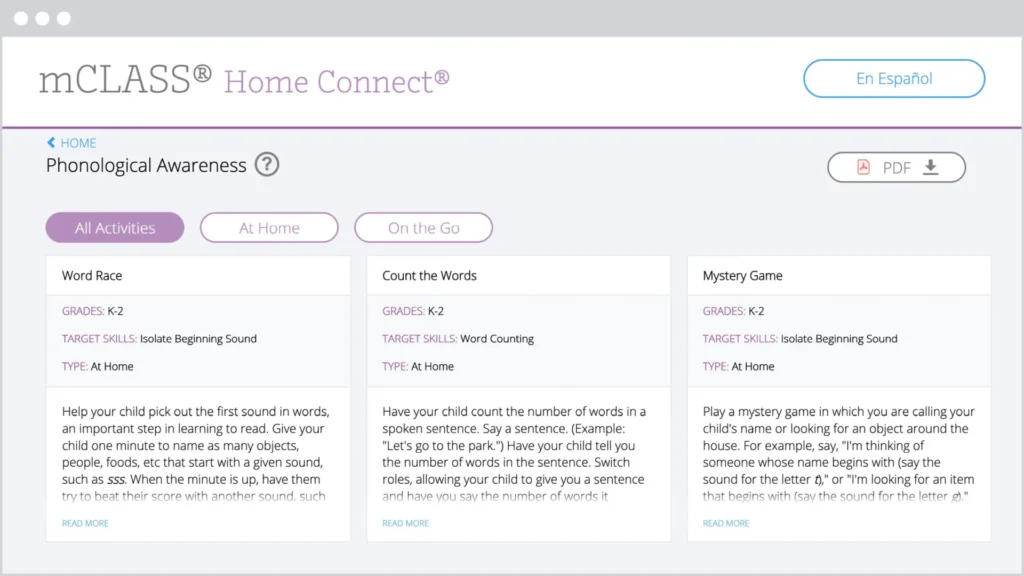
mCLASS Assessment: Acadience™ Reading

How it works: Quickly identify the needs of each student and inform next steps with instant analysis, reports, and instructional planning tools included in the only licensed mobile version of the research-based Acadience Reading assessment.

  • Use short, 1-minute fluency measures for foundational reading skills.
  • Replace manual calculations with instant results and recommended activities.
  • Compare student progress with predictive, research-based benchmark goals.
  • Track progress and target instruction to individual student needs.
  • Support decision-making at every level using aggregate reports.
  • Translate class- and student-level reports into individualized instruction using the Now What?Tools.
  • Get a more complete view of early literacy skills with the new mCLASS:Early Literacy Measures (ELM).
Enrollment for mClass

Please review the Utah Enrollment for mCLASS document for important information about the rostering process for LEAs in Utah.

Benchmark Windows

The USBE has required that each Acadience Reading testing benchmark window occur within the below dates:

BOY — the first benchmark before October 14
MOY — the second benchmark between December 1 and February 5
EOY — the third benchmark between the middle of April and June 15

Benchmark windows for LEAs are set to the state benchmark window dates in mCLASS. Each LEA is to have 2-4 week benchmark period that is within the state benchmark window dates and LEA leaders are to share those dates with staff. The benchmark windows in mCLASS are set to the state benchmark window dates; not the LEA benchmark window dates and this can not be changed in mCLASS. If a student moves into your LEA and your benchmark window is closed, but the state benchmark period is still open, the student must be benchmarked. Should your LEA need an extension of a benchmark window beyond the close of the state benchmark windows, that must be approved by the USBE Assessment Department. Once the benchmark window closes, do not give the benchmark to a student, instead, educators can progress monitor the student on the measures they would have received a benchmark in order to get the students current instructional levels.

If you have questions regarding your current benchmark window dates, feel free to reach out to Amplify Customer Services at help@amplify.com.

Acadience Reading Benchmark Invalidations

Before you invalidate a benchmark probe, review the USBE’s list of acceptable reasons for invalidating on the Frequently Asked Questions: Acadience Reading Invalidations document. If a district/charter has a significant percentage of invalidations, contact and further action will be deployed. If you believe an invalidation is required, please contact your District/Charter Literacy Director. If they need support, they can contact Sara Wiebke, sara.wiebke@schools.utah.gov, to request an invalidation.

Progress Monitoring

The impact of progress monitoring

Progress monitoring is the most powerful tool we offer with regards to student achievement.

“Scores for Daze increase more slowly than they do for other Acadience Reading measures, so more frequent monitoring may not be as informative. For students who need to be monitored on Daze, we recommend monitoring once per month.”
Progress Monitoring with Acadience Reading 
© Acadience Learning
October 2012

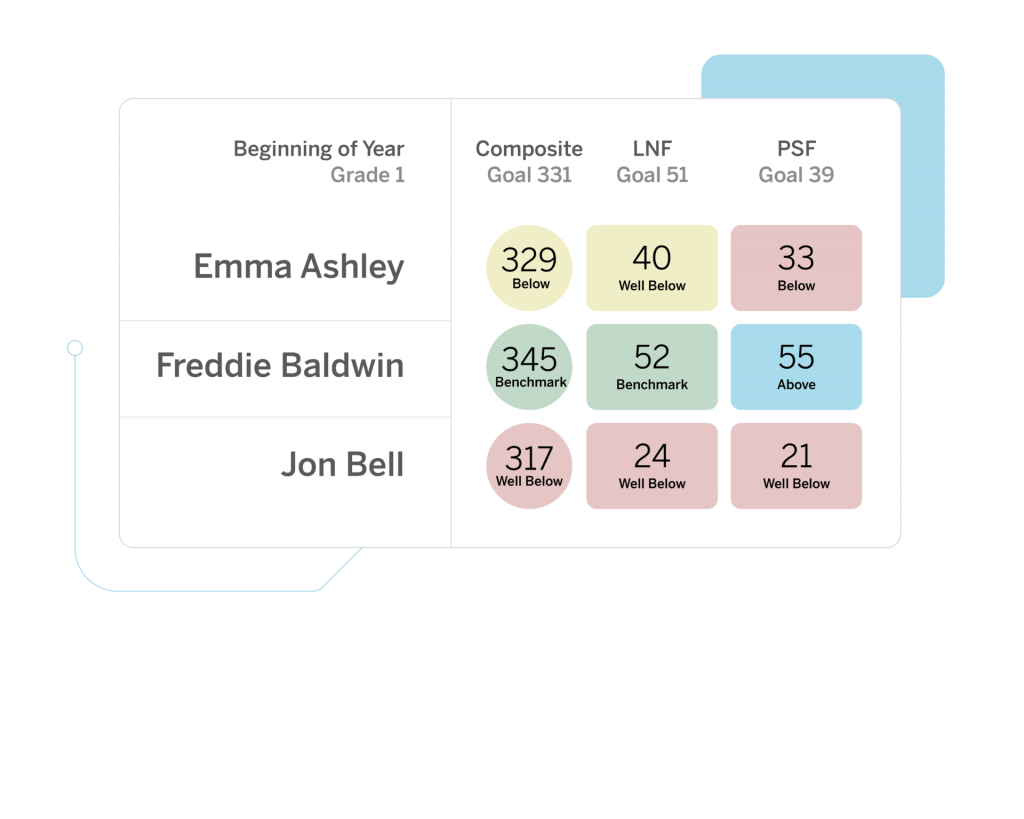
The Acadience Reading authors recommend progress monitoring students in the Well Below Benchmark category once every 7-10 days (and once every 10-12 days for students in the Below Benchmark category).

Progress monitoring is the practice of testing students briefly but frequently on the skill areas in which they are receiving instruction, to ensure that they are making adequate progress. When students are identified as at risk for reading difficulties, they can receive progress monitoring testing more frequently to ensure that the instruction they are receiving is helping them make progress. (Acadience Learning/October 2012, Progress Monitoring Guide)

The purposes of progress monitoring are:

  • to provide ongoing feedback about the effectiveness of instruction,
  • to determine students’ progress toward important and meaningful goals, and
  • to make timely decisions about changes to instruction so that students will meet those goals.

How to progress monitor?

  • Select students for progress monitoring
  • Select Acadience Reading materials for progress monitoring
  • Set progress monitoring goals
  • Determine the frequency of progress monitoring
  • Conduct progress monitoring assessment
  • Access data through class and student reports
  • Evaluate progress and modify instruction.

The key to progress monitoring: Instruction should link to progress monitoring and progress monitoring should link to instruction. They should run parallel and merge as one to confirm student growth in reading.

Check your progress monitoring fidelity report in mCLASS to ensure you are on track with these students. For more information regarding progress monitoring guidelines, visit the official progress monitoring guidelines.

Support Team

Amplify Customer Services

(800) 823-1969
Monday to Friday, 5 a.m. to 5 p.m. MT
help@amplify.com

Educational Support Team

Pedagogical Questions
(800) 823-1969
Monday to Friday, 5 a.m. to 5 p.m. MT
edsupport@amplify.com

For more information, please contact:

Sarah McCarty
Associate Director, Educational Partnership
(812) 593-5776
smccarty@amplify.com

Donna Bright
Educational Partnership Manager
(303) 960-3772
dbright@amplify.com

Robert McCarty
Regional Director of Educational Partnership
(435) 655-1731
rmccarty@amplify.com

Cydnee Carter
Assessment Development Coordinator
(801) 538-7654
cydnee.carter@schools.utah.gov

Liz Williams
Elementary ELA Assessment Specialist
(801) 538-7542
Liz.williams@schools.utah.gov

Sara Wiebke
Literacy Coordinator
(801) 538-7935
sara.wiebke@schools.utah.gov

Krista Hotelling
K-3 Literacy Specialist
(801) 538-7794
krista.hotelling@schools.utah.gov

Christine Elegante
K-3 Literacy Specialist
(801) 538-7551
christine.elegante@schools.utah.gov

Julie Clark
K-3 Literacy Specialist
801-499-2515
julie.clark@schools.utah.gov

Melissa Preziosi
Assessment Data Specialist
(801) 538-7949
melissa.preziosi@schools.utah.gov

Resources

Helpful tips and guides
mCLASS:Acadience Reading tutorials
Technical resources

Amplify Enrollment This guide walks you through the necessary steps to complete enrollment using the manual enrollment tools on Amplify Home. It shows you how to manage staff, student, and class assignment information, and maintain the accuracy of your staff, student, and class assignments.

Devices & Requirements Ensure mCLASS is compatible with your devices and systems for optimal performance and support.

Remote Assessing

Videos:

Remote Assessment Guidance from the Acadience Team:  
mCLASS®: Acadience® Reading (formerly known as DIBELS Next)

Key Points:

Before you assess:

1. Determine how you will show student materials and score in mCLASS at the same time. 

  Description

Description

Recommended set up

  • One computer for video conferencing and sharing student materials.
  • One touchscreen device for scoring in mCLASS.
Modified set up
  • One computer.

Note: mCLASS app is optimized for touchscreen; scoring with a mouse may need more practice.

2. Familiarize yourself with the digital copies of student materials.

3. Schedule virtual meetings with students. To communicate with English-speaking caregivers, consider sending this email or video. To communicate with Spanish-speaking caregivers, consider sending this email or video.

4. Determine how you will handle scenarios where there’s a lag:

  Description
Record the meeting
  • Before the assessment begins, press the recording button on your video conferencing tool.
  • After the virtual meeting, listen to recording and rescore in mCLASS if needed.
  • Pick a decision rule for how to score ambiguous items and be consistent. For example, if you decide that you will give a student the benefit of the doubt and mark ambiguous similar sounding items correct when you can’t quite hear their answer, do this for all students you assess.
Use a phone
  • Before the assessment begins, call caregiver’s phone using your phone (type *67 before your number if you want your number to be hidden).
  • Ask the caregiver to press the speaker button. 
  • Mute yourself and your student on the virtual learning platform.

While you assess: 

1. Take the opportunity to connect individually with your students as they experience so much change. Don’t make the session solely about testing, and remind caregivers and students that the assessment is a way to see how you can best tailor instruction.

2. Make student materials visible to your student.

For Maze, choose the model that works best for you:

Enter results into the mCLASS web reports

  • Students complete online Maze during a video conference
    • Put a link to the student assessment site (mclass.amplify.com/student) and the student’s credentials into the chat box (learn how to generate student credentials in this video)
    • Ask your student to complete Maze.
  • Students complete online Maze outside of a video conference (caregiver support is needed with log-in)
    • To provide student credentials and instructions to English-speaking caregivers, consider sending this email and video. To provide student credentials and instructions to Spanish-speaking caregivers, consider sending this email and video.
  • Students complete Maze on paper
    • Locate the benchmark Maze Acadience Learning’s site.
    • Print a copy of the form you need (e.g. BOY) for each student in your class.
    • Send the form home in a sealed envelope with students, mail the form to caregivers, or have caregivers get forms via school-based pick-up. Provide instructions not to open the envelope until the student is ready to take the assessment.
    • Provide parents with instructions on how to proctor the assessment for their child. They need to:
      • Give the form to their child
      • Sit with their child and read the instructions and practice items
      • Tell their child to stop when 3 minutes has elapsed
      • Send screenshots of their child’s work via email or text, or return the completed form to the school in a sealed envelope provided by the school.
  Guidance
Acadience:Reading 

Use the share screen feature to display student materials on your screen.

Optional next step for measures that have student materials:

Zoom users: grant your student control of your screen so you can see their cursor as they read:

  • Click “Remote Control” and select your student’s name in the dropdown.
  • Ask your student to use their cursor to point to words as they read.

Note: For Mac OSX, you will need to give Zoom access in the Accessibility tab in the Privacy and Security preferences of your Mac. For more information on giving Zoom access in Security and Privacy, click here.

3. Score in mCLASS.

Student materials

  Benchmark Progress monitoring
Acadience Reading (formerly known as DIBELS Next) Available for free download on the Acadience Learning website

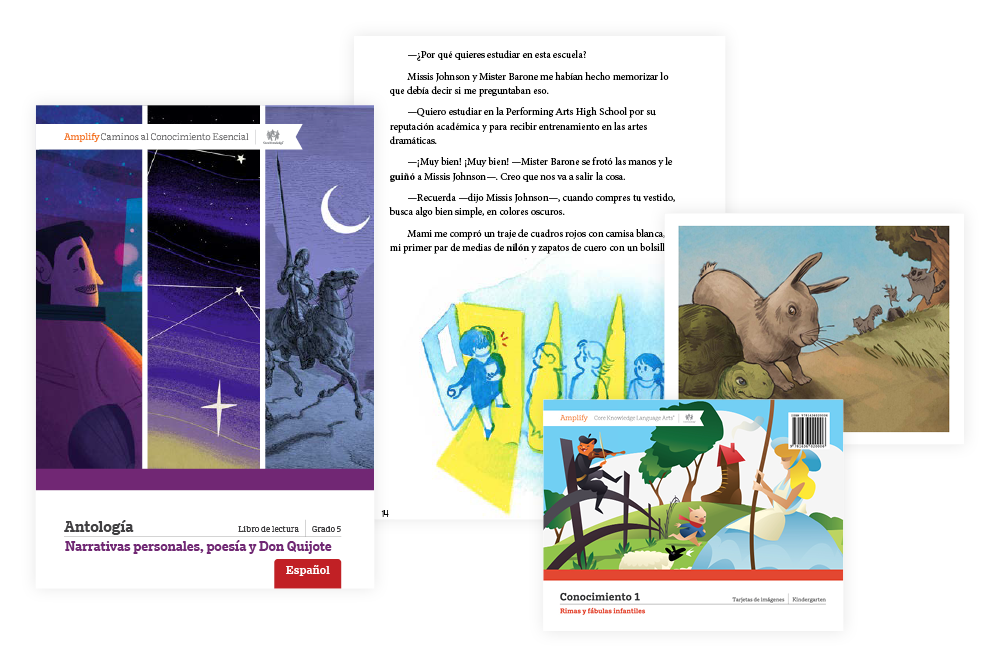
Connecticut K-5 ELA: Explore Amplify CKLA (English) and Caminos (Spanish)

Thank you for visiting Amplify’s Core Knowledge Language Arts (CKLA) and Caminos website designed exclusively for you. We are very excited for you to further explore Amplify CKLA and Amplify Caminos and discover more about our proven, phonics-based literacy programs in English and Spanish.  Begin your journey with the Introduction below and explore Amplify CKLA and Caminos.

Introduction

We are excited for you to see how Amplify CKLA and Amplify Caminos provide parallel, high-quality resources in both English and Spanish for all students and multilingual learners across NYC! Both programs are flexible, offering stand-alone foundational skills instruction as well as comprehensive core English Language Arts.

Amplify CKLA Skills and Caminos Lectoescritura are entirely built on the latest reading science and provide comprehensive instruction in all foundational reading skills. These programs feature:

  • Phonological awareness, phonics, and word recognition
  • Strong, systematic sound-first instruction to support students in learning to decode
  • Language skills, including conventions, spelling, and grammar
  • Reading comprehension
  • Writing instruction

CKLA and Caminos for grades K–2 provides a two-strand approach – the first strand is the Foundational Skills Strand (as described above) and the second is the Knowledge Strand, in which students build rich background knowledge through multidisciplinary Read-Alouds in both English and Spanish. Additionally, in Grades 3-5, CKLA and Caminos take an Integrated Approach, meaning everything is focused on rich worldly context. 

We highly encourage you to check out the Grades K-2 Knowledge Strand section of the website and the 3-5 Integrated Approach section to explore these components further, gain access to the engaging, worldly, and diverse texts students and teachers are using in their classrooms daily, and discover so much more!

Access the program

Every day in the CKLA/Caminos classroom, students will practice their existing reading skills while stretching themselves toward new goals. In K–2, each day includes dedicated skills time to help you give students a solid foundation. In the upper grades, skills instruction becomes integrated with Knowledge lessons, and students engage with increasingly complex content-rich texts and writing activities.

All instruction starts with phonological awareness, which research has shown to benefit the greatest number of students.

Students begin by learning to recognize sounds, as well as to articulate them.

All instruction starts with phonological awareness, which research has shown to benefit the greatest number of students. Students begin by learning to recognize sounds, as well as to articulate them.

Once students can recognize sounds, they learn to form the corresponding letter codes. CKLA starts by teaching the sound-spellings that appear most frequently in English, which lets your students read and write as many words as possible, as soon as possible.

The lessons continue to challenge students as they progress, introducing complications like multisyllabic words, “tricky words,” and homophones. In each case, students encounter complications as they become ready for them.

While students are learning how to read, Knowledge Domains give them authentic and engaging reasons to read. Students will use their skills to explore domains that relate to storytelling, science, and the history of our world as seen through the eyes of many different groups. With these domains, you’ll bring the world to your students, showing them how reading can become an exciting, rewarding, and useful part of their lives.

Each CKLA/Caminos Knowledge Domain gives students a base of vocabulary and concepts, building on what they’ve learned in previous domains. This helps students make connections within and across grades, building a base of background knowledge that will help them navigate new and more complex texts.

Students learn to listen and understand before they learn to read. By delivering knowledge through classroom Read-Alouds, we teach students the key comprehension skills they’ll use throughout their reading lives.

We emphasize interactions with students, challenging them and encouraging them to think about the material rather than simply receive it. Each lesson includes many options for formative assessment and immediate adjustment to your class’s needs.

End-of-domain digital assessments for Knowledge Domains are fully voice acted, ensuring that each student’s comprehension skills are being authentically tested. This not only helps build student test-taking confidence, but also gives you a more accurate picture of your class.

Step 1: Watch this video walkthrough of the CKLA/Caminos Teacher Resource Site.

Step 2: Explore the Teacher Resource Site.

  • Click the CKLA/Caminos Teacher Resource button below.
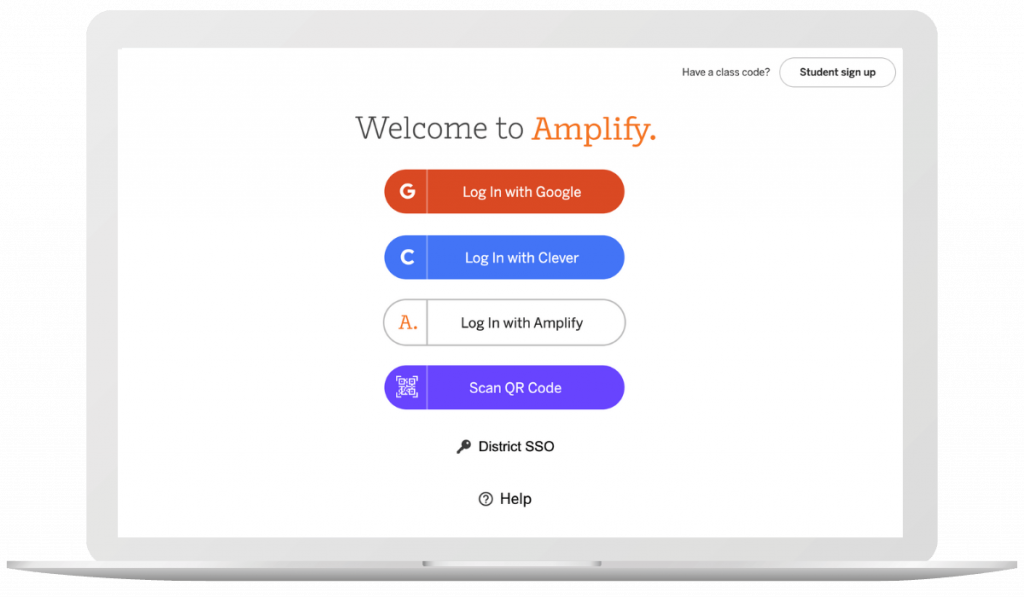
  • Select Log in with Amplify.
  • Enter your teacher usernamet.nyc-ckla-caminosK2@tryamplify.net
  • Enter your password: AmplifyNumber1
  • Toggle to access either English and Spanish

Step 3: Watch this video walkthrough of the CKLA/Caminos Student Hub.

Step 4: Explore the CKLA/Caminos Student Hub for Grades K-2.

  • Click the CKLA/Caminos Student Hub button below.
  • Select Log in with Amplify.
  • Enter your student usernames.nyc-ckla-caminosK2@tryamplify.net
  • Enter your password: AmplifyNumber1
  • Select a grade level.

By grades 3–5, students have mastered the basics of decoding and are hungry to use what they’ve learned to reach out to the world. Although Read-Alouds remain an important part of lessons, students are also encouraged to practice independent reading starting in grade 3—striking a balance between strong teacher support and developing their autonomy and confidence as readers.

As students progress from K–2, writing activities start to emphasize analysis, creativity, and independent thinking about the material students are learning.

Each of the levels in grades 3–5 contains a Core Quest. In these special
units, all the normal rules of the classroom change, and students engage
with language in surprising new ways. Here in this grade 5 example, they
learn to love the dense Shakespearian language of A Midsummer Night’s
Dream through imagery, close reading, and performance.

Step 1: Watch this video walkthrough of the CKLA/Caminos Teacher Resource Site.

Step 2: Explore the CKLA/Caminos Teacher Resource Site for Grades 3-5.

  • Click the CKLA/Caminos Teacher Resource button below.
  • Select Log in with Amplify.
  • Enter your teacher usernamet.nyc-ckla-caminos35@tryamplify.net
  • Enter your password: AmplifyNumber1
  • Toggle to access either English and Spanish

Step 3: Watch this video walkthrough of the CKLA/Caminos Student Hub.

Step 4: Explore the CKLA/Caminos Student Hub for Grades 3-5.

  • Click the CKLA/Caminos Student Hub button below.
  • Select Log in with Amplify.
  • Enter your student usernames.nyc-ckla-caminos35@tryamplify.net
  • Enter your password: AmplifyNumber1
  • Select a grade level.

Key program features

The student body of our country has been changing, and it’s changing fast. Over 10% K-12 students are english language learners who speak other languages. This skews heavily to primary grades with 15-16% in grades K-3.  In 2021-2022, New York City Public Schools enrolled over 147,000 English language learners across K-12 or about 14% of students.  Over 52% of those students are in elementary schools across the district with 23% in grades K-3. 

Amplify Caminos uses spiral learning to reinforce every student’s ability to develop skills like reading, writing, speaking, and listening in Spanish that can be transferred to English. As students engage with their lessons, they explore the similarities and differences in grammar, vocabulary, writing, and language use between Spanish and English. This bridge helps students learning two languages to strengthen their knowledge in both. 

Through cross-curricular content, students explore units that relate to storytelling, science, and the history of our world in a holistic and thoughtful way. With these units, you’ll bring the world to your students, showing them how reading can become an exciting, rewarding, and useful part of their lives.

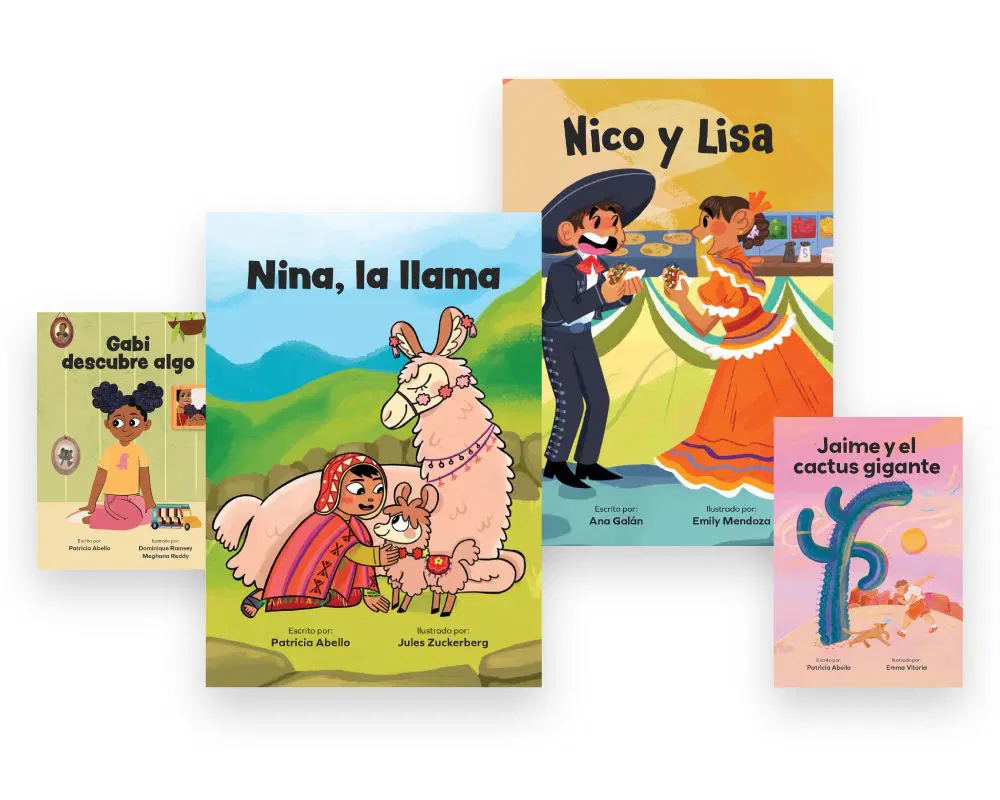
Amplify Caminos al Conocimiento Esencial, a Spanish language arts program for Grades K–5 that will inspire and engage your students to become confident readers, writers, and thinkers.

It is designed to support any biliteracy model, including English as a Second Language (ESL), transitional bilingual programs, dual language strands, and Spanish immersion programs.

When used in tandem with Amplify CKLA, Amplify Caminos provides an one-to-one English and Spanish solution.

Built out of the latest research in the Science of Reading, Amplify CKLA delivers explicit instruction in both foundational literacy skills (systematic phonics, decoding, and fluency) and background knowledge in grades K–2 with an integrated approach to explicit instruction in grades 3–5.

Review this Science of Reading Toolkit to learn more about the Science of Reading best practices integrated throughout CKLA.

Great reading instruction starts with helping kids develop great decoding skills. By building a solid foundation of phonological awareness and phonics, reading the words on the page becomes automatic so that comprehension and critical thinking can happen.

Our instruction is supported by:

  • Step-by-step lessons with multisensory approaches, clear lesson objectives, and embedded formative assessments.
  • Decodable books and student readers with ebook and audiobook versions that feature engaging plots and relatable characters.
  • An engaging sound library with fun songs and videos that develop phonological awareness.
  • An interactive Vocab App featuring engaging activities with immediate feedback and automated, customized instruction based on student performance.

Students build grade-appropriate subject-area knowledge and vocabulary in history, science, literature, and the arts while learning to read, write, and think creatively and for themselves.

Our instruction is supported by:

  • Knowledge builders that provide a quick overview of each domain with its key ideas.
  • Interactive read-alouds designed to build knowledge and vocabulary.
  • Content-rich anchor texts that support students as they tackle increasingly complex text and sharpen their analytical skills.
  • Social and emotional learning paired with lessons in civic responsibility.

From the printed page to the screen, we bring foundational skills and knowledge of the world to your young learners, and make the transition from classroom to home learning seamless.

Download the Amplify CKLA Components Guide to see components by grade.

Additional materials to support your review

Oklahoma ELA Review for grades K–5

Thank you for taking the time to review Amplify’s core ELA program for K–5.

Amplify Core Knowledge Language Arts (CKLA) is a cutting-edge and effective core ELA program for students in grades K–5. It was developed in partnership with the Core Knowledge Foundation, was specifically designed to help teachers implement Science of Reading principles, and features proven evidence-based instructional practices.

Getting started

On this site, you’ll find a variety of resources designed to support your review and evaluation of the program. Before you start scrolling, watch the video below to learn about CKLA.

Curriculum background

Pedagogical overview

In the video below, Amplify’s Chief Academic Officer Susan Lambert shares the big picture of Amplify CKLA, explaining why it was created and the impact it’s making across the country.

Program overview

In the video below, learn about CKLA’s structure and materials, as well the research behind the curriculum.

Program features

Built on the latest research in the Science of Reading, Amplify CKLA delivers explicit instruction in both foundational literacy skills (systematic phonics, decoding, and fluency) and background knowledge in grades K–2, with an integrated approach to explicit instruction in grades 3–5.

Review this Science of Reading toolkit to learn more about the Science of Reading best practices integrated throughout CKLA.

When students build a solid foundation of phonological awareness and phonics, reading words on the page becomes automatic so that comprehension and critical thinking can happen.

  • Step-by-step lessons with multisensory approaches, clear lesson objectives, and embedded formative assessments.
  • Decodable books and Student Readers with ebook and audiobook versions that feature engaging plots and relatable characters.
  • An engaging sound library with fun songs and videos that develop phonological awareness.
  • An interactive App featuring engaging activities with immediate feedback and automated, customized instruction based on student performance.

Students build grade-appropriate subject-area knowledge and vocabulary in history, science, literature, and the arts while learning to read, write, and think creatively and for themselves. Our instruction is supported by:

  • Knowledge Builders that provide a quick overview of each domain with its key ideas.
  • Interactive Read-Alouds designed to build knowledge and vocabulary.
  • Content-rich anchor texts that support students as they tackle increasingly complex text and sharpen their analytical skills.

Getting students caught up on reading skills requires more than just an extra mini-lesson here or there. It requires targeted and intensive instruction delivered in short bursts. Our intervention component:

  • Assesses and analyzes students’ areas of mastery and growth.
  • Automatically groups students with like needs.
  • Provides educators with ready-to-teach, research-based instructional progressions that last 10 days.
  • Progress monitors students, updates their skill profiles, and reforms groups for the next 10-day period.

Student-led reading practice should be purposeful and connected to the core. In addition to practicing skills directly tied to the skills they’ve been working on during ELA time, Amplify CKLA students have opportunities to interact with adaptive content that addresses their personal gaps and bolsters foundational skills at a pace that supports their individual development.

Our collection of 40+ adaptive games targets foundational reading skills and develops them in alignment with Science of Reading principles. Unlike other adaptive games, ours ensure students:

  • Practice the right skills at the right time. Our embedded placement tool ensures students receive the content and skill practice most appropriate for their current reading level. From there, students move through our curriculum along their own learning pathway, where they encounter personalized content tailored to their evolving skill and grade levels.
  • Progress along a pathway that adapts on multiple dimensions, not just one. For example, a student can work on early first-grade decoding in one game while building more advanced vocabulary knowledge in another.
  • Practice skills in tandem. For example, a student is never forced to master one skill area before proceeding to the next. Instead, we offer students the opportunity to work on multiple skills concurrently.
  • Feel supported with scaffolding, instruction, and practice that adapts based on student performance.
  • Stay engaged by giving them immediate and clear feedback. These results are never punitive. Instead, our always-positive feedback is delivered in the context of the game world and is designed to motivate students to keep trying.

From the printed page to the screen, we bring foundational skills and knowledge of the world to your young learners, and make the transition from classroom to home learning seamless.

Download the Amplify CKLA Components guide to see components by grade.

Download the Remote and hybrid learning guide to learn how we support in-person, remote, and hybrid instruction.

Digital experience overview

In the video below, learn about CKLA’s digital tools for teachers and students across both classroom and asynchronous environments.

Curriculum review

Digital navigation walkthrough

Physical materials walkthrough

Access the program

Explore as a teacher

Before logging in, watch this brief video on navigating the CKLA Teacher Resource Site.

Ready to explore as a teacher? Follow these instructions:

  • Click the CKLA Teacher Resource Site button below.
  • Select Log in with Amplify.
  • Enter the teacher username and password found on the login flyer PDF provided to you.
  • Click the CKLA Teacher Resource icon.
  • Select a grade level.

Explore as a student

Before logging in, watch this brief video on navigating the CKLA Student Hub.

Ready to explore as a student? Follow these instructions:

  • Click the CKLA Student Hub button below.
  • Select Log in with Amplify.
  • Enter the student username and password found on the login flyer PDF provided to you.
  • Click the CKLA Student Hub icon.
  • Select a grade level.

Check out these additional resources

Oklahoma submission resources:

CKLA review resources:

Utah ELA Review for Grades PK–5

Thank you for taking the time to review Amplify’s core ELA program for PK–5. Amplify Core Knowledge Language Arts® (CKLA) is a state-approved core ELA curriculum designated as a primary core program that fully meets the Science of Reading requirements outlined in SB 127.

Amplify CKLA, developed in partnership with the Core Knowledge Foundation, was designed to help teachers implement Science of Reading principles and evidence-based instructional practices. Scroll down to learn how CKLA is uniquely designed to help all your students make learning leaps in literacy.

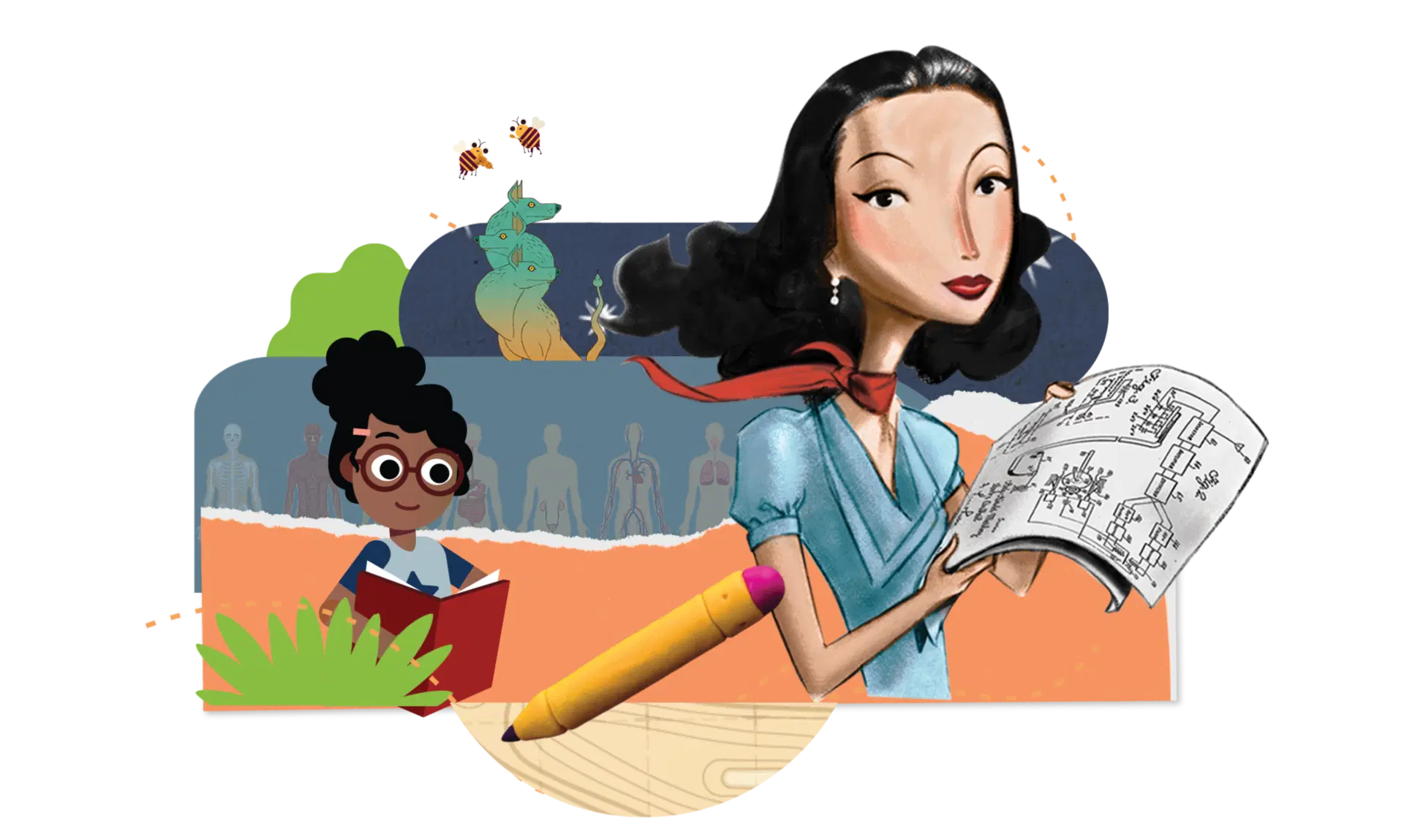
Illustration of a diverse group of people engaged in creative activities, including a woman holding architectural plans and a young girl reading a book.

Step 1: Program Introduction

Welcome to Amplify CKLA! Before you dive into our materials, watch the video below to learn about the big picture behind Amplify CKLA’s pedagogy.

In this video, Susan Lambert (Chief Academic Officer and host of Science of Reading: The Podocast) shares why Amplify CKLA was created, how it is built on the Science of Reading, and the impact it’s making across the country.

Step 2: Program Overview

Amplify CKLA is different for a reason. Watch the overview video below to learn about these differences and why educators love them.

In this video, you’ll get an in-depth look at the program’s overall structure and organization, the design behind our proven lessons, and the materials included to support teaching and learning.

The Amplify CKLA Program Guide also provides an in-depth view of how Amplify CKLA works, how it’s structured, and why it’s uniquely capable of helping you bring reading instruction based on the Science of Reading to your classroom.

Evidence-based design

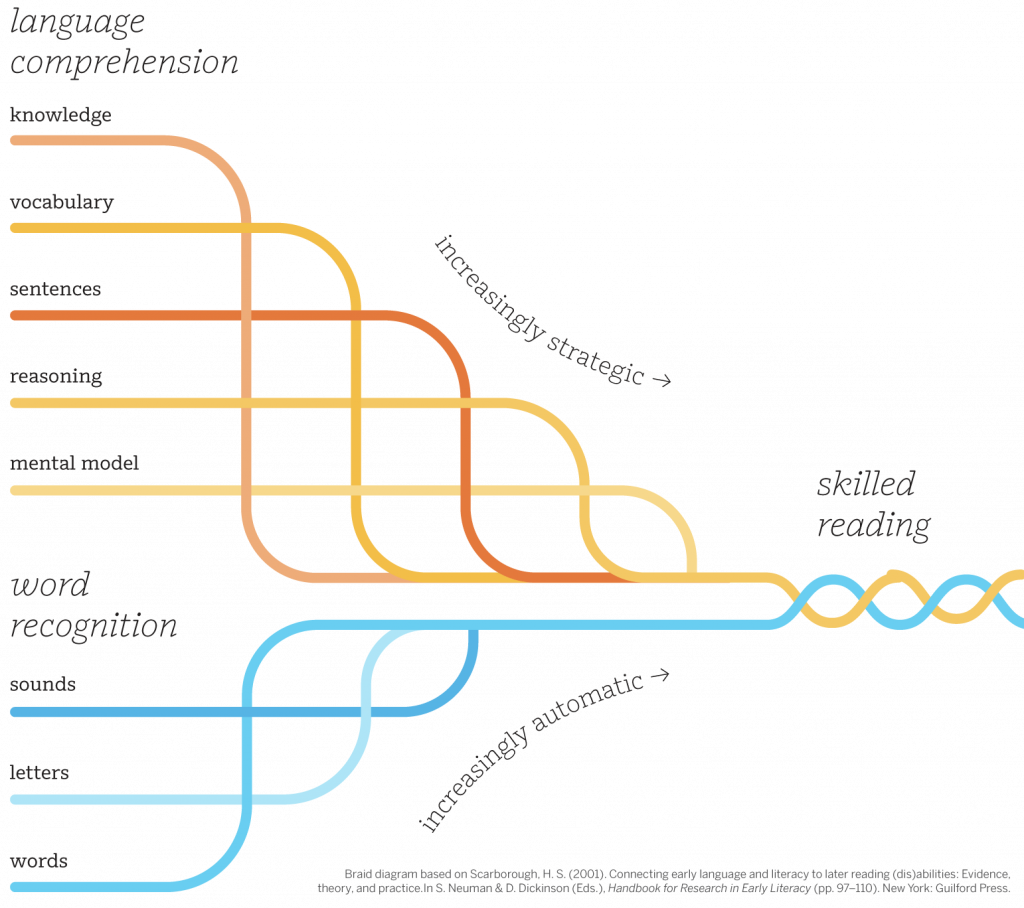
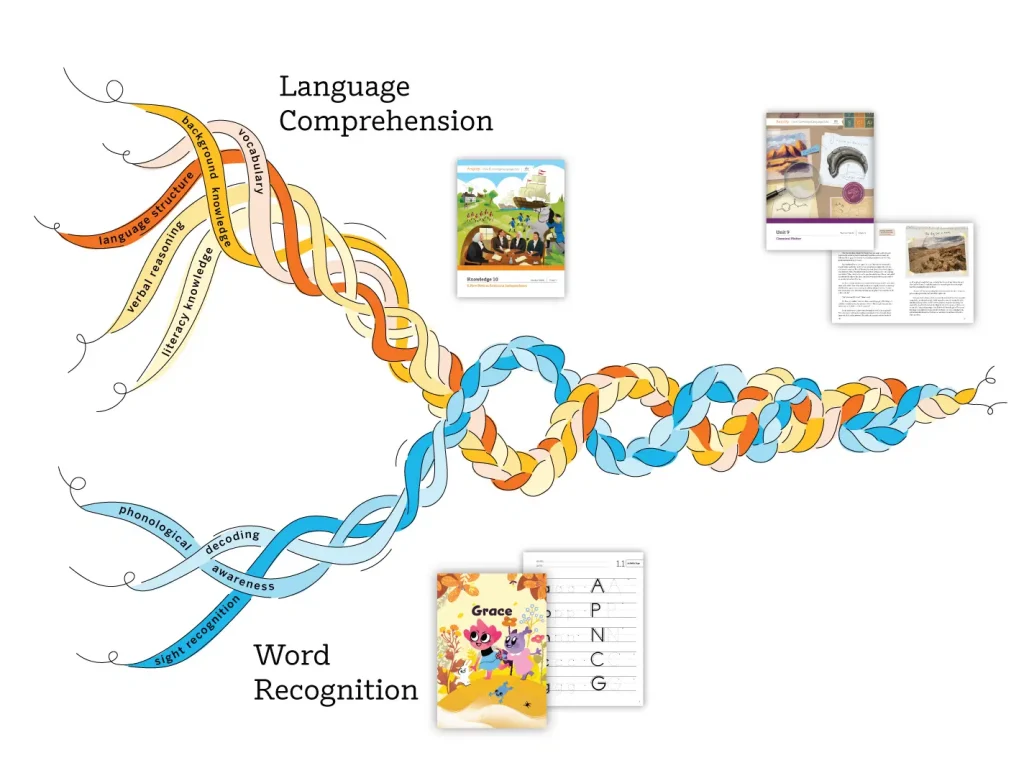
Amplify CKLA is rooted in Science of Reading research. Mirroring Scarborough’s Rope, Amplify CKLA delivers a combination of explicit foundational skills with meaningful knowledge-building.

  • In Grades PK–2, dedicated knowledge-building and explicit skills instruction are taught simultaneously through two distinct instructional strands.
  • In Grades 3–5, dedicated knowledge-building and explicit skills instruction are woven together and delivered through one integrated strand.
Scarborough's Rope

Grades K–2 Skills and Knowledge Strands
Every day students in Grades K–2 complete one full lesson that explicitly and systematically builds foundational reading skills in the Skills Strand, as well as one full lesson that builds robust background knowledge to access complex text in the Knowledge Strand. Through learning in each of these strands, students develop the early literacy skills necessary to help them become confident readers and build the context to understand what they’re reading.

Grades 3–5 Integrated Strand
In Grades 3–5, Knowledge and Skills are integrated in one set of instructional materials. Lessons begin to combine skills and knowledge with increasingly complex texts, close reading, and a greater writing emphasis. Students can then use their skills to go on their own independent reading adventures.

Key features

For each Amplify CKLA key feature below, click the drop down arrow to learn more.

Built out of the latest research in the Science of Reading, Amplify CKLA delivers explicit instruction in both foundational literacy skills (systematic phonics, decoding, and fluency) and background knowledge in grades PK–2 with an integrated approach to explicit instruction in grades 3–5.

Review this Science of Reading toolkit to learn more about the Science of Reading best practices integrated throughout CKLA.

Amplify CKLA aligns with the instructional principles recommended by Orton Gillingham and LETRS.

  • Structured–Concepts are taught through consistent routines
  • Sequential–Concepts are taught in a logical, well-planned sequence
  • Systematic–Phonemes are taught from simplest to most complex
  • Explicit–Decoding and encoding concepts are taught directly and explicitly
  • Multi-sensory–Instruction is delivered through visual, auditory, and kinesthetic-tactile pathways
  • Cumulative–Concepts are applied in decodable, connected texts with constant review and reinforcement

Watch this video to learn more!

Additionally, great reading instruction starts with helping kids develop great decoding skills. Our instruction is supported by:

The Science of Reading reveals knowledge as an essential pillar of reading comprehension and lifelong literacy. Hear from author Natalie Wexler and CKLA customers on edWebinar about the importance of knowledge-building in reading instruction.

Students build grade-appropriate subject-area knowledge and vocabulary in history, science, literature, and the arts while learning to read, write, and think creatively and for themselves. Our instruction is supported by:

  • Knowledge builders that provide a quick overview of each domain with its key ideas.
  • Interactive Read-Alouds designed to build knowledge and vocabulary.
  • Content-rich anchor texts that support students as they tackle increasingly complex text and sharpen their analytical skills.
  • Social and emotional learning paired with lessons in civic responsibility.

Amplify CKLA not only received an all-green rating from the rigorous evaluators at EdReports, but it was also recently recognized by the Knowledge Matters Campaign as a high-quality literacy program that excels in building knowledge. Our shared message: background knowledge is essential to literacy and learning.

Student-led reading practice should be purposeful and connected to the core. That’s why Amplify createdBoost Reading. As an optional add-on to Amplify CKLA, students have the opportunity to practice skills directly tied to the skills they’ve been working on during core reading time. Boost Reading also adapts to each student to address their personal gaps and bolsters foundational skills at a pace that supports their individual development.

Boost Reading’s collection of 40+ adaptive games target foundational reading skills and develops them in alignment with Science of Reading principles. Unlike other adaptive games, we ensure students:

  • Practice the right skills at the right time. Our embedded placement tool ensures students receive the content and skill practice most appropriate for their current reading level. From there, students move through our curriculum along their own learning pathway where they encounter personalized content tailored to their evolving skill and grade levels.
  • Progress along a pathway that adapts on multiple dimensions, not just one. For example, a student can work on early first-grade decoding in one game while building more advanced vocabulary knowledge in another.
  • Practice skills in tandem. For example, a student is never forced to master one skill area before proceeding to the next. Instead, we offer students that opportunity to work on multiple skills concurrently.
  • Feel supported with scaffolding, instruction, and practice that adapts based on student performance.
  • Stay engaged by giving them immediate and clear feedback. These results are never punitive. Instead our always-positive feedback is delivered in the context of the game world and is designed to motivate students to keep trying.

Click the buttons below to learn more:

Step 3: Program Resources

Easy-to-use print materials

Amplify CKLA’s easy-to-use materials bring foundational skills and knowledge to life in the classroom.

Download the Amplify CKLA Components guide to see components by grade and watch the print materials walkthrough below.

Engaging CKLA digital experience

The top-rated content of Amplify CKLA is now live with the digital experience that enhances instruction and saves time.

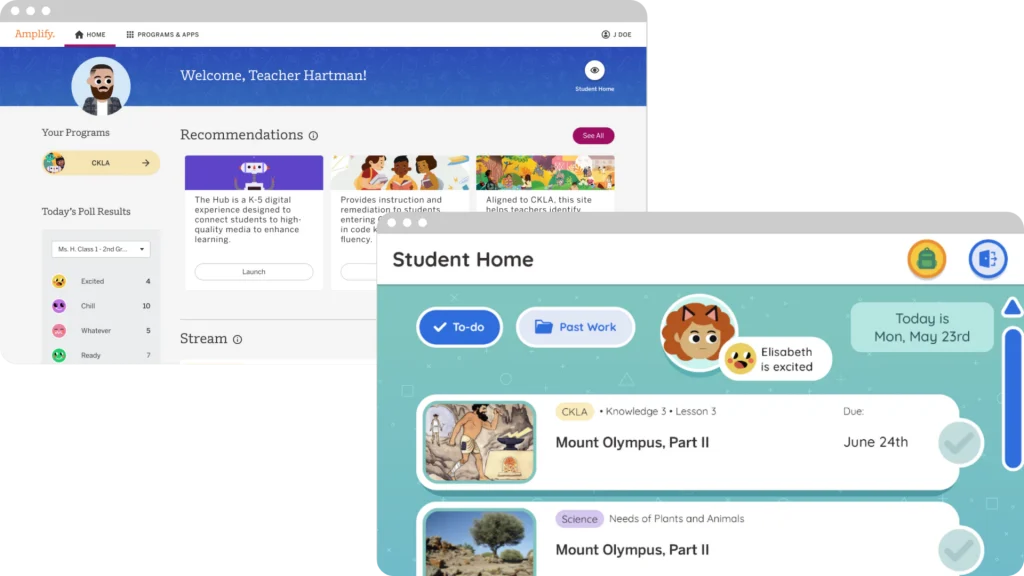
Two digital dashboards are displayed: one for teachers showing recommendations and a program list, and one for students showing to-do items and a lesson named Mount Olympus, Part II.

With the digital experience, everything is in one place, making it easier and more engaging than ever to plan lessons, present digital content, and review student work. Click the arrows below to learn more.

With the digital experience, teachers have access to ready-to-use and customizable lesson presentation slides, complete with all the prompts from the print Teacher Guide embedded in the teacher view. As teachers deliver each lesson, students can engage with the content in one cohesive experience—through these CKLA resources: Activity Books, slides, digital components, videos, Student Readers, and more.

The innovative live review tool found in the digital experience enables you to keep an eye on all of your students as they work on drawing, recording audio, uploading and capturing images, and typing or writing in pre-placed textboxes in their Activity Pages. This dynamic tool provides countless classroom management benefits, enabling you to spot and correct common mistakes as they’re happening, praise your students for thoughtful work, and identify students who are not engaged in the task at hand. Simply put, it will give you those valuable “eyes in the back of your head” you’ve warned your students about!

The digital experience integrates with various LMSs, allowing you and your students to access Amplify CKLA with the software you’re already comfortable using.

In the Amplify CKLA student digital experience, your students have one intuitive access point to fully engage with classroom instruction. Through the Student Home, students can easily access digital lessons with slides, Activity Pages, ebooks, videos, and other interactives from one simple dashboard. Students can draw, record audio, upload and capture images, and type or write in pre-placed text boxes in their Activity Pages.

CKLA review resources

Step 4: State Review Resources

Step 5: Program Access

Explore as a teacher

Before logging in, watch this brief video on navigating the CKLA Teacher Platform.

Ready to explore as a teacher? Follow these instructions:

  • Click the Amplify CKLA Teacher Platform button below.
  • Select Log in with Amplify.
  • Enter the teacher username: t1.utcklapk5@demo.tryamplify.net
  • Enter the teacher password: Amplify1-utcklapk5
  • Choose CKLA from the “Your Programs” menu on Educator Home.
  • Select a grade level from the drop-down menu at the top of the page.

Ready to explore as a Student? Follow these instructions:

  • Click the Amplify CKLA Teacher Platform button below.
  • Select Log in with Amplify.
  • Enter the student username: s1.utahcklapk5@demo.tryamplify.net
  • Enter the student password: Amplify1-utahcklapk5

Puyallup families, welcome to Amplify CKLA!

Welcome to the Amplify CKLA Caregiver Hub for Puyallup School District. This site is designed to help you learn about Amplify CKLA—a core English Language Arts curriculum.

We want to hear from you! Please share your thoughts by completing this district survey.

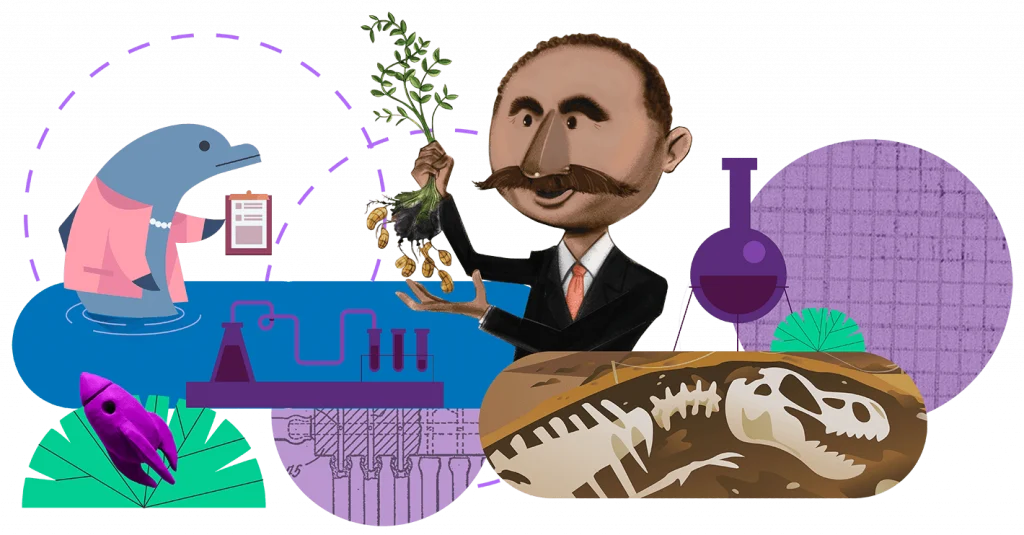
Illustration showing a man with a tree, colorful abstract shapes, and various scientific and nature-related icons including a laboratory setup, an animal skeleton, and marine life.

What is Amplify CKLA?

Amplify Core Knowledge Language Arts (CKLA) is a language arts program for Grades PreK-5 that combines a multi-sensory approach to phonics with rich texts carefully sequenced to build content knowledge—so that students learn to read and read to learn at the same time. 

Every day in Grades PreK–2, students complete one full lesson that builds foundational reading skills, as well as one full lesson that builds background knowledge. In Grades 3–5, students start to master the skills of reading, further opening up their worlds.

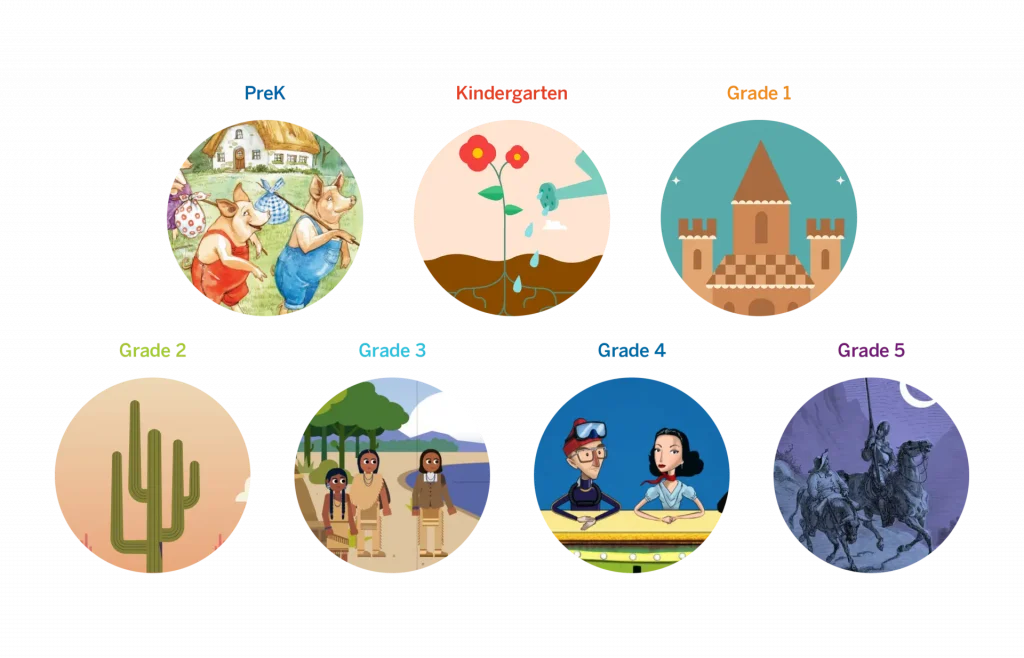
Illustrative circles depicting educational stages from prek to grade 5, each showing children engaged in age-appropriate activities or learning themes.

CKLA in Action

There’s no better way to understand the power of Amplify CKLA than seeing it in action. Watch Ms. Lehman’s second graders in the video below as they learn how to decode and spell words with the long /ā/ sound.

Unit Overviews

Below are quick overviews of the units your student will be working through in their grade throughout the year. Next to each unit are downloadable guides which provide a more in-depth look at the content covered and how you can help your student advance their understanding of the topics.

Materials overview

Amplify CKLA is a blended program, which means your student will be interacting with both print and digital materials.

Print materials

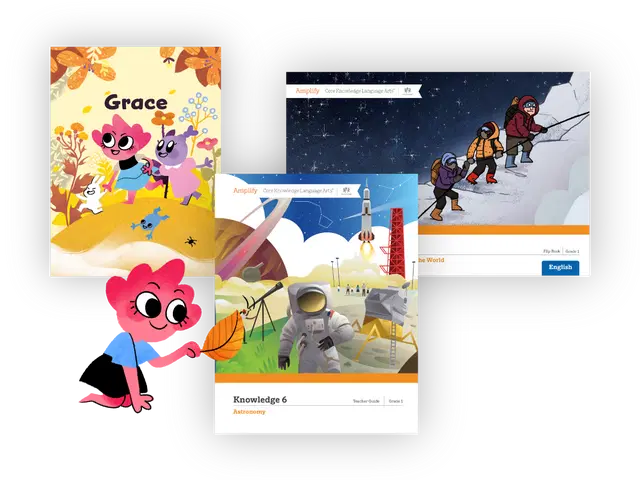
Student Readers

These readers are uniquely designed to provide intensive practice while reading simple but authentic stories. All readers are also available as ebooks and audiobooks on the teacher resource site, which caregivers can now access.

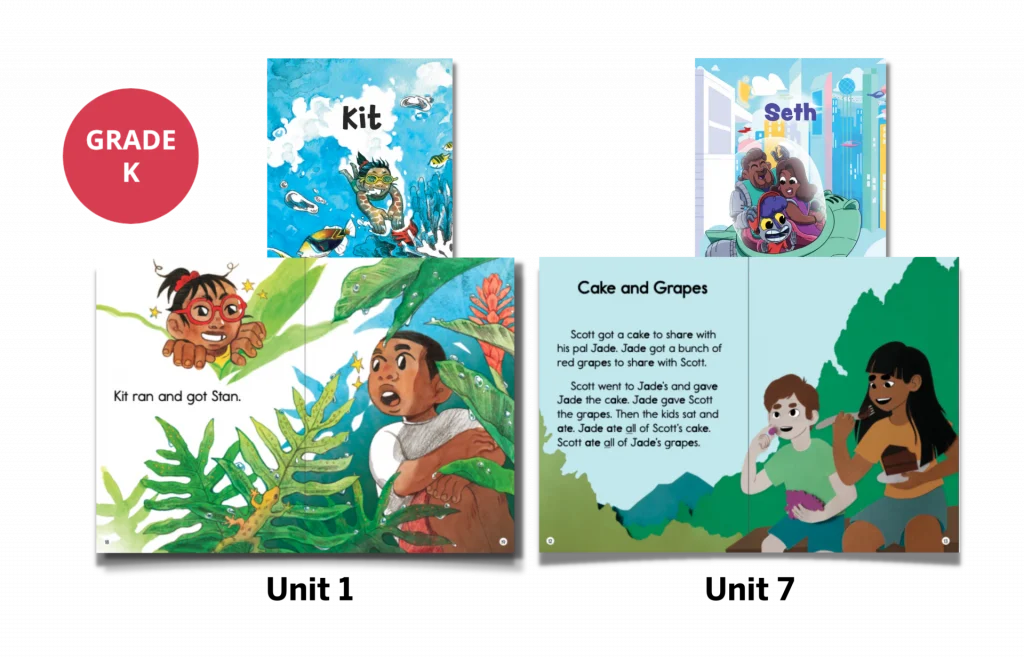
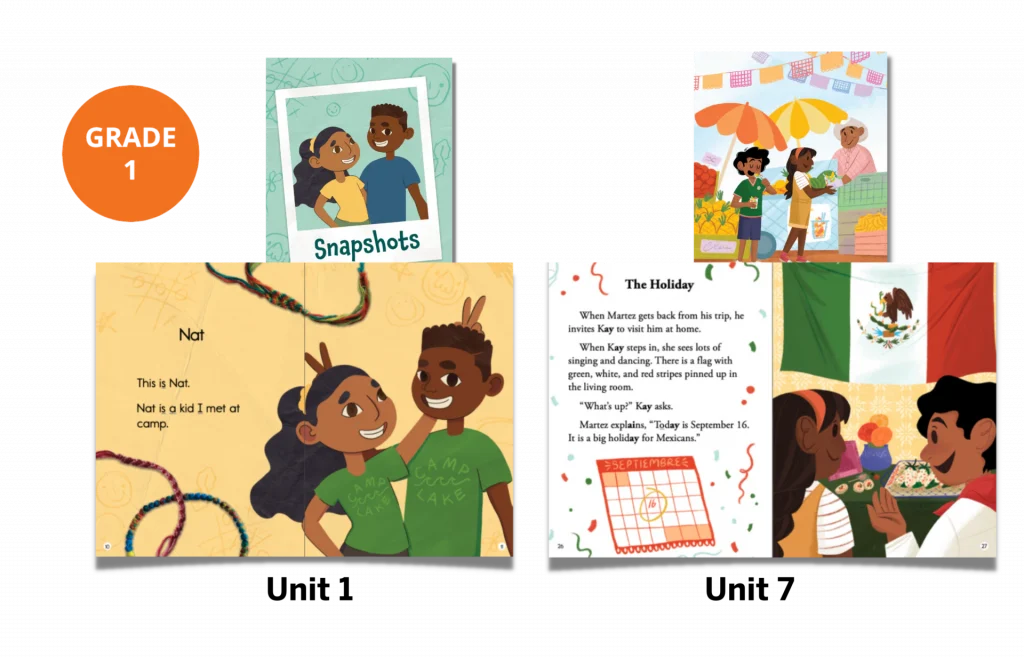
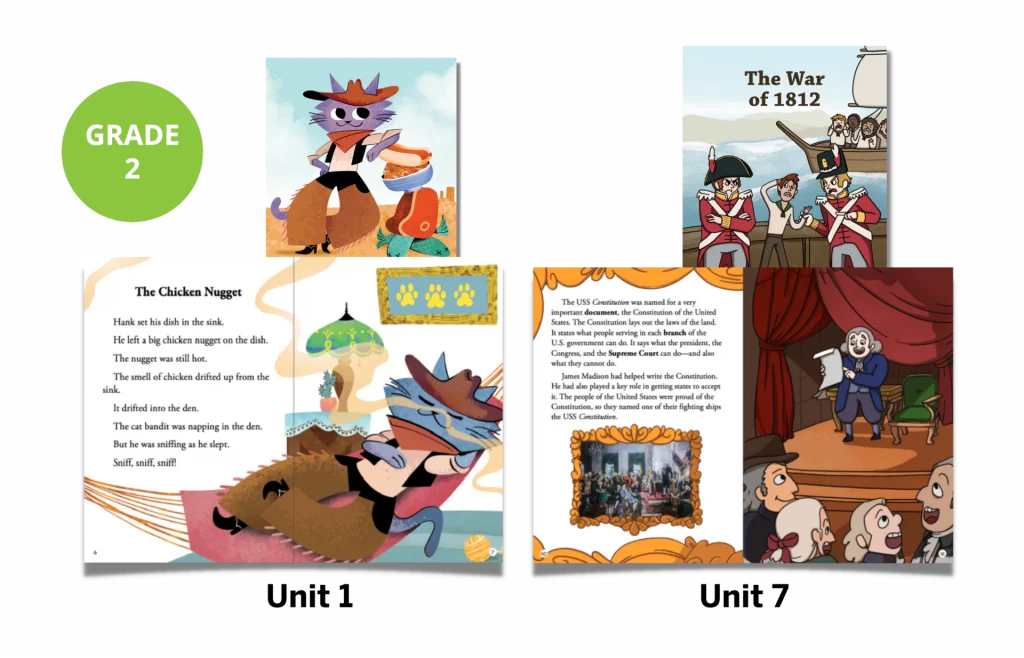
In grades K-2, these readers are chapter books that allow students to practice just-learned sound-spellings within an authentic reading experience that incorporates compelling plots and interesting characters.

In grades 3-5, readers develop close reading and other literacy skills through a selection of diverse, content-rich literary and informational texts.

A collage of kindergarten-level reading books titled Kit and Seth, with illustrated pages showing children, plants, and scenes of reading and eating grapes and cake.
Grade 1 reading materials featuring illustrated children, a Snapshots cover, two open storybooks showing kids and activities, and a page about a holiday with text and drawings.
Open educational book for grade 2, showing illustrations and text about a chicken nugget story and the war of 1812.

Student Activity Books

Part of the daily lessons, these activity pages ask students to respond to the text they’ve read and apply skills and knowledge. They also include assessments that track students’ skills development, to which teachers have access.

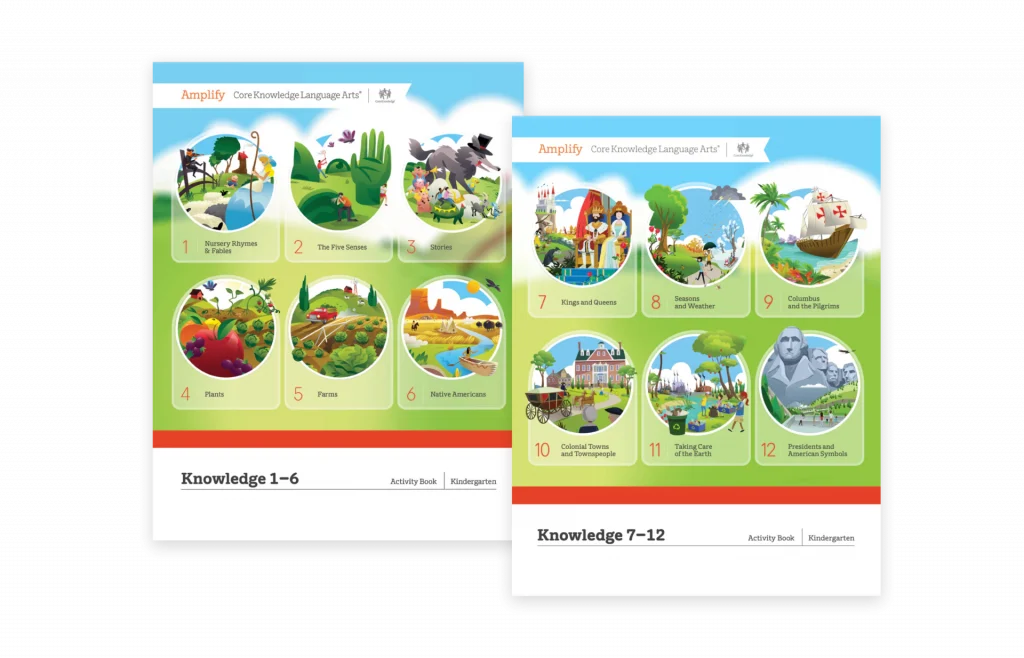
Two illustrated pages titled Knowledge 1-6 and Knowledge 7-12, each showing colorful scenes representing different educational topics in numbered circles.

Digital materials

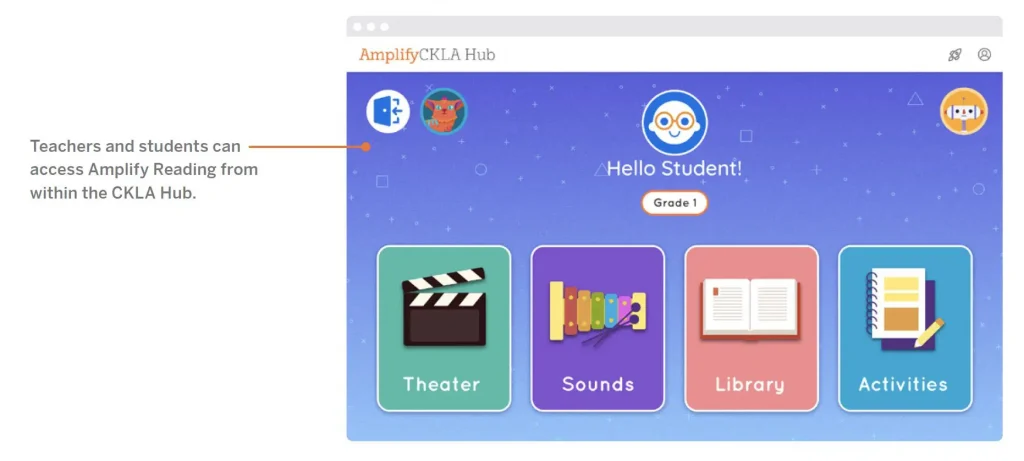
CKLA Hub for grades K–5

We are excited to announce that students will be able to access multimedia resources and engage in a new digital experience on the CKLA Hub. Unlike ever before, students can access digital resources independently from anywhere, taking full advantage of the instructional multimedia experiences that Amplify CKLA has to offer. Students can access the Hub at home, in the classroom, and on the go, making it ideal for remote learning. It’s compatible with laptops, Chromebooks, tablets, and desktops—we’ve also optimized it for mobile devices.

Knowledge Builder videos for grades K–2

Each Knowledge Domain starts with a Knowledge Builder video: a short, fun, animated story that enriches the lesson and motivates students with new characters, places, and concepts.

A cartoon scientist stands next to a sparking robot in a laboratory, displayed on a laptop screen with purple-themed laboratory equipment in the background.

Recorded daily read-alouds for grades K–2

Teachers and students will have access to video recordings of all K–2 Knowledge Read-Alouds with pictures from the Flip Books.

Cover image for Cycles in Nature by Amplify CKLA. Features illustrations of a dinosaur, plant, wagon, book, fish, cat on desk, and various nature-related items against a pink background.

Sound Library for grades K-2

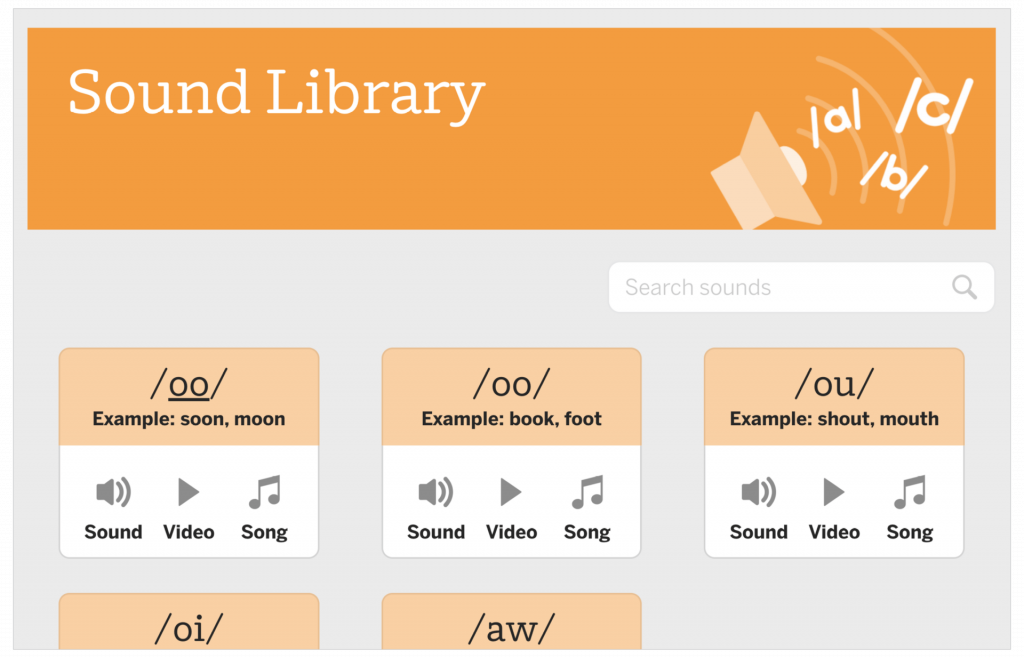
The Sound Library uses audio sounds, catchy songs, and animated articulation videos to help students learn and master sounds.

A webpage titled Sound Library displays search bar and sound cards for different phonemes, each with example words and buttons for sound, video, and song.

Foundational Skills Boost for grades 1–3

Designed for grades 1–3, these video-based, self-guided lessons target critical foundational skills from the previous year’s instruction in order to fill in any gaps. They offer approximately nine weeks of instruction organized as daily lessons, with additional teacher-led small-group activities and family resources.

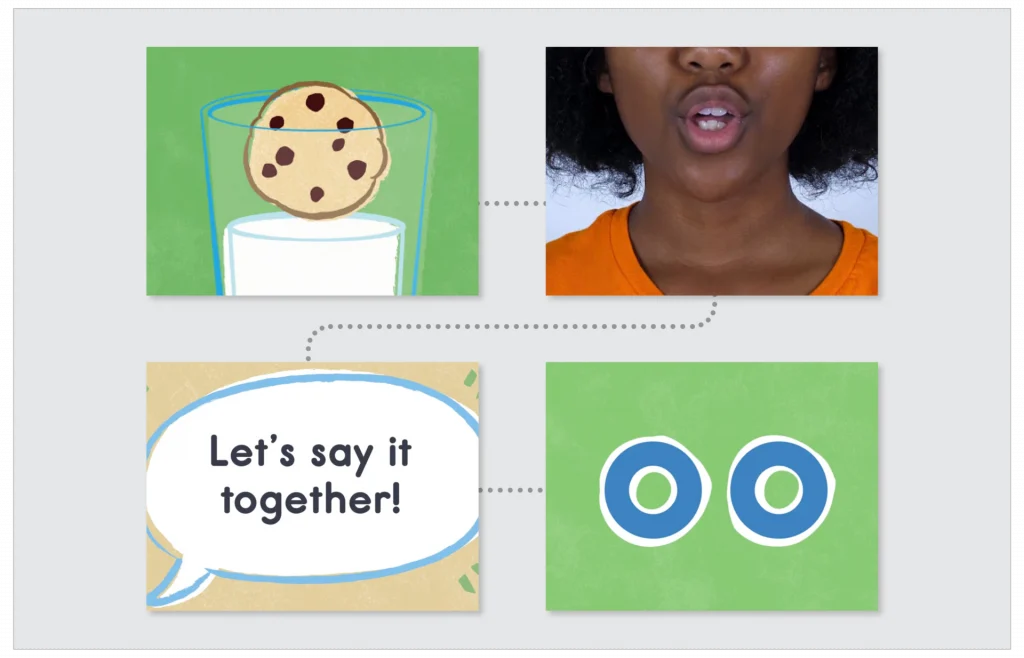
A chocolate chip cookie in a glass of milk, a person speaking, a speech bubble saying Let's say it together!, and two illustrated eyes on a green background.

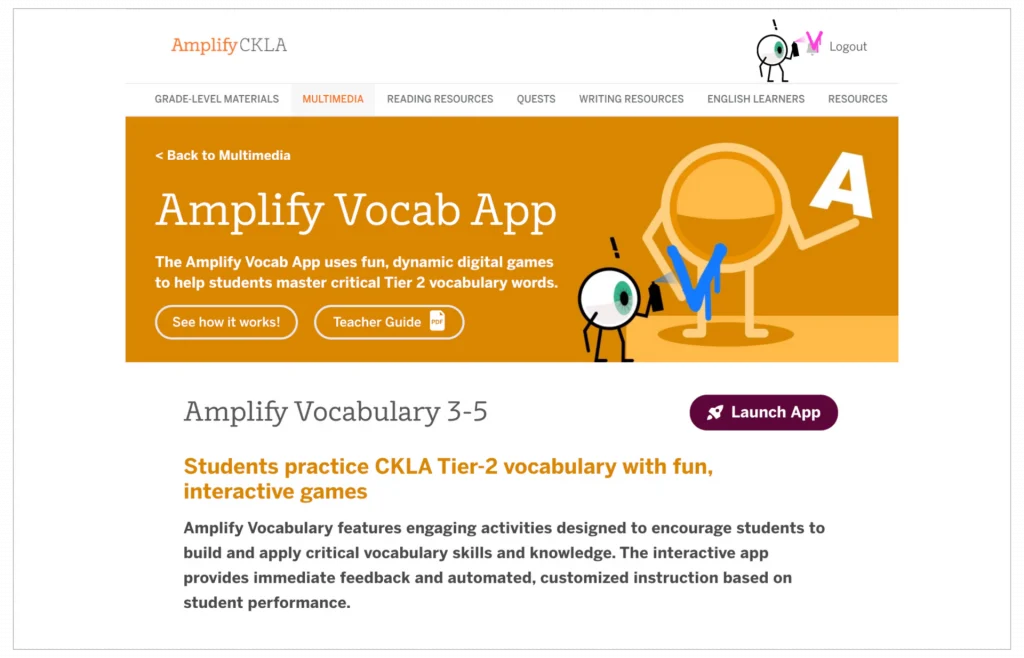
Vocab App for grades 3-5

The Vocabulary App is designed for independent practice with vocabulary. Students can use the Vocabulary App for game-like activities that challenge them.

Screenshot of the Amplify Vocab App webpage, showing interactive vocabulary tools for students in grades 3-5, with a Launch App button and navigation menu at the top.

Quests for grades 3–5

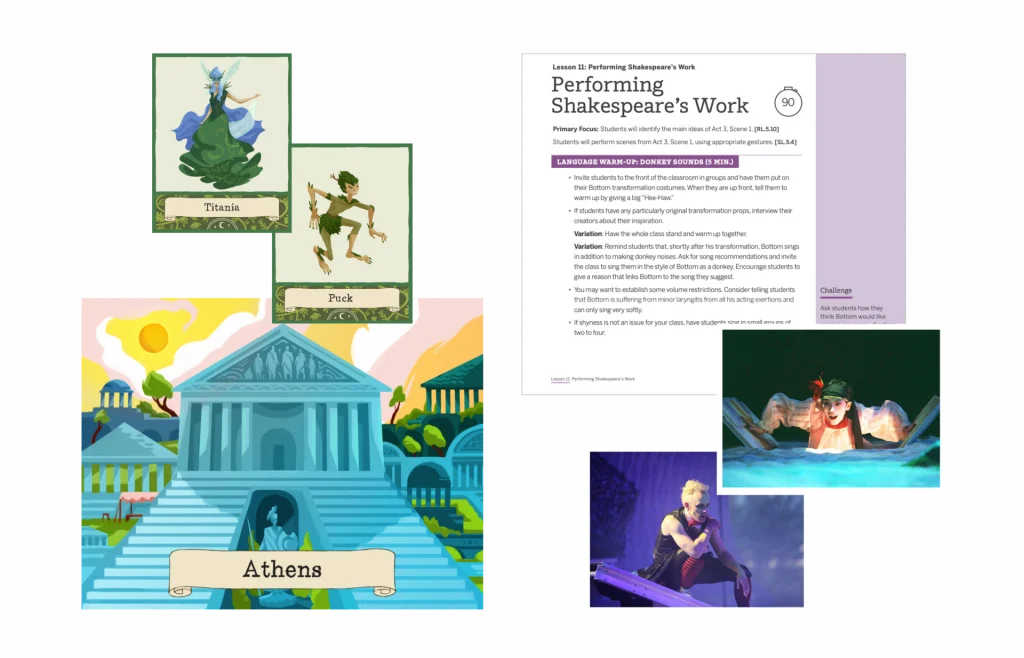
Each of the grade levels in 3–5 contains a Core Quest. In these special units, all the normal rules of the classroom change, and students engage with language in surprising new ways. For example, in grade 5, they learn to love the dense Shakespearian language of A Midsummer Night’s Dream through imagery, close reading, and performance.

A collage showing illustrated cards of Titania, Puck, and Athens, a lesson on performing Shakespeare, and two photos of actors performing on stage.

Support your child at home

Read and talk at home

  • If possible, read with your child daily; even 15 minutes of reading together each day can make a huge impact. 
  • You can read sections of the text aloud together. If your child struggles, you might try reading the text to them with expression, and then have them read it aloud back to you. 
  • For additional practice, watch the recorded read-alouds with your K-2 student or have your grade 3-5 student use the Vocabulary App. 
  • Find moments to discuss what they are reading and discovering. Examples of questions you could ask: What stood out to you from what you read today? Were any sentences or words confusing? What was most surprising? What do you think the writer was trying to communicate? Do you agree with the writer’s ideas or descriptions? What connections can you make between what you are reading and your own life or other issues?
  • Listen to your child read their written responses or have them share with a friend over video chat. 
  • We recommend reviewing this Protecting Kids Online article by the Federal Trade Commission addressing digital safety.

Skills practice at home

We’ve developed a set of resources for caregivers to use with their students that includes instructions and materials to teach and practice grade-level phonics at home. Resources include sound videos, Readers, and a how-to video with editable instructions that caregivers can customize to meet individual student needs.

Parent and child at home working on sofa

Where to go for help

Whether you have questions about your technology or want to know more about the program, Amplify’s Support Team is here to help!

Contact Support via telephone at (833) 97-Care-8 (833-972-2738) or caregiver@amplify.com.

Our support hours are Monday – Friday, 7 am – 9 PM ET, and Sunday, 10 – 6 ET.

Northshore families, welcome to Amplify CKLA!

Welcome to the Amplify CKLA Caregiver hub for Northshore School District. We are here to support you and your child with all things Amplify!

CKLA in Action

There’s no better way to understand the power of Amplify CKLA than seeing it in action. Watch Ms. Lehman’s second graders in the video below as they learn how to decode and spell words with the long /ā/ sound.

What is Amplify CKLA?

Amplify Core Knowledge Language Arts (CKLA) is a language arts program for Grades PreK-5 that combines a multi-sensory approach to phonics with rich texts carefully sequenced to build content knowledge—so that students learn to read and read to learn at the same time. 

Every day in Grades PreK–2, students complete one full lesson that builds foundational reading skills, as well as one full lesson that builds background knowledge. In Grades 3–5, students start to master the skills of reading, further opening up their worlds.

Equitable Spanish instruction

Our equivalent Spanish language arts program, Amplify Caminos, ensures our native Spanish-speaking students are equally inspired to become confident readers, writers, and thinkers.

Like Amplify CKLA, Amplify Caminos is designed to spark curiosity through content-rich instruction. Amplify Caminos features complex interactive Read-Alouds and authentic Spanish literature to develop reading and writing skills and build bridges across Spanish and English.

Most importantly, Amplify Caminos is more than just a translation. It includes transadaptations and authentic texts written by Latin American and Spanish authors across a diversity of topics and genres.

Unit Overviews

Below are quick overviews of the units your student will be working through in their grade throughout the year. Next to each unit are downloadable guides which provide a more in-depth look at the content covered and how you can help your student advance their understanding of the topics.

Materials overview

Amplify CKLA is a blended program, which means your student will be interacting with both print and digital materials.

Print materials

Student Readers

These readers are uniquely designed to provide intensive practice while reading simple but authentic stories. All readers are also available as ebooks and audiobooks on the teacher resource site, which caregivers can now access.

In grades K-2, these readers are chapter books that allow students to practice just-learned sound-spellings within an authentic reading experience that incorporates compelling plots and interesting characters.

In grades 3-5, readers develop close reading and other literacy skills through a selection of diverse, content-rich literary and informational texts.

Student Activity Books

Part of the daily lessons, these activity pages ask students to respond to the text they’ve read and apply skills and knowledge. They also include assessments that track students’ skills development, to which teachers have access.

Digital materials

CKLA Hub for grades K–5

We are excited to announce that students will be able to access multimedia resources and engage in a new digital experience on the CKLA Hub. Unlike ever before, students can access digital resources independently from anywhere, taking full advantage of the instructional multimedia experiences that Amplify CKLA has to offer. Students can access the Hub at home, in the classroom, and on the go, making it ideal for remote learning. It’s compatible with laptops, Chromebooks, tablets, and desktops—we’ve also optimized it for mobile devices.

Knowledge Builder videos for grades K–2

Each Knowledge Domain starts with a Knowledge Builder video: a short, fun, animated story that enriches the lesson and motivates students with new characters, places, and concepts.

Recorded daily read-alouds for grades K–2

Teachers and students will have access to video recordings of all K–2 Knowledge Read-Alouds with pictures from the Flip Books.

Sound Library for grades K-2

The Sound Library uses audio sounds, catchy songs, and animated articulation videos to help students learn and master sounds.

Foundational Skills Boost for grades 1–3

Designed for grades 1–3, these video-based, self-guided lessons target critical foundational skills from the previous year’s instruction in order to fill in any gaps. They offer approximately nine weeks of instruction organized as daily lessons, with additional teacher-led small-group activities and family resources.

Vocab App for grades 3-5

The Vocabulary App is designed for independent practice with vocabulary. Students can use the Vocabulary App for game-like activities that challenge them.

Quests for grades 3–5

Each of the grade levels in 3–5 contains a Core Quest. In these special units, all the normal rules of the classroom change, and students engage with language in surprising new ways. For example, in grade 5, they learn to love the dense Shakespearian language of A Midsummer Night’s Dream through imagery, close reading, and performance.

Support your child at home

Read and talk at home

  • If possible, read with your child daily; even 15 minutes of reading together each day can make a huge impact. 
  • You can read sections of the text aloud together. If your child struggles, you might try reading the text to them with expression, and then have them read it aloud back to you. 
  • For additional practice, watch the recorded read-alouds with your K-2 student or have your grade 3-5 student use the Vocabulary App. 
  • Find moments to discuss what they are reading and discovering. Examples of questions you could ask: What stood out to you from what you read today? Were any sentences or words confusing? What was most surprising? What do you think the writer was trying to communicate? Do you agree with the writer’s ideas or descriptions? What connections can you make between what you are reading and your own life or other issues?
  • Listen to your child read their written responses or have them share with a friend over video chat. 
  • We recommend reviewing this Protecting Kids Online article by the Federal Trade Commission addressing digital safety.

Skills practice at home

We’ve developed a set of resources for caregivers to use with their students that includes instructions and materials to teach and practice grade-level phonics at home. Resources include sound videos, Readers, and a how-to video with editable instructions that caregivers can customize to meet individual student needs.

Explore the program

Watch the below video to learn even more about Amplify CKLA!

Take a closer look at the program with our demo account! Follow these simple instructions to access our program digitally.

  • Click the CKLA Teacher Resource Site button.
  • Select Log in with Amplify.
  • Enter this username: t1.northshoreckla@demo.tryamplify.net
  • Enter this password: Amplify1-northshoreckla
  • Select the desired grade level.

Where to go for help

Whether you have questions about your technology or want to know more about the program, Amplify’s Support Team is here to help!

Contact Support via telephone at (833) 97-Care-8 (833-972-2738) or caregiver@amplify.com.

Our support hours are Monday – Friday, 7 am – 9 PM ET, and Sunday, 10 – 6 ET.

Amplify K–6 ELA programs for Fairfax County

Welcome, Fairfax County Reviewers! 

Thank you for exploring our evidence-based K–6 programs built on the Science of Reading and aligned to Virginia standards and Fairfax County’s learning model. 

Amplify CKLA for Grades K–5 and Amplify ELA for Grade 6 intentionally build knowledge alongside skills and are aligned within and across grades. Meaningful learning experiences for students pair with powerful instructional support for teachers to drive results. 

The following resources will support your review. These include clips of Amplify programs in action; details about key features of the curriculum; and research on the real-world successes of schools, districts, and states who’ve partnered with Amplify.

Amplify CKLA for Grades K–5

Introduction to Amplify CKLA

We’re excited for you to see how Amplify CKLA provides high-quality resources to support literacy instruction for all students! This program is flexible, offering stand-alone foundational skills instruction as well as the program core English Language Arts.

Amplify CKLA Skills is built on the latest reading science and provides comprehensive instruction in all foundational reading skills, featuring:

  • Phonological awareness, phonics, and word recognition.
  • Strong, systematic sound-first instruction to support students in learning to decode.
  • Language skills, including conventions, spelling, and grammar.
  • Reading comprehension.
  • Writing instruction.

CKLA for Grades K–2 provides a two-strand approach. The first is the Foundational Skills Strand (as described above) and the second is the Knowledge Strand, in which students build rich background knowledge through multidisciplinary read-alouds. CKLA takes an Integrated approach in Grades 3–5, in which lesson sequencing is especially focused on rich, worldly content. 

We encourage you to check out the K–2 Knowledge Strand and 3–5 Integrated approach sections of this site to explore the components further and gain access to the engaging and diverse texts students and teachers are using in their classrooms every day!

K–2 Skills Strand

In the CKLA classroom, students practice reading while stretching themselves toward higher goals. In K–2, daily dedicated skills time gives students a solid foundation, while the upper grades integrate this instruction with knowledge lessons in which students engage with increasingly complex, content-rich texts and writing activities.

All instruction starts with phonological awareness, which research has shown to benefit the greatest number of students. Students begin by learning to recognize sounds, as well as to articulate them.

Over time, students build up their awareness of phonemes. We give teachers a variety of tools, including multisensory gestures, to help kids develop this awareness.

Once students can recognize sounds, they learn to form the corresponding letter codes. CKLA starts by teaching the sound-spellings that appear most frequently in English, which lets your students read and write as many words as possible, as soon as possible.

The lessons continue to challenge students as they progress, introducing complications like multisyllabic words, “tricky words,” and homophones. In each case, students encounter more complicated words as they become ready for them.

K–2 Knowledge Strand

While students are learning how to read, Knowledge Domains give them authentic and engaging reasons to read. Students will use their skills to explore domains that relate to storytelling, science, and the history of our world as seen through the eyes of many different groups. With these domains, you’ll bring the world to your students, showing them how reading can become an exciting, rewarding, and useful part of their lives.

Each CKLA Knowledge Domain gives students a base of vocabulary and concepts, building on what they’ve learned in previous domains. This helps students make connections within and across grades, building a base of background knowledge that will help them navigate new and more complex texts.

Students learn to listen and understand before they learn to read. By delivering knowledge through classroom read-alouds, Amplify CKLA teaches students the key comprehension skills they’ll use throughout their reading lives.

Amplify CKLA prioritizes interactions between students, which challenge and encourage them to think about the material rather than simply receive it. Each lesson includes several opportunities and options for formative assessment and immediate adjustment to the needs of both the class and the individual students.

The end-of-domain digital assessments that follow Knowledge Domains are fully voice-acted, ensuring that each student’s comprehension skills are authentically tested. This not only builds students’ test-taking confidence, but gives you a more accurate picture of your class.

3–5 Integrated approach

By Grades 3–5, students have mastered the basics of decoding and are eager to use what they’ve learned to reach out to the world. Although read-alouds remain an important part of lessons, students are also encouraged to practice independent reading starting in Grade 3, developing their autonomy and confidence as readers alongside strong teacher support.

As students progress from K–2, writing activities start to emphasize analysis, creativity, and independent thinking about lesson materials.

Each of the units in Grades 3–5 contain a Core Quest—a special unit in which all the rules of the classroom change as students engage with language in surprising new ways. In Grade 5, for example, students learn to love the dense Shakespearian language of “A Midsummer Night’s Dream” through imagery, close reading, and performance.

Key CKLA features

Built out of the latest research in the Science of Reading, Amplify CKLA delivers explicit instruction in both foundational literacy skills (systematic phonics, decoding, and fluency) and background knowledge in Grades K–2, with an integrated approach to explicit instruction in Grades 3–5.

Review this Science of Reading Toolkit to learn more about the Science of Reading best practices integrated throughout CKLA.

Great reading instruction starts with great decoding skills. When students build a solid foundation of phonological awareness and phonics, reading the words on the page becomes automatic so that comprehension and critical thinking can happen.

Our instruction is supported by:

  • Step-by-step lessons with multisensory approaches, clear lesson objectives, and embedded formative assessments.
  • Unmatched, 100% decodable books and student readers that feature engaging plots and relatable characters.
  • An engaging sound library with fun songs and videos that develop phonological awareness.

Students build grade-appropriate subject-area knowledge and vocabulary in history, science, literature, and the arts while learning to read, write, and think creatively and for themselves.

Our instruction is supported by:

  • Knowledge builders that provide a quick overview of each domain with its key ideas.
  • Interactive read-alouds designed to build knowledge and vocabulary.
  • Content-rich anchor texts that support students as they tackle increasingly complex text and sharpen their analytical skills.

From the printed page to the screen, we bring foundational skills and knowledge of the world to your young learners, and make the transition from classroom to home learning seamless.

Download the Amplify CKLA Components Guide to see components by grade.

Amplify Caminos is an equitable Spanish language arts program for Grades K–5 that will engage your students and inspire them to become confident readers, writers, and thinkers.

Designed to support any biliteracy model (including ESL, transitional bilingual, dual language, and Spanish immersion), Amplify Caminos can be used in tandem with Amplify CKLA to provide a fully equitable, one-to-one English and Spanish solution.

Amplify ELA for Grade 6

Amplify ELA is a blended English language arts curriculum designed specifically to prepare middle school students for high school and beyond. This interactive core curriculum brings complex texts to life with lively classroom discussions and meaningful digital experiences in which students grapple with interesting ideas and find relevance for themselves.

Amplify ELA’s built-in 100-Day Pathway outlines required content for each grade level, while providing teachers time and space to teach the supplemental lessons and activities they love.

The program has received an all-green rating on EdReports—read the review.

Amplify ELA delivers:

  • A unique research-based approach designed to get all students reading grade-level text together.
  • An instructional design that inspires students to read more deeply, write more vividly, and think more critically.
  • A rich combination of dynamic texts, lively discussions, and interactive Quests that engages and inspires middle school students.

EdReports and Knowledge Matters Campaign

Amplify CKLA for Grades K–5 is among the few elementary core curricula to be both rated all green on EdReports (earning green scores across all gateways) and recognized by the Knowledge Matters Campaign for its excellence in intentionally building knowledge. Amplify ELA for grade 6 also earned all-green scores on EdReports.

Access FCPS reviewer platform

To experience Amplify’s K–6 ELA programs for FCPS, complete the following steps.

Access your teacher demo account:

  1. Access the reviewer site.
  2. Select Log in with Amplify.
  3. Enter your teacher username: t1.fcps-demo@demo.tryamplify.net  
  4. Enter your password: Amplify1-fcps-demo

Access your student demo account:

  1. Access the reviewer site.
  2. Select Log in with Amplify.
  3. Enter your student username: s1.fcps-demo@demo.tryamplify.net 
  4. Enter your password: Amplify1-fcps-demo

VA correlations

CKLA Kindergarten correlation
CKLA Grade 1 correlation
CKLA Grade 2 correlation
CKLA Grade 3 correlation
CKLA Grade 4 correlation
CKLA Grade 5 correlation

Additional reviewer resources

Amplify CKLA Program Guide (Grades K–5)
Amplify ELA Program Guide (Grade 6)
Amplify biliteracy and Science of Reading principles
Diversity, equity, inclusion, and accessibility
Text complexity
Trade books
Amplify CKLA meets Virginia Literacy Act (VLA) requirements

Get in touch

To learn more, contact Michael Kasloff at mkasloff@amplify.com.

Amplify CKLA Review Site for Bonneville Joint School District #93

Welcome to the Amplify CKLA community review site for Bonneville Joint School District #93. This site is designed to help you learn about Amplify CKLA—a core English Language Arts curriculum.

What is Amplify CKLA?

Amplify Core Knowledge Language Arts (CKLA) is a core English language arts program for Grades K-5 that combines phonics with rich texts designed to build content knowledge—so that students learn to read and read to learn at the same time. It is also a blended program, which means your student will be interacting with both print and digital materials.

  • In Grades K–2, students complete one full lesson each day that builds foundational reading skills, as well as one full lesson that builds background knowledge.

There’s no better way to understand the power of Amplify CKLA than seeing it in action. Watch Ms. Lehman’s second-graders in the video below as they learn how to decode and spell words with the long /ā/ sound.

What do students learn?

Amplify CKLA is an evidence-based program built on research about how students learn to read. This collection of research is often referred to as the Science of Reading or The Simple View of Reading. It tells us that:

  • Students learn to read best when they are taught foundational reading skills (like phonics) and comprehension skills (like vocabulary and background knowledge) at the same time. That’s why Amplify includes a combination of skills and concepts in every unit.
  • The more students know about a particular topic, the better they are able to comprehend what they read. That’s why Amplify CKLA incorporates rich stories, texts, and articles about a variety of topics throughout the program.

Because students learn so much with Amplify CKLA, it can be hard to review it all at once. To make it easier for you to review the program, we’ve provided links to a variety of resources below, including unit overviews and text lists by grade.

Print materials

Student Readers

These readers are uniquely designed to provide intensive practice while reading simple but authentic stories. All readers are also available as ebooks and audiobooks on the teacher resource site.

In grades K-2, these readers are chapter books that allow students to practice just-learned sound-spellings within an authentic reading experience that incorporates compelling plots and interesting characters.

Student Activity Books

Part of the daily lessons, these activity pages ask students to respond to the text they’ve read and apply skills and knowledge. They also include assessments that track students’ skills development, to which teachers have access.

Digital materials

We are excited to announce that students will be able to access multimedia resources and engage in a new digital experience on the CKLA Hub. Unlike ever before, students can access digital resources independently from anywhere, taking full advantage of the instructional multimedia experiences that Amplify CKLA has to offer. Students can access the Hub at home, in the classroom, and on the go, making it ideal for remote learning. It’s compatible with laptops, Chromebooks, tablets, and desktops—we’ve also optimized it for mobile devices.

Knowledge Builder videos for grades K–2

Each Knowledge Domain starts with a Knowledge Builder video: a short, fun, animated story that enriches the lesson and motivates students with new characters, places, and concepts.

Recorded daily read-alouds for grades K–2

Teachers and students will have access to video recordings of all K–2 Knowledge Read-Alouds with pictures from the Flip Books.

Sound Library for grades K-2

The Sound Library uses audio sounds, catchy songs, and animated articulation videos to help students learn and master sounds.

Foundational Skills Boost for grades 1–3

Designed for grades 1–3, these video-based, self-guided lessons target critical foundational skills from the previous year’s instruction in order to fill in any gaps. They offer approximately nine weeks of instruction organized as daily lessons, with additional teacher-led small-group activities and family resources.

Support your child at home

Read and talk at home

  • If possible, read with your child daily; even 15 minutes of reading together each day can make a huge impact. 
  • You can read sections of the text aloud together. If your child struggles, you might try reading the text to them with expression, and then have them read it aloud back to you. 
  • For additional practice, watch the recorded read-alouds with your K-2 student. 
  • Find moments to discuss what they are reading and discovering. Examples of questions you could ask: What stood out to you from what you read today? Were any sentences or words confusing? What was most surprising? What do you think the writer was trying to communicate? Do you agree with the writer’s ideas or descriptions? What connections can you make between what you are reading and your own life or other issues?
  • Listen to your child read their written responses or have them share with a friend over video chat. 
  • We recommend reviewing this Protecting Kids Online article by the Federal Trade Commission addressing digital safety.

Skills practice at home

We’ve developed a set of resources for families to use with their students that includes instructions and materials to teach and practice grade-level phonics at home. Resources include sound videos, Readers, and a how-to video with editable instructions that family members can customize to meet individual student needs.

Program access

Watch the below video to learn even more about Amplify CKLA digital!

Where to go for help

Whether you have questions about your technology or want to know more about the program, Amplify’s Support Team is here to help!

Contact Support via telephone at (833) 97-Care-8 (833-972-2738) or caregiver@amplify.com.

Our support hours are Monday – Friday, 7 am – 9 PM ET, and Sunday, 10 – 6 ET.

Use stimulus funding to drive Rhode Island transformation

Rhode Island districts have significant flexibility in how to use the ESSER money, with ESSER II and III specifying that some of the funds should be used to address unfinished learning. Given the enormous influx of resources flowing into K-12, now is the time to drive important, sustainable change in your district.

Rhode Island recognizes how imperative it is to provide high-quality curriculum to prepare students for college and career readiness. We’ve assembled resources so you can explore how to support your district or school in adopting a high-quality program.

All K-12 Amplify programs and services meet the criteria for funding. Contact Ali Weis, account executive to learn more. 

Amplify Science K–8

Amplify Science K–8 is a hands-on, phenomena-based curriculum that helps students make the shift from learning about to figuring out scientific concepts. With demonstrated unparalleled effectiveness across all student groups, Amplify Science empowers students to think, read, write, and argue like real scientists and engineers each and every day.

Developed by UC Berkeley’s Lawrence Hall of Science, our program features:

  • phenomena-based approach where students construct a more complex understanding of each unit’s anchor phenomenon.
  • A blend of cohesive storylines, hands-on investigations, rich discussions, literacy-rich activities, and digital tools.
  • Newly crafted units, chapters, lessons, and activities designed to deliver true 3-dimensional learning.

Hear what these educators have to say about the program, then click the orange button below to learn more.

Amplify Math K–12

amplify math middle schoolers in classroom

Amplify Math K–12 is a brand new program designed around the idea that a core math curriculum needs to serve 100 percent of students in accessing grade-level math every day. Powered by Desmos technology, Amplify Math delivers:

  • Engaging, discourse-rich math lessons that are easier to teach.
  • Flexible, social problem-solving experiences both online and off.
  • Real-time insights, data, and reporting that inform instruction.

Additional Amplify programs and resources

A pioneer in K–12 education since 2000, Amplify programs provide Rhode Island teachers with powerful tools that help them understand and respond to the needs of every student. View our entire suite of K-12 core and supplemental curriculum, assessment, and intervention solutions. Ready to learn even more? Contact Ali Weis, Account Executive.

Meet Ali

Hi, I’m Ali! I partner with Rhode Island school districts because I believe every student should have the opportunity for a rigorous, engaging, and impactful learning experience. For more information, please fill out the form below, and I’ll be in touch soon!

Ali Weis

Account Executive

aweis@amplify.com

(480) 510-6703

A smiling person with short blonde hair is wearing a blue top and a large, circular-link necklace, standing outdoors with trees and grass in the background.

English language arts curriculum for middle school

With Amplify ELA, students learn to tackle any complex text and make observations, grapple with interesting ideas, and find relevance for themselves.

Rated all-green on EdReports, Amplify ELA earned perfect scores across all gateways. Para la versión en español, haga clic aquí.

Access sample

Easy and adaptable to teach

With six levels of embedded differentiation and assessments, teachers can make sure students are gaining key skills while not interrupting instruction. Because the program does this work in the background, teachers have more time doing what they love.

Also, only Amplify offers the 100-Day Pathway, a built-in guide to covering required content for each grade level in just 100 days while allowing teachers to add supplemental lessons and activities.

Knowledge Matters in Middle School

Amplify ELA has been recognized by the Knowledge Matters Campaign as a high-quality, knowledge-building literacy curriculum.

The Campaign highlights Amplify ELA as a program that infuses wonder and excitement into every learning experience—forging connections across grade levels and providing comprehensive support for both students and educators.

Read more on Knowledge Matters.

Our approach

Through its engaging digital program, powerful differentiation and assessment tools, and step-by-step instructional guides, our curriculum responds directly to the challenges and opportunities faced by middle school students and teachers.

See the research behind the program.

We empower students to become critical thinkers.

With text always at the center, students are encouraged to make ideas and opinions about meaning for themselves. Rather than focusing on right or wrong answers, they develop ideas and opinions on relevant, real-world, texts.

A student sits at a desk reading a textbook in a classroom, part of the Amplify ELA program, with other students and educational posters visible in the background.
Two students sit at desks in a classroom, looking forward with laptops open in front of them. Classroom posters and a whiteboard are visible in the background.

We provide six levels of differentiated support.

Multiple entry points and six levels of embedded differentiated support allow every student, regardless of fluency or ability level, to engage with the same complex texts and curriculum.

We assess while you instruct.

Embedded assessments and reports provide insight into each student’s progress without having to interrupt daily instruction. With data being collected at every learning moment, teachers can respond to student needs faster than ever before.

A teacher in a red polo shirt helps a student with curly hair in a classroom, both looking at open textbooks; educational posters hang on the wall behind them.
A student using a laptop

Amplify your teaching with ELA PD!

Amplify ELA offers targeted professional development (PD) sessions designed to optimize teaching strategies, enhance student engagement, and ensure effective curriculum delivery. Gain insights and techniques to make the most of your instructional time.

Free download

Discover principles of true engagement in middle school ELA

Download

What’s included

Amplify ELA is a rigorous core curriculum that empowers teachers and engages middle school students.

Student Edition

Available digitally and in print, the student materials guide middle schoolers through complex texts and writing by:

  • Engaging students with high-quality narrative and informational texts.
  • Providing videos, audio supports, and digital experiences that capture their attention.
  • Keeping all of their writing in one place with a personal Writing Journal.

Teacher Edition

Available digitally and in print, the Teacher Edition contains all the information teachers need to facilitate classroom instruction, including:

  • Detailed lesson plans.
  • Video teacher tips embedded in the lesson.
  • Standards alignment and exit tickets.
  • Real-time differentiation strategies.
  • Robust reporting.

Interactive Quests

Quests are fun, week-long immersions into a specific, multilayered topic. They enable students to practice analytical reading, writing, speaking, and listening skills—all while building a strong classroom community.

Digital library for independent reading

The expansive Amplify Library includes more than 700 digital fiction, nonfiction, classic, and contemporary titles.

Amplify ELA makes teachers’ lives easier

Our program ensures that standards are covered, skills are taught, and students are prepared with proper scaffolding and encouragement.

  • Embedded differentiation to support all readers.
  • Informative and streamlined assessment system.
  • Robust reporting that tracks progress.
  • Powerful feedback tools.

Explore more programs

Our programs are designed to support and complement one another. Learn more about our related programs.

Putting equity first

When so much about the world needs to shift, so urgently… here are a few places to start.

Listen: Educator, author, and leader Shawn Joseph shares his passion for social justice and discusses his work advocating for equity in education, shedding light on what he calls the “silent crisis” in literacy instruction.

Learn: Share Shawn Joseph’s discussion guide with your colleagues. Which insights are the most relevant to your district this year?

Lead: Take a look at this curated collection of multicultural and social justice books. Could one spark discussion for your students?

Lead: Share this infographic on the journey to freedom with your class. Ask students to select an event to research and present a two-minute video talk.

Leveraging the science of reading

Go deep on the insights and practices that will help our classrooms (remote or otherwise)–based on the latest science, and adaptable to every shift in the educational landscape.

Learn: Susan Lambert talks to Language Magazine about the science of reading and what it means right now.

Building strong foundational skills

Strong, systematic sound-first instruction is critical to helping students learn to decode and can increase student success. Learn how specific skills can increase your impact. 

Learn: Start with Emily Hanford’s “Hard Words” article.

Listen: Jasmine Lane on the importance of equity, and how early literacy teachers can make a difference.

Listen: Bruce McCandliss on the changes a child’s brain shows when learning to read

Lead: Challenge a colleague to this Scarborough’s Rope activity–work through a sample lesson from your district and point out elements of the reading rope.

Sharing knowledge resources

Students need to be able to both read words and get the meaning of what they’re reading. Find out how to help them build key background knowledge from the get-go, so that it compounds over time.

Learn: Begin with Why knowledge matters–then follow up with Natalie Wexler’s podcast

Learn: Take a look at Achieve the Core’s overview of the importance of building knowledge and the groundbreaking “baseball study

Listen: Anne Lucas on the importance of comprehension and the specific skills that can boost it.

Listen: Tim Shanahan on four crucial aspects in teaching reading and his views on teaching reading in middle school as an extension of evidence-based early literacy practices

Learn: Begin with Why knowledge matters–then follow up with Natalie Wexler’s podcast

Learn: Take a look at Achieve the Core’s overview of the importance of building knowledge and the groundbreaking “baseball study

Assessing what students need

Assessment this year is more important than ever before–and also more challenging. What does this extended summer slide look like? How can you find time to review what’s needed, while still moving forward?

Learn: Education for Global Development’s thoughts on formative assessment in the time of COVID-19.

Learn: District Administration on why educators want more data– and more guidance on how to use it

Learn: Catch up on dyslexia risk factors and state legislation with our dyslexia toolkit.

Listen: Nancy Nelson on the importance of universal screeners in literacy instruction.

Lead: What can you offer struggling readers and their caregivers? Take a look at the IDA’s COVID-19 Resource Guide.

Thriving through remote learning

Everything about this school year has changed–yet your work is more important than ever before. How can you support your students, and your colleagues, in this new normal? Stop by Amplify Anywhere for ideas that may help.

And while you’re here–please download your free PDF “20 Self-Care Tips for Educators Right Now” (and please take care of yourselves!).

Alana Mangham on Teaching Now

Natalie Wexler on the New Normal

Thinking about back-to-school

Though it feels like the landscape is changing every day, we know we’ve got to find a way to get students back to learning. What will your school day look like? What reinforcement might you need to do in order to ensure equity? We will continue to share resources to support your journey.

Learn: In this recorded webinar, explore some ways CARES Act funding might support your students.

Learn: Hear from Baltimore educator Lucas Drerup on making middle school ELA both enjoyable and rigorous for students.

Listen: Jackson-Madison CAO Jared Myracle shares his thoughts on change management and the science of reading.

Listen: Doug Lemov, managing director of Uncommon Schools, discusses the role of technology in the classroom and remote instruction, and how educators can reconsider how they approach literacy.

Lead: As you consider how and when to reopen, review this article from The Atlantic on Eight steps that will let us reopen schools.

Lead: Guidance from District Administration on reopening safely this fall.

Finding high-quality instructional materials

If you were already thinking about new literacy resources–you’ve now got even more ideas about what high quality looks like. How will your literacy program work for all students? How do you need your literacy resources to support you in the classroom, in remote learning, and for every scenario in between?

Learn: Review this guide to a high-quality curriculum adoption.  What factors matter most now, in literacy and in every subject?

Listen: Hear nationally recognized reading experts and authors David and Meredith Liben discuss evidence based solutions and more.

Lead: Download this K-8 ELA Instructional Materials Evaluation Guide. Share with your district leadership. What resources will you all need next year (and beyond) to do the best job possible for your students?

Lead: Talk to a few colleagues in the coming weeks. What are they seeing right now? What are they planning to improve next year?

Staying strong and staying connected!

Illustration for

Looking for ways to connect with other educators and stay updated on the latest research and trends in the science of reading? Check out a few more ways to do so below.

Science of Reading: The Podcast delivers the latest insights from researchers and practitioners in early reading. Further your professional development with each episode by subscribing and downloading them now.

Science of Reading: The Community is built for those committed to fostering conversation around the science of reading and implementing best practices in the classroom (including the virtual classroom).

Ready for more? Complete the form below to stay up-to-date on the latest resources.

Achieve next-level literacy growth with a cohesive Science of Reading suite.

The Science of Reading programs in Amplify’s early literacy suite empower you to meet the dynamic needs of every student learning to read. Discover the programs that best fit your literacy priorities and how they work together for a seamless teaching and learning environment.

“There were other programs that claimed to be Science of Reading, but no other vendor provided the suite of products together. So from our perspective, [Amplify’s literacy suite] met our needs because it aligned and provided us the best suite of products. Hands down. We couldn’t find anybody else who touched that.”

Nicole Peterson, Director, PreK–8 Education

Sampson County Schools, North Carolina

A true Science of Reading early literacy suite for grades K–5

Amplify has combined the critical elements of a Science of Reading system of assessment, core curriculum, personalized learning, and intervention. Based on 20 years of experience with the Science of Reading, this complete system saves you time and aligns your literacy practices.

  • Assess with mCLASS®: A universal and dyslexia screener, powered by DIBELS® 8th Edition
  • Instruct with Amplify Core Knowledge Language Arts (CKLA)®: Core curriculum to build foundational skills and knowledge
  • Support with Boost Reading: Student-led digital intervention to extend and reinforce core instruction
  • Intervene with mCLASS Intervention: Staff-led Tier 2 and 3 intervention for intensive support
  • Science of Reading professional development: Amplify training, events, and podcasts to strengthen instruction

mCLASS assessment

Powered by DIBELS 8th Edition, mCLASS is a universal and dyslexia screener, plus a progress monitoring tool, all in one. With this comprehensive tool, you have precise one-minute measures delivered one-on-one that give you the data you can trust to make informed instructional decisions.

Amplify CKLA core curriculum

mCLASS data informs instructional needs and identifies whole-class and small-group areas of focus.

mCLASS can replace Amplify CKLA’s benchmark assessments in K–2 and can identify appropriate Amplify CKLA instruction for small groups.

Boost Reading digital intervention

Boost Reading and mCLASS integrate to provide adaptive, student-led practice in targeted skill areas. 

mCLASS data automatically places students at the appropriate Boost Reading starting point.

You can track student progress with side-by-side mCLASS and Boost Reading growth data.

mCLASS Intervention

mCLASS assessment identifies risk early on and places students in and out of mCLASS Intervention groups.

mCLASS progress monitoring data creates intervention groups and daily lesson plans for 10-day cycles.

Amplify CKLA core curriculum

Amplify Core Knowledge Language Arts (CKLA) provides explicit, systematic foundational skills instruction combined with intentional knowledge building. Rich content spans topics in history, science, literature, and the arts to build deep background knowledge.

mCLASS assessment

Amplify CKLA instructs in the same critical literacy skills measured by mCLASS, aligning your assessment and core curriculum.

mCLASS can replace Amplify CKLA’s benchmark assessments in K–2 and can identify appropriate Amplify CKLA instruction for small groups.

Boost Reading digital intervention

Boost Reading reinforces skills through a shared scope and sequence with Amplify CKLA.

Instruction adjusts, providing differentiated skill development where needed and advancing students to the next level.

Dynamic growth reporting offers insight into how Amplify CKLA skills are developing over time.

mCLASS Intervention

mCLASS Intervention allows you to support Tier 1 instruction to get at-risk readers on track.

mCLASS Intervention lesson plans extend skills learned in Amplify CKLA curriculum.

Phonological awareness and phonics focus complements Amplify CKLA’s Skills Strand.

Boost Reading digital intervention

Boost Reading is a digital intervention program that adapts to every learner, reinforcing core instruction while providing support for remediation and intervention. The program delivers differentiated, student-led practice and clear growth reporting data, helping you understand how students are progressing at a glance.

mCLASS assessment

Boost Reading and mCLASS integrate to provide adaptive, student-led practice in targeted skill areas.

mCLASS data automatically places students at the appropriate Boost Reading starting point.

You can track student progress with side-by-side mCLASS and Boost Reading growth data.

Amplify CKLA core curriculum

Boost Reading reinforces skills through a shared scope and sequence with Amplify CKLA.

Instruction adjusts, providing differentiated skill development where needed and advancing students to the next level.

Advanced growth reporting offers insight into how Amplify CKLA skills are developing over time.

mCLASS Intervention

Boost Reading and mCLASS Intervention provide a complete system for intervention support.

Use mCLASS Intervention for staff-led small groups and Boost Reading for student-led digital intervention.

Together, they provide continuous intervention support across all tiers.

mCLASS Intervention

mCLASS Intervention is a Tier 2 and 3 targeted, staff-led intervention program made easy with automatic data-driven grouping and sequenced explicit, systematic skills lesson plans to support at-risk students.

mCLASS assessment

mCLASS assessment identifies risk early on and places students in and out of mCLASS intervention groups.

mCLASS benchmark and progress monitoring data creates groups and daily lesson plans for 10-day cycles.

Amplify CKLA core curriculum

mCLASS Intervention allows you to support Tier 1 instruction to get at-risk readers on track.

mCLASS Intervention lesson plans extend skills learned in Amplify CKLA instruction.

Phonological awareness and phonics focus complements Amplify CKLA’s Skills Strand.

Boost Reading digital intervention

Boost Reading and mCLASS Intervention provide a complete system for intervention support.

Use mCLASS Intervention for staff-led small groups and Boost Reading for student-led digital intervention.

Together, they provide continuous intervention support across all tiers.

A 20% boost in literacy rates:

Our Science of Reading programs are helping Aldine Independent School District in Texas rewrite its literacy narrative.

Read more

The cohesive early literacy system teachers and students deserve

Support your MTSS and RTI models

A strong Multi-Tiered System of Supports (MTSS) enables you to make data-based decisions and confidently meet every student’s needs. Our integrated early literacy suite includes universal and dyslexia screening, core curriculum, personalized learning, intervention, and ongoing professional development.

Each program in the suite is directly aligned to the Response to Intervention (RTI) model of tiered instruction.

Aligned resources that do away with piecemealing

A literacy ecosystem built on the same Science of Reading principles and pedagogical foundation ensures that students experience a cohesive and reinforced literacy journey. Our programs allow you to support all students without cobbling together additional resources to fill in the gaps.

They follow an explicit and systematic structure, build knowledge, and assess and instruct on all of the foundational skills essential to literacy development.

The data you need to make informed decisions

Our universal and dyslexia screening data is predictive and reliable, and it’s aligned to the entire instructional system. It enables you to make informed decisions for whole-group, small-group, and individual instruction, as well as resource allocation at the school and district level.

Amplify’s early literacy programs support you wherever you are in the Science of Reading journey. Download our Science of Reading roadmap to help you determine where to start.

Download now

Our early literacy programs in action

Case study: Aldine Independent School District, Texas

Implementing Amplify CKLA core curriculum, Boost Reading personalized learning, and mCLASS assessment boosted reading proficiency from 30% to 50%

Read more

Case study: Allen Parish School District, Louisiana

After just one year of integrating mCLASS assessment and Amplify CKLA core curriculum, Grade 1 student reading proficiency rose from 58% to 80% across eleven Title 1 schools

Read more

Case study: West Jefferson Hills School District, Pennsylvania

Students reached the 98th percentile among their peers nationwide after implementing Amplify CKLA core curriculum, Boost Reading personalized learning, and mCLASS assessment. The shift not only inspired students in their literacy journey, but also made teachers feel more confident in teaching literacy.

Read more

Science of Reading resources

Successfully adopting new Science of Reading literacy programs will change lives. We provide extensive resources, professional learning, and complementary events and webinars so you can begin using your new programs with fidelity.

Science of Reading essentials

Champion research-based literacy programs in your classroom with our extensive Science of Reading resources.

Science of Writing: A Primer

Unlock writing mastery! Explore our new primer on literacy research and the Science of Writing.

Portada de "Science of Reading: The Podcast" con un libro abierto, formas coloridas y la palabra "Amplify".

Cultivate lifelong learning

Gain useful knowledge with our top-rated podcast.

Niño con camisa verde escribiendo con un lápiz amarillo; barra lateral que muestra recursos educativos como Amplify CKLA y Amplify Science.

Staff development services

Invest in a professional development plan.

“[We wanted] something that moved kids beyond the traditional low-level type of thinking about literacy, reading, and engaging with text. The choice of Amplify became clear for our district. The tremendous professional support from Amplify, matched with the commitment of our people. We’re finally seeing something different, and the results are encouraging.”

Matthew Patterson, Ph.D., Assistant Superintendent

West Jefferson Hills School District , Pennsylvania

Passion for reading in Sampson County, NC

Mia and Grade 2 teacher Jenny Denning explored the power of the Amplify early literacy suite together.

Inspiring confidence in Tennessee

Kaleb and Assistant Principal Casey Price tackled reading from the ground up with Amplify’s early literacy programs.

Real results, rooted in the Science of Reading: Amplify success stories

The Science of Reading is all about the evidence we have of how our brains learn to read. We also have evidence that it works—not just from science, but from real Amplify educators using it to transform their classrooms every day.

Learn More

District spotlights

Oak Harbor, Washington

Kindergarten reading proficiency improved by 19% and Grade 1 by 31% in three years.

Read More

Aldine Independent School District, Texas

Amplify’s early literacy suite boosts reading proficiency from 30% to 50%.

Read More

Allen Parish School District, Louisiana

After just one year of using Amplify CKLA, student reading proficiency rose from 58% to 80%.

Read more

West Jefferson Hills School District, Pennsylvania

Students reached the 98th percentile among their peers nationwide after implementing Amplify.

Read More

Portrait of a woman with long dark hair, smiling warmly, wearing a black top. She is posed against a neutral, softly blurred background, embodying the confidence and wisdom often seen in educators passionate about early literacy and the science of reading curriculum.
“When we were looking at the products… no other vendor provided the suite of products together. And that is what we were looking for… So from our perspective, [Amplify’s literacy suite] met our needs because it aligned and provided us the best suite of products. And hands down, we couldn’t find anybody else who touched that.”

—Nicole Peterson, PreK-8 Director

Sampson County Schools, North Carolina

Amplify + North Carolina: The power of a Science of Reading curriculum

Discover how Sampson County, North Carolina, schools use Amplify’s early literacy suite based on the Science of Reading to unlock the magic of reading for their students—and ensure results.

Sparking literacy success in Tennessee

Learn how Tennessee uses Amplify programs to change lives and create new futures for kids every single day.

Explore More

Customer voices

Saving time with Amplify

Michelle Arnett, New Glarus School District

Watch Now

Amplify CKLA Skills strand

Martyna Stelter, Parkview School District

Watch Now

Amplify CKLA as a comprehensive solution

Laura Eichner, New Glarus School District

Watch Now

Amplify CKLA knowledge-building

Erica Chapman and Jena Lipnick, Onslow County Schools

Watch Now

On-demand roundtable discussions

Learn how you can start making the shift to improved literacy instruction with the Science of Reading right now by hearing from educators across the country who used Amplify programs and saw incredible results.

Elementary ELA Educator Roundtable

Watch now

Supplemental Reading Educator Roundtable

Watch now

Assessment & Intervention Educator Roundtable

Watch now

Middle School ELA Educator Roundtable

Watch now

Amplify Science of Reading Star Award Winners Panel—K–8 Literacy and Reading Supplemental Program

Watch now

The Importance of Dual Language Assessment & How to Deliver It

Watch now

Amplify CKLA Knowledge Building—K–5 Core Knowledge Language Arts Curriculum

Watch now

Boost Reading Customer Panel—K–5 Personalized Reading Curriculum and Program

Watch now

Amplify CKLA Customer Panel—K–5 Core Knowledge Language Arts Curriculum

Watch now

mCLASS Customer Panel—K–6 Literacy Systems and Support

Watch now

A powerful partnership

Amplify Science was developed by the science education experts at UC Berkeley’s Lawrence Hall of Science and the digital learning team at Amplify.

The word "Amplify" is written in orange bold letters with a period at the end against a white background.

Back to school 2020–21 updates

Back to school 2020 is coming! Click here for more information on all of the improvements and new features we’re adding to Amplify Science for the new school year.

Program introduction

Onboarding: what to expect

Welcome to Amplify Science! To help you know what’s coming next, we created the following outline of the steps of the onboarding process. You can use it as a reference.

Administrators receive launch email

  • Share the information with teachers
  • Submit the shipping survey sent to your email

Log In

  • Go to learning.amplify.com
  • Click on Log in with Clever or Google 
  • Enter your FCPS credentials
  • Demo Account for full access to Amplify Curriculum without access to personalized class rosters:
    • Go to learning.amplify.com
    • Click on login with Amplify
    • Username: t.Fayette2020@tryamplify.net
    • Password:  AmplifyNumber1

Ensure you have received all materials and components

  • Teachers have access to a series of “Unboxing your materials kit” videos. If you’re interested in watching those, click here.

Check out the professional learning opportunities and/or access the Getting Started Resources below.

If you need assistance, please see the help resources or reach out to your Educational Partnerships Manager or PD manager at caffleck@amplify.com, pworks@amplify.com with any questions.

6–8 resources

To ensure your first day using Amplify Science in the classroom is as seamless and smooth as possible, we recommend reviewing the following checklist before the first day of school.

What’s coming to my school?

Each unit of Amplify Science comes with a hands-on materials kit. Each hands-on materials kit arrives in one to three boxes and contains:

  • Consumable materials for five uses of 40 students
  • Non-consumable materials
  • Classroom wall materials
  • Premium print materials (card sorts, vocabulary rings, etc.).

You can find complete materials lists for each unit in the following PDF. This information is also available in the digital Teacher’s Guide within the program.

Onboarding videos

Our team has created a series of short videos to help get you started with Amplify Science:

What’s online?

Planning strategies

How to log in and navigate

NGSS introduction

Introduction to Classwork

Planning guide

As you prepare to plan for a unit, download our planning guide to help walk you through the most important resources to locate in either the print or digital Teacher’s Guide to help you plan.

Additional resources

Amplify Science Success Story

The Lawrence Hall of Science

Developed by the science education experts at UC Berkeley’s Lawrence Hall of Science and the digital learning team at Amplify, our program features:

  • phenomena-based approach where students construct a complex understanding of each unit’s anchor phenomenon.
  • A blend of cohesive storylines, hands-on investigations, rich discussions, literacy-rich activities, and digital tools.
  • Carefully crafted units, chapters, lessons, and activities designed to deliver true three-dimensional learning.
  • An instructional design that supports all learners in accessing all standards.
Aerial view of the lawrence hall of science at the university of california, berkeley, showcasing the building and surrounding trees with a foggy city backdrop.

Proven to work

A pdf cover from wested titled "learning and literacy development together: initial results from a curriculum study," featuring an adult helping children with schoolwork in a classroom.

WestEd Randomized
Control Trial for Grade 1

Read More

Pdf cover titled "curriculum materials designed for the next generation science standards: initial results from gold standard research trials", published by wested.

WestEd Randomized
Control Trial for Grade 7

Read More

A teacher and students engage in a science activity around a table. The text promotes the Amplify Science K–8 curriculum, highlighting its focus on hands-on learning and real-world problem-solving.

Amplify Science NE
Grades K–5

Read More

Instructional model

The Amplify Science program is rooted in the proven, research-based pedagogy of Do, Talk, Read, Write, Visualize. Here’s how each element works:

DO

Firsthand investigations are an important part of any science classroom, and Amplify Science has students getting hands-on in every unit—from building models of protein molecules to experimenting with electrical systems.

TALK

Student-to-student discourse and full-class discussions are an integral part of the program. Students are provided with numerous opportunities to engage in meaningful oral scientific argumentation, all while fostering a collaborative classroom environment.

READ

Students read scientific articles, focusing their reading activities on searching for evidence related to their investigation and, importantly, on asking and recording questions as they read through fascinating texts on 21st-century topics.

WRITE

Following real-world practices, students write scientific arguments based on evidence they’ve collected, making clear their reasoning about how a given piece of evidence connects to one of several claims.

VISUALIZE

By manipulating digital simulations and using modeling tools to craft visualizations of their thinking— just as real scientists and engineers do—students take their learning far beyond the confines of what they can physically see in the classroom in an exciting and authentic way.

Program structure

Our cyclical lesson design ensures students receive multiple exposures to concepts through a variety of modalities. As they progress through the lessons within a unit, students build and deepen their understanding, increasing their ability to develop and refine complex explanations of the unit’s phenomenon.

It’s this proven program structure and lesson design that enables Amplify Science to address 100% of the NGSS and support students in mastering the Oregon Science Standards.

Flowchart depicting a critical thinking process with four circular nodes connected by arrows, each node representing a step: posing a real-world problem, exploring evidence, elaborating concepts, and evaluating claims.

Unit types

While every unit delivers three-dimensional learning experiences and engages students in gathering evidence from a rich collection of sources, each unit also emphasizes a particular science and engineering practice.

In grades K–2:

  • One unit emphasizes the practice of investigation.
  • One unit emphasizes the practice of modeling.
  • One unit emphasizes the practice of engineering design.

In grades 3–5, students experience the three unit types above, plus:

  • One additional unit that emphasizes the practice of argumentation.

Investigation units focus on the process of strategically developing investigations and gathering data to answer questions. Students are first asked to consider questions about what happens in the natural world and why, and are then involved in designing and conducting investigations that produce data to help answer those questions.

Modeling units provide extra support to students engaging in the practice of modeling. Students use physical models, investigate with computer models, and create their own diagrams to help them visualize what might be happening on the nanoscale.

Engineering design units provide opportunities for students to solve complex problems by applying science principles to the design of functional solutions, and iteratively testing those solutions to determine how well they meet preset criteria.

Argumentation units provide students with regular opportunities to explore and discuss available evidence, time and support to consider how evidence may be leveraged in support of claims, and independence that increases as they mount written arguments in support of their claims.

Unit sequence

Our lessons follow a structure that is grounded in regular routines while still being flexible enough to allow for a variety of learning experiences.

In fact, our multi-modal instruction offers more opportunities for students to construct meaning, and practice and apply concepts, than any other program. What’s more, our modular design means our units can be flexibly arranged to support your instructional goals.

Chart outlining science curriculum by grade, from kindergarten through grade 5, listing topics such as

Program components

Available digitally and in print, our unit-specific reference guides are chock-full of helpful resources, including scientific background knowledge, planning information and resources, color-coded 3D Statements, detailed lesson plans, tips for delivering instruction, and differentiation strategies.

Amplify Science TG

Hands-on learning is an essential part of Amplify Science and is integrated into every unit. Students actively participate in science, playing the roles of scientists and engineers as they gather evidence, think critically, solve problems, and develop and defend claims about the world around them. Every unit includes hands-on investigations that are critical to achieving the unit’s learning goals.

Two children sit at a table blowing into plastic straws held together, likely making musical sounds, with containers and rubber bands on the table.

More hands-on with Flextensions:
Hands-on Flextensions are additional, optional investigations that are included at logical points in the learning progression and give students an opportunity to dig deeper if time permits. These activities offer teachers flexibility to choose to dedicate more time to hands-on learning. Materials referenced in Hands-on Flextension activities will either be included in the unit kit or are easily sourced. Supporting resources such as student worksheets will be included as downloadable PDF files.

Our kits include enough non-consumable materials to support a class of 36 students and enough consumable items to support 72 students. In other words, each kit can last two years! Plus, our unit-specific kits mean teachers just grab the tub they need for the unit and then put it all back with ease.

Amplify Science California supports 3-D learning with more materials than any other program.

Each unit of Amplify Science K–5 includes six unique Student Books written by the Lawrence Hall of Science specifically for the program. These content-rich nonfiction and informational texts provide opportunities for students to search for evidence relevant to their firsthand investigations, see science practices and dispositions modeled, extend their science knowledge, provide real world connections as they master reading-to-learn and close reading skills, and construct evidence-based arguments.

Important note:
Students in grades K–5 are never asked to read alone. Rather, books are read to, with, and by students with ample scaffolding and support provided by the teacher. Big Books are read aloud or together with the class to introduce ideas. Student Books allow for small-group reading and reading in pairs.

Illustrations of two children's book covers displayed on a tablet, titled "on dia ocupado en villa empuja" and "a busy day in pushville," showing a busy street scene.

Available for every unit, our Student Investigation Notebooks contain instructions for activities and space for students to record data and observations, reflect on ideas from texts and investigations, and construct explanations and arguments.

In grades K–5, one copy of the Student Investigation Notebook is included in each unit’s materials kit for use as a blackline master. Each notebook is also available as a downloadable PDF on the Unit Guide page of the digital Teacher’s Guide.

Amplify Science Student Investigation Notebooks

Amplify Science offers digital experience licenses that make elementary instruction more flexible for students and teachers, as well as providing additional means to engage in remote, hybrid, or in-person learning!

Student-facing digital lessons
With the digital experience, students can engage with digital lesson content in one cohesive experience. It’s the same content from Amplify science in a new, integrated format where students can interact with slides, Sims, modeling tools, videos, books, and more.

Ecosystem Restoration digital simulation

Digital student notebook pages
Students can draw, write, record audio, and insert images into their Investigation Notebook pages. Their work is automatically saved and delivered to you in real time. When students edit their work, those edits are immediately reflected on your teacher work review page. You can access student responses by clicking “View Work,” where you can see students’ Investigation Notebook pages from the lesson, updating live.

Assign in Amplify
The digital experience allows flexibility with optional features like scheduling assignments in advance and setting due dates. You can use Scheduling to determine the date and time that the assignment appears in Student Home. You also have the flexibility to schedule when assignments appear and use dates to remove assignments from Student Home.

Assign in LMS
You can also assign lessons via our integrations with Google Classroom and Microsoft Teams, or by copying a lesson link and sharing it with students through the platform of your choice. The assignment link you send will provide students with direct access to the full lesson—slides, videos, digital tools, and worksheet activities—no student platform navigation required!

Teacher platform and presentation
Teacher-facing lesson content—including sample teacher talk, student responses, pedagogical support, and possible student responses—shows on a teacher’s private Teacher Guide tab. Students only see the lesson slides that are being presented.

Graphic depicting a teacher's device synced with a class presentation for K—5 students. The teacher's laptop displays an Amplify Science lesson on environments, which is mirrored on a larger screen for the class

Explore your print samples

With your Amplify Science print samples, you’ll find unit-specific Teacher’s References Guides, Student Investigation Notebooks, and sets of Student Books for each grade level.

A note about the Teacher’s Reference Guides:

It’s important that you see the full breadth and depth of our instruction. For that reason, we provide a copy of each of our unit-specific Teacher Reference Guides.

Rest assured that teachers do not use these robust reference guides for day-to-day teaching. For that, we have a hands-free TG!

A laptop screen displays a simulation of energy arrows entering and exiting Earth's system, flanked by diagrams explaining water flow and an energy token model.
  • Teacher Reference Guide: Unlike a typical TG that requires a series of supplemental books to support it, our encyclopedic reference guide is chock-full of everything a teacher needs to fully implement our program and the NGSS.
  • Ready-to-Teach Lesson Slides: For daily instruction, teachers need their hands free. That’s why we created ready-to-teach lesson slides for every single lesson. What’s more, they are editable and include suggested teacher talk and point-of-use differentiation and other instructional tips. Click to learn more.

A note about the Materials Kits:

Hands-on learning is at the heart of Amplify Science, and is integrated into every unit. In order to make hands-on learning more manageable for busy teachers, Amplify Science materials are organized into unit-specific kits.

Stacked storage bins with labels, arranged neatly; caption notes they are a sample and may not reflect actual quantities or sizes.

What’s different about Amplify’s unit-specific material kits?  They…

  • Include more materials — We give teachers enough non-consumable materials to support a class of 36 students and enough consumables to support 72 student uses. In other words, each kit will last two years.
  • Are more manageable — Unlike other programs that require large groups of students to share limited sets of materials, our kits include enough to support small groups of 4–5 students.
  • Include supportive videos — Each hands-on activity provides clear instructions for the teacher, with more complex activities supported by video demonstrations and illustrations.

Grade-specific lists of all materials included in each kit:

Access your digital samples

Explore as a teacher

When you’re ready to explore the teaching experience on your own, follow these instructions to access the Amplify Science digital teacher platform.

  • Click the Access Amplify Science Platform button below and bookmark the page.
  • Select Log in with Amplify.
  • Enter the username: t1.jeffersoncounty@demo.tryamplify.net
  • Enter the password: Amplify1-jeffersoncounty
  • Click on Science on the left hand side.
  • Click on the Program Menu in the top center of the screen and select any grade.
  • Select any unit.

To help familiarize yourself with navigating the digital platform, watch the below navigational video.

Explore as a student

When you’re ready to explore the student learning experience on your own, follow these instructions to access the Amplify Science digital student platform.

  • Click the Access Amplify Science Platform button below and bookmark the page.
  • Select Log in with Amplify.
  • Enter the username: s1.jeffersoncounty@demo.tryamplify.net
  • Enter the password: Amplify1-jeffersoncounty
  • Click the backpack icon on the top right.
  • Click Science K-5
  • Select any unit.

Resources to support your review

Welcome to Amplify Science 6–8!

Amplify Science is an engaging core curriculum designed for three-dimensional, phenomena-based learning.

With Amplify Science, Oregon students don’t just passively learn about science concepts. Instead, they take on the role of scientists and engineers to actively investigate and figure out real-world phenomena. They do this through a blend of cohesive and compelling storylines, hands-on investigations, collaborative discussions, literacy-rich activities, and interactive digital tools.

Two students, one black and one asian, smiling and studying together at a laptop in a classroom with other students in background.

Publisher presentation

The Lawrence Hall of Science

Developed by the science education experts at UC Berkeley’s Lawrence Hall of Science and the digital learning team at Amplify, our program features:

  • phenomena-based approach where students construct a complex understanding of each unit’s anchor phenomenon.
  • A blend of cohesive storylines, hands-on investigations, rich discussions, literacy-rich activities, and digital tools.
  • Carefully crafted units, chapters, lessons, and activities designed to deliver true 3-dimensional learning.
  • An instructional design that supports all learners in accessing all standards.
Aerial view of the lawrence hall of science at the university of california, berkeley, showcasing the building and surrounding trees with a foggy city backdrop.

Proven to work

A pdf cover from wested titled "learning and literacy development together: initial results from a curriculum study," featuring an adult helping children with schoolwork in a classroom.

WestEd Randomized
Control Trial for Grade 1

Read More

Pdf cover titled "curriculum materials designed for the next generation science standards: initial results from gold standard research trials", published by wested.

WestEd Randomized
Control Trial for Grade 7

Read More

A teacher and students engage in a science activity around a table. The text promotes the Amplify Science K–8 curriculum, highlighting its focus on hands-on learning and real-world problem-solving.

Amplify Science NE
Grades K–5

Read More

Instructional model

The Amplify Science program is rooted in the proven, research-based pedagogy of Do, Talk, Read, Write, Visualize. Here’s how each element works:

Do

First-hand investigations are an important part of any science classroom, and Amplify Science has students getting hands-on in every unit—from building models of protein molecules to experimenting with electrical systems.

Talk

Student-to-student discourse and full-class discussions are an integral part of the program. Students are provided with numerous opportunities to engage in meaningful oral scientific argumentation, all while fostering a collaborative classroom environment.

Read

Students read scientific articles, focusing their reading activities on searching for evidence related to their investigation and, importantly, on asking and recording questions as they read through fascinating texts on 21st-century topics.

Write

Following real-world practices, students write scientific arguments based on evidence they’ve collected, making clear their reasoning about how a given piece of evidence connects to one of several claims.

Visualize

By manipulating digital simulations and using modeling tools to craft visualizations of their thinking— just as real scientists and engineers
do—students take their learning far beyond the confines of what they can physically see in the classroom in an exciting and authentic way.

Program structure

Our cyclical lesson design ensures students receive multiple exposures to concepts through a variety of modalities. As they progress through the lessons within a unit, students build and deepen their understanding, increasing their ability to develop and refine complex explanations of the unit’s phenomenon.

It’s this proven program structure and lesson design that enables Amplify Science to address 100% of the NGSS, and support students in mastering the Oregon Science Standards.

Flowchart depicting a critical thinking process with four circular nodes connected by arrows, each node representing a step: posing a real-world problem, exploring evidence, elaborating concepts, and evaluating claims.

Unit types

While every unit delivers three-dimensional learning experiences and engages students in gathering evidence from a rich collection of sources, each unit also serves a unique instructional purpose.

In grades 6–8:

  • One unit is a launch unit.
  • Three units are core units.
  • Two units are engineering internships.

Launch units are the first units taught in each year of Amplify Science. The goal of the Launch unit is to introduce students to norms, routines, and practices that will be built on throughout the year, including argumentation, active reading, and using the program’s technology. For example, rather than taking the time to explain the process of active reading in every unit in a given year, it is explained thoroughly in the Launch unit, thereby preparing students to read actively in all subsequent units.

Core units establish the context of the unit by introducing students to a real-world problem. As students move through lessons in a Core unit, they figure out the unit’s anchoring phenomenon, gain an understanding of the unit’s disciplinary core ideas and science and engineering practices, and make linkages across topics through the crosscutting concepts. Each Core unit culminates with a Science Seminar and final writing activity.

Engineering Internship units invite students to design solutions for real-world problems as interns for a fictional company called Futura. Students figure out how to help those in need, from tsunami victims in Sri Lanka to premature babies, through the application of engineering practices. In the process, they apply and deepen their learning from Core units.

Unit sequence

Our lessons follow a structure that is grounded in regular routines while still being flexible enough to allow for a variety of learning experiences.

In fact, our multi-modal instruction offers more opportunities for students to construct meaning, and practice and apply concepts than any other program. What’s more, our modular design means our units can be flexibly arranged to support your instructional goals.

Three columns listing education curriculum topics for grades 6, 7, and 8, focusing on science themes such as microbiomes, mars geology, and harnessing human energy.

Program components

Available digitally and in print, our unit-specific reference guides are chock full of helpful resources, including scientific background knowledge, planning information and resources, color-coded 3D Statements, detailed lesson plans, tips for delivering instruction, and differentiation strategies.

Amplify Science TG

Hands-on learning is an essential part of Amplify Science, and is integrated into every unit. Students actively participate in science, playing the roles of scientists and engineers as they gather evidence, think critically, solve problems, and develop and defend claims about the world around them. Every unit includes hands-on investigations that are critical to achieving the unit’s learning goals.

A young person wearing gloves looks through a microscope at a table with laboratory supplies, including bottles, slides, and a tray, against a plain blue background.

More hands-on with Flextensions:
Hands-on Flextensions are additional, optional investigations that are included at logical points in the learning progression and give students an opportunity to dig deeper if time permits. These activities offer teachers flexibility to choose to dedicate more time to hands-on learning. Materials referenced in Hands-on Flextension activities will either be included in the unit kit or are easily sourced. Supporting resources such as student worksheets will be included as downloadable PDF files.

Assorted office and household items displayed on a white background, including rubber bands, binder clips, cardboard, and sports balls.

Our digital Simulations and Practice Tools are powerful resources for exploration, data collection, and student collaboration. They allow students the ability to explore scientific concepts that might otherwise be invisible or impossible to see with the naked eye.

Available for every unit, our Student Investigation Notebooks contain instructions for activities and space for students to record data and observations, reflect on ideas from texts and investigations, and construct explanations and arguments.

In grades 6–8, one copy of the Student Investigation Notebook is included in each unit’s materials kit for use as a blackline master. Each notebook is also available as a downloadable PDF on the Unit Guide page of the digital Teacher’s Guide.

Two booklets titled "El clima cambiante de la Tierra: la desaparición del hielo" and "Earth’s Changing Climate: Vanishing Ice" with landscape illustrations on the covers.

These customizable PowerPoints are available for every lesson of the program and make delivering instruction a snap with visual prompts, colorful activity instructions, investigation set-up videos and animations, and suggested teacher talk in the notes section of each slide.

Amplify Science Classroom Slides

Full coverage of the Oregon Science Standards

Amplify Science was designed from the ground up to meet the Next Generation Science Standards (NGSS). As such, it aligns to the Oregon Science Standards, which were also borne out of the NGSS.

The guidance below is meant to provide support for integrating additional activities that support full coverage of Oregon’s standards. Organized by grade level, each section below will outline:

  • Additional activities that support 100% alignment to the Oregon Science Standards.
  • The standard being addressed with the activities.
  • The recommended placement of the activities within a specific Amplify Science unit.
  • PDFs of any accompanying materials that are necessary to implement the activities.

Activity Title: Meet a Scientist Who Changed How We Think About Brain Cells

About this activity: In this activity, students read a short article about a scientist who studied the nervous system.

Recommended placement: Metabolism unit, Lesson 3.2

Materials:

Instructions: Download the PDF “Meet a Scientist Who Changed How We Think About Brain Cells” above and remind students of the Active Reading guidelines. Before students read the article, invite them to share prior experiences. Then have students complete the copymaster above.

Activity Title: Meet a Scientist Who Studies Underwater Currents

About this activity: In this activity, students read a short article about a scientist who studies ocean currents.

Recommended placement: Oceans, Atmosphere, and Climate unit, Lesson 2.1

Materials:

Instructions: Download the PDF “Meet a Scientist Who Studies Underwater Currents” above and remind students of the Active Reading guidelines. Before students read the article, invite them to share prior experiences. Then have students complete the copymaster above.

Activity Title: Meet a Scientist Who Studies How the Environment Affects Our Traits

About this activity: In this activity, students read two short articles, one about current research on genes and proteins, and one about a scientist who is studying how the environment can affect our traits.

Recommended placement: Traits and Reproduction unit, Lesson 2.4

Materials:

Instructions: Download the PDF “Meet a Scientist Who Studies How the Environment Affects Our Traits” above and remind students of the Active Reading guidelines. Before students read the article, invite them to share prior experiences. Then have students complete the copymaster above.

Activity Title: Who Becomes a Space Scientist?

About this activity: In this activity, Students read a short article about a scientist who studies space.

Recommended placement: Geology on Mars unit, Lesson 3.1

Materials:

Instructions: Download the PDF “Who Becomes a Space Scientist?” above and remind students of the Active Reading guidelines. Before students read the article, invite them to share prior experiences. Then have students complete the copymaster above.

Activity Title: Meet a Scientist Who Studies How Plants Find Water Underground

About this activity: In this activity, students read a short article about a scientist who studies how plants’ roots get water.

Recommended placement: Matter and Energy in Ecosystems unit, Lesson 1.6

Materials:

Instructions: Download the PDF “Meet a Scientist Who Studies How Plants Find Water Underground” above and remind students of the Active Reading guidelines. Before students read the article, invite them to share prior experiences. Then have students complete the copymaster above.

Activity Title: Bringing Back the Buffalo

About this activity: In this activity, students change one competing population to try to decrease the other in the Sim, and read a short article about a scientist who studies buffalo.

Recommended placement: Populations and Resources unit, Lesson 3.2

Materials:

Instructions: Download the PDF “Bringing Back the Buffalo” above and remind students of the Active Reading guidelines. Before students read the article, invite them to share prior experiences. Then have students complete the copymaster above.

Activity Title: Rereading “A Continental Puzzle”

About this activity: In this activity, students reread “A Continental Puzzle” and think about how patterns were helpful to Wegener’s work.

Recommended placement: Plate Motion unit, Lesson 3.2

Materials:

Instructions: Direct students back to “A Continental Puzzle” above and remind students of the Active Reading guidelines. Before students re-read the article, invite them to share prior experiences. Then have students complete the copymaster above.

Activity Title: Meet a Scientist Who Studies Variation in Monkey Populations

About this activity: In this activity, students read a short article about a scientist who studies variation of traits in monkey populations.

Recommended placement: Natural Selection unit, Lesson 1.6

Materials:

Instructions: Download the PDF “Meet a Scientist Who Studies Variation in Monkey Populations” above and remind students of the Active Reading guidelines. Before students read the article, invite them to share prior experiences. Then have students complete the copymaster above.

Activity Title: Extinctions and Human Impacts

About this activity: The purpose of this lesson is for students to see how increases in human population and consumption of natural resources can negatively impact Earth’s systems.

Recommended placement: Natural Selection unit, Lesson 4.5

Materials:

Instructions: Download the PDF “Extinctions and Human Impacts” above and remind students of the Active Reading guidelines. Before students read the article, invite them to share prior experiences. Then have students complete the copymaster above.

Activity Title: Steno and the Shark

About this activity: In this activity, students read a short article about Nicolas Steno, a scientist from the 1600s whose studies of fossilized sharks’ teeth embedded in rock layers laid the foundation for the modern understanding of stratigraphy.

Recommended placement: Evolutionary History unit, Lesson 2.4

Materials:

Instructions: Download the PDF “Steno and the Shark” above and remind students of the Active Reading guidelines. Before students read the article, invite them to share prior experiences. Then have students complete the copymaster above.

Activity Title: Scale in the Solar System

About this activity: In this activity, students read and annotate the articles “Scale in the Solar System” and “The Solar System Is Huge.”

Recommended placement: Earth, Moon, and Sun unit, Lesson 1.2

Materials:

Instructions: Download the PDF “Scale in the Solar System” above and remind students of the Active Reading guidelines. Before students read the article, invite them to share prior experiences. Then have students complete the copymaster above.

Explore your print samples

With your Amplify Science print samples, you’ll find unit-specific Teacher’s References Guides and Student Investigation Notebooks for each grade level.

A note about the Teacher’s Reference Guides:

It’s important that your committee sees the full breadth and depth of our instruction. For that reason, we provided a copy of each of our unit-specific Teacher Reference Guides.

Rest assured that teachers do not use these robust reference guides for day-to-day teaching. For that, we have a hands-free TG!

Three laptop screens displaying educational content on earth's energy system, including diagrams and text annotations.
  • Teacher Reference Guide: Unlike a typical TG that requires a series of supplemental books to support it, our encyclopedic reference guide is chock-full of everything a teacher needs to fully implement our program and the NGSS.
  • Ready-to-Teach Lesson Slides: For daily instruction, teachers need their hands free. That’s why we created ready-to-teach lesson slides for every single lesson. What’s more, they are editable and include suggested teacher talk and point-of-use differentiation and other instructional tips. Click to learn more.

A note about the Materials Kits:

Hands-on learning is at the heart of Amplify Science, and is integrated into every unit. In order to make hands-on learning more manageable for busy teachers, Amplify Science materials are organized into unit-specific kits.

Our unit-specific kits:

  • Include more materials — We give teachers enough materials to support 200 student uses.
  • Are more manageable — Unlike other programs that require large groups of students to share limited sets of materials, our kits include enough to support small groups of 4–5 students.
  • Include supportive videos — Each hands-on activity provides clear instructions for the teacher, with more complex activities supported by video demonstrations and illustrations.

At your request, we did not include our materials kits with our submissions samples. However, we did provide grade-specific lists of all materials included in each kit, which you can also find with the links below.

Access your digital samples

Explore as a teacher

Follow these instructions to explore the Amplify Science digital platform as a teacher.

  • Click the Access Amplify Science Platform button below and bookmark it.
  • Select Log in with Amplify.
  • Enter the username: t.or68sci@tryamplify.net
  • Enter the password: Science5OR
  • Click the Science icon.
  • Click on the Grade Menu in the top center of the screen and select any grade.
  • Select any unit.

To help familiarize yourself with navigating the digital platform, watch the below navigational video.

Explore as a student

Follow these instructions to explore the Amplify Science digital platform as a student.

  • Click the Access Amplify Science Platform button below and bookmark it.
  • Select Log in with Amplify.
  • Enter the username: s.or68sci@tryamplify.net
  • Enter the password: Science5OR
  • Click the Science icon.
  • Click on the Grade Menu in the top center of the screen and select any grade.
  • Select any unit.

Resources to support your review

New Mexico Educators: Welcome to Amplify Science 6–8!

Amplify Science is an engaging core curriculum designed for three-dimensional, phenomena-based learning that is rated ‘all green’ on EdReports.  

With Amplify Science, New Mexico students don’t just passively learn about science concepts. Instead, they take on the role of scientists and engineers to actively investigate and figure out real-world phenomena. They do this through a blend of cohesive and compelling storylines, hands-on investigations, collaborative discussions, literacy-rich activities, and interactive digital tools.

Students conduct science experiments using lab equipment, flashlights, and prisms. The EdReports logo and "Review Year 2020" are also shown.

Amplify Science Success Story

The Lawrence Hall of Science

Developed by the science education experts at UC Berkeley’s Lawrence Hall of Science and the digital learning team at Amplify, our program features:

  • phenomena-based approach where students construct a complex understanding of each unit’s anchor phenomenon.
  • A blend of cohesive storylines, hands-on investigations, rich discussions, literacy-rich activities, and digital tools.
  • Carefully crafted units, chapters, lessons, and activities designed to deliver true 3-dimensional learning.
  • An instructional design that supports all learners in accessing all standards.
Aerial view of the lawrence hall of science at the university of california, berkeley, showcasing the building and surrounding trees with a foggy city backdrop.

Instructional model

The Amplify Science program is rooted in the proven, research-based pedagogy of Do, Talk, Read, Write, Visualize. Here’s how each element works:

Do

First-hand investigations are an important part of any science classroom, and Amplify Science has students getting hands-on in every unit—from building models of protein molecules to experimenting with electrical systems.

Talk

Student-to-student discourse and full-class discussions are an integral part of the program. Students are provided with numerous opportunities to engage in meaningful oral scientific argumentation, all while fostering a collaborative classroom environment.

Read

Students read scientific articles, focusing their reading activities on searching for evidence related to their investigation and, importantly, on asking and recording questions as they read through fascinating texts on 21st-century topics.

Write

Following real-world practices, students write scientific arguments based on evidence they’ve collected, making clear their reasoning about how a given piece of evidence connects to one of several claims.

Visualize

By manipulating digital simulations and using modeling tools to craft visualizations of their thinking— just as real scientists and engineers do—students take their learning far beyond the confines of what they can physically see in the classroom in an exciting and authentic way.

Program structure

Our cyclical lesson design ensures students receive multiple exposures to concepts through a variety of modalities. As they progress through the lessons within a unit, students build and deepen their understanding, increasing their ability to develop and refine complex explanations of the unit’s phenomenon.

It’s this proven program structure and lesson design that enables Amplify Science to address 100% of the NGSS and support students in mastering the New Mexico STEM Ready! Science Standards.

Flowchart depicting a critical thinking process with four circular nodes connected by arrows, each node representing a step: posing a real-world problem, exploring evidence, elaborating concepts, and evaluating claims.

Unit types

While every unit delivers three-dimensional learning experiences and engages students in gathering evidence from a rich collection of sources, each unit also serves a unique instructional purpose.

In grades 6–8:

  • One unit is a launch unit.
  • Three units are core units.
  • Two units are engineering internships.

Launch units are the first units taught in each year of Amplify Science. The goal of the Launch unit is to introduce students to norms, routines, and practices that will be built on throughout the year, including argumentation, active reading, and using the program’s technology. For example, rather than taking the time to explain the process of active reading in every unit in a given year, it is explained thoroughly in the Launch unit, thereby preparing students to read actively in all subsequent units.

Core units establish the context of the unit by introducing students to a real-world problem. As students move through lessons in a Core unit, they figure out the unit’s anchoring phenomenon, gain an understanding of the unit’s disciplinary core ideas and science and engineering practices, and make linkages across topics through the crosscutting concepts. Each Core unit culminates with a Science Seminar and final writing activity.

Engineering Internship units invite students to design solutions for real-world problems as interns for a fictional company called Futura. Students figure out how to help those in need, from tsunami victims in Sri Lanka to premature babies, through the application of engineering practices. In the process, they apply and deepen their learning from Core units.

Unit sequence

Our lessons follow a structure that is grounded in regular routines while still being flexible enough to allow for a variety of learning experiences.

In fact, our multi-modal instruction offers more opportunities for students to construct meaning, and practice and apply concepts than any other program. What’s more, our modular design means our units can be flexibly arranged to support your instructional goals.

Program components

Available digitally and in print, our unit-specific reference guides are chock full of helpful resources, including scientific background knowledge, planning information and resources, color-coded 3-D Statements, detailed lesson plans, tips for delivering instruction, and differentiation strategies.

Amplify Science TG

Hands-on learning is an essential part of Amplify Science, and is integrated into every unit. Students actively participate in science, playing the roles of scientists and engineers as they gather evidence, think critically, solve problems, and develop and defend claims about the world around them. Every unit includes hands-on investigations that are critical to achieving the unit’s learning goals.

Amplify Science Flextension

More hands-on with Flextensions:
Hands-on Flextensions are additional, optional investigations that are included at logical points in the learning progression and give students an opportunity to dig deeper if time permits. These activities offer teachers flexibility to choose to dedicate more time to hands-on learning. Materials referenced in Hands-on Flextension activities will either be included in the unit kit or are easily sourced. Supporting resources such as student worksheets will be included as downloadable PDF files.

Our kits include enough materials to support 200 student uses. In other words, teachers can easily support all five periods and small groups of 4-5 students each. Plus, our unit-specific kits mean teachers just grab the tub they need and then put it all back with ease.

Middle School Materials Kit List 

Assorted office and household items displayed on a white background, including rubber bands, binder clips, cardboard, and sports balls.

Our digital Simulations and Practice Tools are powerful resources for exploration, data collection, and student collaboration. They allow students the ability to explore scientific concepts that might otherwise be invisible or impossible to see with the naked eye.

Available for every unit, our Student Investigation Notebooks contain instructions for activities and space for students to record data and observations, reflect on ideas from texts and investigations, and construct explanations and arguments.

In grades 6–8, one copy of the Student Investigation Notebook is included in each unit’s materials kit for use as a blackline master. Each notebook is also available as a downloadable PDF on the Unit Guide page of the digital Teacher’s Guide.

Amplify Science Student Investigation Notebooks

These customizable PowerPoints are available for every lesson of the program and make delivering instruction a snap with visual prompts, colorful activity instructions, investigation set-up videos and animations, and suggested teacher talk in the notes section of each slide.

Amplify Science Classroom Slides

Full coverage of NGSS and New Mexico STEM Ready! Science Standards

Amplify Science was designed from the ground up to meet the Next Generation Science Standards (NGSS). As such, it aligns to the New Mexico Science Standards, which were also borne out of the NGSS.

K-8 NGSS Correlation by Dimension

K-8 NM STEM Ready! Standards Correlation

Explore your print samples

With your Amplify Science print samples, you’ll find unit-specific Teacher’s References Guides and Student Investigation Notebooks for each grade level.

A note about the Teacher’s Reference Guides:

It’s important that your committee sees the full breadth and depth of our instruction. For that reason, we provided a copy of each of our unit-specific Teacher Reference Guides.

Rest assured that teachers do not use these robust reference guides for day-to-day teaching. For that, we have a hands-free Teacher Guide!

A laptop screen displays a simulation of energy arrows entering and exiting Earth's system, flanked by diagrams explaining water flow and an energy token model.
  • Teacher Reference Guide: Unlike a typical Teacher Guide that requires a series of supplemental books to support it, our encyclopedic reference guide is chock-full of everything a teacher needs to fully implement our program and the NGSS.
  • Ready-to-Teach Lesson Slides: For daily instruction, teachers need their hands free. That’s why we created ready-to-teach lesson slides for every single lesson. What’s more, they are editable and include suggested teacher talk and point-of-use differentiation and other instructional tips. Click to learn more.

A note about the Materials Kits:

Hands-on learning is at the heart of Amplify Science, and is integrated into every unit. In order to make hands-on learning more manageable for busy teachers, Amplify Science materials are organized into unit-specific kits.

Stacked storage bins with labels, arranged neatly; caption notes they are a sample and may not reflect actual quantities or sizes.

Our unit-specific kits:

  • Include more materials — We give teachers enough materials to support 200 student uses.
  • Are more manageable — Unlike other programs that require large groups of students to share limited sets of materials, our kits include enough to support small groups of 4–5 students.
  • Include supportive videos — Each hands-on activity provides clear instructions for the teacher, with more complex activities supported by video demonstrations and illustrations.

Materials Kit List

Access your digital samples

Explore as a teacher

Follow these instructions to explore the Amplify Science digital platform as a teacher.

  • Click the Access Amplify Science Platform button below and bookmark it.
  • Select Log in with Amplify.
  • Enter the username: t20.sci6-8@tryamplify.net
  • Enter the password: AmplifyNumber1
  • Click on Science in Your Programs
  • Click on the Program drop-down menu and select your desired domain
  • Select any unit.

To help familiarize yourself with navigating the digital platform, watch the below navigational video.

Explore as a student

Follow these instructions to explore the Amplify Science digital platform as a student.

  • Click the Access Amplify Science Platform button below and bookmark it.
  • Select Log in with Amplify.
  • Enter the username: s20.sci6-8@tryamplify.net
  • Enter the password: AmplifyNumber1
  • Click Science in Your Programs
  • Click on the Program drop-down menu and select your desired domain
  • Select any unit title.

Additional resources to support your review

What is a professional learning specialist (PLS)?

About this role

Amplify professional learning specialists deliver professional development for educators that drives change, leading to increased and effective use of our Amplify programs and positive impacts on students’ learning. New professional learning specialists:

  • Are selected and supported by Amplify.
  • Receive onboarding and become certified with an Amplify program, with opportunities to extend product certifications throughout the year.
  • Deliver virtual and on-site sessions for schools and districts throughout the country.

Dive deeper into the responsibilities, requirements, and compensation of the professional learning specialist role within the professional learning specialist overview flipbook!

Why join?

The PLS advantage

Professional development for educators is one of the most powerful levers to shift learning, action, and beliefs. 

As a professional learning specialist, you’ll be able to impact educators—and, ultimately, students—nationwide and see how schools across the country are driving success. Over time, you’ll also deepen your facilitation and leadership skills and build relationships with fellow professional learning specialists who are current or former educators.

Uncover additional advantages of being in the professional learning specialist network (pages 714).

Is this right for me?

Becoming a PLS is ideal for:

Current educators*Former educatorsRetired educators
who want to gain a new perspective and develop leadership and adult facilitation skills.who are seeking part-time, contract work and a more flexible schedule.who want to stay connected to a network of education leaders and continue to make an impact.

Availability requirements:

  • 15-20 hours per week of paid remote onboarding in May or June, with one mandatory in person training at the end of week 4 of onboarding.
  • Available to deliver in person PD a minimum of 18 business days (average of 3 days per week) from July 13th – August 21st.

More information:

Further evaluate if this is the right role for you (pages 25–29).

This year, nearly 30% of our professional learning specialists were current educators and 70% were former or retired educators. While our professional learning specialists are in different places within their classroom or educational leadership careers, they all have several key qualities in common. These include:

  • A deep knowledge of high-quality instruction and adult learning principles.
  • The drive to be a strong colleague and team player.
  • Proven excellence in delivering in-person and online professional development.
  • Exceptional customer service skills.
  • High comfort with navigating ambiguity and responding confidently to in-the-moment challenges.

Access more detailed requirements of the role (pages 16–29).

Welcome to Amplify Science K–5!

Amplify Science is an engaging core curriculum designed for three-dimensional, phenomena-based learning.

With Amplify Science, Detroit students won’t just passively learn about science concepts. Instead, they will take on the role of scientists and engineers to actively investigate and figure out real-world phenomena. They will do this through a blend of cohesive and compelling storylines, hands-on investigations, collaborative discussions, literacy-rich activities, and interactive digital tools.

Four children around a table engaged in a classroom science project, examining materials closely, with educational posters in the background.

What is Amplify Science?

The Lawrence Hall of Science

Developed by the science education experts at UC Berkeley’s Lawrence Hall of Science and the digital learning team at Amplify, our program features:

  • phenomena-based approach where students construct a complex understanding of each unit’s anchor phenomenon.
  • A blend of cohesive storylines, hands-on investigations, rich discussions, literacy-rich activities, and digital tools.
  • Carefully crafted units, chapters, lessons, and activities designed to deliver true three-dimensional learning.
  • An instructional design that supports all learners in accessing all standards.

Proven to work

WestEd Randomized
Control Trial for Grade 1

Read More

WestEd Randomized
Control Trial for Grade 7

Read More

Amplify Science NE
Grades K–5

Read More

Instructional model

The Amplify Science program is rooted in the proven, research-based pedagogy of Do, Talk, Read, Write, Visualize. Here’s how each element works:

Do

First-hand investigations are an important part of any science classroom, and Amplify Science has students getting hands-on in every unit—from building models of protein molecules to experimenting with electrical systems.

Talk

Student-to-student discourse and full-class discussions are an integral part of the program. Students are provided with numerous opportunities to engage in meaningful oral scientific argumentation, all while fostering a collaborative classroom environment.

Read

Students read scientific articles, focusing their reading activities on searching for evidence related to their investigation and, importantly, on asking and recording questions as they read through fascinating texts on 21st-century topics.

Write

Following real-world practices, students write scientific arguments based on evidence they’ve collected, making clear their reasoning about how a given piece of evidence connects to one of several claims.

Visualize

By manipulating digital simulations and using modeling tools to craft visualizations of their thinking— just as real scientists and engineers
do—students take their learning far beyond the confines of what they can physically see in the classroom in an exciting and authentic way.

Program structure

Our cyclical lesson design ensures students receive multiple exposures to concepts through a variety of modalities. As they progress through the lessons within a unit, students build and deepen their understanding, increasing their ability to develop and refine complex explanations of the unit’s phenomenon.

It’s this proven program structure and lesson design that enables Amplify Science to address 100% of the Next Generation Science Standards (NGSS) and support students in mastering the Pennsylvania Science Standards.

Flowchart depicting a critical thinking process with four circular nodes connected by arrows, each node representing a step: posing a real-world problem, exploring evidence, elaborating concepts, and evaluating claims.

Unit types

While every unit delivers three-dimensional learning experiences and engages students in gathering evidence from a rich collection of sources, each unit also emphasizes a particular science and engineering practice.

In grades K–2:

  • One unit emphasizes the practice of investigation.
  • One unit emphasizes the practice of modeling.
  • One unit emphasizes the practice of engineering design.

In grades 3–5, students experience the three unit types above, plus:

  • One additional unit that emphasizes the practice of argumentation.

Investigation units focus on the process of strategically developing investigations and gathering data to answer questions. Students are first asked to consider questions about what happens in the natural world and why, and are then involved in designing and conducting investigations that produce data to help answer those questions.

Modeling units provide extra support to students engaging in the practice of modeling. Students use physical models, investigate with computer models, and create their own diagrams to help them visualize what might be happening on the nanoscale.

Engineering design units provide opportunities for students to solve complex problems by applying science principles to the design of functional solutions, and iteratively testing those solutions to determine how well they meet preset criteria.

Argumentation units provide students with regular opportunities to explore and discuss available evidence, time and support to consider how evidence may be leveraged in support of claims, and independence that increases as they mount written arguments in support of their claims.

Unit sequence

Our lessons follow a structure that is grounded in regular routines while still being flexible enough to allow for a variety of learning experiences.

In fact, our multi-modal instruction offers more opportunities for students to construct meaning, and practice and apply concepts, than any other program. What’s more, our modular design means our units can be flexibly arranged to support your instructional goals.

Chart outlining science curriculum by grade, from kindergarten through grade 5, listing topics such as

Program components

Available digitally and in print, our unit-specific reference guides are chock-full of helpful resources, including scientific background knowledge, planning information and resources, color-coded 3D Statements, detailed lesson plans, tips for delivering instruction, and differentiation strategies.

Amplify Science TG

Hands-on learning is an essential part of Amplify Science, and is integrated into every unit. Students actively participate in science, playing the roles of scientists and engineers as they gather evidence, think critically, solve problems, and develop and defend claims about the world around them. Every unit includes hands-on investigations that are critical to achieving the unit’s learning goals.

A young person wearing gloves looks through a microscope at a table with laboratory supplies, including bottles, slides, and a tray, against a plain blue background.

More hands-on with Flextensions:
Hands-on Flextensions are additional, optional investigations that are included at logical points in the learning progression and give students an opportunity to dig deeper if time permits. These activities offer teachers flexibility to choose to dedicate more time to hands-on learning. Materials referenced in Hands-on Flextension activities will either be included in the unit kit or are easily sourced. Supporting resources such as student worksheets will be included as downloadable PDF files.

Our kits include enough materials to support 200 student uses. In other words, teachers can easily support all five periods and small groups of 4-5 students each. Plus, our unit-specific kits mean teachers just grab the tub they need and then put it all back with ease.

Assorted office and household items displayed on a white background, including rubber bands, binder clips, cardboard, and sports balls.

Each unit of Amplify Science K–5 includes six unique Student Books written by the Lawrence Hall of Science specifically for the program. These content-rich nonfiction and informational texts provide opportunities for students to search for evidence relevant to their firsthand investigations, see science practices and dispositions modeled, extend their science knowledge, provide real world connections as they master reading-to-learn and close reading skills, and construct evidence-based arguments.

Important note:
Students in grades K–5 are never asked to read alone. Rather, books are read to, with, and by students with ample scaffolding and support provided by the teacher. Big Books are read aloud or together with the class to introduce ideas. Student Books allow for small-group reading and reading in pairs.

Imagen de lado a lado de dos libros titulados "Un día ocupado en Villa Empuja" y "A Busy Day in Pushville", ambos ilustrados por Anthony Lewis.

Available for every unit, our Student Investigation Notebooks contain instructions for activities and space for students to record data and observations, reflect on ideas from texts and investigations, and construct explanations and arguments.

In grades K–5, one copy of the Student Investigation Notebook is included in each unit’s materials kit for use as a blackline master. Each notebook is also available as a downloadable PDF on the Unit Guide page of the digital Teacher’s Guide.

Dos libros de ciencias titulados “Empujar y jalar: diseñar una máquina de pinball” y “Pushes and Pulls: Designing a Pinball Machine” exhibidos uno al lado del otro.

Amplify Science offers digital experience licenses that make elementary instruction more flexible for students and teachers, as well as providing additional means to engage in remote, hybrid, or in-person learning!

Student-facing digital lessons
With the digital experience, students can engage with digital lesson content in one cohesive experience. It’s the same content from Amplify science in a new, integrated format where students can interact with slides, Sims, modeling tools, videos, books, and more.

Ecosystem Restoration digital simulation

Digital student notebook pages
Students can draw, write, record audio, and insert images into their Investigation Notebook pages. Their work is automatically saved and delivered to you in real time. When students edit their work, those edits are immediately reflected on your teacher work review page. You can access student responses by clicking “View Work,” where you can see students’ Investigation Notebook pages from the lesson, updating live.

Assign in Amplify
The digital experience allows flexibility with optional features like scheduling assignments in advance and setting due dates. You can use Scheduling to determine the date and time that the assignment appears in Student Home. You also have the flexibility to schedule when assignments appear and use dates to remove assignments from Student Home.

Assign in LMS
You can also assign lessons via our integrations with Google Classroom and Microsoft Teams, or by copying a lesson link and sharing it with students through the platform of your choice. The assignment link you send will provide students with direct access to the full lesson—slides, videos, digital tools, and worksheet activities—no student platform navigation required!

Teacher platform and presentation
Teacher-facing lesson content—including sample teacher talk, student responses, pedagogical support, and possible student responses—shows on a teacher’s private Teacher Guide tab. Students only see the lesson slides that are being presented.

Graphic depicting a teacher's device synced with a class presentation for K—5 students. The teacher's laptop displays an Amplify Science lesson on environments, which is mirrored on a larger screen for the class

Explore your print samples

With your Amplify Science print samples, you’ll find unit-specific Teacher’s References Guides, Student Investigation Notebooks, and sets of Student Books for each grade level.

A note about the Teacher’s Reference Guides:

It’s important that you see the full breadth and depth of our instruction. For that reason, we provide a copy of each of our unit-specific Teacher Reference Guides.

Rest assured that teachers do not use these robust reference guides for day-to-day teaching. For that, we have a hands-free TG!

Three laptop screens displaying educational content on earth's energy system, including diagrams and text annotations.
  • Teacher Reference Guide: Unlike a typical TG that requires a series of supplemental books to support it, our encyclopedic reference guide is chock-full of everything a teacher needs to fully implement our program and the NGSS.
  • Ready-to-Teach Lesson Slides: For daily instruction, teachers need their hands free. That’s why we created ready-to-teach lesson slides for every single lesson. What’s more, they are editable and include suggested teacher talk and point-of-use differentiation and other instructional tips. Click to learn more.

A note about the Materials Kits:

Hands-on learning is at the heart of Amplify Science, and is integrated into every unit. In order to make hands-on learning more manageable for busy teachers, Amplify Science materials are organized into unit-specific kits.

Stacked storage bins with labels, arranged neatly; caption notes they are a sample and may not reflect actual quantities or sizes.

Our unit-specific kits:

What’s different about Amplify’s unit-specific material kits?  They…

  • Include more materials — We give teachers enough non-consumable materials to support a class of 36 students and enough consumables to support 72 student uses. In other words, each kit will last two years.
  • Are more manageable — Unlike other programs that require large groups of students to share limited sets of materials, our kits include enough to support small groups of four to five students.
  • Include supportive videos — Each hands-on activity provides clear instructions for the teacher, with more complex activities supported by video demonstrations and illustrations.

Grade-specific lists of all materials included in each kit:

Access your digital samples

Explore as a teacher

When you’re ready to explore the teaching experience on your own, follow these instructions to access the Amplify Science digital teacher platform.

  • Click the Access Amplify Science Platform button below and bookmark the page.
  • Select Log in with Amplify.
  • Enter the username: t1.dpsscience@demo.tryamplify.net
  • Enter the password: Amplify1-dpsscience
  • Click on Science on the left hand side.
  • Click on the Grade Menu in the top center of the screen and select any grade.
  • Select any unit.

To help familiarize yourself with navigating the digital platform, watch the below navigational video.

Explore as a student

When you’re ready to explore the student learning experience on your own, follow these instructions to access the Amplify Science digital student platform.

  • Click the Access Amplify Science Platform button below and bookmark the page.
  • Select Log in with Amplify.
  • Enter the username: s1.dpsscience@demo.tryamplify.net
  • Enter the password: Amplify1-dpsscience
  • Click the backpack icon on the top right.
  • Click Science K-5
  • Select any unit.

Spanish-language support

Amplify Science is committed to providing support to meet the needs of all learners, including multiple access points for Spanish-speaking students. Developed in conjunction with Spanish-language experts and classroom teachers, several components are available in Spanish across the Amplify Science curriculum.

Spanish-language materials include:

COMPONENTTEACHER/STUDENT
Student Investigation NotebooksStudent
Student BooksStudent
Printed classroom materials
Unit and chapter questions, key concepts, vocabulary cards, etc.
Teacher and student
CopymastersTeacher
AssessmentsTeacher
Spanish teacher support license
This license includes teacher talk, projections, and downloadable PDFs of all print materials in Spanish.
Teacher

Resources to support your review

Welcome to Amplify Science 6–8!

Amplify Science is an engaging core curriculum designed for three-dimensional, phenomena-based learning.

With Amplify Science, Detroit students don’t just passively learn about science concepts. Instead, they take on the role of scientists and engineers to actively investigate and figure out real-world phenomena. They do this through a blend of cohesive and compelling storylines, hands-on investigations, collaborative discussions, literacy-rich activities, and interactive digital tools.

What is Amplify Science?

The Lawrence Hall of Science

Developed by the science education experts at UC Berkeley’s Lawrence Hall of Science and the digital learning team at Amplify, our program features:

  • phenomena-based approach where students construct a complex understanding of each unit’s anchor phenomenon.
  • A blend of cohesive storylines, hands-on investigations, rich discussions, literacy-rich activities, and digital tools.
  • Carefully crafted units, chapters, lessons, and activities designed to deliver true three-dimensional learning.
  • An instructional design that supports all learners in accessing all standards.

Proven to work

WestEd Randomized
Control Trial for Grade 1

Read More

WestEd Randomized
Control Trial for Grade 7

Read More

Amplify Science NE
Grades K–5

Read More

Instructional model

The Amplify Science program is rooted in the proven, research-based pedagogy of Do, Talk, Read, Write, Visualize. Here’s how each element works:

Do

First-hand investigations are an important part of any science classroom, and Amplify Science has students getting hands-on in every unit—from building models of protein molecules to experimenting with electrical systems.

Talk

Student-to-student discourse and full-class discussions are an integral part of the program. Students are provided with numerous opportunities to engage in meaningful oral scientific argumentation, all while fostering a collaborative classroom environment.

Read

Students read scientific articles, focusing their reading activities on searching for evidence related to their investigation and, importantly, on asking and recording questions as they read through fascinating texts on 21st-century topics.

Write

Following real-world practices, students write scientific arguments based on evidence they’ve collected, making clear their reasoning about how a given piece of evidence connects to one of several claims.

Visualize

By manipulating digital simulations and using modeling tools to craft visualizations of their thinking— just as real scientists and engineers
do—students take their learning far beyond the confines of what they can physically see in the classroom in an exciting and authentic way.

Program structure

Our cyclical lesson design ensures students receive multiple exposures to concepts through a variety of modalities. As they progress through the lessons within a unit, students build and deepen their understanding, increasing their ability to develop and refine complex explanations of the unit’s phenomenon.

It’s this proven program structure and lesson design that enables Amplify Science to address 100% of the Next Generation Science Standards (NGSS) and support students in mastering the Pennsylvania Science Standards.

Flowchart depicting a critical thinking process with four circular nodes connected by arrows, each node representing a step: posing a real-world problem, exploring evidence, elaborating concepts, and evaluating claims.

Unit types

While every unit delivers three-dimensional learning experiences and engages students in gathering evidence from a rich collection of sources, each unit also serves a unique instructional purpose.

In grades 6–8:

  • One unit is a launch unit.
  • Three units are core units.
  • Two units are engineering internships.

Launch units are the first units taught in each year of Amplify Science. The goal of the Launch unit is to introduce students to norms, routines, and practices that will be built on throughout the year, including argumentation, active reading, and using the program’s technology. For example, rather than taking the time to explain the process of active reading in every unit in a given year, it is explained thoroughly in the Launch unit, thereby preparing students to read actively in all subsequent units.

Core units establish the context of the unit by introducing students to a real-world problem. As students move through lessons in a Core unit, they figure out the unit’s anchoring phenomenon, gain an understanding of the unit’s disciplinary core ideas and science and engineering practices, and make linkages across topics through the crosscutting concepts. Each Core unit culminates with a Science Seminar and final writing activity.

Engineering Internship units invite students to design solutions for real-world problems as interns for a fictional company called Futura. Students figure out how to help those in need, from tsunami victims in Sri Lanka to premature babies, through the application of engineering practices. In the process, they apply and deepen their learning from Core units.

Unit sequence

Our lessons follow a structure that is grounded in regular routines while still being flexible enough to allow for a variety of learning experiences.

In fact, our multi-modal instruction offers more opportunities for students to construct meaning, and practice and apply concepts than any other program. What’s more, our modular design means our units can be flexibly arranged to support your instructional goals.

Three columns listing education curriculum topics for grades 6, 7, and 8, focusing on science themes such as microbiomes, mars geology, and harnessing human energy.

Program components

Available digitally and in print, our unit-specific reference guides are chock-full of helpful resources, including scientific background knowledge, planning information and resources, color-coded 3D Statements, detailed lesson plans, tips for delivering instruction, and differentiation strategies.

Amplify Science TG

Hands-on learning is an essential part of Amplify Science, and is integrated into every unit. Students actively participate in science, playing the roles of scientists and engineers as they gather evidence, think critically, solve problems, and develop and defend claims about the world around them. Every unit includes hands-on investigations that are critical to achieving the unit’s learning goals.

A young person wearing gloves looks through a microscope at a table with laboratory supplies, including bottles, slides, and a tray, against a plain blue background.

More hands-on with Flextensions:
Hands-on Flextensions are additional, optional investigations that are included at logical points in the learning progression and give students an opportunity to dig deeper if time permits. These activities offer teachers flexibility to choose to dedicate more time to hands-on learning. Materials referenced in Hands-on Flextension activities will either be included in the unit kit or are easily sourced. Supporting resources such as student worksheets will be included as downloadable PDF files.

Our kits include enough materials to support 200 student uses. In other words, teachers can easily support all five periods and small groups of 4-5 students each. Plus, our unit-specific kits mean teachers just grab the tub they need and then put it all back with ease.

Assorted office and household items displayed on a white background, including rubber bands, binder clips, cardboard, and sports balls.

Our digital Simulations and Practice Tools are powerful resources for exploration, data collection, and student collaboration. They allow students the ability to explore scientific concepts that might otherwise be invisible or impossible to see with the naked eye.

Available for every unit, our Student Investigation Notebooks contain instructions for activities and space for students to record data and observations, reflect on ideas from texts and investigations, and construct explanations and arguments.

In grades 6–8, one copy of the Student Investigation Notebook is included in each unit’s materials kit for use as a blackline master. Each notebook is also available as a downloadable PDF on the Unit Guide page of the digital Teacher’s Guide.

Two booklets titled "El clima cambiante de la Tierra: la desaparición del hielo" and "Earth’s Changing Climate: Vanishing Ice" with landscape illustrations on the covers.

These customizable PowerPoints are available for every lesson of the program and make delivering instruction a snap with visual prompts, colorful activity instructions, investigation set-up videos and animations, and suggested teacher talk in the notes section of each slide.

Amplify Science Classroom Slides

Explore your print samples

With your Amplify Science print samples, you’ll find unit-specific Teacher’s References Guides and Student Investigation Notebooks for each grade level.

A note about the Teacher’s Reference Guides:

It’s important that your committee sees the full breadth and depth of our instruction. For that reason, we provided a copy of each of our unit-specific Teacher Reference Guides.

Rest assured that teachers do not use these robust reference guides for day-to-day teaching. For that, we have a hands-free TG!

Three laptop screens displaying educational content on earth's energy system, including diagrams and text annotations.
  • Teacher Reference Guide: Unlike a typical TG that requires a series of supplemental books to support it, our encyclopedic reference guide is chock-full of everything a teacher needs to fully implement our program and the NGSS.
  • Ready-to-Teach Lesson Slides: For daily instruction, teachers need their hands free. That’s why we created ready-to-teach lesson slides for every single lesson. What’s more, they are editable and include suggested teacher talk and point-of-use differentiation and other instructional tips. Click to learn more.

A note about the Materials Kits:

Hands-on learning is at the heart of Amplify Science, and is integrated into every unit. In order to make hands-on learning more manageable for busy teachers, Amplify Science materials are organized into unit-specific kits.

Stacked storage bins with labels, arranged neatly; caption notes they are a sample and may not reflect actual quantities or sizes.

Our unit-specific kits:

  • Include more materials — We give teachers enough materials to support 200 student uses.
  • Are more manageable — Unlike other programs that require large groups of students to share limited sets of materials, our kits include enough to support small groups of 4–5 students.
  • Include supportive videos — Each hands-on activity provides clear instructions for the teacher, with more complex activities supported by video demonstrations and illustrations.

At your request, we did not include our materials kits with our submissions samples. However, we did provide grade-specific lists of all materials included in each kit, which you can also find with the links below.

Access your digital samples

Explore as a teacher

Follow these instructions to explore the Amplify Science digital platform as a teacher.

  • Click the Access Amplify Science Platform button below and bookmark it.
  • Select Log in with Amplify.
  • Enter the username: t1.dps68sci@demo.tryamplify.net
  • Enter the password: Amplify1-dps68sci
  • Click the Science icon.
  • Click on the Grade Menu in the top center of the screen and select any grade.
  • Select any unit.

To help familiarize yourself with navigating the digital platform, watch the below navigational video.

Spanish-language support

Amplify Science is committed to providing support to meet the needs of all learners, including multiple access points for Spanish-speaking students. Developed in conjunction with Spanish-language experts and classroom teachers, several components are available in Spanish across the Amplify Science curriculum.

Spanish-language materials include:

COMPONENTTEACHER/STUDENT
Student Investigation NotebooksStudent
Science articlesStudent
Video TranscriptsStudent
Digital simulation translation keysStudent
Printed classroom materials
Unit and chapter questions, key concepts, vocabulary cards, etc.
Teacher
CopymastersTeacher
AssessmentsTeacher
Digital student experience license
This license gives students access to the student resources in Spanish, including instructional text, articles, and assessments. Teachers can control student access to Spanish-language content through the digital Teacher’s Guide.
Teacher
Spanish teacher support license
This license includes teacher talk, projections, downloadable PDFs of all print resources, and video transcripts and closed captioning in Spanish.
Teacher

Explore as a student

Follow these instructions to explore the Amplify Science digital platform as a student.

  • Click the Access Amplify Science Platform button below and bookmark it.
  • Select Log in with Amplify.
  • Enter the username: s1.dpsscience@demo.tryamplify.net
  • Enter the password: Amplify1-dpsscience
  • Click the Science icon.
  • Click on the Grade Menu in the top center of the screen and select any grade.
  • Select any unit.

Resources to support your review

Amplify Science Overview

The Lawrence Hall of Science

Developed by the science education experts at UC Berkeley’s Lawrence Hall of Science and the digital learning team at Amplify, our program features:

  • phenomena-based approach where students construct a complex understanding of each unit’s anchor phenomenon.
  • A blend of cohesive storylines, hands-on investigations, rich discussions, literacy-rich activities, and digital tools.
  • Carefully crafted units, chapters, lessons, and activities designed to deliver true 3-dimensional learning.
  • An instructional design that supports all learners in accessing all standards.
The logo for The Lawrence Hall of Science, University of California, Berkeley, features blue text on a light background and is recognized by educators using Amplify Science for middle school science programs.

Instructional model

The Amplify Science program is rooted in the proven, research-based pedagogy of Do, Talk, Read, Write, Visualize. Here’s how each element works:

DO

First-hand investigations are an important part of any science classroom, and Amplify Science has students getting hands-on in every unit—from building models of protein molecules to experimenting with electrical systems.

TALK

Student-to-student discourse and full-class discussions are an integral part of the program. Students are provided with numerous opportunities to engage in meaningful oral scientific argumentation, all while fostering a collaborative classroom environment.

READ

Students read scientific articles, focusing their reading activities on searching for evidence related to their investigation and, importantly, on asking and recording questions as they read through fascinating texts on 21st-century topics.

WRITE

Following real-world practices, students write scientific arguments based on evidence they’ve collected, making clear their reasoning about how a given piece of evidence connects to one of several claims.

VISUALIZE

By manipulating digital simulations and using modeling tools to craft visualizations of their thinking— just as real scientists and engineers do—students take their learning far beyond the confines of what they can physically see in the classroom in an exciting and authentic way.

Program structure

Our cyclical lesson design ensures students receive multiple exposures to concepts through a variety of modalities. As they progress through the lessons within a unit, students build and deepen their understanding, increasing their ability to develop and refine complex explanations of the unit’s phenomenon.

It’s this proven program structure and lesson design that enables Amplify Science to address 100% of the NGSS, and support students in mastering the standards.

Graphic showing a research process with four steps: spark intrigue with a real-world problem, explore evidence, explain and elaborate, and evaluate claims, connected in a cycle with arrows.

Unit types

While every unit delivers three-dimensional learning experiences and engages students in gathering evidence from a rich collection of sources, each unit also emphasizes a particular science and engineering practice.

In grades K–2:

  • One unit emphasizes the practice of investigation.
  • One unit emphasizes the practice of modeling.
  • One unit emphasizes the practice of engineering design.

In grades 3–5, students experience the three unit types above, plus:

  • One additional unit that emphasizes the practice of argumentation.

Investigation units focus on the process of strategically developing investigations and gathering data to answer questions. Students are first asked to consider questions about what happens in the natural world and why, and are then involved in designing and conducting investigations that produce data to help answer those questions.

Modeling units provide extra support to students engaging in the practice of modeling. Students use physical models, investigate with computer models, and create their own diagrams to help them visualize what might be happening on the nanoscale.

Engineering design units provide opportunities for students to solve complex problems by applying science principles to the design of functional solutions, and iteratively testing those solutions to determine how well they meet preset criteria.

Argumentation units provide students with regular opportunities to explore and discuss available evidence, time and support to consider how evidence may be leveraged in support of claims, and independence that increases as they mount written arguments in support of their claims.

Unit sequence

Our lessons follow a structure that is grounded in regular routines while still being flexible enough to allow for a variety of learning experiences.

In fact, our multi-modal instruction offers more opportunities for students to construct meaning, and practice and apply concepts than any other program. What’s more, our modular design means our units can be flexibly arranged to support your instructional goals.

A chart showing science topics by grade: K covers plants, weather, and forces; 1 covers animals, sound, and Earth; 2 covers relationships, materials, and landforms; 3–5 cover energy, traits, systems, and climate.

Program components

Available digitally and in print, our unit-specific reference guides are chock full of helpful resources, including scientific background knowledge, planning information and resources, color-coded 3-D Statements, detailed lesson plans, tips for delivering instruction, and differentiation strategies.

Amplify Science TG

Hands-on learning is an essential part of Amplify Science, and is integrated into every unit. Students actively participate in science, playing the roles of scientists and engineers as they gather evidence, think critically, solve problems, and develop and defend claims about the world around them. Every unit includes hands-on investigations that are critical to achieving the unit’s learning goals.

Two children sit at a table blowing into plastic straws held together, likely making musical sounds, with containers and rubber bands on the table.

More hands-on with Flextensions:
Hands-on Flextensions are additional, optional investigations that are included at logical points in the learning progression and give students an opportunity to dig deeper if time permits. These activities offer teachers flexibility to choose to dedicate more time to hands-on learning. Materials referenced in Hands-on Flextension activities will either be included in the unit kit or are easily sourced. Supporting resources such as student worksheets will be included as downloadable PDF files.

Our kits include enough non-consumable materials to support a class of 36 students and enough consumable items to support 72 students. In other words, each kit can last two years! Plus, our unit-specific kits mean teachers just grab the tub they need for the unit and then put it all back with ease.

Amplify Science California supports 3-D learning with more materials than any other program.

Each unit of Amplify Science K–5 includes six unique Student Books written by the Lawrence Hall of Science specifically for the program. These content-rich nonfiction and informational texts provide opportunities for students to search for evidence relevant to their firsthand investigations, see science practices and dispositions modeled, extend their science knowledge, provide real world connections as they master reading-to-learn and close reading skills, and construct evidence-based arguments.

Important note:
Students in grades K–5 are never asked to read alone. Rather, books are read to, with, and by students with ample scaffolding and support provided by the teacher. Big Books are read aloud or together with the class to introduce ideas. Student Books allow for small-group reading and reading in pairs.

Illustrations of two children's book covers displayed on a tablet, titled "on dia ocupado en villa empuja" and "a busy day in pushville," showing a busy street scene.

Available for every unit, our Student Investigation Notebooks contain instructions for activities and space for students to record data and observations, reflect on ideas from texts and investigations, and construct explanations and arguments.

In grades K–5, one copy of the Student Investigation Notebook is included in each unit’s materials kit for use as a blackline master. Each notebook is also available as a downloadable PDF on the Unit Guide page of the digital Teacher’s Guide.

Amplify Science Student Investigation Notebooks

Amplify Science offers digital experience licenses that make elementary instruction more flexible for students and teachers, as well as providing additional means to engage in remote, hybrid, or in-person learning!

Student-facing digital lessons
With the digital experience, students can engage with digital lesson content in one cohesive experience. It’s the same content from Amplify science in a new, integrated format where students can interact with slides, Sims, modeling tools, videos, books, and more.

Ecosystem Restoration digital simulation

Digital student notebook pages
Students can draw, write, record audio, and insert images into their Investigation Notebook pages. Their work is automatically saved and delivered to you in real time. When students edit their work, those edits are immediately reflected on your teacher work review page. You can access student responses by clicking “View Work,” where you can see students’ Investigation Notebook pages from the lesson, updating live.

[IMAGE TO COME]

Assign in Amplify
The digital experience allows flexibility with optional features like scheduling assignments in advance and setting due dates. Teacher can use Scheduling to determine the date and time that the assignment appears in Student Home. They also have the flexibility to schedule when assignments appear and use dates to remove assignments from Student Home.

Assign in LMS
You can also assign lessons via our integrations with Google Classroom and Microsoft Teams, or by copying a lesson link and sharing it with students through the platform of your choice. The assignment link you send will provide students with direct access to the full lesson—slides, videos, digital tools, and worksheet activities—no student platform navigation required!

Teacher platform and presentation
Teacher-facing lesson content—including sample teacher talk, student responses, pedagogical support, and possible student responses—shows on a teacher’s private Teacher Guide tab. Students only see the lesson slides that are being presented.

Graphic depicting a teacher's device synced with a class presentation for K—5 students. The teacher's laptop displays an Amplify Science lesson on environments, which is mirrored on a larger screen for the class

Explore your print samples

With your Amplify Science print samples, you’ll find unit-specific Teacher’s References Guides, Student Investigation Notebooks, and sets of Student Books for each grade level.

A note about the Teacher’s Reference Guides:

It’s important that you see the full breadth and depth of our instruction. For that reason, we provide a copy of each of our unit-specific Teacher Reference Guides.

Rest assured that teachers do not use these robust reference guides for day-to-day teaching. For that, we have a hands-free TG!

A laptop screen shows an energy simulation, with surrounding text and diagrams explaining the Earth's system and energy flow.
  • Teacher Reference Guide: Unlike a typical TG that requires a series of supplemental books to support it, our encyclopedic reference guide is chock-full of everything a teacher needs to fully implement our program and the NGSS.
  • Ready-to-Teach Lesson Slides: For daily instruction, teachers need their hands free. That’s why we created ready-to-teach lesson slides for every single lesson. What’s more, they are editable and include suggested teacher talk and point-of-use differentiation and other instructional tips. Click to learn more.

A note about the Materials Kits:

Hands-on learning is at the heart of Amplify Science, and is integrated into every unit. In order to make hands-on learning more manageable for busy teachers, Amplify Science materials are organized into unit-specific kits.

Stacked storage bins with labels, arranged neatly; caption notes they are a sample and may not reflect actual quantities or sizes.

What’s different about Amplify’s unit-specific material kits?  They…

  • Include more materials — We give teachers enough non-consumable materials to support a class of 36 students and enough consumables to support 72 student uses. In other words, each kit will last two years.
  • Are more manageable — Unlike other programs that require large groups of students to share limited sets of materials, our kits include enough to support small groups of 4–5 students.
  • Include supportive videos — Each hands-on activity provides clear instructions for the teacher, with more complex activities supported by video demonstrations and illustrations.

Grade-specific lists of all materials included in each kit:

Access your digital samples

Explore as a teacher

When you’re ready to explore the teaching experience on your own, follow these instructions to access the Amplify Science digital teacher platform.

  • Click the Access Amplify Science Platform button below and bookmark the page.
  • Select Log in with Amplify.
  • Enter the username: t1.jeffersoncounty@demo.tryamplify.net
  • Enter the password: Amplify1-jeffersoncounty
  • Click on Science on the left hand side.
  • Click on the Program Menu in the top center of the screen and select any grade.
  • Select any unit.

To help familiarize yourself with navigating the digital platform,watch the below navigational video.

Explore as a student

When you’re ready to explore the student learning experience on your own, follow these instructions to access the Amplify Science digital student platform.

  • Click the Access Amplify Science Platform button below and bookmark the page.
  • Select Log in with Amplify.
  • Enter the username: s1.jeffersoncounty@demo.tryamplify.net
  • Enter the password: Amplify1-jeffersoncounty
  • Click the backpack icon on the top right.
  • Click Science K-5
  • Select any unit.

Resources to support your review

enVision-NEW

To view this protected page, enter the password below:


What’s New for Amplify Science 6–8!

Denver Public Schools (DPS), check out what’s new from Amplify Science 6-8!  The first part of this site will take you through the updates that have been made to Amplify Science. The second will be a refresher of Amplify Science for any new users in DPS. With Amplify Science, DPS students don’t just passively learn about science concepts. Instead, they take on the role of scientists and engineers to actively investigate and figure out real-world phenomena. With culturally sustaining pedagogy, Amplify Science strives to make sure every student feels included in the science classroom.

Two students collaborating on a project using a laptop in a classroom filled with other students working in the background.

Update: The Digital Experience

The digital experience allows students to engage with digital lessons and provides teachers with everything they need in one place—ready-to-use slides-based lessons, seamlessly integrated teacher prompts and guidance, robust PD resources, and more. It’s now easier and more engaging than ever to plan lessons, present digital content, and review student work. To learn more, click here.

Update: The PD Library

All professional development (PD) content is consolidated into the PD Library, a one-stop hub for all your self-paced PD needs. As a result, the “Professional Learning Resources” tile will no longer be available on the main Amplify Science Program Hub page. The rest of the non-PD content in the Program Hub will remain as is, including the on-demand resources.

Update: Educator & Student Home expansion

Educator and Student Home landing pages will now be available for all Amplify Science users. This Home page provides a central location to access all Amplify programs in one place and a customized stream based on your activity.

Your Amplify Science grades 6–8 students will no longer access My Work for assignments, scores, and teacher feedback. Instead, they’ll find it all on Student Home, the page they already land on when logging in to Amplify Science.

Keep in mind: Amplify Science middle school teachers will continue to have access to Classwork.

Update: Caregiver Hub

Throughout the school year, teachers can share the Amplify Science Caregiver Hub with students’ families. This site provides curriculum details, an overview of what caregivers can expect throughout the school year, and resources they can use with students at home.

What is Amplify Science?

The Lawrence Hall of Science

Developed by the science education experts at UC Berkeley’s Lawrence Hall of Science and the digital learning team at Amplify, our program features:

  • phenomena-based approach where students construct a complex understanding of each unit’s anchor phenomenon.
  • A blend of cohesive storylines, hands-on investigations, rich discussions, literacy-rich activities, and digital tools.
  • Carefully crafted units, chapters, lessons, and activities designed to deliver true three-dimensional learning.
  • An instructional design that supports all learners in accessing all standards.
Aerial view of the lawrence hall of science at the university of california, berkeley, showcasing the building and surrounding trees with a foggy city backdrop.

Proven to work

WestEd Randomized
Control Trial for Grade 1

Read More

WestEd Randomized
Control Trial for Grade 7

Read More

Amplify Science NE
Grades K–5

Read More

Instructional model

The Amplify Science program is rooted in the proven, research-based pedagogy of Do, Talk, Read, Write, Visualize. Here’s how each element works:

Do

First-hand investigations are an important part of any science classroom, and Amplify Science has students getting hands-on in every unit—from building models of protein molecules to experimenting with electrical systems.

Talk

Student-to-student discourse and full-class discussions are an integral part of the program. Students are provided with numerous opportunities to engage in meaningful oral scientific argumentation, all while fostering a collaborative classroom environment.

Read

Students read scientific articles, focusing their reading activities on searching for evidence related to their investigation and, importantly, on asking and recording questions as they read through fascinating texts on 21st-century topics.

Write

Following real-world practices, students write scientific arguments based on evidence they’ve collected, making clear their reasoning about how a given piece of evidence connects to one of several claims.

Visualize

By manipulating digital simulations and using modeling tools to craft visualizations of their thinking— just as real scientists and engineers
do—students take their learning far beyond the confines of what they can physically see in the classroom in an exciting and authentic way.

Program structure

Our cyclical lesson design ensures students receive multiple exposures to concepts through a variety of modalities. As they progress through the lessons within a unit, students build and deepen their understanding, increasing their ability to develop and refine complex explanations of the unit’s phenomenon.

It’s this proven program structure and lesson design that enables Amplify Science to address 100% of the Next Generation Science Standards (NGSS) and support students in mastering the Pennsylvania Science Standards.

Flowchart depicting a critical thinking process with four circular nodes connected by arrows, each node representing a step: posing a real-world problem, exploring evidence, elaborating concepts, and evaluating claims.

Unit types

While every unit delivers three-dimensional learning experiences and engages students in gathering evidence from a rich collection of sources, each unit also serves a unique instructional purpose.

In grades 6–8:

  • One unit is a launch unit.
  • Three units are core units.
  • Two units are engineering internships.

Launch units are the first units taught in each year of Amplify Science. The goal of the Launch unit is to introduce students to norms, routines, and practices that will be built on throughout the year, including argumentation, active reading, and using the program’s technology. For example, rather than taking the time to explain the process of active reading in every unit in a given year, it is explained thoroughly in the Launch unit, thereby preparing students to read actively in all subsequent units.

Core units establish the context of the unit by introducing students to a real-world problem. As students move through lessons in a Core unit, they figure out the unit’s anchoring phenomenon, gain an understanding of the unit’s disciplinary core ideas and science and engineering practices, and make linkages across topics through the crosscutting concepts. Each Core unit culminates with a Science Seminar and final writing activity.

Engineering Internship units invite students to design solutions for real-world problems as interns for a fictional company called Futura. Students figure out how to help those in need, from tsunami victims in Sri Lanka to premature babies, through the application of engineering practices. In the process, they apply and deepen their learning from Core units.

DPS Scope and Sequence

Our lessons follow a structure that is grounded in regular routines while still being flexible enough to allow for a variety of learning experiences.

In fact, our multi-modal instruction offers more opportunities for students to construct meaning, and practice and apply concepts than any other program. What’s more, our modular design means our units can be flexibly arranged to support your instructional goals.

Un gráfico que muestra los cursos de ciencias para los grados 6 a 8. Cada grado tiene una lista de clases categorizadas como Launch, GROW y GOAT, con el título de cada curso y la duración en minutos o días.

Program components

Available digitally and in print, our unit-specific reference guides are chock-full of helpful resources, including scientific background knowledge, planning information and resources, color-coded 3D Statements, detailed lesson plans, tips for delivering instruction, and differentiation strategies.

Amplify Science TG

Hands-on learning is an essential part of Amplify Science, and is integrated into every unit. Students actively participate in science, playing the roles of scientists and engineers as they gather evidence, think critically, solve problems, and develop and defend claims about the world around them. Every unit includes hands-on investigations that are critical to achieving the unit’s learning goals.

A young person wearing gloves looks through a microscope at a table with laboratory supplies, including bottles, slides, and a tray, against a plain blue background.

More hands-on with Flextensions:
Hands-on Flextensions are additional, optional investigations that are included at logical points in the learning progression and give students an opportunity to dig deeper if time permits. These activities offer teachers flexibility to choose to dedicate more time to hands-on learning. Materials referenced in Hands-on Flextension activities will either be included in the unit kit or are easily sourced. Supporting resources such as student worksheets will be included as downloadable PDF files.

Our kits include enough materials to support 200 student uses. In other words, teachers can easily support all five periods and small groups of 4-5 students each. Plus, our unit-specific kits mean teachers just grab the tub they need and then put it all back with ease.

Assorted office and household items displayed on a white background, including rubber bands, binder clips, cardboard, and sports balls.

Our digital Simulations and Practice Tools are powerful resources for exploration, data collection, and student collaboration. They allow students the ability to explore scientific concepts that might otherwise be invisible or impossible to see with the naked eye.

Available for every unit, our Student Investigation Notebooks contain instructions for activities and space for students to record data and observations, reflect on ideas from texts and investigations, and construct explanations and arguments.

In grades 6–8, one copy of the Student Investigation Notebook is included in each unit’s materials kit for use as a blackline master. Each notebook is also available as a downloadable PDF on the Unit Guide page of the digital Teacher’s Guide.

Two booklets titled "El clima cambiante de la Tierra: la desaparición del hielo" and "Earth’s Changing Climate: Vanishing Ice" with landscape illustrations on the covers.

These customizable PowerPoints are available for every lesson of the program and make delivering instruction a snap with visual prompts, colorful activity instructions, investigation set-up videos and animations, and suggested teacher talk in the notes section of each slide.

Amplify Science Classroom Slides

Explore your print samples

With your Amplify Science print samples, you’ll find unit-specific Teacher’s References Guides, Student Investigation Notebooks, and sets of Student Books for each grade level.

A note about the Teacher Reference Guides:

It’s important that you see the full breadth and depth of our instruction. For that reason, we provide a copy of each of our unit-specific Teacher Reference Guides.

Rest assured that teachers do not use these robust reference guides for day-to-day teaching. For that, we have a hands-free Teacher’s Guide!

Three laptop screens displaying educational content on earth's energy system, including diagrams and text annotations.
  • Teacher Reference Guide: Unlike a typical TG that requires a series of supplemental books to support it, our encyclopedic reference guide is chock-full of everything a teacher needs to fully implement our program and the NGSS.
  • Ready-to-Teach Lesson Slides: For daily instruction, teachers need their hands free. That’s why we created ready-to-teach lesson slides for every single lesson. What’s more, they are editable and include suggested teacher talk and point-of-use differentiation and other instructional tips. Click to learn more.

A note about the Materials Kits:

Hands-on learning is at the heart of Amplify Science, and is integrated into every unit. In order to make hands-on learning more manageable for busy teachers, Amplify Science materials are organized into unit-specific kits.

Stacked storage bins with labels, arranged neatly; caption notes they are a sample and may not reflect actual quantities or sizes.

Our unit-specific kits:

  • Include more materials — We give teachers enough materials to support 200 student uses.
  • Are more manageable — Unlike other programs that require large groups of students to share limited sets of materials, our kits include enough to support small groups of 4–5 students.
  • Include supportive videos — Each hands-on activity provides clear instructions for the teacher, with more complex activities supported by video demonstrations and illustrations.

At your request, we did not include our materials kits with our submissions samples. However, we did provide grade-specific lists of all materials included in each kit, which you can also find with the links below.

Access your digital samples

Explore as a teacher

Follow these instructions to explore the Amplify Science digital platform as a teacher.

  • Click the Access Amplify Science Platform button below and bookmark it.
  • Select Log in with Amplify.
  • Enter the username: t1.dps68sci@demo.tryamplify.net
  • Enter the password: Amplify1-dps68sci
  • Click the Science icon.
  • Click on the Grade Menu in the top center of the screen and select any grade.
  • Select any unit.

To help familiarize yourself with navigating the digital platform, watch the below navigational video.

Spanish-language support

Amplify Science is committed to providing support to meet the needs of all learners, including multiple access points for Spanish-speaking students. Developed in conjunction with Spanish-language experts and classroom teachers, several components are available in Spanish across the Amplify Science curriculum.

Spanish-language materials include:

COMPONENTTEACHER/STUDENT
Student Investigation NotebooksStudent
Science articlesStudent
Video TranscriptsStudent
Digital simulation translation keysStudent
Printed classroom materials
Unit and chapter questions, key concepts, vocabulary cards, etc.
Teacher
CopymastersTeacher
AssessmentsTeacher
Digital student experience license
This license gives students access to the student resources in Spanish, including instructional text, articles, and assessments. Teachers can control student access to Spanish-language content through the digital Teacher’s Guide.
Teacher
Spanish teacher support license
This license includes teacher talk, projections, downloadable PDFs of all print resources, and video transcripts and closed captioning in Spanish.
Teacher

Resources to support your review

Contact Us

If you have any further questions as your review Amplify Science, please contact:

Senior Account Executive

719-964-4501

mlammers@amplify.com

Welcome to Amplify Science Pennsylvania
(6–8)!

Amplify Science is an engaging core curriculum designed for three-dimensional, phenomena-based learning.

With Amplify Science, Pennsylvania students shift from learning about to figuring out science, through authentic three-dimensional (3D) learning and phenomena-based exploration. In each unit, students take on the role of a scientist or engineer to investigate a real-world problem. This prepares them to become critical thinkers who can solve problems in their communities and beyond.

Two students sit at a classroom table, smiling and working together on a laptop and worksheet, guided by Pennsylvania teachers, with other students in the background.

What is Amplify Science Pennsylvania?

Customized lessons for Pennsylvania

Amplify Science Pennsylvania (6–8) combines our nationally recognized, proven curriculum with custom lessons specifically designed to ensure that you are meeting Pennsylvania’s STEELS standards.

A digital dashboard displays six science lesson tiles, featuring "Designing for Energy Sustainability" in the lower right corner, and supports three-dimensional learning inspired by Amplify Science and PA STEELS standards.

The Lawrence Hall of Science

Developed by the science education experts at UC Berkeley’s Lawrence Hall of Science and the digital learning team at Amplify, our program features:

  • phenomena-based approach, in which students construct a complex understanding of each unit’s anchor phenomenon.
  • A blend of cohesive storylines, hands-on investigations, rich discussions, literacy-rich activities, and digital tools.
  • Carefully crafted units, chapters, lessons, and activities designed to deliver true three-dimensional learning.
  • An instructional design that supports all learners in accessing all standards.
Aerial view of the lawrence hall of science at the university of california, berkeley, showcasing the building and surrounding trees with a foggy city backdrop.

Proven to work

A pdf cover from wested titled "learning and literacy development together: initial results from a curriculum study," featuring an adult helping children with schoolwork in a classroom.

WestEd Randomized
Control Trial for Grade 1

Read More

Pdf cover titled "curriculum materials designed for the next generation science standards: initial results from gold standard research trials", published by wested.

WestEd Randomized
Control Trial for Grade 7

Read More

A teacher and students engage in a science activity around a table. The text promotes the Amplify Science K–8 curriculum, highlighting its focus on hands-on learning and real-world problem-solving.

Amplify Science Pennsylvania NE
Grades K–5

Read More

Instructional model

The Amplify Science Pennsylvania program is rooted in the proven, research-based pedagogy of Do, Talk, Read, Write, Visualize. Here’s how each element works:

Do

First-hand investigations are an important part of any science classroom, and Amplify Science Pennsylvania has students getting hands-on in every unit—from building models of protein molecules to experimenting with electrical systems.

Talk

Student-to-student discourse and full-class discussions are an integral part of the program. Students are provided with numerous opportunities to engage in meaningful oral scientific argumentation while fostering a collaborative classroom environment.

Read

Students read scientific articles, focusing on searching for evidence related to their investigation and on asking and recording questions as they read through fascinating texts on 21st-century topics.

Write

Following real-world practices, students write scientific arguments based on evidence they’ve collected, making clear their reasoning about how a given piece of evidence connects to one of several claims.

Visualize

By manipulating digital simulations and using modeling tools to craft visualizations of their thinking— just as real scientists and engineers
do—students take their learning far beyond the confines of what they can physically see in the classroom in an exciting and authentic way.

Program structure

Our cyclical lesson design ensures that students receive multiple exposures to concepts through a variety of modalities. As they progress through the lessons within a unit, students build and deepen their understanding, increasing their ability to develop and refine complex explanations of the unit’s phenomenon.

It’s this proven program structure and lesson design that enables Amplify Science Pennsylvania to address 100% of the Next Generation Science Standards (NGSS), and support students in mastering the Pennsylvania Science Standards.

Flowchart depicting a critical thinking process with four circular nodes connected by arrows, each node representing a step: posing a real-world problem, exploring evidence, elaborating concepts, and evaluating claims.

Unit types

While every unit delivers three-dimensional learning experiences and engages students in gathering evidence from a rich collection of sources, each unit also serves a unique instructional purpose.

In grades 6–8:

  • One unit is a launch unit.
  • Three units are core units.
  • Two units are engineering internships.

Launch units are the first units taught in each year of Amplify Science Pennsylvania. The goal of the Launch unit is to introduce students to norms, routines, and practices that will be built on throughout the year, including argumentation, active reading, and using the program’s technology. For example, rather than taking the time to explain the process of active reading in every unit in a given year, it is explained thoroughly in the Launch unit, thereby preparing students to read actively in all subsequent units.

Core units establish the context of the unit by introducing students to a real-world problem. As students move through lessons in a Core unit, they figure out the unit’s anchoring phenomenon, gain an understanding of the unit’s disciplinary core ideas and science and engineering practices, and make linkages across topics through the crosscutting concepts. Each Core unit culminates with a Science Seminar and final writing activity.

Engineering Internship units invite students to design solutions for real-world problems as interns for a fictional company called Futura. Students figure out how to help those in need, from tsunami victims in Sri Lanka to premature babies, through the application of engineering practices. In the process, they apply and deepen their learning from Core units.

Unit sequence

Our lessons follow a structure that is grounded in regular routines while still being flexible enough to allow for a variety of learning experiences.

In fact, our multimodal instruction offers more opportunities for students to construct meaning, and practice and apply concepts, than any other program. What’s more, our modular design means our units can be flexibly arranged to support your instructional goals.

Three columns listing education curriculum topics for grades 6, 7, and 8, focusing on science themes such as microbiomes, mars geology, and harnessing human energy.

Program components

Available digitally and in print, our unit-specific reference guides are chock full of helpful resources, including scientific background knowledge, planning information and resources, color-coded 3D Statements, detailed lesson plans, tips for delivering instruction, and differentiation strategies.

Amplify Science TG

Hands-on learning is an essential part of Amplify Science Pennsylvania, and is integrated into every unit. Students actively participate in science, playing the roles of scientists and engineers as they gather evidence, think critically, solve problems, and develop and defend claims about the world around them. Every unit includes hands-on investigations that are critical to achieving the unit’s learning goals.

A young person wearing gloves looks through a microscope at a table with laboratory supplies, including bottles, slides, and a tray, against a plain blue background.

More hands-on with Flextensions:
Hands-on Flextensions are additional, optional investigations that are included at logical points in the learning progression and give students an opportunity to dig deeper if time permits. These activities offer teachers flexibility to choose to dedicate more time to hands-on learning. Materials referenced in Hands-on Flextension activities will either be included in the unit kit or are easily sourced. Supporting resources such as student worksheets will be included as downloadable PDF files.

Our kits include enough materials to support 200 student uses. In other words, teachers can easily support all five periods and small groups of 4–5 students each. Plus, our unit-specific kits mean teachers just grab the tub they need and then put all the materials back with ease.

Assorted office and household items displayed on a white background, including rubber bands, binder clips, cardboard, and sports balls.

Our digital Simulations and Practice Tools are powerful resources for exploration, data collection, and student collaboration. They allow students the ability to explore scientific concepts that might otherwise be invisible or impossible to see with the naked eye.

Available for every unit, our Student Investigation Notebooks contain instructions for activities and space for students to record data and observations, reflect on ideas from texts and investigations, and construct explanations and arguments.

In grades 6–8, one copy of the Student Investigation Notebook is included in each unit’s materials kit for use as a blackline master. Each notebook is also available as a downloadable PDF on the Unit Guide page of the digital Teacher’s Guide.

Two booklets titled "El clima cambiante de la Tierra: la desaparición del hielo" and "Earth’s Changing Climate: Vanishing Ice" with landscape illustrations on the covers.

These customizable PowerPoints are available for every lesson of the program and make delivering instruction a snap with visual prompts, colorful activity instructions, investigation set-up videos and animations, and suggested teacher talk in the notes section of each slide.

Amplify Science Classroom Slides

Explore your print samples

With your Amplify Science Pennsylvania print samples, you’ll find unit-specific Teacher’s References Guides and Student Investigation Notebooks for each grade level.

A note about the Teacher Reference Guides:

It’s important that your committee sees the full breadth and depth of our instruction. For that reason, we’ve provided a copy of each of our unit-specific Teacher Reference Guides.

Teachers do not use these robust reference guides for day-to-day teaching. For that, we have a hands-free Teacher’s Guide!

Three laptop screens displaying educational content on earth's energy system, including diagrams and text annotations.
  • Teacher Reference Guide: Unlike a typical Teacher Guide that requires a series of supplemental books to support it, our encyclopedic reference guide is chock-full of everything a teacher needs to fully implement our program and the NGSS.
  • Ready-to-Teach Lesson Slides: For daily instruction, teachers need their hands free. That’s why we created ready-to-teach lesson slides for every single lesson. What’s more, they are editable and include suggested teacher talk and point-of-use differentiation and other instructional tips. Click to learn more.

A note about the Materials Kits:

Hands-on learning is at the heart of Amplify Science Pennsylvania, and is integrated into every unit. In order to make hands-on learning more manageable for busy teachers, Amplify Science Pennsylvania materials are organized into unit-specific kits.

Stacked storage bins with labels, arranged neatly; caption notes they are a sample and may not reflect actual quantities or sizes.

Our unit-specific kits:

  • Include more materials. We give teachers enough materials to support 200 student uses.
  • Are more manageable. Unlike other programs that require large groups of students to share limited sets of materials, our kits include enough to support small groups of four to five students.
  • Include supportive videos. Each hands-on activity provides clear instructions for the teacher, with more complex activities supported by video demonstrations and illustrations.

Within each kit, we provide grade-specific lists of all materials included, which you can also find using the links below.

Spanish-language support

Amplify Science Pennsylvania is committed to providing support to meet the needs of all learners, including multiple access points for Spanish-speaking students. Developed in conjunction with Spanish-language experts and classroom teachers, several components are available in Spanish across the Amplify Science Pennsylvania curriculum.

Spanish-language materials include:

COMPONENT TEACHER/STUDENT
Student Investigation Notebooks Student
Science articles Student
Video transcripts Student
Digital simulation translation keys Student
Printed classroom materials
Unit and chapter questions, key concepts, vocabulary cards, etc.
Teacher
Copymasters Teacher
Assessments Teacher
Digital student experience license
This license gives students access to the student resources in Spanish, including instructional text, articles, and assessments. Teachers can control student access to Spanish-language content through the digital Teacher’s Guide.
Teacher
Spanish teacher support license
This license includes teacher talk, projections, downloadable PDFs of all print resources, and video transcripts and closed captioning in Spanish.
Teacher

Resources to support your review

Contact us

Support is always available. Our team is dedicated to helping you every step of the way.

Contact your dedicated Pennsylvania representative here.

A woman with long brown hair and glasses wearing a light blue sweater, smiling at the camera against a gray background.

Julie Couch

District Enrollment
<1800 students

A person with long blonde hair, wearing a lace scarf, smiles in a sunlit outdoor setting, reminiscent of the excitement Pennsylvania teachers bring to Amplify Science programs for elementary students.

Laura Soeder

Western PA

A smiling person with shoulder-length gray hair, wearing a peach-colored scarf and a gray sweater, stands against a plain white background. This image captures the essence of Pennsylvania teachers who are dedicated to enriching Science programs for elementary students.

Monica Vincent

Southeast PA

A man with curly brown hair and a beard, smiling broadly, wearing a suit, dress shirt, and floral tie, standing outdoors with trees and grass in the background.

Keenan Zambelli

Northeast & Central PA

Welcome to Amplify Science Pennsylvania
(K–5)!

Amplify Science is an engaging core curriculum designed for three-dimensional, phenomena-based learning.

With Amplify Science, Pennsylvania students shift from learning about to figuring out science through authentic three-dimensional (3D) learning and phenomena-based exploration. In each unit, students take on the role of a scientist or engineer to investigate a real-world problem. This prepares them to become critical thinkers who can solve problems in their communities and beyond.

Four children gather around a classroom table, engaging with their Amplify Science project, as notebooks and papers are spread out in front of them—an inspiring scene supported by Pennsylvania teachers.

What is Amplify Science Pennsylvania?

Customized lessons for Pennsylvania

Amplify Science Pennsylvania (K–5) combines our nationally recognized, proven curriculum with custom lessons specifically designed to ensure you are meeting Pennsylvania’s STEELS standards.

A digital interface displays six science lessons from Amplify Science, with "Ancient Water Purification" in Lesson 2.9 highlighted as a PA STEELS Custom Lesson. Each lesson features a simple sky and mountain graphic, perfect for Science programs for elementary.

The Lawrence Hall of Science

Developed by the science education experts at UC Berkeley’s Lawrence Hall of Science and the digital learning team at Amplify, our program features:

  • phenomena-based approach in which students construct a complex understanding of each unit’s anchor phenomenon.
  • A blend of cohesive storylines, hands-on investigations, rich discussions, literacy-rich activities, and digital tools.
  • Carefully crafted units, chapters, lessons, and activities designed to deliver true three-dimensional learning.
  • An instructional design that supports all learners in accessing all standards.
Aerial view of the lawrence hall of science at the university of california, berkeley, showcasing the building and surrounding trees with a foggy city backdrop.

Proven to work

A pdf cover from wested titled "learning and literacy development together: initial results from a curriculum study," featuring an adult helping children with schoolwork in a classroom.

WestEd Randomized
Control Trial for Grade 1

Read More

Pdf cover titled "curriculum materials designed for the next generation science standards: initial results from gold standard research trials", published by wested.

WestEd Randomized
Control Trial for Grade 7

Read More

A teacher and students engage in a science activity around a table. The text promotes the Amplify Science K–8 curriculum, highlighting its focus on hands-on learning and real-world problem-solving.

Amplify Science Pennsylvania NE
Grades K–5

Read More

Instructional model

The Amplify Science Pennsylvania program is rooted in the proven, research-based pedagogy of Do, Talk, Read, Write, Visualize. Here’s how each element works:

Do

Firsthand investigations are an important part of any science classroom, and Amplify Science Pennsylvania has students getting hands-on in every unit—from building models of protein molecules to experimenting with electrical systems.

Talk

Student-to-student discourse and full-class discussions are an integral part of the program. Students are provided with numerous opportunities to engage in meaningful oral scientific argumentation, all while fostering a collaborative classroom environment.

Read

Students read scientific articles, focusing their reading activities on searching for evidence related to their investigation and on asking and recording questions as they read through fascinating texts on 21st-century topics.

Write

Following real-world practices, students write scientific arguments based on evidence they’ve collected, making clear their reasoning about how a given piece of evidence connects to one of several claims.

Visualize

By manipulating digital simulations and using modeling tools to craft visualizations of their thinking— just as real scientists and engineers
do—students take their learning far beyond the confines of what they can physically see in the classroom in an exciting and authentic way.

Program structure

Our cyclical lesson design ensures that students receive multiple exposures to concepts through a variety of modalities. As they progress through the lessons within a unit, students build and deepen their understanding, increasing their ability to develop and refine complex explanations of the unit’s phenomenon.

It’s this proven program structure and lesson design that enables Amplify Science Pennsylvania to address 100% of the Next Generation Science Standards (NGSS) and support students in mastering the Pennsylvania Science Standards.

Flowchart depicting a critical thinking process with four circular nodes connected by arrows, each node representing a step: posing a real-world problem, exploring evidence, elaborating concepts, and evaluating claims.

Unit types

While every unit delivers three-dimensional learning experiences and engages students in gathering evidence from a rich collection of sources, each unit also emphasizes a particular science and engineering practice.

In grades K–2:

  • One unit emphasizes the practice of investigation.
  • One unit emphasizes the practice of modeling.
  • One unit emphasizes the practice of engineering design.

In grades 3–5, students experience the three unit types above, plus:

One additional unit that emphasizes the practice of argumentation.

Investigation units focus on the process of strategically developing investigations and gathering data to answer questions. Students are first asked to consider questions about what happens in the natural world and why, and are then involved in designing and conducting investigations that produce data to help answer those questions.

Modeling units provide extra support to students engaging in the practice of modeling. Students use physical models, investigate with computer models, and create their own diagrams to help them visualize what might be happening on the nanoscale.

Engineering design units provide opportunities for students to solve complex problems by applying science principles to the design of functional solutions, and iteratively testing those solutions to determine how well they meet preset criteria.

Argumentation units provide students with regular opportunities to explore and discuss available evidence, time and support to consider how evidence may be leveraged in support of claims, and independence that increases as they mount written arguments in support of their claims.

Unit sequence

Our lessons follow a structure that is grounded in regular routines while still being flexible enough to allow for a variety of learning experiences.

In fact, our multimodal instruction offers more opportunities for students to construct meaning, and practice and apply concepts, than any other program. What’s more, our modular design means our units can be flexibly arranged to support your instructional goals.

Chart outlining science curriculum by grade, from kindergarten through grade 5, listing topics such as

Program components

Available digitally and in print, our unit-specific reference guides are chock-full of helpful resources, including scientific background knowledge, planning information and resources, color-coded 3D Statements, detailed lesson plans, tips for delivering instruction, and differentiation strategies.

Amplify Science TG

Hands-on learning is an essential part of Amplify Science Pennsylvania and is integrated into every unit. Students actively participate in science, playing the roles of scientists and engineers as they gather evidence, think critically, solve problems, and develop and defend claims about the world around them. Every unit includes hands-on investigations that are critical to achieving the unit’s learning goals.

Two children sit at a table blowing into plastic straws held together, likely making musical sounds, with containers and rubber bands on the table.

More hands-on with Flextensions:
Hands-on Flextensions are additional, optional investigations that are included at logical points in the learning progression and give students an opportunity to dig deeper if time permits. These activities offer teachers flexibility to choose to dedicate more time to hands-on learning. Materials referenced in Hands-on Flextension activities will either be included in the unit kit or are easily sourced. Supporting resources such as student worksheets will be included as downloadable PDF files.

Our kits include enough non-consumable materials to support a class of 36 students and enough consumable items to support 72 students. In other words, each kit can last two years! Plus, our unit-specific kits mean teachers just grab the tub they need for the unit and then put it all back with ease.

Assorted office and household items displayed on a white background, including rubber bands, binder clips, cardboard, and sports balls.

Each unit of Amplify Science Pennsylvania (K–5) includes six unique Student Books written by educators at the Lawrence Hall of Science specifically for the program. These content-rich nonfiction and informational texts provide opportunities for students to search for evidence relevant to their firsthand investigations, see science practices and dispositions modeled, extend their science knowledge, provide real-world connections as they master reading-to-learn and close reading skills, and construct evidence-based arguments.

Important note:
Students in grades K–5 are never asked to read alone. Rather, books are read to, with, and by students with ample scaffolding and support provided by the teacher. Big Books are read aloud or together with the class to introduce ideas. Student Books allow for small-group reading and reading in pairs.

Two children's books, one in Spanish "Un día ocupado en Villa Empuja" and one in English "A Busy Day in Pushville," both illustrated by Anthony Lewis and depicting a busy town scene.

Available for every unit, our Student Investigation Notebooks contain instructions for activities and space for students to record data and observations, reflect on ideas from texts and investigations, and construct explanations and arguments.

In grades K–5, one copy of the Student Investigation Notebook is included in each unit’s materials kit for use as a blackline master. Each notebook is also available as a downloadable PDF on the Unit Guide page of the digital Teacher’s Guide.

Amplify Science Student Investigation Notebooks

Amplify Science Pennsylvania offers digital experience licenses that make elementary instruction more flexible for students and teachers and provide additional means to engage in remote, hybrid, or in-person learning!

Student-facing digital lessons
With the digital experience, students can engage with digital lesson content in one cohesive experience. It’s the same content from Amplify Science Pennsylvania in a new, integrated format, in which students can interact with slides, Sims, modeling tools, videos, books, and more.

Ecosystem Restoration digital simulation

Digital student notebook pages
Students can draw, write, record audio, and insert images into their Investigation Notebook pages. Their work is automatically saved and delivered to you in real time. When students edit their work, those edits are immediately reflected on your teacher work review page. You can access student responses by clicking “View Work,” where you can see students’ Investigation Notebook pages from the lesson, updating live.

Assign in Amplify
The digital experience allows flexibility with optional features such as scheduling assignments in advance and setting due dates. You can use Scheduling to determine the date and time that the assignment appears in Student Home. You also have the flexibility to schedule when assignments appear and to use dates to remove assignments from Student Home.

Assign in LMS
You can also assign lessons via our integrations with learning management systems (LMS) such as Google Classroom and Microsoft Teams, or by copying a lesson link and sharing it with students through the platform of your choice. The assignment link you send will provide students with direct access to the full lesson—slides, videos, digital tools, and worksheet activities—no student platform navigation required!

Teacher platform and presentation
Teacher-facing lesson content—including sample teacher talk, student responses, pedagogical support, and possible student responses—shows on a teacher’s private Teacher Guide tab. Students only see the lesson slides that are being presented.

Graphic depicting a teacher's device synced with a class presentation for K—5 students. The teacher's laptop displays an Amplify Science lesson on environments, which is mirrored on a larger screen for the class

Explore your print samples

With your Amplify Science Pennsylvania print samples, you’ll find unit-specific Teacher’s References Guides, Student Investigation Notebooks, and sets of Student Books for each grade level.

A note about the Teacher Reference Guides:

It’s important that you see the full breadth and depth of our instruction. For that reason, we provide a copy of each of our unit-specific Teacher Reference Guides.

Teachers do not use these robust reference guides for day-to-day teaching. For that, we have a hands-free Teacher’s Guide!

Three laptop screens displaying educational content on earth's energy system, including diagrams and text annotations.
  • Teacher’s Reference Guide: Unlike a typical Teacher’s Guide that requires a series of supplemental books to support it, our encyclopedic reference guide is chock-full of everything a teacher needs to fully implement our program and the NGSS.
  • Ready-to-Teach Lesson Slides: For daily instruction, teachers need their hands free. That’s why we created ready-to-teach lesson slides for every single lesson. What’s more, the slides are editable and include suggested teacher talk and point-of-use differentiation and other instructional tips. Click to learn more.

A note about the Materials Kits:

Hands-on learning is at the heart of Amplify Science Pennsylvania, and is integrated into every unit. To make hands-on learning more manageable for busy teachers, Amplify Science Pennsylvania materials are organized into unit-specific kits.

Stacked storage bins with labels, arranged neatly; caption notes they are a sample and may not reflect actual quantities or sizes.

What’s different about Amplify’s unit-specific material kits?

  • They include more materials. We give teachers enough non-consumable materials to support a class of 36 students and enough consumables to support 72 student uses. In other words, each kit will last two years.
  • They’re more manageable. Unlike other programs that require large groups of students to share limited sets of materials, our kits include enough to support small groups of four to five students.
  • They include supportive videos. Each hands-on activity provides clear instructions for the teacher, with more complex activities supported by video demonstrations and illustrations.

Grade-specific lists of all materials included in each kit:

Spanish-language support

Amplify Science Pennsylvania is committed to providing support to meet the needs of all learners, including multiple access points for Spanish-speaking students. Developed in conjunction with Spanish-language experts and classroom teachers, several components are available in Spanish across the Amplify Science Pennsylvania curriculum.

Spanish-language materials include:

COMPONENT TEACHER/STUDENT
Student Investigation Notebooks Student
Student Books Student
Printed classroom materials
Unit and chapter questions, key concepts, vocabulary cards, etc.
Teacher and student
Copymasters Teacher
Assessments Teacher
Spanish teacher support license
This license includes teacher talk, projections, and downloadable PDFs of all print materials in Spanish.
Teacher

Resources to support your review

Contact us

Support is always available. Our team is dedicated to helping you every step of the way.

Contact your dedicated Pennsylvania representative.

A woman with long brown hair and glasses wearing a light blue sweater, smiling at the camera against a gray background.

Julie Couch

District Enrollment
<1800 students

A person with long blonde hair, wearing a lace scarf, smiles in a sunlit outdoor setting, reminiscent of the excitement Pennsylvania teachers bring to Amplify Science programs for elementary students.

Laura Soeder

Western PA

A smiling person with shoulder-length gray hair, wearing a peach-colored scarf and a gray sweater, stands against a plain white background. This image captures the essence of Pennsylvania teachers who are dedicated to enriching Science programs for elementary students.

Monica Vincent

Southeast PA

A man with curly brown hair and a beard, smiling broadly, wearing a suit, dress shirt, and floral tie, standing outdoors with trees and grass in the background.

Keenan Zambelli

Northeast & Central PA

Publisher presentation

The Lawrence Hall of Science

Developed by the science education experts at UC Berkeley’s Lawrence Hall of Science and the digital learning team at Amplify, our program features:

  • phenomena-based approach where students construct a complex understanding of each unit’s anchor phenomenon.
  • A blend of cohesive storylines, hands-on investigations, rich discussions, literacy-rich activities, and digital tools.
  • Carefully crafted units, chapters, lessons, and activities designed to deliver true 3-dimensional learning.
  • An instructional design that supports all learners in accessing all standards.
Amplify Science and Lawrence Hall of Science

Instructional model

The Amplify Science program is rooted in the proven, research-based pedagogy of Do, Talk, Read, Write, Visualize. Here’s how each element works:

DO

First-hand investigations are an important part of any science classroom, and Amplify Science has students getting hands-on in every unit—from building models of protein molecules to experimenting with electrical systems.

TALK

Student-to-student discourse and full-class discussions are an integral part of the program. Students are provided with numerous opportunities to engage in meaningful oral scientific argumentation, all while fostering a collaborative classroom environment.

READ

Students read scientific articles, focusing their reading activities on searching for evidence related to their investigation and, importantly, on asking and recording questions as they read through fascinating texts on 21st-century topics.

WRITE

Following real-world practices, students write scientific arguments based on evidence they’ve collected, making clear their reasoning about how a given piece of evidence connects to one of several claims.

VISUALIZE

By manipulating digital simulations and using modeling tools to craft visualizations of their thinking— just as real scientists and engineers do—students take their learning far beyond the confines of what they can physically see in the classroom in an exciting and authentic way.

Program structure

Our cyclical lesson design ensures students receive multiple exposures to concepts through a variety of modalities. As they progress through the lessons within a unit, students build and deepen their understanding, increasing their ability to develop and refine complex explanations of the unit’s phenomenon.

It’s this proven program structure and lesson design that enables Amplify Science to address 100% of the NGSS, and support students in mastering the Oregon Science Standards.

Graphic showing a research process with four steps: spark intrigue with a real-world problem, explore evidence, explain and elaborate, and evaluate claims, connected in a cycle with arrows.

Unit types

While every unit delivers three-dimensional learning experiences and engages students in gathering evidence from a rich collection of sources, each unit also serves a unique instructional purpose.

In grades 6–8:

  • One unit is a launch unit.
  • Three units are core units.
  • Two units are engineering internships.

Launch units are the first units taught in each year of Amplify Science. The goal of the Launch unit is to introduce students to norms, routines, and practices that will be built on throughout the year, including argumentation, active reading, and using the program’s technology. For example, rather than taking the time to explain the process of active reading in every unit in a given year, it is explained thoroughly in the Launch unit, thereby preparing students to read actively in all subsequent units.

Core units establish the context of the unit by introducing students to a real-world problem. As students move through lessons in a Core unit, they figure out the unit’s anchoring phenomenon, gain an understanding of the unit’s disciplinary core ideas and science and engineering practices, and make linkages across topics through the crosscutting concepts. Each Core unit culminates with a Science Seminar and final writing activity.

Engineering Internship units invite students to design solutions for real-world problems as interns for a fictional company called Futura. Students figure out how to help those in need, from tsunami victims in Sri Lanka to premature babies, through the application of engineering practices. In the process, they apply and deepen their learning from Core units.

Unit sequence

Our lessons follow a structure that is grounded in regular routines while still being flexible enough to allow for a variety of learning experiences.

In fact, our multi-modal instruction offers more opportunities for students to construct meaning, and practice and apply concepts than any other program. What’s more, our modular design means our units can be flexibly arranged to support your instructional goals.

Three columns listing education curriculum topics for grades 6, 7, and 8, focusing on science themes such as microbiomes, mars geology, and harnessing human energy.

Program components

Available digitally and in print, our unit-specific reference guides are chock full of helpful resources, including scientific background knowledge, planning information and resources, color-coded 3-D Statements, detailed lesson plans, tips for delivering instruction, and differentiation strategies.

Amplify Science TG

Hands-on learning is an essential part of Amplify Science, and is integrated into every unit. Students actively participate in science, playing the roles of scientists and engineers as they gather evidence, think critically, solve problems, and develop and defend claims about the world around them. Every unit includes hands-on investigations that are critical to achieving the unit’s learning goals.

A young person wearing gloves looks through a microscope at a table with laboratory supplies, including bottles, slides, and a tray, against a plain blue background.

More hands-on with Flextensions:
Hands-on Flextensions are additional, optional investigations that are included at logical points in the learning progression and give students an opportunity to dig deeper if time permits. These activities offer teachers flexibility to choose to dedicate more time to hands-on learning. Materials referenced in Hands-on Flextension activities will either be included in the unit kit or are easily sourced. Supporting resources such as student worksheets will be included as downloadable PDF files.

Our kits include enough materials to support 200 student uses. In other words, teachers can easily support all five periods and small groups of 4-5 students each. Plus, our unit-specific kits mean teachers just grab the tub they need and then put it all back with ease.

Amplify Science California supports 3-D learning with more materials than any other program.

Our digital Simulations and Practice Tools are powerful resources for exploration, data collection, and student collaboration. They allow students the ability to explore scientific concepts that might otherwise be invisible or impossible to see with the naked eye.

Available for every unit, our Student Investigation Notebooks contain instructions for activities and space for students to record data and observations, reflect on ideas from texts and investigations, and construct explanations and arguments.

In grades 6–8, one copy of the Student Investigation Notebook is included in each unit’s materials kit for use as a blackline master. Each notebook is also available as a downloadable PDF on the Unit Guide page of the digital Teacher’s Guide.

Two booklets titled "El clima cambiante de la Tierra: la desaparición del hielo" and "Earth’s Changing Climate: Vanishing Ice" with landscape illustrations on the covers.

These customizable PowerPoints are available for every lesson of the program and make delivering instruction a snap with visual prompts, colorful activity instructions, investigation set-up videos and animations, and suggested teacher talk in the notes section of each slide.

A laptop displays a PowerPoint presentation in presenter view, with slides about observing objects in plastic containers and related sensory instructions.

Full coverage of the Oregon Science Standards

Amplify Science was designed from the ground up to meet the Next Generation Science Standards (NGSS). As such, it aligns to the Oregon Science Standards, which were also borne out of the NGSS.

The guidance below is meant to provide support for integrating additional activities that support full coverage of Oregon’s standards. Organized by grade level, each section below will outline:

  • Additional activities that support 100% alignment to the Oregon Science Standards.
  • The standard being addressed with the activities.
  • The recommended placement of the activities within a specific Amplify Science unit.
  • PDFs of any accompanying materials that are necessary to implement the activities.

Activity Title: Meet a Scientist Who Changed How We Think About Brain Cells

About this activity: In this activity, students read a short article about a scientist who studied the nervous system.

Recommended placement: Metabolism unit, Lesson 3.2

Materials:

Instructions: Download the PDF “Meet a Scientist Who Changed How We Think About Brain Cells” above and remind students of the Active Reading guidelines. Before students read the article, invite them to share prior experiences. Then have students complete the copymaster above.

Activity Title: Meet a Scientist Who Studies Underwater Currents

About this activity: In this activity, students read a short article about a scientist who studies ocean currents.

Recommended placement: Oceans, Atmosphere, and Climate unit, Lesson 2.1

Materials:

Instructions: Download the PDF “Meet a Scientist Who Studies Underwater Currents” above and remind students of the Active Reading guidelines. Before students read the article, invite them to share prior experiences. Then have students complete the copymaster above.

Activity Title: Meet a Scientist Who Studies How the Environment Affects Our Traits

About this activity: In this activity, students read two short articles, one about current research on genes and proteins, and one about a scientist who is studying how the environment can affect our traits.

Recommended placement: Traits and Reproduction unit, Lesson 2.4

Materials:

Instructions: Download the PDF “Meet a Scientist Who Studies How the Environment Affects Our Traits” above and remind students of the Active Reading guidelines. Before students read the article, invite them to share prior experiences. Then have students complete the copymaster above.

Activity Title: Who Becomes a Space Scientist?

About this activity: In this activity, Students read a short article about a scientist who studies space.

Recommended placement: Geology on Mars unit, Lesson 3.1

Materials:

Instructions: Download the PDF “Who Becomes a Space Scientist?” above and remind students of the Active Reading guidelines. Before students read the article, invite them to share prior experiences. Then have students complete the copymaster above.

Activity Title: Meet a Scientist Who Studies How Plants Find Water Underground

About this activity: In this activity, students read a short article about a scientist who studies how plants’ roots get water.

Recommended placement: Matter and Energy in Ecosystems unit, Lesson 1.6

Materials:

Instructions: Download the PDF “Meet a Scientist Who Studies How Plants Find Water Underground” above and remind students of the Active Reading guidelines. Before students read the article, invite them to share prior experiences. Then have students complete the copymaster above.

Activity Title: Bringing Back the Buffalo

About this activity: In this activity, students change one competing population to try to decrease the other in the Sim, and read a short article about a scientist who studies buffalo.

Recommended placement: Populations and Resources unit, Lesson 3.2

Materials:

Instructions: Download the PDF “Bringing Back the Buffalo” above and remind students of the Active Reading guidelines. Before students read the article, invite them to share prior experiences. Then have students complete the copymaster above.

Activity Title: Rereading “A Continental Puzzle”

About this activity: In this activity, students reread “A Continental Puzzle” and think about how patterns were helpful to Wegener’s work.

Recommended placement: Plate Motion unit, Lesson 3.2

Materials:

Instructions: Direct students back to “A Continental Puzzle” above and remind students of the Active Reading guidelines. Before students re-read the article, invite them to share prior experiences. Then have students complete the copymaster above.

Activity Title: Meet a Scientist Who Studies Variation in Monkey Populations

About this activity: In this activity, students read a short article about a scientist who studies variation of traits in monkey populations.

Recommended placement: Natural Selection unit, Lesson 1.6

Materials:

Instructions: Download the PDF “Meet a Scientist Who Studies Variation in Monkey Populations” above and remind students of the Active Reading guidelines. Before students read the article, invite them to share prior experiences. Then have students complete the copymaster above.

Activity Title: Extinctions and Human Impacts

About this activity: The purpose of this lesson is for students to see how increases in human population and consumption of natural resources can negatively impact Earth’s systems.

Recommended placement: Natural Selection unit, Lesson 4.5

Materials:

Instructions: Download the PDF “Extinctions and Human Impacts” above and remind students of the Active Reading guidelines. Before students read the article, invite them to share prior experiences. Then have students complete the copymaster above.

Activity Title: Steno and the Shark

About this activity: In this activity, students read a short article about Nicolas Steno, a scientist from the 1600s whose studies of fossilized sharks’ teeth embedded in rock layers laid the foundation for the modern understanding of stratigraphy.

Recommended placement: Evolutionary History unit, Lesson 2.4

Materials:

Instructions: Download the PDF “Steno and the Shark” above and remind students of the Active Reading guidelines. Before students read the article, invite them to share prior experiences. Then have students complete the copymaster above.

Activity Title: Scale in the Solar System

About this activity: In this activity, students read and annotate the articles “Scale in the Solar System” and “The Solar System Is Huge.”

Recommended placement: Earth, Moon, and Sun unit, Lesson 1.2

Materials:

Instructions: Download the PDF “Scale in the Solar System” above and remind students of the Active Reading guidelines. Before students read the article, invite them to share prior experiences. Then have students complete the copymaster above.

Explore your print samples

Amplify Science physical samples can be found at the Hamersley Library at Western Oregon University. There you’ll find unit-specific Teacher’s References Guides and Student Investigation Notebooks for each grade level.

A note about the Teacher’s Reference Guides:

It’s important that your committee sees the full breadth and depth of our instruction. For that reason, we provided a copy of each of our unit-specific Teacher Reference Guides.

Rest assured that teachers do not use these robust reference guides for day-to-day teaching. For that, we have a hands-free TG!

A laptop screen shows an energy simulation, with surrounding text and diagrams explaining the Earth's system and energy flow.
  • Teacher Reference Guide: Unlike a typical TG that requires a series of supplemental books to support it, our encyclopedic reference guide is chock-full of everything a teacher needs to fully implement our program and the NGSS.
  • Ready-to-Teach Lesson Slides: For daily instruction, teachers need their hands free. That’s why we created ready-to-teach lesson slides for every single lesson What’s more, they are editable and include suggested teacher talk and point-of-use differentiation and other instructional tips. Click to learn more.

A note about the Materials Kits:

Hands-on learning is at the heart of Amplify Science, and is integrated into every unit. In order to make hands-on learning more manageable for busy teachers, Amplify Science materials are organized into unit-specific kits.

Stacked storage bins with labels, arranged neatly; caption notes they are a sample and may not reflect actual quantities or sizes.

Our unit-specific kits:

  • Include more materials — We give teachers enough materials to support 200 student uses.
  • Are more manageable — Unlike other programs that require large groups of students to share limited sets of materials, our kits include enough to support small groups of 4–5 students.
  • Include supportive videos — Each hands-on activity provides clear instructions for the teacher, with more complex activities supported by video demonstrations and illustrations.

At your request, we did not include our materials kits with our submissions samples. However, we did provide grade-specific lists of all materials included in each kit, which you can also find with the links below.

Access your digital samples

Explore as a teacher

Follow these instructions to explore the Amplify Science digital platform as a teacher.

  • Click the Access Amplify Science Platform button below.
  • Select Log in with Amplify.
  • Enter the teacher username and password found on your unique login flyer enclosed in your physical sample box.
  • Click the Science icon.
  • Click on the Grade Menu in the top center of the screen and select any grade.
  • Select any unit.

To help familiarize yourself with navigating the digital platform, watch the below navigational video.

Explore as a student

Follow these instructions to explore the Amplify Science digital platform as a student.

  • Click the Access Amplify Science Platform button below.
  • Select Log in with Amplify.
  • Enter the student username and password found on your unique login flyer enclosed in your physical sample box.
  • Click the Science icon.
  • Click on the Grade Menu in the top center of the screen and select any grade.
  • Select any unit.

Resources to support your review

Oregon standards correlation for grades 6–8

QCD Science Adoption Criteria 2022 for grades 6-8

QCD IMET Citation guidance for grades 6-8

Oregon Science IMET for grades 6-8 (Excel download)

Oregon QCD-IMET Citation guidance for grades 6-8

Research behind Amplify Science

Phenomena in grades 6–8

Program structure for grades 6–8

Active Reading in grades 6–8

Engineering in Amplify Science

Approaches to assessment in grades 6–8

Publisher presentation

The Lawrence Hall of Science

Developed by the science education experts at UC Berkeley’s Lawrence Hall of Science and the digital learning team at Amplify, our program features:

  • phenomena-based approach where students construct a complex understanding of each unit’s anchor phenomenon.
  • A blend of cohesive storylines, hands-on investigations, rich discussions, literacy-rich activities, and digital tools.
  • Carefully crafted units, chapters, lessons, and activities designed to deliver true 3-dimensional learning.
  • An instructional design that supports all learners in accessing all standards.
The logo for The Lawrence Hall of Science, University of California, Berkeley, features blue text on a light background and is recognized by educators using Amplify Science for middle school science programs.

Instructional model

The Amplify Science program is rooted in the proven, research-based pedagogy of Do, Talk, Read, Write, Visualize. Here’s how each element works:

DO

First-hand investigations are an important part of any science classroom, and Amplify Science has students getting hands-on in every unit—from building models of protein molecules to experimenting with electrical systems.

TALK

Student-to-student discourse and full-class discussions are an integral part of the program. Students are provided with numerous opportunities to engage in meaningful oral scientific argumentation, all while fostering a collaborative classroom environment.

READ

Students read scientific articles, focusing their reading activities on searching for evidence related to their investigation and, importantly, on asking and recording questions as they read through fascinating texts on 21st-century topics.

WRITE

Following real-world practices, students write scientific arguments based on evidence they’ve collected, making clear their reasoning about how a given piece of evidence connects to one of several claims.

VISUALIZE

By manipulating digital simulations and using modeling tools to craft visualizations of their thinking— just as real scientists and engineers do—students take their learning far beyond the confines of what they can physically see in the classroom in an exciting and authentic way.

Program structure

Our cyclical lesson design ensures students receive multiple exposures to concepts through a variety of modalities. As they progress through the lessons within a unit, students build and deepen their understanding, increasing their ability to develop and refine complex explanations of the unit’s phenomenon.

It’s this proven program structure and lesson design that enables Amplify Science to address 100% of the NGSS, and support students in mastering the Oregon Science Standards.

Graphic showing a research process with four steps: spark intrigue with a real-world problem, explore evidence, explain and elaborate, and evaluate claims, connected in a cycle with arrows.

Unit types

While every unit delivers three-dimensional learning experiences and engages students in gathering evidence from a rich collection of sources, each unit also emphasizes a particular science and engineering practice.

In grades K–2:

  • One unit emphasizes the practice of investigation.
  • One unit emphasizes the practice of modeling.
  • One unit emphasizes the practice of engineering design.

In grades 3–5, students experience the three unit types above, plus:

  • One additional unit that emphasizes the practice of argumentation.

Investigation units focus on the process of strategically developing investigations and gathering data to answer questions. Students are first asked to consider questions about what happens in the natural world and why, and are then involved in designing and conducting investigations that produce data to help answer those questions.

Modeling units provide extra support to students engaging in the practice of modeling. Students use physical models, investigate with computer models, and create their own diagrams to help them visualize what might be happening on the nanoscale.

Engineering design units provide opportunities for students to solve complex problems by applying science principles to the design of functional solutions, and iteratively testing those solutions to determine how well they meet preset criteria.

Argumentation units provide students with regular opportunities to explore and discuss available evidence, time and support to consider how evidence may be leveraged in support of claims, and independence that increases as they mount written arguments in support of their claims.

Unit sequence

Our lessons follow a structure that is grounded in regular routines while still being flexible enough to allow for a variety of learning experiences.

In fact, our multi-modal instruction offers more opportunities for students to construct meaning, and practice and apply concepts than any other program. What’s more, our modular design means our units can be flexibly arranged to support your instructional goals.

Chart outlining science curriculum by grade, from kindergarten through grade 5, listing topics such as

Program components

Available digitally and in print, our unit-specific reference guides are chock full of helpful resources, including scientific background knowledge, planning information and resources, color-coded 3-D Statements, detailed lesson plans, tips for delivering instruction, and differentiation strategies.

Amplify Science TG

Hands-on learning is an essential part of Amplify Science, and is integrated into every unit. Students actively participate in science, playing the roles of scientists and engineers as they gather evidence, think critically, solve problems, and develop and defend claims about the world around them. Every unit includes hands-on investigations that are critical to achieving the unit’s learning goals.

Two children sit at a table blowing into plastic straws held together, likely making musical sounds, with containers and rubber bands on the table.

More hands-on with Flextensions:
Hands-on Flextensions are additional, optional investigations that are included at logical points in the learning progression and give students an opportunity to dig deeper if time permits. These activities offer teachers flexibility to choose to dedicate more time to hands-on learning. Materials referenced in Hands-on Flextension activities will either be included in the unit kit or are easily sourced. Supporting resources such as student worksheets will be included as downloadable PDF files.

Our kits include enough non-consumable materials to support a class of 36 students and enough consumable items to support 72 students. In other words, each kit can last two years! Plus, our unit-specific kits mean teachers just grab the tub they need and then put it all back with ease.

Amplify Science California supports 3-D learning with more materials than any other program.

Each unit of Amplify Science K–5 includes six unique Student Books written by the Lawrence Hall of Science specifically for the program. These content-rich nonfiction and informational texts provide opportunities for students to search for evidence relevant to their firsthand investigations, see science practices and dispositions modeled, extend their science knowledge, provide real world connections as they master reading-to-learn and close reading skills, and construct evidence-based arguments.

Important note:
Students in grades K–5 are never asked to read alone. Rather, books are read to, with, and by students with ample scaffolding and support provided by the teacher. Big Books are read aloud or together with the class to introduce ideas. Student Books allow for small-group reading and reading in pairs.

Amplify Science Student Books

Available for every unit, our Student Investigation Notebooks contain instructions for activities and space for students to record data and observations, reflect on ideas from texts and investigations, and construct explanations and arguments.

In grades K–5, one copy of the Student Investigation Notebook is included in each unit’s materials kit for use as a blackline master. Each notebook is also available as a downloadable PDF on the Unit Guide page of the digital Teacher’s Guide.

Amplify Science Student Investigation Notebooks

Amplify Science offers digital experience licenses that make elementary instruction more flexible for students and teachers, as well as providing additional means to engage in remote, hybrid, or in-person learning!

Student-facing digital lessons
With the digital experience, students can engage with digital lesson content in one cohesive experience. It’s the same content from Amplify science in a new, integrated format where students can interact with slides, Sims, modeling tools, videos, books, and more.

Amplify Science SIM

Digital student notebook pages
Students can draw, write, record audio, and insert images into their Investigation Notebook pages. Their work is automatically saved and delivered to you in real time. When students edit their work, those edits are immediately reflected on your teacher work review page. You can access student responses by clicking “View Work,” where you can see students’ Investigation Notebook pages from the lesson, updating live.

[IMAGE TO COME]

Assign in Amplify
The digital experience allows flexibility with optional features like scheduling assignments in advance and setting due dates. Teacher can use Scheduling to determine the date and time that the assignment appears in Student Home. They also have the flexibility to schedule when assignments appear and use dates to remove assignments from Student Home.

Assign in LMS
You can also assign lessons via our integrations with Google Classroom and Microsoft Teams, or by copying a lesson link and sharing it with students through the platform of your choice. The assignment link you send will provide students with direct access to the full lesson—slides, videos, digital tools, and worksheet activities—no student platform navigation required!

Teacher platform and presentation
Teacher-facing lesson content—including sample teacher talk, student responses, pedagogical support, and possible student responses—shows on a teacher’s private Teacher Guide tab. Students only see the lesson slides that are being presented.

Amplify Science Student Digital

Explore your print samples

Amplify Science physical samples can be found at the Hamersley Library at Western Oregon University. There you’ll find unit-specific Teacher’s References Guides, Student Investigation Notebooks, and sets of Student Books for each grade level.

A note about the Teacher’s Reference Guides:

It’s important that your committee sees the full breadth and depth of our instruction. For that reason, we provided a copy of each of our unit-specific Teacher Reference Guides.

Rest assured that teachers do not use these robust reference guides for day-to-day teaching. For that, we have a hands-free TG!

A laptop screen shows an energy simulation, with surrounding text and diagrams explaining the Earth's system and energy flow.

A note about the Materials Kits:

Hands-on learning is at the heart of Amplify Science, and is integrated into every unit. In order to make hands-on learning more manageable for busy teachers, Amplify Science materials are organized into unit-specific kits.

Stacked storage bins with labels, arranged neatly; caption notes they are a sample and may not reflect actual quantities or sizes.

Our unit-specific kits:

    • Include more materials — We give teachers enough non-consumable materials to support a class of 36 students and enough consumables to support 72 student uses. In other words, each kit will last two years.
    • Are more manageable — Unlike other programs that require large groups of students to share limited sets of materials, our kits include enough to support small groups of 4–5 students.
    • Include supportive videos — Each hands-on activity provides clear instructions for the teacher, with more complex activities supported by video demonstrations and illustrations.

At your request, we did not include our materials kits with our submissions samples. However, we did provide grade-specific lists of all materials included in each kit, which you can also find with the links below.

Access your digital samples

Explore as a teacher

When you’re ready to explore the teaching experience on your own, follow these instructions to access the Amplify Science digital teacher platform.

  • Click the Access Amplify Science Platform button below.
  • Select Log in with Amplify.
  • Enter the teacher username and password found on your unique login flyer enclosed in your physical sample box.
  • Click the Science icon.
  • Click on the Grade Menu in the top center of the screen and select any grade.
  • Select any unit.

To help familiarize yourself with navigating the digital platform, watch the below navigational video.

Explore as a student

When you’re ready to explore the student learning experience on your own, follow these instructions to access the Amplify Science digital student platform.

  • Click the Access Amplify Science Platform button below.
  • Select Log in with Amplify.
  • Enter the student username and password found on your unique login flyer enclosed in your physical sample box.
  • Click the Science icon.
  • Click on the Grade Menu in the top center of the screen and select any grade.
  • Select any unit.

Resources to support your review

What is Amplify Caminos?

Amplify Caminos is a core Spanish language arts program for grades K–5 that delivers:

  • Authentic instruction built from the ground up for the Spanish language.
  • A unique research-based approach truly built on the Science of Reading.
  • A combination of explicit foundational skills with meaningful knowledge-building.
  • Embedded support and differentiation that gets all students reading grade-level texts together.
  • Opportunities for students to see the strengths and experiences that all people share while also celebrating each others’ unique identities and experiences.
A diagram showing two strands labeled Language Comprehension and Word Recognition, intertwining into fluent reading, with examples of educational materials on both sides.

How does Amplify Caminos work?

Grades K–2: Dedicated knowledge-building and explicit skills instruction
Every day, students in Grades K–2 complete one full lesson that builds foundational reading skills in the Amplify Caminos Lectoescritura strand, as well as one full lesson that builds background knowledge in the Amplify Caminos Conocimiento strand. Through learning in each of these strands, students develop the early literacy skills necessary to help them become confident readers and build the context to understand what they’re reading.

Grades 3–5: Integrated instruction
In Grades 3–5, the Amplify Caminos Lectoescritura and Conocimiento strands are integrated in one set of instructional materials. Lessons begin to combine skills and knowledge with increasingly complex texts, close reading, and a greater writing emphasis. Students can then use their skills to go on their own independent reading adventures.

What makes Amplify Caminos different?

Built on the Science of Reading

Built out of the latest research in the Science of Reading, Amplify Caminos delivers explicit instruction in both foundational literacy skills (systematic phonics, decoding, and fluency) and background knowledge in grades K–2 with an integrated approach to explicit instruction in grades 3–5.

Explicit systematic skills instruction

The skills instruction in Amplify Caminos was distinctly developed with the Spanish language in mind. Its foundational lessons are specific to the language, rather than a direct translation from Amplify CKLA’s English skills instruction.

Reading instruction begins with the vowels first, then the most common consonants, and finally the least common consonants. Students will blend and segment sounds to form syllables, and syllables to form words.

Although Spanish has a highly predictable orthography, there are a few silent letters (h is always silent, u is silent after g or q), as well as letters that can make different sounds, depending on the letters that follow them. For that reason, syllables with these letters are taught somewhat later in the progression. The same is true for syllables with infrequently occurring consonants, such as z, k, x, and w.

Coherent knowledge instruction

While students are learning how to read, the Conocimiento strand gives them authentic and engaging reasons to read.

Amplify Caminos uses spiral learning to reinforce every student’s ability to develop skills like reading, writing, speaking, and listening in Spanish that can be transferred to English. As students engage with their lessons, they explore the similarities and differences in grammar, vocabulary, writing, and language use between Spanish and English. This bridge helps students learning two languages to strengthen their knowledge in both.

Through cross-curricular content, students explore units that relate to storytelling, science, and the history of our world in a holistic and thoughtful way. With these units, you’ll bring the world to your students, showing them how reading can become an exciting, rewarding, and useful part of their lives.

Embedded differentiation for all learners

Amplify Caminos provides built-in differentiation strategies and supports in every lesson.

  • Apoyo a la enseñanza y desafío: Support and Challenge suggestions in every lesson provide assistance or opportunities for more advanced work toward the goal of the lesson.
  • Notas culturales: These point-of-use notes provide additional information about the traditions, foods, holidays, word variations, and more from across the Spanish-speaking world.
  • Apoyo adicional: Every lesson in the Lectoescritura (Skills) Strand provides additional support activities suggested to reinforce foundational skills instruction. These activities can be given to any student who requires extra help, including students with special needs.

Commitment to equity

Illustration of two astronauts in space, a woman singing, a person sketching outdoors, a hot air balloon, and a landscape, all connected by flowing musical notes.

We believe we have a responsibility to provide literacy instruction that gives every student an equal opportunity to succeed and even excel. Amplify Caminos builds students’ knowledge about the world, helping them see people who resemble them and their familiar situations or experiences while also exposing them to people whose appearances, lives, beliefs, and backgrounds differ from their own.

In addition to teaching all students to crack the written code (which is vital for equity), the Amplify Caminos program helps students celebrate their own unique identities and experiences while also seeing the strengths and experiences we all share.

Amplify Caminos includes both transadaptations and authentic texts written by Latin American and Spanish authors. Authentic literature exposes students to a variety of text types and perspectives to deepen their knowledge of fascinating topics in social studies, science, literature, and the arts. Authentic texts support text-to-self, text-to-world, and text-to-text connections for readers.

Amplify Caminos Authentic Literature

Amplify Caminos is built on the conviction that equitable instruction is vital to an effective program. Decodable Student Readers celebrate students’ diverse experiences and feature individuals with a broad range of identity factors, including socio-economic status, age, ability, race, ethnicity, country of origin, and more.

Amplify Caminos Student Readers

How does Amplify Caminos integrate with the other parts of the literacy system?

Amplify Caminos + mCLASS® Lectura

Achieve complete parity between English and Spanish assessments with mCLASS Lectura for K–6. mCLASS Lectura allows teachers to connect with their Spanish-speaking students face-to-face, one-on-one, and in the language most comfortable to them. The result? Valid and reliable student data reports
available in both English and Spanish, enabling teachers to pinpoint where their Spanish-speaking or emergent bilingual students really are in their skill development and what instruction to prioritize.

Amplify Caminos + Boost Reading

Boost Reading is an engaging, adaptive digital program that extends the learning in Amplify Caminos. Boost Reading offers support to a large sub-group of English learners (ELs) through Spanish voice-over. Spanish voiceover instructions are available in vocabulary and sentence-level comprehension games so ELs can build their vocabulary, language, and critical comprehension skills before moving into analyzing complex texts

Language selection screen with options for English and Spanish, a cartoon girl waving and saying "¡Hola!", and sidebar menu items: Journal, Practice, and Settings.

Check out these additional resources

Caminos review resources:

Demo access

Ready to explore on your own? Follow the instructions linked below to access your demo accounts for Caminos and mCLASS Lectura.

Caminos login instructions

mCLASS Lectura login instructions

Professional development for core programs

Amplify professional development provides learning experiences that intentionally develop the knowledge and skills you need for effective and self-sustaining implementation.

Learn and apply impactful instructional techniques and develop a deeper understanding of your Amplify program(s) by investing in professional development.

Amplify professional development has been vetted by Rivet Education’s team through a rigorous three-step process and is listed in the Professional Learning Partner Guide.

A man writes at a desk; adjacent images include a math graph with weights labeled 5 and 8, and an open book with stars above it.

About Amplify core programs

Amplify’s programs help you teach inspiring lessons that develop student brilliance through robust scaffolding and differentiated instruction.

Literacy

  • Amplify Core Knowledge Language Arts (CKLA) 2nd Edition and 3rd Edition
  • Amplify Caminos 1st Edition
  • Amplify ELA 2nd Edition

STEM

  • Amplify Math
  • Amplify Desmos Math* (for Grades PreK–5, 6–Algebra 1, or high school)
  • Amplify Science (for Grades K–5 or 6–8)

Contact your account executive for extended PD catalog options or quotes.

*Amplify Desmos Math is our new K–12 program (English and Spanish) using a problem-based approach for deep conceptual understanding. Contact us for available packages.

About Amplify professional development (PD)

Take a systemic approach to drive lasting change. Partner with us to create a learning plan that enhances implementation, instruction, and student impact.

At each phase of your journey, packages include different types of learning experiences strategically bundled for multiple touchpoints throughout the year.

Four circular icons in a row showing a lightbulb, pencil, whiteboard, and podium, connected by arrows in a cycle, representing stages of a process.
Prepare
Begin
Practice
Advance


Shift literacy and math instruction and deepen understanding of research-based practices to support new program implementation.


Build the foundational knowledge and skills necessary to begin teaching with your Amplify program(s).


Refine instructional skills, expand knowledge of your Amplify program(s), and explore more advanced instructional strategies.


Deepen understanding of content and pedagogy and build-in house capacity to support a robust, sustainable implementation.

Click to learn more:

Review this page to learn more about the Begin and Practice packages.


Click to learn more:

Session types within packages

LAUNCH STRENGTHEN COACH
Beginning of the year
Mid-year, end of the year Mid-year, end of the year
Three people work together at a computer in a classroom; one woman points at the monitor while the others watch attentively.
Two people sit at a table reviewing documents together against a yellow background. An icon of a barbell is displayed in the top left corner.
Two women sit side by side at a table, each with a laptop. One woman points at the other’s screen as they focus on the display against a plain blue background.
Introduce programs and support implementation Target specific instructional practices

Explore the Strengthen sessions for your:

Tailored learning for specific needs

Begin packages

You’re ready to shift to evidence-based practices in your first year with Amplify programs. Let us support your educators with professional development that builds new skills and knowledge.

Choose from flexible on-site, hybrid, or virtual packages which include:

  • One Launch session to introduce Amplify programs and support strong implementation.
  • One Strengthen session to deepen understanding of the program.
  • One Coach session to elevate instructional practice and meet specific needs.
  • Suggested add-ons are available.

Each package supports up to 30 participants in similar grade bands.

On-site 15 package

Three people stand in front of a whiteboard with colorful sticky notes, discussing content on a tablet. A graphic indicates "Begin: On-site package" and "15 hours.

Participate in 15 hours of program-aligned professional development across three sessions for up to 30 participants. Build understanding of research-based practices and develop knowledge through curated Launch, Strengthen, and Coach sessions.

Begin: On-site 15 package

Session type Modality/duration What’s included
Launch (1) On-site, 6-hr. Initial training for teachers
Strengthen (1) On-site, 3-hr. Program-specific Strengthen session (selected based on your needs) for Core Literacy and STEM programs.
Coach (1) On-site, 6-hr. Coach session
Suggested enhancements
Launch add-on On-site or virtual, 3-hr. Program overview for leaders

Launch: Initial training for teachers

On-site, 6 hours

Initial training sessions are designed for educators who are new to our program. In our initial training session, educators are oriented to the key components of their program(s), including learning how to navigate, teach, and monitor student progress, while exploring content and program resources. Participants will leave the session with the foundational knowledge and skills necessary to begin teaching with the program.

Session options: Amplify CKLA (2nd Edition or 3rd Edition), Amplify Caminos (1st Edition or 3rd Edition), Amplify CKLA 2nd Edition/Caminos 1st Edition biliteracy, Amplify CKLA 3rd Edition/Caminos 3rd Edition biliteracy, Amplify ELA 2nd Edition, Amplify Math, Amplify Desmos Math (Grades PreK–5, 6–A1, or high school), Amplify Science (Grades K–5 or 6–8)

Audience: Teachers, instructional staff (maximum 30 participants)

Launch add-on

Suggested enhancement: Launch add-on: Program overview for leaders

On-site or virtual, 3 hours

The program overview for leaders session supports district and school-level instructional leaders in effectively coordinating the implementation of the program. Leaders will learn the foundational elements of the program, build an understanding of the key teacher and student practices to look for in classrooms, and develop an implementation plan.

Session options: Amplify CKLA (2nd Edition or 3rd Edition), Amplify Caminos (1st Edition or 3rd Edition), Amplify CKLA 2nd Edition/Caminos 1st Edition biliteracy, Amplify CKLA 3rd Edition/Caminos 3rd Edition biliteracy, Amplify ELA 2nd Edition, Amplify Math, Amplify Desmos Math (Grades PreK, K–5, 6–A1, or high school), Amplify Science (Grades K–5 or 6–8)

Audience: Leaders (maximum 30 participants)

Strengthen: Program-specific sessions

Strengthen your Amplify implementation with program-specific sessions that support personalized learning and practice in your classroom.

To explore the core Strengthen sessions, select your program:

Amplify will partner closely with you to select the appropriate session(s) that will deepen educators’ understanding of Amplify program(s) and equip them with the tools they need to improve students’ learning outcomes. Each package includes one Strengthen session. Additional sessions can be added as Enhancements.

Coach: Customized support

On-site, 6 hours

Coaching sessions focus on building internal school and district capacity and leadership excellence. Coaching is customized to meet a school or district’s needs and can include model lessons, observations, walk-throughs, and/or co-planning.

Session options: Amplify CKLA (2nd Edition or 3rd Edition), Amplify Caminos (1st Edition or 3rd Edition), Amplify CKLA 2nd Edition/Caminos 1st Edition biliteracy, Amplify CKLA 3rd Edition/Caminos 3rd Edition biliteracy, Amplify ELA 2nd Edition, Amplify Math, Amplify Desmos Math (Grades PreK–5, 6–A1, or high school), Amplify Science (Grades K–5 or 6–8)

Audience: Individual teachers, grade-level teams, PLCs,
and/or instructional leaders (maximum 30 participants)

Hybrid 15 on-site package

Two women smiling and looking at a computer screen in an office setting; text reads "Begin: Hybrid package" and "15 hours.

Participate in 15 hours of program-aligned professional development across three sessions for up to 30 participants. Build understanding of research-based practices and develop knowledge through curated Launch, Strengthen, and Coach sessions.

Begin: Hybrid 15 on-site package

Session type Modality/duration What’s included
Launch (1) On-site, 6-hr. Initial training for teachers
Strengthen (1) Virtual, 3-hr. Program-specific Strengthen session (selected based on your needs) for Core Literacy and STEM programs.
Coach (1) On-site, 6-hr. Coach session
Suggested enhancements
Launch add-on On-site or virtual, 3-hr. Program overview for leaders

Launch: Initial training for teachers

On-site, 6 hours

Initial training sessions are designed for educators who are new users. In our initial training session, educators are oriented to the key components of the program, including learning how to navigate, teach, and monitor student progress, while exploring content and program resources. Participants will leave the session with the foundational knowledge and skills necessary to begin teaching with the program.

Session options: Amplify CKLA (2nd Edition or 3rd Edition), Amplify Caminos (1st Edition or 3rd Edition), Amplify CKLA 2nd Edition/Caminos 1st Edition biliteracy, Amplify CKLA 3rd Edition/Caminos 3rd Edition biliteracy, Amplify ELA 2nd Edition, Amplify Math, Amplify Desmos Math (Grades PreK–5, 6–A1, or high school), Amplify Science (Grades K–5 or 6–8)

Audience: Teachers, instructional staff (maximum 30 participants)

Launch add-on

Suggested enhancement: Launch add-on: Program overview for leaders

On-site or virtual, 3 hours

The program overview for leaders session supports district and school-level instructional leaders in effectively coordinating the implementation of the program. Leaders will learn the foundational elements of the program, build an understanding of the key teacher and student practices to look for in classrooms, and develop an implementation plan.

Session options: Amplify CKLA (2nd Edition or 3rd Edition), Amplify Caminos (1st Edition or 3rd Edition), Amplify CKLA 2nd Edition/Caminos 1st Edition biliteracy, Amplify CKLA 3rd Edition/Caminos 3rd Edition biliteracy, Amplify ELA 2nd Edition, Amplify Math, Amplify Desmos Math (Grades K–5 or 6–A1), Amplify Science (Grades K–5 or 6–8)

Audience: Leaders (maximum 30 participants)

Strengthen: Program-specific sessions

Strengthen your Amplify implementation with program-specific sessions that support personalized learning and practice in your classroom.

To explore the available core Strengthen sessions, select your program:

Amplify will closely partner with you to select the appropriate session(s) that will deepen educators’ understanding of Amplify program(s) and equip them with the tools they need to improve students’ learning outcomes. Each package includes one Strengthen session. Additional sessions can be added as Enhancements.

Coach session: Customized support

On-site, 6 hours

Coaching sessions focus on building internal school and district capacity and leadership excellence. Coaching is customized to meet a school or district’s needs and can include model lessons, observations, walk-throughs, and/or co-planning.

Session options: Amplify CKLA (2nd Edition or 3rd Edition), Amplify Caminos (1st Edition or 3rd Edition), Amplify CKLA 2nd Edition/Caminos 1st Edition biliteracy, Amplify CKLA 3rd Edition/Caminos 3rd Edition biliteracy, Amplify ELA 2nd Edition, Amplify Math, Amplify Desmos Math (Grades PreK–5, 6–A1, or high school), Amplify Science (Grades K–5 or 6–8)

Audience: Individual teachers, grade-level teams, PLCs, and/or instructional leaders (maximum 30 participants)

Hybrid 10 package

Two women smile while looking at a computer monitor in an office. A graphic overlay reads “Begin: Hybrid package” and “10 hours,” with icons for power, fitness, and communication.

Participate in 10 hours of program-aligned professional development across three sessions for up to 30 participants. Build understanding of research-based practices and develop knowledge through curated Launch, Strengthen, and Coach sessions.

Begin: Hybrid 10 package

Session type Modality/duration What’s included
Launch (1) On-site, 3-hr. Program overview for teachers
Strengthen (1) Virtual, 1-hr. Program-specific Strengthen Focus session (selected based on your needs) for Core Literacy and STEM programs.
Coach (1) On-site, 6-hr. Coach session
Suggested enhancements
Launch add-on On-site or virtual,
3-hr.
Program overview for leaders

Launch: Program overview for teachers

On-site, 3 hours

Program overview sessions provide a basic introduction for educators who are new users of the program. In a program overview session, educators learn how to get started with the key features and materials of the program.

Session options: Amplify CKLA (2nd Edition or 3rd Edition), Amplify Caminos (1st Edition or 3rd Edition), Amplify CKLA 2nd Edition/Caminos 1st Edition biliteracy, Amplify CKLA 3rd Edition/Caminos 3rd Edition biliteracy, Amplify ELA 2nd Edition, Amplify Math, Amplify Desmos Math (Grades PreK–5, 6–A1, or high school), Amplify Science (Grades K–5 or 6–8)

Audience: Teachers, instructional staff (maximum 30 participants)

Launch add-on

Suggested enhancement: Launch add-on: Program overview for leaders

On-site or virtual, 3 hours

The program overview for leaders session supports district and school-level instructional leaders in effectively supporting the implementation of the program. Leaders will learn the foundational elements of the program, build an understanding of the key teacher and student practices to look for in classrooms, and develop an implementation plan.

Session options: Amplify CKLA (2nd Edition or 3rd Edition), Amplify Caminos (1st Edition or 3rd Edition), Amplify CKLA 2nd Edition/Caminos 1st Edition biliteracy, Amplify CKLA 3rd Edition/Caminos 3rd Edition biliteracy, Amplify ELA 2nd Edition, Amplify Math, Amplify Desmos Math (Grades K–5 or 6–A1), Amplify Science (Grades K–5 or 6–8)

Audience: Leaders (maximum 30 participants)

Strengthen: Program-specific sessions

Strengthen your Amplify implementation with program-specific sessions that support personalized learning and practice in your classroom.

To explore the available core Strengthen sessions, select your program:

Amplify will closely partner with you to select the appropriate session(s) that will deepen educators’ understanding of your Amplify program(s) and equip them with the tools they need to improve students’ learning outcomes. Each package includes one Strengthen session. Additional sessions can be added as Enhancements.

Coach session: Customized support

On-site, 6 hours

Coaching sessions focus on building internal school and district capacity and leadership excellence. Coaching is customized to meet a school or district’s needs and can include model lessons, observations, walk-throughs, and/or co-planning.

Session options: Amplify CKLA (2nd Edition or 3rd Edition), Amplify Caminos (1st Edition or 3rd Edition), Amplify CKLA 2nd Edition/Caminos 1st Edition biliteracy, Amplify CKLA 3rd Edition/Caminos 3rd Edition biliteracy, Amplify ELA 2nd Edition, Amplify Math, Amplify Desmos Math (Grades PreK–5, 6–A1, or high school), Amplify Science (Grades K–5 or 6–8)

Audience: Individual teachers, grade-level teams, PLCs,
and/or instructional leaders (maximum 30 participants)

Hybrid 15 virtual package

A person points at a laptop screen displaying an online training module. Icons and text indicate the start of a virtual package with a duration of 15 hours.

Participate in 15 hours of program-aligned professional development across three sessions for up to 30 participants. Build understanding of research-based practices and develop knowledge through curated Launch, Strengthen, and Coach sessions.

Begin: Hybrid 15 virtual package

Session type Modality/duration What’s included
Launch (1) Virtual, 6-hr.
(2 half-days)
Initial training for teachers
Strengthen (1) Virtual, 3-hr. Program-specific Strengthen session (selected based on your needs) for Core Literacy and STEM programs.
Coach (1) On-site, 6-hr. Coach session
Suggested enhancements
Launch add-on On-site or virtual, 3-hr. Program overview for leaders

Launch: Initial training for teachers

Virtual, 6 hours (2 half-days)

Initial training sessions are designed for educators who are new to our program. In our initial training session, educators are oriented to the key components of their program(s), including learning how to navigate, teach, and monitor student progress, while exploring content and program resources. Participants will leave the session with the foundational knowledge and skills necessary to begin teaching with the program.

Session options: Amplify CKLA (2nd Edition or 3rd Edition), Amplify Caminos (1st Edition or 3rd Edition), Amplify CKLA 2nd Edition/Caminos 1st Edition biliteracy, Amplify CKLA 3rd Edition/Caminos 3rd Edition biliteracy, Amplify ELA 2nd Edition, Amplify Math, Amplify Desmos Math (Grades PreK–5, 6–A1, or high school), Amplify Science (Grades K–5 or 6–8)

Audience: Teachers, instructional staff (maximum 30 participants)

Launch add-on

Suggested enhancement: Launch add-on: Program overview for leaders

On-site or virtual, 3 hours

The program overview for leaders session supports district and school-level instructional leaders in effectively supporting the implementation of the program. Leaders will learn the foundational elements of the program, build an understanding of the key teacher and student practices to look for in classrooms, and develop an implementation plan.

Session options: Amplify CKLA (2nd Edition or 3rd Edition), Amplify Caminos (1st Edition or 3rd Edition), Amplify CKLA 2nd Edition/Caminos 1st Edition biliteracy, Amplify CKLA 3rd Edition/Caminos 3rd Edition biliteracy, Amplify ELA 2nd Edition, Amplify Math, Amplify Desmos Math (Grades K–5 or 6–A1), Amplify Science (Grades K–5 or 6–8)

Audience: Leaders (maximum 30 participants)

Strengthen: Program-specific sessions

Strengthen your Amplify implementation with program-specific sessions that support personalized learning and practice in your classroom.

To explore the available core Strengthen sessions, select your program:

Amplify will closely partner with you to select the appropriate session(s) that will deepen educators’ understanding of Amplify program(s) and equip them with the tools they need to improve students’ learning outcomes. Each package includes one Strengthen session. Additional sessions can be added as Enhancements.

Coach session: Customized support

On-site, 6 hours

Coaching sessions focus on building internal school and district capacity and leadership excellence. Coaching is customized to meet a school or district’s needs and can include model lessons, observations, walk-throughs, and/or co-planning.

Session options: Amplify CKLA (2nd Edition or 3rd Edition), Amplify Caminos (1st Edition or 3rd Edition), Amplify CKLA 2nd Edition/Caminos 1st Edition biliteracy, Amplify CKLA 3rd Edition/Caminos 3rd Edition biliteracy, Amplify ELA 2nd Edition, Amplify Math, Amplify Desmos Math (Grades PreK–5, 6–A1, or high school), Amplify Science (Grades K–5 or 6–8)

Audience: Individual teachers, grade-level teams, PLCs, and/or instructional leaders (maximum 30 participants)

Virtual 7 package

A person points at a laptop screen displaying an educational webpage; icons and text indicate the start of a virtual package lasting 7 hours.

Participate in 7 hours of program-aligned professional development across three sessions for up to 30 participants. Build understanding of research-based practices and develop knowledge through curated Launch, Strengthen, and Coach sessions.

Begin: Virtual 7 package

Session type Modality/duration What’s included
Launch (1) Virtual, 3-hr. Program overview for teachers
Strengthen (1) Virtual, 1-hr. Program-specific Strengthen Focus session (selected based on your needs) for Core Literacy and STEM programs.
Coach (1) Virtual, 3-hr. Coach session
Suggested enhancements
Launch add-on On-site or virtual, 3-hr. Program overview for leaders

Launch: Program overview for teachers

Virtual, 3 hours

Program overview sessions provide a basic introduction for educators who are new users of the program. In a program overview session, educators learn how to get started with the key features and materials of the program.

Session options: Amplify CKLA (2nd Edition or 3rd Edition), Amplify Caminos (1st Edition or 3rd Edition), Amplify CKLA 2nd Edition/Caminos 1st Edition biliteracy, Amplify CKLA 3rd Edition/Caminos 3rd Edition biliteracy, Amplify ELA 2nd Edition, Amplify Math, Amplify Desmos Math (Grades PreK–5, 6–A1, or high school), Amplify Science (Grades K–5 or 6–8)

Audience: Teachers, instructional staff (maximum 30 participants)

Launch add-on

Suggested enhancement: Launch add-on: Program overview for leaders

On-site or virtual, 3 hours

The program overview for leaders session supports district and school-level instructional leaders in effectively coordinating the implementation of the program. Leaders will learn the foundational elements of the program, build an understanding of the key teacher and student practices to look for in classrooms, and develop an implementation plan.

Session options: Amplify CKLA (2nd Edition or 3rd Edition), Amplify Caminos (1st Edition or 3rd Edition), Amplify CKLA 2nd Edition/Caminos 1st Edition biliteracy, Amplify CKLA 3rd Edition/Caminos 3rd Edition biliteracy, Amplify ELA 2nd Edition, Amplify Math, Amplify Desmos Math (Grades K–5 or 6–A1), Amplify Science (Grades K–5 or 6–8)

Audience: Leaders (maximum 30 participants)

Strengthen: Program-specific sessions

Strengthen your Amplify implementation with program-specific sessions that support personalized learning and practice in your classroom.

To explore the available core Strengthen sessions, select your program:

Amplify will closely partner with you to select the appropriate session(s) that will deepen educators’ understanding of your Amplify program(s) and equip them with the tools they need to improve students’ learning outcomes. Each package includes one Strengthen session. Additional sessions can be added as Enhancements.

Coach session: Customized support

Virtual, 3 hours

Coaching sessions focus on building internal school and district capacity and leadership excellence. Coaching is customized to meet a school or district’s needs and can include model lessons, observations, walk-throughs, and/or co-planning.

Session options: Amplify CKLA (2nd Edition or 3rd Edition), Amplify Caminos (1st Edition or 3rd Edition), Amplify CKLA 2nd Edition/Caminos 1st Edition biliteracy, Amplify CKLA 3rd Edition/Caminos 3rd Edition biliteracy, Amplify ELA 2nd Edition, Amplify Math, Amplify Desmos Math (Grades PreK–5, 6–A1, or high school), Amplify Science (Grades K–5 or 6–8)

Audience: Individual teachers, grade-level teams, PLCs,
and/or instructional leaders (maximum 30 participants)

Practice packages

You’re familiar with Amplify programs and ready to deepen your knowledge and implementation. Let us support your educators with professional development that emphasizes continuous improvement and enhanced understanding.

Choose from flexible on-site, hybrid, or virtual packages:

  • One Strengthen session to deepen understanding of the program, expand practice, and drive student outcomes
  • Two Coach sessions to elevate instructional practice and meet specific needs

Each package supports up to 30 participants in similar grade bands.

On-site 15 package

Three people discuss work while looking at a tablet in front of a whiteboard with colorful sticky notes. A "Practice: On-site package" label and "15 hours" badge are displayed.

Participate in 15 hours of program-aligned professional development across three sessions for up to 30 participants. Build understanding of research-based practices and develop knowledge through curated Strengthen and Coach sessions.

Practice: On-site 15 package

Session type Modality/duration What’s included
Strengthen (1) On-site, 3-hr. Program-specific Strengthen session (selected based on your needs) for Core Literacy and STEM programs.
Coach (2) On-site, 6-hr. Coach session
Suggested enhancements
Launch add-on Virtual, 1-hr. Amplify CKLA (2nd Edition) Grade 3 Skills supplement training for teachers
Launch add-on Virtual, 1-hr. Amplify CKLA (3rd Edition) Grade 3 Skills supplement training for teachers
Launch substitution
Virtual, 1-hr. Amplify CKLA 2nd Edition to 3rd Edition transition training for teachers
Launch add-on Virtual, 1-hr. Language Studio for CKLA 3rd Edition

Strengthen: Program-specific sessions

Strengthen your Amplify implementation with program-specific sessions that support personalized learning and practice in your classroom.

To explore the available core Strengthen sessions, select your program:

Amplify will closely partner with you to select the appropriate session(s) that will deepen educators’ understanding of Amplify program(s) and equip them with the tools they need to improve students’ learning outcomes. Each package includes one Strengthen session. Additional sessions can be added as Enhancements.

Coach session: Customized support

On-site, 6 hours

Coaching sessions focus on building internal school and district capacity and leadership excellence. Coaching is customized to meet a school or district’s needs and can include model lessons, observations, walk-throughs, and/or co-planning.

Session options: Amplify CKLA (2nd Edition or 3rd Edition), Amplify Caminos 1st Edition, or Amplify CKLA 2nd Edition/Caminos 1st Edition biliteracy, Amplify ELA 2nd Edition, Amplify Math, Amplify Desmos Math (Grades PreK–5, 6–A1, or high school), Amplify Science (Grades K–5 or 6–8)

Audience: Individual teachers, grade-level teams, PLCs, and/or instructional leaders (maximum 30 participants)

Launch add-on

Suggested enhancement: Launch add-on: Amplify CKLA (2nd Edition) Grade 3 Skills supplement training for teachers

Virtual, 1 hour

Ideal add-on to Launch sessions
Participants will get an overview of how to implement Amplify CKLA 2nd Edition Grade 3 Skills in their classrooms. Learn the foundational elements of Amplify CKLA 2nd Edition Grade 3 Skills, including becoming familiar with materials and key lesson components.

Session options: Amplify CKLA 2nd Edition (Grades 3–5)

Audience: Teachers, instructional staff (maximum 30 participants)

New

Suggested enhancement: Launch add-on: Amplify CKLA (3rd Edition) Grade 3 Skills supplement training for teachers

Virtual, 1 hour

Ideal add-on to Launch sessions
Participants will get an overview of how to implement Amplify CKLA 3rd Edition Grade 3 Skills in their classrooms. Learn the foundational elements of Amplify CKLA 3rd Edition Grade 3 Skills, including becoming familiar with materials and key lesson components.

Session options: Amplify CKLA 3rd Edition

Audience: Grade 3–5 teachers, instructional staff (maximum 30 participants)

Launch substitution

Suggested enhancement: Launch substitution: Amplify CKLA 2nd Edition to 3rd Edition transition training for teachers

Virtual, 1 hour

Ideal substitution for CKLA 2nd Edition Launch sessions
Participants will get an overview of the similarities and differences between Amplify CKLA 2nd Edition and Amplify CKLA 3rd Edition, including becoming familiar with changes in materials; the digital platform; and key lesson, assessment, and reporting components.

Session options: Amplify CKLA 3rd Edition

Audience: Grade 3–5 teachers, instructional staff (maximum 30 participants)

Launch add-on

Suggested enhancement: Launch add-on: Language Studio companion training for K–2 or 3–5 teachers

On-site and virtual, 3 hour

Ideal add-on for program session name(s)
Participants will be able to summarize the key features of Language Studio. During this session they will connect key segments of Language Studio to ELD instructional best practice, identify the segments of Language Studio, and plan and practice a Language Studio lesson.

Session options: Amplify CKLA (2nd Edition or 3rd Edition)

Audience: Teachers, instructional staff (maximum 30 participants)

Hybrid 15 package

Two women look at a computer screen and smile in an office setting. Text reads "Practice: Hybrid package" and "15 hours" with icons on the left side.

Participate in 15 hours of program-aligned professional development across three sessions for up to 30 participants. Build understanding of research-based practices and develop knowledge through curated Strengthen and Coach sessions.

Practice: Hybrid 15 package

Session type Modality/duration What’s included
Strengthen (1) Virtual, 3-hr. Program-specific Strengthen session (selected based on your needs) for Core Literacy and STEM programs.
Coach (2) On-site, 6-hr. Coach session
Suggested enhancements
Launch add-on Virtual, 1-hr. Amplify CKLA (2nd Edition) Grade 3 Skills supplement training for teachers
Launch add-on Virtual, 1-hr. Amplify CKLA (3rd Edition) Grade 3 Skills supplement training for teachers
Launch substitution Virtual, 1-hr. Amplify CKLA 2nd Edition to 3rd Edition transition training for teachers
Launch add-on Virtual, 1-hr. Language Studio for CKLA 3rd Edition

Strengthen: Program-specific sessions

Strengthen your Amplify implementation with program-specific sessions that support personalized learning and practice in your classroom.

To explore the available core Strengthen sessions, select your program:

Amplify will closely partner with you to select the appropriate session(s) that will deepen educators’ understanding of your Amplify program(s) and equip them with the tools they need to improve students’ learning outcomes. Each package includes one Strengthen session. Additional sessions can be added as Enhancements.

Coach session: Customized support

On-site, 6 hours

Coaching sessions focus on building internal school and district capacity and leadership excellence. Coaching is customized to meet a school or district’s needs and can include model lessons, observations, walk-throughs, and/or co-planning.

Session options: Amplify CKLA (2nd Edition or 3rd Edition), Amplify Caminos 1st Edition, or Amplify CKLA 2nd Edition/Caminos 1st Edition biliteracy, Amplify ELA 2nd Edition, Amplify Math, Amplify Desmos Math (Grades PreK–5, 6–A1, or high school), Amplify Science (Grades K–5 or 6–8)

Audience: Individual teachers, grade-level teams, PLCs,
and/or instructional leaders (maximum 30 participants)

Launch add-on

Suggested enhancement: Launch add-on: Amplify CKLA (2nd Edition) Grade 3 Skills supplement for teachers

Virtual, 1 hour

Ideal add-on to Launch sessions
Participants will get an overview of how to implement Amplify CKLA 2nd Edition Grade 3 Skills in their classrooms. Learn the foundational elements of Amplify CKLA 2nd Edition Grade 3 Skills, including becoming familiar with materials and key lesson components.

Session options: Amplify CKLA 2nd Edition

Audience: Grade 3–5 teachers, instructional staff (maximum 30 participants)

New

Suggested enhancement: Launch add-on: Amplify CKLA (3rd Edition) Grade 3 Skills supplement for teachers

Virtual, 1 hour

Ideal add-on to Launch sessions
Participants will get an overview of how to implement Amplify CKLA 3rd Edition Grade 3 Skills in their classrooms. Learn the foundational elements of Amplify CKLA 3rd Edition Grade 3 Skills, including becoming familiar with materials and key lesson components.

Session options: Amplify CKLA 3rd Edition

Audience: Grade 3–5 teachers, instructional staff (maximum 30 participants)

Launch substitution

Suggested enhancement: Launch substitution: Amplify CKLA 2nd Edition to 3rd Edition transition training for teachers

Virtual, 1 hour

Ideal substitution for CKLA 2nd Edition Launch sessions
Participants will get an overview of the similarities and differences between Amplify CKLA 2nd Edition and Amplify CKLA 3rd Edition, including becoming familiar with changes in materials; the digital platform; and key lesson, assessment, and reporting components.

Session options: Amplify CKLA 3rd Edition

Audience: Grade 3–5 teachers, instructional staff (maximum 30 participants)

Launch add-on

Suggested enhancement: Launch add-on: Language Studio companion training for K–2 or 3–5 teachers

On-site and virtual, 3 hours

Ideal add-on for Amplify CKLA (2nd Edition or 3rd Edition) Launch sessions
Participants will be able to summarize the key features of Language Studio. During this session they will connect key segments of Language Studio to ELD instructional best practice, identify the segments of Language Studio, and plan and practice a Language Studio lesson.

Session options: Amplify CKLA (2nd Edition or 3rd Edition)

Audience: Teachers, instructional staff (maximum 30 participants)

Hybrid 13 package

Two women work together at a computer in an office, smiling, with a graphic indicating "Practice: Hybrid package" and "13 hours.

Participate in 13 hours of program-aligned professional development across three sessions for up to 30 participants. Build understanding of research-based practices and develop knowledge through curated Strengthen and Coach sessions.

Practice: Hybrid 13 package

Session type Modality/duration What’s included
Strengthen (1) Virtual, 1-hr. Program-specific Strengthen Focus session (selected based on your needs) for Core Literacy and STEM programs.
Coach (2) On-site, 6-hr. Coach session
Suggested enhancements
Launch add-on Virtual, 1-hr. Amplify CKLA (2nd Edition) Grade 3 Skills supplement training for teachers
Launch add-on Virtual, 1-hr. Amplify CKLA (3rd Edition) Grade 3 Skills supplement training for teachers
Launch substitution Virtual, 1-hr. Amplify CKLA 2nd Edition to 3rd Edition transition training for teachers

Strengthen: Program-specific sessions

Strengthen your Amplify implementation with program-specific sessions that support personalized learning and practice in your classroom.

To explore the available core Strengthen sessions, select your program:

Amplify will closely partner with you to select the appropriate session(s) that will deepen educators’ understanding of Amplify program(s) and equip them with the tools they need to improve students’ learning outcomes. Each package includes one Strengthen session. Additional sessions can be added as Enhancements.

Coach session: Customized support

On-site, 6 hours

Coaching sessions focus on building internal school and district capacity and leadership excellence. Coaching is customized to meet a school or district’s needs and can include model lessons, observations, walk-throughs, and/or co-planning.

Session options: Amplify CKLA (2nd Edition or 3rd Edition), Amplify Caminos 1st Edition, or Amplify CKLA 2nd Edition/Caminos 1st Edition biliteracy, Amplify ELA 2nd Edition, Amplify Math, Amplify Desmos Math (Grades PreK–5, 6–A1, or high school), Amplify Science (Grades K–5 or 6–8)

Audience: Individual teachers, grade-level teams, PLCs, and/or instructional leaders (maximum 30 participants)

Launch Add-on

Suggested enhancement: Launch add-on: Amplify CKLA (2nd Edition) Grade 3 Skills supplement training for teachers

Virtual, 1 hour

Ideal add-on to Launch sessions
Participants will get an overview of how to implement Amplify CKLA 2nd Edition Grade 3 Skills in their classrooms. Learn the foundational elements of Amplify CKLA 2nd Edition Grade 3 Skills, including becoming familiar with materials and key lesson components.

Session options: Amplify CKLA 2nd Edition

Audience: Grade 3–5 teachers, instructional staff (maximum 30 participants)

New

Suggested enhancement: Launch add-on: Amplify CKLA (3rd Edition) Grade 3–5 Skills supplement training for teachers

Virtual, 1 hour

Ideal substitution for CKLA 2nd Edition Launch sessions
Participants will get an overview of how to implement Amplify CKLA 3rd Edition Grade 3 Skills in their classrooms. Learn the foundational elements of Amplify CKLA 3rd Edition Grade 3 Skills, including becoming familiar with materials and key lesson components.

Session options: Amplify CKLA 3rd Edition

Audience: Grade 3–5 teachers, instructional staff (maximum 30 participants)

Launch substitution

Suggested enhancement: Launch substitution: Amplify CKLA 2nd Edition to 3rd Edition transition training for teachers

Virtual, 1 hour

Ideal substitution for CKLA 2nd Edition Launch sessions
Participants will get an overview of the similarities and differences between Amplify CKLA 2nd Edition and Amplify CKLA 3rd Edition, including becoming familiar with changes in materials; the digital platform; and key lesson, assessment, and reporting components.

Session options: Amplify CKLA 3rd Edition

Audience: Grade 3–5 teachers, instructional staff (maximum 30 participants)

Virtual 9 package

A person points at a laptop screen displaying an educational program. Text indicates "Practice: Virtual package" and "9 hours" of activity. Icons for learning and fitness are shown on the side.

Participate in 9 hours of program-aligned professional development across three sessions for up to 30 participants. Build understanding of research-based practices and develop knowledge through curated Strengthen and Coach sessions.

Practice: Virtual 9 package

Session type Modality/duration What’s included
Strengthen (1) Virtual, 3-hr. Program-specific Strengthen session (selected based on your needs) for Core Literacy and STEM programs.
Coach (2) Virtual, 3-hr. Coach session
Suggested enhancements
Launch add-on Virtual, 1-hr. Amplify CKLA (2nd Edition) Grade 3 Skills supplement training for teachers
Launch add-on Virtual, 1-hr. Amplify CKLA (3rd Edition) Grade 3 Skills supplement training for teachers
Launch substitution Virtual, 1-hr. Amplify CKLA 2nd Edition to 3rd Edition transition training for teachers

Strengthen: Program-specific sessions

Strengthen your Amplify implementation with program-specific sessions that support personalized learning and practice in your classroom.

To explore the available core Strengthen sessions, select your program:

Amplify will closely partner with you to select the appropriate session(s) that will deepen educators’ understanding of your Amplify program(s) and equip them with the tools they need to improve students’ learning outcomes. Each package includes one Strengthen session. Additional sessions can be added as Enhancements.

Coach session: Customized support

On-site, 6 hours

Coaching sessions focus on building internal school and district capacity and leadership excellence. Coaching is customized to meet a school or district’s needs and can include model lessons, observations, walk-throughs, and/or co-planning.

Session options: Amplify CKLA (2nd Edition or 3rd Edition), Amplify Caminos 1st Edition, or Amplify CKLA 2nd Edition/Caminos 1st Edition biliteracy, Amplify ELA 2nd Edition, Amplify Math, Amplify Desmos Math (Grades PreK–5, 6–A1, or high school), Amplify Science (Grades K–5 or 6–8)

Audience: Individual teachers, grade-level teams, PLCs, and/or instructional leaders (maximum 30 participants)

Launch Add-on

Suggested enhancement: Launch add-on: Amplify CKLA (2nd Edition) Grade 3 Skills supplement training for teachers

Virtual, 1 hour

Ideal add-on to Launch sessions
Participants will get an overview of how to implement Amplify CKLA 2nd Edition Grade 3 Skills in their classrooms. Learn the foundational elements of Amplify CKLA 2nd Edition Grade 3 Skills, including becoming familiar with materials and key lesson components.

Session options: Amplify CKLA 2nd Edition (Grades 3–5)

Audience: Teachers, instructional staff (maximum 30 participants)

New

Suggested enhancement: Launch add-on: Amplify CKLA (3rd Edition) Grade 3–5 Skills supplement training for teachers

Virtual, 1 hour

Ideal add-on to Launch sessions
Participants will get an overview of how to implement Amplify CKLA 3rd Edition Grade 3 Skills in their classrooms. Learn the foundational elements of Amplify CKLA 3rd Edition Grade 3 Skills, including becoming familiar with materials and key lesson components.

Session options: Amplify CKLA 3rd Edition

Audience: Grade 3–5 teachers, instructional staff (maximum 30 participants)

Launch substitution

Suggested enhancement: Launch substitution: Amplify CKLA 2nd Edition to 3rd Edition transition training for teachers

Virtual, 1 hour

Ideal substitution for CKLA 2nd Edition Launch sessions
Participants will get an overview of the similarities and differences between Amplify CKLA 2nd Edition and Amplify CKLA 3rd Edition, including becoming familiar with changes in materials; the digital platform; and key lesson, assessment, and reporting components.

Session options: Amplify CKLA 3rd Edition

Audience: Grade 3–5 teachers, instructional staff (maximum 30 participants)

Enhancement options

Want to extend learning for teachers and leaders? Have a unique need that you’d like to address? Seeking more targeted coaching options? Our package enhancements allow you to tailor your PD experience to meet the needs of your staff, whether they’re new or returning to the program.

Enhancements can be purchased for all teachers/leaders or a subset of educators.

General enhancement offerings

Session name On-site,
6-hr.
On-site,
3-hr.
Virtual,
6-hr.
(2 half days)
Virtual,
3-hr. 
Virtual,
1-hr.
Leadership Launch session       A large, light peach-colored checkmark on a transparent background.  
Leadership Strengthen session A large, light peach-colored checkmark on a transparent background. A large, light peach-colored checkmark on a transparent background. A large, light peach-colored checkmark on a transparent background. A large, light peach-colored checkmark on a transparent background.  
Launch (Practice) session for teachers and leaders   A large, light peach-colored checkmark on a transparent background.   A large, light peach-colored checkmark on a transparent background. A large, light peach-colored checkmark on a transparent background.
Strengthen session for teachers and leaders   A large, light peach-colored checkmark on a transparent background.   A large, light peach-colored checkmark on a transparent background. A large, light peach-colored checkmark on a transparent background.
Coach session for teachers and leaders A large, light peach-colored checkmark on a transparent background. A large, light peach-colored checkmark on a transparent background.   A large, light peach-colored checkmark on a transparent background.  
Amplify CKLA (2nd Edition) Grade 3 Skills supplement training for teachers         A large, light peach-colored checkmark on a transparent background.
Amplify CKLA (3rd Edition) Grade 3 Skills supplement training for teachers         A large, light peach-colored checkmark on a transparent background.
Language Studio companion training for teachers         A large, light peach-colored checkmark on a transparent background.
Launch substitution: Amplify CKLA 2nd Edition to 3rd Edition transition   A large, light peach-colored checkmark on a transparent background.   A large, light peach-colored checkmark on a transparent background.   

Suggested enhancement: Amplify CKLA (2nd Edition) Grade 3 Skills supplement training for teachers

Virtual, 1 hour

Ideal add-on to Launch sessions
Participants will get an overview of how to implement Amplify CKLA 2nd Edition Grade 3 Skills in their classrooms. Learn the foundational elements of Amplify CKLA 2nd Edition Grade 3 Skills, including becoming familiar with materials and key lesson components.

Session options: Amplify CKLA 2nd Edition

Audience: Grade 3–5 teachers, instructional staff (maximum 30 participants)

New

Suggested enhancement: Amplify CKLA (3rd Edition) Grade 3 Skills supplement training for teachers

Virtual, 1 hour

Ideal add-on to Launch sessions
Participants will get an overview of how to implement Amplify CKLA 3rd Edition Grade 3 Skills in their classrooms. Learn the foundational elements of Amplify CKLA 3rd Edition Grade 3 Skills, including becoming familiar with materials and key lesson components.

Session options: Amplify CKLA 3rd Edition

Audience: Grade 3–5 teachers, instructional staff (maximum 30 participants)

Launch Add-on

Suggested enhancement: Language Studio companion training for K–2 or 3–5 teachers

On-site and virtual, 3 hours

Ideal add-on for program session name(s)
Participants will be able to summarize the key features of Language Studio. During this session they will connect key segments of Language Studio to ELD instructional best practice, Identify the segments of Language Studio, and plan and practice a Language Studio lesson.

Session options: Amplify CKLA (2nd Edition or 3rd Edition)

Audience: Teachers, instructional staff (maximum 30 participants)

Launch substitution

Amplify CKLA 2nd Edition to 3rd Edition transition training for teachers

Virtual, 1 hour

Ideal substitution for CKLA 2nd Edition Launch sessions
Participants will get an overview of the similarities and differences between Amplify CKLA 2nd Edition and Amplify CKLA 3rd Edition, including becoming familiar with changes in materials; the digital platform; and key lesson, assessment, and reporting components.

Session options: Amplify CKLA 3rd Edition

Audience: Grade 3–5 teachers, instructional staff (maximum 30 participants)

Biliteracy packages

Biliteracy packages for Amplify CKLA and Amplify Caminos

We also offer several of the core Amplify CKLA sessions for our biliteracy and Spanish immersion programs. These specialized sessions support educators teaching with both Amplify CKLA and Amplify Caminos programs, facilitated in English, Spanish, or both languages as appropriate.

Contact your account executive for extended PD catalog options or quotes.

Companion programs

Additional sessions are available for Amplify CKLA’s companion programs (Writing Studio and Language Studio).

To learn more about enhancing your Amplify experience by purchasing companion programs and/or accompanying PD sessions, please contact your account executive.
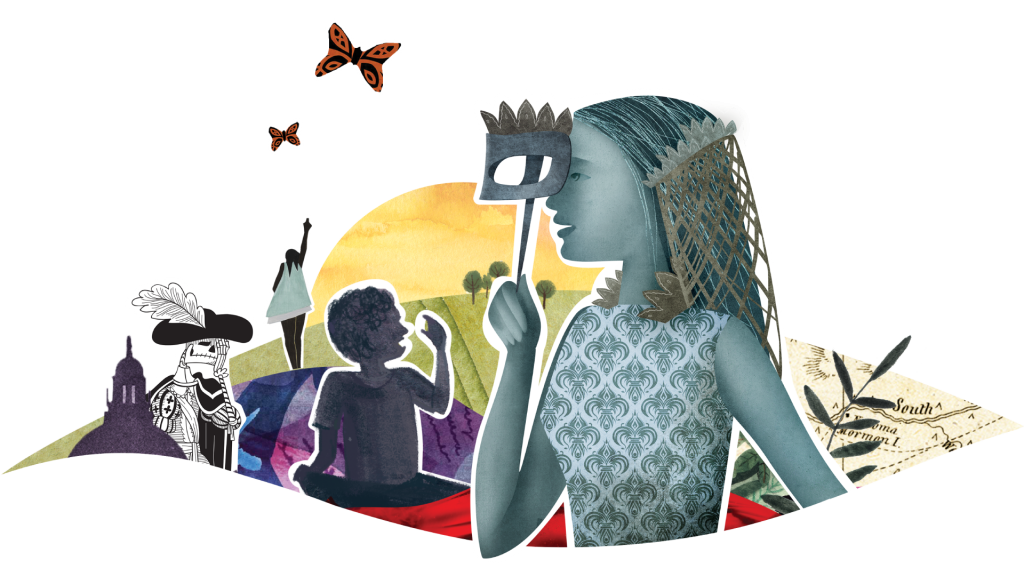
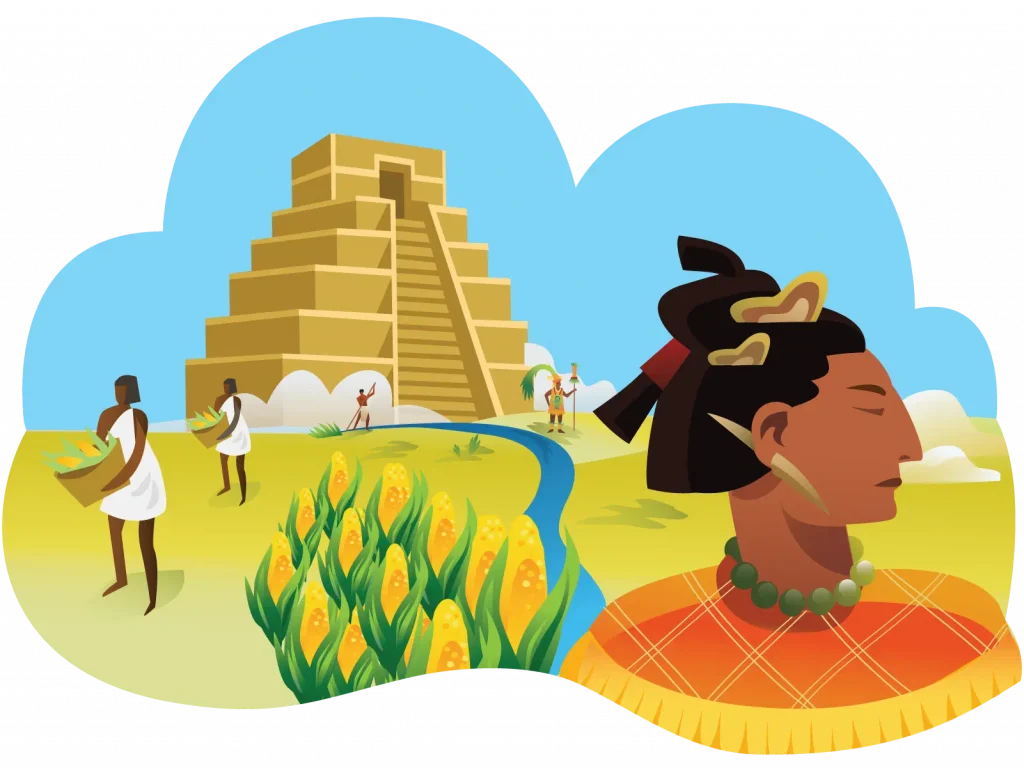
Get in touch with a PD expert.

What is Amplify Caminos?

Amplify Caminos is a core Spanish language arts program for grades TK–5 that delivers:

  • Authentic instruction built from the ground up for the Spanish language.
  • A unique research-based approach truly built on the Science of Reading.
  • A combination of explicit foundational skills with meaningful knowledge-building.
  • Embedded support and differentiation that gets all students reading grade-level texts together.
  • Opportunities for students to see the strengths and experiences that all people share while also celebrating each others’ unique identities and experiences.
A diagram illustrates two processes, language comprehension and word recognition, integrating into reading comprehension with colorful braided strands and related educational materials.

How does Amplify Caminos work?

Daily instruction

Grades K–2: Dedicated knowledge-building and explicit skills instruction
Every day, students in Grades K–2 complete one full lesson that builds foundational reading skills in the Amplify Caminos Lectoescritura strand, as well as one full lesson that builds background knowledge in the Amplify Caminos Conocimiento strand. Through learning in each of these strands, students develop the early literacy skills necessary to help them become confident readers and build the context to understand what they’re reading.

Grades 3–5: Integrated instruction
In Grades 3–5, the Amplify Caminos Lectoescritura and Conocimiento strands are integrated in one set of instructional materials. Lessons begin to combine skills and knowledge with increasingly complex texts, close reading, and a greater writing emphasis. Students can then use their skills to go on their own independent reading adventures.

Formative and summative assessments

A young boy sitting at a desk writes in a notebook with a pencil; another student is seated beside him, also writing.

Amplify CKLA features a progression of moment-by-moment assessments to benchmark assessments. Assessment and feedback give teachers the information they need to differentiate instruction effectively.

Checks for Understanding
Each lesson segment incorporates checks for understanding to increase engagement and to let teachers make real-time adjustments to their instruction.

Formative Assessment
Each lesson goal is tied to a formative assessment opportunity, allowing teachers to see which students need more support with a benchmark.

Mid- and End-of-Unit Assessments
Mid-Unit and End-of-Unit Assessments provide valuable information on the skills and content students have mastered. Digital end-of-unit assessments are available on a variety of platforms.

Benchmark and Placement Assessments
Benchmark and Placement Assessments help teachers set goals and monitor the growth of each student, providing a baseline at the beginning of the year and ensuring students are advancing toward grade-level objectives.

What makes Amplify Caminos different?

Built on the Science of Reading

Built out of the latest research in the Science of Reading, Amplify Caminos delivers explicit instruction in both foundational literacy skills (systematic phonics, decoding, and fluency) and background knowledge in grades K–2 with an integrated approach to explicit instruction in grades 3–5.

Explicit systematic skills instruction

The skills instruction in Amplify Caminos was distinctly developed with the Spanish language in mind. Its foundational lessons are specific to the language, rather than a direct translation from Amplify CKLA’s English skills instruction.

Reading instruction begins with the vowels first, then the most common consonants, and finally the least common consonants. Students will blend and segment sounds to form syllables, and syllables to form words.

Although Spanish has a highly predictable orthography, there are a few silent letters (h is always silent, u is silent after g or q), as well as letters that can make different sounds, depending on the letters that follow them. For that reason, syllables with these letters are taught somewhat later in the progression. The same is true for syllables with infrequently occurring consonants, such as z, k, x, and w.

Coherent knowledge instruction

While students are learning how to read, the Conocimiento strand gives them authentic and engaging reasons to read.

Amplify Caminos uses spiral learning to reinforce every student’s ability to develop skills like reading, writing, speaking, and listening in Spanish that can be transferred to English. As students engage with their lessons, they explore the similarities and differences in grammar, vocabulary, writing, and language use between Spanish and English. This bridge helps students learning two languages to strengthen their knowledge in both.

A collage of Spanish-language educational book covers and pages featuring illustrated scenes, including a rabbit, a person observing stars, and children playing outside.

Through cross-curricular content, students explore units that relate to storytelling, science, and the history of our world in a holistic and thoughtful way. With these units, you’ll bring the world to your students, showing them how reading can become an exciting, rewarding, and useful part of their lives.

Commitment to equity and diversity

Amplify Caminos builds students’ knowledge about the world, helping them see people who resemble them and their familiar situations or experiences while also exposing them to people whose appearances, lives, beliefs, and backgrounds differ from their own.

In addition to teaching all students to crack the written code (which is vital for equity), the Amplify Caminos program helps students celebrate their own unique identities and experiences while also seeing the strengths and experiences we all share.

Two astronauts in space suits float above planets, a woman sings with musical notes, a hot air balloon with passengers flies, and a person sketches a landscape in a colorful, whimsical scene.

Amplify Caminos includes both transadaptations and authentic texts written by Latin American and Spanish authors.

Three Spanish-language children's books are displayed: "La flor de oro," "El conejo en la Luna," and "El secreto de las hormigas," each with illustrated covers.

Our decodable Student Readers celebrate students’ diverse experiences and feature individuals with a broad range of identity factors, including socio-economic status, age, ability, race, ethnicity, country of origin, and more.

Five colorful children's books in Spanish are displayed, featuring illustrated covers with diverse characters, a llama, and a giant cactus.

Our new Knowledge Research units carry forward Amplify Caminos’ powerful and proven instructional approach while also:

  • Adding more diversity. The rich topics and highly visual components featured in these units provide students with even more “windows and mirrors” and perspectives as they work to build knowledge.
  • Adding more authentic literature. Each new research unit revolves around a collection of high-interest authentic trade books that will spark more curiosity and inspire more inquiry.
  • Adding more flexibility. Units can be implemented for extended core instruction during flex periods, district-designated Pausing Points, or enrichment periods.
Three illustrations: children swimming in a pool, a diverse group of four people standing, and people caring for a tree surrounded by plants and glowing light.

Embedded differentiation for all learners

Amplify Caminos provides built-in differentiation strategies and supports in every lesson.

  • Apoyo a la enseñanza y desafío: Support and Challenge suggestions in every lesson provide assistance or opportunities for more advanced work toward the goal of the lesson.
  • Notas culturales: These point-of-use notes provide additional information about the traditions, foods, holidays, word variations, and more from across the Spanish-speaking world.
  • Apoyo adicional: Every lesson in the Lectoescritura (Skills) Strand provides additional support activities suggested to reinforce foundational skills instruction. These activities can be given to any student who requires extra help, including students with special needs.

Sample materials

Demo access

A laptop screen displays the Amplify login page with options to log in using Google, Clever, Amplify, QR code, District SSO, or get help.

Follow the instructions below to access your demo account.

  • Click the Caminos Demo button below.
  • Select Log in with Amplify.
  • To explore as a teacher, enter this username:

          t1.montgomery2024ela@demo.tryamplify.net

  • To explore as a student, enter this username:

          s1.montgomery2024ela@demo.tryamplify.net

  • Enter the password: Amplify1-montgomery2024ela
  • Click the Programs and apps menu
  • Select CKLA Teacher Resource Site
  • Select the desire grade level
  • Use the toggle to switch between English (CKLA) and Spanish (Caminos) resources.

Check out these additional resources

Caminos review resources:

Amplify CKLA for Anchorage

To view this protected page, enter the password below:


What is Amplify CKLA?

Amplify CKLA is a core ELA program for grades K–5 that delivers:

  • A unique research-based approach truly built on the Science of Reading.
  • A combination of explicit foundational skills with meaningful knowledge-building.
  • Embedded support and differentiation that gets all students reading grade-level texts together.
  • Opportunities for students to see the strengths and experiences that all people share while also celebrating each others’ unique identities and experiences.
Reading rope showing knowledge-building and skill development strands, and the merging of language comprehension and word recognition

How does Amplify CKLA work?

Grades K–2: Dedicated knowledge-building and explicit skills instruction
Every day, students in Grades K–2 complete one full lesson that explicitly and systematically builds foundational reading skills in the Skills Strand, as well as one full lesson that builds robust background knowledge to access complex text in the Knowledge Strand. Through learning in each of these strands, students develop the early literacy skills necessary to help them become confident readers and build the context to understand what they’re reading.

Grades 3–5: Integrated instruction
In Grades 3–5, Knowledge and Skills are integrated in one set of instructional materials. Lessons begin to combine skills and knowledge with increasingly complex texts, close reading, and a greater writing emphasis. Students can then use their skills to go on their own independent reading adventures.

How does Amplify CKLA integrate with the other parts of the literacy system?

Amplify CKLA + mCLASS® with DIBELS® 8th Edition

Amplify CKLA integrates with your mCLASS assessment through the CKLA Connect feature, which matches your students with targeted CKLA lessons based on their mCLASS assessment data. In other words, it aligns your assessments more closely with your core curriculum while recommending effective differentiated instruction.

Screenshot of an educational platform. It shows lesson plans for a group on "Letter Sound Knowledge" under the heading "CKLA Connect." Group 2 has 2 students. Activities for phonics skills are listed below.

Amplify CKLA + Amplify Reading

Amplify Reading is the student-driven skill practice program within CKLA, providing differentiated, digital instruction in both foundational skills and comprehension strategies. Because Amplify Reading is built on the same approach to reading as CKLA, students are able to extend their learning from the core program further, at their own pace.

Amplify CKLA and Amplify Reading reinforce each other through:

  • An aligned scope and sequence and instructional approach: In both programs, students get instruction and practice in phonological awareness and phonics, with the most common, least ambiguous spellings first.
  • Consistent vocabulary words: Many Amplify CKLA words are taught and practiced in Amplify Reading vocabulary games.
  • Complementary texts: Fiction and nonfiction books within Amplify Reading reinforce Amplify CKLA knowledge domains.
  • Seamless integrations between platforms: Students can easily access Amplify Reading directly from the Amplify CKLA Student Hub.
Educational website interface showing icons for theater, sounds, library, and activities with a greeting "hello student!" and a grade level indicator.

What makes Amplify CKLA different?

Built on the Science of Reading

Built out of the latest research in the Science of Reading, Amplify CKLA delivers explicit instruction in both foundational literacy skills (systematic phonics, decoding, and fluency) and background knowledge in grades K–2 with an integrated approach to explicit instruction in grades 3–5.

Review this Science of Reading toolkit to learn more about the Science of Reading best practices integrated throughout CKLA.

Explicit systematic skills instruction

Great reading instruction starts with helping kids develop great decoding skills. By building a solid foundation of phonological awareness and phonics, reading the words on the page becomes automatic so that comprehension and critical thinking can happen. Our instruction is supported by:

  • Step-by-step lessons with multisensory approaches, clear lesson objectives, and embedded formative assessments.
  • Decodable books and student readers with ebook and audiobook versions that feature interesting plots and relatable characters.
  • An engaging sound library with fun songs and videos that develop phonological awareness.
  • An interactive Vocab App featuring engaging activities with immediate feedback and automated, customized instruction based on student performance.

Coherent knowledge instruction

Students build grade-appropriate subject-area knowledge and vocabulary in history, science, literature, and the arts while learning to read, write, and think creatively and for themselves. Our instruction is supported by:

  • Knowledge builders that provide a quick overview of each domain with its key ideas.
  • Interactive Read-Alouds designed to build knowledge and vocabulary.
  • Content-rich anchor texts that support students as they tackle increasingly complex text and sharpen their analytical skills.
  • Social and emotional learning paired with lessons in civic responsibility.
Illustration montage featuring scenes of learning: a cartoon character with books, two people shoveling snow under the stars, and an astronaut on a lunar landscape, with educational interfaces.

Embedded differentiation for all learners

Amplify CKLA provides built-in differentiation strategies in every lesson for all students, including supports for English learners and Standard English learners.

  • Access supports for ELs: Integrated ELD supports in each lesson segment
    for English learners and Standard English learners are specific to students’ mastery of the lesson’s objectives.
  • Support and Challenge for all learners: Lessons include Support and Challenge suggestions that provide assistance or opportunities for more advanced work toward the goal of the lesson. These supports are suitable for all learners, including ELs.
  • 30 minutes of Additional Support in every Skills lesson: In the Skills Strand, every lesson concludes with an Additional Support section of recommendations for 30 minutes of extended instruction and activities, directly aligned to the skills taught in the lesson to assist students who need more support in mastering the lesson’s objectives.
  • Intervention Toolkit: The Intervention Toolkit provides easy-to-use resources to assist teachers in filling gaps in students’ foundational skills. Teachers will find of hundreds of activities to support phonics, fluency, comprehension, handwriting, and other key skills.

Designated ELD

Amplify CKLA’s designated English Language Development (ELD) component—Language Studio—helps English learners preview and revisit key content within core instruction, building a foundation of academic vocabulary and background knowledge. Core instruction lessons include point-of-use supports for English learners and Support and Challenge strategies for all learners.

Young boy with his hands over his mouth, looking up in wonder, beside a diagram labeled "language studio" with educational elements.

This carefully developed program follows the CKLA Knowledge domains, previewing and reinforcing skills and content from core instruction using instruction specifically built for English learners. The program is also designed around frequent formative assessment, including assessment of language proficiency, giving you effective ways to guide and support your English learners.

Language Studio supports teachers and English learners through the following:

  • 30 minutes of instruction with lesson segments are carefully designed around Content Knowledge, Meaning Making, Language Development, Effective Expression, and Foundational Skills.
  • Every Language Studio lesson accompanies a core lesson, helping English learners deepen domain and academic vocabulary that will help them access core content.
  • Culminating tasks support core projects and target the same skills as primary instruction.

Ready-to-go slides and all-in-one platform

The slides-based Amplify CKLA digital experience enhances instruction while saving you time. Everything you need is all in one place, making it easier than ever to plan lessons, present digital content, and review student work.

  • Simplify planning and instruction: Teachers have access to ready-to-use and customizable lesson presentation slides, complete with all the prompts from the print Teacher Guide embedded in the teacher view. As teachers deliver each lesson, students can engage with the content in one cohesive
    experience—through Activity Books, slides, digital components, videos, Student Readers, and more.
  • Interactive student activities: Through the Student Home, students can easily access digital lessons with slides, Activity Pages, ebooks, videos, and other interactive resources from one simple dashboard.
  • Your teacher command center: You’re provided with the tools you need to ensure a productive digital experience that’s personalized to meet your students’ needs. This includes a teacher home from which to launch and track lessons, LMS integrations such as Google Classroom and Microsoft Teams, and other customizations based on classroom needs.
  • Get real-time insights into your students’ work: The innovative live review tool enables you to keep an eye on students drawing, recording audio, uploading and capturing images, and typing or writing in pre-placed text boxes in their Activity Pages.

Navigating the program

Digital navigation walkthrough

Physical materials walkthrough

Sample materials

Demo access

Laptop screen displaying a login page for "amplify" with multiple sign-in options including google, clever, a qr code, and district sso.

Follow the instructions below to access your demo account.

  • Click the CKLA Demo button below.
  • Select Log in with Amplify.
  • To explore as a teacher, enter this username: t1.alaskareads@demo.tryamplify.net
  • To explore as a student, enter this username: s1.alaskareads@demo.tryamplify.net
  • Enter the password: Amplify1-alaskareads
  • Click the Programs and apps menu
  • Select CKLA Teacher Resource Site
  • Select the desire grade level

Check out these additional resources

Amplify CKLA review resources:

What is Amplify Caminos?

Amplify Caminos is a core Spanish language arts program for grades TK–5 that delivers:

  • Authentic instruction built from the ground up for the Spanish language.
  • A unique research-based approach truly built on the Science of Reading.
  • A combination of explicit foundational skills with meaningful knowledge-building.
  • Embedded support and differentiation that gets all students reading grade-level texts together.
  • Opportunities for students to see the strengths and experiences that all people share while also celebrating each others’ unique identities and experiences.
Illustration depicting the flow of genetic information, represented by ribbons transitioning from dna to rna, connected to various educational images and diagrams.

How does Amplify Caminos work?

Grades K–2: Dedicated knowledge-building and explicit skills instruction
Every day, students in Grades K–2 complete one full lesson that builds foundational reading skills in the Amplify Caminos Lectoescritura strand, as well as one full lesson that builds background knowledge in the Amplify Caminos Conocimiento strand. Through learning in each of these strands, students develop the early literacy skills necessary to help them become confident readers and build the context to understand what they’re reading.

Grades 3–5: Integrated instruction
In Grades 3–5, the Amplify Caminos Lectoescritura and Conocimiento strands are integrated in one set of instructional materials. Lessons begin to combine skills and knowledge with increasingly complex texts, close reading, and a greater writing emphasis. Students can then use their skills to go on their own independent reading adventures.

What makes Amplify Caminos different?

Built on the Science of Reading

Built out of the latest research in the Science of Reading, Amplify Caminos delivers explicit instruction in both foundational literacy skills (systematic phonics, decoding, and fluency) and background knowledge in grades K–2 with an integrated approach to explicit instruction in grades 3–5.

Explicit systematic skills instruction

The skills instruction in Amplify Caminos was distinctly developed with the Spanish language in mind. Its foundational lessons are specific to the language, rather than a direct translation from Amplify CKLA’s English skills instruction.

Reading instruction begins with the vowels first, then the most common consonants, and finally the least common consonants. Students will blend and segment sounds to form syllables, and syllables to form words.

Although Spanish has a highly predictable orthography, there are a few silent letters (h is always silent, u is silent after g or q), as well as letters that can make different sounds, depending on the letters that follow them. For that reason, syllables with these letters are taught somewhat later in the progression. The same is true for syllables with infrequently occurring consonants, such as z, k, x, and w.

Coherent knowledge instruction

While students are learning how to read, the Conocimiento strand gives them authentic and engaging reasons to read.

Amplify Caminos uses spiral learning to reinforce every student’s ability to develop skills like reading, writing, speaking, and listening in Spanish that can be transferred to English. As students engage with their lessons, they explore the similarities and differences in grammar, vocabulary, writing, and language use between Spanish and English. This bridge helps students learning two languages to strengthen their knowledge in both.

Through cross-curricular content, students explore units that relate to storytelling, science, and the history of our world in a holistic and thoughtful way. With these units, you’ll bring the world to your students, showing them how reading can become an exciting, rewarding, and useful part of their lives.

A collage of illustrated book covers, including themes of Don Quixote, space exploration, and anthropomorphic animals in various scenarios, all enriched with Spanish language elements.

Embedded differentiation for all learners

Amplify Caminos provides built-in differentiation strategies and supports in every lesson.

  • Apoyo a la enseñanza y desafío: Support and Challenge suggestions in every lesson provide assistance or opportunities for more advanced work toward the goal of the lesson.
  • Notas culturales: These point-of-use notes provide additional information about the traditions, foods, holidays, word variations, and more from across the Spanish-speaking world.
  • Apoyo adicional: Every lesson in the Lectoescritura (Skills) Strand provides additional support activities suggested to reinforce foundational skills instruction. These activities can be given to any student who requires extra help, including students with special needs.

Commitment to equity

Illustration of diverse people engaged in different activities: a black woman listening to music, two astronauts in space, and a man reading a book by a plant.

We believe we have a responsibility to provide literacy instruction that gives every student an equal opportunity to succeed and even excel. Amplify Caminos builds students’ knowledge about the world, helping them see people who resemble them and their familiar situations or experiences while also exposing them to people whose appearances, lives, beliefs, and backgrounds differ from their own.

In addition to teaching all students to crack the written code (which is vital for fairness), the Amplify Caminos program helps students celebrate their own unique identities and experiences while also seeing the strengths and experiences we all share.

Amplify Caminos includes both transadaptations and authentic texts written by Latin American and Spanish authors. Authentic literature exposes students to a variety of text types and perspectives to deepen their knowledge of fascinating topics in social studies, science, literature, and the arts. Authentic texts support text-to-self, text-to-world, and text-to-text connections for readers.

Three children's book covers in Spanish are shown: "La Flor de Oro," "El conejo en la Luna," and "El secreto de las hormigas," each featuring illustrated artwork.

Amplify Caminos is built on the conviction that fairness in instruction is vital to an effective program. Decodable Student Readers celebrate students’ varied experiences and feature individuals with a broad range of identity factors, including socio-economic status, age, ability, race, ethnicity, country of origin, and more.

Five illustrated Spanish children's books are arranged together, featuring colorful covers with diverse characters and animals, including a llama, a cactus, and children.

How does Amplify Caminos integrate with the other parts of the literacy system?

Amplify Caminos + mCLASS® Lectura

Achieve complete parity between English and Spanish assessments with mCLASS Lectura for K–6. mCLASS Lectura allows teachers to connect with their Spanish-speaking students face-to-face, one-on-one, and in the language most comfortable to them. The result? Valid and reliable student data reports
available in both English and Spanish, enabling teachers to pinpoint where their Spanish-speaking or emergent bilingual students really are in their skill development and what instruction to prioritize.

Reading assessment validated for benchmark, progress monitoring, and dyslexia screening

Amplify Caminos + Amplify Reading

Amplify Reading is an engaging, adaptive digital program that extends the learning in Amplify Caminos. Amplify Reading offers support to a large sub-group of English learners (ELs) through Spanish voice-over. Spanish voiceover instructions are available in vocabulary and sentence-level comprehension games so ELs can build their vocabulary, language, and critical comprehension skills before moving into analyzing complex texts

Spanish Support

Check out these additional resources

Caminos review resources:

What is Amplify CKLA?

Amplify CKLA is a core ELA program for grades TK–5 that delivers:

  • A unique research-based approach truly built on the Science of Reading.
  • A combination of explicit foundational skills with meaningful knowledge-building.
  • Embedded support and differentiation that gets all students reading grade-level texts together.
  • Opportunities for students to see the strengths and experiences that all people share while also celebrating each others’ unique identities and experiences.
  • Equitable and authentic Spanish language arts instruction with Amplify Caminos.
Reading rope showing knowledge-building and skill development strands, and the merging of language comprehension and word recognition

How does Amplify CKLA work?

Grades K–2: Dedicated knowledge-building and explicit skills instruction
Every day, students in Grades K–2 complete one full lesson that explicitly and systematically builds foundational reading skills in the Skills Strand, as well as one full lesson that builds robust background knowledge to access complex text in the Knowledge Strand. Through learning in each of these strands, students develop the early literacy skills necessary to help them become confident readers and build the context to understand what they’re reading.

Grades 3–5: Integrated instruction
In Grades 3–5, Knowledge and Skills are integrated in one set of instructional materials. Lessons begin to combine skills and knowledge with increasingly complex texts, close reading, and a greater writing emphasis. Students can then use their skills to go on their own independent reading adventures.

What makes Amplify CKLA different?

Built on the Science of Reading

Built out of the latest research in the Science of Reading, Amplify CKLA delivers explicit instruction in both foundational literacy skills (systematic phonics, decoding, and fluency) and background knowledge in grades K–2 with an integrated approach to explicit instruction in grades 3–5.

Review this Science of Reading toolkit to learn more about the Science of Reading best practices integrated throughout CKLA.

Explicit systematic skills instruction

Great reading instruction starts with helping kids develop great decoding skills. By building a solid foundation of phonological awareness and phonics, reading the words on the page becomes automatic so that comprehension and critical thinking can happen. Our instruction is supported by:

  • Step-by-step lessons with multisensory approaches, clear lesson objectives, and embedded formative assessments.
  • Decodable books and student readers with ebook and audiobook versions that feature interesting plots and relatable characters.
  • An engaging sound library with fun songs and videos that develop phonological awareness.
  • An interactive Vocab App featuring engaging activities with immediate feedback and automated, customized instruction based on student performance.

Coherent knowledge instruction

Students build grade-appropriate subject-area knowledge and vocabulary in history, science, literature, and the arts while learning to read, write, and think creatively and for themselves. Our instruction is supported by:

  • Knowledge builders that provide a quick overview of each domain with its key ideas.
  • Interactive Read-Alouds designed to build knowledge and vocabulary.
  • Content-rich anchor texts that support students as they tackle increasingly complex text and sharpen their analytical skills.
  • Social and emotional learning paired with lessons in civic responsibility.
Illustration montage featuring scenes of learning: a cartoon character with books, two people shoveling snow under the stars, and an astronaut on a lunar landscape, with educational interfaces.

Embedded differentiation for all learners

Amplify CKLA provides built-in differentiation strategies in every lesson for all students, including supports for English learners and Standard English learners.

  • Access supports for ELs: Integrated ELD supports in each lesson segment
    for English learners and Standard English learners are specific to students’ mastery of the lesson’s objectives.
  • Support and Challenge for all learners: Lessons include Support and Challenge suggestions that provide assistance or opportunities for more advanced work toward the goal of the lesson. These supports are suitable for all learners, including ELs.
  • 30 minutes of Additional Support in every Skills lesson: In the Skills Strand, every lesson concludes with an Additional Support section of recommendations for 30 minutes of extended instruction and activities, directly aligned to the skills taught in the lesson to assist students who need more support in mastering the lesson’s objectives.
  • Intervention Toolkit: The Intervention Toolkit provides easy-to-use resources to assist teachers in filling gaps in students’ foundational skills. Teachers will find of hundreds of activities to support phonics, fluency, comprehension, handwriting, and other key skills.

Designated ELD

Amplify CKLA’s designated English Language Development (ELD) component—Language Studio— helps English learners preview and revisit key content within core instruction, building a foundation of academic vocabulary and background knowledge. Core instruction lessons include point-of-use supports for English learners and Support and Challenge strategies for all learners.

Young boy with his hands over his mouth, looking up in wonder, beside a diagram labeled

Built on the California ELA/ELD Framework, our carefully developed program follows the CKLA Knowledge domains, previewing and reinforcing skills and content from core instruction using instruction specifically built for English learners. The program is also designed around frequent formative assessment, including assessment of language proficiency, giving you effective ways to guide and support your English learners.

Language Studio supports teachers and English learners through the following:

  • 30 minutes of instruction with lesson segments are carefully designed around Content Knowledge, Meaning Making, Language Development, Effective Expression, and Foundational Skills.
  • Every Language Studio lesson accompanies a core lesson, helping English learners deepen domain and academic vocabulary that will help them access core content.
  • Culminating tasks support core projects and target the same skills as primary instruction.

Ready-to-go slides and all-in-one platform

The slides-based Amplify CKLA digital experience enhances instruction while saving you time. Everything you need is all in one place, making it easier than ever to plan lessons, present digital content, and review student work.

  • Simplify planning and instruction: Teachers have access to ready-to-use and customizable lesson presentation slides, complete with all the prompts from the print Teacher Guide embedded in the teacher view. As teachers deliver each lesson, students can engage with the content in one cohesive
    experience—through Activity Books, slides, digital components, videos, Student Readers, and more.
  • Interactive student activities: Through the Student Home, students can easily access digital lessons with slides, Activity Pages, ebooks, videos, and other interactive resources from one simple dashboard.
  • Your teacher command center: You’re provided with the tools you need to ensure a productive digital experience that’s personalized to meet your students’ needs. This includes a teacher home from which to launch and track lessons, LMS integrations such as Google Classroom and Microsoft Teams, and other customizations based on classroom needs.
  • Get real-time insights into your students’ work: The innovative live review tool enables you to keep an eye on students drawing, recording audio, uploading and capturing images, and typing or writing in pre-placed text boxes in their Activity Pages.

How does Amplify CKLA integrate with the other parts of the literacy system?

Amplify CKLA + mCLASS® with DIBELS® 8th Edition

Amplify CKLA integrates with your mCLASS assessment through the CKLA Connect feature, which matches your students with targeted CKLA lessons based on their mCLASS assessment data. In other words, it aligns your assessments more closely with your core curriculum while recommending effective differentiated instruction.

Screenshot of an educational platform. It shows lesson plans for a group on "Letter Sound Knowledge" under the heading "CKLA Connect." Group 2 has 2 students. Activities for phonics skills are listed below.

Amplify CKLA + Amplify Reading

Amplify Reading is the student-driven skill practice program within CKLA, providing differentiated, digital instruction in both foundational skills and comprehension strategies. Because Amplify Reading is built on the same approach to reading as CKLA, students are able to extend their learning from the core program further, at their own pace.

Amplify CKLA and Amplify Reading reinforce each other through:

  • An aligned scope and sequence and instructional approach: In both probrams, students get instruction and practice in phonological awareness and phonics, with the most common, least ambiguous spellings first.
  • Consistent vocabulary words: Many Amplify CKLA words are taught and practiced in Amplify Reading vocabulary games.
  • Complementary texts: Fiction and nonfiction books within Amplify Reading reinforce Amplify CKLA knowledge domains.
  • Seamless integrations between platforms: Students can easily access Amplify Reading directly from the Amplify CKLA Student Hub.
Educational website interface showing icons for theater, sounds, library, and activities with a greeting "hello student!" and a grade level indicator.

Navigating the program

Digital navigation walkthrough

Physical materials walkthrough

Check out these additional resources

Amplify CKLA review resources:

Welcome!

Amplify Science: California Edition is an immersive and engaging core curriculum authored by UC Berkeley’s Lawrence Hall of Science and built specifically for the NGSS.

K–8 Integrated Course Model

Grades 6–8 Integrated Model

Grades 6–8 Discipline Specific Model

Amplify Science

A new core curriculum designed from the ground up for the NGSS.

Preview the Student Books and Student Investigation Notebooks

Grades 6–8 Integrated Model

Spanish Student Books and Student Investigation Notebooks

Amplify Science

A new core curriculum designed from the ground up for the NGSS.

Preview the Student Books and Student Investigation Notebooks

Spanish Student Books and Student Investigation Notebooks

Amplify Science

A new core curriculum designed from the ground up for the NGSS.

Preview the Student Books and Student Investigation Notebooks

Grades 6–8 Integrated Model

NGSS Benchmark Assessments

The Amplify NGSS Benchmark Assessments were authored by Amplify and were not developed as part of the Amplify Science program or created by the Lawrence Hall of Science.

What is Amplify Science?

The Lawrence Hall of Science

Developed by the science education experts at UC Berkeley’s Lawrence Hall of Science and the digital learning team at Amplify, our program features:

  • phenomena-based approach where students construct a complex understanding of each unit’s anchor phenomenon.
  • A blend of cohesive storylines, hands-on investigations, rich discussions, literacy-rich activities, and digital tools.
  • Carefully crafted units, chapters, lessons, and activities designed to deliver true 3-dimensional learning.
  • An instructional design that supports all learners in accessing all standards.
Aerial view of the lawrence hall of science at the university of california, berkeley, showcasing the building and surrounding trees with a foggy city backdrop.

Proven to work

A pdf cover from wested titled "learning and literacy development together: initial results from a curriculum study," featuring an adult helping children with schoolwork in a classroom.

WestEd Randomized
Control Trial for Grade 1

Read More

Pdf cover titled "curriculum materials designed for the next generation science standards: initial results from gold standard research trials", published by wested.

WestEd Randomized
Control Trial for Grade 7

Read More

A teacher and students engage in a science activity around a table. The text promotes the Amplify Science K–8 curriculum, highlighting its focus on hands-on learning and real-world problem-solving.

Amplify Science NE
Grades K–5

Read More

Instructional model

The Amplify Science program is rooted in the proven, research-based pedagogy of Do, Talk, Read, Write, Visualize. Here’s how each element works:

Do

First-hand investigations are an important part of any science classroom, and Amplify Science has students getting hands-on in every unit—from building models of protein molecules to experimenting with electrical systems.

Talk

Student-to-student discourse and full-class discussions are an integral part of the program. Students are provided with numerous opportunities to engage in meaningful oral scientific argumentation, all while fostering a collaborative classroom environment.

Read

Students read scientific articles, focusing their reading activities on searching for evidence related to their investigation and, importantly, on asking and recording questions as they read through fascinating texts on 21st-century topics.

Write

Following real-world practices, students write scientific arguments based on evidence they’ve collected, making clear their reasoning about how a given piece of evidence connects to one of several claims.

Visualize

By manipulating digital simulations and using modeling tools to craft visualizations of their thinking— just as real scientists and engineers do—students take their learning far beyond the confines of what they can physically see in the classroom in an exciting and authentic way.

Program structure

Our cyclical lesson design ensures students receive multiple exposures to concepts through a variety of modalities. As they progress through the lessons within a unit, students build and deepen their understanding, increasing their ability to develop and refine complex explanations of the unit’s phenomenon.

It’s this proven program structure and lesson design that enables Amplify Science to address 100% of the NGSS, and support students in mastering the Utah Science Standards.

Flowchart depicting a critical thinking process with four circular nodes connected by arrows, each node representing a step: posing a real-world problem, exploring evidence, elaborating concepts, and evaluating claims.

Unit types

While every unit delivers three-dimensional learning experiences and engages students in gathering evidence from a rich collection of sources, each unit also serves a unique instructional purpose.

In grades 6–8:

  • One unit is a launch unit.
  • Three units are core units.
  • Two units are engineering internships.

Launch units are the first units taught in each year of Amplify Science. The goal of the Launch unit is to introduce students to norms, routines, and practices that will be built on throughout the year, including argumentation, active reading, and using the program’s technology. For example, rather than taking the time to explain the process of active reading in every unit in a given year, it is explained thoroughly in the Launch unit, thereby preparing students to read actively in all subsequent units.

Core units establish the context of the unit by introducing students to a real-world problem. As students move through lessons in a Core unit, they figure out the unit’s anchoring phenomenon, gain an understanding of the unit’s disciplinary core ideas and science and engineering practices, and make linkages across topics through the crosscutting concepts. Each Core unit culminates with a Science Seminar and final writing activity.

Engineering Internship units invite students to design solutions for real-world problems as interns for a fictional company called Futura. Students figure out how to help those in need, from tsunami victims in Sri Lanka to premature babies, through the application of engineering practices. In the process, they apply and deepen their learning from Core units.

Unit sequence

Our lessons follow a structure that is grounded in regular routines while still being flexible enough to allow for a variety of learning experiences.

In fact, our multi-modal instruction offers more opportunities for students to construct meaning, and practice and apply concepts than any other program. What’s more, our modular design means our units can be flexibly arranged to support your instructional goals.

Three columns listing education curriculum topics for grades 6, 7, and 8, focusing on science themes such as microbiomes, mars geology, and harnessing human energy.

Program components

Available digitally and in print, our unit-specific reference guides are chock full of helpful resources, including scientific background knowledge, planning information and resources, color-coded 3D Statements, detailed lesson plans, tips for delivering instruction, and differentiation strategies.

Amplify Science TG

Hands-on learning is an essential part of Amplify Science, and is integrated into every unit. Students actively participate in science, playing the roles of scientists and engineers as they gather evidence, think critically, solve problems, and develop and defend claims about the world around them. Every unit includes hands-on investigations that are critical to achieving the unit’s learning goals.

A young person wearing gloves looks through a microscope at a table with laboratory supplies, including bottles, slides, and a tray, against a plain blue background.

More hands-on with Flextensions:
Hands-on Flextensions are additional, optional investigations that are included at logical points in the learning progression and give students an opportunity to dig deeper if time permits. These activities offer teachers flexibility to choose to dedicate more time to hands-on learning. Materials referenced in Hands-on Flextension activities will either be included in the unit kit or are easily sourced. Supporting resources such as student worksheets will be included as downloadable PDF files.

Our kits include enough materials to support 200 student uses. In other words, teachers can easily support all five periods and small groups of 4-5 students each. Plus, our unit-specific kits mean teachers just grab the tub they need and then put it all back with ease.

Our digital Simulations and Practice Tools are powerful resources for exploration, data collection, and student collaboration. They allow students the ability to explore scientific concepts that might otherwise be invisible or impossible to see with the naked eye.

Available for every unit, our Student Investigation Notebooks contain instructions for activities and space for students to record data and observations, reflect on ideas from texts and investigations, and construct explanations and arguments.

In grades 6–8, one copy of the Student Investigation Notebook is included in each unit’s materials kit for use as a blackline master. Each notebook is also available as a downloadable PDF on the Unit Guide page of the digital Teacher’s Guide.

Two booklets titled "El clima cambiante de la Tierra: la desaparición del hielo" and "Earth’s Changing Climate: Vanishing Ice" with landscape illustrations on the covers.

These customizable PowerPoints are available for every lesson of the program and make delivering instruction a snap with visual prompts, colorful activity instructions, investigation set-up videos and animations, and suggested teacher talk in the notes section of each slide.

A laptop displays a PowerPoint presentation in presenter view, with slides about observing objects in plastic containers and related sensory instructions.

Explore your print samples

With your Amplify Science print samples, you’ll find unit-specific Teacher’s References Guides and Student Investigation Notebooks for each grade level.

A note about the Teacher’s Reference Guides:

It’s important that your committee sees the full breadth and depth of our instruction. For that reason, we provided a copy of each of our unit-specific Teacher Reference Guides.

Rest assured that teachers do not use these robust reference guides for day-to-day teaching. For that, we have a hands-free TG!

Three laptop screens displaying educational content on earth's energy system, including diagrams and text annotations.
  • Teacher Reference Guide: Unlike a typical TG that requires a series of supplemental books to support it, our encyclopedic reference guide is chock-full of everything a teacher needs to fully implement our program and the NGSS.
  • Ready-to-Teach Lesson Slides: For daily instruction, teachers need their hands free. That’s why we created ready-to-teach lesson slides for every single lesson. What’s more, they are editable and include suggested teacher talk and point-of-use differentiation and other instructional tips. Click to learn more.

A note about the Materials Kits:

Hands-on learning is at the heart of Amplify Science, and is integrated into every unit. In order to make hands-on learning more manageable for busy teachers, Amplify Science materials are organized into unit-specific kits.

Stacked storage bins with labels, arranged neatly; caption notes they are a sample and may not reflect actual quantities or sizes.

Our unit-specific kits:

  • Include more materials — We give teachers enough materials to support 200 student uses.
  • Are more manageable — Unlike other programs that require large groups of students to share limited sets of materials, our kits include enough to support small groups of 4–5 students.
  • Include supportive videos — Each hands-on activity provides clear instructions for the teacher, with more complex activities supported by video demonstrations and illustrations.

At your request, we did not include our materials kits with our submissions samples. However, we did provide grade-specific lists of all materials included in each kit, which you can also find with the links below.

Access your digital samples

Explore as a teacher

Follow these instructions to explore the Amplify Science digital platform as a teacher.

  • Click the Access Amplify Science Platform button below and bookmark it.
  • Select Log in with Amplify.
  • Enter the username: t.msscienceut@tryamplify.net
  • Enter the password: AmplifyNumber1
  • Click the Science icon.
  • Click on the Grade Menu in the top center of the screen and select any grade.
  • Select any unit.

To help familiarize yourself with navigating the digital platform, watch the below navigational video.

Explore as a student

Follow these instructions to explore the Amplify Science digital platform as a student.

  • Click the Access Amplify Science Platform button below and bookmark it.
  • Select Log in with Amplify.
  • Enter the username: s.msscienceut@tryamplify.net
  • Enter the password: AmplifyNumber1
  • Click the Science icon.
  • Click on the Grade Menu in the top center of the screen and select any grade.
  • Select any unit.

Resources to support your review

What is Amplify Science?

The Lawrence Hall of Science

Developed by the science education experts at UC Berkeley’s Lawrence Hall of Science and the digital learning team at Amplify, our program features:

  • phenomena-based approach where students construct a complex understanding of each unit’s anchor phenomenon.
  • A blend of cohesive storylines, hands-on investigations, rich discussions, literacy-rich activities, and digital tools.
  • Carefully crafted units, chapters, lessons, and activities designed to deliver true three-dimensional learning.
  • An instructional design that supports all learners in accessing all standards.
Aerial view of the lawrence hall of science at the university of california, berkeley, showcasing the building and surrounding trees with a foggy city backdrop.

Proven to work

A pdf cover from wested titled "learning and literacy development together: initial results from a curriculum study," featuring an adult helping children with schoolwork in a classroom.

WestEd Randomized
Control Trial for Grade 1

Read More

Pdf cover titled "curriculum materials designed for the next generation science standards: initial results from gold standard research trials", published by wested.

WestEd Randomized
Control Trial for Grade 7

Read More

A teacher and students engage in a science activity around a table. The text promotes the Amplify Science K–8 curriculum, highlighting its focus on hands-on learning and real-world problem-solving.

Amplify Science NE
Grades K–5

Read More

Instructional model

The Amplify Science program is rooted in the proven, research-based pedagogy of Do, Talk, Read, Write, Visualize. Here’s how each element works:

Do

Firsthand investigations are an important part of any science classroom, and Amplify Science has students getting hands-on in every unit—from building models of protein molecules to experimenting with electrical systems.

Talk

Student-to-student discourse and full-class discussions are an integral part of the program. Students are provided with numerous opportunities to engage in meaningful oral scientific argumentation, all while fostering a collaborative classroom environment.

Read

Students read scientific articles, focusing their reading activities on searching for evidence related to their investigation and, importantly, on asking and recording questions as they read through fascinating texts on 21st-century topics.

Write

Following real-world practices, students write scientific arguments based on evidence they’ve collected, making clear their reasoning about how a given piece of evidence connects to one of several claims.

Visualize

By manipulating digital simulations and using modeling tools to craft visualizations of their thinking— just as real scientists and engineers do—students take their learning far beyond the confines of what they can physically see in the classroom in an exciting and authentic way.

Program structure

Our cyclical lesson design ensures students receive multiple exposures to concepts through a variety of modalities. As they progress through the lessons within a unit, students build and deepen their understanding, increasing their ability to develop and refine complex explanations of the unit’s phenomenon.

It’s this proven program structure and lesson design that enables Amplify Science to address 100% of the NGSS and support students in mastering the Utah Science Standards.

Flowchart depicting a critical thinking process with four circular nodes connected by arrows, each node representing a step: posing a real-world problem, exploring evidence, elaborating concepts, and evaluating claims.

Unit types

While every unit delivers three-dimensional learning experiences and engages students in gathering evidence from a rich collection of sources, each unit also emphasizes a particular science and engineering practice.

In grades K–2:

  • One unit emphasizes the practice of investigation.
  • One unit emphasizes the practice of modeling.
  • One unit emphasizes the practice of engineering design.

In grades 3–5, students experience the three unit types above, plus:

  • One additional unit that emphasizes the practice of argumentation.

Investigation units focus on the process of strategically developing investigations and gathering data to answer questions. Students are first asked to consider questions about what happens in the natural world and why, and are then involved in designing and conducting investigations that produce data to help answer those questions.

Modeling units provide extra support to students engaging in the practice of modeling. Students use physical models, investigate with computer models, and create their own diagrams to help them visualize what might be happening on the nanoscale.

Engineering design units provide opportunities for students to solve complex problems by applying science principles to the design of functional solutions, and iteratively testing those solutions to determine how well they meet preset criteria.

Argumentation units provide students with regular opportunities to explore and discuss available evidence, time and support to consider how evidence may be leveraged in support of claims, and independence that increases as they mount written arguments in support of their claims.

Unit sequence

Our lessons follow a structure that is grounded in regular routines while still being flexible enough to allow for a variety of learning experiences.

In fact, our multi-modal instruction offers more opportunities for students to construct meaning, and practice and apply concepts, than any other program. What’s more, our modular design means our units can be flexibly arranged to support your instructional goals.

Chart outlining science curriculum by grade, from kindergarten through grade 5, listing topics such as

Program components

Available digitally and in print, our unit-specific reference guides are chock-full of helpful resources, including scientific background knowledge, planning information and resources, color-coded 3D Statements, detailed lesson plans, tips for delivering instruction, and differentiation strategies.

Amplify Science TG

Hands-on learning is an essential part of Amplify Science and is integrated into every unit. Students actively participate in science, playing the roles of scientists and engineers as they gather evidence, think critically, solve problems, and develop and defend claims about the world around them. Every unit includes hands-on investigations that are critical to achieving the unit’s learning goals.

Two children sit at a table blowing into plastic straws held together, likely making musical sounds, with containers and rubber bands on the table.

More hands-on with Flextensions:
Hands-on Flextensions are additional, optional investigations that are included at logical points in the learning progression and give students an opportunity to dig deeper if time permits. These activities offer teachers flexibility to choose to dedicate more time to hands-on learning. Materials referenced in Hands-on Flextension activities will either be included in the unit kit or are easily sourced. Supporting resources such as student worksheets will be included as downloadable PDF files.

Our kits include enough non-consumable materials to support a class of 36 students and enough consumable items to support 72 students. In other words, each kit can last two years! Plus, our unit-specific kits mean teachers just grab the tub they need for the unit and then put it all back with ease.

Each unit of Amplify Science K–5 includes six unique Student Books written by the Lawrence Hall of Science specifically for the program. These content-rich nonfiction and informational texts provide opportunities for students to search for evidence relevant to their firsthand investigations, see science practices and dispositions modeled, extend their science knowledge, provide real world connections as they master reading-to-learn and close reading skills, and construct evidence-based arguments.

Important note:
Students in grades K–5 are never asked to read alone. Rather, books are read to, with, and by students with ample scaffolding and support provided by the teacher. Big Books are read aloud or together with the class to introduce ideas. Student Books allow for small-group reading and reading in pairs.

Illustrations of two children's book covers displayed on a tablet, titled "on dia ocupado en villa empuja" and "a busy day in pushville," showing a busy street scene.

Available for every unit, our Student Investigation Notebooks contain instructions for activities and space for students to record data and observations, reflect on ideas from texts and investigations, and construct explanations and arguments.

In grades K–5, one copy of the Student Investigation Notebook is included in each unit’s materials kit for use as a blackline master. Each notebook is also available as a downloadable PDF on the Unit Guide page of the digital Teacher’s Guide.

Amplify Science Student Investigation Notebooks

Amplify Science offers digital experience licenses that make elementary instruction more flexible for students and teachers, as well as providing additional means to engage in remote, hybrid, or in-person learning!

Student-facing digital lessons
With the digital experience, students can engage with digital lesson content in one cohesive experience. It’s the same content from Amplify science in a new, integrated format where students can interact with slides, Sims, modeling tools, videos, books, and more.

Ecosystem Restoration digital simulation

Digital student notebook pages
Students can draw, write, record audio, and insert images into their Investigation Notebook pages. Their work is automatically saved and delivered to you in real time. When students edit their work, those edits are immediately reflected on your teacher work review page. You can access student responses by clicking “View Work,” where you can see students’ Investigation Notebook pages from the lesson, updating live.

Assign in Amplify
The digital experience allows flexibility with optional features like scheduling assignments in advance and setting due dates. You can use Scheduling to determine the date and time that the assignment appears in Student Home. You also have the flexibility to schedule when assignments appear and use dates to remove assignments from Student Home.

Assign in LMS
You can also assign lessons via our integrations with Google Classroom and Microsoft Teams, or by copying a lesson link and sharing it with students through the platform of your choice. The assignment link you send will provide students with direct access to the full lesson—slides, videos, digital tools, and worksheet activities—no student platform navigation required!

Teacher platform and presentation
Teacher-facing lesson content—including sample teacher talk, student responses, pedagogical support, and possible student responses—shows on a teacher’s private Teacher Guide tab. Students only see the lesson slides that are being presented.

Graphic depicting a teacher's device synced with a class presentation for K—5 students. The teacher's laptop displays an Amplify Science lesson on environments, which is mirrored on a larger screen for the class

Explore your print samples

With your Amplify Science print samples, you’ll find unit-specific Teacher’s References Guides, Student Investigation Notebooks, and sets of Student Books for each grade level.

A note about the Teacher’s Reference Guides:

It’s important that you see the full breadth and depth of our instruction. For that reason, we provide a copy of each of our unit-specific Teacher Reference Guides.

Rest assured that teachers do not use these robust reference guides for day-to-day teaching. For that, we have a hands-free TG!

A laptop screen displays a simulation of energy arrows entering and exiting Earth's system, flanked by diagrams explaining water flow and an energy token model.
  • Teacher Reference Guide: Unlike a typical TG that requires a series of supplemental books to support it, our encyclopedic reference guide is chock-full of everything a teacher needs to fully implement our program and the NGSS.
  • Ready-to-Teach Lesson Slides: For daily instruction, teachers need their hands free. That’s why we created ready-to-teach lesson slides for every single lesson. What’s more, they are editable and include suggested teacher talk and point-of-use differentiation and other instructional tips. Click to learn more.

A note about the Materials Kits:

Hands-on learning is at the heart of Amplify Science, and is integrated into every unit. In order to make hands-on learning more manageable for busy teachers, Amplify Science materials are organized into unit-specific kits.

Stacked storage bins with labels, arranged neatly; caption notes they are a sample and may not reflect actual quantities or sizes.

What’s different about Amplify’s unit-specific material kits?  They…

  • Include more materials — We give teachers enough non-consumable materials to support a class of 36 students and enough consumables to support 72 student uses. In other words, each kit will last two years.
  • Are more manageable — Unlike other programs that require large groups of students to share limited sets of materials, our kits include enough to support small groups of 4–5 students.
  • Include supportive videos — Each hands-on activity provides clear instructions for the teacher, with more complex activities supported by video demonstrations and illustrations.

Grade-specific lists of all materials included in each kit:

Access your digital samples

Explore as a teacher

When you’re ready to explore the teaching experience on your own, follow these instructions to access the Amplify Science digital teacher platform.

  • Click the Access Amplify Science Platform button below and bookmark the page.
  • Select Log in with Amplify.
  • Enter the username: t.scienceut@tryamplify.net
  • Enter the password: AmplifyNumber1
  • Click on Science on the left hand side.
  • Click on the Grade Menu in the top center of the screen and select any grade.
  • Select any unit.

To help familiarize yourself with navigating the digital platform, watch the below navigational video.

Explore as a student

When you’re ready to explore the student learning experience on your own, follow these instructions to access the Amplify Science digital student platform.

  • Click the Access Amplify Science Platform button below and bookmark the page.
  • Select Log in with Amplify.
  • Enter the username: s.scienceut@tryamplify.net
  • Enter the password: AmplifyNumber1
  • Click the backpack icon on the top right.
  • Click Science K-5
  • Select any unit.

Resources to support your review

Invest in high-quality professional development.

Amplify’s professional development (PD) provides a variety of learning experiences over multiple years to incrementally develop and apply the knowledge and skills needed for effective and self-sustaining implementation.

Gain insights into effective instructional techniques and develop a deeper understanding of your Amplify program(s) by investing in PD.

The foundation for long-lasting and sustainable change

Partner with us to plan long-lasting and sustainable change for your school or district. Change achieved deliberately is much more likely to stick and get results. We can support you through this journey to drive your professional improvement, enrich your instructional practice, and increase student impact.

Professional learning journey

Prepare

You’ll understand research-based practices to support new program implementation.

Prepare learning experiences will help shift literacy and math instruction in areas such as the Science of Reading and/or problem-based approaches to math.

Begin

You’ll build the foundational knowledge and skills necessary to begin teaching with your Amplify program(s).

Program-aligned packages will support those who are new to Amplify’s programs.

Practice

You’ll refine instrucional skills, expand knowledge of your Amplify program(s), and explore more advanced insturctional strategies.

Program-aligned packages will support those who have experience using Amplify’s programs.

Advance

You’ll deepen understanding of content and pedagogy and build-in house capacity to support a robust, sustainable implementation.

Program-aligned offerings will support advanced implementation, build capacity for instructional leaders, certify in-house trainers to deliver Launch sessions, and more.

Learn more about our curated catalog of packages and sessions to support each stage of your learning journey.

Multi-program, suite packages

Core program packages

Literacy

  • Amplify Texas ELAR/SLAR K–5
  • Amplify Texas ELAR 6–8

STEM

  • Amplify Math
  • Amplify Desmos Math (K–A2)
  • Amplify Science
 

Supplemental program sessions

  • Boost Reading Texas K–8
  • Boost Lectura K–2

Assessment program packages

  • mCLASS Texas Edition
  • mCLASS Lectura Texas

mCLASS Intervention K–6 program sessions


Empower teachers to continuously improve.

Professional development helps teachers stay motivated and inspired to grow professionally. Demonstrate your commitment to your staff by empowering them with professional development packages that include on-site or virtual Launch, Strengthen, or Coach sessions, all of which will orient you and your team to the full features of Amplify programs.

You can also personalize your learning experience by adding enhancement sessions to base packages.

Launch

Launch sessions introduce Amplify programs and support strong implementation.

After learning about the program’s foundational principles and key features, you’ll practice administering the program within a collaborative environment.

Strengthen

Strengthen sessions deepen understanding of the program. Session offerings are targeted and meant to take your practice—and your students’ learning—to the next level.

Offered as part of core packages, as well as enhancements, Strengthen sessions are intended to effectively address your students’ needs. Examples include:

  • A focus on data analysis.
  • Examining student writing.
  • Targeted intervention instruction.

Coach

Coach sessions elevate instructional practice and help meet teachers’ and schools’ specific needs.

Partner with an Amplify coach who will support you in planning a day tailored to meet the needs of teachers and/or leaders. Your customized session will leverage our menu of support, which can include:

  • Lesson modeling by an Amplify facilitator.
  • Classroom observations and debriefs.
  • Grade-level planning.

Coach sessions are customized to you with an Amplify facilitator.

Commit to sustainable change for long-term impact.

Learning may ebb and flow between phases depending on your teachers’ and leaders’ needs, experiences, and professional goals. Amplify PD aims to continually grow, develop, and refine instructional practices to support student learning and achievement.

Frequently asked questions

We value your partnership and aim to provide you with the highest quality learning experiences. Check out our frequently asked PD questions below, along with responses.

Additional learning

Once you become an Amplify customer, you’ll have access to many opportunities to continue learning how to get the most out of your Amplify program(s).

To get a sense of our support, check out some of our free resources:

Three children sitting on the floor, reading a book together.

Biliteracy supports

Sessions are available to support educators teaching with both Amplify ELAR and Amplify SLAR core programs, or both mCLASS Texas Edition and mCLASS Lectura Texas assessment programs.

Facilitated in both English and Spanish, these specialized sessions should be scheduled for biliteracy teachers using both curriculums and/or assessments. Substitute a biliteracy session for the six-hour initial training in your package, or add these sessions on to your package for your biliteracy teachers.

Speak to our team to learn more!

Order and payment support

If you’re ready to submit your price quote, purchase order, or payment, please visit our Ordering Support site for more information.

Sample invoice document with orange Accenture logo and text. Includes fields like quote number, PO number, contract details, and invoice number highlighted as INV-123456.

Community of collaboration

Connect with fellow Science of Reading, math, or science advocates in one of our public Facebook groups. Join a community or tune into one of our podcasts today:

Amplify customers can join our exclusive, program-specific Facebook communities to ask pedagogical questions, share Amplify teaching hacks, and more!

Our experts

We are educators supporting educators. Every member of Amplify’s national team of highly experienced and qualified facilitators is a former educator with years of hands-on classroom and/or administrative experience. Our facilitators are passionate about supporting educators in the implementation of their Amplify programs and creating transformational change for all students.

Get in touch with a PD expert

We’re here to provide answers and guidance as you explore your PD journey. Fill out the form to connect with us and discover how Amplify PD can enhance your educational journey.

Grade 6

Unit 1: Area and Surface Area

Lesson 2: Finding Area by Decomposing and RearrangingShapes on a Plane
Lesson 3: Reasoning to Find AreaLetters
Lesson 4: ParallelogramsExploring Parallelograms, Part 2
Lesson 5: Bases and Heights of ParallelogramsExploring Parallelograms, Part 1
Lesson 6: Areas of ParallelogramsOff the Grid, Part 1
Lesson 7: From Parallelograms to TrianglesTriangles and Parallelograms
Lesson 8: Areas of TrianlgeExploring Triangles
Lesson 10: Bases and Heights of TrianglesOff the Grid, Part 2
Lesson 11: PolygonsPile of Polygons
Lesson 15: More Nets, More Surface AreaRenata’s Stickers

Unit 2: Introducing Rations

Lesson 3: RecipesPizza Maker
Lesson 5: Defining Equivalent RatiosFruit Lab
Lesson 12: Navagating a Table of Equivalent RationsDisaster Preparation

Unit 3: Unit Rates and Percentages

Lesson 1: Anchoring Units of MeasureMany Measurements
Lesson 4: Comparing Speeds and PriceWorld Records
Lesson 5: Interpreting RatesSoft Serve
Lesson 6: Equivalent Ratios Have the Same Unit RatesWelcome to the Robot Factory
Lesson 8: Solving Rate ProblemsMore Soft Serve
Lesson 9: More about Constant SpeedModel Trains
Lesson 11: Representing Percentages with Double Number Line DiagramsLucky Duckies

Unit 4: Dividing Fractions

Lesson 4: How Many Groups? (Part 1)Flour Planner
Lesson 6: Using Diagrams to Find the Number of GroupsFill the Gap
Lesson 13: Rectangles with Fractional Side LengthsPuzzling Areas

Unit 5: Arithmetic in Base 10

Lesson 1: Using Decimals in Shopping ContextDishing Out Decimals

Unit 5: Arithmetic in Base 11

Lesson 2: Using Diagrams to Represent Addition and SubtractionDecimal Diagrams and Algorithms

Unit 5: Arithmetic in Base 12

Lesson 15: Making and Measuring BoxesMovie Time

Unit 6: Expressions and Equations

Lesson 1: Tape Diagrams and EquationsFive Equations
Weight for It
Lesson 3: Staying in BalanceHanging Around
Lesson 4: Practice Solving EquationsHanging It Up
Lesson 5: Represent Situations with EquationsSwap and Solve
Lesson 9: The Distributive Property: Part 1Products and Sums
Lesson 17: Two Related Quantaties, Part 2Subway Fares

Unit 7: Rational Numbers

Lesson 3: Comparing Positive and Negative NumbersOrder in the Class
Lesson 5: Using Negative Numbers to Make Sense in ContextMinimum Wage
Lesson 8: Writing and Graphing InequalitiesTunnel Travels

Unit 8: Data Sets and Distributions

Lesson 5: Using Dot Plots to Answer Statistical QuestionsMinimum Wage
Lesson 6: Interpreting HistogramsThe Plot Thickens
Lesson 11: Variability and MADHoops
Lesson 13: MedianToy Cars

Grade 7

Unit 1: Scale Drawing

Lesson 1: What are scaled copies?Scaling Machines
Lesson 2: Correspond Parts and Scale FactorsMake it Scale
Lesson 3: Making Scaled CopiesScaling Robots
Lesson 5: The Size of the Scale FactorScale Factor Challenges
Lesson 6: Scaling AreaTiles
Lesson 6: Scaling AreaWill It Fit

Unit 2: Introducing Proportional Relationships

Lesson 1: One of These Things is Not Like the OtherPaint
Lesson 5: Two Equations for Each RelationshipTwo and Two
Lesson 10: Introducing Graphs of Proportional RelationshipsDinoPops

Unit 3: Measuring Circles

Lesson 2: Exploring CirclesMeasuring Around
Lesson 7: Exploring the Area of a CircleWhy Pi?
Lesson 9: Applying Area of a CircleArea Challenges

Unit 4: Proportional Relationships and Percentages

Lesson 6: Increasing and DecreasingMosaics
100%
Lesson 7: One Hundred PercentMore and Less
Back in My Day
Lesson 8: Percent Increase and Decrease with EquationsAll the Equations
Lesson 11: Percentage ContextsPercent Machines

Unit 5: Rational Number Arithmetic

Lesson 3: Changing ElevationFloats and Anchors
Lesson 5: Representing SubtractionMore Floats and Anchors
Lesson 6: Finding DifferencesDraw Your Own
Lesson 13: Expressions with Rational NumbersInteger Puzzles

Unit 6: Expressions, Equations, and Inequalities

Lesson 9: Dealing with Negative NumbersKeeping it True
Lesson 13: Reintroducing InequalitiesI Saw the Signs
Lesson 14: Finding Solutions to Inequalities in ContextUnbalanced Hangers
Lesson 15: Efficiently Solving InequalitiesShira the Sheep
Lesson 16: Interpreting InequalitiesBudgeting
Lesson 17: Modeling with InequalitiesWrite Them and Solve Them
Lesson 20: Combining Like Terms (Part 1)Collect the Squares

Unit 7: Angles, Triangles, and Prisms

Lesson 2: Adjacent AnglesFriendly Angles
Lesson 5: Using Equations to Solve For Unknown AnglesMissing Measures
Lesson 7: Building Polygons (Part 2)Can You Build It

Unit 8: Probability and Sampling

Lesson 1: Mystery BagsHow Likely
Lesson 3: What are Probabilities?Prob-bear-bilities
Lesson 4: Estimating Probabilities through Repeated ExperimentsIs It Fair?
Lesson 13: What Make a Good Sample?Crab Island

Grade 8

Unit 1: Rigid Transformations and Congruence

Lesson 1: Moving the PlaneTransformers
Lesson 2: Naming the MovesSpinning, Flipping, Sliding
Lesson 3: Grid MovesMoving Day
Lesson 4: Making MovesTransformation Golf
Lesson 5: Coordinate MovesGetting Coordinated, Part 1
Lesson 6: Describing TransformationsGetting Coordinated, Part 2
Lesson 16: Parallel Lines and Angles in a TrianglePuzzling It Out
Lesson 17: Rotate and TesselateTessellate

Unit 2: Dilations, Similarity, and Introducing Slope

Lesson 1: Projecting and ScalingSketchy Dilations
Lesson 3: Dilations with No GridDilation Mini Golf
Lesson 7: Similar PolygonsSocial Scavenger Hunt

Unit 3: Linear Relationships

Lesson 1: Understanding Proportional RelationshipsTurtle Time Trials
Lesson 5: Introductions to Linear RelationshipsFlags
Lesson 6: More Linear RelationshipsStacking Cups (Optional)
Lesson 8: Translating y=mx+bTranslations
Lesson 9: Slopes Don’t Have to Be PositiveWater Cooler
Lesson 10: Calculating SlopeUps and Downs

Unit 4: Linear Equations and Systems

Lesson 5: Solve Any Linear EquationEquation Roundtable
Lesson 12: Systems of EquationsMake Them Balance
Lesson 13: Solving Systems of EquationsLine Zapper

Unit 5: Functions and Volume

Lesson 1: Inputs and OutputsGuess My Rule
Lesson 5: More graphs of FunctionsTurtle Crossing
Lesson 6: Even More Graphs of FunctionsThe Tortoise and the Hare
Lesson 13: The Volume of a CylinderCylinders
Lesson 15: The Volume of a ConeCones

Unit 6: Associations and Data

Lesson 3: What a Point on a Scatter Plot MeansRobots
Lesson 4: Fitting a Line to DataDapper Cats
Lesson 5: Describing Trends in Scatter PlotsInterpreting Scatter Plots
Lesson 6: Slope of a Fitted LineFind the FIt (called Fit Fights in Desmos Math)
Lesson 7: Observing More Patterns in Scatter PlotsScatter Plot City
Lesson 8: Analyzing Bivariate DataInterpreting Slopes
Lesson 9: Looking for AssociationAnimal Brains
Lesson 10: Using Data Displays to Find AssociationFinding Associations

Unit 7: Exponents and Scientific Notation

Lesson 1: Exponent ReviewCircles
Lesson 6: What about Other Bases?Power Pairs
Lesson 12: Applicatios of Arithmetic with Powers of 10Balance the Scale
Lesson 13: Definition of Scientific NotationSpecific and Scientific (formerly Solar System)

Unit 8: Pythagorean Theorem and Irrational Numbers

Lesson 5: Square Roots on the Number LineRoot Down
Lesson 7: Finding Side Lengths of TrianglesTriangle Tracing Turtle
Lesson 11: Applications of the Pythagorean TheoremTaco Truck

Algebra 1

Intro/Launch

Unit 1: One Variable Statistics

Lesson 12: Standard DeviationFinding Desmo

Unit 2: Linear Equations and Systems

Lesson 4: Equations and Their SolutionsWorking Backwards
Solving Strategies
Same Position
Lesson 5: Equations and Their GraphsShelley the Snail
Five Representations
Lesson 6: Equivalent EquationsSubway Seats
Lesson 7: Explaining Steps for Rewriting EquationsVarious Variables
Lesson 12: Writing and Graphing Systems of Linear EquationsLizard Lines
Lesson 13: Solving Systems by SubstitutionShape It Up

Unit 3: Two Variable Statistics

Lesson 5: Fitting LinesCity Slopes
Penguin Populations
Lesson 6: ResidualsResidual Fruit
Lesson 7: Correlation CoefficientCorrelation Coefficient
City Data
Lesson 8: Using the Correlation CoefficientHow Hot Is It?
Lesson 9: Causal RelationshipsBehind the Headlines

Unit 4: Linear Inequalities and Systems

Lessons 4-6: Graphing Linear Inequalities in Two VariablesPizza Delivery
Lesson 7: Solutions to Systems of Linear Inequalities in Two VariablesQuilts
Seeking Solutions
Lesson 8: Solving Problems with Systems of Linear Inequalities in Two VariablesCarlos’s Fish

Unit 5: Functions

Lesson 1: Describing and Graphing SituationsCraft-a-Graph
Lesson 7: Using Graphs to Find Average Rate of ChangePlane, Train, and Automobile
Lesson 12: Piecewise FunctionsPumpkin Prices
Lesson 15: Inverse FunctionsChip the Robot

Unit 6: Introduction to Exponential Functions

Unit 7: Introduction to Quadratic Functions

Lesson 1: A Different Kind of ChangeRevisiting Visual Patterns, Part 1
Quadratic Visual Patterns
Lesson 10: Graphs of Quadratic Functions in Standard and Factored FormsOn the Fence
Stomp Rockets
Plenty of Parabolas
Two for One
Lesson 11: Graphing Quadratics from the Factored FormParabola Zapper
Shooting Stars
Lesson 14: Quadratic Graphs that Represent SituationsRobot Launch

Unit 8: Quadratic Equations

Lesson 2: When and Why Do We Write Quadratic Equations?Sorting Relationships
Lesson 12-14: Completing the SquareSquare Tactic
Lesson 24: Using Quadratic Equations to Model Situation and Solve ProblemsStomp Rockets in Space

Disclaimer

This document is for informational purposes only; references to third-party programs do not imply endorsement or affiliation, and all trademarks are the property of their respective owners.

What is Amplify CKLA?

Amplify CKLA is a core ELA program for grades TK–5 that delivers:

  • A unique research-based approach truly built on the Science of Reading.
  • A combination of explicit foundational skills with meaningful knowledge-building.
  • Embedded support and differentiation that gets all students reading grade-level texts together.
  • Opportunities for students to see the strengths and experiences that all people share while also celebrating each others’ unique identities and experiences.
  • Authentic Spanish language arts instruction with Amplify Caminos.
A visual diagram shows strands for language comprehension and word recognition skills intertwining, with related educational materials pictured alongside each set of skills.

How does Amplify CKLA work?

Grades K–2: Dedicated knowledge-building and explicit skills instruction
Every day, students in Grades K–2 complete one full lesson that explicitly and systematically builds foundational reading skills in the Skills Strand, as well as one full lesson that builds robust background knowledge to access complex text in the Knowledge Strand. Through learning in each of these strands, students develop the early literacy skills necessary to help them become confident readers and build the context to understand what they’re reading.

Grades 3–5: Integrated instruction
In Grades 3–5, Knowledge and Skills are integrated in one set of instructional materials. Lessons begin to combine skills and knowledge with increasingly complex texts, close reading, and a greater writing emphasis. Students can then use their skills to go on their own independent reading adventures.

What makes Amplify CKLA different?

Built on the Science of Reading

Built out of the latest research in the Science of Reading, Amplify CKLA delivers explicit instruction in both foundational literacy skills (systematic phonics, decoding, and fluency) and background knowledge in grades K–2 with an integrated approach to explicit instruction in grades 3–5.

Review this Science of Reading toolkit to learn more about the Science of Reading best practices integrated throughout CKLA.

Explicit systematic skills instruction

Great reading instruction starts with helping kids develop great decoding skills. By building a solid foundation of phonological awareness and phonics, reading the words on the page becomes automatic so that comprehension and critical thinking can happen. Our instruction is supported by:

  • Step-by-step lessons with multisensory approaches, clear lesson objectives, and embedded formative assessments.
  • Decodable books and student readers with ebook and audiobook versions that feature interesting plots and relatable characters.
  • An engaging sound library with fun songs and videos that develop phonological awareness.
  • An interactive Vocab App featuring engaging activities with immediate feedback and automated, customized instruction based on student performance.

Coherent knowledge instruction

Students build grade-appropriate subject-area knowledge and vocabulary in history, science, literature, and the arts while learning to read, write, and think creatively and for themselves. Our instruction is supported by:

  • Knowledge builders that provide a quick overview of each domain with its key ideas.
  • Interactive Read-Alouds designed to build knowledge and vocabulary.
  • Content-rich anchor texts that support students as they tackle increasingly complex text and sharpen their analytical skills.
  • Social and emotional learning paired with lessons in civic responsibility.
Illustration montage featuring scenes of learning: a cartoon character with books, two people shoveling snow under the stars, and an astronaut on a lunar landscape, with educational interfaces.

Embedded differentiation for all learners

Amplify CKLA provides built-in differentiation strategies in every lesson for all students, including supports for English learners and Standard English learners.

  • Access supports for ELs: Integrated ELD supports in each lesson segment
    for English learners and Standard English learners are specific to students’ mastery of the lesson’s objectives.
  • Support and Challenge for all learners: Lessons include Support and Challenge suggestions that provide assistance or opportunities for more advanced work toward the goal of the lesson. These supports are suitable for all learners, including ELs.
  • 30 minutes of Additional Support in every Skills lesson: In the Skills Strand, every lesson concludes with an Additional Support section of recommendations for 30 minutes of extended instruction and activities, directly aligned to the skills taught in the lesson to assist students who need more support in mastering the lesson’s objectives.
  • Intervention Toolkit: The Intervention Toolkit provides easy-to-use resources to assist teachers in filling gaps in students’ foundational skills. Teachers will find of hundreds of activities to support phonics, fluency, comprehension, handwriting, and other key skills.

Designated ELD

Amplify CKLA’s designated English Language Development (ELD) component—Language Studio— helps English learners preview and revisit key content within core instruction, building a foundation of academic vocabulary and background knowledge. Core instruction lessons include point-of-use supports for English learners and Support and Challenge strategies for all learners.

Young boy with his hands over his mouth, looking up in wonder, beside a diagram labeled

Built on the California ELA/ELD Framework, our carefully developed program follows the CKLA Knowledge domains, previewing and reinforcing skills and content from core instruction using instruction specifically built for English learners. The program is also designed around frequent formative assessment, including assessment of language proficiency, giving you effective ways to guide and support your English learners.

Language Studio supports teachers and English learners through the following:

  • 30 minutes of instruction with lesson segments are carefully designed around Content Knowledge, Meaning Making, Language Development, Effective Expression, and Foundational Skills.
  • Every Language Studio lesson accompanies a core lesson, helping English learners deepen domain and academic vocabulary that will help them access core content.
  • Culminating tasks support core projects and target the same skills as primary instruction.

Ready-to-go slides and all-in-one platform

The slides-based Amplify CKLA digital experience enhances instruction while saving you time. Everything you need is all in one place, making it easier than ever to plan lessons, present digital content, and review student work.

  • Simplify planning and instruction: Teachers have access to ready-to-use and customizable lesson presentation slides, complete with all the prompts from the print Teacher Guide embedded in the teacher view. As teachers deliver each lesson, students can engage with the content in one cohesive
    experience—through Activity Books, slides, digital components, videos, Student Readers, and more.
  • Interactive student activities: Through the Student Home, students can easily access digital lessons with slides, Activity Pages, ebooks, videos, and other interactive resources from one simple dashboard.
  • Your teacher command center: You’re provided with the tools you need to ensure a productive digital experience that’s personalized to meet your students’ needs. This includes a teacher home from which to launch and track lessons, LMS integrations such as Google Classroom and Microsoft Teams, and other customizations based on classroom needs.
  • Get real-time insights into your students’ work: The innovative live review tool enables you to keep an eye on students drawing, recording audio, uploading and capturing images, and typing or writing in pre-placed text boxes in their Activity Pages.

How does Amplify CKLA integrate with the other parts of the literacy system?

Amplify CKLA + mCLASS® with DIBELS® 8th Edition

Amplify CKLA integrates with your mCLASS assessment through the CKLA Connect feature, which matches your students with targeted CKLA lessons based on their mCLASS assessment data. In other words, it aligns your assessments more closely with your core curriculum while recommending effective differentiated instruction.

A digital dashboard shows lesson summaries for CKLA Connect and a group of two students focusing on letter sound knowledge and related activities.

Amplify CKLA + Amplify Reading

Amplify Reading is the student-driven skill practice program within CKLA, providing differentiated, digital instruction in both foundational skills and comprehension strategies. Because Amplify Reading is built on the same approach to reading as CKLA, students are able to extend their learning from the core program further, at their own pace.

Amplify CKLA and Amplify Reading reinforce each other through:

  • An aligned scope and sequence and instructional approach: In both probrams, students get instruction and practice in phonological awareness and phonics, with the most common, least ambiguous spellings first.
  • Consistent vocabulary words: Many Amplify CKLA words are taught and practiced in Amplify Reading vocabulary games.
  • Complementary texts: Fiction and nonfiction books within Amplify Reading reinforce Amplify CKLA knowledge domains.
  • Seamless integrations between platforms: Students can easily access Amplify Reading directly from the Amplify CKLA Student Hub.
Screenshot of the CKLA Hub interface showing options for Theater, Sounds, Library, and Activities, with a note indicating access to Amplify Reading.

Navigating the program

Digital navigation walkthrough

Physical materials walkthrough

Sample materials

Demo access

A laptop screen displays the Amplify login page with options to log in using Google, Clever, Amplify, QR code, or District SSO.

Follow the instructions below to access your demo account.

  • Click the CKLA and Caminos Demo button below.
  • Select Log in with Amplify.
  • To explore as a teacher, enter this username: t1.westadackla@demo.tryamplify.net
  • To explore as a student, enter this username: s1.westadackla@demo.tryamplify.net
  • Enter the password: Amplify1-westadackla
  • Click the Programs and apps menu
  • Select CKLA Teacher Resource Site
  • Select the desire grade level
  • Use the toggle to switch between English (CKLA) and Spanish (Caminos) resources.

Note: Your demo account access expires on January 19, 2023.

Check out these additional resources

Amplify CKLA review resources:

What is Amplify Caminos?

Amplify Caminos is a core Spanish language arts program for grades TK–5 that delivers:

  • Authentic instruction built from the ground up for the Spanish language.
  • A unique research-based approach truly built on the Science of Reading.
  • A combination of explicit foundational skills with meaningful knowledge-building.
  • Embedded support and differentiation that gets all students reading grade-level texts together.
  • Opportunities for students to see the strengths and experiences that all people share while also celebrating each others’ unique identities and experiences.
Infographic illustrating reading development as two strands—language comprehension and word recognition—that intertwine to form skilled reading, progressing from basic to advanced abilities.

How does Amplify Caminos work?

Grades K–2: Dedicated knowledge-building and explicit skills instruction
Every day, students in Grades K–2 complete one full lesson that builds foundational reading skills in the Amplify Caminos Lectoescritura strand, as well as one full lesson that builds background knowledge in the Amplify Caminos Conocimiento strand. Through learning in each of these strands, students develop the early literacy skills necessary to help them become confident readers and build the context to understand what they’re reading.

Grades 3–5: Integrated instruction
In Grades 3–5, the Amplify Caminos Lectoescritura and Conocimiento strands are integrated in one set of instructional materials. Lessons begin to combine skills and knowledge with increasingly complex texts, close reading, and a greater writing emphasis. Students can then use their skills to go on their own independent reading adventures.

What makes Amplify Caminos different?

Built on the Science of Reading

Built out of the latest research in the Science of Reading, Amplify Caminos delivers explicit instruction in both foundational literacy skills (systematic phonics, decoding, and fluency) and background knowledge in grades K–2 with an integrated approach to explicit instruction in grades 3–5.

Explicit systematic skills instruction

The skills instruction in Amplify Caminos was distinctly developed with the Spanish language in mind. Its foundational lessons are specific to the language, rather than a direct translation from Amplify CKLA’s English skills instruction.

Reading instruction begins with the vowels first, then the most common consonants, and finally the least common consonants. Students will blend and segment sounds to form syllables, and syllables to form words.

Although Spanish has a highly predictable orthography, there are a few silent letters (h is always silent, u is silent after g or q), as well as letters that can make different sounds, depending on the letters that follow them. For that reason, syllables with these letters are taught somewhat later in the progression. The same is true for syllables with infrequently occurring consonants, such as z, k, x, and w.

Coherent knowledge instruction

While students are learning how to read, the Conocimiento strand gives them authentic and engaging reasons to read.

Amplify Caminos uses spiral learning to reinforce every student’s ability to develop skills like reading, writing, speaking, and listening in Spanish that can be transferred to English. As students engage with their lessons, they explore the similarities and differences in grammar, vocabulary, writing, and language use between Spanish and English. This bridge helps students learning two languages to strengthen their knowledge in both.

Through cross-curricular content, students explore units that relate to storytelling, science, and the history of our world in a holistic and thoughtful way. With these units, you’ll bring the world to your students, showing them how reading can become an exciting, rewarding, and useful part of their lives.

A collage of illustrated children's book pages in Spanish, featuring a knight, animals, and a group of children, with one page showing Spanish text.

Embedded differentiation for all learners

Amplify Caminos provides built-in differentiation strategies and supports in every lesson.

  • Apoyo a la enseñanza y desafío: Support and Challenge suggestions in every lesson provide assistance or opportunities for more advanced work toward the goal of the lesson.
  • Notas culturales: These point-of-use notes provide additional information about the traditions, foods, holidays, word variations, and more from across the Spanish-speaking world.
  • Apoyo adicional: Every lesson in the Lectoescritura (Skills) Strand provides additional support activities suggested to reinforce foundational skills instruction. These activities can be given to any student who requires extra help, including students with special needs.

Commitment to equity

Illustration of two astronauts in space, a woman singing, a child drawing, and people in a hot air balloon with a colorful, imaginative background.

We believe we have a responsibility to provide literacy instruction that gives every student an equal opportunity to succeed and even excel. Amplify Caminos builds students’ knowledge about the world, helping them see people who resemble them and their familiar situations or experiences while also exposing them to people whose appearances, lives, beliefs, and backgrounds differ from their own.

In addition to teaching all students to crack the written code (which is vital for equity), the Amplify Caminos program helps students celebrate their own unique identities and experiences while also seeing the strengths and experiences we all share.

Amplify Caminos includes both transadaptations and authentic texts written by Latin American and Spanish authors. Authentic literature exposes students to a variety of text types and perspectives to deepen their knowledge of fascinating topics in social studies, science, literature, and the arts. Authentic texts support text-to-self, text-to-world, and text-to-text connections for readers.

Three children's book covers in Spanish are shown: "La Flor de Oro," "El conejo en la Luna," and "El secreto de las hormigas," each with colorful illustrations.
  • Amplify Caminos is built on the conviction that equitable instruction is vital to an effective program. Decodable Student Readers celebrate students’ diverse experiences and feature individuals with a broad range of identity factors, including socio-economic status, age, ability, race, ethnicity, country of origin, and more.
Five colorful children's books in Spanish are displayed, featuring illustrated covers with diverse characters, a llama, and a giant cactus.

How does Amplify Caminos integrate with the other parts of the literacy system?

Amplify Caminos + mCLASS® Lectura

Achieve complete parity between English and Spanish assessments with mCLASS Lectura for K–6. mCLASS Lectura allows teachers to connect with their Spanish-speaking students face-to-face, one-on-one, and in the language most comfortable to them. The result? Valid and reliable student data reports
available in both English and Spanish, enabling teachers to pinpoint where their Spanish-speaking or emergent bilingual students really are in their skill development and what instruction to prioritize.

A laptop screen displays a slide titled "Lectura data-driven instructional cycle" with sections for Assessment, Reporting, and Instruction, each showing a sample screenshot.

Amplify Caminos + Amplify Reading

Amplify Reading is an engaging, adaptive digital program that extends the learning in Amplify Caminos. Amplify Reading offers support to a large sub-group of English learners (ELs) through Spanish voice-over. Spanish voiceover instructions are available in vocabulary and sentence-level comprehension games so ELs can build their vocabulary, language, and critical comprehension skills before moving into analyzing complex texts

A language selection screen with options for English and Spanish, featuring a waving girl saying "¡Hola!" in a speech bubble.

Sample materials

Demo access

A laptop screen displays the Amplify login page with options to log in using Google, Clever, Amplify, scan QR code, or use district SSO.

Follow the instructions below to access your demo account.

  • Click the CKLA and Caminos Demo button below.
  • Select Log in with Amplify.
  • To explore as a teacher, enter this username: t1.westadackla@demo.tryamplify.net
  • To explore as a student, enter this username: s1.westadackla@demo.tryamplify.net
  • Enter the password: Amplify1-westadackla
  • Click the Programs and apps menu
  • Select CKLA Teacher Resource Site
  • Select the desire grade level
  • Use the toggle to switch between English (CKLA) and Spanish (Caminos) resources.

Note: Your demo account access expires on January 19, 2023.

CKLA and Caminos Demo

Check out these additional resources

Caminos review resources:

Grade 6

Unit 1: Numbers

GO Math!Amplify Classroom
Module 4: Operations with Fractions
Lesson 4.1: Applying GCF and LCM to Fraction OperationsUnit 4
Lesson 6: Fill the Gap
Module 5: Operations with Decimals
Lesson 5.2: Adding and Subtracting DecimalsUnit 5
Lesson 1: Dishing Out Decimals
Lesson 2: Decimal Diagrams and Algorithms
Lesson 5.4: Dividing DecimalsUnit 5
Lesson 13: Movie Time

Unit 2: Number Operations

Module 4: Operations with Fractions
Lesson 4.1: Applying GCF and LCM to Fraction OperationsUnit 4
Lesson 6: Fill the Gap
Module 5: Operations with Decimals
Lesson 5.2: Adding and Subtracting DecimalsUnit 5
Lesson 1: Dishing Out Decimals
Lesson 2: Decimal Diagrams and Algorithms
Lesson 5.4: Dividing DecimalsUnit 5
Lesson 13: Movie Time

Unit 3: Proportionality, Ratios, and Rates

Module 6: Representing Ratios and Rates
Lesson 6.1: RatiosUnit 2
Lesson 1: Pizza Maker
Lesson 6.2: Rates Unit 3
Lesson 6: Soft Serve
Lesson 6.3: Using Ratios and Rates to Solve ProblemsUnit 2
Lesson 4: Fruit Lab
Lesson 10: Disaster Preparation
Module 7: Applying Ratios and Rates
Lesson 7.1: Ratios, Rates, Tables, and GraphsUnit 2
Lesson 4: Fruit Lab
Lesson 10: Disaster Preparation
Unit 3
Lesson 6: Soft Serve
Module 8:  Percents
Lesson 8.1 Understanding Percent.Unit 3
Lesson 9: Lucky Duckies

Unit 4: Equivalent Expressions

Module 10: Generating Equivalent Algebraic Expressions
Lesson 10.1: Modeling and Writing Expressions
Lesson 10.2: Evaluating Expressions
Unit 6
Lesson 8: Products and Sums
Take Away (coming soon!)
Lesson 10.3: Generating Equivalent ExpressionsUnit 6
Lesson 8: Products and Sums
Take Away (coming soon!)

Unit 5: Equations and Inequalities

Module 11:  Equations and Relationships
Lesson 11.1:  Writing Equations to Represent Situations
Lesson 11.2:  Addition and Subtraction Equations
Lesson 11.3:  Multiplication and Division Equations
Unit 6
Lesson 1:  Weight For It
Lesson 11.4: Writing InequalitiesUnit 7
Lesson 7:  Tunnel Travels
Module 12:  Relationships in Two Variables
Lesson 12.2:  Independent and Dependent Variables in Tables and GraphsUnit 6
Lesson 16: Subway Fares
Take Away (coming soon!)
Lesson 12.3:  Writing Equations from Tables.Unit 6
Lesson 16: Subway Fares
Take Away (coming soon!)
Lesson 12.4:  Representing Algebraic Relationships in Tables and GraphsUnit 6
Lesson 16: Subway Fares
Take Away (coming soon!)

Unit 6: Relationships in Geometry

GO Math!Amplify Classroom
Module 13: Area and Polygons
Lesson 13.1: Area of QuadrilateralsUnit 1
Lesson 1: Shapes on a Plane
Lesson 3: Exploring Parallelograms
Exploring Parallelograms, Part 2
Lesson 13.2: Area of TrianglesUnit 1
Lesson 1: Shapes on a Plane
Lesson 13.4: Area of PolygonsUnit 1
Lesson 1: Shapes on a Plane
Module 14:  Distance and Area in the Coordinate Plane
Lesson 14.1: Distance in the Coordinate Plane
Lesson 14.2: Polygons in the Coordinate Plane
Unit 1
Lesson 1: Shapes on a Plane

Unit 7: Measurement and Data

Module 16: Displaying, Analyzing, and
Summarizing Data
Lesson 16.1: Measures of CenterUnit 8
Lesson 11: Toy Cars
Lesson 16.4: Dot Plots and Data DistributionUnit 8
Lesson 3: Minimum Wage
Lesson 16.5: HistogramsUnit 8
Lesson 5: The Plot Thickens

Grade 7

Unit 1: The Number System

GO Math!Amplify Classroom
Module 1:  Adding and Subtracting Integers
Lesson 1.2: Adding Integers With Different Signs
Lesson 1.3: Subtracting Integers
Unit 5
Lesson 1: Floats and Anchors
Lesson 4: Draw Your Own
Lesson 10: Integer Puzzles
Module 2: Multiplying and Dividing Integers
Lesson 2.1: Multiplying Integers Unit 5
Lesson 10: Integer Puzzles
Lesson 2.2: Dividing IntegersUnit 5
Lesson 10: Integer Puzzles
Module 3:  Rational Numbers
Lesson 3.2: Adding Rational Numbers
Lesson 3.3: Subtracting Rational Numbers
Unit 5
Lesson 4: Draw Your Own

Unit 2: Ratios and Proportional Relationships

Module 4:  Rates and Proportionality
Lesson 4.1: Unit RatesUnit 2
Lesson 6: Two and Two
Lesson 4.2: Constant Rates of ChangeUnit 2
Lesson 1: Paint
Lesson 6: Two and Two
Lesson 4.3:  Proportional Relationships and GraphsUnit 2
Lesson 1: Paint
Lesson 6: Two and Two
Module 5:  Proportions and Percent
Lesson 5.1: Percent Increase and DecreaseUnit 4
Lesson 1: Mosaics
Lesson 5: Percent Machines
Lesson 5.3: Applications of PercentUnit 4
Lesson 12: Posing Percent Problems(coming soon!)

Unit 3: Expressions, Equations, and Inequalities

Module 6: Expressions and Equations
Lesson 6.3: Writing Two-Step EquationsUnit 6
Lesson 10: Collect the Squares
Module 6: Expressions and Equations
Lesson 7.2: Writing Two-Step InequalitiesUnit 6
Lesson 16: Shira the Sheep
Lesson 7.3: Solving Two-Step InequalitiesUnit 6
Lesson 16: Shira the Sheep

Unit 4: Geometry

Module 8: Modeling Geometric Figures
Lesson 8.1: Similar Shapes and Scale DrawingsUnit 1
Lesson 1: Scaling Machines
Lesson 7: Will It Fit?
Unit 7
Lesson 5: Can You Build It?
Lesson 8.2: Geometric DrawingsUnit 1
Lesson 7: Will It Fit?
Lesson 8.4: Angle RelationshipsUnit 7
Lesson 2: Friendly Angles
Lesson 4: Missing Measures
Module 9:  Circumference, Area, and Volume
Lesson 9.1: CircumferenceUnit 3
Lesson 3: Measuring Around
Lesson 9.2: Area of CirclesUnit 3
Lesson 8: Area Challenges
Lesson 9.3: Area of Composite FiguresUnit 3
Lesson 8: Area Challenges

Unit 5: Statistics

Module 10: Random Samples and
Populations
Lesson 10.1: Populations and SamplesUnit 8
Lesson 10: Crab Island
Module 11: Analyzing and Comparing Data
Lesson 11.3: Using Statistical Measures to Compare PopulationsUnit 8
Lesson 10: Crab Island

Unit 6: Probability

Module 13: Theoretical Probability and
Simulations
Lesson 13.1: Theoretical Probability of Simple EventsUnit 8
Lesson 1: How Likely?
Lesson 2: Prob-bear-bilities

Grade 8

Unit 1: Real Numbers, Exponents, and Scientific Notation

GO Math!Amplify Classroom
Module 1: Real Numbers
Lesson 1.3: Ordering Real NumbersUnit 8
Lesson 4: Root Down
Module 2: Exponents and Scientific
Notation
Lesson 2.1: Integer ExponentsUnit 7
Lesson 1: Circles
Lesson 3: Power Pairs
Lesson 2.4: Operations with Scientific NotationUnit 7
Lesson 9: Specific and Scientific
Lesson 11: Balance the Scale

Unit 2: Proportional and Nonproportional Relationships and Functions

Module 3: Proportional Relationships
Lesson 3.1: Representing Proportional Relationships.Unit 3
Lesson 1: Turtle Time Trials
Lesson 3.2: Rate of Change and SlopeUnit 3
Lesson 4: Flags
Lesson 5: The Tortoise and the Hare
Module 4: Nonproportional Relationships
Lesson 4.1: Representing Linear Nonproportional RelationshipsUnit 3
Lesson 4: Flags
Lesson 4.2: Determining Slope and y-interceptUnit 3
Lesson 4: Flags
Lesson 4.3: Graphing Linear Nonproportional Relationships using Slope and y-intercept.Unit 3
Lesson 4: Flags
Lesson 4.4: Proportional and Nonproportional SituationsUnit 3
Lesson 1: Turtle Time Trials
Module 5: Writing Linear Equations
Lesson 5.1: Writing Linear Equations from Situations and GraphsUnit 3
Lesson 4: Flags
Lesson 5.3: Linear Relationships and Bivariate DataUnit 6
Lesson 3: Robots
Lesson 4: Dapper Cats
Lesson 6: Find the Fit
Module 6: Functions
Lesson 6.1: Identifying and Representing FunctionsUnit 5
Lesson 2: Guess My Rule
Lesson 5: The Tortoise and the Hare
Lesson 6.3: Comparing FunctionsUnit 5
Lesson 5: The Tortoise and the Hare
Lesson 6.4: Analyzing GraphsUnit 5
Lesson 1: Turtle Crossing
Lesson 5: The Tortoise and the Hare

Unit 3: Solving Equations and Systems of Equations

Module 7:  Solving Linear Equations
Lesson 7.1: Equations with the Variable on Both SidesUnit 4
Lesson 5: Equation Roundtable
Lesson 7.2: Equations with Rational Numbers
Lesson 7.3: Equations with the Distributive PropertyUnit 4
Lesson 5: Equation Roundtable
Module 8:  Solving Systems of Linear Equations
Lesson 8.1: Solving Systems of Linear Equations by Graphing.Unit 4
Lesson 11: Make Them Balance
Lesson 12: Line Zapper

Unit 4: Transformational Geometry

Module 9:  Transformations and Congruence
Lesson 9.1: Properties of Translations
Lesson 9.2: Properties of Reflections
Lesson 9.3:  Properties of Rotations
Unit 1
Lesson 1: Transformers
Lesson 2: Spinning, Flipping, Sliding
Lesson 4: Moving Day
Module 10: Transformations and Similarity
Lesson 10.1: Properties of DilationsUnit 2
Lesson 2: Dilation Mini Golf
Lesson 6: Social Scavenger Hunt
Lesson 10.3: Similar FiguresUnit 2
Lesson 1: Sketchy Dilations
Lesson 6: Social Scavenger Hunt

Unit 5: Measurement Geometry

Module 11: Angle Relationships in Parallel Lines and Triangles
Lesson 11.1: Parallel Lines Cut by a Transversal.Unit 1
Lesson 12: Puzzling It Out
Lesson 11.2: Angle Theorems for TrianglesUnit 1
Lesson 12: Puzzling It Out
Lesson 11.3: Angle-Angle SimilarityUnit 2
Lesson 6: Social Scavenger Hunt
Module 12: Pythagorean Theorem
Lesson 12.1: The Pythagorean TheoremUnit 8
Lesson 8: Triangle-Tracing Turtle
Lesson 10: Taco Truck
Module 13: Volume
Lesson 13.1: Volume of CylindersUnit 5
Lesson 11: Cylinders
Lesson 13.2: Volume of ConesUnit 5
Lesson 13: Cones

Unit 6: Statistics

Module 14: Scatter Plots
Lesson 14.1: Scatter Plots and AssociationUnit 6
Lesson 3: Robots
Lesson 14.2: Trend Lines and PredictionsUnit 6
Lesson 4: Dapper Cats
Lesson 6: Find the Fit
Module 15: Two-Way Tables
Lesson 15.2: Two-Way Relative Frequency TablesUnit 6
Lesson 11: Finding Associations

Disclaimer

This document is for informational purposes only; references to third-party programs do not imply endorsement or affiliation, and all trademarks are the property of their respective owners.

Grade 6

Chapter 1: Use Positive Rational Numbers

enVision MathDesmos Classroom
Lesson 1: Fluently Add, Subtract, and Multiply DecimalsUnit 5
Lesson 1: Dishing Out Decimals
Lesson 2: Decimal Diagrams and Algorithms
Lesson 2: Fluently Divide Whole Numbers and DecimalsUnit 5
Lesson 13: Movie Time
Lesson 4: Understand Division with FractionsUnit 4
Lesson 13: Movie Time
Lesson 6: Divide Mixed NumbersUnit 4
Lesson 6 Fill the Gap
Lesson 7: Solve Problems with Rational NumbersUnit 4
Lesson 3: Flour Planner

Chapter 2: Integers and Rational Numbers

Lesson 1: Understand IntegersUnit 7
Lesson 1: Can You Dig It?
Lesson 2: Represent Rational Numbers on the Number LineUnit 7
Lesson 4: Order in the Class

Chapter 3: Numeric and Algebraic Expressions

Lesson 4: Write Algebraic ExpressionsUnit 6
Lesson 8: Products and SumsTake Away (coming soon!)
Lesson 6: Generate Equivalent Expressions Unit 6
Lesson 8: Products and SumsTake Away (coming soon!)

Chapter 4: Represent and Solve Equations and Inequalities

Lesson 1: Understand Equations and SolutionsUnit 6
Lesson 1: Weight for It
Lesson 6: Understand and Write InequalitiesUnit 7
Lesson 7: Tunnel Travels
Lesson 9: Use Patterns to Write and Solve Equations
Lesson 10: Relate Tables, Graphs, and Equations
Unit 6
Lesson 16: Subway FaresTake Away (coming soon!)

Chapter 5: Understand and Use Ratio and Rate

Lesson 1: Understand RatiosUnit 2
Lesson 1: Pizza Maker
Lesson 2: Generate Equivalent RatiosUnit 2
Lesson 4: Fruit Lab
Lesson 4: Represent and Graph RatiosUnit 2
Lesson 10: Disaster Preparation
Lesson 5: Understand Rates and Unit RatesUnit 3
Lesson 6: Soft Serve
Lesson 6: Compare Unit RatesUnit 3
Lesson 6: Soft Serve

Chapter 6: Understand and Use Percent

Lesson 1: Understand PercentUnit 3
Lesson 9: Lucky Duckies

Chapter 7: Solve Area, Surface Area, and Volume Problems

Lesson 1: Find Areas of Parallelograms and RhombusesUnit 1
Lesson 3: Exploring Parallelograms, Part 1
Exploring Parallelograms, Part 2
Lesson 5: Represent Solid Figures Using NetsUnit 1
Lesson 10: Renata’s Stickers

Chapter 8: Display, Describe, and Summarize data

Lesson 2: Summarize data Using Mean, Median, and ModeUnit 8 
Lesson 11: Toy Cars
Lesson 4: Display Data in Frequency Tables and HistogramsUnit 8 
Lesson 5: The Plot Thickens
Lesson 7: Summarize Data DistributionsUnit 8 
Lesson 3: Minimum Wage

Grade 7

Chapter 1: Rational Number Operations

enVision MathDesmos Classroom
Lesson 1: Relate Integers and Their OppositesUnit 5
Lesson 1: Floats and Anchors
Lesson 3: Add Integers
Lesson 4: Subtract Integers
Unit 5
Lesson 4: Draw Your Own
Lesson 10: Integer Puzzles
Lesson 5: Add and Subtract Rational NumbersUnit 5
Lesson 4: Draw Your Own
Lesson 10: Integer Puzzles
Lesson 6: Multiply IntegersUnit 5
Lesson 10: Integer Puzzles
Lesson 7: Multiply Rational NumbersUnit 5
Lesson 10: Integer Puzzles
Lesson 9: Divide Rational NumbersUnit 5
Lesson 10: Integer Puzzles

Chapter 2: Analyze and Use Proportional Relationships

Lesson 3: Understand Proportional Relationships: Equivalent RatiosUnit 2
Lesson 1: Paint
Lesson 4: Describe Proportional Relationships: Constant of ProportionalityUnit 2
Lesson 6: Two and Two
Lesson 5: Graph Proportional RelationshipsUnit 2
Lesson 8: Dino Pops

Chapter 3: Analyze and Solve Percent Problems

Lesson 1: Analyze Percents of Numbers
Lesson 2: Connect Percent and Proportion
Unit 4
Lesson 1: Mosaics
Lesson 4: Solve Percent Change and Percent Error ProblemsUnit 4
Lesson 5: Percent Machines
Lesson 12: Posing Percent Problems (coming soon!)
Lesson 5: Solve Markup and Markdown ProblemsUnit 4
Lesson 5: Percent Machines
Lesson 12: Posing Percent Problems (coming soon!)

Chapter 4: Generate Equivalent Expressions

Lesson 3: Simplify ExpressionsUnit 6
Lesson 10: Collect the Squares
Lesson 4: Expand ExpressionsUnit 6
Lesson 10: Collect the Squares
Lesson 6: Add Expressions
Lesson 7: Subtract Expressions
Unit 6
Lesson 10: Collect the Squares

Chapter 5: Solve Problems Using Equations and Inequalities

Lesson 4: Solve Inequalities Using Addition or Subtraction
Lesson 5: Solve Inequalities Using Multiplication or Division
Unit 6
Lesson 16: Shira the Sheep
Lesson 6: Solve Two-Step Inequalities
Lesson 7: Solve Multi-Step Problems
Unit 6
Lesson 16: Shira the Sheep

Chapter 6: Use Sampling to Draw Inferences About Populations

Lesson 1: Populations and SamplesUnit 8
Lesson 10: Crab Island
Lesson 2: Draw Inferences from DataUnit 8 
Lesson 10: Crab Island
Lesson 3: Make Comparative Inferences About Populations
Lesson 4: Make More Comparative Inferences About Populations
Unit 8
Lesson 10: Crab Island

Chapter 7: Probability

Lesson 1: Understand Likelihood and ProbabilityUnit 8
Lesson 1: How Likely?
Lesson 2: Prob-bear-bilities

Chapter 8: Solve Problems Involving Geometry

Lesson 1: Solve Problems Involving Scale DrawingsUnit 1 Lesson 1: Scaling Machines Lesson 7: Will It Fit?
Lesson 3: Draw Triangles with Given ConditionsUnit 7
Lesson 5: Can You Build It?
Lesson 4: Solve Problems Using Angle RelationshipsUnit 7
Lesson 2: Friendly Angles
Lesson 4: Missing Measures
Lesson 5: Solve Problems Involving Circumference of a CircleUnit 7
Lesson 3: Measuring Around
Lesson 6: Solve Problems Involving Area of a CircleUnit 3
Lesson 9: Area Challenges

Grade 8

Chapter 1: Real Numbers

enVision MathDesmos Classroom
Lesson 4: Evaluate Square Roots and Cube RootsUnit 8
Lesson 4: Root Down
Lesson 6: Use Properties of Integer ExponentsUnit 7  
Lesson 3: Power Pairs
Lesson 9: Understand Scientific NotationUnit 7  
Lesson 9: Specific and Scientific
Lesson 11: Balance the Scale

Chapter 2: Analyze and Solve Linear Equations

Lesson 3: Solve Multi-Step EquationsUnit 4
Lesson 5: Equation Roundtable
Lesson 5: Compare Proportional RelationshipsUnit 3
Lesson 1: Turtle Time Trials
Lesson 6: Connect proportional Relationships and SlopeUnit 3
Lesson 4: Flags
Lesson 8: Understand the y-intercept of a LineUnit 3
Lesson 4: Flags

Chapter 3: Use Functions to Model Relationships

Lesson 1: Understand Relations and FunctionsUnit 5
Lesson 1: Turtle Crossing
Lesson 2: Guess My Rule
Lesson 2: Connect Representations of FunctionsUnit 5
Lesson 5: The Tortoise and the Hare
Lesson 5: Intervals of Increase and DecreaseUnit 5
Lesson 1: Turtle Crossing

Chapter 4: Investigate Bivariate Data

Lesson 1: Construct and Interpret Scatter PlotsUnit 6  
Lesson 3: Robots
Lesson 2: Analyze Linear AssociationUnit 6  
Lesson 4: Dapper Cats
Lesson 6: Find the Fit
Lesson 5: Interpret Two-Way Relative Frequency TablesUnit 6  
Lesson 11: Finding Associations

Chapter 5: Analyze and Solve Systems of Linear Equations

Lesson 2: Solve Systems by GraphingUnit 4  
Lesson 11: Make Them Balance
Lesson 12: Line Zapper

Chapter 6: Congruence and Similarity

Lesson 1: Analyze TranslationsUnit 1
Lesson 1: Transformers
Lesson 2: Spinning, Flipping, Sliding
Lesson 4: Moving Day
Lesson 2: Analyze Reflections
Lesson 3: Analyze Rotations
Unit 1
Lesson 1: Transformers
Lesson 2: Spinning, Flipping, Sliding
Lesson 4: Moving Day
Lesson 6: Describe DilationsUnit 2
Lesson 1: Sketchy Dilations
Lesson 2: Dilation Mini Golf
Lesson 7: Understand Similar FiguresUnit 2
Lesson 6: Social Scavenger Hunt
Lesson 9: Interior and Exterior Angles of TrianglesUnit 1
Lesson 12: Puzzling It Out

Chapter 7: Understand and Apply the Pythagorean Theorem

Lesson 1: Understand the Pythagorean TheoremUnit 8
Lesson 8: Triangle-Tracing Turtle
Lesson 3: Apply the Pythagorean Theorem to Solve ProblemsUnit 8
Lesson 10: Taco Truck

Chapter 8: Solve Problems Involving Surface Area and Volume

Lesson 2: Find Volume of CylindersUnit 5
Lesson 11: Cylinders
Lesson 3: Find Volume of ConesUnit 5
Lesson 13: Cones

Algebra 1

Topic 1: Solving Equations and Inequalities

Lesson 1-2: Solving Linear EquationsWorking Backwards
Lesson 1-3: Solving Equations with Variables on Both SidesSolving Strategies
Same Position
Lesson 1-4: Literal Equations and FormulasSubway Seats
Various Variables
Lesson 1-5: Solving Inequalities in One VariablePizza Delivery

Topic 2: Linear Functions

Lessons 2-1 to 2-3 Forms of Linear EquationsSubway Seats
Five Representations

Topic 3: Linear Functions

Topic 4: Systems of Linear Equations and Inequalities

Lesson 4-1: Solving Systems of Equations by GraphingLizard Lines
Lesson 4-2: Solving Systems of Equations by SubstitutionShape It Up
Lesson 4-5: Systems of Linear InequalitiesQuilts
Seeking Solutions

Topic 5: Piecewise Functions

Lesson 5-2: Piecewise-Defined FunctionsPumpkin Prices

Topic 6: Exponents and Exponential Functions

Lesson 6-2: Exponential FunctionsCarlos’s Fish
Revisiting Visual Patterns, Part 1
Lesson 6-4: Geometric SequencesSequence Carnival
More Visual Patterns

Topic 8: Quadratic Functions

Lesson 8-1: Key Features of a Quadratic FunctionQuadratic Visual Patterns
Lesson 8-2: Quadratic Functions in Vertex FormOn the Fence
Plenty of Parabolas
Lesson 8-5: Linear, Exponential and Quadratic ModelsDetroit’s Population, Part 1
Detroit’s Population, Part 2
Sorting Relationships
Lesson 8-3: Quadratic Functions in Standard FormRobot Launch
Lesson 8-4: Modeling with Quadratic FunctionsStomp Rockets

Topic 9: Solving Quadratic Equations

Lesson 9-2: Solving Quadratic Equations by FactoringTwo for One
Parabola Zapper
Shooting Stars
Lesson 9-5: Completing the SquareSquare Tactic
Lesson 9-6: The Quadratic Formula and the DiscriminantStomp Rockets in Space

Topic 10: Working with Functions

Lesson 10-1: The Square Root functionPlane, Train, and Automobile
Lesson 10-3: Analyzing Functions GraphicallyCraft-a-Graph
Lesson 10-7: Inverse FunctionsChip the Robot

Topic 11: Statistics

Lesson 11-4: Standard DeviationFinding Desmo

Disclaimer

This document is for informational purposes only; references to third-party programs do not imply endorsement or affiliation, and all trademarks are the property of their respective owners.

What is Amplify CKLA?

Amplify Core Knowledge Language Arts (CKLA) is a language arts program for Grades PreK-5 that was developed in partnership with the Core Knowledge Foundation and specifically designed to help you implement structured literacy and Science of Reading best practices.

The program combines a multi-sensory approach to phonics with rich texts carefully sequenced to build content knowledge—so that students learn to read and read to learn at the same time. 

Every day in Grades PreK–2, students complete one full lesson that builds foundational reading skills, as well as one full lesson that builds background knowledge. In Grades 3–5, students start to master the skills of reading, further opening up their worlds.

Illustrative circles depicting educational stages from prek to grade 5, each showing children engaged in age-appropriate activities or learning themes.

CKLA in Action

There’s no better way to understand the power of Amplify CKLA than seeing it in action. Watch Ms. Lehman’s second graders in the video below as they learn how to decode and spell words with the long /ā/ sound.

CKLA Overview Video

Unit Overviews

Below are quick overviews of the units your student will be working through in their grade throughout the year. Next to each unit are downloadable guides which provide a more in-depth look at the content covered and how you can help your student advance their understanding of the topics.

Materials overview

Amplify CKLA is a blended program, which means your student will be interacting with both print and digital materials.

Print materials

Student Readers

These readers are uniquely designed to provide intensive practice while reading simple but authentic stories. All readers are also available as ebooks and audiobooks on the teacher resource site, which caregivers can now access.

In grades K-2, these readers are chapter books that allow students to practice just-learned sound-spellings within an authentic reading experience that incorporates compelling plots and interesting characters.

Children's book covers and pages displayed, featuring diverse characters and themes like sharing and adventure, labeled "grade k.

In grades 3-5, readers develop close reading and other literacy skills through a selection of diverse, content-rich literary and informational texts.

Grade 1 reading materials featuring illustrated children, a "Snapshots" cover, two open storybooks showing kids and activities, and a page about a holiday with text and drawings.
Open educational book for grade 2, showing illustrations and text about a chicken nugget story and the war of 1812.

Student Activity Books

Part of the daily lessons, these activity pages ask students to respond to the text they’ve read and apply skills and knowledge. They also include assessments that track students’ skills development, to which teachers have access.

Digital materials

CKLA Hub for grades K–5

We are excited to announce that students will be able to access multimedia resources and engage in a new digital experience on the CKLA Hub. Unlike ever before, students can access digital resources independently from anywhere, taking full advantage of the instructional multimedia experiences that Amplify CKLA has to offer. Students can access the Hub at home, in the classroom, and on the go, making it ideal for remote learning. It’s compatible with laptops, Chromebooks, tablets, and desktops—we’ve also optimized it for mobile devices.

Knowledge Builder videos for grades K–2

Each Knowledge Domain starts with a Knowledge Builder video: a short, fun, animated story that enriches the lesson and motivates students with new characters, places, and concepts.

Recorded daily read-alouds for grades K–2

Teachers and students will have access to video recordings of all K–2 Knowledge Read-Alouds with pictures from the Flip Books.

Cover image for "Cycles in Nature" by Amplify CKLA. Features illustrations of a dinosaur, plant, wagon, book, fish, cat on desk, and various nature-related items against a pink background.

Sound Library for grades K-2

The Sound Library uses audio sounds, catchy songs, and animated articulation videos to help students learn and master sounds.

A webpage titled "Sound Library" displays search bar and sound cards for different phonemes, each with example words and buttons for sound, video, and song.

Foundational Skills Boost for grades 1–3

Designed for grades 1–3, these video-based, self-guided lessons target critical foundational skills from the previous year’s instruction in order to fill in any gaps. They offer approximately nine weeks of instruction organized as daily lessons, with additional teacher-led small-group activities and family resources.

A chocolate chip cookie in a glass of milk, a person speaking, a speech bubble saying “Let’s say it together!”, and two illustrated eyes on a green background.

Vocab App for grades 3-5

The Vocabulary App is designed for independent practice with vocabulary. Students can use the Vocabulary App for game-like activities that challenge them.

Screenshot of the Amplify Vocab App webpage, showing interactive vocabulary tools for students in grades 3-5, with a "Launch App" button and navigation menu at the top.

Quests for grades 3–5

Each of the grade levels in 3–5 contains a Core Quest. In these special units, all the normal rules of the classroom change, and students engage with language in surprising new ways. For example, in grade 5, they learn to love the dense Shakespearian language of A Midsummer Night’s Dream through imagery, close reading, and performance.

A collage showing illustrated cards of Titania, Puck, and Athens, a lesson on performing Shakespeare, and two photos of actors performing on stage.

Home-school connection

We’ve developed a set of resources for caregivers to use with their students that includes instructions and materials to teach and practice grade-level phonics at home. Resources include sound videos, Readers, and a how-to video with editable instructions that caregivers can customize to meet individual student needs.

Parent and child at home working on sofa

Additional materials to support your review

CKLA 1st Edition Resources (new)

To view this protected page, enter the password below:


About mCLASS in NC

DPI is committed to providing literacy instruction for all by:

  • Aligning core curriculum, instruction, and assessments with Science of Reading.
  • Providing appropriate literacy interventions to address difficulty with reading development.
  • Implementing practices based on the Science of Reading in every classroom every day.
  • Providing aligned resources to parents, guardians and family members.

mCLASS is built on decades of research at the Center on Teaching and Learning at the University of Oregon, a national center for early childhood assessment and instruction. The measures are already in use in many districts in North Carolina. With the additional mCLASS suite including reporting, grouping, lessons and caregiver support, DPI’s early literacy goals for North Carolina students will be met.

North Carolina mCLASS DIBELS 8 requirements

DIBELS 8th Edition fulfills legislative requirements for K-3 students with sub test measures for:

  • Phonemic awareness
  • Phonics
  • Fluency
  • Vocabulary
  • Comprehension

For the above reasons, the state will begin using DIBELS 8 data for EVAAS purposes effective 2021-22 from MOY-EOY for Kindergarten, BOY-EOY for all 1-2 teachers, and BOG-EOG for grade 3.

DIBELS measures at each grade level
Measure Grade K Grade 1 Grade 2 Grade 3
Letter naming fluency    
Phonemic segmentation fluency    
Nonsense word fluency
Word reading fluency
Oral reading fluency  
Maze (basic comprehension)    
Required additional measures at each grade level below 
Oral language
Vocabulary

Amplify assessment invalidation process

  1. Teacher requests approval for an invalidation from a school-level administrator and provides a valid reason for requesting the invalidation.
  2. School-level administrators reach out to the district Read to Achieve (RtA) contact to approve the invalidation.
  3. District RtA contact approves the request and notifies the school-level administrator who notifies the teacher.
  4. Teacher invalidates assessment.

Professional Learning

Stay tuned for new registration links!

Preparing for BOY:

To support district, charter, and school leaders, Amplify will offer the following webinar(s) to help you prepare for a successful MOY administration using the mCLASS tools. The webinars will focus on navigating mCLASS, enrollment, required assessments, and other frequently asked questions. The webinars will be one hour in length; we will record the sessions and post them here.

Register now!

Preparing for MOY (Administrators and Enrollment)

Preparing for BOY (Teachers) 

North Carolina Online Course

All of our monthly webinars will be linked in the online course. You will access the North Carolina Online Course to view previous webinars.

  1. When you open your course you will see a navigation panel along the left hand side. 
  2. At the top of this panel, you will see a small back arrow by the title mCLASS in North Carolina Initial Training. 
  3. Click on that back arrow to be taken to the beginning of the course with the introduction.
  4. When you land on that Introduction page along the left panel, you will see the welcome to the course. 
  5. Scroll down that left panel to the section titled Monthly Recorded Webinars, within that section you will see a link to the page where we are posting the webinars, click on the “this page” link.

mCLASS DIBELS 8th Edition online course

As part of the implementation of mCLASS with DIBELS 8th Edition for the 2023-24 school year, all North Carolina educators will have access to a self-paced online course as a support for a successful implementation and to serve as a resource throughout the school year.

Learn how to:

  • Administer and score mCLASS with DIBELS 8th Edition Interpret student data Identify students’ instructional need Access skills-focused lessons.
  • Plan differentiated instruction.
  • Please contact your district for access information to the online course. Districts received the link for the course in the DPI memo. Please reach out to your DPI consultant for assistance.

Monthly Webinar recordings will be placed on the Online Course site upon the completion of each session.

In addition, PSUs may purchase additional remote or in-person training sessions. Amplify offers in-person training options pending:

  • agreement to Amplify’s Covid safety guidelines, and
  • confirmation of availability for the requested training date.

Contact us for more information on additional PD.

Reading Camp

Overview

The Excellent Public Schools Act of 2021 defines “Reading camp” as an additional educational program outside the instructional calendar that the local school administrative unit offers as a literacy intervention to:

  1. any third-grade student who does not demonstrate reading proficiency and
  2. any second-grade student who demonstrates difficulty with reading development. Local school administrative units may offer a reading camp as a literacy intervention to any first-grade student who demonstrates difficulty with reading development.

Resources

The resources below review the Summer Benchmark assessment, Reading Camp data, and explain enrollment for Reading Camp. 

  • School Level Reading Camp: Use this guide if your district is hosting Reading Camp at each individual school site 
  • District Level Reading Camp: Use this guide if your district is combining schools for Reading Camp
  • Reading Camp School: Use this guide if your district is combining schools for Reading Camp and have early start schools (Harnett and Orange Counties)
  • Charter schools
  • Wake County has been provided with its resources.
    • Reach out to your Customer Success Manager for questions

Additional Support:

To further support districts and charters with questions that may arise before or during Reading Camp, Amplify will offer a series of office hours. During these office hours, districts and charters can come with any questions they have surrounding Reading Camp to get answers live. Sessions will be held weekly, starting May 29th and ending on July 17th. Sessions will be 30 minutes in length.

Office hours will be held every Thursday from 11:00 am to 11:30 am.
Participants can join the call here.

  • May 29th
  • June 5th
  • June 12th
  • June 19th
  • June 26th
  • July 3rd
  • July 10th
  • July 17th

Please note that this is not a presentation, but a chance to ask questions and receive specific support.

Enrollment resources

Each night, DPI extracts rostering files from Infinite Campus and sends them to Amplify. Changes in the enrollment system are captured in mCLASS the next day. As a reminder, no manual changes can take place in mCLASS.

In order to be included in the staff file sent to mCLASS from Infinite Campus, staff members must have a Read to Achieve role assigned to them. It is also important to ensure staff members are active, have a district assignment (Navigation to verify district assignment: Search Staff > Census > Staff > District Assignments), and an email address associated with NCEdCloud; If a staff member receives a “user not found” message when attempting to log in to mCLASS via NCEdCloud, this means they do not have a staff record enrolled in mCLASS.

Additional troubleshooting documents around enrollment can be found here.

Infinite Campus Resources:

mCLASS reporting

mCLASS gives you instant results and clear next steps for each student. Quick and actionable reports provide detailed insight into students’ reading development across foundational literacy skills for teachers, specialists, administrators, and caregivers.

View the mCLASS Reporting Guide to learn more.

Charter Schools

More information coming soon!

Remote assessment

We at Amplify and the team at the University of Oregon are here to provide continued guidance and support around collecting and using DIBELS® 8th Edition data.

This guide offers recommendations for benchmark assessment with DIBELS as well as tips for interpreting benchmark data during our unpredictable school disruptions.

North Carolina remote assessment guidance

Service Hub

Amplify Service Hub Now Live:
The Service Hub is an online portal which allows district- and school-level administrators to create support tickets, check on ticket status, and view reports related to support cases. Educators who have an RtA Admin role have access to the Service Hub. You can access the Service Hub here. Log in with the SSO Login icon and search for North Carolina Public Schools. Your NCEdCloud credentials will enable you to access the Service Hub.

Learn about navigating, viewing insights, and more in the

Amplify Service Hub Overview.

Spanish in NC

mCLASS Lectura is available for all students enrolled in a Dual Language program. When mCLASS Lectura is used with D8 teachers have access to the dual language report. This report provides side-by-side data of the student’s performance in Spanish and English. 

Then mCLASS suggests actual strategies and specific activities to promote cross-linguistic transfer for bilingual students.

If you have students that would benefit from this assessment but are not enrolled in a dual language program, individual licenses can be purchased. Please reach out to your CSM and Jennifer Eason, your Account Executive, for more information.

Science of Reading resources

To continue your own professional learning around the Science of Reading, subscribe and join with your colleagues.

Science of Reading: The Podcast delivers the latest insights from researchers and practitioners in early reading. Further your professional development with each episode by subscribing and downloading them now.

Science of Reading: The Community is built for those committed to fostering conversation around the Science of Reading and implementing best practices in the classroom (including the virtual classroom).

What does classroom instruction look like when it is based on Science of Reading practices? We’ve outlined a Science of Reading action plan to guide your evaluation in our new FREE ebook, Science of Reading: Making the shift.

Caregiver supports

The mCLASS Home Connect website houses literacy resources for parents and caregivers, including at-home lessons organized by skill to help students at home during remote learning. Our mCLASS parent/caregiver letters in English and Spanish ensure that families know how to best support their child.

Screenshot of the mclass home connect website showing educational activities in three categories: word race, count the ways, and mystery game, with navigation options at the top.

Support

NCDPI has been provided with its own dedicated support line: +1 (888) 890-2505
The current national support line will remain available and include the North Carolina option on the phone tree throughout the fall.

FAQs

Interested in learning more?

Amplify and NC DPI are collaborating on this FAQ. Please continue to check back, as we are updating this based on questions we receive about mCLASS and the current NC implementation.

FAQ Link

Additional Amplify products

Get in touch with us to learn more about bringing other high-quality Amplify programs to your school or district.

Reading and literacy integration

Amplify Science is a new phenomena-based science curriculum for grades K–8.

A collage of various educational book covers related to science and math, featuring illustrated themes like sports, nature, and energy.

Reading and literacy integration

Amplify Science units provide strategy-based literacy instruction that aims to develop students’ facility with reading, writing, and talking about science. Each unit provides many authentic opportunities for students to learn about and practice the ways of communicating and learning that characterize science as a discipline. The following are the Amplify Science Guiding Principles for Literacy:

  1. Students acquire literacy expertise through the pursuit of science knowledge and by engaging in scientific and engineering practices.
  2. Attention to discipline literacy instruction should begin as soon as students enter school and should continue throughout the grades.
  3. Participation in a disciplinary community is key to acquiring disciplinary expertise and literacy.
  4. Since the purpose of science is to better explain the natural world, argumentation and explanation are the central enterprises of science. Therefore, these practices are central foci of reading, writing, and talk in science.

Literacy instruction in the Amplify Science program utilizes a Gradual Release of Responsibility approach (Pearson and Gallagher 1983). In this approach, instruction begins with the teacher assuming primary responsibility for modeling strategy or skill and explicitly instruction how to use each strategy or skill. As instruction proceeds, the teacher offers as much support as needed so students can practice using the target strategy more independently. Over time, students take on more responsibility for using the strategy more independently. Depending on the goal, the path from teacher modeling to student independence will vary. Over the course of a unit, students may not achieve independence for every literacy goal, but they will move along the continuum toward flexible use of a wide range of reading, writing, and learning strategies that have been incorporated throughout the program.

Each Amplify Science Elementary Unit includes five books that students use to build an understanding of science ideas, practices, and crosscutting concepts. While the program does not take on responsibility for providing all literacy instruction required for students’ reading development (e.g., skill-based or fluency-oriented literacy instruction), it is designed to support vocabulary, language, and reading comprehension development.

Amplify Science provides students with a series of content-rich nonfiction and informational texts that are read for a variety of purposes throughout the unit. The five books in each unit include one book for approximately every five days of instruction and one reference book that students draw upon throughout the 22-lesson units (20 instructional lessons & 2 assessment days for pre/post). Students are encouraged to read books as independently as possible so they can apply the comprehension strategies they are learning in order to understand what they read. In each Amplify Science reading session, comprehension is supported at three stages: before, during, and after reading. At each stage, students engage in planned tasks that build an understanding of the key concepts and themes in a book. The teacher’s role is to scaffold comprehension and provide opportunities for practicing the strategies and skills that are being taught. At each stage, these include:

  • Before-reading activities designed to help students activate their background knowledge, prepare to use particular comprehension strategies, and set a purpose for reading.
  • During-reading activities intended to help students monitor their comprehension, make connections, and read and understand important science vocabulary in context.
  • After reading activities intended to help students reflect on their learning and connect their reading to their firsthand science investigations.

Nonfiction and informational text. The Amplify Science program is designed to help students gain familiarity with the structures and functions of nonfiction and informational texts by extending students’ exposure to these texts in a rich learning environment. The program uses nonfiction and informational texts because it is an important component of content learning in school; it helps build knowledge of the natural and social world, and it provides students with a purposeful context for learning key concepts and vocabulary. Nonfiction and informational text are also engaging and motivating as it answers genuine questions and capitalizes on student interests and background knowledge. Reading a wide variety of texts have been shown to affect students’ interest in reading overall (Duke 2004). Nonfiction and informational genres are also the genres students are most likely to encounter when reading and writing inside and outside of school. For adults, nonfiction and informational texts are read more often than other genres (Duel 2004; Smith 2000). In order for students to become successful information gatherers as adults, we need to provide opportunities for them to engage with nonfiction and informational texts in school.

Reading comprehension. Reading instruction in Amplify Science is designed to promote students’ capacity to read for meaning. Guided instruction and a supportive classroom context help students learn to employ powerful comprehension strategies that are critical for gaining a better understanding of text and becoming skilled readers (Duke and Pearson 2002). Comprehension strategies included in the Amplify Science program include posing questions, making inferences, setting goals for reading, summarizing, synthesizing, and using text features. Across units, students are guided to use these strategies flexibly as they read and make sense of a wide range of nonfiction and informational texts. Students also gain critical experience with understanding texts and experiences in relation to one another as they make connections between the books they read and the science they do. These connections then extend their growing conceptual understanding. Reading instruction in Amplify Science also encourages students to reflect on the utility of comprehension strategies, including when, why, and how these strategies helped them. One important way students make connections is through sustained classroom discussion of text with their peers (Nystrand 1997). Students regularly discuss both content and comprehension use before, during, and after reading, learning more about both as they engage in discussions with their peers. The Amplify Science approach also draws on research that demonstrates the benefits of instructional coherence (connected reading, writing, listening, and talk), particularly in the content area of science (Romance and Vitale 2001; Cervetti et. al. 2007; The Directed Reading Model supports reading comprehension before, during, and after reading. Cervetti et. al. 2006). Reading comprehension is enhanced as students connect what they read to what they are investigating and learning in science. The Amplify Science student books provide many opportunities for students to practice their developing reading skills in context, engage in authentic discourse around text, make connections, and support their understandings with textual evidence.

Get to know Amplify ELA

Start by taking a look at the Amplify ELA Program Guide, where you’ll find:

  • Grade-level overviews for grades 6–8 (pages 11–31)
  • Amplify ELA pedagogy (page 10)
  • Sample lesson routine (page 38)
  • Amplify ELA foundations (pp 70-80)

Want to go deeper or look at Amplify ELA’s approach to writing, vocabulary, grammar, and differentiation? Check out the Table of Contents for all this and much more! 

Navigating the curriculum

Amplify ELA is a truly blended curriculum, designed specifically for grades 6–8. The program includes instructional guidance and student materials for a year of instruction, with lessons and activities that keep students engaged every day. Materials can be accessed either digitally or through print materials, depending on what your class needs.

Navigating in print

  1. Watch this video exploring the print resources available for students and teachers in Amplify ELA.
  2. Follow this link to open an ebook version of the print materials for your grade level and explore Unit A (the first unit).

Navigating digital

  1. Watch this video exploring the digital curriculum platform and the many resources available for teachers and students.
  2. Log in to the curriculum at learning.amplify.com using the demo account and password provided by your Sales rep.
  3. Once you have finished the tour, try out the scavenger hunt below!

Amplify ELA Scavenger Hunt

Inside a lesson

1. Overview & planning

Screenshot of an educational webpage for "Lesson 2: Your Movie Crew" on Amplify ELA, showing lesson navigation, overview, and a stylized illustration of a masked figure.

The Lesson Brief equips teachers with the tools they need to plan instruction. It begins with an Overview, which describes the big ideas students will grapple with and summarizes the lesson’s sequence of activities. Next, there is a Preparation section, which points out key moments and materials to prepare. The Preparation section also describes the location and content of the lesson’s Exit Ticket.

The Lesson Brief also includes: the Lesson Objective, which details the reading, writing, and/or speaking and listening objectives; Words to Use, which points out key vocabulary from the reading; Skills & Standards, which lists the focus and coverage standards; and Differentiation, which describes differentiated supports and provides additional suggestions for modifying activities.

2. Vocab App

The Vocab App helps students master vocabulary words through game-like activities based on morphology, analogy, synonyms/ antonyms, and deciphering meaning. These activities help students develop dictionary skills by focusing on parts of speech, etymology, and multiple meanings. There are also activities for ELL-appropriate words from the unit’s texts, asking students to match an English definition, Spanish translation, context sentence, audio pronunciation, and visual definition. These activities also align to vocabulary standards.

Vocab App (Teacher View)

3. Work Visually

Visualization activities are an essential part of Amplify ELA, as they open the door to more comprehensive understanding of complex texts. In these learning experiences, students break apart the text in visual ways or use visual cues to “see” key details as they construct meaning.

In this early lesson from grade 7, students unpack propaganda images and short videos from the Chinese Cultural Revolution to build their understanding of the setting before beginning the memoir Red Scarf Girl.

Other units include visualization activities such as using an app to “see” the evidence for and against scientific theories, making storyboards and planning visual adaptations of texts to “read like a movie director,” and comparing and contrasting illustrations with key textual moments.

4. Author Videos & Dramatic Readings

Students benefit from using listening comprehension skills as they build fluency with complex texts. In these close reading experiences, students listen to the text, perform the text out loud, or watch a dramatic reading of the text.

In this lesson, students listen and watch as author Ji-Li Jiang reads the opening prologue of her memoir, Red Scarf Girl. Her facial expressions, tone of voice, and emphasis help students develop early ideas about what matters to this narrator.

Additional author videos and dramatic readings are embedded in other units. In Unit 8D: Shakespeare’s Romeo & Juliet, students watch WordPlay Shakespeare videos where actors perform each selected scene next to the text of that excerpt. In Unit 8B: Liberty & Equality, two members of the Marvel cinematic universe—Chadwick Boseman and Elizabeth Olsen—offer masterful performances of Narrative of the Life of Frederick Douglass, an American Slave and A Confederate Girl’s Diary.

5. Reading/eReader

Reading standards establish high expectations for all students, even as they enter the middle grades at a variety of reading levels. In Amplify ELA lessons, students access universal supports embedded in the eReader (and built into the print versions of the text) to help them participate fully in grade-level activities.

Point-of-use vocab in print: The print Student Edition places key vocabulary words and their relevant definitions in the text margin to support students and keep them reading.

Reveal: By clicking on these pre-selected words, students access short contextual definitions for key and challenging vocabulary.

Highlight, Bookmark, and Notes: The digital highlighting, bookmarking, and annotation tools allow students to save and review any text notes from any lesson.

Text size and line spacing: Students can adjust text size and line spacing to find what works best for them

6. Writing

Two or three times a week, students complete their reading work by developing a piece of writing to refine their reading analysis. They write for 10–15 minutes, focusing on one claim in response to a prompt, and using evidence from the text in support of their claim.

In this lesson, students build on their discussion of the setting and their analysis of the passage to determine the author’s point of view at the start of her memoir.

Differentiated supports: Five levels of differentiated supports can be assigned in the moment or in advance to help every student work productively. Levels can be assigned ahead of time (by simply dragging and dropping students into groups) and students remain in their assigned levels until they’re changed by the teacher. For more information on differentiation in Amplify ELA, click here.

Automated Writing Evaluation: The Automated Writing Evaluation (AWE) tool has been developed in conjunction with Amplify’s regular writing activities, which ask students to use textual evidence to develop one focused idea or claim about the text and communicate that idea clearly and effectively to an audience. AWE is a tool designed to help teachers understand, track, and support student skill progress with these key foundational skills, which are a strong indicator of a student’s analytic writing proficiency. AWE provides auto scores for Focus and Conventions, allowing teachers to prioritize their assessment of a student’s progress with Use of Evidence, a skill that is relatively new for many middle-grade students.

7. Share

Establishing a supportive writing community in the classroom helps students develop their voices as writers. Each writing activity is coupled with a sharing session, where clear routines and student-facing feedback protocols support students as they share and respond to each other’s writing. Here, students try out their writing with an audience of their peers to figure out how to express their ideas in a clear and convincing way. In addition, these sharing sessions allow students to learn from the range of perspectives in the classroom.

Clear and consistent Response Starters ensure that students provide feedback that targets key skills and focuses on where a student is using a skill effectively, fostering an effective and supportive feedback environment.

8. Solos

Solos are an important part of the ELA curriculum, and are designed to be completed as homework—but not every student has a computer at home. However, most students DO have access to a mobile device. The new Mobile Solos give every student access to this part of the curriculum, protecting valuable classroom time for lessons and group activities.

Navigating the first unit

Dig into Unit A

It’s time to continue your journey by exploring the first unit!

  1. Choose a 6th-, 7th-, or 8th-grade Unit A.
  2. Find the Print Materials for your grade level’s Unit A and review the unit overview. (password: middle678school)
  3. Log in to the curriculum and navigate to your chosen unit.
  • Scroll down to the unit guide. Open each section and read it.
  • Read the background and context document in the Materials section.
  • Go to Sub-unit 3 and read the Sub-unit Overview.
  • Choose two lessons to explore further.
  • Open the first lesson and read the Lesson Overview. Be sure to open and read each section in the Lesson Overview.
    • Open each activity tab and read the teacher Instructional Guide. Familiarize yourself with the entire lesson and note where students are building reading and writing skills
    • Repeat with the second lesson.

Diving Deeper

Check out Amplify ELA’s professional learning website, featuring self-guided training modules and videos to help you with planning and pacing, navigation, and learning key curriculum features. 

You can log in using your Amplify credentials or the demo account and password provided by your sales rep.  

Additional support

As you continue to explore the curriculum, you may also want to take a look at the Amplify ELA Resources Website, which is full of additional information on the program. If you have any questions, please contact us through the Amplify Help section.

And you’ll find even more information by watching this session from our Literacy Symposium, in which Sarah Kitzmiller from the Niswonger Foundation and Teddy Redding from Amplify discuss some of the challenges of the 2020–21 school year. 

Amplify’s Literacy Symposium session: Focusing on the Fundamentals to Start the Year Right

You may choose to view other sessions from the Literacy Symposium as well, all accessible from the schedule menu in the top left corner. 

This webinar also offers valuable insight, with Baltimore City middle school ELA teacher Lucas Drerup describing his experiences with Amplify ELA and discussing how he brings middle school ELA to life, even in a remote teaching setting. 

How to bring middle school ELA to life: A teacher’s perspective

Support

Inspiring East Baton Rouge’s next generation of scientists, engineers, and curious citizens

To view this protected page, enter the password below:


The science behind our skills instruction

Every day in the Amplify CKLA K–2 classrooms, students practice their existing reading skills while stretching themselves toward new goals.

Regardless their grade level, all students will experience Skills instruction that is:

  • Reserach-based: The program is built out of an exhaustive review of reading research, with special emphasis on the findings of the National Reading Panel, Diane McGuinness, Marilyn Jager Adams, and Louisa Moats.
  • Explicit: All 44 sounds and their 150 spellings in the English language are taught, practiced, and mastered in diverse settings.
  • Sequential: An intentional sequence of instruction that gradually builds in complexity ensures students master concepts and gain independence before moving forward.
  • Rewarding: Decodable chapter-books and engaging stories featuring dynamic plots and characters inspire kids to read more.

In addition, Skills instruction within the program reflects four key principles.

All Amplify CKLA skills instruction starts with phonological awareness, which research shows benefits the greatest number of students. Students begin by learning to recognize sounds, as well as to articulate them.

Una guía detallada sobre la integración de habilidades, con aspectos destacados que incluyen oportunidades de evaluación, enfoque en la interacción profesor-alumno, sesiones de práctica y pasos para involucrar a los estudiantes en el aprendizaje.

Sound Library
The Sound Library provides additional digital support and practice. Sound videos show mouth movements to help students practice articulating new sounds, while sound songs have fun, catchy lyrics that help kids learn to recognize the sounds they’ve just learned.

Once students are familiar with a sound, they’ll learn to analyze it in terms of phonemes, which begins to build the bridge between sounds and letter codes. We support you and your students with a variety of techniques and remediations designed to integrate well into your existing classroom.

Once students can recognize sounds, they learn to form the corresponding letter codes. Amplify CKLA starts by teaching the sound-spellings that appear most frequently in English, which lets your students read and write as many words as possible, as soon as possible.

Amplify CKLA lessons continue to challenge students as they progress, introducing complications like multisyllabic words, “tricky words,” and homophones. In each case, students encounter complications as they become ready for them.

Una página de texto educativo con secciones sobre escritura, gestos multimodales y práctica de morfología. El cuadro "Verificar comprensión" y las páginas de actividades 6.2 y 5.4 están resaltados.

In addition, as students progress through the grades, skills practice continues but becomes integrated with the overall curriculum.

Proven resources for practicing skills

Great reading instruction starts with helping kids develop great reading skills.

In addition to separating skill development lessons from lessons that emphasize comprehension, Amplify CKLA utilizes carefully crafted resources that give kids confidence. As a result, the program helps student develop the foundational skills they need without delaying them from learning key vocabulary and critical thinking skills.

As students move through the curriculum, their understanding of the code becomes more sophisticated. That’s in large part due to Amplify CKLA’s decodable readers that grow more advanced along with students’ skills.

Un hombre sostiene un perro amarillo mientras una mula mira por la ventana. El texto narra los sentimientos de la mula al ser excluida porque el hombre trata mejor al perro.

Throughout the K–2 Skills units, we ask students to practice their writing skills along with their reading. Student book reports on the readers and other reflective assignments help build good writing habits early and prepare students for the challenges ahead.

Skills scopes and sequences by grade

Download scopes and sequences for each grade below.

Dyslexia supports within Amplify CKLA

Amplify CKLA is based on decades of cognitive science and classroom-based research and includes phonological awareness, phonics, vocabulary, comprehension, and fluency as central literacy components.

The International Dyslexia Association defines Structured Literacy as an approach that focuses on systematic and explicit instruction in word identification and decoding, and includes the following elements: phonology, sound-symbol association, syllables, morphology, syntax, semantics. Further, Structured Literacy calls for evidence-based teaching principles such as:

  • Systematic and cumulative instruction.
  • Explicit instruction that includes multisensory teaching.
  • diagnostic element so teachers can use evidence from formal and informal assessments to make adjustments in the classroom.

Amplify CKLA not only includes all of these elements, it was built on them.

In Grades K–2, the program uses a unique two-strand instructional approach to target knowledge and skills. The scope and sequence intentionally builds foundational skills by:

  • Beginning with critical phonological awareness and phonemic awareness instruction before moving into letter-sound knowledge and basic and advanced decoding and encoding.
  • Giving students opportunities to practice decoding and word recognition skills both in isolation and in connected text using 100% decodable readers.
  • Ensuring new skills are taught explicitly, practiced and reviewed regularly, and assessed frequently with checks for understanding, formative assessments, and formal assessments, including diagnostic/placement assessments and benchmark assessments.

For students who need more help with decoding and encoding words Amplify CKLA provides activities and materials for targeted reinforcement and intervention by way of two online resources:

  • Assessment and Remediation Guides for K-3
  • Intervention Toolkit

Contact us

Have a question about the program? Your Account Executive, Tommy Gearhart, is happy to help.

Tommy Gearhart
Senior Account Executive
505-206-7661
tgearhart@amplify.com

Utah – USBE Data Analysis for K-3 Reading Assessment Program – New

To view this protected page, enter the password below:


The next chapter in the Science of Reading

Introducing Amplify CKLA 3rd Edition, a K–5 core literacy program within Amplify’s literacy suite. For more than a decade, Amplify CKLA has transformed classrooms nationwide with its intentional knowledge building and systematic skills instruction. Available for the 2025–2026 school year, the 3rd Edition builds on this successful foundation to better support all students in becoming confident readers, writers, and thinkers. Together, let’s write the next chapter in the Science of Reading.

An astronaut floats in space near the Moon, with a speech bubble displaying

Amplify CKLA serves

150,000+

Classrooms

4,000,000+

Students

50

U.S. States and D.C.

Our approach

Improve outcomes with a program built on a decade of research, and that meets the strongest ESSA Tier I criteria.

Diagram illustrating the Simple View of Reading model, depicting language comprehension and word recognition pathways converging into skilled reading, with processes becoming increasingly strategic and automatic—a foundational concept in literacy curriculum for elementary education.

Grounded in the Science of Reading

As the original Science of Reading program, Amplify CKLA puts research into action with explicit, systematic foundational skills instruction and a proven knowledge-building sequence. In collaboration with education experts and practitioners, we provide powerful resources that deliver real results.

Background knowledge drives results

Amplify CKLA follows the Core Knowledge Sequence, a content-specific, cumulative, and coherent approach to knowledge building. This approach improves reading scores and closes achievement gaps by establishing a robust knowledge base that strengthens comprehension.

In Amplify CKLA 3rd Edition, we’ve enriched our Knowledge Sequence with a wider range of perspectives and high-quality texts in new and enhanced units.

An infographic showing the steps to pronounce

Build foundational skills for long-term success.

Students progress from simple to complex skill development starting with phonological and phonemic awareness. Instruction in Grades K–2 explicitly teaches the 150 spellings for the 44 sounds of English, following an intentional progression to ensure student success.

In our 3rd Edition, we’ve added dedicated Grades 3–5 foundational skills instruction that can either support core lessons or function as an intervention, based on student needs.

Daily writing deepens learning.

Grounded in the Science of Writing—the research on how kids learn to write—instruction is explicit, daily, and woven into the curriculum’s rich content. It covers both transcription (handwriting and spelling) and composition (organizing ideas into narratives) with high-impact activities like sentence-level combining and expanding, and pre-writing exercises. Writing and reading instruction are integrated so students simultaneously strengthen their communication skills, comprehension, and confidence.

A child in a green shirt smiles while writing in a notebook at a classroom desk, engaged in their k–5 literacy curriculum, with another student visible in the background.
An open laptop displaying a children's story titled

High-quality, diverse texts

Amplify CKLA students are immersed in a variety of texts—complex read-alouds, decodable chapter books, trade books, and content-rich readers—that reflect varied experiences and connect to learning goals.

Readers are 100% decodable for Grades K–2, empowering students to directly apply what they’ve learned. Novel Study units for Grades 3–5 offer a mix of contemporary and classic literature, and Culminating Research Units in every grade include a set of authentic texts and trade books.

Reach all learners with differentiated support.

Scaffolds and challenges, developed in collaboration with education experts, make content available to every student—including multilingual and English learners. With strategies embedded right in the curriculum, teachers can deliver in-the-moment, individualized instruction to meet all student needs.

For a dedicated English language development program aligned to Amplify CKLA, explore Language Studio.

Children sit on the floor in a classroom, some raising their hands, smiling and engaged. The lively atmosphere reflects the effectiveness of the k–5 literacy curriculum being implemented.

What’s included

The comprehensive resources in Amplify CKLA 3rd Edition support effective literacy instruction in every classroom.

Image of a laptop displaying an assessment report, surrounded by books about astronomy, an illustration of the moon, and a
Various educational materials, including textbooks, workbooks, a picture book, documents, and a laptop displaying a slide titled

Easy-to-use teacher materials

Amplify CKLA teachers are empowered to deliver effective instruction with the following print and digital resources:

  • Teacher Guides (K–5)
  • Assessment Guides (K–5)
  • Authentic texts and trade books (K–5)
  • Knowledge Image Cards (K–2)
  • Knowledge Flip Books (K–2, digital)
  • Ready-made and customizable Presentation Screens (K–5, digital)
  • Remediation and intervention resources (K–5)
  • On-demand professional development (K–5, digital)

Immersive Amplify CKLA student resources

Amplify CKLA students stay engaged with the following print and digital resources:

  • Decodable readers (K–2)
  • Student Readers and novels (3–5)
  • Student Activity Books (K–5)
  • Poet’s Journal and Writer’s Journal (3–5)
  • eReaders (K–5, digital)
  • Sound Library featuring articulation videos and songs (K–2, digital)
  • Assignable Practice Games (K–5)
An open laptop displaying a poem and a person, alongside two educational booklets and a green butterfly, depicts the essence of a rich core knowledge language arts curriculum. The background includes simple graphic elements enhancing the scene.
A collection of six book covers including

Rich literary experiences

All of the high-quality, diverse texts in Amplify CKLA connect to the curriculum, fostering your students’ curiosity and helping them learn to read with confidence.

  • Trade Book Collections (K–5) inspire student research in each grade’s Culminating Research Unit.
  • Classic and contemporary literature (3–5) delight students in Novel Study Units.
  • Increasingly complex Student Readers (K–5) develop students’ literacy across grades.

Hands-on phonics materials

Multisensory phonics and foundational skills resources engage students with fun, varied approaches that promote mastery and build independence.

  • Chaining Folders and Small Letter Cards (K)
  • Read-Aloud Big Books (K–1)
  • Large Letter Cards (K–2)
  • Sound Cards (K–2)
  • Image Cards (K–3)
  • Blending Picture Cards (K)
  • Consonant and Vowel Code Posters and Spelling Cards (1–2)
  • Sound Library (K–2, digital)
Image includes various vowel sounds and combinations on flashcards and worksheets, along with a playful illustrated mammal, all part of a comprehensive literacy curriculum for elementary students.

All-in-one digital platform

Our comprehensive platform simplifies your day-to-day tasks and makes it easier to plan and deliver lessons.

  • Ready-made and customizable Presentation Screens
  • Auto-scored digital assessments
  • Standards-based reporting
  • Assignable Practice Games
  • Sound Library
  • eReaders

Professional Development

Move beyond traditional program training with Amplify’s digital PD Library, designed to fully support your shift to the Science of Reading and Amplify CKLA. Deepen your understanding with:

  • Program and planning resources
  • Model lesson videos from real classrooms
  • Guidance on using Amplify’s literacy suite to provide multi-tiered support
Two women are seated at a table with papers and a laptop. One woman is working on the literacy curriculum for elementary grades, while the other is smiling.

Ready to continue your learning journey?

We also offer live, tailored professional learning sessions by expert partners to expand your Science of Reading expertise, strengthen implementation, and improve student outcomes.

“Teachers love the ease of implementing the program, and students have fun while learning. Growth is evident in our data, and we have the support of Amplify experts who are available to answer questions and provide top-notch professional development.”

Bridget Vaughan, District K–8 Coordinator of ELA and Literacy

Quincy Public Schools, Massachusetts

A circular flow chart titled

A true Science of Reading early literacy suite for Grades K–5

Amplify has combined the critical elements of a Science of Reading system: assessment, core curriculum, personalized learning, and intervention. Based on 20 years of experience with the Science of Reading, this complete system saves you time and aligns your literacy practices.

  • Assess with mCLASS®: A universal and dyslexia screener, powered by DIBELS 8th Edition
  • Instruct with Amplify CKLA: Core curriculum to build foundational skills and knowledge
  • Practice with Boost Reading™: Personalized learning program to extend and reinforce core
  • Intervene with mCLASS Intervention: Staff-led Tier 2 and 3 intervention for intensive support
“There were other programs that claimed to be [based on the] Science of Reading, but no other vendor provided the suite of products together. We did not want to be picking from here, picking from there. [Amplify’s literacy suite] met our needs, because it aligned and provided us the best suite of products, hands down.”

Nicole Peterson, Principal, Midway Middle School

Sampson County Schools, North Carolina

Language Studio: Multilingual and English language learner support

Language Studio is Amplify CKLA’s dedicated K–5 program for multilingual and English language learners. Through daily 30-minute lessons, it strengthens reading, writing, speaking, and listening skills while reinforcing core instruction. This tailored support empowers students to confidently access grade-level content as they develop academic English.

A young girl immerses herself in the science of reading at a classroom desk, surrounded by peers and diverse educational materials.

Explore more programs in Amplify’s literacy and biliteracy suite.

All of the programs in our literacy suite and our biliteracy suite are designed to support and complement each other. Learn more about our related programs:

Review the digital teacher’s guide

  1. Sign in with this username and password:
  2. Click on the orange button below.
  3. Select “Log in with Amplify”.

Username: t.LouisianaReview@tryamplify.net
Password: AmplifyNumber1

Navigational Guides

Watch the video
Get an overview of the program as a whole.

Take the guided tour
Click through to learn how to navigate around our program.

Preview the Student Books and Investigation Notebooks

Kindergarten

Needs of Plants and Animals

Pushes and Pulls

Sunlight and Weather

Grade 1

Animal and Plant Defenses

Light and Sound

Spinning Earth

Grade 2

Plant and Animal Relationships

Properties of Materials

Changing Landforms

Grade 3

Balancing Forces

Environments and Survival

Inheritance and Traits

Weather and Climate

Grade 4

Energy Conversions

Earth’s Features

Vision and Light

Waves, Energy, and Information

Grade 5

Patterns of Earth and Sky

Ecosystem Restoration

The Earth System

Modeling Matter

Preview the Student Books and Investigation Notebooks

Kindergarten

Needs of Plants and Animals

Pushes and Pulls

Sunlight and Weather

Grade 1

Animal and Plant Defenses

Light and Sound

Spinning Earth

Grade 2

Plant and Animal Relationships

Properties of Materials

Changing Landforms

Grade 3

Balancing Forces

Environments and Survival

Inheritance and Traits

Weather and Climate

Grade 4

Energy Conversions

Earth’s Features

Vision and Light

Waves, Energy, and Information

Grade 5

Patterns of Earth and Sky

Ecosystem Restoration

The Earth System

Modeling Matter

Amplify Science units provide strategy-based literacy instruction that aims to develop students’ facility with reading, writing, and talking about science. Each unit provides many authentic opportunities for students to learn about and practice the ways of communicating and learning that characterize science as a discipline. The following are the Amplify Science Guiding Principles for Literacy:

  1. Students acquire literacy expertise through the pursuit of science knowledge and by engaging in scientific and engineering practices.
  2. Attention to discipline literacy instruction should begin as soon as students enter school and should continue throughout the grades.
  3. Participation in a disciplinary community is key to acquiring disciplinary expertise and literacy.
  4. Since the purpose of science is to better explain the natural world, argumentation and explanation are the central enterprises of science. Therefore, these practices are central foci of reading, writing, and talk in science.

Literacy instruction in the Amplify Science program utilizes a Gradual Release of Responsibility approach (Pearson and Gallagher 1983). In this approach, instruction begins with the teacher assuming primary responsibility for modeling strategy or skill and explicitly instruction how to use each strategy or skill. As instruction proceeds, the teacher offers as much support as needed so students can practice using the target strategy more independently. Over time, students take on more responsibility for using the strategy more independently. Depending on the goal, the path from teacher modeling to student independence will vary. Over the course of a unit, students may not achieve independence for every literacy goal, but they will move along the continuum toward flexible use of a wide range of reading, writing, and learning strategies that have been incorporated throughout the program.

Each Amplify Science Elementary Unit includes five books that students use to build an understanding of science ideas, practices, and crosscutting concepts. While the program does not take on responsibility for providing all literacy instruction required for students’ reading development (e.g., skill-based or fluency-oriented literacy instruction), it is designed to support vocabulary, language, and reading comprehension development.

Amplify Science provides students with a series of content-rich nonfiction and informational texts that are read for a variety of purposes throughout the unit. The five books in each unit include one book for approximately every five days of instruction and one reference book that students draw upon throughout the 22-lesson units (20 instructional lessons & 2 assessment days for pre/post). Students are encouraged to read books as independently as possible so they can apply the comprehension strategies they are learning in order to understand what they read. In each Amplify Science reading session, comprehension is supported at three stages: before, during, and after reading. At each stage, students engage in planned tasks that build an understanding of the key concepts and themes in a book. The teacher’s role is to scaffold comprehension and provide opportunities for practicing the strategies and skills that are being taught. At each stage, these include:

  • Before-reading activities designed to help students activate their background knowledge, prepare to use particular comprehension strategies, and set a purpose for reading.
  • During-reading activities intended to help students monitor their comprehension, make connections, and read and understand important science vocabulary in context.
  • After reading activities intended to help students reflect on their learning and connect their reading to their firsthand science investigations.

Nonfiction and informational text. The Amplify Science program is designed to help students gain familiarity with the structures and functions of nonfiction and informational texts by extending students’ exposure to these texts in a rich learning environment. The program uses nonfiction and informational texts because it is an important component of content learning in school; it helps build knowledge of the natural and social world, and it provides students with a purposeful context for learning key concepts and vocabulary. Nonfiction and informational text are also engaging and motivating as it answers genuine questions and capitalizes on student interests and background knowledge. Reading a wide variety of texts have been shown to affect students’ interest in reading overall (Duke 2004). Nonfiction and informational genres are also the genres students are most likely to encounter when reading and writing inside and outside of school. For adults, nonfiction and informational texts are read more often than other genres (Duel 2004; Smith 2000). In order for students to become successful information gatherers as adults, we need to provide opportunities for them to engage with nonfiction and informational texts in school.

Reading comprehension. Reading instruction in Amplify Science is designed to promote students’ capacity to read for meaning. Guided instruction and a supportive classroom context help students learn to employ powerful comprehension strategies that are critical for gaining a better understanding of text and becoming skilled readers (Duke and Pearson 2002). Comprehension strategies included in the Amplify Science program include posing questions, making inferences, setting goals for reading, summarizing, synthesizing, and using text features. Across units, students are guided to use these strategies flexibly as they read and make sense of a wide range of nonfiction and informational texts. Students also gain critical experience with understanding texts and experiences in relation to one another as they make connections between the books they read and the science they do. These connections then extend their growing conceptual understanding. Reading instruction in Amplify Science also encourages students to reflect on the utility of comprehension strategies, including when, why, and how these strategies helped them. One important way students make connections is through sustained classroom discussion of text with their peers (Nystrand 1997). Students regularly discuss both content and comprehension use before, during, and after reading, learning more about both as they engage in discussions with their peers. The Amplify Science approach also draws on research that demonstrates the benefits of instructional coherence (connected reading, writing, listening, and talk), particularly in the content area of science (Romance and Vitale 2001; Cervetti et. al. 2007; The Directed Reading Model supports reading comprehension before, during, and after reading. Cervetti et. al. 2006). Reading comprehension is enhanced as students connect what they read to what they are investigating and learning in science. The Amplify Science student books provide many opportunities for students to practice their developing reading skills in context, engage in authentic discourse around text, make connections, and support their understandings with textual evidence.

Back to Amplify Science

Assessments

Credible. Actionable. Timely. The assessment system for each Amplify Science unit is designed to provide teachers with actionable diagnostic information about student progress toward the learning goals for the unit. Assessment of unit learning goals is grounded in the Unit Progress Build (PB), which describes how student understanding is likely to develop and deepen through engagement with the unit’s learning experiences. The assessment system includes formal and informal opportunities for students to demonstrate understanding and for teachers to gather information throughout the unit – all while giving teachers flexibility in deciding what to score and what to simply review. Built largely around instructionally-embedded performances, these opportunities encompass a range of modalities that, as a system, attend to research on effective assessment strategies and the NRC Framework for K-12 Science Education.

The variety of assessment options for Amplify Science include:

  • Pre-Unit Assessment (formative): discussion, modeling, and written explanations to gauge students knowledge.
  • On-the-Fly Assessments (OtFA) (formative): each OtFA includes guidance on what to look for in student activity or work products, and offers suggestions on how to adjust instruction accordingly.
  • End-of-Chapter Problem Context Explanations (formative): Three-dimensional performance tasks to support students’ consolidation of ideas encountered in each chapter and provide insight into students’ developing understanding.
  • Self-Assessments (formative): One per chapter; brief opportunities for students to reflect on their own learning, ask questions, and reveal ongoing wonderings about unit content.
  • Critical Juncture Assessment (CJ) (formative): Occurring at the end of each chapter similar in format to the Pre-Unit and End-of-Unit assessments.
  • End-of-Unit Assessment (summative): discussion, modeling, and written explanations to gauge students’ knowledge and growth.

Hands-On and Print Materials (“Kits”)

There is a box of materials associate with every unit of Amplify Science, containing a variety of hands-on activities and print materials that are called for in the various lessons in the unit. Each box, commonly called a “kit,” is associated with a given unit, and each teacher should ideally have their own kit for each unit.

Hands-on brochures

*One blackline master Student Investigation Notebook is included in each unit kit, grades 3–5.

Within the kit there are two types of materials:

  1. Physical manipulatives
  2. Printed materials

The physical manipulatives are the hands-on items used in various lessons in the unit. For example, the Balancing Forces kit contains balloons, batteries, magnets, fasteners, rubber balls, and various other materials.

There are two types of physical manipulatives: consumables and nonconsumables. Nonconsumables are durable and, if cared for properly, can be used over the course of several years. Consumables are used up with each use and must be replenished.

There are also print materials in the kits, including:

  • Key concepts: Teachers designate an area of the classroom wall to post “Key Concept” printed cards. These cards contain short sentences that explicitly identify an important idea or concept learned in the unit. By posting that card to the wall, the classroom has a visual anchor – a physical representation of “what we’ve learned so far.”
  • Vocabulary wall: Like the Key Concepts, Vocabulary cards are provided in your unit’s kit. These, too, are posted to a designated area of the classroom wall, and more and more vocabulary cards are added to the wall as we progress through the unit.
  • Unit and Chapter Questions: Printed cards with the unit question and individual chapter questions are also provided in the kit. These cards help students to remember exactly what we are investigating over the course of the chapter, and ultimately, over the course of the unit.
  • Card Sets: Printed cards, specific to a unit, are in each kit (though not all units have Card Sets). Often, students are sorting these cards on their desks, ranking them, ordering them, etc. For example, in the Metabolism unit, students take “Evidence Cards,” each with a piece of evidence, and then rank and arrange the evidence cards from strong-> weak->irrelevant, thereby providing a visualization of their thinking and reasoning.

Preview Amplify Science: NYC

Start your view by simply selecting “Preview the Curriculum” and then selecting either Teacher or Student access. We recommend selecting Teacher access as you will also be able to see the student resources.

Looking for help reviewing the program? Reach out to a New York City Amplify Science curriculum expert.

Reading and Literacy Integration

Amplify Science units provide strategy-based literacy instruction that aims to develop students’ facility with reading, writing, and talking about science. Each unit provides many authentic opportunities for students to learn about and practice the ways of communicating and learning that characterize science as a discipline. The following are the Amplify Science Guiding Principles for Literacy:

  1. Students acquire literacy expertise through the pursuit of science knowledge and by engaging in scientific and engineering practices.
  2. Attention to discipline literacy instruction should begin as soon as students enter school and should continue throughout the grades.
  3. Participation in a disciplinary community is key to acquiring disciplinary expertise and literacy.
  4. Since the purpose of science is to better explain the natural world, argumentation and explanation are the central enterprises of science. Therefore, these practices are central foci of reading, writing, and talk in science.

Literacy instruction in the Amplify Science program utilizes a Gradual Release of Responsibility approach (Pearson and Gallagher 1983). In this approach, instruction begins with the teacher assuming primary responsibility for modeling strategy or skill and explicitly instruction how to use each strategy or skill. As instruction proceeds, the teacher offers as much support as needed so students can practice using the target strategy more independently. Over time, students take on more responsibility for using the strategy more independently. Depending on the goal, the path from teacher modeling to student independence will vary. Over the course of a unit, students may not achieve independence for every literacy goal, but they will move along the continuum toward flexible use of a wide range of reading, writing, and learning strategies that have been incorporated throughout the program.

Each Amplify Science Elementary Unit includes five books that students use to build an understanding of science ideas, practices, and crosscutting concepts. While the program does not take on responsibility for providing all literacy instruction required for students’ reading development (e.g., skill-based or fluency-oriented literacy instruction), it is designed to support vocabulary, language, and reading comprehension development.

Amplify Science provides students with a series of content-rich nonfiction and informational texts that are read for a variety of purposes throughout the unit. The five books in each unit include one book for approximately every five days of instruction and one reference book that students draw upon throughout the 22-lesson units (20 instructional lessons & 2 assessment days for pre/post). Students are encouraged to read books as independently as possible so they can apply the comprehension strategies they are learning in order to understand what they read. In each Amplify Science reading session, comprehension is supported at three stages: before, during, and after reading. At each stage, students engage in planned tasks that build an understanding of the key concepts and themes in a book. The teacher’s role is to scaffold comprehension and provide opportunities for practicing the strategies and skills that are being taught. At each stage, these include:

  • Before-reading activities designed to help students activate their background knowledge, prepare to use particular comprehension strategies, and set a purpose for reading.
  • During-reading activities intended to help students monitor their comprehension, make connections, and read and understand important science vocabulary in context.
  • After reading activities intended to help students reflect on their learning and connect their reading to their firsthand science investigations.

Nonfiction and informational text. The Amplify Science program is designed to help students gain familiarity with the structures and functions of nonfiction and informational texts by extending students’ exposure to these texts in a rich learning environment. The program uses nonfiction and informational texts because it is an important component of content learning in school; it helps build knowledge of the natural and social world, and it provides students with a purposeful context for learning key concepts and vocabulary. Nonfiction and informational text are also engaging and motivating as it answers genuine questions and capitalizes on student interests and background knowledge. Reading a wide variety of texts have been shown to affect students’ interest in reading overall (Duke 2004). Nonfiction and informational genres are also the genres students are most likely to encounter when reading and writing inside and outside of school. For adults, nonfiction and informational texts are read more often than other genres (Duel 2004; Smith 2000). In order for students to become successful information gatherers as adults, we need to provide opportunities for them to engage with nonfiction and informational texts in school.

Reading comprehension. Reading instruction in Amplify Science is designed to promote students’ capacity to read for meaning. Guided instruction and a supportive classroom context help students learn to employ powerful comprehension strategies that are critical for gaining a better understanding of text and becoming skilled readers (Duke and Pearson 2002). Comprehension strategies included in the Amplify Science program include posing questions, making inferences, setting goals for reading, summarizing, synthesizing, and using text features. Across units, students are guided to use these strategies flexibly as they read and make sense of a wide range of nonfiction and informational texts. Students also gain critical experience with understanding texts and experiences in relation to one another as they make connections between the books they read and the science they do. These connections then extend their growing conceptual understanding. Reading instruction in Amplify Science also encourages students to reflect on the utility of comprehension strategies, including when, why, and how these strategies helped them. One important way students make connections is through sustained classroom discussion of text with their peers (Nystrand 1997). Students regularly discuss both content and comprehension use before, during, and after reading, learning more about both as they engage in discussions with their peers. The Amplify Science approach also draws on research that demonstrates the benefits of instructional coherence (connected reading, writing, listening, and talk), particularly in the content area of science (Romance and Vitale 2001; Cervetti et. al. 2007; The Directed Reading Model supports reading comprehension before, during, and after reading. Cervetti et. al. 2006). Reading comprehension is enhanced as students connect what they read to what they are investigating and learning in science. The Amplify Science student books provide many opportunities for students to practice their developing reading skills in context, engage in authentic discourse around text, make connections, and support their understandings with textual evidence.

Digital Simulations

Digital Sims are digital tools that serve as venues of exploration and means for collecting data and evidence, and present students with opportunities to make observations and manipulate variables of key scientific processes and mechanism. Sims allow students to explore scientific concepts that might otherwise be invisible or impossible to see with the naked eye. Much like real scientists do, students of Amplify Science will use these computer simulations to gain insight into processes that occur on the microscopic scale, or alternatively, to speed up processes that might otherwise take thousands or millions of years to observe.

In grades 4–8, Amplify Science offers a unique sim which students will use throughout the unit. And each time a sim appears in a lesson, there are clear instructions for both teachers and students on its use.

Digital simulation from Ecosystem Restoration unit

Spanish Resources

Amplify Science is committed to providing support to meet the needs of all learners, including multiple access points for Spanish-speaking students. Developed in conjunction with Spanish-language experts and classroom teachers, multiple components are available in Spanish across the Amplify Science curriculum.

Spanish-language materials include:

ComponentTeacher/student
Student Investigation Notebooks (K–8)Student
Science articles (6–8)Student
Student Books (K–5)Student
Video transcripts (6–8)Student
Digital simulation translation key (6–8)Student
Printed classroom materials (K–8)
(Unit and chapter questions, key concepts, vocabulary cards, etc.)
Teacher and student
Copymasters (K–8)Teacher
Assessments (K–8)Teacher

Supporting ELLs

English language learners (ELLs) bring a lifetime of background knowledge and experiences to everything they do. As they work to acquire a new language and new academic knowledge simultaneously, they may need specific linguistic support. In the instruction, the Differentiation Brief points out activities that could pose linguistic challenges for English learners or reduce their access to science content, and suggests supports and modifications accordingly.

The Lawrence Hall of Science authorship team believes that it is essential for students to develop both a deep understanding of science concepts and facility with disciplinary practices that are essential to the work of scientists and engineers. It is also important to recognize that in a single classroom, students have an array of learning needs and preferences. In particular, English language learners can benefit from learning opportunities designed to meet their needs from additional support then needed as they tackle the language and content demands of science.Five principles helped the Lawrence Hall of Science curriculum developers design instructional sequences to meet the goals of bolstering students who develop understanding of science content, decreasing language demands without diluting science content, and allowing students to more fully engage in disciplinary literacy practices. The five principles are based on research on best practices in the field and have been reviewed by Amplify Science ELL advisors.

  1. Leverage and build students’ informational background knowledge.
  2. Capitalize on students’ knowledge of language.
  3. Provide explicit instruction about the language of science.
  4. Provide opportunities for scaffolded practice.
  5. Provide multimodal means of accessing science content and expressing science knowledge.

Back to Amplify Science

Kindergarten

Needs of Plants and Animals

Pushes and Pulls

Sunlight and Weather

Grade 1

Animal and Plant Defenses

Light and Sound

Spinning Earth

Grade 2

Plant and Animal Relationships

Properties of Materials

Changing Landforms

Grade 3

Balancing Forces

Environments and Survival

Inheritance and Traits

Weather and Climate

Grade 4

Energy Conversions

Earth’s Features

Vision and Light

Waves, Energy, and Information

Grade 5

Patterns of Earth and Sky

Ecosystem Restoration

The Earth System

Modeling Matter

Grade 6

Grade 7

Grade 8

Thank you for attending Amplify’s Impact Forum in Brooklyn!

We look forward to working with all the attending districts as you bring your change ideas back to your district.

if you have any questions, please email us at cfer@amplify.com.

Tools for Literacy Classrooms

Doug Lemov and Colleen Driggs

View videos

View presentation

Using Improvement Science

Sharon Greenberg

View presentation

Early Education and the Brain: Making Novel Connections

Bruce McCandliss

View presentation

The Case of Curriculum

Robert Pondiscio

View presentation

Getting Clear About the Goal: What Is Third-Grade Reading?

Elfrieda “Freddy” Hiebert

View presentation

The Now, Days 1 and 2

Rebecca Goldberg, Alison Fuller, and Macharva Housley (Bellwether Education Partners)

View presentation

4 tools to help teachers better understand dyslexia

Despite variations in terminology, many professionals still consider dyslexia to be synonymous with the term “reading difficulty.” But a growing interest in the subject and a resurgence of the term in literacy research is increasing awareness of dyslexia’s neurobiological origins.

With things changing fast, it can be difficult to stay up to date on the latest research and instructional practices surrounding dyslexia. In this blog post, we’re providing four amazing reading materials to improve your understanding and ability to support struggling readers.

Defining dyslexia

Dyslexia is a critical topic in education these days — but what is it? This article from the Orton Gillingham Online Academy breaks down the International Dyslexia Association’s definition of dyslexia and what it means for students with this “hidden disability:”

“What is Dyslexia? Part 1” by Lorna Wooldridge

Dyslexia in your classroom

Students with dyslexia make up 15–20% of the school-age population, and are likely to be in every classroom. These fascinating statistics show just how present dyslexia is in the student population:

“Most Reading Difficulties Can Be Resolved or Diminished” by Carolyn Cowen

Dyslexic brains are wired differently, but intensive reading intervention can rewire them. Read about how science and technology are being used to understand what’s happening in a brain with dyslexia:

“How Science Is Rewiring the Dyslexic Brain” by Gabrielle Emanuel

Dyslexia: Fact and fiction

We know more about dyslexia now than ever before?—?can you distinguish between fact and fiction? Uncover the truths and myths of dyslexia now:

Dyslexia: Fact vs. Fiction by Amplify staff

Language comprehension: Building mental models

©Alexander Huth / The Regents of the University of California

Throughout this five-part series, we will cover the main components of the Science of Reading (SoR) and provide additional resources and research to guide your exploration and implementation of this important movement.

Say you’re given a passage of text to read. This particular paragraph describes half an inning of a made-up baseball game.

After you read the passage, you are asked to reenact the scene.

Which is more likely to aid your success?

A. Your ability to read

B. Your knowledge of baseball

C. It makes no difference

Would you be surprised to know the answer is actually B?

In part one of our series, “What is the Science of Reading anyway?,” we discussed the two main components of the Science of Reading: decoding (converting written words into speech) and language comprehension (understanding that speech). We also provided in-depth coverage of both learning and teaching how to decode the symbols of the English alphabet and strengthen the reading muscle.

LANGUAGE COMPREHENSION

In 1988, two young researchers and 64 students took part in an experiment that has forever changed how we think about reading and comprehension. One by one, the students were handed the same story covering half an inning of a made-up baseball game and asked to reenact it.

To the researchers’ surprise, they found that reading ability had little impact on how well kids understood the story—but knowledge of baseball did. In fact, students who were weak readers did as well as strong readers if they had knowledge of baseball.

Teaching knowledge explicitly improves reading comprehension. As Willingham has said, “Reading tests are knowledge tests in disguise.”

Researchers at the Haskins Lab at Yale tested this theory and found an extraordinarily high correlation between how well a 7-to-9-year-old child can recognize words and how well they comprehend text.

Common teaching mistake — Strategy instruction

So if reading comprehension is driven by a student’s vocabulary and knowledge, are widely taught strategies like finding the main idea equally critical?

Many strategies make intuitive sense: Stopping and re-reading when comprehension breaks down, for instance, is helpful for many children. But teaching the main idea strategy over and over is less helpful.

It is hard to find the main idea of a piece of writing if you don’t really understand any of the ideas in it. And even if you know a strategy — like re-reading when stuck — you also need to be well-versed in when to apply the strategy. You need to notice that you didn’t understand the text.

Often, strategy instruction neglects to offer students practice with identifying the situations in which they should use the strategy.

In the 1940s, a skills shift began to take place in education systems throughout the world. Its effects can be traced in the U.K., Sweden, Germany, and, most recently, France. This shift brought an emphasis on reading and math, squeezing out the broader knowledge taught in the sciences and social sciences. Some have linked the decline in standardized test scores—the SAT in the U.S. and the DEPP national exam in France—to this shift.

The National Survey of Science and Mathematics Education reported that today, classes in grades K–3 spend just 19 minutes per day on science and 16 minutes per day on social science.

To counter this loss of broader knowledge in our students, research suggests that we teach comprehension strategies in moderation and use the freed-up time to build knowledge (and vocabulary).

But simply exposing students to everyday speech doesn’t build a strong vocabulary. In a typical conversation, there are around 20 unusual words—such as dismayed or zeal—per 1000 words. Newspapers and books contain more than twice as many. Rich vocabulary, then, is gained not solely through speech, but through reading. Rich vocabulary, then, is gained not solely through speech, but through reading—especially when reading a variety of text types.

Mental models

Some readers with good word recognition, vocabulary, and knowledge are still weak comprehenders. Why might this be the case?

After students read a passage, they aren’t likely to recall the precise wording, but they will probably remember the ideas. Researchers use the term mental model to describe the structure you create in your mind to perform this feat of comprehension. Think of the process of building a mental model as a sort of micro-comprehension. Weak comprehenders build poor models. Hence, when asked prediction or mapping character development questions, they answer poorly.

There are four critical skills students need to improve their mental modeling:

  1. Decoding the usage of anaphoras (she, they, him). Some early readers can’t reliably figure out who the pronoun is referring to, especially in ambiguous text.
  2. Understanding the use of markers to signal ways that the text fits together — connectives, (like so, though, whenever) structure cues, and directions. Inexperienced readers may not know that but, though, yet, and however signal that something opposite follows.
  3. Writers make assumptions about what can be left unstated. For instance, when they read “Carla forgot her umbrella and got very wet today,” good readers will use their prior knowledge to conclude that it rained. Weaker readers who fail to make these gap-filling inferences wind up with gaps in their mental model.
  4. When something doesn’t make sense, you stop, re-read, and try to figure it out. Weaker readers just keep going—not because they’ve failed to figure it out, but because they’ve failed to notice that they don’t understand. They need explicit instruction in monitoring comprehension as they read.

Overview

Think of reading as a suitcase that you need two keys to open. The first key is word-level decoding, a skill that becomes automatic and fluent. The second key is language, vocabulary, and domain-specific knowledge. The more words you can decode, the more new words — and their meanings — you can learn. Similarly, the more knowledge you have on a topic, the more you can soak up on the same topic — and on related topics.

These two keys make up the Science of Reading. When schools focus heavily on one key or the other, the suitcase doesn’t open. So now the greater task of applying this knowledge in the classroom awaits us.

For more in-depth examples, brain scans, and information about the Science of Reading, download our free primer:

Science of Reading – Make the Shift Today

What does problem-based math learning unlock for students? Part 1

Webinar series recap, part 1 of 3

Problem-based math learning helps teachers set the stage for memorable learning experiences and transfer the responsibility for the learning to students, which has been shown to help develop students’ problem-solving and math reasoning skills.

Our webinar series explores how this type of instruction engages all students in grade-level math every day, and how instructors can go about implementing problem-based learning in the classroom. In part 1 of the webinar series, award-winning teacher Kristin Gray asks—and answers—the question: What does problem-based learning unlock for students?

Experience and explanation form a learning cycle

Imagine you’ve just gotten a new piece of technology: a phone, a TV, a computer. How do you learn to use it? Do you read the entire user guide first? Jump in and never touch the guide? Or turn it on and try some things, referencing the guide as needed? 

If the last option sounds like you, that’s very common—and it’s an example of learning through problem-solving. 

“It’s something we naturally do,” says Gray.  “We’ve had a phone before so we would pick up this new phone and try doing things that we know worked on our last phone, and then we would experiment: Does it work the same on this phone? This bouncing between experience and explanation is really the foundation of how we learn through problem-solving.”

What learning through problem-solving looks like in the math classroom

If we think of instructional methods in the math classroom along a spectrum, on one end we might have a classroom where students are left to solve a problem and discover the relevant math on their own. On the other end, the instructional method might be to show students how to get the answer and then practice doing similar problems. 

The methods at both extremes are challenging, and it’s hard for instructors to go from one to the other, says Gray. “We need to install a soft landing space in the middle of these extremes—and we can think of that space as learning through problem-solving, or problem-based learning.” 

What does that look like in the math classroom? 

Students will tackle interesting problems, raise questions about the math required, receive an explanation, and apply it back to the problem—as with the example of learning new technology. 

“When we show students how to get the answer, we send the message that math is solely about answer-getting and learning processes. Answers are important, but we want to use problems to teach the math, not just teach students to get the answer,” says Gray. 

Practice is also key, she adds: “This place in the middle pulls the best from both extremes and puts them into a structure that supports teachers in teaching and students in learning.”

Why students should learn through problem-solving

Learning through problem-solving has the potential to engage all learners in math, says Gray. It influences the way teachers and students think of themselves as mathematicians and what it means to know and do math. 

In the 2000 NAEP survey, 70 percent of fourth and eighth graders reported that they enjoy activities that challenge their thinking, and enjoy thinking about problems in new ways. 

“Students are already naturally curious and like solving challenges and trying things in new ways, so that’s a great start,” says Gray. 

“No matter how kindly, clearly, patiently, or slowly teachers explain, they cannot make students understand,” says Gray. “Understanding takes place in the student’s mind as they connect new information with previously developed ideas. Teachers can help, but understanding is a by-product of solving problems.” 

Add understanding is motivating. It inspires perseverance and confidence. It supports making connections, not learning concepts in isolation. 

When students are given a new problem and are able to use prior knowledge to help solve it, that “promotes the development of autonomous learners,” says Gray. 

How Amplify Math supports problem-based learning

Amplify Math supports teachers in the planning and delivery of problem-based lessons. It also enables teachers to monitor student progress and differentiate instruction based on real-time data. 

Lessons start with warm-ups that tap into prior knowledge and move into problems that require collaboration to solve. Teachers monitor, engage, and ultimately synthesize student work into the main idea. There are also ample opportunities for practice and reflection. 

Learn more about Amplify Desmos Math.

Register to watch the rest of the series here

Visit Gray’s site, Math Minds, here.

Amplifying Your District Award winner

This Amplifying Your District Award honored two district leaders who are driving change using the Science of Reading in 2021. Motivated by low literacy rates in her school district, Alli Rice dug into the research behind the Science of Reading because she was determined to increase equity. Through various events and Knowledge Builders for the teachers in her care, she then effectively led the shift to a research-based curriculum in her district. Read on for our conversation with Alli about her work with the Science of Reading!

What does the Science of Reading mean to you?

For me, it’s really about equity. Thousands of kids are already a step behind because of their skin color, their neighborhood, or their zip code,  all of these things that really shouldn’t define their academic ability or their opportunity in life. I’ve looked at statistics around prison populations and illiteracy rates. Some, so many adults are functionally illiterate and they can’t fully understand. They can’t even read their prescriptions.

I also work for a district where most of our kids are on the lower end for socioeconomic status. We have a very high ELL population and 63 home languages spoken in my district. And we are the urban center of our area. Historically, we have been a balanced literacy district, but we have watched our test scores decline.

Since discovering the Science of Reading and this completely different approach to teaching literacy, I feel like I have unlocked Pandora’s box of potential. By addressing our core and aligning our teaching practices, our students can feel success and our teachers will, too. My teachers here have the biggest hearts of any educators I have ever worked with, and they work tirelessly day in and day out to support our students. We try to provide as many enrichment opportunities to all of our kids and to expose them to the greatest and the best. The ability to read, to me, is the greatest civil right. If we’re not providing them that, I can’t sleep at night.

What news, materials, or information do you consume to help you teach?

We use Amplify CKLA and Amplify Reading and those programs are just wonderful. I am also an avid listener of Science of Reading: The Podcast. We arranged for Natalie Wexler and Susan Lambert to do a live professional development session in our district, which was so fantastic, especially for our most reluctant coaches and administrators. Our district-wide LETRS training has also been life-changing. We currently have 800 people who are completing the training, which has helped to align the district and put us all on this path to success.

One particularly impactful thing, and that I rely heavily on for support, is my teacher cadre. Each cadre is about 14 teachers in the district and they represent all of our clusters. We’ve partnered up with our Diversity, Equity, and Inclusion department to do text bias reviews on materials, which has been important for our adaptations for cultural responsiveness. Our selection cadre came from that as well, when we landed on Amplify CKLA for K–3. The teacher input and camaraderie I get from my cadre is so instrumental and I am so grateful for them.

What advice do you have for teachers starting out with the Science of Reading?

Find your people, find your community. I remember Margaret Goldberg’s presentation during last spring’s Science of Reading symposium, and how she said you need to find your dots,  you need to seek out like-minded people and go where they are. Find those people who are ready to make the change like you are, or perhaps have already done it, and can be that positive support system you need to make a difference. Don’t be afraid to message people on Twitter or Facebook or LinkedIn, ask about their experiences, and build that community around you. Find the ones who are going to partner with you, who will lead you the right way, who will take your calls. And read all the books!

Watch the Science of Reading awards show!

What does problem-based math learning unlock for students? Part 2

Webinar series recap, part 2 of 3

Our webinar series explores how problem-based learning engages all students in grade-level math every day, and how instructors can bring problem-based learning into their classrooms.

We reviewed part 1 of the series in this blog post. Now, in part 2, we dig deeper into this key aspect of problem-based learning: transferring responsibility for learning to the students.

So…now what? “If you watched Kristin Gray’s webinar,” says educator Kathleen Sheehy, “You may be thinking, ‘I learned so much about the power of problem-based learning. Where do I get started?’”

In this webinar, Sheehy joins fellow educator Ben Simon to explore how teachers can truly make that key shift toward student-centered instruction. “It is a journey. So we are going to talk about the small shifts that teachers and others can make that add up to something big,” Sheehy says.

The role of the teacher in student-centered learning

Most adults were not taught to do math this way as kids—and many teachers were not taught to teach math this way. When teachers have a lot of content to get across in limited time, it can feel risky to shift to a style that requires a bit of letting go.

“Student-centered instruction helps us embrace the idea that people can come at math ideas from different directions,” says Sheehy. “It’s collaborative and social. It focuses on problem-solving with an emphasis on multiple strategies and flexible thinking.”

Problem-based math learning may not be the sage-on-a-stage model, where the teacher stands up front and acts as the only math expert in the room—but it doesn’t mean the teacher relinquishes control, either. You can have both student-focused instruction and solid classroom management.

“It’s not a free-for-all. It’s very structured,” says Sheehy. “The teacher also plays a role in providing instruction and then guiding their students to the key takeaways they want for them.”

Building stakeholder investment

To be most effective, problem-based learning needs to be not only focused on the student but supported by the community as well. This means you aren’t the only one who needs to adjust to the new approach.

What actions can you take to build stakeholder investment? How can you get the principal, other teachers, parents, and kids (who are also accustomed to another style of learning) involved and excited?

Be able to articulate a really compelling reason why student-centered instruction is right for your students. The following are just a few research-backed examples:

  • It helps students develop deeper and longer-lasting mathematical understanding.
  • It helps students grow as problem-solvers, engaging them in productive struggle and collaboration and learning core life skills.
  • It helps students develop a growth mindset, which reduces math anxiety, boosts math confidence, and helps them relinquish the idea that someone either is or is not a math person.

When the teacher is the supporter of knowledge, not the gatekeeper, students lead the learning process and feel more confidence with and connection to math, says Sheehy.

How and where do you communicate these ideas? Sheehy and Dixon have found that providing a short hands-on math experience with problem-based learning examples can be very effective. This enables stakeholders to experience the difference themselves, especially when conducted in a low-stakes scenario like a parent math night or PD training.
Sheehy also suggests asking them what they think the impact of student-centered learning would have been for them when they were students. “We’ve heard people say things like, ‘I would have been way less anxious about math if I’d learned it this way,’” she says.

Making a plan to start the shift

“We’re not expecting to create a masterpiece overnight. It takes time to develop the teacher and student skills and to establish everything that needs to be in place,” Sheehy says, “You can’t get better at all the things all at once.”

Where to start? “Size up the shift,” she says, and make a plan.

“Using very clear look-fors can enable educators to decide where to focus,” says Sheehy. “‘What would I look for if I walked into a classroom that is beginning to engage in student-centered instruction?’”

Here are a few key elements to look for:

  1. Management of materials, routines, and classroom setup in a way that facilitates collaboration.
  2. Establishment of a classroom community (using norms charts, etc.) around the core idea that everybody belongs there and is a mathematician.
  3. A teachable structure that models the thinking process and creates predictability, allowing students to focus.

Sheehy and Dixon have found that a focus on these three areas helps teachers name what they are trying to improve in a systematic way.

“Once I tackle this first area and feel successful with that, I know what I’m going to tackle next, and after that,” says Sheehy. “These look-fors can help you make informed decisions that, little step by little step, can help you eventually get to where you want to be.”

How Amplify Math supports problem-based learning

Amplify Math is designed to support problem-based learning, so you’re making that shift every time you teach. The program specifically supports teachers in the planning and delivery of problem-based lessons, and enables them to monitor student progress and differentiate instruction based on real-time data.

Lessons start with warm-ups that tap into prior knowledge, then move into problems that require collaboration to solve. Teachers monitor, engage, and ultimately synthesize student work into the main idea. There are also ample opportunities for practice and reflection. 

Learn more about Amplify Desmos Math.

Register to watch the recording.

Subscribe to Math Teacher Lounge.

Desmos Math 6–8 earns perfect scores from EdReports

It’s great news when a student who has worked hard to do their best gets a perfect score on an exacting test.

We’d like to take a brief moment to share some similar news of our own: Desmos Math 6–8 has earned perfect scores and an all-green rating from EdReports!

This is a powerful affirmation not only of our program, but also of every Desmos Math 6–8 student who benefits from the high-quality instructional materials, student-centered instruction, and thoughtful technology in the math classroom.

The power of math technology

Here’s a bit about the program. Based on Illustrative Mathematics’ IM 6–8 Math™ and Open Up Resources, Desmos Math 6–8 features interactive, standards-aligned lessons that are easy to use and fully customizable.

The program empowers teachers with an engaging curriculum that helps them:

  • Celebrate student brilliance.
  • Put student ideas at the center of instruction.
  • Drive student achievement every day.

The technology in the program is purposeful: students are empowered to explore new ideas, and our teacher dashboard helps teachers bridge those ideas together. Whether teachers are observing student learning on our lesson summary page or guiding productive discussions with our conversation toolkit, our facilitation tools make teaching more effective and more fun.

The rigorous EdReports review process

EdReports.org is an independent nonprofit designed to improve K–12 education. Among other things, its expert reviews help equip teachers with the highest-quality instructional materials.

Their review process is necessarily individualized and rigorous. Educator teams develop rubrics and evidence guides; recruit expert reviewers with a collective thousands of years of experience; then conduct rigorous, evidence-based reviews.

The reviews collect evidence about important characteristics of high-quality instructional materials. These include the presence of standards, how well they are sequenced, and how deeply they are included.

Reviews take 4–6 months. Ultimately, multiple educators will analyze every page of the materials, calibrate their findings, and reach a unified conclusion.

And in our case, it was this: Desmos Math 6–8 received perfect scores from EdReports and met expectations for every one of their gateways.

See for yourself

Request a free 30-day trial today!

IM 6–8 Math™ and Illustrative Mathematics® are trademarks of Illustrative Mathematics, which is not affiliated with Amplify. Amplify is not an IM Certified Partner. EdReports and associated marks and logos are trademarks of EdReports.org, Inc.

EdReports.org is an independent nonprofit designed to improve K–12 education. Among other things, its expert reviews help equip teachers with the highest-quality instructional materials.

National Reading Month: Making reading in elementary schools fun

Happy National Reading Month!

Of course, every month is reading month—and every day is reading day!

But March makes National Reading Month official, and we’d like to help you celebrate.

  • Brain Builders” is an animated video series you can share with your students to help them understand what the brain does in order to read—placing reading science in the hands (and brains!) of students.

Your kids will join Minh on his journey as his babysitter, Tamara, helps him cultivate a love for reading—while also learning a bit of cognitive science. The series includes 13 episodes that you won’t want to miss!

  • Reading Buddies” makes learning to read fun (with the help of a talking dog, of course). Created by a pair of performers during the COVID-19 quarantine, the show became a smash hit when The Reading League came on to help it grow.

The series is based on the Science of Reading—but that’s not why students like it! They get to follow and practice along with Dusty the Dog as his person, Dott, teaches him to read. All the while, the kids are learning the underlying components of skillful word reading such as phonological awareness, letter names/sounds, and blending sounds.

And for a little good old-fashioned coloring, we’ve also created this literary reference sheet for your students to bring alive with their own imaginations.

We hope you enjoy celebrating your kids’ brains and creativity!

More to read and learn

From Amplify’s Science of Reading: The Podcast:

Find out how “Reading Buddies” came to be (and managed to outpace “Sesame Street”)!

Meet Margaret Goldberg, co-founder of The Right to Read Project, to get her take on Brain Builders and the importance of the comprehension strand of the Science of Reading.

Request a free sample of CKLA.

The power of technology in the math classroom

You might say math and tech go hand in hand. And these days, of course, kids and tech go literally hand in hand. So it makes sense that using digital tools in the math classroom can help teachers reach students, and teach the math content they need to learn. But truly integrating technology into math instruction is not just a matter of adding random gadgets and gizmos. We need to do more—especially if we want to leverage the power of math technology to engage all students.

Why integrate technology into the math classroom

Integrating technology into instruction delivers numerous benefits in the classroom–perhaps especially in the math classroom.

Numerous studies suggest that technology can support student learning in the math classroom. This tech might take the form of graphic calculators, digital manipulatives, or learning software. In general, such tools have been shown to help students improve both their understanding of math concepts and their performance on tests.

Thoughtful tech has these effects in part because it can make math more engaging. Students are generally more excited to dive into a visually appealing and interactive program than a black-and-white math textbook.

Integrating technology into a math classroom also means:

  • Personalized learning: Students can work at their own pace and get tailored guidance and feedback.
  • Collaboration: Students can work together regardless of their physical location.
  • Real-world applications: Technology can simulate real-world scenarios that require mathematical reasoning and critical thinking skills.
  • Saving teachers time: Technology helps teachers assess learning more effectively, providing real-time feedback and helping them identify where students need support.
  • Preparing students for the future: After all, most jobs require the use of technology!

How to integrate technology into the math classroom

The most effective technology approaches in the math classroom are active, not passive. They also invite deep thinking and productive struggle rather than speed and rote memorization.

The National Council of Teachers of Mathematics (NCTM) includes this guidance in its Principles to Action:

“An excellent mathematics program integrates the use of mathematical tools and technology as essential resources to help students learn and make sense of mathematical ideas, reason mathematically, and communicate their mathematical thinking.”

The NCTM recommends that teachers: “incorporate mathematical tools and technology as an everyday part of the mathematics classroom, recognizing that students should experience ‘mathematical action technologies’ and physical or virtual manipulatives to explore important mathematics.”

Here are just a few approaches that enhance engagement:

  1. Use interactive whiteboards or projectors: You can display math problems and solutions, diagrams, graphs, and simulations, allowing students to interact with and manipulate visual representations of math concepts.
  2. Use graphing calculators and virtual manipulatives: They can help students visualize and solve complex math problems, and prepare them for more advanced mathematical concepts.
  3. Use gamification techniques: Can make math more engaging and fun for students.
  4. Use online collaboration tools: These tools can help students work together on math problems and projects, even when they are not in the same physical location.
  5. Use select social media and other online platforms: To create math communities where students can collaborate, share resources, and ask questions.
  6. Use math software and apps: These programs can help students practice math, solve problems, and visualize math concepts in 3D or interactive models.

How Desmos Math 6–A1 delivers

Desmos Math 6–A1 is just that kind of program. It provides dynamic and interactive digital math learning experiences, alongside flexible and creative print activities. Its teacher dashboard is designed to encourage classroom discussion and collaboration. It invites students to explore a variety of approaches—and invites teachers to celebrate and develop interesting thinking in their classrooms.

The dashboard also shows teachers actionable formative assessment data for each student and the entire class, and allows them to leave written feedback for students in their lessons.

And we know it works. Teachers and students in our pilot program said that students learned more with Desmos Math 6–A1 than with their prior program. (See case studies in a large midwestern school district and in Naugatuck Public Schools.)

What’s more, Desmos Math 6–8 has earned perfect scores and an all-green rating from EdReports. This is a powerful affirmation not only of our program, but also of high-quality instructional materials, student-centered instruction, and thoughtful technology in the math classroom.

Learn more

Start your 30-day free trial of Desmos Math 6–A1.

Strengthening critical thinking with a content-first approach: How Amplify CKLA is closing gaps in an elementary classroom

In my first-grade classroom, we’ve been studying early world civilizations. My students and I have pretended to hop in our time machines and travel back—first to ancient Mesopotamia, then to ancient Egypt. We’ve written our names on clay tablets in cuneiform and learned what it means for a religion to be polytheistic. We’ve compared and contrasted early farming systems and places of worship. As I prepared to read aloud another lesson a few days ago, I mentioned to the class that it was the eleventh lesson in the unit of study, prompting widened eyes and a chorus of “Already!?

I teach eighteen six- and seven-year olds in a Title I school, where half of the students are low-income, 75% are non-white, and over half are multilingual/English learners or speak another language at home. In my job, I’m honored to empower students who schools and society have not always served well. I became a teacher to help end that inequity—to close the knowledge gap and ensure that low-income, non-white, and immigrant children receive the tools they need to build a bright future. A growing body of research tells us that a strong base of content knowledge is essential for student growth and success in literacy. We also know that students who come from low-income backgrounds are less likely to come to school possessing the academic background knowledge of their peers, presumably because they have more limited opportunities to come across this type of knowledge at home. For this reason, I’m grateful that around a year and a half ago, my district adopted the knowledge-based literacy curriculum CKLA.
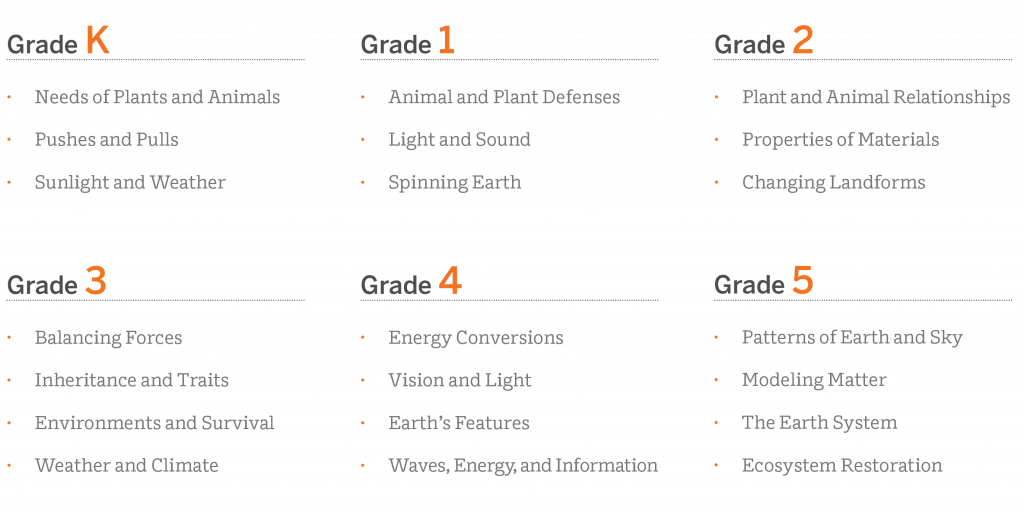
Scenes from a knowledge-based curriculum

What does knowledge-based learning look like in practice? Here’s one powerful example of how a knowledge-forward lesson helped my students succeed in practicing an important literacy skill. We were reading about Howard Carter, the British archaeologist who wanted to locate Tutenkhaman’s tomb. The lesson lends itself well to one of our state’s curriculum standards for the quarter: to make and confirm predictions about nonfiction text. Part one of the Read-Aloud ends on a cliffhanger: After a years-long search with no success, encountering dead ends and tomb robbers, Carter uncovers a hidden door marked with a royal seal.

“A prediction,” I explained, “is a careful guess about what you think might happen, based on the clues you already know. Think about what you know from the story, and predict what Carter might find behind the door.” We quickly reviewed some of the main points as I scribed on chart paper: Carter had been searching for Tutenkhaman’s tomb for six years, pharaohs were often buried with treasure or gold, the door they found was in the last possible place to look in the Valley of the Kings. I handed out papers I’d prepared with sentence frames for students to record or dictate their ideas. We hadn’t yet spent much time this year explicitly practicing prediction-making—in fact, I wondered how many of my students even knew what the word prediction meant—but I could see the wheels already turning behind most of my students’ eyes as they wiggled with excitement, envisioning gold, ghosts, King Tut’s tomb, or a pile of bones.

“Maybe nothing,” one student—a six-year-old who speaks primarily Spanish at home—told me with a shrug as I helped him write down his ideas. “Maybe the tomb robbers took it all.”

How to improve critical thinking—with knowledge

Even though my students might or might not have been familiar with the literacy skill of making and confirming predictions, the rich and meaty Read-Aloud set them up for success. It was rife with topics of interest to many a six- or seven-year-old—exploration, tomb robbers, golden treasure, mummies—which kept them engaged. And it included plenty of details through which they could actually draw a meaningful inference about what Carter might have found. I had to explain only once that a prediction should be based on information you already have—not a random guess—and every one of my eighteen students successfully generated a plausible idea.

This is the magic of a knowledge-based curriculum. It levels gaps in learning by generating a rich, shared base of content knowledge that supports the development of key literacy skills. My students were successful in plausibly guessing what might happen next in the story because they had a strong grasp of the information about Howard Carter. I might have chosen to teach an entire mini-lesson on prediction-making first and then asked my students to apply the skill to a less thoughtfully selected text, or to an independently selected book on their own, but if they weren’t already familiar with the topics it covered, my guess is that they would have been far less successful.

The curriculum standards for literacy in both the Common Core and Virginia (my school’s state) emphasize critical thinking skills and specific comprehension strategies, such as inferencing, over content knowledge. This is understandable: Students must learn to make meaning of a text in front of them, not just read the words on the page. But as Natalie Wexler puts it, “The ability to think critically…is inextricably linked to how much knowledge you have about the situation at hand” (The Knowledge Gap, 39). How could my students make a prediction about a future event in a text if they didn’t understand the textual clues they were given in the first place? Especially given that students from low-income homes are likely to possess less background knowledge about the curriculum they will encounter in school, a focus on teaching skills in isolation can contribute to a far-from-level playing field.

Teaching “comprehension skills” first and then expecting students to apply them is common practice in the method of literacy instruction frequently referred to as balanced literacy. Though the conversation about literacy is, thankfully, moving toward a research-backed approach focused on the Science of Reading, we still have a long way to go. While student teaching during my education master’s program less than three years ago, I was encouraged to teach mini-lessons on topics such as “finding the main idea” and “using topic headings to understand,” which students would then practice with independently selected texts. This approach is not supported by research as a best practice—and it assumes a shared base of cultural knowledge. In that way, it entrenches inequality by privileging students who may already possess more background knowledge, allowing our most vulnerable learners to fall even further behind.

By contrast, a knowledge-based curriculum creates that base together, giving all students a better chance at success. My own experience confirms the research. CKLA empowers my students to take ownership of their learning, expand their vocabularies, make connections, and passionately engage. I’m grateful to use an evidence-based curriculum designed to ensure that every student—including those too often left behind by our schools and other institutions—can learn to read.

More to explore

10 ideas for summer math professional learning

How many servings of coleslaw do you need for the picnic? What, on average, is the coolest time of the day? Exactly how likely is a lightning strike?

Math doesn’t stop when summer starts. This season is ripe with opportunities for challenging and stretching your math brain. It’s also the perfect time for math teachers to dive into professional learning without the time constraints of the classroom. Our recommendation? Kickstart your summer learning and set yourself up for even greater success in the new school year with our free professional development opportunities for math educators!

Check out our curated list of on-demand professional development and resources. Whether you’re seeking ways to incorporate more problem-based learning methods, wanting to learn more about implementing an instructional approach, or simply looking for fresh activities to bring to the math classroom, you’ll find a variety of options here that will fit any agenda and schedule.

Best practices and inspiration for math fluency, student agency, and more

Addressing math anxiety

Collaboration in class

More math resources

Still more to explore (as you head into fall, too) 

Understanding dyslexia and the power of early intervention

What do Albert Einstein, Whoopi Goldberg, and Percy Jackson have in common? 

A diagnosis (albeit retroactive or speculative) of dyslexia. 

Fortunately, our understanding of the condition has progressed since the days of Einstein—and it’s also more accurate than it’s portrayed in The Olympians. (Percy’s challenges in that beloved series are said to result from his brain being “hard-wired” for ancient Greek, which is…not really a thing.) 

So what do we know now? “You can screen early, and you can intervene just as early,” says Emily Lutrick, a preK–5 curriculum and dyslexia coordinator with almost 20 years of experience in education (and a guest on Science of Reading: The Podcast). 

Let’s take a look at more of what we know about what dyslexia is (and is not), what students with these challenges struggle with, and the importance—and power—of early intervention.

What is dyslexia?

Dyslexia is a neurological condition that affects the way a person’s brain processes written and spoken language—and thus their ability to read, write, and spell. It shows up as difficulties in accurate and fluent word recognition, spelling, and decoding. 

More precisely, people with dyslexia often experience challenges in phonological awareness. They may struggle to break down words into their component sounds and to recognize the relationships between letters and sounds. These difficulties can make reading and writing laborious, and can—understandably—bring down a student’s performance and confidence. It’s a lifelong condition that requires (and responds to) specific research-based interventions.

In the United States, the National Institutes of Health (NIH) estimates that about 15–20% of the population has symptoms indicating a risk of dyslexia or reading difficulty. The condition occurs across different cultures, languages, generations, and socioeconomic backgrounds.

Common misconceptions about dyslexia

Dyslexia is not a result of laziness, poor teaching, or lack of effort (or of being a demi-god).

Let’s debunk some other misconceptions

  • Dyslexia is not a visual problem that causes readers to mix up letters like “b” and “d.” People with dyslexia struggle to match letters to sounds. (Confusing letters is actually common—lots of kids do it, and then move past it, as they learn to read.)
  • We don’t have to wait for students to “fail” in order to identify signs of dyslexia. Some clues and signs may emerge even before students start school, such as a delay in learning tasks like tying shoes and telling time, or difficulties with self-expression; following directions; or learning the alphabet, rhymes, or times tables.
  • Students with dyslexia do not just need more time to learn to read. Dyslexia is not something outgrown. Students who are at risk of developing dyslexia need consistent, high-quality, research-based instruction. 
  • People with dyslexia are slower / not as smart. On the contrary, people with dyslexia are able to think as quickly and creatively as others, and are just as intelligent.
  • Students with dyslexia need to use different materials than everyone else. Students with dyslexia can actually succeed using the same texts and curricula as their peers!
  • Students with dyslexia do have the potential to read at grade level when they have access to early intervention, targeted supports, and a flexible curriculum. In fact, a study at the University of Washington showed that only eight weeks of specialized instruction strengthened neural circuitry—and improved reading performance.

Types of dyslexia

Dyslexia is also not a one-size-fits-all condition. Some common types include:

  • Phonological dyslexia: This type of dyslexia primarily affects a person’s ability to decode words and recognize the sounds associated with letters and letter combinations.
  • Surface dyslexia: Students with surface dyslexia may struggle with irregular words that do not follow common phonetic rules but be able to read more regular words accurately.
  • Rapid naming deficit: This type of dyslexia is characterized by difficulty in rapidly naming familiar objects, colors, or symbols.
  • Double deficit dyslexia: Individuals with double deficit dyslexia exhibit both phonological and rapid naming deficits.

The importance of early intervention

Early intervention is key to helping students with dyslexia reach their full potential. Research has shown that identifying and addressing the condition in the earliest possible stages of education can significantly improve student reading and writing abilities—and so much more.

Early intervention generally focuses on building foundational skills such as phonemic awareness, phonics, decoding, and reading fluency. It might include specialized instruction, assistive technology, and modifications to classroom materials and assessments. 

Intervention has an emotional and social impact, too. Dyslexia can bring down a student’s confidence and even keep them on the social sidelines. By identifying and addressing dyslexia early, teachers can provide their students with access to emotional support and opportunities to catch and keep up with their peers, which helps them remain part of the classroom community. 

Screening for dyslexia

Before intervention comes identification. That’s why mCLASS® includes built-in dyslexia screening, with reliable tools such as: 

  • Phonological Awareness Assessment: Assesses a student’s ability to recognize and manipulate sounds in words.
  • Rapid Automatized Naming (RAN) Test: Evaluates how quickly a student can name. 

And before all that, it’s important that teachers be the first eyes and ears. They may ask caregivers about any family history of reading difficulties, as the condition often has a genetic component. Lutrick watches for students who might be struggling to read fluently or think meta-cognitively about text. ”You know that they’ve got the ability but something is just blocking them,” she says

One diagnostic tack she takes: Asking them to try to decode nonsense words. “For a child who is struggling and at risk of reading difficulty, every word may be a nonsense word,” she says. “Do they have the skills necessary to break it down? If not, I would like to try to help them fill those gaps as quickly as I can.” (mCLASS also includes a Nonsense Word Fluency assessment.)

And it’s possible to intervene even before that, as podcast host Susan Lambert notes: “If we are not already doing systematic and explicit phonics in kindergarten and first grade, there is a possibility that we wouldn’t identify those kids.” 

Lutrick also points out that dyslexia can be disguised in many different ways. “Look at every student and see if there is something behind the mask,” she says. “We need to task ourselves to really look at every individual student as if each one of them is critically important, which we all believe, or we wouldn’t be in this profession.”

More to explore

Sparking literacy success in Tennessee

Meet Kaleb.

Not that long ago, he couldn’t read. And now he’s a confident, engaged reader who wants to write his own stories.

What changed? Mr. Price, a caring educator, connected with Kaleb and joined him on his literacy journey.

Like Mr. Price, you’re changing lives and creating new futures for kids every single day—and we’re here to help you do that.

A woman with light brown hair, wearing a black top, white earrings, and a necklace, smiles in front of a blue background, embodying literacy success with her confident and approachable presence.
“If a student is not proficient in reading by the end of third grade, it is highly unlikely that they will become a proficient reader. Impacting students at a much younger age, in earlier grades is where we see [the greatest] success.”

Director, Project On Track

Providing structured practice, support, and guidance that makes a difference

When students struggle with reading, their relationships with their teachers become more important than ever—and so does the support, instruction, and guidance you give them.

How can you take your students from not knowing the alphabet to decoding dozens of words in one school year? Research-backed intervention, remediation, and practice can certainly help. And so can Amplify.

A middle-aged man with short brown hair and a beard, wearing a navy suit, white shirt, and striped tie, smiles in an indoor setting, radiating confidence often seen in champions of literacy success.
“He’s able to read, and that’s something that sometimes we take for granted, but we have high illiteracy rates. He’s not going to be one of those [students]; he’s going to be a success story.”

Assistant Principal

Change lives forever with the Science of Reading

In making the shift to the Science of Reading, you can give every teacher and student what they need, and guarantee reading and literacy success. 

Think of how that would transform your school and district—and most importantly, your students’ lives.

CKLA_TNLandingPage_ELSGraphic_111422-01

Support every student with the only full Science of Reading-based literacy system

The Science of Reading tells us that learning to read is not a natural or automatic process. You see this every day—with students like Kaleb. Students with dyslexia. Students who haven’t gotten the explicit instruction, support, and guidance needed to experience real literacy success and joy.

To be powerful and effective, and to help all students achieve success, a literacy system needs to bring together assessment, curriculum, intervention, and personalized learning. And Amplify has done exactly that with the only full Science of Reading suite, made up of Amplify Core Knowledge Language ArtsmCLASS®, and Boost Reading (formerly known as Amplify Reading).

Ready to take the next step?

Get in touch with one of our program experts to request a sample or demo.

Request a sample or demo!

Welcome, Salem-Keizer School District, to the next chapter in the Science of Reading, with Amplify CKLA 3rd Edition!

Amplify Core Knowledge Language Arts® (CKLA) is approved by the Oregon Department of Education. 

Truly built on the Science of Reading, Amplify CKLA helps Oregon teachers implement the Oregon English Language Arts and Literacy Standards by translating the science of reading into manageable, engaging, and effective classroom practices. For more than a decade, Amplify CKLA has transformed classrooms nationwide with its intentional knowledge building and systematic skills instruction.

Scroll down to learn how CKLA is uniquely designed to help all your students make learning leaps in literacy.

An astronaut floats in space near the Moon, with a speech bubble displaying

Our approach

Improve outcomes with a program that’s built on a decade of research and meets the strongest ESSA Tier I criteria.

Diagram illustrating the Simple View of Reading model, depicting language comprehension and word recognition pathways converging into skilled reading, with processes becoming increasingly strategic and automatic—a foundational concept in literacy curriculum for elementary education.

Grounded in the Science of Reading

As the original Science of Reading program, Amplify CKLA puts research into action with explicit, systematic foundational skills instruction and a proven knowledge-building sequence. In collaboration with education experts and practitioners, we provide powerful resources that deliver real results.

Background knowledge drives results

Amplify CKLA follows the Core Knowledge Sequence, a content-specific, cumulative, and coherent approach to knowledge building. This approach improves reading scores and closes achievement gaps by establishing a robust knowledge base that strengthens comprehension.

In Amplify CKLA 3rd Edition, we’ve enriched our Knowledge Sequence with a wider range of perspectives and high-quality texts in new and enhanced units.

An illustrated person in a yellow shirt looks at a colorful map of Puerto Rico. Above them are two educational posters about world geography and animals, integrating elements from the k–5 literacy curriculum to enhance learning experiences.
An infographic showing the steps to pronounce

Build foundational skills for long-term success.

Students progress from simple to complex skill development starting with phonological and phonemic awareness. Instruction in Grades K–2 explicitly teaches the 150 spellings for the 44 sounds of English, following an intentional progression to ensure student success.

In our 3rd Edition, we’ve added dedicated Grade 3 foundational skills instruction that can either support core lessons or function as an intervention, based on student needs.

Daily writing deepens learning.

Grounded in the Science of Writing—the research on how kids learn to write—instruction is explicit, daily, and woven into the curriculum’s rich content. It covers both transcription (handwriting and spelling) and composition (organizing ideas into narratives) with high-impact activities like sentence-level combining and expanding, and pre-writing exercises. Writing and reading instruction are integrated so students simultaneously strengthen their communication skills, comprehension, and confidence.

A child in a green shirt smiles while writing in a notebook at a classroom desk, engaged in their k–5 literacy curriculum, with another student visible in the background.
An open laptop displaying a children's story titled

High-quality, diverse texts

Amplify CKLA students are immersed in a variety of texts—complex read-alouds, decodable chapter books, trade books, and content-rich readers—that reflect varied experiences and connect to learning goals.

Readers are 100% decodable for Grades K–2, empowering students to directly apply what they’ve learned. Novel Study units for Grades 3–5 offer a mix of contemporary and classic literature, and Culminating Research Units in every grade include a set of authentic texts and trade books.

Reach all learners with differentiated support.

Scaffolds and challenges, developed in collaboration with education experts, make content accessible to every student—including multilingual and English learners. With strategies embedded right in the curriculum, teachers can deliver in-the-moment, individualized instruction to meet diverse student needs.

For a dedicated English language development program aligned to Amplify CKLA, explore Language Studio.

Children sit on the floor in a classroom, some raising their hands, smiling and engaged. The lively atmosphere reflects the effectiveness of the k–5 literacy curriculum being implemented.

What’s included with Amplify CKLA

The comprehensive resources in Amplify CKLA 3rd Edition support effective literacy instruction in every classroom.

Image of a laptop displaying an assessment report, surrounded by books about astronomy, an illustration of the moon, and a
Various educational materials, including textbooks, workbooks, a picture book, documents, and a laptop displaying a slide titled

Easy-to-use teacher materials

Amplify CKLA teachers are empowered to deliver effective instruction with the following print and digital resources:

  • Teacher Guides (K–5)
  • Assessment Guides (K–5)
  • Authentic texts and trade books (K–5)
  • Knowledge Image Cards (K–2)
  • Knowledge Flip Books (K–2, digital)
  • Ready-made and customizable Presentation Screens (K–5, digital)
  • Remediation and intervention resources (K–5)
  • On-demand professional development (K–5, digital)

Immersive Amplify CKLA student resources

Amplify CKLA students stay engaged with the following print and digital resources:

  • Decodable readers (K–2)
  • Student Readers and novels (3–5)
  • Student Activity Books (K–5)
  • Poet’s Journal (3–5)
  • eReaders (K–5, digital)
  • Sound Library featuring articulation videos and songs (K–2, digital)
  • Skill-building practice games (K–5)
An open laptop displaying a poem and a person, alongside two educational booklets and a green butterfly, depicts the essence of a rich core knowledge language arts curriculum. The background includes simple graphic elements enhancing the scene.
A collection of six book covers including

Rich literary experiences

All the high-quality, diverse texts in Amplify CKLA connect to the curriculum, fostering your students’ curiosity and helping them learn to read with confidence.

  • Trade Book Collections (K–5) inspire student research in each grade’s Culminating Research Unit.
  • Classic and contemporary literature (3–5) delight students in Novel Study Units.
  • Increasingly complex Student Readers (K–5) develop students’ literacy across grades.

Hands-on phonics materials

Multisensory phonics and foundational skills resources engage students with fun, varied approaches that promote mastery and build independence.

  • Chaining Folders and Small Letter Cards (K)
  • Read-Aloud Big Books (K–1)
  • Large Letter Cards (K–2)
  • Sound Cards (K–2)
  • Image Cards (K–3)
  • Blending Picture Cards (K)
  • Consonant and Vowel Code Posters and Spelling Cards (1–2)
  • Sound Library (K–2, digital)
Image includes various vowel sounds and combinations on flashcards and worksheets, along with a playful illustrated mammal, all part of a comprehensive literacy curriculum for elementary students.
A laptop displays a student screen showing a quiz question about word usage, part of a literacy curriculum for elementary students. Behind it, a computer monitor shows an assessment report interface. Abstract decorative elements are in the background.

All-in-one digital platform

Our comprehensive platform simplifies your day-to-day tasks and makes it easier to plan and deliver lessons.

  • Ready-made and customizable Presentation Screens
  • Auto-scored digital assessments
  • Standards-based reporting
  • Assignable skill-building games
  • Sound Library
  • eReaders

Professional development

Move beyond traditional program training with Amplify’s digital PD Library, designed to fully support your shift to the Science of Reading and Amplify CKLA. Deepen your understanding with:

  • Program and planning resources
  • Model lesson videos from real classrooms
  • Guidance on using Amplify’s literacy suite to provide multi-tiered support
Two women are seated at a table with papers and a laptop. One woman is working on the literacy curriculum for elementary grades, while the other is smiling.
“Teachers love the ease of implementing the program, and students have fun while learning. Growth is evident in our data, and we have the support of Amplify experts who are available to answer questions and provide top-notch professional development.”

Bridget Vaughan, District K–8 Coordinator of ELA and Literacy

Quincy Public Schools, Massachusetts

Language Studio: Multilingual and English language learner support

Language Studio is Amplify CKLA’s dedicated K–5 program for multilingual and English language learners. Through daily 30-minute lessons, it strengthens reading, writing, speaking, and listening skills while reinforcing core instruction. This tailored support empowers students to confidently access grade-level content as they develop academic English.

A young girl immerses herself in the science of reading at a classroom desk, surrounded by peers and diverse educational materials.

Amplify CKLA serves

150,000+

Classrooms

4,000,000+

Students

50

U.S. States and D.C.

Amplify Caminos program overview

¡El futuro es bilingüe! | The future is bilingual!

Amplify Caminos is a research-based core curriculum essential for Spanish literacy and grounded in the Science of Reading.

View our Caminos Program Guide to find our approach to foundational skills by year, skills practice with student readers and writing, and how Caminos supports teachers meeting the needs of all students with embedded differentiation.

Amplify Caminos offers a robust and authentic elementary Spanish language arts program for grades K–5 that promotes
biliteracy and helps teachers inspire students as they become confident readers, writers, and thinkers in Spanish.

Amplify Caminos offers a robust and authentic elementary Spanish language arts program for grades K–5 that promotes
biliteracy and helps teachers inspire students as they become confident readers, writers, and thinkers in Spanish.

Ilustración de un niño alegre participando en el programa de lectura de CKLA, jugando fútbol junto a un libro abierto, con una tortuga, un loro y un exuberante paisaje tropical rodeándolos. La palabra "

Using the program’s two strands, Caminos Conocimiento and Caminos Lectoescritura, teachers develop student
comprehension in Spanish through a program rich in background knowledge and foundational skills activities. The texts students encounter include authentic Spanish literature that honor Spanish language development and build diverse content knowledge in social studies, science, literature, and the arts.

Amplify Caminos is designed to support a variety of bilingual and dual language instructional models to meet your student’s biliteracy needs. Combined with its English language partner, Amplify Core Knowledge Language Arts (CKLA), Amplify Caminos provides a comprehensive biliteracy solution.

Illustration of the amplify caminos language comprehension model, featuring step-by-step progression from simple word recognition to skilled reading, with educational graphics and text excerpts.

Amplify Caminos delivers rich, authentic experiences.

With a robust digital experience and expanding library of online materials, Amplify Caminos provides everything needed to support, challenge, and engage your students. From digital Teacher Guides to lesson projectables, we provide all the tools needed to successfully deliver every lesson.

How Amplify Caminos works with Amplify CKLA

Through direct instruction, both Amplify Caminos and Amplify CKLA develop reading, writing, speaking, and listening skills in their respective languages. Together, the programs empower educators to effectively foster biliteracy with:

  • Intentional knowledge building that connects topics throughout the program.
  • Increased metalinguistic awareness from students exploring the similarities and differences in each language while strengthening their knowledge across both.
  • Equitable instruction using high-quality Spanish and English decodable readers that provide students with opportunities to apply skills learned, and foster each students’ growing competency in reading.
“There were other programs that claimed to be [based on the] Science of Reading, but no other vendor provided the suite of products together. We did not want to be picking from here, picking from there. [Amplify’s literacy suite] met our needs, because it aligned and provided us the best suite of products, hands down.”

Nicole Peterson, Principal, Midway Middle School

Sampson County Schools, North Carolina

Demo Access

Explore the CKLA Teacher Digital Resources

First, watch the quick navigation video to the right. Then, follow the directions below.

  • Go to: learning.amplify.com or click the Access CKLA Teacher Digital button below
  • Select Log in with Amplify.
  • Enter this username: t1.salem_keizer_3e_cam@demo.tryamplify.net
  • Enter this password: Amplify1-salem_keizer_3e_cam
  • Click the CKLA button
  • Select your desired grade level from the Program drop down

Follow the directions below to access the Student Resource Site:

  • Go to: learning.amplify.com or click the Access CKLA Student Digital button below
  • Select Log in with Amplify.
  • Enter this username: s1.salem_keizer_3e_cam@demo.tryamplify.net
  • Enter this password: Amplify1-salem_keizer_3e_cam
  • From the main page, click the backpack in the top right corner.
  • Click on the grade level to select your desired grade.

Welcome, New Mexico educators!

Teaching is always challenging, often exhausting, and sometimes exhilarating. At Amplify, we want New Mexico teachers to experience more exhilaration—more great classroom moments, more great days when you’re reminded why you became a teacher. We create high-quality programs that make it easier for you to teach inspiring, impactful lessons that celebrate and develop the brilliance of your students.

Thank you for taking the time to review Amplify’s high quality programs, and thank you for what you do every day!

With great respect,

Your New Mexico Amplify team

Three students sit at a table in a classroom, smiling and looking at a laptop screen with notebooks open in front of them.
Two students wearing safety goggles conduct a science experiment together, pouring liquid between plastic cups over a blue tray on a classroom table.

Amplify Science

Amplify is proud to announce that Amplify Science K–8 has been fully adopted by New Mexico Public Education Department (NMPED) and we’re excited to share it with you! Amplify Science empowers New Mexico students to think, read, and write like real scientists and engineers. Amplify Science K–8 received all-green ratings in EdReports’ review of national science curricula. Read the review on EdReports.

Amplify Desmos Math

Amplify Desmos Math is a new, curiosity-driven program for grades K–12 that builds lifelong math proficiency. Through a structured approach to problem-based learning, Amplify Desmos Math helps teachers create a collaborative math community with students at its center.

Two girls sit at a table with open books, one making hand gestures while smiling, the other looking at her and giving a thumbs up. Behind them are shelves filled with books, capturing the lively atmosphere of a math classroom.
A laptop displays a math subtraction activity with a frog, while two Amplify Desmos Math teacher edition books are shown in the background.

mCLASS Math

Expect more from your assessments with mCLASS® Math, a brand-new benchmarking and progress-monitoring assessment system.

Amplify Tutoring

Amplify Tutoring is an ESSER and Title funded, high-impact tutoring program that complements the efforts of K–6 students, educators and families in building reading proficiency and confidence.

Explore ways to bring Amplify Tutoring to your students today!

An adult and a child wearing headphones smile and give each other a high five while sitting at a table with a laptop.
Illustration of a bear on a rock overlooking a campsite in a valley with mountains, trees, tents, and people; includes an EdReports review badge in the lower right corner.

Amplify CKLA PreK–5

Using a fundamentally different approach to language arts, Amplify Core Knowledge Language Arts® (CKLA) is a PreK–5 program that sequences deep content knowledge with research-based foundational skills. Amplify CKLA met expectations and received all-green ratings from EdReports. Read the review on EdReports.

Amplify ELA 6–8

Amplify ELA is the only program truly designed to support middle school students at this critical developmental moment. We ensure that skills are taught, standards are covered, and the test is prepped–all while bringing texts to life and differentiating instruction. Read the review on EdReports.

A girl, an Indiana teacher's inspiration, is reading "Summer of the Mariposas" with an EdReports sticker beside her, labeled "Read the Report, Review Year 2020," capturing a moment that echoes through Indiana elementary schools.
Three people stand discussing ideas, holding a tablet and a laptop, in front of a whiteboard covered with colorful sticky notes.

High-Quality professional development

Amplify’s South Central professional development (PD) team provides a variety of learning experience over multiple years to incrementally develop and apply the knowledge and skills needed for effective and self-sustaining implementation. All PD is tailored and is supported by a team of former educators and leaders.

Contact us

Support is always available. Our team is dedicated to supporting teachers and districts across New Mexico and can be reached at any time by email or phone.

Smiling woman with short blonde hair wearing a dark top, posed against a light-colored, textured background.

Katie Gentry-Funk

Senior Account Executive
Districts over 2,100 students
(505) 301-7382
kgentry-funk@amplify.com

A woman with long blonde hair, wearing a black and white checkered top, smiling in front of a plain light background.

Dana Blumberg

Account Executive
Districts under 2,100 students &
Archdiocese of Santa Fe schools
(847) 528-1822
dblumberg@amplify.com

Welcome, Tigard-Tualatin School District, to the next chapter in the Science of Reading, with Amplify CKLA 3rd Edition!

Amplify Core Knowledge Language Arts® (CKLA) is approved by the Oregon Department of Education. 

Truly built on the Science of Reading, Amplify CKLA helps Oregon teachers implement the Oregon English Language Arts and Literacy Standards by translating the science of reading into manageable, engaging, and effective classroom practices. For more than a decade, Amplify CKLA has transformed classrooms nationwide with its intentional knowledge building and systematic skills instruction.

Scroll down to learn how CKLA is uniquely designed to help all your students make learning leaps in literacy.

An astronaut floats in space near the Moon, with a speech bubble displaying

Our approach

Improve outcomes with a program that’s built on a decade of research and meets the strongest ESSA Tier I criteria.

Diagram illustrating the Simple View of Reading model, depicting language comprehension and word recognition pathways converging into skilled reading, with processes becoming increasingly strategic and automatic—a foundational concept in literacy curriculum for elementary education.

Grounded in the Science of Reading

As the original Science of Reading program, Amplify CKLA puts research into action with explicit, systematic foundational skills instruction and a proven knowledge-building sequence. In collaboration with education experts and practitioners, we provide powerful resources that deliver real results.

Background knowledge drives results

Amplify CKLA follows the Core Knowledge Sequence, a content-specific, cumulative, and coherent approach to knowledge building. This approach improves reading scores and closes achievement gaps by establishing a robust knowledge base that strengthens comprehension.

In Amplify CKLA 3rd Edition, we’ve enriched our Knowledge Sequence with a wider range of perspectives and high-quality texts in new and enhanced units.

An illustrated person in a yellow shirt looks at a colorful map of Puerto Rico. Above them are two educational posters about world geography and animals, integrating elements from the k–5 literacy curriculum to enhance learning experiences.
An infographic showing the steps to pronounce

Build foundational skills for long-term success.

Students progress from simple to complex skill development starting with phonological and phonemic awareness. Instruction in Grades K–2 explicitly teaches the 150 spellings for the 44 sounds of English, following an intentional progression to ensure student success.

In our 3rd Edition, we’ve added dedicated Grade 3 foundational skills instruction that can either support core lessons or function as an intervention, based on student needs.

Daily writing deepens learning.

Grounded in the Science of Writing—the research on how kids learn to write—instruction is explicit, daily, and woven into the curriculum’s rich content. It covers both transcription (handwriting and spelling) and composition (organizing ideas into narratives) with high-impact activities like sentence-level combining and expanding, and pre-writing exercises. Writing and reading instruction are integrated so students simultaneously strengthen their communication skills, comprehension, and confidence.

A child in a green shirt smiles while writing in a notebook at a classroom desk, engaged in their k–5 literacy curriculum, with another student visible in the background.
An open laptop displaying a children's story titled

High-quality, diverse texts

Amplify CKLA students are immersed in a variety of texts—complex read-alouds, decodable chapter books, trade books, and content-rich readers—that reflect varied experiences and connect to learning goals.

Readers are 100% decodable for Grades K–2, empowering students to directly apply what they’ve learned. Novel Study units for Grades 3–5 offer a mix of contemporary and classic literature, and Culminating Research Units in every grade include a set of authentic texts and trade books.

Reach all learners with differentiated support.

Scaffolds and challenges, developed in collaboration with education experts, make content accessible to every student—including multilingual and English learners. With strategies embedded right in the curriculum, teachers can deliver in-the-moment, individualized instruction to meet diverse student needs.

For a dedicated English language development program aligned to Amplify CKLA, explore Language Studio.

Children sit on the floor in a classroom, some raising their hands, smiling and engaged. The lively atmosphere reflects the effectiveness of the k–5 literacy curriculum being implemented.

What’s included with Amplify CKLA

The comprehensive resources in Amplify CKLA 3rd Edition support effective literacy instruction in every classroom.

Image of a laptop displaying an assessment report, surrounded by books about astronomy, an illustration of the moon, and a
Various educational materials, including textbooks, workbooks, a picture book, documents, and a laptop displaying a slide titled

Easy-to-use teacher materials

Amplify CKLA teachers are empowered to deliver effective instruction with the following print and digital resources:

  • Teacher Guides (K–5)
  • Assessment Guides (K–5)
  • Authentic texts and trade books (K–5)
  • Knowledge Image Cards (K–2)
  • Knowledge Flip Books (K–2, digital)
  • Ready-made and customizable Presentation Screens (K–5, digital)
  • Remediation and intervention resources (K–5)
  • On-demand professional development (K–5, digital)

Immersive Amplify CKLA student resources

Amplify CKLA students stay engaged with the following print and digital resources:

  • Decodable readers (K–2)
  • Student Readers and novels (3–5)
  • Student Activity Books (K–5)
  • Poet’s Journal (3–5)
  • eReaders (K–5, digital)
  • Sound Library featuring articulation videos and songs (K–2, digital)
  • Skill-building practice games (K–5)
An open laptop displaying a poem and a person, alongside two educational booklets and a green butterfly, depicts the essence of a rich core knowledge language arts curriculum. The background includes simple graphic elements enhancing the scene.
A collection of six book covers including

Rich literary experiences

All the high-quality, diverse texts in Amplify CKLA connect to the curriculum, fostering your students’ curiosity and helping them learn to read with confidence.

  • Trade Book Collections (K–5) inspire student research in each grade’s Culminating Research Unit.
  • Classic and contemporary literature (3–5) delight students in Novel Study Units.
  • Increasingly complex Student Readers (K–5) develop students’ literacy across grades.

Hands-on phonics materials

Multisensory phonics and foundational skills resources engage students with fun, varied approaches that promote mastery and build independence.

  • Chaining Folders and Small Letter Cards (K)
  • Read-Aloud Big Books (K–1)
  • Large Letter Cards (K–2)
  • Sound Cards (K–2)
  • Image Cards (K–3)
  • Blending Picture Cards (K)
  • Consonant and Vowel Code Posters and Spelling Cards (1–2)
  • Sound Library (K–2, digital)
Image includes various vowel sounds and combinations on flashcards and worksheets, along with a playful illustrated mammal, all part of a comprehensive literacy curriculum for elementary students.
A laptop displays a student screen showing a quiz question about word usage, part of a literacy curriculum for elementary students. Behind it, a computer monitor shows an assessment report interface. Abstract decorative elements are in the background.

All-in-one digital platform

Our comprehensive platform simplifies your day-to-day tasks and makes it easier to plan and deliver lessons.

  • Ready-made and customizable Presentation Screens
  • Auto-scored digital assessments
  • Standards-based reporting
  • Assignable skill-building games
  • Sound Library
  • eReaders

Professional development

Move beyond traditional program training with Amplify’s digital PD Library, designed to fully support your shift to the Science of Reading and Amplify CKLA. Deepen your understanding with:

  • Program and planning resources
  • Model lesson videos from real classrooms
  • Guidance on using Amplify’s literacy suite to provide multi-tiered support
Two women are seated at a table with papers and a laptop. One woman is working on the literacy curriculum for elementary grades, while the other is smiling.
“Teachers love the ease of implementing the program, and students have fun while learning. Growth is evident in our data, and we have the support of Amplify experts who are available to answer questions and provide top-notch professional development.”

Bridget Vaughan, District K–8 Coordinator of ELA and Literacy

Quincy Public Schools, Massachusetts

Language Studio: Multilingual and English language learner support

Language Studio is Amplify CKLA’s dedicated K–5 program for multilingual and English language learners. Through daily 30-minute lessons, it strengthens reading, writing, speaking, and listening skills while reinforcing core instruction. This tailored support empowers students to confidently access grade-level content as they develop academic English.

A young girl immerses herself in the science of reading at a classroom desk, surrounded by peers and diverse educational materials.

Amplify CKLA serves

150,000+

Classrooms

4,000,000+

Students

50

U.S. States and D.C.

Amplify Caminos program overview

¡El futuro es bilingüe! | The future is bilingual!

Amplify Caminos is a research-based core curriculum essential for Spanish literacy and grounded in the Science of Reading.

View our Caminos Program Guide to find our approach to foundational skills by year, skills practice with student readers and writing, and how Caminos supports teachers meeting the needs of all students with embedded differentiation.

Amplify Caminos offers a robust and authentic elementary Spanish language arts program for grades K–5 that promotes
biliteracy and helps teachers inspire students as they become confident readers, writers, and thinkers in Spanish.

Using the program’s two strands, Caminos Conocimiento and Caminos Lectoescritura, teachers develop student
comprehension in Spanish through a program rich in background knowledge and foundational skills activities. The texts students encounter include authentic Spanish literature that honor Spanish language development and build diverse content knowledge in social studies, science, literature, and the arts.

Amplify Caminos is designed to support a variety of bilingual and dual language instructional models to meet your student’s biliteracy needs. Combined with its English language partner, Amplify Core Knowledge Language Arts (CKLA), Amplify Caminos provides a comprehensive biliteracy solution.

Ilustración de un niño alegre participando en el programa de lectura de CKLA, jugando fútbol junto a un libro abierto, con una tortuga, un loro y un exuberante paisaje tropical rodeándolos. La palabra "
Illustration of the amplify caminos language comprehension model, featuring step-by-step progression from simple word recognition to skilled reading, with educational graphics and text excerpts.

Amplify Caminos delivers rich, authentic experiences.

With a robust digital experience and expanding library of online materials, Amplify Caminos provides everything needed to support, challenge, and engage your students. From digital Teacher Guides to lesson projectables, we provide all the tools needed to successfully deliver every lesson.

How Amplify Caminos works with Amplify CKLA

Through direct instruction, both Amplify Caminos and Amplify CKLA develop reading, writing, speaking, and listening skills in their respective languages. Together, the programs empower educators to effectively foster biliteracy with:

  • Intentional knowledge building that connects topics throughout the program.
  • Increased metalinguistic awareness from students exploring the similarities and differences in each language while strengthening their knowledge across both.
  • Equitable instruction using high-quality Spanish and English decodable readers that provide students with opportunities to apply skills learned, and foster each students’ growing competency in reading.
“There were other programs that claimed to be [based on the] Science of Reading, but no other vendor provided the suite of products together. We did not want to be picking from here, picking from there. [Amplify’s literacy suite] met our needs, because it aligned and provided us the best suite of products, hands down.”

Nicole Peterson, Principal, Midway Middle School

Sampson County Schools, North Carolina

Demo Access

Explore the CKLA Teacher Digital Resources

First, watch the quick navigation video to the right. Then, follow the directions below.

  • Go to: learning.amplify.com or click the Access CKLA Teacher Digital button below
  • Select Log in with Amplify.
  • Enter this username: t1.ttsd_ckla_caminos@demo.tryamplify.net
  • Enter this password: Amplify1-ttsd_ckla_caminos
  • Click the CKLA button
  • Select your desired grade level from the Program drop down

Follow the directions below to access the Student Resource Site:

  • Go to: learning.amplify.com or click the Access CKLA Student Digital button below
  • Select Log in with Amplify.
  • Enter this username: s1.ttsd_ckla_caminos@demo.tryamplify.net
  • Enter this password: Amplify1-ttsd_ckla_caminos
  • From the main page, click the backpack in the top right corner.
  • Click on the grade level to select your desired grade.

Welcome, K–5 Atlanta Public Schools!

To view this protected page, enter the password below:


S2-05: Moving students forward with project-based learning

A promotional image for the podcast "Science Connections" featuring guest Janis Lodge and the topic "Moving students forward with project-based learning." Season 2, Episode 5.

In this episode, Eric Cross sits with K–5 educator Janis Lodge to chat about building on her own science curriculum to create meaningful project-based learning experiences. Janis shares her work teaching Gifted and Talented Education (GATE), and how to use those practices to help accelerate the learning of all students. Eric and Janis also talk about making time for science within K–5 classrooms. Explore more from Science Connections by visiting our main page.

DOWNLOAD TRANSCRIPT

Janis Lodge (00:00):
To me, the reward of having those kids feel like they accomplished something and the way that they can take ownership of it and go in so many different directions, I cannot take that away from them. That’s such an opportunity that if I have the means to do it, I have to just take it and run with it.

Eric Cross (00:18):
Welcome to Science Connections. I’m your host, Eric Cross. My guest today is Janis Lodge. Janis is a third-grade teacher in Orange County, California, with a specialization in gifted and talented education. Recently, Janis was awarded the Orange County Council for the Gifted and Talented Education Classroom grant. This grant funds a project that provides an extension to her third-grade science unit about environments and survival. Through this project, students will think like a biomimicry engineer as they design a robot that is inspired by an innovation found in nature. In this episode, we discuss how she uses interdisciplinary teaching practices to make time for science learning; why gifted and talented education strategies can benefit all students; and her process for creating a problem-based lesson that ultimately earned her a grant for her classroom. And now, please enjoy my conversation with Janis Lodge. One, welcome! Thanks for being here.

Janis Lodge (01:14):
Of course, I am happy to do it. I’m excited for the opportunity.

Eric Cross (01:17):
Of course! Yeah. Elementary school teachers in science, I feel like there’s so many things to have conversations about. And some of the things that you’ve really focused on, I think, are, really, really important. But I wanna start off with your journey of you becoming a teacher in the classroom. And so, would you kind of give your background, your origin story? How did you end up as a third-grade teacher?

Janis Lodge (01:37):
Well, my story is definitely not a traditional story. Before I was a teacher, I was actually living in Maui, Hawaii. I moved there right after college. I went to Chico State in Northern California. And I got a degree in graphic design. And after I graduated, well, I should give a little bit of a backstory. My last summer before graduating, I spent the whole summer in Maui and I just fell in love with it. So when I graduated, I decided instead of applying for jobs in Northern California, I’m just gonna put some resumes out in Maui and see if I can get a job. And I did. I ended up getting a job doing graphic design and marketing for a kite surf company out there. And I ended up just staying for seven years on the island. And after about seven years, I kind of got a little bit of island fever and decided I wanted to come back to California. I wasn’t sure exactly what I wanted to do, but I just had this calling that I need to do something a little more fulfilling with my life. And I started thinking about different ideas and dreams I had. And I actually started thinking about when I was younger, right? I had this dream. If you were to ask me when I was 10 years old what I wanted to be when I grow up, it would be elementary school teacher.

Eric Cross (02:48):
Really?

Janis Lodge (02:48):
Believe it or not. When I was younger, I transformed my bedroom into a classroom. My stuffed animals were my students. I just thought I’m gonna be the next best teacher ever. And you know, as I went through life and kind of went in different directions, I kind of lost sight of that dream a little bit. But for some reason, when I decided to change careers, I just remembered that. And so I just decided to go get my teaching credential and see if it worked out. And it was probably the best decision I made. I feel like everything just fell perfectly into place. I ended up getting a job at an amazing school, and now, five years later, I’m a third grade teacher.

Eric Cross (03:28):
So one of the questions I have to ask, and talking to elementary school teachers, this comes up a lot: How do you make time for science as an elementary school teacher who’s teaching everything? And let me kind of premise this with, at least for those of us in California, and I’m sure the rest of the states too, but we know this; There’s kind of this pressure with pacing and then even, depending on what school you’re at, math and English tend to get the bulk of things. And maybe there’s this perception also of like, well, I gotta teach math and English, and sometimes science gets put to the back burner for different reasons.

Janis Lodge (03:57):
Well, you’re exactly right. The beginning of the year, we were provided with a pacing from the district. And you know, they try to keep us on track, saying, “You should be starting Unit 2 at this time.” But other than that, there’s really no specific guidelines of how many days we’re supposed to be teaching or for how long. But one kind of secret that I’ve discovered is that I can weave science into the other subjects, specifically with language arts. So quite often what I do is I take a look at the language arts standard, and if it’s identifying the key details and the main idea, well I can do that with the science books used from the curriculum. So I’ll just pull those readers and we’ll do the exact same skill, start with the same standard, but we’ll use the content from science. By doing that, we call that kind of like interdisciplinary study. And the students really enjoy that more, too, because they’re using the same skills but they’re diving deeper into the content.

Eric Cross (04:54):
Right.

Janis Lodge (04:55):
And so also that helps build the background knowledge. So then when it comes to time where, if I want to do a science lab or a science investigation, now they already have that background knowledge ’cause we already dove deep into the reading and they can apply that pretty quickly right away into their lab or whatever activity they’re doing.

Eric Cross (05:12):
Can you give an example maybe of how you might pull out something that might be a skill that you’re trying to develop, maybe in an English content, but you would pull that out in a science lesson, maybe? What would you do?

Janis Lodge (05:25):
We’re actually doing that right now. So we’re in our second unit of science and they’re studying inheritance and traits and they’re looking at different organisms to see how they have adaptations to help them survive in their environment. So coincidentally part of the literacy skills is to look at multiple sources, do research, and summarize and make analysis of what they’re reading. And so we have different varied resources. I have websites; I have books, ebooks, videos, and pictures. And they’re choosing which four sources they want to use. And then, then they’re coming up with a summary at the end and then putting together a Google Slides presentation based on whatever organism that they chose.

Eric Cross (06:05):
Did you have a science background before becoming an elementary school teacher?

Janis Lodge (06:11):
Um, none. Besides what I, you know, took in high school and college.

Eric Cross (06:16):
Did you find it easy to kind of lean into the science, or was it something you just kind of jumped into and said, “All right, I’m gonna get after it”?

Janis Lodge (06:23):
What’s interesting is if, you know, throughout my education, my favorite subjects were English and reading and writing and art. And quite honestly, science wasn’t my favorite subject. But I think because of that, that inspires me to come up with creative ways of presenting the information to them and making it exciting and engaging for them, because I don’t want them to feel that way. I want them to be excited about all subjects. And I think that’s the beauty of combining the different subjects like I mentioned before. Like I say, you know, “What would a scholar do? Think like a wildlife biologist. And like with my project, think like a biomimicry engineer.” And so it kind of shifts their thinking. Like, it’s not just, “Oh, we have to study science.” It’s like, “No, you are the scientist; you are a meteorologist; or you are an author. How would an author write about this? How would an illustrator capture this in a photo or a comic strip?” And so, when you really combine those disciplines, you can take it to another level. So even if science isn’t their favorite subject, like maybe it wasn’t for me growing up, they can still take something they’re passionate about and apply the science content to it and they really resonate with them.

Eric Cross (07:37):
You leaned into your strengths. Which are more like, coming into it, you had all these kind of creative strengths. You have that background as a graphics designer. You were into the arts. But then with those strengths, did that kinda give you more confidence to dive into the science work, because you approached it from your assets that you were already coming to the table with?

Janis Lodge (07:55):
Yeah.You said it perfectly. If you look at it from a different lens, there’s all these different ways you can approach science.

Eric Cross (07:59):
I find it in my own science class, too. We’re all teaching the same standards. But how I approach it is through Eric Cross’s kind of personality and understanding and my angle, and another teacher might do it a different way. But we’re all leading to the same destination.

Janis Lodge (08:14):
Exactly.

Eric Cross (08:15):
That kind of leads me to my next question, and this is having to do with the project that you just alluded to. The biomimicry project. So you did a biomimicry project. Would you consider that like a project based-learning assignment?

Janis Lodge (08:26):
Well, this will be the third year that I’ve taught this unit. And when I wrapped it up last year, it’s through the Amplify Science program, and they do a wonderful job of having a lot of investigations and really thinking like a biomimicry engineer. But the final part of the unit was to design a robot inspired by a giraffe, to eliminate invasive plants in a particular environment. And the project part of it at the end was to create a model using Popsicle sticks and pipe cleaners. And then the other part of it was a digital simulation where they would put in different shape structures of teeth, and kind of reconfigure the shape of the mouth. And then they’d put in what they think is effective, and then the computer would say, oh, you’re 98% successful or 70% successful. And I remember at the end of it the students were like, “OK, well when do we make the robots?” And I thought, “Well, we’re just doing the simulation, or we’re just doing this model out of Popsicle sticks; we’re not actually gonna make a robot.” And they just seemed so disappointed. And that’s kind of how the wheels started turning my head like, “Well, what if they actually could make a robot? The only thing stopping me is I don’t have the materials to do it.” So, shortly after that unit wrapped up, coincidentally I saw the email about this grant opportunity that was being offered through the Orange County Council for Gifted Education. And they said, If you have a project that you wanna get funded that would promote GATE strategies within the classroom, then you can submit this proposal. So that’s how the ball got rolling for that proposal. And I researched different robotics kits and different companies and I found one that was really user-friendly for third graders, and not so difficult for me to learn as well.

Eric Cross (10:10):
You’re a risk taker. Like, I’m already seeing this as I’m talking to you. Is that just who you are or do you have a network? Like what keeps you taking these risks?

Janis Lodge (10:18):
I don’t really consider it a risk, because it’s exciting for me. Like I said, I don’t know that much about robotics, but the idea of learning more and then teaching that to my students is exciting. And you know, there was a little bit of risk ’cause I’m deviating a little bit from the curriculum, from the standard lesson, but to me, the reward of having those kids feel like they accomplished something, and the way that they can take ownership of it and go in so many different directions, and on top of that, develop coding skills and computer science skills and robotic skills, to me it was just like I cannot take that away from them. That’s such an opportunity that if I have the means to do it, I have to just take it and run with it. So I think just being inspired by the potential outcomes of what could happen is what made me take that risk.

Eric Cross (11:05):
Did you just kind of create this from scratch? Did you work with a team of people? How did you come to the point where you were ready to present this for the grant?

Janis Lodge (11:12):
Pretty much from scratch. Like I said, the Amplify unit, it does teach them about robotics that were inspired by nature. So some of the materials that they read, and there’s some videos that show really great examples. There’s like a robotic arm that was inspired by an elephant trunk. There’s a book that shows what this field is, biomimicry engineer, they actually show like what they do in that field. And I thought this is a perfect way to apply it because the curriculum’s already pretty much set it up for me; now I just have to add this one final component to it. And essentially it becomes project-based learning at that point, because they’re taking their knowledge and their skills that they’ve learned up to that point. Even the unit that we’re doing doing right now is building up to it. So it’s kind of that final—instead of giving them a test at the end and saying, “OK, tell me what you learned about inheritance and traits and environments,” they can actually take that knowledge and apply it to an innovation or creation that comes out of their own mind, which is so much more powerful.

Eric Cross (12:11):
Do they connect to any other learning goals as they’re doing these projects?

Janis Lodge (12:15):
Well, I think first and foremost, the 21st century skills that from day one I tell them, the four Cs: collaboration, creativity, communication, and critical thinking. All of those are woven in through this lesson. From the beginning, we talked about the whole engineering design process. So from the beginning, they start with a question and oftentimes that actually can be the hardest for them to think about, “What’s a scientific question or a problem that I wanna solve?” If they’re passionate about, maybe, a sport or the environment or something within their school, I go, “There it is. OK, that’s the problem. How can you design something inspired by nature to solve that problem?” And then, from there they go into the planning and the designing and the testing and then the improving. So going through that engineering design process, I think, is what really makes them feel like they are the engineer going through this. And they can make mistakes. They can take risks. A lot of my students I’ve found are afraid to take risks. They wanna make sure they succeed. And they need that challenge to know that if they do fail, that’s OK. We can just revisit this. We can test it. We can look at it in a different way.

Eric Cross (13:27):
You maybe wonder about, how do you assess something like this?

Janis Lodge (13:30):
I think that’s where all those stages along the way are important. Because I wanna make sure that they have a plan and that it’s based on the knowledge that they’ve gained in the unit. I think one of the other things about project-based learning is the final product of how they demonstrate their mastery. And in my classroom I oftentimes give them a choice of how they’re gonna present that to me. So maybe they’re going to write it out like an essay. Maybe they’re gonna create a Google slide. Maybe they’re gonna make a video. Maybe they’re going to—obviously in this part they will have the model, but they’ll have to have some way to explain it to me. And I think giving them that choice gives them the opportunity to show it in the way that’s meaningful to them.

Eric Cross (14:14):
And are you using like a rubric when you’re grading these assignments? Or, how do you actually grade it?

Janis Lodge (14:20):
Yes. So we have a rubric that’s provided to us for the written component that all the students will do at the end. But I can take that same rubric and see if they’ve applied that to the project. So even the verbiage wouldn’t really need to change. I think it’s still important that the students are able to demonstrate this in written form and so all of them will still complete that written component, but to also give them the opportunity to show that in the modality of their choice. I think is really important too.

Eric Cross (14:48):
Right. And you have some students that feel much more comfortable being able to present orally versus—

Janis Lodge (14:53):
Exactly.

Eric Cross (14:53):
—versus writing versus maybe doing a video. I mean, we see that in middle school and in high school too. Students show their knowledge or their understanding of a topic depending on the medium in different ways, and some better than others. Some may find that they can communicate it a lot better orally, but when pen goes to paper or fingers go to keyboard, you might grade it completely different, ’cause they’re not able to transfer what’s in their mind into writing. And the way you’re doing it, and giving that student choice, they probably have so much more buy-in, I’d imagine, because they get to pick what they get to do.

Janis Lodge (15:21):
Right.

Eric Cross (15:22):
You said something earlier and I wanna come back to it. So you mentioned GATE, and GATE is not something that I hear a lot in my world, but it was something I heard a lot when I was in school. There were kind of all of these perceptions and ideas about GATE. You’re a GATE teacher, correct?

Janis Lodge (15:38):
Right.

Eric Cross (15:39):
What is GATE, and what is it like being a GATE teacher? What are the misconceptions, if any, that you might have heard or come across?

Janis Lodge (15:46):
Well, so GATE stands for Gifted and Talented Education. And first and foremost, I think a misconception is that we’re just kind of doing whatever we want; we come up with our own lessons and teach a totally different curriculum. Which is definitely a myth. Because we start with the exact same standards as any other third grade class that you’d walk into. That’s definitely where we start. But I think in addition to the standards, we also implement what are called GATE standards: So they’re Depth, Complexity, Acceleration, and Novelty. And there’s a lot of tools that we use in the classroom, different strategies. You’ll see things like the prompts of Depth and Complexity. We’ll use things like “think like a disciplinarian”; I’m doing “think like a biomimicry engineer.” But really, all they are are just thinking tools and strategies to elevate students thinking and kind of go below that surface level of the content to dive deeper. It also provides opportunities for acceleration. So for example, our last science unit, it was on magnetic force, and there was a handful of students that just grasped the concepts right away, and they’re ready for something else. They’re ready for more rigor. They need some challenge. And so at that point I can kind of pull that group aside and provide some differentiation for them. And I said, “OK, well, you understand the concept of magnetic force, balanced forces. So now what I want you to do is think about something that you’re really passionate about, and how could you use magnetic force somewhere in that field—again to solve a problem, problem-based learning—and present it to me?” So they create this form, it’s like a “think like a disciplinarian” frame, and one of them was “think like a hockey player.” And he’s trying to think of a way that he can incorporate magnetic force. Anyway, I could go on and on. But basically it’s finding what these students’ passions are. And I do that with all my students. And I should probably preface this by saying that even though these are standards that I implement in my classroom because it’s a GATE classroom, these are practices and tools that can be applied to any learner, at any age. And they really just enrich the education for all students.

Eric Cross (18:02):
So your classroom is, is a mixed classroom. There’s GATE students and then general—

Janis Lodge (18:05):
Right.

Eric Cross (18:07):
—students, non-GATE students, in the same class. It’s interesting because I imagine GATE is kind of scaffolding up to a higher level, but then, you also said something that I’ve noticed when I’m creating scaffolds for my students to support them, who may not be at a grade level, maybe in reading or literacy or math, those same scaffolds can help all students.

Janis Lodge (18:27):
So yeah, I don’t just go, “OK, you’re my GATE students; I’m gonna use these practices on you.” I use it for the whole class. But I’m also surprised by having that mix of these different learning styles. A lot of times students are inspired by other students, or, you know, we have this big thing about one of the prompts is Multiple Perspectives. I try to do that as much as I can, because students are inspired by the ideas of their peers. And quite often, if they hear it from a peer, it could be exactly what I just said, but they heard their student say it in a different way and it just clicks and they’re like, “Wow, I get that.”

Eric Cross (19:00):
I think a lot of teachers struggle or, or maybe feel ill-equipped, to support higher-level students. Did you get trained to be a GATE teacher? First lemme ask that question: Did you get special training for this?

Janis Lodge (19:13):
Yes. I went through a course, I think it was like a six-week certification course, through my district.

Eric Cross (19:19):
OK, so you got a special training, which—I’ve been in the classroom for nine years; I teach at a university as an adjunct professor; but I’ve never been trained on teaching gifted or accelerated students. And I’m kind of wondering now, like, do you feel like it made you a better teacher?

Janis Lodge (19:33):
Absolutely.

Eric Cross (19:34):
And if so, how do I get to do this?

Janis Lodge (19:36):
Well, it’s through the county. I mean, anybody can get trained and certified how to teach this way. But, just like you said, I think coming out of that, my eyes were just open, and my biggest takeaway is that these practices, even though they are designed for gifted and talented, it really kind of reshaped my thinking about how I, number one, present material to the students, that I’m doing it in an engaging way, and I’m not just lecturing at them; there’s opportunities for them to collaborate and communicate and use multiple resources. So, you know, how I’m teaching has changed. And then also, how I’m providing opportunities for them to demonstrate their learning. And a lot of that is project-based learning, because once they have the knowledge and skills they need to do something with it. I mean, that’s really the true definition of innovation, is taking the skills or taking something that you’ve learned, and now go with it. Run with it.

Eric Cross (20:32):
How can we take what you’ve learned and then kind of spread it, so teachers have this in their toolkit, too? Like for me, I have multiple ways to be able to support reading and literacy and math and tools and sentence frames. And my students who have special learning plans, I have a have a lot of tool sets for that. I wanna build my tool sets for this other area for my students who want to continue, who wanna run, or go beyond, or even stretch themselves. I think we need to take some of the things that you’re doing and not make them kind of like this exclusive group, but also let’s share it with everyone, ’cause if everybody can access it—

Janis Lodge (21:03):
I agree.

Eric Cross (21:03):
—we might see a lot more potential or a lot more opportunities for students who might not otherwise have them.

Janis Lodge (21:08):
And one thing: My school, I’m really proud to say that my principal has seen that. You know, he’s like, “Well why are we just keeping this in the GATE classroom?” So he’s working on getting all of our teachers certified.

Eric Cross (21:19):
No, I love what you’re doing and your principal sounds, sounds awesome for doing that and recognizing that this can benefit more students than just the ones who, you know, pass the Raisin Test, I think it’s what it was called when I was taking it, or whatever it is back then.

Janis Lodge (21:31):
Exactly.

Eric Cross (21:32):
We’ve talked about project-based learning, the GATE classroom…I kind of wanna come back to you as we wrap up. Thinking about, like, the jobs that you and I do, and the people that listen to this podcast, we have one of the few jobs that people remember us for a lifetime. And I wanna ask you, who was someone that was maybe inspirational in your educational career, that inspired you, or is maybe one of the most memorable? You might have several…but who is someone that was memorable to you in your career, and why? Why were they memorable to you?

Janis Lodge (22:02):
Yeah. Well, obviously, when I was younger, I was definitely inspired by all my teachers. The fact that I turned my bedroom into a classroom…I just was just in awe of this profession. But I think one that really resonated with me was my junior year in high school. I was taking a newspaper class and the teacher was Mrs. Kavanaugh, and she really taught us everything from writing the articles to the editing, to putting the pages together. And I remember in that class I was working on this program called QuarkXPress. I don’t even know if it exists anymore. But I was just fascinated with putting all these pieces together that we’d worked on for so long and getting the articles, picking the pictures, the illustrations and the titles. And I remember her looking at me saying, “You really enjoy this, don’t you?” And I said, “Yeah.” And she said, “Well, I have a computer graphics elective class that you should take next year.” And I thought, “OK, I’d love to do this, this opportunity to expand my knowledge and my skills.” So because of that, I took the computer graphics class the next year and I just remember throughout the whole time, she was just constantly encouraging me and acknowledging my skills. And I find myself doing that as a teacher as well. ‘Cause that really resonated with me. And it’s funny, this summer I was going through some boxes of some old stuff from high school, and I found this handout that I had made, because I remember my senior year of high school, she said, “Janis, you know what? You’re doing such a great job; we have these new, incoming students coming into the newspaper class, and I’d love for you to actually teach them how to do this pagination on this QuarkXPress program. I want you to put something together and actually teach it to them.” I thought, “Wow, she believes in me that much that she’s gonna let me teach this to the incoming students.” But I think my takeaway from that was that she gave me the opportunity to take those skills and actually do something with them, to apply them right away.

Eric Cross (23:53):
Mrs. Kavanaugh. Miss Kavanaugh. Shout-out to Miss Kavanaugh. As you told that story, I heard you as a teacher because I’m hearing she’s applying these GATE strategies in that situation. That’s what that’s what I heard.

Janis Lodge (24:08):
Yeah, absolutely.

Eric Cross (24:09):
She personalized this learning. She created a specialized opportunity. You presented to a real audience that was authentic. It had this personalization in it and this rigor and this challenge and it made a huge impact. And it’s just amazing to listen to you and hear this come full-circle, and now you’re doing this with little ones. And I just wanna thank you for your time in doing the interview, sharing your story with how you became a teacher, your students, the projects that you do. And just like so many teachers, going the extra mile for your kids and bringing in these really important 21st century skills; they’re gonna be so much better off for it. And I know it makes my job easier when I get them in the classroom, so thank you.

Janis Lodge (24:49):
Yeah. Well, thank you for the opportunity.

Eric Cross (24:51):
My pleasure. Thanks so much for listening and we wanna hear more about you and the educators who inspire you. You can nominate them as a future guest on Science Connections by emailing STEM@amplify.com. That’s S -T-E-M at amplify dot com. And be sure to click subscribe, wherever you listen to podcasts, and join our Facebook group, Science Connections: The Community. Until next time.

Stay connected!

Join our community and get new episodes every other Wednesday!

We’ll also share new and exciting free resources for your classroom every month!

What Janis Lodge says about science

“The reward of having kids feel like they accomplished something and take ownership is such an opportunity [with project-based learning] that I have to run with it. Being inspired by the potential outcomes of what could happen is what made me take that risk.”

– Janice Lodge

3rd Grade Teacher, De Portola Elementary

Meet the guest

Janis Lodge is a third grade teacher in Orange County, California. Her career in education started six years ago when she decided to follow her passion of making a positive difference in the lives of young scholars. Prior to teaching, Janis lived in Maui, Hawaii for seven years, working in the field of graphic design, marketing, and hospitality. She has found that her interest in innovation, project-based learning, and inquiry-driven exploration has helped shape her into the educator she is today. STEAM is integrated regularly into her classroom, and her students continually develop 21st century skills through a variety of unique projects. ​​Janis is also a PAL (Peer Assistance Leadership) Advisor for her school, where she helps young leaders (4th-6th graders) cultivate their leadership skills and empowers them to make a positive difference in their school and community. Janis was recently awarded the Orange County Council for the Gifted & Talented Education Classroom Grant, which will provide an extension to the third grade Amplify Science Unit: Environments and Survival.

A woman with long blonde hair smiles at the camera; she is inside a circular frame with a small decorative star in the corner.

About Science Connections

Welcome to Science Connections! Science is changing before our eyes, now more than ever. So…how do we help kids figure that out? We will bring on educators, scientists, and more to discuss the importance of high-quality science instruction. In this episode, hear from our host Eric Cross about his work engaging students as a K-8 science teacher. Listen here!