S1-08: The importance of risk-taking in the science classroom, a conversation with Valeria Rodriguez

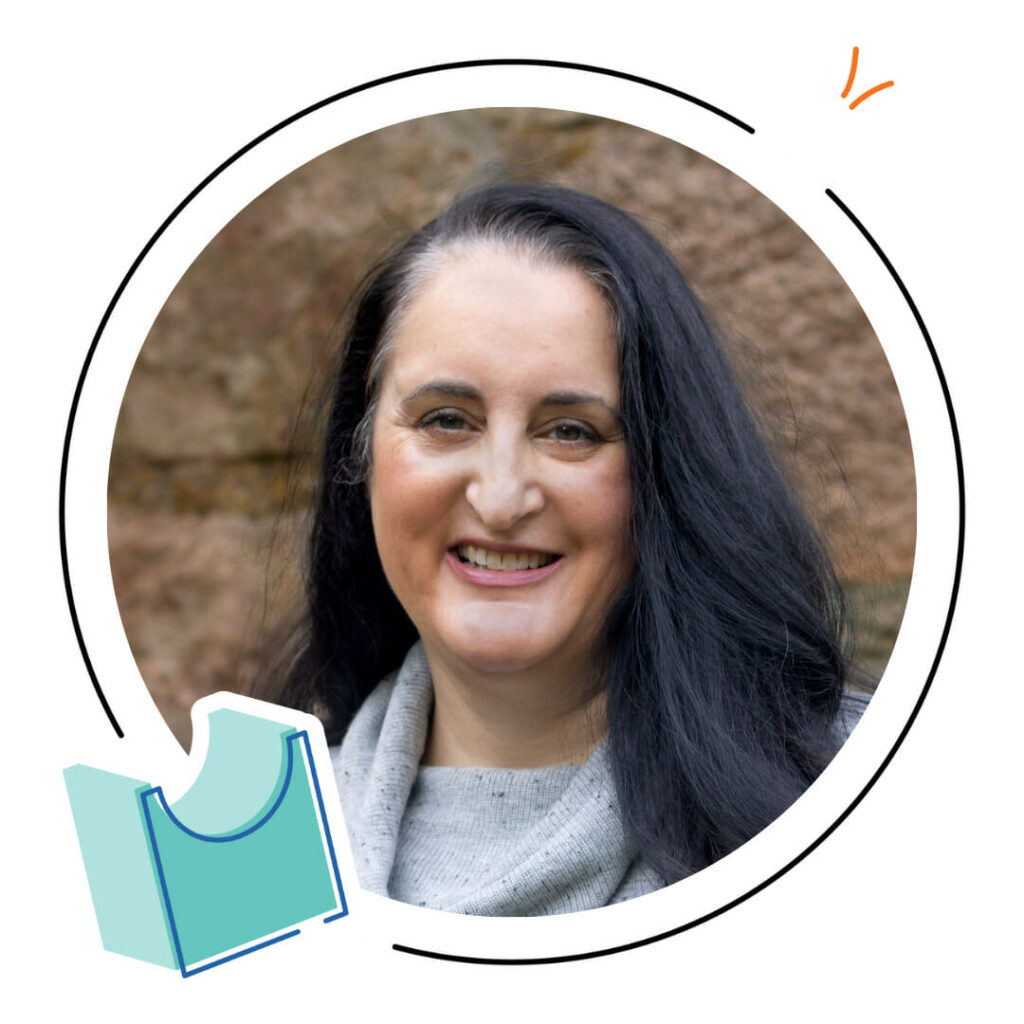
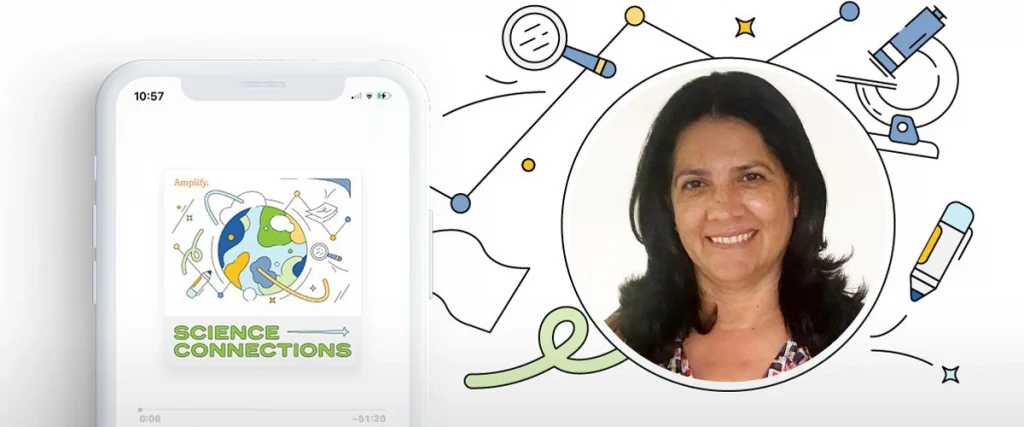
AS_Podcast-S1E08-Valeria-Rodriguez_Cover

In this episode, our host Eric Cross sits down with Miami-based educator Valeria Rodriguez. Valeria shares her journey of serving in the Peace Corps, working a corporate job, and eventually finding her passion as a middle-school science teacher. Listen in as Valeria explains how sketchnoting, a form of note-taking that utilizes illustrations, encourages student choice and creativity in her classroom. Eric and Valeria also discuss the importance of risk-taking within the science classroom, and how their own mistakes can be crucial in modeling resilience for students. Lastly, Valeria shares experiences she had with several teachers who inspired her throughout her career. Explore more from Science Connections by visiting our main page.

Download Transcript

Valeria Rodriguez (00:00):

There’s so many things that drawing to me makes an essential connection to. It tells me no matter what, I can continue placing lines on my paper and creating the image I want. Some people will say they messed up the drawing. You know what? They gave it character.

Eric Cross (00:19):

Welcome to Science Connections. I’m your host, Eric Cross. My guest today is Valeria Rodriguez. Valeria is a science educator, instructional technologist, and illustrator, who is currently part of a steam team where she teaches third through fifth graders in Miami, Florida. Valeria has presented and led workshops at education conferences like NSTA, ISTI, and SXSWEdu. In this episode, we discuss how she uses real-world projects to make lessons more meaningful, and why teaching students how to sketchnote increases their conceptual understanding in science. I hope you enjoy this pun-filled conversation with Valeria Rodriguez.

New Speaker (00:58):

Now you’re in Miami and you have a biology background. We’re like kindred spirits. Like we do the same thing. I teach biology here in San Diego at a middle school called Albert Einstein Academy. So I’m in a seventh grade classroom teaching life science.

Valeria Rodriguez (01:11):

That’s so cool. That’s how I started.

Eric Cross (01:13):

Is it?

Valeria Rodriguez (01:13):

Mm-Hmm <affirmative> I started teaching middle school science for seven years, doing life science in my biology background.

Eric Cross (01:20):

How’d you get started? Like where did you kind of begin?

Valeria Rodriguez (01:22):

Well, I went to UF for undergrad as a runner, and I thought I was gonna go to the Olympics, but you know, running in college is hard. And you quickly like realize a path as a full-time athlete is really hard. And one of the days that I was having one of those, like “come Jesus moments” of what am I gonna do with my life, I walked by a sign that said life is calling. And I’m like, okay, <laugh>

Eric Cross (01:52):

You literally had a sign.

Valeria Rodriguez (01:53):

There was a sign. So I was like, I’m reading the sign. I’m following the arrows. And it was for the Peace Corps. And so I went to this meeting and everything that I’ve ever done student government, athletics school education, my backgroundmy family’s from Columbia–everything in that meeting came together and they’re like, we need all these skills. And I’m like, I have those. Those are my skills. And they’re like every Peace Corps volunteer teaches. And so I went in as an agriculture volunteer to Panama because of my major and my background in biology. And while I was in the Peace Corps doing the work, I was teaching at the local school. And I realized that the most sustainable way to create any change is through education. When I came back, I was like, well, what do you do if your first job in the world is in the Peace Corps? Like my background was, you know, managing a machete in a field and teaching second through eighth grade in one classroom, on a chalkboard, you know, in English and in Spanish, while teaching the teacher and the students. So I found that going into teaching allowed me to put some of those skills, that wide array of skills that I had collected until that moment, into practice. And it allowed me to do the arts, do the running, do the science, do the connecting with the community in one place here in the states.

Eric Cross (03:34):

I don’t know if I’m just romanticizing, but you were in Panama and you were doing this amazing teaching. I don’t know. Do you compare it to teaching now in the classroom? Is there anything that ever like makes you wish that you were kind of in that environment again? Or are you kind of, do you like the more kind of technology side of things?

Valeria Rodriguez (03:48):

I tell my students all the time that I miss it, because when I was in Panama, I was in Licencia. They looked at me like this, all knowing being. If they couldn’t come to class because the kids literally had to work, they would bring me their assignment, like run it to me and then run back to their parents. Like, “I had to turn it in, but I have to go to work.” And I’m like, oh my gosh. And like here, sometimes I feel like, you know, I have to negotiate and convince my students to want to give me their work. And maybe it’s because we take a lot of things for granted. I mean, I didn’t have running water in my community. Here, you know, we have everything. I miss how we appreciated — like, my parents would send suitcases of materials for me to hand out to my students, like color and stuff, notebooks, things like that — and the kids would like, hold that notebook, like pristine and here sometimes my students aren’t as careful with materials. And I’m like, why are you breaking the crayon box? <Laugh>

Eric Cross (04:54):

I’m thinking about that. Just even just bringing pens and crayons and how that’s valued. And then a culture that’s built around esteeming teachers, and you’re this essential member of the community — and you feel that. It’s palpable.

Valeria Rodriguez (05:08):

Yeah. And here, sometimes I ask students like, what do you wanna be when you grow up? And you get all sorts of answers, but in my community, it’s gonna sound funny, but they were like, we wanna be a teacher. Like, that means that we would know a lot of stuff and they would put their hair up in a bun, ‘cause I always have it in a bun, and they would write stuff when they were playing and they would act me out <laugh> and I’m like, do I, do I do that? <Laugh> I genuinely got a very rich experience in the time that I was there. And what I learned the most was how to try to not do as much, it’s like a lesson that I’m still trying to learn because like I’m here with the U.S. Mentality of go, go, go.

Valeria Rodriguez (05:58):

And they’re like, but we already did, you know, two things like now we stop. And I’m like, but, but why? And they’re like, you can do that tomorrow. And I’m like, but no, like we’re gonna run out of time. For me. It was a lot of struggle of like slow down. And as a teacher, I feel like I’m always like on the treadmill at a thousand speed. And sometimes I have to tell myself like slow down, be in this moment, like a parent texted me today that her daughter was walking with her dad and said, daddy, let’s talk about the layers of the soil. And I was like, I need to stop right now and acknowledge that this happened. She’s in third grade and she’s asking her dad, you know, she could ask him about anything, and she’s asking him about soil. That’s essential for everything. And we don’t even think about soil here. Like my community had tons of erosion and every year there were less and less crops being able to be produced. We’re not talking about that here. And yet, my student asked her dad here in Miami, <laugh> about soil. And that conversation happened because of our class.

Eric Cross (07:03):

And you allowed yourself to be present and experience and feel that that communication came to you.

Valeria Rodriguez (07:09):

Yeah. We put so much stuff out there and we don’t know where it lands. If it lands on dirt or soil, <laugh>

Eric Cross (07:16):

There you go. I like it. Yeah. Bringing it back. But you’re, I think you’re what you’re saying. Resonates with a lot of educators that’ll be listening to this is that there’s so much that you do. And there’s even times when we do get the feedback, there might be a letter or a card or something, but like, to your point, like we look to the next thing instead of stopping, being present and allowing yourself to absorb it. I think I need to put that up on my, like on my wall, like this, just be present. Now you came back and then you went into the classroom here and you started off teaching science.

Valeria Rodriguez (07:46):

I didn’t go straight into the classroom. I knew that I wanted to continue teaching. But I wasn’t back here in Miami. When I moved back, I moved to Austin. And I ended up getting married and there, I started teaching Spanish as a second language like corporate classes. And I was kind of like tiptoeing around, like, do you dive into education? ‘Cause The idea of a teacher here is very different than the teacher idea that I had while in the peace Corps. So he, a lot of people were like, you can do so many things. Why would you teach? And I was like insulted <laugh>. I was like, wait, what do you mean? Like even to this day, I’ve started a blog post, maybe 20 times with that statement because people all the time are like, you’re so talented. Why do you teach? And it drives me crazy because it makes me feel like they’re looking down on my choice <laugh> but I came to terms with it that it’s just like a societal thing. Cause of that quote, like those who can’t do teach. And I was like, let me let this go.

Eric Cross (09:01):

I find though that educators who come in as a second career, come in with a, a, a variety of skill sets that I, I think you can only get when you’re outside of academia. I mean, you can, you can develop them, you know, going kind of K12 education college and then into the classroom. But those soft skills, the business skills, a lot of those things you really develop. And it’s funny ‘cause your, your story almost sounds like some of the people that I know that work in big tech firms, they have this eclectic story and then now they’re, you know, working for Google or Facebook or something, but that actually was a as set to them because they are able to see the world through multiple perspectives. And I’m hearing kind of a distinguish between art of teaching and the science of teaching. Like you had the, maybe the art connecting ideas, these things, and then the science, like the quote unquote like formal teaching. Okay. That had to get built on later. Like am I hearing that right?

Valeria Rodriguez (09:55):

Yeah. The that’s what rocks I’m teaching the rock cycle right now. So I’m, I’m under a lot of heat and pressure <laugh>

Eric Cross (10:02):

We got the funds, we got the funds rolling. All right. All right. So bringing in the, so the, the art side or the science side we have, and then we just have this amazing illustrator. Now you mentioned your website and we’re gonna post it somewhere, but just so we have it here to, and you say, what is your website where all your majors and sketch notes can be found,

Valeria Rodriguez (10:21):

Www dot Valia, sketches.com.

Eric Cross (10:23):

Okay. So folks that are listening, if you wanna check out the art, there’s some awesome stuff on there, as well as Twitter and Instagram. And we’ll make sure we have it handles in the, the bio of the podcast and the notes. Your art’s amazing. I looked, I checked it. I saw inauguration. I saw astronauts. I saw all kinds of different things. How do you use that in the classroom

Valeria Rodriguez (10:45):

To draw connections? The ones? So what I do is I airplay my iPad onto the board. And sometimes as I’m talking, I’ll draw things, draw things I’m saying, or assignments I’ll sketch out different ideas, or maybe like the schedule I’ll have an icon of some sort that represents things. I use it for everything and anything, because just the way that I tell my students that science is everywhere. I, we don’t realize how programmed we are to use images to for, for information they’re in the street. Bathroom signs, we see the zoom little link, like the image, the icon of zoom. And we know that it’s a call the apps. You know, our phone doesn’t have the words for everything that we’re opening. We just have a list of images that represent information. So we’re programs for this. And all I’m doing is showing my students how we’re programmed for it because we’re so used to seeing images, to represent things that we’re taking it for granted again.

Valeria Rodriguez (12:03):

And sometimes my students will like, I’ll write something and I ask them, make your own visual vocabulary. So I give them the word of the definition for every unit, the younger ones, I give them the definition they have to plug in the word and an image, the older ones, I give them the word they have to plug in the definition and an image. But I don’t tell them what to draw because they need to create an image that will help them to remember the definition. Not me. I tell them, I wrote the list. I know the words, you’re the one that needs to think of something that’s going to help you to remember this. You need to draw a connection to this information. Like I use it and I mess up all the time. And I, I scratch things out because I feel that my students or the student that I’ve had in general are risk averse.

Valeria Rodriguez (12:57):

They don’t want to make mistakes. And drawing is one of those things that it taught me that it’s okay to make mistakes. Like people won’t buy commit to buying houses or they won’t commit to things because they’re gonna make a, I’m like, you can sell the house. You can move again. I mean, I’ve lived in a lot of cities. I’ve been married, divorce, gone out with people. It’s worked out it hasn’t you know, there’s, there’s so many things that drawing to me makes an essential connection to <affirmative> that it tells me no matter what I can continue placing lines on my paper and creating the image I want. And if a line doesn’t necessarily go in the direction, I want it to, I can continue shaping it so that the overall image is in the direction I want. And I can look past those line here and there that some people will say they messed up the drawing. You know what? They gave it character. I, I cycle and I have scars everywhere. They give me character and I keep writing. The overall image in my head is I’m a cyclist, not I’m banged up. <Laugh>

Eric Cross (14:14):

I feel like there’s so much to mind in what you just said. This was like a mini-Ted talk. And I couldn’t write fast enough because there were so many gems of the things that you said, but let me say something worse. And this is I’m gonna be surface with this because, and it’s your fault because you got me thinking in puns and you said, take it for granted. And I said, take it for granted because you’re talking about the rock cycle. So that’s what I heard way back. Anyways, you have your students creating what, but it’s low tech, which is really cool because a lot of times we think of creating content and it’s kind of high tech, but they’re creating something. And this is for us, like as biology folks, like you’re using kind of like this neuroscience that exists about students, creating an art to help them learn.

Eric Cross (14:55):

And this is something that I, I feel gets missed a lot in. When we talk about the quote unquote, the formal teacher training is the element of how creating an art can actually lead to improved learning in the classroom. It’s something you have to go to like a conference to kind of go and see or something, but it’s not as, it’s not as pervasive everywhere. And that thing about risk averse. I feel like I, you spoke to my own life. What I see ‘cause with my own seventh graders, I see the same fear or anxiety when I ask them to draw. As I do, when I ask them to give me a hypothesis about a phenomenon that I’m gonna teach and I say, it’s okay to be wrong, but I see them drift to the Chromebook and want to Google it. You know what you just said about just try it and you can always change and giving character, I feel like is just a great message for everybody to hear

Valeria Rodriguez (15:48):

Today. Students made fossil, right? ‘Cause They’re learning about rocks and we made using plaster, but then I put the green screen up and not only did they make it and they excavated them, but then we put it on the green screen. And they’re like all of a sudden at a dig site,

Eric Cross (16:04):

What I’m seeing right now for those of you who are listening is, is students who are on, is this on IMO?

Valeria Rodriguez (16:10):

This is on we video

Eric Cross (16:12):

Video and they’re holding up fossils that they made. But in the background, because there was a green screen, there’s an overlay of like a, a rock dig site. So the students legitimately look like they’re paleontologists or something somewhere.

Valeria Rodriguez (16:24):

Exactly. And so it’s, it’s not just creating lines, right? The sketching transfers to so much be because even the want, not wanting to make a mistake with their fossil. One of the kids today, when he took off the, the Plato, ‘cause we put the Plato at the base. Then we put in either a shell or some sort of artifact that they were going to fossilize. And then we put in the plaster when he took off the Plato, a piece broke off and everybody’s like, I can’t believe you broke your fossil. And I’m like, not the first. Okay. Do you know how many of these guys and girls have been out there? And all of a sudden they find a dinosaur bone and they’re walking and they fall. And this fossil that took billions of years is all of a sudden broken. I’m like this selfie, the original selfies, these animals died in commitment to their selfies.

Valeria Rodriguez (17:19):

And here you are dropping the bone. So they were all laughing, but it was to go away from the fact that, oh my God, you broke it. You made a mistake. You drew the wrong line. You asked the wrong question. Like no big deal. Keep digging, shout out to the teachers that try doing the projects that they have. They don’t feel completely comfortable with or you know, that they take risks doing. Because even though in theory, it’s like suggested and schools want that or communities want that when it comes down to it, people also expect us to do things at work. But part of our job is also taking risks. Like we did a tethered weather balloon launch the other day because we couldn’t get approval to release the weather balloon in the atmosphere since we’re near an airport. And it was too short of a time.

Valeria Rodriguez (18:14):

And I remember a parent said, oh, you’re not releasing the balloon. And I was like, well, this is a lot of work too. <Laugh> we, you know, we’re, we’re doing the tethered launch. This is a hard project. So the other day when I heard that comment, like I went back to my class and I was like, you know what? I took a risk to do this project. I could have played it safe with a handout of a weather balloon <laugh> or you know, a YouTube video. It’s it’s the, the fact that we’re continuing to push. And so I wanna like really thank the teachers that keep trying to do the hard things that aren’t like tried and tested because it’s scary. Yeah.

Eric Cross (18:57):

Yeah. There aren’t a lot of opportunities for them to have adults that they see in positions of authority or that they respect or admire model failure. And I don’t mean failure in the, like the negative pejorative sense, but like things just not working out and then seeing how you respond to it, ‘cause you’re modeling, taking a risk. But like with real stakes, it’s authentic. I had students swab the campus and we put it in auger dishes and Petri sealed it up and then let it grow room temperature, but we kept it you know, cool enough at 75 degrees. So it wouldn’t be able to survive any, anything pathogenic. And then students, you know, I took pictures of them and then showed them the results. So the students never interacted with it and some things grew and some things didn’t, it was mostly, you know, fungi and some bacteria, but I showed them like, how come mine didn’t grow? And I was like, well, you know, it could have been how we swabbed. It could have been some things don’t grow the temperature, we kept it at, but some of the experiments didn’t yield the cool results. And that was okay. But I front loaded the expectation so that if everything did go great, sweet, but managing expectation, I found really helps to mitigate the pressure.

Valeria Rodriguez (20:01):

Yeah. Well another project that we’ve participated in is growing beyond earth where we’re planting seeds that contribute to like a huge set of data for cultivars that are being considered for growth on the international space station. And my students are like, well, you know, we just have six little pots, like what is this? And I’m like, yeah, we have two little seeds in each of these pots. And we are one data set in like hundreds of data sets that they’re collecting. But we are contributing two research on the international space station. You don’t have to be the next bill gates or the next, you know, Steve jobs. Like everyone thinks they’re gonna be the next big thing. Like you can also be a seed. That’s part of a really big project and that is okay. Like everyone can’t be the next big thing

Eric Cross (20:48):

And the other. And the other thing, I think what Gladwell talks about this in outliers and there’s another book called bounce, but a lot of the people that we see is successful or famous, we don’t realize that their background and their exposure to things was one of the things that led them there, both jobs and gates had access, you know, gates had access at, at the university of Washington to like one of the first computers and then jobs at, at Hewlett Packard. The story go goes on and on, but we don’t see the lineage of some of these people and where they come from. We just see the end result. You just see LeBron James winning a championship or something. We just want the, the end result the, the glory, but not the sweat that it takes to get there. They don’t, we don’t really see that as much, which leads me to like the next thing I wanted to ask you is how do you, and I kind of saw it just now, but how do you engage your kids in the classroom?

Valeria Rodriguez (21:36):

Well, I think I’m funny. Some of them don’t do

Eric Cross (21:38):

They like the puns

Valeria Rodriguez (21:39):

<Laugh> some of them do. And some of them don’t get them. They get them later. And I see when they get it, I like to engage them by bringing in real people, real examples of things, real research when possible. Right. I can’t put them in a real dig site. So the green screen helps me do that. But one of my students yesterday, other day before was like, you have such cool friends because I’ll say, oh, one of my friends does blah, blah, blah. Or, or, oh, when we go to Kennedy space center, we’re gonna, you know, talk to one of my friends. Who’s doing research on, you know, chilies in space and they’re like, wow, your friends are so cool. And I took that moment to tell them, be mindful of the people that you collect as friends in your life, like make good choices, surround yourself with awesome people, people so that you can share ideas. Like you connect with friends who you inspire you to do more. I try to engage them by giving them examples of things that people around me are doing that connect to what we’re doing. Do

Eric Cross (22:43):

You, do you explicitly or intentionally teach soft skills or is it just something that you just kind of organically do natural or are you mindful about making sure that you’re doing that

Valeria Rodriguez (22:52):

A hundred percent? You have to be explicit about it with amplify? Actually, we, we did a poster for incorporating social, emotional skills and other soft skills into the classroom because sometimes we just like other things like writing and, and reading, you know, we silo all these things in education and the school counselor, can’t be the one to deal with everything. You know, you have to deal with things as they surface. And sometimes my kids ha are frustrated because I ask them to think I don’t have yes or no answers. I have, you know, we are gonna launch a high altitude weather balloon. We don’t know how high it’s gonna go. We don’t know what’s gonna happen. We don’t, we don’t know if we’re gonna find it when the <laugh>, when the balloon bursts and it lands in the ocean, are we gonna find it? Is the GPS tracker gonna work?

Valeria Rodriguez (23:47):

Are we gonna lose all that money? I don’t know, but we have to do all the steps and find out. But with kids, they don’t have the skills yet. And I can’t wait for the counselor to come in and talk about handle the frustration that they’re feeling over. Not knowing the correct question to ask, because by the time they go meet with her, the moments pass, I have to stop and say, Hey, like check in with, with what you’re doing. It’s okay to be frustrated. You can’t take it out on a classmate. You can’t take it out on me.

Eric Cross (24:14):

So you were, you, you were intentional about teaching these skills to your students and you had the relationship. So it makes sense that you were the one to bring it across ‘cause you see them more than anybody does. You know, we’ve, we’ve, we’ve imagined. Teaching is for a long time. It’s been okay, you’re the science content expert. You’re the English expert, but so much as teaching evolves, there are these skills or like EQ emotional intelligence that you kind of have to have kind of coming in. Because like those moments, like no having the presence of mind to stop and why a young person through identifying how they feel, why, where it came from. Those aren’t always covered in those aren’t really covered in your methods classes when you’re in college, getting your, your degree or something. Now when you’re you’re sketch noting and for teachers who are, or one, could you just maybe give like a brief explanation of sketch, noting for somebody who may not be familiar with it, like how I was sketch any different than just drawing a picture randomly or something.

Valeria Rodriguez (25:10):

Okay. So you’re creating visual summaries. You’re using text and images combined in different ways to take notes. And before you know how we had like these shorthand things that the squiggly meant an indent and something else meant something else. And we had these lists of things when they would edit our papers, that represented things. It’s kind of like that for your brain. So you’re making a list of maybe icons or small sketches that represent things for you. So as you’re taking notes, you hear things. And when people talk now and they, they say, you know, I’m on the fence about this. Like I literally see a fence. And when they’re talking, I write the note, it’s almost like a T toe with pointy tops and I put a stick figure on top of it. And so later when I look at it, I think, oh, that’s right. My friend is on the fence about that decision

Eric Cross (26:08):

For a new teacher or even a, a, a experienced teacher. That’s interested in sketch noting, where, where would you recommend? They start like the structurize? Like, do you give creative freedom? Are they doing this paper and pencil vocabulary words? Are they up? Like, what are some just kind of maybe three basic things to kind of get started for someone who was just curious about it.

Valeria Rodriguez (26:29):

So it has to be simple because if it requires a lot of energy to go in, then you’re gonna be more hesitant to do it. For example, I wouldn’t start summarizing a video because it’s moving really fast or a live presentation is really hard. So with students, I would start with here’s a paragraph, make a visual summary of it, or here’s a vocabulary list, make an image to represent each word. Then you would move into, well, you know, here’s a unit summarize the three main topics in unit. Then you can move onto like a little YouTube video. That’s like 10 minutes a Ted talk, make a visual summary of the Ted talk because they can pause it.

Eric Cross (27:11):

Mm. Okay.

Valeria Rodriguez (27:13):

The hardest thing is live presentations, ‘cause in conversations you can say, oh, can you say that again? Sketch, noting. You start seeing how people organize or don’t their thoughts when they speak. Because when you start writing things down and all the information is about one thing and then like two blue ORPS about something else. You’re like, wow, that was really unbalanced. So then when you start teaching, you tell them what you’re gonna tell them, you tell them and then you tell them what you told them. So they can check that they put the notes in the right places and you tell them what you’re gonna tell. So they can prep the pathway that they’re gonna set up their notes and I have to be explicit. And I have to say like, I’m gonna talk about the rock cycle. So if I were you, I would put, you know, these four boxes. Oh, but there’s three types of rocks. See? I’m like, yeah, but magma. So let’s put it in the cycle, you know? And, and then I’m like, if I were you, I would put an arrow from here to here because this is how, you know, after erosion and then, you know, heat and pressure. But then it connects like this. So the arrows are gonna help me to remember the directions

Eric Cross (28:13):

As we wind down. There’s there’s one question I wanna ask you there, you are bringing together this science, the, the art, the social, emotional learning, the relationships with your students outside content, like there’s so many different things that you bring in the classroom that is clearly gonna make you a memorable educator for your kids. It just, it’s just, I’m just listening to your learning environment. And it’s so rich who is one teacher that really expired you. So

Valeria Rodriguez (28:38):

There’s a few people that stand out overall. I had very encouraging teachers. I had that one teacher that didn’t like my drawing <laugh> she also stands out <laugh>

Eric Cross (28:49):

We have those too.

Valeria Rodriguez (28:49):

Yeah. So I have colleagues that stand out to me that inspire me every day to like keep trying. And then I had a teacher in high school who I actually work with her daughter now at the school that I work at. And I didn’t even know her mom would make us write almost the whole class. And it was world history. And I remember hearing her say when she was talking about the Roman empire that it fell because it reached more than it can grab. So it kept extending too far out. And I heard that, like I think about, yes, I can keep reaching for things in education and reaching for things in my classroom. But I have to come back to like, what can I hold? I don’t wanna reach further than what I can hold. And yes, I have to believe in myself. And I tell my students to believe in themselves,

Eric Cross (29:38):

I’m in this, I’m in this sketch noting mindset. Because when you said what Ms. Brown shared with you, I thought of a hand reaching out, but then things kind of slipping through it. And I another hand with like a fist right next to it. So even in our conversation here last hour, I I’m thinking in pictures now. And so I’m like, if I can do it, they can do it. Like if you know, ‘cause I am just not the person who spends a lot of time committing to draw. Because a lot of times when I was that student who tried to draw and we get frustrated and look around and now I feel like this is, I wanna try this again. I wanna share this with my students and encourage them. This is gonna be a lot of fun. I look forward to continuing to see the sketch notes that you do. And maybe I’ll, I’ll show you one of mine. Like eventually I don’t know if you can see that there that’s my stick figures. Those of you who are listening right now, I drew, I was drawing stick figures and taking notes while Blair was dropping all of this, these like gems and wisdom in here. So

Valeria Rodriguez (30:31):

Maybe we can do a challenge that once people hear this podcast, they can tag us somehow in the sketch note that they create I’m in. So we see what they a take from it. Because that’s the other thing about sketch noting, you think you’re emphasizing something and all of a sudden people are walking away with something else that resonated to them. And you’re like, wow. And here I was thinking that this was what we were talking about. And this is what really jumped out at them.

Eric Cross (30:57):

Your kids are lucky that you’re in front of them, not just because of how you teach, but how you access all of these different parts of their creativity and their thinking and apply, integrate all of these soft skills and social, emotional skills and just life skills and your experience connecting them to the outside world. They, and like you said, and how we started, you know, where you started in Panama, the students realized what you represent and what you meant to them. And I feel like your students, when they get older, they may not realize it in the time, but as they get older and reflect back, they’ll be telling stories about you. So yeah. Thanks for making time and thanks for being here.

Valeria Rodriguez (31:34):

Well thank you too, ‘cause I know you’re in the classroom and making time to do other things outside the classroom. Isn’t always easy, but it’s what keeps us going in different ways.

Eric Cross (31:49):

Thanks so much for joining me in Valer today. We wanna hear more about you. If you have any great lessons or ways to keep student engagement high, please email us@stemamplifycom.wpengine.com. That’s TM five.com. Make sure to click, subscribe wherever you listen to podcasts and join our brand new Facebook group science connections, the community for some extra content.

Stay connected!

Join our community and get new episodes every other Tuesday!

We’ll also share new and exciting free resources for your classroom every month.

What Valeria Rodriguez says about science

“I use [sketchnoting] and I mess up all the time…because I feel that my students don’t want to make mistakes, and drawing is one of those things that taught me that it’s okay to make mistakes.”

– Valeria Rodriguez

Educator, Instructional technologist, and Graphic facilitator

Meet the guest

Valeria is an educator, instructional technologist, graphic facilitator, and dreamer. She currently works as a Science teacher as part of a STEAM Team in Miami, Florida teaching third through fifth graders as a free-lance graphic facilitator. She loves to connect with passionate educators she meets around the country. Valeria has presented and led workshops at educational conferences like SXSWEdu, ISTE, NSTA, NSTA STEM Forum, SHIFTinEDU, FAST, FCIS, and SEEC. When she is not teaching or sketching, Valeria can be found adventuring with her family around the world, training for triathlons, and creating opportunities to empower kids in all kinds of communities. 

You can check Valeria’s work on her website and follow her on Twitter & Instagram.

Valeria-Rodriguez_Headshot-LP

About Science Connections

Welcome to Science Connections! Science is changing before our eyes, now more than ever. So…how do we help kids figure that out? We will bring on educators, scientists, and more to discuss the importance of high-quality science instruction. In this episode, hear from our host Eric Cross about his work engaging students as a K-8 science teacher. Listen here!

S3 – 06. Bethany and Dan take on Twitter!

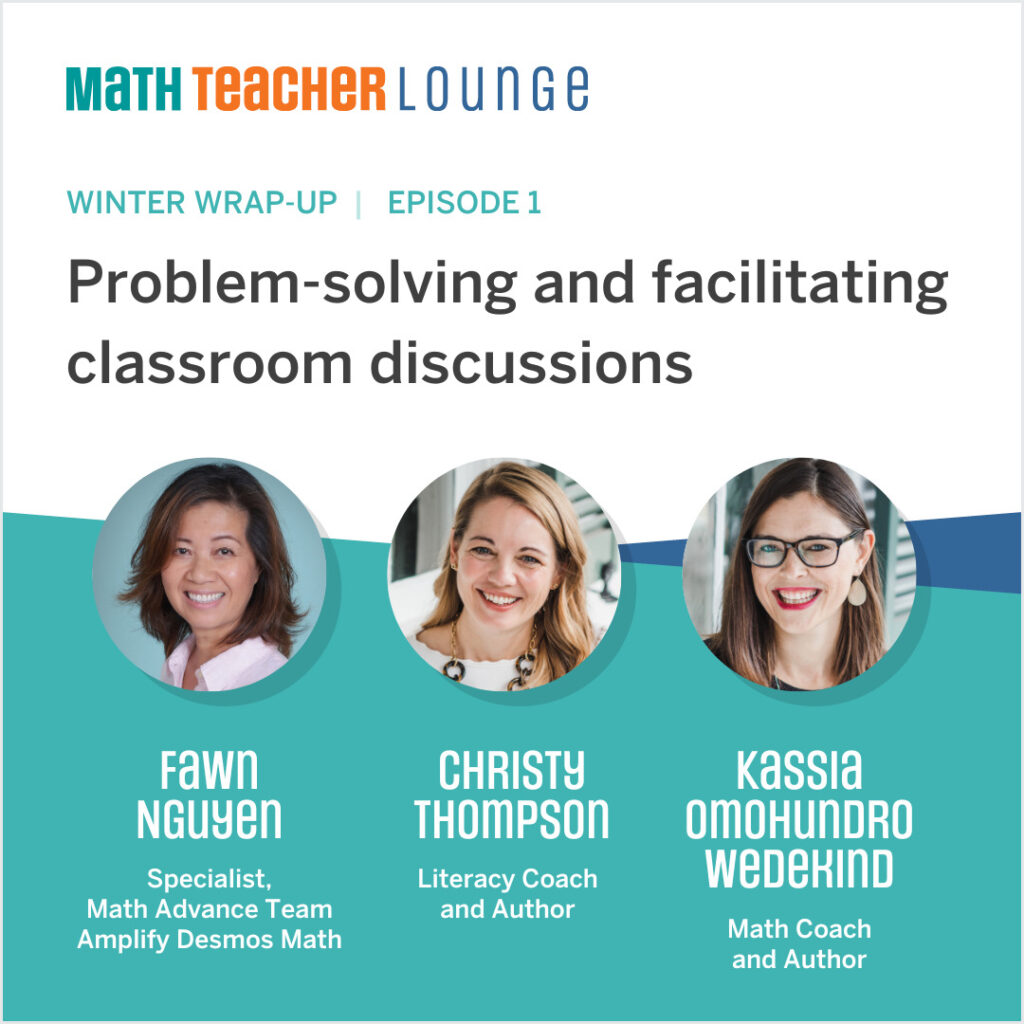
Promotional graphic for Math Teacher Lounge Season 3, Episode 6, featuring Bethany Lockhart Johnson, Educator, and Dan Meyer, Director of Research at Desmos.

In this episode, Bethany and Dan take a look at several tweets that caught the most fire on Twitter during the 2021-2022 school year. The pair answer questions about viral teaching methods, the best teaching advice you can give in three words, and if students should use pencils or pens in class. Join them as they take on those questions and several others in a fast-paced episode.

Explore more from Math Teacher Lounge by visiting our main page

Download Transcript

Dan Meyer (00:02):

Hey folks. Welcome back to the Math Teacher Lounge. I’m your co-host, Dan Meyer.

Bethany Lockhart Johnson (00:07):

And I am Bethany Lockhart Johnson. And I’m your co-host, Dan! Hi!

Dan Meyer (00:12):

We’re co-hosts! Hey! Great to see you.

Bethany Lockhart Johnson (00:13):

Dan, this is the last episode of Season 3. Three seasons!

Dan Meyer (00:19):

It’s gotta have a cliffhanger. What will the cliffhanger be? You know?

Bethany Lockhart Johnson (00:22):

The cliffhanger is that we love having guests! It’s one of our most favorite things, because selfishly, we love to talk to all of these amazing folks who are doing this interesting research and thinking about amazing things. But for this last episode, it’s just you and I, Dan. Cliffhanger!

Dan Meyer (00:40):

Yeah. I like this. I like this. So the cliffhanger was last episode, and people are all like, “So who’s the last guest gonna be of the season before we roll out into summer?” And yes, as Bethany said, we love all the fascinating guests we’ve had on throughout these last few seasons. And we realized…who is more fascinating to each other than both of us? You know, let’s talk to each other about things, right? <Laughs> You get that! You get that! Or am I alone here in this? We had this idea about what we should talk about here, and that’s this: I am on Twitter a lot. I’m @DDMeyer on Twitter; throw me a follow; might follow back; who knows? I don’t tweet much. Bethany, what’s your handle on Twitter? Let ’em know.

Bethany Lockhart Johnson (01:22):

I’m @LockhartEdu, and I was much more active pre-mamahood. But I’m still up in there. Go ahead.

Dan Meyer (01:30):

Yep. In there. Yeah, great. So I’ve been keeping track of the hottest conversations in math education Twitter, the conversations that the most people who kind of describe themselves as math teachers in their bios and whatnot have been replying to. We’ve got some little things working in the background, keeping track of this sort of thing. And so we are gonna bring you folks some of those extremely hot conversations, and even better than the questions—which we hope you’ll reply to and tag us in your replies—even more than those questions, we’ll bring you our answers—our answers!—to those questions. Can you believe that? We’ll fully settle these questions! Won’t we, Bethany? My gosh, won’t we?

Bethany Lockhart Johnson (02:15):

Jeez Louise! No! Dan Meyer, the point is not our final word on it! The point is this episode, we’re furthering the conversation. We wanna hear from listeners about what do you think?

Dan Meyer (02:25):

Right. You’re right. You all need someone in your life like Bethany who will help you become the best version of yourself. So here’s the deal. We have several questions in a few different categories. We’re gonna bust through some quick ones, pretty quick. And, uh, there’s some meaty ones as well. Let’s get into it! The first questions come to you all, and us, courtesy of MTL guest Howie Hua, who has a renowned knack for just creating math memes, but also conversation starters that really capture the curiosity and answers of of a grateful nation. So Howie’s first question, which I’ll pose to Bethany, is, “What’s your favorite number?” Bethany? And why is it your favorite number?

Bethany Lockhart Johnson (03:14):

Oh, I love it. OK. Well, the first thing that came to my mind is 12. ‘Cause It’s a highly divisible number. I mean, 2, 6, 3, 4—I love it. And it coincides with the day and month of my birth. Which, like, the double-digit…come on, 12, 12, 12, 12. I dunno, am I giving away, like, my bank security code <laugh> or anything by saying that?

Dan Meyer (03:41):

Yeah. What’s your favorite PIN?

Bethany Lockhart Johnson (03:43):

Let me change my PIN. Yeah, it’s just such a happy, happy number. Well, 12 is, you know, 10 and 2. Two more. Anyway. Love it. What about you, Dan? What’s your favorite number and why?

Dan Meyer (03:55):

I’m into it. I’m into it. I think I would choose 16. Because it’s the first number for me when it was like, “Oh, you can keep on making numbers forever!” Where I’m like, OK, 2times 2 is 4. Great. That’s kind of an elemental expression in mathematics. Four times 2 is 8. OK. But then, 8 times 2 is 16, and it’s like, “Oh, you can just keep doubling that thing over and over and over again!” And I can recall feeling pretty excited that numbers are just like, out there for the finding. For the taking. Cool stuff.

Bethany Lockhart Johnson (04:33):

I’m sorry. Wait, I have to interrupt. You went 2 times 4 is 8 and you didn’t go 4 times 4 is 16? You went 8 times 2 is 16? You wanted to keep the 2 the same?

Dan Meyer (04:49):

Yup. Yup. You can keep on doubling. You can keep on doubling numbers and it just keeps on going.

Bethany Lockhart Johnson (04:53):

More evidence that our brain works very differently.

Dan Meyer (04:56):

We learn more about each other…let me keep this rolling with Howie questions. OK? Howie says, “If you could co-teach with one teacher from Twitter, who would you choose?”

Bethany Lockhart Johnson (05:06):

Oh, oh, it has to be a teacher?

Dan Meyer (05:11):

Or anybody, I guess. I mean, like, I know you love Oprah.

Bethany Lockhart Johnson (05:15):

Can I co-teach with Oprah?

Dan Meyer (05:16):

Yup, yeah, so there we are. <Laugh> Yup. OK. Fair enough. We have to work Oprah into every single episode.

Bethany Lockhart Johnson (05:23):

I’d just love to sit and like, we’d read together, we’d read to the students, and then we’d talk…I mean, obviously it’d be Oprah. But if we’re thinking more of like MTBoS, like math Twitter blogosphere-land, I suppose the person I would wanna co-teach with honestly would probably be Allison Hintz. One of our former guests as well. Her book, Mathematizing Children’s Literature, with Antony Smith, that book—I just love the idea of sitting and doing a read-aloud and then diving into some juicy math that’s inspired by what comes out of that read-aloud. So yes, that’s who I pick. Allison! Let’s co-teach!

Dan Meyer (06:00):

<Laugh> Shout-out to Allison.

Bethany Lockhart Johnson (06:01):

What about you?

Dan Meyer (06:03):

I would choose MTL guest Idil Abdulkadir—because, and this relates to Allison and also Elham Kazemi—they talked about, in our episode about teacher time-outs. And I’m choosing someone who I think is—like I’ve never seen Idil teach, but I work with Idil at Desmos and think she’s fantastic. But what I really want in a co-teacher is someone that I can say, “Whoa, time out, do you see what’s going on here? This is really interesting. What should we do next about this?” And have a little strategy sesh in front of the kids and no one gets freaked out by that. And I think that that’d be a pile of fun. Idil seems like she’d be receptive to that kind of interaction, teacher to teacher. So that’s my vote right there.

Bethany Lockhart Johnson (06:48):

Opportunity for you to grow your own practice, Dan.

Dan Meyer (06:52):

Yeah, yeah, exactly. 100%.

Bethany Lockhart Johnson (06:56):

So Dan, I actually have a question for you from Howie. If we’re on the Howie tweet train, I have one from Howie too.

Dan Meyer (07:04):

Howie had some fire tweets, some fire tweets this current year. Yep.

Bethany Lockhart Johnson (07:08):

Dan, I wanna know: Do you prefer doing math in pen or pencil?

Dan Meyer (07:16):

Ooh, yeah. Oh, I see that Howie says, “I don’t mean to start any drama, BUT,” and then asks the question–

Bethany Lockhart Johnson (07:23):

But!

Dan Meyer (07:24):

I think that Howie lives for drama. I think he knows he’s messy. He lives for drama. He knows what he’s doing this with this question here. He knows.

Bethany Lockhart Johnson (07:32):

DRAAAAMAAAA!

Dan Meyer (07:32):

He knows what he’s doing. Yup. So I would just say it depends. Is that cheating? Like if I’m doing math to learn, or if we are learning in that process, then I want to use pen, actually. I wanna see the tracks of the thinking. And if we’re doing it for presentation, like if I’m presenting something, I wanna…I guess that’s an area where I’d be fine to not erase things. I don’t wanna prep it so it’s, you know…I guess you could use pen for presentation also. Just pen. Period. But I wanna see the tracks of the thinking if we’re doing some learning versus presentation. What about you?

Bethany Lockhart Johnson (08:09):

Well, I heard the voice in my head telling one of my kindergartners, “No, you cannot do that in sparkly pen. You need to do it in pencil.” And I was like, “Wait, whose voice is that?” It was one of my math teachers telling me I couldn’t do it in pen! Why couldn’t this kid do it in pen? Sure! Do it in a sparkly pen! So I wanna say do it in pen. And since usually pen is what I have around…I mean, I do crosswords in pen, Dan.

Dan Meyer (08:36):

Wow, wow. With a piece of paper and math, you have lots of room to re-revise and cross off…but those little, little boxes on the crossword, that says a lot about your commitment to pen.

Bethany Lockhart Johnson (08:46):

I got really good at making an A into an H or a P or whatever we need. So I would say, “Hey, if you’re in the room with your kiddos and you’re doing math, if somebody wants to do pen, let them do pen.” But I do know that I’ve seen teachers say you need to do pen so that I can see all of your thinking. So I think I hear what you’re saying. But do you think it should be like a classroom rule or something?

Dan Meyer (09:13):

Oh, no, no, no. I mean, I’m gonna ask you like, “How’d you get to this destination?” And I wanna know process somehow, and I think you’ll get tired of having to explain it verbally rather than just, like, showing. Just don’t erase stuff. Don’t scratch stuff off. Let’s let’s see how you’re getting there. That is what I’m into.

Bethany Lockhart Johnson (09:30):

Thanks, Howie, for that trio of thought-provoking tweets, because I genuinely wanted to know what Dan thought and what our listeners think. I mean, Dan, I gotta say: Howie, you say you don’t wanna cause drama, but I gotta say I’m with Dan on that—

Dan Meyer (09:50):

Got the gift. Got the gift for drama. We’re still friends though. So I’m happy about that. Our next section, I got a few more questions queued up here and these ones relate to advice for educators, advice for yourself. Good advice, bad advice, that kind of thing. So let’s jump in. I would love to know—this one’s from Pernille Ripp—I’m very curious, Bethany, what is the worst teaching advice you have gotten in your life, ever?

Bethany Lockhart Johnson (10:19):

<Laugh> Ooh. OK. Um, worst teaching advice was: “That’s OK, just move on anyway.” And that was in terms of pacing. It was like, students needed to do a deeper dive and the teacher who I was chatting with said, “No, no, it’s fine; it’s fine; just move on. Just move on to the next chapter.” That was probably the worst advice, because no, I don’t think that’s what I should have done at all! <Laugh>

Dan Meyer (10:48):

Right.

Bethany Lockhart Johnson (10:48):

But I was a first-year teacher and I was trying to figure it out. And I learned that that was not good advice. And I understand the pressure of pacing. But it was totally antithetical to the type of listening to my students that I want to do in my craft. And this teacher meant well, but that was not good advice, teacher! <Laugh> What about you, Dan? What is the worst teaching advice?

Dan Meyer (11:13):

I dig that. That feels similar to one of the replies to Pernille here. Frances Klein says, “Never let them know you’ve made a mistake” being particularly bad advice. You know, just this like idea of like moving along, covering your tracks, not backtracking or admitting mistakes, those all feel kind of a piece. The worst advice I think I’ve ever received, and I wasn’t given this often, but it’s echoed by a lot of the commenters here on this tweet, which is “Don’t smile until X, Y, or Z,” where X, Y, and Z are like Christmas, October, December, January. Just the idea that you’ve gotta develop—

Bethany Lockhart Johnson (11:54):

Wait, what?

Dan Meyer (11:55):

<Laugh> Did you never hear this from anybody? Don’t smile until Christmas? Perhaps this is more—

Bethany Lockhart Johnson (11:59):

I’m a kindergarten teacher! Can you imagine? If I don’t smile the second they walk in? The tears?! The parents’ tears?! The kids’ tears?! If I’m just like, stoic?

Dan Meyer (12:07):

Yeah. Well.

Bethany Lockhart Johnson (12:08):

So explain it to me.

Dan Meyer (12:10):

Well, the idea is, is that, you know, for older kids, they’re scoping you, they’re clocking you for weakness, they’re looking at you, they’re looking to take advantage. And so “don’t smile until Christmas” is like, hey, you can always relax. You can always relax your discipline, but you can’t UN-relax it if you start out, you know, Mr. Happy Pants Meyer. Which—

Bethany Lockhart Johnson (12:33):

Smile perceived as weakness.

Dan Meyer (12:36):

Yeah. Very obviously poor advice. Eventually you come to realize that like having a rapport and a relationship that is trusting and warm and demanding, that has high expectations, that’s the best kind of classroom management. Not some kind of persona built around intimidation or stoicism, that kinda thing. So, terrible, terrible advice!

Bethany Lockhart Johnson (13:01):

I feel like I did have a few of those math classes. Yeah.

Dan Meyer (13:04):

Yeah, exactly. <Laugh> You loved them, right? They were like your favorite math classes. It was a blast, right?

Bethany Lockhart Johnson (13:11):

<Laugh> So we have to ask the opposite. Thank you, Daniel Willingham, who said, “What’s the best advice you got?” But hold on, Dan, he didn’t just want the best advice. He wanted the best advice in three words.

Dan Meyer (13:26):

Oh yeah. He doesn’t, he doesn’t want a book or dissertation or even a blog post or even a tweet. He wants just three words.

Bethany Lockhart Johnson (13:32):

I think maybe that might have been to me. <Laugh>

Dan Meyer (13:34):

This is someone who’s doesn’t have much time for this advice, wants it distilled down. I’m just obviously stalling here as I try to think about this. I don’t know, there’s just like so much nuance lost here. I would say, listen to students, listen to students. I can’t say more that, I guess. I guess I’m done. I can’t say more than that there. But you’re in a bad place if you’re not listening carefully to students. How about you?

Bethany Lockhart Johnson (14:04):

  1. Mine is “Ask…lots…questions.”

Dan Meyer (14:11):

Nice. ‘Cause I filled in the word! I filled in the word! I was able to kinda infer that. I did that. I got that.

Bethany Lockhart Johnson (14:17):

Wait, wait, wait, wait! I could have said many! Wait, I could have said “Ask many questions.”

Dan Meyer (14:22):

Strong, strong.

Bethany Lockhart Johnson (14:25):

So yeah. You know, no isolation, like don’t put yourself in a bubble. Ask, not just, not just your students, but the teachers! Ask a lot of questions. You don’t have to have it all figured out.

Dan Meyer (14:34):

Into it. Very much into it.

Bethany Lockhart Johnson (14:37):

Thanks. Daniel. Thanks, Pernille.

Dan Meyer (14:40):

Yeah. Daniel and Pernille, Both great questions there about advice, best and worst. Another fire tweet popped up earlier this year from Dr. Khristopher Childs, which was “Name one thing every educator should stop doing.”

Bethany Lockhart Johnson (14:57):

Oh, I don’t know. This kind of ties into my best advice about asking questions.

Dan Meyer (15:03):

Stop not asking questions?

Bethany Lockhart Johnson (15:06):

<Laugh> Avoid the isolation. I really love this idea of when we can, popping into each others’ classrooms, co-teaching, building this collaborative nature. Elham Kazemi, in our interview, talked about this idea of, like you said, the teacher time-outs, learning from each other. So I feel like if we could stop isolating ourself…and I don’t mean at lunch—sometimes you need to not be in the teacher lounge at lunch. Like if you need a minute, take the minute! But in general, as a practice, how can we not be isolated and instead be learning with, and from, each other? How can we stop the isolation? That’s what I would hope every educator would stop doing. What about you, Dan?

Dan Meyer (15:54):

I think that educators should…this is gonna require a little bit of elaboration. I think educators should stop taking responsibility for things that are not in their zone of influence. I think that as a society we are asking teachers to do more and more, to become more and more of a central fixture holding together with chewing gum and twine all the various parts of a student’s life. From their health, their fitness, emotional health, that we feed students at school. It becomes very tempting, I think, there’s a lot of pressures to blame outcomes, disparate and unjust outcomes later on in life, on teachers. And teachers should just flatly refuse. And to yeah, understand what the job has been set up to do. What it’s good for. And do that with excellence and intent and a lot of effort. And then not take responsibility for the rest of it.

Bethany Lockhart Johnson (16:53):

If I asked five different people about the definition of what a teacher should be doing, I would get five different answers. So I think it’s really interesting that you say that because yeah, many, many hats, which I think, yes, can lead to burnout. Can lead to all sorts of things. We’re asking schools to be all things to all, all people. Interesting. I’m gonna think about that more. I need to hear folks’ response on that, Dan.

Dan Meyer (17:18):

Mm-Hmm. I’m curious too. I mean, yeah, there are definitely things that are in teachers’ responsibility and some that are not. That’s a tough one.

Bethany Lockhart Johnson (17:26):

OK, for help, name an example of each. And what’s something that you think every teacher should not and should be doing. ‘Cause I feel like my brain goes to some things like, you know, I had teachers who were saying, “Well, I don’t wanna have my kids have to have breakfast in my classroom in the morning. That shouldn’t be my responsibility to serve breakfast in the morning.” But I’m like, “But then your kids are eating and they’re gonna be able to learn and be more focused.” Should that be the teacher’s responsibility? I’m not saying it necessarily should, but I’m saying…I don’t know. It gets murky for me.

Dan Meyer (18:06):

Yeah, for sure. I mean, I think that we should, as a country, have a really generous social welfare net so that everyone has food at home. Where a school is not the place where some students have to go to in order to receive nutrition and nourishment. That seems sad to me. And uncommon in developed nations. I think that teachers should watch out for, should be responsible for, the mathematical development of the students they teach, up to a point, they should be responsible for learning math and creating relationships in their classes. I don’t think that teachers should accept responsibility for larger kinds of outcomes, like the health of a democracy or international competition, who goes to the moon first. That kind of thing has historically been placed at the feet of teachers. And it’s tempting when you’re a teacher, I think, to take on that responsibility because it kind of develops your social importance. And I just say, we should say no to that. And get compensation, not in terms of social importance, but rather like in spendable dollars and monies.

Bethany Lockhart Johnson (19:10):

I’m learning more about you, Dan. And you know, this is what I’ve gotten from that answer: If you’re gonna dream, dream big. Right?

Dan Meyer (19:17):

Is that what you got from that? I don’t know. I think I’m trying to dream realistically.

Bethany Lockhart Johnson (19:23):

No, like if we’re gonna say, “Maybe teachers shouldn’t be responsible for serving breakfast in the morning,” well, because we want every child to have access to nutritious and filling food at home and time to eat it in the morning, right? It’s bigger than just, “I don’t want the teacher to have to do this.” So we’re dreaming big. We’re saying this should be the LEAST that students have access to, right?

Dan Meyer (19:53):

Yeah. Yeah. I’m here now. I’m with you. I like that dream. Where we take care of folks in their lives outside of schools. So schools don’t have to be the one linchpin for every kind of social outcome. Like currently a lot of them run through a school ’cause we don’t do a good job of setting up other ways to meet those needs. And we should.

Bethany Lockhart Johnson (20:16):

And we’re also recording this in, what, two weeks, a week, after a tragedy where students and teachers were killed in the classroom. And I think both of us are taking some deep breaths and recognizing that there’s a lot of debate that is happening about what teacher’s role should be in preventing this in the future. And I don’t know if you’ve done drills in your classroom that are supposed to help mitigate disaster, but you know—collective deep breaths— <laugh> is where we’re at right now.

Dan Meyer (20:52):

Yep. The idea of “we should arm teachers” is another example of no, we should not do that. We should solve the tendency towards violence outside of the classroom so that teachers and students can teach and learn. That sounds awesome to me.

Bethany Lockhart Johnson (21:06):

Collective deep breath. Whew. OK. So what else you got for me, Dan?

Bethany Lockhart Johnson (21:33):

Ooh. So I feel like I’ve heard that in many teaching PDs. “I Do, you do, we do.” Actually I feel like I’ve seen like more “I do, we do, you do.” Like graduated release. I do it, then we’ll do it a little bit together, and then now you have permission to do it. And I feel like in directed draw, that’s a hundred percent true. Like I’m gonna show you this and then you draw it. And then you cut here and then you do it. If we’re trying to create this, like I’m teaching this new art technique. But in mathematics, I feel like that’s really not what I want my classroom to look like. I want to support my students and set them up for sense-making, and then I want them to try it out and I don’t want them to solve it the way it first comes to mind for me. I wanna see how they make sense of it and how they solve it. And then I want us to share it with each other so we can grow together. So I think time and place for “I do, you do, we do,” or “I do, we do, you do.” Or shoo-be-doo-be-doo-be. Yeah. You?

Dan Meyer (22:44):

I’ve got nothing. I have nothing to add. I thought that was just an excellent summary of a classroom I would love to be a part in, love to teach. I think it’s a certain tool in the toolbox that I think is overused. But it’s also a tool that can be useful in the case of certain kinds of operations. There are some operations that do benefit from “let me just show you how, like one way you might do this.” I don’t know. I’m like helping my kid whack a nail into a board and there’s a moment where it’s like, “Hey, actually, lemme just show you one way you can do this,” and do it, and then that’s helpful in some moments. But for so much of math, a lot of math does not relate to the operational kinds of fluency. And in those instances, it’s a little bit…it’s not a useful tool, I don’t think, for those kinds of skills and ideas.

Bethany Lockhart Johnson (23:34):

I’m thinking of tool talks in my classroom. So in kindergarten, many of the tools that we use in math and just in class in general, are new to the students. And if I tell them, this is exactly how you should use this tool, then I feel like I’m taking a lot of the sense-making away from them. But if I introduce the tool, show them how to use the tool safely, show them this is not a safe way to use the tool, chewing on this is not safe. That’s not how we use this tool. This is how we take care of it, et cetera. But then support different modes of using the tool that are gonna help them use it to solve problems and make sense, I think…but I guess—Dan, have you heard “I do, you do, we do,” or is it “I do, we do, you do”?

Dan Meyer (24:22):

I’m with you. And I think that it got clarified post-tweet. But yeah, it typically is “I do, we do, you do,” the gradual release of responsibility it’s often called. And I, I have heard people do what you described, which is…what is it? It’s “You do, we do, I do”? Like an inversion of that? Like have people do a thing that I can do that’s not too, too abstract for them, and then like “We all do something together, and then I’ll offer a summary of what we learned,” is one way that goes. I like that tool as well.

Bethany Lockhart Johnson (24:53):

I think particularly, at least I’ve seen in elementary classrooms, there’s sometimes this fear of letting students just try it out before I’ve really showed them, “but this is how it has to be.” And what I am most excited about is supporting students and creating a classroom environment where students don’t need my permission or need my direct “this is the only way to do it.” Instead, it’s like, yes, there’s lots of things we model. But there’s also like, “Hey, what do you think? How do you think this should be used?” And the joy of that exploration.

Dan Meyer (25:30):

Yeah. There’s a feeling of efficiency that comes from “I do, we do, you do,” for some kinds of math, but it’s undercut in my experience by what it cultivates in the students, which is “I’ve gotta wait until the teacher does before I can do anything.” So it pays off real diminishing returns over time. And it’s, just for me, an exhausting way to teach. Always being the bottleneck for new learning is a total drag.

Bethany Lockhart Johnson (25:55):

Ooh, what a great way to describe it. You do not wanna be the bottleneck. You want to be…what’s the other thing? The facilitator? What’s the opposite of a bottleneck? The flowing river? The…The…Help me!

Dan Meyer (26:10):

Hit us up in the replies. I dunno. The opposite of a bottleneck. That’s what you wanna…you wanna not be the opposite? No, you want, yeah. We got this here. We’ll figure it out. We’ll get back to you. <Laugh> OK. Well, folks, those were a few of this year’s fire tweets. It’s been fantastic chatting with you—

Bethany Lockhart Johnson (26:29):

Dan.

Dan Meyer (26:29):

—Bethany, About all those—

Bethany Lockhart Johnson (26:32):

Dan. You know, my favorite thing to do is interrupting you, Dan. I have to interrupt you because we can’t end fire tweets, Dan, without including a tweet from you.

Dan Meyer (26:43):

Oh, that’s true. I do have my moments. Yeah, we should. We really should. <Laugh> Do you have one in mind?

Bethany Lockhart Johnson (26:50):

No. Dan. Yes. I loved…you tweeted recently, “How many years have you been teaching?” Which, OK. “What Has been like the most influential? Like, what, OK, blah, blah, blah.” <blathering noises> You tweeted, “How many years have you been teaching? And at this point, what has most influenced how you teach?” And you gave some ideas: A methods course, PD sessions, curriculum, TV and movies, et cetera, et cetera. And I love that you put that out there because this episode is coming out as we’re wrapping up another school year. And it also got me thinking about summer and what teachers sometimes do during the summer, but what we might need to do this summer for self-care. But I’m really curious. I love that tweet. And I’m curious, Dan, what did folks say was the thing that had most influenced their teaching and what’s most influenced your teaching?

Dan Meyer (27:49):

Ooh, yeah. People’s responses to this one were really fantastic. I came into this, I was flying to the Association of Mathematics Teacher Educators conference. And I just found myself wondering, so, the pre-service year, the one year of, like, you’re learning how to teach, is how we did it in California. Like how much of that has still infused my practice? And in what ways? I don’t think I think about that stuff consciously, but I think that did like set me up with a lot of images that I would be unpacking for going on two decades now working in education. I think conversations with people, I think observing classes, I don’t think that like the one-day PDs, the one-day development days throughout the year, four times per year, I don’t think those stuck to me much. I think that this summer, I have learned so much, just an embarrassment of riches, from non-educational sources. From other disciplines. From storytelling, for instance. From how people have constructed movies I like. I am proud of the way…one of the aspects of my character that I’m proud of—it takes a lot to admit this, as I’m sure you understand, Bethany—but to integrate lots of wacky stuff and pick from it and use that to affect my practice and teaching has been really positive. So for this summer, I hope that people read a good beach book and just kinda let your teaching mind rest a little bit. And in doing so, create some openings for new ideas about education from other parts of the world. Kids! Having kids has been helpful. I don’t know! Just everything! It’s such a big job, education. Everything has so helpful. What about you? What’s an influence on your practice that might surprise me or other folks out there in MTL land?

Bethany Lockhart Johnson (29:52):

Well, I don’t know about surprise. I mean, I definitely feel similarly, like methods courses absolutely impacted my teaching. But I feel like opportunities where I was able to observe other teachers and where I was able to have conversations with folks about their practice, that has deeply impacted me. And books I’ve read. I mean, honestly, I’ve learned so much from sharing with other teachers. Like, for example, maybe I’ll bring student work and we’ll talk about it. And we kind of create this conversation together about how we wanna come back to the students based on the work we see. Those type of moments where we’re collaborating and we’re bringing multiple perspectives to the table, that I think, has really often shifted me out of my first initial reaction or what I thought I was going to do in the classroom the next day. So that continues to surprise and delight me. And thinking about this summer, I think there’s a lot of creativity and joy that can come out of the marination process, when you’re just kind of sitting back and healing yourself, whether through sleep or sunshine or time with friends and family or whatever that looks like for you. I think there’s a lot of creativity that can come from that place of fertile, you know, wellness. I never think of that as wasted time. I think of that as getting the soil ready for all that’s gonna come in the fall. And that being said, I also think it could be a fun time to dip your toes into something that you are excited to read, that you might not have a chance to read during the school year that could be teaching-related. So it’s like very low pressure, like, “Oh, I’ve really wanted to read more by this author. I’ve wanted to read this article. I’ve wanted to dip into this topic.” And not with a pressure, but just with a curiosity. And, yeah, I think so often we as teachers love learning, and to give yourself space to learn in whatever that looks like can be a real gift.

Dan Meyer (32:09):

Yes. And if you need book recommendations, hit the MTL back catalog of episodes. Loads of folks that we interviewed have real good books out.

Bethany Lockhart Johnson (32:16):

Yes!

Dan Meyer (32:16):

Think about it. Think about it.

Bethany Lockhart Johnson (32:22):

One quick recommendation: Again, gotta plug Antony Smith and Allison Hintz’s book. I read Mathematizing Children’s Literature before we did the interview, but this summer I wanna read all the children’s books that they mention. I just wanna go to the library and read all those children’s books. I wanna read them to my son. I wanna read ’em to myself. So, you know, diving into some good YA, children’s books, just, like, TLC. Dan, thank you for such a rich season and a chance to have so many interesting conversations. It is genuinely a joy to learn with and from you.

Dan Meyer (33:00):

Likewise. And always hope to see you folks on Twitter now and then. Let us know what you’re up to this summer at MTLShow on Twitter or in our Facebook group, Math Teacher Lounge. We’ll be there tuning in now and then. It’s been a treat interacting with you folks over this last season. Take care and until the new season, so long.

Stay connected!

Join our community and get new episodes every other Tuesday!

We’ll also share new and exciting free resources for your classroom every month.

What Bethany Lockhart Johnson says about math

“I’ve learned so much from sharing with other teachers… Those type of moments where we’re collaborating and bringing multiple perspectives to the table, I think, has really often shifted me out of my first initial reaction or what I thought I was going to do in the classroom the next day.”

– Bethany Lockhart Johnson

Meet the guests

Dan Meyer

Dan Meyer taught high school math to students who didn’t like high school math. He has advocated for better math instruction on CNN, Good Morning America, Everyday With Rachel Ray, and TED.com. He earned his doctorate from Stanford University in math education and is currently the Dean of Research at Desmos, where he explores the future of math, technology, and learning. Dan has worked with teachers internationally and in all 50 United States and was named one of Tech & Learning’s 30 Leaders of the Future.

Bethany Lockhart Johnson

Bethany Lockhart Johnson is an elementary school educator and author. Prior to serving as a multiple-subject teacher, she taught theater and dance and now loves incorporating movement and creative play into her classroom. Bethany is committed to helping students find joy in discovering their identities as mathematicians. In addition to her role as a full-time classroom teacher, Bethany is a Student Achievement Partners California Core Advocate and is active in national and local mathematics organizations. Bethany is a member of the Illustrative Mathematics Elementary Curriculum Steering Committee and serves as a consultant, creating materials to support families during distance learning.

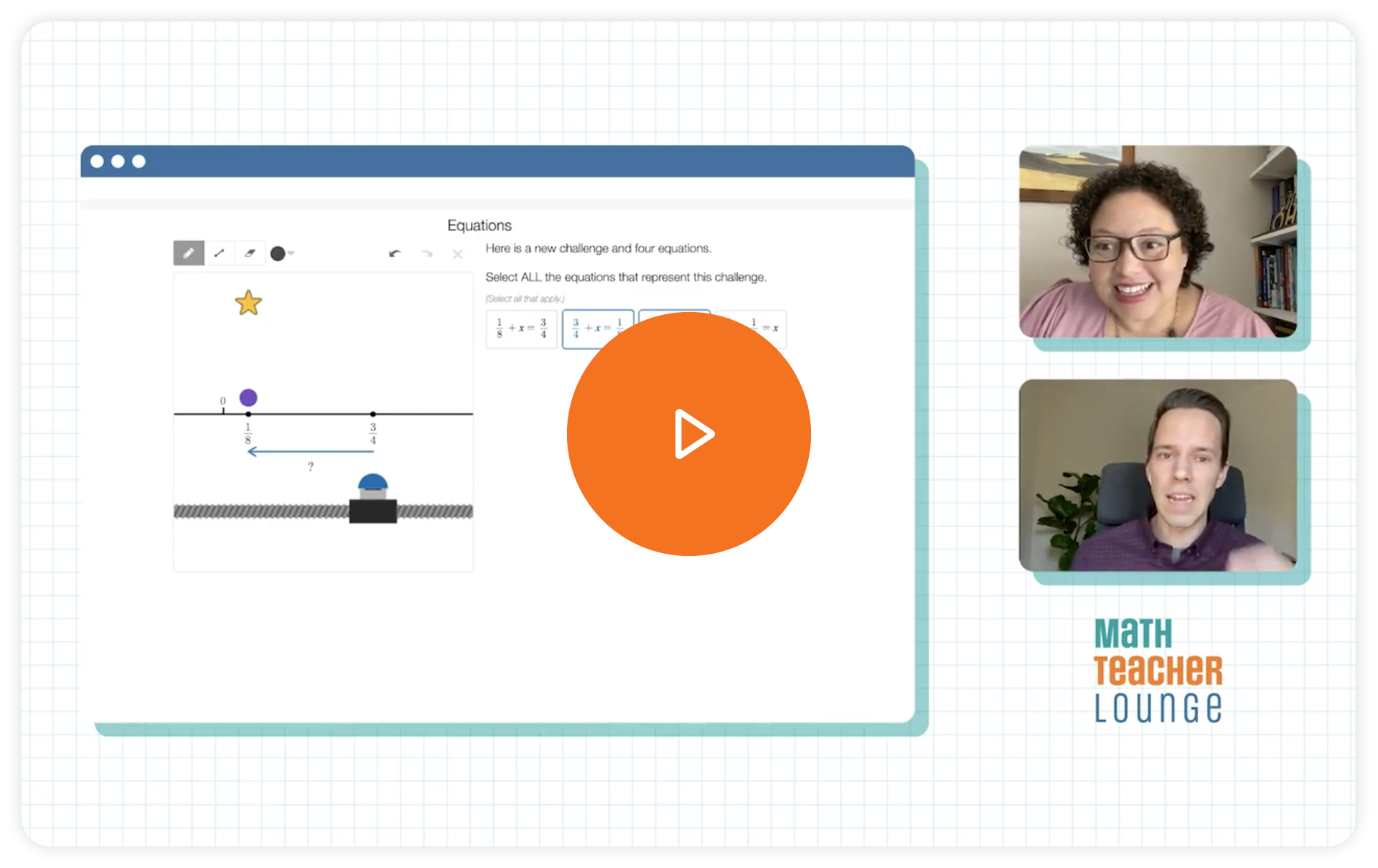
A woman with curly hair and glasses smiles outdoors; a man with short dark hair smiles indoors in front of a blurred math teacher lounge, highlighting valuable math teacher resources.
A graphic with the text "Math Teacher Lounge with Bethany Lockhart Johnson and Dan Meyer" on colored overlapping circles.

About Math Teacher Lounge: The podcast

Math Teacher Lounge is a biweekly podcast created specifically for K–12 math educators. In each episode co-hosts Bethany Lockhart Johnson (@lockhartedu) and Dan Meyer (@ddmeyer) chat with guests, taking a deep dive into the math and educational topics you care about.

Join the Math Teacher Lounge Facebook group to continue the conversation, view exclusive content, interact with fellow educators, participate in giveaways, and more!

A closer look at grades 3–5

Amplify Science is based on the latest research on teaching and learning and helps teachers deliver age-appropriate, high-quality, literacy-rich instruction that enables students to take on the roles of scientists and engineers to solve real-world phenomena every day.

In the 3–5 classroom, this looks like students:

  • Collecting evidence from a variety of sources.
  • Making sense of evidence in a variety of ways.
  • Formulating convincing scientific arguments.
Collage of four educational activities: 1) drying a paper model with a hairdryer, 2) two girls observing a science experiment, 3) children making a mixture, 4) adult hand watering a plant in a clear container.
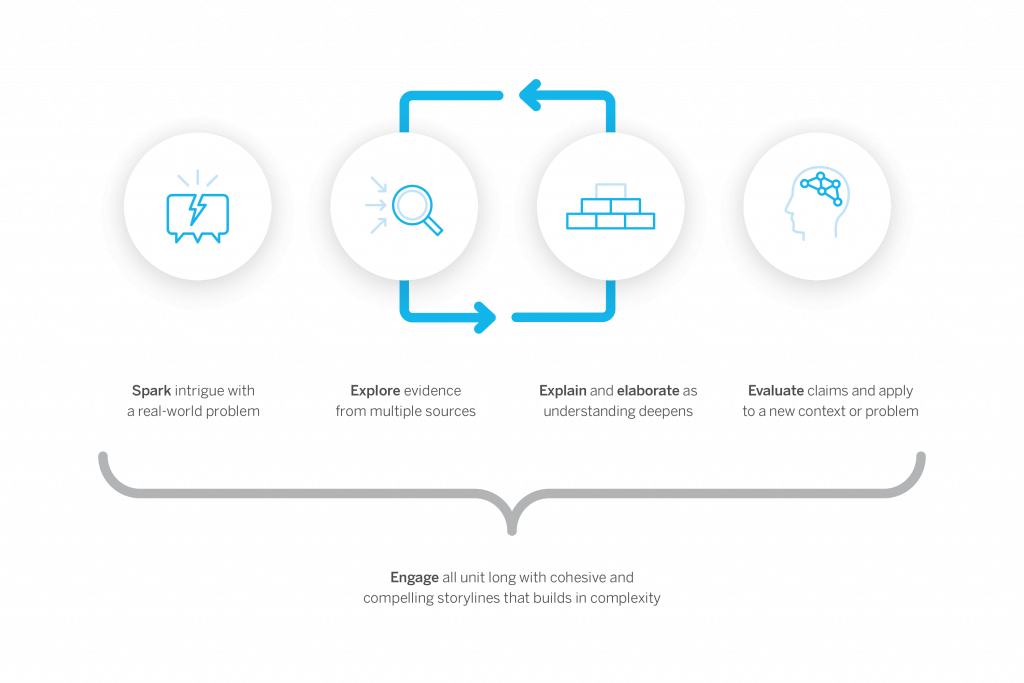
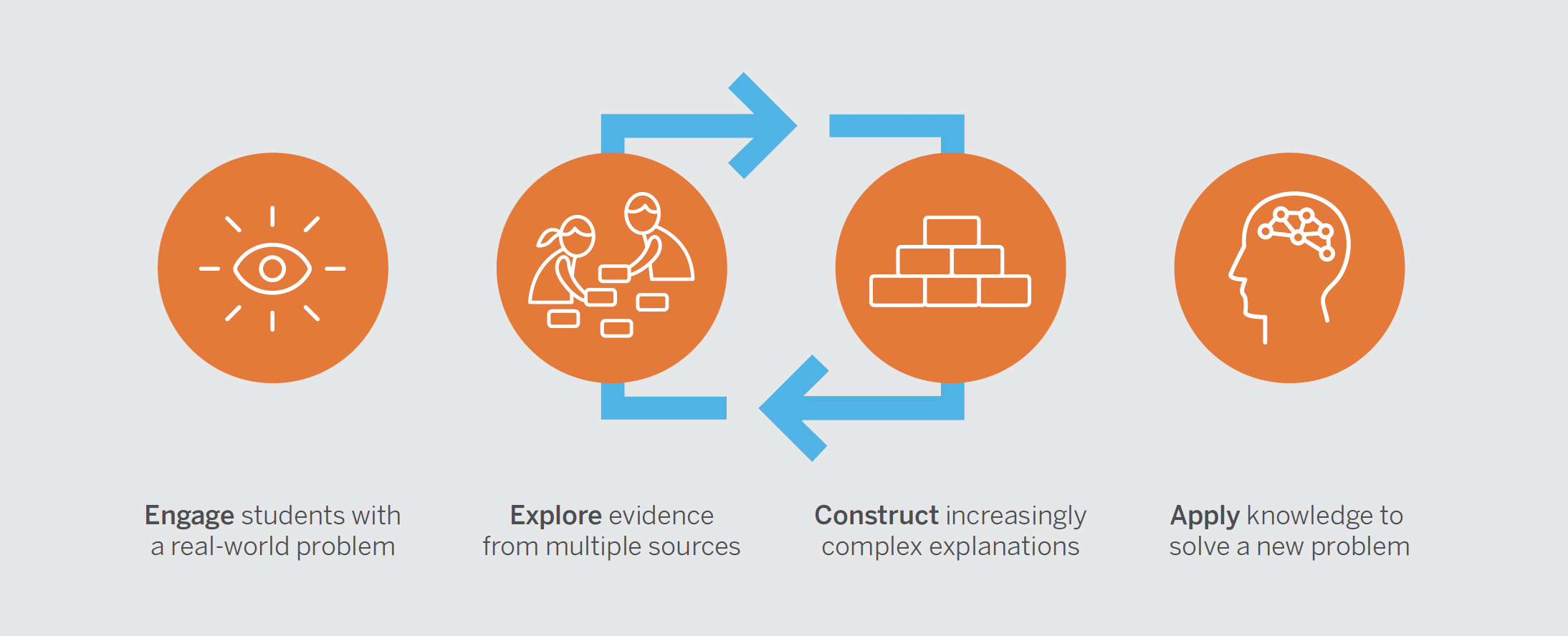
Graphic showing a research process with four steps: spark intrigue with a real-world problem, explore evidence, explain and elaborate, and evaluate claims, connected in a cycle with arrows.

Program structure

Our cyclical lesson design ensures students receive multiple exposures to concepts through a variety of modalities. As they progress through the lessons within a unit, students build and deepen their understanding, increasing their ability to develop and refine complex explanations of the unit’s phenomenon.

It’s this proven program structure and lesson design that enables Amplify Science California to teach less, but achieve more. Rather than asking teachers to wade through unnecessary content, we designed our 3–5 program to address 100% of the California NGSS in just 88 days.

Scope and sequence

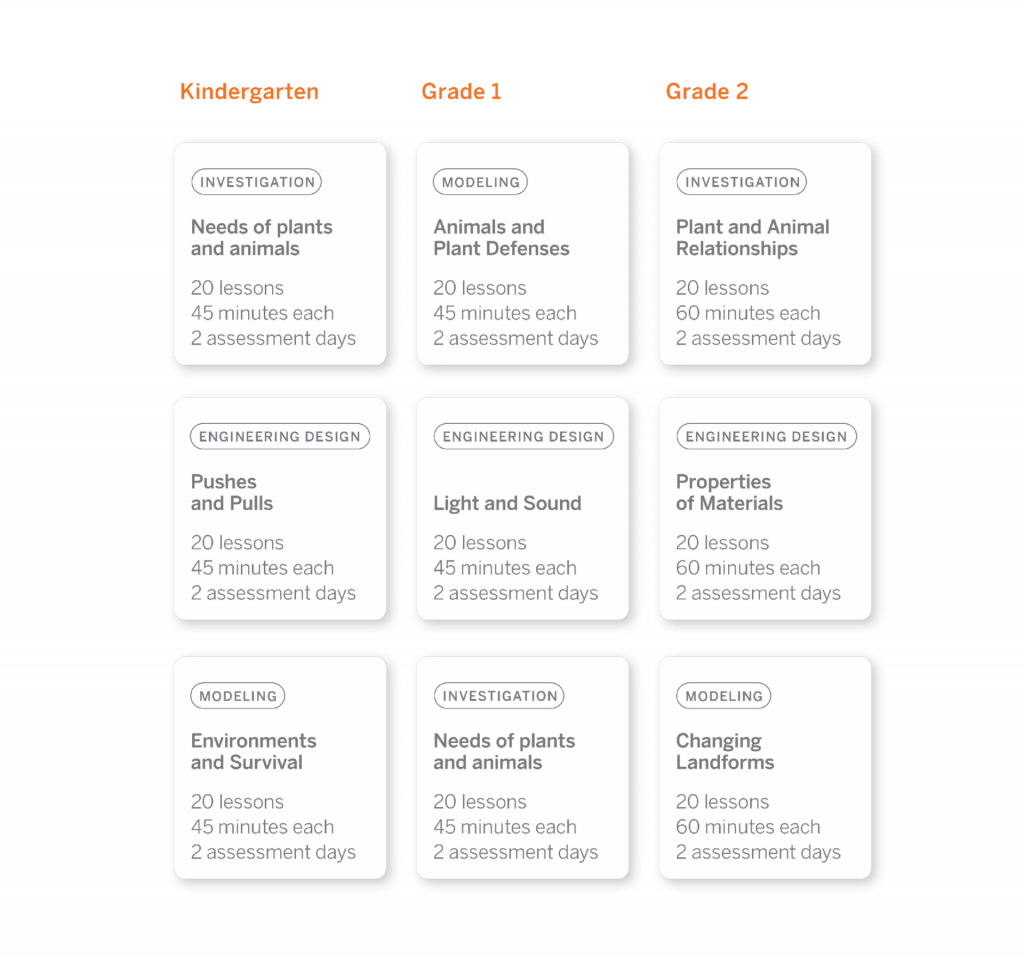
Every year of our grades 3–5 sequence consists of 4 units and 88 lessons. Said another way, each unit contains 20 lessons plus two dedicated assessment days (a Pre-Unit Assessment and End-of-Unit Assessment).

Lessons for grades 3–5 are written to last a minimum of 60 minutes, though teachers can expand or contract the timing to meet their needs.

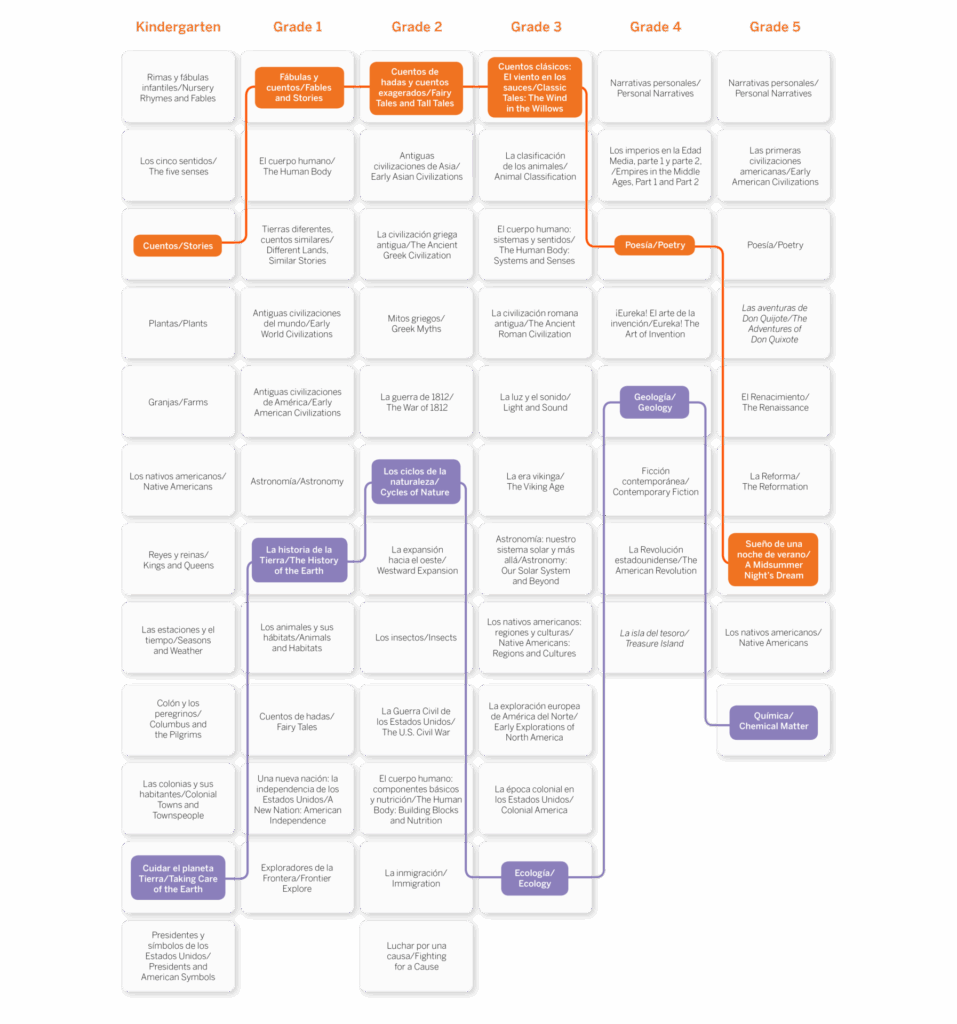
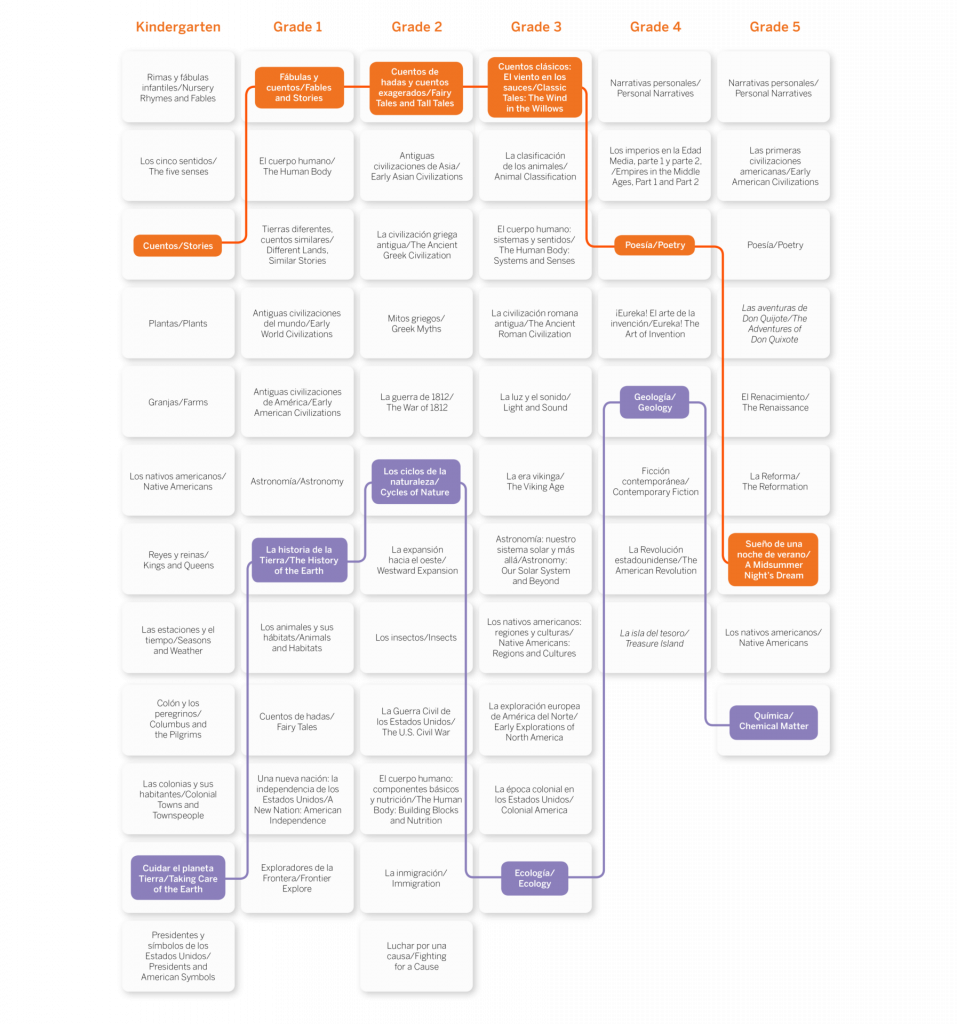
Educational curriculum chart showcasing a progression of amplify science lessons from kindergarten to grade 5, categorized by grade and subject areas like plants, animals, weather, and energy.

Unit types

Each unit delivers three-dimensional learning experiences and engages students in gathering evidence from a rich collection of sources, while also emphasizing a particular science and engineering practice.

In grades 3–5:

  • One unit emphasizes the practice of investigation.
  • One unit emphasizes the practice of modeling.
  • One unit emphasizes the practice of engineering design.
  • One unit emphasizes the practice of argumentation.
Investigation Units

Investigation units focus on the process of strategically developing investigations and gathering data to answer questions. Students are first asked to consider questions about what happens in the natural world and why, and are then involved in designing and conducting investigations that produce data to help answer those questions.

Modeling Units

Modeling units provide extra support to students engaging in the practice of modeling. Students use physical models, investigate with computer models, and create their own diagrams to help them visualize what might be happening on the nanoscale.

Engineering Design Units

Engineering design units provide opportunities for students to solve complex problems by applying science principles to the design of functional solutions, and iteratively testing those solutions to determine how well they meet preset criteria.

Argumentation units

Argumentation units provide students with regular opportunities to explore and discuss available evidence, time and support to consider how evidence may be leveraged in support of claims, and independence that increases as they mount written arguments in support of their claims.

Units at a glance

Una ilustración de un tren de alta velocidad moderno y aerodinámico que viaja por una vía elevada con un paisaje verde de fondo.
Balancing Forces

Domain: Physical Science

Unit type: Modeling

Student role: Engineers

Phenomenon: The town of Faraday is getting a new train that floats above its tracks.  

Download unit guide

Download lesson planner

An illustration from the Inheritance and Traits unit
Inheritance and Traits

Domain: Life Science

Unit type: Investigation

Student role: Wildlife biologists

Phenomenon: An adopted wolf in Graystone National Park (“Wolf 44”) has some traits that appear similar to one wolf pack in the park and other traits that appear to be similar to a different wolf pack. 

Download unit guide

Download lesson planner

An illustration from the Environments and Survival unit
Environments and Survival

Domains: Life Science, Engineering Design

Unit type: Engineering design

Student role: Biomimicry engineers

Phenomenon: Over the last 10 years, a population of grove snails has changed: The number of grove snails with yellow shells has decreased, while the number of snails with banded shells has increased.  

Download unit guide

Download lesson planner

An illustration from the Weather and Climate unit
Weather and Climate

Domains: Earth and Space Science, Engineering Design

Unit type: Argumentation

Student role: Meteorologists

Phenomenon: Three different islands, each a contender for becoming an Orangutan reserve, experience different weather patterns.  

Download unit guide

Download lesson planner

An illustration from the Energy Conversions unit
Energy Conversions

Domains: Physical Science, Earth and Space Science, Engineering Design

Unit type: Engineering design

Student role: System engineers

Phenomenon: The fictional town of Ergstown experiences frequent blackouts.  

Download unit guide

Download lesson planner

An illustration from the Vision and Light unit
Vision and Light

Domain: Physical Science, Life Science, Engineering Design

Unit type: Investigation

Student role: Conservation biologists

Phenomenon: The population of Tokay geckos in a rain forest in the Philippines has decreased since the installation of new highway lights.  

Download unit guide

Download lesson planner

An illustration from the Earth's Features unit
Earth’s Features

Domain: Earth and Space Science

Unit type: Argumentation

Student role: Geologists

Phenomenon: A mysterious fossil is discovered in a canyon within the fictional Desert Rocks National Park.  

Download unit guide

Download lesson planner

An illustration from the Waves, Energy, and Information unit
Waves, Energy, and Information

Domains: Physical Science, Life Science, Earth and Space Science, Engineering Design

Unit type: Modeling

Student role: Marine scientists

Phenomenon: Mother dolphins in the fictional Blue Bay National Park seem to be communicating with their calves when they are separated at a distance underwater.

Download unit guide

Download lesson planner

An illustration from the Patterns of Earth and Sky unit
Patterns of Earth and Sky

Domains: Physical Science, Earth and Space Science

Unit type: Investigation

Student role: Astronomers

Phenomenon: An ancient artifact depicts what we see in the sky at different times — the sun during the daytime and different stars during the nighttime — but it is missing a piece.  

Download unit guide

Download lesson planner

An illustration from the Modeling Matter unit
Modeling Matter

Domain: Physical Science

Unit type: Modeling

Student role: Food scientists

Phenomenon: Chromatography is a process for separating mixtures. Some solids dissolve in a salad dressing while others do not. Oil and vinegar appear to separate when mixed in a salad dressing.  

Download unit guide

Download lesson planner

An illustration from the Earth System unit
The Earth System

Domains: Earth and Space Science, Physical Science, Engineering Design

Unit type: Engineering Design

Student role: Water resource engineers

Phenomenon: East Ferris, a city on one side of the fictional Ferris Island, is experiencing a water shortage, while West Ferris is not.  

Download unit guide

Download lesson planner

An illustration from the Ecosystem Restoration unit
Ecosystem Restoration

Domains:Physical Science, Life Science, Earth and Space Science, Engineering Design

Unit type: Argumentation

Student role: Ecologists

Phenomenon: The jaguars, sloths, and cecropia trees in a reforested section of a Costa Rican rain forest are not growing and thriving.  

Download unit guide

Download lesson planner

Welcome, Math 1 Reviewers!

We’re honored to introduce you to Amplify Desmos Math California. We’re confident you’ll find this comprehensive program to be a powerful tool for bringing the vision of the California Math Framework to life in classrooms across the state.

Please start with the video on the right to learn how to navigate the program and access key features referenced within our submission. Below you’ll find additional resources to support your review.

Your Review Samples

As a curriculum that incorporates both print and digital resources, it’s important that you explore both our physical materials (delivered to you in grade-specific tubs) and our digital materials (accessible through our platform). We invite you to explore both types of resources using the instructions and tips below.

Print Samples

Your print samples should have arrived in grade-specific tubs with a copy of your Reviewer Binder contained within the Math 1 shipping box. As you begin the process of organizing your materials, please refer to the inventory checklist found inside the tub as well as within your Reviewer Binder.

Digital Samples

  • In order to access your digital samples, you’ll need to log into our platform using your unique login credentials found on a Digital Access Flyer inside of your Reviewer Binder. Once you have located the flyer:
    • Click the orange button below to access the platform.
    • Click “Log in with Amplify.”
    • Enter the username and password provided on your Digital Access Flyer.

Navigation Tips

Below you will find helpful tips for navigating Amplify Desmos Math California. We recommend reading these pages alongside the program’s print materials and digital experience to gain a deeper understanding of the program. 

Click the links below to read about navigating program features including:

Built for California

The Amplify Desmos Math California program is designed around the vision articulated in the California Mathematics Framework to enable all California students to become powerful users of mathematics. Our program incorporates the latest research in student learning, meaning that we:

  • Focus on the Big Ideas: Amplify Desmos Math California’s courses, units, and lessons are centered around the Big Ideas. Big Ideas, like standards, are not considered in isolation. In addition to each unit and lesson’s focal Big Ideas, Amplify Desmos Math California also provides connections among the Big Ideas across units and lessons.
  • Center on open and engaging tasks: Amplify Desmos Math California is grounded in engaging tasks meant to address students’ often-asked question: “Why am I learning this?”  Students are invited into learning with low-floor, high-ceiling tasks that provide an entry point for all. Open tasks in Amplify Desmos Math California provide the space for students to try on multiple strategies and represent their thinking in different ways, and allow student explanation and discussion to serve as the center of the classroom. All lessons offer both print and digital representations of lessons.
  • Provide enhanced digital experiences: Amplify Desmos Math California includes digitally-enhanced lesson activities, incorporating interactive digital tools alongside print materials. These purposefully-placed resources allow students to visualize mathematical concepts, receive actionable feedback while practicing, encounter personalized learning support from an onscreen tutor, and engage in discussions about their thinking and approaches.
  • Treat core instruction and differentiation as integral partners: The Amplify Desmos Math California curriculum provides teachers with lessons, strategies, and resources to eliminate barriers and increase access to grade-level content without reducing the mathematical demand of tasks. Every activity has multiple entry points to ensure that all students are supported and challenged. Intervention and personalized learning activities are directly connected to lesson content and offer students the individualized support as they dive into the mathematics.

Category 1: Mathematics Content/Alignment with the Standards

Standards Map

Linked here is the Standards Map for Amplify for Math 1.

Evaluation Criteria Map

Linked here is the Evaluation Criteria Map for Math 1. Please note that you will need to be logged into the digital platform to access the links in the Evaluation Criteria Map.

Standards of Mathematical Practice

Linked here is the alignment of Amplify Desmos Math California to the Standards for Mathematical Practice at Math 1.

Drivers of Investigation and Content Connections

Amplify Desmos Math California incorporates the Drivers of Investigation (DIs) and Content Connection (CCs) throughout the program. Throughout the year, students engage with open and authentic tasks of varying durations — from lesson activities to unit-level Explore lessons and longer course-level Investigations. Every lesson and investigation opportunity is grounded around the why, how, and what of the learning experience, and helps teachers bring mathematical concepts to life. 

A chart with three columns: Drivers of Investigation, Standards for Mathematical Practice, and Content Connections. Each column lists related activities and skills.

California English Language Development Standards

Linked here is the alignment of Amplify Desmos Math California to the California English Language Development Standards for Math 1.

California Environmental Principles and Concepts

Select lessons, performance tasks, and investigations across grade levels in Amplify Desmos Math California are aligned to one or more of the California Environmental Principles and Concepts. Click this link to view how the California Environmental Principles and Concepts are represented in Amplify Desmos Math California Math 1.

Category 2: Program Organization

Amplify Desmos Math California thoughtfully combines conceptual understanding, procedural fluency, and application. Each lesson is designed to tell a story by posing problems that invite a variety of approaches before guiding students to synthesize their understanding of the learning goals.

Big Ideas

Amplify Desmos Math California’s courses, units, and lessons are centered around the Big Ideas. Big Ideas, like standards, are not considered in isolation. In addition to each unit and lesson’s focal Big Ideas, Amplify Desmos Math California also provides connections among the Big Ideas across units and lessons. Please refer to Keeping the Big Ideas at the Center, linked here, for the Amplify Desmos Math California Math 1 lesson design and alignment to the Big Ideas.

Program Structure

Amplify Desmos Math combines the best of problem-based lessons, intervention, personalized practice, and assessments into a coherent and engaging experience for both students and teachers.

A flowchart diagram showing "Screening and progress monitoring" linked to three phases: Core instruction, Integrated personalized learning, and Embedded Intervention, with daily support noted.

Lessons and units in Amplify Desmos Math California are designed around a Proficiency Progression, a model that steps out problem-based learning by systematically building students’ curiosity into lasting grade-level understanding.

Five steps for learning: 1. Activate prior knowledge, 2. Collaborate, 3. Refine ideas, 4. Guide to understanding, 5. Practice and extend for lasting understanding.

In the Proficiency Progression, lessons begin by activating students’ natural curiosity and offering opportunities to generate new ideas through collaboration. Teachers are then able to refine ideas through intentional facilitation and guide students to grade-level understanding, while students retain the ability to use different strategies and methods to show their comprehension of the content. Students are provided ample opportunities to develop lasting understanding.

Scope and Sequence

Below you can view the scope and sequence for Amplify Desmos Math California Math 1. 

Mathematics I syllabus: Unit 1 to Unit 7 across two volumes, covering various math topics with instructional, assessment, and optional days detailed for each unit.

Lesson Design and Structure

Infographic showing a learning process: Warm-Up, Activities, Synthesis, and Reinforcement. Activities aim to increase student understanding over time.

Amplify Desmos Math California is designed with a structured approach to problem-based learning that systematically builds on students’ curiosity and allows students to grapple with the Big Ideas of the California Framework. Every lesson activity is organized into a Launch, Monitor, Connect format.

Launch: The launch is a short, whole-class conversation that creates a need or excitement, provides clarity, or helps students connect their prior knowledge or personal experience, which ensures that everyone has access to the upcoming work.  

Monitor: As students work individually, in pairs, or in groups, teachers explore student thinking, ask questions, and provide support to help move the conversations closer to the intended math learning goal. 

Connect: Teachers connect students’ ideas to the key learning goals of the lesson, facilitating class discussions that help synthesize and solidify the Big Ideas 

Each lesson within Amplify Desmos Math California follows the same structure. 

Warm-Up: Every Amplify Desmos Math California lesson begins with a whole class Warm-Up. Warm-Ups are an invitational Instructional Routine intended to provide a social moment at the start of the lesson in which every student has an opportunity to contribute. Warm-Ups may build fluency or highlight a strategy that may be helpful in the current lesson or act as an invitation into the math of the lesson.

Lesson Activities: Each lesson includes one or two activities. These activities are the heart of each lesson. Students notice, wonder, explore, calculate, predict, measure, explain their thinking, use math to settle disputes, create challenges for their classmates, and more. Guidance is provided to help teachers launch, monitor, and connect student thinking over the course of the activity.

Synthesis and Show What You Know: The Synthesis is an opportunity for the teacher and students to pull all the learning of the lesson together into a lesson takeaway. Students engage in a facilitated discussion to consolidate and refine their ideas about the learning goals, and the teacher synthesizes students’ learning. Show What You Know is a daily assessment opportunity for students to show what they know about the learning goals and what they are still learning.

Practice and Differentiation: Daily practice problems for the day’s lesson are included both online and in the print Student Edition, including fluency, test practice, and spiral review.

Flowchart showing classroom activity timing: Warm-Up (5 min), Lesson Activities (30 min), Synthesis and Show What You Know (10 min), Practice and Differentiation (time varies).

Routines

Amplify Desmos Math California features a variety of lesson routines. Instructional routines and Math Language Routines (MLRs) are used within lessons to highlight student-developed language and ideas, cultivate conversation, support mathematical sense-making, and promote meta-cognition. Both are called out at point-of-use within the Teacher Edition and Teacher Presentation Screens. Below are the types of routines used throughout the Amplify Desmos Math California curriculum:

  • MLR1: Stronger and Clearer Each Time
  • MLR2: Collect and Display
  • MLR3: Critique, Correct, Clarify
  • MLR5: Co-Craft Questions
  • MLR6: Three Reads
  • MLR7: Compare and Connect
  • MLR 8: Discussion Supports
  • Decide and Defend
  • Notice and Wonder
  • Number Talk
  • Tell a Story
  • Think-Pair-Share
  • Which One Doesn’t Belong?

Category 3: Assessments

A variety of performance data in Amplify Desmos Math California provides evidence of student learning, while helping students bolster their skills and understanding.

Unit-Level Assessment

Amplify Desmos Math California has embedded unit assessments that offer key insights into students’ conceptual understanding of math. These assessments provide regular, actionable information about how students are thinking about and processing math, with both auto-scoring and in-depth rubrics that help teachers anticipate and respond to students’ learning needs.

Pre-Unit Check: Each unit begins with a formative assessment designed to identify the student skills that will be particularly relevant to the upcoming unit. This check is agnostic to the standards covered in the following unit and serves not as a deficit-based acknowledgment of what students do not know, but rather as an affirmation of the knowledge and skills with which students come in.

End-of-Unit Assessment: Students engage with rigorous grade-level mathematics through a variety of formats and tasks in the summative End-of-Unit Assessment. A combination of auto-scored (when completed digitally) and rubric-scored items provides deep insights into student thinking. All Amplify Desmos Math California End-of-Unit Assessments include two forms.

Sub-Unit Quizzes: Sub-Unit Quizzes are formative assessments embedded regularly in Math 1. In these checks, students are assessed on a subset of conceptual understandings from the unit, with rubrics that help illuminate students’ current understanding and provide guidance for responding to student thinking.

Performance Tasks: At the end of each unit there is a summative assessment performance task provided to evaluate students’ proficiency with the concepts and skills addressed in the unit. 

Lesson-Level Assessments

Amplify Desmos Math California lessons include daily moments of assessment to provide valuable evidence of learning for both the teacher and student. Beyond formative, summative, and benchmark assessments, students also have opportunities for self-reflection with Watch Your Knowledge Grow. Students take ownership of their learning by reflecting and tracking their progress before and after each unit.

Show What You Know: Each lesson has a daily formative assessment focused on one of the key concepts in the lesson. Show What You Know moments are carefully designed to minimize completion time for students while maximizing daily teacher insights to attend to student needs during the following class. 

Responsive Feedback™: Teachers have the ability to see and provide in-the-moment feedback as students progress through a digital lesson. Responsive Feedback motivates students and engages them in the learning process.

Diagnostic Assessment

Every grade level features an asset-based diagnostic assessment designed to be administered at the beginning of the year.  Delivered digitally and to the whole class, our diagnostic assessment is uniquely designed to reveal underlying math thinking and identify what students know about grade-level math. With data beyond just right and wrong, teachers have the type of deeper level of insights need to take the right next step.

CAASPP-Aligned Assessment Preparation

Amplify Desmos Math is designed to support students’ mathematical development through problem-based learning, differentiation, and embedded assessments. The program’s emphasis on conceptual understanding, procedural fluency, and application aligns with the mathematical practices and content standards assessed by the CAASPP.

Amplify Desmos Math California includes a CAASPP-aligned Item Bank. This standards-aligned bank of questions allows teachers to filter and search by grade and standard to find items. Once assigned on the digital platform, students will experience CAASPP-like practice with the online digital tools.

Data and Reporting

Amplify Desmos Math California provides teachers and administrators with unified reporting and insights so that educators have visibility into what students know about grade-level math—and can plan instruction accordingly for the whole class, small groups, and individual students. Reporting functionality integrates unit assessments, lesson assessments, diagnostic data, and progress monitoring for a comprehensive look at student learning. Program reports show proficiency and growth by domain, cluster, standard, and priority concept using performance data from unit assessments, then highlight areas of potential student need to allow teachers to modify their instruction and target differentiated support.

Administrator reporting provides a complete picture of student, class, and district performance, allowing administrators to implement instructional and intervention plans.

Category 4: Access and Equity

The Amplify Desmos Math California curriculum provides teachers with lessons, strategies, and resources to eliminate barriers and increase access to grade-level content without reducing the mathematical demand of tasks. Our lessons are developed using the Universal Design for Learning (UDL) framework to proactively ensure that all learners can access and participate in meaningful, challenging learning opportunities.

Every activity has multiple entry points to ensure that all students are supported and challenged. Intervention and personalized learning activities are directly connected to the day’s content and offer students the individualized supports they need to be successful.

Each lesson and unit contains guidance for teachers on how to identify students who may need support, students who need to keep strengthening their understanding, and students who may be ready to stretch their learning. In addition, teachers are provided with recommendations for resources to use with each group of students.

Universal Design for Learning

Each lesson in the program incorporates opportunities for engagement, representation, action, and expression based on the guidelines of Universal Design for Learning (UDL).

  • Multiple Means of Engagement: Students engage in both print and digital learning, and are regularly participating in discussions and hands-on activities. Students are invited to build their own challenge for other students to solve, which provides opportunities for choice and
    autonomy, as well as joy and play.
  • Multiple Means of Representation: Students are encouraged to demonstrate their learning using mathematical representations, both print and digital, and regularly engage with their peers in analyzing multiple possible solutions. Classes engage in open-ended discussions about what individual students notice and wonder about mathematical concepts.
  • Multiple Means of Action and Expression: Learners differ in how they navigate learning environments and express what they know. Students can communicate their ideas in multiple ways, including in print, sketching, uploading photos, or recording an audio response.

Accessibility

Every lesson includes at least one specific suggestion the teacher can use to increase access to the lesson without reducing the mathematical demand of the tasks. These suggestions address the following areas:

  • Conceptual Processing
  • Visual-Spatial Processing
  • Executive Functioning
  • Memory and Attention
  • Fine Motor Skills

Students have the ability to control accessibility tools so that each learning experience is customized to their individual needs. In many instances, these tools can be turned on or off at any point of instruction.

  • Text to speech: Reads text instructions to students in multiple languages
  • Enlarged font: Increases the size of all text on screen
  • Braille mode: Includes narration of digital interactions
  • Language selection: Toggles between languages

Differentiation: In-Lesson Teacher Moves

Within every lesson activity, teachers can use the suggestions in the Differentiation Teacher Moves table to provide in-the-moment instructional support while students are engaged in the work of the lesson. This table can help teachers anticipate the ways students may approach the activity, and provides prompts that they can use during the lesson to Support, Strengthen, and Stretch individual students in their thinking. Teachers are provided with clear student actions and understanding to look for, each matched with immediately usable suggestions for how to respond to the student thinking illustrated in each row of the table. In addition to using these suggestions in the moment as teachers monitor student work, teachers can review the Differentiation table in advance to help them anticipate how students are likely to approach the activity.

A differentiation guide for Lesson 3 showing strategies for support, strengthen, and stretch, plus a section on math language development resources, all in a structured layout.

Differentiation: Beyond the Lesson

Teachers are provided with recommendations for resources to use with each group of students needing support, strengthening, and stretching after each lesson. Support, Strengthen, and Stretch resources include:

  • Mini-Lessons: 15-minute, small-group direct instruction lessons targeted to a specific concept or skill
  • Item Banks: Space for teachers to create practice and assessments by using filters and searching for standards, summative-style items, and more
  • Fluency Practice: Adaptive, personalized practice built out for basic operations and more
  • Extensions: Lesson-embedded Teacher Moves including possible stretch questions and activities for students
  • Lesson Practice: Additional practice problems support every lesson
  • Math Adventures: Strategy-based math games where students engage with math concepts and practice skills in a fun digital environment
  • Lesson Summary Support: Support for students and caregivers that provides efficient explanation of the learning goal with clear examples

Math Identity and Community

The Math Identity and Community feature supports teachers in helping students build confidence in their own mathematical thinking, develop skills to work with and learn from others when doing math, and learn how math is an interwoven part of their broader community. The embedded prompts throughout the lessons are designed to highlight what it means to be good at math, the value of sharing ideas, and the power of flexible and creating thinking. Here are some examples of the Math Identity and Community supports embedded in each lesson:

  • I can be all of me in math class. You will work with partners every day in math class. What do you want your partners to know about you? 
  • We are a math community. What does good listening look like and sound like in a math community? 
  • I am a doer of math. What math strengths did you use today?

Math Language Development

Every lesson in Amplify Desmos Math California includes opportunities for all students to develop mathematical language as they experience the content. Amplify Desmos Math California purposefully progresses language development from lesson to lesson and across units by supporting students in making their arguments and explanations stronger, clearer, and more precise. This systematic approach to the development of math language can be broken down into the following four categories of support:

  • Vocabulary: Units and lessons start by surfacing students’ language for new concepts, then building connections between their language and the new vocabulary for that unit. This honors the language assets that students bring into their learning.
  • Language Goals: Language goals attend to the mathematics students are learning, and are written through the lens of one or more of four language modalities: reading, writing, speaking, and listening.
  • Math Language Routines: Math Language Routines are used within lessons to highlight student-developed language and ideas, cultivate conversation, support mathematical sense-making, and promote meta-cognition.
  • Multilingual/English Learner Supports: Supports for multilingual/English learners (ML/ELs) are called out at intentional points within each lesson. These specific, targeted suggestions support ML/ELs with modifications that increase access to a task, or through development of contextual or mathematical language (both of which can be supportive of all learners). 

Multilingual and English Learner Supports

Amplify partnered with the English Learner Success Forum (ELSF), a national nonprofit organization that advocates for high-quality instructional materials that are inclusive of multilingual learners. ELSF reviewed Amplify Desmos Math California, and provided directional guidance and feedback to ensure that the program reflects their research-based instructional strategies for multilingual/English learners.

Our Math Language Development Resources book contains lesson-specific strategies and activities for all levels of English Learners (i.e., Emerging, Expanding, Bridging). With support for every lesson, teachers are empowered to help all students, regardless of their language skills, to participate fully, grasp the material, and excel in their mathematical journey.

Amplify Desmos Math California includes a digital glossary for languages other than Spanish. Translations will be provided for up to nine languages.

Amplify Desmos Math California will include Spanish student-facing materials beginning in the 2026–27 school year.

Category 5: Instructional Planning and Support

Amplify Desmos Math California includes a variety of embedded instructional supports to empower teachers to lead effectively and gain actionable insights into student growth and progress. Teachers are equipped with a comprehensive set of resources designed to fulfill the requirements of Category 5.

Within the Teacher Edition front matter:

  • Scope and sequence
  • Big Ideas, Drivers of Investigation, and Content Connections
  • Grade level standards
  • Standards for Mathematical Practice
  • English Language Development Standards
  • Environmental Principals and Concepts

Within each Unit and Sub-Unit Overview:

  • Big Ideas, Drivers of Investigation, and Content Connections
  • Math that Matters Most
  • Grade level standards
  • Standards for Mathematical Practice
  • English Language Development Standards
  • Environmental Principals and Concepts

Within each Lesson:

  • Big Ideas, Drivers of Investigation, and Content Connections
  • Grade level standards
  • Standards for Mathematical Practice
  • English Language Development Standards
  • Environmental Principals and Concepts

At the course level (within the Teacher Edition front matter):

  • Navigating the Program (both print and digital)
  • Facilitating Lesson Activities with Launch, Monitor and Connect
  • Overview of the Digital Facilitation Tools

At the lesson level:

  • Suggestions for timing
  • What materials to prep
  • How to organize and group students 
  • Key lesson takeaways with the Synthesis
  • Recommendations for Differentiation
  • Strategies for intervention and extensions (in the Intervention, Extensions, and Investigation Resources book)

At the activity level:

  • Differentiation recommendations
  • Accessibility tips
  • ML / EL tips
  • Teacher look-fors
  • Recommended Teacher Moves
  • Prompts for guiding student thinking 
  • Sample student responses

A variety of language development supports are provided within the Student and Teacher Editions and Math Language Development Resources book.

At the lesson level:

  • Diagrams and visuals
  • Sentence frames and word banks
  • Graphic organizers, including Frayer models
  • Vocabulary routines
  • Embedded language supports aligned to the CA ELDs
  • Lesson-specific strategies for Emerging, Expanding, and Bridging

At the unit level: 

  • Words With Multiple Meanings
  • Contextual vocabulary

At the course level:

  • English/Spanish cognates
  • Multilingual Glossary
  • Additional Practice Resources book
  • Assessment Resources book 
  • Assess and Respond guidance paired with each assessment opportunity
  • Show-What-You-Know activities
  • Answer keys and rubrics 
  • Performance tasks

Welcome to your Amplify Science California pilot!

We’re thrilled to welcome you to the Amplify family, and we look forward to making your experience with Amplify Science California successful from day one.

On this site, you’ll find resources, tips, videos, and other helpful information designed to support you throughout your pilot experience.

Collage of three images showing children engaged in various activities: two boys with a book, two girls using straws, and a group watching intently. Connected by abstract lines and circles.
A woman sits at a table, using a laptop and a textbook. She is in a classroom with shelves of educational supplies in the background.

Tips for getting started successfully

It takes time to learn any new program and get used to its patterns and flow—time that you aren’t always afforded in a pilot situation. Based on our work with thousands of pilot teachers who are now happy users, we can tell you with 100% confidence that it gets easier. In no time, you’ll be preparing and delivering all your lessons with ease.

Until you become comfortable with the organization of each unit and how one lesson flows into the next, the following resources will be key in helping you prepare to teach your first unit.

Unit Guide

These short and sweet guides provide a big picture overview of each unit’s phenomenon and storyline, the key questions that guide learning, and how the storyline develops from chapter to chapter. We even spoil the big reveal at the end by pointing out ahead of time what students figure out throughout the unit.

Ready to download? Navigate to your grade level using the menu bar above, scroll to the Unit Types section, and then download the appropriate Unit Guide(s).

Cover and inner pages of a unit guide titled "Patterns of Earth and Sky" for Grade 5, featuring text explanations and images related to science concepts.
Laptop screen displaying an educational website with a lesson on "tortoise parts" featuring a colorful turtle graphic on the header.

Lesson Overview

Reading this short summary is a great way to get a quick snapshot of the learning that will take place during the day ahead. It includes a short description of the lesson, student learning objectives, and an at-a-glance list of activities.

Where to find it? Log into the digital Teacher’s Guide and navigate to the lesson you want to teach by following this click path: Grade Level > Unit > Chapter > Lesson. Next, scroll to the Lesson Brief section and click Overview. This same information is also found in your printed Teacher’s Reference Guide.

Material and preparation tips

Also found in the Lesson Brief section of your digital Teacher’s Guide and printed Teacher’s Reference Guide is a complete list of materials that you’ll need to gather as well as step-by-step lesson preparation tips organized by:

  • Before the Day of the Lesson
  • Immediately Before the Lesson
  • At the End of the Day
A laptop screen displays the Amplify Science platform, showing a lesson plan titled Materials and Preparation with text boxes detailing teaching steps and preparation tips.
A screenshot of an academic paper about "animal and plant defenses" showing a table of contents with 30 statements, organized into lessons and chapters.

3-D Statements

Color-coded for easy readability and quick scanning, our 3-D Statements can be found at point-of-use for every unit and lesson, making it easy to pinpoint the exact SEPs, DCIs, and CCCs that will be targeted on any given day.

Where to find them? Log into the digital Teacher’s Guide and navigate to any Unit Guide or Lesson Brief and click the expandable box called 3-D Statements. A complete list of 3-D Statements can also be found in the back of any printed Teacher’s Reference Guide.

Coherence Flowcharts

These are another great tool for helping you visualize the flow of a unit and the connections between the questions that drive students’ experiences and:

  • The evidence they gather
  • The solutions they figure out
  • The new questions they generate

Where to find them? Log into the digital Teacher’s Guide, navigate to your desired unit, scroll to the Unit Guide, and look in the Printable Resources section.

Amplify Science California supports you every step of the way on your journey to the California NGSS.

Support is always within reach

Your role as a pilot teacher is important. Your district is counting on you not only to evaluate how Amplify Science California works in your classroom, but also to pick a reliable and supportive long-term partner. We feel confident that we’re that partner, and we look forward to proving that to you during your pilot experience.

Just as it will be when you become a customer, support during your pilot will always be within reach through the following channels.

Pilot support coordinator

Your dedicated pilot support coordinator has extensive experience delivering training, rostering students, answering both pedagogical and technical questions, and delivering demonstration lessons. Said another way, he or she is here to help. So, don’t hesitate to reach out.

Who is my pilot support coordinator? Look for his or her contact information in the pilot support brochure that you received during your pilot implementation training.

Amplify Science California supports you every step of the way on your journey to the California NGSS.
Interface of an educational website on animal and plant defenses, featuring chapter tiles with illustrations, and a chat support window labeled 'Hi Teacher' offering new conversation options.

Intercom chat

In addition to traditional lines of communication, our Intercom feature gives you the ability to chat with our customer support, technical support, and pedagogical support teams in real time directly from the digital platform. This ensures that issues that arise in the classroom can be addressed as quickly as possible.

Support teams can be reached from 4 a.m. to 4 p.m. PST, Monday through Friday.

Email

Our customer support, technical support, and pedagogical support teams can also be reached by email at help@amplify.com.

Support teams can be reached from 4 a.m. to 4 p.m. PST, Monday through Friday.

Open-plan office with people working at desks, multiple computer monitors, plants, and bright natural light from large windows.

S4 – 02. Bethany and Dan share their math biographies

Promotional graphic for "math teacher lounge," season 4 episode 2, featuring photos and names of math teaching guests Bethany Lockhart and Dan Meyer.

In this episode, co-hosts Bethany Lockhart Johnson and Dan Meyer get personal and share their “math bios”—their early experiences with math and how those experiences turned them into the educators they are today.

Explore more from Math Teacher Lounge by visiting our main page

Download Transcript

Dan Meyer (00:00):

We’re recording. What’s up, everybody. This is Dan Meyer with Math Teacher Lounge.

Bethany Lockhart Johnson (00:08):

And I’m Bethany Lockhart Johnson. We are so excited to be back. Season Four, Episode Two. Hi, Dan.

Dan Meyer (00:16):

Hey, Bethany, how are you doing today?

Bethany Lockhart Johnson (00:18):

I’m so excited to be talking with you! You know, as we record this, our reunion at NCTM is getting closer and closer.

Dan Meyer (00:28):

The NCTM live show is gonna be bonkers. I don’t think people are ready for it. You think you know what we’re about on MTL from listening to us, but the live show is gonna be outta control. You cannot imagine how many clowns and elephants Bethany wants to have at the live show. We’re still—we’re trying to talk her down from like three to one, but we’ll see.

Bethany Lockhart Johnson (00:44):

All I want is the t-shirt cannon. Because I used to go to these baseball games and they would have a t-shirt cannon. And I thought, I wanna operate a t-shirt cannon! So like, if I could be standing on stage aiming t-shirts at people who are jumping up and down requesting a t-shirt? I don’t know. Doesn’t that sound fun?

Dan Meyer (01:01):

Sounds awesome. High point of my college education was catching a t-shirt. No, it was—it was a burrito. It was a burrito cannon. But I think it was just a t-shirt cannon, but it was a burrito cannon. And I caught a burrito at a game and it was probably the most memorable moment of all of college education for me.

Bethany Lockhart Johnson (01:16):

Was the burrito still warm?

Dan Meyer (01:18):

Oh yeah. I think it got—like, I think it might’ve been warm at one point and then it got warmed back up through the muzzle velocity of the cannon. So it was a pretty great system they had going on there. <Laugh> Yeah. <Laugh> Anyway, I’m off topic, but, we’re thrilled to—I’m thrilled to chat with you and we’re thrilled to be listened to by you folks out there in MTL land. In the lounge itself. We got a fun show today.

Bethany Lockhart Johnson (01:40):

So if you listen to Episode One—which if you haven’t, hope you go back and listen to it—if you listen to Season Four, Episode One, you’re gonna hear—we asked Huon, KT, who is this delight of a joyful teacher. We asked her to talk to us about what’s her math bio. And we want to ask all of our guests—like, I wanna go back and ask every single guest we’ve ever had to tell us their math bio.

Dan Meyer (02:06):

Yep.

Bethany Lockhart Johnson (02:06):

Because, while seemingly simple in nature, our students enter our math classroom already having had this relationship with math and these notions about their role in math or what they think about math. And it impacts our school year with them if we’re a teacher. And it impacts our relationship with math as we move through our education and beyond. Right? And I I’m so excited about this question, ’cause I think it also ties into this theme for Season Four, which is joyful math, and diving into “When has math felt joyful? When has it not? Does it feel like—how do we think about how our math bio, our relationship with math, has evolved into a joyful or less joyful place?”

Dan Meyer (02:54):

I get it. And what’s really key here, I think, is that teaching more than other professions is a generational profession. You know what I’m saying? Like, no one is like, “Well, you know, I sold insurance to you and now you’re selling insurance to, you know, my grandkids; that’s amazing!” But people are always posting photos when, like, you teach someone who then becomes a teacher later. Teaching is a generational sort of thing. So the kinds of joyful experiences that we offer or don’t offer students now affect the experiences that students who haven’t even been born yet will have, you know, some 20, 30 years later. That, to me, is a trip. And well-worth exploring, you know, how we got here, mathematically speaking.

Bethany Lockhart Johnson (03:39):

I remember a friend had sent me this image of an assignment that her son got that was asking for their Mathography. They wanted to know about their history of mathematics. And this was their first assignment. And this teacher, I would like to imagine, read them all and used it to inform conversations about students’ relationship with math. And, you know, some of the questions they asked were thinking about whether you consider yourself, quote, unquote, “good at math.” Like “what kind of experiences have you had? What do you like or dislike about math? What is, you know—what do you expect to learn in math this year?” Just asking students to actually pause and examine and reflect on their relationship and then also looking forward to, like, what kind of a classroom community do we wanna create? And I loved that assignment. And yeah, so today’s episode Dan, guess what?

Dan Meyer (04:32):

What’s going on? What’s happening?

Bethany Lockhart Johnson (04:33):

I figured we should ask each other about our math bio.

Dan Meyer (04:39):

I think the people out there would love to know this about us. ‘Cause you know, we’re both awesome. But also what’s really cool here is that like, I don’t know this about you. Like not, not a lot. You know, the folks at Amplify, they kind of assembled me and Bethany together in the same way that record labels assembled pop boy bands, girl bands, that kind of thing, back in the day. You know, grabbing some stars from screen or film and just like throwing ’em together and saying, “All right, now you’re here to perform together.” And so it’s just a really good moment for us to, like, settle back and just know who we’ve been working with for the last three seasons and change here. I love it.

Bethany Lockhart Johnson (05:15):

Well, I don’t know. I don’t actually agree with that, Dan. Because don’t you remember? We knew each other beforehand. And while I would like to think of us as…oh, I’ll say One Direction—well, no, One Direction is now defunct. Who’s another band that got formed by one of those shows and is still together and still—

Dan Meyer (05:33):

BTS! K-Pop, you know! Let’s go!

Bethany Lockhart Johnson (05:35):

K-pop. BTS.

Dan Meyer (05:38):

Let’s go, Bethany <laugh>.

Bethany Lockhart Johnson (05:39):

So can we incorporate some K-pop into the NCTM Math Teacher Lounge live episode? Don’t answer now. Don’t answer now. OK. So not only are we gonna share our math bios, but we want to encourage you listeners to share your math bio with somebody in your life. It could be a child in your life, maybe talking to your kiddo about what was it like. What was math like for you? It could be a student that you have. It could be a partner, a friend, a parent. I mean, the sky’s the limit. Share your math bio. And most of all, share with us. We wanna hear about your math bio and you can share it with us at Twitter, at MTLShow, or in our Facebook group, Math Teacher Lounge.

Dan Meyer (06:26):

Stop on by, please. All right. I’m gonna just share like, just a couple of quick, signposts. Not the full bio. Gotta leave them wondering about something here. But here’s a few quick highlights and lowlights of my math bio and how, maybe, it made me the teacher that I was and the educator I am. Is that cool?

Bethany Lockhart Johnson (06:44):

Wait, I didn’t even, I didn’t ask you yet.

Dan Meyer (06:46):

Ask me what?

Bethany Lockhart Johnson (06:47):

Hey, Dan!

Dan Meyer (06:49):

Is there like a magical word? Like, what’s your math bio? <Laugh> Oh, go for it. No, no, that’s right. They won’t know what I’m talking about. Why is he talking about his math bio? Bethany—

Bethany Lockhart Johnson (06:57):

That whole lead-in that we just gave? They might not know.

Dan Meyer (07:00):

Yeah. We just talked about math bios for the last 20 minutes. But yeah, they might not know what we’re—

Bethany Lockhart Johnson (07:04):

<laugh> So Dan, why don’t you go first? ‘Cause I know you were gonna ask me to go first, but why don’t you go first? Dan? What’s your math bio?

Dan Meyer (07:12):

Oh, wow. Well, thank you for the formal invitation to share my math bio, Bethany Lockhart Johnson. So, I’ll just share—I just wanna share a couple items here, not the full history. Gotta leave ’em—leave a little mystery in there, you know what I’m saying? But here’s a few highlights and lowlights, and I think what it means for me as an educator. So, I was homeschooled for eight years. That was big—did a lot of math learning on my own. Couple of lowlights from that, a lot of highlights, in terms of just like being able to, like, learn at my own rate and just jump on ahead and pursue different wacky things. But I tried to switch into public school in fourth grade and I lasted, um, four hours. I didn’t even go to class. I enrolled and then it was like, boom, I was out of there. Because we went to the school; we met the teacher, saw the room, very nice person and place. But I got the homework assignment and the homework assignment was gibberish. I had no idea what to do and such was this feeling of just, like, despair and hopelessness, I was like, I cannot be a part of this. I remember the assignment. It was about identifying scalene, isosceles, and equilateral triangles. I’ll tell you this: I am quite good at that now. But at the time, like, I didn’t know what those words meant. And you know, at that moment we had Encyclopedia Britannica, could not Google this or even Ask Jeeves or AltaVista this so well back then. It just—it was an entry moment of failure and realizing that so much of math is like a, kind of a social kind of construct. And if you’re not part of that social circle, what can you do? So that was a bummer. Another bummer was eighth-grade math, learned it all by way of videotape. You know, put in the tape and watch—not gonna say the person’s name and not this person’s fault—but it was just like watching someone work on a whiteboard. Kind of a precursor to Khan Academy, kind of a drag. Went to high school—

Bethany Lockhart Johnson (09:02):

Wait, wait, wait, wait. We were—I’m not ready to jump to high school. Wait. Can you pause for just a second?

Dan Meyer (09:06):

Yeah. Rock on.

Bethany Lockhart Johnson (09:07):

I just need you to go back to the triangle thing. So in that moment, what did that mean for you that you had had all these experiences with math and then you encounter math in a completely different sphere, a public school, and it did not have a connection or meaning to you because prior to that, it sounds like it was pretty positive. Right? Explore these things you’re curious about; there’s not, like, a level you need to stick with…

Dan Meyer (09:33):

Yep, yep. Yeah. I think that’s right. Maybe it was a little bit of a classic, like, “Oh, I didn’t have a growth mindset; my mindset was like, ‘Oh, I’m good at math because I am, you know, born that way,’” and all of a sudden, that identity was, you know, thrown into question. And, you know, my foundation was all of a sudden quite shaky. And yeah, that’s—you know, I think I taught a lesson recently where I was like, “Hey, this whole thing with a less-than or equal-to sign and a greater-than or equal-to sign, like what those signs are: it’s just, it’s language. And if it’s confusing to you, it’s not because you’re bad at math; it’s ’cause language is oftentimes confusing ’cause people have to agree on it.” So I dunno, that sort of thing is kind of filtered in, filtered back in periodically, some sympathy for like how a lot of math is like just socially agreed upon ways of working with, you know, numbers, shapes, patterns, that kind of thing.

Bethany Lockhart Johnson (10:20):

OK.

Dan Meyer (10:21):

Anyway.

Bethany Lockhart Johnson (10:21):

  1. And in this home school—I have a lot of questions about that, but I’ll stick to one—were you in a community of people that you talked about these math ideas with? Were you homeschooled solo? You have a sibling, so I think you were together, right?

Dan Meyer (10:39):

Yeah. Yeah. I’ve got a twin sister. So we were, you know, like, right on with each other the whole way through there. And yeah, so we had—but it wasn’t, it wasn’t like a—it was a lot of individual work, with my flavor of homeschooling.

Bethany Lockhart Johnson (10:54):

  1. Got it. And the tapes—wait, before you go to high school, the tapes, the VHS tapes, which I’m just loving this image—

Dan Meyer (11:02):

Yeah.

Bethany Lockhart Johnson (11:02):

Was that a positive experience? Was that because that was an area of math that whoever was homeschooling you wasn’t that comfortable with? Why was it that route for the tapes, and what was that? Was that joyful for you?

Dan Meyer (11:15):

Yeah, definitely not joyful. Yeah, it was like, if you had questions, you couldn’t really ask them of the VHS tape. It didn’t work out so well in that way. And it was a lot of operational-type math. It was, you know—there was no give and take; it was all kind of take. From the video teacher. And yeah, I was doing that because my homeschool teacher, my mom, who is very smart in lots of areas, did not have the math knowledge or confidence, especially to help with math at eighth grade. And that was a big reason why, flash-forward to the next year, went to high school.

Bethany Lockhart Johnson (11:48):

Nice segue. OK.

Dan Meyer (11:50):

<laugh> You caught up to high school…I encountered just like four years of just crazy-good, just bonkers-good math teachers who just really changed a lot for me. Especially, Mr. Bishop and Mr. Cavender, very cool folks who did a lot. And especially, I think Mr. Bishop and Cavender both modeled for me what curiosity from a knowledgeable adult looks like. Like someone who, you know, now I can say to myself, “Oh, they were kind of like putting on an act of being very curious about answers they were hearing for the 2000th time from a student,” let’s say, but what a powerful experience that was for me to feel like, “Oh, wow, my thoughts are interesting to someone besides myself.” I got like, maybe it’s two real highlights that I’ll just point to, from my math bio that made me the math teacher and person that I am. Let’s see here. Maybe three, if you you’ll indulge me. One is just like the idea that you could do math wherever you have your brain, a pencil and a paper. And so I remember like in high school, I was in church with my family and kind of a little bit bored of whatever’s going on. And I just had the Bolton and I like drew a pentagon, a regular one, then a hexagon, a regular one, and kept on drawing, like adding sides to the shape. And it was like, it was becoming a circle. And, you know, I was able to take the area of each of those shapes and say, you know, “What happens as you send the number of sides to infinity?” And watch as the formula for area of a circle, Pi R squared, popped out. And it was kind of a literal religious experience, in that moment, just like, “Wow, like my brain’s so cool and math is so cool and paper and pencil’s so cool.” And so there’s that. Just that kind of experience was pretty awesome. And then I would just say like, I’ve had some really fantastic experiences with math in the world itself. Stuff like—let’s see, this is gonna invite more questions from Bethany, probably, maybe I should avoid—I got, I have a Guinness—I have a Guinness world record that’s almost 20 years old. This Guinness world record is—it’s old enough to drive basically at this point. And almost old enough to drink. But like it was—it was a record for chaining the longest paper clip chain together in 24 hours. And the only way I was able to break that record was through mathematics. Where, like, I would be finishing a box of clips. And I would say to my buddy who was there, “I just finished a box of clips.” And that person would type in the number of clips that I had just done. And then a mathematical formula that I had created would tell me how many—how long the chain was at that point. It was being rolled around a spool. And like, it’s just like, wow. So math just made this possible. You know, math revealed that the record I was trying to beat was beatable, because I did the math on it. It was, like, thousands of feet long in 24 hours. And other folks might be like, “Oh, like, that’s that’s huge!” But me, I was like, “All right, let’s divide this out. You know, divide by 24 hours in a day, divide by 60 minutes an hour, 60 seconds in a minute. Oh, that’s like one clip every four seconds. That’s really slow.” You know, think about that <counts aloud>, “Clip, two, three, four. Clip two, three…” It was just slow. So math helped me, you know, wreck that record. Which to my knowledge still still stands. Don’t get any ideas, Math Teacher Lounge Folks! Is this news to you, Bethany? You haven’t blinked in the last, like, five minutes. I’m curious if this is new.

Bethany Lockhart Johnson (15:20):

It is news to me. And I have so many questions. Because OK, if four seconds was slow, so then what was your like—so then I’m assuming a hundred clips per box? Like, what was the rate, you know, per box? How long did it take you to complete a box? What did this friend like? Did this friend stick with you for the whole 24 hours? Did you really do it for 24 hours? Or once you beat the record, did you rest? How did you account for biological function? Like, needs? Like a restroom?

Dan Meyer (15:51):

<Interrupting> Like what?

Bethany Lockhart Johnson (15:51):

Eating.

Dan Meyer (15:51):

Like what, Bethany? OK.

Bethany Lockhart Johnson (15:52):

Um, Sleep.

Dan Meyer (15:55):

So yeah, maybe we dive into some of the specifics in a different time.

Bethany Lockhart Johnson (15:59):

Just tell me one of ’em. Tell me one.

Dan Meyer (15:59):

I’ll just say. So as to discourage other Math Teacher Lounge listeners from taking this on—back off of the record, folks!—this was back in college, so I was a little more limber back then. But I did one—I think it was 1.8 seconds per clip. For an entire 24 hours. Just like, so just like think about it, would you? If you’re gonna step to me on this one, just think about that, OK? And then, and then, you know, make an informed decision.

Bethany Lockhart Johnson (16:28):

Wait. Wait, wait, I just wanna tell you one thing. I’m picturing somebody with a straw, and like, giving you water as you keep clipping. I’m picturing, like, music, I…

Dan Meyer (16:37):

That’s not far. That’s not far. That’s not far from—yeah.

Bethany Lockhart Johnson (16:40):

So many questions! OK. Go on. Sorry, sorry, sorry. Go on. This is your bio.

Dan Meyer (16:44):

We gotta, I gotta wrap this up. I wanna hear your bio. But, like, I would just say like this move to this sense that math is actually a thing that’s useful for more than just a grade; it’s useful for more than just, you know, the societal, you know, adulation that comes from being a math nerd. That kind of thing. And so that, I think that affected a lot of math teaching for me. And, if I gotta, like, summarize math teaching itself in a journey, it went from like, “Hey kids, aren’t I awesome?” to, “Hey kids, isn’t math awesome?” to “Hey kids, aren’t you awesome?” And like that journey was facilitated by lots and lots of people, you know, a lot of personal growth, but at this point, at one point I was like, “Hey, math can help you get records and whatnot. It’s really useful.” And now I’m like, “Wow, your brain’s just doing just really interesting things. I can help you understand how interesting those things are, and maybe make them more interesting, or interesting in a different way, with some help here.” Let’s put a pin in that. That’s the math bio.

Bethany Lockhart Johnson (17:50):

  1. So I have no doubt that if you ask someone in your life, listeners, for their math bio, that you will discover things about them that you never knew. Literally the questions that I have…I have so many question. And Dan is very good at, you know, bringing me back. Bring me back, like, come on, come on. But I just wanna say, overall, your journey seems pretty joyful. It seems pretty joyful. It seems pretty full of confidence. I don’t wanna say “ego” in a negative way, but I wanna say you were buoyed by these experiences that allowed you to feel like math was a place for you to thrive.

Dan Meyer (18:36):

Right.

Bethany Lockhart Johnson (18:36):

Where you could try out things. You could try it out and just, “I could do that!” Right? Like…your relationship just felt very, like…you felt like you had autonomy, agency, perhaps much like you, you operate in this world. Dan, is that, is that right <laugh>?

Dan Meyer (18:54):

Yeah, I think it’s fair to say. And without telling too much of her story, my twin sister with whom I share most things, including genetics, you know—she had a very different experience in math early on. She’s brilliant. She’s a doctor. And not, you know, the book kind of doctor that I am, but like a real, you know, medical doctor. She’s brilliant. But we were—we encountered different messages about who math was made for, early on in, you know, in our entire math learning. And she—we both digested the messages that we were sent, and took, you know, different, different paths because of them, for sure.

Bethany Lockhart Johnson (19:31):

Funny how that works. I thank you, Dan. I do. For in all sincerity, I appreciate you sharing that. And I think that it’s exciting to hear how it influenced your teaching. It feels like you want to cultivate those experiences for your students. And I’ve been in the room when you’ve presented; I was in a room where you taught a class live. It felt like you were making space for the students to have these aha moments. And it feels like in your work at Desmos, and now Amplify, you’re trying to create these products that allow folks to recreate these amazing math moments. Right? And that it’s for everyone and that it’s accessible and it can be very positive. I feel like I have this new perspective on kind of the energy you bring to your teaching. So thank you for sharing that.

Dan Meyer (20:24):

Yeah. Been a pleasure. Thanks for your questions here, Bethany. And it’s been—it’s been fun to reflect on it. And I do—I do feel very lucky in lots of ways. Privileged. Lucky. I know, like—I think the world has been set up for my success in lots of ways, as who I am. But I do just…yeah, I feel—I want more people to experience what it’s like when you walk into a math classroom and it’s like, “Hey, this place is for you. You have interesting thoughts about this. Let’s get ’em out.” So that’s awesome. I would love to hear about you and how you…I mean, we have taught different kinds of kids. You know, I taught kids who I think were somewhat set in, they’re a little bit more solid at secondary in who they are as a math learner. Like “I know who math is and who I am with math.” And I’m really excited to hear what your math bio allowed you to do with students who were perhaps open to the idea that they are very mathematical or at least not yet closed off to those possibilities. So, yeah. What are some of the high, the, you know, the high and low water marks of the making of Bethany Lockhart Johnson, math teacher? <Laugh>

Bethany Lockhart Johnson (21:24):

Thanks for asking, Dan. <Laugh> I’ve shared aspects of my math bio because I think it really informs the way that I talk to people about math and think about math. And I like to share it because I want folks to consider their own journey with math, as we like engage with problem-solving and sense-making and thinking about the students in our classroom. My dad is a math and computer science major. So he had a computer very early on. I wish he had invested in Apple early on when he had like one of the first Apple computers ever. And, sorry, dad, but it’s true. I do wish you had done that.

Dan Meyer (22:10):

I’m sure he does too.

Bethany Lockhart Johnson (22:11):

Oh, he does. So math and computers and conversations about counting, you know, it felt like it was kind of just normal. Like it was around me. And I went to Montessori, which is a private school that—oh, they have some public Montessori—but it’s very self-directed. And so we would have these kind of charts, these goals for the day that you explored. And so we would explore math in very, I don’t know, very organic ways, with these natural materials. And I feel like I excelled at math, but it wasn’t something that I was conscious of. It was just like, “Oh, well, yeah. Math, it’s, you know, something we do.” And then when I went to—when I left Montessori in fourth grade, I remember that year being a lot of like repetition. I was like, well, we did this. We covered this. And except for the mission project that we hadn’t done, that was all new. And that’s it. For another time I’ll share about that. But <laugh> then, they actually, I was moved with a group of students to the fifth grade math class, ’cause we had already done the work that we were doing. And so, it wasn’t that it felt like it came easily, but it did make sense. What we were doing made sense. And then it all kind of changed. There was a lot of change in my family. There was, like, missed school time. And we moved and I went to a new middle school and I was in this environment with students who—it was like an accelerated program. And so I was in this environment with students who were pretty competitive with each other. And I remember going—and I was not from of a competitive environment; like Montessori is not competitive. It’s not about that.

Dan Meyer (24:02):

Right. Right.

Bethany Lockhart Johnson (24:02):

It’s—it was very strange to me that I would be competing against anyone, even competing against myself. And I, you know, knew how to set goals. But it was a different level of energy. And I felt like, because I wasn’t competitive in that nature, I felt like that kind—I felt on the outside of a lot of the energy. Besides the regular, like, middle-school feeling outside of things. And I remember the first friend that I made. Hi, Susan! She had said to me, this was like maybe our second week of school, she’s like, “Oh, at lunchtime, come with me to math club.” And I was like, “OK.” And I remember walking into that room and I had no idea what was going on. And so that was one of the first times where I was just like, “Whoa, I have absolutely no concept of what they’re talking about or what.” These are my peers. I felt very—it was very—it was strange. It was strange. I was like, “This doesn’t feel like a space for me at all.” When I think ordinarily I was kind of excited about the idea of going to math club at lunch, you know? And over middle school, I kind of just got progressively more and more behind. It started with missing some work and then missing more and then checking out. And, you know, the problem was that I really made it about myself. That, like, it wasn’t something that I was then good at or could do. When really it was that well, pre-algebra, I was having a really hard time in like the rest of my life. And so I wasn’t real present in that class. And so when I got to algebra, it didn’t make a whole lot of sense. And then if I missed Monday, Tuesday, and Wednesday, well, Thursday is gonna be hard, you know? And, it just got progressively harder and harder. So I had this great idea that between eighth grade and ninth grade, I was going to take this accelerated geometry class. ‘Cause that was the ninth grade class, it was geometry. And I would take it. It was like geometry in three weeks or something. So then when I entered high school, I would’ve gotten this like jumpstart. But I wish I had said, “Oh, I’ll take this, and then in ninth grade I’ll take geometry.” So like I’ve already kind of gotten a preview of the material. But instead I went to the 10th grade math, which was like intermediate algebra, trigonometry. I had absolutely no clue what was going on. And I had a very, very difficult time and I wasn’t ready for that class. But it was exacerbated by the fact that this teacher felt very free to let the freshmen in that class know that they shouldn’t be in that class. That this class was for 10th graders.

Dan Meyer (26:49):

Oh wow. Oh, wow.

Bethany Lockhart Johnson (26:51):

And we had a rather contentious relationship. And I will never forget that we were in the hallway, and he says to me, “You don’t belong here.” And I’ve talked to—I’ve talked to a girlfriend of mine about her experiences with this teacher and she has the fondest memories.

Dan Meyer (27:13):

Wow.

Bethany Lockhart Johnson (27:14):

She—in fact, almost everyone I’ve spoken with, you know, if we are talking about past teachers or, “Oh, what was that class like?” I mean, they just have these wonderful memories! And for me, my sense of like belonging was already so on a tight rope anyway, that to have this adult, this teacher, tell me, “You do not belong here,” just crushed me. And in hindsight, I think he was saying like, “This class is too hard for you.” I mean, maybe. <Laugh> But all I heard was “You don’t belong here.” And I extrapolated it to connect to math and to anything having to do with math in general. And it just got worse and worse through high school in the world of math. My next math class was even—I had to repeat that class, and still didn’t understand what was going on, and felt more out of place, and, you know, it’s one of those things that I just kind of had started to accept that, I guess, math isn’t for me. I guess I’m just not a math person. Or whatever these stories are that I started to create and build and find evidence for around me that was informing that this wasn’t for me. And I had always done well in school. I was in, you know, accelerated classes. I felt like I was capable of problem solving. And yet in math, I just felt like I had all of this evidence saying that I didn’t belong there. And so when I went to college, I took whatever two math classes were—you know, I was in performing arts and then I did ethnic studies as well. And I remember you had to take two math classes that were GEs. There were these classes that if you don’t wanna deal with math, you go take those classes. And I was like, “Oh yeah, I’ll take that. I’ll take that.” The gulf widened, you know? <Laugh> And I didn’t feel like anxiety when I had to do things like balance my checkbook or navigate math in everyday spaces. It was just, it would never occur to me that I would like seek out opportunities to engage with math or think about it or talk about it.

Dan Meyer (29:35):

That is—yeah, that’s just so wild, how, I don’t know, like it’s often, from the student’s perspective, it is them in a vacuum with math, and the two of them interact and decide if, you know, if they’re right for each other. But from the grown-up perspective, it’s just, you know, it’s a little bit clearer that your story with math was not just you in math, but you with, you know, various external things happening. With family, various teachers playing their different roles—sometimes, you know, really tragic and horrible roles—and then like the compounding mathematical debt that it feels like you were kind of building up, as challenges in one year didn’t get resolved and moved into the next year and so on. And all that makes me wonder—it makes me, like really, really scared, first of all, because I would bet that your teacher might not even remember that moment, that for you is part of just a pivotal moment in your math story, and how many kids have I played—have I been a part of their story in that way and wouldn’t even recall? You know what I’m saying? So that’s a scary part. And then also I’m just wondering, like, how can we, how can we help kids who are in those moments recognize that, “Oh, this kid is like absent a bunch,” and give them more resources to be successful rather than say, “Well, you just gotta try harder now.” Those are things I’m wondering, hearing your story. Thank you for sharing that. I’d love to know more about how you then became a teacher and what all that did for you as you helped students.

Bethany Lockhart Johnson (31:06):

Well, but to answer what you were saying, it wasn’t that I wasn’t—I was always absent physically, but at least like mentally at that point, because it had become so difficult. It didn’t make sense to me. So I was just really checked out in math class, you know? So in hindsight, you know, as a teacher, for sure I can look back, and especially hearing these stories and these experiences my friend had with this teacher and just like chalks up as one of like her most favorite teachers ever! And you know, he clearly did a great job for so many students. But for me, and I think for some people, they would’ve taken those challenges and, you know, it would have fortified them in a different way or something. But for me, I took it upon myself to mean certain things about myself and about my ability and what I was capable of. And so I think, I think in some ways, you know, yeah, it’s all, it’s all interconnected. You know, when your students walk in the door, they’re not this—the things that are impacting them in their life are coming into the room with them. And I don’t think we can take that for granted and think, “Well, if they just focus hard enough…”

Dan Meyer (32:21):

Yeah.

Bethany Lockhart Johnson (32:23):

So let’s go back to my love of Oprah. You know, Oprah talks about living your best life. And something I really appreciate about Oprah is that she encourages you to examine, like, sticking points, right? Like she doesn’t just say, “Well, this…just pretend nothing ever happened, and everything’s fine!” You know, she really talks about making time for reflection. And I kind of got mad that anytime I thought about math, or math schooling came up. Or, you know, whatever, any time that came up that I just felt UGH about it. And I felt like a failure. And I’m like, “You know what, what if I took a math class? And I’m an adult at this point. I’ve graduated. I have—I’ve left college. I have my degrees. But I said, “What if I took a math class?” So I went down to, the city college and I found out that you have to take this exam, like a placement exam. And I went and took the placement exam. And I remember it’s one of the responsive tests where if you get it right, the next question’s a little harder. And so I’m taking it, panicking, because it’s getting more like…I just, you know. And I remember it placed me in like, whatever, Algebra Something, this class that was far more advanced than I thought I should be in. And I was like, there’s been a mistake! You know, and I went to the counselor and said, you know, “I got these results, but I couldn’t answer a lot of the questions on the test.” She’s like, “No, no, no, that’s how it works.” So I go take this class and the class was hard. And I decided that I was just gonna keep showing up. And every day before class, I kid you not, they had a little math…it was like a math center where you could go in and they had a bunch of tables and you’d sit at the table and you could sit and do your work or whatever. If you had a question, you walked up and put your name on a clipboard and then somebody would come and help you. So I did that, every single—like before every single class I would go in. I’d sit there. I’d do the work. I’d go. And I’d get help. Like somebody would walk over and you know, some kid for whom they’re like this…you know, they’re math—it might be you, Dan! It could be you! It could have been you! You know, would walk over and be like—

Dan Meyer (34:38):

Yeah, I was in Help like that. Naw, it’s awesome. Love, love those people. Yeah.

Bethany Lockhart Johnson (34:42):

And you know, I did it. And I did so well in the class. I did exceedingly well in the class. And I said—

Dan Meyer (34:50):

Take that! Take that, everything! Every other math experience!

Bethany Lockhart Johnson (34:53):

I said, what?

Dan Meyer (34:55):

Yeah!

Bethany Lockhart Johnson (34:55):

Wait a second.

Dan Meyer (34:56):

Yeah.

Bethany Lockhart Johnson (34:57):

And it was that I was present. I was not afraid to look at what didn’t make sense. And if something didn’t make sense, it didn’t mean there was something wrong with me. Whaaaaat?

Dan Meyer (35:10):

Yeah. Yeah.

Bethany Lockhart Johnson (35:10):

So I was just in such a different space. And then I took another math class and that class was even harder. And I did the same thing where I went to the little lab and, you know, and it just buoyed me. And it made me realize that, like, this story, that my experience with it was very powerful and that was a real lived experience, but that it didn’t have to define my relationship with math. But then! I decided I wanted to go back to school to become a classroom teacher. And I totally—this was a couple years after that math class experience. So now, you know, I’m healing my relationship with math through basic positive experiences, da, da, da, you know, doing other work. But fast-forward, for a whole number of reasons, decided to become a classroom teacher. And I freaked out. All of my—like, I’m studying for the GRE and the CSET and all the things you have to the hoops you have to jump through to apply to the masters program and the credential program. And I freaked out. I was so close to quitting, Dan. Because I was convinced that the reason I couldn’t be a classroom teacher is because I wasn’t capable in math. Like I was—it was all that resurfaced. And even though I now had evidence to say something different, to the contrary, it was still so visceral. And I was so scared. But I passed that Math CSET.

Dan Meyer (36:47):

Get it.

Bethany Lockhart Johnson (36:47):

I did well enough on the GRE—

Bethany Lockhart Johnson (36:50):

Yes!

Bethany Lockhart Johnson (36:50):

You know, I finished my credential. I worked really, really hard. I had to work so hard in my student placement, when I was student teaching for a fifth-grade class, ’cause I felt like, “Oh my God!” I mean, now I could do the mathematics, but I couldn’t TEACH it to someone, you know? But I had amazing professors at UCI, and my math professors really like just—and my mentor teacher! shout out to Jennifer! shout out to Phil!—these amazing mentor teachers who just loved teaching and who loved—like you said, you have these teachers in your life who you got to see the way that they listened to students. They taught me about that love of listening to students. And then I fell in love with, you know, CGI, cognitively guided instruction, and started learning all about all of these educators who just wanna learn from students’ thinking. And it was just so powerful. And I realize as a kindergarten teacher that I have this really special role in helping to create space for a positive school experience. Like we get to talk about—I talk about my students as mathematicians; they’re writers; they’re thinkers; they’re problem-solvers. And I also want to make space for parents. Some of them, this is their first kid in kindergarten, and they brought all of their experiences, a lot of it negative, that they had had with mathematics. So I felt like it was such an exciting opportunity to help show parents how they could have conversations about math with their students. That also, I hope helped heal their own anxiety with mathematics.

Dan Meyer (38:41):

Right, right.

Bethany Lockhart Johnson (38:42):

Like, I’ve not even scratched the surface of math learning. But I just have such a changed perspective and relationship with math. And I just fell in love with the sense-making. And I fell in love with the journey of it. I still experience math anxiety about a wide variety of things, but I do love it. And I feel like there’s a space for me in relationship with math. And that really excites me.

Dan Meyer (39:09):

Yeah. Wow. Listen to that folks. We, we don’t deserve her! Bethany Lockhart Johnson! She got some math game and could have gone off there and, you know, become an accountant or something. And she chose to hang with kids and their parents. That’s so wild that you’re like rehabbing parents and their self-conception about mathematics at the same time. I think that is so cool.

Bethany Lockhart Johnson (39:32):

Well, thanks Dan Meyer. I gotta tell you, I don’t know when or if I’ve ever shared that much of my math story. So there is a certain amount of vulnerability there. But thanks for listening. And I’m glad that, you know—I think there’s space for us to talk about these things that we care deeply about, but that can be really complicated.

Dan Meyer (39:56):

Yes. Yes. And I love how you you’ve really sharpened the point on what I feel like I know in my brain, but not my body all the time: That individual teachers are huge. Like, individual teachers, and individual moments of teaching, are just not something to play with. You know, like that kid that’s in fifth grade having a tough time, like there could be a month or a day-long period where all of a sudden, like, you’re just like, “Oh yeah, I’m back in the mix; like, me and math are still buddies.” And there’s also like moments that you had, where like one casual word from a teacher can just really put a huge wedge between you and a discipline that needs and wants you and your intellect in it.That’s a really powerful testimonial. Not just for math, but for teaching, your teaching bio.

Bethany Lockhart Johnson (40:43):

I agree with you. And I also, I also…you know, I think we can’t put this—we are human. Teachers are human. And so I’m sure there’s things I’ve said to students. Twenty-second story: a student stapled his finger in my class. <Laugh> And I remember holding his hand and saying, “Why did you do that?” And I wasn’t yelling at him, but it was like, I am sure the panic in my face…like, that’s what he’s gonna remember about kindergarten. Right? <Laugh>.

Dan Meyer (41:19):

Yeah.

Bethany Lockhart Johnson (41:20):

That. He will remember that. He won’t remember the really cool city project we did. He’s gonna remember his teacher holding his hand, in his face: “Why did you do that?”

Dan Meyer (41:30):

Yeah. Yeah.

Bethany Lockhart Johnson (41:30):

You know, so we’re human. And yes, it was awful that that teacher said that to me. There were a thousand other ways that he could have said whatever it was he was thinking. And that did deeply wound me. But despite his influence—because teachers do have a lot of power and I think they need to examine that power, ongoing—it still doesn’t have to define us. So I don’t wanna put this pressure, like—

Bethany Lockhart Johnson (41:55):

Sure.

Bethany Lockhart Johnson (41:56):

“So never ever say anything negative!” You know, we’re human.

Dan Meyer (42:00):

I feel like that kid is currently on some office-supply podcast talking about “your office-supply bio” and saying, “Let me tell you how I first got really freaked out by staples. Here’s the deal: I only use paper clips. And here’s why.”

Bethany Lockhart Johnson (42:15):

“Here’s why.” But then—callback!—he’s going to stumble upon THIS podcast and think, “And because I’m so adept with paper clips, I can beat that record!”

Dan Meyer (42:30):

Though—aaay! whoa! Settle down!

Bethany Lockhart Johnson (42:31):

BOOM.

Dan Meyer (42:31):

Don’t get any ideas, kid. No way. Uh-uh. I don’t like that at all. That’s not what—that’s not what I want to have happen here. No, thank you.

Bethany Lockhart Johnson (42:41):

Well, I’m spent, Dan. I need a nap.

Dan Meyer (42:45):

Yeah. I need a box of Kleenex. I need a nap. I need a—yeah, for sure, a baba. Uh-huh. Definitely. Hey, so look, I’m not expecting you folks out there in the lounge to kind of give us the same depth or breadth. You know, we are here, of course, for your entertainment. Feast on our stories and dramas. But I would love to know at some point, like, what are a few, a few moments that really came to define you mathematically? Came to influence you as a teacher? I think we would do really well for each other to understand that about all of our processes. So yeah, I would just toss in a plug in for Twitter, @MTLShow, or Facebook, Math Teacher Lounge; it would be fantastic to hear from you.

Bethany Lockhart Johnson (43:24):

Thanks so much for listening.

Dan Meyer (43:25):

Thanks, folks. Bye now.

Stay connected!

Join our community and get new episodes every other Tuesday!

We’ll also share new and exciting free resources for your classroom every month.

What Dan Meyer says about math teaching

“Teaching, more than other professions, is a generational profession. The kinds of joyful experiences we offer, or don’t offer, now affect the experiences students that haven’t even been born yet will have years later.”

– Dan Meyer

Meet the guests

Dan Meyer

Dan Meyer taught high school math to students who didn’t like high school math. He has advocated for better math instruction on CNN, Good Morning America, Everyday With Rachel Ray, and TED.com. He earned his doctorate from Stanford University in math education and is currently the Dean of Research at Desmos, where he explores the future of math, technology, and learning. Dan has worked with teachers internationally and in all 50 United States and was named one of Tech & Learning’s 30 Leaders of the Future.

Bethany Lockhart Johnson

Bethany Lockhart Johnson is an elementary school educator and author. Prior to serving as a multiple-subject teacher, she taught theater and dance and now loves incorporating movement and creative play into her classroom. Bethany is committed to helping students find joy in discovering their identities as mathematicians. In addition to her role as a full-time classroom teacher, Bethany is a Student Achievement Partners California Core Advocate and is active in national and local mathematics organizations. Bethany is a member of the Illustrative Mathematics Elementary Curriculum Steering Committee and serves as a consultant, creating materials to support families during distance learning.

A woman with curly hair and glasses smiles outdoors; a man with short dark hair smiles indoors in front of a blurred math teacher lounge, highlighting valuable math teacher resources.
A graphic with the text "Math Teacher Lounge with Bethany Lockhart Johnson and Dan Meyer" on colored overlapping circles.

About Math Teacher Lounge: The podcast

Math Teacher Lounge is a biweekly podcast created specifically for K–12 math educators. In each episode co-hosts Bethany Lockhart Johnson (@lockhartedu) and Dan Meyer (@ddmeyer) chat with guests, taking a deep dive into the math and educational topics you care about.

Join the Math Teacher Lounge Facebook group to continue the conversation, view exclusive content, interact with fellow educators, participate in giveaways, and more!

How asset-based assessments can revolutionize math instruction

A student writes in a notebook at a desk with a laptop, as her awesome teacher stands beside her. Both appear engaged in conversation about her academic struggles during ELA class.

Many of today’s math classrooms are facing a perfect storm: declining scores, widening learning gaps, and growing pressure on teachers to deliver solutions. According to the National Assessment of Educational Progress, students are experiencing the steepest drop in math scores since 1990. EdWeek Research Center reports that a persistent gap between educational theory and day-to-day practice is putting added stress on teachers, often leaving them to navigate complex pedagogical demands without adequate support.

So how can we provide both students and teachers with the tools they need to succeed? How can math assessments and math intervention programs provide real help and drive student progress—without piling on more work?

One promising answer lies in rethinking how we assess what students know.

Rethinking the role of math assessments

Traditional assessments tend to focus on correctness alone. Did the student get it right or wrong? How many points did they earn?

But this binary approach misses a lot. A skipped question could mean a tech hiccup or a moment of confusion—not a lack of understanding. A wrong answer might come at the end of otherwise solid problem-solving.

An asset-based assessment approach shifts the focus from mistakes to meaning. It looks beyond outcomes to understanding how students think—their strategies, reasoning, and partial understandings. And when teachers can see that thinking, they gain far more useful data to guide instruction and inform their math intervention program.

This approach doesn’t lower expectations—it raises the quality of insight and gives struggling students (and really all students) a better shot at meeting standards with instruction that’s tailored to their actual needs.

Honoring students’ thinking and teachers’ time

Every student thinks differently. Asset-based assessments help reveal individual thinking, often through short-answer or open-response formats that ask students to explain how they solved a problem.

But this shift isn’t just for students. Teachers can benefit enormously when assessments are designed to surface trends in student thinking. If 30% of a class misinterprets the same concept, that result reveals a teaching opportunity. Rather than reteach an entire unit, teachers can adjust with focused, targeted support. That means less time spent diagnosing, and more time actually helping.

And when technology in the math classroom makes this data easy to collect, analyze, and act on, teachers get a level of consistent insight that is not only helpful, but actionable.

From student performance to student performance + thinking

The ultimate goal of asset-based assessments isn’t to replace performance data—it’s to enhance it. Knowing how a student got to an answer (or why they didn’t) can make all the difference in determining what to do next.

Here’s an example involving a division problem:

A wooden table with four chairs is shown. Text explains each table seats 4, the art class has 33 students, and asks how many tables are needed—an example of using technology in the math classroom to boost student engagement.

When real students were given this problem, they responded with answers like:

  • 33/4 = 8.25, round up to 9 so all kids can sit!
  • 33/4 = 8 with a remainder of 1. She needs 8 tables.
  • 8 x 4 = 32, but 9 x 4 = 36. I don’t know if we can leave one student sitting lonely on the floor, though.

Traditional grading might stop at “correct” or “incorrect” for these responses. But when students are asked to explain their thinking, teachers can uncover a range of reasoning—from successful multiplication strategies to misunderstandings about remainders.

These glimpses into student thinking aren’t just informative—they’re transformative. They can illuminate the performance of students in a deeper, more actionable way. They can help teachers take smarter next steps, and they can help students feel understood, capable, and more like “math people” every day.

More to explore

Oregon Math State Review for 9–12

To view this protected page, enter the password below:


Oregon Math State Review for 6–8

To view this protected page, enter the password below:


Core STEM programs: Strengthen sessions

Professional development sets teachers and leaders up for success, whether they are new to or experienced with a program. Each Strengthen session promotes a deeper understanding of the program through targeted instructional practices.

Explore STEM Strengthen sessions by program below.

Professional Learning Partner Guide Certified Provider

Amplify professional development has been vetted by Rivet Education’s team through a rigorous three-step process and is listed in the Professional Learning Partner Guide.

A man works on a laptop at a desk with pencils, next to an illustration of math equations and scales.

About Strengthen sessions

Support your Amplify implementation with sessions that target specific instructional practices for teachers and leaders in year one and beyond. When you’re ready to schedule your Strengthen session, please contact us. An Amplify expert will work with you to identify the session(s) that will best support your students’ success.

Each package includes one Strengthen session. Additional sessions can be added as enhancements.

Amplify Math

Amplify Math is a core math curriculum that serves 100% of students in accessing grade-level math every day. The program delivers engaging grade-level math lessons; flexible, social problem-solving experiences both online and off, and insights, data, and reporting that drive performance.

Explore the Amplify Math Strengthen sessions (for grade bands 6–Algebra 1 and Geometry–Algebra 2) for Begin packages and beyond. Click the session title or scroll down to learn more about each session.

Begin packages

  On-site package
(15 hr.)
Hybrid
on-site package

(15 hr.)
Hybrid 10 package
(10 hr.)
Hybrid
virtual package

(15 hr.)
Virtual package
(7 hr.)
One session per package On-site
3 hr. sessions
On-site
3 hr. sessions
Virtual
1 hr. sessions
Virtual
3 hr. sessions
Virtual
1 hr. sessions
Enhancing planning A large, light peach-colored checkmark on a transparent background. A large, light peach-colored checkmark on a transparent background.   A large, light peach-colored checkmark on a transparent background.  
Enhancing practice
A large, light peach-colored checkmark on a transparent background. A large, light peach-colored checkmark on a transparent background.   A large, light peach-colored checkmark on a transparent background.  
Enhancing observations for leaders A large, light peach-colored checkmark on a transparent background. A large, light peach-colored checkmark on a transparent background.   A large, light peach-colored checkmark on a transparent background.  
Unit-level planning
    A large, light peach-colored checkmark on a transparent background.   A large, light peach-colored checkmark on a transparent background.
Lesson-level planning
    A large, light peach-colored checkmark on a transparent background.   A large, light peach-colored checkmark on a transparent background.
Increasing engagement with instructional routines     A large, light peach-colored checkmark on a transparent background.   A large, light peach-colored checkmark on a transparent background.

Begin: Enhancing planning for teachers

On-site or virtual, 3 hours

Prepare to teach Amplify Math lessons effectively by engaging in collaborative backward planning with experts. Work alongside our facilitators to understand how to target key concepts and make successful instructional decisions across a unit, and leave with a completed unit plan for your class.

Audience: Teachers, instructional staff (maximum 30 participants)

Begin: Enhancing practice for teachers

On-site or virtual, 3 hours

See the Launch, Monitor, Connect problem-based learning model in action, and practice integrating these practices into your facilitation of lesson activities. Leave with guidelines for using the Launch, Monitor, Connect model that you can implement during your next lesson.

Audience: Teachers, instructional staff (maximum 30 participants)

Begin: Enhancing observations for leaders

On-site or virtual, 3 hours

Learn to use our non-evaluative classroom look-for tool for Amplify Math to promote the use of instructional resources, focus on instructional delivery, and monitor instruction. Leave with an action plan for collecting and analyzing observation data to support teachers in their implementation of Amplify Math.

Audience: Leaders (maximum 30 participants)

Begin: Strengthen Focus: Unit-level planning

Virtual, 1 hour

Dive into unit planning as you learn the story of how your upcoming unit is tied to other units and grade levels, and discover the big ideas you will explore alongside your students in Amplify Math.

Audience: Teachers, instructional staff (maximum 30 participants)

Begin: Strengthen Focus: Lesson-level planning

Virtual, 1 hour

Dive into lesson-level planning as you learn how to create a road map that guides student learning, makes connections across lessons, and measures student understanding of the learning goals in Amplify Math.

Audience: Teachers, instructional staff (maximum 30 participants)

Begin: Strengthen Focus: Increasing engagement with Instructional Routines

Virtual, 1 hour

Explore how to use Instructional Routines such as Notice and Wonder to support and engage students as they make sense of new contexts and mathematical problems in Amplify Math.

Audience: Teachers, instructional staff (maximum 30 participants)

Practice packages

  On-site package
(15 hr.)
Hybrid 15,
on-site package

(15 hr.)
Hybrid 13 package
(13 hr.)
Virtual package
(9 hr.)
One session per package On-site
3 hr. sessions
On-site
3 hr. sessions
Virtual
1 hr. sessions
Virtual
3 hr. session
Enhancing planning for teachers A large, light peach-colored checkmark on a transparent background. A large, light peach-colored checkmark on a transparent background.   A large, light peach-colored checkmark on a transparent background.
Enhancing practice for teachers
A large, light peach-colored checkmark on a transparent background. A large, light peach-colored checkmark on a transparent background.   A large, light peach-colored checkmark on a transparent background.
Enhancing observations for leaders A large, light peach-colored checkmark on a transparent background. A large, light peach-colored checkmark on a transparent background.   A large, light peach-colored checkmark on a transparent background.
Using differentiation supports for teachers A large, light peach-colored checkmark on a transparent background. A large, light peach-colored checkmark on a transparent background.    A large, light peach-colored checkmark on a transparent background. 
Using data to drive instruction for teachers A large, light peach-colored checkmark on a transparent background. A large, light peach-colored checkmark on a transparent background.   A large, light peach-colored checkmark on a transparent background.
Addressing prerequisite skills for teachers A large, light peach-colored checkmark on a transparent background. A large, light peach-colored checkmark on a transparent background.   A large, light peach-colored checkmark on a transparent background.
Orchestrating math discussions for teachers A large, light peach-colored checkmark on a transparent background. A large, light peach-colored checkmark on a transparent background.   A large, light peach-colored checkmark on a transparent background.
Building language with math routines for teachers     A large, light peach-colored checkmark on a transparent background.  
Unit-level planning for teachers     A large, light peach-colored checkmark on a transparent background.  
Lesson-level planning for teachers     A large, light peach-colored checkmark on a transparent background.  
Increasing engagement with Instructional Routines for teachers     A large, light peach-colored checkmark on a transparent background.  

Practice: Enhancing planning for teachers

On-site or virtual, 3 hours

Prepare to effectively teach Amplify Math lessons by engaging in collaborative backward planning with experts. Work alongside our facilitators to understand how to target key concepts and make effective instructional decisions across a unit, and leave with a completed unit plan for your class.

Audience: Teachers, instructional staff (maximum 30 participants)

Practice: Enhancing practice for teachers

On-site or virtual, 3 hours

See the Launch, Monitor, Connect problem-based learning model in action, and practice integrating these practices into your facilitation of lesson activities. Leave with guidelines for using the Launch, Monitor, Connect model that you can implement during your next lesson.

Audience: Teachers, instructional staff (maximum 30 participants)

Practice: Enhancing observations for leaders

On-site or virtual, 3 hours

Learn to use our non-evaluative classroom look-for tool for Amplify Math to promote the use of instructional resources, focus on instructional delivery, and monitor instruction. Leave with an action plan for collecting and analyzing observation data to support teachers in their implementation of Amplify Math.

Audience: Leaders (maximum 30 participants)

Practice: Using differentiation supports for teachers

On-site or virtual, 3 hours

Learn how to leverage embedded differentiated supports in Amplify Math to ensure that all students can be successful. Walk away with a plan for supporting students in your classroom including multilingual/English learners (ML/ELs), students with disabilities, students who may need extra support, and advanced students.

Audience: Teachers, instructional staff (maximum 30 participants)

Practice: Using data to drive instruction for teachers

On-site or virtual, 3 hours

Grow your proficiency in data analysis. Turn student data gathered within Amplify Math into differentiated instruction targeting specific skills. Walk away ready to use the data provided in the curriculum to align embedded support to your students’ unique needs.

Audience: Teachers, instructional staff (maximum 30 participants)

Practice: Addressing prerequisite skills for teachers

On-site or virtual, 3 hours

Explore Amplify Math’s just-in-time approach to addressing prerequisite skills. Leave with a deeper understanding of how to use embedded curriculum resources to identify and support prerequisite skills essential for your next unit.

Audience: Teachers, instructional staff (maximum 30 participants)

Practice: Orchestrating math discussions for teachers

On-site or virtual, 3 hours

Learn strategies for leading discussions that promote more math talk among all students in your classroom. Walk away with strategies and Amplify Math curriculum tools you can bring back to your classroom to enhance discussion in your next lesson.

Audience: Teachers, instructional staff (maximum 30 participants)

Practice: Strengthen Focus: Building language with math routines for teachers

Virtual, 1 hour

Explore how Math Language Routines support students as they make sense of new contexts and mathematical problems in Amplify Math. Leave with strategies for using these routines to support students in learning mathematical practices, content, and language in your upcoming lessons.

Audience: Teachers, instructional staff (maximum 30 participants)

Practice: Strengthen Focus: Unit-level planning for teachers

Virtual, 1 hour

Dive into unit planning as you learn the story of how your upcoming unit is tied to other units and grade levels, and discover the big ideas you’ll explore alongside your students in Amplify Math.

Audience: Teachers, instructional staff (maximum 30 participants)

Practice: Strengthen Focus: Lesson-level planning for teachers

Virtual, 1 hour

Dive into lesson-level planning as you learn how to create a roadmap for a lesson that guides student learning, makes connections across lessons, and measures student understanding of the learning goals in Amplify Math.

Audience: Teachers, instructional staff (maximum 30 participants)

Practice: Strengthen Focus: Increasing engagement with Instructional Routines for teachers

Virtual, 1 hour

Explore how to leverage Instructional Routines such as Notice and Wonder to support students as they make sense of new contexts and mathematical problems in Amplify Math.

Audience: Teachers, instructional staff (maximum 30 participants)

Amplify Desmos Math

Amplify Desmos Math is a core K–12 program—available in English and Spanish—that applies a problem-based approach to develop deep conceptual understanding, procedural fluency, and application. Using technology inspired by students’ natural curiosity, Amplify Desmos Math connects the classroom and fosters real collaboration, discourse, and perseverance in problem-solving. Captivating activities, powerful teaching tools, and lots of support enable students to develop math proficiency that lasts a lifetime.

Explore the Amplify Desmos Math Strengthen sessions (for grades K–Algebra 2) for Begin packages and beyond. Click the session title or scroll down to learn more about each session.

Begin packages

Strengthen sessions

  On-site package
(15 hr.)
Hybrid 15,
on-site package

(15 hr.)
Hybrid 10 package
(10 hr.)
Hybrid 15, virtual package
(15 hr.)
Virtual package
(7 hr.)
One session per package On-site,
3 hr.
On-site,
3 hr.
Virtual,
1 hr.
Virtual,
3 hr.
Virtual,
1 hr.
Enhancing planning for
K–5, 6
–A1, or 9–12 teachers
A large, light peach-colored checkmark on a transparent background. A large, light peach-colored checkmark on a transparent background.   A large, light peach-colored checkmark on a transparent background.  
Enhancing practice for
K–5, 6
–A1, or 9–12 teachers
A large, light peach-colored checkmark on a transparent background. A large, light peach-colored checkmark on a transparent background.   A large, light peach-colored checkmark on a transparent background.  
Supporting all learners: Differentiation in Amplify Desmos Math for K–5 or 6–A1 teachers A large, light peach-colored checkmark on a transparent background. A large, light peach-colored checkmark on a transparent background.   A large, light peach-colored checkmark on a transparent background.  
Enhancing observations for K–5 or 6–A1 leaders A large, light peach-colored checkmark on a transparent background. A large, light peach-colored checkmark on a transparent background.   A large, light peach-colored checkmark on a transparent background.  
Unit-level planning for
K–5, 6–A1, or 9–12 teachers
    A large, light peach-colored checkmark on a transparent background.   A large, light peach-colored checkmark on a transparent background.
Desmos Math to Amplify Desmos Math 6–A1 transition training for teachers     A large, light peach-colored checkmark on a transparent background.   A large, light peach-colored checkmark on a transparent background.

Begin: Enhancing planning for K–5, 6–A1, or 9–12 teachers

On-site or virtual, 3 hours

Dive into planning for Amplify Desmos Math, both big picture and day-to-day. Practice using lesson- and unit-planning protocols that will help you build a deep understanding of the math content you’ll be teaching and the planning resources available to you in the curriculum. Walk away with practical strategies for planning, even when you may not have much time.

Audience: Teachers, instructional staff (maximum 30 participants)

New session

Begin: Strengthen: Supporting all learners: Differentiation in Amplify Desmos Math for K–5 or 6–A1 teachers

On-site or virtual, 3 hours

Learn how to use the differentiation supports in Amplify Desmos Math to effectively support all learners, both in the moment during a lesson and beyond the lesson. Leave with a plan for implementing resources to support, strengthen, and stretch students’ thinking.

Audience: Teachers, instructional staff (maximum 30 participants)

Begin: Enhancing practice for K–5, 6–A1, or 9–12 teachers

On-site or virtual, 3 hours

Dig into Amplify Desmos Math’s Launch, Monitor, Connect framework to level-up the student discourse in your math class. Explore in-the-moment differentiation support to help you orchestrate discussion and make the most out of key opportunities for conversation and collaboration.

Audience: Teachers, instructional staff (maximum 30 participants)

New session

Begin: Enhancing observations for K–5 or 6–A1 leaders

On-site or virtual, 3 hours

Elevate your program knowledge to support teachers with effective Amplify Desmos Math implementation. Leave prepared to identify key instructional elements in a problem-based math lesson, analyze data, and conduct effective classroom observations.

Audience: Leaders (maximum 30 participants)

New session

Begin: Strengthen Focus: Unit-level planning for K–5, 6–A1, or 9–12 teachers

Virtual, 1 hour

Dive into unit-level planning to learn the story of your upcoming unit, and discover the big ideas you will explore alongside your students in Amplify Desmos Math.

Audience: Teachers, instructional staff (maximum 30 participants)

New session

Begin: Strengthen Focus: Desmos Math to Amplify Desmos Math 6–A1 transition training for teachers

Virtual, 1 hour

Participants will get an overview of the similarities and differences between Desmos Math and Amplify Desmos Math, including becoming familiar with changes in materials, the digital platform, and key lesson, assessment, and reporting components.

Audience: Teachers, instructional staff (maximum 30 participants)

Practice packages

Strengthen sessions

  On-site package
(15 hr.)
Hybrid 15,
on-site package

(15 hr.)
Hybrid 13 package
(13 hr.)
Virtual package
(9 hr.)
One session per package On-site,
3 hr.
Virtual,
3 hr.
Virtual,
1 hr.
Virtual,
3 hr.
Enhancing planning for K–5, 6–A1, or 9–12 teachers A large, light peach-colored checkmark on a transparent background. A large, light peach-colored checkmark on a transparent background.   A large, light peach-colored checkmark on a transparent background.
Enhancing practice for K–5, 6–A1, or 9–12 teachers A large, light peach-colored checkmark on a transparent background. A large, light peach-colored checkmark on a transparent background.   A large, light peach-colored checkmark on a transparent background.
Enhancing observations for K–5 or 6–A1 leaders A large, light peach-colored checkmark on a transparent background. A large, light peach-colored checkmark on a transparent background.   A large, light peach-colored checkmark on a transparent background.
Supporting all learners: Differentiation in Amplify Desmos Math for K–5 or 6–A1 teachers A large, light peach-colored checkmark on a transparent background. A large, light peach-colored checkmark on a transparent background.   A large, light peach-colored checkmark on a transparent background.
Unit-level planning for K–5, 6–A1, or 9–12 teachers
    A large, light peach-colored checkmark on a transparent background.  
Teaching a lesson with digital student screens for K–5 teachers     A large, light peach-colored checkmark on a transparent background.  
Snapshots in the Teacher Dashboard for
6–A1 teachers
    A large, light peach-colored checkmark on a transparent background.  

Practice: Strengthen: Enhancing planning for K–5, 6–A1, or 9–12 teachers

On-site or virtual, 3 hours

Dive into both big-picture and day-to-day planning for Amplify Desmos Math. Practice using lesson- and unit-planning protocols that will help you build a deep understanding of the math content you’ll be teaching and the planning resources available to you in the curriculum. Walk away with practical strategies for planning, even when you may not have much time.

Audience: Teachers, instructional staff (maximum 30 participants)

Practice: Strengthen: Enhancing practice for K–5, 6–A1, or 9–12 teachers

On-site or virtual, 3 hours

Dig into Amplify Desmos Math’s Launch, Monitor, Connect framework to level up the student discourse in your math class. Explore in-the-moment differentiation support to help you orchestrate discussion and make the most out of key opportunities for conversation and collaboration.

Audience: Teachers, instructional staff (maximum 30 participants)

New session

Practice: Strengthen: Enhancing observations for K–5 or 6–A1 leaders

On-site or virtual, 3 hours

Elevate your program knowledge to support teachers with effective Amplify Desmos Math implementation. Leave prepared to identify key instructional elements in a problem-based math lesson, analyze data, and conduct effective classroom observations.

Audience: Leaders (maximum 30 participants)

New session

Practice: Strengthen: Supporting all learners: Differentiation in Amplify Desmos Math for K–5 or 6–A1 teachers

Virtual, 1 hour

Learn how to use the differentiation supports in Amplify Desmos Math to effectively support all learners, both in the moment during a lesson and beyond the lesson. Leave with a plan for implementing resources to support, strengthen, and stretch students’ thinking.

Audience: Teachers, instructional staff (maximum 30 participants)

New session

Practice: Strengthen Focus: Unit-level planning for K–5, 6–A1, or 9–12 teachers

Virtual, 1 hour

Dive into unit-level planning to learn the story of your upcoming unit, and discover the big ideas you will explore alongside your students in Amplify Desmos Math.

Audience: Teachers, instructional staff (maximum 30 participants)

Practice: Strengthen Focus: Teaching a lesson with digital student screens for K–5 teachers

Virtual, 1 hour

Get ready to facilitate lessons with digital student screens. Explore what’s possible with the Teacher Dashboard and plan to make the most of these exciting instructional moments.

Audience: Teachers, instructional staff (maximum 30 participants)

Practice: Strengthen Focus: Snapshots in the Teacher Dashboard for 6–A1 teachers

Virtual, 1 hour

Explore how to use the Snapshots tool in the Teacher Dashboard to create a collaborative classroom that invites and celebrates student thinking. Leave with planning tips and tricks that will get you ready to use Snapshots during your busy math classes.

Audience: Teachers, instructional staff (maximum 30 participants)

Amplify Science

Amplify Science is a K–8 science curriculum that blends hands-on investigations, literacy-rich activities, and interactive digital tools to empower students to think, read, write, and argue like real scientists and engineers. 

Explore the Amplify Science sessions (for grade bands K–5 and 6–8) for year-one packages and beyond. Select the session title or scroll to learn more about each session.

Begin packages

Strengthen sessions

  On-site package
(15 hr.)
Hybrid 15,
on-site package

(15 hr.)
Hybrid 10 package
(10 hr.)
Hybrid 15, virtual package
(15 hr.)
Virtual package
(7 hr.)
One session per package On-site,
3 hr.
Virtual,
3 hr.
Virtual,
1 hr.
Virtual,
3 hr.
Virtual,
1 hr.
Enhancing planning
(K–5 or 6–8)
A large, light peach-colored checkmark on a transparent background. A large, light peach-colored checkmark on a transparent background.   A large, light peach-colored checkmark on a transparent background.  
Enhancing practice
(K–5 or 6–8)

A large, light peach-colored checkmark on a transparent background. A large, light peach-colored checkmark on a transparent background.   A large, light peach-colored checkmark on a transparent background.  
Enhancing observations for leaders
(K–8)
A large, light peach-colored checkmark on a transparent background. A large, light peach-colored checkmark on a transparent background.   A large, light peach-colored checkmark on a transparent background.  
Planning an Amplify Science lesson
(K–8) 

    A large, light peach-colored checkmark on a transparent background.   A large, light peach-colored checkmark on a transparent background.
Supporting all learners: Exploring the resources
(K–8)

    A large, light peach-colored checkmark on a transparent background.   A large, light peach-colored checkmark on a transparent background.
Supporting all learners with embedded supports: Teacher modeling and student discourse
(K–8) 

    A large, light peach-colored checkmark on a transparent background.   A large, light peach-colored checkmark on a transparent background.

Begin: Enhancing planning for teachers
(grades K–5 or 6–8)

On-site or virtual, 3 hours

Learn how to use a planning protocol to internalize an upcoming Amplify Science unit. Leave with a plan to support students engaging in three-dimensional learning while also meeting the needs of all students in your classroom.

Audience: Teachers, instructional staff grades K–5 or 6–8 (maximum 30 participants)

Begin: Enhancing practice for teachers
(grades K–5 or 6–8)

On-site or virtual, 3 hours

Learn how Amplify Science supports phenomenon-based learning. Experience a sequence of model instruction from the curriculum, and walk away with a plan for how you can enhance the curriculum through your teaching practice to build a powerful culture of figuring out in your science classroom.

Audience: Teachers, instructional staff grades K–5 or 6–8 (maximum 30 participants)

Begin: Enhancing observations for leaders (grades K–8)

On-site or virtual, 3 hours

Learn to use the non-evaluative classroom walkthrough tool for Amplify Science to promote the use of instructional resources, focus on instructional delivery, and monitor instruction. Leave with an action plan for collecting and analyzing observation data to support teachers in their implementation of Amplify Science.

Audience: Leaders grades K–8 (maximum 30 participants)

Begin: Strengthen Focus: Planning an Amplify Science lesson

Virtual, 1 hour

Develop structure and routines for planning Amplify Science lessons and leave prepared for an upcoming lesson.

Audience: Teachers, instructional staff grades K–8 (maximum 30 participants)

Begin: Strengthen Focus: Supporting all learners: Exploring the resources (grades K–8)

Virtual, 1 hour

Learn how to use lesson-specific differentiation briefs, embedded assessments, and activity-specific teacher support notes to maximize instruction for all learners with Amplify Science.

Audience: Teachers, instructional staff grades K–8 (maximum 30 participants)

Begin: Strengthen Focus: Supporting all learners with embedded supports: Teacher modeling and student discourse (grades K–8)

Virtual, 1 hour

Explore ways to leverage and build upon two key instructional elements in Amplify Science, and plan how you’ll use these supports to engage all learners in your next lesson.

Audience: Teachers, instructional staff grades K–8 (maximum 30 participants)

Practice packages

Strengthen sessions

  On-site package
(15 hr.)
Hybrid 15,
on-site package

(15 hr.)
Hybrid 13 package
(13 hr.)
Virtual package
(9 hr.)
One session per package On-site,
3 hr.
Virtual,
3 hr.
Virtual,
1 hr.
Virtual,
3 hr.
Enhancing planning
(K–5 or 6–8)
A large, light peach-colored checkmark on a transparent background. A large, light peach-colored checkmark on a transparent background.   A large, light peach-colored checkmark on a transparent background.
Enhancing practice
(K–5 or 6–8)

A large, light peach-colored checkmark on a transparent background. A large, light peach-colored checkmark on a transparent background.   A large, light peach-colored checkmark on a transparent background.
Enhancing observations for leaders
(K–8)
A large, light peach-colored checkmark on a transparent background. A large, light peach-colored checkmark on a transparent background.   A large, light peach-colored checkmark on a transparent background.
Supporting all learners with complex texts
(K–5 or 6–8)

A large, light peach-colored checkmark on a transparent background. A large, light peach-colored checkmark on a transparent background.   A large, light peach-colored checkmark on a transparent background.
Supporting multilingual/English learners (K–5 or 6–8)
A large, light peach-colored checkmark on a transparent background. A large, light peach-colored checkmark on a transparent background.   A large, light peach-colored checkmark on a transparent background.
Writing in science (K–5 or 6–8) A large, light peach-colored checkmark on a transparent background. A large, light peach-colored checkmark on a transparent background.   A large, light peach-colored checkmark on a transparent background.
Assessment system (K–5 or 6–8)
A large, light peach-colored checkmark on a transparent background. A large, light peach-colored checkmark on a transparent background.    
Engineering Internships (6–8)
A large, light peach-colored checkmark on a transparent background. A large, light peach-colored checkmark on a transparent background.   A large, light peach-colored checkmark on a transparent background.
Science Seminar (6–8)
A large, light peach-colored checkmark on a transparent background. A large, light peach-colored checkmark on a transparent background.   A large, light peach-colored checkmark on a transparent background.
Planning an Amplify Science lesson (K–8)
    A large, light peach-colored checkmark on a transparent background.  
Supporting all learners: Exploring the resources (K–8)
    A large, light peach-colored checkmark on a transparent background.  
Supporting all learners: Teacher modeling and student discourse (K–8)
    A large, light peach-colored checkmark on a transparent background.  
Analyzing student work (K–8)
    A large, light peach-colored checkmark on a transparent background.  
Supporting all learners: Multimodal learning and multiple at-bats (K–8)
    A large, light peach-colored checkmark on a transparent background.  
Grading with Amplify Science (K–8)
    A large, light peach-colored checkmark on a transparent background.  
Enhancing the digital experience (K–5)
    A large, light peach-colored checkmark on a transparent background.  
Planning with the Coherence Flowchart (K–8)
    A large, light peach-colored checkmark on a transparent background.  

Practice: Enhancing planning for teachers
(grades K–5 or 6–8)

On-site or virtual, 3 hours

Learn how to use a planning protocol to internalize an upcoming Amplify Science unit. Walk away with a plan to support students engaging in three-dimensional learning while also meeting the all needs of students in your classroom.

Audience: Teachers, instructional staff grades K–5 or 6–8 (maximum 30 participants)

Practice: Enhancing practice for teachers
(grades K–5 or 6–8)

On-site or virtual, 3 hours

Learn how Amplify Science supports phenomenon-based learning. Experience a sequence of model instruction from the curriculum, and walk away with a plan for how you can enhance the curriculum through your teaching practice to build a powerful culture of “figuring out” in your science classroom.

Audience: Teachers, instructional staff grades K–5 or 6–8 (maximum 30 participants)

Practice: Enhancing observations for leaders
(grades K–5 or 6–8)

On-site or virtual, 3 hours

Learn to use the non-evaluative classroom walkthrough tool for Amplify Science to promote the use of instructional resources, focus on instructional delivery, and monitor instruction. Leave with an action plan for collecting and analyzing observation data to support teachers in their implementation of Amplify Science.

Audience: Leaders grades K–5 or 6–8 (maximum 30 participants)

Practice: Supporting all learners with complex texts (grades K–5 or 6–8)

On-site or virtual, 3 hours

Collaborate to solve common reading challenges alongside other educatorsLearn strategies to support students in grades K–5 or 6–8 in accessing complex texts in Amplify Science units by engaging in a model-reading sequence. Leave with a plan for incorporating effective strategies into your upcoming Amplify Science reading lesson.

Audience: Teachers, instructional staff grades K–5 or 6–8 (maximum 30 participants)

Practice: Supporting multilingual/English learners (grades K–5 or 6–8)

On-site or virtual, 3 hours

Explore strategies and engage in model activities to support multilingual/English learners in grades K–5 or 6–8 in developing their abilities to do, talk, read, write, visualize, and construct arguments in Amplify Science. Leave with strategies to support a deeper understanding of the critical role that language and literacy play in developing scientific understanding.

Audience: Teachers, instructional staff grades K–5 or 6–8 (maximum 30 participants)

Practice: Writing in science (grades K–5 or 6–8)

On-site or virtual, 3 hours

Develop an understanding of how the Amplify Science writing approach supports students in grades K–5 or 6–8 in engaging in science practices, making sense of science ideas, and growing as writers. Leave with a plan for supporting student writing in your next unit.

Audience: Teachers, instructional staff grades K–5 or 6–8 (maximum 30 participants)

Practice: Assessment system (grades K–5 or 6–8)

On-site or virtual, 3 hours

Analyze a sample formative assessment, deepen your understanding of learning progressions in each Amplify Science unit, and participate in discussions to understand the relationships between different types of assessments and your unit’s learning goals. Walk away with strategies for collecting, analyzing, and responding to student assessment data.

Audience: Teachers, instructional staff grades of K–5 or 6–8 (maximum 30 participants)

Practice: Engineering Internships (grades 6–8)

On-site or virtual, 3 hours

Plan for the first Amplify Science Engineering Internship course of your grade level (6–8) by exploring the Futura workspace and digital tools students will use during the internship experience. Leave with an understanding of how students will apply science concept knowledge to construct design solutions. This session will feature one of the following Engineering Internships based on your need: Metabolism, Plate Motion, or Force and Motion.

Audience: Teachers, instructional staff grades 6–8 (maximum 30 participants)

Practice: Science Seminar (grades 6–8)

On-site or virtual, 3 hours

Experience a Science Seminar sequence of a sample unit from Amplify Science grade 6–8 from the student perspective! Gain an understanding of how students apply science concepts to engage in argumentation about a phenomenon, and leave with a plan for teaching a Science Seminar unit in your own classroom.

Audience: Teachers, instructional staff grades 6–8 (maximum 30 participants)

Practice: Strengthen Focus: Planning an Amplify Science lesson (grades K–8)

Virtual, 1 hour

Develop a structure for planning Amplify Science lessons and leave prepared for an upcoming lesson.

Audience: Teachers, instructional staff grades K–8 (maximum 30 participants)

Practice: Strengthen Focus: Supporting all learners: Exploring the resources (grades K–8)

Virtual, 1 hour

Learn how to use lesson-specific differentiation briefs, embedded assessments, and activity-specific teacher support notes to supplement instruction for all learners with Amplify Science.

Audience: Teachers, instructional staff grades K–8 (maximum 30 participants)

Practice: Strengthen Focus: Supporting all learners: Teacher modeling and student discourse (grades K–8)

Virtual, 1 hour

Explore ways to leverage and build upon two key instructional elements in Amplify Science and plan for ways to use these supports to engage all learners in your next lesson.

Audience: Teachers, instructional staff grades K–8 (maximum 30 participants)

Practice: Strengthen Focus: Analyzing student work (grades K–8)

Virtual, 1 hour

Engage with a protocol to analyze real student work and plan for instructional next steps in Amplify Science. (You are required to bring student formative assessment samples to this session.)

Audience: Teachers, instructional staff grades K–8 (maximum 30 participants)

Practice: Strengthen Focus: Supporting all learners: Multimodal learning and multiple at-bats (grades K–8)

Virtual, 3 hours

Learn strategies to develop an understanding of how Amplify Science’s multimodal approach supports all learners.

Audience: Teachers, instructional staff grades K–8 (maximum 30 participants)

Practice: Strengthen Focus: Grading with Amplify Science (grades K–8)

Virtual, 1 hour

Develop an understanding of how to use assessment resources in Amplify Science to grade students three-dimensionally and use practices that align with district/school guidelines.

Audience: Teachers, instructional staff grades K–8 (maximum 30 participants)

Practice: Strengthen Focus: Enhancing the digital experience (grades K–5)

Virtual, 1 hour

Learn how to go further with Amplify Science digital experience tools to enhance teaching and learning.

Audience: Teachers, instructional staff grades K–5 (maximum 30 participants)

Practice: Strengthen Focus: Planning with the Coherence Flowchart (grades K–8)

Virtual, 1 hour

Practice using the Coherence Flowchart resource to plan an upcoming Amplify Science unit.

Audience: Teachers, instructional staff grades K–8 (maximum 30 participants)

Get in touch with a PD expert.

Amplify and SFUSD Partnership

We recognize and respect the unique differences of each of our partnering districts—and that includes San Francisco USD.

Out of the box, Amplify Caminos offers districts a rich, comprehensive, research-based SELA experience. That said, no two districts are exactly alike. To that end, we are committed to working with San Francisco USD to ensure that Amplify Caminos addresses the needs of your community. This includes providing implementation guidance and support, as well as collaborating with your staff to determine which domains need to be modified or exchanged.

What is Amplify Caminos?

Amplify Caminos is a core Spanish language arts program for grades TK–5 that delivers:

  • Authentic instruction built from the ground up for the Spanish language.
  • A unique research-based approach truly built on the Science of Reading.
  • A combination of explicit foundational skills with meaningful knowledge-building.
  • Embedded support and differentiation that gets all students reading grade-level texts together.
  • Opportunities for students to see the strengths and experiences that all people share while also celebrating each others’ unique identities and experiences.


Watch the video below to learn more about Amplify Caminos for Grades K–2.


Watch the video below to learn more about Amplify Caminos for Grades 3–5.

How does Amplify Caminos work?

Amplify Caminos is built on the science of how kids learn to read—in Spanish.

Amplify Caminos is all about helping you teach students how to read, all while giving them authentic and engaging reasons to read. That’s why Amplify Caminos develops foundational skills and builds knowledge in tandem.

  • Knowledge: Through complex and authentic Spanish read-alouds with an emphasis on classroom interactivity, oral comprehension, and contextual vocabulary, students start to build their awareness of the world around them—and the way the reading skills they’re building give them access to it.
  • Skills: Starting with the sounds at the core of the Spanish
    language, students practice their phonemic awareness, handwriting skills, vocabulary, spelling, and grammar. Through daily practice, students become aware of the connection between reading and writing, building confidence as they go.
Illustration depicting the flow of genetic information, represented by ribbons transitioning from dna to rna, connected to various educational images and diagrams.

Respecting the development differences between grade ranges, Amplify Caminos teaches foundational skills and background knowledge as two distinct strands in grades K–2, and combines them into one integrated strand in grades 3–5.

Grades K–2:
Every day, students in grades K–2 complete one full lesson that explicitly and systematically builds foundational reading skills in the Amplify Caminos Lectoescritura strand, as well as one full lesson that builds robust background knowledge to access complex text in the Amplify Caminos Conocimiento strand. Through learning in each of these strands, students develop the early literacy skills necessary to help them become confident readers and build the context to understand what they’re reading.

Grades 3–5:
In grades 3–5, the Amplify Caminos Lectoescritura and Conocimiento strands are integrated in one set of instructional materials. Lessons begin to combine skills and knowledge with increasingly complex texts, close reading, and a greater writing emphasis. Students can then use their skills to go on their own independent reading adventures.

What do Amplify Caminos students explore?

Amplify Caminos builds students’ knowledge about the world.

In addition to teaching all students to crack the written code (which is vital for equity), the Amplify Caminos program helps students see the strengths and experiences we all share while celebrating their own unique identities and experiences.

This is accomplished through the exploration of topics and text that feature people who resemble students and familiar situations or experiences while also exposing them to people whose appearances, lives, beliefs, and backgrounds differ from their own.
 

Engaging domains

Amplify Caminos builds knowledge coherently across subjects and grades.

Throughout the program, students use their skills to explore domains that relate to storytelling, science, and the history of our world as seen through the eyes of many different groups.

Carefully selected to build from year-to-year, our grade-appropriate topics help students make and deepen connections while also reading, writing, and thinking creatively and for themselves.

Curriculum flowchart for Kindergarten to Grade 5, showing subject progression in language, science, and social studies, with highlighted and connected units.

New Knowledge Research Units for Grades K–5

Our brand-new Knowledge Research units carry forward Amplify Caminos’ powerful and proven instructional approach while also:

  • Adding more diversity. The rich topics and highly visual components featured in these units provide students with even more “windows and mirrors” and perspectives as they work to build knowledge.
  • Adding more authentic literature. Each new research unit revolves around a collection of high-interest authentic trade books that will spark more curiosity and inspire more inquiry.
  • Adding more flexibility. Units can be implemented for extended core instruction during flex periods, district-designated Pausing Points, or enrichment periods.

Units cover a variety of rich and relevant topics:

With these new units, students will soar to new heights with Dr. Ellen Ochoa, Amelia Earhart, and the Tuskegee Airmen. They’ll feel the rhythm as they learn about Jazz legends Miles Davis, Tito Puente, and Duke Ellington. And they’ll explore the far reaches of the world with Jacques Cousteau, Matthew Henson, and Eugenie Clark.

  • Grade K: El arte y el mundo que nos rodea
  • Grade 1: Cuentos de aventuras: relatos desde los confines de la Tierra
  • Grade 2: ¡A volar! La era de la aviación
  • Grade 3: Jazz y más
  • Grade 4: Energía: pasado, presente y futuro
  • Grade 5: Más allá de Juneteenth: de 1865 al presente

Units will be made available in English and Spanish, and will include the following components:

Why we added this unit:
“Every child is an artist,” said Picasso, meaning that every child uses art to explore and understand the world around them. El arte y el mundo que nos rodea honors that truth by introducing Kindergarten students to some of the ways in which artists have explored and understood the world around them.

This domain introduces students to artists from different time periods, countries, and cultures. Throughout the unit, students learn about different kinds of art and how artists use the world around them as they make art. They also connect this to what they have already learned about the earth, plants, and animals in other Caminos domains: GranjasPlantas, and Cuidar el planeta Tierra. In addition, students connect this to what they have learned about sculptors in the Presidentes y símbolos de los Estados Unidos domain. As they explore different artists and artistic traditions, they develop their ideas about how humans are connected to each other and to the world around them.

As you read the texts in this unit, students may observe ways in which the characters or subjects are both similar to and different from students. This is a good opportunity to teach students awareness and sensitivity, building on the idea that all people share some things in common, even as they have other things that make them unique. This unit also offers an excellent opportunity to collaborate with your school’s art teacher, as many lessons have suggested activities to help students understand the kind of art they are studying.

Within this unit, students have opportunities to:

  • Use details to describe art.
  • Identify three ways to create art.
  • Identify characteristics of cave art.
  • Sequence the steps of making pottery.
  • Describe how artists can create work connected to the world around them.
  • Describe what makes Kehinde Wiley’s portraits unique.
  • Explain how the texture of a surface can affect artwork created on it.
  • Explain what a sculpture is.
  • Describe what makes James Turrell’s artwork about the sky unique.
  • Explain what a museum is and what kinds of things you can see or do there.

Trade books in this unit:
Instruction in this unit revolves around the following collection of high-interest authentic trade books. One copy of each trade book is included with the unit materials.

  • Georgia O’Keeffe por Erica Salcedo
  • Yayoi Kusama: De aquí al infinito por Sarah Suzuki
  • Tejedora del arcoíris por Linda Elovitz Marshall
  • Las tijeras de Matisse por Jeanette Winter
  • El museo por Susan Verde
  • Quizás algo hermoso: Cómo el arte transformó un barrio por F. Isabel Campoy

Sample materials:
Take a sneak peek at the rich instruction and engaging activities for this unit by viewing the PDFs below.

Why we added this unit:
This domain introduces students to adventure stories set around the world and challenges students to dig into the adventures through research. By listening to the Read-Alouds and trade books, students increase their vocabulary and reading comprehension skills, learn valuable lessons about perseverance and teamwork, and become familiar with gathering information for research.

In this unit, students study the careers of real-world explorers Dr. Eugenie Clark and Sophia Danenberg, marvel at the inventions of Jacques Cousteau, think critically about how teamwork and collaboration can make greater adventures possible, learn about the science and technology that enable adventures, and research some of the ways humans have confronted challenges at the edges of the world, from the oceans below to space above.

Each lesson in the domain builds students’ research skills as they ask questions, gather information, and write a paragraph about their findings. Students share what they have learned about adventures in an Adventure Gallery Walkthrough. By taking on the persona of one of the adventurers they meet in the Read-Alouds and trade books, students deliver their final paragraphs as if they are a “speaking portrait” of that person. Students are invited to dress up as that adventurer if they desire.

In addition, teachers can set aside time outside the instructional block to create the picture frames students will hold as they present to the Adventure Gallery Walk guests. Frames can be made from shirt boxes, cardboard, construction paper, or any art supplies that are on hand. This might be an opportunity to collaborate with the school’s art department if resources are available. Another option is to ask students to make their frames at home with their caregivers. On the day of the Adventure Gallery Walk, students will be the hosts and take on specific jobs, such as welcoming the guests, describing their work throughout the unit, and pointing out the areas of study on the domain bulletin board. You can find a complete list of student jobs in Lesson 13.

How this unit builds knowledge:
This unit builds upon the following Caminos units that students will have encountered in the previous grade.

  • Rimas y fábulas infantiles (Kindergarten)
  • Cuentos (Kindergarten)

The specific core content targeted in these domains is particularly relevant to the Read-Alouds students will hear in Cuentos de aventuras: relatos desde los confines de la Tierra. The background knowledge students bring to this unit will greatly enhance their understanding of the trade books used in this unit.

Trade books in this unit:
Instruction in this unit revolves around the following collection of high-interest authentic trade books. One copy of each trade book is included with the unit materials.

  • My Name Is Gabito/Me llamo Gabito por Monica Brown
  • Galápagos Girl/Galapagueña por Marsha Diane Arnold
  • My Name Is Gabriela/Me llamo Gabriela por Monica Brown
  • El viaje de Kalak por María Quintana Silva y Marie-Noëlle Hébert
  • Señorita Mariposa por Ben Gundersheimer
  • Sharuko, el arqueólogo peruano/Peruvian Archaeologist Julio C. Tello por Monica Brown
  • Abuelita fue al mercado por Stella Blackstone

Sample materials:
Take a sneak peek at the rich instruction and engaging activities for this unit by viewing the PDFs below.

Why we added this unit:
With this domain, students head up, up, and away with an introduction to the soaring history of aviation. Students learn the stories of early aviators, such as the Montgolfier brothers, the Wright brothers, Aida de Acosta, and Amelia Earhart.

During the unit, students study the science of flight, including the physics concept of lift, and research the social impacts of the world of flight. Finally, students let their research skills take flight as they explore key figures from the world of aviation.

The lessons in this domain build on earlier Grade 2 Caminos domains about the westward expansion, early Greek civilizations, and Greek myths, and lay the foundation for learning about other periods of world history in future grades.

How this unit builds knowledge:
This unit builds upon the following Caminos units that students will have encountered earlier in the year.

  • La civilización griega antigua (Grade 2)
  • Mitos griegos (Grade 2)
  • La expansión hacia el oeste (Grade 2)

The specific core content targeted in these domains is particularly relevant to the Read-Alouds students will hear in ¡A volar! La era de la aviación. The background knowledge students bring to this unit will greatly enhance their understanding of the trade books used in this unit.

Trade books in this unit:
Instruction in this unit revolves around the following collection of high-interest authentic trade books. One copy of each trade book is included with the unit materials.

  • ¡A volar! Todo sobre aviones por Jennifer Prior
  • Amelia sabe volar por Mara dal Corso
  • Héroes de la aviación que cambiaron el mundo por Dan Green
  • El niño que alcanzó las estrellas por José M. Hernández
  • La niña que aprendió a volar por Sylvia Acevedo
  • Buenas Noches Capitán Mamá por Graciela Tiscareño-Sato

Sample materials:
Take a sneak peek at the rich instruction and engaging activities for this unit by viewing the PDFs below.

Why we added this unit:
This domain teaches students about the vibrant music, poetry, and culture of the Jazz Age in the United States. Students learn about famous writers and musicians like Langston Hughes, Louis Armstrong, Billie Holiday, Melba Liston, Tito Puente, and Miles Davis. They study how the jazz art form took root in the South, then spread to the North to become the sound of the Harlem Renaissance, eventually connecting people around the world in musical expression.

During this unit, students perform guided research to further explore both the history of jazz and what jazz is today. They develop research skills and then use those skills to find deeper connections between the stories and music of the Jazz Age and music today. As students learn about the world of jazz, they collaborate and share ideas with their classmates. They also practice sharing feedback focused on their written work, and, at the end of the unit, students present their research to the group.

The lessons give students opportunities to dive into the rhythms and stories of jazz, utilizing the knowledge sequence in this unit to:

  • Collaboratively generate research questions about jazz, jazz musicians, contemporary musicians from the state where they live or have lived, and the evolution of jazz music.
  • Utilize Read-Alouds, independent reading, and partner reading to learn about the Jazz Age, the Harlem Renaissance, jazz music, and biographies of celebrated jazz musicians and writers.
  • Research the answers to their generated questions, gather information, write a short research essay about a famous jazz musician, write a short essay about a contemporary musician from the state where they live or have lived, and give a presentation about their research.

How this unit builds knowledge:
Within this unit, students have opportunities to:

  • Ask relevant questions and make pertinent comments
  • Identify details in texts
  • Determine key ideas of texts by evaluating details
  • Make text-based inferences
  • Generate questions based on prior knowledge and gathered information
  • Synthesize details across texts to demonstrate comprehension
  • Discuss and explain an author’s purpose
  • Identify and cite reliable primary and secondary sources of information
  • Compose a well-organized and focused informative essay
  • Make connections between topics
  • Present information using appropriate media

Trade books in this unit:
Instruction in this unit revolves around the following collection of high-interest authentic trade books. One copy of each trade book is included with the unit materials.

  • ¡Esquivel! Un artista del sonido de la era espacial por Susan Wood
  • Ray Charles por Sharon Bell Mathis
  • Tito Puente, el Rey del Mambo por Monica Brown
  • Me llamo Celia, la vida de Celia Cruz por Monica Brown
  • ¡Azúcar! por Ivar Da Coll

In this unit, students also read the poem “Harlem” by Langston Hughes. (Available for free through the Academy of American Poets website and the Poetry Foundation website, with recorded audio available through the website for John Hancock College Preparatory High School.)

Sample materials:
Take a sneak peek at the rich instruction and engaging activities for this unit by viewing the PDFs below.

Why we added this unit:
With this domain, students become tomorrow’s problem solvers in this study of energy in the United States. Analytical reading skills are developed by examining the challenges of early energy innovators. Students then read about current energy practices and young energy change-makers across the world.

Throughout the unit, students conduct research into different sources of energy and present a proposal, putting them in the shoes of future energy innovators. They also use the knowledge sequence in this unit to:

  • Collaboratively analyze texts to identify cause-effect and problem-solution relationships.
  • Generate questions and conduct research about energy.
  • Write an opinion essay making their case for a fuel of the future.
  • Create energy proposals using primary and secondary resources.

How this unit builds knowledge:
This unit builds upon the following Caminos units that students will have encountered in previous grades as well as earlier in the year.

  • Plantas (Grade K)
  • La historia de la Tierra (Grade 1)
  • ¡Eureka! Estudiante inventor (Grade 4)

The specific core content targeted in these domains is particularly relevant to the Read-Alouds students will hear in Energía: pasado, presente y futuro. The background knowledge students bring to this unit will greatly enhance their understanding of the trade books used in this unit.

Trade books in this unit:
Instruction in this unit revolves around the following collection of high-interest authentic trade books. One copy of each trade book is included with the unit materials.

  • La historia de los combustibles fósiles por William B. Rice
  • El niño que domó el viento por William Kamkwamba y Bryan Mealer

Sample materials:
Take a sneak peek at the rich instruction and engaging activities for this unit by viewing the PDFs below.

Why we added this unit:
Within this domain, Students learn about General Granger’s announcement in Galveston, Texas on June 19, 1865, a day marked in history as Juneteenth. Texts and multimedia sources will support foundational knowledge-building about the end of slavery in the United States. A review of the first freedom announcement, President Lincoln’s Emancipation Proclamation, provides students with background knowledge to further emphasize the significance of Juneteenth in American history.

This unit also takes students on a journey beyond Juneteenth, as they study specific contributions of African Americans from 1865 to the present day. Students participate in a virtual field trip to Emancipation Park in Houston, Texas and use the knowledge sequence in this unit to:

  • Collaboratively generate research questions about Juneteenth, The Great Migration, innovators and inventors, education, the humanities, activists, and allies.
  • Use Read-Alouds, independent, and partner reading to learn about African American contributions from 1865 to the present.
  • Research to find answers to their generated questions, gather information, and write a four-chapter Beyond Juneteenth book.

How this unit builds knowledge:
This unit builds upon the following Caminos units that students will have encountered in previous grades.

  • Los nativos americanos (Grade K)
  • Una nueva nación: la independencia de los Estados Unidos (Grade 1)
  • La Guerra Civil de los Estaods Unidos (Grade 2)
  • La inmigración (Grade 2)
  • Los nativos americanos (Grade 5)

The specific core content targeted in these domains is particularly relevant to the Read-Alouds students will hear in Más allá de Juneteenth: de 1865 al presente
. The background knowledge students bring to this unit will greatly enhance their understanding of the trade books used in this unit.

Trade books in this unit:
Instruction in this unit revolves around the following collection of high-interest authentic trade books. One copy of each trade book is included with the unit materials.

  • Martí’s Song for Freedom/Martí y sus versos por la libertad escrito por Emma Otheguy
  • ¡Celebremos Juneteenth! escrito por Carole Boston Weatherford
  • Side by Side/Lado a Lado: The Story of Dolores Huerta and Cesar Chavez/La Historia de Dolores Huerta y César Chávez escrito por Monica Brown
  • Canto de alabanza para el día: Poema para la ceremonia inaugural del mandato de Barack Obama escrito por Elizabeth Alexander, traducido por Rodrigo Rojas

Sample materials:
Take a sneak peek at the rich instruction and engaging activities for this unit by viewing the PDFs below.

Diverse texts

Amplify Caminos puts a variety of texts in the hands of students every day.

Amplify Caminos includes both transadaptations and authentic texts written by Latin American and Spanish authors. In addition to featuring a diverse range of authors and topics, our texts represent individuals and characters with a broad range of identity factors, including socioeconomic status, age, ability, race, ethnicity, country of origin, religion, and more.

Amplify Caminos texts include:

  • Authentic literature: Authentic literature exposes students to a variety of text types and perspectives to deepen their knowledge of fascinating topics in social studies, science, literature, and the arts. Authentic texts support text-to-self, text-to-world, and text-to-text connections for readers.
  • Decodable Student Readers: Amplify Caminos is built on the conviction that equitable instruction is vital to an effective program. Decodable Student Readers at grades K–2 are newly re-designed to celebrate students’ diverse experiences and feature individuals with a broad range of identity factors, including socioeconomic status, age, ability, race, ethnicity, country of origin, religion, and more.
  • ReadWorks® texts: Amplify and ReadWorks have partnered to deliver high-quality texts curated to support the Amplify Caminos Knowledge Sequence and to extend student learning. Texts include high-interest nonfiction articles in topics in social studies, science, literature, and the arts. These texts are accompanied by vocabulary supports and standards-aligned formative assessment opportunities. Teachers can monitor their students’ progress using the ReadWorks reporting features.
Three book covers displaying children's books in spanish, each featuring colorful and stylized illustrations related to cultural stories.

Amplify Caminos Trade Book Collection Guide

Each book in our authentic literature collection was selected specifically to support and enhance the content of the K-2 Conocimiento Strand. These anchor texts are intended for use as an introduction to each domain—engaging students, piquing their curiosity, and building initial background knowledge—before diving into the deeper content of the domain Read-Alouds.

Every trade book has an instructional guide that includes the following:

  • Author and illustrator
  • Book summary
  • The Essential Question of the Knowledge domain, connecting the book to the domain
  • Key Tier 2 and Tier 3 vocabulary words found in the book
  • A group activity to reinforce and extend students’ knowledge and understanding
  • A performance task to help gauge students’ comprehension of concepts in the text
  • Writing prompts to expand understanding and critical thinking
  • Text complexity ratings and descriptors for quantitative, qualitative, and reader/task categories

Download the Amplify Caminos Trade Book Collection Guide for Grades K–2.

Detailed information about text complexity ratings and descriptors; additional uses for the books before, during, and after domain instruction; and the complete list of domains and books for each grade level can be found in the More About the Books section of this guide.

What makes Amplify Caminos different?

Built on the Science of Reading

Built out of the latest research in the Science of Reading, Amplify Caminos delivers explicit instruction in both foundational literacy skills (systematic phonics, decoding, and fluency) and background knowledge in grades K–2 with an integrated approach to explicit instruction in grades 3–5.

Three connected orange blocks labeled

Explicit systematic skills instruction

The skills instruction in Amplify Caminos was distinctly developed with the Spanish language in mind. Its foundational lessons are specific to the language, rather than a direct translation from Amplify CKLA’s English skills instruction.

Reading instruction begins with the vowels first, then the most common consonants, and finally the least common consonants. Students will blend and segment sounds to form syllables, and syllables to form words.

Although Spanish has a highly predictable orthography, there are a few silent letters (h is always silent, u is silent after g or q), as well as letters that can make different sounds, depending on the letters that follow them. For that reason, syllables with these letters are taught somewhat later in the progression. The same is true for syllables with infrequently occurring consonants, such as z, k, x, and w.

Coherent knowledge instruction

While students are learning how to read, the Conocimiento strand gives them authentic and engaging reasons to read.

Amplify Caminos uses spiral learning to reinforce every student’s ability to develop skills like reading, writing, speaking, and listening in Spanish that can be transferred to English. As students engage with their lessons, they explore the similarities and differences in grammar, vocabulary, writing, and language use between Spanish and English. This bridge helps students learning two languages to strengthen their knowledge in both.

Through cross-curricular content, students explore units that relate to storytelling, science, and the history of our world in a holistic and thoughtful way. With these units, you’ll bring the world to your students, showing them how reading can become an exciting, rewarding, and useful part of their lives.

A collage of illustrated book covers, including themes of Don Quixote, space exploration, and anthropomorphic animals in various scenarios, all enriched with Spanish language elements.

Embedded differentiation for all learners

Amplify Caminos provides built-in differentiation strategies and supports in every lesson.

  • Apoyo a la enseñanza y desafío: Support and Challenge suggestions in every lesson provide assistance or opportunities for more advanced work toward the goal of the lesson.
  • Notas culturales: These point-of-use notes provide additional information about the traditions, foods, holidays, word variations, and more from across the Spanish-speaking world.
  • Apoyo adicional: Every lesson in the Lectoescritura (Skills) Strand provides additional support activities suggested to reinforce foundational skills instruction. These activities can be given to any student who requires extra help, including students with special needs.

Systematic and cohesive writing instruction

Writing instruction in Amplify Caminos builds systematically and cohesively within and across grades.

In Grades K-2, writing mechanics—including handwriting and spelling—are taught in the Amplify Caminos Lectoescritura strand. Starting in Grade 1, instruction includes four steps in the writing process: planning, drafting, editing, and publishing and features lessons that have modeling, collaboration, and sharing. As students gain skills and confidence, they are able to take on more of these steps independently. Students learn to use planning techniques, including brainstorming and graphic organizers.

Beginning in Grade 4, the Amplify Caminos writing process expands to also include sharing and evaluating. In Grades 4 and 5, the writing process is no longer conceptualized as a series of scaffolded, linear steps (an important change from the Grade 3 writing process). Rather, students move between components of the writing process in a flexible manner, similar to the process mature and experienced writers follow naturally.

young male students writing with a pencil

Amplify Caminos’ writing instruction provides a clear progression through the text types in each grade.

Because Amplify Caminos has two strands of lessons in Grades K-2, Lectoescritura and Conocimiento, students are exposed to both narrative and informational texts throughout the year. In Grades 3-5, the integrated units feature study in literary, informational, or a mix of both types of texts, depending on the content of the unit.

  • Grades K–2 introduce and establish the key elements of each text type, allowing students to gain comfort and confidence writing narratives, opinions, and informative texts. This enables students to practice thinking about content in different ways, offering more depth and breadth to their understanding of core content and of the writing text types.
  • By Grade 3, students will have gained significant practice in narrative, opinion/argumentative, and informational/explanatory forms of writing and will continue to apply those skills through Grade 5.

How does Amplify Caminos integrate with the other parts of the literacy system?

Amplify Caminos + mCLASS® Lectura

Achieve complete parity between English and Spanish assessments with mCLASS Lectura for K–6. mCLASS Lectura allows teachers to connect with their Spanish-speaking students face-to-face, one-on-one, and in the language most comfortable to them. The result? Valid and reliable student data reports
available in both English and Spanish, enabling teachers to pinpoint where their Spanish-speaking or emergent bilingual students really are in their skill development and what instruction to prioritize.

Reading assessment validated for benchmark, progress monitoring, and dyslexia screening

Amplify Caminos + Amplify Reading

Amplify Reading is an engaging, adaptive digital program that extends the learning in Amplify Caminos. Amplify Reading offers support to a large sub-group of English learners (ELs) through Spanish voice-over. Spanish voiceover instructions are available in vocabulary and sentence-level comprehension games so ELs can build their vocabulary, language, and critical comprehension skills before moving into analyzing complex texts

Spanish Support

Demo access and sample materials

Ready to explore on your own? First, watch the videos below to learn about the program’s components and how to navigate the digital platform.

Physical materials walkthrough video


Digital navigation video

Demo access

Next, follow the instructions below to access your demo account.

Laptop screen displaying a login page for
  • Click the CKLA and Caminos Demo button below.
  • Select Log in with Amplify.
  • To explore as a teacher, enter this username: t1.sfusdreviewer@demo.tryamplify.net
  • To explore as a student, enter this username: s1.sfusdreviewer@demo.tryamplify.net
  • Enter the password: Amplify1-sfusdreviewer
  • Click the Programs and apps menu
  • Select CKLA Teacher Resource Site
  • Select the desire grade level
  • Use the toggle to switch between English (CKLA) and Spanish (Caminos) resources.

Sample materials

Finally, click on the grade levels below to explore your requested sample units.

Each book in our authentic literature collection was selected specifically to support and enhance the content of the K-2 Conocimiento Strand. These anchor texts are intended for use as an introduction to each domain—engaging students, piquing their curiosity, and building initial background knowledge—before diving into the deeper content of the domain Read-Alouds.

Every trade book has an instructional guide that includes the following:

  • Author and illustrator
  • Book summary
  • The Essential Question of the Knowledge domain, connecting the book to the domain
  • Key Tier 2 and Tier 3 vocabulary words found in the book
  • A group activity to reinforce and extend students’ knowledge and understanding
  • A performance task to help gauge students’ comprehension of concepts in the text
  • Writing prompts to expand understanding and critical thinking
  • Text complexity ratings and descriptors for quantitative, qualitative, and reader/task categories

Download the Amplify Caminos Trade Book Collection Guide for Grades K–2.
Detailed information about text complexity ratings and descriptors; additional uses for the books before, during, and after domain instruction; and the complete list of domains and books for each grade level can be found in the More About the Books section of this guide.

Additional resources

Welcome, Amplify Tutoring caregivers!

Welcome to Amplify Tutoring! We’re excited to support your student with high-impact tutoring in both reading and/or math. Our program is grounded in research and designed to build confidence, strengthen foundational skills, and accelerate learning. We also provide tools and resources to help teachers and caregivers work together to create a strong culture of learning at home and at school. Para la versión en español, haga clic  aquí.

An adult and a child wearing blue headphones smile and give each other a high five while sitting at a table with a laptop.

What is high impact tutoring?

High-impact tutoring is small-group, targeted instruction that can lead to significant learning gains. Amplify Tutoring achieves these gains through the following best practices:

High-quality
materials

Tutors use high-quality reading and math lessons that are proven to work. You’ll see real progress and growth through your child’s individual data.

Frequent and consistent high-impact
tutoring sessions

Tutors provide personalized attention in small groups. Our program is designed for students to participate in three or more 30-minute sessions per week.

Supportive relationships and training

Consistent tutor-student pairings support relationship-building and higher achievement. Tutors receive ongoing professional development.

Amplify Tutoring provides your student with engaging and effective tutoring programming throughout the year.

Minutes matter

Every minute counts in helping your child learn and grow. To get the most out of tutoring, it’s important they come on time and attend regularly. Here are a few quick reminders:

How you can help your child get the most from tutoring

  1. Communicate with your child’s teacher. If your child can’t make it to tutoring, just let the teacher or coordinator know so they can support them.
  2. Make tutoring days a priority. Try your best to make sure your child is at school on tutoring days. Every session helps them grow!
  3. Ask for the tutoring schedule. Reach out to your child’s teacher or the tutoring coordinator to find out the days and times for tutoring.
  4. Plan around tutoring time. If you can, schedule appointments and other activities at different times so your child doesn’t miss a session.

Talking to your student about their Amplify Tutoring sessions

Discuss tutoring with your student at home or while getting ready for the day. To support their learning, you may consider:

Celebrating progress

Ask:

  • What new reading skills or strategies have you learned?
  • How has your reading improved since starting tutoring?
  • Do you have any favorite books or activities in tutoring?

Setting goals together

Ask:

  • What reading skills would you like to improve in tutoring?
  • What goal would you like to achieve by the end of the tutoring program?
  • What steps can you take to help achieve those goals?
  • How can I help support your goals?

Sharing your support

Ask:

  • How can I help you with your reading or math?
  • Can we set aside time each day for you to practice your skills?
  • What was the most interesting part of your tutoring session? 
  • What do you feel proud of achieving in this week’s sessions? 
  • When did you feel really excited about what you were learning?

Amplify Tutoring literacy support materials and resources

Caregivers, please find materials and resources below that may be helpful to you and your student.

mCLASS:

  • Schools participating in Amplify Tutoring use mCLASS assessment and mCLASS Intervention.
  • mCLASS assessment identifies reading risks and helps address student needs through targeted interventions such as high-impact tutoring.
  • Check the Understanding mCLASS guide for reading assessments, caregiver resources, and growth.
  • Explore the mCLASS caregiver hub in English and Spanish.
  • View the sample HomeConnect letter that highlights your student’s strengths and growth areas.
  • Visit the HomeConnect site which offers activities for your family to practice important literacy skills with your child. 

Boost Reading:

  • Boost Reading provides personalized instruction based on the Science of Reading.
  • It complements your student’s high-impact tutoring, giving them a place to practice the same skills.
  • Explore Boost Reading caregiver resources.

Note: All schools participating in Amplify Tutoring use mCLASS Intervention. Ask your student or their teacher about the implementation of Boost Reading.

Amplify Tutoring math support materials and resources

Caregivers, please find materials and resources below that may be helpful to you and your student. 

Amplify Math Tutoring materials:

Learn more about the mCLASS Math Assessment your student will take.

  • Schools participating in Amplify Math Tutoring use Amplify’s mCLASS math assessment, Amplify Desmos Math Mini-Lessons, and Amplify’s Fluency by Heart.
    • mCLASS assessment provides valuable insights into student math thinking. It shows how students think about grade-level math and what they already understand.
    • Amplify Desmos Math Mini-Lessons are the lessons tutors use to help guide your student through grade-level math concepts.
    • Amplify’s Fluency by Heart is the fact fluency program your student will use during tutoring. Students are encouraged to continue to practice their fact fluency through this program outside of tutoring, too!
  • Explore the Math Caregiver Hub in English and Spanish to learn more about Amplify Desmos Math!

Tutoring impacts

Amplify Tutoring works for students who need it most! In one large study of Amplify Tutoring in action, 70 percent of students who scored below benchmark and participated regularly in Amplify Tutoring made above-average growth. Tutored students were 22 percentage points more likely to make outsized growth than peers with a similar profile who did not receive high-impact tutoring at their school.

By providing targeted support tailored to individual needs, Amplify Tutoring enables students to receive the assistance they need and deserve.

See how Amplify Tutoring accelerates learning.

Looking for help or more information?

Visit amplify.com/tutoring to learn more about Amplify Tutoring.

For additional support, please contact your student’s teacher.

Thank you for everything you do to support your student’s learning!

Amplify Caminos for SFUSD

Amplify Caminos is an authentic elementary Spanish language arts program. Like its English language counterpart, Amplify CKLA, Amplify Caminos provides explicit, systematic foundational skills instruction sequenced with deep knowledge-building content to foster comprehension. When used with Amplify CKLA, Amplify Caminos provides full parity across English and Spanish that’s suitable for any dual language implementation model.

Colorful illustration featuring a child in traditional Andean clothing, tropical plants, a volcano, a toucan, a horse rider, and the word "Gracias!" written in Spanish.

Amplify and SFUSD Partnership

We recognize and respect the unique differences of each of our partnering districts—and that includes San Francisco USD.

Out of the box, Amplify Caminos offers districts a rich, comprehensive, research-based SELA experience. That said, no two districts are exactly alike. To that end, we are committed to working with San Francisco USD to ensure that Amplify Caminos addresses the needs of your community. This includes providing implementation guidance and support, as well as collaborating with your staff to determine which domains need to be modified or exchanged.

What is Amplify Caminos?

Amplify Caminos is a core Spanish language arts program for grades TK–5 that delivers:

  • Authentic instruction built from the ground up for the Spanish language.
  • A unique research-based approach truly built on the Science of Reading.
  • A combination of explicit foundational skills with meaningful knowledge-building.
  • Embedded support and differentiation that gets all students reading grade-level texts together.
  • Opportunities for students to see the strengths and experiences that all people share while also celebrating each others’ unique identities and experiences.

Watch the video below to learn more about Amplify Caminos for Grades K–2.

Watch the video below to learn more about Amplify Caminos for Grades 3–5.

How does Amplify Caminos work?

Amplify Caminos is built on the science of how kids learn to read—in Spanish.

Amplify Caminos is all about helping you teach students how to read, all while giving them authentic and engaging reasons to read. That’s why Amplify Caminos develops foundational skills and builds knowledge in tandem.

  • Knowledge: Through complex and authentic Spanish read-alouds with an emphasis on classroom interactivity, oral comprehension, and contextual vocabulary, students start to build their awareness of the world around them—and the way the reading skills they’re building give them access to it.
  • Skills: Starting with the sounds at the core of the Spanish
    language, students practice their phonemic awareness, handwriting skills, vocabulary, spelling, and grammar. Through daily practice, students become aware of the connection between reading and writing, building confidence as they go.
A diagram illustrating reading development as intertwined strands: language comprehension and word recognition, progressing from basic skills to increasingly strategic and automatic reading.

Respecting the development differences between grade ranges, Amplify Caminos teaches foundational skills and background knowledge as two distinct strands in grades K–2, and combines them into one integrated strand in grades 3–5.

Grades K–2:
Every day, students in grades K–2 complete one full lesson that explicitly and systematically builds foundational reading skills in the Amplify Caminos Lectoescritura strand, as well as one full lesson that builds robust background knowledge to access complex text in the Amplify Caminos Conocimiento strand. Through learning in each of these strands, students develop the early literacy skills necessary to help them become confident readers and build the context to understand what they’re reading.

Grades 3–5:
In grades 3–5, the Amplify Caminos Lectoescritura and Conocimiento strands are integrated in one set of instructional materials. Lessons begin to combine skills and knowledge with increasingly complex texts, close reading, and a greater writing emphasis. Students can then use their skills to go on their own independent reading adventures.

What do Amplify Caminos students explore?

Amplify Caminos builds students’ knowledge about the world.

In addition to teaching all students to crack the written code (which is vital for fairness), the Amplify Caminos program helps students see the strengths and experiences we all share while celebrating their own unique identities and experiences.

This is accomplished through the exploration of topics and text that feature people who resemble students and familiar situations or experiences while also exposing them to people whose appearances, lives, beliefs, and backgrounds differ from their own.

Engaging domains

Amplify Caminos builds knowledge coherently across subjects and grades.

Throughout the program, students use their skills to explore domains that relate to storytelling, science, and the history of our world as seen through the eyes of many different groups.

Carefully selected to build from year-to-year, our grade-appropriate topics help students make and deepen connections while also reading, writing, and thinking creatively and for themselves.

Curriculum flowchart showing reading themes and activities from Kindergarten to Grade 5, organized by grade level and literary theme, with interconnected boxes for each topic.

New Knowledge Research Units for Grades K–5

Our brand-new Knowledge Research units carry forward Amplify Caminos’ powerful and proven instructional approach while also:

  • Adding more content for students from all walks of life. The rich topics and highly visual components featured in these units provide students with even more “windows and mirrors” and perspectives as they work to build knowledge.
  • Adding more authentic literature. Each new research unit revolves around a collection of high-interest authentic trade books that will spark more curiosity and inspire more inquiry.
  • Adding more flexibility. Units can be implemented for extended core instruction during flex periods, district-designated Pausing Points, or enrichment periods.

Units cover a variety of rich and relevant topics:

With these new units, students will soar to new heights with Dr. Ellen Ochoa, Amelia Earhart, and the Tuskegee Airmen. They’ll feel the rhythm as they learn about Jazz legends Miles Davis, Tito Puente, and Duke Ellington. And they’ll explore the far reaches of the world with Jacques Cousteau, Matthew Henson, and Eugenie Clark.

  • Grade K: El arte y el mundo que nos rodea
  • Grade 1: Cuentos de aventuras: relatos desde los confines de la Tierra
  • Grade 2: ¡A volar! La era de la aviación
  • Grade 3: Jazz y más
  • Grade 4: Energía: pasado, presente y futuro
  • Grade 5: Más allá de Juneteenth: de 1865 al presente

Units will be made available in English and Spanish, and will include the following components:

  • Teacher Guide
  • Student Activity Books
  • Image Cards
  • Trade Book Collection
  • Digital Components (for Grades K–3 and Grade 5 only)

Why we added this unit:
“Every child is an artist,” said Picasso, meaning that every child uses art to explore and understand the world around them. El arte y el mundo que nos rodea honors that truth by introducing Kindergarten students to some of the ways in which artists have explored and understood the world around them.

This domain introduces students to artists from different time periods, countries, and cultures. Throughout the unit, students learn about different kinds of art and how artists use the world around them as they make art. They also connect this to what they have already learned about the earth, plants, and animals in other Caminos domains: GranjasPlantas, and Cuidar el planeta Tierra. In addition, students connect this to what they have learned about sculptors in the Presidentes y símbolos de los Estados Unidos domain. As they explore different artists and artistic traditions, they develop their ideas about how humans are connected to each other and to the world around them.

As you read the texts in this unit, students may observe ways in which the characters or subjects are both similar to and different from students. This is a good opportunity to teach students awareness and sensitivity, building on the idea that all people share some things in common, even as they have other things that make them unique. This unit also offers an excellent opportunity to collaborate with your school’s art teacher, as many lessons have suggested activities to help students understand the kind of art they are studying.

Within this unit, students have opportunities to:

  • Use details to describe art.
  • Identify three ways to create art.
  • Identify characteristics of cave art.
  • Sequence the steps of making pottery.
  • Describe how artists can create work connected to the world around them.
  • Describe what makes Kehinde Wiley’s portraits unique.
  • Explain how the texture of a surface can affect artwork created on it.
  • Explain what a sculpture is.
  • Describe what makes James Turrell’s artwork about the sky unique.
  • Explain what a museum is and what kinds of things you can see or do there.

Trade books in this unit:
Instruction in this unit revolves around the following collection of high-interest authentic trade books. One copy of each trade book is included with the unit materials.

  • Georgia O’Keeffe por Erica Salcedo
  • Yayoi Kusama: De aquí al infinito por Sarah Suzuki
  • Tejedora del arcoíris por Linda Elovitz Marshall
  • Las tijeras de Matisse por Jeanette Winter
  • El museo por Susan Verde
  • Quizás algo hermoso: Cómo el arte transformó un barrio por F. Isabel Campoy

Sample materials:
Take a sneak peek at the rich instruction and engaging activities for this unit by viewing the PDFs below.

Why we added this unit:
This domain introduces students to adventure stories set around the world and challenges students to dig into the adventures through research. By listening to the Read-Alouds and trade books, students increase their vocabulary and reading comprehension skills, learn valuable lessons about perseverance and teamwork, and become familiar with gathering information for research.

In this unit, students study the careers of real-world explorers Dr. Eugenie Clark and Sophia Danenberg, marvel at the inventions of Jacques Cousteau, think critically about how teamwork and collaboration can make greater adventures possible, learn about the science and technology that enable adventures, and research some of the ways humans have confronted challenges at the edges of the world, from the oceans below to space above.

Each lesson in the domain builds students’ research skills as they ask questions, gather information, and write a paragraph about their findings. Students share what they have learned about adventures in an Adventure Gallery Walkthrough. By taking on the persona of one of the adventurers they meet in the Read-Alouds and trade books, students deliver their final paragraphs as if they are a “speaking portrait” of that person. Students are invited to dress up as that adventurer if they desire.

In addition, teachers can set aside time outside the instructional block to create the picture frames students will hold as they present to the Adventure Gallery Walk guests. Frames can be made from shirt boxes, cardboard, construction paper, or any art supplies that are on hand. This might be an opportunity to collaborate with the school’s art department if resources are available. Another option is to ask students to make their frames at home with their caregivers. On the day of the Adventure Gallery Walk, students will be the hosts and take on specific jobs, such as welcoming the guests, describing their work throughout the unit, and pointing out the areas of study on the domain bulletin board. You can find a complete list of student jobs in Lesson 13.

How this unit builds knowledge:
This unit builds upon the following Caminos units that students will have encountered in the previous grade.

  • Rimas y fábulas infantiles (Kindergarten)
  • Cuentos (Kindergarten)

The specific core content targeted in these domains is particularly relevant to the Read-Alouds students will hear in Cuentos de aventuras: relatos desde los confines de la Tierra. The background knowledge students bring to this unit will greatly enhance their understanding of the trade books used in this unit.

Trade books in this unit:
Instruction in this unit revolves around the following collection of high-interest authentic trade books. One copy of each trade book is included with the unit materials.

  • My Name Is Gabito/Me llamo Gabito por Monica Brown
  • Galápagos Girl/Galapagueña por Marsha Diane Arnold
  • My Name Is Gabriela/Me llamo Gabriela por Monica Brown
  • El viaje de Kalak por María Quintana Silva y Marie-Noëlle Hébert
  • Señorita Mariposa por Ben Gundersheimer
  • Sharuko, el arqueólogo peruano/Peruvian Archaeologist Julio C. Tello por Monica Brown
  • Abuelita fue al mercado por Stella Blackstone

Sample materials:
Take a sneak peek at the rich instruction and engaging activities for this unit by viewing the PDFs below.

Why we added this unit:
With this domain, students head up, up, and away with an introduction to the soaring history of aviation. Students learn the stories of early aviators, such as the Montgolfier brothers, the Wright brothers, Aida de Acosta, and Amelia Earhart.

During the unit, students study the science of flight, including the physics concept of lift, and research the social impacts of the world of flight. Finally, students let their research skills take flight as they explore key figures from the world of aviation.

The lessons in this domain build on earlier Grade 2 Caminos domains about the westward expansion, early Greek civilizations, and Greek myths, and lay the foundation for learning about other periods of world history in future grades.

How this unit builds knowledge:
This unit builds upon the following Caminos units that students will have encountered earlier in the year.

  • La civilización griega antigua (Grade 2)
  • Mitos griegos (Grade 2)
  • La expansión hacia el oeste (Grade 2)

The specific core content targeted in these domains is particularly relevant to the Read-Alouds students will hear in ¡A volar! La era de la aviación. The background knowledge students bring to this unit will greatly enhance their understanding of the trade books used in this unit.

Trade books in this unit:
Instruction in this unit revolves around the following collection of high-interest authentic trade books. One copy of each trade book is included with the unit materials.

  • ¡A volar! Todo sobre aviones por Jennifer Prior
  • Amelia sabe volar por Mara dal Corso
  • Héroes de la aviación que cambiaron el mundo por Dan Green
  • El niño que alcanzó las estrellas por José M. Hernández
  • La niña que aprendió a volar por Sylvia Acevedo
  • Buenas Noches Capitán Mamá por Graciela Tiscareño-Sato

Sample materials:
Take a sneak peek at the rich instruction and engaging activities for this unit by viewing the PDFs below.

Why we added this unit:
This domain teaches students about the vibrant music, poetry, and culture of the Jazz Age in the United States. Students learn about famous writers and musicians like Langston Hughes, Louis Armstrong, Billie Holiday, Melba Liston, Tito Puente, and Miles Davis. They study how the jazz art form took root in the South, then spread to the North to become the sound of the Harlem Renaissance, eventually connecting people around the world in musical expression.

During this unit, students perform guided research to further explore both the history of jazz and what jazz is today. They develop research skills and then use those skills to find deeper connections between the stories and music of the Jazz Age and music today. As students learn about the world of jazz, they collaborate and share ideas with their classmates. They also practice sharing feedback focused on their written work, and, at the end of the unit, students present their research to the group.

The lessons give students opportunities to dive into the rhythms and stories of jazz, utilizing the knowledge sequence in this unit to:

  • Collaboratively generate research questions about jazz, jazz musicians, contemporary musicians from the state where they live or have lived, and the evolution of jazz music.
  • Utilize Read-Alouds, independent reading, and partner reading to learn about the Jazz Age, the Harlem Renaissance, jazz music, and biographies of celebrated jazz musicians and writers.
  • Research the answers to their generated questions, gather information, write a short research essay about a famous jazz musician, write a short essay about a contemporary musician from the state where they live or have lived, and give a presentation about their research.

How this unit builds knowledge:
Within this unit, students have opportunities to:

  • Ask relevant questions and make pertinent comments
  • Identify details in texts
  • Determine key ideas of texts by evaluating details
  • Make text-based inferences
  • Generate questions based on prior knowledge and gathered information
  • Synthesize details across texts to demonstrate comprehension
  • Discuss and explain an author’s purpose
  • Identify and cite reliable primary and secondary sources of information
  • Compose a well-organized and focused informative essay
  • Make connections between topics
  • Present information using appropriate media

Trade books in this unit:
Instruction in this unit revolves around the following collection of high-interest authentic trade books. One copy of each trade book is included with the unit materials.

  • ¡Esquivel! Un artista del sonido de la era espacial por Susan Wood
  • Ray Charles por Sharon Bell Mathis
  • Tito Puente, el Rey del Mambo por Monica Brown
  • Me llamo Celia, la vida de Celia Cruz por Monica Brown
  • ¡Azúcar! por Ivar Da Coll

In this unit, students also read the poem “Harlem” by Langston Hughes. (Available for free through the Academy of American Poets website and the Poetry Foundation website, with recorded audio available through the website for John Hancock College Preparatory High School.)

Sample materials:
Take a sneak peek at the rich instruction and engaging activities for this unit by viewing the PDFs below.

Why we added this unit:
With this domain, students become tomorrow’s problem solvers in this study of energy in the United States. Analytical reading skills are developed by examining the challenges of early energy innovators. Students then read about current energy practices and young energy change-makers across the world.

Throughout the unit, students conduct research into different sources of energy and present a proposal, putting them in the shoes of future energy innovators. They also use the knowledge sequence in this unit to:

  • Collaboratively analyze texts to identify cause-effect and problem-solution relationships.
  • Generate questions and conduct research about energy.
  • Write an opinion essay making their case for a fuel of the future.
  • Create energy proposals using primary and secondary resources.

How this unit builds knowledge:
This unit builds upon the following Caminos units that students will have encountered in previous grades as well as earlier in the year.

  • Plantas (Grade K)
  • La historia de la Tierra (Grade 1)
  • ¡Eureka! Estudiante inventor (Grade 4)

The specific core content targeted in these domains is particularly relevant to the Read-Alouds students will hear in Energía: pasado, presente y futuro. The background knowledge students bring to this unit will greatly enhance their understanding of the trade books used in this unit.

Trade books in this unit:
Instruction in this unit revolves around the following collection of high-interest authentic trade books. One copy of each trade book is included with the unit materials.

  • La historia de los combustibles fósiles por William B. Rice
  • El niño que domó el viento por William Kamkwamba y Bryan Mealer

Sample materials:
Take a sneak peek at the rich instruction and engaging activities for this unit by viewing the PDFs below.

Why we added this unit:
Within this domain, Students learn about General Granger’s announcement in Galveston, Texas on June 19, 1865, a day marked in history as Juneteenth. Texts and multimedia sources will support foundational knowledge-building about the end of slavery in the United States. A review of the first freedom announcement, President Lincoln’s Emancipation Proclamation, provides students with background knowledge to further emphasize the significance of Juneteenth in American history.

This unit also takes students on a journey beyond Juneteenth, as they study specific contributions of African Americans from 1865 to the present day. Students participate in a virtual field trip to Emancipation Park in Houston, Texas and use the knowledge sequence in this unit to:

  • Collaboratively generate research questions about Juneteenth, The Great Migration, innovators and inventors, education, the humanities, activists, and allies.
  • Use Read-Alouds, independent, and partner reading to learn about African American contributions from 1865 to the present.
  • Research to find answers to their generated questions, gather information, and write a four-chapter Beyond Juneteenth book.

How this unit builds knowledge:
This unit builds upon the following Caminos units that students will have encountered in previous grades.

  • Los nativos americanos (Grade K)
  • Una nueva nación: la independencia de los Estados Unidos (Grade 1)
  • La Guerra Civil de los Estaods Unidos (Grade 2)
  • La inmigración (Grade 2)
  • Los nativos americanos (Grade 5)

The specific core content targeted in these domains is particularly relevant to the Read-Alouds students will hear in Más allá de Juneteenth: de 1865 al presente
. The background knowledge students bring to this unit will greatly enhance their understanding of the trade books used in this unit.

Trade books in this unit:
Instruction in this unit revolves around the following collection of high-interest authentic trade books. One copy of each trade book is included with the unit materials.

  • Martí’s Song for Freedom/Martí y sus versos por la libertad escrito por Emma Otheguy
  • ¡Celebremos Juneteenth! escrito por Carole Boston Weatherford
  • Side by Side/Lado a Lado: The Story of Dolores Huerta and Cesar Chavez/La Historia de Dolores Huerta y César Chávez escrito por Monica Brown
  • Canto de alabanza para el día: Poema para la ceremonia inaugural del mandato de Barack Obama escrito por Elizabeth Alexander, traducido por Rodrigo Rojas

Sample materials:
Take a sneak peek at the rich instruction and engaging activities for this unit by viewing the PDFs below.

Wide-ranging texts

Amplify Caminos puts a variety of texts in the hands of students every day.

Amplify Caminos includes both transadaptations and authentic texts written by Latin American and Spanish authors. Our texts feature a wide variety of authors, topics, individuals and characters representing many different socioeconomic statuses, ages, abilities, races, ethnicities, countries of origin, religions, and more.

Amplify Caminos texts include:

  • Authentic literature: Authentic literature exposes students to a variety of text types and perspectives to deepen their knowledge of fascinating topics in social studies, science, literature, and the arts. Authentic texts support text-to-self, text-to-world, and text-to-text connections for readers.
  • Decodable Student Readers: Decodable Student Readers at grades K–2 are newly redesigned to include students from all walks of life and educational backgrounds. They feature characters with a broad range of backgrounds, experiences, ages, races, religions, and more.
  • ReadWorks® texts: Amplify and ReadWorks have partnered to deliver high-quality texts curated to support the Amplify Caminos Knowledge Sequence and to extend student learning. Texts include high-interest nonfiction articles in topics in social studies, science, literature, and the arts. These texts are accompanied by vocabulary supports and standards-aligned formative assessment opportunities. Teachers can monitor their students’ progress using the ReadWorks reporting features.
Three children's book covers in Spanish are shown: "La Flor de Oro," "El conejo en la Luna," and "El secreto de las hormigas," each featuring illustrated artwork.

Amplify Caminos Trade Book Collection Guide

Each book in our authentic literature collection was selected specifically to support and enhance the content of the K-2 Conocimiento Strand. These anchor texts are intended for use as an introduction to each domain—engaging students, piquing their curiosity, and building initial background knowledge—before diving into the deeper content of the domain Read-Alouds.

Every trade book has an instructional guide that includes the following:

  • Author and illustrator
  • Book summary
  • The Essential Question of the Knowledge domain, connecting the book to the domain
  • Key Tier 2 and Tier 3 vocabulary words found in the book
  • A group activity to reinforce and extend students’ knowledge and understanding
  • A performance task to help gauge students’ comprehension of concepts in the text
  • Writing prompts to expand understanding and critical thinking
  • Text complexity ratings and descriptors for quantitative, qualitative, and reader/task categories

Download the Amplify Caminos Trade Book Collection Guide for Grades K–2.

Detailed information about text complexity ratings and descriptors; additional uses for the books before, during, and after domain instruction; and the complete list of domains and books for each grade level can be found in the More About the Books section of this guide.

What makes Amplify Caminos different?

Built on the Science of Reading

Built out of the latest research in the Science of Reading, Amplify Caminos delivers explicit instruction in both foundational literacy skills (systematic phonics, decoding, and fluency) and background knowledge in grades K–2 with an integrated approach to explicit instruction in grades 3–5.

Flowchart showing "Language comprehension" times "Word recognition" equals "Skilled reading," with text in both Spanish and English inside orange boxes.

Explicit systematic skills instruction

The skills instruction in Amplify Caminos was distinctly developed with the Spanish language in mind. Its foundational lessons are specific to the language, rather than a direct translation from Amplify CKLA’s English skills instruction.

Reading instruction begins with the vowels first, then the most common consonants, and finally the least common consonants. Students will blend and segment sounds to form syllables, and syllables to form words.

Although Spanish has a highly predictable orthography, there are a few silent letters (h is always silent, u is silent after g or q), as well as letters that can make different sounds, depending on the letters that follow them. For that reason, syllables with these letters are taught somewhat later in the progression. The same is true for syllables with infrequently occurring consonants, such as z, k, x, and w.

Coherent knowledge instruction

While students are learning how to read, the Conocimiento strand gives them authentic and engaging reasons to read.

Amplify Caminos uses spiral learning to reinforce every student’s ability to develop skills like reading, writing, speaking, and listening in Spanish that can be transferred to English. As students engage with their lessons, they explore the similarities and differences in grammar, vocabulary, writing, and language use between Spanish and English. This bridge helps students learning two languages to strengthen their knowledge in both.

Through cross-curricular content, students explore units that relate to storytelling, science, and the history of our world in a holistic and thoughtful way. With these units, you’ll bring the world to your students, showing them how reading can become an exciting, rewarding, and useful part of their lives.

Embedded differentiation for all learners

Amplify Caminos provides built-in differentiation strategies and supports in every lesson.

  • Apoyo a la enseñanza y desafío: Support and Challenge suggestions in every lesson provide assistance or opportunities for more advanced work toward the goal of the lesson.
  • Notas culturales: These point-of-use notes provide additional information about the traditions, foods, holidays, word variations, and more from across the Spanish-speaking world.
  • Apoyo adicional: Every lesson in the Lectoescritura (Skills) Strand provides additional support activities suggested to reinforce foundational skills instruction. These activities can be given to any student who requires extra help, including students with special needs.

Systematic and cohesive writing instruction

Writing instruction in Amplify Caminos builds systematically and cohesively within and across grades.

In Grades K-2, writing mechanics—including handwriting and spelling—are taught in the Amplify Caminos Lectoescritura strand. Starting in Grade 1, instruction includes four steps in the writing process: planning, drafting, editing, and publishing and features lessons that have modeling, collaboration, and sharing. As students gain skills and confidence, they are able to take on more of these steps independently. Students learn to use planning techniques, including brainstorming and graphic organizers.

Beginning in Grade 4, the Amplify Caminos writing process expands to also include sharing and evaluating. In Grades 4 and 5, the writing process is no longer conceptualized as a series of scaffolded, linear steps (an important change from the Grade 3 writing process). Rather, students move between components of the writing process in a flexible manner, similar to the process mature and experienced writers follow naturally.

young male students writing with a pencil

Amplify Caminos’ writing instruction provides a clear progression through the text types in each grade.

Because Amplify Caminos has two strands of lessons in Grades K-2, Lectoescritura and Conocimiento, students are exposed to both narrative and informational texts throughout the year. In Grades 3-5, the integrated units feature study in literary, informational, or a mix of both types of texts, depending on the content of the unit.

  • Grades K–2 introduce and establish the key elements of each text type, allowing students to gain comfort and confidence writing narratives, opinions, and informative texts. This enables students to practice thinking about content in different ways, offering more depth and breadth to their understanding of core content and of the writing text types.
  • By Grade 3, students will have gained significant practice in narrative, opinion/argumentative, and informational/explanatory forms of writing and will continue to apply those skills through Grade 5.

How does Amplify Caminos integrate with the other parts of the literacy system?

Amplify Caminos + mCLASS® Lectura

Achieve complete parity between English and Spanish assessments with mCLASS Lectura for K–6. mCLASS Lectura allows teachers to connect with their Spanish-speaking students face-to-face, one-on-one, and in the language most comfortable to them. The result? Valid and reliable student data reports
available in both English and Spanish, enabling teachers to pinpoint where their Spanish-speaking or emergent bilingual students really are in their skill development and what instruction to prioritize.

A laptop screen displays a slide describing the Lectura data-driven instructional cycle with sections for Assessment, Reporting, and Instruction, each illustrated with sample interface screenshots.

Amplify Caminos + Amplify Reading

Amplify Reading is an engaging, adaptive digital program that extends the learning in Amplify Caminos. Amplify Reading offers support to a large sub-group of English learners (ELs) through Spanish voice-over. Spanish voiceover instructions are available in vocabulary and sentence-level comprehension games so ELs can build their vocabulary, language, and critical comprehension skills before moving into analyzing complex texts

Language selection screen with options for English and Spanish, and an illustrated girl saying “¡Hola!” in a speech bubble. The heading reads “Idiomas.”.

Demo access and sample materials

Ready to explore on your own? First, watch the videos below to learn about the program’s components and how to navigate the digital platform.

Physical materials walkthrough video

Digital navigation video

Demo access

Next, follow the instructions below to access your demo account.

  • Click the CKLA and Caminos Demo button below.
  • Select Log in with Amplify.
  • To explore as a teacher, enter this username: t1.sfusdreviewer@demo.tryamplify.net
  • To explore as a student, enter this username: s1.sfusdreviewer@demo.tryamplify.net
  • Enter the password: Amplify1-sfusdreviewer
  • Click the Programs and apps menu
  • Select CKLA Teacher Resource Site
  • Select the desire grade level
  • Use the toggle to switch between English (CKLA) and Spanish (Caminos) resources.

Sample materials

Finally, click on the grade levels below to explore your requested sample units.

Additional resources

Welcome to your Amplify Science California pilot!

We’re thrilled to welcome you to the Amplify family, and we look forward to making your experience with Amplify Science California successful from day one.

On this site, you’ll find resources, tips, videos, and other helpful information designed to support you throughout your pilot experience.

Collage of three images showing children engaged in various activities: two boys with a book, two girls using straws, and a group watching intently. Connected by abstract lines and circles.
A woman sits at a table, using a laptop and a textbook. She is in a classroom with shelves of educational supplies in the background.

Tips for getting started successfully

It takes time to learn any new program and get used to its patterns and flow—time that you aren’t always afforded in a pilot situation. Based on our work with thousands of pilot teachers who are now happy users, we can tell you with 100% confidence that it gets easier. In no time, you’ll be preparing and delivering all your lessons with ease.

Until you become comfortable with the organization of each unit and how one lesson flows into the next, the following resources will be key in helping you prepare to teach your first unit.

Unit Guide

These short and sweet guides provide a big picture overview of each unit’s phenomenon and storyline, the key questions that guide learning, and how the storyline develops from chapter to chapter. We even spoil the big reveal at the end by pointing out ahead of time what students figure out throughout the unit.

Ready to download? Navigate to your grade level using the menu bar above, scroll to the Unit Types section, and then download the appropriate Unit Guide(s).

Cover and inner pages of a unit guide titled "Patterns of Earth and Sky" for Grade 5, featuring text explanations and images related to science concepts.
Laptop screen displaying an educational website with a lesson on "tortoise parts" featuring a colorful turtle graphic on the header.

Lesson Overview

Reading this short summary is a great way to get a quick snapshot of the learning that will take place during the day ahead. It includes a short description of the lesson, student learning objectives, and an at-a-glance list of activities.

Where to find it? Log into the digital Teacher’s Guide and navigate to the lesson you want to teach by following this click path: Grade Level > Unit > Chapter > Lesson. Next, scroll to the Lesson Brief section and click Overview. This same information is also found in your printed Teacher’s Reference Guide.

Material and preparation tips

Also found in the Lesson Brief section of your digital Teacher’s Guide and printed Teacher’s Reference Guide is a complete list of materials that you’ll need to gather as well as step-by-step lesson preparation tips organized by:

  • Before the Day of the Lesson
  • Immediately Before the Lesson
  • At the End of the Day
A laptop screen displays the Amplify Science platform, showing a lesson plan titled Materials and Preparation with text boxes detailing teaching steps and preparation tips.
A screenshot of an academic paper about "animal and plant defenses" showing a table of contents with 30 statements, organized into lessons and chapters.

3-D Statements

Color-coded for easy readability and quick scanning, our 3-D Statements can be found at point-of-use for every unit and lesson, making it easy to pinpoint the exact SEPs, DCIs, and CCCs that will be targeted on any given day.

Where to find them? Log into the digital Teacher’s Guide and navigate to any Unit Guide or Lesson Brief and click the expandable box called 3-D Statements. A complete list of 3-D Statements can also be found in the back of any printed Teacher’s Reference Guide.

Coherence Flowcharts

These are another great tool for helping you visualize the flow of a unit and the connections between the questions that drive students’ experiences and:

  • The evidence they gather
  • The solutions they figure out
  • The new questions they generate

Where to find them? Log into the digital Teacher’s Guide, navigate to your desired unit, scroll to the Unit Guide, and look in the Printable Resources section.

Amplify Science California supports you every step of the way on your journey to the California NGSS.

Support is always within reach

Your role as a pilot teacher is important. Your district is counting on you not only to evaluate how Amplify Science California works in your classroom, but also to pick a reliable and supportive long-term partner. We feel confident that we’re that partner, and we look forward to proving that to you during your pilot experience.

Just as it will be when you become a customer, support during your pilot will always be within reach through the following channels.

Pilot support coordinator

Your dedicated pilot support coordinator has extensive experience delivering training, rostering students, answering both pedagogical and technical questions, and delivering demonstration lessons. Said another way, he or she is here to help. So, don’t hesitate to reach out.

Who is my pilot support coordinator? Look for his or her contact information in the pilot support brochure that you received during your pilot implementation training.

Amplify Science California supports you every step of the way on your journey to the California NGSS.
Interface of an educational website on animal and plant defenses, featuring chapter tiles with illustrations, and a chat support window labeled 'Hi Teacher' offering new conversation options.

Intercom chat

In addition to traditional lines of communication, our Intercom feature gives you the ability to chat with our customer support, technical support, and pedagogical support teams in real time directly from the digital platform. This ensures that issues that arise in the classroom can be addressed as quickly as possible.

Support teams can be reached from 4 a.m. to 4 p.m. PST, Monday through Friday.

Email

Our customer support, technical support, and pedagogical support teams can also be reached by email at help@amplify.com.

Support teams can be reached from 4 a.m. to 4 p.m. PST, Monday through Friday.

Open-plan office with people working at desks, multiple computer monitors, plants, and bright natural light from large windows.

Welcome to your Amplify Science pilot!

We’re thrilled to welcome you to the Amplify family, and we look forward to making your experience with Amplify Science successful from day one.

On this site, you’ll find resources, tips, videos, and other helpful information designed to support you throughout your pilot experience.

A woman sitting at a desk in a classroom, using a laptop and reviewing a spiral notebook with papers scattered around.

Tips for getting started successfully

It takes time to learn any new program and get used to its patterns and flow—time that you aren’t always afforded in a pilot situation. Based on our work with thousands of pilot teachers who are now happy users, we can tell you with 100% confidence that it gets easier. In no time, you’ll be preparing and delivering all your lessons with ease.

Until you become comfortable with the organization of each unit and how one lesson flows into the next, the following resources will be key in helping you prepare to teach your first unit.

Laptop screen displaying an educational website with a lesson on "tortoise parts" featuring a colorful turtle graphic on the header.

Lesson Overview

Reading this short summary is a great way to get a quick snapshot of the learning that will take place during the day ahead. It includes a short description of the lesson, student learning objectives, and an at-a-glance list of activities.

Where to find it? Log into the digital Teacher’s Guide and navigate to the lesson you want to teach by following this click path: Grade Level > Unit > Chapter > Lesson. Next, scroll to the Lesson Brief section and click Overview. This same information is also found in your printed Teacher’s Reference Guide.

Material and preparation tips

Also found in the Lesson Brief section of your digital Teacher’s Guide and printed Teacher’s Reference Guide is a complete list of materials that you’ll need to gather as well as step-by-step lesson preparation tips organized by:

  • Before the Day of the Lesson
  • Immediately Before the Lesson
  • At the End of the Day
Laptop displaying an educational science website with various navigation tabs and text content visible on the screen.
A screenshot of an academic paper about "animal and plant defenses" showing a table of contents with 30 statements, organized into lessons and chapters.

3-D Statements

Color-coded for easy readability and quick scanning, our 3-D Statements can be found at point-of-use for every unit and lesson, making it easy to pinpoint the exact SEPs, DCIs, and CCCs that will be targeted on any given day.

Where to find them? Log into the digital Teacher’s Guide and navigate to any Unit Guide or Lesson Brief and click the expandable box called 3-D Statements. A complete list of 3-D Statements can also be found in the back of any printed Teacher’s Reference Guide.

Coherence Flowcharts

These are another great tool for helping you visualize the flow of a unit and the connections between the questions that drive students’ experiences and:

  • The evidence they gather
  • The solutions they figure out
  • The new questions they generate

Where to find them? Log into the digital Teacher’s Guide, navigate to your desired unit, scroll to the Unit Guide, and look in the Printable Resources section.

Flowchart outlining animal and plant defenses with sections for unit title, typical defenses, and steps in educational exploration, set on a white background with blue and orange accents.
Amplify Science California supports you every step of the way on your journey to the California NGSS.

Support is always within reach

Your role as a pilot teacher is important. Your district is counting on you not only to evaluate how Amplify Science works in your classroom, but also to pick a reliable and supportive long-term partner. We feel confident that we’re that partner, and we look forward to proving that to you during your pilot experience.

Just as it will be when you become a customer, support during your pilot will always be within reach through the following channels.

Pilot support coordinator

Your dedicated pilot support coordinator has extensive experience delivering training, rostering students, answering both pedagogical and technical questions, and delivering demonstration lessons. Said another way, he or she is here to help. So, don’t hesitate to reach out.

Who is my pilot support coordinator? Look for his or her contact information in the pilot support brochure that you received during your pilot implementation training.

Amplify Science California supports you every step of the way on your journey to the California NGSS.

Intercom chat

In addition to traditional lines of communication, our Intercom feature gives you the ability to chat with our customer support, technical support, and pedagogical support teams in real time directly from the digital platform. This ensures that issues that arise in the classroom can be addressed as quickly as possible.

Support teams can be reached from 4 a.m. to 4 p.m. PST, Monday through Friday.

Email

Our customer support, technical support, and pedagogical support teams can also be reached by email at help@amplify.com.

Support teams can be reached from 7 a.m. to 7 p.m. EST, Monday through Friday.

Professional development for multi-program suites

Amplify professional development provides learning experiences that intentionally develop the knowledge and skills you need for effective and self-sustaining implementation.

Now you can learn and apply impactful instructional techniques and develop a deeper understanding of the suite of Amplify programs.

Professional Learning Partner Guide Certified Provider

Amplify professional development has been vetted by Rivet Education’s team through a rigorous three-step process and is listed in the Professional Learning Partner Guide.

A diagram shows three math programs: mCLASS Math with a student's photo, Amplify Desmos Math with math tools, and Boost Math with a robot illustration, all connected by orange lines.

Amplify suites

Each of Amplify’s high-quality, research-based programs is designed to help you teach inspiring, impactful math lessons that celebrate and develop your students’ brilliance. When used together, our comprehensive math suite provides even greater support and coherence for every student across your curriculum.

For schools implementing the full math suite—Amplify Desmos Math (K–5), mCLASS Math, and Boost Math—we provide PD sessions for each of these programs. Please contact your account executive to discuss the extended catalog of PD session options or request a quote.

Amplify Desmos Math (K–5), mCLASS Math, Boost Math

Amplify Desmos Math combines the best of problem-based lessons, intervention, personalized practice, and assessment into a coherent and engaging experience for both students and teachers. With the full suite, teachers gain access to all the tools they need to inspire and motivate all learners in math class.

Empower educators with:

  • High-quality professional development
    Comprehensive PD sessions equip teachers with the skills and knowledge necessary for effective program implementation, enhancing instructional practices and boosting student outcomes. These sessions support educators in leveraging the full suite of Amplify’s K–5 math programs, ensuring seamless integration and maximizing classroom impact.
  • Core instruction for grades K–12
    Amplify Desmos Math lessons provide a structured approach to problem-based learning, helping teachers create a collaborative math community with students at its center. Each lesson systematically builds on students’ curiosity to develop lasting grade-level understanding for all students. Available in English and Spanish.
  • Integrated personalized learning
    Personalized Learning activities help students access grade-level math through engaging, independent digital practice. Responsive FeedbackTM adjusts to students’ work, providing item-level adaptivity to further support their learning.
  • Screening and progress monitoring
    mCLASS Assessments, along with daily formative checks, measure what students know and how they think. The asset-based assessment system provides teachers with targeted, actionable insights, linked to core instruction and intervention resources.
  • Embedded intervention
    Integrated resources like Mini-Lessons, Fluency Practice, and Math Adventures provide targeted intervention on a specific skill or concept connected to the daily lesson. Extensions are also available to stretch students’ understanding.

Each suite package will include:

LAUNCH STRENGTHEN COACH
Beginning of year Mid-year, end of year Mid-year, end of year
Three people work together at a computer in a classroom; one woman points at the monitor while the others watch attentively.
Two people sit at a table reviewing documents together against a yellow background. An icon of a barbell is displayed in the top left corner.
Two women sit side by side at a table, each with a laptop. One woman points at the other’s screen as they focus on the display against a plain blue background.
Receive one on-site or virtual Launch session for Amplify Desmos Math.
Receive one on-site or virtual Strengthen session for Amplify Desmos Math.
Receive one on-site or virtual Coach session for Amplify Desmos Math.
  In addition, select one 1-hour virtual Strengthen Focus session for the program of your choice:

  • Amplify Desmos Math
  • mCLASS Math
  • Boost Math
In addition, select one more on-site or virtual Coach session for the program of your choice:

  • Amplify Desmos Math
  • mCLASS Math
Add-on: Suggested enhancements are available for each Launch, Strengthen, and Coach session options.
Before teaching After 6+ weeks of teaching  

Begin packages (K–5 and 6–A1)

Launch sessions

  On-site package
(22 hr.)
Hybrid 22, on-site package
(22 hr.)
Hybrid 17 package
(17 hr.)
Hybrid 22,
virtual
package
(22hr.)
Virtual
package
(14 hr.)
One Launch session per package On-site,
6 hr.
On-site,
6 hr.
On-site,
3 hr.
Virtual,
6 hr.
(2 half-days)
Virtual,
3 hr.
Amplify Desmos Math: Initial training for K–5 or 6–A1 teachers
A large, light peach-colored checkmark on a transparent background. A large, light peach-colored checkmark on a transparent background.   A large, light peach-colored checkmark on a transparent background.  
Amplify Desmos Math: Program overview for K–5 or 6–A1 teachers
    A large, light peach-colored checkmark on a transparent background.   A large, light peach-colored checkmark on a transparent background.
Suggested enhancements
Launch add-on On-site or virtual, 3 hr. session Amplify Desmos Math: Program overview for K–5 or 6–A1 teachers
Launch add-on On-site or virtual, 3 hr. session Amplify Desmos Math: Program overview for leaders
Launch add-on On-site or virtual, 3 hr. session mCLASS Math 2nd Ed Asset-Based Assessment Training for Teachers

Strengthen and Coach sessions

One Strengthen session and one additional Strengthen session (1 hr. Focus only) per package. Choose any of the following as a secondary Strengthen touchpoint.

  On-site package
(22 hr.)
Hybrid 22,
on-site package

(22 hr.)
Hybrid 17 package
(17 hr.)
Hybrid 22,
virtual
package
(22hr.)
Virtual
package
(14 hr.)
Virtual
package
Strengthen On-site, 3 hr. Virtual, 3 hr. Virtual,
1 hr.
Virtual, 3 hr. Virtual, 1 hr. Virtual, 2 hr.
Amplify Desmos Math: Enhancing planning for K–5 or 6–A1 teachers
A large, light peach-colored checkmark on a transparent background. A large, light peach-colored checkmark on a transparent background.   A large, light peach-colored checkmark on a transparent background.    
Amplify Desmos Math: Enhancing practice for K–5 or 6–A1 teachers
A large, light peach-colored checkmark on a transparent background. A large, light peach-colored checkmark on a transparent background.   A large, light peach-colored checkmark on a transparent background.    
Amplify Desmos Math: Enhancing observations for K–5 or 6–A1 leaders A large, light peach-colored checkmark on a transparent background. A large, light peach-colored checkmark on a transparent background.   A large, light peach-colored checkmark on a transparent background.    
Amplify Desmos Math: Supporting all learners: Differentiation in Amplify Desmos Math for K–5 or 6–A1 teachers A large, light peach-colored checkmark on a transparent background. A large, light peach-colored checkmark on a transparent background.   A large, light peach-colored checkmark on a transparent background.    
Amplify Desmos Math: Teaching a lesson with digital student screens for K–5 teachers     A large, light peach-colored checkmark on a transparent background.   A large, light peach-colored checkmark on a transparent background.  
Amplify Desmos Math: Unit-level planning for
K–5 or 6–A1 teachers
    A large, light peach-colored checkmark on a transparent background.   A large, light peach-colored checkmark on a transparent background.  
Amplify Desmos Math: Snapshots in the Teacher Dashboard for 6–A1 teachers     A large, light peach-colored checkmark on a transparent background.   A large, light peach-colored checkmark on a transparent background.  
mCLASS Math: Leveraging assessment data to strengthen mathematical explanations for K–5 or 6–A1 teachers     A large, light peach-colored checkmark on a transparent background.   A large, light peach-colored checkmark on a transparent background.  
Boost Math: Next steps with Boost Math resources for K–5 or 6–A1 teachers     A large, light peach-colored checkmark on a transparent background.   A large, light peach-colored checkmark on a transparent background.  
Coach On-site,
6 hr.
On-site,
6 hr.
On-site,
6 hr.
On-site,
6 hr.
Virtual,
6 hr.
Coach session
A large, light peach-colored checkmark on a transparent background. A large, light peach-colored checkmark on a transparent background. A large, light peach-colored checkmark on a transparent background. A large, light peach-colored checkmark on a transparent background. A large, light peach-colored checkmark on a transparent background.
Suggested enhancements
Strengthen add-on On-site or virtual, 3 hr. session mCLASS Math: Student thinking and instructional next steps for teachers
Strengthen add-on Virtual, 1 hr. session Desmos Math to Amplify Desmos Math 6–A1: Transition training for teachers

Launch session options

Propel your school or district into the new school year. Program-aligned Launch sessions introduce teachers and leaders to their unique Amplify program(s) and support a strong implementation.

Begin: Amplify Desmos Math: Initial training for teachers

On-site, 6 hours

Initial training sessions are designed for educators who are new to our program. In our initial training session, educators are oriented to the key components of their program(s), including learning how to navigate, teach, and monitor student progress, while exploring content and program resources. Participants will leave the session with foundational knowledge and skills necessary to begin teaching with the program.

Session options: Amplify Desmos Math (Grades K–5)

Audience: Teachers, instructional staff (maximum 30 participants)

Begin: Amplify Desmos Math: Program overview for teachers

On-site or virtual, 3 hours

Program overview sessions provide a basic introduction for educators who are new users of the program. In a program overview session, educators learn how to get started with the key features and materials of the program.

Session options: Amplify Desmos Math (Grades K–5)

Audience: Teachers, instructional staff (maximum 30 participants)

Suggested enhancement: Begin: Amplify Desmos Math: Program overview for leaders

On-site or virtual, 3 hours

Ideal add-on to Launch sessions
The Program overview for leaders supports district and school-level instructional leaders in effectively coordinating the implementation of the program. Leaders will learn the foundational elements of the program, build an understanding of the key teacher and student practices to look for in classrooms, and develop an implementation plan.

Session options: Amplify Desmos Math

Audience: Leaders (maximum 30 participants)

Suggested enhancement: Begin: mCLASS Math: Asset-based assessment training for teachers

On-site or virtual, 3 hours

Ideal add-on to Launch sessions
Dive into the essentials of your mCLASS Math assessment program. Learn how these assessments both highlight students’ strengths and help identify what’s next through an asset-based approach. Leave ready to administer assessments and understand reporting.

Session options: mCLASS Math

Audience: Teachers, instructional staff (maximum 30 participants)

Strengthen session options

Strengthen your Amplify implementation with program-specific sessions that support personalized learning and practice in your classroom.

Amplify will partner closely with you to select the appropriate session(s) that will deepen educators’ understanding of Amplify program(s) and equip them with the tools they need to improve student’s learning outcomes. Each package includes one Strengthen session. Additional sessions can be added as Enhancements.

Begin: Amplify Desmos Math: Enhancing planning for K–5 teachers

On-site or virtual, 3 hours

Dive into planning for Amplify Desmos Math, both big picture and day-to-day. Practice using lesson- and unit-planning protocols that will help you build a deep understanding of the math content you’ll be teaching and the planning resources available to you in the curriculum. Walk away with practical strategies for planning, even when you may not have much time.

Session options: Amplify Desmos Math (K–5)

Audience: Teachers, instructional staff (maximum 30 participants)

Begin: Amplify Desmos Math: Enhancing practice for K–5 teachers

On-site or virtual, 3 hours

Dig into Amplify Desmos Math’s Launch, Monitor, Connect framework to level up the student discourse in your math class. Explore in-the-moment differentiation support to help you orchestrate discussion and make the most out of key opportunities for conversation and collaboration.

Session options: Amplify Desmos Math (K–5)

Audience: Teachers, instructional staff (maximum 30 participants)

New session

Begin: Strengthen Focus: Enhancing observations for K–5 leader

Virtual, 1 hour

Elevate your program knowledge to support teachers with effective Amplify Desmos Math implementation. Leave prepared to identify key instructional elements in a problem-based math lesson, analyze data, and conduct effective classroom observations.

Session options: Amplify Desmos Math (K–5) and mCLASS Math

Audience: Teachers, instructional staff (maximum 30 participants)

New session

Begin: Supporting all learners: Differentiation in Amplify Desmos Math for K–5 or 6–A1 teachers

On-site or virtual, 3 hours

Learn how to use the differentiation supports in Amplify Desmos Math to effectively support all learners, both in the moment during a lesson and beyond the lesson. Leave with a plan for implementing resources to support, strengthen, and stretch students’ thinking.

Session options: Amplify Desmos Math

Audience: Teachers, instructional staff (maximum 30 participants)

Begin: Amplify Desmos Math: Strengthen: Focus Training: Teaching a lesson with digital student screens for K–5 teachers

Virtual, 1 hour

Get ready to facilitate digital lessons with your students. Explore what’s possible with the Teacher Dashboard and plan to make the most of these exciting instructional moments.

Session options: Amplify Desmos Math (K–5)

Audience: Teachers, instructional staff (maximum 30 participants)

New session

Begin: Strengthen Focus: Amplify Desmos Math: Unit-level planning for K–5, 6–A1, or 9–12 teachers

Virtual, 1 hour

Dive into unit-level planning to learn the story of your upcoming unit, and discover the big ideas you will explore alongside your students in Amplify Desmos Math.

Session options: Amplify Desmos Math

Audience: Teachers, instructional staff (maximum 30 participants)

Begin: Strengthen Focus: mCLASS Math: Leveraging assessment data to strengthen mathematical explanations for teachers

Virtual, 1 hour

Dig into mCLASS Math to reveal what students understand about mathematical concepts, and give them the tools to become more clear and confident communicators in math class.

Session options: mCLASS Math

Audience: Teachers, instructional staff (maximum 30 participants)

Begin: Boost Math Strengthen: Focus Training: Next steps with Boost Math resources for K–5 or 6–A1 teachers

Virtual, 1 hour

Dig deeper into Boost Math’s resources, and make a plan for instructional next steps.

Session options: Boost Math

Audience: Teachers, instructional staff (maximum 30 participants)

New session

Suggested enhancement: Begin: mCLASS Math: Student thinking and instructional next steps for teachers

On-site or virtual, 3 hours

Ideal add-on Strengthen session
Explore how mCLASS Math helps determine what students know in relation to grade-level content, and how to use data to inform instructional next steps that support, strengthen, and stretch student thinking. Dig into your own student data and leave with actionable next steps that connect directly to the ways your students are thinking about mathematics.

Session options: mCLASS Math

Audience: Teachers, instructional staff (maximum 30 participants)

New session

Strengthen Focus: Desmos Math to Amplify Desmos Math 6–A1: Transition training for teachers

Virtual, 1 hour

Ideal add-on Strengthen session
Participants will get an overview of the similarities and differences between Desmos Math and Amplify Desmos Math, including becoming familiar with changes in materials, the digital platform, and key lesson, assessment, and reporting components.

Session options: Amplify Desmos Math 6–A1

Audience: Teachers, instructional staff (maximum 30 participants)

Coach session options

Elevate instructional practice and help meet teachers’ and schools’ specific needs with customizable Coach sessions.

Coach session

On-site, 6 hours

Coaching sessions focus on building internal school and district capacity and leadership excellence. Coaching is customized to meet a school or district’s needs and can include model lessons, observations, walk-throughs, and/or co-planning.

Session options: Amplify Desmos Math (K–5 or 6–A1), mCLASS Math, and/or Boost Math

Audience: Individual teachers, grade-level teams, PLCs, and/or instructional leaders (maximum 30 participants)

Practice packages (K–5)

Launch sessions

  On-site package
(16 hr.)
Hybrid 16, on-site package
(16 hr.)
Virtual package
(16 hr.)
One Launch session per package On-site, 3 hr. Virtual, 3 hr. Virtual, 3 hr.
mCLASS Math 2nd Edition asset-based assessment training for K–5 teachers
A large, light peach-colored checkmark on a transparent background. A large, light peach-colored checkmark on a transparent background. A large, light peach-colored checkmark on a transparent background.

Strengthen and Coach sessions

One Strengthen and two Coach sessions per package. On-site package
(16 hr.)
Hybrid 16, on-site package
(16 hr.)
Virtual package
(16 hr.)
Strengthen sessions Virtual, 1 hr. Virtual, 1 hr. Virtual, 1 hr.
Amplify Desmos Math: Strengthen: Focus Training: Teaching a lesson with digital student screens for K–5 teachers
A large, light peach-colored checkmark on a transparent background. A large, light peach-colored checkmark on a transparent background. A large, light peach-colored checkmark on a transparent background.
Amplify Desmos Math: Unit-level planning for K–5 teachers
A large, light peach-colored checkmark on a transparent background. A large, light peach-colored checkmark on a transparent background. A large, light peach-colored checkmark on a transparent background.
mCLASS Math: Leveraging assessment data to strengthen mathematical explanations for K–5 teachers A large, light peach-colored checkmark on a transparent background. A large, light peach-colored checkmark on a transparent background. A large, light peach-colored checkmark on a transparent background.
Next steps with Boost Math resources for K–5 teachers A large, light peach-colored checkmark on a transparent background. A large, light peach-colored checkmark on a transparent background. A large, light peach-colored checkmark on a transparent background.
Coach On-site, 6 hr. On-site, 6 hr. On-site, 6 hr.
Coach session
A large, light peach-colored checkmark on a transparent background. A large, light peach-colored checkmark on a transparent background. A large, light peach-colored checkmark on a transparent background.
Suggested enhancements
Strengthen add-on Virtual or on-site, 3 hr. Amplify Desmos Math: Strengthen: Enhancing planning for K–5 teachers
Strengthen add-on Virtual or on-site, 3 hr. Amplify Desmos Math: Strengthen: Enhancing practice for K–5 teachers
Strengthen add-on Virtual or on-site, 3 hr. Amplify Desmos Math: Strengthen: Enhancing observation for K–5 or 6–A1 leaders
Strengthen add-on Virtual or on-site, 3 hr. Amplify Desmos Math: Strengthen: Supporting all learners for K–5 or 6–A1 teachers

Launch session options

Propel your school or district into the new school year. Program-aligned Launch sessions introduce teachers and leaders to their unique Amplify program(s) and support a strong implementation.

New session

Practice: mCLASS Math 2nd Edition asset-based assessment training for teachers

On-site or virtual, 3 hours

Program overview sessions provide a basic introduction for educators who are new users of the program. In a program overview session, educators learn how to get started with the key features and materials of the program.

Session options: mCLASS Math

Audience: Teachers, instructional staff (maximum 30 participants)

Strengthen session options

Strengthen your Amplify implementation with program-specific sessions that support personalized learning and practice in your classroom.

Amplify will partner closely with you to select the appropriate session(s) that will deepen educators’ understanding of your Amplify program(s) and equip them with the tools they need to improve students’ learning outcomes. Each package includes one Strengthen session. Additional sessions can be added as Enhancements.

New session

Practice: Amplify Desmos Math: Strengthen: Focus Training: Teaching a lesson with digital student screens for K–5 teachers

Virtual, 1 hour

Get ready to facilitate digital lessons with your students. Explore what’s possible with the Teacher Dashboard and plan to make the most of these exciting instructional moments.

Session options: Amplify Desmos Math (K–5)

Audience: Teachers, instructional staff (maximum 30 participants)

New session

Practice: Strengthen Focus: Amplify Desmos Math: Unit-level planning for K–5, 6–A1, or 9–12 teachers

Virtual, 1 hour

Dive into unit-level planning to learn the story of your upcoming unit, and discover the big ideas you will explore alongside your students in Amplify Desmos Math.

Session option: Amplify Desmos Math

Audience: Teachers, instructional staff (maximum 30 participants)

New session

Practice: Strengthen Focus: Leveraging assessment data to strengthen mathematical explanations for teachers

Virtual, 1 hour

Dig into mCLASS Math to reveal what students understand about mathematical concepts, and give them the tools to become more clear and confident communicators in math class.

Session option: mCLASS Math

Audience: Teachers, instructional staff (maximum 30 participants)

New session

Practice: Strengthen Focus: Next steps with Boost Math resources for K–5 teachers

Virtual, 1 hour

Dig deeper into Boost Math’s resources, and make a plan for instructional next steps.

Session option: Boost Math

Audience: Teachers, instructional staff (maximum 30 participants)

New session

Suggested enhancement: Practice: Amplify Desmos Math: Enhancing planning for K–5 teachers

On-site or virtual, 3 hours

Dive into planning for Amplify Desmos Math, both big picture and day-to-day. Practice using lesson- and unit-planning protocols that will help you build a deep understanding of the math content you’ll be teaching and the planning resources available to you in the curriculum. Walk away with practical strategies for planning, even when you may not have much time.

Session option: Amplify Desmos Math (K–5)

Audience: Teachers, instructional staff (maximum 30 participants)

New session

Suggested enhancement: Practice: Amplify Desmos Math: Enhancing practice for K–5 teachers

On-site or virtual, 3 hours

Dig into Amplify Desmos Math’s Launch, Monitor, Connect framework to level up the student discourse in your math class. Explore in-the-moment differentiation support to help you orchestrate discussion and make the most out of key opportunities for conversation and collaboration.

Session option: Amplify Desmos Math (K–5)

Audience: Teachers, instructional staff (maximum 30 participants)

New session

Suggested enhancement: Practice: Enhancing observations for K–5 or 6–A1 leaders

On-site or virtual, 3 hours

Elevate your program knowledge to support teachers with effective Amplify Desmos Math implementation. Leave prepared to identify key instructional elements in a problem-based math lesson, analyze data, and conduct effective classroom observations.

Session options: Amplify Desmos Math

Audience: Teachers, instructional staff (maximum 30 participants)

New session

Suggested enhancement: Practice: Supporting all learners – Differentiation in Amplify Desmos Math for K–5 or 6–A1 teachers

On-site or virtual, 3 hours

Learn how to use the differentiation supports in Amplify Desmos Math to effectively support all learners, both in the moment during a lesson and beyond the lesson. Leave with a plan for implementing resources to support, strengthen, and stretch students’ thinking.

Session option: Amplify Desmos Math

Audience: Teachers, instructional staff (maximum 30 participants)

Coach session options

Elevate instructional practice and help meet teachers’ and schools’ specific needs with customizable Coach sessions.

Coach session

On-site, 6 hours

Coaching sessions focus on building internal school and district capacity and leadership excellence. Coaching is customized to meet a school or district’s needs and can include model lessons, observations, walk-throughs, and/or co-planning.

Session options: Amplify Desmos Math and mCLASS Math

Audience: Individual teachers, grade-level teams, PLCs, and/or instructional leaders (maximum 30 participants)

Contact us

Ready to lock in your dates? Want to learn more about developing a professional development plan to meet your needs?

Amplify welcomes the opportunity to partner with you to design professional development plans to meet the needs of your staff. Whether you’re returning or new to Amplify program(s), we provide guidance in answering your questions and making package/session recommendations.

If you’d like to order professional development services, please contact your local Amplify sales representative or call (800) 823-1969.

A curiosity-driven K–12 program that builds lifelong math proficiency

Amplify Desmos Math thoughtfully combines conceptual understanding, procedural fluency, and application. Each math lesson is designed to tell a story by posing problems that invite a variety of approaches before guiding students to synthesize their understanding of the learning goals.

What is Amplify Desmos Math?

Amplify Desmos Math supports teachers in building students’ lifelong math proficiency. The program:

  • Supports social classrooms, invites mathematical creativity, and evokes wonder, creating a welcoming learning space where students are empowered to see themselves and their classmates as having brilliant mathematical ideas.
  • Provides teachers with clear, step-by-step moves to build systematically from students’ prior knowledge to grade-level learning.
  • Connects students to each other’s thinking and to an understanding that they can use math to make sense of the world.
  • Enables access to grade-level understanding for every student, every day.

A powerful suite of math resources

Amplify Desmos Math combines the best of problem-based lessons, intervention, personalized practice, and assessments into a coherent and engaging experience for both students and teachers.

Data informs instruction. Comprehensive student profiles provide full data on students’ assets and skills, empowering teachers to provide just-in-time scaffolds throughout core instruction and targeted intervention when needed.

Educational software interface featuring a New York math problem about measuring platform heights using a 9-inch tube, illustrated with a playful, colorful design.

Experience Amplify Desmos Math

Click the links below to explore our interactive digital lessons, where you’ll also find print Teacher Edition and Student Edition pages for each lesson.

For helpful navigation tips and more program information, download our Grades K–5, Grades 6–Algebra 1, and Grades 9–12 program guides.

You can also watch a product expert walk through a lesson and the available program components with a lesson walkthrough video.

Diagnostic screening and progress monitoring assessments

Integrated mCLASS® Assessments go beyond accuracy to reveal students’ math thinking through an asset-based approach. This data provides better insights about what students know, what math assets to leverage, and where students need support.

A laptop displays a math problem with illustrated students and a virtual keyboard. Behind it, a chart shows percentages for a Math 2 Beginning-of-Year Screener assessment.

Personalized learning and support

Amplify Desmos Math includes digital, adaptive practice that provides the personalized support a student needs to access grade-level math every day. Boost Personalized Learning activities target a skill or concept aligned to the day’s core lesson, with each student receiving personalized scaffolds based on what they already know. This technology complements daily learning and provides another layer of support to the in-lesson differentiation and instructional guidance provided to teachers. Click here to try a Boost Personalized Learning activity. More activities coming soon!

The Fluency Practice of Amplify Desmos Math uses an evidence-based approach to memory retention—spaced repetition—for the basic operations. Students around the world have answered more than 120 million multiplication questions within our application. Try it now! 

Contact us

Support is always available. Our team is committed to helping you every step of the way. Contact your dedicated Indiana representative here for program access, samples, and additional information.

A woman with long brown hair and a white top smiles at the camera in front of an orange background, showcasing her passion for the Science of Reading and dedication to Indiana middle school education.

Elizabeth Sillies Callahan

Southern IN
(513) 407-5801

A woman with long brown hair and blue eyes smiles gently at the camera. The background is a light purple circle, reflecting her passion for the Science of Reading and dedication to Indiana middle school education.

Jody Kammer

Central IN
(310) 402-7837

Woman with long brown hair, large black glasses, and a nose ring, wearing a striped shirt and dark blazer, posing in front of a neutral background—professional style suited for the Indiana Department of Education.

Amanda Knipper

Northern IN
(260) 894-5123

A woman with wavy red hair and blue eyes, dressed in a purple turtleneck, smiles at the camera against a dark background—reflecting the approachable spirit of Indiana middle school teachers.

Paige Lawrence

District enrollment below 1200
(980) 421-2608

Puyallup 6–8 Science Review | Amplify

To view this protected page, enter the password below:


Building math lessons: The playful side you never knew existed

Two people smiling in separate circles; one has a cartoon corgi icon, the other shows math blocks—perfect for celebrating early literacy skills—all set on a cheerful yellow background.

When you think of what goes on behind the scenes of building Amplify Classroom lessons, you probably envision carefully calculated math formulas and complicated equations, right?

Not exactly. Meet Sara Barring and Sean Sweeney from our interaction development team! They create animations and interactions for many of our most popular math lessons, and one day they decided to record some of their work sessions. What began as a simple “Wouldn’t it be fun…” conversation turned into something pretty remarkable: a front row seat to their joyous exploration of math.

Sean and Sara spend their days bringing math problems to life using Activity Builder, Amplify Classroom’s lesson-building tool. Their goal is to encourage students to explore their own thinking, moving beyond traditional right-and-wrong feedback. Instead of being told “no” when a guess is off, students get visual Responsive Feedback that demonstrates the meaning behind their thinking. In the grade 6 lesson Weight for It, for example, the animation shows them what would happen if the dog actually weighed what they guessed!

Sean and Sara help create a safe, playful space where making a mistake isn’t a failure, but a visual stepping stone that encourages students to try again. This creative process is exactly what they decided to capture on camera. Their video series, “Graph Time With Sara and Sean,” reveals what happens when pure curiosity guides work in graphing mathematics. Each episode opens the window into a genuine, surprising discovery, showing the magic happens when you stop worrying about perfection. Watching these videos, even those who feel intimidated by math or think math isn’t for them may feel inspired to try it themselves.

Redefining mistakes as happy accidents

In any field, the word “mistake” can feel loaded. But for Sara and Sean, the process of creating math animations is less about avoiding mistakes and more about seeing what happens.

A great thing about working in Activity Builder’s graphing calculator, Sara notes, is that you can immediately see how every adjustment affects the animation. This instant visibility helps shift your perspective—an unexpected result isn’t a failure, but a happy accident. According to Sara, these moments provide a pivot point into a new, unplanned direction.

Take one episode of “Graph Time” that wouldn’t exist without a happy accident Sean had while trying to create a firework animation for one of our lessons. That “mistake” led to the discovery of unexpected mathematical patterns that the team may not have found otherwise. These patterns seem to magically emerge from simple sine and cosine functions, revealing flower-like designs, perfect circles, and intricate geometric shapes that feel limitless in their variety, proving that mathematical beauty often reveals itself through curious experimentation rather than careful planning.

Sara and Sean hope to show viewers the reality of their work–with all the struggles, detours, and joy. You might expect someone who creates math animations all day to have their steps carefully mapped out. “We don’t,” Sean says, “and that’s part of what we like about it.”

The ripple effect: Transforming math culture

Sara and Sean’s playful approach to building curriculum content creates waves they hope will extend beyond their own creative joy, inspiring a new generation of math explorers.

For teachers, these videos offer more than just creative techniques—they provide a blueprint for shifting classroom culture. Sean emphasizes that viewers are seeing “the real work they do every day,” providing educators with an authentic model for bringing genuine excitement to mathematical learning. Sara, drawing from her teaching background, recognizes the transformative power of just changing the narrative: “Math gets such a bad rep a lot of the time, so even if Graph Time with Sara and Sean just offers a positive rebrand on some things, I think that’s powerful, too.”

When students see people having fun with math, through teachers or videos like “Graph Time With Sara and Sean,” they begin to see math as an invitation to explore. Sean and Sara are hoping they can help students find their own magic, making math less about intimidation and more about fun.

Check out Sara and Sean’s videos to see their graphing creations in action!

Ready to create your own amazing math adventures? Check out our Lesson Building Toolkit for bite-size tutorials on making your own lesson creations with Amplify Classroom.

S5-04. Coaching tips for managing math anxiety in teachers

A blue graphic with text reading "Math Teacher Lounge" in multicolored letters and "Amplify." at the bottom, with abstract geometric shapes and lines as decoration.

So far this season, we’ve investigated math anxiety in students and its causes with passionate researchers and curriculum experts, including one from Sesame Workshop! Now we hear from Dr. Heidi Sabnani, consultant, coach, and co-host of Math 4 All, as she gives us research-based tips for teachers who are facing math anxiety themselves! Listen as we discuss Heidi’s own math anxiety and journey through math, the effects teacher math anxiety can have on instruction, and practices educators can implement right away for overcoming math anxiety.

Listen today and don’t forget to grab your MTL study guide to track your learning and make the most of this episode!

Download Transcript

Dr. Heidi Sabnani (00:00):

Coaching is the opportunity to provide that just-in-time kind of professional development for teachers, if we go at it in a slightly different way.

Dan Meyer (00:10):

Hey folks, welcome back to Math Teacher Lounge. I’m your host, Dan Meyer.

Bethany Lockhart Johnson (00:14):

And I’m Bethany Lockhart Johnson.

Dan Meyer (00:16):

Bethany, how are you doing, and how are you feeling about our current trajectory through this exploration of math anxiety?

Bethany Lockhart Johnson (00:24):

Dan, I gotta tell you — let me make it about me for a second. <laugh>.

Dan Meyer (00:29):

Go. Do it.

Bethany Lockhart Johnson (00:30):

If only I had known that so many other people experienced math anxiety, and I wasn’t the only one. I mean, I’ve said it before, but you know, I hope that this series so far is helping to reframe math anxiety for folks who maybe have a narrow definition of it … and I guess expand, reframe. And also, for those folks who are working with students who have math anxiety, or who they themselves have experienced math anxiety, I hope they’ve found some tools, some resources. Right? Like, “Yes!”

Dan Meyer (01:04):

Yes! Same.

New Speaker (01:06):

And what about you? How are you feeling?

Dan Meyer (01:08):

Yeah, I hope this has been cathartic for all of our listeners who have experienced math anxiety, and not re-traumatizing, that there are lots of people who feel this way about math in particular. And that it’s so well-experienced, so broadly experienced, that people have decided to study it a whole bunch. Which is great. And now we’re moving into our kind of solutioning. You know, in my relationships, I’m sometimes told that I rush too quickly to solutions before trying to understand what’s going on. So I’ve loved our episodes that have been about what is going on. And now, with Dr. Truglio last episode and our guest today, we’re moving more into some solutions, which I’m excited about.

Bethany Lockhart Johnson (01:49):

I don’t know, Dan, I think next time I see you I’m gonna bring a list of some concerns or worries I have, and I would love if you just get right to the solution. I’m actually OK with that.

Dan Meyer (02:01):

All right. Good to know. Good to know. I’ll say I am coming off of a day where I was feeling some teacher anxiety today, because I taught really real students. So just to let you know where I’m coming from here. I taught some seventh grade students at Montera Middle, here in Oakland Unified School District. Taught ’em a lesson outta the Desmos curriculum. And it was one of those lessons where some thorny stuff comes up. I’m talking students who are wrong for smart reasons, who are right for the wrong reasons, and their minds are working so hard trying to figure out inequalities. And I’m like trying to just step into that process as an educator with some curriculum and help shape those ideas. But it’s just … I don’t know, you want it to be as easy as like, “let me just show you how it’s done a few times, and now you got it.” But whew, some of these ideas, they take a long time to form up and they’re really easily reshaped by lots of stuff going on. So that’s where I’m at, anxiety-wise, right now. The teacher anxiety stuff.

Bethany Lockhart Johnson (03:04):

I think there’s probably plenty of teachers who do kind of just say, this is how you do it. And so, from what I have seen of your teaching and what I know of the Desmos curriculum, it is such an opportunity to think hard about the things that we are assuming about our students, assuming about what we know about the math itself. And yeah, that requires some thought.

Dan Meyer (03:30):

Yeah, for sure. I came in ready, like, “When you multiply both sides of an inequality by a negative, this sign flips around.” And I could just say that to kids and say, “Hey, remember that! Write that down!” And a lot of them would do it really well, you know, provided the assessment problems looked like ones we’ve gone over in class. And they’re also learning — in addition to that math, they’re learning that math is a giant sack of tricks they gotta memorize, right? So there’s just these pros and cons. And at the end of the one period I’m gonna teach this week, I was like, “Well, your teacher’s gonna go over that tomorrow, when they’re with you instead of me.” So it felt a bit like I copped out on that one. And I’m just in in my feelings about that right now. And I’m gonna try to come on down here and be present in the math-anxiety world.

Bethany Lockhart Johnson (04:25):

I appreciate you sharing that, Dan. And I think … I have a feeling that you could write a pretty catchy rhyme to allow the students to flip and <starting to rap> “multiply by negative. and dit-dit-dit-dit.” Can you feel it? You picking up that beat?

Dan Meyer (04:40):

Ooh, yeah. A nice little beat. Uh-huh. Yup.

Bethany Lockhart Johnson (04:41):

Yeah. You know, you could come up with something pretty clever, and yet you did not lean on your wordsmithing skills. You said, “No, let us dive in.” So what are you gonna do with this lesson, by the way? What happens now? You popped in for one period, and then what happens?

Dan Meyer (05:03):

Yeah. So this is gonna be a blast. I hope you folks tune in. We’re gonna actually release the footage of me teaching this lesson live. You know, it’ll be replayed live. And on top of that, a couple of my favorite teacher coaches and just smart people about teaching are going to be giving commentary. They are gonna be giving the director’s commentary, the sports announcers’ commentary on what they’re seeing. I beg for their generosity in their commentary. But I think it’ll be a lot of fun. I’ve never seen anything like this before, a commentary track on top of a teaching lesson, in this way. So I’m just gonna gonna be excited to see what they noticed that I didn’t, what they might have done, the thoughts they might have. Maybe I’ll do a post-game interview, you know.

Bethany Lockhart Johnson (05:50):

Ooh, yes!

Dan Meyer (05:50):

With my towel around my neck, <laugh> looking all sweaty.

Bethany Lockhart Johnson (05:54):

Ready, set, grow!

Dan Meyer (05:55):

Like, “Yup, we gave it all out there, you know, just a real team effort.” You know, that kind of thing. We’ll see how that goes.

Bethany Lockhart Johnson (06:02):

I actually love that idea. I love that it’s not just this one random lesson that just kind of floats out there, and it’s about, you walk away with whatever feelings you have, and the students obviously walk away, but that this is gonna help other educators.

Dan Meyer (06:17):

Yeah. Yeah. We’ll multiply my anxiety and make it more people’s anxiety. We’ll see how that goes. So stay tuned on the Math Teacher Lounge feed for that. All right?

Bethany Lockhart Johnson (06:25):

All right! And speaking of anxiety, Dan Meyer, we gotta get to today’s show. You know, last time we had some amazing strategies for helping students from Dr. Truglio from Sesame Workshop. I gotta tell you, I sent that episode to so many of my friends, like, “Listen to these ideas!” and have had some interesting follow-up conversations. And we would love to hear what you think about this season so far, at MTLShow on Twitter or in our Facebook group, Math Teacher Lounge. So today, we’re gonna focus on strategies for supporting teachers.

Dan Meyer (07:00):

Yes. Which is why we’re so excited to bring to you folks Heidi Sabnani, who — we’ve had researchers. We’ve had Sesame Workshoppers. And Heidi Sabnani has been a classroom teacher; she’s teacher-consultant; newly minted doctoral degree holder. We’re so pumped to bring to you folks: Heidi Sabnani.

Bethany Lockhart Johnson (07:25):

Dr. Sabnani, thank you for being here. Can we call you Dr. Heidi? What would you. …

Dr. Heidi Sabnani (07:31):

You can just call me Heidi. Yeah. Heidi is good.

Dan Meyer (07:36):

Right on.

Bethany Lockhart Johnson (07:36):

  1. Heidi, thank you for joining us in the Lounge. We’re so excited to talk with you.

Dr. Heidi Sabnani (07:41):

I am super-honored to be here. It’s really exciting and I just really appreciate the opportunity.

Bethany Lockhart Johnson (07:47):

I will say I don’t have a PhD, although the two people I’m talking with right now, both do, and you’re both like holding up your degrees as we speak and saying, “Wah-wah.” But I imagine that if I did, I’d wanna throw that doctor in more frequently, so.

Dr. Heidi Sabnani (08:02):

Well—

Bethany Lockhart Johnson (08:03):

If I sneak in a “Doctor,” Heidi, it’s only out of respect.

Dr. Heidi Sabnani (08:05):

  1. I appreciate it.

Bethany Lockhart Johnson (08:07):

Dan makes me call him Dr. Meyer all the time.

Dan Meyer (08:10):

You don’t call me Dr. Dan or Dr. Meyer, ever. So—

Bethany Lockhart Johnson (08:13):

I will now!

Dan Meyer (08:14):

—this respect only goes towards Dr. Heidi, it seems. But yeah, we’ll take that off the air.

Bethany Lockhart Johnson (08:19):

Well, we are going to delve into your research on math anxiety soon, because I actually — speaking of becoming a doctor, a new doctor, I have some questions. We have questions about your research, but on a personal level, I really appreciated the way that you share that you yourself experienced math anxiety as a student. So I’m wondering if you could tell us a bit about your own math anxiety, your <laugh> journey through math.

Dr. Heidi Sabnani (08:50):

Yeah, so much like the people in the research that I did, and with the research that I read by others, many of us can tie the beginnings — or like the evil villain origin story of math anxiety — to a particular event, or series of events. And my series of events started, the big blow-up, I guess, in fourth grade. And I had had some struggles in school — I have mild dyslexia and dyscalculia. And so I had always been in the special group of kids who got some extra attention <laugh> from the teacher, or from an aide, or whoever happened to be in the room. But in fourth grade — at that time, they taught multiplication and division facts in fourth grade. Many, many moons ago. And I struggled greatly with just understanding what was happening and why we were moving so quickly. And, my teacher was probably not the best person to be entrusted with my learning at the time. Like, her style may have been OK for others, but it was obvious that she felt like kind of wasting her time with some people in the classroom. And I happened to be one of those people.

Bethany Lockhart Johnson (10:26):

Mmm. You said that really diplomatically, though. <Laugh>

Dr. Heidi Sabnani (10:30):

Well, you know, you look back at things from the perspective of many years. And having made lots of mistakes myself in the classroom as a teacher, I try to give some grace to things that happened, and how you remember them. Yeah, that’s my story, but maybe she had a different one, right?

Bethany Lockhart Johnson (10:55):

Yeah. But fourth grade Heidi was still, you know, still experiencing that. Yeah.

Dr. Heidi Sabnani (11:01):

Yeah. Fourth-grade Heidi didn’t like being in the “dumb group” and didn’t like being told that she would probably not graduate from high school. So that was kind of the general environment. And I got further and further behind in math. The dyslexia was less and less of an issue the older I got, because I had great comprehension. And so I could figure out the fluency thing just by the pattern of language, because mine is mild in comparison to so many who struggle with that. But math was not working in that same way. And I got more and more behind and to the point where I was having to stay in every day at recess. And I had had it after like a month. Like, I’m not staying in at recess anymore to do this math that I don’t understand, by myself. Like, not doing it. So I—

Bethany Lockhart Johnson (11:53):

Which, by the way, if there’s one way to make you hate it, <laugh> like, to engender, to endear you to a subject, could it be, “Let’s have you stay in at recess”?

Dr. Heidi Sabnani (12:07):

Right. And so one day I just stormed out of the classroom, I was like, “I’m not coming. I’m not staying, I’m not doing this anymore. I’m done.” And I can remember her standing up at the top of the hill screaming at me to come back, and I was like, “No way. Not doing it. Done with this.” I went to a parochial school, though, and my dad is a pastor. So that whole little incident blew up in the greater community in a way that I didn’t really anticipate as a fourth grader. And my parents had no idea that this was going on. And so they were shocked and dismayed that their — up until that point — oldest child, rule-follower, had done this. But then even more upset when they found out what was happening with my math understanding, or lack thereof. And they did what they knew best at the time. So my mom was a great memorizer. She has a brain like an elephant. And my dad grew up in the British system in India and Singapore, and it was at that time very much based on memorization. And so they were like, “We are gonna just work really hard. We’re gonna buckle down and do this thing <laugh>.” And so that’s what we did, and that’s where all of it began. It was not — it was just about “We’re gonna learn the facts. We’re not gonna ask questions; we’re not gonna think about it, because it’s just the rules. And if you can figure out the rules or the system or what the teacher wants, and mimic what the teacher is doing, then you’ll be successful.” And it was really successful for me, once I figured that out all the way through. My whole goal in high school when I took high school math was to take enough math courses with a high-enough GPA that when I got my BA in college, that I would never have to take math again. And I succeeded in that and got an English degree and a Master’s in world lit. And I was in no way doing math ever again.

Bethany Lockhart Johnson (14:31):

But little did you know that Future You was going to be researching math anxiety. How did you wind up researching it then? How did you wind up researching math anxiety?

Dr. Heidi Sabnani (14:43):

So I took a job in school improvement when I was working in Ohio, after a number of years teaching high school English in Southern California and Guatemala and Michigan, all over the place. And I took a job in school improvement with a co-consultant who was gonna be doing the math end, and I was gonna be doing the literacy end, and we were just gonna go in, and I was gonna make kids love reading, and she was gonna make kids love math, and it was gonna be so fun. And then she decided she didn’t like working with adults and they couldn’t find anyone else. And my boss said, “So you’re just gonna do both for the rest of the year.” After that year, I got requested to go back and, and do this again. I said, “Well, if I’m gonna do this, I’m going to go back and reteach myself the math in ways that I wish that fourth-grade Heidi had learned it, and fourth-grade-and-up Heidi had learned it.” And so that was like the, the beginning of the switch. And so now equal amounts of time in my career have been spent in both. But when I started, when I continued working, when I left the classroom to continue working with teachers, and when I transitioned more into an elementary setting, I began to notice the same behaviors that I had in high school of avoiding math, and avoiding teaching math, were happening in the classrooms that I was supporting. And so I would have teachers come and say, “Oh, can we talk about this literacy thing?” And even if it was like a math meeting, or we were supposed to split the time evenly, and ohhh, for some reason the literacy time talk would just like move over <laugh>. And then there was no time to talk about math at the end. And “Oh, that’s just too bad.” Like, we’re just gonna move on to this next thing. Funny how that happens, right?

Bethany Lockhart Johnson (16:32):

Yeah. <laugh>.

Dr. Heidi Sabnani (16:34):

And noticing teachers’ behaviors around going to and or avoiding math professional development that I was giving. Or getting sick. Or like having to leave the room for a long period of time. And so I began to notice these behaviors. And initially I thought I wanted to look at math anxiety in children, which is one branch of the research that I started with. But as I got into things more, the people that I have the most influence in are adults right now.

Dan Meyer (17:09):

Right.

Dr. Heidi Sabnani (17:09):

And so as I started looking at the research that had already been done, I feel like we do a really nice job of admiring the problem of math anxiety, and we do less in the “what to do about” phase. And so I was like, “Well, if I’m going to continue to be in this career and in this profession, then I need to be doing something in the space of ‘what are we gonna do about it?’” And so that’s how I switched to looking at “what do we do to help teachers?” Particularly elementary school teachers, because that’s the area of greatest need, based on previous research that we could at least do something to help.

Dan Meyer (17:51):

Yeah. A previous guest mentioned that a lot of research is better understood as me-search, especially in this kind of arena, where we’re going back in to try to understand what it was that happened for us and how to prevent it for future generations. And I have nothing but respect for that motivation right there. And your point is well-put, that it is very possible to spend a ton of time examining math anxiety from every angle, every facet, you know, put it up there on a mounted board and admire it … and there’s a lot of value there, but I appreciate that you’re moving into, “So, now what?”

Dr. Heidi Sabnani (18:27):

Yep.

Dan Meyer (18:28):

And so I’d love if you’d share with us and our listeners the broad details of your study, and what you ultimately found. Like, if there are any large takeaways here, what were they?

Dr. Heidi Sabnani (18:40):

Yeah. So a couple of things to kind of just lay a little bit of the groundwork. One out of four teachers say that they have math anxiety. Those numbers increase rapidly, the younger of the grades that the teachers teach. So if we think about preK to two, it’s about 88%, based on other people’s research. So I was like, “Well that’s a lot of people <laugh>!” And so, that’s the scope of the problem. And so I was thinking, “OK, what do we do in these moments?” Because other researchers had said they’re spending — when they don’t like it, they’re spending less time teaching math and avoiding it, or relying on methods that were done to us. Just out of fear of trying something different, at many times. And so one thing that has become more prominent in math education since I transitioned 16 years ago into this has been the role of coaches in school systems. And so one of the questions I wanted to think about was, “What can coaches or math specialists who work with adults as well do to help the teachers that they work with?” So that was kind of the lens that I was looking at. Like, let’s think about the systems that we currently have in place. Is there something that we could be doing that would help teachers, that wouldn’t be so huge or so monumental that with little shifts in our own behavior as coaches or professional development providers that we could make that would make a difference? So that being said, this was a qualitative study, so a small group of people in very intense settings. So I kind of always wanna preface that, because in academic world, you know, there’s <laugh> all sorts of thoughts about that. So I had asked teachers from districts that I work with who self-identified as having math anxiety if they would be interested in the study. So, this is what we’re thinking of, this is what it would look like, and the scope of the support they would have.

Bethany Lockhart Johnson (20:50):

So basically you’re tracking these four teachers who self-identified as math anxious. And were you serving as their coach and kind of seeing what was working?

Dr. Heidi Sabnani (21:00):

I was serving as their coach. Yeah. I was serving as their coach during that time period. And some fairly recent research that had been done was in the idea of “Can we do some reflective conversations or reflective writing around where your math anxiety started, and how that makes you feel both as a teacher of mathematics now, because you are teaching math, and how that affects your identity as a mathematician?” And so that was the first starting point. And that was a really critical moment that I’m glad that I had stumbled across the research on, because it turned out that having someone hear and acknowledge that what happened to them was both wrong and inappropriate, in many cases, and in a couple instances, was traumatic and also abusive — that that mattered. That it was OK to feel anger and hurt and frustration based on what happened to you in the past. And then have that moment to reflect on, “OK, so what do you want the classroom environment that you’re building as a teacher to feel like for your students?” So it was turning that moment of how they felt to thinking about, then, what kind of environment do we wanna make within the math classroom? And what steps can we take to ensure that happens? So that was like, Step One is just thinking about what that looks like. What kind of math identities then do you want to create for your students? Because all of the teachers were very concerned with not continuing the cyclical nature that often happens with math anxiety, from teacher to student and back again.

Bethany Lockhart Johnson (22:54):

Well, and even that validation, right? Like, how many of them hadn’t even had, like you said, had that? We had another, when in our first episode, Dr. Gerardo Ramirez talked about that validation and how key.

Dr. Heidi Sabnani (23:09):

Yeah. That was the first thing. The next step of it, which very different from what I often do — I don’t generally go in and model for teachers — just me, taking over your classroom. I really like to co-plan with teachers and co-teach with teachers and have it not feel like they’re losing control over what’s happening in that moment. And that’s generally the way that I go in when I’m doing professional development in a classroom, right? Like, I’m working with the teacher and we’re a team; we’re doing this together. But in these four cases, these teachers were very, very resistant <laughs> to co-teaching. And so I said, “OK, well, let’s throw everything out. Let’s try whatever it happens to be.” So the modeling aspect turned out to be really important, in part when three out of the four cases, because they were like, “Oh, I can do that.” <laugh> like, Well, yeah, I know you can! Like, it was that having a moment to sit back and see someone else doing it — which is harder to do when you’re co-teaching, right? It’s harder to be reflective in the moment when you’re still thinking about the teaching choices you’re making, because you’re both co-teaching.

Bethany Lockhart Johnson (24:24):

Right. Or sometimes you see, like in co-teaching, it falls into “one teach, one manage,” you know, or something like that.

Dr. Heidi Sabnani (24:31):

Yes.

Bethany Lockhart Johnson (24:31):

I have definitely fallen into that. But you, by modeling … it was almost, I don’t know, it feels like you’re kind of holding their hand. Like, “I’ll show you!” And not that it has to exactly look like that, right? But you found if a coach is coming in and the teacher gets to sit back and basically watch their students learn, they’re probably gettinga ton of information about their students, and they’re really learning some teaching strategies for mathematics that they can then like dip their toe in. I think? <Laugh> Am I kind of thinking of this? I’m trying to picture this and it feels rich and rife with possibilities <laugh>.

Dr. Heidi Sabnani (25:16):

Well, and it, it turned it from … I think sometimes, when I go into a classroom, I learn so much from watching teachers and being able to sit and listen to students, that you don’t always have the luxury of when you’re the teacher. <Laugh> Right? It’s so much harder to be like, “OK, I’m gonna be watching what a kid does, because I’m hoping someone uses this strategy, so I can connect it to this other person’s strategy, so that we can take that apart and look at it and really have immediate discussion around it.” Those are all so many things that are happening in the moment as a teacher. You don’t get to sit back and look at it from a researcher kind of lens. Or look, you know, from the up-above lens. And when I had these conversations with teachers, I was like, “That’s what I want you to do. I want you to be able to sit back and look at all the things that are happening.” Because then you begin to notice not only the moves that the teacher — in this case, me — who was modeling for them was doing, but also the student conversations. And it was almost like having a case study within that moment, where they got to sit back and just experience, versus thinking about all the decisions that they would make at the moment. So that was something that was really surprising to me.

Dan Meyer (26:33):

Yeah. And I love the idea that they’re seeing the pedagogical moves, but they’re also experiencing perhaps a sense of math that’s de-stressed. You know, they are allowing themselves to sit next to students and feel as though they are a student, in ways that if you’re co-teaching, you are still like enmeshed in the gears of the whole lesson. I wonder if that’s a part of this too. So I’m hearing from you that we’re taking these teachers who have all admitted to some math anxiety, and that one of the interventions, or one of the findings, was that modeling worked really well for, again, this set of teachers. But you modeling lessons that highlighted mathematics, that was less anxious, that helped the teachers see that students were engaging in really productive un-anxious ways, brave ways. Were there other kinds of takeaways that you experienced there?

Dr. Heidi Sabnani (27:24):

Yeah. So in addition to that, we had to think about and start at Step One. One of the teachers that I worked with had done her student teaching with a teacher who had math anxiety, and who never taught math. And so she entered her teaching career, never having taught math before or seen it taught. And so in her situation, she had had one course in her teacher preparation program, that was on fractions.

Bethany Lockhart Johnson (27:54):

That’s often the case, right? One math methods course! Help, we have to get it all in in this semester! <Laugh>

Dr. Heidi Sabnani (28:01):

<Laugh> Yes. And so she came in and said, “I feel like I have to start at the beginning.” And so there was no question that was inappropriate, or that we weren’t going to explore or think about. And so that was, I think, the starting place with that particular teacher. And then one other, who was kind of in her same age range, where we had to start thinking about, “OK, how did you learn as a learner? What ways are you seeing your students learn as learners? And then let’s focus on those first as the areas that you wanna explore in your teaching.” And so a lot of that ended up being much more visual and hands-on ways of exploring. And so those were some of the changes in, I think, pedagogy that were the most significant. In a couple of cases, these are early elementary teachers who had had one experience with manipulatives in their whole teaching career up until that point. And so one teacher brought me a bucket of Cuisenaire rods and said, “These are in my room. I don’t know what they are. <Laugh> Are we building things with them? Are they blocks that are just small? <Laugh> Like what are they for?”

Bethany Lockhart Johnson (29:20):

Yes!

Dr. Heidi Sabnani (29:21):

And so, <laugh> it was that idea of, “OK, let’s, let’s explore all the different ways that we can use these, and that we can think about how your students might learn best with this particular tool that you have in your room.”

Bethany Lockhart Johnson (29:34):

So hearing you talk about this research — which by the way, I know, you’re like, for our listeners, it’s all, “Quick, boil down your years and hours of research and synthesize it for us.”

Dan Meyer (29:50):

Your life’s work.

Bethany Lockhart Johnson (29:50):

In a little tiny neat package. But really though, even though I know there’s so many layers to your research, and your work with these teachers, I wanna flag for our listeners that even the things that you’ve identified for us, you were giving teachers space — as coach, giving teachers space, and validating their experience as a mathematician, as you know, as a young student, right? Making space for that experience and validating “Yeah, that was really lousy and your math anxiety is real.” Like, Step One is already powerful. And then you’re creating space where they get to be in their classroom as a learner, right? And have a lesson modeled. And then you’re creating more <laugh> space for them to learn and ask questions. And I have absolutely seen teachers like, “I don’t know what to do with these,” and kind of shove aside the district-provided tools or the curriculum-provided tools. And so even those things, Heidi — Dr. Heidi <laugh> — you know, even if … I don’t know, for me, I am listening to you and just holding those points in mind and feeling like that, alone, if a coach did even just that … I know there’s so much more to it, but what a powerful opportunity for reclaiming math as an educator, right? That’s what I’m feeling.

Dr. Heidi Sabnani (31:25):

Well, and I was hoping that there wouldn’t be … I mean, OK, it’s a double-sided hope. If there was something like so novel and so fantastic that was so different from the things that we have already at our disposal, that would’ve made a much better book or dissertation. <Laugh> But the reality is, there are things that we already know work. And we don’t often take the time or, or are given the time to be able to explore those things. Right? So even as coaches, you have district initiatives or things like, “this is what we’re working on this year,” and that’s fantastic, right? We keep those things moving forward. But if we’re thinking about coaching teachers with math anxiety, no teacher with math anxiety is going to be coming to NCTM.

Dan Meyer (32:16):

Right. Right. Or the training.

Dr. Heidi Sabnani (32:19):

Or the training. They’re like, “Oh, PD day? Literacy! Yes, please! Bye!” You know, it’s that piece of it. So when we have these moments, the coaching is the opportunity to provide that just-in-time kind of professional development for teachers, if we go at it in a slightly different way. It does not have to be huge. It can be things like, they feel that they’re stronger in literacy. Well, then, let’s explore some of the ideas around math, anxiety and math identity and examples of people who’ve overcome either those things or other barriers in their life. And how can those things help form not only your students’ math identity, but your math identity. And it gives entry points in ways that you have access to if you’re a person’s coach.

Dan Meyer (33:18):

So in that sense, I’d love to know from you, if someone came to you at a coach’s meeting at NCSM and asked you, “What is something I can do right now to support the teachers at my site and my district, who are commonly experiencing math anxiety?” What is something that you would offer them in that brief moment you had with that coach?

Dr. Heidi Sabnani (33:40):

So it is hearing their story first. That’s the big one. And then, can you, in your coaching, provide opportunities to slow down? We all have these pacing guides in some form or another, that drive the things that are coming. Is there a way that you can set up meetings a month or more in advance of the content that those teachers are going to teach? Can we explore a month in advance, that content? And ways to teach it and understand it? There’s the ways to teach it, but there’s also like, “What is this math and how do kids experience this math?” What kind of experiences do we want to have ourselves as learners and then have as kids? If we can create cycles like that, that then don’t feel so rushed. It’s so hard when we’re like, “Oh, we have a planning meeting and we’re meeting with our coach!” And you’re teaching this lesson tomorrow. “Learn all this stuff about adding and subtracting on a number line. Go!” It’s so fast. And so if we had those opportunities to build in cycles, where we could slow down that process, it would make a huge difference in the lives of so many teachers. And it’s finding that time and the willingness. If you listen to teachers, they will work with you. If you validate what happens to them, and acknowledge that sometimes that still happens to us. I mean, I still have experiences like that. Sometimes I’ll walk into a classroom and I’m like, “Oh, I forgot how to do that!” You know, like, “I’ve not reached that far in my remaking of my own education!”

Bethany Lockhart Johnson (35:24):

Yehhhh, heh heh heh.

Dr. Heidi Sabnani (35:25):

<laugh>. And you think, “I don’t wanna look like an idiot. I’m the math consultant who’s here to duh duh duh.” All of those things still come up. Yeah. And stopping and saying like, “OK, everybody, this is what’s happening to me right now.” <laugh> The vulnerability you have, you have to think about that. Even if you don’t have experiences of math anxiety in your own life. Let’s say you always rocked out in math, and you’re now a math specialist and you love it. You think it’s the most spectacular thing. There’s some other element in your life where you face some anxiety. All of us do. So it’s about thinking about, “OK, this is where I experience anxiety. Can I find that in the teachers that I work with? And then, can my teachers find that in the students they work with?” You know, the teachers, as they begin to reflect on their own experiences, began noticing which students always went to the nurse during math time, always asked to go to the bathroom during math time, always couldn’t find a pencil, or whatever it happened to be. And they began to be more aware of their students’ behaviors as well, and could then say, “Hey, let’s sit and talk about how you feel in math class. Like, I’ve been noticing that when it’s time for math, like your stomach hurts. Can we talk about like why that might be?” Because those teachers with math are more attuned, often, to those students. And so it just … the time factor, I guess is, is the bottom line.

Bethany Lockhart Johnson (36:59):

I just wanna say, it’s so great to have you in the Lounge. Because I think you’re really bringing this perspective that we haven’t talked about, which … we are not expecting coaches to walk in and know it all. That’s actually the exact opposite. You are allowed to be vulnerable. We are not saying, “Come,” quote-unquote, “Fix this.” It’s like, “Hey, how can you facilitate and make space?” And I feel like you have given us just a taste of like how that might be possible. And you know, I think even if it’s just a chance for teachers to reflect on their own experience in math, even that would probably be kind of revolutionary for — and I don’t say that word lightly — for some PD spaces, especially if they have another peer in their team that is like quote-unquote, “a whiz,” or like, “Oh, I don’t feel like I can be vulnerable in my math anxiety because this teacher seems to know it all.” But you’re creating space where it’s like, “Hey, we all have strengths. We all have areas where we could support each other.” And I love that invitation for coaches. I love that invitation for teachers. And … yeah. I’m just, I’m so glad we get a snapshot of your research. Again, I know, I respect that this is not the whole thing!

Dan Meyer (38:22):

Can we find … is there a link to your dissertation in the show notes, for those of us who peruse dissertations? Can we add something here? Think about —

Dr. Heidi Sabnani (38:29):

Oh, I have no idea!

Dan Meyer (38:30):

Just think about it. Just think about it. But —

Dr. Heidi Sabnani (38:34):

It’s somewhere on ProQuest. It did get some. …

Dan Meyer (38:36):

Right on.

Bethany Lockhart Johnson (38:36):

Is that a thing, Dan? Could I go, like, Google your dissertation?

Dan Meyer (38:39):

You definitely could. Yeah, for sure. It’s around. Yeah, same way. Well, that’s awesome. And I think it’s so helpful for those who write those enormous unwieldy essays to, you know, distill it in different ways. I hope it’s been … we’ve enjoyed so much, hearing you carve up a huge project into pieces that were really helpful for us to think about here in the Lounge. Thank you so much for coming on and hanging out with us. Dr. Sabnani, it’s been a pleasure.

Dr. Heidi Sabnani (39:06):

Hey, I’m happy to do it any time. Always the biggest joy in the work that I do is little changes in a positive direction.

Dan Meyer (39:18):

Right on.

Dr. Heidi Sabnani (39:19):

That’s all that this is about. Right? Whether it’s kids, whether it’s teachers, whether it’s administration. The work that we all do is so valuable, and it is more and more difficult over time. And just giving ourselves a little bit of space to think about and acknowledge that, I think, is really important. So I appreciate you all making space as well. And thinking about this idea. Because <laugh> we’re math people! And we don’t have math anxiety! Right?

Bethany Lockhart Johnson (39:51):

<laugh>

Dan Meyer (39:51):

So people would assume

Dr. Heidi Sabnani (39:54):

<laugh>. Yeah.

Bethany Lockhart Johnson (39:54):

Thank you so much. You’re welcome back in the Lounge anytime. <laugh> Thanks so much for listening to our conversation with Dr. Heidi Sabnani, consultant and co-host of the show “Math for All.” I can’t get enough about talking about math anxiety!

Dan Meyer (40:13):

Especially from people who are working with teachers so closely.

Bethany Lockhart Johnson (40:18):

Yes, totally. I loved that lens of, “Hey, look at what happens if we actually focus on the teacher’s experience and help them kind of reclaim this comfort, this sense of identity, relationship with math that’s positive. How does that impact their teaching?” I loved talking about it, and I’m really interested in how that work continues to evolve. So thank you so much Dr. Sabnani, for your time. And you know, listeners, please keep in touch with us on our Facebook, in our discussion group, Math Teacher Lounge Community, or you can find us on Twitter at MTL show.

Dan Meyer (40:58):

If you haven’t already, please subscribe to Math Teacher Lounge, wherever you get podcasts. Also, if you like what you’re hearing, please rate us and leave us a review. It will help more listeners find the show. And it just makes me and Bethany feel good about ourselves, too. You can find more information on all of Amplify’s shows at our new podcast hub. Go to Amplify.com/hub.

Bethany Lockhart Johnson (41:20):

You know, Dan, I also always like to say, I find most of my podcasts through recommendations from other listeners, friends, folks. So if you like what you’re hearing, share it in your teacher lounge. Just, like, on break, turn it up and start vibing and having the conversation right there.

Dan Meyer (41:40):

Yep. Yep. I got a better idea. Take the link to this podcast and then copy it and find the longest — the thread in your inbox with the most people on it. One of those ones that’s like, someone accidentally cc’d like 500 people, everyone at your school. Press “reply.” This is crucial. Not “reply,” but “reply all.” Paste that link in. Press “send.” Watch what happens.

Bethany Lockhart Johnson (42:04):

Nothing but good —

Dan Meyer (42:04):

Good fortune will be yours.

Bethany Lockhart Johnson (42:06):

Nothing but good things can happen when you send this to 500 people in the next 10 minutes. Next time on Math Teacher Lounge, we’re gonna be joined by Dr. Marjorie Schaeffer of St. Mary’s College for a conversation about math anxiety, and specifically Dan, how parents and caregivers, how their disposition influences the way their kiddos feel about math.

Dr. Marjorie Schaeffer (42:29):

I think the most important thing we know from literature right now is that high-math-anxious parents, when they interact with their children, their children learn less math over the course of the school year.

Bethany Lockhart Johnson (42:40):

And get this, she’s gonna talk to us about an app that just might be something worth, you know, heading over to the app store for.

Dan Meyer (42:49):

I’ve used some apps, I have opinions, and I can’t wait. We just share recommendations on apps with Dr. Schaeffer.

Bethany Lockhart Johnson (42:56):

That’s next time on Math Teacher Lounge. Thanks so much for listening.

Stay connected!

Join our community and get new episodes every other Tuesday!

We’ll also share new and exciting free resources for your classroom every month.

What Dr. Heidi Sabnani says about math

“Much like the people in my research, many of us can tie the beginnings or the ‘evil villain origin story’ of our own math anxiety to an event or series of events.”

– Dr. Heidi Sabnani

Consultant and Co-host of Math 4 All

Meet the guest

Heidi Sabnani is always surprised that she works in math education. She developed math anxiety as a young student and spent much of her school life and early career avoiding math. After teaching English in the United States and Guatemala, and earning her MA in World Literature, she found herself in the uncomfortable position of working in math classrooms as a school improvement consultant. Once she realized that her life was going to involve math, Heidi decided to relearn math in the ways she wished she had learned the first time around. 18 years later she is still learning with and from the students and teachers she has the privilege to serve.

Heidi’s doctoral research at Northeastern University focused on interventions for math anxiety in elementary teachers. She currently works as a consultant, speaker, and author.

Portrait of a woman with long dark hair, wearing a light gray sweater, smiling in front of a blurred outdoor background, with graphic elements framing the photo—perfect for math teacher resources or a welcoming math teacher lounge.
A laptop displaying a Facebook group page for "Math Teacher Lounge Community," featuring profile photos, a group banner, and geometric shapes in the image background.

About Math Teacher Lounge

Math Teacher Lounge is a biweekly podcast created specifically for K–12 math educators. In each episode co-hosts Bethany Lockhart Johnson (@lockhartedu) and Dan Meyer (@ddmeyer) chat with guests, taking a deep dive into the math and educational topics you care about.

Join the Math Teacher Lounge Facebook group to continue the conversation, view exclusive content, interact with fellow educators, participate in giveaways, and more!

S5-02. Uncovering the causes of math anxiety

A blue graphic with text reading "Math Teacher Lounge" in multicolored letters and "Amplify." at the bottom, with abstract geometric shapes and lines as decoration.

We’re continuing our season theme of math anxiety, going beyond the basics, diving deeper into what causes it, and how we can help students move forward. In this episode, we talk to Dr. Erin Maloney from the University of Ottawa to better understand what’s actually happening in the brain when a person experiences math anxiety, and how we can take steps to shift student mindsets in a positive direction.
 
Listen now and don’t forget to grab your MTL study guide to track your learning and make the most of this episode!
 
Enjoy this episode and explore more from Math Teacher Lounge by visiting our main page. 

Download Transcript

Dr. Erin Maloney (00:00):

It’s the anxiety itself in many ways that can cause people to underperform.

Bethany Lockhart Johnson (00:06):

Welcome back to Math Teacher Lounge. I’m Bethany Lockhart Johnson.

Dan Meyer (00:10):

And I’m Dan Meyer.

Bethany Lockhart Johnson (00:11):

This is episode two of our new season, all about math anxiety. Who has it? What is it? What do we do about it?

Dan Meyer (00:20):

I’m learning so much, learning a ton.

Bethany Lockhart Johnson (00:22):

I loved our first conversation with Dr. Gerardo Ramirez, episode one, our first episode of the season. Really, our goal with that conversation was just to—we need to talk about the basics of it, for reals. Like, what is math anxiety?

Dan Meyer (00:36):

What is it? How do you measure it? How’s it defined? Super-helpful stuff.

Bethany Lockhart Johnson (00:40):

There’s not only one way that it’s measured. But it’s like, in active research right now, how are folks making sense of it? And I think Dr. Ramirez did such a fantastic job of sharing that with our listeners. And I learned a lot. You learned a lot, Dan?

Dan Meyer (00:56):

I did. And I’m also super-excited to take that knowledge that we have developed together and go and build on top of it and keep on climbing up up the mountain here, and learn more about math anxiety. Which is why we’re super-excited to have a guest on, Dr. Maloney, who is going to help us learn more—especially about what happens to the brain when it’s experiencing math anxiety. There’s some really complex stuff that happens there, including the role of parents and educators in creating and resolving math anxiety. And I think we’ll also learn that the whole situation is a bit of a hot mess. And we’ll try to make it a little bit less messy together.

Bethany Lockhart Johnson (01:34):

Little bit less messy. Dan, if we do nothing else, can we make it a little less messy?

Dan Meyer (01:41):

I sometimes prefer more mess, but in this case I prefer less. So.

Bethany Lockhart Johnson (01:45):

I have a two-year-old, so everything is a mess.

Dan Meyer (01:47):

Your life is mess. Yes. <laugh> Right. Well, I’m excited for you folks to hear this. It was a delightful conversation, so yeah, tune in. We are joined by Dr. Erin Maloney.

Bethany Lockhart Johnson (01:56):

Let’s go. We are joined by Dr. Erin Maloney, associate professor in the School of Psychology at the University of Ottawa, where she directs the Cognition and Emotion Laboratory, as well as serving as the Canada Research Chair in Academic Achievement and Well-being. Welcome to the show, Dr. Maloney. We’re so excited to have you in the Lounge.

Dr. Erin Maloney (02:20):

Yeah, thank you so much for having me. This is fantastic.

Bethany Lockhart Johnson (02:24):

So our last season was all about math and joy. And even when I read your title, I felt more joyful. Like, somebody is thinking about academic achievement, but with well-being in mind. I love it.

Dr. Erin Maloney (02:39):

Aw, thank you.

Dan Meyer (02:40):

Cognition and emotion!

Bethany Lockhart Johnson (02:42):

E-mo-tion!

Dr. Erin Maloney (02:43):

I don’t think they can be separate. I think that you have to think about them together, ’cause they’re so intricately connected.

Dan Meyer (02:49):

Love that. People try, but we love that. Yeah. That’s our vibe here, too.

Bethany Lockhart Johnson (02:52):

People try. That was a big problem with my math anxiety. They just wanted…there was no room for my emotion. They’re like, stop weeping at your desk—

Dan Meyer (03:00):

It’s rearranging neurons….

Bethany Lockhart Johnson (03:01):

—you’re distracting the other children. So would you mind telling us the story of how you even got interested in this topic? You know, when you tell people that you study math anxiety—or, actually, I don’t know how you describe it to them; I’m hopeful you bring in that well-being part—but how did you get here? What do you, what do you, what do you…yeah, tell us! We love it!

Dr. Erin Maloney (03:23):

<laugh> I feel like what you’re actually asking is, “How did you make life choices that got you to here?” <Laugh>

Bethany Lockhart Johnson (03:29):

Justify your life choices! Ready? Go!

Dr. Erin Maloney (03:32):

<laugh> Whoo. OK. So, all right. So we often, in psychology, we joke that instead of doing research, we do “me-search.” And that’s, that’s admittedly true in my case. I was a student who absolutely loved math up until about eighth grade, and then something changed, and all of a sudden I was terrified of math and I had absolutely no sense of self-efficacy in it. Despite trying really hard, I was extremely anxious about it. And so I initially, I set out…my parents were completely convinced that I was absolutely capable of doing mathematics and that I was getting in my own way. And when I went to university, I decided to prove them wrong. So I set out to prove that some people just can’t do math, and that’s the end of it. And, you know, 20 plus years later, my parents were right. And it turns out that many people—well, I would argue virtually everyone—can do math. And that if you are really anxious about it, it can get in the way. And interestingly, you know, in, in the years that we’ve been doing this research, there’s really good strategies that can be used—that hopefully we get a chance to chat about—that can really help reduce the amount of anxiety that students are experiencing. But I really did set out, like the bold teenager that I was, to prove my parents wrong. And that backfired <laugh>. So I know it’s kind of a strange answer, but it’s the truth. So I was really interested in understanding why it was some people just could not do math.

Dan Meyer (05:10):

That makes two for two so far, on guests for this season who did a version of me-search. And I feel like this is pretty common for a lot of researchers. Like, I wanna figure out…my experience as a teacher, the part where you, I think, diverge from a lot of people I knew in grad school, myself included, is that you actually let counter evidence change your perspective on things. Whereas I feel like a lot of us go in: “I know this is true and I’m gonna gather data!” and lo and behold, I’m true! But only now, with the research TM, you know, trademarked research, attached to it. So that’s, really exciting. Thanks for sharing that.

Dr. Erin Maloney (05:43):

No, you’re welcome.

Bethany Lockhart Johnson (05:44):

But don’t people say that the more personal you get, the more universal it is? Right? So if you go and get your doctorate about something that you think is just your experience or in your brain, then people are gonna be gonna be like, “Wait a second; you think that too?” “Wait, that math anxiety isn’t just you?” I don’t know, it sounds like a pretty great path to me. When you tell folks that you study math anxiety or when you’re speaking to folks about your research, do you find that there is a lot of folks who relate to what you’re studying? Or how does that conversation typically go?

Dr. Erin Maloney (06:20):

Yeah, so it is I think an extremely relatable topic. Not in the sense that everyone experiences anxiety about math, but everyone seems to know somebody who’s really anxious about math. Or everyone’s at least aware of the stereotype that like some people are math people and some people aren’t, and that’s just the way it is. So it feels like everyone has feelings about math and everyone seems very happy to share those feelings. So one thing I’ve always found really interesting, and actually, so I, I know you mentioned that you had Gerardo on recently. Gerardo and I have had really interesting conversations about how people are really quick to tell you that they hate math and they can’t do math, and they’re anxious about math. And I’ve yet to have anyone ever tell me they hate reading, they can’t read, they’re really anxious about reading as an adult. So for some reason math seems really different. And in that sense people always seem to be pretty excited to talk about their feelings towards math.

Dan Meyer (07:23):

Yeah, definitely. Been on an airplane or two myself and had those conversations. You know, people asking to be reseated because they found out that I do math for a living or whatever. Or just unburdening themselves, for sure. I’m super-curious: I think that the fact that you are doing the me-search is reason enough to want to dedicate your life to this study. But I am curious: If you were gonna justify to someone else, why is math anxiety important to study? What are its consequences, even outside of math education? What would you say to that?

Dr. Erin Maloney (07:57):

So I think it’s probably not hard to convince people that success in math is important, right? So we know that children who start elementary school behind in mathematics tend to stay behind in mathematics, unless they have any kind of very targeted intervention. We know that children who do worse in mathematics throughout K to 12 education in general get lower-paying jobs when they’re older. We also know that when they do worse than mathematics relative to their peers, there’s fewer jobs that are open to them, relative to if they excelled in math. Right? And so I think in many ways there are really clear consequences for students who are not comfortable with math and who avoid it. But I think one of the really, really interesting things about math anxiety, and maybe part of why I’ve fallen in love with it as a research topic is that it’s the anxiety itself in many ways that can cause people to underperform. So it’s not just the case that people who are bad at math are anxious about it. It’s actually that the anxiety itself can cause you to do worse in math. And that for me is really exciting, ’cause it means that if we can change your mindset, then we can really set you on a path with several more options available to you career-wise. And I think that is really empowering.

Dan Meyer (09:18):

Hmm. Yeah, definitely. And I’d love for you to explore — your laboratory is the cognition and emotion laboratory, which I love, how you’re creating those linkages between how you feel about a thing and what your opportunities or your aptitude for learning it. I’m really curious, can you say more about the, the relationship there? How does feeling anxiety impair your ability to do mathematics?

Dr. Erin Maloney (09:41):

Yeah, so feeling anxiety, typically what you tend to experience is these negative thoughts and ruminations. So you can imagine, you’re somebody who doesn’t really love math, you’re pretty anxious about it; you know, Bethany, maybe you’ve had this kind of experience before. I’m gonna call you out on it. I’ve had it many times, where you sit down to do a math test and all of a sudden you’re not focusing on the actual math test in front of you. You’re focusing on things like the consequences of not doing well on this. Right? Or “my parents are gonna be really disappointed if I don’t pass this test,” or “my teacher is gonna think negatively negative of me,” or sometimes we see things like, “I’m a girl, girls don’t do math.” These types of stereotypes. And what happens is that those thoughts actually tie up really important cognitive resources, like, really important memory resources, that you need to do the math test. And so if you are trying to essentially do two things at once, right? You’re trying to deal with all these negative thoughts that are distracting you and you’re trying to do the math test, then you’re not going to do as well as someone who’s sitting down and doesn’t have all of these distracting thoughts to deal with. And we actually know that from research that we have in our lab right now, where we just ask people like, “Hey, when you did this math test, what kind of stuff are you thinking about?” what we find is that the people who are really anxious about math report a whole bunch of thoughts that are unrelated really to the math test, per se. It’s more about the consequences of doing poorly. And as a result of those thoughts, they actually end up doing worse.

Dan Meyer (11:14):

This has been really helpful to figure out, how the emotional state of doing math affects the ability to do math. And it’s really interesting how you’re saying that the direction of the causality can go from the emotions to the cognition. And I’m just curious then, what is the source of the bad emotions about math? Where does that come from? Is it nature? Is it nurture? Some combination? How do you see it?

Dr. Erin Maloney (11:39):

Yeah, so one, that’s a fantastic question. And there’s been a whole bunch of people all around the world that have been spending a lot of time really trying to pinpoint that down. And I think the answer is that it’s, you know, it’s complex. So most of what it’s looking like right now is that it is a combination of both. So essentially what we find is that kids who start elementary school who are a little bit behind in math—and for the question of why they’re behind, that’s also complex; it could be genetics, it could be just environmental input, before the child ever entered formal schooling kind of thing—but in essence, what we find is that kids that start school behind in mathematics, those are the children who are most likely to develop anxiety about math by the time they’re finished first grade. OK? But we also know that once they’ve developed the anxiety about math, then that’s when they get these thoughts and ruminations that kind of tie up those memory resources, that then is gonna make it harder for them to succeed in math tests. So you get into this sort of vicious cycle, right? Where maybe you start behind a little bit and then you develop the anxiety, the anxiety causes you to underperform relative to what you should be able to, so now you’re even further behind, you get more anxious because you’re not doing as well as you’d like to…but again, kind of coming back to the “Why are the children starting behind in the first place?” Some of that seems to be the role that parents are playing in the household. So some kids come from a household where parents are playing a lot more math games with them, talking about mathematical concepts on a regular basis. Maybe they have older siblings who are, you know, practicing arithmetic and, and mathematical processing in front of them. And so those kids are exposed to more math before they ever even start formal schooling. Those kids seem to do better. And then we also know that the parents’ attitudes matter a lot too. So what we find is that when parents are high in math anxiety themselves, especially when they help their children a lot with their math homework in really early ages, we find that those kids end up being more anxious about math by the end of the school year, and they also end up doing worse in mathematics. So it really does seem to be, you know, kind of a complex set of factors that have something to do with both maybe genetic predisposition to success in math and genetic predisposition to anxiety, but then also the social attitudes and stereotypes about math to which you’re exposed at home that really seem to be coming together to create this anxiety in young children.

Bethany Lockhart Johnson (14:24):

I feel like everything you’re saying is <laugh>…it makes so much sense and yet it’s so often not talked about, right? Because it’s just more like, it gets boiled down to, “Oh, they’re just not a math person,” instead of all these other factors that are at play. And I completely remember the anxiety I felt, whether it was a test or not, walking into my math classroom when I was in ninth grade. And there’s no way I was set up and ready to learn. Right? <Laugh>. And something with—we mentioned Dr. Ramirez, he was talking about validating that anxiety. If teachers validate that like, “Oh, you know what, sometimes you might feel stumped, or this might feel overwhelming.” Even the power in creating space for that in the classroom, right? And acknowledging that it doesn’t—math doesn’t have to “come easy” to you in order for you to have access or make sense, is such a powerful concept. And I love the way that you are looking at all these different factors and saying, “Hey, it’s both simple and also a lot more complicated than we’re we’re making it.” Right?

Dr. Erin Maloney (15:36):

No, and I agree with that sentiment so much. Like, I think, though—one thing I will sort of caution is that I think when teachers are validating the anxiety, or when parents are validating the anxiety, I think there’s a very fine line that needs to be walked where we need to be able to say, you know, “It’s OK to struggle with something. That’s, that is completely OK.” And as we’re, you know, as we’re working towards something that’s really valuable, right? We can, we can work hard at something and by working hard at it, we’re going to get better. And I think that type of validating is really, really important and valuable. I think what we wanna be careful of is not to say things like, “Oh, it’s OK. I also never loved math.” And, you know, “Oh, I was never a math person either.” And so even though we might be bringing comfort to the the child, I think that that’s sending the wrong message. And so sometimes it’s really well intentioned and really not great—

Bethany Lockhart Johnson (16:37):

A hundred percent.

Dr. Erin Maloney (16:38):

—in terms of the messaging. So that’s the only…so just for people listening, the only sort of caution that I would give there is that I think there’s nuances to the validating of the feelings that are important.

Bethany Lockhart Johnson (16:50):

I am so glad you said that because as a kindergarten teacher, I vividly remember—and this is as early as, you know, the kids are five years old, right?—and I remember in a parent-teacher conference, a parent saying, “Oh, I wasn’t a math person either,” or, “Oh, no, ugh.” And they were so quick, like you said, they wouldn’t say that about reading, but they were so quick to talk about their lack of natural math aptitude, right? And, and it was really interesting because you know that even if they’re not saying that specific thing at home, those attitudes are absolutely carrying over at home. And they’re absolutely carrying over to, to how they interact with their kiddo around math and around what’s happening in the conversations about math. And I felt like a lot of times my work as a teacher was also to help support parents through their own math anxiety, and help give them some new language for how they can talk about math. And that math is more than just getting to an answer quickly. Like, let’s talk about, let’s go on math walks, let’s go on number walks, what numbers are around the home? Or oh, is that bigger than this? Do you have more of this? And even those little things, I, my hope was that it was starting to shift the conversation around what math was possible in the home, particularly when you saw that it was the parents who had palpable math anxiety. Right? And how much you know that that’s gonna impact what’s happening when you sit down to do homework together.

Dr. Erin Maloney (18:22):

Yeah. And I love that you have worked to encourage parents to do that. So we do similarly. Like even from a research perspective, where I will often give talks to parents and teachers and we talk about the idea of trying to mathematize everything, right? So just the idea that math is absolutely everywhere, and you know, whether it’s a matter of playing games in the car with your kids where you’re thinking of a number and it’s “My number is higher than 42, but lower than 80, and what number do you think I might be thinking of?” And, and gradually trying to get the child to that number. Or, you know, asking questions like, “What’s your favorite even number and why?” And just little things like that that, that I think can make math fun for kids, that help—I don’t even know how to explain it, but just that idea of bringing joy into it, so it’s not always this heavy subject that kids have to come to. So we definitely try to talk to parents about the idea of, like I said, mathematizing everything. And usually it’s well-received, ’cause often parents find it empowering, right? They’re like, “Oh, well, I could do that! But like, that’s not math!” And you’re like, “No, but it is.”

Dan Meyer (19:33):

Yep.

Dr. Erin Maloney (19:34):

Like, it is! And sometimes parents will say like, “Well, I don’t know how to do fractions.” And you’re like, “OK, but how do you bake?” “Well, I don’t know! I just, like, I know how to do those fractions!” And you’re like, “OK, but that’s the starting point. Let’s work with that.” Like, let’s, you know. And I think a lot of times, it’s reminding the parents that they’re actually far more capable than what they think they are, despite the fact that maybe they struggled with math when they were younger.

Dan Meyer (19:58):

Yeah. This is so interesting. And I feel like part of the challenge around conversations about anxiety and math and how to, how to resolve it and where it comes from, is that it, like, it presupposes a single definition of math. And so, you know, we’re talking about like how to be more mindful about math. But you know, like if kids were walking every day through a treacherous street, you know, the solution might not be become more mindful about that street. It’s just like, we gotta fix the treacherous nature of the street, really. You know, I love that we’re talking also about redefining what math is, making it more playful. That feels like a super-important component here. I’d love to know more about what you know about the role of gender in all of this. Are there differences in the way boys and girls experience math anxiety and how it relates to achievement in math?

Dr. Erin Maloney (20:48):

Yeah, so, there’s really, really interesting research on gender in math anxiety. So in general, we find that girls tend to experience more anxiety about math than boys do. So one hypothesis is that it has to do with just social stereotypes that, you know, girls are, are good at reading; boys are good at math, kind of thing. So there’s some evidence to suggest that that might be playing a role. There’s other evidence to suggest as well that maybe boys actually do experience as much anxiety, they just don’t really own up to it.

Dan Meyer (21:20):

Ooh, yikes.

Dr. Erin Maloney (21:21):

So thoughts are, you know, there’s a bit of an apprehension for males to admit experiencing the anxiety. But I think one of the things that is extremely interesting about it—at least to me—is that we don’t tend to see gender differences in young children. So in early elementary school, even though we’ll see that kids as young as six years old will experience anxiety about math, and that that anxiety is related to how well they do in math and how much they enjoy math, it doesn’t seem to vary as a function of gender at that young age. It doesn’t seem to be related to gender until kids are at about sixth, seventh grade that we really start to see this gender difference coming online. And so that, to me, suggests that it’s probably something more social than biological at play. It probably has something more to do with these stereotypes and stuff. But another really interesting—or at least, I’m biased, but to me—another really interesting line of research that comes into play—and some of this is stuff out of my own lab—so we know that boys in general tend to do better at spatial processing than girls. And we know that spatial processing is really important for math, right? So math and space are pretty connected. And by spatial processing, I mean things like being able to picture something rotating in your mind or, you know, envisioning how these puzzle pieces might fit together. And so we know that boys tend to do better at that type of processing. And the gender difference there seems to be related to gender differences in math anxiety. So there’s some speculation, too, that it might be that as the math starts to become more reliant on spatial processing, that that’s when we see this separation between boys and girls with respect to how much anxiety they feel about math. So a lot of this is to say, I think the answer to the gender question right now is what I think what we would officially call a bit of a hot mess, <laugh> where I think there’s probably more questions than answers. But I think that there’s definitely something going on. And it really seems to be coming on later in elementary school.

Dan Meyer (23:32):

That’s a refreshingly honest admission from a social scientist, that it’s a hot mess and not perfectly clear, <laugh> so I appreciate that. It’s interesting what you said about the spatial reasoning. In our work creating curriculum at Amplify, I find we lean a lot on trying to tie abstract math towards spatial topics. Like, can you estimate a quantity before you calculate it? Can you identify a pattern and where it breaks before you prove it abstractly? And, I dunno, it’s just interesting to me. I’m just thinking out loud about how I feel like math becomes more abstract rather than more spatial. The farther you venture into secondary math…I’m wondering if I misunderstand what you’re meaning by spatial, and the progression of math from K–12.

Dr. Erin Maloney (24:20):

Yeah, so I think you can still have—you can have math be abstract, but still really relying on spatial processing. Right? And I think part of that is maybe a bit of us having different definitions of when we say “spatial.” So in cognitive science, when we talk about spatial representations or spatial reasoning, it’s really like anything you’re picturing in your mind, any time you’re really picturing these things in your mind and manipulating those images at all. So if you imagine, even like at a simple level, but it’s gonna hold when you’re going more complex as well. So doing like equivalence problems, for example, where you have to balance the equations.

Dan Meyer (24:58):

Yeah.

Dr. Erin Maloney (24:59):

Even just being able to envision things kind of moving around that equal sign and bringing one piece of the equation from this side to the other is actually an extremely spatial kind of reasoning. Right? Or when you’re expanding, that’s actually extremely extremely spatial, despite the fact that it might not feel like it initially. Obviously anything in geometry is going to be very spatial. So I think, in that sense, we would argue that the spatial processing is still playing a pretty important role. But it’s maybe a different type of spatial processing than what we’re seeing at a very early level in elementary school. That said, you can completely disagree with me too. ‘Cause I could also just be wrong, and that’s fair. My kids tell me I’m wrong all the time. So I’m used to <laugh> being told that I’m wrong.

Dan Meyer (25:47):

Well, we’re a bit more deferential on this here show, with our guests. So I would not do that. But it makes sense, what you’re saying about how these are things that you manipulate in your mind, whether they are Xs and Ys or numbers and fractions. These are all things that we manipulate. That ties into differences in this spacial reasoning category, it sounds like, which then contributes to math anxiety. And it does start to feel like there’s a lot going on here, is what it feels like.

Bethany Lockhart Johnson (26:14):

You mean hot mess?

Dan Meyer (26:16):

I meant hot mess.

Dr. Erin Maloney (26:17):

Yeah. <laugh>, I think that’s the technical term, right? I’m pretty sure that’s the technical term for it.

Dan Meyer (26:21):

I didn’t know the citation for it. So I didn’t say it. But I knew who in literature named that. But yeah.

Dr. Erin Maloney (26:28):

I’ll write something at some point.

Dan Meyer (26:30):

We’ll cite Maloney, 2022. Yeah. Yes.

Bethany Lockhart Johnson (26:34):

So I will say that one of my dreams in thinking about this season and last season, but particularly this season, since we’re really getting to talk to some researchers who get to think about this, and have really interesting conversations about it all the time…one of my dreams is that we’re bringing—’cause we do have some folks who are researchers that are listening, right? But then we also have teachers and folks who are in the classroom every day, and parents and caregivers listening. And so I think one of the beautiful things about the way that I hear you talking about it is you’re thinking about the research, but it’s so applicable. Right? And I wonder if there’s anything else you can say around it. I wanna reduce that divide, that gap, between the research that’s happening and then what’s happening with the kiddos and in the classroom and at home. And I don’t know if it’s like a magic wand thing where like <laugh> if there were changes you’d wanna see at a societal level, to try to combat math anxiety, but you see where I’m going. You know, it’s like <laugh>….

Dr. Erin Maloney (27:39):

  1. So I’m gonna answer maybe in two ways. So I think the first thing that I’m hearing from you is that idea of diminishing this divide, right? And so one thing I try to keep in mind, as someone who’s a researcher and working in the lab, I will often be called in to talk to teachers and give professional development sessions. And they often want the sage-on-the-stage academic, that stands up there and tells you the answers to things. And one of the first things that I’m gonna admit when I get up there is, “I am not on the front lines.” So what I do in the lab, for me to tell you that that’s gonna work in a classroom of 30 kids who may or may not have eaten dinner that day, and may or may not have snow pants, and may or not…like it’s–

Bethany Lockhart Johnson (28:23):

Mmm, yes.

Dr. Erin Maloney (28:24):

You know, I think we also need to be a little bit reasonable. So I try really hard in my own program of research to make sure that I’m always talking to teachers and to principals and to curriculum designers to make sure that the ideas that I have make sense. In fact, one of the most recent book chapters that I wrote, I wrote in collaboration with a really good friend of mine who’s a principal, an elementary school principal, and a former math consultant. And we wrote it together, to really say like, “Hey, here’s how we can help each other inform how research can inform practice and how practice can also inform research.” ‘Cause he can come to me and say, “I’m doing this. I can’t find anything in the literature to support this, but I’m sure it works!” And we can design something in the lab to test whether or not it seems like it’s gonna work.

Bethany Lockhart Johnson (29:11):

That’s huge. Yeah.

Dr. Erin Maloney (29:12):

Empirically. And so I think that open communication is massive. One thing that we’re doing in my own lab to try to keep that open communication available. So to anyone listening who’s ever tried to get access to a journal article, they’re held behind paywalls, right? So one, the way it works, my understanding of this anyway, is that the journal owns the formatted version of the paper. So what we do is we put up audio recordings of all of the research papers that we ever publish. So I’m pretty sure I own the words as the author, and the journal owns the prettified version that you can buy. So we audio-record all of our papers, so that if teachers or parents ever want to hear the actual science that’s going into some of these decisions, they have access to at least the stuff that we do in our lab. And we also put up an infographic for every paper, just highlighting kind of the main questions and main findings. And we do that because I think that the only way for the information to actually be useful is if it gets into the hands of the stakeholders that actually need that information.

Bethany Lockhart Johnson (30:21):

And is accessible. That’s huge. That’s huge!

Dr. Erin Maloney (30:24):

Yeah. Yeah. So that’s one way that we try to do it. And like I said, the other thing, we try to always be working with principals and with teachers. I joke that the way that I remedied this in my own life…so my husband’s a teacher; it’s like, I just married one! It’s fine! <laugh> I can grill him on a regular basis, and be like, “I wanna try this experiment. Do you think it’s gonna work?” And he can say, like, “It’s not going to. Here’s why.”

Dan Meyer (30:47):

That’s awesome. Marrying a participant—you know, a research participant—is unethical, of course. Would not clear IRB. But turning your partner into a participant? Like, what are you gonna do? That’s great.

Dr. Erin Maloney (30:57):

Yeah, no, that’s fair game.

Dan Meyer (30:58):

Yep.

Dr. Erin Maloney (30:59):

Yeah. So that’s—I think we we compensate each other <laugh>. So, no…so I do joke a little bit about that. He was a teacher simply ’cause he wanted to be one. Not ’cause I needed him to be one. But, I think that communication part is, is really key. That’s one thing. Then the other part of the question or the other sort of piece of the question that I was hearing is that idea of, how do we fix math anxiety. Right? Like, what’s the great, “I’m glad that there’s a whole bunch of time and effort and energy going into trying to understand this, but what, where are we at?” And I think with that, it’s really, really promising. So there’s been a lot of research coming out looking at how best to help children or even adults manage their own anxiety about math. And there’s a few really interesting strategies that seem to be quite effective. So one, and I don’t know if—um, it feels weird calling him Dr. Ramirez, just ’cause I know him well!—but I don’t know if Dr. Ramirez would’ve talked about this when he chatted with you, but he has some really interesting work on expressive writing. Did he chat about that at all?

Bethany Lockhart Johnson (32:07):

He didn’t, but I’ve read some of his work about it and I think it’s so fascinating.

Dr. Erin Maloney (32:11):

Yeah! So, OK, well, I’ll tell you about his work on it.

Bethany Lockhart Johnson (32:13):

Yes, please. Please.

Dr. Erin Maloney (32:14):

Because it’s super-useful. So when we talked about that idea of how anxiety causes these thoughts and ruminations, and they tie up the memory resources that you need, what Gerardo has found is that when you get students to write about their anxiety for about 10 minutes before they do a test, what ends up happening is they end up doing better on the test, relative to if they would not have written about their anxiety at all. And this is particularly true for students who are really high in anxiety. OK? And the idea is that all of those thoughts that they were going to have about the test or the consequences of the test, et cetera, you just kind of get ’em…it’s like a mind dump where you get ’em all onto the page at first before you even go to do the test. And now when you go to do the test, you’re not having to do two things at once. You’re no longer dealing with these thoughts ’cause you got ’em all out on the paper beforehand. And so Gerardo has some really interesting work showing that that works for math anxiety. And then it also works for just testing anxiety in general. And so that’s a strategy that I love. I also—part of what I really love about it is it’s so low-cost, right? You need a paper and a pencil and it’s great. So those are always my favorite strategies, the ones that don’t really cost us anything. So that’s one way of dealing with like the cognitive part of the anxiety. The other thing you can do is try to deal with the anxiety part of the anxiety. So for that, what we find is that the typical strategies that you’re gonna see for anxiety tend to work for math anxiety. So things like focused breathing. Right? Making sure you’re doing deep inhales and exhales. That really diaphragmatic breathing seems to be quite helpful. We know that what we call progressive desensitization is really key. That’s the idea of doing things, you know, starting with the questions that you know how to handle. And then gradually working up to the more difficult questions. So you’re sort of gradually exposing yourself to the more complex stuff. And how that can play out on an actual test at school is, you sit down, and instead of just starting with question number one, you actually read the whole test, see which questions you feel like you know the best, start with those questions, and that helps build your confidence so that you’re better able to tackle the questions that are maybe a little bit outside of where you’re currently at. So that seems to be really helpful. The other part that I will say, too, that’s extremely helpful: So we know that anxiety really ties up those memory resources. And so the more you can make the math automatic, the more immune it’s going to be to anxiety in the moment. And so I know that this part can be a little bit controversial, because we don’t wanna necessarily demotivate children, and kill the enthusiasm for math that we’re trying to cultivate…but really, you know, really committing your arithmetic facts to memory can be extremely helpful. So really learning those times tables, really learning your addition and subtraction facts. ‘Cause what happens is, then when you’re in a situation where you need that information, even if you’re anxious and you’re working with fewer cognitive resources than what you would normally have, you actually don’t need that many cognitive resources to be able to pull something from memory that you’ve memorized. So it really helps to kind of protect you against some of the negative impacts of the anxiety while you’re doing that test.

Bethany Lockhart Johnson (35:37):

And you’re not using all your cognitive resources to figure out seven times eight, because you can really focus on what you’re trying to do with that. Oh, that’s fascinating. Yeah. Yeah.

Dr. Erin Maloney (35:47):

Yes. No, a hundred percent right. And so I know that’s one that, like I said, I know it can be somewhat controversial because it’s…you know, we’ve talked about—or we haven’t talked about in this conversation, but we often talk about—the idea of drilling and killing. Right? So you drill the facts, you kill the, the enthusiasm. But I think that there are ways that we can drill arithmetic facts, or help make them automatic, but still fun, right? It doesn’t have to always be in a high-pressure kind of way.

Bethany Lockhart Johnson (36:16):

Totally. And we’ve talked about fluency, and I’m sure we’ll talk about it more in the Lounge. And that is interesting, that link between anxiety when the fluency isn’t there, that—or, of course we hear about anxiety with timed tests, but the idea of that IS something you can do to reduce it, because you have those facts just at your ready. Right?

Dr. Erin Maloney (36:37):

Yeah. So I actually, again, I’m gonna be a little bit controversial. So I don’t hate timed tests in the way that a lot of people do. But I love time to practice. So I think once we’ve got to a point where children have a fairly decent understanding of skills, of a skill, once they’ve got a fairly decent grasp on it, then I love the idea of the timed practice. So it can be still in a low-pressure situation, where in many ways it doesn’t matter if you get the answer to the question correct. But we’re practicing doing it in a situation in which you might be feeling a little bit of pressure, but it’s not real pressure, if that makes sense. And I think that can be really, really useful for students. And again, it can be done in a fun way, right? It doesn’t have to be these super-intense ways. It can be fun. But I think that in life there are situations in which the time that it takes you to complete a problem matter. And I think that we have to make sure that we don’t get too far away from that.

Dan Meyer (37:40):

Yeah. It feels like we should do an entire other episode thinking about ways to develop that fluency and automaticity that don’t contribute to anxiety, or create further disparities between people who are high math anxiety and low math anxiety. Not a small question, I’m sure. And I appreciate you alluding to all of that. You know, this whole thing, as you said, is quite the hot mess. And I feel like you, Dr. Maloney, have helped us make this a little less messy, in our heads, and hopefully the listeners’ heads. I really appreciate that. I just love…you’ve mentioned lots of resources that you have. You’ve alluded to them: audiobook-style readings of your research, which I need ’cause I just finished, you know, Harry Potter, the seventh book, so I need a new thing to listen to like that. Also infographics. Can you tell our listeners where they can find this work of yours, and if there are any other kinds of resources that you wanna plug for our listeners here?

Dr. Erin Maloney (38:32):

Yeah, for sure. So all of our resources can be found on my lab website. So the address for that is www.ErinMaloney.ca. So there we have, like you said, the infographics and the audio articles and all that stuff. And then we also have a link to a new kids’ book out, actually, that a colleague of mine and I have published recently, that really walks through some of these strategies on combating math anxiety. The book is written as a children’s book, so it’s Peyton & Charlie Challenge Math. But it secretly is a book that would also work for adults. So if you are a parent that’s a little bit anxious about math, or a teacher that maybe is a little bit anxious, and you wanna see how some of these strategies can play out, in that book—we linked to it on the website, but it is available for purchase on Amazon. And the one thing I will say about the book, ’cause this is something that we were pretty proud of, so Sheri-Lynn Skwarchuk, who is a school psychologist, and I wrote the book. And it’s available for purchase at our cost price, so we don’t actually make any money on the book. It was literally just a way of getting some of the science out to people who might be able to benefit from it.

Bethany Lockhart Johnson (39:45):

Reducing that divide!

Dr. Erin Maloney (39:46):

Yeah, well that’s what we’re trying to do! Right? So I think in the U.S., I think it’s like $6 on Amazon. And then in terms of other resources, we’re in the process right now of creating some informational videos and and stuff like that that hopefully will be useful for parents and for teachers, just in terms of understanding a little bit more about the anxiety and understanding how to deal with the anxiety in the classroom more, at home or wherever it might be coming up.

Dan Meyer (40:15):

Well, thanks so much. I really appreciate—we appreciate!—you coming on, and hearing about how you’re trying to bridge so many different barriers from research to practice, and school to home. It’s just really inspiring. And we’d love to have you back on sometime. So thank you so much for joining us.

Bethany Lockhart Johnson (40:29):

I feel like we’ve just hung out! Don’t you, Dan?

Dan Meyer (40:31):

Are we rolling here? Oh my gosh, we’re rolling. I just thought we’re just hanging. Yeah,

Bethany Lockhart Johnson (40:34):

I thought we were just hanging!

Dr. Erin Maloney (40:36):

I know, I do, I really appreciate that it has a very kind of chill vibe to it.

Dan Meyer (40:41):

Chill vibe. Like a lounge.

Bethany Lockhart Johnson (40:42):

It’s the lounge!

Dan Meyer (40:43):

Thank you. You get us; you get us. <laugh>

Bethany Lockhart Johnson (40:45):

Dan Meyer. I was shopping for children’s books, and there was this book, and it was talking about being at home with Mom. And it’s going through all the things that the child did that day with Mom. It’s like, “We played outside, we ran through the sprinklers, we even did some homework.” And it shows them sitting at the table with the homework, that’s clearly math homework, in front of them. And the mom is like, “Harrumph!” Like a very perplexed, anxious face. And there’s all these question marks above her. And it’s just like,

Dan Meyer (41:24):

“There should not be numbers on that paper!”

Bethany Lockhart Johnson (41:25):

Exactly. And the child is like, “Ohhhh,” you know. And I mean, I have to give credit to the illustrator, because they really did capture the clear message of this interaction, which was sitting down to do math homework or think about math together is a source of angst. Right? According to this author and according to too many people. And so I think what’s really important is that we recognize those images when we see them out there and speak back to them, and say, “Hey, wait a second.” Yeah, it can feel like that, and it doesn’t have to. And what’s going on that that’s just the assumed way that it’s gonna feel, to sit down and math together. You know?

Dan Meyer (42:11):

Yeah. It feels like we all have a lot of work to do on the whole math-anxiety front. Dr. Maloney helped us see how parents play a part, educators play a part, society and how they create people plays its own part in how we all define math as a thing where we evaluate student thought or where students play it with their thoughts, has its own huge part as well. So yeah, it was a really fantastic conversation with Dr. Maloney. I hope you folks will check out the show notes, where you will find links to Dr. Maloney’s website. A lot of her work, which as you heard, is very geared towards practitioners and parents and even directly at kids, especially the new children’s book she co-authored, Peyton & Charlie Challenge Math.

Bethany Lockhart Johnson (42:55):

Next time we’re gonna dive even more into the nitty gritty of combating math anxiety. To do that, we’re actually gonna be joined—I am so excited about this—by Dr. Rosemarie Truglio from Sesame Workshop.

Rosemarie Truglio (43:09):

Our core audience are two- to four-year-olds, and they love math. And what’s not to love? Children don’t come with this math anxiety. Math anxiety is learned.

Dan Meyer (43:23):

So excited.

Dr. Erin Maloney (43:24):

Sesame Street was a huge part of my childhood and my toddler doesn’t know it yet, but Sesame Street is coming. It’s coming. Like, we’re we’re gonna introduce Sesame Street to him. We just haven’t yet.

Dan Meyer (43:37):

Sesame Street straight raised me.

Bethany Lockhart Johnson (43:38):

Right?

Dan Meyer (43:39):

Yeah. Don’t tell my parents. But that’s, yeah, that’s true. I’m excited, too. It’s gonna be a blast.

Bethany Lockhart Johnson (43:45):

I’m really excited. I think that the more we dive into this topic—which, again, we’re gonna look at math anxiety from a lot of different angles—and I’m excited to talk to Dr. Truglio about how we can take this research and these conversations that are happening about math and how it can actually impact what’s happening in homes. ‘Cause we wanna help create positive relationships with mathematics, with kids in math. I’m so excited. And I hope you folks keep listening. We love having you here in the Lounge. And if you haven’t already, please subscribe to Math Teacher Lounge, wherever you get podcasts. And if you like what you’re hearing, please leave us a rating and a review. It helps more listeners to find the show, and let other folks know about this show. Recommendations are great. Thanks so much for listening.

Stay connected!

Join our community and get new episodes every other Tuesday!

We’ll also share new and exciting free resources for your classroom every month.

What Dr. Erin Maloney says about math

“If we can change their mindset, then we can set students on a path to more opportunities and success.”

–Dr. Erin Maloney

Associate Professor in the School of Psychology, Director of the Cognition and Emotion Laboratory, and the Canada Research Chair (Tier II) in Academic Achievement and Well-Being, all at the University of Ottawa

Meet the guest

Erin Maloney is an Associate Professor and Canada Research Chair at the University of Ottawa. Her research sits at the intersection of Cognitive Psychology, Developmental Psychology, and Education and focuses on cognitive and emotional factors that relate to academic achievement. She is a world-renowned expert on the study of math anxiety, conducting research in the lab, in homes, and in classrooms with children, parents, and their teachers. She is passionate about both knowledge mobilization and equity, diversity, and inclusion within education and science.

A woman with straight, shoulder-length light brown hair smiles at the camera, framed by a circular graphic with geometric accents on a white background—perfect for a math teacher lounge or sharing math teacher resources.
A laptop displaying a Facebook group page for "Math Teacher Lounge Community," featuring profile photos, a group banner, and geometric shapes in the image background.

About Math Teacher Lounge

Math Teacher Lounge is a biweekly podcast created specifically for K–12 math educators. In each episode co-hosts Bethany Lockhart Johnson (@lockhartedu) and Dan Meyer (@ddmeyer) chat with guests, taking a deep dive into the math and educational topics you care about.

Join the Math Teacher Lounge Facebook group to continue the conversation, view exclusive content, interact with fellow educators, participate in giveaways, and more!

Winter Wrap-Up 01: Problem-solving and facilitating classroom discussions

Promotional graphic for Math Teacher Lounge podcast, episode 1, featuring Fawn Nguyen, Christy Thompson, and Kassia Omohundro Wedekind discussing classroom problem-solving and discussions.

As we prep for an exciting new season of Math Teacher Lounge: The Podcast, hosts Bethany Lockhart Johnson and Dan Meyer are looking back at the amazing speakers and conversations from past episodes and sharing some of their favorites!

First up: A season 2 double feature of the power of problem-solving with Fawn Nguyen and Facilitating Classroom Discussions with authors Christy Hermann Thompson and Kassia Omohundro Wedekind.

Fawn is a specialist on Amplify’s advanced math team and a former math teacher and math coach—so she knows her stuff! You’ll hear about her five criteria for good problem-solving problems, and the power and importance of exposing all students to problem-solving.

Then, we’ll move into Bethany and Dan’s conversation with Christy and Kassia to learn how hands-down conversations allow students to become better listeners and the steps you can take to implement hands-down conversations in your classroom.

Explore more from Math Teacher Lounge by visiting our main page.

Download Transcript

Dan Meyer: (00:01)

Hey folks. Welcome back to Math Teacher Lounge. My name is Dan Meyer.

Bethany Lockhart Johnson: (00:03)

And I’m Bethany Lockhart Johnson. Hello! Happy New Year! Hello, Dan Meyer.

Dan Meyer: (00:09)

HNY, Bethany. HNY to you and to all of the listeners out there in Math Teacher Lounge. HNY is the abbreviation that I use sometimes.

Bethany Lockhart Johnson: (00:18)

Oh, is that what that is? Is that—I wasn’t sure what that was. If on my birthday you send me HBD…no.

Dan Meyer: (00:25)

Yeah.

Bethany Lockhart Johnson: (00:25)

No. Unacceptable.

Dan Meyer: (00:27)

I will. No, you want the full thing. To demonstrate my care for your birthday, I gotta spell the whole thing out. I’m just trying to stay relevant. You know, I’m just trying to stay relevant and youthful. So I’m using The Abreevs.

Bethany Lockhart Johnson: (00:38)

The Brevvies.

Dan Meyer: (00:40)

To the extent of even abbreviating the word “abbreviation.” . So, any New Year’s resolutions you wanna share with the listeners, Bethany? While you think, I’ll just share mine real quick here. This is the year of the perfect Wordle streak for yours truly, Dan Meyer. I’m going the full 365. Watch. Watch me do it, folks. I’m naming it here. Live on air. recorded on air. Perfect Wordle year. What you got for the listeners, Bethany?

Bethany Lockhart Johnson: (01:10)

Let’s see. It’s raining very hard here in Southern California, and my newest resolution is to embrace nature. My child wants nothing more than to go and splash in all the puddles.

Dan Meyer: (01:22)

Nice.

Bethany Lockhart Johnson: (01:23)

And be amongst the mud. And what I’m gonna keep telling myself—and so far, so far, I’ve been doing pretty good with this—thrive, child. Splash. Squish. We can dry you off. You will not melt. So I want to keep finding opportunities. Like, for instance, my response is, “It’s pouring rain. Let’s stay under covers and let’s read this book together!” And his response is like, banging on the windows, like, “Please let me go outside.” So I myself have some rain boots. I’m going to go forth and splash with my child. So hopefully you’ll see me doing that a bit more.

Dan Meyer: (02:08)

Love that.

Bethany Lockhart Johnson: (02:09)

Ask me what I’m doing. I’m outside, splashing in nature.

Dan Meyer: (02:12)

I don’t wanna put words in your mouth, but I have felt a bit like parenting is a means for rounding out aspects of my own personality that I have felt are—or habits or hobbies that are lacking. Like, I’ve never been real outdoorsy or into camping, but I don’t want that to limit my own kids’ aspirations or interests. So let’s do the thing that’s not super natural for me, for their own sake. Which is kind of what I’m hearing a little bit from you, which—that sounds exciting.

Bethany Lockhart Johnson: (02:35)

Do you wanna go camping together? Like, our families?

Dan Meyer: (02:38)

Uhhh. Let’s take this one off the air. I also love something that’s more relevant to a teachers audience that you said, that I think is super interesting, is how there’s ways that we can make the jobs harder for ourselves, that are optional. And what I hear from you is like, “I’m just not gonna freak out. We’re getting wet. We’re getting soggy. And I’m just not gonna freak out.” And I just think that that’s interesting to think about, the things that we take on, you know, that’s optional. Freaking out is optional, sometimes. And there’s other areas, I think, for parenting or for teaching, where it’s like, “Oh, do I really need to choose this particular battle?” And to reconsider that.

Bethany Lockhart Johnson: (03:19)

And in that spirit, our whole Wordle episode that we talked about? Do you remember you talked about how beautiful Wordle mistakes are, and how you keep learning from mistakes? I mean, you obviously want the final correct answer, but just, you know, when you get on a losing streak, Dan, I hope you’ll continue to pat yourself on the back.

Dan Meyer: (03:38)

Well, I will not be taking on a losing streak, or even lose one day. This is what’s gonna happen here. I’m just speaking that and putting it out in the universe.

Bethany Lockhart Johnson: (03:49)

Speak it!

Dan Meyer: (03:50)

But if it happens, I will be taking a long break from all human interaction. And lamenting, as I do.

Bethany Lockhart Johnson: (03:59)

Camping. Dan’s off in the woods, weeping.

Dan Meyer: (04:01)

That’s right. That’s right. Yeah. Well, we wanna share with you folks—an exciting programming note is that we are currently working very hard on producing a special fifth season of this podcast. You thought the other seasons were special? Let me tell you, this fifth season gives new meaning to the word “special.” And we can’t wait to tell you more about that. But in the meantime, Bethany, you wanna tell ’em what we’re up to in the meantime?

Bethany Lockhart Johnson: (04:26)

Well, Dan and I went back and we were having a conversation about some of our most favorite conversations, or the conversations that people bring up to us. Like, when we were at the CMC conference, or NCTM, folks, when we talk about the podcast, they’re like, “Oh, I loved this one.” “Oh, I love this one.” And that, to me, I don’t know, that is exciting. And so, while we’re putting together this new season over these next few weeks, we’re gonna feature a few of our favorite conversations from our first four seasons. Dan, four seasons!

Dan Meyer: (04:59)

We’ve been at this for four seasons! And I do want to just emphasize something you said, Bethany: that all of our conversations are our favorite conversations. They’re all our special children. What we just felt like you, the listeners, did not quite learn enough from some of these, and so we really needed you to hear them again to make sure you got everything that you should get out of them. So, let’s tell ’em who’s up first. And who’s up first is a conversation we had about problem-solving with Fawn Nguyen, who’s an advanced math team specialist here at Amplify. Been a former math coach, math teacher. Just really done the work, is what I’d say about Fawn.

Bethany Lockhart Johnson: (05:38)

If you have been listening to this podcast, you’re like, “Whoa, whoa. Wait, I have not missed an episode. I didn’t hear Fawn’s interview.” That is because we used to be video only, not podcasts. So this conversation with Fawn was from, what, our second season?

Dan Meyer: (05:55)

Yeah.

Bethany Lockhart Johnson: (05:56)

And we were on video. And another thing about it is it was, this is a conversation that, when folks talk about problem-solving, a lot of the responses we’ve gotten are like, “Wait, I’ve never thought of problem-solving this way.” In fact, you’ll hear us say that exact thing . So we really appreciated the time with Fawn. And yeah.

Dan Meyer: (06:17)

Enjoy it, folks. Especially enjoy Fawn’s—I think a four-part?—definition of problem-solving, a word that’s often kind of mushily defined. And Fawn really goes into, I think, precision and depth on it. So hope you folks enjoy it.

Dan Meyer: (06:35)

Give a wave, Fawn, to the camera. Would you? Cool. Fawn has been a teacher for a very long time. She is someone who could have left the classroom at any point and taken any number of jobs in the math-teaching universe. But I’ve always admired that Fawn has taught kids for a very long time, and that has given her, in my view, just a lot of clarity on what is important to her about students. I’ve seen her not get upset or obsessed with certain kinds of small niche issues that a lot of us, like, they get a lot of us down in the classroom, sometimes. And she’s maintained a laser focus on among many other things, problem-solving as a virtue in mathematics classrooms. So, please welcome Fawn to our show. Fawn, thanks so much for being here.

Fawn Nguyen: (07:18)

Hey, thank you so much. Thank you. I am so excited and honored that you guys invited me for this, Bethany and Dan.

Bethany Lockhart Johnson: (07:24)

Thank you for being here.

Fawn Nguyen: (07:26)

I love you, Bethany. Dan, I can tolerate, but I love you.

Dan Meyer: (07:30)

I really worked myself up there on that complimentary opening for you, and that’s how you get me back, here? OK. Problem-solving is fully on the consciousness of math teachers. Every math teacher knows that they need to say, like, “Yeah, oh, problem-solving. Yes. Love it. Do it. I dig it.” But even so, I feel like it’s become kind of a buzzword. Like, it’s not always obvious what that means…or am I doing problem-solving, really? So we’re curious: As someone who is a problem-solving expert, who is asked all over the world to talk about problem-solving: How do I know if I’m doing problem-solving in my classroom?

Fawn Nguyen: (08:12)

This is not my definition of it, but—nor am I an expert, by the way, Dan, thank you! but I try really, really hard and work on it!—my definition—or it’s not my definition, but I like it because it’s short and honest—is “problem-solving is what we do when we don’t know what to do.” And so—

Bethany Lockhart Johnson: (08:32)

Ooh!

Fawn Nguyen: (08:32)

—with that mind-frame, I’m hoping teachers think more about what they task. Because I think it gets mislabeled a lot, as to what is problem-solving. If the kids already know what to do, there’s a solution path. Then it’s not problem-solving.

Dan Meyer: (08:48)

Yeah. So what are examples then? An example of, like, I might call something problem-solving, but it it fails that particular definition that you just proposed there. Very short, very honest definition.

Fawn Nguyen: (08:59)

Just, it needs to have constraint and contradiction to what the kids think naturally. It should come as a surprise. There’s an element of surprise in it. There’s tension.

Dan Meyer: (09:11)

Maybe if there’s harder numbers or, you know, decimals or fractions in the same kind of procedure…I can feel myself thinking, “Yeah, this is hard. This is problem-solving. Problem-solving equals hard. But we already know what to do.”

Fawn Nguyen: (09:27)

Or just word problems. That’s the most common thing. As soon as it just has words attached to the math, it becomes problem-solving. But that’s just coding it to me. That’s just coding it with words, wrapping it around. It doesn’t mean anything until we read through and see if there’s true problem-solving in it.

Bethany Lockhart Johnson: (09:45)

Like, what’s the moment that it becomes problem-solving? In the way that you envision it?

Fawn Nguyen: (09:53)

Well, I think there’s the bigger problem-solving of really bringing a task…I wanna call it left field. It just—we rarely ever, if ever, see it in the regular coursework, but it can also be problem-solving if we just take what we expect the children to do at the end of the unit, how about we front-load that? To me, that’s also problem-solving. And I’m trying to encourage teachers to do that last problem first. The task writers put more thought—not that they don’t do the rest of it!—but you know, this is a special one, because they label it “challenge,” or “enrichment,” or “are you ready for more?” I’ve seen those. And so it is this really special problem. And I would love for us to think about “do that first.” Because my biggest fear is that because it comes at the end, that not all the children are involved. And so that to me is the saddest part. Because we might not get to it, right? In mathematics, we always think, “OK, well, let’s do these problems and then we don’t have time for the rest.” But I think that’s your richest task right there, is at the very end. So why don’t we front-load it, start it, and it’s OK—of course it’s OK!—that we don’t all get it. But the exposure to all students is so important. Talk about, you know, equity. Talk about that, everybody gets the same thing. If everyone dug into that first one with everybody’s collaboration, and we get to share that, and then we leave it, because “Yeah, OK, now we learn more of the other stuff, right? That hopefully support. And then we can go back. And now everybody had a chance to go get into it, and then we can come back to it as, as many problems, we need to go back to it.”

Bethany Lockhart Johnson: (11:37)

And that feels so powerful. Because it feels like—as a teacher, I’m thinking it would also inform my work, how I approach the unit, and how I approach the next steps. Right? Like, what kind of work would we be doing if I let it, if I allow it, to change the way that I approach the unit.

Dan Meyer: (11:58)

Yeah. What you’re describing is so powerful, and really asks a lot of the task designers as well, I think. There are problem-solving tasks that really require, like, abstract knowledge of the way formulas and variables fit together. And what I love about what Amplify is doing with their problem-solving, what you’re helping them do, is that they start with a true low floor that can draw in every student. And they might get stuck at different places; that’s fine. But everyone has a way in. That’s exciting.

Fawn Nguyen: (12:24)

It’s a big deal for me to have this opportunity and this trust, to integrate problem-solving into the curriculum, make it intentional. It’s difficult to implement. It is, to be honest. Because for me, what is a good task? This makes one of my four criteria: One is, it is non-routine. It is simply stated. Simply stated—that’s like your low floor. And then has multiple solutions. And the fourth: This makes it. Because that the teacher enjoys solving it. And so you have to enjoy solving it to bring it. Because so that way I can say to my kids, “This is my gift.” It really is, Because, you know, it has so much fun and joy. And I appreciate the struggle. And I wanna illustrate an example. For example, let’s say Dan and I are classmates. And I know that Dan gets A’s on his tests and the lowest score he ever got was an 89%. I, on the other hand, just sitting right next to him, I average D. I have a D average on everything. While Bethany, our amazing and wonderful teacher, brings in a problem. And when she brings it in, she says, “I worked on this problem. I found this problem; I worked on it; and I struggled with it. And it was amazing. I enjoyed it so much, I’m sharing it with you.” And all of a sudden it’s like, “OK!” And I”m sitting there, right? My teacher loves this problem so much; she’s bringing it in to share with us. And now, all of a sudden, it’s not, you know…and I know she only gives us non-routine. When she talks about problem-solving, it’s non-routine. So it’s not directly tied to the textbook that I’ve been struggling with. So it gives me a chance, it gives me a chance to contribute. To think differently. And now, suddenly I look forward to working with Dan, because in this space, in this problem-solving space, Dan is no longer Mr. Know-It-All. And so that’s what I mean by—I am saying this a hundred times, and I will not stop saying it—problem-solving levels the playing field. Our world is filled with unsolved problems. Are you kidding me? Right? We look around us, we have so many things that are not solvable, or people are working on it, and yet in mathematics, what happens? The bell rings; we start; and we solve everything during that time, and we leave. And that’s…yeah. No! No! We need to wrestle with problems.

Dan Meyer: (15:04)

And that was our conversation with Fawn Nguyen, which we first released way back in November, 2021. You folks can follow Fawn on Twitter at Fawn P Nguyen. Um, that’s @ F A W N P N G U Y E N.

Bethany Lockhart Johnson: (15:18)

So our episode today is a double feature. We are featuring another conversation that we loved from Season Two. This is a conversation with Christy Hermann Thompson and Kassia Omohundro Wedekind. They’re authors of the book, “Hands Down, Speak Out: Listening and Talking Across Literacy and Math.” And I don’t know if you remember, but not only did we have a conversation with them, but we did a whole book study on Facebook, a Facebook Live book study, over the course of several months. And it was one of my most favorite things. And then they did a webinar at the end. So our conversation with them on the podcast for me felt like such a beautiful dive into their book. And you know, I’ve said it before, you think you have something down in the classroom, you’re like, “Oh, hand-raising, I’ve got that down.” You think you have it down, but then somebody says, “OK, but have you ever considered thiiiis?” You know, and it just—

Dan Meyer: (16:17)

NOT that??

Bethany Lockhart Johnson: (16:18)

, Not that? Something totally different? And I loved talking with them. They’re a lot of fun. And I loved the book.

Dan Meyer: (16:23)

Wonderful conversation, great book. Very provocative ideas. Yeah. As someone who’s like, “OK, classroom management, I gotta get the hand-raising going…”. In the classroom before we talked, they offered a really potent challenge to some really standard classroom management ideas. Yeah. Loved it.

Bethany Lockhart Johnson: (16:40)

And this conversation also offers some really practical tips for facilitating student conversations. So we think you’ll enjoy it. Here’s our conversation with Christy and Kassia.

Bethany Lockhart Johnson: (16:53)

So today we are talking about “Hands Down, Speak Out: Listening and Talking Across Literacy and Math, K—5.” And we have the authors here, Kassia Omohundro Wedekind and Christy Hermann Thompson. Before we begin, let’s define what a hands-down conversation is. A hands-down conversation is just another way to structure discourse in your classroom. So in a typical classroom, you might see students raising their hand and waiting on a teacher to call on them before they share their ideas or engage in discussion. But in a hands-down conversation, it’s students’ ideas and voices that are taking the lead, and teachers are stepping back and focusing on listening and facilitating. Hello! Welcome to the Lounge.

Kassia Omohundro Wedekind: (17:44)

Thank you. We’re excited to be here. We’re fans of Season One. So we’re ready to go.

Dan Meyer: (17:50)

I was a secondary teacher but I still found so much to love about the book. I think facilitating conversations is just generally challenging, and perhaps even more so in math, where answers feel so tightly dialed-in, in lots of ways. But I loved it. I would love for you to just explain to our audience, what is a hands-down conversation and how does that contrast with what might be standard practice for some people? For some classes?

Christy Hermann Thompson: (18:13)

We just started using the term hands-down conversation because we wanted to differentiate the fact that there are different times to have different types of dialogue in the math classroom, in the literacy classroom. And we use this as one of our tools. Right? It’s not that every day, all day long, we’re very against hand-raising and should never see that again. We find that having this as one of our tools will be where we make really clear to the students that this is a moment where we’re turning it over to you to negotiate the space and make the decisions about when your voice comes in and who speaks next. You know, carry on kind of like that dinner table or that playground or, you know, whatever is your natural habitat for talk. And bringing that into the classroom and then hoping that it also someday transfers back out of the classroom back into the real world.

Bethany Lockhart Johnson: (19:09)

For the teachers who feel like that’s terrifying to have students just start speaking, and speaking without any sort of control or my little equity sticks, my little popsicle sticks, or my popcorn, or whatever other thing they’re using, what would you say is the first step?

Christy Hermann Thompson: (19:25)

So I think recognizing and naming that fear is part of it. And then saying to yourself, “What’s the worst that could happen here?” You know, I think the worst that could happen is that nobody talks and it’s totally silent. Or on the other hand, everybody talks at the same time. And both of those things will happen! And so what? It’s gonna be messy. And if you just acknowledge that it’s gonna look messy, and that’s part of growing; that every child as they learn—and every adult—is messy as they grow.

Kassia Omohundro Wedekind: (19:59)

And we have to see what kinds of things will happen in a hands-down conversation. Like there’s no prerequisite. You just start and then you see what happens. And those are the signs that tell you, “What can help this community grow as talkers and listeners? If everyone’s talking at the same time, and they’re kind of pushing each other over with their words by saying, “I have something to add!” “I have something to add!” or something like that, that’s a common thing that sometimes happens at the beginning. Then you know that the next step is to do some work about how to hold your thoughts back, how to add, wait for a space in the conversation to talk. And those are all things we need people to know out in the world.

Bethany Lockhart Johnson: (20:41)

So can you give an example of a micro-lesson that…well, first, what do you define as a micro-lesson? And then, what’s an example of one that maybe somebody who wants to dip their toe into the world of hands-down conversations that they could try?

Christy Hermann Thompson: (20:56)

The reason we call them micro-lessons is because we wanted to differentiate from the term mini lesson, which is out there and tends to describe about 10 or 15 minutes that might take place at the beginning of a work period of time. And this is much smaller than that. We usually follow a pretty predictable structure of naming. Here’s this thing that’s so helpful when we’re having conversations, and we love to especially be able to name something that a student had done: “Kaylee did this yesterday and it really helped us.” So what we might call that is, “And then here’s how Kaylee and other people might do that. They might do something like this.” And, you know, having a little anchor chart, so there’s a visual reminder of that skill. “So when we’re having a conversation today, you could try…”. And that’s basically a micro-lesson, just in a nutshell.

Kassia Omohundro Wedekind: (21:51)

When I was doing these hands-down conversations and I had more space for myself to listen as a teacher, I’m like, “Well, look at those kids, like, slumped onto the ground, like, pulling the carpet apart, but they’re having this amazing conversation!” And so I learned that listening is a lot broader. So in this lesson that I’m thinking about, we just talk with kids about what are lots of different ways that listening can look like. Sometimes with younger kids, I’ll take pictures of them listening in different ways and we’ll notice things about them together. And then we invite them to talk with their Turn and Talk partner about like, “How do you like to be listened to?” Or “Tell me about how you listen.” And just kind of broaden that. And really, I like to think that like the micro-lessons are for the kids, but also I’m saying those things to say them for myself. Like, “Remember, you don’t have to insist that kids are staring each other down in the eyes all the time. Like, “It’s OK when they’re doing other things. There’s other ways of listening.” So I think I’ve learned as much from the micro-lessons each time I do them as the kids that I’m trying to help grow as listeners and talkers, as well.

Dan Meyer: (23:00)

You folks have a lot of really eloquent ideals you express, around democratic classrooms and engagement. But you also have just some very tangible, practical…even down to, like, how a teacher positions their body in space and the way they use their eyes to connect. I think it would be really helpful for teachers to hear that it’s not just they’re signing on to a manifesto of sorts, but there’s ways they can act their way into the beliefs that you both expressed here.

Christy Hermann Thompson: (23:26)

When I’m starting hands-down conversation work, if I put myself a little bit outside of the circle and look down, and give myself a clipboard, it, it helps me bite my tongue and it helps me give better wait time and see what the kids are doing before I have that tendency to jump in and teach and do lots of teacher-y things.

Bethany Lockhart Johnson: (23:48)

Kassia and Christy, thank you so much for joining us. We are so excited to have this conversation and to share your work. This is exciting. And I feel like this conversation is just the beginning of a deeper dive into this book.

Kassia Omohundro Wedekind: (24:01)

Thanks for having us.

Christy Hermann Thompson: (24:02)

Thank you.

Dan Meyer: (24:03)

Thank you both.

Bethany Lockhart Johnson: (24:06)

Thanks so much for listening to our conversations with Fawn Nguyen and Christy Hermann Thompson and Kassia Omohundro Wedekind, both of which were released in 2021, part of our second season. And, you know, we hoped you enjoyed listening to it for a first, second, maybe third, fourth time.

Dan Meyer: (24:24)

Let’s be real. There’s some real fans out there.

Bethany Lockhart Johnson: (24:26)

We loved it then. We love it now!

Dan Meyer: (24:28)

Yep, yep, yep. Please keep in touch with the show by following us on Twitter at MTL Show, and join our Facebook group, the Math Teacher Lounge community. We’d love to hear from you there. And please stay tuned for more info on what we’re cooking up here in the Math Teacher Lounge. Thank you folks for listening. Take care, Bethany.

Bethany Lockhart Johnson: (24:47)

Bye now.

Stay connected!

Join our community and get new episodes every other Tuesday!

We’ll also share new and exciting free resources for your classroom every month.

What Fawn Nguyen says about math teaching

“It’s a big deal for me to have the opportunity and this trust to integrate problem-solving into the curriculum.”

– Fawn Nguyen

Specialist, Math Advance Team, Amplify Desmos Math

Meet the guests

Fawn Nguyen

Fawn began her work with Amplify in 2022 as a Math Advance Team Specialist. She was a math coach for a K-8 school district for three years, and a middle school teacher for 30 years before that. Fawn has also received a number of accolades as an educator.

Christy Thompson

Christy Thompson is a Literacy Coach in Fairfax County Public Schools in Virginia. She has spent her teaching and coaching career particularly focused on listening to and learning from the talk of our youngest students.

Kassia Omohundro Wedekind

Kassia Omohundro Wedekind spent many wonderful years as a classroom teacher and math coach in Fairfax County Public Schools in Virginia and now splits her time between being an independent math coach and an editor at Stenhouse Publishers. Her favorite days are spent in classrooms learning from the many ways children talk, listen and negotiate meaning together.

Three women are pictured separately in circular frames, each smiling and facing the camera, against a white background with overlapping pastel shapes—perfect for highlighting math teacher lounge discussions or sharing essential math teacher resources.
A graphic with the text "Math Teacher Lounge with Bethany Lockhart Johnson and Dan Meyer" on colored overlapping circles.

About Math Teacher Lounge: The podcast

Math Teacher Lounge is a biweekly podcast created specifically for K–12 math educators. In each episode co-hosts Bethany Lockhart Johnson (@lockhartedu) and Dan Meyer (@ddmeyer) chat with guests, taking a deep dive into the math and educational topics you care about.

Join the Math Teacher Lounge Facebook group to continue the conversation, view exclusive content, interact with fellow educators, participate in giveaways, and more!

Families and caregivers, welcome to Amplify Desmos Math California K–5!

Welcome to the Amplify Desmos Math California K–5 Caregiver Hub. We hope your student enjoys exploring math, working with friends to solve problems, and learning new and interesting concepts. And we hope you enjoy the math journey with them! Below are some suggestions and resources for how you can support their learning at home.

Learn more about Amplify Desmos Math California.

Para la versión en español, haga clic aquí.

Three children are engaging in a math activity with a grid and orange markers. One child holds a "9-3" card. The background includes beach elements and abstract math symbols.

Caregiver Unit Resources

For every unit of the program, we’ve created a Caregiver Resource that provides a summary of key concepts, plus a problem from the lesson practice set you can work through with your student. You’ll find a Caregiver Resource for each unit, in both English and Spanish.

Unit 1: Math in Our World

Unit 2: Numbers 1–10

Unit 3: Flat Shapes All Around Us

Unit 4: Understanding Addition and Subtraction

Unit 5: Make and Break Apart Numbers Within 10

Unit 6: Numbers 0–20

Unit 7: Solid Shapes All Around Us

Unit 1: Adding, Subtracting, and Working With Data

Unit 2: Addition and Subtraction Story Problems

Unit 3: Adding and Subtracting Within 20

Unit 4: Numbers to 99

Unit 5: Adding Within 100

Unit 6: Measuring Lengths of Up to 120 Length Units

Unit 7: Geometry and Time

Unit 1: Working With Data and Solving Comparison Problems

Unit 2: Adding and Subtracting Within 100

Unit 3: Measuring Length

Unit 4: Addition and Subtraction on the Number Line

Unit 5: Numbers to 1,000

Unit 6: Geometry and Time

Unit 7: Adding and Subtracting Within 1,000

Unit 8: Equal Groups

Unit 1: Introducing Multiplication

Unit 2: Area and Multiplication

Unit 3: Wrapping Up Addition and Subtraction Within 1,000

Unit 4: Relating Multiplication to Division

Unit 5: Fractions as Numbers

Unit 6: Measuring Length, Time, Liquid Volume, and Weight

Unit 7: Two-Dimensional Shapes and Perimeter

Unit 1: Factors and Multiples

Unit 2: Fraction Equivalence and Comparison

Unit 3: Extending Operations to Fractions

Unit 4: From Hundredths to Hundred Thousands

Unit 5: Multiplicative Comparison and Measurement

Unit 6: Multiplying and Dividing Multi-Digit Numbers

Unit 7: Angles and Properties of Shapes

Unit 1: Volume

Unit 2: Fractions as Quotients and Fraction Multiplication

Unit 3: Multiplying and Dividing Fractions

Unit 4: Multiplication and Division With Multi-Digit Whole Numbers

Unit 5: Place Value Patterns and Decimal Operations

Unit 6: More Decimal and Fraction Operations

Unit 7: Shapes on the Coordinate Plane

Unit refresh videos

Unit 1

  • Sub-Unit 2 – Answering the Question “Are There Enough?”
  • Sub-Unit 3 – Counting and Cardinality

Unit 2

  • Sub-Unit 1 – Comparing 2 Groups Using the Terms More, Fewer, and Same
  • Sub-Unit 2 – Counting Objects in Different Orders
  • Sub-Unit 3 – Making Groups to Represent Numerals
  • Sub-Unit 4 – Comparing Written Numbers

Unit 3

  • Sub-Unit 1 – Identifying Circles and Triangles in Different Sizes and Orientations
  • Sub-Unit 2 – Using Positional Words to Describe the Location of Shapes

Unit 4

  • Sub-Unit 1 – Adding and Subtracting Within 10
  • Sub-Unit 2 – Representing Addition and Subtraction Story Problems
  • Sub-Unit 3 – Finding the Values of Expressions

Unit 1

  • Sub-Unit 1 – Organizing Data to Count How Many in Each Category
  • Sub-Unit 2 – Counting on to Add and Counting Back to Subtract
  • Sub-Unit 3 – Representing 2 Categories of Data With Addition Equations

Unit 2

  • Sub-Unit 1 – Representing and Solving Add To, Change Unknown Story Problems
  • Sub-Unit 2 – Using Addition or Subtraction to Find an Unknown Part of a Total Amount
  • Sub-Unit 3 – Solving Compare, Difference Unknown Problems
  • Sub-Unit 4 – Making Sense of Story Problems With Different Questions

Unit 3

  • Sub-Unit 1 – Finding a Difference Using the Relationship Between Addition and Subtraction
  • Sub-Unit 2 – Using the Structure of Teen Numbers to Find Missing Addends
  • Sub-Unit 3 – Breaking Apart Addends to Make 10 When Adding
  • Sub-Unit 4 – Subtracting From Teen Numbers in Parts to Get to 10

Unit 4

  • Sub-Unit 1 – Adding a Ten To and Subtracting a Ten From Multiples of 10
  • Sub-Unit 2 – Representing and Writing Two-Digit Numbers
  • Sub-Unit 3 – Comparing Two-Digit Numbers
  • Sub-Unit 4 – Representing the Same Two-Digit Number With Different Amounts of Tens and Ones

Unit 1

  • Sub-Unit 1 – Choosing Strategies to Add Within 20
  • Sub-Unit 2 – Representing Data in a Picture Graph and Bar Graph
  • Sub-Unit 3 – Finding the Difference Between 2 Categories Shown on a Bar Graph

Unit 2

  • Sub-Unit 1 – Strategies to Solve Story Problems Involving Money
  • Sub-Unit 2 – Decomposing a Ten When Subtracting by Place
  • Sub-Unit 3 – Making Sense of Story Problems About Comparing That Use the Word More
  • Sub-Unit 4 – Making Sense of One- and Two-Step Story Problems

Unit 3

  • Sub-Unit 1 – Measuring the Length of an Object in Centimeters Using a Ruler
  • Sub-Unit 2 – Measuring Objects in Inches and Feet
  • Sub-Unit 3 – Representing Measurement Data on a Line Plot

Unit 4

  • Sub-Unit 1 – Locating Numbers on Number Lines
  • Sub-Unit 2 – Representing Addition and Subtraction Strategies on a Number Line

Unit 1

  • Sub-Unit 1 – Representing Equal-Groups Situations With Equal-Groups Drawings
  • Sub-Unit 2 – Representing Arrays With Multiplication Equations
  • Sub-Unit 3 – Representing Data Using Scaled Bar Graphs

Unit 2

  • Sub-Unit 1 – Determining the Area of a Rectangle Using Counting and Skip Counting
  • Sub-Unit 2 – Determining the Area of a Rectangle Using Multiplication
  • Sub-Unit 3 – Decomposing to Determine the Area of Rectilinear Figures

Unit 3

  • Sub-Unit 1 – Using the Expanded Form and Partial Sums Algorithms to Add
  • Sub-Unit 2 – Using the Expanded Form Algorithm to Subtract
  • Sub-Unit 3 – Rounding Numbers to the Nearest Hundred and Ten Using Number Lines
  • Sub-Unit 4 – Representing and Solving Two-Step Story Problems Involving Multiplication

Unit 4

  • Sub-Unit 1 – Representing Division Situations With Equal-Groups Drawings
  • Sub-Unit 2 – Representing an Equal-Groups Problem With a Division and Multiplication Equation
  • Sub-Unit 3 – Using the Distributive Property of Multiplication to Multiply a One-Digit Number by a Teen Number
  • Sub-Unit 4 – Decomposing Dividends to Divide

Unit 1

  • Sub-Unit 1 – Using Factor Pairs to Determine All the Possible Side Lengths of a Rectangle With a Given Area
  • Sub-Unit 2 – Finding Multiples and Common Multiples

Unit 2

  • Sub-Unit 1 – Locating Fractions with Different Denominators On the Same Number Line
  • Sub-Unit 2 – Using Multiples or Factors to Determine Equivalent Fractions
  • Sub-Unit 3 – Comparing Fractions Using Equivalent Fractions With Common Denominators

Unit 3

  • Sub-Unit 1 – Adding and Subtracting Fractions with the Same Denominator
  • Sub-Unit 2 – Multiplying Whole Numbers and Fractions
  • Sub-Unit 3 – Adding Fractions with Denominators of 10 and 100

Unit 4

  • Sub-Unit 1 – Writing Fractions With Denominators of 10 and 100 as Decimals
  • Sub-Unit 2 – Relationships Between Place Values in Multi-Digit Whole Numbers
  • Sub-Unit 3 – Comparing Multi-Digit Numbers
  • Sub-Unit 4 – Using the Standard Algorithm to Subtract When Decomposing is Required

Unit 1

  • Sub-Unit 1 – Using the Layered Structure of a Rectangular Prism to Determine the Volume
  • Sub-Unit 2 – Determining the Volume of a Rectangular Prism
  • Sub-Unit 3 – Determining the Volume of Figures Composed of Rectangular Prisms

Unit 2

  • Sub-Unit 1 – Representing Equal-Sharing Story Problems with Fractional Quotients
  • Sub-Unit 2 – Representing Fractions with Equivalent Multiplication and Division Expressions
  • Sub-Unit 3 – Determining the Area of a Rectangle With a Fractional Side Length

Unit 3

  • Sub-Unit 1 – Representing Multiplication of 2 Unit Fractions with Diagrams
  • Sub-Unit 2 – Dividing Whole Numbers by Unit Fractions

Unit 4

  • Sub-Unit 1 – Multiplying Multi-digit Whole Numbers Using the Partial Products and Standard Algorithms
  • Sub-Unit 2 – Dividing Multi-Digit Whole Numbers Using Partial Quotients
  • Sub-Unit 3 – Representing Multi-Step Story Problems with Equations

Access Amplify Desmos Math California at home.

In addition to a print Student Edition workbook, your student will have digital access to all learning, practice, and assessment materials through the Amplify platform. The digital curriculum can be accessed in school and at home by following these instructions:

  • Click the Amplify Desmos Math California button.
  • Select Log in with Amplify.
  • Enter your student’s username and password provided by your student’s teacher.
  • Select the desired grade level.

Once logged in, caregivers can view student work by opening previous assignments.

Learn how to navigate the student home page.

Materials overview

Amplify Desmos Math California address blended learning with supporting print materials and a unique digital experience. All K–5 lessons are available in a write-in Student Edition book. Many of the lessons include hands-on activities with manipulatives, tools that help students understand abstract concepts by making them tangible. Your student will also work with digital devices for an age-appropriate number of lessons.

When students use devices, teachers can monitor their work in real time, making sure they get the exact support that they need at every part of the lesson, in and outside of class.

Una interfaz digital que muestra los nombres anónimos de los estudiantes y su estado de participación en diversas actividades. La interfaz incluye opciones para realizar resúmenes, capturas de pantalla y vistas individuales de los estudiantes.

Components of a lesson

Students in an Amplify Desmos Math California classroom can be seen (and heard!) asking questions, debating answers, justifying their thinking, grappling with problems, and working together and independently.

A typical Amplify Desmos Math California lesson includes:

  • Warm-up: A short, attention-getting problem to pique students’ interest in the lesson.
  • Activities: One to two mini-activities that challenge students’ problem-solving skills.
  • Synthesis: Discussion to review and bring together the important concepts from the lesson.
  • Show What You Know and Reflection: Questions for students to show what they know from the lesson. (Note: The Show What You Know lesson assessment is optional for kindergarten and grade 1.)
  • Centers: Student-led activity stations that reinforce the math learned during lesson activities through interactive and often game-like formats. In kindergarten and grade 1, time for Centers is built into the last 15 minutes of every lesson.

To support, strengthen, and stretch students’ learning after the lesson, Amplify Desmos Math California offers options for:

  • Differentiation: Mini-Lessons, Centers, Extensions, Boost Personalized Learning, and Fluency Practice.
  • Practice: Additional problems your student’s teacher may assign for classwork or homework.

Support math learning at home.

You can support your student’s math learning outside of school in many ways:

Your student’s teacher may assign practice problems at the end of each lesson for classwork or homework. If your student has already completed the practice problems for the lesson, ask them to walk you through how they solved each problem, or talk about any parts that were challenging for them. Ask your student follow-up questions to encourage the use of math language as they explain their thinking, such as, “How do you know?,” “How can you show your thinking?,” or “How would you describe that?” If students are stuck, ask support questions, such as, “What information do you know here?” or “How could you represent this problem?”

Your student’s teacher may introduce a Center game with students in the lesson or beyond the lesson. These games are aligned to the math of the unit and can be played with students outside of class. Your student’s teacher may introduce a Center game to students during or after completing a lesson, or you may need to teach the game before you play by using easy-to-follow instructions. Sign up for a free account to explore Centers and additional K–5 content in our Featured Collections.

Each unit in Amplify Desmos Math begins with a read-aloud story to engage students and provide context for the math of the unit. Elements and characters from the Unit Story then appear in lessons throughout the unit.

Kindergarten

Grade 1

Grade 2

Grade 3

Grade 4

Grade 5

Relate math to daily activities at home, whether grocery shopping, preparing a meal, or planning for a trip to the store. Your student can help you figure out how many more apples there are than oranges in the grocery cart, show how to split a sandwich into fourths, or figure out how much change you’ll receive in exchange for a $10 bill. Encourage your student to point out ways that you use math in your daily tasks.

Remind your student that getting stuck is part of the process and a necessary—beneficial, even!—part of learning. Many students (and adults) fear making mistakes. But research shows that making mistakes helps our brains grow. When your student gets stuck on a problem, encourage them to keep trying different strategies, even if they’re not sure if they are right.

Get more information.

Have a question about Amplify Desmos Math California? Visit our help library to search for articles with answers to your program questions. For additional support, please contact your student’s teacher.

Season 5, Episode 9

Making every day a “wins day” with Grammy-winning educator Mickey Smith Jr.

Mickey Smith Jr. is an acclaimed Louisiana educator, author, saxophonist, Grammy Music Educator Award winner, and self-described “solutionist” who feels a strong calling to help educators. He brings his motivational blend of music and message to this special episode in which he and Susan Lambert discuss music, perseverance, and finding purpose as educators and human beings. He shares his proven principles for helping educators create sound connections and culture in today’s classrooms. He shares his methods for providing all-purpose encouragement and offers a tangible approach to finding one’s own personal mission statement—or, as he likes to call it, our legacy song.

What’s included in our Grades 3–5 language arts curriculum

Grounded in the science of reading, Amplify CKLA for grades 3–5 integrates foundational skills students have learned in grades K–2 while continuing to build rich content knowledge. With Amplify CKLA, you’ll have the instruction and guidance of proven, evidence-based practices to help all of your students become strong readers, writers, and thinkers.

Year at a glance

The Amplify CKLA curriculum is modeled after proven research in early literacy that supports a two-strand approach to literacy instruction in the early years. With this approach, students in Grades K–2 complete one full lesson per day that builds foundational reading skills in the Skills Strand, as well as one full lesson that builds background knowledge in the Knowledge Strand. The deep content knowledge is sequenced together with research-based foundational skills in Grades K–2 so that students develop the early literacy skills necessary to help them become confident readers, as well as build the context to understand what they’re reading. 

In Grades 3–5, lessons combine skills and knowledge with increasingly complex texts, close reading, and a greater emphasis on writing. Students start to use their skills to go on their own independent reading adventures, further opening up their worlds.

Diagram illustrating how language comprehension and word recognition components integrate to lead to skilled reading, as described in the Simple View of Reading model, aligned with the 3-5 CKLA curriculum and Amplify CKLA digital experience.

Units at a glance

Students move fluidly between reading, writing, speaking and listening, and language activities, with increasingly complex texts, close reading, and a greater writing emphasis.

Classic Tales: The Wind in the Willows

Students explore international classic tales, including The Wind in the WillowsAlice in Wonderland, and “Aladdin and the Wonderful Lamp.”

Number of Lessons: 15

Animal Classification

Students learn how scientists use animals’ characteristics to classify and study them; students apply knowledge through text-based discussions and writing exercises.

Number of Lessons: 15

The Human Body: Systems and Senses

This unit involves the study of the human body, building students’ understanding of its senses and skeletal, muscular, and nervous systems.

Number of Lessons: 14

The Ancient Roman Civilization

Students dive into ancient Rome, studying its history, culture, and myths about Roman gods and goddesses.

Number of Lessons: 15

Light and Sound

Students learn the science behind light and sound, read biographies of Alexander Graham Bell and Thomas Edison, and write newspaper articles.

Number of Lessons: 17

The Viking Age (with Core Quest)

This unit’s informational and literary texts convey information about the Vikings, their culture, and their exploration.

Number of Lessons: 11

Astronomy: Our Solar System and Beyond

Students learn about astronomy, the universe, and important figures in the history of space exploration, including Nicolaus Copernicus and Mae Jemison.

Number of Lessons: 20

Native Americans: Regions and Cultures

Students compare, contrast, assemble information, and reflect on what they have learned about Native Americans and their ways of life.

Number of Lessons: 13

Early Explorations of North America

Students explore reasons for European exploration, what exploration was like, and who went exploring; then students write opinion pieces using this information.

Number of Lessons: 14

Colonial America

Students learn about colonies in early America, including how colonies were started and the progress colonists made after settling.

Number of Lessons: 16

Ecology

Students learn about different aspects of ecology, including food chains, the balance of nature, changes to the environment, and protecting the environment.

Number of Lessons: 12

Personal Narratives

This unit examines the genre of personal narratives, including nonfiction works written by a first-person narrator involved in the events being described.

Number of Lessons: 15

Empires in the Middle Ages

This unit covers the history of various empires and geographical regions throughout the Middle Ages.

Number of Lessons: 25

Poetry

Students explore poetry, training in methods and devices poets use and learning to read, write, and interpret formal and free verse poems.

Number of Lessons: 15

Eureka! Student Inventor

This Core Quest, a narrative-driven unit, immerses students in close-reading adventures and scientific and historical content about inventions. Students write and read opinion, informational, and narrative texts.

Number of Lessons: 10

Geology

This unit focuses on the composition of Earth and the forces that change its surface.

Number of Lessons: 15

Contemporary Fiction with excerpts from The House on Mango Street

This unit explores narrative literature and writing, using excerpts from The House on Mango Street as its anchor text.

Number of Lessons: 13

American Revolution

Students learn that disagreements about principles of government led colonists in North America to seek independence from Great Britain.

Number of Lessons: 17

Treasure Island

Students focus on character development, setting, plot, and literary devices while reading an abridged version of a classic novel, Treasure Island.

Number of Lessons: 19

Writing Quest (supplemental): The Contraption

In this supplemental Quest, students interact with a mysterious machine fueled by their writing and solve the machine’s puzzles. This Quest features a digital environment controlled by the teacher.

Personal Narratives

This unit examines the genre of personal narratives, including nonfiction works written by a first-person narrator involved in the events being described.

Number of Lessons: 15

Early American Civilizations

Students study the geography, climate, flora, and fauna of the Americas and the rise and fall of the Maya, Aztec, and Inca civilizations.

Number of Lessons: 15

Poetry

Students explore poetry, training in methods and devices poets use and learning to read, write, and interpret formal and free verse poems.

Number of Lessons: 13

Adventures of Don Quixote

In this unit students trace the development of plot, characters, and literary elements while reading a full-length, adapted version of Don Quixote.

Number of Lessons: 15

The Renaissance

This unit provides students with a broad exposure to the art and literature of the Renaissance through the works of renowned masters.

Number of Lessons: 19

The Reformation

This unit teaches students about the Reformation, a movement involving religious and political upheaval that shifted the political power in Europe.

Number of Lessons: 10

A Midsummer Night’s Dream (Core Quest)

This unit is an immersive Quest that treats Shakespeare’s comedy as both literature and a living text for interpretation and performance.

Number of Lessons: 15

Native Americans

Students learn how settlers, explorers, and the American government in the 1800s affected Native American cultures and their relationship with the land.

Number of Lessons: 15

Chemical Matter

Students learn about chemistry and close-reading through a literary and informational work, The Badlands Sleuth, in which the protagonist uses chemistry to solve mysteries.

Number of Lessons: 15

Writing Quest (supplemental): The Robot

Students interact with a classroom pet that learns and grows with their writing. This Quest features a digital environment controlled by the teacher.

Program components

The program includes instructional guidance and student materials for a year of instruction, with lessons and activities that keep students engaged every day.

Component

FORMAT

Teacher Guides

Teacher Guides for each unit provide engaging lessons with standards-based objectives and formative assessments that empower teachers with proven strategies and research-based tools.

Print or digital

Differentiation resources

The online Assessment and Remediation Guide (Grade 3) and the Decoding and Encoding Supplement (Grades 4–5) provide thousands of pages of targeted activities in decoding, spelling, and other core literacy skills. Supplemental Guides provide opportunities for enrichment.

Digital

Writing Studio

A riveting connected writing program for more time, practice, and challenge in writing, with a focus on informative, narrative, and opinion modes of writing.

Print or digital

Digital experience

The Amplify CKLA digital experience delivers ready-made, customizable, slides-based lesson presentations to enhance instruction and save time. Everything needed to plan and present high-quality, engaging early literacy instruction is in one convenient place.

Digital

Component

FORMAT

Student Readers

Amplify CKLA’s Student Readers anchor each of the content-based units, providing a close-reading experience fueled by rich background knowledge that inspires students to dig deeper.

Print

Activity Books

In addition to providing daily opportunities for students to respond to text and apply skills and knowledge, Activity Books feature formative assessments for each day’s objectives.

Print

Digital experience

The Amplify CKLA digital experience delivers ready-made, customizable, slides-based lesson presentations to enhance instruction and save time. Everything needed to plan and present high-quality, engaging early literacy instruction is in one convenient place.

Digital

Explore more programs

Our programs are designed to support and complement one another. Learn more about our related programs.

Welcome back to mCLASS® in North Carolina!

We’re happy to help North Carolina educators along your literacy journey in helping all of your students become confident young readers.

A collage featuring two images: a mother and daughter reading a book together, and a young girl in a classroom looking at her phone. two graphic icons representing education are also shown.

Program Introduction

mCLASS in North Carolina!

Here you’ll find information about enrollment and licensing, technical requirements, professional learning resources, and more.

Onboarding: What to expect

Welcome to mCLASS! To help you know what’s coming next, we created the following visual that outlines the steps of the onboarding process. You can use it as a reference.

A vertical timeline illustrates six steps in the mCLASS enrollment process, each with an icon and brief description from professional learning to classroom launch support.

Enrollment and licensing

Amplify provides services to fit the different types of enrollment needs for various times of year:

 Self-Service Enrollment (SSE) is a batch enrollment tool that you can use to import large amounts of student, staff, and class information into the Amplify system at the beginning of the school year or any time you need to update your enrollment data.

Auto Self-Service Enrollment (Auto SSE) is a service for automatically sending enrollment data from your computer to Amplify, which does not require intervention after you initiate the process, and which can be run at any time of year. You must have the ability to run scripts in order to use Auto SSE.

Amplify also offers the Manual Enrollment tools on the Amplify Administration page, which you can use at any time of year to add or update enrollment information by entering the information directly into Amplify, rather than uploading spreadsheets.

Preparing your materials

If you need the DIBELS 8th Edition and IDEL materials, you can download them for local printing directly from the University of Oregon website. Additionally, if you need the materials for the Inventory measures (PA-Blending and FSL), they can be downloaded from the mCLASS Home Training page (login required).

If your school or district purchased materials kits, the materials coordinator at your school or district will receive a shipping logistics survey after your order is placed, to ensure a smooth delivery of mCLASS kits. It is critical that this survey be completed prior to the shipment of materials. If you are the materials coordinator for your school or district and have not received a survey, reach out to your Amplify implementation manager.

What’s included in the kits

Below you will find a list of the print materials included in each mCLASS kit.

The mCLASS Reading 3D: Acadience Reading kits are grade-specific and contain the student materials for assessment with mCLASS software.
Kindergarten through grade 6 (kits for each grade sold separately):

  • “How to Get Started with mCLASS” one sheet
  • Student Benchmark Assessment Materials
  • Student Progress Monitoring Assessment Materials
  • Assessment Administration and Scoring Manual

IDEL Multi-grade kit (kindergarten through grade 3):
Kit includes K-3 student and teacher materials

Daze administration:

Daze for grades 3-6 is typically administered online to a group of students, each on their own computer or iPad®. No printed materials are needed.

If your school does not have sufficient student devices or if your students are not yet ready for online assessment, you may administer Daze with paper and pencil and enter the scores manually. For more information, click here.

Materials for additional assessments:

If you opted to build a more robust solution with mCLASS and will be using TRC, TRS Español, mCLASS Math or mCLASS Intervention, we provide the following kits:

  • 76 leveled readers covering levels A-Z (both fiction and non-fiction)
  • Tabs to organize books by level grouping
  • Information pamphlet
  • Activities Guide
  • Counting chips
  • Screening and Progress Monitoring student materials
  • Activities Guide
  • Counting chips
  • Screening and Progress Monitoring teacher guide and answer key
  • Screening and Progress Monitoring forms 1-10
  • Activities Guide
  • Screening and Progress Monitoring teacher guide and answer key
  • Screening and Progress Monitoring forms 1-10

All materials listed above

Amplify Atlas Español Benchmark Kit
(kindergarten through grade 6)

  • 54 leveled readers covering Guided Reading levels A-Z and titles for Print Concepts and Reading Behaviors
  • Information pamphlet

Kindergarten through grade 3 Kit and grades 4-6 Kit available (sold separately)

  • Printed cards
  • Puppet
  • Whiteboard
  • Sticker book
  • 25 resealable bags
  • Magnifying glass
  • Burst® binder
  • Burst messenger bag
  • User Guides
  • Accordion file
  • Burst posters
  • Light blue carrying case that includes 8 double tipped markers, dry erase markers, counting chips, and sand timers
  • Assessment books
Symbols of an eye, ear, puzzle piece, and speech bubble in blue, yellow, and red colors, representing visual, auditory, problem-solving, and communication concepts.

Technology requirements and guidelines

To ensure that your hardware and network meet the minimum technical requirements for optimal performance and support of your digital curriculum products, please see Amplify’s customer requirements page.

To ensure access to mCLASS, add the URLs on this page to your corresponding district or school-level filters.

Professional learning

For those districts that want to support teachers in a more comprehensive approach we will work to ensure that the professional learning section supporting each mCLASS rollout meets each district’s unique needs. Here is a professional learning catalog to show the breadth and depth of what we offer.

Teachers, welcome to mCLASS in North Carolina!

Here you’ll learn about the program, how to set up your device, and how to get help when using mCLASS in North Carolina.

Onboarding: What to expect

A vertical timeline illustrates six steps in the mCLASS enrollment process, each with an icon and brief description from professional learning to classroom launch support.

Logging in to mCLASS Home

mCLASS Home is where you access mCLASS reporting, instruction, and other helpful resources. Follow these steps to log in:
1. Navigate to mclass.amplify.com.
2. You will need your Amplify user name and password to log in. If you forget your password, you can follow the instructions below to generate a new one.

  • Click “Forgot Password”
  • Enter your Amplify username and your district or school email address. Click Send. Then follow the instructions in the email you receive to reset your password.

If you have not received an Amplify username and password, please contact your
school or district administrator.

Setting up your assessment device

Assessments are administered using the mCLASS app. The mCLASS app is installed by creating a shortcut from Chrome™ (Safari for iPads) on your device’s desktop or home screen. Click the link for your device for installation instructions:
iPad
Chromebook
Windows device

Note that you need your Amplify username and password to install the mCLASS app. If you have not received it, please contact your school or district administrator.

Assessing 4th grade

Within the first ten days of school, you are tasked to assess all students in Grade 4 with Grade 3 EOY standards.

Click here for more information.

mCLASS with Amplify Reading

For North Carolina customers who have opted into mCLASS with Amplify Reading, our K–8 supplemental reading program, visit here for onboarding instructions.

Looking for help?

Timely technical and program support
Our technical and program support is included and available from 7 a.m. to 7 p.m. ET, Monday through Friday, through a variety of channels, including a live chat program that enables teachers to get immediate help in the middle of the school day.

For your most urgent questions:
Use our live chat within your program
Call our toll-free number: (800) 823-1969

For less urgent questions: email help@amplify.com
Powerful (and free!) pedagogical support
Amplify provides a unique kind of support you won’t find from other publishers. We have developed an educational support team of former teachers and administrators who provide pedagogical support for every Amplify curriculum, assessment, and intervention program. This service is completely free for all educators who are using our programs and includes:

  • Guidance for developing lesson plans and intervention plans
  • Information on where to locate standards and other planning materials
  • Recommendations and tips for day-to-day teaching with Amplify programs
  • Support with administering and interpreting assessment data and more

To reach our pedagogical team, use our live chat within your program, call (800) 823-1969, or email edsupport@amplify.com

Remote Assessment

mCLASS in North Carolina can be administered in many ways, including remotely. This site will give guidance on the various ways to administer mCLASS to best support your students in any learning environment.

CKLA – Knowledge Research Units for K–5

To view this protected page, enter the password below:


Amplify Science resources for Richmond Public Schools

Welcome! This site contains supporting resources designed for the Richmond Public Schools adoption of Amplify Science.

Authored by UC Berkeley’s Lawrence Hall of Science, Amplify Science is a comprehensive program that blends literacy-rich activities, hands-on investigations, and engaging digital experiences to empower Richmond students to think, read, write, and argue like 21st-century scientists and engineers.

Click here to visit Richmond Public Schools’ Science Department page.

Welcome!

This site contains supporting resources designed for the Richmond Public Schools adoption of Amplify Science for grades 3–8. Here are some resources to get you started, but make sure to check back for exciting updates!

Program-wide resources

Click the button below to explore the Amplify Science  Program Guide. You can access the full digital Teacher’s Guide from the Program Guide to explore the program.

Onboarding videos

To start using Amplify Science quickly in your classroom, check out the following onboarding videos. They cover what you need to know to get started fast, from unpacking materials to logging in and navigating the digital Teacher’s Guide.

Getting Started: K-5

This section allows you to become familiar with the program and to guide you through initial preparation for implementing Amplify in your classrooms. here you will find look-for-tools, pacing/planning guides, and editable documents to support unpacking the unit lessons.

The following materials lists and videos give you a quick look into our Amplify Science classroom kits. For each grade level, we have a video for the first unit in the scope and sequence, and we show you how to unpack the kits for all the units.

NOTE: These materials kits are not specific to the Richmond unit progression. Please reference these Richmond unit progression docs for 3–5 and 6–8 so you’ll know which kits to look for in each grade.

Materials lists

Unpacking videos

Getting Started: 6-8

This section allows you to become familiar with the program and to guide you through initial preparation for implementing Amplify in your classrooms. here you will find look-for-tools, pacing/planning guides, and editable documents to support unpacking the unit lessons.

The following materials lists and videos give you a quick look into our Amplify Science classroom kits. For each grade level, we have a video for the first unit in the scope and sequence, and we show you how to unpack the kits for all the units.

NOTE: These materials kits are not specific to the Richmond unit progression. Please reference these Richmond unit progression docs for 3–5 and 6–8 so you’ll know which kits to look for in each grade.

Materials lists

Unpacking videos

6th grade Integrated

7th grade Integrated/Physical science

Additional units

Getting Started: Admin

Admin resources

Getting Started Checklist

Administrator Reports support

K-5 Frequently-Asked Questions

6-8 Frequently-Asked Questions

Professional learning opportunities

Check back for a list of upcoming sessions!

Frequently asked questions

We get it…pacing your instruction, especially with a new program, can be really challenging. In Amplify Science, students internalize concepts through repeated exposures over multiple days with different modalities. We say students get multiple “at-bats” with each concept. As you move through the lessons, avoid looking for concept mastery each day. Instead, try to move through the lesson according to the timing guidelines, maintaining a quick pace.

In classroom discussion activities in particular, you may be tempted to keep the conversation going to ensure that your students fully master the content in that class period. We recommend, though, if the lesson overview says discuss for 10 minutes, cut it off at 10 minutes.

Every Amplify Science unit includes hands-on investigations. But, just as scientists gather evidence from many types of sources, so do students in Amplify Science. Like scientists, students using Amplify Science also gather evidence from physical models, digital models, texts, videos, photographs, maps, and data sets. Doing so requires using the full range of the practices in multi-dimensional learning. It also offers students different ways of acquiring knowledge and experience, multiple means of expressing their understanding, and a variety of resources through which to engage with the content.

Often, students enjoy hands-on investigations, but don’t sufficiently learn key concepts from those experiences. The Amplify Science investigations are designed for efficiency and effectiveness. For teachers who wish to supplement the lessons with more hands-on activities, optional hands-on “flextension” activities are included in many units. Instructional guidance, student sheets, and other supporting resources for them are included as downloadable PDF files and materials needed are either included in the unit kit or easily sourced.

First, take a breath, and know that you will gradually internalize the program routines and overall flow. Also, remember that your students are experiencing the program for the first time with you. Together, you’ll be peeling the onion one layer at a time.

It can be intimidating to begin the school year with a brand-new curriculum: where do you start? The Richmond Resources Site will help you navigate the different supports and resources we have for new Amplify Science teachers. 

The Program Hub is also a great place to direct your own, independent learning about Amplify Science instruction. Once you log into the platform, click on the directory on the top left side. Click into the Program Hub, then Professional Learning, and Getting Started. This will give you access to prioritized resources that will help you plan for your Amplify Science instruction. Additionally, the Amplify Science Help center (also accessible from the Global Navigation menu) is great for short videos about specific topics like supporting EL students, using Classwork, etc.

The variety of multimodal activities that are included in Amplify Science provides students with the opportunity to dive deeply into understanding science ideas, make science exciting to students, and allow for all students to have the benefit of multiple opportunities to access rich science content. Think about how many times you’ve taught a concept and then discovered your students had minimal recall at the end of the week. The truth is, students need multiple, varied exposures to key concepts.

In the program, we make sure that students have the opportunity to DO, TALK, READ, WRITE, and VISUALIZE every important idea. We think of this as providing students with multiple at bats— each encounter with the idea provides students with additional evidence, and the opportunity to develop deeper understanding. Students have multiple opportunities to construct their understanding of the same idea.

This multimodality may feel repetitive, but it is purposeful and impactful. Sometimes the repetition is for 1) hitting other Science and Engineering Practices, and/or 2) giving students multiple and varied opportunities to express their understanding. Many students can easily parrot back what they read and one may think they know it — but ask them to draw a model, and one might see that their understanding is only so deep.  Ultimately we believe that this approach not only serves a broader range of students but will also result in more retention in the long run.

Looking for help?

Technical or pedagogical support

Amplify provides a unique kind of free support you won’t find from other publishers. Technical and pedagogical support teams are available from 7 a.m. to 7 p.m. ET, Monday through Friday.

For your most urgent questions:

  • Use our live chat within your program
  • Call our toll-free number: (800) 823-1969

For less urgent questions, send us an email!

  • Technical support: help@amplify.com
  • Pedagogical support: edsupport@amplify.comWhat is pedagogical support? We have developed an educational support team of former teachers and administrators who provide pedagogical support for every Amplify curriculum, assessment, and intervention program. This service is completely free for all educators who are using our programs and includes:
    • Guidance for developing lesson plans and intervention plans
    • Information on where to locate standards and other planning materials
    • Recommendations and tips for day-to-day teaching with Amplify programs
    • Support with administering and interpreting assessment data and more

Order exceptions

If you need to arrange for the return or exchange of items, contact help@amplify.com and be sure to identify yourself as a Richmond Public Schools teacher.

Introducing new units for Amplify CKLA and Amplify Caminos K–5

As part of our commitment to creating even richer and more wide-ranging curricula, we are excited to release six new units for both Amplify CKLA and Amplify Caminos!

Click here to learn more about Amplify CKLA.

Click here to learn more about Amplify Caminos.

About these units

Our brand-new Knowledge Research units carry forward the powerful and proven instructional approach of both Amplify CKLA and Amplify Caminos while also:

  • Adding more variety to engage students from many walks of life. The rich topics and highly visual components featured in these units provide students with even more “windows and mirrors” and perspectives as they work to build knowledge.
  • Adding more authentic literature. Each new research unit revolves around a collection of high-interest authentic trade books that will spark more curiosity and inspire more inquiry.
  • Adding more flexibility. Units can be implemented for extended core instruction during flex periods, district-designated Pausing Points, or enrichment periods.

Units cover a variety of rich and relevant topics:

Three illustrations: one shows people at a gaming session, the middle depicts a diverse group standing together, and the third portrays a group gardening outdoors.

With these new units, students will soar to new heights with Dr. Ellen Ochoa, Amelia Earhart, and the Tuskegee Airmen. They’ll feel the rhythm as they learn about Jazz legends Miles Davis, Tito Puente, and Duke Ellington. And they’ll explore the far reaches of the world with Jacques Cousteau, Matthew Henson, and Eugenie Clark.

  • Grade K: Art and the World Around Us/El arte y el mundo que nos rodea
  • Grade 1: Adventure Stories: Tales from the Edge of the World/Cuentos de aventuras: relatos desde los confines de la Tierra
  • Grade 2: Up, Up, and Away: The Age of Aviation/¡A volar! La era de la aviación
  • Grade 3: All That Jazz/Jazz y más
  • Grade 4: Energy: Past, Present, and Future/Energía: pasado, presente y futuro
  • Grade 5: Beyond Juneteenth: 1865 to present/Más allá de Juneteenth: de 1865 al presente

Units are available in English and Spanish, and will include the following components:

  • Teacher Guide
  • Student Activity Books
  • Image Cards
  • Trade Book Collection
  • Digital Components (grades K–3 and 5)

Grade K: Art and the World Around Us/El arte y el mundo que nos rodea

“Every child is an artist,” said Picasso, meaning that every child uses art to explore and understand the world around them. Art and the World Around Us honors that truth by introducing Kindergarten students to some of the ways in which artists have explored and understood the worlds around them, too.

This domain introduces students to artists from different time periods, countries, and cultures. Throughout the unit, students learn about different kinds of art and how artists use the world around them as they make art. They also connect this to what they have already learned about the earth, plants, and animals in other Amplify CKLA and Amplify Caminos domains: Farms/Granjas, Plants/Plantas, and Taking Care of the Earth/Cuidar el planeta Tierra. In addition, students connect this to what they have learned about sculptors in the Presidents and American Symbols/Presidentes y símbolos de los Estados Unidos domain. As they explore different artists and artistic traditions, they develop their ideas about how humans are connected to each other and to the world around them.

As you read the texts in this unit, students may observe ways in which the characters or subjects are both similar to and different from students. This is a good opportunity to teach students awareness and sensitivity, building on the idea that all people share some things in common, and have other things that make them unique. This unit also offers an excellent opportunity to collaborate with your school’s art teacher, as many lessons have suggested activities to help students understand the kind of art they are studying.

Within this unit, students have opportunities to:

  • Use details to describe art.
  • Identify three ways to create art.
  • Identify characteristics of cave art.
  • Sequence the steps of making pottery.
  • Describe how artists can create work connected to the world around them.
  • Describe what makes Kehinde Wiley’s portraits unique.
  • Explain how the texture of a surface can affect artwork created on it.
  • Explain what a sculpture is.
  • Describe what makes James Turrell’s artwork about the sky unique.
  • Explain what a museum is and what kinds of things you can see or do there.

Instruction in this unit revolves around the following collection of high-interest authentic trade books. One copy of each trade book is included with the unit materials.

  • The First Drawing by Mordicai Gerstein
  • Van Gogh and the Sunflowers by Laurence Anholt
  • My Name is Georgia by Jeanette Winter
  • A Life Made by Hand by Andrea D’Aquino
  • Rainbow Weaver by Linda Elovitz Marshall
  • Luna Loves Art by Joseph Coelho

Grade 1: Adventure Stories: Tales from the Edge of the World/Cuentos de aventuras: relatos desde los confines de la Tierra

This domain introduces students to adventure stories set around the world and challenges students to dig into the adventures through research. By listening to the Read-Alouds and trade books, students increase their vocabulary and reading comprehension skills, learn valuable lessons about perseverance and teamwork, and become familiar with gathering information for research.

In this unit, students study the careers of real-world explorers Dr. Eugenie Clark and Sophia Danenberg, marvel at the inventions of Jacques Cousteau, think critically about how teamwork and collaboration can make greater adventures possible, learn about the science and technology that enable adventures, and research some of the ways humans have confronted challenges at the edges of the world, from the oceans below to space above.

Each lesson in the domain builds students’ research skills as they ask questions, gather information, and write a paragraph about their findings. Students share what they have learned about adventures in an Adventure Gallery Walkthrough. By taking on the persona of one of the adventurers they meet in the Read-Alouds and trade books, students deliver their final paragraphs as if they are a “speaking portrait” of that person. Students are invited to dress up as that adventurer if they desire.

In addition, teachers can set aside time outside of the instructional block to create the picture frames students will hold as they present to the Adventure Gallery Walk guests. Frames can be made from shirt boxes, cardboard, construction paper, or any art supplies that are on hand. This might be an opportunity to collaborate with the school’s art department if resources are available. Another option is to ask students to make their frames at home with their caregivers. On the day of the Adventure Gallery Walk, students will be the hosts and take on specific jobs, such as welcoming the guests, describing their work throughout the unit, and pointing out the areas of study on the domain bulletin board. You can find a complete list of student jobs in Lesson 13.

This unit builds upon the following Amplify CKLA and Amplify Caminos units that students will have encountered in the previous grade.

  • Nursery Rhymes and Fables/Rimas y fábulas infantiles (Kindergarten)
  • Stories/Cuentos (Kindergarten)

The specific core content targeted in these domains is particularly relevant to the Read-Alouds students will hear in Adventure Stories: Tales from the Edge of the World. The background knowledge students bring to this unit will greatly enhance their understanding of the trade books used in this unit.

Instruction in this unit revolves around the following collection of high-interest authentic trade books. One copy of each trade book is included with the unit materials.

  • My Name is Gabito/Me llamo Gabito by Monica Brown
  • Tomas and the Galápagos Adventure by Carolyn Lunn
  • The Astronaut with a Song for the Stars: The Story of Dr. Ellen Ochoa by Julia Finley Mosca
  • Mae Among the Stars by Roda Ahmed
  • Shark Lady: The True Story of How Eugenie Clark Became the Ocean’s Most Fearless Scientist by Jess Keating
  • Manfish by Jennifer Berne
  • Keep On! The Story of Matthew Henson, Co-Discoverer of the North Pole by Deborah Hopkinson
  • The Top of the World: Climbing Mount Everest by Steve Jenkins

Grade 2: Up, Up, and Away: The Age of Aviation/¡A volar! La era de la aviación

With this domain, students head up, up, and away with an introduction to the soaring history of aviation. Students learn the stories of early aviators, such as the Montgolfier brothers, the Wright brothers, Aída de Acosta, and Amelia Earhart.

During the unit, students study the science of flight, including the physics concept of lift, and research the social impacts of the world of flight. Finally, students let their research skills take flight as they explore key figures from the world of aviation.

The lessons in this domain build on earlier Grade 2 CKLA and Amplify Caminos domains about the westward expansion, early Greek civilizations, and Greek myths, and lay the foundation for learning about other periods of world history in future grades.

This unit builds upon the following Amplify CKLA and Amplify Caminos units that students will have encountered earlier in the year.

  • The Ancient Greek Civilization/La civilización griega antigua (Grade 2)
  • Greek Myths/Mitos griegos (Grade 2)
  • Westward Expansion/La expansión hacia el oeste (Grade 2)

The specific core content targeted in these domains is particularly relevant to the Read-Alouds students will hear in Up, Up, and Away: The Age of Aviation. The background knowledge students bring to this unit will greatly enhance their understanding of the trade books used in this unit.

Instruction in this unit revolves around the following collection of high-interest authentic trade books. One copy of each trade book is included with the unit materials.

  • Up and Away!: How Two Brothers Invented the Hot-Air Balloon by Jason Henry
  • The Glorious Flight: Across the Channel with Louis Blériot by Alice and Martin Provensen
  • The Flying Girl: How Aída de Acosta Learned to Soar by Margarita Engle
  • Wood, Wire, Wings: Emma Lilian Todd Invents an Airplane by Kirsten Larson
  • Helicopter Man: Igor Sikorsky and His Amazing Invention by Edwin Brit Wyckoff
  • The Tuskegee Airmen Story by Lynn Homan and Thomas Reilly
  • Skyward: The Story of Female Pilots in WWII by Sally Deng
  • Aim for the Skies: Jerrie Mock and Joan Merriam Smith’s Race to Complete Amelia Earhart’s Quest by Aimee Bissonette

Grade 3: All That Jazz/Jazz y más

This domain teaches students about the vibrant music, poetry, and culture of the Jazz Age in the United States. Students learn about famous writers and musicians like Langston Hughes, Louis Armstrong, Billie Holiday, Melba Liston, Tito Puente, and Miles Davis. They study how the jazz art form took root in the South, then spread to the North to become the sound of the Harlem Renaissance, eventually connecting people around the world in musical expression.

During this unit, students perform guided research to further explore both the history of jazz and what jazz is today. They develop research skills and then use those skills to find deeper connections between the stories and music of the Jazz Age and music today. As students learn about the world of jazz, they collaborate and share ideas with their classmates. They also practice sharing feedback focused on their written work, and, at the end of the unit, students present their research to the group.

The lessons give students opportunities to dive into the rhythms and stories of jazz, utilizing the knowledge sequence in this unit to:

  • Collaboratively generate research questions about jazz, jazz musicians, contemporary musicians from the state where they live or have lived, and the evolution of jazz music.
  • Utilize Read-Alouds, independent reading, and partner reading to learn about the Jazz Age, the Harlem Renaissance, jazz music, and biographies of celebrated jazz musicians and writers.
  • Research the answers to their generated questions, gather information, write a short research essay about a famous jazz musician, write a short essay about a contemporary musician from the state where they live or have lived, and give a presentation about their research.

Within this unit, students have opportunities to:

  • Ask relevant questions and make pertinent comments
  • Identify details in texts
  • Determine key ideas of texts by evaluating details
  • Make text-based inferences
  • Generate questions based on prior knowledge and gathered information
  • Synthesize details across texts to demonstrate comprehension
  • Discuss and explain an author’s purpose
  • Identify and cite reliable primary and secondary sources of information
  • Compose a well-organized and focused informative essay
  • Make connections between topics
  • Present information using appropriate media

Instruction in this unit revolves around the following collection of high-interest authentic trade books. One copy of each trade book is included with the unit materials.

  • Birth of the Cool: How Jazz Great Miles Davis Found His Sound by Kathleen Cornell Berman
  • Little Melba and Her Big Trombone by Kathryn Russell-Brown
  • Benny Goodman and Teddy Wilson: Taking the Stage as the First Black and White Jazz Band in History by Lesa Cline-Ransome
  • Tito Puente, Mambo King by Monica Brown
  • Drum Dream Girl: How One Girl’s Courage Changed Music by Margarita Engle
  • Duke Ellington: The Piano Prince and His Orchestra by Andrea Pinkney

In this unit, students also read the poem “Harlem” by Langston Hughes. (Available for free through the Academy of American Poets website and the Poetry Foundation website, with recorded audio available through the website for John Hancock College Preparatory High School.)

Grade 4: Energy: Past, Present, and Future/Energía: pasado, presente y futuro

With this domain, students become tomorrow’s problem solvers in this study of energy in the United States. Analytical reading skills are developed by examining the challenges of early energy innovators. Students then read about current energy practices and young energy change-makers across the world.

Throughout the unit, students conduct research into different sources of energy and present a proposal, putting them in the shoes of future energy innovators. They also use the knowledge sequence in this unit to:

  • Collaboratively analyze texts to identify cause-effect and problem-solution relationships.
  • Generate questions and conduct research about energy.
  • Write an opinion essay making their case for a fuel of the future.
  • Create energy proposals using primary and secondary resources.

This unit builds upon the following Amplify CKLA units that students will have encountered in previous grades as well as earlier in the year.

  • Plants/Plantas (Grade K)
  • The History of the Earth/La historia de la Tierra (Grade 1)
  • Eureka! Student Inventor/¡Eureka! El arte de la invención (Grade 4)

The specific core content targeted in these domains is particularly relevant to the Read-Alouds students will hear in Energy: Past, Present, and Future. The background knowledge students bring to this unit will greatly enhance their understanding of the trade books used in this unit.

Instruction in this unit revolves around the following collection of high-interest authentic trade books. One copy of each trade book is included with the unit materials.

  • Buried Sunlight: How Fossil Fuels Have Changed the Earth by Molly Bang and Penny Chisholm
  • Energy Island: How One Community Harnessed the Wind and Changed their World by Allan Drummond
  • The Boy Who Harnessed the Wind: Picture Book Edition by William Kamkwamba and Bryan Mealer

Grade 5: Beyond Juneteenth: 1865 to present/Más allá de Juneteenth: de 1865 al presente

Within this domain, Students learn about General Granger’s announcement in Galveston, Texas on June 19, 1865, a day marked in history as Juneteenth. Texts and multimedia sources will support foundational knowledge-building about the end of slavery in the United States. A review of the first freedom announcement, President Lincoln’s Emancipation Proclamation, provides students with background knowledge to further emphasize the significance of Juneteenth in American history.

This unit also takes students on a journey beyond Juneteenth, as they study specific contributions of African Americans from 1865 to the present day. Students participate in a virtual field trip to Emancipation Park in Houston, Texas and use the knowledge sequence in this unit to:

  • Collaboratively generate research questions about Juneteenth, The Great Migration, innovators and inventors, education, the humanities, activists, and allies.
  • Use Read-Alouds, independent, and partner reading to learn about African American contributions from 1865 to the present.
  • Research to find answers to their generated questions, gather information, and write a four-chapter Beyond Juneteenth book.

This unit builds upon the following Amplify CKLA units that students will have encountered in previous grades.

  • Native Americans/Los nativos americanos (Grade K)
  • A New Nation: American Independence/Una nueva nación: la independencia de los Estados Unidos
    (Grade 1)
  • The U.S. Civil War/La Guerra Civil de los Estados Unidos (Grade 2)
  • Immigration/La inmigración (Grade 2)
  • Native Americans/Los nativos americanos (Grade 5)

The specific core content targeted in these domains is particularly relevant to the Read-Alouds students will hear in Beyond Juneteenth: 1865 to present. The background knowledge students bring to this unit will greatly enhance their understanding of the trade books used in this unit.

Instruction in this unit revolves around the following collection of high-interest authentic trade books. One copy of each trade book is included with the unit materials.

  • All Different Now: Juneteenth, the First Day of Freedom by Angela Johnson
  • The Great Migration: An American Story by Jacob Lawrence
  • Sing a Song: How “Lift Every Voice and Sing” Inspired Generations by Kelly Starling Lyons
  • Side by Side/ Lado a lado: The Story of Dolores Huerta and Cesar Chavez/ La Historia de Dolores Huerta y Cesar Chavez by Monica Brown
  • Of Thee I Sing: A Letter to My Daughters by Barack Obama

A powerful partnership

Amplify Science was developed by the science education experts at UC Berkeley’s Lawrence Hall of Science and the digital learning team at Amplify.

The word "Amplify" is written in orange bold letters with a period at the end against a white background.
The logo for The Lawrence Hall of Science, University of California, Berkeley, features blue text on a light background and is recognized by educators using Amplify Science for middle school science programs.

Back to school 2020–21 updates

Back to school 2020 is coming! Click here for more information on all of the improvements and new features we’re adding to Amplify Science for the new school year.

Program introduction

Onboarding: what to expect

Welcome to Amplify Science! To help you know what’s coming next, we created the following outline of the steps of the onboarding process. You can use it as a reference.

Administrators receive launch email

  • Share the information with teachers
  • Submit the shipping survey sent to your email

Log In

  • Go to learning.amplify.com
  • Click on Log in with Clever or Google 
  • Enter your FCPS credentials
  • Demo Account for full access to Amplify Curriculum without access to personalized class rosters:
    • Go to learning.amplify.com
    • Click on login with Amplify
    • Username: t.Fayette2020@tryamplify.net
    • Password:  AmplifyNumber1

Ensure you have received all materials and components

  • Teachers have access to a series of “Unboxing your materials kit” videos. If you’re interested in watching those, click here.

Check out the professional learning opportunities and/or access the Getting Started Resources below.

If you need assistance, please see the help resources or reach out to your Educational Partnerships Manager or PD manager at caffleck@amplify.com, pworks@amplify.com with any questions.

K–5 resources

To ensure your first day using Amplify Science in the classroom is as seamless and smooth as possible, we recommend reviewing the following checklist before the first day of school.

A graphic with the text "Pre-launch checklist for teachers" and an orange "Download PDF" button below. An icon of a checklist with a down arrow is on the left.

What’s coming to my school?

Each unit of Amplify Science comes with a hands-on materials kit. Each hands-on materials kit arrives in one to three boxes and contains:

  • Consumable materials for two uses of 25 or 36 students (depending on school purchase)
  • Non-consumable materials
  • Classroom wall materials
  • Premium print materials (card sorts, vocabulary rings, etc.).
  • 18 copies of each Student Book (5 titles each unit, K–1 will receive 5 big books per unit)
  • A blackline master of the Student Investigation Notebook

You can find complete materials lists for each unit in the following PDF. This information is also available in the digital Teacher’s Guide within the program.

Button for downloading a PDF of a K-5 materials list. An icon of a document with a downward arrow is on the left.

Onboarding videos

Our team has created a series of short videos to help get you started with Amplify Science:

What’s online?

Planning strategies

How to log in and navigate

NGSS introduction

Planning guides

As you prepare to plan for a unit, download our planning guides to help walk you through the most important resources to locate in either the print or digital Teacher’s Guide to help you plan:

    Additional resources

    If you’re interested in learning more about each unit’s anchor phenomena, the Student Books in each unit, and more program features, download the resources below:

      Overview Video

      The Lawrence Hall of Science

      Developed by the science education experts at UC Berkeley’s Lawrence Hall of Science and the digital learning team at Amplify, our program features:

      • phenomena-based approach where students construct a complex understanding of each unit’s anchor phenomenon.
      • A blend of cohesive storylines, hands-on investigations, rich discussions, literacy-rich activities, and digital tools.
      • Carefully crafted units, chapters, lessons, and activities designed to deliver true 3-dimensional learning.
      • An instructional design that supports all learners in accessing all standards.
      The logo for The Lawrence Hall of Science, University of California, Berkeley, features blue text on a light background and is recognized by educators using Amplify Science for middle school science programs.

      Instructional model

      The Amplify Science program is rooted in the proven, research-based pedagogy of Do, Talk, Read, Write, Visualize. Here’s how each element works:

      DO

      First-hand investigations are an important part of any science classroom, and Amplify Science has students getting hands-on in every unit—from building models of protein molecules to experimenting with electrical systems.

      TALK

      Student-to-student discourse and full-class discussions are an integral part of the program. Students are provided with numerous opportunities to engage in meaningful oral scientific argumentation, all while fostering a collaborative classroom environment.

      READ

      Students read scientific articles, focusing their reading activities on searching for evidence related to their investigation and, importantly, on asking and recording questions as they read through fascinating texts on 21st-century topics.

      WRITE

      Following real-world practices, students write scientific arguments based on evidence they’ve collected, making clear their reasoning about how a given piece of evidence connects to one of several claims.

      VISUALIZE

      By manipulating digital simulations and using modeling tools to craft visualizations of their thinking— just as real scientists and engineers do—students take their learning far beyond the confines of what they can physically see in the classroom in an exciting and authentic way.

      Program structure

      Our cyclical lesson design ensures students receive multiple exposures to concepts through a variety of modalities. As they progress through the lessons within a unit, students build and deepen their understanding, increasing their ability to develop and refine complex explanations of the unit’s phenomenon.

      It’s this proven program structure and lesson design that enables Amplify Science to address 100% of the NGSS, and support students in mastering the standards.

      Graphic showing a research process with four steps: spark intrigue with a real-world problem, explore evidence, explain and elaborate, and evaluate claims, connected in a cycle with arrows.

      Unit types

      While every unit delivers three-dimensional learning experiences and engages students in gathering evidence from a rich collection of sources, each unit also serves a unique instructional purpose.

      In grades 6–8:

      • One unit is a launch unit.
      • Three units are core units.
      • Two units are engineering internships.

      Launch units are the first units taught in each year of Amplify Science. The goal of the Launch unit is to introduce students to norms, routines, and practices that will be built on throughout the year, including argumentation, active reading, and using the program’s technology. For example, rather than taking the time to explain the process of active reading in every unit in a given year, it is explained thoroughly in the Launch unit, thereby preparing students to read actively in all subsequent units.

      Core units establish the context of the unit by introducing students to a real-world problem. As students move through lessons in a Core unit, they figure out the unit’s anchoring phenomenon, gain an understanding of the unit’s disciplinary core ideas and science and engineering practices, and make linkages across topics through the crosscutting concepts. Each Core unit culminates with a Science Seminar and final writing activity.

      Engineering Internship units invite students to design solutions for real-world problems as interns for a fictional company called Futura. Students figure out how to help those in need, from tsunami victims in Sri Lanka to premature babies, through the application of engineering practices. In the process, they apply and deepen their learning from Core units.

      Unit sequence

      Our lessons follow a structure that is grounded in regular routines while still being flexible enough to allow for a variety of learning experiences.

      In fact, our multi-modal instruction offers more opportunities for students to construct meaning, and practice and apply concepts than any other program. What’s more, our modular design means our units can be flexibly arranged to support your instructional goals.

      Three columns listing education curriculum topics for grades 6, 7, and 8, focusing on science themes such as microbiomes, mars geology, and harnessing human energy.

      Program components

      Available digitally and in print, our unit-specific reference guides are chock full of helpful resources, including scientific background knowledge, planning information and resources, color-coded 3-D Statements, detailed lesson plans, tips for delivering instruction, and differentiation strategies.

      Amplify Science TG

      Hands-on learning is an essential part of Amplify Science, and is integrated into every unit. Students actively participate in science, playing the roles of scientists and engineers as they gather evidence, think critically, solve problems, and develop and defend claims about the world around them. Every unit includes hands-on investigations that are critical to achieving the unit’s learning goals.

      A young person wearing gloves looks through a microscope at a table with laboratory supplies, including bottles, slides, and a tray, against a plain blue background.

      More hands-on with Flextensions:
      Hands-on Flextensions are additional, optional investigations that are included at logical points in the learning progression and give students an opportunity to dig deeper if time permits. These activities offer teachers flexibility to choose to dedicate more time to hands-on learning. Materials referenced in Hands-on Flextension activities will either be included in the unit kit or are easily sourced. Supporting resources such as student worksheets will be included as downloadable PDF files.

      Our kits include enough materials to support 200 student uses. In other words, teachers can easily support all five periods and small groups of 4-5 students each. Plus, our unit-specific kits mean teachers just grab the tub they need and then put it all back with ease.

      Amplify Science California supports 3-D learning with more materials than any other program.

      Our digital Simulations and Practice Tools are powerful resources for exploration, data collection, and student collaboration. They allow students the ability to explore scientific concepts that might otherwise be invisible or impossible to see with the naked eye.

      Available for every unit, our Student Investigation Notebooks contain instructions for activities and space for students to record data and observations, reflect on ideas from texts and investigations, and construct explanations and arguments.

      In grades 6–8, one copy of the Student Investigation Notebook is included in each unit’s materials kit for use as a blackline master. Each notebook is also available as a downloadable PDF on the Unit Guide page of the digital Teacher’s Guide.

      Two booklets titled "El clima cambiante de la Tierra: la desaparición del hielo" and "Earth’s Changing Climate: Vanishing Ice" with landscape illustrations on the covers.

      These customizable PowerPoints are available for every lesson of the program and make delivering instruction a snap with visual prompts, colorful activity instructions, investigation set-up videos and animations, and suggested teacher talk in the notes section of each slide.

      A laptop displays a PowerPoint presentation in presenter view, with slides about observing objects in plastic containers and related sensory instructions.

      Explore your print samples

      With your Amplify Science print samples, you’ll find unit-specific Teacher’s References Guides and Student Investigation Notebooks for each grade level.

      A note about the Teacher’s Reference Guides:

      It’s important that your committee sees the full breadth and depth of our instruction. For that reason, we provided a copy of each of our unit-specific Teacher Reference Guides.

      Rest assured that teachers do not use these robust reference guides for day-to-day teaching. For that, we have a hands-free TG!

      A laptop screen shows an energy simulation, with surrounding text and diagrams explaining the Earth's system and energy flow.
      • Teacher Reference Guide: Unlike a typical TG that requires a series of supplemental books to support it, our encyclopedic reference guide is chock-full of everything a teacher needs to fully implement our program and the NGSS.
      • Ready-to-Teach Lesson Slides: For daily instruction, teachers need their hands free. That’s why we created ready-to-teach lesson slides for every single lesson. What’s more, they are editable and include suggested teacher talk and point-of-use differentiation and other instructional tips. Click to learn more.

      A note about the Materials Kits:

      Hands-on learning is at the heart of Amplify Science, and is integrated into every unit. In order to make hands-on learning more manageable for busy teachers, Amplify Science materials are organized into unit-specific kits.

      Stacked storage bins with labels, arranged neatly; caption notes they are a sample and may not reflect actual quantities or sizes.

      Our unit-specific kits:

      • Include more materials — We give teachers enough materials to support 200 student uses.
      • Are more manageable — Unlike other programs that require large groups of students to share limited sets of materials, our kits include enough to support small groups of 4–5 students.
      • Include supportive videos — Each hands-on activity provides clear instructions for the teacher, with more complex activities supported by video demonstrations and illustrations.

      What comes in each grade level kit? Click the links below to see the grade-specific lists of all materials included in each kit.

      Access your digital samples

      Explore as a teacher

      Follow these instructions to explore the Amplify Science digital platform as a teacher.

      • Click the Access Amplify Science Platform button below and bookmark it.
      • Select Log in with Amplify.
      • Enter the username: t1.jeffersoncounty@demo.tryamplify.net
      • Enter the password: Amplify1-jeffersoncounty
      • Click the Science icon.
      • Click on the Program Menu in the top center of the screen and select any grade.
      • Select any unit.

      To help familiarize yourself with navigating the digital platform,watch the below navigational video.

      Explore as a student

      Follow these instructions to explore the Amplify Science digital platform as a student.

      • Click the Access Amplify Science Platform button below and bookmark it.
      • Select Log in with Amplify.
      • Enter the username: s1.jeffersoncounty@demo.tryamplify.net
      • Enter the password: Amplify1-jeffersoncounty
      • Click the Science icon.
      • Click on the Grade Menu in the top center of the screen and select any grade.
      • Select any unit.

      Resources to support your review

      Illustrative Mathematics-NEW

      To view this protected page, enter the password below:


      The Ohio High Impact Tutoring Consultancy Series

      To view this protected page, enter the password below:


      Buffalo Consultancy

      To view this protected page, enter the password below:


      Grade K

      Unit 1: Count Sequence and Numbers to 5

      Module 1: Represent Numbers to 5 with Objects

      Lesson 1: Represent 1 and 2Connecting Cubes
      Lesson 2: Represent 3 and 4Skye’s Style
      Matching Groups
      Designing Shoes With Skye

      Unit 2: Count Sequence and Numbers to 10

      Module 7: Represent Numbers 6 to 10 with Objects

      Module 10: Compare Numbers to 10

      Lesson 4: Compare Groups Within 10 by CountingMore, Fewer, or the Same
      Fingers and Counters
      Lesson 5: Compare Groups Within 10 by MatchingComparing Words
      Forest Friends

      Module 11: Add To and Take From Within 10

      Module 12: Put Together and Take Apart Within 10

      Lesson 3: Solve Put Together Problems Within 10How Many Objects in Pictures?
      How Will You Count?
      What Does It Mean to Add?
      Lesson 4: Solve Take Apart Problems Within 10What Does It Mean to Subtract?
      Lesson 5: Solve Word Problems Within 10The Bus Depot

      Module 13: Ways to Make Numbers to 10

      Lesson 4: Ways to Make 10Harry’s Hamster Wheel
      Harry Explores Space
      Lesson 5: Make 10 From a Given NumberShowing What We Know About 10
      Lesson 1: Ways to Make 6 and 7Harry Explores the Ocean

      Unit 3: Geometry

      Module 14: Analyze and Compare Three-Dimensional Shapes

      Module OpenerWhat’s That Shape?
      Lesson 5: Build ShapesBuilding Solid Shapes

      Module 15: Describe Position of Objects

      Module 16: Analyze and Compare Two-Dimensional Shapes

      Lesson 7: Compare Two-Dimensional and Three-Dimensional ShapesSo Much Sorting
      What’s That Shape Called?
      Another Shape

      Unit 4: Number and Operations in Base Ten

      Module 17: Place Value Foundations-Represent Numbers to 20

      Lesson 3: Compose Ten Ones and Some More Ones to 19Investigate: Packing Snacks
      Lesson 4: Represent Numbers to 20Getting Ready for the Game
      How Many on the Field?
      Pass, Shoot, Score

      Module 18: Place Value Foundations-Represent Number to 20 with a Written Numeral

      Lesson 1: Count and Write 11 to 14Jersey Jam!
      Lesson 3: Count and Write 16-19People at the Park

      Grade 1

      Unit 1: Ways to Add and Subtract

      Module 2: Subtraction Strategies

      Lesson 2.1: Represent SubtractionPacking a Picnic
      Lesson 2.2: Count BackWhat’s the Difference?
      Lesson 2.3: Count on to SubtractLeaping Lily Pads!

      Module 3: Properties of Operations

      Lesson 3.6: Determin Equatl and Not EqualReplanting Huli

      Module 4: Apply Addition and Subtraction Relationships

      Lesson 4.2: Represent Related FactsSame Number, Different Ways
      Lesson 4.3: Identify Related FactsKitten Coaster
      Lesson 4.6: Solve for Unknow AddendTutu’s Garden in Maui

      Module 5: Understand Add to and Take From Problems

      Lesson 5.4: Solve Add To and Take From ProblemsA Community Working Together
      Helping Others
      Making 10

      Module 6: Understand Put Together and Take Apart Problems

      Lesson 6.3: Represent Addend and Unknown Problems with Objects and DrawingInvestigate: Let’s Grow!

      Module 8: Data

      Lesson: 8.2 Represent Data with Picture GraphsShapes Ying Saw

      Unit 3: Numbers to 120

      Module 10: Count and Represent Numbers

      Lesson 10.4: Decompose Numbers in Different WaysInvestigate: Game Points
      Lesson 10.5: Represent, Read, and Write Numbers from 100 to 110From Head to Claw
      From Wing Tip to Wing Tip
      Measuring More Wingspans
      Lesson 10.5: Represent, Read, and Write Numbers from 110 to 120From Head to Claw
      From Wing Tip to Wing Tip
      Measuring More Wingspans

      Unit 4: Addition and Subtractoin in Base Ten

      Module 12: Understand Addition and Subtraction with Tens and Ones

      Lesson 12.1: Representing Adding TensMeeting Yara
      It’s a Match
      From Park to Table
      Lesson 12.3: Add and Subtract TensHow Many Cubes?
      Boris’s Thimbles
      How Many Tens?

      Module 13: Two-Digita Addition and Subtraction

      Lesson 13.1: Use Hundred Charts to Show Two-Digit Addtion and Subtraction.Investigate: Squashes at the Playground
      Lesson 13.2: Understand and Explain Place Value AdditionTown Helpers
      Making Squash Butter

      Unit 6: Measurment

      Module 16: Fraction Foundations

      Lesson 16.1: TAke Apart Two-Dimensional ShapesFair and Square
      Lesson 16.2: Identify Equal or Unequal PartsOne of the Parts, All of the Parts
      Lesson 16.4: Partition Shapes into FourthsA Bigger Part

      Grade 2

      Unit 1: Numbers and Data

      Module 1: Fluency for Addition and Subtraction Within 20

      Lesson 1.5: Use the Make a Ten Strategy to AddExploring Within 10
      Ways to Make 10

      Module 1: Fluency for Addition and Subtraction Within 21

      Lesson 1.6: Use a Tens Fact to SubtractExploring Within 10
      Ways to Make 10

      Module 2: Equal Groups

      Lesson 2.1: Identify Even and Odd NumbersCan You Share?
      Is It Even or Odd?
      Lesson 2.2: Write Equations to Represent Even NumbersEverybody, Find A Partner!

      Module 3: Data

      Lesson 3.5: Draw bar graphs to Represent DataAwesome Aquariums

      Unit 2: Place Value

      Module 4: Understand Place Value

      Lesson 4.1: Group Tens as HundredsWhat Makes a Hundred?
      Lesson 4.2: Understand Three-Digit NumbersWhat’s the Value?
      Lesson 4.4: Represent Numbers with Hundreds, Tens, and OnesMail Call!
      What’s Your Name?

      Module 5: Read, Write, and Show Numbers to 1000

      Lesson 5.3: Different Ways to Write NumbersA New Representation
      Lesson 5.4: Different Ways to Show NumbersAll the Ways!

      Module 6: Use Place Value

      Lesson 6.1: Count Within 1000Investigate
      Turtle Hurdle
      Lesson 6.5: Use Symbols to Compare NumbersTime to Line Up!

      Unit 3: Money and Time

      Module 7: Coins

      Lesson 7.1: Relate Place Value to CoinsInvestigate
      Lesson 7.2 Identify and Find Value of CoinsDiscovering Coins (Part 1)
      Lesson 7.3: Compute the Value of Coin CombinationsHow Much Money?
      Lesson 7.4: Show Amounts in Different WaysDiscovering Coins (Part 2)
      The Toy Stand

      Module 8: Dollar Amounts

      Lesson 8.3: Solve Problems Involving MoneyThe Craft Stand at the Block Party

      Unit 5: Three-Digita Addition and Subtraction

      Module 16: Three-Digit Addition

      Lesson 16.1: Use Drawing to Represent Three-Digit AdditionThere’s Something About Berries
      Lesson 16.2: Decomposte Three-Digit AddendsBaking With Skunk

      Unit 6: Measurement

      Module 18: Lengths in Inches, Feet, and Yards

      Lesson 18.4: Make Line Ploits to Show Measurement DataMessy Measurements
      Bracelets and Wristbands

      Module 20: Relate Addition and Subtraction to Length

      Lesson 20.1: Relate Inches to a Number LineInvestigate
      Time to Line Up!
      What’s That Number?
      Lesson 20.2: Add and Subtract Lengths in InchesLengths of Jungle Animals
      Lesson 20.3: Relate Centimeters to a Number LineInvestigate
      Time to Line Up!
      In Full Bloom

      Unit 7: Geometry and Fractions

      Module 21: Two- and Three- Dimensional Shapes

      Lesson 21.2 Identify and Draw Three-Dimensional ShapesMore to Measure
      Lesson 21.2: Identify and Draw Two-Dimensional ShapesFrame It!
      Measure It, Draw It

      Grade 3

      Unit 1: Understand Multiplication and Area

      Module 1: Understand Multiplication

      Lesson 1.1: Count Equal GroupsEqual Groups
      Lesson 1.3: Represent Multiplication with ArraysArrays of Flavor
      Lesson 1.4: Understand the Commutative Property of MultiplicationArrays of Flavor

      Module 2: Relate Multiplication and Area

      Lesson 2.1 Understand Area by Counting Unit SquareInvestigate: Comparing Rugs
      Which Covers More Space?
      Lesson 2.2: Measuring Area by Counting Unit SquaresTiling Figures
      Area Hunt
      Lesson 2.3: Relate Area to Addition and MultiplicationRectangles and Arrays

      Unit 2: Multiplication and Division

      Module 7: Relate Multiplication and Division

      Lesson 7.7: Build Fluency with Multiplication and DivisionRelating Quotients to Familiar Products

      Module 8: Apply Multiplication and Division

      Lesson 8.3: Use Multiplication and Division to Solve Problem SituationsIt’s Chili in Here!
      Lesson 8.4: Solve Two-Step ProblemsDivision and Multiplication Equations

      Unit 3: Addition and Subtraction Strategies

      Module 9: Addition and Subtraction Strategies

      Lesson 9.3: Use Properties to AddHow Would You Solve It?
      Lesson 9.4: Use Mental Math to Assess ReasonablenessAdding Strategically

      Module 10: Addition and Subtraction Within 1000

      Lesson 10.1: Use Expanded Form to AddWhat Is an Algorithm?
      Lesson 10.2: Use Place Value to AddAdding Your Way
      Using Fewer Digits
      Lesson 10.5: Choose a Strategy to Add or SubtractDetermining Sums of 2 or More Addends

      Unit 4: Fractions

      Module 13: Understand Fractions as Numbers

      Lesson 13.4: Represent and Name Fractions on a Number LineFractions on the Number Line
      Lesson 13.5: Express Whole Numbers as FractionsCat Crossing
      Lesson 13.6: Represent and Name Fractions Greater Than 1Location, Location, Location

      Unit 5: Measurement and Data

      Module 18: Represent and Interpret Data

      Lesson 18.4: Make a Bar GraphPuppy Pile
      2, 5, or 10?
      Egg-cellent Pick
      Lesson 18.5: Use Line Plots to Display Measurement DataHow Long Is It?
      More Precise Measurements
      Same Lengths, Different Names
      Lesson 18.6: Make Line Plots to Display Measurement DataThe Plot Chickens
      Let’s Make a Line Plot

      Unit 6: Geometry

      Module 19: Define Two-Dimensional Shapes

      Lesson 19.1: Describe ShapesPiho’s Shapes
      Lesson 19.4: Define QuadrilateralsRectangles, Squares, and Rhombuses

      Module 20: Categorize Two-Dimensional Shapes

      Lesson 20.1: Draw QuadrilateralsMore Quadrilaterals

      Grade 4

      Unit 1: Place Value and Whole Number Operations

      Module 3: Interpret and Solve Problem Situations

      Lesson 3.1: Explore Multiplicative ComparisonsSticker Mania
      Lesson 3.4: Use Comparison to Solve Problem SituationsRepresenting “Times as Many”
      Going Swimming

      Unit 2: Multiplication and Division Problems

      Module 4: Mental Math and Estimation Strategies

      Lesson 4.3: Estimate Products by 1-Digit NumbersA Reasonable Answer

      Module 5: Multiply by 1-Digit Numbers

      Lesson 5.1: Represent MultiplicationInvestigate: Packing Lei
      Lesson 5.2: Use Area Models and the Distributive Property to MultiplyCounting Flowers for Lei
      Lesson 5.4: Multiplying Using Partial ProductsThree of a Kind
      Lesson 5.6: Multiplying 3-Digit and 4-Digit NumbersA Lei Making Workshop

      Unit 3: Extend and Apply Multiplication

      Module 8: Extend and Apply Multiplication

      Lesson 8.1: Multiply with TensGrowing Flowers for the Lei
      Lesson 8.3: Relate Area Model and Partial ProductsDouble Decomposition
      Lesson 8.4: Multiplying Using Partial ProductsRevisiting Strategies
      Lesson 8.7: Solve Multi-step Problems and Assess ReasonablenessHow Many Supplies?

      Unit 4: Fractions and Decimals

      Module 10: Algebraic Thinking and Number Theory

      Lesson 10.1: Investigate FactorsHamster Homes
      Lesson 10.2: Identify FactorsFactor or Multiple?
      Lesson 10.4: Identify Prime and Composite NumbersA Number Game
      Lesson 10.5 Generate and Analyze Number PatternsHow Does It Grow?

      Module 11: Fraction Equivalence and Comparison

      Lesson 11.1: Compare Fractions Using Viaula ModelsInvestigate: Building Your Own Number Line
      Lesson 11.2: Compare Fractions Using BenchmarksFraction Strips
      Lesson 11.6: Compare Fractions Using Common DenominatorsChop It
      Lesson 11.7: Use Comparison to Order FractionsAll Kinds of Fractions

      Module 12: Relate Fractions and Decimals

      Lesson 12.1: Represent Tenths as Fractions and DecimalsA New Way to Write Tenths
      Lesson 12.2 Represent Hundredths as Fractions and DecimalsA New Way to Write Hundredths
      Lesson 12.3: Identify Equivalent Fractions and DecimalsAre They Equivalent?
      Lesson 12.4: Compare DecimalsHow Can You Compare?
      Robot Factory
      What’s the Order

      Module 13: Use Fractions to Understand Angles

      Lesson 13.2: Explore AnglesAngle Adventures
      Lesson 13.3: Relate Angles to Fraction Part of a CircleThe Spin on Angles
      Lesson 13.6: Join and Separate AnglesAngles in Motion

      Module 14: Understand Addition and Subtraction of Fractions with Like Denominators

      Lesson 14.2: Joining Parts of the Same WholePizza Problems

      Module 15: Add and Subtract Fractions and Mixed Numbers with Like Denominators

      Lesson 15.1: Add and Subtract Fractions to Solve ProblemsMath Pizzeria

      Unit 6: Two-Dimensional Figures and Symmetry

      Module 18: Symmetry and Patterns

      Lesson 18.3: Generate and Identify Shape PattersHow Does It Grow?

      Grade 5

      Unit 1: Whole Numbers, Expressions, and Volume

      Module 1: Whole Number Place Value and Multiplication

      Lesson 1.3: Use a Pattern to Multiply by Multiplies of 10, 100, and 1000Partial Products Everywhere
      Monarch Butterflies
      All About That Base
      Lesson 1.5: Multiply Multi-Digit NumbersHow Do They Compare?

      Module 2: Understand Division of Whole Numbers

      Lesson 2.4: Use Partial QuotientsEmptying the Water Tank

      Module 5: Volume

      Lesson 5.2: Understand VolumeWhich is Largest
      Lesson 5.3: Estimate VolumePacking the Barge
      Lesson 5.6: Find Volume of Composed FiguresPutting it Together
      Figures Made of Prisms

      Unit 3: Multiplying Fractions and Mixed Numbers

      Module 8: Understand Multiplication of Fractions

      Lesson 8.1: Explore Groups of Equal Shares to Show MultiplicationInvestigate: Sharing Sandwiches
      Investigate: Folding Paper
      Lesson 8.2: Represent Multiplication of Whole Numbers by FractionsSharing More Sandwiches
      Lesson 8.3: Represent Multiplication with Unit FractionOne Part of One Part
      Lesson 8.4: Represent Multiplication of FractionsDance Breaks
      Parts of Parts
      Making Food
      Lesson 8.5: Use Representations of Area to Develop ProceduresOne Part of One Part
      Installing Turf
      Rows and Columns
      Lesson 8.6: Interpret Fraction Multiplication as ScalingChores at Animal Haven
      The Re-size-inator
      Lesson 8.7: Multiplying FractionsMessy Multiplication

      Module 9: Understand and Apply Multiplication of Mixed Numbers

      Lesson 9.3: Practice Multiplication with Fractions and Mixed NumbersMessy Multiplication
      Applying Fraction Multiplication

      Unit 4: Divide Fractions and Convert Customary Units

      Module 10: Understand Division with Whole Numbers and Unit Fractions

      Lesson 10.1: Interpret a Fraction as DivisionDivision Story Problems
      Making Generalizations

      Unit 5: Add and Subtract Decimals

      Module 13: Decimal Place Value

      Lesson 13.1: Understand ThousandthsWhat Is One Thousandth?
      Lesson 13.2: Read and Write Decimals to ThousandthsSay What?
      Lesson 13.3: Round DecimalsWhich Way Down the Mountain?
      Rounding Races
      Lesson 13.4: Compare and Order DecimalsInvestigate: Numbers Between Numbers
      The Claw
      Selling Collectibles

      Unit 6: Multiply Decimals

      Module 15: Multiply Decimals and Whole Numbers

      Lesson 15.1: Understand Decimal Multiplication PatternsPlace Value Patterns
      Powers of 10 Parade

      Unit 7: Divide Decimals and Convert Customary Units

      Module 17: Understand Decimal Division Patterns

      Lesson 17.1: Understand Decimal Division PatternsPowers of 10 Parade

      Unit 8: Graphs, Patterns, and Geometry

      Module 19: Graphs and Patterns

      Lesson 19.1: Describe a Coordinate SystemCreating a Coordinate System
      Lesson 19.2: Understand Ordered PairsBullseye!
      Lesson19.4: Generate and Identify Numerical PattermsCoordinating Satellite Repairs

      Grade 6

      Unit 1: Number Systems and Operations

      Module 1: Integer Concepts

      Lesson 1: Identify and Interpret IntegersCan You Dig It?
      Lesson 2: Compare and Order Integers on a Number LineOrder in the Class

      Module 3: Fraction Division

      Lesson 1: Understand Fraction DivisionFlour Planner
      Fill the Gap

      Module 4: Fluency with Multi-Digit Decimal Operations

      Lesson 1: Add and Subtract Multi-Digit DecimalsDishing Out Decimals
      Decimal Diagrams and Algorithms
      Lesson 4: Divide Multi-Digit DecimalsMovie Time

      Unit 2: Ratio and Rate Reasoning

      Module 5: Ratio and Rates

      Lesson 1: Understand the Concept and Language of RatiosPizza Maker
      Lesson 2: Represent Ratios and Rates with Tables and GraphsFruit Lab
      Disaster Preparation
      Lesson 3: Compare Ratios and RatesModel Trains
      Lesson 4: Find and Apply Unit RatesWorld Records
      Lesson 5: Solve Ratio and Rate Problems Using Proportional ReasoningWelcome to the Robot Factory
      More Soft Serve

      Module 6: Apply Ratios and Rates to Measurement

      Lesson 2: Use Rate Reasoning to Convert withing Measurement SystemsSoft Serve
      Many Measurements

      Module 7: Understand, Express, and Compare Percent Ratios

      Lesson 1: Understand, Express, and Compare Percent RatiosLucky Duckies

      Unit 3: Expressions, Equations, and Inequalities

      Module 8: Numerical and Algebraic Expressions

      Lesson 3: Write Algebraic Expressions to Model SituationsProducts and Sums

      Module 9: Solve Problems Using Equations and Inequalities

      Lesson 1: Write Equations to Represent SituationsWeight for It
      Five Equations
      Lesson 2: USe Additions and Subtraction Equations to Solve ProblemsHanging Around
      Hanging It Up
      Lesson 3: Use Multiplication and Division Equations to Solve ProblemsHanging Around
      Hanging It Up
      Lesson 4: Use One-Step Equations to Solve a Variety of ProblemsSwap and Solve
      Lesson 5: Write and Graph InequalitiesTunnel Travels

      Module 10: Real-World Relationships Between Variables

      Lesson 1: Represent Equations in Tables and GraphsSubway Fares
      Lesson 2: Write Equations from Verbal DescriptionsSubway Fares

      Unit 4: Relationships in Geometry

      Module 11: Polygons on the Coordinate Plane

      Lesson 4: Find the Perimeter and Area on the Coordinate PlaneShapes on a Plane

      Module 12: Area of Triangles and Special Quadrilaterals

      Lesson 1: Develop and Use the Formula for Area of ParallelogramsExploring Parallelograms, Part 1
      Exploring Parallelograms, Part 2
      Off the Grid, Part 1
      Lesson 2: Develop and Use the Formula for Area of TrianglesExploring Triangles
      Triangles and Parallelograms
      Off the Grid, Part 2
      Lesson 3: Develop and Use the Formula for Area of TrapezoidsPile of Polygons
      Lesson 4: Find Area of Composite FiguresPuzzling Areas
      Letters

      Module 13: Surface Area and Volume

      Lesson 1: Explore Nets and Surface AreaRenata’s Stickers

      Unit 5: Data Collection and Analysis

      Module 14: Data Collection and Displays

      Lesson 2: Display Data in Dot PlotsMinimum Wage
      Lesson 3: Make Histograms and Frequency TablesThe Plot Thickens

      Module 15: Measure of Center

      Lesson 2: Find Measures of CenterToy Cars
      Lesson 3: Choose a Measure of CenterHoops

      Grade 7

      Unit 1: Proportional Relationships

      Module 1: Identify and Represent Proportional Relationships

      Lesson 1: Explore RelationshipsPaint
      Lesson 2: Recognize Proportional Relationships in TablesTwo and Two
      Lesson 3: Compute Unit Rates Involving FractionsDinoPops
      Lesson 4: Recognize Proportional Relationships in GraphsScale Factor Challenges
      Lesson 5: Use Proportional Relationships to Solve Rate ProblemsScaling Robots
      Lesson 6: Practice Proportional Reasoning with Scale DrawingsScaling Machines
      Make it Scale
      Tiles
      Will It Fit

      Module 2: Proportional Reasoning with Percents

      Lesson 1: Percent ChangeMosaics
      Percent Machines
      Lesson 2: Markups and DiscountsMore and Less
      All the Equations
      Lesson 3: Taxes and Gratuities100%
      Lesson 5: Simple InterestBack in My Day

      Unit 2: Rational Number Operations

      Module 3: Understand Addition and Subtraction of Rational Numbers

      Lesson 1: Add or Subtract a Positive Integer on a Number lineFloats and Anchors
      Lesson 3: Use a Number Line to Add and Subtract Rational NumbersDraw Your Own

      Module 4: Add and Subtract Rational Numbers

      Lesson 1: Compute Sums of IntegersMore Floats and Anchors
      Lesson 2: Compute Differences of IntegersMore Floats and Anchors
      Lesson 4: Apply Properties to Multi-step Addition and Subtraction ProblemsInteger Puzzles

      Unit 3: Model with Expressions, Equations, and Inequalities

      Module 7: Solve Problems Using Expressions and Equations

      Lesson 1: Write Linear Expressions in Different Forms for Different SituationsCollect the Squares
      Lesson 3: Write Two-Step Equations for SituationsKeeping it True
      Lesson 5: Apply Two-Step Equations fo Find Angle MeasuresFriendly Angles
      Missing Measures

      Module 8: Solve Problems Using Inequalities

      Lesson 1: Understand and Apply Properties to Solve One-Step InequalitiesI Saw the Signs
      Lesson 2: Write Two-Step Inequalities for SituationsUnbalanced Hangers
      Shira the Sheep
      Lesson 3: Apply Two-Step Inequalities to Solve ProblemsBudgeting
      Write Them and Solve Them

      Unit 4: Geometry

      Module 9: Draw and Analyze Two-Dimensional Figures

      Lesson 2: Draw Circles and Other FiguresCan You Build It

      Module 10: Analyze Figures to Find Circumference and Area

      Lesson 1: Derive and Apply Formulas for CircumferenceMeasuring Around
      Lesson 2: Derive and Apply a Formula for the Area of a CircleWhy Pi?
      Lesson 4: Areas of Composite FiguresArea Challenges

      Unit 5: Sampling and Data Analysis

      Module 13: Use Statistics and Graphs to Compare Data

      Lesson 3: Compare Means Using MAD and Repeated SamplingCrab Island

      Module 14: Understand and Apply Experimental Probability

      Lesson 1: Understand Probability of an EventHow Likely
      Lesson 2: Find Experimental Probability of Simple EventsProb-bear-bilities

      Module 15: Find Theoretical Probability of Simple Events

      Lesson 1: Find Theoretical Probability of Simple EventsIs It Fair?

      Grade 8

      Unit 1: Transformational Geometry

      Module 1: Transformations and Congruence

      Module 2: Transformations and Similarity

      Lesson 1: Investigate Reductions and EnlargementsSketchy Dilations
      Lesson 2: Explore DilationsDilation Mini Golf
      Lesson 3: Understand and Recognize Similar FiguresSocial Scavenger Hunt

      Unit 2: Linear Equations and Applications

      Module 3: Solve Linear Equations

      Lesson 1: Solve Multi-Step Linear EquationsEquation Roundtable
      Lesson 3: Apply Linear Equations

      Module 4: Angle Relationships

      Lesson 1: Develop Angle Relationships for TrianglesPuzzling It Out
      Lesson 3: Explore Prarallel Lines Cut by a TransversalPuzzling It Out

      Unit 3: Relationships and Functions

      Module 5: Proportional Relationships

      Lesson 2: Derive y = mxTurtle Time Trials
      Lesson 3: Interpret and Graph Proportional RelationshipsTurtle Time Trials
      Lesson 4: Compare Proportional RelationshipsTurtle Time Trials

      Module 6: Understand and Analyze Functions

      Lesson 1: Understand and Graph FunctionsGuess My Rule
      Lesson 2: Derive and Interpret y = mx + bFlags
      Translations
      Lesson 3: Interpret Rat of Change and Initial ValueStacking Cups (Optional)
      Lesson 4: Construct FunctionsWater Cooler
      Lesson 5: Compare FunctionsUps and Downs
      Lesson 6: Describe and Sketch Nonlinear FunctionsTurtle Crossing
      The Tortoise and the Hare

      Module 7: Systems of Linear Equations

      Lesson 1: Represent Systems by GraphingMake Them Balance
      Lesson 2: Solve Systems by GraphingLine Zapper

      Unit 4: Statistics and Probability

      Module 8: Scatter Plots

      Lesson 1: Construct Scatter Plots and Examine AssociationRobots
      Dapper Cats
      Lesson 2: Draw and Analyze Trend LinesInterpreting Scatter Plots
      Find the Fit (called Fit Fights in Desmos Math)
      Lesson 3: Interpret Linear Data in ContextInterpreting Slopes
      Scatter Plot City
      Animal Brains

      Module 9: Two-Way Tables

      Lesson 1: Construct and Interpret Two-Way Frequency TablesFinding Associations
      Lesson 3: Interpret Two-Way Relative Freqency TablesFinding Associations

      Unit 5: Real Numbers and the Pythagorean Theorem

      Module 10: Real Numbers

      Lesson 2: Investigate RootsRoot Down

      Module 11: The Pythagorean Theorem

      Lesson 1: Prove the Pythagorean TheoremTriangle Tracing Turtle
      Lesson 3: Apply the Pythagorean TheoremTaco Truck

      Unit 6: Exponents, Scientific Notation, and Volume

      Module 12: Exponents and Scientific Notation

      Lesson 1: Know and Apply Properties of ExponentsCircles
      Power Pairs
      Lesson 2: Understand Scientific NotationSpecific and Scientific (formerly Solar System)
      Lesson 3: Compute with Scientific NotationBalance the Scale

      Module 13: Volume

      Lesson 1: Find Volume of CylindersCylinders
      Lesson 2: Find Volumes of ConesCones

      Algebra 1

      Intro/Launch

      Unit 1: Real Numbers and Connections to Algebra

      Module 2: Linear Equations and Inequalities in One Variable

      Lesson 2.2: Write and Solve EquationsWorking Backwards
      Solving Strategies
      Same Position
      Lesson 2.3: Rewrite Formulas and Solve Literal EquationsVarious Variables
      Lesson 2.4: Write and Solve InequalitiesPizza Delivery

      Unit 2: Linear Functions and Equations

      Module 3: Linear Equations in Two Variables

      Lesson 3.1: Linear Equations in Standard FormShelley the Snail
      Five Representations
      Lesson 3.2: Slopes of Lines and Rates of ChangePlane, Train, and Automobile

      Module 4: Linear Functions and Models

      Lesson 4.3: Characteristics of Linear FunctionsCraft-a-Graph

      Module 5: Relationships Among Linear Functions

      Lesson 5.3: Compare Linear FunctionsSubway Seats
      Lesson 5.4: Inverses of Linear FunctionsChip the Robot

      Unit 3: Build Linear Functions and Models

      Module 6: Fit Linear Functions to Data

      Lesson 6.1: Scatter Plots, Correlation, and Fitted LinesCorrelation Coefficient
      How Hot Is It?
      City Slopes
      Behind the Headlines
      City Data
      Lesson 6.2: Residualts and Best-Fit LinesResidual Fruit
      Penguin Populations

      Module 7: Discrete Linear Functions

      Lesson 7.1: Arithmetic Sequences Defined RecursivelySequence Carnival
      Lesson 7.2: Arithmetic Sequences Defined ExplicitlyMore Visual Patterns

      Module 8: Piecewise-Defined Functions

      Lesson 8.1: Graph Piecewise-Defined FunctionsPumpkin Prices

      Unit 4: Linear Systems

      Module 9: Systems of Linear Equations

      Lesson 9.1: Solve Linear Systems by GraphingLizard Lines
      Lesson 9.2: Solve Linear Systems by SubstitutionShape It Up

      Module 10: Linear Inequalities

      Lesson 10.2: Graph Systems of Linear InequalitiesQuilts
      Seeking Solutions

      Unit 5: Exponential Functions and Equations

      Module 11: Exponential Functions and Models

      Lesson 11.1: Exponential Growth FunctionsCarlos’s Fish

      Unit 6: Build Exponential Functions and Models

      Module 13: Fit Exponential Functions to Data

      Lesson 13.1: Scatter Plots and Fitted Exponential CurvesDetroit’s Population, Part 1
      Detroit’s Population, Part 2

      Module 14: Discrete Exponential Functions

      Lesson 14.1: Geometric Sequences Defined RecursivelySequence Carnival
      Lesson 14.2: Geometric Sequences Defined ExplicitlyMore Visual Patterns

      Unit 8: Quadratic Functions and Equations

      Module 17: Use Graphing and Factoring to Solve Quadratic Equations

      Lesson 17.1: Solve Quadratic Equations by Graphing Quadratic FunctionsRevisiting Visual Patterns, Part 1
      Quadratic Visual Patterns
      On the Fence
      Plenty of Parabolas
      Lesson 17.3: Solve Quadratic Equations by Factoring ax^2+bx+cStomp Rockets
      Two for One
      Robot Launch
      Lesson 17.4: Use Special Factoring Patterns to Solve Quadratic EquationsParabola Zapper
      Shooting Stars

      Module 18: Use Square Roots to Solve Quadratic Equations

      Lesson 18.2: Solve Quadratic Equations by Completing the SquareSquare Tactic
      Lesson 18.3: Use the Quadratic Formula to Solve EquationsStomp Rockets in Space

      Unit 9: Function Analysis

      Module 20: Function Analysis

      Lesson 20.1: Choose Among Linear, Exponential, and Quadratic ModelsSorting Relationships

      Unit 10: Data Analysis

      Module 22: Numerical Data

      Lesson 22.1: Data Distributions and Appropriate StatisticsFinding Desmo

      Disclaimer

      This document is for informational purposes only; references to third-party programs do not imply endorsement or affiliation, and all trademarks are the property of their respective owners.

      Grade 6

      Unit 1: Area and Surface Area

      Illustrative MathematicsAmplify Classroom
      Topic A: Reasoning to Find Area 
      Lesson 1: Tiling the PlaneUnit 1
      Lesson 1: Shapes on a Plane
      Lesson 4: Parallelograms
      Lesson 5: Bases and Heights of Parallelograms
      Lesson 6: Area of Parallelograms
      Unit 1
      Lesson 3: Exploring Parallelograms
      Topic 3: Triangles
      Lesson 7: From Parallelograms to TrianglesUnit 1
      Lesson 3: Exploring Parallelograms
      Topic 5: Surface Area
      Lesson 12: What is Surface Area?Unit 1
      Lesson 10: Renata’s Stickers

      Unit 2: Introducing Ratios

      Topic 1: Introducing Ratios
      Lesson 1: Introducing Ratios and Ratio LanguageUnit 2
      Lesson 1: Pizza Maker
      Lesson 2: Representing Ratios with DiagramsUnit 2
      Lesson 1: Pizza Maker
      Topic 2: Equivalent Ratios
      Lesson 3: RecipesUnit 2
      Lesson 4: Fruit Lab
      Lesson 5: Defining Equivalent RatiosUnit 2
      Lesson 1: Pizza Maker
      Topic 4: Solving Ratio and Rate Problems
      Lesson 11: Representing Ratios with TablesUnit 2
      Lesson 10: Disaster Preparation

      Unit 3: Rates and Percentages

      Topic 2: Unit Conversion
      Lesson 2: Anchoring Units of MeasurementUnit 3
      Lesson 1: Many Measurements
      Topic 3: Rates
      Lesson 5: Comparing Speeds and PricesUnit 3
      Lesson 6: Soft Serve
      Lesson 6: Interpreting Rates
      Lesson 7: Equivalent Ratios Have the Same Unit Rates
      Unit 3
      Lesson 6: Soft Serve
      Topic 4: Percentages
      Lesson 10: What Are percentagesUnit 3
      Lesson 9: Lucky Duckies
      Lesson 13: Benchmark percentagesUnit 3
      Lesson 9: Lucky Duckies
      Topic 5: Let’s Put It to Work 
      Lesson 7: Equivalent Ratios Have the Same Unit RatesUnit 3
      Lesson 6: Soft Serve

      Unit 4: Dividing Fractions

      Topic 2: Meanings of Fraction Division
      Lesson 4: How Many Groups (Part 1)Unit 4
      Lesson 3: Flour Planner 
      Lesson 6: Using Diagrams to Find the Number of GroupsUnit 4
      Lesson 6: Fill the Gap

      Unit 5: Arithmetic in Base Ten

      Topic 1: Warming Up to Decimals 
      Lesson 1: Using Decimals in a Shopping ContextUnit 5
      Lesson 1: Dishing Out Decimals
      Topic 5: Let’s Put It to Work
      Lesson 14: Using Operations on Decimals to Solve ProblemsUnit 5
      Lesson 13: Movie Time

      Unit 6: Expressions and Equations

      Lesson 1: Tape Diagrams and Equations
      Lesson 2: Truth and Equations
      Unit 6
      Lesson 1: Weight for It
      Lesson 3: Staying in BalanceUnit 6
      Lesson 1: Weight for It
      Topic 2: Equal and Equivalent
      Lesson 8: Equal and EquivalentUnit 6
      Lesson 1: Weight for It
      Topic 9: The Distributive Property, Part 1Unit 6
      Lesson 8: Products and Sums
      Take Away (coming soon!)
      Lesson 10: The Distributive Property, Part 2
      Lesson 11: The Distributive Property, Part 3
      Unit 6
      Lesson 8: Products and Sums
      Take Away (coming soon!)
      Topic 5: Let’s Put It to Work
      Lesson 19: Tables, Equations, and Graphs, Oh My!Unit 6
      Lesson 16: Subway Fares
      Take Away (coming soon!)

      Unit 7: Rational Numbers

      Lesson 1: Positive and Negative NumbersUnit 7
      Lesson 1: Can You Dig It?
      Lesson 3: Comparing Positive and Negative Numbers
      Lesson 4: Ordering Rational Numbers
      Unit 7
      Lesson 4: Order in the Class
      Topic 2: Inequalities
      Lesson 9: Solutions of Inequalities
      Lesson 10: Interpreting Inequalities
      Unit 7
      Lesson 7: Tunnel Travels
      Topic 3: The Coordinate Plane
      Lesson 15: Shapes on the Coordinate PlaneUnit 1
      Lesson 1: Shapes on a Plane

      Unit 8: Data Sets and Distributions

      Topic 2: Dot Plots and Distributions
      Lesson 3: Representing Data Graphically
      Lesson 4: Dot Plots
      Lesson 5: Using Dot Plots to Answer Statistical Questions
      Unit 8
      Lesson 3: Minimum Wage
      Lesson 6: Interpreting Histograms
      Lesson 7: Using Histograms to Answer Statistical Questions
      Lesson 8: Describing Distributions on Histograms
      Unit 8
      Lesson 5: The Plot Thickens
      Topic 4: Median and IQR
      Lesson 13: MedianUnit 8
      Lesson 11: Toy Cars

      Grade 7

      Unit 1: Scale Drawings

      Illustrative MathematicsAmplify Classroom
      Topic 1: Scaled Copies 
      Lesson 1: What are Scaled Copies?Unit 1
      Lesson 1: Scaling Machines
      Topic 2: Scale Drawings 
      Lesson 7: Scale DrawingsUnit 1
      Lesson 7: Will It Fit?

      Unit 2: Introducing Proportional Relationships

      Topic 1: Representing Proportional Relationships with Tables
      Lesson 1: One of These Things Is Not Like the OthersUnit 2
      Lesson 1: Paint 
      Topic 2: Representing Proportional Relationships with Equations 
      Lesson 4: Proportional Relationships with EquationsUnit 2
      Lesson 6: Two and Two
      Lesson 5: Two Equations for Each Relationship
      Lesson 6: Using Equations to Solve Problems
      Unit 2
      Lesson 6: Two and Two
      Topic 3: Comparing Proportional and Nonproportional Relationships 
      Lesson 8: Comparing Relationships with EquationsUnit 2
      Lesson 6: Two and Two
      Topic 4: Representing Proportional Relationships with Graphs
      Lesson 10: Introducing Graphs of Proportional Relationships
      Lesson 11: Interpreting Graphs of Proportional Relationships
      Lesson 12: Using Graphs to Compare Relationships
      Lesson 13: Two Graphs for Each Relationship
      Unit 2
      Lesson 8: Dino Pops

      Unit 3: Measuring Circles

      Topic 1: Circumference of a Circle 
      Lesson 1: How Well Can You Measure?Unit 3
      Lesson 8: Toothpicks (coming soon!)
      Lesson 2: Exploring Circles
      Lesson 3: Exploring Circumference
      Lesson 4: Applying Circumference
      Unit 3
      Lesson 3: Measuring Around
      Take Away (coming soon!)
      Topic 2: Area of a Circle
      Lesson 7: Exploring the Area of a Circle
      Lesson 8: Relating Area to Circumference
      Unit 3
      Lesson 9: Area Challenges
      Take Away (coming soon!)

      Unit 4: Proportional Relationships and Percentages

      Topic 1: Proportional Relationships with Fractions 
      Lesson 1: Lots of Flags
      Lesson 2: Ratios and Rates with Fractions
      Lesson 3: Revisiting Proportional Relationships
      Lesson 4: Half as Much Again
      Unit 4
      Lesson 1: Mosaics
      Topic 2: Percent Increase and Decrease 
      Lesson 6: Increasing and DecreasingUnit 4
      Lesson 5: Percent Machines
      Lesson 12: Posing Percent Problems (coming soon!)
      Topic 3: Applying Percentages
      Lesson 10: Tax and Tip
      Lesson 11: Percentage Contexts
      Unit 4
      Lesson 12: Posing Percent Problems (coming soon!)
      Topic 4: Let’s Put It to Work 
      Lesson 16: Posing Percent ProblemsUnit 4
      Lesson 12: Posing Percent Problems (coming soon!)

      Unit 5: Rational Number Arithmetic

      Topic 1: Interpreting Negative Numbers 
      Lesson 1: Interpreting Negative NumbersUnit 5
      Lesson 1: Floats and Anchors
      Topic 2: Adding and Subtracting Rational Numbers
      Lesson 2: Changing Temperatures
      Lesson 3: Changing Elevation
      Unit 5
      Lesson 4: Draw Your Own
      Lesson 6: Subtracting Rational Numbers
      Lesson 7: Adding and Subtracting to Solve Problems
      Unit 5
      Lesson 4: Draw Your Own
      Lesson 10: Integer Puzzles

      Unit 6: Expressions, Equations, and Inequalities

      Topic 1: Representing Situations of the Form px + q and p(+ q) = r 
      Lesson 1: Relationships Between QuantitiesUnit 2
      Lesson 1: Paint
      Unit 4
      Lesson 1: Mosaics
      Topic 9 Dealing with Negative Numbers 
      Lesson 10: Different Options for Solving One EquationUnit 6
      Lesson 10: Collect the Squares
      Topic 3: Inequalities 
      Lesson 13: Reintroducing InequalitiesUnit 6
      Lesson 16: Shira the Sheep
      Lesson 14: Finding Solutions to Inequalities in Context
      Lesson 15: Efficiency Solving Inequalities
      Unit 6
      Lesson 16: Shira the Sheep
      Lesson 16: Interpreting Inequalities
      Lesson 17: Modeling with Inequalities
      Unit 6
      Lesson 16: Shira the Sheep
      Topic 4: Writing Equivalent Expressions 
      Lesson 18: Subtraction in Equivalent ExpressionsUnit 6
      Lesson 10: Collect the Squares
      Lesson 20: Combining Like Terms (Part 1)
      Lesson 21: Combining Like Terms (Part 2)
      Lesson 22: Combining Like Terms (Part 3)
      Unit 6
      Lesson 10: Collect the Squares

      Unit 7: Angles, Triangles, and Prisms

      Lesson 2: Adjacent Angles
      Lesson 3: Nonadjacent Angles
      Unit 7
      Lesson 2: Friendly Angles
      Lesson 4: Solving for Unknown AnglesUnit 7
      Lesson 2: Friendly Angles
      Lesson 5: Using Equations to Solve for Unknown AnglesUnit 7
      Lesson 4: Missing Measures
      Topic 2: Drawing Polygons with Given Conditions 
      Lesson 9: Drawing Triangles (Part 1)
      Lesson 10: Drawing Triangles (Part 2)
      Unit 7
      Lesson 5: Can You Build It?

      Unit 8: Probability and Sampling

      Topic 1: Probabilities of Single Step Events
      Lesson 1: Mystery Bags
      Lesson 2: Chance Experiments
      Lesson 3: What Are Probabilities?
      Unit 8
      Lesson 1: How Likely?
      Lesson 2: Prob-bear-bilities
      Topic 3: Sampling
      Lesson 11: Comparing Groups
      Lesson 12: Larger Populations
      Lesson 13: What Makes a Good Sample?
      Lesson 14: Sampling in a Fair Way
      Unit 8
      Lesson 10: Crab Island
      Topic 4: Using Samples
      Lesson 15: Estimating Population Measures of Center
      Lesson 16: Estimating Population Proportions
      Unit 8 
      Lesson 10: Crab Island
      Lesson 17: More about Sampling Variability
      Lesson 18: Comparing Populations Using Samples
      Lesson 19: Comparing Populations with Friends
      Unit 8
      Lesson 10: Crab Island

      Grade 8

      Unit 1: Rigid Transformations and Congruence

      Illustrative MathematicsAmplify Classroom
      Topic 1: Rigid Transformations 
      Lesson 1: Moving in the PlaneUnit 1
      Lesson 1: Transformers
      Lesson 2: Naming the MovesUnit 1
      Lesson 2: Spinning, Flipping, Sliding
      Lesson 3: Grid MovesUnit 1
      Lesson 4: Moving Day
      Lesson 4: Making the MovesUnit 1
      Lesson 1: Transformers
      Lesson 2: Spinning, Flipping, Sliding
      Lesson 4: Moving Day
      Lesson 5: Coordinate MovesUnit 1
      Lesson 4: Moving Day
      Lesson 6: Describing TransformationsUnit 1
      Lesson 6: Connecting the Dots (coming soon!)
      Topic 2: Properties of Rigid Transformations 
      Lesson 8: Rotation PatternsUnit 1
      Lesson 1: Transformers
      Lesson 2: Spinning, Flipping, Sliding
      Lesson 4: Moving Day
      Topic 5: Let’s Put It to Work
      Lesson 17: Rotate and TessellateLesson 13: Tessellate

      Unit 2: Dilations, Similarity, and Introducing Slope

      Topic 1: Dilations
      Lesson 1: Projecting and ScalingUnit 2
      Lesson 1: Sketchy Dilations
      Lesson 2: Dilation Mini Golf
      Lesson 2: Circular Grid
      Lesson 3: Dilations with No Grid
      Lesson 4: Dilations on a Square Grid
      Lesson 5: More Dilations
      Unit 2
      Lesson 1: Sketchy Dilations
      Lesson 2: Dilation Mini Golf
      Topic 2: Similarity 
      Lesson 6: SimilarityUnit 2
      Lesson 6: Social Scavenger Hunt
      Topic 3: Slope
      Lesson 10: Meet SlopeUnit 3
      Lesson 4: Flags

      Unit 3: Linear Relationships

      Topic 1: Proportional Relationships 
      Lesson 1: Understanding Proportional RelationshipsUnit 3
      Lesson 1: Turtle Time Trials
      Lesson 2: Graphs of Proportional RelationshipsUnit 3
      Lesson 1: Turtle Time Trials
      Lesson 3: Representing Proportional RelationshipsUnit 3
      Lesson 1: Turtle Time Trials 
      Topic 2: Representing Linear Relationships
      Lesson 5: Introduction to Linear RelationshipsUnit 3
      Lesson 1: Turtle Time Trials
      Lesson 7: Representations of Linear RelationshipsUnit 3
      Lesson 4: Flags
      Topic 3: Finding Slopes 
      Lesson 9: Slopes Don’t Have to be PositiveUnit 3
      Lesson 4: Flags
      Lesson 11: Equations of All Kinds of LinesUnit 3
      Lesson 4: Flags
      Topic 4: Linear Equations 
      Lesson 13: More Solutions to Linear EquationsUnit 3 
      Lesson 4: Flags

      Unit 4: Linear Equations and Linear Systems

      Topic 2: Linear Equation in One Variable 
      Lesson 5: Solving Any Linear EquationUnit 4
      Lesson 5: Equation Roundtable
      Lesson 6: Strategic SolvingUnit 4
      Lesson 5: Equation Roundtable
      Topic 3: Systems of Linear Equations
      Lesson 11: On Both of the Lines
      Lesson 12: Systems of Equations
      Lesson 13: Solving Systems of Equations
      Unit 4
      Lesson 11: Make Them Balance
      Lesson 12: Line Zapper

      Unit 5: Functions and Volume

      Topic 1: Inputs and Outputs 
      Lesson 1: Inputs and OutputsUnit 5
      Lesson 1: Turtle Crossing
      Lesson 2: Guess My Rule
      Lesson 2: Introduction to FunctionsUnit 5
      Lesson 1: Turtle Crossing
      Lesson 2: Guess My Rule
      Topic 2: Representing and Interpreting Functions 
      Lesson 3: Equations of FunctionsUnit 3
      Lesson 1: Turtle Time Trials
      Lesson 4: Tables, Equations, and Graphs of Functions
      Lesson 5: More Graphs of Functions
      Unit 5
      Lesson 5: The Tortoise and the Hare
      Topic 3: Linear Functions and Rates of Change
      Lesson 8: Linear FunctionsUnit 3
      Lesson 4: Flags
      Lesson 9: Linear ModelsUnit 5
      Lesson 5: The Tortoise and the Hare
      Topic 4: Cylinder and Cones 
      Lesson 13: The Volume of a CylinderUnit 5
      Lesson 11: Cylinders
      Lesson 14: Finding Cylinder DimensionsUnit 5
      Lesson 11: Cylinders
      Lesson 15: The Volume of a ConeUnit 5
      Lesson 13: Cones
      Lesson 16: Finding Cone DimensionsUnit 5
      Lesson 13: Cones

      Unit 6: Associations in Data

      Topic 2: Associations in Numerical Data 
      Lesson 3: What a Point in a Scatter Plot MeansUnit 6 
      Lesson 3: Robots
      Lesson 4: Fitting a LineUnit 6 
      Lesson 4: Dapper Cats
      Lesson 6: Find the Fit
      Lesson 5: Describing Trends in Scatter PlotsUnit 6 
      Lesson 3: Robots
      Lesson 7: Observing More patterns in Scatter PlotsUnit 6 
      Lesson 3: Robots
      Topic 3: Associations in Categorical data 
      Lesson 9: Looking for AssociationsUnit 6
      Lesson 11: Finding Associations
      Lesson 10: Using Data Displays to Find associationsUnit 6
      Lesson 11: Finding Associations

      Unit 7: Exponents and Scientific Notation

      Topic 1: Exponent Review 
      Lesson 1: Exponent ReviewUnit 7 
      Lesson 1: Circles
      Lesson 2: Multiplying Powers of 10
      Lesson 3: Powers of Powers of 10
      Lesson 4: Dividing Powers of 10
      Unit 7 
      Lesson 3: Power Pairs
      Topic 3: Scientific Notation 
      Lesson 13: Defining Scientific Notation
      Lesson 14: Multiplying, Dividing, and Estimating with Scientific Notation
      Unit 7 
      Lesson 9: Specific and Scientific
      Lesson 11: Balance the Scale
      Lesson 15: Adding and Subtracting with Scientific NotationUnit 7 
      Lesson 9: Specific and Scientific
      Lesson 11: Balance the Scale

      Unit 8: Pythagorean Theorem and Irrational Numbers

      Topic 1: Side Lengths and Areas of Squares
      Lesson 5: Reasoning about Square RootsUnit 8
      Lesson 4: Root Down
      Topic 2: The Pythagorean Theorem
      Lesson 6: Finding Side Lengths of TrianglesUnit 8
      Lesson 8: Triangle-Tracing Turtle
      Lesson 10: Applications of the Pythagorean TheoremUnit 8
      Lesson 10: Taco Truck
      Topic 5: Let’s Put It to Work
      Lesson 16: When Is the Same Size Not the Same Size?Unit 8
      Lesson 10: Taco Truck

      Disclaimer

      This document is for informational purposes only; references to third-party programs do not imply endorsement or affiliation, and all trademarks are the property of their respective owners.

      Eureka Math²

      Level K

      Module 1: Counting and Cardinality

      Topic A: Classify to Make Categories and Count

      Lesson 1: Compare objects based on their attributes.Connecting Cubes
      Lesson 3: Classify objects into two categories and count.Skye’s Style

      Topic B: Answer How Many Questions with Up to 5 Objects

      Lesson 3: Sort by Same ColorMatching Groups

      Topic C: Write Numerals and Create Sets of Up to 5 Objects

      Lesson 10: Count out a group of objects to match a numeral.Designing Shoes with Skye

      Topic E: Answer How Many Questions with Up to 10 Objects

      Lesson 19: Organize, count, and represent a collection of objects.Investigate: Cafeteria Math
      Lesson 20: Count objects in 5-group and array configurations and match to a numeral.Fingers as Math Tools
      Lesson 23: Conserve number regardless of the order in which objects are counted.Moving and Grooving

      Module 2: Two- and Three- Dimensional Shapes

      Topic A: Analyze and Name Two-Dimensional Shapes

      Lesson 1: Find and describe attributes of flat shapes.So Much Sorting
      Lesson 2: Classify shapes as triangles or nontriangles.What’s That Shape Called?
      Lesson 3: Classify shapes as circles, hexagons, or neither.What’s That Shape Called?
      Lesson 4: Classify shapes as rectangles or nonrectangles, with square rectangles as a special case.Another Shape

      Module 3: Comparison

      Topic C: Compare Sets Within 10

      Lesson 12: Relate more and fewer to length.More, Fewer, or the Same
      Forest Friends
      Lesson 13: Compare sets by using more than, fewer than, and the same number as.Fingers and Counters
      Comparing Words

      Module 4: Composition and Decomposition

      Topic A: Explore Composition and Decomposition

      Lesson 1: Compose flat shapes and count the parts.Investigate: Casey’s Town
      Lesson 2: Decompose flat shapes and count the parts.How Many Objects?
      Lesson 3: Decompose a group to identify parts and total.How Many Objects in Pictures?

      Topic B: Record Composition and Decomposition

      Lesson 5: Sort to decompose a number in more than one way.How Will You Count?
      Lesson 6: Decompose a number in more than one way and record.Harry Explores the Ocean

      Module 5: Addition and Subtraction

      Topic A: Represent Addition

      Lesson 1: Represent add to with result unknown story problems by using drawings and numbers.What Does It Mean to Add?

      Topic B: Represent Subtraction

      Lesson 8: Understand taking away as a type of subtraction.What Does It Mean to Subtract?

      Topic C: Make Sense of Problems

      Lesson 15: Identify the action in a problem to represent and solve it.The Bus Depot

      Level 1

      Module 1: Counting, Comparison, and Addition

      Topic A: Count and Compare with Data

      Lesson 2: Organize and represent data to compare two categories.Shapes Ying Saw

      Module 2: Addition and Subtraction Relationships

      Topic A: Reason About Take From Situations

      Lesson 1: Represent result unknown problems and record as addition or subtraction number sentences.Packing for a Picnic
      Lesson 3: Subtract 1 or subtract 1 less than the total.What’s the Difference?
      Leaping Lily Pads!

      Topic B: Relate and Distinguish Addition and Subtraction

      Lesson 5: Use the Read–Draw–Write process to solve result unknown problems.Investigate: Let’s Grow!
      Lesson 6: Represent and solve related addition and subtraction result unknown problems.Tutu’s Garden in Maui
      Lesson 7: Count on or count back to solve related addition and subtraction problems.The Kalo Plants

      Topic C: Find an Unknown Part in Change Unknown Problems

      Lesson 8: Interpret and find an unknown change.Replanting Huli
      Lesson 11: Represent and solve take from with change unknown problems.Helping Others
      A Community Working Together

      Module 3: Properties of Operations to Make Easier Problems

      Topic B: Make Easier Problems to Add

      Lesson 9: Make ten with either addend.Making 10
      Kitten Coaster

      Topic D: Reason about Ten as a Unit to Add or Subtract

      Lesson 16: Identify ten as a unit.Same Number, Different Ways

      Module 5: Place Value Concepts to Compare, Add, and Subtract

      Topic A: Grouping Units in Tens and Ones

      Lesson 2: Count a collection and record the total in units of tens and ones.Investigate: Game Points
      Meeting Yara
      Lesson 4: Represent a number in multiple ways by trading 10 ones for a ten.It’s a Match
      Lesson 6: Add 10 or take 10 from a two-digit number.How Many Cubes?

      Topic D: Addition and Subtraction of Tens

      Lesson 15: Count on and back by tens to add and subtract.Boris’s Thimbles
      Lesson 16: Use related single-digit facts to add and subtract multiples of ten.How Many Tens?

      Level 2

      Module 1: Place Value Concepts Through Metric Measurement and Data · Place Value, Counting, and Comparing Within 1,000

      Topic A: Representing Data to Solve Problems

      Lesson 3: Use information presented in a bar graph to solve put together and take apart problems.Exploring Within 10
      Ways to Make 10
      Lesson 4: Use information presented in a bar graph to solve compare problems.Awesome Aquariums

      Topic C: Estimate, Measure, and Compare Lengths

      Lesson 12: Model and reason about the difference in length.Lengths of Jungle Animals

      Topic D: Solve Compare Problems by Using the Ruler as a Number Line

      Lesson 15: Use a measuring tape as a number line to add efficiently.Investigate: Where Am I?
      Time to Line Up!
      What’s That Number?
      Lesson 17: Represent and solve comparison problems by using measurement contexts.Greater Than, Less Than, or Equal to

      Module 2: Addition and Subtraction Within 200

      Topic A: Simplifying Strategies for Addition

      Lesson 1: Reason about addition with four addends.Investigate: Activities at the Block Party

      Module 5: Money, Data, and Customary Measurement

      Topic A: Problem Solving with Coins and Bills

      Lesson 1: Organize, count, and represent a collection of coins.Discovering Coins (Part 1)
      Discovering Coins (Part 2)
      Lesson 2: Use the fewest number of coins to make a given value.How Much Money?
      Lesson 5: Use different strategies to make 1 dollar or to make change from 1 dollar.The Toy Stand
      Lesson 3: Solve one- and two-step word problems to find the total value of a group of coins.The Craft Stand at the Block Party

      Topic B: Use Customary Units to Measure and Estimate Length

      Lesson 12: Identify unknown numbers on a number line by using the interval as a reference point.In Full Bloom

      Topic C: Use Measurement and Data to Solve Problems

      Lesson 15: Use measurement data to create a line plot.Messy Measurements
      “Lesson 16: Create a line plot to represent data and ask and answer questions.
      60 min
      Bracelets and Wristbands

      Level 3

      Module 1: Multiplication and Division with Units of 2, 3, 4, 5, and 10

      Topic A: Conceptual Understanding of Multiplication

      Lesson 2: Interpret equal groups as multiplication.Equal Groups

      Topic C: Properties of Multiplication

      Lesson 10: Demonstrate the commutative property of multiplication using a unit of 2 and the array model.Arrays of Flavor

      Topic D: Two Interpretations of Division

      Lesson 15: Model division as an unknown factor problem.It’s Chili in Here

      Module 2: Place Value Concepts Through Metric Measurement

      Topic A: Understanding Place Value Concepts Through Metric Measurement

      Lesson 1: Connect the composition of 1 kilogram to the composition of 1 thousand.Investigate: Create a Photo Gallery

      Topic C: Simplifying Strategies to Find Sums and Differences

      Lesson 13: Collect and represent data in a scaled bar graph and solve related problems.Puppy Pile
      Lesson 14: Use place value understanding to add and subtract like units.Adding Your Way
      Lesson 15: Use the associative property to make the next ten to add.Panda Patterns
      Lesson 16: Use compensation to add.How Would You Solve It?

      Topic D: Two- and Three-Digit Measurement Addition and Subtraction

      Lesson 20: Add measurements using the standard algorithm to compose larger units once.What is an Algorithm?
      Using Fewer Digits
      Lesson 21: Add measurements using the standard algorithm to compose larger units twice.Determining Sums of 2 or More Addends
      Adding Strategically

      Module 3: Multiplication and Division with Units of 0, 1, 6, 7, 8, and 9

      Topic B: Multiplication and Division Concepts with an Emphasis on the Unit of 7

      Lesson 11: Use the break apart and distribute strategy to divide with units of 7.Relating Quotients to Familiar Products
      Lesson 12: Solve one-step word problems involving multiplication and division.Division and Multiplication Equations

      Module 4: Multiplication and Area

      Topic A: Foundations for Understanding Area

      Lesson 2: Recognize area as an attribute of polygons.Investigate: Comparing Rugs
      Which Covers More Space?
      Lesson 3: Tile polygons to find their areas.Tiling Figures
      Area Hunt

      Topic B: Concepts of Area Measurement

      Lesson 6: Tile rectangles with squares to make arrays and relate the side lengths to area.Rectangles and Arrays
      Lesson 7: Draw rows and columns to complete a rectangular array and determine its area.Area Hunt

      Module 6: Geometry, Measurement, and Data

      Topic D: Collecting and Displaying Dat

      Lesson 23: Solve problems by creating scaled picture graphs and scaled bar graphs.2, 5, or 10?

      Level 4

      Module 1: Place Value Concepts for Addition and Subtraction

      Topic A: Multiplication as Multiplicative Comparison

      Lesson 1: Interpret multiplication as multiplicative comparison.How Does It Grow?

      Module 2: Place Value Concepts for Multiplication and Division

      Topic E: Factors and Multiples

      Lesson 24: Recognize that a number is a multiple of each of its factors.Hamster Homes
      Factor or Multiple?
      Lesson 25: Explore properties of prime and composite numbers up to 100 by using multiples.A Number Game

      Module 4: Foundations for Fraction Operations

      Lesson 1: Decompose whole numbers into a sum of unit fractions.

      Lesson 1: Decompose whole numbers into a sum of unit fractions.Investigate: Building Your Own Number Line
      Lesson 3: Decompose fractions into a sum of fractions.Math Pizzeria
      Lesson 4: Represent fractions by using various fraction models.Fraction Strips
      Chop It
      Lesson 5: Rename fractions greater than 1 as mixed numbers.All Kinds of Fractions

      Topic D: Add and Subtract Fractions

      Lesson 21: Solve addition and subtraction word problems and estimate the reasonableness of the answers.Pizza Problems

      Topic F: Repeated Addition of Fractions as Multiplication

      Lesson 32: Multiply a fraction by a whole number by using the associative property.Equal Groups of Fractions

      Module 5: Place Value Concepts for Decimal Fractions

      Topic A: Exploration of Tenths

      Lesson 1: Organize, count, and represent a collection of money.Investigate: Different Units
      Lesson 3: Represent tenths as a place value unit.A New Way to Write Tenths
      Lesson 4: Write mixed numbers in decimal form with tenths.A New Way to Write Tenths

      Topic B: Tenths and Hundredths

      Lesson 5: Decompose 1 one and express hundredths in fraction form and decimal form.Are They Equivalent?
      Lesson 6: Represent hundredths as a place value unit.A New Way to Write Hundredths
      Lesson 7: Write mixed numbers in decimal form with hundredths.A New Way to Write Hundredths

      Topic C: Comparison of Decimal Numbers

      Lesson 10: Use pictorial representations to compare decimal numbers.How Can You Compare?
      Lesson 11: Compare and order decimal numbers.Robot Factory
      What’s the Order?

      Level 5

      Module 1: Place Value Concepts for Multiplication and Division with Whole Numbers

      Topic B: Multiplication of Whole Numbers

      Lesson 8: Multiply two- and three-digit numbers by two-digit numbers by using the distributive property.Partial Products Everywhere
      Lesson 9: Multiply two- and three-digit numbers by two-digit numbers by using the standard algorithm.How Do They Compare?

      Topic C: Division of Whole Numbers

      Lesson 15: Divide three-digit numbers by two-digit numbers in problems that result in two-digit quotients.Emptying the Water Tank

      Module 2: Addition and Subtraction with Fractions

      Topic A: Fractions and Division

      Lesson 1: Interpret a fraction as division.Investigate: Sharing Sandwiches
      Sharing More Sandwiches
      Dance Breaks
      Lesson 3: Represent fractions as division by using models.Making Generalizations
      Lesson 4: Solve word problems involving division and fractions.Division Story Problems

      Module 3: Multiplication and Division with Fractions

      Topic B: Multiplication of Fractions

      Lesson 7: Multiply fractions less than 1 by unit fractions pictorially.Investigate: Folding Paper
      Lesson 8: Multiply fractions less than 1 pictorially.Parts of Parts
      One Part of One Part
      Rows and Columns
      Lesson 9: Multiply fractions by unit fractions by making simpler problems.Messy Multiplication
      Lesson 10: Multiply fractions greater than 1 by fractions.Making Food
      Installing Turf
      Lesson 11: Multiply fractions.Applying Fraction Multiplication
      Chores at Animal Haven
      The Re-size-inator

      Module 5: Addition and Multiplication with Area and Volume

      Topic C: Volume Concepts

      Lesson 17: Find the volume of right rectangular prisms by packing with unit cubes and counting.Which is Largest
      Lesson 18: Find the volume of right rectangular prisms by packing with improvised units.Packing the Barge

      Topic D: Volume and the Operations of Multiplication and Addition

      Lesson 25: Find the volumes of solid figures composed of right rectangular prisms.Putting It Together
      Figures Made of Prisms

      Level 6

      Module 1: Ratios, Rates, and Percents

      Topic A: Ratios

      Lesson 2: Introduction to RatiosPizza Maker

      Topic B: Collections of Equivalent Ratios

      Lesson 6: Ratios Tables and Double Number LinesFruit Lab
      Lesson 9: Multiplication Patterns in Ratio RelationshipsDisaster Preparation

      Topic D: Rates

      Lesson 16: SpeedWorld Records
      Lesson 17: RatesMany Measurements
      Soft Serve
      Lesson 18: Comparing RatesWelcome to the Robot Factory
      Lesson 19: Unit Rates to Convert UnitsModel Trains
      More Soft Serve
      Lesson 20: Solving Rate ProblemsLucky Duckies

      Module 2: Operations with Fractions and Multi-Digit Numbers

      Topic B: Dividing Fractions

      Lesson 6: Dividing a Whole Number by a FractionFlour Planner
      Lesson 8: Dividing Fractions by Making Common DenominatorsFill the Gap

      Topic C: Dividing Fractions Fluently

      Lesson 9: Dividing Fractions by Using Tape DiagramsPuzzling Areas

      Topic D: Decimal Addition, Subtraction, and Multiplication

      Lesson 13: Decimal Addition and SubtractionDishing Out Decimals
      Lesson 16: Applications of Decimal OperationsDecimal Diagrams and Algorithms

      Topic F: Decimal Division

      Lesson 21: Dividing a Decimals by a Whole NumberMovie Time
      Lesson 22: Dividing a Decimal by a Decimal Greater than 1Movie Time
      Lesson 23: Dividing a Decimal by a Decimal Less than 1Movie Time

      Module 3: Rational Numbers

      Topic A: Integers and Rational Numbers

      Lesson 1: Positive and Negative NumbersCan You Dig It?
      Lesson 3: Rational NumbersOrder in the Class

      Module 4: Expressions and One-Step Equations

      Topic B: Expressions and Real-World Problems

      Lesson 9: Addition and Subtraction Expressions from the Real-WorldSubway Fares

      Topic C: Equivalent Expressions Using the Properties of Operations

      Lesson 13: The Distributive PropertyProducts and Sums

      Topic D: Equations and Inequalities

      Lesson 17: Equations and SolutionsFive Equations
      Lesson 18: Inequalities and SolutionsHanging It Up
      Tunnel Travels
      Lesson 19: Solving Equations with Addition and SubtractionWeight for It
      Lesson 20: Solving Equations with Multiplication and DivisionHanging Around
      Lesson 21: Solving Problems with EquationsSwap and Solve

      Module 5: Area, Surface Area, and Volume

      Topic A: Areas of Polygons

      Lesson 1: The Area of a ParallelogramExploring Parallelograms, Part 1
      Lesson 2: The Area of a Right TriangleOff the Grid, Part 2
      Lesson 3: The Area of a TriangleExploring Parallelograms, Part 2
      Off the Grid, Part 1
      Lesson 4: Areas of Triangles in Real-World SituationsExploring Triangles

      Topic B: Problem Solving with Area

      Lesson 5: Perimeter and Area in the Coordinate PlaneShapes on a Plane
      Lesson 6: Problem Solving with Area in the Coordinate PlaneLetters
      Lesson 7: Areas of Trapezoids and Other PolygonsTriangles and Parallelograms
      Lesson 8: Areas of Composite Rigures in Real-World SituationsPile of Polygons

      Topic C: Nets and Surface Area

      Lesson 12: From Nets to Surface AreaRenata’s Stickers

      Module 6: Statistics

      Topic A: Understanding Distributions

      Lesson 2: Describing a Data DistributionHoops
      Lesson 3: Creating a Dot PlotMinimum Wage
      Lesson 4: Creating a HistogramThe Plot Thickens

      Topic B: Mean and Mean Absolute Deviation

      Lesson 7: Using the Mean to Describe CenterToy Cars

      Level 7

      Module 1: Ratios and Proportional Relationships

      Topic A: Understanding Proportional Relationships

      Lesson 1: An Experiment with Ratios and RatesPaint
      Lesson 2: Exploring Tables and Proportional RelationshipsTwo and Two
      Lesson 4: Exploring Graphs of Proportional RelationshipsDinoPops

      Topic C: Scale Drawing and Proportional Relationships

      Lesson 14: Extreme BicyclesScaling Machines
      Lesson 15: Scale DrawingScaling Robots
      Lesson 16: Using Scale FactorScale Factor Challenges
      Lesson 17: Finding Actual Distances from ScaleMake it Scale
      Lesson 18: Relating Areas of Scale DrawingTiles
      Will It Fit

      Module 2: Operations with Rational Numbers

      Topic A: Adding Rational Numbers

      Lesson 2: Adding IntegersFloats and Anchors

      Topic B: Subtracting Rational Numbers

      Lesson 8: Subtracting Integers, Part 1More Floats and Anchors
      Lesson 10: Subtracting Rational Numbers, Part 1Draw Your Own

      Topic E: Numberical Expressions with Rational Numbers

      Lesson 25: Writing and Evaluating Expressions with Rational NumbersInteger Puzzles

      Module 3: Expressions, Equations, and Inequalities

      Topic A: Equivalent Expressions

      Lesson 1: Equivalent ExpressionsCollect the Squares

      Topic B: Unknown Angle Measurements

      Lesson 7: Angle Relationships and Unknown Angle MeasuresFriendly Angles

      Topic C: Solving Equations

      Lesson 11: Dominoes and DominoesKeeping it True

      Topic D: Inequalities

      Lesson 18: Understanding Inequalities and Their SolutionsI Saw the Signs
      Lesson 19: Using Equations to Solve InequalitiesUnbalanced Hangers
      Lesson 20: Preserving and ReversingShira the Sheep
      Lesson 21: Solving Two-Step InequalitiesBudgeting
      Lesson 22: Solving Problems Involving InequalitiesWrite Them and Solve Them

      Module 4: Geometry

      Topic A: Constructing Geometric Figures

      Lesson 3: Side Lengths of a TriangleCan You Build It
      Lesson 4: Angles of a TriangleFriendly Angles

      Topic C: Circumference and Areas of Circles

      Lesson 10: The Outside of a CicleMeasuring Around
      Lesson 11: The Inside of a CircleWhy Pi?
      Lesson 14: Composite Figures with Circular RegionsArea Challenges

      Module 5: Percent and Applications of Percent

      Topic A: Proportion and Percent

      Lesson 3: Percent as a Rate per 100Mosaics
      Lesson 4: Proportion and PercentMore and Less

      Topic C: More of Less Than 100%

      Lesson 10: Percent IncreaseAll the Equations

      Topic D: Applications of Percent

      Lesson 16: Markups and Discount100%
      Lesson 18: Simple Interest – Solving for Unknown ValuesPercent Machines

      Topic E: Problems Involving Percent

      Lesson 20: Making Money, Day 1Back in My Day

      Module 6: Probability and Populations

      Topic A: Calculating and Interpreting Probabilities

      Lesson 2: Empirical ProbabilityHow Likely
      Lesson 4: Theoretical ProbabilityProb-bear-bilities

      Topic B: Estimating Probabilities

      Lesson 7: The Law of Large NumbersIs It Fair?

      Topic C: Random Sampling

      Lesson 11: Populations and SamplesCrab Island

      Level 8

      Module 1: Scientific Notation, Exponents, and Irrational Numbers

      Topic A: Introduction to Scientific Notation

      Lesson 2: Comparing Large NumbersSpecific and Scientific (formerly Solar System)
      Lesson 4: Adding and Subtracting Numbers Written in Scientific NotationBalance the Scale

      Topic B: Properties and Definitions of Exponents

      Lesson 6: More Properties of ExponentsCircles
      Lesson 7: Making Sense of the Exponent 0Power Pairs

      Topic D: Perfect Squares, Perfect Cubes, and the Pythagorean Theorem

      Lesson 18: The Pythagorean TheoremTriangle Tracing Turtle
      Lesson 19: Using the Pythagorean TheoremTaco Truck
      Lesson 23: Ordering Irrational NumbersRoot Down

      Module 2: Rigid Motions and Congruent Figures

      Topic A: Rigid Motion and Their Properties

      Lesson 1: Motions in the PlaneTransformers
      Moving Day
      Lesson 2: TranslationsSpinning, Flipping, Sliding
      Moving Day
      Lesson 4: Translations and Reflections on the Coordinate PlaneGetting Coordinated, Part 1
      Lesson 6: Rotations on the Coordinate PlaneGetting Coordinated, Part 2

      Topic B: Rigid Motions and Congruent Figures

      Lesson 8: Sequencing the Rigid MotionsTransformation Golf

      Topic C: Angle Relationships

      Lesson 12: Lines Cut by a TransversalPuzzling It Out

      Module 3: Dilations and Similar Figures

      Topic A: Dilations

      Lesson 1: Exploring DilationsSketchy Dilations
      Lesson 3: Reductions and More EnlargmentsDilation Mini Golf

      Topic B: Properties of Dilations

      Lesson 5: Figures and DilationsSocial Scavenger Hunt

      Module 4: Linear Equations in One and Two Variables

      Topic A: Linear Equations in One Variable

      Lesson 3: Solving Linear Equations with Rational CoefficientsEquation Roundtable

      Topic D: Slope of a Line

      Lesson 16: Proportional Relationships and SlopeTurtle Time Trials
      Lesson 17: Slopes of Rising LinesFlags
      Ups and Downs
      Lesson 18: Slopes of Falling LinesFlags
      Water Cooler
      Ups and Downs

      Topic E: Different Forms of a Linear Equation

      Lesson 20: Slope-Intercept form of the Equation of a LineStacking Cups (Optional)
      Lesson 21: Slopes and Parallel LinesTranslations

      Module 5: Systems of Linear Equations

      Topic A: Solving Systems of Linear Equations Graphically

      Lesson 1: Solving Problems with Equations and Their GraphsMake Them Balance

      Topic B: Solving Systems of Linear Equations Algebraically

      Lesson 6: Solving Systems of Linear Equations without GraphingLine Zapper

      Module 6: Functions and Bivariate Statistics

      Topic A: Functions

      Lesson 1: Motion and SpeedTurtle Crossing
      Lesson 2: Definition of a FunctionGuess My Rule

      Topic B: Linear and Nonlinear Functions

      Lesson 9: Increasing and Decreasing FunctionsThe Tortoise and the Hare

      Topic C: Bivariate Numerical Data

      Lesson 11: Scatter PlotsRobots
      Dapper Cats
      Lesson 12: Patterns in Scatter PlotsInterpreting Scatter Plots
      Lesson 13: Informally Fitting a Line to DataFind the Fit (called Fit Fights in Desmos Math)
      Lesson 14: Determining an Equation of a Line Fit to DataInterpreting Slopes
      Lesson 15: Linear ModelAnimal Brains
      Lesson 16: Using the Investigative ProcessScatter Plot City
      Lesson 17: Analyzing the ModleScatter Plot City

      Topic D: Bivariate Categorical Data

      Lesson 18: Bivariate Categorical DataFinding Associations

      Topic E: Volume

      Lesson 22: Volume of a CylinderCylinders
      Lesson 23: Volume of ConesCones

      Algebra 1

      Module 1: Expressions, Equations and Inequalities in One Variable

      Lesson 1: The Growing Pattern of DucksMore Visual Patterns
      Lesson 8: Solution Sets for Equations and Inequalities in One VariableSame Position
      Lesson 9: Solving Linear Equations in One VariableWorking Backwards
      Solving Strategies
      Lesson 12: Rearranging FormulasSubway Seats
      Various Variables
      Shelley the Snail
      Five Representations
      Lesson 13: Solving Linear Inequalities in One VariablePizza Delivery
      Lesson 21: Describing Variability in a Univariate Distribution with Standard DeviationFinding Desmo

      Module 2: Equations and Inequalities in Two Variables

      Lesson 1: Solution Sets of Linear Equations in Two VariablesSubway Seats
      Various Variables
      Shelley the Snail
      Five Representations
      Lesson 6: Applications of Linear Equations and InequalitiesSubway Seats
      Various Variables
      Shelley the Snail
      Five Representations
      Pizza Delivery
      Lesson 8: Systems of Linear Equations in Two VariablesShape It Up
      Lizard Lines
      Lesson 12: Solution Sets of Systems of Linear InequalitiesQuilts
      Lesson 13: Graphing Solution Sets of Systems of Linear InequalitiesSeeking Solutions
      Lesson 16: Using Lines to Model Bivariate Quantitative DataCity Data
      Lesson 17: Modeling Relationships with a LinePenguin Populations
      Lesson 18: Calculating and Analyzing ResidualsResidual Fruit
      Lesson 20: Interpreting CorrelationCorrelation Coefficient
      How Hot Is It?
      City Slopes
      Lesson 21: Analyzing Bivariate Quantitative DataBehind the Headlines

      Module 3: Functions and Their Representations

      Lesson 7: Exploring Key Features of a Function and Its GraphCraft-a-Graph
      Lesson 17: Piecewise Linear Functions in ContextPumpkin Prices

      Module 4: Quadratic Functions

      Topic A: Quadratic Functions and Their GraphsRobot Launch
      Lesson 1: Falling ObjectsQuadratic Visual Patterns
      Lesson 2: Projectile MotionStomp Rockets
      Lesson 3: Analyzing Functions That Model Projectile MotionStomp Rockets in Space
      Lesson 4: Graphs of Quadratic FunctionsOn the Fence
      Plenty of Parabolas
      Lesson 5: Solving Equations that Contain Factored ExpressionsShooting Stars
      Lesson 11: Graphing Quadratic Functions from Factored FormTwo for One
      Parabola Zapper
      Lesson 14: Solving Quadratic Equations by Completing the SquareSquare Tactic
      Lesson 27: Search and Rescue HelicopterCity Data

      Module 5: Linear and Exponential Functions

      Topic A: Arithmetic and Geometric SequencesMore Visual Patterns
      Sequence Carnival
      Lesson 8: Exponential FunctionsCarlos’s Fish
      Topic A: Arithmetic and Geometric SequencesSequence Carnival
      Topic A: Arithmetic and Geometric SequencesRevisiting Visual Patterns, Part 1
      Lesson 18: Modeling PopulationsSorting Relationships
      Lesson 20: Comparing Growth of FunctionsPlane, Train, and Automobile
      Sorting Relationships

      Module 6: Modeling with Functions

      Topic A: Modeling Bivariate Quantitative DataCity Data
      Topic B: Developing Models for ContextsDetroit’s Population, Part 1
      Detroit’s Population, Part 2

      Families and caregivers, welcome to Amplify Desmos Math K–5!

      Welcome to the Amplify Desmos Math K–5 Caregiver Hub. We hope your student enjoys exploring math, working with friends to solve problems, and learning new and interesting concepts. And we hope you enjoy the math journey with them! Below are some suggestions and resources for how you can support their learning at home.

      Learn more about Amplify Desmos Math.

      Para la versión en español, haga clic aquí.

      Three children are engaging in a math activity with a grid and orange markers. One child holds a "9-3" card. The background includes beach elements and abstract math symbols.

      Caregiver Unit Resources

      For every unit of the program, we’ve created a Caregiver Resource that provides a summary of key concepts, plus a problem from the lesson practice set you can work through with your student. You’ll find a Caregiver Resource for each unit, in both English and Spanish.

      Unit 1: Math in Our World

      Unit 2: Numbers 1–10

      Unit 3: Flat Shapes All Around Us

      Unit 4: Understanding Addition and Subtraction

      Unit 5: Make and Break Apart Numbers Within 10

      Unit 6: Numbers 0–20

      Unit 7: Solid Shapes All Around Us

      Unit 1: Adding, Subtracting, and Working With Data

      Unit 2: Addition and Subtraction Story Problems

      Unit 3: Adding and Subtracting Within 20

      Unit 4: Numbers to 99

      Unit 5: Adding Within 100

      Unit 6: Measuring Lengths of Up to 120 Length Units

      Unit 7: Geometry and Time

      Unit 1: Working With Data and Solving Comparison Problems

      Unit 2: Adding and Subtracting Within 100

      Unit 3: Measuring Length

      Unit 4: Addition and Subtraction on the Number Line

      Unit 5: Numbers to 1,000

      Unit 6: Geometry and Time

      Unit 7: Adding and Subtracting Within 1,000

      Unit 8: Equal Groups

      Unit 1: Introducing Multiplication

      Unit 2: Area and Multiplication

      Unit 3: Wrapping Up Addition and Subtraction Within 1,000

      Unit 4: Relating Multiplication to Division

      Unit 5: Fractions as Numbers

      Unit 6: Measuring Length, Time, Liquid Volume, and Weight

      Unit 7: Two-Dimensional Shapes and Perimeter

      Unit 1: Factors and Multiples

      Unit 2: Fraction Equivalence and Comparison

      Unit 3: Extending Operations to Fractions

      Unit 4: From Hundredths to Hundred Thousands

      Unit 5: Multiplicative Comparison and Measurement

      Unit 6: Multiplying and Dividing Multi-Digit Numbers

      Unit 7: Angles and Properties of Shapes

      Unit 1: Volume

      Unit 2: Fractions as Quotients and Fraction Multiplication

      Unit 3: Multiplying and Dividing Fractions

      Unit 4: Multiplication and Division With Multi-Digit Whole Numbers

      Unit 5: Place Value Patterns and Decimal Operations

      Unit 6: More Decimal and Fraction Operations

      Unit 7: Shapes on the Coordinate Plane

      Unit refresh videos

      Unit 1

      • Sub-Unit 2 – Answering the Question “Are There Enough?”
      • Sub-Unit 3 – Counting and Cardinality

      Unit 2

      • Sub-Unit 1 – Comparing 2 Groups Using the Terms More, Fewer, and Same
      • Sub-Unit 2 – Counting Objects in Different Orders
      • Sub-Unit 3 – Making Groups to Represent Numerals
      • Sub-Unit 4 – Comparing Written Numbers

      Unit 3

      • Sub-Unit 1 – Identifying Circles and Triangles in Different Sizes and Orientations
      • Sub-Unit 2 – Using Positional Words to Describe the Location of Shapes

      Unit 4

      • Sub-Unit 1 – Adding and Subtracting Within 10
      • Sub-Unit 2 – Representing Addition and Subtraction Story Problems
      • Sub-Unit 3 – Finding the Values of Expressions

      Unit 5

      Unit 1

      • Sub-Unit 1 – Organizing Data to Count How Many in Each Category
      • Sub-Unit 2 – Counting on to Add and Counting Back to Subtract
      • Sub-Unit 3 – Representing 2 Categories of Data With Addition Equations

      Unit 2

      • Sub-Unit 1 – Representing and Solving Add To, Change Unknown Story Problems
      • Sub-Unit 2 – Using Addition or Subtraction to Find an Unknown Part of a Total Amount
      • Sub-Unit 3 – Solving Compare, Difference Unknown Problems
      • Sub-Unit 4 – Making Sense of Story Problems With Different Questions

      Unit 3

      • Sub-Unit 1 – Finding a Difference Using the Relationship Between Addition and Subtraction
      • Sub-Unit 2 – Using the Structure of Teen Numbers to Find Missing Addends
      • Sub-Unit 3 – Breaking Apart Addends to Make 10 When Adding
      • Sub-Unit 4 – Subtracting From Teen Numbers in Parts to Get to 10

      Unit 4

      • Sub-Unit 1 – Adding a Ten To and Subtracting a Ten From Multiples of 10
      • Sub-Unit 2 – Representing and Writing Two-Digit Numbers
      • Sub-Unit 3 – Comparing Two-Digit Numbers
      • Sub-Unit 4 – Representing the Same Two-Digit Number With Different Amounts of Tens and Ones

      Unit 5

      • Sub-Unit 1 – Adding a Number of Tens or Ones to a Two-Digit Number
      • Sub-Unit 2 – Adding a Two-Digit Number and a One-Digit Number When Composing a Ten is Necessary
      • Sub-Unit 3 – Adding a Two-Digit Number and a Two-Digit Number When Composing a Ten is Necessary

      Unit 1

      • Sub-Unit 1 – Choosing Strategies to Add Within 20
      • Sub-Unit 2 – Representing Data in a Picture Graph and Bar Graph
      • Sub-Unit 3 – Finding the Difference Between 2 Categories Shown on a Bar Graph

      Unit 2

      • Sub-Unit 1 – Strategies to Solve Story Problems Involving Money
      • Sub-Unit 2 – Decomposing a Ten When Subtracting by Place
      • Sub-Unit 3 – Making Sense of Story Problems About Comparing That Use the Word More
      • Sub-Unit 4 – Making Sense of One- and Two-Step Story Problems

      Unit 3

      • Sub-Unit 1 – Measuring the Length of an Object in Centimeters Using a Ruler
      • Sub-Unit 2 – Measuring Objects in Inches and Feet
      • Sub-Unit 3 – Representing Measurement Data on a Line Plot

      Unit 4

      • Sub-Unit 1 – Locating Numbers on Number Lines
      • Sub-Unit 2 – Representing Addition and Subtraction Strategies on a Number Line

      Unit 5

      • Sub-Unit 1 – Composing Hundreds to Represent Three-Digit Numbers
      • Sub-Unit 2 – Comparing Three-Digit Numbers

      Unit 1

      • Sub-Unit 1 – Representing Equal-Groups Situations With Equal-Groups Drawings
      • Sub-Unit 2 – Representing Arrays With Multiplication Equations
      • Sub-Unit 3 – Representing Data Using Scaled Bar Graphs

      Unit 2

      • Sub-Unit 1 – Determining the Area of a Rectangle Using Counting and Skip Counting
      • Sub-Unit 2 – Determining the Area of a Rectangle Using Multiplication
      • Sub-Unit 3 – Decomposing to Determine the Area of Rectilinear Figures

      Unit 3

      • Sub-Unit 1 – Using the Expanded Form and Partial Sums Algorithms to Add
      • Sub-Unit 2 – Using the Expanded Form Algorithm to Subtract
      • Sub-Unit 3 – Rounding Numbers to the Nearest Hundred and Ten Using Number Lines
      • Sub-Unit 4 – Representing and Solving Two-Step Story Problems Involving Multiplication

      Unit 4

      • Sub-Unit 1 – Representing Division Situations With Equal-Groups Drawings
      • Sub-Unit 2 – Representing an Equal-Groups Problem With a Division and Multiplication Equation
      • Sub-Unit 3 – Using the Distributive Property of Multiplication to Multiply a One-Digit Number by a Teen Number
      • Sub-Unit 4 – Decomposing Dividends to Divide

      Unit 5

      • Sub-Unit 1 – Writing Unit and Non-Unit Fractions
      • Sub-Unit 2 – Locating Non-Unit Fractions on the Number Line
      • Sub-Unit 3 – Identifying Equivalent Fractions
      • Sub-Unit 4 – Comparing Fractions With the Same Denominator or Same Numerator

      Unit 1

      • Sub-Unit 1 – Using Factor Pairs to Determine All the Possible Side Lengths of a Rectangle With a Given Area
      • Sub-Unit 2 – Finding Multiples and Common Multiples

      Unit 2

      • Sub-Unit 1 – Locating Fractions with Different Denominators On the Same Number Line
      • Sub-Unit 2 – Using Multiples or Factors to Determine Equivalent Fractions
      • Sub-Unit 3 – Comparing Fractions Using Equivalent Fractions With Common Denominators

      Unit 3

      • Sub-Unit 1 – Adding and Subtracting Fractions with the Same Denominator
      • Sub-Unit 2 – Multiplying Whole Numbers and Fractions
      • Sub-Unit 3 – Adding Fractions with Denominators of 10 and 100

      Unit 4

      • Sub-Unit 1 – Writing Fractions With Denominators of 10 and 100 as Decimals
      • Sub-Unit 2 – Relationships Between Place Values in Multi-Digit Whole Numbers
      • Sub-Unit 3 – Comparing Multi-Digit Numbers
      • Sub-Unit 4 – Using the Standard Algorithm to Subtract When Decomposing is Required

      Unit 5

      • Sub-Unit 1 – Representing Multiplicative Comparison Situations
      • Sub-Unit 2 – Converting Measurements in the Metric System
      • Sub-Unit 3 – Comparing Measurements

      Unit 1

      • Sub-Unit 1 – Using the Layered Structure of a Rectangular Prism to Determine the Volume
      • Sub-Unit 2 – Determining the Volume of a Rectangular Prism
      • Sub-Unit 3 – Determining the Volume of Figures Composed of Rectangular Prisms

      Unit 2

      • Sub-Unit 1 – Representing Equal-Sharing Story Problems with Fractional Quotients
      • Sub-Unit 2 – Representing Fractions with Equivalent Multiplication and Division Expressions
      • Sub-Unit 3 – Determining the Area of a Rectangle With a Fractional Side Length

      Unit 3

      • Sub-Unit 1 – Representing Multiplication of 2 Unit Fractions with Diagrams
      • Sub-Unit 2 – Dividing Whole Numbers by Unit Fractions

      Unit 4

      • Sub-Unit 1 – Multiplying Multi-digit Whole Numbers Using the Partial Products and Standard Algorithms
      • Sub-Unit 2 – Dividing Multi-Digit Whole Numbers Using Partial Quotients
      • Sub-Unit 3 – Representing Multi-Step Story Problems with Equations

      Unit 5

      • Sub-Unit 1 – Comparing Decimals
      • Sub-Unit 2 – Using the Standard Algorithms to Add and Subtract Decimals
      • Sub-Unit 3 – Multiplying a Whole Number and a Decimal Using the Distributive Property
      • Sub-Unit 4 – Dividing Whole Numbers by Decimals Less Than 1

      Access Amplify Desmos Math at home.

      In addition to a print Student Edition workbook, your student will have digital access to all learning, practice, and assessment materials through the Amplify platform. The digital curriculum can be accessed in school and at home by following these instructions:

      • Click the Amplify Desmos Math button.
      • Select Log in with Amplify.
      • Enter your student’s username and password provided by your student’s teacher.
      • Select the desired grade level.

      Once logged in, caregivers can view student work by opening previous assignments.

      Learn how to navigate the student home page.

      Materials overview

      Amplify Desmos Math supports blended learning with supporting print materials and a unique digital experience. All K–5 lessons are available in a write-in Student Edition book. Many of the lessons include hands-on activities with manipulatives, tools that help students understand abstract concepts by making them tangible. Your student will also work with digital devices for an age-appropriate number of lessons.

      When students use devices, teachers can monitor their work in real time, making sure they get the exact support that they need at every part of the lesson, in and outside of class.

      Una interfaz digital que muestra los nombres anónimos de los estudiantes y su estado de participación en diversas actividades. La interfaz incluye opciones para realizar resúmenes, capturas de pantalla y vistas individuales de los estudiantes.

      Components of a lesson

      Students in an Amplify Desmos Math classroom can be seen (and heard!) asking questions, debating answers, justifying their thinking, grappling with problems, and working together and independently.

      A typical Amplify Desmos Math lesson includes:

      • Warm-up: A short, attention-getting problem to pique students’ interest in the lesson.
      • Activities: One to two mini-activities that challenge students’ problem-solving skills.
      • Synthesis: Discussion to review and bring together the important concepts from the lesson.
      • Show What You Know and Reflection: Questions for students to show what they know from the lesson. (Note: The Show What You Know lesson assessment is optional for kindergarten and grade 1.)
      • Centers: Student-led activity stations that reinforce the math learned during lesson activities through interactive and often game-like formats. In kindergarten and grade 1, time for Centers is built into the last 15 minutes of every lesson.

      To support, strengthen, and stretch students’ learning after the lesson, Amplify Desmos Math offers options for:

      • Differentiation: Mini-Lessons, Centers, Extensions, Boost Personalized Learning, and Fluency Practice.
      • Practice: Additional problems your student’s teacher may assign for classwork or homework.

      Support math learning at home.

      You can support your student’s math learning outside of school in many ways:

      Your student’s teacher may assign practice problems at the end of each lesson for classwork or homework. If your student has already completed the practice problems for the lesson, ask them to walk you through how they solved each problem, or talk about any parts that were challenging for them. Ask your student follow-up questions to encourage the use of math language as they explain their thinking, such as, “How do you know?,” “How can you show your thinking?,” or “How would you describe that?” If students are stuck, ask support questions, such as, “What information do you know here?” or “How could you represent this problem?”

      Your student’s teacher may introduce a Center game with students in the lesson or beyond the lesson. These games are aligned to the math of the unit and can be played with students outside of class. Your student’s teacher may introduce a Center game to students during or after completing a lesson, or you may need to teach the game before you play by using easy-to-follow instructions. Sign up for a free account to explore Centers and additional K–5 content in our Featured Collections.

      Each unit in Amplify Desmos Math begins with a read-aloud story to engage students and provide context for the math of the unit. Elements and characters from the Unit Story then appear in lessons throughout the unit.

      Kindergarten

      Grade 1

      Grade 2

      Grade 3

      Grade 4

      Grade 5

      Relate math to daily activities at home, whether grocery shopping, preparing a meal, or planning for a trip to the store. Your student can help you figure out how many more apples there are than oranges in the grocery cart, show how to split a sandwich into fourths, or figure out how much change you’ll receive in exchange for a $10 bill. Encourage your student to point out ways that you use math in your daily tasks.

      Remind your student that getting stuck is part of the process and a necessary—beneficial, even!—part of learning. Many students (and adults) fear making mistakes. But research shows that making mistakes helps our brains grow. When your student gets stuck on a problem, encourage them to keep trying different strategies, even if they’re not sure if they are right.

      Get more information.

      Have a question about Amplify Desmos Math? Visit our help library to search for articles with answers to your program questions. For additional support, please contact your student’s teacher.

      Welcome, Amplify CKLA families!

      We’re excited to welcome you and your student to the Amplify CKLA program for the new school year. We’ve assembled the following resources and guides to ensure your student has the most rewarding experience with our platform, and to help you support them throughout the year.

      Para la versión en español, haga clic aquí.

      Illustration of children reading, running, and jumping amid birds, greenery, letters, and a cityscape—capturing the joy of learning and connection to nature inspired by Amplify CKLA Espanol.

      What is Amplify CKLA?

      Amplify Core Knowledge Language Arts (CKLA) is a language arts program for grades PreK–5 that combines a multi-sensory approach to phonics with rich texts carefully sequenced to build content knowledge—all in support of students simultaneously learning to read and reading to learn.

      Every day in grades PreK–2, Amplify CKLA students complete one full lesson that builds foundational literacy skills, as well as one full lesson that builds background knowledge. In grades 3–5, students start to master the skills of reading, further opening up their worlds.

      Getting started

      How you can support your student at home:

      • Read with your student daily. Even 15 minutes of reading together each day can have a huge impact.
      • Read sections of the text aloud together. If your student struggles, you might try reading the text to them with expression, then having them read it aloud back to you. For additional practice, watch the recorded Read-Alouds with your K–2 student or have your student in grades 3–5 use the Vocab App.
      • Find moments to discuss what they’re reading and learning. Examples of questions you could ask: What stood out to you from what you read today? What did you learn that you didn’t know before? Were any sentences or words confusing? What do you think the writer was trying to say? Do you agree with the writer’s ideas or descriptions? What connections can you make between what you’re reading and your own life?
      • Ask your student to read their written responses. You could also have them share with a friend over video chat.
      • Review this Protecting Kids Online article by the Federal Trade Commission, which addresses digital safety.

      Logging in

      Students in grades K–2

      K–2 students will be able to log in with Shared Credentials created and provided by the teacher.

      On each student device, navigate to learning.amplify.com.

      Select “Log in,” then enter shared login credentials or select “Scan QR code” for QR code login. Students will be directed to Student Home, where they’ll be able to change their avatar and click on a mood emoji of the day! At Student Home, there will be an easy redirect link to the Student Hub.

      Note: Shared student login credentials allow K–2 students and those not yet enrolled by their school or district to access Amplify’s digital programs through the Amplify CKLA Hub

      Students in grades 3–5

      Go to learning.amplify.com.

      Select “Log in,” then enter shared login credentials or select “Scan QR code” for QR code login. Students will be directed to Student Home, where they’ll be able to change their avatar and click on a mood emoji of the day! At Student Home, there will be an easy redirect link to the Student Hub.

      Note: Students in this grade band must be enrolled and have an appropriate license to access Student Home. Contact your student’s teacher for login information.

      Materials overview

      Some of Amplify CKLA’s digital curriculum may be accessible to your student at home, if internet access is available. Contact your student’s teacher for login information.

      Student Activity Books

      As part of daily lessons, Student Activity Book pages are where students respond to texts they’ve read and apply their skills and knowledge.

      Student Readers

      Student Readers are uniquely designed to provide students with intensive reading practice with simple, authentic stories.

      K–2 Student Readers are chapter books that allow students to practice just-learned sound-spellings within a reading experience that incorporates compelling plots and characters, settings, and illustrations. In grades 3–5, students develop close reading and other literacy skills through a variety of content-rich literary and informational texts.

      A selection of illustrated Amplify CKLA Espanol book covers organized into three rows labeled Kindergarten, Grade 1, and Grade 2, with various titles displayed in each row.

      CKLA Hub for students

      At the Amplify CKLA Hub, both students and teachers can access our engaging and instructional multimedia—whether they’re at home, or in the classroom. Students use the Amplify Hub outside of school, either on their own or with a parent, for extra practice or just for fun!

      Students can log into the Amplify Hub on their home devices with the same method they use in class.

      A digital student dashboard for Grade 3 featuring two options: "Vocab" with a yellow character, and "Library" with an open book icon—designed to support Amplify CKLA Espanol learners.

      Sound Library for Grades K–2

      The Sound Library uses audio sounds, catchy songs, and animated articulation videos to help students learn and master sounds.

      A digital interface displays illustrated sound cards, each showing a letter sound, example words, and a related image, with colored unit buttons above—perfect for supporting Amplify CKLA Espanol lessons.

      Vocab App for Grades 3–5

      The Vocab App is designed for independent practice with vocabulary. Students are encouraged to use the App’s game-like activities for practice, or as an extra challenge!

      A digital flashcard interface for Amplify CKLA Espanol shows a stick figure beside a "GO" button, a word list on the right, and activity stats at the bottom.

      Unit Overview samples

      The following Unit Overviews provide samples of the units your student will be engaging with throughout the year.

      Contact us

      We’re here to help you!

      Have a question about Amplify CKLA? 

      Visit our help library to search for articles with answers to your program questions. 

      For additional curriculum support, contact your student’s teacher.

      The High-Impact Tutoring Implementation Workshop Series

      To view this protected page, enter the password below:


      Teachers, welcome to Amplify Science!

      Here you’ll learn more about the program, download a pre-launch checklist, and read about how to get help when planning and delivering instruction.

      Program introduction

      Onboarding: What to expect

      Welcome to Amplify Science! To help you know what’s coming next, we created the following visual that outlines the steps of the onboarding process. You can use it as a reference.

      Pre-launch checklist

      To ensure your first day using Amplify Science in the classroom is as seamless and smooth as possible, we recommend reviewing the following checklist at least two weeks ahead of time.

      Onboarding videos

      To start using Amplify Science quickly in your classroom, check out the following onboarding videos. They cover what you need to know to get started fast, from unpacking materials to logging in and navigating the digital Teacher’s Guide.

      What’s online?

      Program pacing

      Planning strategies

      How to log in and navigate

      Introduction to Classwork (grades 6–8)

      Unpacking your first hands-on materials kit

      The following videos give you a quick look into our Amplify Science classroom kits. For each grade level, we have a video for the first unit in the scope and sequence, and we show you how to unpack the kits for all the units.

      Join our community.

      Our Amplify Science Facebook group is a community of Amplify Science educators from across the country. It’s a space to share best practices, ideas, and support on everything from implementation to instruction. Join today.

      Looking for help?

      Powerful (and free!) pedagogical support

      Amplify provides a unique kind of support you won’t find from other publishers. We have developed an educational support team of former teachers and administrators who provide pedagogical support for every Amplify curriculum, assessment, and intervention program. This service is completely free for all educators who are using our programs and includes:

      • Guidance for developing lesson plans and intervention plans
      • Information on where to locate standards and other planning materials
      • Recommendations and tips for day-to-day teaching with Amplify programs
      • Support with administering and interpreting assessment data and more

      To reach our pedagogical team, use our live chat within your program, call (800) 823-1969, or email edsupport@amplify.com

      Timely technical and program support

      Our technical and program support is included and available from 7 a.m. to 7 p.m. ET, Monday through Friday, through a variety of channels, including a live chat program that enables teachers to get immediate help in the middle of the school day.

      For your most urgent questions:

      • Use our live chat within your program
      • Call our toll-free number: (800) 823-1969

      For less urgent questions:

      Welcome, Massachusetts reviewers!

      On this site, you will find the following information to assist you as you review Amplify Core Knowledge Language Arts: a program overview to get you started, the CKLA knowledge sequence, comprehensive program guides for a deeper dive into the research base and day-to-day instruction, and other useful information. You’ll also find a month’s worth of lessons for each grade level.

      CKLA was developed by the Core Knowledge Foundation and Amplify.

      Getting started

      Welcome to CKLA, a comprehensive reading and language arts curriculum built on today’s rigorous standards. CKLA delivers superior results through a uniquely research-based approach, combining step-by-step foundational skills with meaningful content knowledge in science, history, literature, and the arts. By focusing deeply on building students’ knowledge base, CKLA levels the playing field for every child.

      Read the program overview to learn more about CKLA’s unique approach.

      Grades K–2

      In grades K–2, Amplify CKLA is segmented into two distinct strands: Knowledge and Skills.

      Skills Strand: Skills Strand lessons build a strong foundation for students through daily instruction in phonemic awareness, spelling patterns, decoding with engaging, decodable texts, writing mechanics, and writing structure and processes.

      Knowledge Strand It is vital to build students’ knowledge and vocabulary while they are still in the process of learning to read. In doing so, you better ensure their long-term success. CKLA’s Knowledge Strand is based on that very principle.

      Grades K–2 Resources

      K–2 materials

      Core components for grades K–2:

      Teacher Guide
      You’ll find step-by-step lessons that are comprehensive, engaging, and support every learner.

      Activity Book
      With an integrated approach to reading and writing, students practice new sound-spellings by reading them in diverse contexts and then writing in response to the text.

      Reader
      Unlike other decodable texts, CKLA’s Readers feature engaging plots and characters, making the process of learning to read rewarding.

      Teacher Guides

      Student Readers

        Student Activity Books

      Teacher Guides

      Student Readers

        Student Activity Books

      Teacher Guides

      Student Readers

        Student Activity Books

      Grades 3–5

      In grades 3–5, the Skills and Knowledge strands are integrated. As part of the curriculum’s research-based design, students in grades 3–5 spend several weeks immersed in sequenced domains in science, history, and literature, deepening both critical literacy skills and background knowledge.

      Grades 3–5 Resources

      Grades 3–5 materials

      Core components for grades 3–5:

      Teacher Guide
      Teacher Guides for each unit provide step-by-step guidance, clear lesson objectives, and formative assessment as well as differentiated supports to empower teachers with proven strategies and research-based tools.

      Activity Book
      Anchored by the unit’s text, Activity Books immerse students in content-rich learning for deeper comprehension. They provide daily opportunities for students to respond to text while applying knowledge and serve as formative assessments connected to each day’s objectives.

      Reader
      Rich in knowledge and diverse in content, Student Readers are the foundation of each unit as students dive into increasingly complex text and sharpen their analytical skills. From geology to the Middle Ages, students engage with a truly diverse range of topics.

      Teacher Guides

      Student Readers

       Student Activity Books

      Teacher Guides

       Student Activity Books

      Teacher Guides

      Student Readers

       Student Activity Books

      Welcome, Tennessee educators!

      On this site, you will find the following information to assist you as you review Amplify Core Knowledge Language Arts (CKLA): a program overview to get you started, the CKLA knowledge sequence, comprehensive program guides for a deeper dive into the research base and day-to-day instruction, and other useful information. You’ll also find a month’s worth of lessons for each grade level.

      Amplify CKLA was developed by the Core Knowledge Foundation and Amplify.

      Illustration of historical sea battle with various sailing ships bearing british and american flags, and a fort in the background.

      Getting started

      Welcome to Amplify CKLA, a comprehensive reading and language arts curriculum built on today’s rigorous standards. CKLA delivers superior results through a uniquely research-based approach, combining step-by-step foundational skills with meaningful content knowledge in science, history, literature, and the arts. By focusing deeply on building students’ knowledge base, CKLA levels the playing field for every child.

      Read the program overview to learn more about CKLA’s unique approach.

      Grades K–2

      In grades K–2, Amplify CKLA is segmented into two distinct strands: Knowledge and Skills.

      Skills Strand: Skills Strand lessons build a strong foundation for students through daily instruction in phonemic awareness, spelling patterns, decoding with engaging, decodable texts, writing mechanics, and writing structure and processes.

      Knowledge Strand It is vital to build students’ knowledge and vocabulary while they are still in the process of learning to read. In doing so, you better ensure their long-term success. CKLA’s Knowledge Strand is based on that very principle.

      Grades K–2 Resources

      K–2 materials

      Core components for grades K–2:

      Teacher Guide
      You’ll find step-by-step lessons that are comprehensive, engaging, and support every learner.

      Activity Book
      With an integrated approach to reading and writing, students practice new sound-spellings by reading them in diverse contexts and then writing in response to the text.

      Reader
      Unlike other decodable texts, CKLA’s Readers feature engaging plots and characters, making the process of learning to read rewarding.

      Teacher Guides

      Student Readers

        Student Activity Books

      Teacher Guides

      Student Readers

        Student Activity Books

      Teacher Guides

      Student Readers

        Student Activity Books

      Grades 3–5

      In grades 3–5, the Skills and Knowledge strands are integrated. As part of the curriculum’s research-based design, students in grades 3–5 spend several weeks immersed in sequenced domains in science, history, and literature, deepening both critical literacy skills and background knowledge.

      Grades 3–5 Resources

      Grades 3–5 materials

      Core components for grades 3–5:

      Teacher Guide
      Teacher Guides for each unit provide step-by-step guidance, clear lesson objectives, and formative assessment as well as differentiated supports to empower teachers with proven strategies and research-based tools.

      Activity Book
      Anchored by the unit’s text, Activity Books immerse students in content-rich learning for deeper comprehension. They provide daily opportunities for students to respond to text while applying knowledge and serve as formative assessments connected to each day’s objectives.

      Reader
      Rich in knowledge and diverse in content, Student Readers are the foundation of each unit as students dive into increasingly complex text and sharpen their analytical skills. From geology to the Middle Ages, students engage with a truly diverse range of topics.

      Teacher Guides

      Student Readers

       Student Activity Books

      Teacher Guides

       Student Activity Books

      Teacher Guides

      Student Readers

       Student Activity Books

      Contact us

      A smiling woman with shoulder-length blonde hair, wearing an orange blouse and gold earrings, against a light background.

      Chasity O’Quinn
      Account Executive for East Tennessee
      coquinn@amplify.com
      (865) 599-5101

      Portrait of a smiling woman with short brown hair, wearing glasses, a black blouse, and a pearl necklace against a maroon background.

      Ann Patterson
      Account Executive for West Tennessee
      apatterson@amplify.com
      (704) 813-7757

      Frequently asked questions

      The following FAQ contains the answers to some of the most common questions that we receive from pilot teachers like you.

      Still have questions? Your dedicated pilot support coordinator would be happy to help. His or her contact information can be found in the pilot support brochure you received during your pilot implementation training. If you prefer, request that your pilot support coordinator gets in touch with you by completing this form.

      A teacher discusses educational content in front of a whiteboard while students in the classroom raise their hands eagerly.

      Program questions

      It’s true. Our teacher’s guide does not look like the typical guide that comes with a traditional textbook. Here’s why: we aren’t a traditional textbook program. Rather, we’re a next generation curriculum designed to support a shift to a whole new way of teaching science.

      With this shift, your district will be faced with supporting a wide-variety of needs from a wide-variety of teachers. For that reason, the resources required to successfully implement a new program will vary considerably from teacher to teacher. That’s precisely why our Teacher’s Reference Guide is chock full of so many rich and varied resources. From scientific background knowledge to suggested teacher talk, standards maps to materials lists, and lesson preparation notes and classroom management tips to strategies for differentiating instruction, this guide is truly meant to serve as an instructional reference.

      For everyday instructional use, we recommend that busy classroom teachers use Classroom Slides, which are now available for most K–5 units and will be coming soon for grades 6–8.

      Also known as our hands-free TG, Classroom Slides are a brand-new teaching resource that makes delivering daily instruction easy and fun. With a fully customizable PPT available for every lesson of the program, teachers can put down the Teacher’s Guide and focus on what matters most—their students.

      Classroom Slides are:

      • Available offline, which means no more sweating unreliable internet connections.
      • Streamlined for easy lesson delivery, including lesson visuals, activity instructions and transitions, animations, investigation setup videos, technology support, and more.
      • Fully editable, allowing teachers to incorporate their own flavor, flair, and favorite resources.

      Our development team is working as quickly as possible to make Classroom Slides available to all teachers. That said, at this time they are only available for the first and second units of each grade K–5, with the remaining units being released over the next few months. Due to the popularity of Classroom Slides at the elementary level, development for grades 6–8 is now underway, with all units scheduled for completion by the 2020-2021 school year.

      Not to worry. Amplify Science California was developed with plenty of wiggle room built right into the program. This means that you can relax knowing that there’s ample time to get it all done.
       
      Most curricula provide 180 days of lessons despite knowing that the typical classroom can’t possibly complete everything in a given school year. Rather than asking you to wade through unnecessary content, we designed a program that addresses 100 percent of the California NGSS in just 66 days at grades K–2 and 88 days at grades 3–5, and 146 days at grades 6–8.

      While we took great care in ensuring cohesiveness across units and grade levels, we also know that the ability level of your students changes from year to year. As a result, you need a program that provides adaptable and flexible pacing, and that empowers you to make instructional decisions in the moment.

      As you evaluate how well Amplify Science California can accommodate your pacing needs, consider the following:

      Progress Builds: Our Progress Builds describe the way in which students’ understanding of the central phenomenon should develop and deepen over the course of a unit. Each Progress Build defines several levels of understanding, with each level integrating and building upon the knowledge and skills from lower levels. Because these Progress Builds are directly tied to the program’s system of assessments, teachers are armed with the data they need to make informed decisions about when to move on, when to slow down, and when to revisit a concept and dive deeper.

      A chart titled Animal and Plant Defenses Progress Build outlines three levels of understanding about survival strategies in animals and plants.

      Multiple at-bats: Rather than introducing a concept on Monday, testing for mastery on Friday, and knowing students will forget everything by the next Tuesday, we set out to help students build meaningful and lasting knowledge that they can retain and transfer over the course of the entire unit. We accomplish this by giving students multiple opportunities (a.k.a. “at-bats”) to encounter, explore, and experience a concept. Said another way, Amplify Science California is actually made up of a series of multi-modal “mini-lessons”. This intentional cyclical and iterative design mirrors the 5Es, allows teachers the flexibility to speed up or skip ahead once students have demonstrated mastery, and empowers students to learn concepts more deeply than any other program. 

      Graphic showing a research process with four steps: spark intrigue with a real-world problem, explore evidence, explain and elaborate, and evaluate claims, connected in a cycle with arrows.

      Extension activities: When some students are ready to move on and others are not, our unit extension activities can be a big help. Found in the Lesson Brief section of both the digital and printed Teacher’s Guide, these activities ensure that advanced learners remain engaged and challenged while teachers help the rest of the class build the foundational knowledge they need to be successful later in the unit.

      What’s important to remember is that more hands-on doesn’t necessarily mean better, at least according to the California NGSS. That’s because only two of the eight Science and Engineering Practices (SEPs) are directly related to hands-on learning. 

      Just as scientists gather evidence from many types of sources, so do students in the Amplify Science California program. Like scientists, students gather evidence from physical models, digital models, texts, videos, photographs, maps, and data sets. By doing so, we provide students more opportunities than any other program to practice using all of the practices called out in the California NGSS Framework.

      NGSS 8 Science Practices

      1. Asking questions
      2. Developing and using models
      3. Planning and carrying out investigations
      4. Analyzing and interpreting data
      5. Using mathematics and computational thinking
      6. Constructing explanations
      7. Engaging in arguments from evidence
      8. Obtaining, evaluating, and communicating information

      While all of our units engage students in gathering evidence from a rich collection of sources, the reliance on different types of evidence (and evidence sources) varies according to unit. For instance, some units lend themselves to meaningful hands-on experiences, while in other units the phenomena students are investigating are too slow, too dangerous, or too big to be observed directly. In those units, students rely more heavily on other evidence sources such a physical models or simulations.

      Unit types in grades K–5
      In each K–5 grade, there is one unit that emphasizes investigation, one that emphasizes modeling, and one that emphasizes design. In addition, in grades 3–5, there is also one unit that emphasizes argumentation.

      Unit types in grades 6–8
      Each 6–8 grade features three types of units: LaunchCore, and Engineering Internships. Each year has one Launch unit, six Core units, and two Engineering Internships.

      For teachers who wish to supplement the lessons with even more hands-on activities, optional “flextension” activities are included in many units.

      As a blended curriculum, districts who adopt Amplify Science California are outfitted with a variety of print and digital resources as well as hands-on materials kits. To explore the specific components of the program, visit our What’s Included page.

      As our customers will tell you, when you adopt Amplify Science California, you aren’t just buying a science curriculum, you’re joining a family. As such, along with materials, your adoption of Amplify Science California also includes care and support through a variety of staff and resources, including: customer support specialists, pedagogical support specialist, implementation specialists, professional learning specialists, educational partnership managers, and more.

      Technical questions

      To ensure that your hardware and network meet the minimum technical requirements for optimal performance and support of your digital curriculum products please see Amplify’s customer requirements page.

      Absolutely! While 1:1 scenarios are great, they aren’t required. That’s because all Amplify Science California lessons were designed with device sharing in mind, and never assume that every student has a separate device. 

      When the use of practice apps is called for in a lesson, you have several options:

      • If internet access is unavailable—“Preload” the digital tool on your device or devices for use offline.
      • If limited student devices are available—Have students do the activities in pairs or small groups.
      • If no student devices are available—Project the digital tool to the class and either “drive” the digital tool yourself or invite students to “drive” by using your device.

      learning.amplify.com gives you access to the digital Teacher’s Guide and also gives your students (grades 68) access to the digital student experience.

      apps.learning.amplify.com/elementary gives your students (grades 25) access to any practice apps referenced in the instruction. The teacher will either need to log in using their credentials, or have student accounts set up.

      Tech headaches are never fun. However, implementing the following tips can help you keep the tech gremlins away.

      • Display the student URLs near the classroom display materials.
      • Before you start a unit, download all unit and lesson resources using the Offline Guide found in the Unit Guide of your digital Teacher’s Guide. In the event that connectivity issues strike, you will still be able to conduct your lessons without interruption.
      • Use Chrome or Safari if possible as these are our preferred browsers.
      • Disable pop-up blockers on all devices being used to support lessons.
      • Be prepared for some webpages to open in a new tab and for PDF files to download automatically.
      • Check and test your connections to any projection devices that you might be using throughout the lesson.
      • Display the student URLs near the classroom display materials.

      Review the digital teacher’s guide

      1. Click on the orange button below.
      2. Select “Log in with Amplify”
      3. Sign in with this username and password:
      Username: t.LouisianaReview@tryamplify.net
      Password: AmplifyNumber1

      Navigational guides

      Watch the video

      Get an overview of the program as a whole.

      Take the guided tour
      Learn how to navigate around our program.

      Preview the Student Books and Investigation Notebooks

      Grade 5

      Patterns of Earth and Sky

      Ecosystem Restoration

      The Earth System

      Modeling Matter

      The High Impact Tutoring Implementation Workshop Series

      To view this protected page, enter the password below:


      4 ways to weather educational change

      The landscape of education is constantly shifting. That’s always been true, because the world is constantly changing. But at no time in recent memory has the landscape of education been forced to change in as many ways as it has over the past few years.

      How can teachers navigate the seismic changes in the education system in their day-to-day lives?

      In this recent episode of Science Connections: The Podcast, host Eric Cross talks about managing educational change with veteran educator and former Miami-Dade County Public Schools (M-DCPS) Middle School Science Teacher of the Year Marilyn Dieppa.

      Below, we’ve outlined four tips for weathering shifts. The bottom line? It’s important for teachers to be able to change with the times, while remaining a steady, solid presence for students.

      1. Embrace change—it’s good for kids, too.

      “I always change my labs. I don’t like to do the same thing over and over again,” says Dieppa. And when she tries something new, she tells her students she’s experimenting. (After all, it’s science!)

      “They’re afraid of trying something new and failing,” Dieppa says—so she tries to model taking on the unknown, learning, and adjusting as needed. This is part of cultivating a growth mindset for kids. “It’s for them not to be fearful. That gives kids a foundation they need.”

      2. Have an open-door policy.

      The pandemic has exacerbated challenges in kids’ lives that can make it tough for them to learn. Some even say we’re in a youth mental health crisis. Now more than ever, it’s important that “you become more than just a science teacher,” says Cross. “You’re a mentor. You’re an encourager. Sometimes you’re a counselor.”

      It’s impossible to be everything to every student, but it’s important to let them know you see them.

      “I always say, I’m not there to really be your friend, but I’m there to help you,’” says Dieppa. “And you gotta tell ’em, you know, ‘if you need to talk, come talk to me’. Because so much of what we’re doing is like life coaching in addition, and that connects to their success in the classroom.”

      3. Measure wins in lots of ways.

      What keeps Dieppa going? “Whether [students] have struggled all year and they’ve had that one piece of success, or they come back and tell you they didn’t realize what they got out of middle school science until they got to high school, those are my moments of success.”

      4. Remember—you’re still learning, too.

      Yes, you’re the teacher, but “you don’t have to be the expert in everything,” says Cross. “Teachers tend to be more risk-taking and innovative when they’re willing to say, ‘I don’t have to know everything in order to do something.’”

      Whenever it feels like you can’t do something or don’t know something, remember: You can’t do it yet. You don’t know it yet. Growth mindset phrases for students apply to your growth, too.

      Listen to the whole podcast episode here and subscribe to Science Connections: The Podcast here

      About Amplify’s Science Connections: The Podcast

      Science is changing before our eyes, now more than ever. So how do we help kids figure that out? How are we preparing students to be the next generation of 21st-century scientists?

      Join host Eric Cross as he sits down with educators, scientists, and knowledge experts to discuss how we can best support students in science classrooms. Listen to hear how you can inspire kids across the country to love learning science, and bring that magic into your classroom for your students.

      Science of Reading dos and don’ts

      For classrooms and districts making the shift, understanding what a true Science of Reading curriculum looks like can be challenging. How do you know which instructional practices to adopt, which to avoid, and which ones are the real deal?

      We’ve outlined five practices to start implementing today.

      1. Use decodable readers.

      Early readers need regular practice with grade-level text . Learning to read is not innate and must be taught through explicit, systemic instruction. Early readers need regular practice with grade-level text, especially text that’s connected to each day’s phonics instruction to helps students apply what they’ve learned.

      Move away from level readers and curricula that have:

      • A focus on predictable text or below-grade-level text.
      • Decodable readers that don’t follow a clear phonics scope and sequence aligned to instruction.

      2. Provide all students with dedicated phonics instruction.

      Learning to read is not an innate skill. It must be taught through explicit, systematic instruction. An effective approach to phonics instruction provides enough time for teaching, application, and practice.

      Shift from mini-lessons and curricula that have: 

      • Phonics instruction given only on an as-needed basis. When phonics is on an as-needed basis, students don’t get what they need to prevent reading difficulty.
      • Students alternating between limited phonics, guided reading, writing, and vocabulary practice in a mini-lesson.

      3. Help students with phonics-based scaffolds.

      Learning to decode builds neural pathways that are critical to automatic reading. Students need practice sounding out words, not doing guesswork.

      Transition away from three-cueing or word guessing and curricula that have:

      • Prompts that encourage students to guess through three-cueing (e.g., “What word would make sense,” “what’s in this picture”).
      • Predictable books that enable pattern memorization.

      4. Teach content.

      Language comprehension is as important as decoding. The more background knowledge students receive, the more prior knowledge and vocabulary they can bring to texts.

      Limit use of isolated comprehension strategies and curricula that have:

      • Limited time spent on each topic, or isolated topics introduced without connection to each other.
      • Comprehension skill practice without a strong content foundation (e.g., asking students to “find the main idea” or “determine the author’s purpose” in disconnected texts).

      5. Follow a clear instructional path.

      Clear instructional paths offer explicit guidance and cohesive structure, the most beneficial—yet overlooked—elements of teaching reading effectively. A definitive instructional path (rather than a patchwork) enables components to build upon each other. This gets students the support they need right away, so they don’t have to wait for intervention.

      Withdraw from “choose your own adventure” models and curricula that have:

      • A model that provides multiple instructional pathways, which often lead to inconsistencies.
      • So many pieces to their programs that it’s unclear how to implement each effectively.

      Welcome, Idaho K-8 Science Reviewers!

      Thank you for taking the time to review Amplify Science. On this site, you’ll find all the resources you need to learn more about this engaging and robust NGSS program. Below, you will also have the opportunity experience our program firsthand with a demo account to access the digital platform.

      Amplify Science for grades K–8 has been rated all-green by EdReports. Read the review on EdReports.

      Collage of educational settings: top left, two young girls using laptop in library; bottom right, middle school science project display on tablet; bottom left, two boys with tablet discussing.

      Overview

      With Amplify Science, students don’t just passively learn about science concepts. Instead, they take on the roles of scientists and engineers to actively investigate and make sense of real-world phenomena. They do this through a blend of cohesive and compelling storylines, hands-on investigations, collaborative discussions, literacy-rich activities, and interactive digital tools.

      Listen to these educators share how the program empowers students to think, read, write, and argue like real scientists and engineers every day.

      Grades K–5

      Grades 6–8

      Amplify Science Grades K-5 Tour for Idaho Educators

      Amplify Science Grades 6-8 Tour for Idaho Evaluators

      Program structure

      Our cyclical lesson design ensures students receive multiple exposures to concepts through a variety of modalities. As they progress through the lessons within a unit, students build and deepen their understanding, increasing their ability to develop and refine complex explanations of the unit’s phenomenon. It’s this proven program structure and lesson design that enables Amplify Science to teach less, but achieve more.

      Rather than asking teachers to wade through unnecessary content, we designed our program to address 100 percent of the NGSS and Idaho Standards in fewer days than other programs:

      • In just 120 lessons at grades 6–8
      • In just 66 lessons at grades K–2
      • In just 88 lessons at grades 3–5
      A four-step process diagram with icons: spark a real-world problem, explore sources, explain and elaborate, and evaluate claims, all linking to engage with cohesive storylines.

      Unit types

      Each unit delivers three-dimensional learning experiences and engages students in gathering evidence from a rich collection of sources, while also emphasizing a particular science and engineering practice.

      A laptop and two screens display educational content about ecosystems, featuring illustrated plants, animals, and experiments with colorful liquids.
      Two young students sit at a classroom table, one holding up a clear cup of water while the other observes closely. Papers and pencils are spread out on the table.

      Investigation units

      Investigation units focus on the process of strategically developing investigations and gathering data to answer questions. Students are first asked to consider questions about what happens in the natural world and why, and are then involved in designing and conducting investigations that produce data to help answer those questions.

      Two children play an educational board game at a table with worksheets, plastic cubes, and small containers of colored items.

      Modeling units

      Modeling units provide extra support to students engaging in the practice of modeling. Students use physical models, investigate with computer models, and create their own diagrams to help them visualize what might be happening on the nanoscale.

      Two children sitting at a table with laptops are talking to each other in a classroom setting, with books and baskets in the background.

      Engineering Design units

      Engineering design units provide opportunities for students to solve complex problems by applying science principles to the design of functional solutions, and iteratively testing those solutions to determine how well they meet preset criteria.

      Several open textbooks and notebooks are spread out on a table as a person writes in one of the notebooks with a pencil.

      Argumentation units

      Argumentation units are introduced at grade 3 and provide students with regular opportunities to explore and discuss available evidence, time and support to consider how evidence may be leveraged in support of claims, and independence that increases as they mount written arguments in support of their claims.

      A person points to a photo in a textbook about coral reefs, with a laptop and notebook open on the desk.

      Launch units

      Launch units are the first units taught in each year of Amplify Science. The goal of the Launch unit is to introduce students to norms, routines, and practices that will be built on throughout the year, including argumentation, active reading, and using the program’s technology. For example, rather than taking the time to explain the process of active reading in every unit in a given year, it is explained thoroughly in the Launch unit, thereby preparing students to read actively in all subsequent units.

      Three students at a classroom table examine a sealed plastic bag with food inside, while one looks surprised; another student stands in the background.

      Core units

      Core units establish the context of the unit by introducing students to a real-world problem. As students move through lessons in a Core unit, they figure out the unit’s anchoring phenomenon, gain an understanding of the unit’s disciplinary core ideas and science and engineering practices, and make linkages across topics through the crosscutting concepts. Each Core unit culminates with a Science Seminar and final writing activity.

      Four students sit at a table using laptops, focused on their screens in a classroom setting with one student in the background.

      Engineering Internship units

      Engineering Internship units invite students to design solutions for real-world problems as interns for a fictional company called Futura. Students figure out how to help those in need, from tsunami victims in Sri Lanka to premature babies, through the application of engineering practices. In the process, they apply and deepen their learning from Core units.

      Idaho Science Standards Alignment

      Amplify Science was built from the ground up to fully embrace the instructional shifts outlined in A Framework for K-12 Science Education (2012), the same framework on which Idaho Science Content Standards were founded. Most grade levels’ respective set of Amplify Science units therefore fully address the necessary Idaho Science Content Standards (see correlation). Grade 1 teachers should plan to also use the companion mini-lesson provided below to achieve full standards coverage for their grade.

      Grade 1 Companion

      Standard: 1-LS-1.3 Use classification supported by evidence to differentiate between living and non-living things.

      Recommended placement: Following Lesson 1.1 of the Animal and Plant Defenses unit.

      Resources: Classroom Slides

      Science (K-2) Evaluation Form

      Science (3-5) Evaluation Form

      Science (Middle School Physical Science) Evaluation Form

      Science (Middle School Life Science) Evaluation Form

      Science Evaluation Form Middle School Earth and Space Science

      A boy sits on the floor reading a book to a girl beside him in a classroom setting.
      A butterfly flies above potted plants next to a watering can and a caterpillar on a milkweed plant under sunlight in a grassy field.

      Needs of Plants and Animals

      Domains: Life Science, Earth and Space Science, Engineering Design

      Unit type: Investigation

      Student role: Scientists

      Phenomenon: There are no monarch caterpillars in the Mariposa Grove community garden since vegetables were planted.  

      A hand pulls a white string attached to a pegboard with rubber bands and a white ball hanging from the center.

      Pushes and Pulls

      Domains: Physical Science, Engineering Design

      Unit type: Engineering design

      Student role: Pinball engineers

      Phenomenon: Pinball machines allow people to control the direction and strength of forces on a ball.  

      Silhouette of a playground structure and toy train against a blue sky with clouds and two large yellow suns.

      Sunlight and Weather

      Domains: Earth and Space Science, Life Science, Engineering Design

      Unit type: Modeling

      Student role: Weather scientists

      Phenomenon: Students at Carver Elementary School are too cold during morning recess, while students at Woodland Elementary School are too hot during afternoon recess.  

      Illustration of sea turtles swimming among underwater plants, with a shark and another turtle visible in the background.

      Animal and Plant Defenses

      Domain: Life Science

      Unit type: Modeling

      Student role: Marine scientists

      Phenomenon: Spruce the Sea Turtle lives in an aquarium and will soon be released back into the ocean, where she will survive despite ocean predators.  

      A hand holds a flashlight and shines it through a transparent sheet with an image, projecting the image onto a wall in a dark room.

      Light and Sound

      Domains: Physical Science, Engineering Design

      Unit type: Engineering design

      Student role: Light and sound engineers

      Phenomenon: A puppet show company uses light and sound to depict realistic scenes in puppet shows.  

      A split illustration shows a cityscape at night with a crescent moon and stars on the left, and a cityscape during the day with the sun, clouds, and an airplane on the right.

      Spinning Earth

      Domain: Earth and Space Science

      Unit type: Investigation

      Student role: Sky scientists

      Phenomenon: The sky looks different to Sai and his grandma when they talk on the phone.  

      A grey elephant uses its trunk to pick apples from a tree, with a few apples still hanging on the branches and a small sprout growing nearby.

      Plant and Animal Relationships

      Domains: Life Science, Engineering Design

      Unit type: Investigation

      Student role: Plant scientists

      Phenomenon: No new chalta trees are growing in the fictional Bengal Tiger Reserve in India.  

      A hand picks up a red bean from a table scattered with more red beans, spilled white liquid, a cup, and a wooden stick.

      Properties of Materials

      Domains: Physical Science, Engineering Design

      Unit type: Engineering design

      Student role: Glue engineers

      Phenomenon: Different glue recipes result in glues that have different properties.  

      A building labeled "Recreation Center" stands near a cliff edge with a blue flag, surrounded by trees and overlooking a beach and water.

      Changing Landforms

      Domain: Earth and Space Science

      Unit type: Modeling

      Student role: Geologists

      Phenomenon: The cliff that Oceanside Recreation Center is situated on appears to be receding over time.  

      Illustration of a high-speed train traveling on an elevated track with a green landscape and blue sky in the background.

      Balancing Forces

      Domain: Physical Science

      Unit type: Modeling

      Student role: Engineers

      Phenomenon: The town of Faraday is getting a new train that floats above its tracks.  

      A group of wolves stands in the foreground, with a bear, elk, and several birds visible in a grassy, hilly landscape with scattered trees.

      Inheritance and Traits

      strong>Domain: Life Science

      Unit type: Investigation

      Student role: Wildlife biologists

      Phenomenon: An adopted wolf in Graystone National Park (“Wolf 44”) has some traits that appear similar to one wolf pack in the park and other traits that appear to be similar to a different wolf pack. 

      A small bird stands on soil, looking closely at a yellow snail, with green blades of grass on the left and a blue sky background.

      Environments and Survival

      Domains: Life Science, Engineering Design

      Unit type: Engineering design

      Student role: Biomimicry engineers

      Phenomenon: Over the last 10 years, a population of grove snails has changed: The number of grove snails with yellow shells has decreased, while the number of snails with banded shells has increased.  

      An orangutan hangs from a vine in a dense green forest with the sun visible in the background.

      Weather and Climate

      Domains: Earth and Space Science, Engineering Design

      Unit type: Argumentation

      Student role: Meteorologists

      Phenomenon: Three different islands, each a contender for becoming an Orangutan reserve, experience different weather patterns.  

      Illustration of city buildings at night with illuminated windows, a full moon, visible stars, and a silhouetted figure in one window.

      Energy Conversions

      Domains: Physical Science, Earth and Space Science, Engineering Design

      Unit type: Engineering design

      Student role: System engineers

      Phenomenon: The fictional town of Ergstown experiences frequent blackouts.  

      A streetlamp illuminates a cricket, which is watched by a gecko. Yellow arrows indicate the flow of light from the lamp to the cricket and then to the gecko’s eye.

      Vision and Light

      Domain: Physical Science, Life Science, Engineering Design

      Unit type: Investigation

      Student role: Conservation biologists

      Phenomenon: The population of Tokay geckos in a rain forest in the Philippines has decreased since the installation of new highway lights.  

      Two dolphins swimming underwater, facing each other against a blue background.

      Waves, Energy, and Information

      Domains: Physical Science, Life Science, Earth and Space Science, Engineering Design

      Unit type: Modeling

      Student role: Marine scientists

      Phenomenon: Mother dolphins in the fictional Blue Bay National Park seem to be communicating with their calves when they are separated at a distance underwater.

      Earth orbits the Sun in space, with dotted blue lines showing the orbital path and a white arrow indicating Earth's rotation direction.

      Patterns of Earth and Sky

      Domains: Physical Science, Earth and Space Science

      Unit type: Investigation

      Student role: Astronomers

      Phenomenon: An ancient artifact depicts what we see in the sky at different times — the sun during the daytime and different stars during the nighttime — but it is missing a piece.  

      Illustration of layered red and brown rocky cliffs beside a flowing blue river under a partly cloudy sky.

      Earth’s Features

      Domain: Earth and Space Science

      Unit type: Argumentation

      Student role: Geologists

      Phenomenon: A mysterious fossil is discovered in a canyon within the fictional Desert Rocks National Park.  

      Red blood cells scattered across a dynamic, abstract red and white background.

      Modeling Matter

      Domain: Physical Science

      Unit type: Modeling

      Student role: Food scientists

      Phenomenon: Chromatography is a process for separating mixtures. Some solids dissolve in a salad dressing while others do not. Oil and vinegar appear to separate when mixed in a salad dressing.  

      Illustration of wind carrying airborne particles over a coastal hill, with arrows indicating the movement up and over the hill toward the sea.

      The Earth System

      Domains: Earth and Space Science, Physical Science, Engineering Design

      Unit type: Engineering Design

      Student role: Water resource engineers

      Phenomenon: East Ferris, a city on one side of the fictional Ferris Island, is experiencing a water shortage, while West Ferris is not. 

      Illustration of a cheetah standing near plants, looking at a sloth hanging from a tree branch, with various foliage and mushrooms in the scene.

      Ecosystem Restoration

      Domains:Physical Science, Life Science, Earth and Space Science, Engineering Design

      Unit type: Argumentation

      Student role: Ecologists

      Phenomenon: The jaguars, sloths, and cecropia trees in a reforested section of a Costa Rican rain forest are not growing and thriving.  

      A rover stands on a rocky, reddish terrain with visible tire tracks leading to it; distant hills are seen under a hazy sky.

      Geology on Mars

      Domain: Earth and Space Science

      Unit type: Launch

      Student role: Planetary geologists

      Phenomenon: Analyzing data about landforms on Mars can provide evidence that Mars may have once been habitable.  

      Illustration of a city skyline at night with a large full moon, a few stars in the sky, and a bridge on the left side.

      Earth, Moon, and Sun

      Domains: Earth and Space Science, Physical Science

      Unit type: Core

      Student role: Astronomers

      Phenomenon: An astrophotographer can only take pictures of specific features on the Moon at certain times.  

      Illustration of a person wearing a red hat and winter coat with fur hood, eyes closed and arms crossed, surrounded by large orange circles.

      Thermal Energy

      Domain: Physical Science

      Unit type: Core

      Student role: Thermal scientists

      Phenomenon: One of two proposed heating systems for Riverdale School will best heat the school.  

      Abstract digital artwork featuring a large yellow sun with blue and orange rays over a colorful landscape with green hills and red horizon.

      Ocean, Atmosphere, and Climate

      Domains: Earth and Space Science, Physical Science

      Unit type: Core

      Student role: Climatologists

      Phenomenon: During El Niño years, the air temperature in Christchurch, New Zealand is cooler than usual.  

      Illustration of clouds above a small town with fields and mountains, showing wind patterns and atmospheric movement in the sky.

      Weather Patterns

      Domains: Earth and Space Science, Physical Science

      Unit type: Core

      Student role: Forensic meteorologists

      Phenomenon: In recent years, rainstorms in Galetown have been unusually severe.  

      An underwater scene with a large whale, several turtles, jellyfish, and fish swimming surrounded by shafts of light.

      Populations and Resources

      Domains: Life Science, Earth and Space Science

      Unit type: Core

      Student role: Biologists

      Phenomenon: The size of the moon jelly population in Glacier Sea has increased.  

      Low-poly illustration of a forest with trees, mushrooms, a rabbit, and a fox catching another animal under a blue sky with mountains and the sun in the background.

      Matter and Energy in Ecosystems

      Domains: Life Science, Earth and Space Science, Physical Science

      Unit type: Core

      Student role: Ecologists

      Phenomenon: The biodome ecosystem has collapsed.

      Illustration of six spiders with different colored bodies and legs arranged in a chart-like formation on a dark background.

      Traits and Reproduction

      Domain: Life Science

      Unit type: Core

      Student role: Biomedical students

      Phenomenon: Darwin’s bark spider offspring have different silk flexibility traits, even though they have the same parents.  

      Abstract digital artwork featuring vibrant colors, geometric shapes, a yellow human silhouette, and various patterns layered together.

      Microbiome

      Domain: Life Science

      Unit type: Launch

      Student role: Microbiological researchers

      Phenomenon: The presence of 100 trillion microorganisms living on and in the human body may keep the body healthy.  

      Illustration of a person receiving an oral examination with a tongue depressor and light, featuring abstract colorful shapes and an eye chart in the background.

      Metabolism

      Domain: Life Science

      Unit type: Core

      Student role: Medical researchers

      Phenomenon: Elisa, a young patient, feels tired all the time. 

      A spacecraft approaches a large modular space station with blue solar panels, orbiting in outer space against a black background.

      Force and Motion

      Domain: Physical Science

      Unit type: Core

      Student role: Physicists

      Phenomenon: The asteroid sample-collecting pod failed to dock at the space station as planned.

      Green geometric background with a hexagonal badge displaying a parachute, ruler, letter A, stacked layers, bandage, and a folded paper icon.

      Force and Motion Engineering Internship

      Domains: Engineering Design, Physical Science

      Unit type: Engineering internship

      Student role: Mechanical engineering interns

      Phenomenon: Designing emergency supply delivery pods with different structures can maintain the integrity of the supply pods and their contents.  

      Two prehistoric aquatic reptiles with long snouts swim near the shore of a tropical landscape with rocks, plants, and an island in the distance.

      Plate Motion

      Domain: Earth and Space Science

      Unit type: Core

      Student role: Geologists

      Phenomenon: Mesosaurus fossils have been found on continents separated by thousands of kilometers of ocean, even though the Mesosaurus species once lived all together.  

      Illustration of a volcanic landscape with mountains, trees, an ocean, and a cross-section showing tectonic plates beneath the surface.

      Rock Transformations

      Domain: Earth and Space Science

      Unit type: Core

      Student role: Geologists

      Phenomenon: Rock samples from the Great Plains and from the Rocky Mountains — regions hundreds of miles apart — look very different, but have surprisingly similar mineral compositions.  

      Four low-poly dinosaurs, three green and one yellow, are walking in a row on grass with rocks and red spots on their bodies under a blue sky.

      Natural Selection

      Domains: Life Science, Earth and Space Science

      Unit type: Core

      Student role: Biologists

      Phenomenon: The newt population in Oregon State Park has become more poisonous over time.  

      Two large tortoises are near a river; one is on the riverbank reaching for leaves on a tree, while the other is on the opposite bank among grass and trees.

      Evolutionary History

      Domains: Life Science, Earth and Space Science

      Unit type: Core

      Student role: Paleontologists

      Phenomenon: A mystery fossil at the Natural History Museum has similarities with both wolves and whales.    

      Two people stand atop rocky terrain littered with electronic devices; inset illustrations show a boot, a person with electronics in a vest, and a radio.

      Harnessing Human Energy

      Domains: Physical Science, Earth and Space Science, Engineering Design

      Unit type: Launch

      Student role: Energy scientists

      Phenomenon: Rescue workers can use their own human kinetic energy to power the electrical devices they use during rescue missions.  

      An orange popsicle melting in four stages from solid to almost fully liquid, set against a plain background.

      Phase Change

      Domains: Physical Science, Earth and Space Science

      Unit type: Core

      Student role: Chemists

      Phenomenon: A methane lake on Titan no longer appears in images taken by a space probe two years apart.  

      Green graphic with icons showing a swaddled baby, a thermometer, layers of blankets, a medical symbol, and a heat source within a hexagonal frame.

      Phase Change Engineering Internship

      Domains: Engineering Design, Physical Science

      Unit type: Engineering internship

      Student role: Chemical engineering interns

      Phenomenon: Designing portable baby incubators with different combinations of phase change materials can keep babies at a healthy temperature.  

      Digital illustration showing red and blue molecule-like circles on a blue background, with a boundary dividing two differently shaded sides.

      Chemical Reactions

      Domains: Physical Science, Life Science, Earth and Space Science

      Unit type: Core

      Student role: Forensic chemists

      Phenomenon: A mysterious brown substance has been detected in the tap water of Westfield.  

      Illustration of people riding a roller coaster on a blue day, with arms raised as the car descends a tall loop against a sky with clouds.

      Magnetic Fields

      Domain: Physical Science

      Unit type: Core

      Student role: Physicists

      Phenomenon: During a test launch, a spacecraft traveled much faster than expected.  

      Illustration of the Earth with arrows representing radiation or energy entering the atmosphere from space over the Asia-Pacific region.

      Light Waves

      Domains: Physical Science, Life Science, Earth and Space Science

      Unit type: Core

      Student role: Spectroscopists

      Phenomenon: The rate of skin cancer is higher in Australia than in other parts of the world.  

      An illustrated polar bear stands on a small piece of floating ice in the ocean, with icebergs and an orange sun in the background.

      Earth’s Changing Climate

      Domains: Earth and Space Science, Life Science

      Unit type: Core

      Student role: Climatologists

      Phenomenon: The ice on Earth’s surface is melting.

      Hexagonal badge with icons including a wrench, building, sun, molecules, construction materials, screwdriver, paint bucket, and a letter T, all on a geometric blue background.

      Earth’s Changing Climate Engineering Internship

      Domains: Earth and Space Science, Engineering Design

      Unit type: Engineering internship

      Student role: Civil engineers

      Phenomenon: Designing rooftops with different modifications can reduce a city’s impact on climate change.  

      Access program

      In addition to the grade-level sample boxes that we provided, we’ve also created custom demo accounts just for Idaho reviewers.

      To access the digital portion of the program, click the link below, select “Log In with Amplify,” and then refer to the Start here digital access flyer for your personalized login credentials.

      A spiral-bound teacher’s guide and a laptop displaying a digital curriculum, both titled “Balancing Forces: Investigating Floating Trains” from Amplify Science.

      Resources

      Amplify Desmos Math for the Archdiocese of Miami

      Welcome Catholic school educators, 

      Amplify Desmos Math thoughtfully combines conceptual understanding, procedural fluency, and application. Each math lesson is designed to tell a story by posing problems that invite a variety of approaches before guiding students to synthesize their understanding of the learning goals.

      What is Amplify Desmos Math?

      Amplify Desmos Math supports teachers in building students’ lifelong math proficiency. The program:

      • Supports social classrooms, invites mathematical creativity, and evokes wonder, creating a welcoming learning space where students are empowered to see themselves and their classmates as having brilliant mathematical ideas.
      • Provides teachers with clear, step-by-step moves to build systematically from students’ prior knowledge to grade-level learning.
      • Connects students to each other’s thinking and to an understanding that they can use math to make sense of the world.
      • Enables access to grade-level understanding for every student, every day.

      A powerful suite of math resources

      Amplify Desmos Math combines the best of problem-based lessons, intervention, personalized practice, and assessments into a coherent and engaging experience for both students and teachers.

      Data informs instruction. Comprehensive student profiles provide full data on students’ assets and skills, empowering teachers to provide just-in-time scaffolds throughout core instruction and targeted intervention when needed.

      Ready to Explore?

      Ready to explore as a teacher? Follow these instructions:

      Ready to explore as a student? Follow these instructions:

      Educational software interface featuring a New York math problem about measuring platform heights using a 9-inch tube, illustrated with a playful, colorful design.

      Experience Amplify Desmos Math

      Click the links below to explore our interactive digital lessons, where you’ll also find print Teacher Edition and Student Edition pages for each lesson.

      For helpful navigation tips and more program information, download our Grades K–5 and Grades 6–Algebra 1 program guides.

      You can also watch a product expert walk through a lesson and the available program components with a lesson walkthrough video.

      Personalized learning and support

      Amplify Desmos Math includes digital, adaptive practice that provides the personalized support a student needs to access grade-level math every day. Personalized Learning activities target a skill or concept aligned to the day’s core lesson, with each student receiving personalized scaffolds based on what they already know. This technology complements daily learning and provides another layer of support to the in-lesson differentiation and instructional guidance provided to teachers. Click here to try a Boost Personalized Learning activity. More activities coming soon!

      The Fluency Practice of Amplify Desmos Math uses an evidence-based approach to memory retention—spaced repetition—for the basic operations. Students around the world have answered more than 120 million multiplication questions within our application. Try it now! 

      Educational software on a laptop screen showing a student activity to complete a bar graph by categorizing dragonflies, designed for the New York math curriculum.

      Contact us

      Support is always available. Our team is dedicated to helping you every step of the way. Contact your dedicated Florida representative here for program access, samples, and additional information.

      A smiling man with short hair wears a green polo shirt against a plain background, exuding the kind of confidence that comes from teaching an inspiring math lesson.

      Jeff Rutter

      Field Manager
      Miami-Dade and Monroe Counties
      jrutter@amplify.com
      (727) 407-5801

      A smiling person with long blonde hair wears a textured blue top against a plain background, embodying the essence of personalized learning.

      Amanda Shelley

      Account Executive
      Broward County Schools
      ashelley@amplify.com
      (321)-693-3518

      A man with short, dark hair and a full beard smiles confidently. He is wearing a pink patterned shirt and a green jacket, reminiscent of an engaging math lesson. The light gray background subtly complements his dynamic style.

      Tom Gantt

      District Manager
      Miami Resident
      tgantt@amplify.com
      (305)-546-2979

      Hello, Colorado teachers and leaders!

      We’re excited to continue to support Early Literacy Assessment Tool (ELAT) schools in Colorado.

      Stay in the know! Download the Amplify News Brief for important ELAT information on how Amplify is here to help you.

      Schools that participate in ELAT will receive the following mCLASS® tools and supports:

      A computer screen displays an educational dashboard with student names, assessment icons, and a detailed progress report for a student named Emma Ashley.

      Important information

      • New mCLASS DIBELS 8th Edition professional development sessions are now available! Register now for available sessions.
      • Each participating district will receive mCLASS DIBELS 8th Edition Assessment kits. One kit per grade is provided; K–3 will be shipped. Materials can also be downloaded for free. Click the mCLASS DIBELS 8th Edition materials section below for directions on downloading materials.
      A collage with two photos of teachers interacting with students and two graphic icons: an ear on blue and a speech bubble on yellow.

      Please visit our Technical Onboarding website for information regarding enrollment and licensing.

      Need help logging in? Visit our Teacher Central site for help and instructions on navigating the platform.

      Beginning-of-Year (BOY) Benchmark:

      • Select a two-week window within the first 30 calendar days of your school year.
      • Kindergarten consideration: HB15-1323 provides flexibility in the BOY benchmark window for kindergarten. The interim READ assessment (mCLASS DIBELS 8th Edition and/or mCLASS Lectura) may be administered within the first 60 calendar days to inform or replace the literacy component of the kindergarten school readiness assessment requirements (§22-7-1014 2(a)).
      • To make changes to your benchmark dates, please contact support.

      Middle-of-Year (MOY) Benchmark:

      • Select a two-week window between Dec. 1–Dec. 19 OR Jan. 5–Jan. 23. (Dates need to be before winter break OR after winter break.)
      • To make changes to your benchmark dates, please contact support.

      End-of-Year (EOY) Benchmark:

      • Select a two-week window between April 20–May 22.
      • To make changes to your benchmark dates, please contact support.

      Progress Monitoring:

      • Students scoring Well Below Benchmark must be progress monitored every 7–10 instructional days, and students scoring Below Benchmark must be progress monitored every 10–12 instructional days.

      Access the mCLASS DIBELS 8th Edition materials here.

      Access both mCLASS DIBELS 8th Edition and mCLASS Lectura materials by navigating to learning.amplify.com/pdlibrary. Note: Login required!

      1. Select Explore Programs, then mCLASS.
      2. Choose Assessment materials: mCLASS Lectura or mCLASS DIBELS 8th Edition.
      A collage features two illustrated icons (a puzzle piece and an eye) and two candid photos of children in a classroom setting, one girl smiling and another girl working at a table.

      Progress planning tools

      Amplify Progress Planning Tool for mCLASS DIBELS 8th Edition

      This tool utilizes data from mCLASS users across the nation to provide schools and districts with a meaningful comparative perspective for their progress during the school year.

      Hands typing on a laptop with a video call on-screen showing a smiling woman teaching or presenting.

      Amplify Tutoring in Colorado

      Learn about how Amplify Tutoring meets the Colorado Department of Education (CDE) High-Impact Tutoring Program (HITP) Grant requirements.

      To help schools and districts take advantage of CO HITP Grant funds, Amplify is hosting a series of informational sessions designed to provide an overview of Amplify Tutoring.

      Go to Amplify Tutoring site 

      Square graphic with "Science of Reading: The Podcast" text, an open book, geometric shapes, and the Amplify logo on a yellow and blue background.

      Additional Resources

      Check out Amplify for the most up-to-date information and resources provided by Amplify, such as:

      A search bar and header reading "Amplify. Advice and answers from the Amplify Team" are displayed at the top of a webpage with blank article boxes below.

      Amplify Help Library

      When you have a question about Amplify curriculum, we suggest you check out our Help Library as your first stop. It’s packed with answers to FAQ and tips for navigating and using Amplify. The search tool there will help you find the answer you need quickly.

      Learn more

      Three elementary students in a classroom sit at desks, reading books and writing in notebooks. A graphic in the center reads, "Built on the Science of Teaching Reading.

      Science of Reading

      Discover how the Science of Reading is for everyone! All students—from multilingual/English learners to middle schoolers to your most confident young readers—benefit from the research-based, proven literacy instruction indicated by the Science of Reading.

      Learn more

      Meet the team.

      Alexandra Ludtke

      Director, Customer Success

      ALUDTKE@amplify.com 

      Kim Ballentyne

      Professional Development Strategist

      kballentyne@amplify.com 

      CDE ELAT support

      elat@cde.state.co.us 

      Need more help?

      Log in at learning.amplify.com, and click the gray chat button in the bottom right corner to chat live with our support team.

      Our Help Center contains searchable articles and resources to answer many of your questions.

      If you need additional support, please contact our support team.

      NYC Solves Regents Prep A1

      Hello NYC high school math educators!

      Welcome to Amplify Desmos Math NYC Solves Regents Prep A1. This sequence of lessons is specifically designed for students who passed Algebra 1 in eighth grade but did not pass the NYS Regents exam in June. The instructional resources are accessed through the Amplify Desmos Math platform, affording students a highly engaging experience to prepare them for the January administration of the Regents by reinforcing conceptual understanding.

      On this site, you’ll find a variety of resources to guide you in learning more about the course and how to get started.

      Ready to jump in? This quick start guide will help you take the first steps to get started. Remember to use your NYCDOE email for access. 

      Laptop displaying a math website called Desmos Math 6–A1, featuring an interactive exercise involving a sketch of a car and graphs.
      amplify math middle schoolers in classroom

      About Amplify Desmos Math

      Amplify Desmos Math 6–A1 is based on the highly rated IM K–12™ curricula from Illustrative Mathematics, with extensive enhancements that include teacher supports, interactivity, assessments, and reporting.

      The program is aligned with the expectations outlined in the New York City Department of Education Definition of Culturally Responsive-Sustaining Education and the New York State Culturally Responsive-Sustaining Education Framework.

      Download the CR-SE alignment.

      Your NYC Solves Regents Prep A1 course uses key lessons and activities from Amplify Desmos Math to prepare students for the A1 Regents.

      NYC webinar series

      Figuring out how to implement a problem-based learning approach to mathematics can be fun—and challenging. Rest assured that you will not be alone on this journey. Amplify will be by your side every step of the way. Our back-to-school math webinar series for K–8 administrators and teachers:

      • Introduces the new NYC Solves initiative.
      • Establishes the foundation for all educators to effectively understand and implement the NYCPS Shifts in Mathematics in their classrooms.
      • Provides an overview of Amplify Desmos Math, the pre-approved NYCPS curriculum chosen to ensure every school can successfully implement these math shifts and is supported with high-level, tailored professional development and coaching throughout the process.

      Please see the specific webinars and the recordings below to learn more!

      On-demand webinar 1
      [Aug. 29 and Sept. 3, 2024]

      Would you like to learn more about the NYCPS Shifts in Mathematics and enhance your understanding of each of the five shifts?

      Explore how the NYCPS math shifts are transforming mathematics education from a procedural approach to a more engaging, discoverable, and connected learning experience.

      Listen to the Understanding the NYCPS Shifts in Mathematics session recording.

      On-demand webinar 2
      [Sept. 10 and Sept. 12, 2024]

      Let’s unpack the why, what, and how to unlock every student’s mathematical mind and build math proficiency for life! In this webinar, we discuss the power of teaching our children to be skilled mathematicians through a structured approach to problem solving

      Listen to the Unlocking Mathematical Minds: A Structured Approach to Problem-Based Learning session recording.

      On-demand webinar 3
      [Sept. 17 and Sept. 19, 2024]

      For some educators, transitioning to problem-based learning might seem daunting. There is often concern that its open-ended nature could derail students from achieving mathematical goals. However, by finding the right balance between open-ended opportunities and structured classroom activities, students can be encouraged to share their thinking while meeting key learning targets. Uncover simple shifts that educators can implement to foster open-ended student thinking while maintaining focus on mathematical instructional goals.

      Listen to the Making the Shift to Problem-Based Learning session recording.

      Live webinar 4
      [Oct. 1 and Oct. 3, 2024]

      Learn More and Experience Amplify Desmos Math LIVE, an NYCPS Approved Math Curricula.

      This is the final session of the series. Amplify Desmos Math New York K–A1 is math that motivates! During this session, you’ll experience a Grade 6 lesson that captures the essence of NYC Solves.

      Choose from two convenient times and register below:

      Program features to know

      Screenshot of an educational module titled "Balloon Float" on Desmos Classroom. It focuses on proportional relationships with tables and lists goals related to quantities, patterns, and numerical relationships.

      Desmos Classroom digital lessons

      Digital lessons should be powerful in their ability to surface student thinking and spark interesting and productive discussions. We’ve joined forces with Desmos Classroom to bring this vision to life with a complete library of interactive, collaborative lessons.

      A screenshot of an educational software showing a turtle race. Users write equations for four turtles to determine their speed. Lane 4 is empty, waiting for an equation to be written. Graph and table included.

      Engaging student experience

      Relevant content and interactive math tools create an intuitive and engaging student experience. Plus, working together in real-time allows students to see that communicating their ideas and learning from each other are important parts of math class.

      Laptop screen displaying an illustrative mathematics pattern on a grid in a graphics editing software interface, with annotations and tool icons visible.

      Visibility into student thinking

      Imagine having more visibility into your students’ mathematical thinking. Now imagine students have access to this same information. With our collaborative lesson interface and teacher dashboard, students stay engaged. What’s more, they have visibility into the thinking of their peers—exposing them to a wider variety of approaches to solving the same problem.

      A screenshot displays a Pizza Maker educational tool. Four pizzas are shown, and a question about oven temperature for multiple pizzas is posed. Various student responses are visible below.

      Ready-to-teach lessons

      The two tracks for scope and sequence include ready-to-teach lessons to prepare students for the A1 Regents. Lessons come complete with slides, step-by-step teaching notes, suggested student and teacher responses, tips for incorporating instructional routines, support for developing mathematical language, and links to useful resources. Teachers can also control what slides students see, giving teachers the ability to control the pace of the lesson to suit the needs of the class.

      Planning for instruction

      To start using the program quickly in your classroom, check out the following onboarding videos, guide, and planning resources. They cover what you need to know to get going fast.

      Amplify Desmos Math Regents Prep Course Session I

      NYC Solves Regents Prep A1 is customized specifically to meet the needs of students in ninth grade preparing for the Algebra 1 Regents exam. Within each document below, you’ll find the scope and sequence with course structure and lessons.

      Screenshot of an educational website's dashboard, displaying colorful banners for math 6, math 7, math 8, and algebra 1 courses under the featured collections section.

      Logging in to access the program

      Login instructions:

      Questions? Check out this Tech FAQ for more information.

      Additional support:

      A desktop screen displaying various educational graphs and charts, including trajectory and bar graphs, with icons and text details related to Desmos math lessons.

      Lesson Sampler

      Amplify Desmos Math delivers the instructional power of student-centered learning in a lesson format that’s teacher-friendly and manageable.

      With easy-to-follow instructional support, implementing a problem-based program is effective and enjoyable for both you and your students. Paired with the Desmos Classroom digital experience, math class becomes fun and dynamic, with plenty of opportunities for students to talk through their reasoning, work with their peers, and gain new understanding.

      Cover of "Amplify Desmos Math, Algebra 1, Teacher Edition" depicting students interacting with mathematical graphs and geometric shapes in a futuristic setting.

      Algebra 1 [A1] Teacher Edition Sampler

      LEARN MORE 

      A math worksheet titled "Working Backwards" featuring a warm-up exercise involving a number machine, with a table to complete for different values of x and an illustration of machine operations.

      Algebra 1 [A1] Student Edition Sampler

      LEARN MORE 

      Additional features

      Universal design

      Every student is brilliant, and every student has brilliant mathematical ideas worth sharing and cultivating. Incorporating principles of Universal Design for Learning (UDL) into lessons brings students’ brilliance to the forefront. UDL is a research-based framework designed to ensure that all learners can access and participate in meaningful, challenging learning opportunities.

      A feedback form with two questions, "How well did you understand the math in this lesson?" and "How did you feel about learning math in this lesson?" with corresponding emoji options for responses, perfectly complements the New York Math curriculum.

      Diversity and representation

      Helping students develop strong, healthy, and flexible math identities is a cornerstone of our program. Throughout the curriculum, students are taught that they themselves are mathematicians, that today’s math has been shaped by a diverse range of mathematicians who deserve to be celebrated, and that learning is never finished.

      Illustration of a laptop displaying various colorful icons and graphics representing diverse professions and historical figures on its screen, emphasizing illustrative mathematics and desmos math concepts through its displayed content.

      Assessments

      Less exciting, but essential for learning: assessments. Amplify Desmos Math features a robust variety of formative and summative assessments, including readiness checks, exit tickets, quizzes, end-of-unit tests, and benchmarks aligned with New York State Next Generation Mathematics Learning Standards.

      Illustration of a laptop displaying various colorful icons and graphics representing diverse professions and historical figures on its screen, emphasizing illustrative mathematics and desmos math concepts through its displayed content.

      Reporting

      Not only do our reports reveal progress toward standard mastery, they also include details on how students performed against the standard in the past and how many encounters are yet to come. This feature alone helps teachers prioritize instruction and intervene with additional resources when necessary.

      A computer screen displays a New York math skills tracking interface, highlighting standard 6.EE.C.9, with progress indicators and a class average score of 74% shown in a yellow pie chart.

      Looking for help?

      Throughout your implementation, you can reach our support team by live chat, phone, or email Monday through Friday,
      7 a.m. to 7 p.m. ET.

      • Chat: Click the orange icon while logged in to get immediate help.
      • Phone: Call our dedicated support line for NYCPS (888) 960-0380.
      • Email: Send an email to help@amplify.com. In the message body, please include your name and question. Provide as much detail as possible, so we can help you find a solution.
      A laptop screen displays an educational curriculum interface with a list of core units and colorful illustrated unit tiles for sixth grade ELA.

      Amplify Desmos Math for Colonial School District

      To view this protected page, enter the password below:


      Overview

      After watching the 6–8 video to the right, scroll down to learn even more, download resources, and access a demo.

      What it is

      Amplify ELA is a core program for grades 6–8 that delivers:

      • A unique research-based approach designed to get all students reading grade-level text together.
      • An instructional design that inspires students to read more deeply, write more vividly, and think more critically.
      • A rich combination of dynamic texts, lively discussions, and interactive Quests that truly engages middle schoolers and inspires them to participate in learning.


      How it works

      Amplify ELA lessons follow a structure that is grounded in regular routines, but that is flexible enough to allow for a variety of learning experiences.

      Need an abridged version of the curriculum? Our abridged lesson pathways ensure full coverage of the standards in just 100 days.


      What students explore

      Amplify ELA provides everything you need to deliver a full year’s worth of instruction.

      Each grade level of Amplify ELA consists of six multimedia units. Four or five of the units are focused on complex literary texts and one or two are collections based on primary source documents and research. Each grade also provides two or three immersive learning experiences called Quests, a dedicated story writing unit, and a poetry unit.

      Download the unit overviews below to learn more.

      What students explore

      Built on the Science of Engagement

      Watching students mature into adolescents: inspiring. Knowing how to engage and motivate their changing brains: science.

      The middle school years are marked by a period of tremendous growth and change – physically, emotionally, and socially. Amplify ELA understands and embraces these changes, and delivers instruction specifically designed to tap into adolescents’ natural inclinations toward collaboration, exploration, and autonomy.


      Six levels of differentiation

      We believe all students are capable of reading grade level text together.

      Amplify ELA ensures all students have access to the same text. With six distinct levels of differentiation, every student is supported or challenged in a way that meets their unique needs. This includes ELLs at the Developing, Expanding, and Bridging levels as well as students needing substantial support or an extra challenge.


      Six levels of differentiation

      Assessment

      Not only does Amplify ELA include captivating content. It also provides clear and actionable measurement data about student performance.

      Our embedded formative and summative assessment tools maximize teaching time, while allowing teachers to make confident, data driven decisions about the instruction and supports students need to grow continually as readers and writers.


      Access demo

      Ready to explore on your own? Follow the instructions below to log into our live demo account.

      Explore as a teacher

      First, watch the quick teacher navigation video to the right. Then, follow the instructions below to access your demo account.

      • Click the ELA Learning Platform button
      • Select Log in with Amplify
      • Enter this username: t.orela68@tryamplify.net
      • Enter this password: AmplifyNumber1
      • Select the desired grade level


      Access ELA Learning Platform

      Kristen Rockstroh

      Oregon Account Executive

      Districts under 4,500 students

      (480) 639-8367

      krockstroh@amplify.com

      Explore as a student

      First, watch the quick student navigation video to the right. Then, follow the instructions below to access your demo account.

      • Click the ELA Learning Platform button
      • Select Log in with Amplify
      • Enter this username: s.orela68@tryamplify.net
      • Enter this password: AmplifyNumber1
      • Select the desired grade level


      Access ELA Learning Platform

      Contact us

      Looking to speak directly with your Arizona representative? Your dedicated Account Executive, Tommy Gearhart, is standing by and ready to help.

      Tommy Gearhart

      Senior Account Executive

      (505) 206-7661

      tgearhart@amplify.com

      Alestra Menéndez

      Literacy Curriculum Specialist

      (925) 698-8083

      amenendez@amplify.com

      Overview

      After watching the 6–8 video to the right, scroll down to learn even more, download resources, and access a demo.

      What it is

      Amplify ELA is a core program for grades 6–8 that delivers:

      • A unique research-based approach designed to get all students reading grade-level text together.
      • An instructional design that inspires students to read more deeply, write more vividly, and think more critically.
      • A rich combination of dynamic texts, lively discussions, and interactive Quests that truly engages middle schoolers and inspires them to participate in learning.


      How it works

      Amplify ELA lessons follow a structure grounded in regular routines, but that is flexible enough to allow for a variety of learning experiences.

      Need an abridged version of the curriculum? Our abridged lesson pathways ensure full coverage of the standards in just 100 days.


      What students explore

      Amplify ELA provides everything you need to deliver a full year’s worth of instruction.

      Each grade level of Amplify ELA consists of six multimedia units. Four or five of the units are focused on complex literary texts and one or two are collections based on primary source documents and research. Each grade also provides two or three immersive learning experiences called Quests, a dedicated story writing unit, and a poetry unit.

      Download the unit overviews below to learn more.

      What students explore

      Built on the Science of Engagement

      Watching students mature into adolescents: inspiring. Knowing how to engage and motivate their changing brains: science.

      The middle school years are marked by a period of tremendous growth and change – physically, emotionally, and socially. Amplify ELA understands and embraces these changes, and delivers instruction specifically designed to tap into adolescents’ natural inclinations toward collaboration, exploration, and autonomy.


      Six levels of differentiation

      We believe all students are capable of reading grade level text together.

      Amplify ELA ensures all students have access to the same text. With six distinct levels of differentiation, every student is supported or challenged in a way that meets their unique needs. This includes ELLs at the Developing, Expanding, and Bridging levels as well as students needing substantial support or an extra challenge.


      Six levels of differentiation

      Assessment

      Not only does Amplify ELA include captivating content. It also provides clear and actionable measurement data about student performance.

      Our embedded formative and summative assessment tools maximize teaching time, while allowing teachers to make confident, data driven decisions about the instruction and supports students need to grow continually as readers and writers.


      Access demo

      Ready to explore on your own? Follow the instructions below to log into our live demo account.

      Explore as a teacher

      First, watch the quick teacher navigation video to the right. Then, follow the instructions below to access your demo account.

      • Click the ELA Learning Platform button
      • Select Log in with Amplify
      • Enter this username: t1.prescottelag58@demo.tryamplify.net
      • Enter this password: Amplify1-prescottelag58
      • Select the desired grade level

      Explore as a student

      First, watch the quick teacher navigation video to the right. Then, follow the instructions below to access your demo account.

      • Click the ELA Learning Platform button
      • Select Log in with Amplify
      • Enter this username: s1.prescottelag58@demo.tryamplify.net
      • Enter this password: Amplify1-prescottelag58
      • Select the desired grade level

      Contact us

      Looking to speak directly with your Arizona representative? Your dedicated Account Executive, Tommy Gearhart, is standing by and ready to help.

      Tommy Gearhart

      Senior Account Executive

      (505) 206-7661

      tgearhart@amplify.com

      Alestra Menéndez

      Literacy Curriculum Specialist

      (925) 698-8083

      amenendez@amplify.com

      Welcome to Amplify ELA!

      To view this protected page, enter the password below:


      Overview Presentation

      After watching the video to the right, scroll down to learn even more, download resources, and access a demo.

      What is Amplify ELA?

      Amplify ELA is a core program for grades 6–8 that delivers:

      • A unique research-based approach designed to get all students reading grade-level text together.
      • An instructional design that inspires students to read more deeply, write more vividly, and think more critically.
      • A rich combination of dynamic texts, lively discussions, and interactive Quests that truly engages middle schoolers and inspires them to participate in learning.

      Interested to learn more about the research behind the program?

      Click the link to access the Amplify ELA Research Hub.


      How does it work?

      Amplify ELA provides everything you need to deliver a full year’s worth of high-quality instruction.

      Each grade level includes six multimedia units, which feature a blend of complex literary texts and primary source documents. Amplify ELA also provides immersive learning experiences called Quests, a dedicated story writing unit, access to the Amplify digital library, and flexible instructional units on grammar, poetry, and novel studies. To see the structure of the program at each grade level, please click the tiles below.

      Looking for a more flexible version of the curriculum? Check out our abridged lesson pathways ensure full coverage of the standards in just 100 days.


      What do students explore?

      Amplify ELA provides everything teachers need to deliver a full year’s worth of standards-based instruction.

      Each grade level of Amplify ELA consists of six multimedia units. Four or five of the units are focused on complex literary texts and one or two are collections based on primary source documents and research. Each grade also provides two or three immersive learning experiences called Quests, a dedicated story writing unit, and a poetry unit.

      Download the unit overviews below to learn more.

      What do students explore?

      How does it engage all students?

      Watching students mature into adolescents: inspiring. Knowing how to engage and motivate their changing brains: science.

      The middle school years are marked by a period of tremendous growth and change for students – physically, emotionally, and socially. Amplify ELA understands and embraces these changes, and delivers instruction specifically designed to tap into adolescents’ natural inclinations toward collaboration, exploration, and autonomy.


      Differentiation

      Amplify believes all students are capable of reading grade level text together.

      Amplify ELA ensures all students have access to the same text. With six distinct levels of differentiation, your student is supported or challenged in a way that meets their unique needs. This includes ELLs at the Developing, Expanding, and Bridging levels as well as students needing substantial support or an extra challenge.


      Differentiation

      Assessment

      In Amplify ELA, all units include a robust system of embedded assessment that provides teachers with actionable student performance data long before end-of-unit or benchmark exams. The Embedded Assessment Measure (EAM) reports allow teachers to easily track and interpret student performance without ever interrupting the flow of daily instruction to test students.

      Clear and actionable student performance data

      With intelligent feedback tools and embedded assessments, Amplify ELA makes it easy to monitor student progress and intervene where needed—no matter where teaching and learning is taking place.

      Automated Writing Assessment
      Amplify’s Automated Writing Evaluation assesses student writing for Focus, Use of Evidence, and Conventions, providing critical feedback for teachers and data for Amplify’s writing reports.

      Reporting
      Amplify ELA Reporting provides teachers with clear data to understand patterns of student performance and deliver scaffolds and supports as students need them.

      Click this link for more information on assessments in Amplify ELA.

      Access demo

      Ready to explore on your own? Follow the instructions below to access your demo account.

      Explore as a teacher

      First, watch the quick teacher navigation video to the right. Then, follow the instructions below to access your demo account.


      Access ELA Learning Platform


      Explore as a student

      First, watch the quick student navigation video to the right. Then, follow the instructions below to access your demo account.


      Access ELA Learning Platform


      S2-03: Building meaningful student connections in the science classroom

      Promotional image for a podcast episode titled "Sharita Ware: Building meaningful student connections," featuring Sharita Ware and "Science Connections" branding.

      In this episode, Eric Cross sits down with Indiana State Teacher of the Year, Sharita Ware, to talk about how to successfully build meaningful student connections in the science classroom. Sharita shares her journey from a corporate career to becoming Indiana’s 2022 Teacher of the Year, and her passion for creating project-based lessons for her students. Together, Eric and Sharita discuss how educators can teach students to love science content by building strong relationships, adding in other content areas, and supporting students’ imagination. Explore more from Science Connections by visiting our main page.

      Download Transcript

      Sharita Ware (00:00):
      I try to create that equal playing field where there’s nobody’s voice, that’s more important than anyone else’s and try to make them all feel that what they have to say is important.

      Eric Cross (00:14):
      Welcome to science connections. I’m your host Eric. My guest today is Sheta where Sheta is the 2022 Indiana state teacher of the year. And in her 10 year career, as an engineering and technology teacher, she has dedicated herself to helping students build knowledge and skills for high school and life. Beyond. In this episode, we discuss how she inspires her seventh and eighth grade students to build problem solving and critical thinking skills through hands on real world and collaborative projects. She is as humble as she is knowledgeable and through our conversation, it was easy for me to see why her students feel successful under her guidance. And now please enjoy my conversation with Sharita Ware.

      Eric Cross (00:59):
      Can I start off by saying congratulations on teacher of the year. Thank you for the state of Indiana. Um, that’s amazing. So I, I, I did watch, uh, your videos, uh, short interviews, and then you spoke, was it Purdue? Yes. You were there. And so, uh, to see if fellow seventh grade, eighth grade science teacher out there being celebrated, like I was so excited, so yeah, I wanted to congratulate you on that and, and just kind of talk to you about like your teaching journey and ask you, uh, maybe just kind of start off with your story about what brought you into, into the classroom, especially the middle school.

      Sharita Ware (01:29):
      Classroom. So what happened is when I was working in industry as an engineer and when my husband and I got married, we decided that I was gonna, um, stay home with the kids because, you know, we wanted, um, our influence to be greater on our kids than, you know, the people that would be watching them, you know, because they would ultimately spend more time with them than they would with us. And, and so, um, I stayed home and when my youngest was going to be going to kindergarten the next year, I was like, okay, what am I going to do? Cuz I really don’t necessarily feel like I need to stay at home. Mm-hmm <affirmative> but um, I knew going back to industry would be a challenge just because in my field, I, I was traveling a lot before I got married and had kids.

      Sharita Ware (02:14):
      And so I knew that that wouldn’t really be conducive to again, raising children. So I, I get this email, my inbox for Woodrow Wilson, teaching fellowship at Purdue. And they were just looking for people in stem fields to go into teaching. And I was like, okay. And it was a national search, you know, I filled out the application, we had to go in and do some sample teaching mm-hmm <affirmative>. And I was picked as, as one of the, the teachers to go through the program. And I started off thinking I wanted high school. And the really cool thing about this, uh, program is that we had long observation periods at high school and at middle schools. And so we would go to a school and we’d stay there two or three weeks. And so it, it kind of gave you right. A little bit more insight to what happened on a daily basis. And after those observations, I was like, I like middle school better than I, uh, like high school. And so I just kind of went that direction and you know, the rest is history. So

      Eric Cross (03:19):
      I feel like our stories are similar because I went into teaching thinking I wanted to do high school because I like the maturity and you a little bit more sophistication, advanced things, but yes, middle school, I felt like I can, I could get them more upstream before and kind of help shape mm-hmm <affirmative> that experience for them? Because I feel like at middle school is really where they kind of decide like what they can do based on their experiences.

      Sharita Ware (03:39):
      I found in the middle school that the kids, I mean, they just, they clamor around you and they’re like, what are we doing today? You know? And they get so excited and, um, they’re, they’re just, I don’t know, I guess in some ways, just more hungry in the sense of like they’re willingness to, um, now sometimes they’re a little reluctant, but you know, their willingness just to try new things. And I think, um, my students really what I have found over the years that they have found a safe space and I hear the kids, you know, say to me so many times that, you know, it it’s safe. I feel, I feel safe in here. And, and it’s not something that in my mind I’m thinking about, oh, I need to make this a safe place. It’s just, I guess part of just who I am as a person has created this environment of, of safety and, and the kids recognize that, you know, I don’t play favorites. You know, everybody starts out mm-hmm, <affirmative> on equal footing. I, I don’t care what your backstory is. I don’t care how many times I see you in the hallway when I’m walking during my prep. You know, when you hit my room, I’m, I’m gonna treat you the same way on day one, that I treat everybody else.

      Eric Cross (04:54):
      You really understand how to build culture with, in, with your classroom, with your students. And, and you said they feel safe, but is there anything that you do that someone could like apply? And like you found that you’ve gotten a lot of just relational capital through doing these things, or is it just your personality? Like how, how do you build those connections?

      Sharita Ware (05:12):
      You know, growing up being a, a very quiet person. I, I think a lot of times my voice was ignored because I was the quiet kid in the back of the room. And oftentimes I became seen or heard because of my work, you know, in the beginning it was kind of like, oh, she’s just this quiet girl in the back of the room. And then, you know, the first essay was due or the first project was due. And then it was like, oh, you know, then you’re the person to be on, you know, people’s teams. And, and that, I don’t know, that always kind of bothered me because, you know, I’m thinking just because you’re not the loudest person in the room doesn’t mean that you don’t have something to say, mm-hmm <affirmative>, you just might not be talking all the time. You know? And, and so for my students, I just, I try to create that equal playing field where there’s, nobody’s voice, that’s more important than anyone else’s and try to make them all feel like that what they have to say, or what they have to contribute is, is enough, is good.

      Sharita Ware (06:14):
      Enough is important as…

      Eric Cross (06:16):
      It is, as it is. And there’s probably a lot of things that you do. But in addition to building these relationships, what do you do? Like how do you make your learning fun for students?

      Sharita Ware (06:25):
      I think, um, I’m also a little bit on the silly side. Um, we do a, a Barbie prosthetic leg project, and this was after trial and error of having the kids make full size prosthetic legs. And I try to make it as real world as possible, but with none of the children being amputee or, you know, having access to someone, it was really hard for them to really visualize what needed to happen. Mm-hmm <affirmative>. And so, um, I found this Barbie that had a prosthetic leg and I was like, well, LA, so I just started collecting Barbies and chopping their legs off <laugh>. And so I have this jar of Barbie legs. And so, and I said, you’re gonna make prosthetic legs. And I lay this jar of legs on the counter and the kids are like, like they gasp and then they crack up and then they’re like, okay, this lady’s crazy. So…

      Eric Cross (07:22):
      That’s when you take off your scarf and there’s this necklace of just Barbie legs that are just around and you’re like, I’m a middle school teacher and they go, oh, okay. I understand. Yeah. Yeah. It’s totally fine. Is this a lesson that someone that you made up or is it something that you’ve re remixed? Is it something that someone could do if they looked it up anywhere?

      Sharita Ware (07:38):
      Um, so I think teach engineering has the, the full size leg that the kids make. And that’s where I initially got it from.

      Eric Cross (07:47):
      Is that the website teach engineering?

      Sharita Ware (07:49):
      Yes. And, um, I, in fact, I get lots of ideals from there. Um, and I, I always usually tweak them, but it’s, it’s one of those things that kind of gets your brain going. And so it was kind of a mixture of, uh, project lead the way gateway to technology and the teach engineering. And I think the project lead the way had us making like braces, uh, for, um, kids with, um, like cerebral palsy or, or something like that. And the kids did okay with that project. Uh, but I wanted to go just a little bit, uh, deeper with it because part of what I was wanting them to do is that context and that connection, that human connection, because for me, it’s not just enough for them to make a project. Uh, before we start this prosthetic leg, I read them a story out of a Scholastic magazine, and it’s a, a teenage girl that lost her leg in a boating accident.

      Sharita Ware (08:42):
      And she was super active, um, playing sports and running. And, and so I was, you know, trying to get the kids to, you know, make that connection, someone close to their age. Um, and then how it’s not, it’s, it’s more than about her physical healing. It’s also about her mental healing and how she had to, you know, talk to herself to say that she could, you know, recover and, and come back from this and still go on to do all of the things that she was doing before. Um, and in some ways it’s kind of cool because, um, you know, she has a running prosthetic, she has a, a swimming prosthetic, and she has her every day with the pain and toils prosthetic. So just trying to, you know, help them to see that it’s more than just the, you know, the biomedical mechanical engineering aspect of the project.

      Sharita Ware (09:30):
      And so they have to design for comfort. They have to design for, um, swelling. And then, um, they also can, if they, if they want to, they don’t have to, if they want to, they can create their own backstory. So when they get there, um, we have a day where they are introduced to their client, so they get to meet their Barbie and, and then they get to decide if they want a backstory and, and then do their research based off of that. So if it’s someone that was a runner, then they can design a prosthetic running blade. So just, they have lots of, uh, flexibility.

      Eric Cross (10:04):
      The, that aspect of adding the narrative. It does so much for like listening to it on the outside. It one, it adds this humanity to, you know, what can sometimes just feel like it may be cold, logical stem. We’re just, we’re just doing things. We’re fixing things. We’re, you know, we’re discovering things, but really the stem has value when we’re actually applying it to, to, to serve humanity or our ecosystem or whatever it is. There was a, a coding, uh, class I was doing with my students and I showed them this app called be my eyes. And it’s for people who are visually impaired and it pairs them with a volunteer. And when they call, and there’s a whole huge pool of volunteers and I’m one of them. And when my, when it happens in class, I answer and it uses the FaceTime. So the person who’s visually impaired is holding up their phone and you see what they see and you tell them and real time what’s happening.

      Sharita Ware (10:54):
      Oh, wow. That’s so cool.

      Eric Cross (10:56):
      These are, these were the things I think for students that the story, the, the human part of it, mm-hmm, <affirmative>, it must bring in so many more students into engagement.

      Sharita Ware (11:05):
      Yeah. I, I feel like it does because I, I think, um, and, you know, along the journey, they kind of lose, um, they lose sight a little bit because, you know, they get out in the lab and they have access to all of these different materials. And I think, you know, truly making it, you know, project based for me is I try not to control the materials too much. Um, I try not to make it so wide that they just get lost, but I try to throw a few curve balls in there, you know, of, of materials that really don’t make sense to use, but they kind of think they make sense to use. Um, because the, the, the meat of it is that the prosthetic leg is a similar size of the original leg and that the, the knee functions. And so I don’t limit, and I grade them off of efficient use of materials.

      Sharita Ware (11:59):
      So, and that just throws them off because I think, well, how many Popsicle sticks can I use? And I’m like, you can use as many as you like, but remember, this is a prosthetic leg that, um, your Barbie, which is one six scale, um, is going to be wearing all day. So you could think that a Popsicle stick, if you chose to use a Popsicle stick is kind of like dragging around a two by four <laugh>, you know? So do, is that what you really want to use as your material? And some of the kids really think about it and saying, okay, I’m, I’ve got this aluminum rod, okay. This is probably what I would use for my bone structure, because it’s lightweight, but yet it is supportive. And then sometimes they come up with their own ideas in terms of materials, like one student brought in his, um, 3d doodle pin mm-hmm <affirmative> and he made joints and everything with this pin.

      Sharita Ware (12:54):
      And I’m, and I had delayed buying one, cause I’m like, I, how do you have control over that thing? Mm-hmm <affirmative> he brought that in and he did probably two or three iterations of it and, and got it to work where even the knee where it bit back 90 degrees, but it stopped. He made like, so that it didn’t bend forward. It blows my mind. I’m like so many UN unexpected things have, have happened just from my, um, teaching style. Now I did have, my first few years, I had a, a teaching coach, um, come in and, um, I asked her to come into my room because I just wanted to make sure because I was not a traditional teacher. She said, this classroom is amazing. And, and I think the one thing that she helped me with was, was purpose and consistency and the sense of making sure that with the standards that all of these cool things and ways of being, um, that I was doing in my classroom, that, that I kept it purposeful and intentional. So many times as educators, I know in having student teachers again, ask yourself the question, what is the big picture I want the kids to take away. And once you ask that question, then everything that you have them do will lead to that big picture. Well, it should lead to that big picture.

      Eric Cross (14:22):
      So it sounds like they’re, you’re starting with this end goal in mind and then kind of backwards planning to get there. Yeah. Do you think you would’ve been the same type of teacher if you would’ve gone straight from college into the classroom? No. And if, if, no, as you’re shaking your head, what do you think it is about? Cause I’ve been asking myself these questions, like just over the years, what is it about coming from industry and going into the classroom? Do you feel like, is how has that impacted you in how you teach?

      Sharita Ware (14:45):
      Well, I think it’s twofold cuz I was older. I already had three children. I think the combination for me, I think is I was already a mom and I had worked in industry. So the behavior aspect of kids and, and then having that real world experience. And I, I just feel like whether it’s in the classroom, um, marriage, kids, to me, it’s 90% relationship, you know, and the rest will work itself out. That’s, that’s just my, my take on it. But I, I feel like having kids, so some of the behavioral things I kind of was aware of, you know, and just learned many times just not to react to some of the things that they did.

      Eric Cross (15:31):
      Which is huge. Right. Especially in middle school is controlling your reactions.

      Sharita Ware (15:35):
      Yes. Cuz that’s what they want. You know? And, and I had this student last year as well. She’s brilliant. And so if she cannot wrap her mind around the purpose of what you’re doing and, and you’re pushing her to do something that she doesn’t think is necessary, mm-hmm <affirmative>, she kind of has these meltdowns. And, and so we just had this, you know, I don’t know, we just came to this understanding and it, and it works to control the meltdowns. I tried to make sure. And, and I used her as a gauge because I knew she wasn’t, she wasn’t getting upset because she didn’t understand. She didn’t understand the why mm-hmm <affirmative>. And so I felt like if she got the why then so would everyone else. So when she, if she was okay with it, then I was like, okay, then I must have explained it well enough.

      Sharita Ware (16:25):
      And so in my mind that I really need to make sure they understand the, again, going back to that purpose <laugh> and intention, making sure that that is clear. And then I think that’s what gets lost. Sometimes mm-hmm <affirmative> uh, with us as teachers, we, we know where we want the kids to go and we want us to trust the process, you know, just do it because I said so, but sometimes, you know, empowering your children to under to understand the why, because that again is what allows them to be able to do bigger and greater things on their own. So on that next project comes along. They’re starting to tell you, well, first we need to make sure we understand what, um, we’re being asked to do to do. So we have to define the question. We have to make our driving question that will help us stay focused. And, and you’re just standing up there going, okay, now you don’t need me. I’ll go here and sit down. <laugh> so it’s, uh, it is really cool.

      Eric Cross (17:28):
      Now I’m thinking about my own kids. Like, do my students know the why behind the lesson we did today? It’s one area of growth that I wanna make sure I do this year with my students. And so I really appreciate that. So the, and you just hit on something that is, has been in the forefront of my mind lately and math and English as you know, tend to be prioritized in schools everywhere because it’s what state tested. And it’s what, you know, this is a whole other conversation, but I’ve been talking to math teachers frequently about one of the challenges that they experience or they’ve been telling me is that math is kind of taught. Like it’s just computational, you’re solving these problems, but it’s really separated from any real life application. A lot of times, you know, it’s pizza or gumballs or, or just fictional scenarios and students don’t perform well many times. And some of the reasons why is cuz just no connection. I don’t want to solve puzzles. Like it’s not my jam. Do you have any just inside or, or perspective on how math is, is taught in maybe a way that you think it would students would benefit more?

      Sharita Ware (18:32):
      You know how kids learn in elementary school, you’ve got this, the same teacher teaching all of the subjects. And so wouldn’t that be an awesome opportunity for you to have like these, these projects where I feel like you could, a class could legit work on the same project for a whole entire year. And so couldn’t the English be writing your persuasive letter to the mayor, asking him to do this or do that. And the process of doing that they’re, they’re, they’re writing with a purpose with a true purpose. Um, and then when they’re doing math, you know, they want, they want a new neighborhood park. So, you know, well how much is this gonna cost? Well, math, what size is it gonna be math? Let’s see what it looks like, art, you know, you just, you have all of this things. And then of course then science.

      Sharita Ware (19:32):
      So if it’s on a heel, how can we, you know, deal with erosion? And you know, you can just pull so many different things into that. And so not only are they learning, but they’re narrowed in and focused on a project, they’re, they’re able to dive deep into, you know, learning more of learning, how to express themselves and communicate with real people. So it’s more of taking these compartmentalized learning that we do in middle school and high school. Mm-hmm, <affirmative> where you’re almost learning apprenticeship style. Mm-hmm <affirmative>, you know, you have these master educators and it’s not about them being the best at math or being the best at this or that. Cuz there’s so many tools now that could help you through that. But you’re, you’re giving, you’re teaching them so many life skills and so many ways to think and problem solve that, that we’re just that the kids just don’t have.

      Eric Cross (20:27):

      I think that that is amazing. And I think that in that situation, what I’m hearing is we’re going deeper, not wider because there are a lot of different concepts that kids are expected to learn. Or I should say there are several concepts that teachers are expected to teach doesn’t necessarily mean that our kids are learning, but we’re teaching them. And this way you’re embedded it into an authentic context. Students are able to go through this cycle just like real life. And then they’re also able to build these kind of really transdisciplinary skills. Not only am I learning the math, the English, the the, but I’m also learning the interpersonal skills of being able to sell myself and present myself in a way that’s winsome. And it’s especially powerful coming from someone from industry. Last question, even just listening to you, I know you, you are this for a lot of people, but I wanted to ask you who inspires you?

      Sharita Ware (21:14):
      I think there have been lots of people over the years. Like I’m thinking of my shop teacher who has since, uh, the last few years passed away. Um, he was one of those people, I think similar personality to me, super quiet person, but he was always in the background on my journey and his name was Joe Mo and we called her Madam Carol was my 10th grade English lit teacher. And she was the one that started reading my work out in front of the class. And you know, and that just gave me courage, not so much to be seen. Uh, but that the work I was doing was, was good. And, and I think I needed that kind of encouragement. Lastly, my students inspire me because when I look at their faces and see the excitement, I think of those students for the first time and, and, and think about this seventh and eighth graders for the first time feeling like they really have something to say, they really have something to contribute of value. And, and I do it for them. You know, the reason why I am here in this moment is because of them. Um, without them, you wouldn’t be talking to me <laugh>

      Eric Cross (22:37):
      This is, this is true. This is, this is true. You would probably never say this about yourself, but you just exude a humility and a service in how you talk about your students and yourself. And I just wanna thank you for using your gifts, but I don’t wanna just call them gifts because it makes it sound like you didn’t earn ’em and your skills that you’ve earned and worked very hard to acquire over the years to go back into the classroom and leave industry, cuz you, you could have gone back to industry too, but you decided not to. And you could have worked in the industry and your hours were a little different pay is a little different, but you came back to serve the kids of Indiana and because of you and because of that choice, those students have a brighter future and believe in themselves and they’re finding their voice. And I want to thank you for that and for representing all of us stem teachers who are in middle school and being that leader. So thank you for that and thank you for being on the podcast.

      Sharita Ware (23:24):
      You’re welcome. Thank you for having me.

      Eric Cross (23:28):
      Thank so much for listening. Now we wanna hear more about you in the amazing work you’re doing for students. Do you have any educators who inspire you? You can nominate them as a future guest on science connections by emailing stem, amplifycom.wpengine.com. That’s ST E M amplifycom.wpengine.com. Make sure to click, subscribe wherever you listen to podcasts and join our Facebook group science connections, the community until next time.

      Stay connected!

      Join our community and get new episodes every other Wednesday!

      We’ll also share new and exciting free resources for your classroom every month!

      What Sharita Ware says about science

      “Sometimes, empowering your students to understand the why is what allows them to be able to do bigger and greater things on their own.”

      – Sharita Ware

      Engineer and Technology Teacher, 2020 Indiana Teacher of the Year

      Meet the guest

      Sharita Ware, a Purdue University graduate, is in her 10th year of teaching engineering and technology education to middle school students in the Tippecanoe School Corporation. Ware challenges her students with real-world, problem-based design scenarios that will help them contribute to global technology and integrated STEM. Follow her on Twitter and Instagram.

      A woman with curly black hair, glasses, and a white turtleneck smiles at the camera.

      About Science Connections

      Welcome to Science Connections! Science is changing before our eyes, now more than ever. So…how do we help kids figure that out? We will bring on educators, scientists, and more to discuss the importance of high-quality science instruction. In this episode, hear from our host Eric Cross about his work engaging students as a K-8 science teacher. Listen here!

      The power of data: From literacy assessment to action

      Two educational documents are displayed, focusing on early literacy and literacy assessment for grades K-8. Images of children learning are included on the front page, highlighting their journey in language comprehension skills.

      Teaching literacy is a balancing act. Your classroom may have students who soar through grade-level reading lessons and others who need additional support—or even intensive intervention—to keep up. And you may feel like there’s never enough time to meet everyone’s needs.

      But with data, you can do it. By leveraging assessment data strategically, making the most of core instruction, and integrating intervention and personalized learning, you can give every student the support they need—without adding extra hours to your day.

      Let’s break it down.

      Types of data, defined

      This you know: Not all assessments are created equal. Universal screeners help identify which students need extra support. Formative assessments track ongoing progress. Summative assessments measure overall learning. Each is a tool that equips you with the right information at the right time to adjust your instruction.

      • Before core instruction: Universal screening and diagnostic assessments enable you to see where students are starting from and plan accordingly.
      • During instruction: Formative assessments (e.g., quick checks, observations, and exit tickets) catch misunderstandings early so you can reteach on the spot.
      • After instruction: Summative assessments measure progress; progress monitoring during intervention helps you know if students are on the right track before final assessments.

      The goal isn’t more testing—it’s using the data from the assessments you have to make smarter instructional decisions.

      Making the most of Tier 1 instruction

      You spend most of the school day on core instruction. Making it as effective as possible benefits all students, not just those who are struggling. The key? Teach explicitly; use high-quality materials grounded in the Science of Reading; and keep instruction aligned to grade-level standards while allowing flexibility for different learning needs. Specifically:

      • Model first, then guide, then let them try. Clear explanations and step-by-step modeling give students confidence before they work independently.
      • Use formative assessments to adjust in real time. If an exit ticket shows most students didn’t grasp a concept, a quick reteach the next day can prevent gaps from growing.
      • Group students for targeted support. Small groups during core instruction can help address specific skill gaps without taking students away from grade-level learning.

      When core instruction is strong and built around what students actually need, intervention becomes more about fine-tuning rather than catching up from major gaps.

      An MTSS framework: The right help at the right time

      When assessment data shows that a student needs extra support, targeted intervention helps prevent small struggles from turning into bigger ones. A Multi-Tiered System of Supports (MTSS) can ensure that interventions are structured, data-driven, and matched to student needs.

      • Intervention blocks and small groups: Some classrooms use dedicated intervention blocks to provide students extra support without missing core instruction. Others incorporate targeted small-group instruction during the literacy block. Either way, intervention works best when it’s built into the schedule, not squeezed in as an afterthought.
      • Progress monitoring: Once students enter intervention, regular check-ins track their progress and allow you to make adjustments as needed without waiting for the next big assessment.

      Small shifts, big impact

      For students who are on track or need more challenge, personalized learning tools—such as adaptive reading programs—can provide meaningful independent practice. High-quality programs adjust automatically based on student performance, so each student gets exactly the right level of support or enrichment without adding extra prep for you.

      In other words, teaching literacy well isn’t about working more—it’s about working strategically. By using assessments to inform your instruction, strengthening core teaching, and providing structured support or intervention when needed, you can position every student for success, no matter where they start.

      More to explore

      Amplify Desmos Math New York

      Amplify Desmos Math New York supports teachers in building students’ lifelong math proficiency. The program:

      • Supports social classrooms, invites mathematical creativity, and evokes wonder, creating a welcoming learning space where students are empowered to see themselves and their classmates as having brilliant mathematical ideas.
      • Provides math teachers with clear step-by-step moves to build systematically from students’ prior knowledge to grade-level learning. 
      • Connects students to each other’s thinking and to an understanding that they can use math to make sense of the world.
      • Enables access to grade-level understanding for every student, every day.

      Math that motivates

      Picture a classroom where students are so engaged in a math lesson that they protest when the teacher pauses their work on a problem. A classroom is buzzing with the sounds of natural curiosity. This is what we regularly see with Amplify Desmos Math. This is math that motivates.

      Three colorful educational posters showing different math concepts being taught in classrooms across New York, each with a distinct age group and activity setting.

      Review program samplers (Grades K–5)

      Experience the beautiful, easy-to-use print components that add to the power of Desmos Classroom technology and instruction by downloading the print samplers below. The samplers include print pages from Amplify Desmos Math New York lessons.

      Grade 1

      Grade 3

      Grade 5

      Review program samplers (Grades 6–8)

      Experience the beautiful, easy-to-use print components that add to the power of Desmos Classroom technology and instruction by downloading the print samplers below. The samplers include print pages from Amplify Desmos Math New York lessons.

      Grades 6–8
      Mini-Lesson sampler

      Grade 6
      Teacher Edition sampler
      Student Edition sampler
      Assessment Guide sampler

      Grade 7
      Teacher Edition sampler
      Student Edition sampler
      Assessment Guide sampler

      Grade 8
      Teacher Edition sampler
      Student Edition sampler
      Assessment Guide sampler

      A set of six colorful educational book covers titled "Amplify Desmos Math New York," each featuring stylized math-themed illustrations and different pastel accent colors.

      Experience Amplify Desmos Math New York

      Explore our digital program to review content from grades K–8. Watch our quick walkthrough videos for helpful navigation tips: Grades K–5 and Grades 6–8.

      To log in, click the orange “Review now” button below, select “Log in with Amplify” and use the following login credentials:
      Username: t1.ny-state-adm@demo.tryamplify.net
      Password: Amplify1-ny-state-adm

      Illustration of the New York math digital learning platform, featuring a laptop displaying a math game and vibrant posters of classroom scenes with diverse students.
      Educational software interface featuring a New York math problem about measuring platform heights using a 9-inch tube, illustrated with a playful, colorful design.


      Standards

      Once you’ve logged in to your reviewer account, download the documents correlating Amplify Desmos Math New York to the New York State Next Generation Math Learning Standards.

      Personalized learning

      Amplify Desmos Math includes digital, adaptive practice that provides the personalized support a student needs to access grade-level math every day. Boost Personalized Learning activities target a skill or concept aligned to the day’s core lesson, with each student receiving personalized scaffolds based on what they already know. This technology complements daily learning and provides another layer of support to the in-lesson differentiation and instructional guidance provided to teachers. Try out free Boost Personalized Learning activities.

      The Fluency Practice of Amplify Desmos Math uses an evidence-based approach to memory retention—spaced repetition—for the basic operations. Students around the world have answered more than 120 million multiplication questions within our application. Try it now! 

      Educational software on a laptop screen showing a student activity to complete a bar graph by categorizing dragonflies, designed for the New York math curriculum.
      Two women smiling while working together at a computer on New York math in a bright office setting.

      Help

      Support is always within reach. Our team is dedicated to supporting you throughout your review and can be reached by email or phone 7 a.m. to 7 p.m. ET.

      • Live chat: Once logged into the program, click the orange icon to get immediate help.
      • Phone: Call our toll-free number: (888) 960-0380.
      • Email: Send an email to help@amplify.com. In the message body, please include your name and question. Provide as much detail as possible, so we can more quickly help you find a solution.

      Amplify Desmos Math New York

      Amplify Desmos Math New York supports teachers in building students’ lifelong math proficiency. The program:

      • Supports social classrooms, invites mathematical creativity, and evokes wonder, creating a welcoming learning space where students are empowered to see themselves and their classmates as having brilliant mathematical ideas.
      • Provides teachers with clear step-by-step moves to build systematically from students’ prior knowledge to grade-level learning. 
      • Connects students to each other’s thinking and to an understanding that they can use math to make sense of the world.
      • Enables access to grade-level understanding for every student, every day.

      Math that motivates

      Picture a classroom where are so engaged in a math lesson that they protest when the teacher pauses their work on a problem. A classroom is buzzing with the sounds of natural curiosity. This is what we regularly see with Amplify Desmos Math.  This is math that motivates.

      Experience Amplify Desmos Math New York

      Explore our digital program to review content from all grades, K–5. Watch our quick walkthrough video for helpful navigation tips. To log in, click the orange “Review now” button below, select “Log in with Amplify” and use the following login credentials:

      Username: t.nycadmsample-01@tryamplify.net

      Password: AmplifyNumber1

      [New!] Review access now includes one additional complete unit for Grades 1, 3, and 5.

      To log in as a student, use the following credentials (you must first log out if you have already logged in as a teacher):

      Username: s.nycadmsample-01@tryamplify.net

      Password: AmplifyNumber1

      Illustration of the New York math digital learning platform, featuring a laptop displaying a math game and vibrant posters of classroom scenes with diverse students.
      Two open educational workbooks with activities focused on New York math problems related to picnics, displayed on a neutral background.

      About the program

      To learn more about Amplify Desmos Math New York, including pedagogical philosophy, origins, implementation examples, and independent, nationally-recognized reviews, download the following documents:

      Standards

      Once you’ve logged in to your reviewer account, download our program scope and sequence and a document correlating Amplify Desmos Math New York to the New York State Next Generation Math Learning Standards.

      Grades K–5 scope and sequence

      Grades K–5 standards correlation

      The program is well aligned with the expectations outlined in the New York City Department of Education Definition of Culturally Responsive-Sustaining Education and the New York State Culturally Responsive-Sustaining Education Framework. Download the CR-SE alignment.

      The program is also well aligned with the research-informed math practices outlined in the New York City Public Schools Shifts in Mathematics. Download the program’s alignment to the Shifts in Mathematics.

      Educational software interface featuring a New York math problem about measuring platform heights using a 9-inch tube, illustrated with a playful, colorful design.
      Three educational book covers for "Amplify Desmos Math New York Grade 3," including Teacher Edition, Student Supplement, and Assessment Resources, all featuring illustrated children and a large letter A—perfect for amplify desmos math new york classrooms.

      Personalized Learning

      Amplify Desmos Math includes digital, adaptive practice that provides the personalized support a student needs to access grade-level math every day. Personalized Learning activities target a skill or concept aligned to the day’s core lesson, with each student receiving personalized scaffolds based on what they already know. This technology complements daily learning and provides another layer of support to the in-lesson differentiation and instructional guidance provided to teachers. Try out a sample Boost Personalized Learning activity.

      The Fluency Practice of Amplify Desmos Math uses an evidence-based approach to memory retention—spaced repetition—for the basic operations. Students around the world have answered more than 120 million multiplication questions within our application. Try it now! 

      Help

      Support is always within reach. Our team is dedicated to supporting you throughout your review and can be reached at any time by emailing or calling us directly.

      • Live chat: Click the orange icon while logged in to get immediate help.
      • Phone: Call our toll-free number: (888)-960-0380.
      • Email: Send an email to help@amplify.com. In the message body, please include your name and question. Provide as much detail as possible, so we can more quickly help you find a solution.
      Two women smiling while working together at a computer on New York math in a bright office setting.

      Families and caregivers, welcome to Amplify Desmos Math Texas K–5!

      Welcome to the Amplify Desmos Math Texas K–5 Caregiver Hub. We’re here to support your student as they explore math, work with friends to solve problems, and learn new and interesting concepts—and to support you as you go on this math journey with them! Below are some suggestions and resources for how you can support their learning at home.

      Learn more about Amplify Desmos Math Texas.

      Para la versión en español, haga clic aquí.

      Three children are engaging in a math activity with a grid and orange markers. One child holds a "9-3" card. The background includes beach elements and abstract math symbols.

      Unit Caregiver Resources

      For every unit of the program, we’ve created a Caregiver Resource that provides a summary of key concepts. You’ll find a Caregiver Resource for each unit, in both English and Spanish.

      Unit 1: Beginning Number Concepts

      Unit 2: Numbers 1–10

      Unit 3: Shapes, Coins, and Financial Literacy

      Unit 4: Understanding Addition and Subtraction

      Unit 5: Make and Break Apart Numbers Within 10

      Unit 6: Numbers 0–20

      Unit 7: Solid Shapes All Around Us

      Unit 1: Adding, Subtracting, and Working With Data

      Unit 2: Story Problems Within 10

      Unit 3: Adding and Subtracting Within 20

      Unit 4: Numbers to 99 and Financial Literacy

      Unit 5: Adding Within 120

      Unit 6: Length Measurement Within 120 Units

      Unit 7: Geometry and Time

      Unit 1: Working With Data and Developing Financial Literacy

      Unit 2: Adding and Subtracting Within 100

      Unit 3: Measuring and Solving Problems Using Length

      Unit 4: Numbers to 1,200

      Unit 5: Geometry and Time

      Unit 6: Adding and Subracting Within 1,000

      Unit 7: Equal Groups and Area

      Unit 1: Introducing Multiplication

      Unit 2: Adding, Subtracting, and Rounding Larger Numbers

      Unit 3: Relating Multiplication to Division

      Unit 4: Fractions as Numbers

      Unit 5: Measurement and Financial Literacy

      Unit 6: Sorting and Classifying Shapes

      Unit 1: Fraction Equivalence and Comparison

      Unit 2: Extending Operations to Fractions

      Unit 3: From Hundredths to One Billion

      Unit 4: Mathematical Relationships and Financial Literacy

      Unit 5: Multiplying and Dividing Multi-Digit Numbers

      Unit 6: Angles and Properties of Shapes

      Unit 1: Volume, Factors, and Expresssions

      Unit 2: Multiplying and Dividing Fractions

      Unit 3: Multi-Digit Multiplication and Division and Financial Literacy

      Unit 4: Place Value Patterns and Decimal Operations

      Unit 5: Measurement, Fraction Operations, and Data

      Unit 6: Geometry and Algebraic Reasoning

      Sub-Unit Summaries

      Access Amplify Desmos Math at home.

      In addition to a print Student Edition workbook, your student will have digital access to all learning, practice, and assessment materials through the Amplify platform. The digital curriculum can be accessed in school and at home by following these instructions:

      • Select the Amplify Desmos Math button.
      • Select Log in with Amplify.
      • Enter your student’s username and password provided by your student’s teacher.
      • Select the desired grade level.

      Once logged in, caregivers can view student work by opening previous assignments.

      Learn how to navigate the student home page.

      Materials overview

      Amplify Desmos Math Texas supports blended learning with supporting print materials and a unique digital experience. All K–5 lessons are available in a write-in Student Edition book. Many of the lessons include hands-on activities with manipulatives, tools that help students understand abstract concepts by making them tangible. Your student will also work with digital devices for an age-appropriate number of lessons.

      When students use devices, teachers can monitor their work in real time, making sure they get the exact support that they need at every part of the lesson, in and outside of class.

      Una interfaz digital que muestra los nombres anónimos de los estudiantes y su estado de participación en diversas actividades. La interfaz incluye opciones para realizar resúmenes, capturas de pantalla y vistas individuales de los estudiantes.

      Components of a lesson

      Students in an Amplify Desmos Math Texas classroom can be seen (and heard!) asking questions, debating answers, justifying their thinking, grappling with problems, and working together and independently.

      A typical Amplify Desmos Math Texas lesson includes:

      • Warm-up: A short, attention-getting problem to pique students’ interest in the lesson.
      • Activities: One to two mini-activities that challenge students’ problem-solving skills.
      • Synthesis: Discussion to review and bring together the important concepts from the lesson.
      • Show What You Know and Reflection: Questions for students to show what they know from the lesson. (Note: The Show What You Know lesson assessment is optional for kindergarten and grade 1.)
      • Centers: Student-led activity stations that reinforce the math learned during lesson activities through interactive and often game-like formats. In kindergarten and grade 1, time for Centers is built into the last 15 minutes of every lesson.

      To support, strengthen, and stretch students’ learning after the lesson, Amplify Desmos Math Texas offers options for:

      • Differentiation: Mini-Lessons, Centers, Extensions, Boost Personalized Learning, and Fluency Practice.
      • Practice: Additional problems your student’s teacher may assign for classwork or homework.

      Support math learning at home.

      You can support your student’s math learning outside of school in many ways:

      Your student’s teacher may assign practice problems at the end of each lesson for classwork or homework. If your student has already completed the practice problems for the lesson, ask them to walk you through how they solved each problem, or talk about any parts that were challenging for them. Ask your student follow-up questions to encourage the use of math language as they explain their thinking, such as, “How do you know?,” “How can you show your thinking?,” or “How would you describe that?” If students are stuck, ask support questions, such as, “What information do you know here?” or “How could you represent this problem?”

      Your student’s teacher may introduce a Center game with students in the lesson or beyond the lesson. These games are aligned to the math of the unit and can be played with students outside of class. Your student’s teacher may introduce a Center game to students during or after completing a lesson, or you may need to teach the game before you play by using easy-to-follow instructions. Try out the following Center games with your student!

      Each unit in Amplify Desmos Math begins with a Read-Aloud to engage students and provide context for the math of the unit. Elements and characters from the Unit Story then appear in lessons throughout the unit.

      Kindergarten

      Grade 1

      Grade 2

      Grade 3

      Grade 4

      Grade 5

      Relate math to daily activities at home, whether grocery shopping, preparing a meal, or planning for a trip to the store. Your student can help you figure out how many more apples there are than oranges in the grocery cart, show how to split a sandwich into fourths, or figure out how much change you’ll receive in exchange for a $10 bill. Encourage your student to point out ways that you use math in your daily tasks.

      Remind your student that getting stuck is part of the process—a necessary and beneficial part of learning. Many students (and adults) fear making mistakes, but research shows that mistakes help our brains grow! When your student gets stuck on a problem, encourage them to keep trying different strategies even if they’re not sure they’re right.

      Steps for Interviewing

      Amplify Professional Learning Specialist Applicants

      Congratulations on being invited to interview for the Professional Learning Specialist role!

      Please take these three steps in order to schedule and prepare for your interview.

      Step 1: Review the PLS Flipbook
      Step 2: Schedule your Interview
      Step 3: Prepare for your Interview

      Interviews for Cohort 1 will take place from March 30th – April 10th. Interviews for Cohort 2 will take place from April 27th – May 8th.

      A group of four people sitting at a table in a meeting room, using laptops. One person laughs while others work. An analog clock on the wall shows the time.

      Step 1: Review the PLS Flipbook

      Amplify Professional Learning Specialists (PLS) will be responsible for facilitating high-quality professional development (PD) to teachers and school leaders, ensuring educators feel confident taking steps to implement our programs and ultimately drive student success. 

      Please read the PLS flipbook to ensure you have a clear understanding of the role and ensure this is the right fit for you. These details are captured in pages 16 – 33 of the flipbook.

      Several key PLS responsibilities are highlighted below:

      • Delivering remote and onsite professional development for approximately 30-40 educators per session during the summer season (May – September 2026), possibly longer.
      • Must be available to be scheduled during normal school hours (Monday–Friday) in all U.S. time zones.
      • Must be available an average of three days per week on Monday through Friday from July 13–August 21. Three consecutive days is strongly recommended as it will potentially lead to more onsite delivery opportunities.
      • PLSs who are current educators and returning to full-time roles at school/districts must have a return to work date after August 21st.
      • Traveling via car, plane, and/or public transportation, sometimes with minimal advance notice and including overnight stay at hotels.   
      • Paying all travel-related expenses in advance, with reimbursements being processed 2-3 weeks following submission of the expense reimbursement requests.

      Please reach out to pls_hiring@amplify.com if you have additional questions.

      Step 2: Schedule Your Interview

      Our second round of interviews will take place between April 27th – May 8th. We do not have any earlier interviews available, all available slots are shown on the calendars linked below.  

      Please schedule an interview for the specific role for which you have applied: 

      • Literacy or STEM Candidates: schedule a 30 minute interview by clicking here: “PLS Interviews: May 2026” 
      • Bilingual Candidates: schedule a 45 minute interview by clicking here: “Bilingual PLS Interviews: May 2026” only. You do not need to sign up for a separate 30 minute interview.
      • Once you have scheduled your interview, you should receive a confirmation email from Calendly.  If you do not receive this email, please reach out to PLS_hiring@amplify.com for support.

      If you need to reschedule your interview, you may do so directly by clicking the reschedule link in the confirmation email from Calendly to select a new interview option during the current interview window.  Once you have rescheduled, you will receive a new confirmation email and updated calendar invitation. Please do not sign up for more than one interview.

      We ask that you only reschedule if absolutely necessary and request at least 24 hours notice prior to your interview day/time.

      Step 3: Prepare for Interview

      Prior to your scheduled interview, prepare your interview activity! Please view the video to the right for help preparing. 

      • Guidance for the task can be found here: PLS Performance Task Guidance Document
      • You should come ready to share your screen via Google Meet and present the provided activity in under 5 minutes.
      • Talking points are included for each screen to guide your presentation.
      • During your interview we will be looking for proficiency with the following tech skills: independently sharing screen, speech matching animation, and moving from screen to screen with ease.
      Two people stand in an office, with one person pointing at a laptop screen while the other looks on. Papers and a window are visible in the background.

      Offer, Onboarding, and Training

      • Qualified candidates will receive an offer via email.  The offer will include your product placement and regional assignment.
      • If you accept the offer, our partner contracting agency will reach out to you to provide the necessary documentation to begin the onboarding process. This will include a background check. You will also need to provide college transcripts, please begin gathering these items.
      • Once you have completed the onboarding process with our partner contracting agency, you will begin your official Amplify PLS onboarding process on May 11th for Cohort 1 or June 15th for Cohort 2. A majority of onboarding will be remote, with one in person training on June 6th – 7th for Cohort 1 and July 8th – 9th for Cohort 2. More details to come!
      • Once you are certified, our PD Operations team will begin to schedule you for PD engagements within your region and across the country!

      Info Session

      Get more details from PD staff members about the PLS role, regional placement, the onboarding process, and ongoing support.

      We will address the most common questions we receive:

      1. What is the role of a PLS?
      2. Where will I deliver sessions?  What content will I deliver?
      3. How will onboarding work?
      4. How will I be supported?

      Thursday, April 23rd at 5pm EST. Zoom link here.

      The cohort 1 information session recording can be watched here.

      Passcode: @N+4hmfi

      FAQ

      PLS FAQ

      Hear from our Professional Learning Specialists

      “I have been able to connect with teachers and support them in their implementation of Amplify products. I especially love coaching opportunities where I have time to see teachers in action, model lessons for them, and debrief and problem solve what is going on in their classrooms. I would have loved that opportunity when I was in the classroom.”

      Amy Wiktor

      Professional Learning Specialist

      Hear from our Professional Learning Specialists

      “I feel like I have learned so much about the Science of Reading, facilitation, and am inspired by the positive contribution I can make to both teachers and students. I am putting something positive back into the world and spreading kindness every day! Very fulfilling.”

      Jennifer Piehl

      Professional Learning Specialist

      Hear from our Professional Learning Specialists

      “I’ve had a lot of new experiences and love the networking involved throughout the Amplify community. Seeing new places in different parts of the country has been incredible, as well! Plus, the work environment has been the most positive, uplifting, and motivational workplace I’ve ever been a part of! ”

      Justin Suder-Grose

      Professional Learning Specialist

      Thank you for your interest!

      Contact us with questions at pls_hiring@amplify.com

      The English language arts program designed to prepare Arkansas middle schoolers for high school and beyond.

      Amplify ELA is a blended English language arts curriculum designed specifically to support students in grades 6–8 and prepare them for high school and beyond. With Amplify ELA, students learn to tackle any complex text and make observations, grapple with interesting ideas, and find relevance for themselves.

      • An illustration from Amplify ELA
      • A student reading "Summer of the Mariposas"
      • students collaborating and using laptops
      • An illustration of the Space Race from Amplify ELA

      Built for middle school teachers and students

      Built specifically for middle school, Amplify ELA is an interactive core curriculum that brings complex texts to life. Amplify ELA’s 100-Day Pathway is a built-in guide to covering required content for each grade level while allowing teachers time to add supplemental lessons and activities.

      Circular logo of edreports featuring "read the ELA report review year 2020" with a partial bar graph and a book symbol in yellow and blue.

      All-green rating on EdReports

      The results are in! Amplify ELA received a near-perfect score by the independent review group.

      Our approach

      Amplify ELA is the ELA program designed for middle school. It offers rich texts that are a delight to teach, better connections with your students through powerful differentiation and assessment tools, and step-by-step instructional guides that save you time and simplify your day.

      Explore more research behind the program

      We empower students to become critical thinkers.

      With text always at the center, students are encouraged to make meaning for themselves. Rather than focusing on right or wrong answers, they develop ideas and opinions on relevant, real-world, texts.

      Una mujer joven que usa atentamente una tableta para acceder al programa Amplify ELA en una habitación iluminada por el sol, con el cabello castaño recogido.
      A student using a laptop

      We provide six levels of differentiation.

      Multiple entry points and differentiated supports allow every student, regardless of fluency or ability level, to engage deeply with the same complex texts and rigorous curriculum.

      We assess while you instruct.

      Formative assessment reports provide a continually updated picture of how each student is progressing with key skills and standards. Each learning moment provides a small piece of data, allowing you to keep teaching while building a clear understanding of student performance.

      A teacher assists two students with a laptop in a classroom, one wearing a hijab, conveying a supportive educational environment.
      guide icon

      Download a free white paper

      Beyond “make it fun”: Four principles of true engagement in middle school ELA

      Download the white paper

      What’s included

      Amplify ELA is a rigorous core curriculum that empowers teachers and engages middle school students.

      Student edition

      Available digitally and in print, the student materials guide middle schoolers through complex texts and writing by:

      • engaging students with high-quality narrative and informational texts
      • providing videos, audio supports, and digital experiences that capture their attention
      • keeping all of their writing in one place with a personal writing journal

      Teacher Edition

      Available digitally and in print, the Teacher Edition contains all the information teachers need to facilitate classroom instruction, including:

      • detailed lesson plans
      • video teacher tips embedded in the lesson
      • standards alignment and exit tickets
      • real-time differentiation strategies
      • robust reporting

      Interactive Quests

      Quests are fun, week-long immersions into a specific, multilayered topic. They enable students to practice analytical reading, writing, speaking, and listening skills—all while building a strong classroom community.

      Digital library for independent reading

      The expansive Amplify Library includes more than 650 digital fiction, nonfiction, classic, and contemporary titles.

      ELA_teacher_resources_1

      Amplify ELA makes teachers’ lives easier

      We help teachers make sure the standards are covered, the skills are taught, your students are scaffolded and encouraged, and the test is prepped.

      • Embedded differentiation to support all readers.
      • Informative and streamlined assessment system.
      • Robust reporting that tracks progress.
      • Powerful feedback tools.

      Our K–12 international education programs inspire students around the world.

      At Amplify, we believe that every teacher and student deserves access to high-quality materials. That’s why we collaborate with international schools to meet their core curriculum, assessment, and intervention needs.

      By providing solutions grounded in research and evidence-based practices, Amplify is making an impact on international K–12 education.

      We are making an impact around the globe.

      6

      continents

      80+

      countries

      900+

      schools worldwide

      700,000+

      students globally

      Amplify international education programs

      The following programs are available internationally.

      In an international school setting, two children are focused on laptops, utilizing evidence-based practices to amplify education.

      Core curriculum

      STEM

      Literacy

      An adult and a child sit at a table, engaged with a tablet as part of an international K-12 curriculum. In the background, a whiteboard displays location words, reflecting evidence-based practices to enhance learning.

      Assessment and Intervention

      STEM

      Literacy

      International_Page_Site_Supplemental_101024

      Supplemental

      STEM

      Literacy

      Amplify professional learning

      From live, in-person training and coaching to online courses and virtual professional development, we offer a range of support to fit schools’ needs and educators’ busy schedules. Professional development offerings include the following:

      • Launch sessions
      • Strengthen sessions
      • Coach sessions
      • Custom packages
      Two women sit at a table, working on laptops and discussing how to amplify education through evidence-based practices.

      Custom development

      We collaborate with governments and government agencies to localize and customize our high-quality instructional materials to ensure they align with specific education standards and frameworks.

      Get in touch with our sales team to discuss how we can help your organization.

      License our digital tools.

      Explore Amplify’s digital tools and how they can make your programs more engaging and digital-forward.

      Publishers can license the Amplify teaching and learning digital platform, which offers robust digital functionality—including digital manipulatives—that can transform print-based instructional programs into interactive, collaborative, and engaging digital experiences for teachers and students.

      If you want to use our platform for commercial purposes, please contact our team.

      A young boy wearing blue headphones uses a laptop in a classroom with colorful storage bins, exploring an international K-12 curriculum.

      Amplify international education support

      Amplify aims to provide the best customer support throughout each stage of your journey, whether you are exploring our programs for the first time or are a long-term partner.

      Below, you’ll find a quick guide on the international purchase process and expected timelines.

      Simple steps to get your order processed quickly:

      Gráfico en forma de flecha con el texto "Envíe su orden de compra (OC)" en el interior.
      Flecha con contorno naranja apuntando hacia la derecha, que contiene el texto "Realice su pago".
      Gráfico en forma de flecha con el texto “Envío de material físico”.
      Diagrama en forma de flecha denominado "Configuración digital" con un fino contorno naranja.

      To ensure that there are no delays, we advise you to place your order 3–4 months prior to your first day of school. This should allow enough time for shipping and digital set up.

      Diagrama de un proceso de establecimiento de metas con pasos: fijar una meta, elaborar un plan, ponerse a trabajar, ceñirse a ella, alcanzar la meta. Incluye un símbolo de lista y una marca de verificación.

      Purchasing

      Our international sales team can answer your questions about our programs and services. Please fill out the form to speak with your account executive.

      FILL OUT FORM

      Diagrama que muestra la Ley de Ohm con un símbolo de circuito, una fuente de voltaje, una resistencia y un símbolo de triángulo. Incluye signos de multiplicación e igual.

      Ordering and payment

      We want your purchasing experience to be as seamless as possible. Visit our customer portal to learn more about your payment options.

      Please be sure to include:

      • A signed PO. Don’t forget to add your PO number.
      • A copy of your Price Quote.
      • A copy of your Tax-Exemption Certificate.

      GO TO CUSTOMER PORTAL

      You can also email your documents to IncomingPO@amplify.com.

      Logotipo de la Fundación Wikimedia en color negro, con una figura naranja que recuerda a una persona estilizada formando parte de la letra 'i'.

      Shipping physical materials

      • Submit your logistics and product quantities on the Order Management Page (OMP).
      • Track shipment(s) with the Shipment Status Page (SSP).
      Una línea naranja abstracta y minimalista con una curva y un punto sobre un fondo blanco.

      Enrollment and licensing

      Please note that our team needs to review your school’s rosters for accuracy and completeness:

      • This process can take up to 12 business days.
      • You will be notified when the licensing process is complete!

      Frequently asked questions

      Payment processing time can vary, depending on chosen payment method, as well as banking institution. Please allow at least 10 business days for it to be processed. For additional support contact internationalsalessuport@amplify.com.

      For digital licenses, you will need to submit your digital logistics information, which includes your school’s rosters data. Our technical onboarding team then needs to verify it for accuracy and completeness. (They might contact you, should they need any clarification.) The digital setup process can take up to four weeks to be completed. For help along the way, please use our Amplify Onboarding Hub.

      To avoid delays, please submit your logistics information and product quantities on the Order Management Page as early as possible. Note that international shipping time varies from one country to another due to many factors, including different customs procedures. We are therefore unable to estimate and guarantee delivery time in each case. Amplify offers two international shipping options: 1. Your materials can be shipped from the U.S. directly to you, which will incur an international shipping and handling fee of 25% on the physical products ordered. 2. Alternatively, Amplify can ship your materials to a U.S. freight forwarder, and you can manage the shipping.

      Note that setup communications will be sent to the contact person listed on the quote. This email is sometimes routed to the spam folder, so please check there as well. If you do not receive a link within five business days, please reach out to the customer care and support team.

      Get support

      Our dedicated team members will assist you with purchasing, order fulfillment, enrollment and licensing, and more!

      Our support hours are Monday through Friday,
      11 a.m.–11 p.m. GMT.

      An orange outline of an envelope on the left accompanies the words "Contact Us" in black text on the right, inviting inquiries about how we amplify education through our international K-12 curriculum.

      New to our programs? Our international sales support team is here to help!

      Email us: 

      internationalsalessupport@amplify.com

      Un logotipo con el texto "dribble" en letras negras minúsculas, que presenta un semicírculo estilizado de color naranja con tres líneas a la derecha, que se asemeja a un megáfono o un ícono de sonido.

      Already a customer but don’t have a login yet?

      Open a support case.

      La silueta de un hombre con sombrero y gabardina habla con otro hombre que sostiene una linterna. Hay farolas y edificios al fondo, creando un ambiente urbano nocturno.

      If you already have your login details:

      Access our chat live with our support team.

      International events

      Join us for an upcoming event, webinar, or podcast. You can browse all of our events by month, or use the filter to find events close to you.

      GO TO EVENTS PAGE

      Ready to learn more?

      Fill out this form and we’ll be in touch with you shortly.

      Supporting multilingual & English language learners

      Multilingual/English learners (ML/ELs) bring unique strengths to classrooms, enriching the learning experiences for all.

      At Amplify, we empower educators with tools that honor the strengths and capabilities of ML/ELs. Our curriculum and assessments meet students where they are and help them develop their skills, propelling them on their learning journeys.

      Amplify supports ML/ELs across all subjects, from English language arts to math and science. For students who speak Spanish, we also provide a comprehensive biliteracy suite.

      Four vibrant illustrations feature a goat, greeting phrases in Spanish and English, a map with an animal icon, and a fox with rabbits in a forest—perfect for engaging multilanguage & English language learners.
      Illustration of a robot character, nine book covers above, and a tablet displaying an e-book page. A pink character stands on a stool holding a book, promoting a reading program for English language learners. Stars decorate the background.

      Amplify CKLA core literacy curriculum for grades K–5

      Amplify Core Knowledge Language Arts (CKLA) is a K–5 core curriculum built on the science of how students learn to read and write. Amplify CKLA supports ML/ELs in a variety of ways.

      Image of a lesson page titled "Introducing the Read-Aloud," focused on speaking and listening skills. The highlighted section emphasizes "Speaking and Listening," seamlessly integrating into the literacy curriculum to support multilanguage & English language learners.

      Scaffolding at five levels of proficiency

      In addition to core instruction, Amplify CKLA provides lesson supports for Entering/Emerging, Transitioning/ Expanding, and Bridging levels.

      An open workbook on writing skills, featuring instructions on creating paragraphs and checking understanding for literacy curriculum, with icons and a

      Lesson differentiation

      Lessons include Support and Challenge suggestions that provide assistance or opportunities for more advanced work toward the goal of the lesson. These resources are suitable for all learners, including ML/ELs.

      A computer screen displays a multilanguage phonics learning app, ideal for English language learners, featuring an astronaut illustration and a play button for the sound "/a/".

      Phonological awareness and phonics supports

      The digital Sound Library easily facilitates sound development through videos showing mouth movements and songs that help students practice articulating new sounds with catchy lyrics.

      A group of young children, including multilanguage and English language learners, sit cross-legged on a classroom floor, some with hands raised, appearing engaged and attentive.

      Frequent oral language development opportunities

      Amplify CKLA boosts language development with complex read-alouds, interactive discussion, writing activities, and explicit teaching of academic and domain vocabulary.

      Amplify CKLA pairs with Amplify Caminos, its companion K–5 Spanish literacy program that supports biliteracy instruction.

      Language Studio, an English Language Development companion program for Amplify CKLA

      Language Studio, Amplify CKLA’s dedicated K–5 English language development companion program, offers daily 30-minute lessons to help ML/ELs practice reading, writing, speaking, and listening skills. Aligned to the World-Class Instructional Design and Assessment (WIDA) framework, Language Studio previews and reinforces language and content from core instruction, so that ML/ELs of all proficiency levels are able to access grade-level content as they develop academic English.

      Four illustrated educational book covers are shown, each with different cultural and historical themes, titled "Language Studio Volumes 1-4" from Amplify Core Knowledge Language Arts—perfect for multilanguage and English language learners.
      A young girl sits at a desk reading a book, while two other children are in the background—one using a laptop. The scene supports multilanguage and English language learners as they engage with different resources.

      Interactive language development

      Language Studio provides opportunities for classroom discussions, oral presentations, and writing tasks, promoting comprehension and learning by connecting with students’ cultural and linguistic backgrounds.

      A worksheet labeled "Features of Academic Language," ideal for multilanguage and English language learners, with highlighted text: "Draw and Write," "Offer and Support Opinion," and "Tier 3 Domain-specific words.

      Explicit vocabulary instruction

      Interactive vocabulary and academic language support is provided before each lesson to deepen students’ understanding of text.

      Two schoolgirls in green uniforms, English language learners, look at a notebook together in a multilanguage classroom—one holding a pencil box and pointing at the book.

      Multimodal comprehension support

      Students can preview content, interact with physical materials, compare text types, receive explicit grammar instruction, and have access to extensive vocabulary exercises.

      A language proficiency assessment chart for multilanguage and English language learners, listing evaluation criteria and descriptors across five proficiency levels from entering to bridging.

      Skill proficiency monitoring

      Language Studio facilitates evaluation with an understanding of what students should produce at each level.

      A person holds a tablet displaying educational progress, featuring profile images of two students labeled

      mCLASS DIBELS 8th Edition literacy assessment for grades K–8

      mCLASS® is an all-in-one system for Science of Reading-based universal screening, dyslexia screening, and progress monitoring for grades K–8. Powered by DIBELS 8th Edition, mCLASS provides valuable data on your ML/ELs’ literacy in English, helping you build a robust system of tiered supports. With a single tool, you can access the data and instructional support you need for each student’s literacy development, from phonics to comprehension, catering to all readers, from beginner to advanced.

      A laptop screen displays a table showing the beginning-of-year assessment scores for four Grade 1 multilanguage and English language learners across three goal areas: Composite, LNF, and PSF.

      Screening and reporting

      mCLASS’s one-minute measures and dyslexia screening identify risk as early as possible, providing you with the right data to make informed decisions.

      A laptop screen displays an educational platform with a lesson plan on decoding complex word patterns for Grade 3 English language learners under the "Instruction" tab, supporting multilanguage development.

      Language considerations

      mCLASS provides specific language guidance, offers ML/EL instructional strategies, and considers each student’s unique language background, never penalizing for language variety, accent, or articulation, and extending this understanding into small-group practices.

      A computer screen displays a dashboard with student assessment data, including charts and tables comparing performance across different benchmarks for multilanguage and English language learners.

      Performance and reporting transparency

      Understand student performance through direct observation and detailed reports which offer growth insights, including district-wide student achievement data that can be filtered by EL status, Home Language, or English Proficiency status.

      mCLASS pairs with mCLASS Lectura, an authentic Spanish literacy assessment for K–8 that measures key foundational skills and supports Spanish-speaking bilingual students.

      mCLASS Intervention for grades K–6

      mCLASS Intervention is our K–6 reading intervention program, designed to support you in providing effective Tier 2 and 3 instruction and getting readers on track. mCLASS Intervention does the heavy lifting of data analysis and lesson planning for you. This lets you focus on what you do best: teaching the skills each student needs to become a confident reader.

      Infographic showing a 10-day cycle: measure skills, group multilanguage and English language learners, generate lessons, teach students, and provide practice, all arranged in a circular flow.
      A worksheet page titled "Introduce a" with instructional text, a letter grid activity, support tips, and a section labeled “Challenge,” overlaid by the text “Multimodal learner resources” for multilanguage and English language learners.

      Effective lessons with built-in support

      Lessons are equipped with best practices and guidance targeting language and literacy development for ML/ELs. The program also includes materials and resources that make content accessible to Spanish-speaking students.

      A lesson plan shows students, skills, and Day 1 activities for a 10-day Blending and Regular Words set—ideal for multilanguage and English language learners—involving sounding out, blends, and a word race game.

      Structured small groups

      Once groups are formed, mCLASS Intervention determines the ideal focus for each group and automatically prepares two weeks of targeted lessons.

      A line graph showing Emma Ashley's letter sounds scores: 20 in August, 74 in December (benchmark), and projected to reach 90 in May—demonstrating strong progress for multilanguage and English language learners.

      Keeps you updated on student progress

      Track student growth with reliable progress-monitoring tools and reporting that provides a clear view of each student’s progress.

      A young girl with headphones uses a laptop, sitting in front of a colorful, illustrated background with trees, clouds, a bird, and Science of Reading and ESSA Evidence badges—perfect for multilanguage and English language learners.

      Boost Reading personalized reading program for grades K–5

      A key component of Amplify’s early literacy suite, Boost Reading is a personalized learning program for K–5 that offers comprehensive targeted practice, built-in benchmark assessments, and powerful reporting. Boost Reading provides practice in the full progression of key phonics and comprehension skills critical to literacy development.

      Boost Reading works. Results of a year-long study show that students in grades K–5—including ML/ELs—who used Boost Reading for 30 minutes a week significantly outperformed their peers.

      A computer screen displays a sentence highlighting the words "Mateo" and "he," with arrows connecting them—helpful for multilanguage and English language learners. A "Done" button and an illustrated face are also visible.

      Systematic instruction in foundational skills and comprehension

      Reinforce core instruction with explicit practice in phonics and phonological awareness. Boost Reading is the only program that focuses on comprehension processes—what readers do while reading that allows them to make sense of text—which is especially beneficial for ML/EL students.

      A laptop screen displays a cartoon mouth, a person’s face above it, and four toast-shaped buttons below—ideal for multilanguage practice and engaging English language learners.

      Mouth formation modeling for articulation support

      Boost Reading includes specific scaffolds and supports—such as a modeling of mouth formations for articulation—that are proven to be beneficial for ML/ELs.

      A colorful educational game screen supports English language learners and multilanguage skills, showing a creature on a log labeled "stamp" with four word choices: sand, stand, stamp, and champ. A waterfall and plants are in the background.

      Vocabulary practice

      Targeted morphology practice for independent vocabulary building and explicit instruction with Tier 2 vocabulary words are proven to be supportive for ML/ELs.

      Boost Reading pairs with Boost Lectura, a Spanish literacy program for K–2 that provides students with personalized practice to develop Spanish literacy skills.

      Want to learn more about Amplify’s elementary biliteracy suite?

      Fill out this form, and we’ll be in touch with you shortly.

      Amplify ELA core literacy curriculum for grades 6–8

      With Amplify ELA, students learn to tackle any complex text and make observations, grapple with interesting ideas, and find relevance for themselves. Amplify ELA is a grade 6–8 English language arts program designed to bridge language gaps and enhance learning for ML/ELs. With integrated supports in every lesson, Amplify ELA empowers educators to deliver grade-level content while maintaining rigorous standards, thus reducing barriers to language acquisition and boosting student success.

      A tablet showcases an educational lesson interface about butterflies, alongside a book titled "Amplify ELA: Summer of the Mariposas," surrounded by illustrated butterflies, enriching the literacy curriculum and engaging multilanguage & English language learners.
      A tablet screen displays a digital reading and writing assignment with text excerpts on the left and character trait questions on the right, designed to support multilanguage and English language learners.

      Built-in scaffolds

      Background documents (in English and Spanish) establish context and support comprehension before students begin to read. Features such as audio assessments, read-aloud, and Reveal words ensure that all students have the opportunity to engage with and understand grade-level materials.

      A worksheet with a writing prompt about "Summer of the Mariposas," designed to support multilanguage and English language learners as they describe a character and explain her traits using evidence from the story.

      Differentiated writing prompts

      Simplified language, sentence starters, word banks, and visual cues offer the necessary levels of support to help students meet their writing goals.

      A book titled "Mysteries & Investigation Multi-Language Glossary" with glossary cards for English-French and English-Vietnamese translations of the phrase "a wealth of," ideal for multilanguage study and English language learners.

      Multi-language glossaries

      Available in 11 languages—English, Arabic, Chinese, French, Haitian Creole, Portuguese, Russian, Spanish, Tagalog, Urdu, and Vietnamese—these glossaries support vocabulary development and comprehension.

      Amplify Desmos Math core curriculum for grades K–12

      Amplify Desmos Math is a curiosity-driven K–12 program that builds students’ lifelong math proficiency. Every lesson in Amplify Desmos Math includes opportunities for all students to develop mathematical language as they experience the content, while providing intentional support for ML/ELs. We purposefully progress language development from lesson to lesson and across units by supporting students in making their arguments and explanations stronger, clearer, and more precise.

      A text box suggests encouraging multilanguage and English language learners to paraphrase peers’ ideas, building connections and using unit vocabulary, with an emphasis on speaking and listening skills.

      Multilingual/English learner support

      Supports for ML/ELs are called out at intentional points within each lesson. These specific, targeted suggestions support ML/ELs with modifications that increase access to a task, or through development of contextual or mathematical language (both of which can be supportive of all learners). ML/EL supports may also be attached to Math Language Routines.

      A text box explaining MLR7: Compare and Connect, with prompts for students—including multilanguage and English language learners—to analyze, compare, and connect different problem-solving strategies.

      Math Language Routines (MLRs)

      Math Language Routines are used within lessons to highlight student-developed language and ideas, cultivate conversation, support mathematical sense-making, and promote metacognition. Tips for facilitating MLRs are included when they would be helpful within lessons.

      A white box lists today’s goals for a lesson on parallelograms, including area calculation and encouraging multilanguage & English language learners to use mathematical language in writing, speaking, and listening.

      Language goals and vocabulary

      Language goals attend to the mathematics students are learning, and are written through the lens of one (or more) of four language modalities: reading, writing, speaking, and listening. Units and lessons start by surfacing students’ language for new concepts, then building connections between their language and the new vocabulary for that unit. This honors the language assets that students bring into their learning.

      Amplify Science core curriculum for grades
      K–8

      Amplify Science is a curiosity-driven science curriculum that empowers students to Do, Talk, Read, Write, and Visualize like scientists. Through phenomena-based, literacy-rich, and interactive learning experiences, it develops students into critical thinkers who will gain the skills they need to solve real problems in their communities and the world. For students who need additional support, Amplify Science provides specialized instructional approaches, activities, and resources that take into account English learners’ level of language proficiency.

      A teacher and three children, all English language learners, interact enthusiastically around a table with a colorful project in a classroom setting. The lively discussion enhances their literacy curriculum experience, fostering both creativity and understanding.
      A document page titled "Patterns of Earth and Sky" is shown, with a highlighted overlay listing printable resources for multilanguage and English language learners, such as objectives, compilations, and glossaries.

      Instructional design built on five key principles

      Amplify Science leverages background knowledge, capitalizes on student knowledge of language, provides explicit instruction about the language of science, gives students opportunities with scaffolded practice, and enables students to access science content and express science knowledge through a multimodal approach.

      A blue square with two arrows forming a loop, next to the words: Do, Talk, Read, Write, Visualize—ideal for multilanguage and English language learners.

      Do, Talk, Read, Write, Visualize instructional model

      Our multimodal instructional approach caters to diverse learning needs and promotes active engagement for all learners.

      A webpage section titled "Differentiation" discusses teaching strategies for diverse learners, including multilanguage and English language learners, with a sidebar listing various digital resources and lesson materials.

      Honoring multilingualism

      Amplify Science honors multilingualism as students are invited to share in their native language at strategic points in instruction. Teacher-led instruction on cognates and a multilingual glossary in 10 languages offer additional support.

      Cover of a Spanish-language science booklet titled "Patrones de la Tierra y del cielo," ideal for multilanguage and English language learners, featuring a space illustration and an orange "Cuaderno de investigación" button at the bottom.

      Spanish instructional materials

      Carefully translated materials use academic Spanish, with attention to consistency and grade-level appropriate language, to support language development.

      A biliteracy suite grounded in the Science of Reading

      Discover a suite of Spanish literacy curriculum and assessment programs designed to build confident readers with Amplify CaminosmCLASS Lectura, and Boost Lectura. Amplify’s biliteracy suite includes assessment, core instruction, and personalized learning built on the Science of Reading.

      Explore more programs in Amplify’s literacy and biliteracy suites.

      All of the programs in our literacy suite and our biliteracy suite are designed to support and complement each other. Learn more about our related programs:

      A closer look at grades K–2

      Amplify Science California is based on the latest research on teaching and learning and helps teachers deliver age-appropriate, high-quality, literacy-rich instruction that enables students to take on the roles of scientists and engineers to solve real-world phenomena every day.

      In the K–2 classroom, this looks like students:

      • Collecting evidence from a variety of sources.
      • Making sense of evidence in a variety of ways.
      • Formulating convincing scientific arguments.
      A collage of four images: building a toothpick structure, a boy reading a book to a girl, two children conducting a water experiment, and a light projection setup.
      Graphic showing a research process with four steps: spark intrigue with a real-world problem, explore evidence, explain and elaborate, and evaluate claims, connected in a cycle with arrows.

      Program structure

      Our cyclical lesson design ensures students receive multiple exposures to concepts through a variety of modalities. As they progress through the lessons within a unit, their understanding gradually builds and deepens, ultimately leading to their ability to develop and refine increasingly complex explanations of the unit’s phenomenon.

      It’s this proven program structure and lesson design that enables Amplify Science California to teach less, but achieve more. Rather than asking teachers to wade through unnecessary content, we designed our K–2 program to address 100% of the California NGSS in just 66 days.

      Scope and sequence

      Every year of our K–2 consists of 3 units and 66 total lessons. Said another way, each unit contains 20 lessons plus two dedicated assessment days (a Pre-Unit Assessment and End-of-Unit Assessment).

      Lessons at grades K–1 are written for a minimum of 45-minutes, and grade 2 lessons are written for a minimum of 60-minutes—though teachers can expand or contract the timing to meet their needs.

      Educational curriculum chart showcasing a progression of amplify science lessons from kindergarten to grade 5, categorized by grade and subject areas like plants, animals, weather, and energy.

      Unit types

      While every unit delivers three-dimensional learning experiences and engages students in gathering evidence from a rich collection of sources, each unit also emphasizes a particular science and engineering practice.

      In each grade K–2:

      • One unit emphasizes the practice of investigation.
      • One unit emphasizes the practice of modeling.
      • One unit emphasizes the practice of engineering design.
      Investigation Units

      Investigation units focus on the process of strategically developing investigations and gathering data to answer questions. Students are first asked to consider questions about what happens in the natural world and why, and are then involved in designing and conducting investigations that produce data to help answer those questions.

      Modeling Units

      Modeling units provide extra support to students engaging in the practice of modeling. Students use physical models, investigate with computer models, and create their own diagrams to help them visualize what might be happening on the nanoscale.

      Engineering Design Units

      Engineering design units provide opportunities for students to solve complex problems by applying science principles to the design of functional solutions, and iteratively testing those solutions to determine how well they meet preset criteria.

      Units at a glance

      An illustration from Needs of Plants and Animals unit
      Needs of Plants and Animals

      Domains: Life Science, Earth and Space Science, Engineering Design

      Unit type: Investigation

      Student role: Scientists

      Phenomenon: There are no monarch caterpillars in the Mariposa Grove community garden since vegetables were planted. 

      Download unit guide

      Download lesson planner

      An illustration from the Pushes and Pulls unit
      Pushes and Pulls

      Domains: Physical Science, Engineering Design

      Unit type: Engineering design

      Student role: Pinball engineers

      Phenomenon: Pinball machines allow people to control the direction and strength of forces on a ball.  

      Download unit guide

      Download lesson planner

      Silhouette of a playground structure against a blue sky with clouds and three yellow suns.
      Sunlight and Weather

      Domains: Earth and Space Science, Life Science, Engineering Design

      Unit type: Modeling

      Student role: Weather scientists

      Phenomenon: Students at Carver Elementary School are too cold during morning recess, while students at Woodland Elementary School are too hot during afternoon recess.  

      Download unit guide

      Download lesson planner

      Illustration of sea turtles swimming among seaweed in the ocean, with a large shark in the background.
      Animal and Plant Defenses

      Domain: Life Science

      Unit type: Modeling

      Student role: Marine scientists

      Phenomenon: Spruce the Sea Turtle lives in an aquarium and will soon be released back into the ocean, where she will survive despite ocean predators.  

      Download unit guide

      Download lesson planner

      Two hands holding a paper with a drawing of a pyramid and a tree, illuminated by a flashlight, projecting another shadow of the image on the wall.
      Light and Sound

      Domains: Physical Science, Engineering Design

      Unit type: Engineering design

      Student role: Light and sound engineers

      Phenomenon: A puppet show company uses light and sound to depict realistic scenes in puppet shows.  

      Download unit guide

      Download lesson planner

      An illustration from the Spinning Earth unit
      Spinning Earth

      Domain: Earth and Space Science

      Unit type: Investigation

      Student role: Sky scientists

      Phenomenon: The sky looks different to Sai and his grandma when they talk on the phone.  

      Download unit guide

      Download lesson planner

      An elephant standing next to a tree uses its trunk to pick a fruit from a branch while more fruit hangs above.
      Plant and Animal Relationships

      Domains: Life Science, Engineering Design

      Unit type: Investigation

      Student role: Plant scientists

      Phenomenon: No new chalta trees are growing in the fictional Bengal Tiger Reserve in India.  

      Download unit guide

      Download lesson planner

      A hand holds a red bean on a table, while a wooden stick spreads white glue and scattered beans. Also on the table are a white cup and a yellow pen.
      Properties of Materials

      Domains: Physical Science, Engineering Design

      Unit type: Engineering design

      Student role: Glue engineers

      Phenomenon: Different glue recipes result in glues that have different properties.  

      Download unit guide

      Download lesson planner

      Illustration of a coastline with cliffs, a recreation center building with a red roof and a sign, evergreen trees, a blue flag, and a sandy beach below.
      Changing Landforms

      Domain: Earth and Space Science

      Unit type: Modeling

      Student role: Geologists

      Phenomenon: The cliff that Oceanside Recreation Center is situated on appears to be receding over time.  

      Download unit guide

      Download lesson planner

      A closer look at grades 3–5

      Amplify Science is based on the latest research on teaching and learning and helps teachers deliver age-appropriate, high-quality, literacy-rich instruction that enables students to take on the roles of scientists and engineers to solve real-world phenomena every day.

      In the 3–5 classroom, this looks like students:

      • Collecting evidence from a variety of sources.
      • Making sense of evidence in a variety of ways.
      • Formulating convincing scientific arguments.
      Collage of four educational activities: 1) drying a paper model with a hairdryer, 2) two girls observing a science experiment, 3) children making a mixture, 4) adult hand watering a plant in a clear container.
      Graphic showing a research process with four steps: spark intrigue with a real-world problem, explore evidence, explain and elaborate, and evaluate claims, connected in a cycle with arrows.

      Program structure

      Our cyclical lesson design ensures students receive multiple exposures to concepts through a variety of modalities. As they progress through the lessons within a unit, students build and deepen their understanding, increasing their ability to develop and refine complex explanations of the unit’s phenomenon.

      It’s this proven program structure and lesson design that enables Amplify Science California to teach less, but achieve more. Rather than asking teachers to wade through unnecessary content, we designed our 3–5 program to address 100% of the California NGSS in just 88 days.

      Scope and sequence

      Every year of our grades 3–5 sequence consists of 4 units and 88 lessons. Said another way, each unit contains 20 lessons plus two dedicated assessment days (a Pre-Unit Assessment and End-of-Unit Assessment).

      Lessons for grades 3–5 are written to last a minimum of 60 minutes, though teachers can expand or contract the timing to meet their needs.

      Educational curriculum chart showcasing a progression of amplify science lessons from kindergarten to grade 5, categorized by grade and subject areas like plants, animals, weather, and energy.

      Unit types

      Each unit delivers three-dimensional learning experiences and engages students in gathering evidence from a rich collection of sources, while also emphasizing a particular science and engineering practice.

      In grades 3–5:

      • One unit emphasizes the practice of investigation.
      • One unit emphasizes the practice of modeling.
      • One unit emphasizes the practice of engineering design.
      • One unit emphasizes the practice of argumentation.
      Investigation Units

      Investigation units focus on the process of strategically developing investigations and gathering data to answer questions. Students are first asked to consider questions about what happens in the natural world and why, and are then involved in designing and conducting investigations that produce data to help answer those questions.

      Modeling Units

      Modeling units provide extra support to students engaging in the practice of modeling. Students use physical models, investigate with computer models, and create their own diagrams to help them visualize what might be happening on the nanoscale.

      Engineering Design Units

      Engineering design units provide opportunities for students to solve complex problems by applying science principles to the design of functional solutions, and iteratively testing those solutions to determine how well they meet preset criteria.

      Argumentation units

      Argumentation units provide students with regular opportunities to explore and discuss available evidence, time and support to consider how evidence may be leveraged in support of claims, and independence that increases as they mount written arguments in support of their claims.

      Units at a glance

      Una ilustración de un tren de alta velocidad moderno y aerodinámico que viaja por una vía elevada con un paisaje verde de fondo.
      Balancing Forces

      Domain: Physical Science

      Unit type: Modeling

      Student role: Engineers

      Phenomenon: The town of Faraday is getting a new train that floats above its tracks.  

      Download unit guide

      Download lesson planner

      An illustration from the Inheritance and Traits unit
      Inheritance and Traits

      Domain: Life Science

      Unit type: Investigation

      Student role: Wildlife biologists

      Phenomenon: An adopted wolf in Graystone National Park (“Wolf 44”) has some traits that appear similar to one wolf pack in the park and other traits that appear to be similar to a different wolf pack. 

      Download unit guide

      Download lesson planner

      An illustration from the Environments and Survival unit
      Environments and Survival

      Domains: Life Science, Engineering Design

      Unit type: Engineering design

      Student role: Biomimicry engineers

      Phenomenon: Over the last 10 years, a population of grove snails has changed: The number of grove snails with yellow shells has decreased, while the number of snails with banded shells has increased.  

      Download unit guide

      Download lesson planner

      An illustration from the Weather and Climate unit
      Weather and Climate

      Domains: Earth and Space Science, Engineering Design

      Unit type: Argumentation

      Student role: Meteorologists

      Phenomenon: Three different islands, each a contender for becoming an Orangutan reserve, experience different weather patterns.  

      Download unit guide

      Download lesson planner

      An illustration from the Energy Conversions unit
      Energy Conversions

      Domains: Physical Science, Earth and Space Science, Engineering Design

      Unit type: Engineering design

      Student role: System engineers

      Phenomenon: The fictional town of Ergstown experiences frequent blackouts.  

      Download unit guide

      Download lesson planner

      An illustration from the Vision and Light unit
      Vision and Light

      Domain: Physical Science, Life Science, Engineering Design

      Unit type: Investigation

      Student role: Conservation biologists

      Phenomenon: The population of Tokay geckos in a rain forest in the Philippines has decreased since the installation of new highway lights.  

      Download unit guide

      Download lesson planner

      An illustration from the Earth's Features unit
      Earth’s Features

      Domain: Earth and Space Science

      Unit type: Argumentation

      Student role: Geologists

      Phenomenon: A mysterious fossil is discovered in a canyon within the fictional Desert Rocks National Park.  

      Download unit guide

      Download lesson planner

      An illustration from the Waves, Energy, and Information unit
      Waves, Energy, and Information

      Domains: Physical Science, Life Science, Earth and Space Science, Engineering Design

      Unit type: Modeling

      Student role: Marine scientists

      Phenomenon: Mother dolphins in the fictional Blue Bay National Park seem to be communicating with their calves when they are separated at a distance underwater.

      Download unit guide

      Download lesson planner

      An illustration from the Patterns of Earth and Sky unit
      Patterns of Earth and Sky

      Domains: Physical Science, Earth and Space Science

      Unit type: Investigation

      Student role: Astronomers

      Phenomenon: An ancient artifact depicts what we see in the sky at different times — the sun during the daytime and different stars during the nighttime — but it is missing a piece.  

      Download unit guide

      Download lesson planner

      An illustration from the Modeling Matter unit
      Modeling Matter

      Domain: Physical Science

      Unit type: Modeling

      Student role: Food scientists

      Phenomenon: Chromatography is a process for separating mixtures. Some solids dissolve in a salad dressing while others do not. Oil and vinegar appear to separate when mixed in a salad dressing.  

      Download unit guide

      Download lesson planner

      An illustration from the Earth System unit
      The Earth System

      Domains: Earth and Space Science, Physical Science, Engineering Design

      Unit type: Engineering Design

      Student role: Water resource engineers

      Phenomenon: East Ferris, a city on one side of the fictional Ferris Island, is experiencing a water shortage, while West Ferris is not.  

      Download unit guide

      Download lesson planner

      An illustration from the Ecosystem Restoration unit
      Ecosystem Restoration

      Domains:Physical Science, Life Science, Earth and Space Science, Engineering Design

      Unit type: Argumentation

      Student role: Ecologists

      Phenomenon: The jaguars, sloths, and cecropia trees in a reforested section of a Costa Rican rain forest are not growing and thriving.  

      Download unit guide

      Download lesson planner

      Peoria K–5 Science Review

      To view this protected page, enter the password below:


      Welcome, Idaho science reviewers!

      To view this protected page, enter the password below:


      A closer look at grades 3–5

      Amplify Science is based on the latest research on teaching and learning and helps teachers deliver age-appropriate, high-quality, literacy-rich instruction that enables students to take on the roles of scientists and engineers to solve real-world phenomena every day.

      In the 3–5 classroom, this looks like students:

      • Collecting evidence from a variety of sources.
      • Making sense of evidence in a variety of ways.
      • Formulating convincing scientific arguments.
      Un collage de cuatro imágenes que muestran a estudiantes realizando experimentos científicos: secando estructuras, trabajando con plantas, vertiendo la mezcla en un vaso de precipitados y regando plantas en contenedores.
      A four-step process diagram: Spark, Explore, Explain and elaborate, and Evaluate, each with an icon and description, connected by arrows, ending with a summary statement below.

      Program structure

      Our cyclical lesson design ensures students receive multiple exposures to concepts through a variety of modalities. As they progress through the lessons within a unit, students build and deepen their understanding, increasing their ability to develop and refine complex explanations of the unit’s phenomenon.

      It’s this proven program structure and lesson design that enables Amplify Science to teach less, but achieve more. Rather than asking teachers to wade through unnecessary content, we designed our 3–5 program to address 100% of the NGSS in just 88 days.

      Scope and sequence

      Every year of our grades 3–5 sequence consists of 4 units and 88 lessons. Said another way, each unit contains 20 lessons plus two dedicated assessment days (a Pre-Unit Assessment and End-of-Unit Assessment).

      Lessons for grades 3–5 are written to last a minimum of 60 minutes, though teachers can expand or contract the timing to meet their needs.

      Grid of nine educational lesson cards, each featuring a different science topic like "balancing forces" and "weather systems" with grade levels and lesson durations listed.

      Unit types

      Each unit delivers three-dimensional learning experiences and engages students in gathering evidence from a rich collection of sources, while also emphasizing a particular science and engineering practice.

      In grades 3–5:

      • One unit emphasizes the practice of investigation.
      • One unit emphasizes the practice of modeling.
      • One unit emphasizes the practice of engineering design.
      • One unit emphasizes the practice of argumentation.
      Investigation Units

      Investigation units focus on the process of strategically developing investigations and gathering data to answer questions. Students are first asked to consider questions about what happens in the natural world and why, and are then involved in designing and conducting investigations that produce data to help answer those questions.

      Modeling Units

      Modeling units provide extra support to students engaging in the practice of modeling. Students use physical models, investigate with computer models, and create their own diagrams to help them visualize what might be happening on the nanoscale.

      Engineering Design Units

      Engineering design units provide opportunities for students to solve complex problems by applying science principles to the design of functional solutions, and iteratively testing those solutions to determine how well they meet preset criteria.

      Argumentation units

      Argumentation units provide students with regular opportunities to explore and discuss available evidence, time and support to consider how evidence may be leveraged in support of claims, and independence that increases as they mount written arguments in support of their claims.

      Units at a glance

      Illustration of a high-speed train traveling on an elevated track with a red light on the front, set against a blue sky and green landscape.
      Balancing Forces

      Domain: Physical Science

      Unit type: Modeling

      Student role: Engineers

      Phenomenon: The town of Faraday is getting a new train that floats above its tracks.  

      Illustration of wolves in the foreground, quail perched on a branch, a bear, and elk in a grassy, wooded landscape with hills in the background.
      Inheritance and Traits

      Domains: Life Science

      Unit type: Investigation

      Student role: Wildlife biologists

      Phenomenon: An adopted wolf in Graystone National Park (“Wolf 44”) has some traits that appear similar to one wolf pack in the park and other traits that appear to be similar to a different wolf pack. 

      A bird stands on the ground, looking down at a yellow snail near some green grass against a blue background.
      Environments and Survival

      Domains: Life Science, Engineering Design

      Unit type: Engineering design

      Student role: Biomimicry engineers

      Phenomenon: Over the last 10 years, a population of grove snails has changed: The number of grove snails with yellow shells has decreased, while the number of snails with banded shells has increased.  

      An orange orangutan climbs a vine in a dense green jungle with tall trees and the sun visible in the background.
      Weather and Climate

      Domains: Earth and Space Science, Engineering Design

      Unit type: Argumentation

      Student role: Meteorologists

      Phenomenon: Three different islands, each a contender for becoming an Orangutan reserve, experience different weather patterns.  

      City buildings at night with lit windows, a full moon, stars in the sky, and a person standing by a window on the left.
      Energy Conversions

      Domains: Physical Science, Earth and Space Science, Engineering Design

      Unit type: Engineering design

      Student role: System engineers

      Phenomenon: The fictional town of Ergstown experiences frequent blackouts.  

      A streetlight shines at night; arrows show its light reflecting off a cricket to a gecko, illustrating how the gecko sees its prey.
      Vision and Light

      Domain: Physical Science, Life Science, Engineering Design

      Unit type: Investigation

      Student role: Conservation biologists

      Phenomenon: The population of Tokay geckos in a rain forest in the Philippines has decreased since the installation of new highway lights.  

      Illustration of rocky cliffs with reddish and brown tones beside a flowing blue river under a clear sky.
      Earth’s Features

      Domain: Earth and Space Science

      Unit type: Argumentation

      Student role: Geologists

      Phenomenon: A mysterious fossil is discovered in a canyon within the fictional Desert Rocks National Park.  

      Two dolphins are facing each other underwater against a blue background.
      Waves, Energy, and Information

      Domains: Physical Science, Life Science, Earth and Space Science, Engineering Design

      Unit type: Modeling

      Student role: Marine scientists

      Phenomenon: Mother dolphins in the fictional Blue Bay National Park seem to be communicating with their calves when they are separated at a distance underwater.

      Earth orbits the Sun in space, shown by a dashed blue line; an arrow on Earth indicates its rotation direction.
      Patterns of Earth and Sky

      Domains: Physical Science, Earth and Space Science

      Unit type: Investigation

      Student role: Astronomers

      Phenomenon: An ancient artifact depicts what we see in the sky at different times — the sun during the daytime and different stars during the nighttime — but it is missing a piece.  

      Red blood cells scattered over a swirling red and white background, creating an abstract representation of blood flow.
      Modeling Matter

      Domain: Physical Science

      Unit type: Modeling

      Student role: Food scientists

      Phenomenon: Chromatography is a process for separating mixtures. Some solids dissolve in a salad dressing while others do not. Oil and vinegar appear to separate when mixed in a salad dressing.  

      Illustration of wind carrying particles from the ocean, over a coastal town, and up a steep, green mountain slope under a clear blue sky.
      The Earth System

      Domains: Earth and Space Science, Physical Science, Engineering Design

      Unit type: Engineering Design

      Student role: Water resource engineers

      Phenomenon: East Ferris, a city on one side of the fictional Ferris Island, is experiencing a water shortage, while West Ferris is not.  

      Illustration of a cheetah standing on the ground and a sloth hanging from a tree surrounded by various plants and mushrooms in a jungle scene.
      Ecosystem Restoration

      Domains:Physical Science, Life Science, Earth and Space Science, Engineering Design

      Unit type: Argumentation

      Student role: Ecologists

      Phenomenon: The jaguars, sloths, and cecropia trees in a reforested section of a Costa Rican rain forest are not growing and thriving.  

      A closer look at grades K–2

      Amplify Science is based on the latest research on teaching and learning and helps teachers deliver age-appropriate, high-quality, literacy-rich instruction that enables students to take on the roles of scientists and engineers to solve real-world phenomena every day.

      In the K–2 classroom, this looks like students:

      • Collecting evidence from a variety of sources.
      • Making sense of evidence in a variety of ways.
      • Formulating convincing scientific arguments.
      A collage shows science activities: toothpick structure, two kids reading, two kids pouring liquid into cups, and a light experiment with shadows.
      A four-step process diagram: Spark, Explore, Explain and elaborate, and Evaluate, connected by arrows, with a summary below about engaging through cohesive storylines.

      Program structure

      Our cyclical lesson design ensures students receive multiple exposures to concepts through a variety of modalities. As they progress through the lessons within a unit, their understanding gradually builds and deepens, ultimately leading to their ability to develop and refine increasingly complex explanations of the unit’s phenomenon.

      It’s this proven program structure and lesson design that enables Amplify Science to teach less, but achieve more. Rather than asking teachers to wade through unnecessary content, we designed our K–2 program to address 100% of the NGSS in just 66 days.

      Scope and sequence

      Every year of our K–2 consists of 3 units and 66 total lessons. Said another way, each unit contains 20 lessons plus two dedicated assessment days (a Pre-Unit Assessment and End-of-Unit Assessment).

      Lessons at grades K–1 are written for a minimum of 45-minutes, and grade 2 lessons are written for a minimum of 60-minutes—though teachers can expand or contract the timing to meet their needs.

      Grid of nine educational subject cards for kindergarten, grade 1, and grade 2, each listing curriculum topics like "needs of plants and animals" and "engineering design" with lesson durations.

      Unit types

      While every unit delivers three-dimensional learning experiences and engages students in gathering evidence from a rich collection of sources, each unit also emphasizes a particular science and engineering practice.

      In each grade K–2:

      • One unit emphasizes the practice of investigation.
      • One unit emphasizes the practice of modeling.
      • One unit emphasizes the practice of engineering design.
      Investigation Units

      Investigation units focus on the process of strategically developing investigations and gathering data to answer questions. Students are first asked to consider questions about what happens in the natural world and why, and are then involved in designing and conducting investigations that produce data to help answer those questions.

      Modeling Units

      Modeling units provide extra support to students engaging in the practice of modeling. Students use physical models, investigate with computer models, and create their own diagrams to help them visualize what might be happening on the nanoscale.

      Engineering Design Units

      Engineering design units provide opportunities for students to solve complex problems by applying science principles to the design of functional solutions, and iteratively testing those solutions to determine how well they meet preset criteria.

      Units at a glance

      Needs of Plants and Animals

      Domains: Life Science, Earth and Space Science, Engineering Design

      Unit type: Investigation

      Student role: Scientists

      Phenomenon: There are no monarch caterpillars in the Mariposa Grove community garden since vegetables were planted. 

      Pushes and Pulls

      Domains: Physical Science, Engineering Design

      Unit type: Engineering design

      Student role: Pinball engineers

      Phenomenon: Pinball machines allow people to control the direction and strength of forces on a ball.  

      Sunlight and Weather

      Domains: Earth and Space Science, Life Science, Engineering Design

      Unit type: Modeling

      Student role: Weather scientists

      Phenomenon: Students at Carver Elementary School are too cold during morning recess, while students at Woodland Elementary School are too hot during afternoon recess.  

      Animal and Plant Defenses

      Domain: Life Science

      Unit type: Modeling

      Student role: Marine scientists

      Phenomenon: Spruce the Sea Turtle lives in an aquarium and will soon be released back into the ocean, where she will survive despite ocean predators.  

      Light and Sound

      Domains: Physical Science, Engineering Design

      Unit type: Engineering design

      Student role: Light and sound engineers

      Phenomenon: A puppet show company uses light and sound to depict realistic scenes in puppet shows.  

      Spinning Earth

      Domain: Earth and Space Science

      Unit type: Investigation

      Student role: Sky scientists

      Phenomenon: The sky looks different to Sai and his grandma when they talk on the phone.  

      Plant and Animal Relationships

      Domains: Life Science, Engineering Design

      Unit type: Investigation

      Student role: Plant scientists

      Phenomenon: No new chalta trees are growing in the fictional Bengal Tiger Reserve in India.  

      Properties of Materials

      Domains: Physical Science, Engineering Design

      Unit type: Engineering design

      Student role: Glue engineers

      Phenomenon: Different glue recipes result in glues that have different properties.  

      Changing Landforms

      Domain: Earth and Space Science

      Unit type: Modeling

      Student role: Geologists

      Phenomenon: The cliff that Oceanside Recreation Center is situated on appears to be receding over time.  

      New York

      To view this protected page, enter the password below:


      A curiosity-driven K–12 program that builds students’ lifelong math proficiency

      Meet Amplify Desmos Math. Our structured, problem-based approach builds on students’ curiosity while strategically developing math fluency and lasting grade-level understanding. Amplify Desmos Math for grades K–8 has been rated all-green by EdReports.

      Explore samples

      Math that motivates

      Picture a classroom where students are so eagerly engaged in a lesson, they wish it wouldn’t end. The room is buzzing with the sounds of natural curiosity. This is what an Amplify Desmos Math classroom looks and sounds like.

      Request a demo to see how math can motivate.

      A structured approach to problem-based learning

      Amplify Desmos Math combines and connects conceptual understanding, procedural fluency, and application. Lessons are designed with the Proficiency Progression™, a model that provides teachers with clear instructional moves to build from students’ prior knowledge to grade-level learning.

      A teacher stands in front of a classroom, pointing toward a screen, while students with raised hands sit at desks with laptops, engaging with the core curriculum through Amplify Desmos Math.

      A powerful suite of math resources

      Amplify Desmos Math fuses problem-based lessons, intervention, personalized practice, and assessments to create a cohesive and engaging experience that maintains academic rigor while meeting the needs of both students and teachers.

      Data informs instruction. Comprehensive student profiles provide full data on students’ assets and skills, empowering teachers to provide just-in-time scaffolds throughout core instruction and targeted intervention when needed. Connect with a product expert to see it in action.

      Two young girls sit at a table in a library or classroom, smiling and gesturing with their hands. Books and educational materials are on the table.

      Student thinking is valuable and can be made evident.

      We believe that math class is a place where teachers can elicit, celebrate, and build on their students’ interesting ideas. Those ideas fuel meaningful classroom conversations and drive the learning process.

      Robust assessments that drive learning and inform instruction

      A variety of performance data in Amplify Desmos Math provides evidence of student learning, while helping students bolster their skills. With explicit guidance on what to look for and how to respond, teachers can effectively support students as they develop their understanding.

      A laptop screen displays a math question with a scatter plot about staff and wait times; a worksheet with a similar graph is shown in the background.
      A laptop displays a math problem with illustrated students and a virtual keyboard. Behind it, a chart shows percentages for a Math 2 Beginning-of-Year Screener assessment.

      Diagnostic screening and progress monitoring assessments identify what students know and can do.

      Integrated mCLASS® Math assessments go beyond accuracy to reveal students’ math thinking through an asset-based approach. This data provides better insights about what students know, what math assets to leverage, and where students need support.

      Reporting and insights

      Teachers and administrators have visibility into what students know about grade-level math with a variety of data reports. By evaluating not only what students know about grade-level math but also providing insight into how they think, teachers can confidently plan whole-class instruction and targeted intervention.

      A digital dashboard displays student names and their performance levels in a grid, with a score distribution summary for assessment items shown in an overlay—ideal for tracking progress within the core curriculum or Desmos Math programs.

      Access to grade-level math for every student, every day

      Amplify Desmos Math provides teachers with lessons, strategies, and resources to eliminate barriers and increase access to grade-level-content without reducing the mathematical demand of tasksall while supporting students in building strong number sense, fluency, and conceptual understanding.

      A five-step process for teaching with Amplify Desmos Math: activate prior knowledge, collaborate ideas, use facilitation tools, guide to grade-level understanding, and practice for lasting understanding within the core curriculum.

      Differentiation when and where it matters most

      Teachers are provided with clear student actions to look for, matched with immediately usable suggestions for how to respond to student thinking. Each lesson also includes recommendations for resources to use with students to support, strengthen, and stretch their understanding of the lesson goal.

      Connect with a product expert to learn more.

      Boost Math

      Boost Math® drives tiered intervention and practice for grades K–8, bringing grade-level math within reach of every learner. Students are grouped into learning pathways based on assessment data for key math topics.

      Visit Boost Math to learn more.

      A boy wearing headphones sits at a desk, using a laptop in a classroom setting. A whiteboard and colorful posters highlight the mathematics curriculum in the background.

      Personalized Learning

      Personalized Learning™ extends each Amplify Desmos Math lesson with short, targeted digital activities designed around the day’s core concepts. Students receive just-in-time support based on their current understanding, helping them build fluency and confidence in the exact skills they’re working on in class.

      Intervention Mini-Lessons aligned to core instruction

      Amplify Desmos Math Mini-Lessons are aligned to the most critical topics throughout a unit and provide targeted intervention for small groups of students who need additional support or need more time.

      Elevate math instruction with Amplify PD.

      Amplify Desmos Math offers targeted professional development (PD) sessions designed to enhance teaching strategies, improving student engagement and mastery of mathematical concepts. Gain insights and techniques to maximize instructional effectiveness.

      What’s included

      The program integrates print and digital resources, along with manipulatives and Centers Kits in grades K–5, to help students build mathematical understanding, reason through mathematical ideas, and express their mathematical thinking. Resources are designed to support the educational rigor of daily core math instruction.

      For students

      • Print Student Edition (two-volume)
      • Digital access to lesson resources and practice
      • Interactive Student Activity Screens
      • Responsive Feedback™
      • Collaboration tools
      • Personalized Learning
      • Hands-on manipulative kits
      • Additional Practice

      For teachers

      • Print Teacher Edition (two-volume)
      • Digital access to planning and instruction resources
      • Presentation Screens
      • Facilitation and progress monitoring tools
      • Assessment and reporting suite, featuring mCLASS Assessments (grades K–8)
      • Assessment Resources
      • Center Resources (grades K–5)
      • Intervention and Extension Resources (grades K–A1)
      • Math Language Development Resources
      • Additional Practice

      Visual and dynamic interactions pique student interest and invite all students to engage in the mathematics.

      • Engaging interactions
      • Social, collaborative experiences
      • Teacher Dashboard
      • Teacher Presentation Screens
      • Digital facilitation tools
      • A powerful conversation toolkit

      Amplify Classroom

      Amplify Classroom is a free teaching and learning platform that places student engagement at the center of instruction.

      Amplify Classroom features free lessons, lesson-building tools, sharing features, and more. Built by math educators, the platform makes leaning into good pedagogy easier for teachers—which makes the lesson a more interactive experience for students.

      Create your teacher account at classroom.amplify.com.

      Our free lessons can be used alongside any core math program. Click here to view crosswalks to core programs.

      Ready to learn more?

      Fill out this form and we’ll be in touch soon.

      Explore more programs.

      Our programs are designed to support and complement one another. Learn more about our related programs.

      NY Caminos Lectoescritura

      To view this protected page, enter the password below:


      A curiosity-driven K–12 program that builds students’ lifelong math proficiency

      Meet Amplify Desmos Math. Our structured, problem-based approach builds on students’ curiosity while strategically developing math fluency and lasting grade-level understanding. Amplify Desmos Math for grades K–8 has been rated all-green by EdReports.

      Explore samples

      Math that motivates

      Picture a classroom where students are so eagerly engaged in a lesson, they wish it wouldn’t end. The room is buzzing with the sounds of natural curiosity. This is what an Amplify Desmos Math classroom looks and sounds like.

      Request a demo to see how math can motivate.

      A structured approach to problem-based learning

      Amplify Desmos Math combines and connects conceptual understanding, procedural fluency, and application. Lessons are designed with the Proficiency Progression™, a model that provides teachers with clear instructional moves to build from students’ prior knowledge to grade-level learning.

      A five-step process for teaching with Amplify Desmos Math: activate prior knowledge, collaborate ideas, use facilitation tools, guide to grade-level understanding, and practice for lasting understanding within the core curriculum.

      A powerful suite of math resources

      Amplify Desmos Math fuses problem-based lessons, intervention, personalized practice, and assessments to create a cohesive and engaging experience that maintains academic rigor while meeting the needs of both students and teachers.

      Data informs instruction. Comprehensive student profiles provide full data on students’ assets and skills, empowering teachers to provide just-in-time scaffolds throughout core instruction and targeted intervention when needed. Connect with a product expert to see it in action.

      Two young girls sit at a table in a library or classroom, smiling and gesturing with their hands. Books and educational materials are on the table.

      Student thinking is valuable and can be made evident.

      We believe that math class is a place where teachers can elicit, celebrate, and build on their students’ interesting ideas. Those ideas fuel meaningful classroom conversations and drive the learning process.

      Robust assessments that drive learning and inform instruction

      A variety of performance data in Amplify Desmos Math provides evidence of student learning, while helping students bolster their skills. With explicit guidance on what to look for and how to respond, teachers can effectively support students as they develop their understanding.

      A laptop screen displays a math question with a scatter plot about staff and wait times; a worksheet with a similar graph is shown in the background.
      A laptop displays a math problem with illustrated students and a virtual keyboard. Behind it, a chart shows percentages for a Math 2 Beginning-of-Year Screener assessment.

      Diagnostic screening and progress monitoring assessments identify what students know and can do.

      Integrated mCLASS® Math assessments go beyond accuracy to reveal students’ math thinking through an asset-based approach. This data provides better insights about what students know, what math assets to leverage, and where students need support.

      Reporting and insights

      Teachers and administrators have visibility into what students know about grade-level math with a variety of data reports. By evaluating not only what students know about grade-level math but also providing insight into how they think, teachers can confidently plan whole-class instruction and targeted intervention.

      A digital dashboard displays student names and their performance levels in a grid, with a score distribution summary for assessment items shown in an overlay—ideal for tracking progress within the core curriculum or Desmos Math programs.

      Access to grade-level math for every student, every day

      Amplify Desmos Math provides teachers with lessons, strategies, and resources to eliminate barriers and increase access to grade-level-content without reducing the mathematical demand of tasksall while supporting students in building strong number sense, fluency, and conceptual understanding.

      A teacher stands in front of a classroom, pointing toward a screen, while students with raised hands sit at desks with laptops, engaging with the core curriculum through Amplify Desmos Math.

      Differentiation when and where it matters most

      Teachers are provided with clear student actions to look for, matched with immediately usable suggestions for how to respond to student thinking. Each lesson also includes recommendations for resources to use with students to support, strengthen, and stretch their understanding of the lesson goal.

      Connect with a product expert to learn more.

      Boost Math

      Boost Math® drives tiered intervention and practice for grades K–8, bringing grade-level math within reach of every learner. Students are grouped into learning pathways based on assessment data for key math topics.

      Visit Boost Math to learn more.

      A boy wearing headphones sits at a desk, using a laptop in a classroom setting. A whiteboard and colorful posters highlight the mathematics curriculum in the background.

      Personalized Learning

      Personalized Learning™ extends each Amplify Desmos Math lesson with short, targeted digital activities designed around the day’s core concepts. Students receive just-in-time support based on their current understanding, helping them build fluency and confidence in the exact skills they’re working on in class.

      Intervention Mini-Lessons aligned to core instruction

      Amplify Desmos Math Mini-Lessons are aligned to the most critical topics throughout a unit and provide targeted intervention for small groups of students who need additional support or need more time.

      Elevate math instruction with Amplify PD.

      Amplify Desmos Math offers targeted professional development (PD) sessions designed to enhance teaching strategies, improving student engagement and mastery of mathematical concepts. Gain insights and techniques to maximize instructional effectiveness.

      What’s included

      The program integrates print and digital resources, along with manipulatives and Centers Kits in grades K–5, to help students build mathematical understanding, reason through mathematical ideas, and express their mathematical thinking. Resources are designed to support the educational rigor of daily core math instruction.

      For students

      • Student Edition (two-volume)
      • Digital access to lesson resources and practice
      • Interactive Student Activity Screens
      • Responsive Feedback™
      • Collaboration tools
      • Personalized Learning
      • Hands-on manipulative kits

      For teachers

      • Teacher Edition (two-volume)
      • Digital access to planning and instruction resources
      • Presentation Screens
      • Facilitation and progress monitoring tools
      • Assessment and reporting suite, featuring mCLASS Assessments (grades K–8)
      • Assessment Resources
      • Center Resources (grades K–5)
      • Intervention and Extension Resources (grades K–8)

      Visual and dynamic interactions pique student interest and invite all students to engage in the mathematics.

      • Engaging interactions
      • Social, collaborative experiences
      • Teacher Dashboard
      • Teacher Presentation Screens
      • Digital facilitation tools
      • A powerful conversation toolkit

      Amplify Classroom

      Amplify Classroom is a free teaching and learning platform that places student engagement at the center of instruction.

      Amplify Classroom features free lessons, lesson-building tools, sharing features, and more. Built by math educators, the platform makes leaning into good pedagogy easier for teachers—which makes the lesson a more interactive experience for students.

      Create your teacher account at classroom.amplify.com.

      Our free lessons can be used alongside any core math program. Click here to view crosswalks to core programs.

      Ready to learn more?

      Fill out this form and we’ll be in touch soon.

      Explore more programs.

      Our programs are designed to support and complement one another. Learn more about our related programs.

      Welcome, Florida educators!

      Welcome to Amplify Desmos Math Florida! Below, you’ll find links to sample lessons and more information about our Amplify Desmos Math Florida program.

      A laptop screen displays a math question with a scatter plot about staff and wait times; a worksheet with a similar graph is shown in the background.

      Preview Lessons.

      Check out the links below to explore our interactive sample lessons. 

      Register to learn more about Amplify Desmos Math Florida.

      Join us as we sit down with math experts and educators to explore how to support both students and teachers in math classrooms across Florida. This free professional learning series is designed to deliver collaborative, effective, and engaging math practices, as well as free activities to use right away. 

      A simplified map of Florida with illustrations of a sun, clouds, ocean waves, palm trees, an orange, and a space shuttle.

      A structured approach to problem-based learning

      Amplify Desmos Math combines and connects conceptual understanding, procedural fluency, and application. Lessons are designed with the Proficiency Progression™, a model that provides teachers with clear instructional moves to build from students’ prior knowledge to grade-level learning.

      Student thinking is valuable and can be made evident.

      We believe that math class is a place where teachers can elicit, celebrate, and build on their students’ interesting ideas. Those ideas fuel meaningful classroom conversations and drive the learning process.

      Three students sit at a table in a classroom, smiling and looking at a laptop together, with notebooks and papers in front of them.
      A laptop screen displays a math question with a scatter plot about staff and wait times; a worksheet with a similar graph is shown in the background.

      Robust assessments that drive learning and inform instruction

      A variety of performance data in Amplify Desmos Math Florida provides evidence of student learning, while helping students bolster their skills. With explicit guidance on what to look for and how to respond, teachers can effectively support students as they develop their understanding.

      Reporting and insights

      Teachers and administrators have visibility into what students know about grade-level math with a variety of data reports. By evaluating not only what students know about grade-level math but also providing insight into how they think, teachers can confidently plan whole-class instruction and targeted intervention.

      A digital dashboard displays student names and their performance levels in a grid, with a score distribution summary for assessment items shown in an overlay—ideal for tracking progress within the core curriculum or Desmos Math programs.

      Access to grade-level math for every student, every day

      Amplify Desmos Math Florida provides teachers with lessons, strategies, and resources to eliminate barriers and increase access to grade-level-content without reducing the mathematical demand of tasksall while supporting students in building strong number sense, fluency, and conceptual understanding.

      Differentiation when and where it matters most

      Teachers are provided with clear student actions to look for, matched with immediately usable suggestions for how to respond to student thinking. Each lesson also includes recommendations for resources to use with students to support, strengthen, and stretch their understanding of the lesson goal.

      Boost Personalized Learning

      Boost Personalized Learning activities in Amplify Desmos Math Florida target a skill or concept aligned to the day’s core lesson, with each student receiving personalized scaffolds based on what they already know. Designed to build fluency in mathematics, these activities adapt to each student’s unique needs and support skill-based growth.

      Intervention Mini-Lessons aligned to core instruction

      Amplify Desmos Math Florida Mini-Lessons are aligned to the most critical topics throughout a unit and provide targeted intervention for small groups of students who need additional support or more time.

      A teacher sits at a table with two students, using small objects and a workbook to provide individualized instruction during a Boost Math lesson in a classroom with large windows.

      Boost Math

      Boost Math is a K–8 personalized learning and intervention program that provides Learning Pathways to ensure that every student succeeds. Our system supports all aspects of a strong Multi-Tiered System of Supports (MTSS) through learning progressions that connect foundational skills directly to core instruction.

      Explore Boost Math

      Contact us

      Support is always available. Our team is dedicated to helping you every step of the way. Contact your dedicated Florida representative for program access, samples, and additional information.

      A smiling man with short hair wears a green polo shirt against a plain background, exuding the kind of confidence that comes from teaching an inspiring math lesson.

      Jeff Rutter

      Field Manager
      jrutter@amplify.com

      A person with shoulder-length curly hair smiles while wearing a dark top.

      Kamilah Simpson

      Account Executive
      ksimpson@amplify.com

      A man with short, dark hair and a full beard smiles confidently. He is wearing a pink patterned shirt and a green jacket, reminiscent of an engaging math lesson. The light gray background subtly complements his dynamic style.

      Thomas Gantt

      District Manager
      tgantt@amplify.com

      Introducing Amplify Classroom

      Screenshot of the Amplify Classroom Discover page displaying subject filters, grade levels, a search bar, and a list of educational activities with descriptions and tags to support family engagement.

      Feeling crunched for lesson-planning time? You’re not imagining it. A recent EdSurge report found that teachers get, on average, just 266 minutes of dedicated planning time a week—under an hour a day. And that’s before the meetings, paperwork, and “Got a minute?” queries start rolling in.

      When teachers have so little space to craft high-quality interactive lessons, any tool that streamlines planning or teaching can make a huge difference.

      Enter Amplify Classroom (formerly Desmos Classroom), launched for the 2025–26 school year and available for free! Already used by more than 300,000 teachers, this all-in-one platform brings together free resources for K–12 students; teacher guides and real-time teaching tools; and interactive lessons across math, literacy, and science—helping educators focus less on logistics and lesson plans and more on student engagement.
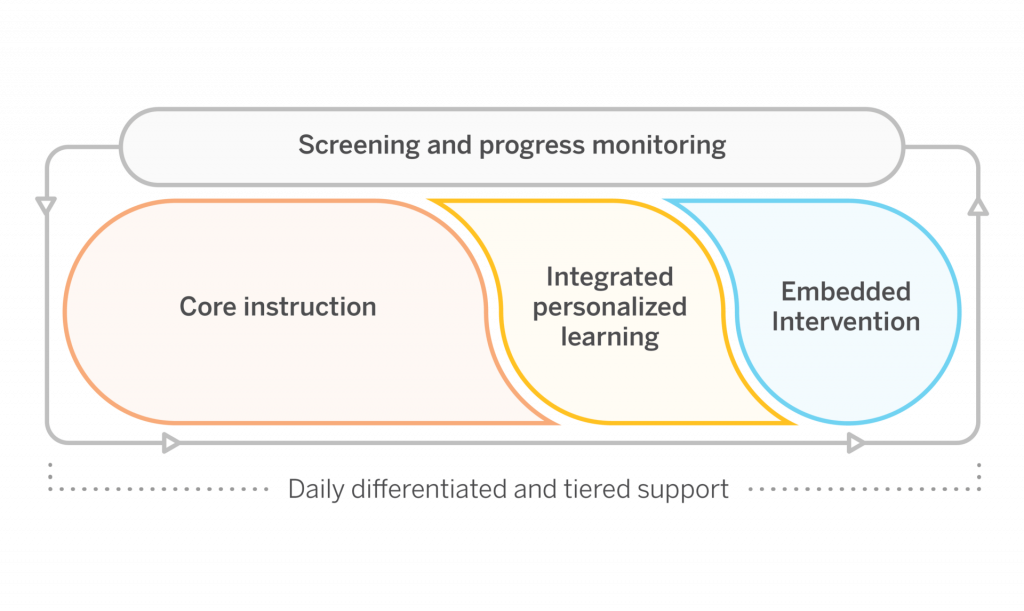
      Interactive lessons that stick

      Amplify Classroom’s free teaching resources go far beyond static worksheets or “entertaining” electronics. The platform’s library of more than 1,000 lessons features a wide range of free K–12 resources, including K–5 activities, middle school science explorations, and high school math challenges. Highlights include:

      • A grade 1 math activity called Leaping Lily Pads!, in which students help a purple frog hop toward a golden crown while making connections between subtracting 1 and subtracting 2—and practicing subtracting 2 and adding 2.
      • A grade 4 science activity called Food Chains, in which students create their own sequences of organisms, then line up those organisms to model how energy flows through an ecosystem, tracing that energy from start to finish.
      • Literacy practice that explores how the letter “y” sounds in words like myth.
      • Classic Desmos math challenges, like balancing raccoons on a seesaw against a 21-pound weight.
      • Hands-on Polypad manipulatives that let students experiment with tangrams, grids, and colorful geometric shapes.

      These types of activities are not just engaging in the moment. They can also set the stage for lifelong math enjoyment. “I’ve been wary about making my kids not hate math,” says kindergarten teacher Martin Joyce. “No ‘drill-n-kill.’ [Now] they’re asking if they can do math on the computer before bed!”

      What you can do with these free resources

      Once you create a free teacher account, you can:

      • Teach more than 1,000 free interactive lessons across math, literacy, and science.
      • Customize any premade lesson or build your own with the drag-and-drop editor.
      • Monitor student thinking in real time with intuitive dashboards.
      • Share snapshots of student work—names optional—to prompt discussion and highlight ideas.
      • Control the pacing of lessons, pausing to dive deeper into a concept or syncing everyone to the same spot.

      Here’s how it works in practice:

      1. Find a lesson. Browse by subject, grade level, or topic until you land on one that fits your plan for the day.
      2. Share it with your class. Assign the activity so students can join from their own devices.
      3. Teach and adapt in the moment. Use the dashboard to see student thinking in real time, highlight responses, and pace the lesson as you go.

      Grade 5 teacher Traci Jackson saw how these K–5 activities boosted collaboration and learning in her class: “After an audible groan when the activity was paused, students made sense of ordered pairs through a purposeful Amplify Classroom experience. One student pair wrote without any prompting!”

      More to explore

      • Explore Amplify Classroom, the free platform for grades K–12.
      • Learn how Amplify Classroom is supporting teachers across math, literacy, and science.
      • Find free professional learning resources for educators and free activities for students in our Problem-Based Learning Starter Pack.

      Inspiring the next generation of Oklahoma scientists, engineers, and curious citizens

      Amplify Science is an engaging new core curriculum designed for three-dimensional, phenomena-based learning.

      A powerful partnership

      Amplify Science was developed by the science education experts at UC Berkeley’s Lawrence Hall of Science and the digital learning team at Amplify.

      Our Instructional Model

      The Amplify Science program is rooted in the proven, research-based pedagogy of Do, Talk, Read, Write, Visualize. Here’s how each element works:

      DO
      First-hand investigations are an important part of any science classroom, and Amplify Science has students getting hands-on in every unit, from building models of protein molecules to experimenting with electrical systems.

      TALK
      Student-to-student discourse and full class discussions are an integral part of the program. Students are provided with numerous opportunities to engage in meaningful oral scientific argumentation, all while fostering a collaborative classroom environment.

      READ
      Students read scientific articles, focusing their reading activities on searching for evidence related to their investigation, and importantly, on asking and recording questions as they read through fascinating texts on 21st-century topics.

      WRITE
      Following real-world practices, students write scientific arguments based on evidence they’ve collected, making clear their reasoning about how a given piece of evidence connects to one of several claims.

      VISUALIZE
      By manipulating digital simulations and using modeling tools to craft visualizations of their thinking— just as real scientists and engineers do—students take their learning far beyond the confines of what they can physically see in the classroom in an exciting and authentic way.

      Resources to support your review

      Remote and hybrid learning supports

      Oklahoma remote and hybrid overview video

      Amplify has launched a new remote learning solution called Amplify Science@Home. Intended to make extended remote learning and hybrid learning easier, Amplify Science@Home includes two useful options for continuing instruction: @Home Videos and @Home Units. 

      Amplify Science @Home Videos are recordings of real Amplify Science teachers teaching the lessons. For those teachers who are unable to meet synchronously with their students, the recorded lessons are a great way to keep their students on track and engaged with Amplify Science while at home. These videos will be produced for all K–5 units, and for the first four units of each 6–8 grade level. Their release will be rolling, beginning in August.   

      Amplify Science@Home Units are modified versions of Amplify Science units, strategically designed to highlight key activities from the program. The @Home Units take significantly less instructional time than the complete Amplify Science program and allow students to engage with science at home. @Home Units will be developed for all Amplify Science K–8 units. Each @Home unit includes:

      • Teacher overviews explaining how to use the materials, including suggestions for enhancing the @Home Units if synchronous learning or in-class time with students is available.
      • Overviews to send home to families.

      Student materials are available in two formats:

      • @Home Slides (PDF/PPT) + Student Sheets (PDF) for students with access to technology at home.
      • Downloadable @Home Packets (PDF) for students without access to technology at home.

      Download the Remote and hybrid learning guide.

      What’s included

      Flexible resources that work seamlessly together

      Science articles
      The middle school science articles serve as sources for evidence collection and were authored by science and literacy experts at the Lawrence Hall of Science.

      Student Investigation Notebooks
      Available for every unit, the Student Investigation Notebooks provide space for students to:

      • Record data
      • Reflect on ideas from texts and investigations
      • Construct explanations and arguments

      Available with full-color article compilations for middle school units.

      Digital student experience
      Students access the digital simulations and modeling tools, as well as lesson activities and assessments, through the digital student experience. Students can interact with the digital student experience as they:

      • Conduct hands-on investigations
      • Engage in active reading and writing activities
      • Participate in discussions
      • Record observations
      • Craft end-of-unit scientific arguments

      Teacher’s Guides
      Available digitally and in print, the Teacher’s Guides contain all of the information teachers need to facilitate classroom instruction, including:

      • Classroom Slides
      • Detailed lesson plans
      • Unit and chapter overview documentation
      • Differentiation strategies
      • Standards alignments
      • In-context professional development

      Hands-on materials kits
      Hands-on learning is at the heart of Amplify Science. Each unit kit contains:

      • Consumable and non-consumable hands-on materials
      • Print classroom display materials
      • Premium print materials for student use (sorting cards, maps, etc.)

      Scope and sequence

      GRADE
      UNIT
      Kindergarten
      • Needs of Plants and Animals
      • Pushes and Pulls
      • Sunlight and Water
      Grade 1 
      • Animal and Plant Defenses
      • Light and Sound
      • Spinning Earth
      Grade 2 
      • Plant and Animal Relationships
      • Properties of Materials
      • Changing Landforms
      Grade 3 
      • Balancing Forces
      • Inheritance and Traits
      • Environments and Survival
      • Weather and Climate
      Grade 4 
      • Energy Conversions
      • Vision and Light
      • Earth’s Features
      • Waves, Energy, and Information
      Grade 5 
      • Patterns of Earth and Sky
      • Modeling Matter
      • The Earth System
      • Ecosystem Restoration
      Grade
      Units

      Grade 6

      • Launch: Microbiome
      • Metabolism
      • Metabolism Engineering Internship
      • Thermal Energy
      • Plate Motion
      • Plate Motion Engineering Internship
      • Rock Transformations
      • Weather Patterns
      • Ocean, Atmosphere, and Climate

      Grade 7

      • Launch: Harnessing Human Energy
      • Phase Change
      • Phase Change Engineering Internship
      • Magnetic Fields
      • Earth’s Changing Climate
      • Earth’s Changing Climate Engineering Internship
      • Chemical Reactions
      • Populations and Resources
      • Matter and Energy in Ecosystems

      Grade 8

      • Launch: Geology on Mars
      • Earth, Moon, and Sun
      • Light Waves
      • Force and Motion
      • Force and Motion Engineering Internship
      • Traits and Reproduction
      • Natural Selection
      • Natural Selection Engineering Internship
      • Evolutionary History

      Oklahoma Academic Standards for Science coverage

      Amplify Science was designed from the ground up to meet the Next Generation Science Standards (NGSS), and the Oklahoma Academic Standards for Science (OASS) are closely aligned to the NGSS at K-8. The guidance below is meant to provide support for integrating additional activities that support full coverage of the OASS. You can view the full K–8 OASS correlation here.

      Organized by grade level, each section below will outline:

      • additional activities that support 100% alignment to the Oklahoma Academic Standards for Science; 
      • the standard being addressed with the activities; 
      • the recommended placement of the activities within a specific Amplify Science unit; and 
      • PDFs of any accompanying materials that are necessary to implement the activities. 

      Standard: 1.ESS3.1: Communicate solutions that will reduce the impact of humans on the land, water, air, and/or other living things in the local environment.

      Recommended placementAnimal and Plant Defenses unit, Chapter 1

      MaterialsThe Student Book Investigating Monarchs from the unit Needs of Plants and Animals

      Investigating Monarchs emphasizes the needs of monarch caterpillars and butterflies and shows what happens when these animals are not able to meet their needs. The book first introduces the life cycle of monarchs, explaining that monarch caterpillars must eat milkweed to survive and change into butterflies. Their summer habitat must have milkweed. The butterflies then migrate a long distance, from the United States to a forest in the mountains of Mexico, where they take shelter in the trees. Their winter habitat must have trees. Scientists discovered that the monarch population in Mexico was greatly reduced because people were cutting down the trees. The forest was then protected, but the monarch population did not recover as expected. Scientists in the United States found evidence that this was because fields with milkweed are being replaced by farms and buildings. This book could be read with the class either before or after Chapter 1 of the Animal and Plant Defenses unit, which focuses on what plants and animals need to do to survive. Students could be asked to reflect on what the monarchs need to survive (including food and shelter), and how human activities impacted the monarchs’ ability to meet those needs. After reading the book, students could brainstorm ideas for how to reduce the impact of humans on the local environment.

      Standard: MS-PS4-2: Develop and use a model to describe that waves are reflected, absorbed, or transmitted through various materials.

      Recommended placementMetabolism unit, Lesson 3.3, addition to Activity 5 

      Materials“What Eyes Can See” science article

      As students investigate metabolism and the body systems, the article “What Eyes Can See” should be assigned to deepen their understanding of information processing and sense receptors and connect that understanding to the emerging idea of the interaction of waves with various materials. The article explores how the only thing we can really see is light. Light travels from a light source to the eye, passing through some materials and bouncing off others. Tiny organs inside the eye called rods and cones absorb energy from light, making vision possible. These interactions between light and materials determine our visible world. 

      Instructions:

      Download the PDF “What Eyes Can See” above and remind students of the Active Reading Guidelines. Before students read the article, invite them to share prior experiences. For example, “Have you ever had an experience where something looked different in one kind of light than in another kind of light? Or where something seemed to appear or disappear when the light changed?”

      Standard: MS-PS3-1: Construct and interpret graphical displays of data to describe the relationships of kinetic energy to the mass of an object and to the speed of an object.

      Recommended placementHarnessing Human Energy unit, Lesson 1.4, after Activity 4 

      MaterialsForce and Motion SimulationActivity instructions and copymasters

      In this activity, students use the Force and Motion Simulation to investigate the relationship between kinetic energy, mass, and velocity. 

      Instructions

      Download the PDF linked above for the Lesson Guide and copymasters needed for the activity. Note that this investigation is typically implemented during the Force and Motion unit. This means the Lesson Guide will contain some incongruous labeling (e.g., unit name), as well as instructions that are out of context and unnecessary for the purposes of addressing this standard at grade 7. We suggest skipping to step 4 of the Instructional Guide to avoid some of this. Your students will get additional exposure to this activity, and indeed the standard as a whole, when they get to the Force and Motion unit in grade 8.

      Standards:

      • MS-PS2-3: Ask questions about data to determine the factors that affect the strength of electric and magnetic forces.
      • MS-PS2-5: Conduct an investigation and evaluate the experimental design to provide evidence that fields exist between objects exerting forces on each other even though the objects are not in contact.

      Recommended placementForce and Motion unit, after Lesson 1.5 

      MaterialsFlextension PDF

      This hands-on activity builds on and reinforces students’ understanding of forces that act at a distance, with a focus on electrostatic force. Students explore electrostatic forces, prompted by a set of challenges that they try to accomplish. Next, students generate scientific questions based on their observations. Electrostatic force is less predictable and consistent than magnetic force, and investigating it can be both challenging and intriguing. The purpose of this lesson is for students to gain firsthand experience with electrostatic force and to gain experience generating scientific questions based on observations. You might choose to include this Flextension if you would like your students to have more exposure to electrostatic force, and if you would like to challenge your students to explore and ask questions about a challenging type of force. 

      Instructions:

      Download the PDF linked above for a detailed Lesson Guide and the copymasters associated with the activity. Note that this activity is typically implemented as an add-on Flextension during the Magnetic Fields unit. This means that you will see some information that is out of context (e.g., placement information, unit title), but the activity itself also works for the purposes of the Force and Motion unit. If you have any questions, please reach out to our support team via the chat icon in your account or help@amplify.com

      Explore the Digital Teacher’s Guide

      When you’re ready to review, click the orange button below and use your provided login credentials to access the Amplify Science Digital Teacher’s Guide.

      To help familiarize yourself with navigating the digital Teacher’s Guide, watch our navigational guide videos:

      Grades K–5:

      Grades 6–8:

      Looking for help?

      Powerful (and free!) pedagogical support

      Amplify provides a unique kind of support you won’t find from other publishers. We have developed an educational support team of former teachers and administrators who provide pedagogical support for every Amplify curriculum, assessment, and intervention program. This service is completely free for all educators who are using our programs and includes:

      • Guidance for developing lesson plans and intervention plans
      • Information on where to locate standards and other planning materials
      • Recommendations and tips for day-to-day teaching with Amplify programs
      • Support with administering and interpreting assessment data and more

      To reach our pedagogical team, use our live chat within your program, call (800) 823-1969, or email edsupport@amplify.com

      Timely technical and program support

      Our technical and program support is included and available from 7 a.m. to 7 p.m. ET, Monday through Friday, through a variety of channels, including a live chat program that enables teachers to get immediate help in the middle of the school day.

      For your most urgent questions:

      • Use our live chat within your program
      • Call our toll-free number: (800) 823-1969

      For less urgent questions:

      Contact us

      Contact your South Carolina team representatives:
      Jeff Rutter
      Field Manager
      jrutter@amplify.com
      (727) 512-8440

      Cathy McMillan
      Senior Account Executive
      cmcmillan@amplify.com
      (904) 465-9904

      Inspiring the next generation of South Carolina scientists, engineers, and curious citizens

      Amplify Science is an engaging new core curriculum designed for three-dimensional, phenomena-based learning.

      Amplify Science was developed by the science education experts at UC Berkeley’s Lawrence Hall of Science and the digital learning team at Amplify.

      Collage showing students engaged in classroom science activities and two scientific illustrations: a cheetah in foliage and a diagram of clouds and raindrops above a hill.

      Our Instructional model

      The Amplify Science program is rooted in the proven, research-based pedagogy of Do, Talk, Read, Write, Visualize. Here’s how each element works:

      DO
      First-hand investigations are an important part of any science classroom, and Amplify Science has students getting hands-on in every unit, from building models of protein molecules to experimenting with electrical systems.

      TALK
      Student-to-student discourse and full class discussions are an integral part of the program. Students are provided with numerous opportunities to engage in meaningful oral scientific argumentation, all while fostering a collaborative classroom environment.

      READ
      Students read scientific articles, focusing their reading activities on searching for evidence related to their investigation, and importantly, on asking and recording questions as they read through fascinating texts on 21st-century topics.

      WRITE
      Following real-world practices, students write scientific arguments based on evidence they’ve collected, making clear their reasoning about how a given piece of evidence connects to one of several claims.

      VISUALIZE
      By manipulating digital simulations and using modeling tools to craft visualizations of their thinking— just as real scientists and engineers do—students take their learning far beyond the confines of what they can physically see in the classroom in an exciting and authentic way.

      Explore the Digital Teacher’s Guide

      When you’re ready to review, click the orange button below and use your provided login credentials to access the Amplify Science Digital Teacher’s Guide. If you need login credentials, contact Jeff Rutter, jrutter@amplify.com.

      Resources to support your review

      Scope and sequence

      GRADE
      UNIT
      Kindergarten
      • Needs of Plants and Animals
      • Pushes and Pulls
      • Sunlight and Water
      Grade 1 
      • Animal and Plant Defenses
      • Light and Sound
      • Spinning Earth
      Grade 2 
      • Plant and Animal Relationships
      • Properties of Materials
      • Changing Landforms
      Grade 3 
      • Balancing Forces
      • Inheritance and Traits
      • Environments and Survival
      • Weather and Climate
      Grade 4 
      • Energy Conversions
      • Vision and Light
      • Earth’s Features
      • Waves, Energy, and Information
      Grade 5 
      • Patterns of Earth and Sky
      • Modeling Matter
      • The Earth System
      • Ecosystem Restoration
      Grade
      Units

      Grade 6

      • Launch: Microbiome
      • Metabolism
      • Metabolism Engineering Internship
      • Thermal Energy
      • Plate Motion
      • Plate Motion Engineering Internship
      • Rock Transformations
      • Weather Patterns
      • Ocean, Atmosphere, and Climate

      Grade 7

      • Launch: Harnessing Human Energy
      • Phase Change
      • Phase Change Engineering Internship
      • Magnetic Fields
      • Earth’s Changing Climate
      • Earth’s Changing Climate Engineering Internship
      • Chemical Reactions
      • Populations and Resources
      • Matter and Energy in Ecosystems

      Grade 8

      • Launch: Geology on Mars
      • Earth, Moon, and Sun
      • Light Waves
      • Force and Motion
      • Force and Motion Engineering Internship
      • Traits and Reproduction
      • Natural Selection
      • Natural Selection Engineering Internship
      • Evolutionary History

      South Carolina College- and Career-Ready Science Standards 2021

      Amplify Science was designed from the ground up to meet the Next Generation Science Standards (NGSS), and the South Carolina College- and Career-Ready Science Standards 2021 are closely aligned to the NGSS at K-8. The guidance below is meant to provide support for integrating additional companion activities that support full coverage of the South Carolina College- and Career-Ready Science Standards 2021.

      Organized by grade level, each section below will outline:

      • Additional activities that support 100% alignment to the  South Carolina College- and Career-Ready Science Standards 2021; 
      • The standard being addressed with the activities; 
      • The recommended placement of the activities within a specific Amplify Science unit; and 
      • PDFs of any accompanying materials that are necessary to implement the activities.

      Standard: MS-PS1-4: Develop a model that predicts and describes changes in particle motion, temperature, and state of a pure substance when thermal energy is added or removed.
      Recommended placementThermal Energy unit, Lesson 4.4, addition to Activity 3
      Materials“Liquid Oxygen”
      By reading the article “Liquid Oxygen,” which describes how the relationship between attraction and kinetic energy determines when a substance changes phase, students extend their understanding of the possible effects of adding or removing thermal energy to include changes in state (phase). Oxygen is one of the most common elements in the world, but most people are only familiar with oxygen in the gas phase. Because oxygen molecules are only weakly attracted to one another, condensing oxygen is difficult. This article introduces students to molecular attraction and discusses its role in phase change, including how it can be used to turn oxygen from a gas to a liquid.
      Instructions:
      Download PDFs of the “Liquid Oxygen” and distribute it to students. Before they begin reading, remind students of the Active Reading Guidelines. 

      Standard: MS-PS4-2: Develop and use a model to describe that waves are reflected, absorbed, or transmitted through various materials.
      Recommended placementWeather Patterns unit, Lesson 4.4, addition to Activity 3
      Materials“Harvesting Sunlight”, “Why No One in Space Can Hear You Scream” and “Making Waves at Swim Practice”
      After investigating weather patterns, which includes a focus of the effects of energy from sunlight, students extend their learning about light by reading three articles about light and other waves.
      “Harvesting Sunlight:” Students read this article to learn about the types of light from the sun that plants use for photosynthesis. The article describes how the sun emits all types of light, but plants can only use certain types of visible light for photosynthesis, mostly red and blue light. Plants also absorb other types of light, and these types of light affect plants in different ways. Students use this information to gather evidence that there are different types of light that can affect a material in different ways.
      “Why No One in Space Can Hear You Scream:” Students read this article to learn about how waves are transmitted. Explosions that would be deafening on Earth are silent in space. This is because sound is produced by sound waves and, unlike light waves, sound waves need matter to travel through. Reading about this phenomenon helps students understand the similarities and differences between mechanical and electromagnetic waves.
      “Making Waves at Swim Practice:” A practice for the school swim team provides an everyday context for discussing light waves and sound waves in this engaging article. First, the article explores sound waves traveling through different materials–the air, the water of the pool, and even a metal poolside bench. Students discover that sound waves travel at different speeds in different materials. The later part of the article discusses light waves, which also travel at different speeds in different materials. As light waves move from one material to another, they change speed and bend. This bending of light waves is called refraction, and it explains why objects that are partly in the water and partly out of the water (such as the legs of a person sitting on the side of a pool) appear ripply and bent.
      Instructions:
      Plan one class period for each article. Download PDFs of the  “Harvesting Sunlight,” “Why No One in Space Can Hear You Scream,” and “Making Waves at Swim Practice” articles. For each article, before students begin reading, preview the article and discuss what students already know and what they wonder about the topic, then remind students of the Active Reading Guidelines. 

      Standard: MS-PS2-3: Ask questions about data to determine the factors that affect the strength of electric and magnetic forces. MS-PS2-5: Conduct an investigation and evaluate the experimental design to provide evidence that fields exist between objects exerting forces on each other even though the objects are not in contact.
      Recommended placementHarnessing Human Energy unit, Lesson 3.4, after Activity 1
      Materials“Earth’s Geomagnetism” and “Painting with Static Electricity”
      After concluding their investigations of energy transfers and conversions, students read two articles that introduce the topic of forces that act at a distance.
      “Earth’s Geomagnetism:” What makes a compass needle point north, no matter what? This article introduces students to Earth’s geomagnetic field and the field lines scientists use to show its direction.
      “Painting with Static Electricity:” This article gives students the opportunity to learn about electrostatic fields and forces in the context of spray painting without making a mess. Electrostatic painting systems use electrostatics to draw spray paint toward the object being painted, and nowhere else. Painters charge the object they are painting with a negative charge and the paint with a positive charge. The opposite charges are attracted to one another, causing the paint to move toward the object. This surprising use of electrostatics saves time and paint and keeps things tidy!
      Instructions
      Plan one class period for each article. Download PDFs of the “Earth’s Geomagnetism” and “Painting with Electricity” articles. For each article, before students begin reading, preview the article and discuss what students already know and what they wonder about the topic, then remind students of the Active Reading Guidelines. 

      What’s included

      Science articles
      The middle school science articles serve as sources for evidence collection and were authored by science and literacy experts at the Lawrence Hall of Science.

      Illustration of the indirect effects of overfishing on northern benguela jelly populations displayed on a laptop screen.

      Student Investigation Notebooks
      Available for every unit, the Student Investigation Notebooks provide space for students to:

      • Record data
      • Reflect on ideas from texts and investigations
      • Construct explanations and arguments

      Available with full-color article compilations for middle school units.

      Collection of educational books from 'amplify science' on topics including ocean atmosphere, matter and energy ecosystems, and insect interactions, displayed in various angles.

      Digital student experience
      Students access the digital simulations and modeling tools, as well as lesson activities and assessments, through the digital student experience. Students can interact with the digital student experience as they:

      • Conduct hands-on investigations
      • Engage in active reading and writing activities
      • Participate in discussions
      • Record observations
      • Craft end-of-unit scientific arguments
      A digital illustration showcasing a laptop and a tablet displaying complex data analysis software interfaces with graphs and heatmaps.

      Teacher’s Guides
      Available digitally and in print, the Teacher’s Guides contain all of the information teachers need to facilitate classroom instruction, including:

      • Classroom Slides
      • Detailed lesson plans
      • Unit and chapter overview documentation
      • Differentiation strategies
      • Standards alignments
      • In-context professional development
      A laptop displaying a website about Mars exploration with a brochure next to it. Both screens show Mars-related images.

      Hands-on materials kits
      Hands-on learning is at the heart of Amplify Science. Each unit kit contains:

      • Consumable and non-consumable hands-on materials
      • Print classroom display materials
      • Premium print materials for student use (sorting cards, maps, etc.)
      A perforated rectangular board, three small containers with different powders, a black battery holder with red wires, and three colored alligator clips are arranged on a white background.

      Remote and hybrid learning supports

      A person sitting at a desk using a laptop, with a bookshelf containing books, a fish tank, and a soccer ball nearby.

      Amplify has launched a new remote learning solution called Amplify Science@Home. Intended to make extended remote learning and hybrid learning easier, Amplify Science@Home includes two useful options for continuing instruction: @Home Videos and @Home Units. 

      Amplify Science @Home Videos are recordings of real Amplify Science teachers teaching the lessons. For those teachers who are unable to meet synchronously with their students, the recorded lessons are a great way to keep their students on track and engaged with Amplify Science while at home. These videos will be produced for all K–5 units, and for the first four units of each 6–8 grade level. Their release will be rolling, beginning in August.   

      Amplify Science@Home Units are modified versions of Amplify Science units, strategically designed to highlight key activities from the program. The @Home Units take significantly less instructional time than the complete Amplify Science program and allow students to engage with science at home. @Home Units will be developed for all Amplify Science K–8 units. Each @Home unit includes:

      • Teacher overviews explaining how to use the materials, including suggestions for enhancing the @Home Units if synchronous learning or in-class time with students is available.
      • Overviews to send home to families.

      Student materials are available in two formats:

      • @Home Slides (PDF/PPT) + Student Sheets (PDF) for students with access to technology at home.
      • Downloadable @Home Packets (PDF) for students without access to technology at home.

      Download the Remote and hybrid learning guide.

      Looking for help?

      Powerful (and free!) pedagogical support

      Amplify provides a unique kind of support you won’t find from other publishers. We have developed an educational support team of former teachers and administrators who provide pedagogical support for every Amplify curriculum, assessment, and intervention program. This service is completely free for all educators who are using our programs and includes:

      • Guidance for developing lesson plans and intervention plans
      • Information on where to locate standards and other planning materials
      • Recommendations and tips for day-to-day teaching with Amplify programs
      • Support with administering and interpreting assessment data and more

      To reach our pedagogical team, use our live chat within your program, call (800) 823-1969, or email edsupport@amplify.com

      Timely technical and program support

      Our technical and program support is included and available from 7 a.m. to 7 p.m. ET, Monday through Friday, through a variety of channels, including a live chat program that enables teachers to get immediate help in the middle of the school day.

      For your most urgent questions:

      • Use our live chat within your program
      • Call our toll-free number: (800) 823-1969

      For less urgent questions:

      Contact us

      Contact your South Carolina team representatives:
      Jeff Rutter
      Field Manager
      jrutter@amplify.com
      (727) 512-8440

      Cathy McMillan
      Senior Account Executive
      cmcmillan@amplify.com
      (904) 465-9904