An open book on an orange background with origami planes and abstract illustrations of hands, light bulbs, and various doodles emerging from the pages.

High-quality instructional materials in action

What are high-quality instructional materials, and why do they matter? We’ve assembled resources for you to explore how to support your district or school in adopting a high-quality program.

Why high-quality instructional materials?

A growing body of research shows that, in addition to the influence of teachers, curriculum has a significant effect on student learning. Quality curriculum is also a great tool for teachers: It saves them time and enables them to focus on interacting with their students. See what the research says about high-quality instructional materials, or HQIM.

A teacher in a red shirt and glasses reading a book to a young girl in a classroom, with High Quality Instructional Materials on the wall behind them.
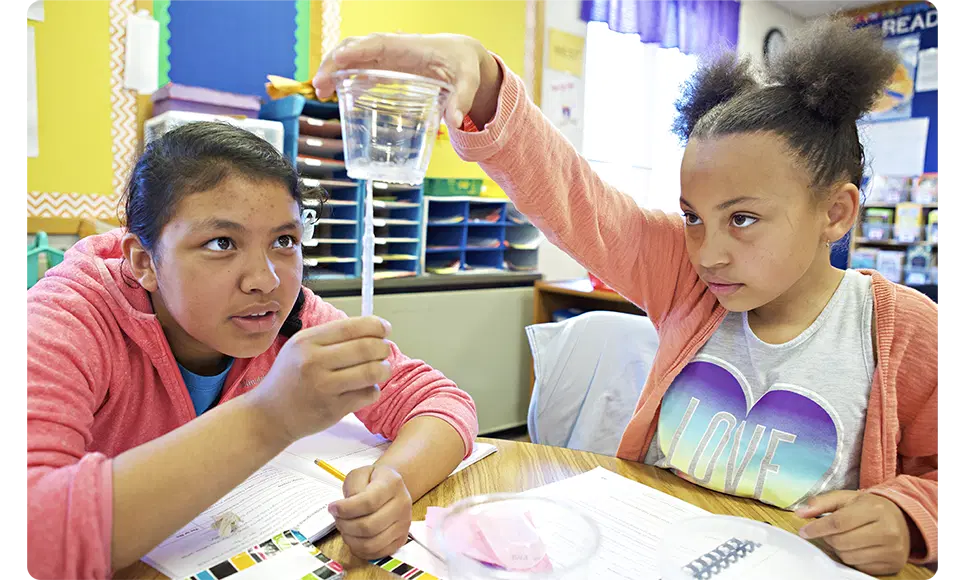
Two students engage in a science experiment in a classroom using high quality instructional materials, one holding a beaker above a petri dish as the other observes intently.

Five fundamentals of HQIM in action

Beyond all-green ratings from reviewers at EdReports.org or a Tier 1 designation from the Louisiana Department of Education, what does high-quality curriculum look like in real classrooms? How does it come to life for teachers and students? Here are five fundamentals of how we think about it at Amplify.

DECIDE: 6 tips for a successful curriculum adoption

Curriculum adoption is a complex process. You’ve got to evaluate multiple programs and build consensus among stakeholders—all while managing communication, scheduling, and people. Our new actionable guide with strategies from the field will help you keep your curriculum adoption process as smooth as possible.

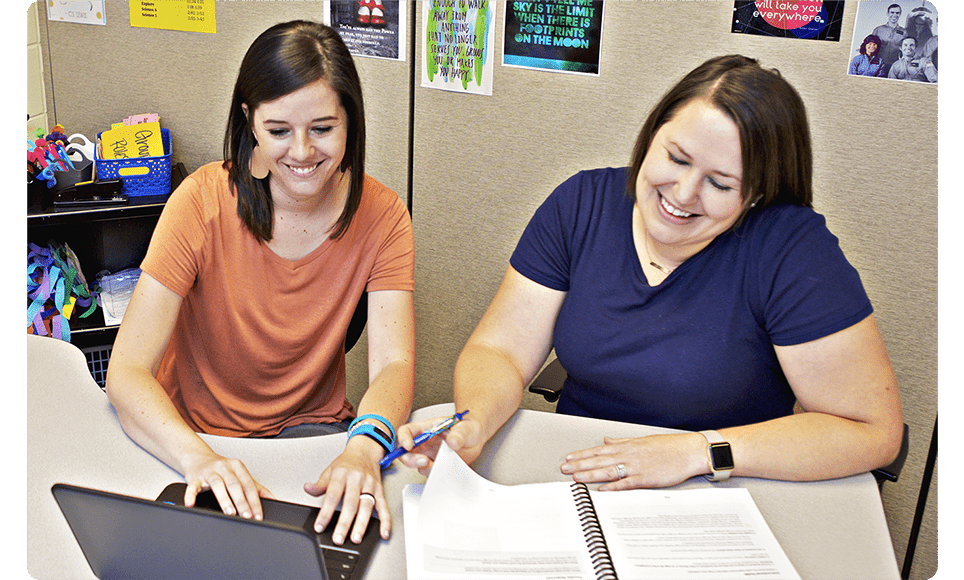
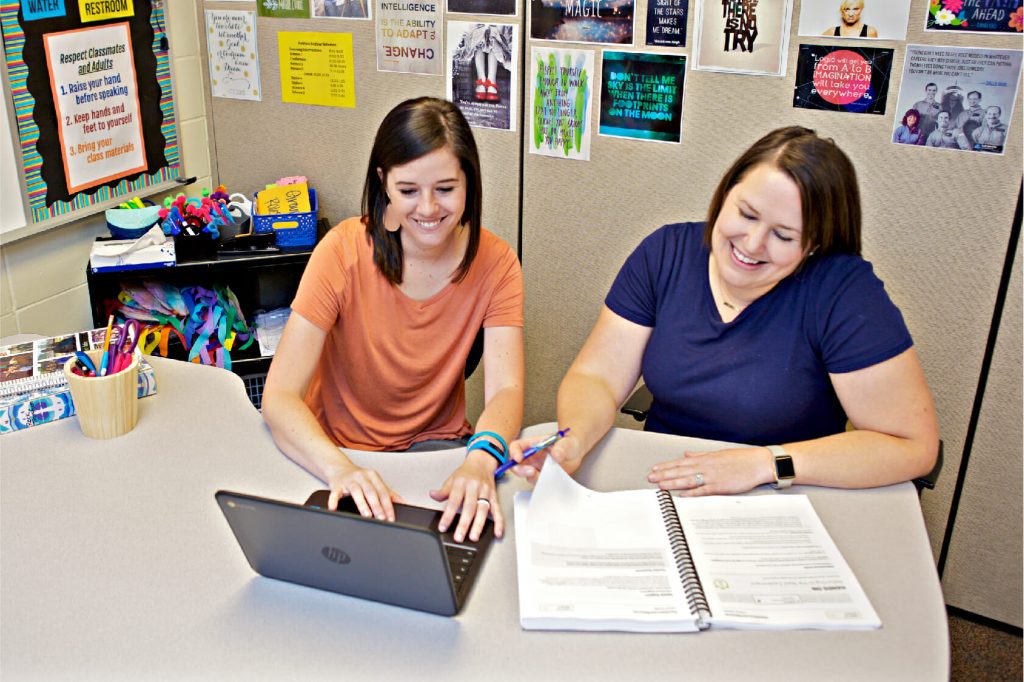
Two women in an office setting, smiling and working together with High Quality Instructional Materials, one using a laptop and the other writing in a notebook.

What do high-quality materials look like in action?

Every educator has a story about curriculum coming to life. We have stories, too, driven by our belief that all students deserve excellent curriculum. Check out our video and see what high-quality instructional materials mean to Amplify educators and staff.

Read about our all-green programs on EdReports.org.

See what the evaluators at EdReports have to say about Amplify’s high-quality curriculum.

Two students in school uniforms writing in notebooks at their desks in an Amplify education classroom, with other classmates in the background.
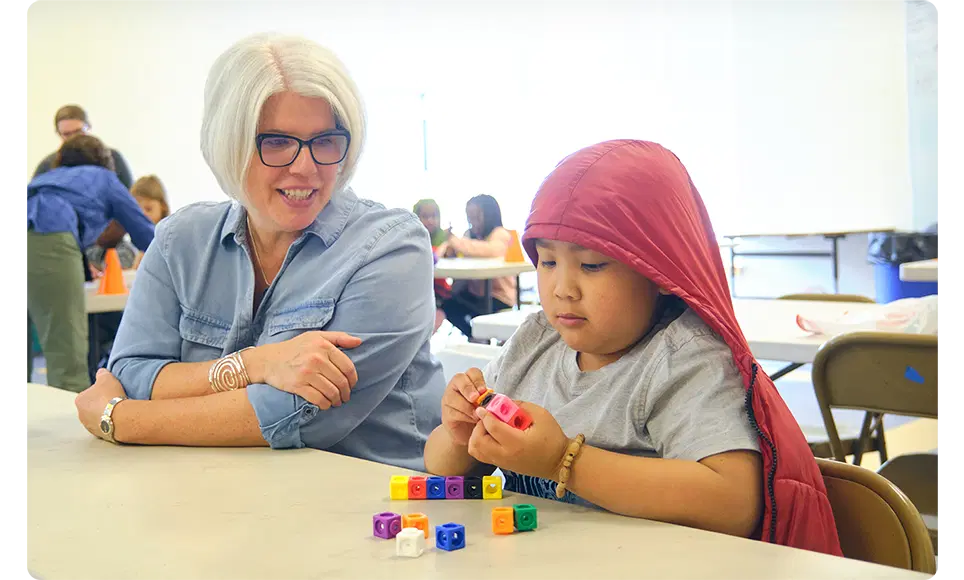
A woman in a blue shirt and glasses smiles while observing a young girl in a red headscarf playing with colorful blocks at a classroom table with High Quality Instructional Materials.

District leaders as science champions

The need to support science teaching and learning is more urgent than ever. Establishing science’s importance alongside ELA and mathematics will require leaders who champion it at the district leadership level. This guide will support you in leading these shifts, including evaluating and selecting high-quality instructional materials and creating the conditions for implementation success.

Sparking literacy success in Tennessee

Meet Kaleb.

Not that long ago, he couldn’t read. And now he’s a confident, engaged reader who wants to write his own stories.

What changed? Mr. Price, a caring educator, connected with Kaleb and joined him on his literacy journey.

Like Mr. Price, you’re changing lives and creating new futures for kids every single day—and we’re here to help you do that.

A woman with light brown hair, wearing a black top, white earrings, and a necklace, smiles in front of a blue background, embodying literacy success with her confident and approachable presence.
“If a student is not proficient in reading by the end of third grade, it is highly unlikely that they will become a proficient reader. Impacting students at a much younger age, in earlier grades is where we see [the greatest] success.”

Director, Project On Track

Providing structured practice, support, and guidance that makes a difference

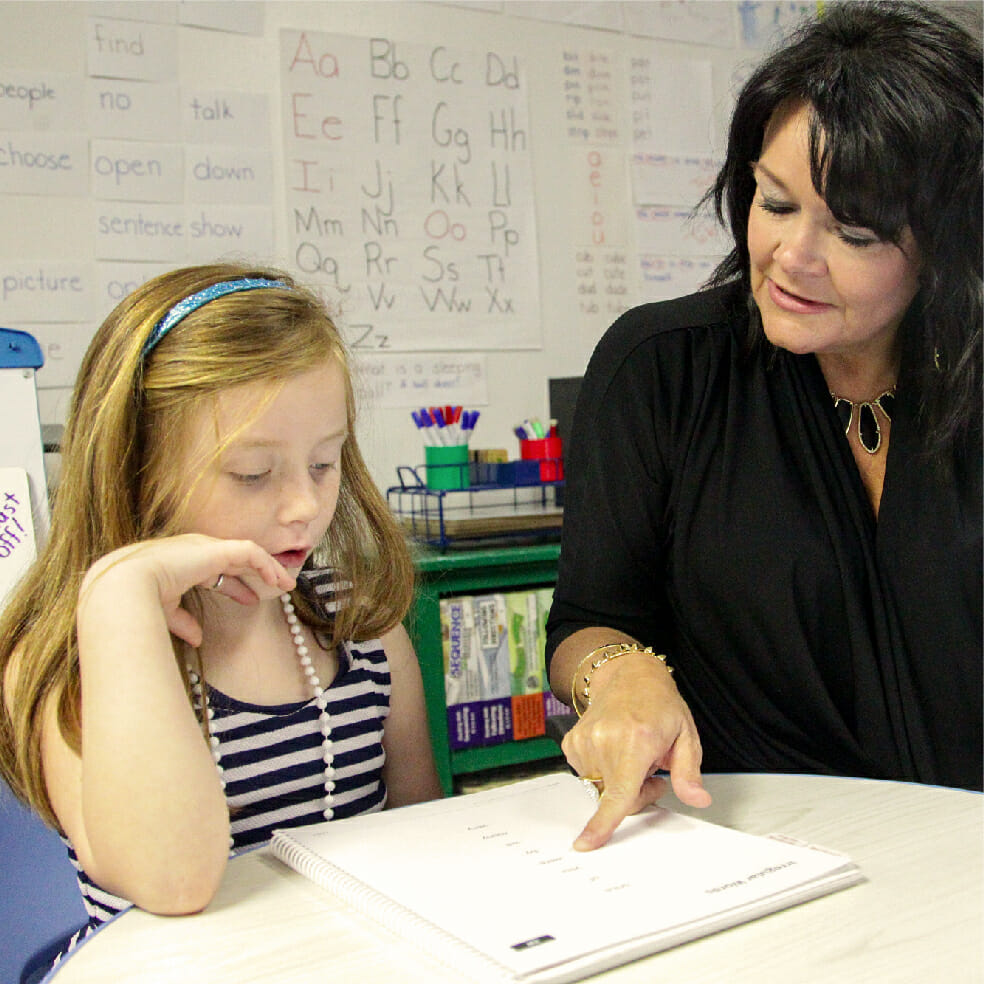
When students struggle with reading, their relationships with their teachers become more important than ever—and so does the support, instruction, and guidance you give them.

How can you take your students from not knowing the alphabet to decoding dozens of words in one school year? Research-backed intervention, remediation, and practice can certainly help. And so can Amplify.

A middle-aged man with short brown hair and a beard, wearing a navy suit, white shirt, and striped tie, smiles in an indoor setting, radiating confidence often seen in champions of literacy success.
“He’s able to read, and that’s something that sometimes we take for granted, but we have high illiteracy rates. He’s not going to be one of those [students]; he’s going to be a success story.”

Assistant Principal

Change lives forever with the Science of Reading

In making the shift to the Science of Reading, you can give every teacher and student what they need, and guarantee reading and literacy success. 

Think of how that would transform your school and district—and most importantly, your students’ lives.

CKLA_TNLandingPage_ELSGraphic_111422-01

Support every student with the only full Science of Reading-based literacy system

The Science of Reading tells us that learning to read is not a natural or automatic process. You see this every day—with students like Kaleb. Students with dyslexia. Students who haven’t gotten the explicit instruction, support, and guidance needed to experience real literacy success and joy.

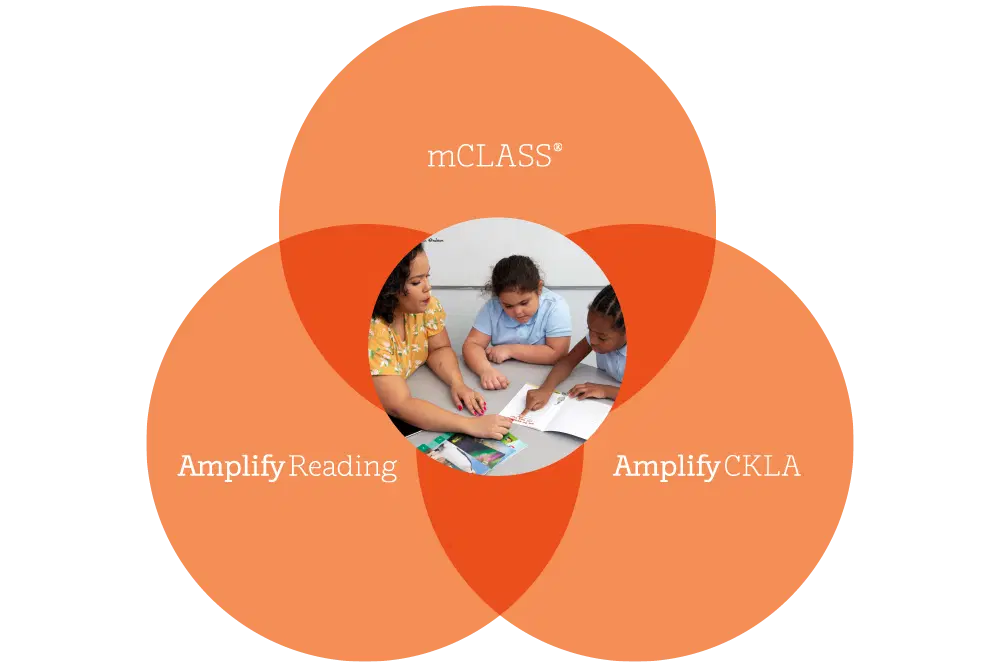
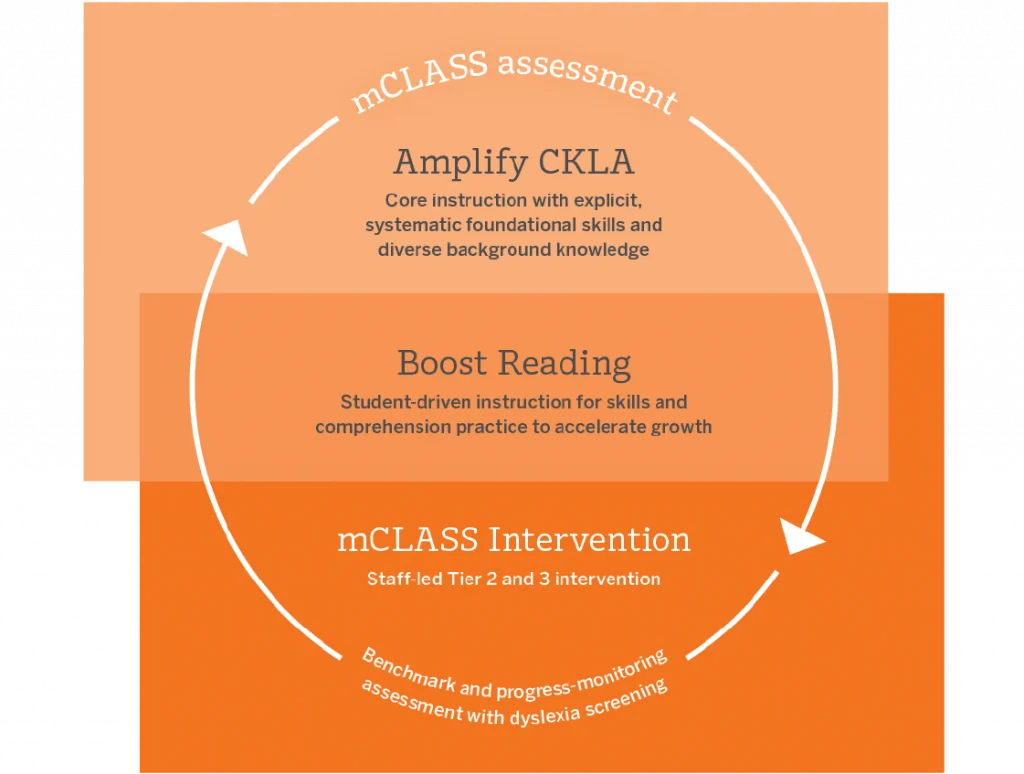
To be powerful and effective, and to help all students achieve success, a literacy system needs to bring together assessment, curriculum, intervention, and personalized learning. And Amplify has done exactly that with the only full Science of Reading suite, made up of Amplify Core Knowledge Language ArtsmCLASS®, and Boost Reading (formerly known as Amplify Reading).

Ready to take the next step?

Get in touch with one of our program experts to request a sample or demo.

Request a sample or demo!

Welcome, New Mexico state reviewers!

Thank you for taking the time to review Amplify’s K–8 science programs for New Mexico. This site provides resources to aid in your review so you can experience all that our high-quality instructional materials have to offer.  Simply click a grade level band below to get started.

Two boys in a classroom working on a laptop together, surrounded by notebooks and other students in the background.

Welcome, Ohio educators!

What should every teacher know about the Science of Reading?

We have disseminated all the research into practical pedagogical strategies you can implement in your classroom today. On this site, you will find a variety of resources to build your background knowledge of what the Science of Reading looks like in practice.

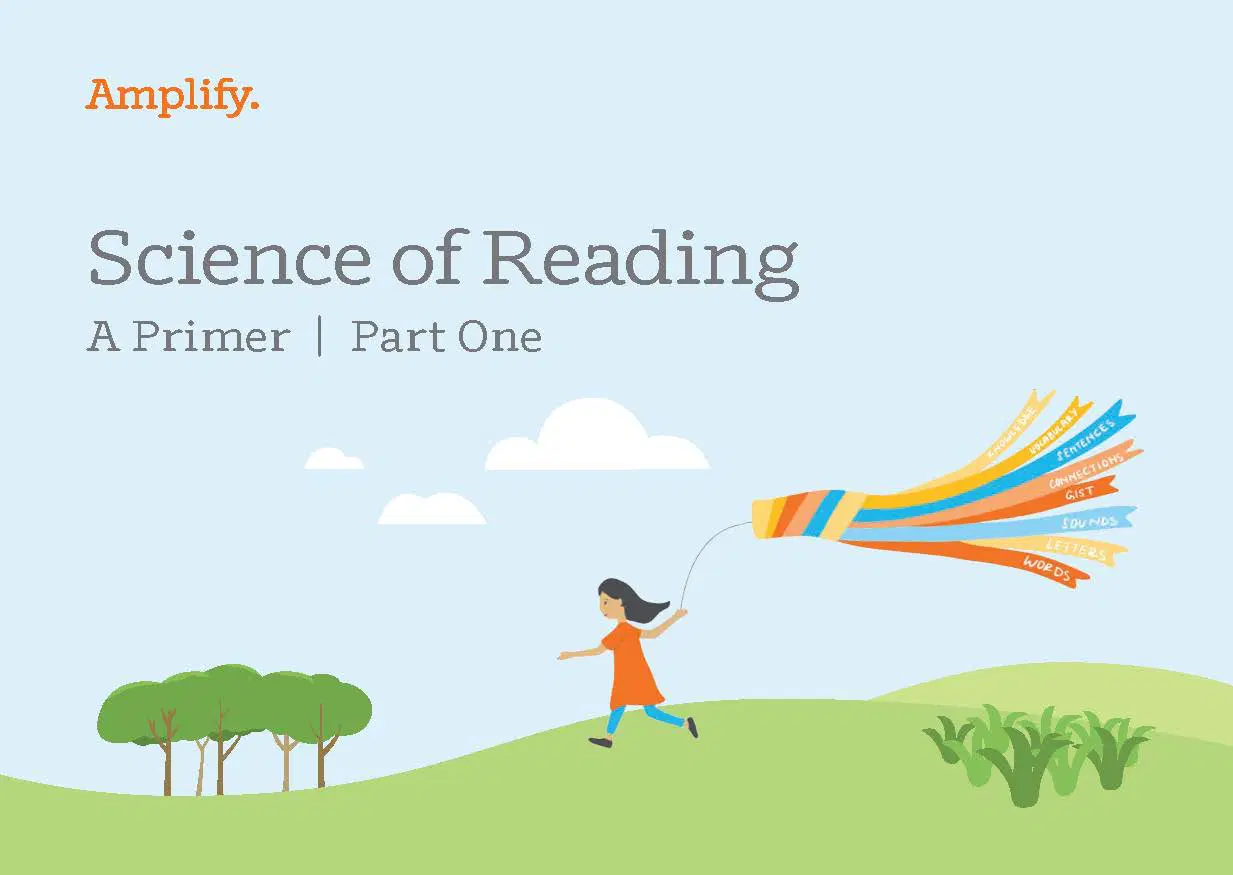
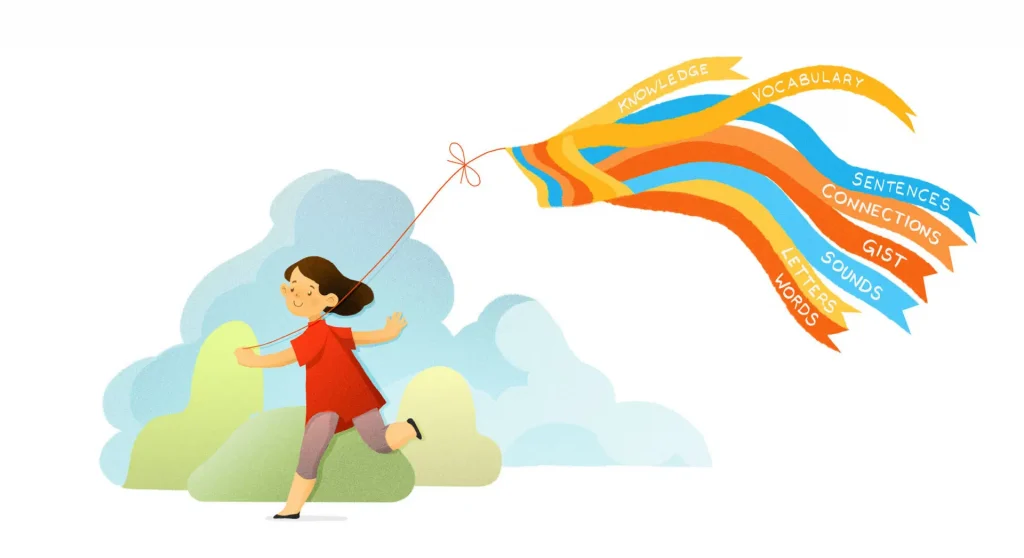
A student running on a grassy hill with a colorful kite streaming words like "sentence," "letters," and "words" in the sky.

“If a student is not proficient in reading by the end of third grade, it is highly unlikely that they will become a proficient reader. Impacting students at a much younger age, in earlier grades, is where we see [the greatest] success.”

—Debra R. Bentley

Director, Project On Track, Niswonger Foundation

Sparking literacy success

Meet Kaleb.

Not that long ago, he couldn’t read. And now he’s a confident, engaged reader who wants to write his own stories.

What changed? Mr. Price, a caring educator, connected with Kaleb and joined him on his literacy journey.

Like Mr. Price, you’re changing lives and creating new futures for kids every single day—and we’re here to help you do that.

Providing structured practice, support, and guidance that makes a difference

When students struggle with reading, their relationships with their teachers become more important than ever—and so does the support, instruction, and guidance you give them.

How can you take your students from not knowing the alphabet to decoding dozens of words in one school year? Research-backed intervention, remediation, and practice can certainly help. And so can Amplify.


“He’s able to read, and that’s something that sometimes we take for granted, but we have high illiteracy rates. He’s not going to be one of those [students]; he’s going to be a success story.”

—Casey Price

Assistant Principal, Blythe Bower Elementary, Cleveland, TN

Change lives forever with the Science of Reading

In making the shift to the Science of Reading, you can give every teacher and student what they need, and guarantee reading and literacy success.

Think of how that would transform your school and district—and most importantly, your students’ lives.

Support every student with the only full Science of Reading-based literacy system

The Science of Reading tells us that learning to read is not a natural or automatic process. You see this every day—with students like Kaleb. Students with dyslexia. Students who haven’t gotten the explicit instruction, support, and guidance needed to experience real literacy success and joy.

To be powerful and effective, and to help all students achieve success, a literacy system needs to bring together assessment, curriculum, intervention, and personalized learning. And Amplify has done exactly that with the only full Science of Reading suite, made up of Amplify Core Knowledge Language ArtsmCLASS®, and Boost Reading (formerly known as Amplify Reading).

Research and Efficacy

Using a fundamentally different approach to language arts, Amplify Core Knowledge Language Arts® (CKLA) is built on decades of early literacy research that demonstrates the importance of wide-ranging background knowledge and explicit and systematic instruction in foundational skills. Visit our research and efficacy page to learn more.

Ready to take the next step?

Get in touch with one of our program experts to request a sample or demo.

Request a sample or demo

Welcome, New Mexico state reviewers!

Thank you for taking the time to review Amplify’s K–8 science programs for New Mexico. This site provides resources to aid in your review so you can experience all that our high-quality instructional materials have to offer.  Simply click a grade level band below to get started.

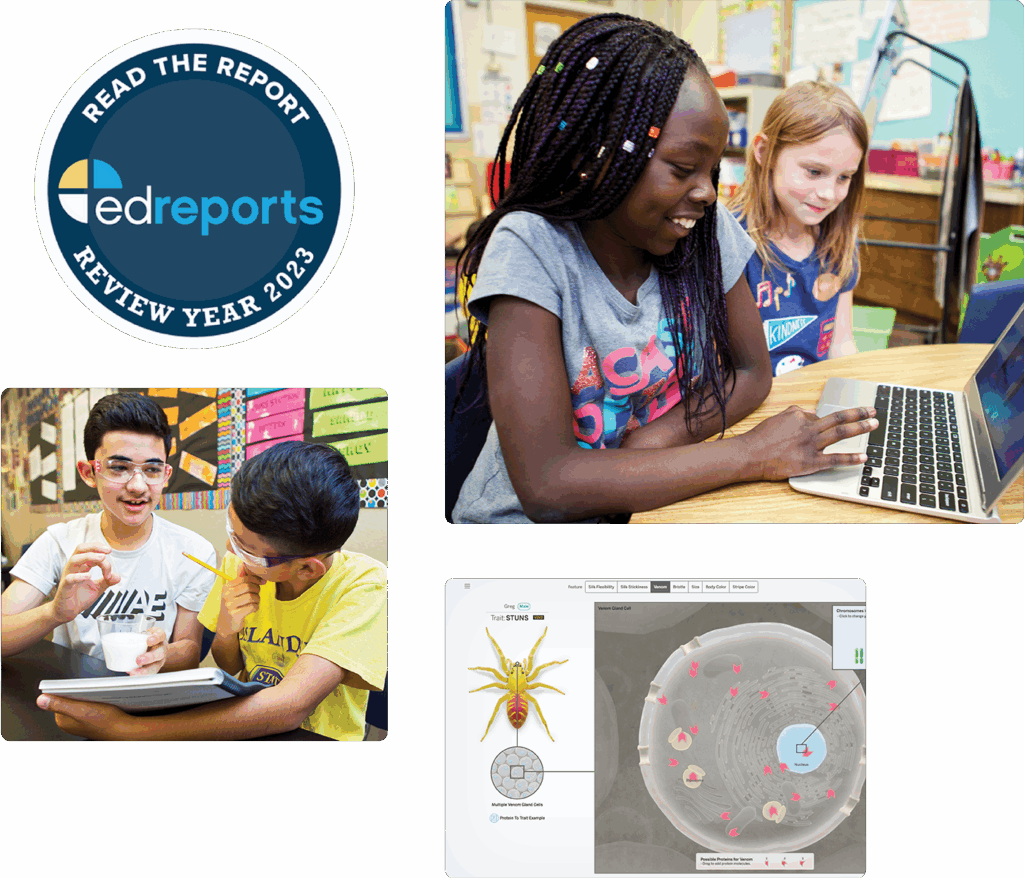
EdReports logo, two students working on a laptop, two students discussing with a tablet, and a close-up of a scientific diagram with a spider and cell structure.

Start your review of Amplify Science K–8 for New Mexico

Thank you for taking the time to review Amplify’s K–8 science programs for New Mexico schools. This site will allow your committees to easily access grade-level teacher and student resources digitally, and experience all that our high-quality instructional materials have to offer.

Amplify Science for grades K–8 has been rated all-green by EdReports. Read the review on EdReports.

Don’t worry if you missed the live lesson webinar; you can click on your grade level below and use the “Live Investigations Recording” in your classroom.

Live Investigations Webinar Series" logo with a small orange TV icon above the word "Live" and blue and gray text on a white background.
Four children gather around a table, closely examining a small object with interest, while holding papers and notebooks in a classroom setting.

Amplify Science overview webinars K–8

Listen to an engaging product overview of Amplify Science to see what all the buzz is about!

Webinar recordings:

K–5 Amplify Science Overview

6–8 Amplify Science Overview

Looking ahead for next year’s math adoption?

Click here to learn more about Amplify Desmos Math!

Contact us

Support is always within reach. Our team is dedicated to supporting science teachers and districts across New Mexico and can be reached at any time by email or phone.

Smiling woman with short blonde hair wearing a dark top, posed against a light-colored, textured background.

Katie Gentry-Funk

Senior Account Executive
Districts over 2,100 students
(505) 301-7382
kgentry-funk@amplify.com

A woman with long blonde hair, wearing a black and white checkered top, smiling in front of a plain light background.

Dana Blumberg

Account Executive
Districts under 2,100 students &
Archdiocese of Santa Fe schools
(847) 528-1822
dblumberg@amplify.com

Welcome to Amplify CKLA!

Amplify CKLA is the only Oregon-approved elementary ELA curriculum truly built on the Science of Reading.

Not only that, it helps all teachers implement the Oregon English Language Arts and Literacy Standards by translating the science of reading into strong instructional resources. As a result, teachers can fully focus on their students and the kind of teaching they love.

If this is your first stop on your virtual caravan, start with the video presentations below.

Watched them already? Click here to skip ahead.

Illustration featuring diverse cultural and historical elements like an african woman, an egyptian sphinx, a space rocket, and urban and natural landscapes under a starry sky.

Virtual Caravan Stop

Amplify CKLA for Grades K–2

After watching the K–2 video below, scroll down to learn even more, download resources, and access a demo.

Amplify CKLA for Grades 3–5

After watching the 3–5 video below, scroll down to learn even more, download resources, and access a demo.

What it is

Amplify CKLA is a core ELA program for grades K–5 that delivers:

  • A unique research-based approach truly built on the Science of Reading.
  • A combination of explicit foundational skills with meaningful knowledge building.
  • Embedded support and differentiation that gets all students reading grade-level texts together.
  • Opportunities for students to see the strengths and experiences that all people share while also celebrating each others’ unique identities and experiences.
  • Equitable and authentic Spanish language arts instruction with Amplify Caminos.

How it works

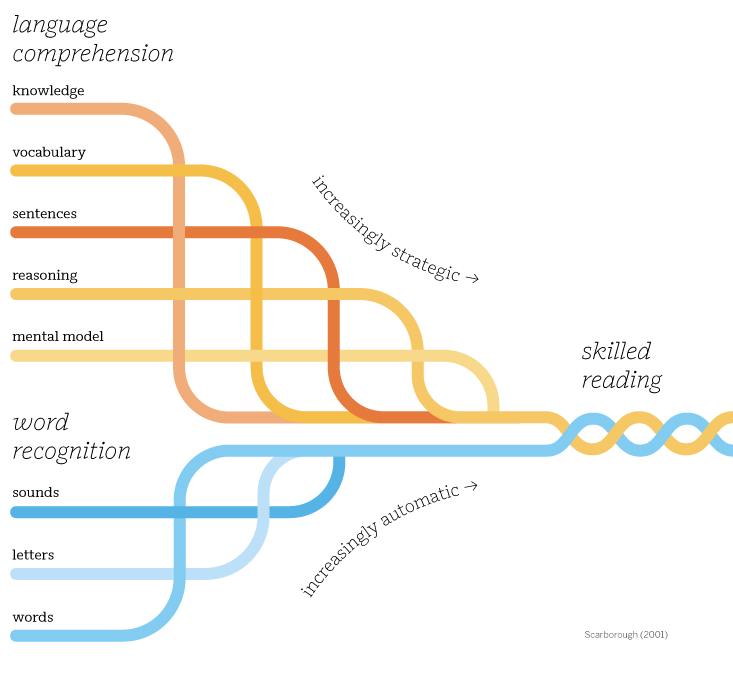
Amplify CKLA teaches both foundational skills and background knowledge in K–2 and combines them in 3–5, as required by the science of reading.

  • In grades K–2, students complete one full lesson that builds foundational reading skills, as well as one full lesson that builds background knowledge.
  • In grades 3–5, student complete one integrated lesson that combines skills and knowledge with increasingly complex texts, close reading, and a greater writing emphasis.
A flowchart showing word recognition and language comprehension strands intertwining to form skilled reading, with progression labeled as increasingly automatic and strategic.

What students explore

Amplify CKLA builds knowledge coherently across subjects and grades.

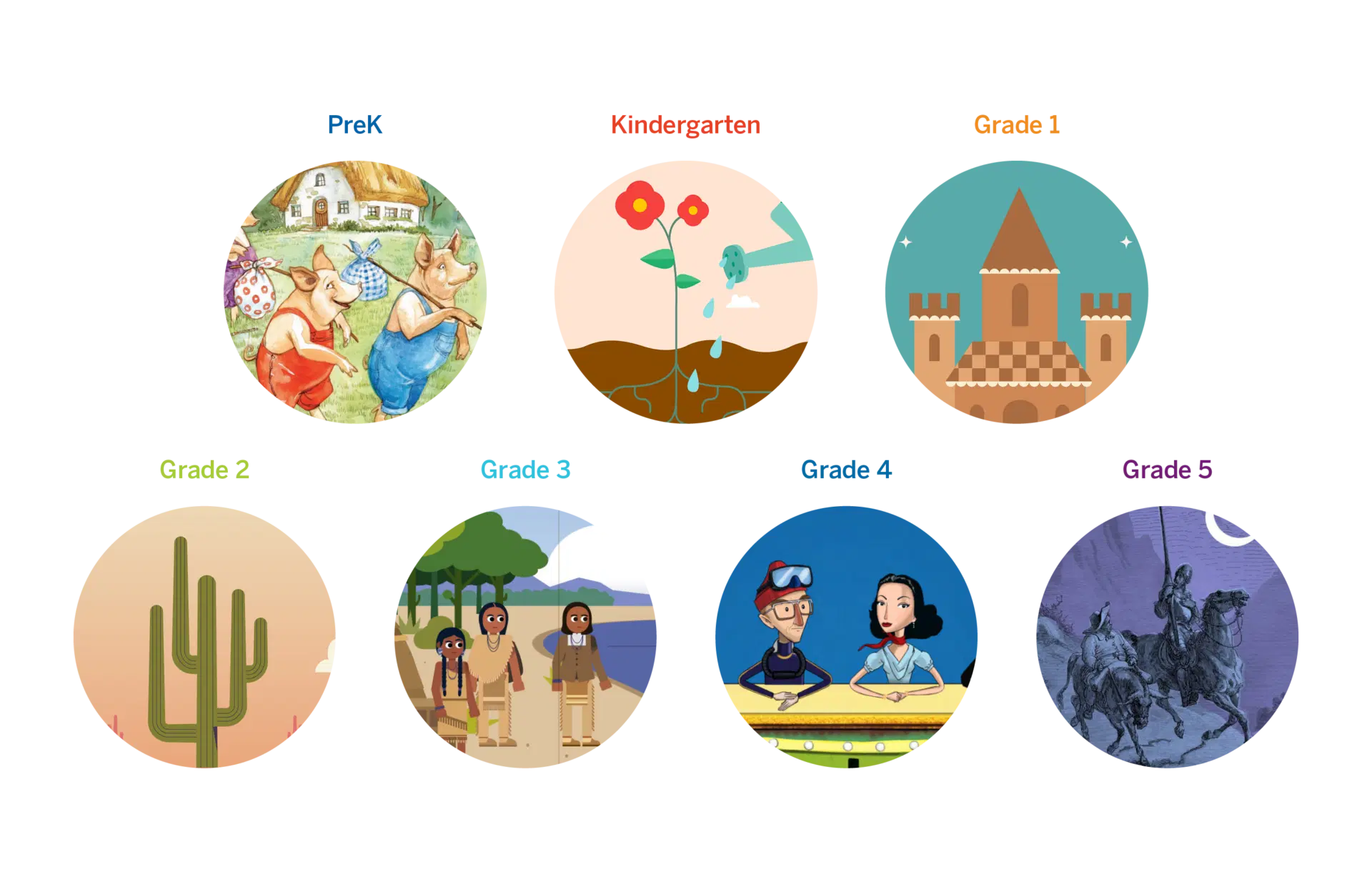
Students make connections from year-to-year by exploring grade-appropriate subject-area knowledge and vocabulary in history, science, literature, and the arts while learning to read, write, and think creatively and for themselves.

Illustration showing diverse cultural representations: two native american figures, a bear in a forest, and a medieval european woman, all set against colorful abstract backgrounds.

What students read

Amplify CKLA puts a variety of texts in the hands of students every day to build and strengthen background knowledge and vocabulary, listening and reading comprehension, and decoding and fluency skills.

More than that, we ensure the texts students read represent the world around them. With a diverse range of authors, topics, and characters, all students have ample access to both windows and mirrors. Our texts include:

  • Authentic books.
  • Authentic text passages.
  • Student Readers.
  • Novel Guides (grades 3–5).
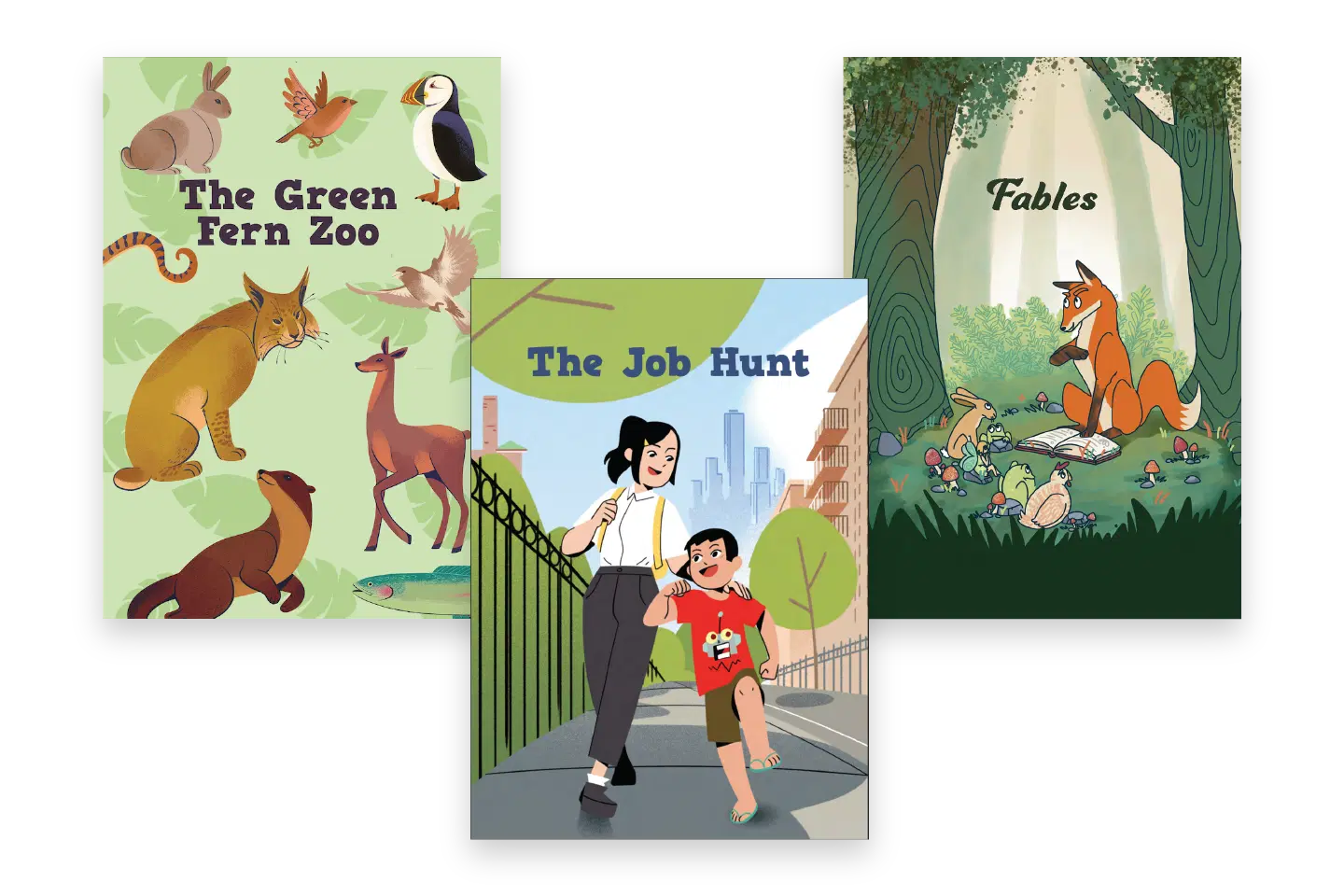
Six children's book covers arranged in two rows, featuring colorful illustrations of animals, people, and nature. Titles include "Rain Player," "A More Perfect Union," and "The Busy Body Book.

Access and equity

We believe we have a responsibility to provide literacy instruction that gives every student the same opportunity to succeed and excel.

We know that early reading affects achievement throughout school and beyond—well into college and career. Yet most literacy programs continue to fall short of supporting early literacy success. That’s why we’re so proud that CKLA is helping close the reading gap between students within diverse communities.

A boy with glasses smiles while reading a book, with illustrated objects like a telescope, gourd, and cartoon insect in the background.

Built on the Science of Reading

Watching students learn to read: magic. Knowing how they get there: science.

As you consider your next core ELA program, it’s critically important to understand what the Science of Reading really means and what it tells us about how to teach more effectively. Unlike other programs, Amplify CKLA was built upon these insights and practices, making it easier for teachers to implement this proven approach.

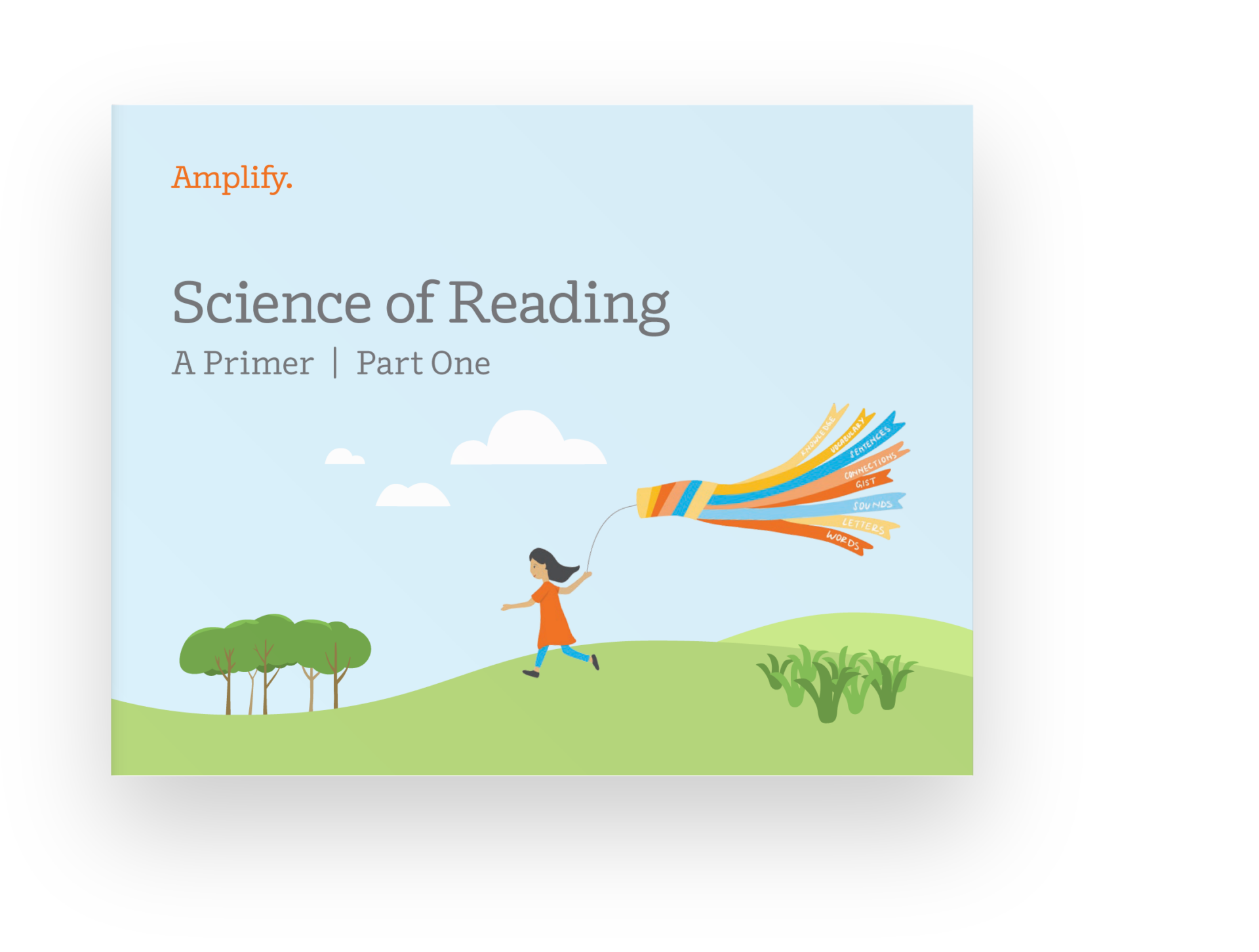
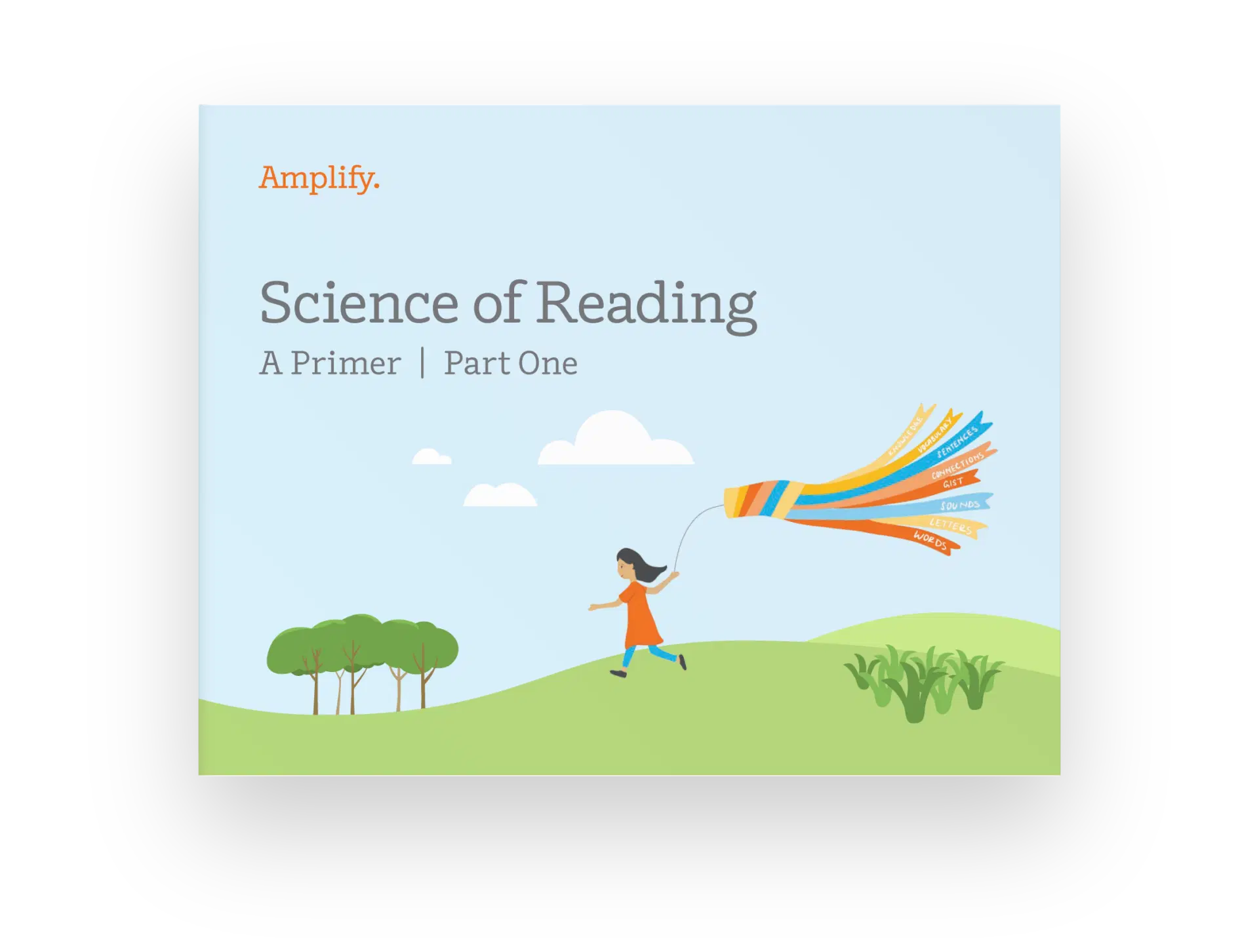
A girl runs outdoors holding a kite with colorful ribbons labeled knowledge, vocabulary, sentences, connections, gist, sounds, letters, and words.

Supports Orton-Gillingham and LETRS

Amplify CKLA aligns with the instructional principles recommended by Orton-Gillingham and LETRS.

  • Structured–Concepts are taught through consistent routines
  • Sequential–Concepts are taught in a logical, well-planned sequence
  • Systematic–Phonemes are taught from simplest to most complex
  • Explicit–Decoding and encoding concepts are taught directly and explicitly
  • Multi-sensory–Instruction is delivered through visual, auditory, and kinesthetic-tactile pathways
  • Cumulative–Concepts are applied in decodable, connected texts with constant review and reinforcement

A comprehensive and cohesive solution

A strong literacy program is not just about a reading program or an assessment tool: it brings together curriculum, instruction, regular practice, intervention, and assessments.

Amplify has brought these components together in our early literacy suite of curriculum, ensure that you have what you need for multi-tiered support.

Access demo

Ready to explore on your own? Follow the instructions below to access your demo account.

Explore the CKLA Teacher Resource Site

First, watch the quick navigation video to the right. Then, click the “Access CKLA Teacher Resource Site” button to log in.

  • Click the CKLA Teacher Resource Site button
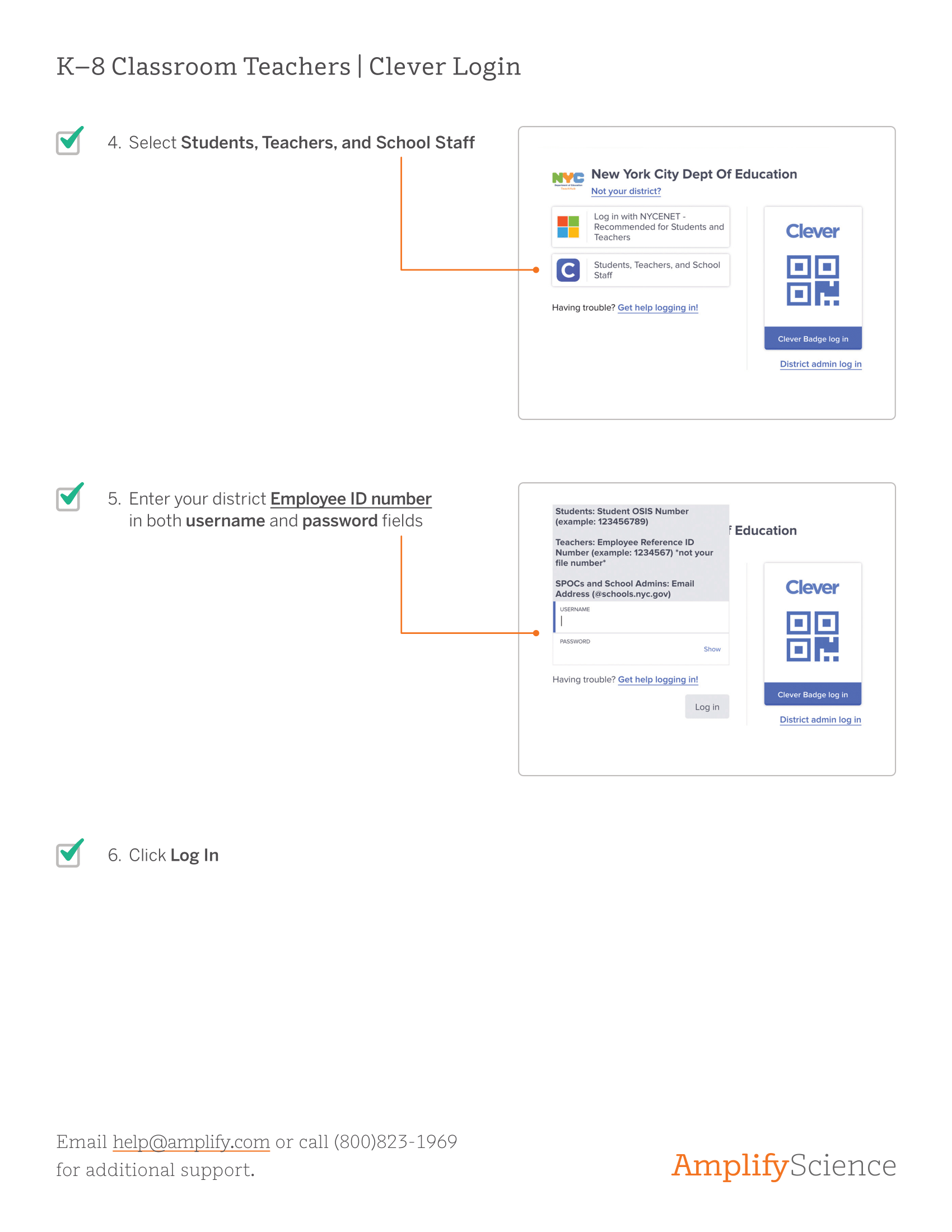
  • Select Log in with Amplify.
  • Enter this username: t.orcklak5@tryamplify.net
  • Enter this password: AmplifyNumber1
  • Select the desired grade level

Contact us

Looking to speak directly with your Oregon representative? Get in touch with a team member by emailing hellooregon@amplify.com or by calling us directly.

Kristen Rockstroh

Oregon Account Executive

Districts under 4,500 students

(480) 639-8367

krockstroh@amplify.com

Lynne Kraus

Oregon Consultant

(503) 989-3533

lkraus@amplify.com

Virtual Caravan Stop

Amplify CKLA for Grades K–2

After watching the K–2 video below, scroll down to learn even more, download resources, and access a demo.

Amplify CKLA for Grades 3–5

After watching the 3–5 video below, scroll down to learn even more, download resources, and access a demo.

What it is

Amplify CKLA is a core ELA program for grades K–5 that delivers:

  • A unique research-based approach truly built on the Science of Reading.
  • A combination of explicit foundational skills with meaningful knowledge building.
  • Embedded support and differentiation that gets all students reading grade-level texts together.
  • Opportunities for students to see the strengths and experiences that all people share while also celebrating each others’ unique identities and experiences.
  • Authentic Spanish language arts instruction with Amplify Caminos.


How it works

Amplify CKLA and Amplify Caminos, our authentic elementary Spanish language arts program, teach both foundational skills and background knowledge in K–2 and combines them in 3–5, as required by the Science of Reading.

  • In grades K–2, students complete one full lesson that builds foundational reading skills, as well as one full lesson that builds background knowledge.
  • In grades 3–5, students complete one integrated lesson that combines skills and knowledge with increasingly complex texts, close reading, and a greater writing emphasis.

See pages 30-65 of the CKLA Program Guide and pages 18-33 of the Caminos program guide below to learn more.


How it works

How it Works

Amplify CKLA teaches both foundational skills and background knowledge in grades K–2 and combines them in 3–5.

  • In grades K–2, students complete one full lesson that builds foundational reading skills and one full lesson that builds background knowledge.
  • In grades 3–5, students complete one integrated lesson combining skills and knowledge with increasingly complex texts, close reading, and a greater emphasis on writing

What students explore

Amplify CKLA builds knowledge coherently across subjects and grades.

Students make connections from year-to-year by exploring grade-appropriate subject-area knowledge and vocabulary in history, science, literature, and the arts while learning to read, write, and think creatively and for themselves.

Download the at-a-glance resources below to learn more.

What students explore

What students read

Amplify CKLA puts a variety of texts in the hands of students every day to build and strengthen background knowledge and vocabulary, listening and reading comprehension, and decoding and fluency skills.

A comprehensive approach to literacy instruction requires that students have a wide range of text experiences that include reading, listening, discussing, and writing. Check out our text complexity guide to learn more by clicking here. The overwhelming majority of questions, tasks, and assignments in CKLA materials are text-dependent. See how we use questioning and analysis skills to help students understand text in CKLA here.

More than that, we ensure the texts students read represent the world around them. With a diverse range of authors, topics, and characters, all students have ample access to both windows and mirrors. Our texts include:

  • Authentic books.
  • Authentic text passages.
  • Student Readers.
  • Novel Guides (grades 3–5).

Download the lists below to explore specific grade-level texts.

What students read

Access and equity

We believe we have a responsibility to provide literacy instruction that gives every student the same opportunity to succeed and excel.

We know that early reading affects achievement throughout school and beyond—well into college and career. Yet most literacy programs continue to fall short of supporting early literacy success. That’s why we’re so proud that CKLA is helping close the reading gap between students within diverse communities.

Explore how we make learning equitable for all learners with the resources below.

Built on the Science of Reading

Watching students learn to read: magic. Knowing how they get there: science.

As you consider your next core ELA program, it’s critically important to understand what the Science of Reading really means and what it tells us about how to teach more effectively. Unlike other programs, Amplify CKLA was built upon these insights and practices, making it easier for teachers to implement this proven approach.

Download the resources below to dive deeper into the Science of Reading.

Built on the Science of Reading

Supports LETRS

Amplify CKLA aligns with the instructional principles recommended LETRS.

  • Structured–Concepts are taught through consistent routines.
  • Sequential–Concepts are taught in a logical, well-planned sequence.
  • Systematic–Phonemes are taught from simplest to most complex.
  • Explicit–Decoding and encoding concepts are taught directly and explicitly.
  • Multi-sensory–Instruction is delivered through visual, auditory, and kinesthetic-tactile pathways.
  • Cumulative–Concepts are applied in decodable, connected texts with constant review and reinforcement.

A comprehensive and cohesive solution

A strong literacy program is not just about a reading program or an assessment tool: it brings together curriculum, instruction, regular practice, intervention, and assessments.

Amplify has brought these components together in our early literacy suite of curriculum, to ensure that you have what you need for multi-tiered support.


Access demo

Ready to explore on your own? Follow the instructions below to access your demo account.

Explore as a teacher

First, watch the quick teacher navigation video to the right. Then, follow the instructions below to access your demo account.

  • Go to my.amplify.com
  • Select Log in with Amplify
  • Enter this username: t1.allentown.literacy.science@demo.tryamplify.net
  • Enter this password: t1.allentown.literacy.science
  • Select the CKLA icon and your desired grade level

Additional Resources

Check out the information below to learn more about Amplify CKLA and see how Amplify CKLA is impacting classrooms all over the country.

Contact us

Interested in speaking directly with your representative?

Janet Barry

Account Executive

(630) 946-4157

jabarry@amplify.com

Welcome, San Francisco reviewers!

To view this protected page, enter the password below:


Welcome, California Review Committees!

We’re so honored you’re considering Amplify Science California—the #1 most adopted NGSS curriculum across the state.

This site is designed to support your committees in conducting a thorough review of Amplify Science California.
 
Ready to get started? Click your grade level band to continue or scroll down to connect with a team member.

Two students examining a container and taking notes, a girl looking through a microscope, and a digital display showing plant mortality and pest data.

Your California team

Looking to speak directly with an Amplify Science California representative? Get in touch with a California team member to learn more about reviewing and using the program.

Dan Pier Vice President, West

Dan Pier

Vice President, West

(415) 203-4810

dpier@amplify.com

Dianne Lee State Manager

Dianne Lee, M.Ed.

State Manager

(949) 246-2083

dilee@amplify.com

Wendy Garcia Account Executive

Wendy Garcia

Account Executive

(510) 368-7666

wgarcia@amplify.com

Lisa Marinovich Account Executive

Lisa Marinovich

Account Executive

(831) 461-4187

lmarinovich@amplify.com

Demitri Gonos Account Executive

Demitri Gonos

Account Executive

(559) 355-3244

dgonos@amplify.com

Patti Savage Senior Account Executive

Patti Savage

Senior Account Executive

(626) 224-3174

psavage@amplify.com

Lauren Sherman Account Executive

Lauren Sherman

Account Executive

(949) 397-5766

lsherman@amplify.com

Kirk Van Wagoner Account Executive

Kirk Van Wagoner

Account Executive

(760) 696-0709

kvanwagoner@amplify.com

Amplify CKLA

Using a fundamentally different approach to language arts, Amplify Core Knowledge Language Arts (CKLA) is a PreK–5 program that sequences deep content knowledge with research-based foundational skills. CKLA met expectations and received green ratings from EdReports. Learn more about the program.


Read the review on EdReports

Amplify Science

Amplify Science empowers students to think, read, and write like real scientists and engineers. Amplify Science 6–8 received all-green ratings in EdReports’ review of national middle school science curricula. Learn more about the program.


Read the review on EdReports

Amplify Desmos Math

Coming soon: Amplify Desmos Math is designed around the idea that a core math curriculum needs to serve 100 percent of students in accessing grade-level math every day. The program delivers engaging math lessons that are easier to teach, collaborative problem-solving experiences both online and off, and data that drives performance. (Amplify Desmos Math grades K–Algebra 1 are available to pilot starting back-to-school 2024.)


Learn more

Ready to learn more?

Fill out this form, and we’ll be in touch with you shortly.

Get in touch

S1-03: Ways to integrate literacy skills into a K–8 science classroom: Rebecca Abbott

Podcast cover featuring a smiling woman, globe illustration, and text: "Science Connections, Season 1 Episode 3, Rebecca Abbott: Integrating literacy skills into K–8 science classroom.

In this episode, our host Eric Cross discusses the importance of integrating literacy skills into science instruction with Rebecca Abbott, Professional Learning Lead at the Lawerence Hall of Science at UC Berkley. Listen in as Rebecca challenges science educators to weave together vocabulary, background knowledge, and an understanding of language structures to help students make sense of complex science texts. Eric and Rebecca chat about ways to infuse literacy in the service of science.

Explore more from Science Connections by visiting our main page.

Download Transcript

Rebecca Abbott (00:00):

So it’s not like you have to teach language arts or literacy in a separate block and then put all that language arts and literacy away, and now it’s time for science. But really you can think about them merging together.

Eric Cross (00:25):

Welcome, everybody. This is Eric Cross with the Science Connections podcast, and today we have Rebecca Abbott from the Learning Design Group at UC Berkeley’s Lawrence Hall of Science, otherwise known now for short as The Lawrence. Is that what you call it?

Rebecca Abbott (00:41):

That’s right. We’re calling it The Lawrence.

Eric Cross (00:42):

The Lawrence. I changed my school. I teach at Albert Einstein Academy. We just need to call it The Einstein. I like the name The Lawrence. Rebecca is a professional learning lead there. And is it fair to call you a literacy guru? I’m calling you that. Is that…?

Rebecca Abbott (00:57):

Sure. If I’m gonna be a guru of anything, I like the name Literacy Guru.

Eric Cross (01:02):

I am going to say that some of my colleagues would be proud—my professors, when I was in a credential program—because one of the things they taught me when I was getting my credential years ago is that we’re all teachers of literacy. When I was getting my science credential. And that was ingrained in me back then. And so I know they’ll be really excited to listen to this one. And so, Rebecca, welcome.

Rebecca Abbott (01:26):

Thank you. It’s great to be here.

Eric Cross (01:28):

Can you tell us a little bit about yourself, your journey to the Lawrence Hall Science and becoming the professional learning lead and teaching teachers about literacy?

Rebecca Abbott (01:39):

Sure. Yeah. Happy to. So my background is that I taught elementary school. I always wanted to be a teacher. And I came to the San Francisco Bay Area and started teaching mostly third grade. And then I also taught—I was also an instructional coach. So I moved from being a classroom teacher for many, many years to working with teachers. And so that was one big leap where I…if you’re a classroom teacher, you know that that there’s a weird feeling you get if you’re out of the classroom. Like everyone else is teaching, and I can walk around in the hallway during the day! But that was just an opportunity to work with teachers and see a wide variety of instructional practices and a wide variety of kids. And I just loved seeing teachers’ growth over time. And so that was my first step towards professional learning, where I would work with teachers individually and coach and that kind of thing. But my focus was really in ELA and in reading. And I was early reading intervention instructional specialist and a multilingual learner specialist. And so all of that led me towards professional learning, as I mentioned, and in particular in the integration of science and literacy. And so my first introduction to the Lawrence Hall of Science was through a couple of workshops that I took that introduced P. David Pearson, who is the actual literacy guru of our project. And he was the Dean of the School of Education at UC Berkeley. And he collaborated with the former director of the Learning Design Group, named Jackie Barber. And so the two of them got together and had this question of what would it be like to infuse literacy in the service of science? And they created this project that did the research and got into the development of what that might look like in classrooms. And so I was introduced to the project through a workshop with David Pearson. And then, amazingly, they had a job posting for a professional learning lead, or at the time it was professional learning specialist, with this project, that merged exactly the kinds of things that I was looking to do.

Eric Cross (03:46):

And so now you’re in this role where you went from being in the classroom to coaching and training teachers locally at your school, and then now you’re doing it for Lawrence, across the nation, equipping teachers. So your impact on students has grown. When I became a teacher, I felt like the focus on literacy was something that I didn’t see when I was in school. Learning about science, science and literacy, I think kind of extended to maybe like vocabulary words.

Rebecca Abbott (04:15):

Mm-hmm. <affirmative>.

Eric Cross (04:15):

That’s what it felt like. I learned a bunch of vocabulary words. Especially in biology, there’s like so much jargon I feel like you only say in biology. And we would get tests on them, and then we would go do the science kind of separately. And so can you talk more about the focus of on curriculum and research with literacy? Like you said, you said, in the service of science. Like this fuse-together that you have.

Rebecca Abbott (04:38):

Yeah, yeah, exactly. And that was the aim of the project. And the approach that the project and the program takes is figuring out where are those natural synergies, or the natural overlaps, of literacy and science. And it turns out that there are a million of them. That there’s just a wealth of opportunities within science to do reading and writing and listening and speaking. And it turns out that in fact, half of actual working scientists’ time is spent in the service of reading, writing, communicating with other scientists, making sense through their dialogue with their colleagues, and communicating their findings. So it followed that this most recent set of NGSS, the Next Generation Science Standards, incorporated that throughout. So the difference from between when we were going to school and what teachers are learning now and how kids are being taught, is that they infuse these literacy-rich practices throughout, NGSS. And it makes sense because it’s an authentic way that scientists do science. So we want kids to have those same opportunities.

Eric Cross (05:40):

I don’t know if this is…selfishly, but a science teacher, I feel like I would love to work with my team—and my team has been up for this, but it’s just been kind of challenging lately—to do interdisciplinary work, or trans-disciplinary work, where my science would be the context that they would learn math and English through in their classes. Is that something that you’ve seen have benefit? Or that something that teachers do? ‘Cause sometimes when I see them talk about or read certain books or things like that, I’m like, “Oh, we’ll talk about what I’m talking about!” My students are doing labs that carry over. It seems to be something that helps students, when you kind of cross it across disciplines.

Rebecca Abbott (06:15):

Absolutely. And I think when we think about it in those terms, in terms of just supporting students across disciplines, we can really look to those types of practices. NGSS calls them practices; the math Common Core calls them practices. And then the ELA standards don’t actually have practices, but there are researchers who have come up with, well, if they could distill the practices from the ELA standards, what are they? And if you just Google “Venn diagram practices,” you’ll see that there are overlaps. And there are convergences. And focusing on those convergences is a great way to support students across disciplines. It’s just interesting, ’cause the way we’re taught as teachers in our teacher education programs, the way that especially middle school and up is set up, is that we have these siloed programs. But kids don’t think in silos: Kids think across content areas. So practices is a great way to start to work and see where you can find the overlaps and the convergences across all those subject areas.

Eric Cross (07:14):

So we have this Venn diagram. We have this overlap of practices. What are some ways that we can incorporate these best practices? So if I’m a new teacher and I’m driving, listening to this, what are some things that teachers could do to start incorporating best practices?

Rebecca Abbott (07:30):

Well, if we think about literacy across subject areas, some clear winners emerge. So we think about reading across subject areas. And we can think about, “Well, how do I read as a student or as a person to gather information about the world around me?” And the interesting thing is that you do that slightly different in math. You do that slightly different in science. And you might do it slightly different when you’re reading a novel. So learning a little bit about those specific disciplinary ways of reading might be important. But regardless, you want to be reading closely. You wanna be reading actively. I think many of us have the experience—either our own reading or <laugh> when you’re teaching kids—that you just sort of gloss through something that you’re reading and you get to the end of a paragraph and realize you don’t know what you just read. And so helping kids, being explicit about, “Well, when you’re reading, you read actively. You come up with questions you wanna know about. You plan to ask someone else about the things that you’re confused about. And so by reading actively and then having a discussion with someone afterwards, you’re making sense of the article.” And that’s a middle school routine. But we can have a lot of parallels in elementary school, where either the teacher is reading out loud to the students and asking questions as they go, or the kids are reading in partners and talking to each other about the text and the pictures. We don’t just assume kids know how to pick up a text and engage with it or get the information they need from it. So being an active reader, or reading closely, is one strategy that teachers can take away in that convergence area.

Eric Cross (09:03):

With like elementary school teachers especially, who are teaching kind of all content areas and with a limited amount of time, and now with a limited amount of teachers in the classroom, how do we address those aspects of reading and instruction in a shorter period of time? Like, how can they develop those skills or fit them in? Or another way of looking at it is if we were to maybe focus on a couple key areas or critical areas that a teacher can go and do tomorrow, that would help build these literacy skills, what could they do?

Rebecca Abbott (09:39):

<laugh> I would say if they had limited time, you might be looking for efficiencies. And so one efficiency is that the science is a super-motivating context. And I think you mentioned that a few minutes ago. You want just to take this context and teach everything within it. Like, start from science and teach from there, right? So if you find that there’s subjects that the kids are excited about, you know—like, you know, second graders got excited about animals or, you know, kindergartners got excited about pinball, you know, these are the contexts that our science curriculum can offer us. And then they can investigate these concepts and these ideas, and again, the reading and the writing and the talking in service of science not only gives them those skills and the practice engaging with language and constructing explanations, and you can use all those to teach the language and literacy in this really motivating context. So it’s not like you have to teach language arts or literacy in a separate block and then put all that language arts and literacy away. and now it’s time for science. But really you can think about them merging together.

Eric Cross (10:51):

So it sounds very kind of cyclical, or very fluid, as opposed to, like you said before, siloed. Which is how many classrooms and education kind of is: Like, this is science; this is math; this is history; this is English. But life is not like that. And careers aren’t like that. They cross back and forth and—

Rebecca Abbott (11:10):

And elementary teachers in particular have a little more flexibility in their school day because they have the students all day. They may be beholden to a particular curriculum, so they don’t feel like they have the…I don’t know, the permission <laugh> to be able to do that. ‘Cause they’re supposed to teach language arts in a certain time with a certain curriculum. Or they’re supposed to teach a certain number of minutes of another subject area. So the challenge really is on a systems level. There are things that elementary teachers can do in order to capitalize on where those overlaps are. But it also might be speaking up and talking to administrators or talking with one another about what they can do, system-wide, to help break down some of those silos.

Eric Cross (11:56):

As I’m listening, I’m thinking about the word “literacy.” And I feel like it’s one of those words that you can ask 10 people and they can say 10 different things about what literacy is. And I feel like we need to talk; we need to address that <laugh>. When….what is literacy? As simple as it sounds, again, I feel like you can…. Literacy, I feel like in my science classroom when I was a kid, was vocabulary words. And it was vocabulary words in the beginning, and memorize, and then answer them, all 20 of them, on this little mini piece of paper. And, and that was it. But hearing you talk about it, literacy is so much more dynamic than that, it sounds like. Can you kind of maybe unpack that? What does literacy actually mean to a literacy leader?

Rebecca Abbott (12:46):

Sure. I mean, in its simplest form, we could say literacy is listening, reading, writing and speaking. Some might include visualizing in there. So you can read images and pictures as well. But the focus of the literacy instruction in science really is on, increasing students’ ease of reading informational texts, engaging in science discussions, writing scientific explanations and arguments. So all of those components, as mentioned, are very natural ways that scientists do their work already. So those are the kinds of literacy that we wanna embed in a science classroom. And as you mentioned, in a math classroom, or across the disciplines.

Eric Cross (13:27):

So we’re thinking about literacy and it’s not just reading and being able to memorize definitions and terms. There’s these talks about front-loading vocabulary, and I don’t know if the term “back-loading” is a thing, but I feel like adding it on later is…

Rebecca Abbott (13:40):

Yeah, yeah.

Eric Cross (13:42):

…is there. Is there a best practice, in your research, for vocab in science? And if you could, would you mind sharing it?

Rebecca Abbott (13:48):

Sure. And you’re gonna use this tomorrow, right? <laugh>?

Eric Cross (13:52):

I’m gonna use it tomorrow.

Rebecca Abbott (13:55):

Yeah, so vocabulary is a really good one. And again, coming from the literacy and language arts background, there was a lot of emphasis on front-loading. So, not to confuse folks, but if you’re teaching sort of a piece of literature, language, it is helpful to preview some vocabulary before jumping into some dense piece of text or poetry. So you can make your way through something that you’re trying to make sense of with reading. Now, with science, the methodology that we’ve relied on that’s based on a lot of, of research that we’ve engaged in ourselves and that we’ve relied on, has more to do with starting with students’ own language or starting with students’ own concepts. Because this is the philosophy and the understanding, that kids come to us with a wealth of world understanding and knowledge. You know, two-year-olds understand what happens when a ball drops. Kindergarteners understand what happens when you kick a ball across the field.They don’t need to be able to say, “I exerted a force on this ball!” but the word exert is something we want them to get to eventually. Even if they use their own words or try to explain something by showing you, by drawing, by, saying it in another language: They’re starting to formulate a concept. So the approach in science is to have lots of experiences to investigate, to make sense of phenomena that are happening around you, and eventually to start using the words that help you explain that idea. And ultimately to learn the vocabulary word, the sort of academic word, that might latch on to the concept that you’re exploring. So, it’s a concept first and the word later. Which is different from how I learned in language arts, how we would do that.

Eric Cross (15:48):

That’s a huge change. Like, you’re accessing this prior knowledge and then attaching on this term later. And I know for some students the terms can be a huge hurdle when they get the concept, but because the term is, you know, maybe so abstract or just not connected directly to anything obvious that they can latch onto, that can actually be the barrier. And I know sometimes for teachers, we can sometimes think that we’re not able to really assess what a student’s true understanding is, because the language is getting in the way. And so being able to, like you said, attach it to an existing concept makes a lot of sense. I was in this learning experience for teachers and we were able to label different parts of a flower whatever we wanted. And I called parts of it “the fuzzy Cheeto,” and I got to use that the entire time. And then in the end, we actually used the scientific terms. But we were able to explore the concept for a long period of time, and then later we added the words. And that was a really neat experience for us. I had never taught that way, prior, with my students, but when I did it with my students, they had a lot of fun, ’cause they came up with silly names for different things.

Rebecca Abbott (17:04):

Yeah, that’s a great way to illustrate that concept.

Eric Cross (17:07):

So when you’re training teachers—what does the data say about effective ways to equip teachers with these skills? I know, you know, we have professional learning. We have professional development. And your title is professional learning lead. And when you Google the term, the two, professional learning versus professional development, professional learning kind of wins out. It’s, like, this holistic, interactive thing. Versus, you know, a PD can sometimes even connotate things that are not always the most positive in teacher’s minds, depending on what their experience with PD is. So how do you go about equipping teachers with these skills, as you’re traveling, or now Zooming, around the country?

Rebecca Abbott (17:50):

Sure. Yeah, that’s a great question. And I had to recall for myself, “Why did we make the shift from professional development to professional learning?” Because as we just mentioned a moment ago, these words are concepts. So what is the concept behind those two terms? And you’re right, professional development more connotes something that’s done to someone. Like, I’m gonna give you some professional development, you’re gonna take it! And that connotes a little bit of training. The professional learning is really the goal, where we’re providing teachers and educators with a learning trajectory, where, like we would with students, we know they’re coming in with prior knowledge and are have goals that they want to work towards. And there’s a progression or a series of activities they can engage in so they can grow along that trajectory. So when we’re first working with teachers, you know, just because of the way school systems are set up, often you only get a single day or a single introduction. So one thing where you rely on is that the program materials themselves, the instructional materials that we develop, are hopefully also educative and also part of the professional learning. So if I do go and work with teachers for a morning, I try to remind them that their learning is just beginning. That they’re gonna learn through doing. They’re gonna learn through teaching. They’re gonna learn through their collaboration with one another, planning their lessons, learning from their students, et cetera. And that this is a long-term process ‘Cause learning new materials, learning something like NGSS, that’s years and years, as you know, to master or to get good at. And the professional learning never stops.

Eric Cross (19:28):

It never stops. And yes, amen to to the years of learning NGSS and getting it. Getting it to the point where you’re like, “OK, I think I got this.” Or “I think we’re doing it.” We realized a huge shift from how science was taught when we were in school, versus how science is taught now. And it’s easy to default back into how you learned, versus, this new, you know, iterative way of going through how we approach science.

Rebecca Abbott (20:03):

Absolutely.

Eric Cross (20:03):

I wanted to bring up, how should we see our pedagogy? How should we see things in these recent challenges, since we’re not out of it yet? I mean, I’m teaching at the university and they delayed us for two months, or two weeks, went back to virtual instead of in person, when this new semester starts. So how should we see our teaching? How should we see our expectations? When you think of…when you hear learning loss, what lens and what filters do you see that through?

Rebecca Abbott (20:30):

Yeah, that’s, it’s a tough one. And, you know, I keep wanting to refer to the pandemic or the school disruptions in the past and it’s absolutely not the case. That it’s ongoing. That the reality is that some are still in remote learning, or just absent from school, or they’re in schools where there’s a series of substitute teachers, or they’re in giant classrooms because there are no substitute teachers. So, you know, undoubtedly there has been a lack of the same high-quality instruction that there had been before the pandemic hit. And so during all these school disruptions, one thing I like to keep in mind is that students did learn a lot. They have learned a lot about being independent. They’ve learned a ton about being flexible. They’ve learned about their communities, their families. They spent more time at home…about technology, potentially. I think a lot of teachers learned a lot about technology during this time.

Eric Cross (21:19):

<Laugh> Yeah.

Rebecca Abbott (21:20):

So with all of that that we can rely on, you know, we can build from there. So the, the way I like to see it is to think about, “Now we’re in this moment.” And a lot of policy institutes and education organizations are talking about, “How can we accelerate learning from here on out?” And that kind of gets us in the mindset that we have a lot we’re building from, but we need to, you know, push it forward and speed it up, and make sure that we’re working towards this grade-level learning content. And not moving backwards. Because poor instruction that remediates never really worked for the kids that were behind in the first place. And so giving them the remediation solution is not gonna help them move forward. So accelerating learning, or addressing unfinished learning, or ways that we see that as…just the phrasing of it even sort of connotes the moving forward,

Eric Cross (22:13):

Even how we frame it and how we view it, I think, in the way that you just described it, it’s very much honoring the experiences of our students. Which also connects to something you said earlier, about accessing prior knowledge. How you just framed it is kinda a much more energizing, and, I think, empowering way for students to…when I honor your experiences and recognize what you’ve learned and leverage that, that’s gonna give a teacher and a student and a family much more positive momentum towards continuing learning. Versus if I’m in debt and I have to pay off bills. Like, “You lost learning! You’re two grade levels behind! Oh, you gotta read 80 books to catch up to a 12-year-old or a seven-year-old…!” You know, that doesn’t make us energized. But when we look at it like you just said…and I was thinking about this, “What are all the things that you learned that you wouldn’t have learned if you were just in school this entire time?” And like, let’s unpack that. This is like formulating a lesson right now, as I’m thinking about this. <Laugh> ‘Cause you’re accessing all this prior knowledge and you’re honoring this student’s experience. So I love the way that you described that. Because, again, we’re empowering students and we’re empowering their experiences by honoring them. So I think that’s really neat.

Rebecca Abbott (23:28):

Yeah. And the other recommendations for accelerating learning for teachers is really to focus on this grade level. I think there’s this tendency—like in science, there’s often—I’ve heard teachers say things like, “They just didn’t get that content about stars in fifth grade!” Well, some things like that are OK if there’s discrete pieces of learning; we don’t need to go back and backfill that. The recommendation is to really move ahead with this year’s learning. Because again, as you were saying earlier, there’s only so much time, and it feels like now there’s more things to stuff into a school year. So to sort of relieve some of that <laugh> stress on yourselves as teachers and to relieve some of the pressure on kids moving forward with this year, this grade-level standards is the recommendation. But being able to monitor student progress. They may still have difficulty or struggle with that concept if they didn’t get it the year before. But if you know that, and you can help them just in that moment to to move through it, then you can move forward.

Eric Cross (24:27):

Is there, is there data and research on this? Like looking at this? And if anybody would have it, I know you all would. As far as what’s driving you.

Rebecca Abbott (24:35):

There is research and recommendations from a variety of organizations. And I do have a list, actually, that we have called Accelerating Learning References and Resources that I can share with your listeners. And those are from a variety of places like the Council of Great City Schools and California Collaborative for Educational Excellence. And what they’re relying on is past ideas about —again—the failure of remediation. That students who don’t learn well from rote learning or remediating by filling in gaps and discrete pieces of information, they’re not gonna learn that stuff the second time. Or when they never got it. So, really, the recommendations to accelerate learning, are to teach in this more holistic way. Where you’re attending to the students social-emotional needs, attending to what motivates them, what they get excited about learning, involving their families, where academic subjects aren’t mutually—the academic subjects aren’t to the exclusion of making sure students’ voices and their excitement and their engagement are honored.

Eric Cross (25:46):

I wanted to shift…because it brought up another idea about those of us who are teaching emerging bilingual or trilingual, multilingual students. With literacy, this is an area that in many of our classrooms, we serve a variety of cultures and languages. And not only that, but also differentiating lexile levels. And I know in my classroom, I have some students that, that read—I teach seventh grade, so I have students that read at a very low elementary level, but I also have some students that read the college level. And for teachers who are listening like that, and they’re like, “That’s my classroom! I have, I have the whole range! For I’m teaching multilingual students.” What are some some tips or strategies or methods that they could implement into their classroom to best support the, the populations that they’re serving?

Rebecca Abbott (26:39):

Yeah, great question. And yeah, I think anyone who’s taught before understands that wide variety of reading ability, of writing ability, of language proficiency, that a single classroom can have. But in reading, for example, in the science context in particular, one caution we have when talking about reading—and particularly when you mentioned lexile levels—is that science text often has rich vocabulary. And the vocabulary connotes important concepts. And, and so in our program, for example, we’ve authored articles or books that are at grade level, and they’re considered complex text at that grade level. And we want…and complex being a good thing! We want them to be complex and rich and full of science ideas to support the kind of learning that we want kids to do, that’s developmentally appropriate for that age. And so instead of giving students leveled text or, you know, an easier version of that article, what we try to do is provide all kinds of scaffolds and supports for accessing that text. Whether that’s having them listen to it read aloud by a teacher or electronically, whether that’s breaking it down into parts, or whether that’s having them read it multiple times, or supporting with a vocabulary activity, et cetera. Those are all ways that we can support kids in making sure they access the text and access the concepts in the text. And then—but also, the same is true I think for writing. Like, you’re gonna have students who have difficulty or aren’t able to express their thoughts in writing, if it’s something complex, like an explanation or an argument. And so we would never have kids just sit down and say, “OK, explain your thinking.” But we don’t just wait till the end of a sequence: “Now come up with an argument!” We have lots of times throughout a unit, throughout the lessons, that students practice argumentation, either out loud with one another, with sorting evidence on their table, in cards, et cetera. So when it does come time to do create an argument, they have the skills behind them to be able to do that. Having those everyday experiences, having a build, having skills and strategies built up little by little, so that when they get there, they can’t do it.

Eric Cross (28:56):

A lot of my students will choose to go to the audio, even though with their reading level, they can totally read it and they’re fine. But they like doing the text-to-speech. In my head, as a teacher, I think, “OK, well, they’re accessing the articles, but is that a bad thing? To allow students to have access to that? Or should we be saying, ‘Hey, no, you’re gonna read it and that’s what you need to do. You can’t use the audio.’”

Rebecca Abbott (29:29):

Yeah, it’s a great question. And I have the same reaction. Like, I listen to audiobooks. I’m like, “Well, no. I actually read that. You know, I know the concepts now. I’ve listened to the whole thing.” But I would say, you know, you wanna give students—you don’t wanna deny students an opportunity to have the skill that they can read an article. ‘Cause they may be in a situation where they do need to read. So, you know, withholding the opportunity to be a better reader, on paper, I wouldn’t recommend that. But at the same time, why not do both? I mean, I know there’s time constraints, is the “why not do both.” <Laugh> But if students are—if you’re noticing, when you see a student over time, if you’re noticing they’re only listening to the articles, I think a great scaffold is listen to it and then read it.

Eric Cross (30:10):

Right. So doing both…I know for them, sometimes, I would see them listening to it, and then they’re looking off in the classroom and looking around, and I would tell ’em, I say, “Hey, this isn’t Spotify. You can use the text. You can use the audio. But your eyes have to be looking at the words. Because that’s gonna help you understand. And when you hear how the words are said, your eyes are gonna recognize it.” And usually that works, when I explain it that way.

Rebecca Abbott (30:32):

Yeah. Or it could be that they listen to it in class, and then they take it home and read it for homework. Or you have ’em read it the next day. ‘Cause they could do it in sequence, and so they’re still accessing the text. And they don’t have to do it every time. But maybe every so often, on something easier, or shorter. And as you know your students over the course of the year, you know who to sort of target and make those recommendations to.

Eric Cross (30:56):

The quality of literacy or parsing out information that is reliable…I feel like now, with the information—teaching students how to find reliable information to make judgments has been more in vogue and a big issue ever than than it ever has been in the past. Is there, are there…and I haven’t seen a ton of strategies on how to do that yet. I hear talk about it, but I haven’t… we do that. Is that something that’s kind of in your wheelhouse too? Of “OK, we’re developing these skills, but then how do we know that the thing that they’re reading is something that’s that’s a reliable text or media source?” Things like that.

Rebecca Abbott (31:39):

Yeah, absolutely. And I think that we want to, you know, arm students to be able to not just do this because they’re doing it in class with the controlled set of materials, but take these practices and be able to do them. And so, great, you want kids to be curious and Googling things and wondering and finding articles. And along with that comes that that media-literacy piece. Where they need to be savvy about their sources. Is it peer reviewed? Where does it come from? Et cetera. And science in particular. ‘Cause there’s so much information out there. Again, we wanna encourage students to personalize their learning and make choices about what they wanna study and what they wanna investigate. And with that comes the independence and the need to be savvy about such things.

Eric Cross (32:23):

There was this old website, it’s, I think it’s still out…it was about the tree octopus. I think that’s what it’s called?

Rebecca Abbott (32:28):

OK…? <Laugh>

Eric Cross (32:29):

Do you know about this? The Tree Octopus? So it’s a…let’s see, I’ll just look this up. Tree Octopus. It’s a fake website. “Save the Pacific Northwest Tree Octopus.” And it’s a whole website dedicated to this tree octopus. And it’s completely fictional, but it looks like a legitimate site.

Rebecca Abbott (32:48):

Sure.

Eric Cross (32:48):

It looks like it could be real <laugh>. And this website has been out for, I don’t know how long. I feel like it’s, like, Netscape days. Because it’s so old.

Rebecca Abbott (32:54):

Oh my gosh.

Eric Cross (32:55):

You just look at how it’s set up. But I feel like sites like this were great opportunities. And my students, once I showed it to ’em, they’re like, ‘That’s fake.” Because they went and Googled it and <laugh> found out. But sites like this were great ways to introduce them to the topic of sites that were reliable or how to have cautious skepticism about the things that you’re reading. You know, things like that. It was—and it was a lot of fun. And when you talked about argumentation…the term, even, “argumentation” for a lot of students connotes something really negative. Because a lot of times the arguments that they’ve seen…they hear “argument,” it’s adults arguing. So I tell my students that I take the opposite of whatever position you’re gonna have in the class. And so I end up defending some really ridiculous positions, but when they use evidence, then I start losing in the argument. And so it was a fun way for us to go back and forth, and for it to be a safe environment, because they know Mr. Cross is just gonna take the opposite—but he’s never gonna tell them what he thinks. So I’m never gonna get my real position on something. I’m just gonna take the opposite of whatever you argue.

Rebecca Abbott (34:04):

Oh, that’s a great strategy. Yeah.

Eric Cross (34:05):

It was a lot of fun. But they didn’t like it when I made an argument about—we were talking about ecosystems and how hunters are controlling the population of deer. I had to take an argument to say that they were the most empathetic towards animals. And with 12-year-olds, if you wanna get ’em upset, that’s a great way to do it. But I said, “Hey, look, if the population gets outta control eventually all these animals are gonna go extinct.” And frustrated! They’re like, “I don’t want you to be right, but!”

Rebecca Abbott (34:38):

But yeah, that’s a good point, to distinguish the idea of, yeah, when they hear “argument,” they might think about people arguing. And that’s, you know, not what we’re doing with scientific argumentation. And so, yeah. Calling that scientific argumentation, where, you know, you’re taking your claim; you’re finding evidence that’s gonna back up your claim; and then you have to think of your reasoning: Why does your evidence support that claim? And that’s one of the hardest pieces for kids to articulate or to write. So if kids have never had an experience getting into scientific argumentation until they’re 12 years old, there’s a lot of steps that they have to take to get there. But I think that the scaffolds, like you said, to make it where they have to use that evidence to counter an argument, I think those are exactly the kinds of experiences we want them to have. So they understand what it’s for.

Eric Cross (35:31):

And the English teachers I’ve talked to mentioned CER, Claim, Evidence, Reasoning. We found that that skill is one of the easiest ones for us to transfer back and forth across our classrooms. And so one of the things we had done, we had had students write a CER paragraph about genetic modification. And then the English team took it and they looked at it through a different lens. But the students liked the fact that they could have one assignment that went back and forth between teachers. They’re not doing double the work, but then they’re getting feedback from two different lenses. It was a great experience for both of us. There were some logistical challenges with syncing up, as far as pacing and things like that. We found that they were talking about science in English. That was a great way. And I was thinking, as an elementary school teacher, when we’re doing literacy activities, using—like you said earlier—those engaging topics, you know, scientific topics, there’s so many of them. I feel like every class I teach, students always wanna ask me if something’s gonna explode. <Laugh> “Is the thing gonna explode?” Like, we teach biology. Like, right now. Maybe a whale that’s washed up on the beach. But like, for the most part, we’re not gonna make things blow up. But…

Rebecca Abbott (36:34):

You know, that’s just, it’s heartwarming to hear because that’s really why we do this work, is we want kids to improve overall. It’s not like we just need them to improve in our subject area.

Eric Cross (36:45):

Right. And the movement of breaking down the silos, it almost feels like it’s gonna happen faster if we kind of do it grassroots. When we reach out across content areas, grade levels, teams, things like that. But if we start teaming up and working alongside other content areas, I think our students will benefit a lot. And they, they really enjoy it. Plus it’s fun. Like, you get extra teammates to look at things through a certain lens. And I find myself growing as even as a writer, as I’m looking through my students’ work, as they’re developing writers too. What are some things that we’re getting right, right now, as you look at it from kind of this 30,000-foot view? You’re looking at education; you’ve been in the game for a while; you know what it’s like to be in the classroom; you know what it’s like to train teachers; you know what it’s like to train people who teach teachers. What do you think, what do you think we’re getting right? And then the follow-up question is gonna be, what are our areas for growth? <Laugh> That’s gonna be the follow-up. But what do we—let’s start off with the thumbs-up. What do you think we’re doing well, or we’ve improved in?

Rebecca Abbott (37:54):

Yeah, that’s a great question. I would say what we’re doing well in…more systems are going towards adopting high-quality instructional materials. When I was a teacher, when I worked in schools, often we were making up lessons and we would spend our evenings and our weekends writing lessons. And they weren’t nearly as coherent or as robust or met the standards in the same way that a group of a hundred-plus people <laugh> at the Lawrence Hall of Science could do over a couple of years period of time. Curriculum developers develop curriculum, and teachers should be able to practice their craft teaching. They can adapt instructional materials; they can adjust the instructional materials for the kids in front of them. But they shouldn’t be designing it and developing it in the moment. There’s just not time. And it’s not gonna be of the same consistency and quality across the schools.

Eric Cross (38:51):

So you—and you said something that I really keyed on and I felt guilty for doing this, and I feel like you just gave me permission for this, <laugh> is you said, you said, “Adapt and adjust.” And I found myself in the same position where every year, I was writing my curriculum, 80% I was changing it. Not based on any data. Just because I just felt like I should. But then that was teaching all day and then at night and summers rewriting everything. And you said, “Adapt and adjust.” And that makes me feel like, when you’re using Amplify, it’s not prescriptive. It is something you can kind of kind of remix. Was it designed that way?

Rebecca Abbott (39:32):

It was designed as a basis. As, a lever, let’s say. Like, you can take this lever and you can do what you need with it. You know, a lot of teachers hear from their administrators that they’re supposed to teach with fidelity. Teach with fidelity to the program. And we say more that we want you to teach with integrity. Integrity to the program’s goals. Understand the coherent flow of instruction. And you have your students in front of you. You need to adapt based on what their needs are. And you need to make adjustments if their interests diverge. So you want to understand the core flow and trajectory and learning progression of a particular sequence. But if you do need to make adjustments to the timing or to the types of activities or to the length of activities, that’s something teachers are always going to be doing. But it gives you a baseline from which to work, instead of starting from scratch.

Eric Cross (40:28):

So you hear that, teachers?

Rebecca Abbott (40:30):

<Laugh>

Eric Cross (40:30):

We have freedom! You can keep those lessons, you know, our favorite lessons that we had. That lab; that activity that you did. We can keep that! Keep that in there, and insert it in different places. <whispers> That’s what I do anyways. <normal voice> But now we’ve just said it publicly. You can do that. We give ourselves permission. And then you said, “Teach with integrity for the goals.” And so I just wrote that down. That was really good.

Rebecca Abbott (40:52):

Good!

Eric Cross (40:52):

  1. And the next one, we’re gonna limit to to one thing. If you had to focus on an area for growth…we’re looking at education as a whole, but if you wanted to target it in literacy, or whatever pops into your mind. An area of growth. Something we could improve on. What kind of pops into your head?

Rebecca Abbott (41:11):

Um, <laugh>, the first thing that pops into my head is more support for teachers and specifically pay <laugh>. I think it’s just….

Eric Cross (41:19):

All right!

Rebecca Abbott (41:20):

But that’s kind of out of the scope of what we’re talking about right now. I just think…

Eric Cross (41:23):

Well, that’s good too.

Rebecca Abbott (41:25):

…the professionalism, the professionalism of teaching is far beyond where it needs to be. If teachers are professionals, they work so hard, they get so much training and are so passionate about their jobs, and they just don’t have the status in the professional world that they deserve <laugh>. But that is maybe my own soapbox. I would say overall, the equity in our systems. I think that there is just an unfortunate reality right now where there are schools and district who have the time and the resources to have the best of the best for all of their students, and others that do not. So just resourcing schools with the appropriate materials, and teaching staff, and time to be able to learn and todo the best for their kids.

Eric Cross (42:11):

I think that resonates with probably everybody who’s listening to this. So thank you for sharing that. OK. Last question.

Rebecca Abbott (42:18):

Yeah.

Eric Cross (42:19):

Is there an experience or a teacher or something that you, you went through as you were going through school that really stands out to you? And if so, what is that experience or who was that person?

Rebecca Abbott (42:27):

I think it was in high school, where we had teachers—and it wasn’t just one, it was a few of them who got together. I mean, I think one powerful thing is I realized these teachers collaborated, <laugh> and came up with a system for their…we must have been juniors. ‘Cause I remember we could drive. So in my junior year of high school, they encouraged us to explore our communities. So I think just them encouraging us to make connections to the world, to our own lives, et cetera. That was powerful.

Eric Cross (42:59):

What a simple thing. Like a teacher encourages you to go out and explore. And you did that. You went out and just explored your community

Rebecca Abbott (43:07):

Mm-hmm. <affirmative>. Yeah, exactly. Yeah. Places I, you know, hadn’t done before. ‘Cause as a young person, you’re not given permission to. And so by someone letting you, or giving you permission, or saying it’s a school assignment, that was different.

Eric Cross (43:22):

<laugh>. Yeah. “Hey mom, dad, I gotta—I’m supposed to go out and go check out the circus and the museum and all of those things. You care about my grade, right? You care about school. Hey, I gotta, I gotta go do this.”

Rebecca Abbott (43:33):

Now I have an excuse.

Eric Cross (43:35):

Rebecca. I want to thank you so much. One, professionally, because those active reading guidelines, those literacy supports, that you and your team have created, I’ve actively used over the years, and it’s helped me become a better teacher of literacy. Which, I know through this conversation, and I keep getting reminded, is not just reading, but writing, speaking, argumentation—all of those things are literacy. And going back to my professors when I was in college, we are all teachers of literacy. Even, especially, even science teachers. As we’re doing this. And, yeah, I just wanna thank you for being here, for taking the time, and for putting out great stuff for us in the classroom. And for all the kind things you said about the teachers that are trying to do what’s best on behalf of students. So, yeah. Thank you.

Rebecca Abbott (44:22):

Well, thank you for having me. It was great to talk about this. I can’t take credit for many of those approaches that I wrote, but I know our team will be thrilled to hear how much you value them and how they’re being used to great success in your classroom.

Stay connected!

Join our community and get new episodes every other Tuesday!

We’ll also share new and exciting free resources for your classroom every month.

What Rebecca Abbott says about science

“It’s not like you need to teach language arts or literacy in a separate block … but really you can think about them merging together.”

– Rebecca Abbott

Professional Learning Lead for The Learning Design Group, UC Berkeley’s Lawrence Hall of Science

Meet the guest

Rebecca Abbott is the Professional Learning Lead for The Learning Design Group at UC Berkeley’s Lawrence Hall of Science, the research and curriculum development team that created Amplify Science. In her 10 years at The Lawrence, she has been supporting instructional leaders and teachers in implementing research-based science instructional materials and approaches, often traveling to work with educators in various parts of the country or meeting them on Zoom. Before coming to the Hall, Rebecca taught in San Francisco Bay Area schools for many years, finding her sweet spot as a third grade teacher, and then later as a K-5 interdisciplinary instructional coach and English learner specialist. When she’s not working to integrate science and literacy, you can find her spending her time outdoors on various adventures in the mountains and on the coast of Northern California.

Smiling person with short, dark hair and hoop earrings against a light background.

About Science Connections

Welcome to Science Connections: The Podcast! Science is changing before our eyes, now more than ever. So…how do we help kids figure that out? We will bring on educators, scientists, and more to discuss the importance of high-quality science instruction. In this episode, hear from our host Eric Cross about his work engaging students as a K-8 science teacher.

Illustration of a person sitting and reading a book, with abstract thought bubbles containing images of a horse and chess pieces, designed to amplify ELA research on early literacy.

Our research

Amplify ELA

Drawing on extensive research into learning, cognition, and literacy, Amplify ELA is designed specifically for middle school. In particular, the program has a strong research base behind its approach to differentiation and how it challenges all students to work critically and successfully with complex text. Amplify ELA meets criteria for Tier II-Moderate Evidence as an education intervention under ESSA.

Research base

Documento PDF titulado "Amplify ELA: La investigación detrás del programa" con cubierta blanca y etiqueta naranja "PDF" en la esquina superior derecha.

Amplify ELA: The research behind the program

Read more

Portada de un documento PDF titulado "Amplify ELA: La investigación detrás del enfoque de diferenciación".

Amplify ELA: The research behind the approach to differentiation

Read more

Ready to learn more?

Fill out this form, and we’ll be in touch shortly.

High-impact literacy tutoring for K–6 built on the Science of Reading-NEW | Amplify

To view this protected page, enter the password below:


Dyslexia and the Science of Reading: Finding kids at risk and helping them read

The Science of Reading is also the science of reading struggles. Research helps us identify kids with challenges or at risk for learning disabilities, and helps us offer effective interventions that will make a difference.

Amplify understands the power of early assessment and early intervention. mCLASS®, built on the Science of Reading, offers an evidence-based solution that can flag reading risk and difficulties associated with dyslexia. Getting students on the right track early is crucial to unlocking the potential of all students to read at their best.

A teacher and a young student sit across from each other at a desk, talking, with a tablet on the table in a classroom setting.

What is dyslexia?

Here’s the definition of dyslexia developed by the International Dyslexia Association (IDA) and adopted by many state education codes: 

“Dyslexia is a specific learning disability characterized by difficulties in word reading and/or spelling that involve accuracy, speed, or both and vary depending on the orthography. These difficulties occur along a continuum of severity and persist even with instruction that is effective for the individual’s peers.”

A graphic titled "Dyslexia: Fact vs. Fiction" with a grid of random letters in colored and white squares below the title.

Key signs of dyslexia

Difficulties with phonological processing—such as phonemic awareness and decoding skills—are hallmark characteristics of dyslexia.

Three colored squares display lowercase letters: "a" on an orange square, "c" on a blue square, and "g" on a yellow square—dyslexia-friendly design features each letter clearly arranged in a row with slight tilts.

Key signs also include difficulty with: 

  • Understanding the sounds in words
  • Reading fluently
  • Spelling, rhyming, and sequencing information
  • Finding the right words when speaking

Prevalence of dyslexia

According to the IDA, between 15 and 20 percent of the U.S. population exhibits characteristics of dyslexia. With this in mind, it’s crucial educators have dyslexia resources that help all of their students be successful.

A 3x3 grid of colored squares with the letters c, e, t, a, n, t, b, o, g in a typewriter font, each on a different colored background.

Importance of early identification and early intervention

Research shows that students who struggle to read in third grade are at high risk of continued struggle … and academic failure. And according to the National Assessment of Educational Progress (NAEP), only 33 percent of U.S. fourth graders are proficient in reading. We need to help students with dyslexia,  and we need to start early.

Dyslexia can’t be “cured,” but it can be identified and successfully addressed, starting as early as kindergarten. Students with dyslexia do have the potential to read at grade level when they have access to early intervention, targeted supports, and a structured curriculum. A University of Washington study found that only eight weeks of specialized instruction strengthened students’ neural circuitry—and improved reading performance.

Students establish reading trajectories early. Without intervention, readers on a low trajectory tend to stay on that trajectory or fall further behind. Being on grade level by the third grade is widely considered the most important predictor of high school graduation and college and career readiness. (Good, Guba, & Kaminski, 2001Morgan, Farkas, & Wu, 2011Shaywitz, Escobar, Shaywitz, Fletcher, & Makuch, 1992).

The later the onset of intervention, the lower the odds that struggling readers will become proficient readers (Torgesen, 2000). Response to intervention (RTI) and Multi-Tiered Systems of Support (MTSS) are built on research in prevention and early intervention and designed to help educators implement strong literacy systems. The screening and progress-monitoring data they provide enable educators to design instruction and intervention that prevent difficulties and close skill gaps for students.

Without early, intensive intervention, struggling readers won’t catch up to their average-performing peers. In fact, the gap between good and poor readers widens over time. (Adams, 1990Good et al., 2001National Research Council, 1998Stanovich, 1986).

What dyslexia looks like

Signs of dyslexia may emerge before children start school, but they become more apparent in the classroom.

Two young students sitting at desks in a classroom, focused on writing in notebooks with pencils. Other students are visible in the background.

They may include the following:

  • Delay in learning tasks such as tying shoes and telling time
  • Difficulty expressing oneself
  • Inattentiveness, distractibility
  • Difficulty with following directions
  • Left-right confusion
  • Difficulty learning alphabet, times tables, song lyrics
  • Difficulty with rhyming
  • Poor playground skills
  • Difficulty learning to read
  • Mixing orders of letters or numbers when writing
  • Reversing letters or numbers

Dyslexia legislation across the United States

A map of the United States showing states with universal screening laws, dyslexia laws, both, or neither, using different shades of green and gray for each category.

Recent efforts to increase awareness of and protections for those with dyslexia and other reading difficulties have triggered major shifts in state-level educational legislation. According to the National Center on Improving Literacy, 49 states have passed laws addressing dyslexia in public schools. Common themes in the legislation:

  • Increased emphasis on intervention
  • Dyslexia screening procedures
  • Adoption of multi-tiered systems of support (MTSS)
  • The use of explicit instruction
  • Changes to teacher preparation and training
  • Establishing rights for individuals with dyslexia (e.g., creating state task forces to study educational issues/needs)
  • Preventing the use of dyslexia screening requirements to supplant or postpone IDEA or Section 504 eligibility determination process.

How does mCLASS help you screen for students at risk?

Amplify’s mCLASS system includes DIBELS® 8th Edition’s teacher-administered one-minute measures and other built-in dyslexia screeners, as well as intervention and robust reports for teachers and administrators. It’s all you need to monitor and support every student in your classroom.

DIBELS 8th Edition logo with University of Oregon College of Education text and a yellow arc above the letters.

The most critical early reading skills—including phonemic awareness, the alphabetic principle, and oral reading fluency (Good, Simmons, & Kame’enui, 2001National Reading Panel, 2000Torgesen, 2002)—are best measured through direct observation. This is a key feature of mCLASS’s content validity. Early literacy skills, defined as the  ability to translate letters to sounds and combine sounds to read and comprehend, are directly measured in mCLASS through a student’s active production of sounds and words, ultimately followed by reading and demonstrating comprehension

Groups driving change

The following organizations advocate for dyslexia legislation, supports, and other early literacy efforts:

Decoding Dyslexia is a national network of parent-led grassroots groups across the country, organized around the issue of equity and concerned about limited access to educational opportunities for all students, including those at risk for dyslexia in the public education system. Through Decoding Dyslexia’s 50 state chapters, tireless parent leaders work to share dyslexia resources, raise awareness, remediate and support students with dyslexia, inform policy makers on best practices to identify at-risk students, advocate for the drafting and passage of state policies, and empower families to support equity for all children.

The International Dyslexia Association (IDA) is a non-profit education and advocacy organization devoted to issues surrounding dyslexia. Serving individuals with dyslexia, their families, and professionals in the field, the IDA provides information about dyslexia on its website, publishes a peer-reviewed scientific journal called Annals of Dyslexia, and provides referral services to individuals and professionals who use the federal legislative systems to advocate for individuals with dyslexia. 

The University of Oregon Center on Teaching and Learning—a UO College of Education research and outreach center that develops educational interventions and assessment tools—developed DIBELS (Dynamic Indicators of Basic Early Literacy Skills). DIBELS is a research-backed instrument for evaluating reading in kindergarten through eighth grade classrooms. In developing DIBELS 8th Edition (University of Oregon, 2018), the Center on Teaching and Learning made significant efforts to ensure that the measures meet state-level dyslexia screening requirements and help maximize testing efficiencies for schools.

The National Center on Improving Literacy (NCIL) is a partnership among literacy experts, university researchers, and technical assistance providers, with funding from the United States Department of Education. Its mission is to increase access to, and use of, evidence-based approaches to screen, identify, and teach students with literacy-related disabilities, including dyslexia.

Season 9, Episode 4

Comprehension is not a skill, with Hugh Catts, Ph.D.

In this episode Susan Lambert is joined by Hugh Catts, Ph.D., professor at Florida State University, to break down what comprehension is and bust some myths about what it isn’t. With a family history of dyslexia, he has a personal connection to the topic that led him into research in language sciences and language disorders. He discusses how his findings moved him away from viewing comprehension as simply a “component of reading” but rather something entirely separate—a condition created over time, defined by purpose, and influenced by prior knowledge. Together, Susan and Hugh address many comprehension-related concepts, such as the Simple View of Reading, the five pillars of reading, and comprehension’s relationship to knowledge building. Hugh also gives listeners practical advice for helping students suss out their comprehension before reading, and he clarifies why understanding the standard of coherence is important.

Meet our guest(s):

Hugh Catts, Ph.D.

Hugh Catts’s research interests include the early identification and prevention of reading disabilities. He is a former board member of the International Dyslexia Association and former president of the Society for the Scientific Study of Reading. He has received the Samuel T. Orton Award, the International Dyslexia Association’s highest honor, and the Honors of the Association Award from the American Speech-Language-Hearing Association, for his career contributions in these disciplines. His current research concerns the early identification of reading and language difficulties and the nature and assessment of reading comprehension problems.

Meet our host, Susan Lambert

Susan Lambert is the Chief Academic Officer of Elementary Humanities at Amplify, and the host of Science of Reading: The Podcast. Throughout her career, she has focused on creating high-quality learning environments using evidence-based practices. Lambert is a mom of four, a grandma of four, a world traveler, and a collector of stories.

As the host of Science of Reading: The Podcast, Lambert explores the increasing body of scientific research around how reading is best taught. As a former classroom teacher, administrator, and curriculum developer, Lambert is dedicated to turning theory into best practices that educators can put right to use in the classroom, and to showcasing national models of reading instruction excellence.

Transcripts and additional resources

Show notes:

Follow Hugh on X: @CattsHugh

Read: Rethinking How to Promote Reading Comprehension by Hugh Catts

Transcript

Submit your literacy questions for a chance to win!

Read: The Simple View of Reading: Advancements and False Impressions by Hugh Catts

Quotes

If you learn how to swim, you can swim in a lake, a pool, an ocean, whatever. But that’s not the case for comprehension. You can’t learn to comprehend and then take that out into different situations for different purposes. You can learn some things that will help you, but in general, it’s the topic and purpose that are going to impact how well you understand something.

–Hugh Catts, Ph.D.

If I was going to define comprehension, it’s not a single thing. I mean, that’s the problem. We want it to be a single thing, but it depends upon what you’re reading and why you’re reading it.

–Hugh Catts, Ph.D.

What comprehension is is the interaction of what you bring into that reading situation and what you already know about it, and your motivation and purpose to comprehend it.

–Hugh Catts, Ph.D.

There’s just not enough mental reserve to be able to build that meaning that quickly. So it helps tremendously that you have some knowledge about it beforehand. That knowledge gives you a place to put information. So when you read about something, it gives you storage for the information. It’s kind of like a cubby hole that you put the mail in, in an office.

–Hugh Catts, Ph.D.

What is the Core Knowledge Foundation?

Diagram illustrating the Simple View of Reading model. It shows that skilled reading results from increasingly strategic language comprehension and increasingly automatic word recognition.

The Core Knowledge Foundation is an independent, nonprofit, nonpartisan organization built around the Science of Reading and is designed “to advance excellence and equity in education for all children.”

To do this, the CKF developed the Core Knowledge Sequence, which outlines the knowledge and skills that all children in the U.S. should learn, and is content-specific, cumulative, and coherent. Based on this mission and philosophy, Amplify partnered with the CKF to develop our Amplify CKLA curriculum. Amplify CKLA, now in its third edition, has continued to grow and improve to better meet the needs of the elementary classroom.

Only a well-rounded, knowledge-specific curriculum can impart needed knowledge to all children and overcome inequality of opportunity.

E. D. Hirsch, Jr., founder of the Core Knowledge Foundation

What are the distinguishing features of Amplify CKLA?

Two ideas drove the development of Amplify CKLA: In order for students to actually understand what they’re learning, they need deep background knowledge and vocabulary to pull from, and decoding and encoding must be automatic and fluent. To help students achieve this:

  • The foundational skills instruction in Amplify CKLA is explicit.
  • The connection between oral and written language is supported.
  • Vocabulary is learned in context and through multiple exposures.

Amplify CKLA, 3rd Edition

Image of laptop with Amplify Core Knowledge Language Arts Hub open and professionally printed book

Amplify CKLA is now in its third edition and maintains a foundation in the Science of Reading, while featuring new content and significant enhancements including:

  • A powerful and enhanced Knowledge sequence—Students engage with a range of people, perspectives, and authentic texts in exciting new units.
  • Streamlined pacing—We’ve streamlined the pacing of Knowledge Domains, giving you more time for differentiation and helping all students access content. 
  • Integrated writing instruction based on the Science of Writing—Your students’ writing will reinforce their reading development with new instruction grounded in the Science of Writing, the research behind how kids learn to write.
  • Assessment and data reporting—Monitor progress, identify opportunities for growth, and make data-driven decisions with digital assessments and reports.
  • Tiered support through cohesive personalized learning and screening—Amplify’s literacy suite provides cohesive instruction that supports personalized learning and aligns with a Multi-Tiered System of Supports (MTSS).

An authentic Spanish assessment built specifically for bilingual students learning to read

Part of the mCLASS® Español suite, mCLASS Lectura is a universal screener for K–6 built on modern Spanish literacy research. It helps educators accelerate reading growth for Spanish-speaking students by delivering complete parity between English and Spanish reading assessments. Para la versión en español, haga clic aquí.

Promoting fairness for Spanish-speaking students in early literacy

Spanish-speaking students have been underserved and misclassified for decades. By combining mCLASS Lectura and mCLASS® DIBELS® 8th Edition, you’ll be able to understand where your Spanish-speaking students are in their English and Spanish literacy paths.

Based on the science behind how students learn to read in English and Spanish, the mCLASS system allows teachers to connect with their Spanish-speaking students face-to-face, one-on-one, and in the language most comfortable to them. Teachers are able to pinpoint where their Spanish-speaking or emergent bilingual students really are in their literacy skill development and what instruction to prioritize.

What experts say

“It’s incredibly important we attend to the Spanish language alongside English in assessment practices, to make sure we’re not underestimating the ability of a really significant percentage of our nation’s school population.”

–Dr. Lillian Durán

Co-developer of mCLASS Lectura, Ph.D., Associate Dean for Academic Affairs, College of Education, University of Oregon

Built by leading biliteracy experts

The mCLASS® Lectura universal screener was co-developed with the Center on Teaching and Learning at the University of Oregon. The assessment was validated by Amplify in partnership with Dr. Lillian Durán of the University of Oregon.

The development of mCLASS Lectura also involved a team of nationally recognized experts representing a range of regions (Mexico, Central America, South America, and the Caribbean), along with focus groups featuring classroom teachers, special education teachers, specialists, and administrators.

Our approach

Aligned to the Science of Reading, mCLASS Lectura allows teachers to connect with their students through observational assessment and in the language most comfortable to them. We built mCLASS Lectura so that when used in tandem with mCLASS DIBELS 8th Edition, educators can achieve complete parity between English and Spanish literacy skills.

Complete parity between English and Spanish

mCLASS Lectura is an authentic Spanish assessment that delivers complete parity when combined with mCLASS DIBELS 8th Edition, including parallel reporting across English and Spanish assessments and unique dual-language reporting.

Listen to your students read in both languages, one-on-one

mCLASS Lectura provides teacher-administered assessments in Spanish that deliver accurate and reliable measurements of each student’s literacy progress. 

Built from the latest research in Spanish literacy development

mCLASS Lectura is a high-quality assessment that accounts for the major differences between English and Spanish, not simply a direct translation or transadaptation between the two languages. 

Transfer skills in one language to the other

By providing teachers with insights into the skill areas in which their students are proficient, in their native language, the program helps Spanish-speakers build on their strengths and make connections to their second language. Educators also receive guidance on the cross-linguistic transfer of critical skills in both languages.

Effective interventions come from confident teachers.

Help build teacher confidence and improve effectiveness of intervention delivery with mCLASS Lectura professional development. Launch sessions help your team get up and running, while Strengthen sessions help teachers go beyond the basics.

What’s included

mCLASS Lectura includes one-minute measures validated for universal and dyslexia screening, and provides dual language reports for teachers and administrators.

Comprehensive Spanish literacy measures in mCLASS Lectura

mCLASS Lectura is validated to assess for all key foundational skills for K–6, including:

  • Letter Naming
  • Phonological Awareness
  • Alphabetic Principle
  • Fluency
  • Comprehension

Reports in English and Spanish

mCLASS Lectura analyzes Spanish literacy and English literacy development side by side, enabling you to see where kids are in both languages.

Instructional activities to build Spanish literacy skills

With mCLASS Lectura, educators get hundreds of step-by-step instructional activities for small groups or individual students and receive effective activities to target the Spanish literacy skills with which students need the most support.

Comprehensive reporting

mCLASS Lectura provides reporting for everyone at all levels, from classroom teachers and literacy specialists to principals and district leaders, as well as parents and guardians at home.

Detailed assessment data

mCLASS Lectura provides transcripts of every assessment and identifies error patterns to help educators make instructional decisions for students on the skills they need to work on the most. The program also includes letters with student assessment results and analysis to send home or to use as a basis for discussion at conferences.

Read about the research and validation behind mCLASS Lectura.

Download our white paper

Explore more programs based in the Science of Reading.

We’re using critical components of biliteracy learning to support the literacy development of all students.

Get struggling K–6 readers on track with our reading intervention program.

mCLASS® Intervention is a staff-led reading intervention that does the heavy lifting of data analysis and lesson sequencing, freeing up teachers to teach the reading skills each student needs.

  • Una mujer señala una página de un libro mientras una joven observa. Están sentados en una mesa en un salón de clases con carteles educativos en la pared detrás de ellos.
  • A teacher with glasses sits at a table with five students, aiding them in writing exercises as part of mCLASS Intervention. A pink laptop is open on the table, while educational posters adorn the classroom walls.

About mCLASS Intervention

Getting students caught up on reading skills requires more than just “extra help” in small groups. It requires teaching that directly targets the specific skills each group needs to learn next. How does mCLASS Intervention help? It does the heavy lifting of data analysis and lesson generation.

What educators say

“Because mCLASS Intervention is so targeted, we’ve seen student performance improve much faster than we used to. It also increased the efficiency and effectiveness of our teachers.”

Bree Lessar

Superintendent, La Veta School District, Colorado

What educators say

“I am so grateful for mCLASS Intervention and the Amplify team! Using these programs assisted us with helping our struggling readers. My school obtained a FIVE Star rating by the State Department of Education (the highest rating in our state) due to our student growth last year.”

Reading Specialist, Nevada

Research-based, classroom-tested

K–2 students in mCLASS® Intervention grew by up to 8 student growth percentile points more in early literacy skills than similar peers not enrolled in mCLASS Intervention, according to a study by the Institute of Education Sciences (IES).

Our approach

mCLASS® Intervention follows a research-based skills progression and uses software to analyze results, form small groups, build engaging lessons for each group, and update skill profiles and groups every 10 days.

Measure skills

Every 10 days, educators progress-monitor students on the skills they’re working to build. mCLASS Intervention analyzes these results, updates students’ placement on the learning progression, and identifies what they should focus on next.

Group students

Once each student’s profile is updated, mCLASS® Intervention analyzes the results of other students and arranges students by skill into small groups of 4–6.

Generate lessons

Once groups are formed, mCLASS® Intervention determines the ideal focus for each group and automatically prepares two weeks of targeted lessons. See a sample here.

Teach students

Staff then deliver the lessons to the small group of students—either with the interventionist coming into the room or the students going to a different room.

Elevate results with mCLASS Intervention PD.

Our Launch and Coach sessions offer tailored professional development designed to maximize the impact of mCLASS Intervention. Gain insights and strategies for effective intervention and tracking student progress.

What’s included

mCLASS Intervention covers the five big ideas of reading: phonological awareness, phonics, fluency, vocabulary, and comprehension. The program comes with a mix of print and digital components to help you serve students.

Targeted lesson plans

mCLASS Intervention provides a bank of more than 4,000 research-backed activities, including multisensory activities that use auditory, visual, tactile, and kinesthetic techniques.

Lesson builder

The lesson builder automatically assembles activities into detailed lessons that target the skills each group is ready to learn.

Easy-to-use lesson materials

mCLASS Intervention provides both print kit materials and a digital card app to help you streamline lesson preparation.

Practice app

The practice app allows students to continue to improve their automaticity in decoding with engaging games.

Progress monitoring

Standardized diagnostic probes allow educators to closely monitor progress.

Educator and administrator reports

Analytical reporting allows educators to see each student’s progress throughout the year.

Training resources

Embedded training modules and a pedagogical help desk get you started and maximize your students’ success.

Explore more programs based on the Science of Reading

All of the programs in our literacy programs are designed to support and complement each other. Learn more about our related programs:

Season 6, Episode 15

Special interlude #2: The science of learning, the humility of teaching

Learning is at the center of everything in education, so understanding how the human brain processes, retains, and retrieves new information is essential to student growth. In this special crossover episode, Susan joins forces with fellow Amplify podcast hosts Eric Cross from Science Connections and Dan Meyer and Bethany Lockhart Johnson from Math Teacher Lounge to discuss what learning really means across subjects. Susan is also joined by Peter C. Brown, author of the book Make It Stick: The Science of Successful Learning, to dive into the cognitive science behind how our brains learn and ways you can apply that research in your classroom right now!

Meet Our Guest(s):

Four headshots of diverse literacy experts, arranged in a quad layout, each in circular frames, with a small orange arrow pointing towards the lower-left frame.

Peter C. Brown, Bethany Lockhart Johnson, Dan Meyer, and Eric Cross

Peter C. Brown is a bestselling writer and novelist, retired from a career as a management consultant. He is the lead author of Make it Stick: The Science of Successful Learning (Harvard University Press, 2014). Make it Stick has been translated into 17 foreign languages and received international acclaim for changing the way we understand learning. 


Bethany Lockhart Johnson is co-host of the podcast Math Teacher Lounge, as well as a curriculum design consultant, elementary school educator, and author. Prior to serving as a multiple-subject teacher, she taught theater and dance, and now loves incorporating movement and creative play into her classroom. Bethany is committed to helping students find joy in discovering their identities as mathematicians. In addition to her role as a full-time classroom teacher, Bethany is a Student Achievement Partners California Core Advocate and is active in national and local mathematics organizations. Bethany is a member of the Illustrative Mathematics Elementary Curriculum Steering Committee and serves as a consultant, creating materials to support families during distance learning.


Dan Meyer, director of research for Desmos Classroom, is co-host of the podcast Math Teacher Lounge. Dan Meyer taught high school math to students who didn’t like high school math. He has advocated for better math instruction on CNN, “Good Morning America,” “Everyday With Rachael Ray,” and TED.com. He earned his doctorate from Stanford University in math education and is currently the Dean of Research at Desmos, where he explores the future of math, technology, and learning. Dan has worked with teachers in all 50 states and internationally, and was named one of Tech & Learning’s 30 Leaders of the Future.


Eric Cross, the host of the podcast Science Connections, is a grade 7 science/technology teacher, grade-level lead, and digital learning innovator for Albert Einstein Academies, an International Baccalaureate school. He is also an adjunct professor of learning and technology at the University of San Diego.

Meet Our Host: Susan Lambert

Susan Lambert is the chief academic officer of elementary humanities at Amplify, and the host of Science of Reading: The Podcast. Her career—which has included work as a classroom teacher, building administrator, and district-level leader—has been focused on creating high-quality learning environments using evidence-based practices. Susan is a mom of four, grandma of four, world traveler, and collector of stories. Her professional quarantine accomplishments include the production of knowledge-based learning modules for for K–2 students, available through Amplify’s free resources website and Wide Open Schools.

Susan-Lambert_Headshot

Quotes

“Learning is this fluid thing. It's social, it's dynamic, it's experiential. It is the process of acquiring knowledge and understanding, and developing these behavioral skills, but it's also embedded in this bigger context of your background, your identity.”

—Eric Cross

“The scientists have discovered that for something to be learned and retained, you need to help the brain do that by practicing, retrieving it from memory, and practicing explaining it in your own words to somebody else asking.”

—Peter C. Brown

“Joy in the classroom is a much better context for learning than anxiety.”

—Susan Lambert

Literacy Essentials, Episode 1

Science of Reading Essentials: Writing

In this special Essentials episode of Science of Reading: The Podcast, Susan Lambert pulls from past episodes of the podcast to give you everything you need to know about science-based writing instruction. Experts include Steve Graham, Ed.D.; Young-Suk Grace Kim, Ed.D.; Natalie Wexler; and Judith Hochman, Ed.D. Listeners will walk away from this episode with a solid foundation for creating a classroom of confident and capable writers, and gain a better understanding of the connection between reading and writing, the role of handwriting and spelling, the power of sentences, and the importance of applying cognitive load theory to writing. Download our discussion guide to fuel a professional learning session!

Meet Our Guest(s):

Smiling older woman with short white hair, wearing a dark jacket, posed against a plain light background.

Judith Hochman, Ed.D.

Judith C. Hochman is the former head of The Windward School and the founder of the Windward Teacher Training Institute in White Plains, New York, as well as the former superintendent of the Greenburgh Graham Free School District in Hastings-on-Hudson, New York. She is the founder of The Writing Revolution, a not-for-profit organization which disseminates evidence-based strategies for writing instruction. Hochman is the author of Basic Writing Skills: A Manual for Teachers and co-author of The Writing Revolution: A Guide to Advancing Thinking Through Writing in All Subjects and Grades (2017, 2024).

A woman with short, curly blonde hair and light skin wears a white top and earrings, smiling softly at the camera against a neutral background.

Natalie Wexler

Natalie Wexler is the author of Beyond the Science of Reading: Connecting Literacy Instruction to the Science of Learning. She is also the author of The Knowledge Gap: The Hidden Cause of America’s Broken Education System—and How to Fix It and the co-author, with Judith C. Hochman, of The Writing Revolution: A Guide to Advancing Thinking Through Writing in All Subjects and Grades. She has a free Substack newsletter called Minding the Gap, and she was the host of Season One of the Reading Comprehension Revisited podcast from the Knowledge Matters Campaign. More information is available at her website, www.nataliewexler.com.

A woman with short dark hair and glasses, wearing a dark blazer and white shirt, smiles at the camera with a blurred green background.

Young-Suk Grace Kim, Ed.D.

Young-Suk Grace Kim, Ed.D., (Harvard University) is a professor at the School of Education, University of California at Irvine. She was a former classroom teacher in San Francisco. Her scholarship focuses on understanding language and literacy development and effective instruction for children from diverse backgrounds. Her areas of research include reading comprehension, reading fluency, listening comprehension and oral language, dyslexia, higher-order cognitive skills, written composition, and reading-writing relations. She has worked extensively with monolingual children and multilingual children from various linguistic backgrounds including English, Korean, Chinese, Spanish, and Kiswahili. Her research has been supported by over $60 million in grants from the Institute of Education Sciences, the U.S. Department of Education, the National Institute of Child Health and Human Development, and the National Science Foundation. Her work was recognized by several awards, including the 2012 Presidential Early Career Award for Scientists and Engineers (PECASE) by former President Barack Obama, the Developing Scholar Award, and the Robert M. Gagne Outstanding Student Research Award. She is an American Educational Research Association (AERA) Fellow, and serves as the editor-in-chief for Scientific Studies of Reading and the chair of the California Reading Difficulties Risk Screener Selection Panel (RDRSSP), appointed by the California State Board of Education.

A smiling older man with light skin, gray hair, and blue eyes is wearing a blue collared shirt. The background is blurred with autumn leaves visible.

Steve Graham, Ed.D.

Steve Graham is a Regents’ and Warner Professor at Arizona State University’s Mary Lou Fulton College for Teaching and Learning Innovation. For 47 years, he has studied how writing develops, how to teach it effectively, and how it can be used to support reading and learning. In recent years, he has been involved in the development and testing of digital tools for supporting writing and reading through a series of grants from the Institute of Educational Sciences and the Office of Special Education Programs in the U.S. Department of Education. His research involves the development of writers with special needs in both elementary and secondary schools, much of which occurs in urban schools. Graham has received many awards for his contributions to literacy and was selected to the Reading Hall of Fame in 2018. He is a fellow of the American Educational Research Association, Division 15 of the American Psychological Association, and of the International Academy for Research in Learning Disabilities.

Meet our host, Susan Lambert

Susan Lambert is chief academic officer of literacy at Amplify and host of Science of Reading: The Podcast. Throughout her career, she has focused on creating high-quality learning environments using evidence-based practices. Lambert is a mom of four, a grandma of four, a world traveler, and a collector of stories.

As the host of Science of Reading: The Podcast, Lambert explores the increasing body of scientific research around how reading is best taught. As a former classroom teacher, administrator, and curriculum developer, Lambert is dedicated to turning theory into best practices that educators can put right to use in the classroom, and to showcasing national models of reading instruction excellence.

A woman with short, light blonde hair, wearing clear glasses, a black top, and a beaded necklace, smiles at the camera in front of a blurred outdoor background.

Quotes

“The Science of Reading encapsulates decades of research about both reading and writing—because if writing was never invented, we would not have to teach kids how to read.”

—Susan Lambert

"What we see with exceptional teachers is they have their kids write."

—Steve Graham, Ed.D.

“This is not learned by osmosis. And it's not learned by vague feedback like, 'Make it better,' or 'Add more details.' You've got to be very granular.”

—Judith Hochman, Ed.D.

Season 7, Episode 2

The Science of Reading in the Montessori classroom, with Susan Zoll, Natasha Feinberg, Laura Saylor

For the second episode in our new season focused on tackling the hard stuff, we’re taking on a question that listeners have asked: how can we apply the Science of Reading in a Montessori setting? To help explore that question, we’re joined by the three authors of the recent book Powerful Literacy in the Montessori Classroom: Aligning Reading Research and Practice. Listen to Dr. Susan Zoll, Dr. Natasha Feinberg, and Dr. Laura Saylor as they explore the shared qualities between the Science of Reading and Montessori approach. They share tips and guidance for literacy instruction both inside and outside a Montessori setting and end with an impassioned call to educators from all approaches to come together and learn from each other for the benefit of students everywhere.

Meet Our Guest(s):

Tres retratos de mujeres sonrientes dispuestos en forma triangular con un número siete escrito a mano entre las dos imágenes inferiores en un aula Montessori.

Dr. Natasha Feinberg

Natasha Feinberg, Ed.D. is an assistant professor at Rhode Island College in the elementary education department. She instructs preservice teachers in the areas of reading and writing as well as directs the Master’s of Education in Reading program. Dr. Feinberg has 17 years of experience as a reading specialist/literacy coach in the R.I. public school system. With an Ed.D. in curriculum leadership from Northeastern University, Dr. Feinberg’s area of expertise lies in the Science of Reading and teaching reading to all types of learners. She has worked extensively with Tier 2 and 3 literacy interventions identifying specific student literacy needs and matching evidence-based interventions and specific progress monitoring tools that address those needs. Her work focuses on supporting data-based individualization and data-based decision making.


Dr. Laura Saylor

Dr. Laura Saylor is dean of the school of education at Mount St. Joseph University. She earned her Ph.D. in educational studies with a concentration in educational policy and higher education with a focus in STEM education from The University of Cincinnati. Previously, she earned her Master of Education from Xavier University with a concentration  in Montessori Education.

Her 25 years of practical experience include teaching in inclusive and multi-age settings and serving as the head of school for an independent Montessori school. Laura is a frequent presenter at national conferences. Her research focuses include the importance of learning and reading science in teacher preparation as well as assessing performance of pre-service teachers in clinical experiences. Dr. Saylor’s interests also extend to best practices in educational assessment and collaborative work between P-12 and educator preparation. Her recently published research includes mathematics discourse with pre-service teachers and the effects of teacher-centered mentorship.


Dr. Susan Zoll

Susan Zoll, Ph.D., specializes in early childhood education serving in leadership roles on several U.S. Department of Education-funded early literacy initiatives (Early Reading First 2004, 2006, 2009; Early Childhood Education Professional Development grant 2006); Director of the Institute for Early Childhood Teaching and Learning (Race To The Top – Early Learning Challenge, 2014); and her current role as Associate Professor in teacher preparation coaching preservice educators at Rhode Island College.

Dr. Zoll holds a Montessori primary credential (AMS 3-6) having served as a Montessori classroom teacher, teacher trainer for the language curriculum, and a head of school. Currently, she serves as the co-chair of the American Montessori Society’s (AMS) Research Committee.

Publications include: Powerful Literacy in the Montessori Classroom: Aligning Reading Research and Practice (Teachers College Press, 2023); Designing a Logic Model to Inform Montessori Research (2019); The Montessori Experiment in Rhode Island (1913-1949): Tracing Theory to Implementation over 25 Years (2017); Towards Social Justice: A Needs Assessment of Early Childhood Development In South Africa (2013); From “at risk” to “at promise”: An Evaluation of an Early Reading First Project (2012); and Sustainable Practices in Mentoring: Tools to Support Child Outcomes and a Mentoring Protocol (2011). Her work in the development of an assessment protocol has been recognized by the U.S. Department of Education’s Doing What Works initiative.

Meet our host, Susan Lambert

Susan Lambert is the Chief Academic Officer of Elementary Humanities at Amplify, and the host of Science of Reading: The Podcast. Her career has been focused on creating high-quality learning environments using evidence-based practices. Susan is a mom of four, a grandma of four, a world traveler, and a collector of stories.

As the host of Science of Reading: The Podcast, Susan explores the increasing body of scientific research around how reading is best taught. As a former classroom teacher, administrator, and curriculum developer, Susan is dedicated to turning theory into best practices that educators can put right to use in the classroom, and to showcasing national models of reading instruction excellence.

Retrato de una mujer caucásica sonriente con cabello rubio corto, involucrada en un podcast sobre la ciencia de la lectura, con gafas, lápiz labial rojo y un collar de perlas.

Quotes

“Maria Montessori was a scientist first. She developed her methods based on science.”

— Laura Saylor

“Reading is the human rights issue of our era in education and we want all children to be successful.”

—Susan Zoll

“I encourage everyone, get together with your colleagues, talk about the different pedagogy, talk about the different strategies that are out there, because that is what is going to help us become better in the field of education.”

—Natasha Feinberg

Literacy Essentials, Episode 3

Science of Reading Essentials: Dyslexia

In this special dyslexia-focused Essentials episode of Science of Reading: The Podcast, Susan Lambert pulls from past episodes to summarize everything you need to know about dyslexia, from experts Emily Lutrick, Ed.D.; Nadine Gaab, Ph.D.; Tim Odegard, Ph.D.; Sally Shaywitz, M.D.; and Francisco Usero-González, Ph.D. You'll also hear first-hand accounts from young people about their personal experiences with dyslexia, reading, and the education system. Even if you have little prior knowledge of dyslexia, you’ll walk away from this episode with a foundational understanding of the condition, including what it is, what causes it, how to identify it, the importance of early screening, how it is a continuum, methods for intervention, and more.

Meet Our Guest(s):

A man wearing a dark suit, white shirt, and striped yellow tie, smiling at the camera in front of a neutral background.

Francisco Usero-González, Ph.D.

Francisco Usero-González, Ph.D., is a multilingual and education consultant specializing in culturally and linguistically responsive approaches for Hispanic bilingual students. Through his scientific training and teaching experience—nationally and internationally—he has increased his knowledge of biliteracy program design and implementation, participated in national and international educational conferences, and published several papers in international educational journals.

A young woman with curly hair smiles at the camera, wearing a maroon top, hoop earrings, and a necklace, against a light gray background.

Margaret “Margo” Malaika Weaver

Margo Weaver had unplugged from school and retreated into the corners of her environment until her diagnosis of dyslexia helped her make sense of things. She went from being on academic probation to regularly landing on the Honor Roll and Dean’s List. She became a two-time California All-State Softball player and now plays for Bowie State University in Maryland, where she studies Digital Art Animation.

A man with glasses, a beard, and a mustache smiles at the camera. He is wearing a white shirt and is set against a plain light gray background.

Elijah Valencia

Elijah Valencia’s story is a testament to the power of perseverance and an indictment of systems intended to help young people prepare for society. Without the ability to read well, Elijah was unable to keep his life on track. While incarcerated, he was diagnosed with dyslexia and given the support needed to develop his reading skills. Upon release, he earned an associate’s degree and has become a youth counselor and hotel manager.

An older woman with styled brown hair, wearing a bright blue jacket and pearl earrings, smiles at the camera against a light background.

Sally Shaywitz, M.D.

Sally E. Shaywitz, M.D., is Audrey G. Ratner Professor in Learning Development at Yale University and co-director and co-founder of the Yale Center for Dyslexia & Creativity. A leading expert on dyslexia, she has authored over 350 scientific papers, delivered a Congressional keynote, and was elected to the National Academy of Medicine.

A man with short blond hair and blue eyes wearing a suit and white shirt, seen in a close-up portrait with a neutral gray background.

Tim Odegard, Ph.D.

Tim Odegard, Ph.D., holds the Katherine Davis Murfree Chair of Excellence in Dyslexic Studies at Middle Tennessee State University. He leads the efforts of the Tennessee Center for the Study and Treatment of Dyslexia, serves as editor-in-chief of Annals of Dyslexia and consulting editor of the Journal of Learning Disabilities, and is a former editor at large for Perspectives on Language and Literacy. He is also a reading therapist, having completed a two-year dyslexia specialist training program at Texas Scottish Rite Hospital for Children in Dallas.

Nadine Gaab, Ph.D.

Nadine Gaab, Ph.D., studies typical and atypical learning trajectories from infancy to adolescence, with a special emphasis on language, reading, and literacy development, and the role of the environment in shaping these trajectories. Her work is at the intersection of developmental psychology, learning sciences, neuroscience, educational technology, and educational policy within a learning disability framework. She’s interested in multifactorial frameworks of learning differences with an emphasis on early identification, and “preventative education.” One key aspect is the translation of research findings to address contemporary challenges in educational practice and policy.

A woman with long brown hair, wearing white-framed glasses and a red top, is smiling at the camera against a blurred indoor background.
A young person with wavy, light brown hair and a white hoodie smiles at the camera indoors.

Hadyn Fleming

Hadyn Fleming is a student featured on Science of Reading: The Podcast who openly shares his experiences growing up with dyslexia. In his episode, he discusses his journey to becoming a confident reader and debunks common dyslexia myths. His story offers valuable insight into the profound impact educators can have on a student’s success and self-belief.

Meet our host, Susan Lambert

Susan Lambert is Chief Academic Officer of Literacy at Amplify and host of Science of Reading: The Podcast. Throughout her career, she has focused on creating high-quality learning environments using evidence-based practices. Lambert is a mom of four, a grandma of four, a world traveler, and a collector of stories.

As the host of Science of Reading: The Podcast, Lambert explores the increasing body of scientific research around how reading is best taught. A former classroom teacher, administrator, and curriculum developer, she’s dedicated to turning theory into best practices that educators can put right to use in the classroom, and to showcasing national models of reading instruction excellence.

Person with short blonde hair, glasses, and earrings, wearing an orange jacket, smiling in front of a plain gray background—committed to literacy education and fostering background knowledge for all learners.

Quotes

“The knowledge has been out there for decades, and still we have so many students in classrooms who are not identified and not supported. And it's a shame, because the impact of living with dyslexia—especially when it's not identified—can be profound.”

—Susan Lambert

“What we know is prevention is always the best, and you can't prevent somebody from being dyslexic. But what you can do is you can prevent them from having compounding struggles in learning how to read.”

—Susan Lambert

“When you have something, but it doesn't have a name, it leads to anxiety. So when you know that you have something and it has a name, that makes such a difference.”

—Sally Shaywitz, M.D.

“You don't wanna just screen the whole world or your whole district and then not do anything about it. Good screening needs to be followed by a good evidence-based response to screening.”

—Nadine Gaab, Ph.D.

“In this world of intervention, we need to take responsibility for getting students the intervention that they need to have, so they're not leaving us in this next grade and the next grade and the next grade still being non-readers.”

—Susan Lambert

“That old mindset of having something or not having something, black or white, is a real hindrance to actually making sure that we have protections for all students, regardless of if they fit this ‘you have dyslexia or not.’ We have a structural and systems challenge now.”

—Tim Odegard, Ph.D.

“Kiddos start to learn to read, and just at a basic preK level of understanding, you can identify some level of risk there and intervene appropriately. You can screen early and you can intervene just as early, to help close those gaps.”

—Emily Lutrick, Ed.D.

Season 7, Episode 5

Science of Reading professional development, with Danielle Thompson

Susan interviews Danielle “Nell” Thompson, literacy multi-hyphenate and the creator of The Big Sky Literacy Summit. This August, the summit returns with a star-studded lineup of mentors, sages, teachers, and leaders, and in this episode, Nell shares how her own background—working with students in Alaska and Mississippi, among many other places—has helped shape this year’s conference theme. She and Susan discuss the importance of mentorship in advancing evidence-based literacy practice and literacy instruction.

Meet Our Guest(s):

Danielle "Nell" Thompson

Danielle "Nell" Thompson

Danielle M. Thompson, Ph.D., CCC-SLP, is an educational consultant, teacher of educators, and servant leader who is insatiably curious about all things that make people’s lives better. She is an agent of positive change, working to help teachers and leaders re-think, unlearn, and up-level their knowledge. As a speech language pathologist and teacher, she worked with PreK–12 students for over a decade in rural at-risk environments from Alaska to Mississippi, in public schools, Head Starts, and private practice. Currently, she is president and founder of The Transformative Reading Teacher Group, president of The Reading League Montana, and the creator of The Big Sky Literacy Summit.

Meet our host, Susan Lambert

Susan Lambert is the Chief Academic Officer of Elementary Humanities at Amplify, and the host of Science of Reading: The Podcast. Her career has been focused on creating high-quality learning environments using evidence-based practices. Susan is a mom of four, a grandma of four, a world traveler, and a collector of stories.

As the host of Science of Reading: The Podcast, Susan explores the increasing body of scientific research around how reading is best taught. As a former classroom teacher, administrator, and curriculum developer, Susan is dedicated to turning theory into best practices that educators can put right to use in the classroom, and to showcasing national models of reading instruction excellence.

Retrato de una mujer caucásica sonriente con cabello rubio corto, involucrada en un podcast sobre la ciencia de la lectura, con gafas, lápiz labial rojo y un collar de perlas.

Quotes

“Use a failure to fail forward and to really learn from the failure. Wisdom is only gained when we reflect.”

—Danielle “Nell” Thompson

Amplify Science 6–8 Demo

Wednesday, 4:30pm ET

Discover how Amplify Science’s phenomena-based, high quality instructional approach transforms learning! Join program experts for a 30-minute 6–8 overview – explore the key features and teacher resources that increase engagement, boost student outcomes, and develop critical thinkers who can solve real-world challenges in their communities and beyond.

Amplify Science K–5 Demo

Wednesday, 4pm ET

Discover how Amplify Science’s phenomena-based, high quality instructional approach transforms learning! Join program experts for a 30-minute K–5 overview – explore the key features and teacher resources that increase engagement, boost student outcomes, and develop critical thinkers who can solve real-world challenges in their communities and beyond.

Amplify Science 6–8 Demo

Thursday, 4:30pm ET

Discover how Amplify Science’s phenomena-based, high quality instructional approach transforms learning! Join program experts for a 30-minute 6–8 overview – explore the key features and teacher resources that increase engagement, boost student outcomes, and develop critical thinkers who can solve real-world challenges in their communities and beyond.

Amplify Science K–5 Demo

Thursday, 4pm ET

Discover how Amplify Science’s phenomena-based, high quality instructional approach transforms learning! Join program experts for a 30-minute K–5 overview – explore the key features and teacher resources that increase engagement, boost student outcomes, and develop critical thinkers who can solve real-world challenges in their communities and beyond.

Season 6, Episode 14

Special interlude #1: Why the Science of Reading isn’t just about reading

Back in October 2019, Natalie Wexler joined Susan Lambert as the very first guest on Science of Reading: The Podcast. Now—more than three years and three million downloads later—Science of Reading: The Podcast welcomes Natalie back on the show. She and Susan discuss what she’s seen in the 3+ years since releasing her groundbreaking book The Knowledge Gap, and delve into the importance of managing cognitive load, building long-term memory, writing, and the broader science of literacy. Lastly, Natalie shares what she hopes to see in the education headlines in the not-so-distant future.

Meet Our Guest(s):

Natalie Wexler

Natalie Wexler

Natalie Wexler is an education writer and the author of The Knowledge Gap: The Hidden Cause of America’s Broken Education System—And How to Fix It (Avery 2019). She is also the co-author, with Judith C. Hochman, of The Writing Revolution: A Guide to Advancing Thinking Through Writing in All Subjects and Grades (Jossey-Bass, 2017), and a senior contributor to the education channel on Forbes.com

Natalie’s articles and essays on education and other topics have appeared in The New York TimesThe Washington PostThe AtlanticThe Wall Street Journal, the MIT Technology ReviewThe American Scholar, and other publications. She has spoken on education before a wide variety of groups and appeared on a number of TV and radio shows, including Morning Joe and NPR’s On Point and 1A.

She holds a bachelor’s degree from Harvard University, a masters’ degree in history from the University of Sussex (UK), and a JD from the University of Pennsylvania. She has also worked as a reporter, a Supreme Court law clerk, a lawyer, and a legal historian.

Meet Our Host: Susan Lambert

Susan Lambert is the chief academic officer of elementary humanities at Amplify, and the host of Science of Reading: The Podcast. Her career, including classroom teacher, building administrator, and district-level leader, has been focused on creating high-quality learning environments using evidence-based practices. Susan is a mom of four, a grandma of four, a world traveler, and a collector of stories. Her professional quarantine accomplishments include the production of knowledge-based learning modules for kindergarten through grade-two students, available through Amplify’s free resources website and Wide Open Schools.

Susan-Lambert_Headshot

Quotes

“Here's the catch about writing: It's hugely important. It can help cement knowledge and long-term memory, and deepen knowledge.”

—Natalie Wexler

“Even if you as a teacher have doubts about the curriculum. It's really important to give it your best shot and approach it with enthusiasm.”

—Natalie Wexler

Beyond My Years: Transforming Science Through Three-Dimensional Learning

Wednesday, 7pm ET

Join Eric Cross as he discusses the latest practices in science education with real, experienced educators. You’ll hear how they take science instruction to the next level, have the opportunity to ask what high-level instruction looks like in a real classroom, and walk away with actionable insights for change.

Supporting multilingual & English language learners

Multilingual/English learners (ML/ELs) bring unique strengths to classrooms, enriching the learning experiences for all.

At Amplify, we empower educators with tools that honor the strengths and capabilities of ML/ELs. Our curriculum and assessments meet students where they are and help them develop their skills, propelling them on their learning journeys.

Amplify supports ML/ELs across all subjects, from English language arts to math and science. For students who speak Spanish, we also provide a comprehensive biliteracy suite.

Four vibrant illustrations feature a goat, greeting phrases in Spanish and English, a map with an animal icon, and a fox with rabbits in a forest—perfect for engaging multilanguage & English language learners.
Illustration of a robot character, nine book covers above, and a tablet displaying an e-book page. A pink character stands on a stool holding a book, promoting a reading program for English language learners. Stars decorate the background.

Amplify CKLA core literacy curriculum for grades K–5

Amplify Core Knowledge Language Arts (CKLA) is a K–5 core curriculum built on the science of how students learn to read and write. Amplify CKLA supports ML/ELs in a variety of ways.

Image of a lesson page titled "Introducing the Read-Aloud," focused on speaking and listening skills. The highlighted section emphasizes "Speaking and Listening," seamlessly integrating into the literacy curriculum to support multilanguage & English language learners.

Scaffolding at five levels of proficiency

In addition to core instruction, Amplify CKLA provides lesson supports for Entering/Emerging, Transitioning/ Expanding, and Bridging levels.

An open workbook on writing skills, featuring instructions on creating paragraphs and checking understanding for literacy curriculum, with icons and a

Lesson differentiation

Lessons include Support and Challenge suggestions that provide assistance or opportunities for more advanced work toward the goal of the lesson. These resources are suitable for all learners, including ML/ELs.

A computer screen displays a multilanguage phonics learning app, ideal for English language learners, featuring an astronaut illustration and a play button for the sound "/a/".

Phonological awareness and phonics supports

The digital Sound Library easily facilitates sound development through videos showing mouth movements and songs that help students practice articulating new sounds with catchy lyrics.

A group of young children, including multilanguage and English language learners, sit cross-legged on a classroom floor, some with hands raised, appearing engaged and attentive.

Frequent oral language development opportunities

Amplify CKLA boosts language development with complex read-alouds, interactive discussion, writing activities, and explicit teaching of academic and domain vocabulary.

Amplify CKLA pairs with Amplify Caminos, its companion K–5 Spanish literacy program that supports biliteracy instruction.

Language Studio, an English Language Development companion program for Amplify CKLA

Language Studio, Amplify CKLA’s dedicated K–5 English language development companion program, offers daily 30-minute lessons to help ML/ELs practice reading, writing, speaking, and listening skills. Aligned to the World-Class Instructional Design and Assessment (WIDA) framework, Language Studio previews and reinforces language and content from core instruction, so that ML/ELs of all proficiency levels are able to access grade-level content as they develop academic English.

Four illustrated educational book covers are shown, each with different cultural and historical themes, titled "Language Studio Volumes 1-4" from Amplify Core Knowledge Language Arts—perfect for multilanguage and English language learners.
A young girl sits at a desk reading a book, while two other children are in the background—one using a laptop. The scene supports multilanguage and English language learners as they engage with different resources.

Interactive language development

Language Studio provides opportunities for classroom discussions, oral presentations, and writing tasks, promoting comprehension and learning by connecting with students’ cultural and linguistic backgrounds.

A worksheet labeled "Features of Academic Language," ideal for multilanguage and English language learners, with highlighted text: "Draw and Write," "Offer and Support Opinion," and "Tier 3 Domain-specific words.

Explicit vocabulary instruction

Interactive vocabulary and academic language support is provided before each lesson to deepen students’ understanding of text.

Two schoolgirls in green uniforms, English language learners, look at a notebook together in a multilanguage classroom—one holding a pencil box and pointing at the book.

Multimodal comprehension support

Students can preview content, interact with physical materials, compare text types, receive explicit grammar instruction, and have access to extensive vocabulary exercises.

A language proficiency assessment chart for multilanguage and English language learners, listing evaluation criteria and descriptors across five proficiency levels from entering to bridging.

Skill proficiency monitoring

Language Studio facilitates evaluation with an understanding of what students should produce at each level.

A person holds a tablet displaying educational progress, featuring profile images of two students labeled

mCLASS DIBELS 8th Edition literacy assessment for grades K–8

mCLASS® is an all-in-one system for Science of Reading-based universal screening, dyslexia screening, and progress monitoring for grades K–8. Powered by DIBELS 8th Edition, mCLASS provides valuable data on your ML/ELs’ literacy in English, helping you build a robust system of tiered supports. With a single tool, you can access the data and instructional support you need for each student’s literacy development, from phonics to comprehension, catering to all readers, from beginner to advanced.

A laptop screen displays a table showing the beginning-of-year assessment scores for four Grade 1 multilanguage and English language learners across three goal areas: Composite, LNF, and PSF.

Screening and reporting

mCLASS’s one-minute measures and dyslexia screening identify risk as early as possible, providing you with the right data to make informed decisions.

A laptop screen displays an educational platform with a lesson plan on decoding complex word patterns for Grade 3 English language learners under the "Instruction" tab, supporting multilanguage development.

Language considerations

mCLASS provides specific language guidance, offers ML/EL instructional strategies, and considers each student’s unique language background, never penalizing for language variety, accent, or articulation, and extending this understanding into small-group practices.

A computer screen displays a dashboard with student assessment data, including charts and tables comparing performance across different benchmarks for multilanguage and English language learners.

Performance and reporting transparency

Understand student performance through direct observation and detailed reports which offer growth insights, including district-wide student achievement data that can be filtered by EL status, Home Language, or English Proficiency status.

mCLASS pairs with mCLASS Lectura, an authentic Spanish literacy assessment for K–8 that measures key foundational skills and supports Spanish-speaking bilingual students.

mCLASS Intervention for grades K–6

mCLASS Intervention is our K–6 reading intervention program, designed to support you in providing effective Tier 2 and 3 instruction and getting readers on track. mCLASS Intervention does the heavy lifting of data analysis and lesson planning for you. This lets you focus on what you do best: teaching the skills each student needs to become a confident reader.

Infographic showing a 10-day cycle: measure skills, group multilanguage and English language learners, generate lessons, teach students, and provide practice, all arranged in a circular flow.
A worksheet page titled "Introduce a" with instructional text, a letter grid activity, support tips, and a section labeled “Challenge,” overlaid by the text “Multimodal learner resources” for multilanguage and English language learners.

Effective lessons with built-in support

Lessons are equipped with best practices and guidance targeting language and literacy development for ML/ELs. The program also includes materials and resources that make content accessible to Spanish-speaking students.

A lesson plan shows students, skills, and Day 1 activities for a 10-day Blending and Regular Words set—ideal for multilanguage and English language learners—involving sounding out, blends, and a word race game.

Structured small groups

Once groups are formed, mCLASS Intervention determines the ideal focus for each group and automatically prepares two weeks of targeted lessons.

A line graph showing Emma Ashley's letter sounds scores: 20 in August, 74 in December (benchmark), and projected to reach 90 in May—demonstrating strong progress for multilanguage and English language learners.

Keeps you updated on student progress

Track student growth with reliable progress-monitoring tools and reporting that provides a clear view of each student’s progress.

A young girl with headphones uses a laptop, sitting in front of a colorful, illustrated background with trees, clouds, a bird, and Science of Reading and ESSA Evidence badges—perfect for multilanguage and English language learners.

Boost Reading personalized reading program for grades K–5

A key component of Amplify’s early literacy suite, Boost Reading is a personalized learning program for K–5 that offers comprehensive targeted practice, built-in benchmark assessments, and powerful reporting. Boost Reading provides practice in the full progression of key phonics and comprehension skills critical to literacy development.

Boost Reading works. Results of a year-long study show that students in grades K–5—including ML/ELs—who used Boost Reading for 30 minutes a week significantly outperformed their peers.

A computer screen displays a sentence highlighting the words "Mateo" and "he," with arrows connecting them—helpful for multilanguage and English language learners. A "Done" button and an illustrated face are also visible.

Systematic instruction in foundational skills and comprehension

Reinforce core instruction with explicit practice in phonics and phonological awareness. Boost Reading is the only program that focuses on comprehension processes—what readers do while reading that allows them to make sense of text—which is especially beneficial for ML/EL students.

A laptop screen displays a cartoon mouth, a person’s face above it, and four toast-shaped buttons below—ideal for multilanguage practice and engaging English language learners.

Mouth formation modeling for articulation support

Boost Reading includes specific scaffolds and supports—such as a modeling of mouth formations for articulation—that are proven to be beneficial for ML/ELs.

A colorful educational game screen supports English language learners and multilanguage skills, showing a creature on a log labeled "stamp" with four word choices: sand, stand, stamp, and champ. A waterfall and plants are in the background.

Vocabulary practice

Targeted morphology practice for independent vocabulary building and explicit instruction with Tier 2 vocabulary words are proven to be supportive for ML/ELs.

Boost Reading pairs with Boost Lectura, a Spanish literacy program for K–2 that provides students with personalized practice to develop Spanish literacy skills.

Want to learn more about Amplify’s elementary biliteracy suite?

Fill out this form, and we’ll be in touch with you shortly.

Amplify ELA core literacy curriculum for grades 6–8

With Amplify ELA, students learn to tackle any complex text and make observations, grapple with interesting ideas, and find relevance for themselves. Amplify ELA is a grade 6–8 English language arts program designed to bridge language gaps and enhance learning for ML/ELs. With integrated supports in every lesson, Amplify ELA empowers educators to deliver grade-level content while maintaining rigorous standards, thus reducing barriers to language acquisition and boosting student success.

A tablet showcases an educational lesson interface about butterflies, alongside a book titled "Amplify ELA: Summer of the Mariposas," surrounded by illustrated butterflies, enriching the literacy curriculum and engaging multilanguage & English language learners.
A tablet screen displays a digital reading and writing assignment with text excerpts on the left and character trait questions on the right, designed to support multilanguage and English language learners.

Built-in scaffolds

Background documents (in English and Spanish) establish context and support comprehension before students begin to read. Features such as audio assessments, read-aloud, and Reveal words ensure that all students have the opportunity to engage with and understand grade-level materials.

A worksheet with a writing prompt about "Summer of the Mariposas," designed to support multilanguage and English language learners as they describe a character and explain her traits using evidence from the story.

Differentiated writing prompts

Simplified language, sentence starters, word banks, and visual cues offer the necessary levels of support to help students meet their writing goals.

A book titled "Mysteries & Investigation Multi-Language Glossary" with glossary cards for English-French and English-Vietnamese translations of the phrase "a wealth of," ideal for multilanguage study and English language learners.

Multi-language glossaries

Available in 11 languages—English, Arabic, Chinese, French, Haitian Creole, Portuguese, Russian, Spanish, Tagalog, Urdu, and Vietnamese—these glossaries support vocabulary development and comprehension.

Amplify Desmos Math core curriculum for grades K–12

Amplify Desmos Math is a curiosity-driven K–12 program that builds students’ lifelong math proficiency. Every lesson in Amplify Desmos Math includes opportunities for all students to develop mathematical language as they experience the content, while providing intentional support for ML/ELs. We purposefully progress language development from lesson to lesson and across units by supporting students in making their arguments and explanations stronger, clearer, and more precise.

A text box suggests encouraging multilanguage and English language learners to paraphrase peers’ ideas, building connections and using unit vocabulary, with an emphasis on speaking and listening skills.

Multilingual/English learner support

Supports for ML/ELs are called out at intentional points within each lesson. These specific, targeted suggestions support ML/ELs with modifications that increase access to a task, or through development of contextual or mathematical language (both of which can be supportive of all learners). ML/EL supports may also be attached to Math Language Routines.

A text box explaining MLR7: Compare and Connect, with prompts for students—including multilanguage and English language learners—to analyze, compare, and connect different problem-solving strategies.

Math Language Routines (MLRs)

Math Language Routines are used within lessons to highlight student-developed language and ideas, cultivate conversation, support mathematical sense-making, and promote metacognition. Tips for facilitating MLRs are included when they would be helpful within lessons.

A white box lists today’s goals for a lesson on parallelograms, including area calculation and encouraging multilanguage & English language learners to use mathematical language in writing, speaking, and listening.

Language goals and vocabulary

Language goals attend to the mathematics students are learning, and are written through the lens of one (or more) of four language modalities: reading, writing, speaking, and listening. Units and lessons start by surfacing students’ language for new concepts, then building connections between their language and the new vocabulary for that unit. This honors the language assets that students bring into their learning.

Amplify Science core curriculum for grades
K–8

Amplify Science is a curiosity-driven science curriculum that empowers students to Do, Talk, Read, Write, and Visualize like scientists. Through phenomena-based, literacy-rich, and interactive learning experiences, it develops students into critical thinkers who will gain the skills they need to solve real problems in their communities and the world. For students who need additional support, Amplify Science provides specialized instructional approaches, activities, and resources that take into account English learners’ level of language proficiency.

A teacher and three children, all English language learners, interact enthusiastically around a table with a colorful project in a classroom setting. The lively discussion enhances their literacy curriculum experience, fostering both creativity and understanding.
A document page titled "Patterns of Earth and Sky" is shown, with a highlighted overlay listing printable resources for multilanguage and English language learners, such as objectives, compilations, and glossaries.

Instructional design built on five key principles

Amplify Science leverages background knowledge, capitalizes on student knowledge of language, provides explicit instruction about the language of science, gives students opportunities with scaffolded practice, and enables students to access science content and express science knowledge through a multimodal approach.

A blue square with two arrows forming a loop, next to the words: Do, Talk, Read, Write, Visualize—ideal for multilanguage and English language learners.

Do, Talk, Read, Write, Visualize instructional model

Our multimodal instructional approach caters to diverse learning needs and promotes active engagement for all learners.

A webpage section titled "Differentiation" discusses teaching strategies for diverse learners, including multilanguage and English language learners, with a sidebar listing various digital resources and lesson materials.

Honoring multilingualism

Amplify Science honors multilingualism as students are invited to share in their native language at strategic points in instruction. Teacher-led instruction on cognates and a multilingual glossary in 10 languages offer additional support.

Cover of a Spanish-language science booklet titled "Patrones de la Tierra y del cielo," ideal for multilanguage and English language learners, featuring a space illustration and an orange "Cuaderno de investigación" button at the bottom.

Spanish instructional materials

Carefully translated materials use academic Spanish, with attention to consistency and grade-level appropriate language, to support language development.

A biliteracy suite grounded in the Science of Reading

Discover a suite of Spanish literacy curriculum and assessment programs designed to build confident readers with Amplify CaminosmCLASS Lectura, and Boost Lectura. Amplify’s biliteracy suite includes assessment, core instruction, and personalized learning built on the Science of Reading.

Explore more programs in Amplify’s literacy and biliteracy suites.

All of the programs in our literacy suite and our biliteracy suite are designed to support and complement each other. Learn more about our related programs:

Create transformation that lasts.

Embarking on educational change takes heart, intention, and determination. It also requires proven strategies and practical tools. With data, resources, and countless stories of successful implementations to guide us, we can take the first step toward true transformation together.

A woman with long dark hair is smiling while sitting at a desk in a classroom. Children in the foreground look toward her. The wall has colorful paper decorations.
Three women sit at a table in a library, engaged in conversation with notebooks and pens in front of them.

Principles for Educational Change Management

Whether you’re looking for transformative change in math, literacy, or science instruction, some essential principles apply across the board. As a teacher, administrator, or community leader, you’ll find these guiding principles can help you manage your new curriculum implementation and help each student reach their potential.

Corey Beil, Instructional Interventionist
“This goes out to the interventionists, coaches, and administrators … support your staff. Lead staff trainings, provide push-in support, model and co-teach so that the staff will see that this is not ‘just another initiative.’ Remember, this is the start of a long, powerful journey. Take small steps, do them well, then use data to move on to the next small step.”

— Corey Beil, Instructional Interventionist

Quakertown Community School District, PA

Let data guide your transformation.

The right data at the right time is crucial in planning lasting instructional change. With specific metrics to guide your implementation, you’ll know exactly how to monitor your progress. Download our literacy assessment infographic as a model for the key data questions to ask at critical points in the school year.

Two people sitting at a table in a bright room, engaging in a discussion with papers and a laptop in front of them.

Leading instructional shifts across all disciplines

Cover of Literacy change management playbook showing two women reviewing a document at table, highlighting the integration of high-quality instruction materials in k-12 education.

Make the shift to the Science of Reading.

Learn the key steps that will drive the success you need.

learn more

The cover of Math change management playbook features  two people engaging at a whiteboard, highlighting navigating and sustaining the shift to problem-based approach. this essential guide is perfect for curriculum implementation offers invaluable teacher resources.

Change in math is different.

Managing change in math doesn’t have to mean starting over. It starts with a few simple shifts.

learn more

Cover of Science Change Management Playbook for grades K-8. Highlights new curriculum in schools with two women collaborating at a desk, surrounded by colorful illustrations and high-quality instruction materials.

Be a science inspiration.

Intentional shifts help transform students into concerned global citizens ready to take on the world. Find out how.

learn more

Start seeing the change you need.

Ready to learn more about how Amplify can partner with you to manage the change you need?

Transform literacy in Indiana with intentional knowledge building and systematic skills instruction.

Amplify Core Knowledge Language Arts (CKLA) is a core literacy resource aligned with the Indiana Academic Standards for English/Language Arts that empowers Indiana grades K–5 students. Developed in partnership with the Core Knowledge Foundation, Amplify CKLA was specifically designed to enable teachers to implement proven, evidence-based instructional practices.

Looking for core instruction for Grades 6–8? Click here.

Illustration featuring diverse cultural and historical elements like an african woman, an egyptian sphinx, a space rocket, and urban and natural landscapes under a starry sky.
Diagram displaying the "knowledge matters campaign" with connections between "core knowledge language arts comprehension," "skills word recognition," and "amplify ckla skilled reading.

Recognized quality

Amplify CKLA stands out as one of only a few high-quality, knowledge-building literacy programs recognized by the Knowledge Matters Campaign. Our shared message: Background knowledge is essential to literacy and learning.

Collage showing "Knowledge Matters Campaign All-Star" badge, cartoon illustrations of children reading, four colorful educational book covers, and a nod to CKLA and other top literacy resources.

Independently and rigorously reviewed

Amplify CKLA not only received an all-green rating from the rigorous evaluators at EdReports, but it was also recognized by the Knowledge Matters Campaign as a literacy program that excels in building knowledge.

Read our EdReports review

Read our Knowledge Matters Campaign review

Portrait of a woman with short, curly light brown hair, wearing a white top, set against a background with blue and yellow circular graphics inspired by the CKLA literacy curriculum and Science of Reading principles.

Intentional knowledge building

The Science of Reading reveals knowledge as an essential pillar of reading comprehension and lifelong literacy. Hear from author Natalie Wexler and Amplify CKLA customers on edWebinar about the importance of knowledge building in reading instruction.

Hear from Natalie Wexler

edWebinar Links

Program overview

Amplify CKLA is a core ELA program for Grades K–5 that delivers:

  • A unique research-based approach truly built on the Science of Reading.
  • A combination of explicit foundational skills with meaningful knowledge building.
  • Embedded support and differentiation that gets all students reading grade-level texts together.
  • Opportunities for students to see the strengths and experiences that all people share while also celebrating each others’ unique identities and experiences.
  • Authentic Spanish language arts instruction with Amplify Caminos.
Colorful, curved lines intersect and converge on a black background, forming an abstract pattern with blue, yellow, orange and red hues.

How it works

Amplify CKLA teaches both foundational skills and background knowledge in Grades K–2 and combines them in Grades 3–5, in alignment with the Science of Reading.

  • In grades K–2, students complete one full lesson that builds foundational reading skills, as well as one full lesson that builds background knowledge.
  • In grades 3–5, students complete one integrated lesson that combines skills and knowledge with increasingly complex texts, close reading, and a greater writing emphasis.

Rich topics

Amplify CKLA builds knowledge coherently across subjects and grades.

Students make connections from year to year by exploring grade-appropriate subject-area knowledge and vocabulary in history, science, literature, and the arts, while learning to read, write, and think creatively and for themselves.

Illustration of a bearded man holding black clouds, a three-headed dog, Greek columns, and a background with waves and ancient Greek figures—perfect for CKLA or other literacy curriculum visual resources.
Three students study together with books and a laptop in front of a whiteboard displaying a science diagram and notes.

Science of Reading resources

Watching students learn to read? Magic. Knowing how they get there? Science.

As you consider your next core ELA program, it’s critically important to understand what the Science of Reading really means—and what it tells us about how to teach more effectively. Unlike other programs, Amplify CKLA was built upon these insights and practices, making it easier for teachers to implement this proven approach.

Contact us

Support is always available. Our team is committed to helping you every step of the way. Contact your dedicated Indiana representative here for program access, samples, and additional information.

A woman with long brown hair and a white top smiles at the camera in front of an orange background, showcasing her passion for the Science of Reading and dedication to Indiana middle school education.

Elizabeth Sillies Callahan

Southern IN
(513) 407-5801

A woman with long brown hair and blue eyes smiles gently at the camera. The background is a light purple circle, reflecting her passion for the Science of Reading and dedication to Indiana middle school education.

Jody Kammer

Central IN
(310) 402-7837

Woman with long brown hair, large black glasses, and a nose ring, wearing a striped shirt and dark blazer, posing in front of a neutral background—professional style suited for the Indiana Department of Education.

Amanda Knipper

Northern IN
(260) 894-5123

A woman with wavy red hair and blue eyes, dressed in a purple turtleneck, smiles at the camera against a dark background—reflecting the approachable spirit of Indiana middle school teachers.

Paige Lawrence

District enrollment below 1200
(980) 421-2608

Puyallup K–5 Science Review

To view this protected page, enter the password below:


Amplify Tutoring
High-impact solutions

Built on the Science of Reading, Amplify Tutoring engages students and achieves real results. We partner with districts to empower children to become confident, proficient readers.

An adult and a child wearing blue headphones joyfully high-five each other at a table with a laptop, celebrating their success with an engaging tutoring program.

What is Amplify Tutoring?

We partner with you to customize high-impact, research-based solutions to support your students and extend the reach of your teachers.

With built-in progress monitoring and reporting, Amplify Tutoring uses data to meet students where they are and equip educators with insights they need. Instruction is personalized and engaging, delivered by a consistent adult, and grounded in a motivating relationship. Comprehensive and easy to use, our materials enable a range of staff—certified educators, paraprofessionals, community members, or college students—to deliver effective, tailored instruction.

Amplify Tutoring uses high-quality, ESSA-rated materials rooted in the Science of Reading and trusted data from the mCLASS® DIBELS® assessment. Our lessons include explicit and systematic instruction, build knowledge, and teach the essential word recognition and comprehension skills readers need to achieve proficiency.

Our program is based on the research behind effective high-impact literacy tutoring. It can be implemented in person or virtually across entire districts, schools, or grade levels and is:

  • Customizable to meet schools’ unique needs and complement their Multi-Tiered System of Supports (MTSS).
  • Supportive of any staffing models. We can support your staff with program management and coaching and support, provide tutoring staff for you, or co-design a blended model to meet your distinct needs.
  • Year-long or semester-long. Programs are flexible and scheduled so as not to interfere with core instruction or special classes.

Students meet frequently and consistently for 30-minute sessions at least three times per week with a dedicated, caring tutor. Our research-based, data-driven tutoring materials are designed to make learning interactive and fun, helping students quickly advance their reading skills alongside their peers. Sessions can be led by your staff, by partnering with Amplify’s tutors, or by blending both models.

With cutting-edge technology and a team of passionate specialists, we partner with schools and districts to easily scale and enhance their high-impact tutoring and MTSS efforts. Our services ensure a smooth implementation and include program management, scheduling, and data reporting supports. We offer ongoing professional development and coaching for all stakeholders, from educators to caregivers. We can also provide trained, skilled tutors who deliver engaging lessons and build strong, meaningful connections with students.

More than a program: a true partner

Hear directly from district leaders who have experienced the Amplify Tutoring difference. In these candid conversations, they share how we partner to deliver solutions for schools and gains for students.

What district leaders and teachers are saying

“Students’ enthusiasm for Amplify Tutoring is evident! From the moment they sit down for their session, you can see how motivated and engaged they are while working with their tutor and peers. … It is very helpful that the tutors provide real-time feedback to students, and it has allowed them to be more confident and committed to their own learning paths.”

—Jennifer Quartano, Teacher, NYC Public Schools

What district leaders and teachers are saying

“There has been an increase in many students’ scores. The students are always excited to participate and the small group instruction truly is making a difference … I am passionate about reaching students who require support. This initiative was very much needed in our school. Thank you, Amplify Tutoring!”

—Denise Bishop, Assistant Principal, Prince George’s County Public Schools

What district leaders and teachers are saying

“I appreciate the support and quick response we have received from Amplify Tutoring this year. We have seen lots of growth with our fourth graders with phonics, decoding, vocabulary, and comprehension that we likely would not have seen without the program!”

—Heather Wasburn, Instructional Coach, Springfield City Schools

Our impact

Amplify Tutoring accelerates student achievement in reading and works for students who need it most. Results show that students in Amplify Tutoring are more likely to achieve outsized gains in reading compared to similarly at-risk peers in the same schools who are not enrolled in the program.

A hexagonal badge labeled "National Student Support Accelerator Tutoring Program Design, Amplify Tutoring 2024-2027," recognizing high impact tutoring programs that boost reading competency.

Amplify Tutoring has been awarded the National Student Support Accelerator (NSSA) Tutoring Program Design Badge by Stanford University!

Learn more
A page titled "Lila on the Moon" features a cartoon astronaut girl and three text blocks, highlighting her adventures. A square with the letters "wh" sits beside it, sparking curiosity. This creative story serves as an inspiration for developing reading competency in young learners.

Engaging, data-driven lessons

Amplify Tutoring uses mCLASS Intervention, a research-backed, ESSA-rated program that empowers tutors of all experience levels to customize instruction on a frequent basis, streamlining time-consuming data analysis and lesson planning.

mCLASS Intervention creates engaging, data-driven lessons based on mCLASS DIBELS™ 8th Edition assessment results, connecting what students learn in tutoring to their daily classroom instruction. As progress-monitoring results improve, mCLASS Intervention updates students’ skill profiles and activities to accelerate learning at a faster rate.

Easy-to-read data

With easy-to-read data at your fingertips, everyone in a child’s literacy journey, from teachers and tutors to school leaders and caregivers at home, can monitor student growth.

  • Teachers can see real-time growth data and use it to inform their own lesson planning.
  • Teachers have visibility into all tutors’ lessons through mCLASS Intervention.
  • School and district administrators receive regular tutoring attendance and progress-monitoring reports.
  • Caregivers receive Home Connect letters and activities to help their child practice foundational skills at home.
Two report cards display letter sound benchmarks. Grade 1 illustrates progress from 20 to 90 sounds, while Grade 4 reflects skill percentages for various assessments. Our tutoring programs can further enhance these benchmarks by offering personalized support tailored to each student's needs.
A woman and a boy sit at a table, exploring reading competency on a laptop. The woman holds a pencil, and the boy smiles brightly. Papers are scattered around, with a window adorned with circular decorations in the background.

Consultation and collaboration

Amplify Tutoring tailors our support for educators, schools, districts, caregivers, and state-level leaders. Whether co-designing high-impact tutoring programs with hundreds of leadership teams, providing program management and coaching for district- or community-staffed implementations, or directly tutoring students, we provide support to help schools realize the promise of high-impact tutoring.

By fostering strong partnerships at every level, Amplify Tutoring ensures that the entire school community is engaged, supported, and positioned to help students succeed.

Our services can include:

Program design consultation: Amplify Tutoring offers expert program design consultation services to help schools and districts create effective and scalable high-impact tutoring programs. We collaborate to develop customized solutions that address student needs and drive measurable academic success.

Tailored onboarding: We provide customized training sessions for school, district, and state leaders, ensuring Amplify Tutoring is integrated smoothly into existing systems.

Ongoing professional development and coaching: We offer continuous training, coaching support, and office hours with pedagogical experts to ensure the program’s success and adaptability.

Caregiver engagement: We offer resources and support for caregivers, helping them stay informed and involved in their child’s progress, including tips for at-home support.

Seamless communication and support: We provide transparent communication and engage all stakeholders—district leaders, teachers, caregivers, and students—keeping everyone aligned and informed.

Data reporting: We provide detailed reports and analytics to district and school leaders, empowering them to monitor progress, make data-driven decisions, and celebrate successes.

Amplify Tutoring is part of a connected early literacy suite.

Our literacy suite programs are designed to support and complement each other in a Multi-Tiered System of Supports. Learn more about our related programs.

Corona-Norco Unified School District

To view this protected page, enter the password below:


Getting started

Guided by our core biliteracy principles, Amplify Caminos, mCLASS®, Boost Reading, and Boost Lectura deliver instruction, assessment, and intervention that fits with how Spanish language learning develops.

Through aligned instruction, these tools and materials provide educators with everything they need to screen, instruct, and provide students with practice in Spanish literacy.

Learn more about each of our programs here:

Two overlapping orange speech bubbles, one with the text "Hello!" and the other with "¡Hola!", connected by arrows, symbolizing translation or communication between languages.

Coming soon: An FAQ document to answer your top questions about access, implementation, and features for Amplify’s Spanish literacy programs.

Need help? Go here to find support specific to what you need, or call our dedicated phone number, just for NYC: 1-888-960-0380.

Illustration of a bear standing on grass with a lake in the background, saying "O-SO" in a speech bubble, with a bee in a smaller bubble nearby.

Amplify Caminos Lectoescritura

Amplify Caminos isn’t just a translation of English instruction; it’s an authentic Spanish language arts program designed for Spanish literacy development. Flexible across transitional, dual-language, and immersion programs, it pairs with Amplify CKLA to deliver a complete, research-based K–5 biliteracy solution.

Foundational skills built for Spanish reading fluency starts with a sounds-first approach—beginning with the most common vowels and consonants before moving to syllables and words. In grades K–2, Lectoescritura lessons develop decoding with 100% decodable readers. In grades 3–5, foundational skills are woven into content-rich lessons.

mCLASS: Early literacy assessment and intervention, grounded in the Science of Reading

mCLASS is an all-in-one system for universal screening, dyslexia screening, progress monitoring, and instruction, all based on the Science of Reading, for grades K–8. Powered by DIBELS® 8th Edition, mCLASS helps you measure and strengthen the foundational skills that all students need to become confident readers.

A teacher sits at a table holding cards, instructing three young students; sound symbols and a "Built on the Science of Reading" label are overlaid on the image.
A student wearing headphones appears above a bilingual table showing Marisol Mejía's English and Spanish literacy scores, with English scores mostly below benchmark and Spanish scores at benchmark.

A complete picture of English and Spanish biliteracy

Amplify’s Spanish language assessment, mCLASS Lectura® (K–6), works in tandem with DIBELS 8th Edition’s English assessments to highlight areas of growth as students develop into bilingual readers. mCLASS Lectura provides complete parity with English mCLASS assessments in grade coverage (K–8), skill coverage, instructional tools, and reporting.

Boost Reading and Boost Lectura

Boost Reading is a student-led K–5 digital intervention, built on the Science of Reading, that delivers systematic instruction. Students receive targeted, adaptive practice that meets them where they are, while teachers get simple and meaningful insights into student progress without extra work. Fully aligned to Amplify CKLA and mCLASS, Boost Reading brings powerful support to every tier of instruction.

Boost Lectura is a program based on the Science of Reading and built to accelerate Spanish literacy for K–2 students. Using captivating storylines and the latest research on how Spanish literacy develops, Boost Lectura engages students in powerful and personalized digital reading instruction, all backed with proven efficacy.

When used together, the two programs give teachers side-by-side insight into skill progression in Spanish and English, helping accelerate learning across both languages.

A laptop screen displays an educational word-building game with letter tiles forming the word "mama" and construction-themed graphics in the background.

Ready to learn more?

Fill out this form and we’ll be in touch with you shortly.

S5-02. Uncovering the causes of math anxiety

A blue graphic with text reading "Math Teacher Lounge" in multicolored letters and "Amplify." at the bottom, with abstract geometric shapes and lines as decoration.

We’re continuing our season theme of math anxiety, going beyond the basics, diving deeper into what causes it, and how we can help students move forward. In this episode, we talk to Dr. Erin Maloney from the University of Ottawa to better understand what’s actually happening in the brain when a person experiences math anxiety, and how we can take steps to shift student mindsets in a positive direction.
 
Listen now and don’t forget to grab your MTL study guide to track your learning and make the most of this episode!
 
Enjoy this episode and explore more from Math Teacher Lounge by visiting our main page. 

Download Transcript

Dr. Erin Maloney (00:00):

It’s the anxiety itself in many ways that can cause people to underperform.

Bethany Lockhart Johnson (00:06):

Welcome back to Math Teacher Lounge. I’m Bethany Lockhart Johnson.

Dan Meyer (00:10):

And I’m Dan Meyer.

Bethany Lockhart Johnson (00:11):

This is episode two of our new season, all about math anxiety. Who has it? What is it? What do we do about it?

Dan Meyer (00:20):

I’m learning so much, learning a ton.

Bethany Lockhart Johnson (00:22):

I loved our first conversation with Dr. Gerardo Ramirez, episode one, our first episode of the season. Really, our goal with that conversation was just to—we need to talk about the basics of it, for reals. Like, what is math anxiety?

Dan Meyer (00:36):

What is it? How do you measure it? How’s it defined? Super-helpful stuff.

Bethany Lockhart Johnson (00:40):

There’s not only one way that it’s measured. But it’s like, in active research right now, how are folks making sense of it? And I think Dr. Ramirez did such a fantastic job of sharing that with our listeners. And I learned a lot. You learned a lot, Dan?

Dan Meyer (00:56):

I did. And I’m also super-excited to take that knowledge that we have developed together and go and build on top of it and keep on climbing up up the mountain here, and learn more about math anxiety. Which is why we’re super-excited to have a guest on, Dr. Maloney, who is going to help us learn more—especially about what happens to the brain when it’s experiencing math anxiety. There’s some really complex stuff that happens there, including the role of parents and educators in creating and resolving math anxiety. And I think we’ll also learn that the whole situation is a bit of a hot mess. And we’ll try to make it a little bit less messy together.

Bethany Lockhart Johnson (01:34):

Little bit less messy. Dan, if we do nothing else, can we make it a little less messy?

Dan Meyer (01:41):

I sometimes prefer more mess, but in this case I prefer less. So.

Bethany Lockhart Johnson (01:45):

I have a two-year-old, so everything is a mess.

Dan Meyer (01:47):

Your life is mess. Yes. <laugh> Right. Well, I’m excited for you folks to hear this. It was a delightful conversation, so yeah, tune in. We are joined by Dr. Erin Maloney.

Bethany Lockhart Johnson (01:56):

Let’s go. We are joined by Dr. Erin Maloney, associate professor in the School of Psychology at the University of Ottawa, where she directs the Cognition and Emotion Laboratory, as well as serving as the Canada Research Chair in Academic Achievement and Well-being. Welcome to the show, Dr. Maloney. We’re so excited to have you in the Lounge.

Dr. Erin Maloney (02:20):

Yeah, thank you so much for having me. This is fantastic.

Bethany Lockhart Johnson (02:24):

So our last season was all about math and joy. And even when I read your title, I felt more joyful. Like, somebody is thinking about academic achievement, but with well-being in mind. I love it.

Dr. Erin Maloney (02:39):

Aw, thank you.

Dan Meyer (02:40):

Cognition and emotion!

Bethany Lockhart Johnson (02:42):

E-mo-tion!

Dr. Erin Maloney (02:43):

I don’t think they can be separate. I think that you have to think about them together, ’cause they’re so intricately connected.

Dan Meyer (02:49):

Love that. People try, but we love that. Yeah. That’s our vibe here, too.

Bethany Lockhart Johnson (02:52):

People try. That was a big problem with my math anxiety. They just wanted…there was no room for my emotion. They’re like, stop weeping at your desk—

Dan Meyer (03:00):

It’s rearranging neurons….

Bethany Lockhart Johnson (03:01):

—you’re distracting the other children. So would you mind telling us the story of how you even got interested in this topic? You know, when you tell people that you study math anxiety—or, actually, I don’t know how you describe it to them; I’m hopeful you bring in that well-being part—but how did you get here? What do you, what do you, what do you…yeah, tell us! We love it!

Dr. Erin Maloney (03:23):

<laugh> I feel like what you’re actually asking is, “How did you make life choices that got you to here?” <Laugh>

Bethany Lockhart Johnson (03:29):

Justify your life choices! Ready? Go!

Dr. Erin Maloney (03:32):

<laugh> Whoo. OK. So, all right. So we often, in psychology, we joke that instead of doing research, we do “me-search.” And that’s, that’s admittedly true in my case. I was a student who absolutely loved math up until about eighth grade, and then something changed, and all of a sudden I was terrified of math and I had absolutely no sense of self-efficacy in it. Despite trying really hard, I was extremely anxious about it. And so I initially, I set out…my parents were completely convinced that I was absolutely capable of doing mathematics and that I was getting in my own way. And when I went to university, I decided to prove them wrong. So I set out to prove that some people just can’t do math, and that’s the end of it. And, you know, 20 plus years later, my parents were right. And it turns out that many people—well, I would argue virtually everyone—can do math. And that if you are really anxious about it, it can get in the way. And interestingly, you know, in, in the years that we’ve been doing this research, there’s really good strategies that can be used—that hopefully we get a chance to chat about—that can really help reduce the amount of anxiety that students are experiencing. But I really did set out, like the bold teenager that I was, to prove my parents wrong. And that backfired <laugh>. So I know it’s kind of a strange answer, but it’s the truth. So I was really interested in understanding why it was some people just could not do math.

Dan Meyer (05:10):

That makes two for two so far, on guests for this season who did a version of me-search. And I feel like this is pretty common for a lot of researchers. Like, I wanna figure out…my experience as a teacher, the part where you, I think, diverge from a lot of people I knew in grad school, myself included, is that you actually let counter evidence change your perspective on things. Whereas I feel like a lot of us go in: “I know this is true and I’m gonna gather data!” and lo and behold, I’m true! But only now, with the research TM, you know, trademarked research, attached to it. So that’s, really exciting. Thanks for sharing that.

Dr. Erin Maloney (05:43):

No, you’re welcome.

Bethany Lockhart Johnson (05:44):

But don’t people say that the more personal you get, the more universal it is? Right? So if you go and get your doctorate about something that you think is just your experience or in your brain, then people are gonna be gonna be like, “Wait a second; you think that too?” “Wait, that math anxiety isn’t just you?” I don’t know, it sounds like a pretty great path to me. When you tell folks that you study math anxiety or when you’re speaking to folks about your research, do you find that there is a lot of folks who relate to what you’re studying? Or how does that conversation typically go?

Dr. Erin Maloney (06:20):

Yeah, so it is I think an extremely relatable topic. Not in the sense that everyone experiences anxiety about math, but everyone seems to know somebody who’s really anxious about math. Or everyone’s at least aware of the stereotype that like some people are math people and some people aren’t, and that’s just the way it is. So it feels like everyone has feelings about math and everyone seems very happy to share those feelings. So one thing I’ve always found really interesting, and actually, so I, I know you mentioned that you had Gerardo on recently. Gerardo and I have had really interesting conversations about how people are really quick to tell you that they hate math and they can’t do math, and they’re anxious about math. And I’ve yet to have anyone ever tell me they hate reading, they can’t read, they’re really anxious about reading as an adult. So for some reason math seems really different. And in that sense people always seem to be pretty excited to talk about their feelings towards math.

Dan Meyer (07:23):

Yeah, definitely. Been on an airplane or two myself and had those conversations. You know, people asking to be reseated because they found out that I do math for a living or whatever. Or just unburdening themselves, for sure. I’m super-curious: I think that the fact that you are doing the me-search is reason enough to want to dedicate your life to this study. But I am curious: If you were gonna justify to someone else, why is math anxiety important to study? What are its consequences, even outside of math education? What would you say to that?

Dr. Erin Maloney (07:57):

So I think it’s probably not hard to convince people that success in math is important, right? So we know that children who start elementary school behind in mathematics tend to stay behind in mathematics, unless they have any kind of very targeted intervention. We know that children who do worse in mathematics throughout K to 12 education in general get lower-paying jobs when they’re older. We also know that when they do worse than mathematics relative to their peers, there’s fewer jobs that are open to them, relative to if they excelled in math. Right? And so I think in many ways there are really clear consequences for students who are not comfortable with math and who avoid it. But I think one of the really, really interesting things about math anxiety, and maybe part of why I’ve fallen in love with it as a research topic is that it’s the anxiety itself in many ways that can cause people to underperform. So it’s not just the case that people who are bad at math are anxious about it. It’s actually that the anxiety itself can cause you to do worse in math. And that for me is really exciting, ’cause it means that if we can change your mindset, then we can really set you on a path with several more options available to you career-wise. And I think that is really empowering.

Dan Meyer (09:18):

Hmm. Yeah, definitely. And I’d love for you to explore — your laboratory is the cognition and emotion laboratory, which I love, how you’re creating those linkages between how you feel about a thing and what your opportunities or your aptitude for learning it. I’m really curious, can you say more about the, the relationship there? How does feeling anxiety impair your ability to do mathematics?

Dr. Erin Maloney (09:41):

Yeah, so feeling anxiety, typically what you tend to experience is these negative thoughts and ruminations. So you can imagine, you’re somebody who doesn’t really love math, you’re pretty anxious about it; you know, Bethany, maybe you’ve had this kind of experience before. I’m gonna call you out on it. I’ve had it many times, where you sit down to do a math test and all of a sudden you’re not focusing on the actual math test in front of you. You’re focusing on things like the consequences of not doing well on this. Right? Or “my parents are gonna be really disappointed if I don’t pass this test,” or “my teacher is gonna think negatively negative of me,” or sometimes we see things like, “I’m a girl, girls don’t do math.” These types of stereotypes. And what happens is that those thoughts actually tie up really important cognitive resources, like, really important memory resources, that you need to do the math test. And so if you are trying to essentially do two things at once, right? You’re trying to deal with all these negative thoughts that are distracting you and you’re trying to do the math test, then you’re not going to do as well as someone who’s sitting down and doesn’t have all of these distracting thoughts to deal with. And we actually know that from research that we have in our lab right now, where we just ask people like, “Hey, when you did this math test, what kind of stuff are you thinking about?” what we find is that the people who are really anxious about math report a whole bunch of thoughts that are unrelated really to the math test, per se. It’s more about the consequences of doing poorly. And as a result of those thoughts, they actually end up doing worse.

Dan Meyer (11:14):

This has been really helpful to figure out, how the emotional state of doing math affects the ability to do math. And it’s really interesting how you’re saying that the direction of the causality can go from the emotions to the cognition. And I’m just curious then, what is the source of the bad emotions about math? Where does that come from? Is it nature? Is it nurture? Some combination? How do you see it?

Dr. Erin Maloney (11:39):

Yeah, so one, that’s a fantastic question. And there’s been a whole bunch of people all around the world that have been spending a lot of time really trying to pinpoint that down. And I think the answer is that it’s, you know, it’s complex. So most of what it’s looking like right now is that it is a combination of both. So essentially what we find is that kids who start elementary school who are a little bit behind in math—and for the question of why they’re behind, that’s also complex; it could be genetics, it could be just environmental input, before the child ever entered formal schooling kind of thing—but in essence, what we find is that kids that start school behind in mathematics, those are the children who are most likely to develop anxiety about math by the time they’re finished first grade. OK? But we also know that once they’ve developed the anxiety about math, then that’s when they get these thoughts and ruminations that kind of tie up those memory resources, that then is gonna make it harder for them to succeed in math tests. So you get into this sort of vicious cycle, right? Where maybe you start behind a little bit and then you develop the anxiety, the anxiety causes you to underperform relative to what you should be able to, so now you’re even further behind, you get more anxious because you’re not doing as well as you’d like to…but again, kind of coming back to the “Why are the children starting behind in the first place?” Some of that seems to be the role that parents are playing in the household. So some kids come from a household where parents are playing a lot more math games with them, talking about mathematical concepts on a regular basis. Maybe they have older siblings who are, you know, practicing arithmetic and, and mathematical processing in front of them. And so those kids are exposed to more math before they ever even start formal schooling. Those kids seem to do better. And then we also know that the parents’ attitudes matter a lot too. So what we find is that when parents are high in math anxiety themselves, especially when they help their children a lot with their math homework in really early ages, we find that those kids end up being more anxious about math by the end of the school year, and they also end up doing worse in mathematics. So it really does seem to be, you know, kind of a complex set of factors that have something to do with both maybe genetic predisposition to success in math and genetic predisposition to anxiety, but then also the social attitudes and stereotypes about math to which you’re exposed at home that really seem to be coming together to create this anxiety in young children.

Bethany Lockhart Johnson (14:24):

I feel like everything you’re saying is <laugh>…it makes so much sense and yet it’s so often not talked about, right? Because it’s just more like, it gets boiled down to, “Oh, they’re just not a math person,” instead of all these other factors that are at play. And I completely remember the anxiety I felt, whether it was a test or not, walking into my math classroom when I was in ninth grade. And there’s no way I was set up and ready to learn. Right? <Laugh>. And something with—we mentioned Dr. Ramirez, he was talking about validating that anxiety. If teachers validate that like, “Oh, you know what, sometimes you might feel stumped, or this might feel overwhelming.” Even the power in creating space for that in the classroom, right? And acknowledging that it doesn’t—math doesn’t have to “come easy” to you in order for you to have access or make sense, is such a powerful concept. And I love the way that you are looking at all these different factors and saying, “Hey, it’s both simple and also a lot more complicated than we’re we’re making it.” Right?

Dr. Erin Maloney (15:36):

No, and I agree with that sentiment so much. Like, I think, though—one thing I will sort of caution is that I think when teachers are validating the anxiety, or when parents are validating the anxiety, I think there’s a very fine line that needs to be walked where we need to be able to say, you know, “It’s OK to struggle with something. That’s, that is completely OK.” And as we’re, you know, as we’re working towards something that’s really valuable, right? We can, we can work hard at something and by working hard at it, we’re going to get better. And I think that type of validating is really, really important and valuable. I think what we wanna be careful of is not to say things like, “Oh, it’s OK. I also never loved math.” And, you know, “Oh, I was never a math person either.” And so even though we might be bringing comfort to the the child, I think that that’s sending the wrong message. And so sometimes it’s really well intentioned and really not great—

Bethany Lockhart Johnson (16:37):

A hundred percent.

Dr. Erin Maloney (16:38):

—in terms of the messaging. So that’s the only…so just for people listening, the only sort of caution that I would give there is that I think there’s nuances to the validating of the feelings that are important.

Bethany Lockhart Johnson (16:50):

I am so glad you said that because as a kindergarten teacher, I vividly remember—and this is as early as, you know, the kids are five years old, right?—and I remember in a parent-teacher conference, a parent saying, “Oh, I wasn’t a math person either,” or, “Oh, no, ugh.” And they were so quick, like you said, they wouldn’t say that about reading, but they were so quick to talk about their lack of natural math aptitude, right? And, and it was really interesting because you know that even if they’re not saying that specific thing at home, those attitudes are absolutely carrying over at home. And they’re absolutely carrying over to, to how they interact with their kiddo around math and around what’s happening in the conversations about math. And I felt like a lot of times my work as a teacher was also to help support parents through their own math anxiety, and help give them some new language for how they can talk about math. And that math is more than just getting to an answer quickly. Like, let’s talk about, let’s go on math walks, let’s go on number walks, what numbers are around the home? Or oh, is that bigger than this? Do you have more of this? And even those little things, I, my hope was that it was starting to shift the conversation around what math was possible in the home, particularly when you saw that it was the parents who had palpable math anxiety. Right? And how much you know that that’s gonna impact what’s happening when you sit down to do homework together.

Dr. Erin Maloney (18:22):

Yeah. And I love that you have worked to encourage parents to do that. So we do similarly. Like even from a research perspective, where I will often give talks to parents and teachers and we talk about the idea of trying to mathematize everything, right? So just the idea that math is absolutely everywhere, and you know, whether it’s a matter of playing games in the car with your kids where you’re thinking of a number and it’s “My number is higher than 42, but lower than 80, and what number do you think I might be thinking of?” And, and gradually trying to get the child to that number. Or, you know, asking questions like, “What’s your favorite even number and why?” And just little things like that that, that I think can make math fun for kids, that help—I don’t even know how to explain it, but just that idea of bringing joy into it, so it’s not always this heavy subject that kids have to come to. So we definitely try to talk to parents about the idea of, like I said, mathematizing everything. And usually it’s well-received, ’cause often parents find it empowering, right? They’re like, “Oh, well, I could do that! But like, that’s not math!” And you’re like, “No, but it is.”

Dan Meyer (19:33):

Yep.

Dr. Erin Maloney (19:34):

Like, it is! And sometimes parents will say like, “Well, I don’t know how to do fractions.” And you’re like, “OK, but how do you bake?” “Well, I don’t know! I just, like, I know how to do those fractions!” And you’re like, “OK, but that’s the starting point. Let’s work with that.” Like, let’s, you know. And I think a lot of times, it’s reminding the parents that they’re actually far more capable than what they think they are, despite the fact that maybe they struggled with math when they were younger.

Dan Meyer (19:58):

Yeah. This is so interesting. And I feel like part of the challenge around conversations about anxiety and math and how to, how to resolve it and where it comes from, is that it, like, it presupposes a single definition of math. And so, you know, we’re talking about like how to be more mindful about math. But you know, like if kids were walking every day through a treacherous street, you know, the solution might not be become more mindful about that street. It’s just like, we gotta fix the treacherous nature of the street, really. You know, I love that we’re talking also about redefining what math is, making it more playful. That feels like a super-important component here. I’d love to know more about what you know about the role of gender in all of this. Are there differences in the way boys and girls experience math anxiety and how it relates to achievement in math?

Dr. Erin Maloney (20:48):

Yeah, so, there’s really, really interesting research on gender in math anxiety. So in general, we find that girls tend to experience more anxiety about math than boys do. So one hypothesis is that it has to do with just social stereotypes that, you know, girls are, are good at reading; boys are good at math, kind of thing. So there’s some evidence to suggest that that might be playing a role. There’s other evidence to suggest as well that maybe boys actually do experience as much anxiety, they just don’t really own up to it.

Dan Meyer (21:20):

Ooh, yikes.

Dr. Erin Maloney (21:21):

So thoughts are, you know, there’s a bit of an apprehension for males to admit experiencing the anxiety. But I think one of the things that is extremely interesting about it—at least to me—is that we don’t tend to see gender differences in young children. So in early elementary school, even though we’ll see that kids as young as six years old will experience anxiety about math, and that that anxiety is related to how well they do in math and how much they enjoy math, it doesn’t seem to vary as a function of gender at that young age. It doesn’t seem to be related to gender until kids are at about sixth, seventh grade that we really start to see this gender difference coming online. And so that, to me, suggests that it’s probably something more social than biological at play. It probably has something more to do with these stereotypes and stuff. But another really interesting—or at least, I’m biased, but to me—another really interesting line of research that comes into play—and some of this is stuff out of my own lab—so we know that boys in general tend to do better at spatial processing than girls. And we know that spatial processing is really important for math, right? So math and space are pretty connected. And by spatial processing, I mean things like being able to picture something rotating in your mind or, you know, envisioning how these puzzle pieces might fit together. And so we know that boys tend to do better at that type of processing. And the gender difference there seems to be related to gender differences in math anxiety. So there’s some speculation, too, that it might be that as the math starts to become more reliant on spatial processing, that that’s when we see this separation between boys and girls with respect to how much anxiety they feel about math. So a lot of this is to say, I think the answer to the gender question right now is what I think what we would officially call a bit of a hot mess, <laugh> where I think there’s probably more questions than answers. But I think that there’s definitely something going on. And it really seems to be coming on later in elementary school.

Dan Meyer (23:32):

That’s a refreshingly honest admission from a social scientist, that it’s a hot mess and not perfectly clear, <laugh> so I appreciate that. It’s interesting what you said about the spatial reasoning. In our work creating curriculum at Amplify, I find we lean a lot on trying to tie abstract math towards spatial topics. Like, can you estimate a quantity before you calculate it? Can you identify a pattern and where it breaks before you prove it abstractly? And, I dunno, it’s just interesting to me. I’m just thinking out loud about how I feel like math becomes more abstract rather than more spatial. The farther you venture into secondary math…I’m wondering if I misunderstand what you’re meaning by spatial, and the progression of math from K–12.

Dr. Erin Maloney (24:20):

Yeah, so I think you can still have—you can have math be abstract, but still really relying on spatial processing. Right? And I think part of that is maybe a bit of us having different definitions of when we say “spatial.” So in cognitive science, when we talk about spatial representations or spatial reasoning, it’s really like anything you’re picturing in your mind, any time you’re really picturing these things in your mind and manipulating those images at all. So if you imagine, even like at a simple level, but it’s gonna hold when you’re going more complex as well. So doing like equivalence problems, for example, where you have to balance the equations.

Dan Meyer (24:58):

Yeah.

Dr. Erin Maloney (24:59):

Even just being able to envision things kind of moving around that equal sign and bringing one piece of the equation from this side to the other is actually an extremely spatial kind of reasoning. Right? Or when you’re expanding, that’s actually extremely extremely spatial, despite the fact that it might not feel like it initially. Obviously anything in geometry is going to be very spatial. So I think, in that sense, we would argue that the spatial processing is still playing a pretty important role. But it’s maybe a different type of spatial processing than what we’re seeing at a very early level in elementary school. That said, you can completely disagree with me too. ‘Cause I could also just be wrong, and that’s fair. My kids tell me I’m wrong all the time. So I’m used to <laugh> being told that I’m wrong.

Dan Meyer (25:47):

Well, we’re a bit more deferential on this here show, with our guests. So I would not do that. But it makes sense, what you’re saying about how these are things that you manipulate in your mind, whether they are Xs and Ys or numbers and fractions. These are all things that we manipulate. That ties into differences in this spacial reasoning category, it sounds like, which then contributes to math anxiety. And it does start to feel like there’s a lot going on here, is what it feels like.

Bethany Lockhart Johnson (26:14):

You mean hot mess?

Dan Meyer (26:16):

I meant hot mess.

Dr. Erin Maloney (26:17):

Yeah. <laugh>, I think that’s the technical term, right? I’m pretty sure that’s the technical term for it.

Dan Meyer (26:21):

I didn’t know the citation for it. So I didn’t say it. But I knew who in literature named that. But yeah.

Dr. Erin Maloney (26:28):

I’ll write something at some point.

Dan Meyer (26:30):

We’ll cite Maloney, 2022. Yeah. Yes.

Bethany Lockhart Johnson (26:34):

So I will say that one of my dreams in thinking about this season and last season, but particularly this season, since we’re really getting to talk to some researchers who get to think about this, and have really interesting conversations about it all the time…one of my dreams is that we’re bringing—’cause we do have some folks who are researchers that are listening, right? But then we also have teachers and folks who are in the classroom every day, and parents and caregivers listening. And so I think one of the beautiful things about the way that I hear you talking about it is you’re thinking about the research, but it’s so applicable. Right? And I wonder if there’s anything else you can say around it. I wanna reduce that divide, that gap, between the research that’s happening and then what’s happening with the kiddos and in the classroom and at home. And I don’t know if it’s like a magic wand thing where like <laugh> if there were changes you’d wanna see at a societal level, to try to combat math anxiety, but you see where I’m going. You know, it’s like <laugh>….

Dr. Erin Maloney (27:39):

  1. So I’m gonna answer maybe in two ways. So I think the first thing that I’m hearing from you is that idea of diminishing this divide, right? And so one thing I try to keep in mind, as someone who’s a researcher and working in the lab, I will often be called in to talk to teachers and give professional development sessions. And they often want the sage-on-the-stage academic, that stands up there and tells you the answers to things. And one of the first things that I’m gonna admit when I get up there is, “I am not on the front lines.” So what I do in the lab, for me to tell you that that’s gonna work in a classroom of 30 kids who may or may not have eaten dinner that day, and may or may not have snow pants, and may or not…like it’s–

Bethany Lockhart Johnson (28:23):

Mmm, yes.

Dr. Erin Maloney (28:24):

You know, I think we also need to be a little bit reasonable. So I try really hard in my own program of research to make sure that I’m always talking to teachers and to principals and to curriculum designers to make sure that the ideas that I have make sense. In fact, one of the most recent book chapters that I wrote, I wrote in collaboration with a really good friend of mine who’s a principal, an elementary school principal, and a former math consultant. And we wrote it together, to really say like, “Hey, here’s how we can help each other inform how research can inform practice and how practice can also inform research.” ‘Cause he can come to me and say, “I’m doing this. I can’t find anything in the literature to support this, but I’m sure it works!” And we can design something in the lab to test whether or not it seems like it’s gonna work.

Bethany Lockhart Johnson (29:11):

That’s huge. Yeah.

Dr. Erin Maloney (29:12):

Empirically. And so I think that open communication is massive. One thing that we’re doing in my own lab to try to keep that open communication available. So to anyone listening who’s ever tried to get access to a journal article, they’re held behind paywalls, right? So one, the way it works, my understanding of this anyway, is that the journal owns the formatted version of the paper. So what we do is we put up audio recordings of all of the research papers that we ever publish. So I’m pretty sure I own the words as the author, and the journal owns the prettified version that you can buy. So we audio-record all of our papers, so that if teachers or parents ever want to hear the actual science that’s going into some of these decisions, they have access to at least the stuff that we do in our lab. And we also put up an infographic for every paper, just highlighting kind of the main questions and main findings. And we do that because I think that the only way for the information to actually be useful is if it gets into the hands of the stakeholders that actually need that information.

Bethany Lockhart Johnson (30:21):

And is accessible. That’s huge. That’s huge!

Dr. Erin Maloney (30:24):

Yeah. Yeah. So that’s one way that we try to do it. And like I said, the other thing, we try to always be working with principals and with teachers. I joke that the way that I remedied this in my own life…so my husband’s a teacher; it’s like, I just married one! It’s fine! <laugh> I can grill him on a regular basis, and be like, “I wanna try this experiment. Do you think it’s gonna work?” And he can say, like, “It’s not going to. Here’s why.”

Dan Meyer (30:47):

That’s awesome. Marrying a participant—you know, a research participant—is unethical, of course. Would not clear IRB. But turning your partner into a participant? Like, what are you gonna do? That’s great.

Dr. Erin Maloney (30:57):

Yeah, no, that’s fair game.

Dan Meyer (30:58):

Yep.

Dr. Erin Maloney (30:59):

Yeah. So that’s—I think we we compensate each other <laugh>. So, no…so I do joke a little bit about that. He was a teacher simply ’cause he wanted to be one. Not ’cause I needed him to be one. But, I think that communication part is, is really key. That’s one thing. Then the other part of the question or the other sort of piece of the question that I was hearing is that idea of, how do we fix math anxiety. Right? Like, what’s the great, “I’m glad that there’s a whole bunch of time and effort and energy going into trying to understand this, but what, where are we at?” And I think with that, it’s really, really promising. So there’s been a lot of research coming out looking at how best to help children or even adults manage their own anxiety about math. And there’s a few really interesting strategies that seem to be quite effective. So one, and I don’t know if—um, it feels weird calling him Dr. Ramirez, just ’cause I know him well!—but I don’t know if Dr. Ramirez would’ve talked about this when he chatted with you, but he has some really interesting work on expressive writing. Did he chat about that at all?

Bethany Lockhart Johnson (32:07):

He didn’t, but I’ve read some of his work about it and I think it’s so fascinating.

Dr. Erin Maloney (32:11):

Yeah! So, OK, well, I’ll tell you about his work on it.

Bethany Lockhart Johnson (32:13):

Yes, please. Please.

Dr. Erin Maloney (32:14):

Because it’s super-useful. So when we talked about that idea of how anxiety causes these thoughts and ruminations, and they tie up the memory resources that you need, what Gerardo has found is that when you get students to write about their anxiety for about 10 minutes before they do a test, what ends up happening is they end up doing better on the test, relative to if they would not have written about their anxiety at all. And this is particularly true for students who are really high in anxiety. OK? And the idea is that all of those thoughts that they were going to have about the test or the consequences of the test, et cetera, you just kind of get ’em…it’s like a mind dump where you get ’em all onto the page at first before you even go to do the test. And now when you go to do the test, you’re not having to do two things at once. You’re no longer dealing with these thoughts ’cause you got ’em all out on the paper beforehand. And so Gerardo has some really interesting work showing that that works for math anxiety. And then it also works for just testing anxiety in general. And so that’s a strategy that I love. I also—part of what I really love about it is it’s so low-cost, right? You need a paper and a pencil and it’s great. So those are always my favorite strategies, the ones that don’t really cost us anything. So that’s one way of dealing with like the cognitive part of the anxiety. The other thing you can do is try to deal with the anxiety part of the anxiety. So for that, what we find is that the typical strategies that you’re gonna see for anxiety tend to work for math anxiety. So things like focused breathing. Right? Making sure you’re doing deep inhales and exhales. That really diaphragmatic breathing seems to be quite helpful. We know that what we call progressive desensitization is really key. That’s the idea of doing things, you know, starting with the questions that you know how to handle. And then gradually working up to the more difficult questions. So you’re sort of gradually exposing yourself to the more complex stuff. And how that can play out on an actual test at school is, you sit down, and instead of just starting with question number one, you actually read the whole test, see which questions you feel like you know the best, start with those questions, and that helps build your confidence so that you’re better able to tackle the questions that are maybe a little bit outside of where you’re currently at. So that seems to be really helpful. The other part that I will say, too, that’s extremely helpful: So we know that anxiety really ties up those memory resources. And so the more you can make the math automatic, the more immune it’s going to be to anxiety in the moment. And so I know that this part can be a little bit controversial, because we don’t wanna necessarily demotivate children, and kill the enthusiasm for math that we’re trying to cultivate…but really, you know, really committing your arithmetic facts to memory can be extremely helpful. So really learning those times tables, really learning your addition and subtraction facts. ‘Cause what happens is, then when you’re in a situation where you need that information, even if you’re anxious and you’re working with fewer cognitive resources than what you would normally have, you actually don’t need that many cognitive resources to be able to pull something from memory that you’ve memorized. So it really helps to kind of protect you against some of the negative impacts of the anxiety while you’re doing that test.

Bethany Lockhart Johnson (35:37):

And you’re not using all your cognitive resources to figure out seven times eight, because you can really focus on what you’re trying to do with that. Oh, that’s fascinating. Yeah. Yeah.

Dr. Erin Maloney (35:47):

Yes. No, a hundred percent right. And so I know that’s one that, like I said, I know it can be somewhat controversial because it’s…you know, we’ve talked about—or we haven’t talked about in this conversation, but we often talk about—the idea of drilling and killing. Right? So you drill the facts, you kill the, the enthusiasm. But I think that there are ways that we can drill arithmetic facts, or help make them automatic, but still fun, right? It doesn’t have to always be in a high-pressure kind of way.

Bethany Lockhart Johnson (36:16):

Totally. And we’ve talked about fluency, and I’m sure we’ll talk about it more in the Lounge. And that is interesting, that link between anxiety when the fluency isn’t there, that—or, of course we hear about anxiety with timed tests, but the idea of that IS something you can do to reduce it, because you have those facts just at your ready. Right?

Dr. Erin Maloney (36:37):

Yeah. So I actually, again, I’m gonna be a little bit controversial. So I don’t hate timed tests in the way that a lot of people do. But I love time to practice. So I think once we’ve got to a point where children have a fairly decent understanding of skills, of a skill, once they’ve got a fairly decent grasp on it, then I love the idea of the timed practice. So it can be still in a low-pressure situation, where in many ways it doesn’t matter if you get the answer to the question correct. But we’re practicing doing it in a situation in which you might be feeling a little bit of pressure, but it’s not real pressure, if that makes sense. And I think that can be really, really useful for students. And again, it can be done in a fun way, right? It doesn’t have to be these super-intense ways. It can be fun. But I think that in life there are situations in which the time that it takes you to complete a problem matter. And I think that we have to make sure that we don’t get too far away from that.

Dan Meyer (37:40):

Yeah. It feels like we should do an entire other episode thinking about ways to develop that fluency and automaticity that don’t contribute to anxiety, or create further disparities between people who are high math anxiety and low math anxiety. Not a small question, I’m sure. And I appreciate you alluding to all of that. You know, this whole thing, as you said, is quite the hot mess. And I feel like you, Dr. Maloney, have helped us make this a little less messy, in our heads, and hopefully the listeners’ heads. I really appreciate that. I just love…you’ve mentioned lots of resources that you have. You’ve alluded to them: audiobook-style readings of your research, which I need ’cause I just finished, you know, Harry Potter, the seventh book, so I need a new thing to listen to like that. Also infographics. Can you tell our listeners where they can find this work of yours, and if there are any other kinds of resources that you wanna plug for our listeners here?

Dr. Erin Maloney (38:32):

Yeah, for sure. So all of our resources can be found on my lab website. So the address for that is www.ErinMaloney.ca. So there we have, like you said, the infographics and the audio articles and all that stuff. And then we also have a link to a new kids’ book out, actually, that a colleague of mine and I have published recently, that really walks through some of these strategies on combating math anxiety. The book is written as a children’s book, so it’s Peyton & Charlie Challenge Math. But it secretly is a book that would also work for adults. So if you are a parent that’s a little bit anxious about math, or a teacher that maybe is a little bit anxious, and you wanna see how some of these strategies can play out, in that book—we linked to it on the website, but it is available for purchase on Amazon. And the one thing I will say about the book, ’cause this is something that we were pretty proud of, so Sheri-Lynn Skwarchuk, who is a school psychologist, and I wrote the book. And it’s available for purchase at our cost price, so we don’t actually make any money on the book. It was literally just a way of getting some of the science out to people who might be able to benefit from it.

Bethany Lockhart Johnson (39:45):

Reducing that divide!

Dr. Erin Maloney (39:46):

Yeah, well that’s what we’re trying to do! Right? So I think in the U.S., I think it’s like $6 on Amazon. And then in terms of other resources, we’re in the process right now of creating some informational videos and and stuff like that that hopefully will be useful for parents and for teachers, just in terms of understanding a little bit more about the anxiety and understanding how to deal with the anxiety in the classroom more, at home or wherever it might be coming up.

Dan Meyer (40:15):

Well, thanks so much. I really appreciate—we appreciate!—you coming on, and hearing about how you’re trying to bridge so many different barriers from research to practice, and school to home. It’s just really inspiring. And we’d love to have you back on sometime. So thank you so much for joining us.

Bethany Lockhart Johnson (40:29):

I feel like we’ve just hung out! Don’t you, Dan?

Dan Meyer (40:31):

Are we rolling here? Oh my gosh, we’re rolling. I just thought we’re just hanging. Yeah,

Bethany Lockhart Johnson (40:34):

I thought we were just hanging!

Dr. Erin Maloney (40:36):

I know, I do, I really appreciate that it has a very kind of chill vibe to it.

Dan Meyer (40:41):

Chill vibe. Like a lounge.

Bethany Lockhart Johnson (40:42):

It’s the lounge!

Dan Meyer (40:43):

Thank you. You get us; you get us. <laugh>

Bethany Lockhart Johnson (40:45):

Dan Meyer. I was shopping for children’s books, and there was this book, and it was talking about being at home with Mom. And it’s going through all the things that the child did that day with Mom. It’s like, “We played outside, we ran through the sprinklers, we even did some homework.” And it shows them sitting at the table with the homework, that’s clearly math homework, in front of them. And the mom is like, “Harrumph!” Like a very perplexed, anxious face. And there’s all these question marks above her. And it’s just like,

Dan Meyer (41:24):

“There should not be numbers on that paper!”

Bethany Lockhart Johnson (41:25):

Exactly. And the child is like, “Ohhhh,” you know. And I mean, I have to give credit to the illustrator, because they really did capture the clear message of this interaction, which was sitting down to do math homework or think about math together is a source of angst. Right? According to this author and according to too many people. And so I think what’s really important is that we recognize those images when we see them out there and speak back to them, and say, “Hey, wait a second.” Yeah, it can feel like that, and it doesn’t have to. And what’s going on that that’s just the assumed way that it’s gonna feel, to sit down and math together. You know?

Dan Meyer (42:11):

Yeah. It feels like we all have a lot of work to do on the whole math-anxiety front. Dr. Maloney helped us see how parents play a part, educators play a part, society and how they create people plays its own part in how we all define math as a thing where we evaluate student thought or where students play it with their thoughts, has its own huge part as well. So yeah, it was a really fantastic conversation with Dr. Maloney. I hope you folks will check out the show notes, where you will find links to Dr. Maloney’s website. A lot of her work, which as you heard, is very geared towards practitioners and parents and even directly at kids, especially the new children’s book she co-authored, Peyton & Charlie Challenge Math.

Bethany Lockhart Johnson (42:55):

Next time we’re gonna dive even more into the nitty gritty of combating math anxiety. To do that, we’re actually gonna be joined—I am so excited about this—by Dr. Rosemarie Truglio from Sesame Workshop.

Rosemarie Truglio (43:09):

Our core audience are two- to four-year-olds, and they love math. And what’s not to love? Children don’t come with this math anxiety. Math anxiety is learned.

Dan Meyer (43:23):

So excited.

Dr. Erin Maloney (43:24):

Sesame Street was a huge part of my childhood and my toddler doesn’t know it yet, but Sesame Street is coming. It’s coming. Like, we’re we’re gonna introduce Sesame Street to him. We just haven’t yet.

Dan Meyer (43:37):

Sesame Street straight raised me.

Bethany Lockhart Johnson (43:38):

Right?

Dan Meyer (43:39):

Yeah. Don’t tell my parents. But that’s, yeah, that’s true. I’m excited, too. It’s gonna be a blast.

Bethany Lockhart Johnson (43:45):

I’m really excited. I think that the more we dive into this topic—which, again, we’re gonna look at math anxiety from a lot of different angles—and I’m excited to talk to Dr. Truglio about how we can take this research and these conversations that are happening about math and how it can actually impact what’s happening in homes. ‘Cause we wanna help create positive relationships with mathematics, with kids in math. I’m so excited. And I hope you folks keep listening. We love having you here in the Lounge. And if you haven’t already, please subscribe to Math Teacher Lounge, wherever you get podcasts. And if you like what you’re hearing, please leave us a rating and a review. It helps more listeners to find the show, and let other folks know about this show. Recommendations are great. Thanks so much for listening.

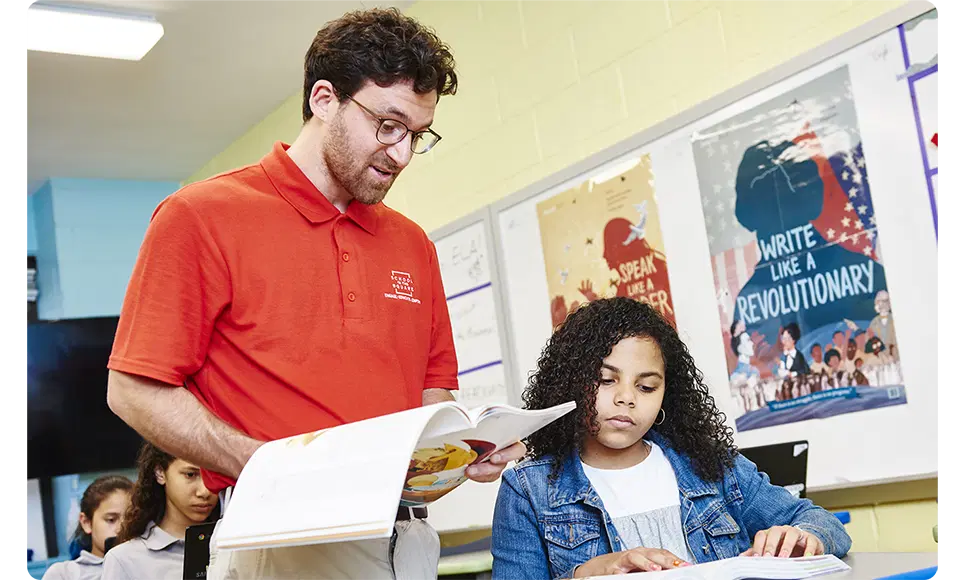
Stay connected!

Join our community and get new episodes every other Tuesday!

We’ll also share new and exciting free resources for your classroom every month.

What Dr. Erin Maloney says about math

“If we can change their mindset, then we can set students on a path to more opportunities and success.”

–Dr. Erin Maloney

Associate Professor in the School of Psychology, Director of the Cognition and Emotion Laboratory, and the Canada Research Chair (Tier II) in Academic Achievement and Well-Being, all at the University of Ottawa

Meet the guest

Erin Maloney is an Associate Professor and Canada Research Chair at the University of Ottawa. Her research sits at the intersection of Cognitive Psychology, Developmental Psychology, and Education and focuses on cognitive and emotional factors that relate to academic achievement. She is a world-renowned expert on the study of math anxiety, conducting research in the lab, in homes, and in classrooms with children, parents, and their teachers. She is passionate about both knowledge mobilization and equity, diversity, and inclusion within education and science.

A woman with straight, shoulder-length light brown hair smiles at the camera, framed by a circular graphic with geometric accents on a white background—perfect for a math teacher lounge or sharing math teacher resources.
A laptop displaying a Facebook group page for "Math Teacher Lounge Community," featuring profile photos, a group banner, and geometric shapes in the image background.

About Math Teacher Lounge

Math Teacher Lounge is a biweekly podcast created specifically for K–12 math educators. In each episode co-hosts Bethany Lockhart Johnson (@lockhartedu) and Dan Meyer (@ddmeyer) chat with guests, taking a deep dive into the math and educational topics you care about.

Join the Math Teacher Lounge Facebook group to continue the conversation, view exclusive content, interact with fellow educators, participate in giveaways, and more!

Webinar: Science Connections: Science and Literacy

Webinar: Strengthening Reading and Improving Science Learning: The benefits of science and literacy integration

Welcome to the Amplify CKLA 3rd Edition program review site!

We’re excited to share everything you need to review Amplify CKLA 3rd Edition, our K–5 core literacy program. On this site, you’ll find a range of materials, including Teacher Guides, Activity Books, and Student Readers, organized by grade and unit.

Please note that the files on this site are static representations of the high-quality materials you’ll receive with your purchase.

We hope you find the site helpful! If you have any questions, please reach out to your Amplify representative.

Reviewer resources

Access key materials designed to support your review of Amplify CKLA 3rd Edition.

Kindergarten

Explore all available resources for Kindergarten, organized by strand and unit.

Knowledge Strand

Unit 1: Star Light, Star Bright: Nursery Rhymes and Fables

Unit 2: See, Hear, Smell, Taste, Touch: The Five Senses

Unit 3: Underdogs and Heroes: Stories

Unit 4: See How They Grow: Plants

Unit 5: Moo, Cluck, Oink: Farms

Unit 6: Deep Roots: Introduction to Native American Cultures

Unit 7: All Around the World: Geography

Unit 8 (Choice): Royal Tales: Monarchs

Unit 8 (Choice): National Icons: Presidents and American Symbols

Unit 9 (Choice): Our Planet: Taking Care of the Earth

Unit 9 (Choice): Rain and Rainbows: Seasons and Weather

Unit 10: Shaped by Nature: Art and the World Around Us

Skills Strand

Unit 1

Unit 2

Unit 3

Unit 4

Unit 5

Unit 6

Unit 7

Unit 8

Unit 9

Unit 10

Ancillary Components


Grade 1

Explore all available resources for Grade 1, organized by strand and unit.

Knowledge Strand

Unit 1: The Moral of the Story: Fables and Tales

Unit 2: From Nose to Toes: How Your Body Works

Unit 3: Common Threads: Different Lands, Similar Stories

Unit 4: Reach for the Stars: Astronomy

Unit 5: Charting the World: Geography

Unit 6: A World of Homes: Animals and Habitats

Unit 7: A New Nation: American Independence

Unit 8 (Choice): Once Upon a Time: Fairy Tales

Unit 8 (Choice): Our Planet: The History of the Earth

Unit 9 (Choice): From Babylon to the Nile: Early World Civilizations

Unit 9 (Choice): Early Americas: Maya, Aztec, and Inca

Unit 10: Adventure Stories: Tales from the Edge

Skills Strand

Unit 1

Unit 2

Unit 3

Unit 4

Unit 5

Unit 6

Unit 7

Ancillary Components


Grade 2

Explore all available resources for Grade 2, organized by strand and unit.

Knowledge Strand

Unit 1: Fortunes and Feats: Fairy Tales and Tall Tales

Unit 2: The Birthplace of Democracy: Ancient Greece

Unit 3: Legends and Heroes: Greek Myths

Unit 4: Our Planet: Cycles in Nature

Unit 5: Butterflies, Bees, and Beetles: Insects

Unit 6: A House Divided: The American Civil War

Unit 7: Sounds and Stanzas: Poetry

Unit 8 (Choice): Journeys to America: Immigration

Unit 8 (Choice): Making a Difference: Creating Change

Unit 9 (Choice): Building Blocks: All About Nutrition

Unit 9 (Choice): Early Asian Civilizations: India and China

Unit 10: Taking Flight: The Age of Aviation

Skills Strand

Unit 1

Unit 2

Unit 3

Unit 4

Unit 5

Unit 6

Ancillary Components


Grade 3

Explore all available resources for Grade 3, organized by unit.

Core Units

Unit 1: Timeless Tales: Classic Stories

Unit 2: Fur, Fins, and Feathers: Animal Classification

Unit 3: Rhythm and Rhyme: Poetry

Unit 4: Rise and Fall: Ancient Rome

Unit 5: Our Solar System and Beyond: Astronomy

Unit 6: Regions and Cultures: Native Americans

Unit 7 (Choice): Novel Study: Charlotte’s Web

Unit 7 (Choice): Novel Study: Stella Díaz Has Something to Say

Unit 8 (Choice): Systems and Senses: The Human Body

Unit 8 (Choice): From Glow to Echo: Light and Sound

Unit 9: From Blues to Bebop: All That Jazz


Supplemental Skills

Grade 3 Skills resources are included in core classroom kits, although the instruction isn’t required for Grade 3 standards coverage.

Unit 1

Unit 2

Unit 3

Unit 4


Grade 4

Explore all available resources for Grade 4, organized by unit.

Unit 1: My Story, My Voice: Personal Narratives

Unit 2: Knights and Castles: Europe’s Middle Ages

Unit 3: Meaning and Metaphor: Poetry

Unit 4: Eureka! Student Inventor

Unit 5: Our Planet: Geology

Unit 6: Road to Independence: The American Revolution

Unit 7 (Choice): Novel Study: From the Mixed-Up Files of Mrs. Basil E. Frankweiler

Unit 7 (Choice): Novel Study: The Season of Styx Malone

Unit 8 (Choice): Crafting Stories: A World of Tales

Unit 8 (Choice): Adventure on the High Seas: Treasure Island

Unit 9: Inspiration and Ingenuity: American Innovation

Grade 5

Explore all available resources for Grade 5, organized by unit.

Unit 1: In My Own Words: Personal Narratives

Unit 2: Early Americas: Maya, Aztec, and Inca

Unit 3: Visions in Verse: Poetry

Unit 4: A Knight’s Tale: Don Quixote

Unit 5: The Deep Blue World: Oceans

Unit 6: Cultures and Histories: Native Americans

Unit 7 (Choice): Novel Study: The Phantom Tollbooth

Unit 7 (Choice): Novel Study: The Science of Breakable Things

Unit 8 (Choice): Arts and Culture: The Renaissance

Unit 8 (Choice): Through the Forest: A Midsummer Night’s Dream

Unit 9: Building Up the World: Global Architecture


Digital platform

Amplify CKLA’s all-in-one platform offers essential tools that streamline instruction for teachers and engage students with meaningful content. Teachers can plan and deliver lessons efficiently, while students can access assignments, assessments, and fun practice games.

A digital interface showing an assessment report on a monitor and a multiple-choice question on a tablet screen. Both screens display educational content from Amplify's assessment tools, providing personalized learning for multilingual learners.

Presentation Screens
Deliver interactive lessons with ready-made, customizable slides for every lesson.

Auto-scored digital assessments
Assess vocabulary, comprehension, and knowledge development at the end of each K–2 Knowledge and 3–5 Integrated Unit.

Standards-based reports
Identify strengths and growth areas for individuals, small groups, or your entire class. Interactive dashboards offer detailed results from assessments and activities.

Skill-building practice games
Engage students with interactive games that reinforce concepts and make learning fun. Powered by Boost Reading™, these games align with lessons and provide real-time feedback.

eReader
Students access texts, take notes, and use audio-enabled eReaders to enhance their reading experience.

Sound Library
Students watch articulation videos and listen to songs for each sound to support phonological awareness.

Vocab App
Helps students in Grades 3–5 practice Amplify CKLA Tier 2 vocabulary words with fun, interactive games.

Intervention Toolkit
Offers user-friendly resources designed to aid educators in identifying and addressing deficiencies in students’ foundation skills.

How to implement the Science of Reading in your classroom today

How to implement the Science of Reading in your classroom today

To view this protected page, enter the password below:


Screen and intervene faster with mCLASS DIBELS 8th Edition: California SB 114 Approved

California educators, Amplify’s mCLASS Assessment Suite is one of three approved screeners in California for Reading Difficulties at K–2. 

mCLASS® DIBELS® 8th Edition is an all-in-one system for Science of Reading-based reading difficulties screening, progress monitoring, and instruction for grades K-6. Amplify’s Spanish language assessment, mCLASS Lectura, works in tandem with DIBELS 8th Edition’s English assessments to help teachers understand where their Spanish-speaking students are in their English and Spanish literacy paths.

mCLASS_DyslexiaLP_M1

About the program

mCLASS offers teacher-administered assessment, intervention, and personalized instruction for grades K–6. Know exactly how to monitor and support every student in your classroom, with features like:

  • Precise one-minute measures based on over three decades of predictive data.
  • Reading difficulties screening in one tool.
  • Instruction that highlights observed patterns and recommends activities.
  • Robust reports for teachers, specialists, administrators, and parents.
A table shows class summary performance metrics in various literacy skills for beginning, middle, and end of the year, categorized into Well Below Benchmark, Below Benchmark, At Benchmark, and Above Benchmark.

The right measures at the right time

With mCLASS DIBELS 8th Edition, you’ll assess students based on grade-specific curriculum and instructional standards, in accordance with SB 114 guidelines.

mCLASS DIBELS 8th Edition offers one-minute, easy-to-administer measures of processing speed, phonological awareness, alphabetic principle, and word reading.

DIBELS® 8th Edition subtest alignment with SB 114
Screening AreamCLASS DIBELS 8th Edition MeasureGrade KGrade 1Grade 2Grade 3Grade 4–6
Rapid naming abilityLetter Naming Fluency (LNF)A large, light peach-colored checkmark on a transparent background.A large, light peach-colored checkmark on a transparent background.
Phonological awarenessPhoneme Segmentation Fluency (PSF)A large, light peach-colored checkmark on a transparent background.A large, light peach-colored checkmark on a transparent background.
Alphabetic principleNonsense Word Fluency (NWF)A large, light peach-colored checkmark on a transparent background.A large, light peach-colored checkmark on a transparent background.A large, light peach-colored checkmark on a transparent background.A large, light peach-colored checkmark on a transparent background.
Word readingWord Reading Fluency (WRF)A large, light peach-colored checkmark on a transparent background.A large, light peach-colored checkmark on a transparent background.A large, light peach-colored checkmark on a transparent background.A large, light peach-colored checkmark on a transparent background.
Word readingOral Reading Fluency (ORF)A large, light peach-colored checkmark on a transparent background.A large, light peach-colored checkmark on a transparent background.A large, light peach-colored checkmark on a transparent background.A large, light peach-colored checkmark on a transparent background.
ComprehensionMazeA large, light peach-colored checkmark on a transparent background.A large, light peach-colored checkmark on a transparent background.A large, light peach-colored checkmark on a transparent background.

Validated as a universal screener

Strong reliability and validity evidence shows that DIBELS 8th Edition can effectively assess students in key skills linked reading difficulty. The research supporting DIBELS 8th Edition, conducted by the University of Oregon, is rigorous, meets high technical standards, and empowers educators to make well-informed decisions.

Read the DIBELS 8th Edition Dyslexia White Paper.

A document cover titled "Dyslexia Screening and DIBELS 8th Edition" by Christopher Ives, Gina Biancarosa, Hank Fien, and Patrick Kennedy from the University of Oregon College of Education. The cover has a PDF icon.

A complete system for data-based decision making

A circular flowchart with images of people tutoring, a line graph, a report card, and a score indicating "Composite Goal 330, Well Below" at the center.

mCLASS DIBELS 8th Edition provides rich data that helps you make informed instructional decisions and seek out further dyslexia screening evaluation if needed:

  1. Assess skills: mCLASS DIBELS 8th Edition and additional measures in Rapid Automatized Naming (RAN), Spelling, Vocabulary, and Oral Language accurately assess students’ abilities.
  2. Identify risk: The DIBELS 8 composite score shows each student’s risk level, with ‘Well Below Benchmark’ indicating a need for intensive support. Students who are also ‘Well Below Benchmark’ in RAN and/or Spelling have an additional Risk Indicator icon next to their name.
  3. Provide instruction: The mCLASS Instruction feature analyzes student error patterns to key dyslexia-related subtests, then recommends small groups and explicit, multi-sensory activities for reinforcing skills.
  4. Progress monitor: mCLASS includes progress-monitoring measures to track student growth in letter sounds, alphabetic principle, word reading, oral reading fluency, and comprehension, so that informed instructional decisions can be made.
  5. Adapt instruction: mCLASS displays indicators based on progress monitoring performance that indicate when a change in instruction may be needed. It also updates instruction recommendations using the latest data.

Differentiated literacy instruction

mCLASS DIBELS 8th Edition lays the groundwork for a strong Multi-Tiered System of Supports (MTSS).

In addition to identifying students with symptoms of dyslexia, mCLASS DIBELS 8th Edition data recommends early intervention, personalized instruction, and core instruction within Amplify’s early literacy suite. Based on the Science of Reading, Amplify’s early literacy suite programs follow an explicit and systematic structure, build knowledge, and instruct on all of the foundational skills essential to literacy development.

Diagram showcasing "Science of Reading Skill Development" with three branches: "Universal and Dyslexia screening," "Core instruction," "Personalized learning," and "Intervention," with accompanying photos of people interacting.

Bilingual dyslexia screening

By assessing with mCLASS DIBELS 8th Edition and its Spanish counterpart, mCLASS Lectura, you’ll know with confidence whether a student truly shows signs of reading difficulties or is experiencing difficulties learning a new language.

When used together, mCLASS DIBELS 8th Edition and mCLASS Lectura feature a Dual Language Report that analyzes screening results in both languages. The report also details how each student can leverage their strengths from one language to support growth in the other.

Student named Marisol Mejía is shown with her English and Spanish literacy scores. English scores are mostly Well Below and Below benchmark; Spanish scores are mostly at Benchmark except for one below.

Equal skill coverage in English and Spanish

Screening areas English measure Spanish measure Description*
Letter Naming and RAN Letter Naming Fluency (LNF) Fluidez en nombrar letras (FNL) Grades K–1: Naming letters in print. 1 minute, 1:1 administration.
Phonological Awareness
(Segmentation)
Phonemic Segmentation Fluency (PSF) Fluidez en la segmentación de sílabas (FSF) & Fluidez en la segmentación de fonemas (FSF) Grades K–1: Hearing and using sounds or syllables in spoken words. 1 minute, 1:1 administration.
Phonological awareness (Elision)   ¿Qué queda? (QQ) Grades K–2: Produce the part of a word that remains after deleting a syllable or phoneme. 1 minute, 1:1 administration.
Letter-Sound Knowledge Nonsense Word Fluency Correct Letter Sounds (NWF-CLS) Fluidez en los sonidos de letras (FSL) English: Grades K–3: Identify letter-sound correspondences in the context of pseudo-words. Spanish: Grades K-1: Identify letter-sounds in isolation. 1 minute, 1:1 administration.
Letter-Sound Knowledge (Receptive)   Fluidez en los sonidos de las letras K-Inicio (FSL K-Inicio) Grade K: Identify (point to) which letter makes a certain sound. Untimed, 1:1 administration
Decoding Nonsense Word Fluency Words Recoded Correctly (NWF-WRC) Fluidez en los sonidos de las sílabas (LSS) English: Grades K–3: Decode orthographically regular pseudo-words
Spanish: Grades K-1: Decode orthographically regular syllables 1 minute, 1:1 administration
Word Reading Word-Reading Fluency (WRF) Fluidez en la lectura de palabras (FEP) Grades K–3: Reading common words easily, quickly and correctly.1 minute, 1:1 administration.
Fluency Oral Reading Fluency (ORF) Fluidez en la lectura oral (FLO) Grades 1–6: Reading connected text with accuracy and automaticity. 1 minute, 1:1 administration.
Reading Comprehension Maze ¿Cuál palabra? (CP) Grades 2–6:  Understanding meaning from texts. 3 minutes, group administration.
Vocabulary Vocabulary Vocabulario Grades K–3: Knowledge of grade-specific words. 15 minutes, group administration.
Encoding Spelling Ortografía Grades K–3: Arranging letters correctly to spell words with grade appropriate features
15 minutes, group administration.
RAN (Numbers) Rapid Automatized Naming Grades K–3: Correctly and quickly naming visual symbols, such as numbers. 3-4 minutes, 1:1 administration.
Language Comprehension Oral Language Lenguaje oral Grades K–2: Demonstrate the ability to use words and phrases acquired through conversations, reading and being read to, and responding to texts. 5 minutes, 1:1 administration.

*Students can be assessed using off-grade measures when information on specific skills is needed.

Dyslexia resources for families

Families play a crucial role in helping children overcome reading challenges. mCLASS DIBELS 8th Edition and mCLASS Lectura provide a Home Connect letter after each screening to explain the results in family-friendly language, recommend activities, and direct families to a free website for additional at-home support.

A woman helps a young girl work on a computer in a classroom setting. Both are smiling and focused on the screen. Background has soft shapes in yellow and blue.

Developmentally appropriate

Computer-based assessments that require students to complete tasks silently or independently may over-identify students for intervention services, especially young learners who are still developing focus and attention abilities.

mCLASS requires students to actively demonstrate their proficiency in producing letter sounds, forming words, and reading texts. This approach to assessment aligns with the California Reading Difficulties Risk Screener Selection Panel (RDRSSP) guidelines for effective screening of reading challenges. By choosing mCLASS for reading difficulties screening, you’ll gain accurate information about a student’s risk for dyslexia, and gain the capability to monitor every student’s path to reading proficiency.

Additional resources

Demo access

Please watch the navigation video for a short overview of the mClass platform, and reach out to your Amplify Account Executive (contact information below) for demo access credentials.

Questions?

Looking to speak directly with your local representative?
Get in touch with a California team member to learn more about our early literacy suite or request a demo account.

Erin King
Sales Director, CA
(512) 736-3162
eking@amplify.com

NORTHERN CA
Wendy Garcia
Senior Account Executive
(510) 368-7666
wgarcia@amplify.com

BAY AREA
Lisa Marinovich
Senior Account Executive
(831) 461-4187
lmarinovich@amplify.com

CENTRAL VALLEY and CENTRAL COAST
Demitri Gonos
Senior Account Executive
(559) 355-3244
dgonos@amplify.com

VENTURA and L.A. COUNTY
Jeff Sorenson
Associate Account Executive
(310) 902-1407
jsorenson@amplify.com

ORANGE and L.A. COUNTY
Lauren Sherman
Senior Account Executive
(949) 397-5766
lsherman@amplify.com

SAN BERNARDINO and L.A. COUNTY
Michael Gruber
Senior Account Executive
(951) 520-6542
migruber@amplify.com

RIVERSIDE and L.A. COUNTY
Erin King
Sales Director, CA
(512) 673-8526
eking@amplify.com

SAN DIEGO COUNTY
Kirk Van Wagoner
Senior Account Executive
(760) 696-0709
kvanwagoner@amplify.com

BUTTE, DEL NORTE, HUMBOLDT, and SHASTA COUNTY

DISTRICTS UNDER 2250 ENROLLMENT

Kevin Mauser

Lead Account Executive

(815) 534-0148

kmauser@amplify.com

Harford County Review CKLA (state)-arch

To view this protected page, enter the password below:


Getting Started Resources

Welcome! This page contains support for getting started with Amplify Science for New York City — including login support, materials lists, and program overviews.

Two young girls, one black and one Caucasian, smiling and looking at a tablet together in a colorful classroom, engaged in an online reading program.

Program overview

Summer temporary logins

  1. Log in to Amplify
  2. Enter the username
  3. Enter the password
  4. Select the desired grade level

Grade K-5 teachers

  • Username: nycdoe-es-teacher
  • Password: AmplifyNumber1

Grade K-5 students

  • Username: nycdoe-es-student
  • Password: AmplifyNumber1

Grade 6-8 teachers

  • Username: nycdoe-ms-teacher
  • Password: AmplifyNumber1

Grade 6-8 students

  • Username: nycdoe-ms-student
  • Password: AmplifyNumber1

Logging in

Materials

Looking for refill kits? Please email mkasloff@amplify.com

Materials lists

Lists of kit contents by unit

Spanish Materials lists

Lists of Spanish print kit contents by unit

Kit-level packing detail chart K-5 

Kit-level packing detail chart 6-8

Unpacking your first Amplify Science classroom kit

AL review ELA (state)

To view this protected page, enter the password below:


Educator Spotlight submission

Do you love using Amplify programs? Do you have helpful program implementation tips that you’d like to share with your fellow educators? Or, do you know a teacher who deserves to be celebrated for their work with their Amplify program(s)? Share your advice with us or tell us about an amazing Amplify educator. We’ll share your submission in an upcoming newsletter and social media post!

If you have any questions, please email educatornewsletter@amplify.com.

Illustration of a pencil drawing wavy lines on a clipboard, set against a yellow and beige background.

Submit your spotlight

Miami review ELA

To view this protected page, enter the password below:


MD RFP Amplify ELA K–8

To view this protected page, enter the password below:


FL review ELA (state)

To view this protected page, enter the password below:


Share your science story!

Use this form to let us know how you would like to share your story. You can submit your experiences (in words, photos, or even videos) directly through the form or express interest in serving as a reference or joining a research group, and we’ll be in touch!

mCLASS dyslexia screener for CA

To view this protected page, enter the password below:


mCLASS dyslexia screener for CA

To view this protected page, enter the password below:


The Core Knowledge Foundation & Amplify CKLA

Having a strong foundation of both foundational skills and background knowledge sets students up for a lifetime of reading and academic success. This philosophy drives the mission and the work of the Core Knowledge Foundation (CKF). Amplify partnered with CKF to develop our Core Knowledge Language Arts (CKLA) curriculum, which is the premier High-Quality Instructional Material (HQIM) offering among elementary language arts programs.

Young boy in front of a textbook and laptop in a living space writing something

What is the Core Knowledge Foundation?

Diagram illustrating the Simple View of Reading model. It shows that skilled reading results from increasingly strategic language comprehension and increasingly automatic word recognition.

The Core Knowledge Foundation is an independent, nonprofit, nonpartisan organization built around the Science of Reading.

To do this, the CKF developed the Core Knowledge Sequence, which outlines the knowledge and skills that all children in the U.S. should learn, and is content-specific, cumulative, and coherent. Based on this mission and philosophy, Amplify partnered with the CKF to develop our Amplify CKLA curriculum. Amplify CKLA, now in its third edition, has continued to grow and improve to better meet the needs of the elementary classroom.

What are the distinguishing features of Amplify CKLA?

Two ideas drove the development of Amplify CKLA: In order for students to actually understand what they’re learning, they need deep background knowledge and vocabulary to pull from, and decoding and encoding must be automatic and fluent. To help students achieve this:

  • The foundational skills instruction in Amplify CKLA is explicit.
  • The connection between oral and written language is supported.
  • Vocabulary is learned in context and through multiple exposures.

Amplify CKLA, 3rd Edition

A teacher sits on a colorful classroom rug with three young students, showing them Core Knowledge papers while engaging in discussion.

Amplify CKLA is now in its third edition and maintains a foundation in the Science of Reading, while featuring new content and significant enhancements including:

  • A powerful and enhanced Knowledge sequence—Students engage with a range of people, perspectives, and authentic texts in exciting new units.
  • Streamlined pacing—We’ve streamlined the pacing of Knowledge Domains, giving you more time for differentiation and helping all students access content. 
  • Integrated writing instruction based on the Science of Writing—Your students’ writing will reinforce their reading development with new instruction grounded in the Science of Writing, the research behind how kids learn to write.
  • Assessment and data reporting—Monitor progress, identify opportunities for growth, and make data-driven decisions with digital assessments and reports.
  • Tiered support through cohesive personalized learning and screening—Amplify’s literacy suite provides cohesive instruction that supports personalized learning and aligns with a Multi-Tiered System of Supports (MTSS).

Welcome to Amplify Science

You’ll be up and running in no time!

Illustration of three children, each in separate colorful vignettes, engaging in different activities: reading, conducting a science experiment, and using a tablet with educational graphics.

About this site

Let’s get started.

Select your role.

What to expect

Researchers and practitioners have defined effective pathways to reading success and still, combining the science of early reading with the art of implementing change remains a challenge. Chandler Unified School District is partnering with current thought leaders, academics, and Amplify facilitators to immerse participants in reading research and improvement science, supporting your district in developing practical, actionable solutions focused on helping young learners become successful readers. Your school team will have the opportunity to work hands-on with our experts and leave the experience with two specific, targeted commitments to a behavior or system change (a “change idea”), which they can implement to improve reading performance.

Speaker bios

Dr. Elfrieda “Freddy” Hiebert (Ph.D., University of Wisconsin, 1979) is the President and CEO of TextProject, a non-profit aimed at providing open-access resources for instruction of beginning and struggling readers. Freddy has had a long career as a literacy educator and is also a research associate at the University of California. Her research, which addresses how fluency, vocabulary, and knowledge can be fostered through appropriate texts, has been published in numerous scholarly journals and books. Hiebert’s contributions to research and practice have been recognized through awards such as the Oscar Causey Award for Outstanding Contributions to Reading Research (Literacy Research Association, 2015), Research to Practice award (American Educational Research Association, 2013), William S. Gray Citation of Merit Award for Outstanding Contributions to Reading Research (International Reading Association, 2008), and membership in the Reading Hall of Fame (2008).

Dillon Hauptfuhrer is the Associate Director of Curriculum Development for the Teach Like a Champion Team. Dillon brings eight years of leading and teaching to her role creating curriculum for the Teach Like A Champion team. Prior to joining the team, Dillon served as a Principal in Residence and Academic Dean at Achievement First in Brooklyn and she worked with YES Prep in Houston for six years as both a teacher, Content Specialist, and Dean of Students. Dillon is a graduate of the University of Virginia and received her M. Ed from Harvard’s Graduate School of Education.

Jen Rugani is the Associate Director of Curriculum and School Support for the Teach Like a Champion Team. As a former principal of Uncommon Schools’ Leadership Prep Canarsie Elementary Academy, member of the inaugural cohort of Teach Like a Champion Fellows, and elementary school teacher, Jen Rugani brings 9 years of leading and teaching to her work creating curriculum and supporting schools. Jen is a graduate of Harvard University and has a Master’s degree from Relay Graduate School of Education, where she also completed the National Principal’s Academy Fellowship.

Pre-reads

Reading Reconsidered
Hard Words

Agenda

Presentations

Contact an Amplify Science representative today

Contact a sales rep

Dan Pier
Vice President, West
dpier@amplify.com
415-203-4810

Dianne Lee
Sales Director
dilee@amplify.com
949-246-2083

Demitri Gonos
Senior Account Executive
dgonos@amplify.com
559-355-3244

Francis Ogata
Senior Science Specialist
fogata@amplify.com
916-521-1467

Kirk Van Wagoner
Senior Account Executive
kvanwagoner@amplify.com
760-696-0709

Lisa Marinovich
Senior Account Executive
lmarinovich@amplify.com
831-461-4187

Wendy Garcia
Senior Account Executive
wgarcia@amplify.com
510-368-7666

Patti Savage
Senior Account Executive
psavage@amplify.com
626-224-3174

Lauren Sherman
Senior Account Executive
lsherman@amplify.com
949-397-5766

Kevin Mauser
Lead Account Executive – Inside Sales
kmauser@amplify.com
815-534-0148

Digital Teacher’s Guide – grades K–5

Click below and select “Teacher” on the login screen to preview the curriculum

View the full program guide.

Click here to view a materials list.

If you have logged in to Amplify Science in the past, you will need to log in with the new credentials above.

When you are finished reviewing, sign out of the digital curriculum. Need help?

Student digital resources – grades K–5

Students in elementary school work primarily offline. Students in grades 2 through 5 have access to digital simulations and modeling tools through the Student Apps page. Click below to view the Amplify Science Digital Student Library.

When you are finished reviewing, sign out of the digital curriculum. Need help?

Course structure for grades K–5

  • Needs of Plants and Animals
  • Pushes and Pulls
  • Sunlight and Weather
  • Animal and Plant Defenses
  • Light and Sound
  • Spinning Earth
  • Plant and Animal Relationships
  • Properties of Materials
  • Changing Landforms
  • Balancing Forces
  • Inheritance and Traits
  • Environments and Survival
  • Weather and Climate
  • Energy and Conversions
  • Vision and Light
  • Earth’s Features
  • Waves, Energy, and Information
  • Patterns of Earth and Sky
  • Modeling Matter
  • The Earth System
  • Ecosystem Restoration

Contact your Redmond representative directly

Patrick Momsen
District Manager

Email: pmomsen@amplify.com
Phone: 541-207-2148

Welcome, reviewers!

Thank you for taking the time to review Amplify ELA for grades 6–8. With Amplify ELA, we enable teachers to foster skills through texts and develop their students’ ability to build meaning through reading. Students dive into complex texts to make observations, grapple with interesting ideas, and find relevance for themselves.

Amplify ELA offers middle school teachers rich texts, opportunities to form better connections with their students through powerful differentiation and assessment tools, and step-by-step instructional guides and resources that save them time and simplify their days.

Illustration of a woman with long hair and earrings, eyes closed in a serene pose, surrounded by plants and butterflies.

Overview

This site will allow you to experience our blended program, with access to the Amplify ELA print materials, digital curriculum, and resources to support your review. Our blended model enables teachers to design instruction based on their classroom needs and resources. Our engaging print edition highlights the many digital experiences teachers can share with students through classroom projections. Teachers can make choices about when their students use devices while providing 100-percent standards coverage and without compromising learning.
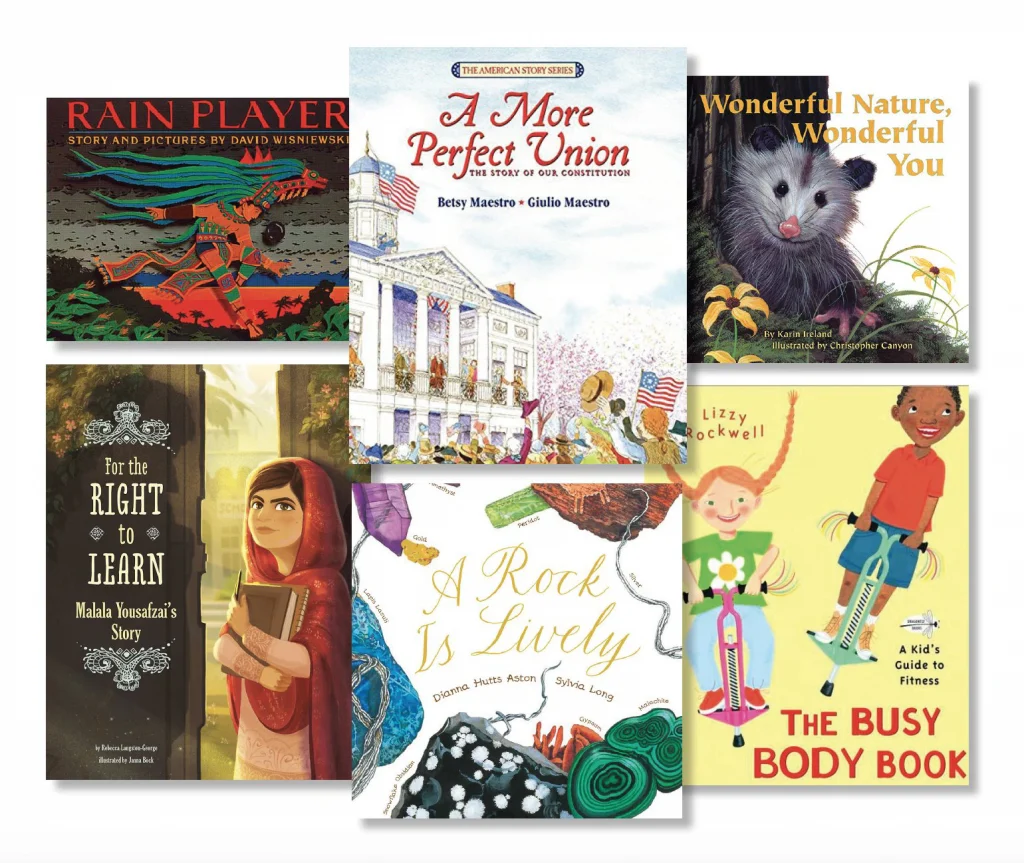
Amplify ELA’s embedded, easy-to-find features include:

  • Full standards coverage. Standards are clearly labeled in each lesson overview, so teachers can save time planning and get back to what they love—teaching.

  • Six levels of differentiation. Based on each student’s needs and the performance measures within Amplify ELA reports, a teacher can choose the differentiation level that’s right for everyone.
  • Assessments. Teachers benefit from uninterrupted instructional time and a continuously updated picture of each student’s progress with key skills and standards.
  • Powerful feedback tools. Comprehensive tools help teachers maximize both the quantity and quality of feedback.
  • Robust reporting. Our reporting app offers information on student progress to help inform instructional decisions.

Digital program

The content and instruction in Amplify ELA’s digital program mirror the content provided in the print Teacher Edition and Student Edition, though the digital program offers more opportunity to engage students through the use of multimedia and a variety of learning apps. Teachers will find embedded apps to help with scoring, providing student feedback, and reporting on the digital platform, accessible whether students or working with devices or in print.

Visit learning.amplify.com/ela-trial to review Amplify ELA’s digital program.

Grade 6 print samples

Three stacked educational book covers titled "Amplify ELA: Mysteries & Investigations" with illustrations of detective-themed elements and characters.

6B: Mysteries & Investigations:

Educational material cover for "the titanic collection" featuring a collage of the titanic, an iceberg, a ship's captain, and various themed illustrations.

6F: The Titanic Collection

Grade 7 print samples

Grade 8 print samples

Collage of illustrations featuring a mix of science fiction and historical figures, including a central image of a man with pointed ears and high hair. text labels include "amplify ela" and "science & science fiction".

8C: Science & Science Fiction

Collage of illustrations depicting various aspects of the space race, including an astronaut, a rocket in space, and mission control personnel.

8F: The Space Race Collection

Resources

Kindergarten

Needs of Plants and Animals

Pushes and Pulls

Sunlight and Weather

Grade 1

Animal and Plant Defenses

Light and Sound

Spinning Earth

Grade 2

Plant and Animal Relationships

Properties of Materials

Changing Landforms

Grade 3

Balancing Forces

Environments and Survival

Inheritance and Traits

Weather and Climate

Grade 4

Energy Conversions

Earth’s Features

Vision and Light

Waves, Energy, and Information

Grade 5

Patterns of Earth and Sky

Ecosystem Restoration

The Earth System

Modeling Matter

Grade 6

Grade 7

Grade 8

Building resilience through routine, relationships, and regulation

Digital advertisement featuring a tablet displaying an e-book titled "Science of Reading: the podcast," with a portrait of a long-haired man, surrounded by colorful abstract graphics and text about downloads.

Welcome back to Science of Reading: The Podcast!

In the classroom, we’re continually looking out for our students and looking for ways to support their well-being and academic growth. But how often do we look at what we’re doing to take care of ourselves? And what does that look like for students and educators, having lived the past year and a half in a global period of stress during the pandemic?

Books have been some of my most meaningful companions … there’s a form of attachment that can occur between a reader and a story or a book that can actually be a safe space of refuge.

 — Ricky Robertson

In this episode, we join Susan Lambert as she talks to Ricky Robertson about building systems of support for students impacted by Adverse Childhood Experiences (ACEs) and the educators who work with them. Ricky is an educator, author, and consultant who has worked with alternative and traditional schools. The episode focuses first on how teachers can prioritize their own self-care and why it is essential in order to care for students. Ricky then goes into explaining what ACEs are and the ways that fight, flight, freeze, and fawn responses can manifest in the classroom. Lastly, they go into explaining resilience and how routine and relationships help build a foundation for resilience — ending on a note of encouragement to educators that their investment is never wasted.

Listen Below!

For more research and wisdom on the best ways to teach reading, subscribe to Science of Reading: The Podcast.

Save your spot at our webinar series to discover how the Science of Reading is for everyone!

Science of Reading dos and don’ts

For classrooms and districts making the shift, understanding what a true Science of Reading curriculum looks like can be challenging. How do you know which instructional practices to adopt, which to avoid, and which ones are the real deal?

We’ve outlined five practices to start implementing today.

1. Use decodable readers.

Early readers need regular practice with grade-level text . Learning to read is not innate and must be taught through explicit, systemic instruction. Early readers need regular practice with grade-level text, especially text that’s connected to each day’s phonics instruction to helps students apply what they’ve learned.

Move away from level readers and curricula that have:

  • A focus on predictable text or below-grade-level text.
  • Decodable readers that don’t follow a clear phonics scope and sequence aligned to instruction.

2. Provide all students with dedicated phonics instruction.

Learning to read is not an innate skill. It must be taught through explicit, systematic instruction. An effective approach to phonics instruction provides enough time for teaching, application, and practice.

Shift from mini-lessons and curricula that have: 

  • Phonics instruction given only on an as-needed basis. When phonics is on an as-needed basis, students don’t get what they need to prevent reading difficulty.
  • Students alternating between limited phonics, guided reading, writing, and vocabulary practice in a mini-lesson.

3. Help students with phonics-based scaffolds.

Learning to decode builds neural pathways that are critical to automatic reading. Students need practice sounding out words, not doing guesswork.

Transition away from three-cueing or word guessing and curricula that have:

  • Prompts that encourage students to guess through three-cueing (e.g., “What word would make sense,” “what’s in this picture”).
  • Predictable books that enable pattern memorization.

4. Teach content.

Language comprehension is as important as decoding. The more background knowledge students receive, the more prior knowledge and vocabulary they can bring to texts.

Limit use of isolated comprehension strategies and curricula that have:

  • Limited time spent on each topic, or isolated topics introduced without connection to each other.
  • Comprehension skill practice without a strong content foundation (e.g., asking students to “find the main idea” or “determine the author’s purpose” in disconnected texts).

5. Follow a clear instructional path.

Clear instructional paths offer explicit guidance and cohesive structure, the most beneficial—yet overlooked—elements of teaching reading effectively. A definitive instructional path (rather than a patchwork) enables components to build upon each other. This gets students the support they need right away, so they don’t have to wait for intervention.

Withdraw from “choose your own adventure” models and curricula that have:

  • A model that provides multiple instructional pathways, which often lead to inconsistencies.
  • So many pieces to their programs that it’s unclear how to implement each effectively.

The importance of reading fluency in effective literacy instruction

There’s a difference between the ability to sound out words on a page and the ability to truly understand their meaning. That difference? Reading fluency. 

Fluency is one of the five foundational reading skills. (The other four, as you likely know, are  phonological awareness, phonics, vocabulary, and comprehension.) Fluency connects readers not just to words, but to emotions and expressions, characters and connotations. And it’s also where reading really starts to foster joy. 

In this post, we’ll explore what fluency is, why it matters, and how to successfully incorporate it into your literacy instruction. 

Defining fluency

The International Literacy Association defines reading fluency as “reasonably accurate reading, at an appropriate rate, with suitable expression, that leads to accurate and deep comprehension and motivation to read.” 

In other words, fluency is not just reading fast. And it goes beyond merely decoding words, to developing a deep understanding of what they’re trying to say. Fluency allows readers to connect ideas, recognize patterns, and infer meanings. 

“I call fluency the bridge to comprehension,” says Kent State literary education professor Tim Rasinski, discussing the topic on Amplify’s Science of Reading: The Podcast

Why fluency in reading matters

Rasinski is also director of Kent State’s award-winning reading clinic, and in his podcast episode, he describes encountering students as old as grade 5 who have decoding skills, but not fluency. “[These students] can sound words out, but if you were to hear them read orally, it would be slow, laborious reading in a monotone,” he says. According to Rasinski, these students aren’t getting “much joy and satisfaction, or even comprehension” from their reading. 
While oral expression in reading is not the ultimate goal, it is an indicator. “The way you read orally reflects the way you read silently,” Rasinski says. “Most of us would say when we read silently we ‘hear’ ourselves with our internal voice.” 

When readers develop fluency, they also develop: 

  • Comprehension. As decoding becomes more effortless, readers can focus on understanding meaning. Fluent readers recognize words automatically, allowing them to dedicate cognitive resources to complex sentence structures and connections among ideas. They grasp both main points and nuances. All told, they get what they’re reading. 

  • Confidence. Fluent readers are more likely to feel accomplished, proud, and motivated with regards to their reading abilities. And it’s a virtuous cycle: As their confidence grows, they’re more likely to engage in and enjoy reading—and continue to improve. 
  • Vocabulary. Fluency plays a significant role in vocabulary acquisition and language development. Fluent readers encounter a larger variety of words in context. This exposure enhances their language and communication skills across academic topics and life experiences. 
  • Academic success. Fluency helps students read to learn. As students advance through school, fluency becomes increasingly important for comprehension and analysis of more advanced and content-rich texts.
  • Emotional connection. Fluency enables readers to connect with the characters, emotions, experiences, and implications in a given text. That’s what makes reading immersive and enjoyable—in the moment and for a lifetime. 

The fluency journey: learning and assessment

The Science of Reading tells us that foundational reading skills must be taught explicitly and systematically, and fluency is no exception. Developing reading fluency is a gradual process that requires consistent practice and exposure to different types of texts. There are several stages and skills that support the development of reading fluency. 

  • Fluency starts with accuracy in decoding. As students practice and improve their phonics skills, they can accurately recognize and decode more and more words. This helps them move from laborious reading toward more efficient reading.
  • Speed comes as a result of accuracy. As students become more accurate in decoding, they can read words more quickly. Accuracy helps reduce the time it takes to identify and process each word, allowing for a smoother and faster reading experience.
  • Fluency practice helps with automaticity. And the more students develop both accuracy and speed, the more they develop automaticity. 

As you may know, there’s a tool called Oral Reading Fluency (ORF) that reading professionals use as a quick-read thermometer of sorts to measure reading speed and accuracy. It’s a simple assessment, measuring how many words a student reads correctly in an unpracticed passage. It’s considered one of the best indicators of a student’s reading progress. 

“It works! It has validity. It gives us good, useful information,” says researcher, educational consultant, and author Dr. Jan Hasbrouck on Science of Reading: The Podcast. That’s why it’s widely used—but, she adds, it’s also widely misunderstood. 

It is a reliable and helpful measure of fluency in terms of reading rate and accuracy, she says. At the same time, “It was unfortunate to put the label ‘fluency’ on it,” she says. “We reading teachers think of fluency as something much more multifaceted and complex that at minimum includes prosody, or expression. It is accuracy, rate, expression, metacognition, background knowledge—it’s all of this stuff that really experienced reading teachers think of as fluency.” 

Fluency best practices for literary instruction

Automaticity frees up cognitive space for comprehension, but fluency isn’t just about reading fast—it’s also about making meaning, which is where prosody comes in. 

Prosody refers to the rhythm, intonation, and expression used by someone reading aloud. 

But it’s not just for the natural performers in the classroom. Prosody can be influenced. How do we help students develop that external, and internal, prosodic voice? 

Through targeted read-aloud practice. By explicitly teaching students about prosody and providing systematic practice opportunities, educators can nurture fluency and comprehension simultaneously—a connection to overall reading success that is well-supported by evidence-based research. 

Some fluency strategies include: 

  • Reader’s Theater in the classroom: Students don’t have to be skilled actors to take on roles and read from scripts. Theater activities allow them to practice recognition and expressions of drama and emotion as they bring the lines to life. 
  • Assisted reading: When students read aloud simultaneously with a more fluent reader, they practice their own skills while also hearing someone else make meaning of the same text. This can also take the form of choral reading, i.e., students reading aloud as a group, focusing on using appropriate intonation and expression. Reading together allows them to practice prosody in a supportive and collaborative environment.
  • Consistent reinforcement and rewards: Rasinski works with students on snippets of text, first with prosody modeled by teachers, then practiced alone and together (repeated reading), then performed for each other or even parents or other adults who offer praise. This regular practice helps boost the confidence and motivation that assists students in developing fluency. “We want children to experience reading success every single day,” says Rasinski. 

More to explore

Plan de estudios de lengua y literatura en inglés para la escuela intermedia

Con Amplify ELA, los estudiantes aprenden a abordar cualquier texto complejo y a hacer observaciones, a lidiar con ideas interesantes y a encontrar relevancia para ellos mismos.

Calificado como totalmente ecológico en EdReports, Amplify ELA obtuvo puntuaciones perfectas en todos los portales. For English version, please click here.

Muestra gratis
Collage featuring two scenes: upper right shows a girl in a middle school English language arts curriculum setting, lower left corner displaying children in a classroom, and graphic floral elements with butterflies throughout.

Adaptable y fácil de enseñar

Con seis niveles de diferenciación y evaluaciones integradas, los maestros pueden asegurarse de que los estudiantes adquieran destrezas clave sin interrumpir la instrucción. Debido a que el programa realiza este trabajo en segundo plano, los maestros tienen más tiempo para hacer lo que más les gusta.

Además, solo Amplify ofrece 100-Day Pathway, una guía integrada para abarcar el contenido requerido para cada nivel de grado en solo 100 días, a la vez que permite a los maestros agregar lecciones y actividades complementarias.

Calificación verde en EdReports

Calificado como verde en EdReports, Amplify ELA obtuvo puntuaciones perfectas en todos los criterios.
Los textos enriquecidos del plan de estudios Amplify ELA desarrollan conocimientos y forjan conexiones entre niveles de grado, a la vez que brindan apoyo integral tanto a estudiantes como a educadores.

Leer la reseña en EdReports

Nuestro enfoque

A través de su atractivo programa digital, poderosas herramientas de diferenciación y evaluación y guías de instrucción paso a paso, nuestro plan de estudios responde directamente a los desafíos y oportunidades que enfrentan los estudiantes y maestros de escuela intermedia.

Ver la investigación detrás del programa

Capacitamos a los estudiantes para que se conviertan en pensadores críticos.

Con el texto siempre como elemento principal, se anima a los estudiantes a generar por sí mismos ideas y opiniones sobre el significado. En lugar de centrarse en respuestas correctas o incorrectas, desarrollan ideas y opiniones sobre textos relevantes de la vida real.

Ofrecemos seis niveles de apoyo diferenciado.

Múltiples puntos de entrada y seis niveles de apoyo diferenciado integrado permiten que cada estudiante, independientemente de su fluidez o nivel de habilidad, interactúe con los mismos textos complejos y el mismo plan de estudios.

Evaluamos mientras usted enseña.

Las evaluaciones e informes integrados brindan información sobre el progreso de cada estudiante sin tener que interrumpir la instrucción diaria. Al recopilar datos en cada momento del aprendizaje, los maestros pueden responder a las necesidades de los estudiantes más rápido que nunca.

Descarga gratuita

Más allá de “hacerlo divertido”: Cuatro principios para un verdadero entusiasmo en la enseñanza de ELA en la escuela intermedia

Descargar

Qué se incluye

Amplify ELA es un plan de estudios básico riguroso que empodera a los maestros y despierta el interés de a los estudiantes de escuela intermedia.

Edición del estudiante

Disponibles en formato digital e impreso, los materiales para estudiantes sirven de guía a los alumnos de escuela intermedia a través de textos complejos y la escritura al:

  • Motivar a los estudiantes con textos narrativos e informativos de alta calidad.
  • Proporcionar videos, apoyos de audio y experiencias digitales que capten su atención.
  • Mantener todos sus escritos en un solo lugar con un Diario de escritura personal.

Edición del maestro

Disponible en formato digital e impreso, la Edición del maestro contiene toda la información que los maestros necesitan para facilitar la instrucción en el salón de clase, incluidos:

  • Planes de lecciones detallados.
  • Consejos para maestros en video integrados en la lección.
  • Alineación de estándares y boletos de salida.
  • Estrategias de diferenciación en tiempo real.
  • Informes exhaustivos.

Misiones interactivas

Las misiones son inmersiones divertidas de una semana de duración en un tema específico de múltiples capas. Permiten a los estudiantes practicar destrezas analíticas de lectura, escritura, expresión oral y comprensión auditiva, a la vez que construyen una estrecha comunidad en el salón de clase.

Una biblioteca digital para lectura independiente

La amplia Biblioteca Amplify incluye más de 700 títulos digitales de ficción, no ficción, clásicos y contemporáneos.

Amplify ELA hace más fácil la vida de los maestros

Nuestro programa garantiza que se cubran los estándares, se enseñen las destrezas y se prepare a los estudiantes con andamiaje y estímulos adecuados.

  • Diferenciación integrada para apoyar a todos los lectores.
  • Sistema de evaluación informativo y optimizado.
  • Informes exhaustivos que rastrean el progreso.
  • Potentes herramientas de comentarios.

Explore otros programas

Nuestros programas están diseñados para que se respalden y complementen entre sí. Aprenda más sobre nuestros programas relacionados:

Brain Builders video series

Brain Builders is an animated video series you can share with your students to help them understand what the brain does in order to read–the first time the Science of Reading has been placed in the hands of students.  Join Minh on his journey as his babysitter, Tamara, helps him cultivate a love for reading and understanding the Science of Reading. Series includes 13 episodes you don’t want to miss!

Illustration of a stylized brain surrounded by various colorful icons representing gears, atoms, and a ship's wheel, emphasizing the science of reading, with the word "amplify" underneath.
Girl shares her love for reading with a boy.

Episode 1

Reading: Why Though?

Watch now

Boy is introduced to the importance of written language.

Episode 2

How to Travel Through Time

Watch now

Animated image of a man in a boat, startled by a large whale surfacing from the ocean, with the phrase "learning to read" written in large red letters.

Episode 3

Spelling: Weird? Or not weird?

Watch now

Boy learns the importance of understanding words and what they mean in sentences.

Episode 4

The Origin of my Reading Brain

Watch now

Boy learns that words have patterns that can give clues to define an unknown word.

Episode 5

Why Some Words Look Weird

Watch now

Illustration showing text "she drives a big train" with a woman driving a red train, a man with glasses, and a smiling girl with yellow hair and red glasses learning to read.

Episode 6

Speed: Is There a Need?

Watch now

Boy is introduced to sight words.

Episode 7

Every Word Wants to be a Sight Word When it Grows Up

Watch now

Boy and girl read together at book club.

Episode 8

Fluency, and What Stuff Means

Watch now

Girl gives a presentation.

Episode 9

How to Learn More Words!

Watch now

Animated characters from "Summer Camp Island" standing in a colorful room with quirky decorations and a rocket ship door, focused on learning to read.

Episode 10

How to Be at Home in New Worlds!

Watch now

Boy learns the importance of understanding what you read.

Episode 11

Reading is Thinking

Watch now

Boy reflects on his journey as a reader and what he has learned about the Science of Reading.

Episode 12

Reading: Here’s Why!

Watch now

Girl gives a presentation.

Episode 13

Summary

Watch now

Ways to use Brain Builders

  • Start the week by playing one for your whole class!
  • Binge them as a reward one Friday afternoon!
  • Share this link to parents and caregivers!

Learn more about Amplify literacy solutions

Learn more

Understanding dyslexia and the power of early intervention

What do Albert Einstein, Whoopi Goldberg, and Percy Jackson have in common? 

A diagnosis (albeit retroactive or speculative) of dyslexia. 

Fortunately, our understanding of the condition has progressed since the days of Einstein—and it’s also more accurate than it’s portrayed in The Olympians. (Percy’s challenges in that beloved series are said to result from his brain being “hard-wired” for ancient Greek, which is…not really a thing.) 

So what do we know now? “You can screen early, and you can intervene just as early,” says Emily Lutrick, a preK–5 curriculum and dyslexia coordinator with almost 20 years of experience in education (and a guest on Science of Reading: The Podcast). 

Let’s take a look at more of what we know about what dyslexia is (and is not), what students with these challenges struggle with, and the importance—and power—of early intervention.

What is dyslexia?

Dyslexia is a neurological condition that affects the way a person’s brain processes written and spoken language—and thus their ability to read, write, and spell. It shows up as difficulties in accurate and fluent word recognition, spelling, and decoding. 

More precisely, people with dyslexia often experience challenges in phonological awareness. They may struggle to break down words into their component sounds and to recognize the relationships between letters and sounds. These difficulties can make reading and writing laborious, and can—understandably—bring down a student’s performance and confidence. It’s a lifelong condition that requires (and responds to) specific research-based interventions.

In the United States, the National Institutes of Health (NIH) estimates that about 15–20% of the population has symptoms indicating a risk of dyslexia or reading difficulty. The condition occurs across different cultures, languages, generations, and socioeconomic backgrounds.

Common misconceptions about dyslexia

Dyslexia is not a result of laziness, poor teaching, or lack of effort (or of being a demi-god).

Let’s debunk some other misconceptions

  • Dyslexia is not a visual problem that causes readers to mix up letters like “b” and “d.” People with dyslexia struggle to match letters to sounds. (Confusing letters is actually common—lots of kids do it, and then move past it, as they learn to read.)
  • We don’t have to wait for students to “fail” in order to identify signs of dyslexia. Some clues and signs may emerge even before students start school, such as a delay in learning tasks like tying shoes and telling time, or difficulties with self-expression; following directions; or learning the alphabet, rhymes, or times tables.
  • Students with dyslexia do not just need more time to learn to read. Dyslexia is not something outgrown. Students who are at risk of developing dyslexia need consistent, high-quality, research-based instruction. 
  • People with dyslexia are slower / not as smart. On the contrary, people with dyslexia are able to think as quickly and creatively as others, and are just as intelligent.
  • Students with dyslexia need to use different materials than everyone else. Students with dyslexia can actually succeed using the same texts and curricula as their peers!
  • Students with dyslexia do have the potential to read at grade level when they have access to early intervention, targeted supports, and a flexible curriculum. In fact, a study at the University of Washington showed that only eight weeks of specialized instruction strengthened neural circuitry—and improved reading performance.

Types of dyslexia

Dyslexia is also not a one-size-fits-all condition. Some common types include:

  • Phonological dyslexia: This type of dyslexia primarily affects a person’s ability to decode words and recognize the sounds associated with letters and letter combinations.
  • Surface dyslexia: Students with surface dyslexia may struggle with irregular words that do not follow common phonetic rules but be able to read more regular words accurately.
  • Rapid naming deficit: This type of dyslexia is characterized by difficulty in rapidly naming familiar objects, colors, or symbols.
  • Double deficit dyslexia: Individuals with double deficit dyslexia exhibit both phonological and rapid naming deficits.

The importance of early intervention

Early intervention is key to helping students with dyslexia reach their full potential. Research has shown that identifying and addressing the condition in the earliest possible stages of education can significantly improve student reading and writing abilities—and so much more.

Early intervention generally focuses on building foundational skills such as phonemic awareness, phonics, decoding, and reading fluency. It might include specialized instruction, assistive technology, and modifications to classroom materials and assessments. 

Intervention has an emotional and social impact, too. Dyslexia can bring down a student’s confidence and even keep them on the social sidelines. By identifying and addressing dyslexia early, teachers can provide their students with access to emotional support and opportunities to catch and keep up with their peers, which helps them remain part of the classroom community. 

Screening for dyslexia

Before intervention comes identification. That’s why mCLASS® includes built-in dyslexia screening, with reliable tools such as: 

  • Phonological Awareness Assessment: Assesses a student’s ability to recognize and manipulate sounds in words.
  • Rapid Automatized Naming (RAN) Test: Evaluates how quickly a student can name. 

And before all that, it’s important that teachers be the first eyes and ears. They may ask caregivers about any family history of reading difficulties, as the condition often has a genetic component. Lutrick watches for students who might be struggling to read fluently or think meta-cognitively about text. ”You know that they’ve got the ability but something is just blocking them,” she says

One diagnostic tack she takes: Asking them to try to decode nonsense words. “For a child who is struggling and at risk of reading difficulty, every word may be a nonsense word,” she says. “Do they have the skills necessary to break it down? If not, I would like to try to help them fill those gaps as quickly as I can.” (mCLASS also includes a Nonsense Word Fluency assessment.)

And it’s possible to intervene even before that, as podcast host Susan Lambert notes: “If we are not already doing systematic and explicit phonics in kindergarten and first grade, there is a possibility that we wouldn’t identify those kids.” 

Lutrick also points out that dyslexia can be disguised in many different ways. “Look at every student and see if there is something behind the mask,” she says. “We need to task ourselves to really look at every individual student as if each one of them is critically important, which we all believe, or we wouldn’t be in this profession.”

More to explore

Unlocking the power of literacy in
North Carolina

Mia is just one of many students at Salemburg Elementary in Sampson County, NC, who found a passion for reading in the classroom.

What was the key? Ms. Denning, an attentive educator, bonded with Mia and helped accelerate her literacy journey using the Amplify early literacy suite.

Like Ms. Denning, you’re shaping young minds and setting them up for success in elementary school and beyond—and we’re here to help you do that!

A woman with long blonde hair wearing a black top is facing forward and smiling slightly in an indoor setting, embodying the confidence that comes from strong early literacy skills.
“Giving a child the ability to read and helping them to start that journey and to be successful as a reader unlocks so much magic and unlocks an entire world of possibilities for them.”

Jenny Denning, Grade 2 Teacher, Salemburg Elementary School

Sampson County, North Carolina

Open up your students’ worlds with knowledge-building

Not every student comes into the classroom with the same foundation for learning, but they all deserve the opportunity to engage in instruction at similar levels of understanding. Amplify Core Knowledge Language Arts (CKLA) doesn’t rely on activating prior knowledge—instead, it builds a breadth of knowledge and vocabulary systematically across coherent topics that connect and grow as students progress.

Invest in every student with a Science of Reading system that gets results

Strong core instruction grounded in the Science of Reading is crucial, but that’s not enough. To be powerful and effective, a literacy system needs to bring together assessment, curriculum, intervention, personalized learning, and professional development. And Amplify has done exactly that with our early literacy suite.

Science of Reading, the Amplify way

To empower teachers with the best curriculum and instruction, Amplify offers a complete suite of core curriculum, assessment, and intervention all built on results-driven Science of Reading.

Amplify CKLA sequences deep content knowledge with research-based foundational skills to help students in grades PreK–5 build strong literacy foundations.

mCLASS® is the gold-standard assessment and intervention suite for grades K–6 that helps every child learn to read confidently.

Boost Reading provides K–5 students with engaging personalized learning to help students review and reinforce what they’ve learned.

Ready to take the next step?

Get in touch with one of our program experts to request a sample or demo.

Request a sample or demo

Welcome, Indiana Department of Education!

Amplify CKLA 3rd Edition builds on the principles and instruction of previous editions to provide better-than-ever support for teaching and learning. The focus continues on delivering evidence-based instruction across a system of multi-tiered supports aligned with the Science of Reading and Writing.

We’re excited to share this site, where you’ll find a range of materials and literacy tools including Reviewer Resources and Teaching Materials (Teacher Guides, Activity Books, and Student Readers) organized by grade and unit.

We welcome your thoughts and questions!

An astronaut floats in space near the Moon, with a speech bubble displaying

Reviewer resources

Overview and program resources:

Alignment and scope and sequence:

Curriculum maps by grade:

Kindergarten

Explore all available resources for Kindergarten, organized by strand and unit.

Knowledge Strand

Unit 1: Star Light, Star Bright: Nursery Rhymes and Fables

Unit 2: See, Hear, Smell, Taste, Touch: The Five Senses

Unit 3: Underdogs and Heroes: Stories

Unit 4: See How They Grow: Plants

Unit 5: Moo, Cluck, Oink: Farms

Unit 6: Deep Roots: Introduction to Native American Cultures

Unit 7: All Around the World: Geography

Unit 8 (Choice): Royal Tales: Monarchs

Unit 8 (Choice): National Icons: Presidents and American Symbols

Unit 9 (Choice): Our Planet: Taking Care of the Earth

Unit 9 (Choice): Rain and Rainbows: Seasons and Weather

Unit 10: Shaped by Nature: Art and the World Around Us

Skills Strand

Unit 1

Unit 2

Unit 3

Unit 4

Unit 5

Unit 6

Unit 7

Unit 8

Unit 9

Unit 10

Ancillary Components

Grade 1

Explore all available resources for Grade 1, organized by strand and unit.

Knowledge Strand

Unit 1: The Moral of the Story: Fables and Tales

Unit 2: From Nose to Toes: How Your Body Works

Unit 3: Common Threads: Different Lands, Similar Stories

Unit 4: Reach for the Stars: Astronomy

Unit 5: Charting the World: Geography

Unit 6: A World of Homes: Animals and Habitats

Unit 7: A New Nation: American Independence

Unit 8 (Choice): Once Upon a Time: Fairy Tales

Unit 8 (Choice): Our Planet: The History of the Earth

Unit 9 (Choice): From Babylon to the Nile: Early World Civilizations

Unit 9 (Choice): Early Americas: Maya, Aztec, and Inca

Unit 10: Adventure Stories: Tales from the Edge

Skills Strand

Unit 1

Unit 2

Unit 3

Unit 4

Unit 5

Unit 6

Unit 7

Ancillary Components

Grade 2

Explore all available resources for Grade 2, organized by strand and unit.

Knowledge Strand

Unit 1: Fortunes and Feats: Fairy Tales and Tall Tales

Unit 2: The Birthplace of Democracy: Ancient Greece

Unit 3: Legends and Heroes: Greek Myths

Unit 4: Our Planet: Cycles in Nature

Unit 5: Butterflies, Bees, and Beetles: Insects

Unit 6: A House Divided: The American Civil War

Unit 7: Sounds and Stanzas: Poetry

Unit 8 (Choice): Journeys to America: Immigration

Unit 8 (Choice): Making a Difference: Creating Change

Unit 9 (Choice): Building Blocks: All About Nutrition

Unit 9 (Choice): Early Asian Civilizations: India and China

Unit 10: Taking Flight: The Age of Aviation

Skills Strand

Unit 1

Unit 2

Unit 3

Unit 4

Unit 5

Unit 6

Ancillary Components


Grade 3

Explore all available resources for Grade 3, organized by unit.

Core Units

Explore all available resources for Grade 3, organized by unit.

Unit 1: Timeless Tales: Classic Stories

Unit 2: Fur, Fins, and Feathers: Animal Classification

Unit 3: Rhythm and Rhyme: Poetry

Unit 4: Rise and Fall: Ancient Rome

Unit 5: Our Solar System and Beyond: Astronomy

Unit 6: Regions and Cultures: Native Americans

Unit 7 (Choice): Novel Study: Charlotte’s Web

Unit 7 (Choice): Novel Study: Stella Díaz Has Something to Say

Unit 8 (Choice): Systems and Senses: The Human Body

Unit 8 (Choice): From Glow to Echo: Light and Sound

Unit 9: From Blues to Bebop: All That Jazz

Ancillary Components

Supplemental Skills Units

Grade 3 Skills resources are included in core classroom kits, although the instruction isn’t required for Grade 3 standards coverage.

Unit 1

Unit 2

Unit 3

Unit 4


Grade 4

Explore all available resources for Grade 4, organized by unit.

Unit 1: My Story, My Voice: Personal Narratives

Unit 2: Knights and Castles: Europe’s Middle Ages

Unit 3: Meaning and Metaphor: Poetry

Unit 4: Eureka! Student Inventor

Unit 5: Our Planet: Geology

Unit 6: Road to Independence: The American Revolution

Unit 7 (Choice): Novel Study: From the Mixed-Up Files of Mrs. Basil E. Frankweiler

Unit 7 (Choice): Novel Study: The Season of Styx Malone

Unit 8 (Choice): Crafting Stories: A World of Tales

Unit 8 (Choice): Adventure on the High Seas: Treasure Island

Unit 9: Inspiration and Ingenuity: American Innovation

Ancillary Components

Grade 5

Explore all available resources for Grade 5, organized by unit.

Unit 1: In My Own Words: Personal Narratives

Unit 2: Early Americas: Maya, Aztec, and Inca

Unit 3: Visions in Verse: Poetry

Unit 4: A Knight’s Tale: Don Quixote

Unit 5: The Deep Blue World: Oceans

Unit 6: Cultures and Histories: Native Americans

Unit 7 (Choice): Novel Study: The Phantom Tollbooth

Unit 7 (Choice): Novel Study: The Science of Breakable Things

Unit 8 (Choice): Arts and Culture: The Renaissance

Unit 8 (Choice): Through the Forest: A Midsummer Night’s Dream

Unit 9: Building Up the World: Global Architecture

Ancillary Components

Digital platform

In the 2025-26 school year, Amplify CKLA’s all-in-one platform will offer essential tools that streamline instruction for teachers and engage students with meaningful content. Teachers can plan and deliver lessons efficiently, while students can access assignments, assessments, and fun practice games.

A digital interface showing an assessment report on a monitor and a multiple-choice question on a tablet screen. Both screens display educational content from Amplify's assessment tools, providing personalized learning for multilingual learners.

Presentation Screens
Deliver interactive lessons with ready-made, customizable slides for every lesson.

Auto-scored digital assessments
Assess vocabulary, comprehension, and knowledge development at the end of each K–2 Knowledge and 3–5 Integrated Unit.

Standards-based reports
Identify strengths and growth areas for individuals, small groups, or your entire class. Interactive dashboards offer detailed results from assessments and activities.

Skill-building practice games
Engage students with interactive games that reinforce concepts and make learning fun. Powered by Boost Reading™, these games align with lessons and provide real-time feedback.

eReader
Students access texts, take notes, and use audio-enabled eReaders to enhance their reading experience.

Sound Library
Students watch articulation videos and listen to songs for each sound to support phonological awareness.

Vocab App
Helps students in Grades 3-5 practice Amplify CKLA Tier 2 vocabulary words with fun, interactive games.

Intervention Toolkit
Offers user-friendly resources designed to aid educators in identifying and addressing deficiencies in students’ foundation skills.

Program support resources

Additional program resource documents:

Welcome to the Amplify CKLA 3rd Edition program review site!

To view this protected page, enter the password below:


Thank you for nominating a Science of Reading Star!

Our internal panel will review all submissions carefully and will be in touch if your nominee is selected as a finalist.

While we have you:

  • Subscribe to our chart-topping Science of Reading: The Podcast, which has been downloaded over 3 million times!
  • Watch on demand any of our Science of Reading focused professional development webinars.
  • Explore our Science of Reading-based literacy programs and get in touch if you would like a personalized sample or demo.

Welcome, San Diego Unified School District!

At Amplify, we partner with you to engage all students deeply with high quality content while also providing teachers with powerful tools that support remote and hybrid learning. We’ll be by your side with new resources and product enhancements to ensure continuity of learning in Amplify Science, Amplify ELA, and Amplify Desmos Math.

Choose a program below for implementation resources, including onboarding videos, program overviews, information about professional learning sessions, and more.

Amplify Science

Amplify ELA

Amplify Desmos Math caregivers: K – 5th Grade

Amplify Desmos Math caregivers: 6th – 8th Grade

Amplify Desmos Math implementation

A girl wearing safety glasses examines a glass of water, surrounded by illustrations of a rocket, telescope, polar bear, raindrops, and moons on an orange background.

Questions?

Amplify Support
Monday through Friday, 4 a.m.–4 p.m. PT
Saturday through Sunday, 8 a.m.–4 p.m. PT
(800) 823-1969
help@amplify.com

A bald man with a goatee smiles at the camera, wearing a light blue dress shirt and an orange tie against a plain white background.

Kirk Van Wagoner

Senior Account Executive

kvanwagoner@amplify.com

A man with a beard and short hair, wearing a light-colored shirt and tie, smiling at the camera against a neutral background.

JeMele Moore

Associate Director, Customer Success

jmoore@amplify.com