Identifying math anxiety

Can you do long division in your head and calculate tips in your sleep? Or does the mere thought of arithmetic keep you up at night?

If you fall into the latter camp, you’re not alone.

Math anxiety is real—and an established body of research proves it. In fact, data shows that math anxiety affects at least 20% of students.

And its effects can be damaging in both the immediate and long term. It can bring down student performance both in and beyond math, and in and outside the classroom.

Fortunately, we’re also learning how teachers can help students manage math anxiety—and succeed wherever it’s holding them back.

We explored this topic on a recent episode of Math Teacher Lounge, our biweekly podcast created specifically for K–12 math educators. This season is all about recognizing and reducing math anxiety in students, with each episode featuring experts and educators who share their insights and strategies around this critical subject.

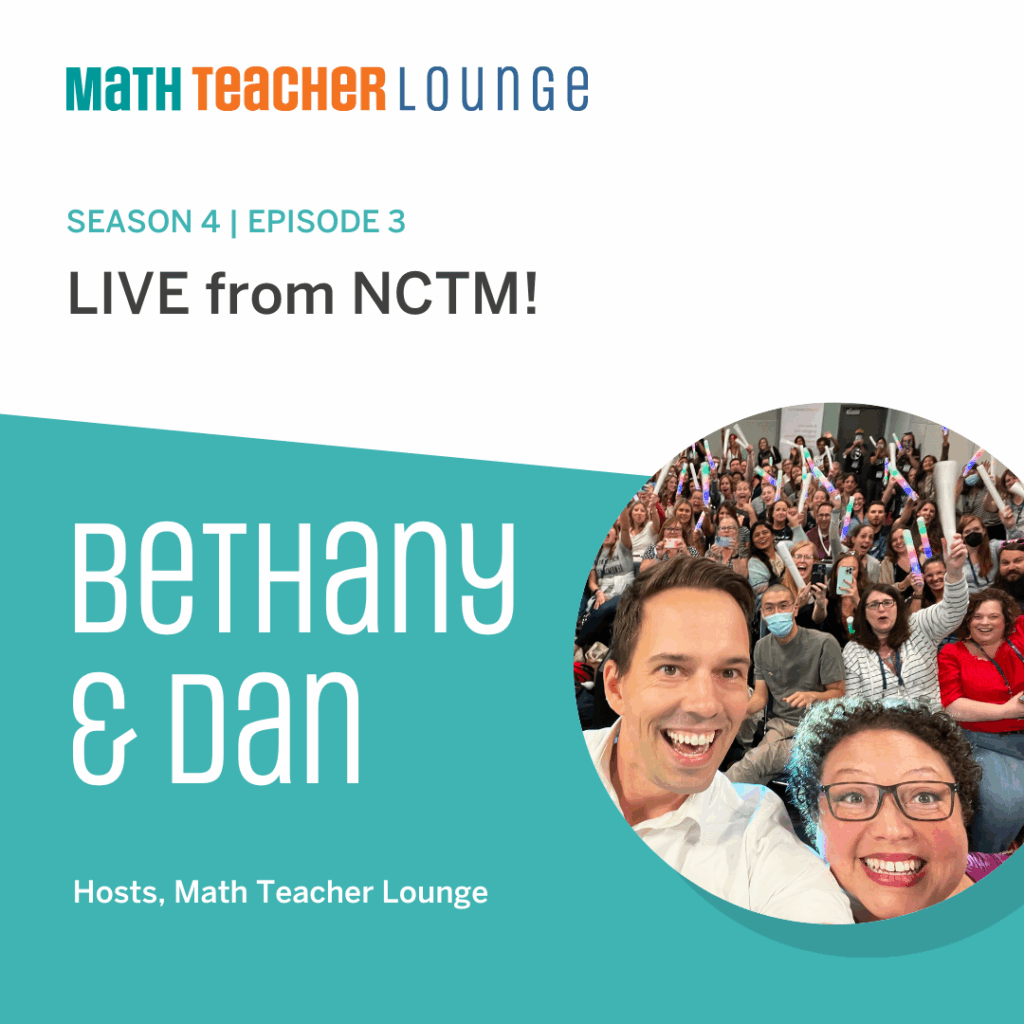
Dr. Gerardo Ramirez, associate professor of educational psychology at Ball State University, has been studying math anxiety for more than a decade. He joined podcast hosts Bethany Lockhart Johnson and Dan Meyer to share his insights.

So let’s take a look at what math anxiety is—and is not. We’ll also explore what impact it has on learning, and what we can do about it.

What is math anxiety?

Math anxiety is more than just finding math challenging, or feeling like you’re “not a math person.” Dr. Ramirez offers this definition: “[Math anxiety] is a fear or apprehension in situations that might involve math or situations that you perceive as involving math. Anything from tests to homework to paying a tip at a restaurant.”

Math anxiety may cause sweating, rapid heartbeat, shortness of breath, and other physical symptoms of anxiety.

But while math anxiety has some similarities with other forms of anxiety, it’s exclusive to math-related tasks, and comes with a unique set of characteristics and influences.

Math anxiety can lead sufferers to deliberately avoid math. And this avoidance can not only result in a student not learning math, but also limiting their academic success, career options, and even  social experiences and connections. This can look like anything from getting poor grades in math class, to tension with family members over doing math homework.

Parents and teachers can suffer from math anxiety, too. In fact, some research suggests that when teachers have math anxiety, it’s more likely that some of their students will, too.

What causes math anxiety?

It’s not correlated to high or low skill or performance in math. Students who generally don’t do well in math can experience math anxiety because they assume they’ll do poorly every time. Students who have been pressured to be high-achieving experience math anxiety because they’re worried they won’t meet expectations.

Other triggers may include:

  • Pressure. Pressure from parents or peers to do well in math can create anxiety, especially if the person feels that their worth or future success is tied to their math abilities.
  • Negative past experiences. Someone who has struggled with math or gotten negative feedback about their math skills might develop math anxiety. They may start to avoid or fear math, making it even harder to approach and improve.
  • Learning style. Different people have different learning styles. When someone’s learning style doesn’t match the way math is taught in their class or school, they may struggle and develop anxiety.
  • Cultural factors. When students hear things like, “Boys are better at math,” it can increase math anxiety in girls who may absorb the notion that they are already destined to underachieve.

Math anxiety and working memory

Dr. Ramirez has researched the important relationship between math anxiety and working memory.

Working memory refers to the ability to hold and manipulate information in short-term memory. People with math anxiety often have poorer working memory capacity when it comes to math-related tasks. This is thought to be due to the cognitive load created by anxiety, which can interfere with the ability to manage information in working memory.

The result? A negative feedback loop. Poor working memory can lead to further math anxiety, and increased anxiety can further impair working memory.

However, it’s important to note that not all individuals with math anxiety experience a decline in working memory capacity. Some may have average or above-average working memory capacity but still experience math anxiety. In such cases, the anxiety may be related to negative beliefs about one’s ability to perform math tasks, rather than an actual cognitive deficit.

What we can do about math anxiety

Even though math anxiety is a distinct type of anxiety, interventions such as cognitive behavioral therapy, exposure therapy, and mindfulness approaches have been shown to be effective in reducing it.

It starts, says Dr. Ramirez, with normalizing the anxiety.

“If you’re a student and you’re struggling with math and I tell you, ‘Yeah, it’s hard, it’s OK to struggle with math,’ that makes you feel seen. And that’s gonna lead you to want to ask me more for help, because I’m someone who understands you,” says Dr. Ramirez. “And that’s a great opportunity.”

Learn more

Start your 30-day free trial of Desmos Math 6–A1.

S5-02. Uncovering the causes of math anxiety

A blue graphic with text reading "Math Teacher Lounge" in multicolored letters and "Amplify." at the bottom, with abstract geometric shapes and lines as decoration.

We’re continuing our season theme of math anxiety, going beyond the basics, diving deeper into what causes it, and how we can help students move forward. In this episode, we talk to Dr. Erin Maloney from the University of Ottawa to better understand what’s actually happening in the brain when a person experiences math anxiety, and how we can take steps to shift student mindsets in a positive direction.
 
Listen now and don’t forget to grab your MTL study guide to track your learning and make the most of this episode!
 
Enjoy this episode and explore more from Math Teacher Lounge by visiting our main page. 

Download Transcript

Dr. Erin Maloney (00:00):

It’s the anxiety itself in many ways that can cause people to underperform.

Bethany Lockhart Johnson (00:06):

Welcome back to Math Teacher Lounge. I’m Bethany Lockhart Johnson.

Dan Meyer (00:10):

And I’m Dan Meyer.

Bethany Lockhart Johnson (00:11):

This is episode two of our new season, all about math anxiety. Who has it? What is it? What do we do about it?

Dan Meyer (00:20):

I’m learning so much, learning a ton.

Bethany Lockhart Johnson (00:22):

I loved our first conversation with Dr. Gerardo Ramirez, episode one, our first episode of the season. Really, our goal with that conversation was just to—we need to talk about the basics of it, for reals. Like, what is math anxiety?

Dan Meyer (00:36):

What is it? How do you measure it? How’s it defined? Super-helpful stuff.

Bethany Lockhart Johnson (00:40):

There’s not only one way that it’s measured. But it’s like, in active research right now, how are folks making sense of it? And I think Dr. Ramirez did such a fantastic job of sharing that with our listeners. And I learned a lot. You learned a lot, Dan?

Dan Meyer (00:56):

I did. And I’m also super-excited to take that knowledge that we have developed together and go and build on top of it and keep on climbing up up the mountain here, and learn more about math anxiety. Which is why we’re super-excited to have a guest on, Dr. Maloney, who is going to help us learn more—especially about what happens to the brain when it’s experiencing math anxiety. There’s some really complex stuff that happens there, including the role of parents and educators in creating and resolving math anxiety. And I think we’ll also learn that the whole situation is a bit of a hot mess. And we’ll try to make it a little bit less messy together.

Bethany Lockhart Johnson (01:34):

Little bit less messy. Dan, if we do nothing else, can we make it a little less messy?

Dan Meyer (01:41):

I sometimes prefer more mess, but in this case I prefer less. So.

Bethany Lockhart Johnson (01:45):

I have a two-year-old, so everything is a mess.

Dan Meyer (01:47):

Your life is mess. Yes. <laugh> Right. Well, I’m excited for you folks to hear this. It was a delightful conversation, so yeah, tune in. We are joined by Dr. Erin Maloney.

Bethany Lockhart Johnson (01:56):

Let’s go. We are joined by Dr. Erin Maloney, associate professor in the School of Psychology at the University of Ottawa, where she directs the Cognition and Emotion Laboratory, as well as serving as the Canada Research Chair in Academic Achievement and Well-being. Welcome to the show, Dr. Maloney. We’re so excited to have you in the Lounge.

Dr. Erin Maloney (02:20):

Yeah, thank you so much for having me. This is fantastic.

Bethany Lockhart Johnson (02:24):

So our last season was all about math and joy. And even when I read your title, I felt more joyful. Like, somebody is thinking about academic achievement, but with well-being in mind. I love it.

Dr. Erin Maloney (02:39):

Aw, thank you.

Dan Meyer (02:40):

Cognition and emotion!

Bethany Lockhart Johnson (02:42):

E-mo-tion!

Dr. Erin Maloney (02:43):

I don’t think they can be separate. I think that you have to think about them together, ’cause they’re so intricately connected.

Dan Meyer (02:49):

Love that. People try, but we love that. Yeah. That’s our vibe here, too.

Bethany Lockhart Johnson (02:52):

People try. That was a big problem with my math anxiety. They just wanted…there was no room for my emotion. They’re like, stop weeping at your desk—

Dan Meyer (03:00):

It’s rearranging neurons….

Bethany Lockhart Johnson (03:01):

—you’re distracting the other children. So would you mind telling us the story of how you even got interested in this topic? You know, when you tell people that you study math anxiety—or, actually, I don’t know how you describe it to them; I’m hopeful you bring in that well-being part—but how did you get here? What do you, what do you, what do you…yeah, tell us! We love it!

Dr. Erin Maloney (03:23):

<laugh> I feel like what you’re actually asking is, “How did you make life choices that got you to here?” <Laugh>

Bethany Lockhart Johnson (03:29):

Justify your life choices! Ready? Go!

Dr. Erin Maloney (03:32):

<laugh> Whoo. OK. So, all right. So we often, in psychology, we joke that instead of doing research, we do “me-search.” And that’s, that’s admittedly true in my case. I was a student who absolutely loved math up until about eighth grade, and then something changed, and all of a sudden I was terrified of math and I had absolutely no sense of self-efficacy in it. Despite trying really hard, I was extremely anxious about it. And so I initially, I set out…my parents were completely convinced that I was absolutely capable of doing mathematics and that I was getting in my own way. And when I went to university, I decided to prove them wrong. So I set out to prove that some people just can’t do math, and that’s the end of it. And, you know, 20 plus years later, my parents were right. And it turns out that many people—well, I would argue virtually everyone—can do math. And that if you are really anxious about it, it can get in the way. And interestingly, you know, in, in the years that we’ve been doing this research, there’s really good strategies that can be used—that hopefully we get a chance to chat about—that can really help reduce the amount of anxiety that students are experiencing. But I really did set out, like the bold teenager that I was, to prove my parents wrong. And that backfired <laugh>. So I know it’s kind of a strange answer, but it’s the truth. So I was really interested in understanding why it was some people just could not do math.

Dan Meyer (05:10):

That makes two for two so far, on guests for this season who did a version of me-search. And I feel like this is pretty common for a lot of researchers. Like, I wanna figure out…my experience as a teacher, the part where you, I think, diverge from a lot of people I knew in grad school, myself included, is that you actually let counter evidence change your perspective on things. Whereas I feel like a lot of us go in: “I know this is true and I’m gonna gather data!” and lo and behold, I’m true! But only now, with the research TM, you know, trademarked research, attached to it. So that’s, really exciting. Thanks for sharing that.

Dr. Erin Maloney (05:43):

No, you’re welcome.

Bethany Lockhart Johnson (05:44):

But don’t people say that the more personal you get, the more universal it is? Right? So if you go and get your doctorate about something that you think is just your experience or in your brain, then people are gonna be gonna be like, “Wait a second; you think that too?” “Wait, that math anxiety isn’t just you?” I don’t know, it sounds like a pretty great path to me. When you tell folks that you study math anxiety or when you’re speaking to folks about your research, do you find that there is a lot of folks who relate to what you’re studying? Or how does that conversation typically go?

Dr. Erin Maloney (06:20):

Yeah, so it is I think an extremely relatable topic. Not in the sense that everyone experiences anxiety about math, but everyone seems to know somebody who’s really anxious about math. Or everyone’s at least aware of the stereotype that like some people are math people and some people aren’t, and that’s just the way it is. So it feels like everyone has feelings about math and everyone seems very happy to share those feelings. So one thing I’ve always found really interesting, and actually, so I, I know you mentioned that you had Gerardo on recently. Gerardo and I have had really interesting conversations about how people are really quick to tell you that they hate math and they can’t do math, and they’re anxious about math. And I’ve yet to have anyone ever tell me they hate reading, they can’t read, they’re really anxious about reading as an adult. So for some reason math seems really different. And in that sense people always seem to be pretty excited to talk about their feelings towards math.

Dan Meyer (07:23):

Yeah, definitely. Been on an airplane or two myself and had those conversations. You know, people asking to be reseated because they found out that I do math for a living or whatever. Or just unburdening themselves, for sure. I’m super-curious: I think that the fact that you are doing the me-search is reason enough to want to dedicate your life to this study. But I am curious: If you were gonna justify to someone else, why is math anxiety important to study? What are its consequences, even outside of math education? What would you say to that?

Dr. Erin Maloney (07:57):

So I think it’s probably not hard to convince people that success in math is important, right? So we know that children who start elementary school behind in mathematics tend to stay behind in mathematics, unless they have any kind of very targeted intervention. We know that children who do worse in mathematics throughout K to 12 education in general get lower-paying jobs when they’re older. We also know that when they do worse than mathematics relative to their peers, there’s fewer jobs that are open to them, relative to if they excelled in math. Right? And so I think in many ways there are really clear consequences for students who are not comfortable with math and who avoid it. But I think one of the really, really interesting things about math anxiety, and maybe part of why I’ve fallen in love with it as a research topic is that it’s the anxiety itself in many ways that can cause people to underperform. So it’s not just the case that people who are bad at math are anxious about it. It’s actually that the anxiety itself can cause you to do worse in math. And that for me is really exciting, ’cause it means that if we can change your mindset, then we can really set you on a path with several more options available to you career-wise. And I think that is really empowering.

Dan Meyer (09:18):

Hmm. Yeah, definitely. And I’d love for you to explore — your laboratory is the cognition and emotion laboratory, which I love, how you’re creating those linkages between how you feel about a thing and what your opportunities or your aptitude for learning it. I’m really curious, can you say more about the, the relationship there? How does feeling anxiety impair your ability to do mathematics?

Dr. Erin Maloney (09:41):

Yeah, so feeling anxiety, typically what you tend to experience is these negative thoughts and ruminations. So you can imagine, you’re somebody who doesn’t really love math, you’re pretty anxious about it; you know, Bethany, maybe you’ve had this kind of experience before. I’m gonna call you out on it. I’ve had it many times, where you sit down to do a math test and all of a sudden you’re not focusing on the actual math test in front of you. You’re focusing on things like the consequences of not doing well on this. Right? Or “my parents are gonna be really disappointed if I don’t pass this test,” or “my teacher is gonna think negatively negative of me,” or sometimes we see things like, “I’m a girl, girls don’t do math.” These types of stereotypes. And what happens is that those thoughts actually tie up really important cognitive resources, like, really important memory resources, that you need to do the math test. And so if you are trying to essentially do two things at once, right? You’re trying to deal with all these negative thoughts that are distracting you and you’re trying to do the math test, then you’re not going to do as well as someone who’s sitting down and doesn’t have all of these distracting thoughts to deal with. And we actually know that from research that we have in our lab right now, where we just ask people like, “Hey, when you did this math test, what kind of stuff are you thinking about?” what we find is that the people who are really anxious about math report a whole bunch of thoughts that are unrelated really to the math test, per se. It’s more about the consequences of doing poorly. And as a result of those thoughts, they actually end up doing worse.

Dan Meyer (11:14):

This has been really helpful to figure out, how the emotional state of doing math affects the ability to do math. And it’s really interesting how you’re saying that the direction of the causality can go from the emotions to the cognition. And I’m just curious then, what is the source of the bad emotions about math? Where does that come from? Is it nature? Is it nurture? Some combination? How do you see it?

Dr. Erin Maloney (11:39):

Yeah, so one, that’s a fantastic question. And there’s been a whole bunch of people all around the world that have been spending a lot of time really trying to pinpoint that down. And I think the answer is that it’s, you know, it’s complex. So most of what it’s looking like right now is that it is a combination of both. So essentially what we find is that kids who start elementary school who are a little bit behind in math—and for the question of why they’re behind, that’s also complex; it could be genetics, it could be just environmental input, before the child ever entered formal schooling kind of thing—but in essence, what we find is that kids that start school behind in mathematics, those are the children who are most likely to develop anxiety about math by the time they’re finished first grade. OK? But we also know that once they’ve developed the anxiety about math, then that’s when they get these thoughts and ruminations that kind of tie up those memory resources, that then is gonna make it harder for them to succeed in math tests. So you get into this sort of vicious cycle, right? Where maybe you start behind a little bit and then you develop the anxiety, the anxiety causes you to underperform relative to what you should be able to, so now you’re even further behind, you get more anxious because you’re not doing as well as you’d like to…but again, kind of coming back to the “Why are the children starting behind in the first place?” Some of that seems to be the role that parents are playing in the household. So some kids come from a household where parents are playing a lot more math games with them, talking about mathematical concepts on a regular basis. Maybe they have older siblings who are, you know, practicing arithmetic and, and mathematical processing in front of them. And so those kids are exposed to more math before they ever even start formal schooling. Those kids seem to do better. And then we also know that the parents’ attitudes matter a lot too. So what we find is that when parents are high in math anxiety themselves, especially when they help their children a lot with their math homework in really early ages, we find that those kids end up being more anxious about math by the end of the school year, and they also end up doing worse in mathematics. So it really does seem to be, you know, kind of a complex set of factors that have something to do with both maybe genetic predisposition to success in math and genetic predisposition to anxiety, but then also the social attitudes and stereotypes about math to which you’re exposed at home that really seem to be coming together to create this anxiety in young children.

Bethany Lockhart Johnson (14:24):

I feel like everything you’re saying is <laugh>…it makes so much sense and yet it’s so often not talked about, right? Because it’s just more like, it gets boiled down to, “Oh, they’re just not a math person,” instead of all these other factors that are at play. And I completely remember the anxiety I felt, whether it was a test or not, walking into my math classroom when I was in ninth grade. And there’s no way I was set up and ready to learn. Right? <Laugh>. And something with—we mentioned Dr. Ramirez, he was talking about validating that anxiety. If teachers validate that like, “Oh, you know what, sometimes you might feel stumped, or this might feel overwhelming.” Even the power in creating space for that in the classroom, right? And acknowledging that it doesn’t—math doesn’t have to “come easy” to you in order for you to have access or make sense, is such a powerful concept. And I love the way that you are looking at all these different factors and saying, “Hey, it’s both simple and also a lot more complicated than we’re we’re making it.” Right?

Dr. Erin Maloney (15:36):

No, and I agree with that sentiment so much. Like, I think, though—one thing I will sort of caution is that I think when teachers are validating the anxiety, or when parents are validating the anxiety, I think there’s a very fine line that needs to be walked where we need to be able to say, you know, “It’s OK to struggle with something. That’s, that is completely OK.” And as we’re, you know, as we’re working towards something that’s really valuable, right? We can, we can work hard at something and by working hard at it, we’re going to get better. And I think that type of validating is really, really important and valuable. I think what we wanna be careful of is not to say things like, “Oh, it’s OK. I also never loved math.” And, you know, “Oh, I was never a math person either.” And so even though we might be bringing comfort to the the child, I think that that’s sending the wrong message. And so sometimes it’s really well intentioned and really not great—

Bethany Lockhart Johnson (16:37):

A hundred percent.

Dr. Erin Maloney (16:38):

—in terms of the messaging. So that’s the only…so just for people listening, the only sort of caution that I would give there is that I think there’s nuances to the validating of the feelings that are important.

Bethany Lockhart Johnson (16:50):

I am so glad you said that because as a kindergarten teacher, I vividly remember—and this is as early as, you know, the kids are five years old, right?—and I remember in a parent-teacher conference, a parent saying, “Oh, I wasn’t a math person either,” or, “Oh, no, ugh.” And they were so quick, like you said, they wouldn’t say that about reading, but they were so quick to talk about their lack of natural math aptitude, right? And, and it was really interesting because you know that even if they’re not saying that specific thing at home, those attitudes are absolutely carrying over at home. And they’re absolutely carrying over to, to how they interact with their kiddo around math and around what’s happening in the conversations about math. And I felt like a lot of times my work as a teacher was also to help support parents through their own math anxiety, and help give them some new language for how they can talk about math. And that math is more than just getting to an answer quickly. Like, let’s talk about, let’s go on math walks, let’s go on number walks, what numbers are around the home? Or oh, is that bigger than this? Do you have more of this? And even those little things, I, my hope was that it was starting to shift the conversation around what math was possible in the home, particularly when you saw that it was the parents who had palpable math anxiety. Right? And how much you know that that’s gonna impact what’s happening when you sit down to do homework together.

Dr. Erin Maloney (18:22):

Yeah. And I love that you have worked to encourage parents to do that. So we do similarly. Like even from a research perspective, where I will often give talks to parents and teachers and we talk about the idea of trying to mathematize everything, right? So just the idea that math is absolutely everywhere, and you know, whether it’s a matter of playing games in the car with your kids where you’re thinking of a number and it’s “My number is higher than 42, but lower than 80, and what number do you think I might be thinking of?” And, and gradually trying to get the child to that number. Or, you know, asking questions like, “What’s your favorite even number and why?” And just little things like that that, that I think can make math fun for kids, that help—I don’t even know how to explain it, but just that idea of bringing joy into it, so it’s not always this heavy subject that kids have to come to. So we definitely try to talk to parents about the idea of, like I said, mathematizing everything. And usually it’s well-received, ’cause often parents find it empowering, right? They’re like, “Oh, well, I could do that! But like, that’s not math!” And you’re like, “No, but it is.”

Dan Meyer (19:33):

Yep.

Dr. Erin Maloney (19:34):

Like, it is! And sometimes parents will say like, “Well, I don’t know how to do fractions.” And you’re like, “OK, but how do you bake?” “Well, I don’t know! I just, like, I know how to do those fractions!” And you’re like, “OK, but that’s the starting point. Let’s work with that.” Like, let’s, you know. And I think a lot of times, it’s reminding the parents that they’re actually far more capable than what they think they are, despite the fact that maybe they struggled with math when they were younger.

Dan Meyer (19:58):

Yeah. This is so interesting. And I feel like part of the challenge around conversations about anxiety and math and how to, how to resolve it and where it comes from, is that it, like, it presupposes a single definition of math. And so, you know, we’re talking about like how to be more mindful about math. But you know, like if kids were walking every day through a treacherous street, you know, the solution might not be become more mindful about that street. It’s just like, we gotta fix the treacherous nature of the street, really. You know, I love that we’re talking also about redefining what math is, making it more playful. That feels like a super-important component here. I’d love to know more about what you know about the role of gender in all of this. Are there differences in the way boys and girls experience math anxiety and how it relates to achievement in math?

Dr. Erin Maloney (20:48):

Yeah, so, there’s really, really interesting research on gender in math anxiety. So in general, we find that girls tend to experience more anxiety about math than boys do. So one hypothesis is that it has to do with just social stereotypes that, you know, girls are, are good at reading; boys are good at math, kind of thing. So there’s some evidence to suggest that that might be playing a role. There’s other evidence to suggest as well that maybe boys actually do experience as much anxiety, they just don’t really own up to it.

Dan Meyer (21:20):

Ooh, yikes.

Dr. Erin Maloney (21:21):

So thoughts are, you know, there’s a bit of an apprehension for males to admit experiencing the anxiety. But I think one of the things that is extremely interesting about it—at least to me—is that we don’t tend to see gender differences in young children. So in early elementary school, even though we’ll see that kids as young as six years old will experience anxiety about math, and that that anxiety is related to how well they do in math and how much they enjoy math, it doesn’t seem to vary as a function of gender at that young age. It doesn’t seem to be related to gender until kids are at about sixth, seventh grade that we really start to see this gender difference coming online. And so that, to me, suggests that it’s probably something more social than biological at play. It probably has something more to do with these stereotypes and stuff. But another really interesting—or at least, I’m biased, but to me—another really interesting line of research that comes into play—and some of this is stuff out of my own lab—so we know that boys in general tend to do better at spatial processing than girls. And we know that spatial processing is really important for math, right? So math and space are pretty connected. And by spatial processing, I mean things like being able to picture something rotating in your mind or, you know, envisioning how these puzzle pieces might fit together. And so we know that boys tend to do better at that type of processing. And the gender difference there seems to be related to gender differences in math anxiety. So there’s some speculation, too, that it might be that as the math starts to become more reliant on spatial processing, that that’s when we see this separation between boys and girls with respect to how much anxiety they feel about math. So a lot of this is to say, I think the answer to the gender question right now is what I think what we would officially call a bit of a hot mess, <laugh> where I think there’s probably more questions than answers. But I think that there’s definitely something going on. And it really seems to be coming on later in elementary school.

Dan Meyer (23:32):

That’s a refreshingly honest admission from a social scientist, that it’s a hot mess and not perfectly clear, <laugh> so I appreciate that. It’s interesting what you said about the spatial reasoning. In our work creating curriculum at Amplify, I find we lean a lot on trying to tie abstract math towards spatial topics. Like, can you estimate a quantity before you calculate it? Can you identify a pattern and where it breaks before you prove it abstractly? And, I dunno, it’s just interesting to me. I’m just thinking out loud about how I feel like math becomes more abstract rather than more spatial. The farther you venture into secondary math…I’m wondering if I misunderstand what you’re meaning by spatial, and the progression of math from K–12.

Dr. Erin Maloney (24:20):

Yeah, so I think you can still have—you can have math be abstract, but still really relying on spatial processing. Right? And I think part of that is maybe a bit of us having different definitions of when we say “spatial.” So in cognitive science, when we talk about spatial representations or spatial reasoning, it’s really like anything you’re picturing in your mind, any time you’re really picturing these things in your mind and manipulating those images at all. So if you imagine, even like at a simple level, but it’s gonna hold when you’re going more complex as well. So doing like equivalence problems, for example, where you have to balance the equations.

Dan Meyer (24:58):

Yeah.

Dr. Erin Maloney (24:59):

Even just being able to envision things kind of moving around that equal sign and bringing one piece of the equation from this side to the other is actually an extremely spatial kind of reasoning. Right? Or when you’re expanding, that’s actually extremely extremely spatial, despite the fact that it might not feel like it initially. Obviously anything in geometry is going to be very spatial. So I think, in that sense, we would argue that the spatial processing is still playing a pretty important role. But it’s maybe a different type of spatial processing than what we’re seeing at a very early level in elementary school. That said, you can completely disagree with me too. ‘Cause I could also just be wrong, and that’s fair. My kids tell me I’m wrong all the time. So I’m used to <laugh> being told that I’m wrong.

Dan Meyer (25:47):

Well, we’re a bit more deferential on this here show, with our guests. So I would not do that. But it makes sense, what you’re saying about how these are things that you manipulate in your mind, whether they are Xs and Ys or numbers and fractions. These are all things that we manipulate. That ties into differences in this spacial reasoning category, it sounds like, which then contributes to math anxiety. And it does start to feel like there’s a lot going on here, is what it feels like.

Bethany Lockhart Johnson (26:14):

You mean hot mess?

Dan Meyer (26:16):

I meant hot mess.

Dr. Erin Maloney (26:17):

Yeah. <laugh>, I think that’s the technical term, right? I’m pretty sure that’s the technical term for it.

Dan Meyer (26:21):

I didn’t know the citation for it. So I didn’t say it. But I knew who in literature named that. But yeah.

Dr. Erin Maloney (26:28):

I’ll write something at some point.

Dan Meyer (26:30):

We’ll cite Maloney, 2022. Yeah. Yes.

Bethany Lockhart Johnson (26:34):

So I will say that one of my dreams in thinking about this season and last season, but particularly this season, since we’re really getting to talk to some researchers who get to think about this, and have really interesting conversations about it all the time…one of my dreams is that we’re bringing—’cause we do have some folks who are researchers that are listening, right? But then we also have teachers and folks who are in the classroom every day, and parents and caregivers listening. And so I think one of the beautiful things about the way that I hear you talking about it is you’re thinking about the research, but it’s so applicable. Right? And I wonder if there’s anything else you can say around it. I wanna reduce that divide, that gap, between the research that’s happening and then what’s happening with the kiddos and in the classroom and at home. And I don’t know if it’s like a magic wand thing where like <laugh> if there were changes you’d wanna see at a societal level, to try to combat math anxiety, but you see where I’m going. You know, it’s like <laugh>….

Dr. Erin Maloney (27:39):

  1. So I’m gonna answer maybe in two ways. So I think the first thing that I’m hearing from you is that idea of diminishing this divide, right? And so one thing I try to keep in mind, as someone who’s a researcher and working in the lab, I will often be called in to talk to teachers and give professional development sessions. And they often want the sage-on-the-stage academic, that stands up there and tells you the answers to things. And one of the first things that I’m gonna admit when I get up there is, “I am not on the front lines.” So what I do in the lab, for me to tell you that that’s gonna work in a classroom of 30 kids who may or may not have eaten dinner that day, and may or may not have snow pants, and may or not…like it’s–

Bethany Lockhart Johnson (28:23):

Mmm, yes.

Dr. Erin Maloney (28:24):

You know, I think we also need to be a little bit reasonable. So I try really hard in my own program of research to make sure that I’m always talking to teachers and to principals and to curriculum designers to make sure that the ideas that I have make sense. In fact, one of the most recent book chapters that I wrote, I wrote in collaboration with a really good friend of mine who’s a principal, an elementary school principal, and a former math consultant. And we wrote it together, to really say like, “Hey, here’s how we can help each other inform how research can inform practice and how practice can also inform research.” ‘Cause he can come to me and say, “I’m doing this. I can’t find anything in the literature to support this, but I’m sure it works!” And we can design something in the lab to test whether or not it seems like it’s gonna work.

Bethany Lockhart Johnson (29:11):

That’s huge. Yeah.

Dr. Erin Maloney (29:12):

Empirically. And so I think that open communication is massive. One thing that we’re doing in my own lab to try to keep that open communication available. So to anyone listening who’s ever tried to get access to a journal article, they’re held behind paywalls, right? So one, the way it works, my understanding of this anyway, is that the journal owns the formatted version of the paper. So what we do is we put up audio recordings of all of the research papers that we ever publish. So I’m pretty sure I own the words as the author, and the journal owns the prettified version that you can buy. So we audio-record all of our papers, so that if teachers or parents ever want to hear the actual science that’s going into some of these decisions, they have access to at least the stuff that we do in our lab. And we also put up an infographic for every paper, just highlighting kind of the main questions and main findings. And we do that because I think that the only way for the information to actually be useful is if it gets into the hands of the stakeholders that actually need that information.

Bethany Lockhart Johnson (30:21):

And is accessible. That’s huge. That’s huge!

Dr. Erin Maloney (30:24):

Yeah. Yeah. So that’s one way that we try to do it. And like I said, the other thing, we try to always be working with principals and with teachers. I joke that the way that I remedied this in my own life…so my husband’s a teacher; it’s like, I just married one! It’s fine! <laugh> I can grill him on a regular basis, and be like, “I wanna try this experiment. Do you think it’s gonna work?” And he can say, like, “It’s not going to. Here’s why.”

Dan Meyer (30:47):

That’s awesome. Marrying a participant—you know, a research participant—is unethical, of course. Would not clear IRB. But turning your partner into a participant? Like, what are you gonna do? That’s great.

Dr. Erin Maloney (30:57):

Yeah, no, that’s fair game.

Dan Meyer (30:58):

Yep.

Dr. Erin Maloney (30:59):

Yeah. So that’s—I think we we compensate each other <laugh>. So, no…so I do joke a little bit about that. He was a teacher simply ’cause he wanted to be one. Not ’cause I needed him to be one. But, I think that communication part is, is really key. That’s one thing. Then the other part of the question or the other sort of piece of the question that I was hearing is that idea of, how do we fix math anxiety. Right? Like, what’s the great, “I’m glad that there’s a whole bunch of time and effort and energy going into trying to understand this, but what, where are we at?” And I think with that, it’s really, really promising. So there’s been a lot of research coming out looking at how best to help children or even adults manage their own anxiety about math. And there’s a few really interesting strategies that seem to be quite effective. So one, and I don’t know if—um, it feels weird calling him Dr. Ramirez, just ’cause I know him well!—but I don’t know if Dr. Ramirez would’ve talked about this when he chatted with you, but he has some really interesting work on expressive writing. Did he chat about that at all?

Bethany Lockhart Johnson (32:07):

He didn’t, but I’ve read some of his work about it and I think it’s so fascinating.

Dr. Erin Maloney (32:11):

Yeah! So, OK, well, I’ll tell you about his work on it.

Bethany Lockhart Johnson (32:13):

Yes, please. Please.

Dr. Erin Maloney (32:14):

Because it’s super-useful. So when we talked about that idea of how anxiety causes these thoughts and ruminations, and they tie up the memory resources that you need, what Gerardo has found is that when you get students to write about their anxiety for about 10 minutes before they do a test, what ends up happening is they end up doing better on the test, relative to if they would not have written about their anxiety at all. And this is particularly true for students who are really high in anxiety. OK? And the idea is that all of those thoughts that they were going to have about the test or the consequences of the test, et cetera, you just kind of get ’em…it’s like a mind dump where you get ’em all onto the page at first before you even go to do the test. And now when you go to do the test, you’re not having to do two things at once. You’re no longer dealing with these thoughts ’cause you got ’em all out on the paper beforehand. And so Gerardo has some really interesting work showing that that works for math anxiety. And then it also works for just testing anxiety in general. And so that’s a strategy that I love. I also—part of what I really love about it is it’s so low-cost, right? You need a paper and a pencil and it’s great. So those are always my favorite strategies, the ones that don’t really cost us anything. So that’s one way of dealing with like the cognitive part of the anxiety. The other thing you can do is try to deal with the anxiety part of the anxiety. So for that, what we find is that the typical strategies that you’re gonna see for anxiety tend to work for math anxiety. So things like focused breathing. Right? Making sure you’re doing deep inhales and exhales. That really diaphragmatic breathing seems to be quite helpful. We know that what we call progressive desensitization is really key. That’s the idea of doing things, you know, starting with the questions that you know how to handle. And then gradually working up to the more difficult questions. So you’re sort of gradually exposing yourself to the more complex stuff. And how that can play out on an actual test at school is, you sit down, and instead of just starting with question number one, you actually read the whole test, see which questions you feel like you know the best, start with those questions, and that helps build your confidence so that you’re better able to tackle the questions that are maybe a little bit outside of where you’re currently at. So that seems to be really helpful. The other part that I will say, too, that’s extremely helpful: So we know that anxiety really ties up those memory resources. And so the more you can make the math automatic, the more immune it’s going to be to anxiety in the moment. And so I know that this part can be a little bit controversial, because we don’t wanna necessarily demotivate children, and kill the enthusiasm for math that we’re trying to cultivate…but really, you know, really committing your arithmetic facts to memory can be extremely helpful. So really learning those times tables, really learning your addition and subtraction facts. ‘Cause what happens is, then when you’re in a situation where you need that information, even if you’re anxious and you’re working with fewer cognitive resources than what you would normally have, you actually don’t need that many cognitive resources to be able to pull something from memory that you’ve memorized. So it really helps to kind of protect you against some of the negative impacts of the anxiety while you’re doing that test.

Bethany Lockhart Johnson (35:37):

And you’re not using all your cognitive resources to figure out seven times eight, because you can really focus on what you’re trying to do with that. Oh, that’s fascinating. Yeah. Yeah.

Dr. Erin Maloney (35:47):

Yes. No, a hundred percent right. And so I know that’s one that, like I said, I know it can be somewhat controversial because it’s…you know, we’ve talked about—or we haven’t talked about in this conversation, but we often talk about—the idea of drilling and killing. Right? So you drill the facts, you kill the, the enthusiasm. But I think that there are ways that we can drill arithmetic facts, or help make them automatic, but still fun, right? It doesn’t have to always be in a high-pressure kind of way.

Bethany Lockhart Johnson (36:16):

Totally. And we’ve talked about fluency, and I’m sure we’ll talk about it more in the Lounge. And that is interesting, that link between anxiety when the fluency isn’t there, that—or, of course we hear about anxiety with timed tests, but the idea of that IS something you can do to reduce it, because you have those facts just at your ready. Right?

Dr. Erin Maloney (36:37):

Yeah. So I actually, again, I’m gonna be a little bit controversial. So I don’t hate timed tests in the way that a lot of people do. But I love time to practice. So I think once we’ve got to a point where children have a fairly decent understanding of skills, of a skill, once they’ve got a fairly decent grasp on it, then I love the idea of the timed practice. So it can be still in a low-pressure situation, where in many ways it doesn’t matter if you get the answer to the question correct. But we’re practicing doing it in a situation in which you might be feeling a little bit of pressure, but it’s not real pressure, if that makes sense. And I think that can be really, really useful for students. And again, it can be done in a fun way, right? It doesn’t have to be these super-intense ways. It can be fun. But I think that in life there are situations in which the time that it takes you to complete a problem matter. And I think that we have to make sure that we don’t get too far away from that.

Dan Meyer (37:40):

Yeah. It feels like we should do an entire other episode thinking about ways to develop that fluency and automaticity that don’t contribute to anxiety, or create further disparities between people who are high math anxiety and low math anxiety. Not a small question, I’m sure. And I appreciate you alluding to all of that. You know, this whole thing, as you said, is quite the hot mess. And I feel like you, Dr. Maloney, have helped us make this a little less messy, in our heads, and hopefully the listeners’ heads. I really appreciate that. I just love…you’ve mentioned lots of resources that you have. You’ve alluded to them: audiobook-style readings of your research, which I need ’cause I just finished, you know, Harry Potter, the seventh book, so I need a new thing to listen to like that. Also infographics. Can you tell our listeners where they can find this work of yours, and if there are any other kinds of resources that you wanna plug for our listeners here?

Dr. Erin Maloney (38:32):

Yeah, for sure. So all of our resources can be found on my lab website. So the address for that is www.ErinMaloney.ca. So there we have, like you said, the infographics and the audio articles and all that stuff. And then we also have a link to a new kids’ book out, actually, that a colleague of mine and I have published recently, that really walks through some of these strategies on combating math anxiety. The book is written as a children’s book, so it’s Peyton & Charlie Challenge Math. But it secretly is a book that would also work for adults. So if you are a parent that’s a little bit anxious about math, or a teacher that maybe is a little bit anxious, and you wanna see how some of these strategies can play out, in that book—we linked to it on the website, but it is available for purchase on Amazon. And the one thing I will say about the book, ’cause this is something that we were pretty proud of, so Sheri-Lynn Skwarchuk, who is a school psychologist, and I wrote the book. And it’s available for purchase at our cost price, so we don’t actually make any money on the book. It was literally just a way of getting some of the science out to people who might be able to benefit from it.

Bethany Lockhart Johnson (39:45):

Reducing that divide!

Dr. Erin Maloney (39:46):

Yeah, well that’s what we’re trying to do! Right? So I think in the U.S., I think it’s like $6 on Amazon. And then in terms of other resources, we’re in the process right now of creating some informational videos and and stuff like that that hopefully will be useful for parents and for teachers, just in terms of understanding a little bit more about the anxiety and understanding how to deal with the anxiety in the classroom more, at home or wherever it might be coming up.

Dan Meyer (40:15):

Well, thanks so much. I really appreciate—we appreciate!—you coming on, and hearing about how you’re trying to bridge so many different barriers from research to practice, and school to home. It’s just really inspiring. And we’d love to have you back on sometime. So thank you so much for joining us.

Bethany Lockhart Johnson (40:29):

I feel like we’ve just hung out! Don’t you, Dan?

Dan Meyer (40:31):

Are we rolling here? Oh my gosh, we’re rolling. I just thought we’re just hanging. Yeah,

Bethany Lockhart Johnson (40:34):

I thought we were just hanging!

Dr. Erin Maloney (40:36):

I know, I do, I really appreciate that it has a very kind of chill vibe to it.

Dan Meyer (40:41):

Chill vibe. Like a lounge.

Bethany Lockhart Johnson (40:42):

It’s the lounge!

Dan Meyer (40:43):

Thank you. You get us; you get us. <laugh>

Bethany Lockhart Johnson (40:45):

Dan Meyer. I was shopping for children’s books, and there was this book, and it was talking about being at home with Mom. And it’s going through all the things that the child did that day with Mom. It’s like, “We played outside, we ran through the sprinklers, we even did some homework.” And it shows them sitting at the table with the homework, that’s clearly math homework, in front of them. And the mom is like, “Harrumph!” Like a very perplexed, anxious face. And there’s all these question marks above her. And it’s just like,

Dan Meyer (41:24):

“There should not be numbers on that paper!”

Bethany Lockhart Johnson (41:25):

Exactly. And the child is like, “Ohhhh,” you know. And I mean, I have to give credit to the illustrator, because they really did capture the clear message of this interaction, which was sitting down to do math homework or think about math together is a source of angst. Right? According to this author and according to too many people. And so I think what’s really important is that we recognize those images when we see them out there and speak back to them, and say, “Hey, wait a second.” Yeah, it can feel like that, and it doesn’t have to. And what’s going on that that’s just the assumed way that it’s gonna feel, to sit down and math together. You know?

Dan Meyer (42:11):

Yeah. It feels like we all have a lot of work to do on the whole math-anxiety front. Dr. Maloney helped us see how parents play a part, educators play a part, society and how they create people plays its own part in how we all define math as a thing where we evaluate student thought or where students play it with their thoughts, has its own huge part as well. So yeah, it was a really fantastic conversation with Dr. Maloney. I hope you folks will check out the show notes, where you will find links to Dr. Maloney’s website. A lot of her work, which as you heard, is very geared towards practitioners and parents and even directly at kids, especially the new children’s book she co-authored, Peyton & Charlie Challenge Math.

Bethany Lockhart Johnson (42:55):

Next time we’re gonna dive even more into the nitty gritty of combating math anxiety. To do that, we’re actually gonna be joined—I am so excited about this—by Dr. Rosemarie Truglio from Sesame Workshop.

Rosemarie Truglio (43:09):

Our core audience are two- to four-year-olds, and they love math. And what’s not to love? Children don’t come with this math anxiety. Math anxiety is learned.

Dan Meyer (43:23):

So excited.

Dr. Erin Maloney (43:24):

Sesame Street was a huge part of my childhood and my toddler doesn’t know it yet, but Sesame Street is coming. It’s coming. Like, we’re we’re gonna introduce Sesame Street to him. We just haven’t yet.

Dan Meyer (43:37):

Sesame Street straight raised me.

Bethany Lockhart Johnson (43:38):

Right?

Dan Meyer (43:39):

Yeah. Don’t tell my parents. But that’s, yeah, that’s true. I’m excited, too. It’s gonna be a blast.

Bethany Lockhart Johnson (43:45):

I’m really excited. I think that the more we dive into this topic—which, again, we’re gonna look at math anxiety from a lot of different angles—and I’m excited to talk to Dr. Truglio about how we can take this research and these conversations that are happening about math and how it can actually impact what’s happening in homes. ‘Cause we wanna help create positive relationships with mathematics, with kids in math. I’m so excited. And I hope you folks keep listening. We love having you here in the Lounge. And if you haven’t already, please subscribe to Math Teacher Lounge, wherever you get podcasts. And if you like what you’re hearing, please leave us a rating and a review. It helps more listeners to find the show, and let other folks know about this show. Recommendations are great. Thanks so much for listening.

Stay connected!

Join our community and get new episodes every other Tuesday!

We’ll also share new and exciting free resources for your classroom every month.

What Dr. Erin Maloney says about math

“If we can change their mindset, then we can set students on a path to more opportunities and success.”

–Dr. Erin Maloney

Associate Professor in the School of Psychology, Director of the Cognition and Emotion Laboratory, and the Canada Research Chair (Tier II) in Academic Achievement and Well-Being, all at the University of Ottawa

Meet the guest

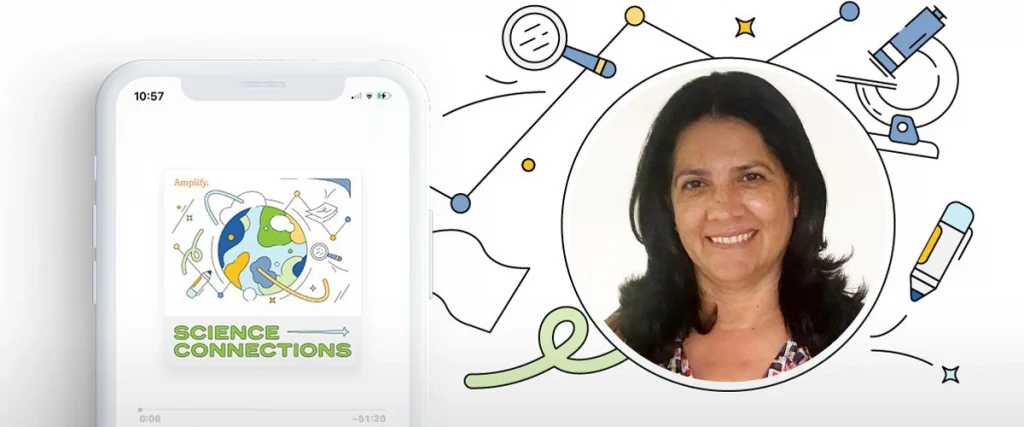
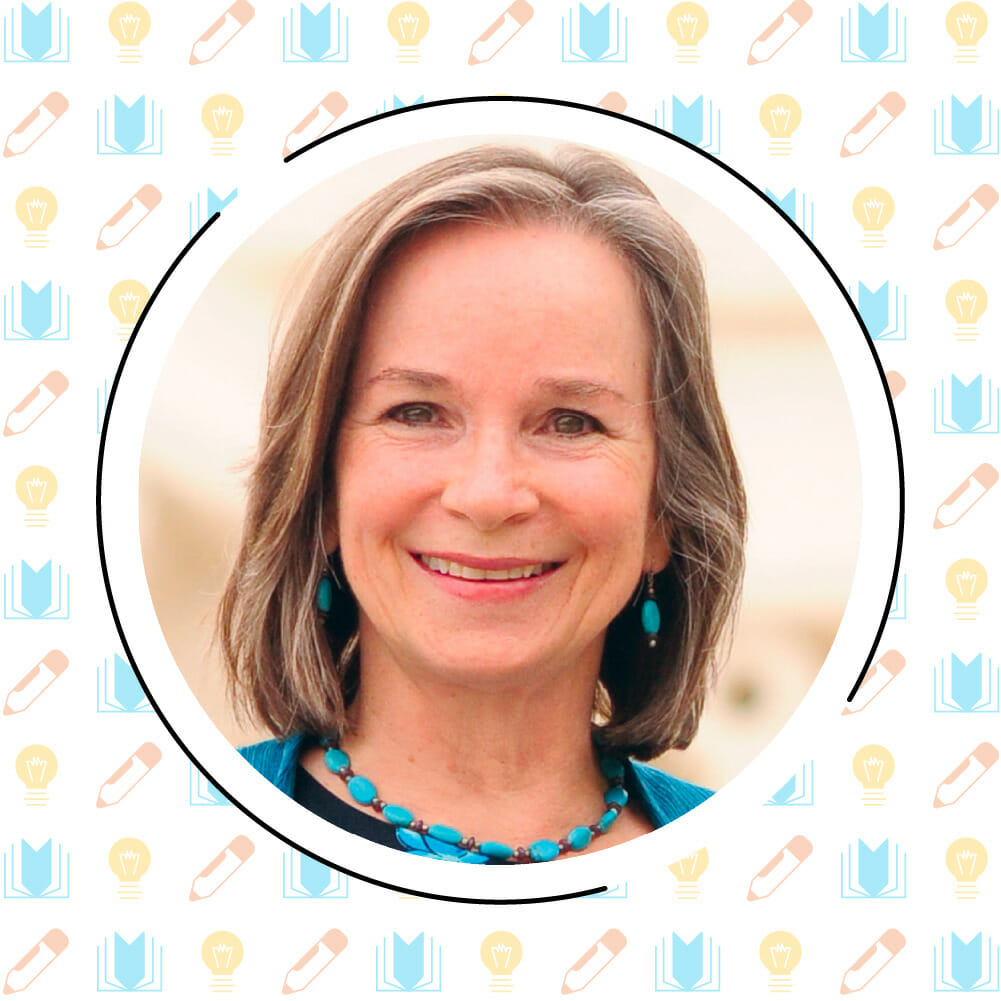
Erin Maloney is an Associate Professor and Canada Research Chair at the University of Ottawa. Her research sits at the intersection of Cognitive Psychology, Developmental Psychology, and Education and focuses on cognitive and emotional factors that relate to academic achievement. She is a world-renowned expert on the study of math anxiety, conducting research in the lab, in homes, and in classrooms with children, parents, and their teachers. She is passionate about both knowledge mobilization and equity, diversity, and inclusion within education and science.

A woman with straight, shoulder-length light brown hair smiles at the camera, framed by a circular graphic with geometric accents on a white background—perfect for a math teacher lounge or sharing math teacher resources.
A laptop displaying a Facebook group page for "Math Teacher Lounge Community," featuring profile photos, a group banner, and geometric shapes in the image background.

About Math Teacher Lounge

Math Teacher Lounge is a biweekly podcast created specifically for K–12 math educators. In each episode co-hosts Bethany Lockhart Johnson (@lockhartedu) and Dan Meyer (@ddmeyer) chat with guests, taking a deep dive into the math and educational topics you care about.

Join the Math Teacher Lounge Facebook group to continue the conversation, view exclusive content, interact with fellow educators, participate in giveaways, and more!

RF.1.3.G: Recognize and Read Grade-Appropriate (First Grade) Irregularly Spelled Words

Skill

RF.1.3.G: Recognize and Read Grade-Appropriate (First Grade) Irregularly Spelled Words

Standard

CCSS.ELA-LITERACY.RF.1.3.G: Recognize and read grade-appropriate irregularly spelled words.

Description

Mastery: Student is able to read irregularly spelled words with automaticity.

Acquiring: Student is able to recognize some irregularly spelled words. Student may attempt to decode some irregularly spelled words.

Probes

T: Read the following words – show a list of High Frequency Words, such as Fry’s or Dolch word lists, presented in random order (e.g., the, of, to, you, she, my, is, are, do, does).

Activities and Resources

Small Group Instruction – Direct Instruction

During Transitions

Reinforce Skills/Independent Work Time – Independent/Small Group Center Activity

Display (e.g. Anchor Chart):

Considerations & Reminders

  • High Frequency Word Lists should be posted and visible for students to reference. While these words are to be memorized, the act of looking up at a chart/poster for quick reference allows the student to eventually be able to quickly find and recognize the words.
  • When introducing an irregular word (but not when building fluency), we ask students to sound out and say the word correctly. There are multiple reasons to ask students to sound out irregular words:
    • When students encounter an irregular word in connected text, they may initially attempt to sound it out. These exercises prepare them to read the word correctly.
    • We want to show students that, though some word parts may be irregular, other parts are often regular, so that students can decode those parts, giving them a clue to the full word.
    • If we sound out some words and not others, students may learn that sounding out should only be used intermittently. They may decide not to use it even when they should.
    • Even for irregular words, the process of connecting symbols to sounds helps students learn the word: “The knowledge of letter-sound relations provides the powerful mnemonic system that bonds the written forms of specific words to their pronunciation in memory.” (Ehri, 1995)
  • Teaching tips:
    • One way to accelerate learning of irregular words is to print out flashcards for each newly introduced word and make a set for your students to practice with at home.
    • If words are being introduced too slowly for your students, you can introduce a new irregular word every day. You should feel free to vary the pace, being careful to ensure that everyone is keeping up.
    • When you point to a word, wait before touching it and train students to respond only when you touch the word. That gives all students time to think of the answer, so that slower students don’t just copy faster students.
    • For each activity, keep a record of items a student had problems with. Review this activity log before the next activity so you pay special attention to those students.

West Virginia’s review of the program built for middle schools, Amplify ELA

To view this protected page, enter the password below:


S5-03. Cultivating a joy of learning with Sesame Workshop

A blue graphic with text reading "Math Teacher Lounge" in multicolored letters and "Amplify." at the bottom, with abstract geometric shapes and lines as decoration.

Listen as we chat with Dr. Rosemarie Truglio, senior vice president of curriculum and content for Sesame Workshop! Continuing our theme of math anxiety this season, we sat down with Dr. Truglio to chat about Sesame Street and her thoughts on how to spread a growth mindset to young children and put them on course to academic achievement and long-term success.
 
Listen today and don’t forget to grab your MTL study guide to track your learning and make the most of this episode!

Download Transcript

Dr. Rosemarie Truglio (00:00):
Children don’t come with this math anxiety. Math anxiety is learned.

Bethany Lockhart Johnson (00:07):
Welcome back to Math Teacher Lounge. I’m Bethany Lockhart Johnson.

Dan Meyer (00:11):
And I’m Dan Meyer.

Bethany Lockhart Johnson (00:12):
Hello, Dan Meyer.

Dan Meyer (00:14):
Great to see you, Bethany. We are on episode three. Can you believe it?

Bethany Lockhart Johnson (00:18):
So, I feel like we’ve just started scratching the surface about math anxiety. We’ve talked to two amazing researchers. We’ve talked about what math anxiety is, how it’s often screened for some of the causes, some of the consequences … I mean, we’ve had some good conversations. Dan, what do you think?

Dan Meyer (00:38):
Definitely, I think that the consequences have only grown more dire in my head. I’m not sure how you feel about the consequences. But, you know, it is enough for me that we ask students to take mathematics for much of their childhoods, to worry about their anxiety, taking that. But to hear about from these researchers about all the different things that correlate with math achievement and math anxiety—talking about future careers, certainly, but even some other, more serious lifelong concerns? That gives me a lot of motivation to continue this study of math anxiety here with you on the show.

Bethany Lockhart Johnson (01:14):
It is really widespread. It has a big impact, not only on students, but on parents, on educators. You know, it’s—

Dan Meyer (01:23):
Multi-generational.

Bethany Lockhart Johnson (01:25):
Yes. And you know, so often when folks think of math anxiety, what I hear them say is, “Oh, yeah, in high school is when math really ramps up. That’s when anxiety starts.” But we know that it starts in our youngest learners. And our research has already backed that up. We know it. I’ve seen it in my classroom. You may have seen it with some students you work with. And let me tell you, it starts young.

Dan Meyer (01:52):
It does start early. Right now, I have a son that’s just started kindergarten, and he seems relatively math-positive, but we’ve known from our interviews on this show and other kinds of experiences that oftentimes, that feeling —that math is for me, and I am for math, and we are all friends — can turn on a single moment. It seems like one teacher says a thing that changes a student’s perception of themselves as a mathematician or of math itself. So I keep waiting with bated breath, hoping not to find that one moment that changes our current open posture towards mathematics. So now it’s time to really dive into some strategies for combating math anxiety.

Bethany Lockhart Johnson (02:34):
To help us out, we’ve called on a pretty exciting guest. I am so excited, Dan Meyer! We are being joined by Dr. Rosemarie Truglio. She is Senior Vice President of Curriculum and Content at Sesame Workshop. Sesame Workshop! As in, “Tell me how to get to Sesame Street.” Dan, I have to tell you, I spent many, many hours of my childhood watching Sesame Street. I have to ask, do you have happy Sesame Street memories? Is this part of your formation, Dan Meyer?

Dan Meyer (03:08):
At this point? In my advancing years, and the brain cells that I have left, Sesame Street is really kind of just a vibe in my head. But that vibe is such a pleasant one. One in which like nothing bad could happen. One in which learning is common and normalized and fun. And you just kind of feel at home, constantly.

Bethany Lockhart Johnson (03:33):
I don’t know about the “just the vibe” part, because for me, it is visceral. I’m there. I am actually … I mean, I might still be there.

Dan Meyer (03:42):
You could reenact some of the skits?

Bethany Lockhart Johnson (03:44):
. You didn’t watch Sesame Street with your kiddos when they were younger?

Dan Meyer (03:49):
We watched a lot of Elmo. A lot of Elmo. Yeah.

Bethany Lockhart Johnson (03:52):
Next-generation Sesame Street. Well, I think it’s so perfect that we’re gonna be talking about what Sesame Workshop does to help combat math anxiety and create a positive connection and relationship with mathematics. So I’m really excited to hear what Dr. Truglio and her team have been working on. And here’s our conversation with Dr. Truglio.

Dan Meyer (04:15):
Welcome to the show, Dr. Truglio. It is an honor.

Dr. Rosemarie Truglio (04:18):
Great to be here. Thank you for inviting me.

Dan Meyer (04:20):
You are Senior Vice President of Curriculum and Content at Sesame Workshop, which definitely sounds like the coolest job in the world to both four-year-old me and also Now me. Would you just help us help us with some backstory of how you ended up here, and what you do at Sesame Workshop?

Dr. Rosemarie Truglio (04:38):
Sure. It is a pretty cool job. And I am very fortunate that I’ve been in this position for the past 26 years. So, I am a developmental psychologist, and my job is to help Sesame Workshop identify curriculum needs, so that we could address them in the content that we create on the show and across our various platforms. So, Sesame Street is currently in its 53rd season. And we just, wrapped production for the 54th season, which we’ll debut next fall. And Sesame Street began with an experiment: Can television actually teach children school readiness skills, to have them better prepared for school? Especially those children who did not have access to formal education during the preschool years? And it is what we call a whole-child curriculum, because we’re dealing with all of the school readiness needs. So that that includes the academic needs, their social-emotional needs, and their health needs, as well as what we call these cognitive processing skills—how children learn content. Right? So it’s not just content skills, but how you approach learning and how you actually learn content. So as a grad student, I was fortunate to work at the Center for Research on the Influences of Television on Children. Very special center. It was at the University of Kansas. And my advisors, developmental psychologists, they studied the effects of television on children, both the positive effects and the negative effects. And so part of their research was to actually look at the longterm educational effects of Sesame Street. So I was working with Sesame Street content as a grad student, and then came to New York City. My first job was Assistant Professor at Teachers College, Columbia University. And when this position became available, Director of Research at the time, it was called, I took that job. And so my job was to oversee both the curriculum and the implementation of the curriculum, as well as the research. Because what we know, our co-founder, Joan Ganz Cooney has always said, for Sesame Street to be a successful educational program, production has to work closely with early childhood educators. They are the ones who know the curriculum and, and develop the curriculum goals, as well as the developmental psychologists who actually study how children are paying attention to the content. But more importantly, what are they comprehending from the content? And we all have to work together. Because even though we are the experts, the real experts are the children themselves. So nothing is deemed final until we actually show the children and see what they are learning from the content that we are producing.

Dan Meyer (07:54):
Are you referring to like, test audiences of kids then?

Dr. Rosemarie Truglio (07:57):
Yeah, I guess you could call it test audiences. I mean, I don’t. I don’t like to call it that because I see them as co-collaborators. I don’t see them as a test audience. Because, as I said, they’re the experts. It’s a collaboration. I mean, they’re the experts. And so I wanna know—

Dan Meyer (08:12):
As collaborators. I got it now. Yeah.

Dr. Rosemarie Truglio (08:14):
They help us. So that’s exactly what we tell the children too. So it’s called formative research. You know, we, we do what we call, um, storybook testing, an animated version of a storybook to have some little movement and see are they finding the story engaging, but more importantly, are they picking up on the intended educational lesson that we’re trying to teach in the story. So they are co-collaborators. they’re the ones who are helping us get the story just right for them.

Dan Meyer (08:46):
That’s really exciting, and makes me think about what classes might be like if students were regarded in that kind of lens as well. I just wanna say that my four-year-old self is on this interview as well, and is re-contextualizing all the stuff I saw as a kid. And it just felt like, at the time, you folks turned the camera on and went down to the street and we just had this real natural time. And it’s great to hear about all the intense preparation and co-construction at work and work that went into that time. Yeah,

Dr. Rosemarie Truglio (09:12):
It’s about a year preparation from start to finish. From the start of identifying, “What is the educational need? Is it an academic need? Is it a social-emotional need? Is it a health need? Is it a cognitive-processing need?” And then once we have the need identified, we have what we call a curriculum seminar. We bring in the experts who are studying this topic with preschoolers, because we wanna get it, we wanna get it right.

Bethany Lockhart Johnson (09:41):
Which, by the way, little behind the scenes: How often do you get to go to set?

Dr. Rosemarie Truglio (09:46):
So we’re in a production probably about six weeks out of the year. Covid really messed things up. ‘Cause we have to be really—we have very strict Covid protocols, but there is someone on my team—and sometimes we have to, you know, rotate for availability—but there’s always an educator on set.

Bethany Lockhart Johnson (10:06):
Awesome.

Dr. Rosemarie Truglio (10:07):
Because even though you stick to the script, questions arise; they wanna make changes; sometimes they have to cut; things are running too long and they have to cut and we gotta figure out where to cut. So there’s always an educator on set.

Bethany Lockhart Johnson (10:19):
But sometimes you go and have lunch, like—.

Dr. Rosemarie Truglio (10:21):
Oh, I go, yes. Sometimes I go—

Bethany Lockhart Johnson (10:23):
And just hang out with Big Bird, right?

Dr. Rosemarie Truglio (10:24):
Sometimes I go hang out with Big Bird. No, those are my friends!

Bethany Lockhart Johnson (10:27):
They are!

Dr. Rosemarie Truglio (10:28):
No, no, I go hang out with them. They’re my friends. Yes.

Bethany Lockhart Johnson (10:32):
When I think about Sesame Street and I think about … like, I can’t help but smile. Because I think I have such fond memories of the characters. I mean, we invited them, my mom invited them, into our home, right? And, you know, now I have a two-year-old and there’s no doubt that I’m gonna introduce him to Sesame Street. And I see how it really does feel like the folks who are doing this work, you and your team, you have a deep respect for children. So it makes sense that you call your test collaborators “collaborators,” right? They’re a part of it. And you know, I love that. And Sesame Street makes me smile. However, I’m like, we’re talking about math anxiety. And it’s so interesting, because as Dan and I were talking about our memories of Sesame Street … you know, it’s like Sesame Street feels like there’s not much anxiety. I mean, there are problems, and there’s problem solving, and it’s not like everything is perfect. But we figure it out. And it’s OK to make mistakes and it’s OK to try again. And a lot of times, we don’t see that in the math classroom—or at least, how folks talk about math. So, how do you all think about anxiety, about how to prevent it? Like, when you’re doing your work, you know that math anxiety is a real thing. But then that’s not translated in these experiences and the relationships with math that you’re building with your viewers.

Dr. Rosemarie Truglio (12:07):
Yeah, that’s a really good question, because it’s really easy, because our core audience are two- to four-year-olds and they love math. And what’s not to love, right? Because they are figuring the world out as they’re exploring the world. So you said something really interesting, that when you turn on the TV—when you turned on the TV when you were a child, and now you’re a mom of a two-year-old, we wanna make sure that the show represents content that is relevant and meaningful to our target audience. And that comes through with the characters. So all of our characters have very specific personalities, as all children do. And our characters represent all children, in terms of not only personality, but interest and learning styles, ’cause we wanna see—we wanna make sure that children see themselves in these characters. And we have a character who actually loves math. And he’s The Count.

Bethany Lockhart Johnson (13:12):
I’m like, “I know! I know who it is!” I will save you my impression. Although I have done it for my child. But I’ll save our listeners .

Dr. Rosemarie Truglio (13:20):
And you know, he’s an adult character. Some of our characters are preschoolers, like Elmo and Abby—they’re preschoolers—and Zoe. But The Count is an adult. He lives in the castle and he just loves numbers. But what’s really important is while we have The Count to explain—not explain to, but to portray to children, cause we don’t explain anything; we show children that math is more than number, right? Math is a pretty wide concept. Which is what I love about math. And the other thing about math is math language. The language of math. ‘Cause when we’re teaching children vocabulary words, we’re also teaching children the concept. Be it a math concept or a science concept or a social-emotional concept. So children don’t come with this math anxiety. Math anxiety is learned and it’s unfortunate. It’s picked up by their observations of the adults in their lives, who sometimes say out loud, “I don’t like math,” or “Math is hard,” or even worse, “I’m not good at math.” Or may even label it as math anxiety. That word won’t mean anything to a young child. But it then provides a, whaddya call it, like a negative valence for something that they never felt negative about. Because as they’re growing and interacting with the world, math is all around them. And there’s that sense of awe and wonder and joy, especially as they’re learning and they’re figuring it out. So I think we have to reframe math. Instead of saying “math anxiety,” we have to talk about the joy of math and all the wonderful joys that come with the exploration of these math concepts. Number is great. We know kids love numbers. We know that they love to count and use a big word here: enumerate . Because so many parents don’t make this distinction. They’ll say, “Oh, my child is counting!” Well, there’s rote counting, 1, 2, 3, 4, 5, 6, 7, 8, 9, 10, which is important. But then it’s like there’s an item for each number. So it’s one Cheerio, two Cheerios. And then as you point to each number, you are then figuring out what the set is, of the number of objects that you have. And then you get at what I love to call the meaningfulness of math. Right? Number has meaning. And as I said, it’s all part of your everyday activities. It’s part of—it’s in your kitchen; you’re following recipes; you’re measuring; you’re weighing. It’s at bath time, right? You could have the sorting of nested cups and you could, you know, and once again, the math language: big, bigger, biggest. These are relational concepts. You could then count what sinks and what floats, if you’re doing science. And then you could put them in two different buckets, and count. These are the items that sunk and these are the items that float. So math and bath time could be a lot of fun. And then there’s math and music. Music is so rich with math, as you talk about rhythm and tempo and dynamics and pitch and duration. That’s all math.

Bethany Lockhart Johnson (16:57):
The way that you talk about it, it is so rich, right? It is so multi-layered. And you know, I’ve shared on the podcast before: I’ve actually had parents in parent-teacher conferences say that, “Well, I wasn’t good at math either,” or “Math’s really not my thing.” And it’s really—it is, it’s rooted in that fear. And so I do see the way that you’re talking about it; I see that come through in Sesame Street. That, in a lot of ways, it’s reeducating parents, right? Because we hope that our caregivers are sitting next to their kiddo and enjoying it together and having conversations about it later. And there’s a way that parents then are also getting their own sense of what math can be, expanded. And I think there’s such a beauty in that. And I love the way that you talk about that, that you really are looking at, “Well, we wanna celebrate counting and the joyfulness of that. And let’s use math talk, you know, and let’s use these words and try out these ideas.” And it’s not because you’re trying to check some list. But you’re really exploring it and having fun together.

Dr. Rosemarie Truglio (18:03):
And you’re embracing it. And you mentioned the word “mistake.” So often when it comes to math, if you make a mistake—you make a mistake in counting or, you know, we’re not doing a lot of math equations on Sesame Street, but that’s when people feel like they can’t do math. ‘Cause they made a mistake. And that’s something that we are trying to address on Sesame Street, that it’s OK to make mistakes and you learn through mistakes. But you have to have—and I’m gonna come up with this other phrase now—you have to have what we call a growth mindset. What that means is that I may not be able to do this yet. Like, it’s called “the power of yet.” So we know that learning any concept, it takes time and practice. And how do we have children embrace the process, right? So often we focus on right and wrong. Now, there is right and wrong with math, of course. You know, there’s a right answer and there’s a wrong answer. But how do we focus, not on the end product, but the process through which you are engaging in? So let’s talk about measurement. Let’s talk about measuring the length and the width or the height of something. You might make some mistakes along the way, but you’re processing it. My son used to make all of these little structures for all his little play animals. Well, you know, he would measure and think he got it right. And then when he put the animals in, of course, you know, either the animal was too wide or it was too tall. And he would have to redo it. But you’re not redoing it from scratch, you’re redoing it now from experience. “I realize that if I’m gonna put the giraffe in with the elephant, I’m gonna need something wide as well as high.” Right? For the length, tall. And that’s process. And then, for children, when they figure it out, that “oops” and “aha”—the “aha” was like, “I did it!” And it’s so empowering, you know, giving them agency—not swooping in and saying, “All right, I’ll fix it for you. You know, we got the wide elephant and the tall giraffe and I’ll you know…”. NO! Having them do it. And another fun activity is in what we call informal measurement. And that’s like getting something of an equal size. It could be paper clips or it could be same-size blocks, and then measuring how long something is. So if it’s measured by blocks versus paperclips, you’re gonna have a lot more paperclips than you are blocks. And that kind of comparison is so fascinating for children. And so that’s measurement. And now we have counting. Like, how many paperclips long is something versus how many blocks long is something.

Dan Meyer (21:02):
So checking my understanding here, you’ve talked about how caregivers and other adults can transmit math anxiety by naming it and claiming it for themselves. And you’ve talked about, some really exciting ways that adults can involve students and kids in different kinds of math. I’d love to go upstream with you a little bit and wonder out loud, where does this anxiety come from initially? It’s gotta be more than adult one to kid two talking about anxiety, and transmitting it from human to human. What is the original spring from which all this anxiety flows?

Dr. Rosemarie Truglio (21:36):
Yeah. I do think it does—a lot of it does come from the adults in their lives. It’s unfortunate, because there is a lot of math talk about it, right? I can’t do math; I’m not good at math. Even when you’re at a restaurant and you get the bill and someone’s figuring out the tip, I can’t tell you how often it’s like, “Pass the bill, because I can’t do math.” Or if you actually then bring gender into it, you know, “Oh, girls aren’t good at math,” and that’s not true. There’s no evidence of that whatsoever, right? So in the younger grades, there’s no gender difference in terms of math ability. What’s also interesting about even socioeconomic status differences, you don’t see a lot of differences between low-income and middle-income children when it comes to math skills. Where you see differences is children’s ability to talk about their mathematical thinking. So if a child doing a math problem is asked, “How did you solve the problem?”, low-income children don’t often have the language to explain their thinking. So that’s something that we did on Sesame Street, where we focused a lot on what we call math talk. So, not just show number and show doing math, but actually narrate and giving the language. Because math literacy is one of the predictors of overall school achievement. So there’s that. They’re getting it from the adults in their lives. They’re getting it, unfortunately, sometimes from their teachers. But I think the anxiety comes from the fear of making mistakes. Because math, there is right and wrong, and always wanting to get the right answer. So that’s why this whole idea of reframing, and saying, “But really, it’s in the process.” So, you know, my son, math is not his strong suit. And I’ve been doing a lot of growth mindset with him as well. And there was a teacher that he had—I think in like 10th or 11th grade—who said, “In a test, I don’t wanna—I’m not even gonna look at the answer. I wanna see the process through which you GOT to this answer. And I’m going to grade the process. So the process could yield a right answer; it could yield a wrong answer. But you’re gonna get graded on the process. Because I wanna see how you are approaching the problem and how you’re thinking it through.” And I think that is a great example of, maybe, to try to reduce math anxiety. Because if you can get people excited about the process through which you’re learning—and that applies to all subjects, it’s not just math!

Bethany Lockhart Johnson (24:36):
I’m like, that applies to life! Right?

Dr. Rosemarie Truglio (24:38):
That applies to life!

Bethany Lockhart Johnson (24:39):
That’s so spot on. Wow. Yeah.

Dr. Rosemarie Truglio (24:41):
But I think that there’s so much focus on right and wrong, and not really understanding the value of the process. So on Sesame, we’ve been doing a lot of “oops” and “ahas.” You know, we’re gonna make mistakes, but what’s important is what do you DO when you make a mistake? So there’s a great episode with The Count. A couple of years ago. The Count was counting. Something he does every day. A lot of time, every day, ’cause he’s obsessed with counting and numbers. And he was counting an array of items.

Gladys the Cow (25:17):
I need 10 sandwiches all together.

The Count (25:22):
Well, of course.

Dr. Rosemarie Truglio (25:23):
And he made a mistake.

Elmo (25:25):
The Count?

The Count (25:25):
Hmm?

The Count (25:25):
Elmo thinks The Count made a little mistake.

The Count (25:31):
No mistake.

The Count (25:32):
Mm-hmm. Yeah.

Dr. Rosemarie Truglio (25:33):
And first time ever, did he make a mistake. And he fell apart.

The Count (25:38):
I must make sure that that never happens again. So I shall never count again.

Dr. Rosemarie Truglio (25:46):
And that’s an example of showing that, you know, you could get upset when you make a mistake, but what’s important is you gotta come back and you gotta come back to doing what you love. In his case, is counting and letting him know that it was an “oops.” But you learn that mistakes are OK. It’s OK to make a mistake and continue to do what you love.

The Count (26:13):
I must keep trying and you should, too.

Elmo (26:17):
Yeah!

The Count (26:17):
So come, let’s count the carrots together!

Elmo (26:18):
Oh, cool!

Bethany Lockhart Johnson (26:19):
And what a beautiful gift to show kiddos. Show that to kiddos, right? And to the adults. I wanna, you know, really acknowledge it, and say, “Hey look this, it’s OK.” And again, you’re giving them that language. That’s such a gift.

Dr. Rosemarie Truglio (26:34):
Thank you.

Dan Meyer (26:34):
We spend a lot of time wondering why other subjects don’t seem to suffer from this negative perception. And I think you’ve unlocked a lot of that. You’ve mentioned that there are issues that cut across different subject areas, but I think from my own experience and research and interviews, it seems that in ELA and the social sciences, there’s this aspect where you need to come up with a claim and “how are you seeing this?” And there are multiple defensible claims. And I love how you imported that generous pedagogy over into math with this example of a teacher who says, “You know what? It’s about the process here.” Disassociating answer and process.

Dr. Rosemarie Truglio (27:09):
And I think the other thing is like, when children are engaged in a project, for parents to point out: “You’re doing math!” Because they don’t realize that they’re doing math. Once again, math is so often equated solely with numbers and mathematical computations. So it was really interesting—the same is true for science. You know, when we’re talking to parents about the use of everyday—like, going to the supermarket or making dinner or bath time, there’s so much math and science in the everyday. And then when you point it out to them—”you’re doing math”—it’s like, “I’m doing math!” Like, you’re setting the table for a family of six: you’re doing math. That’s called one one-to-one correspondence. “I’m doing math: I’m setting the table.” Yeah, but you’re doing math. You can’t set the table because you have to know how many people are gonna be sitting at the table for dinner. You can’t follow a recipe without doing math. You can’t go shopping without doing math. There’s quantity; you gotta figure out how many peppers you gotta buy, or pounds. “I gotta get a bunch of potatoes and I gotta put ’em in the scale. And I have to get two pounds of potatoes.”

Bethany Lockhart Johnson (28:29):
So your book Ready for School: A Parent’s Guide to Playful Learning for Children Ages Two to Five. First, as a parent of a young toddler, I gotta say it’s such a tool; it’s such a resource. It’s very conversational. And I think about these ideas a lot, both in my work and, you know, just for fun. And yet, even if this wasn’t my chosen field, I still feel like it’s just so accessible. And I wanna flag something.

Dr. Rosemarie Truglio (29:01):
Thank you.

Bethany Lockhart Johnson (29:01):
Yeah, no. Thank YOU. . I wanna flag something that you said in the math chapter You were talking about the joy of math, and you said when it comes to our children, caregivers: “take pleasure in reading stories together, especially at bedtime, which in many households is a regular part of a child’s routine. But somehow the notion of introducing math concepts to our children seems daunting. In fact, some studies have shown that parents harbor a strong belief that while it’s important and pleasurable to support their child’s reading skills, it’s the responsibility of the schools to take care of teaching math.” And that quote, I highlighted it, I starred it! And I would love for you to say a little more about that, because you have given us already, like, a bounty of ideas that as caregivers we can do with our kiddos or the kiddos in our lives. And we’ve seen that even what they’re learning in school, it may not be the freeing, joyful math language that we hope our kiddos have access to.

Dr. Rosemarie Truglio (30:05):
Yeah, I’m glad you brought that up. Because a lot of our focus is on how children learn through playful experiences, and how they learn through play in particular. And there are so many playing, either a game or even playing ideas—like we talked about building, you know, a house for animals or building a fort. It’s just so filled with math. And I wish I could narrate for every young parent how I would hope that they would talk as they are co-engaged in this activity. And I think … we asked about, with the anxiety, the adults have to find the joy in math first. They have to see the math. That’s the problem. That’s why I hope that my book provides that. I want you to know that you are doing math and I want you to know that your child is what we call a mathematician—or in the science chapter, is a STEMist. Your child is already doing science, technology, engineering, and math. STEM is so integrated. So to acknowledge them—because babies are doing math! Babies know, they can distinguish between a small quantity and something that is a of a larger quantity and want the larger. Right? So, it’s natural for them. And they are taking it all in. I mean, the joy of watching a child just early counting: you know, one, two. And trying to then figure out the meaningfulness of two. It’s not three objects. There are actually two. And for a parent to see the joy in that I think is step one. And then to see the richness and how expansive math is, and that power of, oops, “I made a mistake, don’t freak out,” and then [not] say, “See, I’m not good at math,” but say, “Let me try again. I know I could figure this out.” Right? It’s all of that supportive language and supportive experiences that builds this mindset, a positive mindset. So that you hope that when you get into the higher grades, they’re not walking in and saying, “I can’t, I can’t do math.”

Dan Meyer (32:26):
Yeah. Super helpful. I think you point at one of the grownups—great powers in the world of kids, which is to label. To name things. And you know, you’ve talked about how grownups should ideally downplay some of their negative experiences with mathematics for the sake of the kid, but also to play up the positive stuff that they’re doing as mathematics. Like that right there, that’s math. I would love to know … you have an extremely loud megaphone to communicate messages about math and the world and everything through Sesame Street. One of the biggest that there is—and I just wonder if you could step out and imagine you had a magic wand to wave over the world in which students grow up, play and learn—what would you do like to help students have better associations or less math anxiety? And, you know, learn more about math itself?

Dr. Rosemarie Truglio (33:19):
If I had a magic wand, I would give everyone what we call a growth mindset that nothing is fixed and everything can be changed if you put the time and effort into the process, and enjoy the process. The joy of learning. I think, you know, it’s really sad. I don’t wanna be sad on your show. But when we were getting ready for the 50th anniversary, I was wondering, “What is gonna be the curriculum focus?” You know, we just came off of literacy and math literacy and social-emotional development. And we talked about the power of play. Playful learning. And building careers. Give children sophisticated play scenarios so that they could explore what they may wanna be when they grow up. Because there’s a concept: If I can see it, I can play it, I can be it. Right? So where are those portrayals? And it’s like, “What are we gonna do for the 50th?” And I had a convening of experts across all disciplines, and brought them into a room. And I said, you know, “What keeps you up at night? Like, what are you worried about?” Sort of like the State of the Union of Child Development. And this is where the sad part is. They talked about how that sense of joy, that sense of wonder, that sense of curiosity, that sense of flexible thinking and creative thinking, was disappearing in early childhood. Wow. If it’s disappearing in early childhood, we are in big, big trouble . ‘Cause I could see it disappearing later on, you know, as you advance in grade. But what do you mean, it’s disappearing in childhood? And then they talked about the fear of making mistakes. And that goes against—it’s the opposite of a growth mindset. And so we have to bring back that sense of joy, wonder, asking those why questions and embracing them. So it’s another problem parents have. They’re fine with the “why” questions until the “whys” become so difficult they don’t have the answers. And then they don’t want the “why” questions, because now they feel like they’re not smart enough to answer their child’s “why” questions. How do I flip that around to be much more positive and say, “You know, I don’t know! But let’s find out together. Let’s explore together; let’s experiment together.” That’s what I mean about the shift in the mindset, that growth mindset. We should not know all of the answers, but where’s the joy of, “Wow, I don’t know, let’s go find out together”? And that applies to math too. But you have to have that open mindset. You have to—you, as yourself, have to have that growth mindset.

Bethany Lockhart Johnson (36:20):
I love that magic wand. I want that magic wand! And I think what—like Dan said about this megaphone, this opportunity to reach so many young people, so many caregivers—what a gift! And I’m so grateful that you took time to be in the lounge with us, and that you have shared these ideas. Because truly, I think, like you said, it’s really our youngest learners, right? How can we create and cultivate these opportunities for our youngest learners to find the joy in mathematics and just in learning, right?

Dr. Rosemarie Truglio (36:54):
Yeah.

Bethany Lockhart Johnson (36:55):
So thank you. Thank you so much, Dr. Truglio. We are deeply grateful for your insight and for all the work you do. And we continue to invite the world of Sesame Street into our homes.

Dr. Rosemarie Truglio (37:08):
Thank you. Thank you for allowing us to come into your home, and for you to re-learn with your child as you’re watching Sesame Street. Because it’s very much a parenting show, as it is for a child-directed show, because we are blessed to have these wonderful human cast members who are the stand-ins for parents. And so we are often giving you the language for how to talk about and how to problem-solve together. So thank you.

Dan Meyer (37:43):
Thanks so much for listening to our conversation with Dr. Rosemarie Truglio, Senior Vice President of Curriculum and Content at Sesame Workshop.

Bethany Lockhart Johnson (37:51):
Dr. Truglio is also the author of Sesame Street Ready for School, A Parents Guide to Playful Learning for Children Ages Two to Five, and we’re gonna make sure we put a link to that in the show notes because it is really, really a rich resource. I’m diving in. I have so many ideas bookmarked that I wanna try out with my kiddo.

Dan Meyer (38:09):
Yeah, it’s really exciting to see—like, for a classroom educator, I just kinda assumed that a lot of math learning happens in the classroom context. That’s my lens. So yeah, I loved reading the book and seeing all the different opportunities for parents for just out there in the world, in front of your house, at the supermarket. All the different opportunities there are for mathematical thinking, and then to think about how to bring that into some of those routines and ideas into the classroom, into formal schooling.

Bethany Lockhart Johnson (38:35):
Exactly. Exactly. Like Dr. Truglio said, the caregivers’s disposition about mathematics matters so deeply. Your teachers’ dispositions about mathematics, their beliefs, the way that you hear people talking about math, that impacts our learners. That impacts—like, as a student, that impacts what you think is possible for yourself. So I love this, re-educating ourselves about what math can look like out in the world, in everyday conversations. I don’t know. I really, really appreciated this conversation with Dr. Truglio.

Dan Meyer (39:12):
Same. Yeah. We’d love to hear what you folks think about the work. the book, her ideas. Definitely get in touch with us. Subscribe to Math Teacher Lounge, wherever you get podcasts. And keep in touch with us on Facebook at Math Teacher Lounge Community, and on Twitter at MTL show.

Bethany Lockhart Johnson (39:27):
Also, if you haven’t already, please subscribe to Math Teacher Lounge wherever you get your podcast. And if you like what you’re hearing, please leave us a rating and a review. It’ll help more listeners find the show. And while you’re at it, let a friend know about this episode, because you enjoyed it; they might enjoy it. On our next episode, we’re gonna be chatting with Dr. Heidi Sabnani and taking a closer look at best practices for coaching teachers to reduce their own math anxiety.

Dr. Heidi Sabnani (39:56):
One of the teachers that I worked with had done her student teaching with a teacher who had math anxiety and who never taught math. And so she entered her teaching career never having taught math before or seeing it taught.

Dan Meyer (40:10):
Thanks again for listening, folks.

Bethany Lockhart Johnson (40:12):
Bye.

Stay connected!

Join our community and get new episodes every other Tuesday!

We’ll also share new and exciting free resources for your classroom every month.

What Dr. Rosemarie Truglio says about math

“We all have to work together, because even though we are the experts [on curriculum and education], the real experts are the children themselves.”

– Dr. Rosemarie Truglio

Senior Vice President of Curriculum and Content, Sesame Workshop

Meet the guest

Rosemarie T. Truglio, Ph.D. is the Senior Vice President of Curriculum and Content at Sesame Workshop. Dr. Truglio is responsible for the development of the interdisciplinary curriculum on which Sesame Street is based and oversees content development across platforms (e.g., television, publishing, toys, home video, and theme park activities).  She also oversees the curriculum development for all new show production, including  Bea’s Block, Mecha BuildersEsme & RoyHelpsters, and Ghostwriter. Dr. Truglio has written numerous articles in child and developmental psychology journals and presented her work at national and international conferences. Her current book is Ready for School! A Parent’s Guide to Playful Learning for Children Ages 2 to 5, published by Running Press (2019).

A person with short dark hair, wearing a dark blazer and white top, smiles at the camera against a blue background with graphic elements, evoking the inviting atmosphere of a math teacher lounge and highlighting useful math teacher resources.
A laptop displaying a Facebook group page for "Math Teacher Lounge Community," featuring profile photos, a group banner, and geometric shapes in the image background.

About Math Teacher Lounge

Math Teacher Lounge is a biweekly podcast created specifically for K–12 math educators. In each episode co-hosts Bethany Lockhart Johnson (@lockhartedu) and Dan Meyer (@ddmeyer) chat with guests, taking a deep dive into the math and educational topics you care about.

Join the Math Teacher Lounge Facebook group to continue the conversation, view exclusive content, interact with fellow educators, participate in giveaways, and more!

S1-02: Community and joy within K–8 science instruction: Desiré Whitmore

Promotional graphic for "Science Connections" Season 1, Episode 2 featuring Desiré Whitmore, focusing on community and joy in K–8 science instruction.

In this episode, we join Eric Cross as he sits down with physicist and science education specialist, Desiré Whitmore. Listen in as Desiré explains her work at the Exploratorium, a public learning laboratory. Eric and Desiré discuss finding passion in science, the importance of meeting students we’re they’re at, and K–8 science instruction with real-life connections. Desiré chats with Eric about her work on supporting the science of teaching science content at the Exploratorium museum.

Explore more from Science Connections by visiting our main page.

Download Transcript

Desiré Whitmore (00:00):

I think it’s really amazing when we can realize as teachers, like, no, our job is not to just enforce rules on our students, right? Our job is to help students to achieve more learning.

Eric Cross (00:37):

Welcome to Science Connections. I’m your host, Eric Cross. My guest today is Desiré Whitmore. Desiré has held positions as a science curriculum specialist with Amplify Science, a professor of laser and photonics technology at Irvine Valley College, and is now the senior physics educator in the Teacher Institute at the Exploratorium in San Francisco. Her current work is focused on providing support and professional development to middle and high school science teachers to help them teach through inquiry. In this episode, we discussed Desiré’s pathway into physics, the impact of educators in her life, and the importance of representation for students in the classroom. I’m so excited for you to meet my physicist friend, Dr. Desiré Whitmore. All right. So just like a superhero, STEM superhero, you have an origin story and so—

Desiré Whitmore (01:36):

How long is this podcast gonna be? ‘Cause, you know, I can talk for days, so you—

Eric Cross (01:40):

I know, I know! But it’s, it’s…so, OK. We can give us a highlight. So, you know, 30 minutes. But what would be the origin story? You can start from any point in time, but what’s that journey like?

Desiré Whitmore (01:51):

I’m gonna start at the beginning, when I was really young, just because I think it’s important. Neither of my parents were college-educated. My mother didn’t finish high school. My father went back and got a GED later. But my father’s grandmother, her name was Claudia Pairs, and she was a teacher, right? So when I was a kid, she actually kind of raised me from, I don’t know, until I was around seven or eight. And so she was very important in who I became, I think because she taught me that college is important and she taught me to think. She taught me to ask questions. She taught me how to ask questions. Just the Exploratorium likes to do. Which is why I fit so well here. She taught me to always wonder and always think about things. And I remember as a kid, she taught me to count and read and write when I was, like, three. And she would always have bubbles at her house. And I was obsessed with bubbles. I thought bubbles were the coolest thing in the world. And just how you can take your breath and create this thing that now you can see, and it’s your breath, right? It’s your breath inside of a bubble and it’s flying around and it has all these cool colors, and then it would fly up and then eventually just pop. And you’re like, where did it go? Now my breath is just up there. Not understanding, as a kid, but my breath is always everywhere. I didn’t understand any of that, but I understood that my breath was inside of a bubble. That’s my earliest memory of thinking about science, was from that. And she was not a science teacher. She was—I don’t even know what she taught. I think she was an elementary school teacher, maybe. She died when I was 12. So I don’t have super-strong memories or of understanding who she was, only that she raised me and what she taught me as a kid. But that in itself really helped me because then when I was in the environment that I was in at home with my parents, which was not at all the environment she provided for me, I always had the things she taught me in my head, right? So I was always asking questions. My mother hated it. I was always taking things apart and putting them back together. So I used to take apart TVs and VCRs and vacuum cleaners and telephones, and my mother’s like, “Oh my God, I’m gonna murder you.” And she tried a couple times, too.

Eric Cross (04:25):

Did you ever put ’em back together and realize you had extra parts? You’re like, oh, hi.

Desiré Whitmore (04:29):

Oh yeah. All the time. Yeah. Yeah. VCRs have a lot of extra pieces. You’re like, “What do you even…it still works. It’s fine.” <laugh> You know? And vacuum cleaners too. They had a lot of extra parts, <laugh> all the time. And TVs. I should not have been playing with TVs. But like I said, I didn’t have a lot of parental, guidance as a child. So, like, whatever—I’m opening up TVs.

Eric Cross (04:54):

There’s a lot of open inquiry going on in your household. Yeah. Unsupervised.

Desiré Whitmore (04:59):

Unsupervised. But I didn’t know what it was or what it meant as a kid. I mean, I used to put things in the microwave. I did so many microwave experiments as a child, trying to cook different foods or melt different things. And so I think those kinds of experiences, where I was allowed to just be curious, kind of shaped who I am today. And then I kind of got into…you know, when I was in school, I loved math. In 10th grade, I had my first Black teacher, he was my chemistry teacher. His name was Mr. Strickland. And I was like, chemistry is cool, dude. And he was not the best teacher, but he was fun. Like you were saying, he was me, and he was talking to us the way I speak. And he was so like, just kind of chill and happy-go-lucky, I guess. But he wasn’t…he hadn’t taught chemistry in a long time. So he wasn’t a very good teacher. And me and one other kid in the class were in love with chemistry. And so we would read the book and do all the homework and he’d be in class lecturing and we’re like, “That’s not right, Mr. Strickland, like, what are you talking about?” And then he’d be like, “Oh, really, Desiré? Do you wanna teach the class, then?” And I’d be like, “Yeah.” And so I would go up and I would teach my chemistry class in high school, because the teacher was trying to make an example out of me. But he was also, I think, willing to be like, “I really don’t know.” And I really appreciated that. That he wasn’t just like, “I know all of the answers and you’re wrong.” Like, he wasn’t being a jerk, right? Like, the fact that I said, “Yes, I do wanna teach it,” and he actually let me do it? That’s pretty dope. And then I liked physics in my senior year in high school, but I didn’t think it was where I was gonna go or anything. I loved music and I loved math. Those were my two subjects.

Eric Cross (06:51):

What was it about math that resonated with you?

Desiré Whitmore (06:55):

I think it helped me understand the world a lot better. I didn’t have strong science teachers, I guess, growing up. It was a lot of reading out of books or watching laser discs in class. That’s how old I am.

Eric Cross (07:12):

Laser discs.

Desiré Whitmore (07:13):

Laser discs. And you know, so there wasn’t a lot of…I moved around a lot as a kid. I didn’t have this straight curriculum. You know, in one year, in the third grade, I went to three different schools.

Eric Cross (07:25):

Mm. Oh wow.

Desiré Whitmore (07:26):

It was kinda hard for me to latch onto school. But with math, because I could look at math and actually understand the world in it, I could see how math can be used to describe how things work.

Eric Cross (07:40):

I almost imagine, especially with so much transition in your life, it helped make sense of things. You had a lot of transition going on, but you were able to understand the world through the process of math. And then this early exposure, it kind of reminds me my own story too. Because there were these books that would do these cross sections of a cruise ship or a machine; that’s what got me really into engineering. Kind of How Stuff Works. I would watch that on Nova, How Stuff Works. I’d always be fascinated. Even Sesame Street had a segment where they would show you crayons and how the dye was added. You remember that?

Desiré Whitmore (08:19):

Yep. Yeah.

Eric Cross (08:20):

Young Desiré, doing photronics…photronics?

Desiré Whitmore (08:24):

Photonics.

Eric Cross (08:24):

Photonics. Photonics at home with the microwave and all these other things.

Desiré Whitmore (08:29):

Sure. How ’bout that.

Eric Cross (08:30):

<laugh> Right. And then loving math. So, early, I could see this combination, sort of this alchemy, happening inside you. And then, how did that lead to you becoming a physicist?

Desiré Whitmore (08:46):

It’s not as straightforward as it seems it should be. It’s obvious to everyone. <laugh>. But it wasn’t obvious to me. ‘Cause I wanted to be a lawyer. You know, because my parents weren’t educated, they didn’t really know…both of my parents and their subsequent spouses when they broke up—so my parents and my stepparents—are all bus drivers. And so they don’t know what options are. Right? So for them it’s like, “You have to be—you can be a doctor. You can be a lawyer. ‘Cause you’re smart. I know you’re smart, so you’re gonna be one of those things.” And I was like, “I don’t wanna be a doctor. That’s not actually interesting to me.” I did wanna be a teacher when I was younger, because I knew that my grandmother was one. But yeah, I went in and I was like, “I’m gonna be a lawyer. I’m gonna be a lawyer.” And then I go to college and I was like, ‘Eh, I don’t. I hate writing.” <Laugh> Like, I love reading, but I don’t writing. So I don’t think I wanna be a lawyer. I love music and I love math. I was originally going to major in music and math, but then I went to community college because I missed my opportunity to go to university for…long story. And so I’m at community college and I was like, “You know what? I’m gonna just do something new. I’m gonna be a marine biologist.” So my major was marine biology, and then they’re helping me pick out my classes. And they had zero math there. And I was like, “Pardon me. I think there’s a mistake, but I’m not taking any math.” And they were like, “No, you’re done with all your math. For marine biology, you only need calculus. And you took all of that in high school, so you’re done.” And I was like, “No, this is not gonna work for me, dude.” So I continued taking calculus anyway and moving on in math. And then I realized that biology wasn’t what I needed, but I did love my chemistry and I loved my physics classes. So I asked those teachers—chemistry, physics, and math teachers in community college, my professors—”I don’t wanna be a marine biologist and I don’t wanna be a lawyer. What do I do? What do you think I could study? I really like chemistry and math and physics.” And so all of them, all three of these professors told me, “Oh, it sounds chemical engineering would be good for you, so you should be a chemical engineer.” And I was like, “OK, cool. No problem.” That’s what I did. So I got my degree in chemical engineering. Right. And I finished community college, studying chemical engineering. I was like, “This is really cool. This is a lot of fun. I love engineering.” And then I transferred to UCLA as a chemical engineering major. And I was like, “I hate this.” <Laugh>. “I hate it a lot.” It was just…

Eric Cross (11:07):

What was it about chemical engineering that you were just not feeling anymore? What was it that just made you go, “nope”?

Desiré Whitmore (11:12):

It didn’t—at least the way it was taught to me—it wasn’t as as…exploratory, I guess. There wasn’t a lot of theory in it. There was just a lot of “OK, pull out a ruler and you’re gonna draw a thing and then this is how you’re gonna build a reactor.” And it didn’t seem very scientific to me. The science was missing. And don’t get me wrong, I understand, now that I have a degree in chemical engineering, that it’s not that chemical engineering is not scientific. But it’s that you build up the science and then you don’t focus on it. You focus on the engineering aspect of it. Which is, you have the science and the scientists will work on that aspect. But then how can WE do kind of larger batch chemistry. And for me, that was just less interesting. It was a lot of pushing buttons and just plug-and-play equations stuff. Instead of diving into first principles of why things happen in chemical engineering. There was no “why things happen”; it was “this is what happens, so this is the next step.”

Eric Cross (12:25):

You had to go so far into your academic career to realize that this is what chemical engineering is. And we were talking about representation, and not having examples or parents; your families were bus drivers. My mom was a receptionist and executive assistant, things like that. And I was the first of many, like you…we kind of had to go through and invest all this time and money to finally get to this place to realize, “This ain’t it.”

Desiré Whitmore (12:58):

This is not for me, yeah.

Eric Cross (12:59):

This is not for me. That was a long journey to get to that point.

Desiré Whitmore (13:03):

It was. Especially because I went through community college and I took a long time in community college, ’cause I was working full-time. So I was working full-time, going to community college. Took me a while. And then I finally get to UCLA. I’m like, “Yeah, I’m finally gonna get my degree and go make money!” And then I was like, “Ooh, no.” I mean, I could go and make money, don’t get me wrong. I could have graduated and made a ton of money. But I was not happy at all and I did not enjoy what I was doing. So, while I was in undergrad, I realized I don’t wanna do chemical engineering anymore. But what do I wanna do? But then I was taking…I took a quantum mechanics class. And that class blew my whole mind. And I was like, “This is the coolest thing that I’ve ever learned in my life, and this is what I wanna do.” And so I went and talked to my professor and I was like, “Can I work for you? Can I do research? Because this is amazing and I wanna do this.” I felt it was too late for me. I had been in school for so long and I was already kind of burnt out. So I was, “I’m not going to change my major. That’s just outta the question for me right now. It costs so much money for this degree and I don’t have—I’m not just gonna waste my time and keep working all these jobs.” So I had three jobs in college. And it was like, I worked at Radio Shack, I did research for this professor, and I worked in the library, the chemistry and physics library.

Eric Cross (14:28):

I love the fact that we’ve talked about laser discs; you said Radio Shack; and we talked about the analog internet of the encyclopedia salespeople. And I know all of those things. And I’ve been through all of those things together.

Desiré Whitmore (14:43):

Just in case people don’t know how old I am. <Laugh>

Eric Cross (14:47):

For our listeners who are way younger, yeah, this is how we grew up. This is how we—these things are extinct now. There’s this element of this kind of cultural connection. I think that we experience that. It kind of it flies under the radar. People don’t really realize it until you’re in an environment that’s different from what you’re used to. And you realize that, “Oh wow. this is not what I’m used to.” And the things that I’m finding funnier, the things that I connect with, it’s not what everybody else connects with. And as a teacher, it’s the same thing, right? Like, we go in the classroom and you know, you and I are rapping about laser discs and Radio Shack and I’m trying to talk to my kids about it. And they’re like, “Yo, Cross, what is that? Are you gonna give us a history lesson? What are these things?”

Desiré Whitmore (15:35):

Yeah.

Eric Cross (15:36):

And I found myself having to stay connected to pop culture, because I teach 12- and 13-year-olds all day. And it’s great for keeping things relevant for my students. But when I talk to my friends that are my peers, they’re like, unless they’re a teacher, they’re like, “I got no idea what you’re talking about.”

Desiré Whitmore (15:55):

Yeah. I have a friend who’s also a middle-school teacher and she’s always coming to me with all this. I’m like, “What are you talking about?” She did the Glow-up Challenge, but she did the Glow-down Challenge. So she invented a new thing. She’s like, “No, I couldn’t do Glow Up ’cause that’s too much. So I did the Glow-Down Challenge.” And it’s the cutest thing ever. And the students think it’s amazing. And I’m like, “That’s awesome. But I have no idea what the point of that is.” <Laugh>

Eric Cross (16:21):

And there’s this theme, too, that when we talk about teaching kids STEM, there’s this soft part of it, this relational piece of it that you mentioned, of this connective aspect that in a certain way kind of even superseded the content knowledge that your teacher even had at that point, where you’re going up and teaching the class. But just the fact that someone looked like you or spoke like you or connected with you in a certain way made a big difference to who you are as…well, the trajectory of where you went.

Desiré Whitmore (16:57):

Yeah.

Eric Cross (16:57):

“I like chemistry. It resonates with me.” And it’s something I think can get lost. And I think just to kind of a good segue, I use Amplify my classroom, and one of the reasons why is because of the representation that is in these videos. And you were part of crafting this for…was it the fifth grade?

Desiré Whitmore (17:21):

I mean, it was K–8. So I was—

Eric Cross (17:23):

OK, so you were doing the whole thing.

Desiré Whitmore (17:24):

Yeah, I was a part of the K–8 science team. My title was science curriculum specialist. But in reality I was hired to do the engineering internships, mostly. Which are middle school. And to be a sim developer. So sims K–8. I worked on several of them in both middle school and elementary. Yeah.

Eric Cross (17:47):

What was that like for you? When you were designing curriculum? ‘Cause as a teacher, it’s, you know, I think with teachers it’s kind of…I would consider myself, if I was gonna use hip hop as a metaphor, I’m more of a DJ than an MC. Where I wanna remix things that exist, versus, I don’t wanna write the lyrics in freestyle. So I don’t want to go and write the curriculum completely; I wanna take something that’s solid and then I want to go ahead and remix it. You are great at both. What was the process for you, being on that team, designing? How did you go about making, “OK, we’re gonna create this experience for kids”?

Desiré Whitmore (18:25):

It was, it was amazing. I learned so much, so much. It was the best job I had before I came to the Exploratorium. The process was amazing, because it wasn’t just me, right? It wasn’t just me. It was a whole team. And each unit had its own team. So we had a scientist, which I was the scientist we had. So we had a scientist; we had a literacy specialist, because it was really important to increase science literacy so that students understand not just that science exists, but “What are the terms that are used in science and how can I speak and act a scientist? What are the things that scientists actually do in their real life?” Then we had an assessment specialist and then we had a simulation specialist. And so, on the units that I was on, sometimes I was both the sim developer and the scientist, or sometimes I was just the sim developer and I got to work alongside another scientist, which was always fun. And so it was really nice, because I was working alongside master teachers. People who had been teaching for years, and they were able to help me better understand. ‘Cause I’ll come in and I’ll be like, “Yeah, there’s a unit on light waves, let’s come in and teach this unit on light waves!” <laugh> I was the sim developer and scientist on that unit, and there was another scientist working on the unit, but they were like, “Well, Desiré literally builds lasers, so I think she should be the science developer.” So we kinda had two science developers on that one, which was fun. But I come in and she’ll come in and she’ll be like, “Yeah, I think this is where we wanna go and this is what we wanna teach.” I’m like, “No way! Like, that’s not accurate, right?” And so I can come in, but then I’m coming in with all this crazy lingo, right? I’m up here. But then also I have taught kids about lasers and optics and photonics my whole career. So I’m also very capable of bringing it down to where kids need it to be. What I don’t know is how effective that is, right? When to do it and when not to do it. When to bring the level up; when to bring the level down. And so working alongside these other teachers and assessors really helped me to do that. And so for me it was just two years of deep learning experience. I learned—every single day at work, I learned something new. Which is something that I value and I’ve wanted in my career, my whole life. We made active decisions in that room. Like, “We want to interview scientists who are scientists of color or who have different abilities or who have different representations in all kinds of ways.” Right? And then we also have these fake internships, or not even the internships, but just in the general units. And we actively wrote scripts for those. And we actively wrote in those scripts, like, “This is a Black woman. This is an Indian woman. This is a Jewish man in a wheelchair.” Like, we specifically dictated exactly who we wanted in these videos, because we knew that representation was super-important and we knew that we wanted students to be able to connect.

Eric Cross (21:35):

Right. One of the things, I appreciate what I’m hearing a lot in that is the amount of intentionality that went into this. But even now as you’re reliving it, you’re still almost iterating on how could we improve it or how can we make it different or reach more people. And I think that goes towards when we’re talking about including more people and inclusion. Like, it’s not a binary thing. You’re always modifying; you’re always iterating; you’re always redesigning and improving to be more inclusive, to reach more students. Because you know, to your point, part of it is, “Yes, we wanna do this really awesome science curriculum,” but the other part of it is there’s more to it than just your content. And I think now more than ever…I use—we just finished the food bar unit. Metabolism. And in there there’s a simulator. They always ask me when I show the videos, “Are these, are these real people? Are these real situations?” And I tell ’em, “Well, the story is real, but these are all fictional actors. But what’s actually happening happens. It’s real.” And they get really into it. And I think one of the other things is with your simulations—especially the engineering units—there’s no one right answer. And so my students who want to go, “Mr. Cross, I wanna make the best bar! Perfect 10, best taste, cheapest!” And I’m like, “All right, good luck!”

Desiré Whitmore (23:06):

Yeah. Go do that.

Eric Cross (23:09):

Casue there’s something called trade-offs! It could happen! And they’re like, they’re trying. They get into the code. They try to open up the Inspect Element, when they feel like hackers.

Desiré Whitmore (23:17):

Yeah, they do. But these kids like, they’re so smart and they’re so resourceful. And I’m just thinking like, maybe that’s how we challenge them more, right? Sometimes we can give them these kinds of things where it’s like, “Go and create a program, ’cause that’s the level you’re at <laugh>. Go and create this program to do something similar that’s related to the work that we’re doing.”

Eric Cross (23:38):

I’ve had some of my own students redesign—I have one student who redesigns every assessment I give him. I give the project; I give the options for the final goal; and he always chooses—if I give three options, he always chooses option four. If I choose two options, he’s choosing option three. And so he’ll go into Google Sheets, he’ll pull all the data and then he’ll construct his own kind of spreadsheet with all the probabilities of different things.

Desiré Whitmore (24:06):

You tell this kid to make a GitHub right now <laugh> so that he can get a job as soon as he’s done with high school. <laugh>.

Eric Cross (24:12):

He’s amazing. And we did this one project where students had to design a Netflix show to show their understanding of metabolism. And they had to do four episodes. So I gave him a template. It’s not from me; it’s from, I think, EdTechPicks.org or something. And it looks like the whole Netflix splash page. They took photos, did the whole deal. He created NOTflix. Everyone else did Google Slides. His Google Slides was interactive. So when you clicked on different boxes, it actually took you to the next splash page of that show. I mean, it was….

Desiré Whitmore (24:48):

That’s fantastic.

Eric Cross (24:49):

It was, it was. I recorded his presentation. It was brilliant.

Desiré Whitmore (24:53):

But that’s amazing. And that speaks to your strengths as a teacher and why you’re an amazing teacher. Because you see the students and what they’re trying to do and you work with them; you meet them where they are. Right? There are so many teachers who would just be frustrated with that student. And it’d be like, “No, these are not your options. Your option was to do what I told you to do.” And there are many teachers who would do that. And I think it’s really amazing when we can realize as teachers, “No, our job is not to just enforce rules on our students. I mean, that is part of the job, because that’s what school was when it was created. But our job is to help students to achieve more learning in what we’re trying to do. And so the fact that you are so good with this student and that you encourage him to go above and beyond when he can, I think it’s so amazing.

Eric Cross (25:49):

Well, that brings me to my favorite group, organization, and the phase of your career of where you are now: The Exploratorium. And I wanted to kind of rap, talking about what you do now. Because the Exploratorium—I tell people, they go, what is that place? And maybe you can tell us what it is and then what you do. But for me, I’ll just tell everybody: It’s Disneyland for science teachers. And I love going there. I not only love going there because of what I receive from it professionally. Many of the PDs, I don’t even call ’em PDs—just communal learning experiences, that I’ve had that have been led by you and Lori and, and Tammy and the rest, and everybody that’s there have been incredible. And I have so much fun. Emotionally, I get excited when I go. When I’m on the plane, I’m like, “Here we go!” And then we go and we’re making fudge or we’re blowing darts with marshmallows across the room in the theme of Boba Fett. There’s just these rad things that are going on there. And it’s not like anything I’ve ever experienced before. So maybe we can close with talking about what the Exploratorium is, what you do there, for people who’ve never been and have been a part of it.

Desiré Whitmore (27:19):

I’m gonna give you what my definition of the Exploratorium is.

Eric Cross (27:21):

That’s what we want.

Desiré Whitmore (27:22):

So, the actual definition is, we are a public learning laboratory. We are known as the Museum of Art, Science and Human Perception. Cool. But, like, what does that all mean? Right? And I think your description of the Disneyland for science teachers, I think that’s a perfect description. ‘Cause for me, I tell people like, “Oh, I wanna go to the happiest place on earth.” And for me, that is the Exploratorium. And yes, I work there, and yes, it’s still true for me. So the Exploratorium is this huge museum. It’s an interactive science museum. And art—we have a lot of art. And it’s all about learning through doing. It’s not about learning science by going up to an exhibit and reading the little paper next to it. It’s like, no, you go up to an exhibit and you interact with it and you teach yourself science. The goal of the Exploratorium is really to help people understand that learning science, doing science, isn’t reserved for only scientists. Doing science is something that everyone in the world should and does do. And so helping people understand that everything we do is science is kind of the point of the Exploratorium to me.

Eric Cross (28:35):

Even the building itself…one of the other cool things too is, for people that don’t know, it’s the size of Costco or two.

Desiré Whitmore (28:43):

Yeah. Yeah.

Eric Cross (28:44):

It’s immense! And even the building itself teaches. Like, you have that whole workshop, dead-center in the middle of the floor where they’re designing things. It’s like inside-out. And then I remember going to the one experience where I think it was Eric who showed us that it’s one of the few facilities that is actually cooled by the Bay water. And there’s only a couple of those in the state that can do that. And it has a platinum rating, something wild that. So even just the building itself…everything that if they can extract every ounce of science teaching in that, it’s in there. And you are in a very important program for me. And can you talk a little bit about maybe what you’re doing in T.I.?

Desiré Whitmore (29:33):

So I am in the Teacher Institute. I’m a physicist in the Teacher Institute. And the Teacher Institute is a group of teachers and scientists. And our job is to basically support middle school and high school science teachers and teacher leaders in the state of California, but science teachers around the world, in their pursuit of science teaching. And by support, I mean we provide professional development. We provide other things, communities of practice, and we go and do workshops in certain places. We go to India to teach Tibetan monks and nuns science. And we go to Costa Rica to teach teachers all over the country of Costa Rica about science. And so our job is really, to help science teachers feel more secure in their science teaching and help to retain them in the field, because a good science teacher is so important in helping our students thrive. And so our job—and we take this very seriously—is to help science teachers thrive. And we are made up of PhD scientists and veteran classroom teachers. So we have on the one side teachers who have been teaching middle school or high school for years. One of my coworkers, Zeke, who I work with the most, he was a high school physics and environmental science teacher for 21 years before coming to the Exploratorium. And then me, I was never a classroom teacher. I was a professor; I was a physics professor at a community college, and I was a researcher. So my deep knowledge of physics and current knowledge of physics—or knowledge of current physics—combined with Zeke’s extremely experienced pedagogy is really how we work together as a team. And it’s not just Zeke, right? We’ve got a geologist on the team, Eric Muller. We’ve got Tammy, who’s a middle-school bio teacher. We’ve got, Julie Yu, who is a chemical engineer, PhD, and also a prior middle school teacher, former middle school teacher. We’ve got Hilleary Osheroff, who was a PhD biologist who used to work at the American Museum of Natural History. We’ve got Lori Lambertson, who was a middle-school math teacher. And so, you know, we all come together to bring our experiences both in and out of the classroom and in and out of the research lab to provide teachers with the best inquiry-driven stuff we can. And we’re very—we’re so equity-focused, because we believe that that’s important, right? We know that the impact of our work is, I think, why most of us are here. It’s why I’m here. In undergrad, my grad school, and my postdoc, I would go into classrooms. I would go into science museums and teach science to people. And I probably reached out to maybe…over that whole time, I would say a couple thousand people, right? Maybe a couple thousand people total. That’s great. But over 15 years of reaching out and only reaching a couple thousand people, that’s rough, right? And now I’m at the Exploratorium, and I know that if I reach one teacher, right? If I can teach one teacher…let’s say you. How many students do you have in your classes a year?

Eric Cross (33:11):

Two hundred a year.

Desiré Whitmore (33:12):

You have 200 students a year that you teach. So if you teach for 10 years, that’s 2000. That’s 2000 students. So I have, by teaching you today, assuming that I’m actually teaching you something that’s gonna be useful for you—

Eric Cross (33:29):

You do! And you are!

Desiré Whitmore (33:30):

You are going to be impacting these 2000 students over the next 10 years. And of course you’re gonna be in teaching for much longer than that. But let’s just say in 10 years, that payoff is so much higher, right? And you’re one teacher. But I have 30 of you in my workshop! And so if all of these 30 teachers each teach 2000 kids over the next 10 years, then I’m actually doing something. I’m actually changing the way that students see science, through changing the way that you see science. Right? And so I take my job very seriously, as we all do. Like, we’re so invested in our teachers. And it’s not that we don’t care about students, ’cause we absolutely do. But we understand that without good teachers, students aren’t going to be able to thrive, as often as they would otherwise. I was able to do it somehow. But I’m one. There are so many other kids who could have gone into science who didn’t because they felt they never connected to it. So our job is to try to help teachers connect to it. And an important part of that is allowing you all to experience science as a learner. We want you to play and have joyful experiences. We want you to enjoy science and to try to think about it from the perspective of your students. Walk in their shoes. So that when you then go back to your classroom, you are able to think about like, “Oh yeah, you know, my students totally asked the same question that I asked, or that another teacher asked in the workshop because they had the foresight to think about that’s what my students would ask.” Right?

Eric Cross (35:02):

Well, I think it’s really effective to create empathy for the learner. Because I find myself in that position. I don’t know if some kind of memory displacement field happens to me when I sit in those workshops, but Hillary will ask a question that I know the answer to and I’m like, “I don’t want to answer the question. I don’t—I might be wrong.” And I teach the subject! And I embody what it’s like to be a student. And when I leave, I might have to go back and reference exactly what the lesson was, but I remember how I felt when I didn’t know. And very rarely as teachers do we get put in positions like that. And so it helps me be in the position of my students emotionally, of what it’s like. Even even the intentionality of how do you ask questions and not showing an affect on your face when somebody says the right answer or the wrong answer.

Desiré Whitmore (35:55):

Well, I’m still learning that. I’m not great at it. Julie is the mast.

Eric Cross (35:59):

Julie’s got it nailed.

Desiré Whitmore (36:00):

I’m still trying to learn from her. She’s amazing. And I really would like to get there one day. But I’m still not there. I’ll be like, “Oh! Oh! Well, that’s…”. I have a terrible poker face. So I’ll be like, “Oh yeah, but you think that? Maybe…”. That’s a piece of it that’s really important, right? It’s this not giving away the answer, even when you have the right answer. Allowing people to ask the questions and explore and become invested in the problem, before giving away the answer. That’s something that I learn here at the Exploratorium. And like I said, I learn every day. And it’s something that I think is so important for us as teachers to learn and try to implement. Because oftentimes you’ll come and you’ll have students who are like, “I’m too stupid. I don’t know the answer.” And then somebody else will say the answer, and then the student is like, “Yeah, I was right. I’m too stupid.’” But it’s like no! But if you have that student actually think about it, then the student—once they do hear the right answer—they might be like, “Oh yeah, that would make sense.” Instead of “I’m stupid.” It’s like, no, this is, “I explored this and I figured it out on my own.”

Eric Cross (37:08):

Things keep coming back to how this experience and the process of them learning science even outweighs the content of it. ‘Cause the content is almost easier to share, it’s easier to get, you can look it up really quickly. But in your story and in many other people’s stories, the exposure, the experience, how they’re going through that process—I know that’s something that I’ve learned a lot in just watching. Not teaching science, but actually the science of teaching. Sitting in the workshops and watching how we’re treated as students, how you interact with us, and then being able to take that back to the classroom. And just to add onto the value that it’s created, I think one thing that it’s also done is given us community. And in addition to being able to impact students, it’s also been able to build resilience in teachers. Because we as teachers can feel very isolated. And especially now when things are incredibly difficult, and every teacher’s experiencing Covid and shutdowns and low staffing across the country in different ways, when you don’t feel you have community or people that you can connect with, it just makes everything feel exponentially harder. And you’ve done a great job at being able to build community with us in our community of practice. The Exploratorium has been able to do that. And it’s something that I’m super-grateful for probably more than anything else is that through these last two years, being able to connect really made me feel like, “OK, we’re gonna be able to do this.” And it’s not just about Cross or my other teacher in eighth grade or my sixth grade teacher who’s doing this. That message, I think, is really, really important. I wanna ask this: Was there a teacher or an experience that impacted you or inspired you throughout your educational career? You know, kindergarten all the way to college? Was there a moment or a person or anything that that really stuck with you, that you felt maybe influenced who you became? Met you where you were at? I know you mentioned your chemistry teacher at that point, but is there anyone else, or was it that person that was really the person who sticks out for you?

Desiré Whitmore (39:21):

There actually have been a few. Of course, the first is my great-grandmother, Claudia Pairs. But I think in the fourth and fifth grade I had the same teacher. She stayed with us going from fourth to fifth grade. And fourth grade was a new school for me. New town. I was the only Black child in the school, me and my sister. And my teacher recognized that I had no real help at home, I guess? And she really kind of…she saw that I was really smart. She would give me extra assignments when she could tell I was bored. It meant that someone outside of my house cared about me in a way that I didn’t feel cared about at home. Her name is Ms. Comet. Mrs. Comet.

Eric Cross (40:11):

Like…comet?

Desiré Whitmore (40:13):

Yeah. Mrs. Fran Comet. And I’ve tried looking her up as an adult and I can’t find her. But I work with so many teachers, and I know how hard teaching is and how degrading it can be…or demoralizing, I guess, to not be appreciated. And so I know what it feels to me when a student has reached out and shown me like, “Hey, I’m now in dental school,” or “I’m now getting a PhD in science,” and I’m just like….

Eric Cross (40:40):

I got a message this morning on Instagram from a student. And none of my students use their real names in their Instagram handles. So I got a message from Moonshine. <Laugh> And I was a seventh grade teacher. And through deduction, deductive reasoning, I figured out who it was. This person’s now in college and they responded in that…you know, you get one of those every once in a while. And I feel it just fills your tank. It’s just so important that we—it’s funny because, kind of to your point, we don’t realize who or how we’re making impacts on people. And in what ways. We just know that we are. And I tell other teachers, I said, “You have one of the few professions where you fall asleep worrying about other people’s kids.” And it’s the words that we speak, the things that we do, people are always watching. I know, no pressure, right!? Hopefully, someone listening can find Ms. Comet.

Desiré Whitmore (41:37):

Ms. Comet. Teacher at Buena Vista Elementary School back in the ’80s. But your talk about this impact, it reminds me of the thing I wanted to say, but I didn’t. But I’m gonna tell you right now. I mentioned how science was not a priority when I went to school, in my hometown. That’s Lancaster, California. But recently I got a phone call from a family friend and she was so excited. And she called me to tell me that her daughter was super-excited when she picked her up from school. Because I was in her classroom. She said, “Auntie Desiré was in my class today! And she works on lasers! And she does spectroscopy! And I wanna learn about spectroscopy now. So can we call Auntie Desiré?” And I was like, “Wait, what?” My friend was kind of confused. She’s like, “Desiré didn’t tell me she was in town.” She had no idea why her daughter was saying I was in her classroom, ’cause I was not physically there. And then I had to put the pieces together and I was like, “Oh my God, your daughter’s in eighth grade already.” It made me feel really old, ’cause I know this girl from a little baby. But I was like, “Oh my God, that’s the eighth grade unit on light waves for Amplify that I wrote, and I’m featured as the scientist.” Because we have real scientists in the units. And they featured me in that one, in my laser lab. And so this little girl who knows me really well, who lives in my hometown, is seeing representation in science. She doesn’t necessarily know I’m a scientist. She knows that—I don’t know what she knows about me. She just knows I’m Auntie Desiré and, you know, I like gumbo at Christmas. That’s what she knows about me. <Laugh>. And so she comes back and she’s so excited ’cause now she knows so much more about me. And she knows that if I can do it and I came from where she’s at, she can do it too. And she was super-excited. And I was just…it brought me to tears. I was just crying in the car. I was driving <laugh> at the time and I was like, “This is amazing. Work that I did is teaching you and all of your friends in this tiny little town that you live in. And that to me is so important because now this little girl knows that, like, she knows me as just a normal human right. Who likes Star Trek and Star Wars and The Owl House. And now she’s over here like, “Oh my gosh, this normal human wrote the science curriculum that I’m learning from.” Which I think is just so fantastic. And it really brought home for me kind of the importance of my work and why I’m doing what I’m doing. And that’s pretty awesome. And I get messages from Instagram, you know, from teachers who are like, “Hey, did you work on this? ‘Cause you were featured in the video, but did you write this light waves unit?” And I’m like, “Yeah.” And they’ll tell me, “I have students, this is their favorite unit. I’ve gotten notes from students saying, ‘This was my favorite unit in all of middle school.’” And I’m like, “Ohhhhhh!”<Laugh>

Eric Cross (44:33):

That story just gives me chills. Because I just can imagine how surreal that must feel. And you’re directly making that impact on those kids. And I’m glad that you shared that story so that everyone can hear it, because it’s a powerful story and I lived—I feel I was living it through you, just now, as you were discussing it.

Desiré Whitmore (44:54):

Yeah.

Eric Cross (44:54):

And I feel that way in the classroom to a small degree, because I get to have—when my students create posters of scientists that we don’t typically see, I’ve got you on my list of scientists, and I’m they’re like…And I’m like, “I can call her!” Like, “Mr. Cross, you KNOW her?!” I’m like, “Yeah, she’s a friend of mine! I was talking to her the other day!” And they’re like, “Whoa. She works with lasers?!”

Desiré Whitmore (45:17):

<Whispers> I do.

Eric Cross (45:18):

Desiré. I’ve held you for so long and—

Desiré Whitmore (45:23):

Yes, I’m sorry! I told you, I talk so much! I’m a teacher!

Eric Cross (45:26):

No! No, no, no, no. It was great! I wanna honor your time. Can you tell everybody where they can find out more about you again?

Desiré Whitmore (45:33):

So first off, you can find me on Twitter at Darth Science, D A R T H S C I E N C E, and you can also find me at Instagram at Dr. Laser Chick: D R dot laser chick. Even though I don’t post on Instagram that much. I also have a website, which is laser chick dot net. I’m still working on it. It’s not the best website yet. But, you know, it’ll, it’ll be better in the future.

Eric Cross (46:02):

Would you be willing to come back later on in the year and do a part two?

Desiré Whitmore (46:07):

Oh, for sure. Yeah. So I can actually finish telling you the story of how I got into physics! ‘Cause I totally didn’t. ‘Cause I’m all over the place.

Eric Cross (46:15):

So, everybody, cliffhanger! Next time she comes back, she’ll continue to tell us the story. Desiré, thank you so much.

Stay connected!

Join our community and get new episodes every other Tuesday!

We’ll also share new and exciting free resources for your classroom every month.

What Desiré Whitmore says about science

“I think it’s really amazing when we can realize as teachers… our job is not just to enforce rules on our students… our job is is to help students achieve more learning.”

– Desiré Whitmore

Senior Physics Educator, aka “LaserChick”, Exploratorium

Meet the guest

A Southern California native, Desiré earned an associate of science from Antelope Valley College, a bachelor of science in chemical engineering from UCLA, and a master of science and Ph.D. in chemical and material physics from UC Irvine. Her research focused on developing very fast laser and microscope systems that could capture molecules vibrating and rotating in real time. She was a postdoctoral fellow at UC Berkeley, where she designed and built attosecond lasers (the fastest laser pulses, which emit x-ray light, ever measured). At the Lawrence Hall of Science she wrote an all-digital K–8 science curriculum (Amplify Science), which aligned to the NGSS, with the Learning Design Group (LDG). Desiré left LDG to teach hands-on laser technology and physics courses at Irvine Valley College before joining the TI staff. She is the proud mom of Stella, a four-year-old boxer-pit mix. In her spare time, Desiré is restoring her 1967 VW bug.

Person with curly hair wearing a blue jacket, smiling at the camera with a blurred background.

About Science Connections

Welcome to Science Connections! Science is changing before our eyes, now more than ever. So…how do we help kids figure that out? We will bring on educators, scientists, and more to discuss the importance of high-quality science instruction. In this episode, hear from our host Eric Cross about his work engaging students as a K-8 science teacher. Listen here!

Season 10, Episode 4

The science of memory and misinformation, with David Rapp, Ph.D.

In this episode of Science of Reading: The Podcast, Susan Lambert is joined by Northwestern University Professor of Education, Social Policy, and Psychology David Rapp. David’s research focuses on language and memory, and his conversation with Susan gives insight into how memory is connected to comprehension. The first half of the episode is spent defining comprehension as a process, a product, and a higher-order cognitive process. David then digs into how that definition informs the ways in which educators assess comprehension and where they can look for potential failure points. One of these failure points includes misinformation. David addresses what happens when misinformation is stored in long-term memory. He details the issues this can cause for student comprehension, and he gives guidance on how to prevent and correct them.

Meet Our Guest(s):

A man with short gray hair, glasses, and a trimmed beard is wearing a checkered shirt and standing against a plain white background. An illustrated pencil in the lower right hints at student engagement and creativity.

David Rapp, Ph.D.

David Rapp is the Walter Dill Scott Professor of Education, Social Policy, and Psychology at Northwestern University. His research examines language and memory, focusing on the cognitive mechanisms responsible for successful learning and knowledge failures. This has included investigations into the influence of inaccurate information on comprehension, the evaluation of technologies that support formal and informal learning, and the iterative development of tools and curricula intended to support literacy. Rapp’s projects have been funded by the National Science Foundation, the U.S. Department of Education, the National Institute on Aging, and Meta.

Meet our host, Susan Lambert

Susan Lambert is Chief Academic Officer of Literacy at Amplify and host of Science of Reading: The Podcast. Throughout her career, she has focused on creating high-quality learning environments using evidence-based practices. Lambert is a mom of four, a grandma of four, a world traveler, and a collector of stories.

As the host of Science of Reading: The Podcast, Lambert explores the increasing body of scientific research around how reading is best taught. A former classroom teacher, administrator, and curriculum developer, she’s dedicated to turning theory into best practices that educators can put right to use in the classroom, and to showcasing national models of reading instruction excellence.

Person with short blonde hair, glasses, and earrings, wearing an orange jacket, smiling in front of a plain gray background—committed to literacy education and fostering background knowledge for all learners.

Quotes

“In terms of being exposed to misinformation, we see even if people have been exposed to inaccurate ideas—even once—it's encoded into memory; it's potentially gonna be there to influence you.”

—David Rapp, Ph.D.

“Once the information is in memory, you can't really get rid of it. What you can try to do is make other memories more powerful, more likely to resonate.”

—David Rapp, Ph.D.

“It feels easy for us to comprehend texts if we're well practiced at it. It feels easy, but it's actually a lot of cognitive operations going on behind the scenes and a lot of years of practice.”

—David Rapp, Ph.D.

“Sometimes our most effective processes actually lead us to misunderstand. For example, you're really good at encoding information to memory, that's great…except if you're exposed to inaccurate ideas, that's a problem.”

—David Rapp, Ph.D.

S4 – 02. Bethany and Dan share their math biographies

Promotional graphic for "math teacher lounge," season 4 episode 2, featuring photos and names of math teaching guests Bethany Lockhart and Dan Meyer.

In this episode, co-hosts Bethany Lockhart Johnson and Dan Meyer get personal and share their “math bios”—their early experiences with math and how those experiences turned them into the educators they are today.

Explore more from Math Teacher Lounge by visiting our main page

Download Transcript

Dan Meyer (00:00):

We’re recording. What’s up, everybody. This is Dan Meyer with Math Teacher Lounge.

Bethany Lockhart Johnson (00:08):

And I’m Bethany Lockhart Johnson. We are so excited to be back. Season Four, Episode Two. Hi, Dan.

Dan Meyer (00:16):

Hey, Bethany, how are you doing today?

Bethany Lockhart Johnson (00:18):

I’m so excited to be talking with you! You know, as we record this, our reunion at NCTM is getting closer and closer.

Dan Meyer (00:28):

The NCTM live show is gonna be bonkers. I don’t think people are ready for it. You think you know what we’re about on MTL from listening to us, but the live show is gonna be outta control. You cannot imagine how many clowns and elephants Bethany wants to have at the live show. We’re still—we’re trying to talk her down from like three to one, but we’ll see.

Bethany Lockhart Johnson (00:44):

All I want is the t-shirt cannon. Because I used to go to these baseball games and they would have a t-shirt cannon. And I thought, I wanna operate a t-shirt cannon! So like, if I could be standing on stage aiming t-shirts at people who are jumping up and down requesting a t-shirt? I don’t know. Doesn’t that sound fun?

Dan Meyer (01:01):

Sounds awesome. High point of my college education was catching a t-shirt. No, it was—it was a burrito. It was a burrito cannon. But I think it was just a t-shirt cannon, but it was a burrito cannon. And I caught a burrito at a game and it was probably the most memorable moment of all of college education for me.

Bethany Lockhart Johnson (01:16):

Was the burrito still warm?

Dan Meyer (01:18):

Oh yeah. I think it got—like, I think it might’ve been warm at one point and then it got warmed back up through the muzzle velocity of the cannon. So it was a pretty great system they had going on there. <Laugh> Yeah. <Laugh> Anyway, I’m off topic, but, we’re thrilled to—I’m thrilled to chat with you and we’re thrilled to be listened to by you folks out there in MTL land. In the lounge itself. We got a fun show today.

Bethany Lockhart Johnson (01:40):

So if you listen to Episode One—which if you haven’t, hope you go back and listen to it—if you listen to Season Four, Episode One, you’re gonna hear—we asked Huon, KT, who is this delight of a joyful teacher. We asked her to talk to us about what’s her math bio. And we want to ask all of our guests—like, I wanna go back and ask every single guest we’ve ever had to tell us their math bio.

Dan Meyer (02:06):

Yep.

Bethany Lockhart Johnson (02:06):

Because, while seemingly simple in nature, our students enter our math classroom already having had this relationship with math and these notions about their role in math or what they think about math. And it impacts our school year with them if we’re a teacher. And it impacts our relationship with math as we move through our education and beyond. Right? And I I’m so excited about this question, ’cause I think it also ties into this theme for Season Four, which is joyful math, and diving into “When has math felt joyful? When has it not? Does it feel like—how do we think about how our math bio, our relationship with math, has evolved into a joyful or less joyful place?”

Dan Meyer (02:54):

I get it. And what’s really key here, I think, is that teaching more than other professions is a generational profession. You know what I’m saying? Like, no one is like, “Well, you know, I sold insurance to you and now you’re selling insurance to, you know, my grandkids; that’s amazing!” But people are always posting photos when, like, you teach someone who then becomes a teacher later. Teaching is a generational sort of thing. So the kinds of joyful experiences that we offer or don’t offer students now affect the experiences that students who haven’t even been born yet will have, you know, some 20, 30 years later. That, to me, is a trip. And well-worth exploring, you know, how we got here, mathematically speaking.

Bethany Lockhart Johnson (03:39):

I remember a friend had sent me this image of an assignment that her son got that was asking for their Mathography. They wanted to know about their history of mathematics. And this was their first assignment. And this teacher, I would like to imagine, read them all and used it to inform conversations about students’ relationship with math. And, you know, some of the questions they asked were thinking about whether you consider yourself, quote, unquote, “good at math.” Like “what kind of experiences have you had? What do you like or dislike about math? What is, you know—what do you expect to learn in math this year?” Just asking students to actually pause and examine and reflect on their relationship and then also looking forward to, like, what kind of a classroom community do we wanna create? And I loved that assignment. And yeah, so today’s episode Dan, guess what?

Dan Meyer (04:32):

What’s going on? What’s happening?

Bethany Lockhart Johnson (04:33):

I figured we should ask each other about our math bio.

Dan Meyer (04:39):

I think the people out there would love to know this about us. ‘Cause you know, we’re both awesome. But also what’s really cool here is that like, I don’t know this about you. Like not, not a lot. You know, the folks at Amplify, they kind of assembled me and Bethany together in the same way that record labels assembled pop boy bands, girl bands, that kind of thing, back in the day. You know, grabbing some stars from screen or film and just like throwing ’em together and saying, “All right, now you’re here to perform together.” And so it’s just a really good moment for us to, like, settle back and just know who we’ve been working with for the last three seasons and change here. I love it.

Bethany Lockhart Johnson (05:15):

Well, I don’t know. I don’t actually agree with that, Dan. Because don’t you remember? We knew each other beforehand. And while I would like to think of us as…oh, I’ll say One Direction—well, no, One Direction is now defunct. Who’s another band that got formed by one of those shows and is still together and still—

Dan Meyer (05:33):

BTS! K-Pop, you know! Let’s go!

Bethany Lockhart Johnson (05:35):

K-pop. BTS.

Dan Meyer (05:38):

Let’s go, Bethany <laugh>.

Bethany Lockhart Johnson (05:39):

So can we incorporate some K-pop into the NCTM Math Teacher Lounge live episode? Don’t answer now. Don’t answer now. OK. So not only are we gonna share our math bios, but we want to encourage you listeners to share your math bio with somebody in your life. It could be a child in your life, maybe talking to your kiddo about what was it like. What was math like for you? It could be a student that you have. It could be a partner, a friend, a parent. I mean, the sky’s the limit. Share your math bio. And most of all, share with us. We wanna hear about your math bio and you can share it with us at Twitter, at MTLShow, or in our Facebook group, Math Teacher Lounge.

Dan Meyer (06:26):

Stop on by, please. All right. I’m gonna just share like, just a couple of quick, signposts. Not the full bio. Gotta leave them wondering about something here. But here’s a few quick highlights and lowlights of my math bio and how, maybe, it made me the teacher that I was and the educator I am. Is that cool?

Bethany Lockhart Johnson (06:44):

Wait, I didn’t even, I didn’t ask you yet.

Dan Meyer (06:46):

Ask me what?

Bethany Lockhart Johnson (06:47):

Hey, Dan!

Dan Meyer (06:49):

Is there like a magical word? Like, what’s your math bio? <Laugh> Oh, go for it. No, no, that’s right. They won’t know what I’m talking about. Why is he talking about his math bio? Bethany—

Bethany Lockhart Johnson (06:57):

That whole lead-in that we just gave? They might not know.

Dan Meyer (07:00):

Yeah. We just talked about math bios for the last 20 minutes. But yeah, they might not know what we’re—

Bethany Lockhart Johnson (07:04):

<laugh> So Dan, why don’t you go first? ‘Cause I know you were gonna ask me to go first, but why don’t you go first? Dan? What’s your math bio?

Dan Meyer (07:12):

Oh, wow. Well, thank you for the formal invitation to share my math bio, Bethany Lockhart Johnson. So, I’ll just share—I just wanna share a couple items here, not the full history. Gotta leave ’em—leave a little mystery in there, you know what I’m saying? But here’s a few highlights and lowlights, and I think what it means for me as an educator. So, I was homeschooled for eight years. That was big—did a lot of math learning on my own. Couple of lowlights from that, a lot of highlights, in terms of just like being able to, like, learn at my own rate and just jump on ahead and pursue different wacky things. But I tried to switch into public school in fourth grade and I lasted, um, four hours. I didn’t even go to class. I enrolled and then it was like, boom, I was out of there. Because we went to the school; we met the teacher, saw the room, very nice person and place. But I got the homework assignment and the homework assignment was gibberish. I had no idea what to do and such was this feeling of just, like, despair and hopelessness, I was like, I cannot be a part of this. I remember the assignment. It was about identifying scalene, isosceles, and equilateral triangles. I’ll tell you this: I am quite good at that now. But at the time, like, I didn’t know what those words meant. And you know, at that moment we had Encyclopedia Britannica, could not Google this or even Ask Jeeves or AltaVista this so well back then. It just—it was an entry moment of failure and realizing that so much of math is like a, kind of a social kind of construct. And if you’re not part of that social circle, what can you do? So that was a bummer. Another bummer was eighth-grade math, learned it all by way of videotape. You know, put in the tape and watch—not gonna say the person’s name and not this person’s fault—but it was just like watching someone work on a whiteboard. Kind of a precursor to Khan Academy, kind of a drag. Went to high school—

Bethany Lockhart Johnson (09:02):

Wait, wait, wait, wait. We were—I’m not ready to jump to high school. Wait. Can you pause for just a second?

Dan Meyer (09:06):

Yeah. Rock on.

Bethany Lockhart Johnson (09:07):

I just need you to go back to the triangle thing. So in that moment, what did that mean for you that you had had all these experiences with math and then you encounter math in a completely different sphere, a public school, and it did not have a connection or meaning to you because prior to that, it sounds like it was pretty positive. Right? Explore these things you’re curious about; there’s not, like, a level you need to stick with…

Dan Meyer (09:33):

Yep, yep. Yeah. I think that’s right. Maybe it was a little bit of a classic, like, “Oh, I didn’t have a growth mindset; my mindset was like, ‘Oh, I’m good at math because I am, you know, born that way,’” and all of a sudden, that identity was, you know, thrown into question. And, you know, my foundation was all of a sudden quite shaky. And yeah, that’s—you know, I think I taught a lesson recently where I was like, “Hey, this whole thing with a less-than or equal-to sign and a greater-than or equal-to sign, like what those signs are: it’s just, it’s language. And if it’s confusing to you, it’s not because you’re bad at math; it’s ’cause language is oftentimes confusing ’cause people have to agree on it.” So I dunno, that sort of thing is kind of filtered in, filtered back in periodically, some sympathy for like how a lot of math is like just socially agreed upon ways of working with, you know, numbers, shapes, patterns, that kind of thing.

Bethany Lockhart Johnson (10:20):

OK.

Dan Meyer (10:21):

Anyway.

Bethany Lockhart Johnson (10:21):

  1. And in this home school—I have a lot of questions about that, but I’ll stick to one—were you in a community of people that you talked about these math ideas with? Were you homeschooled solo? You have a sibling, so I think you were together, right?

Dan Meyer (10:39):

Yeah. Yeah. I’ve got a twin sister. So we were, you know, like, right on with each other the whole way through there. And yeah, so we had—but it wasn’t, it wasn’t like a—it was a lot of individual work, with my flavor of homeschooling.

Bethany Lockhart Johnson (10:54):

  1. Got it. And the tapes—wait, before you go to high school, the tapes, the VHS tapes, which I’m just loving this image—

Dan Meyer (11:02):

Yeah.

Bethany Lockhart Johnson (11:02):

Was that a positive experience? Was that because that was an area of math that whoever was homeschooling you wasn’t that comfortable with? Why was it that route for the tapes, and what was that? Was that joyful for you?

Dan Meyer (11:15):

Yeah, definitely not joyful. Yeah, it was like, if you had questions, you couldn’t really ask them of the VHS tape. It didn’t work out so well in that way. And it was a lot of operational-type math. It was, you know—there was no give and take; it was all kind of take. From the video teacher. And yeah, I was doing that because my homeschool teacher, my mom, who is very smart in lots of areas, did not have the math knowledge or confidence, especially to help with math at eighth grade. And that was a big reason why, flash-forward to the next year, went to high school.

Bethany Lockhart Johnson (11:48):

Nice segue. OK.

Dan Meyer (11:50):

<laugh> You caught up to high school…I encountered just like four years of just crazy-good, just bonkers-good math teachers who just really changed a lot for me. Especially, Mr. Bishop and Mr. Cavender, very cool folks who did a lot. And especially, I think Mr. Bishop and Cavender both modeled for me what curiosity from a knowledgeable adult looks like. Like someone who, you know, now I can say to myself, “Oh, they were kind of like putting on an act of being very curious about answers they were hearing for the 2000th time from a student,” let’s say, but what a powerful experience that was for me to feel like, “Oh, wow, my thoughts are interesting to someone besides myself.” I got like, maybe it’s two real highlights that I’ll just point to, from my math bio that made me the math teacher and person that I am. Let’s see here. Maybe three, if you you’ll indulge me. One is just like the idea that you could do math wherever you have your brain, a pencil and a paper. And so I remember like in high school, I was in church with my family and kind of a little bit bored of whatever’s going on. And I just had the Bolton and I like drew a pentagon, a regular one, then a hexagon, a regular one, and kept on drawing, like adding sides to the shape. And it was like, it was becoming a circle. And, you know, I was able to take the area of each of those shapes and say, you know, “What happens as you send the number of sides to infinity?” And watch as the formula for area of a circle, Pi R squared, popped out. And it was kind of a literal religious experience, in that moment, just like, “Wow, like my brain’s so cool and math is so cool and paper and pencil’s so cool.” And so there’s that. Just that kind of experience was pretty awesome. And then I would just say like, I’ve had some really fantastic experiences with math in the world itself. Stuff like—let’s see, this is gonna invite more questions from Bethany, probably, maybe I should avoid—I got, I have a Guinness—I have a Guinness world record that’s almost 20 years old. This Guinness world record is—it’s old enough to drive basically at this point. And almost old enough to drink. But like it was—it was a record for chaining the longest paper clip chain together in 24 hours. And the only way I was able to break that record was through mathematics. Where, like, I would be finishing a box of clips. And I would say to my buddy who was there, “I just finished a box of clips.” And that person would type in the number of clips that I had just done. And then a mathematical formula that I had created would tell me how many—how long the chain was at that point. It was being rolled around a spool. And like, it’s just like, wow. So math just made this possible. You know, math revealed that the record I was trying to beat was beatable, because I did the math on it. It was, like, thousands of feet long in 24 hours. And other folks might be like, “Oh, like, that’s that’s huge!” But me, I was like, “All right, let’s divide this out. You know, divide by 24 hours in a day, divide by 60 minutes an hour, 60 seconds in a minute. Oh, that’s like one clip every four seconds. That’s really slow.” You know, think about that <counts aloud>, “Clip, two, three, four. Clip two, three…” It was just slow. So math helped me, you know, wreck that record. Which to my knowledge still still stands. Don’t get any ideas, Math Teacher Lounge Folks! Is this news to you, Bethany? You haven’t blinked in the last, like, five minutes. I’m curious if this is new.

Bethany Lockhart Johnson (15:20):

It is news to me. And I have so many questions. Because OK, if four seconds was slow, so then what was your like—so then I’m assuming a hundred clips per box? Like, what was the rate, you know, per box? How long did it take you to complete a box? What did this friend like? Did this friend stick with you for the whole 24 hours? Did you really do it for 24 hours? Or once you beat the record, did you rest? How did you account for biological function? Like, needs? Like a restroom?

Dan Meyer (15:51):

<Interrupting> Like what?

Bethany Lockhart Johnson (15:51):

Eating.

Dan Meyer (15:51):

Like what, Bethany? OK.

Bethany Lockhart Johnson (15:52):

Um, Sleep.

Dan Meyer (15:55):

So yeah, maybe we dive into some of the specifics in a different time.

Bethany Lockhart Johnson (15:59):

Just tell me one of ’em. Tell me one.

Dan Meyer (15:59):

I’ll just say. So as to discourage other Math Teacher Lounge listeners from taking this on—back off of the record, folks!—this was back in college, so I was a little more limber back then. But I did one—I think it was 1.8 seconds per clip. For an entire 24 hours. Just like, so just like think about it, would you? If you’re gonna step to me on this one, just think about that, OK? And then, and then, you know, make an informed decision.

Bethany Lockhart Johnson (16:28):

Wait. Wait, wait, I just wanna tell you one thing. I’m picturing somebody with a straw, and like, giving you water as you keep clipping. I’m picturing, like, music, I…

Dan Meyer (16:37):

That’s not far. That’s not far. That’s not far from—yeah.

Bethany Lockhart Johnson (16:40):

So many questions! OK. Go on. Sorry, sorry, sorry. Go on. This is your bio.

Dan Meyer (16:44):

We gotta, I gotta wrap this up. I wanna hear your bio. But, like, I would just say like this move to this sense that math is actually a thing that’s useful for more than just a grade; it’s useful for more than just, you know, the societal, you know, adulation that comes from being a math nerd. That kind of thing. And so that, I think that affected a lot of math teaching for me. And, if I gotta, like, summarize math teaching itself in a journey, it went from like, “Hey kids, aren’t I awesome?” to, “Hey kids, isn’t math awesome?” to “Hey kids, aren’t you awesome?” And like that journey was facilitated by lots and lots of people, you know, a lot of personal growth, but at this point, at one point I was like, “Hey, math can help you get records and whatnot. It’s really useful.” And now I’m like, “Wow, your brain’s just doing just really interesting things. I can help you understand how interesting those things are, and maybe make them more interesting, or interesting in a different way, with some help here.” Let’s put a pin in that. That’s the math bio.

Bethany Lockhart Johnson (17:50):

  1. So I have no doubt that if you ask someone in your life, listeners, for their math bio, that you will discover things about them that you never knew. Literally the questions that I have…I have so many question. And Dan is very good at, you know, bringing me back. Bring me back, like, come on, come on. But I just wanna say, overall, your journey seems pretty joyful. It seems pretty joyful. It seems pretty full of confidence. I don’t wanna say “ego” in a negative way, but I wanna say you were buoyed by these experiences that allowed you to feel like math was a place for you to thrive.

Dan Meyer (18:36):

Right.

Bethany Lockhart Johnson (18:36):

Where you could try out things. You could try it out and just, “I could do that!” Right? Like…your relationship just felt very, like…you felt like you had autonomy, agency, perhaps much like you, you operate in this world. Dan, is that, is that right <laugh>?

Dan Meyer (18:54):

Yeah, I think it’s fair to say. And without telling too much of her story, my twin sister with whom I share most things, including genetics, you know—she had a very different experience in math early on. She’s brilliant. She’s a doctor. And not, you know, the book kind of doctor that I am, but like a real, you know, medical doctor. She’s brilliant. But we were—we encountered different messages about who math was made for, early on in, you know, in our entire math learning. And she—we both digested the messages that we were sent, and took, you know, different, different paths because of them, for sure.

Bethany Lockhart Johnson (19:31):

Funny how that works. I thank you, Dan. I do. For in all sincerity, I appreciate you sharing that. And I think that it’s exciting to hear how it influenced your teaching. It feels like you want to cultivate those experiences for your students. And I’ve been in the room when you’ve presented; I was in a room where you taught a class live. It felt like you were making space for the students to have these aha moments. And it feels like in your work at Desmos, and now Amplify, you’re trying to create these products that allow folks to recreate these amazing math moments. Right? And that it’s for everyone and that it’s accessible and it can be very positive. I feel like I have this new perspective on kind of the energy you bring to your teaching. So thank you for sharing that.

Dan Meyer (20:24):

Yeah. Been a pleasure. Thanks for your questions here, Bethany. And it’s been—it’s been fun to reflect on it. And I do—I do feel very lucky in lots of ways. Privileged. Lucky. I know, like—I think the world has been set up for my success in lots of ways, as who I am. But I do just…yeah, I feel—I want more people to experience what it’s like when you walk into a math classroom and it’s like, “Hey, this place is for you. You have interesting thoughts about this. Let’s get ’em out.” So that’s awesome. I would love to hear about you and how you…I mean, we have taught different kinds of kids. You know, I taught kids who I think were somewhat set in, they’re a little bit more solid at secondary in who they are as a math learner. Like “I know who math is and who I am with math.” And I’m really excited to hear what your math bio allowed you to do with students who were perhaps open to the idea that they are very mathematical or at least not yet closed off to those possibilities. So, yeah. What are some of the high, the, you know, the high and low water marks of the making of Bethany Lockhart Johnson, math teacher? <Laugh>

Bethany Lockhart Johnson (21:24):

Thanks for asking, Dan. <Laugh> I’ve shared aspects of my math bio because I think it really informs the way that I talk to people about math and think about math. And I like to share it because I want folks to consider their own journey with math, as we like engage with problem-solving and sense-making and thinking about the students in our classroom. My dad is a math and computer science major. So he had a computer very early on. I wish he had invested in Apple early on when he had like one of the first Apple computers ever. And, sorry, dad, but it’s true. I do wish you had done that.

Dan Meyer (22:10):

I’m sure he does too.

Bethany Lockhart Johnson (22:11):

Oh, he does. So math and computers and conversations about counting, you know, it felt like it was kind of just normal. Like it was around me. And I went to Montessori, which is a private school that—oh, they have some public Montessori—but it’s very self-directed. And so we would have these kind of charts, these goals for the day that you explored. And so we would explore math in very, I don’t know, very organic ways, with these natural materials. And I feel like I excelled at math, but it wasn’t something that I was conscious of. It was just like, “Oh, well, yeah. Math, it’s, you know, something we do.” And then when I went to—when I left Montessori in fourth grade, I remember that year being a lot of like repetition. I was like, well, we did this. We covered this. And except for the mission project that we hadn’t done, that was all new. And that’s it. For another time I’ll share about that. But <laugh> then, they actually, I was moved with a group of students to the fifth grade math class, ’cause we had already done the work that we were doing. And so, it wasn’t that it felt like it came easily, but it did make sense. What we were doing made sense. And then it all kind of changed. There was a lot of change in my family. There was, like, missed school time. And we moved and I went to a new middle school and I was in this environment with students who—it was like an accelerated program. And so I was in this environment with students who were pretty competitive with each other. And I remember going—and I was not from of a competitive environment; like Montessori is not competitive. It’s not about that.

Dan Meyer (24:02):

Right. Right.

Bethany Lockhart Johnson (24:02):

It’s—it was very strange to me that I would be competing against anyone, even competing against myself. And I, you know, knew how to set goals. But it was a different level of energy. And I felt like, because I wasn’t competitive in that nature, I felt like that kind—I felt on the outside of a lot of the energy. Besides the regular, like, middle-school feeling outside of things. And I remember the first friend that I made. Hi, Susan! She had said to me, this was like maybe our second week of school, she’s like, “Oh, at lunchtime, come with me to math club.” And I was like, “OK.” And I remember walking into that room and I had no idea what was going on. And so that was one of the first times where I was just like, “Whoa, I have absolutely no concept of what they’re talking about or what.” These are my peers. I felt very—it was very—it was strange. It was strange. I was like, “This doesn’t feel like a space for me at all.” When I think ordinarily I was kind of excited about the idea of going to math club at lunch, you know? And over middle school, I kind of just got progressively more and more behind. It started with missing some work and then missing more and then checking out. And, you know, the problem was that I really made it about myself. That, like, it wasn’t something that I was then good at or could do. When really it was that well, pre-algebra, I was having a really hard time in like the rest of my life. And so I wasn’t real present in that class. And so when I got to algebra, it didn’t make a whole lot of sense. And then if I missed Monday, Tuesday, and Wednesday, well, Thursday is gonna be hard, you know? And, it just got progressively harder and harder. So I had this great idea that between eighth grade and ninth grade, I was going to take this accelerated geometry class. ‘Cause that was the ninth grade class, it was geometry. And I would take it. It was like geometry in three weeks or something. So then when I entered high school, I would’ve gotten this like jumpstart. But I wish I had said, “Oh, I’ll take this, and then in ninth grade I’ll take geometry.” So like I’ve already kind of gotten a preview of the material. But instead I went to the 10th grade math, which was like intermediate algebra, trigonometry. I had absolutely no clue what was going on. And I had a very, very difficult time and I wasn’t ready for that class. But it was exacerbated by the fact that this teacher felt very free to let the freshmen in that class know that they shouldn’t be in that class. That this class was for 10th graders.

Dan Meyer (26:49):

Oh wow. Oh, wow.

Bethany Lockhart Johnson (26:51):

And we had a rather contentious relationship. And I will never forget that we were in the hallway, and he says to me, “You don’t belong here.” And I’ve talked to—I’ve talked to a girlfriend of mine about her experiences with this teacher and she has the fondest memories.

Dan Meyer (27:13):

Wow.

Bethany Lockhart Johnson (27:14):

She—in fact, almost everyone I’ve spoken with, you know, if we are talking about past teachers or, “Oh, what was that class like?” I mean, they just have these wonderful memories! And for me, my sense of like belonging was already so on a tight rope anyway, that to have this adult, this teacher, tell me, “You do not belong here,” just crushed me. And in hindsight, I think he was saying like, “This class is too hard for you.” I mean, maybe. <Laugh> But all I heard was “You don’t belong here.” And I extrapolated it to connect to math and to anything having to do with math in general. And it just got worse and worse through high school in the world of math. My next math class was even—I had to repeat that class, and still didn’t understand what was going on, and felt more out of place, and, you know, it’s one of those things that I just kind of had started to accept that, I guess, math isn’t for me. I guess I’m just not a math person. Or whatever these stories are that I started to create and build and find evidence for around me that was informing that this wasn’t for me. And I had always done well in school. I was in, you know, accelerated classes. I felt like I was capable of problem solving. And yet in math, I just felt like I had all of this evidence saying that I didn’t belong there. And so when I went to college, I took whatever two math classes were—you know, I was in performing arts and then I did ethnic studies as well. And I remember you had to take two math classes that were GEs. There were these classes that if you don’t wanna deal with math, you go take those classes. And I was like, “Oh yeah, I’ll take that. I’ll take that.” The gulf widened, you know? <Laugh> And I didn’t feel like anxiety when I had to do things like balance my checkbook or navigate math in everyday spaces. It was just, it would never occur to me that I would like seek out opportunities to engage with math or think about it or talk about it.

Dan Meyer (29:35):

That is—yeah, that’s just so wild, how, I don’t know, like it’s often, from the student’s perspective, it is them in a vacuum with math, and the two of them interact and decide if, you know, if they’re right for each other. But from the grown-up perspective, it’s just, you know, it’s a little bit clearer that your story with math was not just you in math, but you with, you know, various external things happening. With family, various teachers playing their different roles—sometimes, you know, really tragic and horrible roles—and then like the compounding mathematical debt that it feels like you were kind of building up, as challenges in one year didn’t get resolved and moved into the next year and so on. And all that makes me wonder—it makes me, like really, really scared, first of all, because I would bet that your teacher might not even remember that moment, that for you is part of just a pivotal moment in your math story, and how many kids have I played—have I been a part of their story in that way and wouldn’t even recall? You know what I’m saying? So that’s a scary part. And then also I’m just wondering, like, how can we, how can we help kids who are in those moments recognize that, “Oh, this kid is like absent a bunch,” and give them more resources to be successful rather than say, “Well, you just gotta try harder now.” Those are things I’m wondering, hearing your story. Thank you for sharing that. I’d love to know more about how you then became a teacher and what all that did for you as you helped students.

Bethany Lockhart Johnson (31:06):

Well, but to answer what you were saying, it wasn’t that I wasn’t—I was always absent physically, but at least like mentally at that point, because it had become so difficult. It didn’t make sense to me. So I was just really checked out in math class, you know? So in hindsight, you know, as a teacher, for sure I can look back, and especially hearing these stories and these experiences my friend had with this teacher and just like chalks up as one of like her most favorite teachers ever! And you know, he clearly did a great job for so many students. But for me, and I think for some people, they would’ve taken those challenges and, you know, it would have fortified them in a different way or something. But for me, I took it upon myself to mean certain things about myself and about my ability and what I was capable of. And so I think, I think in some ways, you know, yeah, it’s all, it’s all interconnected. You know, when your students walk in the door, they’re not this—the things that are impacting them in their life are coming into the room with them. And I don’t think we can take that for granted and think, “Well, if they just focus hard enough…”

Dan Meyer (32:21):

Yeah.

Bethany Lockhart Johnson (32:23):

So let’s go back to my love of Oprah. You know, Oprah talks about living your best life. And something I really appreciate about Oprah is that she encourages you to examine, like, sticking points, right? Like she doesn’t just say, “Well, this…just pretend nothing ever happened, and everything’s fine!” You know, she really talks about making time for reflection. And I kind of got mad that anytime I thought about math, or math schooling came up. Or, you know, whatever, any time that came up that I just felt UGH about it. And I felt like a failure. And I’m like, “You know what, what if I took a math class? And I’m an adult at this point. I’ve graduated. I have—I’ve left college. I have my degrees. But I said, “What if I took a math class?” So I went down to, the city college and I found out that you have to take this exam, like a placement exam. And I went and took the placement exam. And I remember it’s one of the responsive tests where if you get it right, the next question’s a little harder. And so I’m taking it, panicking, because it’s getting more like…I just, you know. And I remember it placed me in like, whatever, Algebra Something, this class that was far more advanced than I thought I should be in. And I was like, there’s been a mistake! You know, and I went to the counselor and said, you know, “I got these results, but I couldn’t answer a lot of the questions on the test.” She’s like, “No, no, no, that’s how it works.” So I go take this class and the class was hard. And I decided that I was just gonna keep showing up. And every day before class, I kid you not, they had a little math…it was like a math center where you could go in and they had a bunch of tables and you’d sit at the table and you could sit and do your work or whatever. If you had a question, you walked up and put your name on a clipboard and then somebody would come and help you. So I did that, every single—like before every single class I would go in. I’d sit there. I’d do the work. I’d go. And I’d get help. Like somebody would walk over and you know, some kid for whom they’re like this…you know, they’re math—it might be you, Dan! It could be you! It could have been you! You know, would walk over and be like—

Dan Meyer (34:38):

Yeah, I was in Help like that. Naw, it’s awesome. Love, love those people. Yeah.

Bethany Lockhart Johnson (34:42):

And you know, I did it. And I did so well in the class. I did exceedingly well in the class. And I said—

Dan Meyer (34:50):

Take that! Take that, everything! Every other math experience!

Bethany Lockhart Johnson (34:53):

I said, what?

Dan Meyer (34:55):

Yeah!

Bethany Lockhart Johnson (34:55):

Wait a second.

Dan Meyer (34:56):

Yeah.

Bethany Lockhart Johnson (34:57):

And it was that I was present. I was not afraid to look at what didn’t make sense. And if something didn’t make sense, it didn’t mean there was something wrong with me. Whaaaaat?

Dan Meyer (35:10):

Yeah. Yeah.

Bethany Lockhart Johnson (35:10):

So I was just in such a different space. And then I took another math class and that class was even harder. And I did the same thing where I went to the little lab and, you know, and it just buoyed me. And it made me realize that, like, this story, that my experience with it was very powerful and that was a real lived experience, but that it didn’t have to define my relationship with math. But then! I decided I wanted to go back to school to become a classroom teacher. And I totally—this was a couple years after that math class experience. So now, you know, I’m healing my relationship with math through basic positive experiences, da, da, da, you know, doing other work. But fast-forward, for a whole number of reasons, decided to become a classroom teacher. And I freaked out. All of my—like, I’m studying for the GRE and the CSET and all the things you have to the hoops you have to jump through to apply to the masters program and the credential program. And I freaked out. I was so close to quitting, Dan. Because I was convinced that the reason I couldn’t be a classroom teacher is because I wasn’t capable in math. Like I was—it was all that resurfaced. And even though I now had evidence to say something different, to the contrary, it was still so visceral. And I was so scared. But I passed that Math CSET.

Dan Meyer (36:47):

Get it.

Bethany Lockhart Johnson (36:47):

I did well enough on the GRE—

Bethany Lockhart Johnson (36:50):

Yes!

Bethany Lockhart Johnson (36:50):

You know, I finished my credential. I worked really, really hard. I had to work so hard in my student placement, when I was student teaching for a fifth-grade class, ’cause I felt like, “Oh my God!” I mean, now I could do the mathematics, but I couldn’t TEACH it to someone, you know? But I had amazing professors at UCI, and my math professors really like just—and my mentor teacher! shout out to Jennifer! shout out to Phil!—these amazing mentor teachers who just loved teaching and who loved—like you said, you have these teachers in your life who you got to see the way that they listened to students. They taught me about that love of listening to students. And then I fell in love with, you know, CGI, cognitively guided instruction, and started learning all about all of these educators who just wanna learn from students’ thinking. And it was just so powerful. And I realize as a kindergarten teacher that I have this really special role in helping to create space for a positive school experience. Like we get to talk about—I talk about my students as mathematicians; they’re writers; they’re thinkers; they’re problem-solvers. And I also want to make space for parents. Some of them, this is their first kid in kindergarten, and they brought all of their experiences, a lot of it negative, that they had had with mathematics. So I felt like it was such an exciting opportunity to help show parents how they could have conversations about math with their students. That also, I hope helped heal their own anxiety with mathematics.

Dan Meyer (38:41):

Right, right.

Bethany Lockhart Johnson (38:42):

Like, I’ve not even scratched the surface of math learning. But I just have such a changed perspective and relationship with math. And I just fell in love with the sense-making. And I fell in love with the journey of it. I still experience math anxiety about a wide variety of things, but I do love it. And I feel like there’s a space for me in relationship with math. And that really excites me.

Dan Meyer (39:09):

Yeah. Wow. Listen to that folks. We, we don’t deserve her! Bethany Lockhart Johnson! She got some math game and could have gone off there and, you know, become an accountant or something. And she chose to hang with kids and their parents. That’s so wild that you’re like rehabbing parents and their self-conception about mathematics at the same time. I think that is so cool.

Bethany Lockhart Johnson (39:32):

Well, thanks Dan Meyer. I gotta tell you, I don’t know when or if I’ve ever shared that much of my math story. So there is a certain amount of vulnerability there. But thanks for listening. And I’m glad that, you know—I think there’s space for us to talk about these things that we care deeply about, but that can be really complicated.

Dan Meyer (39:56):

Yes. Yes. And I love how you you’ve really sharpened the point on what I feel like I know in my brain, but not my body all the time: That individual teachers are huge. Like, individual teachers, and individual moments of teaching, are just not something to play with. You know, like that kid that’s in fifth grade having a tough time, like there could be a month or a day-long period where all of a sudden, like, you’re just like, “Oh yeah, I’m back in the mix; like, me and math are still buddies.” And there’s also like moments that you had, where like one casual word from a teacher can just really put a huge wedge between you and a discipline that needs and wants you and your intellect in it.That’s a really powerful testimonial. Not just for math, but for teaching, your teaching bio.

Bethany Lockhart Johnson (40:43):

I agree with you. And I also, I also…you know, I think we can’t put this—we are human. Teachers are human. And so I’m sure there’s things I’ve said to students. Twenty-second story: a student stapled his finger in my class. <Laugh> And I remember holding his hand and saying, “Why did you do that?” And I wasn’t yelling at him, but it was like, I am sure the panic in my face…like, that’s what he’s gonna remember about kindergarten. Right? <Laugh>.

Dan Meyer (41:19):

Yeah.

Bethany Lockhart Johnson (41:20):

That. He will remember that. He won’t remember the really cool city project we did. He’s gonna remember his teacher holding his hand, in his face: “Why did you do that?”

Dan Meyer (41:30):

Yeah. Yeah.

Bethany Lockhart Johnson (41:30):

You know, so we’re human. And yes, it was awful that that teacher said that to me. There were a thousand other ways that he could have said whatever it was he was thinking. And that did deeply wound me. But despite his influence—because teachers do have a lot of power and I think they need to examine that power, ongoing—it still doesn’t have to define us. So I don’t wanna put this pressure, like—

Bethany Lockhart Johnson (41:55):

Sure.

Bethany Lockhart Johnson (41:56):

“So never ever say anything negative!” You know, we’re human.

Dan Meyer (42:00):

I feel like that kid is currently on some office-supply podcast talking about “your office-supply bio” and saying, “Let me tell you how I first got really freaked out by staples. Here’s the deal: I only use paper clips. And here’s why.”

Bethany Lockhart Johnson (42:15):

“Here’s why.” But then—callback!—he’s going to stumble upon THIS podcast and think, “And because I’m so adept with paper clips, I can beat that record!”

Dan Meyer (42:30):

Though—aaay! whoa! Settle down!

Bethany Lockhart Johnson (42:31):

BOOM.

Dan Meyer (42:31):

Don’t get any ideas, kid. No way. Uh-uh. I don’t like that at all. That’s not what—that’s not what I want to have happen here. No, thank you.

Bethany Lockhart Johnson (42:41):

Well, I’m spent, Dan. I need a nap.

Dan Meyer (42:45):

Yeah. I need a box of Kleenex. I need a nap. I need a—yeah, for sure, a baba. Uh-huh. Definitely. Hey, so look, I’m not expecting you folks out there in the lounge to kind of give us the same depth or breadth. You know, we are here, of course, for your entertainment. Feast on our stories and dramas. But I would love to know at some point, like, what are a few, a few moments that really came to define you mathematically? Came to influence you as a teacher? I think we would do really well for each other to understand that about all of our processes. So yeah, I would just toss in a plug in for Twitter, @MTLShow, or Facebook, Math Teacher Lounge; it would be fantastic to hear from you.

Bethany Lockhart Johnson (43:24):

Thanks so much for listening.

Dan Meyer (43:25):

Thanks, folks. Bye now.

Stay connected!

Join our community and get new episodes every other Tuesday!

We’ll also share new and exciting free resources for your classroom every month.

What Dan Meyer says about math teaching

“Teaching, more than other professions, is a generational profession. The kinds of joyful experiences we offer, or don’t offer, now affect the experiences students that haven’t even been born yet will have years later.”

– Dan Meyer

Meet the guests

Dan Meyer

Dan Meyer taught high school math to students who didn’t like high school math. He has advocated for better math instruction on CNN, Good Morning America, Everyday With Rachel Ray, and TED.com. He earned his doctorate from Stanford University in math education and is currently the Dean of Research at Desmos, where he explores the future of math, technology, and learning. Dan has worked with teachers internationally and in all 50 United States and was named one of Tech & Learning’s 30 Leaders of the Future.

Bethany Lockhart Johnson

Bethany Lockhart Johnson is an elementary school educator and author. Prior to serving as a multiple-subject teacher, she taught theater and dance and now loves incorporating movement and creative play into her classroom. Bethany is committed to helping students find joy in discovering their identities as mathematicians. In addition to her role as a full-time classroom teacher, Bethany is a Student Achievement Partners California Core Advocate and is active in national and local mathematics organizations. Bethany is a member of the Illustrative Mathematics Elementary Curriculum Steering Committee and serves as a consultant, creating materials to support families during distance learning.

A woman with curly hair and glasses smiles outdoors; a man with short dark hair smiles indoors in front of a blurred math teacher lounge, highlighting valuable math teacher resources.
A graphic with the text "Math Teacher Lounge with Bethany Lockhart Johnson and Dan Meyer" on colored overlapping circles.

About Math Teacher Lounge: The podcast

Math Teacher Lounge is a biweekly podcast created specifically for K–12 math educators. In each episode co-hosts Bethany Lockhart Johnson (@lockhartedu) and Dan Meyer (@ddmeyer) chat with guests, taking a deep dive into the math and educational topics you care about.

Join the Math Teacher Lounge Facebook group to continue the conversation, view exclusive content, interact with fellow educators, participate in giveaways, and more!

FL review ELA (state)

To view this protected page, enter the password below:


What’s included in our literacy curriculum for 6–8

Amplify ELA is a blended literacy curriculum designed specifically for grades 6–8. The heart of every lesson is the text. Our core English Language Arts curriculum enables teachers to teach skills through texts and develop their students’ muscles for building meaning through reading. With Amplify ELA, students learn to attack any complex text and make observations, grapple with interesting ideas, and find relevance for themselves.

Year at a glance

Each grade includes six core units centered on literary or informational texts, delivered in several forms of media. In addition to these main units, students will engage with targeted Grammar lessons and a dedicated Story Writing unit, plus two to three immersive learning experiences called Quests.

Dahl & Narrative

1 assessment lesson
4 sub-units | 28 lessons | 4-6 weeks

A man with a mustache looks through a microscope at a slide, with abstract yellow lines in the background.

Mysteries & Investigations

1 assessment lesson
5 sub-units | 32 lessons | 4-6 weeks

A man with a mustache looks through a microscope at a slide, with abstract yellow lines in the background.

The Chocolate Collection

1 assessment lesson
5 sub-units | 25 lessons | 4-6 weeks

The Greeks

Myth World Quest

1 assessment lesson
4 sub-units | 25 lessons | 4-6 weeks

A man with a mustache looks through a microscope at a slide, with abstract yellow lines in the background.

Summer of the Mariposas

1 assessment lesson
2 sub-units | 27 lessons | 4-6 weeks

A man with a mustache looks through a microscope at a slide, with abstract yellow lines in the background.

The Titanic Collection

1 assessment lesson
5 sub-units | 25 lessons | 4-6 weeks

A man with a mustache looks through a microscope at a slide, with abstract yellow lines in the background.

Red Scarf Girl

1 assessment lesson
4 sub-units | 31 lessons | 4-6 weeks

A man with a mustache looks through a microscope at a slide, with abstract yellow lines in the background.

Character & Conflict

1 assessment lesson
4 sub-units | 29 lessons | 4-6 weeks

A man with a mustache looks through a microscope at a slide, with abstract yellow lines in the background.

Brain Science

Perception Academy Quest

1 assessment lesson
4 sub-units | 25 lessons | 4-6 weeks

A man with a mustache looks through a microscope at a slide, with abstract yellow lines in the background.

Poetry & Poe

The “Who Killed Edgar Allen Poe” Quest

1 assessment lesson
5 sub-units | 29 lessons | 4-6 weeks

A man with a mustache looks through a microscope at a slide, with abstract yellow lines in the background.

The Frida & Diego Collection

1 assessment lesson
5 sub-units | 25 lessons | 4-6 weeks

A man with a mustache looks through a microscope at a slide, with abstract yellow lines in the background.

The Gold Rush Collection

1 assessment lesson
5 sub-units | 25 lessons | 4-6 weeks

A man with a mustache looks through a microscope at a slide, with abstract yellow lines in the background.

Perspectives & Narrative

1 assessment lesson
4 sub-units | 27 lessons | 4-6 weeks

A man with a mustache looks through a microscope at a slide, with abstract yellow lines in the background.

Liberty & Equality

1 assessment lesson
6 sub-units | 38 lessons | 4-6 weeks

A man with a mustache looks through a microscope at a slide, with abstract yellow lines in the background.

Science & Science Fiction

1 assessment lesson
3 sub-units | 29 lessons | 4-6 weeks

A man with a mustache looks through a microscope at a slide, with abstract yellow lines in the background.

Shakespeare’s Romeo & Juliet

1 assessment lesson
2 sub-units | 22 lessons | 4-6 weeks

A man with a mustache looks through a microscope at a slide, with abstract yellow lines in the background.

The Holocaust: Memory & Meeting

1 assessment lesson
6 sub-units | 21 lessons | 4-6 weeks

A man with a mustache looks through a microscope at a slide, with abstract yellow lines in the background.

The Space Race Collection

1 assessment lesson
5 sub-units | 25 lessons | 4-6 weeks

Units at a glance

Amplify ELA lessons follow a structure both grounded in regular routines and flexible enough to allow for a variety of learning experiences. Lesson structures vary from day to day, ensuring that students are always engaged.

Learn more in the Amplify ELA Grade Overview.

Unit 6A

Dahl & Narrative

Students begin with narrative writing to develop foundational Focus skills and establish key classroom routines. Teachers use this work to create targeted feedback cycles and build a vibrant community centered on diverse experiences. Students then apply observational skills to Roald Dahl’s Boy: Tales of Childhood, learning to work closely with textual evidence.

Unit 6B

Mysteries & Investigations

Students read like an investigator to embark on a multi-genre study into the mesmerizing world of scientific and investigative sleuthing. The Secret of the Yellow Death: A True Story of Medical Sleuthing by Suzanne Jurmain, and Sir Arthur Conan Doyle’s Sherlock Holmes stories take place in the late 19th century, when medical diagnostics and criminal investigations were still evolving into scientific fields.

Unit 6C

The Chocolate Collection

Students explore primary documents and research the diverse cultural roles chocolate has played over 3,700 years, from its various uses in ancient Mexico to issues with modern production. Along the way, they build information literacy skills, craft research questions, and collaborate in Socratic seminars. Students also learn how to construct an evidence-based argument and use those skills to write pieces aimed at convincing readers about chocolate preferences, school lunch policies, and recommendations for local candy stores.

Unit 6D

The Greeks

Students closely explore and analyze three stories from Greek mythology: “Prometheus,” “Odysseus,” and “Arachne.” Drawing on the routines and skills established in previous units, these lessons ask students to move from considering the state of a single person to contemplating broader questions concerning the role people play in the world and the various communities they inhabit.

Unit 6E

Summer of the Mariposas

Students read Summer of the Mariposas by Guadalupe García McCall, a contemporary Latino retelling of The Odyssey. Following five sisters on their journey into Mexico and back, students explore this reimagining of the hero’s journey as they encounter Mexican folklore and Aztec legends along the way. Students analyze character development, compare the novel to Homer’s original, research Aztec mythology, explore symbolism, and engage in collaborative discussions before writing an essay about what makes the heroes successful.

Unit 6F

The Titanic Collection

Students explore primary documents and conduct research to understand the 1912 Titanic disaster, building information literacy skills by examining artifacts such as dining menus, ship photos, telegraph transcripts, and newspaper accounts. Each student is assigned a passenger from the manifest and writes a narrative account from that person’s perspective, considering different views. Students also participate in Socratic seminars to examine the complicated issues within the Titanic story.

Unit 7A

Red Scarf Girl & Narrative

Students begin with narrative writing to develop foundational Focus skills while teachers establish targeted feedback cycles and build a classroom community centered on diverse experiences. After exploring how they describe their own experiences and emotions, students apply the same close attention to analyzing details in Ji-li Jiang’s Red Scarf Girl: A Memoir of the Cultural Revolution.

Unit 7B

Character & Conflict

Students analyze characters’ responses to conflict and examine how authors use character interactions to develop theme and perspective. They read Carson McCullers’ “Sucker” and Lorraine Hansberry’s A Raisin in the Sun, both texts that explore how families facing hardships can support and harm one another. Students observe complex character growth and discuss issues of identity, family obligations, and differing notions of success.

Unit 7C

Brain Science

Students explore narrative nonfiction and informational texts about brain science to understand what it means to be human and how their developing brains impact daily experiences. They also build awareness of their cognitive strengths and analyze the structures of informational texts and scientific arguments. Key texts include Phineas Gage, Inventing Ourselves: The Secret Life of the Teenage Brain, and Oliver Sacks’ The Man Who Mistook His Wife for a Hat.

Unit 7D

Poetry & Poe

Students learn visualization techniques to read like a movie director, beginning with poems by D.H. Lawrence, Federico García Lorca, and Emily Dickinson to form mental images. They then read three Edgar Allan Poe texts, creating storyboards and analyzing narrative elements to learn about unreliable narrators. Students also participate in the murder-mystery Quest “Who Killed Edgar Allan Poe?” and write an essay arguing whether they can trust a narrator in the unit’s texts.

Unit 7E

The Frida & Diego Collection

Students explore primary source documents and research on Mexican artists Diego Rivera and Frida Kahlo, learning how they drew inspiration from Latin American folklore, politics, and customs. Along the way, students build information literacy by generating research questions and visual analysis skills through close reading of key paintings. They also compare the artists’ descriptive writing to Shakespeare’s and analyze figurative language. The unit culminates in a research project showcasing their interpretation of Frida and Diego’s work and legacy.

Unit 7F

The Gold Rush Collection

Students explore primary documents and conduct research on the California Gold Rush, building information literacy skills and constructing research questions. They also learn about the diverse people who participated, compare fictional and historical accounts, and participate in Socratic seminars. Students write narrative accounts from specific perspectives and complete a culminating research assignment combining essay and media project elements.

Unit 8A

Perspectives & Narrative

Students learn to read like writers, paying attention to craft and writing moves that shape reader experience and developing Focus and Showing skills as they build collaborative classroom routines. Students study three narrative texts, exploring themes of belonging and identity through close reading. They also practice alternating between analytic and narrative writing, and conclude with an essay arguing whether the mothers in Amy Tan’s “Fish Cheeks” are role models. 

Unit 8B

Liberty & Equality

Students study Civil War-era writings that debate the meaning of “all men are created equal,” exploring various perspectives on American ideals. Key texts include Walt Whitman’s Leaves of Grass, Frederick Douglass’ Narrative, and Harriet Ann Jacobs’s Incidents in the Life of a Slave Girl. The unit culminates with an essay examining Douglass’s arguments and Lincoln’s Gettysburg Address to consider what America means by “all men are created equal.”

Unit 8C

Science & Science Fiction

Students read Gris Grimly’s Frankenstein, a graphic novel adaptation of Mary Shelley’s novel, exploring themes of creator responsibility, societal influence, and the risks of scientific inquiry. They trace Victor’s sympathy for his creation, rewrite scenes from the creature’s perspective, and debate whether Victor owes the creature a companion. The unit concludes with an essay determining whether the creature should be considered human.

Unit 8D

Shakespeare’s Romeo & Juliet

Students read five excerpts from Shakespeare’s Romeo and Juliet to learn key elements of Shakespearean English through close reading. They practice memorizing and reciting the famous “Prologue,” put on stage performances, translate Shakespeare’s language into contemporary terms, and study the Shakespearean sonnet form. The unit concludes with an essay arguing whether love or hate is responsible for Romeo’s death.

Unit 8E

Holocaust: Memory & Meaning

Students use close reading to explore memoirs and primary sources that address two key Holocaust questions: How do societies become participants in atrocity, and what are our responsibilities as witnesses? Students analyze multiple perspectives through texts, including Alexander Kimel’s “I Cannot Forget,” Irene Butter’s Shores Beyond Shores, 1936 Olympics propaganda, and excerpts from Maus and Night.

Unit 8F

The Space Race Collection

Students explore primary documents and conduct research on the Space Race. They build information literacy skills, construct research questions, and learn about diverse participants from Soviet cosmonauts to American heroes like Buzz Aldrin and Katherine Johnson. Each student researches an assigned cosmonaut or astronaut and writes space blog entries from their perspective. Students also complete a capstone research essay and media project.

Print & digital components

The program includes instructional guidance and student materials for a year of instruction, with lessons and activities that keep students engaged every day.

A diagram shows the Amplify ELA curriculum with examples of the digital teacher edition on a tablet, print teacher edition pages, and a teacher projection of an artwork on a screen.

Teacher materials

Teacher Edition

Available digitally and in print, the Teacher’s Edition contains all the information teachers need to facilitate classroom instruction, including detailed lesson plans, video teacher tips, presentation slides, standards alignment, Exit Tickets, real-time differentiation strategies, and robust reporting.

Student materials

Student Edition

Available digitally and in print, student materials guide middle schoolers through complex texts and writing by engaging them with high-quality narrative and informational texts—providing videos, audio supports, and a digital experience that captures their attention. They also keep all of their writing in one place with a personal Writing Journal.

A collection of Amplify ELA materials including a print student edition, a digital student edition on a laptop, a writing journal, and an Arachne literature module.

Explore more programs

Our programs are designed to support and complement one another. Learn more about our related programs.

Pasco County’s review of the B.E.S.T. program for middle schools, Amplify ELA Florida Edition

To view this protected page, enter the password below:


Review of the B.E.S.T. program for Palm Beach middle schools, Amplify ELA Florida

To view this protected page, enter the password below:


Review of the B.E.S.T. program for middle schools, Amplify ELA Florida Edition

To view this protected page, enter the password below:


CKLA 1st Edition Resources (new)

To view this protected page, enter the password below:


mCLASS®

Starting in 2025–2026, California Education Code Section 53008 requires LEAs to annually screen K-2 students for reading difficulties, including dyslexia, using CDE-approved instruments. LAUSD implements the Reading Difficulties Risk Screener through mCLASS DIBELS 8th Edition and mCLASS Lectura.

These research-backed assessments provide real-time insights into literacy development, enabling educators to identify at-risk learners, differentiate instruction, and implement targeted interventions. This ensures state compliance while reinforcing LAUSD’s commitment to evidence-based literacy instruction for all students.

Click here to go back to the LAUSD homepage.

A teacher helping a student use mCLASS on a tablet

Getting Started

One Amplify app for everything.

Educators can log into Schoology, using their LAUSD Single Sign-On (SSO), to access the Amplify app. One click into the Amplify app takes you to the Educator Home page and into the mCLASS Portal.

White letter "a" with a modern design on an orange background.

Attention iOS device users:

You must sync your device before upgrading your iOS version. If you update your iOS version before syncing, all unsynced mCLASS data will be lost since any Apple-related software updates clear Safari’s cache memory. If your device prompts you to upgrade your iOS version, tap cancel or close to decline and then sync your assessments. We encourage you to follow best practices and sync your assessment data regularly. Establishing a regular sync routine helps ensure that your assessment data isn’t lost due to device changes, software updates, or any unforeseen issues.

  • DIBELS 8 Help Guide
  • mCLASS Classes and Groups Help – Refer to our mCLASS Help system for instructions on using Amplify’s enrollment tools for administrators and other staff with school-wide or system access. If you need to help teachers administer mCLASS or assist substitute teachers with assessing a class, you can add yourself to a class. You can also create student groups to organize students within classes or to share students across classes with other staff.

mCLASS Instruction

How mCLASS® Instruction works

All schools in LAUSD have access to mCLASS® Instruction, which can help you use your benchmark data to individualize instruction for each student. You can access the following tools at Amplify Home > My Assessments > DIBELS 8th Edition (in the upper-left corner you will see an Instruction button). View our Instruction webcast for overviews of the tools.

  • mCLASS® Item-Level Advisor automatically highlights important patterns, offering detailed analysis and suggesting next steps for targeted instruction.
  • mCLASS® Small-Group Advisor uses results to create optimal groups of students with similar needs and selects targeted instructional activities at the appropriate level.
  • mCLASS® Home Connect® allows you to easily provide parents with progress reports and specific activities to help bolster students’ learning at home.

Student Online Assessments

How to enable the mCLASS Student Online Assessments Video

Online Assessments:

  • MAZE Online (required for DIBELS 8 composite)
  • Spelling Online (available in Spanish)- In the Spelling assessment, students hear a target word and use letter tiles to spell the word. These words include the phoneme-grapheme correspondences that students at each grade level are expected to learn over the course of a year based upon the scopes and sequences of published reading and spelling curricula. The final score is the number of words spelled correctly, with partial credit provided for correct spelling sequences within a word. This makes the Spelling measure more sensitive to students’ actual spelling skills, giving more information about their progress.
  • Vocabulary Online (available in Spanish)- In the Vocabulary assessment, students demonstrate their knowledge of grade-specific words, as well as their skill at deriving meaning from context. The assessment covers words that are high utility (i.e. Tier 2) and content specific (i.e. Tier 3). Depending on grade level, students may be asked to answer questions about the word, to fill in a blank correctly with the word, or to match the word with its definition.

Progress Monitoring

DIBELS 8 Progress Monitoring

  • Progress monitoring materials are included in the DIBELS 8 benchmark booklets.

Welcome, Richmond City reviewers!

Thank you for taking the time to review Amplify ELA for middle school. The items below will allow you to experience our blended program with access to our print materials, digital curriculum, and resources to support your review.

Amplify ELA’s blended model enables teachers to design instruction based on their classroom needs and resources. Our engaging print edition highlights the many digital experiences teachers can share with students through classroom projections. Teachers can make choices about when their students use devices while providing 100% standards coverage and without compromising learning.

Digital program

The content and instruction in Amplify ELA’s digital program mirrors the content provided in the print Teacher Edition and Student Edition. However, the digital program offers more opportunity to engage students through the use of multimedia and a variety of learning apps. Teachers will also find embedded apps to help with scoring, providing student feedback, and reporting.

Visit learning.amplify.com/ela-v2 to review Amplify ELA’s digital program.

Grade 6 materials

Student Edition:

Grade 7 materials

Student Edition:

Grade 8 materials

Student Edition:

Resources

4 ways to weather educational change

The landscape of education is constantly shifting. That’s always been true, because the world is constantly changing. But at no time in recent memory has the landscape of education been forced to change in as many ways as it has over the past few years.

How can teachers navigate the seismic changes in the education system in their day-to-day lives?

In this recent episode of Science Connections: The Podcast, host Eric Cross talks about managing educational change with veteran educator and former Miami-Dade County Public Schools (M-DCPS) Middle School Science Teacher of the Year Marilyn Dieppa.

Below, we’ve outlined four tips for weathering shifts. The bottom line? It’s important for teachers to be able to change with the times, while remaining a steady, solid presence for students.

1. Embrace change—it’s good for kids, too.

“I always change my labs. I don’t like to do the same thing over and over again,” says Dieppa. And when she tries something new, she tells her students she’s experimenting. (After all, it’s science!)

“They’re afraid of trying something new and failing,” Dieppa says—so she tries to model taking on the unknown, learning, and adjusting as needed. This is part of cultivating a growth mindset for kids. “It’s for them not to be fearful. That gives kids a foundation they need.”

2. Have an open-door policy.

The pandemic has exacerbated challenges in kids’ lives that can make it tough for them to learn. Some even say we’re in a youth mental health crisis. Now more than ever, it’s important that “you become more than just a science teacher,” says Cross. “You’re a mentor. You’re an encourager. Sometimes you’re a counselor.”

It’s impossible to be everything to every student, but it’s important to let them know you see them.

“I always say, I’m not there to really be your friend, but I’m there to help you,’” says Dieppa. “And you gotta tell ’em, you know, ‘if you need to talk, come talk to me’. Because so much of what we’re doing is like life coaching in addition, and that connects to their success in the classroom.”

3. Measure wins in lots of ways.

What keeps Dieppa going? “Whether [students] have struggled all year and they’ve had that one piece of success, or they come back and tell you they didn’t realize what they got out of middle school science until they got to high school, those are my moments of success.”

4. Remember—you’re still learning, too.

Yes, you’re the teacher, but “you don’t have to be the expert in everything,” says Cross. “Teachers tend to be more risk-taking and innovative when they’re willing to say, ‘I don’t have to know everything in order to do something.’”

Whenever it feels like you can’t do something or don’t know something, remember: You can’t do it yet. You don’t know it yet. Growth mindset phrases for students apply to your growth, too.

Listen to the whole podcast episode here and subscribe to Science Connections: The Podcast here

About Amplify’s Science Connections: The Podcast

Science is changing before our eyes, now more than ever. So how do we help kids figure that out? How are we preparing students to be the next generation of 21st-century scientists?

Join host Eric Cross as he sits down with educators, scientists, and knowledge experts to discuss how we can best support students in science classrooms. Listen to hear how you can inspire kids across the country to love learning science, and bring that magic into your classroom for your students.

Expect more from your assessments with mCLASS Math.

Understanding student thinking is the key to accelerating student performance.

Welcome to mCLASS® Math, the benchmarking and progress monitoring system for grades K–8 that measures proficiency, reveals underlying mathematical thinking, and informs instructional support for every learner. Analyzing student responses to reveal valid underlying mathematical thinking—even in wrong answers—helps better target individualized instructional recommendations that build grade-level proficiency.

Meet mCLASS Math.

mCLASS Math’s research-based benchmark and progress monitoring assessment system tracks performance against grade-level expectations to help predict later growth outcomes.

With screening and diagnostic capabilities and empirically established cut scores to assess risk, mCLASS Math reporting helps educators pinpoint strengths and areas of growth for individualized instructional support for every student. Together, these establish a strong Multi-Tiered System of Supports (MTSS).

This powerful assessment is digitally assigned to the whole class three times annually: beginning-of-year (BOY), middle-of-year (MOY), and end-of-year (EOY). The open responses of the assessment give more robust data-points gathered from each item, and it only takes 30 to 40 minutes to complete.

Designed to target critical grade-level skills that predict success, the rich data can be used as a diagnostic tool for Tier 2 and Tier 3 intervention and flags for the potential risk of dyscalculia.

mCLASS Progress Monitoring assessments help teachers chart students’ progression between benchmark assessment windows. For students receiving targeted support, mCLASS Progress Monitoring determines if intervention is effective or adjustments are needed to enhance student learning.

These short yet effective assessments enable teachers to monitor a student’s math performance between mCLASS Benchmark assessments. mCLASS Progress Monitoring assessments can be assigned to a select group of students needing targeted support in a specific skill or Tier 2 or Tier 3 intervention, and are aligned around crucial math domains for each grade level.

Assess in less time.

With the groundbreaking digital analysis of student thinking, mCLASS Math teachers can rely on the predictive validity of assessments in less time.

The powerful Student Response Analysis of open-ended questions provides deep insight into what and how students think—faster and with fewer questions.

A laptop displays a classroom results dashboard for supplemental math, featuring a table of student scores, colored rating bars, and side labels showing numbers 250, 310, and 320.

Access deeper insights.

mCLASS Math’s dynamic data reports offer a window into student thinking, reliably guiding intervention across Tiers 1–3.

The more teachers understand how their students think, the better they can support their growth. The assessment system recognizes students’ individual strengths, experiences, understandings, and strategies—or assets, as we collectively refer to them—to inform the robust data that powers mCLASS Math.

Educator and caregiver reports

Empirically established cut scores and domain-specific measures help teachers plan for tiered intervention with classroom, school, and district-level performance reports set to predict end-of-year outcomes.

To reinforce learning at home, Home Connect letters provide caregivers with easy-to-use reports on their child’s math development.

Student Thinking Report

The Student Thinking Report gives teachers actionable recommendations tailored to how individual students or groups of students approach problems. By understanding the different ways of thinking in skimmable, yet robust, reports, teachers have the tools they need to efficiently plan differentiation to achieve instructional targets.

Actionable recommendations enable teachers to quickly differentiate with intervention resources aligned to common misconceptions.

Research behind mCLASS Math

Based on decades of research for best practices in math, mCLASS Math efficiently assesses students’ skills and thinking to give teachers instant recommendations for small group and individualized instruction.

Following research from leading math experts and an in-depth validation analysis through WestEd, a technical report will be released summer 2025.

A teacher provides instructional support to students wearing headphones as they work on laptops during a math intervention session. Other students are visible in the background.

A dedicated team at Amplify with over 500 combined years of classroom teaching, school leadership, and assessment experience thoughtfully created mCLASS Math with teachers and students in mind.

Following research from leading math experts and an in-depth validation analysis through WestEd, data will be continuously released starting in spring 2025.

A woman with long dark hair, smiling and wearing a dark top, embodies the essence of individualized instruction against a neutral background.

Sandra Pappas

Associate Director of Research

A person in a suit and tie smiles while standing in front of a wall with ivy, embodying the essence of individualized instruction and progress monitoring.

Patrick Callahan, Ph.D.

Educator and Founder of Math ANEX

A man in a suit and tie stands against a gray background, arms crossed, exuding confidence as if ready to offer instructional support. He gazes at the camera with an air of determination and expertise.

Jason Zimba, Ph.D.

Chief Academic Officer of STEM
at Amplify

The mCLASS Math K–5 assessment system is designed to provide educators with reliable and valid measures to identify students needing additional support in mathematics and to inform instructional decisions. Preliminary data presents evidence supporting the psychometric quality of the assessment using the technical standards outlined by the National Center on Intensive Intervention (NCII) and state requirements for screening measures.

Data informs
instruction

mCLASS Math works alongside your core instruction, differentiation, and intervention. The data model behind mCLASS Math provides comprehensive data for each student across grades K–8, easily connecting teachers to the immediate next steps that will support, strengthen, and stretch all learners.

Math activity interface with three ten-frames showing flowers and leaves, a prompt to find the sum 9 + 4 + 3, and movable flowers for counting—ideal for math intervention and progress monitoring.

Personalized Learning accelerates student growth with daily, targeted 15-minute digital activities. Supported by a virtual tutor, students tackle individualized tasks linked to daily lessons, receiving just-in-time support to foster grade-level success.

Explore sample activities

Two educational pages titled "Writing Equations With Unknown Variables" under Teacher Guide ML L06, featuring problem examples, vocabulary, and recommended next steps for teaching. Includes progress monitoring tools to enhance individualized instruction and boost learning outcomes.

Teacher-led, 15-minute Mini-Lessons can build grade-level proficiency by providing research-based, targeted intervention to small groups of students who need additional support.

Explore sample Mini-Lessons

Three educational math worksheets titled "Capture Squares" and "Cover Up," featuring instructions and a multiplication grid, provide instructional support as engaging supplemental math activities for classroom use.

Reinforce students’ understanding of concepts through collaborative, hands-on Centers (grades K–5). These student-led routines provide additional practice with vertical alignment across grade levels.

Explore sample Centers

Fluency Practice uses spaced repetition, an evidence-based approach to promoting memory retention, to teach basic facts. The adaptive nature of the practice allows students to focus less and less on the facts they already know. We’ve partnered with Math for Love to iterate on the popular Multiplication by Heart to create Division by Heart and Addition and Subtraction by Heart I & II. These proven fluency decks—plus Skills Fluency for supporting procedural fluency practice—help students practice crucial skills independently.

Try Fluency Practice

A laptop screen showcases a software interface with an "Item Bank" of selectable cards, ideal for progress monitoring. The interface features sorting options and a left sidebar menu, offering seamless integration for instructional support.

Item Banks provide space for teachers to create custom practice and assessments by using filters and searching for standards, summative-style items, and more.

Collage of math exercises featuring cubes, an avocado-themed problem, and geometric shapes. Includes instruction for selection and explanation, offering instructional support to aid in progress monitoring.

All students should have access to fun and challenging problems. Extensions are 10- to 15-minute activities aligned to the most critical topics for the grade, providing flexible, low-lift activities for the whole class or targeted intervention to small groups of students ready for an extra challenge.

See a sample Extension

One cohesive math experience

As part of Amplify Desmos Math, Amplify’s comprehensive math suite, mCLASS Math provides a strong foundation of actionable data to help teachers diagnose and capitalize on student strengths. Amplify Desmos Math ensures that you have all the core, intervention, and personalized instruction you need to support each stage of a student’s math journey.

S3-03: Instructional strategies for integrating science and literacy

A graphic with the text "Science Connections" and "Amplify" features colorful circles and curved lines on a dark gray background.

We’re continuing our investigations around science and literacy with Doug Fisher, Ph.D., professor and chair of educational leadership at San Diego State University. We talk about the importance of integrating science and literacy, as well as practical guidance for teachers who want to unite the two disciplines in their own classrooms.

Listen as we discuss how science and literacy can be powerful allies and specific strategy areas to focus on when integrating the two disciplines. And don’t forget to grab your Science Connections study guide to track your learning and find additional resources!

We hope you enjoy this episode and explore more from Science Connections by visiting our main page!

DOWNLOAD TRANSCRIPT

Douglas Fisher (00:00):

It’s not that you have to become a reading specialist to integrate literacy into science. It’s how our brains work.

Eric Cross (00:10):

Welcome to Science Connections. I’m your host, Eric Cross. This season, we’re making the case for our favorite underdog, which of course is science. Each episode we’re showing how science can be better utilized in the classroom, and making the case for why it’s so important to do so. In our last episode, we examined the evidence showing that science and English instruction can support each other. And now on this episode, we want to give you some more strategies for really making that a reality in your own home or classroom or community. So to help me, I’m joined on this episode by Dr. Douglas Fisher, Professor and Chair of Educational Leadership at San Diego State University. Dr. Fisher is actually someone who has conducted literacy training at my own school, so I’m excited to be able to share some of his wisdom with all of you. Oh, and just a heads up, Dr. Fisher dropped some gems about the ways teachers can integrate literacy and science in their classrooms. So you may want to have a notepad. Ready. And now here’s my conversation with Dr. Douglas Fisher.

Eric Cross (01:12):

Well, Doug, thank you for your time and for being willing to come and talk about literacy and science. I know you’re busy, all over the place, and so I was super-excited that we were able to lock you in and talk about this. And, on this episode, we’re gonna talk about the ways that science and literacy can support each other. And one of the reasons why I’m really excited for you is because you said some really key things for me as a science teacher, when you talked about literacy and supporting students. That just resonated so deeply in me. And I was like, “I need more Doug!” Because we’re on that same frequency. And I know it’s a subject that you’ve spent a lot of time writing about. So can you tell us a little bit about how this became an area of interest or a passion for you? Just literacy, and all of the work that you’ve put into it?

Douglas Fisher (01:54):

Yeah. So I’ve wanted to be a teacher for a really long time. And I went to San Diego State as an undergraduate, and I was taking English class and we were assigned topics. You know, like, you’ll do an assignment, you’ll write a paper for this English class. And I got the topic “illiteracy,” and I was a freshman at San Diego State reading all of these things about adults who don’t read very well or not at all. And I ended up writing my very first college essay on illiteracy — at the time, you know, called illiteracy, at the time. And so I got super interested in this. And so as I moved through college and into my teaching career, literacy became a really important thing for me to think about, because it’s the gatekeeper. You know, you can be taken advantage of, if you’re not very literate. People can use vocabulary against you, if you’re not very literate. We know that people who have higher levels of literacy have better health outcomes. They have better lifespans, longer lifespans. I mean, there’s just — literacy impacts so much more than “Are you reading your fourth-grade textbook?” It really has lifelong implications.

Eric Cross (03:01):

That part that you said about being taken advantage of … I just got a flyer in the mail yesterday. It was one of these mailers that looked like it was an authentic debt-reduction type of thing, but it was really just like a marketing email. If you read the fine print at the very bottom, it had all of this jargon about “This is a paid, you know, for-profit company.” But when you look at it, it had official stamps all over it. And I could imagine if someone’s receiving that, that probably fools a lot of people. Is that kinda like what you’re talking about, like being taken advantage of?

Douglas Fisher (03:28):

Yes. I had a student turn 18, got a letter from a “credit card company” that was offering her daily compounding interest. And if you don’t know what that means — at 23 percent! — if you dunno what that means, you are gonna be a victim. Literacy really influences a lot of our life. It’s also how our brain works. We have a language-based system in our brain. We read, write, speak, listen, and view. And the things we learn, we learn through speaking, reading, writing, listening, and viewing. From what we know, we are the only species that has an external storage mechanism. Like, we have the ability to store complex information outside of our body, in the form of notes. We can type them. We can write them. And we can then go back and retrieve that information, that complex orthographic information later. And it means the same thing. We can say we have a storage system and we’ve been doing this for a really long time. Way back to, you know, hieroglyphics and messages on cave walls. And throughout the ages of humans learning, how to store information that they can re-access again later. That’s become a super-complicated system. It’s how computers operate. And we send messages to each other and we text each other and we write things down, and we’re really good at putting ideas, information out there. Now, if it’s just speaking and listening, then we can forget it. We can say, “No, you said this,” or “I said that.” But when it’s written, and it’s print literacy, you know, it’s the orthographics there, you can go back to the same message and over and over again. Now, you might change the interpretation of it, but the message is still there.

Eric Cross (05:16):

Right. And that is such a key element, at least of modern education, is this written element of it. It’s what many schools live and die by. They’re quantitatively and qualitatively analyzed by it. It’s public. They can see it. And so there’s this heavy emphasis. And why do you think science and literacy can be powerful allies together?

Douglas Fisher (05:38):

Awesome. Well, it’s hard to learn science if you’re not literate.

Eric Cross (05:42):

This is true.

Douglas Fisher (05:42):

But that’s a one-way direction. And yes, science teachers and scientists do a lot of reading, writing, speaking, and listening and viewing. They use the five literacy processes all the time. When we interview scientists, they spend a lot of their time reading the work of other scientists and writing their findings, writing grant proposals, presenting at conferences, you know. So a huge part of the work of a scientist is not just at a bench conducting experiments. But even if you’re conducting experiments, you’re using your literacy processes to think about what you’re seeing in your experiment. So that’s a one-way direction. And I do think literacy has an influence on science. But since science goes the other way, it influences literacy. As you learn more and you understand more about the world, your background knowledge grows, your vocabulary grows, you become more literate in those different areas. And how you think. So if I’m learning about life science; I’m learning how the world works in a more, biologic physical world. And that knowledge helps me think about when I’m reading a novel, and there’s an appeal to some science knowledge or a concept that gets played with, you know, perhaps time-space continuums … well, if I don’t have the science knowledge of how I think the world works, it’s hard for me to understand what this author is doing. So it does go both ways. They feed each other. And the more literate we become, the more complex science information we can understand. ‘Cause our background knowledge and our vocabulary influence how much we understand about what we read. And as we access more complex science information, it starts to change the way we think about other things in our world.

Eric Cross (07:23):

There was a couple of things that you said in that, but one of the first things that kind of perked my ears is when you said grant proposals. Because I have friends that are scientists — and this is one of the things that when I was in school, they don’t talk about — but how much of their research is reliant upon getting funding —

Douglas Fisher (07:37):

Mm-hmm. <affirmative>,

Eric Cross (07:38):

— which you don’t think about if you’re becoming a chemist or a physicist or a biologist or working in the field, is that that funding, coming from the NSF or anywhere else. And sometimes students ask in class like, “Why am I writing so much? Like, I want to go into science!” Or “I wanna do this!” And this is a real-life example of how the writing could actually apply, in addition to all of the things of collecting data and conclusions and results. But that grant proposal thing just really perked my ears, yeah.

Douglas Fisher (08:01):

And if you can’t write a grant proposal, your ideas and experiments are not gonna get funded. And if you can’t write a strong proposal, that compellingly convinces your readers to fund you, you’re not gonna get funded. But then once you get the grant, you have to write publications. You have to share your work with other people. Make PowerPoint presentations and write journal articles or books or whatever. So it’s a cycle that literacy influences the things we do, including the things we do in science.

Eric Cross (08:31):

Now to get in maybe some data, if you were trying to convince someone that like this happy marriage can exist, what would be like your number one piece of evidence to support this, this back and forth of supporting each other?

Douglas Fisher (08:44):

Awesome. So the quote I’ll often say — and this is from studies from more than two decades ago now — but in general, in high school science, students are introduced to 3000 unfamiliar words, 3000. Each year! Because there are words that are used in a scientific way that are used commonly in other places. And there are discipline-specific words. So 3000 words a year in high school science. The Spanish 1 textbook only has 1500 words in it. So science teachers have double the academic-language vocabulary demand that a typical introductory world-language class has. So just the vocabulary alone should say to us, literacy is gonna be important if you’re gonna learn science. And if you don’t understand these technical words, and you don’t understand the way science uses this particular word in this particular way… . When you say the word “process,” it means something very specific In science. “Division” — cellular division is not the way we think about it in mathematics; there’s a similar concept, but cellular division is different than dividing numbers. And those are words that get used in multiple areas. Then you have all these technical terms that you have to be able to use, to understand the concepts. To share the concepts. To talk to other people. Whether you’re in, you know, fifth grade and talking science, or you’re a university professor, there’s a shared language, appropriate for our grade level, that we have shared meanings of.

Eric Cross (10:22):

And we’re essentially … what I’m hearing you say is … most of the people that are listening to this are science teachers. We’re we’re also language teachers. In a sense.

Douglas Fisher (10:29):

So my frustration is when people say, “Every teacher’s a teacher of reading.” And I don’t like that. I’ve written against that phrase. I don’t think all teachers are teachers of reading, any more than all teachers are teachers of chemistry. Or all teachers are teachers of algebra. But what I will say is the human brain learns through language. And all of us — every teacher that I’ve ever met understands that language is important in my class. If my students don’t have strong listening skills and speaking skills; reading, writing, and viewing skills; I’m gonna have a hard time getting them to learn things. If I can help them grow their speaking, listening, reading, writing, and viewing in my content area, I’m gonna do a service for my learning of my subject and also their more broad literacy development.

Eric Cross (11:16):

  1. So, at a high level, what does it look like to integrate science and literacy? We’ve done education for the last, what, hundred years?

Douglas Fisher (11:24):

Mm-hmm. <affirmative>

Eric Cross (11:25):

—kind of pretty similarly, right? Kind of siloed way. What does this look like at the 30,000-foot level? You’re a professor, department chair. Run schools. Speak everywhere. Like, when you think about this from that high level, what does it look like?

Douglas Fisher (11:39):

A high level? Every time I meet with students in a science class, you know, biology or fifth grade or whatever? They should be reading, they should be writing, they should be speaking and listening. Every class. So what print do you want them to access? And it can be a primary source document, it can be an article, it can be from a textbook. Are they reading something? Are they writing to you? Because writing is thinking. If they are writing, they are thinking. As soon as their brain goes somewhere else, they stop writing. The pen won’t move or the fingers don’t type. And then speaking and listening, of course, is the dynamic of our classes. So every day we should see some amount of reading, writing, speaking, and listening, viewing in our classes. That’s at a high level. There are some generic things that seem to work across the literacy. So, learning how to take notes. Focusing on vocabulary. Using graphic organizers. These are generic things that as educators we can use in our classes. Then there’s more specialized things. So, scientists and science teachers think differently than historians and literary critics and art critics. So scientists, if you look at the disciplinary literacy work, there’s a whole body of research where they interview and study high-end experts in their field: chemistry, physics, biology, et cetera. And there are some characteristics that were more disciplined, specific. Scientists like cause and effect relationships. They look for them when they’re reading. They like sourcing information. “Where this come from?” “What’s the history of this idea?” Scientists have a long view in terms of time. Historians have a shorter view of time. English teachers have even shorter view of time. Scientists tend to think in long periods of time. And so all of that influences how a scientist reads and how we should apprentice young people after they get past the generic “I know how to take notes. I know how to study my vocabulary. I know how to do summary writing for my teacher in my notebooks and things,” there’s some generic tools. Once we get past those, we need to be looking at specifically how do people in science use literacy.

Eric Cross (13:52):

I’ve never had my thought process of reading deconstructed just now, but we just described how scientists read. I was like, “Yeah, that’s pretty much how I read, right there.” I also like how you said how we should apprentice young people. And I feel like you as the literacy guy, you chose that word very specifically, as far as apprenticing young people. That is a view, I think, that’s really important to hold. ‘Cause that’s what we’re doing essentially … is, if we’re doing what we should be doing, we are apprenticing these young people.

Douglas Fisher (14:18):

Yes.

Eric Cross (14:18):

And helping them develop. Now, let’s imagine there’s a listener out there and they’re interested in getting better at integrating science and literacy instruction. They want to start somewhere. Before we dive in, do you have any initial words of encouragement for the person who’s like, “Everything is like a priority right now,” in their classroom or in their world?

Douglas Fisher (14:37):

Yeah. So I’ll talk about elementary for just a moment. When we’re reading informational texts in our literacy block, we should be reading information that is aligned to what kids need to learn in science and history in, in that grade level. Why are we reading things that are gonna be in conflict with what they’re gonna learn in science later that day in fourth grade, for example? So when we look at our standards, our expectations, what is it that third graders need to know in history, science, mathematics, language arts? And when we’re reading text and we’re learning to apply our reading strategies during our literacy block, why aren’t we reading topics that build our background knowledge for our science time? So we’re seeing some synergy there. We should be looking at life cycles in grades that are appropriate for life cycles and knowing there’s more to life cycles than the frog and the plant or the seed. There are all kinds of life cycles. And we call ’em life cycles for a reason. That’s a general concept. Now in science, we’re looking at this particular lifecycle right now. And so that’s a high level. If we could get more connection to the content standards during our literacy blocks, it would be very good. When we talk about the time at which we call “science” in the day, in more of the K–8 continuum, the science needs to include some primary source documents. Some real things that students are reading. Read about a scientist; read about a scientist’s discovery; read about what they discovered. So that we’re building our background knowledge. So when we go to do things, activities, labs, simulations, we have background knowledge and we understand what we’re experiencing. It can’t be like—I watched this awesome lesson on lenses and the teacher had all these different lenses in the room and the students came in and they were brand new. They don’t know anything. They were picking ’em up. They’re exploring them. They’re trying to figure out, and they’re trying to come up with theories about what this is and how it works. And then the teacher gave them a reading, a short reading, on refraction of light. And they read this thing. And the clarity that they had about what these lenses must do, well! All of a sudden they’re putting them up to the lights! They’re asking if they can go get the lights out of the storage unit! ‘Cause there’s — and they’re shining different lights through the lenses to see what happens to the light. Because that little bit of reading turned some focus on for the students. And it allowed them to take what I’m thinking about, what I’m trying to figure out, how this thing works in another direction. That’s the power of using literacy in our classes.

Eric Cross (17:20):

And what I’m hearing essentially is transfer across disciplines, across content areas, ultimately. And in an elementary school classroom, would it be fair to say, probably the teacher has more autonomy to be able to do that, since they’re teaching all the subjects? But secondary, logistically, planning and those types of things … from what you’ve seen, is it fair to say this kind of needs to be like a top-down, full vertical alignment, to teach like this?

Douglas Fisher (17:45):

I think that would be awesome to do that. But if I’m a sixth grade English Language Arts teacher and I’m working with my sixth grade science teacher, the conversation should be, “What units are you teaching?” Because I’m choosing informational text. My job is to teach them how to find central ideas. My job is to teach them how to find the details in the text. My job is to have them make a claim and support that claim with evidence. The stuff I use is generic. Yes, we do read some literature and some narratives, but we also read about 50% of the text in English around informational text. So if I can help you and accomplish my standards as well, fantastic. So let’s have this conversation and say, “Oh, this is what you’re teaching in science in the next three weeks? I’m gonna choose some texts and we’re gonna analyze ’em for central idea. We’re gonna analyze ’em for details. We’re gonna, for mood or tone or whatever that we’re teaching. And by the way, I’m building background knowledge. So when they come to you, they know some stuff about what you’re going to be teaching next.” So I don’t think it’s impossible to say teams of teachers could come together and say, “What do we believe that our students need to know and learn and be able to do? And then how do we choose things that are gonna help them accomplish exactly that?”

Eric Cross (19:01):

And that’s empowering. Because that’s one thing that we can control maybe is this East-West, peer-to-peer, different content areas. A system may not be able to change as quickly, but I can definitely go talk to my English team or math team and check in and kind of see, “Hey, where do we have overlap in that?” And I know the times that I’ve accidentally had overlap with the teams, it’s super-exciting. And the students have been more bought in! Because it’s like, we’ve done something on the human microbiome and we’ve talked about genetics and all these different things, and then when they read The Giver, or they read some book about genetics, they have all this knowledge. And they’re excited. And they talk about colorblindness or they come to my class and they’re like, “Hey, we read about this!” It’s almost like they saw a magic trick, the fact that these things linked up. And the engagement has been so much higher when it’s the same content in different classes, but through different lenses. At least, that’s what I’ve seen in my years of teaching.

Douglas Fisher (19:54):

I saw a lesson on space junk that was so cool. Middle-school students learning space junk. And the history teacher had a part of it, science teacher had a part of it, English Language Arts teacher had a part of it. And these students, I mean, you watch them look up all the time, ’cause there’s space junk up there. Where’d it come from? Why is it there? What are the politics of this? How do we clean it up? I mean, it was just so interesting to watch them when the teachers came together. And the teachers met their standards in this couple-week-long space-junk exploration. Investigation was met. Politics was met. All these different things. Economy. You know, how much does it cost to clean up this problem? So there’s really cool opportunities when teachers come together and realize we can work together and improve the literacy and learning of our students.

Eric Cross (20:50):

Absolutely. So before this recording, we picked your brain a bit. And I know that there were three specific strategy areas that you wanted to touch on. And one of those — which is kind of coming back to the 3000-words language teachers — was vocabulary. So what are the opportunities that you see, as far as the way of educators to approach vocabulary? Because, you know, there’s a lot. We got a lot of it. The 3000 words.

Douglas Fisher (21:14):

Yeah. There’s a lot of it. So the worry is, we make a vocabulary list and have students look up the words in definitional kinds of things. That’s not really gonna help. Students need to be using the words. They need to be using the words in their conversations, in their writing, in how they think about your content in science. So vocabulary is a huge predictor of whether or not you understand things. Vocabulary is also a pretty good predictor if you can read on grade level. So when we think about vocabulary, there’s something called word solving. You show students a piece of text and you’re reading it, you’re sharing your thinking, and you say, “Oh, here’s a context clue!” Or “I know this prefix or suffix or root!” And in science, a lot of the words are prefixed, suffixed, or root words. We tend to add things together with a lot of prefixes and suffixes and have roots and bases in science. So we can help students think about, “Oh, what does geo- mean? We already know what geo- means here. It means the same thing in this word. Let’s apply that knowledge.” So word solving is part of it, showing students how we think about words that we might not know. The second is more direct instruction of vocabulary. As students encounter the words, we work on what it means, how we say it. We practice it a few times. The process is called orthographic mapping. It’s kind of a scientific idea here. But you have the sound and the recognition of by-the-word, by sight, and what it means. And your brain starts to automatically recognize that word in the future. So I don’t have to slow down, disrupt my fluency, and try to figure out what the word is saying. ‘Cause I’ve seen it enough. I’ve heard it pronounced enough, I’ve pronounced it enough, and I know what it means. So teachers should be saying, “What words in sixth grade science, what words in third grade science, do my students really need to know?” And I’m gonna have them encounter those words over and over. I’m gonna have them use the words. I’m gonna have them see the words. I’m gonna have them say the words. I’m gonna say the word and we’re gonna be over and over with these terms, so that students incorporate them into their normal view of, “These are the things I know about the world.” By the way, when they go to read that next thing, and they understand “geology,” you know, for sixth graders, for example, they know how to say it. They don’t stumble on it. And it activates a whole bunch of memories in their brains. “This is what geology is.” There are branches of geology, there’s physical geology, there’s all this thinking that activates as they read.

Eric Cross (23:35):

There was a practice that I participated in and am trying to incorporate — I don’t know what the name of it is. But essentially what happened was we were dissecting a flower. And the instructor had us name parts of the flower. But we got to come up with our own names for it.

Douglas Fisher (23:49):

Ah.

Eric Cross (23:50):

So, for instance, the stamen we call “the fuzzy Cheeto.” And we all used our own words and then everything was legitimized. And so we went through and learned the whole activity using our own vocab words. But then, in the end, after we presented and talked about it, then the words, the actual academic language was attached to our word. And we were able to say, “OK, the fuzzy Cheeto is the stamen,” and this, this, this, and this. But it was such an interesting practice, because it kind of legitimized all of our definitions. But we weren’t stumbling on these long Latin terms and things like that. Is there a name for that? Or. … ?

Douglas Fisher (24:29):

Yes. I don’t know the name for that. I think it’s really smart. So here’s what I would say about that, is: we don’t learn words, we learn concepts. Words are labels for our concepts. So what that teacher did for you was allow you to develop concept, a concept knowledge. “There’s a part of this plant, it goes like this, we’re gonna call it fuzzy Cheeto. Now I have this concept. And look, it occurred in all these plants. And those people called it that and that other group called it that. We called it a fuzzy Cheeto. Here’s the part of it.” And then the concept is in your brains. And the teacher said, “It’s really called stamen.” And it’s an instant transfer, because you already had the concept. What we often see is students are trying to learn a really hard academic word and the concept for the word at the same time. And so it slows down the whole process. And there’s higher levels of forgetting. Because human beings, we don’t learn words; we learn concepts. If you don’t have the concept, if I gave you a word out of the blue that you’ve never seen, never heard, and a week from now I asked you to remember it, you probably would not, because it didn’t register. It wasn’t part of your schema. You didn’t have a way to organize the information. You don’t have a concept. So that teacher? It’s a great idea. Got you to develop concept knowledge. And then said, “Here’s a real label for it: What some other people called it when they had the chance to come up with their own names.”

Eric Cross (25:50):

Shout out to my teacher, who was—

Douglas Fisher (25:51):

Right.

Eric Cross (25:52):

It was learned then. It was a great practice. And the fact that you’re right, like, I just mean from my own personal experience, I agree that learning concepts versus complicated words. And it’s interesting that you said higher levels of forgetfulness, you know. And you often hear that complaint about it: “Students forget! Students forget!” But this complex topic and this complex word that’s new to me, and I have to remember both of those things.

Douglas Fisher (26:12):

That’s right.

Eric Cross (26:13):

And the other neat thing that it did, is it actually honored the background and like the founts of knowledge of all the different groups in the classroom. You just said something about “this group called it this and this group called it this,” and so by letting different groups share all of those names, now we’re starting to build these kind of interesting connections. That’s at least what I remember experiencing. And so this, even this practice of this approach is very layered, beyond just kind of generating new knowledge of things. So I appreciate that aspect of it. Now another area that you mentioned was complex text.

Douglas Fisher (26:41):

Yeah.

Eric Cross (26:42):

And how we can get students into complex text. So what can we do there?

Douglas Fisher (26:46):

I think science is an ideal place to get students reading things that are hard for them. And I do believe that some parts of school should be a struggle. Not all day, every day. But there should be doses of struggle, which are good for our brains. And these complex pieces of texts that don’t give up their meanings easily allow students to go back and reread the text and maybe mark the text and talk to peers about the text and answer questions with their groups. And the whole point of complex text is to say, “We persevere through it. We may not understand it fully on our first read. But we go back and we might underline, we might highlight. We might write some margin notes. Our teacher might say, ‘What did this author mean here?’ And we go back and look at that part and we take it apart. What do we think about that? And we talk to each other. It’s showing that when we read things, we work to understand. We work through our thinking, often in the presence of other people. And our understanding grows as we go into the text over and over and over again.” So I said geology earlier. There’s about a two-page article on “what is geology” that sixth graders often read. And some kids find it super boring. It’s a once-read, “OK, geology, I don’t really understand it. There’s a bunch of words in here that I don’t understand.” But if you go back to it a few times and you start taking apart, “What are the branches of geology? Oh, I’m gonna go reread that.” How are these two branches related to each other?” “What are the subtypes of each branch of geology?” “How do geologists do their work?” You start asking questions where students are going back into the text. You spend a little bit of time. Now, the introduction to geology, the students know so much more. So whatever you do next— video experiments, whatever—they have a frame of reference, because of that deep, complex read. It’s probably better than simply telling them, “Here’s the information.”

Eric Cross (28:45):

Right. And I even feel like as an educator, when I reflect on my own learning in the classroom, and then looking at it through the perspective of an educator <laugh>, you find this difference between how you were taught and then what the data says good teaching is.

Douglas Fisher (28:59):

Mm-hmm. <affirmative> mm-hmm. <affirmative>.

Eric Cross (29:00):

It’s so easy to slide back into how you were taught!

Douglas Fisher (29:02):

Yeah.

Eric Cross (29:02):

Even though, you know, you mentally assent to, “This is the best way. This is the data shows.” And you find yourself kind of sliding back at times.

Douglas Fisher (29:10):

Yep. And there’s good evidence to support what you just said, that most people teach the way they experienced school. And it is very hard to change that. And people have studied this. And it’s very hard to change that. Because it worked for us. And we have an n of 1, and it worked for us. Now, remember, there were a whole bunch of other kids in the class that it may not have worked for. And we chose to be in school the rest of our lives, and some of your peers did not choose to be in school the rest of their lives. In fact, some of them hated school and found no redeeming qualities of their experience. So just because it worked for us in a case of one, n of 1, doesn’t mean it worked for all of the kids, or even the majority of them.

Eric Cross (29:57):

Very well said. It’s that, what is that, the survivor bias? Survivorship bias? Where you were the one that made it. But you don’t think about all the other folks. ‘Cause we’re thinking about ourselves.

Douglas Fisher (30:05):

That’s right.

Eric Cross (30:06):

Great case for empathy too, is thinking about the people left and right. Because my friends are like, “I hated science.” And I say, “Who hurt you? Like, what did they do? It’s so amazing, so much fun!”

Douglas Fisher (30:16):

“What happened to you? Science is the coolest. Right? It’s so amazing!”

Eric Cross (30:21):

But I also had a unique experience in seventh grade with my teacher who did some of these things, and made it accessible for so many of us, in opening opportunities that I wouldn’t have had otherwise. But you’re absolutely right. That was my story. That wasn’t the story of everybody that was around me. And I think that’s really important. Now, I know this is also a big one for you, but I wanna talk about writing. What are the opportunities that you see in terms of writing specifically?

Douglas Fisher (30:51):

So would love it if science teachers had short and longer writing tasks in the science time. Of course, you can integrate some of the science writing, the longer ones, in the English language arts time, especially if you’re the elementary teacher and you can have control of the whole day. But I said this earlier; I’ll say it again. Writing is thinking. While you are writing, there’s nothing else you can do but think about what you are writing. Your brain cannot do something else. So if a science teacher wants to know, do their students really understand the concepts? Have them write. Now some of the shorter ones, I like something called “given word” or “generative sentences”: “I’m gonna give you a word: CELL. C-e-l-l. We’re in science. I want you to write the word ‘cell,’ c-e-l-l, in the third position of a sentence. So it’s gonna go word, word, cell, and then more words.” You could also say, “I want the sentence longer than seven words,” or whatever. But the key is, I’m telling you where I want the word. You will know instantly if your students have a sense of what the word “cell” means in the context of science. If they write “my cell phone,” they don’t get it. If they write about spreadsheet cells or jail cells or whatever, they didn’t get it. But if they talk to you about plant cells and animal cells and the components of those cells, and then once they have that sentence down, you can say to them, “Now write three or four more sentences that connect to that sentence.” It’s super simple. So whatever concepts you’re teaching, put ’em in a specific position. Now you don’t have to only put it in the third position. You can say the first position, the fifth position, the fourth position. But it forces them to think about what they know about the word and then how to construct a sentence for you. That’s a very simple way to get some writing from your students that helps you think about what they understand. Other kinds of writing, you can have quick writes, you can have exit-slip writes. There’s something in the research space called the muddiest part, where halfway through the lesson you have them write so far what has been the least understood or the most confusing part of this lesson. And they do a quick write, right there, at the muddiest part. And as a teacher, you flip through these and you start to say, “Oh, these are the points that are confusing to my students.” So if 80% of them all have the same thing, I gotta reteach that. If these five got, “This is the muddiest part,” If these five thought, “This is the muddiest part,” these seven, “I thought this was the muddiest part,” what do I need to do? Because it’s gonna be hard to move forward if this is their area of confusion. There are also all kinds of writing prompts that have a little bit longer. My favorite one is RAFT. What’s your Role? Who’s your Audience? What’s the Format? And what’s the Topic we’re writing about? Super flexible writing prompt. When you teach something, we don’t want students to only think they write to their teacher. So your role is an atom. You are writing to the other atoms. What do you wanna write about? What’s the topic? What’s the format of it? Is it a love letter? Is it a text message? Is it … so we, we mix it up with students in saying, how do they show some knowledge through a prompt that we give them? And then of course, longer pieces as they get older. More opinion pieces through fifth grade. More claims and arguments starting in sixth grade. So that they’re starting to see, “I have to use the evidence from things I’ve learned, read, listened to, watched, and construct something: an opinion, an argument where I back it up with reasons or evidence.” And those longer pieces, you know, less frequently. The shorter pieces, pretty regularly. So the teacher sees the thinking of the students.

Eric Cross (34:29):

When you were speaking about these really creative writing prompts, there were specific students coming into mind, that were coming into mind … they’re, they’re great science students, but they also have this really strong artsy side drawing, creative writing, and things like that. And when you said something about atoms talking to each other, it elicited, in my brain, certain students that would really love this aspect of creativity in the sciences. And it’s not how we’re typically trained as science teachers, to kind of incorporate this, like you said. A book of props. But I’m imagining, like, as a science teacher, if I took this, this would be a great way to reach more students to be able to show what they know, in a way that might resonate with their own intrinsic “Oh, I get to write creatively!” So I was kind of writing furiously as you were sharing all that information there.

Douglas Fisher (35:12):

So here, I’ll give you another example for elementary people. Again, with RAFT. There’s a book called Water Dance. It’s a pretty popular book for elementary teachers. It’s really about the life cycle of water. For example, you are a single drop of water. You are writing to the land. The format is a letter. And you’re explaining your journey. Now, if they can do this, they’re essentially explaining to you the cycle of water. But you got it in a way that people are now, “Oh, I’m a drop of water. So it’s me. My perspective. Where do I go from? Where do I start?” Because you can start anywhere in the cycle, right? My drop could have started in the clouds. My drop could have started in the ground. My drop could have started in the lake. But it has to show you the journey. So there are many ways of showing you the right answers.

Eric Cross (36:02):

And that’s using the RAFT protocol.

Douglas Fisher (36:04):

That’s RAFT: Role, Audience, Format, Topic. It’s been around 20 or 30 years.

Eric Cross (36:09):

You just gave the name to something a teacher shared in our podcast community, Science Connections: The Community, on Facebook. Teacher shared a Google slide deck and on it were just three slides. And the role that the student had to have is they had to show, then tell, the story of a journey of a piece of salmon being eaten, a piece of starch from pasta being eaten, and then an air molecule in a child’s bedroom. And they had to give the path of travel and the experience from the mouth and then breaking down into protein and all those kinds of things. And this teacher shared it and I wish I knew the teacher’s name because I wanna give ’em credit, but they shared it. And so I used it with my students and then had ’em read aloud their stories and dramatize it. And they were so into it!

Douglas Fisher (36:49):

So cool.

Eric Cross (36:50):

But through it, I was able to see that they understood different parts of the body. They understood cell respiration. The whole thing. And it was fun! To watch them get so into this creative writing. And now I know the name of it. That’s been 30 years they were using RAFT. So you just talked a bit about complex texts and writing. And before we go, I wanted to circle back to something that you said, because I think it’s important, and if you could elaborate on it a little bit, about the value of struggle. Can you talk more about that?

Douglas Fisher (37:21):

Sure. I do believe in a lot of the U.S. we’re in an anti-struggle era of education. And it predates Covid. I think it made it worse during Covid. We front load too much. We pre-teach too much. We reduce struggle. We quote, “over-differentiate” for students. And there’s value in struggle. The phrase, “productive struggle” — if you haven’t heard it, Google productive struggle — it’s an interesting concept, that we actually learn more when we engage in this productive struggle. Now, productive struggle originally came from the math world, and it was this idea that it’s worth struggling through things to learn from it, that you’re likely to get it wrong, and then there was productive success. And there are times when we want students to experience success and we make sure we put things in place for productive success. But there are times where we want them to struggle through a concept. ‘Cause it feels pretty amazing when you get on the other side, when you know you struggled and you get to the other side. If you think about the things, listeners, think about the things in your life where you struggled through it and you are most proud of what you accomplished. I want students to have that. I don’t wanna eliminate scaffolding, eliminate differentiation. But I do want some regular doses of struggle. So if you look at the scaffolding, we have a couple choices. We have front-end scaffolds, distributed scaffolds, and back-end scaffolds. Right now we mostly use front-end scaffolds: We pre-teach, we tell students words in advance, that kind of stuff. But what if we refrained from only using front-end scaffolds, and we use more distributed scaffolds, when they encounter. So there’s a difference between “just in case” and “just in time” support for students. So we tend to plan on the “in advance, here are all the things we’re gonna do to remove the struggle before students encounter the struggle.” What if instead we said, “Let them encounter some struggle. Here’s the supports we’re gonna provide. We’re gonna watch; we’re gonna remove those scaffolds, and allow them to have an experience of success, where they realize, ‘I did it. I got it.’” Every science teacher I’ve ever worked with, when they do an experiment or a lab or simulation, they are looking for productive struggle. They don’t tell the answers in advance. They don’t tell if the answers are right. That’s your data. What does your data tell you? I mean, this is what you do. But then the other part of your day when you move into, like, reading, you don’t do that. You fall into the trap of removing struggle. And so allow them to grapple with ideas. Allow them to wonder what words mean. Allow them to say, “I’m not getting this, teacher! It’s really frustrating!” And you say, “Yeah, this is really hard. This is why we’re doing it at school. ‘Cause it’s really hard. If it was easy, I’d have you do it at home. But we’re doing it here, ’cause it’s really hard and it’s OK not to get it at first.” And create a place where errors are seen as opportunities to learn, and struggling through ideas and clarifying your own thinking and arguing with other people to reach an agreement or reach a place where we agree to disagree is part of the power of learning.

Eric Cross (40:38):

There’s a teacher, who I took this from. My master teacher when I was student teaching. And she said that there’s no such thing as failure in science, just data. And I took that same mantra. And I resonate with what you said about how science teachers, all of us, hold onto that productive struggle, because it’s part of being a scientist. It’s part of the experiments. That genuine “aha” moment. Or it didn’t work out? That’s great! That’s totally fine! Let’s write about it and let’s take photos and let’s publish it and let’s be scientists. That’s totally true. As we wrap up, Dr. Fisher, is there any final message that you have to listeners about bringing science and literacy together? I know you speak everywhere, but for everyone that’s listening, if you can put out your encouragement or message or suggestion … you’ve given so many great tips and practical applications. But, any final thoughts on the subject?

Douglas Fisher (41:32):

I think many science teachers are intimidated because they think they have to be reading teachers. And there’s a knowledge base to reading. And some teachers are reading teachers and science teachers, and I don’t wanna dismiss that. But it’s not that you have to become a reading specialist to integrate literacy into science. It’s how our brains work. And so as you think about the way in which you are learning and the ways in which you want your students to learn, what role does language play? What role does speaking, listening, reading, writing, viewing, play in your class? And then provide opportunities for students to do those five things each time you meet with them.

Eric Cross (42:12):

Dr. Fisher, thank you so much for being here and for your encouragement, and sharing your wisdom and experience. And then personally serving my city, here in San Diego, and my students, when they make it to your high school and ultimately the alma mater of San Diego State University.

Douglas Fisher (42:30):

That’s right.

Eric Cross (42:31):

Yeah. We really, really appreciate you in serving all kids and lifting the bar and making things more equitable for all students. And encouraging teachers. So thank you.

Douglas Fisher (42:39):

Thank you very much.

Eric Cross (42:42):

Thanks so much for listening to my conversation with Dr. Douglas Fisher, Professor and Chair of Educational Leadership at San Diego State University. Check out the show notes for links to some of Doug’s work, including the book he co-authored titled Reading and Writing in Science: Tools to Develop Disciplinary Literacy. Please remember to subscribe to Science Connections so that you can catch every episode in this exciting third season. And while you’re there, we’d really appreciate it if you can leave us a review. It’ll help more listeners to find the show. Also, if you haven’t already, please be sure to join our Facebook group, Science Connections: The Community. Next time on the show, we’re going to continue exploring the happy marriage between science and literacy instruction.

Speaker  (43:26):

I had this moment of realization I felt a few months ago: I’m like, if I don’t teach them how to use the AI as a tool, as a collaborator, then they’re gonna graduate into a world where they lose out to people who do know how to do that.

Eric Cross (43:39):

That’s next time on Science Connections. Thanks so much for listening.

Stay connected!

Join our community and get new episodes every other Wednesday!

We’ll also share new and exciting free resources for your classroom every month!

What Dr. Douglas Fisher says about science

“There are really cool opportunities when teachers come together and realize we can work together to improve the literacy and learning of all our students.”

– Dr. Doug Fisher

Professor and Chair of Educational Leadership, San Diego State University

Meet the guest

Douglas Fisher, Ph.D., is professor and chair of Educational Leadership at San Diego State University and a leader at Health Sciences High & Middle College having been an early intervention teacher and elementary school educator. He is the recipient of an International Reading Association William S. Grey citation of merit, an Exemplary Leader award from the Conference on English Leadership of NCTE, as well as a Christa McAuliffe award for excellence in teacher education. He has published numerous articles on reading and literacy, differentiated instruction, and curriculum design as well as books, such as The Restorative Practices PlaybookPLC+: Better Decisions and Greater Impact by DesignBuilding Equity, and Better Learning Through Structured Teaching.

A middle-aged man with short light brown hair and glasses, wearing a white shirt and dark blazer, in a circular frame with a green accent and simple graphic elements.
A laptop screen displays the “Science Connections: The Community” private group page, with science-themed icons decorating the background and edges.

About Science Connections

Welcome to Science Connections! Science is changing before our eyes, now more than ever. So…how do we help kids figure that out? We will bring on educators, scientists, and more to discuss the importance of high-quality science instruction. In this episode, hear from our host Eric Cross about his work engaging students as a K-8 science teacher. 

S1-05: How does coding fit in the science classroom? A conversation with Aryanna Trejo of Code.org

Podcast cover titled "Science Connections" featuring Aryanna Trejo, Season 1, Episode 5. It includes abstract illustrations of a globe and telescope, discussing coding in the science classroom.

In this episode, Eric sits down with Aryanna Trejo, a professional learning specialist of Code.org. Aryanna shares her journey from working as an elementary teacher in New York City and Los Angeles to teaching other educators at Code.org. Eric and Aryanna chat about computer literacy within the science classroom, problem-solving skills, and ways to model productive struggle for students. Aryanna also shares ways to teach coding and computer literacy in schools, no matter the classroom’s technology level. Explore more from Science Connections by visiting our main page.

Download Transcript

Aryanna Trejo (00:00):

I would hear teachers saying things like, “Well, I just can’t do coding; this is too hard for me; the time has passed.” And I would ask them, “Would you say that to your student about math or English?” And they would always sheepishly go, “No.” And I’d say, “Well, be as kind to yourself as you would be to your student.”

Eric Cross (00:19):

Welcome to Science Connections. I’m your host, Eric Cross. My guest today is Aryanna Trejo. Aryanna is a member of the professional learning team at Code.org. Before joining Code.org, Aryanna led computer science professional development for elementary school teachers, and served as an instructional coach for new educators. She also taught fourth and fifth grade in both New York City and in Los Angeles. In this episode, we discuss Aryanna’s journey to Code.org, where she helps educators connect coding to real life, how to use a rubber duck to solve problems, and how coding and computer science principles can be taught to students in areas without access to the internet…or even a computer. I hope you enjoy my conversation with Aryanna Trejo. So I was born and raised here, and I saw that you went to UC San Diego.

Aryanna Trejo (01:11):

I did, I did. I actually just put a deposit down on an apartment in University Heights, ’cause I’m moving back.

Eric Cross (01:16):

You’re coming back?

Aryanna Trejo (01:17):

I’m coming back. Yeah.

Eric Cross (01:19):

So if you need a classroom to visit….

Aryanna Trejo (01:21):

I would love to do more classroom observations!

Eric Cross (01:24):

Are we doing this? Let’s do—we’re making this happen.

Aryanna Trejo (01:26):

We are. Yeah. So I’ll be there. I’m moving there in April. I actually grew up in Orange County too, so I’m like a very diehard SoCal person.

Eric Cross (01:35):

So I feel like I know the answer to, hopefully—Tupac or Biggie? ‘Cause you’re on the East Coast, and you’re on the West Coast.

Aryanna Trejo (01:40):

Yeah. I like Tupac, but I have more Biggie songs committed to memory. Which is not a lot. I have “Juicy” and “Hypnotized” memorized.

Eric Cross (01:53):

All right. So you’re just memorizing, and you have the Biggie songs memorized, but not the Tupac ones.

Aryanna Trejo (01:58):

No, but I do love Tupac songs. You know, it’s like, Biggie has the flow, but Tupac has the lyrics. Nobody’s—they both have something really amazing about them.

Eric Cross (02:06):

You know, I can respect that you broke it down into both of their strengths.

Aryanna Trejo (02:11):

Thanks for buttering me up before this interview. And not….

Eric Cross (02:15):

<laugh> Oh, we already started.

Aryanna Trejo (02:16):

Huh? We already started?

Eric Cross (02:17):

We’re already started. Yeah. We’re already into this.

Aryanna Trejo (02:19):

We’re into it.

Eric Cross (02:21):

You were in the classroom, fourth and fifth grade, and you were doing TFA.

Aryanna Trejo (02:26):

I did. I did Teach For America. I was 2012, New York City Corps. Right after graduation. ‘Cause I graduated UC San Diego in 2012. So graduation was on June 17th, and I touched down at JFK on June 19th.

Eric Cross (02:40):

Even though I wasn’t in TFA, I know a lot of the fellows that are in it. And there’s just some phenomenal teachers in there. How long were you doing elementary school when you were teaching?

Aryanna Trejo (02:49):

Yeah, I taught for—well, I did, three years of teaching fourth grade. Then there happened to be an instructional coach opening in my fourth year. I took that, did some instructional coaching within the same network, and then I moved back to LA and I taught fifth grade for a year.

Eric Cross (03:11):

  1. And what was it like now? Did you go to Code.org right after the classroom?

Aryanna Trejo (03:17):

No, I didn’t. No. I transitioned after teaching fifth grade for a year in downtown Los Angeles, in the Pico-Union neighborhood. I ended up getting this email out of the blue from someone who had actually found me through the Teach for America job site. ‘Cause I was hitting the pavement; I was really looking to transition out of the classroom. And she invited me to interview with this company called 9 Dots. And they taught computer science to kids K–6 throughout Los Angeles and Compton. And I was like, “Sure, no problem. Let’s do it.” So I interviewed, I got the job, and yeah, that’s how I transitioned to 9 Dots. And then after almost four years there, I transitioned to Code.org, with the same person. Actually, she moved over to Code.org first, and then she helped me get this job.

Eric Cross (04:07):

Oh, that’s happened a lot—like, that relationship kinda carries over.

Aryanna Trejo (04:11):

Yeah. We’re meant to be coworkers.

Eric Cross (04:13):

Yeah. Are you still? Is she still there? Are you both still together?

Aryanna Trejo (04:17):

Yeah, we’re on the same team and it’s nice. I saw her last night for Happy Hour, with another coworker who’s in LA. So we’re tight. And she’s a wonderful, wonderful mentor to me.

Eric Cross (04:28):

That’s great. Did you have computer-science background, when you were doing elementary school teaching? Did you have—

Aryanna Trejo (04:34):

No. <laugh> Not at all. When I was teaching in New York City, I had like four desktop computers in my classroom, and we rarely used them. Which was such a shame. And then when I moved to Los Angeles and taught fifth grade there, we were a one-to-one school, and the joys of that are just amazing. It was just really wonderful to, you know, get the students used to typing on the computer, using different software to submit their assignments. Getting creative—as creative as you can get—with Google Slides. You know, to show off what they know. And stuff like that. That’s all I had, though. And you know, when I transitioned to 9 Dots I was like, “Sure, why not? Let’s give a shot.” And I learned a lot. It was really interesting, yeah.

Eric Cross (05:26):

And so now at Code.org you are…well, so my journey with Code.org, I’ve been in the classroom for eight years. Still in the classroom as of…an hour ago, I was there. <Laugh> And I use Code.org, and I feel like I’ve checked it periodically, and I feel like it’s evolved over the gaps. And I’ve seen it. It’s become more robust in the things that they offer, over the years I’ve been an educator. Just to kind of…could you give a thumbnail sketch? Like, what is Code.org? Who’s it for? Who’s the target audience? What resources are there?

Aryanna Trejo (06:00):

Yeah. So it’s for everyone. It is a nonprofit that provides curriculum and training and a platform for teachers and students. We provide curriculum for K through 12. It’s completely free. And it comes with lesson plans, slideshows, all that. We focus specifically on underrepresented groups. So we have targeted measures for Black students, for Native American students, for students who identify as female. That’s a huge part of our mission. But we’re really working to expand access to computer science to as many students as we can.

Eric Cross (06:41):

One of the things I’m hearing in your story is you were teaching in Compton; you were in Bronx, New York. One of the reasons why I got into the classroom is because of educators, and the impact they made on me in exposing me to science and technologies I’d never had access to. And that intentionality, that you’re going about it…are there…not just the code, but how you bring that across to different groups…are there strategies, or are there ways to connect this idea of coding to diverse groups and diverse audiences? Or is it kind of, the curriculum applies for everyone? ‘Cause in science, when I’m teaching, I’m always trying to make what I’m doing relevant to the backgrounds of my students.

Aryanna Trejo (07:28):

Sure.

Eric Cross (07:28):

So I’m teaching biology, and I’m trying to make this kind of connection. Sometimes it’s more organic; sometimes it feels kind of forced. Because it’s just not always a nice fit. But it sounds like Code.org is really about inclusion. And in the numbers that I’ve seen for representation, in especially computer science software engineers, the groups that you’re focusing on are not necessarily represented in the professional workforce. At least disproportionately.

Aryanna Trejo (07:54):

Yeah, absolutely. Yeah, that’s correct.

Eric Cross (07:57):

And so how do you go about being intentional about reaching groups that we don’t see in, you know, the Silicon Valley software engineers? How do you start that? Like, at a young age, do you look for specific schools in specific areas to say, “We are going to bring this to the school. We’re going out to these populations of the cities”? Because we’re just not seeing…you know, on the map, we’re not seeing anybody really doing anything with coding here. Or we’re not seeing the numbers come out of these areas, out of these cities, of students who are going into STEM or going into computer science fields.

Aryanna Trejo (08:41):

Yeah. I don’t necessarily work on the recruitment side of it, is the issue, in my position. But I do work on the professional learning, that is brought out to teachers. And we have a huge focus on equity throughout the workshops that we create from K–12. It’s something we’re really passionate about. We definitely aim to prepare teachers to teach computer science. That’s a huge part of it. Knowing the content, but also thinking through, “What does recruitment look like at your school to make sure that the demographics of your classroom match the demographics of your entire school?” Also, thinking through, “How can we make sure that female students feel included in your classroom? How can we make sure that we are, giving students creativity to think about, or we are setting students up to be creative and think about the problems that are in their community, and how they can use computer science to solve them, or at least work towards them?”

Eric Cross (09:39):

So solving real-world problems and that inclusion aspect…are there things like…you were saying “female or students who identify as female”…are there things that teachers can do to ensure that they’re being more inclusive? Or to recruit, or encourage more female students to take part? One of the things I was thinking of, that I’ve seen, is I’ve seen coding kind of camps.

Aryanna Trejo (10:06):

Sure.

Eric Cross (10:08):

That were specifically for a female audience. And that seemed to help with recruitment. Is that something that you see on your side?

Aryanna Trejo (10:16):

That’s not something that we set up, no. But the curriculum that I work with is CS Principles. And it’s offered as an Advanced Placement course, as well as an AP class. So that’s a curriculum that’s designed for students who are in grades 10 through 12. And so at that point, we can really talk to teachers and ask them what the recruitment strategy is. But in terms of strategies that teachers can use to recruit those students…I mean, I’ve heard over and over from lots of different teachers who identify as female that they didn’t think that computer science was for them, until they saw a role model in that position. And so just being a role model for those students is really wonderful.

Eric Cross (11:00):

And I see it too, with—like, we do “Draw a Scientist” activity, which is like a popular science thing—

Aryanna Trejo (11:05):

Sure, yeah, I’m familiar.

Eric Cross (11:05):

But it’s the same thing, right? Like, it fleshes out. My students don’t draw themselves as scientists. They draw what they perceive, based on what television says. I imagine with computer science, it’s probably really similar, when you think about “What’s a software engineer look like?” Do students tend to draw themselves? Or is it even a mystery? Because I don’t even know what a software engineer looks like.

Aryanna Trejo (11:28):

Yeah, absolutely. Well, one of the things we love to do with our professional learning workshops is talk about understanding yourself, your identities, how they show up in the classroom as biases. And, you know, things like stereotype threat. We see that as really important to understand, and think through, and consider, before you step into the classroom. So that you’re not, you know, coddling certain groups of students because you don’t believe that they are able to be successful in computer science. Holding all the students to the same expectations and believing that they can succeed. And computer science, I think a lot of the times people have this conception of it being this utopian, bias-less, technocratic field. When in reality, everything has bias. And people talk about algorithmic bias and facial recognition, but also the people who created computers and computer languages have their own bias that comes through. And I think it’s really important to show students that. So that they can, one, know what they’re working with, and two, make sure that they can create products that reduce that bias.

Eric Cross (12:50):

It’s like…it’s not objective, just because we’re creating software. Like, once it gets to a point of being so sophisticated…I think, like, AI software, right? With facial recognition? And we’re seeing more and more articles come out about, you know, predicting trends based on historical data.

Aryanna Trejo (13:12):

Sure.

Eric Cross (13:13):

But then, the trends and things that they’re seeing tend to target things that have happened in the past. But it also doesn’t take into consideration a lot of other factors that can lead to certain groups or populations being identified. And I’ve seen some articles lately about how your code is really just representation of what you put into it. And like you just said, your bias—if you have that, conscious or unconscious—you’re gonna put that into your code. And the input is gonna be an impact, is gonna impact the output.

Aryanna Trejo (13:44):

Yeah, absolutely. Or even just—and I’m ashamed to say this, ’cause this is an idea that came to me just recently, through an article that I read—but computers themselves have bias. The hardware assumes that you have vision, that you can see the screen, that you are able-bodied, that you can use your hands to work the keyboard, the mouse, et cetera, and that you don’t have to use assistive technology. You know, there are small things like that, where we think that technology, like I said, is this utopian, futuristic science…but there are biases throughout.

Eric Cross (14:19):

You’re absolutely right. I’ve never even—I’ve never even considered that. Even though I do use assistive tech, and figure it out, I’ve never thought from the ground up, the process is built for an able-bodied, sighted, hearing person.

Aryanna Trejo (14:31):

Exactly.

Eric Cross (14:32):

To be able to engage with the hardware. And then these other things, these tertiary things that we kind of add on, so that you can do this, but it’s not designed from the ground up for people who are, you know, different audiences, physically. So I’m glad you brought that up, though. Now I’ve seen—and I haven’t done this—but I know Hour of Code is a big thing. And this is something that’s ongoing. Can you talk a little bit about what Hour of Code is? I know it’s, it’s a big thing for the classroom teachers.

Aryanna Trejo (15:08):

Yeah. So Hour of Code is really exciting, and it’s just blossomed from something small to something tremendous. This year is gonna be the 10th Hour of Code. So what it is, is it happens during CS Education Week in December, during Grace Hopper’s—or to honor Grace Hopper’s birthday. She was a computer scientist and Navy Admiral. And basically the aim of it is to get as many students on the computer doing an hour of code, and demystify what coding is. You know, to do seed-planting. To show teachers that this is something that you can facilitate for your students. And also to show students like, “Hey, computer science is something you can absolutely do. Not just for an hour, but more if you want.” So, yeah. Now it’s worldwide, and it’s really exciting.

Eric Cross (15:58):

That’s awesome. And I think about teachers and I still hear the apologetic—when I’m helping teachers in the classroom with education technology—the self-deprecating “I’m a dinosaur; I’m not good with tech,” which is never true. Like, they’re better than they even realize. And I feel like sometimes there’s still a stigma, too. It’s like <laugh> The Simpsons’ Comic Book Store Guy. The condescending tech support person—

Aryanna Trejo (16:27):

Sure.

Eric Cross (16:28):

—who has that tone. And so I feel like some people have been so negatively impacted by that person. So I know when I’m helping people, I actually try to go full-spectrum the other side. But I’m thinking about teachers’ barrier to entry. Sometimes code is like, “Whoa.” And I don’t teach computer science. Do you see those barriers to entry, or at least the perception of them? And then, what’s the reality for like someone listening, and going, “I’m a fourth grade teacher,” or “I’m a humanities teacher in ninth grade.” What’s the perception that you see, versus reality, with the teachers that you train? Is it much more accessible than we think? Or is there a level of sophistication that you have to have coming into it?

Aryanna Trejo (17:10):

No, not at all. I know computer science, and that says a lot! <Laugh> You know, I know my own corner of computer science. And you know, that’s me being self-deprecating, too. But I think learning computer science has helped me in so many different ways that I wasn’t expecting. I recently took the GRE in hopes of, you know, getting back into grad school. And I think just the way that computer science teaches you to search for bugs in your code, or errors, and kind of tirelessly look at a problem from multiple different angles, I was able to carry that into the math that I was doing. And I noticed just a huge difference in the way that I approached it, and the way that I was open to it. But you asked a great question, in regards to the barriers to technology. In my position at 9 Dots, I was working directly with teachers to lead professional development with them. Sometimes it would be a full day; sometimes it would be an hour after school. And the one thing that I always had in my back pocket that was really useful is that I would hear teachers saying things like, “Well, I just can’t do coding; this is too hard for me; the time has passed.” And I would ask them, “Would you say that to your student about math or English?” And they would always sheepishly go, “No.” And I’d say, “Well, be as kind to yourself as you would be to your student.” You know, it takes some patience and nobody’s gonna get it perfect 100 percent of the time. Have I banged my head against the wall trying to solve one tiny little syntax error in my code? Absolutely! But it feels absolutely phenomenal to fix that. And I was an English major in undergrad, and I had never done computer science before. So it’s something that becomes really satisfying.

Eric Cross (19:07):

Yeah, I imagine. I had someone—a trainer or a presenter—one time bring up the fact that our students rarely get to see us learn in real time.

Aryanna Trejo (19:19):

Yeah.

Eric Cross (19:19):

So we don’t get to ever really model failure. I mean, unless we’re in a classroom situation <laughs> in our failures, with classroom management. Then they see it, they see it! But they don’t get to see us model learning failure. And I don’t mean like failure—and yes, I know, “first attempt is learning,” and “no such thing as failure”—that’s not what I’m talking about. But just when we’re not successful with our code, and then we experience real-time frustration.

Aryanna Trejo (19:42):

Yep.

Eric Cross (19:42):

And they said that is actually a great learning experience for your students to watch you go through productive struggle. And that was really liberating for me. Because now I’m in the classroom, and I’m trying to go through it with my students, and the beautiful thing was, they started helping me. We were all trying to solve the problem. And then we had this authentic problem-solving experience. I think it was like a Scratch program, where we were trying to solve, trying to embed it somewhere, or something. And then, in the background of the class: “Mr. Cross! I got it! I figured it out!” And it was this really neat bonding experience. And I felt that—your ears get red, and you get hot, ’cause you’re not—

Aryanna Trejo (20:19):

Oh yeah.

Eric Cross (20:20):

You don’t know it! And you’re in front of 36 kids! And I said, “OK, I need to tell them how I feel.”

Aryanna Trejo (20:25):

Yeah.

Eric Cross (20:26):

So I said, “Now I feel really frustrated.” Like, “I want to go through this, and here’s my thoughts.” ‘Cause I knew that it would be helpful if they saw and would hear my thoughts. So I just did a quick think-aloud and I said, “In my head, <laugh> I want to just quit,” I said, “But I realize that this is the part where my learning’s happening. So I just want you all to hear what’s going on in my brain.” And now I feel like when I’m doing coding with my students, and it’s just basic coding, I feel much more comfortable, like, not knowing. But I needed someone to release me from that “I have to be the expert in everything” to do it.

Aryanna Trejo (21:06):

And teachers are used to being the experts. Right? And they should be. And coding is just such a different landscape. But I think once you kind of give over to the power of tinkering, I think it’s really gratifying. I love being able to…you can revise a sentence, and then read your paragraph back to yourself in English, and say, “OK, I get it.” But there’s something so gratifying about changing a line of code or a block and then being able to hit play and watch your program come to life, and say, “Hmm, that’s not quite what I wanted. Let’s try something different.”

Eric Cross (21:39):

I love your connection to tinkering. ‘Cause—I had never thought about it—’cause I love tinkering with my hands. But I always think about physical things. But coding is exactly that. It’s tinkering.

Aryanna Trejo (21:47):

It’s exactly that.

Eric Cross (21:47):

That’s exactly what it is.

Aryanna Trejo (21:49):

And a lot of it is, for me, especially when I’m trying something new, it’s guess-and-check. It’s like, “OK, that didn’t work. What if I add a semicolon here? Will it finally work? Or what if I add a ‘for’ loop? Will this get me what I want?” And it’s wonderful because you have that with students as well. Like, you have that record of their thinking, and you can ask them to go step-by-step and tell you, you know, “First, I added this, because I wanted the program to do this,” and so on and so forth. And so you have that record, but you can always get rid of it. Students often wanna get completely get rid of it. That’s something that I’ve noticed a lot as I’ve taught computer science. But, once you can get them to target the specific parts of the program, tinker with that, and continue, that’s a really wonderful learning space. There was also something you said about modeling failure. I love the fact that in computer science you can model failure for your students. You said to your students, “I’m getting frustrated.” I love that, because I never got that in math. Nobody ever showed me what it was like to be frustrated with graphing a parabola. Right? Like, my math teachers were always like, “Doot, doot, doot, here you go, you’re done!” <Laugh> And I would get so frustrated, because it didn’t come that easily to me. And I think there’s two parts to that. So there’s modeling the learning and the thinking and the productive struggle, but also there’s the identity of being a computer scientist and modeling what that looks like. So for me, when I get really frustrated with a program, I walk away. I take five minutes. I take a deep breath. I say, “I’m not gonna think about it in these five minutes.” And I come back to it. And I think once you start teaching computer science, you can facilitate that for students. And there’s so many different strategies that they can pick up. They can pick up rubber ducking, which is where they pick up a rubber duck or a similar object, and they talk to it as if they were a partner and talk through their code. And oftentimes, as you’re rubber ducking, you’re gonna find that error, because you’re explaining it to someone who’s a stand-in for a novice. And rubber ducking is a well-known strategy for computer scientists who make it their career. You know, there’s pair programming. Some students love pair programming; some students hate it. But the students start to build this identity about how they problem-solve. And how they approach failure. And I just love that.

Eric Cross (24:31):

I’m writing this down. Because the rubber-ducking strategy, I love. I just imagine my seventh graders, a bunch of 13-year-olds with, like, rubber on the desk. And not necessarily in coding, but I was thinking in my science class. And they’re working through a challenge, and they’re all looking at this duck, and they’re talking to it. But I just love the the idea of externalizing your thought process and talking through it yourself so that you can hopefully arrive at a conclusion. But it’s such a great practice, and this is something that’s been around for a long time, apparently. So.

Aryanna Trejo (24:59):

Yeah. Yeah. It’s a real thing. And you know, you can go low-fi. It doesn’t have to be a rubber duck. You can have students talk to their pencils or their imaginary friends. That’s not the issue; the issue is, you know, talking to somebody.

Eric Cross (25:10):

I know you support teachers. But I just wanted to…I was just curious about your typical day, what that’s like. And then what you do, how you support ’em.

Aryanna Trejo (25:15):

So, at my previous job at 9 Dots, I was in there with the teachers in the classrooms. I was coaching our internal staff who went out to co-teach with teachers. And I loved that. And I had such a great impact on a local scale. But now at Code.org, I have a much broader impact. But I don’t get to interface with—that’s such a tech-y word!—I don’t get to interact with—

Eric Cross (25:42):

You work at Code.org! You get to—

Aryanna Trejo (25:42):

I know! But I’m a teacher at heart, forever, right? That’s my identity that I forged when I was 22 years old. And a typical day looks like opening up my computer, taking a look at my calendar. I often have meetings to talk about, different things that we’re doing to support our facilitators who go out to our teachers and lead their workshops for them. I recently worked on a product that was designed for CS principles, teachers, to onboard to the course if they weren’t able to get into an in-person workshop. And it’s completely self-paced, so it gives teachers an on-ramp into the course. And now I’m working on some in-person workshop agendas. So I feel really wonderful that my work is going out to thousands of teachers. But at the same time, I really, really miss talking to teachers. Because that’s something that energizes me so much.

Eric Cross (26:46):

When should students start learning computer science? I feel like we see it in this kind of narrow lane. Like, this is computer science if you make an app. Can it be more than that? As far as like the benefit of computer science? And—I guess two-part question—when should students, one, start being exposed to it? And then two, what are some of the benefits beyond just, “I wanna just make an app”?

Aryanna Trejo (27:08):

I taught coding to kindergartners. It can start as early as you as you want it to. And it doesn’t necessarily need to be on the computer. A lot of students that I worked with didn’t have computers at home, were interacting with computers for the first time. And that’s a huge barrier, of course, to a lot of teachers. But there are so many unplugged lessons that you can do to start to start to have students think about algorithms, which is just a series of steps to complete to solve a problem. As long as a student can use a computer, I think they can do computer science. There are products out there like codeSpark, where students—and Code.org has these products too—where students are moving an avatar around a board, kind of like a quadrant to…you know, they feed the directions to a computer and then the computer enacts it for them. And with that, they can learn algorithms. You know, that is computer science. And a lot of people don’t see it that way, but it really is. And it starts to set students up for more complex thinking as they move on.

Eric Cross (28:13):

One of the biggest underserved communities, geographically, are students in rural areas.

Aryanna Trejo (28:20):

Yep.

Eric Cross (28:21):

They can be reservations; they can be places just not an urban area. Is there a way to serve our communities of students and bring these skills in an unplugged way?

Aryanna Trejo (28:32):

Yeah. Yeah. If you typed in “unplugged computer science lessons” to Google, you’ll have a ton of hits. And there are so many students out there—not just in rural areas. But there’s incarcerated students. It hurts my heart to even say those words, but in urban areas too. Like in my classroom, where I only had four desktop computers. Access is a real struggle. And there’s things, like I said, instead of moving an avatar around a grid on the computer, I used to have an actual mat that I would take out to my kindergarten classrooms, lay it out, and it would have a grid on it. And we’d have one of the students act as the avatar and the rest of the students would give them directions to get to a different point on the grid. And there, you’re building an algorithm or just a series of steps. Like I said, it’s not some fancy term to solve a problem. And there’s multiple ways to solve that problem, too. And I think investigating that can be a really good way to stretch those lessons.

Eric Cross (29:32):

It almost sounds like an oxymoron, but this low-tech computer science strategy. Develop these skills and then transfer that once you have access to the tools.

Aryanna Trejo (29:39):

Yeah. Yeah. Absolutely. And I think it’s a good way for students who need kinesthetic means to start to understand something, or just different learning styles, to start transferring that over.

Eric Cross (29:53):

I probably have students in the classroom where those kinesthetic moving things would help be a great way—or WILL be a great way—for them to learn the principles and the fundamentals of coding. Instead of only giving the option to just do the computer, actually giving them some choice. Or giving them a way to be able to manipulate things. We’re still in the system of education that’s still very siloed. It’s been the same way for a hundred years. We got math and then we got science and we got English. I’m wondering, how can a teacher fit this into their daily lessons? And then, do you have any experiences or stories or things that you’ve seen, just really creative ways that you’ve seen teachers incorporate this? Outside the norm of, “This is a computer science class; we’re just gonna code.” But have you seen it branch out? In the trainings that you’ve done?

Aryanna Trejo (30:40):

I’ve seen examples of that. I’ve seen a teacher use Scratch to demonstrate different climates of California, and show the different climates. This past year for Hour of Code, my friend Amy—the one who helped me move to 9 Dots and at Code.org—she created this incredible tutorial called Poetry Bot. And it was a way to get students to match the mood of the poem to some of the elements that were happening in the stage. So they would have different backgrounds show up at different parts of the poem. When the words would show up, they would have different sprites show up. They would have, sometimes, sounds. Or the text would show up with different animations. So there are cross-curricular opportunities everywhere, if you can be creative enough to find them, or if you beg, borrow, steal from other educators who are doing this incredible work out there.

Eric Cross (31:36):

Yeah. I say this all the time, but I’m an educational DJ, not an MC.

Aryanna Trejo (31:44):

Oh yeah.

Eric Cross (31:45):

So MCs write their lyrics and DJs remix with things that other people have done.

Aryanna Trejo (31:48):

Absolutely.

Eric Cross (31:48):

I was like, I’m a DJ. I was like, all day. Sometimes I’ll write a lyric, once or twice, but most of the time I’m remixing things. So teachers, if you’ve been out there and you got an awesome interdisciplinary thing, or you’ve incorporated coding and it’s something that’s traditionally not seen, please send it to us. Share it with us.

Aryanna Trejo (32:03):

Yeah. And there are so many different places where you can find that. We have a forum for Code.org, but there’s also CSTA, the Computer Science Teachers Association. You can join your local chapter and get to know other computer science teachers out there.

Eric Cross (32:19):

I guess…to wrap up, I’ve been using Scratch programming, the MIT website. My students do the basic animated name, CS First, stuff. But over the years, I’ve noticed that my students are coming in with a higher level of sophistication in Scratch to where now the differentiation…some of my students are just doing very basic…and then I have other students who’ve created full-on video games with complex…like, you look at their Scratch page and it’s just an amazing amount of blocks and integrations and things that they have. Is there anything on Code.org that could be a next step? That takes them beyond, maybe like the visuals? And if so, what would be a good next step, to take students to advance them to another platform? There’s so many coding languages out there, I feel like. Or I might not even be thinking about that the right way.

Aryanna Trejo (33:20):

No, I think you are. You know, we have three different curricula out on our website right now. We have CS Fundamentals, which is probably more in line with what you’re talking about. We have a free CS Discoveries curriculum, and that is designed for, grades, I believe, 6 through 10. And that would be a really good entry point, for both teachers and for students.

Eric Cross (33:44):

There’s a lot of new stuff that I hadn’t seen yet, a few years ago.

Aryanna Trejo (33:49):

Yeah.

Eric Cross (33:49):

So I was really excited.

Aryanna Trejo (33:50):

One thing that I do know is that CS Discovery has just added an artificial intelligence slash machine-learning unit, that you can just pick up and give to your students. You don’t have to go in order with CS Discoveries, like you do with CS Principles. And I’ve gone through some of those lessons. They are really rad. And I would’ve loved to have learned that when I was in middle school or high school. So yeah, we’re constantly thinking of how we can make things one, relevant to our students, and two relevant to what’s going on in the world.

Eric Cross (34:20):

So would I be overselling it if I said, “If you go through this, you’ll be able to create an AI or a neural net to do all your homework”?

Aryanna Trejo (34:26):

You would be overselling it.

Eric Cross (34:27):

I would be? OK. So what I’ll do is, I’ll wait until the end of the school year, and then introduce it, and then by the time they’ve realized it’s not true, they’ll be eighth graders.

Aryanna Trejo (34:35):

There you go. Good old bait-and-switch.

Eric Cross (34:37):

You’re amazing. Thank you for serving teachers, and for being part of such a great organization that puts out great stuff. So much free curricula for teachers to be able to use. Especially nowadays we hunt and scour the internet for those types of things. And to be able to bring computer literacy into the classroom, and with your focus of serving communities of underrepresented groups, it feels good to know that not only is it high-quality material, but it’s also trying to raise everyone up. Because ultimately when we have more people trying to solve a common problem, we come up with better solutions. And I was talking to somebody who was a materials engineer somewhere in Europe, and he said one of the things about the U.S., As he was critiquing me on this flight, critiquing the U.S., He said, “One of the things about your country is that you have a heterogeneous group of people who, in a group, when you have multiple perspectives attacking a problem, you come up with more novel solutions.” He says, “That’s one of the great things, is that there’s not necessarily just a hive mind.” And I think that that’s one of the great things. We uplift different communities, and we uplift women, people of color, people who, have backgrounds that parents didn’t go to college but have these amazing qualities and strengths. And we put everybody focusing on the same issue. We come up with novel solutions that we wouldn’t have come up with if only select groups were trying to look at it and solve it. And so—.

Aryanna Trejo (36:22):

Yeah.

Eric Cross (36:23):

And we couldn’t do that without organizations like yours, that help empower teachers. So.

Aryanna Trejo (36:27):

Yeah! You really said it.

Eric Cross (36:29):

You’re coming to my classroom when you’re back in San Diego?

Aryanna Trejo (36:31):

Yeah! I totally will. Yeah. Let’s make it happen.

Eric Cross (36:34):

Last question. If you think back in your schooling, your own schooling, K through college, is there a person or a teacher that had a big impact on you? Or a learning experience that had an impact on you? And it could be, you know, positive or negative. But something that impacted you, even to this day, that stands out to you, that you remember?

Aryanna Trejo (36:56):

This is a big diversion from the topics that we’re talking about. But in grades 10 through 12, my drama teacher, Mr. Byler, who I still talk with, was such a huge impression on me. Really wonderful. And I couldn’t tell you the teaching moves that he did that were wonderful. I don’t know much about his management. But I can tell you that he gave me space to be confident, and grow into myself, through drama productions. They were high school productions, so they weren’t amazing. But I just really came into myself in high school, because I had the confidence to get on stage. And he was just such a wonderful mentor to all of us. So, props to Mr. Byler.

Eric Cross (37:39):

Shout out to Mr. Byler for creating space for Aryanna to fly! Thanks for making time, after your workday, to talk with us and to share Code.org with teachers.

Aryanna Trejo (37:54):

Of course. Happy to.

Eric Cross (37:59):

Thanks so much for joining me and Aryanna today. We want to hear more about you. If you have any great lessons or ways to keep student engagement high, please email us at stem@amplify.com. Make sure to click subscribe wherever you listen to podcasts. And join our brand new Facebook group, Science Connections: The Community for some extra content.

Stay connected!

Join our community and get new episodes every other Tuesday!

We’ll also share new and exciting free resources for your classroom every month.

What Aryanna Trejo says about science

“I would hear teachers saying things like, ‘Well I just can’t do coding, it’s just too hard for me.’ And I would ask them…Would you say that to your student about math or English? Be as kind to yourself as you would be to your student.”

– Aryanna Trejo

Professional Learning Specialist, Code.org

Meet the guest

Aryanna is a member of the Code.org Professional Learning Team. Before joining Code.org, Aryanna led computer science professional development for K-6 teachers and served as an instructional coach for new educators. She also taught fourth and fifth grade in New York City and Los Angeles. In her spare time, Aryanna loves taking advantage of the California sunshine, creating wheel-thrown pottery, and hanging out with her dog Lola.

Person with curly hair smiling, standing in front of a brick wall. Circular frame with decorative star in the corner.

About Science Connections

Welcome to Science Connections! Science is changing before our eyes, now more than ever. So…how do we help kids figure that out? We will bring on educators, scientists, and more to discuss the importance of high-quality science instruction. In this episode, hear from our host Eric Cross about his work engaging students as a K-8 science teacher. Listen here!

Welcome, Lake Washington reviewers!

To view this protected page, enter the password below:


Welcome, K–8 Reviewers!

We’re honored to introduce you to Amplify Desmos Math California. We’re confident you’ll find this comprehensive program to be a powerful tool for bringing the vision of the California Math Framework to life in classrooms across the state.

Please start with the video on the right to learn how to navigate the program and access key features referenced within our submission. Below you’ll find additional resources to support your review.

Your Review Samples

As a curriculum that incorporates both print and digital resources, it’s important that you explore both our physical materials (delivered to you in grade-specific tubs) and our digital materials (accessible through our platform). We invite you to explore both types of resources using the instructions and tips below.

Print Samples

Your print samples should have arrived in grade-specific tubs with a copy of two Reviewer binders. The K-5 Reviewer binder is contained within the Grade K shipping box and the Grade 6-8 Reviewer binder can be located in the Grade 6 shipping box. As you begin the process of organizing your materials, please refer to the inventory checklist found inside each tub as well as within your Reviewer Binder.

Digital Samples

In order to access your digital samples, you’ll need to log into our platform using your unique login credentials found on a Digital Access Flyer inside of your Reviewer Binder. Once you have located the flyer:

  • Click the orange button below to access the platform.
  • Click “Log in with Amplify.”
  • Enter the username and password provided on your Digital Access Flyer.

Navigation Tips

Below you will find helpful tips for navigating Amplify Desmos Math California. We recommend reading these pages alongside the program’s print materials and digital experience to gain a deeper understanding of the program. 

Click the links below to read about navigating program features including:

Built for California

The Amplify Desmos Math California program is designed around the vision articulated in the California Mathematics Framework to enable all California students to become powerful users of mathematics. Our program incorporates the latest research in student learning, meaning that we:

  • Focus on the Big Ideas: Amplify Desmos Math California’s courses, units, and lessons are centered around the Big Ideas. Big Ideas, like standards, are not considered in isolation. In addition to each unit and lesson’s focal Big Ideas, Amplify Desmos Math California also provides connections among the Big Ideas across units and lessons.
  • Center on open and engaging tasks: Amplify Desmos Math California is grounded in engaging tasks meant to address students’ often-asked question: “Why am I learning this?”  Students are invited into learning with low-floor, high-ceiling tasks that provide an entry point for all. Open tasks in Amplify Desmos Math California provide the space for students to try on multiple strategies and represent their thinking in different ways, and allow student explanation and discussion to serve as the center of the classroom. All lessons offer both print and digital representations of lessons.
  • Provide enhanced digital experiences: Amplify Desmos Math California includes digitally-enhanced lesson activities, incorporating interactive digital tools alongside print materials. These purposefully-placed resources allow students to visualize mathematical concepts, receive actionable feedback while practicing, encounter personalized learning support from an onscreen tutor, and engage in discussions about their thinking and approaches.
  • Treat core instruction and differentiation as integral partners: The Amplify Desmos Math California curriculum provides teachers with lessons, strategies, and resources to eliminate barriers and increase access to grade-level content without reducing the mathematical demand of tasks. Every activity has multiple entry points to ensure that all students are supported and challenged. Intervention and personalized learning activities are directly connected to lesson content and offer students the individualized support as they dive into the mathematics.

Category 1: Mathematics Content/Alignment with the Standards

Standards Maps

The links below provide the Standards Maps for Amplify Desmos Math California for each grade level.

Evaluation Criteria Map

Linked here is the Evaluation Criteria Map for grades K–8. Please note that you will need to be logged into the digital platform to access the links in the Evaluation Criteria Map.

Standards for Mathematical Practice

The links below provide the alignment of Amplify Desmos Math California to the Standards for Mathematical Practice at each grade level.

Drivers of Investigation and Content Connections

Amplify Desmos Math California incorporates the Drivers of Investigation (DIs) and Content Connection (CCs) throughout the program. Throughout the year, students engage with open and authentic tasks of varying durations — from lesson activities to unit-level Explore lessons and longer course-level Investigations. Every lesson and investigation opportunity is grounded around the why, how, and what of the learning experience, and helps teachers bring mathematical concepts to life. 

A three-column chart details: Drivers of Investigation, Standards for Mathematical Practice, and Content Connections, each with their respective codes and brief descriptions.

California English Language Development Standards

The links below provide the alignment of Amplify Desmos Math California to the California English Language Development Standards at each grade level.

California Environmental Principles and Concepts

Select lessons, performance tasks, and investigations across grade levels in Amplify Desmos Math California are aligned to one or more of the California Environmental Principles and Concepts. Click the links below to view how the California Environmental Principles and Concepts are represented in each grade level.

Category 2: Program Organization

Amplify Desmos Math California thoughtfully combines conceptual understanding, procedural fluency, and application. Each lesson is designed to tell a story by posing problems that invite a variety of approaches before guiding students to synthesize their understanding of the learning goals.

Big Ideas

Amplify Desmos Math California’s courses, units, and lessons are centered around the Big Ideas. In addition to each unit and lesson’s focal Big Ideas, Amplify Desmos Math California also provides connections among the Big Ideas across units and lessons. Please refer to Keeping the Big Ideas at the Center (linked below) for specific lesson designs and alignment with the Big Ideas for each grade level.

Program Structure

Amplify Desmos Math California combines the best of problem-based lessons, intervention, personalized practice, and assessments into a coherent and engaging experience for both students and teachers.

A diagram showing three stages: Core instruction, Integrated personalized learning, and Embedded intervention, under Screening and progress monitoring with daily tiered support.

Lessons and units in Amplify Desmos Math California are designed around a Proficiency Progression, a model that steps out problem-based learning by systematically building students’ curiosity into lasting grade-level understanding.

Five steps for learning: 1. Activate prior knowledge, 2. Collaborate, 3. Refine ideas, 4. Guide to understanding, 5. Practice and extend for lasting understanding.

In the Proficiency Progression, lessons begin by activating students’ natural curiosity and offering opportunities to generate new ideas through collaboration. Teachers are then able to refine ideas through intentional facilitation and guide students to grade-level understanding, while students retain the ability to use different strategies and methods to show their comprehension of the content. Students are provided ample opportunities to develop lasting understanding.

Scope and Sequence

Below you can view the scope and sequence for each grade level. 

A chart displaying seven kindergarten math units with themes, number of instructional days, and assessment days, totaling 136 suggested instructional days.
Grade 1 instructional units overview showing 7 units on math topics, total suggested days is 153, with each unit listing instructional and assessment days.
Grade 2 math curriculum map showing 8 units with topics, number of instructional and assessment days, and total days; suggested instructional days: 156.
Seven instructional units are shown, each with a title, icon, number of instructional and assessment days, and total days; a note suggests 150 instructional days in total.
A Grade 4 math curriculum overview showing seven units with titles, number of instructional days, and assessment days; the suggested total instructional days is 152.
A curriculum map displays seven math units with icons, titles, instructional days, and assessment days, totaling 149 suggested instructional days.
A chart showing Grade 6 math units, each with instructional days, assessment days, and optional days. Total suggested instructional days is 142, plus 19 optional days.
Overview of Grade 7 math curriculum units, showing unit titles, number of instructional, assessment, and optional days for each, with a total of 125 instructional days plus 22 optional days.
Eight illustrated cards display Grade 8 math units, each with the unit title, topics covered, number of instructional and assessment days, and a total of 131 suggested instructional days.
Curriculum chart showing eight units split into two volumes, with topics, instructional days, assessment days, and optional days listed for each unit over an accelerated 6th-grade year.
A chart displays the breakdown of Accelerated 7 math units, indicating topics, number of instructional days, assessment days, and optional days for each of the nine units across two volumes.

Lesson Design and Structure

A four-part diagram shows: Warm-Up, Activities with a graph of student ideas to grade-level understanding, Synthesis with notes, and Practice and differentiation with students building a structure.

Amplify Desmos Math California is designed with a structured approach to problem-based learning that systematically builds on students’ curiosity and allows students to grapple with the Big Ideas of the California Framework. Every lesson activity is organized into a Launch, Monitor, Connect format.

  • Launch: The launch is a short, whole-class conversation that creates a need or excitement, provides clarity, or helps students connect their prior knowledge or personal experience, which ensures that everyone has access to the upcoming work.  
  • Monitor: As students work individually, in pairs, or in groups, teachers explore student thinking, ask questions, and provide support to help move the conversations closer to the intended math learning goal. 
  • Connect: Teachers connect students’ ideas to the key learning goals of the lesson, facilitating class discussions that help synthesize and solidify the Big Ideas 

Each lesson within Amplify Desmos Math California follows the same structure. 

  • Warm-Up: Every Amplify Desmos Math California lesson begins with a whole class Warm-Up. Warm-Ups are an invitational Instructional Routine intended to provide a social moment at the start of the lesson in which every student has an opportunity to contribute. Warm-Ups may build fluency or highlight a strategy that may be helpful in the current lesson or act as an invitation into the math of the lesson.
  • Lesson Activities: Each lesson includes one or two activities. These activities are the heart of each lesson. Students notice, wonder, explore, calculate, predict, measure, explain their thinking, use math to settle disputes, create challenges for their classmates, and more. Guidance is provided to help teachers launch, monitor, and connect student thinking over the course of the activity.
  • Synthesis and Show What You Know: The Synthesis is an opportunity for the teacher and students to pull all the learning of the lesson together into a lesson takeaway. Students engage in a facilitated discussion to consolidate and refine their ideas about the learning goals, and the teacher synthesizes students’ learning. Show What You Know is a daily assessment opportunity for students to show what they know about the learning goals and what they are still learning.
  • Centers (K–5): Centers are hands-on activities for students in grades K–5 to play collaboratively to strengthen their understanding of key skills and concepts. In grades K–1, students have Daily Center Time built into every lesson. 
  • Practice and Differentiation: Daily practice problems for the day’s lesson are included both online and in the print Student Edition, including fluency, test practice, and spiral review.

Kindergarten–Grade 1

A lesson plan timeline showing phases: Warm-Up (5–10 min, whole class), Lesson Activities (25–30 min), Synthesis (10 min), Centers (15 min), and Practice (time varies).

Grades 2–5

A horizontal flowchart shows a classroom lesson sequence: Warm-Up (5–10 min), Lesson Activities (35 min), Synthesis (10 min), and Practice (time varies); groupings vary.

Grades 6–8

A horizontal timeline shows four lesson segments: Warm-Up (5 min), Lesson Activities (30 min), Synthesis (10 min), and Practice (time varies).

Routines

Amplify Desmos Math California features a variety of lesson routines. Instructional routines and Math Language Routines (MLRs) are used within lessons to highlight student-developed language and ideas, cultivate conversation, support mathematical sense-making, and promote meta-cognition. Both are called out at point-of-use within the Teacher Edition and Teacher Presentation Screens. Below are the types of routines used throughout the Amplify Desmos Math California curriculum:

  • MLR1: Stronger and Clearer Each Time
  • MLR2: Collect and Display
  • MLR3: Critique, Correct, Clarify
  • MLR5: Co-Craft Questions
  • MLR6: Three Reads
  • MLR7: Compare and Connect
  • MLR 8: Discussion Supports
  • Decide and Defend
  • Notice and Wonder
  • Number Talk
  • Tell a Story
  • Think-Pair-Share
  • Which One Doesn’t Belong?

Category 3: Assessments

A variety of performance data in Amplify Desmos Math California provides evidence of student learning, while helping students bolster their skills and understanding.

Unit-Level Assessment

Amplify Desmos Math California has embedded unit assessments that offer key insights into students’ conceptual understanding of math. These assessments provide regular, actionable information about how students are thinking about and processing math, with both auto-scoring and in-depth rubrics that help teachers anticipate and respond to students’ learning needs.

  • Pre-Unit Check: Each unit in grades 2–8 begins with a formative assessment designed to identify the student skills that will be particularly relevant to the upcoming unit. This check is agnostic to the standards covered in the following unit and serves not as a deficit-based acknowledgment of what students do not know, but rather as an affirmation of the knowledge and skills with which students come in.
  • End-of-Unit Assessment: Students engage with rigorous grade-level mathematics through a variety of formats and tasks in the summative End-of-Unit Assessment. A combination of auto-scored (when completed digitally) and rubric-scored items provides deep insights into student thinking. All Amplify Desmos Math California End-of-Unit Assessments include two forms.
  • Sub-Unit Quizzes: Sub-Unit Quizzes are formative assessments embedded regularly in Grades Kindergarten through Algebra 1. In these checks, students are assessed on a subset of conceptual understandings from the unit, with rubrics that help illuminate students’ current understanding and provide guidance for responding to student thinking.
  • Sub-Unit Checklists: These checklists enable teachers to observe key skills and concepts that cannot be assessed on a pencil-and-paper assessment in Kindergarten–Grade 1. The checklists outline the supports students need to achieve mathematical growth and success.
  • Performance Tasks: At the end of each unit in grades 3–8, there is a summative assessment performance task provided to evaluate students’ proficiency with the concepts and skills addressed in the unit. 

Lesson-Level Assessments

Amplify Desmos Math California lessons include daily moments of assessment to provide valuable evidence of learning for both the teacher and student. Beyond formative, summative, and benchmark assessments, students also have opportunities for self-reflection with Watch Your Knowledge Grow. Students take ownership of their learning by reflecting and tracking their progress before and after each unit.

  • Show What You Know: Each lesson has a daily formative assessment focused on one of the key concepts in the lesson. Show What You Know moments are carefully designed to minimize completion time for students while maximizing daily teacher insights to attend to student needs during the following class. 
  • Responsive Feedback™: Teachers have the ability to see and provide in-the-moment feedback as students progress through a digital lesson. Responsive Feedback motivates students and engages them in the learning process.

Diagnostic Assessment

Every grade level features an asset-based diagnostic assessment designed to be administered at the beginning of the year.  Delivered digitally and to the whole class, our diagnostic assessment is uniquely designed to reveal underlying math thinking and identify what students know about grade-level math. With data beyond just right and wrong, teachers have the type of deeper level of insights need to take the right next step.

CAASPP-Aligned Assessment Preparation

Amplify Desmos Math is designed to support students’ mathematical development through problem-based learning, differentiation, and embedded assessments. The program’s emphasis on conceptual understanding, procedural fluency, and application aligns with the mathematical practices and content standards assessed by the CAASPP.

Amplify Desmos Math California includes a CAASPP-aligned Item Bank. This standards-aligned bank of questions allows teachers to filter and search by grade and standard to find items. Once assigned on the digital platform, students will experience CAASPP-like practice with the online digital tools.

Data and Reporting

Amplify Desmos Math California provides teachers and administrators with unified reporting and insights so that educators have visibility into what students know about grade-level math—and can plan instruction accordingly for the whole class, small groups, and individual students. Reporting functionality integrates unit assessments, lesson assessments, diagnostic data, and progress monitoring for a comprehensive look at student learning. Program reports show proficiency and growth by domain, cluster, standard, and priority concept using performance data from unit assessments, then highlight areas of potential student need to allow teachers to modify their instruction and target differentiated support.

Administrator reporting provides a complete picture of student, class, and district performance, allowing administrators to implement instructional and intervention plans.

Category 4: Access and Equity

The Amplify Desmos Math California curriculum provides teachers with lessons, strategies, and resources to eliminate barriers and increase access to grade-level content without reducing the mathematical demand of tasks. Our lessons are developed using the Universal Design for Learning (UDL) framework to proactively ensure that all learners can access and participate in meaningful, challenging learning opportunities.

Every activity has multiple entry points to ensure that all students are supported and challenged. Intervention and personalized learning activities are directly connected to the day’s content and offer students the individualized supports they need to be successful.

Each lesson and unit contains guidance for teachers on how to identify students who may need support, students who need to keep strengthening their understanding, and students who may be ready to stretch their learning. In addition, teachers are provided with recommendations for resources to use with each group of students.

Universal Design for Learning

Each lesson in the program incorporates opportunities for engagement, representation, action, and expression based on the guidelines of Universal Design for Learning (UDL).

  • Multiple Means of Engagement: Students engage in both print and digital learning, and are regularly participating in discussions and hands-on activities. Students are invited to build their own challenge for other students to solve, which provides opportunities for choice and
    autonomy, as well as joy and play.
  • Multiple Means of Representation: Students are encouraged to demonstrate their learning using mathematical representations, both print and digital, and regularly engage with their peers in analyzing multiple possible solutions. Classes engage in open-ended discussions about what individual students notice and wonder about mathematical concepts.
  • Multiple Means of Action and Expression: Learners differ in how they navigate learning environments and express what they know. Students can communicate their ideas in multiple ways, including in print, sketching, uploading photos, or recording an audio response.

Accessibility

Lesson facilitation supports

Every lesson includes at least one specific suggestion the teacher can use to increase access to the lesson without reducing the mathematical demand of the tasks. These suggestions address the following areas:

  • Visual-spatial processing
  • Conceptual processing
  • Executive functioning
  • Memory and attention
  • Fine motor skills

Accessibility tools

Students have the ability to control accessibility tools so that each learning experience is customized to their individual needs. In many instances, these tools can be turned on or off at any point of instruction.

  • Text to speech: Reads text instructions to students in multiple languages
  • Enlarged font: Increases the size of all text on screen
  • Braille mode: Includes narration of digital interactions
  • Language selection: Toggles between languages

Differentiation: In-Lesson Teacher Moves

Within every lesson activity, teachers can use the suggestions in the Differentiation Teacher Moves table to provide in-the-moment instructional support while students are engaged in the work of the lesson. This table can help teachers anticipate the ways students may approach the activity, and provides prompts that they can use during the lesson to Support, Strengthen, and Stretch individual students in their thinking. Teachers are provided with clear student actions and understanding to look for, each matched with immediately usable suggestions for how to respond to the student thinking illustrated in each row of the table. In addition to using these suggestions in the moment as teachers monitor student work, teachers can review the Differentiation table in advance to help them anticipate how students are likely to approach the activity.

A table showing differentiation teacher moves with examples of representing groups in different ways, support prompts, and a stretch question about patterns with more teams.

Differentiation: Beyond the Lesson

Teachers are provided with recommendations for resources to use with each group of students needing support, strengthening, and stretching after each lesson. Support, Strengthen, and Stretch resources include:

  • Mini-Lessons: 15-minute, small-group direct instruction lessons targeted to a specific concept or skill
  • Item Banks: Space for teachers to create practice and assessments by using filters and searching for standards, summative-style items, and more
  • Fluency Practice: Adaptive, personalized practice built out for basic operations and more
  • Centers (K–5): Lesson-embedded routines and practice for students that are vertically aligned across grade levels
  • Extensions: Lesson-embedded Teacher Moves including possible stretch questions and activities for students
  • Lesson Practice: Additional practice problems support every lesson
  • Math Adventures: Strategy-based math games where students engage with math concepts and practice skills in a fun digital environment
  • Lesson Summary Support: Support for students and caregivers that provides efficient explanation of the learning goal with clear examples

Math Identity and Community

The Math Identity and Community feature supports teachers in helping students build confidence in their own mathematical thinking, develop skills to work with and learn from others when doing math, and learn how math is an interwoven part of their broader community. The embedded prompts throughout the lessons are designed to highlight what it means to be good at math, the value of sharing ideas, and the power of flexible and creating thinking. Here are some examples of the Math Identity and Community supports embedded in each lesson:

  • I can be all of me in math class. You will work with partners every day in math class. What do you want your partners to know about you? 
  • We are a math community. What does good listening look like and sound like in a math community? 
  • I am a doer of math. What math strengths did you use today?

Unit Stories

Every unit in grades K–5 contains a Unit Story. These Unit Stories are brief fiction stories read aloud by the teacher at the beginning of each unit that connect to the math of the unit and introduce characters that students will get to know as they engage in the unit. Teachers read the story aloud from their Teacher Edition while projecting illustrations for students from the story, found in the Teacher Presentation Screens for the story. Across the unit, the Unit Story context and characters are used at appropriate points to inspire and engage students in the math as well as in reflections about their math identity and community.

Math Language Development

Every lesson in Amplify Desmos Math California includes opportunities for all students to develop mathematical language as they experience the content. Amplify Desmos Math California purposefully progresses language development from lesson to lesson and across units by supporting students in making their arguments and explanations stronger, clearer, and more precise. This systematic approach to the development of math language can be broken down into the following four categories of support:

  • Vocabulary: Units and lessons start by surfacing students’ language for new concepts, then building connections between their language and the new vocabulary for that unit. This honors the language assets that students bring into their learning.
  • Language goals: Language goals attend to the mathematics students are learning, and are written through the lens of one or more of four language modalities: reading, writing, speaking, and listening.
  • Math Language Routines: Math Language Routines are used within lessons to highlight student-developed language and ideas, cultivate conversation, support mathematical sense-making, and promote meta-cognition.
  • Multilingual/English learner supports: Supports for multilingual/English learners (ML/ELs) are called out at intentional points within each lesson. These specific, targeted suggestions support ML/ELs with modifications that increase access to a task, or through development of contextual or mathematical language (both of which can be supportive of all learners). 

Multilingual and English Learner Supports

Amplify partnered with the English Learner Success Forum (ELSF), a national nonprofit organization that advocates for high-quality instructional materials that are inclusive of multilingual learners. ELSF reviewed Amplify Desmos Math California, and provided directional guidance and feedback to ensure that the program reflects their research-based instructional strategies for multilingual/English learners.

Our Math Language Development Resources book contains lesson-specific strategies and activities for all levels of English Learners (i.e., Emerging, Expanding, Bridging). With support for every lesson, teachers are empowered to help all students, regardless of their language skills, to participate fully, grasp the material, and excel in their mathematical journey.

Amplify Desmos Math California includes a digital glossary for languages other than Spanish. Translations will be provided for up to nine languages.

Amplify Desmos Math California will include Spanish student-facing materials beginning in the 2026–27 school year.

Category 5: Instructional Planning and Support

Amplify Desmos Math California includes a variety of embedded instructional supports to empower teachers to lead effectively and gain actionable insights into student growth and progress. Teachers are equipped with a comprehensive set of resources designed to fulfill the requirements of Category 5.

Within the Teacher Edition front matter:

  • Scope and sequence
  • Big Ideas, Drivers of Investigation, and Content Connections
  • Grade level standards
  • Standards for Mathematical Practice
  • English Language Development Standards
  • Environmental Principals and Concepts

Within each Unit and Sub-Unit Overview:

  • Big Ideas, Drivers of Investigation, and Content Connections
  • Math that Matters Most
  • Grade level standards
  • Standards for Mathematical Practice
  • English Language Development Standards
  • Environmental Principals and Concepts

Within each Lesson:

  • Big Ideas, Drivers of Investigation, and Content Connections
  • Grade level standards
  • Standards for Mathematical Practice
  • English Language Development Standards
  • Environmental Principals and Concepts

At the course level (within the Teacher Edition front matter):

  • Navigating the Program (both print and digital)
  • Facilitating Lesson Activities with Launch, Monitor and Connect
  • Overview of the Digital Facilitation Tools

At the lesson level:

  • Suggestions for timing
  • What materials to prep
  • How to organize and group students 
  • Key lesson takeaways with the Synthesis
  • Recommendations for Differentiation
  • Strategies for intervention and extensions (in the Intervention, Extensions, and Investigation Resources book)

At the activity level:

  • Differentiation recommendations
  • Accessibility tips
  • ML / EL tips
  • Teacher look-fors
  • Recommended Teacher Moves
  • Prompts for guiding student thinking 
  • Sample student responses

A variety of language development supports are provided within the Student and Teacher Editions and Math Language Development Resources book. 

At the lesson level:

  • Diagrams and visuals
  • Sentence frames and word banks
  • Graphic organizers, including Frayer models
  • Vocabulary routines
  • Embedded language supports aligned to the CA ELDs
  • Lesson-specific strategies for Emerging, Expanding, and Bridging

At the unit level: 

  • Words With Multiple Meanings
  • Contextual vocabulary

At the course level:

  • English/Spanish cognates
  • Multilingual Glossary 
  • Additional Practice Resources book
  • Assessment Resources book 
  • Assess and Respond guidance paired with each assessment opportunity
  • Show-What-You-Know activities
  • Answer keys and rubrics 
  • Performance tasks

Grade 6

Unit 1: Area and Surface Area

Illustrative MathematicsDesmos Math 6–A1
Topic A: Reasoning to Find Area 
Lesson 1: Tiling the PlaneUnit 1
Lesson 1: Shapes on a Plane [Free lesson]
Lesson 2: Finding Area by Decomposing and Rearranging
Lesson 3: Reasoning to Find Area
Unit 1
Lesson 2: Letters
Topic 2: Parallelograms
Lesson 4: Parallelograms
Lesson 5: Bases and Heights of Parallelograms
Lesson 6: Area of Parallelograms
Unit 1
Lesson 3: Exploring Parallelograms (Print available) [Free lesson]
Lesson 4: Off the Grid
Topic 3: Triangles
Lesson 7: From Parallelograms to TrianglesUnit 1
Lesson 3: Exploring Parallelograms (Print available) [Free lesson]
Lesson 4: Off the Grid
Lesson 6: Triangles and Parallelograms
Lesson 8: Area of TrianglesUnit 1
Lesson 5: Exploring Triangles (Print available)
Lesson 9: Formula for the Area of a Triangle
Lesson 10: Bases and Heights of Triangles
Unit 1
Lesson 4: Off the Grid
Lesson 6: Triangles and Parallelograms
Topic 4: Polygons
Lesson 11: PolygonsUnit 1
Lesson 2: Letters
Lesson 8: Pile of Polygons
Practice Day 1 (Print available)
Unit 7
Lesson 11: Polygon Maker
Topic 5: Surface Area
Lesson 12: What is Surface Area?Unit 1
Lesson 9: Renata´s Stickers [Free lesson]
Lesson 13: PolyhedraUnit 1Lesson 10: Plenty of Polyhedra
Lesson 14: Nets and Surface AreaUnit 1
Lesson 10: Plenty of Polyhedra
Lesson 11: Nothing But Nets (Print available)
Lesson 13: Take It To Go
Lesson 15: More Nets, More Surface AreaUnit 1
Lesson 10: Plenty of Polyhedra
Lesson 11: Nothing But Nets (Print available)
Lesson 12: Face Value
Lesson 13: Take It To Go (Print available)
Practice Day 2 (Print available)
Lesson 16: Distinguishing Between Surface Area and Volume
Topic 6: Squares and Cubes 
Lesson 17: Squares and CubesUnit 6
Lesson 12: Squares and Cubes
Lesson 18: Surface Area of a Cube 
Topic 7: Let’s Put It to Work 
Lesson 19: Designing a TentUnit 1
Lesson 13: Take It To Go (Print available)

Unit 2: Introducing Ratios

Topic 1: Introducing Ratios
Lesson 1: Introducing Ratios and Ratio LanguageUnit 2Lesson 1: Pizza Maker [Free lesson]Lesson 2: Ratio Rounds (Print available)
Lesson 2: Representing Ratios with DiagramsUnit 2Lesson 1: Pizza Maker [Free lesson]Lesson 2: Ratio Rounds (Print available)Lesson 3: Rice Ratios (Print available)
Topic 2: Equivalent Ratios
Lesson 3: RecipesUnit 2Lesson 1: Pizza Maker [Free lesson]Lesson 3: Rice Ratios (Print available)
Lesson 4: Color MixturesUnit 2Lesson 7: Mixing Paint, Part 1Lesson 12: Mixing paint, Part 2
Lesson 5: Defining Equivalent RatiosUnit 2Lesson 3: Rice Ratios (Print available)Lesson 4: Fruit Lab [Free lesson]Lesson 11: Community LifePractice Day 1 (Print available)
Topic 3: Representing Equivalent ratios
Lesson 6: Introducing Double Number Line DiagramsUnit 2Lesson 5: Balancing Act
Lesson 7: Creating Double Line DiagramsUnit 2Lesson 5: Balancing ActLesson 6: Product prices (Print available)
Lesson 8: How Much for One?Unit 2Lesson 6: Product prices (Print available)
Lesson 9: Constant SpeedUnit 2Lesson 8: World Records (Print available)
Lesson 10: Comparing Situations by Examining RatiosUnit 2Lesson 7: Mixing Paint, Part 1 
Topic 4: Solving Ratio and Rate Problems
Lesson 11: Representing Ratios with TablesUnit 2Lesson 9: Disaster Preparation [Free lesson]
Lesson 12: Navigating a Table of Equivalent Ratios
Lesson 13: Tables and Double Line Diagrams
Unit 2Lesson 6: Product prices (Print available)Lesson 7: Mixing Paint, Part 1
Lesson 14: Solving Equivalent Ratio ProblemsUnit 2Lesson 6: Product prices (Print available)Lesson 7: Mixing Paint, Part 1Lesson 10: BalloonsLesson 11: Community Life (Print available)
Topic 5: Part-Part-Whole Ratios
Lesson 15: Part-Part-Whole RatiosUnit 2Lesson 12: Mixing paint, Part 2Lesson 13: City Planning
Lesson 16: Solving More Ratio ProblemsUnit 2Lesson 13: City PlanningLesson 14: Lunch Waste (Print available)
Topic 6: Let’s Put It to Work 
Lesson 17: A Fermi ProblemUnit 2Lesson 13: City PlanningLesson 14: Lunch Waste (Print available)Practice Day 2 (Print available)

Unit 3: Rates and Percentages

Topic 1: Units of Measurement 
Lesson 1: The Burj KhalifaUnit 3
Lesson 4: Model Trains
Topic 2: Unit Conversion
Lesson 2: Anchoring Units of MeasurementUnit 3
Lesson 1: Many Measurements (Print available) [Free lesson]
Lesson 3: Measuring with Different-Sized Units
Lesson 4: Converting Units
Unit 3
Lesson 2: Counting Classrooms
Lesson 3: Pen Pals
Topic 3: Rates
Lesson 5: Comparing Speeds and PricesUnit 2
Lesson 8: World Records (Print available) 

Unit 3
Lesson 4: Model Trains
Lesson 5: Soft Serve [Free lesson]
Lesson 6: Welcome to the Robot Factory
Lesson 6: Interpreting Rates
Lesson 7: Equivalent Ratios Have the Same Unit Rates
Unit 3
Lesson 4: Model Trains
Lesson 5: Soft Serve [Free lesson]
Lesson 8: More About Constant SpeedUnit 2
Lesson 8: World Records (Print available) 

Unit 3
Lesson 4: Model Trains
Lesson 9: Solving Rate ProblemsUnit 3
Lesson 7: More Soft Serve
Topic 4: Percentages
Lesson 10: What Are percentagesUnit 3
Lesson 8: Lucky Duckies [Free lesson]
Lesson 9: Bicycle Goals
Lesson 11: Percentages and Double Number LinesUnit 3
Lesson 9: Bicycle Goals
Lesson 10: What’s Missing? (Print available)
Lesson 12: Percentages and Tape DiagramsUnit 3
Lesson 10: What’s Missing? (Print available)
Lesson 13: Benchmark percentagesUnit 3
Lesson 8: Lucky Duckies [Free lesson]
Lesson 14: Solving Percentage Problems
Lesson 15: Finding This Percent of That
Lesson 16: Finding the Percentage
Unit 3
Lesson 10: What’s Missing? (Print available)
Lesson 11: Cost Breakdown
Lesson 12: More Bicycle Goals
Lesson 13: A Country as a Village
Topic 5: Let’s Put It to Work 
Lesson 17: Painting a RoomUnit 3
Lesson 13: A Country as a Village
Lesson 7: Equivalent Ratios Have the Same Unit RatesUnit 3
Lesson 4: Model Trains
Lesson 5: Soft Serve [Free lesson]

Unit 4: Dividing Fractions

Topic 1: Making Sense of Division 
Lesson 1: Size of Divisor and Size of Quotient
Lesson 2: Meanings of Division
Unit 4Lesson 1: Cookie Cutter
Lesson 3: Interpreting Division SituationsUnit 4Lesson 2: Making Connections (Print available)
Topic 2: Meanings of Fraction Division
Lesson 4: How Many Groups (Part 1)Unit 4Lesson 3: Flour Planner [Free lesson]Lesson 4: Flower Planters 
Lesson 5: How Many Groups (Part 2)Unit 4Lesson 5: Garden Bricks (Print available)
Lesson 6: Using Diagrams to Find the Number of GroupsUnit 4Lesson 5: Garden Bricks (Print available)Lesson 6: Fill the Gap [Free lesson]
Lesson 7: What Fraction of a Group?
Lesson 8: How Much in Each Group? (Part 1)
Lesson 9: How Much in Each Group? (Part 2)
Unit 4Lesson 8: Potting Soil
Topic 3: Algorithm for Fraction Division
Lesson 10: Dividing by Unit and Non-Unit FractionsUnit 4Lesson 7: Break It DownLesson 8: Potting SoilLesson 9: Division Challenges 
Lesson 11: Using an Algorithm to Divide FractionsUnit 4Lesson 9: Division ChallengesPractice Day
Topic 4: Fractions in Lengths, Areas, and Volumes
Lesson 12: Fractional LengthsUnit 4Lesson 11: Classroom Comparisons
Lesson 13: Rectangles with Fractional Side LengthsUnit 4Lesson 12: Puzzling Areas (Print available) [Free lesson]
Lesson 14: Fractional Lengths in Triangles and Prisms
Lesson 15: Volume of PrismsUnit 4Lesson 13: Volume Challenges
Topic 5: Let’s Put It to Work
Lesson 16: Solving Problems with FractionsUnit 4Lesson 10: Swap Meet (Print available)
Lesson 17: Fitting Boxes into BoxesUnit 4Lesson 14: Planter Planner (Print available)

Unit 5: Arithmetic in Base Ten

Topic 1: Warming Up to Decimals 
Lesson 1: Using Decimals in a Shopping ContextUnit 5Lesson 1: Dishing Out Decimals (Print available) [Free lesson]
Topic 2: Adding and Subtracting Decimals
Lesson 2: Using Decimals to Represent Addition and SubtractionUnit 5Lesson 3: Fruit by the PoundLesson 4: Missing Digits
Lesson 3: Adding and Subtracting Decimals with Few Non-Zero DigitsUnit 5Lesson 4: Missing Digits
Lesson 4: Adding and Subtracting Decimals with Many Non-Zero Digits 
Topic 3: Multiplying Decimals
Lesson 5: Decimal Points in ProductsUnit 5Lesson 5: Decimal Multiplication
Lesson 6: Methods for Multiplying DecimalsUnit 5Lesson 5: Decimal MultiplicationLesson 6: Multiplying with AreasLesson 7: Multiplication methods (Print available)
Lesson 7: Using Diagrams to Represent MultiplicationUnit 5Lesson 5: Decimal MultiplicationLesson 6: Multiplying with Areas
Lesson 8: Calculating Products of DecimalsUnit 5Lesson 6: Multiplying with Areas
Topic 4: Dividing Decimals
Lesson 9: Using the Partial Quotients MethodUnit 5Lesson 8: Division Diagrams
Lesson 10: Using Long DivisionUnit 5Lesson 8: Division DiagramsLesson 9: Long Division Launch (Print available)Lesson 10: Return of the Long Division (Print available)
Lesson 11: Dividing Numbers That Result in Decimals
Lesson 12: Dividing Decimals by Whole Numbers
Lesson 13: Dividing Decimals by Decimals
Unit 5Lesson 9: Long Division Launch (Print available)Lesson 10: Return of the Long Division (Print available)
Topic 5: Let’s Put It to Work
Lesson 14: Using Operations on Decimals to Solve ProblemsUnit 5Lesson 11: Movie Time [Free lesson]
Lesson 15: Making and Measuring Boxes
Lesson 12: Dividing Decimals by Whole Numbers 
Lesson 13: Dividing Decimals by DecimalsUnit 5Lesson 9: Long Division Launch (Print available)Lesson 10: Return of the Long Division (Print available)

Unit 6: Expressions and Equations

Lesson 1: Tape Diagrams and Equations
Lesson 2: Truth and Equations
Unit 6Lesson 1: Weight for It [Free lesson]Lesson 2: Five Equations (Print available)
Lesson 3: Staying in BalanceUnit 6Lesson 1: Weight for It [Free lesson]Lesson 2: Five Equations (Print available)Lesson 3: Hanging Around
Lesson 4: Practice Solving Equations and Representing Situations with EquationsUnit 6Lesson 3: Hanging AroundLesson 4: Hanging It UpLesson 5: Swap and Solve (Print available)
Lesson 5: A New Way to Interpret a and bUnit 6Lesson 4: Hanging It UpLesson 5: Swap and Solve (Print available)
Topic 2: Equal and Equivalent
Lesson 6: Write Expressions Where Letters Stand for NumbersUnit 6Lesson 6: Vari-applesLesson 7: Border Tiles
Lesson 7: Revisit PercentagesUnit 3Lesson 10: What’s Missing?Lesson 11: Cost BreakdownLesson 12: More Bicycle Goals
Lesson 8: Equal and EquivalentUnit 6Lesson 1: Weight for It [Free lesson]Lesson 2: Five Equations (Print available)Lesson 3: Hanging AroundLesson 6: Vari-apples
Topic 9: The Distributive Property, Part 1Unit 6Lesson 8: Products and Sums [Free lesson]
Lesson 10: The Distributive Property, Part 2
Lesson 11: The Distributive Property, Part 3
Unit 6Lesson 8: Products and Sums [Free lesson]Lesson 9: Products, Sums, and Differences (Print available)
Topic 3: Expressions with Exponents
Lesson 12: Meaning of ExponentsUnit 6Lesson 10: PowersLesson 11: Exponent Expressions (Print available)
Lesson 13: Expressions with Exponents
Lesson 14: Evaluating Expressions with Exponents
Lesson 15: Equivalent Exponential Expressions
Unit 6Lesson 11: Exponent Expressions (Print available)Lesson 12: Squares and Cubes
Topic 4: Relationships Between Quantities 
Lesson 16: Two Related Quantities, Part 1
Lesson 17: Two Related Quantities, Part 2
Lesson 18: More Relationships
Unit 6Lesson 13: Turtles All the WayLesson 14: Representing RelationshipsLesson 15: Connecting Representations (Print available)
Topic 5: Let’s Put It to Work
Lesson 19: Tables, Equations, and Graphs, Oh My!Unit 6Lesson 16: Subway fares (Print available) [Free lesson]

Unit 7: Rational Numbers

Topic 1: Positive and Negative Numbers
Lesson 1: Positive and Negative NumbersUnit 7Lesson 1: Can You Dig In [Free lesson]Lesson 2: Digging Deeper
Lesson 2: Points on the Number LineUnit 7Lesson 2: Digging Deeper
Lesson 3: Comparing Positive and Negative Numbers
Lesson 4: Ordering Rational Numbers
Unit 7Lesson 3: Order in the Class (Print available) [Free lesson]
Lesson 5: Using Negative Numbers to make Sense of ContextsUnit 7 Lesson 4: Sub-Zero
Lesson 6: Absolute Value of Numbers
Lesson 7: Comparing Numbers and Distance from Zero
Unit 7Lesson 5: Distance on the Number Line
Topic 2: Inequalities
Lesson 8: Writing and Graphing InequalitiesUnit 7Lesson 13: Popcorn Possibilities
Lesson 9: Solutions of Inequalities
Lesson 10: Interpreting Inequalities
Unit 7Lesson 6: Tunnel Travel [Free lesson]Lesson 7: Comparing WeightsLesson 8: Shira´s Solutions
Topic 3: The Coordinate Plane
Lesson 11: Points on the Coordinate Plane
Lesson 12: Constructing the Coordinate Plane
Unit 7Lesson 9: Sand Dollar SearchLesson 10: The A-maze-ing Coordinate Plane
Lesson 13: Interpreting Points on a Coordinate PlaneUnit 7Lesson 9: Sand Dollar SearchLesson 10: The A-maze-ing Coordinate PlaneLesson 11: Polygon Maker
Lesson 14: Distances on a Coordinate PlaneUnit 7Lesson 11: Polygon MakerLesson 12: Graph Telephone (Print available)
Lesson 15: Shapes on the Coordinate PlaneUnit 1Lesson 1: Shapes on a Plane [Free lesson]Lesson 2: LettersLesson 5: Exploring Triangles (Print available)Lesson 6: Triangles and ParallelogramsUnit 7Lesson 3: Exploring Parallelograms (Print available)Lesson 11: Polygon MakerLesson 12: Graph Telephone (Print available)
Topic 4: Common Factors and Common Multiples
Lesson 16: Common FactorsUnit 5Lesson 15: Common factors
Lesson 17: Common MultiplesUnit 5Lesson 14: Common Multiples
Lesson 18: Using Common Multiples and Common FactorsUnit 5Lesson 14: Common MultiplesLesson 15: Common factorsPractice Day 2 (Print available)
Topic 5: Let’s Put It to Work
Lesson 19: Drawing on the Coordinate PlaneUnit 7Lesson 11: Polygon MakerLesson 12: Graph Telephone (Print available)

Unit 8: Data Sets and Distributions

Topic 1: Data, Variability, and Statistical Questions
Lesson 1: Got Data?
Lesson 2: Statistical Questions
Unit 8Lesson 1: Screen TimeLesson 2: Dot Plots
Topic 2: Dot Plots and Distributions
Lesson 3: Representing Data Graphically
Lesson 4: Dot Plots
Lesson 5: Using Dot Plots to Answer Statistical Questions
Unit 8Lesson 2: Dot PlotsLesson 3: Minimum Wage (Print available) [Free lesson]Lesson 4: Lots More Dots
Lesson 6: Interpreting Histograms
Lesson 7: Using Histograms to Answer Statistical Questions
Lesson 8: Describing Distributions on Histograms
Unit 8Lesson 5: The Plot Thickens [Free lesson]Lesson 6: DIY Histograms (Print available)
Topic 3: Measures of Center and Variability
Lesson 9: Mean
Lesson 10: Finding and Interpreting the Mean as a Balance Point
Unit 8Lesson 7: Snack Time
Lesson 11: Variability and MADUnit 8Lesson 8: Pop It!
Lesson 12: Using Mean and MAD to Make ComparisonsUnit 8Lesson 9: Hoops
Topic 4: Median and IQR
Lesson 13: MedianUnit 8Lesson 11: Toy Cars [Free lesson]Lesson 12: In the News
Lesson 14: Comparing Mean and MedianUnit 8Lesson 12: In the News
Lesson 15: Quartiles and Interquartile RangeUnit 8Lesson 13: Pumpkin Patch
Lesson 16: Box PlotsUnit 8Lesson 14: Car, Plane, Bus, or Train? (Print available)
Lesson 17: Using Box PlotsUnit 8Lesson 14: Car, Plane, Bus, or Train? (Print available)Lesson 15: Hollywood Part 2Lesson 16: Hollywood Part 3 (Print available)Practice Day 2 (Print available)
Topic 5: Let’s Put It to Work
Lesson 18: Using Data to Solve ProblemsUnit 8Lesson 16: Hollywood Part 3 (Print available)

Unit 9: Putting It All Together

Topic 1: Making Connections
Lesson 1: Fermi Problems
Lesson 2: In Our Class Were the World
Unit 3Lesson 13: A Country as a Village
Lesson 3: Rectangle MadnessUnit 5Lesson 14: Common MultiplesLesson 15: Common factors
Topic 2: Voting
Lesson 4: How Do We Choose?Unit 2Lesson 13: City PlanningLesson 14: Lunch Waste (Print available)
Lesson 5: More than Two ChoicesUnit 3Lesson 13: A Country as a Village
Lesson 6: Picking RepresentativesUnit 8Lesson 16: Hollywood Part 3 (Print available)

Grade 7

Unit 1: Scale Drawings

Illustrative MathematicsDesmos Math 6–A1
Topic 1: Scaled Copies 
Lesson 1: What are Scaled Copies?Unit 1Lesson 1: Scaling Machines [Free lesson]
Lesson 2: Corresponding Parts and Scale FactorsUnit 1Lesson 2: Scaling Robots Unit 3Lesson 1: Toothpicks
Lesson 3: Making Scaled Copies
Lesson 4: Scaled Relationship
Unit 1Lesson 3: Make It Scale Unit 4Lesson 3: Sticker Sizes
Lesson 5: The Size and the Scale FactorUnit 1Lesson 4: Scale Factor Challenges
Lesson 6: Scaling and AreaUnit 1Lesson 5: TilesPractice Day 1 (Print available)
Topic 2: Scale Drawings 
Lesson 7: Scale DrawingsUnit 1Lesson 6: Introducing ScaleLesson 7: Will It Fit? (Print available) [Free lesson]
Lesson 8: Scale Drawings and Maps 
Lesson 9: Creating Scale Drawings
Lesson 10: Changing Scales in Scale Drawings
Unit 1Lesson 8: Scaling StatesLesson 9: Scaling BuildingsLesson 10: Room Redesign (Print available)
Lesson 11: Scales without Units 
Lesson 12: Units in Scale DrawingsUnit 1Lesson 8: Scaling StatesLesson 9: Scaling BuildingsLesson 10: Room Redesign (Print available)Practice Day 2 (Print available)
Topic 3: Let’s Put It to Work
Lesson 13: Draw It to ScaleUnit 1Lesson 10: Room Redesign (Print available)

Unit 2: Introducing Proportional Relationships

Topic 1: Representing Proportional Relationships with Tables
Lesson 1: One of These Things Is Not Like the OthersUnit 2Lesson 1: Paint [Free lesson] 
Lesson 2: Introducing Proportional Relationships with TablesUnit 2Lesson 2: Balloon FloatLesson 3: Sugary Drinks (Print available)Lesson 4: Robot Factory
Lesson 3: More About Constant of ProportionalityUnit 2Lesson 3: Sugary Drinks (Print available)Unit 4Lesson 3: Sticker Sizes
Topic 2: Representing Proportional Relationships with Equations 
Lesson 4: Proportional Relationships with EquationsUnit 2Lesson 4: Robot FactoryLesson 5: SnapshotsLesson 6: Two and Two (Print available) [Free lesson]Lesson 7: All Kinds of Equations
Lesson 5: Two Equations for Each Relationship
Lesson 6: Using Equations to Solve Problems
Unit 2Lesson 6: Two and Two (Print available) [Free lesson]Lesson 7: All Kinds of EquationsPractice Day
Topic 3: Comparing Proportional and Nonproportional Relationships 
Lesson 7: Comparing Relationships with TablesUnit 2Lesson 2: Balloon FloatLesson 3: Sugary Drinks (Print available)Lesson 4: Robot Factory
Lesson 8: Comparing Relationships with EquationsUnit 2Lesson 4: Robot FactoryLesson 5: SnapshotsLesson 6: Two and Two (Print available) [Free lesson]Lesson 7: All Kinds of EquationsLesson 11: Four RepresentationsLesson 12: Water Efficiency
Lesson 9: Solving Problems About Proportional RelationshipsUnit 2Lesson 12: Water Efficiency
Topic 4: Representing Proportional Relationships with Graphs
Lesson 10: Introducing Graphs of Proportional Relationships
Lesson 11: Interpreting Graphs of Proportional Relationships
Lesson 12: Using Graphs to Compare Relationships
Lesson 13: Two Graphs for Each Relationship
Unit 2Lesson 8: Dino Pops [Free lesson]Lesson 9: Gallon ChallengeLesson 10: Three TurtlesLesson 11: Four RepresentationsLesson 12: Water Efficiency
Topic 5: Let’s Put It to Work
Lesson 14: For RepresentationsUnit 2Lesson 11: Four Representations (Print available)
Lesson 15: Using Water EfficiencyUnit 2Lesson 12: Water Efficiency

Unit 3: Measuring Circles

Topic 1: Circumference of a Circle 
Lesson 1: How Well Can You Measure?Unit 3Lesson 1: Toothpicks
Lesson 2: Exploring Circles
Lesson 3: Exploring Circumference
Lesson 4: Applying Circumference
Unit 3Lesson 2: Is It a Circle?Lesson 3: Measuring Around [Free lesson]
Lesson 5: Circumference and Wheels 
Topic 2: Area of a Circle
Lesson 6: Estimating AreasUnit 3Lesson 5: Area Strategies
Lesson 7: Exploring the Area of a Circle
Lesson 8: Relating Area to Circumference
Unit 3Lesson 5: Area StrategiesLesson 6: Radius Squares (Print available)Lesson 7: Why Pi?Lesson 8: Area Challenges [Free lesson]Lesson 9: Circle vs. SquarePractice Day 2 (Print available)
Lesson 9: Applying Area of CirclesUnit 3Lesson 6: Radius Squares (Print available)
Topic 3: Let’s Put It to Work
Lesson 10: Distinguishing Circumference and AreaUnit 3Lesson 7: Why Pi?
Lesson 11: Stained-Glass WindowsUnit 3Lesson 5: Area StrategiesLesson 6: Radius Squares (Print available)

Unit 4: Proportional Relationships and Percentages

Topic 1: Proportional Relationships with Fractions 
Lesson 1: Lots of Flags
Lesson 2: Ratios and Rates with Fractions
Lesson 3: Revisiting Proportional Relationships
Lesson 4: Half as Much Again
Unit 4Lesson 1: Mosaics [Free lesson]Lesson 2: Peach Cobbler (Print available)Lesson 3: Sticker Sizes
Lesson 5: Say It with Decimals 
Topic 2: Percent Increase and Decrease 
Lesson 6: Increasing and DecreasingUnit 4Lesson 4: More and LessLesson 5: All the EquationsLesson 6: 100% (Print available)Lesson 7: Percent machines [Free lesson]Lesson 8: Tax and TipLesson 9: Minimum Wage (Print available)Lesson 10: Cost of College (Print available)Lesson 11: Bookcase BuilderLesson 12: Posing Percent Problems [Free lesson]
Lesson 7: One Hundred percentUnit 4Lesson 6: 100% (Print available)
Lesson 8: Percent Increase and Decrease with EquationsUnit 4Lesson 5: All the Equations
Lesson 9: More and Less than 1% 
Topic 3: Applying Percentages
Lesson 10: Tax and Tip
Lesson 11: Percentage Contexts
Unit 4Lesson 8: Tax and TipLesson 9: Minimum Wage (Print available)Lesson 10: Cost of College (Print available)Lesson 11: Bookcase BuilderLesson 12: Posing Percent Problems [Free lesson]
Lesson 12: Finding the PercentagesUnit 4Lesson 4: More and Less
Lesson 13: Measurement Error
Lesson 14: Percent Error
Lesson 15: Error Intervals
Unit 4Lesson 11: Bookcase Builder
Topic 4: Let’s Put It to Work 
Lesson 16: Posing Percent ProblemsUnit 4Lesson 8: Tax and TipLesson 9: Minimum Wage (Print available)Lesson 10: Cost of College (Print available)Lesson 11: Bookcase BuilderLesson 12: Posing Percent Problems [Free lesson]Practice Day

Unit 5: Rational Number Arithmetic

Topic 1: Interpreting Negative Numbers 
Lesson 1: Interpreting Negative NumbersUnit 5Lesson 1: Floats and Anchors [Free lesson]
Topic 2: Adding and Subtracting Rational Numbers
Lesson 2: Changing Temperatures
Lesson 3: Changing Elevation
Unit 5Lesson 2: More Floats and AnchorsLesson 3: BumpersLesson 4: Draw Your Own (Print available) [Free lesson]
Lesson 4: Money and Debts 
Lesson 5: Representing SubtractionUnit 5Lesson 5: Number Puzzles
Lesson 6: Subtracting Rational Numbers
Lesson 7: Adding and Subtracting to Solve Problems
Unit 5Lesson 3: BumpersLesson 4: Draw Your Own (Print available) [Free lesson]Lesson 5: Number PuzzlesLesson 10: Integer Puzzles [Free lesson]Lesson 11: Changing TemperaturesLesson 13: Solar Panels and More (Print available)Practice Day 1 (Print available)
Topic 3: Multiplying and Dividing Rational Numbers
Lesson 8: Position, Speed, and Direction
Lesson 9: Multiplying Rational Numbers
Lesson 10: Multiply!
Unit 5Lesson 7: Back in Time
Lesson 11: Dividing Rational NumbersUnit 5Lesson 8: Speeding Turtles
Lesson 12: Negative Rates 
Topic 4: Four Operations with Rational Numbers 
Lesson 13: Expressions with Rational NumbersUnit 5Lesson 9: Expressions (Print available)
Lesson 14: Solving Problems with Rational NumbersLesson 11: Changing Temperatures
Lesson 12: Arctic Ice Sea (Print available)
Lesson 13: Solar Panels and More (Print available)
Topic 5: Solving Equations When There Are Negative Numbers 
Lesson 15: Making and Measuring Boxes 
Lesson 16: Representing Contexts with Equations 
Topic 6: Let’s Put It to Work 
Lesson 17: The Stock market

Unit 6: Expressions, Equations, and Inequalities

Topic 1: Representing Situations of the Form px + q and p(+ q) = r
Lesson 1: Relationships Between Quantities
Unit 2 Lesson 1: Paint [Free lesson] Lesson 2: Balloon Float
Unit 4 Lesson 1: Mosaics [Free lesson] Lesson 2: Peach Cobbler (Print available)
Unit 6 Lesson 1: Toothpicks and Tiles
Lesson 2: Reasoning about Contexts with Tape Diagrams
Lesson 3: Reasoning about Equations with Tape Diagrams
Lesson 4: Reasoning about Equations and Tape Diagrams (Part 1)
Lesson 5: Reasoning about Equations and Tape Diagrams (Part 2)
Unit 6Lesson 2: Smudged ReceiptsLesson 3: EquationsLesson 4: Seeing Structure (Print available)
Lesson 6: Distinguishing between Two Types of SituationsUnit 6Lesson 6: Balancing EquationsLesson 7: Keeping It True (Print available)
Topic 2: Solving Equations of the Form px + q and p(+ q) = and Problems That lead to Those Equations 
Lesson 7: Reasoning about Solving Equations (Part 1)Unit 6Lesson 5: Balancing MovesLesson 6: Balancing EquationsLesson 7: Keeping It True (Print available) 
Lesson 8: Reasoning about Solving Equations (Part 2)Unit 6Lesson 5: Balancing MovesLesson 6: Balancing EquationsLesson 7: Keeping It True (Print available)Lesson 9: Always-Equal Machines
Topic 9 Dealing with Negative Numbers 
Lesson 10: Different Options for Solving One EquationUnit 6Lesson 7: Keeping It True (Print available)Lesson 9: Always-Equal MachinesLesson 10: Collect the Squares [Free lesson]Lesson 11: Equation Roundtable (Print available)
Lesson 11: Using Equations to Solve ProblemsUnit 6Lesson 12: Community Day (Print available)
Lesson 12: Solving Problems about Percent Increase or DecreaseUnit 4Lesson 10: Cost of College (Print available)
Topic 3: Inequalities 
Lesson 13: Reintroducing InequalitiesUnit 6Lesson 13: I Saw the SignsLesson 15: BudgetingLesson 16: Shira the Sheep [Free lesson]
Lesson 14: Finding Solutions to Inequalities in Context
Lesson 15: Efficiency Solving Inequalities
Unit 6Lesson 14: Unbalanced HangersLesson 15 Budgeting (Print available)Lesson 16: Shira the Sheep [Free lesson]Lesson 17: Write Them and Solve Them (Print available)
Lesson 16: Interpreting Inequalities
Lesson 17: Modeling with Inequalities
Unit 6Lesson 16: Shira the Sheep [Free lesson]Lesson 17: Write Them and Solve Them (Print available)Practice Day 2 (Print available)
Topic 4: Writing Equivalent Expressions 
Lesson 18: Subtraction in Equivalent ExpressionsUnit 6Lesson 9: Always-Equal MachinesLesson 10: Collect the Squares [Free lesson]Lesson 11: Equation Roundtable (Print available) 
Lesson 19: Expanding and FactoringUnit 6Lesson 8: Factoring and Expanding (Print available)Lesson 11: Equation Roundtable (Print available)
Lesson 20: Combining Like Terms (Part 1)
Lesson 21: Combining Like Terms (Part 2)
Lesson 22: Combining Like Terms (Part 3)
Unit 6Lesson 2: Smudged ReceiptsLesson 6: Balancing EquationsLesson 8: Factoring and Expanding (Print available)Lesson 9: Always-Equal MachinesLesson 10: Collect the Squares [Free lesson]Lesson 11: Equation Roundtable (Print available)Practice Day 1 (Print available)
Topic 5: Let’s Put It to Work
Lesson 23: Applications of ExpressionsUnit 6Lesson 12: Community Day (Print available)

Unit 7: Angles, Triangles, and Prisms

Topic 1: Angle Relationships
Lesson 1:Relationships of Angles
Unit 7 Lesson 1: Pinwheels Lesson 2: Friendly Angles [Free lesson] Lesson 3: Angle Diagrams
Lesson 2: Adjacent Angles
Lesson 3: Nonadjacent Angles
Unit 7Lesson 2: Friendly Angles [Free lesson]Lesson 3: Angle Diagrams
Lesson 4: Solving for Unknown AnglesUnit 7Lesson 2: Friendly Angles [Free lesson]Lesson 3: Angle DiagramsLesson 4: Missing Measures (Print available)
Lesson 5: Using Equations to Solve for Unknown AnglesUnit 7Lesson 3: Angle DiagramsLesson 4: Missing Measures (Print available) [Free lesson]
Topic 2: Drawing Polygons with Given Conditions 
Lesson 6: Building Polygons (Part 1)
Lesson 7: Building Polygons (Part 2)
Unit 7Lesson 6: Is It Enough?
Lesson 8: Triangles with 3 Common MeasuresUnit 7Lesson 13: Popcorn Possibilities
Lesson 9: Drawing Triangles (Part 1)
Lesson 10: Drawing Triangles (Part 2)
Unit 7Lesson 5: Can You Build It? [Free lesson]Lesson 6: Is It Enough?Lesson 7: More Than OneLesson 8: Can You Draw It? (Print available)Practice Day 1 (Print available)
Topic 3: Solid Geometry
Lesson 11: Slicing SolidsUnit 7Lesson 9: Slicing Solids
Lesson 12: Volume of Right PrismsUnit 7Lesson 10: Simple Prisms
Lesson 13: Decomposing Bases for AreasUnit 7Lesson 11: More Complicated Prisms
Lesson 14: Surface Area of Right PrismsUnit 7Lesson 10: Simple PrismsLesson 11: More Complicated PrismsLesson 12: Surface Area Strategies (Print available)
Lesson 15: Distinguishing Volume and Surface Area
Lesson 16: Applying Volume and Surface AreaUnit 7Lesson 13: Popcorn Possibilities
Topic 4: Let’s Put It to Work
Lesson 17: Building Prisms

Unit 8: Probability and Sampling

Topic 1: Probabilities of Single Step Events
Lesson 1: Mystery Bags
Lesson 2: Chance Experiments
Lesson 3: What Are Probabilities?
Unit 8 Lesson 1: How Likely? (Print available) [Free lesson] Lesson 2: Prob-bear-bilities [Free lesson] Lesson 3: Mystery Bag
Lesson 4: Estimating Probabilities Through Repeated ExperimentsUnit 8Lesson 4: Spin ClassLesson 5: Is It Fair?Lesson 6: Fair Games
Lesson 5: More Estimating ProbabilitiesUnit 8Lesson 6: Fair GamesLesson 7: Weather or NotLesson 9: Car, Bike, or Train? (Print available)
Lesson 6: Estimating Probabilities Using SimulationUnit 8Lesson 6: Fair GamesLesson 7: Weather or NotLesson 8: Simulate ItLesson 9: Car, Bike, or Train? (Print available)
Topic 2: Probabilities of Multi-step Events
Lesson 7: Simulating Multi-step EventsUnit 8Lesson 7: Weather or NotLesson 8: Simulate ItLesson 9: Car, Bike, or Train? (Print available)
Lesson 8: Keeping Track of All Possible OutcomesUnit 8Lesson 4: Spin ClassLesson 5: Is It Fair?Lesson 6: Fair Games
Topic 9: Multi-step experiments
Lesson 10: Designing SimulationsUnit 8Lesson 7: Weather or NotLesson 8: Simulate ItLesson 9: Car, Bike, or Train? (Print available)
Topic 3: Sampling
Lesson 11: Comparing Groups
Lesson 12: Larger Populations
Lesson 13: What Makes a Good Sample?
Lesson 14: Sampling in a Fair Way
Unit 8Lesson 10: Crab Island [Free lesson]Lesson 11: Headlines
Topic 4: Using Samples
Lesson 15: Estimating Population Measures of Center
Lesson 16: Estimating Population Proportions
Unit 8 Lesson 9: Car, Bike, or Train? (Print available)Lesson 10: Crab Island [Free lesson]Lesson 11: HeadlinesLesson 12: Flower Power
Lesson 17: More about Sampling Variability
Lesson 18: Comparing Populations Using Samples
Lesson 19: Comparing Populations with Friends
Unit 8Lesson 9: Car, Bike, or Train? (Print available)Lesson 10: Crab Island [Free lesson]Lesson 13: Plots and SamplesLesson 14: School Newspaper (Print available)Lesson 15: Asthma Rates (Print available)
Topic 5: Let’s Put It to Work
Lesson 20: Memory TestUnit 8Lesson 14: School Newspaper (Print available)Lesson 15: Asthma Rates (Print available)

Grade 8

Unit 1: Rigid Transformations and Congruence

Illustrative MathematicsDesmos Math 6–A1
Topic 1: Rigid Transformations 
Lesson 1: Moving in the PlaneUnit 1Lesson 1: Transformers [Free lesson]
Lesson 2: Naming the MovesUnit 1Lesson 2: Spinning, Flipping, Sliding [Free lesson]
Lesson 3: Grid MovesUnit 1Lesson 3: Transformation GolfLesson 4: Moving Day (Print available) [Free lesson]Lesson 5: Getting CoordinatedUnit 3Lesson 6: Translations
Lesson 4: Making the MovesUnit 1Lesson 1: Transformers [Free lesson]Lesson 2: Spinning, Flipping, Sliding [Free lesson]Lesson 4: Moving Day (Print available) [Free lesson]Lesson 5: Getting Coordinated
Lesson 5: Coordinate MovesUnit 1Lesson 4: Moving Day (Print available) [Free lesson]Lesson 5: Getting Coordinated
Lesson 6: Describing TransformationsUnit 1Lesson 5: Getting CoordinatedLesson 6: Connecting the Dots [Free lesson]
Topic 2: Properties of Rigid Transformations 
Lesson 7: No Bending or StretchingUnit 1Lesson 7: No Bending, No Stretching
Lesson 8: Rotation PatternsUnit 1Lesson 1: Transformers [Free lesson]Lesson 2: Spinning, Flipping, Sliding [Free lesson]Lesson 4: Moving Day (Print available) [Free lesson]Lesson 5: Getting Coordinated
Lesson 9: Moves in Parallel
Lesson 10: Composing Figures
Unit 1 Lesson 10: Transforming Angles
Topic 3: Congruence 
Lesson 11: What is the Same?
Lesson 12: Congruent Polygons
Lesson 13: Congruence
Unit 1 Lesson 7: Are They the Same?Lesson 9: Are They Congruent?Practice Day (Print available)
Topic 4: Angles in a Triangle
Lesson 14: Alternate Interior Angles
Lesson 15: Adding the Angles in a Triangle
Unit 1 Lesson 11: Tearing It Up (Print available)
Lesson 16: Parallel Lines and the Angles in a TriangleUnit 1 Lesson 10: Transforming Angles
Topic 5: Let’s Put It to Work
Lesson 17: Rotate and TessellateLesson 13: Tessellate [Free lesson]

Unit 2: Dilations, Similarity, and Introducing Slope

Topic 1: Dilations
Lesson 1: Projecting and ScalingUnit 2Lesson 1: Sketchy Dilations [Free lesson]Lesson 2: Dilation Mini Golf (Print available) [Free lesson]
Lesson 2: Circular Grid
Lesson 3: Dilations with No Grid
Lesson 4: Dilations on a Square Grid
Lesson 5: More Dilations
Unit 2Lesson 1: Sketchy Dilations [Free lesson]Lesson 2: Dilation Mini Golf (Print available) [Free lesson]Lesson 3: Match My DilationLesson 4: Dilations on a Plane
Topic 2: Similarity 
Lesson 6: SimilarityUnit 2Lesson 5: Transformations Golf with DilationsLesson 6: Social Scavenger Hunt (Print available) [Free lesson]
Lesson 7: Similar Polygons 
Lesson 8: Similar Triangles
Lesson 9: Side Length Quotients in Similar Triangles
Unit 2Lesson 7: Are Angles Enough?Lesson 8: Shadows
Topic 3: Slope
Lesson 10: Meet SlopeUnit 2Lesson 9: Water SlideLesson 10: Points on a PlanePractice Day (Print available)Unit 3Lesson 3: PostersLesson 4: Stacking CupsLesson 5: Flags [Free lesson]Lesson 6: Translations Unit 4Lesson 8: When Are They the Same?
Lesson 11: Writing Equations of LinesUnit 3Lesson 3: PostersLesson 6: TranslationsLesson 10: SolutionsLesson 11: Pennies and Quarters Unit 4Lesson 3: Balanced MovesLesson 4: More Balanced Moves (Print available)
Lesson 12: Using Equations of LinesUnit 3Lesson 9: Coin Capture
Topic 4: Let’s Put It to Work
Lesson 13: The Shadow KnowsUnit 2Lesson 8: Shadows

Unit 3: Linear Relationships

Topic 1: Proportional Relationships 
Lesson 1: Understanding Proportional RelationshipsUnit 3Lesson 1: Turtle Time Trials [Free lesson]
Lesson 2: Graphs of Proportional RelationshipsUnit 3Lesson 1: Turtle Time Trials [Free lesson]Lesson 2: Water Tank Unit 5Lesson 4: Window Frames
Lesson 3: Representing Proportional RelationshipsUnit 3Lesson 1: Turtle Time Trials [Free lesson] Unit 5Lesson 4: Window FramesLesson 6: Graphing StoriesLesson 7: Feel the Burn (Print available) [Free lesson]Lesson 8: Charge! (Print available)
Lesson 4: Comparing Proportional RelationshipsUnit 3Lesson 3: Posters
Topic 2: Representing Linear Relationships
Lesson 5: Introduction to Linear RelationshipsUnit 3Lesson 1: Turtle Time Trials [Free lesson]Lesson 4: Stacking CupsUnit 5Lesson 6: Graphing StoriesLesson 7: Feel the Burn (Print available) [Free lesson]Lesson 8: Charge! (Print available)
Lesson 6: More Linear RelationshipsUnit 5Lesson 6: Graphing StoriesLesson 7: Feel the Burn (Print available) [Free lesson]Lesson 8: Charge! (Print available)
Lesson 7: Representations of Linear RelationshipsUnit 3Lesson 5: Flags [Free lesson]Lesson 6: Graphing StoriesLesson 7: Feel the Burn (Print available) [Free lesson]Lesson 8: Charge! (Print available)
Lesson 8: Translating mx + bUnit 3Lesson 3: PostersLesson 6: Translations
Topic 3: Finding Slopes 
Lesson 9: Slopes Don’t Have to be PositiveUnit 3Lesson 5: Flags [Free lesson]Lesson 6: TranslationsLesson 7: Water CoolerLesson 8: Landing Planes
Lesson 10: Calculating SlopeUnit 3Lesson 7: Water CoolerLesson 8: Landing Planes
Lesson 11: Equations of All Kinds of LinesUnit 3Lesson 3: PostersLesson 4: Stacking CupsLesson 5: Flags [Free lesson]Lesson 6: Translations
Topic 4: Linear Equations 
Lesson 12: Solutions to Linear EquationsUnit 3Lesson 3: PostersLesson 6: TranslationsLesson 10: Solutions Unit 4Lesson 3: Balanced MovesLesson 4: More Balanced Moves (Print available)
Lesson 13: More Solutions to Linear EquationsUnit 3 Lesson 4: Stacking CupsLesson 5: Flags [Free lesson]Lesson 6: TranslationsLesson 7: Water CoolerLesson 10: Solutions
Topic 5: Let’s Put It to Work 
Lesson 14: Using Linear Relations to Solve ProblemsUnit 3 Lesson 11: Pennies and Quarters

Unit 4: Linear Equations and Linear Systems

Topic 1: Puzzle Problems 
Lesson 1: Number PuzzlesUnit 4Lesson 1: Number machines
Topic 2: Linear Equation in One Variable 
Lesson 2: Keeping the Equation BalancedUnit 4Lesson 2: Keep It Balanced
Lesson 3: Balanced MovesUnit 4Lesson 3: Balanced Moves
Lesson 4: More Balanced MovesUnit 4Lesson 4: More Balanced Moves (Print available)
Lesson 5: Solving Any Linear EquationUnit 4Lesson 4: More Balanced Moves (Print available)Lesson 5: Equation Roundtable (Print available) [Free lesson]Lesson 6: Strategic Solving (Print available)
Lesson 6: Strategic SolvingUnit 4Lesson 5: Equation Roundtable (Print available) [Free lesson]Lesson 6: Strategic Solving (Print available)
Lesson 7: All, Some, or No Solutions
Lesson 8: How many Solutions?
Unit 4Lesson 7: All, Some, or None?
Lesson 9: When Are They the SameUnit 4Lesson 8: When Are They the Same?
Topic 3: Systems of Linear Equations
Lesson 10: On or Off the Line?Unit 4Lesson 7: All, Some, or None?Lesson 8: When Are They the Same?Lesson 13: All, Some, or None? Part 2
Lesson 11: On Both of the Lines
Lesson 12: Systems of Equations
Lesson 13: Solving Systems of Equations
Unit 4 Lesson 9: On or Off the Line?Lesson 10: On Both LinesLesson 11: Make Them Balance [Free lesson]Lesson 12: Line Zapper [Free lesson]Lesson 13: All, Some, or None? Part 2Practice Day 2 (Print available)
Lesson 14: Solving More Systems 
Lesson 15: Writing Systems of EquationsUnit 4 Lesson 14: Strategic Solving, Part 2 (Print available)
Topic 4: Let’s Put It to Work 
Lesson 16: Posing Problems with Systems of EquationsUnit 4 Lesson 14: Strategic Solving, Part 2 (Print available)

Unit 5: Functions and Volume

Topic 1: Inputs and Outputs 
Lesson 1: Inputs and OutputsUnit 5Lesson 1: Turtle Crossing [Free lesson]Lesson 2: Guess My Rule [Free lesson]
Lesson 2: Introduction to FunctionsUnit 5Lesson 1: Turtle Crossing [Free lesson]Lesson 2: Guess My Rule [Free lesson]Lesson 3: Function or Not?
Topic 2: Representing and Interpreting Functions 
Lesson 3: Equations of FunctionsUnit 3Lesson 1: Turtle Time Trials [Free lesson] Unit 5Lesson 3: Function or Not?Lesson 4: Window Frames
Lesson 4: Tables, Equations, and Graphs of Functions
Lesson 5: More Graphs of Functions
Unit 5Lesson 4: Window FramesLesson 5: The Tortoise and the Hare [Free lesson]Lesson 6: Graphing StoriesLesson 7: Feel the Burn (Print available) [Free lesson]Lesson 8: Charge! (Print available)
Lesson 6: Even More Graphs of Functions 
Lesson 7: Connecting Representations of FunctionsUnit 5Lesson 7: Feel the Burn (Print available) [Free lesson]Lesson 8: (Print available)Charge!
Topic 3: Linear Functions and Rates of Change
Lesson 8: Linear FunctionsUnit 2Lesson 9: Water SlideLesson 10: Points on a PlaneUnit 3Lesson 4: Stacking CupsLesson 5: Flags [Free lesson]Lesson 6: Translations
Lesson 9: Linear ModelsUnit 5Lesson 3: PostersLesson 5: The Tortoise and the Hare [Free lesson]Lesson 6: Graphing StoriesLesson 7: Feel the Burn (Print available) [Free lesson]
Lesson 10: Piecewise Linear FunctionsUnit 5Lesson 9: Piecing It Together
Topic 4: Cylinder and Cones 
Lesson 11: Filling Containers 
Lesson 12: How Much Will Fit? 
Lesson 13: The Volume of a CylinderUnit 5Lesson 10: Volume LabLesson 11: Cylinders [Free lesson]Lesson 12: Scaling Cylinders
Lesson 14: Finding Cylinder DimensionsUnit 5Lesson 10: Volume LabLesson 11: Cylinders [Free lesson]Lesson 12: Scaling CylindersLesson 14: Missing Dimensions (Print available)
Lesson 15: The Volume of a ConeUnit 5Lesson 10: Volume LabLesson 13: Cones [Free lesson]Lesson 14: Missing Dimensions (Print available)
Lesson 16: Finding Cone DimensionsUnit 5Lesson 12: Scaling CylindersLesson 13: Cones [Free lesson]Lesson 14: Missing Dimensions (Print available)
Topic 5: Dimensions and Spheres 
Lesson 17: Scaling One DimensionUnit 5Lesson 12: Scaling Cylinders
Lesson 18: Scaling Two Dimensions 
Lesson 19: Estimating a Hemisphere 
Lesson 20: The Volume of a Sphere
Lesson 21: Cylinders, Cones, and Spheres
Unit 5Lesson 15: SpheresPractice Day 2 (Print available)
Topic 6: Let’s Put It to Work 
Lesson 22: Volume As a Function of …Unit 5Lesson 15: Spheres

Unit 6: Associations in Data

Topic 1: Does This Predict That? 
Lesson 1: Organizing DataUnit 6 Lesson 1: Click Battle
Lesson 2: Plotting DataUnit 6 Lesson 2: Wing Span
Topic 2: Associations in Numerical Data 
Lesson 3: What a Point in a Scatter Plot MeansUnit 6 Lesson 1: Click BattleLesson 2: Wing SpanLesson 3: Robots [Free lesson]Lesson 7: Scatter Plot City
Lesson 4: Fitting a LineUnit 6 Lesson 4: Dapper Cats [Free lesson]Lesson 5: Fit Fights [Free lesson]Lesson 6: Interpreting SlopesLesson 8: Animal BrainsPractice Day 1 (Print available) [Free lesson]Practice Day 2 (Print available)
Lesson 5: Describing Trends in Scatter PlotsUnit 6 Lesson 1: Click BattleLesson 2: Wing SpanLesson 3: Robots [Free lesson]Lesson 7: Scatter Plot City(Print available)Practice Day 1 [Free lesson]
Lesson 6: The Slope of a Fitted LineUnit 6 Lesson 6: Interpreting SlopesLesson 7: Scatter Plot CityPractice Day 1 (Print available) [Free lesson]Practice Day 2 (Print available)
Lesson 7: Observing More patterns in Scatter PlotsUnit 6 Lesson 1: Click BattleLesson 2: Wing SpanLesson 3: Robots [Free lesson]Lesson 7: Scatter Plot City
Lesson 8: Analyzing Bivariate DataUnit 6Lesson 9: Tasty Fruit
Topic 3: Associations in Categorical data 
Lesson 9: Looking for AssociationsUnit 6Lesson 10: Finding Associations [Free lesson]Lesson 11: Federal BudgetsPractice Day 3 (Print available)
Lesson 10: Using Data Displays to Find associationsUnit 6Lesson 10: Finding Associations [Free lesson]Lesson 9: Tasty Fruit
Topic 4: Let’s Put It to Work
Lesson 11: Gone in 30 SecondsUnit 6Lesson 11: Federal Budgets

Unit 7: Exponents and Scientific Notation

Topic 1: Exponent Review 
Lesson 1: Exponent ReviewUnit 7 Lesson 1: Circles [Free lesson]Lesson 2: Combining Exponents
Topic 2: Exponent Rules 
Lesson 2: Multiplying Powers of 10
Lesson 3: Powers of Powers of 10
Lesson 4: Dividing Powers of 10
Unit 7 Lesson 3: Power Pairs (Print available) [Free lesson]Lesson 4: Rewriting Powers  
Lesson 5: Negative Exponents with Powers of 10Unit 7 Lesson 5: Zero and Negative ExponentsLesson 6: Write a Rule (Print available)Practice Day 1 (Print available)
Lesson 6: What about Other Bases? 
Lesson 7: Practice with Rational Bases
Lesson 8: Combining Bases 
Topic 3: Scientific Notation 
Lesson 9: Describing Large and Small Numbers using Powers of 10Unit 7 Lesson 7: Scales and Weights
Lesson 10: Representing Large Numbers on the Number Line
Lesson 11: Representing Small Numbers on the Number Line
Unit 7 Lesson 8: Point Zapper
Lesson 12: Applications of Arithmetic with Powers of 10Unit 7  Lesson 8: Point ZapperLesson 9: Use Your Powers
Lesson 13: Defining Scientific Notation
Lesson 14: Multiplying, Dividing, and Estimating with Scientific Notation
Unit 7 Lesson 10: Solar System [Free lesson]Lesson 11: Balance the Scales [Free lesson]Lesson 13: Star Power
Lesson 15: Adding and Subtracting with Scientific NotationUnit 7 Lesson 10: Solar System [Free lesson]Lesson 11: Balance the Scales [Free lesson]Lesson 12: City LightsLesson 13: Star Power
Topic 4: Let’s Put It to Work
Lesson 16: Is a Smartphone Smart Enough to Go to the Moon?Lesson 13: Star Power Practice Day 2 (Print available)

Unit 8: Pythagorean Theorem and Irrational Numbers

Topic 1: Side Lengths and Areas of Squares
Lesson 1: The Areas of Squares and Their Side LengthsUnit 8Lesson 1: Tilted Squares
Lesson 2: Side Lengths and AreasUnit 8Lesson 2: From Squares to RootsLesson 3: Between Squares
Lesson 3: Rational and Irrational Numbers
Lesson 4: Square Roots on the Number Line
Lesson 5: Reasoning about Square RootsUnit 8Lesson 2: From Squares to RootsLesson 3: Between SquaresLesson 4: Root Down [Free lesson]Practice Day 1 (Print available)
Topic 2: The Pythagorean Theorem
Lesson 6: Finding Side Lengths of TrianglesUnit 8Lesson 6: The Pythagorean TheoremLesson 7: Pictures to Prove ItLesson 8: Triangle-Tracing Turtle [Free lesson]
Lesson 7: A Proof of the Pythagorean TheoremUnit 8Lesson 7: Pictures to Prove It
Lesson 8: Finding Unknown Side LengthsUnit 8Lesson 11: Pond Hopper
Lesson 9: The ConverseUnit 8Lesson 9: Make It Right
Lesson 10: Applications of the Pythagorean TheoremUnit 8Lesson 10: Taco Truck [Free lesson]
Lesson 11: Finding Distances in the Coordinate PlaneUnit 8Lesson 11: Pond Hopper
Topic 3: Side Lengths and Volumes of Cubes
Lesson 12: Edge Lengths and Volumes
Lesson 13: Cube Roots
Unit 8Lesson 5: Filling Cubes
Topic 4: Decimal Representation of Rational and Irrational Numbers
Lesson 14: Decimal Representation of Rational and Numbers
Lesson 15: Infinite Decimal expansions
Unit 8Lesson 12: Fractions to DecimalsLesson 13: Decimals to Fractions
Topic 5: Let’s Put It to Work
Lesson 16: When Is the Same Size Not the Same Size?Unit 8Lesson 10: Taco Truck [Free lesson]

Unit 9: Putting It All Together

Topic 1: Tessellations
Lesson 1: Tessellations of the Plane
Lesson 2: Regular Tessellations
Lesson 3: Tessellating Polygons
Topic 2: The Weather
Lesson 4: What Influences Temperature?
Lesson 5: Plotting the Weather
Lesson 6: Using and Interpreting a Mathematical Model

What Is Reading Comprehension Anyway?

Monday, 3pm ET

What is comprehension exactly? Is it a skill that can be taught and measured? And how can we help students grow as comprehenders? Join Susan Lambert, Ed.D., to learn the fundamentals of comprehension, including how it connects to oral language and working memory, what comprehension processes and products are, and the different comprehender profiles.

What is Reading Comprehension Anyway?

Monday, 3pm ET/12 pm PT

What is comprehension exactly? Is it a skill that can be taught and measured? And how can we help students grow as comprehenders? Join Susan Lambert, Ed.D., to learn the fundamentals of comprehension, including how it connects to oral language and working memory, what comprehension processes and products are, and the different comprehender profiles.

A curiosity-driven K–12 program that builds lifelong math proficiency

Amplify Desmos Math thoughtfully combines conceptual understanding, procedural fluency, and application. Each math lesson is designed to tell a story by posing problems that invite a variety of approaches before guiding students to synthesize their understanding of the learning goals.

What is Amplify Desmos Math?

Amplify Desmos Math supports teachers in building students’ lifelong math proficiency. The program:

  • Supports social classrooms, invites mathematical creativity, and evokes wonder, creating a welcoming learning space where students are empowered to see themselves and their classmates as having brilliant mathematical ideas.
  • Provides teachers with clear, step-by-step moves to build systematically from students’ prior knowledge to grade-level learning.
  • Connects students to each other’s thinking and to an understanding that they can use math to make sense of the world.
  • Enables access to grade-level understanding for every student, every day.

A powerful suite of math resources

Amplify Desmos Math combines the best of problem-based lessons, intervention, personalized practice, and assessments into a coherent and engaging experience for both students and teachers.

Data informs instruction. Comprehensive student profiles provide full data on students’ assets and skills, empowering teachers to provide just-in-time scaffolds throughout core instruction and targeted intervention when needed.

Educational software interface featuring a New York math problem about measuring platform heights using a 9-inch tube, illustrated with a playful, colorful design.

Experience Amplify Desmos Math

Click the links below to explore our interactive digital lessons, where you’ll also find print Teacher Edition and Student Edition pages for each lesson.

For helpful navigation tips and more program information, download our Grades K–5, Grades 6–Algebra 1, and Grades 9–12 program guides.

You can also watch a product expert walk through a lesson and the available program components with a lesson walkthrough video.

Diagnostic screening and progress monitoring assessments

Integrated mCLASS® Assessments go beyond accuracy to reveal students’ math thinking through an asset-based approach. This data provides better insights about what students know, what math assets to leverage, and where students need support.

A laptop displays a math problem with illustrated students and a virtual keyboard. Behind it, a chart shows percentages for a Math 2 Beginning-of-Year Screener assessment.

Personalized learning and support

Amplify Desmos Math includes digital, adaptive practice that provides the personalized support a student needs to access grade-level math every day. Boost Personalized Learning activities target a skill or concept aligned to the day’s core lesson, with each student receiving personalized scaffolds based on what they already know. This technology complements daily learning and provides another layer of support to the in-lesson differentiation and instructional guidance provided to teachers. Click here to try a Boost Personalized Learning activity. More activities coming soon!

The Fluency Practice of Amplify Desmos Math uses an evidence-based approach to memory retention—spaced repetition—for the basic operations. Students around the world have answered more than 120 million multiplication questions within our application. Try it now! 

Contact us

Support is always available. Our team is committed to helping you every step of the way. Contact your dedicated Indiana representative here for program access, samples, and additional information.

A woman with long brown hair and a white top smiles at the camera in front of an orange background, showcasing her passion for the Science of Reading and dedication to Indiana middle school education.

Elizabeth Sillies Callahan

Southern IN
(513) 407-5801

A woman with long brown hair and blue eyes smiles gently at the camera. The background is a light purple circle, reflecting her passion for the Science of Reading and dedication to Indiana middle school education.

Jody Kammer

Central IN
(310) 402-7837

Woman with long brown hair, large black glasses, and a nose ring, wearing a striped shirt and dark blazer, posing in front of a neutral background—professional style suited for the Indiana Department of Education.

Amanda Knipper

Northern IN
(260) 894-5123

A woman with wavy red hair and blue eyes, dressed in a purple turtleneck, smiles at the camera against a dark background—reflecting the approachable spirit of Indiana middle school teachers.

Paige Lawrence

District enrollment below 1200
(980) 421-2608

Amplify ELA – Review for grades 6-8

To view this protected page, enter the password below:


Celebrating the 2026 Science of Reading Star Awards finalists

Three ribbons on a blue background: a yellow ribbon with paper symbolizing personalized learning, a blue ribbon with a rocket representing MTSS strategies, and an orange ribbon with a star.

Every day, teachers and education leaders guide students toward a future lit up by literacy. It’s not always easy, especially for those championing shifts toward programs grounded in the Science of Reading.

That’s why we’re thrilled to celebrate the finalists of the 2026 Science of Reading Star Awards! These awards recognize educators, schools, and districts who go above and beyond to make evidence-based instruction a reality.

Empowering students through literacy

The Science of Reading Star Awards shine a beacon on the champions of literacy—the educators putting research into action.

Studies show that systematic phonics instruction leads to significantly higher achievement, particularly for students experiencing reading difficulties. Literacy instruction grounded in the Science of Reading strengthens critical thinking by building the vocabulary and background knowledge students need to make meaning from complex texts.

But shifting to this instruction is about more than swapping programs—it’s about leading change and inspiring others. With these awards, we celebrate the educators and districts whose innovative approach does just that.

Here are this year’s categories and finalists:

  • The District Captain: For the district that exemplifies strong Science of Reading practices across the board
    • Keppel Union School District, CA
    • Traverse City Area Public Schools, MI
    • DeSoto County School District, MS
    • Colton Joint Unified School District, CA
  • The Literacy Legend: For the school that’s seen significant reading gains among their students school-wide when using the Science of Reading
    • Albuquerque Collegiate Charter School, NM
    • Faircrest Memorial Elementary School, OH
    • Grantsburg Elementary School, WI
  • The Background Knowledge Builder: For showing the world that the Science of Reading empowers students with knowledge, context, and vocabulary from elementary through middle school
    • Sara Allen, Spring Hill Unified School District 230, KS
    • Joy Villahermosa, North Slope Borough School District, AL
    • Jesse Muehler, St. John-Emmanuel Lutheran School, IN
  • The Changemaker: For showcasing exemplary Science of Reading routines and practices, and serving as an inspiration to others on the journey
    • Olivia Eastwood, Dedham Public School District, MA
    • Amy Sell, Lower Dauphin School District, PA
    • Rob Murray, Romeo Community School District, MI
  • The Comprehension Champion: For fostering deep understanding and critical thinking by expertly guiding students to make meaning from complex texts, ask thoughtful questions, and connect reading to their world and experiences
    • Kiera Bridley, Webster School District, WI
    • Sandi Bourque, Ascension Parish School District, LA
    • Rebecca Zandbergen, Kamaile Academy Public Charter School, HI
  • The Data Dynamo: For expertly using data to drive instruction within a Multi-Tiered System of Supports framework, identifying student needs with precision, and implementing targeted interventions that accelerate literacy growth for every learner
    • ZaTaya Rivenbark, Charleston County School District, SC
    • Yaneth Acosta, Buncombe County School District, NC
    • Diana Van Osdell, Northwestern School Corporation, IN
    • Kelly Scheurich, Stratford Public Schools, CT
  • The Language Luminary: For outstanding success in developing the skills and strengths of multilingual/English learners
    • Melissa García, Passaic Public Schools, NJ
    • Maria Monsivais, Cicero School District 99, IL
    • Yessenia Viera, Carthage R9 School District, MO
    • Jennifer Gomez Vallejos, Buncombe County School District, NC
  • The Science of Reading Rookie: For a teacher in their first three years of teaching already making strides with the Science of Reading
    • Johanna Vargas, Grand Island Public Schools, NE
    • Christian Watkins, Cornerstone Prep Denver, TN
    • Marissa Riley, Urbana School District 116, IL
  • The Writing Whiz: For integrating writing instruction with the Science of Reading, cultivating articulate and confident writers through innovative and effective practices
    • Joandra Mendoza, Rome City School District, GA
    • Jennifer Csolkovits, Walton-Verona Independent School District, KY
    • Caitlyn Bacom Dominguez, Cambridge Public School District, MA
    • William Strunk, South Bend Community School Corporation, IN

S4 – 03: LIVE from NCTM with Bethany and Dan

Hosts Bethany and Dan, both smiling, in a promotional image for the "Math Teacher Lounge" podcast, Season 4 Episode 3, titled "Live from NCTM!" with an

In this episode, co-hosts Bethany Lockhart Johnson and Dan Meyer are LIVE with more than one hundred Math Teacher Lounge listeners at the recent National Council of Teachers of Mathematics conference. Listen in as they answer the pressing question: Who is the best teacher in film or television?

Explore more from Math Teacher Lounge by visiting our main page

Download Transcript

Presenter (00:00):
Ladies and gentlemen, from Math Teacher Lounge, we have Bethany Lockhart Johnson and Dan Meyer! <cheering>

Bethany Lockhart Johnson (00:08):
Doesn’t go well that the door was locked. Like, I could not get in! <Laugh>

Dan Meyer (00:12):
Yeah. Gotcha. All right. We’re gonna sit a little bit. Let’s see how that works—

Bethany Lockhart Johnson (00:16):
Hi!

Dan Meyer (00:16):
Yeah. I think we’ll stand up? Or whaddaya think, sit…?

Bethany Lockhart Johnson (00:19):
Should we stand? Hi.

Dan Meyer (00:22):
Hello. Great to see you folks. Yeah, I can hear you.

Bethany Lockhart Johnson (00:25):
Can you hear me? That’s—I know YOU can me. Can you hear me OK? OK! We’re here. Hello. Thank you for like, lining up and coming out and being here. Thank you!

Dan Meyer (00:35):
Means so much to me that you could be here for me, on my show, with Bethany Lockhart Johnson, my co-host. <Audience laughs>

Bethany Lockhart Johnson (00:40):
The hour has just started.

Dan Meyer (00:42):
We’re just getting going. Yeah. If you folks have heard the podcast, you don’t know how much gets cut out. And it’s like, mostly me just having, you know, anxious nerves and saying something silly and then we cut it out and we can’t do that here today. So it should be real fun for all of us, I think. Yeah.

Bethany Lockhart Johnson (00:55):
It’s not true. It’s mostly dancing. “Bethany, can you stop talking? Bethany?” Cause it’s mostly—

Dan Meyer (00:59):
“It’s my turn. It’s my turn! Bethany <laugh>! I haven’t been heard for a while.”

Bethany Lockhart Johnson (01:02):
Dan. We’re at an in-person conference.

Dan Meyer (01:05):
In-person BIG conference, I would say. I’d say a big conference. Yeah.

Bethany Lockhart Johnson (01:08):
And have you been to the Amplify booth?

Dan Meyer (01:11):
I have! Have these people? There’s a claw machine with free socks.

Bethany Lockhart Johnson (01:16):
Yeah. You’re saving me socks, right? That’s what you’re saying. <Laugh> I mean, it’s exciting. How has your conference been so far?

Dan Meyer (01:21):
So far it’s been a blast. I feel fed. I feel like the community’s been awesome. How are you feeling about it?

Bethany Lockhart Johnson (01:29):
OK. Let’s talk about me for just a second.

Dan Meyer (01:31):
Yeah. Talk about you.

Bethany Lockhart Johnson (01:31):
Last night, Dan, was the very first night that I was away from my toddler. <Audience: Aw!>

Dan Meyer (01:38):
Big commitment being here. Thank you.

Bethany Lockhart Johnson (01:40):
I got super-emotional walking back to the hotel after dinner, and then I got in my room, <laugh> I put on pajamas, and I turned on music. I slept so good!

Dan Meyer (01:50):
Yeah. <Audience laughs> Give it up for no kids! <Audience laughs> Hey!

Bethany Lockhart Johnson (01:55):
I love him so much. But I slept all the way through the night. Oh, by the way, I ordered room service in the morning.

Dan Meyer (02:01):
On Amplify.

Bethany Lockhart Johnson (02:01):
That bill’s coming. But it’s been a great conference and I’m so delighted to be here in person and to get to share energy…and hopefully that’s all we’re sharing today. Y’all got your tests, right? Yep. Sharing energy and community today. Because we know it’s been hard. Hardness. Hard.

Dan Meyer (02:25):
Yeah.

Bethany Lockhart Johnson (02:26):
Years. Hard. And to be in person, I know conferences reinvigorate me and I go back into my educational spaces feeling revitalized with new connections and new ideas to try. So yeah, I’ve been excited to be here. And thank you all for being here.

Dan Meyer (02:40):
Yep. I don’t care if I get six different strains of Covid here. I’m just thrilled to be here. <Audience laughs> I don’t know if you’ve had the same feeling, though, Bethany, you folks…I’m a little bit confused to some degree about what we’re doing. I just wanna be really transparent. This is my sarcastic voice but I’m being sincere here. It kind of feels like we’re in a little bit of a time capsule. Like we all got in a time capsule in 2019 and, you know, you open it back up and it’s like, OK, so we’re still, you know, talking about X, Y, or Z protocol for establishing classroom routines or whatever. And I’m like, OK! Like, I loved that in 2019! But I do admit, I’m still trying to figure out a little bit like, what are we doing now? What’s our relationship to the world out there? Things are very different. I have had some great sessions that I’ve enjoyed. I’m also like, still waiting for a session to draw a little blood. Do you know what I mean? Like there’s been sessions…no? OK. You’ve been in these sessions where it’s like, “Oh, ow.” Like, and you look down and there’s and there’s blood there. It’s like, I thought I knew what we were up to. Like, I thought I knew what teaching was and how we relate to the world. I dunno, like in any Danny Martin session in 2019, “Take a Knee” was one, where I was like, “Oh, OK. Like, I’m not as hot as I think I am here. Like, I’m part of a system.” That kind of thing for me draws blood. And I haven’t been in one of those yet. Been some great sessions. I’m a little hopeful that today we draw a little blood and think about what we’re doing here, is my hope here, if that’s OK. So Bethany’s gonna moderate that impulse and she’ll be the fun one and I’ll be the blood-drawing one.

Bethany Lockhart Johnson (04:05):
No, I don’t…that metaphor doesn’t speak to me personally. But what I will say is, I get what you’re saying about really wanting to be in that room where there’s like this synergy happening. No promises about that today other than—

Dan Meyer (04:18):
I promise. <Audience laughs> Go on.

Bethany Lockhart Johnson (04:20):
Other than I get what you’re saying. I’ll find my own metaphor that does not involve bloodshed, but.

Dan Meyer (04:25):
Sure. There’s a lot of ways we we could go about this today. And the one that I’m excited about is, you know, we could like, you know, analyze some results from students, and talk about what went into that. Look at classroom video. Lots of possibilities. But here’s what we’re up to today. Hope you’re into it. Which is, we are here in the heart of the entertainment industry. You know, Tinseltown! Um, the Big Apple! Uh…

Bethany Lockhart Johnson (04:47):
No!

Dan Meyer (04:47):
Come on. What do you got here? Um…

Bethany Lockhart Johnson (04:51):
It was daytime at night. Like the lights were so bright.

Dan Meyer (04:54):
The City of Lights.

Bethany Lockhart Johnson (04:55):
There was a movie premiere outside my hotel room, which I was not invited to, unfortunately. But so what are we doing today?

Dan Meyer (05:01):
So here’s what we’re doing. We are gonna settle, once and for all, a question you have not asked yourself yet, perhaps, but will want to know the answer to in a moment. Which is: Who is the best teacher in all of film or television? OK? We’re gonna do that. It’ll be fun. But I hope that in debating this a little bit with a special guest we’ll bring up in a moment, that we will start to uncover some truths about what makes good teaching. How that’s different from teaching as we see it in movies and tv. Why middle-class America wants teachers to look a certain way in movies and tv. What all that means. And it’ll be awesome. I think. I’m hopeful it’ll be awesome. So what we did here is we’ve invited eight people. Eight folks you people may have known. You’ve been in their sessions today, in this conference, perhaps. And asked them: Who’s your fave? Like, we might have our favorites, but we wanted to democratize it a bit. So asked some cool people who you folks like, who are very smart and thoughtful about teaching: Who’s your favorite teacher?

Bethany Lockhart Johnson (05:58):
A few of whom are in this room. Thank you for your submission.

Dan Meyer (06:00):
Thank so much. Yeah. We’ll see what happens here. <laugh>

Bethany Lockhart Johnson (06:03):
As they shrink down.

Dan Meyer (06:03):
Yeah. Might draw some blood that I don’t mean to right now. We’ll see. OK.

Bethany Lockhart Johnson (06:06):
That metaphor, what IS that??

Dan Meyer (06:07):
Yeah. Yeah. I love it. I’m still going with it. <laugh> And you folks will be a huge part of this. THE part of this, really. So what will happen is I’ll share with you our first nominees. A few of us will make a case for our favorites, or least favorites, as the case may be sometimes. And then by applause, by acclamation, you folks will decide who wins and advances to the next round. Start with eight, move to four. You folks know math.You know where this goes. OK.

Bethany Lockhart Johnson (06:34):
No, keep going. Keep going.

Dan Meyer (06:36):
Two, then one.

Bethany Lockhart Johnson (06:36):
Yeah. Got it.

Dan Meyer (06:37):
Then a half of it. No?

Bethany Lockhart Johnson (06:38):
He had to school me on the making of brackets. But we got it. Yeah.

Dan Meyer (06:41):
How brackets work.

Bethany Lockhart Johnson (06:41):
But we got it. March Madness, what?

Dan Meyer (06:44):
Yeah, in order to do this right, we had to bring up—all the folks that you’ll see are also former Math Teacher Lounge guests, or like, just fan favorites. And we’re also bringing up a former Math Teacher Lounge guest to help us decide this and debate this in a respectful manner.

Bethany Lockhart Johnson (06:59):
New dad.

Dan Meyer (07:00):
New dad.

Bethany Lockhart Johnson (07:01):
You see where my brain’s still at? I miss him. <Laughs>

Dan Meyer (07:03):
Friend from San Diego. Really cool teacher.

Bethany Lockhart Johnson (07:06):
Incredible teacher.

Dan Meyer (07:06):
Works at Desmos and Amplify. And I just want you to welcome up your friend and mine. Chris Nho!

Bethany Lockhart Johnson (07:11):
Chris Nho!

Dan Meyer (07:13):
Come up, Chris. Let’s go, buddy. We didn’t talk about it, but did you want to do the cornball stuff too?

Chris Nho (07:22):
Wow. Would I love to do—

Bethany Lockhart Johnson (07:23):
And then the door could be locked! And then you have to wait and like, just—

Chris Nho (07:27):
Yeah, I’ll skip that part.

Bethany Lockhart Johnson (07:28):
Hi. Welcome. You’re here. We’re here in person.

Chris Nho (07:30):
Very glad to be here. Thank you all for having me.

Dan Meyer (07:33):
Tell me who you are.

Chris Nho (07:34):
My name is Chris Nho. I live in San Diego. I’m a new dad. A three month old, just had. Yeah, she’s actually here at the conference with us in the hotel room. And I promise you she is not by herself. She is with…come on. I was like, “Hey, just gimme one hour. I’ll be right back. I have to do very important work.” But yeah, I think I got invited here because I have opinions and I’m willing to draw…some…blood.

Dan Meyer (08:02):
There we go! Two outta three! We’re good on the metaphor now.

Bethany Lockhart Johnson (08:06):
We’re so glad you’re here. If you haven’t listened to the episode where Chris and Molly and some other public math folks share their ideas and ideas of how to take math out into the world, please listen, because we had a blast.

Dan Meyer (08:19):
Inspiring work. Really inspiring work. Very cool. Cool. OK. Right on. OK.

Bethany Lockhart Johnson (08:23):
Let’s do this!

Dan Meyer (08:24):
Let’s get started here. Yeah! <Audience cheers> Yeah. And we might ask you who your favorite teacher is, who’s missing from our list of eight? We might have forgotten some people. Anyway. All right. So here’s our first two. Our first two are nominated by way of, let’s see, um, Mandy Jansen is a professor at the University of Delaware. Got some awesome talks here this week, a Shadow Con talk last night. She’ll be nominating one. And also, um, Lani Horn is a professor at Vanderbilt, also extremely cool, prolific author and speaker, just all-around great human and friend of teachers everywhere. And she’ll nominate another in this bracket, which is the Northeastern Comedy bracket, Northeastern comedy bracket.

Bethany Lockhart Johnson (09:06):
It just worked out that way.

Dan Meyer (09:07):
Yeah. Here it is. Here is Tina Fey in Mean Girls.

Tina Fey in Mean Girls (09:12):
“OK. Everybody close your eyes. All right. I want you to raise your hand if you have ever had a girl say something bad about you behind your back. Open your eyes. Now close your eyes again. And this time I want you to raise your hand if you have ever said anything about a friend behind her back. Open up. It’s been some girl-on-girl crime here.”

Lani Horn (09:52):
I am nominating Sharon Norbury from Mean Girls as the best movie math teacher. She is an awesome teacher who is always there for her kids. She always sees the best in them. She shows that she can forgive even some pretty bad behavior, if she sees that kids are trying. She’s a strong feminist who makes sure that smart girls don’t dumb themselves down just to impress boys.

Tina Fey in Mean Girls (10:22):
“Katie, I know that having a boyfriend may seem like the most important thing in the world right now, but you don’t have to dumb yourself down to get guys to like you.”

Lani Horn (10:30):
She’s also super hard-working. She works three jobs. She’s always there for the kids. She plays piano in the talent show and takes them to Mathlete competitions. And she’s also socially aware. And when things go really badly among the girls, she does some pretty creative things to try to get them to be kinder to each other.

Dan Meyer (10:54):
OK. That’s one.

Bethany Lockhart Johnson (10:55):
Helen Case.

Dan Meyer (10:57):
All right. Settle down. Settle down. Settle down. All right.

Bethany Lockhart Johnson (10:59):
Piano too!

Dan Meyer (11:00):
Bethany’s already trying to bias people here. All right. Chill out. Hold on. So next one is Mandy Jansen with Jack Black from School of Rock. Uh-oh. Uh-oh.

Jack Black in School of Rock (11:09):
“What was your name?”

Kid in School of Rock (11:10):
“Katie.”

Jack Black in School of Rock (11:11):
“Katie. What was that thing you were playing today? The big thing.”

Kid in School of Rock (11:14):
“Cello.”

Jack Black in School of Rock (11:15):
“OK. This is a bass guitar and it’s the exact same thing, but instead of playing like this, you tip it on the side. Chellooooo! You’ve got a bass! <Laugh> Try it on.”

Mandy Jansen (11:25):
And I’m nominating for best teacher in a film Jack Black as Dewey Finn playing Mr. Ned Schneebly in the film School of Rock. So why this portrayal? First of all, playing a longterm sub. Those are so hard to find right now. <Audience laughs> Really hard. And then he teaches using class projects. That’s brilliant. Integrated learning. And then love this. He gives students roles and tasks that are differentiated and align to the specific strengths that each student has.

Kid 2 in School of Rock (12:05):
“I can also play clarinet, you know!”

Jack Black in School of Rock (12:06):
“I’ll find something for you when we get back from lunch. I’ll assign the rest of you killer positions.”

Mandy Jansen (12:13):
And the film culminates in a performance of a collaborative song that they all wrote and performed together. And the students experience that collaboration and teamwork and creating something beautiful is much more important than winning first place. And finally, one of the songs that the character sings in the film is “Math is a Wonderful Thing.” Can’t beat that.

Dan Meyer (12:40):
All right. That’s tough. That’s tough. So here’s the deal. What we have right now is just a quick minute—so Bethany, you ranked, we all ranked our own faves here outta the list of eight. And Bethany put Jack Black in School of Rock a bit higher than Tina Fey in Mean Girls.

Bethany Lockhart Johnson (12:54):
Missed the piano part though.

Dan Meyer (12:55):
And Chris, vice versa here. So Bethany, would you start us off and just make a quick case here for Jack Black versus Tina Fey?

Bethany Lockhart Johnson (13:01):
OK. So here’s what I’m thinking. There’s been rumor that maybe they’re putting less than credentialed people into classrooms to fill teaching gaps. I mean, just rumor. And so here’s this guy who is a rocker. He is not a substitute. He has no teaching training. And yet he goes in there and it turns out that he has the ability to see students’ potential and to recognize their unique abilities. And like Mandy said, he really tapped into, like, he saw them and said, “No, more is possible for you than what you think is possible.” And there’s like real sub anxiety. When you walk in, you can either be like, happy there’s a sub, but I was usually really nervous. Right? And he goes in and he makes that classroom into a home.

Dan Meyer (13:53):
Wow.

Chris Nho (13:54):
Wow.

Dan Meyer (13:56):
Chris, speak on it. Tina Fey needs you. Chris.

Chris Nho (13:59):
Tina Fey. Here we go. I’m gonna argue here that—when was that movie made?

Dan Meyer (14:03):
T is for terrific. I is for Interesting.

Chris Nho (14:06):
Decades ago. And I’m gonna argue that Tina Fey was very progressive for her time. OK, let’s talk about social emotional learning. Hello. <Audience laughs> Love that. Right? Stand up if, I mean, she’s getting people to talk about their emotions. And there’s a curriculum. But let’s just pause, because that’s not what’s really happening in the classroom right now. So social emotional learning, I think she’s, she’s got that a lot. And then number two, you know, if you remember the plot of Mean Girls a little bit, she gets her name written in that Burn Book. Like she sees what they say about her. Restorative justice. Let’s go. <Audience laughs>.

Dan Meyer (14:38):
Whom amongst us. Yes.

Chris Nho (14:40):
You write Mr. Nho in the Burn Book?? Well, your grade book is gonna look like a Burn Book! OK? <Audience laughs> Tina Fey, Tina Fey, she was like, “No, you know, know what? I’m actually gonna spend more time with you. You’re gonna become a mathlete.” And Lindsay Lohan discovers—she drops the most iconic line in all of math education. “The limit does not exist.” Thank you, Tina Fey, for that. For that gift.

Dan Meyer (15:04):
Bless. Bless you. Tina Fey. Wow.

Bethany Lockhart Johnson (15:05):
Oh, man. Wow.

Dan Meyer (15:09):
Let’s see what the people say here. I do wanna just add one quick thing about—it’s interesting to me how often in these movies—just kind of go in a little bit, zoom out just a minute—how often it’s a teacher who has no training as a teacher. <Bethany laughs> I am kind of curious why it is. Like, those are the movies that get hot, that get made. Again, these are all kind of a mirror of the taste of the moviegoing public. You know what I’m saying? Like, these, these are not movies—I wanna believe they are made for me and for us as teachers. But they are not. There’s not enough of us to justify, you know, Jack Black’s, you know, M&M budget or whatever he’s got going on in his trailer or whatever. That needs to be for everybody in middle-class America. So what is it about middle-class America that wants to see teaching as something that anybody can do? Just like, you know, just, just run up there in your van and make it happen.

Bethany Lockhart Johnson (15:54):
Magic magically manifests.

Dan Meyer (15:56):
Yeah. Manifest. Yeah. That’s just interesting to me. I just toss that out there as some red meat. Let’s see what the people say here. All right, OK, so you’re ready. Let’s get the bracket going here. The question is Tina Fey versus Jack Black. You had a moment here. Just whisper to someone real fast who you’re going for here real quick. What are you thinking here? <Crowd murmuring> All right. Crowd’s buzzing. Crowd’s buzzing. Would you folks…? All right. Bring it back. Go ahead and make some noise for Tina Fey. <Crowd cheers> OK. OK. Make some noise for Jack Black! <Crowd cheers> Judges say Tina Fey. Tina Fey moves on. All right. All right.

Chris Nho (16:44):
Stunned. I’m stunned. I’m speechless.

Bethany Lockhart Johnson (16:46):
Tina Fey moves on. Wow.

Dan Meyer (16:48):
This has exceeded my expectations in terms of having some fun, but also getting deep, getting deep and real about teaching. I’m into this right here. Yeah. What’s up?

Bethany Lockhart Johnson (16:54):
That’s the goal. That’s the goal. OK. You wanted blood? Oooh, this next matchup might just be where that blood comes forth! OK. Stretch. Warm up. Dan Meyer, who’s up next?

Dan Meyer (17:11):
We’ve got the animated/animatronic round here in the Southeast. And repping the two contestants here, who do we have? We have Allison Hintz, professor, author outta Washington, as one of the two nominators. And the other nominator is one of my heroes, though we’ll find out very wrong about this nomination, Jenna Laib, who’s in the crowd, and I’m trying not to make eye contact here. <Laugh> And here are the two nominations. A couple minutes each. And then we’ll chat about it. And one of us will probably die. But we’ll see how it goes.

Allison Hintz (17:50):
A long, long time ago, in a galaxy far, far away, MTL, we began learning from the Jedi Master of Teaching. With the Socratic and experiential approach. With unparalleled mindfulness, compassion, and humility. The best teacher in TV and film, Yoda is. <Audience laughs> Yoda lives the values we share as teachers and learners. He humbly comes alongside us as we construct new knowledge.

Yoda (18:29):
“You must unlearn what you have learned.”

Allison Hintz (18:32):
Yoda allows us to struggle and sees mistakes as critical to learning.

Yoda (18:39):
“The greatest teacher, failure is.”

Allison Hintz (18:43):
Yoda values curiosity and reminds us of the beauty and joy of teachers learning from children.

Yoda (18:52):
“Truly wonderful, the mind of a child is.”

Allison Hintz (18:59):
MTL! Join the Resistance! Let the force flow through you in declaring, the best teacher in TV and film, Yoda is.

Dan Meyer (19:18):
Give it up for Allison Hintz! All right! <Audience applauds>

Bethany Lockhart Johnson (19:20):
Alison! And to have that on hand too, which Is kind of perfect.

Bethany Lockhart Johnson (19:26):
Just to be clear, the helmet is not a part of a Zoom background.

Dan Meyer (19:29):
You may evaluate the quality of the nomination based on the costumes of the nominator. That is acceptable. That’s acceptable.

Bethany Lockhart Johnson (19:35):
That is a REAL HELMET.

Dan Meyer (19:35):
All right. The next nominator here, this one is from Jenna Laib, math coach, all-around stellar human. Here we go. This is Ms. Frizzle.

Ms. Frizzle (19:42):
“Single file, class. Our rotten field trip has only just begun.”

Jenna Laib (19:47):
And I think that the best teacher from TV or movies is Ms .Valerie Frizzle from The Magic School Bus. First and foremost, Ms. Frizzle believes in her students. She encourages them to take an active role in their learning, and also to advocate for change in their local community. For example, there’s an episode where there is a logger who’s gonna cut down a rotting log that would benefit the local ecosystem. And the students figure out a way to convince him to leave the log so that all of the animals and the plant life can benefit. She orchestrates really challenging situations for these students, and she allows them the space to ask questions and engage in problem-solving and puzzle their way out of these really, really difficult scenarios. Ms. Frizzle has unmatched pedagogy. She’s bold, she’s innovative, and she’s a major proponent of experiential learning. So these students are heading straight into a storm to learn about weather systems. <Audience laughs> These students are heading into the human body to learn about digestion and disease. They literally get baked into a cake to learn about some chemistry and reactions.

Children in The Magic School Bus (20:54):
“What’s happening?” <Audience laughs> “Why is it suddenly getting so hot?” “Maybe it’s because the floor is on fire!” <Audience laughs>

Jenna Laib (21:02):
This pedagogy is all led by her outstanding catchphrase, which is:

Ms. Frizzle (21:06):
“Take chances; make mistakes; get messy!”

Jenna Laib (21:14):
From her pedagogy to the classroom community that she creates, Ms. Frizzle is an inspiration, and that is why I think that she is the best teacher from TV or film. <Audience applauds>

Dan Meyer (21:25):
Right on! Give it up for Jenna. Give it up for Jenna. All right. I’m gonna take first pass at this. Chris knows my argument already, so I’m gonna take this here. I see some of you are feeling how I’m feeling on this one. OK, so I don’t have tons to say in favor of Yoda. I think it was all true what Allison said. I think the costume was banging. It was awesome. So there’s all that, but I have more to say against Ms. Frizzle than for Yoda.

Bethany Lockhart Johnson (21:48):
No, no, no. Wait a second!

Bethany Lockhart Johnson (21:49):
Let’s let it happen. Bethany, I’ve come prepared.

Dan Meyer (21:54):
I may have made a misstep here, I realize.

Bethany Lockhart Johnson (21:56):
I’ve come prepared.

Dan Meyer (21:56):
So I think Jenna is all correct. I think those clips spoke for themselves. I think that what they add up to, to me, is not “great teacher,” but more “someone who should be locked up.” <Audience laughs> Or at the very minimum, “someone who should be kept away from children.” <Audience laughs> Do not let that woman around children. I mean, check it out. Look, I don’t wanna throw down credentials. I’ve been to grad school, though. I know how this works. When your brain is stressed, you get these—all the cortisol happens. Your working memory shrinks up. You cannot learn when you’re stressed. And those kids, like whatever lesson Ms. Frizzle is teaching by sending them into an oven, I repeat, an oven <audience laughs>, like, they’re not gonna learn anything ’cause their brains are freaking out with stress and fear. OK?

Bethany Lockhart Johnson (22:41):
“What’s happening??”

Dan Meyer (22:43):
“What’s happening? Am I on fire? Well…I’m learning lots, though! Sure is magical!” <Audience laughs> It’s like, “No. Get that woman out of a classroom.” That’s my opening and closing argument. Right? There’s all it is.

Chris Nho (23:01):
All right. All right. All right.

Bethany Lockhart Johnson (23:02):
Chris knows.

Chris Nho (23:03):
I’ve got, I’ve got lots to say. First off, I think Dan was in charge of the editing of those video clips. So let’s let that be—you know, let the record stand. <Audience laughs>

Dan Meyer (23:11):
Where’s the lie though? Where’s the lie?

Chris Nho (23:14):
And, you know, second, I think, um—this is the guy up here saying, “I wanna see blood.” You know? And then he has a teacher who literally takes the students into a blood cell and, and you get a little scared! You get a little worried for the students, you know? So I just don’t get it, Dan. This or that. OK? I think Ms. Frizzle—so I actually went to a project-based learning school. I taught at a project-based learning school. And the best thing about it is like, your learning, it doesn’t just stay in this box of math lesson or writing lesson, history lesson. And I think with Ms. Frizzle, like you can’t help but learn things because you are getting baked in a cake. <Audience laughs> Yeah, it is a little scary. And I imagine there’s cortisol and things happening, but guess what? Probably the next episode, they go into their own brains and explore what’s happening. That kind of thing. You know?

Dan Meyer (24:07):
The kids that survived, just be clear. <Audience laughs>

Chris Nho (24:10):
Yeah. OK. Would I want Nora, my three-month-old, to be babysat by Ms. Frizzle? Maybe not. <Audience laughs> But what I have to say about Yoda is Yoda maybe wins the best tutor award. Give it up for Yoda’s Best Tutor Award.

Bethany Lockhart Johnson (24:24):
Oh, yeah…

Chris Nho (24:25):
That ratio’s looking really nice. I could teach the heck outta Luke Skywalker. OK? But 20 little Luke Skywalkers running around. I’m not sure. OK?

Dan Meyer (24:34):
Luke did survive the training, though. <Audience laughs> So that’s awfully nice to say about it. All right, Great words from Chris here. I’m still not convinced. We’ll see how you’re convinced here. Would you whisper to someone where you’re leaning here? Frizzle or Yoda? <Audience buzzing>

Chris Nho (24:47):
I tried. I tried.

Dan Meyer (24:53):
All right. That’s enough of that. Let’s hear it folks. Give it up for Yoda. <Audience cheers> Give it up. Give it up. You. Give. It. Up.

Chris Nho (25:05):
Hey, next. Next.

Dan Meyer (25:06):
All right. All right, all right. <Mutters> Give it up for Ms. Frizzle. <Audience cheers louder> I dunno, it’s pretty close. Call a tie. Maybe Yoda? Yoda by nose? <Audience laughs> All right. All right. Let’s…let me see who’s it. Let’s get the people advancing here. I’ll keep on moving here.

Chris Nho (25:26):
As you’re doing that. Um, Dan ranked Ms. Frizzle last in his personal ranking. And I ranked Ms. Frizzle very high, so we knew this one would be spicy,

Bethany Lockhart Johnson (25:36):
<laugh> Spicy it was. Are you having a good time so far? <Audience cheers> So while we love seeing these images and we love seeing these video clips, at the core, what are these things about how teachers are portrayed? And how accurate is that to our real lives? I mean, besides the cake part, right? That my chemistry class did often feel like I was on fire. I was so stressed in it. Um, we’re ready?

Dan Meyer (26:05):
Yep. Great. We’re ready, we’re up here. So the next two nominees are coming to you folks from Tracy Zager, who is the editor of my book, forthcoming in 2027 at the earliest and 2032 at the latest. And also your very own Zak Champagne from Florida, here in the room. Hey, Zak. Zak, let’s see who the nominations are. I’m gonna skip past that, didn’t work out so well for me. Here it is. This is Marshall Kane from the TV show Community.

Michael K. Williams in Community (26:32):
“You two complete your case to the class and let them decide your grades.”

Joel McHale in Community (26:37):
“Professor, thank you.”

Michael K. Williams in Community (26:40):
“It’s not a favor, Mr. Winger. Man’s gotta have a code.”

Joel McHale in Community (26:44):
“Awesome.”

Zak Champagne (26:46):
This is a pitch for an underdog. This teacher didn’t stand on desks or encourage his students to follow their musical passions. In fact, this teacher was seen only in a few episodes of my favorite TV show of all time, Community, Community has set at Greendale Community College in Colorado. And in season three, we get to meet Dr. Marshall Kane, a biology professor whose story is an inspiration to anyone who just takes the time to look and listen. Dr. Marshall Kane slowly earned his PhD while in prison, serving a sentence of 25 to life. In his classroom, he inspires students to love biology, question why LEGO has become so complicated, and randomly pairs his students for group projects to ensure no one feels left out. His greatest performance comes when a group of students believe their yam project was intentionally sabotaged. Dr. Kane took this as an opportunity for some trans-disciplinary real-world learning. So yes, at community college, he felt that a middle-school mock trial was the best way to determine who killed the yam. So let’s all pick the underdog and vote for Dr. Marshall Kane. After all, man’s gotta have a code. <Audience goes “oh!” and applauds>

Dan Meyer (27:53):
Thank you, Zak.

Bethany Lockhart Johnson (27:54):
I have a code.

Dan Meyer (27:56):
Next up is Tracy Zager, nominating an unusual nomination, not a single person, but an ensemble performance. A bunch of people from a movie called Searching for Bobby Fisher. Here we go.

Rapid-fire movie dialogue (28:11):
“What’s that?” “Schleimann attack.” “Schleimann attack? Where’d you learn that from, a book?” “No, my teacher taught me.” “Aw, your teacher. Well, forget it. Play like you used to, from the gut. Get your pawns rolling on the queen’s side.”

Tracy Zager (28:26):
Hey, Math Teacher Lounge. This is Tracy Zager. I’m excited to share my nominee for the best movie teacher. But I have to admit that when I first got the email, I thought, oh, who am I gonna nominate? Because most movies about teachers are highly problematic. They usually have like a saviorism thing, usually white saviors. And I just felt like I couldn’t suggest any of those. So rather than nominate a movie about a single teacher, I wanted to nominate a movie that taught me something about teaching. And that movie is a deep cut. It’s Searching for Bobby Fischer. It’s a movie about a chess prodigy. And what I love about it is that all of the different adults in the movie are in teacher roles in some way. And the student, Josh, the chess player, is a fully realized character, not an empty pail, who pulls from the strengths of each one of those adults while also dealing with their flaws and humanity. And there’s just beautiful synergy in the way he gets the best out of everybody, but also has to overcome some of the barriers that they put in front of him. So I feel like it’s a much more authentic and humbling, but also inspiring, movie about the power of teaching. So if you haven’t ever seen it, check it out. And I can’t wait to see who the other nominees are. Thanks so much.

Dan Meyer (29:53):
Right on. Thank you, Tracy. Wherever you are. <Applause> We’ll move a little quicker here. I’m curious, Bethany, you put Marshall Kane pretty high. I put Bobby Fischer pretty high. What do you have to say about Marshall Kane for us here?

Bethany Lockhart Johnson (30:04):
Well, I just wanna say two things. One is that, like Zak said, he has this code of conduct that he brings in. And he stays true to it no matter what happens. If you saw him in in Community, you know that he held himself up to such high esteem, but not just himself, his students as well. And he took accountability when he felt he had done wrong, even though, well, that’s controversy. But first—oh, the other thing, rest in peace, Michael K. Williams. Oh my gosh. The actor who plays Marshall K. And the thing that I wanna say most of all about it is that he brings his whole self to the classroom. He was in prison for decades. He brings his whole self and says, “This is who I was. This is who I am today. And this is how we can work together as a community.”

Dan Meyer (30:58):
That’s big. I love your comments about code of conduct too. It makes me wish that Ms. Frizzle had a code of conduct also.

Bethany Lockhart Johnson (31:05):
I knew that was coming back!

Chris Nho (31:06):
Two slides ago, Dan. That was two slides ago.

Dan Meyer (31:08):
Can’t let it go. So yeah, I love what you said there. I have no strong beef here either way. Bobby Fischer’s a movie I have loved dearly and can’t be objective about it. I love that the kid in that movie, more than any other movie here, the kid teaches the adults so much through his innocence and how he challenges them and how they’re treating him. Dig all that so much. Will not, will not begrudge anyone any vote either way here. I do begrudge many of you your vote in previous rounds. <Audience laughs> So let’s just, let’s hear. We’re not gonna ask you folks at all to chitchat. We’re gonna move on this one. So would you folks make some noise here for Marshall Kane in Community? OK. OK. And would you make some noise here for Bobby Fischer, the kid in Bobby Fischer, the ensemble? <Audience cheers, applauds>

Bethany Lockhart Johnson (31:56):
Marshall Kane.

Dan Meyer (31:57):
Marshall Kane takes it. All right. Good job, Marshall Kane! All right. Zak’s feeling good. Moving on to the final four here, Zak, right on. OK. Our last—the Northwest Division here is also the large urban district division here. We have a couple different teachers in sets of large urban schools. They’re nominated, they’re advanced by a couple people here. One is past president of NCTM, Robert Berry. And another is Fawn Nguyen, Southern California phenom. Great teacher and friend of lots of us. Um, let’s see who they nominated here. First from Robert Berry, let’s see, who is it here? Janine Teagues from Abbott Elementary.

Abbott Elementary dialogue (32:37):
“Hey, you know what? I’m probably probably gonna be Kenny’s second-grade teacher. Why don’t you just let him get a head start with me today?” “That’d be great.” “Yeah? OK. Hey, Kenny, would you like to be in my group today?” “Not really.” “That’s the spirit.”

Robert Berry (32:54):
My nomination is gonna be Quinta Brunson, the Emmy Award-winning Quinta Brunson from Abbott Elementary. Janine Teagues is the character. She exemplifies care not only from an affect way, but she also exemplifies care in the things that she does for her students. While the scenes in the show are entertaining, they do represent the challenges that teachers experience when they’re trying to meet the needs of her students. So she goes, goes all out for her students and finding resources. She accesses other people to get resources for her students. But the care shows up in the way that she is mindful of their needs. And so, for me, when I think about teachers and teaching, sometimes we can talk about pedagogy, but sometimes we also can talk about those kind of intangibles that makes a teacher a great teacher. It is apparent from her students that she cares about them, she supports them, and she goes all out 100% for her students. Janine Teagues, Quinta Brunson is, I think, is my choice of the best teacher on television because of the realism and the representation that she brings to this character of what teaching is about. <Applause>

Dan Meyer (34:28):
Right on. Right on. OK. OK. Next up, we’ve got, Fawn Nguyen is nominating Erin Gruwell from Freedom Writers. Here we go.

Hilary Swank in Freedom Writers movie (34:39):
“Look, you can either sit in your seats reading those workbooks or you can play a game. Either way, you’re in here till the bell rings. OK? This is called the Line Game. I’m gonna ask you a question. If that question applies to you, you step onto the line and then step back away for the next question. Easy, right? The first question. How many of you have the new Snoop Dog album? <kids move around> OK, back away. Next question. How many of you have seen Boys in the Hood?”

Fawn Nguyen (35:26):
We all learn about Miss G and her 150 students in the movie Freedom Writers starring Hilary Swank. All great teachers share a common set of traits. They care deeply about their students, have high expectations of them, and always believing wholeheartedly that they will succeed. Great teachers go above and beyond, not because they extraordinary—as Anne Gruwell would always refer to herself as an ordinary teacher—but because extraordinary things happen to people when we believe in them, give them hope, help them write their own story with a different ending. So what stood out for me with Miss G is the scope of her reach, the ever-expanding sphere of her humanity. The red tape she had placed on the classroom floor for the line game shows just how much we all have in common despite our differences. Her students didn’t just learn from her; they learned from one another. If you’d like to be part of this expanding sphere to give voice and hope, please check out Freedom Writers Foundation dot org.

Dan Meyer (36:38):
OK. This right here is a tough one for us. Thank you, Fawn. We collectively ranked—that’s our number one seed and number eight seed, which I hasten to say does not have to do with Erin Gruwell, a person, but the portrayal and the movie. So we don’t have like a whole lot of…there’s not a lot of defense we have to offer here of our eighth seed. And I heard like a kind of a little bit of a murmur over the crowd on Erin Gruwell. So I’m more interested than having a defense back and forth. I’d be curious what you, Bethany, think about what, like, what both movies have to say about like, what teaching is, especially teaching urban schools with black and brown kids and lower-class kids, for instance. They both have, I think, very different things to say about them. Do you have thoughts about that?

Bethany Lockhart Johnson (37:19):
Well, it’s interesting because there is some overlap in the sense that the arguments that both Fawn and Robert Berry put out, they both care deeply about their students, right? We’re not gonna argue that. They care deeply. And something that I would say about Miss Teagues is there’s something about the way that she sees not only her classroom, her students, but she sees all of the students in the school as her students. And her idea of resource generation is really helping the teachers to generate resources from their community themselves, and to also realize that the students see themselves reflected in the teachers. And I think that—you know, again, this is not about the real person—but the movie portrayal, and we often see kind of this, for Freedom Writers, we often see this like, Great Last Hope whisked in and her personal sacrifices are what makes these students, these brown and black students’ transformation possible. Because of her sacrifices. Including her marriage. Including, you know, three jobs. And it’s just portrayed in a way that I think really celebrates her sacrifices rather than what the students have already brought—they already come into the room bringing so much as they are, already, without her intervention.

Dan Meyer (38:38):
I love the portrayal of the teacher as part of a community of teachers. Versus in so many of these movies, it’s the teacher as the only person who gets it, you know, oftentimes coming from outside of the world of teaching and everyone’s against them and wants ’em just to fall in line and do the thing we always do, and they’re the outlier. But in Abbott Elementary, it’s like we all rise and we fall together. And teachers are investing in each other’s success, especially with Gregory the longterm sub. We’re all rooting for his, you know, his flourishing. I love that. And yeah. That’s bigtime.

Chris Nho (39:09):
Yeah, I think one interesting thing is that Freedom Writers, when it came out, I think it was like a commercial success.

Bethany Lockhart Johnson (39:17):
Oh, big time. Yeah. It was.

Chris Nho (39:18):
It probably influenced a lot of people to try teaching out. So I do wonder what it says about us, right? Like that we want teaching to fit this narrative, and we wanna be those people who could go into a classroom and <puts on “cool voice”> “Y’all listen to Snoop Dog?” and just have that question HIT. <laughter> And you know, I’ve taught in a large urban school district, and I’ve been that person and I’ve seen other people try and be that person. And I think stepping away from it a little bit, just—it’s a reflection of what people want out of teaching and what they think better education looks like.

Dan Meyer (39:57):
Yeah, yeah. This idea that, so I’m a middle-class person, let’s say, and like, there’s this idea, like, “I know what I would do if I was going into circumstances of impoverishment.” Like I have—

Bethany Lockhart Johnson (40:06):
“All they really need is…”

Dan Meyer (40:07):
…for me to give ’em some real talk and tell ’em, you know, pull their pants up or whatever, listen to Snoop Dog, that kind of thing. And that will be the key. And that’s not how it is in, you know, in Jack Black in School of Rock or Tina Fey school, which are, you know, coded as largely like upper-class or largely white schools. And in those movies, it’s interesting, like how it’s about students discovering themselves, oftentimes. And the central figures are often students. And the students need to reject an oppressive parent figure or something and find themselves. But no, in Freedom Writers, it’s like, “You need to become more like the middle-class teachers who are coming in here to give you this wisdom.” It’s just interesting. I do find it—a pet peeve of mine is when movies portray teachers as only successful if you endure, for instance, the failure of your marriage, or even in Stand and Deliver, for instance, like Jaime Escalante, they depict him having a heart attack. And, like, the job oughta be…easier. <Audience laughs>

Chris Nho (41:04):
Truth.

Bethany Lockhart Johnson (41:05):
That’s the barometer for how much….

Dan Meyer (41:09):
Like, no heart attacks and no divorces related to the job, that kind of thing. I do love how in Abbott—one last thing and we’ll vote and Abbott will win <audience laughs>—is like how, like there, there is a lot of degradation in Abbott, but it’s not a divorce or a heart attack—it’s the petty indignities of asking a student, “Do you wanna hang with me?” And a student says, “Nah, not really.” And that just spoke to me like how it’s not cinematic, but teaching, successful teaching, is like a collection of developing an immunity to students saying, “You’re not hot.” <Laugh> You know? And so I love that. I do wish that there was more depiction of students in Abbott Elementary. It’s a lot of adult stuff. Whatever. Give it up for Abbott, if you would, please. Let’s just get this done here. All right. That’s plenty. That’s plenty. Not gonna ask folks about Freedom Writers. OK, let’s move on to— all right, let’s hear it for Freedom Writers! Yeah. OK, cool. We go, yep.

Chris Nho (42:05):
Plot twist!

Bethany Lockhart Johnson (42:07):
OK, let’s see our final four. Cut and paste. Real time. Real time.

Audience member (42:12):
Where’s Dolores Umbridge?

Dan Meyer (42:14):
Oh….

Bethany Lockhart Johnson (42:16):
Hey, did you hear that? He said, “Where’s Dolores Umbridge?”

Dan Meyer (42:20):
All right. OK.

Bethany Lockhart Johnson (42:20):
See, we missed so many. We could…

Dan Meyer (42:21):
So coming up here, we’ve got in the Eastern Conference, Tina Fey and Ms. Frizzle. Y’all know how I feel about that one. Let’s just get this one done. OK, let’s give it up for Tina Fey. Let’s hear it. <Audience cheers> OK. All right. Yes! Let’s give it up for menace to children everywhere, the terror, the Ms. Frizzle. <Audience cheers> One more time for Tina Fey. Let’s hear it. <Audience cheers> One more time for Ms. Frizzle. Let’s hear it. <Audience cheers>

Bethany Lockhart Johnson (42:59):
Yeah. OK.

Dan Meyer (43:00):
It took ’em one round, but they made the right call in the end. <Laugh>

Chris Nho (43:04):
All it took was 10 minutes of constant Ms. Frizzle-bashing. <Laugh>

Dan Meyer (43:09):
Persevering and problem-solving, that’s my game. Yes. All right. So, do either of you want to influence the audience one way or the other?

Bethany Lockhart Johnson (43:16):
That’s not how I play, Dan.

Dan Meyer (43:18):
Oh, OK. Yeah, that’s true. That’s true. You’re good. On Abbott versus Marshall Kane, should we just let ’em have it? All right. All right. Give it up For Abbott Elementary. Not bad. And for Marshall Kane. OK. OK. I hear Zak and five other people. All right, cool. <laugh> Right on. All right. We got our, we got our finals,

Bethany Lockhart Johnson (43:45):
We did it. We made it to two. And we know: We left out a lot of people. Right? And honestly, I kind of wish we could poll like everyone. I mean, think you put it on Twitter, right? Like, who would you pick? But I would say we had a pretty solid eight there. I’m excited to see who… Look at the little crown he put, you guys. Come on.

Dan Meyer (44:05):
I worked hard for you. For you. <Laugh> Yeah. I liked that it was a good bunch that had a lot of different kinds of qualities…and lack of qualities in some cases. And it allowed us that—I shouldn’t knock her while she’s down, and she IS down, it’s true. <Laugh> And I appreciate the conversation we’ve had, what they have revealed overall about teaching and what the world wants teaching to be versus what it actually is or actually should be. I appreciate that. So let’s settle this here. Give it up, if you would, for Abbott Elementary. <Audience cheers> And give it up for Tina Fey in Mean Girls. <Audience cheers>

Bethany Lockhart Johnson (44:49):
Wow.

Dan Meyer (44:51):
That was close. I almost give that to Tina Fey.

Audience member (44:55):
Yeah, we do!

Dan Meyer (44:55):
I don’t know. That was a bracket-buster for me right there. Yeah. I lost money in the office pool off that right there. Maybe let’s just find out one more time here. One more time.

Bethany Lockhart Johnson (45:03):
Last time.

Dan Meyer (45:03):
Time to summon up all your conviction on one or the other here. No half-measures right now. All right.

Bethany Lockhart Johnson (45:07):
Emmy Award-winning Quinta Brunson.

Dan Meyer (45:09):
Yeah, you saw Robert Berry on that, right? He was like, “Oh, I got one more card to play. Emmy Award-winning.” That’s admissible. That’s admissible. We’ll take that. All right. So…give it up for Abbott Elementary, one last time. <Audience cheers> OK. All right. All right. And give it up for Tina Fey in Mean Girls. <Audience cheers>

Bethany Lockhart Johnson (45:30):
Drumroll, please!

Chris Nho (45:33):
Best teacher is….

Dan Meyer (45:34):
Tina Fey in Mean Girls! Yeah. Not a bad pick.

Bethany Lockhart Johnson (45:39):
I love it. And I think, too, I think we’re gonna have a little bit of a more reflective lens than we thought we did when we see depictions of teachers in film and television. And, you know, hopefully we’ll see some new tropes come in, right?

Dan Meyer (45:55):
Yep. Yeah. Every dollar we spend on movies with lousy teachers is just encouraging these people to make more lousy teacher movies, you know? Awesome. Thank you for being here for a live taping—

Bethany Lockhart Johnson (46:06):
Thank you for being here.

Dan Meyer (46:06):
—of our podcast, Math Teacher Lounge, in a hot room. Appreciate that. Yeah, it’s been fun for us to have you here. Um, super-important, super-important final remark: Bethany loves Oprah and Oprah occasionally, in the show—

Bethany Lockhart Johnson (46:18):
Is she coming?! Is she here?!

Dan Meyer (46:19):
Not here! Not here! Calm down. Calm down. Um, but we do have in Oprah fashion, not something—

Bethany Lockhart Johnson (46:24):
Oh. Oh, OK. Oh, that’s, that’s OK. Sorry. I got, had really excited for a second. As if the Amplify playing cards, The Amplify t-shirts being chucked at you at high speed—I did try to get a t-shirt cannon, and that was quickly ruled out <laugh>. They didn’t know about my rocket arm, right?

Dan Meyer (46:46):
Yeah, you got a cannon. <Laugh>

Bethany Lockhart Johnson (46:47):
Yeah. Oh, that’s a compliment. Oh, is that a compliment? Thank you, Dan. Thank you. Look under your seat because we have five winners. We wanna thank you for being here in person. We wanna thank the folks who are listening. We wanna thank Amplify. Oh my God. Somebody just pulled off the chair tag. You get to take that chair home with you.

Dan Meyer (47:08):
Does anybody have a prize?

Bethany Lockhart Johnson (47:10):
OK, stand up if you…stand up if you…Yes! Stand up if you have one!

Dan Meyer (47:16):
Free set of classroom dry-erase boards, right here. Congratulations.

Bethany Lockhart Johnson (47:22):
And for you who pulled off the chair tag, I don’t know. We gotta we gotta find something for you.

Dan Meyer (47:27):
Put that in your backpack.

Bethany Lockhart Johnson (47:30):
Thank you again for being here. Thank you. Amplify. Thank you, Desmos. Thank you. Dan Meyer.

Dan Meyer (47:36):
Thank you folks. Chris, thank you buddy.

Bethany Lockhart Johnson (47:38):
Chris! Chris Nho, everybody!

Dan Meyer (47:40):
We will be, we will be at—Bethany and I will be at the booth, if you wanna chit-chat and hang out, sign some stuff. Whatever. You wanna have Bethany sign you, she’ll do that. Um, come on down to the Amplify booth and we’ll—

Bethany Lockhart Johnson (47:50):
We’ll talk to you more about Ms. Frizzle.

Dan Meyer (47:52):
Fun and prizes. I will share with my real thoughts about Ms. Frizzle down there. I’d love to see you. Thanks for being here, folks.

Bethany Lockhart Johnson (47:57):
Thanks for listening. Bye.

Stay connected!

Join our community and get new episodes every other Tuesday!

We’ll also share new and exciting free resources for your classroom every month.

What Dan Meyer says about math teaching

“Teaching, more than other professions, is a generational profession. The kinds of joyful experiences we offer—or don’t offer—now affect the experiences students that haven’t even been born yet will have years later.”

– Dan Meyer

Meet the guests

Dan Meyer

Dan Meyer taught high school math to students who didn’t like high school math. He has advocated for better math instruction on CNN, Good Morning America, Everyday With Rachel Ray, and TED.com. He earned his doctorate from Stanford University in math education and is currently the Dean of Research at Desmos, where he explores the future of math, technology, and learning. Dan has worked with teachers internationally and in all 50 United States and was named one of Tech & Learning’s 30 Leaders of the Future.

Bethany Lockhart Johnson

Bethany Lockhart Johnson is an elementary school educator and author. Prior to serving as a multiple-subject teacher, she taught theater and dance and now loves incorporating movement and creative play into her classroom. Bethany is committed to helping students find joy in discovering their identities as mathematicians. In addition to her role as a full-time classroom teacher, Bethany is a Student Achievement Partners California Core Advocate and is active in national and local mathematics organizations. Bethany is a member of the Illustrative Mathematics Elementary Curriculum Steering Committee and serves as a consultant, creating materials to support families during distance learning.

A woman with curly hair and glasses smiles outdoors; a man with short dark hair smiles indoors in front of a blurred math teacher lounge, highlighting valuable math teacher resources.
A graphic with the text "Math Teacher Lounge with Bethany Lockhart Johnson and Dan Meyer" on colored overlapping circles.

About Math Teacher Lounge: The podcast

Math Teacher Lounge is a biweekly podcast created specifically for K–12 math educators. In each episode co-hosts Bethany Lockhart Johnson (@lockhartedu) and Dan Meyer (@ddmeyer) chat with guests, taking a deep dive into the math and educational topics you care about.

Join the Math Teacher Lounge Facebook group to continue the conversation, view exclusive content, interact with fellow educators, participate in giveaways, and more!

¡El futuro es bilingüe! | The future is bilingual!

Promote biliteracy with Amplify Caminos, a K–5 Spanish language arts curriculum that helps teachers inspire students as they become confident readers, writers, and thinkers in Spanish. The program combines rich content knowledge with systematic foundational skills instruction that is grounded in the Science of Reading and supports multiple teaching models. Para la versión en español, haga clic aquí.

A girl runs joyfully surrounded by a turtle, a soccer ball, an open book, and tropical scenery with a toucan and ancient ruins, with "¡Hola!" written above.

Cultivating biliteracy pathways

Amplify Caminos is designed to support any biliteracy model, including English as a Second Language (ESL), transitional bilingual programs, dual language strands, and Spanish immersion programs. Combined with its English language partner, Amplify Core Knowledge Language Arts (CKLA), Amplify Caminos provides a comprehensive biliteracy solution.

Our approach

Grounded in the Science of Reading and following biliteracy principles, Amplify Caminos combines rich, varied content knowledge with systematic foundational skills instruction to deliver a research-based biliteracy curriculum

Leveraging the Science of Reading

At the heart of the Science of Reading is the Simple View of Reading, a formula describing how skilled reading requires both language comprehension and word recognition. Amplify Caminos is built on this model, with powerful resources that drive real results.

A diagram showing "Language comprehension" and "Word recognition" factors combining to result in "Skilled reading," with associated Amplify Caminos educational materials illustrated below each term.
A four-step diagram shows language learning: starting with sounds, building to phonemes and syllables, cracking the code, and growing in complexity, using "piñata" as an example.

Developing foundational skills explicitly and systematically

Amplify Caminos instruction is based on how the Spanish language works. Students learn vowel sounds and common sounds before blending them to form syllables and words. Less frequent consonants and other complex elements are presented later, with an intentional progression that sets students up for success.

Building background knowledge drives results

Students dig deeper and make connections across content areas to build a robust knowledge base for comprehending complex texts. Amplify Caminos and Amplify CKLA follow the Core Knowledge Sequence—a content-specific, cumulative, and coherent approach to building knowledge—with parallel topics to support research-based and supportive Tier 1 instruction in Spanish and English.

Explore how Core Knowledge curriculum improves reading scores and eliminates achievement gaps.

Three circles show stages of science education: plants in kindergarten, ecology with birds in grade 3, and layered rock formations for geology in grade 4.
Five illustrated children's books with colorful covers, featuring titles in Spanish and cartoon characters including a llama, children, dancers, and a large cactus.

Culturally relevant and challenging texts

Students learn about diverse topics and genres while better understanding themselves and the world with a variety of texts. Authentic Spanish literature, including original decodables by Latino and Hispanic authors, and transadapted texts connect knowledge topics and foundational skills instruction to provide a rich learning experience.

Being bilingual is a superpower

Bilingualism is a cognitive strength: Research attributes it to increased attention, improved working memory, greater awareness of language, and more. Honor the unique skills, strengths, and needs of your multilingual learners with Amplify Caminos and Amplify CKLA.

What’s included

Amplify Caminos features engaging print and multimedia materials—accessible from anywhere—designed to provide a robust literacy-rich foundation in every classroom.

A laptop screen displays a kindergarten daily instruction webpage in Spanish, showing lesson categories with colorful illustrated thumbnails.

High-quality teacher materials

Amplify Caminos teachers effectively deliver instruction with print and digital resources, including:

  • Teacher resources and on-demand professional development.
  • Teacher Guides with embedded differentiation.
  • Formal and informal assessments.
  • Ready-made and customizable lesson slides.
  • Bilingual Connections to support cross-linguistic transfer.

Immersive student resources

Amplify Caminos students stay engaged with a variety of print and digital resources, including:

  • Original decodables and read-aloud Big Books (K–2), Student Readers (3–5), and authentic Spanish literature anthologies (4–5).
  • Poet’s Journal and Writer’s Journal (write-in Student Readers for Grades 4–5).
  • Student Activity Books with embedded assessments.
  • Research units for independent research built around a trade book.
  • Multisensory phonics materials:
    • Letter Cards (K–2)
    • Syllable Cards (K–2)
    • Image Cards (K–3)
    • Plus, digital anchor charts and a Sound Library.
A collage of illustrated Spanish-language educational book covers and pages, featuring a knight, a rabbit, and children playing, alongside Spanish text excerpts.
An open ebook on a tablet displays Spanish text about animals, accompanied by photos of a caterpillar, birds, a jaguar, raccoons, a polar bear, and a fox.

Robust digital experience

Like Amplify CKLA, Amplify Caminos is proud to be a premier high-quality instructional material (HQIM) offering in elementary language arts, with rich and research-based content—including an expanding library of engaging digital materials—that helps you authentically support, challenge, and engage your students. From digital Teacher Guides to lesson projectables, we provide all the tools needed to successfully deliver every lesson.

Explore more programs based on the Science of Reading

All of the programs in our literacy suite are designed to support and complement each other. Learn more about our related programs:

Making reading comprehension connections

A smiling girl in a green shirt sits at a desk with an open book, holding a pencil, highlighting the importance of literacy benchmarks. A yellow background with a book icon is shown behind her.

Comprehension isn’t just a process, or just a product—it’s both. And connecting reading and understanding is what most teachers are working on every day.

That fundamental connection was the focus of our recent Science of Reading Webinar Week: Comprehension Connections—Building the Bridge Between Reading and Understanding, a five-day, expert-filled series that unpacked what really drives comprehension, from early decoding to middle school mastery.

Here’s a quick look at what you’ll learn when you watch—and a few ideas you can use right away.

Day 1: What Is Reading Comprehension, Anyway?

Speaker: Susan Lambert, Ed.D., Chief Academic Officer, Literacy, Amplify; Host of Science of Reading: The Podcast

“Reading comprehension is more than just language comprehension. It’s language comprehension on the page, which makes it much more complex.” — Susan Lambert, Ed.D.

If you ask ten teachers to define comprehension, you might get twelve answers. Lambert opened the week by grounding everyone in the Science of Reading, including the Simple View of Reading and the Reading Rope. Skilled reading, she reminded viewers, is the result of multiple strands—decoding, language comprehension, and knowledge—woven together over time.

The takeaway? The most effective approaches don’t teach comprehension strategies—such as “find the main idea”—in isolation. Rather, they connect word recognition to meaning through rich texts, conversation, and writing. Whether you’re teaching second-grade reading comprehension or sixth-grade reading comprehension, students need the same thing: a clear path from sounding out words to making sense of ideas.

Day 2: Comprehension and Knowledge Building: A Two-Way Street

Speakers: Sonia Cabell, Ph.D., Sigmon Endowed Professor of Reading Education, Florida State University

HyeJin Hwang, Ph.D., Assistant Professor, Department of Educational Psychology, University of Minnesota Twin Cities

“Better background knowledge leads to improved reading comprehension, which in turn enables readers to learn more from text, thereby building additional knowledge.” —HyeJin Hwang, Ph.D.

In their session, Sonia Cabell and HyeJin Hwang explored one of the clearest findings in reading research: Comprehension and knowledge develop together. Cabell began by explaining how comprehension (including oral language, background knowledge, vocabulary, syntax, and verbal reasoning) forms one of the essential strands of the Reading Rope.

Students can’t activate knowledge they don’t yet have. Teachers need to help them build it early, and intentionally. Cabell’s research found that integrating literacy and content instruction produced gains in vocabulary and content knowledge.

Likewise, Hwang’s two large-scale longitudinal studies showed that better knowledge instruction leads to better reading, which leads to even more knowledge. These findings held true across languages and grade levels, underscoring the universal value of content-rich instruction.

Classroom takeaways:

  • Plan literacy units around connected science or social studies topics to build coherent knowledge.
  • Use content-rich interactive read-alouds with discussion before, during, and after reading.
  • Ask inferential comprehension questions (“Why?” “How?”) that require students to connect ideas using their own words.
  • Encourage quick writing or drawing tasks that help students show what they’ve learned.

Day 3: Where and How to Measure Comprehension to Drive Improvement

Speakers: Danielle Damico, Ph.D., Executive Director of Learning Science, Amplify

Gina Biancarosa, Ed.D., Ann Swindells Chair in Education, University of Oregon

“Reading comprehension is both a process and a product.” —Danielle Damico, Ph.D.

Too often, comprehension is measured only as a finished product—how well students answer questions after reading—without revealing how they built understanding along the way. This session explored what comprehension actually involves: reading words accurately, understanding their meaning, applying background knowledge, and making inferences. As researcher Sharon Vaughn, Ph.D., has described, these interconnected skills all work together as students learn to read.

Biancarosa showed how looking at comprehension as a complex process helps teachers see student thinking in action. She described the major types of inferences—lexical, bridging, gap-filling, and causal—and the importance of understanding how students connect ideas and construct meaning.

Try this:

  • Treat comprehension as ongoing thinking, not a one-time test score.
  • Use brief think-alouds or class discussions to get a look at how students connect ideas.
  • Match assessments to the precise question you’re trying to answer.
  • Let assessment guide instruction—data should lead directly to next steps.

Day 4: Comprehension in Middle School: More Important Than Ever

Speaker: Deb Sabin, Chief Academic Officer, Amplify ELA

“Writing done right encodes knowledge. And discourse done right gets into the realm of higher-order thinking.” —Deb Sabin

By the time you’re teaching fourth-grade reading comprehension through sixth-grade reading comprehension, decoding should be automatic. At this stage, the upper strands of the Reading Rope—vocabulary, background knowledge, and syntax—move to the forefront. In this session, Deb Sabin highlighted how comprehension in middle school relies on academic knowledge, disciplinary vocabulary, and structured discourse—and how it truly blossoms when reading, writing, and speaking reinforce one another.

Classroom moves that help:

  • Pair writing with reading: Even short, text-based responses consolidate knowledge in long-term memory.
  • Use structured discussion (“accountable talk”), where students cite text evidence and build on one another’s ideas.
  • Center rich, grade-level texts that challenge thinking and vocabulary.

Speaker: Julie A. Van Dyke, Ph.D., Clinical Assistant Professor, Yale University Child Study Center; Research Scientist, Yale-UConn Haskins Global Literacy Hub

“Teach phonics for decoding. Teach syntax for understanding.” —Julie A. Van Dyke, Ph.D.

In the final presentation of the series, Julie Van Dyke explored an often-overlooked element of comprehension: syntax—the way words combine to create meaning. Van Dyke argued that syntax is to comprehension what phonics is to decoding.

She illustrated how the Science of Reading and the Reading Rope locate syntax within the language-comprehension strands—critical to understanding who did what to whom in complex sentences. Explicitly teaching sentence structure helps all learners, including multilingual/English learners, access higher-level meaning.

Simple practices can make a difference:

  • Have students paraphrase tricky sentences. (Starter question: “Who’s doing the action?”)
  • Pull strong sentences from your class texts to show how structure shapes meaning.
  • Encourage students to mirror those structures in their own writing.

What linked all five sessions together? The understanding that comprehension develops when teachers connect the code, the language, and the knowledge. Whether students are decoding in second grade or crafting essays in sixth, they thrive when we help them move from reading to understanding—step by step, strand by strand.

Watch all five on-demand recordings.

More to explore:

Power up your Science of Reading knowledge: 2024 podcast recap

Amplify’s Science of Reading: The Podcast won both Silver and the Listeners’ Choice Award in the education category at the 2024 Signal Awards! If you haven’t already, we hope you’ll join those who have helped catapult the podcast to more than six million downloads.

You’re welcome to binge-listen all 29 podcast episodes released in 2024, but here, we’ve selected a few to highlight for you.

The power of the Science of Reading

Some context: As you probably know, the Science of Reading is a much-researched area alongside the science of learning. Applying cognitive, neuroscience, and educational principles, it helps us understand and improve how students acquire and develop reading skills. This knowledge is essential because, while humans typically learn to speak naturally, reading (and writing) require formal instruction. According to the Simple View of Reading, reading comprehension is the product of both decoding and linguistic comprehension. So kids must be taught the relationships between sounds and letters, and how to decode words. Systematic instruction presents these skills in a logical order, explicit instruction goes beyond just “exposing” kids to words and texts, and cumulative instruction builds on skills learned before.

The episodes below are a great start to exploring the fundamentals of evidence-based instruction beginning in early literacy. You’ll hear about the importance of knowledge building, the symbiosis between reading and writing, and the power of multilingual learning, just to name a few topics.

The power of knowledge

Season 8 focuses on why knowledge is so critical for literacy development and how educators can empower students to build it.

Many of us (as students and educators) were taught or trained with comprehension framed as a skill. But award-winning researcher and author Sharon Vaughn, Ph.D., says (spoiler!) that comprehension is not a skill to be taught in a vacuum, but rather an outcome—of strong decoding, vocabulary, and background knowledge. “If students can’t read words or don’t know what they mean, emphasizing comprehension is just the wrong priority,” she says. Vaughn stresses the importance of systematically building background knowledge through coherent, high-level informational texts and relevant content lessons, enabling students to connect ideas and deepen understanding. By focusing on these foundational elements, educators can support comprehension and meaningful learning.

Episode 11: Cognitive load theory: Four items at a time, with Greg Ashman, Ph.D.

Drawing from his book A Little Guide for Teachers: Cognitive Load Theory, deputy principal and professor Greg Ashman argues that students need to build a strong foundation of knowledge in order to think and learn effectively. He challenges the idea of leaving students to “figure things out” on their own. “Kids are not little scientists,” he says, and advocates instead for structured instruction to build the schemas necessary for deeper learning.

Ashman also recommends reducing extra cognitive load—distractions that overwhelm working memory—and cautions against overrelying on approaches like “productive failure,” which can frustrate students who happen to lack relevant foundational knowledge. His advice: Use evidence-based methods and prioritize clear, incremental instruction.

The power of evidence-based literacy instruction

Season 9 dives deep into the key principles of and latest developments in the Science of Reading.

Episode 3: Know the non-negotiables in a program aligned to the Science of Reading, with Kari Kurto

Kari Kurto, national Science of Reading project director with the Reading League, discusses the organization’s curriculum evaluation tool designed to assess research-based practices in reading programs. Drawing from her experience teaching students with dyslexia, Kurto emphasizes the necessity of explicit, systematic instruction in phonics and (like Ashman) the importance of reducing extraneous cognitive load.

She says one must-have for any effective, evidence-based curriculum is explicit instruction in phonics through a clear scope and sequence, which ensures that students build foundational skills, such as phonemic awareness, in a systematic way. “No program is perfect, but understanding both its strengths and areas for improvement allows schools to maximize its impact,” she says.

Episode 4: Comprehension is not a skill, with Hugh Catts, Ph.D.

Hugh Catts, like Vaughn, continues to challenge us to rethink reading comprehension. “Comprehension isn’t the purpose of reading,” says Catts, a professor at Florida State University. “The purpose of reading is whatever you’re reading for.” Whether scanning for a fact, grasping the gist, or diving deep into a complex topic, comprehension varies based on the reader’s intent and context. He also urges educators to do what the evidence asserts: Move beyond isolated skill drills to content-rich instruction that builds knowledge and engages students meaningfully. Catts notes that comprehension grows over time, as students develop mental models and apply critical thinking in a variety of reading contexts.

The power of multilingualism

In this special miniseries, our podcast focuses on how the Science of Reading serves multilingual/English learners (ML/ELs).

Episode 1: Language is always an asset, with Kajal Patel Below

Kajal Patel Below, Amplify’s vice president of biliteracy, highlights why language is such a powerful asset, and how multilingualism is not a barrier, but a gift. “Literacy in a new language builds from literacy in the home language,” she says.

But that’s not—yet—the prevailing view. Multilingual and English learners often face challenges like being left out of research or misidentified in assessments. Below also notes schools focus too much on phonics and foundational skills, sometimes overlooking the equally important elements of language comprehension, vocabulary, and speaking skills.

With the number of multilingual learners growing fast in the U.S., Below calls for schools and educators to embrace bilingual education, create stronger resources, and celebrate the unique strengths these students bring to the classroom.

More to explore

An Aussie teaching American phonemes

A woman smiles in a portrait overlaid on an illustrated open book with a ladybug, web, and green landscape, reflecting an interactive teaching style; a speech bubble shows "/u/".

Ever heard of bidialectalism? It means the ability to fluently switch between two dialects.
It was a new word for me when I first started teaching in the U.S.—but I figured it out fast, just by opening my mouth in the classroom.

Bringing my own Australian dialect to teaching six-year-olds deepened my capacity to help struggling readers and multilingual readers. It has also strengthened our classroom community and provided surprising, even amusing opportunities to learn—for all of us.

“What if they get an Australian accent?”

When I first entered an American classroom, I was nervous about teaching phonemes to kids. I kept wondering, “What if they get an Australian accent?” (That never happened.)

I remember my first year teaching Amplify CKLA, standing in front of my students and trying to figure out why the word “from” seemed tricky. For me, it sounded exactly how it was spelled. I kept saying “from,” but my students said: “/f/ /r/ /u/ /m/.”

That was the first of many times I realized how different my dialect really was.

The next one came during our Animals and Habitats unit. We were deep into the lesson when I casually said what sounded like “Pythin,” and a student turned and said, “Don’t you mean PythOn?”

Then came the r-controlled vowels. (R-controlled vowels, also called r-influenced vowels, are vowels that change their sound when followed by an “r” in the same syllable. Instead of sounding short or long, the vowel is “controlled” by the “r”—like in “car,” “bird,” “corn,” “turn,” and “her.”)

Because of my accent, when I said those sounds, they almost always came out as “uh.” (I think that’s why I’ve been told Aussies were responsible for the schwa!) While that got a good laugh—and gave students lots of chances to mimic my accent—it drove home the real importance of phonological awareness.

Learning together: Teaching phonemes and pronunciation

I spent the rest of that first year going over the phoneme videos on the Amplify resources hub, practicing my r-controlled vowels. I did my best to learn to switch between the Australian and American dialects. I even started challenging my students to correct me more often. (“Wait, did I say that right?”)

That led to more intentional practice when teaching grade-level spelling patterns for those individual sounds. I started adding silly actions to go with each one. For example, we’d say, “‘e’ and ‘r’ are friends and together they go ‘errrrr,’” and we’d pretend to turn a key into either side of our cheeks.

Those small quirks helped my students remember the sounds—and they helped me just as much.

Don’t dread it—use it!

So, to any teacher who’s dreading teaching phonemes or teaching kids to read because of their speech or dialect—don’t!

Learning with your students, blending Amplify’s tools with your own quirks and personality, builds classroom memories and creates powerful literacy instruction.

You don’t have to erase your accent to be effective. In fact, embracing your uniqueness might just make you a better teacher.

From one teacher to another: Don’t be afraid of the greatness you already have.

To close out, here’s my favorite use of what I believe is the greatest phoneme/diphthong of all time: Aussie! Aussie! Aussie! Oi! Oi! Oi!

Amplify Science-arch

To view this protected page, enter the password below:


AL review ELA (state)

To view this protected page, enter the password below:


Miami review ELA

To view this protected page, enter the password below:


Inspiring the next generation of Florida scientists, engineers, and curious citizens

Amplify Science Florida is a brand-new blended science curriculum for grades 6-8 that meets 100 percent of the Next Generation Sunshine State Standards for Science.

The national edition of Amplify Science for middle school was recently rated all green by EdReports. Read the review on EdReports.

  • Un rover robótico está colocado en un terreno arenoso y lleno de rocas bajo un cielo brumoso, dejando huellas de neumáticos tras él.
  • Dos niños con gafas de seguridad participan en una actividad científica; uno sostiene una taza de líquido y hace gestos mientras el otro toma notas con un lápiz.
  • Dos niños están sentados en una mesa redonda en un salón de clases, mirando juntos la pantalla de una computadora portátil. Ambos parecen comprometidos y están sonriendo.
  • Una ilustración digital de una araña muestra el proceso de producción de veneno dentro de una célula de glándula venenosa. El diagrama del cuerpo de la araña está a la izquierda, con una vista celular detallada a la derecha, resaltando los componentes celulares.

Grounded in research and proven effective

UC Berkeley’s Lawrence Hall of Science, the authors behind Amplify Science Florida, developed the Do, Talk, Read, Write, Visualize approach, and gold standard research shows that it works. Our own efficacy research is pretty exciting, too.

What educators say

“Just looking through the Amplify Science curriculum, I’m wishing I could go back in time and learn these concepts with these resources! I love that Amplify is more focused on diving deeper into fewer concepts over the year, rather than grazing the surface of more topics.”

Lizzie

Middle school teacher, KIPP charter network

What educators say

“In using this program, I have seen that my students are completely engaged and are able to visualize models of concepts using the simulations that they otherwise would not be able to visualize. The program is not about rote memory of facts—rather, it addresses the bigger picture and assesses a deeper understanding of science concepts.”

Julie

Science teacher, Georgia

What educators say

“The engineering units are engaging and really helped me better understand the new standards. I love being able to walk around and talk to students as they explore solutions, make claims, and reason with their peers.”

Karla

Science teacher, California

A powerful partnership

Amplify Science Florida was developed by the science education experts at UC Berkeley’s Lawrence Hall of Science and the digital learning team at Amplify. As the Hall’s first curriculum designed to address the Next Generation Sunshine State Standards for Science, Amplify Science Florida reflects state-of-the-art practices in science teaching and learning.

Our approach

Each unit of Amplify Science Florida engages students in a relevant, real-world problem where they investigate scientific phenomena, engage in collaboration and discussion, and develop models or explanations in order to arrive at solutions.

Rooted in research

Amplify Science Florida is rooted in the Lawrence Hall of Science’s Do, Talk, Read, Write, Visualize model of learning. This research-based approach presents students with multiple modalities through which to explore the curriculum.

Four middle school science students gather around a desk, engaged in an interactive group project, investigating an object together in a colorful classroom setting.
Two middle school girls conduct a science experiment

A flexible, blended program

Amplify Science Florida includes hands-on activities, print materials, and powerful digital tools to support online and offline teaching and learning. Highly adaptable and user-friendly, the program gives schools and individual teachers flexibility based on their technology resources and preferences.

Students take on the roles of scientists and engineers.

In each unit, students take on the role of a scientist or engineer to investigate a real-world problem. These problems provide relevant contexts through which students investigate phenomena.

Two middle school girls use a Student Investigation Notebook to take on the role of scientists and engineers

Phenomena-based teaching and learning

Download the “What’s so phenomenal about phenomena?” e-book

Download a free e-book

What’s included

Flexible resources that work seamlessly together

Science articles

The middle school science articles serve as sources for evidence collection and were authored by science and literacy experts at the Lawrence Hall of Science.

Student Investigation Notebooks

Available for every unit, the Student Investigation Notebooks provide space for students to:

  • record data
  • reflect on ideas from texts and investigations
  • construct explanations and arguments

Available with full-color article compilations for middle school units

Digital student experience

Students access the digital simulations and modeling tools, as well as lesson activities and assessments, through the digital student experience. Students can interact with the digital student experience as they:

  • conduct hands-on investigations
  • engage in active reading and writing activities
  • participate in discussions
  • record observations
  • craft end-of-unit scientific arguments

Teacher’s Guides

Available digitally and in print, the Teacher’s Guides contain all of the information teachers need to facilitate classroom instruction, including:

  • detailed lesson plans
  • unit and chapter overview documentation
  • differentiation strategies
  • standards alignments
  • in-context professional development

Hands-on materials kits

Hands-on learning is at the heart of Amplify Science Florida. Each unit kit contains:

  • consumable and non-consumable hands-on materials
  • print classroom display materials
  • premium print materials for student use (sorting cards, maps, etc.)

Explore more programs.

Our programs are designed to support and complement one another. Learn more about our related programs.

Inspiring the next generation of Louisiana scientists, engineers, and curious citizens

Amplify Science Louisiana blends hands-on investigations, literacy-rich activities, and interactive digital tools to empower students to think, read, write, and argue like real scientists and engineers.

The national edition of Amplify Science for middle school was recently rated all green by EdReports. Read the review on EdReports.

  • Dos niños están sentados en una mesa redonda en un salón de clases, mirando juntos la pantalla de una computadora portátil. Ambos parecen comprometidos y están sonriendo.
  • Dos niños con gafas de seguridad participan en una actividad científica; uno sostiene una taza de líquido y hace gestos mientras el otro toma notas con un lápiz.
  • Insignia verde y blanca que indica "Nivel 1 aprobado para los grados K-5 por el Departamento de Educación de Luisiana".
  • Una ilustración digital de una araña muestra el proceso de producción de veneno dentro de una célula de glándula venenosa. El diagrama del cuerpo de la araña está a la izquierda, con una vista celular detallada a la derecha, resaltando los componentes celulares.

Grounded in research and proven effective

UC Berkeley’s Lawrence Hall of Science, the authors behind Amplify Science Louisiana, developed the Do, Talk, Read, Write, Visualize approach, and gold standard research shows that it works. Our own efficacy research is pretty exciting, too.

What educators say

“Just looking through the Amplify Science curriculum, I’m wishing I could go back in time and learn these concepts with these resources! I love that Amplify is more focused on diving deeper into fewer concepts over the year, rather than grazing the surface of more topics.”

Lizzie

Middle school teacher, KIPP charter network

What educators say

“In using this program, I have seen that my students are completely engaged and are able to visualize models of concepts using the simulations that they otherwise would not be able to visualize. The program is not about rote memory of facts—rather, it addresses the bigger picture and assesses a deeper understanding of science concepts.”

Julie

Science teacher, Georgia

What educators say

“The engineering units are engaging and really helped me better understand the new standards. I love being able to walk around and talk to students as they explore solutions, make claims, and reason with their peers.”

Karla

Science teacher, California

A powerful partnership

Amplify Science Louisiana was developed by the science education experts at UC Berkeley’s Lawrence Hall of Science and the digital learning team at Amplify. As the Hall’s first curriculum designed to address the new science standards, Amplify Science Louisiana reflects state-of-the-art practices in science teaching and learning.

Our approach

Each unit of Amplify Science Louisiana engages students in a relevant, real-world problem where they investigate scientific phenomena, engage in collaboration and discussion, and develop models or explanations in order to arrive at solutions.

Rooted in research

Amplify Science Louisiana is rooted in the Lawrence Hall of Science’s Do, Talk, Read, Write, Visualize model of learning. This research-based approach presents students with multiple modalities through which to explore the curriculum.

A flexible, blended program

Amplify Science Louisiana includes hands-on activities, print materials, and powerful digital tools to support online and offline teaching and learning. Highly adaptable and user-friendly, the program gives schools and individual teachers flexibility based on their technology resources and preferences.

Students take on the roles of scientists and engineers.

In each unit, students take on the role of a scientist or engineer to investigate a real-world problem. These problems provide relevant contexts through which students investigate phenomena.

Two students collaborate at a desk, discussing a science workbook. Other students are visible in the background, engaged in the vibrant atmosphere of the classroom.

Phenomena-based teaching and learning

Download the “What’s so phenomenal about phenomena?” e-book

Download a free e-book

What’s included

Flexible resources that work seamlessly together

ElementaryMiddle School

Student Books

Age-appropriate Student Books allow students to:

  • engage with content-rich texts
  • obtain evidence
  • develop research and close-reading skills
  • construct arguments and explanations

Student Investigation Notebooks

Available for every unit, the Student Investigation Notebooks provide space for students to:

  • record data
  • reflect on ideas from texts and investigations
  • construct explanations and arguments

Simulations and practice tools (grades 2+)

Developed exclusively for the Amplify Science program, these engaging digital tools:

  • serve as venues for exploration
  • enable data collection
  • allow students to explore scientific concepts
  • show what might be impossible to see with the naked eye

Teacher’s Guides

Available digitally and in print, the Teacher’s Guides contain all of the information teachers need to facilitate classroom instruction, including:

  • detailed lesson plans
  • unit and chapter overview documentation
  • differentiation strategies
  • standards alignments
  • in-context professional development

Science articles

The middle school science articles serve as sources for evidence collection and were authored by science and literacy experts at the Lawrence Hall of Science.

Student Investigation Notebooks

Available for every unit, the Student Investigation Notebooks provide space for students to:

  • record data
  • reflect on ideas from texts and investigations
  • construct explanations and arguments

Available with full-color article compilations for middle school units

Digital student experience

Students access the digital simulations and modeling tools, as well as lesson activities and assessments, through the digital student experience. Students can interact with the digital student experience as they:

  • conduct hands-on investigations
  • engage in active reading and writing activities
  • participate in discussions
  • record observations
  • craft end-of-unit scientific arguments

Teacher’s Guides

Available digitally and in print, the Teacher’s Guides contain all of the information teachers need to facilitate classroom instruction, including:

  • detailed lesson plans
  • unit and chapter overview documentation
  • differentiation strategies
  • standards alignments
  • in-context professional development

Hands-on materials kits

Hands-on learning is at the heart of Amplify Science Louisiana. Each unit kit contains:

  • consumable and non-consumable hands-on materials
  • print classroom display materials
  • premium print materials for student use (sorting cards, maps, etc.)

Explore more programs.

Our programs are designed to support and complement one another. Learn more about our related programs.

FL review ELA (state)

To view this protected page, enter the password below:


Welcome, Amplify ELA families!

We’re excited to welcome you and your student to the Amplify ELA program for the new school year, and to provide you with exceptional learning opportunities through ELA. We’ve assembled the following resources and guides to help you support your student and enable them to have the most productive experience with our platform throughout the year.

Para la versión en español, haga clic aquí.

Illustrated collage with people playing sports, riding bikes, and a thoughtful person’s portrait, framed by natural elements and a rocket launching, next to an "EdReports Review Year 2020" badge.

What is Amplify ELA?

Amplify ELA helps students in grades 6–8 read and understand complex texts that encourage them to grapple with interesting ideas and find relevance for themselves. Amplify ELA is a blended program that includes both digital and print materials, but can also be used as a print-only version. Students using Amplify ELA read text passages closely, interpret what they find, discuss their thinking with peers, and develop their ideas in writing. The lesson structure is easy to follow, but flexible enough to allow for a variety of learning experiences and varied enough to keep students engaged. 

Features include:

  • Functionality that allows individual students to work at their own level while also being challenged appropriately.
  • Built-in tools that allow teachers to track and respond to student work.
  • The digital Amplify Library, which contains more than 700 downloadable, full-length fiction and nonfiction books.
  • The Vocab App, which uses game-like activities to help students master keywords from the program’s texts. (Students using print materials will see keywords highlighted.)
  • Independent writing assignments called Solos, available on mobile devices.
  • Interactive projects called Quests that accompany certain units to provide additional practice with analytical reading, writing, speaking, and listening skills.

Getting started

How you can support the child in your care:

  • If possible, read with your student daily; even 15 minutes of reading together each day can make a huge impact. You can read aloud sections of the text together—many middle grade students enjoy performing sections of dialogue by taking on the role of a character in a play, or adding some dramatic flair to a poem with which they are working. If your student struggles with reading aloud, you might try reading the text to them with expression, then having them read it back to you. For additional practice, there are an array of fluency activities in the program’s Flex Days. Ask your student to help you find these activities.
  • Find moments to discuss what they are reading and discovering. Examples of questions you could ask: What stood out to you from what you read today? Were any sentences or words confusing? What was most surprising? What do you think the writer was trying to communicate? Do you agree with the writer’s ideas or descriptions? What connections can you make between what you are reading and your own life, or other issues you’ve heard about?
  • Listen to your student read their written responses or have them share with a friend over the phone or video chat. 
  • Browse the Amplify Library with your student to find books they’ll enjoy and be able to read fluently and independently.
  • Review this Protecting Kids Online website by the Federal Trade Commission addressing digital safety.

Accessing texts in the Amplify Library

We encourage students to utilize the core texts from the Amplify Library while at home! Please follow these steps to download a text for offline reading:

1. Navigate to the Program & Apps menu at the top of your screen and scroll through to find the Amplify Library icon. When you select it, the Amplify Library will open in a new tab.

A digital menu displays various educational tools and resources, with "Amplify ELA" highlighted at the top and the "Library" option outlined in orange.

2. If prompted, follow the directions to set up a pin for the Amplify Library; otherwise, proceed to the next step.

A pop-up window prompts the user to create a four-character PIN of lowercase letters and/or numbers for offline reading, with Cancel and Submit buttons.

3. In the upper right corner of your screen, search for the book you would like to download. Example: The Secret of the Yellow Death: A True Story of Medical Sleuthing.

A digital library search page displays "yellow death" in the search bar with no results found for title, authors, or genre. Book covers are visible in the left sidebar.

4. Select the Download button.

A digital library interface displays the book "The Secret of the Yellow Death" by Suzanne Jurmain, showing its cover, synopsis, and options to read or download.

5.  If you lose connection while still in the Amplify Library, you can continue to access and read the downloaded book(s). If the page refreshes without internet access, or you try to login on another device without internet access, you will lose access to the downloaded book(s) until the internet connection is restored. 

To retrieve your downloaded texts: 

  1.  In the Amplify Library app, open the My Library drop-down menu in the upper left corner.
  2. Select Downloaded. 
  3. Choose the text you wish to read from all of your pre-downloaded texts.
A dropdown menu under "My Library" shows options: Recently Read, Favorites, Downloaded (highlighted), and All Books. Below, a Recently Read section displays three book covers.

Materials overview

Not every school will operate the same way, but students attending schools that have both the print and digital editions of the program will likely have the following print materials at home:

  • Student Edition: This includes all of the readings and activities necessary for instruction throughout the year. Students can read the selections both digitally and in print, annotating in either format. The lessons in the print Student Edition reflect each digital lesson, but have been modified to work effectively in print. 
  • Writing Journals: This provides space for students to respond to Writing Prompts and complete other written assignments. 

In the case that students are without access to devices or the internet, they can continue to complete key reading and writing assignments using the print Student Editions and student Writing Journals.

Teachers can also access, print, and mail student Novel Guides for up to 12 commonly taught novels. Six of these novels are available in the Amplify Library, and most should be available in a public library.

Unit overviews

Below are quick overviews of each unit your student will be working through in their grade throughout the year. Included along with each unit is a downloadable guide that provides a more in-depth look at what content is covered and how you can help your student advance their understanding of the topics.

  • Unit 6A: Dahl & Narrative  
    • Students begin with narrative writing to quickly boost their writing production, learn the foundational skill of focus, and become comfortable with key classroom habits and routines they will use all year. Students then apply their new observational focus to some lively readings from Roald Dahl’s memoir Boy and learn how to work closely with textual evidence.
  • Unit 6B: Mysteries & Investigations
    • Students read like an investigator to embark on a multi-genre study of the mesmerizing world of scientific and investigative sleuthing. At the end of the unit, students write an essay explaining which trait is most useful to problem-solving investigators.
  • Unit 6C: The Chocolate Collection
    • The Aztecs used it as currency. Robert Falcon Scott took it to the Antarctic. The Nazis made it into a bomb designed to kill Churchill. The 3,700-year-long history of chocolate is full of twists and turns, making it a rich and rewarding research topic. In this unit, students explore primary source documents and conduct independent research to better understand the strange and wonderful range of roles that chocolate has played for centuries around the world.
  • Unit 6D: The Greeks
    • Greek myths help us understand not only ancient Greek culture but also the world around us and our role in it. Drawing on the routines and skills established in previous units, these lessons ask students to move from considering the state of a single person—themselves or a character—to contemplating broader questions concerning the role people play in the world and the communities they inhabit within it.
  • Unit 6E: Summer of Mariposas
    • The borderlands between the United States and Mexico are the place of legends, both true and fictional. Summer of the Mariposas, by Guadalupe Garcia McCall, plants a retelling of the Odyssey into this setting, launching five sisters on an adventure into a world of heroes and evildoers derived from Aztec myths and Latinx legends. On the journey, the sisters reconcile the dissolution of their parent’s marriage and find new strength in their identity and connection to Aztec lineage. Students consider how McCall uses the structure of the hero’s journey to celebrate women, heritage, and a broad definition of family. Students also have the opportunity to compare these characters’ fictional journey into Mexico to a description of one boy’s true journey into the United States.
  • Unit 6F: The Titanic Collection 
    • In this research unit, students learn to tell the difference between primary, secondary, and tertiary sources; determine if a given source is reliable; and understand the ethical uses of information. Students then construct their own research questions and explore the internet for answers. They also take on the role of a passenger from the Titanic’s manifest to consider gender and class issues as they research and write narrative accounts from the point of view of their passenger.  
  • Unit 6G: Beginning Story Writing
    • In this unit, students get to practice their creative writing skills and learn the elements of storytelling and character development, as well as the importance of vivid language. Students gain a sense of ownership over their writing as they experiment with the impact of their authorial choices on sentences, language, character traits, and plot twists.
  • Grade 6: Grammar
    • In this unit, students complete self-guided grammar instruction and practice that teachers assign to them throughout the year. Sub-units are organized by key grammar topics, so teachers can assign the content that best meets their student’s needs while making sure students work with the key grammar topics for their grades.
  • Unit 7A: Red Scarf Girl & Narrative
    • In this study of a highly engaging memoir of a young woman growing up in China during the Cultural Revolution, students quickly learn the history and politics of this tumultuous period by focusing on the story of someone living through the upheaval. As students follow her journey through a world turned upside down, they will track the changes in her feelings and motivations over time.
  • Unit 7B: Character & Conflict
    • By reading the play A Raisin in the Sun and the short story “Sucker,” students explore how people facing hardships can inflict unintentional harm on the people around them. The two narratives work together to provide opportunities for students to analyze characters’ responses to conflict and the author’s development of ideas over the course of a piece of fiction.
  • Unit 7C: Brain Science
    • Could you survive an iron rod through your skull? Phineas Gage did, and his gruesome-but-true story allows students to build background information and analyze other informational texts, including the contemporary The Man Who Mistook His Wife For A Hat and the relevant Demystifying the Adolescent Brain.
  • Unit 7D: Poetry & Poe
    • Poe’s texts always offer so much to notice, decipher, talk about—and creep us out. Since things are not always what they seem, students must use close reading skills to question whether they should believe what Poe’s narrator is telling them … or not.
  • Unit 7E: The Frida & Diego Collection
    • Mexico’s most famous and provocative artists, Diego Rivera and Frida Kahlo, were an extraordinary couple who lived in extraordinary times. They were both soul mates and complete opposites. Their multifaceted lives and work offer students rich and fascinating subjects to study as they examine primary source documents and conduct independent research.
  • Unit 7F: The Gold Rush Collection
    • In this research unit, students choose from a large collection of primary and secondary sources to learn about the wide range of people who took part in the California Gold Rush. They also take on the role of someone who lived during the gold rush and write journal entries from their perspective.
  • Unit 7G: Intermediate Story Writing
    • In this unit, students get to practice their creative writing skills and learn the elements of storytelling and character development, as well as the importance of vivid language. Students gain a sense of ownership over their writing as they experiment with the impact of their authorial choices on sentences, language, character traits, and plot twists.
  • Grade 7: Grammar
    • In this unit, students complete self-guided grammar instruction and practice that teachers assign to them throughout the year. Sub-units are organized by key grammar topics, so teachers can assign the content that best meets their student’s needs while making sure students work with the key grammar topics for their grades.
  • Unit 8A: Perspectives & Narrative
    • This unit aims to teach students to read like writersThey practice paying attention to the craft of writing and to the moves a good writer makes to shape the way we see a scene or feel about a character—to stir us up, surprise us, or leave us wondering what will happen next. Students closely read examples of rich, layered narrative nonfiction, analyze the techniques each author uses to make their writing resonate, and practice applying these techniques to their own narrative writing.
  • Unit 8B: Liberty & Equality
    • In this unit, students look at the words of a range of creators—from poet Walt Whitman to abolitionist Frederick Douglass to President Abraham Lincoln—to see how their writing contributed to an extreme shift in social organization: a whole new concept of what it means for people to be considered “equal.” They also study multiple perspectives on the Civil War, including the memoir of a girl who was enslaved, a confederate girl’s diary, and a nonfiction account of the young boys who served as soldiers during the war. 
  • Unit 8C: Science & Science Fiction
    • Students read Gris Grimly’s Frankenstein, a graphic novel that adds captivating illustrations to an abridgment of the 1818 edition of Mary Shelley’s book. Paired with Shelley’s text, Grimly’s haunting—and, at times, horrific—representations of Frankenstein’s creature push students to wrestle with some of the text’s central themes: the source of humanity and the root of evil. Students then write an essay in which, after arguing both sides of the question, they determine whether or not Frankenstein’s creature should ultimately be considered human.
  • Unit 8D: Shakespeare’s Romeo & Juliet
    • Romeo and Juliet combines romance with action, offering a wide range of themes and scenes for students to read about and act out. Your middle schoolers are at the right age to identify with the lovers’ strong feelings—and also old enough to think critically about the choices Romeo and Juliet make.
  • Unit 8E: Holocaust: Memory & Meaning
    • This unit uses a range of primary source articles, images, and videos, as well as literary nonfiction and graphic nonfiction, to study what made the atrocities of the Holocaust possible. Students investigate how propaganda was generated and employed to create a political environment that ultimately corrupted a society. The Olympics are seen through the lens of an international propaganda campaign, providing cover for Nazis to begin eliminating non-Aryans from their culture. The final sub-unit examines the outcomes of Nazi doctrine and the impact on Jewish victims and survivors.
  • Unit 8F: The Space Race Collection
    • In this unit, students to put their research and close-reading skills to the test to distinguish between reliable  and unreliable sources, explore primary documents, and conduct independent research to better understand the space race that took place between two of the world’s superpowers. This dramatic story offers students a rich research topic to explore as they build information literacy skills, learn how to construct their own research questions, and explore the internet for answers.
  • Grade 8: Grammar
    • In this unit, students complete self-guided grammar instruction and practice that teachers assign to them throughout the year. Sub-units are organized by key grammar topics, so teachers can assign the content that best meets their student’s needs while making sure students work with the key grammar topics for their grades.
  • Unit 8G: Advanced Story Writing
    • In this unit, students get to practice their creative writing skills. They’ll learn the elements of storytelling and character development, and the power of vivid language to grab readers and pull them into a story.

Additional activities

Quests: 

You may notice your student working with peers on the same interactive project over several days, trying to solve a mystery or explain a historical event. That’s what happens when a teacher assigns a Quest: an in-depth week-long exploration that requires collaboration and deepens engagement with texts and topics.

Vocab App:

The Vocab App helps students master vocabulary words through game-like activities that challenge them to think through morphology, analogy, and synonyms/antonyms, and to decipher meaning through context.

Have a question about Amplify ELA?

Visit our help library to search for articles with answers to your program questions. 

For additional curriculum support, please contact your student’s teacher.

Tennessee’s review of Amplify ELA student materials

Thank you for taking the time to review Amplify ELA for middle school. The items below will allow you to experience our blended program with access to our student print materials and digital curriculum.

Amplify ELA’s blended model enables teachers to design instruction based on their classroom needs and resources. Our engaging print edition highlights the many digital experiences that can be shared with students through classroom projections. Teachers can make choices about when their students use devices while providing 100% standards coverage and without compromising learning.

Illustration of a woman with long hair and earrings, eyes closed in a serene pose, surrounded by plants and butterflies.

Digital Program

The content and instruction in Amplify ELA’s digital program mirrors the content provided in the print Teacher Edition and Student Edition. However, the digital program offers more opportunity to engage students through the use of multimedia and a variety of learning apps.

To access the Student Edition within the digital program, visit learning.amplify.com and enter the following credentials when logging in with Amplify:

USERNAME: t.elav2-autologin@tryamplify.net
PASSWORD: Demo1234

Grade 6

Grade 7

Grade 8

Tennessee’s review of Amplify ELA for middle school

Thank you for taking the time to review Amplify ELA for middle school. The items below will allow you to experience our blended program with access to our print materials, digital curriculum, and resources to support your review.

Amplify ELA’s blended model enables teachers to design instruction based on their classroom needs and resources. Our engaging print edition highlights the many digital experiences teachers can share with students through classroom projections. Teachers can make choices about when their students use devices while providing 100% standards coverage and without compromising learning.

Illustration of a woman with long hair and earrings, eyes closed in a serene pose, surrounded by plants and butterflies.

Digital Program

The content and instruction in Amplify ELA’s digital program mirrors the content provided in the print Teacher Edition and Student Edition. However, the digital program offers more opportunity to engage students through the use of multimedia and a variety of learning apps. Teachers will also find embedded apps to help with scoring, providing student feedback, and reporting.

To review the digital program, visit learning.amplify.com and enter the credentials that were provided on the cover of your Getting Started guide.

Grade 6 materials

Cover of "amplify ela" featuring a colorful collage of diverse people and elements like plants, animals, and abstract shapes. central to the image is a girl in a white dress.

Student Edition:

Grade 7 materials

Collage featuring Frida Kahlo, historical figures, diverse people, a brain, a skull, and other educational symbols. Title reads "Amplify ELA.

Student Edition:

Grade 8 materials

Collage featuring historical figures, literary characters, and space exploration elements with the text "Amplify ELA" at the top.

Student Edition:

Resources

Louisiana review of Amplify ELA for middle school

To view this protected page, enter the password below:


Louisiana’s review of Amplify ELA for middle school

To view this protected page, enter the password below:


Defining math fluency with Jason Zimba

When we think of fluency, especially as a goal, we might think of speaking or reading a language. But fluency is also a goal in learning math! So what is math fluency? And what does it look like in the math classroom? In Season 6, Episode 1 of our Math Teacher Lounge podcast, Amplify’s own Jason Zimba helps us understand—using some analogies to baseball and chicken, of course.

Definitions of math fluency

We can develop fluency in many things, from coding to cooking. On the Math Teacher Lounge podcast, Amplify Chief Academic Officer of STEM Jason Zimba recounted becoming fluent in…roast chicken. 

Jason describes practicing one particular recipe until it was perfect. For Jason, that meant not just that the outcome was flawless or delicious, but that he was eventually able to make it from memory, without thinking—and to naturally adjust and calculate for variables like a smaller or larger chicken, or an unfamiliar oven. 

Math fluency works the same way. Practice brings effortlessness—freeing up time and mind space for new opportunities. 

The word “fluency” comes from the Latin fluentia, which means “flowing.” When applied to math, it means ”skill in carrying out procedures flexibly, accurately, efficiently, and appropriately,” says podcast host and math teacher and advocate Dan Meyer. As with someone fluent in a language (or a recipe), someone fluent in math is able to think and calculate mathematically without struggle or effort—that is, with fluidity. 

Podcast host and elementary educator Bethany Lockhart Johnson adds this informal description: “It’s that thing you don’t even think about anymore. ‘Cause it’s in there. You’re not still thinking about addition facts, because you’ve got it. And it fuels you. It’s the foundation that allows you to do all the other cool stuff.”

Fluency in the math classroom

What does fluency look like in practice? A young learner fluent in math will be able to smoothly recite the number word list in order (“one, two, three…”) and write the numerals from 0 to 9. As the student grows, so does their fluency with multi-digit calculation, rational-number arithmetic, and eventually even variable expressions. 

“It’s a wordless but still somehow almost verbal sort of fluency, with properties of operations as the grammar of the language,” says Jason.

But “it’s not fact recall,” he says. “Recall is remembering or just knowing. Fluency refers to calculation.”

Why and how to improve math fluency

There are different paths to fluency, but all can lead to “conceptual richness and mathematical joy,” says Dan.

If fluency provides that crucial foundation, what happens to students who are not math-fluent? 

“When kids don’t have access to [fluency], it keeps them from diving into the juicy parts of math,” says Bethany. “Math is so much bigger than addition facts, but when they don’t know those addition facts, that becomes all math is.” 

Without fluency, students miss opportunities to progress in (and enjoy) math, and may even develop math anxiety

So how can you support math students in developing fluency? 

For one thing, it’s important not to underestimate the value of practice and repetition. These approaches—especially when used in combination with other, more organic modes—can be highly productive, says Jason. “I worry about whether discomfort with repetitive practice is short-changing students of the power and confidence that fluency can bring.”

Dan compares it to achieving excellence in a sport—”like shooting from the same spot on the court over and over again,” he says. That kind of rote repetition is valuable in sports, and should also have its place in math instruction. 

It’s also important for students to understand why they’re learning and even drilling their numbers, arithmetic, or times tables, Jason notes. They need to be “invested in understanding and agreeing that this is going to do something for them.” 

One thing that helps: providing students a sense that they’ve accomplished something. “We need to have moments for them to reflect on what has been learned and what is now easy that was previously hard,” Dan says. He calls this process “humanizing fluency”—and Math Teacher Lounge will be here all season to help math educators do just that.

Save the date

Join us at NCTM in October for a live Math Teacher Lounge podcast recording with Dan Meyer and special guest Jennifer Bay-Williams! We’ll be investigating math fluency and finding fun ways to get all students engaged in math instruction. 

Math Teacher Lounge LIVE!
NCTM | Oct. 27 | 2:30 p.m. EST (doors at 2:15) | Room 158AB

More to explore

5 ways to boost biliteracy with the Science of Reading

Research shows that bilingual instruction (including dual language instruction and dual language immersion) supports the long-term success of dual language learners—in both languages, and beyond.

How do we best support those students?

More precisely, how are we serving our emergent bilingual students so that they can develop their biliteracy? This is a question posed by biliteracy expert and Amplify product specialist Alestra Flores Menéndez. And in our recent webinar Leveraging the Science of Reading to Boost Biliteracy, she and other experts attempt to answer it.

The power of biliteracy

Knowing more than one language is a powerful tool for opening up new worlds, meeting different people—or even just asking directions in an unfamiliar place.

But that’s not all. Bilingualism itself is a cognitive strength. Research conducted in 2015 by Claude Goldenberg and Kirstin Wagner links bilingualism to increased control over attention, improved working memory, greater awareness of the structure and form of language, and better abstract and symbolic representation skills.

“Our multilingual learners really are using their brains differently,” says Flores Menéndez.

And as with all students, we need to start early to make sure they’ve got their best shot at literacy.

The number of emerging bilingual students in our classrooms is growing, with 15.5% of them in grades K–3. That group includes the key developmental year—third grade.

Third grade is seen as the last year students learn to read before they start reading to learn. Without proficiency by fourth grade, they’re at risk of struggle across subjects.

And for many students, literacy is biliteracy. So how to make sure they get there?

Helping all multilingual learners succeed

“Bilingual instruction has been proven to be the most effective,” says Amplify biliteracy specialist Ana Torres, M.Ed., citing research by Virginia Thomas and Wayne Collier.

Other models (English immersion, transitional bilingual) are a fit for students with certain language profiles. As Torres notes, “We have to be intentional and purposeful to make sure there are positive outcomes for all students.”

But the proven impact of the bilingual model shows this: Knowledge of, and in, a second language builds from the first.

Foundational skills, vocabulary, and knowledge are essential, and all transfer to the second language—through explicit, research-based instruction.

Key elements of that instruction:

  1. Assessing literacy in both languages. “Assessing what [students] know in their native language is crucial to their success in acquiring that second language,” says Torres. A 2019 study at the University of Oregon looked at phonological awareness among Spanish-speaking pre-K students. (Phonological awareness represents the understanding that words are made up of a series of discrete sounds.) When assessed in English, 63% of students needed Tier 2 or 3 intervention. But when assessed in Spanish, only 21% did. “We need to look at the overall picture of students’ literacy,” Torres says. “Otherwise they’re going to get the wrong instruction.”
  2. Deliberately bridging from the native language to the new one. Spanish and English share many elements, among them letter sounds. If students know the sounds of the letter m in Spanish, they’ll be able to map that sound onto the same letter in English.
  3. Grounding in the Science of Reading. The Simple View of Reading has been validated in more than 150 studies across multiple languages. Foundational skills, vocabulary, and knowledge can all transfer through explicit instruction.
  4. Honoring students’ home languages, cultures, and community experiences. “It’s well documented that when children feel a sense of belonging, they’re more motivated to learn and experience more success in school,” says Menéndez. “Students should see themselves reflected positively in any curricular material.”
  5. Emphasizing knowledge. Perhaps you’re familiar with the iconic baseball study. Students with prior knowledge of baseball greatly outperformed their peers on reading comprehension—even those peers who were stronger readers. “Building knowledge is absolutely essential for literacy development,” says Menéndez.

Learn more

Explore Amplify Caminos.

Watch the full webinar: Leveraging the Science of Reading to Boost Biliteracy.

Biliteracy and Science of Reading principles in English and Spanish.

Read about The Importance of Dual Language Assessment in Early Literacy.

Binge our biliteracy podcast playlist.

Welcome, Algebra 1 Reviewers!

We’re honored to introduce you to Amplify Desmos Math California. We’re confident you’ll find this comprehensive program to be a powerful tool for bringing the vision of the California Math Framework to life in classrooms across the state.

Please start with the video on the right to learn how to navigate the program and access key features referenced within our submission. Below you’ll find additional resources to support your review.

Your Review Samples

As a curriculum that incorporates both print and digital resources, it’s important that you explore both our physical materials (delivered to you in grade-specific tubs) and our digital materials (accessible through our platform). We invite you to explore both types of resources using the instructions and tips below.

Print Samples

Your print samples should have arrived in grade-specific tubs with a copy of your Reviewer Binder contained within the Algebra 1 shipping box. As you begin the process of organizing your materials, please refer to the inventory checklist found inside the tub as well as within your Reviewer Binder.

Digital Samples

In order to access your digital samples, you’ll need to log into our platform using your unique login credentials found on a Digital Access Flyer inside of your Reviewer Binder. Once you have located the flyer:

  • Click the orange button below to access the platform.
  • Click “Log in with Amplify.”
  • Enter the username and password provided on your Digital Access Flyer.

Navigation Tips

Below you will find helpful tips for navigating Amplify Desmos Math California. We recommend reading these pages alongside the program’s print materials and digital experience to gain a deeper understanding of the program. 

Click the links below to read about navigating program features including:

Built for California

The Amplify Desmos Math California program is designed around the vision articulated in the California Mathematics Framework to enable all California students to become powerful users of mathematics. Our program incorporates the latest research in student learning, meaning that we:

  • Focus on the Big Ideas: Amplify Desmos Math California’s courses, units, and lessons are centered around the Big Ideas. Big Ideas, like standards, are not considered in isolation. In addition to each unit and lesson’s focal Big Ideas, Amplify Desmos Math California also provides connections among the Big Ideas across units and lessons.
  • Center on open and engaging tasks: Amplify Desmos Math California is grounded in engaging tasks meant to address students’ often-asked question: “Why am I learning this?”  Students are invited into learning with low-floor, high-ceiling tasks that provide an entry point for all. Open tasks in Amplify Desmos Math California provide the space for students to try on multiple strategies and represent their thinking in different ways, and allow student explanation and discussion to serve as the center of the classroom. All lessons offer both print and digital representations of lessons.
  • Provide enhanced digital experiences: Amplify Desmos Math California includes digitally-enhanced lesson activities, incorporating interactive digital tools alongside print materials. These purposefully-placed resources allow students to visualize mathematical concepts, receive actionable feedback while practicing, encounter personalized learning support from an onscreen tutor, and engage in discussions about their thinking and approaches.
  • Treat core instruction and differentiation as integral partners: The Amplify Desmos Math California curriculum provides teachers with lessons, strategies, and resources to eliminate barriers and increase access to grade-level content without reducing the mathematical demand of tasks. Every activity has multiple entry points to ensure that all students are supported and challenged. Intervention and personalized learning activities are directly connected to lesson content and offer students the individualized support as they dive into the mathematics.

Category 1: Mathematics Content/Alignment with the Standards

Standards Map

Linked here is the Standards Map for Amplify Desmos Math California for Algebra 1.

Evaluation Criteria Map

Linked here is the Evaluation Criteria Map Algebra 1. Please note that you will need to be logged into the digital platform to access the links in the Evaluation Criteria Map.

Standards for Mathematical Practice

Linked here is the alignment of Amplify Desmos Math California to the Standards for Mathematical Practice at Algebra 1.

Drivers of Investigation and Content Connections

Amplify Desmos Math California incorporates the Drivers of Investigation (DIs) and Content Connection (CCs) throughout the program. Throughout the year, students engage with open and authentic tasks of varying durations — from lesson activities to unit-level Explore lessons and longer course-level Investigations. Every lesson and investigation opportunity is grounded around the why, how, and what of the learning experience, and helps teachers bring mathematical concepts to life.

A three-column chart details: Drivers of Investigation, Standards for Mathematical Practice, and Content Connections, each with their respective codes and brief descriptions.

California English Language Development Standards

Linked here is the alignment of Amplify Desmos Math California to the California English Language Development Standards for Algebra 1.

California Environmental Principles and Concepts

Select lessons, performance tasks, and investigations across grade levels in Amplify Desmos Math California are aligned to one or more of the California Environmental Principles and Concepts. Click this link to view how the California Environmental Principles and Concepts are represented in Amplify Desmos Math California Algebra 1.

Category 2: Program Organization

Amplify Desmos Math California thoughtfully combines conceptual understanding, procedural fluency, and application. Each lesson is designed to tell a story by posing problems that invite a variety of approaches before guiding students to synthesize their understanding of the learning goals.

Big Ideas

Amplify Desmos Math California’s courses, units, and lessons are centered around the Big Ideas. Big Ideas, like standards, are not considered in isolation. In addition to each unit and lesson’s focal Big Ideas, Amplify Desmos Math California also provides connections among the Big Ideas across units and lessons. Please refer to Keeping the Big Ideas at the Center, linked here, for the Amplify Desmos Math California Algebra 1 lesson design and alignment to the Big Ideas.

Program Structure

Amplify Desmos Math California combines the best of problem-based lessons, intervention, personalized practice, and assessments into a coherent and engaging experience for both students and teachers.

A diagram showing three stages: Core instruction, Integrated personalized learning, and Embedded intervention, under Screening and progress monitoring with daily tiered support.

Lessons and units in Amplify Desmos Math California are designed around a Proficiency Progression, a model that steps out problem-based learning by systematically building students’ curiosity into lasting grade-level understanding.

Five steps for learning: 1. Activate prior knowledge, 2. Collaborate, 3. Refine ideas, 4. Guide to understanding, 5. Practice and extend for lasting understanding.

In the Proficiency Progression, lessons begin by activating students’ natural curiosity and offering opportunities to generate new ideas through collaboration. Teachers are then able to refine ideas through intentional facilitation and guide students to grade-level understanding, while students retain the ability to use different strategies and methods to show their comprehension of the content. Students are provided ample opportunities to develop lasting understanding.

Scope and Sequence

Below you can view the scope and sequence for Amplify Desmos Math California Algebra 1. 

A chart showing Algebra 1 units across two volumes, detailing instructional days, assessment days, and optional days for each unit, totaling 180 days plus 40 optional days.

Lesson Design and Structure

A four-part diagram shows: Warm-Up, Activities with a graph of student ideas to grade-level understanding, Synthesis with notes, and Practice and differentiation with students building a structure.

Amplify Desmos Math California is designed with a structured approach to problem-based learning that systematically builds on students’ curiosity and allows students to grapple with the Big Ideas of the California Framework. Every lesson activity is organized into a Launch, Monitor, Connect format.

Launch: The launch is a short, whole-class conversation that creates a need or excitement, provides clarity, or helps students connect their prior knowledge or personal experience, which ensures that everyone has access to the upcoming work.  

Monitor: As students work individually, in pairs, or in groups, teachers explore student thinking, ask questions, and provide support to help move the conversations closer to the intended math learning goal. 

Connect: Teachers connect students’ ideas to the key learning goals of the lesson, facilitating class discussions that help synthesize and solidify the Big Ideas 

Each lesson within Amplify Desmos Math California follows the same structure. 

Warm-Up: Every Amplify Desmos Math California lesson begins with a whole class Warm-Up. Warm-Ups are an invitational Instructional Routine intended to provide a social moment at the start of the lesson in which every student has an opportunity to contribute. Warm-Ups may build fluency or highlight a strategy that may be helpful in the current lesson or act as an invitation into the math of the lesson.

Lesson Activities: Each lesson includes one or two activities. These activities are the heart of each lesson. Students notice, wonder, explore, calculate, predict, measure, explain their thinking, use math to settle disputes, create challenges for their classmates, and more. Guidance is provided to help teachers launch, monitor, and connect student thinking over the course of the activity.

Synthesis and Show What You Know: The Synthesis is an opportunity for the teacher and students to pull all the learning of the lesson together into a lesson takeaway. Students engage in a facilitated discussion to consolidate and refine their ideas about the learning goals, and the teacher synthesizes students’ learning. Show What You Know is a daily assessment opportunity for students to show what they know about the learning goals and what they are still learning.

Practice and Differentiation: Daily practice problems for the day’s lesson are included both online and in the print Student Edition, including fluency, test practice, and spiral review.

Flowchart showing classroom activity timing: Warm-Up (5 min), Lesson Activities (30 min), Synthesis and Show What You Know (10 min), Practice and Differentiation (time varies).

Routines

Amplify Desmos Math California features a variety of lesson routines. Instructional routines and Math Language Routines (MLRs) are used within lessons to highlight student-developed language and ideas, cultivate conversation, support mathematical sense-making, and promote meta-cognition. Both are called out at point-of-use within the Teacher Edition and Teacher Presentation Screens. Below are the types of routines used throughout the Amplify Desmos Math California curriculum:

  • MLR1: Stronger and Clearer Each Time
  • MLR2: Collect and Display
  • MLR3: Critique, Correct, Clarify
  • MLR5: Co-Craft Questions
  • MLR6: Three Reads
  • MLR7: Compare and Connect
  • MLR 8: Discussion Supports
  • Decide and Defend
  • Notice and Wonder
  • Number Talk
  • Tell a Story
  • Think-Pair-Share
  • Which One Doesn’t Belong?

Category 3: Assessments

A variety of performance data in Amplify Desmos Math California provides evidence of student learning, while helping students bolster their skills and understanding.

Unit-Level Assessment

Amplify Desmos Math California has embedded unit assessments that offer key insights into students’ conceptual understanding of math. These assessments provide regular, actionable information about how students are thinking about and processing math, with both auto-scoring and in-depth rubrics that help teachers anticipate and respond to students’ learning needs.

Pre-Unit Check: Each unit begins with a formative assessment designed to identify the student skills that will be particularly relevant to the upcoming unit. This check is agnostic to the standards covered in the following unit and serves not as a deficit-based acknowledgment of what students do not know, but rather as an affirmation of the knowledge and skills with which students come in.

End-of-Unit Assessment: Students engage with rigorous grade-level mathematics through a variety of formats and tasks in the summative End-of-Unit Assessment. A combination of auto-scored (when completed digitally) and rubric-scored items provides deep insights into student thinking. All Amplify Desmos Math California End-of-Unit Assessments include two forms.

Sub-Unit Quizzes: Sub-Unit Quizzes are formative assessments embedded regularly in Algebra 1. In these checks, students are assessed on a subset of conceptual understandings from the unit, with rubrics that help illuminate students’ current understanding and provide guidance for responding to student thinking.

Performance Tasks: At the end of each unit there is a summative assessment performance task provided to evaluate students’ proficiency with the concepts and skills addressed in the unit. 

Lesson-Level Assessments

Amplify Desmos Math California lessons include daily moments of assessment to provide valuable evidence of learning for both the teacher and student. Beyond formative, summative, and benchmark assessments, students also have opportunities for self-reflection with Watch Your Knowledge Grow. Students take ownership of their learning by reflecting and tracking their progress before and after each unit.

Show What You Know: Each lesson has a daily formative assessment focused on one of the key concepts in the lesson. Show What You Know moments are carefully designed to minimize completion time for students while maximizing daily teacher insights to attend to student needs during the following class. 

Responsive Feedback™: Teachers have the ability to see and provide in-the-moment feedback as students progress through a digital lesson. Responsive Feedback motivates students and engages them in the learning process.

Diagnostic Assessment

Every grade level features an asset-based diagnostic assessment designed to be administered at the beginning of the year.  Delivered digitally and to the whole class, our diagnostic assessment is uniquely designed to reveal underlying math thinking and identify what students know about grade-level math. With data beyond just right and wrong, teachers have the type of deeper level of insights need to take the right next step.

CAASPP-Aligned Assessment Preparation

Amplify Desmos Math is designed to support students’ mathematical development through problem-based learning, differentiation, and embedded assessments. The program’s emphasis on conceptual understanding, procedural fluency, and application aligns with the mathematical practices and content standards assessed by the CAASPP.

Amplify Desmos Math California includes a CAASPP-aligned Item Bank. This standards-aligned bank of questions allows teachers to filter and search by grade and standard to find items. Once assigned on the digital platform, students will experience CAASPP-like practice with the online digital tools.

Data and Reporting

Amplify Desmos Math California provides teachers and administrators with unified reporting and insights so that educators have visibility into what students know about grade-level math—and can plan instruction accordingly for the whole class, small groups, and individual students. Reporting functionality integrates unit assessments, lesson assessments, diagnostic data and progress monitoring for a comprehensive look at student learning. Program reports show proficiency and growth by domain, cluster, standard, and priority concept using performance data from unit assessments, then highlight areas of potential student need to allow teachers to modify their instruction and target differentiated support.

Administrator reporting provides a complete picture of student, class, and district performance, allowing administrators to implement instructional and intervention plans.

Category 4: Access and Equity

The Amplify Desmos Math California curriculum provides teachers with lessons, strategies, and resources to eliminate barriers and increase access to grade-level content without reducing the mathematical demand of tasks. Our lessons are developed using the Universal Design for Learning (UDL) framework to proactively ensure that all learners can access and participate in meaningful, challenging learning opportunities.

Every activity has multiple entry points to ensure that all students are supported and challenged. Intervention and personalized learning activities are directly connected to the day’s content and offer students the individualized supports they need to be successful.

Each lesson and unit contains guidance for teachers on how to identify students who may need support, students who need to keep strengthening their understanding, and students who may be ready to stretch their learning. In addition, teachers are provided with recommendations for resources to use with each group of students.

Universal Design for Learning

Each lesson in the program incorporates opportunities for engagement, representation, action, and expression based on the guidelines of Universal Design for Learning (UDL).

  • Multiple Means of Engagement: Students engage in both print and digital learning, and are regularly participating in discussions and hands-on activities. Students are invited to build their own challenge for other students to solve, which provides opportunities for choice and autonomy, as well as joy and play.
  • Multiple Means of Representation: Students are encouraged to demonstrate their learning using mathematical representations, both print and digital, and regularly engage with their peers in analyzing multiple possible solutions. Classes engage in open-ended discussions about what individual students notice and wonder about mathematical concepts.
  • Multiple Means of Action and Expression: Learners differ in how they navigate learning environments and express what they know. Students can communicate their ideas in multiple ways, including in print, sketching, uploading photos, or recording an audio response.

Accessibility

Every lesson includes at least one specific suggestion the teacher can use to increase access to the lesson without reducing the mathematical demand of the tasks. These suggestions address the following areas:

  • Conceptual Processing
  • Visual-Spatial Processing
  • Executive Functioning
  • Memory and Attention
  • Fine Motor Skills

Students have the ability to control accessibility tools so that each learning experience is customized to their individual needs. In many instances, these tools can be turned on or off at any point of instruction.

  • Text to speech: Reads text instructions to students in multiple languages
  • Enlarged font: Increases the size of all text on screen
  • Braille mode: Includes narration of digital interactions
  • Language selection: Toggles between languages

Differentiation: In-Lesson Teacher Moves

Within every lesson activity, teachers can use the suggestions in the Differentiation Teacher Moves table to provide in-the-moment instructional support while students are engaged in the work of the lesson. This table can help teachers anticipate the ways students may approach the activity, and provides prompts that they can use during the lesson to Support, Strengthen, and Stretch individual students in their thinking. Teachers are provided with clear student actions and understanding to look for, each matched with immediately usable suggestions for how to respond to the student thinking illustrated in each row of the table. In addition to using these suggestions in the moment as teachers monitor student work, teachers can review the Differentiation table in advance to help them anticipate how students are likely to approach the activity.

A chart outlines three differentiation strategies—Support, Strengthen, and Stretch—with specific actions for each. A Math Language Development box is shown at the bottom.

Differentiation: Beyond the Lesson

Teachers are provided with recommendations for resources to use with each group of students needing support, strengthening, and stretching after each lesson. Support, Strengthen, and Stretch resources include:

  • Mini-Lessons: 15-minute, small-group direct instruction lessons targeted to a specific concept or skill
  • Item Banks: Space for teachers to create practice and assessments by using filters and searching for standards, summative-style items, and more
  • Fluency Practice: Adaptive, personalized practice built out for basic operations and more
  • Extensions: Lesson-embedded Teacher Moves including possible stretch questions and activities for students
  • Lesson Practice: Additional practice problems support every lesson
  • Math Adventures: Strategy-based math games where students engage with math concepts and practice skills in a fun digital environment
  • Lesson Summary Support: Support for students and caregivers that provides efficient explanation of the learning goal with clear examples

Math Identity and Community

The Math Identity and Community feature supports teachers in helping students build confidence in their own mathematical thinking, develop skills to work with and learn from others when doing math, and learn how math is an interwoven part of their broader community. The embedded prompts throughout the lessons are designed to highlight what it means to be good at math, the value of sharing ideas, and the power of flexible and creating thinking. Here are some examples of the Math Identity and Community supports embedded in each lesson:

  • I can be all of me in math class. You will work with partners every day in math class. What do you want your partners to know about you? 
  • We are a math community. What does good listening look like and sound like in a math community? 
  • I am a doer of math. What math strengths did you use today?

Math Language Development

Every lesson in Amplify Desmos Math California includes opportunities for all students to develop mathematical language as they experience the content. Amplify Desmos Math California purposefully progresses language development from lesson to lesson and across units by supporting students in making their arguments and explanations stronger, clearer, and more precise. This systematic approach to the development of math language can be broken down into the following four categories of support:

  • Vocabulary: Units and lessons start by surfacing students’ language for new concepts, then building connections between their language and the new vocabulary for that unit. This honors the language assets that students bring into their learning.
  • Language Goals: Language goals attend to the mathematics students are learning, and are written through the lens of one or more of four language modalities: reading, writing, speaking, and listening.
  • Math Language Routines: Math Language Routines are used within lessons to highlight student-developed language and ideas, cultivate conversation, support mathematical sense-making, and promote meta-cognition.
  • Multilingual/English Learner Supports: Supports for multilingual/English learners (ML/ELs) are called out at intentional points within each lesson. These specific, targeted suggestions support ML/ELs with modifications that increase access to a task, or through development of contextual or mathematical language (both of which can be supportive of all learners). 

Multilingual and English Learner Supports

Amplify partnered with the English Learner Success Forum (ELSF), a national nonprofit organization that advocates for high-quality instructional materials that are inclusive of multilingual learners. ELSF reviewed Amplify Desmos Math California, and provided directional guidance and feedback to ensure that the program reflects their research-based instructional strategies for multilingual/English learners.

Our Math Language Development Resources book contains lesson-specific strategies and activities for all levels of English Learners (i.e., Emerging, Expanding, Bridging). With support for every lesson, teachers are empowered to help all students, regardless of their language skills, to participate fully, grasp the material, and excel in their mathematical journey.

Amplify Desmos Math California includes a digital glossary for languages other than Spanish. Translations will be provided for up to nine languages.

Amplify Desmos Math California will include Spanish student-facing materials beginning in the 2026–27 school year.

Category 5: Instructional Planning and Support

Amplify Desmos Math California includes a variety of embedded instructional supports to empower teachers to lead effectively and gain actionable insights into student growth and progress. Teachers are equipped with a comprehensive set of resources designed to fulfill the requirements of Category 5.

Within the Teacher Edition front matter:

  • Scope and sequence
  • Big Ideas, Drivers of Investigation, and Content Connections
  • Grade level standards
  • Standards for Mathematical Practice
  • English Language Development Standards
  • Environmental Principals and Concepts

Within each Unit and Sub-Unit Overview:

  • Big Ideas, Drivers of Investigation, and Content Connections
  • Math that Matters Most
  • Grade level standards
  • Standards for Mathematical Practice
  • English Language Development Standards
  • Environmental Principals and Concepts

Within each Lesson:

  • Big Ideas, Drivers of Investigation, and Content Connections
  • Grade level standards
  • Standards for Mathematical Practice
  • English Language Development Standards
  • Environmental Principals and Concepts

At the course level (within the Teacher Edition front matter):

  • Navigating the Program (both print and digital)
  • Facilitating Lesson Activities with Launch, Monitor and Connect
  • Overview of the Digital Facilitation Tools

At the lesson level:

  • Suggestions for timing
  • What materials to prep
  • How to organize and group students 
  • Key lesson takeaways with the Synthesis
  • Recommendations for Differentiation
  • Strategies for intervention and extensions (in the Intervention, Extensions, and Investigation Resources book)

At the activity level:

  • Differentiation recommendations
  • Accessibility tips
  • ML / EL tips
  • Teacher look-fors
  • Recommended Teacher Moves
  • Prompts for guiding student thinking 
  • Sample student responses

A variety of language development supports are provided within the Student and Teacher Editions and Math Language Development Resources book. 

At the lesson level:

  • Diagrams and visuals
  • Sentence frames and word banks
  • Graphic organizers, including Frayer models
  • Vocabulary routines
  • Embedded language supports aligned to the CA ELDs
  • Lesson-specific strategies for Emerging, Expanding, and Bridging

At the unit level: 

  • Words With Multiple Meanings
  • Contextual vocabulary

At the course level:

  • English/Spanish cognates
  • Multilingual Glossary 

Other Curriculum Guidance

  • Additional Practice Resources book
  • Assessment Resources book 
  • Assess and Respond guidance paired with each assessment opportunity
  • Show-What-You-Know activities
  • Answer keys and rubrics 
  • Performance tasks

Welcome, NYC reviewers!

To view this protected page, enter the password below:


S2-02: Developing your own teaching style: Tips from a veteran teacher.

Poster for "Science Connections" podcast with an image of Marilyn Dieppa, featuring a logo of an atom and text promoting season 2, episode 2 about veteran teaching styles.

In this episode, Eric Cross sits down with veteran educator and former Miami-Dade County Public Schools (M-DCPS) Middle School Science Teacher of the Year, Marilyn Dieppa. During the show, Marilyn shares tips for new teachers, ways to inspire students, and how she utilizes her journalism background to develop literacy skills within her science classroom. She also shares her experiences developing a robotics academy, and the VEX IQ World’s Competition. Explore more from Science Connections by visiting our main page.

Download Transcript

Marilyn Dieppa (00:01):
I think my favorite thing is their success. Whether it’s robotics, whether it’s in the classroom, that they pass a test for the first time, those are my moments of success. And that’s what makes me happy.

Eric Cross (00:15):
Marilyn Dieppa is a veteran middle-school science educator at Miami-Dade County public schools. Dieppa launched her school’s STEM Academy in 2016 and developed professional development through the STEM Transformation Institute of Florida International University. Dieppa’s coached numerous new teachers and was the 2018 Miami-Dade County public schools’ middle-school Science Teacher of the Year. In this episode, we discussed her transition from a career in journalism to the science classroom and the value of personal and professional support systems for teacher longevity. And now, please enjoy my conversation with Marilyn Dieppa.

Marilyn Dieppa (00:52):
Nice to meet you, Eric.

Eric Cross (00:53):
Nice to meet you too. Thank you for being willing to come on the podcast.

Marilyn Dieppa (00:58):
Not a problem.

Eric Cross (00:59):
So you’re out in, you’re out in Florida. In Dade County. I’m out here in San Diego. So I’m like literally on the other side of the country. Have you—were you born and raised in Florida?

Marilyn Dieppa (01:09):
I’ve been here for 40 years, so I’ve been here most of my life. Yeah. I’m Puerto Rican, but I was, you know, my young childhood, I was in New Jersey. And then when I was 15, I came down.

Eric Cross (01:23):
I looked at like your—some of your accolades, which are really impressive. The things that you’ve done for students with robotics, and all the education, or, kind of like teacher enrichment, a lot of mentoring and coaching that you do now.

Marilyn Dieppa (01:35):
I am part of leadership team for the district. I do a lot of training. I work on curriculum. I help with pacing guides to make sure that everything is based on what the state wants, what the district wants. I have done a lot for the district in the last, probably 20 years.

Eric Cross (01:52):
What got you into teaching initially? What was your…like, why middle school science? We’re like a unique group.

Marilyn Dieppa (01:57):
This is the second career choice for me. So I’ve only been doing this for 24 years. I was a journalism major and then I got married and then I had my child and I wanted to do something. My thing was that I wanted to go to Iraq. I wanted to cover the news. I have a minor in Middle Eastern culture. so there was a lot of things that were in my mind when I was young, pre-married. and after, you know, you have children, priorities kind of change. So I totally changed, pretty much had to start from scratch, with my degree, because nothing kind of transferred over from journalism to teaching. So before I actually did that, I started subbing just to see if I liked it. And I fell in love with teaching right away. And that’s how I got into it. So my degree is really in elementary.

Eric Cross (02:45):
Now, when you were subbing, you were doing elementary school.

Marilyn Dieppa (02:47):
Yes. Pretty much elementary.

Eric Cross (02:48):
How did you go from there to like, middle-school science?

Marilyn Dieppa (02:50):
My thing was writing, not necessarily math and science. But I ended up with my cooperating teacher, my CT, she was a math and science teacher. So I was put with her, and who knew that I liked science and I liked math? So I ended up with that and I infused a lot of labs. So in elementary you tend to—I think teachers are a little bit afraid of the labs, so I infused a lot of literature with my labs. I infused all my—I did it like a whole-group type thing, everything I did with my labs, I incorporated the math. I incorporated the science. I incorporated, you know, the reading with it. And from there, I just—you know, they ended up putting me in a lot of leadership roles with science. And then my principal was opening up the school where I’m at now, my former principal. And she, you know, she took me with her. And so her dissertation was in looping, on how following your students, did that really make a difference in test scores? So I was part of her like test study, and I had students that I followed for two years in a row. And she would look at data and that was part of her dissertation. So that really made a difference. So I ended up moving with my students and my first group of middle-school students, I had them for four years.

Eric Cross (04:10):
Oh, wow.

Marilyn Dieppa (04:10):
And that was—those were my children. I, like, boohooed when they left. And I ended up, you know, literally following them from fourth grade all the way to more than four years. Because it was all the way until they left eighth grade.

Eric Cross (04:21):
What did you think of that model of looping with students?

Marilyn Dieppa (04:24):
I think it’s a great model, depending on the kids that you have. I love, you know, the school that I’m at. I’m very blessed, because it’s a great school. It’s really a wonderful school. I’ve had really good relationships with students. They always come back, and they always come back when they wanna tell me that they’re in something in science, right? They’re an engineer or they’re a nurse, or they’re, you know, doctors at this point. So I’ve seen a little bit of everything with my students. And it’s very rewarding.

Eric Cross (04:52):
That’s super-exciting, right? When they come back and they’re either telling you about their college major or what career they’re in. And I like to recruit them at that point and ask them to come talk to my students. Because Google photos gives you unlimited storage, if you have a teacher account, I actually have photos of students from like 10 years ago.

Marilyn Dieppa (05:09):
Oh, wow.

Eric Cross (05:10):
And I’ll put their middle school picture next to their—and then their current picture.

Marilyn Dieppa (05:14):
Oh, that’s awesome. I’ve never done that.

Eric Cross (05:17):
Yeah. You could see, like, they could see the younger version of them.

Marilyn Dieppa (05:19):
And it’s funny because even with the STEM Academy, which I have now, I have the same group of kids for three years. So I’ve had already few groups that have gone by, and those kids come back to me, they come back to our competitions, they help out, you know, they’re very integrated with the robotics. So I’m getting those students back as well. So I’ve maintained that relationship with them as well.

Eric Cross (05:46):
How do you develop your own classroom management style? How did you figure out where your—where you fit and what works for you? What was your process like for that?

Marilyn Dieppa (05:55):
You know what I think, just by teaching, teaching them to respect. And one thing that I’ve developed that—I don’t scream in my classroom; I just talk to the kids. I have very good one-on-one communication with them. I show them respect. I treat them as an equal.

Eric Cross (06:12):
And what grade are you teaching currently?

Marilyn Dieppa (06:14):
Eighth grade. So I do science. I teach high school science. I teach comprehensive, which is like our regular students. I have kids who are inclusion. I have kids that are ESL. So I teach all, you know, dynamics of students. And then I have the academy, which is something separate. But I infuse a lot of physics and of course that they need in order for them to be competitive.

Eric Cross (06:38):
So tell me about that. What is the STEM Academy?

Marilyn Dieppa (06:40):
It is an enrichment program. So it is an advanced enrichment program, because they do follow like the math enrichment. so they have to be really good at math in order for them to be accepted into the program. So, one day we got like a grant, and we got a little robot, the VEX. I don’t know if you’re familiar with VEX. I know it’s big in California. So I was told, “Here, this is for you. See what you can do with it.” So I started with an after-school club, the following year. It kind of hit off. We went to our first little competition. The kids did really well. And then the following year, they told me, “Hey, we need an academy, make it happen.” So it’s not like I had a curriculum. I kind of do my own thing. But we do a lot of different types of things. Our big portion is the VEX, but I also do sec me, we do Future City. We do a whole bunch of competitions within the district. You know, Math Bowl. So I get my kids prepared for anything that really has to do competitive-based. I do that with those students.

Eric Cross (07:38):
What age range or which grade range?

Marilyn Dieppa (07:40):
Sixth to eighth. We have kids who stay the three years and then we have kids that after, you know, sometimes it’s more the parents that want them to be part of the engineering. but sometimes we lose kids after the first year and you know, that’s fine because we wanna really have kids who really wanna be there and are, you know, committed to it. Because there’s a lot of commitments to that program.

Eric Cross (08:01):
Those types of programs, there’s so many like outside-of-the-classroom things that you need to take care of. If you’re going to competitions, and weekends, and all those types of things. Is there a team of teachers that are doing this or is it just you?

Marilyn Dieppa (08:10):
Team of one! .

Eric Cross (08:11):
A team of one! Right? Like, yeah. And how long have you been running this yourself?

Marilyn Dieppa (08:16):
This is probably like my sixth year.

Eric Cross (08:19):
OK.

Marilyn Dieppa (08:20):
So we’ve been very successful. That program is totally inquiry. It’s totally on them. I don’t know how to use a little, you know, remote control. I don’t know how to do anything. I’m there for troubleshoot and to make sure that they’re on task, but they have been very successful because I do put everything on them. And I go, “It’s not my robot. This is your robot.” So they build everything

Eric Cross (08:40):
And that seems to be the theme, especially with, a lot of times, with science teachers. And encouraging them to say, “You don’t have to be the expert in everything.” Teachers tend to be more like risk-taking and innovative when they’re willing to like, not have to be—I don’t have to know everything in order to do something.

Marilyn Dieppa (08:54):
Exactly. So we’ve been very successful. Very proud of my students because you know, we’ve, gone to Worlds twice. We’ve qualified three times in the six years. Actually, I had two teams that went last year.

Eric Cross (09:07):
What is, what is Worlds? That sounds like a big deal.

Marilyn Dieppa (09:10):
It’s a huge thing. And it’s teams from all over the world. You can actually look it up online. It’s—from this year, there were teams, although they said China was not gonna be in there, there were actually some teams from China. There were teams from New Zealand. There were teams from South Africa, the UK, a lot of teams from, from Europe. And then there are teams from here. We are the host country. We’ve been the host country for a while. But it’s amazing. The first time we went, the first team that we were paired up with was a Russian team. So, you know, there was Google Translate and the kids—and it’s, they didn’t need to know the same language because they communicated with the robots. So it was really amazing. They work collaboratively. So it’s not like a battle box. So they work two teams together and whatever, they both get together, they both earn the same points. So it teaches leadership, and there’s so much more to it than just a robot. They have to know how to communicate, because they do get interviewed. They do online challenges. It’s so many things. It’s just—I think it’s one of the best things that our district has really invested in, because these kids are so into it, and they love it so much. For the last year and this year I have the same kids that are in the robotics. I’m also gonna be teaching them physical science. So I have to teach them that separation between what we’re doing in our science classes versus what they’re doing in the class. So there has to be a separation. So they see one side of me in this class where it’s very laid back. It’s very chill. No, no, you, you guys do it. There’s no sitting down. It’s like organized chaos, I call it all the time. But then in the classroom, it has to be a little bit more organized.

Eric Cross (10:53):
Is that something that, as far as getting the parts—like people do, like, GoFundMes and donations and Donors Choose. Can you—

Marilyn Dieppa (11:00):
We get grant money, grant money from the town of Miami Lakes, the town that I work in. So the town actually sponsors us. Without them, we could not do that. It is a very expensive activity to do. If you go online and you look up the prices, you’ll be, “Oh my gosh, goodness, it’s very expensive.” You know? But the smiles on their faces when they come back and they have those little certificates, it means nothing, you know, it’s a little piece of paper. But that, to me, to them, it means the world.

Eric Cross (11:27):
Well, teachers, if you’re looking for ways to get that stuff funded, be fearless on behalf of asking for free things for your kids. Find a local business that somewhat connects to even robotics and say, “Hey, look, I’ve got 50 kids that really want to get after it. And we need X amount of dollars so we can buy those robotics kits. We’ll put your banner up somewhere. We’ll do all these other things. But come support our students. Come to the competition. Donate whatever you can for our students.” And many organizations will say, will say yes. Many just aren’t asked.

Marilyn Dieppa (11:57):
Right. And a lot of towns do have, like, education advisory boards. You wanna reach out to those people. ‘Cause those are the communities where they have money set aside in order to assist things like this.

Eric Cross (12:09):
Do you notice any carryover between the students that do get involved with these extracurriculars into the regular science classroom?

Marilyn Dieppa (12:16):
For sure. They’re more, they’re more disciplined. They tend to care more about the sciences because they see that link in the science. I mean, my kids are talking about gear ratios. They’re talking about, you know, mass accelerations. They had—they infuse all these things. And when they see it in the science class, they’re making that connection, which is really wonderful.

Eric Cross (12:41):
It seems like there’s a high level of engagement because this is an authentic thing. It’s almost, this should be science.

Marilyn Dieppa (12:46):
Yes. And not only that, the writing skills that have to be interpreted because part of the program is that they, they don’t necessarily have to have it, but in order for them to go far and make it to Worlds, they have to have an engineering notebook. So our strength sometimes is not the robot, but the engineering notebook.

Eric Cross (13:02):
his is where the journalism major shines.

Marilyn Dieppa (13:05):
Yes. And I go, “Guys, this is your Ikea manual. You have to explain what you’re doing, what pieces you’re using, what’s going right.” You know, and then they have to interpret and see what didn’t work. How can they fix it? So there’s so much problem-solving. It’s real life, it’s what they’re doing there. More so than sitting and learning rote, you know, vocabulary or whatever the case might be, ’cause they’re actually applying what they’re learning.

Eric Cross (13:31):
Yeah. And that’s, that’s so critical, the communication piece. Because seems like now in society, more than ever, even just being able to communicate something with bad science is convincing to people. Versus if you have great science, but you can’t communicate it, you’re not gonna be able to get it out into the public. It’s so great to see a program that exactly brings together this literacy aspect, in addition to kind of this content and skills aspect of doing the science.

Marilyn Dieppa (13:57):
And that’s what really, you know, since I started, that’s pretty much what I’ve done. My strength, believe it or not, when I was growing up, was not the science. I think I didn’t really have a really good science background. But I remember reflecting and saying, “I don’t want my students to feel like I felt when I was a child.” I wanna make sure that I give them everything, you know, give them the hands-on experience. I think I had one teacher when I was growing up and I still remember him. He was my second-grade teacher and he was just so amazing with the science. And it was just like the only really good experience I had. And I think that always stayed in the back of my mind. And when I started teaching and I go, “I wanna give these kids these experiences.” You know, sometimes I see kids in eighth grade and I go, how sad! They see water boiling and they’re just, like, in a lab room. And they’re just like, in awe, because there’s water boiling. And I go, “You guys haven’t seen water boil before?” And he goes, “No, no, no, not like this!” And I go, oh wow.

Eric Cross (14:58):
Even if it’s simple, everyday phenomena, everyday things that people deal with in a science classroom, or when you’re a teacher in that setting, it’s just—it just hits different, right? Like you, you know, you drop dye into water and watch it diffuse. And it’s like, whoa! Because they’re looking at it through that different lens. And that’s why one of the reasons why—I’m super-biased, but as science teachers, we get to do the coolest stuff.

Marilyn Dieppa (15:21):
Yeah, we do.

Eric Cross (15:22):
We just do. It’s so much fun. And basically anything that happens, that’s cool, like in, innovation and things like that, we can figure out ways to incorporate into our classroom. Now, as a coach and as a mentor, you’ve had multiple student teachers in your classroom. And we have, you know, huge need for new teachers. I teach teachers who are getting their CR, getting their credential. And the landscape of education is, is constantly shifting. You’ve watched it shift over the years. What are your biggest tips that you give to new teachers?

Marilyn Dieppa (15:49):
Well, I just had an intern last semester. I’ve had a few interns where, you know, not only are they doing this, but they’re also learning robotics too. So they’re really getting aspect in how to incorporate that. You don’t have to have everything separate. You can include everything together. But I think, I think it just comes from the foundation where they’re not exposed. Even me, when I went to college, I don’t remember doing so many labs as I should have. And I think it’s just a fear of them trying new things and failing. And I go, you know what? I, sometimes my first class is my guinea pig class, because I always change my labs. I don’t like to do the same thing over and over again. If I see something online, I go, “Oh wow. You know what, I’m gonna try it.” And I go, “Hey guys, this is the first time; we’re gonna do this together.” And it’s really—it’s just for them not to be fearful. And I think especially for science teachers or like even elementary, to give the kids the foundation that they need, they’re afraid. They’re afraid of failing and not trying something new, and say, “Hey, it’s OK. There’s other ways of doing this.” You know? So I always say, “My first class is always my guinea pig class, ’cause that’s the class I’m gonna try this on.” And then, you know, when you have to tweak, reflect, then we do that.

Eric Cross (17:06):
What are some of the things that you’ve seen or encouragements that you give to teachers who are teaching, kind of, in this kind of newer landscape, where as teachers, you become more than just a science teacher. I mean, you’re a mentor. You’re an encourager. Sometimes you’re a counselor for students. And then there, there are things that happen externally that impact teachers as well. It’s a tough job.

Marilyn Dieppa (17:24):
So I always say, you know, when you have a child, we have to be very aware of what’s happening with our children. Especially after these two years of the pandemic. That was kind of crazy. Last year was a really tough year, I think, for most educators that were back in the classroom. But I always tell ’em, you have to be really aware of what’s going on with these kids outside. When you see somebody who’s not doing anything and then you have the parents are there supporting. There’s something going—I mean, there has to be something going on. Kids are not just going to be so, so defiant. You’re gonna have very few that will be like that. But most of them it’s just gotta see and read those kids and see what’s going on, and don’t be afraid to—and I always say, I’m not there to really be your friend, but I’m there to help you. And you gotta tell ’em, you know, if you need to talk, come talk to me. Have an open-door policy with those kids.

Eric Cross (18:16):
What’s been your favorite part of the job? Something you really enjoy about the job? Especially having been teaching for as long as you have.

Marilyn Dieppa (18:23):
I think my favorite thing is their success. Whether they have struggled all the year and they’ve had that one piece of success or they don’t realize what they got out of middle school until they get to high school and they come back to you and they tell you it’s, you know, seeing my kids, whether it’s robotics, whether it’s in the classroom, that they pass a test for the first time, those are my moments of success. And that’s what makes me happy.

Eric Cross (18:52):
So you get those ahas, you get those wins, those turnarounds. And it’s like, “Ah, this keeps me going. This is so good!” But there’s something that I say to myself when I do get challenges in the classroom is teaching seventh grade, I say, “They’re 12. They’re 13. They’ve been on earth for 13 years. And for the first five or six, like, you know, they’re just kind of coming online at that point. And they’re going through all these changes.” And it grounds me in the fact that ’cause sometimes the things that you experience can be really, really challenging kind of interpersonally. And I remind myself, “Well, it’s like—you’re not 28 years old. Like, you’re, 12 and 13, and you need me to not be Mr. Cross, the science teacher. You need me to be, you know, Mr. Cross, the mentor, or Mr. Cross, the coach.” Like you were saying, open door. Keeping that open door, keeping that relationship. Because so much of what we’re doing is like life coaching in addition—and that connects to their success in the classroom. There’s a direct relationship.

Marilyn Dieppa (19:45):
Yes, yes, yes, absolutely.

Eric Cross (19:46):
Now what gets you back each fall? Because at the end, you know, every school year it’s like, “That was a tough one!” Especially with the last couple years. Right? So what’s been something, what gets you back in the classroom every fall, so that you’re ready for your students?

Marilyn Dieppa (20:02):
I think the support I get at home. I have a husband who is the most supportive person ever. He always tells me, “Your kids are grown up.” You know, my kids are adults now. “Enjoy these kids, what they’re doing. You don’t know how much they need you.” So he does tell me that. He goes, “And don’t complain! You love it!” And also my administration, they back me up. And that’s what I think what keeps you coming back. I love my administration. Whatever I ask for, they don’t tell me no. They tell me I’m crazy, but they don’t tell me no. You know, we have these huge competitions once a year at our school, administration has to be involved ’cause they have to be there, and they go, “We do this because we love you! But you know, you’re crazy!”

Eric Cross (20:48):
It’s interesting, ’cause both of these things, they involve human connection. And one is your support system at home, which is incredibly valuable. Shout out to your husband; I don’t know if he’s around. And then the culture, like, feeling supported. Teachers, you know—and it’s not just in education, but people, I’ve experienced—will work harder, longer, be more committed, when they have that intangible. When they feel like they’re connected to something bigger than them. Or on a team, not in a silo. And one person can really create or break whether that happens. And just like us in the classroom as a teacher, right? Like, “What makes you like this teacher’s class?” “Well, I feel connected. I feel safe. I feel it’s fun. It’s the culture!” I like to end with asking this question and you kind of alluded to an answer earlier, but who is one, or it could be multiple teachers, that you’ve had in your own life as a kid growing up or young person in kindergarten through 12th grade, could even be college, that has inspired you? Or made a difference in your life one way or another? Like, who pops out? I feel like we all have somebody.

Marilyn Dieppa (21:58):
One was my second grade teacher, as I mentioned before. Mr. Fernandez, never forget him. And my other teacher was my high school teacher, Mr. Velazquez. It was in New Jersey as well. And he was the one that really got me into the love of writing. He was my Spanish teacher, actually. He wasn’t even, you know—he was like an elective teacher. But he just made me believe like, “Wow, you’re like a really good writer!” To me, those two gentlemen really stood out. Very fond memories of being in school and really enjoying what I was doing.

Eric Cross (22:33):
There are so many teachers that we all have been impacted by. And many of us now who are teachers, we sit in that same seat. We fill those same shoes. And going back to what you had said earlier, one of the most rewarding things is when those kids come back to you. And I’m thinking about all the work that you’ve done, all the students you’ve poured into, all the competitions you’ve done. The ones that have come back to you are a small fragment of the ones that you’ve impacted.

Marilyn Dieppa (22:59):
Mm-hmm, yeah.

Eric Cross (23:00):
‘Cause we think about our own story, right? Like you’ve gone on and paid dividends for that one teacher in second grade. You know, Mr. Fernandez or Mr. Velasquez like, they went and they just gave you exposure to something or helped you fall in love with something. And you went on this trajectory. And if we could see the timeline of, like, this teacher created Marilyn, and Marilyn went and did this, and then what do all those students do? And that, I don’t know, there’s so many jobs that are gonna be hard work and that are gonna be challenging and stressful. But that is the thing that I think fills me when I listen to your story. I just think about like all the students throughout Florida that you have—you probably will never hear from, but have gone on to do amazing things or become great people who would go back and talk about you and say you were an inspiration for them. Marilyn, thank you for taking the time out to be on the podcast and for not only teaching students, but inspiring and coaching younger teachers and new teachers. It’s so critical. And for being willing to spend so much of your time beyond the classroom to create these opportunities for students to do this awesome, fun, engaging science, and go to Worlds. I wish you a great school year.

Marilyn Dieppa (24:11):
Thank you. You too.

Eric Cross (24:12):
We hope you make it to Worlds again and crush, in a competitive, collaborative type of environment. We’ll be checking out—I’m sure other teachers will check out Vex Robotics. Thanks for being on the podcast.

Marilyn Dieppa (24:23):
Thank you. You too, Eric.

Eric Cross (24:26):
Thanks so much for listening. Now we want to hear more about you. Do you have any educators who inspire you? You can nominate them as a future guest on Science Connections by emailing STEM@amplify.com. That’s S T E M at amplifycom.wpengine.com. Make sure to click subscribe wherever you listen to podcasts. And join our Facebook group, Science Connections: The Community. Until next time.

Stay connected!

Join our community and get new episodes every other Tuesday!

We’ll also share new and exciting free resources for your classroom every month.

What Marilyn Dieppa says about science

“I think as science teachers, we’re afraid of failing and not trying something new, and I say, ‘Hey, it’s okay!’ You have to tweak, reflect.”

– Marilyn Dieppa

STEM Academy Coach/Teacher, 2018 Miami-Dade County Public Schools (M-DCPS) Middle School Science Teacher of the Year

Meet the guest

Marilyn Dieppa is a long-time educator and STEM Academy coach at Miami Dade County Public Schools. Currently in her 24th year, Marilyn teaches 8th grade science and coaches the STEM Academy at Bob Graham Education Center. She launched the Science, Technology, Engineering and Math (STEM) Academy during the 2016-2017 school year, and the teams compete in VEX IQ World’s Competition representing both the district and the state. She has been the middle school department chairperson since 2003, attends the district department meetings and Instructional Capacity-building Academy (ICAD), and trains her science department.

Dieppa holds a bachelor of science in Elementary Education and a master of science in reading education. She is also a Nationally Board-Certified Teacher in Science.

Smiling woman with long dark hair wearing a patterned top, photographed against a plain white background inside a circular frame.

About Science Connections

Welcome to Science Connections! Science is changing before our eyes, now more than ever. So…how do we help kids figure that out? We will bring on educators, scientists, and more to discuss the importance of high-quality science instruction. In this episode, hear from our host Eric Cross about his work engaging students as a K-8 science teacher. Listen here!

Amplify Desmos Math for the Archdiocese of Miami

Welcome Catholic school educators, 

Amplify Desmos Math thoughtfully combines conceptual understanding, procedural fluency, and application. Each math lesson is designed to tell a story by posing problems that invite a variety of approaches before guiding students to synthesize their understanding of the learning goals.

What is Amplify Desmos Math?

Amplify Desmos Math supports teachers in building students’ lifelong math proficiency. The program:

  • Supports social classrooms, invites mathematical creativity, and evokes wonder, creating a welcoming learning space where students are empowered to see themselves and their classmates as having brilliant mathematical ideas.
  • Provides teachers with clear, step-by-step moves to build systematically from students’ prior knowledge to grade-level learning.
  • Connects students to each other’s thinking and to an understanding that they can use math to make sense of the world.
  • Enables access to grade-level understanding for every student, every day.

A powerful suite of math resources

Amplify Desmos Math combines the best of problem-based lessons, intervention, personalized practice, and assessments into a coherent and engaging experience for both students and teachers.

Data informs instruction. Comprehensive student profiles provide full data on students’ assets and skills, empowering teachers to provide just-in-time scaffolds throughout core instruction and targeted intervention when needed.

Ready to Explore?

Ready to explore as a teacher? Follow these instructions:

Ready to explore as a student? Follow these instructions:

Educational software interface featuring a New York math problem about measuring platform heights using a 9-inch tube, illustrated with a playful, colorful design.

Experience Amplify Desmos Math

Click the links below to explore our interactive digital lessons, where you’ll also find print Teacher Edition and Student Edition pages for each lesson.

For helpful navigation tips and more program information, download our Grades K–5 and Grades 6–Algebra 1 program guides.

You can also watch a product expert walk through a lesson and the available program components with a lesson walkthrough video.

Personalized learning and support

Amplify Desmos Math includes digital, adaptive practice that provides the personalized support a student needs to access grade-level math every day. Personalized Learning activities target a skill or concept aligned to the day’s core lesson, with each student receiving personalized scaffolds based on what they already know. This technology complements daily learning and provides another layer of support to the in-lesson differentiation and instructional guidance provided to teachers. Click here to try a Boost Personalized Learning activity. More activities coming soon!

The Fluency Practice of Amplify Desmos Math uses an evidence-based approach to memory retention—spaced repetition—for the basic operations. Students around the world have answered more than 120 million multiplication questions within our application. Try it now! 

Educational software on a laptop screen showing a student activity to complete a bar graph by categorizing dragonflies, designed for the New York math curriculum.

Contact us

Support is always available. Our team is dedicated to helping you every step of the way. Contact your dedicated Florida representative here for program access, samples, and additional information.

A smiling man with short hair wears a green polo shirt against a plain background, exuding the kind of confidence that comes from teaching an inspiring math lesson.

Jeff Rutter

Field Manager
Miami-Dade and Monroe Counties
jrutter@amplify.com
(727) 407-5801

A smiling person with long blonde hair wears a textured blue top against a plain background, embodying the essence of personalized learning.

Amanda Shelley

Account Executive
Broward County Schools
ashelley@amplify.com
(321)-693-3518

A man with short, dark hair and a full beard smiles confidently. He is wearing a pink patterned shirt and a green jacket, reminiscent of an engaging math lesson. The light gray background subtly complements his dynamic style.

Tom Gantt

District Manager
Miami Resident
tgantt@amplify.com
(305)-546-2979

Amplify Desmos Math for Colonial School District

To view this protected page, enter the password below:


S2-06: Making time for science in the K–5 classroom

Promotional graphic for "Science Connections" podcast, Season 2 Episode 6, featuring Lauran Woolley discussing making time for science in K–5 classrooms.

In this episode,  Eric Cross sits down with TikTok star and podcast host Lauran Woolley about her experience teaching science content within her K–5 classroom. Lauran shares how she’s learned how to make time for science, and what most K–5 teachers experience when creating their own science curriculum. Lauran also talks about her rise in popularity on TikTok, her podcast, Teachers Off Duty, and establishing strong relationships with her 5th grade students. Explore more from Science Connections by visiting our main page.

DOWNLOAD TRANSCRIPT

Lauran Woolley (00:00):

I wanna make sure that they’re ready for the real world, and I wanna make sure that they’re able to apply these things that I’m teaching them in their life, not on a multiple choice test.

Eric Cross (00:11):

Welcome to Science Connections. I’m your host Eric Cross. My guest today is Lauren Woolley. Lauren is a full-time fifth grade teacher in Leetonia, Ohio, who has amassed a following of 5.5 million subscribers on TikTok and over 1 million followers on YouTube. She’s also co-host of the podcast, Teachers Off Duty. Lauren has combined her teaching vocation and her talent for entertaining to connect with her students and encourage teachers across the world using her own unique style of edutainment. My most vivid memory from our discussion was her sincerity and openness about her experiences. It quickly became obvious to me that her personal transparency was a characteristic that she has remained grounded in despite her social media success. And now, please enjoy my discussion with Lauren Woolley.

Eric Cross (00:53):

You’re currently teaching fifth grade?

Lauran Woolley (00:55):

Yes.

Eric Cross (00:55):

What is it like to teach all content areas? ‘Cause I’m a middle school science teacher.

Lauran Woolley (00:59):

I didn’t always teach all content areas. First I started in second grade, so I used to teach like primary. I taught that for about three years. And I only really got my 4-5 endorsement because it was told to me that it would make me more marketable as a teacher. So I got it <laugh>. I was like, I’m never gonna use that. And then, my second year teaching, my class had low numbers and they collapsed my second grade classroom, split up my students, and then moved me to fifth grade in January. I had to take over a fifth grade class with all content areas in the middle of a school year. And it was really hard. It was like probably one of the most challenging things I’ve ever had to do teaching. When I got my job at my current school, it was only language arts, social studies.

Lauran Woolley (01:46):

So we only have two fifth grade classes. My other teacher would teach math, science. I taught language arts, social studies, and then the timeframes weren’t matching up. Like, I didn’t have enough time in my schedule for all the things we had to do in our curriculum. And she had like a little bit too much time. We realized as a district that it would be better for our fifth grade classes to just be self-contained. And last year was the first year I taught all five subjects. And I liked the variety of teaching everything because when I taught just language arts, social studies, I just felt like I was repeating myself twice a day. <laugh>. It was kind of boring for me. So like, I like doing all of it. <laugh>.

Eric Cross (02:24):

Yeah. With all of your talents and like your background and what I’ve seen, I could totally see why having all the different content areas would like make sense. Are you using a set curriculum? How do you come up with what to teach? Do you do it with teams? Like who comes up with that?

Lauran Woolley (02:36):

Uh, me, myself and I.

Eric Cross (02:38):

Well done.

Lauran Woolley (02:39):

My school, for literacy we’re using literacy collaborative. Then for math, we just adopted bridges, which I love and it’s very hands-on, very like student-led. For science, we had nothing. And I am not a science, or was not a science teacher at the time when I took over. So I panicked a bit and I was like, “Hey, can we have some kind of science curriculum? ‘Cause I got nothing.” And it’s not hard to look at the state standards and figure out what you need to teach them, but having no resources to go off of is extremely difficult. And luckily I have an older brother, he’s like three years older than me and he’s also a teacher. He actually is a science teacher. ‘Cause that first year that I was teaching all subjects, I was like, “Hey Ryan, can you just like send me all of your Google Drive files for science <laugh>?

Lauran Woolley (03:33):

And he’s like, “Yeah, sure.” So he kind of was like a mentor for like the first year that I taught science. And this year being my second full year teaching science, I feel much more confident. I’m still using his resources. We don’t have a dedicated curriculum at my school. So that’s like one thing I’ve been fighting my school on. And not that they don’t wanna get us one, but like they were focused on getting the math curriculum last year. And then I was told, okay, this year will be science because in my state, fifth grade is a tested area for science and we have no curriculum.

Eric Cross (04:04):

Ryan, keep doing what you’re doing big bro. Second, thank you to every teacher who’s had a Google Drive folder full of curriculum that you graciously shared to a new teacher or someone else that they could have.

Lauran Woolley (04:18):

Can we just say like, can schools, like schools, please get your teacher’s science curriculums.

Eric Cross (04:24):

No, absolutely right. And there is this way of thinking that, especially as a science teacher, it’s something that is dear to my heart, but we do want to develop these math and English skills that’s important and we need that for science. But we’ve always taught so siloed for so long, but that’s not the way that we learn and that’s not the way life works. Something that intrigued me about what you said, and I think a lot of people can relate to it, and I know I can because that was me, is you created your own content or your science content. Like you’re kind of piecing that together from what Ryan had shared with you. How do you make time for that with all of the other things that you’re doing and pressures of state testing and things like that. Like how do you weave that into your teaching?

Lauran Woolley (05:02):

So we have like things that are non-negotiable in our schedules. Like we have to have so many minutes of this, so many minutes of that, so many minutes of whatever else. Well, the first year, I was self-contained. I was like, okay, my main goal, because science is a tested area, I wanna make sure that I get in science every single day, 90% of the time I’m able to get anywhere from 30 to 45 minutes of science every day. But this year it was my goal to make sure that I was getting science done and like we were doing meaningful lessons. And last year I didn’t do this, but this year I’m doing a Christmas center for STEM. So I got it off of Teachers Pay Teachers. I’m sorry, I can’t remember who it was made by, but it’s called Jingle All the Way and it’s like building Santa’s new sleigh. And so like the kids have an activity where they have popsicle sticks, straws, a plastic cup and then like tape. And they have to build a new sleigh for Santa and see how many pennies their sleigh can hold. Like talk about a sleigh being lightweight but also strong and like what would make it strong and different things like that. So I’ve been trying to incorporate a lot more STEM activities. And then something I really like to use for experiment days, I call them lab days, is Gizmo. Have you heard of Gizmo?

Eric Cross (06:15):

Yeah. The simulations.

Lauran Woolley (06:16):

Yeah. My brother showed me that too and he was using it in his class. I mean there’s so many different ones that they have that align with the standards and they have like student lab sheets that go with them and teacher guides and stuff. I’ve just been trying to like up my game a little bit more this year, because last year I was like struggling to get all of the standards in before state testing came around because, can we agree, state testing should not be as early as it is? Our state test happens in like March and we have two months of school left. So like, we better be done with standards by February so we could review, because otherwise we’re kind of outta luck because we run outta time.

Eric Cross (06:59):

Yes. That and there’s all kinds of other things that state testing brings with it that we could spend a lot of time probably critiquing and talking about like as far as what’s ideal for kids and what’s the best way to measure and assess learning. That is one question I wanna ask you though, because I know with your work on TikTok and Instagram and YouTube, you must be connected to a pretty vast teacher network and maybe you have like, kinda like more of an inner circle of people, but you must come across so many different perspectives and get into great discussions. Is there <laugh>, is there anything that kind of stands out to you as far as if you were in charge of what we’re doing? Because that’s kind of the system that we all live in and we kind of are trying to internally change it, but it’s been that way for a long time and we just kind of have to work within it until we can make changes. But if you were to, I dunno from an elementary school perspective, change or modify the way kids are learning, what would you do if you had Monarch ability?

Lauran Woolley (07:54):

Okay, I got three main things I’m thinking in my head. Okay, first things first, we got Maslow’s hierarchy of needs. Okay. If kids are coming to school hungry, if they’re coming to school and don’t have, you know, fresh clothing to put on, if they’re coming to school and they have issues at home that they are dealing with, that they are not okay with, the learning is not happening. That’s secondary. They don’t, it doesn’t matter to them. It doesn’t matter to me because what’s most important is that child as a human being and whether or not they’re okay. If I had unlimited resources, I would love to be able to build like a little mini village inside a school and have like a clothing store that kids could grab stuff from. Or like a, you know how I know how school have like closets and food pantries, but like a real place they could get some new clothes, not like hand-me-down clothes, like a store they could go and grab some food if they needed food for their homes or whatever. We have like an onsite counselor but not like a school counselor, like a therapist-type counselor for like mental health. Having some kind of like health clinic, not just like a school nurse because, let’s be real, our school nurses see everything <laugh> and they do not get enough credit, but like to have like a little like urgent care clinic, like basically a small town <laugh> inside a school that like kids would have all of the resources that they need met. Like that would be my number one thing that I would love to do. I have taught in, you know, I’ve only taught in two different schools, but like I’ve seen a lot of things and the number one thing that keeps coming back is just like home lives and mental health and having someone to talk to.

Lauran Woolley (09:41):

And I think our kids don’t have enough of that. Second of all, would be obviously state testing. Because I mean, it’s good to see like where our kids are at. I don’t think it should be used punitively and I don’t think that it should be putting as much pressure on teachers and students the way that it is. It’s not effective that way at all. Let teachers do their jobs without us having to, like, ’cause honestly, who’s not gonna say that they’re not trying to set their students up to do the best on that test. Our evaluation depends on it. I’m gonna make sure my students are prepared for it. I’m gonna teach all the standards, but like, I shouldn’t have to be teaching so that they could do well on a test. I wanna make sure that they’re ready for the real world and I wanna make sure that they’re able to apply these things that I’m teaching them in their life, not on a multiple choice test. Third of all, <laugh>.

Eric Cross (10:33):

This, this is great. And I think a lot of teachers will listen and be like, “That’s what I’m talking about right there.” Keep going. You’re on three.

Lauran Woolley (10:40):

That would be two teachers in every classroom. Either two teachers in each room or like a teacher and a paraprofessional in each room, because there’s not even an argument that teachers are more effective when they have help.

Eric Cross (10:54):

I would even carry the math on further and say that it’s a force multiplier, like exponentially, that it’s not just, it’s not just like a one plus one equals two teachers. It’s almost like you can almost have like three or four just because of the energy and the synergy that can be created between the two. And you can push off of each other, encourage one another and both support different types of students. So I agree a hundred percent. I think that if you had two teachers that were in sync and planning together and talking about kids all of the time, you would be able to go deeper with students. You’d be able to find out those things that you talked about in Maslow’s because sometimes we don’t find out about it until a parent-teacher conference or kids left our classroom. I wish I would’ve known that. The student was without these things in the very beginning.

Lauran Woolley (11:41):

Absolutely. Mm-hmm.

Eric Cross (11:42):

So when do you start in the school and do we go on LinkedIn to sign up and apply or is it like a lottery system? Like, ’cause you know, I was gonna get a lot of attention.

Lauran Woolley (11:52):

I would love to Oprah Winfrey this and like build my own school <laugh>.

Eric Cross (11:56):

We gotta get those followers up. We gotta build up the sponsorships. We gotta get you up to a hundred million.

Lauran Woolley (12:01):

Listen, if all of my followers across all my platforms donated like $2, we could have $12 million to build a school. <laugh>.

Eric Cross (12:10):

Think about like, DonorsChoose, right? People do that. And I know there’s mixed feelings about it because we need stuff in our classroom. I’m just gonna say that. All right. So, whether I have to ask for it on a website or whatever, but people want to give directly to kids, or people who need it. And I think when there’s opportunities like that, that are visible, people are more likely to want to.

Lauran Woolley (12:29):

In reality, should other people have to fund education in classrooms? No. That’s literally what your taxes are for. A government-funded classroom versus a teacher-funded classroom are two different things. And we know that. But if teachers are asking for things or asking for donations on Amazon or on DonorsChoose, just know in your heart that that teacher has probably already shelled out a lot of their own cash to do that. It’s not that they’re, you know, asking for handouts or anything like that. They’re trying to give their students the best that they can and that’s the thought process behind it. And until we get changes in our education system or changes in legislature that will allow us to do that or will allow classroom budgets, I mean, our hands are tied. Like there’s only so much teachers can do. I’m very fortunate to teach in a district that sees the value in spending money on their teachers and students. And, like my school, like I said, they just shelled out thousands of dollars on a new math curriculum. They bought school supplies. Literally every teacher made their school supply list this year. And then the district went in and paid for every single student’s school supplies in the entire district.

Eric Cross (13:49):

Can we get a shout out to your district real quick?

Lauran Woolley (13:51):

Uh, yeah. I mean, shout out Leetonia schools like, I mean, you guys are awesome and I’ll shout that from the rooftops. I love where I teach. Like I really do think that they value our students and they care about our students and our admin is great. We got a new superintendent a couple years ago. He’s been doing a phenomenal job and I really love it and I’m glad I teach there.

Eric Cross (14:12):

When you move out of the classroom, you know, in any position of leadership, you do have the microscope or magnifying glass on you and a lot of times it’s critical. And not unjustifiably so, I mean, there’s a lot of things that can be critiqued. However, what we don’t always hear is the success stories or where it’s working for teachers and why. And we need leaders to be able to talk to each other and find, “Hey, it’s working in your district? Oh, I just heard, I just heard this district get shot out. I’m gonna go reach out to those people. Hey, what are you doing?” Because we connect with each other, but I think when you go like a level up, that kind of getting up the top of the mountain, the, the connection sometimes can become more difficult for people. There’s not a lot of, I don’t know, maybe there are, but admin influencers.

Lauran Woolley (14:54):

Oh yeah, there definitely are. And I’ve met some really incredible ones. I’m on a committee at my school, it’s called NNPS, it’s the National Network of Partnership Schools. It was started out of Ohio State University. Essentially it is a committee in the school that’s dedicated to bringing together the community and businesses and partnering with people to make our school as strong as it can be. We started last year and we did a bear breakfast, ’cause our mascot is a bear. And we had Christmas things and we had the choir caroling, and we had pancake breakfast for everybody and it was completely free. It was just really nice to see everybody come together. And it feels like the culture changes when people work together and come together for the betterment of the school and for the students. And I think what’s challenging is that so many people have such a negative experience from their schooling that they’re hesitant to get involved in their kids’ schooling. I urge any parents out there, any guardians out there that are, you know, in that mindset where you’re like, I didn’t like my teachers in school, or I had this, this, this and happened to me at school. Give it a chance to know that things have changed and things are changing.

Eric Cross (16:11):

I definitely agree with you about parent engagement and getting involved and sometimes parents, they just don’t know that they should. But wow, your voice is so powerful, especially at board meetings and things like that. Getting stakeholders involved, creating community, which it sounds like your school did a great job or your district did a great job of. The last question I wanna ask you, and it’s kind of going back to who your influencer was, is you now are in a position where your impact exceeds more than, you know. You’re planting so many seeds you’re sharing, and you’ll hear maybe a few, or I’m sure you’ll hear the things that kind of come back to you, but that’s only a fraction. But I wanted to ask you, like, as you think back on your career as an educator or when you were in school K through five or K through 12, is there anyone who stands out to you or who was maybe your influencer or teacher who made a big difference that was memorable? And if so, who was it and what was it about them or what did they do?

Lauran Woolley (17:01):

So I had a lot of teachers that I really had good relationships with and I loved school growing up. But one always stood out in particular, and that was my ninth grade English teacher and her name is Andrea Reid. She was the first person who really told me that I was talented at something and that I could succeed in something because she was the English teacher. She was also a coach of the speech and debate team at my high school. Just one day after school. She was like, “Hey, like you should come to speech tryouts.” So I went to tryouts, like I did it not thinking like I cared if I made it or didn’t, and then I made the team. And honestly, I feel like speech was the starting point of all of it. I competed in speech and debate for four years of high school and she was my coach.

Lauran Woolley (17:49):

I always have horrible nervousness with public speaking, even though I do it a lot. And she would always give me like the best hype speeches and the best confidence boosters. And I feel like speech started my love of acting and started my love of like, you know, comedy and stuff like that. And so therefore TikTok happened and I don’t think any of this would’ve happened had it not been for her and her opening that door for me and telling me, “Hey, you would be good at this. You should try it.” We’re still friends to this day, 15 years later, and she is like an older sister to me and I love it.

Eric Cross (18:26):

That’s amazing. Andrea Reed, that’s her name.

Lauran Woolley (18:28):

Andrea, yep.

Eric Cross (18:29):

Andrea. Andrea Reid. Ms. Reid, thank you, for inspiring Lauran and <laugh> because of your impact, now it’s impacting so many others and as teachers, like, we don’t even, we don’t know, but it’s so humbling to know that like the words that we say to people have that impact and power. It’s so, it’s, it’s so inspiring to me. One of the things that resonate with you so much is your transparency. Like in your depth. Like even as just listening to you talk, you normalize and humanize so many things that we experience and I’m sure that’s what a lot of the people that watch you connect with. You show your life, your family, your house, all these things that are happening. And I was just looking through the comments and there’s just so many people that are warmed. Not just your students, but like so many teachers. So thank you for doing what you’re doing and I wish you tremendous success. Thank you for your time.

Lauran Woolley (19:17):

No, thank you so much for having me. This was awesome. I just wish everybody a great school year and I hope that we all make it through winter break. <laugh>.

Eric Cross (19:27):

Thanks so much for listening to this season of Science Connections. I love learning about science educators just like you. You can nominate educators that inspire you to become a future guest on Science Connections by emailing STEM@amplify.com. That’s S T E M at amplifycom.wpengine.com. Make sure to click subscribe wherever you listen to podcasts and tune in for a brand new season of Science Connections coming soon.

Stay connected!

Join our community and get new episodes every other Wednesday!

We’ll also share new and exciting free resources for your classroom every month!

What Lauran Woolley says about science

“I want to make sure they’re ready for the real world and I want to make sure they’re ready to apply these things I’m teaching them in their life, not just on a multiple choice test.”

– Lauran Woolley

5th Grade Teacher, Northeast Ohio

Meet the guest

Lauran Woolley is a fifth grade teacher in Northeast Ohio. She has loved being able to combine her love of education and entertainment into one career. Her goal is not only to humanize educators to both families and students, but to create a safe space for her students on the internet. She has had the privilege of collaborating with educators around the world to shed a light on this amazing career. You can listen and watch the Teachers Off Duty podcast here!

A woman with long dark hair smiles at the camera, wearing a black top and lanyard, with a colorful blurred background.

About Science Connections

Welcome to Science Connections! Science is changing before our eyes, now more than ever. So…how do we help kids figure that out? We will bring on educators, scientists, and more to discuss the importance of high-quality science instruction. In this episode, hear from our host Eric Cross about his work engaging students as a K-8 science teacher. 

S2-01: How teachers are really feeling this school year

science connections S02-01 Episode Cover

In this special solo episode, Eric Cross starts the season by sharing his personal journey as an educator, and how the difficulties of the last few years have shaped his mindset going into the upcoming school year. Eric also addresses teacher burnout and what inspires him to continue working as a classroom educator. Explore more from Science Connections by visiting our main page.

Download Transcript

Eric Cross (00:02):

Welcome to Science Connection, Season Two. As we begin the next season, I thought it would be a good time to share my story. As the host, I get to ask people questions about their journey, but I’ve actually never shared much about my own. So I’ve taken some of my most frequently asked questions to guests and asked them to myself. I hope you enjoy.

Eric Cross (00:23):

So the origin story question, I think really gets to the heart of why a person does what they do, because so much of who we are, especially as adults and teachers, is a result of experiences that we had in our lives when we were kids or in school with other teachers. And my life’s no different. I was born to a 19-year-old single mom. And when you’re a young boy growing up, especially with a young single mom, you often look to older men in different positions as kinda like a surrogate or like a mentor. And you may not even tell them that they are that to you. You kind of keep it close to the chest. And that’s what I did growing up. One of the ones that really stood out to me is, in seventh grade, I went to a middle school here in San Diego that was called Keiller Middle School. And we were a magnet program that specialized in science. And they had this program that brought professors from the local universities and they did this high-level enrichment. They would even take us to the college campus and we would work in these labs as seventh graders. It was amazing. And one of the people there, his name was Dr. Tress, and he was a professor. And Dr. Tress took a liking to me. I reminded him of his son. We were doing this great embryology experiment. We would take purple sea urchins. And we would inject them with potassium chloride, which would cause them to spawn. And we would fertilize these eggs, and then we would run different experiments using them. And these were things that I had never done before. I had always loved science. I’d always loved tinkering and building things. But this was my introduction, really, to high-level biology and to higher levels of education. I didn’t—I didn’t have many figures like that in my life growing up. I mean, I’m a first-generation, you know, high school, college graduate. Many of these are first generations for me. So, this was a new experience. And so Dr. Tress really unlocked a core memory and was one of my first mentors, as far as academics are concerned. And during my seventh-grade year, I entered the science fair and won first place, which was a huge deal. They took us out to Balboa Park. We got to miss school for a week. We got to go to all the museums for free. It was the best. And I think at that point in time, it really solidified something in me that would lay dormant until later on in my adult life. High school, I was really fortunate: the high school I went to was Morse High School, not too far from Keiller, and they had an aeronautics program. So I was able to enroll in that aeronautics program. And I learned how to fly before I learned how to drive. And I had this great instructor named Mr. Klon, who was this like 6′ 4″, 250-pound hippie guy. And he—we would get in the plane and we would have these like philosophical conversations. And through that, especially looking back now as a teacher, I realized that he was making connections with me and investing into who I was as a person. And it was something that I so needed at the time. Because at home I didn’t have that. You know, my safe place, a lot of time, was school. It was my only structure. It was where I knew I would get encouragement. It was where I knew things were reliable and consistent. For a lot of people, and a lot of kids, their home life isn’t like that. School was that for me. So Mr. Klon, I mean, he was this authentic, you know, consistent person in my life and made a huge difference at this time.

Eric Cross (03:23):

After I graduated high school, I left home just to get away from a difficult environment. And I was homeless for a little while and that was a huge moment in my life. And around that time, an aunt found out and she said, “You’re gonna come stay with us.” And this was like this three-year process of me living with them in this, like, functional family that ate dinner together. And they went to the zoo. They had family passes. And they took family photos at Christmastime. This was all weird stuff. Like, I didn’t know—I didn’t know who did these things. It was—I felt like a puppy that like lived in a home that was like…it was a home that was just always kind of like violent or like just really toxic. And then it gets put into a healthy home and doesn’t know how to act. That’s how it felt. And this was around like 19, 20 years old. During that time I started putting myself through school. So I went to community college and I was broke as a joke. And so I couldn’t afford the textbooks while I was going. So I would just go to the bookstore, the Barnes and Noble bookstore in Mira Mesa here in San Diego. And I would stay there all night using the textbooks or using the books there for doing my work. And then I would just put the books back on the shelves. Because let’s just face it. Textbooks are expensive, brother wasn’t trying to pay for all that. So I really had to earn that time. So I was working full-time. I was going to school. And, eventually I got a job in working in finance with a really great friend who mentored me during my younger twenties. And I didn’t wanna be broke and finance made sense.

Eric Cross (04:44):

And so I did that for a little while, until I got to a point in my career where I was watching an episode of The Office, the UK version, the Ricky Gervais version, and a character said, “I’d rather be at the bottom of a ladder I want to climb than halfway up one I don’t.” And I realized, working in finance, that I was halfway up a ladder I never wanted to climb. So I wanted to move into something that, if I was gonna spend eight hours a day or 10 hours a day doing something, I wanted it to be something that actually filled me up inside. And this is how I got into teaching. So I had always been working with young people, specifically 12- to 18-year-olds, like a non-profit or volunteering, mentoring, after-school programs. And I’ve always managed to rationalize my job in the finance world as meaningful because it let me do the real work that fulfilled me. So the real work was working with the kids. But my day job, my, like, Clark Kent-type job, was just, you know, doing the finance thing of like helping people that have a lot of money make more money. Which at the end of my life, I look back and I said, “That’s not what I want my legacy to be.”

Eric Cross (05:43):

And when the finance crash happened in 2008, that’s when I think I started looking back on it and said, “If I’m gonna spend all my time doing something and spending 40 or 60 or 80 hours of my day of my week doing things, I want it to matter. And that’s when I decided to pivot and leave that field and go and get my master’s in education and get my teaching credential, teaching science specifically. Now, one of the questions we get asked a lot and I’ve been asked is, is “How has teaching changed as a result of the pandemic?” And I feel like this could be several podcasts in and of itself, and it’s also regional, because everybody’s experienced it differently, And we’re still experiencing it! That’s the crazy thing! It’s like, it’s not over, we’re still in it. And some places have innovated and pivoted and some places just did what they needed to and they are trying to go back to business as usual. But if anything has happened, the pandemic revealed how much more, how much schools are more than places of just content learning. For many students it’s where they have their only community, their structure, their emotional wellness. They get regular meals, access to tech, and adults that care about them that are outside of their family. The schools are so much more than that. I mean, my school, they were a place, like a hub, that was giving out food every single day during the pandemic to families that would kind of drive by. So for a lot of schools, they became places like that. It also…the pandemic revealed the intensity of the educator workload. I mean, being able to manage your family, having the capacity, to be a content expert, you need to be a counselor, a trauma-care specialist, a coach, an encourager, a tech expert.

Eric Cross (07:23):

I mean, the term mental health is now more common and starting to become prioritized. Now we’re focusing so much more on the whole child. And we know from research that how a child feels about themselves and their safety and their security impacts their ability to learn. So the more comfortable and safe a student feels in the classroom with teachers and with friends, the better they’re gonna be able to learn. And ultimately the higher they’re gonna be able to achieve. You can’t, you can’t have one without the other. In addition, I think less teachers, see themselves teaching into retirement. I think that’s a big thing. I read these articles about teacher shortages and I think the reality is it’s actually teacher exodus. It’s teachers leaving. And that’s been really difficult. I’ve had many friends who’ve left for the private sector. And I get it, especially if you’re one that has—if you’re the first in your family to graduate from college, with a STEM degree, to them taking a teaching position can mean walking away from a salary in the private sector that pays two or three times more.

Eric Cross (08:23):

And in many places around the country, in order to be a teacher and maintain a median standard of living, you need either dual income, multiple jobs, or a multi-generational household. For a lot of people it just doesn’t make sense. And even right now, today, as I’m recording this, I’m reading articles and getting text messages…and I received a text message three days ago from a teacher that said, “My goal this year is to just not resign.” And that’s where a lot of teachers are feeling right now: isolated, challenged, and under-appreciated. And Plato said, “What’s honored in a country is cultivated there.” And I’ve been looking at how teachers are honored and one of the ways is just, like, practical. Like, look, I gotta pay my bills. You know, love the Starbucks gift card. Love the CPK, the gift card. The cards, all those other things…but brother got a car payment. And at the end of the day, if we care about our kids, we need to take care of the people that take care of them. And there’s very practical ways for that to happen. And everybody in different sectors around the country is dealing with that in different ways. I think the pandemic also revealed, now the public can see how our kids don’t receive the same quality of education. And once you’re aware of that, you can’t put the genie back in the bottle. So once you see on Zoom or once you see in a meeting, or once you see on the news, that students in different areas, whether it’s the rural South or a suburb in Seattle, are not getting equitable educations, well, ultimately that impacts all of us. Now. It’s not all doom and gloom. Good things have come from, as a result of, the pandemic. Many schools have made progress towards narrowing the technology gap, ’cause they had to! ‘Cause you can’t do Zoom and you can’t do Google Meet and all that stuff with a packet! You gotta get those Chromebooks. And Chromebooks and the internet and access to tech is not a new thing. It’s been out for a long time. The technology gap is not a new thing. It’s been written about extensively, but all of a sudden districts and schools started figuring out how to close that gap. And that’s awesome. We didn’t want a pandemic to be the catalyst for that to happen. But at the end of the day, we started closing it. A lot of schools did an amazing job and districts did an amazing job with deploying the hardware, sending out buses with wifi, putting lessons and videos on USB sticks and dropping them off to parents who live in sparsely populated areas. I mean, there were so many stories that I’ve heard about schools and teachers just doing amazing things, going above and beyond what they needed to on behalf of kids.

Eric Cross (10:51):

I think in addition to that, there’s also been students and families are now having more options to personalize their learning. So we have this in-person model, we have this Zoom or kind of online model, and this hybrid model, and it hasn’t all been perfect, you know, at all. But some families have come out and said, you know what actually doing this hybrid model is better for my son or better for my daughter or better for my student, because they’re able to get the socialization, but also able to focus better at home than they are in a classroom of 36. And that’s legitimate. You know, we talk about personalized learning, but it’s not exactly personalized when everybody has to wake up at the same time, same schedule, go to the same, the same classroom of, you know, up to 40 kids, and do the same lesson. I mean, we have to be honest about our limitations with personalizing learning for students. And when we can provide more options and we give teachers the infrastructure to be able to use different platforms, then we’re able to personalize learning a lot more.

Eric Cross (11:51):

There’s also been an emphasis on the whole-child wellness. I think the spotlight on mental well-being heavily impacts their academic success, but counseling teams, social workers, school psychologists—I think more than ever we’ve realized the value that they bring to the schools. And unfortunately many of them have caseloads of 200 students or more. And they’re seeing students most often that are in crisis. And especially after the pandemic, we’re realizing how valuable they are and how much we need to, one, honor them and give them the support that they need, and also recruit more. Because as we start recognizing how our brains are impacted by the things that we’re dealing with, we’re also gonna see how that’s gonna impact our students’ performance. And we need the specialists in those positions to be able to support our kids. I think, last, I think more innovation and lesson design and how we assess students. And so we’ve been talking about in education just kind of critiquing: how do we assess what a student knows? How do we make what a student actually does at school relevant to real life? I mean, so many times I have students who’ve graduated that are like, “I feel like the things I learned in school, like, they’re not always transferable to real life. It helped me on a test, but like, I don’t know how to do my taxes.” Or “I memorized these facts, but I don’t really apply it in my job.” Or “The facts that I learned I could have actually learned on the fly in my job. I wish I would’ve actually focused on the skills or had an earlier opportunity to get some experience because when I’m trying to apply for a job, <laugh> they ask for experience and I’m 22 years old.”

Eric Cross (13:28):

And so all these things kind of come up. And so I think there’s been some great conversations around “how do we rethink what education looks like?” And there’s different pockets around the country that have been doing that, I think, really well. And I think it’s important for us as teachers to stay connected to those people who are kind of pushing the boundaries and thinking outside the box, because when we get siloed, it’s really easy to get calcified and cynical. I get it. And it impacts me too. But when we’re around those people who have those fresh ideas, who are really pushing the limits, it inspires us. And that’s something I think during the pandemic that I’m grateful that I was intentional about, is staying connected with other teachers. There’s a big question; Why do you continue your work in the classroom and what keeps you motivated? And I was thinking really hard about this question, because depending on <laugh>, depending on my day, I feel like my answer’s gonna be a little bit different. So I’ve had to step back from this 30-foot, thousand-foot perspective and answer the question. And my answer is this: I think because I still feel like I can be effective to influence positive change in my classroom with my students and within the larger education system as a whole. I think if I lost either of those two, then I’d rethink my profession. Look, I’m an innovator. I like asking “why” questions and things like that. And I’m not always the most popular person when you do that. But education is like just a huge ship. It doesn’t pivot on a dime. And asking why questions and pushing for change on behalf of kids isn’t easy, fun, or glamorous, but it’s it’s necessary. And I feel like over the last few years, I’ve been able to see these kind of glimmers of a trajectory change, at least where I am locally. And that’s something that has given me a lot of hope. I’m very fortunate to be connected to educators and people in leadership that are really about making a difference beyond just kind of the cliched platitudes. They actually wanna make systemic change, in a way that’s positive. And that’s been really helpful for me. So as long as I feel like I’m useful in the classroom for students, and as long as I feel like I’m bringing, I think change, on behalf of teachers and students and administrators and our community in a way that moves the ball down the field, that’s what keeps me motivated. And what I like to ask teachers when I close in the podcast is. “What teacher or teachers have inspired you?”

Eric Cross (15:54):

And for me, I think it would start off with the teachers who cared about me when they didn’t have to, in elementary school all the way through college. And there are numerous teachers. My science-teacher community of practice. For the last two years, I’ve been fortunate to spend every month, once a month, meeting with just a core group of science teachers that really care about some of the things that we are impacted by in the classroom. And when the pandemic was going on, we still met regularly. And because we’re not all teaching in the same place, we kind of were able to bring different perspectives to the table. I think the current classroom teachers and former classroom teachers that I have in my community really inspire me. The ones who are dedicated to opening doors for students. The graduate students that I teach at the University of San Diego, they keep me fresh. I love leaving teaching my 12- and 13-year-olds, and then driving down the street to the university and teaching 20somethings who are all about to be in the classroom. They come with new ideas, they’re asking questions, and I get to actually share things that I just did three hours ago. I think that’s one thing that continues to inspire me. And it’s one of the reasons why I love teaching at the University of San Diego. Their energy and enthusiasm is super-refreshing. And then all the teachers that are willing to take risks and fail forward, to try things different, to ask hard questions, to push the envelope. Teaching’s hard. It’s easy to point out the problems in education as a whole. But after we do that, it’s important to figure out the practical ways we can make the changes that we wanna see.

Eric Cross (17:23):

Now, that’s to say that if you have the capacity for it and the resources and the support. Some of us, we don’t. Some of us, we are on an island, and that’s a really, really difficult place to be, especially when you have family and kids to take care of. And you have to make decisions on what’s best for you and for your own students. We do this work on behalf of kids. And it’s one of the most honorable services a person can provide to our community. But one area for growth that I think we have kind of as a society, is teachers spend their lives, daily, on behalf of the future of our country. For other people’s children. They fall asleep at night worrying about other people’s kids. They spend their own money to create opportunities and experiences that students might not otherwise have. And it’s important that we collectively, and I know I’m preaching the choir when I say this, but this is one of my messages, is that we honor them in turn. We create programs that allow them to be able to afford housing. We create opportunities for them to be able to generate wealth. We create ways for them to be able to find rest, to get connection. And then internally we create systems where they can just work on themselves, fill themselves, get trained, and be whole, so they can bring their best self to the kids in front of them. That’s one of my personal platforms. It’s something that I think is vital. We gotta take care of the people that take care of our kids. So there’s a saying that says, “It’s better to light a candle than to curse the darkness.” And it takes one person to blow out a candle, but one candle can light thousands of other candles, without diminishing its own light. And that’s what we have to be. So my encouragement, teachers, as you’re going into this new school year, and you’re thinking about what’s going on, you’re thinking about all the challenges—and they’re there, and they’re real, and trust me, it’s not like some Pollyanna, like, “Hey, just be positive!” mindset and everything’s gonna be great—no, no, no, no, no. It’s not that. But my encouragement…if I can tell you one thing that’s helped me more than anything else, it’s being connected to other people who are candle-lighters. Because there are a lot of places that are gonna blow out the candle. It could be the staff lounge. It could be Twitter, it could be Reddit. It could be Instagram. It could be TikTok. It could be, you know, anybody. Someone next door to you. There’s a lot of folks that are gonna be willing to point out and say, “Look, this is what’s wrong.” But find the helpers. Find the people that are candle-lighters. And stay connected with them. Find that community. I can tell you for me, that’s been the thing that’s been able to help me sojourn through all of this—I couldn’t do this by myself—is being able to share my story with other teachers and knowing that I’m doing this work alongside of other folks who are doing this work, and I can share my story with them and listen to their stories, is something that’s been able to fill my cup. And so I hope I can do the same for you and for other people listening to other people I come in contact with.

Eric Cross (20:08):

Teachers, I wish you a great school year. Hang in there. Be those candle-lighters and bring your best self on behalf of the students. Thanks so much for listening. Now, we wanna hear more about you. If you have any stories you wanna share about the classroom, please email stem@amplify.com. That’s STEM at amplifycom.wpengine.com. And make sure to click subscribe wherever you listen to podcasts. And join our Facebook group, Science Connections: The Community. Until next time.

Stay connected!

Join our community and get new episodes every other Tuesday!

We’ll also share new and exciting free resources for your classroom every month.

What Eric Cross says about science

“We do this work on behalf of kids, and it’s one of the most honorable services a person can provide to our community.”

– Eric Cross

K–8 Science teacher, Host of Science Connections: The Podcast

Meet the guest

Eric Cross is a 7th grade science/technology teacher, grade level lead, and digital learning innovator for Albert Einstein Academies, International Baccalaureate schools. He is also an adjunct professor of learning and technology at the University of San Diego and a Google certified innovator. Eric earned a bachelor’s degree from Azusa Pacific University and a Master of Education from the University of San Diego. He had 17 years of experience working with at-risk youth and underserved populations before becoming a middle school teacher. By building relationships with students, colleagues, and the community, he has become an empowered leader in and out of the classroom. Through meaningful learning experiences centered around student agency, STEM has become accessible to students through highly engaging lesson design, thoughtful integration of digital tools, and culturally relevant pedagogy.

Smiling person with short hair and a beard, wearing a collared shirt and sweater, against a dark background. Small star icon on the top left of the circular frame.

About Science Connections

Welcome to Science Connections! Science is changing before our eyes, now more than ever. So…how do we help kids figure that out? We will bring on educators, scientists, and more to discuss the importance of high-quality science instruction. In this episode, hear from our host Eric Cross about his work engaging students as a K-8 science teacher. Listen here!

Welcome, Amplify ELA reviewers!

To view this protected page, enter the password below:


Welcome, Atlanta reviewers!

To view this protected page, enter the password below:


Meet the 2025 Science of Reading Star Awards finalists

Three ribbons on a blue background: a yellow ribbon with paper symbolizing personalized learning, a blue ribbon with a rocket representing MTSS strategies, and an orange ribbon with a star.

Celebrating the 2025 Science of Reading Star Awards finalists

Every day, teachers and education leaders across the country are guiding students toward a future lit up by literacy.

It’s not always easy—especially when they’re the ones championing and implementing shifts toward literacy programs grounded in the Science of Reading.

That’s why we’re thrilled to celebrate the finalists of the 2025 Science of Reading Star Awards!

These awards recognize the educators who go above and beyond to make evidence-based reading instruction a reality for students learning in their schools and districts. Whether they’re rolling out new district-wide literacy programs, coaching fellow educators, or introducing innovative teaching practices, these education leaders are making a real difference for students.

And just like the light from distant stars, the impact of their efforts reaches far and wide, shaping futures for years to come.

Empowering students through literacy

The Science of Reading Star Awards aim a beacon on the champions of literacy—teachers, administrators, and education leaders who are putting the best literacy research into action.

Studies show that systematic phonics instruction—one of the key components of the Science of Reading—leads to significantly higher reading achievement than alternative methods, particularly for struggling readers. Literacy instruction grounded in the Science of Reading strengthens critical thinking by systematically building the language comprehension skills—like vocabulary, syntax, and background knowledge—that students need to make meaning, draw inferences, and evaluate ideas in complex texts. And when you teach knowledge in tandem with literacy, you inspire students to become confident readers, writers, and thinkers.

But shifting to instruction aligned to the Science of Reading isn’t just about swapping one program for another or bringing innovative teaching methods into one classroom—it’s about leading change, engaging stakeholders, and being an inspiration to others.

These awards celebrate the educators, schools, and districts whose innovative approach to literacy is doing just that. Here’s a look at this year’s categories and finalists:

  • District: The District Captain For the leaders bringing Science of Reading practices to life across entire districts
    • Puyallup School District, WA
    • Celina City Schools, OH
    • Waukegan CUSD #60, IL
    • Madison County School District, MS
  • School: The Literacy Legend For the school that has seen significant reading gains among their students school-wide when using the Science of Reading
    • Angie Grant Elementary School, Benton School District, AR
    • Bataan Memorial Primary School, Port Clinton City School District, OH
    • Bruin Point Elementary School, Carbon School District, UT
  • Individual: The Changemaker For showcasing exemplary Science of Reading routines and practices, and serving as an inspiration to others on the journey
    • Stephanie Wilcox, District Elementary School Improvement Specialist, Redmond School District, OR
    • Emily Tessalone Garcia, Grade 8 Teacher, Passaic City Public School District, NJ
    • Reena Mathew, Literacy Coach, Suffern Central School District, NY
  • Individual: The Language Luminary For outstanding success in developing the skills and strengths of multilingual/English learners
    • Johanna Quinde, Teacher, The Nancy DeBenedittis School, NY
    • Dayana Orozco Rojas, Kindergarten Dual Language Teacher, Kannapolis City School District, NC
    • Eimy Maria Galindo Medina, Grade 2 DLI Teacher, Denver Public Schools, CO
  • Individual: The Background Knowledge Builder For showing the world that the Science of Reading empowers students with knowledge, context, and vocabulary from elementary through middle school
    • Ann Ingham, Grade 3 Teacher, Cedarburg School District, WI
    • Katie Chappell. Grade 5 Teacher, Rome City School District, GA
    • Demi Grosely, Teacher, Clarkston School District, WA
  • Individual: The MTSS Maestro For implementing a data-driven Multi-Tiered System of Supports (MTSS) framework that creates a thriving and robust literacy ecosystem
    • Samantha Umali, Special Education Teacher and Elementary K–4 General Education Teacher, Bering Strait School District, AK
    • Kylie Altier, Grade 1 Teacher, East Baton Rouge Parish School System, LA
    • Erin Custadio, Elementary Literacy Manager, Falmouth Public School District, MA
    • Victoria Green, Reading Specialist, Roswell Independent School District, NM
  • Individual: The Science of Reading Rookie For a teacher in their first year already making strides with the Science of Reading
    • Miracle Austin, Kindergarten Teacher, Guilford Preparatory Academy, NC
    • Pei-Ching Peng, Instructional Apprentice, Uplift Elevate Preparatory, TX
    • Todd Payne, Elementary Teacher, Renaissance School, WI
  • Individual: The Cross-Disciplinarian For skilled weaving of literacy practices across subject areas in the classroom
    • Katie Kirkpatrick, Teacher, Graham Dustin Public Schools, OK
    • Laura Horvath, K–12 Science & Social Studies Curriculum Coordinator, Harrison School District 2, CO
    • Christina Miller, Lower Elementary Teacher, South Bend Community School Corporation, IN
  • Individual: The Writing Whiz For integrating writing instruction with the Science of Reading and cultivating articulate and confident writers through innovative and effective practices
    • Michelle Luebbering, Grade 5 Teacher, Jefferson City School District, MO
    • Jennifer Dove, Grade 3 Teacher, Rockingham County Public School District, VA
    • Daphne Long, Teacher, St. Clair County School District, AL

From districts undergoing transformations to educators supporting professional development on the ground, these finalists are proving that with the right approach—and the right support—every child can become a strong reader.

Congratulations, finalists! We know the long hours, extra effort, and deep belief in your students that fuels your work. You’re making the future brighter, one reader at a time!

Learn more on our Science of Reading Star Awards page.

Amplify Desmos Math New York

Amplify Desmos Math New York supports teachers in building students’ lifelong math proficiency. The program:

  • Supports social classrooms, invites mathematical creativity, and evokes wonder, creating a welcoming learning space where students are empowered to see themselves and their classmates as having brilliant mathematical ideas.
  • Provides math teachers with clear step-by-step moves to build systematically from students’ prior knowledge to grade-level learning. 
  • Connects students to each other’s thinking and to an understanding that they can use math to make sense of the world.
  • Enables access to grade-level understanding for every student, every day.

Math that motivates

Picture a classroom where students are so engaged in a math lesson that they protest when the teacher pauses their work on a problem. A classroom is buzzing with the sounds of natural curiosity. This is what we regularly see with Amplify Desmos Math. This is math that motivates.

Three colorful educational posters showing different math concepts being taught in classrooms across New York, each with a distinct age group and activity setting.

Review program samplers (Grades K–5)

Experience the beautiful, easy-to-use print components that add to the power of Desmos Classroom technology and instruction by downloading the print samplers below. The samplers include print pages from Amplify Desmos Math New York lessons.

Grade 1

Grade 3

Grade 5

Review program samplers (Grades 6–8)

Experience the beautiful, easy-to-use print components that add to the power of Desmos Classroom technology and instruction by downloading the print samplers below. The samplers include print pages from Amplify Desmos Math New York lessons.

Grades 6–8
Mini-Lesson sampler

Grade 6
Teacher Edition sampler
Student Edition sampler
Assessment Guide sampler

Grade 7
Teacher Edition sampler
Student Edition sampler
Assessment Guide sampler

Grade 8
Teacher Edition sampler
Student Edition sampler
Assessment Guide sampler

A set of six colorful educational book covers titled "Amplify Desmos Math New York," each featuring stylized math-themed illustrations and different pastel accent colors.

Experience Amplify Desmos Math New York

Explore our digital program to review content from grades K–8. Watch our quick walkthrough videos for helpful navigation tips: Grades K–5 and Grades 6–8.

To log in, click the orange “Review now” button below, select “Log in with Amplify” and use the following login credentials:
Username: t1.ny-state-adm@demo.tryamplify.net
Password: Amplify1-ny-state-adm

Illustration of the New York math digital learning platform, featuring a laptop displaying a math game and vibrant posters of classroom scenes with diverse students.
Educational software interface featuring a New York math problem about measuring platform heights using a 9-inch tube, illustrated with a playful, colorful design.


Standards

Once you’ve logged in to your reviewer account, download the documents correlating Amplify Desmos Math New York to the New York State Next Generation Math Learning Standards.

Personalized learning

Amplify Desmos Math includes digital, adaptive practice that provides the personalized support a student needs to access grade-level math every day. Boost Personalized Learning activities target a skill or concept aligned to the day’s core lesson, with each student receiving personalized scaffolds based on what they already know. This technology complements daily learning and provides another layer of support to the in-lesson differentiation and instructional guidance provided to teachers. Try out free Boost Personalized Learning activities.

The Fluency Practice of Amplify Desmos Math uses an evidence-based approach to memory retention—spaced repetition—for the basic operations. Students around the world have answered more than 120 million multiplication questions within our application. Try it now! 

Educational software on a laptop screen showing a student activity to complete a bar graph by categorizing dragonflies, designed for the New York math curriculum.
Two women smiling while working together at a computer on New York math in a bright office setting.

Help

Support is always within reach. Our team is dedicated to supporting you throughout your review and can be reached by email or phone 7 a.m. to 7 p.m. ET.

  • Live chat: Once logged into the program, click the orange icon to get immediate help.
  • Phone: Call our toll-free number: (888) 960-0380.
  • Email: Send an email to help@amplify.com. In the message body, please include your name and question. Provide as much detail as possible, so we can more quickly help you find a solution.

Amplify Desmos Math New York

Amplify Desmos Math New York supports teachers in building students’ lifelong math proficiency. The program:

  • Supports social classrooms, invites mathematical creativity, and evokes wonder, creating a welcoming learning space where students are empowered to see themselves and their classmates as having brilliant mathematical ideas.
  • Provides teachers with clear step-by-step moves to build systematically from students’ prior knowledge to grade-level learning. 
  • Connects students to each other’s thinking and to an understanding that they can use math to make sense of the world.
  • Enables access to grade-level understanding for every student, every day.
Two students sit at a round table with open books and counting blocks, collaborating on a math activity inspired by Amplify Desmos Math New York in their classroom.

Math that motivates

Picture a classroom where are so engaged in a math lesson that they protest when the teacher pauses their work on a problem. A classroom is buzzing with the sounds of natural curiosity. This is what we regularly see with Amplify Desmos Math.  This is math that motivates.

Experience Amplify Desmos Math New York

Explore our digital program to review content from all grades, K–5. Watch our quick walkthrough video for helpful navigation tips. To log in, click the orange “Review now” button below, select “Log in with Amplify” and use the following login credentials:

Username: t.nycadmsample-01@tryamplify.net

Password: AmplifyNumber1

To log in as a student, use the following credentials (you must first log out if you have already logged in as a teacher):

Username: s.nycadmsample-01@tryamplify.net

Password: AmplifyNumber1

Illustration of the New York math digital learning platform, featuring a laptop displaying a math game and vibrant posters of classroom scenes with diverse students.
Two open educational workbooks with activities focused on New York math problems related to picnics, displayed on a neutral background.

About the program

To learn more about Amplify Desmos Math New York, including pedagogical philosophy, origins, implementation examples, and independent, nationally-recognized reviews, download the following documents:

Standards

Once you’ve logged in to your reviewer account, download our program scope and sequence and a document correlating Amplify Desmos Math New York to the New York State Next Generation Math Learning Standards.

Grades K–5 scope and sequence

Grades K–5 standards correlation

The program is well aligned with the expectations outlined in the New York City Department of Education Definition of Culturally Responsive-Sustaining Education and the New York State Culturally Responsive-Sustaining Education Framework. Download the CR-SE alignment.

The program is also well aligned with the research-informed math practices outlined in the New York City Public Schools Shifts in Mathematics. Download the program’s alignment to the Shifts in Mathematics.

Educational software interface featuring a New York math problem about measuring platform heights using a 9-inch tube, illustrated with a playful, colorful design.
Three educational book covers for "Amplify Desmos Math New York Grade 3," including Teacher Edition, Student Supplement, and Assessment Resources, all featuring illustrated children and a large letter A—perfect for amplify desmos math new york classrooms.

Personalized Learning

Amplify Desmos Math includes digital, adaptive practice that provides the personalized support a student needs to access grade-level math every day. Personalized Learning activities target a skill or concept aligned to the day’s core lesson, with each student receiving personalized scaffolds based on what they already know. This technology complements daily learning and provides another layer of support to the in-lesson differentiation and instructional guidance provided to teachers. Try out a sample Boost Personalized Learning activity.

The Fluency Practice of Amplify Desmos Math uses an evidence-based approach to memory retention—spaced repetition—for the basic operations. Students around the world have answered more than 120 million multiplication questions within our application. Try it now! 

Help

Support is always within reach. Our team is dedicated to supporting you throughout your review and can be reached at any time by emailing or calling us directly.

  • Live chat: Click the orange icon while logged in to get immediate help.
  • Phone: Call our toll-free number: (888)-960-0380.
  • Email: Send an email to help@amplify.com. In the message body, please include your name and question. Provide as much detail as possible, so we can more quickly help you find a solution.
Two women smiling while working together at a computer on New York math in a bright office setting.

Welcome, Math 1 Reviewers!

We’re honored to introduce you to Amplify Desmos Math California. We’re confident you’ll find this comprehensive program to be a powerful tool for bringing the vision of the California Math Framework to life in classrooms across the state.

Please start with the video on the right to learn how to navigate the program and access key features referenced within our submission. Below you’ll find additional resources to support your review.

Your Review Samples

As a curriculum that incorporates both print and digital resources, it’s important that you explore both our physical materials (delivered to you in grade-specific tubs) and our digital materials (accessible through our platform). We invite you to explore both types of resources using the instructions and tips below.

Print Samples

Your print samples should have arrived in grade-specific tubs with a copy of your Reviewer Binder contained within the Math 1 shipping box. As you begin the process of organizing your materials, please refer to the inventory checklist found inside the tub as well as within your Reviewer Binder.

Digital Samples

  • In order to access your digital samples, you’ll need to log into our platform using your unique login credentials found on a Digital Access Flyer inside of your Reviewer Binder. Once you have located the flyer:
    • Click the orange button below to access the platform.
    • Click “Log in with Amplify.”
    • Enter the username and password provided on your Digital Access Flyer.

Navigation Tips

Below you will find helpful tips for navigating Amplify Desmos Math California. We recommend reading these pages alongside the program’s print materials and digital experience to gain a deeper understanding of the program. 

Click the links below to read about navigating program features including:

Built for California

The Amplify Desmos Math California program is designed around the vision articulated in the California Mathematics Framework to enable all California students to become powerful users of mathematics. Our program incorporates the latest research in student learning, meaning that we:

  • Focus on the Big Ideas: Amplify Desmos Math California’s courses, units, and lessons are centered around the Big Ideas. Big Ideas, like standards, are not considered in isolation. In addition to each unit and lesson’s focal Big Ideas, Amplify Desmos Math California also provides connections among the Big Ideas across units and lessons.
  • Center on open and engaging tasks: Amplify Desmos Math California is grounded in engaging tasks meant to address students’ often-asked question: “Why am I learning this?”  Students are invited into learning with low-floor, high-ceiling tasks that provide an entry point for all. Open tasks in Amplify Desmos Math California provide the space for students to try on multiple strategies and represent their thinking in different ways, and allow student explanation and discussion to serve as the center of the classroom. All lessons offer both print and digital representations of lessons.
  • Provide enhanced digital experiences: Amplify Desmos Math California includes digitally-enhanced lesson activities, incorporating interactive digital tools alongside print materials. These purposefully-placed resources allow students to visualize mathematical concepts, receive actionable feedback while practicing, encounter personalized learning support from an onscreen tutor, and engage in discussions about their thinking and approaches.
  • Treat core instruction and differentiation as integral partners: The Amplify Desmos Math California curriculum provides teachers with lessons, strategies, and resources to eliminate barriers and increase access to grade-level content without reducing the mathematical demand of tasks. Every activity has multiple entry points to ensure that all students are supported and challenged. Intervention and personalized learning activities are directly connected to lesson content and offer students the individualized support as they dive into the mathematics.

Category 1: Mathematics Content/Alignment with the Standards

Standards Map

Linked here is the Standards Map for Amplify for Math 1.

Evaluation Criteria Map

Linked here is the Evaluation Criteria Map for Math 1. Please note that you will need to be logged into the digital platform to access the links in the Evaluation Criteria Map.

Standards of Mathematical Practice

Linked here is the alignment of Amplify Desmos Math California to the Standards for Mathematical Practice at Math 1.

Drivers of Investigation and Content Connections

Amplify Desmos Math California incorporates the Drivers of Investigation (DIs) and Content Connection (CCs) throughout the program. Throughout the year, students engage with open and authentic tasks of varying durations — from lesson activities to unit-level Explore lessons and longer course-level Investigations. Every lesson and investigation opportunity is grounded around the why, how, and what of the learning experience, and helps teachers bring mathematical concepts to life. 

A chart with three columns: Drivers of Investigation, Standards for Mathematical Practice, and Content Connections. Each column lists related activities and skills.

California English Language Development Standards

Linked here is the alignment of Amplify Desmos Math California to the California English Language Development Standards for Math 1.

California Environmental Principles and Concepts

Select lessons, performance tasks, and investigations across grade levels in Amplify Desmos Math California are aligned to one or more of the California Environmental Principles and Concepts. Click this link to view how the California Environmental Principles and Concepts are represented in Amplify Desmos Math California Math 1.

Category 2: Program Organization

Amplify Desmos Math California thoughtfully combines conceptual understanding, procedural fluency, and application. Each lesson is designed to tell a story by posing problems that invite a variety of approaches before guiding students to synthesize their understanding of the learning goals.

Big Ideas

Amplify Desmos Math California’s courses, units, and lessons are centered around the Big Ideas. Big Ideas, like standards, are not considered in isolation. In addition to each unit and lesson’s focal Big Ideas, Amplify Desmos Math California also provides connections among the Big Ideas across units and lessons. Please refer to Keeping the Big Ideas at the Center, linked here, for the Amplify Desmos Math California Math 1 lesson design and alignment to the Big Ideas.

Program Structure

Amplify Desmos Math combines the best of problem-based lessons, intervention, personalized practice, and assessments into a coherent and engaging experience for both students and teachers.

A flowchart diagram showing "Screening and progress monitoring" linked to three phases: Core instruction, Integrated personalized learning, and Embedded Intervention, with daily support noted.

Lessons and units in Amplify Desmos Math California are designed around a Proficiency Progression, a model that steps out problem-based learning by systematically building students’ curiosity into lasting grade-level understanding.

Five steps for learning: 1. Activate prior knowledge, 2. Collaborate, 3. Refine ideas, 4. Guide to understanding, 5. Practice and extend for lasting understanding.

In the Proficiency Progression, lessons begin by activating students’ natural curiosity and offering opportunities to generate new ideas through collaboration. Teachers are then able to refine ideas through intentional facilitation and guide students to grade-level understanding, while students retain the ability to use different strategies and methods to show their comprehension of the content. Students are provided ample opportunities to develop lasting understanding.

Scope and Sequence

Below you can view the scope and sequence for Amplify Desmos Math California Math 1. 

Mathematics I syllabus: Unit 1 to Unit 7 across two volumes, covering various math topics with instructional, assessment, and optional days detailed for each unit.

Lesson Design and Structure

Infographic showing a learning process: Warm-Up, Activities, Synthesis, and Reinforcement. Activities aim to increase student understanding over time.

Amplify Desmos Math California is designed with a structured approach to problem-based learning that systematically builds on students’ curiosity and allows students to grapple with the Big Ideas of the California Framework. Every lesson activity is organized into a Launch, Monitor, Connect format.

Launch: The launch is a short, whole-class conversation that creates a need or excitement, provides clarity, or helps students connect their prior knowledge or personal experience, which ensures that everyone has access to the upcoming work.  

Monitor: As students work individually, in pairs, or in groups, teachers explore student thinking, ask questions, and provide support to help move the conversations closer to the intended math learning goal. 

Connect: Teachers connect students’ ideas to the key learning goals of the lesson, facilitating class discussions that help synthesize and solidify the Big Ideas 

Each lesson within Amplify Desmos Math California follows the same structure. 

Warm-Up: Every Amplify Desmos Math California lesson begins with a whole class Warm-Up. Warm-Ups are an invitational Instructional Routine intended to provide a social moment at the start of the lesson in which every student has an opportunity to contribute. Warm-Ups may build fluency or highlight a strategy that may be helpful in the current lesson or act as an invitation into the math of the lesson.

Lesson Activities: Each lesson includes one or two activities. These activities are the heart of each lesson. Students notice, wonder, explore, calculate, predict, measure, explain their thinking, use math to settle disputes, create challenges for their classmates, and more. Guidance is provided to help teachers launch, monitor, and connect student thinking over the course of the activity.

Synthesis and Show What You Know: The Synthesis is an opportunity for the teacher and students to pull all the learning of the lesson together into a lesson takeaway. Students engage in a facilitated discussion to consolidate and refine their ideas about the learning goals, and the teacher synthesizes students’ learning. Show What You Know is a daily assessment opportunity for students to show what they know about the learning goals and what they are still learning.

Practice and Differentiation: Daily practice problems for the day’s lesson are included both online and in the print Student Edition, including fluency, test practice, and spiral review.

Flowchart showing classroom activity timing: Warm-Up (5 min), Lesson Activities (30 min), Synthesis and Show What You Know (10 min), Practice and Differentiation (time varies).

Routines

Amplify Desmos Math California features a variety of lesson routines. Instructional routines and Math Language Routines (MLRs) are used within lessons to highlight student-developed language and ideas, cultivate conversation, support mathematical sense-making, and promote meta-cognition. Both are called out at point-of-use within the Teacher Edition and Teacher Presentation Screens. Below are the types of routines used throughout the Amplify Desmos Math California curriculum:

  • MLR1: Stronger and Clearer Each Time
  • MLR2: Collect and Display
  • MLR3: Critique, Correct, Clarify
  • MLR5: Co-Craft Questions
  • MLR6: Three Reads
  • MLR7: Compare and Connect
  • MLR 8: Discussion Supports
  • Decide and Defend
  • Notice and Wonder
  • Number Talk
  • Tell a Story
  • Think-Pair-Share
  • Which One Doesn’t Belong?

Category 3: Assessments

A variety of performance data in Amplify Desmos Math California provides evidence of student learning, while helping students bolster their skills and understanding.

Unit-Level Assessment

Amplify Desmos Math California has embedded unit assessments that offer key insights into students’ conceptual understanding of math. These assessments provide regular, actionable information about how students are thinking about and processing math, with both auto-scoring and in-depth rubrics that help teachers anticipate and respond to students’ learning needs.

Pre-Unit Check: Each unit begins with a formative assessment designed to identify the student skills that will be particularly relevant to the upcoming unit. This check is agnostic to the standards covered in the following unit and serves not as a deficit-based acknowledgment of what students do not know, but rather as an affirmation of the knowledge and skills with which students come in.

End-of-Unit Assessment: Students engage with rigorous grade-level mathematics through a variety of formats and tasks in the summative End-of-Unit Assessment. A combination of auto-scored (when completed digitally) and rubric-scored items provides deep insights into student thinking. All Amplify Desmos Math California End-of-Unit Assessments include two forms.

Sub-Unit Quizzes: Sub-Unit Quizzes are formative assessments embedded regularly in Math 1. In these checks, students are assessed on a subset of conceptual understandings from the unit, with rubrics that help illuminate students’ current understanding and provide guidance for responding to student thinking.

Performance Tasks: At the end of each unit there is a summative assessment performance task provided to evaluate students’ proficiency with the concepts and skills addressed in the unit. 

Lesson-Level Assessments

Amplify Desmos Math California lessons include daily moments of assessment to provide valuable evidence of learning for both the teacher and student. Beyond formative, summative, and benchmark assessments, students also have opportunities for self-reflection with Watch Your Knowledge Grow. Students take ownership of their learning by reflecting and tracking their progress before and after each unit.

Show What You Know: Each lesson has a daily formative assessment focused on one of the key concepts in the lesson. Show What You Know moments are carefully designed to minimize completion time for students while maximizing daily teacher insights to attend to student needs during the following class. 

Responsive Feedback™: Teachers have the ability to see and provide in-the-moment feedback as students progress through a digital lesson. Responsive Feedback motivates students and engages them in the learning process.

Diagnostic Assessment

Every grade level features an asset-based diagnostic assessment designed to be administered at the beginning of the year.  Delivered digitally and to the whole class, our diagnostic assessment is uniquely designed to reveal underlying math thinking and identify what students know about grade-level math. With data beyond just right and wrong, teachers have the type of deeper level of insights need to take the right next step.

CAASPP-Aligned Assessment Preparation

Amplify Desmos Math is designed to support students’ mathematical development through problem-based learning, differentiation, and embedded assessments. The program’s emphasis on conceptual understanding, procedural fluency, and application aligns with the mathematical practices and content standards assessed by the CAASPP.

Amplify Desmos Math California includes a CAASPP-aligned Item Bank. This standards-aligned bank of questions allows teachers to filter and search by grade and standard to find items. Once assigned on the digital platform, students will experience CAASPP-like practice with the online digital tools.

Data and Reporting

Amplify Desmos Math California provides teachers and administrators with unified reporting and insights so that educators have visibility into what students know about grade-level math—and can plan instruction accordingly for the whole class, small groups, and individual students. Reporting functionality integrates unit assessments, lesson assessments, diagnostic data, and progress monitoring for a comprehensive look at student learning. Program reports show proficiency and growth by domain, cluster, standard, and priority concept using performance data from unit assessments, then highlight areas of potential student need to allow teachers to modify their instruction and target differentiated support.

Administrator reporting provides a complete picture of student, class, and district performance, allowing administrators to implement instructional and intervention plans.

Category 4: Access and Equity

The Amplify Desmos Math California curriculum provides teachers with lessons, strategies, and resources to eliminate barriers and increase access to grade-level content without reducing the mathematical demand of tasks. Our lessons are developed using the Universal Design for Learning (UDL) framework to proactively ensure that all learners can access and participate in meaningful, challenging learning opportunities.

Every activity has multiple entry points to ensure that all students are supported and challenged. Intervention and personalized learning activities are directly connected to the day’s content and offer students the individualized supports they need to be successful.

Each lesson and unit contains guidance for teachers on how to identify students who may need support, students who need to keep strengthening their understanding, and students who may be ready to stretch their learning. In addition, teachers are provided with recommendations for resources to use with each group of students.

Universal Design for Learning

Each lesson in the program incorporates opportunities for engagement, representation, action, and expression based on the guidelines of Universal Design for Learning (UDL).

  • Multiple Means of Engagement: Students engage in both print and digital learning, and are regularly participating in discussions and hands-on activities. Students are invited to build their own challenge for other students to solve, which provides opportunities for choice and
    autonomy, as well as joy and play.
  • Multiple Means of Representation: Students are encouraged to demonstrate their learning using mathematical representations, both print and digital, and regularly engage with their peers in analyzing multiple possible solutions. Classes engage in open-ended discussions about what individual students notice and wonder about mathematical concepts.
  • Multiple Means of Action and Expression: Learners differ in how they navigate learning environments and express what they know. Students can communicate their ideas in multiple ways, including in print, sketching, uploading photos, or recording an audio response.

Accessibility

Every lesson includes at least one specific suggestion the teacher can use to increase access to the lesson without reducing the mathematical demand of the tasks. These suggestions address the following areas:

  • Conceptual Processing
  • Visual-Spatial Processing
  • Executive Functioning
  • Memory and Attention
  • Fine Motor Skills

Students have the ability to control accessibility tools so that each learning experience is customized to their individual needs. In many instances, these tools can be turned on or off at any point of instruction.

  • Text to speech: Reads text instructions to students in multiple languages
  • Enlarged font: Increases the size of all text on screen
  • Braille mode: Includes narration of digital interactions
  • Language selection: Toggles between languages

Differentiation: In-Lesson Teacher Moves

Within every lesson activity, teachers can use the suggestions in the Differentiation Teacher Moves table to provide in-the-moment instructional support while students are engaged in the work of the lesson. This table can help teachers anticipate the ways students may approach the activity, and provides prompts that they can use during the lesson to Support, Strengthen, and Stretch individual students in their thinking. Teachers are provided with clear student actions and understanding to look for, each matched with immediately usable suggestions for how to respond to the student thinking illustrated in each row of the table. In addition to using these suggestions in the moment as teachers monitor student work, teachers can review the Differentiation table in advance to help them anticipate how students are likely to approach the activity.

A differentiation guide for Lesson 3 showing strategies for support, strengthen, and stretch, plus a section on math language development resources, all in a structured layout.

Differentiation: Beyond the Lesson

Teachers are provided with recommendations for resources to use with each group of students needing support, strengthening, and stretching after each lesson. Support, Strengthen, and Stretch resources include:

  • Mini-Lessons: 15-minute, small-group direct instruction lessons targeted to a specific concept or skill
  • Item Banks: Space for teachers to create practice and assessments by using filters and searching for standards, summative-style items, and more
  • Fluency Practice: Adaptive, personalized practice built out for basic operations and more
  • Extensions: Lesson-embedded Teacher Moves including possible stretch questions and activities for students
  • Lesson Practice: Additional practice problems support every lesson
  • Math Adventures: Strategy-based math games where students engage with math concepts and practice skills in a fun digital environment
  • Lesson Summary Support: Support for students and caregivers that provides efficient explanation of the learning goal with clear examples

Math Identity and Community

The Math Identity and Community feature supports teachers in helping students build confidence in their own mathematical thinking, develop skills to work with and learn from others when doing math, and learn how math is an interwoven part of their broader community. The embedded prompts throughout the lessons are designed to highlight what it means to be good at math, the value of sharing ideas, and the power of flexible and creating thinking. Here are some examples of the Math Identity and Community supports embedded in each lesson:

  • I can be all of me in math class. You will work with partners every day in math class. What do you want your partners to know about you? 
  • We are a math community. What does good listening look like and sound like in a math community? 
  • I am a doer of math. What math strengths did you use today?

Math Language Development

Every lesson in Amplify Desmos Math California includes opportunities for all students to develop mathematical language as they experience the content. Amplify Desmos Math California purposefully progresses language development from lesson to lesson and across units by supporting students in making their arguments and explanations stronger, clearer, and more precise. This systematic approach to the development of math language can be broken down into the following four categories of support:

  • Vocabulary: Units and lessons start by surfacing students’ language for new concepts, then building connections between their language and the new vocabulary for that unit. This honors the language assets that students bring into their learning.
  • Language Goals: Language goals attend to the mathematics students are learning, and are written through the lens of one or more of four language modalities: reading, writing, speaking, and listening.
  • Math Language Routines: Math Language Routines are used within lessons to highlight student-developed language and ideas, cultivate conversation, support mathematical sense-making, and promote meta-cognition.
  • Multilingual/English Learner Supports: Supports for multilingual/English learners (ML/ELs) are called out at intentional points within each lesson. These specific, targeted suggestions support ML/ELs with modifications that increase access to a task, or through development of contextual or mathematical language (both of which can be supportive of all learners). 

Multilingual and English Learner Supports

Amplify partnered with the English Learner Success Forum (ELSF), a national nonprofit organization that advocates for high-quality instructional materials that are inclusive of multilingual learners. ELSF reviewed Amplify Desmos Math California, and provided directional guidance and feedback to ensure that the program reflects their research-based instructional strategies for multilingual/English learners.

Our Math Language Development Resources book contains lesson-specific strategies and activities for all levels of English Learners (i.e., Emerging, Expanding, Bridging). With support for every lesson, teachers are empowered to help all students, regardless of their language skills, to participate fully, grasp the material, and excel in their mathematical journey.

Amplify Desmos Math California includes a digital glossary for languages other than Spanish. Translations will be provided for up to nine languages.

Amplify Desmos Math California will include Spanish student-facing materials beginning in the 2026–27 school year.

Category 5: Instructional Planning and Support

Amplify Desmos Math California includes a variety of embedded instructional supports to empower teachers to lead effectively and gain actionable insights into student growth and progress. Teachers are equipped with a comprehensive set of resources designed to fulfill the requirements of Category 5.

Within the Teacher Edition front matter:

  • Scope and sequence
  • Big Ideas, Drivers of Investigation, and Content Connections
  • Grade level standards
  • Standards for Mathematical Practice
  • English Language Development Standards
  • Environmental Principals and Concepts

Within each Unit and Sub-Unit Overview:

  • Big Ideas, Drivers of Investigation, and Content Connections
  • Math that Matters Most
  • Grade level standards
  • Standards for Mathematical Practice
  • English Language Development Standards
  • Environmental Principals and Concepts

Within each Lesson:

  • Big Ideas, Drivers of Investigation, and Content Connections
  • Grade level standards
  • Standards for Mathematical Practice
  • English Language Development Standards
  • Environmental Principals and Concepts

At the course level (within the Teacher Edition front matter):

  • Navigating the Program (both print and digital)
  • Facilitating Lesson Activities with Launch, Monitor and Connect
  • Overview of the Digital Facilitation Tools

At the lesson level:

  • Suggestions for timing
  • What materials to prep
  • How to organize and group students 
  • Key lesson takeaways with the Synthesis
  • Recommendations for Differentiation
  • Strategies for intervention and extensions (in the Intervention, Extensions, and Investigation Resources book)

At the activity level:

  • Differentiation recommendations
  • Accessibility tips
  • ML / EL tips
  • Teacher look-fors
  • Recommended Teacher Moves
  • Prompts for guiding student thinking 
  • Sample student responses

A variety of language development supports are provided within the Student and Teacher Editions and Math Language Development Resources book.

At the lesson level:

  • Diagrams and visuals
  • Sentence frames and word banks
  • Graphic organizers, including Frayer models
  • Vocabulary routines
  • Embedded language supports aligned to the CA ELDs
  • Lesson-specific strategies for Emerging, Expanding, and Bridging

At the unit level: 

  • Words With Multiple Meanings
  • Contextual vocabulary

At the course level:

  • English/Spanish cognates
  • Multilingual Glossary
  • Additional Practice Resources book
  • Assessment Resources book 
  • Assess and Respond guidance paired with each assessment opportunity
  • Show-What-You-Know activities
  • Answer keys and rubrics 
  • Performance tasks

Getting Started

One Amplify app for everything.

Educators can log into Schoology, using their LAUSD Single Sign-On (SSO), to access the Amplify app. One click into the Amplify app takes you to the Educator Home page and into the mCLASS Portal.

White letter "a" with a modern design on an orange background.

Attention iOS device users:

You must sync your device before upgrading your iOS version. If you update your iOS version before syncing, all unsynced mCLASS data will be lost since any Apple-related software updates clear Safari’s cache memory. If your device prompts you to upgrade your iOS version, tap cancel or close to decline and then sync your assessments. We encourage you to follow best practices and sync your assessment data regularly. Establishing a regular sync routine helps ensure that your assessment data isn’t lost due to device changes, software updates, or any unforeseen issues.

  • DIBELS 8 Help Guide
  • mCLASS Classes and Groups Help – Refer to our mCLASS Help system for instructions on using Amplify’s enrollment tools for administrators and other staff with school-wide or system access. If you need to help teachers administer mCLASS or assist substitute teachers with assessing a class, you can add yourself to a class. You can also create student groups to organize students within classes or to share students across classes with other staff.

mCLASS Instruction

How mCLASS® Instruction works

All schools in LAUSD have access to mCLASS® Instruction, which can help you use your benchmark data to individualize instruction for each student. You can access the following tools at Amplify Home > My Assessments > DIBELS 8th Edition (in the upper-left corner you will see an Instruction button). View our Instruction webcast for overviews of the tools.

  • mCLASS® Item-Level Advisor automatically highlights important patterns, offering detailed analysis and suggesting next steps for targeted instruction.
  • mCLASS® Small-Group Advisor uses results to create optimal groups of students with similar needs and selects targeted instructional activities at the appropriate level.
  • mCLASS® Home Connect® allows you to easily provide parents with progress reports and specific activities to help bolster students’ learning at home.

Student Online Assessments

How to enable the mCLASS Student Online Assessments Video

Online Assessments:

  • MAZE Online (required for DIBELS 8 composite)
  • Text Reading Online (TRO) is a new computer-administered assessment for grades 1-6 that measures oral reading fluency, accuracy, and comprehension to evaluate students’ reading proficiency against grade level expectations. TRO employs innovative voice recognition technology that automatically and immediately scores the recording of students reading as they progress through the assessment. REMINDER: Students must read out loud while reading.
  • Decoding Online (DO) is a new computed-administered assessment for grades 1-6 that measures students’ skill in reading grade-level words in isolation. The results help educators plan decoding instruction by providing information about the specific word types where students may need more practice at a given point in time. Click HERE to view online help for DO.
  • Spelling Online (available in Spanish)- In the Spelling assessment, students hear a target word and use letter tiles to spell the word. These words include the phoneme-grapheme correspondences that students at each grade level are expected to learn over the course of a year based upon the scopes and sequences of published reading and spelling curricula. The final score is the number of words spelled correctly, with partial credit provided for correct spelling sequences within a word. This makes the Spelling measure more sensitive to students’ actual spelling skills, giving more information about their progress.
  • Vocabulary Online (available in Spanish)- In the Vocabulary assessment, students demonstrate their knowledge of grade-specific words, as well as their skill at deriving meaning from context. The assessment covers words that are high utility (i.e. Tier 2) and content specific (i.e. Tier 3). Depending on grade level, students may be asked to answer questions about the word, to fill in a blank correctly with the word, or to match the word with its definition.

Progress Monitoring

DIBELS 8 Progress Monitoring

  • Progress monitoring materials are included in the DIBELS 8 benchmark booklets.

TRC Progress Monitoring

  • Teachers should add the titles they will use to their Book List on mCLASS (located at the top right by the Support button). If the publisher of the books you use for TRC progress monitoring made digital copies of materials available, you will be sharing the digital book as you assess your student remotely.
  • Reading/Learning A-Z books are on mCLASS (2300+ titles). LAUSD purchased for all schools. Teachers will need to add them to their Book List on mCLASS.

Reading 3D

Text Reading Comprehension (TRC)

How TRC (Text Reading & Comprehension) works

After completing the mCLASS foundational skills assessment, teachers record observations with a running record to quickly analyze reading comprehension. They assign reading levels and monitor progress to support mastery of increasingly complex texts.

  • Quickly log observations and easily identify error patterns for any level.
  • Compare student progress with predictive, research-based benchmark goals.
  • Translate assessment data into instructional support.
  • Track progress and target instruction to individual student needs.

Additional Links:

Literacy Essentials, Episode 4

Science of Reading Essentials: The science of learning

On this Science of Reading Essentials episode, we're taking a deeper dive into the science of learning to explore how memory, cognitive load, and knowledge building can transform your literacy instruction. On this synthesis episode, host Susan Lambert, Ed.D., weaves in the insights of our expert guests—Natalie Wexler; Nathaniel Swain, Ph.D.; Hugh Catts, Ph.D.; Daniel Willingham, Ph.D.; Peter C. Brown; Jamey Peavler, Ed.D.; and David Rapp, Ph.D. With their insights, Susan reflects on how memory works and why understanding its processes is foundational to effective teaching; why cognitive load theory and background knowledge are game-changers for literacy instruction; and which evidence-based strategies—like retrieval practice, spaced repetition, and mixed practice—make learning stick.

Meet Our Guest(s):

Portrait of a woman with short, curly blonde hair, light skin, and a white top, looking at the camera with a neutral expression—an image that could illustrate modern perspectives in literacy instruction or the science of learning.

Natalie Wexler

Natalie Wexler is the author of multiple books, including Beyond the Science of Reading: Connecting Literacy Instruction to the Science of Learning and The Knowledge Gap: The Hidden Cause of America’s Broken Education System—and How to Fix It; and is the co-author, together with Judith C. Hochman, Ed.D., of The Writing Revolution: A Guide to Advancing Thinking Through Writing in All Subjects and Grades. She has a free Substack newsletter called Minding the Gap, and she was the host of the Knowledge Comprehension podcast, Season 1. More information is available on her website, www.nataliewexler.com.

A man with short brown hair and a beard, wearing a light blue collared shirt, poses in front of a blurred background, reflecting his passion for reading comprehension and literacy instruction.

Nathaniel Swain, Ph.D.

Nathaniel Swain is a teacher, instructional coach, and writer. He produces a blog for teachers called Dr. Swain’s Cognitorium and is cohost of the Chalk Dust podcast with Rebecca Birch. Nathaniel works directly with schools and systems through an online learning platform called Luminary.

He founded a community of educators committed to the science of learning, called Think Forward Educators. He also has a best-selling book, Harnessing the Science of Learning: Success Stories to Help Kickstart Your School Improvement.

A bald older man with a white goatee and mustache, wearing a dark collared shirt, smiles at the camera against a plain gray background—exuding warmth often found in dedicated literacy instruction professionals.

Hugh Catts, Ph.D.

Hugh Catts’ research interests include the early identification and prevention of reading and disabilities. He is a former board member of the International Dyslexia Association and former president of the Society for the Scientific Study of Reading. He has received the Samuel T. Orton Award, the International Dyslexia Association’s highest honor, and the Honors of the Association award from the American Speech-Language-Hearing Association, for his career contributions in these disciplines. His current research concerns the early identification of reading and language difficulties and the nature and assessment of reading comprehension problems.

A bald man with red-framed glasses and a brown jacket stands in front of a brick wall, embodying the spirit of literacy instruction as he looks at the camera.

Daniel Willingham, Ph.D.

Daniel Willingham is a professor of psychology at the University of Virginia, where he has taught since 1992. Until about 2000, his research focused solely on the brain basis of learning and memory. Today, all of his research concerns the application of cognitive psychology to K–12 education. He is the author of several books, including the best-selling Why Don’t Students Like School? and Outsmart Your Brain. His writing on education has appeared in 23 languages. In 2017, he was appointed by President Barack Obama to the National Board for Education Sciences.

An older man with white hair and a beard, wearing a blue checked shirt, stands outdoors near a body of water with trees in the background, perhaps reflecting on reading comprehension or the science of learning.

Peter C. Brown

Peter C. Brown is a bestselling writer and novelist, retired from a career as a management consultant. He is the lead author of Make It Stick: The Science of Successful Learning. Make It Stick has been translated into 17 foreign languages and received international acclaim for changing the way we understand learning.

Jamey Peavler, Ed.D.

Jamey Peavler is a co-director of and full-time instructor in the Graduate Reading Science program at Mount St. Joseph University. Before joining Mount St. Joseph, Jamey served as director of training for the M.A. Rooney Foundation. In addition, she works for the National Council for Teacher Quality (NCTQ) as a higher-education textbook and teacher licensure reviewer. Her research interests include instructional design, the impact of spaced practice and interleaving to support effortful retrieval and retention of information, the role of oral language and syntactic awareness on comprehension and written expression, and foundational skills for supporting literacy in the early childhood setting.

A woman with long brown hair is smiling at the camera, surrounded by books and plants blurred in the background—a perfect scene for anyone passionate about reading comprehension and the science of learning.
A man with short gray hair, a beard, and glasses, known for his work in literacy instruction, is wearing a purple checkered shirt and smiling slightly against a plain white background.

David Rapp, Ph.D.

David Rapp is the Walter Dill Scott Professor of Education, Social Policy, and Psychology at Northwestern University. His research examines language and memory, focusing on the cognitive mechanisms responsible for successful learning and knowledge failures. This has included investigations into the influence of inaccurate information on comprehension, the evaluation of technologies that support formal and informal learning, and the iterative development of tools and curricula intended to support literacy. Rapps’ projects have been funded by the National Science Foundation, the U.S. Department of Education, the National Institute on Aging, and Meta.

Meet our host, Susan Lambert, Ed.D.

Susan Lambert is chief academic officer of literacy at Amplify and host of Science of Reading: The Podcast. Throughout her career, she has focused on creating high-quality learning environments using evidence-based practices. Lambert is a mom of four, a grandma of four, a world traveler, and a collector of stories.

As the host of Science of Reading: The Podcast, Lambert explores the increasing body of scientific research around how reading is best taught. A former classroom teacher, administrator, and curriculum developer, she’s dedicated to turning theory into best practices that educators can put right to use in the classroom, and to showcasing national models of reading instruction excellence.

Person with short blonde hair, glasses, and earrings, wearing an orange jacket, smiling in front of a plain gray background—committed to literacy education and fostering background knowledge for all learners.

Quotes

“To build a meaningful memory of something that you can hold on to and use, you have to think about it.”

—Hugh Catts

“Memory is a cognitive process. It's the way the brain encodes, stores, and retrieves information.”

—Susan Lambert

“You can't learn something new if it doesn't connect to something you already know.”

—Peter C. Brown

“The catch about writing is it's hugely important. It can help cement knowledge and long-term memory, deep knowledge, et cetera.”

—Natalie Wexler

“When we have knowledge in our long-term memory, all of these limitations suddenly disappear.”

—Nathaniel Swain

“We can only work with a limited set of information and when there's too much happening in our working memory, we experience cognitive overload. Essentially, our system is overloaded and we shut down.”

—Susan Lambert

“Essentially, memory is what enables us to retain knowledge, skills, and experiences, forming the foundation for all learning and cognition.”

—Susan Lambert

“The resonance model of comprehension suggests when someone asks a question, lots of ideas get activated automatically in memory.”

—David Rapp

“Your mind is very good at bringing up from memory the necessary facts, the facts that will help you given the context.”

—Daniel Willingham

“A lot of our students that are having difficulty are experiencing cognitive overload. So the first thing we need to think about is how are we gonna minimize that for them?”

—Jamey Peavler

Season 10, Episode 14

Your comprehension questions answered, with Nathaniel Swain, Ph.D.

In this episode of Science of Reading: The Podcast, returning guest Nathaniel Swain, Ph.D., joins Susan Lambert to close out the season by answering thoughtful and thought-provoking comprehension questions submitted by listeners. Nathaniel and Susan answer questions about comprehension strategies, the relationship between comprehension and memorization, and how to shift the mindset among your teaching colleagues to help them understand comprehension.

Second Mockup Episode 14: Your comprehension questions answered, with Nathaniel Swain, Ph.D.

To view this protected page, enter the password below:


Season 10, Episode 14

Your comprehension questions answered, with Nathaniel Swain, Ph.D.

In this episode of Science of Reading: The Podcast, returning guest Nathaniel Swain, Ph.D., joins Susan Lambert to close out the season by answering thoughtful and thought-provoking comprehension questions submitted by listeners. Nathaniel and Susan answer questions about comprehension strategies, the relationship between comprehension and memorization, and how to shift the mindset among your teaching colleagues to help them understand comprehension.

Mockup Episode 14: Your comprehension questions answered, with Nathaniel Swain, Ph.D.

To view this protected page, enter the password below:


Season 6, Episode 14

Special interlude #1: Why the Science of Reading isn’t just about reading

Back in October 2019, Natalie Wexler joined Susan Lambert as the very first guest on Science of Reading: The Podcast. Now—more than three years and three million downloads later—Science of Reading: The Podcast welcomes Natalie back on the show. She and Susan discuss what she’s seen in the 3+ years since releasing her groundbreaking book The Knowledge Gap, and delve into the importance of managing cognitive load, building long-term memory, writing, and the broader science of literacy. Lastly, Natalie shares what she hopes to see in the education headlines in the not-so-distant future.

Meet Our Guest(s):

Natalie Wexler

Natalie Wexler

Natalie Wexler is an education writer and the author of The Knowledge Gap: The Hidden Cause of America’s Broken Education System—And How to Fix It (Avery 2019). She is also the co-author, with Judith C. Hochman, of The Writing Revolution: A Guide to Advancing Thinking Through Writing in All Subjects and Grades (Jossey-Bass, 2017), and a senior contributor to the education channel on Forbes.com

Natalie’s articles and essays on education and other topics have appeared in The New York TimesThe Washington PostThe AtlanticThe Wall Street Journal, the MIT Technology ReviewThe American Scholar, and other publications. She has spoken on education before a wide variety of groups and appeared on a number of TV and radio shows, including Morning Joe and NPR’s On Point and 1A.

She holds a bachelor’s degree from Harvard University, a masters’ degree in history from the University of Sussex (UK), and a JD from the University of Pennsylvania. She has also worked as a reporter, a Supreme Court law clerk, a lawyer, and a legal historian.

Meet Our Host: Susan Lambert

Susan Lambert is the chief academic officer of elementary humanities at Amplify, and the host of Science of Reading: The Podcast. Her career, including classroom teacher, building administrator, and district-level leader, has been focused on creating high-quality learning environments using evidence-based practices. Susan is a mom of four, a grandma of four, a world traveler, and a collector of stories. Her professional quarantine accomplishments include the production of knowledge-based learning modules for kindergarten through grade-two students, available through Amplify’s free resources website and Wide Open Schools.

Susan-Lambert_Headshot

Quotes

“Here's the catch about writing: It's hugely important. It can help cement knowledge and long-term memory, and deepen knowledge.”

—Natalie Wexler

“Even if you as a teacher have doubts about the curriculum. It's really important to give it your best shot and approach it with enthusiasm.”

—Natalie Wexler

Season 9, Special Episode

Unlocking reading: Comprehension strategies vs. knowledge building, with Daniel Willingham, Ph.D.

In this episode of Science of Reading: The Podcast, Susan Lambert welcomes back researcher and author Daniel Willingham, Ph.D., to discuss reading comprehension. With only so much instruction time in the day and research supporting both comprehension strategies and knowledge building, it can be tough to know what to prioritize in the classroom. Daniel holds nothing back in outlining exactly where educators should focus their time. Together, he and Susan explore the limitations of comprehension strategies, the place for critical thinking skills in relationship to knowledge, and how to recognize when messaging around knowledge has gone too far.

Meet Our Guest(s):

A bald man with glasses, wearing a brown jacket and light blue shirt, stands in front of a brick wall. An illustrated light bulb and marks decorate the image border.

Daniel Willingham, Ph.D.

Daniel Willingham, Ph.D., is a Professor of Psychology at the University of Virginia, where he has taught since 1992. Until about 2000, his research focused solely on the brain basis of learning and memory. Today, all of his research concerns the application of cognitive psychology to K–16 education. He is the author of several books, including the best-selling Why Don’t Students Like School? and, most recently, Outsmart Your Brain. His writing on education has appeared in 23 languages.​ In 2017 he was appointed by President Barack Obama to the National Board for Education Sciences.

Meet our host, Susan Lambert

Susan Lambert is Chief Academic Officer of Literacy at Amplify and host of Science of Reading: The Podcast. Throughout her career, she has focused on creating high-quality learning environments using evidence-based practices. Lambert is a mom of four, a grandma of four, a world traveler, and a collector of stories.

As the host of Science of Reading: The Podcast, Lambert explores the increasing body of scientific research around how reading is best taught. A former classroom teacher, administrator, and curriculum developer, she’s dedicated to turning theory into best practices that educators can put right to use in the classroom, and to showcasing national models of reading instruction excellence.

Person with short blonde hair, glasses, and earrings, wearing an orange jacket, smiling in front of a plain gray background—committed to literacy education and fostering background knowledge for all learners.

Quotes

“Your brain is really good at only bringing out the information from long-term memory that is relevant for the context. All of that's happening outside of awareness.”

—Daniel Willingham, Ph.D.

“When reading is really humming, when it's really working well, it's like visual perception. You're just enjoying the view and you're oblivious to all of the cognitive machinery in the background that's letting you see.”

—Daniel Willingham, Ph.D.

“Expecting that knowledge-rich curriculum is going to solve all problems… that's [not] what a reading program is. No, a reading program is multifaceted and needs to have lots of components.”

—Daniel Willingham, Ph.D.

“Knowledge accrues slowly and it's going to take a while. You need to be patient.”

—Daniel Willingham, Ph.D.

Season 6, Episode 15

Special interlude #2: The science of learning, the humility of teaching

Learning is at the center of everything in education, so understanding how the human brain processes, retains, and retrieves new information is essential to student growth. In this special crossover episode, Susan joins forces with fellow Amplify podcast hosts Eric Cross from Science Connections and Dan Meyer and Bethany Lockhart Johnson from Math Teacher Lounge to discuss what learning really means across subjects. Susan is also joined by Peter C. Brown, author of the book Make It Stick: The Science of Successful Learning, to dive into the cognitive science behind how our brains learn and ways you can apply that research in your classroom right now!

Meet Our Guest(s):

Four headshots of diverse literacy experts, arranged in a quad layout, each in circular frames, with a small orange arrow pointing towards the lower-left frame.

Peter C. Brown, Bethany Lockhart Johnson, Dan Meyer, and Eric Cross

Peter C. Brown is a bestselling writer and novelist, retired from a career as a management consultant. He is the lead author of Make it Stick: The Science of Successful Learning (Harvard University Press, 2014). Make it Stick has been translated into 17 foreign languages and received international acclaim for changing the way we understand learning. 


Bethany Lockhart Johnson is co-host of the podcast Math Teacher Lounge, as well as a curriculum design consultant, elementary school educator, and author. Prior to serving as a multiple-subject teacher, she taught theater and dance, and now loves incorporating movement and creative play into her classroom. Bethany is committed to helping students find joy in discovering their identities as mathematicians. In addition to her role as a full-time classroom teacher, Bethany is a Student Achievement Partners California Core Advocate and is active in national and local mathematics organizations. Bethany is a member of the Illustrative Mathematics Elementary Curriculum Steering Committee and serves as a consultant, creating materials to support families during distance learning.


Dan Meyer, director of research for Desmos Classroom, is co-host of the podcast Math Teacher Lounge. Dan Meyer taught high school math to students who didn’t like high school math. He has advocated for better math instruction on CNN, “Good Morning America,” “Everyday With Rachael Ray,” and TED.com. He earned his doctorate from Stanford University in math education and is currently the Dean of Research at Desmos, where he explores the future of math, technology, and learning. Dan has worked with teachers in all 50 states and internationally, and was named one of Tech & Learning’s 30 Leaders of the Future.


Eric Cross, the host of the podcast Science Connections, is a grade 7 science/technology teacher, grade-level lead, and digital learning innovator for Albert Einstein Academies, an International Baccalaureate school. He is also an adjunct professor of learning and technology at the University of San Diego.

Meet Our Host: Susan Lambert

Susan Lambert is the chief academic officer of elementary humanities at Amplify, and the host of Science of Reading: The Podcast. Her career—which has included work as a classroom teacher, building administrator, and district-level leader—has been focused on creating high-quality learning environments using evidence-based practices. Susan is a mom of four, grandma of four, world traveler, and collector of stories. Her professional quarantine accomplishments include the production of knowledge-based learning modules for for K–2 students, available through Amplify’s free resources website and Wide Open Schools.

Susan-Lambert_Headshot

Quotes

“Learning is this fluid thing. It's social, it's dynamic, it's experiential. It is the process of acquiring knowledge and understanding, and developing these behavioral skills, but it's also embedded in this bigger context of your background, your identity.”

—Eric Cross

“The scientists have discovered that for something to be learned and retained, you need to help the brain do that by practicing, retrieving it from memory, and practicing explaining it in your own words to somebody else asking.”

—Peter C. Brown

“Joy in the classroom is a much better context for learning than anxiety.”

—Susan Lambert

Season 10, Episode 10

From talk to text: How language skills shape reading success, with Charles Hulme, D.Phil., and MaryKate DeSantis

In this episode of Science of Reading: The Podcast, Susan Lambert is joined by emeritus professor of psychology and education at the University of Oxford, Charles Hulme, D.Phil.; and founder of Left Side Strong LLC, MaryKate DeSantis. They dive deep into the critical connection between oral language development and reading comprehension. Together, they also explore exactly what oral language development is, how to screen children for deficits in oral language abilities, and the most effective strategies educators can use for intervention.

Meet Our Guest(s):

A smiling older man with short gray hair poses in front of green plants, highlighting themes of language development. A lightbulb graphic and circular frame decorate the photo.

Charles Hulme, D.Phil.

Charles Hulme is emeritus professor of psychology and education at the University of Oxford. He has broad research interests in reading, language, and memory processes and their development; and is an expert on randomized controlled trials in education. He has published widely and is in the top 2% for citations of all researchers in the field of education. He holds an honorary doctorate from the University of Oslo (2014) and is a member of Academia Europea and a Fellow of the Academy of Social Sciences. He was also elected a Fellow of the British Academy in 2017.

A woman with short brown hair and a black turtleneck smiles at the camera. She is framed by a circular border with a blue book icon and orange decorative lines, hinting at her passion for reading success. Bookshelves are blurred in the background.

MaryKate DeSantis

MaryKate DeSantis is the founder of Left Side Strong LLC. Her experience working in a large urban school district as a special education teacher, reading specialist, and district-wide literacy coach has fueled her passion for translational research to ensure that all children receive evidence-based instruction. Her background in teaching reading sparked an interest in researching language, literacy, and developmental trajectories. She is a full-time faculty member in the Speech and Language Literacy Lab at MGH Institute of Health Professions, and is also an ongoing-research collaborator with the BRIDGES Lab at the Harvard Graduate School of Education.

She has also served as a clinician in the Neurology Department at Boston Children’s Hospital, is an adjunct professor at the Boston College Lynch School of Human Development, and is a Ph.D. student in educational psychology at the University of Connecticut.

Meet our host, Susan Lambert

Susan Lambert is chief academic officer of literacy at Amplify and host of Science of Reading: The Podcast. Throughout her career, she has focused on creating high-quality learning environments using evidence-based practices. Lambert is a mom of four, a grandma of four, a world traveler, and a collector of stories.

As the host of Science of Reading: The Podcast, Lambert explores the increasing body of scientific research around how reading is best taught. A former classroom teacher, administrator, and curriculum developer, she’s dedicated to turning theory into best practices that educators can put right to use in the classroom, and to showcasing national models of reading instruction excellence.

Person with short blonde hair, glasses, and earrings, wearing an orange jacket, smiling in front of a plain gray background—committed to literacy education and fostering background knowledge for all learners.

Quotes

“Reading comprehension is the process of taking the meaning from printed symbols on a page and translating them into a linguistic and cognitive code. It's making contact with the processes of language comprehension.”

—Charles Hulme, D.Phil.

“Language comprehension is really what leads us to reading comprehension.”

—MaryKate DeSantis

“We've got to start from the premise that reading is language. Without language, there would be no reading. Reading is a process that involves taking language in its written form and translating it back into its original form, which is spoken language.”

—Charles Hulme, D.Phil.

“If we go back in development, language skills appear to form the foundation for the ability to decode print, as well as the foundation for the ability to understand what is decoded.”

—Charles Hulme, D.Phil.

“Language skills are unconstrained, meaning the sky's the limit. As long as you continue to engage in any sort of way, your language skills can continue to develop throughout your lifetime.”

—Susan Lambert

“We talk about learning to read, but we also need to talk about reading to learn. A lot of what we learn in our lives is through reading, and reading is certainly a powerful driver of vocabulary and language development.”

—Charles Hulme, D.Phil.

“Focusing on language is worth the time. …  When we treat it as foundational, that's when we will give more students access to success.”

—MaryKate DeSantis

“If we want better readers, we have to grow better language users.”

—MaryKate DeSantis

Season 2, Episode 7

Empowering diverse learners in math, starring Keri Brown

Alabama K–2 educator, national presenter, and curriculum author Keri Brown discusses  strategies for supporting students in the math classroom. While Keri focuses on math in the episode, many of her takeaways can be applied to all subjects. Keri breaks down the power of small-group instruction, the value of multisensory hands-on manipulatives, and the role of intervention. She also explains how to help students who may already be struggling feel comfortable and confident talking about math. Classroom Insider Eric Cross then joins host Ana Torres to reinforce the importance of implementing a routine in the classroom.

Meet Our Guest(s):

A woman with curly hair and glasses smiles at the camera, wearing a white top and tassel earrings, in front of a light blue background—perfect for sharing teaching tips or hosting a teaching podcast.

Keri Brown

Keri Brown is an experienced K–2 educator, national presenter, and curriculum author from Alabama. She has taught both kindergarten and first grade and has also supported students through K–2 intervention. With over 17 years in education, Keri is passionate about using research-based practices, hands-on learning, and meaningful tech to support young learners. She loves helping fellow teachers through practical strategies they can use right away. You can find her sharing ideas on her website and Instagram.

Meet our host, Ana Torres.

Ana has been an educator for 30 years, working in both the K–8 and higher education sectors. She served as an administrator and instructor at various public and private colleges and universities and as a bilingual and dual language teacher, dual language math and reading interventionist, dual language instructional coach, assistant principal, and principal in K–8 schools. Ana is currently the Senior Biliteracy and Multilingual Product Specialist at Amplify, and delivers literacy and biliteracy presentations across the nation. Ana’s passion and advocacy for biliteracy and support for all students from all walks of life has led her to educate leaders, teachers, and parents about the positive impact of bilingualism and biliteracy in our world.

A woman with long dark hair and hoop earrings smiles at the camera while wearing a black blazer, standing outdoors—ready to discuss classroom challenges or share insights on her teacher podcast.
A man with short, closely-cropped hair and a trimmed beard smiles at the camera against a light gray background, ready to inspire diverse learners in the math classroom.

Meet our Classroom Insider, Eric Cross.

Eric Cross is a middle school science teacher who hopes to someday be a lifelong educator, like the guests on Beyond My Years! In each episode, Eric connects with host Ana Torres to discuss her guests’ best insights, gleaned from their long and rewarding careers in the classroom. Then, Eric talks about bringing some of their wisdom into his current classroom and busy life.

Quotes

“We start small with just talking to them, helping them figure out how to have a conversation about math. They can talk about everything else, but we have to teach them how to talk about math. We have to give them the words, give them the tools.”

—Keri Brown

“There's only so many ways you can teach the same thing. When I was teaching addition, there's only so many ways I could do it. But if that's their goal and that's what we're working on, I’ve got to try to come up with a hundred different ways to teach addition until they have mastered addition. And so you get very creative.”

—Keri Brown

“When [I] see the light bulb come on in a kid, I'm like, ‘Ah, this is why I teach.'”

—Keri Brown

“It's impactful to spend that little extra time saying, ‘Let me build some relationships and show these babies how to be students in my classroom.'”

—Ana Torres

“Predictable routines really help students feel safe, because they know what's going to happen.”

—Eric Cross

“When things are consistent and repeated, [students] know what to expect and it's not as big of a cognitive lift for them to do it. Each time eventually gets easier and you can get into the deeper learning.”

—Eric Cross

“That human aspect, that dependability, that consistency is a big, big barrier for students when they don't feel like it's there. When we can create that by creating these routines, learning happens deeper and faster.”

—Eric Cross

“Explaining requires you to juggle information in your working memory and then turn it into language.”

—Eric Cross