High Impact Tutoring: ESC Training of Trainers
Welcome to Amplify Science!
This site contains resources designed to support Clark County’s use of Amplify Science for grades K–8. Check back for exciting updates!
- Responsive Relaunch of Amplify Science
- Where’s my Amplify Science app on Canvas? Canvas support
- The Amplify Science Program Hub
- Share the The Caregiver Hub (Eng/Span)
Program Introduction
Learn more about Amplify Science
Click the buttons below to explore the Amplify Science Program Guide. You can access the full digital Teacher’s Guide from the Program Guide to explore the program.
Clark County Training Sessions – Reference Materials
2021-2022 Session Materials
New Teacher Training Part 1
Unit 2: Standard Curriculum Relaunch / Guided Planning
2020-2021 Session Materials
New Teacher Orientation Part I
Returning and New Teacher Part II
- K-5 Agenda ES-Unit 1 Unpacking Amplify Science for Hybrid Learning
- K Unit 1-LAUSD ES Materials
- K Deck-Unit 1 Hybrid
- K Participant Notebook-Unit 1 Unpacking for Hybrid Learning
Orientation Sessions
Remote Learning Session
- Agenda (K-6) LAUSD Remote Learning Session
- @Home Resources note catcher
- @Home Resources planning tool
- LAUSD Gr. K @Home Resources Introduction and Guided Planning slides
Unit 2 Unpacking Session Materials
- K-2 [Agenda] ES Guided Internalization with @Home Resources
- Updated- [Deck] Gr K, Unit 2 Part I Dec 2020
- [PN] Gr K Unit 2 Part I Guided Internalization with @Home Resources PN updated 08.31.20 SHARED
Unit 2 Part II
- K-2 [Agenda] ES Guided Internalization with @Home Resources Part II
- [Deck] Gr K Unit 2 Part II Jan 2021
- [PN] Gr K, Unit 2 Part II Guided Internalization with @Home Resources
Unit 3
2021-2022 Session Materials
Unit 2: Standard Curriculum Relaunch / Guided Planning
New Teacher Training Part 1
2020-2021 Session Materials
New Teacher Orientation Part I
Returning and New Teacher Part II
- K-5 Agenda ES-Unit 1 Unpacking Amplify Science for Hybrid Learning
- 1 Unit 1-LAUSD ES Materials
- 1 Deck-Unit 1 Hybrid
- 1 Participant Notebook-Unit 1 Unpacking for Hybrid Learning
Orientation Sessions
Remote Learning Session
- Agenda (K-6) LAUSD Remote Learning Session
- @Home Resources note catcher
- @Home Resources planning tool
- LAUSD Gr. 1 @Home Resources Introduction and Guided Planning slides
Unit 2 Unpacking Session Materials
- K-2 [Agenda] ES Guided Internalization with @Home Resources
- Updated- [Deck] Gr 1, Unit 2 Part I Dec 2020
- Updated- [PN] Gr 1, Unit 2 Part I Guided Internalization with @Home Resources PN
Unit 2 Part II
- K-2 [Agenda] ES Guided Internalization with @Home Resources Part II
- [Deck] Gr 1 Unit 2 Part II Jan 2021
- [PN] Gr 1, Unit 2 Part II Guided Internalization with @Home Resources
Unit 3
2021-2022 Session Materials
Unit 2: Standard Curriculum Relaunch / Guided Planning
New Teacher Training Part 1
2020-2021 Session Materials
New Teacher Orientation Part I
Returning and New Teacher Part II
- K-5 Agenda ES-Unit 1 Unpacking Amplify Science for Hybrid Learning
- 2-Unit 1 LAUSD ES Materials
- 2 Deck-Unit 1 Hybrid
- 2 Participant Notebook-Unit 1 Unpacking for Hybrid Learning
Orientation Sessions
Remote Learning Session
- Agenda (K-6) LAUSD Remote Learning Session
- @Home Resources note catcher
- @Home Resources planning tool
- LAUSD Gr. 2 @Home Resources Introduction and Guided Planning slides
Unit 2 Unpacking Session Materials
- K-2 [Agenda] ES Guided Internalization with @Home Resources
- Updated- [Deck] Gr 2, Unit 2 Part I Dec 2020
- Updated- [PN] Gr 2, Unit 2 Part I Guided Internalization with @Home Resources PN
Unit 2 Part II
- K-2 [Agenda] ES Guided Internalization with @Home Resources Part II
- [Deck] Gr 2 Unit 2 Part II Jan 2021
- [PN] Gr 2, Unit 2 Part II Guided Internalization with @Home Resources
Unit 3
2021-2022 Session Materials
Unit 2: Standard Curriculum Relaunch / Guided Planning
New Teacher Training Part 1
2020-2021 Session Materials
New Teacher Orientation Part I
Returning and New Teacher Part II
- K-5 Agenda ES-Unit 1 Unpacking Amplify Science for Hybrid Learning
- 3-Unit 1 LAUSD ES Materials
- 3 Deck-Unit 1 Hybrid
- 3 Participant Notebook-Unit 1 Unpacking for Hybrid Learning
Orientation Sessions
Remote Learning Session
- Agenda (K-6) LAUSD Remote Learning Session
- @Home Resources note catcher
- @Home Resources planning tool
- LAUSD Gr. 3 @Home Resources Introduction and Guided Planning slides
Unit 2 Unpacking Session Materials
- [Agenda] ES Guided Internalization with @Home Resources
- [Deck] Gr. 3 Unit 2 Guided Internalization with @Home Resources
- [PN] Gr. 3 Unit 2 Guided Internalization with @Home Resources
Unit 3 Unpacking the Unit Phenomenon
- 3-5 [Agenda] ES Unit 3_ Unpacking the Unit Phenomenon
- [Deck] Gr. 3 Unit 3_ Unpacking the phenomenon 3-LSB
- [PN] Gr 3, Unit 3 Unpacking the phenomenon 3-LSB
Unit 4 Unpacking Amplify Science for Hybrid Learning
2021-2022 Session Materials
Unit 2: Standard Curriculum Relaunch / Guided Planning
New Teacher Training Part 1
2020-2021 Session Materials
New Teacher Orientation Part I
Returning and New Teacher Part II
- K-5 Agenda ES-Unit 1 Unpacking Amplify Science for Hybrid Learning
- 4-Unit 1 LAUSD ES Materials
- 4 Deck-Unit 1 Hybrid
- 4 Participant Notebook-Unit 1 Unpacking for Hybrid Learning
Orientation Sessions
Remote Learning Session
- Agenda (K-6) LAUSD Remote Learning Session
- @Home Resources note catcher
- @Home Resources planning tool
- LAUSD Gr. 4 @Home Resources Introduction and Guided Planning slides
Unit 2 Unpacking Session Materials
- [Agenda] ES Guided Internalization with @Home Resources
- [Deck] Gr. 4 Unit 2 Guided Internalization with @Home Resources
- [PN] Gr. 4 Unit 2 Guided Internalization with @Home Resources
Unit 3 Unpacking the Unit Phenomenon
- 3-5 [Agenda] ES Unit 3_ Unpacking the Unit Phenomenon
- [Deck] Gr. 4 Unit 3_ Unpacking the phenomenon 4-ES
- [PN] Gr 4, Unit 3 Unpacking the phenomenon 4-ES
Unit 4 Unpacking Amplify Science for Hybrid Learning
2021-2022 Session Materials
Unit 2: Standard Curriculum Relaunch / Guided Planning
New Teacher Training Part 1
2020-2021 Session Materials
New Teacher Orientation Part I
Returning and New Teacher Part II
- K-5 Agenda ES-Unit 1 Unpacking Amplify Science for Hybrid Learning
- 5 Unit 1-LAUSD ES Materials
- 5 Deck-Unit 1 Hybrid
- 5 Participant Notebook-Unit 1 Unpacking for Hybrid Learning
Orientation Sessions
Remote Learning Session
- Agenda (K-6) LAUSD Remote Learning Session
- @Home Resources note catcher
- @Home Resources planning tool
- LAUSD Gr. 5 @Home Resources Introduction and Guided Planning slides
Unit 2 Unpacking Session Materials
- [Agenda] ES Guided Internalization with @Home Resources
- [Deck] Gr 5, Unit 2 Guided Internalization with @Home Resources.
- [PN] Gr 5, Unit 2 Guided Internalization with @Home Resources PN
Unit 3 Unpacking the Unit Phenomenon
- 3-5 [Agenda] ES Unit 3_ Unpacking the Unit Phenomenon
- [Deck] Gr. 5 Unit 3_ Unpacking the phenomenon 5-ESB
- [PN] Gr 5, Unit 3 Unpacking the phenomenon 5-ESB
Unit 4 Unpacking Amplify Science for Hybrid Learning
2021-2022 Session Materials
Unit 2 Metabolism Engineering Internship: Unit Internalization / Guided Planning
2020-2021 Session Materials
Unit 2 Unpacking
- [Agenda] ES Guided Internalization with @Home Resources
- [Deck] Gr 6 Elem, Unit 2 Guided Internalization with @Home Resources
Unit 2 Metabolism
2021-2022 Session Materials
Gr 7 Scope and Sequence 2021-22
2020-2021 Session Materials
Navigating Program Essentials
- [Agenda] Gr 7 Semester 2 Navigating Program Essentials
- Unit Guide Resources
- G7 Orientation Workshop Slides
Launch Unit: Guided Internalization with @Home Resources
- [Agenda] Semester 2 Launch Unit Guided Internalization with @Home Resources
- [PN] Gr 7, Unit 1 GOM Guided Internalization with @Home Resources_Sem 2
- [Deck] Gr. 7, GOM Launch Unit (semester 2) Internalization & Guided Planning Workshop
Unit 2 Session Materials
2021-2022 Session Materials
2020-2021 Session Materials
Grade Level Orientation and Refresher
[Synchronous Session Agenda] LAUSD MS, Summer 21
Navigating Program Essentials
[Asynchronous Session Agenda] LAUSD MS, Summer 21
Remote Learning Session (6-8)
- Agenda (6-8) LAUSD Remote Learning Session
- @Home Resources note catcher
- @Home Resources planning tool
- LAUSD Gr. 6_6-8 @Home Resources Introduction and Guided Planning slides
- Launch Unit Internalization Session
Grade 6
Gr 6 Scope and Sequence 2021-22
- [Agenda] Unit Internalization and Guided Planning
- [Deck] Gr. 6 Metabolism – Unit Internalization – Guided Planning Workshop
- [PN] Gr. 6 MET – Guided Internalization
- [Agenda] MET EI_FAM EI Unit Internalization and Guided Planning
- [Deck] Gr. 6 MS, Metabolism EI_ Unit Internalization_Guided Planning Workshop
- [PN] Gr 6 MS MET EI Guided Internalization
- FILLABLE METEI_Engineering_Notebook
- FILLABLE METEI_Copymaster_Compilation
- [Agenda] Unit Internalization and Guided Planning-2hr
- [Deck] Gr. 6, Traits and Reproduction_ Unit Internalization _ Guided Planning Workshop
- [PN] Gr 6, Unit 4 TR Guided Internalization with @Home Resources
- [Agenda] Unit Internalization and Guided Planning-2hr
- [Deck] Gr. 6 Thermal Energy Unit Internalization & Guided Planning Workshop
- [PN] Gr 6 Unit 5 TE Guided Internalization with @Home Resources
- [Agenda] Unit Internalization and Guided Planning-2hr
- [Deck] Gr. 6, Ocean, Atmosphere, and Climate_ Unit Internalization & Guided Planning Workshop
- [PN] Gr 6, Unit 6 OAC Guided Internalization with @Home Resources
- [Agenda] Unit Internalization and Guided Planning
- [Deck] Gr. 6, Weather Patterns_ Unit Internalization & Guided Planning Workshop (with @home resources)
- [PN] Gr 6 WP Guided Internalization
- [Agenda] Core Unit Internalization and Guided Planning
- [Deck] Gr. 6, Earth’s Changing Climate_ Unit Internalization & Guided Planning Workshop (with @home resources)
- [PN] Gr 6 ECC Guided Internalization
Grade 7
Gr 7 Scope and Sequence 2021-22
- [Agenda] Unit Internalization and Guided Planning
- [Deck] Gr. 7 Rock Transformations – Unit Internalization – Guided Planning Workshop
- [PN] Gr. 7 RT – Guided Internalization
- [Agenda] Unit Internalization and Guided Planning
- [Deck] Gr. 7 Phase Change – Unit Internalization – Guided Planning Workshop
- [PN] Gr. 7 PC – Guided Internalization
- [Agenda] Unit Internalization and Guided Planning-2hr
- [Deck] Gr. 7 Chemical Reactions-Unit Internalization-Guided Planning Workshop
- [PN] Gr 7 CRX Guided Internalization
- [Agenda] Unit Internalization and Guided Planning-2hr
- [Deck] Gr. 7 Matter and Energy in Ecosystems_Unit Internalization_Guided Planning Workshop
- [PN] Gr 7 MEE Guided Internalization
- [Agenda] Unit Internalization and Guided Planning-2hr
- [Deck] Gr. 7 Semester2, Rock Transformations_ Unit Internalization & Guided Planning Workshop
- [PN] Gr 7, Unit 2Sem2 RT Guided Internalization with @Home Resources
- [Agenda] Unit Internalization and Guided Planning
- [Deck] Gr. 7, Phase Change_ Unit Internalization & Guided Planning Workshop (with @home resources)
- [PN] Gr 7 PC Guided Internalization
- [Agenda] Core Unit Internalization and Guided Planning
- [Deck] Gr. 7, Chemical Reactions_ Unit Internalization & Guided Planning Workshop (with @home resources)
- [PN] Gr 7 CR Guided Internalization
- [Agenda] Unit Internalization and Guided Planning
- [Deck] Gr. 7, Matter & Energy in Ecosystems_ Unit Internalization & Guided Planning Workshop (with @home resources)
- [PN] Gr 7 MEE Guided Internalization
Grade 8
Gr 8 Scope and Sequence 2021-22
- [Agenda] Unit Internalization and Guided Planning
- [Deck] Gr. 8 Force and Motion – Unit Internalization – Guided Planning Workshop
- [PN] Gr. 8 FAM – Guided Internalization
- [Agenda] MET EI_FAM EI Unit Internalization and Guided Planning
- [Deck] Gr. 8 Force and Motion EI – Unit Internalization – Guided Planning Workshop
- [PN] Gr 8 MS FAM EI Guided Internalization
- FILLABLE FAMEI_Engineering_Notebook
- FILLABLE FAMEI_Copymaster_Compilation
- [Agenda] Unit Internalization and Guided Planning-2hr
- [Deck] Gr. 8, Magnetic Fields_ Unit Internalization _ Guided Planning Workshop
- [PN] Gr 8, Unit 4 MF Guided Internalization with @Home Resources
- [Agenda] Unit Internalization and Guided Planning-2hr
- [Deck] Gr. 8 Light Wave_ Unit Internalization & Guided Planning Workshop
- [PN] Gr 8 Unit 5 LW Guided Internalization with @Home Resources
- [Agenda] Unit Internalization and Guided Planning-2hr
- [Deck] Gr. 8, Earth, Moon, and Sun_ Unit Internalization & Guided Planning Workshop
- [PN] Gr 8, Unit 6 EMS Guided Internalization with @Home Resources
- [Agenda] Unit Internalization and Guided Planning
- [Deck] Gr. 8, Natural Selection_ Unit Internalization & Guided Planning Workshop (with @home resources)
- [PN] Gr 8 NS Guided Internalization
- [Agenda] EI Unit Internalization and Guided Planning
- [Deck] Gr. 8 Natural Selection EI_ Unit Internalization & Guided Planning Workshop
- [PN] Gr 8 NS EI Guided Internalization
- [Agenda] Unit Internalization and Guided Planning
- [Deck, part 1] Gr. 8, Evolutionary History_ Unit Internalization & Guided Planning Workshop (with @home resources)
- [Deck, part 2] Gr. 8, Evolutionary History_ Unit Internalization & Guided Planning Workshop (with @home resources)
- [PN] Gr 8 EH Guided Internalization
New! Lesson Prep Videos
Unit 1
Grade 3 Lesson Prep Videos can be found in the Resources section in the Amplify Science- Elementary group in Schoology. Access code: W4PK-W466-63F5B
Grade 4 Lesson Prep Videos can be found in the Resources section in the Amplify Science- Elementary group in Schoology. Access code: W4PK-W466-63F5B
Grade 5 Lesson Prep Videos can be found in the Resources section in the Amplify Science- Elementary group in Schoology. Access code: W4PK-W466-63F5B
Remote Learning Resources
We’ve created some guidance on resources you can send home with students and ways for you to adapt our K-5 or 6-8 curriculum for remote learning.
Learn more at Remote Learning Resources for Amplify Science
- Find out more about Amplify Science@Home
Onboarding: What to expect
Welcome to Amplify Science! To help you know what’s coming next, we created the following visual that outlines the steps of the onboarding process. You can use it as a reference.

Onboarding videos
To start using Amplify Science quickly in your classroom, check out the following onboarding videos. They cover what you need to know to get started fast, from unpacking materials to logging in and navigating the digital Teacher’s Guide.
Unpacking your first hands-on materials kit
The following videos give you a quick look into our Amplify Science classroom kits. For each grade level, we have a video for the first unit in the scope and sequence, and we show you how to unpack the kits for all the units.

- Kindergarten: Needs of Plants and Animals
- Grade 1: Animal and Plant Defenses
- Grade 2: Plant and Animal Relationships
- Grade 3: Balancing Forces
- Grade 4: Energy Conversions
- Grade 5: Patterns of Earth and Sky
- Middle school: Metabolism
- Middle school: Plate Motion
- Middle school: Force and Motion
Looking for help?
Powerful (and free!) pedagogical support
Amplify provides a unique kind of support you won’t find from other publishers. We have developed an educational support team of former teachers and administrators who provide pedagogical support for every Amplify curriculum, assessment, and intervention program. This service is completely free for all educators who are using our programs and includes:
- Guidance for developing lesson plans and intervention plans
- Information on where to locate standards and other planning materials
- Recommendations and tips for day-to-day teaching with Amplify programs
- Support with administering and interpreting assessment data and more
To reach our pedagogical team, use our live chat within your program, call (800) 823-1969, or email edsupport@amplify.com
Timely technical and program support
Our technical and program support is included and available from 7 a.m. to 7 p.m. ET, Monday through Friday, through a variety of channels, including a live chat program that enables teachers to get immediate help in the middle of the school day.
For your most urgent questions:
- Use our live chat within your program
- Call our toll-free number: (800) 823-1969
For less urgent questions:
Texas State Reviewers: Welcome to Amplify ELAR Skills and Amplify SLAR Habilidades y Destrezas!
Thank you for taking the time to review Amplify’s English and Spanish Phonics programs for Texas. This site will allow you to easily access grade-level teacher and student resources submitted for review. Simply click the program you wish to review below to get started.
Feedback: Amplify’s materials on this website have been submitted to the Texas State Board of Education for review as part of their annual IMRA (Instructional Materials Review and Approval) process. During this process, Amplify is accepting feedback and will make additional edits to address surfacing issues. Your feedback is appreciated as we ensure a product of the highest quality. Please submit feedback and/or error reports by visiting sboe.texas.gov/imra.

Amplify Texas ELAR Skills K-3
TEKS Breakout Correlations
- Adjusted Pathways Document
- Appendices Grade 3
- Assessment Guide
- Corrective Feedback Planning Tool
- Curriculum Maps
- Data Analysis and Progress Monitoring Grade 3
- Enhancing Observations for Leaders (Coach Observation Tracker)
- Fluency Packet
- GEL Resources
- Intervention Toolkit – follow these steps to access:
- Click HERE to access the site
- Click ‘Log in with Amplify’
- Enter Username and Password:
- Username: texasreviewer2024.teacher
- Password: AmplifyNumber1
- Pacing Guides
- Unit Assessment Tracker Grade 3
- Program Overview for Leaders
- Skills Unit Internalization Template
- Skills Lesson Internalization Template
- Support for All Learners
- My Weekly Reflection
- Amplify Hub – follow these steps to access:
- Click HERE to access the site
- Click ‘Log in with Amplify’
- Enter Username and Password:
- Teacher
- Username: texasreviewer2024.teacher
- Password: AmplifyNumber1
- Student
- Username: texasreviewer2024.student
- Password: AmplifyNumber1
- Teacher
Grade K
Essential Program Materials:
Grade 1
Essential Program Materials:
Grade 2
Essential Program Materials:
Grade 3
Amplify Texas SLAR Habilidades y Destrezas K-2
TEKS Breakout Correlations
- Adjusted Pathways Document
- Year at a Glance
- Assessment Guide
- Corrective Feedback Planning Tool
- Curriculum Maps / Mapa curricular: Habilidades y Destrezas
- Bilingual Planning Tools
- Enhancing Observations for Leaders (Observation Tracker)
- Fluency Packet / Paquete de fluidez: Guía del maestro
- Writing Evaluation Rubric
- Pacing Guides / Guía de clases
- Program Overview for Leaders
- Support for All Learners
- My Weekly Reflection
- Dictation: General Description / Dictado: descripción general
- Skills Unit Internalization Template / Planificación de la unidad
- Skills Lesson Internalization Template / Planificación de la lección
- Click HERE to access the site
- Click Log in with Amplify
- Enter Username and Password:
- Teacher
- Username: texasreviewer2024.teacher
- Password: AmplifyNumber1
- Student
- Username: texasreviewer2024.student
- Password: AmplifyNumber1
- Teacher
Essential K-2 program materials:
- Image Cards / Tarjetas de imágenes
- Large Letter Cards / Tarjetas grandes de letras
- Small Letter Cards / Tarjetas pequeñas de letras
- Vocabulary Book – Teacher Guide / Libro de vocabulario: Guía del maestro
- Vocabulary Book – Activity Book / Libro de vocabulario: Cuaderno del estudiante
- Cursive Activity Book
Grado K
- Teacher Guide / Guía del maestro
- Activity Book / Cuaderno de actividades
- Big Book / Libro grande
- Editable Lesson Slides / Diapositivas de lecciones – Unit Sample
- Poetry Lesson 1 / Poesía Lección 1
- Poetry Lesson 1 Poem / Poesía Lección 1 Poema
- Digital Components (Projectables)/ Componentes digitales
- Large Syllable Cards / Tarjetas grandes de sílabas
- Take-Home Letter (English)
- Teacher Guide / Guía del maestro
- Activity Book / Cuaderno de actividades
- Big Book / Libro grande
- Editable Lesson Slides / Diapositivas de lecciones – Unit Sample
- Digital Compenents (Projectables)/ Componentes digitales
- Large Syllable Cards / Tarjetas grandes de sílabas
- Small Syllable Cards / Tarjetas pequeñas de sílabas
- Take-Home Letter (English)
- Teacher Guide / Guía del maestro
- Activity Book / Cuaderno de actividades
- Big Book / Libro grande
- Editable Lesson Slides / Diapositivas de lecciones – Unit Sample
- Poetry Lesson 2 / Poesía Lección 2
- Poetry Lesson 2 Poem / Poesía Lección 2 Poema
- Digital Components (Projectables)/ Componentes digitales
- Large Syllable Cards / Tarjetas grandes de sílabas
- Small Syllable Cards / Tarjetas pequeñas de sílabas
- Take-Home Letter (English)
- Teacher Guide / Guía del maestro
- Activity Book / Cuaderno de actividades
- Reader / Libro de lectura
- Big Book / Libro grande
- Editable Lesson Slides / Diapositivas de lecciones – Unit Sample
- Digital Components (Projectables)/ Componentes digitales
- Large Syllable Cards / Tarjetas grandes de sílabas
- Small Syllable Cards / Tarjetas pequeñas de sílabas
- Take-Home Letter (English)
- Teacher Guide / Guía del maestro
- Activity Book / Cuaderno de actividades
- Reader / Libro de lectura
- Big Book / Libro grande
- Editable Lesson Slides / Diapositivas de lecciones – Unit Sample
- Poetry Lesson 3 / Poesía Lección 3
- Poetry Lesson 3 Poem / Poesía Lección 3 Poema
- Digital Components (Projectables)/ Componentes digitales
- Large Syllable Cards / Tarjetas grandes de sílabas
- Small Syllable Cards / Tarjetas pequeñas de sílabas
- Take-Home Letter (English)
- Teacher Guide / Guía del maestro
- Activity Book / Cuaderno de actividades
- Reader / Libro de lectura
- Big Book / Libro grande
- Editable Lesson Slides / Diapositivas de lecciones – Unit Sample
- Digital Components (Projectables)/ Componentes digitales
- Large Syllable Cards / Tarjetas grandes de sílabas
- Small Syllable Cards / Tarjetas pequeñas de sílabas
- Take-Home Letter (English)
- Teacher Guide / Guía del maestro
- Activity Book / Cuaderno de actividades
- Reader / Libro de lectura
- Big Book / Libro grande
- Editable Lesson Slides / Diapositivas de lecciones – Unit Sample
- Digital Components (Projectables)/ Componentes digitales
- Large Syllable Cards / Tarjetas grandes de sílabas
- Small Syllable Cards / Tarjetas pequeñas de sílabas
- Take-Home Letter (English)
- Teacher Guide / Guía del maestro
- Activity Book / Cuaderno de actividades
- Reader / Libro de lectura
- Big Book / Libro grande
- Editable Lesson Slides / Diapositivas de lecciones – Unit Sample
- Poetry Lesson 4 / Poesía Lección 4
- Poetry Lesson 4 Poem / Poesía Lección 4 Poema
- Digital Components (Projectables)/ Componentes digitales
- Large Syllable Cards / Tarjetas grandes de sílabas
- Small Syllable Cards / Tarjetas pequeñas de sílabas
- Take-Home Letter (English)
Grado 1
- Teacher Guide / Guía del maestro
- Activity Book / Cuaderno de actividades
- Reader / Libro de lectura
- Big Book / Libro grande
- Editable Lesson Slides / Diapositivas de lecciones – Unit Sample
- Poetry Lesson 1 / Poesía Lección 1
- Poetry Lesson 1 Poem / Poesía Lección 1 Poema
- Digital Components (Projectables)/ Componentes digitales
- Large Syllable Cards / Tarjetas grandes de sílibas
- Take-Home Letter (English)
- Teacher Guide / Guía del maestro
- Activity Book / Cuaderno de actividades
- Reader / Libro de lectura
- Big Book / Libro grande
- Editable Lesson Slides / Diapositivas de lecciones – Unit Sample
- Digital Components(Projectables)/ Componentes digitales
- Small Syllable Cards / Tarjetas pequeñas de sílabas
- Take-Home Letter (English)
- Teacher Guide / Guía del maestro
- Activity Book / Cuaderno de actividades
- Reader / Libro de lectura
- Big Book / Libro grande
- Editable Lesson Slides / Diapositivas de lecciones – Unit Sample
- Poetry Lesson 2 / Poesía Lección 2
- Poetry Lesson 2 Poem / Poesía Lección 2 Poema
- Digital Components (Projectables)/ Componentes digitales
- Large Syllable Cards / Tarjetas grandes de sílabas
- Small Syllable Cards / Tarjetas pequeñas de sílabas
- Take-Home Letter (English)
- Teacher Guide / Guía del maestro
- Activity Book / Cuaderno de actividades
- Reader / Libro de lectura
- Big Book / Libro grande
- Editable Lesson Slides / Diapositivas de lecciones – Unit Sample
- Poetry Lesson 3 / Poesía Lección 3
- Poetry Lesson 3 Poem / Poesía Lección 3 Poema
- Digital Components (Projectables)/ Componentes digitales
- Large Syllable Cards / Tarjetas grandes de sílabas
- Small Syllable Cards / Tarjetas pequeñas de sílabas
- Take-Home Letter (English)
- Teacher Guide / Guía del maestro
- Activity Book / Cuaderno de actividades
- Reader / Libro de lectura
- Editable Lesson Slides / Diapositivas de lecciones – Unit Sample
- Digital Components (Projectables)/ Componentes digitales
- Large Syllable Cards / Tarjetas grandes de sílabas
- Small Syllable Cards / Tarjetas pequeñas de sílabas
- Take-Home Letter (English)
- Teacher Guide / Guía del maestro
- Activity Book / Cuaderno de actividades
- Reader / Libro de lectura
- Editable Lesson Slides / Diapositivas de lecciones – Unit Sample
- Digital Components (Projectables)/ Componentes digitales
- Large Syllable Cards / Tarjetas grandes de sílabas
- Small Syllable Cards / Tarjetas pequeñas de sílabas
- Take-Home Letter (English)
- Teacher Guide / Guía del maestro
- Activity Book / Cuaderno de actividades
- Reader / Libro de lectura
- Editable Lesson Slides / Diapositivas de lecciones – Unit Sample
- Digital Components (Projectables)/ Componentes digitales
- Large Syllable Cards / Tarjetas grandes de sílabas
- Small Syllable Cards / Tarjetas pequeñas de sílabas
- Take-Home Letter (English)
- Teacher Guide / Guía del maestro
- Activity Book / Cuaderno de actividades
- Reader / Libro de lectura
- Editable Lesson Slides / Diapositivas de lecciones – Unit Sample
- Poetry Lesson 4 / Poesía Lección 4
- Poetry Lesson 4 Poem / Poesía Lección 4 Poema
- Digital Components (Portables)/ Componentes digitales
- Take-Home Letter (English)
Grado 2
- Teacher Guide / Guía del maestro
- Activity Book / Cuaderno de actividades
- Reader / Libro de lectura
- Editable Lesson Slides / Diapositivas de lecciones – Unit Sample
- Digital Components (Projectables)/ Componentes digitales
- Large Syllable Cards / Tarjetas grandes de sílabas
- Small Syllable Cards / Tarjetas pequeñas de sílabas
- Take-Home Letter (English)
- Teacher Guide / Guía del maestro
- Activity Book / Cuaderno de actividades
- Reader / Libro de lectura
- Editable Lesson Slides / Diapositivas de lecciones – Unit Sample
- Poetry Lesson 1 / Poesía Lección 1
- Poetry Lesson 1 Poem / Poesía Lección 1 Poema
- Digital Components (Projectables)/ Componentes digitales
- Take-Home Letter (English)
- Teacher Guide / Guía del maestro
- Activity Book / Cuaderno de actividades
- Reader / Libro de lectura
- Editable Lesson Slides / Diapositivas de lecciones – Unit Sample
- Poetry Lesson 2 / Poesía Lección 2
- Poetry Lesson 2 Poem / Poesía Lección 2 Poema
- Digital Components (Projectables)/ Componentes digitales
- Take-Home Letter (English)
- Teacher Guide / Guía del maestro
- Activity Book / Cuaderno de actividades
- Reader / Libro de lectura
- Editable Lesson Slides / Diapositivas de lecciones – Unit Sample
- Poetry Lesson 3 / Poesía Lección 3
- Poetry Lesson 3 Poem / Poesía Lección 3 Poema
- Digital Components (Projectables)/ Componentes digitales
- Large Syllable Cards / Tarjetas grandes de sílabas
- Take-Home Letter (English)
- Teacher Guide / Guía del maestro
- Activity Book / Cuaderno de actividades
- Reader / Libro de lectura
- Editable Lesson Slides / Diapositivas de lecciones – Unit Sample
- Poetry Lesson 4 / Poesía Lección 4
- Poetry Lesson 4 Poem / Poesía Lección 4 Poema
- Digital Components (Projectables)/ Componentes digitales
- Take-Home Letter (English)
Exciting News!
Amplify ELAR Skills and Amplify SLAR Habilidades y Destrezas are on the IMRA-approved list!
Thank you for taking the time to review Amplify’s English and Spanish Phonics programs for Texas. This site will allow you to easily access grade-level teacher and student resources that are IMRA approved. Final program materials will be updated in March of 2025. Simply click the program you wish to review below to get started.
Watch a quick overview before exploring!
ELAR/SLAR Skills Overview Video
Amplify Texas ELAR Skills K–3
- Adjusted Pathways Document
- Assessment Guide
- Corrective Feedback Planning Tool
- Enhancing Observations for Leaders (Coach Observation Tracker)
- Intervention Toolkit – follow these steps to access:
- Click HERE to access the site
- Click ‘Log in with Amplify’
- Enter Username and Password:
- Username: texasreviewer2024.teacher
- Password: AmplifyNumber1
- Program Overview for Leaders
- Skills Unit Internalization Template
- Skills Lesson Internalization Template
- Support for All Learners
- My Weekly Reflection
- Amplify Sound Cards – follow these steps to access:
- Click HERE to access the site
- Click ‘Log in with Amplify’
- Enter Username and Password:
- Teacher
- Username: texasreviewer2024.teacher
- Password: AmplifyNumber1
- Student
- Username: texasreviewer2024.student
- Password: AmplifyNumber1
- Teacher
Grade K
- Curriculum Maps
- Pacing Guides
- Essential Program Materials:
Grade 1
- Curriculum Maps
- Pacing Guides
- Essential Program Materials:
Grade 2
- Curriculum Maps
- Fluency Packet
- Pacing Guides
- Essential Program Materials:
Grade 3
- Appendices Grade 3
- Curriculum Maps
- Data Analysis and Progress Monitoring Grade 3
- Fluency Packet
- GEL Resources
- Pacing Guides
- Unit Assessment Tracker Grade 3
Amplify Texas SLAR Habilidades y
Destrezas K–2
- Adjusted Pathways Document
- Assessment Guide
- Corrective Feedback Planning Tool
- Enhancing Observations for Leaders (Observation Tracker)
- Program Overview for Leaders
- Support for All Learners
- My Weekly Reflection
- Dictation: General Description / Dictado: descripción general
- Skills Unit Internalization Template / Planificación de la unidad
- Skills Lesson Internalization Template / Planificación de la lección
- Click HERE to access Amplify Sound Cards
- Click Log in with Amplify
- Enter Username and Password:
- Teacher
- Username: texasreviewer2024.teacher
- Password: AmplifyNumber1
- Student
- Username: texasreviewer2024.student
- Password: AmplifyNumber1
Grado K
- Year at a Glance
- Curriculum Maps / Mapa curricular: Habilidades y Destrezas
- Bilingual Planning Tools
- Writing Evaluation Rubric
- Pacing Guides / Guía de clases
- Essential program materials
- Image Cards / Tarjetas de imágenes
- Large Letter Cards / Tarjetas grandes de letras
- Small Letter Cards / Tarjetas pequeñas de letras
- Vocabulary Book – Teacher Guide / Libro de vocabulario: Guía del maestro
- Vocabulary Book – Activity Book / Libro de vocabulario: Cuaderno del estudiante
- Teacher Guide / Guía del maestro
- Activity Book / Cuaderno de actividades
- Big Book / Libro grande
- Editable Lesson Slides / Diapositivas de lecciones – Unit Sample
- Poetry Lesson 1 / Poesía Lección 1
- Poetry Lesson 1 Poem / Poesía Lección 1 Poema
- Digital Components (Projectables)/ Componentes digitales
- Large Syllable Cards / Tarjetas grandes de sílabas
- Take-Home Letter (English)
- Teacher Guide / Guía del maestro
- Activity Book / Cuaderno de actividades
- Big Book / Libro grande
- Editable Lesson Slides / Diapositivas de lecciones – Unit Sample
- Digital Compenents (Projectables)/ Componentes digitales
- Large Syllable Cards / Tarjetas grandes de sílabas
- Small Syllable Cards / Tarjetas pequeñas de sílabas
- Take-Home Letter (English)
- Teacher Guide / Guía del maestro
- Activity Book / Cuaderno de actividades
- Big Book / Libro grande
- Editable Lesson Slides / Diapositivas de lecciones – Unit Sample
- Poetry Lesson 2 / Poesía Lección 2
- Poetry Lesson 2 Poem / Poesía Lección 2 Poema
- Digital Components (Projectables)/ Componentes digitales
- Large Syllable Cards / Tarjetas grandes de sílabas
- Small Syllable Cards / Tarjetas pequeñas de sílabas
- Take-Home Letter (English)
- Teacher Guide / Guía del maestro
- Activity Book / Cuaderno de actividades
- Reader / Libro de lectura
- Big Book / Libro grande
- Editable Lesson Slides / Diapositivas de lecciones – Unit Sample
- Digital Components (Projectables)/ Componentes digitales
- Large Syllable Cards / Tarjetas grandes de sílabas
- Small Syllable Cards / Tarjetas pequeñas de sílabas
- Take-Home Letter (English)
- Teacher Guide / Guía del maestro
- Activity Book / Cuaderno de actividades
- Reader / Libro de lectura
- Big Book / Libro grande
- Editable Lesson Slides / Diapositivas de lecciones – Unit Sample
- Poetry Lesson 3 / Poesía Lección 3
- Poetry Lesson 3 Poem / Poesía Lección 3 Poema
- Digital Components (Projectables)/ Componentes digitales
- Large Syllable Cards / Tarjetas grandes de sílabas
- Small Syllable Cards / Tarjetas pequeñas de sílabas
- Take-Home Letter (English)
- Teacher Guide / Guía del maestro
- Activity Book / Cuaderno de actividades
- Reader / Libro de lectura
- Big Book / Libro grande
- Editable Lesson Slides / Diapositivas de lecciones – Unit Sample
- Digital Components (Projectables)/ Componentes digitales
- Large Syllable Cards / Tarjetas grandes de sílabas
- Small Syllable Cards / Tarjetas pequeñas de sílabas
- Take-Home Letter (English)
- Teacher Guide / Guía del maestro
- Activity Book / Cuaderno de actividades
- Reader / Libro de lectura
- Big Book / Libro grande
- Editable Lesson Slides / Diapositivas de lecciones – Unit Sample
- Digital Components (Projectables)/ Componentes digitales
- Large Syllable Cards / Tarjetas grandes de sílabas
- Small Syllable Cards / Tarjetas pequeñas de sílabas
- Take-Home Letter (English)
- Teacher Guide / Guía del maestro
- Activity Book / Cuaderno de actividades
- Reader / Libro de lectura
- Big Book / Libro grande
- Editable Lesson Slides / Diapositivas de lecciones – Unit Sample
- Poetry Lesson 4 / Poesía Lección 4
- Poetry Lesson 4 Poem / Poesía Lección 4 Poema
- Digital Components (Projectables)/ Componentes digitales
- Large Syllable Cards / Tarjetas grandes de sílabas
- Small Syllable Cards / Tarjetas pequeñas de sílabas
- Take-Home Letter (English)
Grado 1
- Year at a Glance
- Curriculum Maps / Mapa curricular: Habilidades y Destrezas
- Bilingual Planning Tools
- Writing Evaluation Rubric
- Pacing Guides / Guía de clases
- Essential K–2 program materials
- Teacher Guide / Guía del maestro
- Activity Book / Cuaderno de actividades
- Reader / Libro de lectura
- Big Book / Libro grande
- Editable Lesson Slides / Diapositivas de lecciones – Unit Sample
- Poetry Lesson 1 / Poesía Lección 1
- Poetry Lesson 1 Poem / Poesía Lección 1 Poema
- Digital Components (Projectables)/ Componentes digitales
- Large Syllable Cards / Tarjetas grandes de sílibas
- Take-Home Letter (English)
- Teacher Guide / Guía del maestro
- Activity Book / Cuaderno de actividades
- Reader / Libro de lectura
- Big Book / Libro grande
- Editable Lesson Slides / Diapositivas de lecciones – Unit Sample
- Digital Components(Projectables)/ Componentes digitales
- Small Syllable Cards / Tarjetas pequeñas de sílabas
- Take-Home Letter (English)
- Teacher Guide / Guía del maestro
- Activity Book / Cuaderno de actividades
- Reader / Libro de lectura
- Big Book / Libro grande
- Editable Lesson Slides / Diapositivas de lecciones – Unit Sample
- Poetry Lesson 2 / Poesía Lección 2
- Poetry Lesson 2 Poem / Poesía Lección 2 Poema
- Digital Components (Projectables)/ Componentes digitales
- Large Syllable Cards / Tarjetas grandes de sílabas
- Small Syllable Cards / Tarjetas pequeñas de sílabas
- Take-Home Letter (English)
- Teacher Guide / Guía del maestro
- Activity Book / Cuaderno de actividades
- Reader / Libro de lectura
- Big Book / Libro grande
- Editable Lesson Slides / Diapositivas de lecciones – Unit Sample
- Poetry Lesson 3 / Poesía Lección 3
- Poetry Lesson 3 Poem / Poesía Lección 3 Poema
- Digital Components (Projectables)/ Componentes digitales
- Large Syllable Cards / Tarjetas grandes de sílabas
- Small Syllable Cards / Tarjetas pequeñas de sílabas
- Take-Home Letter (English)
- Teacher Guide / Guía del maestro
- Activity Book / Cuaderno de actividades
- Reader / Libro de lectura
- Editable Lesson Slides / Diapositivas de lecciones – Unit Sample
- Digital Components (Projectables)/ Componentes digitales
- Large Syllable Cards / Tarjetas grandes de sílabas
- Small Syllable Cards / Tarjetas pequeñas de sílabas
- Take-Home Letter (English)
- Teacher Guide / Guía del maestro
- Activity Book / Cuaderno de actividades
- Reader / Libro de lectura
- Editable Lesson Slides / Diapositivas de lecciones – Unit Sample
- Digital Components (Projectables)/ Componentes digitales
- Large Syllable Cards / Tarjetas grandes de sílabas
- Small Syllable Cards / Tarjetas pequeñas de sílabas
- Take-Home Letter (English)
- Teacher Guide / Guía del maestro
- Activity Book / Cuaderno de actividades
- Reader / Libro de lectura
- Editable Lesson Slides / Diapositivas de lecciones – Unit Sample
- Digital Components (Projectables)/ Componentes digitales
- Large Syllable Cards / Tarjetas grandes de sílabas
- Small Syllable Cards / Tarjetas pequeñas de sílabas
- Take-Home Letter (English)
- Teacher Guide / Guía del maestro
- Activity Book / Cuaderno de actividades
- Reader / Libro de lectura
- Editable Lesson Slides / Diapositivas de lecciones – Unit Sample
- Poetry Lesson 4 / Poesía Lección 4
- Poetry Lesson 4 Poem / Poesía Lección 4 Poema
- Digital Components (Portables)/ Componentes digitales
- Take-Home Letter (English)
Grado 2
- Year at a Glance
- Curriculum Maps / Mapa curricular: Habilidades y Destrezas
- Bilingual Planning Tools
- Fluency Packet / Paquete de fluidez: Guía del maestro
- Writing Evaluation Rubric
- Pacing Guides / Guía de clases
- Essential K–2 program materials
- Image Cards / Tarjetas de imágenes
- Large Letter Cards / Tarjetas grandes de letras
- Vocabulary Book – Teacher Guide / Libro de vocabulario: Guía del maestro
- Vocabulary Book – Activity Book / Libro de vocabulario: Cuaderno del estudiante
- Cursive Activity Book
- Teacher Guide / Guía del maestro
- Activity Book / Cuaderno de actividades
- Reader / Libro de lectura
- Editable Lesson Slides / Diapositivas de lecciones – Unit Sample
- Digital Components (Projectables)/ Componentes digitales
- Large Syllable Cards / Tarjetas grandes de sílabas
- Small Syllable Cards / Tarjetas pequeñas de sílabas
- Take-Home Letter (English)
- Teacher Guide / Guía del maestro
- Activity Book / Cuaderno de actividades
- Reader / Libro de lectura
- Editable Lesson Slides / Diapositivas de lecciones – Unit Sample
- Poetry Lesson 1 / Poesía Lección 1
- Poetry Lesson 1 Poem / Poesía Lección 1 Poema
- Digital Components (Projectables)/ Componentes digitales
- Take-Home Letter (English)
- Teacher Guide / Guía del maestro
- Activity Book / Cuaderno de actividades
- Reader / Libro de lectura
- Editable Lesson Slides / Diapositivas de lecciones – Unit Sample
- Poetry Lesson 2 / Poesía Lección 2
- Poetry Lesson 2 Poem / Poesía Lección 2 Poema
- Digital Components (Projectables)/ Componentes digitales
- Take-Home Letter (English)
- Teacher Guide / Guía del maestro
- Activity Book / Cuaderno de actividades
- Reader / Libro de lectura
- Editable Lesson Slides / Diapositivas de lecciones – Unit Sample
- Poetry Lesson 3 / Poesía Lección 3
- Poetry Lesson 3 Poem / Poesía Lección 3 Poema
- Digital Components (Projectables)/ Componentes digitales
- Large Syllable Cards / Tarjetas grandes de sílabas
- Take-Home Letter (English)
- Teacher Guide / Guía del maestro
- Activity Book / Cuaderno de actividades
- Reader / Libro de lectura
- Editable Lesson Slides / Diapositivas de lecciones – Unit Sample
- Poetry Lesson 4 / Poesía Lección 4
- Poetry Lesson 4 Poem / Poesía Lección 4 Poema
- Digital Components (Projectables)/ Componentes digitales
- Take-Home Letter (English)
High-Quality Professional Development
Amplify’s South Central professional development (PD) team provides a variety of learning experience over multiple years to incrementally develop and apply the knowledge and skills needed for effective and self-sustaining implementation. All PD is tailored to align to the Amplify Texas edition, support TEKS-aligned instruction, and is supported by a team of former educators and leaders with Texas experience.
You will find embedded professional development support in the program, including an extensive and responsive PD Library.
Watch this video to learn more about the PD Library!

Hi, educator. Here’s your Step-by-Step Guide to a Quality Curriculum Adoption.

Welcome to the Step-by-Step Guide.
We talked to leaders like you and created this guide to help with the complex process of adopting a high-quality curriculum. You can explore our recommended steps and use the downloadable articles and templates to help with your decision-making process.
You can also download the entire short guide here: Word Doc | PDF
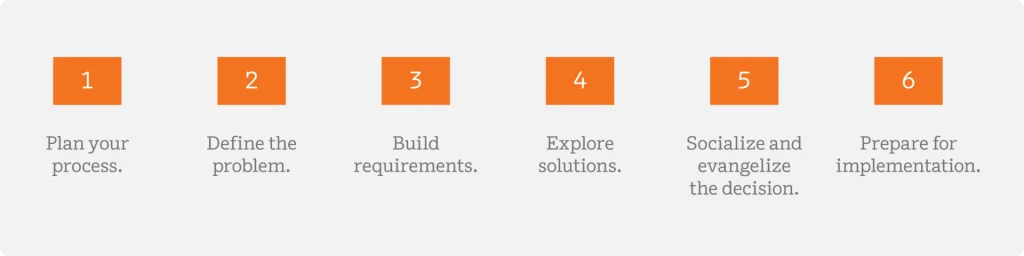
1. Plan your process.
Each step of the process, from assembling a team to preparing materials and socializing the decision, needs to be planned based on your district’s unique needs.
Start with the following case studies if you’d like to see examples from small and mid-sized districts. The worksheets that come next should help you plan the steps in your process and schedule, and the articles provide some ideas for how to assemble your committee.
Links
Case studies:
Worksheets:
Articles:
- Five things to consider as you assemble your team Word Doc | PDF
- Shaping the future: Participating on an adoption committee Word Doc | PDF
2. Define the problem.
Defining the problem shapes your list of requirements and ensures that all involved parties are focused on selecting the right high-quality curriculum.
Links
Worksheet:
3. Build requirements.
Requirements help you prioritize what is most important to your school district and to evaluate why a high-quality curriculum adoption would be the best fit.
Links
Worksheet:
4. Explore programs.
Start with your critical focus areas from step 2 (defining the problem) and select a short list of programs to explore. Next, conduct a thorough review of those programs. If you’re a school or district that pilots, a pilot would happen during this step.
Links
Worksheet:
Articles:
- Getting ready for the review Word Doc | PDF
- Important questions to ask publishers upfront Word Doc | PDF
5. Socialize and evangelize the decision.
You’ve done it! But your work isn’t over. Now you need to create clear, exciting messaging about the high-quality curriculum you’ve chosen and why it’s a good match for your teachers and students.
Links
Article:
Template:
6. Prepare for implementation.
A lot of things happen between signing a purchase order and the first day of professional learning. You’ll want to be organized as you coordinate people, places, and things to get ready for back to school.
Links
Worksheet:
Download the guide.
Join us!
Meet like-minded educators Lorem ipsum dolor sit amet, consectetur adipiscing elit, sed do eiusmod tempor incididunt ut magna aliqua.
March 2–4
The US Grant Hotel, San Diego
About the event
Join us for two days of interactive and inspirational talks with math education leaders from around the country to discuss where math education is headed. Meet like-minded K–12 leaders as well as change-makers from major universities, EdTech companies, and professional learning organizations dedicated to improving teacher experiences and student outcomes in mathematics.
We’re hosting an optional pre-conference workshop featuring Patrick Callahan and Chris Weber on Monday, March 2. The pre-conference starts at 12 p.m.
What to expect:
- Two full days of keynote and breakout sessions covering a variety of K–12 math topics
- Sessions led by district leaders sharing their work to raise math achievement
- Evening networking events
- Engaging speakers with a variety of expertise
- Insights you can put to use in your district immediately

Meet a few of our speakers
Use this version when there are multiple presenters.

Jason Zimba
Founding Partner of Student Achievement Partners
Lead writer of the Common Core State Standards for Mathematics

Sunil Singh
Founding Partner of Student Achievement Partners
Lead writer of the Common Core State Standards for Mathematics

Christina Lincoln-Moore
Founding Partner of Student Achievement Partners
Lead writer of the Common Core State Standards for Mathematics
Meet our featured presenter
Use this version when there is only one presenter, rather than many.

Natalie Wexler
Lorem ipsum dolor sit amet, consectetur adipiscing elit, sed do eiusmod tempor incididunt ut labore et dolore magna aliqua. Quis ipsum suspendisse ultrices gravida dictum fusce. Convallis posuere morbi leo urna molestie. In metus vulputate eu scelerisque felis imperdiet proin fermentum leo.
Lorem ipsum dolor sit amet, consectetur adipiscing elit, sed do eiusmod tempor incididunt ut labore et dolore magna aliqua. Quis ipsum suspendisse ultrices gravida dictum fusce.
Event agenda
Monday, March 2
Arrivals
Pre-conference workshop featuring Chris Weber and Patrick Callahan
Sessions begin at 1 p.m. Pacific and include:
- Adult and Student Mindsets and Math Supports
- Enhanced Mathematics
3:00 p.m. Hotel check-in available
6:00 p.m. Welcome reception and dinner
Tuesday, March 3
8:30 a.m. Sessions begin
Sessions include:
- Math milestones with Jason Zimba
- Unfinished learning with Phil Daro
- Powerful moments in math class with Mike Flynn
- Utilizing math history to embrace equity, failure, and authentic problem-solving in leadership communities with Sunil Singh
- Radical change in high school mathematics: Addressing wicked problems of tracking, acceleration, and curricular change with Mike Steele
6:30 p.m. Evening event
Wednesday, March 4
8:30 a.m. Sessions begin
Sessions include:
- Embedding problem-solving into your curriculum with Fawn Nguyen
- Writing in mathematics: The power of mathematics explanations with Jessica Balli
- Talk Number 2 Me: Mathematics and mindfulness with Christina Lincoln-Moore
- Writing in mathematics: The power of mathematical explanations with Patrick Callahan
4:00 p.m. Departures
Submit the form to register for the event!
Note: this is a Hubspot form but, when this page is used, we will be using Gravity forms. I put in an HS form now since the CSS has not been added.

The fine print
While we’ve made every effort to ensure that this invitation is consistent with the gift and ethics rules adopted by most jurisdictions, we recognize that many public officials are subject to rules that do not permit acceptance of this offer or require approval of other officials at your agency. If you do plan to attend our event, please ensure that acceptance of our invitation is fully compliant with your local rules regarding travel, lodging, and meals for events with vendors. Please let us know if we can provide any additional information to support your determination.
Program pg template redesign -AI
Winter Wrap-Up 02: Mathematizing Children’s Literature
While we’re hard at work producing the exciting fifth season of Math Teacher Lounge: The Podcast, we’re continuing to share some of our favorite conversations from our first four seasons. This time around, we’re revisiting our popular episode that connected literacy and math!
In this episode, we sit down with Allison Hintz and Antony Smith, authors of Mathematizing Children’s Literature, to talk about what would happen if we were to approach children’s literature, and life, through a math lens–and how we can apply those same techniques to classroom teaching!
Explore more from Math Teacher Lounge by visiting our main page.
Bethany Lockhart Johnson (00:02):
Hi, I’m Bethany Lockhart Johnson.
Dan Meyer (00:04):
Hi, I’m Dan Meyer.
Bethany Lockhart Johnson (00:05):
And we are so excited for another episode of Math Teacher Lounge. And as you know, podcast format; you’re listening now. I think one beautiful thing about the podcast format is that it gives us a little bit more time to have these rich conversations. And I promise I won’t do it, but I could talk to our guests for hours, hours! Authors Allison Hintz and Tony Smith have just released Mathematizing Children’s Literature: Sparking Connections, Joy, and Wonder Through Read-Alouds and Discussion. And today we get to talk to the authors. Allison, Tony, welcome. Welcome to the lounge.
Allison Hintz (00:53):
Thank you. We’re so grateful to be here.
Bethany Lockhart Johnson (00:55):
We’re so excited to have you here. And I wanna say that my very first—was it my first math conference? Maybe it was my first math conference—up in Seattle, the CGI conference, and I’m all like, you know, wide-eyed and just like, “Can this be a place for me, this math community?” Re-envisioning my relationship with math and thinking about myself as a math teacher, what? And I went to your session on mathematizing children’s literature, and I was just so fired up. I was so wowed by your ideas, your energy, and your passion for students’ thinking. And I feel like as I read this book, I felt like I was hanging out with you. Like you were just so encouraging all the way through. Of educators, of other folks working with young people, and really guiding us how to listen with joy and with an open curious mind.
Dan Meyer (02:03):
Yeah. I would love to hear a bit about the genesis of this book for you folks. Like, I’m coming at this from a secondary educator lens. I’ve got small kids, so that’s also part of my interest here. But I love any book, any idea that seeks to merge what seems like two disparate worlds. Like it’s often the case that we feel like, well, there’s approaches for ELA and approaches for math, and they’re kind of separate disciplines. And these poor elementary teachers have to learn all of them and be experts at all of them. And here you both come along and say, “Hey, what if they are the same kind of technique?” Can you just speak to how this came about?
Allison Hintz (02:38):
Definitely. Tony, do you wanna take a try? Do you want me to start us off?
Antony Smith (02:42):
I can start. We oftentimes present and talk together and so we kinda switch back and forth. So that’s just how we are. So probably about eight or nine years ago, Allison and I, our offices were next to each other on our small campus. We’re both professors and we just happened to have a few children’s books that we looked at together and we were just thumbing through the pages. We really liked children’s literature. And we noticed that I would stop at certain points wondering about character motive or plot or sequence of events or language use. And Allison would stop at very different points in the book and notice number and concepts or something about mathematics. And that’s when we started to wonder, what would it be like if we were sharing a children’s book with a group of children and we put our ideas together? Where would we stop? What would we talk about? What would we ask children about in terms of their thinking and what they notice?
Allison Hintz (03:42):
And so we started playing with these questions that we had and started approaching stories with multiple lenses to see what kinds of things would children notice and what kinds of things might they say. And we were also on our own journey in trying to understand how to plan for and facilitate lively discussions and classrooms that surface really complex mathematics. And it felt like stories were a place where that might be a fruitful context for hearing children’s thinking. We’ve worked with a lot of teachers and students in our region. We live in the Seattle area and we’ve applied for some funding over time that’s really helped us be in a lot of community-based organizations and educational contexts and libraries and pediatricians’ offices and classrooms, various classrooms, and see what’s interesting about this and what might teachers and children do with stories that would surface complex mathematics to think about together.
Antony Smith (04:41):
Over time, we came to the realization that if we wanted to hear children’s ideas, we had to stop bombarding them with questions. <laugh> Yeah. And at first it made it worse that we were asking them math and literacy questions at the same time. And so we realized that what we needed to do was to back off and to ask children what they noticed and wondered.
Bethany Lockhart Johnson (05:01):
Can you say more about that and how that kind of evolved into mathematizing children’s literature?
Antony Smith (05:07):
We did work with a number of very thoughtful, talented classroom teachers and children’s librarians in public library systems who were just so masterful at asking open-ended prompts and questions, rather than kind of like the de facto reading quiz, that a read-aloud can become, which I’ve always disliked as a literacy educator. And we realized in our observing these read-alouds or interactive read-alouds or shared reading experiences that given the opportunity in the space and an adult who was actually listening, that children came up with all of the ideas we would have asked them about and more. So we didn’t have to be bombarding them with questions. They were already much more thoughtful than what would’ve been sufficient to answer our questions.
Allison Hintz (05:58):
And much like mathematics, it was really an iterative process. You know, we had some clunky read-aloud discussions where we were trying to accomplish so much and toggling multiple chart papers and different colored pens and all sorts of “how do we capture these ideas” and “do we separate ’em? do we keep ’em together?” And so it’s really been over time that with partners, we’ve learned these ways of having multiple reads of the same story that allow us to hear what children notice and wonder, and then to delve more deeply into their questions and their ideas through multiple reads where we might spotlight literary ideas that they notice; we might spotlight mathematical ideas that they notice. We might make purposeful integrations between those. But we found it to be most productive—and Kristin Gray really help us think about this—to have an open Notice and Wonder, get everything out much like an open-strategy share. We welcome here, record all the ideas, and it goes all over everywhere. You know, it can be a really not math-y noticing! And those are amazing! So there’s a lot of, um, yes, there is a ladybug on this page! The grandma is wearing green triangle earrings! Oh, your grandma wears green earrings! I mean, it all comes out.
Bethany Lockhart Johnson (07:27):
Wait, have you been in my classroom? ‘Cause that’s exactly— <laugh>
Allison Hintz (07:29):
<laugh> And then, you know, we think of it a lot like if math teachers might use the 5 Practices for selecting and sequencing, or if you might move from an open-strategy share to a targeted share, how can we get out all the questions that children are asking and then step back from them, take some time to really think about what they’re telling us they’re curious about, and plan some purposeful, intentional subsequent discussions that can delve more deeply into their ideas.
Dan Meyer (08:02):
I’d love to go into that a little bit more if that’s all right. Um, I’m gonna speak from someone who doesn’t have an elementary background and I’m gonna voice some worries that I had, some anxiety. One anxiety I have like in a classroom or a curriculum is when there’s no room for student ideas. Right? When it’s like, oh, there’s just room for the curriculum author or the teacher here. That is a sadness. But I when I see an instructional environment like you’re describing here, where there is openness to all kinds of different student ideas, of different levels of formality, from different kinds of cultural fonts of knowledge or wherever, I also get a little bit nervous because that, like, increases the risk that a student might come to understand that “my ideas are not good enough,” whereas in the class with no room for their ideas from their home or their language or their hobbies, like, they’re not gonna internalize the message that, “that wasn’t good enough.” And so I’m really curious as you move from the open Notice and Wonder where kids share all of themselves with you, and then you move to a targeted focus on some sort of disciplinary objective, how do you navigate that tension and help students feel like their contributions are valuable, even though we aren’t taking them up per se?
Allison Hintz (09:18):
That’s such an important question. I mean, I think we’ve grappled with this broadly in math education. I think any time we’re thinking about which ideas we choose to take up to pursue to consider, we have a responsibility to think carefully about whose ideas are being taken up and heard and considered. And so one of the tensions I hear you naming, I think, Dan, is when we engage in lively discussion where children’s thinking’s at the center, how do we make sure to upend and interrupt kinda status norms that run the risk of being deepened? Um, and I think by paying attention to whose ideas are taken up as much as which ideas are taken up, and what’s the mathematics we wanna explore is one tension. Um, another tension I might hear you naming is, you know, the complications that teachers face with time and pressure and coverage, and which mathematics ends up getting worked on. And, um, you know, it’s something we’ve really had to struggle with in mathematics education, where we move to more discussion-oriented classrooms that are really centered in sense-making to know that it takes a lot of time to do this thoughtful, thoughtful work. Um, does that begin to get at some of the tensions you’re raising? Is there, is there more you’re thinking about?
Dan Meyer (10:53):
I think it’s really helpful that you kind of broadened the scope of the question beyond your book to “this is an issue that we are, you know, really challenged by and focused on broadly in math education.” And, um, I appreciate you bringing the element in of whose idea—not just which idea is taken up, but whose idea is taken up—is an opportunity where, let’s say, multiple people raise an idea that is towards an objective the teacher has, they have the opportunity to disrupt certain kinds of status, like ideas about status, in that moment. From your perspective, like, are there techniques to say, I don’t know, parking-lot certain kinds of questions and say like, “Hey, like these are awesome”? I don’t know. I just know that I see kids at like ninth grade. They are very reticent, often. They’ve internalized totally this sense of like, “I’m not gonna just, like, share about the pants the grandma’s wearing, you know; that will not be received well.” And so I’m just kinda wondering how that happens and like, what are the ways we can disrupt that? That process?
Antony Smith (11:54):
So thinking about that, Dan, from the teacher’s perspective, in those kinds of scenarios where you wanna honor each child’s contribution, a couple of things that come to mind: One is that by, you know, initially by modeling what I as a teacher, something that I notice or wonder about, helps kind of set the expectation for what kind of response would be encouraged. And it’s broad, but it gives an example. And then also we really try to record or to chart all of the ideas that are shared so that we can revisit and honor those together. And then either later or on another day, if we choose one or two of those to explore in some way within a more focused read, then another thing that we do is have the idea investigation afterward that continues that thought, but goes back to being as open-ended as possible, so that those students or children who maybe didn’t have their idea as the one that was focused on by the group could go back to that or explore some other idea of their own, so that the idea investigation isn’t a lockstep extension activity, which is why we don’t call it that. So they could again bring in their own perspective. But I have to say from the teacher’s point of view, there is that moment of potential panic <laugh> because there is that power transfer when you’re asking children to help steer where this is going. And if you really mean it, you have to let them steer a little bit. And that can be terrifying. And, um, I always think of one teacher, Ashley, we worked with who read an adorable book, Stack the Cats, by Susie Ghahremani. And in that book, there’s a point where there are eight cats and they’re kind of trying to be a tower of cats and they fall and they’re sort of in the air on that page. And she asked her first graders—she stopped, and she asked, “How, do you think, how will the cats land?” And for about a minute and a half, the entire <laugh> class, was silent. They had their little papers; they had chart paper; they had clipboards; they had everything they needed. But that unusual phenomenon of a group of six- and seven-year-olds actually just sitting and thinking and not being peppered with activities was really stressful, but amazing. And then, after about the 90 seconds, they started out into their exploration of how the eight cats might land. They just needed a minute to think. And it’s so rare that we’re able to let children have that.
Allison Hintz (14:40):
In that same moment, Ashley, who’s a learning partner to us, she turned to us kind of quietly, like, “Should I pose a different question?” And <laugh>, we’re like, “No, let’s stick with it. Let’s see what happens.” So I think it creates this space too, this thinking culture, right? And this culture of “what does that mean to really pose a rich task?That’s open-ended, where there’s multiple access points?” Those eight cats could land in so many different ways. And there was broad access, there was a wide range of all the cats landing, and one’s on their feet, ’cause cats always land on their feet <laugh>, and there was every combination. And so, um, I think what’s really interesting—and to me, this brings back to your wonder, Dan—is, you know, “What’s the risk in openness?” And there’s always risk in openness. Um, it’s scary as a teacher, right? If I’m not the authority of knowledge and I don’t have control over where we’re gonna go, it might get into places that I didn’t anticipate. Or I don’t really feel as solid in the math as I want to. Or I don’t know what it sounds like to stick with silence and wait time, to know if my students are really in productive struggle or if that question was a flop. And so, um, I think this is some practice space for young mathematicians and teachers of mathematics, and just teachers, to explore with that openness and kind of the risk of the openness required for complex thinking to emerge.
Bethany Lockhart Johnson (16:12):
You know, it feels like the way you’re both describing this, it really is a culture shift, right? I kept feeling like I was given permission to be a beginner as I read this book. Like I was really…I loved how you said, I believe it was you, Allison, when you were in the class, you had a couple index card that you kept on your clipboard and that as you walked around, you were like, “Hey, if I don’t know what to ask, I ask one of these questions.” You know? And just this idea that, that, like Dan was saying, there is that loss of control, but that’s also a way to create this culture where students ideas are valued and we are allowing students to really generate the questions, which I thought was such an important idea to explore.
Allison Hintz (17:00):
We started this work long ago, super-excited about math-y books. And we saw a lot of potential in them and we still do. But the limitation we saw is that math-y books, they, they put forth a certain mathematics to be curious about. In some ways they tell you what mathematics to think about. So we started asking ourselves what would happen if we considered any story a chance to engage as mathematical sense-makers. And we started playing with non-math-y books and we got to a place where we could consider every story an opportunity to engage in mathematical thinking. And so we started noticing things over times, oh, these books tend to be really math-y. We call those text-dependent. We’d have to pay attention to the mathematics to understand the story. Whereas this pile of stories, these, they’re not overtly math-y. You could really enjoy the story and not pay attention to mathematics and have an amazing conversation. But what would happen if we thought of about this story as mathematical sense-makers and how might it deepen our understanding of the story? And then this other teetering pile of books, these are books where, you know, children didn’t tend to engage as overtly as mathematicians in it, but there’s opportunities in this story to go back to something—to a moment, to an illustration, to a comment—and think as mathematicians. And those were more about illustration exploring. And so, as we notice these different kinds of books, we really broaden what we thought about. And I think one of the things we really wanna think about in community through this book is what happens if we approach any story, every story, as mathematical sense-makers, because stories are alive in children’s lives, in homes and communities and in schools. And it’s a broad opportunity that we wanna take up. I was thinking, as I stay in this strait for just a moment about book selection, before we move into that process, um, Bethany in a previous MTL, you talked about representation.
Bethany Lockhart Johnson (19:12):
Mm, yeah.
Allison Hintz (19:14):
And do you remember when you shared the image of hair braiding?
Bethany Lockhart Johnson (19:19):
Yes. Vividly, yes. <laugh>.
Allison Hintz (19:22):
Yeah. And can you say just what that meant to you? What that….
Bethany Lockhart Johnson (19:27):
Yeah. Well, it was from a conference; Sunil Singh had used it and was talking about the artistry in mathematics and beauty in hair braiding. And, um, particularly, he was showing this particular image of this Black woman with her hair braided in profile and looking at the angles and the symmetry. And I shared that, you know, I spent so many hours in the beauty shop with my aunties and my mom and my grandma and continue to, to this day, that it just, it struck me immediately as familiar. And it struck me immediately as seeing an image that was reflective of my lived reality, projected as valuable and worthwhile for consideration in the world of mathematics. Which is not what I felt as a student of mathematics as a young adult or child. So it was this beautiful moment of, for me, the power of when we see images and we allow opportunities for re-envisioning what may be a common practice for that student, or may be something that they see every day.
Allison Hintz (20:44):
And in that same way, that image that was put up, we wanna think really carefully about representation in the stories that we select. And when we think of stories as mirrors or windows, we really wanna be mindful in story selection of whose stories are told and whose stories are heard. And when you said that you would sit down to listen to a story and you felt at ease or that you saw an image and you saw yourself that can be and should be something we really think carefully about when we select the stories that we select.
Dan Meyer (21:21):
It’s a wider path for representation of different kinds of people in literature, because people’s stories seem so much more present and towards the surface of their lives, versus, say, the abstractions and numbers and shapes in mathematics. It feels like more of a struggle to find ways to show people, hey, like you’re here, this, this place belongs to you. So in all these reasons, I think it’s really great you folks are using literature, which has this history of humanities, literally humanities, as a vehicle for mathematics. That seems pretty special here.
Antony Smith (21:56):
We both go to libraries and bookstores and look through books as often as we can, but also our partner, a children’s librarian, Mie-Mie Wu, helped us go through—when we would meet, she would bring three or four hundred books at a time.
Bethany Lockhart Johnson (22:13):
When you described her wheeling in the cart, oh, I wish I been in that room! <Laugh>
Antony Smith (22:18):
And the cart was, you know, probably three or four times bigger than she was sometimes. And we would go through hundreds of books and look at them and listen to her thoughts as a skilled librarian sharing with families, diverse families, and what catches the attention of a three-year-old sitting with her grandfather. And that was really a valuable, helpful experience. And it’s a partnership that continues. So in Last Stop on Market Street—and this is in the book; we talk about this, this children’s book quite a bit—in this story, CJ with his Nana, his grandmother, are riding the bus to the last stop on Market Street in San Francisco, to go, as we will find out, to help serve in a soup kitchen to help the community. And the teacher, Susan Hadreas, had the children record their ideas. She charted them in an open Notice and Wonder read. And one of the ideas that a young boy noticed was that CJ on the bus…a man with a guitar starts playing the guitar on the bus and CJ closes his eyes and it says CJ’s chest grew full. And he was lost in the sound and the sound gave him the feeling of magic. So this boy said, “I wonder, what does that feel like if you’re feeling the magic? What’s that?” And that was one of many ideas in the open Notice and Wonder, and Allison will talk about the math lens read, but first Susan went back and read with them. She had that idea, she circled it on the chart paper, and another day that week, she said, let’s go back and visit this story we really liked. And remember, we wondered what feeling the magic was like. Let’s go back through and let’s keep track of all the feelings and emotions that CJ had across the journey to the soup kitchen in this book. And so they did another read of the story; they were very familiar with it, of course, but they noticed new things and they also, every few pages, stopped and she helped chart all of the emotions that CJ experienced from envy to excitement to sadness. There’s a huge range in this book. And it was fascinating.
Allison Hintz (24:36):
I think one of the things that the children noticed was that CJ’s feelings were shaped by community. And that he shaped and shaped…he was shaped by and helped shape his community. And so the ways that he felt across the story were impacted by the other characters that he comes across. The guitar man on the bus. The bus driver who can pull a coin out from behind someone’s ear. The lady with the butterflies in the jar. Nana helping him to see the rainbow. And the students started, you know, being curious about that. How do we shape and how are we shaped by community? What communities are we a part of? This class is one community. I’m in many communities across my life. And they started to quantify the number of people in the story. So Mrs. Hedreas went back for a math lens read, and she said, let’s just keep track of and pay attention to how many people are in CJ’s life in this day. Because I can hear you starting to think about quantity. This class at the same time in other areas of the day had been working on counting collections, how to keep track, so they got out their tools. Some people pulled out ten frames, some people pulled out clipboards. They had a wide range of things they could use to help them keep track. They developed their own strategy, keep track however you want. She did a quicker read through it, flipping the pages, and then they get into these debates: <laugh> “We already counted that person!” “But they took their hat off and put it down to collect money!
Antony Smith (26:10):
“What about the dog?”
Allison Hintz (26:11):
“That’s the same person!” “Yeah, there’s a dog pound in his community!” <laugh> “Do animals count in our community?”
Bethany Lockhart Johnson (26:17):
I love it!
Allison Hintz (26:17):
“Yes, they count!” Uh, and so we went through and quantified and there was really this understanding as you saw these people throughout the story that communities can be of different sizes, but community has impact. And you have responsibility in your community to show up and to lean in and to know that bringing your full, authentic, vulnerable self, you shape people and they shape you. And what communities are people a part of. And it turned into this really interesting discussion about quantity and helped us think more about quantity and community. I think a really important moment for us and for that class was the transition from being people who almost did mathematics to a story, like counted things on a page, um, count acorns on a page in an autumn book, to being mathematicians who thought within the story.
Antony Smith (27:17):
And then two idea investigations that came from that —not at the same time, of course, but with the same group of children—one was they identified an emotion of their own and wrote and drew about that. And also, who helped them address or get out of or acknowledge that emotion. And then the other idea investigation was that all of the children drew or kind of mapped out a community that they were part of. Whether it was their neighborhood or their classroom or their soccer team or whatever it was. And so then those investigations strengthened the connections of those concepts to the lives of those children.
Bethany Lockhart Johnson (28:05):
Well, I, actually wanted to ask you about idea investigations. Because I feel like that was such an important invitation in your book. And the way I understood the idea investigation is you’re really paying attention to what’s coming up in your other reads. Right? And then these are opportunities to extend the thinking, or like you said, to extend a particular aspect: What’s your community? Can we map your community? Or what’s a particular emotion? And it was in such contrast to what I think I have probably done in my classroom more than once, which was like, “Oh, we read this story about seals. So now my story problem is gonna be about seals, right? <laugh> Like in the story, you know, Jojo, the seal had five balls. <laugh> So if Jojo still had five balls and two of them bounced away…” You know, or whatever. Right? But that’s not what an idea investigation is. Right?
Allison Hintz (29:03):
Yeah. I think this is where we also had some stumbles and can totally relate to what you’re saying as previous classroom teachers as well. We have come to a place where we are pretty in favor of a super open-ended idea investigation that takes up the things that have surfaced in the multiple reads and making sure it’s a rich task with many, many ways children can engage with that. There’s many, many, many right answers or ways to engage. Less is more there. So we moved way away from, like, even a worksheet that might have an idea from it to blank paper and math tools and places to get into some productive struggle around some of the complex things that were raised.
Antony Smith (29:59):
A challenge with worksheets is that they put a frame around children’s ideas. So either there are only three lines to write on, or there’s only a small box to draw in. Whereas a blank page really opens up the possibility. Um, and so—is it Ann Jonas who wrote Splash!? sorry, I don’t have it in front of me—the book Splash!, about animals that end up in and out of the pond, including a cat that is not happy about ending up in the pond, an idea investigation after that for very young children was, with the list of the different creatures displayed at the front of the room: On blank paper, hey, draw your own pond and decide how many of which and each type of animal you want in your pond and then write about it. Just on blank paper. And so that allowed some children to draw, like, three giant goldfish. But other children drew 17 frogs and three cats. And, and just, it lets children follow—
Bethany Lockhart Johnson (31:02):
It was theirs, right? It was theirs.
Antony Smith (31:04):
Their idea. <laugh> And that comes partly from, I think, as Allison mentioned, we both were classroom teachers before moving into academia. And I remember giving children worksheets, particularly math worksheets, where they weren’t necessarily bad, but right at the bottom, it says like, explain your strategy. And it gives two lines.
Bethany Lockhart Johnson (31:23):
Right! <laugh>
Antony Smith (31:25):
The only thing a seven-year-old can write there is “I thought.” Or “I solved it.” <laugh> And that’s not where we need to go.
Dan Meyer (31:34):
Yeah. If I could just ask the indulgence of the primary crowd here, like, I’m trying to make sense of all this. And I just wanna like, offer my perspective. My summary statement of what’s going on here. I’m trying to—I love how you both came here—
Bethany Lockhart Johnson (31:45):
<laughs> How ya doin’, Dan? How ya doin’?
Dan Meyer (31:47):
<laughs> I’m, ah, A, I’m loving this a lot. Um, B, I came in here loving how you folks are broadening the work of primary education to kind of find commonalities between these sometimes seemingly disparate kinds of teaching in ELA and math. Love that, I wanna say. But I think you folks are describing, with all these teachers you observed and your own work, is the work of attaching meaning to what students might not realize yet has meaning. Or they might think it only has one kind of meaning. But you, the teacher, with their knowledge, realizes that there are many more dimensions of meaning that can be attached to those thoughts. And I’m hearing that from you folks, when you describe A, what math is and the power of a teacher to name a thing as mathematical. Like, “Oh, you didn’t think math was that, but math is noticing; math is wondering; math is asking questions,” for one. But also this work you’re describing of how, like, first the task has to invite lots of student thoughts and then to say like, “Oh, I see that there’s a similarity to these two.” And to raise those up for a conversation or to ask a question like to extend one person’s, one student’s question a little bit more. But it’s always…I’m just hearing you folks attaching more meaning than the student might have originally thought. I appreciate the conversation. That’s really interesting.
Bethany Lockhart Johnson (33:03):
Well, and now that the book is out, I think it’s gonna keep evolving, right? Now that it’s gonna be in the hands of teachers and librarians and educators and caregivers, it’s exciting to see kind of where it goes next. Which actually brings us to our MTL challenge. Dan Meyer, do you wanna share?
Dan Meyer (33:22):
Math Teacher Lounge, we have a challenge for the folks who listen and we’d love for them to hop into the Facebook group Math Teacher Lounge, or hit us up on Twitter at @MTLShow and just, like, kind of exercise beyond listening, exercise the ideas you folks are talking about, some kind of a challenge that can help us dive deeper into your ideas. So what would you folks suggest for our crowd, for our listeners?
Allison Hintz (33:42):
I would love to invite people to playfully experiment with a favorite story, with a story that’s new to you. I would love to invite listeners to sit with a story maybe on your own, and just ask yourself as a mathematician: What do you notice and wonder in this story? Don’t feel any pressure. Maybe sit with a child or some children and listen to what they notice and wonder. Like, really listen! Don’t ask questions! But hear their questions and place children at the center and consider multiple reads. Consider continuing to pursue their questions. And we have a planning template that might support people in kind of sketching out some ideas if you’re open to playing with that too.
Bethany Lockhart Johnson (34:34):
And we will post—
Dan Meyer (34:36):
That’s awesome.
Bethany Lockhart Johnson (34:36):
—a link for that planning template in our Facebook group and on Twitter as well. So thank you so much for that resource, because I think it’ll definitely help. It could help you, like you said, it could help you kind of organize your thoughts or help you think about this work in a new way. So thank you for that resource and thank you for the amazing resource that is Mathematizing Children’s Literature. I am so excited to continue to engage with you both and with listeners as they dive into this book. If folks want to engage with you more, where can they find you? How can they reach you?
Allison Hintz (35:12):
Well, we’re on Twitter.
Bethany Lockhart Johnson (35:14):
Great.
Dan Meyer (35:15):
What’s your home address? <laugh>
Bethany Lockhart Johnson (35:24):
Wait, let me try that again. <laugh> ‘Cause it does sound like I’m like, <fake ominous voice> “Where can they find you?”
Allison Hintz (35:29):
4-2-5…. <laughs>
Antony Smith (35:32):
At the bookstore!
Bethany Lockhart Johnson (35:34):
Y’all, if folks want to continue this conversation or share these ideas or the math challenge, how can they tag you? How can they, they reach you on the World Wide Web, besides the Math Teacher Lounge Facebook group?
Antony Smith (35:50):
Yeah. Well, we are both on Twitter, and we’ve been trying to promote the hashtag #MathematizingChildrensLiterature. It’s very long, but once you type it once, your phone or computer…
Bethany Lockhart Johnson (36:01):
Easy. Yeah, those click, right? Is that what it is now?
Antony Smith (36:03):
<laugh> The other is that we do for our project, we have an Instagram account that is @MathematizeChildren’sLiterature.
Allison Hintz (36:11):
We care really deeply about hearing from people. You know, we think our ideas are constantly evolving and that there’s such exciting room to grow. And we just felt compelled to share what we were learning now so that together we could learn and build vibrant experiences for young children and teachers and families through stories. So we want to hear from people! We wanna learn about stories that are important in your lives and what children say, and grow these ideas together.
Bethany Lockhart Johnson (36:42):
And credit to Dan, you told me you went and ordered a bunch of the books they have on the suggested read list.
Dan Meyer (36:48):
Oh my gosh.
Bethany Lockhart Johnson (36:49):
You read ’em to your son.
Dan Meyer (36:50):
I got such a side-eye from my significant others around here for what I dropped on Amazon in one night! <laugh> Uh, all these books I didn’t have. Some of them I did. We are not fully illiterate around here! We do love the written word at the Meyer household! But there were a bunch that that I grabbed. I’m morseling them out day by day.
Bethany Lockhart Johnson (37:09):
Wait, at bedtime I read my one-year-old One Is a Snail, Ten Is a Crab. <laugh> And let me tell you, he had vigorous pointing and “Da? Da da da da?”
Allison Hintz (37:22):
<laugh> Aww, da da!
Bethany Lockhart Johnson (37:22):
So hey, we’re on the road. <laugh> <music> Deeply grateful, not only for your work and your beautiful book and your work, but also for the invitation to dive into the world of children’s literature in a way that many of us have not before. And it’s fun! Thank you, Tony. And thank you, Allison. And thanks for hanging out in the lounge.
Allison Hintz (37:48):
Thanks for having the lounge!
Antony Smith (37:49):
It’s been fun!
Allison Hintz (37:52):
Thank you both.
Stay connected!
Join our community and get new episodes every other Tuesday!
We’ll also share new and exciting free resources for your classroom every month.


Meet the guest
Allison B. Hintz: Dr. Hintz’s research and teaching are in the area of mathematics education. Her focus on mathematics came about during her years as a fifth grade teacher – it was alongside her students that she developed her own positive identity as a mathematician! Today she studies teaching and learning, specifically facilitating engaging discussion. Her research and teaching happen in partnership with educators and children in formal and informal settings and focuses on beliefs and practices that support all children in lively mathematics learning. She is a co-author, with Elham Kazemi, of Intentional Talk: How to Structure and Lead Productive Mathematical Discussions.
Twitter: @allisonhintz124
Antony T. Smith: Antony T. Smith is an associate professor of literacy education at the University of Washington, Bothell. He works alongside teachers to create engaging literacy-mathematics learning experiences through exploring and discussing children’s literature. He is committed to the concepts of motivation, engagement, challenge, and creativity in literacy teaching and learning.
Twitter: @smithant Instagram: mathematizechildrensliterature

About Math Teacher Lounge: The podcast
Math Teacher Lounge is a biweekly podcast created specifically for K–12 math educators. In each episode co-hosts Bethany Lockhart Johnson (@lockhartedu) and Dan Meyer (@ddmeyer) chat with guests, taking a deep dive into the math and educational topics you care about.
Join the Math Teacher Lounge Facebook group to continue the conversation, view exclusive content, interact with fellow educators, participate in giveaways, and more!
You might also like:
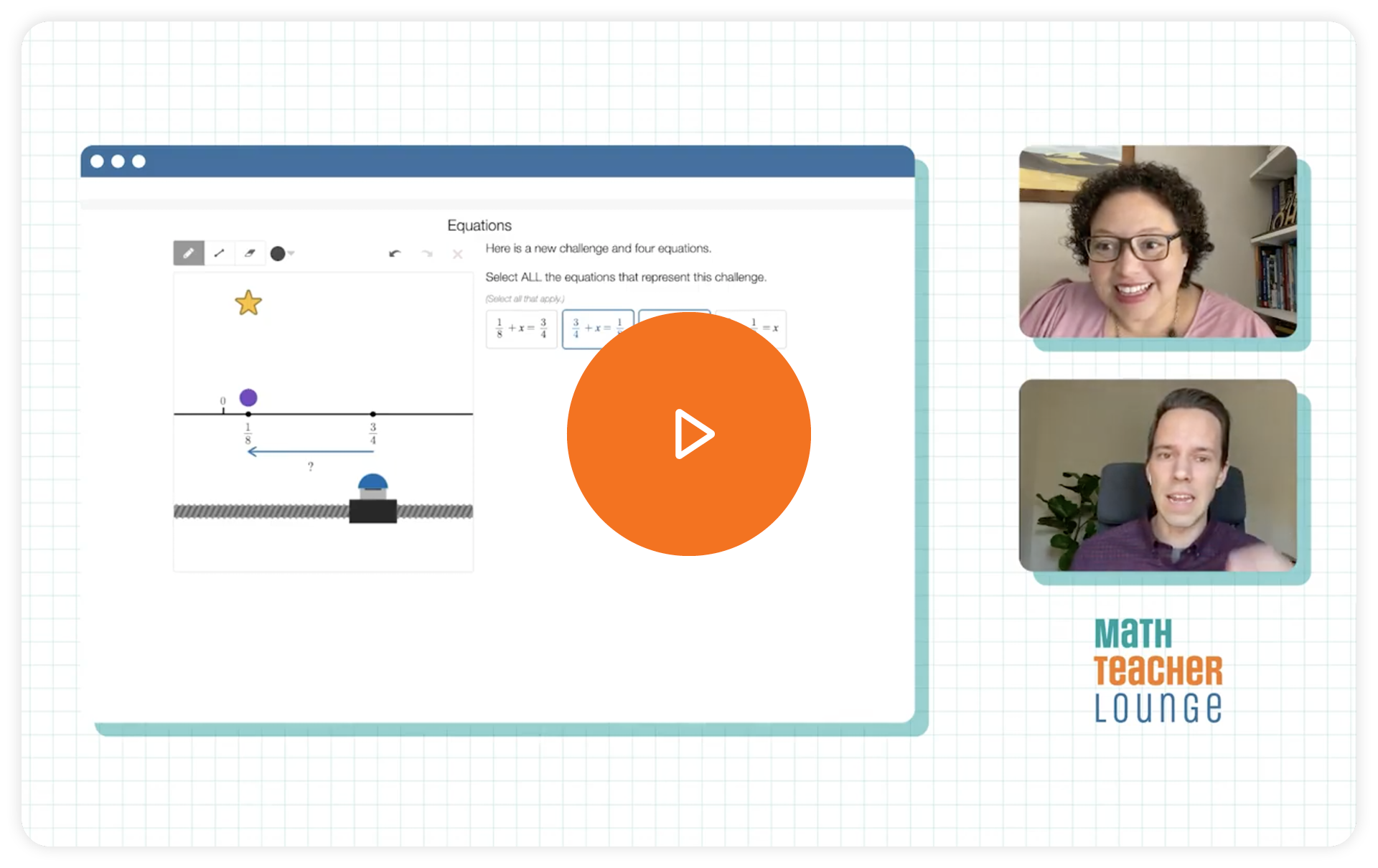

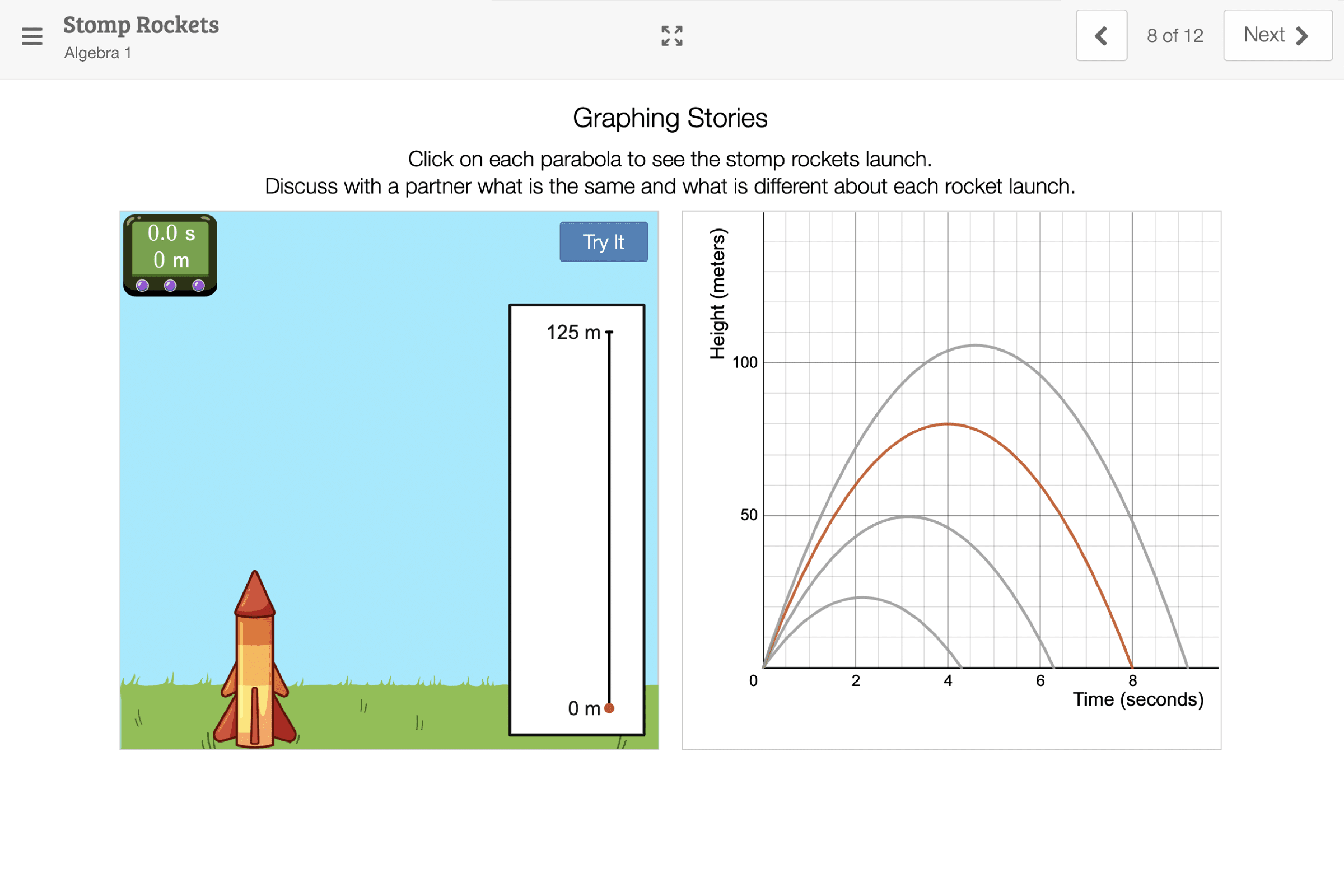
Amplify Science resources for Richmond Public Schools
Welcome! This site contains supporting resources designed for the Richmond Public Schools adoption of Amplify Science.
Authored by UC Berkeley’s Lawrence Hall of Science, Amplify Science is a comprehensive program that blends literacy-rich activities, hands-on investigations, and engaging digital experiences to empower Richmond students to think, read, write, and argue like 21st-century scientists and engineers.
Click here to visit Richmond Public Schools’ Science Department page.

Welcome!
This site contains supporting resources designed for the Richmond Public Schools adoption of Amplify Science for grades 3–8. Here are some resources to get you started, but make sure to check back for exciting updates!
Program-wide resources
Click the button below to explore the Amplify Science Program Guide. You can access the full digital Teacher’s Guide from the Program Guide to explore the program.
- The Amplify Science Program Hub
- Menu of Amplify Science video tutorials
- Tech requirements
- The Caregiver Hub (English and Spanish)
Onboarding videos
To start using Amplify Science quickly in your classroom, check out the following onboarding videos. They cover what you need to know to get started fast, from unpacking materials to logging in and navigating the digital Teacher’s Guide.
Getting Started: K-5
This section allows you to become familiar with the program and to guide you through initial preparation for implementing Amplify in your classrooms. here you will find look-for-tools, pacing/planning guides, and editable documents to support unpacking the unit lessons.
Overview
- Amplify Science K-5: Program Overview
- Amplify Science K-5: Teacher’s Guide Navigation
- Recommended Scope and Sequence for Grades 3–5
Supporting literacy development
Planning resources
Planning Guides
- 3rd Grade RPS Curriculum Guide
- 4th Grade RPS Curriculum Guide
- 5th Grade RPS Curriculum Guide
- 3rd Grade Planning Guide*
- 4th Grade Planning Guide*
- 5th Grade Planning Guide*
- *Sequence of units does not match RPS’ scope and sequence.
Look-for-tools
- Establishing Common Expectations for Amplify Science Classrooms (K-5)
- Amplify Science: Getting started look-for-tool (K-8)
Planning support documents
The following materials lists and videos give you a quick look into our Amplify Science classroom kits. For each grade level, we have a video for the first unit in the scope and sequence, and we show you how to unpack the kits for all the units.
NOTE: These materials kits are not specific to the Richmond unit progression. Please reference these Richmond unit progression docs for 3–5 and 6–8 so you’ll know which kits to look for in each grade.
Materials lists
Unpacking videos
Getting Started: 6-8
This section allows you to become familiar with the program and to guide you through initial preparation for implementing Amplify in your classrooms. here you will find look-for-tools, pacing/planning guides, and editable documents to support unpacking the unit lessons.
Overview
- Amplify Science 6-8: Program Overview
- Amplify Science 6-8: Teacher’s Guide Navigation
- Recommended Scope and Sequence for Grades 6–8
Supporting literacy development
Planning resources
Planning/Pacing Guides
- 6th Grade/Integrated Life Science RPS Curriculum Guide
- 7th Grade/Physical Science RPS Curriculum Guide
- 6-8 Pacing Guide
- Grade 6-8 Planning Guide*
- *Sequence of units does not match RPS’ scope and sequence.
Look-for-tools
Planning support documents
The following materials lists and videos give you a quick look into our Amplify Science classroom kits. For each grade level, we have a video for the first unit in the scope and sequence, and we show you how to unpack the kits for all the units.
NOTE: These materials kits are not specific to the Richmond unit progression. Please reference these Richmond unit progression docs for 3–5 and 6–8 so you’ll know which kits to look for in each grade.
Materials lists
Unpacking videos
6th grade Integrated
- Metabolism: Reading “How You Are Like a Sneezing Iguana” (Lesson Guide and Copymaster)
- Metabolism: Plant Growth Investigations (Lesson Guide and Copymaster)
- Metabolism: Reading “How Do Trees Grow So Huge Without Eating?” (Lesson Guide and Copymaster)
- Populations and Resources: Reading “The Amazing Variety of Life in a Coral Reef” (Lesson Guide and Copymaster)
- Weather Patterns: Reading “What Makes Water Move?” (Lesson Guide and Copymaster)
7th grade Integrated/Physical science
- Harnessing Human Energy: Investigating Electrical Devices (Lesson Guide and Copymaster)
- Harnessing Human Energy: Investigating Non-Touching Forces (Lesson Guide and Copymaster)
- Harnessing Human Energy: Reading About Non-Touching Forces (Lesson Guide and Copymaster)
- Thermal Energy: Designing Hot and Cold Packs (Lesson Guide and Copymaster)
- Phase Change: Reading “Icy Heat” (Lesson Guide and Copymaster)
- Chemical Reactions: Identifying Substances (Lesson Guide and Copymaster)
- Chemical Reactions: Mixtures, Properties, and Separation (Lesson Guide and Copymaster)
- Magnetic Fields, Water Wheel Design (Lesson Guide and Copymaster)
Additional units
- Ocean, Atmosphere, and Climate: Investigating Deep Ocean Currents (Lesson Guide and Copymaster)
Getting Started: Admin
Admin resources
K-5 Frequently-Asked Questions
6-8 Frequently-Asked Questions
Professional learning opportunities
Check back for a list of upcoming sessions!
Frequently asked questions
We get it…pacing your instruction, especially with a new program, can be really challenging. In Amplify Science, students internalize concepts through repeated exposures over multiple days with different modalities. We say students get multiple “at-bats” with each concept. As you move through the lessons, avoid looking for concept mastery each day. Instead, try to move through the lesson according to the timing guidelines, maintaining a quick pace.
In classroom discussion activities in particular, you may be tempted to keep the conversation going to ensure that your students fully master the content in that class period. We recommend, though, if the lesson overview says discuss for 10 minutes, cut it off at 10 minutes.
Every Amplify Science unit includes hands-on investigations. But, just as scientists gather evidence from many types of sources, so do students in Amplify Science. Like scientists, students using Amplify Science also gather evidence from physical models, digital models, texts, videos, photographs, maps, and data sets. Doing so requires using the full range of the practices in multi-dimensional learning. It also offers students different ways of acquiring knowledge and experience, multiple means of expressing their understanding, and a variety of resources through which to engage with the content.
Often, students enjoy hands-on investigations, but don’t sufficiently learn key concepts from those experiences. The Amplify Science investigations are designed for efficiency and effectiveness. For teachers who wish to supplement the lessons with more hands-on activities, optional hands-on “flextension” activities are included in many units. Instructional guidance, student sheets, and other supporting resources for them are included as downloadable PDF files and materials needed are either included in the unit kit or easily sourced.
First, take a breath, and know that you will gradually internalize the program routines and overall flow. Also, remember that your students are experiencing the program for the first time with you. Together, you’ll be peeling the onion one layer at a time.
It can be intimidating to begin the school year with a brand-new curriculum: where do you start? The Richmond Resources Site will help you navigate the different supports and resources we have for new Amplify Science teachers.
The Program Hub is also a great place to direct your own, independent learning about Amplify Science instruction. Once you log into the platform, click on the directory on the top left side. Click into the Program Hub, then Professional Learning, and Getting Started. This will give you access to prioritized resources that will help you plan for your Amplify Science instruction. Additionally, the Amplify Science Help center (also accessible from the Global Navigation menu) is great for short videos about specific topics like supporting EL students, using Classwork, etc.
The variety of multimodal activities that are included in Amplify Science provides students with the opportunity to dive deeply into understanding science ideas, make science exciting to students, and allow for all students to have the benefit of multiple opportunities to access rich science content. Think about how many times you’ve taught a concept and then discovered your students had minimal recall at the end of the week. The truth is, students need multiple, varied exposures to key concepts.
In the program, we make sure that students have the opportunity to DO, TALK, READ, WRITE, and VISUALIZE every important idea. We think of this as providing students with multiple at bats— each encounter with the idea provides students with additional evidence, and the opportunity to develop deeper understanding. Students have multiple opportunities to construct their understanding of the same idea.
This multimodality may feel repetitive, but it is purposeful and impactful. Sometimes the repetition is for 1) hitting other Science and Engineering Practices, and/or 2) giving students multiple and varied opportunities to express their understanding. Many students can easily parrot back what they read and one may think they know it — but ask them to draw a model, and one might see that their understanding is only so deep. Ultimately we believe that this approach not only serves a broader range of students but will also result in more retention in the long run.
Looking for help?
Technical or pedagogical support
Amplify provides a unique kind of free support you won’t find from other publishers. Technical and pedagogical support teams are available from 7 a.m. to 7 p.m. ET, Monday through Friday.
For your most urgent questions:
- Use our live chat within your program
- Call our toll-free number: (800) 823-1969
For less urgent questions, send us an email!
- Technical support: help@amplify.com
- Pedagogical support: edsupport@amplify.comWhat is pedagogical support? We have developed an educational support team of former teachers and administrators who provide pedagogical support for every Amplify curriculum, assessment, and intervention program. This service is completely free for all educators who are using our programs and includes:
- Guidance for developing lesson plans and intervention plans
- Information on where to locate standards and other planning materials
- Recommendations and tips for day-to-day teaching with Amplify programs
- Support with administering and interpreting assessment data and more
Order exceptions
If you need to arrange for the return or exchange of items, contact help@amplify.com and be sure to identify yourself as a Richmond Public Schools teacher.
Welcome to Amplify Science!
This site contains supporting resources designed for LAUSD Amplify Science for grades TK–8. Check back for exciting updates!
Sync Grades to Schoology – Amplify Classwork
Navigate to the Amplify Science Program Hub (video walk-through)
Share the The Caregiver Hub (Eng/Span)
ES Science Teachers
MS (6-8) Unpacking the Unit Videos
Upcoming Amplify Science PDs:
- ES (K-5) – Refer to MyPLN: (Search Amplify 24)
- MS (6-8) – Refer to MyPLN
- Click here to go back to the LAUSD homepage.
Program Introduction
Learn more about Amplify Science
Click the buttons below to explore the Amplify Science California Program Guide. You can access the full digital Teacher’s Guide from the Program Guide to explore the program.
2024-2025 Session Materials
Unit 2 Deep Dives:
- Unit 2 Deep Dive, Part 1: Preparing to Teach (GK)
- Unit 2 Deep Dive, Part 2: Writing and Assessment (GK)
- Unit 2 Deep Dive, Part 1: Preparing to Teach (G1)
- Unit 2 Deep Dive, Part 2: Writing and Assessment (G1)
- Unit 2 Deep Dive, Part 1: Preparing to Teach (G2)
- Unit 2 Deep Dive, Part 2: Writing and Assessment (G2)
- Unit 2 Deep Dive, Part 1: Preparing to Teach (G3)
- Unit 2 Deep Dive, Part 2: Writing and Assessment (G3)
- Unit 2 Deep Dive, Part 1: Preparing to Teach (G4)
- Unit 2 Deep Dive, Part 2: Writing and Assessment (G4)
- Unit 2 Deep Dive, Part 1: Preparing to Teach (G5)
- Unit 2 Deep Dive, Part 2: Writing and Assessment (G5)
Unit 3 Deep Dives (G 3-5)
- Unit 3 Deep Dive, Part 1: Preparing to Teach (G3)
- Unit 3 Deep Dive, Part 2: Writing and Assessment (G3)
- Unit 3 Deep Dive, Part 1: Preparing to Teach (G4)
- Unit 3 Deep Dive, Part 2: Writing and Assessment (G4)
- Unit 3 Deep Dive, Part 1: Preparing to Teach (G5)
- Unit 3 Deep Dive, Part 2: Writing and Assessment (G5)
January 25th Elementary Onsite
Unit 3 Deep Dives (GK-2)
- Unit 3 Deep Dive, Part 1: Preparing to Teach (GK)
- Unit 3 Deep Dive, Part 1: Preparing to Teach (G1)
- Unit 3 Deep Dive, Part 1: Preparing to Teach (G2)
- Unit 3 Deep Dive, Part 2: Writing and Assessment (GK)
- Unit 3 Deep Dive, Part 2: Writing and Assessment (G1)
- Unit 3 Deep Dive, Part 2: Writing and Assessment (G2)
March 15th Elementary Onsite
Supplemental Materials
2026-2027 LAUSD Planning Calendars
- Kindergarten
- Grade 1
- Grade 2
- Grade 3
- Grade 4
- Grade 5
- Grade 6 (Elementary)
- Grade 6 (Middle School)
- Grade 7
- Grade 8
Middle School Curriculum Maps
Misc. Planning Resources
Lesson Prep Videos
Unit 1
Grade 3 Lesson Prep Videos can be found in the Resources section in the Amplify Science- Elementary group in Schoology. Access code: W4PK-W466-63F5B
Grade 4 Lesson Prep Videos can be found in the Resources section in the Amplify Science- Elementary group in Schoology. Access code: W4PK-W466-63F5B
Grade 5 Lesson Prep Videos can be found in the Resources section in the Amplify Science- Elementary group in Schoology. Access code: W4PK-W466-63F5B
New Teachers – Start Here
To start using Amplify Science quickly in your classroom, check out the following onboarding videos. They cover what you need to know to get started fast, from unpacking materials to logging in and navigating the digital Teacher’s Guide.
The following videos give you a quick look into our Amplify Science classroom kits. For each grade level, we have a video for the first unit in the scope and sequence, and we show you how to unpack the kits for all the units.
Looking for help?
Technical, program and pedagogical support
Our technical, program and pedagogical support is available from 7 a.m. to 7 p.m. ET, Monday through Friday.
For your most urgent questions (immediate help during the school day):
- Use our live chat within your program
- Call (800) 823-1969
- Email help@amplify.com
We have developed an educational support team of former teachers and administrators who provide pedagogical support for every Amplify curriculum, assessment, and intervention program. This service is completely free for all educators who are using our programs and includes:
- Guidance for developing lesson plans and intervention plans
- Information on where to locate standards and other planning materials
- Recommendations and tips for day-to-day teaching with Amplify programs
- Support with administering and interpreting assessment data and more
To reach our pedagogical team:
- Use our live chat within your program
- Call (800) 823-1969
- Email edsupport@amplify.com
Lorem Ipsum
Banner Header
Lorem ipsum is placeholder text commonly used in the graphic, print, and publishing industries for previewing layouts and visual mockups. Lorem ipsum is placeholder text commonly used in the graphic, print, and publishing industries for previewing layouts and visual mockups.
Lorem ipsum is placeholder text commonly used in the graphic, print, and publishing industries for previewing layouts and visual mockups.
Lorem ipsum is placeholder text commonly used in the graphic, print, and publishing industries for previewing layouts and visual mockups.

Regular text
Lorem ipsum is placeholder text commonly used in the graphic, print, and publishing industries for previewing layouts and visual mockups. Lorem ipsum is placeholder text commonly used in the graphic, print, and publishing industries for previewing layouts and visual mockups.
Lorem ipsum is placeholder text commonly used in the graphic, print, and publishing industries for previewing layouts and visual mockups.
Accordion
Lorem ipsum is placeholder text commonly used in the graphic, print, and publishing industries for previewing layouts and visual mockups. Lorem ipsum is placeholder text commonly used in the graphic, print, and publishing industries for previewing layouts and visual mockups.
Lorem ipsum is placeholder text commonly used in the graphic, print, and publishing industries for previewing layouts and visual mockups.
Lorem ipsum is placeholder text commonly used in the graphic, print, and publishing industries for previewing layouts and visual mockups. Lorem ipsum is placeholder text commonly used in the graphic, print, and publishing industries for previewing layouts and visual mockups.
Lorem ipsum is placeholder text commonly used in the graphic, print, and publishing industries for previewing layouts and visual mockups.
Image and text

Lorem ipsum is placeholder text commonly used in the graphic, print, and publishing industries for previewing layouts and visual mockups. Lorem ipsum is placeholder text commonly used in the graphic, print, and publishing industries for previewing layouts and visual mockups.
Lorem ipsum is placeholder text commonly used in the graphic, print, and publishing industries for previewing layouts and visual mockups.
Table
| Lorem Ipsum | Lorem Ipsum | Lorem Ipsum |
|---|---|---|
| Lorem ipsum is placeholder text commonly used in the graphic, print, and publishing industries for previewing layouts and visual mockups. | Lorem ipsum is placeholder text commonly used in the graphic, print, and publishing industries for previewing layouts and visual mockups. | Lorem ipsum is placeholder text commonly used in the graphic, print, and publishing industries for previewing layouts and visual mockups. |
| Lorem ipsum is placeholder text commonly used in the graphic, print, and publishing industries for previewing layouts and visual mockups. | Lorem ipsum is placeholder text commonly used in the graphic, print, and publishing industries for previewing layouts and visual mockups. | Lorem ipsum is placeholder text commonly used in the graphic, print, and publishing industries for previewing layouts and visual mockups. |
| Lorem ipsum is placeholder text commonly used in the graphic, print, and publishing industries for previewing layouts and visual mockups. | Lorem ipsum is placeholder text commonly used in the graphic, print, and publishing industries for previewing layouts and visual mockups. | Lorem ipsum is placeholder text commonly used in the graphic, print, and publishing industries for previewing layouts and visual mockups. |
| Lorem Ipsum | Lorem Ipsum | Lorem Ipsum |
Lists
- One
- Two
- One
- Two
- One
- Two
- One
- Two
- One
- Two
- One
- Two
- One
- Two
- One
- Two
- One
- Two
- One
- Two
Quote
Lorem ipsum is placeholder text commonly used in the graphic, print, and publishing industries for previewing layouts and visual mockups.
George Washington
Lorem ipsum is placeholder text commonly used in the graphic, print, and publishing industries for previewing layouts and visual mockups.
George Washington
Callout
Callout title
Lorem ipsum is placeholder text commonly used in the graphic, print, and publishing industries for previewing layouts and visual mockups.
Columns
Lorem ipsum is placeholder text commonly used in the graphic, print, and publishing industries for previewing layouts and visual mockups.

Contact
Lorem ipsum is placeholder text commonly used in the graphic, print, and publishing industries for previewing layouts and visual mockups. Lorem ipsum is placeholder text commonly used in the graphic, print, and publishing industries for previewing layouts and visual mockups.
Welcome, Reviewers to Amplify Desmos Math California!
Amplify Texas ELAR Skills K-3
TEKS Breakout Correlations
- Adjusted Pathways Document
- Appendices Grade 3
- Assessment Guide
- Corrective Feedback Planning Tool
- Curriculum Maps
- Data Analysis and Progress Monitoring Grade 3
- Enhancing Observations for Leaders (Coach Observation Tracker)
- Fluency Packet
- GEL Resources
- Intervention Toolkit – follow these steps to access:
- Click HERE to access the site
- Click ‘Log in with Amplify’
- Enter Username and Password:
- Username: texasreviewer2024.teacher
- Password: AmplifyNumber1
- Unit Assessment Tracker Grade 3
- Program Overview for Leaders
- Skills Unit Internalization Template
- Skills Lesson Internalization Template
- Support for All Learners
- My Weekly Reflection
- Amplify Hub – follow these steps to access:
- Click HERE to access the site
- Click ‘Log in with Amplify’
- Enter Username and Password:
- Teacher
- Username: texasreviewer2024.teacher
- Password: AmplifyNumber1
- Student
- Username: texasreviewer2024.student
- Password: AmplifyNumber1
- Teacher
Grade K
Essential Program Materials:
Essential Program Materials:
Welcome, Program 6 reviewers, to Amplify CKLA California Transitional Kindergarten!
We’re honored to introduce you to Amplify Core Knowledge Language Arts (CKLA) California Transitional Kindergarten (TK). We’re confident you’ll find this comprehensive program to be a powerful tool for bringing the vision of the California ELA/ELD Framework and the California Preschool/Transitional Kindergarten Learning Foundations (PTKLF) to life in classrooms across the state.
Please start with the video on the right to learn how to navigate the program and access key features referenced within our submission. Below you’ll find additional resources to support your review.
Your review samples
Print samples
You will receive three boxes of physical samples as part of your review. Box 1 will contain your Reviewer Binder. This binder contains logistical information and printed copies of the Evaluation Criteria Map and Foundations Alignment Map. Boxes 2 and 3 will contain physical samples. As you begin the process of organizing your materials, please refer to the inventory checklist found inside each box as well as within your Reviewer Binder.
Digital samples
In order to access your digital samples, you’ll need to log in to our platform using your unique login credentials found on a Digital Access Flyer inside of your Reviewer Binder. Once you have located the flyer:
- Click the orange button below to access the platform.
- Click “Log in with Amplify.”
- Enter the username and password provided on your Digital Review Credential flyer.
Navigation tips
Before you get started, please review these important functionality notes:
Criteria Map and Standards Maps must be opened on Microsoft Word on your desktop to function as intended. If you open the documents without Microsoft Word on your desktop, citations will be cut off at the bottom of most tables within the document.
Many of our citations are deep-links to PDFs, meaning they will take you to the right page or the first page in the sequence for the citation in question. To ensure this functionality works, please disable any PDF-viewing extensions or plug-ins such as Adobe Acrobat Pro Browser Extension.
[Reviewer navigation video] Amplify CKLA California TK
Category 1: English Language Arts (ELA) content/alignment with Foundations
Alignment documents
The links below provide the alignment documents for Amplify CKLA California Transitional Kindergarten.
- Program 6.1: Basic ELA (TK) Evaluation Criteria Map
- ELA Foundations Map for Program 6.1 Learning Foundations alignment
Category 2: Program Organization
Program structure
Amplify CKLA California Transitional Kindergarten is a comprehensive English language arts curriculum designed to prepare young children for later reading success by building foundational language and literacy skills. Amplify CKLA California TK materials and instruction provide explicit, systematic support for developing young children’s language, literacy, and content knowledge within the context of developmentally-appropriate early childhood settings, incorporating and reflecting the key themes and practices of the CA PTKLF and Framework.
[Reviewer highlight video] Program organization
The flexible pacing recommendations of the program provide teachers with options to decide how best to keep students engaged while completing Amplify CKLA California Transitional Kindergarten instruction (e.g., wiggle breaks, hands-on participation, singing songs, brain breaks, etc.).
[Reviewer highlight video] Lesson organization
The literacy skills, vocabulary, and content knowledge developed in Amplify CKLA California Transitional Kindergarten are explicitly designed to provide a foundation for the skills and content taught in TK classrooms. The teacher-directed and student-led activities in Amplify CKLA California Transitional Kindergarten reflect all strands of the CA PTKLF foundational language sub-domains:
- Listening and speaking
- Foundational literacy skills
- Reading and writing
Amplify CKLA California TK domains of instruction are carefully chosen and sequenced to build prerequisite knowledge so that students can use that knowledge as they assimilate new, more complex information. The seven domains in Amplify CKLA California Transitional Kindergarten are:
- Important People in American History
- All About Me
- Families and Communities
- Classic Tales
- Plants
- Animals
- Habitats
Amplify CKLA California TK empowers teachers to deliver effective instruction and keeps students engaged with with the following resources:
- Teacher Guides
- Flip Books
- Image Cards
- Center Cards
- Activity Pages and Take-Home Pages
- Nursery Rhymes and Songs Posters
- Big Book: Classic Tales
- Trade Books
Activities are play-based, engaging, challenging, and adaptive for the full range of TK learners. Teacher materials also support teachers and aides in facilitating activities, establishing routines, and identifying effective procedures.
Scope and sequence
Click here to view the scope and sequence for Amplify CKLA California Transitional Kindergarten.
Category 3: Assessments
Amplify CKLA California TK assessments are designed to provide a snapshot of whether or not each student is mastering specific Core Content and Language Arts Objectives. The program incorporates multiple methods of assessing what students know and are able to do in each domain. Methods of assessments include:
- Observational/anecdotal assessments.
- Reteaching moments with aligned progress monitoring.
- Portfolio Collections (student work samples).
- Task assessments.
- Developmental progression monitoring.
Amplify CKLA California TK provides tools to facilitate collecting, analyzing, and sharing data on student progress and development. These include:
- Ready-made data collection forms with scoring guidelines (Not Yet, Progressing, Ready).
- Caregiver communication letters.
[Reviewer highlight video] Program alignment to Category 3
Category 4: Universal Access
Amplify CKLA California Transitional Kindergarten materials provide students with a range of skills and abilities, with opportunities for participation across all contexts of differentiated instruction in reading, writing, speaking, listening, and language.
Examples include the following:
- Teacher Guides feature sidebar differentiation tips.
- Classroom routines, such as taking attendance, rely on both visual and verbal prompts that can be individually tailored to students’ needs.
- Small-group activities often include suggested rounds of play that increase with difficulty and give teachers the choice to move forward to increase the level of challenge or repeat levels of play that prove challenging.
- Extension activities involve materials that can be adapted to scaffold students in a variety of ways; teachers can provide more or less structure and input depending on the needs of the students.
- Differentiation supports grounded in UDL include visuals, realia, multimodal instruction, and other materials relevant to all students.
Category 5: Instructional Planning and Teacher Support
Amplify CKLA California TK empowers teachers to deliver effective instruction with various resources. The program provides comprehensive planning and support materials designed to help teachers prepare for and execute lessons effectively and fulfill the requirements of Category 5.
Teacher materials
Planning and preparation resources
Each Teacher Guide contains all the information needed for each day of instruction. The following sections are included in each Teacher Guide:
- Assessments
- Introduction
- Learning Centers
- Transitions
- Starting the Day
- Skills Instruction
- Listening & Learning Instruction
- Pausing Points
The Domain Calendar shows the titles of activities and read-alouds taught on each day of instruction throughout the entire domain during the three main contexts for instruction:
- Starting the Day
- Skills
- Listening & Learning
Caregiver supports
The home-school connection letter template provides an easy way to share important information and set expectations with caregivers at the beginning of the school year.
Caregiver letters suggest ways parents and caregivers can support and reinforce learning at home through everyday activities. They also include high-quality texts and nursery rhymes and songs that parents can use to support students’ learning.
A Step-by-Step Guide to a High-Quality Curriculum Adoption
Welcome
We created this guide to help leaders like you navigate the complex process of adopting a high-quality curriculum.
Leading a curriculum adoption process involves coordinating groups of people, comparing programs, and championing your decision to ensure your community is on board.
On this site, you’ll find our recommendations along with downloadable articles and templates to help you with your review and decision-making process. Don’t go it alone. Let us help.
Tell us a little about your adoption to access the guide.

Contact information
All fields are required.
Updates to Boost Reading, Boost Lectura, and Boost Close Reading!
We’ve been listening to your feedback, and we’re so excited to share what’s coming for the 2026–27 school year. These updates are all about making your day run more smoothly and helping your students feel proud of the work they’re doing. Here’s what you can look forward to in the coming year.
New updates for the 2026–27 school year
Student-facing real-time usage
One of your top requests is here for Boost Reading and Boost Lectura! Students will be able to view their weekly usage minutes and work toward Boost Reading’s research-backed recommended weekly usage goals, which have been shown to drive growth. Your classroom will spend less time tracking minutes, and more time on focused instruction.
Here’s how students in grades K–3 will see their usage (goal set at 45 minutes based on the weekly 30–45-minute usage recommendation):

Here’s how students in grades 4 and 5 will see their usage (goal set at 60 minutes based on the weekly 40–60-minute usage recommendation):

Teacher Dashboard updates
We’ve updated your Boost Reading, Boost Lectura, and biliteracy Teacher Dashboards to make it easier to find exactly what you’re looking for in fewer clicks. The July release will include four components:
1) Improvements to the Boost Resource Library: A revamped Boost Resource Library will be located directly within the Boost Teacher Dashboard for easy access to optional teacher-led activities organized by subskill and filterable by grade.

2) Improvements to the Personalized Path view: The improved Personalized Path sub-tab within the Skills tab will allow you to see where your students are in their reading journeys and what skills they’re working on at a glance. Just select the Skills tab, then a student name to access the Personalized Path.

3) Updated navigation labels: Teacher Dashboard navigation labels will be updated to make it easier to access and identify data.
- Dashboard (previously Insights Tab) will serve as a landing page to view key Boost Reading data takeaways across your class.
- Progress (previously nested within Students > Overview Tab) will display individual student data points and activity throughout the Boost Reading skill map.
- Skills (previously nested within Students > Skill View) will provide an overview of where students are working across the Boost Reading skill domains.
- Resources will offer teacher-led instructional skill activities and be embedded directly in the Teacher Dashboard.
- Settings (previously Class Settings Tab) will allow for class customization with closed captioning, practice mode, Curioso limits, and more.

4) Groups are now supported in the Boost Reading Teacher Dashboard: Previously, educators could create and manage groups on the Admin Portal roster page for certain products (mCLASSⓇ DIBELSⓇ 8th Edition, Amplify Desmos Math, Core Knowledge Language Arts (CKLA) 3rd Edition). This feature will now be available for Boost Reading and Boost Lectura, so that Admin Portal groups can appear in the Class dropdown menu on the Boost Reading Teacher Dashboard. This enhancement is a direct result of customer feedback and will allow educators to be able to view Boost data for specific student groupings.
Boost Close Reading accessibility updates
Boost Close Reading accessibility updates will include improved screen reader performance and better keyboard accessibility. These updates will also allow for a new Voluntary Product Accessibility Template (VPAT) with a higher level of accessibility compliance.
Note: All images for 2026 updates are design examples and subject to change.
Past updates
Teacher Dashboard updates (January 2026)
In January 2026, we updated the Boost Reading, Boost Lectura, and Biliteracy Teacher Dashboards with new reporting options, to streamline and strengthen intervention support for your students.
Updates to the dashboards include:
- Skill View in Trouble Spots section: Quickly see which skills students need help with the most.
- Monthly Growth reporting: Track student growth month over month.
- Benchmark reporting: Shows student progress from beginning to end of year.
- Skill Placement reporting: Understand how skills are developing over time.
Check out more information on these specific updates and view our walkthrough videos.

The Trouble Spots section of the Teacher Dashboard can now be viewed by Skill and/or Student.
Noteworthy features
PD Library
You’ll find plenty of professional development (PD) resources in the PD Library to ensure that your Boost Reading and Boost Lectura implementation runs smoothly. When logged into Boost Reading or Boost Lectura, you can access the PD Library by selecting the PD Library button on the left navigation bar.

mCLASS Professional Development
Invest in high-quality professional development
Amplify’s professional development provides a variety of learning experiences over multiple years to incrementally develop and apply the knowledge and skills needed for effective and self-sustaining implementation.
Gain insights into effective instructional techniques, and develop a deeper understanding of your Amplify program(s) by investing in professional development.

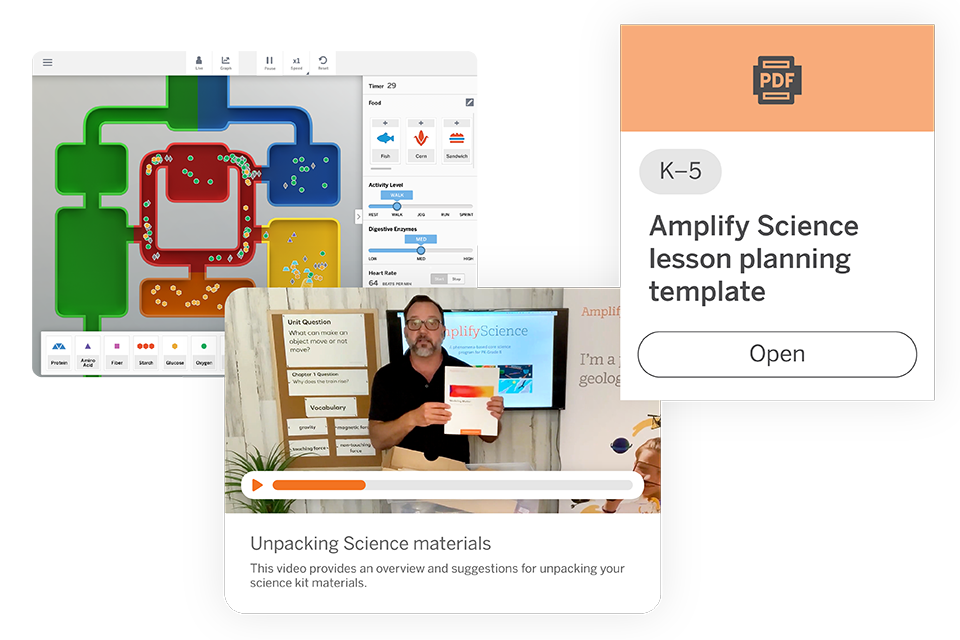
The foundation for long-lasting and sustainable change
Partner with members of our professional learning team to plan long-lasting and sustainable change for your school or district. Change is more likely to stick and get results with deliberate planning. We can support your through this journey to drive your professional improvement, enrich your instructional practice, and increase student impact.
Professional learning journey
Every school and district is unique. That’s why we offer flexible delivery options to best meet your specific needs and objectives.
Our professional development programs come in packages or individual sessions, available both on-site and virtually, to help you get the most out of your Amplify program(s).
You can also customize your learning experience by adding extra sessions, such as Science of Reading, supporting multiliterate learners, and a problem-based approach to math, to build on your base package.
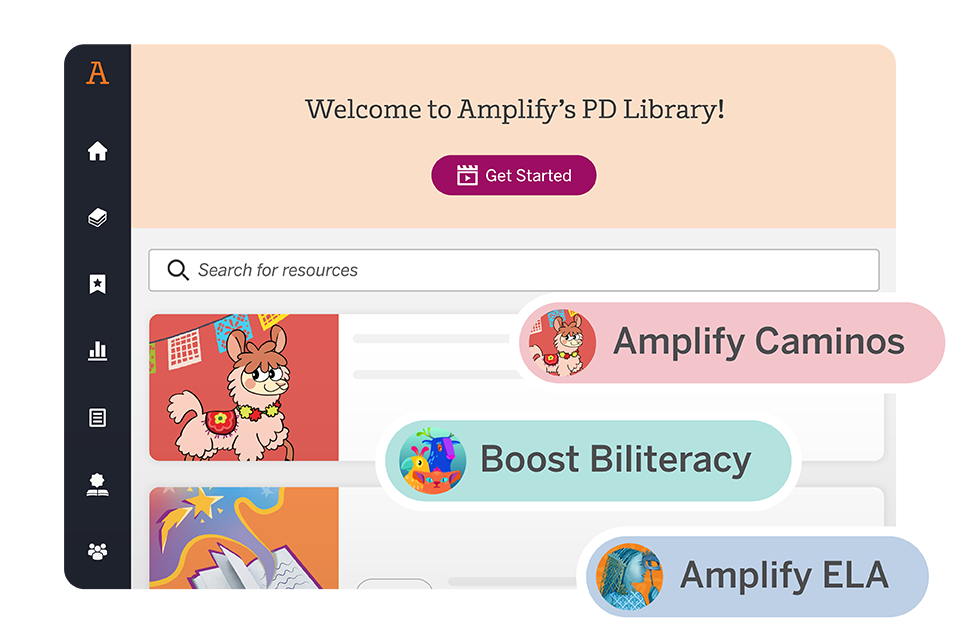
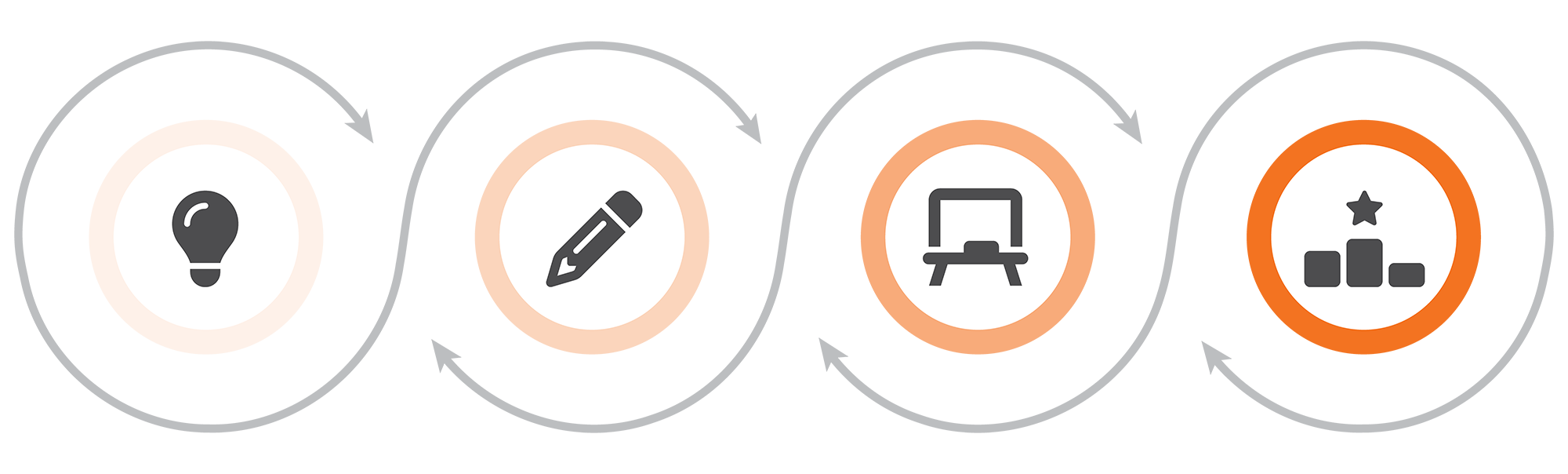
Empower teachers to continuously improve
Professional development helps teachers stay motivated and inspired to grow professionally. Demonstrate your commitment to your staff by empowering them with professional development packages that include on-site or virtual Launch, Strengthen, or Coach sessions, all of which will orient you and your team to the full features of Amplify programs.
You can also personalize your learning experience by adding enhancement sessions to base packages.

Launch
On-site and virtual Launch sessions introduce Amplify programs and support strong implementation. Self-paced, online courses are also available for select Amplify programs and include an on-demand subscription for 12-months.
After learning about the program’s foundational principles and key features, you’ll practice administering it within a collaborative environment.

Strengthen
On-site and virtual Strengthen sessions deepen understanding of the program. Session offerings are targeted and meant to take your practice—and your students’ learning—to the next level.
Offered as part of core packages, as well as enhancements, Strengthen sessions are intended to effectively address your students’ needs. Examples include:
- A focus on data analysis.
- Examining student writing.
- Targeted intervention instruction.

Coach
On-site and virtual Coach sessions are tailored to elevate instructional practices and meet the unique needs of teachers and/or leaders.
Partner with an Amplify coach who will support you in planning customized sessions leveraging our menu of supports, which can include:
- Lesson modeling by an Amplify facilitator.
- Classroom observations and debriefs.
- Grade-level planning.
Commit to sustainable change for long-term impact
Learning may ebb and flow between phases depending on your teachers’ and leaders’ needs, experiences, and professional goals. Amplify professional development aims to continually grow, develop, and refine instructional practices to support student learning and achievement.
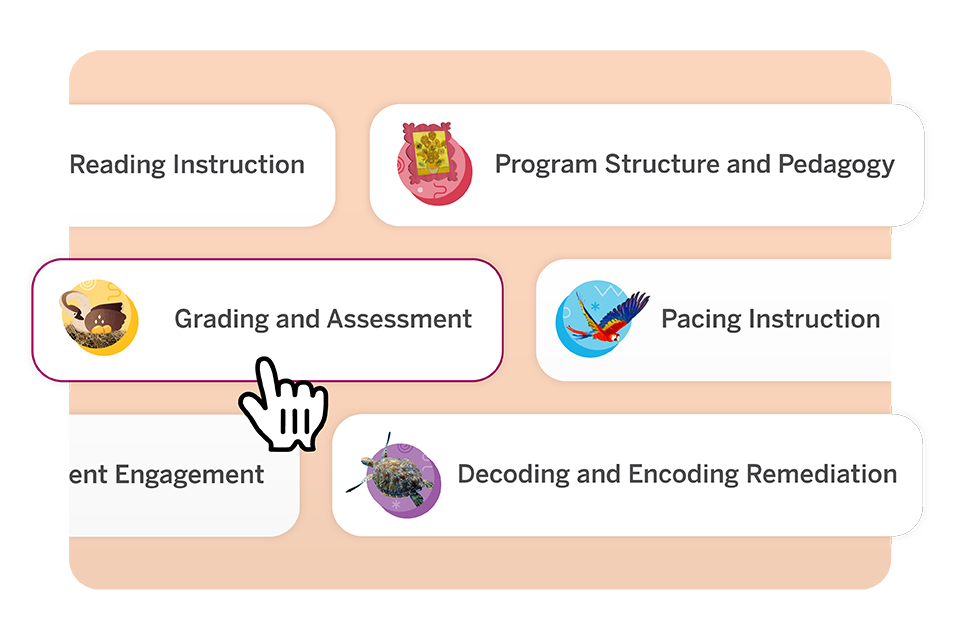

Frequently asked questions
We value your partnership and aim to provide you with the highest quality learning experiences. Check out our frequently asked PD questions below, along with responses.
Additional learning
Once you become an Amplify customer, you’ll have access to many opportunities to continue learning how to get the most out of your Amplify program(s).
To get a sense of our support, check out some of our free resources:
- Featured blog posts on the Amplify blog
- Webinars or other online events
- Video content on Youtube
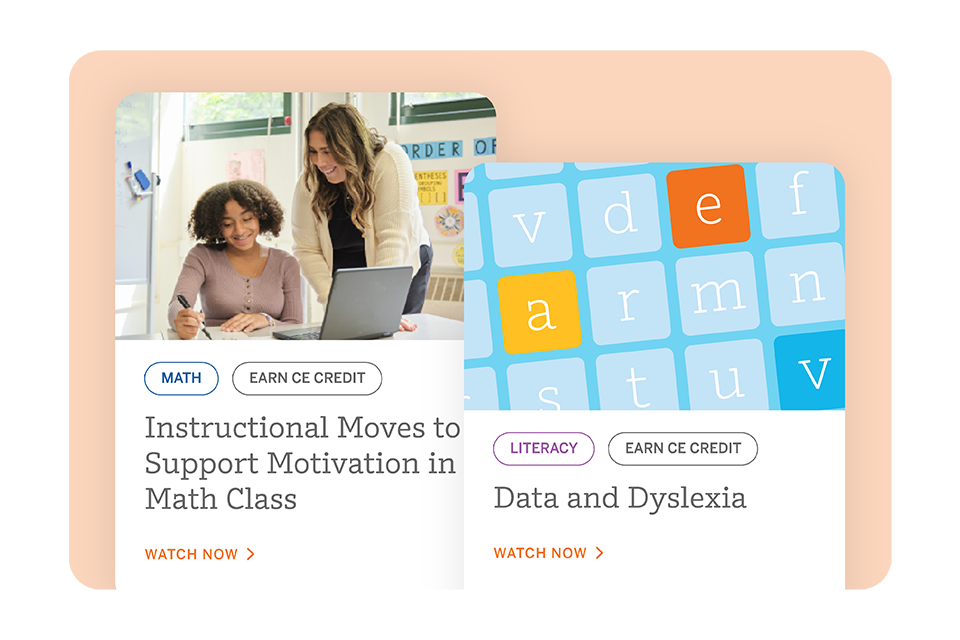

Biliteracy supports
Facilitated in both English and Spanish, specialized biliteracy sessions should be scheduled for teachers using both curricula and/or assessments. Sessions are available to support the use of both Amplify CKLA and Amplify Caminos core programs or mCLASSⓇ DIBELSⓇ 8th Edition and Lectura assessment programs. Substitute a biliteracy session for the 6-hour initial training in your package, or add these sessions on to your package for your biliteracy teachers.
Speak to our team to learn more!
Order and payment support
If you’re ready to submit your price quote, purchase order, or payment, visit our Ordering Support site for more information.
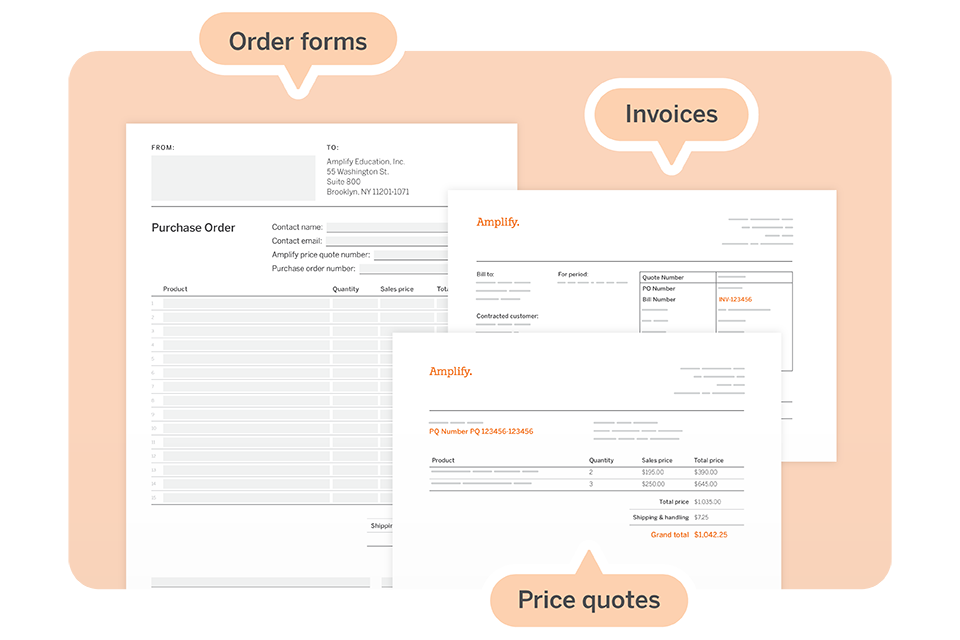
Community of collaboration
Connect with fellow Science of Reading or science advocates in one of our public Facebook groups. Join a community or tune into one of our podcasts today:
- Science of Reading: The Community and The Podcast
- Science Connections: The Community and The Podcast
- Beyond My Years podcast: Listen to chronicles from the classroom.
Amplify customers can join our exclusive, program-specific Facebook communities to ask pedagogical questions, share Amplify teaching hacks, and more!
Get in touch with a PD expert
S1-02: Community and joy within K–8 science instruction: Desiré Whitmore

In this episode, we join Eric Cross as he sits down with physicist and science education specialist, Desiré Whitmore. Listen in as Desiré explains her work at the Exploratorium, a public learning laboratory. Eric and Desiré discuss finding passion in science, the importance of meeting students we’re they’re at, and K–8 science instruction with real-life connections. Desiré chats with Eric about her work on supporting the science of teaching science content at the Exploratorium museum.
Explore more from Science Connections by visiting our main page.
Desiré Whitmore (00:00):
I think it’s really amazing when we can realize as teachers, like, no, our job is not to just enforce rules on our students, right? Our job is to help students to achieve more learning.
Eric Cross (00:37):
Welcome to Science Connections. I’m your host, Eric Cross. My guest today is Desiré Whitmore. Desiré has held positions as a science curriculum specialist with Amplify Science, a professor of laser and photonics technology at Irvine Valley College, and is now the senior physics educator in the Teacher Institute at the Exploratorium in San Francisco. Her current work is focused on providing support and professional development to middle and high school science teachers to help them teach through inquiry. In this episode, we discussed Desiré’s pathway into physics, the impact of educators in her life, and the importance of representation for students in the classroom. I’m so excited for you to meet my physicist friend, Dr. Desiré Whitmore. All right. So just like a superhero, STEM superhero, you have an origin story and so—
Desiré Whitmore (01:36):
How long is this podcast gonna be? ‘Cause, you know, I can talk for days, so you—
Eric Cross (01:40):
I know, I know! But it’s, it’s…so, OK. We can give us a highlight. So, you know, 30 minutes. But what would be the origin story? You can start from any point in time, but what’s that journey like?
Desiré Whitmore (01:51):
I’m gonna start at the beginning, when I was really young, just because I think it’s important. Neither of my parents were college-educated. My mother didn’t finish high school. My father went back and got a GED later. But my father’s grandmother, her name was Claudia Pairs, and she was a teacher, right? So when I was a kid, she actually kind of raised me from, I don’t know, until I was around seven or eight. And so she was very important in who I became, I think because she taught me that college is important and she taught me to think. She taught me to ask questions. She taught me how to ask questions. Just the Exploratorium likes to do. Which is why I fit so well here. She taught me to always wonder and always think about things. And I remember as a kid, she taught me to count and read and write when I was, like, three. And she would always have bubbles at her house. And I was obsessed with bubbles. I thought bubbles were the coolest thing in the world. And just how you can take your breath and create this thing that now you can see, and it’s your breath, right? It’s your breath inside of a bubble and it’s flying around and it has all these cool colors, and then it would fly up and then eventually just pop. And you’re like, where did it go? Now my breath is just up there. Not understanding, as a kid, but my breath is always everywhere. I didn’t understand any of that, but I understood that my breath was inside of a bubble. That’s my earliest memory of thinking about science, was from that. And she was not a science teacher. She was—I don’t even know what she taught. I think she was an elementary school teacher, maybe. She died when I was 12. So I don’t have super-strong memories or of understanding who she was, only that she raised me and what she taught me as a kid. But that in itself really helped me because then when I was in the environment that I was in at home with my parents, which was not at all the environment she provided for me, I always had the things she taught me in my head, right? So I was always asking questions. My mother hated it. I was always taking things apart and putting them back together. So I used to take apart TVs and VCRs and vacuum cleaners and telephones, and my mother’s like, “Oh my God, I’m gonna murder you.” And she tried a couple times, too.
Eric Cross (04:25):
Did you ever put ’em back together and realize you had extra parts? You’re like, oh, hi.
Desiré Whitmore (04:29):
Oh yeah. All the time. Yeah. Yeah. VCRs have a lot of extra pieces. You’re like, “What do you even…it still works. It’s fine.” <laugh> You know? And vacuum cleaners too. They had a lot of extra parts, <laugh> all the time. And TVs. I should not have been playing with TVs. But like I said, I didn’t have a lot of parental, guidance as a child. So, like, whatever—I’m opening up TVs.
Eric Cross (04:54):
There’s a lot of open inquiry going on in your household. Yeah. Unsupervised.
Desiré Whitmore (04:59):
Unsupervised. But I didn’t know what it was or what it meant as a kid. I mean, I used to put things in the microwave. I did so many microwave experiments as a child, trying to cook different foods or melt different things. And so I think those kinds of experiences, where I was allowed to just be curious, kind of shaped who I am today. And then I kind of got into…you know, when I was in school, I loved math. In 10th grade, I had my first Black teacher, he was my chemistry teacher. His name was Mr. Strickland. And I was like, chemistry is cool, dude. And he was not the best teacher, but he was fun. Like you were saying, he was me, and he was talking to us the way I speak. And he was so like, just kind of chill and happy-go-lucky, I guess. But he wasn’t…he hadn’t taught chemistry in a long time. So he wasn’t a very good teacher. And me and one other kid in the class were in love with chemistry. And so we would read the book and do all the homework and he’d be in class lecturing and we’re like, “That’s not right, Mr. Strickland, like, what are you talking about?” And then he’d be like, “Oh, really, Desiré? Do you wanna teach the class, then?” And I’d be like, “Yeah.” And so I would go up and I would teach my chemistry class in high school, because the teacher was trying to make an example out of me. But he was also, I think, willing to be like, “I really don’t know.” And I really appreciated that. That he wasn’t just like, “I know all of the answers and you’re wrong.” Like, he wasn’t being a jerk, right? Like, the fact that I said, “Yes, I do wanna teach it,” and he actually let me do it? That’s pretty dope. And then I liked physics in my senior year in high school, but I didn’t think it was where I was gonna go or anything. I loved music and I loved math. Those were my two subjects.
Eric Cross (06:51):
What was it about math that resonated with you?
Desiré Whitmore (06:55):
I think it helped me understand the world a lot better. I didn’t have strong science teachers, I guess, growing up. It was a lot of reading out of books or watching laser discs in class. That’s how old I am.
Eric Cross (07:12):
Laser discs.
Desiré Whitmore (07:13):
Laser discs. And you know, so there wasn’t a lot of…I moved around a lot as a kid. I didn’t have this straight curriculum. You know, in one year, in the third grade, I went to three different schools.
Eric Cross (07:25):
Mm. Oh wow.
Desiré Whitmore (07:26):
It was kinda hard for me to latch onto school. But with math, because I could look at math and actually understand the world in it, I could see how math can be used to describe how things work.
Eric Cross (07:40):
I almost imagine, especially with so much transition in your life, it helped make sense of things. You had a lot of transition going on, but you were able to understand the world through the process of math. And then this early exposure, it kind of reminds me my own story too. Because there were these books that would do these cross sections of a cruise ship or a machine; that’s what got me really into engineering. Kind of How Stuff Works. I would watch that on Nova, How Stuff Works. I’d always be fascinated. Even Sesame Street had a segment where they would show you crayons and how the dye was added. You remember that?
Desiré Whitmore (08:19):
Yep. Yeah.
Eric Cross (08:20):
Young Desiré, doing photronics…photronics?
Desiré Whitmore (08:24):
Photonics.
Eric Cross (08:24):
Photonics. Photonics at home with the microwave and all these other things.
Desiré Whitmore (08:29):
Sure. How ’bout that.
Eric Cross (08:30):
<laugh> Right. And then loving math. So, early, I could see this combination, sort of this alchemy, happening inside you. And then, how did that lead to you becoming a physicist?
Desiré Whitmore (08:46):
It’s not as straightforward as it seems it should be. It’s obvious to everyone. <laugh>. But it wasn’t obvious to me. ‘Cause I wanted to be a lawyer. You know, because my parents weren’t educated, they didn’t really know…both of my parents and their subsequent spouses when they broke up—so my parents and my stepparents—are all bus drivers. And so they don’t know what options are. Right? So for them it’s like, “You have to be—you can be a doctor. You can be a lawyer. ‘Cause you’re smart. I know you’re smart, so you’re gonna be one of those things.” And I was like, “I don’t wanna be a doctor. That’s not actually interesting to me.” I did wanna be a teacher when I was younger, because I knew that my grandmother was one. But yeah, I went in and I was like, “I’m gonna be a lawyer. I’m gonna be a lawyer.” And then I go to college and I was like, ‘Eh, I don’t. I hate writing.” <Laugh> Like, I love reading, but I don’t writing. So I don’t think I wanna be a lawyer. I love music and I love math. I was originally going to major in music and math, but then I went to community college because I missed my opportunity to go to university for…long story. And so I’m at community college and I was like, “You know what? I’m gonna just do something new. I’m gonna be a marine biologist.” So my major was marine biology, and then they’re helping me pick out my classes. And they had zero math there. And I was like, “Pardon me. I think there’s a mistake, but I’m not taking any math.” And they were like, “No, you’re done with all your math. For marine biology, you only need calculus. And you took all of that in high school, so you’re done.” And I was like, “No, this is not gonna work for me, dude.” So I continued taking calculus anyway and moving on in math. And then I realized that biology wasn’t what I needed, but I did love my chemistry and I loved my physics classes. So I asked those teachers—chemistry, physics, and math teachers in community college, my professors—”I don’t wanna be a marine biologist and I don’t wanna be a lawyer. What do I do? What do you think I could study? I really like chemistry and math and physics.” And so all of them, all three of these professors told me, “Oh, it sounds chemical engineering would be good for you, so you should be a chemical engineer.” And I was like, “OK, cool. No problem.” That’s what I did. So I got my degree in chemical engineering. Right. And I finished community college, studying chemical engineering. I was like, “This is really cool. This is a lot of fun. I love engineering.” And then I transferred to UCLA as a chemical engineering major. And I was like, “I hate this.” <Laugh>. “I hate it a lot.” It was just…
Eric Cross (11:07):
What was it about chemical engineering that you were just not feeling anymore? What was it that just made you go, “nope”?
Desiré Whitmore (11:12):
It didn’t—at least the way it was taught to me—it wasn’t as as…exploratory, I guess. There wasn’t a lot of theory in it. There was just a lot of “OK, pull out a ruler and you’re gonna draw a thing and then this is how you’re gonna build a reactor.” And it didn’t seem very scientific to me. The science was missing. And don’t get me wrong, I understand, now that I have a degree in chemical engineering, that it’s not that chemical engineering is not scientific. But it’s that you build up the science and then you don’t focus on it. You focus on the engineering aspect of it. Which is, you have the science and the scientists will work on that aspect. But then how can WE do kind of larger batch chemistry. And for me, that was just less interesting. It was a lot of pushing buttons and just plug-and-play equations stuff. Instead of diving into first principles of why things happen in chemical engineering. There was no “why things happen”; it was “this is what happens, so this is the next step.”
Eric Cross (12:25):
You had to go so far into your academic career to realize that this is what chemical engineering is. And we were talking about representation, and not having examples or parents; your families were bus drivers. My mom was a receptionist and executive assistant, things like that. And I was the first of many, like you…we kind of had to go through and invest all this time and money to finally get to this place to realize, “This ain’t it.”
Desiré Whitmore (12:58):
This is not for me, yeah.
Eric Cross (12:59):
This is not for me. That was a long journey to get to that point.
Desiré Whitmore (13:03):
It was. Especially because I went through community college and I took a long time in community college, ’cause I was working full-time. So I was working full-time, going to community college. Took me a while. And then I finally get to UCLA. I’m like, “Yeah, I’m finally gonna get my degree and go make money!” And then I was like, “Ooh, no.” I mean, I could go and make money, don’t get me wrong. I could have graduated and made a ton of money. But I was not happy at all and I did not enjoy what I was doing. So, while I was in undergrad, I realized I don’t wanna do chemical engineering anymore. But what do I wanna do? But then I was taking…I took a quantum mechanics class. And that class blew my whole mind. And I was like, “This is the coolest thing that I’ve ever learned in my life, and this is what I wanna do.” And so I went and talked to my professor and I was like, “Can I work for you? Can I do research? Because this is amazing and I wanna do this.” I felt it was too late for me. I had been in school for so long and I was already kind of burnt out. So I was, “I’m not going to change my major. That’s just outta the question for me right now. It costs so much money for this degree and I don’t have—I’m not just gonna waste my time and keep working all these jobs.” So I had three jobs in college. And it was like, I worked at Radio Shack, I did research for this professor, and I worked in the library, the chemistry and physics library.
Eric Cross (14:28):
I love the fact that we’ve talked about laser discs; you said Radio Shack; and we talked about the analog internet of the encyclopedia salespeople. And I know all of those things. And I’ve been through all of those things together.
Desiré Whitmore (14:43):
Just in case people don’t know how old I am. <Laugh>
Eric Cross (14:47):
For our listeners who are way younger, yeah, this is how we grew up. This is how we—these things are extinct now. There’s this element of this kind of cultural connection. I think that we experience that. It kind of it flies under the radar. People don’t really realize it until you’re in an environment that’s different from what you’re used to. And you realize that, “Oh wow. this is not what I’m used to.” And the things that I’m finding funnier, the things that I connect with, it’s not what everybody else connects with. And as a teacher, it’s the same thing, right? Like, we go in the classroom and you know, you and I are rapping about laser discs and Radio Shack and I’m trying to talk to my kids about it. And they’re like, “Yo, Cross, what is that? Are you gonna give us a history lesson? What are these things?”
Desiré Whitmore (15:35):
Yeah.
Eric Cross (15:36):
And I found myself having to stay connected to pop culture, because I teach 12- and 13-year-olds all day. And it’s great for keeping things relevant for my students. But when I talk to my friends that are my peers, they’re like, unless they’re a teacher, they’re like, “I got no idea what you’re talking about.”
Desiré Whitmore (15:55):
Yeah. I have a friend who’s also a middle-school teacher and she’s always coming to me with all this. I’m like, “What are you talking about?” She did the Glow-up Challenge, but she did the Glow-down Challenge. So she invented a new thing. She’s like, “No, I couldn’t do Glow Up ’cause that’s too much. So I did the Glow-Down Challenge.” And it’s the cutest thing ever. And the students think it’s amazing. And I’m like, “That’s awesome. But I have no idea what the point of that is.” <Laugh>
Eric Cross (16:21):
And there’s this theme, too, that when we talk about teaching kids STEM, there’s this soft part of it, this relational piece of it that you mentioned, of this connective aspect that in a certain way kind of even superseded the content knowledge that your teacher even had at that point, where you’re going up and teaching the class. But just the fact that someone looked like you or spoke like you or connected with you in a certain way made a big difference to who you are as…well, the trajectory of where you went.
Desiré Whitmore (16:57):
Yeah.
Eric Cross (16:57):
“I like chemistry. It resonates with me.” And it’s something I think can get lost. And I think just to kind of a good segue, I use Amplify my classroom, and one of the reasons why is because of the representation that is in these videos. And you were part of crafting this for…was it the fifth grade?
Desiré Whitmore (17:21):
I mean, it was K–8. So I was—
Eric Cross (17:23):
OK, so you were doing the whole thing.
Desiré Whitmore (17:24):
Yeah, I was a part of the K–8 science team. My title was science curriculum specialist. But in reality I was hired to do the engineering internships, mostly. Which are middle school. And to be a sim developer. So sims K–8. I worked on several of them in both middle school and elementary. Yeah.
Eric Cross (17:47):
What was that like for you? When you were designing curriculum? ‘Cause as a teacher, it’s, you know, I think with teachers it’s kind of…I would consider myself, if I was gonna use hip hop as a metaphor, I’m more of a DJ than an MC. Where I wanna remix things that exist, versus, I don’t wanna write the lyrics in freestyle. So I don’t want to go and write the curriculum completely; I wanna take something that’s solid and then I want to go ahead and remix it. You are great at both. What was the process for you, being on that team, designing? How did you go about making, “OK, we’re gonna create this experience for kids”?
Desiré Whitmore (18:25):
It was, it was amazing. I learned so much, so much. It was the best job I had before I came to the Exploratorium. The process was amazing, because it wasn’t just me, right? It wasn’t just me. It was a whole team. And each unit had its own team. So we had a scientist, which I was the scientist we had. So we had a scientist; we had a literacy specialist, because it was really important to increase science literacy so that students understand not just that science exists, but “What are the terms that are used in science and how can I speak and act a scientist? What are the things that scientists actually do in their real life?” Then we had an assessment specialist and then we had a simulation specialist. And so, on the units that I was on, sometimes I was both the sim developer and the scientist, or sometimes I was just the sim developer and I got to work alongside another scientist, which was always fun. And so it was really nice, because I was working alongside master teachers. People who had been teaching for years, and they were able to help me better understand. ‘Cause I’ll come in and I’ll be like, “Yeah, there’s a unit on light waves, let’s come in and teach this unit on light waves!” <laugh> I was the sim developer and scientist on that unit, and there was another scientist working on the unit, but they were like, “Well, Desiré literally builds lasers, so I think she should be the science developer.” So we kinda had two science developers on that one, which was fun. But I come in and she’ll come in and she’ll be like, “Yeah, I think this is where we wanna go and this is what we wanna teach.” I’m like, “No way! Like, that’s not accurate, right?” And so I can come in, but then I’m coming in with all this crazy lingo, right? I’m up here. But then also I have taught kids about lasers and optics and photonics my whole career. So I’m also very capable of bringing it down to where kids need it to be. What I don’t know is how effective that is, right? When to do it and when not to do it. When to bring the level up; when to bring the level down. And so working alongside these other teachers and assessors really helped me to do that. And so for me it was just two years of deep learning experience. I learned—every single day at work, I learned something new. Which is something that I value and I’ve wanted in my career, my whole life. We made active decisions in that room. Like, “We want to interview scientists who are scientists of color or who have different abilities or who have different representations in all kinds of ways.” Right? And then we also have these fake internships, or not even the internships, but just in the general units. And we actively wrote scripts for those. And we actively wrote in those scripts, like, “This is a Black woman. This is an Indian woman. This is a Jewish man in a wheelchair.” Like, we specifically dictated exactly who we wanted in these videos, because we knew that representation was super-important and we knew that we wanted students to be able to connect.
Eric Cross (21:35):
Right. One of the things, I appreciate what I’m hearing a lot in that is the amount of intentionality that went into this. But even now as you’re reliving it, you’re still almost iterating on how could we improve it or how can we make it different or reach more people. And I think that goes towards when we’re talking about including more people and inclusion. Like, it’s not a binary thing. You’re always modifying; you’re always iterating; you’re always redesigning and improving to be more inclusive, to reach more students. Because you know, to your point, part of it is, “Yes, we wanna do this really awesome science curriculum,” but the other part of it is there’s more to it than just your content. And I think now more than ever…I use—we just finished the food bar unit. Metabolism. And in there there’s a simulator. They always ask me when I show the videos, “Are these, are these real people? Are these real situations?” And I tell ’em, “Well, the story is real, but these are all fictional actors. But what’s actually happening happens. It’s real.” And they get really into it. And I think one of the other things is with your simulations—especially the engineering units—there’s no one right answer. And so my students who want to go, “Mr. Cross, I wanna make the best bar! Perfect 10, best taste, cheapest!” And I’m like, “All right, good luck!”
Desiré Whitmore (23:06):
Yeah. Go do that.
Eric Cross (23:09):
Casue there’s something called trade-offs! It could happen! And they’re like, they’re trying. They get into the code. They try to open up the Inspect Element, when they feel like hackers.
Desiré Whitmore (23:17):
Yeah, they do. But these kids like, they’re so smart and they’re so resourceful. And I’m just thinking like, maybe that’s how we challenge them more, right? Sometimes we can give them these kinds of things where it’s like, “Go and create a program, ’cause that’s the level you’re at <laugh>. Go and create this program to do something similar that’s related to the work that we’re doing.”
Eric Cross (23:38):
I’ve had some of my own students redesign—I have one student who redesigns every assessment I give him. I give the project; I give the options for the final goal; and he always chooses—if I give three options, he always chooses option four. If I choose two options, he’s choosing option three. And so he’ll go into Google Sheets, he’ll pull all the data and then he’ll construct his own kind of spreadsheet with all the probabilities of different things.
Desiré Whitmore (24:06):
You tell this kid to make a GitHub right now <laugh> so that he can get a job as soon as he’s done with high school. <laugh>.
Eric Cross (24:12):
He’s amazing. And we did this one project where students had to design a Netflix show to show their understanding of metabolism. And they had to do four episodes. So I gave him a template. It’s not from me; it’s from, I think, EdTechPicks.org or something. And it looks like the whole Netflix splash page. They took photos, did the whole deal. He created NOTflix. Everyone else did Google Slides. His Google Slides was interactive. So when you clicked on different boxes, it actually took you to the next splash page of that show. I mean, it was….
Desiré Whitmore (24:48):
That’s fantastic.
Eric Cross (24:49):
It was, it was. I recorded his presentation. It was brilliant.
Desiré Whitmore (24:53):
But that’s amazing. And that speaks to your strengths as a teacher and why you’re an amazing teacher. Because you see the students and what they’re trying to do and you work with them; you meet them where they are. Right? There are so many teachers who would just be frustrated with that student. And it’d be like, “No, these are not your options. Your option was to do what I told you to do.” And there are many teachers who would do that. And I think it’s really amazing when we can realize as teachers, “No, our job is not to just enforce rules on our students. I mean, that is part of the job, because that’s what school was when it was created. But our job is to help students to achieve more learning in what we’re trying to do. And so the fact that you are so good with this student and that you encourage him to go above and beyond when he can, I think it’s so amazing.
Eric Cross (25:49):
Well, that brings me to my favorite group, organization, and the phase of your career of where you are now: The Exploratorium. And I wanted to kind of rap, talking about what you do now. Because the Exploratorium—I tell people, they go, what is that place? And maybe you can tell us what it is and then what you do. But for me, I’ll just tell everybody: It’s Disneyland for science teachers. And I love going there. I not only love going there because of what I receive from it professionally. Many of the PDs, I don’t even call ’em PDs—just communal learning experiences, that I’ve had that have been led by you and Lori and, and Tammy and the rest, and everybody that’s there have been incredible. And I have so much fun. Emotionally, I get excited when I go. When I’m on the plane, I’m like, “Here we go!” And then we go and we’re making fudge or we’re blowing darts with marshmallows across the room in the theme of Boba Fett. There’s just these rad things that are going on there. And it’s not like anything I’ve ever experienced before. So maybe we can close with talking about what the Exploratorium is, what you do there, for people who’ve never been and have been a part of it.
Desiré Whitmore (27:19):
I’m gonna give you what my definition of the Exploratorium is.
Eric Cross (27:21):
That’s what we want.
Desiré Whitmore (27:22):
So, the actual definition is, we are a public learning laboratory. We are known as the Museum of Art, Science and Human Perception. Cool. But, like, what does that all mean? Right? And I think your description of the Disneyland for science teachers, I think that’s a perfect description. ‘Cause for me, I tell people like, “Oh, I wanna go to the happiest place on earth.” And for me, that is the Exploratorium. And yes, I work there, and yes, it’s still true for me. So the Exploratorium is this huge museum. It’s an interactive science museum. And art—we have a lot of art. And it’s all about learning through doing. It’s not about learning science by going up to an exhibit and reading the little paper next to it. It’s like, no, you go up to an exhibit and you interact with it and you teach yourself science. The goal of the Exploratorium is really to help people understand that learning science, doing science, isn’t reserved for only scientists. Doing science is something that everyone in the world should and does do. And so helping people understand that everything we do is science is kind of the point of the Exploratorium to me.
Eric Cross (28:35):
Even the building itself…one of the other cool things too is, for people that don’t know, it’s the size of Costco or two.
Desiré Whitmore (28:43):
Yeah. Yeah.
Eric Cross (28:44):
It’s immense! And even the building itself teaches. Like, you have that whole workshop, dead-center in the middle of the floor where they’re designing things. It’s like inside-out. And then I remember going to the one experience where I think it was Eric who showed us that it’s one of the few facilities that is actually cooled by the Bay water. And there’s only a couple of those in the state that can do that. And it has a platinum rating, something wild that. So even just the building itself…everything that if they can extract every ounce of science teaching in that, it’s in there. And you are in a very important program for me. And can you talk a little bit about maybe what you’re doing in T.I.?
Desiré Whitmore (29:33):
So I am in the Teacher Institute. I’m a physicist in the Teacher Institute. And the Teacher Institute is a group of teachers and scientists. And our job is to basically support middle school and high school science teachers and teacher leaders in the state of California, but science teachers around the world, in their pursuit of science teaching. And by support, I mean we provide professional development. We provide other things, communities of practice, and we go and do workshops in certain places. We go to India to teach Tibetan monks and nuns science. And we go to Costa Rica to teach teachers all over the country of Costa Rica about science. And so our job is really, to help science teachers feel more secure in their science teaching and help to retain them in the field, because a good science teacher is so important in helping our students thrive. And so our job—and we take this very seriously—is to help science teachers thrive. And we are made up of PhD scientists and veteran classroom teachers. So we have on the one side teachers who have been teaching middle school or high school for years. One of my coworkers, Zeke, who I work with the most, he was a high school physics and environmental science teacher for 21 years before coming to the Exploratorium. And then me, I was never a classroom teacher. I was a professor; I was a physics professor at a community college, and I was a researcher. So my deep knowledge of physics and current knowledge of physics—or knowledge of current physics—combined with Zeke’s extremely experienced pedagogy is really how we work together as a team. And it’s not just Zeke, right? We’ve got a geologist on the team, Eric Muller. We’ve got Tammy, who’s a middle-school bio teacher. We’ve got, Julie Yu, who is a chemical engineer, PhD, and also a prior middle school teacher, former middle school teacher. We’ve got Hilleary Osheroff, who was a PhD biologist who used to work at the American Museum of Natural History. We’ve got Lori Lambertson, who was a middle-school math teacher. And so, you know, we all come together to bring our experiences both in and out of the classroom and in and out of the research lab to provide teachers with the best inquiry-driven stuff we can. And we’re very—we’re so equity-focused, because we believe that that’s important, right? We know that the impact of our work is, I think, why most of us are here. It’s why I’m here. In undergrad, my grad school, and my postdoc, I would go into classrooms. I would go into science museums and teach science to people. And I probably reached out to maybe…over that whole time, I would say a couple thousand people, right? Maybe a couple thousand people total. That’s great. But over 15 years of reaching out and only reaching a couple thousand people, that’s rough, right? And now I’m at the Exploratorium, and I know that if I reach one teacher, right? If I can teach one teacher…let’s say you. How many students do you have in your classes a year?
Eric Cross (33:11):
Two hundred a year.
Desiré Whitmore (33:12):
You have 200 students a year that you teach. So if you teach for 10 years, that’s 2000. That’s 2000 students. So I have, by teaching you today, assuming that I’m actually teaching you something that’s gonna be useful for you—
Eric Cross (33:29):
You do! And you are!
Desiré Whitmore (33:30):
You are going to be impacting these 2000 students over the next 10 years. And of course you’re gonna be in teaching for much longer than that. But let’s just say in 10 years, that payoff is so much higher, right? And you’re one teacher. But I have 30 of you in my workshop! And so if all of these 30 teachers each teach 2000 kids over the next 10 years, then I’m actually doing something. I’m actually changing the way that students see science, through changing the way that you see science. Right? And so I take my job very seriously, as we all do. Like, we’re so invested in our teachers. And it’s not that we don’t care about students, ’cause we absolutely do. But we understand that without good teachers, students aren’t going to be able to thrive, as often as they would otherwise. I was able to do it somehow. But I’m one. There are so many other kids who could have gone into science who didn’t because they felt they never connected to it. So our job is to try to help teachers connect to it. And an important part of that is allowing you all to experience science as a learner. We want you to play and have joyful experiences. We want you to enjoy science and to try to think about it from the perspective of your students. Walk in their shoes. So that when you then go back to your classroom, you are able to think about like, “Oh yeah, you know, my students totally asked the same question that I asked, or that another teacher asked in the workshop because they had the foresight to think about that’s what my students would ask.” Right?
Eric Cross (35:02):
Well, I think it’s really effective to create empathy for the learner. Because I find myself in that position. I don’t know if some kind of memory displacement field happens to me when I sit in those workshops, but Hillary will ask a question that I know the answer to and I’m like, “I don’t want to answer the question. I don’t—I might be wrong.” And I teach the subject! And I embody what it’s like to be a student. And when I leave, I might have to go back and reference exactly what the lesson was, but I remember how I felt when I didn’t know. And very rarely as teachers do we get put in positions like that. And so it helps me be in the position of my students emotionally, of what it’s like. Even even the intentionality of how do you ask questions and not showing an affect on your face when somebody says the right answer or the wrong answer.
Desiré Whitmore (35:55):
Well, I’m still learning that. I’m not great at it. Julie is the mast.
Eric Cross (35:59):
Julie’s got it nailed.
Desiré Whitmore (36:00):
I’m still trying to learn from her. She’s amazing. And I really would like to get there one day. But I’m still not there. I’ll be like, “Oh! Oh! Well, that’s…”. I have a terrible poker face. So I’ll be like, “Oh yeah, but you think that? Maybe…”. That’s a piece of it that’s really important, right? It’s this not giving away the answer, even when you have the right answer. Allowing people to ask the questions and explore and become invested in the problem, before giving away the answer. That’s something that I learn here at the Exploratorium. And like I said, I learn every day. And it’s something that I think is so important for us as teachers to learn and try to implement. Because oftentimes you’ll come and you’ll have students who are like, “I’m too stupid. I don’t know the answer.” And then somebody else will say the answer, and then the student is like, “Yeah, I was right. I’m too stupid.’” But it’s like no! But if you have that student actually think about it, then the student—once they do hear the right answer—they might be like, “Oh yeah, that would make sense.” Instead of “I’m stupid.” It’s like, no, this is, “I explored this and I figured it out on my own.”
Eric Cross (37:08):
Things keep coming back to how this experience and the process of them learning science even outweighs the content of it. ‘Cause the content is almost easier to share, it’s easier to get, you can look it up really quickly. But in your story and in many other people’s stories, the exposure, the experience, how they’re going through that process—I know that’s something that I’ve learned a lot in just watching. Not teaching science, but actually the science of teaching. Sitting in the workshops and watching how we’re treated as students, how you interact with us, and then being able to take that back to the classroom. And just to add onto the value that it’s created, I think one thing that it’s also done is given us community. And in addition to being able to impact students, it’s also been able to build resilience in teachers. Because we as teachers can feel very isolated. And especially now when things are incredibly difficult, and every teacher’s experiencing Covid and shutdowns and low staffing across the country in different ways, when you don’t feel you have community or people that you can connect with, it just makes everything feel exponentially harder. And you’ve done a great job at being able to build community with us in our community of practice. The Exploratorium has been able to do that. And it’s something that I’m super-grateful for probably more than anything else is that through these last two years, being able to connect really made me feel like, “OK, we’re gonna be able to do this.” And it’s not just about Cross or my other teacher in eighth grade or my sixth grade teacher who’s doing this. That message, I think, is really, really important. I wanna ask this: Was there a teacher or an experience that impacted you or inspired you throughout your educational career? You know, kindergarten all the way to college? Was there a moment or a person or anything that that really stuck with you, that you felt maybe influenced who you became? Met you where you were at? I know you mentioned your chemistry teacher at that point, but is there anyone else, or was it that person that was really the person who sticks out for you?
Desiré Whitmore (39:21):
There actually have been a few. Of course, the first is my great-grandmother, Claudia Pairs. But I think in the fourth and fifth grade I had the same teacher. She stayed with us going from fourth to fifth grade. And fourth grade was a new school for me. New town. I was the only Black child in the school, me and my sister. And my teacher recognized that I had no real help at home, I guess? And she really kind of…she saw that I was really smart. She would give me extra assignments when she could tell I was bored. It meant that someone outside of my house cared about me in a way that I didn’t feel cared about at home. Her name is Ms. Comet. Mrs. Comet.
Eric Cross (40:11):
Like…comet?
Desiré Whitmore (40:13):
Yeah. Mrs. Fran Comet. And I’ve tried looking her up as an adult and I can’t find her. But I work with so many teachers, and I know how hard teaching is and how degrading it can be…or demoralizing, I guess, to not be appreciated. And so I know what it feels to me when a student has reached out and shown me like, “Hey, I’m now in dental school,” or “I’m now getting a PhD in science,” and I’m just like….
Eric Cross (40:40):
I got a message this morning on Instagram from a student. And none of my students use their real names in their Instagram handles. So I got a message from Moonshine. <Laugh> And I was a seventh grade teacher. And through deduction, deductive reasoning, I figured out who it was. This person’s now in college and they responded in that…you know, you get one of those every once in a while. And I feel it just fills your tank. It’s just so important that we—it’s funny because, kind of to your point, we don’t realize who or how we’re making impacts on people. And in what ways. We just know that we are. And I tell other teachers, I said, “You have one of the few professions where you fall asleep worrying about other people’s kids.” And it’s the words that we speak, the things that we do, people are always watching. I know, no pressure, right!? Hopefully, someone listening can find Ms. Comet.
Desiré Whitmore (41:37):
Ms. Comet. Teacher at Buena Vista Elementary School back in the ’80s. But your talk about this impact, it reminds me of the thing I wanted to say, but I didn’t. But I’m gonna tell you right now. I mentioned how science was not a priority when I went to school, in my hometown. That’s Lancaster, California. But recently I got a phone call from a family friend and she was so excited. And she called me to tell me that her daughter was super-excited when she picked her up from school. Because I was in her classroom. She said, “Auntie Desiré was in my class today! And she works on lasers! And she does spectroscopy! And I wanna learn about spectroscopy now. So can we call Auntie Desiré?” And I was like, “Wait, what?” My friend was kind of confused. She’s like, “Desiré didn’t tell me she was in town.” She had no idea why her daughter was saying I was in her classroom, ’cause I was not physically there. And then I had to put the pieces together and I was like, “Oh my God, your daughter’s in eighth grade already.” It made me feel really old, ’cause I know this girl from a little baby. But I was like, “Oh my God, that’s the eighth grade unit on light waves for Amplify that I wrote, and I’m featured as the scientist.” Because we have real scientists in the units. And they featured me in that one, in my laser lab. And so this little girl who knows me really well, who lives in my hometown, is seeing representation in science. She doesn’t necessarily know I’m a scientist. She knows that—I don’t know what she knows about me. She just knows I’m Auntie Desiré and, you know, I like gumbo at Christmas. That’s what she knows about me. <Laugh>. And so she comes back and she’s so excited ’cause now she knows so much more about me. And she knows that if I can do it and I came from where she’s at, she can do it too. And she was super-excited. And I was just…it brought me to tears. I was just crying in the car. I was driving <laugh> at the time and I was like, “This is amazing. Work that I did is teaching you and all of your friends in this tiny little town that you live in. And that to me is so important because now this little girl knows that, like, she knows me as just a normal human right. Who likes Star Trek and Star Wars and The Owl House. And now she’s over here like, “Oh my gosh, this normal human wrote the science curriculum that I’m learning from.” Which I think is just so fantastic. And it really brought home for me kind of the importance of my work and why I’m doing what I’m doing. And that’s pretty awesome. And I get messages from Instagram, you know, from teachers who are like, “Hey, did you work on this? ‘Cause you were featured in the video, but did you write this light waves unit?” And I’m like, “Yeah.” And they’ll tell me, “I have students, this is their favorite unit. I’ve gotten notes from students saying, ‘This was my favorite unit in all of middle school.’” And I’m like, “Ohhhhhh!”<Laugh>
Eric Cross (44:33):
That story just gives me chills. Because I just can imagine how surreal that must feel. And you’re directly making that impact on those kids. And I’m glad that you shared that story so that everyone can hear it, because it’s a powerful story and I lived—I feel I was living it through you, just now, as you were discussing it.
Desiré Whitmore (44:54):
Yeah.
Eric Cross (44:54):
And I feel that way in the classroom to a small degree, because I get to have—when my students create posters of scientists that we don’t typically see, I’ve got you on my list of scientists, and I’m they’re like…And I’m like, “I can call her!” Like, “Mr. Cross, you KNOW her?!” I’m like, “Yeah, she’s a friend of mine! I was talking to her the other day!” And they’re like, “Whoa. She works with lasers?!”
Desiré Whitmore (45:17):
<Whispers> I do.
Eric Cross (45:18):
Desiré. I’ve held you for so long and—
Desiré Whitmore (45:23):
Yes, I’m sorry! I told you, I talk so much! I’m a teacher!
Eric Cross (45:26):
No! No, no, no, no. It was great! I wanna honor your time. Can you tell everybody where they can find out more about you again?
Desiré Whitmore (45:33):
So first off, you can find me on Twitter at Darth Science, D A R T H S C I E N C E, and you can also find me at Instagram at Dr. Laser Chick: D R dot laser chick. Even though I don’t post on Instagram that much. I also have a website, which is laser chick dot net. I’m still working on it. It’s not the best website yet. But, you know, it’ll, it’ll be better in the future.
Eric Cross (46:02):
Would you be willing to come back later on in the year and do a part two?
Desiré Whitmore (46:07):
Oh, for sure. Yeah. So I can actually finish telling you the story of how I got into physics! ‘Cause I totally didn’t. ‘Cause I’m all over the place.
Eric Cross (46:15):
So, everybody, cliffhanger! Next time she comes back, she’ll continue to tell us the story. Desiré, thank you so much.
Stay connected!
Join our community and get new episodes every other Tuesday!
We’ll also share new and exciting free resources for your classroom every month.
Meet the guest
A Southern California native, Desiré earned an associate of science from Antelope Valley College, a bachelor of science in chemical engineering from UCLA, and a master of science and Ph.D. in chemical and material physics from UC Irvine. Her research focused on developing very fast laser and microscope systems that could capture molecules vibrating and rotating in real time. She was a postdoctoral fellow at UC Berkeley, where she designed and built attosecond lasers (the fastest laser pulses, which emit x-ray light, ever measured). At the Lawrence Hall of Science she wrote an all-digital K–8 science curriculum (Amplify Science), which aligned to the NGSS, with the Learning Design Group (LDG). Desiré left LDG to teach hands-on laser technology and physics courses at Irvine Valley College before joining the TI staff. She is the proud mom of Stella, a four-year-old boxer-pit mix. In her spare time, Desiré is restoring her 1967 VW bug.

About Science Connections
Welcome to Science Connections! Science is changing before our eyes, now more than ever. So…how do we help kids figure that out? We will bring on educators, scientists, and more to discuss the importance of high-quality science instruction. In this episode, hear from our host Eric Cross about his work engaging students as a K-8 science teacher. Listen here!


S4 – 01. Joyful math teaching with Kanchan Kant
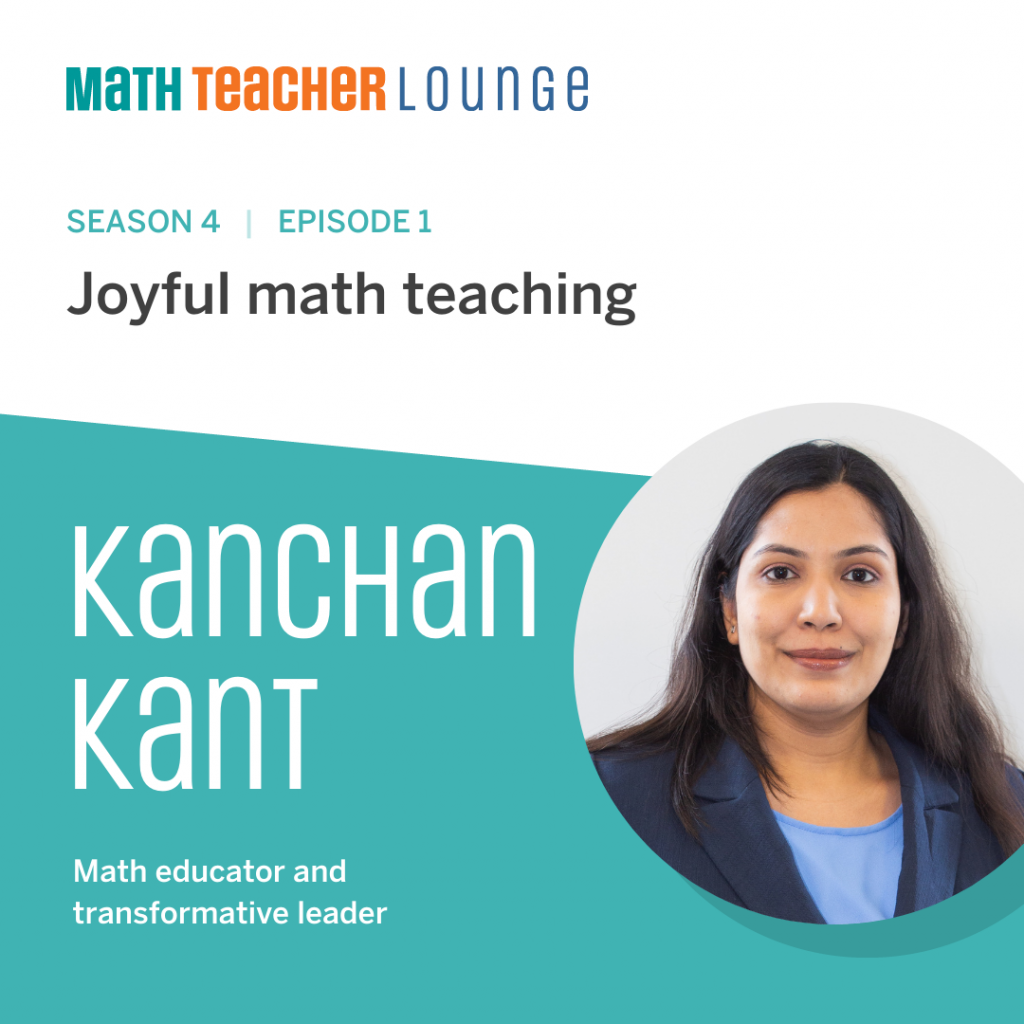
This season on the Math Teacher Lounge podcast, we follow the theme “joyful math” and uncover its meaning.
In this episode, Kanchan Kant joins Bethany Lockhart Johnson and Dan Meyer to discuss the key, early investment she makes at the start of the school year to ensure her math teaching will be joyful for herself and for her students for the rest of the year.
Explore more from Math Teacher Lounge by visiting our main page.
Dan Meyer (00:00):
Okay, we are recording. Hey folks. Welcome back to Math Teacher Lounge. (laugh)
Bethany Lockhart Johnson (00:06):
Hardly off to a rocking start.
Dan Meyer (00:06):
Yeah. Yeah. <laugh> Did you like my energy there? Hey folks. Welcome back to Math Teacher Lounge. It’s a new season with your host Dan Meyer. And…
Bethany Lockhart Johnson (00:15):
I’m Bethany, Lockhart Johnson. How’s your summer Dan?
Dan Meyer (00:22):
Summer for me feels really hectic as we prepare, here at Amplify, for the new school year, and everyone’s starting these new math programs. So I’ve been feeling quite amped up, like usual in the summer. But also, my kids started big kid school. So I’ve been seeing the educational system from the role of a parent and all the anxieties and I worry, will I be my kids’ teacher’s most annoying parent <laugh> … So what kind of math curriculum you using? Oh, have you heard of core counting? Can I lead a math center? What’s this worksheet about? I’m really worried my kids are just overall gonna hate my vibe when I come around their classes. Uh, <laugh> so lots going on with me.
Bethany Lockhart Johnson (01:06):
It’s already happening for me and I have a toddler.
Dan Meyer (01:10):
<laugh> There we go. Anyway, that’s what I’m up to. That’s how I’m feeling. I’m curious how you’re doing. We haven’t chatted in a while. We’re excited about the podcast, but it’s been a bit, you know? Bethany got a break from me and my antics over the summer. So, how are we finding you here, as we ramp up to the new season?
Bethany Lockhart Johnson (01:24):
Uhhhh. Well, let me just tell you, I have a toddler. That’s kind of all I need to say. Except that’s not all I will say. Of course, I’ll say more. I am exploring, I’m dipping my toe into the extracurricular toddler activities; the music classes of the toddler world, the creative movement of the toddler world. And yeah, I have lots of opinions and lots of things to say about the teachers. And I’m like, Ugh, I can’t wait to be room mom. And just like…<laugh>
Dan Meyer (01:55):
Just let it rip, you know?
Bethany Lockhart Johnson (01:57):
I have opinions on everything and just hope I don’t get kicked out of the class.
Bethany Lockhart Johnson (02:05):
It’s been an eventfully recharging summer and we are ready for this new season. And in fact, we’re so ready that we decided that we were gonna mix up this season. Just a, just a tiny bit. Shall I explain Dan?
Dan Meyer (02:21):
Yeah. Let’s do it.
Bethany Lockhart Johnson (02:22):
So we have loved all the different topics that we have explored in the Math Teacher Lounge world, but we kind of feel like we need to do some more deep dives. So for this season and the foreseeable seasons …
Dan Meyer (02:38):
We’ll see how it goes.
Bethany Lockhart Johnson (02:38):
Let’s stick with this season. For this season. We’re going to be exploring a singular theme.
Dan Meyer (02:46):
We’re not bouncing around. Yep. We’re not bouncing around from a guest to guest going on whatever shiny thing in the river bed catches our eye. We’re gonna take one theme and see where it goes. What we working with here this season?
Bethany Lockhart Johnson (02:57):
This season, we are going to be exploring the idea of joyful math, joyful math. And Dan, the question I have for you is, is the term joyful math one that you use on the regular?
Dan Meyer (03:10):
No, it definitely is not. I think that joy and math are very rarely, you know, connected in the popular mind. Number one, and number two, you know, I’m kind of an ornery fellow, so that’s not my natural kind of description of math. But we decided that it feels like an important one at the moment, because a lot of math teaching–a lot of teaching in general, math teaching in particular–math teaching is often not a joyful discipline for students, where, you know, I’ve done some research where you look at what people type into Google. And I looked at like, what they…why am I bad at X? And I looked at that for where X is math, where it’s science, where it’s reading, where it’s history. And it was just wild to see how many more hits there are out there on the Internet for “why am I bad at math?” People don’t really associate math with joy, but also we’re looking at joyful math in terms of joyful math teaching. Math teaching, teaching in general, is a tough field at the moment with a lot of teachers leaving teaching. And those who remain are having a lot of soul searching and thinking about, why am I here and how do I sustain this work? And in an environment that seems hostile to my interests or my talents, or work-life balance. And so that’ll be the theme that we’re gonna kind of uncover over the course of our season, talking to various interesting guests, including one today about, yeah, joyful math teaching and joyful math.
Dan Meyer (04:43):
And to help us think about what joyful math teaching looks like, we figured we’d first look at what UN-joyful math teaching looks like. It happens to be the case that we’ve been in a pandemic as you might be aware, and teaching has been challenging. And the NEA, our National Education Association, surveyed its member teachers and asked them the following question … Gave a list of issues that school employees have experienced and asked, for each one indicate how serious of a problem this is for you. This is a survey where more than half of members said they are more likely to leave or retire sooner than planned because of the pandemic. And this is almost double the numbers from July, 2020. It’s really hard to keep track of teacher departures and unfilled vacancies across states. So I don’t wanna like blow this up out of proportion, but it does indicate some real challenges in teaching. So Bethany, I was curious, what do you think like at the top of the list, like what kinds of factors, issues facing educators would you imagine there are?
Bethany Lockhart Johnson (05:48):
So if I’m to understand you correctly, these are reasons someone is not actively experiencing joy in the profession of teaching. Like why would they leave?
Dan Meyer (05:58):
Exactly.
Bethany Lockhart Johnson (05:59):
Well, the number one thing that came to mind for me, well, okay. Wait, wait, one other caveat I need to ask about, you said specifically pandemic-related or just in general, because if it’s pandemic-related, then I think, well, there’s health issues, right? That people are concerned about, but in general, the thing that came to mind was a lack of support from administration districts, lack of funding, and overcrowding in classrooms. Like, you know, I saw somebody had 40 students in their classroom. So those are the two things that I can imagine like top on someone’s list that would make them experience less than a joyful day.
Dan Meyer (06:44):
Yeah. There’s a bunch of you’re kind of identifying here. So number seven on the list is lack of respect from parents and the public, which is like 76% of teachers call that out as serious for them. Others that you kind of circled around in terms of resources go like, not enough planning or unstructured time in the job kind of ties into resources. Yeah. But there’s others that are on the list that I’m curious, you wanna take on the swing at it, given what I’ve said here,
Bethany Lockhart Johnson (07:15):
I feel like too much being asked of them, like being asked to wear too many hats, like they’re being asked to not only teach their class, but also cover all the vacancies and supervise recess and, you know, make a delicious, nutritious lunch. That’s what came to mind. Am am I close?
Dan Meyer (07:33):
Yeah. Number four on the list, unfilled job openings leading to more work for remaining staff. People covering, you know, not just the kind of external to teaching work like you’re describing, but also just taking on like losing your prep period, to take on a class that has been unfilled for all kinds of reasons. Yeah.
Bethany Lockhart Johnson (07:54):
Yeah. I’ve only gotten the fourth. Give me one clue, one clue about …
Dan Meyer (07:59):
So, I mean like, so number one is general stress from the coronavirus pandemic, you know, which I feel like …
Bethany Lockhart Johnson (08:06):
I mentioned that.
Dan Meyer (08:07):
I’ll give you that one. Yep, yep, sure. And then number two, close behind, is feeling burned out, which I think ties into what you’re describing as well. I’m giving Bethany credit on that one. The third one is very different from the ones you’ve been describing. I think I cannot in good faith give you even partial credit for this one. I’ll just say it. Student…
Bethany Lockhart Johnson (08:28):
Wait! Dan, this is not how you give clues.
Dan Meyer (08:31):
Here’s a clue. It’s student absences due to COVID19. It’s really hard to deal student absences. That’s your clue.
Bethany Lockhart Johnson (08:40):
That wasn’t a clue that you told me.
Dan Meyer (08:43):
Yeah, let’s see. I think that’s largely it. There’s also pay is too low, is on the list; student behavioral issues, on the list. And I think that about covers it. So all of that, that basket of items has led to more than half of teachers in this survey, saying that they’re more likely to leave or retire from education sooner than planned. And I don’t know. I think we all know teachers who have bailed.
Bethany Lockhart Johnson (09:08):
I’ve never played a board game with you, Dan, but if we ever play a board game, we’re gonna work on your clue giving, ’cause I want to keep guessing. And you just told me.
Dan Meyer (09:22):
Yeah. Yeah.
Bethany Lockhart Johnson (09:22):
In all seriousness, the <laugh>. In all seriousness, I think yes, the stress of the pandemic and students being absent, what some folks are calling unfinished learning, all of those pieces do play into it. But a lot of those things that you’re mentioning on the list are things that are not unique to the pandemic, right? Like those are things that I feel like there is some modicum of control that we could have over shifting the way the culture of the teaching profession is going so that we could create a more joyful experience for educators, administrators, and students.
Dan Meyer (10:03):
Yeah. Good call out. That’s exactly right. We could tax the people who are not in the classrooms more and increase the pay to classroom teachers. You know, there we go.
Bethany Lockhart Johnson (10:11):
Oh. Bingo. Why didn’t we ask you sooner Dan, for your wisdom.
Dan Meyer (10:15):
Yeah. I’m … solved by Dan. Yeah, good point though. So I read that and yeah, I think that there’s been some … people have critiqued the NEA for being very alarmist about teacher departures as the year has ramped up. It has not been quite the flood of departing teachers as was predicted and thank heavens for that, but we should still be very bummed if teachers are unhappy and wanting to leave and feel like they can’t leave. That is definitely not good. So we were really excited to bring to the table, someone who is just a very joyful teacher and one in a very intentional way. Someone who has a lot of discipline in how she approaches the job and the students in it and tries to create a joyful environment for herself, Kanchan Kant. Kanchan is a math and computer science teacher at Newton North High School in Newton, Massachusetts. She’s been sharing her love for math with her students for the past four years, while also being instrumental in setting the culture and ethos of the math department at her school in her role as the assistant department head. We welcome you on the show Kanchan to help us understand joy and math teaching. Thanks for being here.
Bethany Lockhart Johnson (11:29):
Welcome!
Kanchan Kant (11:30):
Thank you for having me. I really appreciate it.
Bethany Lockhart Johnson (11:33):
One of my friends, her son was asked as his first math homework assignment to write out his math bio. And I loved that idea because we got to hear a little bit about your bio from like a broader perspective. But if we were to ask about your math bio, I will speak for myself to say like, automatically certain images flash into my mind, right? To think about my relationship, my evolving relationship with math. But I’m so curious if I was to ask you, what’s your math bio? How did you become the person, mathematically speaking, that you are today? Would you mind sharing a bit about that?
Kanchan Kant (12:10):
Of course I would love to. So I was born and raised in India and I belong to a family which considers mathematics to be extremely important to succeed in life. My father used to have me add and subtract license plates since I was four years old, when we were out and about. I loved math in school, it just made like complete sense to me. It was logical and you know, it was my favorite subject. I loved it all through high school. I had a confidence speed breaker in undergrad. When in my second semester I almost failed the engineering math course that I took. That was the first time math felt like too much and not like my best friend, which it was supposed to be. So it was a while before I could summon the courage to take on another math course in college.
Kanchan Kant (12:56):
But once I did that, it was like old times. I realized I had to persevere through the challenging bits. And once I did that, it started to make sense again. And through my journey, as an educator speaking to people from various backgrounds and like coming to the United States, I realized that math is challenging for everyone at one time or another. For some people that is elementary school. And for some others, it is college or even later. Either way does not mean that you are not a math person. When I was in college, I felt I was not a math person. Whereas my sister, my very own sister said the same thing about math in middle school. Both of us use math every day. And we are definitely, definitely math people. So for me to be a math person is to persevere, to approach problem-solving in a logical manner, and to find the joy in the process ,as well as the answer.
Dan Meyer (13:47):
That’s wonderful. Yeah. A lot of people, have a moment where they feel like almost betrayed by what they thought was a close friend of theirs, with math, where it’s like, wait, I thought we were tight. You know, I thought we were cool. You and me. And there’s that moment. And I wonder if that’s been a useful moment for you to, you know, bring back now and then as a teacher with students who might feel that even, you know, in high school or in a secondary school as a kid.
Kanchan Kant (14:15):
Absolutely. Like when I talk to students and tell them, yes, I had difficulty in math too. It has not always been easy for men and there are still things I struggle with sometimes, then it’s like more modeling for them that you have to persevere, you should persevere. And once you do that, it makes sense and you can feel successful. So, almost every year I end up sharing the story with my students.
Bethany Lockhart Johnson (14:38):
There’s so much value in that, right? That you are sharing that vulnerability with students. And to say your relationship with mathematics has not been, you know, smooth sailing the whole way through. There were times when you had to work harder than others.
Dan Meyer (14:55):
Yeah. Really fun to hear about you and your father as well. I tried to ask my five-year-old to do some skip counting the other day, like, okay, cool, you’re hot stuff. You can count, you know, up by ones, but what about by twos? And the moment really fell flat. And I watched myself becoming the kind of parent who is whose enthusiasm for math is one day resented by his children. I feel a lot of, yeah, I felt your anxiety Kanchan, with math itself. And now I feel anxiety as like someone who loves math and loves to teach math and may one day alienate the people closest to him. <laugh>
Kanchan Kant (15:31):
I don’t like that future. I have a three-month-old. I do not like this future of mine. If I have to go through what you’re going through. Uh, oh, <laugh>
Dan Meyer (15:38):
You got this. So Kanchan, you’re going back to the classroom coming up here at the time of this recording. It’s a few weeks out. And we’re thinking about like the kind of ways that math teachers sustain a disposition that is joyful. How are you feeling right now, as far as going back to class after this summer? Are you feeling excited, anxious, some combo, tell us about it.
Kanchan Kant (16:01):
I would say combo, but more excited than anxious. I was on maternity leave, as I mentioned, before the school year ended, and I missed the students dearly. Like, my students are what gives me hope in the darkest times. They are thoughtful. They’re empathetic. They’re so eager to learn. And very soon into my teaching career, I realized that if I take the time to get to know my students and make them feel safe and seen in my class, teaching them math would be so much easier and so much more fun. So I’m a little worried about this being like fourth year into the pandemic, but let’s see. Last year I felt the students were finding it difficult to interact with and work with their classmates because they had not been doing it for so long. So I’m hoping this year would go a little better and I’m really looking forward to working with them and building community and see how it goes.
Dan Meyer (16:53):
So if I’m understanding you correctly, you are feeling very well recharged here. You had basically an extended summer with this maternity leave, basically just like a lot of rest and relaxation over the last, like several months. Um, if I get you here. So anyway, I’m glad for that for you. And, yeah. I also hear you on the difficulties of teaching post pandemic or mid pandemic. Anyway, thanks for sharing that.
Bethany Lockhart Johnson (17:19):
What I love is I hear you being so intentional, like thinking about those relationships and thinking about that community that you want to build, you know? How do you hope that you’re gonna cultivate joy in your teaching this year? I mean like, are there certain routines or disciplines that you specifically call forth or that you think other teachers should think about?
Kanchan Kant (17:41):
So at the start of every school year, I dedicate like about three to four weeks to set up the classroom culture, both social and academic. I call my classroom a learning community. We start with community circles, we do icebreaker activities, group building and all those kinds of things. But most importantly, we do a lot of collective problem solving. So I try to present students with problems, which can be solved using multiple strategies and have multiple entry points, basically they are low floor, high ceiling problems. These could be stretch problems that they have seen before, like concepts that they already know or logical puzzles, or just wrapping their heads around different problems. Then I have students share their strategies. The more strategies they have on the board, the more successful I think the problem was. Every year, inevitably, students come up with strategies that I’ve never ever seen before for the same problems that I do.
Kanchan Kant (18:35):
And so I have students come up to the board, they would share their strategies. If they’re not ready for that, they would walk me through their strategies. And I would write their name on the board with different colored markers and everything. Basically to give them choice and agency. It also shows them that the process of doing the problem is so much more important than just getting the right answer and that it is okay to make mistakes in our learning community. I use a lot of vertical whiteboards, some concepts and problems align so well with the vertical surfaces, especially when students can explore together, learn from each other. So I do a lot of that. As for routines, I would say consistency is the key. I consistently reinforce that I want to hear multiple strategies, that it is okay to make mistakes. I am willing to learn from you as much as you’re willing to learn from me. So all like that consistency in culture more than the routines, is I feel important to bring that joy.
Dan Meyer (19:29):
That’s super interesting. Thanks for that. So I’ve heard, I hear two common objections or two common concerns to using rich tasks or doing problem solving. And I think I heard like answers to those two common reservations within what you described there, but I wonder if we can kind of bring it to the surface. And so one of the reservations is around the time that those problems take and another is that teachers often feel like, well, I might be surprised, you know, I might not know what to do with what a student does. And I thought I was hearing like some very interesting answers to both of those kinds of reservations from you, but would you just surface those up if you have some.
Kanchan Kant (20:09):
So in terms of time, I feel if I spend the time at the beginning of the year, setting up that community and doing those problems, it makes learning the math and learning the concepts much more faster throughout the rest of the year. And even when I am trying, like, even throughout the year, if we are doing a warm up problem, as I call it, which has multiple strategies, that’s gonna clarify so many more concepts when we talk about those five, 10 strategies of doing the same problem, then going through multiple problems to clarify those concepts. So for me, it actually saves time instead of taking more time.
Dan Meyer (20:43):
Hmm. That’s super interesting. It’s an investment I’m hearing from you that, yeah, you might not be hitting the curriculum quite as hard early on, but that all of a sudden you’re in the spring and it’s like, oh wow, we’ve been moving so much faster through territory that has been more challenging. What would you say to you know, comfort concerned educators or to address the concern that I don’t know what I’ll do with these five, 10 different strategies. You say, I always see strategies that I’ve never anticipated. Like, it’s a good thing, you know, like you’re happy about that. I think that’s a very intimidating thing for lots of educators. What would you say to that?
Kanchan Kant (21:19):
I think like, for me, it’s a good kind of discomfort. That means like a student is teaching me something, which is actually doing two things. One modeling for them that I’m willing to learn and that I don’t know everything. And two, also telling them that they’re mathematicians. They know what they’re doing. They’re not just receivers of math, they’re actually creating it. So for me, that is very, very important.
Bethany Lockhart Johnson (21:43):
I love that so much. When you think about your students and you’re about to start this new school year, how do you hope your students will experience math in your classroom?
Kanchan Kant (21:53):
So I hope my students can see the beauty and joy of math. They can see that math is a way to see the world and not as something we have to do to get through school. So my hope for my classroom is that we can learn to problem-solve and persevere through problems and learn from each other and not just get through the curriculum. Because like, I think math is a wonderful way to learn these skills, which are so important when you get out of high school. Most importantly, I just wanna make sure that my students see themselves as mathematicians. And like one of the things that like I have to share with you that, because one of my highlights for the year has to be the Desmos art project. I do it every year for the past three years, I think since I’ve started teaching sophomores. And I do it as a unit assessment for functions and my students design something that is meaningful to them, using all the different kinds of functions and colors and shading and everything that you can think of in Desmos.
Kanchan Kant (22:49):
Thank you so much for that though. It is such a cool way for me to see them do that. Like I have seen such amazing creations. One of my students once made a scaled working model of a solar system wherein the planets were rotating at relative speed. The Saturn had rings and they were like asteroids and everything. And then it was beautifully done. Then there was another one who did a very, very detailed whale scenery, her reasoning. I wanna be a Marine biologist and I wanna study whales. So this is what is meaningful to me. So like that one project is just a culmination of everything that I want students to see in math and in my classroom. And like I do more of those kinds of things, but that is one thing that it’s one of the highlights of my year.
Dan Meyer (23:32):
That’s awesome. I love hearing that. Yeah. Shout out to the team at Desmos Studio for building and continuing to develop a tool list that so good for art and animation, even, in addition to some mathematics with a more computational kind. Yeah, that’s really exciting. What’s interesting to me is that you teach high school, and I think that like students at that age have a very well-defined sense of what math is and who they are as mathematicians. And then along you come, you know, and like offer this really interesting disruption, you know, in their sophomore year of high school that like, oh, this can be totally different, this relationship who I am. And that’s just really exciting. I imagine it’s a very surprising year. I would imagine that first month, I would imagine is a very surprising month for a lot of your sophomores.
Kanchan Kant (24:20):
Yeah, it is. I mean, that’s why I take that time to build that community because then that sets the tone and the relationship that we’re gonna have for the rest of the year. Students get to know how to work with each other. They get to know each other, that whole piece is like super important because of that.
Dan Meyer (24:35):
Yeah. That’s awesome. So here’s the thing, like we’re exploring these ideas about joyful math teaching and what it will take to cultivate restore, reclaim joy in math, teaching this next year. And you’ve offered us these really interesting ideas some, some very, you know, philosophical and some technical about how you spend time in ways that lead to joy in the spring for you and your students. Love that. We don’t want to as hosts, as researchers, investigators of this joyful math teaching idea, we don’t wanna say it’s all up to teachers to change their mindset, to do different technical practices, and that will lead to joy. We also wanna be really attentive to the environment that surrounds you, the people who are around to support you, the policy makers, the social structures that influence your joy in very significant ways. So what we would love to know from you is, how are you supported by the greater educational community in keeping your joy in your work? I’m thinking, especially about administrators, you know, front office, staff, parents, even, can you name a few ways for those sorts of people who listen to this podcast, how they can cultivate a math teacher’s joy this coming year?
Kanchan Kant (25:54):
I would say trust. I think more than anything, educators want administrators, parents, the greater educational community, to trust them to be professionals and experts in what they do. That does not mean that we don’t want to learn, that we don’t want feedback, that we don’t wanna get better. It just means that we keep the wellbeing of our students as our top priority. And we would like to be trusted to do just that. Also just keeping in mind that whether we like it or not, we are still adjusting to the new normal while recovering from the worst of the pandemic times. A lot of us are recovering from trauma, a lot of our students are recovering from trauma, and we need time and space for our social and emotional wellbeing.
Dan Meyer (26:35):
Yeah. I’m really curious, Kanchan, you’ve done a lot of work in your area with your grading team and in thinking about equitable and biased resistant instruction. I’m curious how you see those efforts lining up with creating joyful math learning conditions for all students, not just students from a dominant culture of math doing, let’s say.
Kanchan Kant (26:55):
For me, creating an equitable environment in a classroom is most important because once you have that, that’s when you have the relationships, that’s when you have the culture, that’s when all students actually thrive. So to that end, our school and our department has been doing a lot of work around grading practices. We actually assess how we grade students, where the bias is, what we can do to make them more bias resistant. Should we move to mastery based grading? Like that’s something I’ve been experimenting with for the past two years. Through the pandemic, I started doing mastery based grading so that my students can get more opportunities to show that they have learned the content. And so like just little things which help bridge the opportunity gap. I would say another project that our school undertakes is called the calculus project wherein we have students in Black, Latinx, and low income families sign up for that and are recommended for that. And then we do summer classes and yearlong support to preview the material for next year, not as a remedial class, but to actually set students up for success in AP classes for the coming year. So we have the community buildup. We have the courses we have like math support. It’s a very beautiful thing actually. And I’ve been working with that program for four years now. So yeah, so those are my ways of creating more equity in our school.
Bethany Lockhart Johnson (28:19):
That’s so beautiful and I deeply, deeply wish you had been my high school math teacher. And I have to say that the theme that I kind of keep hearing is this intentionality. How you are so intentional about your work, not just with what your students are learning, but how they’re learning it, how they are engaging with this subject and how they are building their own relationship. You talked a little bit about your relationship over the years with mathematics, but how are your students building that relationship? And so I’m just very appreciative of you sharing that with us and with our listeners. And we are so excited to have learned a little bit about, like, I feel like I got a little mini peek into your classroom.
Kanchan Kant (29:03):
Thank you.
Bethany Lockhart Johnson (29:04):
And can I say that if you are listening to this prior to October at NCTM Los Angeles, you will get to hear Kanchan Kant speak at Shadow Con. Can I give that away, Dan? Is that, is that …
Dan Meyer (29:23):
You can drop that. Yeah, It’s pretty top secret.
Bethany Lockhart Johnson (29:26):
Can I drop it?
Dan Meyer (29:27):
Yeah. Do it. Yeah.
Bethany Lockhart Johnson (29:28):
Dan and I will be in the audience cheering you on. It’s been a joy to learn with and from you, and we are so excited to just, you know, kind of keep marinating on some of these ideas about how we can continue to be intentional about creating joyful math spaces for our students. Thank you so much for joining us today.
Kanchan Kant (29:49):
Thank you so much. It was a real pleasure.
Dan Meyer (29:57):
So Bethany, I loved hearing Kanchan talk about both her, just her joyful personality, but how she cultivates joy through craft and technique through, you know, through the various ways she interacts with students in intentional ways, that those make the job more joyful for her. And I thought it was really interesting to hear her talk about how autonomy is the thing that she needs most in her job environment to feel like she can be joyful in her work. In that context, I saw … something on Twitter popped up for me in my, you know, my many Twitter wanderings. This is a segment we might call, Dan finds something on Twitter and shares it with Bethany. Which we’ll tighten that up a little bit, but I’m sending this over to you right now, and I’d love to know as you check this out, what you’re seeing and what you’re thinking and we’ll chat about how it relates to our interview here in a moment.
Bethany Lockhart Johnson (30:47):
All right. I’m ready, send it over. It’s opening. So this appears to be a document by the way, outlining, maybe it’s a district, maybe it’s administration, they’re outlining expectation type and expectation guidelines. Hmm. Okay. And these are lesson plan expectations. Expectation type. Timeliness. Plans are due no later than 6 p.m.. Friday prior to the week of instruction. Comprehensive, all activities for the week for all subjects taught should be included and complete by due date and time. Plans should have at minimum, the following, see template for detail. Okay. So then it goes through the things that the plans need to have, the topic title, target, the objective, the activities, the sequence, the display agendas to be displayed backward design. Okay. So basically <laugh>, we were just talking about, overwhelm. And when I see this document, listeners, have you ever received something from your administrator or anyone, let’s take it more broadly, that is requesting something of you that would take so much time to complete and be so out of touch with your lived reality that it really genuinely sucks the joy out of the experience.
Bethany Lockhart Johnson (32:25):
So the first thing that I see that this document, and again, the goal of whichever district’s plan this is, is that these expectations will lead–now, mind you, I am a fan of like, you know, looking ahead, I’m not a like, oh, hey, what am I gonna teach in five minutes? No, but the idea that then it lays out all of the things in such detail that you’re gonna be teaching feels like one of those pacing guides where, oh, move on to the next page, whether or not your students have any sort of sense making whatsoever. So my first thought is, oh, sad. I have to stay here. I’ll be there past 6 p.m. But I’m gonna be there trying to make the plans for the next week based on what I think my students have learned. Hmm it’s sounds like a little bit of a bummer. Dan, what did you think when you saw this and did I do a fair description of what it is?
Dan Meyer (33:25):
No, it’s, it’s a tough one to describe, ’cause it’s basically a wall of text and commands from an administrator who like, I just have to imagine has just like acres and acres of teachers trying to beat down their door to teach at this school, if this is how you’re gonna treat your teachers. I mean just, yeah. The idea of having a week… I’m with you, you don’t wanna just like, just jump in by the seat of your pants, but the idea of having a full week of lessons for every section you teach, every prep you teach, planned and submitted with every minute, basically morseled out to different goals. It says down here, you gotta like, for all of these, download a CSV of grades and whatnot and attach those. It’s the sort of thing, like you said, there are some edicts that you get from administration where you just have to laugh or just like, you have definitely missed like what I am willing to do here. It’s so far beyond. Yeah. I can’t imagine it. And it just felt like, yeah, it was a great way to get teachers like Kanchan to feel like a real lack of autonomy. Like it’s this would not work. I don’t think.
Bethany Lockhart Johnson (34:33):
And it’s not even like willing to do. Like, let’s say you’re even willing to produce it. Let’s say that me, the rule follower is like, okay. I’m gonna attempt to meet these demands. One, most teachers were just, you know, they probably would put baloney down there anyway. Not saying that I would, but I’m saying like, it’s clearly just a hoop that they’re having to jump through and two…
Dan Meyer (35:04):
Yeah. Compliance, right?
Bethany Lockhart Johnson (35:05):
Yeah. Compliance, compliance. There you go. And two, yeah, it feels like it’s about control and not trusting the teacher. And I love that. Kanchan said that trust is what she needs. Right? You’re hiring me. Yes. I still have lots to learn, but you’re trusting me and you’re creating an environment where I can continue to learn from and with my students. And if I was being asked to submit this tome every Friday before six, that is predicting, what does it say, anticipating the steps necessary for student mastery? You know, I kind of feel like maybe it’s like that one or two teachers where maybe they feel like, oh, I don’t trust that teacher or that teacher isn’t doing a good job, whatever. We better do this for all of the teachers, but then it’s not gonna change the practices of that one teacher and all the other teachers are gonna be resentful.
Dan Meyer (36:00):
Like if there was like feedback that came back to you on, you know, on lesson plans or there was some like something that was very constructive or productive, like maybe that would be different, but it really just feels like these are gonna go into a digital drawer somewhere and not be looked at, at all.
Bethany Lockhart Johnson (36:15):
Yes. The digital drawer. Like I’m gonna send you this report and then nothing is going to happen with it. Except that four hours of my time. Well, you wouldn’t do it, but <laugh>…
Dan Meyer (36:29):
You’ve worn me down. You’ve worn me down. I’m now putty in your hands and more compliant for the next thing. And I also just wanna shout out the administrator today, who I emailed asking about like a teacher participating in a project and this administrator said, I have a standing policy not to email teachers over summer break, which you know, as administrators out there doing just the good work, you know, trusting teachers, watching out for them, trying to be a force multiplier for teachers, making the road wider, the way easier for teachers. So shout out to y’all doing the out there. Really appreciate that.
Bethany Lockhart Johnson (37:04):
Okay. Wait, wait. About that email thing, quick question. Did you ever check your email over the summer?
Dan Meyer (37:11):
Uh, yeah. That’s one way in which I was the, you know, I just love email, you know? Oh. Someone wanted to reach out. Oh, oh, Banana Republic wants to tell me about new clothes that are on offer. <laugh> I mean like, it’s just, I love those personal emails. So yeah, I did check my email over the summer.
Bethany Lockhart Johnson (37:26):
Somebody emailed me recently and they emailed me at like two in the morning. And because I currently have a toddler, I received the email at four in the morning because you know, the best thing to help myself fall back asleep is to hop on my phone, right? Like I’m already up trying to get my toddler back to sleep. I might as well start scrolling. Anyway, so the person had this little thing at the bottom of their email and it said, I have, something to the effect of, I have really like wonky work hours. I may be sending this outside of the like more standard nine to five. But please don’t feel pressure in any way to respond outside of your time. Would you appreciate that, seeing that or does it make you feel like you should respond? ‘Cause I almost responded at four in the morning, and maybe that says something about …
Dan Meyer (38:15):
They’re telling you not to respond.
Bethany Lockhart Johnson (38:16):
I know it was helpful.
Dan Meyer (38:18):
It says don’t, but you’re like, what if they’re saying that because they really expect me to respond and this is one of many ways that you and I are different. I’m always happy to see that.
Bethany Lockhart Johnson (38:29):
Do you respond? I’ve texted you in the evening because you know I have some wonky hours. Do you respond to things, like where’s your boundary there? Or when you were in the classroom, where was your boundary there? Did parents have your phone number?
Dan Meyer (38:43):
No. I gave kids my cell phone number for a couple years and it was a wobbly experiment. But parents will email, you know, back and forth with you. And I think the best thing to like … I love just like adding some friction, some latency into the kind of the chain, you know, like I hate going like back and forth, like da, da, da, da, and then like respond and then da, da da respond. And it just like goes back and forth. So just like just sitting back for an hour or two hours, you know, not responding, just let someone cool down, calm down. Email just gets you more email. That’s like if you send an email, you are just making it more likely to get more email. It’s a, you know, it’s a problem.
Bethany Lockhart Johnson (39:20):
Are you one of the zero people?
Dan Meyer (39:23):
My inbox is at zero. Most days before work.
Bethany Lockhart Johnson (39:26):
You’re joking!
Dan Meyer (39:28):
I end work every day with inbox, at zero.
Bethany Lockhart Johnson (39:31):
You’re joking!
Dan Meyer (39:32):
That’s just, you know.
Bethany Lockhart Johnson (39:33):
Who are you?
Dan Meyer (39:34):
You know, you should take my life coaching, Bethany. I’ll give you a discount since we’re math teacher, lunch pals. But, um yeah. I can help.
Bethany Lockhart Johnson (39:44):
Thank you for qualifying where our pal-dom lives. I wouldn’t even tell you how many are in my inbox. Point is, if you are actively starting the school year, we celebrate you and we are here and over the next few months, we’re gonna be diving into joyful math and that definition’s gonna keep evolving. But I wanna say something that is making me feel a little joyful, Dan. You ready?
Dan Meyer (40:15):
Tell me.
Bethany Lockhart Johnson (40:16):
You and I, in person, at NCTM, the National Council for Teachers and Mathematics. It’s coming up and we are going to be recording Math Teacher Lounge, live. Live, in person! And I hear there’s gonna be like a t-shirt cannon and there’s gonna be, you know, like musicians marching through the aisles or something.
Dan Meyer (40:46):
A marching band?
Bethany Lockhart Johnson (40:46):
A marching band!
Dan Meyer (40:46):
Trained animals. Yeah.
Bethany Lockhart Johnson (40:48):
But the point is, I’m so excited, Dan. And you know, when I see you, I might just, it’s been so long since I’ve seen you, Dan. I’d love to give you a big old embrace.
Dan Meyer (41:04):
You might just, you might just cry. Yeah. Yeah. It’ll be great. Yeah. It’s gonna be awesome for you folks to see me and Bethany have a real awkward first hug since the pandemic. And, uh, but it’s gonna be a blast to hang with us in person. We’ll have some special guests, probably, some interesting segments. You folks should stop on by at NCTM, if you’re gonna be there. Highly recommended.
Bethany Lockhart Johnson (41:29):
Now, we will be broadcasting that episode. You’re gonna get to hear … we’re gonna record it live. It’s gonna happen. In the meantime, you can find us at MTLshow on Twitter, or you can find us in our Facebook group, Math Teacher Lounge. We can’t wait to hear from you. And we’d love to hear what makes math joyful for you? Where can we add a little bit more joy to you this, this season? So thrilled to be back. Thanks for listening.
Stay connected!
Join our community and get new episodes every other Tuesday!
We’ll also share new and exciting free resources for your classroom every month.
Meet the guest
As a math and computer science teacher at Newton North High School, Newton, MA, Kanchan has been sharing her love for math with her students for the past four years. Kanchan is instrumental in setting the culture and ethos of the mathematics department at her school in her role as the Assistant Department Head. Kanchan also leads the Math Department Grading Team and has been instrumental in making grading policies which are more equitable and bias resistant. In her new role as a Transformative Leaders of Massachusetts Fellow in collaboration with Springpoint and Barr Foundation, Kanchan looks forward to making equity and joy of learning the foundation of many more classrooms.
About Math Teacher Lounge: The podcast
Math Teacher Lounge is a biweekly podcast created specifically for K–12 math educators. In each episode co-hosts Bethany Lockhart Johnson (@lockhartedu) and Dan Meyer (@ddmeyer) chat with guests, taking a deep dive into the math and educational topics you care about.
Join the Math Teacher Lounge Facebook group to continue the conversation, view exclusive content, interact with fellow educators, participate in giveaways, and more!
You might also like:

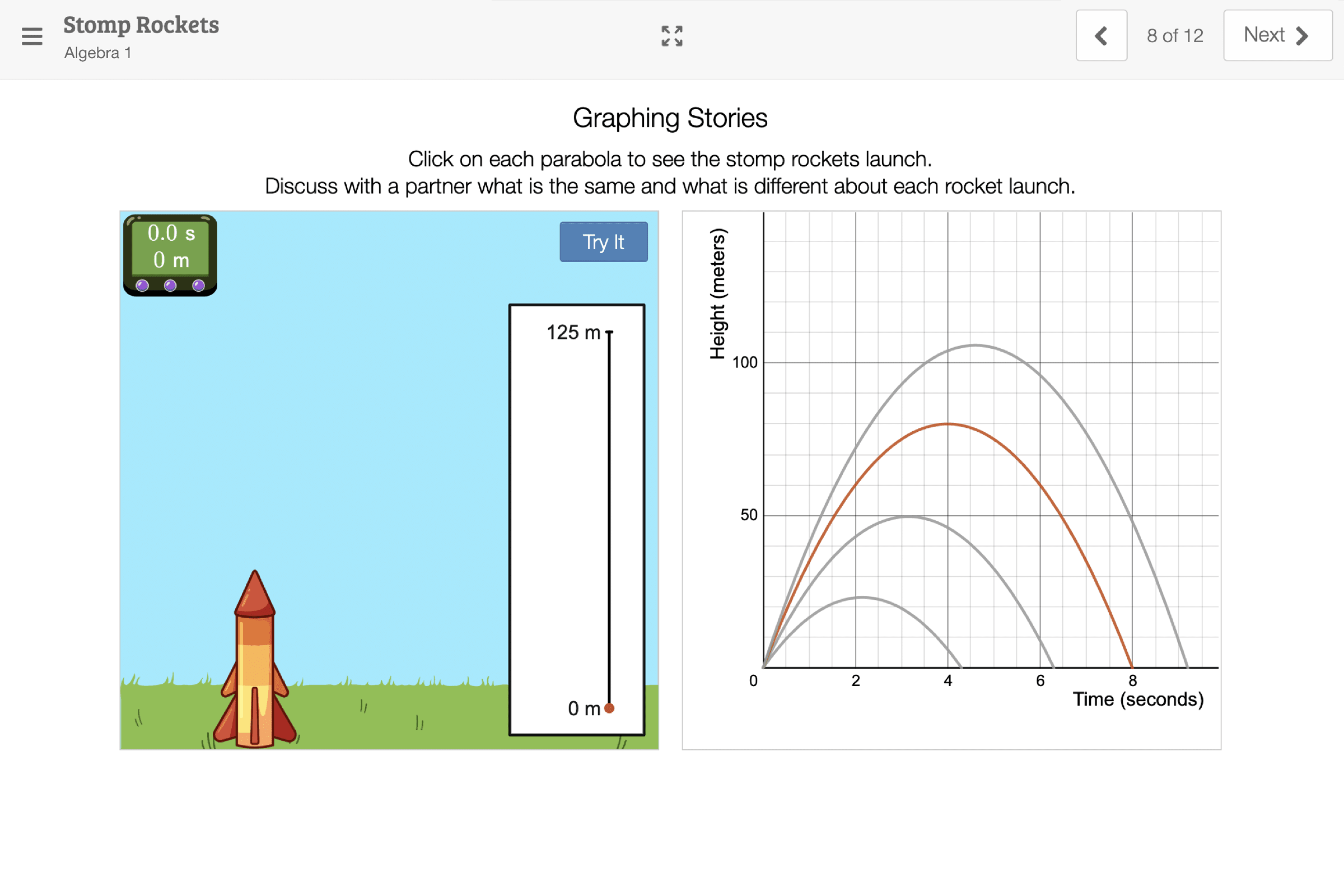
1. Scope
These Customer Terms and Conditions are a legal agreement between Amplify Education, Inc. (“Amplify”) and the local education agency or authority, school district, school network, independent school, or other regional education system (“Customer”) for the license and use of one or more of Amplify products or services (the “Products”), as specified in the receipt, price quote, proposal, renewal letter, or other ordering document containing the details of this purchase (the “Quote”). These Customer Terms and Conditions, all addenda, attachments, and the Quote, as applicable (together, the “Agreement”), constitute the entire agreement between the parties relating to the subject matter hereof. The provisions of this Agreement will supersede any conflicting terms and conditions in any Customer purchase order, other correspondence or verbal communication, and will supersede and cancel all prior agreements, written or oral, between the parties relating to the subject matter hereof.
2. Agreement Acceptance
This Agreement becomes effective at the earliest of the following: (i) issuing a purchase order, shipment request, or payment against the Quote; (ii) accessing, downloading, or using the Products; or (iii) otherwise accepting this Agreement. This term of the Agreement will be as specified in the Quote and may be renewed or extended by mutual agreement of the parties. Customer represents and warrants that: (1) Customer is of legal age to accept this Agreement; (2) Customer is authorized to accept this Agreement and to access and use the Products; and (3) Customer’s use of the Products will comply at all times with Amplify’s Acceptable Use Policy available at amplify.com/acceptable-use (“AUP”). The Customer may not access, download, or use the Products if the Customer does not agree to this Agreement.
3. License
Subject to the terms and conditions of the Agreement, Amplify grants to Customer a non-exclusive, non-transferable, non-sublicensable license to access and use, and permit Authorized School Users, as defined below, to access and use the Products in accordance with the AUP, for the duration specified in the Quote (the “Term”), and for the number of Authorized School Users specified in the Quote for whom Customer has paid the applicable fees to Amplify. “Authorized School User” means the K–12 students registered or authorized for instruction with Customer and the educators, agents and staff members who use the Products as authorized by Customer who Customer permits to access and use the Products subject to the terms and conditions of the Agreement, solely while such individual is so employed or so registered. Each Authorized School User’s access and use of the Products will be subject to the AUP in addition to the terms and conditions of the Agreement. Violations of this Agreement or the AUP may result in suspension or termination of the applicable account.
4. Restrictions
Customer may access and use the Products solely for non-commercial instructional and administrative purposes. Guidelines for such purposes may be set forth at
https://amplify.com/amplify-program-usage-guidelines/ and additional guidelines may be detailed in materials associated with the Product the Customer is accessing. Further, Customer may not, except as expressly authorized by Amplify: (a) copy, modify, translate, distribute, disclose, or create derivative works based on the contents of, sell, or otherwise exploit, the Products, or any part thereof; (b) decompile, disassemble, reverse engineer the Products, or otherwise use the Products to develop functionally similar products or services; (c) modify, alter, or delete any of the copyright, trademark, or other proprietary notices in or on the Products; (d) rent, lease, or lend the Products or use the Products for the benefit of any third party; (e) avoid, circumvent, or disable any security or digital rights management device, procedure, protocol, or mechanism in the Products; (f) use any content from the Products, including but not limited to text, images, videos, assessments, lesson plans, or code, as input or training material for any machine learning or artificial intelligence system, including large language models, neural networks, or other algorithmic models, for any purposes, commercial or non-commercial; or (g) permit any Authorized School User or third party to do any of the foregoing. Customer also agrees that any works created in violation of this section are derivative works, and, as such, Customer agrees to assign, and hereby assigns, all right, title, and interest in such works to Amplify. The Products and derivatives thereof may be subject to export control laws, restrictions, regulations, and orders of the U.S. and other jurisdictions (together, “Export Laws”). Customer agrees to comply with all applicable Export Laws, and will not, and will not permit Authorized School Users to, export, or transfer for the purpose of re-export, any Product to any prohibited or embargoed country in violation of any U.S. export law or regulation. Further, Customer represents that it is not a party subject to sanctions by the U.S. Office of Foreign Assets Control or included on any restricted party list maintained by the U.S. Bureau of Industry and Security. The software and associated documentation portions of the Products are “commercial items” (as defined at 48 CFR 2.101), comprising “commercial computer software” and “commercial computer software documentation,” as those terms are used in 48 CFR 12.212. Accordingly, if Customer is the U.S. Government or its contractor, Customer will receive only those rights set forth in this Agreement in accordance with 48 CFR 227.7201-227.7204 (for Department of Defense and their contractors) or 48 CFR 12.212 (for other U.S. Government licensees and their contractors).
5. Reservation of Rights
SUBSCRIPTION PRODUCTS ARE LICENSED, NOT SOLD. Subject to the limited rights expressly granted hereunder, all rights, title, and interest in and to all Products, including all related IP Rights, are and will remain the sole and exclusive property of Amplify or its third-party licensors. “IP Rights” means, collectively, rights under patent, trademark, copyright, and trade secret laws, and any other intellectual property or proprietary rights recognized in any country or jurisdiction worldwide. Customer must promptly notify Amplify of any violation of Amplify’s IP Rights in the Products, and will reasonably assist Amplify as necessary to remedy any such violation. Amplify Products are protected by patents (see amplify.com/virtual-patent-marking). Amplify reserves the right to update or modify the Products at any time and to discontinue the Products upon reasonable notice.
6. Payments
In consideration of the Products, Customer will pay to Amplify (or other party designated on the Quote) the fees specified in the Quote in full within 30 days of the date of invoice, except as otherwise agreed by the parties or for those amounts that are subject to a good faith dispute of which Customer has notified Amplify in writing. Customer will be responsible for all state or local sales, use or gross receipts taxes, and federal excise taxes unless Customer provides a then-current tax exemption certificate in advance of the delivery, license, or performance of any Product, as applicable.
7. Shipments
Unless otherwise specified on the Quote, physical Products will be shipped FOB origin in the US (Incoterms 2010 EXW outside of the US) and are deemed accepted by Customer upon receipt. Upon acceptance of such Products, orders are non-refundable, non-returnable, and non-exchangeable, except in the case of defective or missing materials reported to Amplify by Customer within 60 days of receipt. In such case, Customer may not return Products without Amplify’s written authorization.
8. Account Information
For subscription Products, the authentication of Authorized School Users is based in part upon information supplied by Customer or Authorized School Users, as applicable. Customer will and will cause its Authorized School Users to (a) provide accurate information to Amplify or a third-party service as applicable, and promptly report any changes to such information, (b) not share login credentials or otherwise allow others to use their account, (c) maintain the confidentiality and security of their account information, and (d) use the Products solely via such authorized accounts. Customer agrees to notify Amplify immediately of any unauthorized use of its or its Authorized School Users’ accounts or related authentication information. Amplify will not be responsible for any losses arising out of the unauthorized use of accounts created by or for Customer and its Authorized School Users.
9. Confidentiality
Customer acknowledges that, in connection with this Agreement, Amplify has provided or will provide to Customer and its Authorized School Users certain sensitive or proprietary information, including software, source code, assessment instruments, research, designs, methods, processes, customer lists, training materials, product documentation, know-how, or trade secrets, in whatever form (“Confidential Information”). Customer agrees (a) not to use Confidential Information for any purpose other than use of the Products in accordance with this Agreement and (b) to take all steps reasonably necessary to maintain and protect the Confidential Information of Amplify in strict confidence. Confidential Information shall not include information that, as evidenced by Customer’s contemporaneous written records: (i) is or becomes publicly available through no fault of Customer; (ii) is rightfully known to Customer prior to the time of its disclosure; (iii) has been independently developed by Customer without any use of the Confidential Information; or (iv) is subsequently learned from a third party not under any confidentiality obligation.
10. Student Data
The parties acknowledge and agree that in the course of providing the Products to the Customer, Amplify may collect, receive, or generate information that directly relates to an identifiable student of Customer (“Student Data”). Student Data may include personal information from a student’s “educational records,” as defined by the Family Educational Rights and Privacy Act of 1974 (“FERPA”). Student Data is owned and controlled by the Customer and Amplify receives Student Data as a “school official” under Section 99.31 of FERPA for the purpose of providing the Products hereunder. Individually and collectively, Amplify and Customer agree to uphold our obligations, as applicable, under FERPA, the Children’s Online Privacy Protection Act (“COPPA”), the Protection of Pupil Rights Amendment (“PPRA”), and applicable state laws relating to student data privacy. Amplify’s Customer Privacy Policy at amplify.com/customer-privacy (“Privacy Policy”) will govern collection, use, and disclosure of Student Data collected or stored on behalf of Customer under this Agreement. In addition, Amplify has entered into the data privacy agreements listed at amplify.com/privacy-security aligned with state and national templates to facilitate compliance with applicable state laws and help expedite Customer’s student data privacy documentation process. Customer is responsible for providing notice and obtaining appropriate consents under applicable laws to authorize Authorized School Users’ use of the Products, including making a copy of the Privacy Policy available to the parents or guardians of users who are under the age of 13.
11. Customer Materials and Requirements
Customer represents, warrants, and covenants that it has all the necessary rights, including consents and IP Rights, in connection with any data, information, content, and other materials provided to or collected by Amplify on behalf of Customer or its Authorized School Users using the Products or otherwise in connection with this Agreement (“Customer Materials”), and that Amplify has the right to use such Customer Materials as contemplated hereunder or for any other purposes required by Customer. Customer is solely responsible for the accuracy, integrity, completeness, quality, legality, and safety of such Customer Materials. Customer is responsible for meeting hardware, software, telecommunications, and other requirements listed at amplify.com/customer-requirements.
12. Warranty Disclaimer
PRODUCTS ARE PROVIDED “AS IS” AND WITHOUT WARRANTY OF ANY KIND BY AMPLIFY. AMPLIFY EXPRESSLY DISCLAIMS ALL WARRANTIES, EXPRESS OR IMPLIED, INCLUDING ANY WARRANTY AS TO TITLE, NON-INFRINGEMENT, MERCHANTABILITY, OR FITNESS FOR A PARTICULAR PURPOSE OR USE. CUSTOMER ASSUMES RESPONSIBILITY FOR SELECTING THE PRODUCTS TO ACHIEVE CUSTOMER’S INTENDED RESULTS AND FOR THE ACCESS AND USE OF THE PRODUCTS, INCLUDING THE RESULTS OBTAINED FROM THE PRODUCTS. WITHOUT LIMITING THE FOREGOING, AMPLIFY MAKES NO WARRANTY THAT THE PRODUCTS WILL BE ERROR-FREE OR FREE FROM INTERRUPTIONS OR OTHER FAILURES OR WILL MEET CUSTOMER’S REQUIREMENTS. AMPLIFY IS NEITHER RESPONSIBLE NOR LIABLE FOR ANY THIRD-PARTY CONTENT OR SOFTWARE INCLUDED IN PRODUCTS, INCLUDING THE ACCURACY, INTEGRITY, COMPLETENESS, QUALITY, LEGALITY, USEFULNESS, OR SAFETY OF, OR IP RIGHTS RELATING TO, SUCH THIRD-PARTY CONTENT AND SOFTWARE. ANY ACCESS TO OR USE OF SUCH THIRD-PARTY CONTENT AND SOFTWARE MAY BE SUBJECT TO THE TERMS AND CONDITIONS AND INFORMATION COLLECTION, USAGE, AND DISCLOSURE PRACTICES OF THIRD PARTIES.
13. Limitation of Liability
TO THE EXTENT SUCH LIMITATION IS NOT PROHIBITED BY APPLICABLE LAW, IN NO EVENT WILL AMPLIFY BE LIABLE TO CUSTOMER OR TO ANY AUTHORIZED SCHOOL USER FOR ANY INCIDENTAL, SPECIAL, CONSEQUENTIAL, PUNITIVE, RELIANCE, OR COVER DAMAGES, DAMAGES FOR LOST PROFITS, LOST DATA OR LOST BUSINESS, OR ANY OTHER INDIRECT DAMAGES, EVEN IF AMPLIFY HAS BEEN ADVISED OF THE POSSIBILITY OF SUCH DAMAGES. TO THE EXTENT SUCH LIMITATION IS NOT PROHIBITED BY APPLICABLE LAW, AMPLIFY’S ENTIRE LIABILITY TO CUSTOMER OR ANY AUTHORIZED USER ARISING OUT OF PERFORMANCE OR NONPERFORMANCE BY AMPLIFY OR IN ANY WAY RELATED TO THE SUBJECT MATTER OF THIS AGREEMENT, REGARDLESS OF WHETHER THE CLAIM FOR SUCH DAMAGES IS BASED IN CONTRACT, TORT, STRICT LIABILITY, OR OTHERWISE, MAY NOT EXCEED THE AGGREGATE OF CUSTOMER’S OR ANY AUTHORIZED USER’S DIRECT DAMAGES UP TO THE FEES PAID BY CUSTOMER TO AMPLIFY FOR THE AFFECTED PORTION OF THE PRODUCTS IN THE PRIOR 12-MONTH PERIOD. UNDER NO CIRCUMSTANCES WILL AMPLIFY BE LIABLE FOR ANY CONSEQUENCES OF ANY UNAUTHORIZED USE OF THE PRODUCTS BY AN AUTHORIZED SCHOOL USER THAT VIOLATES THIS AGREEMENT OR ANY APPLICABLE LAW OR REGULATION.
14. Termination
Without prejudice to any rights either party may have under this Agreement, in law, equity, or otherwise, a party will have the right to terminate this Agreement if the other party (or in the case of Amplify, an Authorized School User) materially breaches any term, provision, warranty, or representation under this Agreement and fails to correct the breach within 30 days of its receipt of written notice thereof. Upon termination, Customer will: (a) cease using the Products, (b) return, purge, or destroy (as directed by Amplify) all copies of any Products and, if so requested, certify to Amplify in writing that such surrender or destruction has occurred, (c) pay any fees due and owing hereunder, and (d) not be entitled to a refund of any fees previously paid, unless otherwise specified in the Quote. Customer will be responsible for the cost of any continued use of the Products following termination. Upon termination, Amplify will return or destroy any Student Data provided to Amplify hereunder. Notwithstanding the foregoing, nothing will require Amplify to return or destroy any data that does not include Student Data, including de-identified information or data that is derived from access to Student Data but which does not contain Student Data. Sections 3–14 will survive the termination of this Agreement.
15. Miscellaneous
This Agreement may not be modified except in writing signed by both parties. All defined terms in this Agreement will apply to their singular and plural forms, as applicable. The word “including” means “including without limitation.” For United States-based Customers, this Agreement will be governed by and construed and enforced in accordance with the laws of the U.S., state, commonwealth, or territory in which Customer resides based on the address set forth in the Quote, without regard to that state’s, commonwealth’s, or territory’s choice of law rules. For Customers based outside of the United States, this Agreement will be governed by the laws of the U.S., state of New York, without giving effect to the choice of law rules thereof. This Agreement will be binding upon and inure to the benefit of the parties and their respective successors and assigns. The parties expressly understand and agree that their relationship is that of independent contractors. Nothing in this Agreement will constitute one party as an employee, agent, joint venture partner, or servant of another. Each party is solely responsible for all of its employees and agents and its labor costs and expenses arising in connection herewith. Neither this Agreement nor any of the rights, interests or obligations hereunder may be assigned or delegated by Customer or any Authorized School User without the prior written consent of Amplify. If one or more of the provisions contained in this Agreement will for any reason be held to be unenforceable at law, such provisions will be construed by the appropriate judicial body to limit or reduce such provision or provisions so as to be enforceable to the maximum extent compatible with applicable law. Amplify will have no liability to Customer or to third parties for any failure or delay in performing any obligation under this Agreement due to circumstances beyond its reasonable control, including acts of God or nature, fire, earthquake, flood, epidemic, pandemic, strikes, labor stoppages or slowdowns, civil disturbances or terrorism, national or regional emergencies, supply shortages or delays, action by any governmental authority, or interruptions in power, communications, satellites, the Internet, or any other network. Each party represents and warrants that it has all necessary right, power, and authority to enter into this Agreement and to comply with the obligations hereunder.
Last Modified: February 2, 2026