Plan your professional development

We’re excited to partner with you on your Amplify journey. Flexible professional development pathways have been designed to meet your needs.

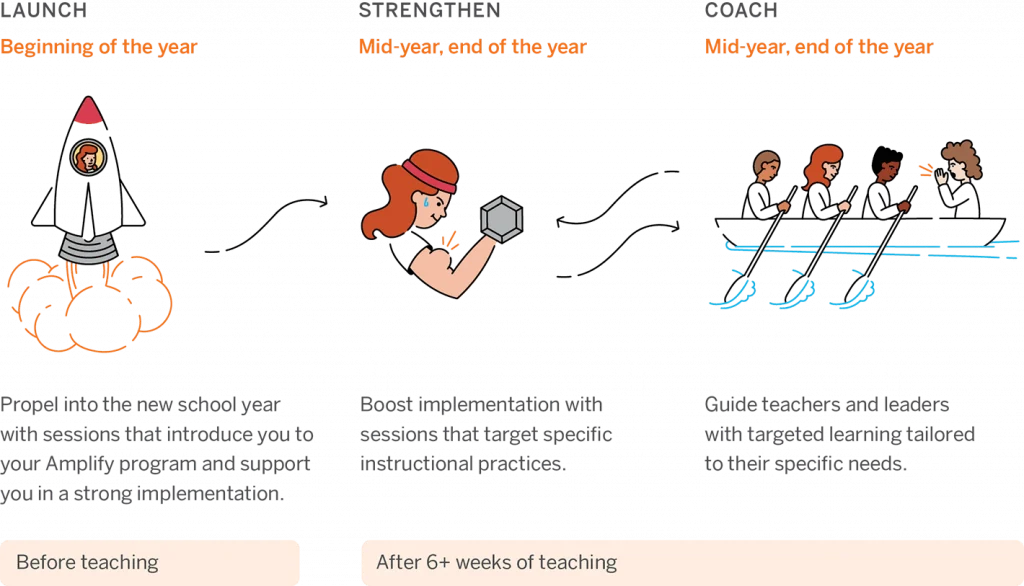
Illustration of three educational phases: a teacher launches a rocket, another reads a book, and four individuals discuss in a meeting setting.

Recommended Professional Development Plan

Our team has curated a recommended professional learning path from initial launch to continuous support. Use the Professional Development Planning Guide below to discuss the plan that best meets your school or district needs with your Account Executive.

mCLASS with DIBELS 8th Edition sessions overview

AudienceTitleDurationModality
Launch
New mCLASS with DIBELS 8th Edition customers with limited time for PDmCLASS with DIBELS 8th Edition program overviewHalf dayOnsite/Remote
New mCLASS with DIBELS 8th Edition customersInitial training1 day onsite or 2 half days remoteOnsite/Remote
Initial training: Train the Trainer1 day onsite or 2 half days remoteOnsite/Remote
Initial trainingSelf-pacedOnline course
Strengthen
mCLASS with DIBELS 8th Edition customers with limited time for PDUnderstanding your classroom dataHalf dayOnsite/Remote
All mCLASS with DIBELS 8th Edition customersClassroom data analysis and instructional planning1 day onsite or 2 half days remoteOnsite/Remote
Classroom data analysis and instructional planning: Train the Trainer1 day onsite or 2 half days remoteOnsite/Remote
Classroom data analysis and instructional planningSelf-pacedOnline course
All mCLASS with DIBELS 8th Edition customersUnderstanding your school or district dataHalf dayOnsite/Remote
Data-driven leadership practices 1 day onsite or 2 half days remoteOnsite/Remote
Data-driven leadership practices: Train the Trainer1 day onsite or 2 half days remoteOnsite/Remote
Data-driven leadership practicesSelf-pacedOnline course
Strengthening consultation session60 min.Remote
Strengthening consultation session package3 60-min. sessionsRemote
Coach
All mCLASS with DIBELS 8th Edition customersCoaching session1 dayOnsite
Coaching sessionHalf dayOnsite/Remote
Building readers
All mCLASS with DIBELS 8th Edition customersBuilding readers for leaders2 half daysOnsite/Remote
Building readers for teachers3 half daysOnsite/Remote

Launch

mCLASS with DIBELS 8th edition program overview

Half day (3 hours)

This PD prepares participants to implement the assessment and collect reliable data using standardized guidelines.

Audience: Teachers (administrators welcome), maximum 30 participants
Modality: Onsite/Remote

Initial training

1 day onsite (6 hours) or 2 half days remote (6 hours)

This PD prepares participants to implement the assessment, collect reliable data using standardized guidelines, and use the targeted lessons available on mCLASS to drive differentiated instruction.

Audience: Teachers (administrators welcome), maximum 30 participants
Modality: Onsite/Remote

Initial training: Train the Trainer

1 day onsite (6 hours) or 2 half days remote (6 hours)

This PD prepares participants to implement the assessment, collect reliable data using standardized guidelines, and use the targeted lessons available on mCLASS to drive differentiated instruction. Participants receive annotated session materials to turnkey the session to colleagues.

Audience: Teachers (administrators welcome), maximum 30 participants
Modality: Onsite/Remote

Initial training

Self-paced

This PD is an individual seat to our self-paced, on-demand online course that contains approximately 6 hours of training. Participants will learn how to implement the assessment, collect reliable data using standardized guidelines, and use the targeted lessons available on mCLASS to drive differentiated instruction. Participants will access and revisit the course anytime for up to one year as a refresher.

Audience: Teachers (administrators welcome)
Modality: Online

Strengthen

Understanding your classroom data

Half day (3 hours)

This PD prepares participants to understand their students’ data by utilizing the reports available on mCLASS. This session should be scheduled after the most recent benchmark window has closed so that participants can work with their own data.

Audience: Teachers (administrators welcome), maximum 30 participants
Modality: Onsite/Remote

Classroom data analysis and instructional planning

1 day onsite (6 hours) or 2 half days remote (6 hours)

This PD prepares participants to deeply understand their students’ data and create actionable instructional plans by utilizing the reports and skills-focused lesson plans available on mCLASS.

Audience: Teachers (administrators welcome), maximum 30 participants
Modality: Onsite/Remote

*This session should be scheduled after the most recent benchmark window has closed so that participants can work with their own data.

Classroom data analysis and instructional planning: Train the Trainer

1 day onsite (6 hours) or 2 half days remote (6 hours)

This PD prepares participants to deeply understand their students’ data and create actionable instructional plans by utilizing the reports and skills-focused lesson plans available on mCLASS. Participants receive annotated session materials to turnkey the session to colleagues.

Audience: Teachers (administrators welcome), maximum 30 participants
Modality: Onsite/Remote

*This session should be scheduled after the most recent benchmark window has closed so that participants can work with their own data.

Classroom data analysis and instructional planning

Online course (self-paced)

This PD is an individual seat to our self-paced, on-demand online course that contains approximately 6 hours of training. Participants will learn how to deeply understand their students’ data and create actionable instructional plans by utilizing the reports and skills-focused lesson plans available on mCLASS. Participants will access and revisit the course anytime for up to one year as a refresher.

Audience: Teachers (administrators welcome)
Modality: Online

Understanding your school or district data

Half day (3 hours)

This PD prepares participants to use their data in making schoolwide decisions. This session should be scheduled after the most recent benchmark window has closed so that participants can work with their own data.

Audience: Administrators, maximum 30 participants
Modality: Onsite/Remote

Data-driven leadership practices

1 day onsite (6 hours) or 2 half days remote (6 hours)

This PD prepares participants to use their data in making school-wide decisions and build a schoolwide culture of data-driven instruction. This session should be scheduled after the most recent benchmark window has closed so that participants can work with their own data.

Audience: Administrators, maximum 30 participants
Modality: Onsite/Remote

Data-driven leadership practices: Train the Trainer

1 day onsite (6 hours) or 2 half days remote (6 hours)

This PD prepares participants to use their data in making school-wide decisions and build a schoolwide culture of data-driven instruction. This session should be scheduled after the most recent benchmark window has closed so that participants can work with their own data. Participants receive annotated session materials to turnkey the session to colleagues.

Audience: Administrators, maximum 30 participants
Modality: Onsite/Remote

Data-driven leadership practices

Online course (self-paced)

This PD is an individual seat to our self-paced, on-demand online course that contains approximately 6 hours of training. Participants will learn how to use their data in making school-wide decisions and build a schoolwide culture of data-driven instruction. Participants will access and revisit the course anytime for up to one year as a refresher.

Audience: Administrators
Modality: Online

Strengthening consultation session

(60-min.)

This 60-minute session will focus on a specific topic that will deepen educators’ understanding of mCLASS and equip them with the tools needed to drive stronger student outcomes. An Amplify facilitator will align with the school or district leadership team in advance of the session on the topic (chosen from a menu of options) that will best meet educators’ unique needs.
Topics include:

  • Progress Monitoring
  • Zones of Growth
  • Data Walkthrough for Leaders

Audience: Teachers and/or administrators, maximum 30 participants
Modality: Remote

Strengthening consultation session package

(3 hours)

This package consists of three 60-minute sessions that can be delivered on the same day or on different days. Each session will focus on a specific topic that will deepen educators’ understanding of mCLASS and equip them in driving towards stronger student outcomes. An Amplify facilitator will align with the school or district’s leadership team in advance on the topics that will best meet educators’ unique needs.
Topics include:

  • Progress Monitoring
  • Zones of Growth
  • Data Walkthrough for Leaders

Audience: Teachers and/or administrators, maximum 30 participants
Modality: Remote

Coach

Coaching session

1 day (6 hours)

This PD will deepen educators’ understanding of how to utilize mCLASS in order to accelerate data-driven student outcomes. An Amplify facilitator will visit one or two school sites for one day and work with teachers and/or leaders. Prior to the visit, the Amplify facilitator will align with each school’s leadership team on their needs and customize the visit schedule accordingly.

Audience: Teachers and/or administrators, maximum 30 participants
Modality: Onsite

Coaching session

Half day (3 hours)

This PD is up to 3 hours of training and will deepen educators’ understanding of how to utilize mCLASS in order to accelerate data-driven student outcomes. An Amplify facilitator will visit one school site for a half-day and work with teachers and/or leaders. Prior to the visit, the Amplify facilitator will align with each school’s leadership team on their needs and customize the visit schedule accordingly.

Audience: Teachers and/or administrators, maximum 30 participants
Modality: Onsite/Remote

Building readers

Building readers for leaders

2 half days (6 hours)

This training session is split into 2 half-day sessions (3 hours each). The same participants should attend both sessions in order to receive all content, which includes learning the Science of Reading and how to align this theory with schoolwide instruction. Part 2 should be scheduled two to three weeks after Part 1.

Audience: Administrators, maximum 30 participants
Modality: Onsite

Building readers for teachers

3 half days (9 hours)

This training series is split into three half-day sessions (3 hours each). The same participants should attend all sessions in order to receive all content, which includes learning the Science of Reading and how to align this theory with classroom instruction. Part 2 should be scheduled two to three weeks after Part 1, and Part 3 should be scheduled two to three weeks after Part 2.

Audience: Teachers (administrators welcome), maximum 30 participants
Modality: Onsite/Remote

mCLASS with DIBELS 8th Edition and TRC sessions overview

AudienceTitleDurationModality
Launch
New mCLASS with DIBELS 8th Edition and TRC customersInitial training1 day onsite or 2 half days remoteOnsite/Remote
Initial training: Train the Trainer1 day onsite or 2 half days remoteOnsite/Remote
Initial trainingSelf-pacedOnline course
Strengthen
All mCLASS with DIBELS 8th Edition and TRC customersClassroom data analysis and instructional planning1 day onsite or 2 half days remoteOnsite/Remote
Data-driven leadership practices1 day onsite or 2 half days remoteOnsite/Remote
Coach
All mCLASS with DIBELS 8th Edition and TRC customersCoaching session1 dayOnsite
Coaching sessionHalf dayOnsite/Remote

Launch

Initial training

1 day onsite (6 hours) or 2 half days remote (6 hours)

This PD prepares participants to implement the assessment, collect reliable data using standardized guidelines, and use the targeted lessons available on mCLASS to drive differentiated instruction.

Audience: Teachers (administrators welcome), maximum 30 participants
Modality: Onsite/Remote

Initial training: Train the Trainer

1 day onsite (6 hours) or 2 half days remote (6 hours)

This PD prepares participants to implement the assessment, collect reliable data using standardized guidelines, and use the targeted lessons available on mCLASS to drive differentiated instruction. Participants receive annotated session materials to turnkey the session to colleagues.

Audience: Teachers (administrators welcome), maximum 30 participants
Modality: Onsite/Remote

Initial training

Self-paced

This PD is an individual seat to our self-paced, on-demand online course that contains approximately 6 hours of training. Participants will learn how to implement the assessment, and collect reliable data using standardized guidelines and use the targeted lessons available on mCLASS to drive differentiated instruction. Participants will access and revisit the course anytime for up to one year as a refresher.

Audience: Teachers (administrators welcome)
Modality: Online

Strengthen

Classroom data analysis and instructional planning

1 day onsite (6 hours) or 2 half days remote (6 hours)

This PD prepares participants to deeply understand their students’ data and create actionable instructional plans by utilizing the reports and skills-focused lesson plans available on mCLASS.

Audience: Teachers (administrators welcome), maximum 30 participants
Modality: Onsite/Remote

*This session should be scheduled after the most recent benchmark window has closed so that participants can work with their own data.

Data-driven leadership practices

1 day onsite (6 hours) or 2 half days remote (6 hours)

This PD prepares participants to use their data in making schoolwide decisions and build a schoolwide culture of data-driven instruction. This session should be scheduled after the most recent benchmark window has closed so that participants can work with their own data.

Audience: Administrators, maximum 30 participants
Modality: Onsite/Remote

Coach

Coaching session

1 day onsite (6 hours)

This PD will deepen educators’ understanding of how to utilize mCLASS in order to accelerate data-driven student outcomes. An Amplify facilitator will visit one or two school sites for one day and work with teachers and/or leaders. Prior to the visit, the Amplify facilitator will align with each school’s leadership team on their needs and customize the visit schedule accordingly.

Audience: Teachers and/or administrators, maximum 30 participants
Modality: Onsite/Remote

Coaching session

Half day (3 hours)

This PD is up to 3 hours of training and will deepen educators’ understanding of how to utilize mCLASS in order to accelerate data-driven student outcomes. An Amplify facilitator will visit one school site for a half-day and work with teachers and/or leaders. Prior to the visit, the Amplify facilitator will align with each school’s leadership team on their needs and customize the visit schedule accordingly.

Audience: Teachers and/or administrators, maximum 30 participants
Modality: Onsite/Remote

mCLASS Lectura sessions overview

AudienceTitleDurationModality
Launch
New mCLASS Lectura Customers with limited time for PDmCLASS Lectura program overviewHalf dayOnsite/Remote
New mCLASS Lectura customersmCLASS Lectura initial training1 day onsite or 2 half days remoteOnsite/Remote
mCLASS Lectura initial training: Train the Trainer1 day onsite or 2 half days remoteOnsite/Remote
mCLASS Lectura Initial trainingSelf-pacedOnline course
Strengthen
All mCLASS Lectura customers with limited time for PDUnderstanding your classroom dataHalf dayOnsite/Remote
All mCLASS Lectura customersClassroom data analysis and instructional planning1 day onsite or 2 half days remoteOnsite/Remote
Classroom data analysis and instructional planning: Train the Trainer1 day onsite or 2 half days remoteOnsite/Remote
Understanding your school or district dataHalf dayOnsite/Remote
Data-driven leadership practices 1 day onsite or 2 half days remoteOnsite/Remote
Data-driven leadership practices: Train the Trainer1 day onsite or 2 half days remoteOnsite/Remote
Strengthening consultation session60 min.Remote
Coach
All mCLASS Lectura customersCoaching session1dayOnsite
Coaching sessionHalf dayOnsite/Remote

Launch

mCLASS Lectura program overview

Half day (3 hours)

This PD prepares participants to implement the assessment and collect reliable data using standardized guidelines.

Audience: Teachers (administrators welcome), maximum 30 participants
Modality: Onsite/Remote

mCLASS Lectura initial training

1 day onsite (6 hours) or 2 half days remote (6 hours)

This PD prepares participants to implement the assessment, collect reliable data using standardized guidelines, and use the targeted lessons available on mCLASS to drive differentiated instruction. While the assessment must be administered in Spanish, English-speaking educators educators who would like to learn about the program but will not be administering the assessment may attend.

Audience: Teachers (administrators welcome), maximum 30 participants
Modality: Onsite/Remote

mCLASS Lectura initial training: Train the Trainer

1 day onsite (6 hours) or 2 half days remote (6 hours)

This PD prepares participants to implement the assessment and collect reliable data using standardized guidelines. While the assessment must be administered in Spanish, English-only speaking educators who would like to learn about the program but will not be administering the assessment may attend. Participants receive annotated session materials to turnkey the session to colleagues.

Audience: Teachers (administrators welcome), maximum 30 participants
Modality: Onsite/Remote

mCLASS Lectura initial training

Online course (self-paced)

This PD is an individual seat to our self-paced, on-demand online course that contains approximately 6 hours of training. Participants will learn how to implement the assessment, collect reliable data using standardized guidelines, and use the targeted lessons available on mCLASS to drive differentiated instruction. Participants will access and revisit the course anytime for up to one year as a refresher.

Audience: Teachers (administrators welcome)
Modality: Online

Strengthen

Understanding your classroom data

Half day (3 hours)

This PD prepares participants to understand their students’ data by utilizing the reports available on mCLASS. This session should be scheduled after the most recent benchmark window has closed so that participants can work with their own data.

Audience: Teachers (administrators welcome), maximum 30 participants
Modality: Onsite/Remote

Classroom data analysis and instructional planning

1 day onsite (6 hours) or 2 half days remote (6 hours)

This PD prepares participants to deeply understand their students’ data and create actionable instructional plans by utilizing the reports and skills-focused lesson plans available on mCLASS.

Audience: Teachers (administrators welcome), maximum 30 participants
Modality: Onsite/Remote

*This session should be scheduled after the most recent benchmark window has closed so that participants can work with their own data.

Classroom data analysis and instructional planning: Train the Trainer

1 day onsite (6 hours) or 2 half days remote (6 hours)

This PD prepares participants to deeply understand their students’ data and create actionable instructional plans by utilizing the reports and skills-focused lesson plans available on mCLASS. Participants receive annotated session materials to turnkey the session to colleagues.

Audience: Teachers (administrators welcome), maximum 30 participants
Modality: Onsite/Remote

*This session should be scheduled after the most recent benchmark window has closed so that participants can work with their own data.

Understanding your school or district data

Half day (3 hours)

This PD prepares participants to use their data in making schoolwide decisions. This session should be scheduled after the most recent benchmark window has closed so that participants can work with their own data.

Audience: Administrators, maximum 30 participants
Modality: Onsite/Remote

Data-driven leadership practices

1 day onsite (6 hours) or 2 half days remote (6 hours)

This PD prepares participants to use their data in making school-wide decisions and build a schoolwide culture of data-driven instruction. This session should be scheduled after the most recent benchmark window has closed so that participants can work with their own data.

Audience: Administrators, maximum 30 participants
Modality: Onsite/Remote

Data-driven leadership practices: Train the Trainer

1 day onsite (6 hours) or 2 half days remote (6 hours)

This PD prepares participants to use their data in making schoolwide decisions and build a schoolwide culture of data-driven instruction. This session should be scheduled after the most recent benchmark window has closed so that participants can work with their own data. Participants receive annotated session materials to turnkey the session to colleagues.

Audience: Administrators, maximum 30 participants
Modality: Onsite/Remote

Strengthening consultation session package

(3 hours)

This package consists of three 60-minute sessions that can be delivered on the same day or on different days. Each session will focus on a specific topic that will deepen educators’ understanding of mCLASS and equip them with the tools needed to drive stronger student outcomes. An Amplify facilitator will align with the school or district leadership team in advance of the session on the topic (chosen from a menu of options) that will best meet educators’ unique needs. Topics include progress monitoring, goal setting, and a data walkthrough for leaders.

Audience: Teachers (administrators welcome), maximum 30 participants
Modality: Remote

Coach

Coaching session

1 day (6 hours)

This PD will deepen educators’ understanding of how to utilize mCLASS in order to accelerate data-driven student outcomes. An Amplify facilitator will visit 1–2 school sites for one day and work with teachers and/or leaders. Prior to the visit, the Amplify facilitator will align with each school’s leadership team on their needs and customize the visit schedule accordingly.

Audience: Teachers and/or administrators, maximum 30 participants
Modality: Onsite

Coaching session

Half day (3 hours)

This PD is up to 3 hours of training and will deepen educators’ understanding of how to utilize mCLASS in order to accelerate data-driven student outcomes. An Amplify facilitator will visit 1 school site for a half-day and work with teachers and/or leaders. Prior to the visit, the Amplify facilitator will align with each school’s leadership team on their needs and customize the visit schedule accordingly.

Audience: Teachers and/or administrators, maximum 30 participants
Modality: Onsite/Remote

LaunchStrengthenOngoing
BOYAfter BOY or MOYAfter BOY or MOY
New customersProgram overviewUnderstanding your classroom dataCoaching session
Initial trainingUnderstanding your school or district dataBuilding readers for teachers
Strengthening consultation session/packageBuilding readers for leaders
Returning customersCoaching session (refresher content)Classroom data analysis and instructional planningCoaching session
Data-driven leadership practicesBuilding readers for teachers
Strengthening consultation session/packageBuilding readers for leaders
*Note: If you are currently delivering instruction in a hybrid or remote model, we recommend that all of the sessions above be delivered remotely.

mCLASS Express sessions overview

TitleDurationModality
Launch
Initial trainingHalf dayOnsite/Remote
Initial trainingSelf-pacedOnline course

Launch

Initial training

Half day (3 hours)

Take the first step in launching mCLASS Express! The half-day initial training will help educators understand how mCLASS Express’ voice-recognition scoring generates immediate instructional recommendations for students reading below grade level. Educators will also learn how to utilize the teacher portal to assign assessments, review and correct scoring, track student growth over time, and leverage the program’s activities to create an action plan for a single classroom or across classes/grades.

Audience: Teachers (administrators welcome), maximum 30 participants
Modality: Onsite/Remote

Initial training

Self-paced (2 hours)

Take the first step in launching mCLASS Express! The two-hour initial training will help educators understand how mCLASS Express’ voice-recognition scoring generates immediate instructional recommendations for students reading below grade level. Educators will also learn how to utilize the teacher portal to assign assessments, review and correct scoring, track student growth over time, and leverage the program’s activities to create an action plan for a single classroom or across classes/grades.

As this is a self-paced, on-demand online course, participants will be able to access the course anytime, move as quickly or slowly as needed through different sections, and revisit the course up to one year as a refresher in the future.

Audience: Teachers (administrators welcome), maximum 30 participants
Modality: Online

mCLASS: IDEL sessions overview

TitleDurationModality
Launch
mCLASS IDEL program overviewHalf dayOnsite/Remote
Initial training1 dayOnsite/Remote
Initial training: Train the Trainer1 dayOnsite/Remote
Initial trainingSelf-pacedOnline course

Launch

mCLASS IDEL program overview

Half day (3 hours)

This PD prepares participants to implement the assessment and collect reliable data using standardized guidelines.

Audience: Teachers (administrators welcome), maximum 30 participants
Modality: Onsite/Remote

Initial training

1 day onsite (6 hours) or 2 half days remote (6 hours)

Prepare to implement your mCLASS:IDEL assessment with fidelity! Learn about the five basic early literacy skills that are crucial for reading development, and understand how they are assessed on the mCLASS:IDEL assessment. Then, practice administering and scoring each assessment measure and receive targeted feedback from a facilitator. Upon completion of this session, participants will be on their way to collecting reliable data to support all students.

Audience: Teachers and/or administrators, maximum 30 participants
Modality: Onsite/Remote

Initial training: Train the Trainer

1 day onsite (6 hours) or 2 half days remote (6 hours)

Prepare to implement your mCLASS:IDEL assessment with fidelity! Learn about the five basic early literacy skills that are crucial for reading development, and understand how they are assessed on the mCLASS:IDEL assessment. Then, practice administering and scoring each assessment measure and compare your responses to exemplars. As this is a Train the Trainer session, participants will receive annotated session materials in order to turnkey the session to colleagues.

Audience: Teachers and/or administrators, maximum 30 participants
Modality: Onsite/Remote

Initial training

Online course (self-paced)

This PD is an individual seat to our self-paced, on-demand online course that contains approximately 6 hours of training. Participants will learn how to implement the assessment, collect reliable data using standardized guidelines, and use the targeted lessons available on mCLASS to drive differentiated instruction. Participants will access and revisit the course anytime for up to one year as a refresher.

Audience: Teachers (administrators welcome)
Modality: Online

TRC Atlas Español

Launch

TRC Atlas Español program overview

Half day (3 hours)

This PD prepares participants to implement the assessment and collect reliable data using standardized guidelines.

Audience: Teachers (administrators welcome), maximum 30 participants
Modality: Onsite/Remote

mCLASS Math sessions overview

AudienceTitleDurationModality
Launch
New mCLASS Math customers with limited time for PDmCLASS Math program overviewHalf dayOnsite/Remote
New mCLASS Math customersInitial training1 day onsite or 2 half days remoteOnsite/Remote
Initial training: Train the Trainer1 day onsite or 2 half days remoteOnsite/Remote
Strengthen
All mCLASS Math customers with limited time for PDUnderstanding your classroom dataHalf dayOnsite/Remote
All mCLASS Math customersClassroom data analysis and instructional planning1 day onsite or 2 half days remoteOnsite/Remote
Classroom data analysis and instructional planning: Train the Trainer1 day onsite or 2 half days remoteOnsite/Remote
Understanding your school or district dataHalf dayOnsite/Remote
Data-driven leadership practices1 day onsite or 2 half days remoteOnsite/Remote
Data-driven leadership practices: Train the Trainer1 day onsite or 2 half days remoteOnsite/Remote

Launch

mCLASS Math program overview

Half day (3 hours)

This PD prepares participants to implement the assessment and collect reliable data using standardized guidelines.

Audience: Teachers (administrators welcome), maximum 30 participants
Modality: Onsite/Remote

Initial training

1 day onsite (6 hours) or 2 half days remote (6 hours)

Learn the foundational research for mCLASS Math and how it supports students’ abilities in mathematical reasoning. Understand the various assessment components and develop techniques for interviewing students and documenting their thinking. Interpret assessment results, and brainstorm suggested instructional activities. Upon completion of this session, participants will be on their way to collecting reliable data.

Audience: Teachers (administrators welcome), maximum 30 participants
Modality: Onsite/Remote

Initial training: Train the Trainer

1 day onsite (6 hours) or 2 half days remote (6 hours)

Learn the foundational research for mCLASS Math and how it supports students’ abilities in mathematical reasoning. Understand the various assessment components, and develop techniques for interviewing students and documenting their thinking. Interpret assessment results, and brainstorm suggested instructional activities. Upon completion of this session, participants will be on their way to collecting reliable data. Participants receive annotated session materials to turnkey the session to colleagues.

Audience: Teachers (administrators welcome), maximum 30 participants
Modality: Onsite/Remote

Strengthen

Understanding your classroom data

Half day (3 hours)

This PD prepares participants to understand their students’ data by utilizing the reports available on mCLASS. This session should be scheduled after the most recent benchmark window has closed so that participants can work with their own data.

Audience: Teachers (administrators welcome), maximum 30 participants
Modality: Onsite/Remote

Classroom data analysis and instructional planning

1 day onsite (6 hours) or 2 half days remote (6 hours)

This PD prepares participants to deeply understand their students’ data and create actionable instructional plans by utilizing the reports available on mCLASS.

Audience: Teachers (administrators welcome), maximum 30 participants
Modality: Onsite/Remote

*This session should be scheduled after the most recent benchmark window has closed so that participants can work with their own data.

Classroom data analysis and instructional planning: Train the Trainer

1 day Onsite (6 hours) or 2 half days Remote (6 hours)

This PD prepares participants to deeply understand their students’ data and create actionable instructional plans by utilizing the reports available on mCLASS. Participants receive annotated session materials to turnkey the session to colleagues.

Audience: Teachers (administrators welcome), maximum 30 participants
Modality: Onsite/Remote

*This session should be scheduled after the most recent benchmark window has closed so that participants can work with their own data.

Understanding your School or District Data

Half day (3 hours)

This PD prepares participants to use their data in making schoolwide decisions. This session should be scheduled after the most recent benchmark window has closed so that participants can work with their own data.

Audience: Administrators, maximum 30 participants
Modality: Onsite/Remote

Data-driven leadership practices

1 day onsite (6 hours) or 2 half days remote (6 hours)

This PD prepares participants to use their data in making schoolwide decisions and build a schoolwide culture of data-driven instruction. This session should be scheduled after the most recent benchmark window has closed so that participants can work with their own data.

Audience: Administrators, maximum 30 participants
Modality: Onsite/Remote

Data-driven leadership practice: Train the Trainer

1 day onsite (6 hours) or 2 half days remote (6 hours)

This PD prepares participants to use their data in making schoolwide decisions and build a schoolwide culture of data-driven instruction. This session should be scheduled after the most recent benchmark window has closed so that participants can work with their own data. Participants receive annotated session materials to turnkey the session to colleagues.

Audience: Administrators, maximum 30 participants
Modality: Onsite/Remote

Contact

Amplify welcomes the opportunity to partner with schools and districts to design professional development plans and answer your questions.

If you would like to order any of our professional development services, please contact your local Amplify sales representative or call (800) 823-1969.
Amplify Science – West Virginia – state review

To view this protected page, enter the password below:


Amplify Texas, K–5

Built on a systematic scope and sequence, Amplify Texas, K–5 programs offer the explicit instruction needed in today’s classrooms. Amplify Texas includes both English and Spanish curriculums. The print version of the English curriculum is titled Amplify Texas ELAR (English Language Arts and Reading). The digital version of the English curriculum is titled Amplify Texas Elementary Literacy Program. The print version of the Spanish curriculum is titled Amplify Texas SLAR (Spanish Language Arts and Reading). The digital version of the Spanish curriculum is titled Amplify Texas Lectoescritura.

We’ve created a wide suite of professional development offerings that will help you meet your unique needs this school year. Find out more below!

Professional Learning Partner Guide Certified Provider

Amplify CKLA, ELA, and Science professional development has been vetted by Rivet Education’s team through a rigorous three-step process and is listed in the Professional Learning Partner Guide.

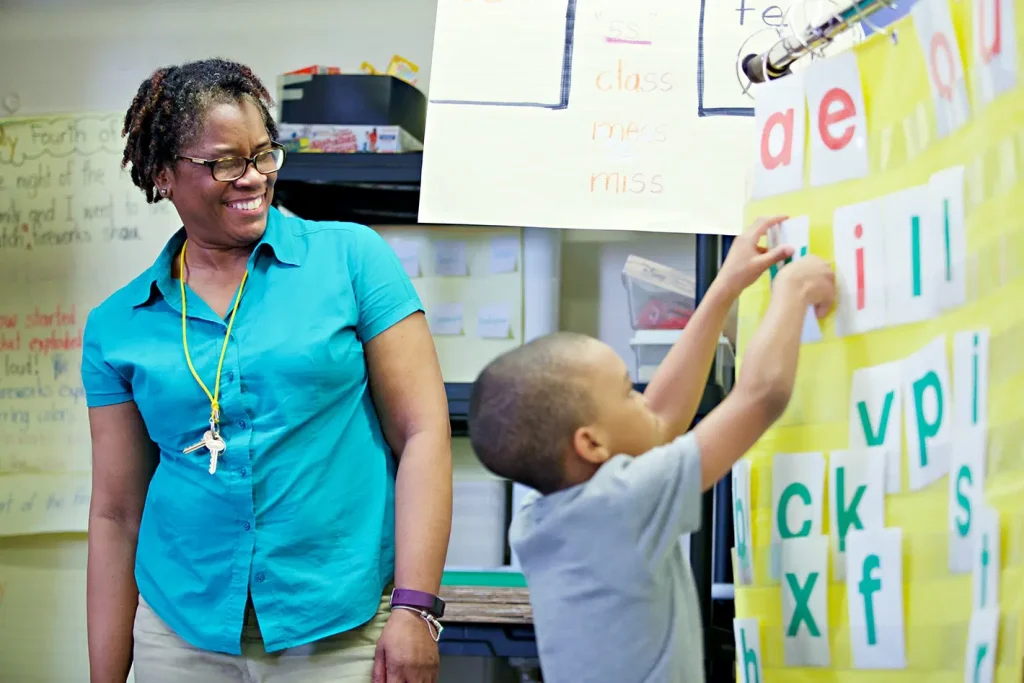
Teacher observes student completing activity

Plan your professional development

We’re excited to partner with you on your Amplify journey. Flexible professional development pathways have been designed to meet your needs.

Illustration of three educational phases: a teacher launches a rocket, another reads a book, and four individuals discuss in a meeting setting.

Recommended Professional Development Plan

Our team has curated a recommended professional learning path from initial launch to continuous support. Use the Professional Development Planning Guide below to discuss the plan that best meets your school or district needs with your Account Executive.

ELAR

SLAR

Session overview

Recommended sessions are highlighted below.
Audience Title Duration Modality Available
Launch
K–5 instructional leaders Amplify Texas Elementary Literacy Program (digital) and ELAR (print) initial training Half day Onsite/Remote Yes
K–2 teachers Amplify Texas Elementary Literacy Program (digital) and ELAR (print) initial training 1 day Onsite Yes
K–2 teachers Amplify Texas Elementary Literacy Program (digital) and ELAR (print) initial training
2 half days
Remote Yes
Amplify Texas Elementary Literacy Program (digital) and ELAR (print) program overview Half day Onsite/Remote 5/1/22
Amplify Texas Elementary Literacy Program (digital) and ELAR (print) Skills Strand initial training 1 day onsite
or 2 half days
remote
Onsite/Remote Yes
Amplify Texas Elementary Literacy Program (digital) and ELAR (print) Skills Strand program overview Half day Onsite/Remote 5/1/22
Amplify Texas Elementary Literacy Program (digital) Knowledge Strand initial training 1 day onsite
or 2 half days
remote
Onsite/Remote Yes
Amplify Texas Elementary Literacy Program (digital) Knowledge Strand program overview Half day Onsite/Remote 5/1/22
K–2 teachers Amplify Texas Lectoescritura (digital) and SLAR (print) initial training 1 day onsite or 2 half days remote Onsite/Remote 5/1/22
K–2 teachers Amplify Texas Lectoescritura (digital) and SLAR (print) program overview Half day Onsite/Remote 5/1/22
Amplify Texas Lectoescritura (digital) and SLAR (print) Skills Strand (Habilidades y destrezas) initial training 1 day onsite or 2 half days remote Onsite/Remote 5/1/22 
Amplify Texas Lectoescritura (digital) and SLAR (print) Skills Strand (Habilidades y destrezas) program overview Half day Onsite/Remote  10/1/22 
Amplify Texas Lectoescritura (digital) and SLAR (print) Skills Strand (Conocimiento) initial training 1 day onsite or 2 half days remote Onsite/Remote Yes
Amplify Texas Lectoescritura (digital) and SLAR (print) Skills Strand (Conocimiento) program overview  Half day Onsite/Remote  5/1/22 
3–5 teachers Amplify Texas Elementary Literacy program (digital) and ELAR (print) initial training 1 day or 2 half days remote Onsite/Remote Yes
3–5 teachers Amplify Texas Elementary Literacy program (digital) and ELAR (print) program overview Half day Onsite/Remote 5/1/22
3–5 teachers Amplify Texas Lectoescritura (digital) and SLAR (print) initial training 1 day onsite or 2 half days remote Onsite/Remote Yes
3–5 teachers Amplify Texas Lectoescritura (digital) and SLAR (print) program overview Half day Onsite/Remote 5/1/22
Strengthen
K–5 leaders Amplify Texas ELAR enhancing observations for leaders Half day Onsite/Remote 9/1/22
K–2 teachers


Amplify Texas ELAR enhancing planning & practice for K–2 teachers Half day Onsite/Remote Yes
K–2 teachers Amplify Texas ELAR writing for K–2 teachers Half day Onsite/Remote Yes
Amplify Texas SLAR enhancing planning & practice for K–2 teachers 1 day onsite
or 2 half days
remote
Onsite/Remote Yes
Amplify Texas SLAR writing for K–2 teachers Half day Onsite/Remote 12/1/22
3–5 teachers Amplify Texas ELAR enhancing planning & practice for 3–5 teachers Half day Onsite/Remote  Yes
3–5 teachers Amplify Texas ELAR writing for 3–5 teachers Half day Onsite/Remote Yes
Amplify Texas SLAR enhancing planning & practice for 3–5 teachers Half day Onsite/Remote Yes
Amplify Texas SLAR writing for 3–5 teachers Half day Onsite/Remote 12/1/22
K–5 teachers


Amplify Texas ELAR enhancing planning & instruction for English language learners Half day Onsite/Remote 9/1/22
Amplify Texas ELAR enhancing planning & instruction for students with special needs
Half day Onsite/Remote 9/1/22
Amplify Texas ELAR Strengthening consultation session 1 hour or 3 1-hour sessions Remote 2/1/22
Amplify Texas SLAR Strengthening consultation session 1 hour or 3 1-hour sessions Remote 2/1/22
Coaching sessions

K–5 educators (leaders, principals, coaches, and teachers)

Amplify Texas ELAR Coaching session 2 days consecutive Onsite Yes 
K–5 educators (leaders, principals, coaches, and teachers)


Amplify Texas ELAR Coaching session 1 day onsite or 2 half days remote
 
Onsite/Remote Yes
Amplify Texas ELAR Coaching session Half day Remote

Yes


Amplify Texas SLAR Coaching session 2 days consecutive Onsite Yes
Amplify Texas SLAR Coaching session 1 day onsite
or 2 half days
remote
Onsite/Remote Yes
Amplify Texas SLAR Coaching session Half day Remote Yes

Launch

K–5 instructional leaders

Amplify Texas Elementary Literacy Program (digital) and ELAR (print) initial training for K–5 instructional leaders

Half day (3 hours)

Prepare to implement and support Amplify Texas instruction in your schools! Learn how Amplify Texas supports students as they build literacy skills in the early grades and move among reading, writing, speaking and listening, and language activities in the upper grades. Understand the purpose of the Amplify Texas program (Skills, Knowledge, and Integrated Strands) and identify components of the Amplify Texas design principles within lessons. Participants will begin creating an action plan to support communication and change management related to Amplify Texas to staff, parents, and other stakeholders.

Audience: Instructional leaders (principals and coaches), maximum 30 participants
Modality: Onsite/Remote

K–2 teachers

Amplify Texas Elementary Literacy Program (digital) and ELAR (print) initial training for K–2 teachers

1 day onsite (6 hours) or 2 half days remote (6 hours)

Prepare to implement the Amplify Texas K–2 program in your classroom! Learn the foundational elements of Amplify Texas, including the structure of materials, key lesson elements, and how to deliver specific lesson types successfully.

Audience: Teachers (instructional leaders welcome), maximum 30 participants
Modality: Onsite/Remote

Amplify Texas Elementary Literacy Program (digital) and ELAR (print) program overview for K–2 teachers

Half day (3 hours)

Prepare to implement the Amplify Texas K–2 program in your classroom! Learn the foundational elements of the curriculum, including the structure of materials, key lesson elements, and how to deliver specific lesson types successfully.

Audience: Teachers (instructional leaders welcome), maximum 30 participants
Modality: Onsite/Remote

Amplify Texas Elementary Literacy Program (digital) and ELAR (print) Skills Strand initial training for K–2 teachers

1 day onsite (6 hours) or 2 half days remote (6 hours)

Prepare to implement the Amplify Texas Skills Strand program in your classroom! Learn the foundational elements of Amplify Texas, including the structure of materials, key lesson elements, and how to deliver specific lesson types successfully. Participants will begin planning for the first unit and lessons.

Audience: Teachers (instructional leaders welcome), maximum 30 participants
Modality: Onsite/Remote

Amplify Texas Elementary Literacy Program (digital) and ELAR (print) Skills Strand program overview for K–2 teachers

Half day (3 hours)

Prepare to implement the Amplify Texas Skills Strand in your classroom! Learn the foundational elements of the curriculum, including the structure of materials, key lesson elements, and how to deliver specific lesson types successfully.

Audience: Teachers (instructional leaders welcome), maximum 30 participants
Modality: Onsite/Remote

Amplify Texas Elementary Literacy Program (digital) and ELAR (print) Knowledge Strand initial training for K–2 teachers

1 day onsite (6 hours) or 2 half days remote (6 hours)

Prepare to implement the Amplify Texas Knowledge Strand program in your classroom! Learn the foundational elements of Amplify Texas, including the structure of materials, key lesson elements, and how to deliver specific lesson types successfully. Participants will begin planning for the first unit and lessons.

Audience: Teachers (instructional leaders welcome), maximum 30 participants
Modality: Onsite/Remote

Amplify Texas Elementary Literacy Program (digital) and ELAR (print) Knowledge Strand program overview for K–2 teachers

Half day (3 hours)

Prepare to implement the Amplify Texas Knowledge Strand in your classroom! Learn the foundational elements of the curriculum, including the structure of materials, key lesson elements, and how to deliver specific lesson types successfully.

Audience: Teachers (instructional leaders welcome), maximum 30 participants
Modality: Onsite/Remote

Amplify Texas Lectoescritura (digital) and SLAR (print) initial training for K–2 teachers

1 day onsite (6 hours) or 2 half days remote (6 hours)

Prepare to implement Amplify Texas program in your classroom! Learn the foundational elements of Amplify Texas, including the structure of materials, key lesson elements, and how to deliver specific lesson types successfully. Participants will begin planning for the first unit and lessons.

Audience: Teachers (instructional leaders welcome), maximum 30 participants
Modality: Onsite/Remote

Amplify Texas Elementary Lectoescritura (digital) and SLAR (print) program overview for K–2 teachers

Half day (3 hours)

Prepare to implement Amplify Texas in your classroom! Learn the foundational elements of the curriculum, including the structure of materials, key lesson elements, and how to deliver specific lesson types successfully.

Audience: Teachers (instructional leaders welcome), maximum 30 participants
Modality: Onsite/Remote

Amplify Texas Lectoescritura (digital) and SLAR (print) Skills Strand (Habilidades y destrezas) initial training for K–2 teachers

1 day onsite (6 hours) or 2 half days remote (6 hours)

Prepare to implement Amplify Texas Skills Strand (Habilidades y destrezas) program in your classroom! Learn the foundational elements of Amplify Texas, including the structure of materials, key lesson elements, and how to deliver specific lesson types successfully. Participants will begin planning for the first unit and lessons.

Audience: Teachers (instructional leaders welcome), maximum 30 participants
Modality: Onsite/Remote

Amplify Texas Elementary Lectoescritura (digital) and SLAR (print) Skills Strand (Habilidades y destrezas) program overview for K–2 teachers

Half day (3 hours)

Prepare to implement Amplify Texas Skills Strand (Habilidades y destrezas) in your classroom! Learn the foundational elements of the curriculum, including the structure of materials, key lesson elements, and how to deliver specific lesson types successfully.

Audience: Teachers (instructional leaders welcome), maximum 30 participants
Modality: Onsite/Remote

Amplify Texas Lectoescritura (digital) and SLAR (print) Knowledge Strand (Conocimiento) initial training for K–2 teachers

1 day onsite (6 hours) or 2 half days remote (6 hours)

Prepare to implement Amplify Texas Knowledge Strand (Conocimiento) program in your classroom! Learn the foundational elements of Amplify Texas, including the structure of materials, key lesson elements, and how to deliver specific lesson types successfully. Participants will begin planning for the first unit and lessons.

Audience: Teachers (instructional leaders welcome), maximum 30 participants
Modality: Onsite/Remote

Amplify Texas Elementary Lectoescritura (digital) and SLAR (print) Knowledge Strand (Conocimiento) program overview for K–2 teachers

Half day (3 hours)

Prepare to implement Amplify Texas Knowledge Strand (Conocimiento) in your classroom! Learn the foundational elements of the curriculum, including the structure of materials, key lesson elements, and how to deliver specific lesson types successfully.

Audience: Teachers (instructional leaders welcome), maximum 30 participants
Modality: Onsite/Remote

3-5 Teachers

Amplify Texas Elementary Literacy Program (digital) and ELAR (print) initial training for 3–5 teachers

1 day onsite (6 hours) or 2 half days remote (6 hours)

Prepare to implement the Amplify Texas 3–5 program in your classroom! Learn the foundational elements of Amplify Texas, including the structure of materials, key lesson elements, and how to deliver specific lesson types successfully.

Audience: Teachers (instructional leaders welcome), maximum 30 participants
Modality: Onsite/Remote

Amplify Texas Elementary Literacy Program (digital) and ELAR (print) program overview for 3–5 teachers

Half day (3 hours)

Prepare to implement the Amplify Texas 3–5 program in your classroom! Learn the foundational elements of the curriculum, including the structure of materials, key lesson elements, and how to deliver specific lesson types successfully.

Audience: Teachers (instructional leaders welcome), maximum 30 participants
Modality: Onsite/Remote

Amplify Texas Lectoescritura (digital) and SLAR (print) initial training for 3–5 teachers

1 day onsite (6 hours) or 2 half days remote (6 hours)

Prepare to implement the Amplify Texas 3–5 program in your classroom! Learn the foundational elements of Amplify Texas, including the structure of materials, key lesson elements, and how to deliver specific lesson types successfully.

Audience: Teachers (instructional leaders welcome), maximum 30 participants
Modality: Onsite/Remote

Amplify Texas Lectoescritura (digital) and SLAR (print) program overview for 3–5 teachers

Half day (3 hours)

Prepare to implement the Amplify Texas 3–5 program in your classroom! Learn the foundational elements of the curriculum, including the structure of materials, key lesson elements, and how to deliver specific lesson types successfully.

Audience: Teachers (instructional leaders welcome), maximum 30 participants
Modality: Onsite/Remote

Strengthen

K–5 leaders

Amplify Texas ELAR enhancing observations for K–5 leaders

Half day (3 hours)
Prerequisite training: Initial training for instructional leaders

Elevate program knowledge to support colleagues with effective Amplify Texas implementation! Practice analyzing Amplify Texas lessons and identify key instructional elements and next steps. Participants will be prepared to collect data and enhance classroom observations.

Audience: Instructional leaders (principals and coaches), maximum 30 participants
Modality: Onsite/Remote

K–2 teachers

Amplify Texas ELAR enhancing planning & practice for K–2 teachers

Half day (3 hours)
Prerequisite training: Initial training for K–2 teachers

Elevate program knowledge to strengthen your Amplify Texas K–2 implementation! Understand the progression of foundational skills and focus on high-quality questioning and discussion techniques through lesson study and practice. Participants will practice implementing key instructional elements and leave with annotated lessons.

Audience: K–2 teachers (instructional leaders welcome), maximum 30 participants
Modality: Onsite/Remote

Amplify Texas ELAR writing for K–2 teachers

Half day (3 hours)
Prerequisite training: Initial training for K–2 teachers and 2–3 months of Amplify Texas instruction

Dig into Amplify Texas writing instruction and student work in grades K–2! Identify writing opportunities in the Amplify Texas Skills and Knowledge Strand through analysis of a unit and daily lessons and analyze student writing using a program-aligned rubric. Participants will leave with an annotated unit highlighting the writing opportunities and student grouping suggestions.

Audience: K–2 teachers (instructional leaders welcome), maximum 30 participants
Modality: Onsite/Remote

Amplify Texas SLAR enhancing planning & practice for K–2 teachers

Half day (3 hours)
Prerequisite training: Initial training for K–2 teachers

Elevate program knowledge to strengthen your Amplify Texas K–2 implementation! Understand the progression of foundational skills and focus on high-quality questioning and discussion techniques through lesson study and practice. Participants will practice implementing key instructional elements and leave with annotated lessons.

Audience: K–2 teachers (instructional leaders welcome), maximum 30 participants
Modality: Onsite/Remote

Amplify Texas SLAR writing for K–2 teachers

Half day (3 hours)
Prerequisite training: Initial training for K–2 teachers and 2–3 months of Amplify Texas instruction

Dig into Amplify Texas writing instruction and student work in grades K–2! Identify writing opportunities in the Amplify Texas curriculum through analysis of a unit and daily lessons and analyze student writing using a program-aligned rubric. Participants will leave with an annotated unit highlighting the writing opportunities and student grouping suggestions.

Audience: K–2 teachers (instructional leaders welcome), maximum 30 participants
Modality: Onsite/Remote

3–5 teachers

Amplify Texas ELAR enhancing planning & practice for
3–5 teachers

Half day (3 hours)
Prerequisite training: Initial training for 3–5 teachers

Elevate program knowledge to strengthen your Amplify Texas 3–5 implementation! Understand the progression of foundational skills and focus on high-quality questioning and discussion techniques through lesson study and practice. Participants will practice implementing key instructional elements and leave with annotated lessons.

Audience: K–2 teachers (instructional leaders welcome), maximum 30 participants
Modality: Onsite/Remote

Amplify Texas ELAR writing for 3–5 teachers

Half day (3 hours)
Prerequisite training: Initial training for K–2 teachers and 2–3 months of Amplify Texas instruction

Dig into Amplify Texas writing instruction and student work in grades 3–5! Identify writing opportunities in the Amplify Texas curriculum through analysis of a unit and daily lessons and analyze student writing using a program-aligned rubric. Participants will leave with an annotated unit highlighting the writing opportunities and student grouping suggestions.

Audience: K–2 teachers (instructional leaders welcome), maximum 30 participants
Modality: Onsite/Remote

Amplify Texas SLAR enhancing planning & practice for
3–5 teachers

Half day (3 hours)
Prerequisite training: Initial training for 3–5 teachers

Elevate program knowledge to strengthen your Amplify Texas 3–5 implementation! Understand the progression of foundational skills and focus on high-quality questioning and discussion techniques through lesson study and practice. Participants will practice implementing key instructional elements and leave with annotated lessons.

Audience: K–2 teachers (instructional leaders welcome), maximum 30 participants
Modality: Onsite/Remote

Amplify Texas SLAR writing for 3–5 teachers

Half day (3 hours)
Prerequisite training: Initial training for K–2 teachers and 2–3 months of Amplify Texas instruction

Dig into Amplify Texas writing instruction and student work in grades 3–5! Identify writing opportunities in the Amplify Texas curriculum through analysis of a unit and daily lessons and analyze student writing using a program-aligned rubric. Participants will leave with an annotated unit highlighting the writing opportunities and student grouping suggestions.

Audience: K–2 teachers (instructional leaders welcome), maximum 30 participants
Modality: Onsite/Remote

K–5 teachers

Amplify Texas ELAR enhancing planning & instruction for English language learners for K–5 teachers

Half day (3 hours)

Prerequisite training: Initial training

Develop a strong understanding of how to support English language learners (ELLs) with Amplify Texas instruction! Identify program-embedded instructional supports and strategies for ELL students of varying proficiency levels and plan how to adjust instruction based on formative check points. Participants will begin to develop a plan for using program supports and strategies for ELL instruction.

Audience: K–5 classroom teachers and ELL specialists (instructional leaders welcome), maximum 30 participants
Modality: Onsite/Remote

Amplify Texas enhancing planning & instruction for students with special needs for K–5 teachers

Half day (3 hours)

Develop a strong understanding of how to support students with special needs! Identify program-embedded instructional supports and strategies for students with special needs, including connections to IEP goals, and plan how to adjust instruction. Participants will leave with an accommodation plan aligned to Amplify Texas instruction and IEP goals.

Audience: K–5 classroom teachers and special education specialists (instructional leaders welcome), maximum 30 participants
Modality: Onsite/Remote

Amplify Texas ELAR Strengthening consultation session

1 hour or 3 1-hour sessions

These 60-minute sessions will focus on a specific topic that will deepen educators’ understanding of Amplify Texas and equip them with the support they need to drive toward stronger student outcomes. An Amplify facilitator will align with the school or district leadership team in advance of the session on the topic (chosen from a menu of options) that will best meet educators’ unique needs. The menu includes sessions on engagement, pacing, and supporting all learners.

Audience: K–5 classroom teachers (instructional leaders welcome), maximum 30 participants
Modality: Remote

Amplify Texas SLAR Strengthening consultation session

1 hour or 3 1-hour sessions

These 60-minute sessions will focus on a specific topic that will deepen educators’ understanding of Amplify Texas and equip them with the support they need to drive toward stronger student outcomes. An Amplify facilitator will align with the school or district leadership team in advance of the session on the topic (chosen from a menu of options) that will best meet educators’ unique needs. The menu includes sessions on engagement, pacing, and supporting all learners.

Audience: K–5 classroom teachers (instructional leaders welcome), maximum 30 participants
Modality: Remote

Coach

K–5 educators (leaders, principals, coaches, teachers)

Amplify Texas ELAR Coaching for K–5 educators

2 days consecutive (6 hours per day, 12 total)

Prerequisite training: Initial training

Strengthen your implementation of Amplify Texas with a Coaching onsite visit for your teachers and/or leaders! An Amplify facilitator will visit 1–4 school sites for two days. Participants can choose from a variety of topics that include, but are not limited to: lesson modeling (conducted by an Amplify Texas facilitator) and debriefing, grade-level planning, classroom observations, and leadership consultation. The flexible onsite coaching design allows for a collaborative approach to support effective program implementation.

Audience: Teachers and/or instructional leaders (principals and coaches), maximum 30 participants
Modality: Onsite

Amplify Texas ELAR Coaching for K–5 educators

1 day onsite (6 hours) or 2 half days remote (6 hours)

Prerequisite training: Initial training

Strengthen your implementation of Amplify Texas with a Coaching onsite visit for your teachers and/or leaders! An Amplify facilitator will visit 1–2 school sites for one day. Participants can choose from a variety of topics that include, but are not limited to: lesson modeling (conducted by an Amplify Texas facilitator) and debriefing, grade-level planning, classroom observations, and leadership consultation. The flexible onsite coaching design allows for a collaborative approach to support effective program implementation.

Audience: Teachers and/or instructional leaders (principals and coaches), maximum 30 participants
Modality: Onsite/Remote

Amplify Texas ELAR Coaching for K–5 educators

Half day (3 hours)

Prerequisite training: Initial training

Strengthen your implementation of Amplify Texas with a Coaching onsite visit for your teachers and/or leaders! An Amplify facilitator will virtually visit for a half day. Participants can choose from a variety of topics that include, but are not limited to: lesson modeling (conducted by an Amplify Texas facilitator) and debriefing, grade-level planning, classroom observations, and leadership consultation.

Audience: Teachers and/or instructional leaders (principals and coaches)
Modality: Remote

Amplify Texas SLAR Coaching for K–5 educators

2 days consecutive (6 hours per day, 12 total)

Prerequisite training: Initial training

Strengthen your implementation of Amplify Texas with a Coaching onsite visit for your teachers and/or leaders! An Amplify facilitator will visit 1–4 school sites for two days. Participants can choose from a variety of topics that include, but are not limited to: lesson modeling (conducted by an Amplify Texas facilitator) and debriefing, grade-level planning, classroom observations, and leadership consultation. The flexible onsite coaching design allows for a collaborative approach to support effective program implementation.

Audience: Teachers and/or instructional leaders (principals and coaches), maximum 30 participants
Modality: Onsite

Amplify Texas SLAR Coaching for K–5 educators

1 day onsite (6 hours) or 2 half days remote (6 hours)

Prerequisite training: Initial training

Strengthen your implementation of Amplify Texas with a Coaching onsite visit for your teachers and/or leaders! An Amplify facilitator will visit 1–2 school sites for one day. Participants can choose from a variety of topics that include, but are not limited to: lesson modeling (conducted by an Amplify Texas facilitator) and debriefing, grade-level planning, classroom observations, and leadership consultation. The flexible onsite coaching design allows for a collaborative approach to support effective program implementation.

Audience: Teachers and/or instructional leaders (principals and coaches), maximum 30 participants
Modality: Onsite/Remote

Amplify Texas SLAR Coaching for K–5 educators

Half day (3 hours)

Prerequisite training: Initial training

Strengthen your implementation of Amplify Texas with a Coaching onsite visit for your teachers and/or leaders! An Amplify facilitator will virtually visit for a half day. Participants can choose from a variety of topics that include, but are not limited to: lesson modeling (conducted by an Amplify Texas facilitator) and debriefing, grade-level planning, classroom observations, and leadership consultation.

Audience: Teachers and/or instructional leaders (principals and coaches)
Modality: Remote

Pricing

We offer the following pricing for training sessions and packages:

Session typePricing
2-day onsite session$4,800
1-day onsite session$3,200
1-day remote session$1,200
Half day onsite session$2,500
Half day remote session$750
1-hour Strengthening consultation session$350
3 1-hour Strengthening consultation sessions$1000
Customized onsite or remote sessionPrice will vary

Please note that the prices are general ranges and may be subject to change.

Contact

Amplify welcomes the opportunity to partner with schools and districts to design professional development plans and answer your questions.

If you would like to order any of our professional development services, please contact your local Amplify sales representative or call (800) 823-1969.
mCLASS Professional Development

To view this protected page, enter the password below:


West Virginia’s review of the program built for middle schools, Amplify ELA

To view this protected page, enter the password below:


Sessions overview

Audience
Title Duration Modality Available
K–2 teachers
 
National Edition Language Studio initial training Half day Onsite/Remote Yes
California Edition Language Studio Initial Training Half day Onsite/Remote Yes
3–5 teachers California Edition Language Studio initial training Half day Onsite/Remote Yes
K–5 teachers Writing Studio initial training Half day Onsite/Remote Yes

K–2 teachers

National Edition Language Studio initial training for K–2 teachers

Half day (3 hours)

Prepare to implement the K–2 National Edition Language Studio program in your classroom! Understand the framework of the program, the structure of materials, and key lesson elements. Participants will practice identifying key instructional actions during observations and leave with an annotated lesson plan.

Note: This session is aligned to WIDA standards.

Audience: K–2 Language Studio teachers (instructional leaders welcome), maximum 30 participants
Modality: Onsite/Remote

California Edition Language Studio initial training for K–2 teachers

Half day (3 hours)

Prepare to implement the K–2 California Edition Language Studio program in your classroom! Understand the framework of the program, the structure of materials, and key lesson elements. Participants will practice identifying key instructional actions during observations and leave with an annotated lesson plan.

Note: This session is aligned to CA ELD standards.

Audience: K–2 Language Studio teachers (instructional leaders welcome), maximum 30 participants
Modality: Onsite/Remote

3–5 teachers

California Edition initial training for 3–5 teachers

Half day (3 hours)

Prepare to implement the 3–5 California Edition Language Studio program in your classroom. Understand the framework of the program, the structure of materials, and key lesson elements. Participants will practice identifying key instructional actions during observations and leave with an annotated lesson plan.

Note: This session is aligned to CA ELD standards.

Audience: 3–5 Language Studio teachers (instructional leaders welcome), maximum 30 participants
Modality: Onsite/Remote

K–5 teachers

Writing Studio initial training for K–5 teachers

Half day (3 hours)

Prepare to implement the K–5 Writing Studio program in your classroom! Understand the framework of the program, the structure of materials, and key lesson elements. Participants will practice identifying key instructional actions during observations and leave with a weekly plan.

Audience: K–5 Writing Studio teachers (instructional leaders welcome), maximum 30 participants
Modality: Onsite/Remote

Pricing

We offer the following pricing for training sessions and packages:

Session typePricing
Half-day onsite session$2,500
Half-day remote session$750

Contact

Amplify welcomes the opportunity to partner with schools and districts to design professional development plans and answer your questions.

If you would like to order any of our professional development services, please contact your local Amplify sales representative or call (800) 823-1969.
Plan your professional development

We’re excited to partner with you on your Amplify journey. Flexible professional development pathways have been designed to meet your needs.

Illustration of three educational phases: a teacher launches a rocket, another reads a book, and four individuals discuss in a meeting setting.

Recommended Professional Development Plan

Our team has curated a recommended professional learning path from initial launch to continuous support. Use the Professional Development Planning Guide below to discuss the plan that best meets your school or district needs with your Account Executive.

Sessions overview

Recommended sessions are highlighted below.
AudienceTitleDurationModality
mCLASS Texas Edition Launch
All mCLASS Texas Edition customersInitial training2 half days or self-pacedRemote/Online course
New mCLASS Texas Edition customersInitial training1 dayOnsite
Initial training: Train the Trainer1 day onsite or 2 half days remoteOnsite/Remote
New mCLASS Texas Edition customers with limited time for PDmCLASS program overview, English measures onlyHalf dayOnsite/Remote
mCLASS program overview, Spanish measures onlyHalf dayOnsite/Remote
Experienced mCLASS Texas Edition customersRefresher trainingHalf dayOnsite/Remote
mCLASS Texas Edition and Amplify Reading Launch
New mCLASS Texas Edition and Amplify Reading customersInitial training with Amplify Reading overview1 day onsite or 2 half days remoteOnsite/Remote
Initial training with Amplify Reading overview: Train the Trainer1 day onsite or 2 half days remoteOnsite/Remote
mCLASS Texas Edition and TRC Launch
New mCLASS Texas Edition and TRC customersInitial training with TRC overview1 day onsite or 2 half days remoteOnsite/Remote
Initial training with TRC overview: Train the Trainer1 day onsite or 2 half days remoteOnsite/Remote
Experienced mCLASS Texas Edition customersTRC initial trainingHalf dayOnsite/Remote
TRC initial training: Train the TrainerHalf dayOnsite/Remote
mCLASS Express Launch
New mCLASS Express customersInitial trainingHalf dayOnsite/Remote
Initial trainingSelf-pacedOnline course
mCLASS Texas Edition Strengthen
All mCLASS Texas Edition customers with limited time for PDUnderstanding your classroom dataHalf dayOnsite/Remote
All mCLASS Texas Edition customersClassroom data analysis and instructional planning1 day Onsite
All mCLASS Texas Edition customersClassroom data analysis and instructional planning 2 half daysRemote
Classroom data analysis and instructional planning: Train the Trainer1 day onsite or 2 half days remoteOnsite/Remote
Classroom data analysis and instructional planningSelf-pacedOnline
All mCLASS Texas Edition customersData-driven leadership practices1 day onsiteOnsite
All mCLASS Texas Edition customersData-driven leadership practices 2 half daysRemote
Data-driven leadership practices: Train the Trainer1 day onsite or 2 half days remoteOnsite/Remote
Data-driven leadership practicesSelf-pacedOnline
Understanding your school or district dataHalf dayOnsite/Remote
Strengthening consultation session1-hour sessionRemote
All mCLASS Texas Edition customersStrengthening consultation session package3 1-hour sessionsRemote
mCLASS Texas Edition Coach
All mCLASS Texas Edition customersCoaching session1 dayOnsite
All mCLASS Texas Edition customersCoaching sessionHalf dayOnsite/Remote

Launch

mCLASS Texas Edition

Initial training

1 day onsite (6 hours) or 2 half days remote (6 hours)

This PD prepares participants to implement the assessment, collect reliable data using standardized guidelines, and use the targeted lessons available on mCLASS to drive differentiated instruction.

Audience: Teachers (administrators welcome), maximum 30 participants
Modality: Onsite/Remote

Initial training: Train the Trainer

1 day onsite (6 hours) or 2 half days remote (6 hours)

This PD prepares participants to implement the assessment, collect reliable data using standardized guidelines, and use the targeted lessons available on mCLASS to drive differentiated instruction. Participants receive annotated session materials to turnkey the session to colleagues.

Audience: Teachers (administrators welcome), maximum 30 participants
Modality: Onsite/Remote

mCLASS program overview, English measures only

Half day (3 hours)

This PD prepares participants to implement the English measures of the mCLASS Texas assessment and collect reliable data using standardized guidelines. Only English measures are covered in this half-day training.

Audience: Teachers (administrators welcome), maximum 30 participants
Modality: Onsite/Remote

mCLASS program overview, Spanish measures only

Half day (3 hours)

This PD prepares participants to implement the Spanish measures of the mCLASS Texas assessment and collect reliable data using standardized guidelines. Only Spanish measures are covered in this half-day training.

Audience: Teachers (administrators welcome), maximum 30 participants
Modality: Onsite/Remote

Refresher training

Half day (3 hours)

The half-day refresher training is designed for teachers and instructional leaders who are experienced with any version of DIBELS® and/or Acadience Reading and are invested in successfully implementing mCLASS Texas Edition. This session will help educators focus on what’s new to the assessment and understand mCLASS Texas Edition’s potential to impact all students through improved measures, stronger insight into students’ instructional needs, and bolstered skills-focused lessons to support instructional planning. Upon completion of this session, participants will be prepared to implement the new assessment, collect reliable data using standardized guidelines, and use the targeted lessons available on mCLASS Texas Edition to drive differentiated instruction as part of their regular classroom practice.

Audience: Teachers (administrators welcome), maximum 30 participants
Modality: Onsite/Remote

mCLASS Texas Edition and Amplify Reading

Initial training with Amplify Reading overview

1 day onsite (6 hours) or 2 half days remote (6 hours)

Take the first step in launching mCLASS Texas Edition and Amplify Reading! The initial training will help educators understand how mCLASS Texas Edition assesses the basic early literacy skills that are crucial for reading development, gain hands-on experience administering and scoring the assessment using standardized guidelines, and access the Instruction page in order to find skills-focused lessons that will support instructional planning. A high-level overview of how to get started with Amplify Reading will also be provided at the end of the training along with supplementary, on-demand resources. Upon completion of this session, participants will be prepared to implement the new assessment, collect reliable data using standardized guidelines, use the targeted lessons available on mCLASS Texas Edition to drive differentiated instruction as part of their regular classroom practice, and understand key Amplify Reading features.

Audience: Teachers (administrators welcome), maximum 30 participants
Modality: Onsite/Remote

Initial training with Amplify Reading overview: Train the Trainer

1 day onsite (6 hours) or 2 half days remote (6 hours)

Take the first step in launching mCLASS Texas Edition and Amplify Reading! The initial training will help educators understand how mCLASS Texas Edition assesses the basic early literacy skills that are crucial for reading development, gain hands-on experience administering and scoring the assessment using standardized guidelines, and access the Instruction page in order to find skills-focused lessons that will support instructional planning. A high-level overview of how to get started with Amplify Reading will also be provided at the end of the training along with supplementary, on-demand resources. Upon completion of this session, participants will be prepared to implement the new assessment, collect reliable data using standardized guidelines, use the targeted lessons available on mCLASS Texas Edition to drive differentiated instruction as part of their regular classroom practice, and understand key Amplify Reading features. Participants receive annotated session materials to turnkey the session to colleagues.

Audience: Teachers (administrators welcome), maximum 30 participants
Modality: Onsite/Remote

mCLASS Texas Edition and TRC

Initial training with TRC overview

1 day onsite (6 hours) or 2 half days remote (6 hours)

Take the first step in launching mCLASS Texas Edition and Amplify Reading! The initial training will help educators understand how mCLASS Texas Edition assesses the basic early literacy skills that are crucial for reading development, gain hands-on experience administering and scoring the assessment using standardized guidelines, and access the Instruction page in order to find skills-focused lessons that will support instructional planning. A high-level overview of how to get started with Amplify Reading will also be provided at the end of the training along with supplementary, on-demand resources. Upon completion of this session, participants will be prepared to implement the new assessment, collect reliable data using standardized guidelines, use the targeted lessons available on mCLASS Texas Edition to drive differentiated instruction as part of their regular classroom practice, and understand key Amplify Reading features.

Audience: Teachers (administrators welcome), maximum 30 participants
Modality: Onsite/Remote

Initial training with TRC overview: Train the Trainer

1 day onsite (6 hours) or 2 half days remote (6 hours)

Take the first step in launching mCLASS Texas Edition and TRC! The initial training will help educators understand how mCLASS Texas Edition assesses the basic early literacy skills that are crucial for reading development, gain hands-on experience administering and scoring the assessment using standardized guidelines, and access the Instruction page in order to find skills-focused lessons that will support instructional planning. A high-level overview of how to get started with TRC will also be provided at the end of the training along with supplementary, on-demand resources. Upon completion of this session, participants will be prepared to implement the new assessment, collect reliable data using standardized guidelines, use the targeted lessons available on mCLASS Texas Edition to drive differentiated instruction as part of their regular classroom practice, and understand key TRC features. Participants receive annotated session materials to turnkey the session to colleagues.

Audience: Teachers (administrators welcome), maximum 30 participants
Modality: Onsite/Remote

TRC initial training

Half day (3 hours)

Take the first step in launching TRC! The half-day initial training will help educators understand how TRC assesses the basic early literacy skills that are crucial for reading development, gain hands-on experience administering and scoring the assessment using standardized guidelines, and access the Instruction page in order to find skills-focused lessons that will support instructional planning.

Audience: Teachers (administrators welcome), maximum 30 participants
Modality: Remote

TRC initial training: Train the Trainer

Half day (3 hours)

Take the first step in launching TRC! The half-day initial training will help educators understand how TRC assesses the basic early literacy skills that are crucial for reading development, gain hands-on experience administering and scoring the assessment using standardized guidelines, and access the Instruction page in order to find skills-focused lessons that will support instructional planning. Participants receive annotated session materials to turnkey the session to colleagues.

Audience: Teachers (administrators welcome), maximum 30 participants
Modality: Remote

mCLASS Express

Initial training

Half day (3 hours)

Take the first step in launching mCLASS Express! The half-day initial training will help educators understand how mCLASS Express’ voice-recognition scoring generates immediate instructional recommendations for students reading below grade level. Educators will also learn how to utilize the teacher portal to assign assessments, review and correct scoring, track student growth over time, and leverage the program’s activities to create an action plan for a single classroom or across classes/grades.

Audience: Teachers (administrators welcome), maximum 30 participants
Modality: Remote

Initial training

Self-paced

Take the first step in launching mCLASS Express! The two-hour initial training will help educators understand how mCLASS Express’ voice-recognition scoring generates immediate instructional recommendations for students reading below grade level. Educators will also learn how to utilize the teacher portal to assign assessments, review and correct scoring, track student growth over time, and leverage the program’s activities to create an action plan for a single classroom or across classes/grades. As this is a self-paced, on-demand online course, participants will be able to access the course anytime, move as quickly or as slowly as needed through different sections, and revisit the course for up to one year as a refresher in the future.

Audience: Teachers (administrators welcome)
Modality: Remote

Strengthen

Understanding your classroom data

Half day (3 hours)

This PD prepares participants to understand their students’ data by utilizing the reports available on mCLASS. This session should be scheduled after the most recent benchmark window has closed so that participants can work with their own data.

Audience: Teachers (administrators welcome), maximum 30 participants
Modality: Onsite/Remote

Classroom data analysis and instructional planning

1 day onsite (6 hours) or 2 half days remote (6 hours)

This PD prepares participants to deeply understand their students’ data and create actionable instructional plans by utilizing the reports and skills-focused lesson plans available on mCLASS.

Audience: Teachers (administrators welcome), maximum 30 participants
Modality: Onsite/Remote

*This session should be scheduled after the most recent benchmark window has closed so that participants can work with their own data.

Classroom data analysis and instructional planning: Train the Trainer

1 day onsite (6 hours) or 2 half days remote (6 hours)

This PD prepares participants to deeply understand their students’ data and create actionable instructional plans by utilizing the reports and skills-focused lesson plans available on mCLASS. Participants receive annotated session materials to turnkey the session to colleagues.

Audience: Teachers (administrators welcome), maximum 30 participants
Modality: Onsite/Remote

*This session should be scheduled after the most recent benchmark window has closed so that participants can work with their own data.

Classroom data analysis and instructional planning

Self-paced

This PD is an individual seat to our self-paced, on-demand online course that contains approximately 6 hours of training. Participants will learn how to deeply understand their students’ data and create actionable instructional plans by utilizing the reports and skills-focused lesson plans available on mCLASS. Participants will access and revisit the course anytime for up to one year as a refresher. Note: The online course focuses on the English measures only.

Audience: Teachers (administrators welcome)
Modality: Online

Understanding your school or district data

Half day (3 hours)

This PD prepares participants to use their data in making schoolwide decisions. This session should be scheduled after the most recent benchmark window has closed so that participants can work with their own data.

Audience: Administrators, maximum 30 participants
Modality: Onsite/Remote

Data-driven leadership practices

1 day onsite (6 hours) or 2 half days remote (6 hours)

This PD prepares participants to use their data in making schoolwide decisions and build a schoolwide culture of data-driven instruction. This session should be scheduled after the most recent benchmark window has closed so that participants can work with their own data.

Audience: Administrators, maximum 30 participants
Modality: Onsite/Remote

Data-driven leadership practices: Train the Trainer

1 day onsite (6 hours) or 2 half days remote (6 hours)

This PD prepares participants to use their data in making schoolwide decisions and build a schoolwide culture of data-driven instruction. This session should be scheduled after the most recent benchmark window has closed so that participants can work with their own data. Participants receive annotated session materials to turnkey the session to colleagues.

Audience: Administrators, maximum 30 participants
Modality: Onsite/Remote

Data driven leadership practices

Self-paced

This PD is an individual seat to our self-paced, on-demand online course that contains approximately 6 hours of training. Participants will learn how to use their data in making schoolwide decisions and build a schoolwide culture of data-driven instruction. Participants will access and revisit the course anytime for up to one year as a refresher. Note: The online course focuses on the English measures only.

Audience: Administrators
Modality: Online

Strengthening consultation session

60 minutes

This 60-minute session will focus on a specific topic that will deepen educators’ understanding of mCLASS and equip them in driving towards stronger student outcomes. An Amplify facilitator will align with the school or district’s leadership team in advance on the topic from a menu of options that will best meet educators’ unique needs. Topics include progress monitoring, zones of growth, and a data walkthrough for leaders.

Audience: Teachers and/or administrators, maximum 30 participants
Modality: Remote

Strengthening consultation session package

3 hours

This package consists of three 60-minute sessions that can be delivered on the same day or on different days. Each session will focus on a specific topic that will deepen educators’ understanding of mCLASS and equip them in driving towards stronger student outcomes. An Amplify facilitator will align with the school or district’s leadership team in advance on the topics that will best meet educators’ unique needs. Topics include progress monitoring, zones of growth, and a data walkthrough for leaders.

Audience: Teachers and/or administrators, maximum 30 participants
Modality: Remote

Coach

Coaching session

1 day onsite (6 hours)

This PD will deepen educators’ understanding of how to utilize mCLASS in order to accelerate data-driven student outcomes. An Amplify facilitator will visit one or two school sites for one day and work with teachers and/or leaders. Prior to the visit, the Amplify facilitator will align with each school’s leadership team on their needs and customize the visit schedule accordingly.

Audience: Teachers and/or administrators, maximum 30 participants
Modality: Onsite/Remote

Coaching session

Half day (3 hours)

This PD is up to 3 hours of training and will deepen educators’ understanding of how to utilize mCLASS in order to accelerate data-driven student outcomes. An Amplify facilitator will visit one school site for a half-day and work with teachers and/or leaders. Prior to the visit, the Amplify facilitator will align with each school’s leadership team on their needs and customize the visit schedule accordingly.

Audience: Teachers and/or administrators, maximum 30 participants
Modality: Remote

Pricing

We offer the following pricing for training sessions and packages:

Session typePricing
1-day onsite session$3,200
1-day onsite session: Train the Trainer$3,500
2 half-day remote sessions$1,500
2 half-day remote sessions: Train the Trainer$2,000
Half-day onsite session$2,500
Half-day remote session$750
2-hour self-paced online course$20 per individual seat
6-hour self-paced online course$49 per individual seat

Please note that the prices are general ranges and may be subject to change.

Contact

Amplify welcomes the opportunity to partner with schools and districts to design professional development plans and answer your questions.

If you would like to order any of our professional development services, please contact your local Amplify sales representative or call (800) 823-1969.
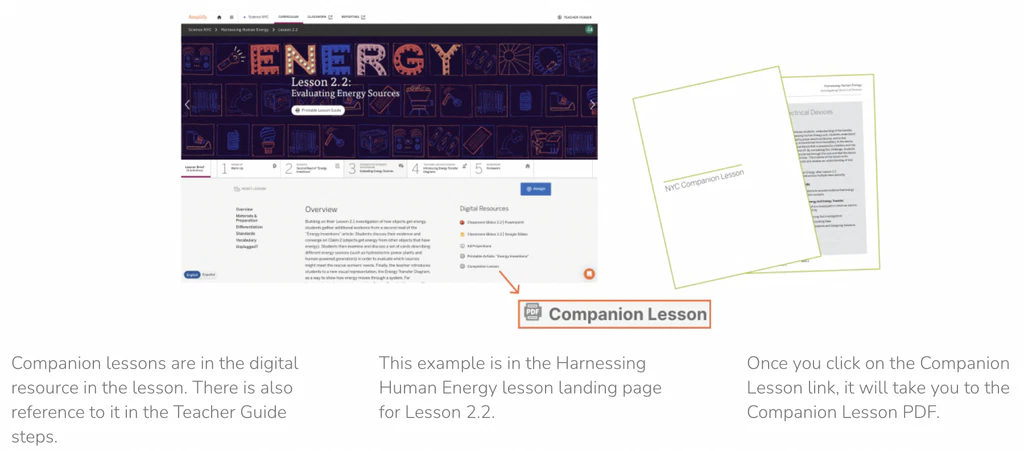
FL review ELA (state)

To view this protected page, enter the password below:


Pasco County’s review of the B.E.S.T. program for middle schools, Amplify ELA Florida Edition

To view this protected page, enter the password below:


Review of the B.E.S.T. program for middle schools, Amplify ELA Florida Edition

To view this protected page, enter the password below:


Amplify Caminos

Built on a systematic scope and sequence, Amplify Caminos offers the explicit instruction needed in today’s classrooms.

We’ve created a wide suite of professional development offerings that will help you meet your unique needs this school year. Find out more below!

Amplify CKLA, ELA, and Science professional development has been vetted by Rivet Education’s team through a rigorous three-step process and is listed in the Professional Learning Partner Guide.

Teacher observes student completing activity

Plan your professional development

We’re excited to partner with you on your Amplify journey. Flexible professional development pathways have been designed to meet your needs.

Illustration of three educational phases: a teacher launches a rocket, another reads a book, and four individuals discuss in a meeting setting.

Recommended Professional Development Plan

Our team has curated a recommended professional learning path from initial launch to continuous support. Use the Professional Development Planning Guide below to discuss the plan that best meets your school or district needs with your Account Executive.

Sessions overview

Recommended sessions are highlighted below.
Audience Title Duration Modality Available
Launch
K–2 teachers Initial training 1 day onsite
or 2 half days
remote
Onsite/Remote Yes
K–2 teachers Program overview Half day Onsite/Remote Yes
Skills Strand (Lectoescritura) initial training 1 day onsite
or 2 half days
remote
Onsite/Remote Yes
Skills Strand (Lectoescritura) program overview Half day Onsite/Remote Yes
Knowledge Strand (Conocimiento) initial training 1 day onsite
or 2 half days
remote
Onsite/Remote Yes
Knowledge Strand (Conocimiento) program overview Half day Onsite/Remote Yes
3–5 teachers Initial training 1 day onsite
or 2 half days
remote
Onsite/Remote Yes
3–5 teachers Program overview Half day Onsite/Remote Yes
Strengthen
K–2 teachers Enhancing planning & practice Half day Onsite/Remote Yes
Writing Half day Onsite/Remote 12/1/22
3–5 teachers Enhancing planning & practice Half day Onsite/Remote Yes
Writing Half day Onsite/Remote 12/1/22
K–5 teachers Strengthening consultation session 1 hour or 3 1-hour sessions Remote Yes
Coach
K–5 educators (leaders, principals, coaches, and teachers) Coaching session 2 days consecutive Onsite Yes
K–5 educators (leaders, principals, coaches, and teachers) Coaching session 1 day onsite
or 2 half days
remote
Onsite/Remote Yes
Coaching session Half day Remote Yes

Launch

K–2 teachers

Initial training for K–2 teachers

1 day onsite (6 hours) or 2 half days remote (6 hours)

Prepare to implement the Amplify Caminos K–2 program in your classroom! Learn the foundational elements of Amplify Caminos, including the structure of materials, key lesson elements, and how to deliver specific lesson types successfully. Participants will begin planning for the first unit and lessons.

Audience: Teachers (instructional leaders welcome), maximum 30 participants
Modality: Onsite/Remote

Program overview for K–2 teachers

Half day (3 hours)

Learn the foundational elements of Amplify Caminos, including the structure of materials, key lesson elements, and how to deliver specific lesson types successfully.

Audience: Teachers (instructional leaders welcome), maximum 30 participants
Modality: Onsite/Remote

Skills Strand initial training for K–2 teachers

1 day onsite (6 hours) or 2 half days remote (6 hours)

Participants will learn the foundational elements of Amplify Caminos Skills Strand, including the structure of materials, key lesson elements, and how to deliver specific lesson types successfully. Participants will begin planning for the first unit and lessons.

Audience: Teachers (instructional leaders welcome), maximum 30 participants
Modality: Onsite/Remote

Skills Strand program overview for K–2 teachers

Half day (3 hours)

Learn the foundational elements of the Amplify Caminos Skills Strand, including the structure of materials, key lesson elements, and how to deliver specific lesson types successfully.

Audience: Teachers (instructional leaders welcome), maximum 30 participants
Modality: Onsite/Remote

Knowledge Strand initial training for K–2 teachers

1 day onsite (6 hours) or 2 half days remote (6 hours)

Participants will learn the foundational elements of the Amplify Caminos Knowledge Strand, including the structure of materials, key lesson elements, and how to deliver specific lesson types successfully. Participants will begin planning for the first unit and lessons.

Audience: Teachers (instructional leaders welcome), maximum 30 participants
Modality: Onsite/Remote

Knowledge Strand program overview for K–2 teachers

Half day (3 hours)

Learn the foundational elements of Amplify Caminos, including the structure of materials, key lesson elements, and how to deliver specific lesson types successfully.

Audience: Teachers (instructional leaders welcome), maximum 30 participants
Modality: Onsite/Remote

3–5 teachers

Initial training for 3–5 teachers

1 day onsite (6 hours) or 2 half-days remote (6 hours)

Prepare to implement the Amplify Caminos 3–5 program in your classroom! Learn the foundational elements of the program, including the structure of materials, key lesson elements, and how to deliver specific lesson types successfully. Participants will begin planning for the first unit and lessons.

Audience: Teachers (instructional leaders welcome), maximum 30 participants
Modality: Onsite/Remote

Program overview for 3–5 teachers

Half day (3 hours)

Learn the foundational elements of the Amplify Caminos curriculum, including the structure of materials, key lesson elements, and how to deliver specific lesson types successfully.

Audience: Teachers (instructional leaders welcome), maximum 30 participants
Modality: Onsite/Remote

Strengthen

K–2 teachers

Enhancing planning & practice for K–2 teachers

Half day (3 hours)
Prerequisite training: Initial training for K–2 teachers

Elevate program knowledge to strengthen your Amplify Caminos K–2 implementation! Understand the progression of foundational skills and focus on high-quality questioning and discussion techniques through lesson study and practice. Participants will practice implementing key instructional elements and leave with annotated lessons.

Audience: K–2 teachers (instructional leaders welcome), maximum 30 participants
Modality: Onsite/Remote

Writing for K–2 teachers

Half day (3 hours)
Prerequisite training: Initial training for K–2 teachers and 2–3 months of Amplify Caminos instruction

Dig into Amplify Caminos writing instruction and student work in Grades K–2! Identify writing opportunities in the curriculum through analysis of a unit and daily lessons and analyze student writing using a program-aligned rubric. Participants will leave with an annotated unit highlighting the writing opportunities and student grouping suggestions.

Audience: K–2 teachers (instructional leaders welcome), maximum 30 participants
Modality: Onsite/Remote

3–5 teachers

Enhancing planning & practice for 3–5 teachers

Half day (3 hours)
Prerequisite training: Initial training for 3–5 teachers

Elevate program knowledge to strengthen your Amplify Caminos 3–5 implementation! Deepen ability to scaffold complex texts by sequencing reading types, prioritizing questions, and using discussion techniques. Participants will practice implementing key instructional elements and leave with scaffolds for complex texts.

Audience: Teachers (instructional leaders welcome), maximum 30 participants
Modality: Onsite/Remote

Writing for 3–5 teachers

Half day (3 hours)
Prerequisite training: Initial Training for 3–5 teachers and 2–3 months of Amplify Caminos instruction

Dig into Amplify Caminos writing instruction and student work in grades 3–5! Identify writing opportunities in the program through analysis of a unit and daily lessons and analyze student writing using a program-aligned rubric. Participants will leave with an annotated unit highlighting the writing opportunities and student grouping suggestions.

Audience: 3–5 teachers (instructional leaders welcome), maximum 30 participants
Modality: Onsite/Remote

K–5 teachers

Strengthening consultation session

1 hour or 3 1-hour sessions
Prerequisite training: Initial training

These 60-minute sessions will focus on a specific topic that will deepen educators’ understanding of Amplify Caminos and equip them with the support they need to drive toward stronger student outcomes. An Amplify facilitator will align with the school or district leadership team in advance of the session on the topic (chosen from a menu of options) that will best meet educators’ unique needs. The menu includes sessions on engagement, pacing, and supporting all learners.

Audience: K–5 classroom teachers (instructional leaders welcome), maximum 30 participants
Modality: Remote

Coach

K–5 educators (leaders, principals, coaches, and teachers)

Coaching for K–5 educators

2 days consecutive (6 hours per day, 12 total)
Prerequisite training: Initial training

Strengthen your implementation of Amplify Caminos with a Coaching onsite visit for your teachers and/or leaders! An Amplify facilitator will visit 1–4 school sites for two days. Participants can choose from a variety of topics that include, but are not limited to: lesson modeling (conducted by an Amplify facilitator) and debriefing, grade-level planning, classroom observations, and leadership consultation. The flexible onsite coaching design allows for a collaborative approach to support effective program implementation.

Audience: Teachers and/or instructional leaders (principals and coaches), maximum 30 participants
Modality: Onsite

Coaching for K–5 educators

1 day onsite (6 hours) or 2 half days remote (6 hours)
Prerequisite training: Initial training

Strengthen your implementation of Amplify Caminos with a Coaching onsite visit for your teachers and/or leaders! An Amplify facilitator will visit 1–2 school sites for one day. Participants can choose from a variety of topics that include, but are not limited to: lesson modeling (conducted by an Amplify facilitator) and debriefing, grade-level planning, classroom observations, and leadership consultation. The flexible onsite coaching design allows for a collaborative approach to support effective program implementation.

Audience: Teachers and/or instructional leaders (principals and coaches), maximum 30 participants
Modality: Onsite/Remote

Coaching for K–5 educators

Half day (3 hours)
Prerequisite training: Initial training

Strengthen your implementation of Amplify Caminos with a Coaching onsite visit for your teachers and/or leaders! An Amplify facilitator will virtually visit for a half day. Participants can choose from a variety of topics that include, but are not limited to: lesson modeling (conducted by an Amplify facilitator) and debriefing, grade-level planning, classroom observations, and leadership consultation.

Audience: Teachers and/or instructional leaders (principals and coaches)
Modality: Remote

Pricing

We offer the following pricing for training sessions and packages:

Session typePricing
2-day onsite session$4800
1-day onsite session$3200
1-day remote session (2 half days remote)$1500
Half-day onsite session$2500
Half-day remote session$750
1-hour strengthening consultation session$350
3 1-hour strengthening consultation sessions$1000
Customized Amplify Caminos onsite or remote sessionPrice will vary

Please note that the prices are general ranges and may be subject to change.

Contact

Amplify welcomes the opportunity to partner with schools and districts to design professional development plans and answer your questions.

If you would like to order any of our professional development services, please contact your local Amplify sales representative or call (800) 823-1969.
Planning and instructional resources

Using the Amplify NYC Science Benchmarks

Planning and Implementation Guides

NYC Field Trip List

Implementation Rubric for Administrators

6-8 Look-for tool

K-5 Look-for Tool (1 page)

NYSED Investigations and Amplify Alignment

For more guidance on the New York state investigations and suggested pacing, please log in to your NYC account and check out the NYC Public Schools Science Collaborative Website for Elementary and for Intermediate.

NYC Companion resources

6-8 Companion Lessons can be found in the Amplify Science platform!

A screenshot of a digital lesson on harnessing energy with an arrow pointing to a "Companion Lesson" button. The inset shows the companion PDF. The text provides instructions for accessing the lesson.

Grade 6 Lesson guides and Copymasters

  • Companion lesson: Insert after Lesson 2.2
  • Time frame: 60 minutes (can spread across multiple class periods)
  • NYSP–12SLS: PE: MS-PS3-6, DCI: PS3.B
  • Links (click to download):
  • Companion lesson: Insert after Lesson 3.3
  • Time frame: Two 45-minute class periods
  • NYSP–12SLS: PE: MS-PS2-3, MS-PS2-5, DCI: PS2.B
  • Links (click to download):
  • Companion lesson: Insert after Lesson 3.3 and after Investigating Non-Touching Forces
  • Time frame: 60 minutes (first and second reads can be spread across two class periods)
  • NYSP–12SLS: PE: MS-PS2-5, MS-PS2-3, DCI: PS2.B
  • Links (click to download):
  • Companion lesson: Insert after Lesson 2.5
  • Time frame: 105 minutes (can be spread across multiple class periods)
  • NYSP–12SLS: PE: MS-PS1-6, DCI: PS1.B
  • Links (click to download):
  • Companion lesson: Insert after Lesson 3.4
  • Time frame: 60 minutes (first and second reads can be spread across two class periods)
  • NYSP–12SLS: PE: MS-LS2-5, DCI: LS2.C, LS4.D
  • Links (click to download):
  • Companion lesson: Insert after Lesson 1.3
  • Time frame: 60 minutes (first and second reads can be spread across two class periods)
  • NYSP–12SLS: PE: MS-ESS2-4, DCI: ESS2.C
  • Links (click to download):
  • Companion lesson: Insert after Lesson 3.3*
  • Time frame: 90 minutes (can be spread across multiple class periods)
  • NYSP–12SLS: PE: MS-PS1-7, MS-ESS2-6, DCI: PS1.A, ESS2.C
  • Links (click to download):

*Note: The homework assignment for Ocean, Atmosphere, and Climate Lesson 3.3 (reading the article “Deep Ocean Currents: Driven by Density”) should be assigned after the Investigating Deep Ocean Currents companion lesson rather than after Lesson 3.3.

Grade 7 Lesson Guides and Copymasters

  • Companion lesson: Insert after Lesson 3.2
  • Time frame: 60 minutes (first and second reads can be spread across two class periods)
  • NYSP–12SLS: PE: MS-LS1-3, DCI: PS3.D, LS1.A
  • Links (click to download):
  • Companion lesson: Insert after Lesson 3.3 or later
  • Time frame: Three 45-minute class periods, each several days apart
  • NYSP–12SLS: PE: MS-LS1-8, DCI: LS1.D
  • Links (click to download):
  • Companion lesson: Insert after Lesson 3.5
  • Time frame: 60 minutes (first and second reads can be spread across two class periods)
  • NYSP–12SLS: PE: MS-LS1-6, MS-LS1-7, DCI: LS1.C, PS3.D
  • Links (click to download):
  • Companion lesson: Insert after Lesson 2.2
  • Time frame: 60 minutes (first and second reads can be spread across two class periods)
  • NYSP–12SLS: PE: MS-PS1-4, DCI: PS3.A
  • Links (click to download):
  • Companion lesson: Insert after Lesson 1.3
  • Time frame: 60 minutes
  • NYSP–12SLS: PE: MS-PS1-7, DCI: PS1.A
  • Links (click to download):
  • Companion lesson: Insert after Lesson 2.3, 2.4, or 2.5
  • Time frame: Two 45-minute class periods
  • NYSP–PE: MS-PS1-8, MS-PS1-2 DCI: PS1.A, PS1.B
  • Links (click to download):

Grade 8 Lesson Guides and Copymaster

NYC Companion Kits

Materials needed to teach Amplify Science lessons are provided in a kit for each unit. While some materials used in the NYC Companion Lessons are also found in a unit’s kit, materials specific to the companion lessons are provided in NYC Companion Kits. The contents of each kit and any additional materials needed to teach the companion lessons are listed in the PDFs provided below. Please select your grade to view or download the list.

NYC Student Editions (print)
The NYC Student Editions are durable student references that compile all reading material required for a grade level, including the articles students read for NYC Companion Lessons. Students reading in the Student Edition should annotate the text directly with sticky notes to achieve the full benefits of Active Reading. The Active Reading approach was designed as an interactive process in which students highlight and annotate digital or hard copies of articles directly. Printable versions of the articles are available in the downloads section below.

It is recommended that NYC teachers insert this additional lesson between Lessons 3.1 and 3.2 in order to have students complete a reading assignment in class along with an additional Sim activity.

  • Lesson: Earth, Moon and Sun: Modeling Seasons
  • Lesson Placement: Insert between Lessons 3.1 and 3.2*
  • Links (click to download):

*If teaching this Modeling Seasons lesson, do not assign reading “The Endless Summer of the Arctic Tern” article for homework in Lesson 3.1. However, students should still model a lunar eclipse with the Modeling Tool for homework, as they will be revisiting and revising this model in Lesson 3.3.

NYC Investigation Notebooks (for teacher download)

* includes NYC Companion Lesson Copymaster(s)

* includes NYC Companion Lesson Copymaster(s)

  • Geology on Mars
  • Earth, Moon, and Sun
  • Force and Motion
  • Engineering Internship: Force and Motion
  • Magnetic Fields*
  • Light Waves
  • Traits and Reproduction
  • Natural Selection
  • Evolutionary History

* includes NYC Companion Lesson Copymaster(s)

Remote and hybrid learning resources

Review of the B.E.S.T. program for Palm Beach middle schools, Amplify ELA Florida

To view this protected page, enter the password below:


Public review of the B.E.S.T. program for Florida middle schools, Amplify ELA Florida Edition

To view this protected page, enter the password below:


Welcome to Amplify Science 6–8!

Amplify Science is an engaging core curriculum designed for three-dimensional, phenomena-based learning.

With Amplify Science, Oregon students don’t just passively learn about science concepts. Instead, they take on the role of scientists and engineers to actively investigate and figure out real-world phenomena. They do this through a blend of cohesive and compelling storylines, hands-on investigations, collaborative discussions, literacy-rich activities, and interactive digital tools.

Two students, one black and one asian, smiling and studying together at a laptop in a classroom with other students in background.

Publisher presentation

The Lawrence Hall of Science

Developed by the science education experts at UC Berkeley’s Lawrence Hall of Science and the digital learning team at Amplify, our program features:

  • phenomena-based approach where students construct a complex understanding of each unit’s anchor phenomenon.
  • A blend of cohesive storylines, hands-on investigations, rich discussions, literacy-rich activities, and digital tools.
  • Carefully crafted units, chapters, lessons, and activities designed to deliver true 3-dimensional learning.
  • An instructional design that supports all learners in accessing all standards.
Aerial view of the lawrence hall of science at the university of california, berkeley, showcasing the building and surrounding trees with a foggy city backdrop.

Proven to work

A pdf cover from wested titled "learning and literacy development together: initial results from a curriculum study," featuring an adult helping children with schoolwork in a classroom.

WestEd Randomized
Control Trial for Grade 1

Read More

Pdf cover titled "curriculum materials designed for the next generation science standards: initial results from gold standard research trials", published by wested.

WestEd Randomized
Control Trial for Grade 7

Read More

A teacher and students engage in a science activity around a table. The text promotes the Amplify Science K–8 curriculum, highlighting its focus on hands-on learning and real-world problem-solving.

Amplify Science NE
Grades K–5

Read More

Instructional model

The Amplify Science program is rooted in the proven, research-based pedagogy of Do, Talk, Read, Write, Visualize. Here’s how each element works:

Do

First-hand investigations are an important part of any science classroom, and Amplify Science has students getting hands-on in every unit—from building models of protein molecules to experimenting with electrical systems.

Talk

Student-to-student discourse and full-class discussions are an integral part of the program. Students are provided with numerous opportunities to engage in meaningful oral scientific argumentation, all while fostering a collaborative classroom environment.

Read

Students read scientific articles, focusing their reading activities on searching for evidence related to their investigation and, importantly, on asking and recording questions as they read through fascinating texts on 21st-century topics.

Write

Following real-world practices, students write scientific arguments based on evidence they’ve collected, making clear their reasoning about how a given piece of evidence connects to one of several claims.

Visualize

By manipulating digital simulations and using modeling tools to craft visualizations of their thinking— just as real scientists and engineers
do—students take their learning far beyond the confines of what they can physically see in the classroom in an exciting and authentic way.

Program structure

Our cyclical lesson design ensures students receive multiple exposures to concepts through a variety of modalities. As they progress through the lessons within a unit, students build and deepen their understanding, increasing their ability to develop and refine complex explanations of the unit’s phenomenon.

It’s this proven program structure and lesson design that enables Amplify Science to address 100% of the NGSS, and support students in mastering the Oregon Science Standards.

Flowchart depicting a critical thinking process with four circular nodes connected by arrows, each node representing a step: posing a real-world problem, exploring evidence, elaborating concepts, and evaluating claims.

Unit types

While every unit delivers three-dimensional learning experiences and engages students in gathering evidence from a rich collection of sources, each unit also serves a unique instructional purpose.

In grades 6–8:

  • One unit is a launch unit.
  • Three units are core units.
  • Two units are engineering internships.

Launch units are the first units taught in each year of Amplify Science. The goal of the Launch unit is to introduce students to norms, routines, and practices that will be built on throughout the year, including argumentation, active reading, and using the program’s technology. For example, rather than taking the time to explain the process of active reading in every unit in a given year, it is explained thoroughly in the Launch unit, thereby preparing students to read actively in all subsequent units.

Core units establish the context of the unit by introducing students to a real-world problem. As students move through lessons in a Core unit, they figure out the unit’s anchoring phenomenon, gain an understanding of the unit’s disciplinary core ideas and science and engineering practices, and make linkages across topics through the crosscutting concepts. Each Core unit culminates with a Science Seminar and final writing activity.

Engineering Internship units invite students to design solutions for real-world problems as interns for a fictional company called Futura. Students figure out how to help those in need, from tsunami victims in Sri Lanka to premature babies, through the application of engineering practices. In the process, they apply and deepen their learning from Core units.

Unit sequence

Our lessons follow a structure that is grounded in regular routines while still being flexible enough to allow for a variety of learning experiences.

In fact, our multi-modal instruction offers more opportunities for students to construct meaning, and practice and apply concepts than any other program. What’s more, our modular design means our units can be flexibly arranged to support your instructional goals.

Three columns listing education curriculum topics for grades 6, 7, and 8, focusing on science themes such as microbiomes, mars geology, and harnessing human energy.

Program components

Available digitally and in print, our unit-specific reference guides are chock full of helpful resources, including scientific background knowledge, planning information and resources, color-coded 3D Statements, detailed lesson plans, tips for delivering instruction, and differentiation strategies.

Amplify Science TG

Hands-on learning is an essential part of Amplify Science, and is integrated into every unit. Students actively participate in science, playing the roles of scientists and engineers as they gather evidence, think critically, solve problems, and develop and defend claims about the world around them. Every unit includes hands-on investigations that are critical to achieving the unit’s learning goals.

A young person wearing gloves looks through a microscope at a table with laboratory supplies, including bottles, slides, and a tray, against a plain blue background.

More hands-on with Flextensions:
Hands-on Flextensions are additional, optional investigations that are included at logical points in the learning progression and give students an opportunity to dig deeper if time permits. These activities offer teachers flexibility to choose to dedicate more time to hands-on learning. Materials referenced in Hands-on Flextension activities will either be included in the unit kit or are easily sourced. Supporting resources such as student worksheets will be included as downloadable PDF files.

Assorted office and household items displayed on a white background, including rubber bands, binder clips, cardboard, and sports balls.

Our digital Simulations and Practice Tools are powerful resources for exploration, data collection, and student collaboration. They allow students the ability to explore scientific concepts that might otherwise be invisible or impossible to see with the naked eye.

Available for every unit, our Student Investigation Notebooks contain instructions for activities and space for students to record data and observations, reflect on ideas from texts and investigations, and construct explanations and arguments.

In grades 6–8, one copy of the Student Investigation Notebook is included in each unit’s materials kit for use as a blackline master. Each notebook is also available as a downloadable PDF on the Unit Guide page of the digital Teacher’s Guide.

Two booklets titled "El clima cambiante de la Tierra: la desaparición del hielo" and "Earth’s Changing Climate: Vanishing Ice" with landscape illustrations on the covers.

These customizable PowerPoints are available for every lesson of the program and make delivering instruction a snap with visual prompts, colorful activity instructions, investigation set-up videos and animations, and suggested teacher talk in the notes section of each slide.

Amplify Science Classroom Slides

Full coverage of the Oregon Science Standards

Amplify Science was designed from the ground up to meet the Next Generation Science Standards (NGSS). As such, it aligns to the Oregon Science Standards, which were also borne out of the NGSS.

The guidance below is meant to provide support for integrating additional activities that support full coverage of Oregon’s standards. Organized by grade level, each section below will outline:

  • Additional activities that support 100% alignment to the Oregon Science Standards.
  • The standard being addressed with the activities.
  • The recommended placement of the activities within a specific Amplify Science unit.
  • PDFs of any accompanying materials that are necessary to implement the activities.

Activity Title: Meet a Scientist Who Changed How We Think About Brain Cells

About this activity: In this activity, students read a short article about a scientist who studied the nervous system.

Recommended placement: Metabolism unit, Lesson 3.2

Materials:

Instructions: Download the PDF “Meet a Scientist Who Changed How We Think About Brain Cells” above and remind students of the Active Reading guidelines. Before students read the article, invite them to share prior experiences. Then have students complete the copymaster above.

Activity Title: Meet a Scientist Who Studies Underwater Currents

About this activity: In this activity, students read a short article about a scientist who studies ocean currents.

Recommended placement: Oceans, Atmosphere, and Climate unit, Lesson 2.1

Materials:

Instructions: Download the PDF “Meet a Scientist Who Studies Underwater Currents” above and remind students of the Active Reading guidelines. Before students read the article, invite them to share prior experiences. Then have students complete the copymaster above.

Activity Title: Meet a Scientist Who Studies How the Environment Affects Our Traits

About this activity: In this activity, students read two short articles, one about current research on genes and proteins, and one about a scientist who is studying how the environment can affect our traits.

Recommended placement: Traits and Reproduction unit, Lesson 2.4

Materials:

Instructions: Download the PDF “Meet a Scientist Who Studies How the Environment Affects Our Traits” above and remind students of the Active Reading guidelines. Before students read the article, invite them to share prior experiences. Then have students complete the copymaster above.

Activity Title: Who Becomes a Space Scientist?

About this activity: In this activity, Students read a short article about a scientist who studies space.

Recommended placement: Geology on Mars unit, Lesson 3.1

Materials:

Instructions: Download the PDF “Who Becomes a Space Scientist?” above and remind students of the Active Reading guidelines. Before students read the article, invite them to share prior experiences. Then have students complete the copymaster above.

Activity Title: Meet a Scientist Who Studies How Plants Find Water Underground

About this activity: In this activity, students read a short article about a scientist who studies how plants’ roots get water.

Recommended placement: Matter and Energy in Ecosystems unit, Lesson 1.6

Materials:

Instructions: Download the PDF “Meet a Scientist Who Studies How Plants Find Water Underground” above and remind students of the Active Reading guidelines. Before students read the article, invite them to share prior experiences. Then have students complete the copymaster above.

Activity Title: Bringing Back the Buffalo

About this activity: In this activity, students change one competing population to try to decrease the other in the Sim, and read a short article about a scientist who studies buffalo.

Recommended placement: Populations and Resources unit, Lesson 3.2

Materials:

Instructions: Download the PDF “Bringing Back the Buffalo” above and remind students of the Active Reading guidelines. Before students read the article, invite them to share prior experiences. Then have students complete the copymaster above.

Activity Title: Rereading “A Continental Puzzle”

About this activity: In this activity, students reread “A Continental Puzzle” and think about how patterns were helpful to Wegener’s work.

Recommended placement: Plate Motion unit, Lesson 3.2

Materials:

Instructions: Direct students back to “A Continental Puzzle” above and remind students of the Active Reading guidelines. Before students re-read the article, invite them to share prior experiences. Then have students complete the copymaster above.

Activity Title: Meet a Scientist Who Studies Variation in Monkey Populations

About this activity: In this activity, students read a short article about a scientist who studies variation of traits in monkey populations.

Recommended placement: Natural Selection unit, Lesson 1.6

Materials:

Instructions: Download the PDF “Meet a Scientist Who Studies Variation in Monkey Populations” above and remind students of the Active Reading guidelines. Before students read the article, invite them to share prior experiences. Then have students complete the copymaster above.

Activity Title: Extinctions and Human Impacts

About this activity: The purpose of this lesson is for students to see how increases in human population and consumption of natural resources can negatively impact Earth’s systems.

Recommended placement: Natural Selection unit, Lesson 4.5

Materials:

Instructions: Download the PDF “Extinctions and Human Impacts” above and remind students of the Active Reading guidelines. Before students read the article, invite them to share prior experiences. Then have students complete the copymaster above.

Activity Title: Steno and the Shark

About this activity: In this activity, students read a short article about Nicolas Steno, a scientist from the 1600s whose studies of fossilized sharks’ teeth embedded in rock layers laid the foundation for the modern understanding of stratigraphy.

Recommended placement: Evolutionary History unit, Lesson 2.4

Materials:

Instructions: Download the PDF “Steno and the Shark” above and remind students of the Active Reading guidelines. Before students read the article, invite them to share prior experiences. Then have students complete the copymaster above.

Activity Title: Scale in the Solar System

About this activity: In this activity, students read and annotate the articles “Scale in the Solar System” and “The Solar System Is Huge.”

Recommended placement: Earth, Moon, and Sun unit, Lesson 1.2

Materials:

Instructions: Download the PDF “Scale in the Solar System” above and remind students of the Active Reading guidelines. Before students read the article, invite them to share prior experiences. Then have students complete the copymaster above.

Explore your print samples

With your Amplify Science print samples, you’ll find unit-specific Teacher’s References Guides and Student Investigation Notebooks for each grade level.

A note about the Teacher’s Reference Guides:

It’s important that your committee sees the full breadth and depth of our instruction. For that reason, we provided a copy of each of our unit-specific Teacher Reference Guides.

Rest assured that teachers do not use these robust reference guides for day-to-day teaching. For that, we have a hands-free TG!

Three laptop screens displaying educational content on earth's energy system, including diagrams and text annotations.
  • Teacher Reference Guide: Unlike a typical TG that requires a series of supplemental books to support it, our encyclopedic reference guide is chock-full of everything a teacher needs to fully implement our program and the NGSS.
  • Ready-to-Teach Lesson Slides: For daily instruction, teachers need their hands free. That’s why we created ready-to-teach lesson slides for every single lesson. What’s more, they are editable and include suggested teacher talk and point-of-use differentiation and other instructional tips. Click to learn more.

A note about the Materials Kits:

Hands-on learning is at the heart of Amplify Science, and is integrated into every unit. In order to make hands-on learning more manageable for busy teachers, Amplify Science materials are organized into unit-specific kits.

Our unit-specific kits:

  • Include more materials — We give teachers enough materials to support 200 student uses.
  • Are more manageable — Unlike other programs that require large groups of students to share limited sets of materials, our kits include enough to support small groups of 4–5 students.
  • Include supportive videos — Each hands-on activity provides clear instructions for the teacher, with more complex activities supported by video demonstrations and illustrations.

At your request, we did not include our materials kits with our submissions samples. However, we did provide grade-specific lists of all materials included in each kit, which you can also find with the links below.

Access your digital samples

Explore as a teacher

Follow these instructions to explore the Amplify Science digital platform as a teacher.

  • Click the Access Amplify Science Platform button below and bookmark it.
  • Select Log in with Amplify.
  • Enter the username: t.or68sci@tryamplify.net
  • Enter the password: Science5OR
  • Click the Science icon.
  • Click on the Grade Menu in the top center of the screen and select any grade.
  • Select any unit.

To help familiarize yourself with navigating the digital platform, watch the below navigational video.

Explore as a student

Follow these instructions to explore the Amplify Science digital platform as a student.

  • Click the Access Amplify Science Platform button below and bookmark it.
  • Select Log in with Amplify.
  • Enter the username: s.or68sci@tryamplify.net
  • Enter the password: Science5OR
  • Click the Science icon.
  • Click on the Grade Menu in the top center of the screen and select any grade.
  • Select any unit.

Resources to support your review

Amplify Science Resources for NYC (6-8)

This page has been archived. For the latest information, please visit the NYC Resource Site.

Welcome!

As the 2021-2022 school year kicks into full gear, you’re likely thinking about making your classroom responsive to student needs due to the covid-19 pandemic.

Got additional questions? Use Zoom to attend office hours with Adaliz Gonzalez, the DOE’s Middle School Science Lead on Thursdays from 3-4pm.

Meeting ID: 852 2280 0969

Passcode: 528986

A powerful partnership

Amplify Science was developed by the science education experts at UC Berkeley’s Lawrence Hall of Science and the digital learning team at Amplify.

The word "Amplify" is written in large, orange letters with a period at the end on a light background.
The logo for The Lawrence Hall of Science, University of California, Berkeley, features blue text on a light background and is recognized by educators using Amplify Science for middle school science programs.

NYC Newsletters

Educator Spotlight Submission

Calling all NYC DOE educators! Do you know an educator who has gone above and beyond? Would you like to highlight your teaching experience for others? Submit nominations here to see them featured as a spotlight in a future edition of our monthly newsletter and on our Instagram pages!

Introduction

This page includes planning, implementation, and professional learning resources for NYC schools using Amplify Science. Please take a moment to familiarize yourself with the categories in the navigation bar on the left side of the page, so that you’ll be able to easily find what you need.

Most New York City educators come here looking for specific information, but if you’re new to Amplify Science, we recommend you read through the program guide to learn a little about the program. 

New to Amplify? – Start HERE!

Teachers and Administrators 

Step 1: Review the Amplify Science Overview Video.

Step 2: Review the NYC Scope and sequence for 21-22 school year.

Step 3: Review the Unpacking the Kit Videos listed below to understand what’s in your unit 1 kit.

Step 4: Access your unique Log-in information to log-in to the Amplify Science Curriculum outlined below under Login support

Step 5: Log into the platform and access our Program Hub.  Select Using this site for self study for a complete suite of training videos and resources for an initial orientation video series.

Step 6: Log into the curriculum and begin studying the Unit Map and Teacher’s Guide resources and begin planning your first lesson. Print out the NYC Program Guide for essential program information.

Step 7: Administrator’s ONLY – Review the new administrator orientation presentation for an overview of the program. Review other materials under Admin Resources

NOTE: Should you need any additional guidance on how to get started with prep (or anything else!), please feel free to get in touch with our pedagogical support team. They are available Monday-Friday from 7AM-7PM EST. You can reach them via the chat icon in the lower right- hand corner of your screen when logged in, through email (help@amplify.com), or via phone (800-823-1969).

Getting started resources

Login Support

Materials

Unpacking your first Amplify Science classroom kit

21-22 Login Update

The temporary login credentials for fall ’21 have been deactivated. 

Please make sure you check out the Getting started resources > Login Support below for instructions around teacher and student logins. If there are any issues, please confirm with your STARS programmer that your classes are assigned correctly and then contact our Amplify Help Desk at help@amplify.com or at 1-800-823-1969 for further assistance.

Implementation resources

21-22 NYC Scope and Sequence and Pacing Guide

Use our NYC Field Trip List to plan an engaging field trip for your students!

NYC Companion Lesson Guides 

The format of the NYC Companion Lessons is similar to other Amplify Science lessons. Some companion lessons are designed to require more than a single class period to teach, so each lesson includes pacing suggestions. Science Background sections support teachers with the science content introduced in the lessons. For students’ written work, possible student responses are included at the end of each lesson guide.

The Lesson Guides are available in the last section of each unit’s print Teacher’s Guide and can be downloaded from the tables in the downloads section below.

NYC Companion Lesson Copymasters
Each NYC Companion Lesson has an accompanying Copymaster (for creating student sheets) that can be copied and distributed to students or used as a visual reference. The NYC Companion Lessons require students to have physical copies of the student sheets. The copymasters are available to download as printable PDF files from the tables in the downloads section below.

Grade 6 Lesson guides and Copymasters

  • Companion lesson: Insert after Lesson 2.2
  • Time frame: 60 minutes (can spread across multiple class periods)
  • NYSP–12SLS: PE: MS-PS3-6, DCI: PS3.B
  • Links (click to download):
  • Companion lesson: Insert after Lesson 3.3
  • Time frame: Two 45-minute class periods
  • NYSP–12SLS: PE: MS-PS2-3, MS-PS2-5, DCI: PS2.B
  • Links (click to download):
  • Companion lesson: Insert after Lesson 3.3 and after Investigating Non-Touching Forces
  • Time frame: 60 minutes (first and second reads can be spread across two class periods)
  • NYSP–12SLS: PE: MS-PS2-5, MS-PS2-3, DCI: PS2.B
  • Links (click to download):
  • Companion lesson: Insert after Lesson 2.5
  • Time frame: 105 minutes (can be spread across multiple class periods)
  • NYSP–12SLS: PE: MS-PS1-6, DCI: PS1.B
  • Links (click to download):
  • Companion lesson: Insert after Lesson 3.4
  • Time frame: 60 minutes (first and second reads can be spread across two class periods)
  • NYSP–12SLS: PE: MS-LS2-5, DCI: LS2.C, LS4.D
  • Links (click to download):
  • Companion lesson: Insert after Lesson 1.3
  • Time frame: 60 minutes (first and second reads can be spread across two class periods)
  • NYSP–12SLS: PE: MS-ESS2-4, DCI: ESS2.C
  • Links (click to download):
  • Companion lesson: Insert after Lesson 3.3*
  • Time frame: 90 minutes (can be spread across multiple class periods)
  • NYSP–12SLS: PE: MS-PS1-7, MS-ESS2-6, DCI: PS1.A, ESS2.C
  • Links (click to download):

*Note: The homework assignment for Ocean, Atmosphere, and Climate Lesson 3.3 (reading the article “Deep Ocean Currents: Driven by Density”) should be assigned after the Investigating Deep Ocean Currents companion lesson rather than after Lesson 3.3.

Grade 7 Lesson Guides and Copymasters

  • Companion lesson: Insert after Lesson 3.2
  • Time frame: 60 minutes (first and second reads can be spread across two class periods)
  • NYSP–12SLS: PE: MS-LS1-3, DCI: PS3.D, LS1.A
  • Links (click to download):
  • Companion lesson: Insert after Lesson 3.3 or later
  • Time frame: Three 45-minute class periods, each several days apart
  • NYSP–12SLS: PE: MS-LS1-8, DCI: LS1.D
  • Links (click to download):
  • Companion lesson: Insert after Lesson 3.5
  • Time frame: 60 minutes (first and second reads can be spread across two class periods)
  • NYSP–12SLS: PE: MS-LS1-6, MS-LS1-7, DCI: LS1.C, PS3.D
  • Links (click to download):
  • Companion lesson: Insert after Lesson 2.2
  • Time frame: 60 minutes (first and second reads can be spread across two class periods)
  • NYSP–12SLS: PE: MS-PS1-4, DCI: PS3.A
  • Links (click to download):
  • Companion lesson: Insert after Lesson 1.3
  • Time frame: 60 minutes
  • NYSP–12SLS: PE: MS-PS1-7, DCI: PS1.A
  • Links (click to download):
  • Companion lesson: Insert after Lesson 2.3, 2.4, or 2.5
  • Time frame: Two 45-minute class periods
  • NYSP–PE: MS-PS1-8, MS-PS1-2 DCI: PS1.A, PS1.B
  • Links (click to download):

Grade 8 Lesson Guides and Copymaster

  • Companion lesson: Insert after Lesson 2.2
  • Time frame: 90 minutes (can be spread across multiple class periods)
  • NYSP–12SLS: PE: MS-PS3-2, MS-PS3-5
  • Links (click to download):

NYC Companion Kits

Materials needed to teach Amplify Science lessons are provided in a kit for each unit. While some materials used in the NYC Companion Lessons are also found in a unit’s kit, materials specific to the companion lessons are provided in NYC Companion Kits. The contents of each kit and any additional materials needed to teach the companion lessons are listed in the PDFs provided below. Please select your grade to view or download the list.

NYC Student Editions (print)
The NYC Student Editions are durable student references that compile all reading material required for a grade level, including the articles students read for NYC Companion Lessons. Students reading in the Student Edition should annotate the text directly with sticky notes to achieve the full benefits of Active Reading. The Active Reading approach was designed as an interactive process in which students highlight and annotate digital or hard copies of articles directly. Printable versions of the articles are available in the downloads section below.

It is recommended that NYC teachers insert this additional lesson between Lessons 3.1 and 3.2 in order to have students complete a reading assignment in class along with an additional Sim activity.

  • Lesson: Earth, Moon and Sun: Modeling Seasons
  • Lesson Placement: Insert between Lessons 3.1 and 3.2*
  • Links (click to download):

*If teaching this Modeling Seasons lesson, do not assign reading “The Endless Summer of the Arctic Tern” article for homework in Lesson 3.1. However, students should still model a lunar eclipse with the Modeling Tool for homework, as they will be revisiting and revising this model in Lesson 3.3.

NYC Investigation Notebooks (for teacher download)

* includes NYC Companion Lesson Copymaster(s)

* includes NYC Companion Lesson Copymaster(s)

  • Geology on Mars
  • Earth, Moon, and Sun
  • Force and Motion
  • Engineering Internship: Force and Motion
  • Magnetic Fields*
  • Light Waves
  • Traits and Reproduction
  • Natural Selection
  • Evolutionary History

* includes NYC Companion Lesson Copymaster(s)

Admin resources

Remote and hybrid learning resources

In response to the shifts towards remote learning, Amplify has created resources for using our programs remotely. Please visit our Program Hub accessible via your Teacher Platform for all of our hybrid and remote learning supports which includes guidance for teachers and parents/guardians.

Additionally, please see below where you’ll find the recordings from our recently held webinars on our remote learning resources and some best practices for implementing Amplify Science in a distance learning setting.

Resource guides

Professional learning opportunities

Interested in attending training? Check out and sign up for this year’s PL offerings here!

Election Day 21-22 PL

Grade 6 Guided Planning Presentation and Webinar

Grade 7 Guided Planning Presentation and Webinar

Grade 8 Guided Planning Presentation and Webinar

Grades 6-8 Unpacking Phenomena Presentation and Webinar

All 2020-2021 PL session materials can be found below under Professional learning resources.

Amplify Science Back-to-School Recorded Webinars – Amplify held a series of national office hours throughout the summer and fall to share information about our new resources to support remote and hybrid learning– including recommendations about what to prioritize from your curriculum and essential refresher topics, such as how to navigate your program and find the best planning resources. Feel free to watch all recorded sessions at your convenience.

Archived Professional Learning Resources

Winter 2022

Spring 2021

Winter 2021

Fall 2020

Summer 2020

Summer 2019- Harnessing Human Energy and Thermal Energy

Fall 2019- Population and Resources with Participant Notebook

Winter 2022

Spring 2021

Winter 2021

Fall 2020

  • Grade 7: Progress Builds & Embedded Assessments Webinar
  • Grade 7: Amplify Science Remote & Hybrid Resources Webinar

Summer 2020

Summer 2019 – Microbiome and Metabolism

Fall 2019 – Phase Change with Participant Notebook

Winter 2022

Spring 2021

Winter 2021

Fall 2020

  • Grade 8: Progress Builds & Embedded Assessments Webinar
  • Grade 8: Amplify Science Remote & Hybrid Resources Webinar

Summer 2020

Summer 2019 –  Geology on Mars and Earth, Moon, Sun

Fall 2019 – Force and Motion with Participant Notebook

Caregiver resources

Caregiver Hub

Questions

For general questions about the Amplify program (navigation, pedagogy, login), please reach out:

Email – scihelp@amplify.com
Phone – call toll-free at (800) 823-1969, Monday to Friday, 7 a.m.–7 p.m.  ET

Amplify Chat – click the Amplify Chat icon within the individual teacher account

Plan your professional development

We’re excited to partner with you on your Amplify journey. Flexible professional development pathways have been designed to meet your needs.

Illustration of a rocket labeled "Launch" for beginning of the year, and a woman lifting a dumbbell labeled "Strengthen" for mid-year or end of year program implementation steps.

Recommended Professional Development Plan

Our team has curated a recommended professional learning path from initial launch to continuous support. Use the Professional Development Planning Guide below to discuss the plan that best meets your school or district needs with your Account Executive.

Sessions overview

Recommended sessions are highlighted below.
Title Duration Modality
Elementary school sessions
Initial training (online course) Self-paced (approximately 3 hours) Online course
Initial training 2 hours Onsite/Remote
Initial training, 2 sessions in 1 day 2 2-hour sessions Onsite/Remote
Initial training, 3 sessions in 1 day 3 2-hour sessions Onsite/Remote
Initial training (add-on session) 2 hours, scheduled consecutively with another Amplify training Onsite
Initial training: Train the Trainer 2½ hours Onsite/Remote
mCLASS® Initial training with Boost Reading Texas overview This Boost Reading Texas session occurs during the last hour of a 1-day mCLASS initial training. Onsite/Remote
Teacher dashboard reporting and analysis (online course) Self-paced (approximately 3 hours) Online course
Teacher dashboard reporting and analysis 2 hours Onsite/Remote
Comprehensive implementation PD package 2 2-hour sessions, scheduled separately Remote
Administrator reporting  2 hours Onsite/Remote
Middle school sessions
Initial training  2 hours Onsite/Remote
Initial training, 2 sessions in 1 day 2 2-hour sessions Onsite/Remote
Initial training, 3 sessions in 1 day 3 2-hour sessions Onsite/Remote
Initial training: Train the Trainer 2½ hours Onsite/Remote
Deeper dive 1 hour Remote
Elementary and middle school sessions
Initial training package 2 2-hour sessions Remote

Elementary school sessions

Initial training (online course)

Self-paced

Our self-paced, on-demand online course contains approximately three hours of training. Teachers in grades K-5 who are new to Boost Reading Texas will learn how to implement the program by learning about the structure of the program, the student experience, data reporting, and implementation setup.

As this is a self-paced, on-demand online course, participants will be able to access the course anytime, move as quickly or slowly as needed through different sections, and revisit the course up to one year as a refresher in the future.

Audience: Teachers (administrators welcome)
Modality: Online course

Initial training

2 hours

Teachers in grades K-5 who are new to Boost Reading Texas will prepare to implement the program in their classrooms by learning about the student experience, data reporting, and implementation setup.

Audience: Teachers (administrators welcome), maximum 30 participants
Modality: Onsite/Remote

Initial training

2 sessions in one day

Teachers in grades K-5 who are new to Boost Reading Texas will prepare to implement the program in their classrooms by learning about the student experience, data reporting, and implementation setup. Two training sessions will be scheduled consecutively in one day to accommodate a larger number of teachers (up to 60 teachers, with 30 participants per session.)

Audience: Teachers (administrators welcome), maximum 30 participants
Modality: Onsite/Remote

Initial training

3 sessions in one day

Teachers in grades K-5 who are new to Boost Reading Texas will prepare to implement the program in their classrooms by learning about the student experience, data reporting, and implementation setup. Three training sessions will be scheduled consecutively in one day to accommodate a larger number of teachers (up to 90 teachers, with 30 participants per session).

Audience: Teachers (administrators welcome), maximum 30 participants
Modality: Onsite/Remote

Initial training (add-on session)

2 hours

Scheduled consecutively with another Amplify training.

Teachers in grades K-5 who are new to Boost Reading Texas will prepare to implement the program in their classrooms by learning about the student experience, data reporting, and implementation setup.

Audience: Teachers (administrators welcome), maximum 30 participants
Modality: Onsite

Initial training: Train the Trainer

2½ hours

Educators in grades K-5 who are new to Boost Reading Texas will prepare to implement the program in their classrooms by learning about the student experience, data reporting, and implementation setup. As this is a Train the Trainer session, participants will have increased time to deepen their knowledge and receive greater hands-on support from an Amplify facilitator. Participants will also receive annotated session materials in order to turnkey the session to colleagues.

Audience: Teachers (administrators welcome), maximum 30 participants
Modality: Onsite/Remote

mCLASS initial training with Boost Reading overview

6 hours

This training includes both mCLASS® and Boost Reading training. The first five hours are mCLASS Texas initial training, where educators will learn how to administer the mCLASS assessment. The last hour is a Boost Reading Texas overview, where educators will receive an overview of Boost Reading Texas and how it connects with their mCLASS data in grades K-5. This Boost Reading Texas session occurs during a one-day mCLASS Texas initial training.

Audience: Teachers (administrators welcome), maximum 30 participants
Modality: Onsite/Remote

Teacher dashboard reporting and analysis (online course)

Self-paced

Our self-paced, on-demand online course contains approximately three hours of training. After teachers in grades K-5 have used Boost Reading Texas for at least six weeks, they will learn how to analyze data on the Teacher dashboard and use that data to identify small groups and target instruction.

As this is a self-paced, on-demand online course, participants will be able to access the course anytime, move as quickly or slowly as needed through different sections, and revisit the course up to one year as a refresher in the future.

Audience: Teachers (administrators welcome)
Modality: Online course

Teacher dashboard reporting and analysis training

2 hours

Delivered after teachers in grades K-5 have used Boost Reading Texas for at least six weeks, this training will help teachers analyze the data on their teacher dashboard and use that data to identify small groups and target instruction.

Audience: Teachers (administrators welcome), maximum 30 participants
Modality: Onsite/Remote

Comprehensive implementation PD package

2 2-hour sessions

This package is intended for schools and/or districts that want the highest level of support in launching Boost Reading Texas! The first session is an initial training session and prepares teachers in grades K-5 to implement the program in their classrooms by learning about the student experience, data reporting, and implementation setup. The second session is the Boost Reading Teacher dashboard session and is delivered after at least six weeks of usage. This session will support K-5 teachers in analyzing the data on their teacher dashboard and using that data to identify small groups and target instruction.

Audience: Teachers (administrators welcome), maximum 30 participants
Modality: Remote

Administrator reporting

2 hours

This training supports K-5 administrators in accessing and leveraging Boost Reading Texas reports.

Audience: Administrators, maximum 30 participants
Modality: Onsite/Remote

Middle school sessions

Initial training

2 hours

Teachers in grades 6-8 who are new to Boost Reading Texas will prepare to implement the program in their classrooms by learning about the student experience, data reporting, and implementation setup.

Audience: Teachers (administrators welcome), maximum 30 participants
Modality: Onsite/Remote

Initial training

2 sessions in one day

Teachers in grades 6-8 who are new to Boost Reading Texas will prepare to implement the program in their classrooms by learning about the student experience, data reporting, and implementation setup. Two training sessions will be scheduled consecutively in one day to accommodate a larger number of teachers (up to 60 teachers, with 30 participants per session.)

Audience: Teachers (administrators welcome), maximum 30 participants per session
Modality: Onsite/Remote

Initial training

3 sessions in one day

Teachers in grades 6-8 who are new to Boost Reading Texas will prepare to implement the program in their classrooms by learning about the student experience, data reporting, and implementation setup. Three training sessions will be scheduled consecutively in one day to accommodate a larger number of teachers (up to 90 teachers, with 30 participants per session.)

Audience: Teachers (administrators welcome), maximum 30 participants per session
Modality: Onsite/Remote

Initial training: Train the Trainer

2½ hours

Educators in grades 6-8 who are new to Boost Reading will prepare to implement the program in their classrooms by learning about the student experience, data reporting, and implementation setup.

As this is a Train the Trainer session, participants will have increased time to deepen their knowledge and receive greater hands-on support from an Amplify facilitator. Participants will also receive annotated session materials in order to turnkey the session to colleagues.

Audience: Teachers (administrators welcome), maximum 30 participants
Modality: Onsite/Remote

Initial training

3 sessions in one day

Teachers in grades 6-8 who are new to Boost Reading Texas will prepare to implement the program in their classrooms by learning about the student experience, data reporting, and implementation setup. Three training sessions will be scheduled consecutively in one day to accommodate a larger number of teachers (up to 90 teachers, with 30 participants per session.)

Audience: Teachers (administrators welcome), maximum 30 participants per session
Modality: Onsite/Remote

Deeper dive

1 hour

This training supports educators in grades 6-8 in understanding how Boost Reading Texas was designed to benefit students and how to leverage data to inform instructional next steps.

Audience: Teachers (administrators welcome), maximum 30 participants
Modality: Remote

Elementary and middle school sessions

Initial training package

2 2-hour sessions

This package consists of two 2-hour remote sessions and is intended to support schools or districts launching Boost Reading Texas in grades K–8. One session will be geared toward K–5 teachers, and the other session will be geared toward 6–8 teachers. In each session, teachers who are new to Boost Reading Texas will prepare to implement their respective program (either elementary or middle school) in their classrooms by learning about the student experience, data reporting, and implementation setup.

Audience: Teachers (administrators welcome), maximum 30 participants
Modality: Remote

Pricing

We offer the following pricing for training sessions and packages:

Session typePricing
Online course$49 per individual seat
1-hour remote session$500
2-hour remote session$750
2 sessions in 1 day, remote$1,200
3 sessions in 1 day, remote$1,500
2-hour onsite session$2,200
2 sessions in 1 day, onsite$2,800
3 sessions in 1 day, onsite$3,200
2-hour add-on to onsite training$1,200
2 ½-hour Train the Trainer session, remote$950
2 ½-hour Train the Trainer session, onsite$2,400
1-day mCLASS initial training with Boost Reading Texas overview, remote$1,200
1-day mCLASS initial training with Boost Reading Texas overview, onsite$3,200
Comprehensive implementation PD package$1,500
Elementary and middle school initial training package$750

Please note that the prices are general ranges and may be subject to change.

Contact

Amplify welcomes the opportunity to partner with schools and districts to design professional development plans and answer your questions.

If you would like to order any of our professional development services, please contact your local Amplify sales representative or call (800) 823-1969.

Amplify Desmos Math updates are coming!

As we look ahead to the upcoming school year, we’re continuing to enhance Amplify Demos Math. From time-saving platform enhancements to new features, these updates are designed to help you deliver engaging math instruction while making planning, assigning, and differentiation easier than ever.

Whether you’re using Amplify Desmos Math on its own or alongside Personalized Learning, Boost Math®, or mCLASS® Math, this page highlights what’s already available and what’s coming next.

Two children place number and variable tiles on a balance scale, surrounded by math symbols, a protractor, floating balloons, and the engaging world of Amplify Desmos Math.

Updates coming for the 2026–27 school year

To help you plan for the year ahead with confidence, we’re previewing some of the exciting enhancements coming your way.

Platform updates

We’re improving the overall classroom experience with platform enhancements that make lessons easier to navigate and instruction easier to manage.

  • Activity pages are being redesigned to feature a left sidebar, informational tabs, and lesson screens at the top of the page. This optional reconfiguration will allow you to immediately see each lesson and more easily access relevant resources and tools. You will be able to turn on the new design – or turn it off to return to the original design – with a toggle located on the page.
  • We’re making updates to our Recently Visited section on Educator Home. You’ll see both activity and units reflected there, and have the ability to star a unit or lesson to pin it to the front of your list
  • Presentation tools are also expanding, making it easier to facilitate lessons, annotate in real time, and manage instruction from anywhere in the room.
  • You will be able to assign Teacher Presentation Screens to individual students who need access on their own devices for reference or accessibility purposes.

Administrator Report improvements

  • The existing Administrator Reports for Unit Performance will be replaced with a new and improved Student Performance report that will provide school and district administrators with aggregated views of student performance on end-of-unit assessments as well as standards. The report will support grouping this data by school and class without having to access reporting for individual classrooms.

AI-powered teacher tools

We’ve developed new tools to enhance your ability to connect and collaborate with families! These will be available when you opt in through Amplify Labs.

  • Discussion Moments, launching for grades 6–8 in 2026–27, will support rich classroom conversations by highlighting student ideas directly within lessons, making it easier to pause, reflect, and discuss mathematical thinking.
  • Newsletter Generator, for grades K–5, allows you to create your own customizable communication to share out with families. 

Using mCLASS Math? Explore upcoming updates and noteworthy features for assessment, progress monitoring, and reporting on the mCLASS Math Program Highlights page.

A laptop screen shows a Spanish math lesson on place value. Behind the laptop sit four colorful educational booklets labeled Amplify Desmos Math, Grade 5, supporting engaging and interactive learning.

New offerings

Amplify Desmos Math continues to grow to support more learners across grade levels and instructional pathways.

  • Expanded Spanish student and teacher materials will better serve multilingual classrooms by providing access to high-quality math instruction in both print and digital formats.
  • New PreK and Transitional Kindergarten offerings emphasize hands-on, developmentally appropriate learning.
  • For middle school, Accelerated 6 and Accelerated 7 will be available for full release soon, offering a two-year pathway that condenses grades 6–8.
  • At the high school level, Amplify Desmos Math will soon be commercially available as complete high school course sequences, including Algebra 1, Geometry, Algebra 2, and Integrated Math pathways.

Note: Some offerings and enhancements may require an additional purchase.

Noteworthy features

These features are already available or rolling out soon to help you plan, teach, and support students more efficiently.

Screenshot of an online class dashboard for Amplify Desmos Math, featuring filters for programs, classes, and students, plus options to go to a lesson or dashboard.
  • Use Stream filtering tools to search by student name and quickly view everything assigned to a particular learner.
  • Assign work to individual students, create and reuse named groups, or assign multiple Personalized Learning activities at once using batch assign, making it easier to differentiate instruction and support small groups without extra setup time.
  • Preview student work directly from the Stream to check progress and decide on next steps more efficiently.
  • Individual Student Reports provide a unified view of student progress across math products, offering a clear, shareable snapshot to support caregiver communication and student conferencing. 
  • Download and print screens of any lesson or activity by selecting the three-dot menu to the right of the activity (or lesson) title and selecting View PDF. 
A completion screen in Amplify Desmos Math displays a target with an arrow and star, a “Let’s Celebrate!” banner, and a message about practicing counting groups of 11-20 objects. A blue Done button is highlighted.

Personalized Learning activities are now clearer and easier for students to manage.

Personalized Learning activities now include a clear Done button, helping students understand when their work is complete.

  • Once an activity is finished, it moves out of the To Do list and into Past Work, reducing confusion and supporting student organization.
  • You also have improved visibility and guidance for addressing unfinished work, redoing activities, and when Personalized Learning data appears in reporting.
A computer screen displays the "Browse by Core Program" page for Boost Math, listing various math curriculum scope and sequence resources, including Amplify Desmos Math.

Easier planning and navigation across resources

Planning instruction is simpler with an improved Browse Instructional Resources experience designed to reduce clicks and help you quickly find the materials you need.

  • Locate resources more easily for small-group instruction, practice, or extension.
  • Get more control over the student experience, including the option to remove Math Adventures from Student Home when those activities aren’t part of their instructional plan.

Using Boost Math as part of your math solution? Learn more about recent enhancements to Boost Math, including updates to instructional pathways and more options to further the impact of your Multi-Tiered System of Supports (MTSS).

Personalized Spanish literacy instruction ideal for every classroom

Boost Lectura Texas is a program based on the Science of Teaching Reading built to accelerate Spanish literacy for K–2 students. Using captivating storylines and the latest research on how Spanish literacy develops, Boost Lectura Texas engages students in powerful and personalized digital reading instruction.

Ilustración de un cachorro jugando fútbol en un campo, con bocadillos que dicen "¡Hola!" ¡y hola!" y un balón de fútbol con la etiqueta "ma". El cuadro de texto dice "Construido sobre la ciencia de la lectura".

The Science of Teaching Reading for multilingual/English learners

Grounded in the Science of Teaching Reading methodology, Boost Lectura Texas acknowledges the nuances of biliteracy and the Spanish language. The instruction design is based on how Spanish literacy develops, staying true to our core Science of Teaching Reading principle: Literacy instruction in each language must reflect its unique linguistic elements.

Learn more about our biliteracy principles.

Learn more about Amplify Texas programs at texas.amplify.com

Learn more

Developed with experts

Boost Lectura Texas’ Spanish literacy curriculum was developed in partnership with Spanish literacy experts and educators from several Spanish-speaking regions who contributed valuable perspectives for the creation of authentic and relevant content.

Five professional portraits of educators and consultants in biliteracy programs, arranged in a semicircle, with name and title annotations, representing various academic institutions and organizations.

Our approach

Students learning to read in Spanish deserve authentic, research-based instruction. Boost Lectura Texas accomplishes this and complements Amplify’s comprehensive biliteracy assessment and curriculum programs. When used with Boost Reading Texas, it’s the first personalized learning solution built on the Science of Reading for Spanish and English biliteracy development.

Authentic Spanish literacy instruction

Boost Lectura Texas focuses on the foundational skills that research indicates are not only critical for learning to read in Spanish—such as phonological awareness, letter-sound correspondences, decoding, and comprehension—but that are also transferable from Spanish to English. The program was built with expert guidance and research on how bilingual literacy (particularly Spanish and English biliteracy) develops.

A young student wearing headphones uses a laptop in a classroom setting, focusing intently on her screen as part of a biliteracy program.
Un maestro con un suéter naranja se para frente a un salón de clases, levantando la mano mientras varios estudiantes jóvenes, también levantando la mano, observan atentamente durante una sesión personalizada de alfabetización en español.

Ideal for any classroom model

Without having to be proficient in Spanish, teachers have access to an evidence-based Spanish literacy scope and sequence with learning content targeted to individual student needs. Boost Lectura Texas can be leveraged in any literacy learning model.

Spanish and English parity

Boost Lectura Texas can be seamlessly paired with Boost Reading Texas. When used together, the two programs build reading proficiency in both English and Spanish for students in grades K–2, as well as provide teachers with data insights on students’ skills progression in each language.

Young girl in a classroom wearing a green polo shirt, smiling and looking away from the camera, participating in personalized Spanish literacy instruction.
Three logos feature an orange Texas state shape with a star, labeled "Amplify SLAR TEXAS," "mCLASS Lectura TEXAS," and "Boost Lectura TEXAS" on a white background.

Comprehensive biliteracy suite

Boost Lectura Texas integrates with Amplify’s full suite of biliteracy programs, including Amplify SLAR Texas and mCLASS® Lectura Texas. Through aligned instruction, these tools and materials provide educators with everything they need to screen, instruct, and provide practice in Spanish literacy.

guide icon

Dive into Boost Lectura Texas

Explore the powerful and engaging world of Spanish literacy learning.

Download now

What’s included

Digital flashcards in Spanish displayed on a purple background, featuring text about glasses, a cartoon character, and yes/no buttons as part of Personalized Spanish literacy instruction.

Powerful, engaging instruction

Students will engage with targeted activities inside authentic and captivating storylines that honor the culture and experiences of Spanish-speaking communities. This impactful content is thoughtfully designed to grow their decoding skills, vocabulary, and reading comprehension.

Personalized skill coverage

Boost Lectura Texas’ adaptive technology develops students’ individual skills maps to provide the right content at the exact right moment. Students will explore new quests, challenges, and games that simultaneously teach them the foundational literacy skills that will make them more confident Spanish readers.

Illustration of two children engaged in personalized Spanish literacy instruction about phonological awareness, emphasizing skills like blending and decoding syllables.
BL_LandingPage_MarchRevision_030823_M_14_v2

Actionable data and insights for educators

The program delivers student- and class-level insights to help educators differentiate instruction, monitor growth across the entire classroom, provide targeted support without more testing, and access teacher-led instructional resources.

Side-by-side English and Spanish reports

When Boost Reading Texas and Boost Lectura Texas are used together, the programs provide educators with side-by-side data insights on students’ skills and progression in each language.

Two digital flashcards displaying student progress in Spanish literacy subskills, highlighting completed segments and recent activities, set against a pink and white background.

Explore more programs based in the Science of Teaching Reading.

Learn more about Amplify Texas programs at texas.amplify.com.

Amplify ELA Community Review Site

Welcome to the Amplify ELA community review site for Idaho Falls School District. This site is designed to help you learn about Amplify ELA—a core English Language Arts curriculum for Grade 6.

Your district leaders want to hear from you! Please share your thoughts by completing this district survey.

Looking for Grades K–5 materials? Click here.

What is Amplify ELA?

Amplify ELA helps kids in grades 6–8 read and understand complex texts that encourage them to grapple with interesting ideas and find relevance for themselves. Amplify ELA is a blended program that includes both digital and print materials, as well as a print-only version. Students using Amplify ELA read text passages closely, interpret what they find, discuss their thinking with peers, and develop their ideas in writing. The lesson structure is easy to follow, but flexible enough to allow for a variety of learning experiences and varied enough to keep students engaged. 

Features include:

  • Functionality that allows individual students to work at their own level while also being challenged appropriately.
  • Built-in tools that allow teachers to track and respond to student work.
  • The digital Amplify Library, which contains more than 700 downloadable full-length fiction and nonfiction books.
  • The Vocab App, which uses game-like activities to help students master keywords from the program’s texts. (Students using print materials will see keywords highlighted).
  • Independent writing assignments called Solos, available on mobile devices.

Unit Overviews

Students begin with narrative writing to quickly boost their writing production, learn the foundational skill of focus, and become comfortable with key classroom habits and routines they will use all year. Students then apply their new observational focus to some lively readings from Roald Dahl’s memoir Boy and learn how to work closely with textual evidence.

Unit 6A: Dahl & Narrative Caregiver Letter

Students read like an investigator to embark on a multi-genre study of the mesmerizing world of scientific and investigative sleuthing. At the end of the unit, students write an essay explaining which trait is most useful to problem-solving investigators.

Unit 6B: Mysteries & Investigations Caregiver Letter

The Aztecs used it as currency. Robert Falcon Scott took it to the Antarctic. The Nazis made it into a bomb designed to kill Churchill. The 3,700-year-long history of chocolate is full of twists and turns, making it a rich and rewarding research topic. In this unit, students explore primary source documents and conduct independent research to better understand the strange and wonderful range of roles that chocolate has played for centuries around the world.

Unit 6C: The Chocolate Collection Caregiver Letter

Greek myths help us understand not only ancient Greek culture, but also the world around us and our role in it. Drawing on the routines and skills established in previous units, these lessons ask students to move from considering the state of a single person—themselves or a character—to contemplating broader questions concerning the role people play in the world and the communities they inhabit within it.

Unit 6D: The Greeks Caregiver Letter

The borderlands between the United States and Mexico are the place of legends, both true and fictional. Summer of the Mariposas, by Guadalupe Garcia McCall, plants a retelling of the Odyssey into this setting, launching five sisters on an adventure into a world of heroes and evildoers derived from Aztec myths and Latinx legends. On the journey, the sisters reconcile the dissolution of their parent’s marriage and find new strength in their identity and connection to Aztec lineage. Students consider how McCall uses the structure of the hero’s journey to celebrate women, heritage, and a broad definition of family. Students also have the opportunity to compare these characters’ fictional journey into Mexico to a description of one boy’s true journey into the United States.

Unit 6E: Summer of the Mariposas Caregiver Letter

In this research unit, students learn to tell the difference between primary, secondary, and tertiary sources; determine if a given source is reliable; and understand the ethical uses of information. Students then construct their own research questions and explore the internet for answers. They also take on the role of a passenger from the Titanic‘s manifest to consider gender and class issues as they research and write narrative accounts from the point of view of their passenger.

Unit 6F: The Titanic Collection Caregiver Letter

In this unit, students get to practice their creative writing skills and learn the elements of storytelling and character development, as well as the importance of vivid language. Students gain a sense of ownership over their writing as they experiment with the impact of their authorial choices on sentences, language, character traits, and plot twists.

Unit 6G: Beginning Story Writing Caregiver Letter

In this unit, students complete self-guided grammar instruction and practice that teachers assign to them throughout the year. Sub-units are organized by key grammar topics, so teachers can assign the content that best meets their student’s needs while making sure students work with the key grammar topics for their grades.

Grade 6: Grammar Caregiver Letter

Materials overview

Amplify ELA is a blended program, which means your student will be interacting with both print and digital materials.

Print materials

Student Edition

Includes all of the readings and activities necessary for instruction throughout the year. Students can read the selections both digitally and in print throughout the year, annotating in either format. The lessons in the print Student Edition reflect each digital lesson, but have been modified to work effectively in print.

Writing Journals

Where students respond to Writing Prompts and complete other written assignments.

Novel Guides

Teachers can also access, print, and mail student Novel Guides for up to 12 commonly taught novels. Six of these novels are available in the Amplify Library, and most should be available in a public library.

Digital materials

Quests

You may notice your student working with peers on the same interactive project over several days, trying to solve a mystery or explain a historical event. That’s what happens when a teacher assigns a Quest: an in-depth week-long exploration that requires collaboration and deepens engagement with texts and topics.

Vocab App

The Vocab App helps students master vocabulary words through game-like activities that challenge them to think through morphology, analogy, and synonyms/antonyms, and to decipher meaning through context.

Support your child at home

How you can support the child in your care

  • If possible, read with your student daily; even 15 minutes of reading together each day can make a huge impact. You can read aloud sections of the text together—many middle grade students enjoy performing sections of dialogue by taking on the role of a character in a play, or adding some dramatic flair to a poem with which they are working. If your student struggles with reading aloud, you might try reading the text to them with expression, then having them read it back to you. For additional practice, there are an array of fluency activities in the program’s Flex Days. Ask your student to help you find this activity.
  • Find moments to discuss what they are reading and discovering. Examples of questions you could ask: What stood out to you from what you read today? Were any sentences or words confusing? What was most surprising? What do you think the writer was trying to communicate? Do you agree with the writer’s ideas or descriptions? What connections can you make between what you are reading and your own life or other issues?
  • Listen to your student read their written responses or have them share with a friend over the phone or video chat. 
  • Browse the Amplify Library with your student to find books they’ll enjoy and be able to read fluently and independently.
  • Review this Protecting Kids Online article by the Federal Trade Commission addressing digital safety.

Program access

Before accessing the program, watch the below video to learn even more about Amplify ELA! Then scroll down and follow the login instructions provided.

Take a closer look at the program with the Idaho Falls Community demo account! Follow these simple instructions to access our program digitally.

  • Click the ELA Digital Platform button.
  • Select Log in with Amplify.
  • Enter this username: t1.ifela6@demo.tryamplify.net
  • Enter this password: Amplify1-ifela6
  • Select any unit to explore.

Where to go for help

Whether you have questions about your technology or want to know more about the program, Amplify’s Support Team is here to help!

Contact Support via telephone at (833) 97-Care-8 (833-972-2738) or caregiver@amplify.com.

Our support hours are Monday – Friday, 7 am – 9 PM ET, and Sunday, 10 – 6 ET.

AL review ELA (state)

To view this protected page, enter the password below:


Oregon Math State Review for 9–12

To view this protected page, enter the password below:


Oregon Math State Review for 6–8

To view this protected page, enter the password below:


Miami review ELA

To view this protected page, enter the password below:


FL review ELA (state)

To view this protected page, enter the password below:


New Mexico Educators: Welcome to Amplify Science K–5!

Amplify Science is an engaging core curriculum designed for three-dimensional, phenomena-based learning that is rated ‘all green’ on EdReports.  

With Amplify Science, New Mexico students won’t just passively learn about science concepts. Instead, they will take on the role of scientists and engineers to actively investigate and figure out real-world phenomena. They will do this through a blend of cohesive and compelling storylines, hands-on investigations, collaborative discussions, literacy-rich activities, and interactive digital tools.

Amplify Science Success Story

The Lawrence Hall of Science

Developed by the science education experts at UC Berkeley’s Lawrence Hall of Science and the digital learning team at Amplify, our program features:

  • phenomena-based approach where students construct a complex understanding of each unit’s anchor phenomenon.
  • A blend of cohesive storylines, hands-on investigations, rich discussions, literacy-rich activities, and digital tools.
  • Carefully crafted units, chapters, lessons, and activities designed to deliver true three-dimensional learning.
  • An instructional design that supports all learners in accessing all standards.
Aerial view of the lawrence hall of science at the university of california, berkeley, showcasing the building and surrounding trees with a foggy city backdrop.

Instructional model

The Amplify Science program is rooted in the proven, research-based pedagogy of Do, Talk, Read, Write, Visualize. Here’s how each element works:

Do

First-hand investigations are an important part of any science classroom, and Amplify Science has students getting hands-on in every unit—from building models of protein molecules to experimenting with electrical systems.

Talk

Student-to-student discourse and full-class discussions are an integral part of the program. Students are provided with numerous opportunities to engage in meaningful oral scientific argumentation, all while fostering a collaborative classroom environment.

Read

Students read scientific articles, focusing their reading activities on searching for evidence related to their investigation and, importantly, on asking and recording questions as they read through fascinating texts on 21st-century topics.

Write

Following real-world practices, students write scientific arguments based on evidence they’ve collected, making clear their reasoning about how a given piece of evidence connects to one of several claims.

Visualize

By manipulating digital simulations and using modeling tools to craft visualizations of their thinking— just as real scientists and engineers do—students take their learning far beyond the confines of what they can physically see in the classroom in an exciting and authentic way.

Program structure

Our cyclical lesson design ensures students receive multiple exposures to concepts through a variety of modalities. As they progress through the lessons within a unit, students build and deepen their understanding, increasing their ability to develop and refine complex explanations of the unit’s phenomenon.

It’s this proven program structure and lesson design that enables Amplify Science to address 100% of the NGSS and support students in mastering the New Mexico STEM Ready! Science Standards.

Flowchart depicting a critical thinking process with four circular nodes connected by arrows, each node representing a step: posing a real-world problem, exploring evidence, elaborating concepts, and evaluating claims.

Unit types

While every unit delivers three-dimensional learning experiences and engages students in gathering evidence from a rich collection of sources, each unit also emphasizes a particular science and engineering practice.

In grades K–2:

  • One unit emphasizes the practice of investigation.
  • One unit emphasizes the practice of modeling.
  • One unit emphasizes the practice of engineering design.

In grades 3–5, students experience the three unit types above, plus:

  • One additional unit that emphasizes the practice of argumentation.

Investigation units focus on the process of strategically developing investigations and gathering data to answer questions. Students are first asked to consider questions about what happens in the natural world and why, and are then involved in designing and conducting investigations that produce data to help answer those questions.

Modeling units provide extra support to students engaging in the practice of modeling. Students use physical models, investigate with computer models, and create their own diagrams to help them visualize what might be happening on the nanoscale.

Engineering design units provide opportunities for students to solve complex problems by applying science principles to the design of functional solutions, and iteratively testing those solutions to determine how well they meet preset criteria.

Argumentation units provide students with regular opportunities to explore and discuss available evidence, time and support to consider how evidence may be leveraged in support of claims, and independence that increases as they mount written arguments in support of their claims.

Unit sequence

Our lessons follow a structure that is grounded in regular routines while still being flexible enough to allow for a variety of learning experiences.

In fact, our multi-modal instruction offers more opportunities for students to construct meaning, and practice and apply concepts, than any other program. What’s more, our modular design means our units can be flexibly arranged to support your instructional goals.

Science Curriculum Topics by Grade: Grade K (plants/animals, pushes/pulls, sunlight/weather), Grade 1 (plant/animal defenses, light/sound, rotating earth), Grade 2 (relationships, materials, landforms), Grade 3 (forces/balance, traits, survival, weather/weather), Grade 4 (energy, light/vision, earth features, waves/energy/information), Grade 5 (patterns, modeling, ecosystem).

Program components

Available digitally and in print, our unit-specific reference guides are chock full of helpful resources, including scientific background knowledge, planning information and resources, color-coded 3-D Statements, detailed lesson plans, tips for delivering instruction, and differentiation strategies.

Image of a teacher's guide titled "Plant and Animal Needs: Milkweed and Monarchs" next to a laptop showing the same cover and accompanying online materials.

Hands-on learning is an essential part of Amplify Science, and is integrated into every unit. Students actively participate in science, playing the roles of scientists and engineers as they gather evidence, think critically, solve problems, and develop and defend claims about the world around them. Every unit includes hands-on investigations that are critical to achieving the unit’s learning goals.

Two children sit at a table blowing into plastic straws held together, likely making musical sounds, with containers and rubber bands on the table.

More hands-on with Flextensions:
Hands-on Flextensions are additional, optional investigations that are included at logical points in the learning progression and give students an opportunity to dig deeper if time permits. These activities offer teachers flexibility to choose to dedicate more time to hands-on learning. Materials referenced in Hands-on Flextension activities will either be included in the unit kit or are easily sourced. Supporting resources such as student worksheets will be included as downloadable PDF files.

Our kits include enough non-consumable materials to support a class of 36 students and enough consumable items to support 72 students. In other words, each kit can last two years! Plus, our unit-specific kits mean teachers just grab the tub they need for the unit and then put it all back with ease.

On a white background are various supplies, such as cardboard sheets, pegboards, hooks, rubber bands, tennis balls, popsicle sticks, tape, and other small objects.

Each unit of Amplify Science K–5 includes six unique Student Books written by the Lawrence Hall of Science specifically for the program. These content-rich nonfiction and informational texts provide opportunities for students to search for evidence relevant to their firsthand investigations, see science practices and dispositions modeled, extend their science knowledge, provide real world connections as they master reading-to-learn and close reading skills, and construct evidence-based arguments.

Important note:
Students in grades K–5 are never asked to read alone. Rather, books are read to, with, and by students with ample scaffolding and support provided by the teacher. Big Books are read aloud or together with the class to introduce ideas. Student Books allow for small-group reading and reading in pairs.

Two children's books, one in Spanish and one in English, with illustrated covers showing a street scene and families walking in a town.

Available for every unit, our Student Investigation Notebooks contain instructions for activities and space for students to record data and observations, reflect on ideas from texts and investigations, and construct explanations and arguments.

In grades K–5, one copy of the Student Investigation Notebook is included in each unit’s materials kit for use as a blackline master. Each notebook is also available as a downloadable PDF on the Unit Guide page of the digital Teacher’s Guide.

Two science books titled “Pushes and Pulls: Designing a Pinball Machine” and “Pushes and Pulls: Designing a Pinball Machine” displayed side by side.

We know equity is a priority for you and it’s also important to us! Click below to view a comprehensive list of Spanish resources available to support English learners and dual-language classrooms in New Mexico.  All components are available digitally.  Resources also available in print are noted with an asterisk.

Spanish Components and Supports in Amplify Science

Amplify Science offers digital experience licenses that make elementary instruction more flexible for students and teachers, as well as providing additional means to engage in remote, hybrid, or in-person learning!

Student-facing digital lessons
With the digital experience, students can engage with digital lesson content in one cohesive experience. It’s the same content from Amplify science in a new, integrated format where students can interact with slides, Sims, modeling tools, videos, books, and more.

A computer screen displays an illustration of four plants under sunlight, each emitting colored streams and coins, with soil and roots visible below.

Digital student notebook pages
Students can draw, write, record audio, and insert images into their Investigation Notebook pages. Their work is automatically saved and delivered to you in real time. When students edit their work, those edits are immediately reflected on your teacher work review page. You can access student responses by clicking “View Work,” where you can see students’ Investigation Notebook pages from the lesson, updating live.

Assign in Amplify
The digital experience allows flexibility with optional features like scheduling assignments in advance and setting due dates. Teacher can use Scheduling to determine the date and time that the assignment appears in Student Home. They also have the flexibility to schedule when assignments appear and use dates to remove assignments from Student Home.

Assign in LMS
You can also assign lessons via our integrations with Google Classroom and Microsoft Teams, or by copying a lesson link and sharing it with students through the platform of your choice. The assignment link you send will provide students with direct access to the full lesson—slides, videos, digital tools, and worksheet activities—no student platform navigation required!

Teacher platform and presentation
Teacher-facing lesson content—including sample teacher talk, student responses, pedagogical support, and possible student responses—shows on a teacher’s private Teacher Guide tab. Students only see the lesson slides that are being presented.

A laptop labeled "Teacher device" displays a lesson slide, which is mirrored onto a larger screen labeled "Class presentation.

Explore your print samples

With your Amplify Science print samples, you’ll find unit-specific Teacher’s References Guides, Student Investigation Notebooks, and sets of Student Books for each grade level.

A note about the Teacher’s Reference Guides:

It’s important that you see the full breadth and depth of our instruction. For that reason, we provide a copy of each of our unit-specific Teacher Reference Guides.

Rest assured that teachers do not use these robust reference guides for day-to-day teaching. For that, we have a hands-free TG!

Three laptop screens displaying educational content on earth's energy system, including diagrams and text annotations.
  • Teacher Reference Guide: Unlike a typical Teacher Guide that requires a series of supplemental books to support it, our encyclopedic reference guide is chock-full of everything a teacher needs to fully implement our program and the NGSS.
  • Ready-to-Teach Lesson Slides: For daily instruction, teachers need their hands free. That’s why we created ready-to-teach lesson slides for every single lesson. What’s more, they are editable and include suggested teacher talk and point-of-use differentiation and other instructional tips. Click to learn more.

A note about the Materials Kits:

Hands-on learning is at the heart of Amplify Science, and is integrated into every unit. In order to make hands-on learning more manageable for busy teachers, Amplify Science materials are organized into unit-specific kits.

Stacked storage bins with labels, arranged neatly; caption notes they are a sample and may not reflect actual quantities or sizes.

What’s different about Amplify’s unit-specific material kits?  They…

  • Include more materials — We give teachers enough non-consumable materials to support a class of 36 students and enough consumables to support 72 student uses. In other words, each kit will last two years.
  • Are more manageable — Unlike other programs that require large groups of students to share limited sets of materials, our kits include enough to support small groups of 4–5 students.
  • Include supportive videos — Each hands-on activity provides clear instructions for the teacher, with more complex activities supported by video demonstrations and illustrations.

Grade-specific lists of all materials included in each kit:

Access your digital samples

Explore as a teacher

When you’re ready to explore the teaching experience on your own, follow these instructions to access the Amplify Science digital teacher platform.

  • Click the Access Amplify Science Platform button below and bookmark the page.
  • Select Log in with Amplify.
  • Enter the username: t.nmk-5@demo.tryamplify.net
  • Enter the password: AmplifyNumber1
  • Click on Science on the left hand side.
  • Click on the Grade Menu in the top center of the screen and select any grade.
  • Select any unit.

To help familiarize yourself with navigating the digital platform, watch the navigational video below.

Explore as a student

When you’re ready to explore the student learning experience on your own, follow these instructions to access the Amplify Science digital student platform.

  • Click the Access Amplify Science Platform button below and bookmark the page.
  • Select Log in with Amplify.
  • Enter the username: s.nmk-5@demo.tryamplify.net
  • Enter the password: AmplifyNumber1
  • Click the backpack icon on the top right.
  • Click Science K-5
  • Select any unit.

Resources to support your review

Welcome to Amplify Science K–5!

Amplify Science is an engaging core curriculum designed for three-dimensional, phenomena-based learning.

With Amplify Science, Detroit students won’t just passively learn about science concepts. Instead, they will take on the role of scientists and engineers to actively investigate and figure out real-world phenomena. They will do this through a blend of cohesive and compelling storylines, hands-on investigations, collaborative discussions, literacy-rich activities, and interactive digital tools.

Four children around a table engaged in a classroom science project, examining materials closely, with educational posters in the background.

What is Amplify Science?

The Lawrence Hall of Science

Developed by the science education experts at UC Berkeley’s Lawrence Hall of Science and the digital learning team at Amplify, our program features:

  • phenomena-based approach where students construct a complex understanding of each unit’s anchor phenomenon.
  • A blend of cohesive storylines, hands-on investigations, rich discussions, literacy-rich activities, and digital tools.
  • Carefully crafted units, chapters, lessons, and activities designed to deliver true three-dimensional learning.
  • An instructional design that supports all learners in accessing all standards.

Proven to work

WestEd Randomized
Control Trial for Grade 1

Read More

WestEd Randomized
Control Trial for Grade 7

Read More

Amplify Science NE
Grades K–5

Read More

Instructional model

The Amplify Science program is rooted in the proven, research-based pedagogy of Do, Talk, Read, Write, Visualize. Here’s how each element works:

Do

First-hand investigations are an important part of any science classroom, and Amplify Science has students getting hands-on in every unit—from building models of protein molecules to experimenting with electrical systems.

Talk

Student-to-student discourse and full-class discussions are an integral part of the program. Students are provided with numerous opportunities to engage in meaningful oral scientific argumentation, all while fostering a collaborative classroom environment.

Read

Students read scientific articles, focusing their reading activities on searching for evidence related to their investigation and, importantly, on asking and recording questions as they read through fascinating texts on 21st-century topics.

Write

Following real-world practices, students write scientific arguments based on evidence they’ve collected, making clear their reasoning about how a given piece of evidence connects to one of several claims.

Visualize

By manipulating digital simulations and using modeling tools to craft visualizations of their thinking— just as real scientists and engineers
do—students take their learning far beyond the confines of what they can physically see in the classroom in an exciting and authentic way.

Program structure

Our cyclical lesson design ensures students receive multiple exposures to concepts through a variety of modalities. As they progress through the lessons within a unit, students build and deepen their understanding, increasing their ability to develop and refine complex explanations of the unit’s phenomenon.

It’s this proven program structure and lesson design that enables Amplify Science to address 100% of the Next Generation Science Standards (NGSS) and support students in mastering the Pennsylvania Science Standards.

Flowchart depicting a critical thinking process with four circular nodes connected by arrows, each node representing a step: posing a real-world problem, exploring evidence, elaborating concepts, and evaluating claims.

Unit types

While every unit delivers three-dimensional learning experiences and engages students in gathering evidence from a rich collection of sources, each unit also emphasizes a particular science and engineering practice.

In grades K–2:

  • One unit emphasizes the practice of investigation.
  • One unit emphasizes the practice of modeling.
  • One unit emphasizes the practice of engineering design.

In grades 3–5, students experience the three unit types above, plus:

  • One additional unit that emphasizes the practice of argumentation.

Investigation units focus on the process of strategically developing investigations and gathering data to answer questions. Students are first asked to consider questions about what happens in the natural world and why, and are then involved in designing and conducting investigations that produce data to help answer those questions.

Modeling units provide extra support to students engaging in the practice of modeling. Students use physical models, investigate with computer models, and create their own diagrams to help them visualize what might be happening on the nanoscale.

Engineering design units provide opportunities for students to solve complex problems by applying science principles to the design of functional solutions, and iteratively testing those solutions to determine how well they meet preset criteria.

Argumentation units provide students with regular opportunities to explore and discuss available evidence, time and support to consider how evidence may be leveraged in support of claims, and independence that increases as they mount written arguments in support of their claims.

Unit sequence

Our lessons follow a structure that is grounded in regular routines while still being flexible enough to allow for a variety of learning experiences.

In fact, our multi-modal instruction offers more opportunities for students to construct meaning, and practice and apply concepts, than any other program. What’s more, our modular design means our units can be flexibly arranged to support your instructional goals.

Chart outlining science curriculum by grade, from kindergarten through grade 5, listing topics such as

Program components

Available digitally and in print, our unit-specific reference guides are chock-full of helpful resources, including scientific background knowledge, planning information and resources, color-coded 3D Statements, detailed lesson plans, tips for delivering instruction, and differentiation strategies.

Amplify Science TG

Hands-on learning is an essential part of Amplify Science, and is integrated into every unit. Students actively participate in science, playing the roles of scientists and engineers as they gather evidence, think critically, solve problems, and develop and defend claims about the world around them. Every unit includes hands-on investigations that are critical to achieving the unit’s learning goals.

A young person wearing gloves looks through a microscope at a table with laboratory supplies, including bottles, slides, and a tray, against a plain blue background.

More hands-on with Flextensions:
Hands-on Flextensions are additional, optional investigations that are included at logical points in the learning progression and give students an opportunity to dig deeper if time permits. These activities offer teachers flexibility to choose to dedicate more time to hands-on learning. Materials referenced in Hands-on Flextension activities will either be included in the unit kit or are easily sourced. Supporting resources such as student worksheets will be included as downloadable PDF files.

Our kits include enough materials to support 200 student uses. In other words, teachers can easily support all five periods and small groups of 4-5 students each. Plus, our unit-specific kits mean teachers just grab the tub they need and then put it all back with ease.

Assorted office and household items displayed on a white background, including rubber bands, binder clips, cardboard, and sports balls.

Each unit of Amplify Science K–5 includes six unique Student Books written by the Lawrence Hall of Science specifically for the program. These content-rich nonfiction and informational texts provide opportunities for students to search for evidence relevant to their firsthand investigations, see science practices and dispositions modeled, extend their science knowledge, provide real world connections as they master reading-to-learn and close reading skills, and construct evidence-based arguments.

Important note:
Students in grades K–5 are never asked to read alone. Rather, books are read to, with, and by students with ample scaffolding and support provided by the teacher. Big Books are read aloud or together with the class to introduce ideas. Student Books allow for small-group reading and reading in pairs.

Imagen de lado a lado de dos libros titulados "Un día ocupado en Villa Empuja" y "A Busy Day in Pushville", ambos ilustrados por Anthony Lewis.

Available for every unit, our Student Investigation Notebooks contain instructions for activities and space for students to record data and observations, reflect on ideas from texts and investigations, and construct explanations and arguments.

In grades K–5, one copy of the Student Investigation Notebook is included in each unit’s materials kit for use as a blackline master. Each notebook is also available as a downloadable PDF on the Unit Guide page of the digital Teacher’s Guide.

Dos libros de ciencias titulados “Empujar y jalar: diseñar una máquina de pinball” y “Pushes and Pulls: Designing a Pinball Machine” exhibidos uno al lado del otro.

Amplify Science offers digital experience licenses that make elementary instruction more flexible for students and teachers, as well as providing additional means to engage in remote, hybrid, or in-person learning!

Student-facing digital lessons
With the digital experience, students can engage with digital lesson content in one cohesive experience. It’s the same content from Amplify science in a new, integrated format where students can interact with slides, Sims, modeling tools, videos, books, and more.

Ecosystem Restoration digital simulation

Digital student notebook pages
Students can draw, write, record audio, and insert images into their Investigation Notebook pages. Their work is automatically saved and delivered to you in real time. When students edit their work, those edits are immediately reflected on your teacher work review page. You can access student responses by clicking “View Work,” where you can see students’ Investigation Notebook pages from the lesson, updating live.

Assign in Amplify
The digital experience allows flexibility with optional features like scheduling assignments in advance and setting due dates. You can use Scheduling to determine the date and time that the assignment appears in Student Home. You also have the flexibility to schedule when assignments appear and use dates to remove assignments from Student Home.

Assign in LMS
You can also assign lessons via our integrations with Google Classroom and Microsoft Teams, or by copying a lesson link and sharing it with students through the platform of your choice. The assignment link you send will provide students with direct access to the full lesson—slides, videos, digital tools, and worksheet activities—no student platform navigation required!

Teacher platform and presentation
Teacher-facing lesson content—including sample teacher talk, student responses, pedagogical support, and possible student responses—shows on a teacher’s private Teacher Guide tab. Students only see the lesson slides that are being presented.

Graphic depicting a teacher's device synced with a class presentation for K—5 students. The teacher's laptop displays an Amplify Science lesson on environments, which is mirrored on a larger screen for the class

Explore your print samples

With your Amplify Science print samples, you’ll find unit-specific Teacher’s References Guides, Student Investigation Notebooks, and sets of Student Books for each grade level.

A note about the Teacher’s Reference Guides:

It’s important that you see the full breadth and depth of our instruction. For that reason, we provide a copy of each of our unit-specific Teacher Reference Guides.

Rest assured that teachers do not use these robust reference guides for day-to-day teaching. For that, we have a hands-free TG!

Three laptop screens displaying educational content on earth's energy system, including diagrams and text annotations.
  • Teacher Reference Guide: Unlike a typical TG that requires a series of supplemental books to support it, our encyclopedic reference guide is chock-full of everything a teacher needs to fully implement our program and the NGSS.
  • Ready-to-Teach Lesson Slides: For daily instruction, teachers need their hands free. That’s why we created ready-to-teach lesson slides for every single lesson. What’s more, they are editable and include suggested teacher talk and point-of-use differentiation and other instructional tips. Click to learn more.

A note about the Materials Kits:

Hands-on learning is at the heart of Amplify Science, and is integrated into every unit. In order to make hands-on learning more manageable for busy teachers, Amplify Science materials are organized into unit-specific kits.

Stacked storage bins with labels, arranged neatly; caption notes they are a sample and may not reflect actual quantities or sizes.

Our unit-specific kits:

What’s different about Amplify’s unit-specific material kits?  They…

  • Include more materials — We give teachers enough non-consumable materials to support a class of 36 students and enough consumables to support 72 student uses. In other words, each kit will last two years.
  • Are more manageable — Unlike other programs that require large groups of students to share limited sets of materials, our kits include enough to support small groups of four to five students.
  • Include supportive videos — Each hands-on activity provides clear instructions for the teacher, with more complex activities supported by video demonstrations and illustrations.

Grade-specific lists of all materials included in each kit:

Access your digital samples

Explore as a teacher

When you’re ready to explore the teaching experience on your own, follow these instructions to access the Amplify Science digital teacher platform.

  • Click the Access Amplify Science Platform button below and bookmark the page.
  • Select Log in with Amplify.
  • Enter the username: t1.dpsscience@demo.tryamplify.net
  • Enter the password: Amplify1-dpsscience
  • Click on Science on the left hand side.
  • Click on the Grade Menu in the top center of the screen and select any grade.
  • Select any unit.

To help familiarize yourself with navigating the digital platform, watch the below navigational video.

Explore as a student

When you’re ready to explore the student learning experience on your own, follow these instructions to access the Amplify Science digital student platform.

  • Click the Access Amplify Science Platform button below and bookmark the page.
  • Select Log in with Amplify.
  • Enter the username: s1.dpsscience@demo.tryamplify.net
  • Enter the password: Amplify1-dpsscience
  • Click the backpack icon on the top right.
  • Click Science K-5
  • Select any unit.

Spanish-language support

Amplify Science is committed to providing support to meet the needs of all learners, including multiple access points for Spanish-speaking students. Developed in conjunction with Spanish-language experts and classroom teachers, several components are available in Spanish across the Amplify Science curriculum.

Spanish-language materials include:

COMPONENTTEACHER/STUDENT
Student Investigation NotebooksStudent
Student BooksStudent
Printed classroom materials
Unit and chapter questions, key concepts, vocabulary cards, etc.
Teacher and student
CopymastersTeacher
AssessmentsTeacher
Spanish teacher support license
This license includes teacher talk, projections, and downloadable PDFs of all print materials in Spanish.
Teacher

Resources to support your review

Welcome to Amplify Science 6–8!

Amplify Science is an engaging core curriculum designed for three-dimensional, phenomena-based learning.

With Amplify Science, Detroit students don’t just passively learn about science concepts. Instead, they take on the role of scientists and engineers to actively investigate and figure out real-world phenomena. They do this through a blend of cohesive and compelling storylines, hands-on investigations, collaborative discussions, literacy-rich activities, and interactive digital tools.

What is Amplify Science?

The Lawrence Hall of Science

Developed by the science education experts at UC Berkeley’s Lawrence Hall of Science and the digital learning team at Amplify, our program features:

  • phenomena-based approach where students construct a complex understanding of each unit’s anchor phenomenon.
  • A blend of cohesive storylines, hands-on investigations, rich discussions, literacy-rich activities, and digital tools.
  • Carefully crafted units, chapters, lessons, and activities designed to deliver true three-dimensional learning.
  • An instructional design that supports all learners in accessing all standards.

Proven to work

WestEd Randomized
Control Trial for Grade 1

Read More

WestEd Randomized
Control Trial for Grade 7

Read More

Amplify Science NE
Grades K–5

Read More

Instructional model

The Amplify Science program is rooted in the proven, research-based pedagogy of Do, Talk, Read, Write, Visualize. Here’s how each element works:

Do

First-hand investigations are an important part of any science classroom, and Amplify Science has students getting hands-on in every unit—from building models of protein molecules to experimenting with electrical systems.

Talk

Student-to-student discourse and full-class discussions are an integral part of the program. Students are provided with numerous opportunities to engage in meaningful oral scientific argumentation, all while fostering a collaborative classroom environment.

Read

Students read scientific articles, focusing their reading activities on searching for evidence related to their investigation and, importantly, on asking and recording questions as they read through fascinating texts on 21st-century topics.

Write

Following real-world practices, students write scientific arguments based on evidence they’ve collected, making clear their reasoning about how a given piece of evidence connects to one of several claims.

Visualize

By manipulating digital simulations and using modeling tools to craft visualizations of their thinking— just as real scientists and engineers
do—students take their learning far beyond the confines of what they can physically see in the classroom in an exciting and authentic way.

Program structure

Our cyclical lesson design ensures students receive multiple exposures to concepts through a variety of modalities. As they progress through the lessons within a unit, students build and deepen their understanding, increasing their ability to develop and refine complex explanations of the unit’s phenomenon.

It’s this proven program structure and lesson design that enables Amplify Science to address 100% of the Next Generation Science Standards (NGSS) and support students in mastering the Pennsylvania Science Standards.

Flowchart depicting a critical thinking process with four circular nodes connected by arrows, each node representing a step: posing a real-world problem, exploring evidence, elaborating concepts, and evaluating claims.

Unit types

While every unit delivers three-dimensional learning experiences and engages students in gathering evidence from a rich collection of sources, each unit also serves a unique instructional purpose.

In grades 6–8:

  • One unit is a launch unit.
  • Three units are core units.
  • Two units are engineering internships.

Launch units are the first units taught in each year of Amplify Science. The goal of the Launch unit is to introduce students to norms, routines, and practices that will be built on throughout the year, including argumentation, active reading, and using the program’s technology. For example, rather than taking the time to explain the process of active reading in every unit in a given year, it is explained thoroughly in the Launch unit, thereby preparing students to read actively in all subsequent units.

Core units establish the context of the unit by introducing students to a real-world problem. As students move through lessons in a Core unit, they figure out the unit’s anchoring phenomenon, gain an understanding of the unit’s disciplinary core ideas and science and engineering practices, and make linkages across topics through the crosscutting concepts. Each Core unit culminates with a Science Seminar and final writing activity.

Engineering Internship units invite students to design solutions for real-world problems as interns for a fictional company called Futura. Students figure out how to help those in need, from tsunami victims in Sri Lanka to premature babies, through the application of engineering practices. In the process, they apply and deepen their learning from Core units.

Unit sequence

Our lessons follow a structure that is grounded in regular routines while still being flexible enough to allow for a variety of learning experiences.

In fact, our multi-modal instruction offers more opportunities for students to construct meaning, and practice and apply concepts than any other program. What’s more, our modular design means our units can be flexibly arranged to support your instructional goals.

Three columns listing education curriculum topics for grades 6, 7, and 8, focusing on science themes such as microbiomes, mars geology, and harnessing human energy.

Program components

Available digitally and in print, our unit-specific reference guides are chock-full of helpful resources, including scientific background knowledge, planning information and resources, color-coded 3D Statements, detailed lesson plans, tips for delivering instruction, and differentiation strategies.

Amplify Science TG

Hands-on learning is an essential part of Amplify Science, and is integrated into every unit. Students actively participate in science, playing the roles of scientists and engineers as they gather evidence, think critically, solve problems, and develop and defend claims about the world around them. Every unit includes hands-on investigations that are critical to achieving the unit’s learning goals.

A young person wearing gloves looks through a microscope at a table with laboratory supplies, including bottles, slides, and a tray, against a plain blue background.

More hands-on with Flextensions:
Hands-on Flextensions are additional, optional investigations that are included at logical points in the learning progression and give students an opportunity to dig deeper if time permits. These activities offer teachers flexibility to choose to dedicate more time to hands-on learning. Materials referenced in Hands-on Flextension activities will either be included in the unit kit or are easily sourced. Supporting resources such as student worksheets will be included as downloadable PDF files.

Our kits include enough materials to support 200 student uses. In other words, teachers can easily support all five periods and small groups of 4-5 students each. Plus, our unit-specific kits mean teachers just grab the tub they need and then put it all back with ease.

Assorted office and household items displayed on a white background, including rubber bands, binder clips, cardboard, and sports balls.

Our digital Simulations and Practice Tools are powerful resources for exploration, data collection, and student collaboration. They allow students the ability to explore scientific concepts that might otherwise be invisible or impossible to see with the naked eye.

Available for every unit, our Student Investigation Notebooks contain instructions for activities and space for students to record data and observations, reflect on ideas from texts and investigations, and construct explanations and arguments.

In grades 6–8, one copy of the Student Investigation Notebook is included in each unit’s materials kit for use as a blackline master. Each notebook is also available as a downloadable PDF on the Unit Guide page of the digital Teacher’s Guide.

Two booklets titled "El clima cambiante de la Tierra: la desaparición del hielo" and "Earth’s Changing Climate: Vanishing Ice" with landscape illustrations on the covers.

These customizable PowerPoints are available for every lesson of the program and make delivering instruction a snap with visual prompts, colorful activity instructions, investigation set-up videos and animations, and suggested teacher talk in the notes section of each slide.

Amplify Science Classroom Slides

Explore your print samples

With your Amplify Science print samples, you’ll find unit-specific Teacher’s References Guides and Student Investigation Notebooks for each grade level.

A note about the Teacher’s Reference Guides:

It’s important that your committee sees the full breadth and depth of our instruction. For that reason, we provided a copy of each of our unit-specific Teacher Reference Guides.

Rest assured that teachers do not use these robust reference guides for day-to-day teaching. For that, we have a hands-free TG!

Three laptop screens displaying educational content on earth's energy system, including diagrams and text annotations.
  • Teacher Reference Guide: Unlike a typical TG that requires a series of supplemental books to support it, our encyclopedic reference guide is chock-full of everything a teacher needs to fully implement our program and the NGSS.
  • Ready-to-Teach Lesson Slides: For daily instruction, teachers need their hands free. That’s why we created ready-to-teach lesson slides for every single lesson. What’s more, they are editable and include suggested teacher talk and point-of-use differentiation and other instructional tips. Click to learn more.

A note about the Materials Kits:

Hands-on learning is at the heart of Amplify Science, and is integrated into every unit. In order to make hands-on learning more manageable for busy teachers, Amplify Science materials are organized into unit-specific kits.

Stacked storage bins with labels, arranged neatly; caption notes they are a sample and may not reflect actual quantities or sizes.

Our unit-specific kits:

  • Include more materials — We give teachers enough materials to support 200 student uses.
  • Are more manageable — Unlike other programs that require large groups of students to share limited sets of materials, our kits include enough to support small groups of 4–5 students.
  • Include supportive videos — Each hands-on activity provides clear instructions for the teacher, with more complex activities supported by video demonstrations and illustrations.

At your request, we did not include our materials kits with our submissions samples. However, we did provide grade-specific lists of all materials included in each kit, which you can also find with the links below.

Access your digital samples

Explore as a teacher

Follow these instructions to explore the Amplify Science digital platform as a teacher.

  • Click the Access Amplify Science Platform button below and bookmark it.
  • Select Log in with Amplify.
  • Enter the username: t1.dps68sci@demo.tryamplify.net
  • Enter the password: Amplify1-dps68sci
  • Click the Science icon.
  • Click on the Grade Menu in the top center of the screen and select any grade.
  • Select any unit.

To help familiarize yourself with navigating the digital platform, watch the below navigational video.

Spanish-language support

Amplify Science is committed to providing support to meet the needs of all learners, including multiple access points for Spanish-speaking students. Developed in conjunction with Spanish-language experts and classroom teachers, several components are available in Spanish across the Amplify Science curriculum.

Spanish-language materials include:

COMPONENTTEACHER/STUDENT
Student Investigation NotebooksStudent
Science articlesStudent
Video TranscriptsStudent
Digital simulation translation keysStudent
Printed classroom materials
Unit and chapter questions, key concepts, vocabulary cards, etc.
Teacher
CopymastersTeacher
AssessmentsTeacher
Digital student experience license
This license gives students access to the student resources in Spanish, including instructional text, articles, and assessments. Teachers can control student access to Spanish-language content through the digital Teacher’s Guide.
Teacher
Spanish teacher support license
This license includes teacher talk, projections, downloadable PDFs of all print resources, and video transcripts and closed captioning in Spanish.
Teacher

Explore as a student

Follow these instructions to explore the Amplify Science digital platform as a student.

  • Click the Access Amplify Science Platform button below and bookmark it.
  • Select Log in with Amplify.
  • Enter the username: s1.dpsscience@demo.tryamplify.net
  • Enter the password: Amplify1-dpsscience
  • Click the Science icon.
  • Click on the Grade Menu in the top center of the screen and select any grade.
  • Select any unit.

Resources to support your review

mCLASS Intervention Review for Indiana

To view this protected page, enter the password below:


What’s New for Amplify Science 6–8!

Denver Public Schools (DPS), check out what’s new from Amplify Science 6-8!  The first part of this site will take you through the updates that have been made to Amplify Science. The second will be a refresher of Amplify Science for any new users in DPS. With Amplify Science, DPS students don’t just passively learn about science concepts. Instead, they take on the role of scientists and engineers to actively investigate and figure out real-world phenomena. With culturally sustaining pedagogy, Amplify Science strives to make sure every student feels included in the science classroom.

Two students collaborating on a project using a laptop in a classroom filled with other students working in the background.

Update: The Digital Experience

The digital experience allows students to engage with digital lessons and provides teachers with everything they need in one place—ready-to-use slides-based lessons, seamlessly integrated teacher prompts and guidance, robust PD resources, and more. It’s now easier and more engaging than ever to plan lessons, present digital content, and review student work. To learn more, click here.

Update: The PD Library

All professional development (PD) content is consolidated into the PD Library, a one-stop hub for all your self-paced PD needs. As a result, the “Professional Learning Resources” tile will no longer be available on the main Amplify Science Program Hub page. The rest of the non-PD content in the Program Hub will remain as is, including the on-demand resources.

Update: Educator & Student Home expansion

Educator and Student Home landing pages will now be available for all Amplify Science users. This Home page provides a central location to access all Amplify programs in one place and a customized stream based on your activity.

Your Amplify Science grades 6–8 students will no longer access My Work for assignments, scores, and teacher feedback. Instead, they’ll find it all on Student Home, the page they already land on when logging in to Amplify Science.

Keep in mind: Amplify Science middle school teachers will continue to have access to Classwork.

Update: Caregiver Hub

Throughout the school year, teachers can share the Amplify Science Caregiver Hub with students’ families. This site provides curriculum details, an overview of what caregivers can expect throughout the school year, and resources they can use with students at home.

What is Amplify Science?

The Lawrence Hall of Science

Developed by the science education experts at UC Berkeley’s Lawrence Hall of Science and the digital learning team at Amplify, our program features:

  • phenomena-based approach where students construct a complex understanding of each unit’s anchor phenomenon.
  • A blend of cohesive storylines, hands-on investigations, rich discussions, literacy-rich activities, and digital tools.
  • Carefully crafted units, chapters, lessons, and activities designed to deliver true three-dimensional learning.
  • An instructional design that supports all learners in accessing all standards.
Aerial view of the lawrence hall of science at the university of california, berkeley, showcasing the building and surrounding trees with a foggy city backdrop.

Proven to work

WestEd Randomized
Control Trial for Grade 1

Read More

WestEd Randomized
Control Trial for Grade 7

Read More

Amplify Science NE
Grades K–5

Read More

Instructional model

The Amplify Science program is rooted in the proven, research-based pedagogy of Do, Talk, Read, Write, Visualize. Here’s how each element works:

Do

First-hand investigations are an important part of any science classroom, and Amplify Science has students getting hands-on in every unit—from building models of protein molecules to experimenting with electrical systems.

Talk

Student-to-student discourse and full-class discussions are an integral part of the program. Students are provided with numerous opportunities to engage in meaningful oral scientific argumentation, all while fostering a collaborative classroom environment.

Read

Students read scientific articles, focusing their reading activities on searching for evidence related to their investigation and, importantly, on asking and recording questions as they read through fascinating texts on 21st-century topics.

Write

Following real-world practices, students write scientific arguments based on evidence they’ve collected, making clear their reasoning about how a given piece of evidence connects to one of several claims.

Visualize

By manipulating digital simulations and using modeling tools to craft visualizations of their thinking— just as real scientists and engineers
do—students take their learning far beyond the confines of what they can physically see in the classroom in an exciting and authentic way.

Program structure

Our cyclical lesson design ensures students receive multiple exposures to concepts through a variety of modalities. As they progress through the lessons within a unit, students build and deepen their understanding, increasing their ability to develop and refine complex explanations of the unit’s phenomenon.

It’s this proven program structure and lesson design that enables Amplify Science to address 100% of the Next Generation Science Standards (NGSS) and support students in mastering the Pennsylvania Science Standards.

Flowchart depicting a critical thinking process with four circular nodes connected by arrows, each node representing a step: posing a real-world problem, exploring evidence, elaborating concepts, and evaluating claims.

Unit types

While every unit delivers three-dimensional learning experiences and engages students in gathering evidence from a rich collection of sources, each unit also serves a unique instructional purpose.

In grades 6–8:

  • One unit is a launch unit.
  • Three units are core units.
  • Two units are engineering internships.

Launch units are the first units taught in each year of Amplify Science. The goal of the Launch unit is to introduce students to norms, routines, and practices that will be built on throughout the year, including argumentation, active reading, and using the program’s technology. For example, rather than taking the time to explain the process of active reading in every unit in a given year, it is explained thoroughly in the Launch unit, thereby preparing students to read actively in all subsequent units.

Core units establish the context of the unit by introducing students to a real-world problem. As students move through lessons in a Core unit, they figure out the unit’s anchoring phenomenon, gain an understanding of the unit’s disciplinary core ideas and science and engineering practices, and make linkages across topics through the crosscutting concepts. Each Core unit culminates with a Science Seminar and final writing activity.

Engineering Internship units invite students to design solutions for real-world problems as interns for a fictional company called Futura. Students figure out how to help those in need, from tsunami victims in Sri Lanka to premature babies, through the application of engineering practices. In the process, they apply and deepen their learning from Core units.

DPS Scope and Sequence

Our lessons follow a structure that is grounded in regular routines while still being flexible enough to allow for a variety of learning experiences.

In fact, our multi-modal instruction offers more opportunities for students to construct meaning, and practice and apply concepts than any other program. What’s more, our modular design means our units can be flexibly arranged to support your instructional goals.

Un gráfico que muestra los cursos de ciencias para los grados 6 a 8. Cada grado tiene una lista de clases categorizadas como Launch, GROW y GOAT, con el título de cada curso y la duración en minutos o días.

Program components

Available digitally and in print, our unit-specific reference guides are chock-full of helpful resources, including scientific background knowledge, planning information and resources, color-coded 3D Statements, detailed lesson plans, tips for delivering instruction, and differentiation strategies.

Amplify Science TG

Hands-on learning is an essential part of Amplify Science, and is integrated into every unit. Students actively participate in science, playing the roles of scientists and engineers as they gather evidence, think critically, solve problems, and develop and defend claims about the world around them. Every unit includes hands-on investigations that are critical to achieving the unit’s learning goals.

A young person wearing gloves looks through a microscope at a table with laboratory supplies, including bottles, slides, and a tray, against a plain blue background.

More hands-on with Flextensions:
Hands-on Flextensions are additional, optional investigations that are included at logical points in the learning progression and give students an opportunity to dig deeper if time permits. These activities offer teachers flexibility to choose to dedicate more time to hands-on learning. Materials referenced in Hands-on Flextension activities will either be included in the unit kit or are easily sourced. Supporting resources such as student worksheets will be included as downloadable PDF files.

Our kits include enough materials to support 200 student uses. In other words, teachers can easily support all five periods and small groups of 4-5 students each. Plus, our unit-specific kits mean teachers just grab the tub they need and then put it all back with ease.

Assorted office and household items displayed on a white background, including rubber bands, binder clips, cardboard, and sports balls.

Our digital Simulations and Practice Tools are powerful resources for exploration, data collection, and student collaboration. They allow students the ability to explore scientific concepts that might otherwise be invisible or impossible to see with the naked eye.

Available for every unit, our Student Investigation Notebooks contain instructions for activities and space for students to record data and observations, reflect on ideas from texts and investigations, and construct explanations and arguments.

In grades 6–8, one copy of the Student Investigation Notebook is included in each unit’s materials kit for use as a blackline master. Each notebook is also available as a downloadable PDF on the Unit Guide page of the digital Teacher’s Guide.

Two booklets titled "El clima cambiante de la Tierra: la desaparición del hielo" and "Earth’s Changing Climate: Vanishing Ice" with landscape illustrations on the covers.

These customizable PowerPoints are available for every lesson of the program and make delivering instruction a snap with visual prompts, colorful activity instructions, investigation set-up videos and animations, and suggested teacher talk in the notes section of each slide.

Amplify Science Classroom Slides

Explore your print samples

With your Amplify Science print samples, you’ll find unit-specific Teacher’s References Guides, Student Investigation Notebooks, and sets of Student Books for each grade level.

A note about the Teacher Reference Guides:

It’s important that you see the full breadth and depth of our instruction. For that reason, we provide a copy of each of our unit-specific Teacher Reference Guides.

Rest assured that teachers do not use these robust reference guides for day-to-day teaching. For that, we have a hands-free Teacher’s Guide!

Three laptop screens displaying educational content on earth's energy system, including diagrams and text annotations.
  • Teacher Reference Guide: Unlike a typical TG that requires a series of supplemental books to support it, our encyclopedic reference guide is chock-full of everything a teacher needs to fully implement our program and the NGSS.
  • Ready-to-Teach Lesson Slides: For daily instruction, teachers need their hands free. That’s why we created ready-to-teach lesson slides for every single lesson. What’s more, they are editable and include suggested teacher talk and point-of-use differentiation and other instructional tips. Click to learn more.

A note about the Materials Kits:

Hands-on learning is at the heart of Amplify Science, and is integrated into every unit. In order to make hands-on learning more manageable for busy teachers, Amplify Science materials are organized into unit-specific kits.

Stacked storage bins with labels, arranged neatly; caption notes they are a sample and may not reflect actual quantities or sizes.

Our unit-specific kits:

  • Include more materials — We give teachers enough materials to support 200 student uses.
  • Are more manageable — Unlike other programs that require large groups of students to share limited sets of materials, our kits include enough to support small groups of 4–5 students.
  • Include supportive videos — Each hands-on activity provides clear instructions for the teacher, with more complex activities supported by video demonstrations and illustrations.

At your request, we did not include our materials kits with our submissions samples. However, we did provide grade-specific lists of all materials included in each kit, which you can also find with the links below.

Access your digital samples

Explore as a teacher

Follow these instructions to explore the Amplify Science digital platform as a teacher.

  • Click the Access Amplify Science Platform button below and bookmark it.
  • Select Log in with Amplify.
  • Enter the username: t1.dps68sci@demo.tryamplify.net
  • Enter the password: Amplify1-dps68sci
  • Click the Science icon.
  • Click on the Grade Menu in the top center of the screen and select any grade.
  • Select any unit.

To help familiarize yourself with navigating the digital platform, watch the below navigational video.

Spanish-language support

Amplify Science is committed to providing support to meet the needs of all learners, including multiple access points for Spanish-speaking students. Developed in conjunction with Spanish-language experts and classroom teachers, several components are available in Spanish across the Amplify Science curriculum.

Spanish-language materials include:

COMPONENTTEACHER/STUDENT
Student Investigation NotebooksStudent
Science articlesStudent
Video TranscriptsStudent
Digital simulation translation keysStudent
Printed classroom materials
Unit and chapter questions, key concepts, vocabulary cards, etc.
Teacher
CopymastersTeacher
AssessmentsTeacher
Digital student experience license
This license gives students access to the student resources in Spanish, including instructional text, articles, and assessments. Teachers can control student access to Spanish-language content through the digital Teacher’s Guide.
Teacher
Spanish teacher support license
This license includes teacher talk, projections, downloadable PDFs of all print resources, and video transcripts and closed captioning in Spanish.
Teacher

Resources to support your review

Contact Us

If you have any further questions as your review Amplify Science, please contact:

Senior Account Executive

719-964-4501

mlammers@amplify.com

Welcome to Amplify Science Pennsylvania
(6–8)!

Amplify Science is an engaging core curriculum designed for three-dimensional, phenomena-based learning.

With Amplify Science, Pennsylvania students shift from learning about to figuring out science, through authentic three-dimensional (3D) learning and phenomena-based exploration. In each unit, students take on the role of a scientist or engineer to investigate a real-world problem. This prepares them to become critical thinkers who can solve problems in their communities and beyond.

Two students sit at a classroom table, smiling and working together on a laptop and worksheet, guided by Pennsylvania teachers, with other students in the background.

What is Amplify Science Pennsylvania?

Customized lessons for Pennsylvania

Amplify Science Pennsylvania (6–8) combines our nationally recognized, proven curriculum with custom lessons specifically designed to ensure that you are meeting Pennsylvania’s STEELS standards.

A digital dashboard displays six science lesson tiles, featuring "Designing for Energy Sustainability" in the lower right corner, and supports three-dimensional learning inspired by Amplify Science and PA STEELS standards.

The Lawrence Hall of Science

Developed by the science education experts at UC Berkeley’s Lawrence Hall of Science and the digital learning team at Amplify, our program features:

  • phenomena-based approach, in which students construct a complex understanding of each unit’s anchor phenomenon.
  • A blend of cohesive storylines, hands-on investigations, rich discussions, literacy-rich activities, and digital tools.
  • Carefully crafted units, chapters, lessons, and activities designed to deliver true three-dimensional learning.
  • An instructional design that supports all learners in accessing all standards.
Aerial view of the lawrence hall of science at the university of california, berkeley, showcasing the building and surrounding trees with a foggy city backdrop.

Proven to work

A pdf cover from wested titled "learning and literacy development together: initial results from a curriculum study," featuring an adult helping children with schoolwork in a classroom.

WestEd Randomized
Control Trial for Grade 1

Read More

Pdf cover titled "curriculum materials designed for the next generation science standards: initial results from gold standard research trials", published by wested.

WestEd Randomized
Control Trial for Grade 7

Read More

A teacher and students engage in a science activity around a table. The text promotes the Amplify Science K–8 curriculum, highlighting its focus on hands-on learning and real-world problem-solving.

Amplify Science Pennsylvania NE
Grades K–5

Read More

Instructional model

The Amplify Science Pennsylvania program is rooted in the proven, research-based pedagogy of Do, Talk, Read, Write, Visualize. Here’s how each element works:

Do

First-hand investigations are an important part of any science classroom, and Amplify Science Pennsylvania has students getting hands-on in every unit—from building models of protein molecules to experimenting with electrical systems.

Talk

Student-to-student discourse and full-class discussions are an integral part of the program. Students are provided with numerous opportunities to engage in meaningful oral scientific argumentation while fostering a collaborative classroom environment.

Read

Students read scientific articles, focusing on searching for evidence related to their investigation and on asking and recording questions as they read through fascinating texts on 21st-century topics.

Write

Following real-world practices, students write scientific arguments based on evidence they’ve collected, making clear their reasoning about how a given piece of evidence connects to one of several claims.

Visualize

By manipulating digital simulations and using modeling tools to craft visualizations of their thinking— just as real scientists and engineers
do—students take their learning far beyond the confines of what they can physically see in the classroom in an exciting and authentic way.

Program structure

Our cyclical lesson design ensures that students receive multiple exposures to concepts through a variety of modalities. As they progress through the lessons within a unit, students build and deepen their understanding, increasing their ability to develop and refine complex explanations of the unit’s phenomenon.

It’s this proven program structure and lesson design that enables Amplify Science Pennsylvania to address 100% of the Next Generation Science Standards (NGSS), and support students in mastering the Pennsylvania Science Standards.

Flowchart depicting a critical thinking process with four circular nodes connected by arrows, each node representing a step: posing a real-world problem, exploring evidence, elaborating concepts, and evaluating claims.

Unit types

While every unit delivers three-dimensional learning experiences and engages students in gathering evidence from a rich collection of sources, each unit also serves a unique instructional purpose.

In grades 6–8:

  • One unit is a launch unit.
  • Three units are core units.
  • Two units are engineering internships.

Launch units are the first units taught in each year of Amplify Science Pennsylvania. The goal of the Launch unit is to introduce students to norms, routines, and practices that will be built on throughout the year, including argumentation, active reading, and using the program’s technology. For example, rather than taking the time to explain the process of active reading in every unit in a given year, it is explained thoroughly in the Launch unit, thereby preparing students to read actively in all subsequent units.

Core units establish the context of the unit by introducing students to a real-world problem. As students move through lessons in a Core unit, they figure out the unit’s anchoring phenomenon, gain an understanding of the unit’s disciplinary core ideas and science and engineering practices, and make linkages across topics through the crosscutting concepts. Each Core unit culminates with a Science Seminar and final writing activity.

Engineering Internship units invite students to design solutions for real-world problems as interns for a fictional company called Futura. Students figure out how to help those in need, from tsunami victims in Sri Lanka to premature babies, through the application of engineering practices. In the process, they apply and deepen their learning from Core units.

Unit sequence

Our lessons follow a structure that is grounded in regular routines while still being flexible enough to allow for a variety of learning experiences.

In fact, our multimodal instruction offers more opportunities for students to construct meaning, and practice and apply concepts, than any other program. What’s more, our modular design means our units can be flexibly arranged to support your instructional goals.

Three columns listing education curriculum topics for grades 6, 7, and 8, focusing on science themes such as microbiomes, mars geology, and harnessing human energy.

Program components

Available digitally and in print, our unit-specific reference guides are chock full of helpful resources, including scientific background knowledge, planning information and resources, color-coded 3D Statements, detailed lesson plans, tips for delivering instruction, and differentiation strategies.

Amplify Science TG

Hands-on learning is an essential part of Amplify Science Pennsylvania, and is integrated into every unit. Students actively participate in science, playing the roles of scientists and engineers as they gather evidence, think critically, solve problems, and develop and defend claims about the world around them. Every unit includes hands-on investigations that are critical to achieving the unit’s learning goals.

A young person wearing gloves looks through a microscope at a table with laboratory supplies, including bottles, slides, and a tray, against a plain blue background.

More hands-on with Flextensions:
Hands-on Flextensions are additional, optional investigations that are included at logical points in the learning progression and give students an opportunity to dig deeper if time permits. These activities offer teachers flexibility to choose to dedicate more time to hands-on learning. Materials referenced in Hands-on Flextension activities will either be included in the unit kit or are easily sourced. Supporting resources such as student worksheets will be included as downloadable PDF files.

Our kits include enough materials to support 200 student uses. In other words, teachers can easily support all five periods and small groups of 4–5 students each. Plus, our unit-specific kits mean teachers just grab the tub they need and then put all the materials back with ease.

Assorted office and household items displayed on a white background, including rubber bands, binder clips, cardboard, and sports balls.

Our digital Simulations and Practice Tools are powerful resources for exploration, data collection, and student collaboration. They allow students the ability to explore scientific concepts that might otherwise be invisible or impossible to see with the naked eye.

Available for every unit, our Student Investigation Notebooks contain instructions for activities and space for students to record data and observations, reflect on ideas from texts and investigations, and construct explanations and arguments.

In grades 6–8, one copy of the Student Investigation Notebook is included in each unit’s materials kit for use as a blackline master. Each notebook is also available as a downloadable PDF on the Unit Guide page of the digital Teacher’s Guide.

Two booklets titled "El clima cambiante de la Tierra: la desaparición del hielo" and "Earth’s Changing Climate: Vanishing Ice" with landscape illustrations on the covers.

These customizable PowerPoints are available for every lesson of the program and make delivering instruction a snap with visual prompts, colorful activity instructions, investigation set-up videos and animations, and suggested teacher talk in the notes section of each slide.

Amplify Science Classroom Slides

Explore your print samples

With your Amplify Science Pennsylvania print samples, you’ll find unit-specific Teacher’s References Guides and Student Investigation Notebooks for each grade level.

A note about the Teacher Reference Guides:

It’s important that your committee sees the full breadth and depth of our instruction. For that reason, we’ve provided a copy of each of our unit-specific Teacher Reference Guides.

Teachers do not use these robust reference guides for day-to-day teaching. For that, we have a hands-free Teacher’s Guide!

Three laptop screens displaying educational content on earth's energy system, including diagrams and text annotations.
  • Teacher Reference Guide: Unlike a typical Teacher Guide that requires a series of supplemental books to support it, our encyclopedic reference guide is chock-full of everything a teacher needs to fully implement our program and the NGSS.
  • Ready-to-Teach Lesson Slides: For daily instruction, teachers need their hands free. That’s why we created ready-to-teach lesson slides for every single lesson. What’s more, they are editable and include suggested teacher talk and point-of-use differentiation and other instructional tips. Click to learn more.

A note about the Materials Kits:

Hands-on learning is at the heart of Amplify Science Pennsylvania, and is integrated into every unit. In order to make hands-on learning more manageable for busy teachers, Amplify Science Pennsylvania materials are organized into unit-specific kits.

Stacked storage bins with labels, arranged neatly; caption notes they are a sample and may not reflect actual quantities or sizes.

Our unit-specific kits:

  • Include more materials. We give teachers enough materials to support 200 student uses.
  • Are more manageable. Unlike other programs that require large groups of students to share limited sets of materials, our kits include enough to support small groups of four to five students.
  • Include supportive videos. Each hands-on activity provides clear instructions for the teacher, with more complex activities supported by video demonstrations and illustrations.

Within each kit, we provide grade-specific lists of all materials included, which you can also find using the links below.

Spanish-language support

Amplify Science Pennsylvania is committed to providing support to meet the needs of all learners, including multiple access points for Spanish-speaking students. Developed in conjunction with Spanish-language experts and classroom teachers, several components are available in Spanish across the Amplify Science Pennsylvania curriculum.

Spanish-language materials include:

COMPONENT TEACHER/STUDENT
Student Investigation Notebooks Student
Science articles Student
Video transcripts Student
Digital simulation translation keys Student
Printed classroom materials
Unit and chapter questions, key concepts, vocabulary cards, etc.
Teacher
Copymasters Teacher
Assessments Teacher
Digital student experience license
This license gives students access to the student resources in Spanish, including instructional text, articles, and assessments. Teachers can control student access to Spanish-language content through the digital Teacher’s Guide.
Teacher
Spanish teacher support license
This license includes teacher talk, projections, downloadable PDFs of all print resources, and video transcripts and closed captioning in Spanish.
Teacher

Resources to support your review

Contact us

Support is always available. Our team is dedicated to helping you every step of the way.

Contact your dedicated Pennsylvania representative here.

A woman with long brown hair and glasses wearing a light blue sweater, smiling at the camera against a gray background.

Julie Couch

District Enrollment
<1800 students

A woman with long blonde hair and blue eyes is smiling at the camera, wearing a black top, in a well-lit indoor setting.

Jen Mee

Western PA

A smiling person with shoulder-length gray hair, wearing a peach-colored scarf and a gray sweater, stands against a plain white background. This image captures the essence of Pennsylvania teachers who are dedicated to enriching Science programs for elementary students.

Monica Vincent

Southeast PA

A man with curly brown hair and a beard, smiling broadly, wearing a suit, dress shirt, and floral tie, standing outdoors with trees and grass in the background.

Keenan Zambelli

Northeast & Central PA

Welcome to Amplify Science Pennsylvania
(K–5)!

Amplify Science is an engaging core curriculum designed for three-dimensional, phenomena-based learning.

With Amplify Science, Pennsylvania students shift from learning about to figuring out science through authentic three-dimensional (3D) learning and phenomena-based exploration. In each unit, students take on the role of a scientist or engineer to investigate a real-world problem. This prepares them to become critical thinkers who can solve problems in their communities and beyond.

Four children gather around a classroom table, engaging with their Amplify Science project, as notebooks and papers are spread out in front of them—an inspiring scene supported by Pennsylvania teachers.

What is Amplify Science Pennsylvania?

Customized lessons for Pennsylvania

Amplify Science Pennsylvania (K–5) combines our nationally recognized, proven curriculum with custom lessons specifically designed to ensure you are meeting Pennsylvania’s STEELS standards.

A digital interface displays six science lessons from Amplify Science, with "Ancient Water Purification" in Lesson 2.9 highlighted as a PA STEELS Custom Lesson. Each lesson features a simple sky and mountain graphic, perfect for Science programs for elementary.

The Lawrence Hall of Science

Developed by the science education experts at UC Berkeley’s Lawrence Hall of Science and the digital learning team at Amplify, our program features:

  • phenomena-based approach in which students construct a complex understanding of each unit’s anchor phenomenon.
  • A blend of cohesive storylines, hands-on investigations, rich discussions, literacy-rich activities, and digital tools.
  • Carefully crafted units, chapters, lessons, and activities designed to deliver true three-dimensional learning.
  • An instructional design that supports all learners in accessing all standards.
Aerial view of the lawrence hall of science at the university of california, berkeley, showcasing the building and surrounding trees with a foggy city backdrop.

Proven to work

A pdf cover from wested titled "learning and literacy development together: initial results from a curriculum study," featuring an adult helping children with schoolwork in a classroom.

WestEd Randomized
Control Trial for Grade 1

Read More

Pdf cover titled "curriculum materials designed for the next generation science standards: initial results from gold standard research trials", published by wested.

WestEd Randomized
Control Trial for Grade 7

Read More

A teacher and students engage in a science activity around a table. The text promotes the Amplify Science K–8 curriculum, highlighting its focus on hands-on learning and real-world problem-solving.

Amplify Science Pennsylvania NE
Grades K–5

Read More

Instructional model

The Amplify Science Pennsylvania program is rooted in the proven, research-based pedagogy of Do, Talk, Read, Write, Visualize. Here’s how each element works:

Do

Firsthand investigations are an important part of any science classroom, and Amplify Science Pennsylvania has students getting hands-on in every unit—from building models of protein molecules to experimenting with electrical systems.

Talk

Student-to-student discourse and full-class discussions are an integral part of the program. Students are provided with numerous opportunities to engage in meaningful oral scientific argumentation, all while fostering a collaborative classroom environment.

Read

Students read scientific articles, focusing their reading activities on searching for evidence related to their investigation and on asking and recording questions as they read through fascinating texts on 21st-century topics.

Write

Following real-world practices, students write scientific arguments based on evidence they’ve collected, making clear their reasoning about how a given piece of evidence connects to one of several claims.

Visualize

By manipulating digital simulations and using modeling tools to craft visualizations of their thinking— just as real scientists and engineers
do—students take their learning far beyond the confines of what they can physically see in the classroom in an exciting and authentic way.

Program structure

Our cyclical lesson design ensures that students receive multiple exposures to concepts through a variety of modalities. As they progress through the lessons within a unit, students build and deepen their understanding, increasing their ability to develop and refine complex explanations of the unit’s phenomenon.

It’s this proven program structure and lesson design that enables Amplify Science Pennsylvania to address 100% of the Next Generation Science Standards (NGSS) and support students in mastering the Pennsylvania Science Standards.

Flowchart depicting a critical thinking process with four circular nodes connected by arrows, each node representing a step: posing a real-world problem, exploring evidence, elaborating concepts, and evaluating claims.

Unit types

While every unit delivers three-dimensional learning experiences and engages students in gathering evidence from a rich collection of sources, each unit also emphasizes a particular science and engineering practice.

In grades K–2:

  • One unit emphasizes the practice of investigation.
  • One unit emphasizes the practice of modeling.
  • One unit emphasizes the practice of engineering design.

In grades 3–5, students experience the three unit types above, plus:

One additional unit that emphasizes the practice of argumentation.

Investigation units focus on the process of strategically developing investigations and gathering data to answer questions. Students are first asked to consider questions about what happens in the natural world and why, and are then involved in designing and conducting investigations that produce data to help answer those questions.

Modeling units provide extra support to students engaging in the practice of modeling. Students use physical models, investigate with computer models, and create their own diagrams to help them visualize what might be happening on the nanoscale.

Engineering design units provide opportunities for students to solve complex problems by applying science principles to the design of functional solutions, and iteratively testing those solutions to determine how well they meet preset criteria.

Argumentation units provide students with regular opportunities to explore and discuss available evidence, time and support to consider how evidence may be leveraged in support of claims, and independence that increases as they mount written arguments in support of their claims.

Unit sequence

Our lessons follow a structure that is grounded in regular routines while still being flexible enough to allow for a variety of learning experiences.

In fact, our multimodal instruction offers more opportunities for students to construct meaning, and practice and apply concepts, than any other program. What’s more, our modular design means our units can be flexibly arranged to support your instructional goals.

Chart outlining science curriculum by grade, from kindergarten through grade 5, listing topics such as

Program components

Available digitally and in print, our unit-specific reference guides are chock-full of helpful resources, including scientific background knowledge, planning information and resources, color-coded 3D Statements, detailed lesson plans, tips for delivering instruction, and differentiation strategies.

Amplify Science TG

Hands-on learning is an essential part of Amplify Science Pennsylvania and is integrated into every unit. Students actively participate in science, playing the roles of scientists and engineers as they gather evidence, think critically, solve problems, and develop and defend claims about the world around them. Every unit includes hands-on investigations that are critical to achieving the unit’s learning goals.

Two children sit at a table blowing into plastic straws held together, likely making musical sounds, with containers and rubber bands on the table.

More hands-on with Flextensions:
Hands-on Flextensions are additional, optional investigations that are included at logical points in the learning progression and give students an opportunity to dig deeper if time permits. These activities offer teachers flexibility to choose to dedicate more time to hands-on learning. Materials referenced in Hands-on Flextension activities will either be included in the unit kit or are easily sourced. Supporting resources such as student worksheets will be included as downloadable PDF files.

Our kits include enough non-consumable materials to support a class of 36 students and enough consumable items to support 72 students. In other words, each kit can last two years! Plus, our unit-specific kits mean teachers just grab the tub they need for the unit and then put it all back with ease.

Assorted office and household items displayed on a white background, including rubber bands, binder clips, cardboard, and sports balls.

Each unit of Amplify Science Pennsylvania (K–5) includes six unique Student Books written by educators at the Lawrence Hall of Science specifically for the program. These content-rich nonfiction and informational texts provide opportunities for students to search for evidence relevant to their firsthand investigations, see science practices and dispositions modeled, extend their science knowledge, provide real-world connections as they master reading-to-learn and close reading skills, and construct evidence-based arguments.

Important note:
Students in grades K–5 are never asked to read alone. Rather, books are read to, with, and by students with ample scaffolding and support provided by the teacher. Big Books are read aloud or together with the class to introduce ideas. Student Books allow for small-group reading and reading in pairs.

Two children's books, one in Spanish "Un día ocupado en Villa Empuja" and one in English "A Busy Day in Pushville," both illustrated by Anthony Lewis and depicting a busy town scene.

Available for every unit, our Student Investigation Notebooks contain instructions for activities and space for students to record data and observations, reflect on ideas from texts and investigations, and construct explanations and arguments.

In grades K–5, one copy of the Student Investigation Notebook is included in each unit’s materials kit for use as a blackline master. Each notebook is also available as a downloadable PDF on the Unit Guide page of the digital Teacher’s Guide.

Amplify Science Student Investigation Notebooks

Amplify Science Pennsylvania offers digital experience licenses that make elementary instruction more flexible for students and teachers and provide additional means to engage in remote, hybrid, or in-person learning!

Student-facing digital lessons
With the digital experience, students can engage with digital lesson content in one cohesive experience. It’s the same content from Amplify Science Pennsylvania in a new, integrated format, in which students can interact with slides, Sims, modeling tools, videos, books, and more.

Ecosystem Restoration digital simulation

Digital student notebook pages
Students can draw, write, record audio, and insert images into their Investigation Notebook pages. Their work is automatically saved and delivered to you in real time. When students edit their work, those edits are immediately reflected on your teacher work review page. You can access student responses by clicking “View Work,” where you can see students’ Investigation Notebook pages from the lesson, updating live.

Assign in Amplify
The digital experience allows flexibility with optional features such as scheduling assignments in advance and setting due dates. You can use Scheduling to determine the date and time that the assignment appears in Student Home. You also have the flexibility to schedule when assignments appear and to use dates to remove assignments from Student Home.

Assign in LMS
You can also assign lessons via our integrations with learning management systems (LMS) such as Google Classroom and Microsoft Teams, or by copying a lesson link and sharing it with students through the platform of your choice. The assignment link you send will provide students with direct access to the full lesson—slides, videos, digital tools, and worksheet activities—no student platform navigation required!

Teacher platform and presentation
Teacher-facing lesson content—including sample teacher talk, student responses, pedagogical support, and possible student responses—shows on a teacher’s private Teacher Guide tab. Students only see the lesson slides that are being presented.

Graphic depicting a teacher's device synced with a class presentation for K—5 students. The teacher's laptop displays an Amplify Science lesson on environments, which is mirrored on a larger screen for the class

Explore your print samples

With your Amplify Science Pennsylvania print samples, you’ll find unit-specific Teacher’s References Guides, Student Investigation Notebooks, and sets of Student Books for each grade level.

A note about the Teacher Reference Guides:

It’s important that you see the full breadth and depth of our instruction. For that reason, we provide a copy of each of our unit-specific Teacher Reference Guides.

Teachers do not use these robust reference guides for day-to-day teaching. For that, we have a hands-free Teacher’s Guide!

Three laptop screens displaying educational content on earth's energy system, including diagrams and text annotations.
  • Teacher’s Reference Guide: Unlike a typical Teacher’s Guide that requires a series of supplemental books to support it, our encyclopedic reference guide is chock-full of everything a teacher needs to fully implement our program and the NGSS.
  • Ready-to-Teach Lesson Slides: For daily instruction, teachers need their hands free. That’s why we created ready-to-teach lesson slides for every single lesson. What’s more, the slides are editable and include suggested teacher talk and point-of-use differentiation and other instructional tips. Click to learn more.

A note about the Materials Kits:

Hands-on learning is at the heart of Amplify Science Pennsylvania, and is integrated into every unit. To make hands-on learning more manageable for busy teachers, Amplify Science Pennsylvania materials are organized into unit-specific kits.

Stacked storage bins with labels, arranged neatly; caption notes they are a sample and may not reflect actual quantities or sizes.

What’s different about Amplify’s unit-specific material kits?

  • They include more materials. We give teachers enough non-consumable materials to support a class of 36 students and enough consumables to support 72 student uses. In other words, each kit will last two years.
  • They’re more manageable. Unlike other programs that require large groups of students to share limited sets of materials, our kits include enough to support small groups of four to five students.
  • They include supportive videos. Each hands-on activity provides clear instructions for the teacher, with more complex activities supported by video demonstrations and illustrations.

Grade-specific lists of all materials included in each kit:

Spanish-language support

Amplify Science Pennsylvania is committed to providing support to meet the needs of all learners, including multiple access points for Spanish-speaking students. Developed in conjunction with Spanish-language experts and classroom teachers, several components are available in Spanish across the Amplify Science Pennsylvania curriculum.

Spanish-language materials include:

COMPONENT TEACHER/STUDENT
Student Investigation Notebooks Student
Student Books Student
Printed classroom materials
Unit and chapter questions, key concepts, vocabulary cards, etc.
Teacher and student
Copymasters Teacher
Assessments Teacher
Spanish teacher support license
This license includes teacher talk, projections, and downloadable PDFs of all print materials in Spanish.
Teacher

Resources to support your review

Contact us

Support is always available. Our team is dedicated to helping you every step of the way.

Contact your dedicated Pennsylvania representative.

A woman with long brown hair and glasses wearing a light blue sweater, smiling at the camera against a gray background.

Julie Couch

District Enrollment
<1800 students

A woman with long blonde hair and blue eyes is smiling at the camera, wearing a black top, in a well-lit indoor setting.

Jen Mee

Western PA

A smiling person with shoulder-length gray hair, wearing a peach-colored scarf and a gray sweater, stands against a plain white background. This image captures the essence of Pennsylvania teachers who are dedicated to enriching Science programs for elementary students.

Monica Vincent

Southeast PA

A man with curly brown hair and a beard, smiling broadly, wearing a suit, dress shirt, and floral tie, standing outdoors with trees and grass in the background.

Keenan Zambelli

Northeast & Central PA

Publisher presentation

The Lawrence Hall of Science

Developed by the science education experts at UC Berkeley’s Lawrence Hall of Science and the digital learning team at Amplify, our program features:

  • phenomena-based approach where students construct a complex understanding of each unit’s anchor phenomenon.
  • A blend of cohesive storylines, hands-on investigations, rich discussions, literacy-rich activities, and digital tools.
  • Carefully crafted units, chapters, lessons, and activities designed to deliver true 3-dimensional learning.
  • An instructional design that supports all learners in accessing all standards.
Amplify Science and Lawrence Hall of Science

Instructional model

The Amplify Science program is rooted in the proven, research-based pedagogy of Do, Talk, Read, Write, Visualize. Here’s how each element works:

DO

First-hand investigations are an important part of any science classroom, and Amplify Science has students getting hands-on in every unit—from building models of protein molecules to experimenting with electrical systems.

TALK

Student-to-student discourse and full-class discussions are an integral part of the program. Students are provided with numerous opportunities to engage in meaningful oral scientific argumentation, all while fostering a collaborative classroom environment.

READ

Students read scientific articles, focusing their reading activities on searching for evidence related to their investigation and, importantly, on asking and recording questions as they read through fascinating texts on 21st-century topics.

WRITE

Following real-world practices, students write scientific arguments based on evidence they’ve collected, making clear their reasoning about how a given piece of evidence connects to one of several claims.

VISUALIZE

By manipulating digital simulations and using modeling tools to craft visualizations of their thinking— just as real scientists and engineers do—students take their learning far beyond the confines of what they can physically see in the classroom in an exciting and authentic way.

Program structure

Our cyclical lesson design ensures students receive multiple exposures to concepts through a variety of modalities. As they progress through the lessons within a unit, students build and deepen their understanding, increasing their ability to develop and refine complex explanations of the unit’s phenomenon.

It’s this proven program structure and lesson design that enables Amplify Science to address 100% of the NGSS, and support students in mastering the Oregon Science Standards.

Graphic showing a research process with four steps: spark intrigue with a real-world problem, explore evidence, explain and elaborate, and evaluate claims, connected in a cycle with arrows.

Unit types

While every unit delivers three-dimensional learning experiences and engages students in gathering evidence from a rich collection of sources, each unit also serves a unique instructional purpose.

In grades 6–8:

  • One unit is a launch unit.
  • Three units are core units.
  • Two units are engineering internships.

Launch units are the first units taught in each year of Amplify Science. The goal of the Launch unit is to introduce students to norms, routines, and practices that will be built on throughout the year, including argumentation, active reading, and using the program’s technology. For example, rather than taking the time to explain the process of active reading in every unit in a given year, it is explained thoroughly in the Launch unit, thereby preparing students to read actively in all subsequent units.

Core units establish the context of the unit by introducing students to a real-world problem. As students move through lessons in a Core unit, they figure out the unit’s anchoring phenomenon, gain an understanding of the unit’s disciplinary core ideas and science and engineering practices, and make linkages across topics through the crosscutting concepts. Each Core unit culminates with a Science Seminar and final writing activity.

Engineering Internship units invite students to design solutions for real-world problems as interns for a fictional company called Futura. Students figure out how to help those in need, from tsunami victims in Sri Lanka to premature babies, through the application of engineering practices. In the process, they apply and deepen their learning from Core units.

Unit sequence

Our lessons follow a structure that is grounded in regular routines while still being flexible enough to allow for a variety of learning experiences.

In fact, our multi-modal instruction offers more opportunities for students to construct meaning, and practice and apply concepts than any other program. What’s more, our modular design means our units can be flexibly arranged to support your instructional goals.

Three columns listing education curriculum topics for grades 6, 7, and 8, focusing on science themes such as microbiomes, mars geology, and harnessing human energy.

Program components

Available digitally and in print, our unit-specific reference guides are chock full of helpful resources, including scientific background knowledge, planning information and resources, color-coded 3-D Statements, detailed lesson plans, tips for delivering instruction, and differentiation strategies.

Amplify Science TG

Hands-on learning is an essential part of Amplify Science, and is integrated into every unit. Students actively participate in science, playing the roles of scientists and engineers as they gather evidence, think critically, solve problems, and develop and defend claims about the world around them. Every unit includes hands-on investigations that are critical to achieving the unit’s learning goals.

A young person wearing gloves looks through a microscope at a table with laboratory supplies, including bottles, slides, and a tray, against a plain blue background.

More hands-on with Flextensions:
Hands-on Flextensions are additional, optional investigations that are included at logical points in the learning progression and give students an opportunity to dig deeper if time permits. These activities offer teachers flexibility to choose to dedicate more time to hands-on learning. Materials referenced in Hands-on Flextension activities will either be included in the unit kit or are easily sourced. Supporting resources such as student worksheets will be included as downloadable PDF files.

Our kits include enough materials to support 200 student uses. In other words, teachers can easily support all five periods and small groups of 4-5 students each. Plus, our unit-specific kits mean teachers just grab the tub they need and then put it all back with ease.

Amplify Science California supports 3-D learning with more materials than any other program.

Our digital Simulations and Practice Tools are powerful resources for exploration, data collection, and student collaboration. They allow students the ability to explore scientific concepts that might otherwise be invisible or impossible to see with the naked eye.

Available for every unit, our Student Investigation Notebooks contain instructions for activities and space for students to record data and observations, reflect on ideas from texts and investigations, and construct explanations and arguments.

In grades 6–8, one copy of the Student Investigation Notebook is included in each unit’s materials kit for use as a blackline master. Each notebook is also available as a downloadable PDF on the Unit Guide page of the digital Teacher’s Guide.

Two booklets titled "El clima cambiante de la Tierra: la desaparición del hielo" and "Earth’s Changing Climate: Vanishing Ice" with landscape illustrations on the covers.

These customizable PowerPoints are available for every lesson of the program and make delivering instruction a snap with visual prompts, colorful activity instructions, investigation set-up videos and animations, and suggested teacher talk in the notes section of each slide.

A laptop displays a PowerPoint presentation in presenter view, with slides about observing objects in plastic containers and related sensory instructions.

Full coverage of the Oregon Science Standards

Amplify Science was designed from the ground up to meet the Next Generation Science Standards (NGSS). As such, it aligns to the Oregon Science Standards, which were also borne out of the NGSS.

The guidance below is meant to provide support for integrating additional activities that support full coverage of Oregon’s standards. Organized by grade level, each section below will outline:

  • Additional activities that support 100% alignment to the Oregon Science Standards.
  • The standard being addressed with the activities.
  • The recommended placement of the activities within a specific Amplify Science unit.
  • PDFs of any accompanying materials that are necessary to implement the activities.

Activity Title: Meet a Scientist Who Changed How We Think About Brain Cells

About this activity: In this activity, students read a short article about a scientist who studied the nervous system.

Recommended placement: Metabolism unit, Lesson 3.2

Materials:

Instructions: Download the PDF “Meet a Scientist Who Changed How We Think About Brain Cells” above and remind students of the Active Reading guidelines. Before students read the article, invite them to share prior experiences. Then have students complete the copymaster above.

Activity Title: Meet a Scientist Who Studies Underwater Currents

About this activity: In this activity, students read a short article about a scientist who studies ocean currents.

Recommended placement: Oceans, Atmosphere, and Climate unit, Lesson 2.1

Materials:

Instructions: Download the PDF “Meet a Scientist Who Studies Underwater Currents” above and remind students of the Active Reading guidelines. Before students read the article, invite them to share prior experiences. Then have students complete the copymaster above.

Activity Title: Meet a Scientist Who Studies How the Environment Affects Our Traits

About this activity: In this activity, students read two short articles, one about current research on genes and proteins, and one about a scientist who is studying how the environment can affect our traits.

Recommended placement: Traits and Reproduction unit, Lesson 2.4

Materials:

Instructions: Download the PDF “Meet a Scientist Who Studies How the Environment Affects Our Traits” above and remind students of the Active Reading guidelines. Before students read the article, invite them to share prior experiences. Then have students complete the copymaster above.

Activity Title: Who Becomes a Space Scientist?

About this activity: In this activity, Students read a short article about a scientist who studies space.

Recommended placement: Geology on Mars unit, Lesson 3.1

Materials:

Instructions: Download the PDF “Who Becomes a Space Scientist?” above and remind students of the Active Reading guidelines. Before students read the article, invite them to share prior experiences. Then have students complete the copymaster above.

Activity Title: Meet a Scientist Who Studies How Plants Find Water Underground

About this activity: In this activity, students read a short article about a scientist who studies how plants’ roots get water.

Recommended placement: Matter and Energy in Ecosystems unit, Lesson 1.6

Materials:

Instructions: Download the PDF “Meet a Scientist Who Studies How Plants Find Water Underground” above and remind students of the Active Reading guidelines. Before students read the article, invite them to share prior experiences. Then have students complete the copymaster above.

Activity Title: Bringing Back the Buffalo

About this activity: In this activity, students change one competing population to try to decrease the other in the Sim, and read a short article about a scientist who studies buffalo.

Recommended placement: Populations and Resources unit, Lesson 3.2

Materials:

Instructions: Download the PDF “Bringing Back the Buffalo” above and remind students of the Active Reading guidelines. Before students read the article, invite them to share prior experiences. Then have students complete the copymaster above.

Activity Title: Rereading “A Continental Puzzle”

About this activity: In this activity, students reread “A Continental Puzzle” and think about how patterns were helpful to Wegener’s work.

Recommended placement: Plate Motion unit, Lesson 3.2

Materials:

Instructions: Direct students back to “A Continental Puzzle” above and remind students of the Active Reading guidelines. Before students re-read the article, invite them to share prior experiences. Then have students complete the copymaster above.

Activity Title: Meet a Scientist Who Studies Variation in Monkey Populations

About this activity: In this activity, students read a short article about a scientist who studies variation of traits in monkey populations.

Recommended placement: Natural Selection unit, Lesson 1.6

Materials:

Instructions: Download the PDF “Meet a Scientist Who Studies Variation in Monkey Populations” above and remind students of the Active Reading guidelines. Before students read the article, invite them to share prior experiences. Then have students complete the copymaster above.

Activity Title: Extinctions and Human Impacts

About this activity: The purpose of this lesson is for students to see how increases in human population and consumption of natural resources can negatively impact Earth’s systems.

Recommended placement: Natural Selection unit, Lesson 4.5

Materials:

Instructions: Download the PDF “Extinctions and Human Impacts” above and remind students of the Active Reading guidelines. Before students read the article, invite them to share prior experiences. Then have students complete the copymaster above.

Activity Title: Steno and the Shark

About this activity: In this activity, students read a short article about Nicolas Steno, a scientist from the 1600s whose studies of fossilized sharks’ teeth embedded in rock layers laid the foundation for the modern understanding of stratigraphy.

Recommended placement: Evolutionary History unit, Lesson 2.4

Materials:

Instructions: Download the PDF “Steno and the Shark” above and remind students of the Active Reading guidelines. Before students read the article, invite them to share prior experiences. Then have students complete the copymaster above.

Activity Title: Scale in the Solar System

About this activity: In this activity, students read and annotate the articles “Scale in the Solar System” and “The Solar System Is Huge.”

Recommended placement: Earth, Moon, and Sun unit, Lesson 1.2

Materials:

Instructions: Download the PDF “Scale in the Solar System” above and remind students of the Active Reading guidelines. Before students read the article, invite them to share prior experiences. Then have students complete the copymaster above.

Explore your print samples

Amplify Science physical samples can be found at the Hamersley Library at Western Oregon University. There you’ll find unit-specific Teacher’s References Guides and Student Investigation Notebooks for each grade level.

A note about the Teacher’s Reference Guides:

It’s important that your committee sees the full breadth and depth of our instruction. For that reason, we provided a copy of each of our unit-specific Teacher Reference Guides.

Rest assured that teachers do not use these robust reference guides for day-to-day teaching. For that, we have a hands-free TG!

A laptop screen shows an energy simulation, with surrounding text and diagrams explaining the Earth's system and energy flow.
  • Teacher Reference Guide: Unlike a typical TG that requires a series of supplemental books to support it, our encyclopedic reference guide is chock-full of everything a teacher needs to fully implement our program and the NGSS.
  • Ready-to-Teach Lesson Slides: For daily instruction, teachers need their hands free. That’s why we created ready-to-teach lesson slides for every single lesson What’s more, they are editable and include suggested teacher talk and point-of-use differentiation and other instructional tips. Click to learn more.

A note about the Materials Kits:

Hands-on learning is at the heart of Amplify Science, and is integrated into every unit. In order to make hands-on learning more manageable for busy teachers, Amplify Science materials are organized into unit-specific kits.

Stacked storage bins with labels, arranged neatly; caption notes they are a sample and may not reflect actual quantities or sizes.

Our unit-specific kits:

  • Include more materials — We give teachers enough materials to support 200 student uses.
  • Are more manageable — Unlike other programs that require large groups of students to share limited sets of materials, our kits include enough to support small groups of 4–5 students.
  • Include supportive videos — Each hands-on activity provides clear instructions for the teacher, with more complex activities supported by video demonstrations and illustrations.

At your request, we did not include our materials kits with our submissions samples. However, we did provide grade-specific lists of all materials included in each kit, which you can also find with the links below.

Access your digital samples

Explore as a teacher

Follow these instructions to explore the Amplify Science digital platform as a teacher.

  • Click the Access Amplify Science Platform button below.
  • Select Log in with Amplify.
  • Enter the teacher username and password found on your unique login flyer enclosed in your physical sample box.
  • Click the Science icon.
  • Click on the Grade Menu in the top center of the screen and select any grade.
  • Select any unit.

To help familiarize yourself with navigating the digital platform, watch the below navigational video.

Explore as a student

Follow these instructions to explore the Amplify Science digital platform as a student.

  • Click the Access Amplify Science Platform button below.
  • Select Log in with Amplify.
  • Enter the student username and password found on your unique login flyer enclosed in your physical sample box.
  • Click the Science icon.
  • Click on the Grade Menu in the top center of the screen and select any grade.
  • Select any unit.

Resources to support your review

Oregon standards correlation for grades 6–8

QCD Science Adoption Criteria 2022 for grades 6-8

QCD IMET Citation guidance for grades 6-8

Oregon Science IMET for grades 6-8 (Excel download)

Oregon QCD-IMET Citation guidance for grades 6-8

Research behind Amplify Science

Phenomena in grades 6–8

Program structure for grades 6–8

Active Reading in grades 6–8

Engineering in Amplify Science

Approaches to assessment in grades 6–8

What is mCLASS Intervention?

mCLASS Intervention is a staff-led, supplemental Tier 2/3 intervention program that seamlessly integrates with mCLASS with DIBELS® 8th Edition data and helps students develop the skills they need to access their core instruction.

Illustrated in the continuum below, each hexagon represents a skill taught in mCLASS Intervention. Skills to the left are generally precursors to skills on the right.

Diagram illustrating the components of reading comprehension, including alphabetic principle, vocabulary, and fluency, connected by arrows to a central circle labeled "reading comprehension.

How does mCLASS Intervention work?

The strength of mCLASS Intervention comes from its technology-powered algorithm. Using sophisticated software algorithms, mCLASS Intervention automatically:

  • Analyzes DIBELS 8th Edition and diagnostic measure results collected via the mCLASS platform.
  • Determines which skills each student already knows and which they’re ready to learn next.
  • Puts students into small, homogeneous groups of 4–6.
  • Compiles detailed lessons that target the specific needs of each group.

In-depth analysis

Here is a brief example of how mCLASS Intervention identifies the right intervention path for each student.

The image below shows the MOY Nonsense Word Fluency (NWF) results for two first-grade students—Student A and Student B.

Two digital tablets display reading fluency tests for "student a" and "student b," showing grids with red and blue-highlighted letters and numbers.

Both students scored 29, which is Well Below Benchmark for this time of year. In spite of these students having the same score, mCLASS Intervention’s automatic analysis of each students’ item-level responses detects that they actually have very different needs.

  • For Student A, mCLASS Intervention recommends a focus on letter-sound knowledge, and sounding out and blending.
  • For Student B,  mCLASS Intervention recommends a focus on Regular & Irregular Word recognition. (mCLASS Intervention spirals instruction by having students work in two strands at the same time.)

Without mCLASS Intervention, this type of analysis would take educators hours to complete and, as a result, could only be completed sporadically. The automatic nature of mCLASS Intervention’s data analysis algorithm makes it possible for busy educators to complete this analysis regularly, which in turn enables them to continually target intervention instruction at students’ evolving needs, day after day.

Automatic grouping

The mCLASS Intervention algorithm not only determines the ideal instructional focus for each student, but also automatically forms small groups of 4–6 students who share the same instructional focus and builds a 10-day plan with detailed lessons that target the specific needs of each group.

Ready-to-teach 10-day plan

Each 10-day plan systematically builds skills. For example, in the 10-day plan below, mCLASS Intervention has a particular group of students work on phonological awareness and letter-sound knowledge. And within phonological awareness, mCLASS Intervention first introduces the group to phoneme segmentation; moves students through phoneme identification and substitution in subsequent days; then finishes with first, last, and middle sound segmentation.

Image showing a detailed 10-day lesson plan for phonics improvement, marked with annotations and progress indicators on a pink highlighted background.

This systematic move from less advanced to more advanced skills allows for spaced practice over time, which research has shown to have significant impact on student literacy growth.

  • In a Tier 2 intensity, mCLASS Intervention lessons last 30 minutes per day and are delivered daily in groups of 4–6 students. Each session has five activities and each activity is 5–8 minutes long.
  • In a Tier 3 intensity, mCLASS Intervention lessons can be 30 or 60 minutes per day and are delivered daily in groups of 3–4 students.

What makes mCLASS Intervention different?

Explicit instructional approach

All mCLASS Intervention activities begin with a Model (“I Do”) followed by a Practice (“You Do”). During the Model section, the instructor demonstrates how to do the activity. During the Practice section, the instructor has students practice. mCLASS Intervention uses subtle but impactful moves to maximize students’ independent thinking during the Practice portion of an activity. For example, mCLASS Intervention has the instructor call on a student only after posing the question to all students in the group and giving the group 3–5 seconds of “think time.” This approach helps instructors keep all students mentally engaged. When instructors take the opposite approach—calling on one student and then asking the question—students who aren’t called on tune out and inadvertently rob themselves of crucial practice opportunities they need to catch up to their peers.

Step-by-step guidance for staff

Because mCLASS Intervention activities are explicit and easy to follow, both certified educators and paraprofessionals with little or no training in early elementary reading can deliver mCLASS Intervention with impact. This detailed guidance gives schools a range of options when it comes to staffing intervention. And that added flexibility is vital—especially for moderate and high-need schools, which often struggle to provide intervention to all students in need.

Swift and interactive pace

mCLASS Intervention regularly incorporates game-based, kinesthetic, peer-to-peer approaches to further increase student engagement, and as a result, educators often report that mCLASS Intervention is their students’ favorite part of the day. This is likely due to the fact that students participating in mCLASS Intervention lessons:

  • Get more focused attention in homogenous small groups.
  • Get their specific literacy needs met with targeted instruction, so they are neither bored nor frustrated.
  • Get 30-minute bursts of support filled with a variety of fast-paced and high-energy activities.
Image of a detailed lesson plan chart titled "reading - flu and comp. burst #1" for 10 days, listing daily reading tasks and skills to be developed.

Sample materials and demo access

mCLASS Intervention delivers targeted instruction in 10-day bursts. Click the buttons below to see a sample.

Follow the instructions below to login to your demo account.

  • Click the mCLASS Intervention Demo button below.
  • Select Log in with Amplify.
  • Enter the username: atahan
  • Enter the password: Abcd1234
  • Click the mCLASS®: Amplify Reading Edition tile.
  • Click the Intervention button.

Exciting updates for Amplify CKLA

Big things are coming next school year! Amplify Core Knowledge Language Arts (CKLA) 3rd Edition is introducing new enhancements to save you time, extend your impact, and support you in delivering the dynamic learning experiences your students deserve.

A tablet displays a CKLA children's storybook illustration, while a computer screen in the background shows an assessment report with charts and data.

Updates

Amplify CKLA 3rd Edition program improvements

For the next school year, you can expect several exciting updates to your Amplify CKLA experience, including:

  • Caregiver-facing letters that summarize student performance on each end-of-unit assessment.
  • The availability of K–2 Read-Aloud Videos to support student absences.
  • Teacher Presentation Screens assignable to students, either allowing you to share the slides as they are or turn them into digital activities with the ability to control pacing and view student work digitally.
  • Lesson screens will be downloadable and printable for offline viewing.
  • Teacher Moves that will be easier to use in Companion Mode on a second device or in another tab.
  • New resources for kindergarten, including guidance on letter naming routines and engaging digital practice games that can be assigned to students. 
  • More guidance resources including strategies for teachers to support students with varied needs; writing building block routines for each grade level; instructional guidance and feedback toolkit.
Three rectangular cards display CKLA lesson titles: "Nursery Rhymes and Fables," "Different Lands, Similar Stories," and "Greek Myths," labeled as lessons 1A, 5, and 6.

Digital assessment enhancements

We’re making digital assessments more comprehensive for the new school year, adding in open-ended questions (for Grades 2–5) and a three-point scoring rubric. These features will make them an even more powerful tool to gather data about the students in your classroom! You will also be able to download caregiver-facing letters that summarize student performance on each end-of-unit assessment. As you teach the program, digital assessments will help you understand if students are learning to comprehend text and vocabulary, as well as develop various components of comprehension.

A dashboard displays student assessment results for "CKLA Astronomy," showing score distribution by item, color-coded bars, and an itemized score table for each student.

New instructional routines videos

Modeling videos demonstrate best practices and help you implement Amplify CKLA K-2 Skills instruction with confidence. The instructional routine modeling videos and paired PDF guides will be embedded directly in the program to streamline your lesson preparation and delivery.

Amplify Classroom updates

This back-to-school season, we’re improving the overall classroom experience with platform enhancements that make lessons easier to navigate and instruction easier to manage.

  • We’re making updates to our Recently Visited section on Educator Home. You’ll see both activity and units reflected there, and have the ability to star a unit or lesson to pin it to the front of your list
  •  Presentation tools are expanding with Companion Mode, Projector Mode, and Sketch Everywhere, making it easier to facilitate lessons, annotate in real time, and manage instruction from anywhere in the room.
  • You will also have the option to use our redesigned Activity pages, which feature a left sidebar, informational tabs, and lesson screens at the top of the page. This reconfiguration allows you to immediately see each lesson and more easily access relevant resources and tools. You will be able to turn on the new design—or turn it off to return to the original design—with a toggle located on the page.
  • As of December, you are able to filter Stream by student name and see all assignments for a particular student. This includes the ability to preview student work right from the Stream to check in on student progress. You can also now assign digital activities to select students and even name the group they’ve selected for future use in the Assign feature. Named groups will be saved in the Admin Portal. You should also use the Admin Portal to create or edit groups, as well as add or remove staff or students.

AI-powered teacher tools

We’ve developed new tools to enhance your ability to connect and collaborate with families! These AI-powered tools streamline home connections by allowing you to generate your own caregiver materials. You will be able to access the three tools below in your global navigation bar to create PDFs that can be easily downloaded or printed:

  • Newsletter generator
  • Decodable passage generator
  • Caregiver letter translator
A dashboard interface displays teacher tools, featuring CKLA options for newsletters and a decodable generator, alongside a feedback button and navigation menu on the left.

New supplemental program: Language Studio for Amplify CKLA 3rd Edition

Releasing for the coming back-to-school season, Language Studio is an add-on program that uses the same structure, knowledge sequence, and Science of Reading foundation of Amplify CKLA 3rd Edition to help multilingual/English learners (ML/ELs) access core content and strengthen language skills. These lessons preview and reinforce Amplify CKLA 3rd Edition content to meet the needs of all K–5 ML/ELs.

This supplemental program is available to purchase for an extra cost.

Screenshot of a CKLA lesson plan for vocabulary building about the Middle Ages, including instructions, a timeline, and a worksheet for cutting and writing vocabulary cards.

Language Studio Teacher Guide Grade 4. Unit 2: Knights and Castles: Europe’s Middle Ages: Lesson 1

Language Studio Student Activity Book Grade 4. Unit 2: Knights and Castles: Europe’s Middle Ages: Lesson 1

New Grades 4 and 5 Skills supplements

Also available for the new school year: Grades 4 and 5 Skills instruction. Similar to Grade 3 Skills, Grades 4 and 5 Skills supplements are a flexible component for reteaching and additional practice. You can use these extra lessons to support core instruction or serve as an intervention, depending on your students’ needs. Instruction follows a familiar sequence and can be taught flexibly, in either two 15-minute sessions or one 30-minute session.

This supplemental program is available to purchase for an extra cost.

Amplify Caminos 3rd Edition

We’re thrilled to announce Amplify Caminos 3rd Edition, our Spanish language arts program and companion to Amplify Core Knowledge Language Arts (CKLA) 3rd Edition, which creates a cohesive path to biliteracy for students in bilingual and dual language programs. Built from the ground up for Spanish, it offers everything you need to teach with clarity and purpose: foundational skills instruction, authentic texts, knowledge-rich content, and alignment with Amplify CKLA.

This program is available to purchase for an extra cost.

Noteworthy features

Free content for you to explore

You can use the Discover button to access free content from other Amplify programs, and even assign these free activities to your students via the digital platform.

Caregiver Hub

Throughout the school year, teachers can share the Amplify CKLA and Amplify Caminos Caregiver Hubs with students’ caregivers. These sites provide curriculum details, an overview of what caregivers can expect throughout the school year, and resources they can use with students at home.

A teacher helps a student wearing headphones use a laptop in a CKLA classroom; other students work in the background. Colorful cartoon stickers decorate the image.

What is mCLASS Intervention?

mCLASS Intervention is a staff-led, supplemental Tier 2/3 intervention program that seamlessly integrates with mCLASS with DIBELS® 8th Edition data and helps students develop the skills they need to access their core instruction.

Illustrated in the continuum below, each hexagon represents a skill taught in mCLASS Intervention. Skills to the left are generally precursors to skills on the right.

Diagram illustrating the components of reading comprehension, including alphabetic principle, vocabulary, and fluency, connected by arrows to a central circle labeled "reading comprehension.

How does mCLASS Intervention work?

The strength of mCLASS Intervention comes from its technology-powered algorithm. Using sophisticated software algorithms, mCLASS Intervention automatically:

  • Analyzes DIBELS 8th Edition and diagnostic measure results collected via the mCLASS platform.
  • Determines which skills each student already knows and which they’re ready to learn next.
  • Puts students into small, homogeneous groups of 4–6.
  • Compiles detailed lessons that target the specific needs of each group.

In-depth analysis

Here is a brief example of how mCLASS Intervention identifies the right intervention path for each student.

The image below shows the MOY Nonsense Word Fluency (NWF) results for two first-grade students—Student A and Student B.

Two digital tablets display reading fluency tests for "student a" and "student b," showing grids with red and blue-highlighted letters and numbers.

Both students scored 29, which is Well Below Benchmark for this time of year. In spite of these students having the same score, mCLASS Intervention’s automatic analysis of each students’ item-level responses detects that they actually have very different needs.

  • For Student A, mCLASS Intervention recommends a focus on letter-sound knowledge, and sounding out and blending.
  • For Student B,  mCLASS Intervention recommends a focus on Regular & Irregular Word recognition. (mCLASS Intervention spirals instruction by having students work in two strands at the same time.)

Without mCLASS Intervention, this type of analysis would take educators hours to complete and, as a result, could only be completed sporadically. The automatic nature of mCLASS Intervention’s data analysis algorithm makes it possible for busy educators to complete this analysis regularly, which in turn enables them to continually target intervention instruction at students’ evolving needs, day after day.

Automatic grouping

The mCLASS Intervention algorithm not only determines the ideal instructional focus for each student, but also automatically forms small groups of 4–6 students who share the same instructional focus and builds a 10-day plan with detailed lessons that target the specific needs of each group.

Ready-to-teach 10-day plan

Each 10-day plan systematically builds skills. For example, in the 10-day plan below, mCLASS Intervention has a particular group of students work on phonological awareness and letter-sound knowledge. And within phonological awareness, mCLASS Intervention first introduces the group to phoneme segmentation; moves students through phoneme identification and substitution in subsequent days; then finishes with first, last, and middle sound segmentation.

Image showing a detailed 10-day lesson plan for phonics improvement, marked with annotations and progress indicators on a pink highlighted background.

This systematic move from less advanced to more advanced skills allows for spaced practice over time, which research has shown to have significant impact on student literacy growth.

  • In a Tier 2 intensity, mCLASS Intervention lessons last 30 minutes per day and are delivered daily in groups of 4–6 students. Each session has five activities and each activity is 5–8 minutes long.
  • In a Tier 3 intensity, mCLASS Intervention lessons can be 30 or 60 minutes per day and are delivered daily in groups of 3–4 students.

What makes mCLASS Intervention different?

Explicit instructional approach

All mCLASS Intervention activities begin with a Model (“I Do”) followed by a Practice (“You Do”). During the Model section, the instructor demonstrates how to do the activity. During the Practice section, the instructor has students practice. mCLASS Intervention uses subtle but impactful moves to maximize students’ independent thinking during the Practice portion of an activity. For example, mCLASS Intervention has the instructor call on a student only after posing the question to all students in the group and giving the group 3–5 seconds of “think time.” This approach helps instructors keep all students mentally engaged. When instructors take the opposite approach—calling on one student and then asking the question—students who aren’t called on tune out and inadvertently rob themselves of crucial practice opportunities they need to catch up to their peers.

Step-by-step guidance for staff

Because mCLASS Intervention activities are explicit and easy to follow, both certified educators and paraprofessionals with little or no training in early elementary reading can deliver mCLASS Intervention with impact. This detailed guidance gives schools a range of options when it comes to staffing intervention. And that added flexibility is vital—especially for moderate and high-need schools, which often struggle to provide intervention to all students in need.

Swift and interactive pace

mCLASS Intervention regularly incorporates game-based, kinesthetic, peer-to-peer approaches to further increase student engagement, and as a result, educators often report that mCLASS Intervention is their students’ favorite part of the day. This is likely due to the fact that students participating in mCLASS Intervention lessons:

  • Get more focused attention in homogenous small groups.
  • Get their specific literacy needs met with targeted instruction, so they are neither bored nor frustrated.
  • Get 30-minute bursts of support filled with a variety of fast-paced and high-energy activities.
Image of a detailed lesson plan chart titled "reading - flu and comp. burst #1" for 10 days, listing daily reading tasks and skills to be developed.

What is mCLASS Intervention?

mCLASS Intervention is a staff-led, supplemental Tier 2/3 intervention program that seamlessly integrates with mCLASS with DIBELS® 8th Edition data and helps students develop the skills they need to access their core instruction.

Illustrated in the continuum below, each hexagon represents a skill taught in mCLASS Intervention. Skills to the left are generally precursors to skills on the right.

Diagram illustrating the components of reading comprehension, including alphabetic principle, vocabulary, and fluency, connected by arrows to a central circle labeled "reading comprehension.

How does mCLASS Intervention work?

The strength of mCLASS Intervention comes from its technology-powered algorithm. Using sophisticated software algorithms, mCLASS Intervention automatically:

  • Analyzes DIBELS 8th Edition and diagnostic measure results collected via the mCLASS platform.
  • Determines which skills each student already knows and which they’re ready to learn next.
  • Puts students into small, homogeneous groups of 4–6.
  • Compiles detailed lessons that target the specific needs of each group.

In-depth analysis

Here is a brief example of how mCLASS Intervention identifies the right intervention path for each student.

The image below shows the MOY Nonsense Word Fluency (NWF) results for two first-grade students—Student A and Student B.

Two digital tablets display reading fluency tests for "student a" and "student b," showing grids with red and blue-highlighted letters and numbers.

Both students scored 29, which is Well Below Benchmark for this time of year. In spite of these students having the same score, mCLASS Intervention’s automatic analysis of each students’ item-level responses detects that they actually have very different needs.

  • For Student A, mCLASS Intervention recommends a focus on letter-sound knowledge, and sounding out and blending.
  • For Student B,  mCLASS Intervention recommends a focus on Regular & Irregular Word recognition. (mCLASS Intervention spirals instruction by having students work in two strands at the same time.)

Without mCLASS Intervention, this type of analysis would take educators hours to complete and, as a result, could only be completed sporadically. The automatic nature of mCLASS Intervention’s data analysis algorithm makes it possible for busy educators to complete this analysis regularly, which in turn enables them to continually target intervention instruction at students’ evolving needs, day after day.

Automatic grouping

The mCLASS Intervention algorithm not only determines the ideal instructional focus for each student, but also automatically forms small groups of 4–6 students who share the same instructional focus and builds a 10-day plan with detailed lessons that target the specific needs of each group.

Ready-to-teach 10-day plan

Each 10-day plan systematically builds skills. For example, in the 10-day plan below, mCLASS Intervention has a particular group of students work on phonological awareness and letter-sound knowledge. And within phonological awareness, mCLASS Intervention first introduces the group to phoneme segmentation; moves students through phoneme identification and substitution in subsequent days; then finishes with first, last, and middle sound segmentation.

Image showing a detailed 10-day lesson plan for phonics improvement, marked with annotations and progress indicators on a pink highlighted background.

This systematic move from less advanced to more advanced skills allows for spaced practice over time, which research has shown to have significant impact on student literacy growth.

  • In a Tier 2 intensity, mCLASS Intervention lessons last 30 minutes per day and are delivered daily in groups of 4–6 students. Each session has five activities and each activity is 5–8 minutes long.
  • In a Tier 3 intensity, mCLASS Intervention lessons can be 30 or 60 minutes per day and are delivered daily in groups of 3–4 students.

What makes mCLASS Intervention different?

Explicit instructional approach

All mCLASS Intervention activities begin with a Model (“I Do”) followed by a Practice (“You Do”). During the Model section, the instructor demonstrates how to do the activity. During the Practice section, the instructor has students practice. mCLASS Intervention uses subtle but impactful moves to maximize students’ independent thinking during the Practice portion of an activity. For example, mCLASS Intervention has the instructor call on a student only after posing the question to all students in the group and giving the group 3–5 seconds of “think time.” This approach helps instructors keep all students mentally engaged. When instructors take the opposite approach—calling on one student and then asking the question—students who aren’t called on tune out and inadvertently rob themselves of crucial practice opportunities they need to catch up to their peers.

Step-by-step guidance for staff

Because mCLASS Intervention activities are explicit and easy to follow, both certified educators and paraprofessionals with little or no training in early elementary reading can deliver mCLASS Intervention with impact. This detailed guidance gives schools a range of options when it comes to staffing intervention. And that added flexibility is vital—especially for moderate and high-need schools, which often struggle to provide intervention to all students in need.

Swift and interactive pace

mCLASS Intervention regularly incorporates game-based, kinesthetic, peer-to-peer approaches to further increase student engagement, and as a result, educators often report that mCLASS Intervention is their students’ favorite part of the day. This is likely due to the fact that students participating in mCLASS Intervention lessons:

  • Get more focused attention in homogenous small groups.
  • Get their specific literacy needs met with targeted instruction, so they are neither bored nor frustrated.
  • Get 30-minute bursts of support filled with a variety of fast-paced and high-energy activities.
Image of a detailed lesson plan chart titled "reading - flu and comp. burst #1" for 10 days, listing daily reading tasks and skills to be developed.

Sample materials and demo access

mCLASS Intervention delivers targeted instruction in 10-day bursts. Click the buttons below to see a sample.

Follow the instructions below to login to your demo account.

  • Click the mCLASS Intervention Demo button below.
  • Select Log in with Amplify.
  • Enter the username: atahan
  • Enter the password: Abcd1234
  • Click the mCLASS®: Amplify Reading Edition tile.
  • Click the Intervention button.

What is Amplify Science?

The Lawrence Hall of Science

Developed by the science education experts at UC Berkeley’s Lawrence Hall of Science and the digital learning team at Amplify, our program features:

  • phenomena-based approach where students construct a complex understanding of each unit’s anchor phenomenon.
  • A blend of cohesive storylines, hands-on investigations, rich discussions, literacy-rich activities, and digital tools.
  • Carefully crafted units, chapters, lessons, and activities designed to deliver true 3-dimensional learning.
  • An instructional design that supports all learners in accessing all standards.
Aerial view of the lawrence hall of science at the university of california, berkeley, showcasing the building and surrounding trees with a foggy city backdrop.

Proven to work

A pdf cover from wested titled "learning and literacy development together: initial results from a curriculum study," featuring an adult helping children with schoolwork in a classroom.

WestEd Randomized
Control Trial for Grade 1

Read More

Pdf cover titled "curriculum materials designed for the next generation science standards: initial results from gold standard research trials", published by wested.

WestEd Randomized
Control Trial for Grade 7

Read More

A teacher and students engage in a science activity around a table. The text promotes the Amplify Science K–8 curriculum, highlighting its focus on hands-on learning and real-world problem-solving.

Amplify Science NE
Grades K–5

Read More

Instructional model

The Amplify Science program is rooted in the proven, research-based pedagogy of Do, Talk, Read, Write, Visualize. Here’s how each element works:

Do

First-hand investigations are an important part of any science classroom, and Amplify Science has students getting hands-on in every unit—from building models of protein molecules to experimenting with electrical systems.

Talk

Student-to-student discourse and full-class discussions are an integral part of the program. Students are provided with numerous opportunities to engage in meaningful oral scientific argumentation, all while fostering a collaborative classroom environment.

Read

Students read scientific articles, focusing their reading activities on searching for evidence related to their investigation and, importantly, on asking and recording questions as they read through fascinating texts on 21st-century topics.

Write

Following real-world practices, students write scientific arguments based on evidence they’ve collected, making clear their reasoning about how a given piece of evidence connects to one of several claims.

Visualize

By manipulating digital simulations and using modeling tools to craft visualizations of their thinking— just as real scientists and engineers do—students take their learning far beyond the confines of what they can physically see in the classroom in an exciting and authentic way.

Program structure

Our cyclical lesson design ensures students receive multiple exposures to concepts through a variety of modalities. As they progress through the lessons within a unit, students build and deepen their understanding, increasing their ability to develop and refine complex explanations of the unit’s phenomenon.

It’s this proven program structure and lesson design that enables Amplify Science to address 100% of the NGSS, and support students in mastering the Utah Science Standards.

Flowchart depicting a critical thinking process with four circular nodes connected by arrows, each node representing a step: posing a real-world problem, exploring evidence, elaborating concepts, and evaluating claims.

Unit types

While every unit delivers three-dimensional learning experiences and engages students in gathering evidence from a rich collection of sources, each unit also serves a unique instructional purpose.

In grades 6–8:

  • One unit is a launch unit.
  • Three units are core units.
  • Two units are engineering internships.

Launch units are the first units taught in each year of Amplify Science. The goal of the Launch unit is to introduce students to norms, routines, and practices that will be built on throughout the year, including argumentation, active reading, and using the program’s technology. For example, rather than taking the time to explain the process of active reading in every unit in a given year, it is explained thoroughly in the Launch unit, thereby preparing students to read actively in all subsequent units.

Core units establish the context of the unit by introducing students to a real-world problem. As students move through lessons in a Core unit, they figure out the unit’s anchoring phenomenon, gain an understanding of the unit’s disciplinary core ideas and science and engineering practices, and make linkages across topics through the crosscutting concepts. Each Core unit culminates with a Science Seminar and final writing activity.

Engineering Internship units invite students to design solutions for real-world problems as interns for a fictional company called Futura. Students figure out how to help those in need, from tsunami victims in Sri Lanka to premature babies, through the application of engineering practices. In the process, they apply and deepen their learning from Core units.

Unit sequence

Our lessons follow a structure that is grounded in regular routines while still being flexible enough to allow for a variety of learning experiences.

In fact, our multi-modal instruction offers more opportunities for students to construct meaning, and practice and apply concepts than any other program. What’s more, our modular design means our units can be flexibly arranged to support your instructional goals.

Three columns listing education curriculum topics for grades 6, 7, and 8, focusing on science themes such as microbiomes, mars geology, and harnessing human energy.

Program components

Available digitally and in print, our unit-specific reference guides are chock full of helpful resources, including scientific background knowledge, planning information and resources, color-coded 3D Statements, detailed lesson plans, tips for delivering instruction, and differentiation strategies.

Amplify Science TG

Hands-on learning is an essential part of Amplify Science, and is integrated into every unit. Students actively participate in science, playing the roles of scientists and engineers as they gather evidence, think critically, solve problems, and develop and defend claims about the world around them. Every unit includes hands-on investigations that are critical to achieving the unit’s learning goals.

A young person wearing gloves looks through a microscope at a table with laboratory supplies, including bottles, slides, and a tray, against a plain blue background.

More hands-on with Flextensions:
Hands-on Flextensions are additional, optional investigations that are included at logical points in the learning progression and give students an opportunity to dig deeper if time permits. These activities offer teachers flexibility to choose to dedicate more time to hands-on learning. Materials referenced in Hands-on Flextension activities will either be included in the unit kit or are easily sourced. Supporting resources such as student worksheets will be included as downloadable PDF files.

Our kits include enough materials to support 200 student uses. In other words, teachers can easily support all five periods and small groups of 4-5 students each. Plus, our unit-specific kits mean teachers just grab the tub they need and then put it all back with ease.

Our digital Simulations and Practice Tools are powerful resources for exploration, data collection, and student collaboration. They allow students the ability to explore scientific concepts that might otherwise be invisible or impossible to see with the naked eye.

Available for every unit, our Student Investigation Notebooks contain instructions for activities and space for students to record data and observations, reflect on ideas from texts and investigations, and construct explanations and arguments.

In grades 6–8, one copy of the Student Investigation Notebook is included in each unit’s materials kit for use as a blackline master. Each notebook is also available as a downloadable PDF on the Unit Guide page of the digital Teacher’s Guide.

Two booklets titled "El clima cambiante de la Tierra: la desaparición del hielo" and "Earth’s Changing Climate: Vanishing Ice" with landscape illustrations on the covers.

These customizable PowerPoints are available for every lesson of the program and make delivering instruction a snap with visual prompts, colorful activity instructions, investigation set-up videos and animations, and suggested teacher talk in the notes section of each slide.

A laptop displays a PowerPoint presentation in presenter view, with slides about observing objects in plastic containers and related sensory instructions.

Explore your print samples

With your Amplify Science print samples, you’ll find unit-specific Teacher’s References Guides and Student Investigation Notebooks for each grade level.

A note about the Teacher’s Reference Guides:

It’s important that your committee sees the full breadth and depth of our instruction. For that reason, we provided a copy of each of our unit-specific Teacher Reference Guides.

Rest assured that teachers do not use these robust reference guides for day-to-day teaching. For that, we have a hands-free TG!

Three laptop screens displaying educational content on earth's energy system, including diagrams and text annotations.
  • Teacher Reference Guide: Unlike a typical TG that requires a series of supplemental books to support it, our encyclopedic reference guide is chock-full of everything a teacher needs to fully implement our program and the NGSS.
  • Ready-to-Teach Lesson Slides: For daily instruction, teachers need their hands free. That’s why we created ready-to-teach lesson slides for every single lesson. What’s more, they are editable and include suggested teacher talk and point-of-use differentiation and other instructional tips. Click to learn more.

A note about the Materials Kits:

Hands-on learning is at the heart of Amplify Science, and is integrated into every unit. In order to make hands-on learning more manageable for busy teachers, Amplify Science materials are organized into unit-specific kits.

Stacked storage bins with labels, arranged neatly; caption notes they are a sample and may not reflect actual quantities or sizes.

Our unit-specific kits:

  • Include more materials — We give teachers enough materials to support 200 student uses.
  • Are more manageable — Unlike other programs that require large groups of students to share limited sets of materials, our kits include enough to support small groups of 4–5 students.
  • Include supportive videos — Each hands-on activity provides clear instructions for the teacher, with more complex activities supported by video demonstrations and illustrations.

At your request, we did not include our materials kits with our submissions samples. However, we did provide grade-specific lists of all materials included in each kit, which you can also find with the links below.

Access your digital samples

Explore as a teacher

Follow these instructions to explore the Amplify Science digital platform as a teacher.

  • Click the Access Amplify Science Platform button below and bookmark it.
  • Select Log in with Amplify.
  • Enter the username: t.msscienceut@tryamplify.net
  • Enter the password: AmplifyNumber1
  • Click the Science icon.
  • Click on the Grade Menu in the top center of the screen and select any grade.
  • Select any unit.

To help familiarize yourself with navigating the digital platform, watch the below navigational video.

Explore as a student

Follow these instructions to explore the Amplify Science digital platform as a student.

  • Click the Access Amplify Science Platform button below and bookmark it.
  • Select Log in with Amplify.
  • Enter the username: s.msscienceut@tryamplify.net
  • Enter the password: AmplifyNumber1
  • Click the Science icon.
  • Click on the Grade Menu in the top center of the screen and select any grade.
  • Select any unit.

Resources to support your review

What is mCLASS Intervention?

mCLASS Intervention is a staff-led, supplemental Tier 2/3 intervention program that seamlessly integrates with mCLASS with DIBELS® 8th Edition data and helps students develop the skills they need to access their core instruction.

Illustrated in the continuum below, each hexagon represents a skill taught in mCLASS Intervention. Skills to the left are generally precursors to skills on the right.

Diagram illustrating the components of reading comprehension, including alphabetic principle, vocabulary, and fluency, connected by arrows to a central circle labeled "reading comprehension.

How does mCLASS Intervention work?

The strength of mCLASS Intervention comes from its technology-powered algorithm. Using sophisticated software algorithms, mCLASS Intervention automatically:

  • Analyzes DIBELS 8th Edition and diagnostic measure results collected via the mCLASS platform.
  • Determines which skills each student already knows and which they’re ready to learn next.
  • Puts students into small, homogeneous groups of 4–6.
  • Compiles detailed lessons that target the specific needs of each group.

In-depth analysis

Here is a brief example of how mCLASS Intervention identifies the right intervention path for each student.

The image below shows the MOY Nonsense Word Fluency (NWF) results for two first-grade students—Student A and Student B.

Two digital tablets display reading fluency tests for "student a" and "student b," showing grids with red and blue-highlighted letters and numbers.

Both students scored 29, which is Well Below Benchmark for this time of year. In spite of these students having the same score, mCLASS Intervention’s automatic analysis of each students’ item-level responses detects that they actually have very different needs.

  • For Student A, mCLASS Intervention recommends a focus on letter-sound knowledge, and sounding out and blending.
  • For Student B,  mCLASS Intervention recommends a focus on Regular & Irregular Word recognition. (mCLASS Intervention spirals instruction by having students work in two strands at the same time.)

Without mCLASS Intervention, this type of analysis would take educators hours to complete and, as a result, could only be completed sporadically. The automatic nature of mCLASS Intervention’s data analysis algorithm makes it possible for busy educators to complete this analysis regularly, which in turn enables them to continually target intervention instruction at students’ evolving needs, day after day.

Automatic grouping

The mCLASS Intervention algorithm not only determines the ideal instructional focus for each student, but also automatically forms small groups of 4–6 students who share the same instructional focus and builds a 10-day plan with detailed lessons that target the specific needs of each group.

Ready-to-teach 10-day plan

Each 10-day plan systematically builds skills. For example, in the 10-day plan below, mCLASS Intervention has a particular group of students work on phonological awareness and letter-sound knowledge. And within phonological awareness, mCLASS Intervention first introduces the group to phoneme segmentation; moves students through phoneme identification and substitution in subsequent days; then finishes with first, last, and middle sound segmentation.

Image showing a detailed 10-day lesson plan for phonics improvement, marked with annotations and progress indicators on a pink highlighted background.

This systematic move from less advanced to more advanced skills allows for spaced practice over time, which research has shown to have significant impact on student literacy growth.

  • In a Tier 2 intensity, mCLASS Intervention lessons last 30 minutes per day and are delivered daily in groups of 4–6 students. Each session has five activities and each activity is 5–8 minutes long.
  • In a Tier 3 intensity, mCLASS Intervention lessons can be 30 or 60 minutes per day and are delivered daily in groups of 3–4 students.

What makes mCLASS Intervention different?

Explicit instructional approach

All mCLASS Intervention activities begin with a Model (“I Do”) followed by a Practice (“You Do”). During the Model section, the instructor demonstrates how to do the activity. During the Practice section, the instructor has students practice. mCLASS Intervention uses subtle but impactful moves to maximize students’ independent thinking during the Practice portion of an activity. For example, mCLASS Intervention has the instructor call on a student only after posing the question to all students in the group and giving the group 3–5 seconds of “think time.” This approach helps instructors keep all students mentally engaged. When instructors take the opposite approach—calling on one student and then asking the question—students who aren’t called on tune out and inadvertently rob themselves of crucial practice opportunities they need to catch up to their peers.

Step-by-step guidance for staff

Because mCLASS Intervention activities are explicit and easy to follow, both certified educators and paraprofessionals with little or no training in early elementary reading can deliver mCLASS Intervention with impact. This detailed guidance gives schools a range of options when it comes to staffing intervention. And that added flexibility is vital—especially for moderate and high-need schools, which often struggle to provide intervention to all students in need.

Swift and interactive pace

mCLASS Intervention regularly incorporates game-based, kinesthetic, peer-to-peer approaches to further increase student engagement, and as a result, educators often report that mCLASS Intervention is their students’ favorite part of the day. This is likely due to the fact that students participating in mCLASS Intervention lessons:

  • Get more focused attention in homogenous small groups.
  • Get their specific literacy needs met with targeted instruction, so they are neither bored nor frustrated.
  • Get 30-minute bursts of support filled with a variety of fast-paced and high-energy activities.
Image of a detailed lesson plan chart titled "reading - flu and comp. burst #1" for 10 days, listing daily reading tasks and skills to be developed.

Sample materials and demo access

mCLASS Intervention delivers targeted instruction in 10-day bursts. Click the buttons below to see a sample.

Follow the instructions below to login to your demo account.

  • Click the mCLASS Intervention Demo button below.
  • Select Log in with Amplify.
  • Enter the username: atahan
  • Enter the password: Abcd1234
  • Click the mCLASS®: Amplify Reading Edition tile.
  • Click the Intervention button.
  • Follow the instructions on pages 3 and 4 of this document.

Review of the B.E.S.T. program for middle schools, Amplify ELA Florida Edition

Thank you for taking the time to review Amplify ELA Florida Edition for middle school. The items below will allow you to experience our fully blended program, with access to our print materials, digital curriculum, and additional resources to support your review. 

With the Benchmarks for Excellent Student Thinking (B.E.S.T.) standards as the foundation, our robust curriculum is built with a full appreciation of rich text, history, art, music, and other disciplines. This thoughtful development encourages a broader view of literacy that promotes knowledge-building across varied domains and subjects. 

Illustration of a diverse group of people and nature elements, featuring a prominent figure with floral hair decorations and a scene of communal interaction in the background.

Review digital program

The content and instruction in Amplify ELA’s digital program mirror the content provided in the print Teacher Guides and Student Editions found below. Additionally, the digital program offers enhanced opportunities to engage students through the use of multimedia and a variety of learning apps. Teachers will also find embedded apps that make it easy to score student work, provide feedback, differentiate instruction, and report on progress.

Screenshot of the "amplify" login page featuring options to log in with google, amplify, or sso, set against a background with abstract line drawings of a rocket and astronaut.

To review the digital program, visit learning.amplify.com.

Click Login with Amplify, and use the following credentials:

Student view

  • Username: s2.elafl@tryamplify.net
  • Password:  AmplifyNumber1

Amplify ELA Florida overview

https://youtu.be/stFHJj77sAA

Review grade 6 materials

Collage of illustrated scenes, including a boy thinking, people at a table, and various narrative elements like books and historical figures. text: "amplify ela florida, dahl & narrative.

Teacher Guides:

Bid #1274: 9781636025216, Amplify ELA Florida Grade 6 Teacher Blended Package

Available digitally and in print, the Teacher Guides contain all of the information teachers need to facilitate classroom instruction.

Illustration of the state of Florida on a pink and purple background with star-like symbols surrounding it.

Reading with the B.E.S.T. Modules  have been built to guide teachers and students as they begin to work with Florida’s new reading standards, providing an introduction to each grade-level B.E.S.T. Reading benchmark.

Cover of "amplify ela" featuring a colorful collage of diverse people and elements like plants, animals, and abstract shapes. central to the image is a girl in a white dress.

Student Edition (single volume per year):

Bid #1274: 9781643830766, Amplify ELA Grade 6 Student Edition (single)

Available digitally and in print, the Student Edition guides middle schoolers through complex texts and writing by:

  • Engaging students with high-quality narrative and informational texts.
  • Providing videos, audio supports, and digital experiences that capture their attention.
  • Presenting text in a single print volume for students to annotate on the page
Black and white patterned journal covers featuring a mix of icons like lollipops, bicycles, and anchors, with one labeled "Dahl & Narrative.

Student Writing Journals:

Bid #1274: 9781636025186 Amplify ELA Florida Grade 6 Student Blended Package

Review grade 7 materials

Illustrated cover of "Red Scarf Girl & Narrative" by Amplify ELA, depicts a young girl with a red scarf and braided hair, surrounded by Communist figures, stars, and images of people.

Teacher Guides:

Bid #1276: 9781636025223, Amplify ELA Florida Grade 7 Teacher Blended Package

Available digitally and in print, the Teacher Guides contain all of the information teachers need to facilitate classroom instruction.

Illustration of the state of Florida on a pink and purple background with star-like symbols surrounding it.

Reading with the B.E.S.T. Modules have been built to guide teachers and students as they begin to work with Florida’s new reading standards, providing an introduction to each grade-level B.E.S.T. Reading benchmark.

Collage featuring Frida Kahlo, historical figures, diverse people, a brain, a skull, and other educational symbols. Title reads "Amplify ELA.

Student Edition (single volume per year)

Bid #1276: 9781643831114, Amplify ELA Grade 7 Student Edition (single)

Available digitally and in print, the Student Edition guides middle schoolers through complex texts and writing by:

  • Engaging students with high-quality narrative and informational texts.
  • Providing videos, audio supports, and digital experiences that capture their attention.
  • Presenting text in a single-volume print student experience to annotate on the page.

Review grade 8 materials

Stack of illustrated books titled "Amplify ELA Florida Perspectives & Narrative" with various cover art featuring historical and cultural illustrations.

Teacher Guides:

Bid #1277: 9781636025230, Amplify ELA Florida Grade 8 Teacher Blended Package

Available digitally and in print, the Teacher Guides contain all of the information teachers need to facilitate classroom instruction.

Illustration of the state of Florida on a pink and purple background with star-like symbols surrounding it.

Reading with the B.E.S.T. Modules have been built to guide teachers and students as they begin to work with Florida’s new reading standards, providing an introduction to each grade-level B.E.S.T. Reading benchmark.

Collage featuring historical figures, literary characters, and space exploration elements with the text "Amplify ELA" at the top.

Student Edition (one volume per year)

Bid #1277: 9781643831466, Amplify ELA Grade 8 Student Edition (single)

Available digitally and in print, the student edition guides middle schoolers through complex texts and writing by:

  • Engaging students with high-quality narrative and informational texts.
  • Providing videos, audio supports, and digital experiences that capture their attention.
  • Presenting text in a single-volume print student experience to annotate on the page.

Florida-required guidance

Resources

Additional materials to support your review:

Welcome, Amplify ELA families!

We’re excited to welcome you and your student to the Amplify ELA program for the new school year, and to provide you with exceptional learning opportunities through ELA. We’ve assembled the following resources and guides to help you support your student and enable them to have the most productive experience with our platform throughout the year.

Para la versión en español, haga clic aquí.

Illustrated collage with people playing sports, riding bikes, and a thoughtful person’s portrait, framed by natural elements and a rocket launching, next to an "EdReports Review Year 2020" badge.

What is Amplify ELA?

Amplify ELA helps students in grades 6–8 read and understand complex texts that encourage them to grapple with interesting ideas and find relevance for themselves. Amplify ELA is a blended program that includes both digital and print materials, but can also be used as a print-only version. Students using Amplify ELA read text passages closely, interpret what they find, discuss their thinking with peers, and develop their ideas in writing. The lesson structure is easy to follow, but flexible enough to allow for a variety of learning experiences and varied enough to keep students engaged. 

Features include:

  • Functionality that allows individual students to work at their own level while also being challenged appropriately.
  • Built-in tools that allow teachers to track and respond to student work.
  • The digital Amplify Library, which contains more than 700 downloadable, full-length fiction and nonfiction books.
  • The Vocab App, which uses game-like activities to help students master keywords from the program’s texts. (Students using print materials will see keywords highlighted.)
  • Independent writing assignments called Solos, available on mobile devices.
  • Interactive projects called Quests that accompany certain units to provide additional practice with analytical reading, writing, speaking, and listening skills.

Getting started

How you can support the child in your care:

  • If possible, read with your student daily; even 15 minutes of reading together each day can make a huge impact. You can read aloud sections of the text together—many middle grade students enjoy performing sections of dialogue by taking on the role of a character in a play, or adding some dramatic flair to a poem with which they are working. If your student struggles with reading aloud, you might try reading the text to them with expression, then having them read it back to you. For additional practice, there are an array of fluency activities in the program’s Flex Days. Ask your student to help you find these activities.
  • Find moments to discuss what they are reading and discovering. Examples of questions you could ask: What stood out to you from what you read today? Were any sentences or words confusing? What was most surprising? What do you think the writer was trying to communicate? Do you agree with the writer’s ideas or descriptions? What connections can you make between what you are reading and your own life, or other issues you’ve heard about?
  • Listen to your student read their written responses or have them share with a friend over the phone or video chat. 
  • Browse the Amplify Library with your student to find books they’ll enjoy and be able to read fluently and independently.
  • Review this Protecting Kids Online website by the Federal Trade Commission addressing digital safety.

Accessing texts in the Amplify Library

We encourage students to utilize the core texts from the Amplify Library while at home! Please follow these steps to download a text for offline reading:

1. Navigate to the Program & Apps menu at the top of your screen and scroll through to find the Amplify Library icon. When you select it, the Amplify Library will open in a new tab.

A digital menu displays various educational tools and resources, with "Amplify ELA" highlighted at the top and the "Library" option outlined in orange.

2. If prompted, follow the directions to set up a pin for the Amplify Library; otherwise, proceed to the next step.

A pop-up window prompts the user to create a four-character PIN of lowercase letters and/or numbers for offline reading, with Cancel and Submit buttons.

3. In the upper right corner of your screen, search for the book you would like to download. Example: The Secret of the Yellow Death: A True Story of Medical Sleuthing.

A digital library search page displays "yellow death" in the search bar with no results found for title, authors, or genre. Book covers are visible in the left sidebar.

4. Select the Download button.

A digital library interface displays the book "The Secret of the Yellow Death" by Suzanne Jurmain, showing its cover, synopsis, and options to read or download.

5.  If you lose connection while still in the Amplify Library, you can continue to access and read the downloaded book(s). If the page refreshes without internet access, or you try to login on another device without internet access, you will lose access to the downloaded book(s) until the internet connection is restored. 

To retrieve your downloaded texts: 

  1.  In the Amplify Library app, open the My Library drop-down menu in the upper left corner.
  2. Select Downloaded. 
  3. Choose the text you wish to read from all of your pre-downloaded texts.
A dropdown menu under "My Library" shows options: Recently Read, Favorites, Downloaded (highlighted), and All Books. Below, a Recently Read section displays three book covers.

Materials overview

Not every school will operate the same way, but students attending schools that have both the print and digital editions of the program will likely have the following print materials at home:

  • Student Edition: This includes all of the readings and activities necessary for instruction throughout the year. Students can read the selections both digitally and in print, annotating in either format. The lessons in the print Student Edition reflect each digital lesson, but have been modified to work effectively in print. 
  • Writing Journals: This provides space for students to respond to Writing Prompts and complete other written assignments. 

In the case that students are without access to devices or the internet, they can continue to complete key reading and writing assignments using the print Student Editions and student Writing Journals.

Teachers can also access, print, and mail student Novel Guides for up to 12 commonly taught novels. Six of these novels are available in the Amplify Library, and most should be available in a public library.

Unit overviews

Below are quick overviews of each unit your student will be working through in their grade throughout the year. Included along with each unit is a downloadable guide that provides a more in-depth look at what content is covered and how you can help your student advance their understanding of the topics.

  • Unit 6A: Dahl & Narrative  
    • Students begin with narrative writing to quickly boost their writing production, learn the foundational skill of focus, and become comfortable with key classroom habits and routines they will use all year. Students then apply their new observational focus to some lively readings from Roald Dahl’s memoir Boy and learn how to work closely with textual evidence.
  • Unit 6B: Mysteries & Investigations
    • Students read like an investigator to embark on a multi-genre study of the mesmerizing world of scientific and investigative sleuthing. At the end of the unit, students write an essay explaining which trait is most useful to problem-solving investigators.
  • Unit 6C: The Chocolate Collection
    • The Aztecs used it as currency. Robert Falcon Scott took it to the Antarctic. The Nazis made it into a bomb designed to kill Churchill. The 3,700-year-long history of chocolate is full of twists and turns, making it a rich and rewarding research topic. In this unit, students explore primary source documents and conduct independent research to better understand the strange and wonderful range of roles that chocolate has played for centuries around the world.
  • Unit 6D: The Greeks
    • Greek myths help us understand not only ancient Greek culture but also the world around us and our role in it. Drawing on the routines and skills established in previous units, these lessons ask students to move from considering the state of a single person—themselves or a character—to contemplating broader questions concerning the role people play in the world and the communities they inhabit within it.
  • Unit 6E: Summer of Mariposas
    • The borderlands between the United States and Mexico are the place of legends, both true and fictional. Summer of the Mariposas, by Guadalupe Garcia McCall, plants a retelling of the Odyssey into this setting, launching five sisters on an adventure into a world of heroes and evildoers derived from Aztec myths and Latinx legends. On the journey, the sisters reconcile the dissolution of their parent’s marriage and find new strength in their identity and connection to Aztec lineage. Students consider how McCall uses the structure of the hero’s journey to celebrate women, heritage, and a broad definition of family. Students also have the opportunity to compare these characters’ fictional journey into Mexico to a description of one boy’s true journey into the United States.
  • Unit 6F: The Titanic Collection 
    • In this research unit, students learn to tell the difference between primary, secondary, and tertiary sources; determine if a given source is reliable; and understand the ethical uses of information. Students then construct their own research questions and explore the internet for answers. They also take on the role of a passenger from the Titanic’s manifest to consider gender and class issues as they research and write narrative accounts from the point of view of their passenger.  
  • Unit 6G: Beginning Story Writing
    • In this unit, students get to practice their creative writing skills and learn the elements of storytelling and character development, as well as the importance of vivid language. Students gain a sense of ownership over their writing as they experiment with the impact of their authorial choices on sentences, language, character traits, and plot twists.
  • Grade 6: Grammar
    • In this unit, students complete self-guided grammar instruction and practice that teachers assign to them throughout the year. Sub-units are organized by key grammar topics, so teachers can assign the content that best meets their student’s needs while making sure students work with the key grammar topics for their grades.
  • Unit 7A: Red Scarf Girl & Narrative
    • In this study of a highly engaging memoir of a young woman growing up in China during the Cultural Revolution, students quickly learn the history and politics of this tumultuous period by focusing on the story of someone living through the upheaval. As students follow her journey through a world turned upside down, they will track the changes in her feelings and motivations over time.
  • Unit 7B: Character & Conflict
    • By reading the play A Raisin in the Sun and the short story “Sucker,” students explore how people facing hardships can inflict unintentional harm on the people around them. The two narratives work together to provide opportunities for students to analyze characters’ responses to conflict and the author’s development of ideas over the course of a piece of fiction.
  • Unit 7C: Brain Science
    • Could you survive an iron rod through your skull? Phineas Gage did, and his gruesome-but-true story allows students to build background information and analyze other informational texts, including the contemporary The Man Who Mistook His Wife For A Hat and the relevant Demystifying the Adolescent Brain.
  • Unit 7D: Poetry & Poe
    • Poe’s texts always offer so much to notice, decipher, talk about—and creep us out. Since things are not always what they seem, students must use close reading skills to question whether they should believe what Poe’s narrator is telling them … or not.
  • Unit 7E: The Frida & Diego Collection
    • Mexico’s most famous and provocative artists, Diego Rivera and Frida Kahlo, were an extraordinary couple who lived in extraordinary times. They were both soul mates and complete opposites. Their multifaceted lives and work offer students rich and fascinating subjects to study as they examine primary source documents and conduct independent research.
  • Unit 7F: The Gold Rush Collection
    • In this research unit, students choose from a large collection of primary and secondary sources to learn about the wide range of people who took part in the California Gold Rush. They also take on the role of someone who lived during the gold rush and write journal entries from their perspective.
  • Unit 7G: Intermediate Story Writing
    • In this unit, students get to practice their creative writing skills and learn the elements of storytelling and character development, as well as the importance of vivid language. Students gain a sense of ownership over their writing as they experiment with the impact of their authorial choices on sentences, language, character traits, and plot twists.
  • Grade 7: Grammar
    • In this unit, students complete self-guided grammar instruction and practice that teachers assign to them throughout the year. Sub-units are organized by key grammar topics, so teachers can assign the content that best meets their student’s needs while making sure students work with the key grammar topics for their grades.
  • Unit 8A: Perspectives & Narrative
    • This unit aims to teach students to read like writersThey practice paying attention to the craft of writing and to the moves a good writer makes to shape the way we see a scene or feel about a character—to stir us up, surprise us, or leave us wondering what will happen next. Students closely read examples of rich, layered narrative nonfiction, analyze the techniques each author uses to make their writing resonate, and practice applying these techniques to their own narrative writing.
  • Unit 8B: Liberty & Equality
    • In this unit, students look at the words of a range of creators—from poet Walt Whitman to abolitionist Frederick Douglass to President Abraham Lincoln—to see how their writing contributed to an extreme shift in social organization: a whole new concept of what it means for people to be considered “equal.” They also study multiple perspectives on the Civil War, including the memoir of a girl who was enslaved, a confederate girl’s diary, and a nonfiction account of the young boys who served as soldiers during the war. 
  • Unit 8C: Science & Science Fiction
    • Students read Gris Grimly’s Frankenstein, a graphic novel that adds captivating illustrations to an abridgment of the 1818 edition of Mary Shelley’s book. Paired with Shelley’s text, Grimly’s haunting—and, at times, horrific—representations of Frankenstein’s creature push students to wrestle with some of the text’s central themes: the source of humanity and the root of evil. Students then write an essay in which, after arguing both sides of the question, they determine whether or not Frankenstein’s creature should ultimately be considered human.
  • Unit 8D: Shakespeare’s Romeo & Juliet
    • Romeo and Juliet combines romance with action, offering a wide range of themes and scenes for students to read about and act out. Your middle schoolers are at the right age to identify with the lovers’ strong feelings—and also old enough to think critically about the choices Romeo and Juliet make.
  • Unit 8E: Holocaust: Memory & Meaning
    • This unit uses a range of primary source articles, images, and videos, as well as literary nonfiction and graphic nonfiction, to study what made the atrocities of the Holocaust possible. Students investigate how propaganda was generated and employed to create a political environment that ultimately corrupted a society. The Olympics are seen through the lens of an international propaganda campaign, providing cover for Nazis to begin eliminating non-Aryans from their culture. The final sub-unit examines the outcomes of Nazi doctrine and the impact on Jewish victims and survivors.
  • Unit 8F: The Space Race Collection
    • In this unit, students to put their research and close-reading skills to the test to distinguish between reliable  and unreliable sources, explore primary documents, and conduct independent research to better understand the space race that took place between two of the world’s superpowers. This dramatic story offers students a rich research topic to explore as they build information literacy skills, learn how to construct their own research questions, and explore the internet for answers.
  • Grade 8: Grammar
    • In this unit, students complete self-guided grammar instruction and practice that teachers assign to them throughout the year. Sub-units are organized by key grammar topics, so teachers can assign the content that best meets their student’s needs while making sure students work with the key grammar topics for their grades.
  • Unit 8G: Advanced Story Writing
    • In this unit, students get to practice their creative writing skills. They’ll learn the elements of storytelling and character development, and the power of vivid language to grab readers and pull them into a story.

Additional activities

Quests: 

You may notice your student working with peers on the same interactive project over several days, trying to solve a mystery or explain a historical event. That’s what happens when a teacher assigns a Quest: an in-depth week-long exploration that requires collaboration and deepens engagement with texts and topics.

Vocab App:

The Vocab App helps students master vocabulary words through game-like activities that challenge them to think through morphology, analogy, and synonyms/antonyms, and to decipher meaning through context.

Have a question about Amplify ELA?

Visit our help library to search for articles with answers to your program questions. 

For additional curriculum support, please contact your student’s teacher.

Get to know Amplify ELA

Start by taking a look at the Amplify ELA Program Guide, where you’ll find:

  • Grade-level overviews for grades 6–8 (pages 11–31)
  • Amplify ELA pedagogy (page 10)
  • Sample lesson routine (page 38)
  • Amplify ELA foundations (pp 70-80)

Want to go deeper or look at Amplify ELA’s approach to writing, vocabulary, grammar, and differentiation? Check out the Table of Contents for all this and much more! 

Navigating the curriculum

Amplify ELA is a truly blended curriculum, designed specifically for grades 6–8. The program includes instructional guidance and student materials for a year of instruction, with lessons and activities that keep students engaged every day. Materials can be accessed either digitally or through print materials, depending on what your class needs.

Navigating in print

  1. Watch this video exploring the print resources available for students and teachers in Amplify ELA.
  2. Follow this link to open an ebook version of the print materials for your grade level and explore Unit A (the first unit).

Navigating digital

  1. Watch this video exploring the digital curriculum platform and the many resources available for teachers and students.
  2. Log in to the curriculum at learning.amplify.com using the demo account and password provided by your Sales rep.
  3. Once you have finished the tour, try out the scavenger hunt below!

Amplify ELA Scavenger Hunt

Inside a lesson

1. Overview & planning

Screenshot of an educational webpage for "Lesson 2: Your Movie Crew" on Amplify ELA, showing lesson navigation, overview, and a stylized illustration of a masked figure.

The Lesson Brief equips teachers with the tools they need to plan instruction. It begins with an Overview, which describes the big ideas students will grapple with and summarizes the lesson’s sequence of activities. Next, there is a Preparation section, which points out key moments and materials to prepare. The Preparation section also describes the location and content of the lesson’s Exit Ticket.

The Lesson Brief also includes: the Lesson Objective, which details the reading, writing, and/or speaking and listening objectives; Words to Use, which points out key vocabulary from the reading; Skills & Standards, which lists the focus and coverage standards; and Differentiation, which describes differentiated supports and provides additional suggestions for modifying activities.

2. Vocab App

The Vocab App helps students master vocabulary words through game-like activities based on morphology, analogy, synonyms/ antonyms, and deciphering meaning. These activities help students develop dictionary skills by focusing on parts of speech, etymology, and multiple meanings. There are also activities for ELL-appropriate words from the unit’s texts, asking students to match an English definition, Spanish translation, context sentence, audio pronunciation, and visual definition. These activities also align to vocabulary standards.

Vocab App (Teacher View)

3. Work Visually

Visualization activities are an essential part of Amplify ELA, as they open the door to more comprehensive understanding of complex texts. In these learning experiences, students break apart the text in visual ways or use visual cues to “see” key details as they construct meaning.

In this early lesson from grade 7, students unpack propaganda images and short videos from the Chinese Cultural Revolution to build their understanding of the setting before beginning the memoir Red Scarf Girl.

Other units include visualization activities such as using an app to “see” the evidence for and against scientific theories, making storyboards and planning visual adaptations of texts to “read like a movie director,” and comparing and contrasting illustrations with key textual moments.

4. Author Videos & Dramatic Readings

Students benefit from using listening comprehension skills as they build fluency with complex texts. In these close reading experiences, students listen to the text, perform the text out loud, or watch a dramatic reading of the text.

In this lesson, students listen and watch as author Ji-Li Jiang reads the opening prologue of her memoir, Red Scarf Girl. Her facial expressions, tone of voice, and emphasis help students develop early ideas about what matters to this narrator.

Additional author videos and dramatic readings are embedded in other units. In Unit 8D: Shakespeare’s Romeo & Juliet, students watch WordPlay Shakespeare videos where actors perform each selected scene next to the text of that excerpt. In Unit 8B: Liberty & Equality, two members of the Marvel cinematic universe—Chadwick Boseman and Elizabeth Olsen—offer masterful performances of Narrative of the Life of Frederick Douglass, an American Slave and A Confederate Girl’s Diary.

5. Reading/eReader

Reading standards establish high expectations for all students, even as they enter the middle grades at a variety of reading levels. In Amplify ELA lessons, students access universal supports embedded in the eReader (and built into the print versions of the text) to help them participate fully in grade-level activities.

Point-of-use vocab in print: The print Student Edition places key vocabulary words and their relevant definitions in the text margin to support students and keep them reading.

Reveal: By clicking on these pre-selected words, students access short contextual definitions for key and challenging vocabulary.

Highlight, Bookmark, and Notes: The digital highlighting, bookmarking, and annotation tools allow students to save and review any text notes from any lesson.

Text size and line spacing: Students can adjust text size and line spacing to find what works best for them

6. Writing

Two or three times a week, students complete their reading work by developing a piece of writing to refine their reading analysis. They write for 10–15 minutes, focusing on one claim in response to a prompt, and using evidence from the text in support of their claim.

In this lesson, students build on their discussion of the setting and their analysis of the passage to determine the author’s point of view at the start of her memoir.

Differentiated supports: Five levels of differentiated supports can be assigned in the moment or in advance to help every student work productively. Levels can be assigned ahead of time (by simply dragging and dropping students into groups) and students remain in their assigned levels until they’re changed by the teacher. For more information on differentiation in Amplify ELA, click here.

Automated Writing Evaluation: The Automated Writing Evaluation (AWE) tool has been developed in conjunction with Amplify’s regular writing activities, which ask students to use textual evidence to develop one focused idea or claim about the text and communicate that idea clearly and effectively to an audience. AWE is a tool designed to help teachers understand, track, and support student skill progress with these key foundational skills, which are a strong indicator of a student’s analytic writing proficiency. AWE provides auto scores for Focus and Conventions, allowing teachers to prioritize their assessment of a student’s progress with Use of Evidence, a skill that is relatively new for many middle-grade students.

7. Share

Establishing a supportive writing community in the classroom helps students develop their voices as writers. Each writing activity is coupled with a sharing session, where clear routines and student-facing feedback protocols support students as they share and respond to each other’s writing. Here, students try out their writing with an audience of their peers to figure out how to express their ideas in a clear and convincing way. In addition, these sharing sessions allow students to learn from the range of perspectives in the classroom.

Clear and consistent Response Starters ensure that students provide feedback that targets key skills and focuses on where a student is using a skill effectively, fostering an effective and supportive feedback environment.

8. Solos

Solos are an important part of the ELA curriculum, and are designed to be completed as homework—but not every student has a computer at home. However, most students DO have access to a mobile device. The new Mobile Solos give every student access to this part of the curriculum, protecting valuable classroom time for lessons and group activities.

Navigating the first unit

Dig into Unit A

It’s time to continue your journey by exploring the first unit!

  1. Choose a 6th-, 7th-, or 8th-grade Unit A.
  2. Find the Print Materials for your grade level’s Unit A and review the unit overview. (password: middle678school)
  3. Log in to the curriculum and navigate to your chosen unit.
  • Scroll down to the unit guide. Open each section and read it.
  • Read the background and context document in the Materials section.
  • Go to Sub-unit 3 and read the Sub-unit Overview.
  • Choose two lessons to explore further.
  • Open the first lesson and read the Lesson Overview. Be sure to open and read each section in the Lesson Overview.
    • Open each activity tab and read the teacher Instructional Guide. Familiarize yourself with the entire lesson and note where students are building reading and writing skills
    • Repeat with the second lesson.

Diving Deeper

Check out Amplify ELA’s professional learning website, featuring self-guided training modules and videos to help you with planning and pacing, navigation, and learning key curriculum features. 

You can log in using your Amplify credentials or the demo account and password provided by your sales rep.  

Additional support

As you continue to explore the curriculum, you may also want to take a look at the Amplify ELA Resources Website, which is full of additional information on the program. If you have any questions, please contact us through the Amplify Help section.

And you’ll find even more information by watching this session from our Literacy Symposium, in which Sarah Kitzmiller from the Niswonger Foundation and Teddy Redding from Amplify discuss some of the challenges of the 2020–21 school year. 

Amplify’s Literacy Symposium session: Focusing on the Fundamentals to Start the Year Right

You may choose to view other sessions from the Literacy Symposium as well, all accessible from the schedule menu in the top left corner. 

This webinar also offers valuable insight, with Baltimore City middle school ELA teacher Lucas Drerup describing his experiences with Amplify ELA and discussing how he brings middle school ELA to life, even in a remote teaching setting. 

How to bring middle school ELA to life: A teacher’s perspective

Support

NYC Solves Regents Prep A1

Hello NYC high school math educators!

Welcome to Amplify Desmos Math NYC Solves Regents Prep A1. This sequence of lessons is specifically designed for students who passed Algebra 1 in eighth grade but did not pass the NYS Regents exam in June. The instructional resources are accessed through the Amplify Desmos Math platform, affording students a highly engaging experience to prepare them for the January administration of the Regents by reinforcing conceptual understanding.

On this site, you’ll find a variety of resources to guide you in learning more about the course and how to get started.

Ready to jump in? This quick start guide will help you take the first steps to get started. Remember to use your NYCDOE email for access. 

Laptop displaying a math website called Desmos Math 6–A1, featuring an interactive exercise involving a sketch of a car and graphs.
amplify math middle schoolers in classroom

About Amplify Desmos Math

Amplify Desmos Math 6–A1 is based on the highly rated IM K–12™ curricula from Illustrative Mathematics, with extensive enhancements that include teacher supports, interactivity, assessments, and reporting.

The program is aligned with the expectations outlined in the New York City Department of Education Definition of Culturally Responsive-Sustaining Education and the New York State Culturally Responsive-Sustaining Education Framework.

Download the CR-SE alignment.

Your NYC Solves Regents Prep A1 course uses key lessons and activities from Amplify Desmos Math to prepare students for the A1 Regents.

NYC webinar series

Figuring out how to implement a problem-based learning approach to mathematics can be fun—and challenging. Rest assured that you will not be alone on this journey. Amplify will be by your side every step of the way. Our back-to-school math webinar series for K–8 administrators and teachers:

  • Introduces the new NYC Solves initiative.
  • Establishes the foundation for all educators to effectively understand and implement the NYCPS Shifts in Mathematics in their classrooms.
  • Provides an overview of Amplify Desmos Math, the pre-approved NYCPS curriculum chosen to ensure every school can successfully implement these math shifts and is supported with high-level, tailored professional development and coaching throughout the process.

Please see the specific webinars and the recordings below to learn more!

On-demand webinar 1
[Aug. 29 and Sept. 3, 2024]

Would you like to learn more about the NYCPS Shifts in Mathematics and enhance your understanding of each of the five shifts?

Explore how the NYCPS math shifts are transforming mathematics education from a procedural approach to a more engaging, discoverable, and connected learning experience.

Listen to the Understanding the NYCPS Shifts in Mathematics session recording.

On-demand webinar 2
[Sept. 10 and Sept. 12, 2024]

Let’s unpack the why, what, and how to unlock every student’s mathematical mind and build math proficiency for life! In this webinar, we discuss the power of teaching our children to be skilled mathematicians through a structured approach to problem solving

Listen to the Unlocking Mathematical Minds: A Structured Approach to Problem-Based Learning session recording.

On-demand webinar 3
[Sept. 17 and Sept. 19, 2024]

For some educators, transitioning to problem-based learning might seem daunting. There is often concern that its open-ended nature could derail students from achieving mathematical goals. However, by finding the right balance between open-ended opportunities and structured classroom activities, students can be encouraged to share their thinking while meeting key learning targets. Uncover simple shifts that educators can implement to foster open-ended student thinking while maintaining focus on mathematical instructional goals.

Listen to the Making the Shift to Problem-Based Learning session recording.

Live webinar 4
[Oct. 1 and Oct. 3, 2024]

Learn More and Experience Amplify Desmos Math LIVE, an NYCPS Approved Math Curricula.

This is the final session of the series. Amplify Desmos Math New York K–A1 is math that motivates! During this session, you’ll experience a Grade 6 lesson that captures the essence of NYC Solves.

Choose from two convenient times and register below:

Program features to know

Screenshot of an educational module titled "Balloon Float" on Desmos Classroom. It focuses on proportional relationships with tables and lists goals related to quantities, patterns, and numerical relationships.

Desmos Classroom digital lessons

Digital lessons should be powerful in their ability to surface student thinking and spark interesting and productive discussions. We’ve joined forces with Desmos Classroom to bring this vision to life with a complete library of interactive, collaborative lessons.

A screenshot of an educational software showing a turtle race. Users write equations for four turtles to determine their speed. Lane 4 is empty, waiting for an equation to be written. Graph and table included.

Engaging student experience

Relevant content and interactive math tools create an intuitive and engaging student experience. Plus, working together in real-time allows students to see that communicating their ideas and learning from each other are important parts of math class.

Laptop screen displaying an illustrative mathematics pattern on a grid in a graphics editing software interface, with annotations and tool icons visible.

Visibility into student thinking

Imagine having more visibility into your students’ mathematical thinking. Now imagine students have access to this same information. With our collaborative lesson interface and teacher dashboard, students stay engaged. What’s more, they have visibility into the thinking of their peers—exposing them to a wider variety of approaches to solving the same problem.

A screenshot displays a Pizza Maker educational tool. Four pizzas are shown, and a question about oven temperature for multiple pizzas is posed. Various student responses are visible below.

Ready-to-teach lessons

The two tracks for scope and sequence include ready-to-teach lessons to prepare students for the A1 Regents. Lessons come complete with slides, step-by-step teaching notes, suggested student and teacher responses, tips for incorporating instructional routines, support for developing mathematical language, and links to useful resources. Teachers can also control what slides students see, giving teachers the ability to control the pace of the lesson to suit the needs of the class.

Planning for instruction

To start using the program quickly in your classroom, check out the following onboarding videos, guide, and planning resources. They cover what you need to know to get going fast.

Amplify Desmos Math Regents Prep Course Session I

NYC Solves Regents Prep A1 is customized specifically to meet the needs of students in ninth grade preparing for the Algebra 1 Regents exam. Within each document below, you’ll find the scope and sequence with course structure and lessons.

Screenshot of an educational website's dashboard, displaying colorful banners for math 6, math 7, math 8, and algebra 1 courses under the featured collections section.

Logging in to access the program

Login instructions:

Questions? Check out this Tech FAQ for more information.

Additional support:

A desktop screen displaying various educational graphs and charts, including trajectory and bar graphs, with icons and text details related to Desmos math lessons.

Lesson Sampler

Amplify Desmos Math delivers the instructional power of student-centered learning in a lesson format that’s teacher-friendly and manageable.

With easy-to-follow instructional support, implementing a problem-based program is effective and enjoyable for both you and your students. Paired with the Desmos Classroom digital experience, math class becomes fun and dynamic, with plenty of opportunities for students to talk through their reasoning, work with their peers, and gain new understanding.

Cover of "Amplify Desmos Math, Algebra 1, Teacher Edition" depicting students interacting with mathematical graphs and geometric shapes in a futuristic setting.

Algebra 1 [A1] Teacher Edition Sampler

LEARN MORE 

A math worksheet titled "Working Backwards" featuring a warm-up exercise involving a number machine, with a table to complete for different values of x and an illustration of machine operations.

Algebra 1 [A1] Student Edition Sampler

LEARN MORE 

Additional features

Universal design

Every student is brilliant, and every student has brilliant mathematical ideas worth sharing and cultivating. Incorporating principles of Universal Design for Learning (UDL) into lessons brings students’ brilliance to the forefront. UDL is a research-based framework designed to ensure that all learners can access and participate in meaningful, challenging learning opportunities.

A feedback form with two questions, "How well did you understand the math in this lesson?" and "How did you feel about learning math in this lesson?" with corresponding emoji options for responses, perfectly complements the New York Math curriculum.

Diversity and representation

Helping students develop strong, healthy, and flexible math identities is a cornerstone of our program. Throughout the curriculum, students are taught that they themselves are mathematicians, that today’s math has been shaped by a diverse range of mathematicians who deserve to be celebrated, and that learning is never finished.

Illustration of a laptop displaying various colorful icons and graphics representing diverse professions and historical figures on its screen, emphasizing illustrative mathematics and desmos math concepts through its displayed content.

Assessments

Less exciting, but essential for learning: assessments. Amplify Desmos Math features a robust variety of formative and summative assessments, including readiness checks, exit tickets, quizzes, end-of-unit tests, and benchmarks aligned with New York State Next Generation Mathematics Learning Standards.

Illustration of a laptop displaying various colorful icons and graphics representing diverse professions and historical figures on its screen, emphasizing illustrative mathematics and desmos math concepts through its displayed content.

Reporting

Not only do our reports reveal progress toward standard mastery, they also include details on how students performed against the standard in the past and how many encounters are yet to come. This feature alone helps teachers prioritize instruction and intervene with additional resources when necessary.

A computer screen displays a New York math skills tracking interface, highlighting standard 6.EE.C.9, with progress indicators and a class average score of 74% shown in a yellow pie chart.

Looking for help?

Throughout your implementation, you can reach our support team by live chat, phone, or email Monday through Friday,
7 a.m. to 7 p.m. ET.

  • Chat: Click the orange icon while logged in to get immediate help.
  • Phone: Call our dedicated support line for NYCPS (888) 960-0380.
  • Email: Send an email to help@amplify.com. In the message body, please include your name and question. Provide as much detail as possible, so we can help you find a solution.
A laptop screen displays an educational curriculum interface with a list of core units and colorful illustrated unit tiles for sixth grade ELA.

Amplify Desmos Math for San Diego

Hello San Diego math educators,

Welcome to Amplify Desmos Math! We’re confident you’ll find this to be a powerful and effective program for getting all your students talking and thinking about math concepts together.

On this site, you’ll find a variety of resources to guide you in learning more about what Amplify Desmos Math has to offer. 

A laptop displays a math activity showing a dinosaur-shaped car on a grid and a tunnel with a height restriction sign and a tree.

Figuring out Problem-Based Learning

Figuring out how to implement a problem-based learning approach to mathematics can be fun and challenging. Rest assured that you will not be alone on this journey. Amplify will be by your side every step of the way.

In the short videos below, Fawn Nguyen (Amplify Math Specialist, Former Math Coach and Teacher) and John Hoogestraat (Desmos Product Specialist, Former Math Coach and Teacher) share their thoughts about the power of Amplify Desmos Math.

Promotional graphic with the text “Figure it out with Fawn and John” and photos of a smiling man and woman in circular frames.

Amplify Desmos Math: Supporting Math Practices

Amplify Desmos Math: Teacher Time-Saving Tools

Amplify Desmos Math: Capturing Student Thinking

Amplify Desmos Math: What a Classroom Looks and Sounds Like

About Amplify Desmos Math

Amplify Desmos Math, based on the highly-rated Illustrative Mathematics curriculum IM K–12 Math™, is designed around the idea that a core math curriculum needs to serve 100 percent of students in accessing grade-level math every day.

By joining forces with Desmos Classroom, Amplify is changing the conversation around math instruction—for both students and teachers.

  • Engaging, discourse-rich math lessons that are easier to teach.
  • Flexible, collaborative problem-solving experiences both online and off.
  • Real-time insights that make student thinking more transparent.
amplify math middle schoolers in classroom

Program highlights

Taking the IM content further

Planning for instruction

To start using Amplify Desmos Math quickly in your classroom, check out the following onboarding videos, guide, and planning resources. They cover what you need to know to get started fast.

Onboarding videos and guides

Standards Correlation

Screenshot of an educational website's dashboard, displaying colorful banners for math 6, math 7, math 8, and algebra 1 courses under the featured collections section.

Lesson Sampler

Amplify Desmos Math delivers the instructional power of student-centered learning packaged in a lesson format that is teacher-friendly and manageable.

With easy-to-follow instructional support, implementing a problem-based program becomes more effective and enjoyable for both you and your students. Paired with the Desmos Classroom digital experience, math class becomes fun and dynamic, with plenty of opportunities for students to talk through their reasoning, work with their peers, and gain new understandings.

A desktop screen displaying various educational graphs and charts, including trajectory and bar graphs, with icons and text details related to Desmos math lessons.

Additional features

Universal design

Every student is brilliant, and every student has brilliant mathematical ideas worth sharing and cultivating. Incorporating principles of Universal Design for Learning (UDL) into lessons brings their brilliance to the forefront. UDL is a research-based framework designed to ensure that all learners can access and participate in meaningful, challenging learning opportunities.

A feedback form with two questions, "How well did you understand the math in this lesson?" and "How did you feel about learning math in this lesson?" with corresponding emoji options for responses, perfectly complements the New York Math curriculum.

Diversity and representation

Helping students develop strong, healthy, and flexible math identities is a cornerstone of our program. Throughout the curriculum, students will be taught that they themselves are mathematicians, that today’s math was largely shaped by a diverse range of mathematicians who deserve to be learned about, and that learning is never finished.

Illustration of a laptop displaying various colorful icons and graphics representing diverse professions and historical figures on its screen, emphasizing illustrative mathematics and desmos math concepts through its displayed content.

Assessments

Less exciting, but essential for learning—assessments. Amplify Desmos Math will feature a robust variety of formative and summative assessments, including: readiness checks, exit tickets, quizzes, end-of-unit tests, benchmarks, and CAASPP practice.

Illustration of a laptop displaying various colorful icons and graphics representing diverse professions and historical figures on its screen, emphasizing illustrative mathematics and desmos math concepts through its displayed content.

Reporting

Not only will our reports show progress toward standards mastery, they will include detail on how students performed against the standard in the past and how many more encounters are yet to come. This feature alone helps teachers prioritize instruction and intervene with additional resources when necessary.

A computer screen displays a New York math skills tracking interface, highlighting standard 6.EE.C.9, with progress indicators and a class average score of 74% shown in a yellow pie chart.

Featuring Desmos Math 6–A1

Desmos Math 6–8 is based on the highly rated IM K–12™ curricula from Illustrative Mathematics. It has also earned a perfect all-green rating by EdReports.

Read the review on EdReports.

Unlike other IM-based lessons, ours require less prep and are easier to teach. Plus, our more visually rich activities and engaging on-ramps to learning make our lessons accessible to all students.

Digital educational slide adhering to the core curriculum, showcasing a fishbowl on a table, clock on the wall at 8:00, and window with curtains, next to a math problem about

Desmos Classroom digital lessons

Digital lessons should be powerful in their ability to surface student thinking and spark interesting and productive discussions. We’ve joined forces with Desmos Classroom to bring this vision to life with a complete library of interactive, collaborative lessons.

Screenshot of an educational module titled "Balloon Float" on Desmos Classroom. It focuses on proportional relationships with tables and lists goals related to quantities, patterns, and numerical relationships.

Engaging student experience

Relevant content and interactive math tools create an intuitive and engaging student experience. Plus, working together in real-time allows students to see that communicating their ideas and learning from each other are important parts of math class.

A screenshot of an educational software showing a turtle race. Users write equations for four turtles to determine their speed. Lane 4 is empty, waiting for an equation to be written. Graph and table included.


Visibility into student thinking

Imagine having more visibility into your students’ mathematical thinking. Now imagine students have access to this same information. With our collaborative lesson interface and teacher dashboard, students can’t hide. What’s more, they have visibility into the thinking of their peers—exposing them to a wider variety of approaches to solving the same problem.

Laptop screen displaying an illustrative mathematics pattern on a grid in a graphics editing software interface, with annotations and tool icons visible.

Ready-to-teach lessons

Each grade-level includes 150 ready-to-teach lessons complete with slides, step-by-step teaching notes, suggested student and teacher responses, tips for incorporating instructional routines, support for developing mathematical language, and links to useful resources. Teachers can also control what slides students see, giving teachers the ability to control the pace of the lesson to suite the needs of the class.

A screenshot displays a Pizza Maker educational tool. Four pizzas are shown, and a question about oven temperature for multiple pizzas is posed. Various student responses are visible below.


Looking for help?

Our chat agents are standing by to assist you!
Simply log in at learning.amplify.com and click the orange button in the bottom right corner to chat live with our support team.

Important to Note
Our support hours are Monday through Friday, 4 a.m. to 4 p.m. PT.

Don’t have a login yet?
Email us: help@amplify.com
Call us: +1 (800) 823-1969

A laptop screen displays a curriculum dashboard with a list of core units and colorful thumbnails for a sixth-grade ELA program.

Desmos Math for Jordan

Desmos Math 6–8 is based on the highly rated IM K–12™ curricula from Illustrative Mathematics. It also received a perfect, all-green rating by EdReports.

Read the full review on EdReports.

With easy-to-follow instructional supports, implementing a problem-based program becomes more effective and enjoyable for both you and your students. Delivered through the Desmos Classroom digital experience, math class becomes fun and dynamic, with plenty of opportunities for students to talk through their reasoning, work with their peers, and gain new understandings.

Digital educational slide adhering to the core curriculum, showcasing a fishbowl on a table, clock on the wall at 8:00, and window with curtains, next to a math problem about

About Desmos Math

Desmos Math 6–8 delivers the instructional power of student-centered learning packaged in a lesson format that is teacher-friendly and manageable.

Unlike other IM-based lessons, ours require less prep and are easier to teach. Plus, our more visually rich activities and engaging on-ramps to learning make our lessons accessible to all students.

Two students, one male and one female, are sitting at a desk with a laptop, discussing a project under a "math club" sign, with speech bubble icons above them.

Desmos Classroom digital lessons

Digital lessons should be powerful in their ability to surface student thinking and spark interesting and productive discussions. We’ve joined forces with Desmos Classroom to bring this vision to life with a complete library of interactive, collaborative lessons.

A digital classroom screen shows a balance scale with coins and an activity prompt about detecting counterfeit coins using the fewest number of weighings.

Engaging student experience

Relevant content and interactive math tools create an intuitive and engaging student experience. Plus, working together in real-time allows students to see that communicating their ideas and learning from each other are important parts of math class.

A screenshot of an educational software showing a turtle race. Users write equations for four turtles to determine their speed. Lane 4 is empty, waiting for an equation to be written. Graph and table included.

Visibility into student thinking

Imagine having more visibility into your students’ mathematical thinking. Now imagine students have access to this same information. With our collaborative lesson interface and teacher dashboard, students can’t hide. What’s more, they have visibility into the thinking of their peers—exposing them to a wider variety of approaches to solving the same problem.

Laptop screen displaying an illustrative mathematics pattern on a grid in a graphics editing software interface, with annotations and tool icons visible.

Ready-to-teach lessons

Each grade-level includes 150 ready-to-teach lessons complete with slides, step-by-step teaching notes, suggested student and teacher responses, tips for incorporating instructional routines, support for developing mathematical language, and links to useful resources. Teachers can also control what slides students see, giving teachers the ability to control the pace of the lesson to suite the needs of the class.

A screenshot displays a Pizza Maker educational tool. Four pizzas are shown, and a question about oven temperature for multiple pizzas is posed. Various student responses are visible below.

Access demo

Ready to explore the program? Follow these simple instructions to access your demo account.

  • Click the Access demo button.
  • Click the Sign In link.
  • Enter this email: Jordan+Curriculum@desmos.com
  • Enter this password: Desmos4
  • Select your grade level.
  • Explore any of the eight units.
Two people in a gear-filled room; one wears scuba equipment, the other stands nearby. The room has outdoor gear, a tent, jackets, and a mountain poster on the wall.

Contact us

Support is always within reach. Our RFP team can be reached at any time by emailing proposals@amplify.com.

S3-05: Thinking is power

A graphic with the text "Science Connections" and "Amplify" features colorful circles and curved lines on a dark gray background.

Join us as we sit down with Melanie Trecek-King, college professor and creator of Thinking is Power, to explore how much of an asset science can truly be in developing the skills students need to navigate the real world. You’ll learn about “fooling” students and the importance of developing critical thinking, information literacy, and science literacy in the classroom. We’ll also share real strategies and lesson examples that help build these essential skills and engage students in learning.

And don’t forget to grab your Science Connections study guide to track your learning and find additional resources!

We hope you enjoy this episode and explore more from Science Connections by visiting our main page!

DOWNLOAD TRANSCRIPT

Melanie Trecek-King (00:00):

We say knowledge is power, but it’s not enough to know things. And there’s too much to know. So being able to think and not fall for someone’s bunk is my goal for my students.

Eric Cross (00:12):

Welcome to Science Connections. I’m your host, Eric Cross. On this third season, we’ve been talking about science’s underdog status. And just this past March at the NSTA conference in Atlanta, I had the chance to speak with science educators from around the country about this very topic.

Hermia Simanu (00:28):

Right now, there’s only two teachers in our high school teaching science.

Shane Dongilli (00:32):

I have 45 minutes once a week with each class. The focus is reading and math.

Alexis Tharpe (00:38):

Oftentimes science gets put by the wayside. And you know, I love math and I love my language arts, but I also think science needs to place be placed on that high pedestal as well.

Askia Little (00:46):

In fifth grade, oh, they teach science, because that’s the only grade that it’s tested.

Eric Cross (00:50):

That was Hermia Simanu from American Samoa. Her team flew for three days to make it to the conference. You also heard from Shane Dongilli from North Carolina, Alexis Tharpe from Virginia, and Askia Little from Texas. All of these teachers were excited to be at the conference and had a lot to say about the state of science education in their local schools. Throughout this season, we’ve been trying to make the case for science, showing how science can be utilized more effectively in the classroom. We’ve explored the evidence showing that science supports literacy instruction. We’ve talked about science and the responsible use of technology like AI. My hope is that all of you listeners out there can use some of this evidence to feel empowered to make the case for science in your own communities. And on this episode, we’re going to examine how science can help develop what might be the most important skill that we try to develop in our students: Good thinking. On this episode, I’m joined by a biologist who actually advocated for eliminating the Intro to Bio course at her college. Instead, Professor Trecek-King created a new course focused on critical thinking, information literacy, and science literacy skills. In this conversation, we discuss why the science classroom is such a good environment for helping students become better thinkers. Now, I don’t think that you can make a much stronger argument for science than using it to develop the skills that Melanie describes in this conversation. So, without further ado, I’m thrilled to bring you this conversation with Melanie Trecek-King, Associate Professor of Biology at Massasoit Community College, and creator of Thinking Is Power. Here’s Melanie.

Eric Cross (02:29):

Well, Melanie, thank you for joining us on the show. It’s so good to have you.

Melanie Trecek-King (02:34):

I am so happy to be here.

Eric Cross (02:35):

Now, I went to your session at NSTA in Chicago … I think it was two years ago. A couple years ago. And I was listening to your session, and as I was listening to you, I started Reverse Engineering in my mind what you were doing with your college students. I started reverse engineering the K–8. I was like, “This is amazing.” Where has what you’ve been doing been hiding? We need this not just in the college, higher ed. We need this all the way up and down. Because I hadn’t seen it before. So I think a good place for us to start is gonna be like the story of how and why you as a biologist wound up making the case to actually eliminate the Intro to Biology course at your college. So can you start off and tell us a little bit about that story?

Melanie Trecek-King (03:20):

Sure. So I started teaching at a community college in Massachusetts. And I absolutely love teaching at a community college. And I was teaching the courses that people who don’t wanna be scientists when they grow up have to take to fulfill their science requirement. And that course was Intro Bio. And I tried every way I could figure out to make that class be useful,] relevant to students. I mean, the thing is, our world is based on science and you have to understand science to be a good consumer of information, to make good decisions. And I’m a biologist, so it pains me to say this, but you know, somewhere in the middle of teaching students about the stages of mitosis and protein synthesis, I thought, “Is this really — like, if I have one semester that’s gonna be the last chance that someone’s gonna get a science education, is this really what they need?” And I just decided, “No.” So, to my college’s credit, they were very supportive. I went to them and said, “You know, I think we should assess the non-majors courses. Like, why do we teach non-majors science?” And we all agreed, well, it was for science literacy. OK, great. Do our existing non-majors courses do that? And so we evaluated each of the courses. I made a case that Intro Bio was not doing it. And so we actually replaced it with a course that I call Science for Life. And the whole course is designed to teach science literacy, critical thinking, and information literacy skills.

Eric Cross (04:48):

And so you did this while you were looking at mitosis. And you’re looking at students who may or may not be science majors. And then kind of asking that question. I know every educator asks this, and whether or not it’s welcomed or supported is a different question: “Is what I’m teaching actually gonna be relevant and useful later on down the road for this group of students?” And you actually got to run with it and then create this course, this new course. So, what were the skills that you were hoping to achieve with the new course you developed, and and why were those skills so important?

Melanie Trecek-King (05:21):

Well, if I just go back for a second to what you said, ’cause it, really hit me: I remember the actual moment — it had been building up to that point, but the actual moment that it hit me — I was teaching students the stages of mitosis. And I was applying it to cancer, because the thought is that if we use issues that are relevant to students to teach concepts, that it will be more meaningful to them. They’ll learn it better; they’ll be able to apply it. And they just looked absolutely deflated. They didn’t wanna be there. And I had this moment where I thought, “You know, if, if these students ever have cancer somewhere in their lives, is what I taught them going to be something that they remember? Is it going to be useful to them?” And quite frankly, like, no. <Laugh> They’re not gonna remember proto-oncogenes. And quite frankly, is that really what they need to know at that moment? What they need to know is, “What does this mean? Who is a reliable source of information here? If these treatments are recommended, what is the evidence for them? What are the cost-benefit analyses? Where do I go to find reliable information?” And in that space, cancer in particular, we have this whole field of — I wanna say charlatans, ’cause they may not actually be lying, but they’re pedaling false cures, false hopes. And people need that kind of hope, and so in their time of need, they’re more likely to fall for that kind of thing. Which leads me to the skills that I teach students. I call them this tree of skills. And the order is important. I start — and there’s a lot of overlap to be fair — but critical thinking, and then information literacy, and science literacy. The idea is that students carry in their pockets access to basically all of human’s knowledge at this moment in time. And if they needed to access it, they could. The question is, do they know what they’re looking for? Are they aware of their own biases that are leading them to certain sources, or certain false hopes? Are there certain things that are making them more vulnerable to the people that might prey on them? Are they able to use that information to make good decisions? There’s a great Carl Sagan quote, and it’s something like, “If we teach people only the findings of science, no matter how useful or even inspiring they may be, without communicating the method, then how is anyone to be able to tell the difference between science and pseudoscience?” So yes, the process of science is a process of critical thinking. However, we do tend to present science most of the time. Like, here’s what science has learned. And to be fair, those things that we’ve learned from science are really useful and inspiring. But if we don’t teach the process, so you’ve got somebody now who let’s say has been diagnosed with cancer and is on their phone and they’re scrolling through social media and everything looks the same. And of course the algorithms learn who you are. Next thing you know, there’s all of these like pseudo-treatments popping up. It all looks the same. Somebody who says that acupuncture can be used to cure cancer can feel the same, from someone who doesn’t understand the process of science, as a medical fact. And so the process is the process of critical thinking. My class everything is open note. The quizzes are open note. The exams — and I say open note, they’re also open online, because I know for the rest of their life they’re gonna have resources available to them; I want them to be good consumers with that information, which to me requires metacognition and critical thinking and information literacy and all those skills that I’m trying to teach them.

Eric Cross (08:58):

You’re basically taking what … we’ve taught science for so long. And more recently, it’s changed to more focusing on skills. At least in K through 12. But a lot of it was just memorization of a ton of different things that now we can pull up our phone, go on the internet. You can pull up a lot of those facts. But those facts don’t necessarily translate to actual real-world skills. When I listen to… I kind of make this analogy sometimes: students say … it’s funny, I have 12-year-olds that say this. They go, “How come they don’t teach us how to do our taxes?” And you know they’re regurgitating what they hear from adults, right? “Teach us real-world skills!” And I was like, really, if we taught you right now how to do your taxes, how many of you would really be like, “Oh, this is an awesome lesson! We’re really engaged!” But their point is that “I wanna learn something that I could actually use later on, that’s that I’m gonna carry on.” And in your course, you’re talking about these skills that actually can apply. Like you said, if I had cancer and I’m looking at different types of medical procedures, do I have the skills to really be able to evaluate and make informed decisions on that? And that’s, that’s not something that I’ve seen explicitly taught really anywhere. And I hadn’t heard anybody talk about it, really, until I heard your session, where you’ve kind of unpacked this, and over the last couple of years, have created some programs or resources for educators, where they can take this into their classroom. So what were some of those skills, again? What were were some of the skills that you thought, “I wanna make sure that my students can walk out and they know how to do this and apply it to maybe several different fields”?

Melanie Trecek-King (10:35):

Oh, that’s a really good question. Because the whole thing was a process for me. Like, when I finally let go of Intro Bio, I was so glad to see that class go, by the way. ‘Cause I just felt like I was beating a dead horse. So when I let go of it, I thought, “What do they need instead?” And for me, what I realized was I was trying to make the class I would’ve wanted to take. I realized the things that I personally didn’t know, that my own education maybe let me down a bit. But things that I thought were important. So then I took all of those, synthesized them, tried to figure out the best order. The class is currently in its third iteration. And I hope every iteration is an improvement. But I’m thinking about the students that I taught before the pandemic. It was Intro Bio. Up to just maybe the couple years before the pandemic, and during the pandemic, we had a new virus and we had a new vaccine and we had new treatments. There was hydroxychloroquine and there was ivermectin and then there’s masks. Are masks effective? Well, you know, in what circumstances? What kind of mask? There are all of these questions. And that whole thing was we saw science playing out in real time.

Eric Cross (11:50):

Absolutely.

Melanie Trecek-King (11:51):

And so were my students able to follow that? And then what happened in that process is that science became politicized. And in a time where things are uncertain and we need answers, ’cause it’s scary, people want certainty and science doesn’t tend to provide that. Especially when it’s just starting out. And then when it becomes politicized, people decide that they’re going to — it’s not necessarily a conscious decision — but they retreat into what people in their camps are saying or their groups are saying. Which actually leads me to one of the more important parts of information literacy skills in there, which is most of our knowledge is shared. We tend to have overinflated senses of what we individually know. And studies actually show that with Google, if you have access to Google, you think you’re smarter than if you don’t have access to Google. But we all have access to knowledge in our communities, and that’s one of the reasons humans are so successful, is that we can each specialize in different things and share our expertise and become greater than the sum of our parts. The problem with that, of course, is that we forget what we don’t know, and we assume that we know what the community knows. And so recognizing the limits of your own knowledge and how different communities produce knowledge, like the different epistemic processes that communities use to come to knowledge. When it comes down to it, an important part of knowing is knowing who to trust, right? Knowing where the source of knowledge lives. And in order to do that, you have to understand the processes that they’re using to come to that knowledge and the limits of your own knowledge. And then how to find who has that knowledge so that you can use that to make better decisions.

Eric Cross (13:38):

So, when I hear what you’re doing with your college students, and I think about what I’m doing in the classroom, in the middle school, we are really focusing on literacy as skills. Reading, writing, speaking, listening. And then when I think of the next step of the journey, your information literacy and the literacy you’re teaching is really the application of those things in the real world. And the examples that you gave are very critical examples. Evaluating claims about Covid. Making informed decisions about a medical procedure that you might need. And we all get that applied to us. We’re scrolling through social media and somehow social media is listening. It’s figuring out exactly what I’m doing, because all of a sudden the ads are telling me … how did you know I was alking about KitchenAid mixers now? I just said KitchenAid mixers and it’s gonna show up in my feed! But <laugh> I take that in the same way from the same place that I take in maybe an oncologist. So it’s it’s coming through the same channels. So now I kind of wanna pivot. So we’ve talked about what you’re doing, why you’re doing it, the connection between “am I really teaching the skills that my students need in the science class? Is it really critical thinking explicitly or is it just kind of implied?” Now I wanna ask you how you do it. What’s the annotated, abbreviated kind of syllabus of your course?

Melanie Trecek-King (15:03):

So the course is called Science for Life. And the premise behind it is the kinds of skills and understanding of the process of science that they would need to make good decisions to be empowered in a world based on science. And so the very first lecture, I say, “OK, I’m gonna tell you a story and I just want you to listen to the story. And at the end I’m gonna ask you why I told the story.” And the story that I tell them is some of the history of the witchcraft trials in Europe. And I start with the Malleus Maleficarum, or the Hammer of Witches, from the Pope, and about how people would accuse witches of causing birth defects or storms or crops dying. And, the best evidence that they had to absolutely know somebody was a witch was if somebody accused them, and then if they were accused, if they confessed. OK? But the problem is, to get them to confess, they would torture them. Roasting over coals, or splitting until somebody broke. And so I tell my students, “OK, this was absolute proof that someone was guilty of witchcraft. I don’t know about you; I would confess to anything, right? Make it stop!” So this is where I get to ask students, “Why would I ask you this? Why would I tell you this story? And traumatize you on the very first day of lecture?” And they see the reasoning, right? They thought they had evidence. The question was, is that good evidence? And so, you know, I’m getting students to have a basic understanding of epistemology, right? Without calling it that, or without going into all of the philosophical background of epistemology. Apply this to your own reasoning. What are you wrong about? Well, you probably wouldn’t know. OK, how would you know if you were wrong? Like what kinds of things do you feel that you’re so right about? How good is your evidence for that? So what I want them to do is internalize the thinking about thinking, and analyzing how they come to conclusions, and proportioning how strongly they believe. Their confidence in how right they are. So I think starting with that kind of misinformation, and getting students to internalize that process is important. But I think the example is really useful, because most of my students don’t believe in witchcraft. Right? So it’s not an issue that would immediately threaten them in some way. So when, when a belief is tied to identity or how we see ourselves or is really important to us, then it’s very difficult to be objective about that belief. And so by starting with witchcraft, it’s not triggering. I get them to think about thinking and practice that muscle so that when we get to those more important issues, they have the skills they need to evaluate them.

Eric Cross (17:55):

So would it be fair to say that your Science for Life class is really applied scientific thinking for the real world?

Melanie Trecek-King (18:01):

Absolutely. That’s the idea. I mean, science is too good to keep to ourselves, right? And it’s everywhere. So how can you understand the world through a scientific lens?

Eric Cross (18:10):

What are the nuts and bolts of how you teach your students these strategies? What do you do? What are some strategies and techniques that we can maybe share with listeners? And then where I want to go after that is I wanna ask you, how early do you think this can be started? So lemme start off first with, what do you do?

Melanie Trecek-King (18:28):

So I use three different strategies. One is, I provide students with a toolkit. And the toolkit is one that I created and it is like my one toolkit to rule them all. It is trying to apply critical thinking and science reasoning all together in one place. So that if students are met with a claim, they’ve got the toolkit with an acronym. They can now start and have somewhere to go. In that if I gave you a claim and said, “Just critically think through this claim,” I mean, that’s a mighty task. But if you have a structured toolkit, then it’s hopefully a systemic way that’s helpful. The toolkit is summarized by FLOATER. I have published it on Skeptical Inquirer. It’s free. So it’s Falsifiability, Logical, Objectivity, Alternative Explanations, Tentative Conclusions, Evidence, and Reproducibility. So I provide students with a toolkit. The next thing I do is I use a lot of misinformation in class. Back to what Carl Sagan says: What I heard was we should use pseudoscience to teach students the difference between a pseudo-scientific process and a scientific process. So, I use science denial, conspiracy theories, and give my students a lot of opportunities to practice evaluating claims with the toolkit. And the other thing I do is, I use inoculation activities. So inoculation theory is based on William McGuire’s original research in the ’60s, which is basically like a vaccine analogy. Where you can inject a small amount of a virus or bacterium into the body, so that it creates an immune response, so that it can learn the real thing. And so in the real world, it can fight it off. Inoculation theory does the same thing, but with misinformation. So, what we can do is, in controlled environments, expose students to little bits of misinformation so that they can recognize it in the real world. There’s different kinds of inoculation, but I’m a big fan of what’s called active and technique-based inoculation. So technique-based means that students are learning not the facts of misinformation, not factually why this thing is wrong, but about the technique used to deceive. So maybe the use of fake experts. Or maybe the use of anecdotes. Or the use of logical fallacies. The other part of that is active, which is where students create the misinformation. So for example, my students, just now, we finished covering pseudoscience. And I teach students the characteristics of pseudoscience. And basically we have fun with it. Where they pretend to be grifters and they sell a pseudoscience product. And so they have to make an ad like they’d see on social media, using the different techniques. And the point there is that it’s supposed to be funny, right? And lighthearted. But in a real way, by using the techniques used to sell something like pseudoscience, it’s opening their eyes. You can’t unsee how every alternative product has, “it’s an all-natural and used for centuries and millions use it and look at this person who says, ‘Wow, it worked for me!’ And it’s certified by some society that doesn’t exist, but this doctor behind it says that it’s really great!” I mean, it’s all the same stuff. So they create the misinformation using their own techniques.

Eric Cross (22:02):

That’s one of my favorite things that you’ve talked about, and I want to dive in that a little bit more. But when you’re teaching the toolkit, FLOATER, what does that look like in the classroom, when you’re actually breaking all of those things down? What does it look like as you’re walking your students through this, and you’re kind of coaching them on all of those different things? ‘Cause I feel like some things might be like, “Oh yeah, I got that.” And then some of them might be, “Oh, what is that?”

Melanie Trecek-King (22:24):

Yeah, it takes me probably a good solid lecture to get through the basis of the toolkit. But then over the rest of the semester, I’ll spend more time going into different parts, different rules, a bit more in-depth. So, for example, logical fallacies and objectivity. So the rule of objectivity basically states that you need to be honest with yourself. I’m gonna quote Feynman here, so: “The first principle is that you must not fool yourself — and you are the easiest person to fool.” We don’t tend to think that we can be fooled. But of course we can. So actually, if you wanna talk about it, I start class by fooling my students.

Eric Cross (23:03):

Wait, what do you do? What do you do for that?

Melanie Trecek-King (23:05):

Oh, so this is really fun. Day 1 of class, after the syllabus, I tell my … so you’re in my class now, Eric. “So I have a friend, and she’s a psychic. She’s an astrologer and she’s pretty good at what she does. I mean, she’s got books and she’s been on TV and stuff. She knows I teach this course about skepticism. And so she’s agreed to test how effective she is by providing personality assessments to students in class. So if you wanna participate, what I need from you is your birthday, your full name, answer a few questions. Like, if your house was on fire and you could take one thing, what would it be? Or if you could get paid for anything to do anything for a living, what would it be? Um, there’s a third one. Oh! If you could have any superpower, what would it be?” So the next class, it’s usually over a weekend. The next class I say, “OK, I’ve got your personality assessments back, but remember, we wanna test how effective she is. So in order to do that, I need you to read your profile as quietly as possible. And then I’m gonna have you rate her accuracy on a scale of 1 to 5. OK? So close your eyes; rate her.” Over the years doing this, it’s about a 4.3 to 4.5 out of 5. They think she’s pretty accurate. OK? “So now, if you feel comfortable, get with a person next to you. And I want you to talk about what parts of the personality assessment really spoke to you and, and why, and why you thought she was accurate or not.” And it takes them 5, 10 minutes before they realize they all got the same one. So, this is not my original experiment. It was first done by Bertram Forer in … I think it was the ’50s. And it’s done in psychology classrooms. James Randi made it famous. But the personality assessment itself is full of what are called Barnum statements. So, named after P.T. Barnum. These are statements that are very generic. So, “You have a need to be liked and admired by people. You are often quiet and reserved, but there are times where you can be the life of the party.”

Eric Cross (25:13):

How do you know this about me, by the way? This is a — I feel like you know me right now.

Melanie Trecek-King (25:17):

“There are times where you’ve wondered whether you’ve done the right thing.”

Eric Cross (25:19):

This is getting weird.

Melanie Trecek-King (25:21):

I’m just on fire, right? So these are Barnum statements. They’re the basis of personality assessment.

Eric Cross (25:29):

Mel, can I pause you right there? You said Barnum. Is that the same Barnum, like Barnum & Bailey Circus?

Melanie Trecek-King (25:34):

Yeah. P.T. Barnum, who didn’t actually say “There’s a sucker born every minute,” but we attribute him with that kind of ethos. These statements though, if you read a horoscope or even like personality indicators, like the MBTI, it is basically pseudo-scientific. And it ends up with lots of these Barnum statements. They produce what’s called the Barnum Effect, which is, “Wow, that’s so me! How did you know me?” I could even do more. Like, you have a box of photos in your house that need to be sorted. Or unused prescriptions. And these can apply to nearly everyone, but they produce this effect where we go, “Wow, that is so me!” Right? So by fooling them this way, I get to … well, so the next thing is, “Yes, I lied to you. And I’d like to tell you I won’t do that again. But I’m not going to, ’cause I might. So be on your guard.” But I did it for free. And why did I do it? “I did it because I could tell you ‘I could fool you,’ but you wouldn’t necessarily believe me. So I fooled you, so that you would learn what it feels like to be fooled.” It’s not fun. But we’re gonna make a joke outta this. And students are almost never upset about this ’cause it’s a fun process and they’re all fooled. And again, the point is, I didn’t disprove psychic powers. I didn’t just disprove psychics with this exercise. But I did show you how easy it was to fake. So if somebody is gonna tell you that they can know these things about you through some way, hopefully the evidence they provide should be stronger than something that’s easily faked. Right? Extraordinary claims require extraordinary evidence. If you claim to be able to read my personality based on my birthdate, then I need more than something that you can be taught to do in 15 minutes. So, I fool them to convince them that they could be fooled.

Eric Cross (27:27):

You’re giving them a practice scenario for thinking. And I was thinking about basketball. I grew up playing basketball. And my coach would have our own team be the defenders of the next team we were gonna play, so that we can be prepared for the defense. We were gonna see. Now, when I’m thinking about education, and what you just said reminded me of this, it’s like we’re often just teaching offense. We’re always teaching the plays. We’re always teaching what to do. But we rarely teach defense. What happens when someone comes towards you and, and they challenge you or they come at you with claims? How do we evaluate this? And I think in pockets we do it. We do claim-evidence-reasoning. We present claims and evidence and reasoning. But we don’t always have practice defending them. And I think there’s great resources. There’s Argumentation Toolkit and there’s all these awesome resources that do this. But does that fit? You’re kind of having them practice defense?

Melanie Trecek-King (28:26):

Yeah. You know, that’s brilliant. I never considered that analogy. But, yeah, in the real world, you don’t just get to always try to score all the time. Someone’s gonna challenge you and give you a claim that maybe you haven’t heard before. So how do you think through it?

Eric Cross (28:41):

Yeah. And you become better. So now I’m thinking about how early could we start doing this? For one, I love the idea of lying to your students, because I do that. And it’s just such a fun scenario. How early could we start implementing these strategies or these ideas or these toolkits? In your mind, what do you imagine? How early could we start this with young people?

Melanie Trecek-King (29:07):

Yeah. I’m so glad you asked that question, ’cause honestly, by the time they get to me, it’s almost too late. And I don’t wanna say it’s too late, ’cause it’s never too late. But, oh, we need to start so much earlier! That example that I gave about the selling pseudoscience argument? I have a wonderful colleague, Bertha Vasquez, who’s a middle school teacher in Miami and the director of TIES at CFI. She did this with her middle school students. And quite frankly, their examples were just as good, or in some cases better, than my college students. And they had so much fun with it, too. And she just said that, you know, <laugh>, they actually are more savvy with the kinds of things that they see online than we — I don’t wanna say give them credit for. But almost that we want to believe. My students give me examples of things that are from corners of the internet that I didn’t know existed. And quite frankly, that’s probably a good thing for my own mental health. But students are on there too, like middle school students, and we need to prepare them for the kinds of things that they see in the wild.

Eric Cross (30:13):

So in middle school, definitely. Now, you’ve also done some work in high school as well, right? In Oklahoma? Did you do some. …?

Melanie Trecek-King (30:17):

Yeah.

Eric Cross (30:18):

…some work with high schoolers? What was that like? Did you see any impact there?

Melanie Trecek-King (30:21):

So I didn’t actually do it in Oklahoma. I have taught the course … actually, you were talking about younger kids. I’ve taught the course to high schoolers in my area that are parts of dual enrollment. And they absolutely ate up the curriculum. And they were wonderful, wonderful students. And it was completely appropriate for … they were juniors, actually. But the course has also been taught in Oklahoma, through a dual enrollment program as well. And it was a small sample size. But we have pre-post testing that showed that it improved their critical thinking, their acceptance of science. But anecdotally the head of the program there said that in his years doing this, he’d never seen a course that helped them improve in their other courses so well. So, I felt very rewarded by hearing this. But apparently their critical thinking skills and information literacy skills helped them succeed in their other courses that they were taking. And I love that the students were transferring those skills to other classes. That’s the whole point.

Eric Cross (31:23):

And that’s a big … I think that what you just said is really the core, especially of what we’ve been talking about this season: What you’re talking about and what you’re teaching can transfer and supports literacy. And this is an example of science doing that across all other content areas. So I think that that’s huge, that that was said. What do people say about this course? I know I went on your website, and I looked at some of the comments that some folks were saying, and I know it’s just a snippet, but what do you hear from the education world about this? Because I don’t see it in many places. I see it kind of embedded, sprinkled into different content areas. But you’re actually teaching it explicitly. Do you tend to find positive feedback, overwhelmingly? Or do you get pushback on on some of this? What’s it been like for you?

Melanie Trecek-King (32:16):

I think the biggest pushback — and it’s good pushback, and I would agree entirely — is with inoculation activities, you do need to be careful to, when you debrief students, you wanna tell them why you did what you did and to use their powers for good and not for fooling other people. And I think importantly, for not putting misinformation out into the wild without having context around it. So if you do these kinds of inoculation activities, like if you have your students create pseudoscience ads, don’t just let them put them on social media. Obviously, you can’t control everything that they’re doing. But explain to them why you wouldn’t wanna do that. As far as everything else, I’ve heard really great feedback. You’re referencing my website. So, when I put together the course, I was trying to find resources for students to read. Textbooks are ridiculously expensive and I couldn’t find anything that I really wanted students to buy. So I just started writing, and I put it on my site. I have a site that’s basically the core of the curriculum. More in progress. And then I’ve got some of the topics that we explore and those are all assigned readings. My students are captive, in that I know they want a grade, and for four months they have to sit with me for the entire semester, in that I’ve specifically ordered the content in a way that would be most conducive to them learning these things. On the internet, though, and on social media, ’cause I post on there as well, people come in from all kinds of entry points, and so the goal would be to have them start at the beginning and go to the end. But people … I’m pleasantly surprised that there is an audience for critical thinking and science literacy content out there. And so that really warms my heart. But I am doing more and more for educators. And so I have a section for educators. I put content on there. I put assignments, the assignments that we’ve talked about and more, are on there. And the educators that I’ve had use it have just been really wonderful. Like, I hear great things. If I might, the biggest issue that I’m having is actually reaching educators. I’ve gone to — I met you at NSCA, actually, that was only last summer.

Eric Cross (34:30):

Oh, wow. Wow.

Melanie Trecek-King (34:32):

Right?

Eric Cross (34:32):

Yeah, you’re right. It wasn’t even a year.

Melanie Trecek-King (34:35):

Yeah, I think it was like July last year. So, um, you’ve been to the conferences. And I just went to the last one as well. But I have yet to figure out a way to really get in front of enough educators to share the content. So if anybody’s listening and is interested in learning more, please let me know! <Laugh>

Eric Cross (34:52):

Yes. And we talked about your website, but I didn’t say what the website was. So it’s ThinkingIsPower.com.

Melanie Trecek-King (34:57):

Yes.

Eric Cross (34:58):

And on there, there’s tons of resources. There is the toolkit. And it’s all free.

Melanie Trecek-King (35:06):

Yes.

Eric Cross (35:07):

And there’s a dope t-shirt on there that I just bought today, that Melanie’s actually wearing right now. It says, “Be curious, be skeptical, and be humble.” And I love that. Because I think one of the things that we can’t forget about teaching people how to think and critically evaluating information, sometimes those conversations can become very dehumanizing. And what I mean by that is it sometimes can become, like, intellectual sport, where we forget that there’s a human being on the other other side. And we lose that empathy and compassion. We can kind of see that. It just becomes this intellectual jousting and arguing. And one of the things I know about you, and when you talk about this or you talk about the work that you do, and even the shirt that you’re wearing, there’s this, “be humble.” There’s this human that is never lost in this. And you said it, too: When you’re teaching your students and you’re equipping them with all of these intellectual skills and all of these tools, to use it for good. So to maintain your humanity, to maintain your character, and then to use it to edify and lift people up, not to go out and do harm. That balance, I think, is so, so important. So it’s something that I really appreciate about you and how you teach.

Melanie Trecek-King (36:19):

I appreciate those kind words. Actually—

Eric Cross (36:21):

Oh, of course!

Melanie Trecek-King (36:22):

—and if I might, I sometimes see people using critical thinking like a weapon. It’s like, “I have learned fallacies and I’m just gonna use the tools of critical thinking to tell you why you’re stupid, or why you’re wrong, and why my position is right!” But real critical thinking involves applying those same standards to your own thought processes. And even something like argumentation: the goal of our argumentation is not to BE right; it’s to GET it right. And so we’re on the same team. If we’re arguing about something, if the idea is in scientific argumentation we’re trying to find the truth, which one of us is making a better argument based on the evidence? Can your perspective help me see my own blind spots and vice versa? And the more different perspectives that we have, the more able we are to find whatever reality is. But we are in this together. And so, yeah, I think … I’m glad to hear that that’s coming through. But if you don’t have the kind of humility that says, “You know, I could be wrong,” then you’re never gonna change your mind anyway. So having the humility to say, I’m wrong. <Laugh>

Eric Cross (37:33):

Yeah. You end up just seeing people just defend turf, as opposed to support “look for truth.” And I know for me, my own education journey, I end up with more questions than answers anyways. So I go in trying to find an answer for something and I end up with 10 more questions. And I go, “OK, this is kind of how it is.” You go down this rabbit hole and you just end up with all these different questions. And it forces the humility, because you’re like, “I don’t know! I think this is what it could be, but it could also be these other answers or explanations. So this is just where I’m at, based on what we know right now, at this present time, which might shift.”

Melanie Trecek-King (38:07):

And that sounds reasonable. Yes. Which might shift. Yes.

Eric Cross (38:11):

And especially for us as life-science biology teachers, our content is something that definitely shifts. I know some of the things I teach now are not things that I learned when I was even in middle school. Just because things evolve. They change. We learn, we get new data. That’s just the way it is.

Melanie Trecek-King (38:24):

<Sighs> And Pluto is no longer a planet.

Eric Cross (38:26):

I know. Rest in — well, no, Pluto’s still there. Yeah. It’s no longer a planet. But that was one part of my kindergarten memorizations <laugh> is Pluto being in there.

Melanie Trecek-King (38:36):

Gotta change your mind.

Eric Cross (38:38):

I know. Any words of advice for science educators out there who want to focus more on honing these critical thinking skills and strategies with their own students, but they don’t know where to start? Where would you point them? Or what advice would you give them?

Melanie Trecek-King (38:52):

I think start with what you want the students to know. And not necessarily the FACTS that you want students to know, but start with the skills that you want them to know. And then really be honest with your process. When I designed Science for Life, I started with, “these are the skills that I want students to know.” And everything was in service of that. So this sort of backwards design, I think, helped me follow a path that was more likely to be useful, if that makes any sense. But it really required doing it all over again. So don’t be afraid to question the things that you’re currently doing, even if that’s all you’ve been taught or all you know.

Eric Cross (39:41):

What I’m hearing is, don’t be afraid to question your own assumptions about what you’re doing. And don’t be afraid to adapt or change or modify. Kinda, pivot. Be flexible.

Melanie Trecek-King (39:51):

Yes, be flexible and pivot. And this is where I’m in a different position than middle school and high school educators. Because I have complete freedom over what I teach in my class.

Eric Cross (40:01):

Sure.

Melanie Trecek-King (40:01):

At the end of the semester, I always joke with non-majors that there’s nothing they have to know, which actually gives me a lot of flexibility, because I could teach ’em a lot of different things. So if there are things that you have to teach students, obviously that’s one thing. But I personally think that the way that we’ve been teaching science needs a refresher. A rethinking. And so I would say, “If you want your students to learn science literacy, honestly ask, what does that mean to you? And what would that look like to get to that point?” For me, though, it was also keeping in mind that maybe I didn’t already know the best way to do that.

Eric Cross (40:43):

One of the things you mentioned earlier is trying to reach out to educators. And I know that when we work together, it’s a force multiplier. And what you’re doing is developing skills. And there’s these skills that are happening right now in academia that you’re doing. And then how do we transfer that into middle and high school. Or, I’m sorry, middle and elementary school, high school. We need to get more people into this conversation to kind of brainstorm and figure that out. We have a Facebook group, Science Connections: The Community, where we have educators that gather. That can be one place we start the conversation. And again, I know on your website you’ve been super active on social media; you’ve grown your presence on Twitter and all these different places, engaging with folks. Which is awesome. ‘Cause I know I see your posts and I’m saving the things that you’re posting and I’m thinking of ways that I can do it in my classroom. I’m gonna take that product. By the way, is that on your website, the lesson that you do with the product?

Melanie Trecek-King (41:43):

No, actually. So the article, “How to Sell Pseudoscience” is … I know Bertha Vasquez wrote up a version of it.

Eric Cross (41:50):

Maybe we can grab that. ‘Cause we might be able to put that into the show notes for folks, because she’s a middle school educator. If there’s already something that’s been done for teachers like us, we’re like, “Yeah, let me get that and let me remix it and make it my own!” if there’s already a exemplar out there.

Melanie Trecek-King (42:04):

Yeah, she’s done it. And so I will absolutely share that with you.

Eric Cross (42:08):

So, all season long, we’ve been talking about science as the underdog. We kind of framed it, you know, science oftentimes takes a back seat to math and English. It’s kinda the first thing to go. Or the first area where time can get cut. Because of what gets tested gets focused on, oftentimes. And then in addition to that, when you’re a multi-subject teacher, elementary science isn’t just one thing — it’s every field. You know, you’re a biologist, which is different than a geologist. And when you’re teaching every subject, that’s a lot. And you might not have had a science class for years. And the realities that we’re seeing over and over with different researchers and practitioners is that science could actually enhance literacy, and building those skills. And I think you really talked about it with the critical thinking skills. Those can transfer. Or the administrator that said, “This is one of the only courses I’ve seen where it transfers to other areas.” Could you share maybe with our listeners, just any advice for advocating for science in their own world?

Melanie Trecek-King (43:13):

Wow, I’m not sure I’m qualified to answer that question! One of the things that comes to mind though — because I was listening to your last episode and educators … I honestly didn’t realize how little time they had for science. And how often science was then the first to go, to allow room for other subjects. But science overlaps with a lot of other issues. And so I feel like there could be a way to bring in science when teaching these other subjects. So, for example, argumentation and logical fallacies are easy to apply to reading and writing. Information literacy, and being able to find good information online, teaching students how to laterally read, to be able to check a source, or how to use Google effectively, to put in neutral search terms to find sources, or teaching students how to recognize the characteristics of conspiratorial thinking: All of these things can overlap with so many other subjects. So the scientist in me is a little biased towards science being important enough to do this. But try to bring it into the other subjects. It doesn’t have to be completely separate.

Eric Cross (44:43):

So integrating science into other things. And I … big believer. And a hundred percent agree with you. Now I’m gonna ask a question that kinda like takes us backwards. You shared an app with me when we first met that I thought was really cool. And I know it’s a friend or colleague of yours. But as a middle school teacher, I thought it was great, because it was something that my students could download and practice some of the skills that you’re talking about. Would you talk a little bit about the cranky uncle? Is it the Cranky Uncle app?

Melanie Trecek-King (45:17):

Cranky Uncle.

Eric Cross (45:18):

Could you share a little bit about that?

Melanie Trecek-King (45:20):

Yeah. Cranky Uncle is awesome. So, Cranky Uncle is the brainchild of John Cook, who is the founder of Skeptical Science and the author of the 97% Consensus study on climate change. Cranky Uncle … so he’s also a cartoonist. And Cranky Uncle is a cartoon game where … I don’t even have to explain who Cranky Uncle is to my students. Everybody inherently gets the, the character, right? So he’s like the guy at Thanksgiving that you don’t wanna talk to because he denies climate change and he’s just really cranky. But Cranky Uncle uses the techniques of science denial, which are summarized by the acronym FLICC: So it’s Fake experts, Logical fallacies, Impossible expectations, Cherry-picking, and Conspiratorial thinking. So he uses those techniques. Again, this is technique-based inoculation. So they recognize the techniques in the game, and you earn cranky points. And as you make Cranky crankier and crankier because you’re recognizing his techniques, you learn the techniques of science denial, and level up and open up other techniques. This is another one of those examples where climate change has a lot of science behind it, right? And if you wanted to get to the science behind climate change for any particular issue … so let’s say it’s cold today, so I’m gonna say there’s no climate change. OK? If I’m gonna unpack that at a factual level, and with science, we could be here for a while. But if I told you, “That’s like saying, ‘I just ate a sandwich so there’s no global hunger.’” OK? So that’s a parallel argument. Humorous. Love to use this kind of argumentation, ’cause it makes for some … I mean, it’s funny, but you get the point. It’s an anecdote. And anecdotes aren’t good evidence. So just like that, you could teach the technique of using an anecdotal fallacy for climate-change denial. So, I have my students play this game. You could do it when you’re studying argumentation. You could do it for science denial. I use an inoculation extension with that, where I have my students pretend that … um, actually, back up for a second. So I teach a class on critical thinking. And at the end of semesters I would get emails from students on, well, they’re failing the class, but they really shouldn’t, for all of these reasons. And reading these emails, I’m like, “If you think that’s a good argument, you clearly didn’t learn what I was hoping you would learn.” So I now have my students, early in the semester, after they play Cranky, pretend that it is the end of the semester and you’re failing the class and you’re failing because you didn’t do the work. Use at least four of the fallacies from class to argue for why you should pass. So they have to put it on a discussion forum, and they’ll say things like, “Well, if you fail me, then I won’t get into graduate school and then people will die and it will all be your fault.” Or, “My dog died, and so I was really sad.” Or, um, “You’re just a terrible teacher. And you’re short. So I don’t like you.” Or that kind of thing. So, oh, they love to attack my character. It’s really funny. But it’s supposed to be funny. And the point is, the students are using those arguments, they’re using the fallacies, to argue for something. And so by creating that misinformation themselves, they learn how those fallacies work. But taken together, I mean, everything that we just talked about there, Cranky Uncle, and the fallacy assignment, or whatever iteration you want that to be in, that doesn’t have to be in a purely science unit. Right? That could be sociology. It could be argumentation. It could be English.

Eric Cross (49:01):

Absolutely. That could be totally a prompt in an English class. And practiced in there. And then this could be an interdisciplinary thing, going back and forth between English and and science. Just having these discussions and looking at it from different angles. And you’re practicing the skills in two different contexts. So you get into argumentation. And then that app, I know I had fun with it. And the questions on there definitely resonate with people in my own family. I’m like, “I feel like I’m talking to exactly somebody that I’m related to right now.” <Laugh> Melanie, anything else that you wanna share, or discuss or highlight, before we wrap up?

Melanie Trecek-King (49:39):

So we could talk about lateral reading, if you like. ‘Cause I know a lot of educators use the crap test.

Eric Cross (49:45):

Please, please, please talk about that.

Melanie Trecek-King (49:47):

So, when evaluating sources, a lot of educators teach what’s called the CRAP test. And I wish I remembered what it stood for. But basically what you do, a lot of us have been taught when you go to a website, to figure out if it’s reliable, you wanna go to the about page. Read the mission; see who they are; maybe read some of the content; evaluate the language. So is it inflammatory? Are they making logical arguments? Are the links to reputable sources as well? And the problem is that if a site wants to mislead you, they’re not going to tell you that it’s a bunk site, right? They’re just gonna do a good job of misleading you. And so, what you wanna do instead … the CRAP test basically is an evaluation of a site. And that’s what’s called vertical reading. So you’re looking through a site to determine if it’s reliable. Uh, I think his name’s Sam Wineberg at Stanford, proposed something called lateral reading. Where, instead of on the site, what you wanna do is literally open a new tab and into the search engine type the source. You could do the claim, too. And then something like Reliability or FactCheck or whatever it’s that you’re checking, and then see what other reputable sites have to say about it. So, in their study, actually, they did a really interesting study where they compared professional fact checkers to PhD historians to Stanford undergrads. And they evaluated — I wish you could … um, there’s two pediatrician organizations. One’s like the American Association of Pediatrics and the American Academy of Pediatricians, something like that. They’re very similar sounding. So you give them to students. I do this with my students as well, the same study. So I give my students those two websites. And I say, “Which one of these is more reliable?” And they do exactly what most of us do, which is spend time on the site looking around. And most of the time, if not nearly all the time, they come to the wrong conclusion. And so then I tell them what lateral reading is: “OK, instead of looking through the site, open a new tab, search the organization and reliability.” Something like that. And it takes probably 30 seconds before they realize one of them has been dubbed by the Southern Poverty Law Center as a hate group. As opposed to the other one, which is like a hundred year old huge pediatrician organization that produces their own journals and so on. But nearly all my students are fooled. And in the study, none of the fact checkers were fooled. I’m gonna get the number right. It’s something like 50% of the historians and 20% of the Stanford undergraduates got the correct answer. And they spent a lot more time on it. So it’s a great way to teach students how to use the power of the internet to evaluate sources much more quickly and, effectively. And yes, use Wikipedia, right? Wikipedia is not a final answer, but Wikipedia is actually pretty accurate. So if Wikipedia is the first place you stop, then yes, go there, see what Wikipedia says, and then follow some of their sources.

Eric Cross (52:47):

What popped in my head was like, Yelp reviews for websites. That almost sounds like what it was. It’s like when I search for a product, I don’t go and read the product description marketing. ‘Cause that’s all designed to sell me on something. But I’ll go and look in Reliability, if it’s like a car, or just other sites to cross-reference. And that sounds like what you were talking about is like cross-referencing. Seeing what FactChecker [sic] said about this site, versus seeing what a site says about itself.

Melanie Trecek-King (53:14):

Well, that’s a great analogy. Because if I wanted to know if a product was effective, what the manufacturer says about the product, clearly there’s a strong chance of bias. Right? They’re going to be on their best, um, put their best foot forward. Versus, what do independent reviewers say about this product?

Eric Cross (53:35):

Yep. And I am known to research something to death. And I get something called “paralysis by analysis.”

Melanie Trecek-King (53:42):

Ohhhh, yeah.

Eric Cross (53:44):

And it’s so bad that even if I’m trying to buy, like, towels, I need to find the best-bang-for-the-buck towel. I have to defer some of these decisions out, because I’m on the internet for three hours now. I’ll be a pseudo-expert in towels, and thread count, and all of that stuff. But yeah, that maybe that’s just the science person.

Melanie Trecek-King (54:03):

I mean, I feel your pain. I do the same thing. <Laugh> It’s annoying. Like, it’s just towels. What does it really matter? But yeah.

Eric Cross (54:10):

Coffee! It doesn’t matter what it is. I just need to go, “OK, I have to use these powers for good. Otherwise I’m gonna be researching forever.”

Melanie Trecek-King (54:16):

I wanna say one other thing. So, again, this is a college class and I have a lot of freedom. But one of the driving philosophies behind the class is a wonderful quote in a book, Schick and Vaughn, How to Think about Weird Things. And they said, “The quality of your life is determined by the quality of your decisions, and the quality of your decisions is determined by the quality of your thinking.” And I know my students want a grade. But I’m really trying to teach them how to be empowered through better thinking. That’s where the name “Thinking is Power” came from. I mean, we say “Knowledge is Power,” but it’s not enough to know things. And there’s too much to know. So being able to think and be empowered to have your own agency and not fall for someone’s bunk is my goal for my students.

Eric Cross (55:07):

And doing that is gonna help them through the rest of their lives. Not be swindled, not be taken advantage of, be able to make better decisions. There’s so many benefits to building that skill. And I know your students have definitely grown and benefited. I’m sure you’ve heard, long after you’ve taught them, heard back from them and how they’ve applied that course to their lives. Melanie, thank you so much for being here. For a few things. One, for providing and filling this space where there’s such a need. Again, the critical thinking resources, the tools that you used, are so, so important. If we ever lived in a time where they were critical, it was really what we experienced during the pandemic in the last few years. We watched people’s information literacy and science literacy play out in real time. And we literally saw life-and-death decisions being made based off those skills. That highlighted, I think how important this is. And then, taking the time to generate resources for educators like myself, that we can take and adapt and put into our classroom and start teaching our students. ‘Cause like you said, by the time they get to you, they’re, they’re so far downstream or so far in a system that, depending on the teachers that they’ve had and the education system they’ve been in, may or may not have even touched on these things. They might have learned a lot of facts, but they may not have built their muscle to be able to critically analyze and interpret the world around them. And you’ve just — even the last year, it hasn’t even been a year since we talked the first time — I’ve watched your resources continue to grow, and you share them. And so I, on behalf of those of us in K–12, thank you. And thank you for being here.

Melanie Trecek-King (56:49):

Oh, well, thank you so much for this opportunity. Thank you for everything that you do, reaching out to other educators and for giving me a platform to hopefully reach other educators.

Eric Cross (57:00):

Thanks so much for listening to my conversation with Melanie Trecek-King, Associate Professor of Biology at Massasoit Community College and creator of Thinking Is Power. Make sure you don’t miss any new episodes of Science Connections by subscribing to the show, wherever you get podcasts. And while you’re there, we’d really appreciate it if you can leave us a review. It’ll help more listeners to find the show. You can find more information on all of Amplify shows at our podcast hub, Amplify.com/Hub. Thanks again for listening.

Stay connected!

Join our community and get new episodes every other Wednesday!

We’ll also share new and exciting free resources for your classroom every month!

What Melanie Trecek-King says about science

“Students carry in their pocket access to basically all of humanity’s knowledge at this moment in time. The question is: do they know what they’re looking for?”

– Melanie Trecek-King

Associate Professor of Biology at Massasoit Community College and creator of Thinking is Power

Meet the guest

Melanie Trecek-King is the creator of Thinking is Power, an online resource that provides critical thinking education to the general public. She is currently an associate professor of biology at Massasoit Community College, where she teaches a general-education science course designed to equip students with empowering critical thinking, information literacy, and science literacy skills. An active speaker and consultant, Trecek-King loves to share her “teach skills, not facts” approach with other science educators, and help schools and organizations meet their goals through better thinking. Trecek-King is also the education director for the Mental Immunity Project and CIRCE (Cognitive Immunology Research Collaborative), which aim to advance and apply the science of mental immunity to inoculate minds against misinformation.

A woman with long blonde hair and a black top is shown in front of a blue background, framed by a circular graphic with an illustrated flask in the corner.
A laptop screen displays the “Science Connections: The Community” private group page, with science-themed icons decorating the background and edges.

About Science Connections

Welcome to Science Connections! Science is changing before our eyes, now more than ever. So…how do we help kids figure that out? We will bring on educators, scientists, and more to discuss the importance of high-quality science instruction. In this episode, hear from our host Eric Cross about his work engaging students as a K-8 science teacher. 

Desmos Math 6–A1 is available now for Texas classrooms!

Brought to you by the team behind Desmos Classroom activities, Desmos Math 6–A1 is available for grades 6–8 now, with Algebra 1 units rolling out over the course of the 2022–2023 school year.

Illustration of two students hiking and looking at a map, with a texas-shaped logo and text stating "aligned to the TEKS!" in a Desmos Math speech bubble.

What’s Desmos Math
6–A1?

Laptop screen displaying an illustrative mathematics pattern on a grid in a graphics editing software interface, with annotations and tool icons visible.

TEKS-aligned lessons that help students express their brilliance every day

Every student is brilliant, but not every student feels brilliant in math class. We designed our program to put students’ ideas at its center. Our lessons pose problems that invite a variety of approaches, and our technology helps teachers celebrate and develop all of that interesting thinking in their classrooms.

A blend of paper and technology meets the needs of Texas classrooms

Leveraging our expertise in technology, pedagogy, and design, we based Desmos Math 6–A1 on the top-rated programs from Illustrative Mathematics® and Open Up Resources to create dynamic and interactive digital learning experiences, offered alongside flexible and creative print activities.

Tablet displaying a colorful sketch of a beach with waves and shells, next to illustrative mathematics worksheets and a pen, on an educational website.
Computer screen displaying a colorful educational program for teaching operations with polynomials, featuring various interactive modules and Illustrative Mathematics exercises.

Powerful facilitation tools for teachers

Our student-centered lessons empower students to explore new ideas, and our teacher dashboard helps teachers bridge those ideas together. Whether teachers are observing student learning on our lesson summary page or guiding productive discussions with our conversation toolkit, our facilitation tools make teaching more effective and more fun.

Built-in resources support Texas teachers and students

Desmos Math 6–A1 provides powerful resources teachers need to prepare their students for STAAR and beyond. Better yet, students are provided with an opportunity to practice with the same tools they’ll use on the STAAR exam!

Illustration showing "Texas resources" including a cowboy hat and boots, surrounded by icons for illustrative mathematics, STAAR review, templates, and coaching guides.
Screenshot of an educational webpage section titled "Dinopops: Graphs of Proportional Relationships," highlighting Common Core standards and learning goals, with an arrow pointing to standards. This section is part

TEKS objectives are identified for each lesson at point of use

Both ‘Addressing’ and ‘Building Towards’ TEKS are identified making it easy for teachers to see exactly what students are learning and what is ahead.

What are people saying?

“I have been a teacher for 23 years and this is the most engaged I have seen students in a mathematics classroom.”

Rebecca Moore

Math Coach, Naugatuck, CT

What are people saying?

“If you’re teaching math and not utilizing Desmos, you may as well be climbing a mountain with your hands tied behind your back.”

Mike Del Greco

Math Teacher, Sudbury, MA

What are people saying?

“Every lesson that I preview, I fall in love a little more ❤ thank you for this work and thank you for reflecting and listening to the feedback!”

Jenny Ainslie

Secondary Math Facilitator, Orange County, NC

Try a warm-up activity from Desmos Math 6-A1

Students’ ideas are the engine of our lessons. Their sketches power simulations and their mathematical thinking powers classroom conversations. In this lesson about functions, teachers help students make connections between scenarios and the graphs that represent them. Interact with a warm-up activity below!

Want to learn more?

Request more information

Contact us

What are the results?

We surveyed 70 teachers and 1,500 students who piloted our program, asking them to compare it to their prior program. Here’s what they shared with us…

Map of the USA with marked locations across all states, illustrated in a clear vector style with blue pins and a multicolored background inspired by illustrative mathematics.
DM6-A1_CurriculumMigration_Chart-StudentsLearn-Update

Students learn more math

We design student-centered lessons that promote mathematical curiosity and student engagement, building on the coherence and rigor of the Illustrative Mathematics program. Each unit includes student notes, skill practices, and rich assessments to help students show what they know and can do.

The result: Students and teachers in the pilot both said that students learned more with Desmos Math 6–A1 than with their prior program.

Students enjoy math more

We help students experience the need for new mathematical ideas, and our interactive feedback shows them the value of their own thinking.

The result: Teachers in the pilot said their students were more engaged using Desmos Math 6–A1 than in their prior program, and students reported enjoying math class more.

DM6-A1_CurriculumMigration_Chart-StudentsEnjoy-Update
DM6-A1_CurriculumMigration_Chart

Teachers enjoy teaching more

We pair your entire teaching team with a dedicated coach who will support your team’s onboarding and instruction throughout the year. Additionally, we offer just-in-time lesson preview emails, unit overview webinars, and other supports to help your team succeed.

The result: Teachers in the pilot felt better supported with Desmos Math 6–A1 than with their prior program.

Questions?

Please reach out to
texas@amplify.com

Contact us