Amplify CKLA Community Review Site

Welcome to the Amplify CKLA community review site for Idaho Falls School District. This site is designed to help you learn about Amplify CKLA—a core English Language Arts curriculum for Grades K–5.

Your district leaders want to hear from you! Please share your thoughts by completing this district survey.

Looking for 6th grade material? Click here.

What is Amplify CKLA?

Amplify Core Knowledge Language Arts (CKLA) is a core English language arts program for Grades K-5 that combines phonics with rich texts designed to build content knowledge—so that students learn to read and read to learn at the same time. It is also a blended program, which means your student will be interacting with both print and digital materials.

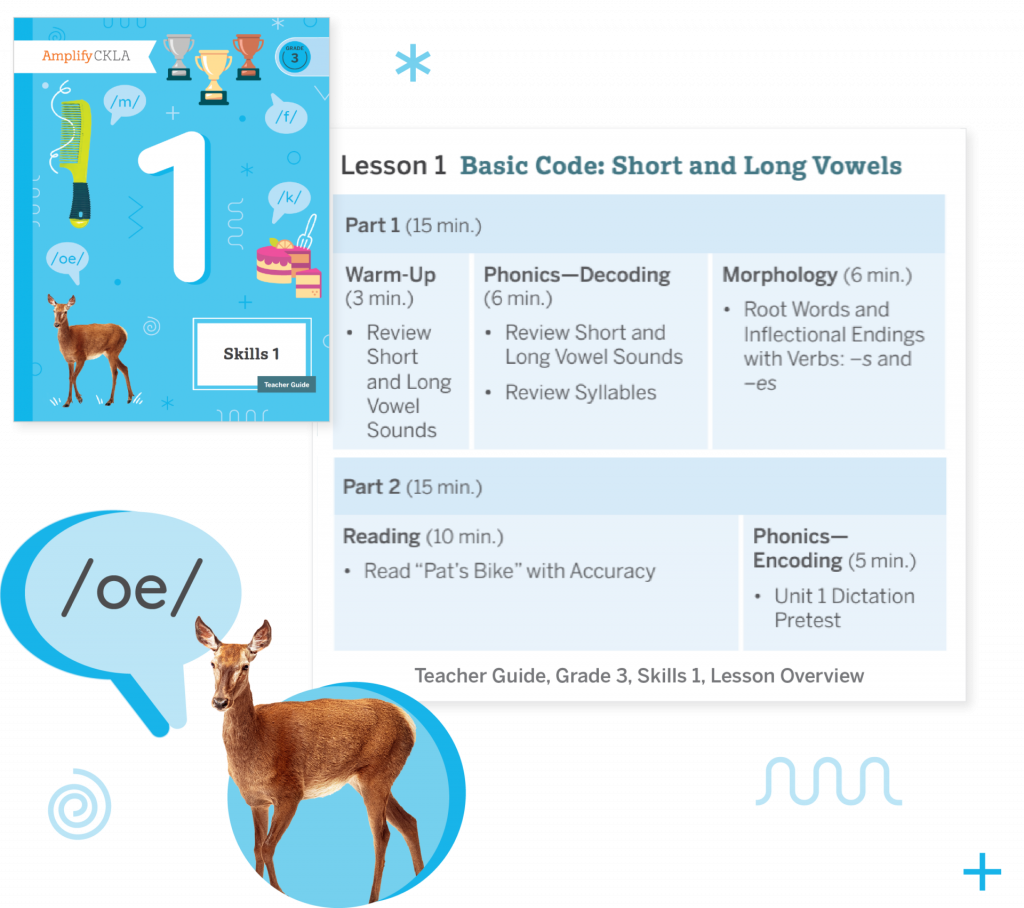
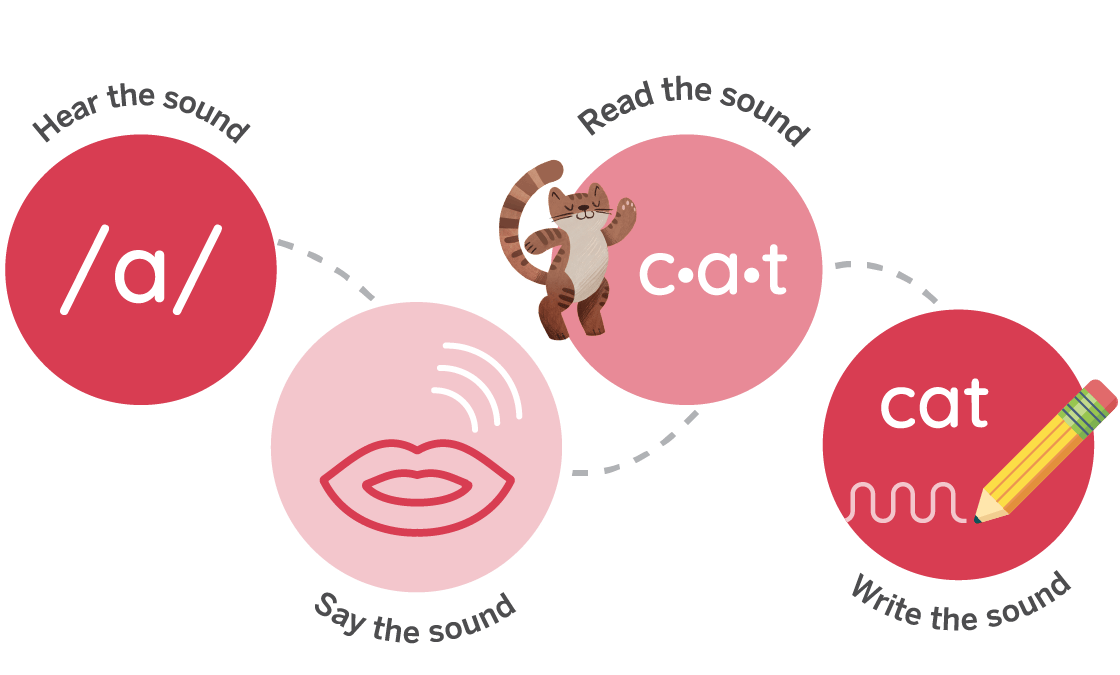
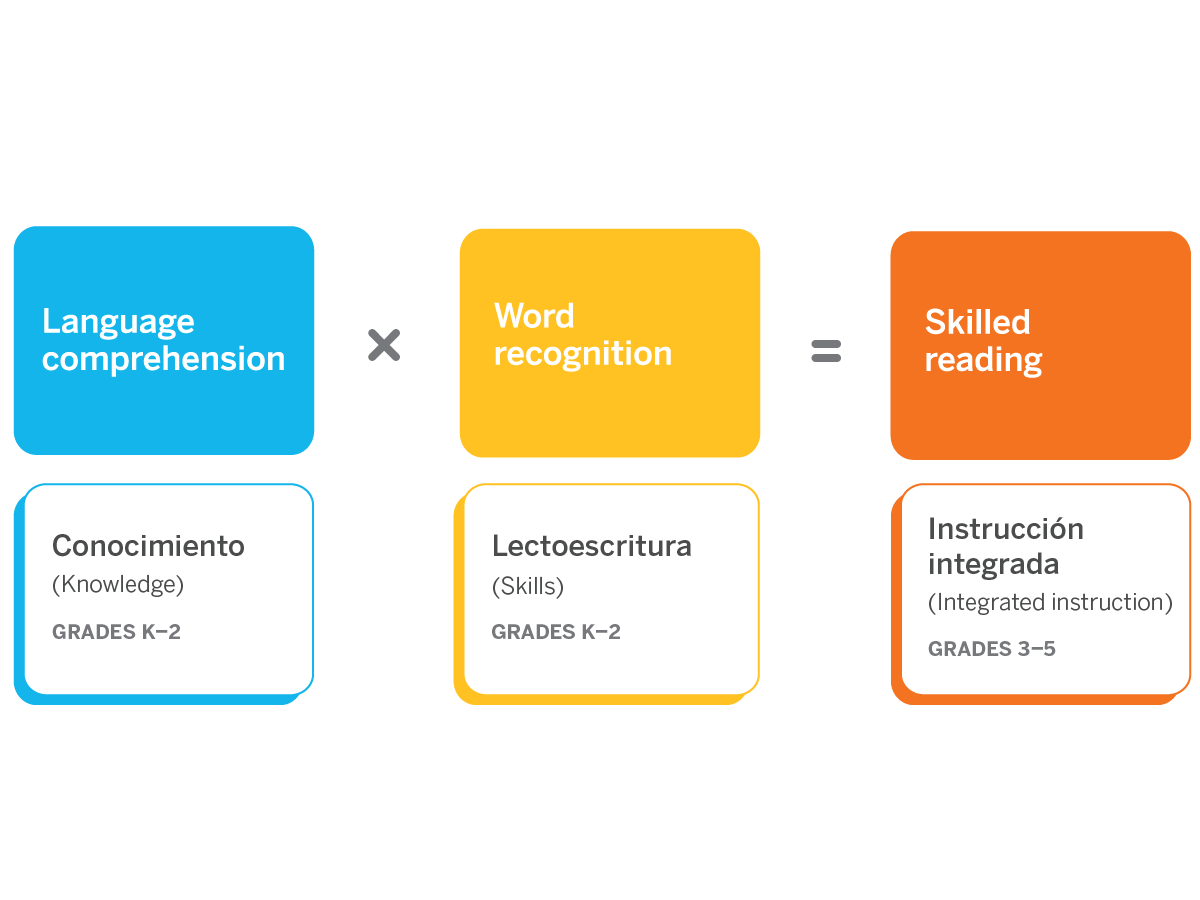
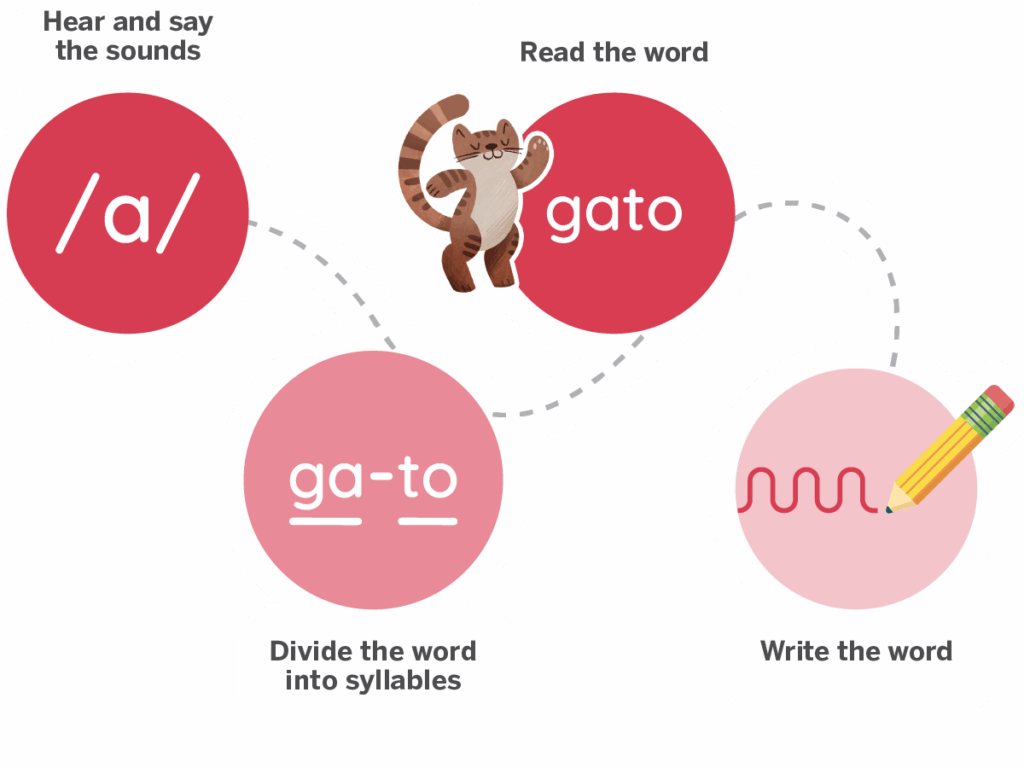
  • In Grades K–2, students complete one full lesson each day that builds foundational reading skills, as well as one full lesson that builds background knowledge.
  • In Grades 3–5, foundational reading skills and background knowledge are taught together through one integrated lesson each day.

Looking for 6th grade material? Click here.

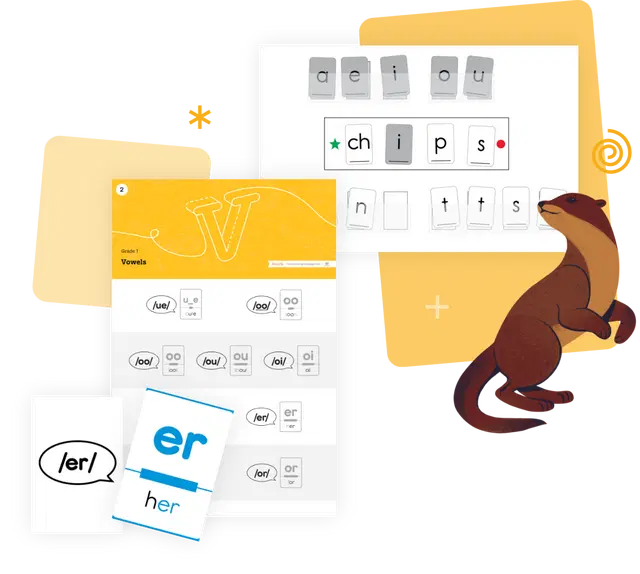
There’s no better way to understand the power of Amplify CKLA than seeing it in action. Watch Ms. Lehman’s second-graders in the video below as they learn how to decode and spell words with the long /ā/ sound.

What do students learn?

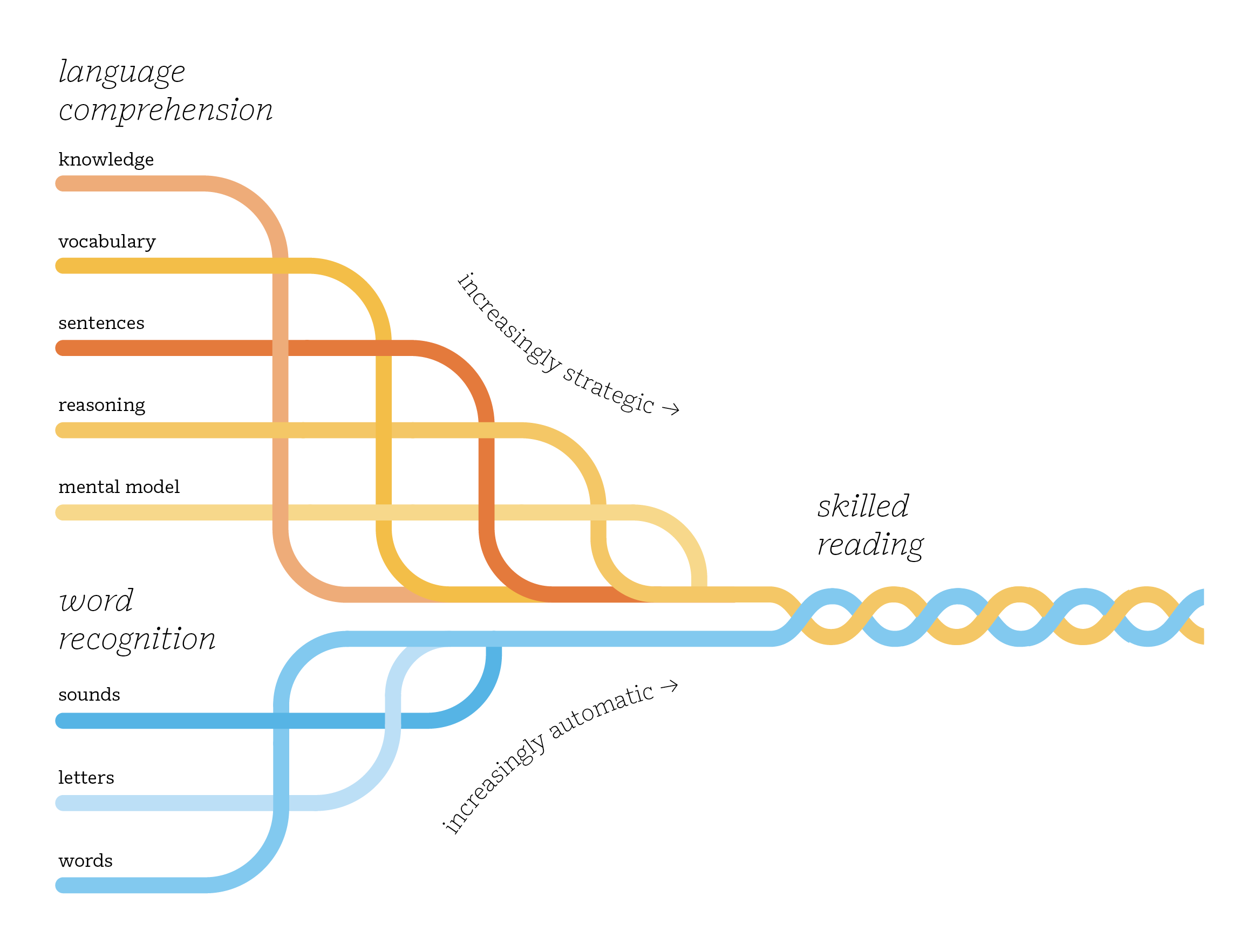
Amplify CKLA is an evidence-based program built on research about how students learn to read. This collection of research is often referred to as the Science of Reading or The Simple View of Reading. It tells us that:

  • Students learn to read best when they are taught foundational reading skills (like phonics) and comprehension skills (like vocabulary and background knowledge) at the same time. That’s why Amplify includes a combination of skills and concepts in every unit.
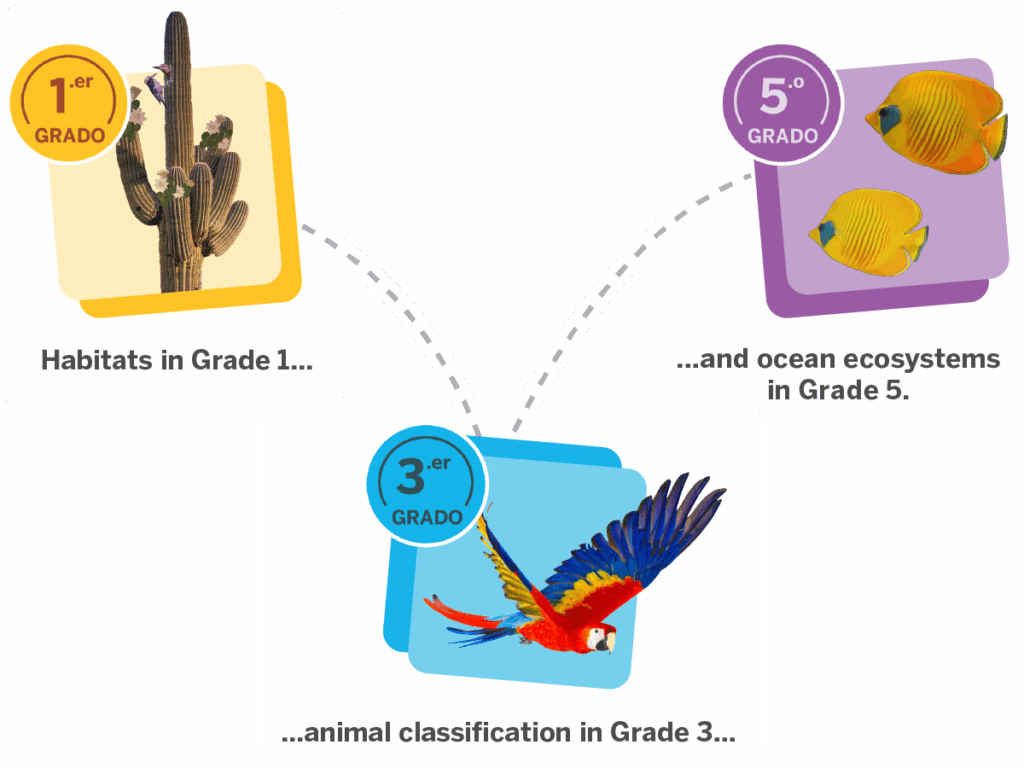
  • The more students know about a particular topic, the better they are able to comprehend what they read. That’s why Amplify CKLA incorporates rich stories, texts, and articles about a variety of topics throughout the program.

Because students learn so much with Amplify CKLA, it can be hard to review it all at once. To make it easier for you to review the program, we’ve provided links to a variety of resources below, including unit overviews and text lists by grade.

Important note:
Amplify believes in empowering teachers to make the best instructional decisions for their students. For that reason, we include a variety of optional materials for teachers to use at their own discretion. For example: Trade Books are an optional tool that teachers can choose to use to extend a lesson. These books do not come with the program and only serve as a suggestion to assist teachers in finding additional material that ties to the unit topic.

Print materials

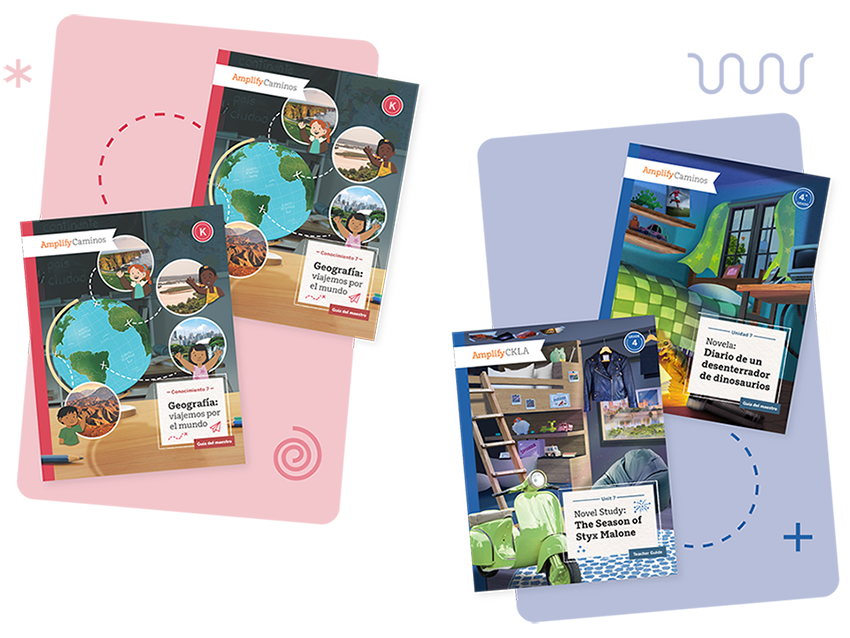
Student Readers

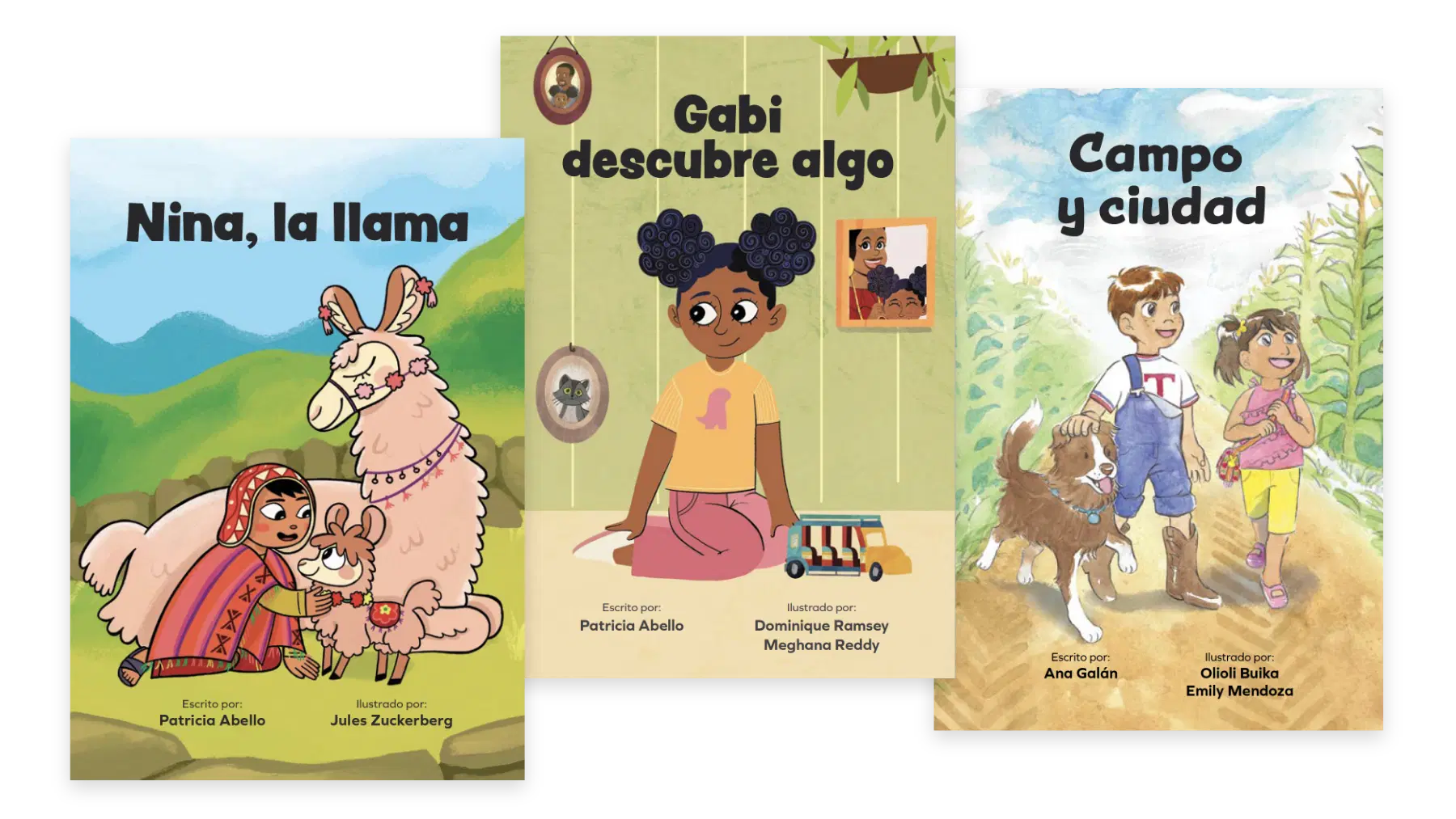
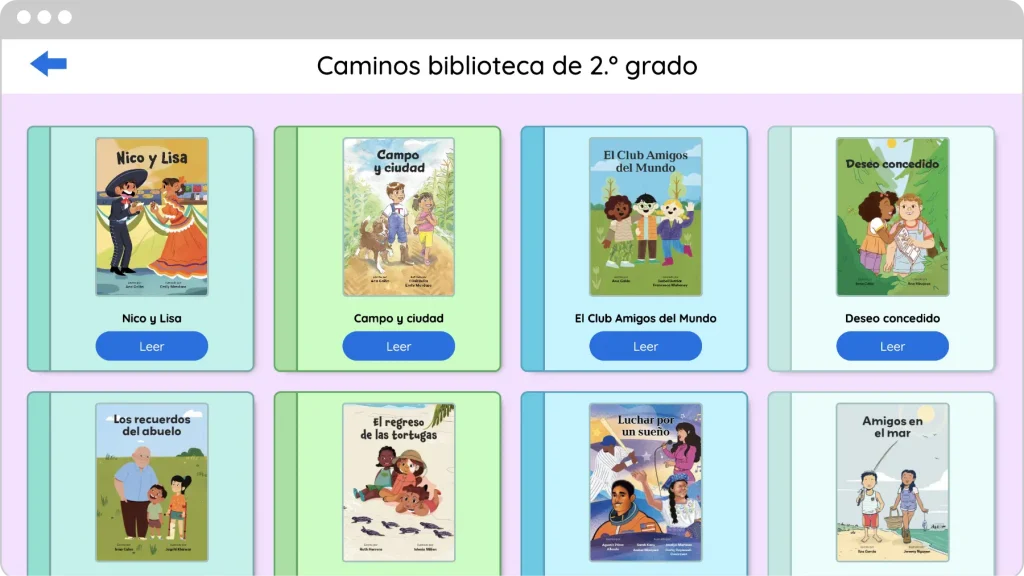
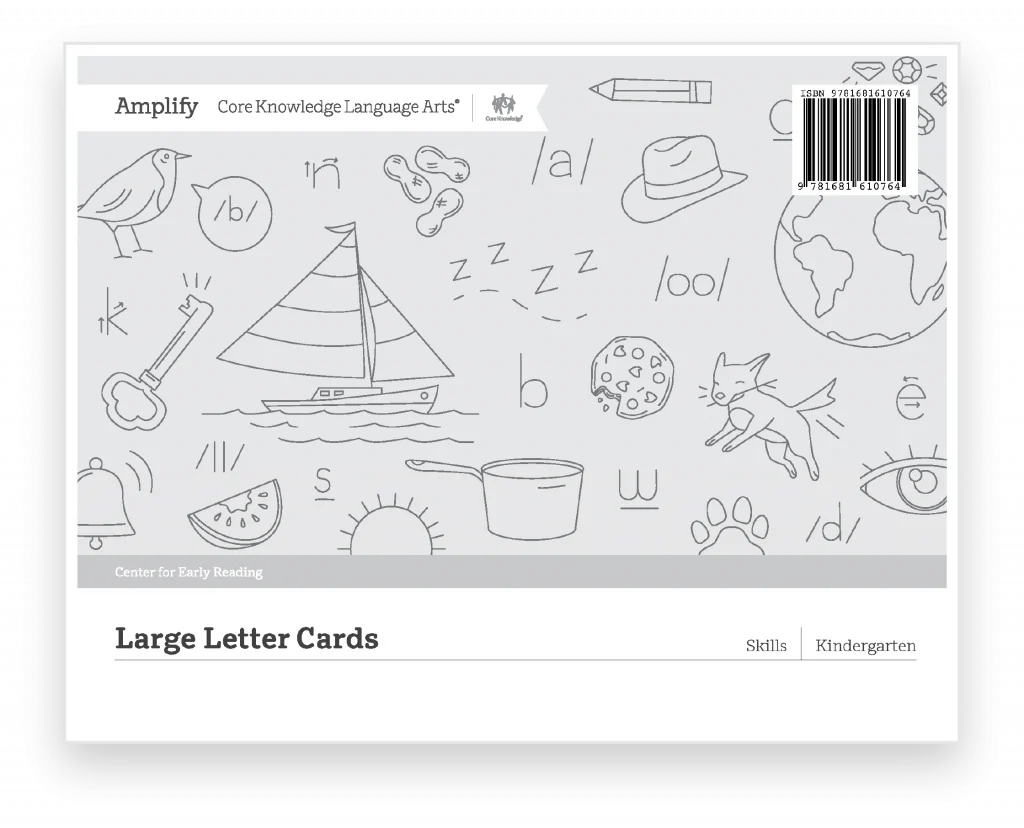
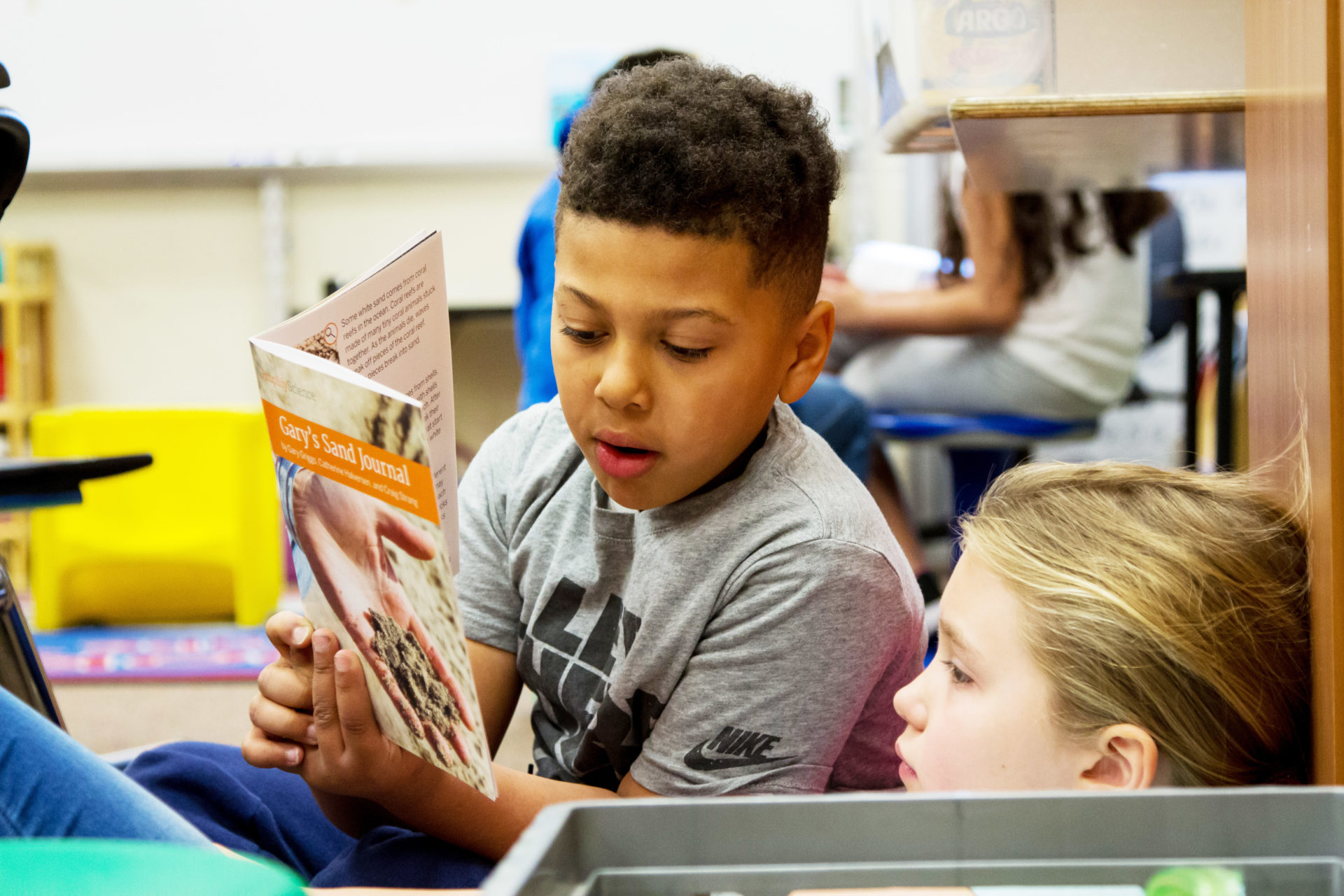
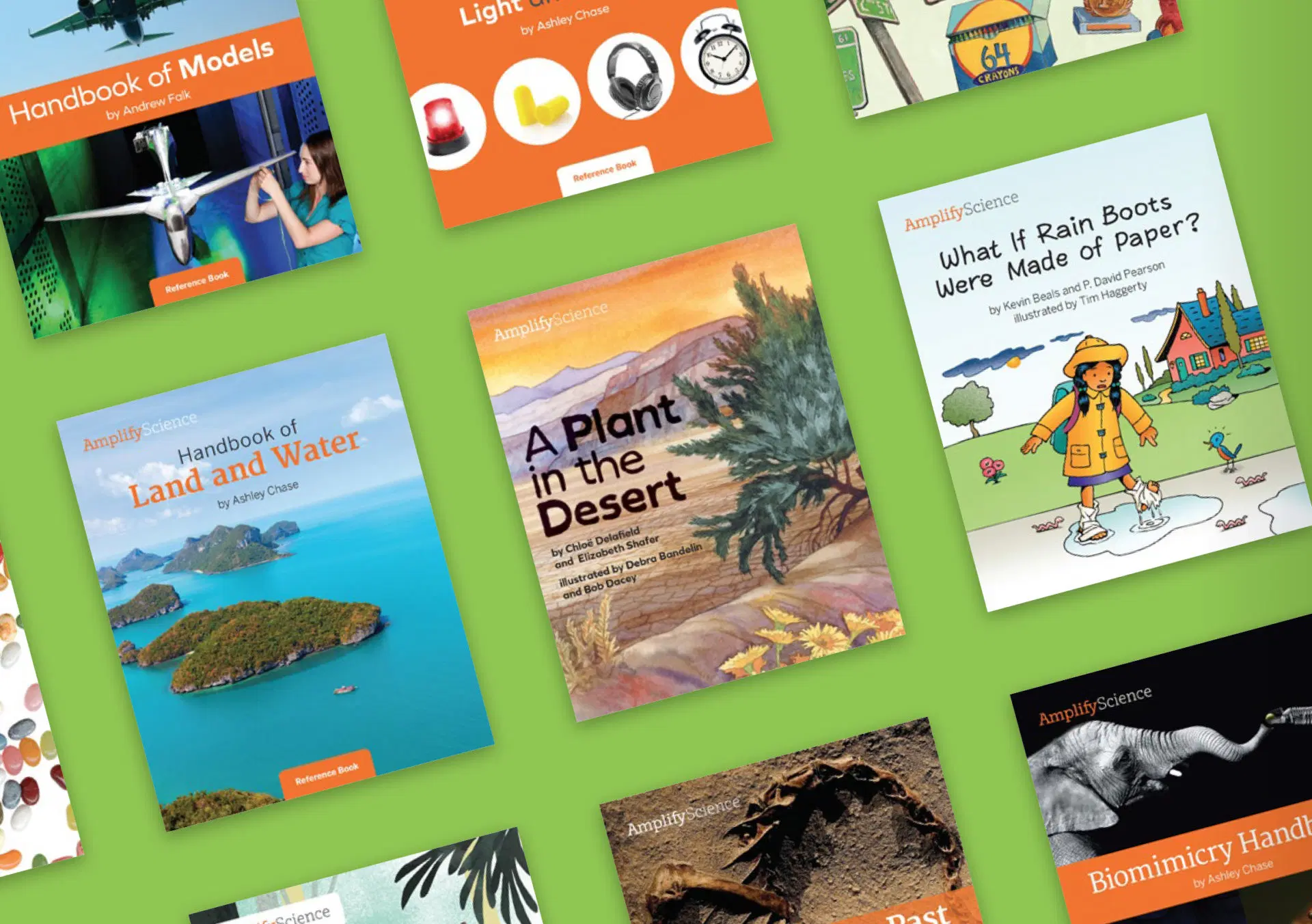
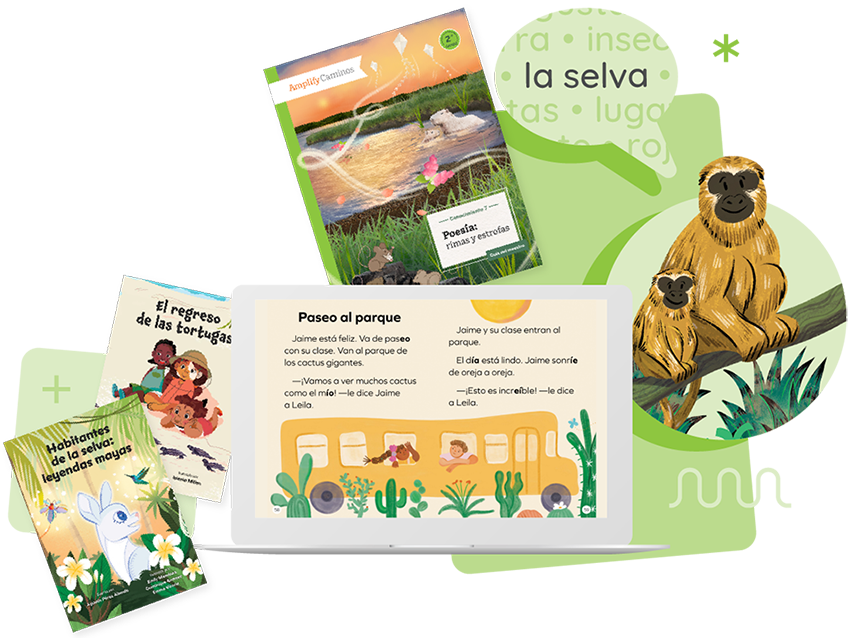
These readers are uniquely designed to provide intensive practice while reading simple but authentic stories. All readers are also available as ebooks and audiobooks on the teacher resource site.

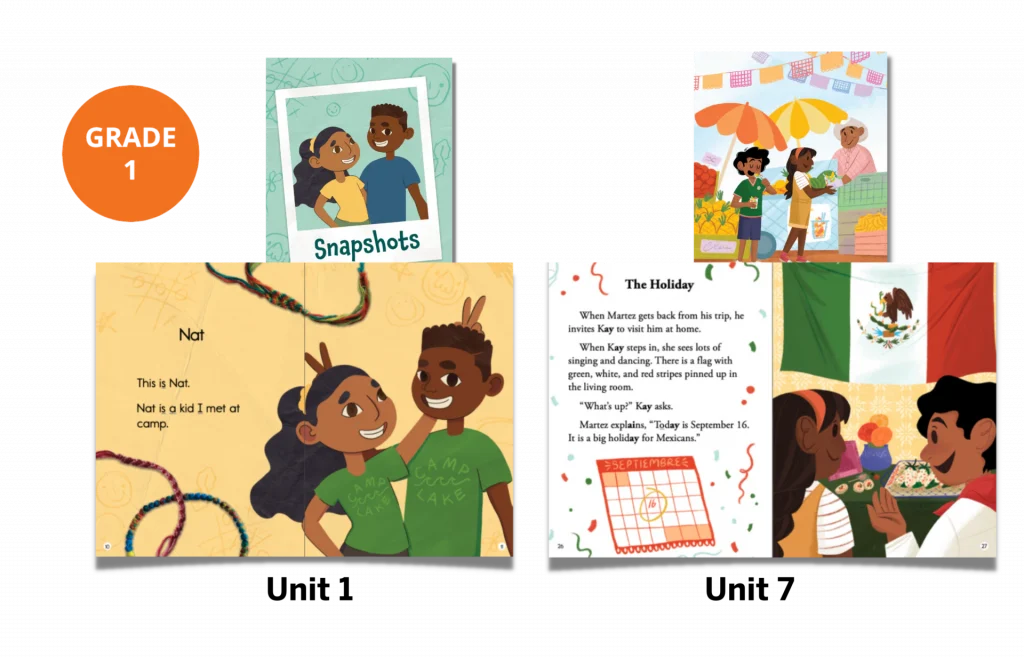
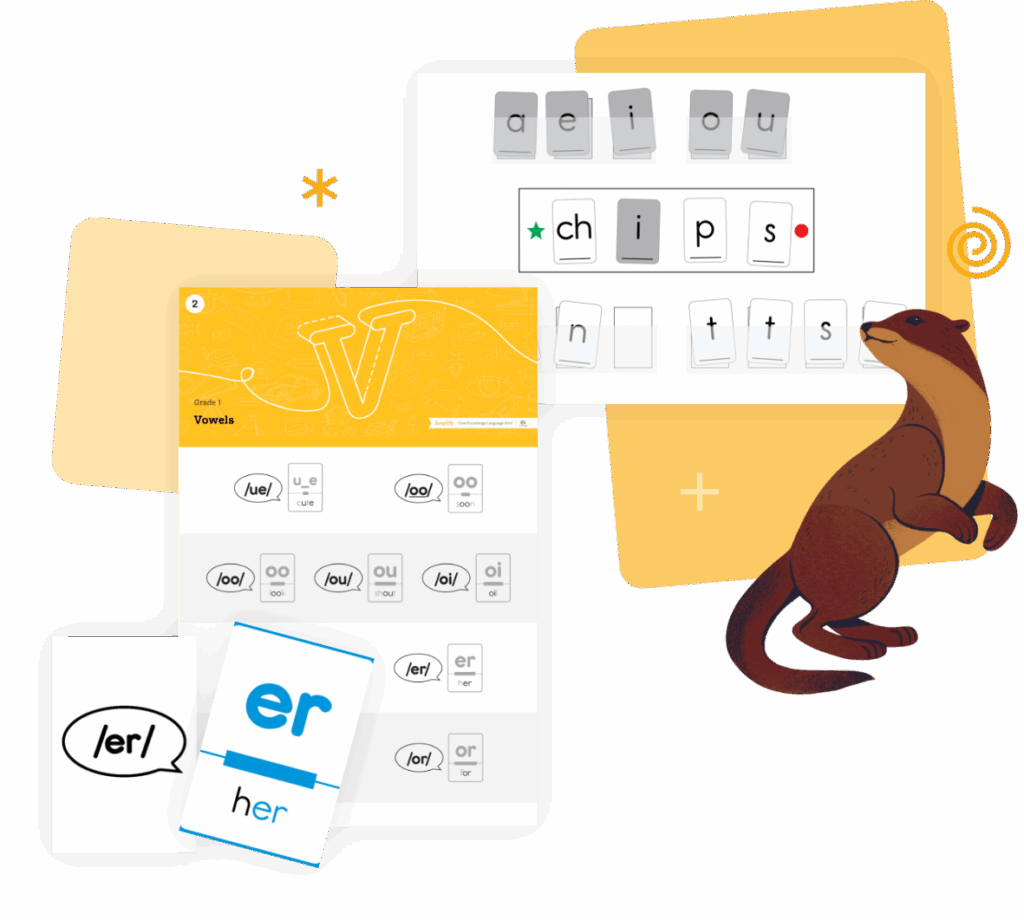
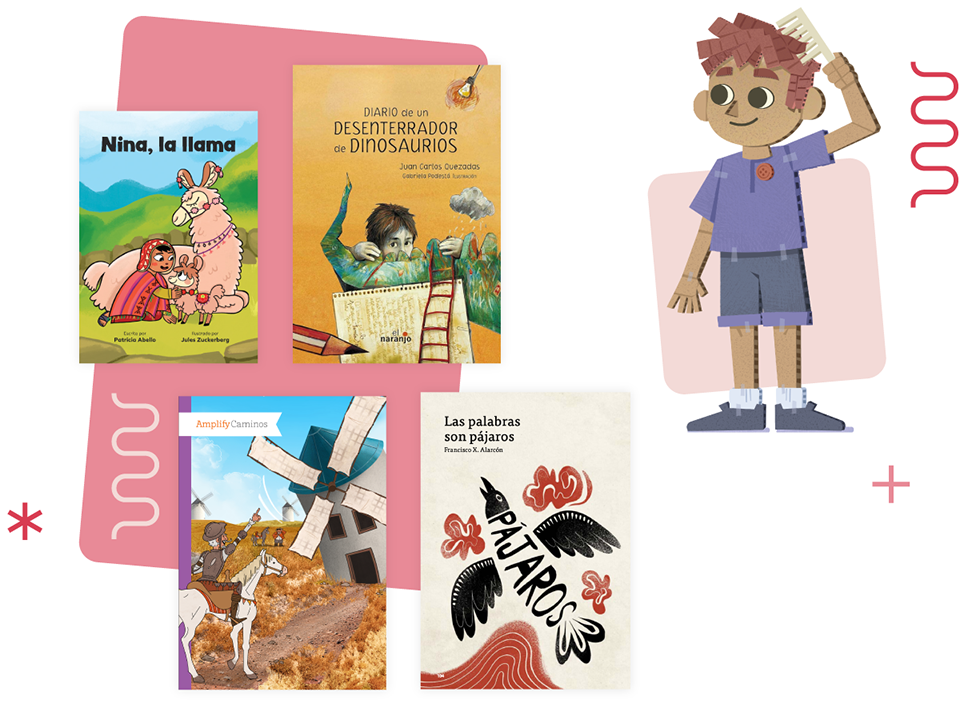
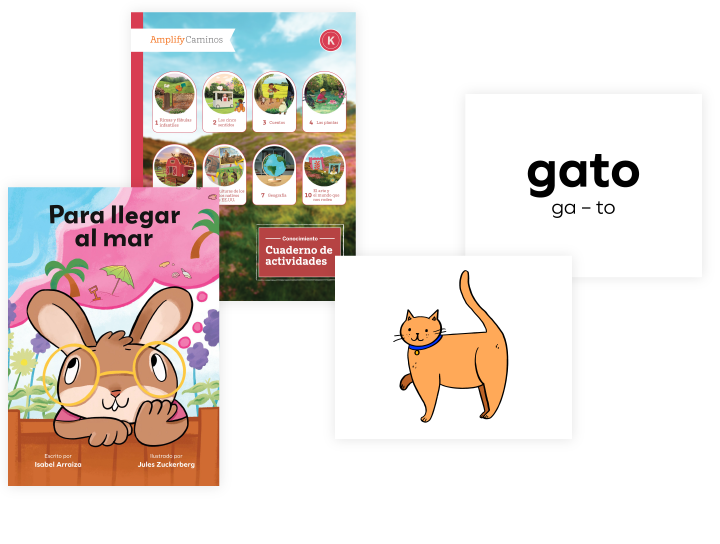
In grades K-2, these readers are chapter books that allow students to practice just-learned sound-spellings within an authentic reading experience that incorporates compelling plots and interesting characters.

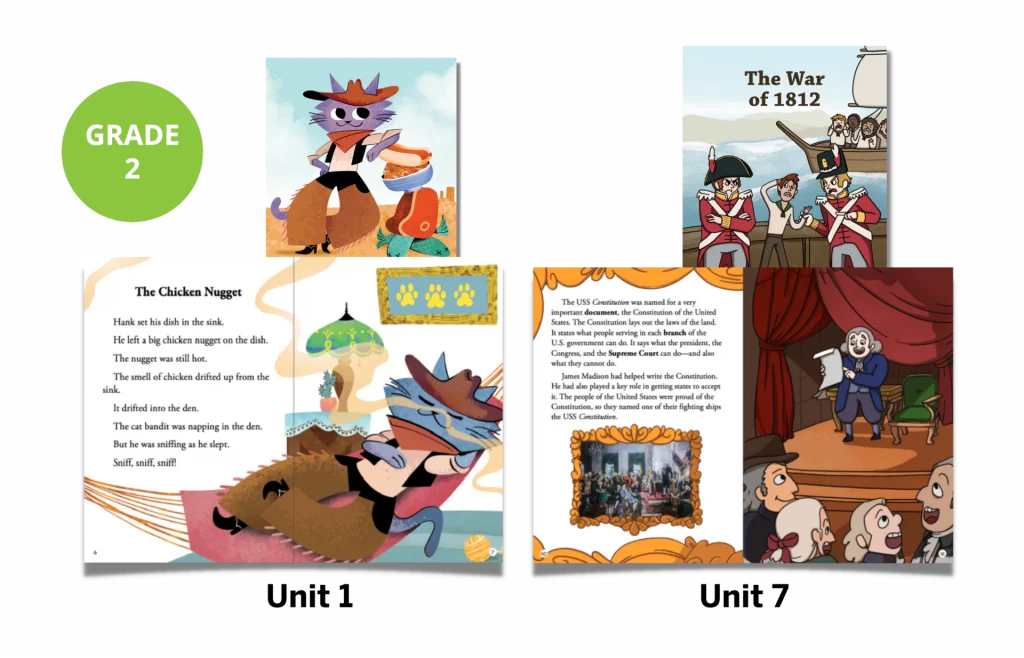
In grades 3-5, readers develop close reading and other literacy skills through a selection of diverse, content-rich literary and informational texts.

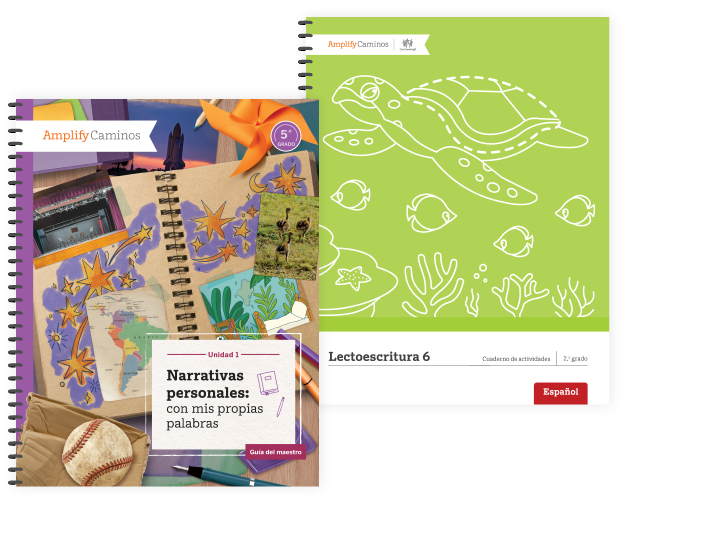
Student Activity Books

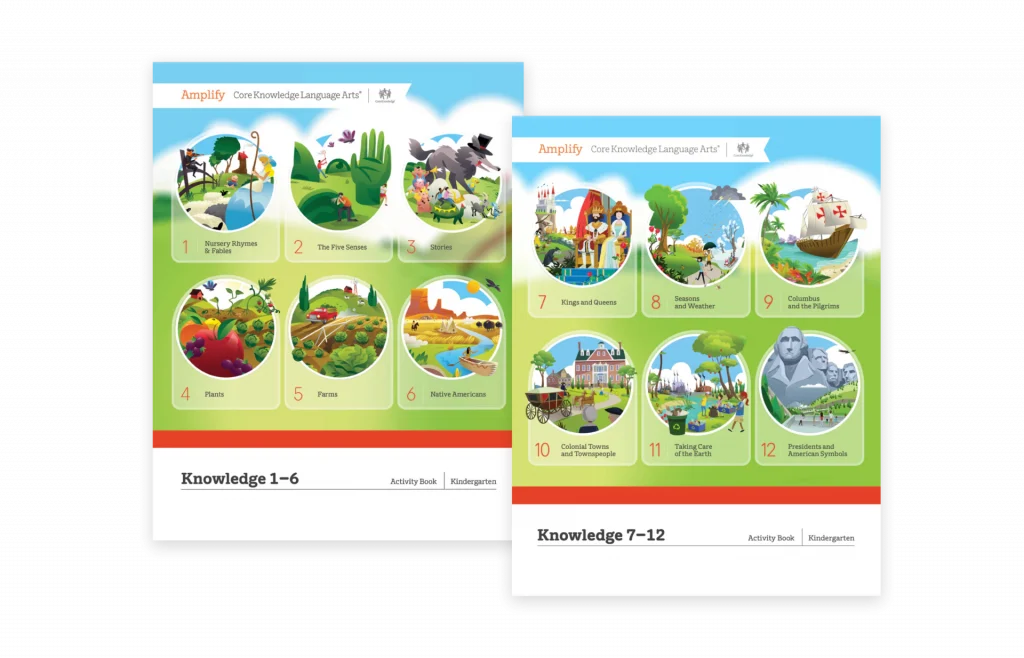
Part of the daily lessons, these activity pages ask students to respond to the text they’ve read and apply skills and knowledge. They also include assessments that track students’ skills development, to which teachers have access.

Digital materials

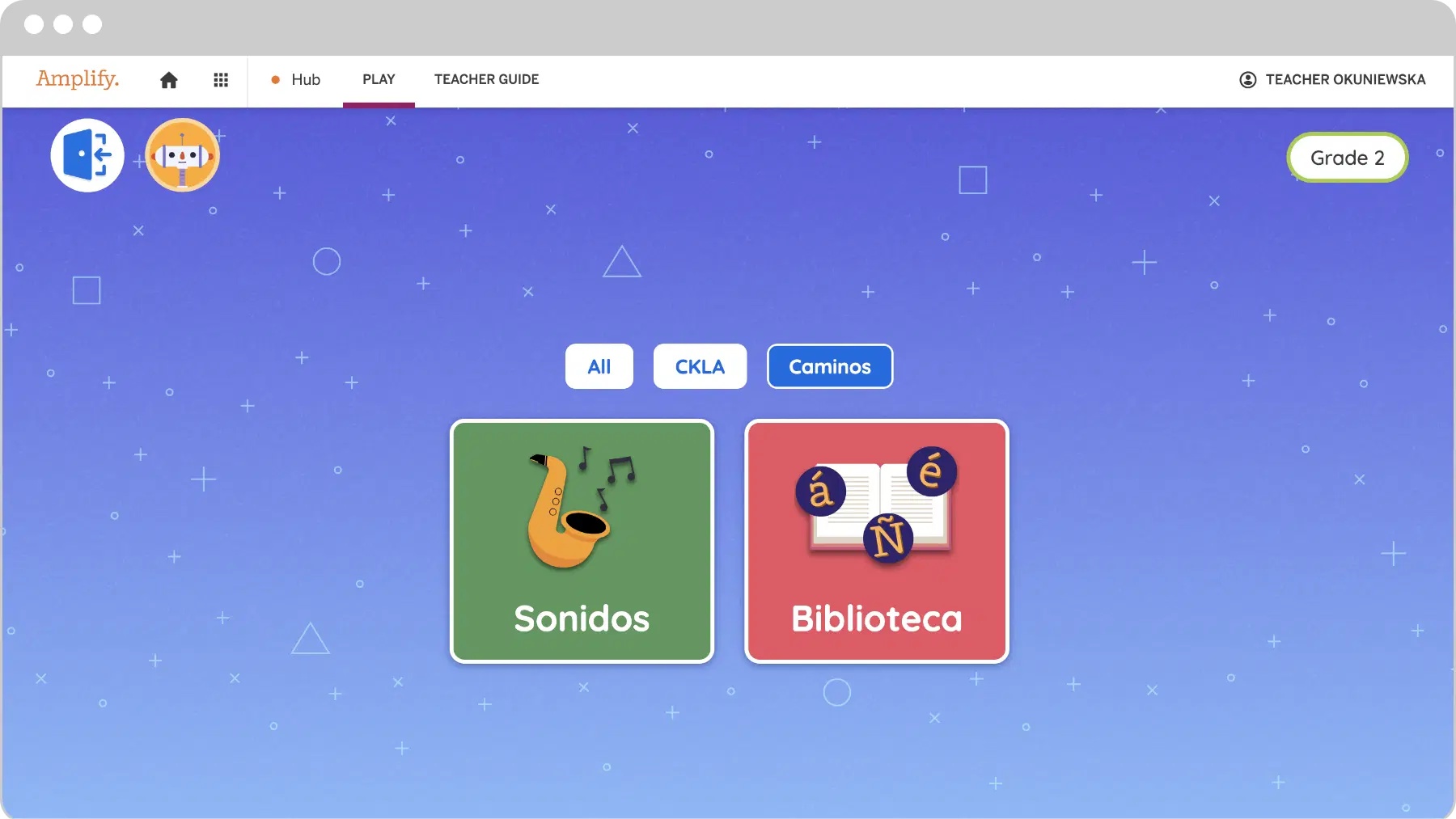
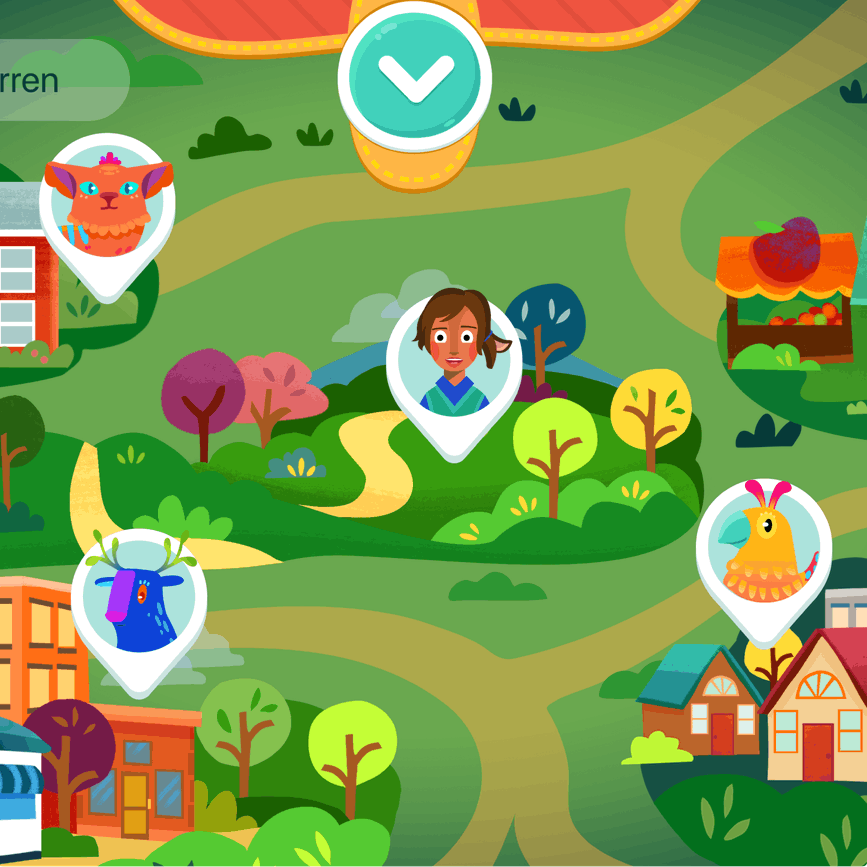
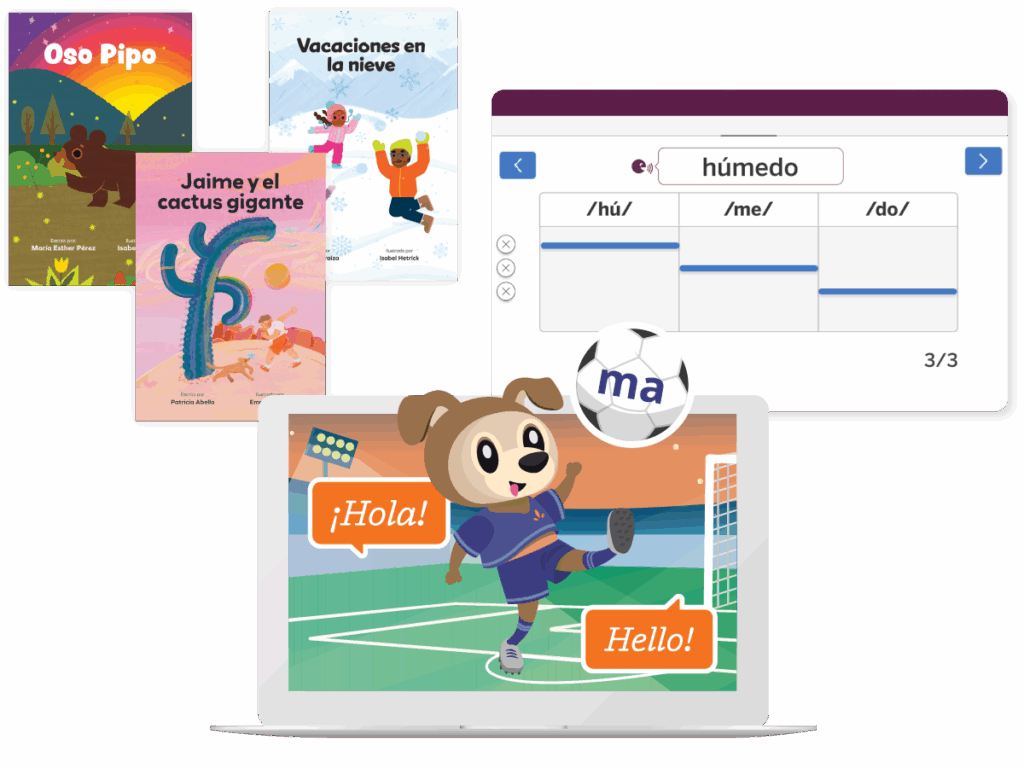
We are excited to announce that students will be able to access multimedia resources and engage in a new digital experience on the CKLA Hub. Unlike ever before, students can access digital resources independently from anywhere, taking full advantage of the instructional multimedia experiences that Amplify CKLA has to offer. Students can access the Hub at home, in the classroom, and on the go, making it ideal for remote learning. It’s compatible with laptops, Chromebooks, tablets, and desktops—we’ve also optimized it for mobile devices.

Knowledge Builder videos for grades K–2


Each Knowledge Domain starts with a Knowledge Builder video: a short, fun, animated story that enriches the lesson and motivates students with new characters, places, and concepts.

Recorded daily read-alouds for grades K–2

Teachers and students will have access to video recordings of all K–2 Knowledge Read-Alouds with pictures from the Flip Books.

Sound Library for grades K-2

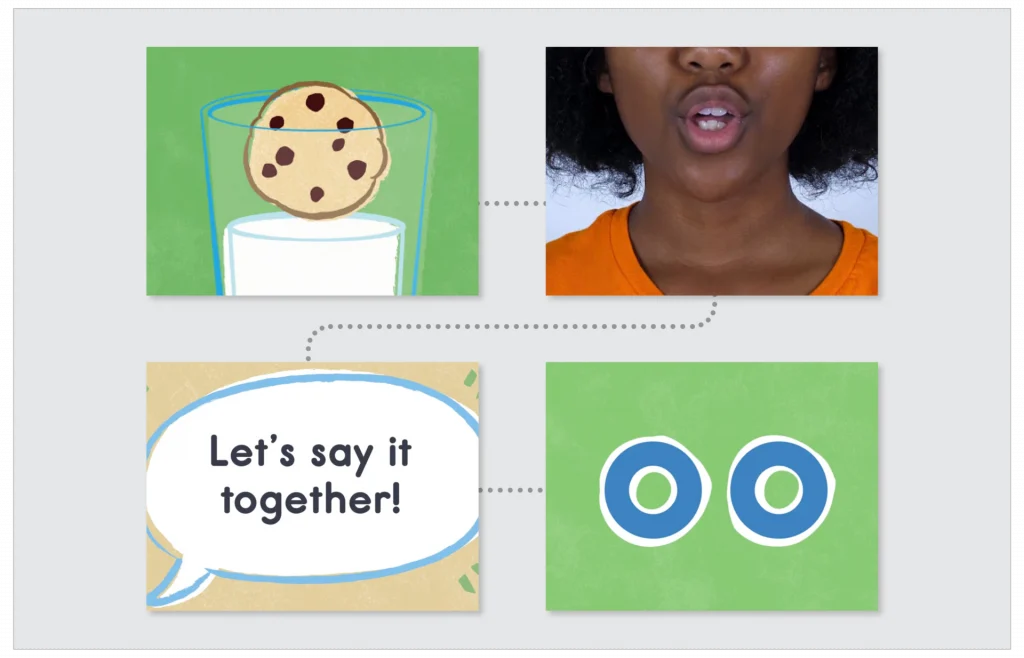
The Sound Library uses audio sounds, catchy songs, and animated articulation videos to help students learn and master sounds.

Foundational Skills Boost for grades 1–3

Designed for grades 1–3, these video-based, self-guided lessons target critical foundational skills from the previous year’s instruction in order to fill in any gaps. They offer approximately nine weeks of instruction organized as daily lessons, with additional teacher-led small-group activities and family resources.

Vocab App for grades 3-5

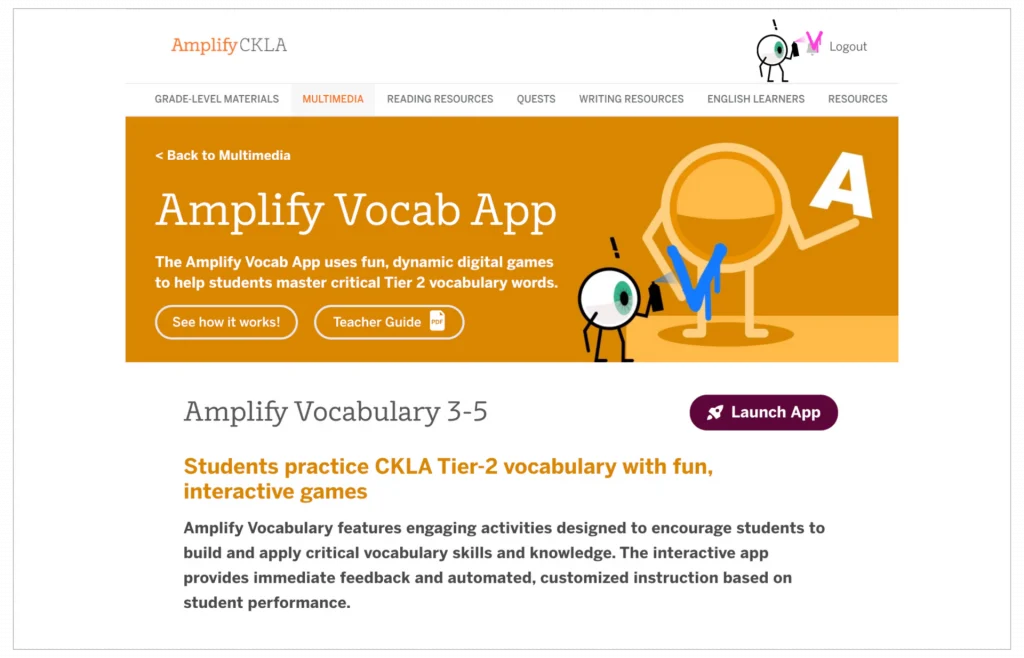
The Vocabulary App is designed for independent practice with vocabulary. Students can use the Vocabulary App for game-like activities that challenge them.

Quests for grades 3–5

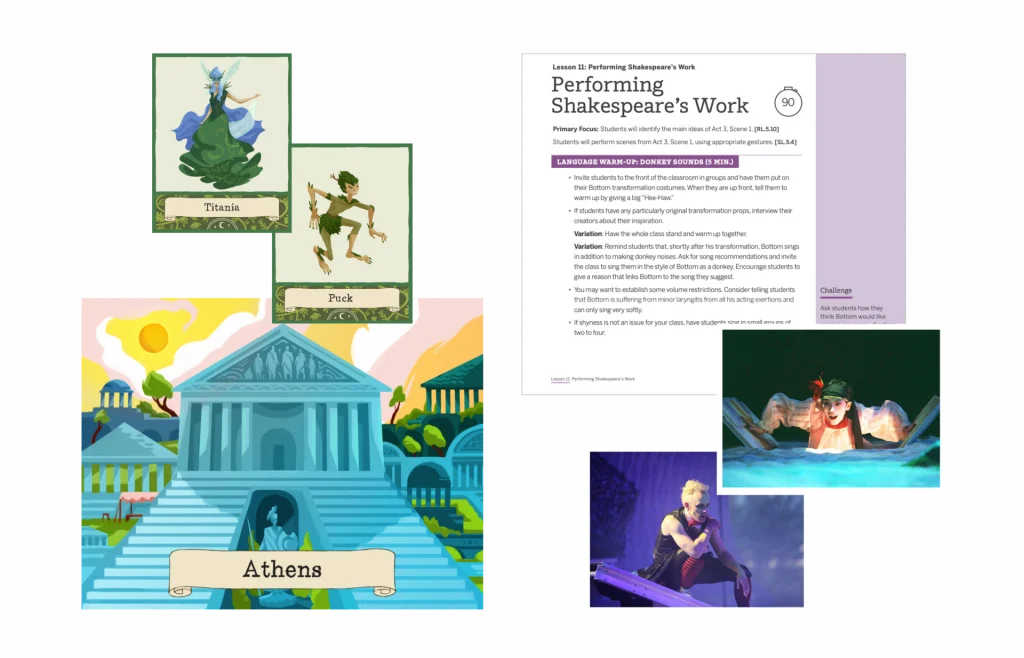
Each of the grade levels in 3–5 contains a Core Quest. In these special units, all the normal rules of the classroom change, and students engage with language in surprising new ways. For example, in grade 5, they learn to love the dense Shakespearian language of A Midsummer Night’s Dream through imagery, close reading, and performance.

Support your child at home

Read and talk at home

  • If possible, read with your child daily; even 15 minutes of reading together each day can make a huge impact. 
  • You can read sections of the text aloud together. If your child struggles, you might try reading the text to them with expression, and then have them read it aloud back to you. 
  • For additional practice, watch the recorded read-alouds with your K-2 student or have your grade 3-5 student use the Vocabulary App. 
  • Find moments to discuss what they are reading and discovering. Examples of questions you could ask: What stood out to you from what you read today? Were any sentences or words confusing? What was most surprising? What do you think the writer was trying to communicate? Do you agree with the writer’s ideas or descriptions? What connections can you make between what you are reading and your own life or other issues?
  • Listen to your child read their written responses or have them share with a friend over video chat. 
  • We recommend reviewing this Protecting Kids Online article by the Federal Trade Commission addressing digital safety.

Skills practice at home

We’ve developed a set of resources for families to use with their students that includes instructions and materials to teach and practice grade-level phonics at home. Resources include sound videos, Readers, and a how-to video with editable instructions that family members can customize to meet individual student needs.

Program access

Before accessing the program, watch the below video to learn even more about Amplify CKLA! Then scroll down and follow the login instructions provided.

Take a closer look at the program with the Idaho Falls Community demo account! Follow these simple instructions to access our program digitally.

  • Click the CKLA Teacher Resource Site button.
  • Select Log in with Amplify.
  • Enter this username: t1.ifckla@demo.tryamplify.net
  • Enter this password: Amplify1-ifckla
  • Select the desired grade level.

Where to go for help

Whether you have questions about your technology or want to know more about the program, Amplify’s Support Team is here to help!

Contact Support via telephone at (833) 97-Care-8 (833-972-2738) or caregiver@amplify.com.

Our support hours are Monday – Friday, 7 am – 9 PM ET, and Sunday, 10 – 6 ET.

Inspiring the next generation of Massachusetts scientists, engineers, and curious citizens

Amplify Science is an engaging new core curriculum designed for three-dimensional, phenomena-based learning.

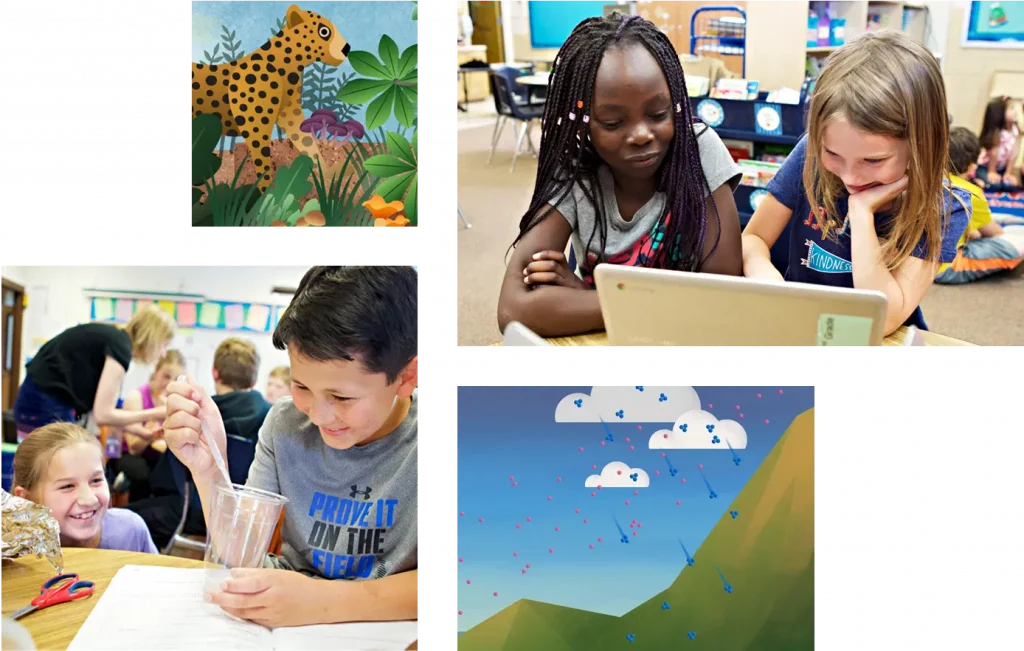
Collage of four images: a jungle illustration with a giraffe, students using computers, a boy studying with classmates, and an animated hillside with kites flying.

A powerful partnership

Amplify Science was developed by the science education experts at UC Berkeley’s Lawrence Hall of Science and the digital learning team at Amplify. This partnership extends to 2032, allowing us to continuously improve our program and provide our customers with the most up-to-date enhancements, free of charge. Get a glimpse at our latest back-to-school updates here.

Instructional model

The Amplify Science program is rooted in the proven, research-based pedagogy of Do, Talk, Read, Write, Visualize. Here’s how each element works:

Three blue panels describing educational activities: "hands-on science" with lab experiments, "discuss" with collaborative learning, and "read" with literacy in science articles.

Phenomena-based approach

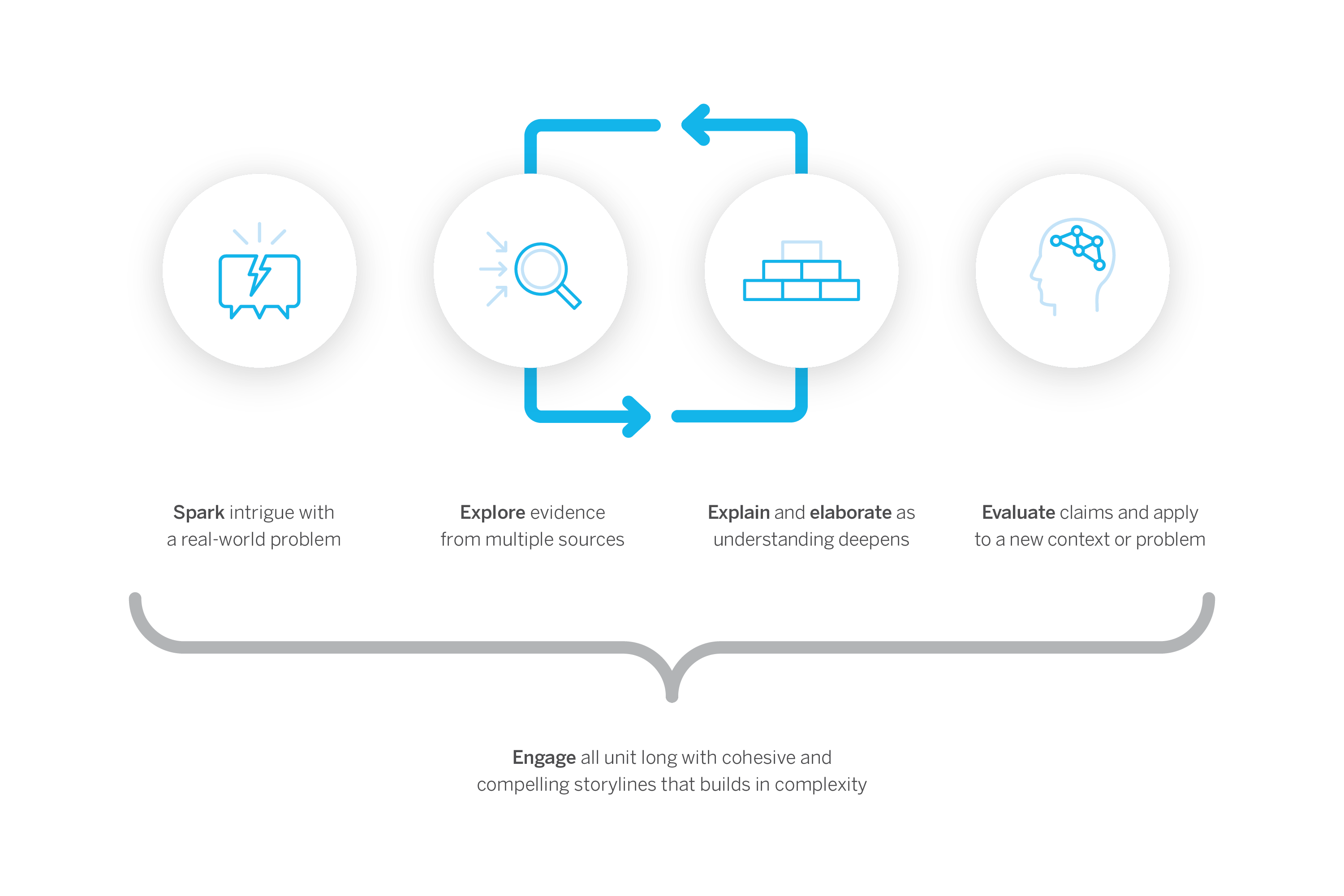
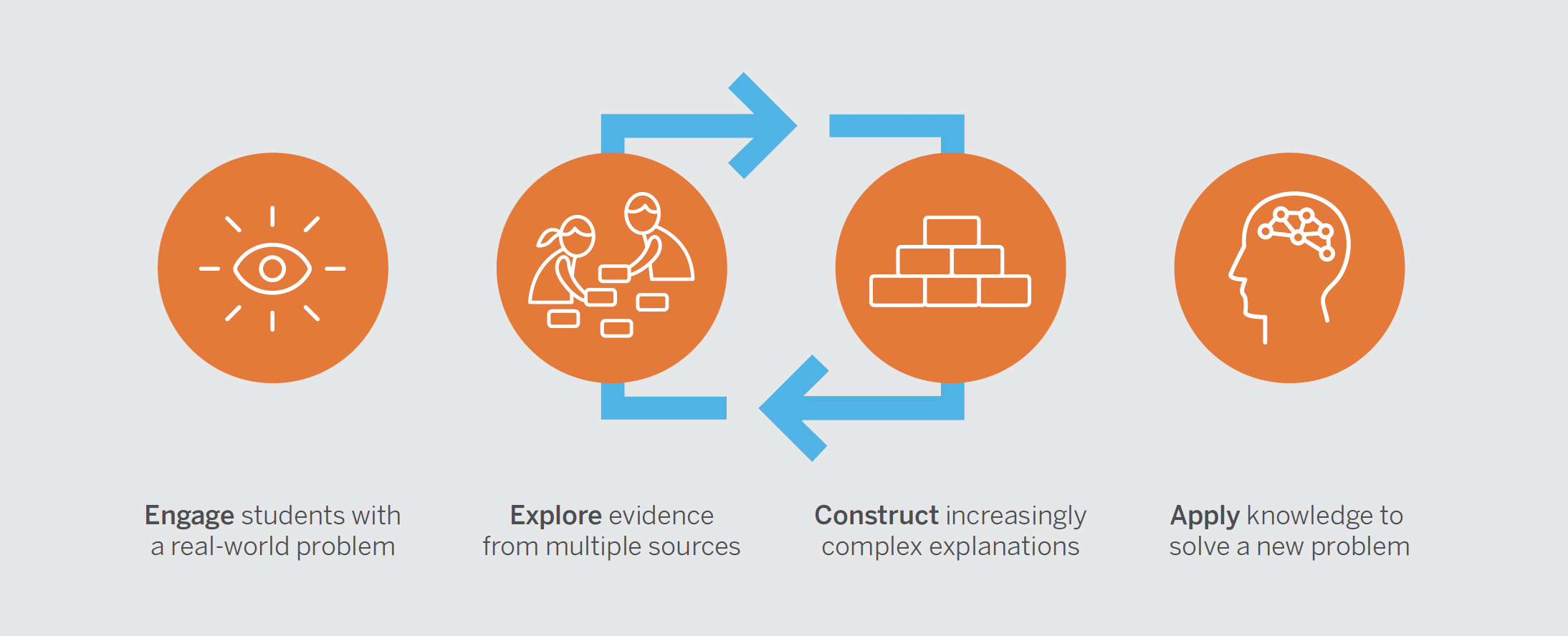
In each Amplify Science unit, students take on the roles of scientists or engineers in order to investigate a real-world problem. Students work to define the problem and collect and make sense of evidence. Once the context is clear, students collect evidence from multiple sources and through a variety of modalities. At the end of the unit, students are presented with a brand new problem, giving them an opportunity to apply what they’ve learned over the course of the unit to a new context. This represents a shift from asking students to learn about science to supporting students in figuring out the science.

Flowchart of a learning unit divided into four chapters, showing stages of student engagement from introduction to application, with assessments indicated at various points.

Resources to support your review

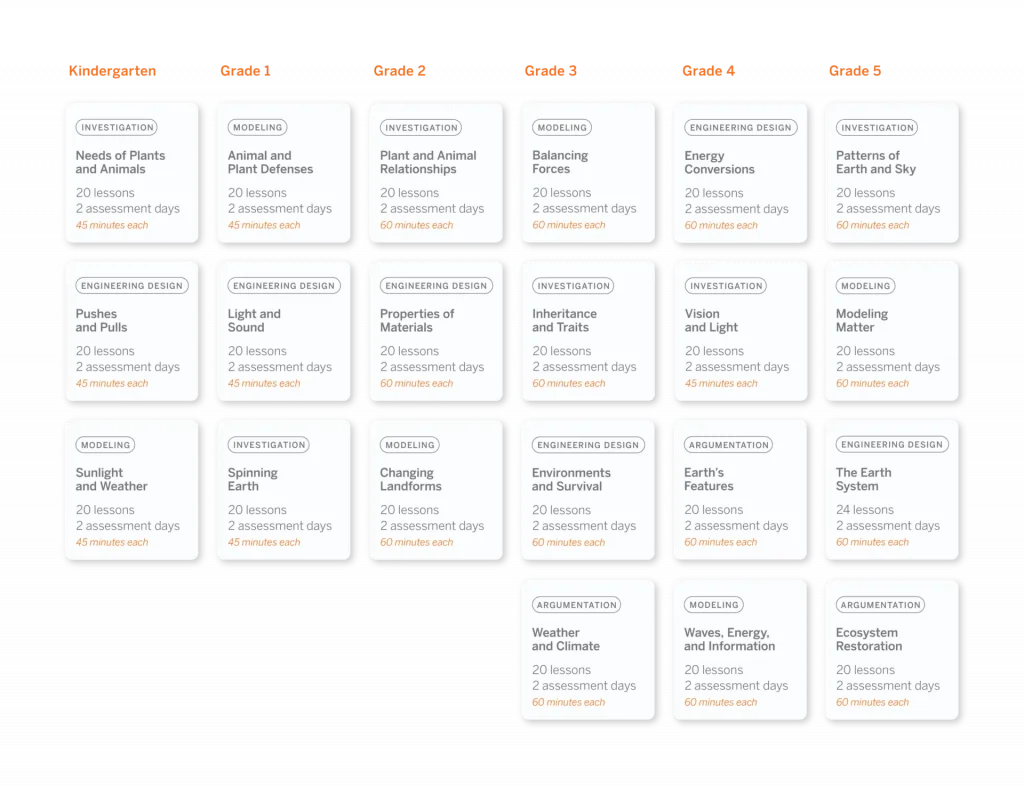
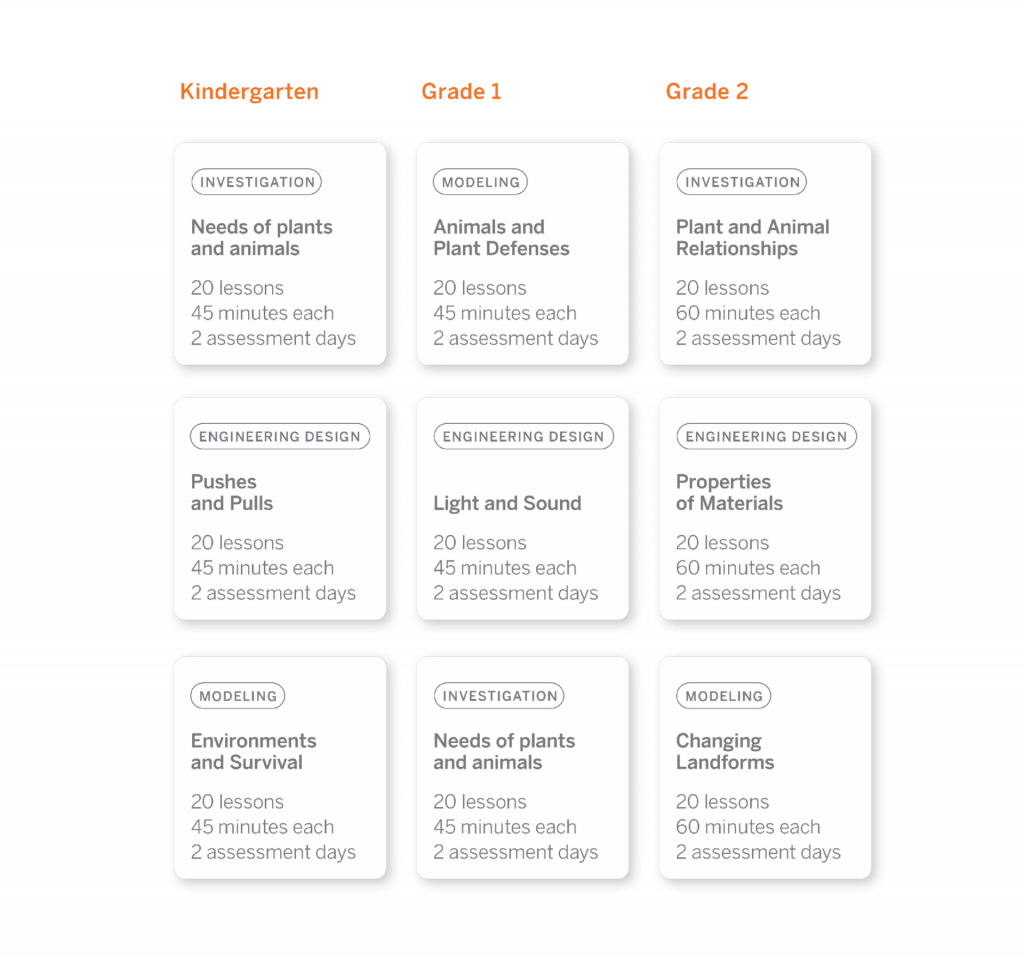
Scope and Sequence

GRADE

Kindergarten

UNITS

  • Needs of Plants and Animals
  • Pushes and Pulls
  • Sunlight and Water

Grade 1

  • Needs of Plants and Animals
  • Pushes and Pulls
  • Sunlight and Water

Grade 2

  • Plant and Animal Relationships
  • Properties of Materials
  • Changing Landforms

Grade 3

  • Balancing Forces
  • Inheritance and Traits
  • Environments and Survival
  • Weather and Climate

Grade 4

  • Energy Conversions
  • Vision and Light
  • Earth’s Features
  • Waves, Energy, and Information

Grade 5

  • Patterns of Earth and Sky
  • Modeling Matter
  • The Earth System
  • Ecosystem Restoration

Flexible implementation

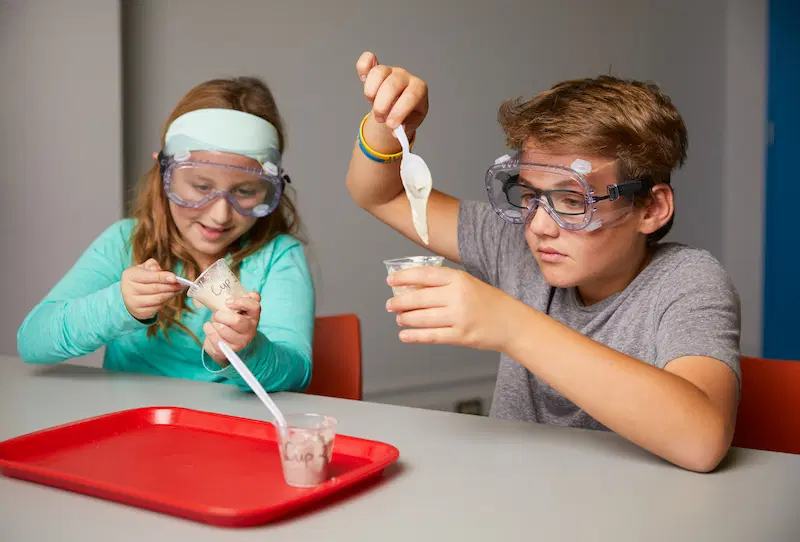
One of the key features of Amplify Science is the flexibility that it offers. We give students authentic opportunities to experience the full breadth of what it means to be a scientist or engineer. Just as scientists gather evidence from many types of sources, so do students in our program. Like scientists, students gather evidence not just from physical models, but also from digital models, texts, videos, photographs, maps, data sets, and even their peers!
Simply put, real scientists don’t just get messy—they read, write, analyze, hypothesize, model, test, and communicate with purpose, too.

Illustration of the indirect effects of overfishing on northern benguela jelly populations displayed on a laptop screen.

Student Books
Beginning and young readers have unique developmental needs, and science instruction should support these students in reading more independently as they progress through sections of content, the school year, and each grade. One way Amplify Science meets these needs is by strategically deploying different modes of reading throughout each unit: Read-Aloud, Shared Reading, and Partner Reading.

A collage of various educational book covers related to science and math, featuring illustrated themes like sports, nature, and energy.

Student Investigation Notebooks

Available for every unit, the Student Investigation Notebooks provide space for students to:

  • record data.
  • reflect on ideas from texts and investigations.
  • construct explanations and arguments.
Collection of educational books from 'amplify science' on topics including ocean atmosphere, matter and energy ecosystems, and insect interactions, displayed in various angles.

Digital student experience

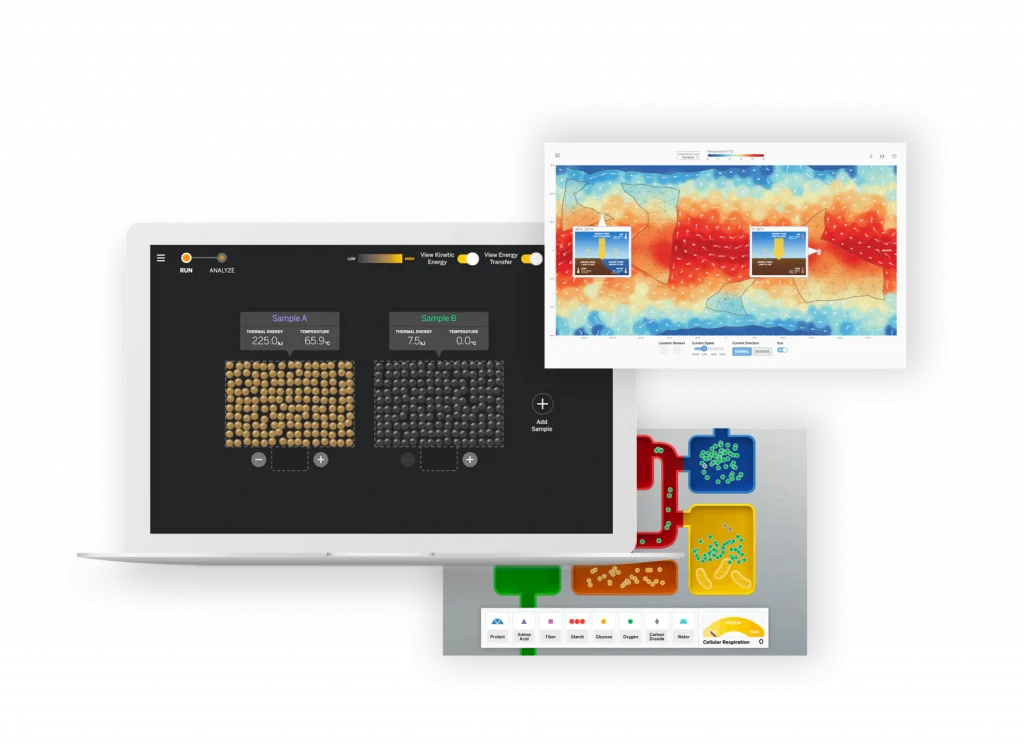
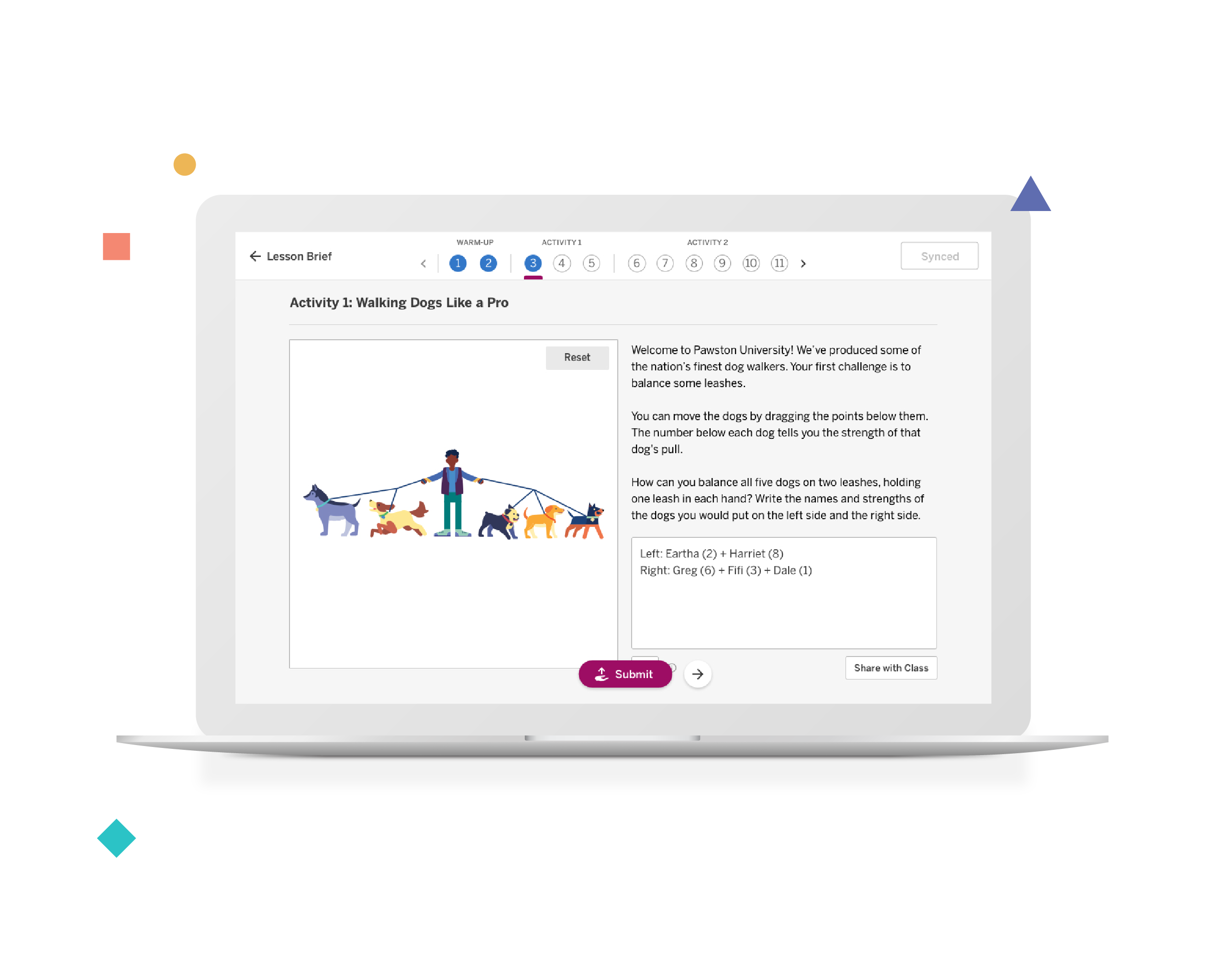
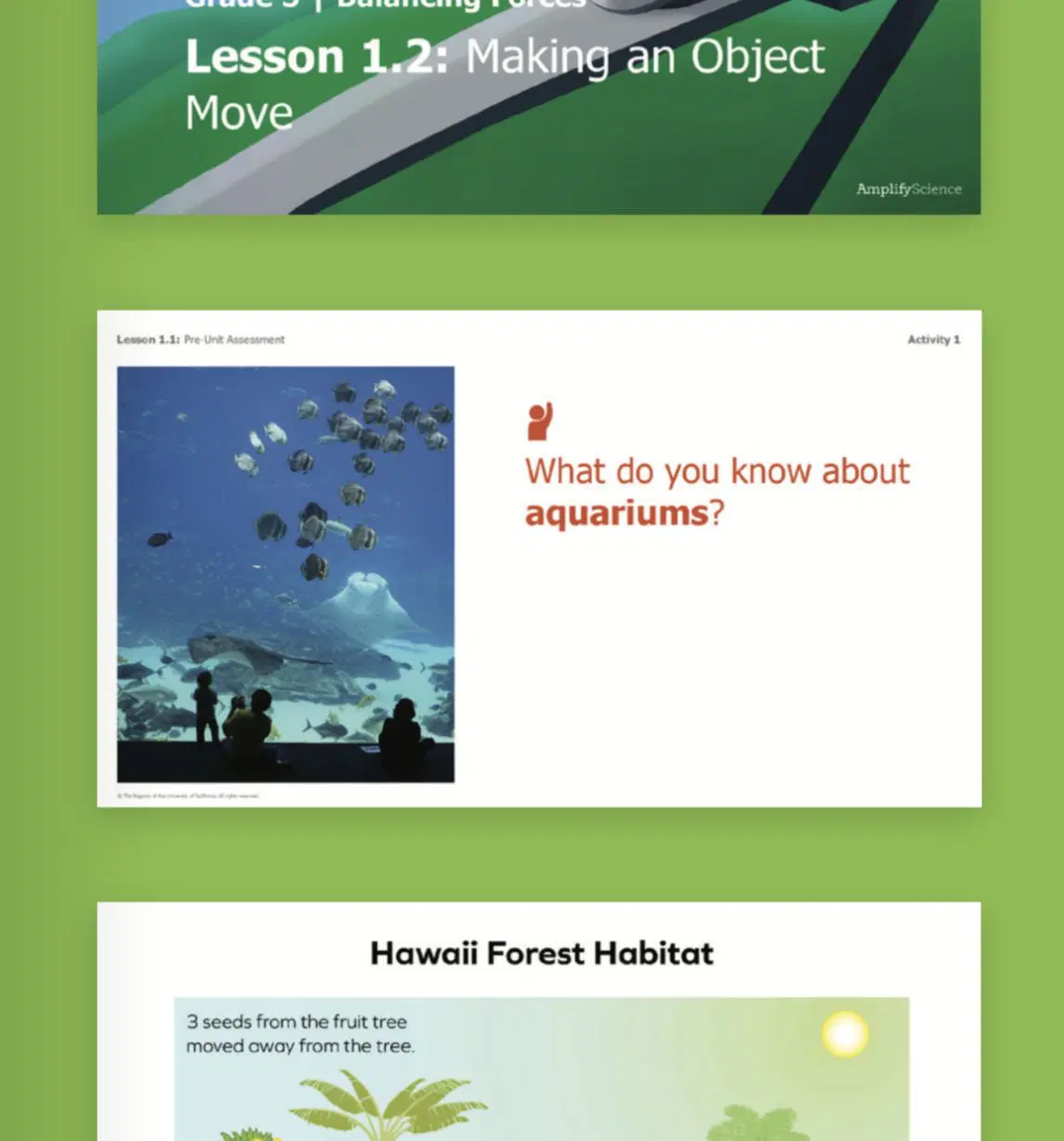
Students access the digital simulations and Modeling Tools, as well as lesson activities and assessments, through the digital student experience. Students can interact with the digital student experience as they:

  • conduct hands-on investigations.
  • engage in Active Reading and writing activities.
  • participate in discussions.
  • record observations.
  • craft end-of-unit scientific arguments.

Dive into a quick example of our powerful simulations

Grades K–5 simulation

A digital illustration showcasing a laptop and a tablet displaying complex data analysis software interfaces with graphs and heatmaps.

Hands-on materials kits

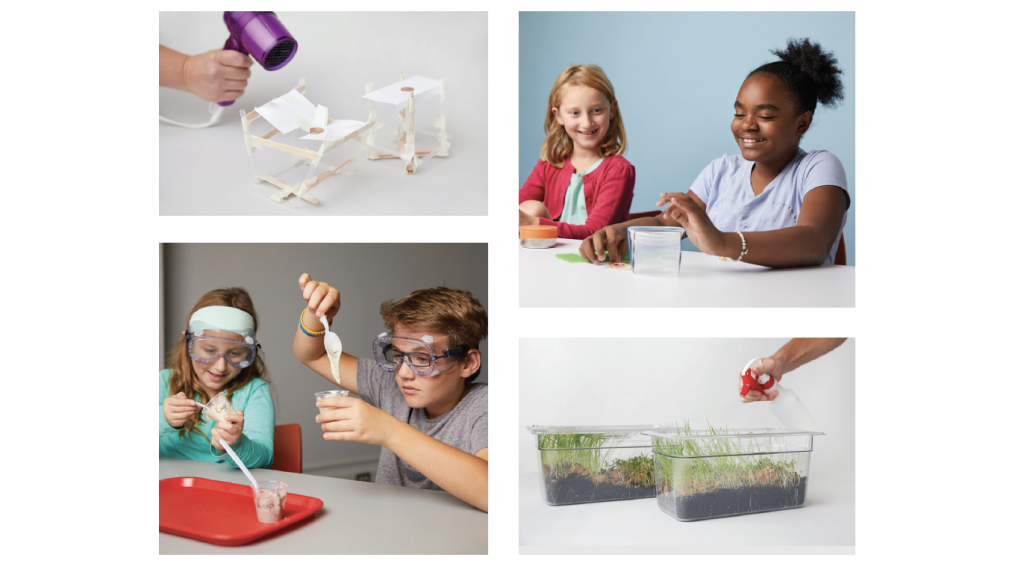
Hands-on learning is at the heart of Amplify Science and is integrated
into every unit. Students actively take on the roles of scientists and engineers as they gather evidence, think critically, solve problems, and develop and defend claims about the world around them.

Check out this 2-minute video to see an Amplify Science hands-on investigation in action.

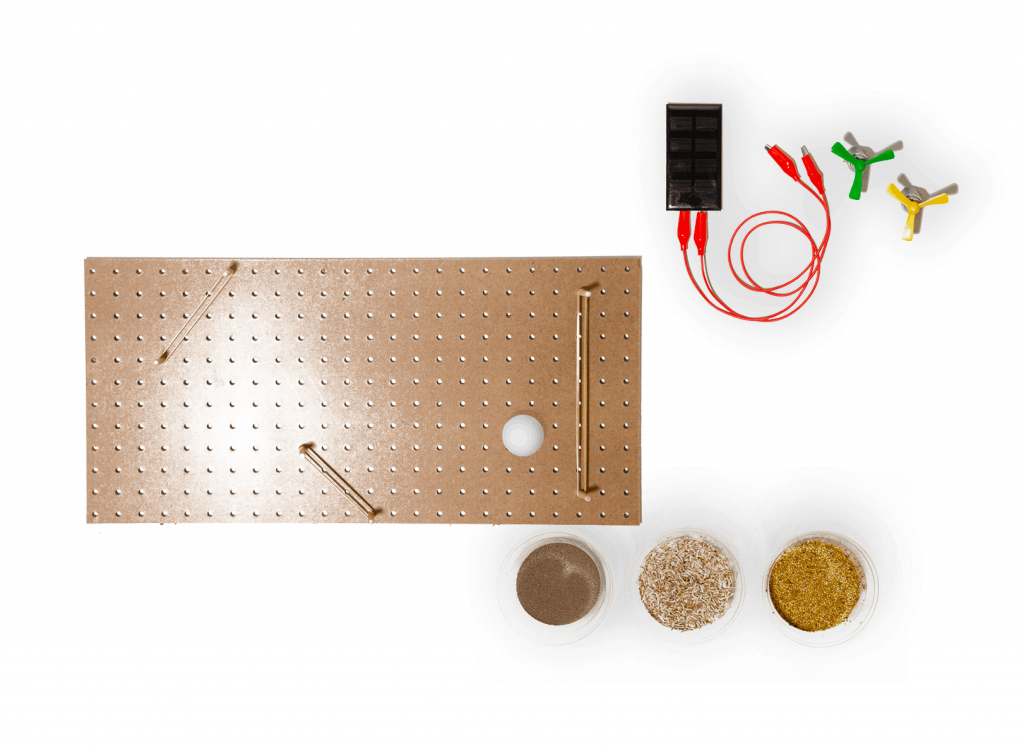
Each unit kit contains:

  • consumable and non-consumable hands-on materials.
  • print classroom display materials.
  • premium print materials for student use (sorting cards, maps, etc.).
A perforated rectangular board, three small containers with different powders, a black battery holder with red wires, and three colored alligator clips are arranged on a white background.

Teaching support

Available digitally and in print, the Teacher’s Guides contain all of the information teachers need to facilitate classroom instruction, including:

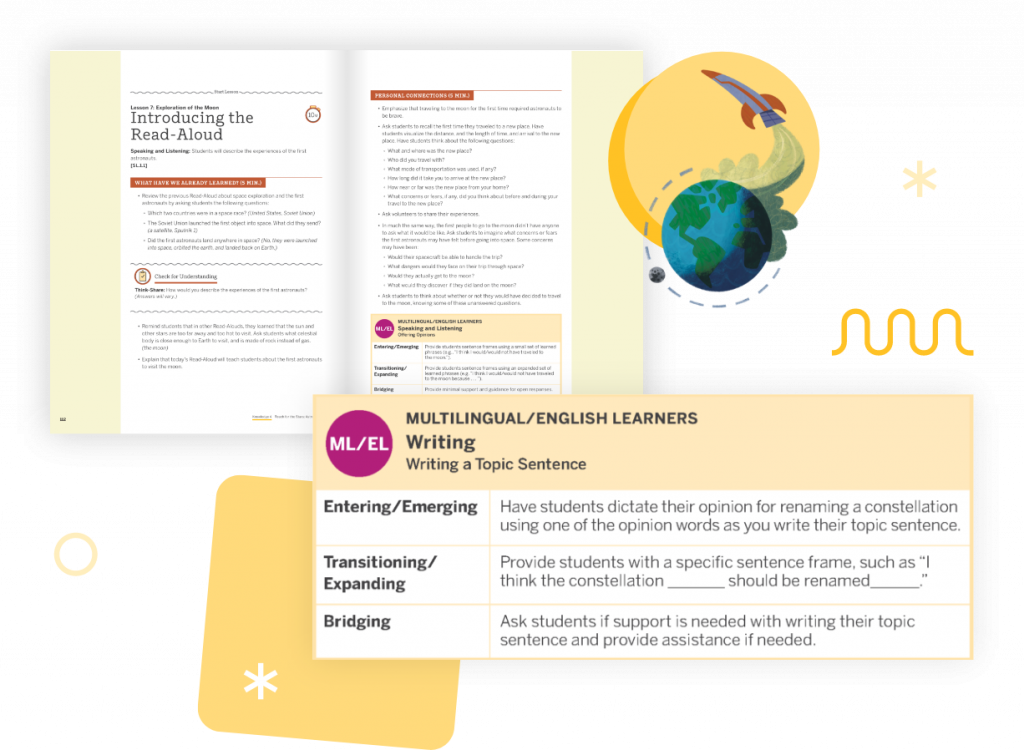
  • detailed lesson plans.
  • unit and chapter overview documentation.
  • differentiation strategies.
  • standards alignments.
  • in-context professional development.
A laptop displaying the Geology on Mars webpage sits beside a book titled "Geology on Mars," both featuring the same cover image of Mars and a spacecraft, perfect for enhancing three-dimensional learning in any science classroom.

Massachusetts Academic Standards in Science coverage

Amplify Science was designed from the ground up to meet the NGSS, a set of standards that closely align with the Massachusetts Learning Standards for Science coverage. Most grade levels’ respective set of Amplify Science units therefore address the necessary MASS (see correlation). 

For grades K, 1, 2, 3, and 5, teachers should plan to also use the resources provided in the sections below to achieve full coverage of the appropriate standards before their students move on to the next grade band. Organized by grade level, each section outlines:

  • companion lesson materials that were written to support 100% alignment to the Massachusetts Learning Standards for Science coverage when used with the core Amplify Science units for the grade level
  • the standard being addressed with each companion lesson; and
  • the recommended placement of each companion lesson within a specific Amplify Science unit

Standard: K-PS1-1(MA). Investigate and communicate the idea that different kinds of materials can be solid or liquid depending on temperature.

Recommended placement: Following Lesson 5.6 of Sunlight and Weather

Resources: After students finish reflecting on their unit-long exploration of energy and temperature, play and discuss this read-aloud video of the student book Can you Change it Back?, which is featured in the grade 2 unit Properties of Materials. You might also consider borrowing the physical books from a grade 2 colleague’s Properties of Materials kit and reading it as a class instead of or in addition to playing the video.

Using the book, you will introduce students to the idea that heating and cooling can cause changes to materials. In the book, students are presented with a variety of materials and asked to predict whether a certain change caused by heating or cooling is reversible or irreversible.

Companion lesson: “Seasonal Changes”

Standard: 1-ESS1-2– Analyze provided data to identify relationships among seasonal patterns of change, including relative sunrise and sunset time changes, seasonal temperature and rainfall or snowfall patterns, and seasonal changes to the environment.

Recommended placement: Following Lesson 5.1 of Spinning Earth

Resources: Season Changes Classroom Slides and Student Sheet

Companion lesson: “Properties and Weight”

Standard: 2-PS1-3– Analyze a variety of evidence to conclude that when a chunk of material is cut or broken into pieces, each piece is still the same material and, however small each piece is, has weight. Show that the material properties of a small set of pieces do not change when the pieces are used to build larger objects.

Recommended placement: Following Lesson 4.4 of Properties of Materials.

Resources: Weight and Properties Classroom SlidesResources, and Student Sheet

Companion lesson 1: Extinct Insects

Standard: 3-LS4-1: Use fossils to describe types of organisms and their environments that existed long ago and compare those to living organisms and their environments. Recognize that most kinds of plants and animals that once lived on Earth are no longer found anywhere.

Recommended placement: Following Lesson 2.3 of Environments and Survival

Resources: Extinct Insects Classroom Slides and Student Sheet

Companion lesson 2: Friction

Standard: 3-PS2-1: Provide evidence to explain the effect of multiple forces, including friction, on an object. Include balanced forces that do not change the motion of the object and unbalanced forces that do change the motion of the object.

Recommended placement: Following Lesson 1.1 of Balancing Forces

Resources: Friction Classroom SlidesResources, and Student Sheet

Companion lesson 1: Composters

Standard: 5-LS2-2(MA)– Compare at least two designs for a composter to determine which is most likely to encourage decomposition of materials.

Recommended placement: Following Lesson 3.7 of Ecosystem Restoration

Resources: Composters Classroom Slides and Student Sheet

Companion lesson 2: Properties of Materials

Standard: 5-PS1-3 (MA) – Make observations and measurements of substances to describe characteristic properties of each, including color, hardness, reflectivity, electrical conductivity, thermal conductivity, response to magnetic forces, and solubility.

Recommended placement: Following Lesson 1.3 of Modeling Matter

Resources: Properties of Materials Classroom SlidesResourcesArticlesCopymaster, and Student Sheet

Companion lesson 3: Water Filters

Standard: 5-ESS3-2(MA)– Test a simple system designed to filter particulates out of water and propose one change to the design to improve it.

Recommended placement: Following Lesson 5.6 of The Earth System

Resources: Water Filters Classroom Slides and Student Sheet

Benchmark Assessments

Amplify’s Benchmark Assessments are designed to help teachers measure student progress toward the three dimensions—Disciplinary Core Ideas (DCIs), Science and Engineering Practices (SEPs), and Crosscutting Concepts(CCCs)—and performance expectations (PEs) of the NGSS. The assessments provide important insight into how students are progressing toward mastery of different standards ahead of high-stakes, end-of-year assessments.

The Benchmark Assessments are built to be delivered after specific units in the recommended Amplify Science scope and sequence.* They are given three or four times per year, depending on the grade level. The benchmarks are intended to show progress at various points in time across a school year, and are therefore not summative in nature. Digital items and item clusters are also tagged to specific NGSS standards, allowing customization to align with other course sequences. The assessments are available via the following platforms:

Print
PDF files: For administering Benchmark Assessments on paper

Digital platforms

  • Illuminate
  • SchoolCity
  • Otus
  • QTI (“Question and Test Interoperability”) files
    Not sure whether QTI files are compatible with your assessment platform? Contact your school IT or assessment platform representative for more information.
    Please note that Amplify is able to provide access to the QTI files themselves, but is not able to support the integration process. Your assessment platform provider should be able to assist with QTI file integration.

Remote and hybrid learning support

A child sits at a desk using a laptop. Next to the desk is a bookshelf with books, a fishbowl, and a soccer ball.

See an example of our remote and hybrid learning support below:

Intended to make extended remote and hybrid learning easier, Amplify Science @Home includes two useful options for continuing instruction: @Home Videos and @Home Units.
Amplify Science @Home Videos are recordings of real Amplify Science teachers teaching the lessons. For those teachers who are unable to meet synchronously with their students, the recorded lessons are a great way to keep their students on track and engaged with Amplify Science while at home.

Amplify Science @Home Units are modified versions of Amplify Science units, strategically designed to highlight key activities from the program. The @Home Units take significantly less instructional time than the complete Amplify Science program and allow students to engage with science at home. Each @Home unit includes:

  • Teacher overviews explaining how to use the materials, including suggestions for enhancing the @Home Units if synchronous learning or in-class time with students is available
  • Overviews to send home to families

Student materials will be available in two formats:

  • @Home Slides (PDF/PPT) + Student Sheets (PDF) for students with access to technology at home
  • Downloadable @Home Packets (PDF) for students without access to technology at home

Download the remote and hybrid learning guide

Explore the digital Teacher’s Guide

To familiarize yourself with navigation of the digital Teacher’s Guide, watch our navigational guide videos:

Grades K–5:

Looking for help?

Powerful (and free!) pedagogical support

Amplify provides a unique kind of support you won’t find from other publishers. We’ve developed an educational support team of former teachers and administrators who provide pedagogical support for every Amplify curriculum, assessment, and intervention program. This service is completely free for all educators who are using our programs and includes:

  • Guidance for developing lesson plans and intervention plans.
  • Information on where to locate standards and other planning materials.
  • Recommendations and tips for day-to-day teaching with Amplify programs.
  • Support with administering and interpreting assessment data and more.

Timely technical and program support

Our technical and program support is included and available Monday through Friday, from 7 a.m. to 7 p.m. ET, through a variety of channels, including a live chat program that enables teachers to get immediate help in the middle of the school day.

Ready to dive in?

Contact your Massachusetts representative:

Tracy Yefimenko
518-466-3497
tyefimenko@amplify.com

Inspiring the next generation of Massachusetts scientists, engineers, and curious citizens

To view this protected page, enter the password below:


Welcome to Amplify ELA!

This site contains supporting resources designed for the San Diego Unified School District  Amplify ELA adoption for grades 6–8.

Click the button below to preview the digital Teacher’s Guide, and check back for exciting updates to this site!

Illustration merging elements of science and nature, featuring a woman with glasses, an astronaut, a ship, butterflies, and a floral motif.

ELA 2nd Edition Supports

Teachers, welcome to Amplify ELA!

Here you’ll learn more about the program, download a pre-launch checklist, and find out about how to get help when planning and delivering instruction.

Program introduction

Amplify ELD

Amplify’s English Language Development (ELD) program is an integrated approach to English Learner (EL) instruction with a tightly connected set of units aligned to the core ELA units.

Planning and pacing

Instruction and assessment

ELA relevant content: San Diego USD Intranet sites

Monthly customer newsletters

Each month our newsletter features the information you need to know about upcoming events, tips for the classroom, educator spotlights, and more. If you missed something from a previous newsletter, you can access all previous newsletters through the following website, where you can view and search by program and also nominate a fellow educator—or yourself!—for a spotlight in a future newsletter.

Looking for help?

Our chat agents are standing by to assist you!
Simply log in at learning.amplify.com and click the orange button in the bottom right corner to chat live with our support team.

Important to Note
Our support hours are Monday through Friday, 4 a.m. to 4 p.m. PT.

Don’t have a login yet?
Email us: help@amplify.com
Call us: +1 (800) 823-1969

A laptop screen displaying the AmplifyELA program with sections for different grade levels and core units, featuring colorful icons and a menu on the left side.

Meet Science of Reading changemaker Altramez Simone McQuaige

Awards for teachers—we should probably give them out every day. We try to honor teachers and their exceptional contributions in as many ways as we can at Amplify. That’s why our annual Science of Reading Star Awards is one of our biggest events of the year!

We’re currently accepting nominations through Jan. 31. Apply now!

This annual award program is a great opportunity for us to shine a spotlight on the classroom teachers, school administrators, and educators who are improving student literacy outcomes in schools and communities across the country—like 2024 Changemaker Award winner Altramez Simone McQuaige. We hope her significant contributions inspire you in your work—and inspire you to nominate a teacher for an award next year!

A leadership role: Experience and experimentation

Altramez Simone McQuaige has spent more than 30 years in education, so it’s probably safe to assume she knows what she’s doing. But she’s not afraid to embrace change, or even take risks. “We didn’t go into this profession to do the same thing every day,” she says.

As supervisor of elementary reading and English language arts at Prince George’s County Public Schools, McQuaige took on the challenge of improving literacy instruction in her district by focusing on the Science of Reading.

Foundational skills: Noticing the problem

Several years ago, McQuaige and her team noticed a specific issue with foundational skills instruction, especially in first and second grades. “We were seeing a population of students that we weren’t seeing progress with consistency,” she says.

Under McQuaige’s leadership, a team of coaches, reading leaders, and administrators met to discuss how to improve their foundational skills instruction and student outcomes, asking themselves questions like: Should they shift their curriculum? Their classroom methods? Their entire literacy approach?

Then the pandemic hit.

Coming together: Exploring a new approach

Despite pandemic disruptions, McQuaige and her team convened and launched a cohort of 240 teachers, central office personnel, and reading leaders to learn more about the Science of Reading.

Openness to change was key. The cohort had to be willing to look at the latest research and see—as McQuaige puts it— that “some of the practices that may have been used from yesteryear were not effective.”

Their decision? Start to shift from a balanced literacy environment to a structured literacy approach involving explicit, systematic teaching of the elements of reading and a strong emphasis on phonological and phonemic awareness, phonicsvocabulary, and comprehension strategies.

Varied stakeholders building energy for change

There was “energy around the shift,” she recalls. The excitement coming from that large team of varied stakeholders helped build further buy-in—and success.

“We wanted to ensure that our reading leaders and our central office personnel with ESOL teachers and special educators had an opportunity to engage in these conversations,” she says. “That led us to have teachers practice or pilot programs before we chose the best products to meet the needs of our teachers.”

“We were building capacity across our district,” she says, “and building leaders and allies to talk about why the shift is necessary, and what they noticed as they started to embed those practices in their instruction.”

Professional development: Continued improvement and support

The result? The district successfully moved to a structured literacy approach in just three years, and improvements in student performance data demonstrate the effectiveness of the changes. “Even those who were once reticent are seeing the shift in their students,” McQuaige says of the teachers around her.

She also acknowledges the essential role of their partners: “Amplify’s support was crucial as we shifted. We know that as you make the shift, it will never be one and done. The continuous learning across our district, using our Amplify team, is invaluable.”

But McQuaige knows that even if the shift in approach is technically complete, she—like her students—must always be learning. “Let’s follow the research,” she says. “I know research is always changing, and that means we’re always changing.”

Here’s your nomination form!

Inspired? We’re looking for our shining 2025 Science of Reading leaders now! Visit our Star Awards page for information like our submission deadline, and nominate a teacher for an award today!

What’s included in our literacy curriculum for 6–8

Amplify ELA is a blended literacy curriculum designed specifically for grades 6–8. The heart of every lesson is the text. Our core English Language Arts curriculum enables teachers to teach skills through texts and develop their students’ muscles for building meaning through reading. With Amplify ELA, students learn to attack any complex text and make observations, grapple with interesting ideas, and find relevance for themselves.

Year at a glance

Each grade includes six core units centered on literary or informational texts, delivered in several forms of media. In addition to these main units, students will engage with targeted Grammar lessons and a dedicated Story Writing unit, plus two to three immersive learning experiences called Quests.

Dahl & Narrative

1 assessment lesson
4 sub-units | 28 lessons | 4-6 weeks

A man with a mustache looks through a microscope at a slide, with abstract yellow lines in the background.

Mysteries & Investigations

1 assessment lesson
5 sub-units | 32 lessons | 4-6 weeks

A man with a mustache looks through a microscope at a slide, with abstract yellow lines in the background.

The Chocolate Collection

1 assessment lesson
5 sub-units | 25 lessons | 4-6 weeks

The Greeks

Myth World Quest

1 assessment lesson
4 sub-units | 25 lessons | 4-6 weeks

A man with a mustache looks through a microscope at a slide, with abstract yellow lines in the background.

Summer of the Mariposas

1 assessment lesson
2 sub-units | 27 lessons | 4-6 weeks

A man with a mustache looks through a microscope at a slide, with abstract yellow lines in the background.

The Titanic Collection

1 assessment lesson
5 sub-units | 25 lessons | 4-6 weeks

A man with a mustache looks through a microscope at a slide, with abstract yellow lines in the background.

Red Scarf Girl

1 assessment lesson
4 sub-units | 31 lessons | 4-6 weeks

A man with a mustache looks through a microscope at a slide, with abstract yellow lines in the background.

Character & Conflict

1 assessment lesson
4 sub-units | 29 lessons | 4-6 weeks

A man with a mustache looks through a microscope at a slide, with abstract yellow lines in the background.

Brain Science

Perception Academy Quest

1 assessment lesson
4 sub-units | 25 lessons | 4-6 weeks

A man with a mustache looks through a microscope at a slide, with abstract yellow lines in the background.

Poetry & Poe

The “Who Killed Edgar Allen Poe” Quest

1 assessment lesson
5 sub-units | 29 lessons | 4-6 weeks

A man with a mustache looks through a microscope at a slide, with abstract yellow lines in the background.

The Frida & Diego Collection

1 assessment lesson
5 sub-units | 25 lessons | 4-6 weeks

A man with a mustache looks through a microscope at a slide, with abstract yellow lines in the background.

The Gold Rush Collection

1 assessment lesson
5 sub-units | 25 lessons | 4-6 weeks

A man with a mustache looks through a microscope at a slide, with abstract yellow lines in the background.

Perspectives & Narrative

1 assessment lesson
4 sub-units | 27 lessons | 4-6 weeks

A man with a mustache looks through a microscope at a slide, with abstract yellow lines in the background.

Liberty & Equality

1 assessment lesson
6 sub-units | 38 lessons | 4-6 weeks

A man with a mustache looks through a microscope at a slide, with abstract yellow lines in the background.

Science & Science Fiction

1 assessment lesson
3 sub-units | 29 lessons | 4-6 weeks

A man with a mustache looks through a microscope at a slide, with abstract yellow lines in the background.

Shakespeare’s Romeo & Juliet

1 assessment lesson
2 sub-units | 22 lessons | 4-6 weeks

A man with a mustache looks through a microscope at a slide, with abstract yellow lines in the background.

The Holocaust: Memory & Meeting

1 assessment lesson
6 sub-units | 21 lessons | 4-6 weeks

A man with a mustache looks through a microscope at a slide, with abstract yellow lines in the background.

The Space Race Collection

1 assessment lesson
5 sub-units | 25 lessons | 4-6 weeks

Units at a glance

Amplify ELA lessons follow a structure both grounded in regular routines and flexible enough to allow for a variety of learning experiences. Lesson structures vary from day to day, ensuring that students are always engaged.

Learn more in the Amplify ELA Grade Overview.

Unit 6A

Dahl & Narrative

Students begin with narrative writing to develop foundational Focus skills and establish key classroom routines. Teachers use this work to create targeted feedback cycles and build a vibrant community centered on diverse experiences. Students then apply observational skills to Roald Dahl’s Boy: Tales of Childhood, learning to work closely with textual evidence.

Unit 6B

Mysteries & Investigations

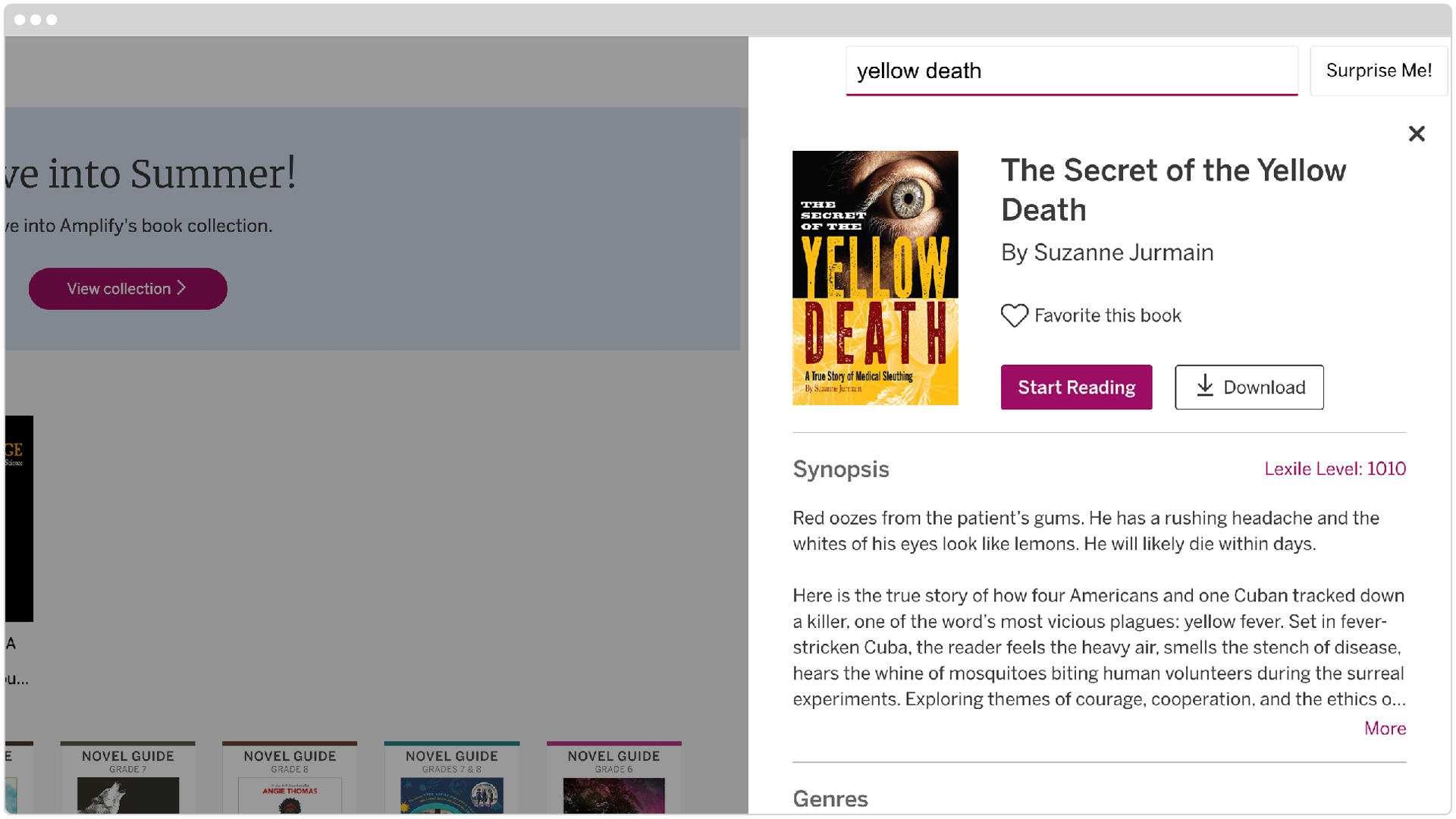
Students read like an investigator to embark on a multi-genre study into the mesmerizing world of scientific and investigative sleuthing. The Secret of the Yellow Death: A True Story of Medical Sleuthing by Suzanne Jurmain, and Sir Arthur Conan Doyle’s Sherlock Holmes stories take place in the late 19th century, when medical diagnostics and criminal investigations were still evolving into scientific fields.

Unit 6C

The Chocolate Collection

Students explore primary documents and research the diverse cultural roles chocolate has played over 3,700 years, from its various uses in ancient Mexico to issues with modern production. Along the way, they build information literacy skills, craft research questions, and collaborate in Socratic seminars. Students also learn how to construct an evidence-based argument and use those skills to write pieces aimed at convincing readers about chocolate preferences, school lunch policies, and recommendations for local candy stores.

Unit 6D

The Greeks

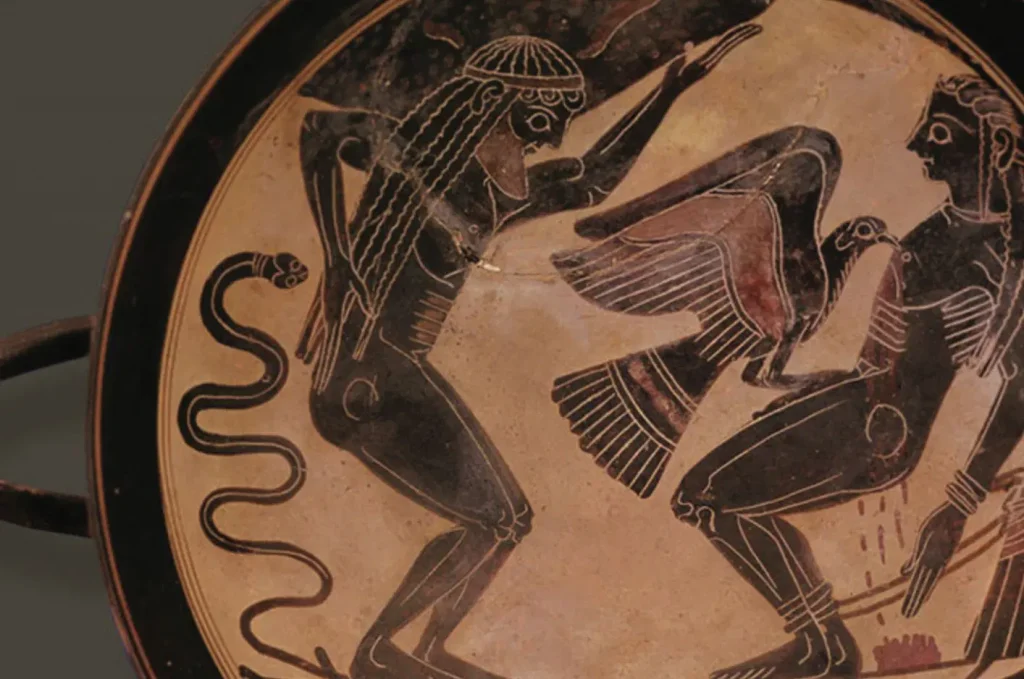
Students closely explore and analyze three stories from Greek mythology: “Prometheus,” “Odysseus,” and “Arachne.” Drawing on the routines and skills established in previous units, these lessons ask students to move from considering the state of a single person to contemplating broader questions concerning the role people play in the world and the various communities they inhabit.

Unit 6E

Summer of the Mariposas

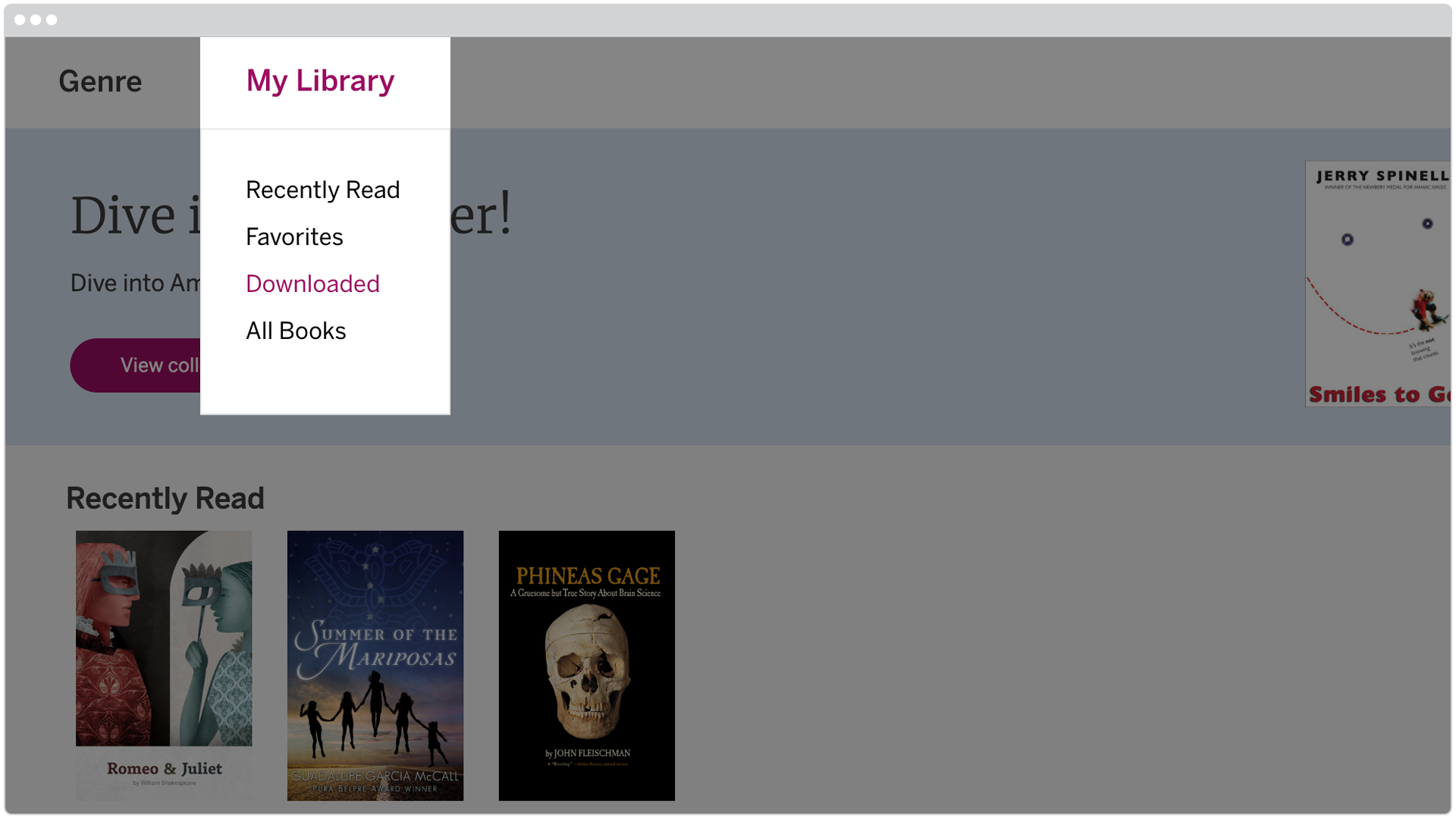
Students read Summer of the Mariposas by Guadalupe García McCall, a contemporary Latino retelling of The Odyssey. Following five sisters on their journey into Mexico and back, students explore this reimagining of the hero’s journey as they encounter Mexican folklore and Aztec legends along the way. Students analyze character development, compare the novel to Homer’s original, research Aztec mythology, explore symbolism, and engage in collaborative discussions before writing an essay about what makes the heroes successful.

Unit 6F

The Titanic Collection

Students explore primary documents and conduct research to understand the 1912 Titanic disaster, building information literacy skills by examining artifacts such as dining menus, ship photos, telegraph transcripts, and newspaper accounts. Each student is assigned a passenger from the manifest and writes a narrative account from that person’s perspective, considering different views. Students also participate in Socratic seminars to examine the complicated issues within the Titanic story.

Unit 7A

Red Scarf Girl & Narrative

Students begin with narrative writing to develop foundational Focus skills while teachers establish targeted feedback cycles and build a classroom community centered on diverse experiences. After exploring how they describe their own experiences and emotions, students apply the same close attention to analyzing details in Ji-li Jiang’s Red Scarf Girl: A Memoir of the Cultural Revolution.

Unit 7B

Character & Conflict

Students analyze characters’ responses to conflict and examine how authors use character interactions to develop theme and perspective. They read Carson McCullers’ “Sucker” and Lorraine Hansberry’s A Raisin in the Sun, both texts that explore how families facing hardships can support and harm one another. Students observe complex character growth and discuss issues of identity, family obligations, and differing notions of success.

Unit 7C

Brain Science

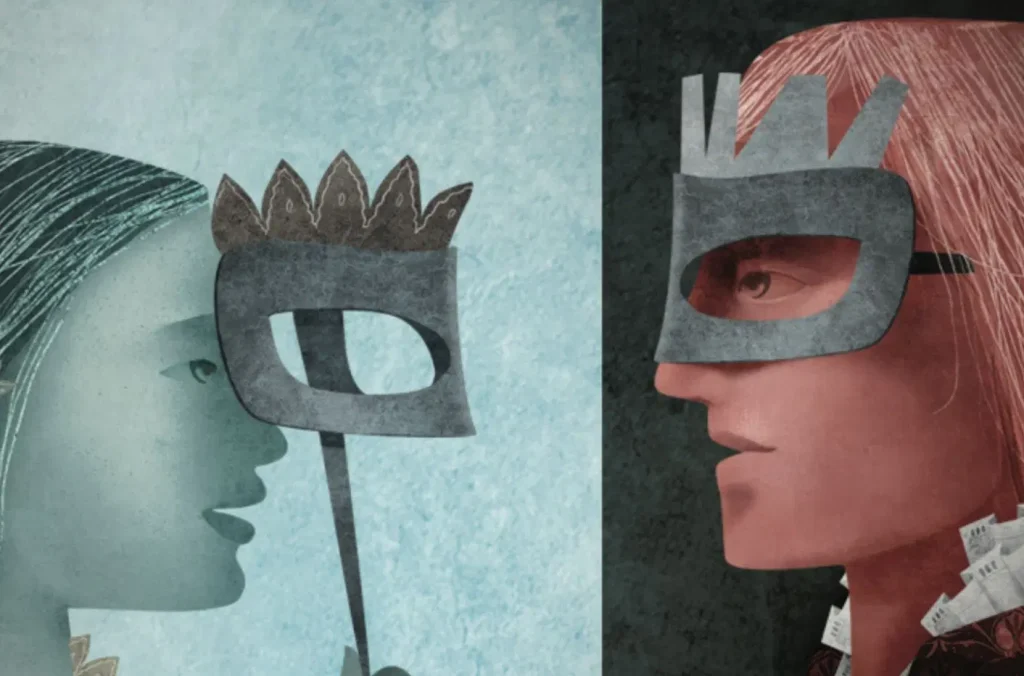
Students explore narrative nonfiction and informational texts about brain science to understand what it means to be human and how their developing brains impact daily experiences. They also build awareness of their cognitive strengths and analyze the structures of informational texts and scientific arguments. Key texts include Phineas Gage, Inventing Ourselves: The Secret Life of the Teenage Brain, and Oliver Sacks’ The Man Who Mistook His Wife for a Hat.

Unit 7D

Poetry & Poe

Students learn visualization techniques to read like a movie director, beginning with poems by D.H. Lawrence, Federico García Lorca, and Emily Dickinson to form mental images. They then read three Edgar Allan Poe texts, creating storyboards and analyzing narrative elements to learn about unreliable narrators. Students also participate in the murder-mystery Quest “Who Killed Edgar Allan Poe?” and write an essay arguing whether they can trust a narrator in the unit’s texts.

Unit 7E

The Frida & Diego Collection

Students explore primary source documents and research on Mexican artists Diego Rivera and Frida Kahlo, learning how they drew inspiration from Latin American folklore, politics, and customs. Along the way, students build information literacy by generating research questions and visual analysis skills through close reading of key paintings. They also compare the artists’ descriptive writing to Shakespeare’s and analyze figurative language. The unit culminates in a research project showcasing their interpretation of Frida and Diego’s work and legacy.

Unit 7F

The Gold Rush Collection

Students explore primary documents and conduct research on the California Gold Rush, building information literacy skills and constructing research questions. They also learn about the diverse people who participated, compare fictional and historical accounts, and participate in Socratic seminars. Students write narrative accounts from specific perspectives and complete a culminating research assignment combining essay and media project elements.

Unit 8A

Perspectives & Narrative

Students learn to read like writers, paying attention to craft and writing moves that shape reader experience and developing Focus and Showing skills as they build collaborative classroom routines. Students study three narrative texts, exploring themes of belonging and identity through close reading. They also practice alternating between analytic and narrative writing, and conclude with an essay arguing whether the mothers in Amy Tan’s “Fish Cheeks” are role models. 

Unit 8B

Liberty & Equality

Students study Civil War-era writings that debate the meaning of “all men are created equal,” exploring various perspectives on American ideals. Key texts include Walt Whitman’s Leaves of Grass, Frederick Douglass’ Narrative, and Harriet Ann Jacobs’s Incidents in the Life of a Slave Girl. The unit culminates with an essay examining Douglass’s arguments and Lincoln’s Gettysburg Address to consider what America means by “all men are created equal.”

Unit 8C

Science & Science Fiction

Students read Gris Grimly’s Frankenstein, a graphic novel adaptation of Mary Shelley’s novel, exploring themes of creator responsibility, societal influence, and the risks of scientific inquiry. They trace Victor’s sympathy for his creation, rewrite scenes from the creature’s perspective, and debate whether Victor owes the creature a companion. The unit concludes with an essay determining whether the creature should be considered human.

Unit 8D

Shakespeare’s Romeo & Juliet

Students read five excerpts from Shakespeare’s Romeo and Juliet to learn key elements of Shakespearean English through close reading. They practice memorizing and reciting the famous “Prologue,” put on stage performances, translate Shakespeare’s language into contemporary terms, and study the Shakespearean sonnet form. The unit concludes with an essay arguing whether love or hate is responsible for Romeo’s death.

Unit 8E

Holocaust: Memory & Meaning

Students use close reading to explore memoirs and primary sources that address two key Holocaust questions: How do societies become participants in atrocity, and what are our responsibilities as witnesses? Students analyze multiple perspectives through texts, including Alexander Kimel’s “I Cannot Forget,” Irene Butter’s Shores Beyond Shores, 1936 Olympics propaganda, and excerpts from Maus and Night.

Unit 8F

The Space Race Collection

Students explore primary documents and conduct research on the Space Race. They build information literacy skills, construct research questions, and learn about diverse participants from Soviet cosmonauts to American heroes like Buzz Aldrin and Katherine Johnson. Each student researches an assigned cosmonaut or astronaut and writes space blog entries from their perspective. Students also complete a capstone research essay and media project.

Print & digital components

The program includes instructional guidance and student materials for a year of instruction, with lessons and activities that keep students engaged every day.

A diagram shows the Amplify ELA curriculum with examples of the digital teacher edition on a tablet, print teacher edition pages, and a teacher projection of an artwork on a screen.

Teacher materials

Teacher Edition

Available digitally and in print, the Teacher’s Edition contains all the information teachers need to facilitate classroom instruction, including detailed lesson plans, video teacher tips, presentation slides, standards alignment, Exit Tickets, real-time differentiation strategies, and robust reporting.

Student materials

Student Edition

Available digitally and in print, student materials guide middle schoolers through complex texts and writing by engaging them with high-quality narrative and informational texts—providing videos, audio supports, and a digital experience that captures their attention. They also keep all of their writing in one place with a personal Writing Journal.

A collection of Amplify ELA materials including a print student edition, a digital student edition on a laptop, a writing journal, and an Arachne literature module.

Explore more programs

Our programs are designed to support and complement one another. Learn more about our related programs.

CKLA Review for Scottsdale

Thank you for taking the time to review Amplify’s core ELA program for K–5.

Amplify Core Knowledge Language Arts (CKLA) is a cutting-edge and effective core ELA program for students in grades K–5. It was developed in partnership with the Core Knowledge Foundation, was specifically designed to help teachers implement Science of Reading principles, and features proven evidence-based instructional practices.

Step 1: Program Introduction

Welcome to Amplify CKLA! Before you dive into our materials, watch the video below to learn about the big picture behind Amplify CKLA’s pedagogy.

In this video, Susan Lambert (Chief Academic Officer and host of Science of Reading: The Podocast) shares why Amplify CKLA was created, how it is built on the Science of Reading, and the impact it’s making across the country.

Step 2: Program Overview

Amplify CKLA is different for a reason. Watch the overview video below to learn about these differences and why educators love them.

In this video, you’ll get an in-depth look at the program’s overall structure and organization, the design behind our proven lessons, and the materials included to support teaching and learning.

The Amplify CKLA Program Guide also provides an in-depth view of how Amplify CKLA works, how it’s structured, and why it’s uniquely capable of helping you bring reading instruction based on the Science of Reading to your classroom.

Evidence-based design

Amplify CKLA is rooted in Science of Reading research. Mirroring Scarborough’s Rope, Amplify CKLA delivers a combination of explicit foundational skills with meaningful knowledge-building.

  • In Grades PK–2, dedicated knowledge-building and explicit skills instruction are taught simultaneously through two distinct instructional strands.
  • In Grades 3–5, dedicated knowledge-building and explicit skills instruction are woven together and delivered through one integrated strand.

Grades K–2 Skills and Knowledge Strands
Every day students in Grades K–2 complete one full lesson that explicitly and systematically builds foundational reading skills in the Skills Strand, as well as one full lesson that builds robust background knowledge to access complex text in the Knowledge Strand. Through learning in each of these strands, students develop the early literacy skills necessary to help them become confident readers and build the context to understand what they’re reading.

Grades 3–5 Integrated Strand
In Grades 3–5, Knowledge and Skills are integrated in one set of instructional materials. Lessons begin to combine skills and knowledge with increasingly complex texts, close reading, and a greater writing emphasis. Students can then use their skills to go on their own independent reading adventures.

Key features

Built out of the latest research in the Science of Reading, Amplify CKLA delivers explicit instruction in both foundational literacy skills (systematic phonics, decoding, and fluency) and background knowledge in grades K–2 with an integrated approach to explicit instruction in grades 3–5.

Review this Science of Reading toolkit to learn more about the Science of Reading best practices integrated throughout CKLA.

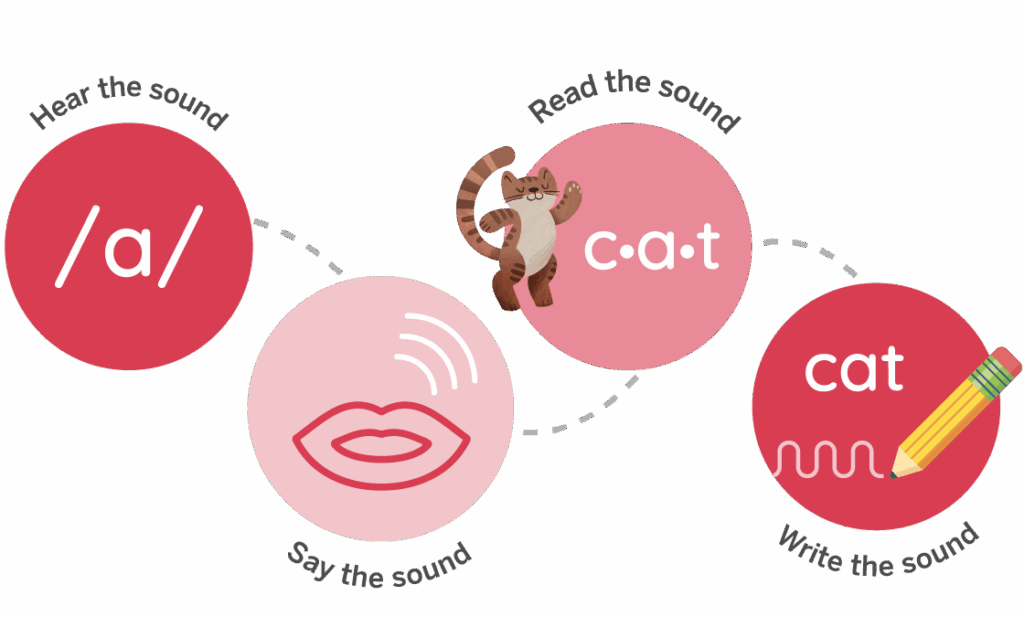
Great reading instruction starts with helping kids develop great decoding skills. By building a solid foundation of phonological awareness and phonics, reading the words on the page becomes automatic so that comprehension and critical thinking can happen. Our instruction is supported by:

  • Step-by-step lessons with multi-sensory approaches, clear lesson objectives, and embedded formative assessments.
  • Decodable books and student readers with ebook and audiobook versions that feature engaging plots and relatable characters.
  • An engaging sound library with fun songs and videos that develop phonological awareness.
  • An interactive Vocab App featuring engaging activities with immediate feedback and automated, customized instruction based on student performance.

Students build grade-appropriate subject-area knowledge and vocabulary in history, science, literature, and the arts while learning to read, write, and think creatively and for themselves. Our instruction is supported by:

  • Knowledge builders that provide a quick overview of each domain with its key ideas.
  • Interactive Read-Alouds designed to build knowledge and vocabulary.
  • Content-rich anchor texts that support students as they tackle increasingly complex text and sharpen their analytical skills.
  • Social and emotional learning paired with lessons in civic responsibility.

Getting students caught up on reading skills requires more than just an extra mini-lesson here or there. It requires targeted and intensive instruction delivered in short bursts. Our intervention component:

  • Assesses and analyzes students’ areas of mastery and growth.
  • Automatically groups students with like needs.
  • Provides educators with ready-to-teach, research-based instructional progressions that last 10-days.
  • Progress monitors students, updates their skill profiles, and reforms groups for the next 10-day period.

Student-led reading practice should be purposeful and connected to the core. In addition to practicing skills directly tied to the skills they’ve been working on during ELA time, Amplify CKLA students have opportunities to interact with adaptive content that addresses their personal gaps and bolsters foundational skills at a pace that supports their individual development.

Our collection of 40+ adaptive games target foundational reading skills and develops them in alignment with Science of Reading principles. Unlike other adaptive games, we ensure students:

  • Practice the right skills at the right time. Our embedded placement tool ensures students receive the content and skill practice most appropriate for their current reading level. From there, students move through our curriculum along their own learning pathway where they encounter personalized content tailored to their evolving skill and grade levels.
  • Progress along a pathway that adapts on multiple dimensions, not just one. For example, a student can work on early first-grade decoding in one game while building more advanced vocabulary knowledge in another.
  • Practice skills in tandem. For example, a student is never forced to master one skill area before proceeding to the next. Instead, we offer students that opportunity to work on multiple skills concurrently.
  • Feel supported with scaffolding, instruction, and practice that adapts based on student performance.
  • Stay engaged by giving them immediate and clear feedback. These results are never punitive. Instead our always-positive feedback is delivered in the context of the game world and is designed to motivate students to keep trying.

From the printed page to the screen, we bring foundational skills and knowledge to life in the classroom.

Download the Amplify CKLA Components guide to see components by grade.

Download the Remote and hybrid learning guide to learn how we support in-person, remote, and hybrid instruction.

Engaging digital experience

The top-rated content of Amplify CKLA is now live with the digital experience that enhances instruction and saves time.

With the digital experience, everything is in one place, making it easier and more engaging than ever to plan lessons, present digital content, and review student work. Click the arrows below to learn more.

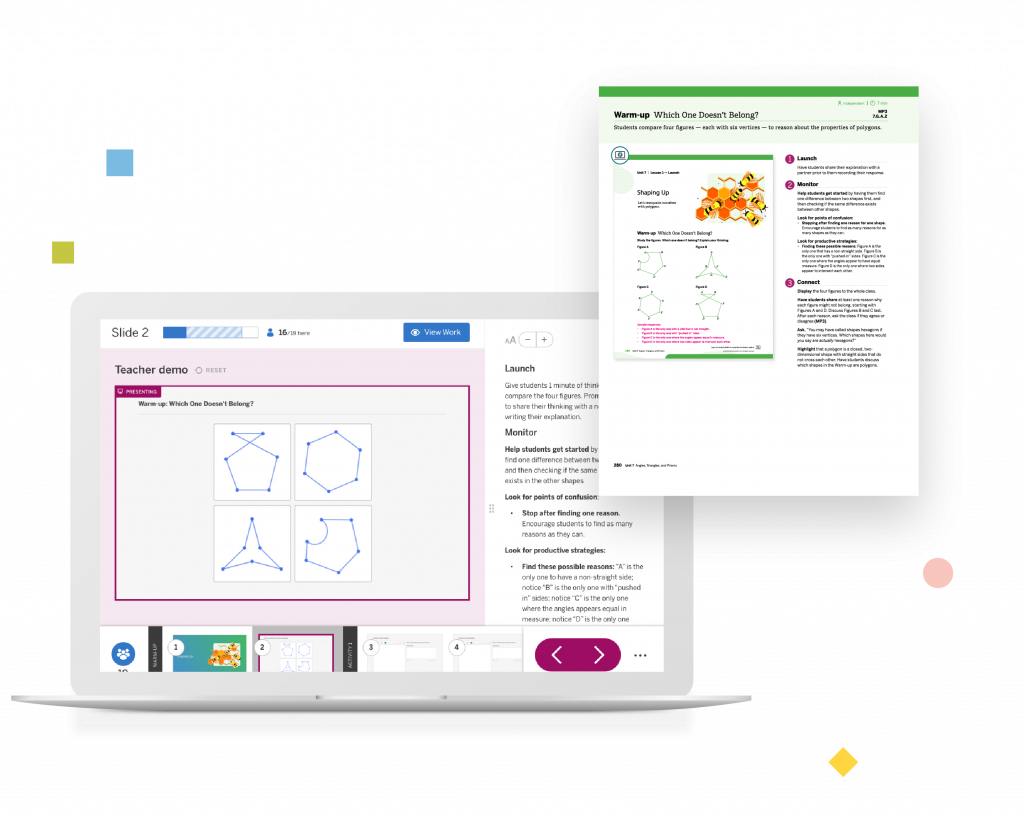
With the digital experience, teachers have access to ready-to-use and customizable lesson presentation slides, complete with all the prompts from the print Teacher Guide embedded in the teacher view. As teachers deliver each lesson, students can engage with the content in one cohesive experience—through these CKLA resources: Activity Books, slides, digital components, videos, Student Readers, and more.

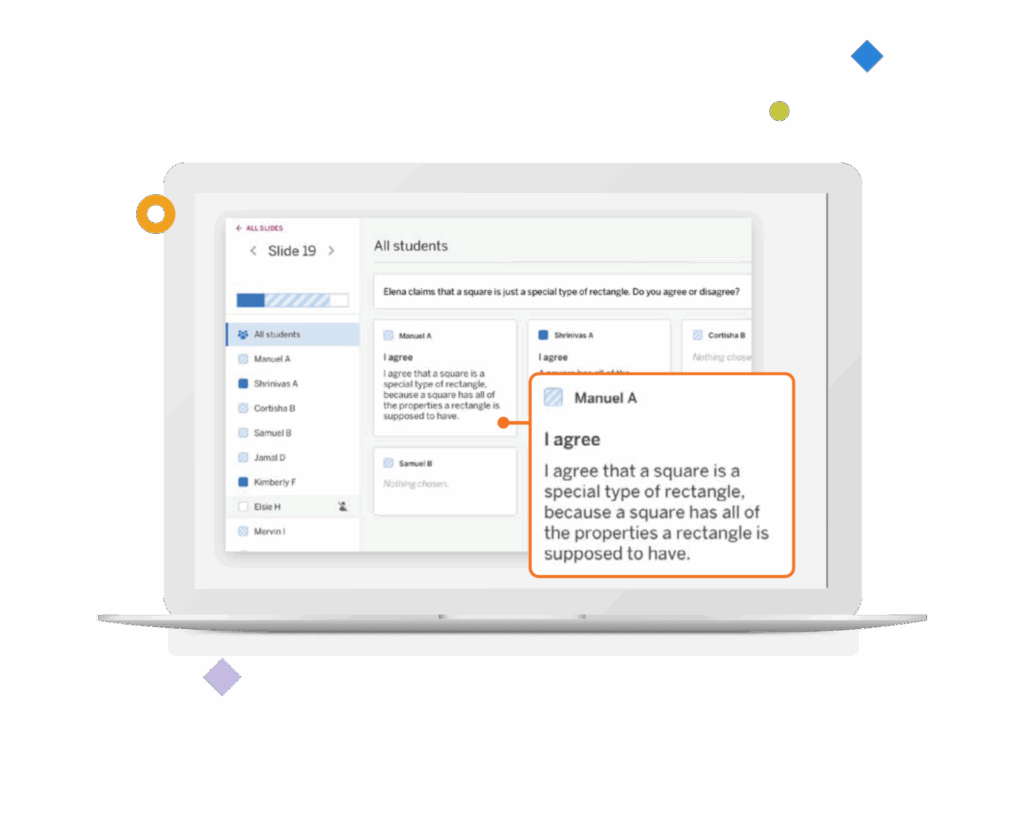
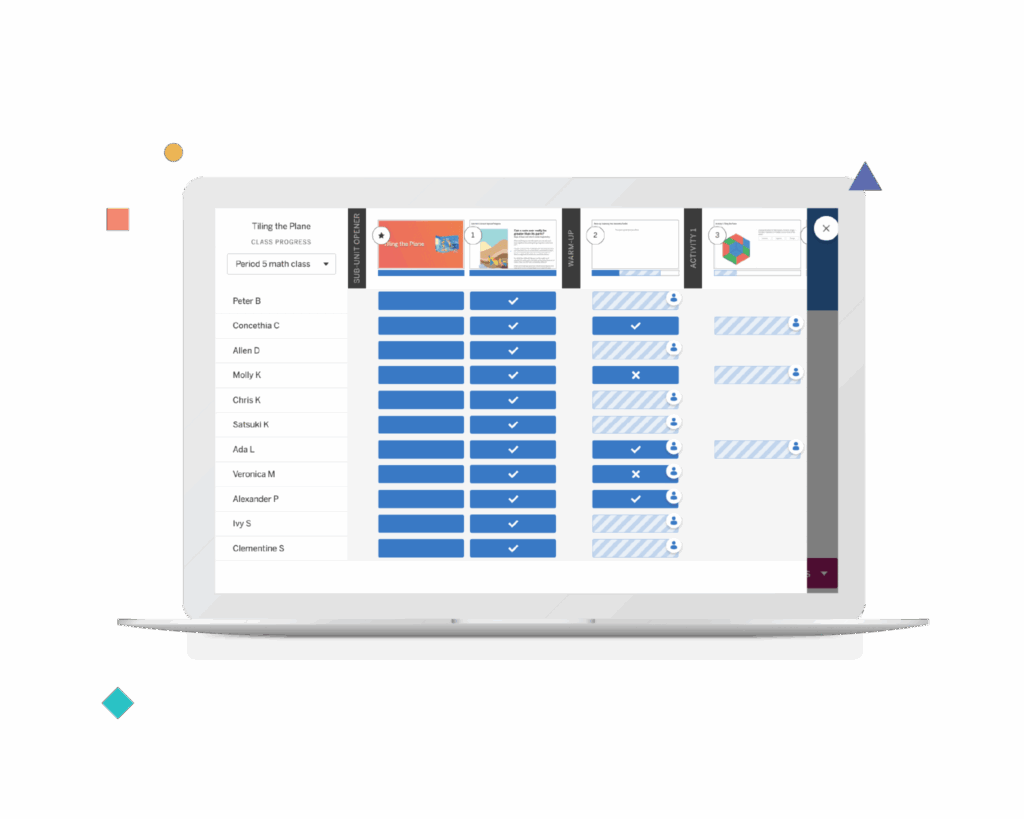
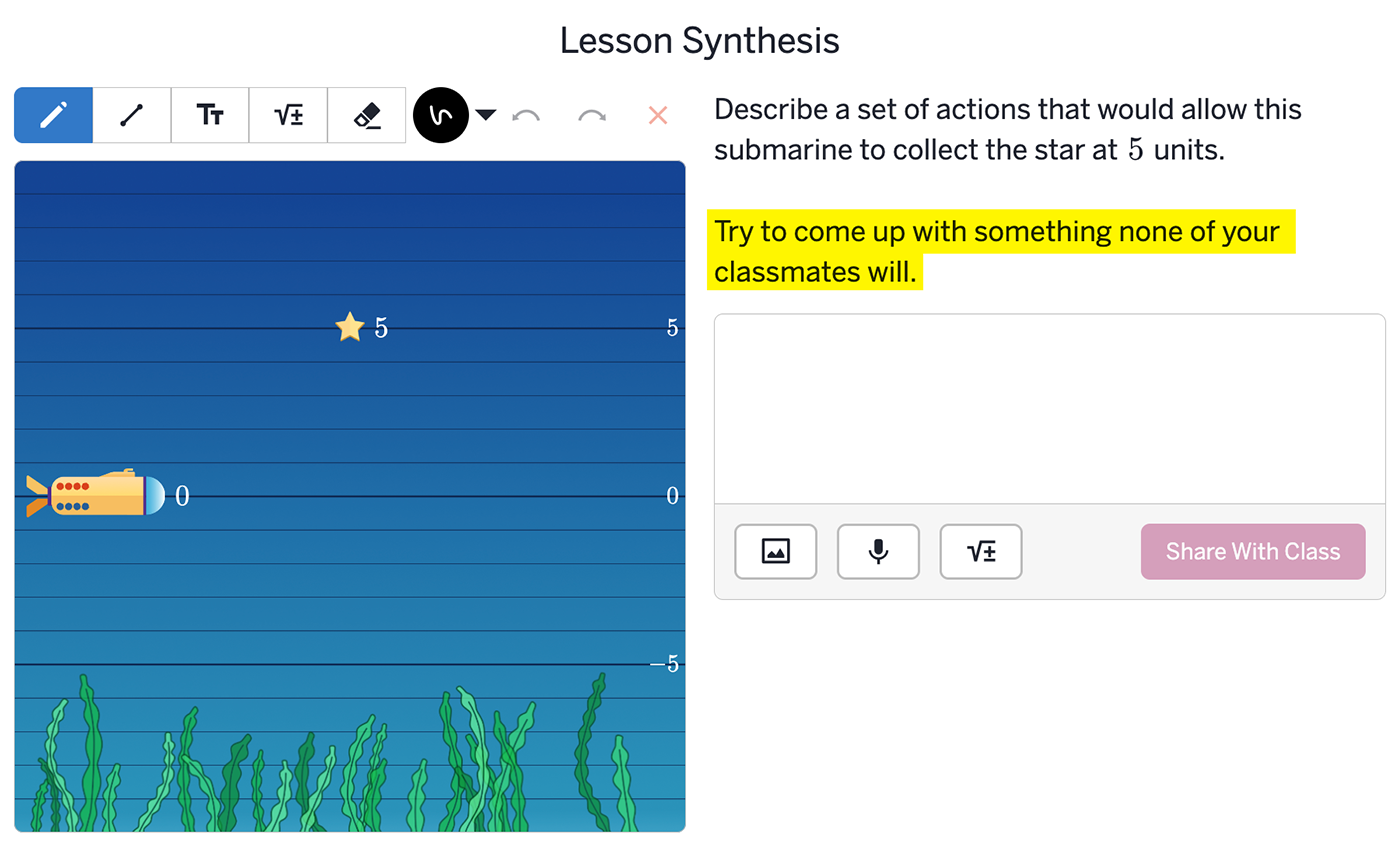
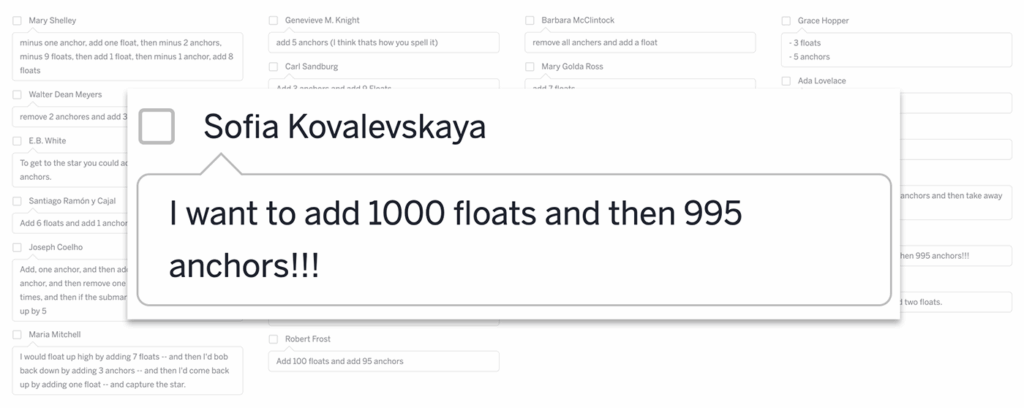
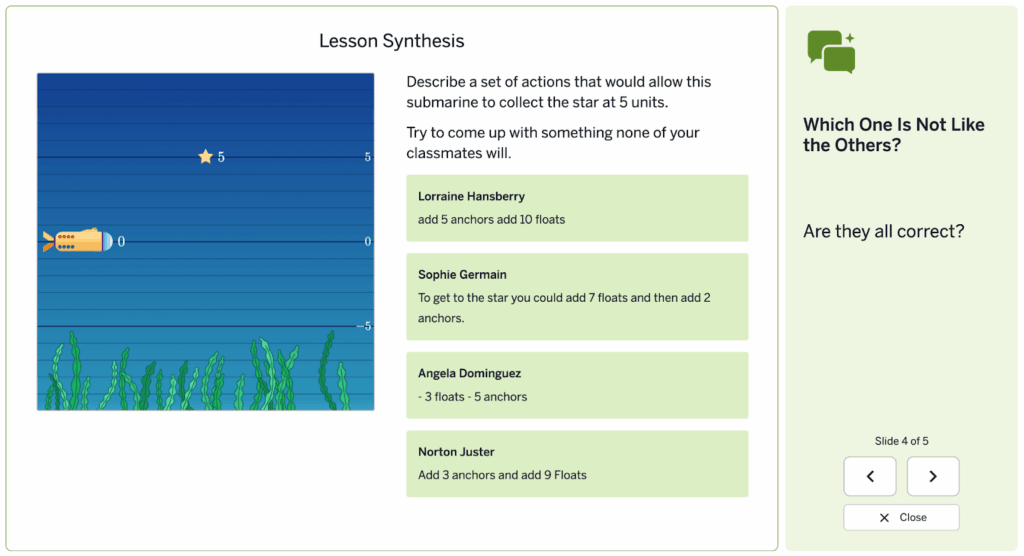
The innovative live review tool found in the digital experience enables you to keep an eye on all of your students as they work on drawing, recording audio, uploading and capturing images, and typing or writing in pre-placed textboxes in their Activity Pages. This dynamic tool provides countless classroom management benefits, enabling you to spot and correct common mistakes as they’re happening, praise your students for thoughtful work, and identify students who are not engaged in the task at hand. Simply put, it will give you those valuable “eyes in the back of your head” you’ve warned your students about!

The digital experience integrates with various LMSs, allowing you and your students to access Amplify CKLA with the software you’re already comfortable using.

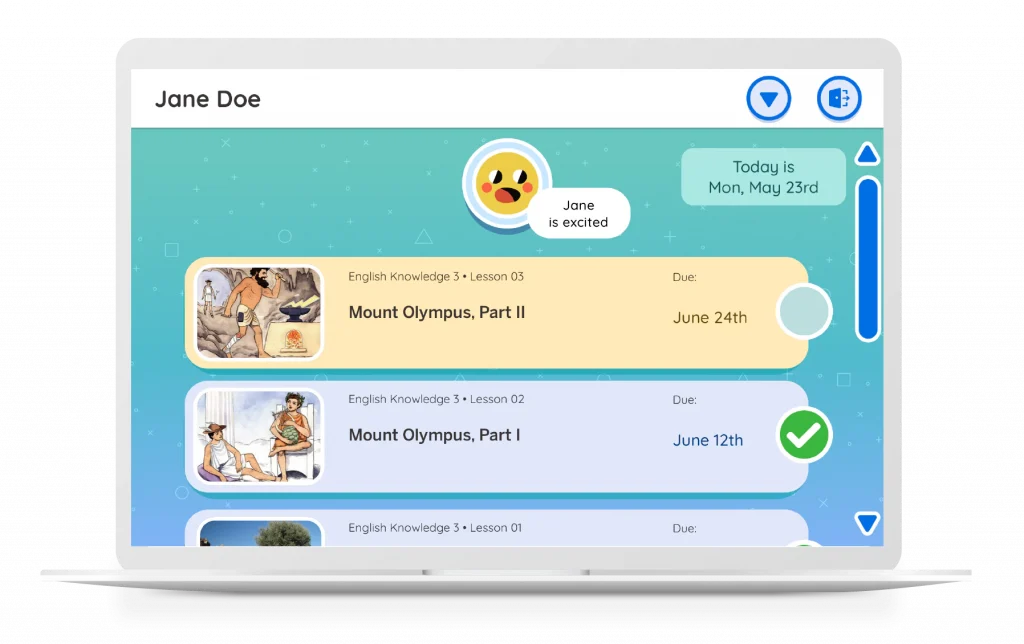
In the Amplify CKLA student digital experience, your students have one intuitive access point to fully engage with classroom instruction. Through the Student Home, students can easily access digital lessons with slides, Activity Pages, ebooks, videos, and other interactives from one simple dashboard. Students can draw, record audio, upload and capture images, and type or write in pre-placed text boxes in their Activity Pages.

Step 3: Program Resources

Digital navigation walkthrough

Physical materials walkthrough

Step 4: Arizona Review Resources

Arizona resources:

CKLA review resources:

Step 5: Demo Program Access

Explore as a teacher

Before logging in, watch this brief video on navigating the CKLA Teacher Platform.

Ready to explore as a teacher? Follow these instructions:

  • Click the Amplify CKLA Teacher Platform button below.
  • Select Log in with Amplify.
  • Enter the teacher username: t1.scottsdaleunified@demo.tryamplify.net
  • Enter the password: Amplify1-scottsdaleunified
  • Click the CKLA icon.
  • Select a grade level from the drop-down menu at the top of the page.

Explore as a student

Before logging in, watch this brief video on navigating the CKLA Student Hub.

Ready to explore as a student? Follow these instructions:

  • Click the CKLA Student Hub button below.
  • Select Log in with Amplify.
  • Enter the student username: s1.scottsdaleunified@demo.tryamplify.net
  • Enter the password: Amplify1-scottsdaleunified
  • Click the Hub icon
  • Select a grade level.

A powerful partnership

Amplify Science was developed by the science education experts at UC Berkeley’s Lawrence Hall of Science and the digital learning team at Amplify. This partnership extends to 2032, allowing us to continuously improve our program and provide our customers with the most up-to-date enhancements, free of charge. Get a glimpse at our latest back-to-school updates here.

Instructional model

The Amplify Science program is rooted in the proven, research-based pedagogy of Do, Talk, Read, Write, Visualize. Here’s how each element works:

Three blue panels describing educational activities: "hands-on science" with lab experiments, "discuss" with collaborative learning, and "read" with literacy in science articles.

Phenomena-based approach

In each Amplify Science unit, students take on the roles of scientists or engineers in order to investigate a real-world problem. Students work to define the problem and collect and make sense of evidence. Once the context is clear, students collect evidence from multiple sources and through a variety of modalities. At the end of the unit, students are presented with a brand new problem, giving them an opportunity to apply what they’ve learned over the course of the unit to a new context. This represents a shift from asking students to learn about science to supporting students in figuring out the science.

Flowchart of a learning unit divided into four chapters, showing stages of student engagement from introduction to application, with assessments indicated at various points.

Resources to support your review

Remote and hybrid learning support

A child sits at a desk using a laptop. Next to the desk is a bookshelf with books, a fishbowl, and a soccer ball.

See an example of our remote and hybrid learning support below:

This fall, Amplify launched a new remote learning solution called Amplify Science@Home. Intended to make extended remote and hybrid learning easier, Amplify Science @Home includes two useful options for continuing instruction: @Home Videos and @Home Units.
Amplify Science @Home Videos are recordings of real Amplify Science teachers teaching the lessons. For those teachers who are unable to meet synchronously with their students, the recorded lessons are a great way to keep their students on track and engaged with Amplify Science while at home. These videos will be produced for all K–5 units, and for the first four units of each 6–8 grade level. Their release will be rolling, beginning in August.

Amplify Science @Home Units are modified versions of Amplify Science units, strategically designed to highlight key activities from the program. The @Home Units take significantly less instructional time than the complete Amplify Science program and allow students to engage with science at home. @Home Units will be developed for all Amplify Science K–8 units. Each @Home unit includes:

  • Teacher overviews explaining how to use the materials, including suggestions for enhancing the @Home Units if synchronous learning or in-class time with students is available
  • Overviews to send home to families

Student materials will be available in two formats:

  • @Home Slides (PDF/PPT) + Student Sheets (PDF) for students with access to technology at home
  • Downloadable @Home Packets (PDF) for students without access to technology at home

Download the remote and hybrid learning guide

Benchmark Assessments

Amplify’s Benchmark Assessments are designed to help teachers measure student progress toward the three dimensions—Disciplinary Core Ideas (DCIs), Science and Engineering Practices (SEPs), and Crosscutting Concepts(CCCs)—and performance expectations (PEs) of the NGSS. The assessments provide important insight into how students are progressing toward mastery of different standards ahead of high-stakes, end-of-year assessments.

The Benchmark Assessments are built to be delivered after specific units in the recommended Amplify Science scope and sequence.* They are given three or four times per year, depending on the grade level. The benchmarks are intended to show progress at various points in time across a school year, and are therefore not summative in nature. Digital items and item clusters are also tagged to specific NGSS standards, allowing customization to align with other course sequences. The assessments are available via the following platforms:

Print
PDF files: For administering Benchmark Assessments on paper

Digital platforms

  • Illuminate
  • SchoolCity
  • Otus
  • QTI (“Question and Test Interoperability”) files
    Not sure whether QTI files are compatible with your assessment platform? Contact your school IT or assessment platform representative for more information.
    Please note that Amplify is able to provide access to the QTI files themselves, but is not able to support the integration process. Your assessment platform provider should be able to assist with QTI file integration.

Flexible implementation

One of the key features of Amplify Science is the flexibility that it offers. We give students authentic opportunities to experience the full breadth of what it means to be a scientist or engineer. Just as scientists gather evidence from many types of sources, so do students in our program. Like scientists, students gather evidence not just from physical models, but also from digital models, texts, videos, photographs, maps, data sets, and even their peers!
Simply put, real scientists don’t just get messy—they read, write, analyze, hypothesize, model, test, and communicate with purpose, too.

Science articles

The middle school science articles serve as sources for evidence collection and were authored by science and literacy experts at the Lawrence Hall of Science.

Illustration of the indirect effects of overfishing on northern benguela jelly populations displayed on a laptop screen.

Student Books
Beginning and young readers have unique developmental needs, and science instruction should support these students in reading more independently as they progress through sections of content, the school year, and each grade. One way Amplify Science meets these needs is by strategically deploying different modes of reading throughout each unit: Read-Aloud, Shared Reading, and Partner Reading.

A collage of various educational book covers related to science and math, featuring illustrated themes like sports, nature, and energy.

Student Investigation Notebooks

Available for every unit, the Student Investigation Notebooks provide space for students to:

  • record data.
  • reflect on ideas from texts and investigations.
  • construct explanations and arguments.

Available with full-color article compilations for middle school units.

Collection of educational books from 'amplify science' on topics including ocean atmosphere, matter and energy ecosystems, and insect interactions, displayed in various angles.

Digital student experience

Students access the digital simulations and Modeling Tools, as well as lesson activities and assessments, through the digital student experience. Students can interact with the digital student experience as they:

  • conduct hands-on investigations.
  • engage in Active Reading and writing activities.
  • participate in discussions.
  • record observations.
  • craft end-of-unit scientific arguments.

Dive into a quick example of our powerful simulations

A digital illustration showcasing a laptop and a tablet displaying complex data analysis software interfaces with graphs and heatmaps.

Hands-on materials kits

Hands-on learning is at the heart of Amplify Science and is integrated
into every unit. Students actively take on the roles of scientists and engineers as they gather evidence, think critically, solve problems, and develop and defend claims about the world around them.

Check out these 2-minute videos to see an Amplify Science hands-on investigation in action.

Each unit kit contains:

  • consumable and non-consumable hands-on materials.
  • print classroom display materials.
  • premium print materials for student use (sorting cards, maps, etc.).
A perforated rectangular board, three small containers with different powders, a black battery holder with red wires, and three colored alligator clips are arranged on a white background.

Teacher’s Guides

Available digitally and in print, the Teacher’s Guides contain all of the information teachers need to facilitate classroom instruction, including:

  • detailed lesson plans.
  • unit and chapter overview documentation.
  • differentiation strategies.
  • standards alignments.
  • in-context professional development.
A laptop displaying the Geology on Mars webpage sits beside a book titled "Geology on Mars," both featuring the same cover image of Mars and a spacecraft, perfect for enhancing three-dimensional learning in any science classroom.

Scope and Sequence

GRADE UNITS
Kindergarten
  • Needs of Plants and Animals
  • Pushes and Pulls
  • Sunlight and Water
Grade 1
  • Animal and Plant Defenses
  • Light and Sound
  • Spinning Earth
Grade 2
  • Plant and Animal Relationships
  • Properties of Materials
  • Changing Landforms
Grade 3
  • Balancing Forces
  • Inheritance and Traits
  • Environments and Survival
  • Weather and Climate
Grade 4
  • Energy Conversions
  • Vision and Light
  • Earth’s Features
  • Waves, Energy, and Information
Grade 5
  • Patterns of Earth and Sky
  • Modeling Matter
  • The Earth System
  • Ecosystem Restoration
GRADE UNITS
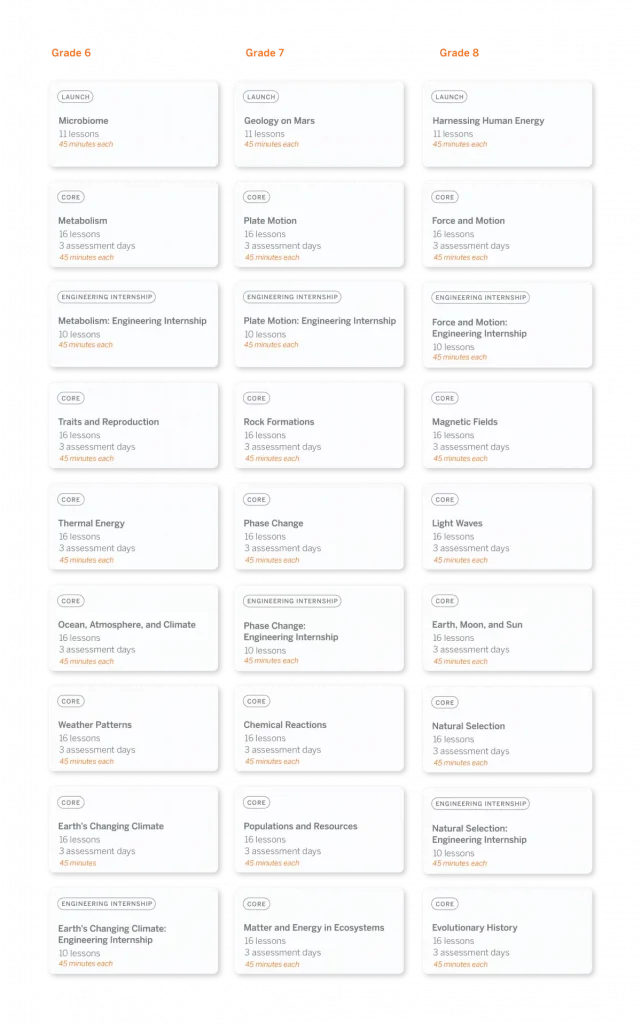
Grade 6: Earth Science
  • Launch: Geology on Mars
  • Plate Motion
  • Plate Motion: Engineering Internship
  • Rock Transformations
  • Earth, Moon, and Sun
  • Ocean, Atmosphere, and Climate
  • Weather Patterns
  • Earth’s Changing Climate
  • Earth’s Changing Climate: Engineering Internship
Grade 7: Life Science
  • Launch: Microbiome
  • Metabolism
  • Metabolism: Engineering Internship
  • Traits and Reproduction
  • Populations and Resources
  • Matter and Energy in Ecosystems
  • Natural Selection
  • Natural Selection: Engineering Internship
  • Evolutionary History
Grade 8: Physical Science 
  • Launch: Harnessing Human Energy
  • Force and Motion
  • Force and Motion: Engineering Internship
  • Magnetic Fields
  • Thermal Energy
  • Phase Change
  • Phase Change: Engineering Internship
  • Chemical Reactions
  • Light Waves

Minnesota Academic Standards in Science coverage

Amplify Science was designed from the ground up to meet the NGSS, a set of standards that closely align with the K–8 Minnesota Academic Standards in Science (MASS). Therefore, most grade levels’ respective set of Amplify Science units address the necessary MASS (see K–5 reverse alignment and/or correlations for K–5 and 6–8). However, for grades 2–4, teachers should also use the resources provided in the sections below to achieve full coverage of the appropriate standards before their students move on to the next grade level. Organized by grade level, each section outlines:

  • companion lesson materials that were written to support 100% alignment to the Minnesota Academic Standards in Science when used with the core Amplify Science units for the grade level
  • the standard being addressed with each companion lesson; and
  • the recommended placement of each companion lesson within a specific Amplify Science unit 

Companion lesson: “Shelter”

Standard: 1P.4.2.2.1 Communicate solutions that use materials to provide shelter, food, or warmth needs for communities including Minnesota American Indian tribes and communities.* (P: 8, CC: 2, CI: PS1, ETS2)

Recommended placement: Following Lesson 5.1 of Spinning Earth

Materials: Shelter Classroom Slides and Student Sheet

Companion lesson: “Describing Climates”

Standard: 2E.4.2.1.2 Obtain and use information from multiple sources, including electronic sources, to describe climates in different regions of the world.** (P: 8, CC: 1, CI: ESS2)

Recommended placement: Following Lesson 4.5 of Changing Landforms

Materials: Describing Climates Classroom Slides and Student Sheet

Note: Students will further investigate the content in this standard, and revisit the book used in this companion lesson, in 3rd grade (Weather and Climate unit)

Companion lesson 1: Light and Vision

Standard: 3P.3.1.1.1 Develop a model to describe that light reflecting from objects and entering the eye allows objects to be seen. (P: 2, CC: 2, CI: PS4)

Recommended placement: Following Lesson 4.5 of Environments and Survival

Materials: Light and Vision Part 1 Classroom Slides and Student Sheet; Light and Vision Part 2 Classroom Slides and Student Sheet 

Note: Students will further investigate the content in this standard, and revisit the book used in this companion lesson, in 4th grade (Vision and Light unit)

Companion lesson 2: Studying Stars

Standard: 3E.4.2.2.1 Gather information and communicate how Minnesota American Indian Tribes and communities and other cultures use patterns in stars to make predictions and plans. (P 8, CC: 1, CI: ESS1) 

Recommended placement: Following Lesson 4.4 of Weather and Climate

Materials: Studying Stars Classroom Slides and Student Sheet

Note: Students will further investigate the content in this standard, and revisit the book used in this companion lesson, in 5th grade (Patterns of Earth and Sky unit)

Companion lesson 1: Salt Water and Freshwater

Standard: 4E.2.2.1.1 Interpret charts, maps and/or graphs of the amounts of salt water and fresh water in various reservoirs to provide evidence about the distribution of water on Earth.** (P: 5, CC: 4, CI: ESS2) 

Recommended placement: Following Lesson 2.6 of Earth’s’ Features

Materials: Salt Water and Freshwater Classroom Slides and Student Sheet

Note: Students will further investigate the content in this standard, and revisit the book used in this companion lesson, in 5th grade (The Earth System unit)

Companion lesson 2: How Raindrops Form

Standard: 4E.1.1.1.2 Ask questions about how water moves through the Earth system and identify the type of question. (P: 1, CC: 5, CI: ESS2) 

Recommended placement: Following Lesson 4.5 of Earth’s’ Features

Materials: How Raindrops Form Classroom Slides and Student Sheet

Note: Students will further investigate the content in this standard, and revisit the book used in this companion lesson, in 5th grade (The Earth System unit)

Explore the digital Teacher’s Guide

To familiarize yourself with navigation of the digital Teacher’s Guide, watch our navigational guide videos:

Grades K–5:

Grades 6–8:

Looking for help?

Powerful (and free!) pedagogical support

Amplify provides a unique kind of support you won’t find from other publishers. We’ve developed an educational support team of former teachers and administrators who provide pedagogical support for every Amplify curriculum, assessment, and intervention program. This service is completely free for all educators who are using our programs and includes:

  • Guidance for developing lesson plans and intervention plans.
  • Information on where to locate standards and other planning materials.
  • Recommendations and tips for day-to-day teaching with Amplify programs.
  • Support with administering and interpreting assessment data and more.

Timely technical and program support

Our technical and program support is included and available Monday through Friday, from 7 a.m. to 7 p.m. ET, through a variety of channels, including a live chat program that enables teachers to get immediate help in the middle of the school day.

Ready to dive in?

Contact your Minnesota representative:
Kristi Stengel
Account Executive
kstengel@amplify.com
(612) 306-3941

Tammy Sigwarth
Account Executive
tsigwarth@amplify.com
(563) 663-0056

CKLA Review for Arizona

Thank you for taking the time to review Amplify’s core ELA program for K–5.

Amplify Core Knowledge Language Arts (CKLA) is a cutting-edge and effective core ELA program for students in grades K–5. It was developed in partnership with the Core Knowledge Foundation, was specifically designed to help teachers implement Science of Reading principles, and features proven evidence-based instructional practices.

Step 1: Program Introduction

Welcome to Amplify CKLA! Before you dive into our materials, watch the video below to learn about the big picture behind Amplify CKLA’s pedagogy.

In this video, Susan Lambert (Chief Academic Officer and host of Science of Reading: The Podcast) shares why Amplify CKLA was created, how it is built on the Science of Reading, and the impact it’s making across the country.

Step 2: Program Overview

Amplify CKLA is different for a reason. Watch the overview video below to learn about these differences and why educators love them.

In this video, you’ll get an in-depth look at the program’s overall structure and organization, the design behind our proven lessons, and the materials included to support teaching and learning.

The Amplify CKLA Program Guide also provides an in-depth view of how Amplify CKLA works, how it’s structured, and why it’s uniquely capable of helping you bring reading instruction based on the Science of Reading to your classroom.

Evidence-based design

Amplify CKLA is rooted in Science of Reading research. Mirroring Scarborough’s Rope, Amplify CKLA delivers a combination of explicit foundational skills with meaningful knowledge-building.

  • In Grades K–2, dedicated knowledge-building and explicit skills instruction are taught simultaneously through two distinct instructional strands.
  • In Grades 3–5, dedicated knowledge-building and explicit skills instruction are woven together and delivered through one integrated strand.

Grades K–2 Skills and Knowledge Strands
Every day students in Grades K–2 complete one full lesson that explicitly and systematically builds foundational reading skills in the Skills Strand, as well as one full lesson that builds robust background knowledge to access complex text in the Knowledge Strand. Through learning in each of these strands, students develop the early literacy skills necessary to help them become confident readers and build the context to understand what they’re reading.

Grades 3–5 Integrated Strand
In Grades 3–5, Knowledge and Skills are integrated in one set of instructional materials. Lessons begin to combine skills and knowledge with increasingly complex texts, close reading, and a greater writing emphasis. Students can then use their skills to go on their own independent reading adventures.

Key features

Built out of the latest research in the Science of Reading, Amplify CKLA delivers explicit instruction in both foundational literacy skills (systematic phonics, decoding, and fluency) and background knowledge in grades K–2 with an integrated approach to explicit instruction in grades 3–5.

Review this Science of Reading toolkit to learn more about the Science of Reading best practices integrated throughout CKLA.

Great reading instruction starts with helping kids develop great decoding skills. By building a solid foundation of phonological awareness and phonics, reading the words on the page becomes automatic so that comprehension and critical thinking can happen. Our instruction is supported by:

  • Step-by-step lessons with multi-sensory approaches, clear lesson objectives, and embedded formative assessments.
  • Decodable books and student readers with ebook and audiobook versions that feature engaging plots and relatable characters.
  • An engaging sound library with fun songs and videos that develop phonological awareness.
  • An interactive Vocab App featuring engaging activities with immediate feedback and automated, customized instruction based on student performance.

Students build grade-appropriate subject-area knowledge and vocabulary in history, science, literature, and the arts while learning to read, write, and think creatively and for themselves. Our instruction is supported by:

  • Knowledge builders that provide a quick overview of each domain with its key ideas.
  • Interactive Read-Alouds designed to build knowledge and vocabulary.
  • Content-rich anchor texts that support students as they tackle increasingly complex text and sharpen their analytical skills.
  • Lessons in civic responsibility.

Getting students caught up on reading skills requires more than just an extra mini-lesson here or there. It requires targeted and intensive instruction delivered in short bursts. Our intervention component:

  • Assesses and analyzes students’ areas of mastery and growth.
  • Automatically groups students with like needs.
  • Provides educators with ready-to-teach, research-based instructional progressions that last 10-days.
  • Progress monitors students, updates their skill profiles, and reforms groups for the next 10-day period.

Student-led reading practice should be purposeful and connected to the core. In addition to practicing skills directly tied to the skills they’ve been working on during ELA time, Amplify CKLA students have opportunities to interact with adaptive content that addresses their personal gaps and bolsters foundational skills at a pace that supports their individual development.

Our collection of 40+ adaptive games target foundational reading skills and develops them in alignment with Science of Reading principles. Unlike other adaptive games, we ensure students:

  • Practice the right skills at the right time. Our embedded placement tool ensures students receive the content and skill practice most appropriate for their current reading level. From there, students move through our curriculum along their own learning pathway where they encounter personalized content tailored to their evolving skill and grade levels.
  • Progress along a pathway that adapts on multiple dimensions, not just one. For example, a student can work on early first-grade decoding in one game while building more advanced vocabulary knowledge in another.
  • Practice skills in tandem. For example, a student is never forced to master one skill area before proceeding to the next. Instead, we offer students that opportunity to work on multiple skills concurrently.
  • Feel supported with scaffolding, instruction, and practice that adapts based on student performance.
  • Stay engaged by giving them immediate and clear feedback. These results are never punitive. Instead our always-positive feedback is delivered in the context of the game world and is designed to motivate students to keep trying.

From the printed page to the screen, we bring foundational skills and knowledge to life in the classroom.

Download the Amplify CKLA Components guide to see components by grade.

Download the Remote and hybrid learning guide to learn how we support in-person, remote, and hybrid instruction.

Engaging digital experience

The top-rated content of Amplify CKLA is now live with the digital experience that enhances instruction and saves time.

With the digital experience, everything is in one place, making it easier and more engaging than ever to plan lessons, present digital content, and review student work.

With the digital experience, teachers have access to ready-to-use and customizable lesson presentation slides, complete with all the prompts from the print Teacher Guide embedded in the teacher view. As teachers deliver each lesson, students can engage with the content in one cohesive experience—through these CKLA resources: Activity Books, slides, digital components, videos, Student Readers, and more.

The innovative live review tool found in the digital experience enables you to keep an eye on all of your students as they work on drawing, recording audio, uploading and capturing images, and typing or writing in pre-placed textboxes in their Activity Pages. This dynamic tool provides countless classroom management benefits, enabling you to spot and correct common mistakes as they’re happening, praise your students for thoughtful work, and identify students who are not engaged in the task at hand. Simply put, it will give you those valuable “eyes in the back of your head” you’ve warned your students about!

The digital experience integrates with various LMSs, allowing you and your students to access Amplify CKLA with the software you’re already comfortable using.

In the Amplify CKLA student digital experience, your students have one intuitive access point to fully engage with classroom instruction. Through the Student Home, students can easily access digital lessons with slides, Activity Pages, ebooks, videos, and other interactives from one simple dashboard. Students can draw, record audio, upload and capture images, and type or write in pre-placed text boxes in their Activity Pages.

Step 3: Program Resources

Digital navigation walkthrough

Physical materials walkthrough

Step 4: Arizona Review Resources

Arizona resources:

CKLA review resources:

Welcome to Amplify Science!

This site contains supporting resources designed for LAUSD Amplify Science for grades TK–8. Check back for exciting updates!

Sync Grades to Schoology – Amplify Classwork

Navigate to the Amplify Science Program Hub (video walk-through)

Share the The Caregiver Hub (Eng/Span)

ES Science Teachers

MS (6-8) Unpacking the Unit Videos

Upcoming Amplify Science PDs:

  • ES (K-5) – Refer to MyPLN: (Search Amplify 24)
  • MS (6-8) – Refer to MyPLN
  • Click here to go back to the LAUSD homepage.
A woman in glasses examining a glass of water, surrounded by illustrations of scientific icons like satellites, a rocket, a telescope, moons, and clouds on an abstract orange and black background.

Program Introduction

Learn more about Amplify Science

Click the buttons below to explore the Amplify Science California Program Guide. You can access the full digital Teacher’s Guide from the Program Guide to explore the program.

2024-2025 Session Materials

Supplemental Materials

Lesson Prep Videos

Unit 1

Grade 3 Lesson Prep Videos can be found in the Resources section in the Amplify Science- Elementary group in Schoology. Access code: W4PK-W466-63F5B

Grade 4 Lesson Prep Videos can be found in the Resources section in the Amplify Science- Elementary group in Schoology. Access code: W4PK-W466-63F5B

Grade 5 Lesson Prep Videos can be found in the Resources section in the Amplify Science- Elementary group in Schoology. Access code: W4PK-W466-63F5B

New Teachers – Start Here

To start using Amplify Science quickly in your classroom, check out the following onboarding videos. They cover what you need to know to get started fast, from unpacking materials to logging in and navigating the digital Teacher’s Guide.

The following videos give you a quick look into our Amplify Science classroom kits. For each grade level, we have a video for the first unit in the scope and sequence, and we show you how to unpack the kits for all the units.

Looking for help?

Technical, program and pedagogical support

Our technical, program and pedagogical support is available from 7 a.m. to 7 p.m. ET, Monday through Friday.

For your most urgent questions (immediate help during the school day):

  • Use our live chat within your program
  • Call (800) 823-1969
  • Email help@amplify.com

We have developed an educational support team of former teachers and administrators who provide pedagogical support for every Amplify curriculum, assessment, and intervention program. This service is completely free for all educators who are using our programs and includes:

  • Guidance for developing lesson plans and intervention plans
  • Information on where to locate standards and other planning materials
  • Recommendations and tips for day-to-day teaching with Amplify programs
  • Support with administering and interpreting assessment data and more

To reach our pedagogical team:

Big Ideas

Grade 6

Chapter 2: Fractions and Decimals

Big IdeasDesmos Classroom
Lesson 2: Dividing FractionsUnit 4
Lesson 3: Flour Planner
Lesson 4: Adding and Subtracting DecimalsUnit 5
Lesson 1: Dishing Out Decimals
Lesson 2: Decimal Diagrams and Algorithms
Lesson 5: Multiplying DecimalsUnit 5
Lesson 1: Dishing Out Decimals
Lesson 6: Dividing Whole NumbersUnit 5
Lesson 13: Movie Time
Lesson 7: Dividing DecimalsUnit 5
Lesson 13: Movie Time

Chapter 3: Ratios and Rates

Lesson 1: RatiosUnit 2
Lesson 1: Pizza Maker
Lesson 4: Fruit Lab
Lesson 8: Products and Sums
Take Away (coming soon!)
Lesson 3: Using Ratio TablesUnit 2
Lesson 10: Disaster Preparation
Lesson 4: Graphing Ratio RelationshipsUnit 2
Lesson 10: Disaster Preparation
Lesson 5: Rates and Unit RatesUnit 3
Lesson 6: Soft Serve
Lesson 6: Converting MeasuresUnit 3
Lesson 1: Many Measurements

Chapter 4: Percents

Lesson 1: Percent and FractionsUnit 3
Lesson 9: Lucky Duckies
Lesson 2: Percent and DecimalsUnit 5
Lesson 2: Decimal Diagrams and Algorithms

Chapter 5: Algebraic Expressions and Properties

Lesson 2: Writing ExpressionsUnit 6
Lesson 8: Products and Sums
Take Away (coming soon!)
Lesson 3: Properties of Addition and MultiplicationUnit 6
Lesson 8: Products and Sums
Take Away (coming soon!)
Lesson 4: The Distributive PropertyUnit 6
Lesson 8: Products and Sums
Take Away (coming soon!)

Chapter 6: Equations

Lesson 1: Writing Equations in One VariableUnit 6
Lesson 1: Weight for It

Chapter 7: Area, Surface Area, and Volume

Lesson 1: Areas of ParallelogramsUnit 1
Lesson 3: Exploring Parallelograms
Exploring Parallelograms, Part 2
Lesson 5: Surface Area of prismsUnit 1
Lesson 10: Renata’s Stickers

Chapter 8: Integers, Number Lines, and the Coordinate Plane

Lesson 1: IntegersUnit 7
Lesson 1: Can You Dig It?
Lesson 2: Comparing and Ordering IntegersUnit 7
Lesson 4: Order in the Class
Lesson 3: Rational NumbersUnit 7
Lesson 4: Order in the Class
Lesson 7: Writing and Graphing InequalitiesUnit 7
Lesson 7: Tunnel Travels

Chapter 9: Statistical Measures

Lesson 1: Introduction to StatisticsUnit 8
Lesson 3: Minimum Wage
Lesson 2: MeanUnit 8
Lesson 11: Toy Cars
Lesson 3: Measures of CenterUnit 8
Lesson 11: Toy Cars
Lesson 4: Measures of VariationUnit 8
Lesson 11: Toy Cars

Chapter 10: Data Displays

Lesson 2: HistogramsUnit 8
Lesson 5: The Plot Thickens
Lesson 4: Choosing Appropriate MeasuresUnit 8
Lesson 3: Minimum Wage
Lesson 11: Toy Cars

Grade 7

Chapter 1: Adding and Subtracting Rational Numbers

Big IdeasDesmos Classroom
Lesson 1: Rational NumbersUnit 5
Lesson 1: Floats and Anchors
Lesson 2: Adding Integers
Lesson 4: Subtracting Integers
Unit 5
Lesson 4: Draw Your Own
Lesson 10: Integer Puzzles
Lesson 3: Adding Rational Numbers
Lesson 5: Subtracting Rational Numbers
Unit 5
Lesson 4: Draw Your Own
Lesson 10: Integer Puzzles

Chapter 2: Multiplying and Dividing Rational Numbers

Lesson 1: Multiplying IntegersUnit 5
Lesson 10: Integer Puzzles

Chapter 3: Expressions

Lesson 1: Algebraic ExpressionsUnit 6
Lesson 10: Collect the Squares
Lesson 2: Adding and Subtracting Linear ExpressionsUnit 6
Lesson 10: Collect the Squares
Lesson 3: The Distributive PropertyUnit 6
Lesson 10: Collect the Squares

Chapter 4: Equations and Inequalities

Lesson 1: Solving Equations Using Addition or Subtraction
Lesson 2: Solving Equations Using Multiplication or Division
Unit 6
Lesson 16: Shira the Sheep
Lesson 4: Writing and Graphing InequalitiesUnit 6
Lesson 16: Shira the Sheep
Lesson 5: Solving Inequalities Using Addition or Subtraction
Lesson 6: Solving Inequalities Using Multiplication or Division
Unit 6
Lesson 16: Shira the Sheep
Lesson 7: Solving Two-Step InequalitiesUnit 6
Lesson 16: Shira the Sheep

Chapter 5: Ratios and Proportions

Lesson 1: Ratio and Ratio TablesUnit 2
Lesson 1: Paint
Lesson 3: Identifying Proportional RelationshipsUnit 2
Lesson 6: Two and Two
Lesson 3: Measuring Around
Lesson 5: Graphs of Proportional RelationshipsUnit 2
Lesson 8: Dino Pops

Chapter 6: Percents

Lesson 1: Fraction, Decimals, and PercentsUnit 4
Lesson 1: Mosaics
 
Lesson 4: Percents of Increase and DecreaseUnit 4
Lesson 5: Percent Machines
Lesson 12: Posing Percent Problems (coming soon!)
Lesson 5: Discounts and MarkupsUnit 4
Lesson 5: Percent Machines
Lesson 12: Posing Percent Problems (coming soon!)

Chapter 7: Probability

Chapter 8: Statistics

Lesson 1: Samples and PopulationsUnit 8
Lesson 10: Crab Island
Lesson 2: Using Random Samples to Describe populationsUnit 8 
Lesson 10: Crab Island
Lesson 3: Comparing Populations
Lesson 4: Using Random Samples to Compare Populations
Unit 8
Lesson 10: Crab Island

Chapter 9: Geometric Shapes and Angles

Lesson 1: Circle and CircumferenceUnit 3
Lesson 3: Measuring Around
Lesson 2: Areas of CirclesUnit 3
Lesson 9: Area Challenges
Lesson 5: Finding Unknown Angle MeasuresUnit 7
Lesson 4: Missing Measures

Grade 8

Chapter 1: Equations

Big ideasDesmos Classroom
Lesson 2: Solving Multi-Step EquationsUnit 4
Lesson 5: Equation Roundtable
Lesson 3: Solving Equations with Variables on Both SidesUnit 4
Lesson 5: Equation Roundtable

Chapter 2: Transformations

Chapter 3: Angles and Triangles

Lesson 2: Angles and TrianglesUnit 1
Lesson 12: Puzzling It Out
Lesson 4: Using Similar TrianglesUnit 2
Lesson 1: Sketchy Dilations
Lesson 2: Dilation Mini Golf

Chapter 4: Graphing and Writing Linear Equations

Lesson 1: Graphing Linear EquationsUnit 3 Lesson 4: Flags
Lesson 2: Slope of a LineUnit 3 Lesson 4: Flags
Lesson 3: Graphing Proportional RelationshipsUnit 3
Lesson 1: Turtle Time Trials
Lesson 4: Graphing Linear Equations in Slope-Intercept FormUnit 3
Lesson 4: Flags

Chapter 5: Systems of Linear Equations

Lesson 1: Solving Systems of Linear Equations by GraphingUnit 4
Lesson 11: Make Them Balance
Lesson 12: Line Zapper

Chapter 6: Data Analysis and Displays

Lesson 1: Scatter PlotsUnit 6
Lesson 3: Robots
Lesson 2: Lines of FitUnit 6
Lesson 4: Dapper Cats
Lesson 3: Two-Way TablesUnit 6
Lesson 11: Finding Associations

Chapter 7: Functions

Lesson 1: Relations and FunctionsUnit 5
Lesson 1: Turtle Crossing
Lesson 2: Guess My Rule
Lesson 2: Representations of FunctionsUnit 5
Lesson 5: The Tortoise and the Hare

Chapter 8: Exponents and Scientific Notation

Lesson 1: ExponentsUnit 7
Lesson 3: Power Pairs
Lesson 2: Products of Powers PropertyUnit 7
Lesson 3: Power Pairs
Lesson 6: Scientific Notation
Lesson 7: Operations in Scientific Notation
Unit 7
Lesson 9: Specific and Scientific
Lesson 11: Balance the Scale

Chapter 9: Real Numbers and the Pythagorean Theorem

Lesson 1: Finding Square RootsUnit 8
Lesson 4: Root Down
Lesson 3: Finding Cube RootsUnit 8
Lesson 4: Root Down

Chapter 10: Volume and Similar Solids

Lesson 1: Volumes of CylindersUnit 5
Lesson 11: Cylinders
Lesson 2: Volumes of ConesUnit 5
Lesson 13: Cones

Grade 6

Module 1: Composing and Decomposing

Topic 1: Factors and Multiples

MATHbookLesson 1: Taking Apart Numbers and ShapesProducts and Sums
MATHbookLesson 5: Yours IS to Reason Why!Fill the Gap

Topic 2: Area, Volume, and Surface Area

MATHbookLesson 1: All About That Base….and HeightExploring Triangles
Triangles and Parallelograms
MATHbookLesson 2: Slicing and Dicing: Composit FigureShapes on a Plane
Letters

Topic 3: Decimals

MATHbookLesson 1: You Have a PointDishing Out Decimals
MATHbookLesson 2: Get In LineDecimal Diagrams and Algorithms
MATHbookLesson 4: Dividend In the HouseMovie Time

Topic 4: Fraction by Fraction Division

MATHiaLesson 1: Representing Fraction DivisionFlour Planner

Topic 5: Area of Triangles and Quadrilaterals

MATHiaLesson 2: Developing Area FormulasExploring Parallelograms,
Part 1
MATHiaLesson 3: Calculating Areas of Various FiguresExploring Parallelograms,
Part 2

Off the Grid, Part 1
Off the Grid, Part 2

Topic 6: Composite Figures

MATHiaLesson 2: Calculating Area of Composite FiguresPile of Polygons

Topic 8: Surface Area of Regulat Prisms and Pyramids

MATHiaLesson 1: Determing Surface Area Using NetsRenata’s Stickers

Module 2: Relating Quantitites

Topic 1: Ratios

MATHbookLesson 2: Going StrongPizza Maker
MATHbookLesson 3: Different but the SamePizza Maker
MATHbookLesson 4: A trip to the MoonFruit Lab

Topic 2: Percents

MATHbookLesson 2: Warming the BenchLucky Duckies

Topic 3: Using Tables to Represent Equivalent Ratios

MATHbookLesson 1: Many ways to MeasureMany Measurements
Model Trains
MATHbookLesson 2: What is the Best Buy?World Records
MATHbookLesson 3: A Trip to the MoonWelcome to the Robot Factory
MATHiaLesson 2: Using Tables to Determine Equivalent RatiosDisaster Preparation
MATHiaLesson 3: Problem Solving with Equivalent Rations and Rates using TablesDisaster Preparation

Topic 9: Introduction to Unit Rate

MATHiaLesson 2: Determining and Comparing RatesSoft Serve
More Soft Serve

Module 3: Determining Unknown Values

Topic 2: Equations

MATHbookLesson 2: Double TalkWeight for It
MATHbookLesson 3: Play It in ReverseWeight for It
MATHbookLesson 4: One, None, or a TonTunnel Travels
MATHbookLesson 5: Getting RealFive Equations
Swap and Solve

Topic 3: Graphing Quantitative Relationships

MATHbookLesson 3: Planes, Trains, and PaychecksSubway Fares

Topic 6: Solving One-Step Addition and Subtraction Equations

MATHiaLesson 1: Exploring One-Step Equations with Double-Number LinesHanging Around

Topic 7: Solving One-Step Multiplication and Division Equations

MATHiaLesson 1: Using Double Number Lines to Solve One-Step Multiplicaiton EquationsHanging Around

Topic 8: Solving One-Step Equations with Decimals and Fractions

MATHiaLessons 1-4:Hanging Around

Module 4: Moving Beyond Positive Quantities

Topic 1: Signed Numbers

MATHbookLesson 1: Signed NumbersCan You Dig It?

Topic 1: Introduction to Negative Numbers

MATHiaLesson 2: Representing Integers on Number LinesOrder in the Class

Module 5: Describing Variability of Quantities

Topic 1: The Statical Process

MATHbookLesson 3: SkyscrapersThe Plot Thickens

Topic 2: Numerical Summaries of Data

MATHbookLesson 1: In the MiddleToy Cars
MATHbookLesson 3: March MADnessHoops

Topic 2: Analyzing Numeric Data Displays

MATHiaLesson 1: Creating Dot PlotsMinimum Wage

Grade 7

Module 1: Thinking Proportionally

Topic 1: Circles and Ratios

MATHbookLesson 1: Pi: The Ultimate RatioMeasuring Around
MATHbookLesson 2: That’s a Spicy Pizza!Why Pi?
MATHbookLesson 2: Circular ReasoningArea Challenges
MATHbook
Lesson 4: Pound for Pount, Inch for Inch
Scaling Machines
Tiles
Scaling Robots

Topic 2: Proportionality

MATHbookLesson 1: Poultry in MotionPaint
MATHbookLesson 6: Minding Your Ps and QsTwo and Two

Topic 3: Proportional Relationships

MATHbookLesson 1: Markups and MarkdownsAll the Equations
100%
MATHbookLesson 4: More Ups and DownsMosaics
More and Less

Topic 3: Scale and Scale Drawing

MATHiaLesson 1: Critical Attributes of Similar FiguresScale Factor Challenges
MATHiaLesson 3: Calculating Measurements Using ScaleMake it Scale
Will It Fit

Topic 4: Ratio Representations

MATHiaLesson 2: Determining Characteristics of Graphs of Proportional RelationshipsDinoPops

Topic 11: Introducing Proportions to Solve Percent Problems

MATHiaLesson 2: Solving Simple Percent ProblemsBack in My Day

Topic 13: Percent Increase and Percent Decrease

MATHiaLesson 1: Calculating Percent Change and Final AmountsPercent Machines

Module 2: Operating with Signed Numbers

Topic 1: Adding and Subtracting Rational Numbers

MATHbookLesson 1: Math FootballFloats and Anchors
MATHbookLesson 2: Walk the LineMore Floats and Anchors
MATHbookLesson 4: What’s the Difference?More Floats and Anchors

Topic 5: Rewriting Expressions

MATHiaLesson 2: Evaluating Simple Numberic Expressions with IntegersInteger Puzzles

Topic 6: Using Number Properties to Interpret Expressions with Signed Numbers

MATHiaLesson 2: Operating with Signed DecimalsDraw Your Own

Module 3: Reasoning Algebraically

Topic 1: Two-Step Expressions and Equations

MATHbookLesson 4: Formally YoursKeeping it True

Topic 2: Multiple Representations of Equations and Inequalities

MATHbookLesson 3: Solving Inequalities with Inverse OperationsUnbalanced Hangers
MATHbook
Lesson 4: Deep Dive
Budgeting
Write Them and Solve Them

Topic 1: Rewriting Algebraic Expressions

MATHiaLesson 2: Rewriting Algebraic Expressions Involving Integer CoefficientsCollect the Squares

Topic 8: Solving Inequalities with Inverse Operations

MATHiaLesson 3: Solving Two-Step InequalitiesI Saw the Signs
Shira the Sheep

Module 4: Analyzing Populations and Probabilities

Topic 1: Introduction to Probability

MATHbookLesson 1: Rolling, Rolling, Rolling…How Likely
Prob-bear-bilities
MATHbookLesson 2: Give the Model a ChanceIs It Fair?

Topic 3: Drawing Inferences

MATHbookLesson 2: Tiles, Gumballs, and PumpkinsCrab Island

Module 5: Constructing and Measuring

Topic 1: Angles and Triangles

MATHbookLesson 2: Special DeliveryFriendly Angles
MATHbookLesson 3: Consider Every SideCan You Build It

Topic 1: Special Angle Relationships

MATHiaLesson 2: Exploring Angle RelationshipsMissing Measures
MATHiaLesson 3: Solving for Angle MeasuresMissing Measures

Grade 8

Module 1: Transforming Geometric Objects

Topic 1: Rigit Motion Transformaitons

MATHbookLesson 1: Patty Paper, Patty PaperTransformers
MATHbookLesson 2: Slides, Flips, and SpinsSpinning, Flipping, Sliding
MATHbookLesson 3: Lateral MovesGetting Coordinated, Part 1
Getting Coordinated, Part 2
MATHbookLesson 4: Mirror, MirrorGetting Coordinated, Part 1
Getting Coordinated, Part 2
MATHbookLasson 5: Half Turnsa and Quarter TurnsGetting Coordinated, Part 1
Getting Coordinated, Part 2
MATHbookLesson 6: Every Which WayTransformation Golf

Topic 2: Dilations

MATHbookLesson 1: Pinch-Zoom GeometrySketchy Dilations
MATHbookLesson 2: Rising, Running, Stepping, ScalingDilation Mini Golf
MATHbookLesson 3: From Here to ThereSocial Scavenger Hunt

Topic 3: Line and Angle Relationships

MATHbookLesson 2: Crisscrsoss ApplesaucePuzzling It Out

Topic 1: Rigid Motion in the Coordinate Plane

MATHiaLesson 1: Experimenting with Rigid MotionMoving Day

Module 2: Modeling Linear Relationships

Topic 1: From Proportions to Linear Relationships

MATHbookLesson 2: Jack and Jill Went Up the HillTurtle Time Trials
MATHbookLesson 4: Up, Down, and All AroundTranslations

Topic 2: Modeling Linear Relationships

MATHbookLesson 2: Been There, Done That, Got the T-shirtWater Cooler
MATHbookLesson 3: Dining, Dancing, DrivingFlags
Ups and Downs
MATHbookLesson 4: Derby DayStacking Cups (Optional)

Topic 3: Systems of Linear Equations

MATHbookLesson 1: Crossing PathsMake Them Balance
MATHbookLesson 2: The Road Less TraveledLine Zapper

Topic 11: Solving Linear Equations with Variables on Both Sides

MATHiaLesson 3: Solving with Variables on Both Sides with RationalsEquation Roundtable

Module 3: Developing Function Foundations

Topic 1: Introduction to Functions

MATHbookLesson 1: Patterns, Sequences, Rules…Guess My Rule
MATHbookLesson 2: Once Upon a GraphTurtle Crossing
MATHbookLesson 4: Over the River and Through the WoodsThe Tortoise and the Hare
Scatter Plot City
Interpreting Slopes

Topic 2: Patterns in Bivariate Data

MATHbookLesson 1: Pass the SqueezeRobots
MATHbookLesson 2: Off the ChainDapper Cats
MATHbookLesson 3: Mia is Growing Like a WeedFind the FIt (called Fit Fights in Desmos Math)
MATHbookLesson 4: The Stroop TestInterpreting Scatter Plots
MATHbookLesson 5: Would You Rather…?Finding Associations

Topic 4: Drawing Lines of Best Fit

MATHiaLesson 1: Estimating Lines of Best FitInterpreting Slopes
MATHiaLesson 2: Using Lines of Best FitAnimal Brains

Module 4: Expanding Number Systems

Topic 2: Pythagorean Theorem

MATHbookLesson 1: The Right ConnectionTriangle Tracing Turtle
MATHbookLesson 4: Catty CornerTaco Truck

Topic 1: The Real Number System

MATHiaLesson 2: Graphing Real Numbers on the Number LineRoot Down

Module 5: Applying Powers

Topic 1: Exponents and Scientific Notation

MATHbookLesson 1: It’s a Generational ThingCircles
MATHbookLesson 2: Show What You KnowPower Pairs
MATHbookLesson 3: The Big and Small of ItSpecific and Scientific (formerly Solar System)
MATHbook
Lesson 4: How Much Larger?
Balance the Scale

Topic 2: Volume of Curved Figures

MATHbookLesson 1: Drum Roll, Please!Cylinders
MATHbookLesson 2: Conse of SilenceCones

Algebra 1

Module 1: Searching for Patterns

Topic 1: Quantities and Relationships

Lesson 3: f of x, Recognizing Functions and Function FamiliesCraft-a-Graph
Pumpkin Prices

Topic 2: Sequences

Lesson 1: Is there a Pattern Here?Visual Patterns
Revisiting Visual Patterns, Part 1
Lesson 2: The Password is Operations!Sequence Carnival
Revisiting Visual Patterns, Part 2
Lesson 3: Did You Mean: Recursion?More Visual Patterns

Topic 3: Linear Regressions

Lesson 1: Like a GlovePenguin Populations
Lesson 2: Gotta Keep It Correlatin’Correlation Coefficient
How Hot Is It?
Behind the Headlines
City Data
Lesson 3: The Residual EffectResidual Fruit
Lesson 4: To Fit or Not To Fit? That Is the Question!City Slopes

Module 2: Exploring Constant Change

Topic 1: Linear Functions

Lesson 1: Connecting the DotsPlane, Train, and Automobile

Topic 2: Solving Linear Equations and Inequalities

Lesson 1: Strike a BalanceWorking Backwards
Solving Strategies
Same Position
Lesson 2: It’s Literally About Literal EquationsSubway Seats
Various Variables
Shelley the Snail
Five Representations
Lesson 3: Not All Statements Are Made EqualPizza Delivery

Topic 3: Systems of Equations and Inequalities

Lesson 1: Double the FunShape It Up
Lizard Lines
Lesson 3: Throwing ShadeSeeking Solutions
Lesson 4: Working with ConstraintsQuilts

Module 3: Investigating Growth and Decay

Topic 1: Introduction to Exponential Functions

Lesson 2: The Power WithinCarlos’s Fish

Topic 2: Using Exponential Equations

Module 4: Describing Distributions

Topic 1: One-Variable Statistics

Lesson 2: A Skewed RealityFinding Desmo

Module 5: Maximizing and Minimizing

Topic 1: Introduction to Quadratic Functions

Lesson 1: Up and Down or Down and UpQuadratic Visual Patterns
On the Fence
Stomp Rockets
Plenty of Parabolas
Robot Launch
Lesson 2: Endless Forms Most BeautifulParabola Zapper
Two for One
Shooting Stars
Lesson 4: You Lose Some, You Lose SomeSorting Relationships

Topic 2: Solving Quadratic Equations

Lesson 4: The Missing LinkSquare Tactic
Lesson 5: The Quadratic FormulaStomp Rockets in Space

Disclaimer

This document is for informational purposes only; references to third-party programs do not imply endorsement or affiliation, and all trademarks are the property of their respective owners.

Welcome, North Carolina educators!

To view this protected page, enter the password below:


Welcome, North Carolina educators!

To view this protected page, enter the password below:


Welcome, Amplify Caminos families!

We’re excited to welcome you and your student to the Amplify Caminos program for the new school year, and to provide your student with exceptional learning opportunities through our program. We’ve assembled the following resources and guides to help you support your student and enable them to have the most productive experience with our platform throughout the year.

Para la versión en español, haga clic aquí.

What is Amplify Caminos?

Amplify Caminos is an authentic elementary Spanish language arts program for Grades K–5, grounded in the Science of Reading and built from the ground up for the Spanish language.

We’ve designed Amplify Caminos around topics that interest kids, from science to world history to great literature and art. Students connect what they learn across units and grades, deepening their understanding and engagement each year.

Getting started

There are a few ways you can support the student in your care:

  • If possible, read with them daily; even 15 minutes of reading together each day can create a huge impact.
  • Read sections of the text aloud together. If your student struggles, you might try reading the text to them with expression, and then have them read it aloud back to you.
  • Find moments to discuss what they are reading and discovering in class. Examples of questions you could ask: What stood out to you from what you read today? Were any sentences or words confusing? What was your takeaway from the author’s passage? What do you think the writer was trying to communicate? Do you agree with the writer’s ideas or descriptions? What connections can you make between what you are reading and your own life or other issues you’ve heard about?
  • Listen to your student read their written responses or have them share with a friend over video chat.
  • Review this Protecting Kids Online article by the Federal Trade Commission addressing digital safety.

Logging in

Grade K–2 students

K–2 students will be able to log in with Shared Credentials created and provided by the teacher.

On each student device, go to learning.amplify.com.

Select “Log in,” then enter shared login credentials or select “Scan QR code” for QR code login. Students will be directed to Student Home, where they’ll be able to change their avatar and click on a mood emoji of the day! At Student Home, there will be an easy redirect link to the Student Hub.

Note: Shared student logins provide K–2 students using the Amplify Caminos Hub and students who aren’t yet enrolled by their school or district a way to access Amplify’s digital programs.

Grade 3–5 students

Go to learning.amplify.com.

Select “Log in,” then enter shared login credentials or select “Scan QR code” for QR code login. Students will be directed to Student Home, where they’ll be able to change their avatar and click on a mood emoji of the day! At Student Home, there will be an easy redirect link to the Student Hub.

Note: Students in this grade band must be enrolled and have an appropriate license to access Student Home. Contact your student’s teacher for login information.

Materials overview

Some of Amplify Caminos’ digital curriculum may be accessible to your student at home, if internet access is available. Contact your student’s teacher for login information.

Student Readers

Amplify Caminos is a Spanish Language Arts (SLA) program, so the student readers are in Spanish and align to the Spanish code that is taught in Amplify Caminos. Those readers would only be available to teachers and students who are implementing Caminos in their SLA or Dual Language classroom.

Student Readers are uniquely designed to provide students with intensive practice while they read simple but authentic stories.

Student Readers are chapter books designed for kindergarten to second grade students to practice the sounds and spelling patterns they’ve just learned, along with commonly used Spanish words. This helps them understand what they read while enjoying engaging stories with interesting characters. For students in Grades 3–5, the Student Readers help improve close reading and other literacy skills by offering a range of content-rich stories and informative texts.

alt="Three book covers in Spanish, featuring colorful illustrations of children with animals in varied settings: a llama, a dog, and both rural and urban backgrounds, ideal for the Core Knowledge Language Arts curriculum."

Student Activity Books

As part of the daily lessons, these activity pages ask students to respond to the text they’ve read and apply skills and knowledge. They also include assessments (to which teachers have access) that track students’ skills development.

Illustration of a llama and desert elements on an orange background in the Amplify CKLA educational material, adjacent to a page teaching letter formation and number writing.

Caminos Hub for students

Students access multimedia resources and engage in a new digital experience on the Caminos Hub. They can access the Hub at home, in the classroom, and on the go, making it ideal for remote learning. It’s also compatible with laptops, Chromebooks, tablets, and desktops—we’ve even optimized it for mobile devices.

A digital educational interface shows two options: "sonidos" with a saxophone icon and "biblioteca" an open book icon, under the label "caminos" for grade 2.

Sonidos for Grades K–2

The Sonidos Library contains audio recordings of phonemes. Teachers can incorporate the Sonidos Library materials at any point into existing activities, at the start of skills lessons, or as a review to bring a sense of fun into the classroom.
The sounds in the library are organized by unit, and you can find the sounds for each unit by going through the tabs at the top of the screen. Each tab contains cards for each sound, on which you can play a recording of the sound by selecting the speaker icon.

Screenshot of an Amplify CKLA language learning app displaying vowel sounds with corresponding images: tree, ring, and sheep, labeled in Spanish, with a

Biblioteca

The Hub eReader is an easy way for kids to connect to the entire Caminos library of readers. A simple table of contents makes it easy to navigate longer books. Amplify Caminos e-books include the full set of Grade K–5 Student Readers.

Grid of eight illustrated book covers titled "caminos biblioteca de 2º grado," each depicting children in various settings, with "leer" buttons below each cover, part of the Core

Quests

In Grades 3–5, each grade contains a Core Quest. In these special units, all the normal rules of the classroom change, and students engage with language in surprising new ways. For example, in Grade 5, they learn to love the dense Shakespearian language of “A Midsummer Night’s Dream” through imagery, close reading, and performance.

Have a question about Amplify Caminos? 

Visit our help library to search for articles with answers to your program questions. 

For additional curriculum support, please contact your student’s teacher.

Welcome, Amplify ELA families!

We’re excited to welcome you and your student to the Amplify ELA program for the new school year, and to provide you with exceptional learning opportunities through ELA. We’ve assembled the following resources and guides to help you support your student and enable them to have the most productive experience with our platform throughout the year.

Para la versión en español, haga clic aquí.

Illustrated collage with people playing sports, riding bikes, and a thoughtful person’s portrait, framed by natural elements and a rocket launching, next to an "EdReports Review Year 2020" badge.

What is Amplify ELA?

Amplify ELA helps students in grades 6–8 read and understand complex texts that encourage them to grapple with interesting ideas and find relevance for themselves. Amplify ELA is a blended program that includes both digital and print materials, but can also be used as a print-only version. Students using Amplify ELA read text passages closely, interpret what they find, discuss their thinking with peers, and develop their ideas in writing. The lesson structure is easy to follow, but flexible enough to allow for a variety of learning experiences and varied enough to keep students engaged. 

Features include:

  • Functionality that allows individual students to work at their own level while also being challenged appropriately.
  • Built-in tools that allow teachers to track and respond to student work.
  • The digital Amplify Library, which contains more than 700 downloadable, full-length fiction and nonfiction books.
  • The Vocab App, which uses game-like activities to help students master keywords from the program’s texts. (Students using print materials will see keywords highlighted.)
  • Independent writing assignments called Solos, available on mobile devices.
  • Interactive projects called Quests that accompany certain units to provide additional practice with analytical reading, writing, speaking, and listening skills.

Getting started

How you can support the child in your care:

  • If possible, read with your student daily; even 15 minutes of reading together each day can make a huge impact. You can read aloud sections of the text together—many middle grade students enjoy performing sections of dialogue by taking on the role of a character in a play, or adding some dramatic flair to a poem with which they are working. If your student struggles with reading aloud, you might try reading the text to them with expression, then having them read it back to you. For additional practice, there are an array of fluency activities in the program’s Flex Days. Ask your student to help you find these activities.
  • Find moments to discuss what they are reading and discovering. Examples of questions you could ask: What stood out to you from what you read today? Were any sentences or words confusing? What was most surprising? What do you think the writer was trying to communicate? Do you agree with the writer’s ideas or descriptions? What connections can you make between what you are reading and your own life, or other issues you’ve heard about?
  • Listen to your student read their written responses or have them share with a friend over the phone or video chat. 
  • Browse the Amplify Library with your student to find books they’ll enjoy and be able to read fluently and independently.
  • Review this Protecting Kids Online website by the Federal Trade Commission addressing digital safety.

Accessing texts in the Amplify Library

We encourage students to utilize the core texts from the Amplify Library while at home! Please follow these steps to download a text for offline reading:

1. Navigate to the Program & Apps menu at the top of your screen and scroll through to find the Amplify Library icon. When you select it, the Amplify Library will open in a new tab.

A digital menu displays various educational tools and resources, with "Amplify ELA" highlighted at the top and the "Library" option outlined in orange.

2. If prompted, follow the directions to set up a pin for the Amplify Library; otherwise, proceed to the next step.

A pop-up window prompts the user to create a four-character PIN of lowercase letters and/or numbers for offline reading, with Cancel and Submit buttons.

3. In the upper right corner of your screen, search for the book you would like to download. Example: The Secret of the Yellow Death: A True Story of Medical Sleuthing.

A digital library search page displays "yellow death" in the search bar with no results found for title, authors, or genre. Book covers are visible in the left sidebar.

4. Select the Download button.

A digital library interface displays the book "The Secret of the Yellow Death" by Suzanne Jurmain, showing its cover, synopsis, and options to read or download.

5.  If you lose connection while still in the Amplify Library, you can continue to access and read the downloaded book(s). If the page refreshes without internet access, or you try to login on another device without internet access, you will lose access to the downloaded book(s) until the internet connection is restored. 

To retrieve your downloaded texts: 

  1.  In the Amplify Library app, open the My Library drop-down menu in the upper left corner.
  2. Select Downloaded. 
  3. Choose the text you wish to read from all of your pre-downloaded texts.
A dropdown menu under "My Library" shows options: Recently Read, Favorites, Downloaded (highlighted), and All Books. Below, a Recently Read section displays three book covers.

Materials overview

Not every school will operate the same way, but students attending schools that have both the print and digital editions of the program will likely have the following print materials at home:

  • Student Edition: This includes all of the readings and activities necessary for instruction throughout the year. Students can read the selections both digitally and in print, annotating in either format. The lessons in the print Student Edition reflect each digital lesson, but have been modified to work effectively in print. 
  • Writing Journals: This provides space for students to respond to Writing Prompts and complete other written assignments. 

In the case that students are without access to devices or the internet, they can continue to complete key reading and writing assignments using the print Student Editions and student Writing Journals.

Teachers can also access, print, and mail student Novel Guides for up to 12 commonly taught novels. Six of these novels are available in the Amplify Library, and most should be available in a public library.

Unit overviews

Below are quick overviews of each unit your student will be working through in their grade throughout the year. Included along with each unit is a downloadable guide that provides a more in-depth look at what content is covered and how you can help your student advance their understanding of the topics.

  • Unit 6A: Dahl & Narrative  
    • Students begin with narrative writing to quickly boost their writing production, learn the foundational skill of focus, and become comfortable with key classroom habits and routines they will use all year. Students then apply their new observational focus to some lively readings from Roald Dahl’s memoir Boy and learn how to work closely with textual evidence.
  • Unit 6B: Mysteries & Investigations
    • Students read like an investigator to embark on a multi-genre study of the mesmerizing world of scientific and investigative sleuthing. At the end of the unit, students write an essay explaining which trait is most useful to problem-solving investigators.
  • Unit 6C: The Chocolate Collection
    • The Aztecs used it as currency. Robert Falcon Scott took it to the Antarctic. The Nazis made it into a bomb designed to kill Churchill. The 3,700-year-long history of chocolate is full of twists and turns, making it a rich and rewarding research topic. In this unit, students explore primary source documents and conduct independent research to better understand the strange and wonderful range of roles that chocolate has played for centuries around the world.
  • Unit 6D: The Greeks
    • Greek myths help us understand not only ancient Greek culture but also the world around us and our role in it. Drawing on the routines and skills established in previous units, these lessons ask students to move from considering the state of a single person—themselves or a character—to contemplating broader questions concerning the role people play in the world and the communities they inhabit within it.
  • Unit 6E: Summer of Mariposas
    • The borderlands between the United States and Mexico are the place of legends, both true and fictional. Summer of the Mariposas, by Guadalupe Garcia McCall, plants a retelling of the Odyssey into this setting, launching five sisters on an adventure into a world of heroes and evildoers derived from Aztec myths and Latinx legends. On the journey, the sisters reconcile the dissolution of their parent’s marriage and find new strength in their identity and connection to Aztec lineage. Students consider how McCall uses the structure of the hero’s journey to celebrate women, heritage, and a broad definition of family. Students also have the opportunity to compare these characters’ fictional journey into Mexico to a description of one boy’s true journey into the United States.
  • Unit 6F: The Titanic Collection 
    • In this research unit, students learn to tell the difference between primary, secondary, and tertiary sources; determine if a given source is reliable; and understand the ethical uses of information. Students then construct their own research questions and explore the internet for answers. They also take on the role of a passenger from the Titanic’s manifest to consider gender and class issues as they research and write narrative accounts from the point of view of their passenger.  
  • Unit 6G: Beginning Story Writing
    • In this unit, students get to practice their creative writing skills and learn the elements of storytelling and character development, as well as the importance of vivid language. Students gain a sense of ownership over their writing as they experiment with the impact of their authorial choices on sentences, language, character traits, and plot twists.
  • Grade 6: Grammar
    • In this unit, students complete self-guided grammar instruction and practice that teachers assign to them throughout the year. Sub-units are organized by key grammar topics, so teachers can assign the content that best meets their student’s needs while making sure students work with the key grammar topics for their grades.
  • Unit 7A: Red Scarf Girl & Narrative
    • In this study of a highly engaging memoir of a young woman growing up in China during the Cultural Revolution, students quickly learn the history and politics of this tumultuous period by focusing on the story of someone living through the upheaval. As students follow her journey through a world turned upside down, they will track the changes in her feelings and motivations over time.
  • Unit 7B: Character & Conflict
    • By reading the play A Raisin in the Sun and the short story “Sucker,” students explore how people facing hardships can inflict unintentional harm on the people around them. The two narratives work together to provide opportunities for students to analyze characters’ responses to conflict and the author’s development of ideas over the course of a piece of fiction.
  • Unit 7C: Brain Science
    • Could you survive an iron rod through your skull? Phineas Gage did, and his gruesome-but-true story allows students to build background information and analyze other informational texts, including the contemporary The Man Who Mistook His Wife For A Hat and the relevant Demystifying the Adolescent Brain.
  • Unit 7D: Poetry & Poe
    • Poe’s texts always offer so much to notice, decipher, talk about—and creep us out. Since things are not always what they seem, students must use close reading skills to question whether they should believe what Poe’s narrator is telling them … or not.
  • Unit 7E: The Frida & Diego Collection
    • Mexico’s most famous and provocative artists, Diego Rivera and Frida Kahlo, were an extraordinary couple who lived in extraordinary times. They were both soul mates and complete opposites. Their multifaceted lives and work offer students rich and fascinating subjects to study as they examine primary source documents and conduct independent research.
  • Unit 7F: The Gold Rush Collection
    • In this research unit, students choose from a large collection of primary and secondary sources to learn about the wide range of people who took part in the California Gold Rush. They also take on the role of someone who lived during the gold rush and write journal entries from their perspective.
  • Unit 7G: Intermediate Story Writing
    • In this unit, students get to practice their creative writing skills and learn the elements of storytelling and character development, as well as the importance of vivid language. Students gain a sense of ownership over their writing as they experiment with the impact of their authorial choices on sentences, language, character traits, and plot twists.
  • Grade 7: Grammar
    • In this unit, students complete self-guided grammar instruction and practice that teachers assign to them throughout the year. Sub-units are organized by key grammar topics, so teachers can assign the content that best meets their student’s needs while making sure students work with the key grammar topics for their grades.
  • Unit 8A: Perspectives & Narrative
    • This unit aims to teach students to read like writersThey practice paying attention to the craft of writing and to the moves a good writer makes to shape the way we see a scene or feel about a character—to stir us up, surprise us, or leave us wondering what will happen next. Students closely read examples of rich, layered narrative nonfiction, analyze the techniques each author uses to make their writing resonate, and practice applying these techniques to their own narrative writing.
  • Unit 8B: Liberty & Equality
    • In this unit, students look at the words of a range of creators—from poet Walt Whitman to abolitionist Frederick Douglass to President Abraham Lincoln—to see how their writing contributed to an extreme shift in social organization: a whole new concept of what it means for people to be considered “equal.” They also study multiple perspectives on the Civil War, including the memoir of a girl who was enslaved, a confederate girl’s diary, and a nonfiction account of the young boys who served as soldiers during the war. 
  • Unit 8C: Science & Science Fiction
    • Students read Gris Grimly’s Frankenstein, a graphic novel that adds captivating illustrations to an abridgment of the 1818 edition of Mary Shelley’s book. Paired with Shelley’s text, Grimly’s haunting—and, at times, horrific—representations of Frankenstein’s creature push students to wrestle with some of the text’s central themes: the source of humanity and the root of evil. Students then write an essay in which, after arguing both sides of the question, they determine whether or not Frankenstein’s creature should ultimately be considered human.
  • Unit 8D: Shakespeare’s Romeo & Juliet
    • Romeo and Juliet combines romance with action, offering a wide range of themes and scenes for students to read about and act out. Your middle schoolers are at the right age to identify with the lovers’ strong feelings—and also old enough to think critically about the choices Romeo and Juliet make.
  • Unit 8E: Holocaust: Memory & Meaning
    • This unit uses a range of primary source articles, images, and videos, as well as literary nonfiction and graphic nonfiction, to study what made the atrocities of the Holocaust possible. Students investigate how propaganda was generated and employed to create a political environment that ultimately corrupted a society. The Olympics are seen through the lens of an international propaganda campaign, providing cover for Nazis to begin eliminating non-Aryans from their culture. The final sub-unit examines the outcomes of Nazi doctrine and the impact on Jewish victims and survivors.
  • Unit 8F: The Space Race Collection
    • In this unit, students to put their research and close-reading skills to the test to distinguish between reliable  and unreliable sources, explore primary documents, and conduct independent research to better understand the space race that took place between two of the world’s superpowers. This dramatic story offers students a rich research topic to explore as they build information literacy skills, learn how to construct their own research questions, and explore the internet for answers.
  • Grade 8: Grammar
    • In this unit, students complete self-guided grammar instruction and practice that teachers assign to them throughout the year. Sub-units are organized by key grammar topics, so teachers can assign the content that best meets their student’s needs while making sure students work with the key grammar topics for their grades.
  • Unit 8G: Advanced Story Writing
    • In this unit, students get to practice their creative writing skills. They’ll learn the elements of storytelling and character development, and the power of vivid language to grab readers and pull them into a story.

Additional activities

Quests: 

You may notice your student working with peers on the same interactive project over several days, trying to solve a mystery or explain a historical event. That’s what happens when a teacher assigns a Quest: an in-depth week-long exploration that requires collaboration and deepens engagement with texts and topics.

Vocab App:

The Vocab App helps students master vocabulary words through game-like activities that challenge them to think through morphology, analogy, and synonyms/antonyms, and to decipher meaning through context.

Have a question about Amplify ELA?

Visit our help library to search for articles with answers to your program questions. 

For additional curriculum support, please contact your student’s teacher.

DPS teachers, welcome to Amplify Science!

Here you’ll learn more about the program, download a pre-launch checklist, and read about how to get help when planning and delivering instruction.

A woman holding a glass, overlaid with illustrations of a telescope, rocket, polar bear, and rain.

Program introduction

Onboarding: What to expect

Welcome to Amplify Science! To help you know what’s coming next, we created the following visual that outlines the steps of the onboarding process. You can use it as a reference.

Illustration of an educational checklist with icons for reviewing launch steps, attending workshops, logging into a guide, exploring curriculum, and ensuring suitability for grades 6-8.

Onboarding videos

To start using Amplify Science quickly in your classroom, check out the following onboarding videos. They cover what you need to know to get started fast, from unpacking materials to logging in and navigating the digital Teacher’s Guide.

What’s online?

Program pacing

Planning strategies

How to log in and navigate

Introduction to Classwork (grades 6–8)

DPS scope and sequence (K–5)

Amplify Science's Year at a Glance unit breakdown for Kindergarten through grade five

DPS scope and sequence (6–8)

Amplify Science's Year at a Glance unit breakdown for grade six through grade eight

Amplify Science Program Guide

Getting started

The Amplify Science Program Guide details information about the program, including its authorship, development, themes, and more. It serves as a resource for finding out more about the program’s structure, components, supports, how it meets standards, and flexibility.

Navigate through the links below to access more information about the program and to explore resources that can help with your implementation:

Digging deeper

The sections below provide more details on the program’s approach and pedagogy:

Join our community.

Our Amplify Science Facebook group is a community of Amplify Science educators from across the country. It’s a space to share best practices, ideas, and support on everything from implementation to instruction. Join today.

Looking for help?

Powerful (and free!) pedagogical support

Amplify provides a unique kind of support you won’t find from other publishers. We have developed an educational support team of former teachers and administrators who provide pedagogical support for every Amplify curriculum, assessment, and intervention program. This service is completely free for all educators who are using our programs and includes:

  • Guidance for developing lesson plans and intervention plans
  • Information on where to locate standards and other planning materials
  • Recommendations and tips for day-to-day teaching with Amplify programs
  • Support with administering and interpreting assessment data and more

To reach our pedagogical team, use our live chat within your program, call (800) 823-1969, or email edsupport@amplify.com

Timely technical and program support

Our technical and program support is included and available from 7 a.m. to 7 p.m. ET, Monday through Friday, through a variety of channels, including a live chat program that enables teachers to get immediate help in the middle of the school day.

For your most urgent questions:

  • Use our live chat within your program
  • Call our toll-free number: (800) 823-1969

For less urgent questions:

DPS leaders, welcome to Amplify Science!

Here you’ll find information about enrollment and licensing, materials and shipping logistics, professional learning resources, and more.

Program introduction

Onboarding: What to expect

Welcome to Amplify Science! To help you know what’s coming next, we created the following visual that outlines the steps of the onboarding process. You can use it as a reference.

Technology requirements and guidelines

To ensure that your hardware and network meet the minimum technical requirements for optimal performance and support of your digital curriculum products, please see Amplify’s customer requirements page.

To ensure access to Amplify Science, add the URLs on this page to the corresponding district or school-level filters.

DPS scope and sequence (K–5)

DPS scope and sequence (6–8)

Amplify Science Program Guide

Getting started

The Amplify Science Program Guide details information about the program, including its authorship, development, themes, and more. It serves as a resource for finding out more about the program’s structure, components, supports, how it meets standards, and flexibility.

Navigate through the links below to access more information about the program and to explore resources that can help with your implementation:

Digging deeper

The sections below provide more details on the program’s approach and pedagogy:

Join our community.

Our Amplify Science Facebook group is a community of Amplify Science educators from across the country. It’s a space to share best practices, ideas, and support on everything from implementation to instruction. Join today.

Looking for help?

Powerful (and free!) pedagogical support

Amplify provides a unique kind of support you won’t find from other publishers. We have developed an educational support team of former teachers and administrators who provide pedagogical support for every Amplify curriculum, assessment, and intervention program. This service is completely free for all educators who are using our programs and includes:

  • Guidance for developing lesson plans and intervention plans
  • Information on where to locate standards and other planning materials
  • Recommendations and tips for day-to-day teaching with Amplify programs
  • Support with administering and interpreting assessment data and more

To reach our pedagogical team, use our live chat within your program, call (800) 823-1969, or email edsupport@amplify.com

Timely technical and program support

Our technical and program support is included and available from 7 a.m. to 7 p.m. ET, Monday through Friday, through a variety of channels, including a live chat program that enables teachers to get immediate help in the middle of the school day.

For your most urgent questions:

  • Use our live chat within your program
  • Call our toll-free number: (800) 823-1969

For less urgent questions:

Inspiring the next generation of Oklahoma scientists, engineers, and curious citizens

Amplify Science is an engaging new core curriculum designed for three-dimensional, phenomena-based learning.

A powerful partnership

Amplify Science was developed by the science education experts at UC Berkeley’s Lawrence Hall of Science and the digital learning team at Amplify.

Instructional model

The Amplify Science program is rooted in the proven, research-based pedagogy of Do, Talk, Read, Write, Visualize. Here’s how each element works:

DO
First-hand investigations are an important part of any science classroom, and Amplify Science has students getting hands-on in every unit—from building models of protein molecules to experimenting with electrical systems.

TALK
Student-to-student discourse and full-class discussions are an integral part of the program. Students are provided with numerous opportunities to engage in meaningful oral scientific argumentation, all while fostering a collaborative classroom environment.

READ
Students read scientific articles, focusing their reading activities on searching for evidence related to their investigation and, importantly, on asking and recording questions as they read through fascinating texts on 21st-century topics.

WRITE
Following real-world practices, students write scientific arguments based on evidence they’ve collected, making clear their reasoning about how a given piece of evidence connects to one of several claims.

VISUALIZE
By manipulating digital simulations and using modeling tools to craft visualizations of their thinking— just as real scientists and engineers do—students take their learning far beyond the confines of what they can physically see in the classroom in an exciting and authentic way.

Oklahoma Instructional Samplers

Video: Oklahoma Spotlight on All Learners (SPED, G & T, EL, DEI)

Resources to support your review

Remote and hybrid learning support

Oklahoma Spotlight Video: Remote and Hybrid Learning

Amplify has launched a new remote learning solution called Amplify Science @Home. Intended to make extended remote learning and hybrid learning easier, Amplify Science@Home includes two useful options for continuing instruction: @Home Videos and @Home Units. 

Amplify Science @Home Videos are recordings of real Amplify Science teachers teaching the lessons. For those teachers who are unable to meet synchronously with their students, the recorded lessons are a great way to keep their students on track and engaged with Amplify Science while at home. These videos will be produced for all K–5 units, and for the first four units of each 6–8 grade level. Their release will be rolling, beginning in August 2021.   

Amplify Science@Home Units are modified versions of Amplify Science units, strategically designed to highlight key activities from the program. The @Home Units take significantly less instructional time than the complete Amplify Science program and allow students to engage with science at home. @Home Units will be developed for all Amplify Science K–8 units. Each @Home unit includes:

  • Teacher overviews explaining how to use the materials, including suggestions for enhancing the @Home Units if synchronous learning or in-class time with students is available.
  • Overviews to send home to families.

Student materials are available in two formats:

  • @Home Slides (PDF/PPT) + Student Sheets (PDF) for students with access to technology at home.
  • Downloadable @Home Packets (PDF) for students without access to technology at home.

Download the remote and hybrid learning guide.

What’s included

Flexible resources that work seamlessly together
Oklahoma Spotlight Video: Instructional Resources: More than a textbook!

Science articles
The middle school science articles serve as sources for evidence collection and were authored by science and literacy experts at the Lawrence Hall of Science.

Student Investigation Notebooks
Available for every unit, the Student Investigation Notebooks provide space for students to:

  • record data.
  • reflect on ideas from texts and investigations.
  • construct explanations and arguments.

Available with full-color article compilations for middle school units.

Digital student experience
Students access the digital simulations and modeling tools, as well as lesson activities and assessments, through the digital student experience. Students can interact with the digital student experience as they:

  • conduct hands-on investigations.
  • engage in active reading and writing activities.
  • participate in discussions.
  • record observations.
  • craft end-of-unit scientific arguments.

Oklahoma Spotlight Video: Spotlight on Simulations

Teacher’s Guides
Available digitally and in print, the Teacher’s Guides contain all of the information teachers need to facilitate classroom instruction, including:

  • Classroom Slides.
  • detailed lesson plans.
  • unit and chapter overview documentation.
  • differentiation strategies.
  • standards alignments.
  • in-context professional development.

Oklahoma Spotlight Video: Classroom Slides

Hands-on materials kits
Hands-on learning is at the heart of Amplify Science. Each unit kit contains:

  • consumable and non-consumable hands-on materials.
  • print classroom display materials.
  • premium print materials for student use (sorting cards, maps, etc).

Scope and sequence

GRADE

UNITS

Kindergarten

  • Needs of Plants and Animals
  • Pushes and Pulls
  • Sunlight and Water

Grade 1

  • Animal and Plant Defenses
  • Light and Sound
  • Spinning Earth

Grade 2

  • Plant and Animal Relationships
  • Properties of Materials
  • Changing Landforms

Grade 3

  • Balancing Forces
  • Inheritance and Traits
  • Environments and Survival
  • Weather and Climate

Grade 4

  • Energy Conversions
  • Vision and Light
  • Earth’s Features
  • Waves, Energy, and Information

Grade 5

  • Patterns of Earth and Sky
  • Modeling Matter
  • The Earth System
  • Ecosystem Restoration

GRADE

UNITS

Grade 6

  • Launch: Microbiome
  • Metabolism
  • Plate Motion
  • Plate Motion Engineering Internship
  • Rock Transformations
  • Ocean, Atmosphere, and Climate
  • Weather Patterns
  • Thermal Energy
  • Phase Change

Grade 7

  • Launch: Harnessing Human Energy
  • Chemical Reactions
  • Populations and Resources
  • Matter Energy and Ecosystems
  • Earth’s Changing Climate
  • Earth’s Changing Climate Engineering Internship
  • Magnetic Fields

Grade 8

  • Launch: Geology on Mars
  • Force and Motion
  • Force and Motion Engineering Internship
  • Light Waves
  • Earth, Moon, and Sun
  • Traits and Reproduction
  • Natural Selection
  • Evolutionary History

Oklahoma Academic Standards for Science coverage

Amplify Science was designed from the ground up to meet the Next Generation Science Standards (NGSS), and the Oklahoma Academic Standards for Science (OASS) are closely aligned to the NGSS at K–8. The guidance below is meant to provide support for integrating additional activities that support full coverage of the OASS. You can view the full K–8 OASS correlation here.

Organized by grade level, each section below will outline:

  • additional activities that support 100% alignment to the Oklahoma Academic Standards for Science; 
  • the standard being addressed with the activities; 
  • the recommended placement of the activities within a specific Amplify Science unit; and 
  • PDFs of any accompanying materials that are necessary to implement the activities. 

Standard: 1.ESS3.1: Communicate solutions that will reduce the impact of humans on the land, water, air, and/or other living things in the local environment.

Recommended placement: Animal and Plant Defenses unit, Chapter 1

MaterialsThe Student Book Investigating Monarchs from the unit Needs of Plants and Animals

Investigating Monarchs emphasizes the needs of monarch caterpillars and butterflies and shows what happens when these animals are not able to meet their needs. The book first introduces the life cycle of monarchs, explaining that monarch caterpillars must eat milkweed to survive and change into butterflies. Their summer habitat must have milkweed. The butterflies then migrate a long distance, from the United States to a forest in the mountains of Mexico, where they take shelter in the trees. Their winter habitat must have trees. Scientists discovered that the monarch population in Mexico was greatly reduced because people were cutting down the trees. The forest was then protected, but the monarch population did not recover as expected. Scientists in the United States found evidence that this was because fields with milkweed are being replaced by farms and buildings. This book could be read with the class either before or after Chapter 1 of the Animal and Plant Defenses unit, which focuses on what plants and animals need to do to survive. Students could be asked to reflect on what the monarchs need to survive (including food and shelter), and how human activities impacted the monarchs’ ability to meet those needs. After reading the book, students could brainstorm ideas for how to reduce the impact of humans on the local environment.

Standard: MS-PS4-2: Develop and use a model to describe that waves are reflected, absorbed, or transmitted through various materials.

Recommended placement: Metabolism unit, Lesson 3.3, addition to Activity 5 

Materials“What Eyes Can See” science article

As students investigate metabolism and the body systems, the article “What Eyes Can See” should be assigned to deepen their understanding of information processing and sense receptors and connect that understanding to the emerging idea of the interaction of waves with various materials. The article explores how the only thing we can really see is light. Light travels from a light source to the eye, passing through some materials and bouncing off others. Tiny organs inside the eye called rods and cones absorb energy from light, making vision possible. These interactions between light and materials determine our visible world. 

Instructions:

Download the PDF “What Eyes Can See” above and remind students of the Active Reading guidelines. Before students read the article, invite them to share prior experiences. For example, “Have you ever had an experience where something looked different in one kind of light than in another kind of light? Or where something seemed to appear or disappear when the light changed?”

Standard: MS-PS3-1: Construct and interpret graphical displays of data to describe the relationships of kinetic energy to the mass of an object and to the speed of an object.

Recommended placement: Harnessing Human Energy unit, Lesson 1.4, after Activity 4 

MaterialsForce and Motion simulationActivity instructions and copymasters

In this activity, students use the Force and Motion Simulation to investigate the relationship between kinetic energy, mass, and velocity. 

Instructions

Download the PDF linked above for the Lesson Guide and copymasters needed for the activity. Note that this investigation is typically implemented during the Force and Motion unit. This means the Lesson Guide will contain some incongruous labeling (e.g., unit name), as well as instructions that are out of context and unnecessary for the purposes of addressing this standard at grade 7. We suggest skipping to step 4 of the Instructional Guide to avoid some of this. Your students will get additional exposure to this activity, and indeed the standard as a whole, when they get to the Force and Motion unit in grade 8.

Standards:

  • MS-PS2-3: Ask questions about data to determine the factors that affect the strength of electric and magnetic forces.
  • MS-PS2-5: Conduct an investigation and evaluate the experimental design to provide evidence that fields exist between objects exerting forces on each other even though the objects are not in contact.

Recommended placementForce and Motion unit, after Lesson 1.5 

MaterialsFlextension PDF

This hands-on activity builds on and reinforces students’ understanding of forces that act at a distance, with a focus on electrostatic force. Students explore electrostatic forces, prompted by a set of challenges that they try to accomplish. Next, students generate scientific questions based on their observations. Electrostatic force is less predictable and consistent than magnetic force, and investigating it can be both challenging and intriguing. The purpose of this lesson is for students to gain firsthand experience with electrostatic force and to gain experience generating scientific questions based on observations. You might choose to include this Flextension if you would like your students to have more exposure to electrostatic force, and if you would like to challenge your students to explore and ask questions about a challenging type of force. 

Instructions:

Download the PDF linked above for a detailed Lesson Guide and the copymasters associated with the activity. Note that this activity is typically implemented as an add-on Flextension during the Magnetic Fields unit. This means that you will see some information that is out of context (e.g., placement information, unit title), but the activity itself also works for the purposes of the Force and Motion unit. If you have any questions, please reach out to our support team via the chat icon in your account or help@amplify.com

Explore the Digital Teacher’s Guide

When you’re ready to review, click the orange button below and use your provided login credentials to access the Amplify Science Digital Teacher’s Guide.

To help familiarize yourself with navigating the digital Teacher’s Guide, watch our navigational guide videos:

Grades K–5:

Grades 6–8:

Looking for help?

Powerful (and free!) pedagogical support

Amplify provides a unique kind of support you won’t find from other publishers. We’ve developed an educational support team of former teachers and administrators who provide pedagogical support for every Amplify curriculum, assessment, and intervention program. This service is completely free for all educators who are using our programs and includes:

  • Guidance for developing lesson plans and intervention plans.
  • Information on where to locate standards and other planning materials.
  • Recommendations and tips for day-to-day teaching with Amplify programs.
  • Support with administering and interpreting assessment data and more.

To reach our pedagogical team, use our live chat within your program, call              (800) 823-1969, or email edsupport@amplify.com

Timely technical and program support

Our technical and program support is included and available from 7 a.m. to 7 p.m. ET, Monday through Friday, through a variety of channels, including a live chat program that enables teachers to get immediate help in the middle of the school day.

For your most urgent questions:

  • Use our live chat within your program.
  • Call our toll-free number: (800) 823-1969.

For less urgent questions:

Contact us

Contact your Oklahoma representative:
Julie Godfrey
Account Executive
jgodfrey@amplify.com
(817) 360-0527

A powerful partnership

Amplify Science was developed by the science education experts at UC Berkeley’s Lawrence Hall of Science and the digital learning team at Amplify.

Instructional model

The Amplify Science program is rooted in the proven, research-based pedagogy of Do, Talk, Read, Write, Visualize. Here’s how each element works.

DO
First-hand investigations are an important part of any science classroom, and Amplify Science has students getting hands-on in every unit, from building models of protein molecules to experimenting with electrical systems.

TALK
Student-to-student discourse and full-class discussions are an integral part of the program. Students are provided with numerous opportunities to engage in meaningful oral scientific argumentation, all while fostering a collaborative classroom environment.

READ
Students read scientific articles, focusing their reading activities on searching for evidence related to their investigation and, importantly, on asking and recording questions as they read through fascinating texts on 21st-century topics.

WRITE
Following real-world practices, students write scientific arguments based on evidence they’ve collected, making clear their reasoning about how a given piece of evidence connects to one of several claims.

VISUALIZE
By manipulating digital simulations and using modeling tools to craft visualizations of their thinking— just as real scientists and engineers do—students take their learning far beyond the confines of what they can physically see in the classroom in an exciting and authentic way.

Resources to support your review

Remote and hybrid learning support

A child sits at a desk using a laptop. Next to the desk is a bookshelf with books, a fishbowl, and a soccer ball.

Amplify has launched a new remote learning solution called Amplify Science@Home. Intended to make extended remote learning and hybrid learning easier, Amplify Science@Home includes two useful options for continuing instruction: @Home Videos and @Home Units. 

Amplify Science @Home Videos are recordings of real Amplify Science teachers teaching the lessons. For those teachers who are unable to meet synchronously with their students, the recorded lessons are a great way to keep their students on track and engaged with Amplify Science while at home. These videos will be produced for all K–5 units, and for the first four units of each 6–8 grade level. Their release will be rolling, beginning in August.   

Amplify Science@Home Units are modified versions of Amplify Science units, strategically designed to highlight key activities from the program. The @Home Units take significantly less instructional time than the complete Amplify Science program and allow students to engage with science at home. @Home Units will be developed for all Amplify Science K–8 units. Each @Home Unit includes:

  • Teacher overviews explaining how to use the materials, including suggestions for enhancing the @Home Units if synchronous learning or in-class time with students is available.
  • Overviews to send home to families.

Student materials are available in two formats:

  • @Home Slides (PDF/PPT) + Student Sheets (PDF) for students with access to technology at home.
  • Downloadable @Home Packets (PDF) for students without access to technology at home.

Download the Remote and hybrid learning guide.

What’s included:

Flexible resources that work seamlessly together

Science articles
The middle school science articles serve as sources for evidence collection and were authored by science and literacy experts at the Lawrence Hall of Science.

Amplify Science articles

Student Investigation Notebooks
Available for every unit, the Student Investigation Notebooks provide space for students to:

  • record data.
  • reflect on ideas from texts and investigations.
  • construct explanations and arguments.

Available with full-color article compilations for middle school units.

Louisiana-specific Materials

Louisiana Companion Student Booklet

Collection of educational books from 'amplify science' on topics including ocean atmosphere, matter and energy ecosystems, and insect interactions, displayed in various angles.

Digital student experience
Students access the digital simulations and modeling tools, as well as lesson activities and assessments, through the digital student experience. Students can interact with the digital student experience as they:

  • conduct hands-on investigations.
  • engage in active reading and writing activities.
  • participate in discussions.
  • record observations.
  • craft end-of-unit scientific arguments.
A digital illustration showcasing a laptop and a tablet displaying complex data analysis software interfaces with graphs and heatmaps.

Teacher’s Guides
Available digitally and in print, the Teacher’s Guides contain all of the information teachers need to facilitate classroom instruction, including:

  • Louisiana Companion Teacher Booklet (6-8)
  • Classroom Slides 
  • detailed lesson plans.
  • unit and chapter overview documentation.
  • differentiation strategies.
  • standards alignments.
  • in-context professional development.
A laptop displaying the Geology on Mars webpage sits beside a book titled "Geology on Mars," both featuring the same cover image of Mars and a spacecraft, perfect for enhancing three-dimensional learning in any science classroom.

Hands-on materials kits
Hands-on learning is at the heart of Amplify Science. Each unit kit contains:

  • consumable and non-consumable hands-on materials.
  • print classroom display materials.
  • premium print materials for student use (sorting cards, maps, etc.).
A perforated rectangular board, three small containers with different powders, a black battery holder with red wires, and three colored alligator clips are arranged on a white background.

Scope and sequence

Amplify Science Louisiana K–5 Program Brochure

GRADE

UNITS

Kindergarten

  • Needs of Plants and Animals
  • Pushes and Pulls
  • Sunlight and Water

Grade 1

  • Animal and Plant Defenses
  • Light and Sound
  • Spinning Earth

Grade 2

  • Plant and Animal Relationships
  • Properties of Materials
  • Changing Landforms

Grade 3

  • Balancing Forces
  • Inheritance and Traits
  • Environments and Survival
  • Weather and Climate

Grade 4

  • Energy Conversions
  • Vision and Light
  • Earth’s Features
  • Waves, Energy, and Information

Grade 5

  • Patterns of Earth and Sky
  • Modeling Matter
  • The Earth System
  • Ecosystem Restoration

GRADE

UNITS

Grade 6

  • Launch: Microbiome
  • Populations and Resources
    Additional instruction added: Human impact on Earth systems and Louisiana’s natural resources
  • Matter and Energy in Ecosystems
    Additional instruction added: Structure and properties of matter Structure and function of cells
  • Force and Motion
  • Engineering Internship: Force and Motion
  • Magnetic Fields
  • Earth, Moon, and Sun
  • Light Waves
    Additional instruction added: The function of the cell nucleus

Grade 6 Louisiana  Resources

  • 5 Companion Lessons
  • Units with Companions Lessons: Populations and Resources; Matter and Energy in Ecosystems; Light Waves
  • Louisiana Companion Materials Kit

Grade 7

  • Metabolism
  • Engineering Internship: Metabolism
  • Phase Change
  • Chemical Reactions
  • Traits and Reproduction
  • Ocean, Atmosphere, and Climate
  • Weather Patterns
  • Earth’s Changing Climate

Grade 7 Louisiana  Resources

  • 8 Companion Lessons
  • Units with Companions Lessons: Phase ChangeTraits and ReproductionOcean, Atmosphere, and ClimateWeather PatternsEarth’s Changing Climate
  • Louisiana Companion Materials Kit, not needed in 7th grade

Grade 8

  • Launch: Geology on Mars
  • Plate Motion
  • Engineering Internship: Plate Motion
  • Rock Transformations
  • Thermal Energy
  • Natural Selection
  • Engineering Internship: Natural Selection
  • Evolutionary History

Grade 8 Louisiana Resources

  • 6 Companion Lessons
  • Unit with Companions Lessons: Plate MotionRock TransformationsThermal EnergyNatural Selection
  • Louisiana Companion Materials Kit

Amplify and the Lawrence Hall of Science have created custom Amplify Science Louisiana materials for middle school students and teachers. The Louisiana edition of Amplify Science 6–8 differs from our national program in a few key ways:

  • Standards cited are Louisiana State Standards for Science (LSSS) instead of NGSS
  • A custom scope and sequence tailored to the LSSS is used
  • Louisiana Companion Lessons are included
  • Louisiana companion kits, which contain materials to accommodate the added companion lessons, are available for grades 6 and 8

Explore the Digital Teacher’s Guide

When you’re ready to review, click the orange button below and use your provided login credentials to access the Amplify Science Digital Teacher’s Guide.

To help familiarize yourself with navigating the digital Teacher’s Guide, watch our navigational guide videos:

Grades K–5:

Grades 6-8

Looking for help?

Powerful (and free!) pedagogical support

Amplify provides a unique kind of support you won’t find from other publishers. We have developed an educational support team of former teachers and administrators who provide pedagogical support for every Amplify curriculum, assessment, and intervention program. This service is completely free for all educators who are using our programs and includes:

  • Guidance for developing lesson plans and intervention plans.
  • Information on where to locate standards and other planning materials.
  • Recommendations and tips for day-to-day teaching with Amplify programs.
  • Support with administering and interpreting assessment data and more.

To reach our pedagogical team, use our live chat within your program, call (800) 823-1969, or email edsupport@amplify.com

Timely technical and program support

Our technical and program support is included and available from 7 a.m. to 7 p.m. ET, Monday through Friday, through a variety of channels, including a live chat program that enables teachers to get immediate help in the middle of the school day.

For your most urgent questions:

  • Use our live chat within your program.
  • Call our toll-free number: (800) 823-1969.

For less urgent questions:

Contact us

Contact your Louisiana representative:
Wayne Hebert
whebert@amplify.com
(337) 298-7833

Our Instructional model

The Amplify Science program is rooted in the proven, research-based pedagogy of Do, Talk, Read, Write, Visualize. Here’s how each element works:

DO
First-hand investigations are an important part of any science classroom, and Amplify Science has students getting hands-on in every unit, from building models of protein molecules to experimenting with electrical systems.

TALK
Student-to-student discourse and full class discussions are an integral part of the program. Students are provided with numerous opportunities to engage in meaningful oral scientific argumentation, all while fostering a collaborative classroom environment.

READ
Students read scientific articles, focusing their reading activities on searching for evidence related to their investigation, and importantly, on asking and recording questions as they read through fascinating texts on 21st-century topics.

WRITE
Following real-world practices, students write scientific arguments based on evidence they’ve collected, making clear their reasoning about how a given piece of evidence connects to one of several claims.

VISUALIZE
By manipulating digital simulations and using modeling tools to craft visualizations of their thinking— just as real scientists and engineers do—students take their learning far beyond the confines of what they can physically see in the classroom in an exciting and authentic way.

Supporting resources

Scope and sequence

GRADE

UNITS

Kindergarten

  • Needs of Plants and Animals
  • Pushes and Pulls
  • Sunlight and Water

Grade 1

  • Animal and Plant Defenses
  • Light and Sound
  • Spinning Earth

Grade 2

  • Plant and Animal Relationships
  • Properties of Materials
  • Changing Landforms

Grade 3

  • Balancing Forces
  • Inheritance and Traits
  • Environments and Survival
  • Weather and Climate

Grade 4

  • Energy Conversions
  • Vision and Light
  • Earth’s Features
  • Waves, Energy, and Information

Grade 5

  • Patterns of Earth and Sky
  • Modeling Matter
  • The Earth System
  • Ecosystem Restoration

GRADE

UNITS

Grade 6

  • Launch: Microbiome
  • Metabolism
  • Metabolism Engineering Internship
  • Thermal Energy
  • Plate Motion
  • Plate Motion Engineering Internship
  • Rock Transformations
  • Weather Patterns
  • Ocean, Atmosphere, and Climate

Grade 7

  • Launch: Harnessing Human Energy
  • Phase Change
  • Phase Change Engineering Internship
  • Magnetic Fields
  • Earth’s Changing Climate
  • Earth’s Changing Climate Engineering Internship
  • Chemical Reactions
  • Populations and Resources
  • Matter and Energy in Ecosystems

Grade 8

  • Launch: Geology on Mars
  • Earth, Moon, and Sun
  • Light Waves
  • Force and Motion
  • Force and Motion Engineering Internship
  • Traits and Reproduction
  • Natural Selection
  • Natural Selection Engineering Internship
  • Evolutionary History

South Carolina College- and Career-Ready Science Standards 2021

Amplify Science was designed from the ground up to meet the Next Generation Science Standards (NGSS), and the South Carolina College- and Career-Ready Science Standards 2021 are closely aligned to the NGSS at K-8. The guidance below is meant to provide support for integrating additional companion activities that support full coverage of the South Carolina College- and Career-Ready Science Standards 2021.

Organized by grade level, each section below will outline:

  • Additional activities that support 100% alignment to the  South Carolina College- and Career-Ready Science Standards 2021; 
  • The standard being addressed with the activities; 
  • The recommended placement of the activities within a specific Amplify Science unit; and 
  • PDFs of any accompanying materials that are necessary to implement the activities.

Standard: MS-PS1-4: Develop a model that predicts and describes changes in particle motion, temperature, and state of a pure substance when thermal energy is added or removed.
Recommended placementThermal Energy unit, Lesson 4.4, addition to Activity 3
Materials“Liquid Oxygen”
By reading the article “Liquid Oxygen,” which describes how the relationship between attraction and kinetic energy determines when a substance changes phase, students extend their understanding of the possible effects of adding or removing thermal energy to include changes in state (phase). Oxygen is one of the most common elements in the world, but most people are only familiar with oxygen in the gas phase. Because oxygen molecules are only weakly attracted to one another, condensing oxygen is difficult. This article introduces students to molecular attraction and discusses its role in phase change, including how it can be used to turn oxygen from a gas to a liquid.
Instructions:
Download PDFs of the “Liquid Oxygen” and distribute it to students. Before they begin reading, remind students of the Active Reading Guidelines. 

Standard: MS-PS4-2: Develop and use a model to describe that waves are reflected, absorbed, or transmitted through various materials.
Recommended placementWeather Patterns unit, Lesson 4.4, addition to Activity 3
Materials“Harvesting Sunlight”, “Why No One in Space Can Hear You Scream” and “Making Waves at Swim Practice”
After investigating weather patterns, which includes a focus of the effects of energy from sunlight, students extend their learning about light by reading three articles about light and other waves.
“Harvesting Sunlight:” Students read this article to learn about the types of light from the sun that plants use for photosynthesis. The article describes how the sun emits all types of light, but plants can only use certain types of visible light for photosynthesis, mostly red and blue light. Plants also absorb other types of light, and these types of light affect plants in different ways. Students use this information to gather evidence that there are different types of light that can affect a material in different ways.
“Why No One in Space Can Hear You Scream:” Students read this article to learn about how waves are transmitted. Explosions that would be deafening on Earth are silent in space. This is because sound is produced by sound waves and, unlike light waves, sound waves need matter to travel through. Reading about this phenomenon helps students understand the similarities and differences between mechanical and electromagnetic waves.
“Making Waves at Swim Practice:” A practice for the school swim team provides an everyday context for discussing light waves and sound waves in this engaging article. First, the article explores sound waves traveling through different materials–the air, the water of the pool, and even a metal poolside bench. Students discover that sound waves travel at different speeds in different materials. The later part of the article discusses light waves, which also travel at different speeds in different materials. As light waves move from one material to another, they change speed and bend. This bending of light waves is called refraction, and it explains why objects that are partly in the water and partly out of the water (such as the legs of a person sitting on the side of a pool) appear ripply and bent.
Instructions:
Plan one class period for each article. Download PDFs of the  “Harvesting Sunlight,” “Why No One in Space Can Hear You Scream,” and “Making Waves at Swim Practice” articles. For each article, before students begin reading, preview the article and discuss what students already know and what they wonder about the topic, then remind students of the Active Reading Guidelines. 

Standard: MS-PS2-3: Ask questions about data to determine the factors that affect the strength of electric and magnetic forces. MS-PS2-5: Conduct an investigation and evaluate the experimental design to provide evidence that fields exist between objects exerting forces on each other even though the objects are not in contact.
Recommended placementHarnessing Human Energy unit, Lesson 3.4, after Activity 1
Materials“Earth’s Geomagnetism” and “Painting with Static Electricity”
After concluding their investigations of energy transfers and conversions, students read two articles that introduce the topic of forces that act at a distance.
“Earth’s Geomagnetism:” What makes a compass needle point north, no matter what? This article introduces students to Earth’s geomagnetic field and the field lines scientists use to show its direction.
“Painting with Static Electricity:” This article gives students the opportunity to learn about electrostatic fields and forces in the context of spray painting without making a mess. Electrostatic painting systems use electrostatics to draw spray paint toward the object being painted, and nowhere else. Painters charge the object they are painting with a negative charge and the paint with a positive charge. The opposite charges are attracted to one another, causing the paint to move toward the object. This surprising use of electrostatics saves time and paint and keeps things tidy!
Instructions
Plan one class period for each article. Download PDFs of the “Earth’s Geomagnetism” and “Painting with Electricity” articles. For each article, before students begin reading, preview the article and discuss what students already know and what they wonder about the topic, then remind students of the Active Reading Guidelines. 

What’s included

Science articles
The middle school science articles serve as sources for evidence collection and were authored by science and literacy experts at the Lawrence Hall of Science.

Student Investigation Notebooks
Available for every unit, the Student Investigation Notebooks provide space for students to:

  • Record data
  • Reflect on ideas from texts and investigations
  • Construct explanations and arguments

Available with full-color article compilations for middle school units.

Cuatro folletos blancos con detalles en naranja brillante y varias imágenes de temas de la naturaleza en las portadas. Los títulos son parcialmente visibles, centrándose en información sobre el agua y sus usos.

Digital student experience
Students access the digital simulations and modeling tools, as well as lesson activities and assessments, through the digital student experience. Students can interact with the digital student experience as they:

  • Conduct hands-on investigations
  • Engage in active reading and writing activities
  • Participate in discussions
  • Record observations
  • Craft end-of-unit scientific arguments
Una fotografía de tres pantallas de computadora que muestran diferentes interfaces de software: código sobre un fondo negro, un mapa de calor del clima y un entorno de programación gráfico.

Teacher’s Guides
Available digitally and in print, the Teacher’s Guides contain all of the information teachers need to facilitate classroom instruction, including:

  • Classroom Slides
  • Detailed lesson plans
  • Unit and chapter overview documentation
  • Differentiation strategies
  • Standards alignments
  • In-context professional development
A laptop displaying the Geology on Mars webpage sits beside a book titled "Geology on Mars," both featuring the same cover image of Mars and a spacecraft, perfect for enhancing three-dimensional learning in any science classroom.

Hands-on materials kits
Hands-on learning is at the heart of Amplify Science. Each unit kit contains:

  • Consumable and non-consumable hands-on materials
  • Print classroom display materials
  • Premium print materials for student use (sorting cards, maps, etc.)
A perforated rectangular board, three small containers with different powders, a black battery holder with red wires, and three colored alligator clips are arranged on a white background.

Remote and hybrid learning supports

Una persona sentada en un escritorio usando una computadora portátil, con una estantería que contiene libros, una pecera y una pelota de fútbol cerca.

Amplify has launched a new remote learning solution called Amplify Science@Home. Intended to make extended remote learning and hybrid learning easier, Amplify Science@Home includes two useful options for continuing instruction: @Home Videos and @Home Units. 

Amplify Science @Home Videos are recordings of real Amplify Science teachers teaching the lessons. For those teachers who are unable to meet synchronously with their students, the recorded lessons are a great way to keep their students on track and engaged with Amplify Science while at home. These videos will be produced for all K–5 units, and for the first four units of each 6–8 grade level. Their release will be rolling, beginning in August.   

Amplify Science@Home Units are modified versions of Amplify Science units, strategically designed to highlight key activities from the program. The @Home Units take significantly less instructional time than the complete Amplify Science program and allow students to engage with science at home. @Home Units will be developed for all Amplify Science K–8 units. Each @Home unit includes:

  • Teacher overviews explaining how to use the materials, including suggestions for enhancing the @Home Units if synchronous learning or in-class time with students is available.
  • Overviews to send home to families.

Student materials are available in two formats:

  • @Home Slides (PDF/PPT) + Student Sheets (PDF) for students with access to technology at home.
  • Downloadable @Home Packets (PDF) for students without access to technology at home.

Download the Remote and hybrid learning guide.

Looking for help?

Powerful (and free!) pedagogical support

Amplify provides a unique kind of support you won’t find from other publishers. We have developed an educational support team of former teachers and administrators who provide pedagogical support for every Amplify curriculum, assessment, and intervention program. This service is completely free for all educators who are using our programs and includes:

  • Guidance for developing lesson plans and intervention plans
  • Information on where to locate standards and other planning materials
  • Recommendations and tips for day-to-day teaching with Amplify programs
  • Support with administering and interpreting assessment data and more

To reach our pedagogical team, use our live chat within your program, call (800) 823-1969, or email edsupport@amplify.com

Timely technical and program support

Our technical and program support is included and available from 7 a.m. to 7 p.m. ET, Monday through Friday, through a variety of channels, including a live chat program that enables teachers to get immediate help in the middle of the school day.

For your most urgent questions:

  • Use our live chat within your program
  • Call our toll-free number: (800) 823-1969

For less urgent questions:

Contact us

Contact your South Carolina team representatives:
Jeff Rutter
Field Manager
jrutter@amplify.com
(727) 512-8440

Lisa Jurovaty
Account Executive (West South Carolina)
ljurovaty@amplify.com
(803) 526-1899

Cathy McMillan (East South Carolina)
Senior Account Executive
cmcmillan@amplify.com
(904) 465-9904

What’s included in our grades K–2 language arts curriculum

Amplify Core Knowledge Language Arts® (CKLA) is a comprehensive early literacy curriculum, grounded in the Science of Reading. The K–2 curriculum sequences deep content knowledge-building with research-based foundational skills. With Amplify CKLA, you’ll have the instruction and guidance of proven, evidence-based practices to help all of your students become strong readers, writers, and thinkers.

Choose Level

Year at a glance

The Amplify CKLA curriculum is modeled after proven research in early literacy that supports a two-strand approach to literacy instruction in the early years. With this approach, students in Grades K–2 complete one full lesson per day that builds foundational reading skills in the Skills Strand, as well as one full lesson that builds background knowledge in the Knowledge Strand. The deep content knowledge is sequenced together with research-based foundational skills in Grades K–2 so that students develop the early literacy skills necessary to help them become confident readers, as well as build the context to understand what they’re reading. 

In Grades 3–5, lessons combine skills and knowledge with increasingly complex texts, close reading, and a greater emphasis on writing. Students start to use their skills to go on their own independent reading adventures, further opening up their worlds.

Units & domains at a glance

The number of days to complete each Skills Unit and Knowledge Domain varies based on instructional purpose.

Nursery Rhymes and Fables

Well-known fables introduce students to new vocabulary, build phonological awareness, and prompt discussion of character, virtues, and behavior.

Number of Lessons: 12

The Five Senses

Students explore how they learn about the world using their five senses: sight, hearing, smell, taste, and touch.

Number of Lessons: 8

Stories

Students develop an awareness of language and recurring themes in children’s literature, including classic stories, trickster tales, and fiction from other cultures.

Number of Lessons: 10

Plants

Read-aloud texts introduce students to basic knowledge of ecology, parts of plants, how plants grow, and the interdependence of all living things.

Number of Lessons: 11

Farms

Students identify several farm animals and crops and contrast how plants make their food with how animals get their food.

Number of Lessons9

Native Americans

Students explore cultures of three Native American groups, as well as how conditions in different geographical regions influence their ways of life.

Number of Lessons: 8

Kings and Queens

Students listen to read-aloud texts, both fiction and nonfiction, about kings, queens, and royal families, which build students’ understanding of royal customs.

Number of Lessons: 8

Seasons and Weather

This is an introduction to weather and the seasons, where students learn that regions of Earth experience different characteristic weather patterns throughout the year.

Number of Lessons: 8

Columbus and the Pilgrims

A look at the first contact between Europe and the Americas and some of its results.

Number of Lessons: 9

Colonial Towns and Townspeople

Students are introduced to the early history of the United States as they explore what life was like for people in colonial times.

Number of Lessons: 10

Taking Care of the Earth

Students are introduced to the importance of environmental awareness and conservation as they become familiar with the earth’s natural resources.

Number of Lessons: 10

Presidents and American Symbols

Students learn about the legacies of five famous presidents, several national symbols, the branches of government, the role of the president, and elections.

Number of Lessons: 9

Students build phonological awareness through environmental noises, words within sentences, and sounds within words. They learn basic strokes used to form letters.

Students learn how to blend syllables together to form multisyllabic words. They orally produce two- and three-sound words by blending sounds.

Students learn eight new sounds and practice blending them into words. They learn how to write letters that represent the new sounds.

With oral language games, chaining exercises, and shared reading, students practice blending eight new sounds into words and writing the sound-letter correspondences.

Eight new sounds are introduced, including a spelling alternative for /k/. Students continue to practice previously learned sound-letter correspondences.

Students are introduced to consonant clusters, letter names, and rhyming words. Students begin to read text independently using decodable Student Readers.

Students learn about various digraphs. Students practice blending and segmenting the sounds through phonemic awareness and phonics activities, chaining exercises, and reading.

This unit introduces students to double-letter spellings for consonant sounds, as well as seven new high-frequency Tricky Words.

Students practice writing uppercase letters and learn 17 new Tricky Words. Students answer comprehension questions about stories in the Student Reader.

Students learn the basic code spelling for the five long vowel sounds. Students are administered a cumulative end-of-year assessment.

Fables and Stories

Students are introduced to fables and stories, increase vocabulary and reading comprehension skills, and become familiar with the key elements of a story.

Number of Lessons: 10

The Human Body

Students are introduced to the systems of the human body, care of the body, germs and disease, vaccines, and keys to good health.

Number of Lessons: 10

Different Lands, Similar Stories

Students encounter cultures from around the world as they explore the ways in which folktales from different lands treat similar themes or characters.

Number of Lessons: 9

Early World Civilizations

Students explore Mesopotamia and Egypt and learn about the importance of rivers, farming, writing, laws, art, and beliefs.

Number of Lessons: 16

Early American Civilizations

Students compare and contrast key features of the early civilizations of the Maya, Aztec, and Inca, and explore the development of cities.

Number of Lessons: 11

Astronomy

In this introduction to the solar system, students learn about Earth in relation to the moon, other planets, the sun, and the stars.

Number of Lessons: 9

The History of the Earth

Students learn about the geographical features of Earth’s surface, the layers of the earth, rocks and minerals, volcanoes, geysers, fossils, and dinosaurs.

Number of Lessons: 8

Animals and Habitats

Students focus on the interconnectedness of living things as they learn what a habitat is and explore specific types of habitats.

Number of Lessons: 9

Fairy Tales

Students learn about the Brothers Grimm, identify common elements of fairy tales, make interpretations, and compare and contrast different tales.

Number of Lessons: 9

A New Nation: American Independence

Students are introduced to important historical figures and events in the story of how the 13 colonies became an independent nation.

Number of Lessons: 12

Frontier Explorers

Students are introduced to exploration of the American West, its key figures, and how colonists spread westward, including their interactions with native peoples.

Number of Lessons: 11

Unit 1 provides a review of the sounds/spellings taught in the CKLA Kindergarten curriculum. Teachers administer the beginning-of-year assessment.

Students read and write words with long vowel spellings and learn new Tricky Words. The unit also includes grammar lessons on nouns.

Work continues on vowel sounds and their spellings. Grammar focus is on verbs and verb tense. Formal instruction in the writing process begins.

Students work with /r/-controlled vowel sounds. Students practice segmenting two-syllable words. Adjectives are introduced as students practice descriptive writing.

Students work with spelling alternatives for sounds. Students also learn to identify sentence types. They plan, draft, and edit opinion letters.

Students continue to work with several spelling alternatives for sounds. Students review nouns and pronouns. They plan, draft, and edit personal narratives.

Students focus on spelling alternatives for sounds. Students plan, draft, and edit an informative/explanatory text. Students are administered an end-of-year assessment.

Fairy Tales and Tall Tales

Students consider characteristic elements of fairy tales and tall tales and consider problems faced by the characters and lessons each story conveys.

Number of Lessons: 8

Early Asian Civilizations

Students are introduced to Asia, specifically India and China. In addition, students are introduced to related folktales and poetry.

Number of Lessons: 14

Ancient Greek Civilization

Students explore the civilization of ancient Greece, which lives on in many ways—in our language, government, art, architecture, the Olympics, and more.

Number of Lessons: 12

Greek Myths

Building on the Ancient Greek Civilization domain, students explore common characteristics and story elements of several well-known Greek myths and mythical characters.

Number of Lessons: 10

The War of 1812

Students are introduced to major figures and events in the War of 1812, sometimes called America’s “second war for independence.”

Number of Lessons: 8

Cycles in Nature

Students are introduced to natural cycles that make life on Earth possible, such as seasonal cycles, life cycles, and the water cycle.

Number of Lessons: 9

Westward Expansion

Students are introduced to an important period in the history of the United States—the time of westward expansion during the 1800s.

Number of Lessons: 9

Insects

Students learn about the helpful and harmful characteristics of insects, insect life cycles, and social insects such as bees and ants.

Number of Lessons: 8

The U.S. Civil War

Students learn about the controversy between the North and the South over slavery and about key historical figures during that time.

Number of Lessons: 11

Human Body: Building Blocks and Nutrition

Students learn about the human body, including body systems, good nutrition, keys to good health, and the advances in microbiology made by Anton van Leeuwenhoek.

Number of Lessons: 9

Immigration

Students explore the idea of e pluribus unum and the importance of immigration in the history of the United States.

Number of Lessons: 10

Women in early 20th-century clothing march with signs for voting rights and justice in front of a yellow bus labeled "Cleveland Ave.," making history that can inspire lessons in a K–2 language arts curriculum.
Fighting for a Cause

Students explore the connection between ideas and actions, and see how people can do extraordinary things to change the dominant ideas and actions of an entire nation.

Number of Lessons: 9

Un contorno simplificado de un gato saltando para atrapar una mariposa, sobre un fondo verde con varias ilustraciones relacionadas con gatos y palabras como "saltar" y "leche".

Sound-spellings with an emphasis on consonant sounds, one- and two-syllable words, and Tricky Words are reviewed. The beginning-of-year assessment is administered.

Ilustración de un animal verde sobre un fondo verde con varios objetos delineados como una cama, un conejo, una nube y sonidos fonéticos.

The unit focus is on various sound-spellings and words with one- and two-syllables. Students begin the writing process, writing narratives and opinions.

Fondo verde con el contorno blanco de un birrete de graduación en el centro, rodeado de varios garabatos educativos y relacionados con logros, como un trofeo, una cinta y una portería de fútbol.

Practice with spelling alternatives continues. Grammar focuses on capitalization, quotation marks, ending punctuation, and common and proper nouns. Students write personal narratives.

Ilustración de un paisaje urbano con varios símbolos que incluyen un tren subterráneo, una panadería, la Estatua de la Libertad y carteles que dicen "ahora contratando" y "ciudad/ee" sobre un fondo verde.

Students practice a range of spelling alternatives. Students practice persuasive writing as part of a friendly letter. Students learn more about nouns and verbs.

Students practice chunking sounds as they read multisyllabic words. Grammar work includes adjectives, subjects, and predicates. Writing includes rewriting a story ending.

Students review advanced phonics and grammar skills. Students are introduced to expository/report writing. Students take an end-of-year assessment.

Program components

The program includes instructional guidance and student materials for a year of instruction, with lessons and activities that keep students engaged every day.

Component

FORMAT

Knowledge Strand Teacher Guide

Knowledge Strand Teacher Guides contain Amplify CKLA’s cross-curricular read-alouds and application activities, all of which are standards-based to build mastery of content knowledge and literacy skills. There is one Teacher Guide per Knowledge Domain.

Print or digital

Knowledge classroom materials

Amplify CKLA includes oversized Flip Books and smaller Image Cards that bring each topic to life through vivid visuals.

Print or digital

Skills Strand Teacher Guide

Amplify CKLA Skills Strand Teacher Guides include comprehensive research-based instruction in phonological and phonemic awareness, phonics, print concepts, the alphabetic principle, grammar, writing mechanics, comprehension, spelling, and other critical foundational literacy skills.

Print or digital

Hands-on Skills ancillaries

Dynamic classroom materials include student Chaining Folders, Small and Large Letter Cards, Spelling Cards, Sound Cards, Big Books, Vowel and Consonant Code Flip Books, Code Charts, and more.

Print or digital

Assessment and Remediation Guide

The unit-by-unit Assessment and Remediation Guide provides thousands of pages of activities for reteaching, differentiation, and additional practice.

Print or digital

Digital experience

The Amplify CKLA digital experience delivers ready-made, customizable, slides-based lesson presentations to enhance instruction and save time. Everything needed to plan and present high-quality, engaging early literacy instruction is in one convenient place.

Digital

Component

FORMAT

Knowledge Strand Activity Books

Knowledge Strand Activity Books provide students with the opportunity to deepen world and word knowledge by responding to text in a diversity of ways.

Print

Skills Strand Student Reader

Unique decodable Student Readers provide direct practice with just-learned sound-spelling patterns, using compelling stories and characters to integrate phonics and comprehension.

Print

Skills Strand Activity book

Skills Strand Activity Books support the program’s connected approach to reading and writing, providing ample opportunities to respond to text while building core skills.

Print

Digital experience

The Amplify CKLA digital experience delivers ready-made, customizable, slides-based lesson presentations to enhance instruction and save time. Everything needed to plan and present high-quality, engaging early literacy instruction is in one convenient place.

Digital

Explore more programs

Our programs are designed to support and complement one another. Learn more about our related programs.

Inspiring the next generation of Alabama scientists, engineers, and curious citizens

To view this protected page, enter the password below:


Administrators, welcome to mCLASS!

Here you’ll find information about enrollment and licensing, technical requirements, professional learning resources, and more.

A young girl with curly hair smiling and holding a stylus and tablet, with colorful abstract shapes in the background.

Onboarding: What to expect

Welcome to mCLASS! There are six basic steps to onboarding. Use this visual as a reference, but also know that our dedicated implementation team will be there to support you during the entire process.

Vertical flowchart showing six sequential steps for a project, starting with "sale closes," and concluding with "continued outreach." steps are connected by dotted lines.

Technology requirements and guidelines

To ensure that your hardware and network meet the minimum technical requirements for performance and support of mCLASS, please see Amplify’s customer requirements page.

You’ll also want to add the URLs on this page to the corresponding district- or school-level filters so that your teachers and students can access their mCLASS materials.

Data sharing agreement

Partnering with Amplify through our data sharing program deepens learning outcomes and gives you the performance analysis you need to make impactful decisions within your district or school. By signing our data sharing agreement, your district will help us to better understand student performance as it relates to your state’s standards. It also allows us to compare results with the curriculum-embedded assessments and state-level assessments. These analyses will help you identify the areas where your teachers and students are excelling or may be experiencing challenges.

Stay tuned for additional updates.

Enrollment and licensing overview

During the enrollment and licensing call, your Amplify implementation partner will walk you through the enrollment process. We recommend exploring the enrollment web tool ahead of the call for suggestions on which enrollment method may be best for your district.

The following guides provide additional information about enrollment methods and the data sharing process.

Button with text "2021 Enrollment methods" and "Download PDF" in orange border. There is an icon of a document with a downward arrow.
A white and orange button with an icon of a document and downward arrow, labeled "Data sharing overview." Below it, there is a link saying "Download PDF".

You can also reference the mCLASS Enrollment Help collection for additional information.

Preparing for your materials

If you have ordered printed assessment kits, you or the materials coordinator at your school or district will receive a shipping logistics survey to ensure a smooth delivery. It is critical that this survey be completed prior to the shipment of materials. If your school or district has not received a survey, reach out to your Amplify implementation manager.

What’s included in the kits?

Below you will find a list of the print materials included in each mCLASS kit.

DIBELS 8th Edition

The mCLASS DIBELS® 8th Edition kits are grade-specific and contain the student materials for assessment with mCLASS software. K–6 (Kits for each grade sold separately):

  • How to Get Started with mCLASS one sheet
  • Student Benchmark Assessment materials
  • Student Progress Monitoring Assessment materials
  • Assessment Administration and Scoring manual

Maze administration:

  • Maze for grades 2–6 is typically administered online to a group of students, each on their own computer or device. No printed materials are needed.
  • If your school does not have sufficient student devices or if your students are not yet ready for online assessment, you may administer Maze with paper and pencil and enter the scores manually. Get more information.

Materials for additional assessments in the mCLASS suite

For customers who use Text Reading and Comprehension (TRC), IDEL®, TRC Spanish, mCLASS® Math, and/or Intervention, we provide the following:

TRC Atlas Benchmark kit

  • 76 leveled readers covering levels A–Z (both fiction and nonfiction)
  • Tabs to organize books by level grouping
  • Information pamphlet

mCLASS: Math

Kindergarten and grade 1 combination kit

  • Activities Guide
  • Counting chips
  • Screening and Progress Monitoring student materials

Grade 2 kit

  • Activities Guide
  • Counting chips
  • Screening and Progress Monitoring Teacher Guide and answer key
  • Screening and Progress Monitoring forms 1–10

Grade 3 kit

  • Activities Guide
  • Screening and Progress Monitoring teacher guide and answer key
  • Screening and Progress Monitoring forms 1–10

Multi-grade kit, including K–3

  • All materials listed above

IDEL

IDEL Multi-grade kit (K–3):

  • Kit includes K–3 student and teacher materials

TRC Spanish

TRC Spanish Benchmark kit (K–3)

  • 20 leveled readers covering Descrubriendo la Lectura (DLL) levels 1–24 (both fiction and nonfiction)
  • Information pamphlet
  • 16 additional texts available online via the mCLASS home training page

Intervention

K–3 and 4–6 kits (sold separately)

  • Printed cards
  • Puppet
  • Whiteboard
  • Sticker book
  • 25 resealable bags
  • Magnifying glass
  • Burst® binder
  • Burst messenger bag
  • User Guides
  • Accordion file
  • Burst posters
  • Light blue carrying case (includes double-tipped markers, dry erase markers, counting chips, and sand timers)
  • Assessment books

Announcements

Use stimulus funding to drive transformation
Learn about ESSER I, II, and III funding (or CARES, CRRSA, and ARP) and how to use these funds to help with learning recovery and acceleration. Districts have significant flexibility in how to use the ESSER money, with ESSER II and III specifying that some of the funds should be used to address unfinished learning. All Amplify programs and services meet the criteria for the funding. Get more information about funding and timelines.

Next steps: How do I support my teachers?

Logging in to mCLASS Home
mCLASS Home is where you will access mCLASS Reporting, Instruction, and other helpful resources. Teachers can log in by navigating to mclass.amplify.com.

Setting up your assessment device
Assessments are administered using the mCLASS app. The mCLASS app is installed by creating a shortcut from your school’s preferred web browser on the desktop or home screen of a teacher’s device. Share this link with teachers for best practices specific to their device’s operating system.

Professional development
We partner with every district to make sure the mCLASS rollout meets their unique needs. Check out our professional development site to get a better understanding of what our team has to offer.

Contact us

Powerful (and free!) pedagogical support
Amplify provides a unique kind of support you won’t find from other publishers. We’ve developed an educational support team of former teachers and administrators who provide pedagogical support at no cost to educators using our programs. This free service includes:

  • Support with administering and interpreting assessment data and more.
  • Guidance for developing lesson plans and intervention plans.
  • Recommendations and tips for day-to-day teaching with mCLASS.

To reach our pedagogical team, click the orange icon while logged into mCLASS to get immediate help, call (866) 629-2446, or email edsupport@amplify.com.

Timely technical and program support
Our Customer Care and Support team is available Monday through Friday, 7 a.m. to 9 p.m. ET, and Sunday, 10 a.m. to 6 p.m. ET, through a variety of channels:

  • Live chat: Click the orange icon while logged into mCLASS to get immediate help in the middle of the school day.
  • Phone: Call our toll-free number: (800) 823-1969.
  • Email: Send an email to help@amplify.com.

Join our community
Our mCLASS Facebook group is a community of mCLASS educators from across the country. It’s a space to share best practices, ideas, and support on everything from implementation to instruction. Join today.

Administrators, welcome to Amplify Reading!

Here you’ll find information about enrollment and licensing, technical requirements, professional learning resources, and more.

Onboarding: What to expect

Welcome to Amplify Reading! There are six basic steps to onboarding. Use this visual as a reference, but also know that our dedicated implementation team will be there to support you during the entire process.

Vertical flowchart showing six sequential steps for a project, starting with "sale closes," and concluding with "continued outreach." steps are connected by dotted lines.

Technology requirements and guidelines

To ensure that your hardware and network meet the minimum technical requirements for performance and support of your curriculum products, please see Amplify’s customer requirements page.

You’ll also want to add the URLs on this page to the corresponding district- or school-level filters so that your teachers and students can access their Amplify Reading materials.

Data sharing agreement

Partnering with Amplify through our data sharing program deepens learning outcomes and gives you the performance analysis you need to make impactful decisions within your district or school. By signing our data sharing agreement, your district will help us to better understand student performance as it relates to your state’s standards. It also allows us to compare results with the curriculum-embedded assessments and state-level assessments. These analyses will help you identify the areas where your teachers and students are excelling or may be experiencing challenges.

Stay tuned for additional updates.

Enrollment and licensing overview

During the enrollment and licensing call, your Amplify implementation partner will walk you through the enrollment process. We recommend exploring the enrollment web tool ahead of the call for suggestions on which enrollment method may be best for your district.

The following guides provide additional information about enrollment methods and the data sharing process.

Button with text "2021 Enrollment methods" and "Download PDF" in orange border. There is an icon of a document with a downward arrow.
A white and orange button with an icon of a document and downward arrow, labeled "Data sharing overview." Below it, there is a link saying "Download PDF".

Administrator Reports

Self-service Administrator Reports allow insight into activation, usage, growth, progress, and instruction overviews illustrating how students are performing within the adaptive program.

Access will be limited to district and school administrators. Administrators can directly access these reports at my.amplify.com/admin-reports.

Get more information.

Announcements

Summer extension
With summer fast approaching, we recognize that some districts may be extending the school year and/or continuing the use of Amplify curriculum and programs for summer instruction. If your summer instruction will continue past June 30 and/or you need to make rostering or enrollment changes, follow our guidance on extending your rollover date.

Use stimulus funding to drive transformation
Learn about ESSER I, II, and III funding (or CARES, CRRSA, and ARP) and how to use these funds to help with learning recovery and acceleration. Districts have significant flexibility in how to use the ESSER money, with ESSER II and III specifying that some of the funds should be used to address unfinished learning. All Amplify programs and services meet the criteria for the funding. Get more information about funding and timelines.

Next steps: How do I support my teachers?

Professional development
We partner with every district to make sure the Amplify Reading rollout meets their unique needs. Check out our professional development site to get a better understanding of what our team has to offer.

Advice and answers
We have an array of online resources available to address educators’ questions. As they get started with the curriculum, we encourage educators to visit the Amplify Reading help site to read through tutorials and search for topics they want to learn more about.

Contact us

Powerful (and free!) pedagogical support
Amplify provides a unique kind of support you won’t find from other publishers. We have developed an educational support team of former teachers and administrators who provide pedagogical support at no cost to educators using our programs. This free service includes:

  • Guidance for developing lesson plans and intervention plans.
  • Information on where to locate standards and other planning materials.
  • Recommendations and tips for day-to-day teaching with Amplify Reading.
  • Support with administering and interpreting assessment data and more.

To reach our pedagogical team, click the orange icon while logged into the curriculum to get immediate help, call (866) 629-2446, or email edsupport@amplify.com.

Timely technical and program support
Our Customer Care and Support team is available Monday through Friday, 7 a.m. to 9 p.m. ET, and Sunday, 10 a.m. to 6 p.m. ET, through a variety of channels:

  • Live chat: Click the orange icon while logged into the curriculum to get immediate help in the middle of the school day.
  • Phone: Call our toll-free number: (800) 823-1969.
  • Email: Send an email to help@amplify.com.

Join our community
Our Amplify Reading Facebook group is a community of Amplify Reading educators from across the country. It’s a space to share best practices, ideas, and support on everything from implementation to instruction. Join today.

Top 5 back-to-school tips for science teachers

Science teachers: We got you. 

“Teaching through a pandemic called for so much innovation, resilience, and sacrifice,” says Eric Cross, host of the podcast Science Connections and a K–8 science teacher who’s spent 10 years in the classroom. 

As education continues to evolve with new technologies like artificial intelligence, [teachers] keep rising to meet each moment with wisdom and courage.

 —Eric Cross

And with that innovation in mind, we’re here to get you ready to go back to school. 

From fun classroom activities to professional learning opportunities, our strategies are designed to help you walk back into your science classrooms feeling energized, inspired, and supported by a science community. 

As Cross says: “We’re all in this together.” 

1. First-day fun: Plan interactive classroom activities. How about some Icebreaker Bingo? Create a Bingo card that invites students to find classmates who can answer “yes” to science-related descriptions (e.g., “Has a pet reptile,” “Enjoys stargazing”). Activities like these help students uncover common interests while also providing background knowledge. They can also remind students that science doesn’t just happen in the science classroom—it’s an integral part of their lives and worlds, too.

2. Student success: Work with school colleagues and leadership toward shared goals. Review what systems may already be in place and consider adding more. You might: 

  • Schedule regular team meetings to set and work toward common goals.
  • Establish a professional learning community to share science resources for teachers.
  • Amp up the use of data to inform decisions. Ask your team: What student performance data and assessment results can we use to see where improvements are needed?

Approaches like these will help build a network of support for science learning, and support every educator in taking steps to help students grow.

3. Set the tone for the year: We are scientistsYou might have learned science by starting with a principle and then exploring it in the real world. Today, we know it’s more effective to start by observing a phenomenon, then trying to predict or explain it. In fact, that’s what scientists do. And when your students do that, they become scientists, too. Let students know from day one that that’s who they are to help them start the year motivated and engaged.

4. Cultivate community: Build a science ecosystem. Find ways to involve caregivers in student learning and create a continuum between the classroom and their everyday lives. You might: 

  • Collaborate with students on writing a weekly science newsletter or blog with classroom updates and suggested at-home activities.
  • Organize family science days or nights (IRL or online) for students and caregivers to do some hands-on science together.
  • Create simple but engaging science challenges for students and caregivers to do together. (Paper airplane distance contest, anyone?)

5. Use free professional learning opportunities for teachers from Amplify Science. Explore upcoming Amplify Science webinars, designed to support you—along with your schools and districts—in using collaborative, effective, and engaging science practices in the classroom. You’ll hear from thought leaders in science education, observe real science students in K–5 classrooms, and much more. 

Ready to dive into professional learning right away? Check out our on-demand science webinar library. From quick tips to longer continuing education (CE) credit options, our on-demand webinar library is sure to have just what you need.

Free science resource toolkit 

Our free toolkit of science resources will make it even easier for you to implement all of the tips above while setting science students up for success. These resources aren’t just for teachers—administrators and caregivers can use them, too! A robust science program means giving the right tools to not only those who teach, but everyone who supports students’ science learning. The resources in the toolkit will:

  • Help you craft a dynamic science curriculum during the crucial first weeks of school.
  • Support student engagement and spark new inspiration in your classroom practices and activities.
  • Offer learning opportunities you can access now or on demand whenever you need them.

We hope these resources will serve you and your young scientists all year long! 

More to explore

Embracing artificial intelligence in the math classroom

Artificial intelligence seems to be everywhere these days. We use it when we ask Alexa or Siri for the morning weather report. We use it when GPS tells us how to best avoid traffic. We use it when we chill at the end of the day with a recommendation from Netflix. 

But what about during the day—and specifically, at school? Even more specifically, can AI be leveraged to enhance the math classroom? 

“While AI is an amazing tool, you’ve really got to make sure that you are focusing in on your expertise as well,” says veteran math educator and STEM instructional coach Kristen Moore, “And saying, ‘How can I use this to make something better?’ and not just, ‘How can I use this to make something?’” 

In this post, we’ll talk about the current state of AI in math education, and how it can support educators in making math better. (SPOILER: It’s not going to replace you!) 

First, some STEM learning for us: What is artificial intelligence? 

Artificial intelligence, or AI, refers to the development of computer systems able to perform tasks that typically require human intelligence. 

It involves creating algorithms and systems that enable computers to learn from data, adapt to new situations, and make decisions or predictions.

AI aims to mimic human cognitive functions such as understanding language, recognizing patterns, solving problems, and making decisions. It encompasses a range of techniques and technologies, including machine learning, neural networks, natural language processing, and robotics.

The term “artificial intelligence” was introduced in 1956.  The availability of vast amounts of data and advancements in computer power in the 2010s led to additional breakthroughs. And with the proliferation of smartphones, smart devices, and the internet, AI technologies began to work their way into our homes, cars, pockets, and everyday lives.

What’s the state of AI in education? 

AI is already commonplace in schools and classrooms. Here are just a few examples:

  • Adaptive learning: This software uses AI algorithms to adjust the difficulty and content of lessons based on a student’s performance, helping students remain engaged and challenged at their optimal level.
  • Assistive technologies: AI helps students with disabilities by providing assistive technologies like text-to-speech and speech-to-text tools, making educational content more accessible.
  • Plagiarism detection: These tools use AI algorithms to identify instances of copied or unoriginal content in students’ assignments, essays, and projects. 
  • Data analysis for teachers: AI analyzes data from student assessments to identify trends and insights, helping teachers make informed decisions about instructional strategies. It can also predict students’ performance trends, helping teachers identify at-risk students early and intervene to provide additional support.
  • Grammar, spelling, and style checkers: AI can provide real-time feedback to students (and teachers!) on their writing work.

Embracing AI technology in your math classroom

While AI is not here to replace teachers, it is here to stay. And experts say it’s only going to become more commonplace. But despite how common AI is already—both outside and inside school—not all teachers are familiar with its numerous applications and potential. Now is a great time for educators to start exploring its uses and get ahead of the curve.

Here are a few easy entry points for math teachers. 

ChatGPT: A common AI tool, ChatGPT is designed to understand and generate human-like text based on the input it receives. It’s trained on a wide range of internet text, which enables it to generate responses to a vast array of prompts and questions. 

Most students have likely experimented with ChatGPT, while teachers—though aware of it—are less likely to use it. ChatGPT has highly practical applications for both groups, though—including in the math (and science) classroom. 

It can, for example, help teachers plan interesting, relevant math lessons for their students. Kristen Moore, who discusses this topic on Math Teacher Lounge, suggests that math teachers use ChatGPT to:

  • Connect topics to student interests and vice-versa. (Teachers can ask ChatGPT for real-life applications of polynomials and select those that might pique student interest, or ask about math applications derived from students’ hobbies and pursuits.) 
  • Generate word problems (including step-by-step solutions), lessons, projects and rubrics, and more.

Toward the (near) future

As AI advances, it will continue to revolutionize education. Here are a few time-saving ways that educators can look forward to using it in their classrooms.

  • AI tutors: AI-powered virtual tutors will help math students with homework questions and provide explanations for various concepts. These tutors can be available at home 24/7, allowing students to seek an AI homework helper whenever they need it.
  • Automatic graders: Some AI tools can automatically grade math work, including multiple-choice and short-answer assignments. These tutors can be available at home 24/7 in any household with internet access, allowing students to seek more personalized instruction.
  • Personalized learning paths: These AI-powered platforms will work particularly well for math students by adapting to each student’s skill level and pace, offering tailored exercises and challenges that cater to their strengths and identify areas of improvement. They will analyze students’ performance and adjust the difficulty of content, ensuring that students get targeted support and opportunities to progress.

More to explore

To dive deeper into AI in math education—and get rolling with AI in your classroom—check out this two-episode mini-series on our Math Teacher Lounge podcast focused on just that: 

“I’m a believer that learning is inherently social,” says Carolan, who is quick to emphasize how technology can enhance that quality, not replace it. The same can be said for the role teachers play in the classroom—a role technology can support, but never take away. To learn more about this topic (and discuss it with your fellow educators!), head to our Math Teacher Lounge community

Top 5 back-to-school tips for math teachers

Math teachers: What’s the formula for a successful year? As you know, there are plenty of variables, but here’s one constant: being prepared for back-to-school season. 

We’re here to help! 

From fun math activities to positive tone-setting to professional learning opportunities and more, our strategies are designed to help you enter your math classroom for the new school year feeling energized, inspired, and supported by your math community.

1. First-day fun: Plan interactive math classroom activities.

Before launching into back-to-school math lessons, how about a few rounds of Icebreaker Bingo? Create a Bingo card inviting students to find classmates who can answer “yes” to math-related descriptions (e.g., “Enjoys cooking or baking,” “Plays a musical instrument,” “Likes to play board games”). Activities like these motivate students by helping them uncover common interests and reminding them that math is an integral part of “real life.”

2. Student success: Work with school colleagues and leadership toward shared goals. 

Review what systems may already be in place and consider adding more. You might: 

  • Schedule regular team meetings to set and work toward common goals.
  • Establish a professional learning community to share math resources for teachers. For example: Consider hosting a Learning Lab to encourage collaborative professional learning from within the classroom.
  • Amp up the use of data to inform decisions. Ask your team: What student performance data and assessment results can we use to see where improvements are needed?

3. Set the tone for the year: We are here to make mistakes.

As Math Teacher Lounge podcast co-host Dan Meyer says, “Students spend the majority of their learning in class [being] wrong.” That’s not only normal, it’s actually good—as long as students know that. Start the year by reminding them that making mistakes is not only inevitable, but also essential. Normalizing being “wrong” encourages students to overcome fear of failure, take risks, and build confidence—in school math activities and beyond.

4. Grow together: Establish a math community.

Build a math ecosystem connecting students to one another and creating a continuum between the classroom and their everyday lives. You might: 

  • Establish math routines in your classroom to build a classroom community focused on collaborative learning. 
  • Collaborate with students on writing a weekly math blog or math newsletter with classroom updates.
  • Create simple but engaging math challenges for students and caregivers to do together, such as building toothpick towers or budgeting for a fantasy birthday party.

5. Use free professional learning opportunities for teachers from the math team at Amplify.

Explore our upcoming math webinars, designed to support you—along with your schools and districts—in using collaborative, effective, and engaging math practices in the classroom.

You can also check out our on-demand math webinar library on your own time. From quick tips to longer continuing education (CE) credit options, our library is sure to have just what you need.

Finally, our free toolkit of math resources will:

  • Help you craft a dynamic math curriculum during the crucial first weeks of school.
  • Support student engagement and spark new inspiration in your classroom practices and activities.
  • Offer learning opportunities you can access now or on demand whenever you need them.
  • Make it even easier for you to implement the tips above setting math students up for success from day one of the school year!

Our Instructional model

The Amplify Science program is rooted in the proven, research-based pedagogy of Do, Talk, Read, Write, Visualize. Here’s how each element works:

DO
First-hand investigations are an important part of any science classroom, and Amplify Science has students getting hands-on in every unit, from building models of protein molecules to experimenting with electrical systems.

TALK
Student-to-student discourse and full class discussions are an integral part of the program. Students are provided with numerous opportunities to engage in meaningful oral scientific argumentation, all while fostering a collaborative classroom environment.

READ
Students read scientific articles, focusing their reading activities on searching for evidence related to their investigation, and importantly, on asking and recording questions as they read through fascinating texts on 21st-century topics.

WRITE
Following real-world practices, students write scientific arguments based on evidence they’ve collected, making clear their reasoning about how a given piece of evidence connects to one of several claims.

VISUALIZE
By manipulating digital simulations and using modeling tools to craft visualizations of their thinking— just as real scientists and engineers do—students take their learning far beyond the confines of what they can physically see in the classroom in an exciting and authentic way.

Scope and sequence

GRADE

UNITS

Kindergarten

  • Needs of Plants and Animals
  • Pushes and Pulls
  • Sunlight and Water

Grade 1

  • Animal and Plant Defenses
  • Light and Sound
  • Spinning Earth

Grade 2

  • Plant and Animal Relationships
  • Properties of Materials
  • Changing Landforms

Grade 3

  • Balancing Forces
  • Inheritance and Traits
  • Environments and Survival
  • Weather and Climate

Grade 4

  • Energy Conversions
  • Vision and Light
  • Earth’s Features
  • Waves, Energy, and Information

Grade 5

  • Patterns of Earth and Sky
  • Modeling Matter
  • The Earth System
  • Ecosystem Restoration

GRADE

UNITS

Grade 6

  • Launch: Microbiome
  • Metabolism
  • Metabolism Engineering Internship
  • Thermal Energy
  • Plate Motion
  • Plate Motion Engineering Internship
  • Rock Transformations
  • Weather Patterns
  • Ocean, Atmosphere, and Climate

Grade 7

  • Launch: Harnessing Human Energy
  • Phase Change
  • Phase Change Engineering Internship
  • Magnetic Fields
  • Earth’s Changing Climate
  • Earth’s Changing Climate Engineering Internship
  • Chemical Reactions
  • Populations and Resources
  • Matter and Energy in Ecosystems

Grade 8

  • Launch: Geology on Mars
  • Earth, Moon, and Sun
  • Light Waves
  • Force and Motion
  • Force and Motion Engineering Internship
  • Traits and Reproduction
  • Natural Selection
  • Natural Selection Engineering Internship
  • Evolutionary History

Charlotte of diocese standards alignment

Amplify Science was designed from the ground up. The guidance below is meant to provide support for integrating additional companion activities that support the students of the Charlotte of Diocese.

Organized by grade level, each section below will show:

  • The standard being addressed with the activities; 
  • The recommended placement of the activities within a specific Amplify Science unit; and 
  • PDFs of any accompanying materials that are necessary to implement the activities.

What’s included

Science articles
The middle school science articles serve as sources for evidence collection and were authored by science and literacy experts at the Lawrence Hall of Science.

Student Investigation Notebooks
Available for every unit, the Student Investigation Notebooks provide space for students to:

  • Record data
  • Reflect on ideas from texts and investigations
  • Construct explanations and arguments

Available with full-color article compilations for middle school units.

Digital student experience
Students access the digital simulations and modeling tools, as well as lesson activities and assessments, through the digital student experience. Students can interact with the digital student experience as they:

  • Conduct hands-on investigations
  • Engage in active reading and writing activities
  • Participate in discussions
  • Record observations
  • Craft end-of-unit scientific arguments

Teacher’s Guides
Available digitally and in print, the Teacher’s Guides contain all of the information teachers need to facilitate classroom instruction, including:

  • Classroom Slides
  • Detailed lesson plans
  • Unit and chapter overview documentation
  • Differentiation strategies
  • Standards alignments
  • In-context professional development

Hands-on materials kits
Hands-on learning is at the heart of Amplify Science. Each unit kit contains:

  • Consumable and non-consumable hands-on materials
  • Print classroom display materials
  • Premium print materials for student use (sorting cards, maps, etc.)

Looking for help?

Powerful (and free!) pedagogical support

Amplify provides a unique kind of support you won’t find from other publishers. We have developed an educational support team of former teachers and administrators who provide pedagogical support for every Amplify curriculum, assessment, and intervention program. This service is completely free for all educators who are using our programs and includes:

  • Guidance for developing lesson plans and intervention plans
  • Information on where to locate standards and other planning materials
  • Recommendations and tips for day-to-day teaching with Amplify programs
  • Support with administering and interpreting assessment data and more

To reach our pedagogical team, use our live chat within your program, call (800) 823-1969, or email edsupport@amplify.com

Timely technical and program support

Our technical and program support is included and available from 7 a.m. to 7 p.m. ET, Monday through Friday, through a variety of channels, including a live chat program that enables teachers to get immediate help in the middle of the school day.

For your most urgent questions:

  • Use our live chat within your program
  • Call our toll-free number: (800) 823-1969

For less urgent questions:

Contact us

Contact your South Carolina team representatives:

Jennifer Eason

Senior Account Executive

jeason@amplify.com

Tom Gantt

District Manager

tgantt@amplify.com

What’s new in Amplify CKLA 3rd Edition

Experience the next chapter in the Science of Reading with Amplify CKLA 3rd Edition.

In this edition, you’ll enjoy an enhanced knowledge-building sequence, more differentiation to reach all learners, digital assessments and reports, and enriched writing instruction grounded in the Science of Writing, the research behind how kids learn to write.

Enhanced knowledge-building sequence

We’ve added new units and updated existing ones to include a broader range of people, perspectives, and high-quality texts. New Choice Units even enable districts to select topics that best reflect their community’s values while maintaining standards coverage.

New units include:

  • Geography in K–1
  • Poetry units now starting in Grades 2–3
  • Novel Study Units in Grades 3–5
  • Oceans in Grade 5
  • Research Units in every grade!

Instruction based on the Science of Writing

Our writing instruction is fully integrated and grounded in the Science of Writing, the research behind how kids learn to write effectively. Systematic daily lessons align with the Simple View of Writing and make it easier to help students develop writing proficiency—without additional programs.

Two children focus on their studies while writing at their desks in a classroom, benefiting from teacher resources aligned with the CKLA curriculum.

K–2 writing

The Skills Strand covers all text types, and every Knowledge Strand unit now has high-impact writing activities, including sentence combining, sentence expanding, and pre-writing exercises like graphic organizers.

3–5 writing

Writing instruction remains explicit and systematic in Grades 3–5, with added high-impact writing activities to deepen learning.

Check out our Grade 1 Culminating Research Unit description and trade books

More authentic, diverse texts

A variety of texts—from complex read-alouds and decodable chapter books to trade books and content-rich readers—connect to learning goals. Amplify CKLA 3rd Edition also features new Culminating Research and Novel Study Units!

Culminating Research Units

Each grade now includes a core Culminating Research Unit featuring carefully selected trade books. These units build critical thinking and research skills, from selecting topics to presenting findings.

Novel Study Units

Novel Study Units are part of district-level Choice Units in Grades 3–5. Districts can select one novel per grade, from classic or contemporary options, choosing the book that best reflects their community’s goals and values while still covering all required standards.

Easy-to-use materials, pacing for real classrooms

Running out of instructional time? We understand! Our streamlined units now cover all standards within 165 days, leaving more time for enrichment and remediation.

Education chart displaying two strands: Knowledge (K-2) with 10 units per grade and 16 instructional days per unit, and Integrated (3-5) with 9 units per grade and 18 instructional days per unit. The CKLA curriculum provides comprehensive teacher resources for multilingual learners.

All-in-one digital platform

Amplify CKLA 3rd Edition is part of a digital platform that enables seamless integration across all Amplify programs.

The platform includes familiar tools like lesson slides—now Presentation Screens—along with new features such as skill-building games, assessments, and detailed reports. 

Digital assessments

Auto-scored K–2 Knowledge and 3–5 End-of-Unit assessments deliver immediate insights to enable quick, data-driven decisions.

Standards-based reports

Detailed reports highlight strengths and growth opportunities at individual, group, and class levels, all aligned to standards.

Embedded support to reach all learners

We’ve worked with experts and practitioners to enhance our differentiation strategies, making content more accessible to all students—including multilingual/English learners. Improved iconography helps you quickly find in-the-moment support, ensuring these strategies are seamlessly integrated.

See our new approach to ML/EL support in our Teacher Guides
Lesson overview from a third-grade teacher guide, featuring activities on short and long vowels, including phonics and reading. The CKLA curriculum supports personalized learning for multilingual learners. The background showcases a deer image and phonetic symbols.

Grades 3–5 foundational skills instruction

Recognizing the ongoing need for foundational skills instruction beyond Grade 2, we’ve introduced Grades 3–5 Skills to reinforce and build on the K–2 Skills Strand. Use it to support core lessons or serve as an intervention, depending on your students’ needs. 

The instruction follows a familiar sequence and offers flexibility: It can be taught in two 15-minute sessions or one 30-minute session. 

Grades 3–5 Skills resources are included in core classroom kits, although the instruction isn’t required for Grades 3–5 standards coverage.

Bold new look and feel

With modernized covers, full-color interiors, and enhanced iconography, Amplify CKLA 3rd Edition materials are not only visually appealing, but also easier to navigate.

Three educational book covers displayed; one on astronomy featuring an astronaut, one titled 'Skills 1' for multilingual learners, and another on jazz music showcasing musicians. Surrounding elements include a microphone, pencil, and musical notes. Ideal teacher resources to complement Amplify CKLA curriculum.

Welcome, Indiana!

To view this protected page, enter the password below:


State-approved | Grades 6–8 and Algebra 1

Amplify Math for Oregon

Dear Oregon math educators,

We’re honored that you’re reviewing Amplify Math for use with your middle school students.

We’re confident you’ll find this Oregon-approved program to be a powerful tool for getting all your students talking and thinking about math concepts together.

On this site, you’ll find a variety of resources to guide you in your review, including demo account access. We look forward to meeting you and showing you what makes this program so unique.

Kristen Rockstroh
Oregon Account Executive

A miniature model of a yellow bus with a

Virtual Caravan Stop

Amplify Math isn’t your traditional core math program. It’s different to make a difference—and the results are simply undeniable. Watch our virtual caravan presentations to the right and learn about the research-based approaches built right into this high-quality solution. Plus, see how Amplify Math brings student-centered learning to life for students in grades 6–8.

What it is

Amplify Math is a brand-new program based on the highly-rated Illustrative Mathematics curriculum IM K–12 Math™️.

It’s designed around the idea that a core math curriculum needs to serve 100 percent of students in accessing grade-level math every day. To that end, Amplify Math delivers:

  • Engaging, discourse-rich math lessons that are easier to teach.
  • Flexible, social problem-solving experiences both online and off.
  • Real-time insights, data, and reporting that inform instruction.
amplify math middle schoolers in classroom

How it works

Amplify Math delivers the instructional power of student-centered learning packaged in a lesson format that is easy and manageable. With easy-to-follow instructional supports, implementing a problem-based program becomes more effective and enjoyable for both you and your students. Paired with our digital experience, math class becomes fun and dynamic, with plenty of opportunities for students to talk through their reasoning, work with their peers, and gain new understandings.

A laptop displays geometric shapes in a teaching demo. Nearby, a separate document with text and diagrams is visible.

Featuring Desmos and more

Laptop screen displaying an educational graphic about "relationships of angles" on the Mathematics Curriculum platform named Amplify Math by Desmos.

Desmos digital lessons

Imagine having more visibility into your students’ mathematical thinking. Now imagine students have access to this same information. With Amplify Math’s collaborative lesson interface and teacher dashboard, students can’t hide. What’s more, they have visibility into the thinking of their peers—exposing them to a wider variety of approaches to solving the same problem.

A computer screen shows a student response interface, displaying a comment explaining why a square is a type of rectangle.

Engaging student experience

Power-ups provide just-in-time support to help student strengthen pre-requisite skills before engaging in whole-class activities. Power-ups ensure all students have a chance to experience success in the day’s lesson even if they might be several years behind. Not teaching online? They’re available in the Teacher Edition, too.

A laptop screen displays a grid of class members' names with checkmarks and X symbols, indicating progress or completion status in an online learning platform.

Ready-to-teach lesson slides

Every lesson of Amplify Math includes ready-to-teach lesson slides complete with step-by-step teaching notes, suggested student and teacher responses, options for differentiating instruction, links to useful resources, and tips for supporting students through common trouble-spots. Teacher can also customize their lesson slides, adding their own flavor, flair, and favorite problems—enabling them to truly make the lesson their own.

A laptop screen displays an educational interface with a colorful geometric shape, shape options to choose from, and instructional text on the right side.

Presentation sync and student pacing

Being able to control what slides students see and when gives teachers the ability to control the pace of the lesson to suite the needs of the class. When Presentation Sync is turned on, students can access all the slides in the lesson. When it’s off, it ensures students’ screens follow the teacher’s. Teachers can also set a range of slides, which allows students to work at their own pace within the unlocked slides only.

A laptop displays an educational interface with a decimal lesson, pop-up notification, and navigation bar showing multiple open slides at the bottom.

Access demo

Ready to explore the program? Follow these simple instructions to access our program digitally.

  • Watch the video to the right or use this document to learn how to navigate our print and digital components.
  • Click the Access demo button.
  • Select Log in with Amplify.
  • Enter this username: t.ormath@tryamplify.net
  • Enter this password: AmplifyNumber1
  • Select your grade level.
  • Explore any of the six units.

Contact us

Support is always within reach. Our team is dedicated to supporting districts across Oregon and can be reached at any time by emailing HelloOregon@amplify.com or by calling us directly.

Kristen Rockstroh, M.Ed.

Account Executive

Districts under 4,700 students

(480) 639-8367

krockstroh@amplify.com

Fawn Nguyen

Math Specialist

(805) 328-1115

fnguyen@amplify.com

Lynne Kraus

Educational Consultant

(503) 989-3533

lkraus@amplify.com

A woman with shoulder-length brown hair smiles in front of a tree, wearing a white top.

Gregg Ritchie

STEM Specialist

(503) 312-7013

gritchie@amplify.com

Cassondra Kauppi

STEM Specialist

(503) 310-8798

ckauppi@amplify.com

Coming soon!

Amplify Desmos Math for California

Hello! We’re building a brand-new TK–12 core mathematics curriculum for California called Amplify Desmos Math.

We’re seeking your help to ensure we deliver on the promise of the new California Mathematics Framework and meet the needs of your entire community. Are you interested in sharing your thoughts?

Available now

As a math teacher, you work every day to celebrate student brilliance, build deep conceptual understanding, and create the conditions for every student to be successful.

We’re here to help.

Desmos Classroom

Desmos Classroom is a free lessons-building platform that features lessons, lesson-building tools, sharing features, and more.

Built by math educators, the Desmos Classroom platform allows teachers to create interactive lessons with authentic problems and opportunities to increase student discourse and engagement. Plus, the platform includes more than 200 free lessons created by Desmos curriculum specialists and math educators across the nation.

Desmos Math 6–A1

Creating your own lessons can be powerful, and also time-consuming. Desmos Math 6–A1 does the heavy lifting for you.

The Desmos Math 6–A1 curriculum provides a full-year of ready-made standards-based lessons that help students develop conceptual understanding while giving you visibility into all their thinking. Plus, every lesson is fully customizable, giving you the freedom to make each lesson your own.

Coming soon

Amplify Desmos Math is a brand-new TK–12 core mathematics curriculum for California.

Powered by Desmos Classroom technology, our lessons make engaging, visual, and collaborative learning moments possible while providing teachers with real-time insights into student thinking.

Unlike other programs, Amplify Desmos Math strikes the right balance between conceptual understanding, procedural fluency, and application. Plus, it does it in a way that builds positive math identities, inspires math language development and rich discourse, and makes every student feel brilliant.

The program delivers what math educators want and need: standards-aligned print and digital lessons that capture students’ interest every day; the right mix of informal and more substantive formative and summative assessments; differentiation support; additional practice sets; and Spanish language supports.

The program delivers what school and district leaders want and need: a coherent core program based on the industry-
leading IM K–12 Math

TM by Illustrative Mathematics®; a comprehensive suite of usage and performance reports that gives educators a better sense of which students might be at risk of falling behind; and a team from Amplify.

Math Matters Events

What’s next in math education? Join our series of intimate talks featuring experts like Sunil Singh, Phil Daro, and Fawn Nguyen to learn more about where math education is heading. Who knows, we might even throw in a margarita or martini mixology lesson too!

Interested in participating? Sign up for alerts to get first dibs on these limited attendance sessions.

Math Educator Roundtables

Share your voice! Our educator roundtables have one goal: to learn what you need and want in your next math curriculum. Whether you’re an administrator or a teacher, or have two years of experience or 20, we want to hear from you!

Interested in participating? Sign up for alerts about upcoming dates and locations for these limited attendance sessions.

Math Field Trials

Help us put our program to the test. Become a Field Trial classroom and provide invaluable feedback that will directly impact the development of Amplify Math. You might be an amazing field trial teacher if:

  • You love math.
  • You know young people are capable of just about anything.
  • You understand that giving candid feedback can help the next generation of students redefine what amazing looks like.

Interested in participating? Sign up to be considered as one of our field trial classrooms.

S3-05: Thinking is power

A graphic with the text "Science Connections" and "Amplify" features colorful circles and curved lines on a dark gray background.

Join us as we sit down with Melanie Trecek-King, college professor and creator of Thinking is Power, to explore how much of an asset science can truly be in developing the skills students need to navigate the real world. You’ll learn about “fooling” students and the importance of developing critical thinking, information literacy, and science literacy in the classroom. We’ll also share real strategies and lesson examples that help build these essential skills and engage students in learning.

And don’t forget to grab your Science Connections study guide to track your learning and find additional resources!

We hope you enjoy this episode and explore more from Science Connections by visiting our main page!

DOWNLOAD TRANSCRIPT

Melanie Trecek-King (00:00):

We say knowledge is power, but it’s not enough to know things. And there’s too much to know. So being able to think and not fall for someone’s bunk is my goal for my students.

Eric Cross (00:12):

Welcome to Science Connections. I’m your host, Eric Cross. On this third season, we’ve been talking about science’s underdog status. And just this past March at the NSTA conference in Atlanta, I had the chance to speak with science educators from around the country about this very topic.

Hermia Simanu (00:28):

Right now, there’s only two teachers in our high school teaching science.

Shane Dongilli (00:32):

I have 45 minutes once a week with each class. The focus is reading and math.

Alexis Tharpe (00:38):

Oftentimes science gets put by the wayside. And you know, I love math and I love my language arts, but I also think science needs to place be placed on that high pedestal as well.

Askia Little (00:46):

In fifth grade, oh, they teach science, because that’s the only grade that it’s tested.

Eric Cross (00:50):

That was Hermia Simanu from American Samoa. Her team flew for three days to make it to the conference. You also heard from Shane Dongilli from North Carolina, Alexis Tharpe from Virginia, and Askia Little from Texas. All of these teachers were excited to be at the conference and had a lot to say about the state of science education in their local schools. Throughout this season, we’ve been trying to make the case for science, showing how science can be utilized more effectively in the classroom. We’ve explored the evidence showing that science supports literacy instruction. We’ve talked about science and the responsible use of technology like AI. My hope is that all of you listeners out there can use some of this evidence to feel empowered to make the case for science in your own communities. And on this episode, we’re going to examine how science can help develop what might be the most important skill that we try to develop in our students: Good thinking. On this episode, I’m joined by a biologist who actually advocated for eliminating the Intro to Bio course at her college. Instead, Professor Trecek-King created a new course focused on critical thinking, information literacy, and science literacy skills. In this conversation, we discuss why the science classroom is such a good environment for helping students become better thinkers. Now, I don’t think that you can make a much stronger argument for science than using it to develop the skills that Melanie describes in this conversation. So, without further ado, I’m thrilled to bring you this conversation with Melanie Trecek-King, Associate Professor of Biology at Massasoit Community College, and creator of Thinking Is Power. Here’s Melanie.

Eric Cross (02:29):

Well, Melanie, thank you for joining us on the show. It’s so good to have you.

Melanie Trecek-King (02:34):

I am so happy to be here.

Eric Cross (02:35):

Now, I went to your session at NSTA in Chicago … I think it was two years ago. A couple years ago. And I was listening to your session, and as I was listening to you, I started Reverse Engineering in my mind what you were doing with your college students. I started reverse engineering the K–8. I was like, “This is amazing.” Where has what you’ve been doing been hiding? We need this not just in the college, higher ed. We need this all the way up and down. Because I hadn’t seen it before. So I think a good place for us to start is gonna be like the story of how and why you as a biologist wound up making the case to actually eliminate the Intro to Biology course at your college. So can you start off and tell us a little bit about that story?

Melanie Trecek-King (03:20):

Sure. So I started teaching at a community college in Massachusetts. And I absolutely love teaching at a community college. And I was teaching the courses that people who don’t wanna be scientists when they grow up have to take to fulfill their science requirement. And that course was Intro Bio. And I tried every way I could figure out to make that class be useful,] relevant to students. I mean, the thing is, our world is based on science and you have to understand science to be a good consumer of information, to make good decisions. And I’m a biologist, so it pains me to say this, but you know, somewhere in the middle of teaching students about the stages of mitosis and protein synthesis, I thought, “Is this really — like, if I have one semester that’s gonna be the last chance that someone’s gonna get a science education, is this really what they need?” And I just decided, “No.” So, to my college’s credit, they were very supportive. I went to them and said, “You know, I think we should assess the non-majors courses. Like, why do we teach non-majors science?” And we all agreed, well, it was for science literacy. OK, great. Do our existing non-majors courses do that? And so we evaluated each of the courses. I made a case that Intro Bio was not doing it. And so we actually replaced it with a course that I call Science for Life. And the whole course is designed to teach science literacy, critical thinking, and information literacy skills.

Eric Cross (04:48):

And so you did this while you were looking at mitosis. And you’re looking at students who may or may not be science majors. And then kind of asking that question. I know every educator asks this, and whether or not it’s welcomed or supported is a different question: “Is what I’m teaching actually gonna be relevant and useful later on down the road for this group of students?” And you actually got to run with it and then create this course, this new course. So, what were the skills that you were hoping to achieve with the new course you developed, and and why were those skills so important?

Melanie Trecek-King (05:21):

Well, if I just go back for a second to what you said, ’cause it, really hit me: I remember the actual moment — it had been building up to that point, but the actual moment that it hit me — I was teaching students the stages of mitosis. And I was applying it to cancer, because the thought is that if we use issues that are relevant to students to teach concepts, that it will be more meaningful to them. They’ll learn it better; they’ll be able to apply it. And they just looked absolutely deflated. They didn’t wanna be there. And I had this moment where I thought, “You know, if, if these students ever have cancer somewhere in their lives, is what I taught them going to be something that they remember? Is it going to be useful to them?” And quite frankly, like, no. <Laugh> They’re not gonna remember proto-oncogenes. And quite frankly, is that really what they need to know at that moment? What they need to know is, “What does this mean? Who is a reliable source of information here? If these treatments are recommended, what is the evidence for them? What are the cost-benefit analyses? Where do I go to find reliable information?” And in that space, cancer in particular, we have this whole field of — I wanna say charlatans, ’cause they may not actually be lying, but they’re pedaling false cures, false hopes. And people need that kind of hope, and so in their time of need, they’re more likely to fall for that kind of thing. Which leads me to the skills that I teach students. I call them this tree of skills. And the order is important. I start — and there’s a lot of overlap to be fair — but critical thinking, and then information literacy, and science literacy. The idea is that students carry in their pockets access to basically all of human’s knowledge at this moment in time. And if they needed to access it, they could. The question is, do they know what they’re looking for? Are they aware of their own biases that are leading them to certain sources, or certain false hopes? Are there certain things that are making them more vulnerable to the people that might prey on them? Are they able to use that information to make good decisions? There’s a great Carl Sagan quote, and it’s something like, “If we teach people only the findings of science, no matter how useful or even inspiring they may be, without communicating the method, then how is anyone to be able to tell the difference between science and pseudoscience?” So yes, the process of science is a process of critical thinking. However, we do tend to present science most of the time. Like, here’s what science has learned. And to be fair, those things that we’ve learned from science are really useful and inspiring. But if we don’t teach the process, so you’ve got somebody now who let’s say has been diagnosed with cancer and is on their phone and they’re scrolling through social media and everything looks the same. And of course the algorithms learn who you are. Next thing you know, there’s all of these like pseudo-treatments popping up. It all looks the same. Somebody who says that acupuncture can be used to cure cancer can feel the same, from someone who doesn’t understand the process of science, as a medical fact. And so the process is the process of critical thinking. My class everything is open note. The quizzes are open note. The exams — and I say open note, they’re also open online, because I know for the rest of their life they’re gonna have resources available to them; I want them to be good consumers with that information, which to me requires metacognition and critical thinking and information literacy and all those skills that I’m trying to teach them.

Eric Cross (08:58):

You’re basically taking what … we’ve taught science for so long. And more recently, it’s changed to more focusing on skills. At least in K through 12. But a lot of it was just memorization of a ton of different things that now we can pull up our phone, go on the internet. You can pull up a lot of those facts. But those facts don’t necessarily translate to actual real-world skills. When I listen to… I kind of make this analogy sometimes: students say … it’s funny, I have 12-year-olds that say this. They go, “How come they don’t teach us how to do our taxes?” And you know they’re regurgitating what they hear from adults, right? “Teach us real-world skills!” And I was like, really, if we taught you right now how to do your taxes, how many of you would really be like, “Oh, this is an awesome lesson! We’re really engaged!” But their point is that “I wanna learn something that I could actually use later on, that’s that I’m gonna carry on.” And in your course, you’re talking about these skills that actually can apply. Like you said, if I had cancer and I’m looking at different types of medical procedures, do I have the skills to really be able to evaluate and make informed decisions on that? And that’s, that’s not something that I’ve seen explicitly taught really anywhere. And I hadn’t heard anybody talk about it, really, until I heard your session, where you’ve kind of unpacked this, and over the last couple of years, have created some programs or resources for educators, where they can take this into their classroom. So what were some of those skills, again? What were were some of the skills that you thought, “I wanna make sure that my students can walk out and they know how to do this and apply it to maybe several different fields”?

Melanie Trecek-King (10:35):

Oh, that’s a really good question. Because the whole thing was a process for me. Like, when I finally let go of Intro Bio, I was so glad to see that class go, by the way. ‘Cause I just felt like I was beating a dead horse. So when I let go of it, I thought, “What do they need instead?” And for me, what I realized was I was trying to make the class I would’ve wanted to take. I realized the things that I personally didn’t know, that my own education maybe let me down a bit. But things that I thought were important. So then I took all of those, synthesized them, tried to figure out the best order. The class is currently in its third iteration. And I hope every iteration is an improvement. But I’m thinking about the students that I taught before the pandemic. It was Intro Bio. Up to just maybe the couple years before the pandemic, and during the pandemic, we had a new virus and we had a new vaccine and we had new treatments. There was hydroxychloroquine and there was ivermectin and then there’s masks. Are masks effective? Well, you know, in what circumstances? What kind of mask? There are all of these questions. And that whole thing was we saw science playing out in real time.

Eric Cross (11:50):

Absolutely.

Melanie Trecek-King (11:51):

And so were my students able to follow that? And then what happened in that process is that science became politicized. And in a time where things are uncertain and we need answers, ’cause it’s scary, people want certainty and science doesn’t tend to provide that. Especially when it’s just starting out. And then when it becomes politicized, people decide that they’re going to — it’s not necessarily a conscious decision — but they retreat into what people in their camps are saying or their groups are saying. Which actually leads me to one of the more important parts of information literacy skills in there, which is most of our knowledge is shared. We tend to have overinflated senses of what we individually know. And studies actually show that with Google, if you have access to Google, you think you’re smarter than if you don’t have access to Google. But we all have access to knowledge in our communities, and that’s one of the reasons humans are so successful, is that we can each specialize in different things and share our expertise and become greater than the sum of our parts. The problem with that, of course, is that we forget what we don’t know, and we assume that we know what the community knows. And so recognizing the limits of your own knowledge and how different communities produce knowledge, like the different epistemic processes that communities use to come to knowledge. When it comes down to it, an important part of knowing is knowing who to trust, right? Knowing where the source of knowledge lives. And in order to do that, you have to understand the processes that they’re using to come to that knowledge and the limits of your own knowledge. And then how to find who has that knowledge so that you can use that to make better decisions.

Eric Cross (13:38):

So, when I hear what you’re doing with your college students, and I think about what I’m doing in the classroom, in the middle school, we are really focusing on literacy as skills. Reading, writing, speaking, listening. And then when I think of the next step of the journey, your information literacy and the literacy you’re teaching is really the application of those things in the real world. And the examples that you gave are very critical examples. Evaluating claims about Covid. Making informed decisions about a medical procedure that you might need. And we all get that applied to us. We’re scrolling through social media and somehow social media is listening. It’s figuring out exactly what I’m doing, because all of a sudden the ads are telling me … how did you know I was alking about KitchenAid mixers now? I just said KitchenAid mixers and it’s gonna show up in my feed! But <laugh> I take that in the same way from the same place that I take in maybe an oncologist. So it’s it’s coming through the same channels. So now I kind of wanna pivot. So we’ve talked about what you’re doing, why you’re doing it, the connection between “am I really teaching the skills that my students need in the science class? Is it really critical thinking explicitly or is it just kind of implied?” Now I wanna ask you how you do it. What’s the annotated, abbreviated kind of syllabus of your course?

Melanie Trecek-King (15:03):

So the course is called Science for Life. And the premise behind it is the kinds of skills and understanding of the process of science that they would need to make good decisions to be empowered in a world based on science. And so the very first lecture, I say, “OK, I’m gonna tell you a story and I just want you to listen to the story. And at the end I’m gonna ask you why I told the story.” And the story that I tell them is some of the history of the witchcraft trials in Europe. And I start with the Malleus Maleficarum, or the Hammer of Witches, from the Pope, and about how people would accuse witches of causing birth defects or storms or crops dying. And, the best evidence that they had to absolutely know somebody was a witch was if somebody accused them, and then if they were accused, if they confessed. OK? But the problem is, to get them to confess, they would torture them. Roasting over coals, or splitting until somebody broke. And so I tell my students, “OK, this was absolute proof that someone was guilty of witchcraft. I don’t know about you; I would confess to anything, right? Make it stop!” So this is where I get to ask students, “Why would I ask you this? Why would I tell you this story? And traumatize you on the very first day of lecture?” And they see the reasoning, right? They thought they had evidence. The question was, is that good evidence? And so, you know, I’m getting students to have a basic understanding of epistemology, right? Without calling it that, or without going into all of the philosophical background of epistemology. Apply this to your own reasoning. What are you wrong about? Well, you probably wouldn’t know. OK, how would you know if you were wrong? Like what kinds of things do you feel that you’re so right about? How good is your evidence for that? So what I want them to do is internalize the thinking about thinking, and analyzing how they come to conclusions, and proportioning how strongly they believe. Their confidence in how right they are. So I think starting with that kind of misinformation, and getting students to internalize that process is important. But I think the example is really useful, because most of my students don’t believe in witchcraft. Right? So it’s not an issue that would immediately threaten them in some way. So when, when a belief is tied to identity or how we see ourselves or is really important to us, then it’s very difficult to be objective about that belief. And so by starting with witchcraft, it’s not triggering. I get them to think about thinking and practice that muscle so that when we get to those more important issues, they have the skills they need to evaluate them.

Eric Cross (17:55):

So would it be fair to say that your Science for Life class is really applied scientific thinking for the real world?

Melanie Trecek-King (18:01):

Absolutely. That’s the idea. I mean, science is too good to keep to ourselves, right? And it’s everywhere. So how can you understand the world through a scientific lens?

Eric Cross (18:10):

What are the nuts and bolts of how you teach your students these strategies? What do you do? What are some strategies and techniques that we can maybe share with listeners? And then where I want to go after that is I wanna ask you, how early do you think this can be started? So lemme start off first with, what do you do?

Melanie Trecek-King (18:28):

So I use three different strategies. One is, I provide students with a toolkit. And the toolkit is one that I created and it is like my one toolkit to rule them all. It is trying to apply critical thinking and science reasoning all together in one place. So that if students are met with a claim, they’ve got the toolkit with an acronym. They can now start and have somewhere to go. In that if I gave you a claim and said, “Just critically think through this claim,” I mean, that’s a mighty task. But if you have a structured toolkit, then it’s hopefully a systemic way that’s helpful. The toolkit is summarized by FLOATER. I have published it on Skeptical Inquirer. It’s free. So it’s Falsifiability, Logical, Objectivity, Alternative Explanations, Tentative Conclusions, Evidence, and Reproducibility. So I provide students with a toolkit. The next thing I do is I use a lot of misinformation in class. Back to what Carl Sagan says: What I heard was we should use pseudoscience to teach students the difference between a pseudo-scientific process and a scientific process. So, I use science denial, conspiracy theories, and give my students a lot of opportunities to practice evaluating claims with the toolkit. And the other thing I do is, I use inoculation activities. So inoculation theory is based on William McGuire’s original research in the ’60s, which is basically like a vaccine analogy. Where you can inject a small amount of a virus or bacterium into the body, so that it creates an immune response, so that it can learn the real thing. And so in the real world, it can fight it off. Inoculation theory does the same thing, but with misinformation. So, what we can do is, in controlled environments, expose students to little bits of misinformation so that they can recognize it in the real world. There’s different kinds of inoculation, but I’m a big fan of what’s called active and technique-based inoculation. So technique-based means that students are learning not the facts of misinformation, not factually why this thing is wrong, but about the technique used to deceive. So maybe the use of fake experts. Or maybe the use of anecdotes. Or the use of logical fallacies. The other part of that is active, which is where students create the misinformation. So for example, my students, just now, we finished covering pseudoscience. And I teach students the characteristics of pseudoscience. And basically we have fun with it. Where they pretend to be grifters and they sell a pseudoscience product. And so they have to make an ad like they’d see on social media, using the different techniques. And the point there is that it’s supposed to be funny, right? And lighthearted. But in a real way, by using the techniques used to sell something like pseudoscience, it’s opening their eyes. You can’t unsee how every alternative product has, “it’s an all-natural and used for centuries and millions use it and look at this person who says, ‘Wow, it worked for me!’ And it’s certified by some society that doesn’t exist, but this doctor behind it says that it’s really great!” I mean, it’s all the same stuff. So they create the misinformation using their own techniques.

Eric Cross (22:02):

That’s one of my favorite things that you’ve talked about, and I want to dive in that a little bit more. But when you’re teaching the toolkit, FLOATER, what does that look like in the classroom, when you’re actually breaking all of those things down? What does it look like as you’re walking your students through this, and you’re kind of coaching them on all of those different things? ‘Cause I feel like some things might be like, “Oh yeah, I got that.” And then some of them might be, “Oh, what is that?”

Melanie Trecek-King (22:24):

Yeah, it takes me probably a good solid lecture to get through the basis of the toolkit. But then over the rest of the semester, I’ll spend more time going into different parts, different rules, a bit more in-depth. So, for example, logical fallacies and objectivity. So the rule of objectivity basically states that you need to be honest with yourself. I’m gonna quote Feynman here, so: “The first principle is that you must not fool yourself — and you are the easiest person to fool.” We don’t tend to think that we can be fooled. But of course we can. So actually, if you wanna talk about it, I start class by fooling my students.

Eric Cross (23:03):

Wait, what do you do? What do you do for that?

Melanie Trecek-King (23:05):

Oh, so this is really fun. Day 1 of class, after the syllabus, I tell my … so you’re in my class now, Eric. “So I have a friend, and she’s a psychic. She’s an astrologer and she’s pretty good at what she does. I mean, she’s got books and she’s been on TV and stuff. She knows I teach this course about skepticism. And so she’s agreed to test how effective she is by providing personality assessments to students in class. So if you wanna participate, what I need from you is your birthday, your full name, answer a few questions. Like, if your house was on fire and you could take one thing, what would it be? Or if you could get paid for anything to do anything for a living, what would it be? Um, there’s a third one. Oh! If you could have any superpower, what would it be?” So the next class, it’s usually over a weekend. The next class I say, “OK, I’ve got your personality assessments back, but remember, we wanna test how effective she is. So in order to do that, I need you to read your profile as quietly as possible. And then I’m gonna have you rate her accuracy on a scale of 1 to 5. OK? So close your eyes; rate her.” Over the years doing this, it’s about a 4.3 to 4.5 out of 5. They think she’s pretty accurate. OK? “So now, if you feel comfortable, get with a person next to you. And I want you to talk about what parts of the personality assessment really spoke to you and, and why, and why you thought she was accurate or not.” And it takes them 5, 10 minutes before they realize they all got the same one. So, this is not my original experiment. It was first done by Bertram Forer in … I think it was the ’50s. And it’s done in psychology classrooms. James Randi made it famous. But the personality assessment itself is full of what are called Barnum statements. So, named after P.T. Barnum. These are statements that are very generic. So, “You have a need to be liked and admired by people. You are often quiet and reserved, but there are times where you can be the life of the party.”

Eric Cross (25:13):

How do you know this about me, by the way? This is a — I feel like you know me right now.

Melanie Trecek-King (25:17):

“There are times where you’ve wondered whether you’ve done the right thing.”

Eric Cross (25:19):

This is getting weird.

Melanie Trecek-King (25:21):

I’m just on fire, right? So these are Barnum statements. They’re the basis of personality assessment.

Eric Cross (25:29):

Mel, can I pause you right there? You said Barnum. Is that the same Barnum, like Barnum & Bailey Circus?

Melanie Trecek-King (25:34):

Yeah. P.T. Barnum, who didn’t actually say “There’s a sucker born every minute,” but we attribute him with that kind of ethos. These statements though, if you read a horoscope or even like personality indicators, like the MBTI, it is basically pseudo-scientific. And it ends up with lots of these Barnum statements. They produce what’s called the Barnum Effect, which is, “Wow, that’s so me! How did you know me?” I could even do more. Like, you have a box of photos in your house that need to be sorted. Or unused prescriptions. And these can apply to nearly everyone, but they produce this effect where we go, “Wow, that is so me!” Right? So by fooling them this way, I get to … well, so the next thing is, “Yes, I lied to you. And I’d like to tell you I won’t do that again. But I’m not going to, ’cause I might. So be on your guard.” But I did it for free. And why did I do it? “I did it because I could tell you ‘I could fool you,’ but you wouldn’t necessarily believe me. So I fooled you, so that you would learn what it feels like to be fooled.” It’s not fun. But we’re gonna make a joke outta this. And students are almost never upset about this ’cause it’s a fun process and they’re all fooled. And again, the point is, I didn’t disprove psychic powers. I didn’t just disprove psychics with this exercise. But I did show you how easy it was to fake. So if somebody is gonna tell you that they can know these things about you through some way, hopefully the evidence they provide should be stronger than something that’s easily faked. Right? Extraordinary claims require extraordinary evidence. If you claim to be able to read my personality based on my birthdate, then I need more than something that you can be taught to do in 15 minutes. So, I fool them to convince them that they could be fooled.

Eric Cross (27:27):

You’re giving them a practice scenario for thinking. And I was thinking about basketball. I grew up playing basketball. And my coach would have our own team be the defenders of the next team we were gonna play, so that we can be prepared for the defense. We were gonna see. Now, when I’m thinking about education, and what you just said reminded me of this, it’s like we’re often just teaching offense. We’re always teaching the plays. We’re always teaching what to do. But we rarely teach defense. What happens when someone comes towards you and, and they challenge you or they come at you with claims? How do we evaluate this? And I think in pockets we do it. We do claim-evidence-reasoning. We present claims and evidence and reasoning. But we don’t always have practice defending them. And I think there’s great resources. There’s Argumentation Toolkit and there’s all these awesome resources that do this. But does that fit? You’re kind of having them practice defense?

Melanie Trecek-King (28:26):

Yeah. You know, that’s brilliant. I never considered that analogy. But, yeah, in the real world, you don’t just get to always try to score all the time. Someone’s gonna challenge you and give you a claim that maybe you haven’t heard before. So how do you think through it?

Eric Cross (28:41):

Yeah. And you become better. So now I’m thinking about how early could we start doing this? For one, I love the idea of lying to your students, because I do that. And it’s just such a fun scenario. How early could we start implementing these strategies or these ideas or these toolkits? In your mind, what do you imagine? How early could we start this with young people?

Melanie Trecek-King (29:07):

Yeah. I’m so glad you asked that question, ’cause honestly, by the time they get to me, it’s almost too late. And I don’t wanna say it’s too late, ’cause it’s never too late. But, oh, we need to start so much earlier! That example that I gave about the selling pseudoscience argument? I have a wonderful colleague, Bertha Vasquez, who’s a middle school teacher in Miami and the director of TIES at CFI. She did this with her middle school students. And quite frankly, their examples were just as good, or in some cases better, than my college students. And they had so much fun with it, too. And she just said that, you know, <laugh>, they actually are more savvy with the kinds of things that they see online than we — I don’t wanna say give them credit for. But almost that we want to believe. My students give me examples of things that are from corners of the internet that I didn’t know existed. And quite frankly, that’s probably a good thing for my own mental health. But students are on there too, like middle school students, and we need to prepare them for the kinds of things that they see in the wild.

Eric Cross (30:13):

So in middle school, definitely. Now, you’ve also done some work in high school as well, right? In Oklahoma? Did you do some. …?

Melanie Trecek-King (30:17):

Yeah.

Eric Cross (30:18):

…some work with high schoolers? What was that like? Did you see any impact there?

Melanie Trecek-King (30:21):

So I didn’t actually do it in Oklahoma. I have taught the course … actually, you were talking about younger kids. I’ve taught the course to high schoolers in my area that are parts of dual enrollment. And they absolutely ate up the curriculum. And they were wonderful, wonderful students. And it was completely appropriate for … they were juniors, actually. But the course has also been taught in Oklahoma, through a dual enrollment program as well. And it was a small sample size. But we have pre-post testing that showed that it improved their critical thinking, their acceptance of science. But anecdotally the head of the program there said that in his years doing this, he’d never seen a course that helped them improve in their other courses so well. So, I felt very rewarded by hearing this. But apparently their critical thinking skills and information literacy skills helped them succeed in their other courses that they were taking. And I love that the students were transferring those skills to other classes. That’s the whole point.

Eric Cross (31:23):

And that’s a big … I think that what you just said is really the core, especially of what we’ve been talking about this season: What you’re talking about and what you’re teaching can transfer and supports literacy. And this is an example of science doing that across all other content areas. So I think that that’s huge, that that was said. What do people say about this course? I know I went on your website, and I looked at some of the comments that some folks were saying, and I know it’s just a snippet, but what do you hear from the education world about this? Because I don’t see it in many places. I see it kind of embedded, sprinkled into different content areas. But you’re actually teaching it explicitly. Do you tend to find positive feedback, overwhelmingly? Or do you get pushback on on some of this? What’s it been like for you?

Melanie Trecek-King (32:16):

I think the biggest pushback — and it’s good pushback, and I would agree entirely — is with inoculation activities, you do need to be careful to, when you debrief students, you wanna tell them why you did what you did and to use their powers for good and not for fooling other people. And I think importantly, for not putting misinformation out into the wild without having context around it. So if you do these kinds of inoculation activities, like if you have your students create pseudoscience ads, don’t just let them put them on social media. Obviously, you can’t control everything that they’re doing. But explain to them why you wouldn’t wanna do that. As far as everything else, I’ve heard really great feedback. You’re referencing my website. So, when I put together the course, I was trying to find resources for students to read. Textbooks are ridiculously expensive and I couldn’t find anything that I really wanted students to buy. So I just started writing, and I put it on my site. I have a site that’s basically the core of the curriculum. More in progress. And then I’ve got some of the topics that we explore and those are all assigned readings. My students are captive, in that I know they want a grade, and for four months they have to sit with me for the entire semester, in that I’ve specifically ordered the content in a way that would be most conducive to them learning these things. On the internet, though, and on social media, ’cause I post on there as well, people come in from all kinds of entry points, and so the goal would be to have them start at the beginning and go to the end. But people … I’m pleasantly surprised that there is an audience for critical thinking and science literacy content out there. And so that really warms my heart. But I am doing more and more for educators. And so I have a section for educators. I put content on there. I put assignments, the assignments that we’ve talked about and more, are on there. And the educators that I’ve had use it have just been really wonderful. Like, I hear great things. If I might, the biggest issue that I’m having is actually reaching educators. I’ve gone to — I met you at NSCA, actually, that was only last summer.

Eric Cross (34:30):

Oh, wow. Wow.

Melanie Trecek-King (34:32):

Right?

Eric Cross (34:32):

Yeah, you’re right. It wasn’t even a year.

Melanie Trecek-King (34:35):

Yeah, I think it was like July last year. So, um, you’ve been to the conferences. And I just went to the last one as well. But I have yet to figure out a way to really get in front of enough educators to share the content. So if anybody’s listening and is interested in learning more, please let me know! <Laugh>

Eric Cross (34:52):

Yes. And we talked about your website, but I didn’t say what the website was. So it’s ThinkingIsPower.com.

Melanie Trecek-King (34:57):

Yes.

Eric Cross (34:58):

And on there, there’s tons of resources. There is the toolkit. And it’s all free.

Melanie Trecek-King (35:06):

Yes.

Eric Cross (35:07):

And there’s a dope t-shirt on there that I just bought today, that Melanie’s actually wearing right now. It says, “Be curious, be skeptical, and be humble.” And I love that. Because I think one of the things that we can’t forget about teaching people how to think and critically evaluating information, sometimes those conversations can become very dehumanizing. And what I mean by that is it sometimes can become, like, intellectual sport, where we forget that there’s a human being on the other other side. And we lose that empathy and compassion. We can kind of see that. It just becomes this intellectual jousting and arguing. And one of the things I know about you, and when you talk about this or you talk about the work that you do, and even the shirt that you’re wearing, there’s this, “be humble.” There’s this human that is never lost in this. And you said it, too: When you’re teaching your students and you’re equipping them with all of these intellectual skills and all of these tools, to use it for good. So to maintain your humanity, to maintain your character, and then to use it to edify and lift people up, not to go out and do harm. That balance, I think, is so, so important. So it’s something that I really appreciate about you and how you teach.

Melanie Trecek-King (36:19):

I appreciate those kind words. Actually—

Eric Cross (36:21):

Oh, of course!

Melanie Trecek-King (36:22):

—and if I might, I sometimes see people using critical thinking like a weapon. It’s like, “I have learned fallacies and I’m just gonna use the tools of critical thinking to tell you why you’re stupid, or why you’re wrong, and why my position is right!” But real critical thinking involves applying those same standards to your own thought processes. And even something like argumentation: the goal of our argumentation is not to BE right; it’s to GET it right. And so we’re on the same team. If we’re arguing about something, if the idea is in scientific argumentation we’re trying to find the truth, which one of us is making a better argument based on the evidence? Can your perspective help me see my own blind spots and vice versa? And the more different perspectives that we have, the more able we are to find whatever reality is. But we are in this together. And so, yeah, I think … I’m glad to hear that that’s coming through. But if you don’t have the kind of humility that says, “You know, I could be wrong,” then you’re never gonna change your mind anyway. So having the humility to say, I’m wrong. <Laugh>

Eric Cross (37:33):

Yeah. You end up just seeing people just defend turf, as opposed to support “look for truth.” And I know for me, my own education journey, I end up with more questions than answers anyways. So I go in trying to find an answer for something and I end up with 10 more questions. And I go, “OK, this is kind of how it is.” You go down this rabbit hole and you just end up with all these different questions. And it forces the humility, because you’re like, “I don’t know! I think this is what it could be, but it could also be these other answers or explanations. So this is just where I’m at, based on what we know right now, at this present time, which might shift.”

Melanie Trecek-King (38:07):

And that sounds reasonable. Yes. Which might shift. Yes.

Eric Cross (38:11):

And especially for us as life-science biology teachers, our content is something that definitely shifts. I know some of the things I teach now are not things that I learned when I was even in middle school. Just because things evolve. They change. We learn, we get new data. That’s just the way it is.

Melanie Trecek-King (38:24):

<Sighs> And Pluto is no longer a planet.

Eric Cross (38:26):

I know. Rest in — well, no, Pluto’s still there. Yeah. It’s no longer a planet. But that was one part of my kindergarten memorizations <laugh> is Pluto being in there.

Melanie Trecek-King (38:36):

Gotta change your mind.

Eric Cross (38:38):

I know. Any words of advice for science educators out there who want to focus more on honing these critical thinking skills and strategies with their own students, but they don’t know where to start? Where would you point them? Or what advice would you give them?

Melanie Trecek-King (38:52):

I think start with what you want the students to know. And not necessarily the FACTS that you want students to know, but start with the skills that you want them to know. And then really be honest with your process. When I designed Science for Life, I started with, “these are the skills that I want students to know.” And everything was in service of that. So this sort of backwards design, I think, helped me follow a path that was more likely to be useful, if that makes any sense. But it really required doing it all over again. So don’t be afraid to question the things that you’re currently doing, even if that’s all you’ve been taught or all you know.

Eric Cross (39:41):

What I’m hearing is, don’t be afraid to question your own assumptions about what you’re doing. And don’t be afraid to adapt or change or modify. Kinda, pivot. Be flexible.

Melanie Trecek-King (39:51):

Yes, be flexible and pivot. And this is where I’m in a different position than middle school and high school educators. Because I have complete freedom over what I teach in my class.

Eric Cross (40:01):

Sure.

Melanie Trecek-King (40:01):

At the end of the semester, I always joke with non-majors that there’s nothing they have to know, which actually gives me a lot of flexibility, because I could teach ’em a lot of different things. So if there are things that you have to teach students, obviously that’s one thing. But I personally think that the way that we’ve been teaching science needs a refresher. A rethinking. And so I would say, “If you want your students to learn science literacy, honestly ask, what does that mean to you? And what would that look like to get to that point?” For me, though, it was also keeping in mind that maybe I didn’t already know the best way to do that.

Eric Cross (40:43):

One of the things you mentioned earlier is trying to reach out to educators. And I know that when we work together, it’s a force multiplier. And what you’re doing is developing skills. And there’s these skills that are happening right now in academia that you’re doing. And then how do we transfer that into middle and high school. Or, I’m sorry, middle and elementary school, high school. We need to get more people into this conversation to kind of brainstorm and figure that out. We have a Facebook group, Science Connections: The Community, where we have educators that gather. That can be one place we start the conversation. And again, I know on your website you’ve been super active on social media; you’ve grown your presence on Twitter and all these different places, engaging with folks. Which is awesome. ‘Cause I know I see your posts and I’m saving the things that you’re posting and I’m thinking of ways that I can do it in my classroom. I’m gonna take that product. By the way, is that on your website, the lesson that you do with the product?

Melanie Trecek-King (41:43):

No, actually. So the article, “How to Sell Pseudoscience” is … I know Bertha Vasquez wrote up a version of it.

Eric Cross (41:50):

Maybe we can grab that. ‘Cause we might be able to put that into the show notes for folks, because she’s a middle school educator. If there’s already something that’s been done for teachers like us, we’re like, “Yeah, let me get that and let me remix it and make it my own!” if there’s already a exemplar out there.

Melanie Trecek-King (42:04):

Yeah, she’s done it. And so I will absolutely share that with you.

Eric Cross (42:08):

So, all season long, we’ve been talking about science as the underdog. We kind of framed it, you know, science oftentimes takes a back seat to math and English. It’s kinda the first thing to go. Or the first area where time can get cut. Because of what gets tested gets focused on, oftentimes. And then in addition to that, when you’re a multi-subject teacher, elementary science isn’t just one thing — it’s every field. You know, you’re a biologist, which is different than a geologist. And when you’re teaching every subject, that’s a lot. And you might not have had a science class for years. And the realities that we’re seeing over and over with different researchers and practitioners is that science could actually enhance literacy, and building those skills. And I think you really talked about it with the critical thinking skills. Those can transfer. Or the administrator that said, “This is one of the only courses I’ve seen where it transfers to other areas.” Could you share maybe with our listeners, just any advice for advocating for science in their own world?

Melanie Trecek-King (43:13):

Wow, I’m not sure I’m qualified to answer that question! One of the things that comes to mind though — because I was listening to your last episode and educators … I honestly didn’t realize how little time they had for science. And how often science was then the first to go, to allow room for other subjects. But science overlaps with a lot of other issues. And so I feel like there could be a way to bring in science when teaching these other subjects. So, for example, argumentation and logical fallacies are easy to apply to reading and writing. Information literacy, and being able to find good information online, teaching students how to laterally read, to be able to check a source, or how to use Google effectively, to put in neutral search terms to find sources, or teaching students how to recognize the characteristics of conspiratorial thinking: All of these things can overlap with so many other subjects. So the scientist in me is a little biased towards science being important enough to do this. But try to bring it into the other subjects. It doesn’t have to be completely separate.

Eric Cross (44:43):

So integrating science into other things. And I … big believer. And a hundred percent agree with you. Now I’m gonna ask a question that kinda like takes us backwards. You shared an app with me when we first met that I thought was really cool. And I know it’s a friend or colleague of yours. But as a middle school teacher, I thought it was great, because it was something that my students could download and practice some of the skills that you’re talking about. Would you talk a little bit about the cranky uncle? Is it the Cranky Uncle app?

Melanie Trecek-King (45:17):

Cranky Uncle.

Eric Cross (45:18):

Could you share a little bit about that?

Melanie Trecek-King (45:20):

Yeah. Cranky Uncle is awesome. So, Cranky Uncle is the brainchild of John Cook, who is the founder of Skeptical Science and the author of the 97% Consensus study on climate change. Cranky Uncle … so he’s also a cartoonist. And Cranky Uncle is a cartoon game where … I don’t even have to explain who Cranky Uncle is to my students. Everybody inherently gets the, the character, right? So he’s like the guy at Thanksgiving that you don’t wanna talk to because he denies climate change and he’s just really cranky. But Cranky Uncle uses the techniques of science denial, which are summarized by the acronym FLICC: So it’s Fake experts, Logical fallacies, Impossible expectations, Cherry-picking, and Conspiratorial thinking. So he uses those techniques. Again, this is technique-based inoculation. So they recognize the techniques in the game, and you earn cranky points. And as you make Cranky crankier and crankier because you’re recognizing his techniques, you learn the techniques of science denial, and level up and open up other techniques. This is another one of those examples where climate change has a lot of science behind it, right? And if you wanted to get to the science behind climate change for any particular issue … so let’s say it’s cold today, so I’m gonna say there’s no climate change. OK? If I’m gonna unpack that at a factual level, and with science, we could be here for a while. But if I told you, “That’s like saying, ‘I just ate a sandwich so there’s no global hunger.’” OK? So that’s a parallel argument. Humorous. Love to use this kind of argumentation, ’cause it makes for some … I mean, it’s funny, but you get the point. It’s an anecdote. And anecdotes aren’t good evidence. So just like that, you could teach the technique of using an anecdotal fallacy for climate-change denial. So, I have my students play this game. You could do it when you’re studying argumentation. You could do it for science denial. I use an inoculation extension with that, where I have my students pretend that … um, actually, back up for a second. So I teach a class on critical thinking. And at the end of semesters I would get emails from students on, well, they’re failing the class, but they really shouldn’t, for all of these reasons. And reading these emails, I’m like, “If you think that’s a good argument, you clearly didn’t learn what I was hoping you would learn.” So I now have my students, early in the semester, after they play Cranky, pretend that it is the end of the semester and you’re failing the class and you’re failing because you didn’t do the work. Use at least four of the fallacies from class to argue for why you should pass. So they have to put it on a discussion forum, and they’ll say things like, “Well, if you fail me, then I won’t get into graduate school and then people will die and it will all be your fault.” Or, “My dog died, and so I was really sad.” Or, um, “You’re just a terrible teacher. And you’re short. So I don’t like you.” Or that kind of thing. So, oh, they love to attack my character. It’s really funny. But it’s supposed to be funny. And the point is, the students are using those arguments, they’re using the fallacies, to argue for something. And so by creating that misinformation themselves, they learn how those fallacies work. But taken together, I mean, everything that we just talked about there, Cranky Uncle, and the fallacy assignment, or whatever iteration you want that to be in, that doesn’t have to be in a purely science unit. Right? That could be sociology. It could be argumentation. It could be English.

Eric Cross (49:01):

Absolutely. That could be totally a prompt in an English class. And practiced in there. And then this could be an interdisciplinary thing, going back and forth between English and and science. Just having these discussions and looking at it from different angles. And you’re practicing the skills in two different contexts. So you get into argumentation. And then that app, I know I had fun with it. And the questions on there definitely resonate with people in my own family. I’m like, “I feel like I’m talking to exactly somebody that I’m related to right now.” <Laugh> Melanie, anything else that you wanna share, or discuss or highlight, before we wrap up?

Melanie Trecek-King (49:39):

So we could talk about lateral reading, if you like. ‘Cause I know a lot of educators use the crap test.

Eric Cross (49:45):

Please, please, please talk about that.

Melanie Trecek-King (49:47):

So, when evaluating sources, a lot of educators teach what’s called the CRAP test. And I wish I remembered what it stood for. But basically what you do, a lot of us have been taught when you go to a website, to figure out if it’s reliable, you wanna go to the about page. Read the mission; see who they are; maybe read some of the content; evaluate the language. So is it inflammatory? Are they making logical arguments? Are the links to reputable sources as well? And the problem is that if a site wants to mislead you, they’re not going to tell you that it’s a bunk site, right? They’re just gonna do a good job of misleading you. And so, what you wanna do instead … the CRAP test basically is an evaluation of a site. And that’s what’s called vertical reading. So you’re looking through a site to determine if it’s reliable. Uh, I think his name’s Sam Wineberg at Stanford, proposed something called lateral reading. Where, instead of on the site, what you wanna do is literally open a new tab and into the search engine type the source. You could do the claim, too. And then something like Reliability or FactCheck or whatever it’s that you’re checking, and then see what other reputable sites have to say about it. So, in their study, actually, they did a really interesting study where they compared professional fact checkers to PhD historians to Stanford undergrads. And they evaluated — I wish you could … um, there’s two pediatrician organizations. One’s like the American Association of Pediatrics and the American Academy of Pediatricians, something like that. They’re very similar sounding. So you give them to students. I do this with my students as well, the same study. So I give my students those two websites. And I say, “Which one of these is more reliable?” And they do exactly what most of us do, which is spend time on the site looking around. And most of the time, if not nearly all the time, they come to the wrong conclusion. And so then I tell them what lateral reading is: “OK, instead of looking through the site, open a new tab, search the organization and reliability.” Something like that. And it takes probably 30 seconds before they realize one of them has been dubbed by the Southern Poverty Law Center as a hate group. As opposed to the other one, which is like a hundred year old huge pediatrician organization that produces their own journals and so on. But nearly all my students are fooled. And in the study, none of the fact checkers were fooled. I’m gonna get the number right. It’s something like 50% of the historians and 20% of the Stanford undergraduates got the correct answer. And they spent a lot more time on it. So it’s a great way to teach students how to use the power of the internet to evaluate sources much more quickly and, effectively. And yes, use Wikipedia, right? Wikipedia is not a final answer, but Wikipedia is actually pretty accurate. So if Wikipedia is the first place you stop, then yes, go there, see what Wikipedia says, and then follow some of their sources.

Eric Cross (52:47):

What popped in my head was like, Yelp reviews for websites. That almost sounds like what it was. It’s like when I search for a product, I don’t go and read the product description marketing. ‘Cause that’s all designed to sell me on something. But I’ll go and look in Reliability, if it’s like a car, or just other sites to cross-reference. And that sounds like what you were talking about is like cross-referencing. Seeing what FactChecker [sic] said about this site, versus seeing what a site says about itself.

Melanie Trecek-King (53:14):

Well, that’s a great analogy. Because if I wanted to know if a product was effective, what the manufacturer says about the product, clearly there’s a strong chance of bias. Right? They’re going to be on their best, um, put their best foot forward. Versus, what do independent reviewers say about this product?

Eric Cross (53:35):

Yep. And I am known to research something to death. And I get something called “paralysis by analysis.”

Melanie Trecek-King (53:42):

Ohhhh, yeah.

Eric Cross (53:44):

And it’s so bad that even if I’m trying to buy, like, towels, I need to find the best-bang-for-the-buck towel. I have to defer some of these decisions out, because I’m on the internet for three hours now. I’ll be a pseudo-expert in towels, and thread count, and all of that stuff. But yeah, that maybe that’s just the science person.

Melanie Trecek-King (54:03):

I mean, I feel your pain. I do the same thing. <Laugh> It’s annoying. Like, it’s just towels. What does it really matter? But yeah.

Eric Cross (54:10):

Coffee! It doesn’t matter what it is. I just need to go, “OK, I have to use these powers for good. Otherwise I’m gonna be researching forever.”

Melanie Trecek-King (54:16):

I wanna say one other thing. So, again, this is a college class and I have a lot of freedom. But one of the driving philosophies behind the class is a wonderful quote in a book, Schick and Vaughn, How to Think about Weird Things. And they said, “The quality of your life is determined by the quality of your decisions, and the quality of your decisions is determined by the quality of your thinking.” And I know my students want a grade. But I’m really trying to teach them how to be empowered through better thinking. That’s where the name “Thinking is Power” came from. I mean, we say “Knowledge is Power,” but it’s not enough to know things. And there’s too much to know. So being able to think and be empowered to have your own agency and not fall for someone’s bunk is my goal for my students.

Eric Cross (55:07):

And doing that is gonna help them through the rest of their lives. Not be swindled, not be taken advantage of, be able to make better decisions. There’s so many benefits to building that skill. And I know your students have definitely grown and benefited. I’m sure you’ve heard, long after you’ve taught them, heard back from them and how they’ve applied that course to their lives. Melanie, thank you so much for being here. For a few things. One, for providing and filling this space where there’s such a need. Again, the critical thinking resources, the tools that you used, are so, so important. If we ever lived in a time where they were critical, it was really what we experienced during the pandemic in the last few years. We watched people’s information literacy and science literacy play out in real time. And we literally saw life-and-death decisions being made based off those skills. That highlighted, I think how important this is. And then, taking the time to generate resources for educators like myself, that we can take and adapt and put into our classroom and start teaching our students. ‘Cause like you said, by the time they get to you, they’re, they’re so far downstream or so far in a system that, depending on the teachers that they’ve had and the education system they’ve been in, may or may not have even touched on these things. They might have learned a lot of facts, but they may not have built their muscle to be able to critically analyze and interpret the world around them. And you’ve just — even the last year, it hasn’t even been a year since we talked the first time — I’ve watched your resources continue to grow, and you share them. And so I, on behalf of those of us in K–12, thank you. And thank you for being here.

Melanie Trecek-King (56:49):

Oh, well, thank you so much for this opportunity. Thank you for everything that you do, reaching out to other educators and for giving me a platform to hopefully reach other educators.

Eric Cross (57:00):

Thanks so much for listening to my conversation with Melanie Trecek-King, Associate Professor of Biology at Massasoit Community College and creator of Thinking Is Power. Make sure you don’t miss any new episodes of Science Connections by subscribing to the show, wherever you get podcasts. And while you’re there, we’d really appreciate it if you can leave us a review. It’ll help more listeners to find the show. You can find more information on all of Amplify shows at our podcast hub, Amplify.com/Hub. Thanks again for listening.
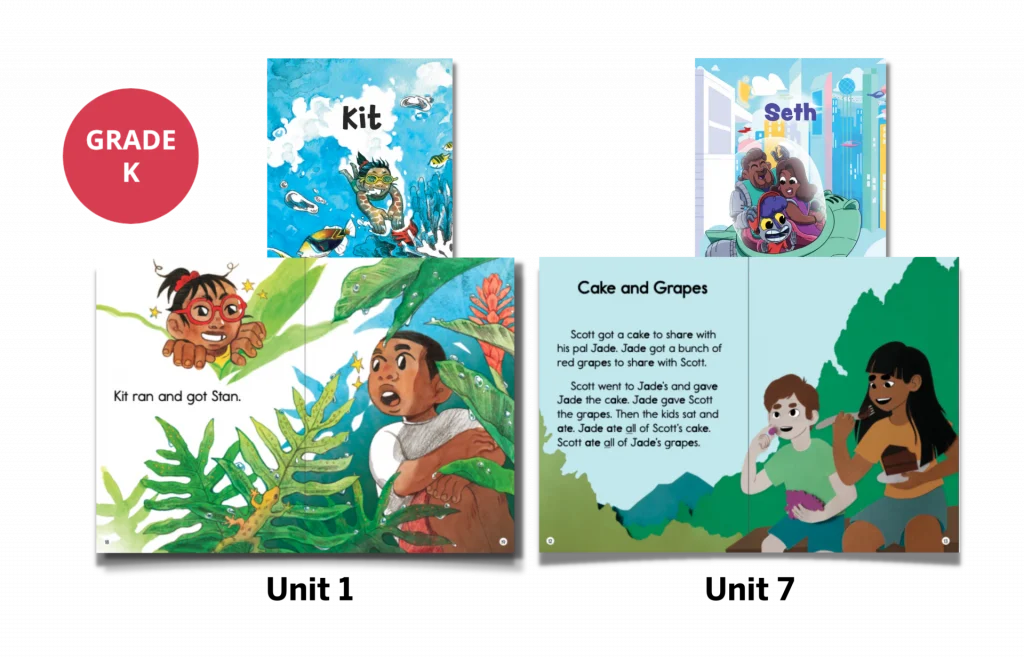
Stay connected!

Join our community and get new episodes every other Wednesday!

We’ll also share new and exciting free resources for your classroom every month!

What Melanie Trecek-King says about science

“Students carry in their pocket access to basically all of humanity’s knowledge at this moment in time. The question is: do they know what they’re looking for?”

– Melanie Trecek-King

Associate Professor of Biology at Massasoit Community College and creator of Thinking is Power

Meet the guest

Melanie Trecek-King is the creator of Thinking is Power, an online resource that provides critical thinking education to the general public. She is currently an associate professor of biology at Massasoit Community College, where she teaches a general-education science course designed to equip students with empowering critical thinking, information literacy, and science literacy skills. An active speaker and consultant, Trecek-King loves to share her “teach skills, not facts” approach with other science educators, and help schools and organizations meet their goals through better thinking. Trecek-King is also the education director for the Mental Immunity Project and CIRCE (Cognitive Immunology Research Collaborative), which aim to advance and apply the science of mental immunity to inoculate minds against misinformation.

A woman with long blonde hair and a black top is shown in front of a blue background, framed by a circular graphic with an illustrated flask in the corner.
A laptop screen displays the “Science Connections: The Community” private group page, with science-themed icons decorating the background and edges.

About Science Connections

Welcome to Science Connections! Science is changing before our eyes, now more than ever. So…how do we help kids figure that out? We will bring on educators, scientists, and more to discuss the importance of high-quality science instruction. In this episode, hear from our host Eric Cross about his work engaging students as a K-8 science teacher. 

Review Materials

Teacher Reference Guides

It’s important that your committee sees the full breadth and depth of our instruction. For that reason, we provided a copy of each of our unit-specific Teacher Reference Guides. Before you panic, rest assured that teachers do not use these robust reference guides for day-to-day teaching. For that, we have a hands-free TG!

Amplify Science lesson slides

  • Teacher Reference Guide: Unlike a typical TG that requires a series of supplemental books to support it, our encyclopedic reference guide is chock-full of everything a teacher needs to fully implement our program and the NGSS.
  • Ready-to-Teach Digital Lessons: For daily instruction, teachers need their hands free. That’s why we created ready-to-teach lesson slides for every single lesson What’s more, they are editable and include suggested teacher talk and point-of-use differentiation and other instructional tips. Read this help article to learn more.

Hands-on kits

Every unit of our program includes a dedicated hands-on materials kit. Due to the amount of materials involved, we provided your committee two sample kits per grade level. Our unit-specific kits make material management easy for teachers—they grab the tub they need and then put it all back with ease. Plus, items needed for multiple units are duplicated and found in each tub.

Amplify Science hands-on kits

Our unit-specific kits:

  • Include more materials — We give you enough non-consumable materials to support 200 student uses.
  • Are more manageable — Unlike other programs that require large groups of students to share limited sets of materials, our kits include enough to support small groups of 4–5 students.
  • Include supportive videos — Each hands-on activity provides clear instructions for the teacher, with more complex activities supported by video demonstrations and illustrations.

Overview

Developed by UC Berkeley’s Lawrence Hall of Science, our program features:

  • A phenomena-based approach where students construct a more complex understanding of each unit’s anchor phenomenon.
  • A blend of cohesive storylines, hands-on investigations, rich discussions, literacy-rich activities, and digital tools.
  • Cohesive units, chapters, lessons, and activities designed to deliver true 3-dimensional learning.
  • An instructional design that supports all learners in accessing all standards.


Hands-on investigations

Literacy integration

Simulations and modeling tools

Classroom discussions

EdReports All-Green

Amplify Science for grades K–8 has been rated all-green by EdReports.

Read the review on EdReports.

Program structure

Our cyclical lesson design ensures students receive multiple exposures to concepts through a variety of modalities.

As they progress through the lessons within a unit, students build and deepen their understanding, increasing their ability to develop and refine complex explanations of the unit’s phenomenon. It’s this proven program structure and lesson design that enables Amplify Science to address 100% of the NGSS in fewer days than other programs.

Navigating an Engineering Internship (Part 2)

This Part 2 video demonstrates how to use the Futura Workspace to manage the immersive experience of the Engineering Internship units. This includes guidance on how to create student groups, how to review student work, and how to send students targeted feedback on their designs.

Unit sequence

Our lessons follow a structure that is grounded in regular routines while still being flexible enough to allow for a variety of learning experiences.

In fact, our multi-modal instruction offers more opportunities for students to construct meaning, and practice and apply concepts than any other program. What’s more, our modular design means our units can be flexibly arranged to support your instructional goals.

Unit 1

Microbiome

Domain: Life Science

Unit type: Launch

Student role: Microbiological researchers

Phenomenon: The presence of 100 trillion microorganisms living on and in the human body may keep the body healthy.  

Unit 2

Metabolism

Domain: Life Science

Unit type: Core

Student role: Medical researchers

Phenomenon: Elisa, a young patient, feels tired all the time.  

See how this unit works

Unit 3

Metabolism Engineering Internship

Domains: Life Science, Engineering Design

Unit type: Engineering internship

Student role: Food engineers

Phenomenon: Designing health bars with different molecular compositions can effectively meet the metabolic needs of patients or rescue workers.  

Unit 4

Traits and Reproduction

Domain: Life Science

Unit type: Core

Student role: Biomedical students

Phenomenon: Darwin’s bark spider offspring have different silk flexibility traits, even though they have the same parents.  

See how this unit works

Unit 5

Thermal Energy

Domain: Physical Science

Unit type: Core

Student role: Thermal scientists

Phenomenon: One of two proposed heating systems for Riverdale School will best heat the school.  

See how this unit works   

Unit 6

Ocean, Atmosphere, and Climate

Domains: Earth and Space Science, Physical Science

Unit type: Core

Student role: Climatologists

Phenomenon: During El Niño years, the air temperature in Christchurch, New Zealand is cooler than usual.  

Unit 7

Weather Patterns

Domains: Earth and Space Science, Physical Science

Unit type: Core

Student role: Forensic meteorologists

Phenomenon: In recent years, rainstorms in Galetown have been unusually severe.  

See how this unit works

Unit 8

Earth’s Changing Climate

Domains: Earth and Space Science, Life Science

Unit type: Core

Student role: Climatologists

Phenomenon: The ice on Earth’s surface is melting.  

See how this unit works

Unit 9

Earth’s Changing Climate Engineering Internship

Domains: Earth and Space Science, Engineering Design

Unit type: Engineering internship

Student role: Civil engineers

Phenomenon: Designing rooftops with different modifications can reduce a city’s impact on climate change.  

Unit 1

Geology on Mars

Domain: Earth and Space Science

Unit type: Launch

Student role: Planetary geologists

Phenomenon: Analyzing data about landforms on Mars can provide evidence that Mars may have once been habitable.  

Unit 2

Plate Motion

Domain: Earth and Space Science

Unit type: Core

Student role: Geologists

Phenomenon: Mesosaurus fossils have been found on continents separated by thousands of kilometers of ocean, even though the Mesosaurus species once lived all together.  

See how this unit works

Unit 3

Plate Motion Engineering Internship

Domains: Earth and Space Science, Engineering Design

Unit type: Engineering internship

Student role: Mechanical engineering interns

Phenomenon: Patterns in earthquake data can be used to design an effective tsunami warning system.    

Unit 4

Rock Transformations

Domain: Earth and Space Science

Unit type: Core

Student role: Geologists

Phenomenon: Rock samples from the Great Plains and from the Rocky Mountains — regions hundreds of miles apart — look very different, but have surprisingly similar mineral compositions.   

See how this unit works

Unit 5

Phase Change

Domains: Physical Science, Earth and Space Science

Unit type: Core

Student role: Chemists

Phenomenon: A methane lake on Titan no longer appears in images taken by a space probe two years apart.  

See how this unit works

Unit 6

Phase Change Engineering Internship

Domains: Engineering Design, Physical Science

Unit type: Engineering internship

Student role: Chemical engineering interns

Phenomenon: Designing portable baby incubators with different combinations of phase change materials can keep babies at a healthy temperature.  

Unit 7

Chemical Reactions

Domains: Physical Science, Life Science, Earth and Space Science

Unit type: Core

Student role: Forensic chemists

Phenomenon: A mysterious brown substance has been detected in the tap water of Westfield.  

See how this unit works

Unit 8

Populations and Resources

Domains: Life Science, Earth and Space Science

Unit type: Core

Student role: Biologists

Phenomenon: The size of the moon jelly population in Glacier Sea has increased.  

See how this unit works  

Unit 9

Matter and Energy in Ecosystems

Domains: Life Science, Earth and Space Science, Physical Science

Unit type: Core

Student role: Ecologists

Phenomenon: The biodome ecosystem has collapsed.  

See how this unit works 

Unit 1

Harnessing Human Energy

Domains: Physical Science, Earth and Space Science, Engineering Design

Unit type: Launch

Student role: Energy scientists

Phenomenon: Rescue workers can use their own human kinetic energy to power the electrical devices they use during rescue missions.   

Unit 2

Force and Motion

Domain: Physical Science

Unit type: Core

Student role: Physicists

Phenomenon: The asteroid sample-collecting pod failed to dock at the space station as planned.  

See how this unit works

Unit 3

Force and Motion Engineering Internship

Domains: Engineering Design, Physical Science

Unit type: Engineering internship

Student role: Mechanical engineering interns

Phenomenon: Designing emergency supply delivery pods with different structures can maintain the integrity of the supply pods and their contents.  

Unit 4

Magnetic Fields

Domain: Physical Science

Unit type: Core

Student role: Physicists

Phenomenon: During a test launch, a spacecraft traveled much faster than expected.  

Unit 5

Light Waves

Domains: Physical Science, Life Science, Earth and Space Science

Unit type: Core

Student role: Spectroscopists

Phenomenon: The rate of skin cancer is higher in Australia than in other parts of the world.  

See how this unit works

Unit 6

Earth, Moon, and Sun

Domains: Earth and Space Science, Physical Science

Unit type: Core

Student role: Astronomers

Phenomenon: An astrophotographer can only take pictures of specific features on the Moon at certain times.  

Unit 7

Natural Selection

Domains: Life Science, Earth and Space Science

Unit type: Core

Student role: Biologists

Phenomenon: The newt population in Oregon State Park has become more poisonous over time.  

See how this unit works

Unit 8

Metabolism Engineering Internship

Domains: Life Science, Engineering Design

Unit type: Engineering internship

Student role: Food engineers

Phenomenon: Designing health bars with different molecular compositions can effectively meet the metabolic needs of patients or rescue workers.  

Unit 9

Evolutionary History

Domains: Life Science, Earth and Space Science

Unit type: Core

Student role: Paleontologists

Phenomenon: A mystery fossil at the Natural History Museum has similarities with both wolves and whales.    

See how this unit works

Access program

Watch the video to the right plus the ones below showing you how to navigate our digital platform. When you’re ready, follow the instructions below to log into our live demo account.

  • Click the orange button below to access the platform.
  • To explore as a teacher, enter this username (t1.washoemssci@demo.tryamplify.net) and this password ( Amplify1-washoemssci).
  • To explore as a student, enter this username (s1.washoemssci@demo.tryamplify.net) and this password ( Amplify1-washoemssci).
  • Choose your grade level from the drop-down menu.


Access the digital platform now

Navigating an Engineering Internship (Part 1)

This Part 1 video demonstrates how Engineering Internship units invite students to design solutions for real-world problems as interns for a fictional company called Futura. In the process, they apply and deepen their learning from Core units.

Navigating an Engineering Internship (Part 2)

This Part 2 video demonstrates how to use the Futura Workspace to manage the immersive experience of the Engineering Internship units. This includes guidance on how to create student groups, how to review student work, and how to send students targeted feedback on their designs.

Navigating our reporting tools

Teachers of Amplify Science grades 6–8 have access to a feature called Reporting. When unit assessments are administered digitally, the Reporting tool enables teachers to analyze student performance on the unit assessments.

Differentiation post-assessment

Every core unit of Amplify Science 6–8 features a formal formative assessment opportunity at the mid-way point, or Critical Juncture, of the unit, which provides an important opportunity for differentiation.

Resources

Overview

With Amplify Science, students don’t just passively learn about science concepts. Instead, they take on the role of scientists and engineers to actively investigate and figure out real-world phenomena. They do this through a blend of cohesive and compelling storylines, hands-on investigations, collaborative discussions, literacy-rich activities, and interactive digital tools.

Watch the videos below to learn how our program empowers students to think, read, write, and argue like real scientists and engineers every day.

Overview

What Educators Say

The NGSS classroom

EdReports

Amplify Science for grades K–8 has been rated all-green by EdReports..

Read the review on Edreports.

Program structure

Our cyclical lesson design ensures students receive multiple exposures to concepts through a variety of modalities. As they progress through the lessons within a unit, students build and deepen their understanding, increasing their ability to develop and refine complex explanations of the unit’s phenomenon.

It’s this proven program structure and lesson design that enables Amplify Science to teach less, but achieve more. We designed our program to address 100% of the NGSS in just 66 days for grades K–2 and 88 days for grades 3–5.

Unit sequence

Our lessons follow a structure that is grounded in regular routines while still being flexible enough to allow for a variety of learning experiences.

In fact, our multi-modal instruction offers more opportunities for students to construct meaning, and practice and apply concepts than any other program. What’s more, our modular design means our units can be flexibly arranged to support your instructional goals.

Unit sequence
Mariposa en vuelo sobre plantas en macetas sobre una mesa, con una oruga en un tallo frondoso cerca, una regadera roja a la izquierda y un paisaje brillante al fondo.

Needs of Plants and Animals

Domains: Life Science, Earth and Space Science, Engineering Design

Unit type: Investigation

Student role: Scientists

Phenomenon: There are no monarch caterpillars in the Mariposa Grove community garden since vegetables were planted. 
Una mano tirando de una cuerda atada a una bola blanca, que interactúa con un tablero de madera con varias clavijas y bandas elásticas.

Pushes and Pulls

Domains: Physical Science, Engineering Design

Unit type: Engineering design

Student role: Pinball engineers

Phenomenon: Pinball machines allow people to control the direction and strength of forces on a ball. 
An illustration from the Sunlight and Weather unit

Sunlight and Weather

Domains: Earth and Space Science, Life Science, Engineering Design

Unit type: Modeling

Student role: Weather scientists

Phenomenon: Students at Carver Elementary School are too cold during morning recess, while students at Woodland Elementary School are too hot during afternoon recess. 
Una ilustración de una tortuga marina nadando bajo el agua, acompañada por una tortuga más pequeña, una tortuga más grande y un tiburón distante. Al fondo se ven algas.

Animal and Plant Defenses

Domain: Life Science

Unit type: Modeling

Student role: Marine scientists

Phenomenon: Spruce the Sea Turtle lives in an aquarium and will soon be released back into the ocean, where she will survive despite ocean predators. 
An illustration from the Light and Sound unit

Light and Sound

Domains: Physical Science, Engineering Design

Unit type: Engineering design

Student role: Light and sound engineers

Phenomenon: A puppet show company uses light and sound to depict realistic scenes in puppet shows. 
Ilustración que muestra un paisaje urbano dividido en noche a la izquierda con una luna y estrellas, y día a la derecha con un sol, nubes y un avión.

Spinning Earth

Domain: Earth and Space Science

Unit type: Investigation

Student role: Sky scientists

Phenomenon: The sky looks different to Sai and his grandma when they talk on the phone. 
Un elefante se encuentra debajo de un árbol y usa su trompa para arrancar un trozo de fruta.

Plant and Animal Relationships

Domains: Life Science, Engineering Design

Unit type: Investigation

Student role: Plant scientists

Phenomenon: No new chalta trees are growing in the fictional Bengal Tiger Reserve in India. 
A hand holds a red bean on a table, while a wooden stick spreads white glue and scattered beans. Also on the table are a white cup and a yellow pen.

Properties of Materials

Domains: Physical Science, Engineering Design

Unit type: Engineering design

Student role: Glue engineers

Phenomenon: Different glue recipes result in glues that have different properties. 
An illustration from the Changing Landforms unit

Changing Landforms

Domain: Earth and Space Science

Unit type: Modeling

Student role: Geologists

Phenomenon: The cliff that Oceanside Recreation Center is situated on appears to be receding over time. 
An illustration from the Balancing Forces unit

Balancing Forces

Domain: Physical Science

Unit type: Modeling

Student role: Engineers

Phenomenon: The town of Faraday is getting a new train that floats above its tracks. 
An illustration from the Inheritance and Traits unit

Inheritance and Traits

strong>Domain: Life Science

Unit type: Investigation

Student role: Wildlife biologists

Phenomenon: An adopted wolf in Graystone National Park (Wolf 44) has some traits that appear similar to one wolf pack in the park and other traits that appear to be similar to a different wolf pack. 
An illustration from the Environments and Survival unit

Environments and Survival

Domains: Life Science, Engineering Design

Unit type: Engineering design

Student role: Biomimicry engineers

Phenomenon: Over the last 10 years, a population of grove snails has changed: The number of grove snails with yellow shells has decreased, while the number of snails with banded shells has increased. 
Un orangután con un pelaje naranja cuelga de una enredadera en una densa y verde jungla con árboles y plantas, mientras el sol brilla de fondo.

Weather and Climate

Domains: Earth and Space Science, Engineering Design

Unit type: Argumentation

Student role: Meteorologists

Phenomenon: Three different islands, each a contender for becoming an Orangutan reserve, experience different weather patterns. 
An illustration from the Energy Conversions unit

Energy Conversions

Domains: Physical Science, Earth and Space Science, Engineering Design

Unit type: Engineering design

Student role: System engineers

Phenomenon: The fictional town of Ergstown experiences frequent blackouts. 
An illustration from the Vision and Light unit

Vision and Light

Domain: Physical Science, Life Science, Engineering Design

Unit type: Investigation

Student role: Conservation biologists

Phenomenon: The population of Tokay geckos in a rain forest in the Philippines has decreased since the installation of new highway lights. 
Ilustración de una costa rocosa con acantilados angulares en tonos rojizos a la izquierda y una masa de agua azul debajo.

Earth's Features

Domain: Earth and Space Science

Unit type: Argumentation

Student role: Geologists

Phenomenon: A mysterious fossil is discovered in a canyon within the fictional Desert Rocks National Park. 
An illustration from the Waves, Energy, and Information unit

Waves, Energy, and Information

Domains: Physical Science, Life Science, Earth and Space Science, Engineering Design

Unit type: Modeling

Student role: Marine scientists

Phenomenon: Mother dolphins in the fictional Blue Bay National Park seem to be communicating with their calves when they are separated at a distance underwater. 
An illustration from the Patterns of Earth and Sky unit

Patterns of Earth and Sky

Domains: Physical Science, Earth and Space Science

Unit type: Investigation

Student role: Astronomers

Phenomenon: An ancient artifact depicts what we see in the sky at different times — the sun during the daytime and different stars during the nighttime — but it is missing a piece. 
An illustration from the Modeling Matter unit

Modeling Matter

Domain: Physical Science

Unit type: Modeling

Student role: Food scientists

Phenomenon: Chromatography is a process for separating mixtures. Some solids dissolve in a salad dressing while others do not. Oil and vinegar appear to separate when mixed in a salad dressing. 
An illustration from the Earth System unit

The Earth System

Domains: Earth and Space Science, Physical Science, Engineering Design

Unit type: Engineering Design

Student role: Water resource engineers

Phenomenon: East Ferris, a city on one side of the fictional Ferris Island, is experiencing a water shortage, while West Ferris is not. 
An illustration from the Ecosystem Restoration unit

Ecosystem Restoration

Domains:Physical Science, Life Science, Earth and Space Science, Engineering Design

Unit type: Argumentation

Student role: Ecologists

Phenomenon: The jaguars, sloths, and cecropia trees in a reforested section of a Costa Rican rain forest are not growing and thriving. 

Access program

Watch the video to the right showing you how to navigate our digital platform. When you’re ready, follow the instructions below to log into your live demo account.

  • Click the orange button below to access the platform.
  • Explore as a teacher with this username (t1.cartwrightsd@demo.tryamplify.net) and this password (Amplify1-cartwrightsd).
  • Explore as a student with this username (s1.cartwrightsd@demo.tryamplify.net) and this password (Amplify1-cartwrightsd).
  • Choose your grade level from the drop-down menu.


Access the digital platform now

Resources

Welcome, Louisiana educators!

Get all students talking and thinking together about grade-level math.

Amplify Math is designed around the idea that a core math curriculum needs to serve 100 percent of students in accessing grade-level math every day. To that end, the program delivers: 

  • Engaging, discourse-rich math lessons that are easier to teach.
  • Flexible, social problem-solving experiences both online and off.
  • Real-time insights, data, and reporting that inform instruction.

Flexible social problem-solving experiences

Digital lessons should be powerful in their ability to surface student thinking and spark interesting and productive discussions. We’ve partnered with Desmos to bring this vision to life with our complete library of Amps—social, collaborative lessons powered by Desmos technology.

Intuitive and engaging student experience

The student experience is intuitive and engaging because the content and the tools are interesting and exciting. Students work together and interact with the mathematics in real time to quickly see that reasoning and revising are important parts of math class. 

Powerful teaching and monitoring tools

Imagine knowing where your students are, what they think, what they might not get yet, and what needs to happen next. This is all possible with Amplify Math.

Automatic, just-in-time supports

Our Power-ups provide just-in-time support at the point of use before activities for your students. Power-ups ensure we are giving all students—even the ones who might be three years behind in math, but only 15 minutes behind the day’s lesson—the chance to experience success in math. Not teaching online? They’re available in the Teacher Edition, too.

Engaging lessons that are more teachable

Amplify Math makes productive discourse easier to facilitate and more accessible for students. The program provides teachers with easy-to-follow instructional supports that make implementing a problem-based program more effective and enjoyable for both you and your students.

Math in the program is social and collaborative. Our digital experience is fun and dynamic, with plenty of opportunities for students to talk through their reasoning, work with their peers, and gain new understandings.

Curious to learn more about what a social, collaborative classroom looks like?

Review now

Review now

Click the orange button below to log in as a teacher and review the full digital experience.

Select “Log in with Amplify” and enter these credentials:

Username: t1.louisianamath@demo.tryamplify.net

Password: Amplify1-louisianamath

Click here to download a navigational guide.

Welcome, Louisiana!

Get all students talking and thinking together about grade-level math.

Amplify Math is designed around the idea that a core math curriculum needs to serve 100 percent of students in accessing grade-level math every day. To that end, the program delivers: 

  • Engaging, discourse-rich math lessons that are easier to teach.
  • Flexible, social problem-solving experiences both online and off.
  • Real-time insights, data, and reporting that inform instruction.

Flexible social problem-solving experiences

Digital lessons should be powerful in their ability to surface student thinking and spark interesting and productive discussions. We’ve partnered with Desmos to bring this vision to life with our complete library of Amps—social, collaborative lessons powered by Desmos technology.

Intuitive and engaging student experience

The student experience is intuitive and engaging because the content and the tools are interesting and exciting. Students work together and interact with the mathematics in real time to quickly see that reasoning and revising are important parts of math class. 

Powerful teaching and monitoring tools

Imagine knowing where your students are, what they think, what they might not get yet, and what needs to happen next. This is all possible with Amplify Math.

Automatic, just-in-time supports

Our Power-ups provide just-in-time support at the point of use before activities for your students. Power-ups ensure we are giving all students—even the ones who might be three years behind in math, but only 15 minutes behind the day’s lesson—the chance to experience success in math. Not teaching online? They’re available in the Teacher Edition, too.

Engaging lessons that are more teachable

Amplify Math makes productive discourse easier to facilitate and more accessible for students. The program provides teachers with easy-to-follow instructional supports that make implementing a problem-based program more effective and enjoyable for both you and your students.

Math in the program is social and collaborative. Our digital experience is fun and dynamic, with plenty of opportunities for students to talk through their reasoning, work with their peers, and gain new understandings.

Curious to learn more about what a social, collaborative classroom looks like?

Review now

Review now

Click the orange button below to log in as a teacher and review the full digital experience.

Select “Log in with Amplify” and enter these credentials:
Username (teacher): t1.louisianamathpublic@demo.tryamplify.net
Username (student): s1.louisianamathpublic@demo.tryamplify.net
Password (teacher and student): Amplify1-louisianamathpublic

Click here to download a navigational guide.

Welcome, Tennessee educators!

Get all students talking and thinking together about grade-level math.

Amplify Math is designed around the idea that a core math curriculum needs to serve 100 percent of students in accessing grade-level math every day. To that end, the program delivers: 

  • Engaging, discourse-rich math lessons that are easier to teach.
  • Flexible, social problem-solving experiences both online and off.
  • Real-time insights, data, and reporting that inform instruction.

Flexible social problem-solving experiences

Digital lessons should be powerful in their ability to surface student thinking and spark interesting and productive discussions. We’ve partnered with Desmos to bring this vision to life with our complete library of Amps—social, collaborative lessons powered by Desmos technology.

Intuitive and engaging student experience

The student experience is intuitive and engaging because the content and the tools are interesting and exciting. Students work together and interact with the mathematics in real time to quickly see that reasoning and revising are important parts of math class. 

Powerful teaching and monitoring tools

Imagine knowing where your students are, what they think, what they might not get yet, and what needs to happen next. This is all possible with Amplify Math.

Automatic, just-in-time supports

Our Power-ups provide just-in-time support at the point of use before activities for your students. Power-ups ensure we are giving all students—even the ones who might be three years behind in math, but only 15 minutes behind the day’s lesson—the chance to experience success in math. Not teaching online? They’re available in the Teacher Edition, too.

Engaging lessons that are more teachable

Amplify Math makes productive discourse easier to facilitate and more accessible for students. The program provides teachers with easy-to-follow instructional supports that make implementing a problem-based program more effective and enjoyable for both you and your students.

Math in the program is social and collaborative. Our digital experience is fun and dynamic, with plenty of opportunities for students to talk through their reasoning, work with their peers, and gain new understandings.

Curious to learn more about what a social, collaborative classroom looks like?

Review now

Review now

Click the orange button below to log in as a teacher and review the full digital experience.

Select “Log in with Amplify” and enter the login credentials supplied to you.

Click here to download a navigational guide.

Welcome, Tennessee!

Get all students talking and thinking together about grade-level math.

Amplify Math is designed around the idea that a core math curriculum needs to serve 100 percent of students in accessing grade-level math every day. To that end, the program delivers: 

  • Engaging, discourse-rich math lessons that are easier to teach.
  • Flexible, social problem-solving experiences both online and off.
  • Real-time insights, data, and reporting that inform instruction.

Flexible social problem-solving experiences

Digital lessons should be powerful in their ability to surface student thinking and spark interesting and productive discussions. We’ve partnered with Desmos to bring this vision to life with our complete library of Amps—social, collaborative lessons powered by Desmos technology.

Intuitive and engaging student experience

The student experience is intuitive and engaging because the content and the tools are interesting and exciting. Students work together and interact with the mathematics in real time to quickly see that reasoning and revising are important parts of math class. 

Powerful teaching and monitoring tools

Imagine knowing where your students are, what they think, what they might not get yet, and what needs to happen next. This is all possible with Amplify Math.

Automatic, just-in-time supports

Our Power-ups provide just-in-time support at the point of use before activities for your students. Power-ups ensure we are giving all students—even the ones who might be three years behind in math, but only 15 minutes behind the day’s lesson—the chance to experience success in math. Not teaching online? They’re available in the Teacher Edition, too.

Engaging lessons that are more teachable

Amplify Math makes productive discourse easier to facilitate and more accessible for students. The program provides teachers with easy-to-follow instructional supports that make implementing a problem-based program more effective and enjoyable for both you and your students.

Math in the program is social and collaborative. Our digital experience is fun and dynamic, with plenty of opportunities for students to talk through their reasoning, work with their peers, and gain new understandings.

Curious to learn more about what a social, collaborative classroom looks like?

Review now

Review now

Click the orange button below to log in as a teacher and review the full digital experience.

Select “Log in with Amplify” and enter these credentials:
Username (teacher): t1.tnmathreviewer@demo.tryamplify.net
Username (student): s1.tnmathreviewer@demo.tryamplify.net
Password (teacher and student): Amplify1-tnmathreviewer

Click here to download a navigational guide.

Welcome, Idaho educators!

Get all students talking and thinking together about grade-level math.

Amplify Math is designed around the idea that a core math curriculum needs to serve 100 percent of students in accessing grade-level math every day. To that end, the program delivers: 

  • Engaging, discourse-rich math lessons that are easier to teach.
  • Flexible, social problem-solving experiences both online and off.
  • Real-time insights, data, and reporting that inform instruction.

Flexible social problem-solving experiences

Digital lessons should be powerful in their ability to surface student thinking and spark interesting and productive discussions. We’ve partnered with Desmos to bring this vision to life with our complete library of Amps—social, collaborative lessons powered by Desmos technology.

Intuitive and engaging student experience

The student experience is intuitive and engaging because the content and the tools are interesting and exciting. Students work together and interact with the mathematics in real time to quickly see that reasoning and revising are important parts of math class. 

Powerful teaching and monitoring tools

Imagine knowing where your students are, what they think, what they might not get yet, and what needs to happen next. This is all possible with Amplify Math.

Automatic, just-in-time supports

Our Power-ups provide just-in-time support at the point of use before activities for your students. Power-ups ensure we are giving all students—even the ones who might be three years behind in math, but only 15 minutes behind the day’s lesson—the chance to experience success in math. Not teaching online? They’re available in the Teacher Edition, too.

Engaging lessons that are more teachable

Amplify Math makes productive discourse easier to facilitate and more accessible for students. The program provides teachers with easy-to-follow instructional supports that make implementing a problem-based program more effective and enjoyable for both you and your students.

Math in the program is social and collaborative. Our digital experience is fun and dynamic, with plenty of opportunities for students to talk through their reasoning, work with their peers, and gain new understandings.

Curious to learn more about what a social, collaborative classroom looks like?

Review now

Review now

Click the orange button below to log in as a teacher and review the full digital experience.

Select “Log in with Amplify” and enter your reviewer login credentials.

Click here to download a navigational guide.

A closer look at grades K–2

Amplify Science California is based on the latest research on teaching and learning and helps teachers deliver age-appropriate, high-quality, literacy-rich instruction that enables students to take on the roles of scientists and engineers to solve real-world phenomena every day.

In the K–2 classroom, this looks like students:

  • Collecting evidence from a variety of sources.
  • Making sense of evidence in a variety of ways.
  • Formulating convincing scientific arguments.
A collage of four images: building a toothpick structure, a boy reading a book to a girl, two children conducting a water experiment, and a light projection setup.
Graphic showing a research process with four steps: spark intrigue with a real-world problem, explore evidence, explain and elaborate, and evaluate claims, connected in a cycle with arrows.

Program structure

Our cyclical lesson design ensures students receive multiple exposures to concepts through a variety of modalities. As they progress through the lessons within a unit, their understanding gradually builds and deepens, ultimately leading to their ability to develop and refine increasingly complex explanations of the unit’s phenomenon.

It’s this proven program structure and lesson design that enables Amplify Science California to teach less, but achieve more. Rather than asking teachers to wade through unnecessary content, we designed our K–2 program to address 100% of the California NGSS in just 66 days.

Scope and sequence

Every year of our K–2 consists of 3 units and 66 total lessons. Said another way, each unit contains 20 lessons plus two dedicated assessment days (a Pre-Unit Assessment and End-of-Unit Assessment).

Lessons at grades K–1 are written for a minimum of 45-minutes, and grade 2 lessons are written for a minimum of 60-minutes—though teachers can expand or contract the timing to meet their needs.

Educational curriculum chart showcasing a progression of amplify science lessons from kindergarten to grade 5, categorized by grade and subject areas like plants, animals, weather, and energy.

Unit types

While every unit delivers three-dimensional learning experiences and engages students in gathering evidence from a rich collection of sources, each unit also emphasizes a particular science and engineering practice.

In each grade K–2:

  • One unit emphasizes the practice of investigation.
  • One unit emphasizes the practice of modeling.
  • One unit emphasizes the practice of engineering design.
Investigation Units

Investigation units focus on the process of strategically developing investigations and gathering data to answer questions. Students are first asked to consider questions about what happens in the natural world and why, and are then involved in designing and conducting investigations that produce data to help answer those questions.

Modeling Units

Modeling units provide extra support to students engaging in the practice of modeling. Students use physical models, investigate with computer models, and create their own diagrams to help them visualize what might be happening on the nanoscale.

Engineering Design Units

Engineering design units provide opportunities for students to solve complex problems by applying science principles to the design of functional solutions, and iteratively testing those solutions to determine how well they meet preset criteria.

Units at a glance

An illustration from Needs of Plants and Animals unit
Needs of Plants and Animals

Domains: Life Science, Earth and Space Science, Engineering Design

Unit type: Investigation

Student role: Scientists

Phenomenon: There are no monarch caterpillars in the Mariposa Grove community garden since vegetables were planted. 

Download unit guide

Download lesson planner

An illustration from the Pushes and Pulls unit
Pushes and Pulls

Domains: Physical Science, Engineering Design

Unit type: Engineering design

Student role: Pinball engineers

Phenomenon: Pinball machines allow people to control the direction and strength of forces on a ball.  

Download unit guide

Download lesson planner

Silhouette of a playground structure against a blue sky with clouds and three yellow suns.
Sunlight and Weather

Domains: Earth and Space Science, Life Science, Engineering Design

Unit type: Modeling

Student role: Weather scientists

Phenomenon: Students at Carver Elementary School are too cold during morning recess, while students at Woodland Elementary School are too hot during afternoon recess.  

Download unit guide

Download lesson planner

Illustration of sea turtles swimming among seaweed in the ocean, with a large shark in the background.
Animal and Plant Defenses

Domain: Life Science

Unit type: Modeling

Student role: Marine scientists

Phenomenon: Spruce the Sea Turtle lives in an aquarium and will soon be released back into the ocean, where she will survive despite ocean predators.  

Download unit guide

Download lesson planner

Two hands holding a paper with a drawing of a pyramid and a tree, illuminated by a flashlight, projecting another shadow of the image on the wall.
Light and Sound

Domains: Physical Science, Engineering Design

Unit type: Engineering design

Student role: Light and sound engineers

Phenomenon: A puppet show company uses light and sound to depict realistic scenes in puppet shows.  

Download unit guide

Download lesson planner

An illustration from the Spinning Earth unit
Spinning Earth

Domain: Earth and Space Science

Unit type: Investigation

Student role: Sky scientists

Phenomenon: The sky looks different to Sai and his grandma when they talk on the phone.  

Download unit guide

Download lesson planner

An elephant standing next to a tree uses its trunk to pick a fruit from a branch while more fruit hangs above.
Plant and Animal Relationships

Domains: Life Science, Engineering Design

Unit type: Investigation

Student role: Plant scientists

Phenomenon: No new chalta trees are growing in the fictional Bengal Tiger Reserve in India.  

Download unit guide

Download lesson planner

A hand holds a red bean on a table, while a wooden stick spreads white glue and scattered beans. Also on the table are a white cup and a yellow pen.
Properties of Materials

Domains: Physical Science, Engineering Design

Unit type: Engineering design

Student role: Glue engineers

Phenomenon: Different glue recipes result in glues that have different properties.  

Download unit guide

Download lesson planner

Illustration of a coastline with cliffs, a recreation center building with a red roof and a sign, evergreen trees, a blue flag, and a sandy beach below.
Changing Landforms

Domain: Earth and Space Science

Unit type: Modeling

Student role: Geologists

Phenomenon: The cliff that Oceanside Recreation Center is situated on appears to be receding over time.  

Download unit guide

Download lesson planner

A closer look at grades K–2

Amplify Science is based on the latest research on teaching and learning and helps teachers deliver age-appropriate, high-quality, literacy-rich instruction that enables students to take on the roles of scientists and engineers to solve real-world phenomena every day.

In the K–2 classroom, this looks like students:

  • Collecting evidence from a variety of sources.
  • Making sense of evidence in a variety of ways.
  • Formulating convincing scientific arguments.
A collage shows science activities: toothpick structure, two kids reading, two kids pouring liquid into cups, and a light experiment with shadows.
A four-step process diagram: Spark, Explore, Explain and elaborate, and Evaluate, connected by arrows, with a summary below about engaging through cohesive storylines.

Program structure

Our cyclical lesson design ensures students receive multiple exposures to concepts through a variety of modalities. As they progress through the lessons within a unit, their understanding gradually builds and deepens, ultimately leading to their ability to develop and refine increasingly complex explanations of the unit’s phenomenon.

It’s this proven program structure and lesson design that enables Amplify Science to teach less, but achieve more. Rather than asking teachers to wade through unnecessary content, we designed our K–2 program to address 100% of the NGSS in just 66 days.

Scope and sequence

Every year of our K–2 consists of 3 units and 66 total lessons. Said another way, each unit contains 20 lessons plus two dedicated assessment days (a Pre-Unit Assessment and End-of-Unit Assessment).

Lessons at grades K–1 are written for a minimum of 45-minutes, and grade 2 lessons are written for a minimum of 60-minutes—though teachers can expand or contract the timing to meet their needs.

Grid of nine educational subject cards for kindergarten, grade 1, and grade 2, each listing curriculum topics like "needs of plants and animals" and "engineering design" with lesson durations.

Unit types

While every unit delivers three-dimensional learning experiences and engages students in gathering evidence from a rich collection of sources, each unit also emphasizes a particular science and engineering practice.

In each grade K–2:

  • One unit emphasizes the practice of investigation.
  • One unit emphasizes the practice of modeling.
  • One unit emphasizes the practice of engineering design.
Investigation Units

Investigation units focus on the process of strategically developing investigations and gathering data to answer questions. Students are first asked to consider questions about what happens in the natural world and why, and are then involved in designing and conducting investigations that produce data to help answer those questions.

Modeling Units

Modeling units provide extra support to students engaging in the practice of modeling. Students use physical models, investigate with computer models, and create their own diagrams to help them visualize what might be happening on the nanoscale.

Engineering Design Units

Engineering design units provide opportunities for students to solve complex problems by applying science principles to the design of functional solutions, and iteratively testing those solutions to determine how well they meet preset criteria.

Units at a glance

Needs of Plants and Animals

Domains: Life Science, Earth and Space Science, Engineering Design

Unit type: Investigation

Student role: Scientists

Phenomenon: There are no monarch caterpillars in the Mariposa Grove community garden since vegetables were planted. 

Pushes and Pulls

Domains: Physical Science, Engineering Design

Unit type: Engineering design

Student role: Pinball engineers

Phenomenon: Pinball machines allow people to control the direction and strength of forces on a ball.  

Sunlight and Weather

Domains: Earth and Space Science, Life Science, Engineering Design

Unit type: Modeling

Student role: Weather scientists

Phenomenon: Students at Carver Elementary School are too cold during morning recess, while students at Woodland Elementary School are too hot during afternoon recess.  

Animal and Plant Defenses

Domain: Life Science

Unit type: Modeling

Student role: Marine scientists

Phenomenon: Spruce the Sea Turtle lives in an aquarium and will soon be released back into the ocean, where she will survive despite ocean predators.  

Light and Sound

Domains: Physical Science, Engineering Design

Unit type: Engineering design

Student role: Light and sound engineers

Phenomenon: A puppet show company uses light and sound to depict realistic scenes in puppet shows.  

Spinning Earth

Domain: Earth and Space Science

Unit type: Investigation

Student role: Sky scientists

Phenomenon: The sky looks different to Sai and his grandma when they talk on the phone.  

Plant and Animal Relationships

Domains: Life Science, Engineering Design

Unit type: Investigation

Student role: Plant scientists

Phenomenon: No new chalta trees are growing in the fictional Bengal Tiger Reserve in India.  

Properties of Materials

Domains: Physical Science, Engineering Design

Unit type: Engineering design

Student role: Glue engineers

Phenomenon: Different glue recipes result in glues that have different properties.  

Changing Landforms

Domain: Earth and Space Science

Unit type: Modeling

Student role: Geologists

Phenomenon: The cliff that Oceanside Recreation Center is situated on appears to be receding over time.  

A closer look at grades 3–5

Amplify Science is based on the latest research on teaching and learning and helps teachers deliver age-appropriate, high-quality, literacy-rich instruction that enables students to take on the roles of scientists and engineers to solve real-world phenomena every day.

In the 3–5 classroom, this looks like students:

  • Collecting evidence from a variety of sources.
  • Making sense of evidence in a variety of ways.
  • Formulating convincing scientific arguments.
Un collage de cuatro imágenes que muestran a estudiantes realizando experimentos científicos: secando estructuras, trabajando con plantas, vertiendo la mezcla en un vaso de precipitados y regando plantas en contenedores.
A four-step process diagram: Spark, Explore, Explain and elaborate, and Evaluate, each with an icon and description, connected by arrows, ending with a summary statement below.

Program structure

Our cyclical lesson design ensures students receive multiple exposures to concepts through a variety of modalities. As they progress through the lessons within a unit, students build and deepen their understanding, increasing their ability to develop and refine complex explanations of the unit’s phenomenon.

It’s this proven program structure and lesson design that enables Amplify Science to teach less, but achieve more. Rather than asking teachers to wade through unnecessary content, we designed our 3–5 program to address 100% of the NGSS in just 88 days.

Scope and sequence

Every year of our grades 3–5 sequence consists of 4 units and 88 lessons. Said another way, each unit contains 20 lessons plus two dedicated assessment days (a Pre-Unit Assessment and End-of-Unit Assessment).

Lessons for grades 3–5 are written to last a minimum of 60 minutes, though teachers can expand or contract the timing to meet their needs.

Grid of nine educational lesson cards, each featuring a different science topic like "balancing forces" and "weather systems" with grade levels and lesson durations listed.

Unit types

Each unit delivers three-dimensional learning experiences and engages students in gathering evidence from a rich collection of sources, while also emphasizing a particular science and engineering practice.

In grades 3–5:

  • One unit emphasizes the practice of investigation.
  • One unit emphasizes the practice of modeling.
  • One unit emphasizes the practice of engineering design.
  • One unit emphasizes the practice of argumentation.
Investigation Units

Investigation units focus on the process of strategically developing investigations and gathering data to answer questions. Students are first asked to consider questions about what happens in the natural world and why, and are then involved in designing and conducting investigations that produce data to help answer those questions.

Modeling Units

Modeling units provide extra support to students engaging in the practice of modeling. Students use physical models, investigate with computer models, and create their own diagrams to help them visualize what might be happening on the nanoscale.

Engineering Design Units

Engineering design units provide opportunities for students to solve complex problems by applying science principles to the design of functional solutions, and iteratively testing those solutions to determine how well they meet preset criteria.

Argumentation units

Argumentation units provide students with regular opportunities to explore and discuss available evidence, time and support to consider how evidence may be leveraged in support of claims, and independence that increases as they mount written arguments in support of their claims.

Units at a glance

Illustration of a high-speed train traveling on an elevated track with a red light on the front, set against a blue sky and green landscape.
Balancing Forces

Domain: Physical Science

Unit type: Modeling

Student role: Engineers

Phenomenon: The town of Faraday is getting a new train that floats above its tracks.  

Illustration of wolves in the foreground, quail perched on a branch, a bear, and elk in a grassy, wooded landscape with hills in the background.
Inheritance and Traits

Domains: Life Science

Unit type: Investigation

Student role: Wildlife biologists

Phenomenon: An adopted wolf in Graystone National Park (“Wolf 44”) has some traits that appear similar to one wolf pack in the park and other traits that appear to be similar to a different wolf pack. 

A bird stands on the ground, looking down at a yellow snail near some green grass against a blue background.
Environments and Survival

Domains: Life Science, Engineering Design

Unit type: Engineering design

Student role: Biomimicry engineers

Phenomenon: Over the last 10 years, a population of grove snails has changed: The number of grove snails with yellow shells has decreased, while the number of snails with banded shells has increased.  

An orange orangutan climbs a vine in a dense green jungle with tall trees and the sun visible in the background.
Weather and Climate

Domains: Earth and Space Science, Engineering Design

Unit type: Argumentation

Student role: Meteorologists

Phenomenon: Three different islands, each a contender for becoming an Orangutan reserve, experience different weather patterns.  

City buildings at night with lit windows, a full moon, stars in the sky, and a person standing by a window on the left.
Energy Conversions

Domains: Physical Science, Earth and Space Science, Engineering Design

Unit type: Engineering design

Student role: System engineers

Phenomenon: The fictional town of Ergstown experiences frequent blackouts.  

A streetlight shines at night; arrows show its light reflecting off a cricket to a gecko, illustrating how the gecko sees its prey.
Vision and Light

Domain: Physical Science, Life Science, Engineering Design

Unit type: Investigation

Student role: Conservation biologists

Phenomenon: The population of Tokay geckos in a rain forest in the Philippines has decreased since the installation of new highway lights.  

Illustration of rocky cliffs with reddish and brown tones beside a flowing blue river under a clear sky.
Earth’s Features

Domain: Earth and Space Science

Unit type: Argumentation

Student role: Geologists

Phenomenon: A mysterious fossil is discovered in a canyon within the fictional Desert Rocks National Park.  

Two dolphins are facing each other underwater against a blue background.
Waves, Energy, and Information

Domains: Physical Science, Life Science, Earth and Space Science, Engineering Design

Unit type: Modeling

Student role: Marine scientists

Phenomenon: Mother dolphins in the fictional Blue Bay National Park seem to be communicating with their calves when they are separated at a distance underwater.

Earth orbits the Sun in space, shown by a dashed blue line; an arrow on Earth indicates its rotation direction.
Patterns of Earth and Sky

Domains: Physical Science, Earth and Space Science

Unit type: Investigation

Student role: Astronomers

Phenomenon: An ancient artifact depicts what we see in the sky at different times — the sun during the daytime and different stars during the nighttime — but it is missing a piece.  

Red blood cells scattered over a swirling red and white background, creating an abstract representation of blood flow.
Modeling Matter

Domain: Physical Science

Unit type: Modeling

Student role: Food scientists

Phenomenon: Chromatography is a process for separating mixtures. Some solids dissolve in a salad dressing while others do not. Oil and vinegar appear to separate when mixed in a salad dressing.  

Illustration of wind carrying particles from the ocean, over a coastal town, and up a steep, green mountain slope under a clear blue sky.
The Earth System

Domains: Earth and Space Science, Physical Science, Engineering Design

Unit type: Engineering Design

Student role: Water resource engineers

Phenomenon: East Ferris, a city on one side of the fictional Ferris Island, is experiencing a water shortage, while West Ferris is not.  

Illustration of a cheetah standing on the ground and a sloth hanging from a tree surrounded by various plants and mushrooms in a jungle scene.
Ecosystem Restoration

Domains:Physical Science, Life Science, Earth and Space Science, Engineering Design

Unit type: Argumentation

Student role: Ecologists

Phenomenon: The jaguars, sloths, and cecropia trees in a reforested section of a Costa Rican rain forest are not growing and thriving.  

Inspiring the next generation of Arkansas scientists, engineers, and curious citizens

Amplify Science is a proven effective core curriculum designed for three-dimensional, phenomena based learning that provides an immersive experience for students.

Amplify Science was developed by the science education experts at UC Berkeley’s Lawrence Hall of Science and the digital learning team at Amplify.

Collage showing students engaged in classroom science activities and two scientific illustrations: a cheetah in foliage and a diagram of clouds and raindrops above a hill.

Grounded in Research

UC Berkeley’s Lawrence Hall of Science, the authors behind Amplify Science, developed the Do, Talk, Read, Write, Visualize approach, and gold standard research shows that it works. Our own efficacy research is pretty exciting, too.

See more of our research.

Instructional model

The Amplify Science program is rooted in the proven, research-based pedagogy of Do, Talk, Read, Write, Visualize. Here’s how each element works:

DO
First-hand investigations are an important part of any science classroom, and Amplify Science has students getting hands-on in every unit, from building models of protein molecules to experimenting with electrical systems.

TALK
Student-to-student discourse and full class discussions are an integral part of the program. Students are provided with numerous opportunities to engage in meaningful oral scientific argumentation, all while fostering a collaborative classroom environment.

READ
Students read scientific articles, focusing their reading activities on searching for evidence related to their investigation and, importantly, on asking and recording questions as they read through fascinating texts on 21st-century topics.

WRITE
Following real-world practices, students write scientific arguments based on evidence they’ve collected, making clear their reasoning about how a given piece of evidence connects to one of several claims.

VISUALIZE
By manipulating digital simulations and using Modeling Tools to craft visualizations of their thinking—just as real scientists and engineers do—students take their learning far beyond the confines of what they can physically see in the classroom in an exciting and authentic way.

Explore the digital Teacher’s Guide

When you’re ready to review, click the orange button below and use your provided login credentials to access the Amplify Science Digital Teacher’s Guide.
If you need login credentials, contact your local Arkansas Account Executive, Marty Pitts, mpitts@amplify.com.

Instructional samplers

Resources to support your review

What’s included

Flexible resources that work seamlessly together:

Science articles
The middle school science articles serve as sources for evidence collection and were authored by science and literacy experts at the Lawrence Hall of Science.

Student Investigation Notebooks
Available for every unit, the Student Investigation Notebooks provide space for students to:

  • Record data.
  • Reflect on ideas from texts and investigations.
  • Construct explanations and arguments.

Available with full-color article compilations for middle school units.

Collection of educational books from 'amplify science' on topics including ocean atmosphere, matter and energy ecosystems, and insect interactions, displayed in various angles.

Digital student experience
Students access the digital simulations and Modeling Tools, as well as lesson activities and assessments, through the digital student experience. Students can interact with the digital student experience as they:

  • Conduct hands-on investigations.
  • Engage in active reading and writing activities.
  • Participate in discussions.
  • Record observations.
  • Craft end-of-unit scientific arguments.
A digital illustration showcasing a laptop and a tablet displaying complex data analysis software interfaces with graphs and heatmaps.

Teacher’s Guides
Available digitally and in print, the Teacher’s Guides contain all of the information teachers need to facilitate classroom instruction, including:

  • Classroom Slides.
  • Detailed lesson plans.
  • Unit and chapter overview documentation.
  • Differentiation strategies.
  • Standards alignments.
  • In-context professional development.
A laptop displaying the Geology on Mars webpage sits beside a book titled "Geology on Mars," both featuring the same cover image of Mars and a spacecraft, perfect for enhancing three-dimensional learning in any science classroom.

Hands-on materials kits
Hands-on learning is at the heart of Amplify Science. Each unit kit contains:

  • Consumable and non-consumable hands-on materials.
  • Print classroom display materials.
  • Premium print materials for student use (sorting cards, maps, etc.)
A perforated rectangular board, three small containers with different powders, a black battery holder with red wires, and three colored alligator clips are arranged on a white background.

Scope and Sequence

Grade Units

Kindergarten

  • Needs of Plants and Animals
  • Pushes and Pulls
  • Sunlight and Water

Grade 1

  • Animal and Plant Defenses
  • Light and Sound
  • Spinning Earth

Grade 2

  • Plant and Animal Relationships
  • Properties of Materials
  • Changing Landforms

Grade 3

  • Balancing Forces
  • Inheritance and Traits
  • Environments and Survival
  • Weather and Climate

Grade 4

  • Energy Conversions
  • Vision and Light
  • Earth’s Features
  • Waves, Energy, and Information

Grade 5

  • Patterns of Earth and Sky
  • Modeling Matter
  • The Earth System
  • Ecosystem Restoration
Grade Units

Grade 6

  • Launch: Microbiome
  • Metabolism
  • Metabolism Engineering Internship
  • Traits and Reproduction
  • Thermal Energy
  • Ocean, Atmosphere, and Climate
  • Weather Patterns
  • Earth’s Changing Climate
  • Earth’s Changing Climate Engineering Internship

Grade 7

  • Launch: Geology on Mars
  • Plate Motion
  • Plate Motion Engineering Internship
  • Rock Transformations
  • Phase Change
  • Chemical Reactions
  • Populations and Resources
  • Matter and Energy in Ecosystems

Grade 8

  • Launch: Harnessing Human Energy
  • Force and Motion
  • Force and Motion Engineering Internship
  • Magnetic Fields
  • Light Waves
  • Earth, Moon and Sun
  • Natural Selection
  • Natural Selection Engineering Internship
  • Evolutionary History

Remote and hybrid learning support

Amplify provides a remote learning solution called Amplify Science @OnDemand. Intended to make extended remote learning and hybrid learning easier, Amplify Science @OnDemand includes two useful options for continuing instruction: @OnDemand Videos and @OnDemand Units. These videos also provide embedded professional development for teachers as well as opportunities for students to review a lesson, if needed.

Amplify Science @OnDemand Videos are recordings of real Amplify Science teachers teaching the lessons. For those teachers who are unable to meet synchronously with their students, the recorded lessons are a great way to keep their students on track and engaged with Amplify Science while at home. These videos will be produced for all K–5 units, and for the first four units of each 6–8 grade level. Their release will be rolling, beginning in August.   

Amplify Science@OnDemand Units are modified versions of Amplify Science units, strategically designed to highlight key activities from the program. The @OnDemand Units take significantly less instructional time than the complete Amplify Science program and allow students to engage with science at home. @OnDemand Units will be developed for all Amplify Science K–8 units. Each @OnDemand unit includes:

  • Teacher overviews explaining how to use the materials, including suggestions for enhancing the @OnDemand Units if synchronous learning or in-class time with students is available.
  • Overviews to send home to families.

Student materials are available in two formats:

  • @OnDemand Slides (PDF/PPT) + Student Sheets (PDF) for students with access to technology at home.
  • Downloadable @OnDemand Packets (PDF) for students without access to technology at home.

Download the remote and hybrid learning guide.

Looking for help?

Powerful (and free!) pedagogical support

Amplify provides a unique kind of support you won’t find from other publishers. We have developed an educational support team of former teachers and administrators who provide pedagogical support for every Amplify curriculum, assessment, and intervention program. This service is completely free for all educators who are using our programs and includes:

  • Guidance for developing lesson plans and intervention plans.
  • Information on where to locate standards and other planning materials.
  • Recommendations and tips for day-to-day teaching with Amplify programs.
  • Support with administering and interpreting assessment data and more.

To reach our pedagogical team, use our live chat within your program, call (800) 823-1969, or email edsupport@amplify.com

Timely technical and program support

Our technical and program support is included and available from 7 a.m. to 7 p.m. ET, Monday through Friday, through a variety of channels, including a live chat program that enables teachers to get immediate help in the middle of the school day.

For your most urgent questions:

  • Use our live chat within your program.
  • Call our toll-free number: (800) 823-1969.

For less urgent questions:

Contact your Arkansas representative:

Portrait of an elderly woman with white hair, smiling, wearing a black blazer against a light brown background.
Marty Pitts

Senior Account Executive
mpitts@amplify.com
(214) 945-5544

A person with dark hair and a beard is smiling at the camera against a gradient background.
Mark Ramos

Inside Account Executive
mramos@amplify.com
(737) 308-4822

Our Instructional model

The Amplify Science Alabama program is rooted in the proven, research-based pedagogy of Do, Talk, Read, Write, Visualize. Here’s how each element works:

DO
First-hand investigations are an important part of any science classroom, and Amplify Science Alabama has students getting hands-on in every unit, from building models of protein molecules to experimenting with electrical systems.

TALK
Student-to-student discourse and full class discussions are an integral part of the program. Students are provided with numerous opportunities to engage in meaningful oral scientific argumentation, all while fostering a collaborative classroom environment.

READ
Students read scientific articles, focusing their reading activities on searching for evidence related to their investigation, and importantly, on asking and recording questions as they read through fascinating texts on 21st-century topics.

WRITE
Following real-world practices, students write scientific arguments based on evidence they’ve collected, making clear their reasoning about how a given piece of evidence connects to one of several claims.

VISUALIZE
By manipulating digital simulations and using modeling tools to craft visualizations of their thinking— just as real scientists and engineers do—students take their learning far beyond the confines of what they can physically see in the classroom in an exciting and authentic way.

Supporting resources

To review the digital program, visit learning.amplify.com.

Click Login with Amplify, and use the following credentials:

Teacher view

Additional Materials to support your review:

Scientific Literacy

Literacy-rich science instruction

Scope and sequence

GRADE

UNITS

Kindergarten

  • Needs of Plants and Animals
  • Pushes and Pulls
  • Sunlight and Water

Grade 1

  • Animal and Plant Defenses
  • Light and Sound
  • Spinning Earth

Grade 2

  • Plant and Animal Relationships
  • Properties of Materials
  • Changing Landforms

Grade 3

  • Balancing Forces
  • Inheritance and Traits
  • Environments and Survival
  • Weather and Climate

Grade 4

  • Energy Conversions
  • Vision and Light
  • Earth’s Features
  • Waves, Energy, and Information

Grade 5

  • Patterns of Earth and Sky
  • Modeling Matter
  • The Earth System
  • Ecosystem Restoration

GRADES K-5

Grade K: Pushes and Pulls

Grade 1: Animal and Plant Defenses

Grade 2: Properties of Materials

Grade 3: Balancing Forces

Grade 4: Investigating Wavelength

Grade 5: Introducing Food Science

Hands On Investigations

Hands-on Investigations
Hands-on learning is an essential part of Amplify Science Alabama, and is integrated into every unit. Students actively participate in science, acting like scientists and engineers as they gather evidence, think critically, solve problems, and develop and defend claims about the world around them. Every unit includes hands-on investigations which are critical to achieving the unit’s learning goals.

Amplify offers hands-on material kits as well as the option to use AMSTI Kit Resources for many of the student investigations.

Digital Experience

Digital student experience
Students access the digital simulations and modeling tools, as well as lesson activities and assessments, through the digital student experience. Students can interact with the digital student experience as they:

  • Conduct hands-on investigations
  • Engage in active reading and writing activities
  • Participate in discussions
  • Record observations
  • Craft end-of-unit scientific arguments

Alabama Teacher’s Guides
Available digitally and in print, the Teacher’s Guides contain all of the information teachers need to facilitate classroom instruction, including:

  • Classroom Slides
  • Detailed lesson plans
  • Unit and chapter overview documentation
  • Differentiation strategies
  • Standards alignments
  • In-context professional development

Looking for help?

Powerful (and free!) pedagogical support

Amplify provides a unique kind of support you won’t find from other publishers. We have developed an educational support team of former teachers and administrators who provide pedagogical support for every Amplify curriculum, assessment, and intervention program. This service is completely free for all educators who are using our programs and includes:

  • Guidance for developing lesson plans and intervention plans
  • Information on where to locate standards and other planning materials
  • Recommendations and tips for day-to-day teaching with Amplify programs
  • Support with administering and interpreting assessment data and more

To reach our pedagogical team, use our live chat within your program, call (800) 823-1969, or email edsupport@amplify.com

Timely technical and program support

Our technical and program support is included and available from 7 a.m. to 7 p.m. ET, Monday through Friday, through a variety of channels, including a live chat program that enables teachers to get immediate help in the middle of the school day.

For your most urgent questions:

  • Use our live chat within your program
  • Call our toll-free number: (800) 823-1969

For less urgent questions:

1. Scope

These Customer Terms and Conditions are a legal agreement between Amplify Education, Inc. (“Amplify”) and the local education agency or authority, school district, school network, independent school, or other regional education system (“Customer”) for the license and use of one or more of Amplify products or services (the “Products”), as specified in the receipt, price quote, proposal, renewal letter, or other ordering document containing the details of this purchase (the “Quote”). These Customer Terms and Conditions, all addenda, attachments, and the Quote, as applicable (together, the “Agreement”), constitute the entire agreement between the parties relating to the subject matter hereof. The provisions of this Agreement will supersede any conflicting terms and conditions in any Customer purchase order, other correspondence or verbal communication, and will supersede and cancel all prior agreements, written or oral, between the parties relating to the subject matter hereof.

2. Agreement Acceptance

This Agreement becomes effective at the earliest of the following: (i) issuing a purchase order, shipment request, or payment against the Quote; (ii) accessing, downloading, or using the Products; or (iii) otherwise accepting this Agreement. This term of the Agreement will be as specified in the Quote and may be renewed or extended by mutual agreement of the parties. Customer represents and warrants that: (1) Customer is of legal age to accept this Agreement; (2) Customer is authorized to accept this Agreement and to access and use the Products; and (3) Customer’s use of the Products will comply at all times with Amplify’s Acceptable Use Policy available at amplify.com/acceptable-use (“AUP”). The Customer may not access, download, or use the Products if the Customer does not agree to this Agreement.

3. License

Subject to the terms and conditions of the Agreement, Amplify grants to Customer a non-exclusive, non-transferable, non-sublicensable license to access and use, and permit Authorized School Users, as defined below, to access and use the Products in accordance with the AUP, for the duration specified in the Quote (the “Term”), and for the number of Authorized School Users specified in the Quote for whom Customer has paid the applicable fees to Amplify. “Authorized School User” means the K–12 students registered or authorized for instruction with Customer and the educators, agents and staff members who use the Products as authorized by Customer who Customer permits to access and use the Products subject to the terms and conditions of the Agreement, solely while such individual is so employed or so registered. Each Authorized School User’s access and use of the Products will be subject to the AUP in addition to the terms and conditions of the Agreement. Violations of this Agreement or the AUP may result in suspension or termination of the applicable account.

4. Restrictions

Customer may access and use the Products solely for non-commercial instructional and administrative purposes. Guidelines for such purposes may be set forth at
https://amplify.com/amplify-program-usage-guidelines/ and additional guidelines may be detailed in materials associated with the Product the Customer is accessing. Further, Customer may not, except as expressly authorized by Amplify: (a) copy, modify, translate, distribute, disclose, or create derivative works based on the contents of, sell, or otherwise exploit, the Products, or any part thereof; (b) decompile, disassemble, reverse engineer the Products, or otherwise use the Products to develop functionally similar products or services; (c) modify, alter, or delete any of the copyright, trademark, or other proprietary notices in or on the Products; (d) rent, lease, or lend the Products or use the Products for the benefit of any third party; (e) avoid, circumvent, or disable any security or digital rights management device, procedure, protocol, or mechanism in the Products; (f) use any content from the Products, including but not limited to text, images, videos, assessments, lesson plans, or code, as input or training material for any machine learning or artificial intelligence system, including large language models, neural networks, or other algorithmic models, for any purposes, commercial or non-commercial; or (g) permit any Authorized School User or third party to do any of the foregoing. Customer also agrees that any works created in violation of this section are derivative works, and, as such, Customer agrees to assign, and hereby assigns, all right, title, and interest in such works to Amplify. The Products and derivatives thereof may be subject to export control laws, restrictions, regulations, and orders of the U.S. and other jurisdictions (together, “Export Laws”). Customer agrees to comply with all applicable Export Laws, and will not, and will not permit Authorized School Users to, export, or transfer for the purpose of re-export, any Product to any prohibited or embargoed country in violation of any U.S. export law or regulation. Further, Customer represents that it is not a party subject to sanctions by the U.S. Office of Foreign Assets Control or included on any restricted party list maintained by the U.S. Bureau of Industry and Security. The software and associated documentation portions of the Products are “commercial items” (as defined at 48 CFR 2.101), comprising “commercial computer software” and “commercial computer software documentation,” as those terms are used in 48 CFR 12.212. Accordingly, if Customer is the U.S. Government or its contractor, Customer will receive only those rights set forth in this Agreement in accordance with 48 CFR 227.7201-227.7204 (for Department of Defense and their contractors) or 48 CFR 12.212 (for other U.S. Government licensees and their contractors).

5. Reservation of Rights

SUBSCRIPTION PRODUCTS ARE LICENSED, NOT SOLD. Subject to the limited rights expressly granted hereunder, all rights, title, and interest in and to all Products, including all related IP Rights, are and will remain the sole and exclusive property of Amplify or its third-party licensors. “IP Rights” means, collectively, rights under patent, trademark, copyright, and trade secret laws, and any other intellectual property or proprietary rights recognized in any country or jurisdiction worldwide. Customer must promptly notify Amplify of any violation of Amplify’s IP Rights in the Products, and will reasonably assist Amplify as necessary to remedy any such violation. Amplify Products are protected by patents (see amplify.com/virtual-patent-marking). Amplify reserves the right to update or modify the Products at any time and to discontinue the Products upon reasonable notice.

6. Payments

In consideration of the Products, Customer will pay to Amplify (or other party designated on the Quote) the fees specified in the Quote in full within 30 days of the date of invoice, except as otherwise agreed by the parties or for those amounts that are subject to a good faith dispute of which Customer has notified Amplify in writing. Customer will be responsible for all state or local sales, use or gross receipts taxes, and federal excise taxes unless Customer provides a then-current tax exemption certificate in advance of the delivery, license, or performance of any Product, as applicable.

7. Shipments

Unless otherwise specified on the Quote, physical Products will be shipped FOB origin in the US (Incoterms 2010 EXW outside of the US) and are deemed accepted by Customer upon receipt. Upon acceptance of such Products, orders are non-refundable, non-returnable, and non-exchangeable, except in the case of defective or missing materials reported to Amplify by Customer within 60 days of receipt. In such case, Customer may not return Products without Amplify’s written authorization.

8. Account Information

For subscription Products, the authentication of Authorized School Users is based in part upon information supplied by Customer or Authorized School Users, as applicable. Customer will and will cause its Authorized School Users to (a) provide accurate information to Amplify or a third-party service as applicable, and promptly report any changes to such information, (b) not share login credentials or otherwise allow others to use their account, (c) maintain the confidentiality and security of their account information, and (d) use the Products solely via such authorized accounts. Customer agrees to notify Amplify immediately of any unauthorized use of its or its Authorized School Users’ accounts or related authentication information. Amplify will not be responsible for any losses arising out of the unauthorized use of accounts created by or for Customer and its Authorized School Users. 

9. Confidentiality

Customer acknowledges that, in connection with this Agreement, Amplify has provided or will provide to Customer and its Authorized School Users certain sensitive or proprietary information, including software, source code, assessment instruments, research, designs, methods, processes, customer lists, training materials, product documentation, know-how, or trade secrets, in whatever form (“Confidential Information”). Customer agrees (a) not to use Confidential Information for any purpose other than use of the Products in accordance with this Agreement and (b) to take all steps reasonably necessary to maintain and protect the Confidential Information of Amplify in strict confidence. Confidential Information shall not include information that, as evidenced by Customer’s contemporaneous written records: (i) is or becomes publicly available through no fault of Customer; (ii) is rightfully known to Customer prior to the time of its disclosure; (iii) has been independently developed by Customer without any use of the Confidential Information; or (iv) is subsequently learned from a third party not under any confidentiality obligation. 

10. Student Data

The parties acknowledge and agree that in the course of providing the Products to the Customer, Amplify may collect, receive, or generate information that directly relates to an identifiable student of Customer (“Student Data”). Student Data may include personal information from a student’s “educational records,” as defined by the Family Educational Rights and Privacy Act of 1974 (“FERPA”). Student Data is owned and controlled by the Customer and Amplify receives Student Data as a “school official” under Section 99.31 of FERPA for the purpose of providing the Products hereunder. Individually and collectively, Amplify and Customer agree to uphold our obligations, as applicable, under FERPA, the Children’s Online Privacy Protection Act (“COPPA”), the Protection of Pupil Rights Amendment (“PPRA”), and applicable state laws relating to student data privacy. Amplify’s Customer Privacy Policy at amplify.com/customer-privacy (“Privacy Policy”) will govern collection, use, and disclosure of Student Data collected or stored on behalf of Customer under this Agreement. In addition, Amplify has entered into the data privacy agreements listed at amplify.com/privacy-security aligned with state and national templates to facilitate compliance with applicable state laws and help expedite Customer’s student data privacy documentation process. Customer is responsible for providing notice and obtaining appropriate consents under applicable laws to authorize Authorized School Users’ use of the Products, including making a copy of the Privacy Policy available to the parents or guardians of users who are under the age of 13.  

11. Customer Materials and Requirements

Customer represents, warrants, and covenants that it has all the necessary rights, including consents and IP Rights, in connection with any data, information, content, and other materials provided to or collected by Amplify on behalf of Customer or its Authorized School Users using the Products or otherwise in connection with this Agreement (“Customer Materials”), and that Amplify has the right to use such Customer Materials as contemplated hereunder or for any other purposes required by Customer. Customer is solely responsible for the accuracy, integrity, completeness, quality, legality, and safety of such Customer Materials. Customer is responsible for meeting hardware, software, telecommunications, and other requirements listed at amplify.com/customer-requirements

12. Warranty Disclaimer

PRODUCTS ARE PROVIDED “AS IS” AND WITHOUT WARRANTY OF ANY KIND BY AMPLIFY. AMPLIFY EXPRESSLY DISCLAIMS ALL WARRANTIES, EXPRESS OR IMPLIED, INCLUDING ANY WARRANTY AS TO TITLE, NON-INFRINGEMENT, MERCHANTABILITY, OR FITNESS FOR A PARTICULAR PURPOSE OR USE. CUSTOMER ASSUMES RESPONSIBILITY FOR SELECTING THE PRODUCTS TO ACHIEVE CUSTOMER’S INTENDED RESULTS AND FOR THE ACCESS AND USE OF THE PRODUCTS, INCLUDING THE RESULTS OBTAINED FROM THE PRODUCTS. WITHOUT LIMITING THE FOREGOING, AMPLIFY MAKES NO WARRANTY THAT THE PRODUCTS WILL BE ERROR-FREE OR FREE FROM INTERRUPTIONS OR OTHER FAILURES OR WILL MEET CUSTOMER’S REQUIREMENTS. AMPLIFY IS NEITHER RESPONSIBLE NOR LIABLE FOR ANY THIRD-PARTY CONTENT OR SOFTWARE INCLUDED IN PRODUCTS, INCLUDING THE ACCURACY, INTEGRITY, COMPLETENESS, QUALITY, LEGALITY, USEFULNESS, OR SAFETY OF, OR IP RIGHTS RELATING TO, SUCH THIRD-PARTY CONTENT AND SOFTWARE. ANY ACCESS TO OR USE OF SUCH THIRD-PARTY CONTENT AND SOFTWARE MAY BE SUBJECT TO THE TERMS AND CONDITIONS AND INFORMATION COLLECTION, USAGE, AND DISCLOSURE PRACTICES OF THIRD PARTIES.

13. Limitation of Liability

 TO THE EXTENT SUCH LIMITATION IS NOT PROHIBITED BY APPLICABLE LAW, IN NO EVENT WILL AMPLIFY BE LIABLE TO CUSTOMER OR TO ANY AUTHORIZED SCHOOL USER FOR ANY INCIDENTAL, SPECIAL, CONSEQUENTIAL, PUNITIVE, RELIANCE, OR COVER DAMAGES, DAMAGES FOR LOST PROFITS, LOST DATA OR LOST BUSINESS, OR ANY OTHER INDIRECT DAMAGES, EVEN IF AMPLIFY HAS BEEN ADVISED OF THE POSSIBILITY OF SUCH DAMAGES. TO THE EXTENT SUCH LIMITATION IS NOT PROHIBITED BY APPLICABLE LAW, AMPLIFY’S ENTIRE LIABILITY TO CUSTOMER OR ANY AUTHORIZED USER ARISING OUT OF PERFORMANCE OR NONPERFORMANCE BY AMPLIFY OR IN ANY WAY RELATED TO THE SUBJECT MATTER OF THIS AGREEMENT, REGARDLESS OF WHETHER THE CLAIM FOR SUCH DAMAGES IS BASED IN CONTRACT, TORT, STRICT LIABILITY, OR OTHERWISE, MAY NOT EXCEED THE AGGREGATE OF CUSTOMER’S OR ANY AUTHORIZED USER’S DIRECT DAMAGES UP TO THE FEES PAID BY CUSTOMER TO AMPLIFY FOR THE AFFECTED PORTION OF THE PRODUCTS IN THE PRIOR 12-MONTH PERIOD. UNDER NO CIRCUMSTANCES WILL AMPLIFY BE LIABLE FOR ANY CONSEQUENCES OF ANY UNAUTHORIZED USE OF THE PRODUCTS BY AN AUTHORIZED SCHOOL USER THAT VIOLATES THIS AGREEMENT OR ANY APPLICABLE LAW OR REGULATION.

14. Termination

Without prejudice to any rights either party may have under this Agreement, in law, equity, or otherwise, a party will have the right to terminate this Agreement if the other party (or in the case of Amplify, an Authorized School User) materially breaches any term, provision, warranty, or representation under this Agreement and fails to correct the breach within 30 days of its receipt of written notice thereof. Upon termination, Customer will: (a) cease using the Products, (b) return, purge, or destroy (as directed by Amplify) all copies of any Products and, if so requested, certify to Amplify in writing that such surrender or destruction has occurred, (c) pay any fees due and owing hereunder, and (d) not be entitled to a refund of any fees previously paid, unless otherwise specified in the Quote. Customer will be responsible for the cost of any continued use of the Products following termination. Upon termination, Amplify will return or destroy any Student Data provided to Amplify hereunder. Notwithstanding the foregoing, nothing will require Amplify to return or destroy any data that does not include Student Data, including de-identified information or data that is derived from access to Student Data but which does not contain Student Data. Sections 3–14 will survive the termination of this Agreement.

15. Miscellaneous

This Agreement may not be modified except in writing signed by both parties. All defined terms in this Agreement will apply to their singular and plural forms, as applicable. The word “including” means “including without limitation.” For United States-based Customers, this Agreement will be governed by  and construed and enforced in accordance with the laws of the U.S., state, commonwealth, or territory in which Customer resides based on the address set forth in the Quote, without regard to that state’s, commonwealth’s, or territory’s choice of law rules. For Customers based outside of the United States, this Agreement will be governed by the laws of the U.S., state of New York, without giving effect to the choice of law rules thereof. This Agreement will be binding upon and inure to the benefit of the parties and their respective successors and assigns. The parties expressly understand and agree that their relationship is that of independent contractors. Nothing in this Agreement will constitute one party as an employee, agent, joint venture partner, or servant of another. Each party is solely responsible for all of its employees and agents and its labor costs and expenses arising in connection herewith. Neither this Agreement nor any of the rights, interests or obligations hereunder may be assigned or delegated by Customer or any Authorized School User without the prior written consent of Amplify. If one or more of the provisions contained in this Agreement will for any reason be held to be unenforceable at law, such provisions will be construed by the appropriate judicial body to limit or reduce such provision or provisions so as to be enforceable to the maximum extent compatible with applicable law. Amplify will have no liability to Customer or to third parties for any failure or delay in performing any obligation under this Agreement due to circumstances beyond its reasonable control, including acts of God or nature, fire, earthquake, flood, epidemic, pandemic, strikes, labor stoppages or slowdowns, civil disturbances or terrorism, national or regional emergencies, supply shortages or delays, action by any governmental authority, or interruptions in power, communications, satellites, the Internet, or any other network. Each party represents and warrants that it has all necessary right, power, and authority to enter into this Agreement and to comply with the obligations hereunder.

Last Modified: February 2, 2026

NO PURCHASE NECESSARY. A PURCHASE DOES NOT INCREASE YOUR CHANCES OF WINNING. VOID WHERE RESTRICTED OR PROHIBITED BY LAW.

These Terms and Conditions (the “T&Cs”) apply to each sweepstakes offered by Amplify Education, Inc. (the “Sponsor”) on a webpage, email, or other document that links to these T&Cs (the “Entry Page”). For detailed rules for each sweepstakes, please review the sweepstakes rules on the Entry Page (such rules, the “Sweepstakes Rules”). These Terms and Conditions, together with the Sweepstakes Rules, will comprise the “Official Rules” for the sweepstakes.

To enter

Fill out the entry form on the Entry Page. Limit of one (1) entry per person using only one (1) email address for each drawing conducted during the sweepstakes period. Eligibility of individual entries will be at the sole discretion of the Sponsor, for any reason or for no reason, though specific reasons for disqualification may include use of inappropriate language. Entries generated by script, macro, mechanical or other automated means and entries by any means which subvert the entry process are void. Multiple entries received from any person in excess of the stated limitation will be void. Sponsor is not responsible for incomplete, lost, late, stolen, misdirected, damaged, illegible entries, for address changes of entrants, or for malfunctions of electronic or telephone equipment, computer hardware or software, failure of any entry to be received on account of technical problems or traffic congestion on the Internet, or any combination thereof, including any injury or damage to any entrant’s or any other person’s computer or other property related to or resulting from participation in the sweepstakes, or for other problems related to electronic entries. All entries become the property of Sponsor and will not be returned.

Eligibility

In addition to any eligibility restrictions contained in the Sweepstakes Rules, each sweepstakes is open only to individual legal residents of the states of the United States or the District of Columbia, except for residents of Rhode Island, who are at least 13 years of age or older as of the time of entry.

  • Minors – Parents and Guardians: An eligible person under the age of majority in such person’s jurisdiction must have his/her parent’s or legal guardian’s consent to enter this sweepstakes. The parent(s) or legal guardian(s) of an entrant under the legal age of majority in his/her jurisdiction of residence (a) will ensure that the entrant in respect of whom they agree to the Official Rules will comply with the Official Rules; and (b) warrants that he/she agrees to the Official Rules and gives the consents contained herein, including permission for his/her child/ward to participate in this sweepstakes. The parents(s) or legal guardian(s) of each such entrant agrees to indemnify the Released Parties (as defined below) for and against: (i) any claims made by the entrant, his or her legal guardian(s), or any member of his or her family against the Released Parties in connection with this sweepstakes; and (ii) any losses (including any liability) caused by any conduct of the entrant that is inconsistent with the Official Rules.
  • Teachers/School Personnel: By entering this sweepstakes, you represent and warrant that your participation in this sweepstakes complies with your school, institution, school board and school district policies. Any entry submitted in violation of such policies may result in disqualification. Verification: Amplify reserves the right to verify an individual’s eligibility, compliance with applicable policies in the case of teachers and school personnel and, if applicable, a parent’s or legal guardian’s consent to enter the sweepstakes by requesting proof of identity, compliance, or eligibility in the form acceptable to Amplify. Failure to provide such proof may result in disqualification, such that entrant will no longer be eligible to participate in the sweepstakes and will have no recourse or other opportunity to submit an entry.
  • Entrant: In the event of a dispute regarding any entry, the entry will be deemed made by the authorized account holder of the e-mail address submitted at the time of entry (i.e., the natural person who is assigned to an email address by an Internet access provider, online service provider or other organization responsible for assigning email addresses for the domain associated with the submitted e-mail address).
  • Ineligibility: Employees of Amplify, its advertising and promotion agencies, its contest administration agents, and each of Amplify’s and such agencies’ respective parent companies, subsidiaries and affiliates (all of the foregoing, the “Sweepstakes Entities”), and such employees’ immediate family and household members, are not eligible.

Drawing

Winners will be selected on the date(s) specified in the Sweepstakes Rules (the “Drawing Dates”). Each winner be selected in a random drawing, from all eligible entries received since the beginning of the sweepstakes period or the prior Drawing Date, as applicable. Winner does not need to be present to win. The drawing(s) will be conducted by Sponsor or its designee, the judge of the sweepstakes, whose decisions are final and binding on all matters relating to the sweepstakes. Winner will be required to sign and return an affidavit of eligibility/liability and publicity release, or the prize will be forfeited and an alternate winner selected.

Prize and odds of winning

The Prizes and number to be awarded are specified in the Sweepstakes Rules. Odds of winning depend on the number of eligible entries received. Prizes will be awarded. No prize substitutions, upgrades or cash equivalents, except at the sole discretion of the Sponsor if an advertised prize becomes unavailable. Prizes are non-transferable. All taxes, if any, associated with the prize are the winner’s sole responsibility.

General

By entering, entrants agree to: (1) release the Sponsor, its agents, and any platforms used to conduct the sweepstakes, such as Facebook, Twitter, or others (each, a “Platform” and together with Sponsor and its agents, the “Released Parties”), from all liability, injuries, loss and/or damage of any kind arising from their participation in the sweepstakes and the acceptance, possession and use/misuse of any prize; (2) to be bound by the Official Rules and the decisions of the judge; and (3) to be contacted by Sponsor by mail, telephone and/or email regarding the sweepstakes. The sweepstakes is in no way sponsored, endorsed or administered by, or associated with, any Platforms used to promote it. By accepting a prize, winner consents to the use of his/her name and likeness for advertising and promotional purposes without additional compensation in all media worldwide (except where prohibited by law). The sweepstakes is subject to all applicable federal, state and local laws and regulations. If for any reason the sweepstakes is not capable of running as planned, including due to an infection by computer virus, bugs, tampering, unauthorized intervention, fraud, technical failures, or any other causes which corrupt or affect the administration, security, fairness, integrity, or proper conduct of this sweepstakes, Sponsor and its agents reserve the right, at their sole discretion, to modify, suspend or terminate the sweepstakes, and select the winner from all eligible entries received prior to the termination and/or to disqualify any individual who is responsible or who tampers with the entry process. This sweepstakes is governed by the laws of the State of New York, with venue in New York County, New York, and all claims must be resolved in the state or federal courts in New York County, New York.

Removal for future mailings

To have your name and address removed from Sponsor’s future mailings, please select the unsubscribe link in any email you receive from Sponsor. Sponsor will process your request within 60 days.

Winner’s name

For the name of the winner, email mail@amplify.com or send a stamped, self-addressed envelope to be postmarked within 15 days and received within 30 days of the relevant Drawing Date to: Amplify, Marketing Department, Winner’s Name, 55 Washington Street, Suite 800, Brooklyn, NY 11201.

Sponsor

Amplify Education, Inc., 55 Washington Street, Suite 800, Brooklyn, New York 11201.

Program questions

Amplify Science is a flexible, blended K-8 science curriculum that addresses the following disciplines: Life Science, Earth and Space Science, Physical Science, and Engineering Design. Together, the units address 100% of the Next Generation Science Standards for grades K-8 and a significant number of the Common Core State Standards for English Language Arts, Literacy in Science and Technical Subjects, and Math. School districts that implement our elementary and middle school science curriculum are outfitted with print and digital resources as well as hands-on materials kits and engage with highly-qualified professional learning specialists to start strong.

We support both. The Lawrence Hall of Science has spoken to thousands of districts across the country and one of the many things they learned was that no one solution works for everyone; therefore, they developed Amplify Science to provide the maximum amount of flexibility so each district wouldn’t be forced into a single model of instruction.

We have suggested sequences for both the integrated and discipline-specific models. If you have a specific sequence that you want to teach, we can work with you to design a sequence that meets your needs.

Yes. Rather than separating Performance Expectations into physical science units, earth and space science units, and life science units, Amplify Science units are organized around anchoring phenomena designed to give students opportunities to dive deeply into certain disciplinary core ideas while also drawing from or applying to others. In organizing the Amplify Science middle school units, we have carefully sequenced these ideas within each grade level to support the development of deep and coherent understanding.

Many real-world phenomena cross the domain boundaries of life, physical, or earth and space science (as well as engineering). Each Amplify Science unit begins with an intriguing real-world phenomenon that poses a problem that needs to be understood and/or solved. By the end of the unit, students will have analyzed the anchor phenomenon across multiple scientific domains, possibly designed and tested an engineering solution, and always applied what they have learned in a different context.

For example:
In the unit Light Waves, students investigate the anchoring phenomenon of why Australia has a much higher skin cancer rate than countries at similar latitudes like Brazil. The focus of this unit is on disciplinary core ideas related to wave properties (PS4.A) and electromagnetic radiation (PS4.B). Students explore these physical science ideas deeply within the unit, and also draw on ideas from earth science (e.g., latitudinal variation of the sun’s energy) and life science (e.g., the effect of energy on the DNA in the nucleus of a cell) in order to explain the central phenomenon.

Yes. We believe hands-on experiences are critical to the study of science. Every unit in our curriculum comes with a kit of hands-on materials to allow students to roll up their sleeves and conduct hands-on investigations.

Absolutely. Amplify Science integrates all four STEM disciplines—science, technology, engineering, and math—in addition to English language arts throughout the curriculum.

Every lesson in Amplify Science explicitly calls out which CCSS Math and CCSS ELA standards are addressed. Amplify Science is not a math program, nor an ELA program; therefore, it does not address all of the Common Core standards. But the program does address a significant number of the standards as they pertain to science.

Yes, the program includes multiple summative assessments opportunities.

  • Grades 6–8 Science Seminars and final written arguments (formative and summative components): Culminating performance task for each core unit where students are introduced to a new real-world problem, collect and analyze evidence, examine a number of claims, and then engage in a full-class discussion where they must state which claims are best supported by the evidence, all while making clear their reasoning that connects the evidence to the claims. After the seminar, students then individually write their final scientific argument, drawing on the DCIs, SEPs, and CCCs they have used over the course of the unit to develop a sophisticated and convincing argument that addresses the problem they’ve been investigating. Rubrics, scoring guides, and examples of student responses at each scoring level are provided to teachers to support the assessment of students’ understanding of concepts and specific practices.
  • End-of-Unit Assessments: Targeted conversations (K–1), written responses (grades 2–5) or a combination of auto-scored multiple-choice questions and rubric-scored written responses (grades 6–8). Summative assessments for each unit are designed to provide valid, reliable, and fair measures of students’ progress and attainment of three-dimensional learning.
  • Benchmark assessments: Delivered four times per year in grades 3–5 and three times per year in grades 6–8, benchmark assessments report on students’ facility with each of the grade-level appropriate DCIs, SEPs, CCCs, and performance expectations of the NGSS.

No. While we do provide suggested sequences for integrated and domain courses, there are other logical ways to sequence the units and we expect that teachers will present the units in a variety of different orders and in any combination. There are a few notable exceptions. For example, students completing the Metabolism Engineering Internship should have completed the Metabolism core unit beforehand, or a unit that provides students with the same information. Amplify Science specifies prerequisites for each unit in the event that teachers are interested in using an Amplify Science unit in combination with other materials.

Amplify Science provides enough instructional content to fill 180 days of instruction.

For grades K-2, we offer 66 lessons that will address 100% of the NGSS and a substantial number of the CCSS-ELA for each grade.

For grades 3-5, we offer 88 lessons that will address 100% of the NGSS for each grade and a substantial number of the CCSS-ELA.

For grades 6-8, we offer 146 lessons that will address 100% of the NGSS for Middle School and a substantial number of the CCSS-ELA. Each lesson is designed to last 45 minutes; therefore, it will take some teachers more than 146 classroom days to teach all the lessons.

Some classes might last longer than one session due to a number of reasons (e.g., enthusiastic student conversations, challenging topics requiring deeper dives, more time needed to accommodate diverse learners, etc.). Also, teachers might want to supplement Amplify Science curriculum with some of their own favorite lessons. Lastly, the 146 lessons account for the inevitable assembly days, class trips, testing schedules, etc. We also offer a number of additional lessons that are not core to each unit, in the event teachers want to go deeper or expand upon a unit topic.

Grades K-1 lessons are designed for 45 minutes of science instruction.

Grades 2-5 lessons are designed for 60 minutes of science instruction.

Grades 6-8 lessons are designed for 45 minutes of science instruction.

It is not a problem if you do not allocate 45 mins of science instruction at K-1, or 60 mins at 2-5. Since there are a total of 66 lessons to address 100% of NGSS at grades K-2, and 88 lessons to address 100% of NGSS at 3-5, you can easily teach the lessons in smaller blocks and cover all of the content over the course of the school year.

Technical questions

To ensure that your hardware and network meet the minimum technical requirements for optimal performance and support of your digital curriculum products please see Amplify’s customer requirements page.

Join our User Research Community!

Help shape Amplify products.

Educators and students are at the center of what we do. That’s why we test our products with real users, visit classrooms across the country, and gather ideas and feedback from educators like you! This is how we ensure that we’re developing new products that meet your needs, as well as continuously improving our existing products to better support your classrooms.

That’s where our User Research Community comes in. This is a group of valued educators we look to for their expertise! They regularly participate in research and feedback opportunities and share their insights with our Product teams.

We hope you’ll consider joining Amplify’s User Research Community. When we have a study that’s a good fit for you, our team will reach out with details and next steps.

A person is using a tablet, immersed in progress and analytics data graphics on a white and orange backdrop, reminiscent of tools often employed by school administrators.

Why participate in user research?

Make an impact

Help influence and improve Amplify products by sharing your feedback and ideas

Get sneak peeks

Learn about new products and features that Amplify teams are working on

Connect with us

Share your thoughts and feedback directly with Amplify product development teams

Enjoy thank-you gifts

Receive incentives as a thank you for your time

What to expect

When you sign up to join the Amplify User Research Community, we’ll ask you some questions that will help us match you with research studies. When an opportunity sounds like a good fit, we’ll send you an email and share the details up front, such as study topic, research format, time commitment, and compensation. Then, you can decide if you’d like to participate.

A person in a shirt and tie, possibly a school administrator, reviews documents at a desk. Inset is an image of the "User Research Community Questionnaire," perhaps focusing on insights from K-12 teachers.
Three people from the research community collaborate with digital devices, including a tablet and a laptop, fervently discussing their findings.

Frequently asked questions

We’re looking for all types of educators to join our User Research Community: new Amplify users, power users, and everyone in between. We’re also looking for people who don’t use our products. If you work in a school setting or support schools, we want to hear from you. Here are some of the people we’d love to connect with:

  • Classroom teachers (PreK–12)
  • Biliteracy teachers
  • Special education teachers
  • Interventionists
  • Coaches
  • Curriculum directors
  • School administrators
  • District administrations
  • Parents and caregivers

We have a separate research program for K–12 students. Learn more about our Playtesting program below.

Amplify runs a variety of research studies, and we’ll include the details of the study in our email. When you participate in one of our studies, you might be invited to:

  • Talk to a researcher in a video call: Share your experiences with a specific product.
  • Share your screen: Show us how you use Amplify’s products, try out a prototype, or test new features.
  • Complete a survey: Answer questions about your current practices and/or preferences.
  • Host a school visit: Have a few Amplify employees visit your classroom to observe our programs in action.
  • Participate in a long-form study: These studies may involve a small commitment for several days or over a few weeks. You may be asked to review new materials or designs or to try something out in your classroom. Our researchers may ask you to respond to questions or take notes based on your experience using a product.

The information you provide will only be used to match you with suitable research studies and won’t be shared or sold to external parties. All data is stored on a secure server. See our Privacy Policy for more detail.

Amplify’s goal is to design welcoming product experiences. To do this well, it’s important for us to get feedback from everyone. We collect demographic information to help ensure that study participants represent the educators, students, and school environments we serve. All questions are optional and your information is kept confidential in accordance with our Privacy Policy.

You can opt out at any time by clicking unsubscribe in any of our research emails.

We typically offer e-gift cards as a way of saying thank you to those who participate in our research studies. We’ll include the exact details of the thank-you gift in the email invitation for the session. If your session is eligible for a thank-you gift card, you should receive it within five business days after completing your session. Please note that not all study participants will receive a thank-you gift.

Amplify Playtesting Program

A fun and empowering experience for kids

Students in our Playtesting Program provide feedback on new Amplify games and features as they’re being developed. Our researchers work one-on-one with students for 30 minutes at a time, inviting them to interact with new games and designs and gathering their feedback. We then integrate that feedback directly into our product development. It’s a chance for students to share their thoughts and ideas and have a real impact on the programs we’re building.

A girl wearing headphones smiles while using a laptop, surrounded by illustrations of a building and a house. A colorful creature dances nearby, reminiscent of the creative tools K-12 teachers use to inspire young minds.

Who can participate?
Any students in kindergarten through grade 12 this school year can be part of our playtesting program, with parental permission.

What are the perks?
Aside from a fun time and a sneak peek at what’s in development, all students receive a $20 Amazon gift card for participating in a playtesting session.

When, where, and how do kids participate?
When playtesting needs arise, our User Research team will reach out to parents/caregivers to schedule a Google Meet session at a time that’s convenient for you and your child.

How can I sign my child up?
To enroll your student, please fill out this consent form. Your child will then be added to our playtesting program database. When a playtesting opportunity arises that we think would be a good fit, we’ll reach out!

Welcome, Arkansas educators!

We are excited to introduce Amplify Core Knowledge Language Arts (CKLA) 3rd Edition, now an Arkansas-approved HQIM core literacy program within Amplify’s literacy suite. For more than a decade, Amplify CKLA has transformed classrooms nationwide with its intentional knowledge building and systematic skills instruction.

Rest assured that Amplify CKLA 2nd Edition remains a robust, trusted option, and our high-quality professional development and ever-growing PD Library of resources continue to be available to all CKLA partners.

Whether you’re continuing with the 2nd edition or exploring the 3rd, you’ve chosen a proven and research-based curriculum designed for lasting impact.  Together, let’s write the next chapter in the Science of Reading.

A correlation of the Arkansas English Language Arts Standards to Amplify CKLA 3rd Edition is now available!

An astronaut in space extending a hand toward the camera, with the moon in the background and a speech bubble containing “/oo/.”.

Amplify ckla servers

150,000+

Classrooms

4,000,000+

students

50+

us states and d.c.

Our approach

Improve outcomes with a program built on decades of research, that meets the strongest ESSA Tier I criteria.

A diagram showing the simple view of reading by combining language comprehension and word recognition at various levels, leading to expert reading.

Grounded in the Science of Reading

As the original Science of Reading program, Amplify CKLA puts research into action with explicit, systematic foundational skills instruction and a proven knowledge-building sequence. In collaboration with education experts and practitioners, we provide powerful resources that deliver real results.

Background knowledge drives results for Arkansas students

Amplify CKLA follows the Core Knowledge Sequence, a content-specific, cumulative, and coherent approach to knowledge building. This approach improves reading scores and closes achievement gaps by establishing a robust knowledge base that strengthens comprehension.

In Amplify CKLA 3rd Edition, we’ve enriched our Knowledge Sequence with a wider range of perspectives and high-quality texts in new and enhanced units.

A diagram shows the steps for learning a sound: hear /a/, say the sound, read "c-a-t," and write "cat" with a pencil, featuring a cartoon cat image.

Build foundational skills for long-term success.

Students progress from simple to complex skill development, starting with phonological and phonemic awareness. Instruction in Grades K–2 explicitly teaches the 150 spellings for the 44 sounds of English, following an intentional progression to ensure student success.

In our 3rd Edition, we’ve added dedicated Grade 3 foundational skills instruction that can either support core lessons or function as an intervention, based on student needs.

Daily writing deepens learning.

Grounded in the Science of Writing—the research on how kids learn to write—instruction is explicit, daily, and woven into the curriculum’s rich content. It covers both transcription (handwriting and spelling) and composition (organizing ideas into narratives) with high-impact activities like sentence-level combining and expanding, and pre-writing exercises. Writing and reading instruction are integrated, so students simultaneously strengthen their communication skills, comprehension, and confidence.

A young boy sits at a desk in a classroom, writing in a notebook with a pencil, while other students are visible in the background.
A laptop displays a children's story titled "Seth's Sled." Surrounding it are five book covers, including "Duke Ellington" and "Patricia's Vision.

High-quality texts

Amplify CKLA students are immersed in a variety of texts—complex read-alouds, decodable chapter books, trade books, and content-rich readers—that reflect varying experiences and backgrounds, and connect to learning goals.

Readers are 100% decodable for Grades K–2, empowering students to directly apply what they’ve learned. Novel Study units for Grades 3–5 offer a mix of contemporary and classic literature, and Culminating Research Units in every grade include a set of authentic texts and trade books.

Reach all learners with differentiated support.

Scaffolds and challenges, developed in collaboration with education experts, make content available to every student—including multilingual and English learners. With strategies embedded right in the curriculum, teachers can deliver in-the-moment, individualized instruction to meet all student needs.

For a dedicated English language development program aligned to Amplify CKLA, explore Language Studio.

Four children sit cross-legged on a classroom rug, two with hands raised. They appear engaged and attentive, with posters and shelves visible in the background.

What’s included

The comprehensive resources in Amplify CKLA 3rd Edition support effective literacy instruction in every classroom.

A laptop displaying an assessment report is surrounded by books, an astronaut illustration, and a large moon graphic on a white background.
A collection of educational materials, including spiral notebooks, textbooks, a lesson plan, and a laptop displaying an educational screen with the title "Let's Explore.

Easy-to-use teacher materials

Amplify CKLA teachers are empowered to deliver effective instruction with the following print and digital resources:

  • Teacher Guides (K–5)
  • Assessment Guides (K–5)
  • Authentic texts and trade books (K–5)
  • Knowledge Image Cards (K–2)
  • Knowledge Flip Books (K–2, digital)
  • Ready-made and customizable Presentation Screens (K–5, digital)
  • Remediation and intervention resources (K–5)
  • On-demand professional development (K–5, digital)

Immersive Amplify CKLA student resources

Amplify CKLA students stay engaged with the following print and digital resources:

  • Decodable readers (K–2)
  • Student Readers and novels (3–5)
  • Student Activity Books (K–5)
  • Poet’s Journal and Writer’s Journal (3–5)
  • eReaders (K–5, digital)
  • Sound Library featuring articulation videos and songs (K–2, digital)
  • Skill-building practice games (K–5)
A collage shows a poetry workbook, an open book with a dog illustration, a butterfly, and a laptop displaying a digital poem.
Six children's and young adult book covers arranged in two rows, featuring titles about animals, exploration, and adventure.

Rich literary experiences

The high-quality texts in Amplify CKLA foster students’ curiosity, reflect the wide variety of their backgrounds and experiences, and help them learn to read with confidence.

  • Trade Book Collections (K–5) inspire student research in each grade’s Culminating Research Unit.
  • Classic and contemporary literature (3–5) delights students in Novel Study Units.
  • Increasingly complex Student Readers (K–5) develop students’ literacy across grades.

Hands-on phonics materials

Multisensory phonics and foundational skills resources engage students with fun, varied approaches that promote mastery and build independence.

  • Chaining Folders and Small Letter Cards (K)
  • Read-Aloud Big Books (K–1)
  • Large Letter Cards (K–2)
  • Sound Cards (K–2)
  • Image Cards (K–3)
  • Blending Picture Cards (K)
  • Consonant and Vowel Code Posters and Spelling Cards (1–2)
  • Sound Library (K–2, digital)
A digital learning interface displays vowel sounds, word-building activities, and phonics flashcards, with an illustrated brown weasel on the right.

All-in-one digital platform

Our comprehensive platform simplifies your day-to-day tasks and makes it easier to plan and deliver lessons.

  • Ready-made and customizable Presentation Screens
  • Auto-scored digital assessments
  • Standards-based reporting
  • Assignable skill-building games
  • Sound Library
  • eReaders

Professional Development

We look forward to working alongside our Arkansas partners to build a strong foundation in Amplify CKLA. Our dedicated professional development team will continue collaborating with the ADE to provide job-embedded, on-site support that aligns with the Arkansas ELA standards and the Science of Reading.

Explore Amplify’s Effective PD Solutions

Two women sit indoors at a table; one is focused on her work while the other is smiling. Papers and a water bottle are visible in the foreground.
A circular flow chart titled

A true Science of Reading early literacy suite for Grades K–5

Amplify has combined the critical elements of a Science of Reading system: assessment, core curriculum, personalized learning, and intervention. Based on 20 years of experience with the Science of Reading, this complete system saves you time and aligns your literacy practices.

  • Assess with mCLASS®: A universal and dyslexia screener, powered by DIBELS® 8th Edition
  • Instruct with Amplify CKLA: Core curriculum to build foundational skills and knowledge
  • Practice with Boost Reading: Personalized learning program to extend and reinforce core
  • Intervene with mCLASS Intervention: Staff-led Tier 2 and 3 intervention for intensive support

Language Studio: Multilingual and English learner support

Language Studio is Amplify CKLA’s dedicated K–5 program for multilingual and English learners. Through daily 30-minute lessons, it strengthens reading, writing, speaking, and listening skills while reinforcing core instruction. This tailored support empowers students to confidently access grade-level content as they develop academic English.

A young girl immerses herself in the science of reading at a classroom desk, surrounded by peers and diverse educational materials.

Explore more programs in Amplify’s literacy and biliteracy suite.

All of the programs in our literacy suite and our biliteracy suite are designed to support and complement each other. Learn more about our related programs:

Get a demo

Fill out this form and your Account Executive Paige Benoy will contact you to set up a demo, send samples, or answer questions about Amplify CKLA.

A woman with straight blonde hair smiles outdoors, standing in front of steps and greenery. She is wearing a patterned top.

Paige Benoy
Arkansas Account Executive
pbenoy@amplify.com

Montana 6–8 Science

To view this protected page, enter the password below:


Peoria 6–8 Science Review

To view this protected page, enter the password below:


Welcome, Middle School Science Reviewers!

Thank you for taking the time to review Amplify Science for grades 6–8. On this site, you’ll find all the resources you need to learn more about this engaging and robust NGSS program. Plus, we make it easy to experience our program firsthand with a live demo account that features our interactive learning platform.

A person in protective glasses examines a glass of water, surrounded by illustrations of a rocket, telescope, polar bear, clouds, rain, and moon phases on a colorful abstract background.

Overview

With Amplify Science, students don’t just passively learn about science concepts.

No matter where your students are learning—whether at school or at home—they take on the role of scientists and engineers to actively investigate and make sense of real-world phenomena. They do this through a blend of cohesive and compelling storylines, hands-on investigations, collaborative discussions, literacy-rich activities, and interactive digital tools.

Listen to these educators share how the program empowers students to think, read, write, and argue like real scientists and engineers every day.

EdReports All-Green

Amplify Science for grades K–8 has been rated all-green by EdReports.

Read the review on EdReports.

A boy stirs a clear liquid in a plastic cup while a girl smiles beside him in a classroom with students and a teacher in the background. EdReports badge is overlaid in the corner.

Program structure

Our cyclical lesson design ensures students receive multiple exposures to concepts through a variety of modalities.

As they progress through the lessons within a unit, students build and deepen their understanding, increasing their ability to develop and refine complex explanations of the unit’s phenomenon. It’s this proven program structure and lesson design that enables Amplify Science to address 100% of the NGSS in fewer days than other programs.

Graphic showing a research process with four steps: spark intrigue with a real-world problem, explore evidence, explain and elaborate, and evaluate claims, connected in a cycle with arrows.

Unit Sequence

Our lessons follow a structure that is grounded in regular routines while still being flexible enough to allow for a variety of learning experiences.
 
In fact, our multi-modal instruction offers more opportunities for students to construct meaning, and practice and apply concepts than any other program. What’s more, our modular design means our units can be flexibly arranged to support your instructional goals.

Collage of four images: a watercolor desert scene, three kids examining a gadget, a hand placing beads into a container, and a woman in a sunhat in a stylized field.
Abstract art with vibrant colors featuring a yellow silhouette of a person holding a book against a background of geometric shapes, swirling patterns, and bold textures.

Unit 1

Microbiome

Domain: Life Science

Unit type: Launch

Student role: Microbiological researchers

Phenomenon: The presence of 100 trillion microorganisms living on and in the human body may keep the body healthy.  

Abstract artwork of a person's side profile with geometric shapes and colorful patterns flowing from the head, holding a small sledgehammer. A vision chart is visible in the corner.

Unit 2

Metabolism

Domain: Life Science

Unit type: Core

Student role: Medical researchers

Phenomenon: Elisa, a young patient, feels tired all the time.  

Orange abstract background with hexagonal shapes featuring icons of a bar chart, plant, safety vest, test tube, peach, and stethoscope.

Unit 3

Metabolism Engineering Internship

Domains: Life Science, Engineering Design

Unit type: Engineering internship

Student role: Food engineers

Phenomenon: Designing health bars with different molecular compositions can effectively meet the metabolic needs of patients or rescue workers.  

An image showing a graphic of spiders of different colors with distinct leg and body patterns, including brown, yellow, and blue variations. The background is a dark, textured surface.

Unit 4

Traits and Reproduction

Domain: Life Science

Unit type: Core

Student role: Biomedical students

Phenomenon: Darwin’s bark spider offspring have different silk flexibility traits, even though they have the same parents.  

Illustration of a person in a red hat and fur-lined coat with eyes closed, surrounded by large orange circles on a dark background.

Unit 5

Thermal Energy

Domain: Physical Science

Unit type: Core

Student role: Thermal scientists

Phenomenon: One of two proposed heating systems for Riverdale School will best heat the school. 

Abstract artwork depicting a bright sun with blue and orange swirling patterns next to green hills under a sky with shades of blue, orange, and red.

Unit 6

Ocean, Atmosphere, and Climate

Domains: Earth and Space Science, Physical Science

Unit type: Core

Student role: Climatologists

Phenomenon: During El Niño years, the air temperature in Christchurch, New Zealand is cooler than usual.  

Illustration of a village with houses, fields and mountains under a cloudy sky with waves of wind or rain.

Unit 7

Weather Patterns

Domains: Earth and Space Science, Physical Science

Unit type: Core

Student role: Forensic meteorologists

Phenomenon: In recent years, rainstorms in Galetown have been unusually severe.  

A polar bear stands on a small ice floe in the ocean with an orange sun in the sky and distant icy mountains in the background.

Unit 8

Earth’s Changing Climate

Domains: Earth and Space Science, Life Science

Unit type: Core

Student role: Climatologists

Phenomenon: The ice on Earth’s surface is melting.  

Abstract geometric design in shades of blue and purple featuring a hexagon with icons of a building, wrench, molecules, sun, paint can, and screwdriver.

Unit 9

Earth’s Changing Climate Engineering Internship

Domains: Earth and Space Science, Engineering Design

Unit type: Engineering internship

Student role: Civil engineers

Phenomenon: Designing rooftops with different modifications can reduce a city’s impact on climate change.  

A barren, rocky desert landscape with rover tracks leading to a distant vehicle on a hill under a hazy sky.

Unit 1

Geology on Mars

Domain: Earth and Space Science

Unit type: Launch

Student role: Planetary geologists

Phenomenon: Analyzing data about landforms on Mars can provide evidence that Mars may have once been habitable. 

Two prehistoric reptiles with long snouts and tails are near the shore, one on land and one in water, with plants, rocks, and an island in the background.

Unit 2

Plate Motion

Domain: Earth and Space Science

Unit type: Core

Student role: Geologists

Phenomenon: Mesosaurus fossils have been found on continents separated by thousands of kilometers of ocean, even though the Mesosaurus species once lived all together.  

Geometric design featuring a telescope, mountain, sound waves, and cosmic elements on a purple hexagonal background.

Unit 3

Plate Motion Engineering Internship

Domains: Earth and Space Science, Engineering Design

Unit type: Engineering internship

Student role: Mechanical engineering interns

Phenomenon: Patterns in earthquake data can be used to design an effective tsunami warning system.  

Illustration of a cross-section of Earth showing a volcano near the ocean. Trees, mountains, and clouds are visible above, with subterranean layers below.

Unit 4

Rock Transformations

Domain: Earth and Space Science

Unit type: Core

Student role: Geologists

Phenomenon: Rock samples from the Great Plains and from the Rocky Mountains — regions hundreds of miles apart — look very different, but have surprisingly similar mineral compositions.  

Illustration showing the stages of melting an orange popsicle: whole, partially melted, more melted, and almost completely melted, with wooden sticks, on a purple background.

Unit 5

Phase Change

Domains: Physical Science, Earth and Space Science

Unit type: Core

Student role: Chemists

Phenomenon: A methane lake on Titan no longer appears in images taken by a space probe two years apart

Green geometric background with a hexagonal emblem containing a parachute icon, ruler, bandage, and stacked layers on a gradient pattern.

Unit 6

Force and Motion Engineering Internship

Domains: Engineering Design, Physical Science

Unit type: Engineering internship

Student role: Mechanical engineering interns

Phenomenon: Designing emergency supply delivery pods with different structures can maintain the integrity of the supply pods and their contents.  

Abstract digital artwork featuring numerous red and gray circles overlapping a split background of blue and light purple, creating a dynamic and energetic composition.

Unit 7

Chemical Reactions

Domains: Physical Science, Life Science, Earth and Space Science

Unit type: Core

Student role: Forensic chemists

Phenomenon: A mysterious brown substance has been detected in the tap water of Westfield.  

An illustration of a whale with jellyfish and turtles from Amplify Science

Unit 8

Populations and Resources

Domains: Life Science, Earth and Space Science

Unit type: Core

Student role: Biologists

Phenomenon: The size of the moon jelly population in Glacier Sea has increased. 

Low-poly landscape with trees and mushrooms. A fox sniffs the ground, a rabbit sits nearby, and mountains and sun are in the background.

Unit 9

Matter and Energy in Ecosystems

Domains: Life Science, Earth and Space Science, Physical Science

Unit type: Core

Student role: Ecologists

Phenomenon: The biodome ecosystem has collapsed.  

Two people climbing rocky terrain; illustrations show a hiking boot and a belt with gear.

Unit 1

Harnessing Human Energy

Domains: Physical Science, Earth and Space Science, Engineering Design

Unit type: Launch

Student role: Energy scientists

Phenomenon: Rescue workers can use their own human kinetic energy to power the electrical devices they use during rescue missions.  

A spacecraft approaches and docks with a space station featuring large blue solar panels, set against a backdrop of outer space.

Unit 2

Force and Motion

Domain: Physical Science

Unit type: Core

Student role: Physicists

Phenomenon: The asteroid sample-collecting pod failed to dock at the space station as planned.

Green geometric graphic featuring icons: a baby, thermometer, layers, medical alert, and a flame.

Unit 3

Phase Change Engineering Internship

Domains: Engineering Design, Physical Science

Unit type: Engineering internship

Student role: Chemical engineering interns

Phenomenon: Designing portable baby incubators with different combinations of phase change materials can keep babies at a healthy temperature.  

Illustration of a roller coaster filled with people, hands raised, going down a steep track against a bright blue sky with clouds.

Unit 4

Magnetic Fields

Domain: Physical Science

Unit type: Core

Student role: Physicists

Phenomenon: During a test launch, a spacecraft traveled much faster than expected.  

Illustration of Earth with arrows and wavy lines representing solar radiation entering the atmosphere, showing a focus on the Asia-Pacific region.

Unit 5

Light Waves

Domains: Physical Science, Life Science, Earth and Space Science

Unit type: Core

Student role: Spectroscopists

Phenomenon: The rate of skin cancer is higher in Australia than in other parts of the world.

A city skyline at night with a prominent full moon, stars in the sky, and a bridge silhouette on the left.

Unit 6

Earth, Moon, and Sun

Domains: Earth and Space Science, Physical Science

Unit type: Core

Student role: Astronomers

Phenomenon: An astrophotographer can only take pictures of specific features on the Moon at certain times.  

Four low-poly dinosaurs with missing body sections are standing in a row; one is yellow, and the others are green. They have purple spikes and red patches on their bodies.

Unit 7

Natural Selection

Domains: Life Science, Earth and Space Science

Unit type: Core

Student role: Biologists

Phenomenon: The newt population in Oregon State Park has become more poisonous over time.  

Red geometric background with icons including a mosquito, DNA strand, bar chart, and world map inside a hexagon.

Unit 8

Natural Selection Engineering Internship

Domains: Engineering Design, Life Science

Unit type: Engineering internship

Student role: Clinical engineers

Phenomenon: Designing malaria treatment plans that use different combinations of drugs can reduce drug resistance development while helping malaria patients.  

Two giant tortoises with long necks stand near water; one tortoise feeds on leaves from a tree while the other is near dense vegetation.

Unit 9

Evolutionary History

Domains: Life Science, Earth and Space Science

Unit type: Core

Student role: Paleontologists

Phenomenon: A mystery fossil at the Natural History Museum has similarities with both wolves and whales.    

Access program

Watch the video to the right plus the ones below showing you how to navigate our digital platform. When you’re ready, follow the instructions below to log into our live demo account.

  • Click the orange button below to access the platform.
  • Choose the resources you’d like to review.
  • Pick your grade level from the drop-down menu.
  • Scroll down to find additional grade-level resources.

Navigating an Engineering Internship (Part 1)

This Part 1 video demonstrates how Engineering Internship units invite students to design solutions for real-world problems as interns for a fictional company called Futura. In the process, they apply and deepen their learning from Core units.

Navigating an Engineering Internship (Part 2)

This Part 2 video demonstrates how to use the Futura Workspace to manage the immersive experience of the Engineering Internship units. This includes guidance on how to create student groups, how to review student work, and how to send students targeted feedback on their designs.

Navigating our reporting tools

Teachers of Amplify Science grades 6–8 have access to a feature called Reporting. When unit assessments are administered digitally, the Reporting tool enables teachers to analyze student performance on the unit assessments.

Differentiation post-assessment

Every core unit of Amplify Science 6–8 features a formal formative assessment opportunity at the mid-way point, or “Critical Juncture,” of the unit, which provides an important opportunity for differentiation.

Get in touch

Smiling man with short hair and a trimmed beard wearing a light blue collared shirt against a plain white background.

Have questions? Bob McCarty is standing by and ready to help.

Robert “Bob” McCarty
Senior Account Executive
(435) 655-1731
rmccarty@amplify.com

Sweetwater 6–8 Science

To view this protected page, enter the password below:


Welcome to Amplify Science for grades K–5!

On this site, you’ll find resources to guide you in your review.

When you’re ready to explore full units in the digital Teacher’s Guide, click the “Review” button at the bottom of this page.

Two young girls sit together and look at a laptop, surrounded by illustrations of animals and plants, including an elephant, turtle, sloth, and mushrooms.

About the program

In every unit of Amplify Science, students take on the roles of scientists and engineers to figure out real-world phenomena. Students actively investigate compelling questions by finding and evaluating evidence, then developing convincing arguments. These engaging roles and phenomena bring science to life in your classroom.

The program is built from the ground up for new science standards and three-dimensional learning. The Next Generation Science Standards have raised the bar in science education. We set out to create a science program that educators can leverage to bring three-dimensional learning to life for their students.

A boy reads a book with an illustrated background featuring a dinosaur skull, the Earth, trees, clouds, and water.

Hear from educators like you

Hear from teachers, administrators, and students across the country who are using Amplify Science in their classrooms right now.

Resources to support your review

Download the resources below before you review the program to better understand the program structure, components, real-world phenomena, digital resources, and more.

Three Amplify Science curriculum book covers for grades 6-8 featuring program structure, hands-on investigations, and digital simulations with relevant images and graphics.

Walkthrough video

Before you explore the program, watch this video overview and get familiar with the digital Teacher’s Guide and where to find resources for you and your students online.

Start your review

To complete your review digitally, click the orange button below to explore the digital Teacher’s Guide. You’ll have access to one full unit from every grade.

When you explore the digital Teacher’s Guide, a quick guided tour will familiarize you with navigation of the program and its features.

While you can access all of the print resources from the digital Teacher’s Guide, we’ve collected a few exemplars here from each unit:

A woman sits at a desk in a classroom, looking at a laptop while referencing an open binder and papers.

Request more information

If you’d like to review the full program, request physical samples, or speak to a product expert for more information, fill out the form below and we’ll be in touch.

2020 Math Leadership Summit logo with geometric shapes and text; "sponsored by Amplify" appears in orange.

Join us!

Meet like-minded educators Lorem ipsum dolor sit amet, consectetur adipiscing elit, sed do eiusmod tempor incididunt ut magna aliqua.

March 2–4

The US Grant Hotel, San Diego

About the event

Join us for two days of interactive and inspirational talks with math education leaders from around the country to discuss where math education is headed. Meet like-minded K–12 leaders as well as change-makers from major universities, EdTech companies, and professional learning organizations dedicated to improving teacher experiences and student outcomes in mathematics. 

We’re hosting an optional pre-conference workshop featuring Patrick Callahan and Chris Weber on Monday, March 2. The pre-conference starts at 12 p.m.

What to expect:

  • Two full days of keynote and breakout sessions covering a variety of K–12 math topics
  • Sessions led by district leaders sharing their work to raise math achievement
  • Evening networking events
  • Engaging speakers with a variety of expertise
  • Insights you can put to use in your district immediately
Aerial view of a city skyline with tall buildings along a waterfront, under a blue sky with scattered clouds.

Meet a few of our speakers

Use this version when there are multiple presenters.

Jason Zimba

Founding Partner of Student Achievement Partners

Lead writer of the Common Core State Standards for Mathematics

Sunil Singh

Founding Partner of Student Achievement Partners

Lead writer of the Common Core State Standards for Mathematics

Christina Lincoln-Moore

Founding Partner of Student Achievement Partners

Lead writer of the Common Core State Standards for Mathematics

Use this version when there is only one presenter, rather than many.

A woman with curly blonde hair wearing a white blouse is shown next to a book titled "The Knowledge Gap" with a colorful background.

Natalie Wexler

Lorem ipsum dolor sit amet, consectetur adipiscing elit, sed do eiusmod tempor incididunt ut labore et dolore magna aliqua. Quis ipsum suspendisse ultrices gravida dictum fusce. Convallis posuere morbi leo urna molestie. In metus vulputate eu scelerisque felis imperdiet proin fermentum leo.

Lorem ipsum dolor sit amet, consectetur adipiscing elit, sed do eiusmod tempor incididunt ut labore et dolore magna aliqua. Quis ipsum suspendisse ultrices gravida dictum fusce.

Event agenda

Monday, March 2

Arrivals

Pre-conference workshop featuring Chris Weber and Patrick Callahan

Sessions begin at 1 p.m. Pacific and include:

  • Adult and Student Mindsets and Math Supports
  • Enhanced Mathematics

3:00 p.m. Hotel check-in available

6:00 p.m. Welcome reception and dinner

Tuesday, March 3

8:30 a.m. Sessions begin

Sessions include:

  • Math milestones with Jason Zimba
  • Unfinished learning with Phil Daro
  • Powerful moments in math class with Mike Flynn
  • Utilizing math history to embrace equity, failure, and authentic problem-solving in leadership communities with Sunil Singh
  • Radical change in high school mathematics: Addressing wicked problems of tracking, acceleration, and curricular change with Mike Steele

6:30 p.m. Evening event

Wednesday, March 4

8:30 a.m. Sessions begin

Sessions include:

  • Embedding problem-solving into your curriculum with Fawn Nguyen
  • Writing in mathematics: The power of mathematics explanations with Jessica Balli
  • Talk Number 2 Me: Mathematics and mindfulness with Christina Lincoln-Moore
  • Writing in mathematics: The power of mathematical explanations with Patrick Callahan

4:00 p.m. Departures

Submit the form to register for the event!

Note: this is a Hubspot form but, when this page is used, we will be using Gravity forms. I put in an HS form now since the CSS has not been added.

A laptop displays an educational website about balancing forces and floating trains, with a matching teacher's guide booklet beside it.
  • This field is hidden when viewing the form

The fine print

While we’ve made every effort to ensure that this invitation is consistent with the gift and ethics rules adopted by most jurisdictions, we recognize that many public officials are subject to rules that do not permit acceptance of this offer or require approval of other officials at your agency. If you do plan to attend our event, please ensure that acceptance of our invitation is fully compliant with your local rules regarding travel, lodging, and meals for events with vendors. Please let us know if we can provide any additional information to support your determination.

Four images: an abstract landscape, children working on a project at a classroom table, an illustrated sea turtle underwater, and a spacecraft orbiting in space.

Join us!

Amplify Science: Wisconsin professional learning workshop

Join UC Berkeley’s Lawerence Hall of Science for a day of professional learning to support your implementation of Amplify Science. Workshop sessions and breakouts will benefit both those just starting in Amplify Science and those already well along their implementation journey. Teams are encouraged to attend!

When: April 29, 2020

8:30 a.m.–3:30 p.m.

Where: Pyle Center

Rooms 325/326

702 Langdon Street

Madison, WI 53706

About the event

Overview of the day:

  • Welcome and introductions
  • Unpacking storylines
  • Morning breakouts: Coherence in Amplify Science
  • Lunch provided
  • Afternoon breakouts: Planning for strategic implementation of the Amplify Science Assessment system
  • Reflections and closing
A modern building labeled “Pyle Center” with large windows and a sign out front, seen from the street at dusk, surrounded by trees and landscaping.

Submit this form to register for the event!

Corona-Norco Unified School District

To view this protected page, enter the password below:


Logotipo de la Cumbre de Liderazgo en Matemáticas 2020, patrocinada por Amplify. Presenta formas geométricas y texto estilizado "2020" sobre un fondo blanco.

Join us!

Meet like-minded educators Lorem ipsum dolor sit amet, consectetur adipiscing elit, sed do eiusmod tempor incididunt ut magna aliqua.

March 2–4

The US Grant Hotel, San Diego

About the event

Join us for two days of interactive and inspirational talks with math education leaders from around the country to discuss where math education is headed. Meet like-minded K–12 leaders as well as change-makers from major universities, EdTech companies, and professional learning organizations dedicated to improving teacher experiences and student outcomes in mathematics. 

We’re hosting an optional pre-conference workshop featuring Patrick Callahan and Chris Weber on Monday, March 2. The pre-conference starts at 12 p.m.

What to expect:

  • Two full days of keynote and breakout sessions covering a variety of K–12 math topics
  • Sessions led by district leaders sharing their work to raise math achievement
  • Evening networking events
  • Engaging speakers with a variety of expertise
  • Insights you can put to use in your district immediately

Meet a few of our speakers

Use this version when there are multiple presenters.

Jason Zimba

Founding Partner of Student Achievement Partners

Lead writer of the Common Core State Standards for Mathematics

Sunil Singh

Founding Partner of Student Achievement Partners

Lead writer of the Common Core State Standards for Mathematics

Christina Lincoln-Moore

Founding Partner of Student Achievement Partners

Lead writer of the Common Core State Standards for Mathematics

Use this version when there is only one presenter, rather than many.

Promotional image featuring an author next to her book titled "the knowledge gap," set against a background of colorful geometric shapes.

Natalie Wexler

Lorem ipsum dolor sit amet, consectetur adipiscing elit, sed do eiusmod tempor incididunt ut labore et dolore magna aliqua. Quis ipsum suspendisse ultrices gravida dictum fusce. Convallis posuere morbi leo urna molestie. In metus vulputate eu scelerisque felis imperdiet proin fermentum leo.

Lorem ipsum dolor sit amet, consectetur adipiscing elit, sed do eiusmod tempor incididunt ut labore et dolore magna aliqua. Quis ipsum suspendisse ultrices gravida dictum fusce.

Event agenda

Monday, March 2

Arrivals

Pre-conference workshop featuring Chris Weber and Patrick Callahan

Sessions begin at 1 p.m. Pacific and include:

  • Adult and Student Mindsets and Math Supports
  • Enhanced Mathematics

3:00 p.m. Hotel check-in available

6:00 p.m. Welcome reception and dinner

Tuesday, March 3

8:30 a.m. Sessions begin

Sessions include:

  • Math milestones with Jason Zimba
  • Unfinished learning with Phil Daro
  • Powerful moments in math class with Mike Flynn
  • Utilizing math history to embrace equity, failure, and authentic problem-solving in leadership communities with Sunil Singh
  • Radical change in high school mathematics: Addressing wicked problems of tracking, acceleration, and curricular change with Mike Steele

6:30 p.m. Evening event

Wednesday, March 4

8:30 a.m. Sessions begin

Sessions include:

  • Embedding problem-solving into your curriculum with Fawn Nguyen
  • Writing in mathematics: The power of mathematics explanations with Jessica Balli
  • Talk Number 2 Me: Mathematics and mindfulness with Christina Lincoln-Moore
  • Writing in mathematics: The power of mathematical explanations with Patrick Callahan

4:00 p.m. Departures

Submit the form to register for the event!

Note: this is a Hubspot form but, when this page is used, we will be using Gravity forms. I put in an HS form now since the CSS has not been added.

  • This field is hidden when viewing the form

The fine print

While we’ve made every effort to ensure that this invitation is consistent with the gift and ethics rules adopted by most jurisdictions, we recognize that many public officials are subject to rules that do not permit acceptance of this offer or require approval of other officials at your agency. If you do plan to attend our event, please ensure that acceptance of our invitation is fully compliant with your local rules regarding travel, lodging, and meals for events with vendors. Please let us know if we can provide any additional information to support your determination.

Amplify ELA – Atlanta Review3

To view this protected page, enter the password below:


Welcome, Oak Park USD, to the next chapter in the Science of Reading, with Amplify CKLA 3rd Edition!

For more than a decade, Amplify CKLA has transformed classrooms nationwide with its intentional knowledge building and systematic skills instruction.

Scroll down to learn how CKLA is uniquely designed to help all your students make learning leaps in literacy.

An astronaut floats in space near the Moon, with a speech bubble displaying

Our approach

Improve outcomes with a program that’s built on a decade of research and meets the strongest ESSA Tier I criteria.

Diagram illustrating the Simple View of Reading model, depicting language comprehension and word recognition pathways converging into skilled reading, with processes becoming increasingly strategic and automatic—a foundational concept in literacy curriculum for elementary education.

Grounded in the Science of Reading

As the original Science of Reading program, Amplify CKLA puts research into action with explicit, systematic foundational skills instruction and a proven knowledge-building sequence. In collaboration with education experts and practitioners, we provide powerful resources that deliver real results.

Background knowledge drives results

Amplify CKLA follows the Core Knowledge Sequence, a content-specific, cumulative, and coherent approach to knowledge building. This approach improves reading scores and closes achievement gaps by establishing a robust knowledge base that strengthens comprehension.

In Amplify CKLA 3rd Edition, we’ve enriched our Knowledge Sequence with a wider range of perspectives and high-quality texts in new and enhanced units.

An illustrated person in a yellow shirt looks at a colorful map of Puerto Rico. Above them are two educational posters about world geography and animals, integrating elements from the k–5 literacy curriculum to enhance learning experiences.
An infographic showing the steps to pronounce

Build foundational skills for long-term success.

Students progress from simple to complex skill development starting with phonological and phonemic awareness. Instruction in Grades K–2 explicitly teaches the 150 spellings for the 44 sounds of English, following an intentional progression to ensure student success.

In our 3rd Edition, we’ve added dedicated Grade 3 foundational skills instruction that can either support core lessons or function as an intervention, based on student needs.

Daily writing deepens learning.

Grounded in the Science of Writing—the research on how kids learn to write—instruction is explicit, daily, and woven into the curriculum’s rich content. It covers both transcription (handwriting and spelling) and composition (organizing ideas into narratives) with high-impact activities like sentence-level combining and expanding, and pre-writing exercises. Writing and reading instruction are integrated so students simultaneously strengthen their communication skills, comprehension, and confidence.

A child in a green shirt smiles while writing in a notebook at a classroom desk, engaged in their k–5 literacy curriculum, with another student visible in the background.
An open laptop displaying a children's story titled

High-quality, diverse texts

Amplify CKLA students are immersed in a variety of texts—complex read-alouds, decodable chapter books, trade books, and content-rich readers—that reflect varied experiences and connect to learning goals.

Readers are 100% decodable for Grades K–2, empowering students to directly apply what they’ve learned. Novel Study units for Grades 3–5 offer a mix of contemporary and classic literature, and Culminating Research Units in every grade include a set of authentic texts and trade books.

Reach all learners with differentiated support.

Scaffolds and challenges, developed in collaboration with education experts, make content accessible to every student—including multilingual and English learners. With strategies embedded right in the curriculum, teachers can deliver in-the-moment, individualized instruction to meet diverse student needs.

For a dedicated English language development program aligned to Amplify CKLA, explore Language Studio.

Children sit on the floor in a classroom, some raising their hands, smiling and engaged. The lively atmosphere reflects the effectiveness of the k–5 literacy curriculum being implemented.
Image of a laptop displaying an assessment report, surrounded by books about astronomy, an illustration of the moon, and a

What’s included with Amplify CKLA

The comprehensive resources in Amplify CKLA 3rd Edition support effective literacy instruction in every classroom.

Easy-to-use teacher materials

Amplify CKLA teachers are empowered to deliver effective instruction with the following print and digital resources:

  • Teacher Guides (K–5)
  • Assessment Guides (K–5)
  • Authentic texts and trade books (K–5)
  • Knowledge Image Cards (K–2)
  • Knowledge Flip Books (K–2, digital)
  • Ready-made and customizable Presentation Screens (K–5, digital)
  • Remediation and intervention resources (K–5)
  • On-demand professional development (K–5, digital)
Various educational materials, including textbooks, workbooks, a picture book, documents, and a laptop displaying a slide titled
An open laptop displaying a poem and a person, alongside two educational booklets and a green butterfly, depicts the essence of a rich core knowledge language arts curriculum. The background includes simple graphic elements enhancing the scene.

Immersive Amplify CKLA student resources

Amplify CKLA students stay engaged with the following print and digital resources:

  • Decodable readers (K–2)
  • Student Readers and novels (3–5)
  • Student Activity Books (K–5)
  • Poet’s Journal (3–5)
  • eReaders (K–5, digital)
  • Sound Library featuring articulation videos and songs (K–2, digital)
  • Skill-building practice games (K–5)

Rich literary experiences

All the high-quality, diverse texts in Amplify CKLA connect to the curriculum, fostering your students’ curiosity and helping them learn to read with confidence.

  • Trade Book Collections (K–5) inspire student research in each grade’s Culminating Research Unit.
  • Classic and contemporary literature (3–5) delight students in Novel Study Units.
  • Increasingly complex Student Readers (K–5) develop students’ literacy across grades.
A collection of six book covers including
Image includes various vowel sounds and combinations on flashcards and worksheets, along with a playful illustrated mammal, all part of a comprehensive literacy curriculum for elementary students.

Hands-on phonics materials

Multisensory phonics and foundational skills resources engage students with fun, varied approaches that promote mastery and build independence.

  • Chaining Folders and Small Letter Cards (K)
  • Read-Aloud Big Books (K–1)
  • Large Letter Cards (K–2)
  • Sound Cards (K–2)
  • Image Cards (K–3)
  • Blending Picture Cards (K)
  • Consonant and Vowel Code Posters and Spelling Cards (1–2)
  • Sound Library (K–2, digital)

All-in-one digital platform

Our comprehensive platform simplifies your day-to-day tasks and makes it easier to plan and deliver lessons.

  • Ready-made and customizable Presentation Screens
  • Auto-scored digital assessments
  • Standards-based reporting
  • Assignable skill-building games
  • Sound Library
  • eReaders
A laptop displays a student screen showing a quiz question about word usage, part of a literacy curriculum for elementary students. Behind it, a computer monitor shows an assessment report interface. Abstract decorative elements are in the background.
Two women are seated at a table with papers and a laptop. One woman is working on the literacy curriculum for elementary grades, while the other is smiling.

Professional development

Move beyond traditional program training with Amplify’s digital PD Library, designed to fully support your shift to the Science of Reading and Amplify CKLA. Deepen your understanding with:

  • Program and planning resources
  • Model lesson videos from real classrooms
  • Guidance on using Amplify’s literacy suite to provide multi-tiered support
“Teachers love the ease of implementing the program, and students have fun while learning. Growth is evident in our data, and we have the support of Amplify experts who are available to answer questions and provide top-notch professional development.”

Bridget Vaughan, District K–8 Coordinator of ELA and Literacy

Quincy Public Schools, Massachusetts

Language Studio: Multilingual and English language learner support

Language Studio is Amplify CKLA’s dedicated K–5 program for multilingual and English language learners. Through daily 30-minute lessons, it strengthens reading, writing, speaking, and listening skills while reinforcing core instruction. This tailored support empowers students to confidently access grade-level content as they develop academic English.

A young girl immerses herself in the science of reading at a classroom desk, surrounded by peers and diverse educational materials.

Amplify CKLA serves

150,000+

Classrooms

4,000,000+

Students

50

U.S. States and D.C.

“There were other programs that claimed to be [based on the] Science of Reading, but no other vendor provided the suite of products together. We did not want to be picking from here, picking from there. [Amplify’s literacy suite] met our needs, because it aligned and provided us the best suite of products, hands down.”

Nicole Peterson, Principal, Midway Middle School

Sampson County Schools, North Carolina

This is one of the best things I have ever worked on.

A man in a white shirt is smiling in a circular frame, with illustrations of a person swimming and a submarine on a light blue background, capturing the lively spirit of Amplify Desmos Math and engaging classroom discussions.

Every discussion teaches kids about math—and about themselves.

Among many other reasons, discussions are important because they’re moments when the teacher assigns value to students. In a discussion, the teacher says, “Hey—I have precious little time to teach what I know. Still, I’m going to dedicate some of that time for you to share and talk about what you know.” That’s a moment when students learn about math, but also that their own ideas have value.

Discussions are difficult, and “more wait time” is rarely the reason.

There are a few reasons why discussions frequently fail, and it’s rarely because the teacher didn’t give students enough “wait time” to respond, as is commonly believed.

1. The question was hard to understand or find your way into. For a long time, I’d ask my kids at dinner, “How was your day? What happened?” And my kids wouldn’t have much to say. Lately, I ask them to tell me two things about their day that happened and one thing that didn’t, and we all guess which was which. It’s an easier prompt, one that kids can find their way into with ease and then use as a launching pad into a larger conversation.

2. There isn’t enough to talk about. If your math class consists of a lot of binary, right/wrong questions, what is there for anyone to talk about? “A lot of us got this one wrong. Here’s a pie chart that shows how wrong we were. How about I show you how to do it?” That’s fine, but it isn’t a discussion, and it’s quite often a very dreary classroom environment for children.

A digital dashboard displays multiple financial charts, graphs, and filters—including pie charts and bar graphs—similar to those used in Amplify Desmos Math for middle school math classroom discussions on project profitability and billing.

In Amplify Desmos Math, a curriculum I work on, kids generally have plenty to talk about. Our interactives stir a kid’s imagination for even the most abstract areas of math. For example, this submarine interactive stirs up a kid’s ideas about adding positive and negative integers.

A yellow submarine with five round windows, each filled with a blue dot—perfect for sparking classroom discussions in middle school math. Red and blue dots sit above and below the windows, plus an anchor and lightbulb icon on the left.

And then we ask kids, “Hey, what do you think about the star at +5? Can you come up with something that none of your classmates do?”

A digital lesson in Amplify Desmos Math shows a submarine at position 0 and a star labeled 5; instructions prompt students to collect the star using unique actions, sparking engaging middle school math classroom discussions.

Let me tell you: Kids accept that challenge.

3. There is too much to talk about.

This is a good problem to have, but it’s still a problem. In the class screenshotted below, 25 students have put 300 thoughtful words in front of the teacher, every response different from every other!

A highlighted text box shows Sofia Kovalevskaya saying, "I want to add 1000 floats and then 995 anchors!!!" against a background of faded text—perfect for sparking middle school math classroom discussions with Amplify Desmos Math.

Teachers now have a problem of abundance, not scarcity. They have to decide which responses to select, and why, in an environment of cognitive overload.

This is very hard work for teachers, especially novices, especially teachers who lack mathematical content knowledge, especially teachers who are hanging onto the school year by their fingernails.

We offer teachers lots of different support for discussions throughout our curriculum—both in print and digital activities—but our new discussion support for digital activities is first-of-its-kind and best-in-class.

Discussion Moments.

  1. Student responses stream into the teacher’s dashboard.
  2. A message appears: “Analyzing Student Responses.”
  3. Shortly after, the message changes: “Open Discussion Moment.
A green banner with the text "Analyzing student responses" and two sparkles, next to a gray computer monitor icon—perfect for facilitating Classroom discussions in middle school math with Amplify Desmos Math.

You click the message and see a classroom-ready discussion screen.

A submarine aims for a star 5 units up; students suggest combinations of floats and anchors to reach it. Amplify Desmos Math sparks engaging classroom discussions as a sidebar asks, "Are they all correct?.

First, you see four student responses, each one authored by a student in the class, each one interesting on its own. This was not luck. Those responses were curated by a large language model at the direction of our curriculum experts. “Find three responses that capture the star in different ways,” our experts prompted the AI. “Responses that add anchors. That remove anchors. Find one response that might not capture the star.”

Next to those responses you see a question: ”Which one is not like the others?” That question feels surprisingly well-matched for this math and for those student responses. This, also, isn’t an accident. Curriculum experts made that decision.

You click the right arrow and see a suggested narration for the Discussion Moment, narration which was authored, again, by our human authors for this particular problem, to help novices learn to facilitate productive discussions in math.

That’s a “Discussion Moment.”

In the past, coaches, experts, and publishers have all asked teachers to . . .

  • Select and sequence student responses.
  • Construct a student-facing discussion resource.
  • Lead the conversation.

Now we are asking teachers to . . .

  • Lead the conversation.

In our experience, computers do quite well with the first two jobs while teachers obliterate computers at the work of leading a conversation, at connecting student ideas, at asking one kid what they think of another kid’s idea, at pulling ideas out of a kid who maybe doesn’t think they have ideas to offer. Discussion Moments delegate to humans and computers the best work for each of them.

Discussion Moments are different.

Lots of edtech companies are putting AI to work in lots of different ways. Discussion Moments are unique.

First, they’re designed to work through rather than around the teacher, during class rather than outside of class. They’re designed to support social interactions between students and teachers in the moment of instruction. This is the action.

Second, this is a classroom-ready resource. So many AI applications just output a ChatGPT-style resource. Lots of text. Several main bullets. Lots of sub-bullets. An emoji or two. And I am very sorry, but they are not useful in class. The teacher has to read all of that text, copy and paste and edit it, and then construct the student-facing resource all in the middle of class. That’s fantasyland, folks. At Amplify, we have, instead, created a one-click, classroom-ready resource.

Third, we’ve fortified these digital Discussion Moments with gallons of human expertise. Since December, I’ve worked with several of our curriculum experts—Casey Nelson, Brian Kam, and Tom Snarsky—and for every problem across several units of middle school math, they:

  • Reviewed thousands of student responses to each problem.
  • Identified thematic trends in the student responses.
  • Decided whether or not those themes demand a discussion.
  • Decided which of several discussion frames would be most appropriate, given those themes.
  • Wrote an AI prompt specific to each problem to increase the odds that the large language model will curate useful student responses.
Screenshot of code-like text outlining three criteria for student responses, with bolded and underlined terms, labeled "human authored" at the top—ideal for guiding classroom discussions in middle school math or Amplify Desmos Math activities.

Most edtech companies would prefer to let AI lead this process from end to end, using the same prompt for every problem, even at the cost of the teacher and student experience. Meanwhile, we only ask AI to execute instructions and construct a resource. The nature of those instructions, the type of resource, and how it’s used—that is all determined by different humans and their expertise.

What do teachers and administrators think?

I ran a small-scale pilot of this feature last spring and kicked off a larger-scale pilot last week. A couple hundred teachers overall. I have never had an easier time recruiting teachers for a project than with this one. Every district math curriculum lead knows how challenging it is for teachers to lead discussions, and every one I asked was eager to support.

Two other examples of Discussion Moments.

Compare and Connect. We asked a large language model to locate responses that have one of a couple of important features but ideally not both. Then we constructed a Discussion Moment asking students to write a response that combines the best of both answers.

A scatter plot titled “Radius vs. Area” from Amplify Desmos Math prompts classroom discussions about proportional relationships, as middle school math students compare line types and notice the points do not form a straight line.

Critique, Correct, Clarify. Our curriculum authors noticed a frequent incorrect answer to a question. We told the LLM to watch out for it and frame it in a Discussion Moment where the class is asked to find value in the wrong answer before correcting it. Try to imagine what it does to a kid to hear their incorrect answer described as valuable.

A graph displays a purple straight line with negative slope crossing the y-axis at 4 and the x-axis at 8; text explains the equation y = -1/2x + 4, perfect for middle school math or engaging Amplify Desmos Math classroom discussions.

Wait—don’t you hate AI?

I get why you might ask me that, but no. I think generative AI is perhaps the most overrated education technology of my lifetime; I don’t think the chatbot tutors or lessonslop generators are going to transform K–12 education. But I do think generative AI is neat. And look, I have tried to support discussion work with K–12 teachers for the last ten years in other ways, too. I have run in-person and remote PD. I have written math lessons and teacher supports for those lessons. I have sent nifty little customized email sequences tailored to teacher usage. None of those supports have been as promising as AI is here. None of them has moved the needle like Discussion Moments because none of them has been able to meet teachers in their moment of need, at the point of use.

That’s it. You can find Discussion Moments in Amplify Desmos Math next school year.

The next chapter in the Science of Reading

Introducing Amplify CKLA 3rd Edition, a K–5 core literacy program within Amplify’s literacy suite. For more than a decade, Amplify CKLA has transformed classrooms nationwide with its intentional knowledge building and systematic skills instruction. Available for the 2025–2026 school year, the 3rd Edition builds on this successful foundation to better support all students in becoming confident readers, writers, and thinkers. Together, let’s write the next chapter in the Science of Reading.

An astronaut floats in space near the Moon, with a speech bubble displaying

Amplify CKLA serves

150,000+

Classrooms

4,000,000+

Students

50

U.S. States and D.C.

Our approach

Improve outcomes with a program built on a decade of research, and that meets the strongest ESSA Tier I criteria.

Diagram illustrating the Simple View of Reading model, depicting language comprehension and word recognition pathways converging into skilled reading, with processes becoming increasingly strategic and automatic—a foundational concept in literacy curriculum for elementary education.

Grounded in the Science of Reading

As the original Science of Reading program, Amplify CKLA puts research into action with explicit, systematic foundational skills instruction and a proven knowledge-building sequence. In collaboration with education experts and practitioners, we provide powerful resources that deliver real results.

Background knowledge drives results

Amplify CKLA follows the Core Knowledge Sequence, a content-specific, cumulative, and coherent approach to knowledge building. This approach improves reading scores and closes achievement gaps by establishing a robust knowledge base that strengthens comprehension.

In Amplify CKLA 3rd Edition, we’ve enriched our Knowledge Sequence with a wider range of perspectives and high-quality texts in new and enhanced units.

An infographic showing the steps to pronounce

Build foundational skills for long-term success.

Students progress from simple to complex skill development starting with phonological and phonemic awareness. Instruction in Grades K–2 explicitly teaches the 150 spellings for the 44 sounds of English, following an intentional progression to ensure student success.

In our 3rd Edition, we’ve added dedicated Grades 3–5 foundational skills instruction that can either support core lessons or function as an intervention, based on student needs.

Daily writing deepens learning.

Grounded in the Science of Writing—the research on how kids learn to write—instruction is explicit, daily, and woven into the curriculum’s rich content. It covers both transcription (handwriting and spelling) and composition (organizing ideas into narratives) with high-impact activities like sentence-level combining and expanding, and pre-writing exercises. Writing and reading instruction are integrated so students simultaneously strengthen their communication skills, comprehension, and confidence.

A child in a green shirt smiles while writing in a notebook at a classroom desk, engaged in their k–5 literacy curriculum, with another student visible in the background.
An open laptop displaying a children's story titled

High-quality, diverse texts

Amplify CKLA students are immersed in a variety of texts—complex read-alouds, decodable chapter books, trade books, and content-rich readers—that reflect varied experiences and connect to learning goals.

Readers are 100% decodable for Grades K–2, empowering students to directly apply what they’ve learned. Novel Study units for Grades 3–5 offer a mix of contemporary and classic literature, and Culminating Research Units in every grade include a set of authentic texts and trade books.

Reach all learners with differentiated support.

Scaffolds and challenges, developed in collaboration with education experts, make content available to every student—including multilingual and English learners. With strategies embedded right in the curriculum, teachers can deliver in-the-moment, individualized instruction to meet all student needs.

For a dedicated English language development program aligned to Amplify CKLA, explore Language Studio.

Children sit on the floor in a classroom, some raising their hands, smiling and engaged. The lively atmosphere reflects the effectiveness of the k–5 literacy curriculum being implemented.

What’s included

The comprehensive resources in Amplify CKLA 3rd Edition support effective literacy instruction in every classroom.

Image of a laptop displaying an assessment report, surrounded by books about astronomy, an illustration of the moon, and a
Various educational materials, including textbooks, workbooks, a picture book, documents, and a laptop displaying a slide titled

Easy-to-use teacher materials

Amplify CKLA teachers are empowered to deliver effective instruction with the following print and digital resources:

  • Teacher Guides (K–5)
  • Assessment Guides (K–5)
  • Authentic texts and trade books (K–5)
  • Knowledge Image Cards (K–2)
  • Knowledge Flip Books (K–2, digital)
  • Ready-made and customizable Presentation Screens (K–5, digital)
  • Remediation and intervention resources (K–5)
  • On-demand professional development (K–5, digital)

Immersive Amplify CKLA student resources

Amplify CKLA students stay engaged with the following print and digital resources:

  • Decodable readers (K–2)
  • Student Readers and novels (3–5)
  • Student Activity Books (K–5)
  • Poet’s Journal and Writer’s Journal (3–5)
  • eReaders (K–5, digital)
  • Sound Library featuring articulation videos and songs (K–2, digital)
  • Assignable Practice Games (K–5)
An open laptop displaying a poem and a person, alongside two educational booklets and a green butterfly, depicts the essence of a rich core knowledge language arts curriculum. The background includes simple graphic elements enhancing the scene.
A collection of six book covers including

Rich literary experiences

All of the high-quality, diverse texts in Amplify CKLA connect to the curriculum, fostering your students’ curiosity and helping them learn to read with confidence.

  • Trade Book Collections (K–5) inspire student research in each grade’s Culminating Research Unit.
  • Classic and contemporary literature (3–5) delight students in Novel Study Units.
  • Increasingly complex Student Readers (K–5) develop students’ literacy across grades.

Hands-on phonics materials

Multisensory phonics and foundational skills resources engage students with fun, varied approaches that promote mastery and build independence.

  • Chaining Folders and Small Letter Cards (K)
  • Read-Aloud Big Books (K–1)
  • Large Letter Cards (K–2)
  • Sound Cards (K–2)
  • Image Cards (K–3)
  • Blending Picture Cards (K)
  • Consonant and Vowel Code Posters and Spelling Cards (1–2)
  • Sound Library (K–2, digital)
Image includes various vowel sounds and combinations on flashcards and worksheets, along with a playful illustrated mammal, all part of a comprehensive literacy curriculum for elementary students.

All-in-one digital platform

Our comprehensive platform simplifies your day-to-day tasks and makes it easier to plan and deliver lessons.

  • Ready-made and customizable Presentation Screens
  • Auto-scored digital assessments
  • Standards-based reporting
  • Assignable Practice Games
  • Sound Library
  • eReaders

Professional Development

Move beyond traditional program training with Amplify’s digital PD Library, designed to fully support your shift to the Science of Reading and Amplify CKLA. Deepen your understanding with:

  • Program and planning resources
  • Model lesson videos from real classrooms
  • Guidance on using Amplify’s literacy suite to provide multi-tiered support
Two women are seated at a table with papers and a laptop. One woman is working on the literacy curriculum for elementary grades, while the other is smiling.
“Teachers love the ease of implementing the program, and students have fun while learning. Growth is evident in our data, and we have the support of Amplify experts who are available to answer questions and provide top-notch professional development.”

Bridget Vaughan, District K–8 Coordinator of ELA and Literacy

Quincy Public Schools, Massachusetts

A circular flow chart titled

A true Science of Reading early literacy suite for Grades K–5

Amplify has combined the critical elements of a Science of Reading system: assessment, core curriculum, personalized learning, and intervention. Based on 20 years of experience with the Science of Reading, this complete system saves you time and aligns your literacy practices.

  • Assess with mCLASS®: A universal and dyslexia screener, powered by DIBELS 8th Edition
  • Instruct with Amplify CKLA: Core curriculum to build foundational skills and knowledge
  • Practice with Boost Reading™: Personalized learning program to extend and reinforce core
  • Intervene with mCLASS Intervention: Staff-led Tier 2 and 3 intervention for intensive support
“There were other programs that claimed to be [based on the] Science of Reading, but no other vendor provided the suite of products together. We did not want to be picking from here, picking from there. [Amplify’s literacy suite] met our needs, because it aligned and provided us the best suite of products, hands down.”

Nicole Peterson, Principal, Midway Middle School

Sampson County Schools, North Carolina

Language Studio: Multilingual and English language learner support

Language Studio is Amplify CKLA’s dedicated K–5 program for multilingual and English language learners. Through daily 30-minute lessons, it strengthens reading, writing, speaking, and listening skills while reinforcing core instruction. This tailored support empowers students to confidently access grade-level content as they develop academic English.

A young girl immerses herself in the science of reading at a classroom desk, surrounded by peers and diverse educational materials.

Explore more programs in Amplify’s literacy and biliteracy suite.

All of the programs in our literacy suite and our biliteracy suite are designed to support and complement each other. Learn more about our related programs:

Other publishers say they have “Desmos.” What’s the difference between what Amplify has and what they have?

Logo with the word "Amplify" in orange font and "desmos" in gray font, separated by a vertical line on a light background, perfect for teacher awards or to nominate a teacher for an award in early literacy.

If you’ve been in the math world for a while, you know the name Desmos. It’s synonymous with free dynamic math tools.

And lately, you’ve probably also been hearing about Amplify and Desmos together. But other publishers also say they have Desmos, so what’s the deal?

Let’s clear it up.

The most important thing to know is that, back in 2022, the original Desmos split into two separate parts. Think of them like a calculators and other tools part and a classroom activities and curriculum part.

The tools part: Desmos Studio

This is the Desmos you first fell in love with.

What it is: Desmos Studio is the name of the company that builds and maintains the powerful, free Desmos calculators. This is an independent Public Benefit Corporation, and can be found at www.desmos.com. That team builds and maintains a collection of free math tools:

Six colorful icons represent types of calculators—Graphing, Scientific, Four Function, Matrix, Geometry, and 3D—each featuring a distinct mathematical symbol. Perfect for desmos math enthusiasts and edtech companies alike.

What it’s for: This is your go-to for exploration, demonstrations, and “What if I change this?” moments. It’s the blank canvas you use on your smartboard or the tool your students use for homework.

The bottom line: The calculators are run by an independent company called Desmos Studio PBC. You can find their tools for free at their website, desmos.com; on state tests; and in curriculum programs (including ours).

A Desmos graphing calculator displays the quadratic function y = 2x^2 - 3, showing a parabola opening upwards with its vertex at (0, -3)—a great example of how edtech companies like Desmos Math enhance classroom learning.

The lessons: Amplify Classroom & Amplify Desmos Math

What it is: In 2023, Amplify acquired the Desmos instructional platform (then called Desmos Classroom, now called Amplify Classroom) as well as their math curriculum for grades 6–8 and the teams that built those resources. We had already been working on our own math curriculum, decided to combine forces with the Desmos curriculum team, and created Amplify Desmos Math, now available for grades K–12.

When other publishers may talk about having “Desmos,” what they mean is they license the calculators and Geometry tool from Desmos Studio.

What it’s for: Amplify has these tools, too, but we also have the Activity Builder, which integrates these tools much more deeply than is possible with other Desmos Studio partnerships. We take this powerful Desmos technology and layer instruction, student collaboration, and dynamic teaching tools on top, creating classrooms that buzz with excitement and learning.

What’s available for free:

  • The “Desmos activities” platform (you might know it from teacher.desmos.com), now Amplify Classroom. This is where you can find hundreds of free lessons and activities. You can also use the Activity Builder tool to create your own custom activities from scratch.
  • The beloved, pre-built “Activity Builder” activities like “Marbleslides” and more are still available for free on Amplify Classroom.

The bottom line: Educators can still use the vast library of free activities and build their own on Amplify Classroom. This is not changing.

A grid-based puzzle inspired by Desmos Math, where you guide a green ball to a yellow star by entering coordinates in the answer box, offers an engaging approach popular among edtech companies.

The core curriculum: Amplify Desmos Math

This is the new, comprehensive curriculum available to districts and schools.

What it is: This is a full core math curriculum for grades K–12 that Amplify has built in collaboration with the Desmos curriculum team that joined us a few years ago. It uses the Desmos instructional philosophy and tools as its backbone, but it’s much more than a collection of activities.

What it’s for: This program is designed to be your primary, day-to-day curriculum. It includes a complete, standards-aligned scope and sequence, print materials, digital lessons (with activities enhanced and aligned to standards), assessments, intervention resources, and personalized practice.

The bottom line: If you want a complete curriculum in which every lesson is built on polished Desmos-style activities, you want Amplify Desmos Math K–12. This core curriculum is offered exclusively by Amplify.

Two-page educational lesson plan titled "Can You Dig It?" covering positive and negative numbers, with objectives, vocabulary, standards, and a step-by-step activity inspired by the Desmos math curriculum.

Quick-reference chart

What is it?Where to find it?Cost
Desmos Studio ToolsPowerful math tools and calculators (graphing, scientific, etc.) for graphing, calculations, and geometry visualizations.
Access via desmos.com or embedded in partner productsFree
for individual use
Amplify ClassroomA teaching and learning platform that couples Desmos Studio tools with instruction and collaboration tools

– Rich activities and lessons that develop understanding with Responsive Feedback

– Collaboration and facilitation tools designed for the classroom

– Student ideas used to build new problems and scenarios

Browse free activities and lessons or build your own with Activity Builder.
Only available from Amplify at amplify.com/classroom
(previously Desmos Classroom)
Free
Amplify Desmos MathA comprehensive K–12 math curriculum built on the Amplify Classroom platform

– Ready-to-teach print and digital curriculum built on the Amplify Classroom platform

– Comprehensive coverage of all standards without the searching.

– Additional support for your classroom, including assessment, differentiation, practice, professional development, and more.
Try lessons for free on Amplify Classroom

Contact us for more information on purchasing for your district
With a paid subscription

Program pg template redesign -AI

To view this protected page, enter the password below:


S5-01. Investigating math anxiety in the classroom

A blue graphic with text reading "Math Teacher Lounge" in multicolored letters and "Amplify." at the bottom, with abstract geometric shapes and lines as decoration.

Season 5 is here! This season, we’ll be talking all about math anxiety: what it is, what causes it, and what we can do to prevent or ease this anxiety in the math classroom. To launch this very important theme, we sat down with Dr. Gerardo Ramirez, associate professor of educational psychology at Ball State University.
 
As someone who’s been studying math anxiety for more than a decade, he had some interesting research and advice to share on why math anxiety affects so many students (and adults), and tips for how to start reducing it.
 
Listen now and don’t forget to grab your MTL study guide to track your learning and make the most of this episode!
 
Enjoy this episode and explore more from Math Teacher Lounge by visiting our main page.

Download Transcript

Dan Meyer (00:01):
Hey, folks. Welcome back to Math Teacher Lounge. I’m one of your hosts, Dan Meyer.

Bethany Lockhart Johnson (00:05):
And I am your other host. I’m Bethany Lockhart Johnson. Season five! Hello!

Dan Meyer (00:11):
Bethany, how are you doing? How have you been spending the long break between our recording sessions?

Bethany Lockhart Johnson (00:16):
As much as I loved sharing content from previous seasons, I am so thrilled that we’re back for season five. I have been, you know, chasing a toddler. I think he’s already tired of me saying, “Ooh, can we count that?” He’s like [sighs] “One two, one two.” Like, he’s done already.

Dan Meyer (00:36):
Too much counting. Yeah, I worry about that so much, that my love of mathematics might be perceived by my kids as smothering. Yeah, I worry about the same. We shared with you folks some bangers of reruns, in my humble opinion. Some great guests. But, we’ve been excited—me and Bethany—to hop back on the mics, on the ones and twos, and explore some new ideas together.

Bethany Lockhart Johnson (01:01):
Well, I loved our season talking about joy in mathematics. And personally I could…like, we could turn this whole podcast into joy in mathematics. However, we’re kind of going a different route. Because if you ask folks why they don’t feel joy in mathematics, a lot of times at the root of that is some really intense math anxiety. So this whole season, we’re going to be delving into math anxiety. Exploring what it is, who has it, why do we think it happens, what do we think we can do about it, and how can we navigate through it, so that we can experience that joy in math? These are questions that we’re gonna explore over the course of the season. Dan Meyer, how do you feel about that?

Dan Meyer (01:49):
It feels big and it feels personal. I mean, as we shared in our math stories back from season…whatever it was, math anxiety was a huge part.

Bethany Lockhart Johnson (01:59):
It was last season, Dan.

Dan Meyer (02:00):
Last…? I mean, who can remember? Big part of your journey. I’ve had some very punctuated but intense moments of anxiety in math class. And socially, we have built math up to be this incredibly powerful thing. You know, restricting movement on economic ladders, preventing people from getting into careers they want. Whether or not they have much to do with math class, math anxiety is a really large part of educational but also social life. And yeah, I’m really excited to explore it with you. We’re bringing on some really excellent guests. Some researchers, yes. But not just researchers! Also people who practice in the field and know firsthand what it looks like to resolve issues of anxiety with students.

Bethany Lockhart Johnson (02:45):
Yeah, you’re right, Dan. My math story contained quite a bit of math anxiety, so I am particularly invested in this season. I mean, I still navigate math anxiety. And, you know, many of us do, and let’s talk about it. And let’s—I love that you reminded me. We’re gonna have a lot of great researchers all throughout the season, and a lot of times folks feel like the research happening, there’s sometimes a gap between researchers and what’s actually happening in the classroom. Not in all cases, but a lot of times. Right? And I remember a lot of conversation about the latest research when I was in grad school, but unless you’re actively studying something, sometimes we don’t know what’s happening. Right? We’re really focused on what’s happening right in front of us in our classroom. So let’s take some of that research; let’s break it down; let’s talk to some of the folks who are thinking about this for the bulk of their day, right?

Dan Meyer (03:41):
Yep. So we got our first guest coming up in a moment here.

Bethany Lockhart Johnson (03:45):
So to kick off this season, we’re starting episode one by talking to Dr. Gerardo Ramirez, Associate Professor of Educational Psychology at Ball State University. And he’s been researching math anxiety for more than a decade. He’s worked with so many amazing folks in the field. He’s worked with students, he’s worked with teachers, with educators…I’m just so excited to talk to him. If you look up math anxiety, you see his name as one of the folks who is really thinking about this at so many different angles, and we get to talk to him. So enjoy our conversation with Dr. Gerardo Ramirez.

Dan Meyer (04:29):
We are so excited to have Dr. Gerardo Ramirez on the show with us. Dr. Ramirez is an Associate Professor of Educational Psychology at Ball State University. Thanks so much for joining us.

Dr. Gerardo Ramirez (04:40):
Yeah, thank you for inviting me to talk about math anxiety.

Bethany Lockhart Johnson (04:43):
So with your interview, Dr. Ramirez, we are actually launching the season. We’re gonna be talking about all different aspects of math anxiety, and it feels pretty perfect that you are first guest of the season, because of the sheer breadth of research and conversations you’ve had about math anxiety. Could you start us off kind of telling us a story of how did you get interested in studying math anxiety? Or why, you know, why did you dive into this topic that, you know, I think a lot of folks might…like, if you’re on a plane, and you say, “Oh, I study math anxiety,” what kind of reaction are you gonna get?

Dr. Gerardo Ramirez (05:24):
Oh, sure. Yeah. I think most people are actually very interested because they all have their own story about feeling anxious about math, or just being anxious about evaluation situations that involve math. And, yeah, they wanna share those stories. People feel quite comfortable talking about their anxiety about math, for some reason. But for me, I started off, when I was in undergrad, I was studying to take the GRE quiz. I was hoping to go into a psych program. But I wasn’t exactly sure what direction yet. As I took some of the practice tests, there’s some situations in which I was very nervous about taking the practice test. And I just noticed that I did really poorly on some of these exams. And so I became very interested in issues like choking under pressure, which means when you underperform relative to what you expected to perform. And so, as I was researching these issues, I started to come across this whole field of math anxiety. And I saw that while there are some people who choke under pressure during tests, there are other people who just have a strong general fear of mathematics.

Dan Meyer (06:29):
That’s really helpful. I can imagine you’re doing a lot of free psychology sessions, free therapy for people on airplanes when they bring to you their own stories of math. So let’s thank you for your service in that sense. I’m super-curious. So Bethany and I have both taught math. We both have seen firsthand what it looks like when a student is anxious in math class, though maybe we don’t have kind of the clinical language to describe it. And I’m curious, from a clinical sense, how do we define math anxiety?

Dr. Gerardo Ramirez (06:57):
Sure. So first off, math anxiety is not something that you would find in the DSM, for instance. But we generally define that as a fear or apprehension to situations that involve math. So it doesn’t have to necessarily be educational situations. It could be someone asks you a math-related question during a party, or you have to calculate the tip at a restaurant, for instance. It doesn’t have to be about schooling situations, although that’s obviously where it seems to matter a lot for many people. So it is basically a fear or apprehension to situations that involve math. And I think distinguishing the term “fear” from “anxiety” is really important here. A lot of times people use those terms interchangeably, and the term “fear” is obviously within our definition of math anxiety. But oftentimes what differentiates anxiety from fear is that, anxiety is—think of it like a recipe. Anxiety is fear plus a little bit of unknown. OK? So if, for instance, if you hated snakes, and they threw a snake at you, you’d be in intense fear. Whereas if you hated snakes and they said, “There is a snake in the room, but I’m not gonna tell you where,” that’s gonna cause anxiety. And so the reason why we call it math anxiety is because a lot of times people experience this fear for a possible unknown future that involves math or possible unknown evaluations that people might have about your competence, because of math. And so for a lot of kids, they feel anxious about how they’re gonna do on a test or whether they’re gonna be able to pass a class or whether they’ll be able to understand what you’re saying in your lessons, for instance. And so the anxiety component really gets at fear of something that’s unknown, but related to mathematics situations.

Dan Meyer (08:47):
Math is somewhere in the ceiling right now. Perhaps I might be surprised with a math situation!

Dr. Gerardo Ramirez (08:52):
Yeah. yep.

Dan Meyer (08:52):
So I have this tendency to assume that every other subject that we teach has it better and easier than math does. It’s not true. I know this is not true. But I’m kind of curious here. Is math anxiety, like, part of a general just set of anxiety around schooling itself? Like, is there a reading anxiety, a writing anxiety, and does that all just flow from the same kind of fount of anxiety around schooling or situations about learning? And what makes math special in this regard? If it is its own special anxiety, for instance?

Dr. Gerardo Ramirez (09:27):
There are different…so some people obviously suffer from generalized anxiety. Right? And so they would, you know, feel anxious both for evaluative and non-evaluative situations. But in the research that we’ve done and that other people have done, there are differences between things like reading anxiety, math anxiety; I’ve also studied spatial and creativity anxiety. A lot of times what we’re trying to do in these studies is we measure all of the above, and we try to show that, look, math anxiety predicts math situations above and beyond these other things. So yeah, we definitely distinguish those things. And so what’s special about math is that, well, I think the symbolic nature is a big part of it. The abstract symbolic nature is just not as tangible to students. They can’t touch it. And so it doesn’t allow ’em to use their full cognitive faculties to play with it, as you might see, for instance, in science. Or it doesn’t allow people to relate math to their own interests the way you might see, for instance, in English. So maybe I hate reading novels, but I’m interested in zombies and you give me a book on zombies, well, ok, great, you’ve connected my personal assets to the topic. Whereas with math, either that’s harder to do or instructors don’t do such a good job of setting that connection up.

Bethany Lockhart Johnson (10:46):
Also, I think, you know, I’ve heard of students being really anxious, let’s say, during a reading session, when teachers used to do—hopefully they’re still not doing it—the popcorn reading, where you just randomly call on a student to read out a sentence. Right? But you don’t really hear students or adults talking about, “Oh, no, no, no, I don’t read; I don’t mess with reading.” You know? Whereas with math, you do hear, “Oh, I’m not a math person. Oh no, no, no, don’t ask me any math questions.” And that is such a distinction.

Dr. Gerardo Ramirez (11:18):
Yeah. And I think a lot of that’s because it’s just so common. As an adult, to be nervous about reading is kind of an uncommon thing. So people feel a stigma around admitting that. But math is something that everyone feels like they’re inadequate in. And so there’s a lot of comfort in telling you how they’re just one of the many people who don’t like math. And that, you know, can have a lot of different consequences and outcomes. I think on the one hand, I think for a lot of kids it becomes a normalized message that if you fear math, that’s OK, join the club. Right? But we have to be careful about that, ’cause a lot of math anxiety researchers will oftentimes say, part of what leads to math anxiety is adults normalizing that it’s OK to be scared of math. So I think a lot of times adults, teachers, for instance, math teachers, they’ll tell kids, “You know, if you’re scared, that’s OK.” And so a lot of the math anxiety community says, “No, no, no, you’re not supposed to do that.” But my recent view is different. I view that as a form of validation. Because math is hard. And so telling kids, “Hey, look, it’s actually easy if you just try,” I don’t think that’s true. It’s actually just hard. And I think even if it was easy, to the kid, it feels hard! And I think something that’s not really well-studied right now in our field is the value of validating people’s math negative math experiences. We don’t want to validate that, ’cause we think that we’re gonna reinforce that. But actually, I think the opposite. I think when you validate people’s negative math experiences, it helps ’em to feel that they can handle it. They can start to take control over their own emotions.

Bethany Lockhart Johnson (12:52):
I love that. And I, I actually, I think that’s so powerful, what you’re talking about, that validation. I taught kindergarten, and I vividly remember being in a parent-teacher conference and that parent saying, “Oh, I wasn’t a math person either,” right? Or, you know, their language and their experience with their own math schooling, their anxiety about math was actually impacting their students’ experience of math. Or the conversation that, when I would go to talk about a math assessment, let’s say, you could see the parent actually tensing up. And there was this moment of validation, that I felt like we needed to make space for that in the conversation with the parents, right?

Dr. Gerardo Ramirez (13:38):
Yeah.

Bethany Lockhart Johnson (13:38):
Like, this is a real thing. And we are working on teaching students that math is something that gets to—your experience with math gets to look all sorts of different ways. And it’s OK if we, you know, make a mistake, or if we kind of only get this part, but we’ve really got that part. Or let’s talk about it; let’s write about it. So I really feel like that that validation is something that’s so missing. And instead of the validation, like you said, you see folks being like, “Oh yeah, me neither. I’m not a math person either.” Right?

Dr. Gerardo Ramirez (14:10):
Yeah. I think…part of the reason why people are comfortable sharing this because they’re looking for validation also. When they say, “Oh, I’m not a math person,” you know, I think they’re hoping that, you’ll say like, “Yeah, me neither,” or “Of course not, ’cause math is terrible.” Right? They’re looking for validation, not to reinforce their perspective, but to feel that it’s OK not to be a math person. And I think that’s one of the techniques that I’m trying to work on in my research right now, is to provide evidence that actually people will work harder when you validate their math experience. You don’t have to tell them a positive story per se. If your current story is “Math is hard and I’m very, very anxious; I’m scared,” then we can just validate that and help you work through that. And it actually will strengthen our relationships. Because if you’re a student and you’re struggling with math and I tell you, “Yeah, it’s hard; it’s OK to struggle with math,” that makes you feel seen. And that’s gonna lead you to want to ask me more for help, because I’m someone who understands you. And that’s a great, you know, remediation opportunity.

Dan Meyer (15:14):
A common thread that I think I’m seeing here in several answers is that math sometimes asks students to disassociate part of themselves. Where success in math oftentimes means working from an a level of abstraction with symbols, like you said, that can feel alien. Like, who am I here? And in the same way, I love that you’re proposing we validate and reassociate people with a very deeply felt part of themselves that is anxious about mathematics.

Dr. Gerardo Ramirez (15:44):
Yeah. I mean, I think that’s what validation’s supposed to do, right? So a lot of us, when we feel these strong emotions, we wonder, “Is this even a real thing? Are other people feeling this? Is there something wrong with me?” So we feel the emotions, but we can’t actually deal with them, because we wonder if they’re legitimate. And so when someone says, like, “Yeah, this is hard,” it crystallizes that emotion. And once something is made real, you can actually choose how you want to deal with it. Some kids are gonna deal with it by staying anxious. But some people are gonna choose to deal with it by saying, “Well, there’s nothing I can do about it now; I have to take this math test, so I’m just gonna think positive.” And that’s great. If the kid can end up saying that to themselves, that’s much more effective than me telling the kid, “Hey, you just gotta think positive. You’re gonna start the test anyway.” And so we want the kid to make meaning of their experience, and the way we do that is by crystallizing their emotions through validation.

Dan Meyer (16:36):
Yeah. I love that. And so what you’re proposing there, I think, sounds like, a solution, like a post-talk solution after students are feeling anxiety.

Dr. Gerardo Ramirez (16:43):
Yes.

Dan Meyer (16:43):
To validate and empathize.

Dr. Gerardo Ramirez (16:45):
Yes.

Dan Meyer (16:45):
And over the course of our season, we hope to explore a lot about solutions to math anxiety that are preventative, that reduce the odds of anxiety arising, through instruction and curriculum, before it arises. And I’m just wondering if you’ve seen anything that would hint at either specific or general words of wisdom you wanna share with the educators, about not just addressing it after the fact, but preventing math anxiety before it arises?

Dr. Gerardo Ramirez (17:14):
To be honest, at this point, I haven’t seen enough evidence for me to recommend anything concretely as an intervention for math anxiety, or an intervention to prevent its development. All I can really do here is rely a lot on the more broad cognitive-behavioral research on anxiety, which says that one of the ways we prevent people from developing anxiety is by helping them to make more positive appraisals of challenge situations. So a lot of times, when kids are challenged, they don’t know how to interpret that. “What does it mean that I’m struggling with this thing?” And so that’s where I think a lot of teachers can help students’ interpretations of that. ‘Cause if you leave kids to their own devices, they’re gonna think, “I’m struggling because I’m stupid. I’m struggling because I’m not good enough. I’m struggling because my dad is right; I’m gonna be a failure.” You know? They’re going to impose an interpretation to a challenge situation regardless. And so, as teachers, one thing we can do is we can help shape that interpretation and say, “What does it mean to struggle with math? People will say it means you’re stupid. That’s one interpretation. What’s another one? It means that your brain is working really hard to think through something. That’s another interpretation. What’s better? What do you think is more helpful?” And then, helping students to see how interpretations matter to how you ultimately feel about something. And that’s a very metacognitive way of thinking about things. So yeah, I would say that one way to prevent it is to help students to take more positive interpretations of their experience. But another way, and I think a more successful way, I think, is to give students early experiences where they feel efficacious dealing with math. One of the ways you do that, for instance, is by obviously making sure that the students understand the material—but that’s obvious; people are trying to do that. One of my favorite recommendations is to keep reassigning assignments, the same exact assignment, for, say, three weeks, back-to-back. So if in week one you do the homework assignment, you do OK, you don’t do so great, when week two you do it, you give the exact same assignment, and now the student can see like, “Wow, OK, this was much easier.” And then, week three, you give the exact same assignment; now the kid’s feeling really confident. And the reason why that’s great is because it helps kids to see that they’re growing in confidence. A lot of times kids don’t get to see that because we’re constantly throwing new assessments at them. And so they’re never seeing that growth. All they’re seeing is a new challenge, a new challenge, a new challenge. So I think we need to set up situations where they can feel that they’re growing, when we keep the assessment static. That can be a formative assessment, for instance—doesn’t have to be a summative assessment.

Bethany Lockhart Johnson (19:55):
That feels so powerful and it feels like it really connects to that validation piece, right? We are actually helping to create a culture in our math classroom where we might struggle with something, but we keep revisiting it. And it’s not so much to reach mastery, but as Dr. Megan Franke — we talked to her about this partial understanding and about pulling on those threads of things that you do understand, so that you can build your confidence…build, not just confidence, but build your…I guess, kind of get your footing, right? You’re saying, “Well, I do understand this. I see how this works.” And if I’m revisiting an assignment, I feel like that would give me permission to like, “Hey, I don’t have to have this figured out on the first pass. You know?

Dr. Gerardo Ramirez (20:44):
Yes, yes. Yeah. I mean, I’m gonna give you a silly analogy, but I think it works. You know, a lot of times people will have nightmares, right? And they’ll keep having the same nightmare over and over again, right? And so one reason that we suspect this happens is because they haven’t worked through whatever that nightmare’s supposed to be about. So if, say, I’m scared of driving, I may be having the same dream about driving and crashing over and over. And we keep having these nightmares. And I think math anxiety is kind of like a waking nightmare, where you keep rehashing something because you haven’t had the chance to finally address that dragon. You know? And so if someone was having a lot of fear over driving, then one behavioral approach would be, you know, to work with a therapist to actually get behind the wheel and maybe drive around the same track over and over until you feel comfortable at that, and then the nightmares stop. Well, the same thing is true, I think, about math, math and math anxiety, is that you wanna give people these opportunities to feel confident by going back to that original experience that caused them to feel anxious, and saying, “This one assignment that we did in week three that really freaked you out, let’s try it again now in week five. How was that?” “Yeah, it wasn’t so bad. It was still kind of annoying.” “OK, we’ll we’ll come back to it.” “Now it’s week seven. Now let’s go back to that assignment. How is it now?” “That’s actually…it wasn’t that terrible.” And that gives people the opportunity to reflect on how they’ve grown past that nightmare.

Bethany Lockhart Johnson (22:05):
I have to say, Dan talked about you being like a therapist. I’m like, wait, “How did you know, Dr. Ramirez? I did have this recurring dream! I did! And I had to face it. No, but I had such intense math anxiety in high school and it was debilitating. And the biggest thing for me, I thought I was the only one. I thought there was something wrong with me. I thought, “Why can’t I figure this out?” There wasn’t a conversation about “Here are some tools,” or “Here are some, some, some…”. Like, “This is OK, for you to feel scared about this or overwhelmed!”

Dr. Gerardo Ramirez (22:41):
Mm-hmm. Mm-hmm.

Bethany Lockhart Johnson (22:42):
You know, I think often when we talk about how widespread math anxiety is, I think a lot of folks automatically jump to high schoolers or college students avoiding math courses. But we see this in really young kids.

Dr. Gerardo Ramirez (22:56):
Yeah. So people are…people are just constantly making meaning of themselves, regardless of the age range. And that’s true even with young kids; they are trying to figure out who they are. Right? And so one of the things you see oftentimes with young kids is you ask ’em, “What are you good at?” And they say, “Everything!” And that’s their attempt to, you know, make meaning of themselves. But sometimes they’re not good at everything. Sometimes they actually struggle in math. And I think even early on, they have to make meaning of that. They say, “Well, I’m good at everything except math.” And how do you make sense of that? Well, why not math? “Oh, because math is terrible. It’s not for everybody. You know, it’s not something that I like.” And so, yeah, in a lot of the studies that we did early on, we basically went into these first-grade classrooms with the purpose of trying to assess whether we can actually show variability in kids’ math anxiety, even early on. In other other words, do kids even report feeling anxious about math situations? Or do they tell us that they’re great at everything? And what we found was that in fact, a good chunk of kids are, again, perfectly willing to tell you that “No, certain situations involving math make me very anxious.” Counting or addition, or doing a problem on the board. And the way we do that is by—I think there are probably more sophisticated ways that can be done, but this is the best we have at this point—is we go in there and we ask them, we show them a bunch of smiley faces and anxious faces. And we say, “I want you to tell me how you feel about these different situations that involve math.” And so we say, “If you feel kind of nervous, I want you to point to this face. If you feel very nervous, point to this face.” And we basically will read to them situations. We’ll say, “How would you feel if your teacher asked you to open up your new math textbook and you saw all the numbers inside of it?” And they’ll point to the really nervous face. So right now, those are some of the more reliable assessments for math anxiety among young kids. And that work showed us that even young kids are self-reporting math anxiety.

Dan Meyer (24:51):

Obviously this is worth our study, because we would hope people would not feel anxious in general, and especially if we have a mandated…kids are mandated to be in math classes for their entire childhood. So I see the need for this study, these studies. I’m curious: What are the consequences, though? Like what, what correlates with math anxiety? What are other reasons why we should care about math anxiety and work to remediate it?

Dr. Gerardo Ramirez (25:16):
Oh, sure. So it correlates with their actual math performance. It can correlate when they choose to do homework. Right? So a lot of times, the parents report having to fight with their kids over math homework a lot. And you also oftentimes see a lot of frustration over mathematics specifically. And so it can, you know, not only affect their academic ongoing outcomes, like math tests and math assignments, but it can also affect their relationship with their parents. So if every time you come home, your dad’s screaming at you because you haven’t done your math homework, and when he asks you to solve the problem in front of them, you don’t remember, ’cause you were checked out, ’cause you’re so stressed out, that’s gonna cause a really negative experience. You know, a lot of times people grow up and they still remember their dad screaming at them over the math homework. You know, it’ll affect your relationship with your teacher. So if you’re making me feel incompetent, if you’re stressing me out, you’re not the kind of person I wanna come to for help. So it can predict relational outcomes as well as academic outcomes. And down the line, of course, when it affects students’ opportunities to get into things like AP classes, it affects students standardized test performance and their choice of colleges, as well as scholarship opportunities.

Dan Meyer (26:29):
Once you show that it correlates to performance, then that opens up a whole range of other correlations that are pretty important, it sounds like. Whether that’s career options or, you know, post-secondary education and the like.

Dr. Gerardo Ramirez (26:40):
Yeah. And a lot of times, when people are choosing a career at college, a lot of times students will make a decision specifically based on what career has less math requirements or less math courses. So I think this finding needs to be verified further. But, there’s some studies showing that, for instance, elementary ed teachers, one factor that feeds into the decision to go into elementary ed is the math requirements are very low in elementary ed. So that can…obviously it’s not what we wanna hear, because these are our first formal math teachers, right? For our kids.

Bethany Lockhart Johnson (27:16):
It feels so powerful, the impact that math anxiety can have, not only while you’re in, let’s say, elementary school, high middle school, high school, but then the impacts beyond that in terms of your career. And I shared this last season, when we talked about our personal math story, but I know when I was navigating the deepest part of my math anxiety, I really felt like, maybe this is a reason I can’t be an elementary school teacher. Because I was so worried that I wouldn’t be able…not that I wouldn’t understand the math for fourth grade, fifth grade, but that there was something about my ability to teach it or understand it or develop a love and passion for it that I wouldn’t be able to do. And I really had to reclaim it in my own way. But, you know, something that I think is so powerful about your research is just the applicability — not only to the field of mathematics, but folks’ everyday lives. And the way that you have talked in the past about math being a gatekeeper…I have a family member who, brilliant American Sign Language interpreter. I mean, amazing. Like a dance with her fingers. I could just watch it all day. And she actually didn’t complete the program because she couldn’t complete the math requirements. And I remember talking to her about like, “Well, have you gone to the free tutoring? Have you gone to, you know, this or that?” But it was a paralyzing fear, you know? So Dr. Ramirez, what do you wish educators understood about math anxiety? Or the research about math anxiety? Or maybe even the general public at large, what do you wish folks understood about math anxiety?

Dr. Gerardo Ramirez (28:58):
Oh, I think that a lot of students, they struggle with math. And I think we wanna normalize that struggle as much as possible. We want to create a culture where it’s OK to do math slow; it’s ok to take your time. And I know that’s not possible with a lot of these requirements that a lot of math teachers have to do. But I think if we want to prevent math anxiety, we have to create opportunities to tell better stories. So that’s ultimately what I tell people is, why do people develop math anxiety? Because they had experiences that challenged their competency and they told a negative story. And so making space to reflect in math classrooms about what does it mean to go slow in math, or what does it mean to make mistakes, and then helping kids to tell better stories, I think it’s really the best thing we can do as math educators. ‘Cause you know, your job is not to be a therapist ultimately. You know, there’s only so much math teachers can do. But I think one of the most powerful things we can create is setting up students’ experiences where they feel confident, and they can tell better stories, so they can have better dreams about math.

Dan Meyer (30:06):
Really appreciate this introduction to math anxiety. It’s been a fantastic kickoff to our season. Dr. Ramirez, thank you so much for joining us.

Dr. Gerardo Ramirez (30:14):
Sure. Thank you.

Dan Meyer (30:16):
Thank you folks so much for listening to that conversation with Dr. Gerardo Ramirez, Associate Professor of Educational Psychology at Ball State University.

Bethany Lockhart Johnson (30:25):
Dan, OK, if not for your frantic signaling, I would’ve probably asked another 20 questions. I need to know what you thought .

Dan Meyer (30:34):
I found it interesting at all points. And especially I think I started to understand a little bit better where the anxiety comes from for some students. I got a little bit here, which is that I think math, more than other disciplines, involves alienation. Check that word. You like that? Alienation? I’m into it. I’m feeling it. It’s like…to get good at math, to be successful in math, you gotta, as a kid, lose your attachment to the world you understand. And I mean, “got to” as in like, “you are asked to” — many times, unfortunately, by curriculum and instruction. Which is to say, you’re turning things you can hold onto into numerals. Right? You’re turning the world and its patterns that you can see and touch into Xs and Ys. And I just don’t know that other disciplines deal with that as much. Maybe I’m wrong and just guilty of, you know, “grass is always greener” syndrome here. But I think that’s an experience that kids have in math. And I thought that Dr. Ramirez got at that when he’s talking about the need to validate a student’s experience of anxiety. Like, in treating anxiety, sometimes we alienate people further by just like saying, “Oh, no, no, no, it’s just like, you need to, you know, drill yourself more, practice more,” and kind of invalidate that. So this feeling of alienation, I think permeates a lot of math instruction. I’m looking forward to learning more about that with our future episodes

Bethany Lockhart Johnson (32:00):
Alienation. That’s interesting. I definitely felt, I definitely felt isolated and alone many times in my math journey, when I was having my…you know, in high school, when I was feeling like, “Clearly everyone can look at tan, sign, cosign, and that means something to them.” Right? I think it’s really interesting, because I’m thinking about the other disciplines; I’m running through them, and I’m like, even in science, which can seem abstract, so oftentimes there’s these experiments that accompany these concepts, where you’re like, “Look at this concept made real in front of you.” Right? . And so yeah, that’s really interesting.

Dan Meyer (32:39):
You’re always one step away from blowing something up! Or, you know, dissecting something that’s tangible to you.

Bethany Lockhart Johnson (32:46):
Yeah. That’s really interesting. I did really love how he brought up the abstract. And how, I think, even validating it…he talked so much about validation. Which to me was like, YES. If somebody just said, “Hey, it’s not only possible to have math anxiety, but it also doesn’t mean that you don’t belong here.” If somebody had said that, it would’ve literally changed the trajectory, you know? And I wonder what those conversations could look like in our classrooms, where teachers celebrate that. Like, WHOA, this is a new way to think of this. This is a new way. Asking how many, or what do you notice for this image, through a mathematical lens, or looking…we talked to Alison Hintz and Antony Smith, like mathematizing books, like looking through these lenses — it’s an invitation to step into this other world, right? But there’s not only one way to do it. And I think oftentimes it’s like that anxiety of “Am I gonna say the right thing?” or “Am I gonna notice the right thing?” Right? How do we create that space more, where there’s so many possibilities and we want kiddos to notice what they notice, right?

Dan Meyer (33:54):
You gotta become a certain kind of person to be successful in math class. I feel like is part of the implied deal. Where you’ve gotta—like how you said—say a certain thing or think about a certain thing a certain kind of way. You’re trying to become someone who is not necessarily you. Which I think is fundamentally an experience of alienation, separating you from important parts of yourself.

Bethany Lockhart Johnson (34:19):
I will never, ever dive into mathematics on the scale and level that you have with your PhD. You understand math in a way that my brain just…I won’t get there, right? And yet I’m allowed to call myself a mathematician, with all of my deep dives in elementary math and my love of early numeracy and thinking about how we start thinking about counting and numbers. Right? It’s like, if we make more space for what mathematicians can look like, and what is your personal relationship with math…I mean, that to me feels really exciting. ‘Cause I think we both have something to offer each other.

Dan Meyer (35:03):
I think I have never found early math more interesting than when I talk to early math educators. And learn just like all the different ways that students come to understand a concept that I had thought was simple. Like addition of whole numbers. Whoa! There’s a lot of ways kids do that work, and their brains think those thoughts. And, yeah. That’s a good word there you’re offering us and our listeners.

Bethany Lockhart Johnson (35:27):
Yeah. Yeah. I’m really excited about this season. I think there’s — again, there’s no way we’re gonna cover all facets of math anxiety. But I think having the chance to explore it over the course of a season is going to be really fascinating. And really, I hope, destigmatize it and open up the conversation for our listeners. And, you know, if you listeners…we wanna know what you thought of this episode. Do you have any particular questions? Do you have questions related to math anxiety? Questions related to this episode? We are in development for this season, so we’re gonna do our best to get those questions answered. You can keep in touch with us in our Facebook discussion group, Math Teacher Lounge Community, and on Twitter at MTLshow.

Dan Meyer (36:14):
Next time, we’re gonna go deeper into the causes and consequences of math anxiety.

Dr. Erin Maloney (36:20):
It’s not just the case that people who are bad at math are anxious about it. It’s actually that the anxiety itself can cause you to do worse in math. And that for me is really exciting, ’cause it means that if we can change your mindset, then we can really set you on a path with several more options available to you.

Dan Meyer (36:41):
Til next time folks,

Bethany Lockhart Johnson (36:41):
Bye.

Stay connected!

Join our community and get new episodes every other Tuesday!

We’ll also share new and exciting free resources for your classroom every month.

What Dr. Gerardo Ramirez says about math

“A lot of students struggle with math, and we want to normalize that struggle as much as possible. We have to find opportunities to tell better stories and reflect on our experiences.”

– Dr. Gerardo Ramirez

Associate Professor of Educational Psychology, Ball State University

Meet the guest

Dr. Gerardo Ramirez obtained his Ph.D. from the University of Chicago, where he studied the  role of teachers and parents in shaping the math attitudes of their students, as well as reappraisal techniques to help students cope with anxiety during testing situations.

Dr. Ramirez is currently an associate professor at Ball State, where he examines the role of frustration, empathy, and cultural capital in shaping students’ success and persistence.

A man with glasses, a beard, and a receding hairline wearing a suit and tie, pictured inside a circular frame with simple graphic accents—perfect for representing math teacher resources or the math teacher lounge.
A laptop displaying a Facebook group page for "Math Teacher Lounge Community," featuring profile photos, a group banner, and geometric shapes in the image background.

About Math Teacher Lounge

Math Teacher Lounge is a biweekly podcast created specifically for K–12 math educators. In each episode co-hosts Bethany Lockhart Johnson (@lockhartedu) and Dan Meyer (@ddmeyer) chat with guests, taking a deep dive into the math and educational topics you care about.

Join the Math Teacher Lounge Facebook group to continue the conversation, view exclusive content, interact with fellow educators, participate in giveaways, and more!

S5-03. Cultivating a joy of learning with Sesame Workshop

A blue graphic with text reading "Math Teacher Lounge" in multicolored letters and "Amplify." at the bottom, with abstract geometric shapes and lines as decoration.

Listen as we chat with Dr. Rosemarie Truglio, senior vice president of curriculum and content for Sesame Workshop! Continuing our theme of math anxiety this season, we sat down with Dr. Truglio to chat about Sesame Street and her thoughts on how to spread a growth mindset to young children and put them on course to academic achievement and long-term success.
 
Listen today and don’t forget to grab your MTL study guide to track your learning and make the most of this episode!

Download Transcript

Dr. Rosemarie Truglio (00:00):
Children don’t come with this math anxiety. Math anxiety is learned.

Bethany Lockhart Johnson (00:07):
Welcome back to Math Teacher Lounge. I’m Bethany Lockhart Johnson.

Dan Meyer (00:11):
And I’m Dan Meyer.

Bethany Lockhart Johnson (00:12):
Hello, Dan Meyer.

Dan Meyer (00:14):
Great to see you, Bethany. We are on episode three. Can you believe it?

Bethany Lockhart Johnson (00:18):
So, I feel like we’ve just started scratching the surface about math anxiety. We’ve talked to two amazing researchers. We’ve talked about what math anxiety is, how it’s often screened for some of the causes, some of the consequences … I mean, we’ve had some good conversations. Dan, what do you think?

Dan Meyer (00:38):
Definitely, I think that the consequences have only grown more dire in my head. I’m not sure how you feel about the consequences. But, you know, it is enough for me that we ask students to take mathematics for much of their childhoods, to worry about their anxiety, taking that. But to hear about from these researchers about all the different things that correlate with math achievement and math anxiety—talking about future careers, certainly, but even some other, more serious lifelong concerns? That gives me a lot of motivation to continue this study of math anxiety here with you on the show.

Bethany Lockhart Johnson (01:14):
It is really widespread. It has a big impact, not only on students, but on parents, on educators. You know, it’s—

Dan Meyer (01:23):
Multi-generational.

Bethany Lockhart Johnson (01:25):
Yes. And you know, so often when folks think of math anxiety, what I hear them say is, “Oh, yeah, in high school is when math really ramps up. That’s when anxiety starts.” But we know that it starts in our youngest learners. And our research has already backed that up. We know it. I’ve seen it in my classroom. You may have seen it with some students you work with. And let me tell you, it starts young.

Dan Meyer (01:52):
It does start early. Right now, I have a son that’s just started kindergarten, and he seems relatively math-positive, but we’ve known from our interviews on this show and other kinds of experiences that oftentimes, that feeling —that math is for me, and I am for math, and we are all friends — can turn on a single moment. It seems like one teacher says a thing that changes a student’s perception of themselves as a mathematician or of math itself. So I keep waiting with bated breath, hoping not to find that one moment that changes our current open posture towards mathematics. So now it’s time to really dive into some strategies for combating math anxiety.

Bethany Lockhart Johnson (02:34):
To help us out, we’ve called on a pretty exciting guest. I am so excited, Dan Meyer! We are being joined by Dr. Rosemarie Truglio. She is Senior Vice President of Curriculum and Content at Sesame Workshop. Sesame Workshop! As in, “Tell me how to get to Sesame Street.” Dan, I have to tell you, I spent many, many hours of my childhood watching Sesame Street. I have to ask, do you have happy Sesame Street memories? Is this part of your formation, Dan Meyer?

Dan Meyer (03:08):
At this point? In my advancing years, and the brain cells that I have left, Sesame Street is really kind of just a vibe in my head. But that vibe is such a pleasant one. One in which like nothing bad could happen. One in which learning is common and normalized and fun. And you just kind of feel at home, constantly.

Bethany Lockhart Johnson (03:33):
I don’t know about the “just the vibe” part, because for me, it is visceral. I’m there. I am actually … I mean, I might still be there.

Dan Meyer (03:42):
You could reenact some of the skits?

Bethany Lockhart Johnson (03:44):
. You didn’t watch Sesame Street with your kiddos when they were younger?

Dan Meyer (03:49):
We watched a lot of Elmo. A lot of Elmo. Yeah.

Bethany Lockhart Johnson (03:52):
Next-generation Sesame Street. Well, I think it’s so perfect that we’re gonna be talking about what Sesame Workshop does to help combat math anxiety and create a positive connection and relationship with mathematics. So I’m really excited to hear what Dr. Truglio and her team have been working on. And here’s our conversation with Dr. Truglio.

Dan Meyer (04:15):
Welcome to the show, Dr. Truglio. It is an honor.

Dr. Rosemarie Truglio (04:18):
Great to be here. Thank you for inviting me.

Dan Meyer (04:20):
You are Senior Vice President of Curriculum and Content at Sesame Workshop, which definitely sounds like the coolest job in the world to both four-year-old me and also Now me. Would you just help us help us with some backstory of how you ended up here, and what you do at Sesame Workshop?

Dr. Rosemarie Truglio (04:38):
Sure. It is a pretty cool job. And I am very fortunate that I’ve been in this position for the past 26 years. So, I am a developmental psychologist, and my job is to help Sesame Workshop identify curriculum needs, so that we could address them in the content that we create on the show and across our various platforms. So, Sesame Street is currently in its 53rd season. And we just, wrapped production for the 54th season, which we’ll debut next fall. And Sesame Street began with an experiment: Can television actually teach children school readiness skills, to have them better prepared for school? Especially those children who did not have access to formal education during the preschool years? And it is what we call a whole-child curriculum, because we’re dealing with all of the school readiness needs. So that that includes the academic needs, their social-emotional needs, and their health needs, as well as what we call these cognitive processing skills—how children learn content. Right? So it’s not just content skills, but how you approach learning and how you actually learn content. So as a grad student, I was fortunate to work at the Center for Research on the Influences of Television on Children. Very special center. It was at the University of Kansas. And my advisors, developmental psychologists, they studied the effects of television on children, both the positive effects and the negative effects. And so part of their research was to actually look at the longterm educational effects of Sesame Street. So I was working with Sesame Street content as a grad student, and then came to New York City. My first job was Assistant Professor at Teachers College, Columbia University. And when this position became available, Director of Research at the time, it was called, I took that job. And so my job was to oversee both the curriculum and the implementation of the curriculum, as well as the research. Because what we know, our co-founder, Joan Ganz Cooney has always said, for Sesame Street to be a successful educational program, production has to work closely with early childhood educators. They are the ones who know the curriculum and, and develop the curriculum goals, as well as the developmental psychologists who actually study how children are paying attention to the content. But more importantly, what are they comprehending from the content? And we all have to work together. Because even though we are the experts, the real experts are the children themselves. So nothing is deemed final until we actually show the children and see what they are learning from the content that we are producing.

Dan Meyer (07:54):
Are you referring to like, test audiences of kids then?

Dr. Rosemarie Truglio (07:57):
Yeah, I guess you could call it test audiences. I mean, I don’t. I don’t like to call it that because I see them as co-collaborators. I don’t see them as a test audience. Because, as I said, they’re the experts. It’s a collaboration. I mean, they’re the experts. And so I wanna know—

Dan Meyer (08:12):
As collaborators. I got it now. Yeah.

Dr. Rosemarie Truglio (08:14):
They help us. So that’s exactly what we tell the children too. So it’s called formative research. You know, we, we do what we call, um, storybook testing, an animated version of a storybook to have some little movement and see are they finding the story engaging, but more importantly, are they picking up on the intended educational lesson that we’re trying to teach in the story. So they are co-collaborators. they’re the ones who are helping us get the story just right for them.

Dan Meyer (08:46):
That’s really exciting, and makes me think about what classes might be like if students were regarded in that kind of lens as well. I just wanna say that my four-year-old self is on this interview as well, and is re-contextualizing all the stuff I saw as a kid. And it just felt like, at the time, you folks turned the camera on and went down to the street and we just had this real natural time. And it’s great to hear about all the intense preparation and co-construction at work and work that went into that time. Yeah,

Dr. Rosemarie Truglio (09:12):
It’s about a year preparation from start to finish. From the start of identifying, “What is the educational need? Is it an academic need? Is it a social-emotional need? Is it a health need? Is it a cognitive-processing need?” And then once we have the need identified, we have what we call a curriculum seminar. We bring in the experts who are studying this topic with preschoolers, because we wanna get it, we wanna get it right.

Bethany Lockhart Johnson (09:41):
Which, by the way, little behind the scenes: How often do you get to go to set?

Dr. Rosemarie Truglio (09:46):
So we’re in a production probably about six weeks out of the year. Covid really messed things up. ‘Cause we have to be really—we have very strict Covid protocols, but there is someone on my team—and sometimes we have to, you know, rotate for availability—but there’s always an educator on set.

Bethany Lockhart Johnson (10:06):
Awesome.

Dr. Rosemarie Truglio (10:07):
Because even though you stick to the script, questions arise; they wanna make changes; sometimes they have to cut; things are running too long and they have to cut and we gotta figure out where to cut. So there’s always an educator on set.

Bethany Lockhart Johnson (10:19):
But sometimes you go and have lunch, like—.

Dr. Rosemarie Truglio (10:21):
Oh, I go, yes. Sometimes I go—

Bethany Lockhart Johnson (10:23):
And just hang out with Big Bird, right?

Dr. Rosemarie Truglio (10:24):
Sometimes I go hang out with Big Bird. No, those are my friends!

Bethany Lockhart Johnson (10:27):
They are!

Dr. Rosemarie Truglio (10:28):
No, no, I go hang out with them. They’re my friends. Yes.

Bethany Lockhart Johnson (10:32):
When I think about Sesame Street and I think about … like, I can’t help but smile. Because I think I have such fond memories of the characters. I mean, we invited them, my mom invited them, into our home, right? And, you know, now I have a two-year-old and there’s no doubt that I’m gonna introduce him to Sesame Street. And I see how it really does feel like the folks who are doing this work, you and your team, you have a deep respect for children. So it makes sense that you call your test collaborators “collaborators,” right? They’re a part of it. And you know, I love that. And Sesame Street makes me smile. However, I’m like, we’re talking about math anxiety. And it’s so interesting, because as Dan and I were talking about our memories of Sesame Street … you know, it’s like Sesame Street feels like there’s not much anxiety. I mean, there are problems, and there’s problem solving, and it’s not like everything is perfect. But we figure it out. And it’s OK to make mistakes and it’s OK to try again. And a lot of times, we don’t see that in the math classroom—or at least, how folks talk about math. So, how do you all think about anxiety, about how to prevent it? Like, when you’re doing your work, you know that math anxiety is a real thing. But then that’s not translated in these experiences and the relationships with math that you’re building with your viewers.

Dr. Rosemarie Truglio (12:07):
Yeah, that’s a really good question, because it’s really easy, because our core audience are two- to four-year-olds and they love math. And what’s not to love, right? Because they are figuring the world out as they’re exploring the world. So you said something really interesting, that when you turn on the TV—when you turned on the TV when you were a child, and now you’re a mom of a two-year-old, we wanna make sure that the show represents content that is relevant and meaningful to our target audience. And that comes through with the characters. So all of our characters have very specific personalities, as all children do. And our characters represent all children, in terms of not only personality, but interest and learning styles, ’cause we wanna see—we wanna make sure that children see themselves in these characters. And we have a character who actually loves math. And he’s The Count.

Bethany Lockhart Johnson (13:12):
I’m like, “I know! I know who it is!” I will save you my impression. Although I have done it for my child. But I’ll save our listeners .

Dr. Rosemarie Truglio (13:20):
And you know, he’s an adult character. Some of our characters are preschoolers, like Elmo and Abby—they’re preschoolers—and Zoe. But The Count is an adult. He lives in the castle and he just loves numbers. But what’s really important is while we have The Count to explain—not explain to, but to portray to children, cause we don’t explain anything; we show children that math is more than number, right? Math is a pretty wide concept. Which is what I love about math. And the other thing about math is math language. The language of math. ‘Cause when we’re teaching children vocabulary words, we’re also teaching children the concept. Be it a math concept or a science concept or a social-emotional concept. So children don’t come with this math anxiety. Math anxiety is learned and it’s unfortunate. It’s picked up by their observations of the adults in their lives, who sometimes say out loud, “I don’t like math,” or “Math is hard,” or even worse, “I’m not good at math.” Or may even label it as math anxiety. That word won’t mean anything to a young child. But it then provides a, whaddya call it, like a negative valence for something that they never felt negative about. Because as they’re growing and interacting with the world, math is all around them. And there’s that sense of awe and wonder and joy, especially as they’re learning and they’re figuring it out. So I think we have to reframe math. Instead of saying “math anxiety,” we have to talk about the joy of math and all the wonderful joys that come with the exploration of these math concepts. Number is great. We know kids love numbers. We know that they love to count and use a big word here: enumerate . Because so many parents don’t make this distinction. They’ll say, “Oh, my child is counting!” Well, there’s rote counting, 1, 2, 3, 4, 5, 6, 7, 8, 9, 10, which is important. But then it’s like there’s an item for each number. So it’s one Cheerio, two Cheerios. And then as you point to each number, you are then figuring out what the set is, of the number of objects that you have. And then you get at what I love to call the meaningfulness of math. Right? Number has meaning. And as I said, it’s all part of your everyday activities. It’s part of—it’s in your kitchen; you’re following recipes; you’re measuring; you’re weighing. It’s at bath time, right? You could have the sorting of nested cups and you could, you know, and once again, the math language: big, bigger, biggest. These are relational concepts. You could then count what sinks and what floats, if you’re doing science. And then you could put them in two different buckets, and count. These are the items that sunk and these are the items that float. So math and bath time could be a lot of fun. And then there’s math and music. Music is so rich with math, as you talk about rhythm and tempo and dynamics and pitch and duration. That’s all math.


Bethany Lockhart Johnson (16:57):
The way that you talk about it, it is so rich, right? It is so multi-layered. And you know, I’ve shared on the podcast before: I’ve actually had parents in parent-teacher conferences say that, “Well, I wasn’t good at math either,” or “Math’s really not my thing.” And it’s really—it is, it’s rooted in that fear. And so I do see the way that you’re talking about it; I see that come through in Sesame Street. That, in a lot of ways, it’s reeducating parents, right? Because we hope that our caregivers are sitting next to their kiddo and enjoying it together and having conversations about it later. And there’s a way that parents then are also getting their own sense of what math can be, expanded. And I think there’s such a beauty in that. And I love the way that you talk about that, that you really are looking at, “Well, we wanna celebrate counting and the joyfulness of that. And let’s use math talk, you know, and let’s use these words and try out these ideas.” And it’s not because you’re trying to check some list. But you’re really exploring it and having fun together.

Dr. Rosemarie Truglio (18:03):
And you’re embracing it. And you mentioned the word “mistake.” So often when it comes to math, if you make a mistake—you make a mistake in counting or, you know, we’re not doing a lot of math equations on Sesame Street, but that’s when people feel like they can’t do math. ‘Cause they made a mistake. And that’s something that we are trying to address on Sesame Street, that it’s OK to make mistakes and you learn through mistakes. But you have to have—and I’m gonna come up with this other phrase now—you have to have what we call a growth mindset. What that means is that I may not be able to do this yet. Like, it’s called “the power of yet.” So we know that learning any concept, it takes time and practice. And how do we have children embrace the process, right? So often we focus on right and wrong. Now, there is right and wrong with math, of course. You know, there’s a right answer and there’s a wrong answer. But how do we focus, not on the end product, but the process through which you are engaging in? So let’s talk about measurement. Let’s talk about measuring the length and the width or the height of something. You might make some mistakes along the way, but you’re processing it. My son used to make all of these little structures for all his little play animals. Well, you know, he would measure and think he got it right. And then when he put the animals in, of course, you know, either the animal was too wide or it was too tall. And he would have to redo it. But you’re not redoing it from scratch, you’re redoing it now from experience. “I realize that if I’m gonna put the giraffe in with the elephant, I’m gonna need something wide as well as high.” Right? For the length, tall. And that’s process. And then, for children, when they figure it out, that “oops” and “aha”—the “aha” was like, “I did it!” And it’s so empowering, you know, giving them agency—not swooping in and saying, “All right, I’ll fix it for you. You know, we got the wide elephant and the tall giraffe and I’ll you know…”. NO! Having them do it. And another fun activity is in what we call informal measurement. And that’s like getting something of an equal size. It could be paper clips or it could be same-size blocks, and then measuring how long something is. So if it’s measured by blocks versus paperclips, you’re gonna have a lot more paperclips than you are blocks. And that kind of comparison is so fascinating for children. And so that’s measurement. And now we have counting. Like, how many paperclips long is something versus how many blocks long is something.



Dan Meyer (21:02):
So checking my understanding here, you’ve talked about how caregivers and other adults can transmit math anxiety by naming it and claiming it for themselves. And you’ve talked about, some really exciting ways that adults can involve students and kids in different kinds of math. I’d love to go upstream with you a little bit and wonder out loud, where does this anxiety come from initially? It’s gotta be more than adult one to kid two talking about anxiety, and transmitting it from human to human. What is the original spring from which all this anxiety flows?

Dr. Rosemarie Truglio (21:36):
Yeah. I do think it does—a lot of it does come from the adults in their lives. It’s unfortunate, because there is a lot of math talk about it, right? I can’t do math; I’m not good at math. Even when you’re at a restaurant and you get the bill and someone’s figuring out the tip, I can’t tell you how often it’s like, “Pass the bill, because I can’t do math.” Or if you actually then bring gender into it, you know, “Oh, girls aren’t good at math,” and that’s not true. There’s no evidence of that whatsoever, right? So in the younger grades, there’s no gender difference in terms of math ability. What’s also interesting about even socioeconomic status differences, you don’t see a lot of differences between low-income and middle-income children when it comes to math skills. Where you see differences is children’s ability to talk about their mathematical thinking. So if a child doing a math problem is asked, “How did you solve the problem?”, low-income children don’t often have the language to explain their thinking. So that’s something that we did on Sesame Street, where we focused a lot on what we call math talk. So, not just show number and show doing math, but actually narrate and giving the language. Because math literacy is one of the predictors of overall school achievement. So there’s that. They’re getting it from the adults in their lives. They’re getting it, unfortunately, sometimes from their teachers. But I think the anxiety comes from the fear of making mistakes. Because math, there is right and wrong, and always wanting to get the right answer. So that’s why this whole idea of reframing, and saying, “But really, it’s in the process.” So, you know, my son, math is not his strong suit. And I’ve been doing a lot of growth mindset with him as well. And there was a teacher that he had—I think in like 10th or 11th grade—who said, “In a test, I don’t wanna—I’m not even gonna look at the answer. I wanna see the process through which you GOT to this answer. And I’m going to grade the process. So the process could yield a right answer; it could yield a wrong answer. But you’re gonna get graded on the process. Because I wanna see how you are approaching the problem and how you’re thinking it through.” And I think that is a great example of, maybe, to try to reduce math anxiety. Because if you can get people excited about the process through which you’re learning—and that applies to all subjects, it’s not just math!

Bethany Lockhart Johnson (24:36):
I’m like, that applies to life! Right?

Dr. Rosemarie Truglio (24:38):
That applies to life!

Bethany Lockhart Johnson (24:39):
That’s so spot on. Wow. Yeah.

Dr. Rosemarie Truglio (24:41):
But I think that there’s so much focus on right and wrong, and not really understanding the value of the process. So on Sesame, we’ve been doing a lot of “oops” and “ahas.” You know, we’re gonna make mistakes, but what’s important is what do you DO when you make a mistake? So there’s a great episode with The Count. A couple of years ago. The Count was counting. Something he does every day. A lot of time, every day, ’cause he’s obsessed with counting and numbers. And he was counting an array of items.

Gladys the Cow (25:17):
I need 10 sandwiches all together.

The Count (25:22):
Well, of course.

Dr. Rosemarie Truglio (25:23):
And he made a mistake.

Elmo (25:25):
The Count?

The Count (25:25):
Hmm?

The Count (25:25):
Elmo thinks The Count made a little mistake.

The Count (25:31):
No mistake.

The Count (25:32):
Mm-hmm. Yeah.

Dr. Rosemarie Truglio (25:33):
And first time ever, did he make a mistake. And he fell apart.

The Count (25:38):
I must make sure that that never happens again. So I shall never count again.

Dr. Rosemarie Truglio (25:46):
And that’s an example of showing that, you know, you could get upset when you make a mistake, but what’s important is you gotta come back and you gotta come back to doing what you love. In his case, is counting and letting him know that it was an “oops.” But you learn that mistakes are OK. It’s OK to make a mistake and continue to do what you love.

The Count (26:13):
I must keep trying and you should, too.

Elmo (26:17):
Yeah!

The Count (26:17):
So come, let’s count the carrots together!

Elmo (26:18):
Oh, cool!

Bethany Lockhart Johnson (26:19):
And what a beautiful gift to show kiddos. Show that to kiddos, right? And to the adults. I wanna, you know, really acknowledge it, and say, “Hey look this, it’s OK.” And again, you’re giving them that language. That’s such a gift.

Dr. Rosemarie Truglio (26:34):
Thank you.

Dan Meyer (26:34):
We spend a lot of time wondering why other subjects don’t seem to suffer from this negative perception. And I think you’ve unlocked a lot of that. You’ve mentioned that there are issues that cut across different subject areas, but I think from my own experience and research and interviews, it seems that in ELA and the social sciences, there’s this aspect where you need to come up with a claim and “how are you seeing this?” And there are multiple defensible claims. And I love how you imported that generous pedagogy over into math with this example of a teacher who says, “You know what? It’s about the process here.” Disassociating answer and process.

Dr. Rosemarie Truglio (27:09):
And I think the other thing is like, when children are engaged in a project, for parents to point out: “You’re doing math!” Because they don’t realize that they’re doing math. Once again, math is so often equated solely with numbers and mathematical computations. So it was really interesting—the same is true for science. You know, when we’re talking to parents about the use of everyday—like, going to the supermarket or making dinner or bath time, there’s so much math and science in the everyday. And then when you point it out to them—”you’re doing math”—it’s like, “I’m doing math!” Like, you’re setting the table for a family of six: you’re doing math. That’s called one one-to-one correspondence. “I’m doing math: I’m setting the table.” Yeah, but you’re doing math. You can’t set the table because you have to know how many people are gonna be sitting at the table for dinner. You can’t follow a recipe without doing math. You can’t go shopping without doing math. There’s quantity; you gotta figure out how many peppers you gotta buy, or pounds. “I gotta get a bunch of potatoes and I gotta put ’em in the scale. And I have to get two pounds of potatoes.”

Bethany Lockhart Johnson (28:29):
So your book Ready for School: A Parent’s Guide to Playful Learning for Children Ages Two to Five. First, as a parent of a young toddler, I gotta say it’s such a tool; it’s such a resource. It’s very conversational. And I think about these ideas a lot, both in my work and, you know, just for fun. And yet, even if this wasn’t my chosen field, I still feel like it’s just so accessible. And I wanna flag something.

Dr. Rosemarie Truglio (29:01):
Thank you.

Bethany Lockhart Johnson (29:01):
Yeah, no. Thank YOU. . I wanna flag something that you said in the math chapter You were talking about the joy of math, and you said when it comes to our children, caregivers: “take pleasure in reading stories together, especially at bedtime, which in many households is a regular part of a child’s routine. But somehow the notion of introducing math concepts to our children seems daunting. In fact, some studies have shown that parents harbor a strong belief that while it’s important and pleasurable to support their child’s reading skills, it’s the responsibility of the schools to take care of teaching math.” And that quote, I highlighted it, I starred it! And I would love for you to say a little more about that, because you have given us already, like, a bounty of ideas that as caregivers we can do with our kiddos or the kiddos in our lives. And we’ve seen that even what they’re learning in school, it may not be the freeing, joyful math language that we hope our kiddos have access to.

Dr. Rosemarie Truglio (30:05):
Yeah, I’m glad you brought that up. Because a lot of our focus is on how children learn through playful experiences, and how they learn through play in particular. And there are so many playing, either a game or even playing ideas—like we talked about building, you know, a house for animals or building a fort. It’s just so filled with math. And I wish I could narrate for every young parent how I would hope that they would talk as they are co-engaged in this activity. And I think … we asked about, with the anxiety, the adults have to find the joy in math first. They have to see the math. That’s the problem. That’s why I hope that my book provides that. I want you to know that you are doing math and I want you to know that your child is what we call a mathematician—or in the science chapter, is a STEMist. Your child is already doing science, technology, engineering, and math. STEM is so integrated. So to acknowledge them—because babies are doing math! Babies know, they can distinguish between a small quantity and something that is a of a larger quantity and want the larger. Right? So, it’s natural for them. And they are taking it all in. I mean, the joy of watching a child just early counting: you know, one, two. And trying to then figure out the meaningfulness of two. It’s not three objects. There are actually two. And for a parent to see the joy in that I think is step one. And then to see the richness and how expansive math is, and that power of, oops, “I made a mistake, don’t freak out,” and then [not] say, “See, I’m not good at math,” but say, “Let me try again. I know I could figure this out.” Right? It’s all of that supportive language and supportive experiences that builds this mindset, a positive mindset. So that you hope that when you get into the higher grades, they’re not walking in and saying, “I can’t, I can’t do math.”

Dan Meyer (32:26):
Yeah. Super helpful. I think you point at one of the grownups—great powers in the world of kids, which is to label. To name things. And you know, you’ve talked about how grownups should ideally downplay some of their negative experiences with mathematics for the sake of the kid, but also to play up the positive stuff that they’re doing as mathematics. Like that right there, that’s math. I would love to know … you have an extremely loud megaphone to communicate messages about math and the world and everything through Sesame Street. One of the biggest that there is—and I just wonder if you could step out and imagine you had a magic wand to wave over the world in which students grow up, play and learn—what would you do like to help students have better associations or less math anxiety? And, you know, learn more about math itself?

Dr. Rosemarie Truglio (33:19):
If I had a magic wand, I would give everyone what we call a growth mindset that nothing is fixed and everything can be changed if you put the time and effort into the process, and enjoy the process. The joy of learning. I think, you know, it’s really sad. I don’t wanna be sad on your show. But when we were getting ready for the 50th anniversary, I was wondering, “What is gonna be the curriculum focus?” You know, we just came off of literacy and math literacy and social-emotional development. And we talked about the power of play. Playful learning. And building careers. Give children sophisticated play scenarios so that they could explore what they may wanna be when they grow up. Because there’s a concept: If I can see it, I can play it, I can be it. Right? So where are those portrayals? And it’s like, “What are we gonna do for the 50th?” And I had a convening of experts across all disciplines, and brought them into a room. And I said, you know, “What keeps you up at night? Like, what are you worried about?” Sort of like the State of the Union of Child Development. And this is where the sad part is. They talked about how that sense of joy, that sense of wonder, that sense of curiosity, that sense of flexible thinking and creative thinking, was disappearing in early childhood. Wow. If it’s disappearing in early childhood, we are in big, big trouble . ‘Cause I could see it disappearing later on, you know, as you advance in grade. But what do you mean, it’s disappearing in childhood? And then they talked about the fear of making mistakes. And that goes against—it’s the opposite of a growth mindset. And so we have to bring back that sense of joy, wonder, asking those why questions and embracing them. So it’s another problem parents have. They’re fine with the “why” questions until the “whys” become so difficult they don’t have the answers. And then they don’t want the “why” questions, because now they feel like they’re not smart enough to answer their child’s “why” questions. How do I flip that around to be much more positive and say, “You know, I don’t know! But let’s find out together. Let’s explore together; let’s experiment together.” That’s what I mean about the shift in the mindset, that growth mindset. We should not know all of the answers, but where’s the joy of, “Wow, I don’t know, let’s go find out together”? And that applies to math too. But you have to have that open mindset. You have to—you, as yourself, have to have that growth mindset.

Bethany Lockhart Johnson (36:20):
I love that magic wand. I want that magic wand! And I think what—like Dan said about this megaphone, this opportunity to reach so many young people, so many caregivers—what a gift! And I’m so grateful that you took time to be in the lounge with us, and that you have shared these ideas. Because truly, I think, like you said, it’s really our youngest learners, right? How can we create and cultivate these opportunities for our youngest learners to find the joy in mathematics and just in learning, right?

Dr. Rosemarie Truglio (36:54):
Yeah.

Bethany Lockhart Johnson (36:55):
So thank you. Thank you so much, Dr. Truglio. We are deeply grateful for your insight and for all the work you do. And we continue to invite the world of Sesame Street into our homes.

Dr. Rosemarie Truglio (37:08):
Thank you. Thank you for allowing us to come into your home, and for you to re-learn with your child as you’re watching Sesame Street. Because it’s very much a parenting show, as it is for a child-directed show, because we are blessed to have these wonderful human cast members who are the stand-ins for parents. And so we are often giving you the language for how to talk about and how to problem-solve together. So thank you.

Dan Meyer (37:43):
Thanks so much for listening to our conversation with Dr. Rosemarie Truglio, Senior Vice President of Curriculum and Content at Sesame Workshop.

Bethany Lockhart Johnson (37:51):
Dr. Truglio is also the author of Sesame Street Ready for School, A Parents Guide to Playful Learning for Children Ages Two to Five, and we’re gonna make sure we put a link to that in the show notes because it is really, really a rich resource. I’m diving in. I have so many ideas bookmarked that I wanna try out with my kiddo.

Dan Meyer (38:09):
Yeah, it’s really exciting to see—like, for a classroom educator, I just kinda assumed that a lot of math learning happens in the classroom context. That’s my lens. So yeah, I loved reading the book and seeing all the different opportunities for parents for just out there in the world, in front of your house, at the supermarket. All the different opportunities there are for mathematical thinking, and then to think about how to bring that into some of those routines and ideas into the classroom, into formal schooling.

Bethany Lockhart Johnson (38:35):
Exactly. Exactly. Like Dr. Truglio said, the caregivers’s disposition about mathematics matters so deeply. Your teachers’ dispositions about mathematics, their beliefs, the way that you hear people talking about math, that impacts our learners. That impacts—like, as a student, that impacts what you think is possible for yourself. So I love this, re-educating ourselves about what math can look like out in the world, in everyday conversations. I don’t know. I really, really appreciated this conversation with Dr. Truglio.

Dan Meyer (39:12):
Same. Yeah. We’d love to hear what you folks think about the work. the book, her ideas. Definitely get in touch with us. Subscribe to Math Teacher Lounge, wherever you get podcasts. And keep in touch with us on Facebook at Math Teacher Lounge Community, and on Twitter at MTL show.

Bethany Lockhart Johnson (39:27):
Also, if you haven’t already, please subscribe to Math Teacher Lounge wherever you get your podcast. And if you like what you’re hearing, please leave us a rating and a review. It’ll help more listeners find the show. And while you’re at it, let a friend know about this episode, because you enjoyed it; they might enjoy it. On our next episode, we’re gonna be chatting with Dr. Heidi Sabnani and taking a closer look at best practices for coaching teachers to reduce their own math anxiety.

Dr. Heidi Sabnani (39:56):
One of the teachers that I worked with had done her student teaching with a teacher who had math anxiety and who never taught math. And so she entered her teaching career never having taught math before or seeing it taught.

Dan Meyer (40:10):
Thanks again for listening, folks.

Bethany Lockhart Johnson (40:12):
Bye.

Stay connected!

Join our community and get new episodes every other Tuesday!

We’ll also share new and exciting free resources for your classroom every month.

What Dr. Rosemarie Truglio says about math

“We all have to work together, because even though we are the experts [on curriculum and education], the real experts are the children themselves.”

– Dr. Rosemarie Truglio

Senior Vice President of Curriculum and Content, Sesame Workshop

Meet the guest

Rosemarie T. Truglio, Ph.D. is the Senior Vice President of Curriculum and Content at Sesame Workshop. Dr. Truglio is responsible for the development of the interdisciplinary curriculum on which Sesame Street is based and oversees content development across platforms (e.g., television, publishing, toys, home video, and theme park activities).  She also oversees the curriculum development for all new show production, including  Bea’s Block, Mecha BuildersEsme & RoyHelpsters, and Ghostwriter. Dr. Truglio has written numerous articles in child and developmental psychology journals and presented her work at national and international conferences. Her current book is Ready for School! A Parent’s Guide to Playful Learning for Children Ages 2 to 5, published by Running Press (2019).

A person with short dark hair, wearing a dark blazer and white top, smiles at the camera against a blue background with graphic elements, evoking the inviting atmosphere of a math teacher lounge and highlighting useful math teacher resources.
A laptop displaying a Facebook group page for "Math Teacher Lounge Community," featuring profile photos, a group banner, and geometric shapes in the image background.

About Math Teacher Lounge

Math Teacher Lounge is a biweekly podcast created specifically for K–12 math educators. In each episode co-hosts Bethany Lockhart Johnson (@lockhartedu) and Dan Meyer (@ddmeyer) chat with guests, taking a deep dive into the math and educational topics you care about.

Join the Math Teacher Lounge Facebook group to continue the conversation, view exclusive content, interact with fellow educators, participate in giveaways, and more!

Welcome, Amplify Reading families

Welcome to the Amplify Reading Caregiver hub. We are here to support you and your child with all things Amplify!

Para acceder a este sitio en español haga clic aquí.

Collage of six diverse images including a teacher with students, amplify curriculum resources & guides, studying, a thinking child, notebook and pen, and a spider-man poster.

Welcome to Amplify Reading!

Welcome to Amplify Reading! We know how important—and challenging—it is for parents and caregivers to support kids’ remote learning. That’s why we are here to support you. On this site, you’ll find valuable information and resources to help you guide your child as they use Amplify Reading.

What is Amplify Reading?

Amplify Reading provides your child with the opportunity to learn and practice literacy skills within an engaging story world that adapts to each student as they move through the program. Your child can learn with Amplify Reading during school hours and independently at home.

Learn about Amplify Reading in middle school here.

What is my role in Amplify Reading?

Ensuring your child can log in independently

We recommend that caregivers assist their children by helping them log in at home. Below, you’ll find a step-by-step video on how to log in to the program with the login information or QR code provided by your child’s teacher.

Note that your child may log in via Clever or another platform. Reach out to your child’s teacher if you’re unsure or did not receive login information.

Watch the video below for an overview of how to get your elementary schooler started with Amplify Reading:

How to get your child started with Amplify Reading

Tips

  • Practice logging in with your child consistently until they can log in independently.
  • Keep your child’s login information in a single place so they know where to go if they forget it!

Giving your child the time and space to play independently

Amplify Reading is personalized to your child’s needs, so you do not need to assist students with their learning. Once your child can log in, they’re ready to start using the program. Students will need headphones or to be in a quiet place when they play.

Some students will begin with a placement Quest. Their answers help the Amplify Reading program match them to the best content and games for their reading skill levels. To ensure the most accurate placement, it is important that your child complete each activity independently. If your child needs help understanding the instructions, you can refer to this instruction guide. And it is always helpful to encourage your child to have fun and do their best!

We recommend reviewing this Protecting Kids Online article by the Federal Trade Commission addressing digital safety.

Joining in on the fun!

Each child in grades K–3 has a customizable companion called a Curioso. Print these Curioso Coloring Pages so your child can design their own!

Students in grades K–5 encounter eReader texts along their adaptive learning path. These texts give students the opportunity to transfer the skills they practice in the games to actual texts. Consider watching the following read aloud videos with your child for some extra exposure to the texts and skill transfer activities, as well as opportunities for discussion.

Hedgehog and Fox – Fox keeps taunting Hedgehog that he can beat him in a race. But Hedgehog may have a trick up his sleeve that Fox doesn’t know about…

Lifting Up the Sky – A Snohomish legend that explains how the constellations came to be in the sky. 

The Best Present – Anjali and Anuj try to find Mom the best birthday present while they’re at a baseball game. What will they choose? 

The Big Ride – Rosa and her dad are about to go on a roller coaster, but Rosa is a little frightened. Will she enjoy it after all? 

The Busy Wolf – The Big Bad Wolf wasn’t trying to be bad, he was just too busy! Join us in Bookerton to hear this spin on classic fairy tales and engage with embedded skill practice and discussion prompts!

The Day They Became Americans – Three students who were born in different countries come together on a special day when they become American citizens.

Knowing where to go for help

Whether you have questions about your technology or want to know more about the program, Amplify’s Support Team is here to help!

Contact Support via telephone at (833) 97-Care-8 (833-972-2738) or caregiver@amplify.com.

Our support hours are Monday through Friday, 7 a.m. to 9 p.m. ET.

Frequently asked questions for caregivers

We recommend that your child use Amplify Reading two to three times per week for a weekly total of 30-45 minutes. However, your child’s teacher might have different daily or weekly recommendations.

If your child is having trouble with the content, Amplify Reading will adapt to provide your child with additional support and instructions within the game. For this reason, it is not recommended that caregivers help their child. While this can be hard, the program is carefully designed to provide the level of support your child needs to move forward.

If your child is having any technical challenges, please contact Amplify customer support at (833) 972-2738 or caregiver@amplify.com from Monday – Friday, 7 a.m. – 9 p.m. EDT and Saturday – Sunday from 10 a.m. – 6 pm. EDT.

We’re excited that you want to learn more! This recorded webinar for caregivers provides a deeper dive on the program and how you can support your child.

Welcome, Idaho SMART educators and schools!

In alignment with the Idaho Department of Education’s K–3 Idaho SMART Project, mCLASS DIBELS 8th Edition has been selected to support the initiative’s goals. This selection reinforces Idaho’s commitment to ensuring every child reads proficiently by the end of third grade using evidence-based practices grounded in the Science of Reading.

Log in to access your mCLASS program and hundreds of resources at learning.amplify.com.

What’s new?

Want advice and answers from the Amplify team?

A teacher sits at a table with three young students, holding a tablet. Colorful cards above them display phonetic symbols: /e/, /d/, and /r/.

About mCLASS in Idaho

mCLASS DIBELS 8th Edition will enable the early identification of students requiring additional reading support, providing the data and insights needed to build the strong literacy foundations envisioned in Idaho’s SMART Project through its collaborative work with leadership, district/building coaches, and educators.

mCLASS in Idaho is committed to providing literacy instruction for all by:

  • Aligning core curriculum, instruction, and assessments with the Science of Reading.
  • Providing appropriate literacy interventions to address the varying needs and challenges of reading development.
  • Implementing practices based on the Science of Reading in every classroom, every day.
  • Providing aligned resources to parents, guardians, and family members.

mCLASS is built on decades of research from the Center on Teaching and Learning at the University of Oregon, a national center for early childhood assessment and instruction. The measures are already in use in many districts in Idaho. The additional mCLASS suite includes reporting, grouping, lessons, and caregiver support.

Interested in more information? Watch the recording of the Idaho Department of Education’s overview of what is being offered to educators.

Transform your assessment and instructional skills with mCLASS DIBELS 8th Edition training.

Ready to master one of education’s most powerful assessment tools? Join our comprehensive mCLASS DIBELS 8th Edition training sessions and unlock the full potential of data-driven instruction!

You’ll gain:

  • Complete mastery of mCLASS essentials, from administration to scoring.
  • Confidence in using standardized assessment guidelines.
  • Expertise in leveraging powerful mCLASS reports and lessons.
  • Proven strategies to accelerate student outcomes through data-driven decisions.

Perfect for: Teachers, reading specialists, interventionists, and administrators who want to maximize student growth through precise assessment and targeted instruction.

Walk away ready to: Immediately implement what you’ve learned and start making a measurable impact on student reading achievement in your classroom or school.

Explore the abundant learning opportunities available for Idaho teachers and leaders below, including session recordings, training resources, and more. Don’t miss this opportunity to elevate your assessment expertise and drive real results for your students!

Interest Survey

Interested in hearing more and determining your school or district’s eligibility? Complete the interest survey below.

What to expect next: 

  • An email from Amplify will be sent to schedule professional development based on your survey responses
  • Idaho SMART Project will verify school eligibility
  • Once approved, an Amplify representative will reach out to your technical contact and yourself and provide information on completing the Digital Onboarding
  • Schools or districts will then share roster data with Amplify 

Register now—limited spots available!

Support your implementation with our half-day virtual mCLASS DIBELS 8th Edition training sessions offered throughout the 2025–26 school year. Various session topics will be offered at strategic times to support teachers at critical times. Sessions will be conducted via Zoom, providing a convenient online format for districts seeking flexible professional development without full-site commitments.

mCLASS DIBELS 8th Edition initial training (3 hrs)

Participants will dive into the essentials of mCLASS DIBELS 8th Edition and leave ready to administer and score the assessment to collect data using standardized guidelines.

Register now!


mCLASS DIBELS 8th Edition: Creating a data-driven culture for teachers (3 hrs)

What’s next? Dive deep into mCLASS DIBELS 8th Edition reports and instructional recommendations to drive stronger student outcomes in your classroom. You will leave ready to leverage mCLASS progress monitoring and grouping tools to support a robust MTSS program.

Sessions coming soon.

mCLASS DIBELS 8th Edition: Administration and reporting training for leaders (3 hrs)

Prepare to implement mCLASS with your school or district. Determine systems-level actions that will ensure assessment fidelity and leave ready to leverage key admin reports to support data-informed decision making.

Sessions coming soon.


mCLASS DIBELS 8th Edition: Creating a data-driven culture for leaders (3 hrs)

Cultivate a school-wide culture of data-driven practices. Use mCLASS reports to drill into key school-level data and leave with a systems-level action plan to drive stronger student and teacher outcomes.

Sessions coming soon.

Looking for additional training? No problem. Reach out to your local Account Executive to explore our flexible training alternatives that work with your district’s unique schedule.

Coming soon!

Training resources

A teacher reads with two children while another teacher converses with a student; icons of an ear and a speech bubble are shown.

Explore the complete professional development library and the Amplify webinar library.

View the mCLASS DIBELS 8th Edition Benchmark Scoring in action:

Learn about additional assessment measures (RAN, Spelling, Vocabulary, Oral Language).

Explore more programs.

Flowchart showing five steps: mCLASS Assessment, Amplify CKLA, Boost Reading, mCLASS Intervention, and Science of Reading professional development in a circular progression.

Amplify’s proven suite of assessment, instruction, and intervention is the gold standard in early literacy. Our programs are designed to enable students to build robust foundational skills and grow at all reading levels. Unlock the full suite and learn more about our related programs today!

Contact us!

Yvonne Rhode
Senior Account Executive
yrohde@amplify.com

Skyler Dario
Account Executive
sdario@amplify.com

Welcome, Indiana review committees!

To view this protected page, enter the password below:


Dear new teacher:

To view this protected page, enter the password below:


Welcome, Seattle Public Schools, to the next chapter in the Science of Reading, with Amplify CKLA 3rd Edition!

Amplify Core Knowledge Language Arts (CKLA) helps implement the Washington State K–12 Learning Standards for English Language Arts (Common Core State Standards) by translating the Science of Reading into manageable, engaging, and effective classroom practices. For more than a decade, Amplify CKLA has transformed classrooms nationwide with its intentional knowledge building and systematic skills instruction.

Scroll down to learn how Amplify CKLA is uniquely designed to help all your students make learning leaps in literacy.

An astronaut floats in space near the Moon, with a speech bubble displaying

Our approach

Improve outcomes with a program that’s built on a decade of research and meets the strongest Every Student Succeeds Act (ESSA) Tier I criteria.

Diagram illustrating the Simple View of Reading model. It shows that skilled reading results from increasingly strategic language comprehension and increasingly automatic word recognition.

Grounded in the Science of Reading

As the original Science of Reading program, Amplify CKLA puts research into action with explicit, systematic foundational skills instruction and a proven knowledge-building sequence. In collaboration with education experts and practitioners, we provide powerful resources that deliver real results.

Background knowledge drives results.

Amplify CKLA follows the Core Knowledge Sequence, a content-specific, cumulative, and coherent approach to knowledge building. This approach improves reading scores and closes achievement gaps by establishing a robust knowledge base that strengthens comprehension.

In Amplify CKLA 3rd Edition, we’ve enriched our Knowledge Sequence with a wider range of perspectives and high-quality texts in new and enhanced units.

An illustrated person in a yellow shirt looks at a colorful map of Puerto Rico. Above them are two educational posters about world geography and animals, integrating elements from the k–5 literacy curriculum to enhance learning experiences.
An infographic showing the steps to pronounce

Build foundational skills for long-term success.

Students progress from simple to complex skill development starting with phonological and phonemic awareness. Instruction in Grades K–2 explicitly teaches the 150 spellings for the 44 sounds of English, following an intentional progression to ensure student success.

In our 3rd Edition, we’ve added dedicated Grade 3 foundational skills instruction that can either support core lessons or function as an intervention, based on student needs.

Daily writing deepens learning.

Grounded in the Science of Writing—the research on how kids learn to write—instruction is explicit, daily, and woven into the curriculum’s rich content. It covers both transcription (handwriting and spelling) and composition (organizing ideas into narratives) with high-impact activities like sentence-level combining and expanding, and pre-writing exercises. Writing and reading instruction are integrated so students simultaneously strengthen their communication skills, comprehension, and confidence.

A child in a green shirt smiles while writing in a notebook at a classroom desk, engaged in their k–5 literacy curriculum, with another student visible in the background.
An open laptop displaying a children's story titled

High-quality, diverse texts

Amplify CKLA students are immersed in a variety of texts—complex read-alouds, decodable chapter books, trade books, and content-rich readers—that reflect varied experiences and connect to learning goals.

Readers are 100% decodable for Grades K–2, empowering students to directly apply what they’ve learned. Novel Study units for Grades 3–5 offer a mix of contemporary and classic literature, and Culminating Research Units in every grade include a set of authentic texts and trade books.

Reach all learners with differentiated support.

Scaffolds and challenges, developed in collaboration with education experts, make content accessible to every student, including multilingual and English learners. With strategies embedded right in the curriculum, teachers can deliver in-the-moment, individualized instruction to meet diverse student needs.

For a dedicated English language development program aligned to Amplify CKLA, explore Language Studio.

Children sit on the floor in a classroom, some raising their hands, smiling and engaged. The lively atmosphere reflects the effectiveness of the k–5 literacy curriculum being implemented.

What’s included with Amplify CKLA

The comprehensive resources in Amplify CKLA 3rd Edition support effective literacy instruction in every classroom.

Download Amplify CKLA Components Guide

Download Amplify CKLA Writing Brochure

Image of a laptop displaying an assessment report, surrounded by books about astronomy, an illustration of the moon, and a
Various educational materials, including textbooks, workbooks, a picture book, documents, and a laptop displaying a slide titled

Easy-to-use teacher materials

Amplify CKLA teachers are empowered to deliver effective instruction with the following print and digital resources:

  • Teacher Guides (K–5)
  • Assessment Guides (K–5)
  • Authentic texts and trade books (K–5)
  • Knowledge Image Cards (K–2)
  • Knowledge Flip Books (K–2, digital)
  • Ready-made and customizable Presentation Screens (K–5, digital)
  • Remediation and intervention resources (K–5)
  • On-demand professional development (K–5, digital)

Immersive Amplify CKLA student resources

Amplify CKLA students stay engaged with the following print and digital resources:

  • Decodable readers (K–2)
  • Student Readers and novels (3–5)
  • Student Activity Books (K–5)
  • Poet’s Journal (3–5)
  • eReaders (K–5, digital)
  • Sound Library featuring articulation videos and songs (K–2, digital)
  • Skill-building practice games (K–5)
An open laptop displaying a poem and a person, alongside two educational booklets and a green butterfly, depicts the essence of a rich core knowledge language arts curriculum. The background includes simple graphic elements enhancing the scene.
A collection of six book covers including

Rich literary experiences

The array of high-quality, varied texts in Amplify CKLA connect to the curriculum, sparking students’ curiosity and empowering them to learn to read with confidence.

  • Trade Book Collections (K–5) inspire student research in each grade’s Culminating Research Unit.
  • Classic and contemporary literature (3–5) delight students in Novel Study Units.
  • Increasingly complex Student Readers (K–5) develop students’ literacy across grades.

Hands-on phonics materials

Multisensory phonics and foundational skills resources engage students with fun, varied approaches that promote mastery and build independence.

  • Chaining Folders and Small Letter Cards (K)
  • Read-Aloud Big Books (K–1)
  • Large Letter Cards (K–2)
  • Sound Cards (K–2)
  • Image Cards (K–3)
  • Blending Picture Cards (K)
  • Consonant and Vowel Code Posters and Spelling Cards (1–2)
  • Sound Library (K–2, digital)
Image includes various vowel sounds and combinations on flashcards and worksheets, along with a playful illustrated mammal, all part of a comprehensive literacy curriculum for elementary students.
A laptop displays a student screen showing a quiz question about word usage, part of a literacy curriculum for elementary students. Behind it, a computer monitor shows an assessment report interface. Abstract decorative elements are in the background.

All-in-one digital platform

Our comprehensive platform simplifies your day-to-day tasks and makes it easier to plan and deliver lessons.

  • Ready-made and customizable Presentation Screens
  • Auto-scored digital assessments
  • Standards-based reporting
  • Assignable skill-building games
  • Sound Library
  • eReaders

Professional development (PD)

Move beyond traditional program training with Amplify’s digital PD Library, designed to fully support your shift to the Science of Reading and Amplify CKLA. Deepen your understanding with:

  • Program and planning resources.
  • Model lesson videos from real classrooms.
  • Guidance on using Amplify’s literacy suite to provide multi-tiered support.
Two women are seated at a table with papers and a laptop. One woman is working on the literacy curriculum for elementary grades, while the other is smiling.
“Teachers love the ease of implementing the program, and students have fun while learning. Growth is evident in our data, and we have the support of Amplify experts who are available to answer questions and provide top-notch professional development.”

Bridget Vaughan, District K–8 Coordinator of ELA and Literacy

Quincy Public Schools, Massachusetts

Language Studio: Multilingual and English language learner support

Language Studio is Amplify CKLA’s dedicated K–5 program for multilingual and English language learners. Through daily 30-minute lessons, it strengthens reading, writing, speaking, and listening skills while reinforcing core instruction. This tailored support empowers students to confidently access grade-level content as they develop academic English.

A young girl immerses herself in the science of reading at a classroom desk, surrounded by peers and diverse educational materials.

Amplify Caminos program overview

¡El futuro es bilingüe! | The future is bilingual!

Amplify Caminos is a research-based core curriculum essential for Spanish literacy and grounded in the Science of Reading.

View our Amplify Caminos Program Guide to learn our approach to foundational skills by year, view skills practice with student readers and writing, and understand how the program supports teachers in meeting the needs of all students with embedded differentiation.

Amplify Caminos offers a robust and authentic elementary Spanish language arts program for grades K–5 that promotes
biliteracy and helps teachers inspire students as they become confident readers, writers, and thinkers in Spanish.

Using the program’s two strands, Caminos Conocimiento and Caminos Lectoescritura, teachers develop student
comprehension in Spanish through a program rich in background knowledge and foundational skills activities. The texts students encounter include authentic Spanish literary works that honor Spanish language development and build deep content knowledge in social studies, science, literature, and the arts.

Amplify Caminos is designed to support a variety of bilingual and dual language instructional models to meet every student’s biliteracy needs. Combined with its English language partner, Amplify Core Knowledge Language Arts (CKLA), Amplify Caminos provides a comprehensive biliteracy solution.

A girl runs joyfully surrounded by a turtle, a soccer ball, an open book, and tropical scenery with a toucan and ancient ruins, with "¡Hola!" written above.
Illustration of the amplify caminos language comprehension model, featuring step-by-step progression from simple word recognition to skilled reading, with educational graphics and text excerpts.

Amplify Caminos delivers rich, authentic experiences.

With a robust digital experience and an expanding library of online materials, Amplify Caminos provides everything needed to support, challenge, and engage your students. From digital Teacher Guides to lesson projectables, the program includes all the tools needed to successfully deliver every lesson.

How Amplify Caminos works with Amplify CKLA

Through direct instruction, both Amplify Caminos and Amplify CKLA develop reading, writing, speaking, and listening skills in their respective languages. Together, the programs empower educators to effectively foster biliteracy with:

  • Intentional knowledge building that connects topics throughout the program.
  • Increased metalinguistic awareness from students exploring the similarities and differences in each language while strengthening their knowledge across both.
  • Instruction with high-quality Spanish and English decodable readers that provide every student with opportunities to apply skills learned and grow competency in reading.
“There were other programs that claimed to be [based on the] Science of Reading, but no other vendor provided the suite of products together. We did not want to be picking from here, picking from there. [Amplify’s literacy suite] met our needs, because it aligned and provided us the best suite of products, hands down.”

Nicole Peterson, Principal, Midway Middle School

Sampson County Schools, North Carolina

Demo access

Explore the Amplify CKLA teacher digital resources.

First, watch the quick navigation video to the right. Then, follow the directions below.

  • Go to: learning.amplify.com or click the Access CKLA Teacher Digital button below.
  • Select Log in with Amplify.
  • Enter the following information:
    • Teacher username: t1.seattle_sd_ckla@demo.tryamplify.net
    • Teacher password: Amplify1-seattle_sd_ckla
    • Student username: s1.seattle_sd_ckla@demo.tryamplify.net
    • Student password: Amplify1-seattle_sd_ckla
  • Please note, these demo accounts expire on: February 26, 2026
  • Click the CKLA button.
  • Select your desired grade level from the Program drop down.

Follow the directions below to access the Student Resource Site:

  • Go to: learning.amplify.com or click the Access CKLA Student Digital button below.
  • Select Log in with Amplify.
  • Enter the following information:
    • Teacher username: t1.seattle_sd_ckla@demo.tryamplify.net
    • Teacher password: Amplify1-seattle_sd_ckla
    • Student username: s1.seattle_sd_ckla@demo.tryamplify.net
    • Student password: Amplify1-seattle_sd_ckla
  • Please note, these demo accounts expire on: February 26, 2026
  • From the main page, click the backpack in the top right corner.
  • Click on the grade level to select your desired grade.

Welcome to your Amplify Desmos Math Pilot!

We’re thrilled to welcome you to the Amplify family, and we look forward to making your experience with Amplify Desmos Math successful from day one.

On this site, you’ll find resources, tips, videos, and other helpful information designed to support you throughout your pilot experience.

A man in a plaid shirt sits at a desk with a laptop and a pencil holder, with educational posters and drawings on the wall behind him.

Tips for getting started

It takes time to learn any new program and get used to its patterns and flow—time that you aren’t always afforded in a pilot situation. Based on our work with pilot teachers who are now happy users, we can tell you with 100% confidence that it gets easier. In no time, you’ll be preparing and delivering all your lessons with ease.

As you get comfortable with the organization of each unit and the ways one lesson flows into the next, you’ll find the following resources helpful.

Helpful links for getting started

Topic

Description

Link

Introduction to the program

Getting to know Amplify Desmos Math

Program Overview brochure
K–5 Lesson Walkthrough (video)
6–A1 Lesson Walkthrough (video) 
Lesson structure (K–1, 2–5, 6–A1)

Accessing Amplify Classroom

Logging in and navigating the platform

Accessing Amplify Desmos Math (video)
Educator Home navigation

Preparing to teach a lesson

Manipulatives (kits and virtual) and Centers Kits

Exploring ready-to-go Centers materials and unleashing your creativity with the world’s best manipulatives

Materials and classroom setup
Unboxing your Centers Kits (K–5)
Exploring Polypad Virtual Manipulatives

How to use the Teacher Dashboard

Getting started with and using the Teacher Dashboard

Using the Teacher Dashboard
Try It: Teacher Dashboard

Advanced topics: Snapshots, Students uploading images, Giving students feedback, Companion and Projector Mode, Sketch Everywhere tool

Fluency Practice

A learner’s guide for using our adaptive digital fluency resource

Getting started with Fluency Practice
Accessing Fluency Practice

Assessments

Guidance for understanding assessment resources

Assessment overview
Admin reports
mCLASS®Beginning-of-Year Screener (video)

Differentiation and practice

Resources available to support student learning

Differentiation and practice

Support resources you may want to use during your pilot

Resource

Description

Link

Help articles and PD videos

Access articles, videos, and step-by-step guides to help answer your questions and guide you through your Amplify Desmos Math implementation. See Amplify Desmos Math in action in real classrooms.

Help Articles support page
Amplify Desmos Math PD Library

Unit Zero (K–5)

Get teachers and students familiar with the routines and structure of Amplify Desmos Math. Unit Zero is a set of five optional lessons and resources designed to support the first five days before Unit 1.

Unit Zero overview

In each grade-level collection on learning.amplify.com before Unit 1

Caregiver Hub

Get families involved in the process of learning math by sharing the link to our Caregiver Hub in your home communications, offering access to subunit summaries and practice.

amplify.com/caregiver-hub/

In-the-moment instructional suggestions

Answer questions that frequently arise when teachers shift to a problem-based approach, with these cards that include tips on how to respond to common challenges while teaching.

Instructional support cards

The Five Instructional Shifts of Problem-Based Learning

Read this ebook describing what the five main shifts look and feel like as you infuse a more student-centered approach into your math instruction.

Ebook

Instructional and math language routine cards

Use routines to create a powerful, practical force for establishing a classroom learning community and engaging students in conversations during math. Facilitation guides and routine cards provide instructions for routines you can use in your math classroom.

Facilitation guides for routines in Amplify Desmos Math

K–5 routines cards
6–A1 routines cards

Infusing Problem-Based Learning Into Math Classrooms

A quick guide to starting the shift to problem-based learning, this ebook includes a host of resources from the Amplify math Symposium and the Math Teacher Lounge Podcast.

Ebook

Making the Shift to Problem-Based Learning

In this ebook, we’ll go through what problem-based learning is, why it’s becoming so critical to math instruction, and how to start making the shift with a form of professional learning: Learning Labs.

Ebook

Asset-Based Assessment

This ebook summarizes what asset-based assessment is and how it benefits students.

Ebook

A man with short dark hair wearing a white shirt is smiling at the camera, with yellow geometric shapes in the background.

Want to learn more from Amplify experts?

Amplify offers a wide variety of learning opportunities outside our pilot meeting times: 

Our math webinar library hosts all our past sessions.

Our Events page is where you can search for and register to attend upcoming math webinars.

The Amplify Blog is a great resource for helpful articles and research-based information.

¡El futuro es bilingüe! | The future is bilingual!

Pave the path to biliteracy with Amplify Caminos 3rd
Edition—a K–5 Spanish language arts program grounded in the Science of Reading and aligned with Amplify CKLA. It builds deep content knowledge and foundational skills through daily opportunities to read, write, and speak in Spanish.

Coming soon: Early release begins in the 2026–27 school year

Illustration of a brown bear cub standing on grass near flowers and water, with a speech bubble that says "o-so," designed to support foundational skills in science of reading instruction.

Built for biliteracy success

Amplify Caminos isn’t just a translation of English instruction; it’s an authentic Spanish language arts program designed for Spanish literacy development. Flexible across transitional, dual language, and immersion programs, it pairs with Amplify CKLA to deliver a complete, research-based K–5 biliteracy solution.

Our approach

Guided by our core biliteracy principles, Amplify Caminos delivers instruction that’s structured, intentional, and aligned with how Spanish language learning develops.

Rooted in biliteracy research

At the heart of the Science of Reading is the Simple View of Reading: language comprehension x word recognition = skilled reading. Amplify Caminos and CKLA support both from day one—starting with two-strand instruction in grades K–2 and moving to an integrated approach in grades 3–5.

A chart showing that foundational skills like language comprehension and word recognition together lead to skilled reading, with grade levels and terms in English and Spanish—ideal for a Spanish language arts curriculum like Amplify Caminos.
Diagram showing steps to learn the word "gato": hear and say /a/, read "gato," divide into syllables "ga-to," and write the word, emphasizing foundational skills often taught in bilingual programs.

Foundational skills built for Spanish

Reading fluency starts with a sounds-first approach—beginning with the most common vowels and consonants before moving to syllables and words. In grades K–2, Lectoescritura lessons develop decoding with 100% decodable readers. In grades 3–5, foundational skills are woven into content-rich lessons.

Knowledge that sticks

Topic-based instruction across science, social studies, literature, and the arts helps students develop the knowledge they need to understand complex texts. Amplify Caminos and CKLA follow the Core Knowledge Sequence with aligned—but not identical—topics for consistent Tier 1 instruction in both languages.

Illustration of a cactus, macaw, and fish representing topics for grades 1, 3, and 5: habitats, animal classification, and ocean ecosystems in the context of the Amplify Caminos Spanish language arts curriculum.
A_Website_Caminos_3E_081325_M7

Stories that reflect and connect

From 100% decodable readers in grades K–2 to authentic poetry and novel studies in grades 3–5, each selection is either written in Spanish or transadapted to reflect students’ language, culture, and lived experiences.

Aligned, not identical

Amplify Caminos mirrors Amplify CKLA with intentional unit-level alignment and authentic Spanish content where it matters most. The result? A seamless biliteracy path that honors each language and promotes cross-linguistic transfer.

Four illustrated educational book covers are displayed; two focus on geography, and two feature novels—one in Spanish and one in English—each with colorful designs, showcasing the Spanish language arts curriculum Amplify Caminos.
Four young children sit on a classroom floor, two with their hands raised, participating in an activity. Shelves of books and educational posters highlight the classroom’s focus on bilingual programs in the background.

Reach every learner, every day

Built-in scaffolds, multilingual supports, and small-group guidance help teachers reach students who need more support—and those who are ready for a challenge. Amplify Caminos and CKLA make it easy to differentiate in the moment and keep every student growing.

Celebrate bilingualism

Bilingualism strengthens brains and bridges cultures. Amplify Caminos and CKLA honor bilingual identities and support academic growth in both Spanish and English.

Three children's books in Spanish, a digital vocabulary activity for the word "húmedo," and an illustrated dog playing soccer on a laptop screen with "¡Hola!" and "Hello!" speech bubbles—perfect for building foundational skills with Amplify Caminos.

A complete biliteracy suite

One system. Two languages. Every learner.

Unite core instruction, assessment, and intervention—aligned across Spanish and English, grounded in the Science of Reading, and built to support every student within your MTSS framework.

  • Instruct with Amplify Caminos + Amplify CKLA: Partnered programs build knowledge and skills—with shared structure and distinct content where it matters.
  • Screen with mCLASS® Lectura + DIBELS® 8th Edition: The only screener with a dual-language report that connects student strengths across Spanish and English.
  • Practice with Boost Lectura + Boost Reading: Digital, student-led intervention that adapts to each learner—reinforcing core skills in both languages.
  • Grow with Amplify professional development: Science of Reading and biliteracy-focused training—plus real educator communities to grow and learn together.

Maximize bilingual education with Amplify PD.

Amplify Caminos offers targeted professional development (PD) to help educators deliver bilingual education effectively. Our sessions provide strategies and insights to support biliteracy and maximize student engagement.

What’s included

Explore the tools, texts, and tech that power great Spanish language arts instruction.

A laptop displays an illustrated children's story. Surrounding it are three children's books with animal and nature themes, highlighting foundational skills in reading, and an illustrated monkey with a baby.
Two educational book covers for Amplify Caminos: one featuring a scrapbook, sports gear, and craft materials, and another with a line drawing of a sea turtle and fish on green—perfect for Spanish language arts curriculum.

High-quality teacher materials

Teacher Guides, biliteracy implementation support, assessments, and lesson screens

A Spanish language arts curriculum set includes a worksheet, the book "Para llegar al mar" featuring a rabbit, a flashcard with the word "gato" and its syllables, plus a cartoon cat—perfect for bilingual programs.

Immersive student resources

Decodables, authentic and transadapted texts, activity books, and multisensory phonics tools

A laptop displays the words "Amplify classroom" on its screen, with abstract shapes in the background—highlighting tools for building foundational skills in literacy.

Robust digital platform

eBooks, interactive tools, teacher resources, and on-demand professional development with support for dual language implementation

Explore more programs based on the Science of Reading

All of the programs in our literacy suite are designed to support and complement each other. Learn more about our related programs:

Meet the Science of Reading superstars at Windber Elementary

Hardworking teachers, schools, school leaders, and school districts deserve applause every single day. We try to honor educators and their outstanding contributions in as many ways as we can at Amplify—which is why our annual Science of Reading Star Awards is one of our biggest events of the year! We’re currently accepting nominations through Jan. 31Apply now!

This annual educator awards program is a great opportunity to shine a spotlight on the teachers, administrators, and entire schools working to improve student literacy outcomes in communities across the country—just like 2024 Science of Reading Rookie winner Windber Elementary in Windber, PA.

We hope their positive impact on student learning inspires you in your work—and inspires you to nominate a teacher or school for an award next year!

The challenge: Driving success in early literacy skills

Windber Area School District is a small, rural district in central Pennsylvania. Its preK–5 elementary school is Title One and has just over 620 students, 54% of whom are economically disadvantaged.

The district has been dedicated to helping its diverse student population succeed for years, but getting young learners to excel in literacy has always been a challenge.

That’s why, when Principal Charles Beckley stepped in to lead the way, he adopted a fresh approach to early literacy learning experiences. Principal Beckley has worked in education for a decade, first in North Carolina then at Windber Elementary as classroom teacher, dean of students, and now principal. Under his guidance, Windber’s educators worked together to transform the school’s reading program—and offer inspiration for literacy educators everywhere.

Best practices: Embracing a Science of Reading curriculum

Principal Beckley’s leadership did what truly powerful leadership does: inspire and equip others to lead, too.

First, he and his colleagues had to clarify the why of science-based literacy education. “We had to understand the literacy research and the rationale behind why we needed to make the shift,” he recalls. They collaborated with outside experts to get the information they needed, then they focused on teamwork.

“The original stakeholders who led the push for the Science of Reading, they talked to their colleagues, they collaborated. They were understanding of their teams’ needs and wants. It was a team effort and a team approach,” he says.

They knew they were on the right track when the school board offered their full support, aligning everyone behind their vision for research-based literacy education.

Individual teacher awards: Also deserved!

The most powerful drivers of this change, says Beckley, were the teachers: “Our teachers and coaches had the biggest lift because they had to learn the [CKLA] curriculum.” He affectionately calls them “the neurosurgeons of our school,” and emphasizes their ability to pinpoint areas of need and build the grade-level foundational skills students need most, as well as their readiness to embrace change and dedication to professional growth.

Beckley further emphasized his school’s collective effort, which other districts can look to as a model: “Our community has been on board with this,” he says, “and our students have been great.”

The adoption of Amplify Core Knowledge Language Arts (CKLA) was also crucial, providing the teachers with a framework and instructional materials that skillfully combined both skills and content knowledge.

The results have been undeniable. “If you look at our kindergarten,” Beckley says, “at midyear, [we] were 72% on or above benchmark through DIBELS®.”

Windber’s progress is proof of the power of an evidence-based curriculum that nurtures capable and informed readers—and of a community willing to deliver innovative literacy approaches. Their story is one of commitment to research, dedication to student success, development of shared leadership, and access to the right tools and support.

“We know that we’ve done the best for our kids,” Beckley says. “And that’s the most important thing.”

Inspired? Nominate a teacher, school, or district for an award.

We’re looking for our shining 2025 Science of Reading leaders now! Find the specs, our nomination deadline, and more on our Star Awards page. Nominate a teacher for an award.

Welcome, Chicago educators!

Dear Chicago teachers and educators,

Teaching is always challenging, often exhausting, and sometimes exhilarating. At Amplify, we want Chicago teachers to experience more exhilaration—more great classroom moments, more great days when you’re reminded why you became a teacher. We create high-quality programs that make it easier for you to teach inspiring, impactful lessons that celebrate and develop the brilliance of your students.

Thank you for taking the time to explore Amplify’s impactful programs, and thank you for what you do every day!

With great respect,

The Chicago Amplify team

A child writes in class, another student is focused on work, a cartoon taxi appears, and a theater marquee reads "Chicago" at night—capturing the vibrant energy found in Indiana elementary schools.
Two girls sit at a table with open books, one making hand gestures while smiling, the other looking at her and giving a thumbs up. Behind them are shelves filled with books, capturing the lively atmosphere of a math classroom.

Amplify Desmos Math

Amplify Desmos Math is a curiosity-driven program for grades K–12 that builds lifelong math proficiency. Through a structured approach to problem-based learning, Amplify Desmos Math helps teachers create a collaborative math community with students at its center. Grades 6–8 courses rated perfect scores on EdReports. Read the review on EdReports.

mCLASS

We’re excited to introduce Amplify’s new mCLASS Math! Now, teachers can turn insights into action across literacy and math with a powerful assessment duo of Amplify’s trusted mCLASS DIBELS® 8th Edition and mCLASS® Math.

A teacher assists students wearing headphones as they work on laptops, using mCLASS Math for math progress monitoring in a classroom setting.
Illustration of a bear on a rock overlooking a mountain landscape with a badge overlay reading "read the report EdReports review year 2011.

Amplify CKLA

Using a fundamentally different approach to language arts, Amplify Core Knowledge Language Arts (CKLA) is a PreK–5 program that sequences deep content knowledge with research-based foundational skills. Amplify CKLA met expectations and received all-green ratings from EdReports. Read the review on EdReports.

Amplify ELA

Amplify ELA is the only program truly designed to support middle school students at this critical developmental moment. We ensure that skills are taught, standards are covered, and the test is prepped—all while bringing texts to life and differentiating instruction. Read the review on EdReports.

A girl, an Indiana teacher's inspiration, is reading "Summer of the Mariposas" with an EdReports sticker beside her, labeled "Read the Report, Review Year 2020," capturing a moment that echoes through Indiana elementary schools.
Two students wearing safety goggles doing a science experiment with liquids in an Amplify education laboratory setting. Text overlay: "Read the report EdReports review year 2023.

Amplify Science

Amplify Science empowers Chicago students to think, read, and write like real scientists and engineers. Amplify Science K–8 received all-green ratings in EdReports’ review of national science curricula. Read the review on EdReports.

Amplify Classroom and free resources

Amplify Classroom provides free, high-quality lessons for math, science, and literacy. Discover captivating lessons, virtual manipulatives, powerful teaching tools, and more!

Three people stand discussing ideas, holding a tablet and a laptop, in front of a whiteboard covered with colorful sticky notes.

High-quality professional development

The Chicago professional development (PD) team provides ongoing learning experiences over multiple years, incrementally developing the knowledge and skills teachers need for effective, long-term implementation. All PD is tailored and supported by our team of former educators and leaders.

Contact us

Support is always available. Our team is dedicated to helping you every step of the way. Contact your dedicated Chicago representative here for program access, samples, and additional information.

A bald man with a trimmed beard, wearing a light blue shirt and a gray blazer, smiles at the camera against a plain white background—reflecting the professionalism often seen in Indiana Department of Education leaders.

Michael Kasloff

Senior Regional Vice President
mkasloff@amplify.com

Woman with straight, light brown hair wearing a blue top and geometric necklace, smiling at the camera against a plain white background, representing Amplify Science.

Stacey Phillips

Senior Strategic Account Executive
stphillips@amplify.com

A woman with shoulder-length blonde hair, wearing a dark blazer and white shirt, smiles at the camera against a plain light background, embodying the professionalism of an Indiana teacher dedicated to excellence in elementary schools.

Cynthia Cyr

Sales Associate
ccyr@amplify.com

Navigating the shift to three-dimensional science teaching and learning

Students need science. They need it to succeed in school, and they need it to navigate the world around them—whether interpreting a weather forecast, perfecting a recipe, or troubleshooting the Wi-Fi.

But only 22% of high school students are proficient in science, and students in grades K–5 get an average of just 20 minutes of science instruction each day. For middle and high school students, access to advanced science courses is often limited. We’re not giving students all the tools they need to succeed in a world that’s increasingly shaped by science and technology.

Three-dimensional learning can help us solve that. This approach moves science education into the realm of discovery—where students learn to think and act like scientists.

But unlike hot water melting ice, shifting to this approach won’t happen in an instant! Don’t worry—we’re here to help.

Science learning: a pivotal moment

Many of us were taught science the traditional way: learning about the scientific world and how it works. (And many of us did ok!) But we know now that there’s a better way. Students need to figure out science the way scientists do.

This hands-on, problem-solving, three-dimensional approach (sometimes nicknamed “3D learning”) builds critical thinking, collaboration, and curiosity—all skills that are vital across school subjects and in life.

With content and lesson plans that focus on Science and Engineering Practices, Crosscutting Concepts, and Disciplinary Core Ideas, this model equips students with critical thinking skills and a deep understanding of scientific principles.

This shift started with the 2012 publication of A Framework for K–12 Science Education, which introduced the concept of three-dimensional learning. These principles, now embedded in the Next Generation Science Standards (NGSS), focus on three major changes:

  • Helping students move from simply learning about science to actively figuring it out.
  • Encouraging them to explain natural phenomena.
  • Aligning science learning with English language arts and math goals.

By embracing these changes, educators can help students make meaningful connections across disciplines, setting them up for success in real-world challenges.

Driving and supporting systemic change

Transforming science education isn’t a quick fix—it’s a cultural and systemic change. To make it work and make it last, schools and districts need to focus on three key drivers: processpractice, and people.

  1. Process: Pinpoint challenges, create clear plans, and track progress.
  2. Practice: Build the infrastructure for three-dimensional learning, including aligning curriculum, offering professional development, and updating teaching practices.
  3. People: Communicate effectively, support teachers, and highlight science champions who can inspire others.

Real change takes time and deliberate effort. But with these elements in place, schools can establish lasting improvements and build elementary and middle school programs that benefit every student.

Amplify Science’s playbook to guide you

To help educators navigate this shift, our new Science Change Management Playbook offers practical, evidence-based resources for transitioning over time to three-dimensional learning. Here’s what you’ll find inside:

  • Evidence-based practices: Learn structured approaches to problem-based learning, backed by research that highlights their benefits for students and teachers alike.
  • Practical tips: Explore actionable steps for driving meaningful change, from crafting a shared vision to delivering effective professional learning.
  • Real stories: Read testimonials from students and educators who have experienced the transformative power of curiosity-driven, collaborative learning.

With this playbook, schools can build K–8 and/or middle school science programs that truly engage students, equipping them with skills they’ll use for a lifetime.

The move to three-dimensional science teaching and learning opens the door to deeper understanding, better problem-solving, greater curiosity, and—more and more—a world built by students who know how to think like scientists.

More to explore

  • Dive deeper into the shift to three-dimensional teaching and learning with our Science Change Management Playbook to help you navigate the shift to three-dimensional science teaching and learning.
  • Discover how to be a changemaker for science through additional change management resources.
  • Learn more about Amplify Science.

Dear new teacher:

Science of Reading: A guide for new teachers

Welcome to the classroom! Those of us who’ve been teaching for a few years—and who’ve spent some time thinking through how to teach the Science of Reading—are so glad to have you with us on this journey to help all our students become strong readers, writers, and thinkers. It’s hard work, and at times it can seem never-ending—but I don’t know of any work that’s more worth doing.

You’re managing so much as you step into the classroom: getting to know all your students, finding out what they bring to their learning every day, guiding them toward success in literacy, math, and all their knowledge building. And for that reason, I’m especially excited to be part of your introduction to the Science of Reading—a body of research that’s instrumental in helping you understand how best to teach reading, how to help your students understand the complex ways their brains work, and how your students are developing every day as learners. We hope Science of Reading: A New Teacher’s Guide will be a help during your first year in the classroom.

Let us know how you’re doing! We’d love to help.

Person with short, gray hair and glasses smiling, wearing an orange jacket. Background features a gray backdrop with blue and yellow graphic book icons, highlighting k-5 teaching resources and the science of reading.
Cover of a guide titled "Science of Reading: A New Teacher’s Guide," featuring a teacher reading to two children, pencil and book icons, and helpful K-5 teaching resources. Perfect for those asking, "What is the science of reading?.

Science of Reading: A New Teacher’s Guide

We’ve put together this free ebook to support your journey—your guide to understanding the basics of the Science of Reading, so you can start helping your students even sooner.

Science of Reading: The Podcast

Looking for free professional learning from top experts and thought leaders, and some friendly voices while you’re working? With almost 7 million downloads, the Signal-Award-winning Science of Reading: The Podcast delivers the latest insights from researchers and practitioners in early reading.

A graphic for "Science of Reading: The Podcast" by Amplify features an open book, abstract shapes, and an orange "Essentials" label on a yellow background—perfect for discovering science of reading resources.
A teacher sits at a table with young students, guiding a boy as he reads—a scene enriched by k-5 teaching resources and a “Built on the Science of Reading” label, highlighting what is the science of reading in action.

More Science of Reading professional learning

Discussion guides, support for professional learning groups, and courses that go even deeper—our latest professional development resources for the Science of Reading.

To view this protected page, enter the password below: