Showing results for braids

Welcome, Minnesota educators!

Thank you for taking the time to review Amplify’s CKLA resources for K–5.

Amplify Core Knowledge Language Arts® (CKLA) is an effective core literacy resource for students in grades K–5. CKLA was developed in partnership with the Core Knowledge Foundation and was specifically designed to help teachers implement proven evidence-based instructional practices. CKLA is all green on EdReports- read the full review on EdReports.org.

Click here for correlations to the Minnesota Learning Standards.

Illustration featuring diverse cultural and historical elements like an african woman, an egyptian sphinx, a space rocket, and urban and natural landscapes under a starry sky.

Virtual presentations

Amplify CKLA for Grades K–2

Amplify CKLA for Grades 3–5

About CKLA

Amplify CKLA is a core ELA program for grades K–5 that delivers:

  • A combination of explicit foundational skills with meaningful knowledge-building.
  • Embedded support and differentiation that get all students reading grade-level texts together.
  • Opportunities for students to see the strengths and experiences that all people share while celebrating each others’ unique identities and experiences.
  • Authentic Spanish language arts instruction with Amplify Caminos.

How it Works

Amplify CKLA teaches both foundational skills and background knowledge in grades K–2 and combines them in 3–5.

  • In grades K–2, students complete one full lesson that builds foundational reading skills and one full lesson that builds background knowledge.
  • In grades 3–5, students complete one integrated lesson combining skills and knowledge with increasingly complex texts, close reading, and a greater emphasis on writing

What students Explore

Amplify CKLA builds knowledge coherently across subjects and grades.

Students make connections from year to year by exploring grade-appropriate subject-area knowledge and vocabulary in history, science, literature, and the arts while learning to read, write, and think creatively and for themselves.

What students read

Amplify CKLA puts a variety of texts in the hands of students every day to build and strengthen background knowledge and vocabulary, listening and reading comprehension, and decoding and fluency skills.

A comprehensive approach to literacy instruction requires students to have a wide range of text experiences, including reading, listening, discussing, and writing. Check out our text complexity guide to learn more by clicking here. Most questions, tasks, and assignments in CKLA materials are text-dependent. See how we use questioning and analysis skills to help students understand text in CKLA here.

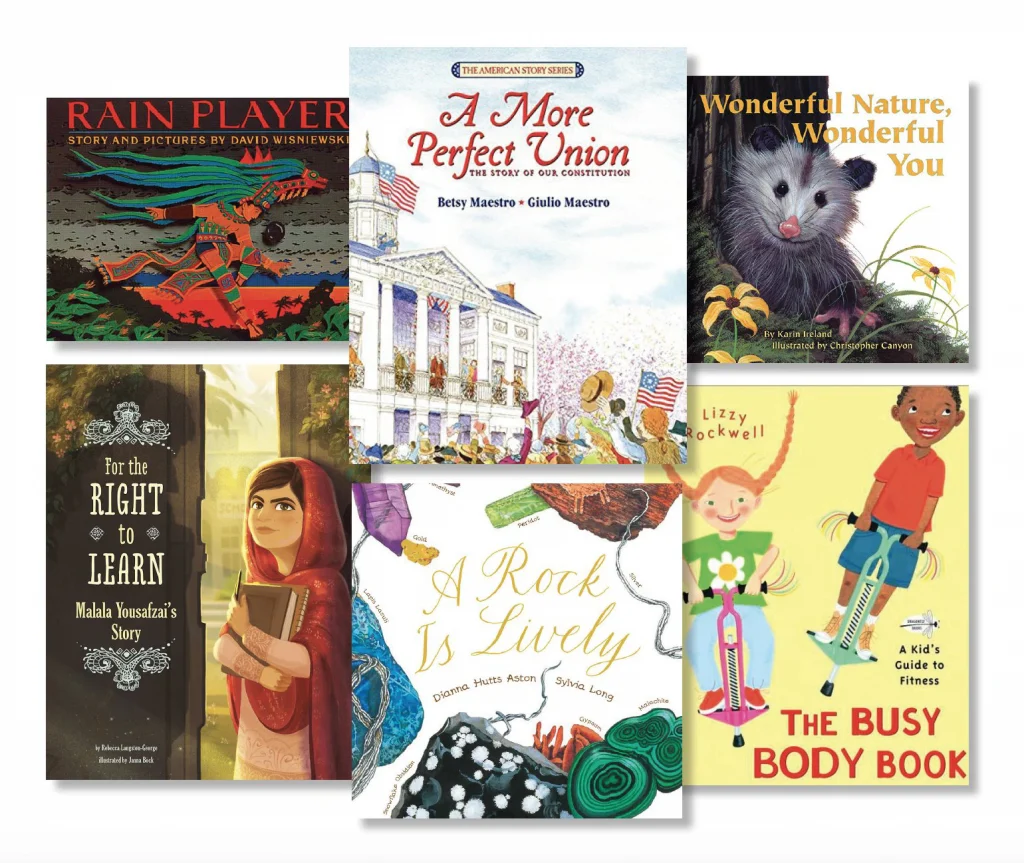
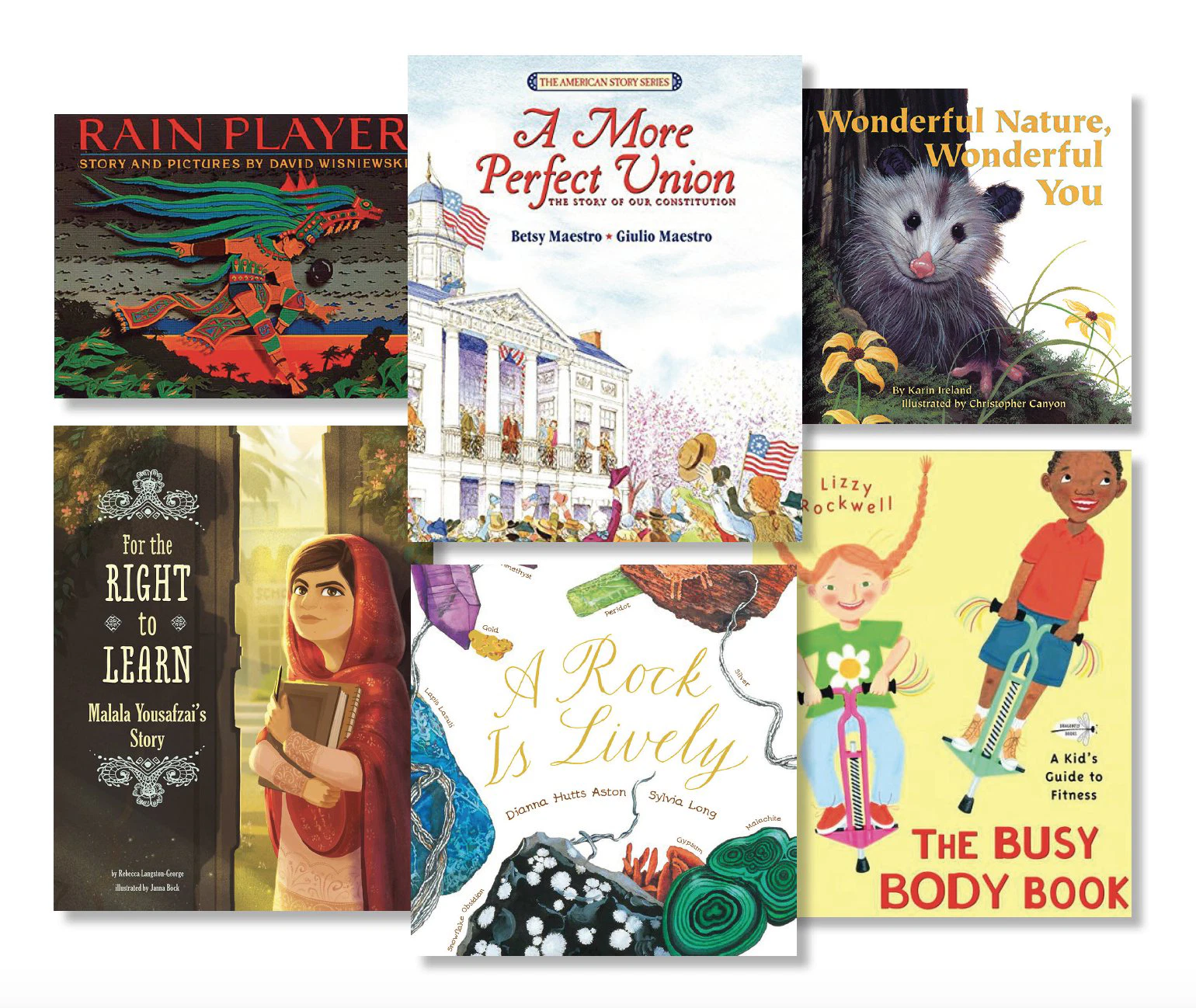
More than that, we ensure the texts students read represent the world around them. With a diverse range of authors, topics, and characters, all students have ample access to both windows and mirrors. Our texts include the following:

  • Authentic books
  • Authentic text passages
  • Student Readers
  • Novel Guides (grades 3–5)

Download a list of K-5 student texts.

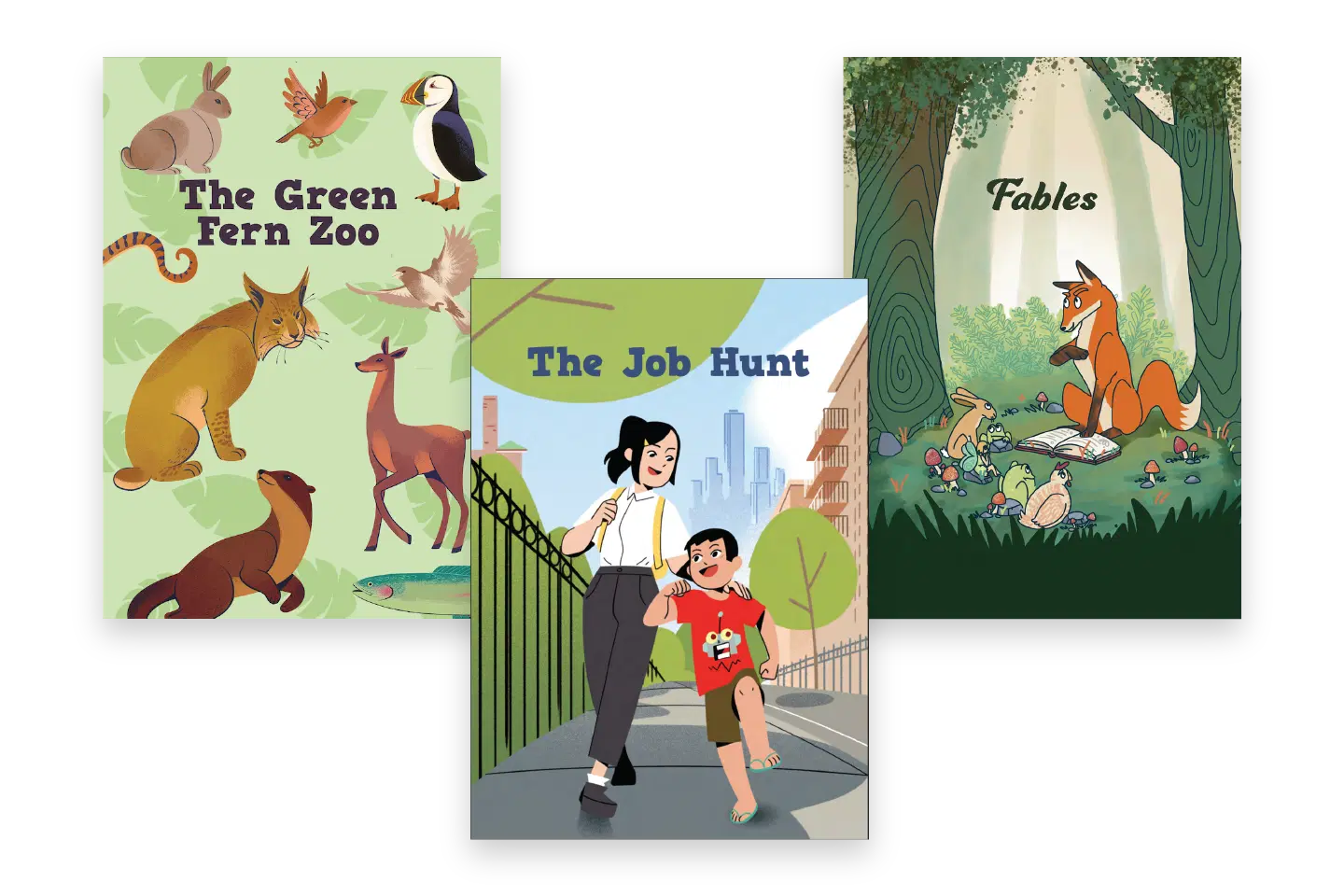
Six children's book covers arranged in two rows, featuring colorful illustrations of animals, people, and nature. Titles include "Rain Player," "A More Perfect Union," and "The Busy Body Book.

Supports LETRS

Amplify CKLA aligns with the instructional principles recommended by LETRS.

  • Structured: Concepts are taught through consistent routines.
  • Sequential: Concepts are taught in a logical, well-planned sequence.
  • Systematic: Phonemes are taught from simplest to most complex.
  • Explicit: Decoding and encoding concepts are taught directly and explicitly.
  • Multi-sensory: Instruction is delivered through visual, auditory, and kinesthetic-tactile pathways.
  • Cumulative: Concepts are applied in decodable, connected texts with constant review and reinforcement.

A comprehensive and cohesive solution

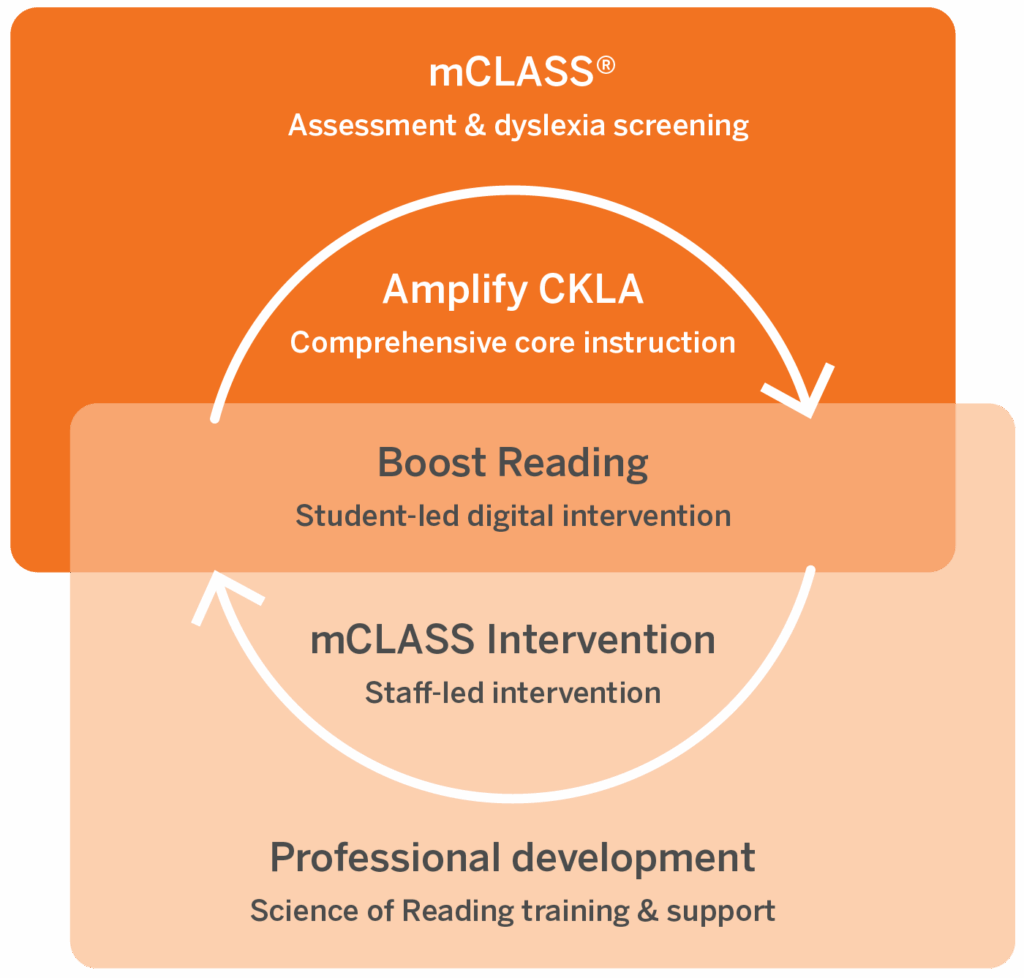
A strong literacy program is more than a reading program or an assessment tool: it combines curriculum, instruction, regular practice, intervention, and assessments.

Amplify has brought these components together in our early literacy curriculum suite to ensure you have what you need for multi-tiered support.

Infographic describing a cycle of K–5 literacy solutions: mCLASS screening, Amplify CKLA instruction, digital and staff-led interventions, and professional development within an early literacy suite grounded in the science of reading.

Trial Access

Ready to explore on your own? Follow the instructions below to access your demo account.

Explore CKLA’s digital site:

Go to my.amplify.com
Select Log in with Amplify
Teacher login: t1.mde-mn@demo.tryamplify.net
Password: Amplify1-mde-mn
Select the CKLA icon and your desired grade level

Screenshot of the CKLA curriculum webpage displaying a list of materials, including Activity Book, Teacher Guide, Answer Key, and other educational resources.

Additional Resources

Check out the information below to learn more about Amplify CKLA and see how Amplify CKLA is impacting classrooms all over the country.

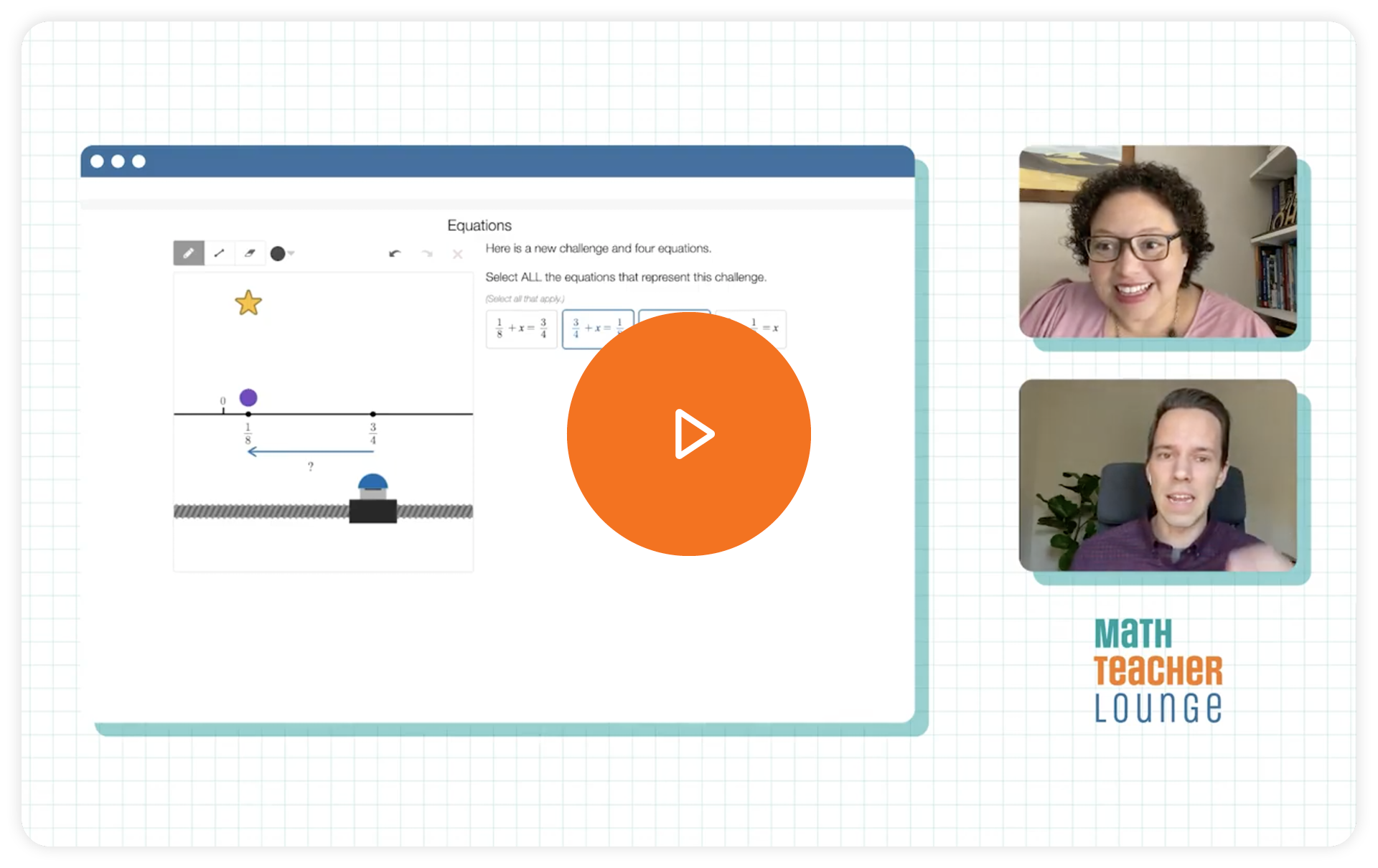
Winter Wrap-Up 02: Mathematizing Children’s Literature

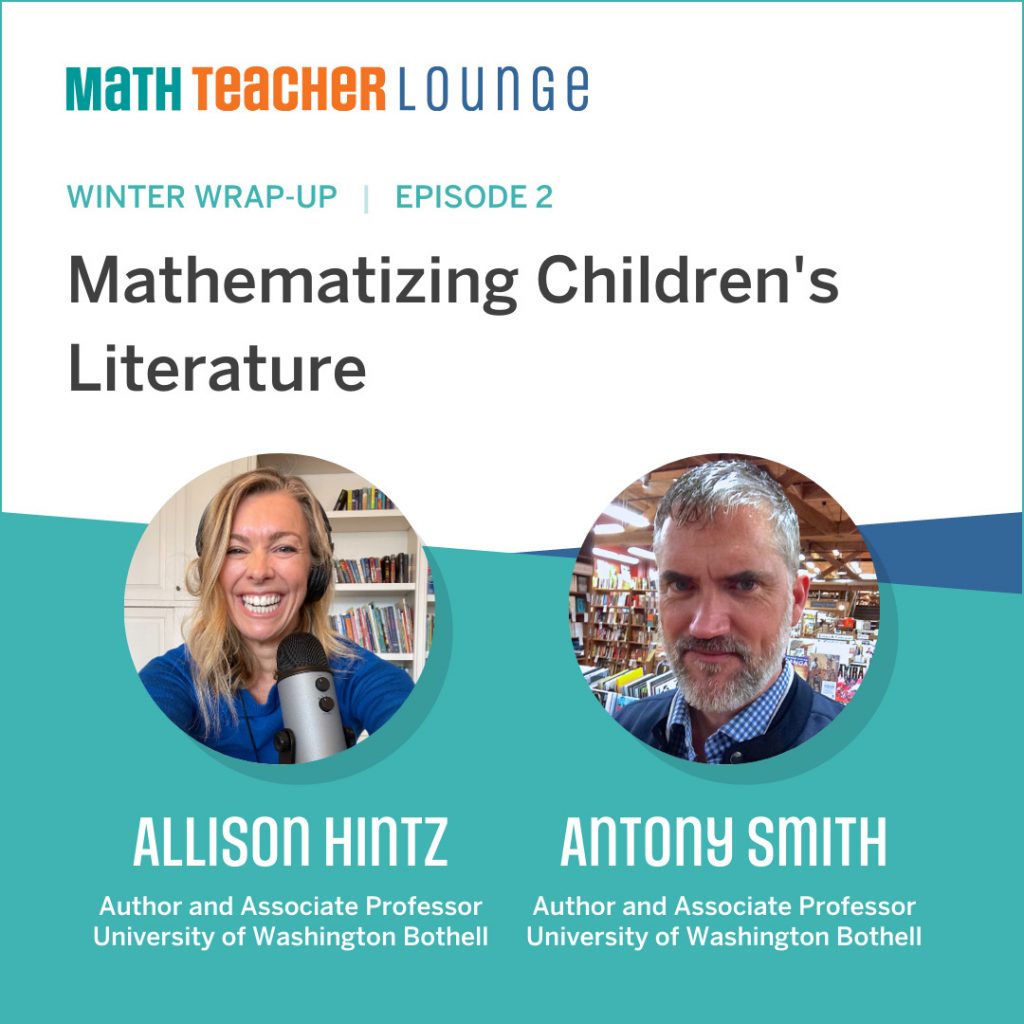
Promotional graphic for Math Teacher Lounge podcast, episode 2, featuring Allison Hintz and Antony Smith, discussing how mathematizing children's literature can build math fluency.

While we’re hard at work producing the exciting fifth season of Math Teacher Lounge: The Podcast, we’re continuing to share some of our favorite conversations from our first four seasons. This time around, we’re revisiting our popular episode that connected literacy and math!

In this episode, we sit down with Allison Hintz and Antony Smith, authors of Mathematizing Children’s Literature, to talk about what would happen if we were to approach children’s literature, and life, through a math lens–and how we can apply those same techniques to classroom teaching!

Explore more from Math Teacher Lounge by visiting our main page

Download Transcript

Bethany Lockhart Johnson (00:02):

Hi, I’m Bethany Lockhart Johnson.

Dan Meyer (00:04):

Hi, I’m Dan Meyer.

Bethany Lockhart Johnson (00:05):

And we are so excited for another episode of Math Teacher Lounge. And as you know, podcast format; you’re listening now. I think one beautiful thing about the podcast format is that it gives us a little bit more time to have these rich conversations. And I promise I won’t do it, but I could talk to our guests for hours, hours! Authors Allison Hintz and Tony Smith have just released Mathematizing Children’s Literature: Sparking Connections, Joy, and Wonder Through Read-Alouds and Discussion. And today we get to talk to the authors. Allison, Tony, welcome. Welcome to the lounge.

Allison Hintz (00:53):

Thank you. We’re so grateful to be here.

Bethany Lockhart Johnson (00:55):

We’re so excited to have you here. And I wanna say that my very first—was it my first math conference? Maybe it was my first math conference—up in Seattle, the CGI conference, and I’m all like, you know, wide-eyed and just like, “Can this be a place for me, this math community?” Re-envisioning my relationship with math and thinking about myself as a math teacher, what? And I went to your session on mathematizing children’s literature, and I was just so fired up. I was so wowed by your ideas, your energy, and your passion for students’ thinking. And I feel like as I read this book, I felt like I was hanging out with you. Like you were just so encouraging all the way through. Of educators, of other folks working with young people, and really guiding us how to listen with joy and with an open curious mind.

Dan Meyer (02:03):

Yeah. I would love to hear a bit about the genesis of this book for you folks. Like, I’m coming at this from a secondary educator lens. I’ve got small kids, so that’s also part of my interest here. But I love any book, any idea that seeks to merge what seems like two disparate worlds. Like it’s often the case that we feel like, well, there’s approaches for ELA and approaches for math, and they’re kind of separate disciplines. And these poor elementary teachers have to learn all of them and be experts at all of them. And here you both come along and say, “Hey, what if they are the same kind of technique?” Can you just speak to how this came about?

Allison Hintz (02:38):

Definitely. Tony, do you wanna take a try? Do you want me to start us off?

Antony Smith (02:42):

I can start. We oftentimes present and talk together and so we kinda switch back and forth. So that’s just how we are. So probably about eight or nine years ago, Allison and I, our offices were next to each other on our small campus. We’re both professors and we just happened to have a few children’s books that we looked at together and we were just thumbing through the pages. We really liked children’s literature. And we noticed that I would stop at certain points wondering about character motive or plot or sequence of events or language use. And Allison would stop at very different points in the book and notice number and concepts or something about mathematics. And that’s when we started to wonder, what would it be like if we were sharing a children’s book with a group of children and we put our ideas together? Where would we stop? What would we talk about? What would we ask children about in terms of their thinking and what they notice?

Allison Hintz (03:42):

And so we started playing with these questions that we had and started approaching stories with multiple lenses to see what kinds of things would children notice and what kinds of things might they say. And we were also on our own journey in trying to understand how to plan for and facilitate lively discussions and classrooms that surface really complex mathematics. And it felt like stories were a place where that might be a fruitful context for hearing children’s thinking. We’ve worked with a lot of teachers and students in our region. We live in the Seattle area and we’ve applied for some funding over time that’s really helped us be in a lot of community-based organizations and educational contexts and libraries and pediatricians’ offices and classrooms, various classrooms, and see what’s interesting about this and what might teachers and children do with stories that would surface complex mathematics to think about together.

Antony Smith (04:41):

Over time, we came to the realization that if we wanted to hear children’s ideas, we had to stop bombarding them with questions. <laugh> Yeah. And at first it made it worse that we were asking them math and literacy questions at the same time. And so we realized that what we needed to do was to back off and to ask children what they noticed and wondered.

Bethany Lockhart Johnson (05:01):

Can you say more about that and how that kind of evolved into mathematizing children’s literature?

Antony Smith (05:07):

We did work with a number of very thoughtful, talented classroom teachers and children’s librarians in public library systems who were just so masterful at asking open-ended prompts and questions, rather than kind of like the de facto reading quiz, that a read-aloud can become, which I’ve always disliked as a literacy educator. And we realized in our observing these read-alouds or interactive read-alouds or shared reading experiences that given the opportunity in the space and an adult who was actually listening, that children came up with all of the ideas we would have asked them about and more. So we didn’t have to be bombarding them with questions. They were already much more thoughtful than what would’ve been sufficient to answer our questions.

Allison Hintz (05:58):

And much like mathematics, it was really an iterative process. You know, we had some clunky read-aloud discussions where we were trying to accomplish so much and toggling multiple chart papers and different colored pens and all sorts of “how do we capture these ideas” and “do we separate ’em? do we keep ’em together?” And so it’s really been over time that with partners, we’ve learned these ways of having multiple reads of the same story that allow us to hear what children notice and wonder, and then to delve more deeply into their questions and their ideas through multiple reads where we might spotlight literary ideas that they notice; we might spotlight mathematical ideas that they notice. We might make purposeful integrations between those. But we found it to be most productive—and Kristin Gray really help us think about this—to have an open Notice and Wonder, get everything out much like an open-strategy share. We welcome here, record all the ideas, and it goes all over everywhere. You know, it can be a really not math-y noticing! And those are amazing! So there’s a lot of, um, yes, there is a ladybug on this page! The grandma is wearing green triangle earrings! Oh, your grandma wears green earrings! I mean, it all comes out.

Bethany Lockhart Johnson (07:27):

Wait, have you been in my classroom? ‘Cause that’s exactly— <laugh>

Allison Hintz (07:29):

<laugh> And then, you know, we think of it a lot like if math teachers might use the 5 Practices for selecting and sequencing, or if you might move from an open-strategy share to a targeted share, how can we get out all the questions that children are asking and then step back from them, take some time to really think about what they’re telling us they’re curious about, and plan some purposeful, intentional subsequent discussions that can delve more deeply into their ideas.

Dan Meyer (08:02):

I’d love to go into that a little bit more if that’s all right. Um, I’m gonna speak from someone who doesn’t have an elementary background and I’m gonna voice some worries that I had, some anxiety. One anxiety I have like in a classroom or a curriculum is when there’s no room for student ideas. Right? When it’s like, oh, there’s just room for the curriculum author or the teacher here. That is a sadness. But I when I see an instructional environment like you’re describing here, where there is openness to all kinds of different student ideas, of different levels of formality, from different kinds of cultural fonts of knowledge or wherever, I also get a little bit nervous because that, like, increases the risk that a student might come to understand that “my ideas are not good enough,” whereas in the class with no room for their ideas from their home or their language or their hobbies, like, they’re not gonna internalize the message that, “that wasn’t good enough.” And so I’m really curious as you move from the open Notice and Wonder where kids share all of themselves with you, and then you move to a targeted focus on some sort of disciplinary objective, how do you navigate that tension and help students feel like their contributions are valuable, even though we aren’t taking them up per se?

Allison Hintz (09:18):

That’s such an important question. I mean, I think we’ve grappled with this broadly in math education. I think any time we’re thinking about which ideas we choose to take up to pursue to consider, we have a responsibility to think carefully about whose ideas are being taken up and heard and considered. And so one of the tensions I hear you naming, I think, Dan, is when we engage in lively discussion where children’s thinking’s at the center, how do we make sure to upend and interrupt kinda status norms that run the risk of being deepened? Um, and I think by paying attention to whose ideas are taken up as much as which ideas are taken up, and what’s the mathematics we wanna explore is one tension. Um, another tension I might hear you naming is, you know, the complications that teachers face with time and pressure and coverage, and which mathematics ends up getting worked on. And, um, you know, it’s something we’ve really had to struggle with in mathematics education, where we move to more discussion-oriented classrooms that are really centered in sense-making to know that it takes a lot of time to do this thoughtful, thoughtful work. Um, does that begin to get at some of the tensions you’re raising? Is there, is there more you’re thinking about?

Dan Meyer (10:53):

I think it’s really helpful that you kind of broadened the scope of the question beyond your book to “this is an issue that we are, you know, really challenged by and focused on broadly in math education.” And, um, I appreciate you bringing the element in of whose idea—not just which idea is taken up, but whose idea is taken up—is an opportunity where, let’s say, multiple people raise an idea that is towards an objective the teacher has, they have the opportunity to disrupt certain kinds of status, like ideas about status, in that moment. From your perspective, like, are there techniques to say, I don’t know, parking-lot certain kinds of questions and say like, “Hey, like these are awesome”? I don’t know. I just know that I see kids at like ninth grade. They are very reticent, often. They’ve internalized totally this sense of like, “I’m not gonna just, like, share about the pants the grandma’s wearing, you know; that will not be received well.” And so I’m just kinda wondering how that happens and like, what are the ways we can disrupt that? That process?

Antony Smith (11:54):

So thinking about that, Dan, from the teacher’s perspective, in those kinds of scenarios where you wanna honor each child’s contribution, a couple of things that come to mind: One is that by, you know, initially by modeling what I as a teacher, something that I notice or wonder about, helps kind of set the expectation for what kind of response would be encouraged. And it’s broad, but it gives an example. And then also we really try to record or to chart all of the ideas that are shared so that we can revisit and honor those together. And then either later or on another day, if we choose one or two of those to explore in some way within a more focused read, then another thing that we do is have the idea investigation afterward that continues that thought, but goes back to being as open-ended as possible, so that those students or children who maybe didn’t have their idea as the one that was focused on by the group could go back to that or explore some other idea of their own, so that the idea investigation isn’t a lockstep extension activity, which is why we don’t call it that. So they could again bring in their own perspective. But I have to say from the teacher’s point of view, there is that moment of potential panic <laugh> because there is that power transfer when you’re asking children to help steer where this is going. And if you really mean it, you have to let them steer a little bit. And that can be terrifying. And, um, I always think of one teacher, Ashley, we worked with who read an adorable book, Stack the Cats, by Susie Ghahremani. And in that book, there’s a point where there are eight cats and they’re kind of trying to be a tower of cats and they fall and they’re sort of in the air on that page. And she asked her first graders—she stopped, and she asked, “How, do you think, how will the cats land?” And for about a minute and a half, the entire <laugh> class, was silent. They had their little papers; they had chart paper; they had clipboards; they had everything they needed. But that unusual phenomenon of a group of six- and seven-year-olds actually just sitting and thinking and not being peppered with activities was really stressful, but amazing. And then, after about the 90 seconds, they started out into their exploration of how the eight cats might land. They just needed a minute to think. And it’s so rare that we’re able to let children have that.

Allison Hintz (14:40):

In that same moment, Ashley, who’s a learning partner to us, she turned to us kind of quietly, like, “Should I pose a different question?” And <laugh>, we’re like, “No, let’s stick with it. Let’s see what happens.” So I think it creates this space too, this thinking culture, right? And this culture of “what does that mean to really pose a rich task?That’s open-ended, where there’s multiple access points?” Those eight cats could land in so many different ways. And there was broad access, there was a wide range of all the cats landing, and one’s on their feet, ’cause cats always land on their feet <laugh>, and there was every combination. And so, um, I think what’s really interesting—and to me, this brings back to your wonder, Dan—is, you know, “What’s the risk in openness?” And there’s always risk in openness. Um, it’s scary as a teacher, right? If I’m not the authority of knowledge and I don’t have control over where we’re gonna go, it might get into places that I didn’t anticipate. Or I don’t really feel as solid in the math as I want to. Or I don’t know what it sounds like to stick with silence and wait time, to know if my students are really in productive struggle or if that question was a flop. And so, um, I think this is some practice space for young mathematicians and teachers of mathematics, and just teachers, to explore with that openness and kind of the risk of the openness required for complex thinking to emerge.

Bethany Lockhart Johnson (16:12):

You know, it feels like the way you’re both describing this, it really is a culture shift, right? I kept feeling like I was given permission to be a beginner as I read this book. Like I was really…I loved how you said, I believe it was you, Allison, when you were in the class, you had a couple index card that you kept on your clipboard and that as you walked around, you were like, “Hey, if I don’t know what to ask, I ask one of these questions.” You know? And just this idea that, that, like Dan was saying, there is that loss of control, but that’s also a way to create this culture where students ideas are valued and we are allowing students to really generate the questions, which I thought was such an important idea to explore.

Allison Hintz (17:00):

We started this work long ago, super-excited about math-y books. And we saw a lot of potential in them and we still do. But the limitation we saw is that math-y books, they, they put forth a certain mathematics to be curious about. In some ways they tell you what mathematics to think about. So we started asking ourselves what would happen if we considered any story a chance to engage as mathematical sense-makers. And we started playing with non-math-y books and we got to a place where we could consider every story an opportunity to engage in mathematical thinking. And so we started noticing things over times, oh, these books tend to be really math-y. We call those text-dependent. We’d have to pay attention to the mathematics to understand the story. Whereas this pile of stories, these, they’re not overtly math-y. You could really enjoy the story and not pay attention to mathematics and have an amazing conversation. But what would happen if we thought of about this story as mathematical sense-makers and how might it deepen our understanding of the story? And then this other teetering pile of books, these are books where, you know, children didn’t tend to engage as overtly as mathematicians in it, but there’s opportunities in this story to go back to something—to a moment, to an illustration, to a comment—and think as mathematicians. And those were more about illustration exploring. And so, as we notice these different kinds of books, we really broaden what we thought about. And I think one of the things we really wanna think about in community through this book is what happens if we approach any story, every story, as mathematical sense-makers, because stories are alive in children’s lives, in homes and communities and in schools. And it’s a broad opportunity that we wanna take up. I was thinking, as I stay in this strait for just a moment about book selection, before we move into that process, um, Bethany in a previous MTL, you talked about representation.

Bethany Lockhart Johnson (19:12):

Mm, yeah.

Allison Hintz (19:14):

And do you remember when you shared the image of hair braiding?

Bethany Lockhart Johnson (19:19):

Yes. Vividly, yes. <laugh>.

Allison Hintz (19:22):

Yeah. And can you say just what that meant to you? What that….

Bethany Lockhart Johnson (19:27):

Yeah. Well, it was from a conference; Sunil Singh had used it and was talking about the artistry in mathematics and beauty in hair braiding. And, um, particularly, he was showing this particular image of this Black woman with her hair braided in profile and looking at the angles and the symmetry. And I shared that, you know, I spent so many hours in the beauty shop with my aunties and my mom and my grandma and continue to, to this day, that it just, it struck me immediately as familiar. And it struck me immediately as seeing an image that was reflective of my lived reality, projected as valuable and worthwhile for consideration in the world of mathematics. Which is not what I felt as a student of mathematics as a young adult or child. So it was this beautiful moment of, for me, the power of when we see images and we allow opportunities for re-envisioning what may be a common practice for that student, or may be something that they see every day.

Allison Hintz (20:44):

And in that same way, that image that was put up, we wanna think really carefully about representation in the stories that we select. And when we think of stories as mirrors or windows, we really wanna be mindful in story selection of whose stories are told and whose stories are heard. And when you said that you would sit down to listen to a story and you felt at ease or that you saw an image and you saw yourself that can be and should be something we really think carefully about when we select the stories that we select.

Dan Meyer (21:21):

It’s a wider path for representation of different kinds of people in literature, because people’s stories seem so much more present and towards the surface of their lives, versus, say, the abstractions and numbers and shapes in mathematics. It feels like more of a struggle to find ways to show people, hey, like you’re here, this, this place belongs to you. So in all these reasons, I think it’s really great you folks are using literature, which has this history of humanities, literally humanities, as a vehicle for mathematics. That seems pretty special here.

Antony Smith (21:56):

We both go to libraries and bookstores and look through books as often as we can, but also our partner, a children’s librarian, Mie-Mie Wu, helped us go through—when we would meet, she would bring three or four hundred books at a time.

Bethany Lockhart Johnson (22:13):

When you described her wheeling in the cart, oh, I wish I been in that room! <Laugh>

Antony Smith (22:18):

And the cart was, you know, probably three or four times bigger than she was sometimes. And we would go through hundreds of books and look at them and listen to her thoughts as a skilled librarian sharing with families, diverse families, and what catches the attention of a three-year-old sitting with her grandfather. And that was really a valuable, helpful experience. And it’s a partnership that continues. So in Last Stop on Market Street—and this is in the book; we talk about this, this children’s book quite a bit—in this story, CJ with his Nana, his grandmother, are riding the bus to the last stop on Market Street in San Francisco, to go, as we will find out, to help serve in a soup kitchen to help the community. And the teacher, Susan Hadreas, had the children record their ideas. She charted them in an open Notice and Wonder read. And one of the ideas that a young boy noticed was that CJ on the bus…a man with a guitar starts playing the guitar on the bus and CJ closes his eyes and it says CJ’s chest grew full. And he was lost in the sound and the sound gave him the feeling of magic. So this boy said, “I wonder, what does that feel like if you’re feeling the magic? What’s that?” And that was one of many ideas in the open Notice and Wonder, and Allison will talk about the math lens read, but first Susan went back and read with them. She had that idea, she circled it on the chart paper, and another day that week, she said, let’s go back and visit this story we really liked. And remember, we wondered what feeling the magic was like. Let’s go back through and let’s keep track of all the feelings and emotions that CJ had across the journey to the soup kitchen in this book. And so they did another read of the story; they were very familiar with it, of course, but they noticed new things and they also, every few pages, stopped and she helped chart all of the emotions that CJ experienced from envy to excitement to sadness. There’s a huge range in this book. And it was fascinating.

Allison Hintz (24:36):

I think one of the things that the children noticed was that CJ’s feelings were shaped by community. And that he shaped and shaped…he was shaped by and helped shape his community. And so the ways that he felt across the story were impacted by the other characters that he comes across. The guitar man on the bus. The bus driver who can pull a coin out from behind someone’s ear. The lady with the butterflies in the jar. Nana helping him to see the rainbow. And the students started, you know, being curious about that. How do we shape and how are we shaped by community? What communities are we a part of? This class is one community. I’m in many communities across my life. And they started to quantify the number of people in the story. So Mrs. Hedreas went back for a math lens read, and she said, let’s just keep track of and pay attention to how many people are in CJ’s life in this day. Because I can hear you starting to think about quantity. This class at the same time in other areas of the day had been working on counting collections, how to keep track, so they got out their tools. Some people pulled out ten frames, some people pulled out clipboards. They had a wide range of things they could use to help them keep track. They developed their own strategy, keep track however you want. She did a quicker read through it, flipping the pages, and then they get into these debates: <laugh> “We already counted that person!” “But they took their hat off and put it down to collect money!

Antony Smith (26:10):

“What about the dog?”

Allison Hintz (26:11):

“That’s the same person!” “Yeah, there’s a dog pound in his community!” <laugh> “Do animals count in our community?”

Bethany Lockhart Johnson (26:17):

I love it!

Allison Hintz (26:17):

“Yes, they count!” Uh, and so we went through and quantified and there was really this understanding as you saw these people throughout the story that communities can be of different sizes, but community has impact. And you have responsibility in your community to show up and to lean in and to know that bringing your full, authentic, vulnerable self, you shape people and they shape you. And what communities are people a part of. And it turned into this really interesting discussion about quantity and helped us think more about quantity and community. I think a really important moment for us and for that class was the transition from being people who almost did mathematics to a story, like counted things on a page, um, count acorns on a page in an autumn book, to being mathematicians who thought within the story.

Antony Smith (27:17):

And then two idea investigations that came from that —not at the same time, of course, but with the same group of children—one was they identified an emotion of their own and wrote and drew about that. And also, who helped them address or get out of or acknowledge that emotion. And then the other idea investigation was that all of the children drew or kind of mapped out a community that they were part of. Whether it was their neighborhood or their classroom or their soccer team or whatever it was. And so then those investigations strengthened the connections of those concepts to the lives of those children.

Bethany Lockhart Johnson (28:05):

Well, I, actually wanted to ask you about idea investigations. Because I feel like that was such an important invitation in your book. And the way I understood the idea investigation is you’re really paying attention to what’s coming up in your other reads. Right? And then these are opportunities to extend the thinking, or like you said, to extend a particular aspect: What’s your community? Can we map your community? Or what’s a particular emotion? And it was in such contrast to what I think I have probably done in my classroom more than once, which was like, “Oh, we read this story about seals. So now my story problem is gonna be about seals, right? <laugh> Like in the story, you know, Jojo, the seal had five balls. <laugh> So if Jojo still had five balls and two of them bounced away…” You know, or whatever. Right? But that’s not what an idea investigation is. Right?

Allison Hintz (29:03):

Yeah. I think this is where we also had some stumbles and can totally relate to what you’re saying as previous classroom teachers as well. We have come to a place where we are pretty in favor of a super open-ended idea investigation that takes up the things that have surfaced in the multiple reads and making sure it’s a rich task with many, many ways children can engage with that. There’s many, many, many right answers or ways to engage. Less is more there. So we moved way away from, like, even a worksheet that might have an idea from it to blank paper and math tools and places to get into some productive struggle around some of the complex things that were raised.

Antony Smith (29:59):

A challenge with worksheets is that they put a frame around children’s ideas. So either there are only three lines to write on, or there’s only a small box to draw in. Whereas a blank page really opens up the possibility. Um, and so—is it Ann Jonas who wrote Splash!? sorry, I don’t have it in front of me—the book Splash!, about animals that end up in and out of the pond, including a cat that is not happy about ending up in the pond, an idea investigation after that for very young children was, with the list of the different creatures displayed at the front of the room: On blank paper, hey, draw your own pond and decide how many of which and each type of animal you want in your pond and then write about it. Just on blank paper. And so that allowed some children to draw, like, three giant goldfish. But other children drew 17 frogs and three cats. And, and just, it lets children follow—

Bethany Lockhart Johnson (31:02):

It was theirs, right? It was theirs.

Antony Smith (31:04):

Their idea. <laugh> And that comes partly from, I think, as Allison mentioned, we both were classroom teachers before moving into academia. And I remember giving children worksheets, particularly math worksheets, where they weren’t necessarily bad, but right at the bottom, it says like, explain your strategy. And it gives two lines.

Bethany Lockhart Johnson (31:23):

Right! <laugh>

Antony Smith (31:25):

The only thing a seven-year-old can write there is “I thought.” Or “I solved it.” <laugh> And that’s not where we need to go.

Dan Meyer (31:34):

Yeah. If I could just ask the indulgence of the primary crowd here, like, I’m trying to make sense of all this. And I just wanna like, offer my perspective. My summary statement of what’s going on here. I’m trying to—I love how you both came here—

Bethany Lockhart Johnson (31:45):

<laughs> How ya doin’, Dan? How ya doin’?

Dan Meyer (31:47):

<laughs> I’m, ah, A, I’m loving this a lot. Um, B, I came in here loving how you folks are broadening the work of primary education to kind of find commonalities between these sometimes seemingly disparate kinds of teaching in ELA and math. Love that, I wanna say. But I think you folks are describing, with all these teachers you observed and your own work, is the work of attaching meaning to what students might not realize yet has meaning. Or they might think it only has one kind of meaning. But you, the teacher, with their knowledge, realizes that there are many more dimensions of meaning that can be attached to those thoughts. And I’m hearing that from you folks, when you describe A, what math is and the power of a teacher to name a thing as mathematical. Like, “Oh, you didn’t think math was that, but math is noticing; math is wondering; math is asking questions,” for one. But also this work you’re describing of how, like, first the task has to invite lots of student thoughts and then to say like, “Oh, I see that there’s a similarity to these two.” And to raise those up for a conversation or to ask a question like to extend one person’s, one student’s question a little bit more. But it’s always…I’m just hearing you folks attaching more meaning than the student might have originally thought. I appreciate the conversation. That’s really interesting.

Bethany Lockhart Johnson (33:03):

Well, and now that the book is out, I think it’s gonna keep evolving, right? Now that it’s gonna be in the hands of teachers and librarians and educators and caregivers, it’s exciting to see kind of where it goes next. Which actually brings us to our MTL challenge. Dan Meyer, do you wanna share?

Dan Meyer (33:22):

Math Teacher Lounge, we have a challenge for the folks who listen and we’d love for them to hop into the Facebook group Math Teacher Lounge, or hit us up on Twitter at @MTLShow and just, like, kind of exercise beyond listening, exercise the ideas you folks are talking about, some kind of a challenge that can help us dive deeper into your ideas. So what would you folks suggest for our crowd, for our listeners?

Allison Hintz (33:42):

I would love to invite people to playfully experiment with a favorite story, with a story that’s new to you. I would love to invite listeners to sit with a story maybe on your own, and just ask yourself as a mathematician: What do you notice and wonder in this story? Don’t feel any pressure. Maybe sit with a child or some children and listen to what they notice and wonder. Like, really listen! Don’t ask questions! But hear their questions and place children at the center and consider multiple reads. Consider continuing to pursue their questions. And we have a planning template that might support people in kind of sketching out some ideas if you’re open to playing with that too.

Bethany Lockhart Johnson (34:34):

And we will post—

Dan Meyer (34:36):

That’s awesome.

Bethany Lockhart Johnson (34:36):

—a link for that planning template in our Facebook group and on Twitter as well. So thank you so much for that resource, because I think it’ll definitely help. It could help you, like you said, it could help you kind of organize your thoughts or help you think about this work in a new way. So thank you for that resource and thank you for the amazing resource that is Mathematizing Children’s Literature. I am so excited to continue to engage with you both and with listeners as they dive into this book. If folks want to engage with you more, where can they find you? How can they reach you?

Allison Hintz (35:12):

Well, we’re on Twitter.

Bethany Lockhart Johnson (35:14):

Great.

Dan Meyer (35:15):

What’s your home address? <laugh>

Bethany Lockhart Johnson (35:24):

Wait, let me try that again. <laugh> ‘Cause it does sound like I’m like, <fake ominous voice> “Where can they find you?”

Allison Hintz (35:29):

4-2-5…. <laughs>

Antony Smith (35:32):

At the bookstore!

Bethany Lockhart Johnson (35:34):

Y’all, if folks want to continue this conversation or share these ideas or the math challenge, how can they tag you? How can they, they reach you on the World Wide Web, besides the Math Teacher Lounge Facebook group?

Antony Smith (35:50):

Yeah. Well, we are both on Twitter, and we’ve been trying to promote the hashtag #MathematizingChildrensLiterature. It’s very long, but once you type it once, your phone or computer…

Bethany Lockhart Johnson (36:01):

Easy. Yeah, those click, right? Is that what it is now?

Antony Smith (36:03):

<laugh> The other is that we do for our project, we have an Instagram account that is @MathematizeChildren’sLiterature.

Allison Hintz (36:11):

We care really deeply about hearing from people. You know, we think our ideas are constantly evolving and that there’s such exciting room to grow. And we just felt compelled to share what we were learning now so that together we could learn and build vibrant experiences for young children and teachers and families through stories. So we want to hear from people! We wanna learn about stories that are important in your lives and what children say, and grow these ideas together.

Bethany Lockhart Johnson (36:42):

And credit to Dan, you told me you went and ordered a bunch of the books they have on the suggested read list.

Dan Meyer (36:48):

Oh my gosh.

Bethany Lockhart Johnson (36:49):

You read ’em to your son.

Dan Meyer (36:50):

I got such a side-eye from my significant others around here for what I dropped on Amazon in one night! <laugh> Uh, all these books I didn’t have. Some of them I did. We are not fully illiterate around here! We do love the written word at the Meyer household! But there were a bunch that that I grabbed. I’m morseling them out day by day.

Bethany Lockhart Johnson (37:09):

Wait, at bedtime I read my one-year-old One Is a Snail, Ten Is a Crab. <laugh> And let me tell you, he had vigorous pointing and “Da? Da da da da?”

Allison Hintz (37:22):

<laugh> Aww, da da!

Bethany Lockhart Johnson (37:22):

So hey, we’re on the road. <laugh> <music> Deeply grateful, not only for your work and your beautiful book and your work, but also for the invitation to dive into the world of children’s literature in a way that many of us have not before. And it’s fun! Thank you, Tony. And thank you, Allison. And thanks for hanging out in the lounge.

Allison Hintz (37:48):

Thanks for having the lounge!

Antony Smith (37:49):

It’s been fun!

Allison Hintz (37:52):

Thank you both.

Stay connected!

Join our community and get new episodes every other Tuesday!

We’ll also share new and exciting free resources for your classroom every month.

What Allison Hintz says about math

“We started asking ourselves, “what would happen if we considered any story a chance to engage as mathematical sensemakers”.”

– Allison Hintz

Author and Associate Professor, University of Washington Bothell

Meet the guest

Allison B. Hintz: Dr. Hintz’s research and teaching are in the area of mathematics education. Her focus on mathematics came about during her years as a fifth grade teacher – it was alongside her students that she developed her own positive identity as a mathematician! Today she studies teaching and learning, specifically facilitating engaging discussion. Her research and teaching happen in partnership with educators and children in formal and informal settings and focuses on beliefs and practices that support all children in lively mathematics learning. She is a co-author, with Elham Kazemi, of Intentional Talk: How to Structure and Lead Productive Mathematical Discussions.

Twitter: @allisonhintz124

Antony T. Smith: Antony T. Smith is an associate professor of literacy education at the University of Washington, Bothell. He works alongside teachers to create engaging literacy-mathematics learning experiences through exploring and discussing children’s literature. He is committed to the concepts of motivation, engagement, challenge, and creativity in literacy teaching and learning.

 Twitter: @smithant  Instagram: mathematizechildrensliterature

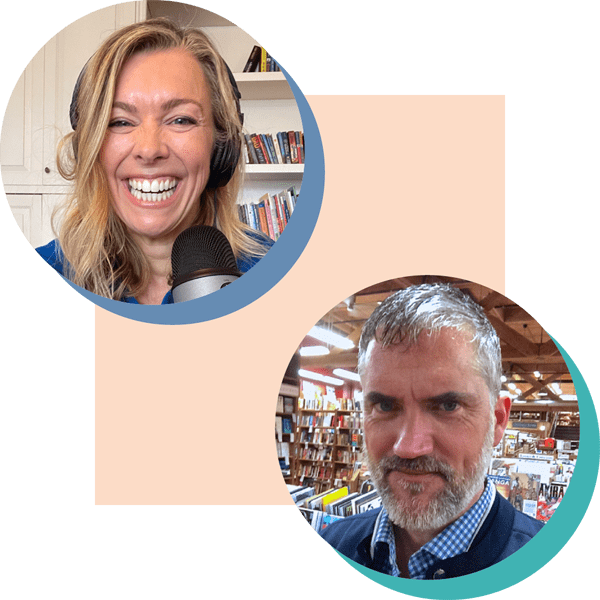
Two people appear in separate circular frames; the woman is smiling and wearing headphones, while the man stands in front of bookshelves, perhaps discussing Mathematizing Children’s Literature.
Podcast cover for "Math Teacher Lounge" with Bethany Lockhart Johnson and Dan Meyer; bold text on orange and teal semicircle background.

About Math Teacher Lounge: The podcast

Math Teacher Lounge is a biweekly podcast created specifically for K–12 math educators. In each episode co-hosts Bethany Lockhart Johnson (@lockhartedu) and Dan Meyer (@ddmeyer) chat with guests, taking a deep dive into the math and educational topics you care about.

Join the Math Teacher Lounge Facebook group to continue the conversation, view exclusive content, interact with fellow educators, participate in giveaways, and more!

Welcome, Oakland Steering Committee!

Thank you for considering Caminos Lectoescritura—our new authentic Spanish skills program for grades K–2.

Within this site, you’ll find:

  • Large-grain resources: Program overview, research basis, and scope and sequence
  • Medium-grain resources: Program components and digital supports.
  • Small-grain resources: Digital navigation support and demo account access.
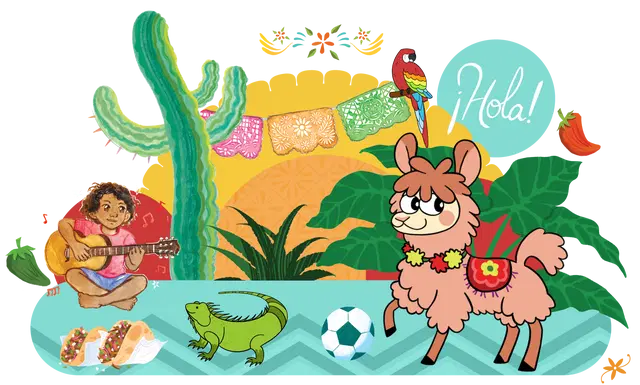
A colorful illustration featuring a child playing guitar, a llama, an iguana, a parrot, and various mexican cultural elements like a cactus and papel picado, with the word "hola!" displayed.

Large-grain resources

Amplify Caminos is an authentic elementary Spanish language arts program, grounded in the Science of Reading and built from the ground up for the Spanish language.

The Lectoescritura strand of Amplify Caminos provides explicit, systematic foundational skills instruction that was distinctly developed with the Spanish language in mind.

A red circle with the Spanish letter "ñ" in white at the center, surrounded by white text fragments like //rr//, //ch//, //pa//, and //sa//.

Medium-grain resources

Amplify Caminos is not a direct translation of Amplify CKLA—the English language arts counterpart to Caminos.

Instead, it features an instructional pathway, scope and sequence, and set of components that address the unique ways in which students learn the Spanish language—whether in the classroom or learning from home.

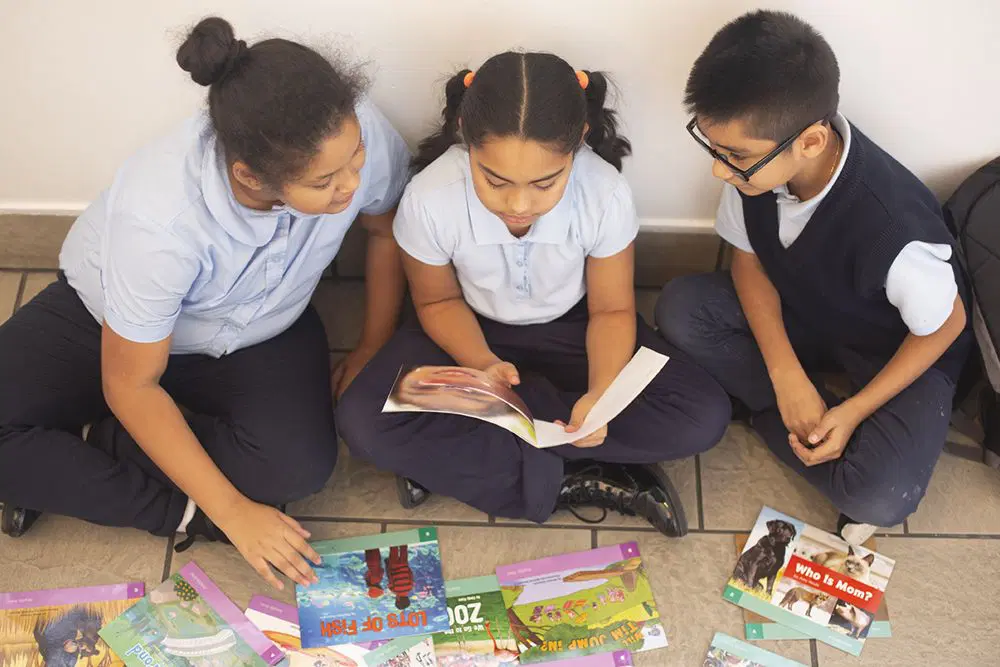
Two students work on laptops in a classroom; next to them is an illustration of a cat on stage under a spotlight, and a speech bubble with the Spanish letter "ñ.

Small-grain resources

In addition to reviewing the printed resources shipped to the district, we’ve created a digital demo site for you to explore grade-level materials. Simply follow the steps below to get started.
 
Step 1: Watch this video >
This video provides a walkthrough of how to navigate our Teacher Resource site.

Demo access

Step 2: Explore the site

  • Click the orange button below to access the site.
  • Enter this username: t1.k5cklacaminos@demo.tryamplify.net
  • Enter this password: Amplify1-k5cklacaminos
  • When prompted, select your desired grade level.
  • Next, click the Daily Instruction link in the top right navigation bar.
  • Then, click the Español button above the navigation menu on the left side of the page.
  • Last, click on any Lectoescritura unit tile to explore the Teacher Guide, Student Activity Book, and Digital Materials for that unit.

Contact us

Support is always within reach. Our team is dedicated to supporting Oakland USD and can be reached at any time by emailing or calling us directly.

Lisa Marinovich

Senior Account Executive

(831) 461-4187

lmarinovich@amplify.com

A woman with long dark hair, wearing a black top and hoop earrings, smiles in front of a blurred purple and blue background.

Brycé Pesce

Biliteracy Specialist

(805) 345-6024

bpesce@amplify.com

Welcome, K-5 LAUSD principals and teachers!

What’s new?

Scroll down to learn how CKLA is uniquely designed to help all students make learning leaps in literacy.

Looking for LAUSD G6 ELA information and resources? Visit the LAUSD G6 ELA site.

A boy in glasses reading a book, surrounded by illustrations of a telescope, grasshopper, and carrot, with a logo saying "bringing the science of reading to lausd!.

Our promise

Developed in partnership with the Core Knowledge Foundation, Amplify CKLA promises:

  • A unique research-based approach based on the Science of Reading.
  • A combination of explicit foundational skills instruction with meaningful content knowledge.
  • An instructional design that levels the playing field for every child.
  • Superior results.

Built on the Science of Reading

Watching students learn to read: magic. Knowing how they get there: science.

What does the Science of Reading really mean? What does it tell us about how to teach? How can we bring those insights and practices into our classrooms (remote or otherwise)? We believe CKLA has the answers.

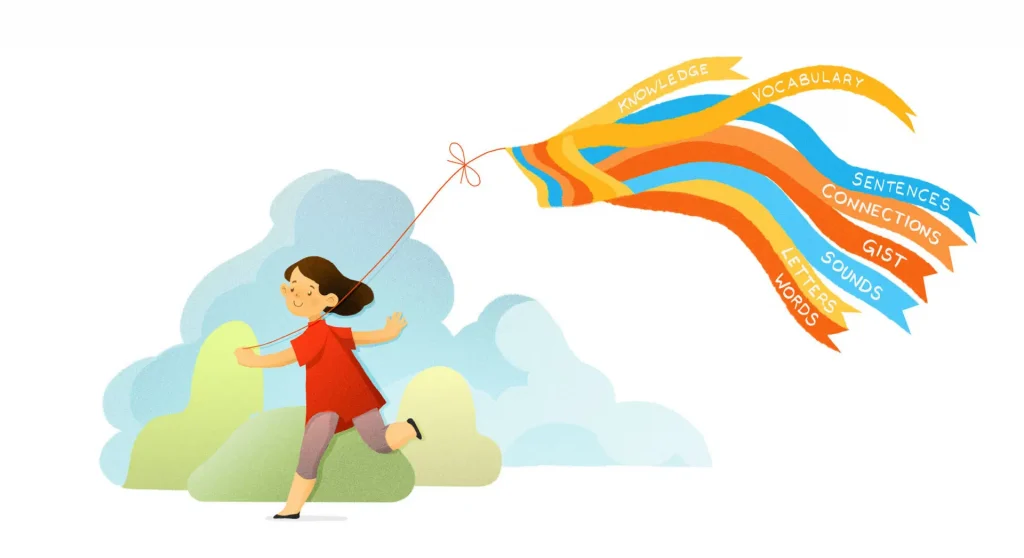
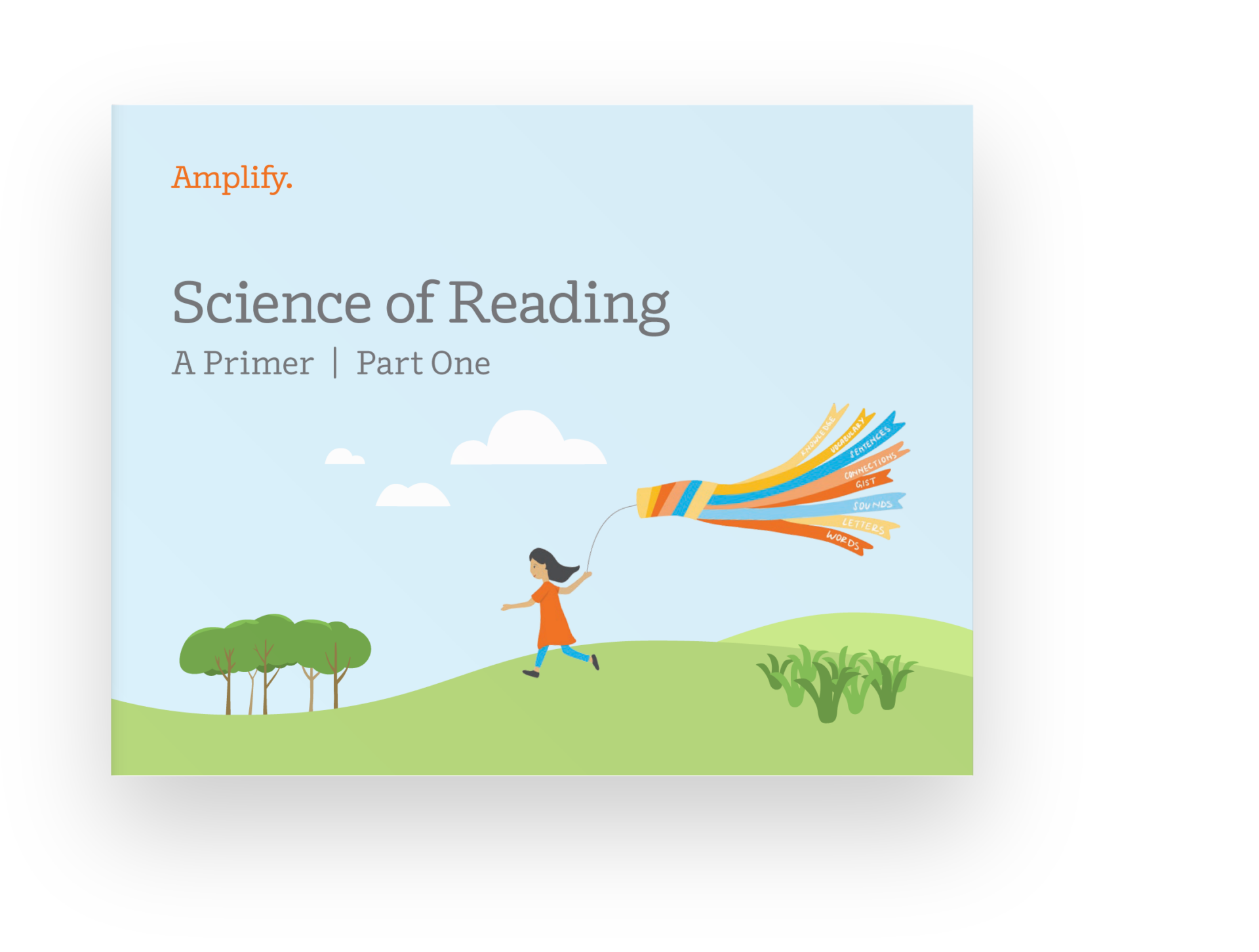
A girl runs outdoors holding a kite with colorful ribbons labeled knowledge, vocabulary, sentences, connections, gist, sounds, letters, and words.

Supports Orton-Gillingham and LETRS

CKLA brings the instructional principles recommended by Orton-Gillingham and LETRS to life in the classroom.

  • Structured–Concepts are taught through consistent routines
  • Sequential–Concepts are taught in a logical, well-planned sequence
  • Systematic–Phonemes are taught from simplest to most complex
  • Explicit–Decoding and encoding concepts are taught directly and explicitly
  • Multi-sensory–Instruction is delivered through visual, auditory, and kinesthetic-tactile pathways
  • Cumulative–Concepts are applied in decodable, connected text with constant review and reinforcement

What students read

Amplify CKLA puts a variety of texts in the hands of students every day to build and strengthen background knowledge and vocabulary, listening and reading comprehension, and decoding and fluency skills.

Reading and comprehension activities utilize:

  • Authentic books.
  • Authentic text passages.
  • Student Readers.
  • Novel Guides (grades 3–5).
Six children's book covers arranged in two rows, featuring colorful illustrations of animals, people, and nature. Titles include "Rain Player," "A More Perfect Union," and "The Busy Body Book.

CKLA DEI and Social Justice Guides

The following guide offers an overview of the many ways that the Amplify CKLA program supports students’ understanding of issues related to diversity, equity, inclusion, and social justice.

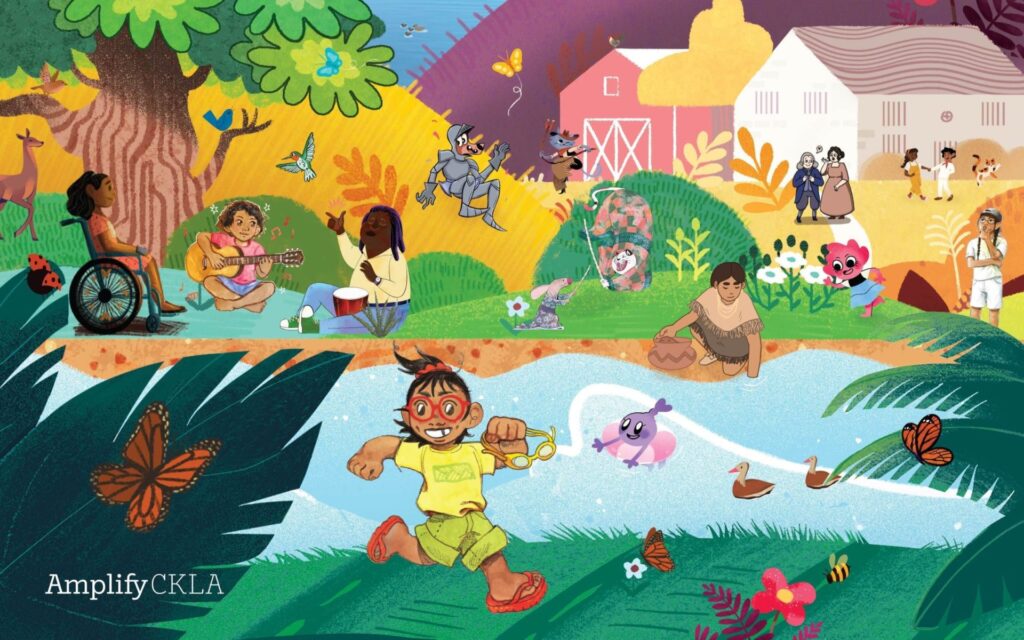
A vibrant illustration depicting diverse children and animals engaged in various activities in nature and by a pond.

The missing piece

CKLA is aligned with programs you already know and use—mCLASS and Boost Reading—making the integration between systems, your implementation, and ongoing instructional planning more efficient, effective, and easy for your teachers.

Access demo

Ready to explore on your own? Follow the instructions below to access your demo account.

Access the CKLA Teacher Resource Site

Watch the quick navigation video first, then login using the “Access CKLA Teacher Resource Site” button.

  • Click the CKLA Teacher Resource Site below.
  • Select the Log in with Amplify button.
  • Enter the username: lausdreviewer@tryamplify.net
  • Enter the password: AmplifyNumber1
  • Select the desired grade level.

Access the CKLA Student Hub

Watch the quick navigation video first, then login using the “Access CKLA Student Hub” button.

  • Click the CKLA Student Hub button.
  • Select Log in with Amplify.
  • Enter the username lausdreviewer@tryamplify.net.
  • Enter the password AmplifyNumber1.
  • Select the desired grade level.

Contact us

Looking to speak directly with your LAUSD representative? Get in touch with a team member by emailing ckla.lausd@amplify.com or by calling us directly.

Shalonda Johnson

Customer Success Manager

(213) 310-0107

shajohnson@amplify.com


Close gaps with the only digital intervention for Amplify CKLA and mCLASS classrooms.

Boost Reading is a K–5 digital intervention program that connects directly to your existing tools. It automatically turns your mCLASS® DIBELS® 8th Edition data into action and reinforces your Amplify Core Knowledge Language Arts (CKLA) lessons with adaptive instruction. It meets students exactly where they are and fits into any part of the school day, giving you clear insights with no extra work.

Move more students toward benchmark

A dark gray pie chart with four segments, representing math intervention, is displayed on a large light peach circle, set against a white background.

Amplify CKLA students who start the year at below-benchmark reading levels are 34% more likely to meet benchmark by the end of year when using Boost Reading.

A black upward trending arrow icon inside a peach-colored circle on a light gray background, symbolizing progress monitoring and instructional support.

Across grades K–5, at-risk students using Boost Reading are 36% more likely to reach benchmark by the end of year.

A black line graph icon with an upward trend, symbolizing math intervention, inside a large peach-colored circle on a light gray background.

Multilingual/English learners (ML/ELs) who start the year at risk are 43% more likely to finish the year on track after using Boost Reading than their peers who did not use Boost Reading.

Boost Reading is validated by a national study of 129,000 students and meeting ESSA Tier 2 standards for proven literacy growth.

Learn more

Amplify CKLA students who start the year below benchmark reading levels are 34% more likely to meet benchmark by the end of year when using Boost Reading.

Learn more

In kindergarten, 64% of at-risk students in the Boost Reading group ended the year at benchmark or above, compared to 48% of the comparison group.

Learn more

Click through to explore the Boost Reading Teacher Dashboard for yourself.

See what your teachers see. Explore this interactive demo to see how easy it is to track student progress, assessment data, and growth reporting insights. Just click “Next” on the screen below to begin!

Differentiated support at every turn

Boost Reading supports your Multi-Tiered System of Supports (MTSS) framework by providing differentiated skill development for every learner, keeping student growth in constant motion from assessment to practice.

Tier 1: Reinforce Amplify CKLA lessons with adaptive enrichment and grade-level practice that keeps students engaged and on track.

Tier 2: Deliver independent remediation for students navigating core concept challenges, so you can stay focused on your small groups.

Tier 3: Keep student growth moving between small-group sessions with practice that reinforces your mCLASS instruction.

Students work at desks on different tasks; tier labels with numbers 1, 2, and 3 are shown under each image, indicating levels or groups for reading intervention and instructional support.

A digital companion built to follow your lead

Experience a connected literacy suite where your assessment, core instruction, and intervention work together. Boost Reading is the only program designed to follow the same scope and sequence as your Amplify CKLA lessons, all aligned to the Science of Reading and all powered by your mCLASS DIBELS 8th Edition data.

Three white rectangles display the names Boost Reading, Amplify CKLA, and mCLASS in black and orange text on a light gray background, highlighting instructional support and individualized instruction for every learner.
A teacher stands at the front of a classroom providing instructional support to a group of students seated at desks, with books and supplies visible on the tables.

Amplify CKLA: Your lessons, reinforced

Boost Reading provides the adaptive independent practice students need to thrive in your core lessons. Amplify CKLA students who start the year at below-benchmark reading levels are 34% more likely to meet benchmark by the end of year when using Boost Reading.

Built for the way students learn

Student growth accelerates when adaptive practice reinforces your core instruction. Boost Reading is anchored in the same Science of Reading sequence as Amplify CKLA, introducing critical skills in the same order research dictates.

Table comparing Amplify CKLA and Boost Reading across five literacy skills, with both programs covering phonological awareness, phonics, fluency, comprehension, and vocabulary, while offering instructional support for effective reading intervention.

Deeper mastery of core skills

Boost Reading ensures that students on every path are building the mechanics of reading independently while your class stays on track with Amplify CKLA lessons. Explore the sections below to see how Boost Reading provides targeted practice that supports instruction.

Help students build strong foundational blending skills.

The quest Gem & Nye provides targeted practice with phonological awareness. Students work alongside friendly sound bots to listen to individuals sounds and blend them together to identify words.

For Amplify CKLA students

Boost Reading follows the same sequence as Amplify CKLA. Both are grounded in the Science of Reading to reinforce classroom blending techniques, such as arm blending. The program’s differentiation offers students reading below grade level the support they need to engage with grade-level content.

A lesson plan on sound blending provides instructional support with hand signs and phonetic symbols for /k/, /u/, and /p/, and includes an example blending the sounds to form "cup"—ideal for reading intervention settings.

Strengthen decoding and syllable skills.

In Curioso Crossing, students engage in systematic practice by identifying and decoding multi-syllable patterns. Each level brings the decoding speed and accuracy needed for comprehension.

For Amplify CKLA students

Boost Reading provides repeated exposure to the sound-spelling patterns found on your Amplify CKLA Power Bar cards, reinforcing advanced decoding skills. This repeated practice helps students gain the confidence needed to independently access complex CKLA texts.

A teacher sits with a young student at a desk, providing instructional support as she guides him through a phonics activity with cards and tiles. Enlarged sample word cards are shown in the corner for effective reading intervention.

Develop rich mental models for deeper comprehension.

Picture This puts students in the director’s chair, guiding them as they read complex passages and select visual elements that bring the story to life. By physically building the scene with characters, settings, and plot details, students develop the mental modeling skills that power strong reading comprehension.

For Amplify CKLA students

Story analysis is central to your classroom readers. Boost Reading supports readers who are struggling with text through adaptive practice with the same “Who, What, and Why” thinking they use in core lessons. As they progress through their personalized path, they strengthen comprehension skills at their own pace.

Two worksheets offer a story breakdown of "The Milk," listing story title, genre, setting, characters, plot, moral, and related discussion questions on a green background—ideal for reading intervention or instructional support.

Strengthen the language skills that bring stories to life.

Idiomatica takes students on an adventure through common idioms and expressions. Students explore the difference between literal and figurative meanings, building the language awareness they need to interpret complex texts.

For Amplify CKLA students

Literacy instruction in Grades 3+ focuses on authors’ use of figurative language and descriptive details. Boost Reading complements this skill with practice to ensure students internalize descriptive language, enabling them to work through more rigorous texts.

A digital worksheet displays short-answer questions about the poem "Paul Revere's Ride," with prompts on the narrator, figurative language, rhyme scheme, and poem summary, providing instructional support for reading intervention and progress monitoring.

Turn your data into immediate intervention and remediation.

When your tools speak the same language, student growth is easy to follow. Boost Reading uses your mCLASS data, ensuring every student is on the fastest path to reading success.

An adult shows a tablet to a young girl reading a paper at a table, illustrating individualized instruction. Phonetic symbols /e/, /d/, and /r/ are displayed around the image.
A young girl wearing headphones uses a laptop in a classroom, engaging in individualized instruction. Next to her is a chart showing her letter sounds assessment scores rising from below to benchmark.

Trust your data to deliver the right skills.

Boost Reading turns your teacher-administered mCLASS assessment data into targeted learning paths, making enrichment and remediation a direct extension of your observations. Every lesson is grounded in what students need.

See how Boost Reading turns mCLASS data into action.

Boost Reading picks up where mCLASS leaves off, providing focused practice for skills that have been flagged. Explore the module below to see how Boost Reading translates assessment scores into targeted practice for each student needing support.

A Grade 1 student scored 313 on a beginning-of-year assessment, below the composite goal of 330; most subtest scores are categorized as below or well below benchmarks, indicating a need for reading intervention and ongoing progress monitoring.

Meet Alice, who is currently navigating her beginning-of-year reading assessments. Her mCLASS data flags a specific need for Phoneme Segmentation (PSF) support, pinpointing where she needs a little extra help to stay on track.

Alice can expect to dive into targeted practice quests like All Aboard! during her independent learning time. Here, she will learn to isolate and hear the specific sounds that make up a word—building her confidence and skills before she even begins to read.

Table showing Aiden Archer’s Grade 1 beginning-of-year reading scores; composite score is 324 out of 330, with most subtests below benchmark, suggesting a need for targeted reading intervention and instructional support.

Meet Aiden, who has already mastered letter names but is still working on putting those sounds together. His mCLASS data flags a need for Nonsense Word Fluency (NWF) and Phoneme Segmentation (PSF) support, showing exactly where he needs a bridge to decoding.

Aiden can expect to dive into targeted practice quests like Picky Goblins during his independent time. This playful, focused practice helps him find his footing with letter sounds and blending, ultimately helping those individual sounds click into whole words.

Student assessment report for DeAndre Jones, Grade 1, showing a beginning of year composite score of 337, performance levels across multiple reading skills, and recommendations for reading intervention and ongoing progress monitoring.

Meet DeAndre, who is progressing well with isolated letter sounds and word decoding, but encounters a challenge when it’s time to read full sentences. While his foundational skills are solid, his mCLASS data flags a need for Oral Reading Fluency (ORF) support, showing he’s ready to practice reading text smoothly.

DeAndre can expect to dive into quests like Story Lab during his independent learning time to practice bridging the gap between individual words and a full story. By tracking and reading along with connected text at his own pace, he can build the rhythm and expression needed to make reading feel more like a natural conversation.

Student assessment report for Ernesto Munoz, Grade 4, showing a composite score of 342. Includes progress monitoring data: ORF-Accu 100% (Benchmark), ORF 102 (Benchmark), and Maze 11 (Below) to inform targeted instructional support.

Meet Ernesto, who reads with great speed and accuracy, hitting benchmark milestones on his oral reading assessments. However, when it comes to deep text comprehension, his mCLASS Maze data flags a need for extra support, showing he’s ready to focus on how sentences build meaning.

Ernesto can expect to dive into quests like Unmask That during his independent time. This focused practice helps him master how sentences connect by teaching him to track details like pronouns, ensuring he catches the full meaning of every paragraph.

A timeline shows students engaging in RTI blocks, math intervention, independent reading, small groups, after-school support, and practice for early finishers—each 10-15 minutes—with a focus on individualized instruction and progress monitoring.

Implementation that fits your schedule

Boost Reading fits right into the routines you already have in place. It’s designed to honor your current schedule and protect your classroom time with just 30 minutes of practice a week.

With this flexible program you can:

  • Provide student-led independent practice with the flexibility for one-to-one support.
  • Lead targeted small groups at a moment’s notice with printable lessons.
  • Fit learning easily into daily routines, like stations, warm-ups, or early finishers.
  • Keep the rest of the class on a personalized path with a simple log-in-and-go setup.

Know exactly who needs support with reporting built for busy teachers.

You don’t need to be a data analyst to see if your students are growing. Boost Reading translates every minute of student practice into clear, actionable insights that help you plan your next move.

A teacher sits at a round table with four elementary students, providing instructional support and engaging them in a reading activity using printed cards and a tablet.

Trouble Spots

Turn struggles into immediate instructional wins. Trouble Spots identifies where students need help and provides printable lessons, so you can deliver targeted intervention support quicker.

Monthly Growth Reporting

Celebrate growth as it happens while you watch learning gaps close month over month. Boost Reading’s Monthly Growth Reporting provides easy-to-read data on how your class is growing over time, giving you the perfect at-a-glance tool to see how your interventions are working.

Line graph titled "Monthly Growth" tracking trends for "At Risk," "Some Risk," and "Minimal Risk" student groups from September to January, with a legend and student counts—ideal for monitoring progress after targeted math intervention.
A chart titled "Skill Placement" shows student grade levels for Early Decoding, Letter Combinations, and Advanced Decoding as percentages in four color-coded columns, supporting individualized instruction and effective progress monitoring.

Skill Placement

Connect the dots between student practice and your benchmark goals with a clear view of Science of Reading skill development. Skill Placement serves as a window into how students are growing toward grade-level mastery, showing you how their core Amplify CKLA skills are progressing.

Administrator and Caregiver Reports

Literacy success is a unified effort. Boost Reading provides Administrator Reports for district-wide visibility into student growth, while families receive Caregiver Reports that produce simple and friendly updates on their child’s progress. Together, these insights turn every milestone into a shared celebration—from the district office to the dinner table.

A pie chart titled "Grades 2–5 Growth" shows student growth distribution; behind it is a report with graphs, charts, and a student's name, highlighting the impact of math intervention on progress.

Growing confident readers in both languages

Support your Spanish and English learners together by pairing Boost Reading with Boost Lectura, our K–2 Spanish literacy program. Together, they provide the targeted practice students need to transfer critical literacy skills between both languages.

See why Boost Reading is the best part of their day!

Close literacy gaps, reinforce your core, and reclaim your time with Boost Reading.

Science of Reading

To view this protected page, enter the password below:


Achieve life-changing results with the
Science of Reading—we’ll show you how.

Watching students learn to read is magic. But knowing how they get there? That’s science.

Making the shift to the Science of Reading is commendable, but it is no small feat. Our extensive experience, field-tested resources, and stories of literacy success will help you deliver the true transformation you need in your district—and see the results your students deserve.

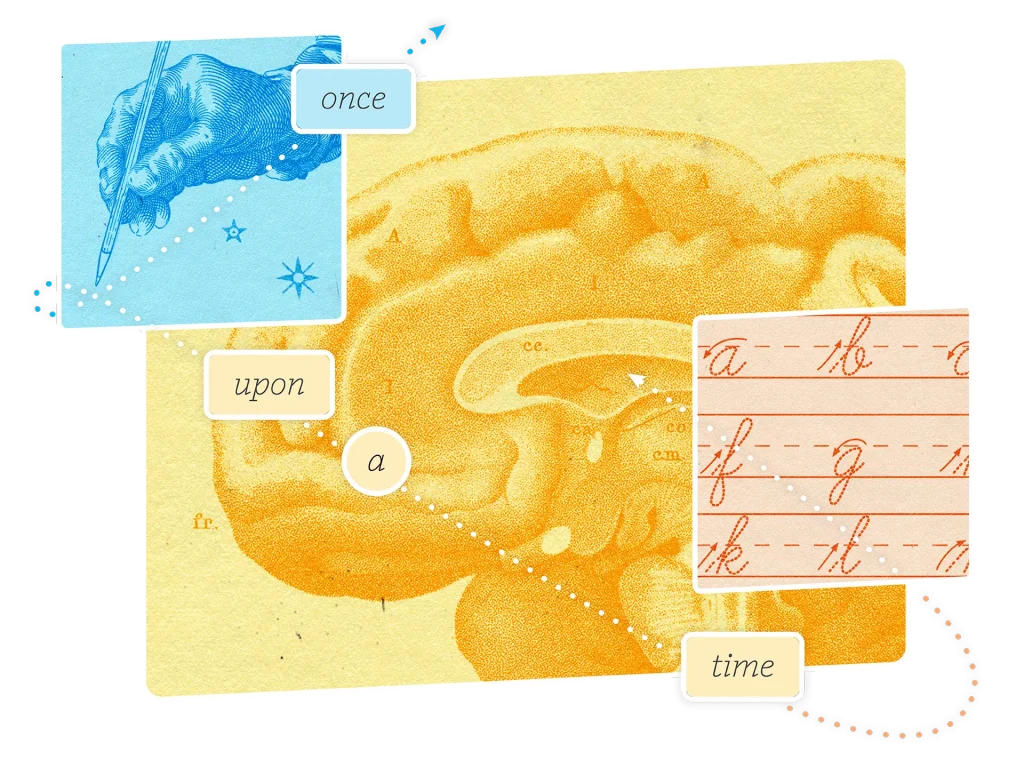
An illustration of a brain with superimposed images: handwriting, cursive letters, and the words "once upon a time" arranged in a sequence.

Exploring the Science of Writing

Discover the captivating journey of writing with our new guide, Science of Writing: A Primer. This resource delves into the history of writing, highlights the crucial link between combining reading and writing instruction, and reveals why handwriting still matters in today’s digital world. Designed to complement CKLA 3rd Edition and our other literacy tools, this primer is set to become a trusted companion, just like those before it.

MTSS Playbook

Explore our new ebook designed to help you build an evidence-based Multi-Tiered System of Supports (MTSS) tailored to diverse literacy goals. This resource provides actionable steps and essential questions to fortify your MTSS with the Science of Reading, enhancing its effectiveness and achieving better outcomes for your students.

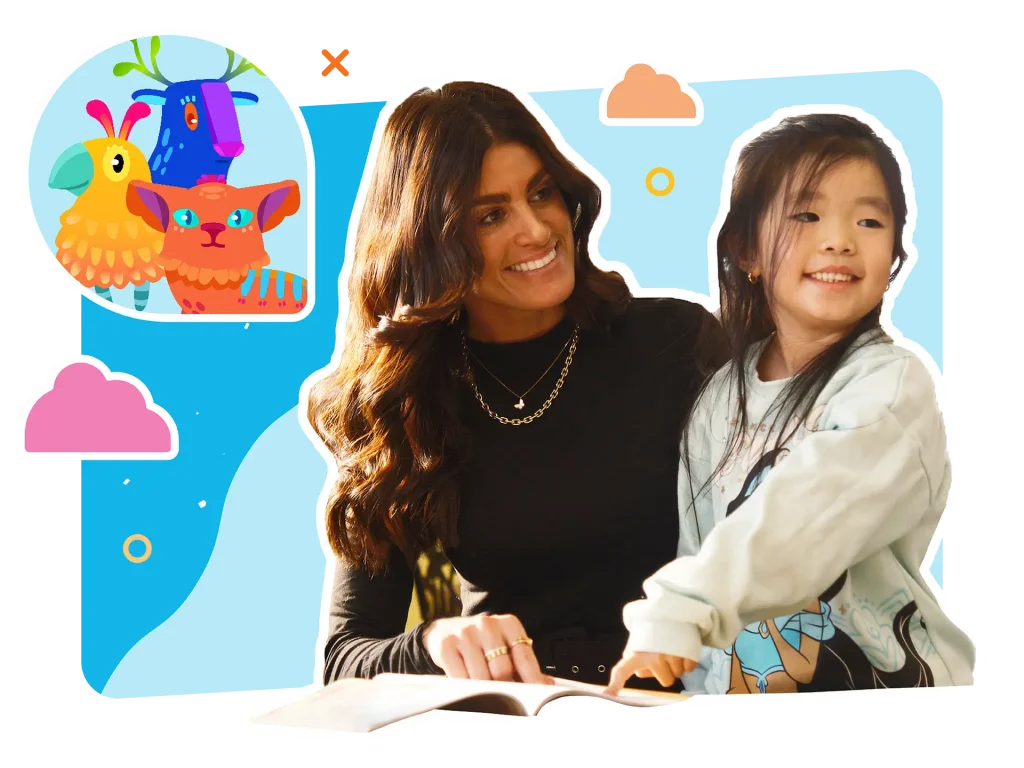
Woman and child smiling while reading a book, with colorful cartoon animals in the background.
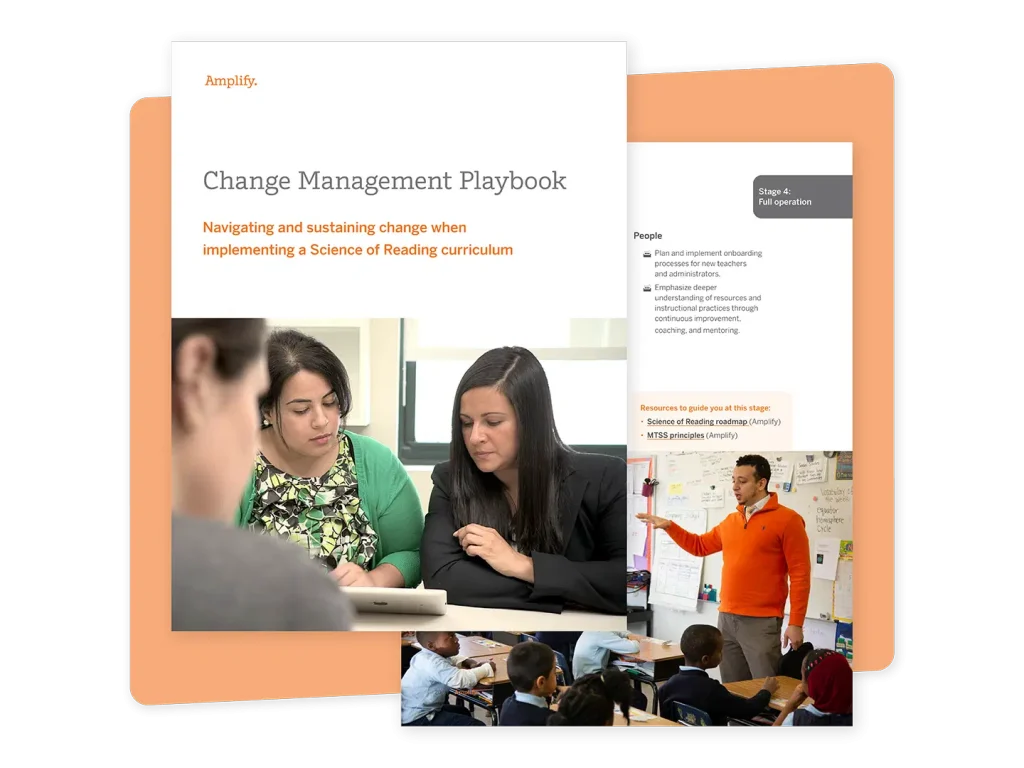
Cover of a "Change Management Playbook" guide, featuring two women reviewing a tablet and a teacher in an orange sweater instructing a classroom—highlighting K–5 literacy instruction and effective science of reading resources.

The science of teaching reading, coupled with the art of change management

Shifting to the Science of Reading isn’t just an overnight curriculum swap—it’s a profound culture change with multiple stages and stakeholders. We’ve helped educators succeed in that shift for years, and now we’re here to guide you every step of the way. Through each stage of implementation, our Change Management Playbook will help you mobilize your practice, process, and people to make the shift that matters most.

What is the Science of Reading?

Learning to read is not innate, but it can be taught—and science tells us how. The Science of Reading refers to the vast body of growing research that deconstructs how children learn to read, and the instructional practices that can get them there.

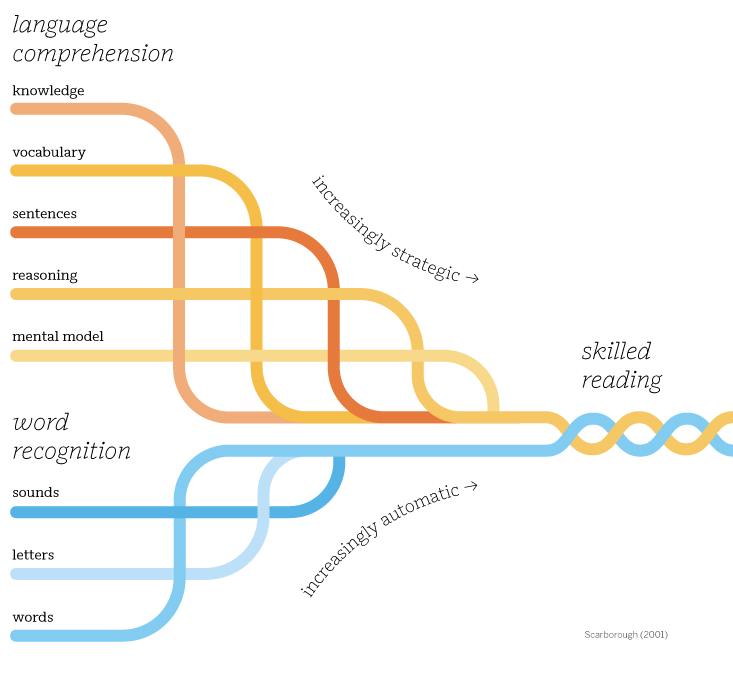
Reading fluency requires a complex combination of skills, taught explicitly and systematically. There are two main frameworks that can help us break it all down: The Simple View of Reading and Scarborough’s Rope.

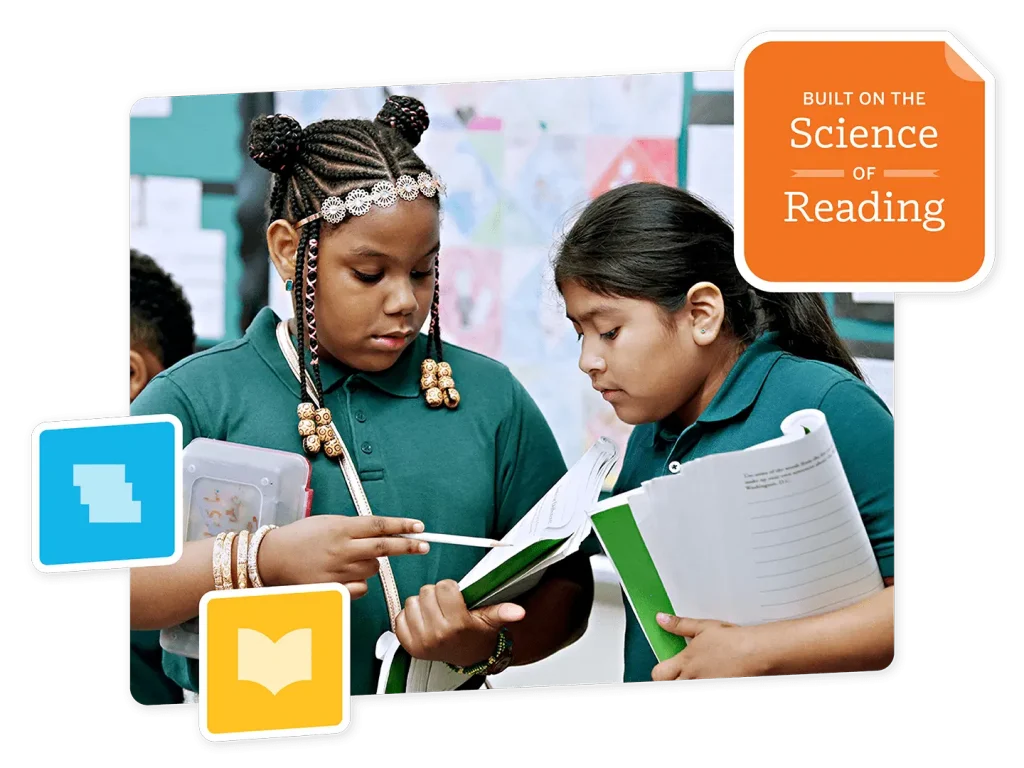
Two schoolgirls in green uniforms look at a notebook together in a classroom. Science of Reading and book icons are overlaid on the image.
Cover of a guide titled "Science of Reading: A New Teacher’s Guide" by Amplify, featuring a teacher with two children and educational icons.

Science of Reading starter kit for new teachers

New to the classroom? We’ve compiled a collection of resources and insights about the Science of Reading to help you acquire more knowledge and build confidence. You’ll find the tools, information, and support you need to foster successful readers and writers in your classroom this school year—and beyond.

The Simple View of Reading

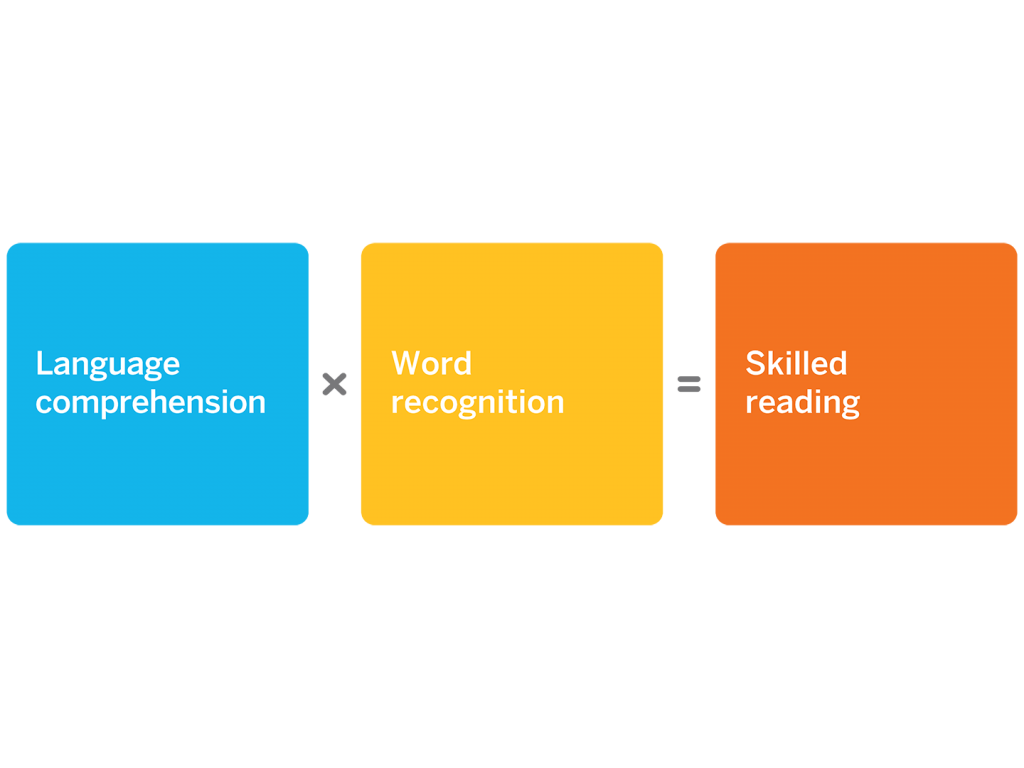
The Simple View of Reading, formulated by Philip Gough and William Tunmer in 1986, is the theory that proficient reading requires two main components:

Flowchart illustrating skilled reading as the product of language comprehension and word recognition, grounded in the science of reading.
A diagram with intertwining orange, yellow, and blue lines converging and diverging, illustrating interconnected pathways on a black background—reflecting the dynamic flow of ideas found in Core Knowledge or Amplify CKLA curricula.

The Reading Rope

The Reading Rope, developed by Dr. Hollis Scarborough in 2001, helps us visualize the strands of specific skills and instruction that support students in decoding and comprehension.

Professional development to support your shift to the Science of Reading

Ignite literacy transformation with Amplify’s Science of Reading: The Learning Lab—an inspiring three-course series.

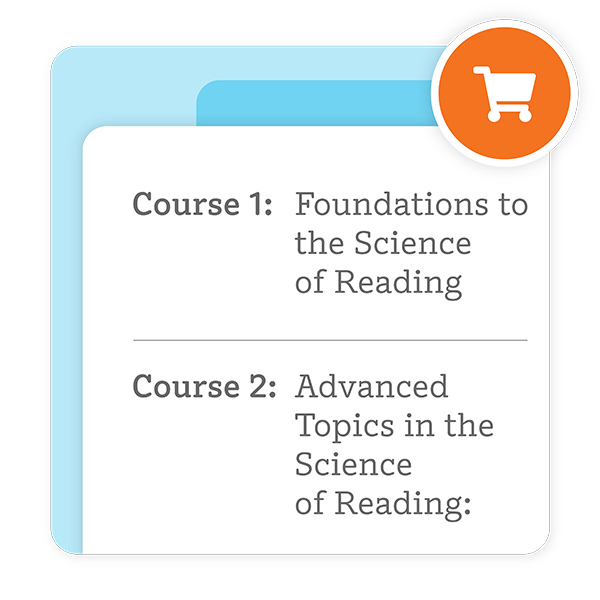
  • Dive into a comprehensive overview with course one, Foundations to the Science of Reading.
  • Examine assessments and their roles in course two, Advanced Topics in the Science of Reading: Assessment and Reading Difficulties.
  • Apply effective literacy instruction to your classroom in course three, Applied Structured Literacy.

Crafted to the standards of the International Dyslexia Association, this self-paced online series provides unparalleled, research-backed instruction. Explore enriching activities, curated resources, and learn from Susan Lambert, chief academic officer and host of Science of Reading: The Podcast.

The best investment you can make is in knowledge, and the returns are priceless.

Illustration of a webpage titled "Science of Reading: The Learning Lab series" with icons of a book, paper, and other subjects below the title.

Learn more about the online courses or request a quote!

Two labeled course cards: "Course 1: Foundations to the Science of Reading" and "Course 2: Advanced Topics in the Science of Reading," with a shopping cart icon in the top right.

Tap into individual online course seats.

Science of Reading podcast cover image open book

Science of Reading: The Podcast

Tune in to hear the latest insights and trends in early reading, right from leading literacy experts and practitioners.

Listen now

Build your background knowledge of the Science of Reading.

Our Science of Reading principles and primers explain the essentials: what the Science of Reading is, how it works, and why it matters for every student.

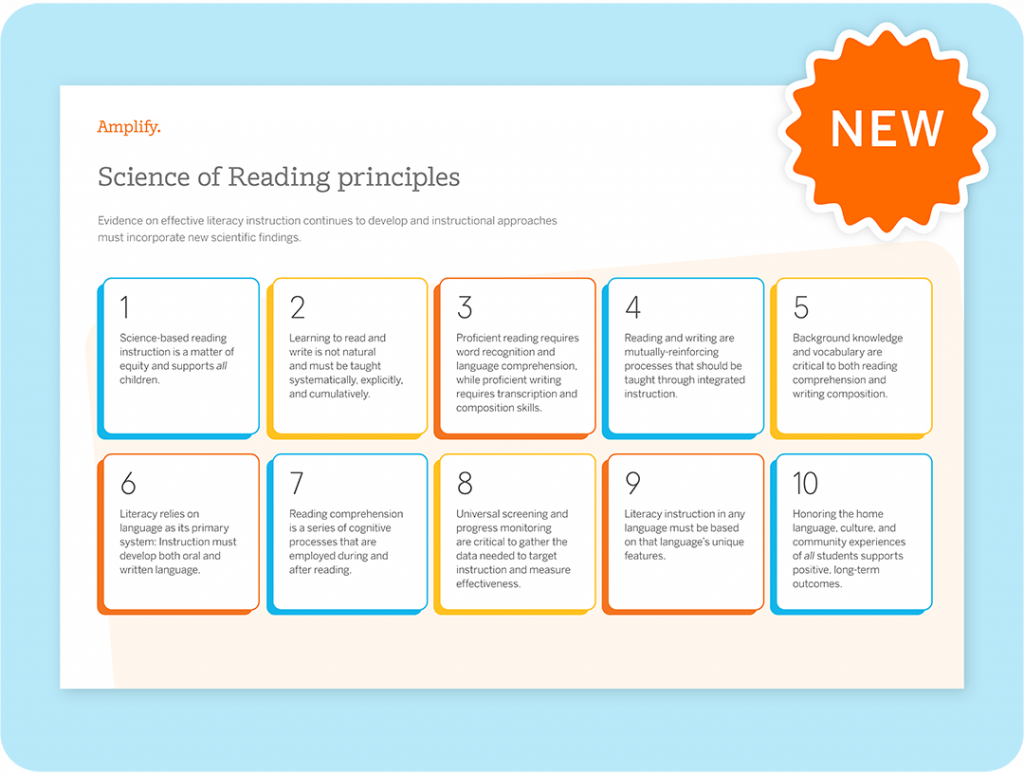
An infographic titled "Science of Reading principles" showcases ten evidence-based K–5 literacy instruction strategies, informed by interdisciplinary research, in color-coded boxes with a "NEW" badge in the top right corner.

New Science of Reading principles placemat!

Decades of research inform the updated Science of Reading principles placemat. Use these insights as a guide for evidence-based literacy instruction—perfect for committed educators aiming to achieve real improvements in student reading outcomes.

Download principles

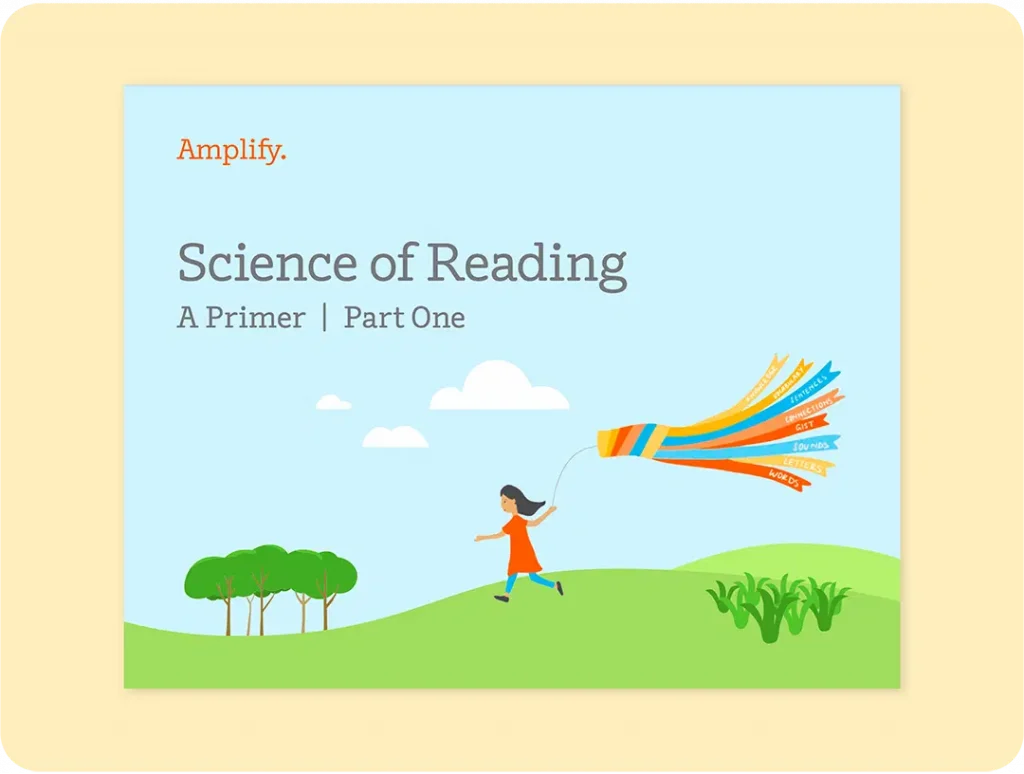
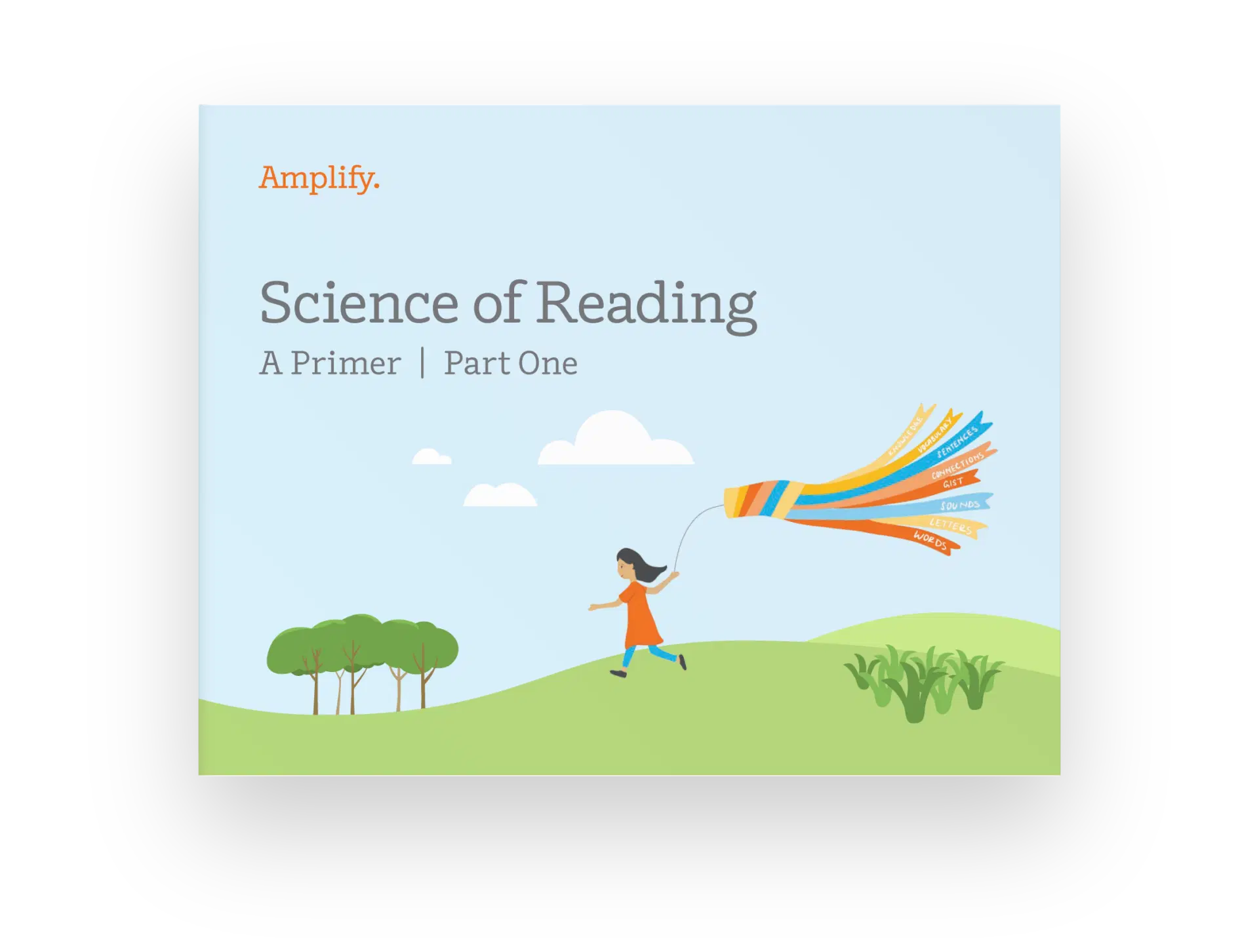
An illustration of a girl running with a colorful kite, with text reading "Science of Reading: A Primer | Part One" and "Amplify" in the top left corner, highlighting K–5 literacy instruction.

Science of Reading
A Primer: Part 1

In part 1 of our definitive Science of Reading primer, we discuss literacy as a societal goal, walk you through how the brain learns to decode and comprehend text, and present the patterns that top-performing schools and districts follow to achieve early reading success.

Download primer 1

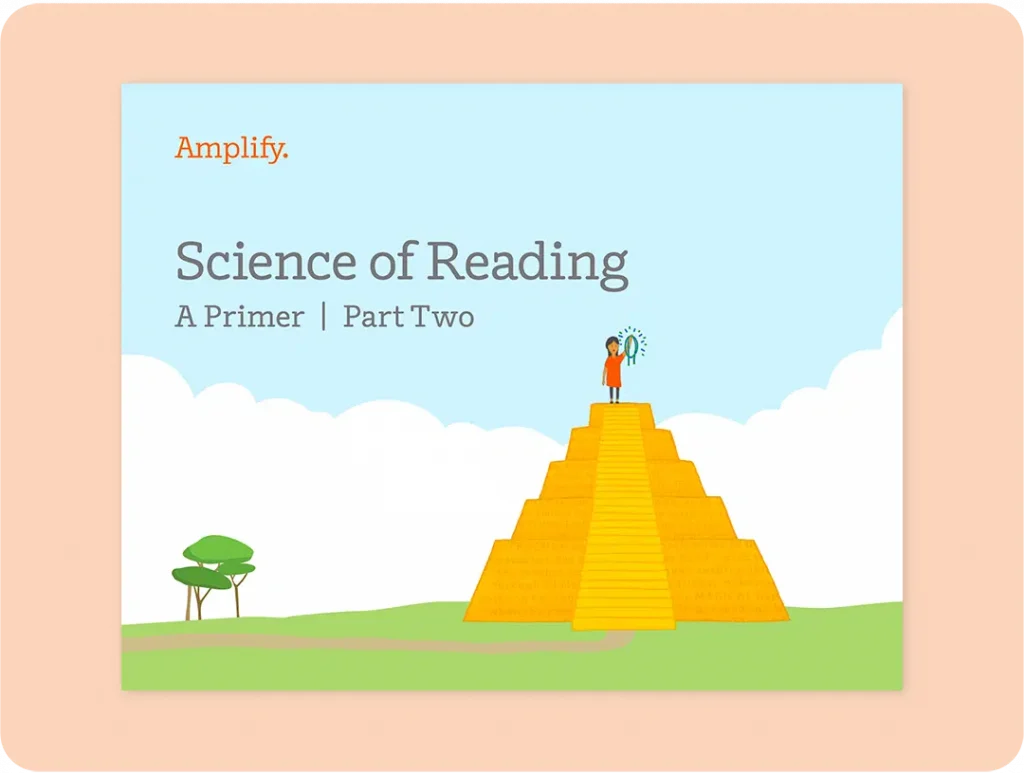
Illustration of two people atop a yellow pyramid, with text reading "Science of Reading: A Primer | Part Two"—an engaging look at K–5 literacy instruction. "Amplify" appears in the top left corner.

Science of Reading
A Primer: Part 2

In part 2 of our Science of Reading primer, we establish the importance of prior knowledge for comprehension, lay out the process of micro-comprehension, and demonstrate how literacy skills build on and accelerate themselves.

Download primer 2

A woman with long dark hair smiles in front of a plain background, reflecting the joy she finds in interdisciplinary research. She is wearing a dark green top and earrings.
“If you’re looking for a Science of Reading training, the [Science of Reading: Foundations to the Science of Reading] online course is great. It helps you build background knowledge on learning how students learn how to read, and then it goes deeper and it gives you strategies that correlate with those findings that you can implement right into your classroom.”

—Allie Appel, Instructional Coach

School District of Arcadia, WI

Why undertake this crucial change?

When we bring proven methods based on the Science of Reading into schools, we make sure kids are learning to read and help teachers and caregivers support a culture of reading. Together, we can solve the reading crisis and make literacy a reality everywhere.

You’ll change lives with literacy.

According to the National Assessment of Educational Progress (NAEP), only 35% of fourth graders in the United States are proficient in reading. But schools using a Science of Reading approach have seen significant improvements in literacy rates. Using research-based methods, educators can help give all children the chance to become successful readers.

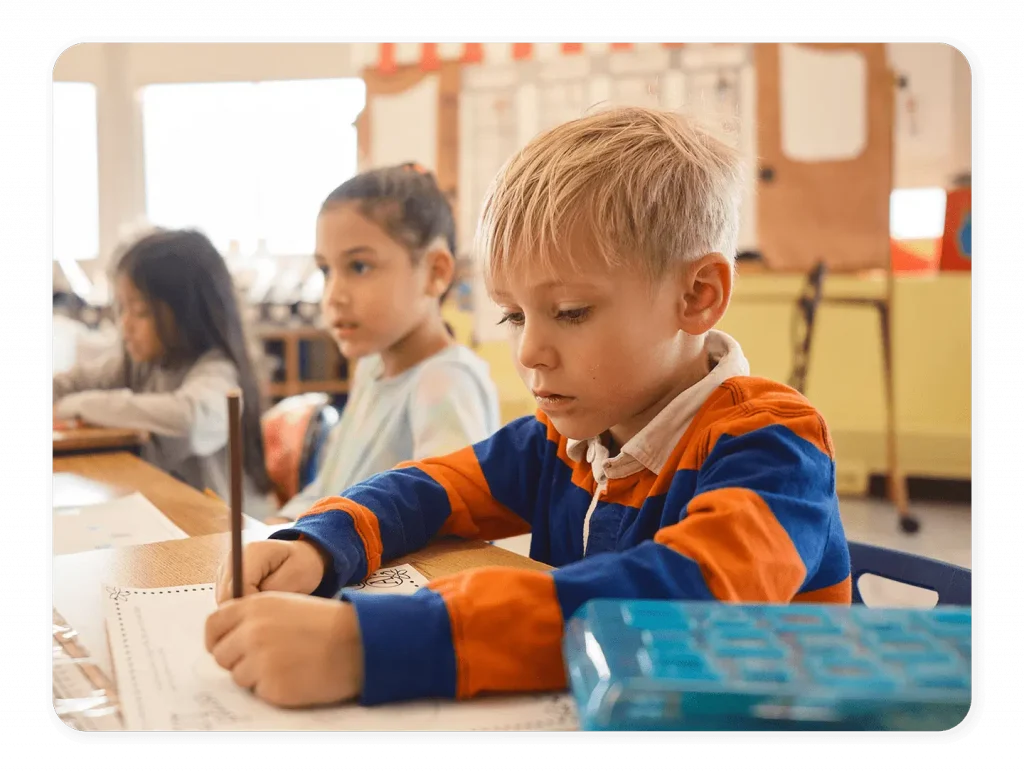
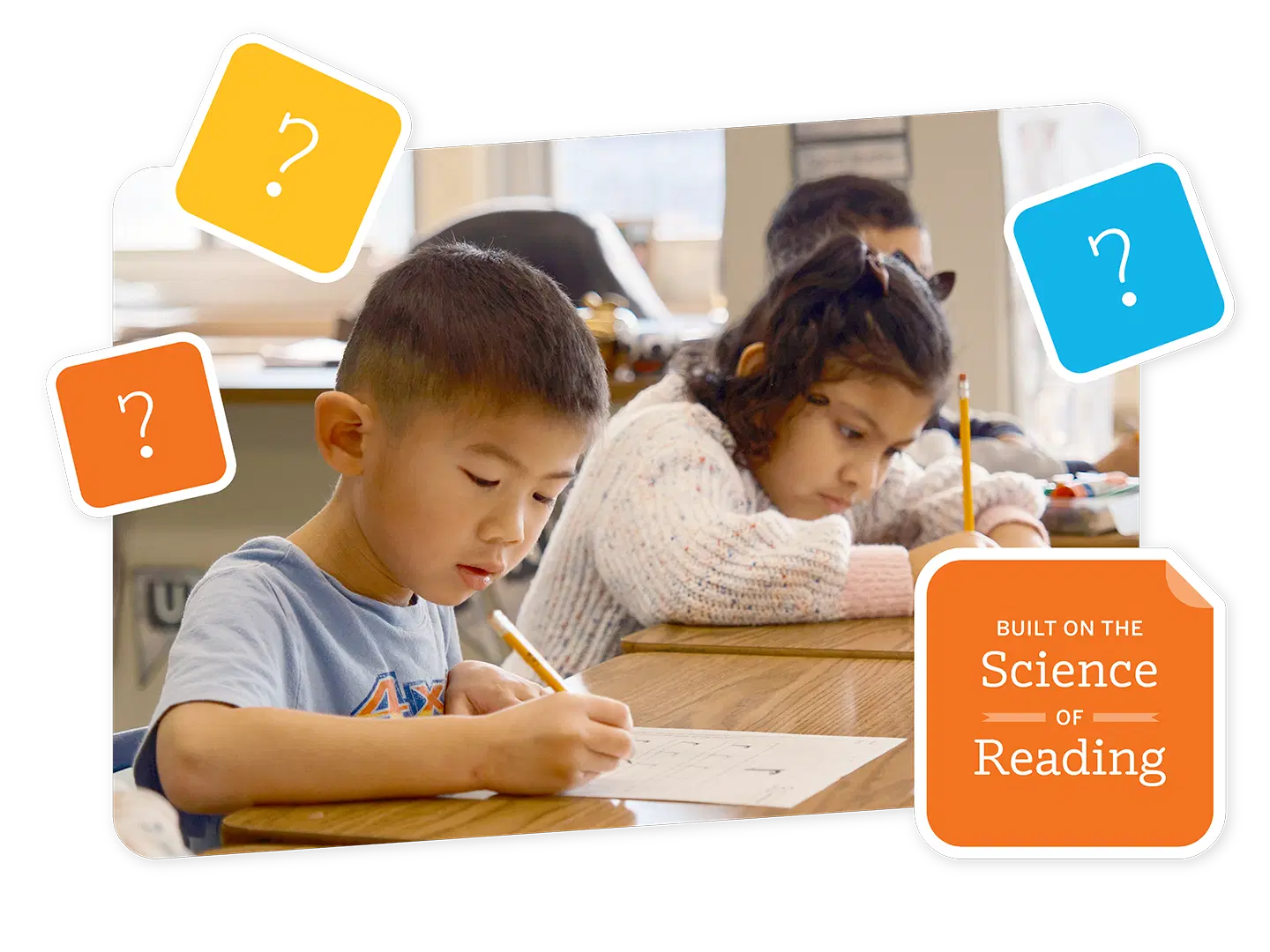
Young boy in a classroom sits at a desk and writes on a worksheet, with other children working at nearby desks in the background.
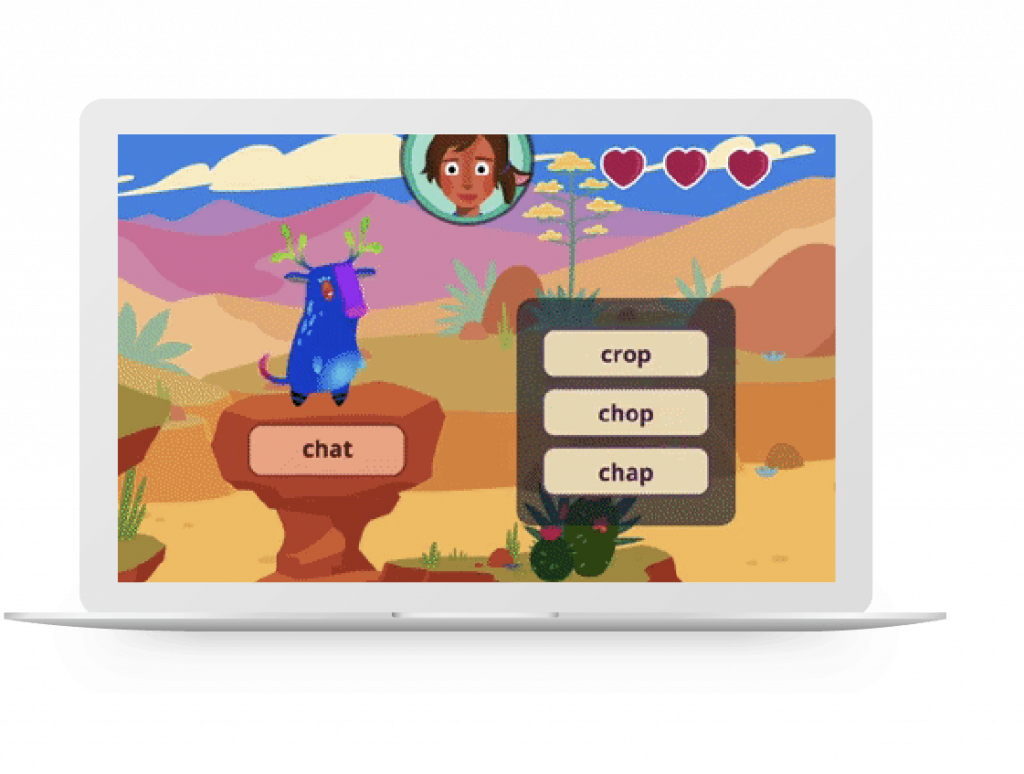
A laptop screen displaying a literacy intervention game with a cartoon llama in a desert setting and a word selection task presented to a child’s avatar in the corner.

You’ll build a foundation with explicit, systematic skills instruction.

Reading skills don’t come naturally. We actually need to rewire our brains with intentional, structured literacy instruction—starting with sounds.

You’ll improve outcomes with knowledge building.

Longitudinal research shows that knowledge building doesn’t just happen as a result of reading, but is also a vital prerequisite for and component of it. And when delivered intentionally and systematically, knowledge delivers literacy results.

Illustration depicting diverse people engaged in various activities, including astronauts in space, a musician engaged in interdisciplinary research, and a child drawing, set against a whimsical celestial backdrop.
A person with long braided hair, wearing oversized glasses, earrings, a necklace, and a red top, smiles at the camera against a plain background.
“It’s not just about the curriculum. It’s about the science behind how people, how children, and how we as humans learn to read… It’s working. I wish I had this years ago. ”

—Javonna Mack, Lead Content Teacher

Caddo Parish Schools, Louisiana

Science of Reading & Early Literacy Resources FAQ

Amplify understands that making the shift to the Science of Reading is no small feat. Get some early literacy resources and guidance with our Science of Reading FAQ.

Learning to read is not innate. It needs to be taught intentionally and systematically—and science tells us how. The vast and growing body of research on early literacy is referred to as the Science of Reading. It draws on extensive research in cognitive science, linguistics, and neuroscience. It emphasizes the systematic teaching of foundational skills—such as phonics, phonological awareness, and decoding—in building vocabulary and comprehension. In other words, it deconstructs the processes behind how children learn to read, and provides evidence for the instructional practices and early literacy resources that can get them there.

Read more 

The Science of Reading refers to the pedagogy and practices proven by extensive research to effectively teach children how to read. It places a strong emphasis on both components of the Simple View of Reading, demonstrating that systematic and explicit instruction in phonics and and intentionally sequenced knowledge building are critical to reading success.

In a balanced literacy environment, learning happens through reading and writing immersion, where the need for explicit instruction in phonics is recognized but is not the primary focus.

The key difference between the approaches lies in their emphasis on foundational reading skills and a coherent approach to building language comprehension.

A balanced literacy approach typically includes a combination of whole language approaches (emphasizing meaning and context) and phonics instruction. Balanced literacy instruction is designed to be flexible and open to interpretation by the instructor. It may include the three-cueing system, which encourages students to rely on syntactic and semantic clues in a text to read an unfamiliar word, rather than decoding (Does it look right? Does it sound right? Does it make sense?). Balanced literacy practitioners may also use leveled reading to differentiate instruction, which can can limit vocabulary exposure, hinder in-depth comprehension skills, and further widen achievement gaps.

Balanced literacy has long been a popular approach to reading instruction, with educators appreciating its openness to variation. But advocates for the Science of Reading argue that an evidence-based approach aligned with known cognitive processes and a focus on foundational skills and language comprehension provides the most solid foundation for reading instruction—for confident and struggling readers alike.

Read more

According to our friends at The Reading League, the Science of Reading is important not because it gives us an effective way to teach reading, but because it gives us the most effective way to teach reading.

“The Science of Reading is critical because it emphasizes evidence-based instruction. Decades of scientific research on reading have consistently shown the most effective ways to teach reading. The Science of Reading incorporates this research, which includes phonemic awareness, phonics, fluency, vocabulary, and comprehension.”

The Reading League also takes it to the next level: What happens when all children have access to the most effective early literacy and reading education? “We believe in a future where a collective focus on applying the Science of Reading through teacher and leader preparation, classroom application, and community engagement will elevate and transform every community, every nation, through the power of literacy.”

The Science of Reading has identified five foundational reading skills that are considered crucial for early reading development. One of those skills is phonics. In other words, the Science of Reading has established that phonics are crucial, but the Science of Reading is not the same as phonics.

Phonics instruction helps students learn how to sound out and blend letters to read words accurately. As we know from the Simple View of Reading, two fundamental skills are required for reading with comprehension:

  1. Decoding—the ability to recognize written words (via phonics)
  2. Language comprehension—understanding what words mean

And the Science of Reading also reminds us that students do not have to learn phonics or decoding before knowledge comes into the equation. “The background knowledge that children bring to a text is also a contributor to language comprehension,” says Sonia Cabell, Ph.D., associate professor at Florida State University’s School of Teacher Education, on Science of Reading: The Podcast.

The Science of Reading is an evolving field built on decades of high-quality, evidence-based research that continually integrates new insights gathered from cognitive neuroscience, psychology, and linguistics. These ongoing studies constantly refine our understanding of how the human brain processes language and learning, enabling more personalized and effective teaching strategies that can adapt to the wide-ranging learning needs of students.

Like other sciences such as medicine, astronomy, or engineering – new advancements in reading technology allow us to understand how the brain works and refine our practices. Every scientific advancement in this field of reading science deepens our comprehension of reading-related challenges like dyslexia and informs the development of evidence-based interventions. We don’t believe that the Science of Reading can be reduced to a fad or trend. Rather, it is a continually evolving, enduringly effective discipline, grounded in rigorous research and driven by the quest for better comprehension of how we read and learn.

Assessment grounded in the Science of Reading can help identify children at risk of dyslexia at the earliest possible moments, creating the widest opportunity for intervention.

People with dyslexia often experience challenges in phonological awareness. They may struggle to break down words into their component sounds and to recognize the relationships between letters and sounds. Systematic and explicit instruction in phonics and phonological awareness can help individuals with dyslexia develop necessary phonological skills. This evidence-based instruction can also help students who have difficulty with decoding.

Further, evidence-based comprehension instruction, including explicit instruction in vocabulary and comprehension strategies, can support students with dyslexia in understanding and making meaning from text.

Download our free dyslexia toolkit

The Science of Reading can be integrated with a Multi-Tiered System of Supports (MTSS) to provide comprehensive and targeted reading instruction for all students. The Science of Reading aligns with a tiered model by providing evidence-based practices for instruction at each tier. An MTSS includes universal screening to identify students at risk of reading difficulties; the Science of Reading can also guide the selection of screening measures to assess specific foundational skills. Aligning the Science of Reading with an MTSS framework can also enhance instructional practices and interventions, ensure data-driven decision making, and help meet the needs of all students.

Read more

Integrating the Science of Reading and the Science of Writing strengthens our approach to teaching literacy. Reading and writing are interdependent. Understanding how sentences are built not only contributes to better reading comprehension, it also helps writers develop clear, logical text. As students grow as readers, they also grow as writers, leading to a comprehensive literacy education. Clear thinking and effective writing are crucial for expressing ideas. By fostering both skills, teachers better support students in becoming confident readers and writers, prepared for academic challenges and beyond.

One of the research-based frameworks used in the Science of Reading is the Simple View of Reading. According to the Simple View, two cognitive capacities are needed for proficient reading: (1) understanding the language (comprehension) and (2) recognizing words in print (decoding). A true Science of Reading program is designed from the start for students to build these skills, in a developmentally appropriate way.

It will also emphasize the importance of knowledge building by exposing students to a diverse array of new topics spanning history, science, and literature, organized intentionally and coherently within and across grades. Deep and intentionally sequenced knowledge domains will help build a student’s vocabulary and understanding of complex texts. And it will include instruction in  all five foundational skills: phonics, phonemic awareness, vocabulary, fluency, and comprehension.

Download our free ebookScience of Reading: Making the Shift, which includes a checklist of what to look for in a curriculum based on the Science of Reading. Learn more from our friends at The Reading League.

Actually, we have a full literacy suite built on the Science of Reading! It includes:

  • mCLASS® assessment, powered by DIBELS® 8th Edition, a gold-standard universal and dyslexia screener, plus a progress monitoring tool, all in one.
  • Amplify Core Knowledge Language Arts (CKLA), which provides explicit, systematic foundational skills instruction combined with intentional knowledge building.
  • Boost Reading, a highly adaptive personalized reading program that reinforces the core curriculum and supports enrichment, remediation, and intervention for each student in your classroom.
  • mCLASS Intervention, a staff-led intervention program targeted to Tiers 2 and 3, made easy with automatic data-driven grouping and sequenced explicit, systematic skills lesson plans to support at-risk students.

Reading requires deliberate, systematic attention—and so does shifting to the Science of Reading in your school or district. It requires not only the right curriculum, but also all-new mindsets, metrics, and more. Reflecting years of experience supporting real educators, our resources will walk you through the process of change management in your community—and show you why the shift is worth it. View our Science of Reading change management playbook.

What is Amplify Caminos?

Amplify Caminos is a core Spanish language arts program for grades TK–5 that delivers:

  • Authentic instruction built from the ground up for the Spanish language.
  • A unique research-based approach truly built on the Science of Reading.
  • A combination of explicit foundational skills with meaningful knowledge-building.
  • Embedded support and differentiation that gets all students reading grade-level texts together.
  • Opportunities for students to see the strengths and experiences that all people share while also celebrating each others’ unique identities and experiences.
A diagram illustrates two processes, language comprehension and word recognition, integrating into reading comprehension with colorful braided strands and related educational materials.

How does Amplify Caminos work?

Daily instruction

Grades K–2: Dedicated knowledge-building and explicit skills instruction
Every day, students in Grades K–2 complete one full lesson that builds foundational reading skills in the Amplify Caminos Lectoescritura strand, as well as one full lesson that builds background knowledge in the Amplify Caminos Conocimiento strand. Through learning in each of these strands, students develop the early literacy skills necessary to help them become confident readers and build the context to understand what they’re reading.

Grades 3–5: Integrated instruction
In Grades 3–5, the Amplify Caminos Lectoescritura and Conocimiento strands are integrated in one set of instructional materials. Lessons begin to combine skills and knowledge with increasingly complex texts, close reading, and a greater writing emphasis. Students can then use their skills to go on their own independent reading adventures.

Formative and summative assessments

A young boy sitting at a desk writes in a notebook with a pencil; another student is seated beside him, also writing.

Amplify CKLA features a progression of moment-by-moment assessments to benchmark assessments. Assessment and feedback give teachers the information they need to differentiate instruction effectively.

Checks for Understanding
Each lesson segment incorporates checks for understanding to increase engagement and to let teachers make real-time adjustments to their instruction.

Formative Assessment
Each lesson goal is tied to a formative assessment opportunity, allowing teachers to see which students need more support with a benchmark.

Mid- and End-of-Unit Assessments
Mid-Unit and End-of-Unit Assessments provide valuable information on the skills and content students have mastered. Digital end-of-unit assessments are available on a variety of platforms.

Benchmark and Placement Assessments
Benchmark and Placement Assessments help teachers set goals and monitor the growth of each student, providing a baseline at the beginning of the year and ensuring students are advancing toward grade-level objectives.

What makes Amplify Caminos different?

Built on the Science of Reading

Built out of the latest research in the Science of Reading, Amplify Caminos delivers explicit instruction in both foundational literacy skills (systematic phonics, decoding, and fluency) and background knowledge in grades K–2 with an integrated approach to explicit instruction in grades 3–5.

Explicit systematic skills instruction

The skills instruction in Amplify Caminos was distinctly developed with the Spanish language in mind. Its foundational lessons are specific to the language, rather than a direct translation from Amplify CKLA’s English skills instruction.

Reading instruction begins with the vowels first, then the most common consonants, and finally the least common consonants. Students will blend and segment sounds to form syllables, and syllables to form words.

Although Spanish has a highly predictable orthography, there are a few silent letters (h is always silent, u is silent after g or q), as well as letters that can make different sounds, depending on the letters that follow them. For that reason, syllables with these letters are taught somewhat later in the progression. The same is true for syllables with infrequently occurring consonants, such as z, k, x, and w.

Coherent knowledge instruction

While students are learning how to read, the Conocimiento strand gives them authentic and engaging reasons to read.

Amplify Caminos uses spiral learning to reinforce every student’s ability to develop skills like reading, writing, speaking, and listening in Spanish that can be transferred to English. As students engage with their lessons, they explore the similarities and differences in grammar, vocabulary, writing, and language use between Spanish and English. This bridge helps students learning two languages to strengthen their knowledge in both.

A collage of Spanish-language educational book covers and pages featuring illustrated scenes, including a rabbit, a person observing stars, and children playing outside.

Through cross-curricular content, students explore units that relate to storytelling, science, and the history of our world in a holistic and thoughtful way. With these units, you’ll bring the world to your students, showing them how reading can become an exciting, rewarding, and useful part of their lives.

Commitment to equity and diversity

Amplify Caminos builds students’ knowledge about the world, helping them see people who resemble them and their familiar situations or experiences while also exposing them to people whose appearances, lives, beliefs, and backgrounds differ from their own.

In addition to teaching all students to crack the written code (which is vital for equity), the Amplify Caminos program helps students celebrate their own unique identities and experiences while also seeing the strengths and experiences we all share.

Two astronauts in space suits float above planets, a woman sings with musical notes, a hot air balloon with passengers flies, and a person sketches a landscape in a colorful, whimsical scene.

Amplify Caminos includes both transadaptations and authentic texts written by Latin American and Spanish authors.

Three Spanish-language children's books are displayed: "La flor de oro," "El conejo en la Luna," and "El secreto de las hormigas," each with illustrated covers.

Our decodable Student Readers celebrate students’ diverse experiences and feature individuals with a broad range of identity factors, including socio-economic status, age, ability, race, ethnicity, country of origin, and more.

Five colorful children's books in Spanish are displayed, featuring illustrated covers with diverse characters, a llama, and a giant cactus.

Our new Knowledge Research units carry forward Amplify Caminos’ powerful and proven instructional approach while also:

  • Adding more diversity. The rich topics and highly visual components featured in these units provide students with even more “windows and mirrors” and perspectives as they work to build knowledge.
  • Adding more authentic literature. Each new research unit revolves around a collection of high-interest authentic trade books that will spark more curiosity and inspire more inquiry.
  • Adding more flexibility. Units can be implemented for extended core instruction during flex periods, district-designated Pausing Points, or enrichment periods.
Three illustrations: children swimming in a pool, a diverse group of four people standing, and people caring for a tree surrounded by plants and glowing light.

Embedded differentiation for all learners

Amplify Caminos provides built-in differentiation strategies and supports in every lesson.

  • Apoyo a la enseñanza y desafío: Support and Challenge suggestions in every lesson provide assistance or opportunities for more advanced work toward the goal of the lesson.
  • Notas culturales: These point-of-use notes provide additional information about the traditions, foods, holidays, word variations, and more from across the Spanish-speaking world.
  • Apoyo adicional: Every lesson in the Lectoescritura (Skills) Strand provides additional support activities suggested to reinforce foundational skills instruction. These activities can be given to any student who requires extra help, including students with special needs.

Sample materials

Demo access

A laptop screen displays the Amplify login page with options to log in using Google, Clever, Amplify, QR code, District SSO, or get help.

Follow the instructions below to access your demo account.

  • Click the Caminos Demo button below.
  • Select Log in with Amplify.
  • To explore as a teacher, enter this username:

          t1.montgomery2024ela@demo.tryamplify.net

  • To explore as a student, enter this username:

          s1.montgomery2024ela@demo.tryamplify.net

  • Enter the password: Amplify1-montgomery2024ela
  • Click the Programs and apps menu
  • Select CKLA Teacher Resource Site
  • Select the desire grade level
  • Use the toggle to switch between English (CKLA) and Spanish (Caminos) resources.

Check out these additional resources

Caminos review resources:

Welcome, Ohio educators!

Designed from the ground up to teach students to think, read, write, and argue like real scientists and engineers, Amplify Science combines literacy-rich activities with hands-on learning and digital tools to engage students in exploring compelling phenomena in every unit.

Students in a classroom interact with educational technology, featuring a diagram and charts on a screen, while working collaboratively on a laptop.

Overview

Developed by UC Berkeley’s Lawrence Hall of Science, our program features:

  • phenomena-based approach where students construct a more complex understanding of each unit’s anchor phenomenon.
  • A blend of cohesive storylines, hands-on investigations, rich discussions, literacy-rich activities, and digital tools.
  • Newly crafted units, chapters, lessons, and activities designed to deliver true 3-dimensional learning.
  • An instructional design that supports all learners in accessing all standards.

Approach to literacy

Two young children sit at a classroom table reading a book together, with educational materials spread out in front of them.

[Video] Literacy in action (K–5)

Watch students use scientific text to obtain information and practice reading skills, while using writing prompts to create arguments using evidence.

A student sits at a desk writing with a pencil while focused on his work, with classroom materials visible in the background.

[Video] Literacy in action (6–8)

Watch students use scientific text to obtain information and practice reading skills, while using writing prompts to create arguments using evidence.

A teacher in a green shirt helps a young student with writing at a classroom table, with other students and large numbers visible on the wall in the background.

Literacy-rich science instruction (K–5)

Immersing young students in reading, writing, and arguing like real scientists and engineers.

Two students sit at a table in a classroom, working on an assignment together. Other students are also seated and appear to be engaged in their work. Papers and books are spread out on the tables.

Active Reading in grades 6–8

Engaging middle school students in complex science texts.

Elementary school

Get started by watching this class share what they’re figuring out with Amplify Science. >

In Grades K–3 we recommend the national grade level units of Amplify Science to provide students with the appropriate grade level literacy and background knowledge. Individual units are available to purchase.

When you’re ready:

  1. Find a summary of each unit below including each unit’s student role and anchor phenomenon.
  2. Download some helpful resources to support your review.
  3. Explore the digital Teacher’s Guide by clicking the orange “Review now” button.
An illustration from Needs of Plants and Animals unit

Unit 1

Needs of Plants and Animals

Student role: Scientists

Phenomenon: There are no monarch caterpillars in the Mariposa Grove community garden ever since vegetables were planted.

An illustration from the Pushes and Pulls unit

Unit 2

Pushes and Pulls

Student role: Pinball engineers

Phenomenon: Pinball machines allow people to control the direction and strength of forces on a ball.

Silueta de una estructura de parque infantil contra un cielo azul con nubes y tres soles amarillos.

Unit 3

Sunlight and Weather

Student role: Weather scientists

Phenomenon: Students at one school are too cold during morning recess, while students at another are too hot during afternoon recess.

Illustration of sea turtles swimming among seaweed in the ocean, with a large shark in the background.

Unit 1

Animal and Plant Defenses

Student role: Marine scientists

Phenomenon: Spruce the Sea Turtle will soon be released back into the ocean, where she will survive despite predators.

An illustration from the Light and Sound unit

Unit 2

Light and Sound

Student role: Light and sound engineers

Phenomenon: A puppet show company uses light and sound to depict realistic scenes in puppet shows.

An illustration from the Spinning Earth unit

Unit 3

Spinning Earth

Student role: Sky scientists

Phenomenon: The sky looks different to Sai and his grandma when they talk on the phone at night.

An elephant standing next to a tree uses its trunk to pick a fruit from a branch while more fruit hangs above.

Unit 1

Plant and Animal Relationships

Student role: Plant scientists

Phenomenon: No new chalta trees are growing in the fictional Bengal Tiger Reserve in India.

A hand holds a red bean on a table, while a wooden stick spreads white glue and scattered beans. Also on the table are a white cup and a yellow pen.

Unit 2

Properties of Materials

Student role: Glue engineers

Phenomenon: Different glue recipes result in glues that have different properties.

Ilustración de una costa con acantilados, un edificio de centro recreativo con un techo rojo y un letrero, árboles de hoja perenne, una bandera azul y una playa de arena debajo.

Unit 3

Changing Landforms

Student role: Geologists

Phenomenon: The cliff on which Oceanside Recreation Center is situated appears to be receding.

Una ilustración de un tren de alta velocidad moderno y aerodinámico que viaja por una vía elevada con un paisaje verde de fondo.

Unit 1

Balancing Forces

Student role: Engineers

Phenomenon: The fictional town of Faraday is getting a new train. Unlike typical trains, this one floats, which is causing some concern among the town’s citizens.

An illustration from the Inheritance and Traits unit

Unit 2

Inheritance and Traits

Student role: Wildlife biologists

Phenomenon: An adopted wolf in Graystone National Park has some traits in common with one wolf pack in the park and other traits in common with a different pack.

An illustration from the Environments and Survival unit

Unit 3

Environments and Survival

Student role: Biomimicry engineers

Phenomenon: Over 10 years, a population of grove snails has changed. Populations with yellow shells have decreased, while those with banded shells have increased.

An illustration from the Weather and Climate unit

Unit 4

Weather and Climate

Student role: Meteorologists

Phenomenon: Three different islands, each a contender for becoming an orangutan reserve, experience different weather patterns.

An illustration from the Energy Conversions unit

Unit 1

Energy Conversions

Student role: System engineers

Phenomenon: The fictional town of Ergstown experiences frequent blackouts. Their electrical system seems to be failing.

An illustration from the Earth's Features unit

Unit 2

Earth’s Features

Student role: Geologists

Phenomenon: A mysterious fossil is discovered in a canyon within the fictional Desert Rocks National Park.

An illustration from the Modeling Matter unit

Unit 3

Modeling Matter

Student role: Food scientists

Phenomenon: Some ingredients dissolve in a salad dressing while others, like oil and vinegar, appear to separate.

An illustration from the Earth System unit

Unit 4

The Earth System

Student role: Water resource engineers

Phenomenon: East Ferris, a city on one side of the fictional Ferris Island, is experiencing a water shortage, while West Ferris is not.

An illustration from the Patterns of Earth and Sky unit

Unit 1

Patterns of Earth and Sky

Student role: Astronomers

Phenomenon: An ancient artifact depicts what we see in the sky at different times of the day, but it appears to be missing a piece.

An illustration from the Vision and Light unit

Unit 2

Vision and Light

Student role: Conservation biologists

Phenomenon: The population of Tokay geckos in a rain forest in the Philippines has decreased since the installation of new highway lights.

An illustration from the Waves, Energy, and Information unit

Unit 3

Waves, Energy, and Information

Student role: Marine scientists

Phenomenon: Mother dolphins in the fictional Blue Bay National Park communicate with their calves despite the distance between them.

An illustration from the Ecosystem Restoration unit

Unit 4

Ecosystem Restoration

Student role: Ecologists

Phenomenon: The jaguars, sloths, and cecropia trees in a reforested section of a Costa Rican rain forest are not growing or thriving.

Middle school

When you’re ready:

  1. Find a summary of each unit below including each unit’s student role and anchor phenomenon.
  2. Download some helpful resources to support your review.
  3. Explore the digital Teacher’s Guide by clicking the orange “Review now” button.
Illustration of a cross-section of Earth showing a volcano near the ocean. Trees, mountains, and clouds are visible above, with subterranean layers below.

CORE

Rock Transformations

Domain: Earth and Space Science

Unit type: Core

Student role: Geologists

Phenomenon: Rock samples from the Great Plains and from the Rocky Mountains — regions hundreds of miles apart — look very different, but have surprisingly similar mineral compositions.

Ilustración que muestra las etapas de fusión de una paleta de naranja: entera, parcialmente derretida, más derretida y casi derretida por completo, con palitos de madera, sobre un fondo morado.

CORE

Phase Change

Domains: Physical Science, Earth and Space Science

Unit type: Core

Student role: Chemists

Phenomenon: A methane lake on Titan no longer appears in images taken by a space probe two years apart.

Green geometric graphic featuring icons: a baby, thermometer, layers, medical alert, and a flame.

ENGINEERING INTERNSHIP

Phase Change Engineering Internship

Domains: Engineering Design, Physical Science

Unit type: Engineering internship

Student role: Chemical engineering interns

Phenomenon: Designing portable baby incubators with different combinations of phase change materials can keep babies at a healthy temperature.

Illustration of a person in a red hat and fur-lined coat with eyes closed, surrounded by large orange circles on a dark background.

CORE

Thermal Energy

Domain: Physical Science

Unit type: Core

Student role: Thermal scientists

Phenomenon: One of two proposed heating systems for Riverdale School will best heat the school.

Abstract art with vibrant colors featuring a yellow silhouette of a person holding a book against a background of geometric shapes, swirling patterns, and bold textures.

LAUNCH

Microbiome

Domain: Life Science

Unit type: Launch

Student role: Microbiological researchers

Phenomenon: The presence of 100 trillion microorganisms living on and in the human body may keep the body healthy.

Abstract artwork of a person's side profile with geometric shapes and colorful patterns flowing from the head, holding a small sledgehammer. A vision chart is visible in the corner.

CORE

Metabolism

Domain: Life Science

Unit type: Core

Student role: Medical researchers

Phenomenon: Elisa, a young patient, feels tired all the time.

Orange abstract background with hexagonal shapes featuring icons of a bar chart, plant, safety vest, test tube, peach, and stethoscope.

ENGINEERING INTERNSHIP

Metabolism Engineering Internship

Domains: Life Science, Engineering Design

Unit type: Engineering internship

Student role: Food engineers

Phenomenon: Designing health bars with different molecular compositions can effectively meet the metabolic needs of patients or rescue workers.

Two people climbing rocky terrain; illustrations show a hiking boot and a belt with gear.

LAUNCH

Harnessing Human Energy

Domains: Physical Science, Earth and Space Science, Engineering Design

Unit type: Launch

Student role: Energy scientists

Phenomenon: Rescue workers can use their own human kinetic energy to power the electrical devices they use during rescue missions.

A girl runs with a colorful kite displaying literacy skills; text reads "Amplify. Science of Reading: A Primer | Part One" on a grassy landscape background.

CODING SCIENCE INTERNSHIP

Coding Science Internship: Coral Restoration (Optional)

Domains: Life Science, Coding Science

Unit type: Coding Science Internship

Student role: Coding science interns

Phenomenon: Implementing a restoration project to improve the health of coral reef populations in Hawaii.

Abstract artwork depicting a bright sun with blue and orange swirling patterns next to green hills under a sky with shades of blue, orange, and red.

CORE

Ocean, Atmosphere, and Climate

Domains: Earth and Space Science, Physical Science

Unit type: Core

Student role: Climatologists

Phenomenon: During El Niño years, the air temperature in Christchurch, New Zealand is cooler than usual.

An illustration from the Weather Patterns unit

CORE

Weather Patterns

Domains: Earth and Space Science, Physical Science

Unit type: Core

Student role: Forensic meteorologists

Phenomenon: In recent years, rainstorms in Galetown have been unusually severe.

An illustration from the Earth's Changing Climate unit

CORE

Earth’s Changing Climate

Domains: Earth and Space Science, Life Science

Unit type: Core

Student role: Climatologists

Phenomenon: The ice on Earth’s surface is melting.

Abstract geometric design in shades of blue and purple featuring a hexagon with icons of a building, wrench, molecules, sun, paint can, and screwdriver.

ENGINEERING INTERNSHIP

Earth’s Changing Climate Engineering Internship

Domains: Earth and Space Science, Engineering Design

Unit type: Engineering internship

Student role: Civil engineers

Phenomenon: Designing rooftops with different modifications can reduce a city’s impact on climate change.

A city skyline at night with a prominent full moon, stars in the sky, and a bridge silhouette on the left.

CORE

Earth, Moon, and Sun

Domains: Earth and Space Science, Physical Science

Unit type: Core

Student role: Astronomers

Phenomenon: An astrophotographer can only take pictures of specific features on the Moon at certain times.

An illustration from the Chemical Reactions unit

CORE

Chemical Reactions

Domains: Physical Science, Life Science, Earth and Space Science

Unit type: Core

Student role: Forensic chemists

Phenomenon: A mysterious brown substance has been detected in the tap water of Westfield.

An illustration from the Light Waves unit

CORE

Light Waves

Domains: Physical Science, Life Science, Earth and Space Science

Unit type: Core

Student role: Spectroscopists

Phenomenon: The rate of skin cancer is higher in Australia than in other parts of the world.

An illustration of a whale with jellyfish and turtles from Amplify Science

CORE

Populations and Resources

Domains: Life Science, Earth and Space Science

Unit type: Core

Student role: Biologists

Phenomenon: The size of the moon jelly population in Glacier Sea has increased.

Low-poly landscape with trees and mushrooms. A fox sniffs the ground, a rabbit sits nearby, and mountains and sun are in the background.

CORE

Matter and Energy in Ecosystems

Domains: Life Science, Earth and Space Science, Physical Science

Unit type: Core

Student role: Ecologists

Phenomenon: The biodome ecosystem has collapsed.

A girl runs with a colorful kite displaying literacy skills; text reads "Amplify. Science of Reading: A Primer | Part One" on a grassy landscape background.

CODING SCIENCE INTERNSHIP

Coding Science Internship: Coral Restoration (Optional)

Domains: Life Science, Coding Science

Unit type: Coding Science Internship

Student role: Coding science interns

Phenomenon: Implementing a restoration project to improve the health of coral reef populations in Hawaii.

A barren, rocky desert landscape with rover tracks leading to a distant vehicle on a hill under a hazy sky.

LAUNCH

Geology on Mars

Domain: Earth and Space Science

Unit type: Launch

Student role: Planetary geologists

Phenomenon: Analyzing data about landforms on Mars can provide evidence that Mars may have once been habitable.

Two prehistoric reptiles with long snouts and tails are near the shore, one on land and one in water, with plants, rocks, and an island in the background.

CORE

Plate Motion

Domain: Earth and Space Science

Unit type: Core

Student role: Geologists

Phenomenon: Mesosaurus fossils have been found on continents separated by thousands of kilometers of ocean, even though the Mesosaurus species once lived all together.

Geometric design featuring a telescope, mountain, sound waves, and cosmic elements on a purple hexagonal background.

ENGINEERING INTERNSHIP

Plate Motion Engineering Internship

Domains: Earth and Space Science, Engineering Design

Unit type: Engineering internship

Student role: Mechanical engineering interns

Phenomenon: Patterns in earthquake data can be used to design an effective tsunami warning system.

Una nave espacial se acerca a una estación espacial modular con paneles solares extendidos en una ilustración ambientada en el espacio.

CORE

Force and Motion

Domain: Physical Science

Unit type: Core

Student role: Physicists

Phenomenon: The asteroid sample-collecting pod failed to dock at the space station as planned.

Green geometric background with a hexagonal emblem containing a parachute icon, ruler, bandage, and stacked layers on a gradient pattern.

ENGINEERING INTERNSHIP

Force and Motion Engineering Internship

Domains: Engineering Design, Physical Science

Unit type: Engineering internship

Student role: Mechanical engineering interns

Phenomenon: Designing emergency supply delivery pods with different structures can maintain the integrity of the supply pods and their contents.

Illustration of a roller coaster filled with people, hands raised, going down a steep track against a bright blue sky with clouds.

CORE

Magnetic Fields

Domain: Physical Science

Unit type: Core

Student role: Physicists

Phenomenon: During a test launch, a spacecraft traveled much faster than expected.

Imagen que muestra un gráfico de arañas de diferentes colores con patrones distintos de patas y cuerpo, incluidas variaciones de color marrón, amarillo y azul. El fondo es una superficie oscura y texturizada.

CORE

Traits and Reproduction

Domain: Life Science

Unit type: Core

Student role: Biomedical students

Phenomenon: Darwin’s bark spider offspring have different silk flexibility traits, even though they have the same parents.

Four low-poly dinosaurs with missing body sections are standing in a row; one is yellow, and the others are green. They have purple spikes and red patches on their bodies.

CORE

Natural Selection

Domains: Life Science, Earth and Space Science

Unit type: Core

Student role: Biologists

Phenomenon: The newt population in Oregon State Park has become more poisonous over time.

Red geometric background with icons including a mosquito, DNA strand, bar chart, and world map inside a hexagon.

ENGINEERING INTERNSHIP

Natural Selection Engineering Internship

Domains: Life Science, Earth and Space Science

Student role: Clinical engineers

Phenomenon: Designing malaria treatment plans that use different combinations of drugs can reduce drug resistance development while helping malaria patients.

Illustration of a cross-section of Earth showing a volcano near the ocean. Trees, mountains, and clouds are visible above, with subterranean layers below.

CORE

Rock Transformations (optional)

Domain: Earth and Space Science

Unit type: Core

Student role: Geologists

Phenomenon: Rock samples from the Great Plains and from the Rocky Mountains — regions hundreds of miles apart — look very different, but have surprisingly similar mineral compositions.

Two giant tortoises with long necks stand near water; one tortoise feeds on leaves from a tree while the other is near dense vegetation.

CORE

Evolutionary History

Domains: Life Science, Earth and Space Science

Unit type: Core

Student role: Paleontologists

Phenomenon: A mystery fossil at the Natural History Museum has similarities with both wolves and whales.

A girl runs with a colorful kite displaying literacy skills; text reads "Amplify. Science of Reading: A Primer | Part One" on a grassy landscape background.

CODING SCIENCE INTERNSHIP

Coding Science Internship: Coral Restoration (Optional)

Domains: Life Science, Coding Science

Unit type: Coding Science Internship

Student role: Coding science interns

Phenomenon: Implementing a restoration project to improve the health of coral reef populations in Hawaii.

Resources to support your review

Select a topic below to explore helpful resources with more information about Amplify Science, the program’s development, and pedagogy.

Two young girls, one with braided hair and the other with blonde hair, smiling and looking at a laptop screen in a classroom.
Four-step educational infographic depicting problem-solving process: engaging with real-world problems, exploring multiple sources, constructing explanations, and applying knowledge to new problems.
Integrated 5e model

Learn how the 5E elements are integrated throughout every unit.

Two children engaged in an animated conversation while sitting at a school desk with laptops and books.
Phenomena and storylines (K–5)

Read more about the real-world phenomena featured in each unit.

Children doing schoolwork at home
Phenomena and storylines (6–8)

Read more about the real-world phenomena featured in each unit.

A screenshot from a video titled "amplify science in action: a week in the..." featuring a smiling woman sitting in a classroom setting.
[Video] Planning in action (K–5)

Watch how easy it is for Amplify Science teachers to prep their 3-D instruction.

A woman smiling and gesturing while speaking, seated in a classroom with computers and educational materials around her, with a paused video screen featuring text about "amplify science.
[Video] Planning in action (6–8)

Watch how easy it is for Amplify Science teachers to prep their 3-D instruction.

Two young children sit at a classroom table, one smiling broadly, during an Amplify Science educational activity.
[Video] Hands-on in action (K–5)

Watch Amplify Science students conduct hands-on investigations.

A student in a classroom uses a dropper to add liquid to clear plastic cups during a science experiment. Other students and lab materials are visible in the background.
[Video] Hands-on in action (6–8)

Watch Amplify Science students conduct hands-on investigations.

Two young girls sit side by side at a desk, looking at a laptop screen and working together in a classroom setting.
[Video] Simulations and modeling tools (K–5)

Watch how students investigate phenomena with the help of digital tools.

Two students sit at a table in a classroom, working on laptops and talking, with other students visible in the background.
[Video] Simulations and modeling tools (6–8)

Watch how students investigate phenomena with the help of digital tools.

A young girl wearing safety goggles stretches a gooey substance from a cup in a kitchen or classroom setting.
Summary of Investigations (K–5) coming soon

Explore the types of investigations that students conduct.

A young person wearing gloves looks through a microscope at a table with laboratory supplies, including bottles, slides, and a tray, against a plain blue background.
Summary of Investigations (6–8) coming soon

Explore the types of investigations that students conduct.

A young boy and girl sitting in a classroom, reading a book together with focused expressions.
Program structure and components (K–5)

Take a closer look at how the program is organized.

Teacher assisting two students working on laptops in a classroom; other students are in the background.
Program structure and components (6–8)

Take a closer look at how the program is organized.

Digital collage of various devices displaying educational content about earth’s energy system, including graphs and text explanations.
[Video] New! Classroom Slides

Learn more about our customizable PowerPoints for every lesson.

A laptop screen displays a writing lesson with prompts and a student's response in Amplify Classwork. The student's answer discusses dangers related to a specific scenario involving a sick child.
Classwork (6–8)

A new, intuitive approach to reviewing student work online.

An adult sits on a couch using a laptop while a child next to them does homework in a notebook.
Remote and hybrid learning guide

Amplify is here to help! Amplify Science will soon feature product enhancements and new resources that will help manage the new landscape of back-to-school 2020.

Educational presentation slides from grade 8 amplify science materials spanish kit, displaying various science topics like geology and biology.
Spanish-language supports

Learn more about the Spanish-language supports in Amplify Science.

students collaborating and using laptops
English Learners

Learn how we make learning accessible for English learners.

Amplify Science California supports you every step of the way on your journey to the California NGSS.
Students needing support

Learn how we make learning accessible for students who need more support.

Teacher using a tablet while conducting an mCLASS reading intervention with three young students seated around a table in a classroom.
Students ready for more

Learn how we make learning more rigorous for students ready for a challenge.

Two boys work together on a laptop while a woman—likely one of their middle school teachers—sits beside them, observing and smiling in a classroom setting.
Accessibility

Read more about text design and accessibility, including embedded Read-Aloud audio.

A teacher discusses educational content in front of a whiteboard while students in the classroom raise their hands eagerly.
Approach to assessment (K–5)

Learn about our embedded formative and summative assessments.

Two students sit at desks writing in notebooks and using laptops in a classroom setting.
Approach to assessment (6–8)

Learn about our embedded formative and summative assessments.

A teacher and a young student looking at a laptop together in a colorful classroom decorated with children's artwork.
NGSS Benchmark assessments

Learn more about the Next Generation Science Standards Benchmark assessments created by Amplify.

A young girl in a classroom gives a thumbs up with both hands, smiling broadly, while other students look on in the background.
NGSS Benchmark assessments

NGSS alignment by performance expectation.

Two students in a classroom, one looking at the camera and the other listening intently, with a whiteboard displaying educational content in the background.
NGSS alignment (6–8)

NGSS alignment by performance expectation.

Ready to explore with digital access and physical samples?

Start your digital review and request physical samples with these three easy steps.

  1. Note these Ohio specific login credentials for your digital access.
    Username: t.ohscience@tryamplify.net
    Password: AmplifyNumber1
  2. Click Review now.
  3. Complete the form and select Log in with Amplify to input the Ohio specific login.
A woman sits at a desk in a classroom, working on a laptop with an open binder and papers in front of her.

Contact an Amplify representative

For any questions, fill out the form to the right and a member of our sales team will reach out to you soon.

Katie Cannon
Senior Account Executive

Casie Rayes
Account executive

Matt Paupore
Senior Account Executive

Welcome, Nebo SD, to Amplify CKLA!

Amplify Core Knowledge Language Arts® (CKLA) is a state-approved core ELA curriculum designated as a primary core program that fully meets the Science of Reading requirements outlined in SB 127.

Truly built on the Science of Reading, Amplify CKLA helps all teachers implement the Utah Core Standards for English Language Arts and Literacy by translating the science of reading into manageable, engaging, and effective classroom practices.

Scroll down to learn how CKLA is uniquely designed to help all your students make learning leaps in literacy.

Illustration featuring diverse cultural and historical elements like an african woman, an egyptian sphinx, a space rocket, and urban and natural landscapes under a starry sky.

Recognized Quality

Amplify CKLA is one of only a few high-quality, knowledge-building literacy curricula recognized by the Knowledge Matters campaign. Our shared message: Background knowledge is essential to literacy and learning.

Diagram displaying the "knowledge matters campaign" with connections between "core knowledge language arts comprehension," "skills word recognition," and "amplify ckla skilled reading.

Science of Reading Approved by USBE

Amplify CKLA is a content-rich literacy curriculum that systematically braids knowledge-building with skills instruction. Click below to see our state submission rubric on how Amplify CKLA addresses the Science of Reading requirements outlined in SB 127.

Independently and rigorously reviewed

Amplify CKLA not only received an all-green rating from the rigorous evaluators at EdReports, but it was also recently recognized by the Knowledge Matters Campaign as a literacy program that excels in building knowledge.

Intentional knowledge-building

The Science of Reading reveals knowledge as an essential pillar of reading comprehension and lifelong literacy. Hear from author Natalie Wexler and CKLA customers on edWebinar about the importance of knowledge-building in reading instruction.

Program Overview

Amplify CKLA is a core ELA program for grades K–5 that delivers:

  • A unique research-based approach truly built on the Science of Reading.
  • A combination of explicit foundational skills with meaningful knowledge building.
  • Embedded support and differentiation that gets all students reading grade-level texts together.
  • Opportunities for students to see the strengths and experiences that all people share while also celebrating each others’ unique identities and experiences.
  • Authentic Spanish language arts instruction with Amplify Caminos.

Amplify CKLA for Grades K–2

After watching the K–2 video below, scroll down to learn even more, download resources, and access a demo.

Amplify CKLA for Grades 3–5

After watching the 3–5 video below, scroll down to learn even more, download resources, and access a demo.

How it works

Amplify CKLA teaches both foundational skills and background knowledge in K–2 and combines them in 3–5, as required by the science of reading.

  • In grades K–2, students complete one full lesson that builds foundational reading skills, as well as one full lesson that builds background knowledge.
  • In grades 3–5, student complete one integrated lesson that combines skills and knowledge with increasingly complex texts, close reading, and a greater writing emphasis.
A flowchart showing word recognition and language comprehension strands intertwining to form skilled reading, with progression labeled as increasingly automatic and strategic.

Rich topics

Amplify CKLA builds knowledge coherently across subjects and grades.

Students make connections from year-to-year by exploring grade-appropriate subject-area knowledge and vocabulary in history, science, literature, and the arts while learning to read, write, and think creatively and for themselves.

Illustration showing diverse cultural representations: two native american figures, a bear in a forest, and a medieval european woman, all set against colorful abstract backgrounds.

Diverse text

Amplify CKLA puts a variety of texts in the hands of students every day to build and strengthen background knowledge and vocabulary, listening and reading comprehension, and decoding and fluency skills.

More than that, we ensure the texts students read represent the world around them. With a diverse range of authors, topics, and characters, all students have ample access to both windows and mirrors. Our texts include:

  • Authentic books.
  • Authentic text passages.
  • Student Readers.
  • Novel Guides (grades 3–5).
Six children's book covers arranged in two rows, featuring colorful illustrations of animals, people, and nature. Titles include "Rain Player," "A More Perfect Union," and "The Busy Body Book.

Aligned to LETRS and Orton Gillingham

Amplify CKLA aligns with the instructional principles recommended by Orton Gillingham and LETRS.

  • Structured–Concepts are taught through consistent routines
  • Sequential–Concepts are taught in a logical, well-planned sequence
  • Systematic–Phonemes are taught from simplest to most complex
  • Explicit–Decoding and encoding concepts are taught directly and explicitly
  • Multi-sensory–Instruction is delivered through visual, auditory, and kinesthetic-tactile pathways
  • Cumulative–Concepts are applied in decodable, connected texts with constant review and reinforcement

Universal access

We believe we have a responsibility to provide literacy instruction that gives every student the same opportunity to succeed and excel.

We know that early reading affects achievement throughout school and beyond—well into college and career. Yet most literacy programs continue to fall short of supporting early literacy success. That’s why we’re so proud that CKLA is helping close the reading gap between students within diverse communities.

A boy with glasses smiles while reading a book, with illustrated objects like a telescope, gourd, and cartoon insect in the background.

Complete curriculum

A strong literacy program is not just about a reading program or an assessment tool: it brings together curriculum, instruction, regular practice, intervention, and assessments.

Amplify has brought these components together in our early literacy suite of curriculum, ensure that you have what you need for multi-tiered support.

Science of Reading Resources

Watching students learn to read: magic. Knowing how they get there: science.

As you consider your next core ELA program, it’s critically important to understand what the Science of Reading really means and what it tells us about how to teach more effectively. Unlike other programs, Amplify CKLA was built upon these insights and practices, making it easier for teachers to implement this proven approach.

A girl runs outdoors holding a kite with colorful ribbons labeled knowledge, vocabulary, sentences, connections, gist, sounds, letters, and words.

Access demo

Ready to explore on your own? Follow the instructions below to access your demo account.

Explore the CKLA Teacher Digital Resources

First, watch the quick navigation video to the right. Then, follow the directions below.

  • Go to: learning.amplify.com or click the Access CKLA Teacher Digital button below
  • Select Log in with Amplify.
  • Enter this username: t1.nebocklak5@demo.tryamplify.net
  • Enter this password: Amplify1-nebocklak5
  • Click the CKLA button
  • Select your desired grade level from the Program drop down

Explore the CKLA Student Digital Resources

Follow the directions below to access the Student Resource Site:

  • Go to: learning.amplify.com or click the Access CKLA Student Digital button below
  • Select Log in with Amplify.
  • Enter this username: s1.nebocklak5@demo.tryamplify.net
  • Enter this password: Amplify1-nebocklak5
  • From the main page, click the backpack in the top right corner.
  • Click on the grade level to select your desired grade.

Welcome to Amplify CKLA!

To view this protected page, enter the password below:


Welcome to Amplify CKLA!

Amplify Core Knowledge Language Arts® (CKLA) is a state-approved core ELA curriculum designated as a primary core program that fully meets the Science of Reading requirements outlined in SB 127.

Truly built on the Science of Reading, Amplify CKLA helps all teachers implement the Utah Core Standards for English Language Arts and Literacy by translating the science of reading into manageable, engaging, and effective classroom practices.

Scroll down to learn how CKLA is uniquely designed to help all your students make learning leaps in literacy.

Illustration featuring diverse cultural and historical elements like an african woman, an egyptian sphinx, a space rocket, and urban and natural landscapes under a starry sky.

Recognized Quality

Amplify CKLA is one of only a few high-quality, knowledge-building literacy curricula recognized by the Knowledge Matters campaign. Our shared message: Background knowledge is essential to literacy and learning.

Diagram displaying the "knowledge matters campaign" with connections between "core knowledge language arts comprehension," "skills word recognition," and "amplify ckla skilled reading.

Science of Reading Approved by USBE

Amplify CKLA is a content-rich literacy curriculum that systematically braids knowledge-building with skills instruction. Click below to see our state submission rubric on how Amplify CKLA addresses the Science of Reading requirements outlined in SB 127.

Independently and rigorously reviewed

Amplify CKLA not only received an all-green rating from the rigorous evaluators at EdReports, but it was also recently recognized by the Knowledge Matters Campaign as a literacy program that excels in building knowledge.

Intentional knowledge-building

The Science of Reading reveals knowledge as an essential pillar of reading comprehension and lifelong literacy. Hear from author Natalie Wexler and CKLA customers on edWebinar about the importance of knowledge-building in reading instruction.

Program Overview

Amplify CKLA is a core ELA program for grades K–5 that delivers:

  • A unique research-based approach truly built on the Science of Reading.
  • A combination of explicit foundational skills with meaningful knowledge building.
  • Embedded support and differentiation that gets all students reading grade-level texts together.
  • Opportunities for students to see the strengths and experiences that all people share while also celebrating each others’ unique identities and experiences.
  • Authentic Spanish language arts instruction with Amplify Caminos.

Amplify CKLA for Grades K–2

After watching the K–2 video below, scroll down to learn even more, download resources, and access a demo.

Amplify CKLA for Grades 3–5

After watching the 3–5 video below, scroll down to learn even more, download resources, and access a demo.

How it works

Amplify CKLA teaches both foundational skills and background knowledge in K–2 and combines them in 3–5, as required by the science of reading.

  • In grades K–2, students complete one full lesson that builds foundational reading skills, as well as one full lesson that builds background knowledge.
  • In grades 3–5, student complete one integrated lesson that combines skills and knowledge with increasingly complex texts, close reading, and a greater writing emphasis.
A flowchart shows language comprehension and word recognition strands merging into skilled reading, with processes becoming increasingly strategic and automatic.

Rich topics

Amplify CKLA builds knowledge coherently across subjects and grades.

Students make connections from year-to-year by exploring grade-appropriate subject-area knowledge and vocabulary in history, science, literature, and the arts while learning to read, write, and think creatively and for themselves.

Illustration showing diverse cultural representations: two native american figures, a bear in a forest, and a medieval european woman, all set against colorful abstract backgrounds.

Diverse text

Amplify CKLA puts a variety of texts in the hands of students every day to build and strengthen background knowledge and vocabulary, listening and reading comprehension, and decoding and fluency skills. Our texts include:

  • Authentic books.
  • Authentic text passages.
  • Student Readers.
  • Novel Guides (grades 3–5).

More than that, we ensure the texts students read represent the world around them. With a diverse range of authors, topics, and characters, all students have ample access to both windows and mirrors.

Six children's book covers arranged in two rows, featuring colorful illustrations of animals, people, and nature. Titles include "Rain Player," "A More Perfect Union," and "The Busy Body Book.

Aligned to LETRS and Orton-Gillingham

Amplify CKLA aligns with the instructional principles recommended by Orton Gillingham and LETRS.

  • Structured–Concepts are taught through consistent routines
  • Sequential–Concepts are taught in a logical, well-planned sequence
  • Systematic–Phonemes are taught from simplest to most complex
  • Explicit–Decoding and encoding concepts are taught directly and explicitly
  • Multi-sensory–Instruction is delivered through visual, auditory, and kinesthetic-tactile pathways
  • Cumulative–Concepts are applied in decodable, connected texts with constant review and reinforcement

Universal access

We believe we have a responsibility to provide literacy instruction that gives every student the same opportunity to succeed and excel.

We know that early reading affects achievement throughout school and beyond—well into college and career. Yet most literacy programs continue to fall short of supporting early literacy success. That’s why we’re so proud that CKLA is helping close the reading gap between students within diverse communities.

A boy with glasses smiles while reading a book, with illustrated objects like a telescope, gourd, and cartoon insect in the background.

Complete curriculum

A strong literacy program is not just about a reading program or an assessment tool: it brings together curriculum, instruction, regular practice, intervention, and assessments.

Amplify has brought these components together in our early literacy suite of curriculum, ensure that you have what you need for multi-tiered support.

Science of Reading Resources

Watching students learn to read: magic. Knowing how they get there: science.

As you consider your next core ELA program, it’s critically important to understand what the Science of Reading really means and what it tells us about how to teach more effectively. Unlike other programs, Amplify CKLA was built upon these insights and practices, making it easier for teachers to implement this proven approach.

A girl runs outdoors holding a kite with colorful ribbons labeled knowledge, vocabulary, sentences, connections, gist, sounds, letters, and words.

Access demo

Ready to explore on your own? Follow the instructions below to access your demo account.

Explore the CKLA Teacher Digital Site

First, watch the quick navigation video to the right. Then, follow the directions below to access the CKLA Teacher Digital Site.

  • Go to learning.amplify.com or click Access CKLA Teacher Digital below
  • Select Log in with Amplify.
  • Enter this username: t1.utahckla@demo.tryamplify.net
  • Enter this password: Amplify1-utahckla
  • Click the CKLA button on the left hand side
  • Select your desired grade level from the Program drop down

Explore the CKLA Student Digital Site

Follow the directions below to access the CKLA Student Digital Site.

  • Go to learning.amplify.com or click Access CKLA Student Digital below
  • Select Log in with Amplify.
  • Enter this username: s1.utahckla@demo.tryamplify.net
  • Enter this password: Amplify1-utahckla
  • Answer the question.
  • Click “Go” to get to the Hub!

Welcome to Amplify CKLA!

Amplify Core Knowledge Language Arts® (CKLA) is currently the only state-approved core ELA curriculum designated as a primary core program that fully meets the Science of Reading requirements outlined in SB 127.

Truly built on the Science of Reading, Amplify CKLA helps all teachers implement the Utah Core Standards for English Language Arts and Literacy by translating the science of reading into manageable, engaging, and effective classroom practices.

Scroll down to learn how CKLA is uniquely designed to help all your students make learning leaps in literacy.

Illustration featuring diverse cultural and historical elements like an african woman, an egyptian sphinx, a space rocket, and urban and natural landscapes under a starry sky.

Recognized Quality

Amplify CKLA is one of only a few high-quality, knowledge-building literacy curricula recognized by the Knowledge Matters campaign. Our shared message: Background knowledge is essential to literacy and learning.

Diagram displaying the "knowledge matters campaign" with connections between "core knowledge language arts comprehension," "skills word recognition," and "amplify ckla skilled reading.

Science of Reading Approved by USBE

Amplify CKLA is a content-rich literacy curriculum that systematically braids knowledge-building with skills instruction. In fact, according to the Utah SBE, Amplify CKLA fully meets the Science of Reading requirements outlined in SB 127.

Independently and rigorously reviewed

Amplify CKLA not only received an all-green rating from the rigorous evaluators at EdReports, but it was also recently recognized by the Knowledge Matters Campaign as a literacy program that excels in building knowledge.

Intentional knowledge-building

The Science of Reading reveals knowledge as an essential pillar of reading comprehension, and even lifelong literacy. That’s why leading scientists say knowledge-building must be incorporated into reading instruction from the beginning—and with Amplify CKLA, it is.

Program Overview

Amplify CKLA is a core ELA program for grades K–5 that delivers:

  • A unique research-based approach truly built on the Science of Reading.
  • A combination of explicit foundational skills with meaningful knowledge building.
  • Embedded support and differentiation that gets all students reading grade-level texts together.
  • Opportunities for students to see the strengths and experiences that all people share while also celebrating each others’ unique identities and experiences.
  • Authentic Spanish language arts instruction with Amplify Caminos.

Amplify CKLA for Grades K–2

After watching the K–2 video below, scroll down to learn even more, download resources, and access a demo.

Amplify CKLA for Grades 3–5

After watching the 3–5 video below, scroll down to learn even more, download resources, and access a demo.

How it works

Amplify CKLA teaches both foundational skills and background knowledge in K–2 and combines them in 3–5, as required by the science of reading.

  • In grades K–2, students complete one full lesson that builds foundational reading skills, as well as one full lesson that builds background knowledge.
  • In grades 3–5, student complete one integrated lesson that combines skills and knowledge with increasingly complex texts, close reading, and a greater writing emphasis.
A flowchart shows language comprehension and word recognition strands merging into skilled reading, with processes becoming increasingly strategic and automatic.

Rich topics

Amplify CKLA builds knowledge coherently across subjects and grades.

Students make connections from year-to-year by exploring grade-appropriate subject-area knowledge and vocabulary in history, science, literature, and the arts while learning to read, write, and think creatively and for themselves.

Illustration showing diverse cultural representations: two native american figures, a bear in a forest, and a medieval european woman, all set against colorful abstract backgrounds.

Diverse text

Amplify CKLA puts a variety of texts in the hands of students every day to build and strengthen background knowledge and vocabulary, listening and reading comprehension, and decoding and fluency skills.

More than that, we ensure the texts students read represent the world around them. With a diverse range of authors, topics, and characters, all students have ample access to both windows and mirrors. Our texts include:

  • Authentic books.
  • Authentic text passages.
  • Student Readers.
  • Novel Guides (grades 3–5).
Six children's book covers arranged in two rows, featuring colorful illustrations of animals, people, and nature. Titles include "Rain Player," "A More Perfect Union," and "The Busy Body Book.

Aligned to LETRS and Orton-Gillingham

Amplify CKLA aligns with the instructional principles recommended by Orton-Gillingham and LETRS.

  • Structured–Concepts are taught through consistent routines
  • Sequential–Concepts are taught in a logical, well-planned sequence
  • Systematic–Phonemes are taught from simplest to most complex
  • Explicit–Decoding and encoding concepts are taught directly and explicitly
  • Multi-sensory–Instruction is delivered through visual, auditory, and kinesthetic-tactile pathways
  • Cumulative–Concepts are applied in decodable, connected texts with constant review and reinforcement

Equitable instruction

We believe we have a responsibility to provide literacy instruction that gives every student the same opportunity to succeed and excel.

We know that early reading affects achievement throughout school and beyond—well into college and career. Yet most literacy programs continue to fall short of supporting early literacy success. That’s why we’re so proud that CKLA is helping close the reading gap between students within diverse communities.

A boy with glasses smiles while reading a book, with illustrated objects like a telescope, gourd, and cartoon insect in the background.

Complete curriculum

A strong literacy program is not just about a reading program or an assessment tool: it brings together curriculum, instruction, regular practice, intervention, and assessments.

Amplify has brought these components together in our early literacy suite of curriculum, ensure that you have what you need for multi-tiered support.

Science of Reading Resources

Watching students learn to read: magic. Knowing how they get there: science.

As you consider your next core ELA program, it’s critically important to understand what the Science of Reading really means and what it tells us about how to teach more effectively. Unlike other programs, Amplify CKLA was built upon these insights and practices, making it easier for teachers to implement this proven approach.

A girl runs outdoors holding a kite with colorful ribbons labeled knowledge, vocabulary, sentences, connections, gist, sounds, letters, and words.

Access demo

Ready to explore on your own? Follow the instructions below to access your demo account.

Explore the CKLA Teacher Resource Site

First, watch the quick navigation video to the right. Then, click the “Access CKLA Teacher Resource Site” button to log in.

  • Click the CKLA Teacher Resource Site button
  • Select Log in with Amplify.
  • Enter this username: t1.slcsd-ckla-1@demo.tryamplify.net
  • Enter this password: Amplify1-slcsd-ckla-1
  • Select the desired grade level

Welcome to Amplify CKLA!

Amplify CKLA is the only Oregon-approved elementary ELA curriculum truly built on the Science of Reading.

Not only that, it helps all teachers implement the Oregon English Language Arts and Literacy Standards by translating the science of reading into strong instructional resources. As a result, teachers can fully focus on their students and the kind of teaching they love.

If this is your first stop on your virtual caravan, start with the video presentations below.

Watched them already? Click here to skip ahead.

Illustration featuring diverse cultural and historical elements like an african woman, an egyptian sphinx, a space rocket, and urban and natural landscapes under a starry sky.

Virtual Caravan Stop

Amplify CKLA for Grades K–2

After watching the K–2 video below, scroll down to learn even more, download resources, and access a demo.

Amplify CKLA for Grades 3–5

After watching the 3–5 video below, scroll down to learn even more, download resources, and access a demo.

What it is

Amplify CKLA is a core ELA program for grades K–5 that delivers:

  • A unique research-based approach truly built on the Science of Reading.
  • A combination of explicit foundational skills with meaningful knowledge building.
  • Embedded support and differentiation that gets all students reading grade-level texts together.
  • Opportunities for students to see the strengths and experiences that all people share while also celebrating each others’ unique identities and experiences.
  • Equitable and authentic Spanish language arts instruction with Amplify Caminos.

How it works

Amplify CKLA teaches both foundational skills and background knowledge in K–2 and combines them in 3–5, as required by the science of reading.

  • In grades K–2, students complete one full lesson that builds foundational reading skills, as well as one full lesson that builds background knowledge.
  • In grades 3–5, student complete one integrated lesson that combines skills and knowledge with increasingly complex texts, close reading, and a greater writing emphasis.
A flowchart showing word recognition and language comprehension strands intertwining to form skilled reading, with progression labeled as increasingly automatic and strategic.

What students explore

Amplify CKLA builds knowledge coherently across subjects and grades.

Students make connections from year-to-year by exploring grade-appropriate subject-area knowledge and vocabulary in history, science, literature, and the arts while learning to read, write, and think creatively and for themselves.

Illustration showing diverse cultural representations: two native american figures, a bear in a forest, and a medieval european woman, all set against colorful abstract backgrounds.

What students read

Amplify CKLA puts a variety of texts in the hands of students every day to build and strengthen background knowledge and vocabulary, listening and reading comprehension, and decoding and fluency skills.

More than that, we ensure the texts students read represent the world around them. With a diverse range of authors, topics, and characters, all students have ample access to both windows and mirrors. Our texts include:

  • Authentic books.
  • Authentic text passages.
  • Student Readers.
  • Novel Guides (grades 3–5).
Six children's book covers arranged in two rows, featuring colorful illustrations of animals, people, and nature. Titles include "Rain Player," "A More Perfect Union," and "The Busy Body Book.

Access and equity

We believe we have a responsibility to provide literacy instruction that gives every student the same opportunity to succeed and excel.

We know that early reading affects achievement throughout school and beyond—well into college and career. Yet most literacy programs continue to fall short of supporting early literacy success. That’s why we’re so proud that CKLA is helping close the reading gap between students within diverse communities.

A boy with glasses smiles while reading a book, with illustrated objects like a telescope, gourd, and cartoon insect in the background.

Built on the Science of Reading

Watching students learn to read: magic. Knowing how they get there: science.

As you consider your next core ELA program, it’s critically important to understand what the Science of Reading really means and what it tells us about how to teach more effectively. Unlike other programs, Amplify CKLA was built upon these insights and practices, making it easier for teachers to implement this proven approach.

A girl runs outdoors holding a kite with colorful ribbons labeled knowledge, vocabulary, sentences, connections, gist, sounds, letters, and words.

Supports Orton-Gillingham and LETRS

Amplify CKLA aligns with the instructional principles recommended by Orton-Gillingham and LETRS.

  • Structured–Concepts are taught through consistent routines
  • Sequential–Concepts are taught in a logical, well-planned sequence
  • Systematic–Phonemes are taught from simplest to most complex
  • Explicit–Decoding and encoding concepts are taught directly and explicitly
  • Multi-sensory–Instruction is delivered through visual, auditory, and kinesthetic-tactile pathways
  • Cumulative–Concepts are applied in decodable, connected texts with constant review and reinforcement

A comprehensive and cohesive solution

A strong literacy program is not just about a reading program or an assessment tool: it brings together curriculum, instruction, regular practice, intervention, and assessments.

Amplify has brought these components together in our early literacy suite of curriculum, ensure that you have what you need for multi-tiered support.

Access demo

Ready to explore on your own? Follow the instructions below to access your demo account.

Explore the CKLA Teacher Resource Site

First, watch the quick navigation video to the right. Then, click the “Access CKLA Teacher Resource Site” button to log in.

  • Click the CKLA Teacher Resource Site button
  • Select Log in with Amplify.
  • Enter this username: t.orcklak5@tryamplify.net
  • Enter this password: AmplifyNumber1
  • Select the desired grade level

Contact us

Looking to speak directly with your Oregon representative? Get in touch with a team member by emailing hellooregon@amplify.com or by calling us directly.

Kristen Rockstroh

Oregon Account Executive

Districts under 4,500 students

(480) 639-8367

krockstroh@amplify.com

Lynne Kraus

Oregon Consultant

(503) 989-3533

lkraus@amplify.com

Overview Videos

Amplify CKLA and Caminos for K–2

After watching the K–2 video below, scroll down to learn even more, download resources, and access a demo.

Amplify CKLA and Caminos for 3–5

After watching the 3–5 video below, scroll down to learn even more, download resources, and access a demo.

What it is

Amplify CKLA is a core ELA program for grades K–5 that delivers:

  • A unique research-based approach truly built on the Science of Reading.
  • A combination of explicit foundational skills with meaningful knowledge building.
  • Embedded support and differentiation that gets all students reading grade-level texts together.
  • Opportunities for students to see the strengths and experiences that all people share while also celebrating each others’ unique identities and experiences.
  • Equitable and authentic Spanish language arts instruction with Amplify Caminos.


How it works

Amplify CKLA teaches both foundational skills and background knowledge in K–2 and combines them in 3–5, as required by the science of reading.

  • In grades K–2, students complete one full lesson that builds foundational reading skills, as well as one full lesson that builds background knowledge.
  • In grades 3–5, student complete one integrated lesson that combines skills and knowledge with increasingly complex texts, close reading, and a greater writing emphasis.
How it works

What students explore

Amplify CKLA builds knowledge coherently across subjects and grades.

Students make connections from year-to-year by exploring grade-appropriate subject-area knowledge and vocabulary in history, science, literature, and the arts while learning to read, write, and think creatively and for themselves.

Download the at-a-glance resources below to learn more.

What students explore

What students read

Amplify CKLA puts a variety of texts in the hands of students every day to build and strengthen background knowledge and vocabulary, listening and reading comprehension, and decoding and fluency skills.

More than that, we ensure the texts students read represent the world around them. With a diverse range of authors, topics, and characters, all students have ample access to both windows and mirrors. Our texts include:

  • Authentic books.
  • Authentic text passages.
  • Student Readers.
  • Novel Guides (grades 3–5).

Download the lists below to explore specific grade-level texts.

What students read

Access and equity

We believe we have a responsibility to provide literacy instruction that gives every student the same opportunity to succeed and excel.

We know that early reading affects achievement throughout school and beyond—well into college and career. Yet most literacy programs continue to fall short of supporting early literacy success. That’s why we’re so proud that CKLA is helping close the reading gap between students within diverse communities.

Explore how we make learning equitable for all learners with the resources below.

Built on the Science of Reading

Watching students learn to read: magic. Knowing how they get there: science.

As you consider your next core ELA program, it’s critically important to understand what the Science of Reading really means and what it tells us about how to teach more effectively. Unlike other programs, Amplify CKLA was built upon these insights and practices, making it easier for teachers to implement this proven approach.

Download the resources below to dive deeper into the Science of Reading.

Built on the Science of Reading

Supports Orton-Gillingham and LETRS

Amplify CKLA aligns with the instructional principles recommended by Orton-Gillingham and LETRS.

  • Structured–Concepts are taught through consistent routines
  • Sequential–Concepts are taught in a logical, well-planned sequence
  • Systematic–Phonemes are taught from simplest to most complex
  • Explicit–Decoding and encoding concepts are taught directly and explicitly
  • Multi-sensory–Instruction is delivered through visual, auditory, and kinesthetic-tactile pathways
  • Cumulative–Concepts are applied in decodable, connected texts with constant review and reinforcement

A comprehensive and cohesive solution

A strong literacy program is not just about a reading program or an assessment tool: it brings together curriculum, instruction, regular practice, intervention, and assessments.

Amplify has brought these components together in our early literacy suite of curriculum, ensure that you have what you need for multi-tiered support.


Access demo

Ready to explore on your own? Follow the instructions below to access your demo account.

Explore the CKLA Teacher Resource Site

First, watch the quick navigation video to the right. Then, click the “Access CKLA Teacher Resource Site” button to log in.

  • Click the CKLA Teacher Resource Site button
  • Select Log in with Amplify.
  • Enter this username to explore as a teacher: t1.kentcaminos2021@demo.tryamplify.net
  • Enter this username to explore as a student: s1.kentcaminos2021@demo.tryamplify.net
  • Enter this password: Amplify1-kentcaminos2021
  • Select the desired grade level

Contact us

Have questions? Your dedicated Account Executive, Patrick Momsen, is standing by and ready to help.

Patrick Momsen Senior

Account Executive

Districts over 4,500 students

(541) 207-2148

pmomsen@amplify.com

Welcome to the Interactive Classroom trial!

To view this protected page, enter the password below:


Georgia educators, achieve life-changing results with the Science of Reading—we’ll show you how.

To view this protected page, enter the password below:


S1-04: Connecting with students and caregivers in the science classroom: Ryan Rudkin

Promotional graphic for "science connections", season 1, episode 4, featuring a smiling woman named Ryan Rudkin, themed with science illustrations like atoms and a globe, highlighting how to engage students

In this special episode, our host Eric Cross sits down with veteran middle school teacher Ryan Rudkin. Ryan shares her expertise after almost two decades in the classroom, discussing ways to incorporate aspects of problem-based learning into the K–8 science classroom. Eric and Ryan talk about how to increase parent engagement, involve community members, and add excitement to lessons.

Explore more from Science Connections by visiting our main page.

Download Transcript

Ryan Renee Rudkin (00:00):

I know there’s other goals in mind, you know, standards and test scores. But at the end of the day, I wanna come back and I want them to come back.

Eric Cross (00:35):

My name’s Eric Cross, host of our science podcast, and I am with Ryan Rudkin, middle-school teacher out here in California just to the north up near Sacramento? El Dorado Hills?

Ryan Renee Rudkin (00:46):

Yeah. 20 miles east of Sacramento.

Eric Cross (00:49):

Nice. And I am down here in San Diego. And so Ryan, to start off, what I wanna do is ask you about your origin story, like a superhero. So how did you become a middle-school science teacher to become part of this elite profession of science folks that get to do awesome things with kids?

Ryan Renee Rudkin (01:08):

I would agree with you that it is definitely an elite profession. I got my credential and I thought I was gonna teach third or fourth grade elementary school. And the second day I got called for a sub job for middle school. And I just thought, “We’ll take it,” you know? And by second period, I knew: This is where I belong. The kids, middle school, students are just a species of their own. And you have to appreciate them. And if you do appreciate them, then you’re in the right spot. And I quickly looked at my coursework and I was able to get authorizations in science, history, and English, and I love science. So I chose science. And the rest is history. It’s been a wild ride and I wouldn’t have changed or asked for anything different. I love it.

Eric Cross (02:02):

I definitely agree with you. So, your history—you’ve been in various middle-school classrooms. Can you tell us a little bit about that? What classrooms have you been in? What disciplines of science have you taught or are currently teaching?

Ryan Renee Rudkin (02:14):

I was hired for seventh grade life science, and then I did that for a few years and then I got moved into eighth physical science, and I was there for 12 years. Love eighth grade science. I love eighth graders. Chemistry and physics are my favorite. There’s just so much opportunity for just awesome labs, great conversations, student discourse, all of that. And then the past three years I’ve been in sixth grade and now we’re integrated. So,a sixth grade integrated science and I also teach social studies and a technology design class.

Eric Cross (02:52):

Oh, nice. What do you do in your technology design class? That sounds cool.

Ryan Renee Rudkin (02:56):

Right now it’s mostly internet media and we use WeVideo, it’s an editing-video program, and we produce and put on our school weekly news bulletin. And then we weave in other projects. We do some interdisciplinary projects. Right now my students are working on a mythology God, Goddess, and Monster project that relates to our social studies curriculum. And we’re learning about Greece. So yeah, we just try to give them added projects and they’re using the WeVideo platform. By sixth grade, they’re coming to us now with wonderful skills with all the tech. I mean, if I need help, I ask them like, “How do you do something on Google Docs?” Or, “How do you do something on Drive?” The kids are definitely tech-savvy.

Eric Cross (03:49):

They must love being the teacher in the classroom. They get to—it kind of switches power roles, where they get to teach the teacher something.

Ryan Renee Rudkin (03:56):

Yes. And especially WeVideo, sometimes we’ve had some hiccups, and the kids show everybody, and that’s part of the design class. They’re trying to solve—we’re teaching them how to solve their own problems. So if there’s any kind of issue with anything with the technology, honestly, I usually tell them, “Go ask a friend,” or we kind of shout out, “Hey, who knows how to troubleshoot this?” And the kids are eager to help each other, which is nice.

Eric Cross (04:21):

And they have this authentic experience where they’re actually doing real problem-solving, as opposed to something that we manufactured. Like, those are real things that we have to deal with in life. And that’s exactly like how we solve it, right? We just go ask people! We look it up, and the ahas are genuine too. Throughout!

Ryan Renee Rudkin (04:36):

Yes, especially thinking on the fly. Especially yesterday, I was in the middle of teaching and my laptop froze, and it’s like, “OK, everybodytake a couple minutes, you know, work on this, this, or that while I switch out laptops!” And so I’m modeling, too, how to solve my own problems. And I think it teaches the kids how to do that too.

Eric Cross (04:59):

I’ve always thought it was interesting that when teachers get to teach in real time, how do we handle stress and frustration when it’s really happening? And I think the tech—at times, failure is the real one where you feel this chill or this sweat that kind of comes over you and you’re trying to present or cast or the video won’t play and things like that. I think I’ve done enough times in my years of teaching where now my students know what to do, or they want to come up and help, and we’re good with it. But I remember in the beginning when those things would kind of glitch or go wrong or the wifi goes down, and you’re like, OK, what do we need now?

Ryan Renee Rudkin (05:33):

I think it’s honestly, after the fact, when I think in the moment, I’m not thinking of feeling stressed, but just afterwards, then I’m like, “Oh my gosh, this has just been a wild day.” But yeah, you just have to kind of go with it. And that’s just the beast of middle school. I just added to the list of why we love it.

Eric Cross (05:53):

You said something about interdisciplinary work, and I wanna kind of ask about that. Because it sounds like you’ve had your hand in several different areas of science and grade levels. Working, doing design courses, working with tech. Are there certain lessons that are your favorites to teach? The ones that you really enjoy, or that no matter what, you’re like, “We need to do this; this is such a rich experience for students”?

Ryan Renee Rudkin (06:17):

Yeah. I definitely try to do lessons or activities along the way. I like to do projects at the end of my units. When I taught physics, we did a project and it was mainly an assessment tool called the Wheeling and Dealing. The kids, they would all get a different car. And then they to sell their car. And so they had to pretend to be a car salesman, and they did that with their knowledge of the physics unit. So everything we did on forces and speed and motion. So I like doing culminating projects like that. And you’re kind of tricking them into assessing them.

Eric Cross (06:57):

When I think about your car salesman project, I’m thinking of a bunch of students, but they’re like on Shark Tank, but they’re just littler versions. And they’re doing these sales pitches, but they’re speaking in scientific terms as they’re trying to do it. Do you record these or do they just exist in the classroom?

Ryan Renee Rudkin (07:12):

No…And that was a long time ago, when I taught eighth grade. I wish I had; I wish I had recorded. That was definitely—it was fun, ’cause the kids, they would get their little piece of paper and they—some of ’em didn’t know what car it was. And so they’re like “A Boo… A Boo-gatti? What’s a Boo-gatti?” And then someone from across the room would be like, “Ooh, I want it! Here, I’ll trade you my Ford Focus!” And <laugh> so they would kind of wheel-and-deal which car they would…and then once they got their choice, then they would do the project.

Eric Cross (07:44):

So they’re really embodying this persona of a car salesman. The wheeling and doing back-and-forth and trying to trade a Bugatti for a Ford Focus. <Laugh>

Ryan Renee Rudkin (07:53):

I know. <Laugh> I like to make my class, my learning environment, enjoyable. You know, I gotta be there; they gotta be there. So I know there’s other goals in mind—you know, standards and test scores—but at the end of the day, I wanna come back, and I want them to come back. And I just have that as a priority.

Eric Cross (08:18):

Well, based on the projects that you’re doing and the way that you approach education with students, I can see why middle-school students would want to come back, even if they had the option not to. Just because of the cool things that you’re doing. Now we’re on this—hopefully, fingers crossed—tail end of COVID in the classroom and schools, and I know it’s impacted all of us differently. Has student engagement changed since COVID and if so, how, and what have you done in these last two years to maybe adjust your approach, to continue that engagement and that richness that you provide for your kids?

Ryan Renee Rudkin (08:57):

I definitely—I think for me, I recognize that when the students are in my classroom, I want them to, I dunno, for lack of a better word, just escape the noise at home. And I know we’ve always had students that are going through divorce situations or their dog died, other things, but I think with COVID, it’s definitely been compounded. And just creating a safe place for the kids to want to be and…it’s hard. We’ve had a lot of students that have been out, absent, for various reasons and on quarantine. And they’re struggling with doing work from home, ’cause their parents are stressed and their parents are dealing with their work issues. And so I think just having grace for the kids and just keeping…I don’t know, I guess like I said, I’ve always had student engagement as top of my list.

Eric Cross (10:06):

It sounds like—the things I hear you say really have to do with who these students are as people.

Ryan Renee Rudkin (10:12):

Yeah.

Eric Cross (10:13):

And then as a second, who they are as students. How do relationships fit into your engagement? ‘Cause I’m hearing this connection that you seem to be making with kids as you’re talking about things that are beyond academics: their home life, how they’re impacted.

Ryan Renee Rudkin (10:28):

Yes.

Eric Cross (10:28):

Is there anything that you do to build these relationships, or to connect with your students, to make them feel wanted or feel connected to the classroom or to you?

Ryan Renee Rudkin (10:37):

Yeah, I do. I do a few things to build those connections. And again, this timeframe in their life is so out of their control, their peer relationships, relationships with their parents. And when they’re in my classroom, I want them to feel loved and appreciated. Something I do it’s called Phone Fridays. And in one of the social media groups, someone posted about it, and I’ve been doing it for over a year now, actually. So on Fridays I call parents and give good news. And so I’ll pick maybe one or two students. And it could be academic reasons. It could be behavior, I’ve seen a slight improvement of behavior. Maybe a role model in the classroom. And my goal is to get everybody every trimester. So everybody gets a phone call by the end of the trimester. And it’s funny ’cause sometimes the parents are a little like “Uh-oh”! When they pick up, they see the caller ID, and their school’s calling. ‘Cause Some kids don’t get good calls. So it’s a really—I would say every single parent that I’ve called, I usually get a follow-up email, either to me or my admin, just saying it’s such a cool idea I do this; thank you so much. And yeah, I just call and give good news and just put ’em on the spot. And usually the kids are a little embarrassed, but you can tell, even though they’re kind of—I think they’re faking it, that they’re embarrassed! ‘Cause You know that they got the Phone Friday, and everybody’s like, “Who’s gonna get the phone Friday?!” And so it’s a very big deal in my class.

Eric Cross (12:07):

What a great way to—I mean, it seems like that hits on so many levels. You’re making these positive calls home. You’re praising publicly, which a lot of times can happen where students can get criticized or redirected publicly and then praised privately, which is a lot of times the reverse what we should be doing. But here you are praising them publicly. And then you’re not only building a relationship with yourself, but you’re also connecting them with their parent or whoever is caring for them, because now when they go home, there’s this, “Hey, your teacher called; you’re doing awesome!” So it’s this kind of triangle that’s forming there. I think that’s super-cool and a great thing for teachers to do.

Ryan Renee Rudkin (12:45):

It takes, you know, the last five minutes of my class. I do it every class. And then I have a system. Like I said, I keep track of all the kids. That way, by the end of the trimester I’ve gotten everybody. Sometimes I let the students, whoever I call first, then I let them pick a peer and I tell them, “OK, we have to have a solid reason. Why are we calling?” And a couple times they’ll have a student, like one of my energized ones, they’ll raise their hand. “How About me? How about me?” And I and the kids kind of laugh a little and I said, “Well, how about this? Let’s make a goal. How about next week we’re gonna make a goal and we’re gonna have a reason to call home.” So just working on the kids that need a little push in the right direction. That’s other reasoning to it. But yeah, it’s fun. I love it.

Eric Cross (13:33):

And you have the community. You have this goal setting. We were talking a little earlier about this transition—so you’re becoming this…your school’s going through the IB process, is that right?

Ryan Renee Rudkin (13:44):

Yes.

Eric Cross (13:44):

And we were talking about the ATL skills and one of them is goal-setting management. You already kind of organically do this in your classroom, which is really neat. I know being an IB teacher, a lot of times I find the things that I’ve already been doing and find, “Oh, this is actually an approach to learning!” or “This is something that has a title!” I just thought it was just being helpful! Ah…So the kids are connected. You have this process where you’re calling parents; it’s working; students are involved, so it’s building this community. Now you’re engaging students. Do you have any favorite student engagement tools that you use in your classroom or when you’re teaching that you feel like you get a lot of bang for your buck? There’s so many things out there these days. And so many approaches, tools, web apps. Do you have any favorites that you use?

Ryan Renee Rudkin (14:40):

No. Nothing comes up top of my mind right now. Mostly just projects, like I said. And being excited. I think having my students see me excited about something…and I’m honest when we’re doing something that’s not quite my favorite, then I’m honest about that too. But just having my—like, we just started thermal energy this week and I told my students, I said, “OK guys, I’m gonna weave in some chemistry in there. I’m gonna weave in some particle motion,” and they’re like, “Oh! That’s when you taught eighth grade, huh!” Cause I talk a lot about when I taught eighth grade before. I don’t know, just showing my own enthusiasm, I think, is a good payoff to me. That’s a bang for your buck. Other things…I try to give ’em cool videos and Mark Grober, he’s definitely a favorite of mine I like to show my students. I like to bring in guest speakers from our community. When I taught eighth grade for physics, I always brought in a local CHP officer and they would bring in the radar and lidar guns and the kids would mark off the parking lot and they would calculate their speed. And then they would verify it with the radar gun. Two years ago when I taught math, I brought in a local landscaper company, a father-and-son outfit, and they showed the kids how they would do bids on jobs. And so, relate it to our chapter on volume and area. So just making that connection with real life. Plus it’s just a nice opportunity, too, for the community to come in. With our design class, put on our newscast. And then one of our units in our sixth grade curriculum is weather. And so I brought in a local weatheruh, chief meteorologist. And he actually talked to the students about his job as a meteorologist and then also being on the news and putting on a newscast. So we got him on our green screen and did a little like Mark Finan, you know, little cameo on our newscast for the week for school. So that was kind of cool.

Eric Cross (16:45):

They must have been excited.

Ryan Renee Rudkin (16:47):

Yeah. They’re pretty starstruck by him. So that was pretty fun.

Eric Cross (16:51):

This person was on their local news? So they would know him?

Ryan Renee Rudkin (16:56):

Yeah, he’s on Channel 3 out of Sacramento. Yeah. KCRA Channel 3, Mark Finan.

Eric Cross (17:00):

So all these guest speakers that you have…how do you reach out to these people? And you sound like you get a lot of success. Do you ever get nos? Like if I’m sitting here listening and that inspires me, but you’re getting celebrities and you see a few people…like, how do you reach out to them? And does everybody say yes? How does it go?

Ryan Renee Rudkin (17:21):

Well, usually at my back-to-school night, I always ask the parents if they have a career or hobby that could lend itself to the curriculum. And so sometimes I’ll hear about—students will talk about, like, “My mom’s a doctor.” And so I’ll reach out to parents and just say, “Hey, you know, your kiddo said, you’re a doctor. May I ask what type?” And most of the time the nos that I’ve received are just because of schedule conflicts. You just have to get creative! Look in your community and see what you have. People want to come and talk to kids. I’ve had some presentations that the person is so intelligent and amazing, but they just, weren’t very kid-friendly. I mean, that happens. Butsomeone knows someone. And just ask! I mean, it doesn’t hurt to ask to have ’em come out, come hang out for the day, with my students. Andone time I had a nurse practitioner she was in the cardiac unit. And so she brought in hearts and led a heart dissection with my students. And we did a station set-up. I’ve had elaborate ones like that, or just a mom come in to tell my students about her job as a nutritionist and relate it to our unit on metabolism. And so just did like a little 15-minute Q&A with the kids on nutrition. And I would just say, look at your community and/or post on social media. I always do that. Post in your school’s PTA groups. So the parents know someone, that’s for sure. Or someone’s retired. One time I had—I think he was a grandfather of one of the kids—he was into rocks. And he had a bunch of meteorites <laugh> and brought in his meteorites.

Eric Cross (19:15):

Bring in your rocks!

Ryan Renee Rudkin (19:15):

I know! Right? And he <laugh> just brought in his meteorite collection! I was like, sure, come on in!

Eric Cross (19:23):

That’s one of the things I love about being a middle-school teacher is that my students have such varied interests and I’ll get the Rock Kid every once in a while and he’ll come in and he’ll have all these rocks and crystals. And a lot of times there’s a grandfather that’s responsible for this inherited geologic treasure that they have.

Ryan Renee Rudkin (19:45):

Yeah, something like that—I mean rocks are not my favorites, but I don’t really tell the kids that. I was like, “Sure, yeah, come on in! We can have a whole-day lesson on rocks!”

Eric Cross (19:55):

<Weakly> “This is great!”

Ryan Renee Rudkin (19:58):

Just utilizing your resources. That’s all it’s about.

Eric Cross (20:02):

Well, I think the back-to-school night was really helpful. That’s something that’s super doable. You have a bunch of parents and you just simply ask, “Who do you know? What do you do?” And then just collecting that and then just asking people to come in. I’ve I’ve been reluctant to do it more often than I’ve wanted to, because I haven’t figured out—and maybe you can help me with this—I have three class periods a day plus other class periods that are not necessarily science. And I don’t want to dominate a person’s schedule. Do they tend to be willing to stay all day? Or do you do, one class gets it, and you record it? Like, how do you balance out the speakers with your school schedule?

Ryan Renee Rudkin (20:39):

Mostly they’ll they’ll just come for the whole day. When I taught eighth grade, I had five classes, so that was easy. That was an all-day thing. And then usually I’ll offer to call lunch, have lunch delivered, or snacks during the day. I mean—

Eric Cross (20:53):

Feeding them is key.

Ryan Renee Rudkin (20:54):

Yeah. Just something kind of nice. Donuts in the morning. I mean, you’d be very surprised. Most people that are in the field or retired, like I said, they’re more than willing to come. And even if they have to wait an hour, while you teach another class that doesn’t pertain to it, then they’ll either leave or come back or just hang out in the back and pretend to be a student during that history class that you have.

Eric Cross (21:20):

It’s my own limiting belief where I feel guilty. I don’t think about it. I need to think about it through the perspective that you do, that these people WANT to talk. I just assume everybody’s so busy. But I do know, the times I’ve had speakers come out, at the end of the day, they’re so energized or they’re so happy or they’re so grateful. ‘Cause They’re like, “This is what it’s like to teach every day?” I’m like, “Yeah, this is what it’s like.”

Ryan Renee Rudkin (21:42):

I think too, a lot of parents…usually being being in the stops at elementary. A Lot of parents don’t get the opportunity to come help out in the classroom, because the middle school kids, you know, it’s not very cool or it’s just not needed like in the elementary classes. So a lot of times, like I said, you’d be surprised. A lot of the parents they’re more than happy to come and hang out. And again, some students, they don’t want their mom or dad to be there, but then I talk it up. I’m like, “Everyone’s gonna be so like impressed that your dad’s a doctor,” or “your mom’s a doctor” or —so then I kind of like downplay it. Like, “Oh, whatever, you’re you’re faking it. It’ll be fine. Don’t be embarrassed.” Leading up to their parent coming into the classroom.

Eric Cross (22:36):

Right. Kind of redirect that energy toward something positive. With guest speakers, projects, pacing, all these awesome things that you have going on, how do you find balance as a teacher, as a person? And what encouragement would you give to new or aspiring teachers? We work in a profession that will take as much as you give it. And you fall asleep at night worrying about other people’s kids and we love it. And teachers by personality can just give and give and give and give. But in order for us to last—I’m thinking about those new teachers who are going into it, who are gonna go in and be there before the sun gets up and stay after the sun gets down. How do you maintain balance, taking care of yourself? You’ve been in education for—how long have you been teaching for?

Ryan Renee Rudkin (23:29):

Sixteen. This is my 16th year.

Eric Cross (23:31):

Enough to be that veteran. So how do you find balance? And then, what encouragement would you give to new or aspiring teachers?

Ryan Renee Rudkin (23:39):

I would say each year, pick one or two things to add on. You can’t add on 10 things, even though you’re gonna find 10 things that are awesome. But just make a little list, put ’em in a file, and every year, just get good at what you do and then just add on one or two things. And reflect on what’s not going well that you can get rid of to make room to add something else. Try to be patient with yourself. And don’t reinvent the wheel. There’s so many things out there that you can borrow and make it your own. Again, I think that’s a time-saver, just leaning on your colleagues. And take lots of notes, because then when you do it again next year, you can refresh yourself and, “Oh yeah, this lesson, wasn’t the best…” What can you add in to make it a little bit better? And yeah, I would say just take on one or two things each year. And then by the time you get to, you know, being a veteran, you can do all these awesome things and it’ll feel natural ’cause you’ve been practicing and just adding in one thing at a time. I coached Science Olympiad a bunch of years ago, and Science Olympiad is so rewarding. It’s just so amazing.

Eric Cross (24:59):

What is Science Olympiad, for the people who’ve never heard of it?

Ryan Renee Rudkin (25:03):

Oh, Science Olympiad is so awesome. Google it. I think it’s just ScienceOlympiad.org. It’s 23 different events across all disciplines of science, different topics. And then you have a team of 15 students. And so your 15 students have to cover the 23 events. So for example, if the student’s on the anatomy team, usually there’s a team of two kids they’re gonna study and learn. They provide all the rules and the guidelines. So the students learn and study whatever the parameters are for that year. And then they take a test. And then they compete against other schools. And there’s build events, the engineering events, they can build things like trebuchets matchbox cars or mousetrap cars. Oh gosh, there’s all kinds of things. There’s like a Rube Goldberg device. It changes every year. And it’s so rewarding to see the kids; they pick their area of science that they love. And sometimes you have to put them on an event that they don’t know, and then they end up loving it. It’s so rewarding as a teacher to see these kids that are just on fire and you know that one day they’re gonna go off and do amazing things. They just commit. They commit to their event. And then they blow it outta the water and they win medals and just the recognition…it’s super, it’s just an amazing program.

Eric Cross (26:42):

One of the competitions that’s really low-tech that I’ve taken into my classroom is Write It, Do It. Have you done that one before?

Ryan Renee Rudkin (26:50):

Oh, yes. Yeah. That’s one. Yep.

Eric Cross (26:52):

It’s such a low-tech, simple one to do, but it teaches such great skills. And for those people who haven’t heard of the Write It, Do It project, you create kinda some abstract art out of random crafts. That’s very difficult to describe. You have pipe cleaners and foam and balls and you know, all these different things. And you make it. And then one person on the team is the writer, and they look at it and they write the procedures, and then their teammate, who’s in a different room and doesn’t get to see it, gets all the materials to build it and the procedures, and they have to rebuild it as closely as possible to the actual original. Even though they don’t get to see the original. So they have to rely on their partner’s ability to write procedures step-by-step. And it was fun to watch my students become teammates in that. And they learned how to communicate in a really fun competition. So I expanded it to do it with all of my students as an activity, just to teach them how write descriptively, to write procedurally, to be technical writers. And it’s, it’s fun! It’s fun to see what they build based on what the students say. <Laugh> And it’s also fun to watch them interact with each other, which for seventh graders, usually it’s conflict. <Laugh> But, like, playful conflict. <Laugh> It’s pretty funny to see what they build.

Ryan Renee Rudkin (28:11):

They’re like, “Man, what are you talking about? That doesn’t mean this; it means this!”

Eric Cross (28:16):

<Laugh> I know part of me feels guilty, but not enough to stop the project. ‘Cause I know for some of ’em, it’s gonna be a really trial by fire being able to practice their skills with writing procedures.

Ryan Renee Rudkin (28:27):

But they’re learning among themselves how to provide more details and to be more thorough with their writing and and their thoughts, put their thoughts onto paper. So yeah, that’s a funny event. Definitely.

Eric Cross (28:41):

Earlier you had mentioned something about connecting your kids with kids and students outside of your classroom. What is it that you do with that? Because I thought that was a really cool project. Can you speak to that a little bit?

Ryan Renee Rudkin (28:57):

Yes, I’ve done—they haven’t had it in a few years, but there’s something called the Pringles Challenge. And if you Google that, I’m sure it’s on the Internet still. So you sign your class up, or your classes, and you get partnered with another school somewhere in the U.S., someplace else. And you decide individually teams, whatever they build. And they make a package to ship a single Pringle chip through the mail. And then you actually mail a Pringle chip through the mail. And then your partner team or partner school, they send their chips to you and then you open everything and then you can take pictures and video. And then there was a whole scoring process where you would score when you receive the chips. And then you input all the data on the website so you can see like how your—and most schools would trade pictures, so that the kids found out how their chip survived. March Mammal Madness is so much fun. Again, Google that.

Eric Cross (30:01):

Did you say March Mammal Madness?

Ryan Renee Rudkin (30:02):

Yes.

Eric Cross (30:03):

Like March Madness, with mammals?

Ryan Renee Rudkin (30:05):

Yes.

Eric Cross (30:05):

  1. What is this?

Ryan Renee Rudkin (30:06):

It starts up in March. And you can sign your students up. And that one—it’s not too interactive with other schools, but this is opportunity to get the kids interacting within your site or within your district. Or if you have teacher friends at other schools. There’s like 60…I think it’s 64 animals? And they have this massive bracket that they post. And then you can have the students, I did it—it would be very time-consuming to have the kids individually research each animal. So I just gave one animal per student and so as a class we researched all the animals and then, I think it’s every three days or so, they have these bouts. And it’s all posted on YouTube. Google it. It’s kind of fun.

Eric Cross (30:56):

I’ve already got the website up, ready to go! Folks, everybody who needs to Google this: <articulates carefully> March Mammal Madness. And is it Arizona State University? Is that the main site, ASU?

Ryan Renee Rudkin (31:04):

Yes.

Eric Cross (31:04):

So people, listen to this. Check it out. March Mammal Madness. Look, I’m doing this! I’m already,—you’ve already sold me on this.

Ryan Renee Rudkin (31:14):

It is so much fun, oh my gosh. And then, then the kids—each round, they pick their pick, just like basketball. They do their picks and then you wait for the video. And they do it live on—I think it’s live on Instagram, or the next day on YouTube. And then the kids get all excited. And then usually the kids, whatever animal they got as their research animal, they’re rooting for that one to win, the whole thing.

Eric Cross (31:42):

But we still have time; we still have time to—

Ryan Renee Rudkin (31:45):

You can jump in anytime. Even if it’s already started, you can jump into it. It usually lasts—I believe it’s a two-week from beginning to end. When they do the first round, the wild card, and then all the way to the winner, I believe it’s a two-week process. Oh, maybe three, actually.

Eric Cross (31:59):

I’m already seeing this lead-up to the video being watched in class to see…I’m already thinking about like, “How do I prevent my students from finding the video?” Or like, “When does it go live so that I could be the one to show them so they didn’t go find it early?”

Ryan Renee Rudkin (32:13):

It takes time out of the class, but I believe it’s one of those things where you have to just…it takes 10 minutes out of the class, but it’s important. So when they each round and then the next day, they release the YouTube video. Last year, when it got down to the final round, we were on spring break. And so I told my students, “You guys, let’s do some optional Zooms. And so I had a bunch of kids log on and we all watched the videos together. So that was kind of fun. And then this year, the other thing, the first time I’ve ever done this and it’s going really well is—on social media, I was talking with one of the teachers from Ohio who teaches science and she and I decided we’re gonna do penpals for our students this year. Paper-And-Pen penpals. So that’s been a lot of fun. We just partnered up all the students, her students and my students, and once a month we send and receive the letters to each other. So that’s been a really cool experience.

Eric Cross (33:14):

If you keep doing that, and you need more teachers to be involved, can my students be penpals with your students?

Ryan Renee Rudkin (33:20):

Yeah!

Eric Cross (33:20):

If you open it up to more people? I think that, to get a letter, old-school? Letter in the mail? It would be so exciting.

Ryan Renee Rudkin (33:28):

It is. We mail them, the teacher and I, we just put them all together in one package. But yeah, it’s an actual handwritten letter.

Eric Cross (33:37):

The only letters I feel like I get in the mail now are bills.

Ryan Renee Rudkin (33:42):

Right? Exactly.

Eric Cross (33:42):

But I feel like the digital version of that is if someone calls me, it’s probably bad news. I don’t know if I’m the only one that’s like that, but I’m like, “Who’s calling me? Why aren’t you texting me? What’s going on? Text me first, then call! I need to know who’s going on, and if you’re unknown, you’re going to voicemail.

Ryan Renee Rudkin (34:00):

Exactly. The penpals has been a lot of fun.

Eric Cross (34:03):

You’ve been in education for a while. You’re on the other side of what it’s like to be a student in the classroom. Which can be surreal in itself, when we think about our own experiences as being a student. Is there a teacher or a learning experience that’s had an impact on you while you were a student in school that really stands out to you? And you can interpret the question however you want. But is there someone that’s memorable or an experience that’s memorable that you still carry with you today?

Ryan Renee Rudkin (34:32):

Definitely. My favorite teacher, and we actually still keep in contact on social media is Mrs. Sheldon. She was my fifth and sixth grade teacher. I had the pleasure when I was in elementary school, I was in an all-day contained GATE class—Gifted and Talented Education class. I vividly remember doing so many amazing projects. We built this big, giant—she brought in a big ol’, like, TV box. It was big, big, big. And you could stick like three kids inside there, standing up shoulder-to-shoulder. And we built this big dragon. The head, and we had the whole rest of the class in a big sheet behind us, and we would do a little parade around the school. And she had that thing for years after. They had to repair it every year, and they would do the little parade around school. She did a lot of traveling and when we would go on vacation and then come back, that was always the big deal: “Where did Mrs Sheldon go?” And she had sand from Egypt and pictures from the rainforest. And later when I became a teacher and then I looked her up and we reconnected I did ask her, “Did you go to those places? Or did you, like, lie about it? <Laugh> To get us engaged?

Eric Cross (35:52):

You went for the real questions!

Ryan Renee Rudkin (35:54):

I did. And she laughed and thought that was funny. And she did travel for real. But yeah, she’s an amazing woman. We still keep in contact. And I remember, you know, little things…like we would be out there doing our PE time and she’d have her long skirt, you know, dress on, with her tennies, and she’s out there playing kickball with us. Just a very kindhearted, smart, amazing woman. I’m very fortunate and I’m grateful that we are able to keep in contact. Love social media for that reason. So.

Eric Cross (36:33):

Yeah. And that’s Miss Sheldon?

Ryan Renee Rudkin (36:35):

Mrs. Sheldon. Marlene Sheldon. Yeah.

Eric Cross (36:37):

Shout-Out to Marlene Sheldon influencing the next generation of teachers, with engagement with your world travels and all those different things.

Eric Cross (37:04):

Ryan, thank you so much for one, serving our students. And in the classroom, our middle-school students who need us. I think that middle school especially, elementary school, those years are when students are really starting to decide, “What am I good at?” And the experiences that we create for our students really shape what they believe they can do. These really cool, engaging experiences, these projects that you’re giving them, whether they’re doing these car sales, Shark Tanks, or they’re doing penpals, or you have guest speakers, or they’re designing planets. These are things that students don’t forget. And then when they move on to higher grades, they remember more than anything, I think, how they felt about something. And it sounds like you’re crafting these awesome experiences. And so I just wanna thank you for your time. I know as a teacher it’s very short. And I thank you for being on the podcast with us.

Ryan Renee Rudkin (38:04):

Thank you. This has been a great experience. I just—I really enjoy my students. And I feel very, very grateful and very blessed for finding where I belong.

Stay connected!

Join our community and get new episodes every other Tuesday!

We’ll also share new and exciting free resources for your classroom every month.

What Ryan Rudkin says about science

“I like to make my class and my learning environment enjoyable. I know there’s other goals in mind… but at the end of the day, I want to come back and I want [students] to come back. It’s so rewarding as a teacher to see these kids that are just on fire… and you know that one day they’re going to go off and do amazing things. ”

– Ryan Renee Rudkin

Middle school science teacher

Meet the guest

Ryan Rudkin is a middle school science educator near Sacremento, California. Although she originally thought she would teach elementary students, Ryan connected with middle school and never looked back. Now in her 16th year in the classroom, Ryan also supports teachers in her district with professional development. Ryan’s favorite part of teaching science is seeing students grapple with concepts and explore phenomena.

A woman with shoulder-length blonde hair smiles at the camera, wearing earrings and a dark top. The background is blurred green and gray.

About Science Connections: The podcast

Welcome to Science Connections: The Podcast! Science is changing before our eyes, now more than ever. So…how do we help kids figure that out? We will bring on educators, scientists, and more to discuss the importance of high-quality science instruction. In this episode, hear from our host Eric Cross about his work engaging students as a K-8 science teacher.

A child reads a book titled "Summer of the Mariposas." Another image shows children engaging with core knowledge language arts in a classroom. An illustration depicts a boy reading with an elephant outside the window, emphasizing how much knowledge matters in every setting.

Confirmed: Knowledge matters.

Amplify Core Knowledge Language Arts (CKLA) for K–5 and Amplify ELA for 6–8 are high-quality, knowledge-building literacy programs recognized by the Knowledge Matters Campaign.

Our shared message: Background knowledge is essential to literacy and learning.

High-quality curriculum recognized

Rigorous evaluators have affirmed the quality of both Amplify CKLA and Amplify ELA. Now each curriculum has been recognized by the Knowledge Matters Campaign as a literacy program that excels in building knowledge.

Learn more about Amplify’s programs

An illustration depicting the formula: Knowledge (Language comprehension) multiplied by Skills (Word recognition) equals Skilled reading. A circular logo with "Knowledge Matters Campaign All-Star" is on the top left, emphasizing the importance of core knowledge language arts in achieving literacy.
Diagram illustrating the Simple View of Reading model. It shows that skilled reading results from increasingly strategic language comprehension and increasingly automatic word recognition.

Knowledge fuels comprehension.

The Science of Reading reveals knowledge as an essential pillar of reading comprehension, and even lifelong literacy. That’s why leading scientists say knowledge building must be incorporated into reading instruction from the beginning—and continued throughout every subsequent grade level.

Discover the Science of Reading

The more you know, the faster you learn.

That’s the message of the Knowledge Matters Campaign, and it’s the foundation of Amplify CKLA and Amplify ELA. Both content-rich literacy programs systematically braid knowledge building with skills instruction, creating a curriculum that enables all students to build reading comprehension and confidence alike.

Learn more about the Knowledge Matters Campaign

Season 7, Special Episode

The Right to Read: Live from Plain Talk, with Kareem Weaver

After three years and more than 3 million downloads, Science of Reading: The Podcast recently conducted its first ever taping in front of a live audience. The recording took place on March 9, 2023, in New Orleans at the Plain Talk About Literacy and Learning conference. Susan Lambert was joined by none other than Kareem Weaver, NAACP activist, whose first appearance on this podcast remains an all-time favorite among listeners. This time around, Kareem gave Susan a behind-the-scenes look at his involvement with the new film: “The Right to Read”. Kareem also offered insights into his latest work with NAACP. Plus, Kareem addressed the topic of accountability: can we make the changes we need to make when it comes to literacy instruction without holding some people accountable?

Meet Our Guest(s):

Retrato de Kareem Weaver, un hombre calvo con barba, vestido con traje y corbata, en un marco ovalado con símbolos decorativos en la parte superior e inferior.

Kareem Weaver

Kareem Weaver is a co-founder and executive director of FULCRUM, which partners with stakeholders to improve reading results for students. He is the Oakland NAACP’s 2nd vice president and chair of its education committee; his advocacy is featured in the film “The Right to Read.” Mr. Weaver previously served as New Leaders’ executive director of the Western Region and was an award-winning teacher and administrator. He has undergraduate degrees from Morehouse College and a master’s in clinical-community psychology from the University of South Carolina. Mr. Weaver believes in the potential of all students, the brotherhood of man, and the importance of service above self. His educational heroine, for literacy instruction, is the late Marva Collins.

Meet our host, Susan Lambert

Susan Lambert is the Chief Academic Officer of Elementary Humanities at Amplify, and the host of Science of Reading: The Podcast. Her career has been focused on creating high-quality learning environments using evidence-based practices. Susan is a mom of four, a grandma of four, a world traveler, and a collector of stories.

As the host of Science of Reading: The Podcast, Susan explores the increasing body of scientific research around how reading is best taught. As a former classroom teacher, administrator, and curriculum developer, Susan is dedicated to turning theory into best practices that educators can put right to use in the classroom, and to showcasing national models of reading instruction excellence.

Retrato de una mujer caucásica sonriente con cabello rubio corto, involucrada en un podcast sobre la ciencia de la lectura, con gafas, lápiz labial rojo y un collar de perlas.

Quotes

“Hope it's not a strategy. It's great to have hope, but that can't be the strategy for our kids and our systems that serve 'em.”

—Kareem Weaver

Season 7, Episode 5

Science of Reading professional development, with Danielle Thompson

Susan interviews Danielle “Nell” Thompson, literacy multi-hyphenate and the creator of The Big Sky Literacy Summit. This August, the summit returns with a star-studded lineup of mentors, sages, teachers, and leaders, and in this episode, Nell shares how her own background—working with students in Alaska and Mississippi, among many other places—has helped shape this year’s conference theme. She and Susan discuss the importance of mentorship in advancing evidence-based literacy practice and literacy instruction.

Meet Our Guest(s):

Danielle "Nell" Thompson

Danielle "Nell" Thompson

Danielle M. Thompson, Ph.D., CCC-SLP, is an educational consultant, teacher of educators, and servant leader who is insatiably curious about all things that make people’s lives better. She is an agent of positive change, working to help teachers and leaders re-think, unlearn, and up-level their knowledge. As a speech language pathologist and teacher, she worked with PreK–12 students for over a decade in rural at-risk environments from Alaska to Mississippi, in public schools, Head Starts, and private practice. Currently, she is president and founder of The Transformative Reading Teacher Group, president of The Reading League Montana, and the creator of The Big Sky Literacy Summit.

Meet our host, Susan Lambert

Susan Lambert is the Chief Academic Officer of Elementary Humanities at Amplify, and the host of Science of Reading: The Podcast. Her career has been focused on creating high-quality learning environments using evidence-based practices. Susan is a mom of four, a grandma of four, a world traveler, and a collector of stories.

As the host of Science of Reading: The Podcast, Susan explores the increasing body of scientific research around how reading is best taught. As a former classroom teacher, administrator, and curriculum developer, Susan is dedicated to turning theory into best practices that educators can put right to use in the classroom, and to showcasing national models of reading instruction excellence.

Retrato de una mujer caucásica sonriente con cabello rubio corto, involucrada en un podcast sobre la ciencia de la lectura, con gafas, lápiz labial rojo y un collar de perlas.

Quotes

“Use a failure to fail forward and to really learn from the failure. Wisdom is only gained when we reflect.”

—Danielle “Nell” Thompson

Season 10, Special episode

Cultivating critical thinkers in your classroom, starring Mitchell Brookins, Ph.D.

We’re excited to share a special episode from our friends at our sister podcast, Beyond My Years.

Host Ana Torres is joined by nationally recognized educational consultant and thought leader Mitchell Brookins, Ph.D., to discuss what critical thinking is and how to help students develop it. In addition to explaining why critical thinking is crucial for long-term academic success, Mitchell also gives educators four clear steps that they can implement to effectively nurture critical thinking skills in their classrooms. Ana is then joined by Beyond My Years' Classroom Insider extraordinaire Eric Cross, who discusses how he encourages his students to hone their critical thinking skills in class.

Meet Our Guest(s):

A man with short braids and a trimmed beard, wearing a dark suit and bright pink shirt and tie, looks directly at the camera—perfect for illustrating teacher strategies or how to develop critical thinking skills in students.

Mitchell Brookins, Ph.D.

Mitchell Brookins, Ph.D., has over 20 years of experience in K–12 as a teacher, coach, administrator, district leader, and thought leader. As a school administrator, he achieved impressive gains, including raising DIBELS® scores from 43% to 72%. He has spoken at top literacy events, including Amplify’s symposia, the Black Literacy Matters Conference, the Dyslexia Alliance for Black Children annual conference, and others. He leads a citywide fellowship supporting 25 literacy leaders in New Orleans, and serves as Managing Director of Leading Educators. He also serves on the Board of Directors for The Reading League. He holds a B.A. in elementary education, an M.A. in teacher leadership, and a Ph.D. in educational administration.

Meet our host, Susan Lambert

Susan Lambert is chief academic officer of literacy at Amplify and host of Science of Reading: The Podcast. Throughout her career, she has focused on creating high-quality learning environments using evidence-based practices. Lambert is a mom of four, a grandma of four, a world traveler, and a collector of stories.

As the host of Science of Reading: The Podcast, Lambert explores the increasing body of scientific research around how reading is best taught. A former classroom teacher, administrator, and curriculum developer, she’s dedicated to turning theory into best practices that educators can put right to use in the classroom, and to showcasing national models of reading instruction excellence.

Person with short blonde hair, glasses, and earrings, wearing an orange jacket, smiling in front of a plain gray background—committed to literacy education and fostering background knowledge for all learners.

Quotes

“When you are a school administrator, you can't be confused as to what your identity is. People expect you to step in with voice, with passion, with vision, and direct the path.”

—Mitchell Brookins, Ph.D.

“When we talk about knowledge building, when we talk about knowledge acquisition, it's actually predicated on critical thinking. That critical thinking  thinking is not just a higher-level task that we have kids do. It's deep thinking.”

—Mitchell Brookins, Ph.D.

“[Critical thinking] is actually cognitive support. It's a mental act of process in which you acquire knowledge and understanding.”

—Mitchell Brookins, Ph.D.

“During academic discussion, I'm not expecting the teacher to be quiet. I'm expecting the teacher to orchestrate thinking, to hold the pacing of the discussion. You know when to slow the class down, and let them think about this critical idea. You know when to ask that probing question that makes kids think, ‘Hmm.’ I'm looking for those discourse moves that teachers make.”

—Mitchell Brookins, Ph.D.

“When I see questioning that really probes, that's how I know I'm in a classroom where a teacher honors students' thinking. It is an honor to hear what children have to think.”

—Mitchell Brookins, Ph.D.

“That's how you know you're in a classroom with critical thinking: We're not rushing the conversation. We're enjoying it.”

—Mitchell Brookins, Ph.D.

“There's an art and science to teaching, and I think that they're two different things.”

—Eric Cross

“The importance of modeling can’t be overstated.”

—Ana Torres

“If we want to get to these higher levels of rigor or higher levels of thinking, that has to be built on a foundation. And when we connect that to something meaningful, the knowledge and the learning get deeper.”

—Eric Cross

“If you're engaged emotionally, that's going to help you be engaged cognitively.”

—Eric Cross

Season 2, Episode 8

Cultivating critical thinkers in your classroom, starring Mitchell Brookins, Ph.D.

Ana Torres is joined by nationally recognized educational consultant and thought leader Mitchell Brookins, Ph.D., to discuss what critical thinking is and how to help students develop it. In addition to explaining why critical thinking is crucial for long-term academic success, Mitchell also gives educators four clear steps that they can implement to effectively develop critical thinking skills in their classrooms. Ana is then joined by Classroom Insider extraordinaire Eric Cross, who discusses how he encourages his students to hone their critical thinking skills in his classroom.

Meet Our Guest(s):

A man with braided hair and a trimmed beard, wearing a black suit jacket, pink shirt, and pink tie, stands outdoors with greenery in the background.

Mitchell Brookins, Ph.D.

Mitchell Brookins, Ph.D. is a nationally recognized educational consultant with 20+ years in K–12 as a teacher, coach, administrator, district leader, and thought leader. As a school administrator, he achieved impressive gains, including raising DIBELS scores from 43% to 72%. He has spoken at top literacy events including Amplify’s symposia, the Black Literacy Matters Conference, the Dyslexia Alliance for Black Children’s annual conference, and others. He leads a citywide fellowship supporting 25 literacy leaders in New Orleans, and serves as Managing Director of Leading Educators. He also serves on the Board of Directors for The Reading League. He holds a B.A. in Elementary Education, an M.A. in Teacher Leadership, and a Ph.D. in Educational Administration.

Meet our host, Ana Torres.

Ana has been an educator for 30 years, working in both the K–8 and higher education sectors. She served as an administrator and instructor at various public and private colleges and universities and as a bilingual and dual language teacher, dual language math and reading interventionist, dual language instructional coach, assistant principal, and principal in K–8 schools. Ana is currently the Senior Biliteracy and Multilingual Product Specialist at Amplify, and delivers literacy and biliteracy presentations across the nation. Ana’s passion and advocacy for biliteracy and support for all students from all walks of life has led her to educate leaders, teachers, and parents about the positive impact of bilingualism and biliteracy in our world.

A woman with long dark hair and hoop earrings smiles at the camera while wearing a black blazer, standing outdoors—ready to discuss classroom challenges or share insights on her teacher podcast.
A man with short, closely-cropped hair and a trimmed beard smiles at the camera against a light gray background, ready to inspire diverse learners in the math classroom.

Meet our Classroom Insider, Eric Cross.

Eric Cross is a middle school science teacher who hopes to someday be a lifelong educator, like the guests on Beyond My Years! In each episode, Eric connects with host Ana Torres to discuss her guests’ best insights, gleaned from their long and rewarding careers in the classroom. Then, Eric talks about bringing some of their wisdom into his current classroom and busy life.

Quotes

“When you are a school administrator, you can't be confused as to what your identity is. People expect you to step in with voice, with passion, with vision, and direct the path.”

—Mitchell Brookins, Ph.D.

“When we talk about knowledge building, when we talk about knowledge acquisition, it's actually predicated on critical thinking. That critical thinking is not just a higher-level task that we have kids do. It's deep thinking.”

—Mitchell Brookins, Ph.D.

“[Critical thinking] is actually cognitive support. It's a mental act, a process in which you acquire knowledge and understanding.”

—Mitchell Brookins, Ph.D.

“When I see questioning that really probes, that's how I know I'm in a classroom where a teacher honors students' thinking. It is an honor to hear what children have to think.”

—Mitchell Brookins, Ph.D.

“That's how you know you're in a classroom with critical thinking: We're not rushing the conversation. We're enjoying it.”

—Mitchell Brookins, Ph.D.

“There's an art and a science to teaching, and I think that they're two different things.”

—Eric Cross

“The importance of modeling can’t be overstated.”

—Ana Torres

“If you're engaged emotionally, that's going to help you be engaged cognitively.”

—Eric Cross

Season 6, Episode 8

Love at the center of literacy, with Dr. Nyshawana Francis-Thompson

Dr. Nyshawana Francis-Thompson, Deputy Chief of Curriculum and Instruction in the School District of Philadelphia, has played an integral role leading and sustaining a transition to the Science of Reading in the Philadelphia public school district. But making such a change across a large district is difficult. In this episode, Dr. Francis-Thompson (who goes by Dr. Ny) talks with Susan about Philadelphia’s experience. She also talks about her own experience learning about the Science of Reading, and offers tips to other district-level leaders and wisdom about providing all students with the liberation that comes through reading and leading—all with love at the center.

Meet Our Guest(s):

Una mujer de cabello negro, con gafas con estampado de vaca, sonríe, rodeada de íconos estilizados de un lápiz y un corazón en un marco circular, que simboliza la alfabetización.

Dr. Nyshawana Francis-Thompson

Dr. Nyshawana Francis-Thompson is an education leader who advocates for students with diverse academic, social, emotional, and behavioral needs. She is Deputy Chief of Curriculum and Instruction in Philadelphia, where she leads the Curriculum Equity Initiative. She previously led the development of an instructional guide for supporting students with disabilities. Her dissertation on Multi-Tiered System of Supports implementation has a focus on evidence-based reading interventions. She approaches the Science of Reading conversation from an equity lens, focused on all students having access to culturally and linguistically inclusive instruction.

Meet our host, Susan Lambert

Susan Lambert is the Chief Academic Officer of Elementary Humanities at Amplify, and the host of Science of Reading: The Podcast. Her career has been focused on creating high-quality learning environments using evidence-based practices. Susan is a mom of four, a grandma of four, a world traveler, and a collector of stories.

As the host of Science of Reading: The Podcast, Susan explores the increasing body of scientific research around how reading is best taught. As a former classroom teacher, administrator, and curriculum developer, Susan is dedicated to turning theory into best practices that educators can put right to use in the classroom, and to showcasing national models of reading instruction excellence.

Susan-Lambert_Headshot

Quotes

“I have never met a student that did not want to learn how to read or a family that did not understand the importance of their children knowing how to read.”

—Dr. Nyshawana Francis-Thompson

“We have to listen to our young people in order to be able to move with that sense of urgency.”

—Dr. Nyshawana Francis-Thompson

"Liberation is connected to our students being literate… In order for our students to truly be free, we [need to] understand the power that reading has in their future.”

—Dr. Nyshawana Francis-Thompson

“We have to remember who we are serving and why we are serving them.”

—Dr. Nyshawana Francis-Thompson

“A lot of times when you’re in a large system and you’re leading a large system, it can become very robotic, like a machine. You do this, you get this, you do this, you get this. But there’s a human aspect that if you have not considered that human aspect, you could very well end up in the same place that you’re trying to move away from.”

—Dr. Nyshawana Francis-Thompson

“And while it’s a five-year strategic plan, we do have a sense of urgency and I’m sure within that there are gonna be benchmarks and hundred-day plans and smaller plans to make sure that we are actually doubling down again on the things that truly matter, that are gonna lead, outcomes for our students here in the school district.”

—Dr. Nyshawana Francis-Thompson

“If we’re only in the business of educating some students, then what are we really doing? It’s important to look at the students that are not benefitting and really identifying the things that work for that population of students rather than continuing with practices that aren’t meeting the needs of the students we’re serving.”

—Dr. Nyshawana Francis-Thompson

Season 6, Episode 12

Celebrating many meanings: Language comprehension and the importance of Black English, with Jasmine Rogers

While working with students, one educator came to a realization that put her on a path to fascinating research in the Science of Reading. In this episode, Jasmine Rogers—manager and coach with the In Schools program at the DC Reading Clinic and an early literacy intervention lead at American University—shares her story and delves into her research on dialects and best practices for structured literacy instruction. She discusses Black language and how it connects with the language comprehension strand of Scarborough’s Reading Rope. Jasmine also offers recommendations for classroom teachers who have bidialectal students.

Meet Our Guest(s):

Mujer sonriente con el pelo trenzado, enmarcada en un círculo, con iconos de un corazón y una bombilla cerca de su cabeza, sobre un fondo verde.

Jasmine Rogers

Jasmine Rogers is a manager and coach with the In Schools program at the DC Reading Clinic, serving the District of Columbia Public Schools. In this role, she manages professional development on structured literacy best practices. For nine years, she was an elementary teacher serving in kindergarten and special education as well as a reading specialist. She also mentored at the DC Reading Clinic in its 2019 inaugural cohort. She holds masters degrees in sports administration, elementary education, and special education. She is currently an early literacy intervention lead at American University, pursuing her doctorate in education policy and leadership.

Meet our host, Susan Lambert

Susan Lambert is the Chief Academic Officer of Elementary Humanities at Amplify, and the host of Science of Reading: The Podcast. Her career has been focused on creating high-quality learning environments using evidence-based practices. Susan is a mom of four, a grandma of four, a world traveler, and a collector of stories.

As the host of Science of Reading: The Podcast, Susan explores the increasing body of scientific research around how reading is best taught. As a former classroom teacher, administrator, and curriculum developer, Susan is dedicated to turning theory into best practices that educators can put right to use in the classroom, and to showcasing national models of reading instruction excellence.

Susan-Lambert_Headshot

Quotes

“As a teacher, a Black woman, who speaks Black English, who knows the language, who is very well versed in structured literacy, if I overlooked this, if that caught me off guard a little bit, then that means that could potentially catch someone else off guard.”

—Jasmine Rogers

“With language comprehension, and considering in your native language, there may be a word that doesn’t necessarily match up with a language that you are learning in the classroom. So you have to then use your incredible cognitive skills that speak two completely different codes, comprehend what is happening, and then tie that back into, of course, the Rope to become a fluent reader.”

—Jasmine Rogers

“I consider Black English to be a very complex and complicated language…but I think typically in society it has been viewed very negatively. You can see in the media and in research where people have talked about it and used negative connotations. And I think those beliefs from society have seeped into the classroom.”

—Jasmine Rogers

“A strength of children that are bidialectal is the similar strength to students that are bilingual—they have an ability to take language that is different from theirs and translate it. That right there is an asset.”

—Jasmine Rogers

“The languages that we speak and bring from home also are not wrong. They’re simply different. And we’re gonna work together so that we take what we know differently and come together with a common language so that we’re communicating with one another.”

—Jasmine Rogers

“We have got to give our students access to this code so that they can become literate and run our society one day.”

—Jasmine Rogers

Season 7, Episode 4

Scaffolding is built to be temporary, with Zaretta Hammond

While in New Orleans at the Plain Talk About Literacy and Learning conference, Susan sat down with keynoter Zaretta Hammond. Zaretta shared her thoughts on the importance of scaffolding in literacy education. In this episode, Susan and Zaretta also look back on Zaretta’s impactful book Culturally Responsive Teaching and the Brain, and talk about mastery and the importance of learning how to learn.

Meet Our Guest(s):

Zaretta Hammond

Zaretta Hammond

Zaretta Hammond, M.A., is a national consultant and author of Culturally Responsive and the Brain: Promoting Authentic Engagement and Rigor for Culturally and Linguistically Diverse Students (Corwin, 2015).

A former high school and community college expository writing instructor, Hammond has spent the past 20 years supporting schools and other institutions in deepening their understanding and application of culturally responsive practices. She currently runs the Culturally Responsive Education by Design Online PLC, a six-month intensive, inquiry-based professional learning experience to build instructional capacity to use culturally responsive tools and practices effectively.

Hammond is also a strong literacy advocate who sits on the board of trustees for the Center for the Collaborative Classroom, and on the advisory board for the Consortium for Reading Education (CORE).

Meet our host, Susan Lambert

Susan Lambert is the Chief Academic Officer of Elementary Humanities at Amplify, and the host of Science of Reading: The Podcast. Her career has been focused on creating high-quality learning environments using evidence-based practices. Susan is a mom of four, a grandma of four, a world traveler, and a collector of stories.

As the host of Science of Reading: The Podcast, Susan explores the increasing body of scientific research around how reading is best taught. As a former classroom teacher, administrator, and curriculum developer, Susan is dedicated to turning theory into best practices that educators can put right to use in the classroom, and to showcasing national models of reading instruction excellence.

Retrato de una mujer caucásica sonriente con cabello rubio corto, involucrada en un podcast sobre la ciencia de la lectura, con gafas, lápiz labial rojo y un collar de perlas.

Quotes

“When the scaffold stays [up] too long, it becomes a crutch and the child actually believes they cannot learn without it.”

—Zaretta Hammond

Season 7, Episode 7

Debunking the "gift" of dyslexia in children, with Dr. Tim Odegard

When we surveyed listeners, more than half of respondents said they wanted more conversations about teaching students with dyslexia. That is why Susan is joined by Dr. Tim Odegard from Middle Tennessee State University. Odegard is a professor of psychology and holds the Katherine Davis Murfree Chair of Excellence in Dyslexic Studies. As someone with dyslexia himself, Odegard brings a unique perspective to this discussion where they debunk the idea of “the gift of dyslexia,” discuss neurodiversity, and talk about what needs to be done to change the system.

Meet Our Guest(s):

Dr. Tim Odegard

Dr. Tim Odegard

Tim Odegard, Ph.D., is a professor of psychology and holds the Katherine Davis Murfree Chair of Excellence in Dyslexic Studies at Middle Tennessee State University. He also leads the efforts of the Tennessee Center for the Study and Treatment of Dyslexia. He serves as editor-in-chief of Annals of Dyslexia, as a consulting editor of the Journal of Learning Disabilities, and is a former editor at large for Perspectives on Language and Literacy. In addition to being a research scientist, Tim is a reading therapist, having completed a two-year dyslexia specialist training program at Texas Scottish Rite Hospital for Children in Dallas.

Meet our host, Susan Lambert

Susan Lambert is the Chief Academic Officer of Elementary Humanities at Amplify, and the host of Science of Reading: The Podcast. Her career has been focused on creating high-quality learning environments using evidence-based practices. Susan is a mom of four, a grandma of four, a world traveler, and a collector of stories.

As the host of Science of Reading: The Podcast, Susan explores the increasing body of scientific research around how reading is best taught. As a former classroom teacher, administrator, and curriculum developer, Susan is dedicated to turning theory into best practices that educators can put right to use in the classroom, and to showcasing national models of reading instruction excellence.

Retrato de una mujer caucásica sonriente con cabello rubio corto, involucrada en un podcast sobre la ciencia de la lectura, con gafas, lápiz labial rojo y un collar de perlas.

Quotes

"We need to change the dialogue and say, this is what's right for all kids. And this isn't about just dyslexia, that's the byproduct of doing what's right for all children."

—Tim Odegard

Season 6, Episode 5

Cultivating community and math fluency

Tune in to Episode 5 of this season, where we dive back into our season-long discussion of math fluency with classroom teacher Lauren Carr. Listen as Lauren shares how she allows her students to approach mathematical thinking and learning with joy and fun to foster the development of math fluency.

A woman with braided hair smiles at the camera, wearing a navy blouse with white hearts. Artworks and posters decorate the wall behind her, creating a welcoming math teacher lounge atmosphere. Geometric shapes frame the image.

Meet Our Guest(s):

Smiling woman with braided hair and hoop earrings, wearing a dark shirt with white spots, in a room with colorful artwork and math fluency posters displayed on the wall behind her.

Lauren Carr

Lauren Carr is a kindergarten and first grade teacher in Los Angeles, California. She graduated from the University of California, Los Angeles (UCLA) with a masters in education. She is a guiding teacher with the UCLA Teacher Education Program and a math coach with the UCLA Math Project. She is passionate about social justice and understanding students’ mathematical thinking.

Meet our hosts: Bethany Lockhart Johnson and Dan Meyer

Bethany Lockhart Johnson is an elementary school educator and author. Prior to serving as a multiple-subject teacher, she taught theater and dance, and now loves incorporating movement and creative play into her classroom. Bethany is committed to helping students find joy in discovering their identities as mathematicians. In addition to her role as a full-time classroom teacher, Bethany is a Student Achievement Partners California Core Advocate and is active in national and local mathematics organizations. Bethany is a member of the Illustrative Mathematics Elementary Curriculum Steering Committee and serves as a consultant, creating materials to support families during distance learning.
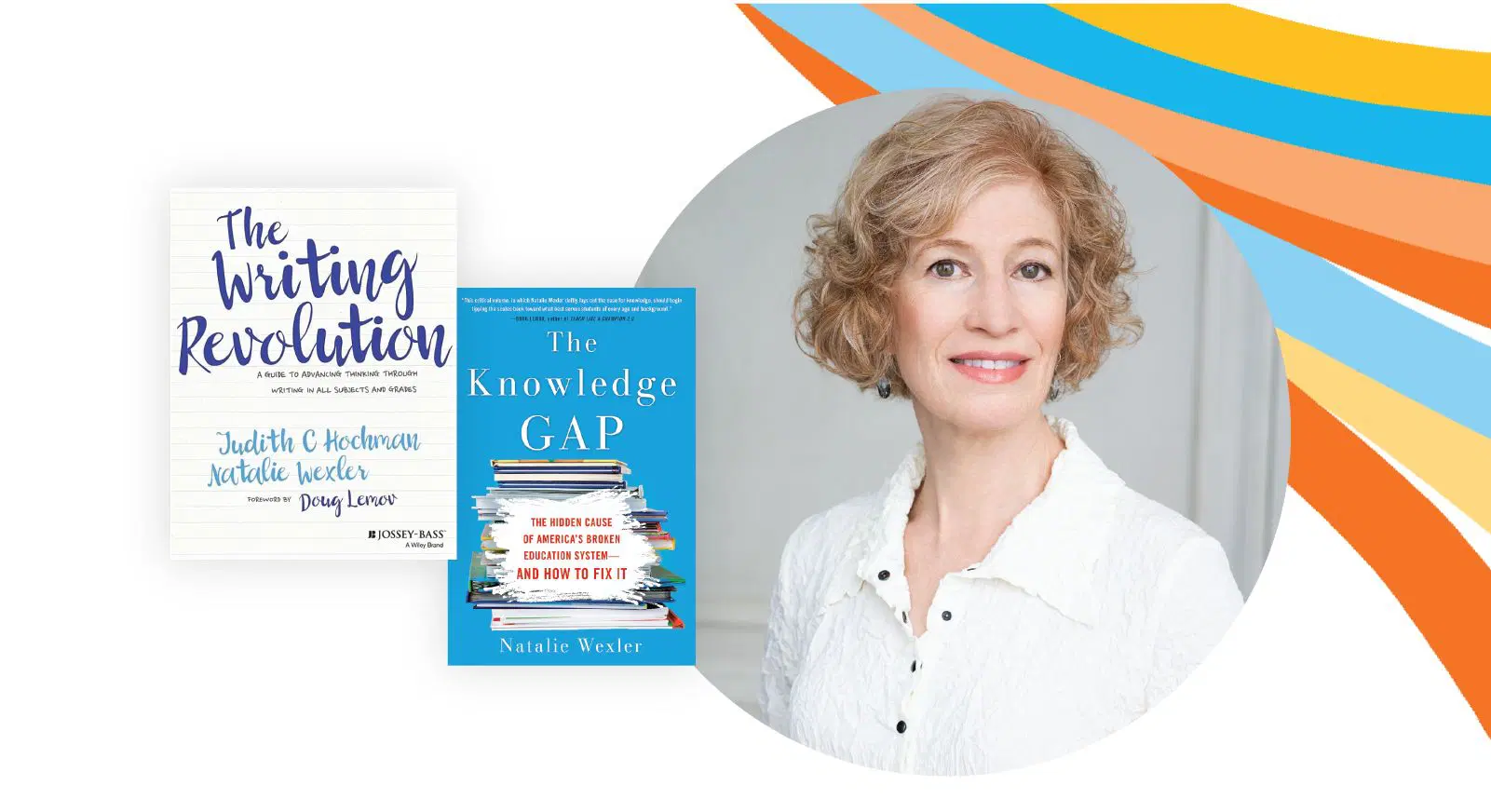
Dan Meyer taught high school math to students who didn’t like high school math. He has advocated for better math instruction on CNN, Good Morning America, Everyday With Rachel Ray, and TED.com. He earned his doctorate from Stanford University in math education and is currently the Dean of Research at Desmos, where he explores the future of math, technology, and learning. Dan has worked with teachers internationally and in all 50 United States and was named one of Tech & Learning’s 30 Leaders of the Future.


Two people smiling at the camera, each in a separate circular frame, with geometric shapes decorating the background—perfect for a math teacher lounge or highlighting fresh math teacher resources.

Transcripts and additional resources:

Quotes

“I think by making space for joy, having fun, and having a positive math identity, students will build fluency.”

—Lauren Carr

Stay connected!