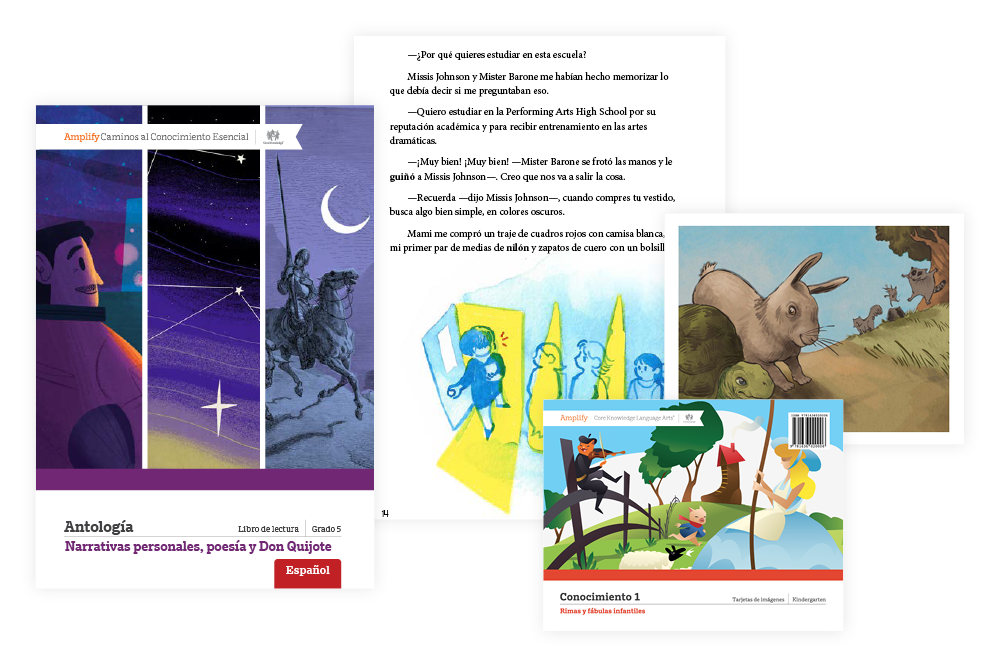
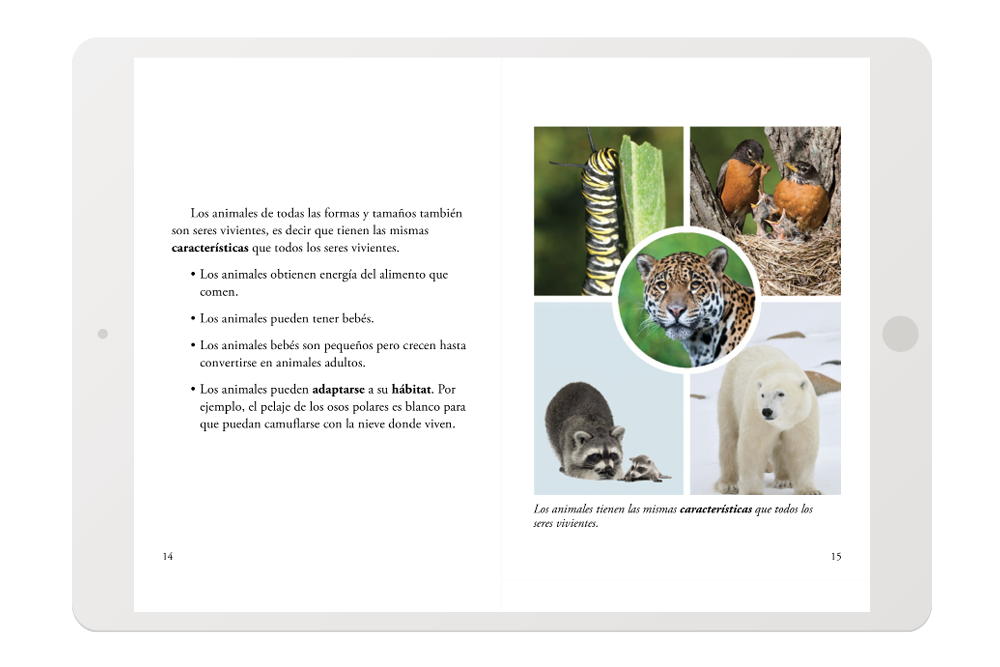
Education technology pioneer Amplify raises significant funding to help expand its K-12 portfolio

(BROOKLYN, NY – May 23, 2023) Amplify, a publisher of next-generation curriculum and assessment programs, announced today it has raised a Series C funding round led by Cox Enterprises, a family-owned, Atlanta-based company committed to connectivity, mobility, and sustainable innovation. Cox joins Amplify’s current investors, including Emerson Collective, Learn Capital, and A-Street Ventures.

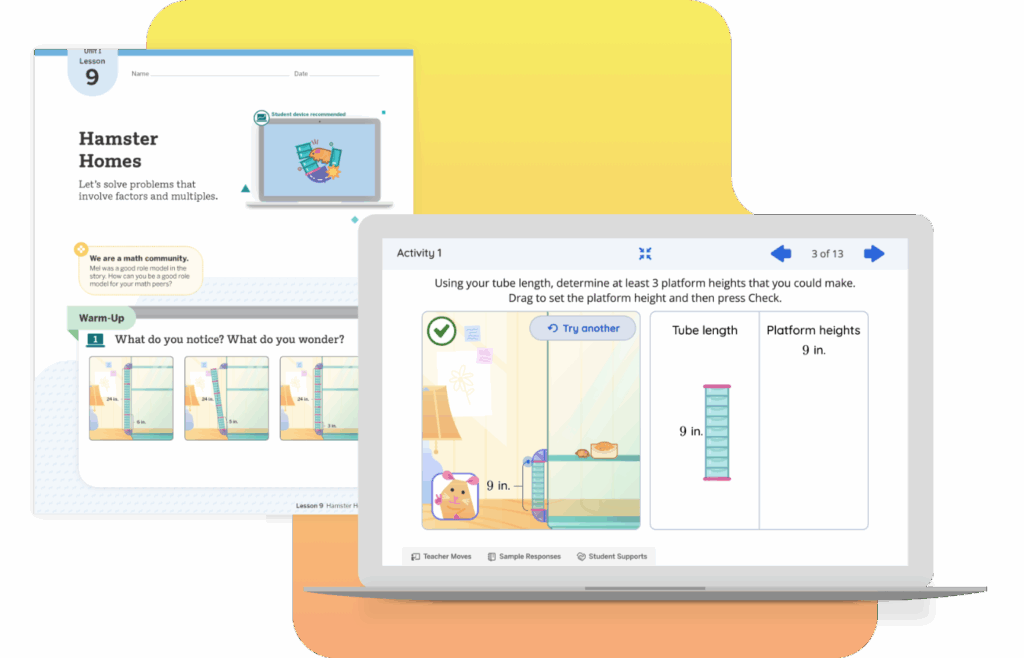
The funding will support Amplify in continuing to expand the breadth and depth of its K-12 product portfolio, which distinctly combines high-quality, evidence-based instruction with digital-forward delivery to help teachers celebrate and extend their students’ thinking, knowledge, and skills. Already a market leader in literacy and science, Amplify is launching a suite of math programs that will reshape mathematics education by bringing together the leading open-source curriculum (IM K-12 Math™ authored by Illustrative Mathematics®) with the most-beloved teaching and learning platform in math education, Desmos Classroom. The goal is to help every student learn – and learn to love – mathematics.

“Amplify has experienced significant growth and is now proud to serve close to a third of U.S. K-8 students today with programs that uniquely blend the best K-12 content and pedagogy with digital tools that help teachers reach all students and drive measurable academic gains,” said Larry Berger, chief executive officer of Amplify. “This investment will help us grow while ensuring that we elevate K-12 instruction and have as much impact as we can.”

Amplify currently delivers its products and services to over half a million teachers in the United States. Its existing core programs have earned all-green scores on EdReports, a third-party curriculum evaluation site. Amplify’s digital supplemental program, Boost Reading, continues to help schools drive gains in early reading, as does its gold-standard early reading assessment, mCLASS®. By meeting the demand for evidence-based, digital-forward programs, Amplify’s bookings have grown at over a 50 percent compound annual growth rate over the last five years (2017-2022). Amplify also continues to see measurable gains in student achievement when districts and schools implement its programs with some measure of fidelity, e.g., recent studies on Amplify ScienceBoost Reading, and Desmos Math 6-8.

“At Cox, we are committed to investing in companies that will reshape their industries over the next generation, bringing positive impact to communities across the country and around the world,” said Mark Lewis, vice president of strategy and investments at Cox Enterprises. “We are excited to help Amplify continue to scale its product offerings and footprint.”

About Amplify
A pioneer in K–12 education since 2000, Amplify is leading the way in next-generation curriculum and assessment. Our captivating core and supplemental programs in literacy, math, and science engage all students in rigorous learning and inspire them to think deeply, creatively, and for themselves. Our formative assessment products turn data into practical instructional support to help all students build a strong foundation in early reading and math. All of our programs provide teachers with powerful tools that help them understand and respond to the needs of every student. Today, Amplify reaches more than 10 million students in all 50 states. To learn more, visit https://amplify.com.

About Cox Enterprises
Cox Enterprises is dedicated to empowering people to build a better future for the next generation. Cox is a leader in the broadband, automotive and media industries, while strategically investing in emerging technologies driving the future of cleantech, health care, and public sector services. Its major operating subsidiaries are Cox Communications and Cox Automotive, which includes brands like Autotrader and Kelley Blue Book. Headquartered in Atlanta, Georgia, Cox is a global company with a proud 125-year history. To learn more about Cox and its commitment to its people, planet and communities, visit coxenterprises.com.

Media contact:
Kristine Frech
Vice President, Corporate Communications
kfrech@amplify.com
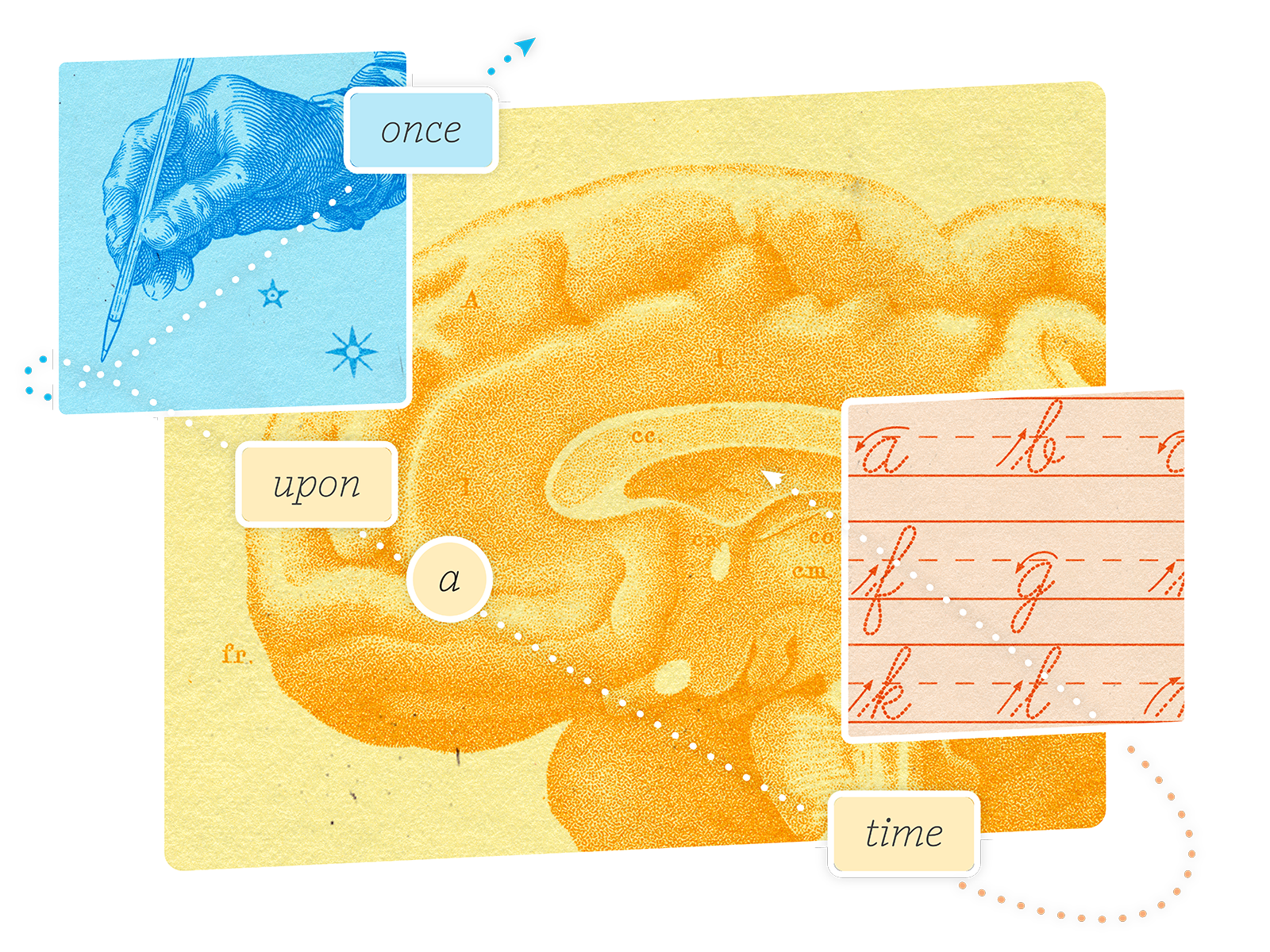
Beyond My Years: Transforming Science Through Three-Dimensional Learning

Wednesday, 7pm ET

Join Eric Cross as he discusses the latest practices in science education with real, experienced educators. You’ll hear how they take science instruction to the next level, have the opportunity to ask what high-level instruction looks like in a real classroom, and walk away with actionable insights for change.

The Benefits of Asset-Based Assessment for All Learners

Wednesday, 2pm ET

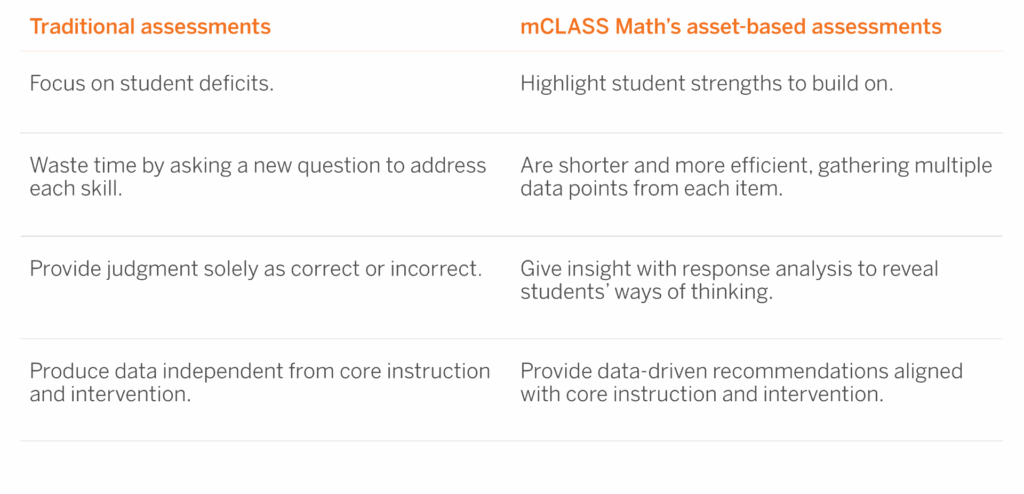
This session advocates for asset-based assessment in K-12 education, focusing on the importance of viewing students through a strengths-based lens rather than a deficit perspective. This session highlights how this approach helps celebrate diverse learners, shifting the focus to what students can do and fostering a growth mindset that supports success for all students. Practical examples will be shared to help educators implement these strategies in their own classrooms.

Amplify acquires K–12 mathematics education innovator Mathigon

(Brooklyn, NY – October 13, 2021): Amplify, a publisher of next-generation curriculum and assessment programs, announced today that it has acquired K–12 mathematics online learning company Mathigon. The London-based edtech startup develops and publishes unique, highly interactive, and visually compelling tools, activities, and courses that enable students to explore the beauty and power of mathematics.

Since 2016, Mathigon has provided free content and tools to teachers, students, and parents in more than 20 languages. Polypad is a “mathematical playground” that features best-in-class virtual manipulatives and other tools to enable exploration, creativity, and problem-solving. Mathigon’s interactive courses for middle and high school cover topics such as algebra, geometry, fractals, graph theory, and cryptography. Every course contains dozens of simulations, animations, games, and interactives, along with a virtual tutor that provides hints and encouragement. Storytelling, real-life applications, and historical content show students why what they’re learning is important and meaningful. Mathigon is used by more than 600,000 students and teachers every month around the world.

Polypad and other Mathigon resources will continue to be freely available, as Amplify is committed to removing barriers to high-quality math instruction and supporting all students in becoming creative problem-solvers. Polypad and other Mathigon tools also will be integrated into Amplify’s in-development math programs, inspiring students to explore and discover mathematics and empowering teachers to see students’ thinking and facilitate meaningful dialogue between students.

“I have almost never seen a product that inspires such pure intellectual delight in children and adults. Delight may be the hardest outcome to achieve in education. Mathigon achieves it over and over again,” said Larry Berger, chief executive officer of Amplify. “When we saw the beautiful, easy-to-use tools that the Mathigon team had built, we knew we wanted to help bring them to even more teachers and students across the world. We also knew we wanted the Mathigon technology and team to be part of our journey of creating the highest quality and most delightful math programs available.”

Mathigon Founder and CEO Philipp Legner will join the Amplify team as vice president, Mathigon Studio, overseeing enhancements to Mathigon’s offerings and integration of key elements into Amplify’s programs. Legner will help spur innovation and power up the company’s already robust product design and engineering teams. His contributions will boost Amplify’s ability to deliver high-quality, student-empowering instructional tools in K–12 mathematics.

“From the very beginning, my goal with Mathigon was to make online learning more interactive and engaging than ever before. Rather than just watching a video and ‘consuming information,’ students should explore, discover, and be creative,” said Philipp Legner, founder and chief executive officer of Mathigon. “Mathematics is both incredibly powerful and surprisingly beautiful, and I want every student to enjoy learning. I’m incredibly excited to work with Amplify to reach even more students.”

About Amplify
A pioneer in K–12 education since 2000, Amplify is leading the way in next-generation curriculum and assessment. Our captivating core and supplemental programs in ELA, math, and science engage all students in rigorous learning and inspire them to think deeply, creatively, and for themselves. Our formative assessment products turn data into practical instructional support to help all students build a strong foundation in early reading and math. All of our programs provide teachers with powerful tools that help them understand and respond to the needs of every student. Today, Amplify serves more than ten million students in all 50 states. For more information, visit www.amplify.com.

About Mathigon
Mathigon is an award-winning platform for learning mathematics, and completely free to use. It’s apps and website contain games, puzzles, activities, virtual manipulatives, and interactive textbooks, allowing students to explore, be creative, learn problem-solving and critical thinking. A unique new content format lets abstract concepts come to life, a virtual personal tutor provides real-time support, and storytelling and real applications make learning more fun and engaging. Mathigon has been used by more than six million students and teachers from all over the world. For more information, visit www.mathigon.org.

Contact:
Molly McCue
media@amplify.com

Unlock possibility with the Science of Writing

The reality is…writing is hard. It’s hard to learn, it’s hard to teach, it’s hard to do.

Natalie Wexler, author of The Knowledge Gap and The Writing Revolution, says, “Writing is the hardest thing we ask students to do.” Fortunately, we have decades of research that shows us how best to teach and learn how to write, known as the Science of Writing. As an educator your job is to make this hard task easier and more fulfilling for students. And our job is to help you.

Why writing matters: Connection, expression, and better reading comprehension

Without writing, there would be no need for reading, and of course, writing is a part of literacy.

Through writing, students can express their ideas, connect with others, and deepen and communicate their understanding of what they are reading and thinking.

Having strong writing skills ensures students can engage fully in all settings, share their opinions and information, tell stories, and have a voice.

What is the Science of Writing?

Learning to write (and read) isn’t natural but it can be taught—and research shows us how. Like the Science of Reading, the Science of Writing is the collection of research and evidence-based practices that explains how writing develops along with the teaching strategies that help students develop into skilled writers.

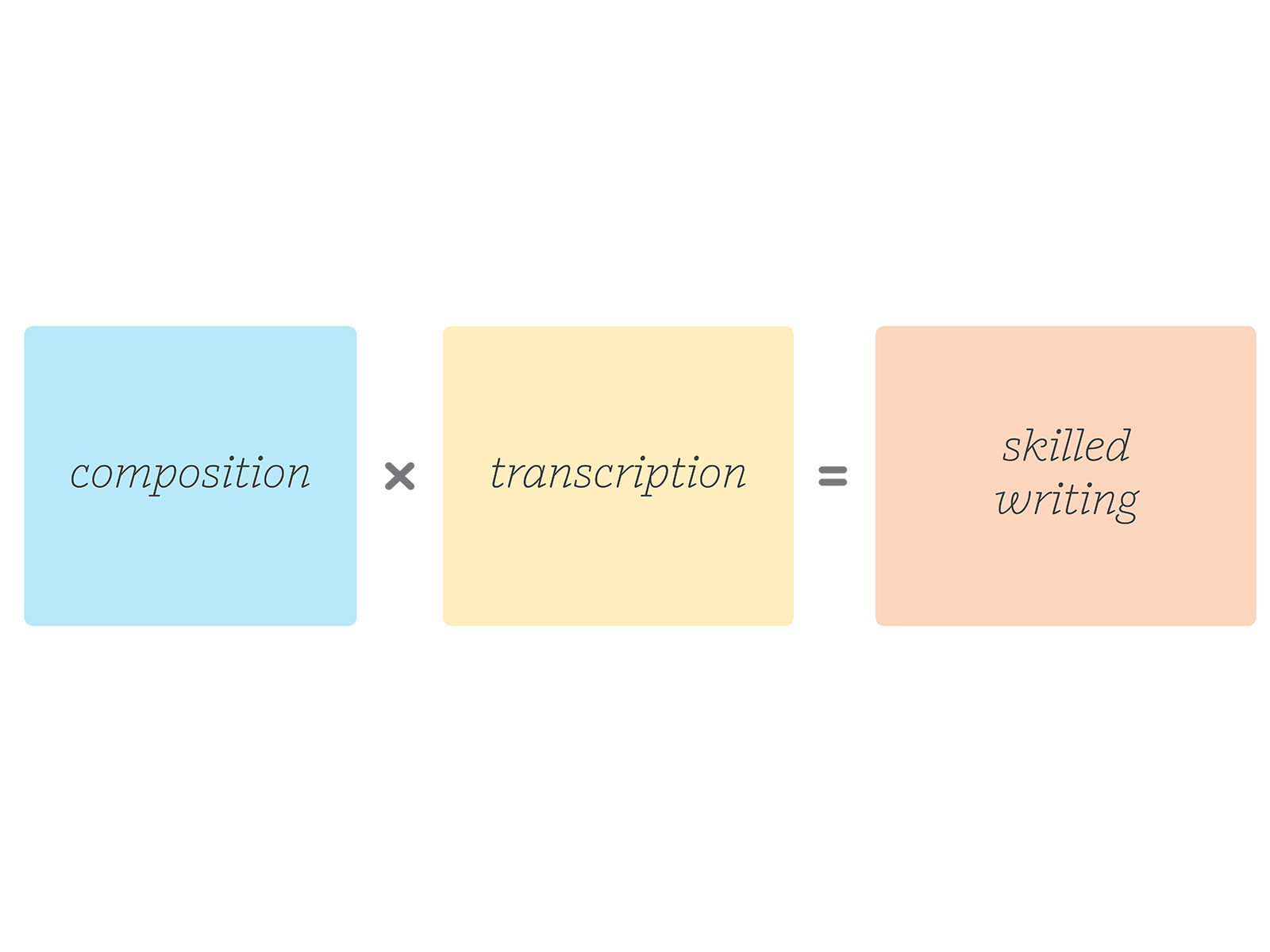
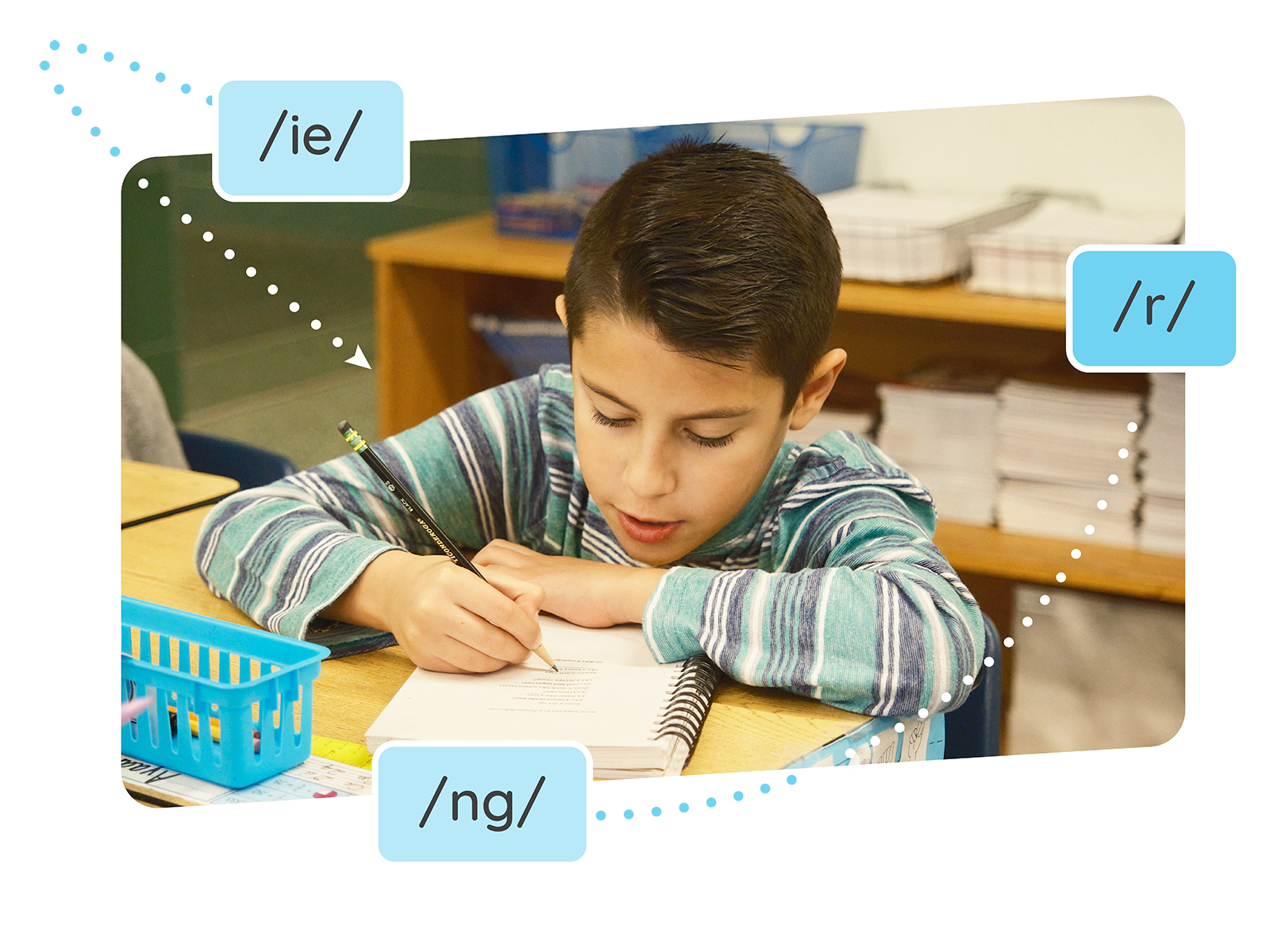
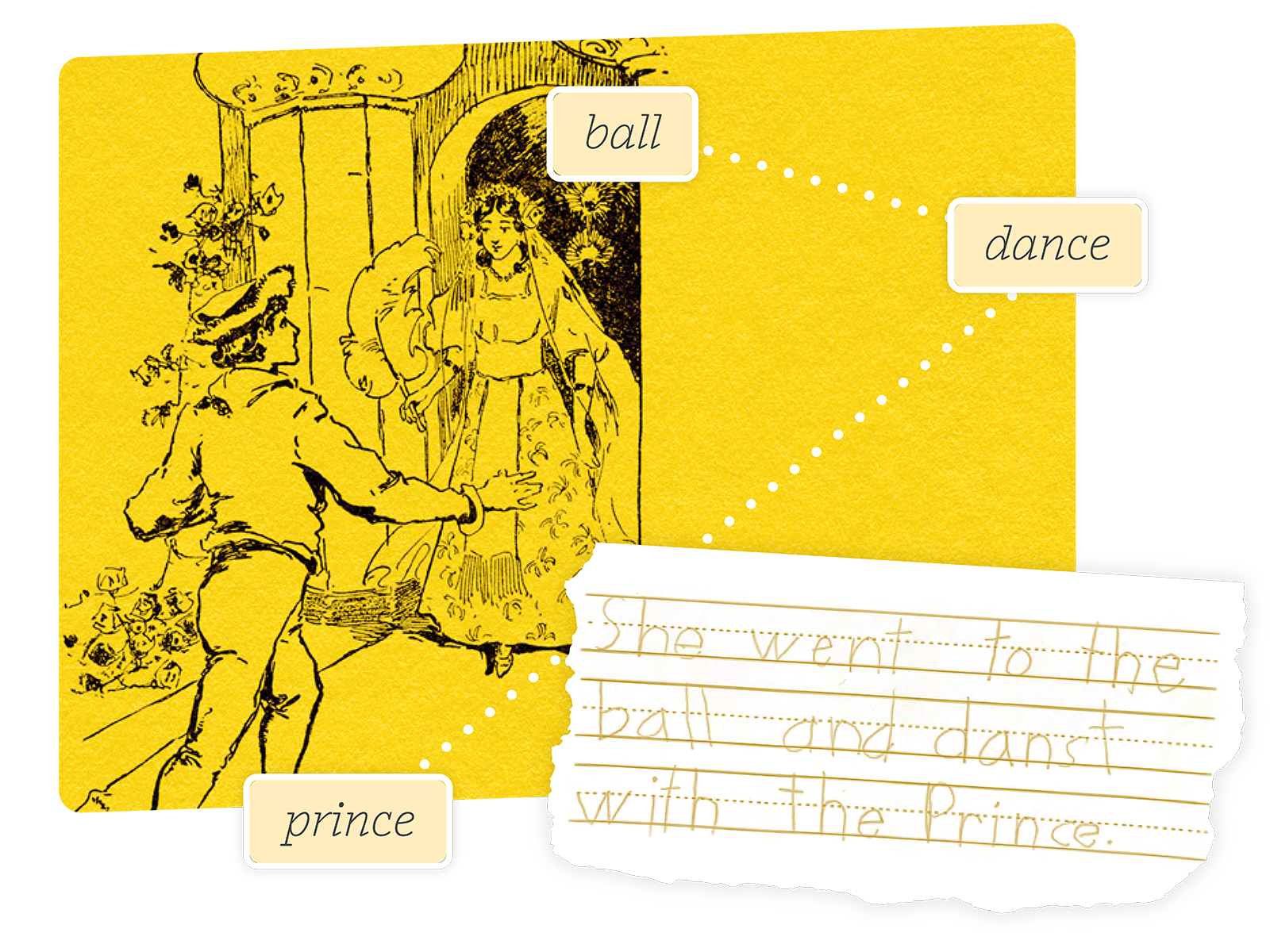
Writing proficiency involves mastering the use of a complex set of skills that must be taught explicitly, again just like reading proficiency. The Simple View of Writing breaks down these processes into transcription and composition, and provides us with a framework for guiding instruction.

The relationship between reading and writing

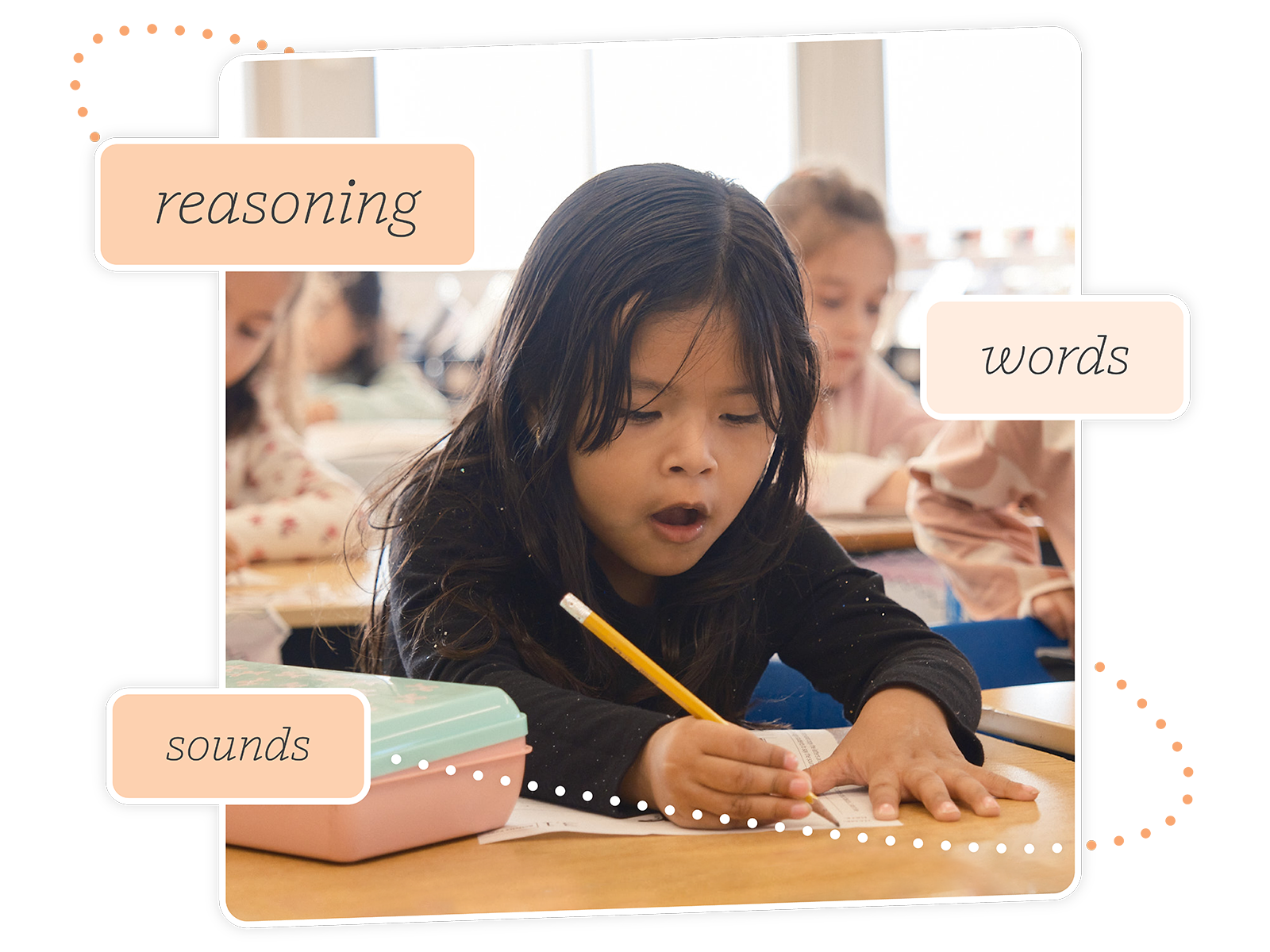
Reading and writing reinforce and support each other. When reading, students are exposed to vocabulary, grammar, and syntax. And when writing, students can get more practice to improve the fluency and efficiency of their handwriting, and apply their knowledge of spelling and their understanding of vocabulary, grammar, and syntax.

Readers use comprehension skills such as summarizing, predicting, and making inferences to help them create meaning as they read. Writers use those same skills to develop a piece of writing that is clear and concise for the reader.

The benefits of applying reading skills and strategies when writing

  • If you teach students decoding skills, then they become better spellers.
  • If students learn strategies for planning, drafting, and revising during composition, then their reading comprehension improves.
  • If students have word and vocabulary knowledge, then they’re better at expressing their ideas in writing.
“Steve Graham and Michael Hebert (2010) carried out a meta-analysis of more than 100 studies in which students wrote about text. They found that writing in various ways about what one had read improved comprehension and learning, and it did so better than reading alone, reading and rereading, or reading and discussing.”

—Tim Shanahan, Ph.D.

Distinguished Professor Emeritus, University of Illinois at Chicago (UIC); Literacy researcher and writer

Oral language and writing

Oral language is the foundation for literacy, and its development begins in infancy. As their oral language develops, children learn how to string words into phrases and sentences, which progresses into telling stories and answering questions in detail. And as they listen to stories, children develop vocabulary and understanding of syntax and grammar. All of these build a foundation for writing.

Are you ready to transform your district with the Science of Reading and Writing?

We’re ready to help. Speak with a product expert to learn more.

mCLASS Alabama

Amplify’s mCLASS® assessments are truly the gold standard in assessments. On this site, you’ll find powerful data-collection tools that can inform your instruction in literacy and math!

Alabama mCLASS Edition Webinar

Click here to view the Alabama mCLASS Edition Webinar.

Hear from educators like you

Hear from teachers, administrators, and students across the country who are using mCLASS in their classrooms right now.

About the program

mCLASS offers teacher-administered assessment, intervention, and personalized instruction for grades K–6. Know exactly how to monitor and support every student in your classroom with features like:

  • Precise one-minute measures based on over three decades of predictive data.
  • Universal and dyslexia screening in one tool.
  • Instruction that highlights observed patterns and recommends activities.
  • Robust reports for teachers, specialists, administrators, and parents.

Resources to support your review

Download the resources below before you review the program to better understand the program structure, components, digital resources, and more.

Dyslexia screening: Catch at-risk students early

Early intervention is critical. With mCLASS, educators can provide universal and dyslexia screening through a single powerful tool—no additional assessment system required.

Download our dyslexia toolkit to learn more.

Assessment measurement videos

mCLASS’s teacher-administered assessment provides for streamlined data collection, emphasizing measures of the most important skills. The measures are administered in the manner that is most appropriate for the developmental stage of the child as well as the skills being assessed.

Phonemic Segmentation Fluency (PSF)

The student produces sounds to isolate first sounds or to segment sounds in spoken words.

Word Reading Fluency (WRF)

Standardized, individually administered assessment that provides a measure of Alphabetic Principle and Reading Fluency skills. The student reads individual words, printed on a sheet of paper, aloud for one minute.

Oral Reading Fluency (ORF)

Students are tasked with verbally repeating what they hear, and thus teachers have deeper diagnostic data about their oral language abilities and errors.

mCLASS Math: Get more answers with our math assessment program.

mCLASS® Math is a math assessment program that uncovers students’ mathematical reasoning and measures fundamental skills to build student success. Universal screening and progress monitoring with diagnostic interviews provide a rich view of at-risk students and gauge the effectiveness of math instruction.

Resource to support your review

Download the resources below before you review the program to better understand the program structure, components, digital resources, and more.

Request a demo

If you’d like to review the full program or speak to a product expert for more information, fill out the form below and we’ll be in touch.

Puyallup 6–8 Science Review | Amplify

To view this protected page, enter the password below:


Illustration of a woman's profile with floral hair decorations, a group of diverse children reading, and an astronaut, with text "read the report: edreports review year 2019.

Welcome West Virginia middle school educators!

We’re honored that you’re considering Amplify ELA for grades 6-8. Below you’ll find resources to guide you in your review including:

  • An overview and introductory video.
  • Program resources to break down the program structure and its components.
  • Step-by-step digital review of all teacher and student materials.
  • Additional resources and an opportunity to request physical samples and access to multimedia resources.

West Virginia alignment coming soon!

Overview

Amplify ELA is a blended curriculum designed for middle school students and teachers, featuring: 

  • An engaging digital program with comprehensive print materials, including Teacher Editions, Student Editions, and Writing Journals for grades 6–8. 
  • A year’s worth of instruction for each grade.
  • Complex, content-rich literary and informational texts.
  • Differentiation that supports all students with reading complex texts, and an interactive eReader with an array of multimedia tools.
  • Embedded assessments that allow for uninterrupted instructional time.
  • The Amplify Library—a digital collection of over 700 full-length texts.

Before you explore the program on your own, watch the program walkthrough to the right. 

Access and equity

We have a responsibility to provide ELA instruction that gives every student the same opportunity to succeed and excel

A boy with glasses smiles while reading a book, with illustrated objects like a telescope, gourd, and cartoon insect in the background.
Three educational book covers are shown, featuring illustrations of astronauts, rockets, historical figures, and space themes, with text indicating "Amplify ELA" and "Grade 8: The Space Race Collection.

Start your review

Follow these steps to complete your digital review of the teacher and student materials for each grade level. Once you’ve completed your digital review, complete the form at the bottom of the page for physical samples and full access to the multimedia resources.

Review step 1: See Amplify ELA in action

Hear from teachers, administrators, and students across the country who are using Amplify ELA in their classrooms right now.

Review step 2: Watch this Amplify ELA overview

Before you explore the program, watch this overview to get familiar with the program and ways to find resources for you and your students online.

Review step 3: Start exploring

To complete your review digitally, click the orange button below to explore the digital platform. You’ll have access to two full units for every grade.

When you explore the digital platform, a quick guided tour will familiarize you with navigation of the program and its features.

While you can access all of the print resources from the digital platform, we’ve collected a few exemplars for each grade level: 

Grade 6: Summer of the Mariposas

Grade 7: Poetry & Poe

Grade 8: Space Race

Three educational book covers from amplify ela series, featuring illustrations of an astronaut, diverse children with books, and a poet surrounded by symbolic imagery.

Request more information

You can request physical samples or full access to the digital resources by submitting the form to the right, or if you have any questions reach out directly to your sales representative, Melissa Webb.

Melissa Webb

Account Executive

mwebb@amplify.com
(304) 552-0234

Welcome to mCLASS® for grades K–8!

On this site, you’ll find resources to guide you in your review.

About the program

mCLASS offers teacher-administered assessment, intervention, and personalized instruction for grades K–8. Know exactly how to monitor and support every student in your classroom with features like:

  • Precise one-minute measures based on over three decades of predictive data.
  • Universal and dyslexia screening in one tool.
  • Instruction that highlights observed patterns and recommends activities.
  • Robust reports for teachers, specialists, administrators, and parents.

Hear from educators like you

Hear from teachers, administrators, and students across the country who are using mCLASS in their classrooms right now.

Resources to support your review

Download the resources below before you review the program to better understand the program structure, components, digital resources, and more.

Dyslexia screening: Catch at-risk students early

Early intervention is critical. With mCLASS, educators can provide universal and dyslexia screening through one single powerful tool—no additional assessment system required.

Download our dyslexia toolkit to learn more.

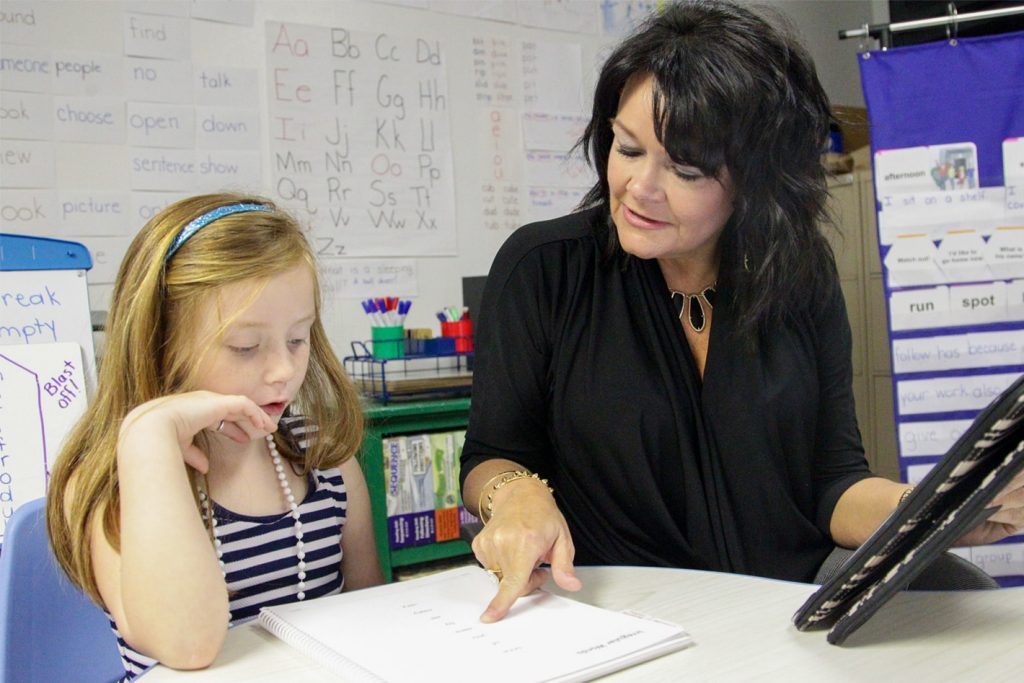
An adult and a young girl sit at a table looking at a smartphone together, with children's books on the table in front of them.

Assessment measurement videos

mCLASS’s teacher-administered assessment provides for streamlined data collection, emphasizing measures of the most important skills. The measures are administered in the manner that is most appropriate for the developmental stage of the child as well as the skills being assessed. 

Phonemic Segmentation Fluency (PSF)

The student produces sounds to isolate first sounds or fully segments sounds in spoken words.

Word Reading Fluency (WRF)

Standardized, individually administered assessment that provides a measure of Alphabetic Principle and Reading Fluency skills. The student reads individual words aloud from a word list printed on a sheet of paper for one minute.

Oral Reading Fluency (ORF)

Students are tasked with verbally repeating what they hear, and thus teachers have deeper diagnostic data about their oral language abilities and errors.

Nonsense Word Fluency (NWF)

This test assesses students’ skills in decoding one-syllable nonsense words by associating the most common sound with each letter and blending those sounds to decode whole words.

Letter Naming Fluency (LNF)

A standardized, individually administered test that provides a measure of risk. Students are presented with a page of upper- and lower-case letters arranged in a random order and are asked to name as many letters as they can.

Request a walkthrough

If you’d like to review the full program or speak to a product expert for more information, fill out the form below and we’ll be in touch.

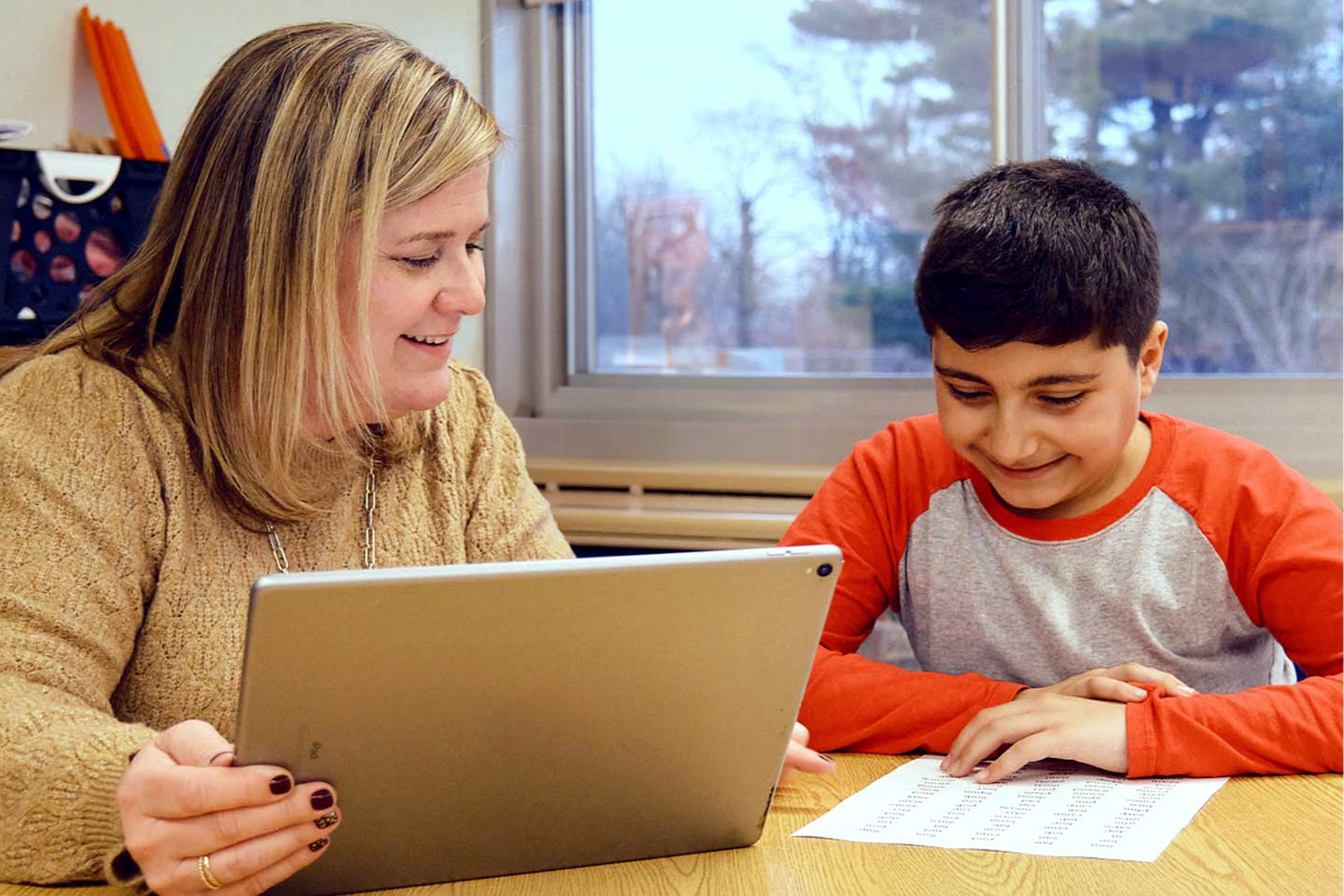
A teacher holding a tablet talks to a smiling student in a classroom. Other students are seated and working at tables in the background.

6-8 Literacy

Welcome to Amplify ELA for grades 6–8!

On this site, you’ll find resources to guide you in your review.

When you’re ready to explore full units in the digital Teacher’s Guide, click the “Review” button at the bottom of this page.

A collage with illustrations of astronauts, a family, and an abstract cartoon, and a photo of a woman writing in a notebook at a table.
A teacher stands at the front of a classroom, while several students seated at desks raise their hands. Some students have laptops open on their desks.

About the program

Amplify ELA is a blended curriculum designed for middle school students and teachers. It provides: 

  • An engaging digital program with comprehensive print materials, including Teacher Editions, Student Editions, and Writing Journals for grades 6-8. 
  • A year’s worth of instruction for each grade.
  • Complex, content-rich literary and informational texts.
  • Differentiation that supports all students with reading complex texts, and an interactive eReader with an array of multimedia tools.
  • Embedded assessments that allow for uninterrupted instructional time.
  • The Amplify Library—a digital collection of 700 full-length texts.

Hear from educators like you

Hear from teachers, administrators, and students across the country who are using Amplify ELA in their classrooms right now.

Resources to support your review

Download the resources below before you review the program to better understand the program structure, components, digital resources, and more.

Four Amplify ELA program guide covers featuring colorful illustrations and two women sitting at a table reviewing documents.

Walkthrough video

Before you explore the program, watch this  overview to get familiar with the program and ways to find resources for you and your students online.

Start your review

To complete your review digitally, click the orange button below to explore the digital Teacher’s Guide, using password readingpower. You’ll have access to two full units from every grade.

When you explore the digital Teacher’s Guide, a quick guided tour will familiarize you with navigation of the program and its features.

While you can access all of the print resources from the digital Teacher’s Guide, we’ve collected a few exemplars here from each grade level:

Three educational book covers about the space race, featuring illustrations of astronauts, rockets, historical figures, and scientific imagery.

Request more information

If you’d like to review the full program, request physical samples, or speak to a product expert for more information, fill out the form below and we’ll be in touch.

The promise of Next Generation Science Standards

The Next Generation Science Standards (NGSS), and other state standards like them, represent more than just new expectations—they embody a transformative vision for science education. Instead of asking students to memorize isolated facts, NGSS calls for students to think like scientists and engineers while grappling with real-world phenomena that matter to them and their communities.

This shift from learning about to figuring out develops the critical-thinking skills and problem-solving mindset students need to tackle complex challenges throughout their lives.

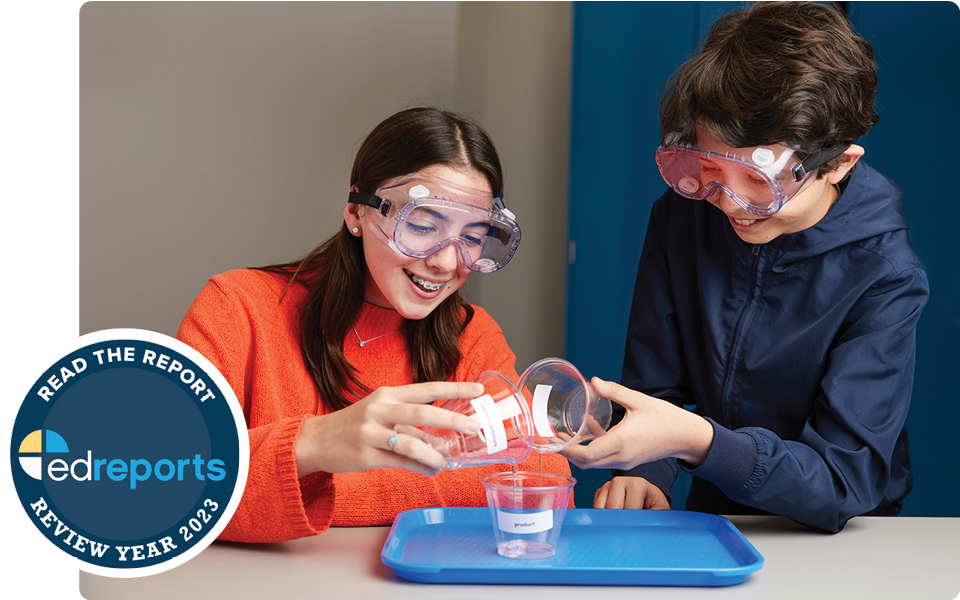
Two children wearing safety goggles conduct an NGSS-inspired science experiment at a table, mixing substances in clear plastic cups with plastic spoons.

Three-dimensional (3D) learning that engages and inspires

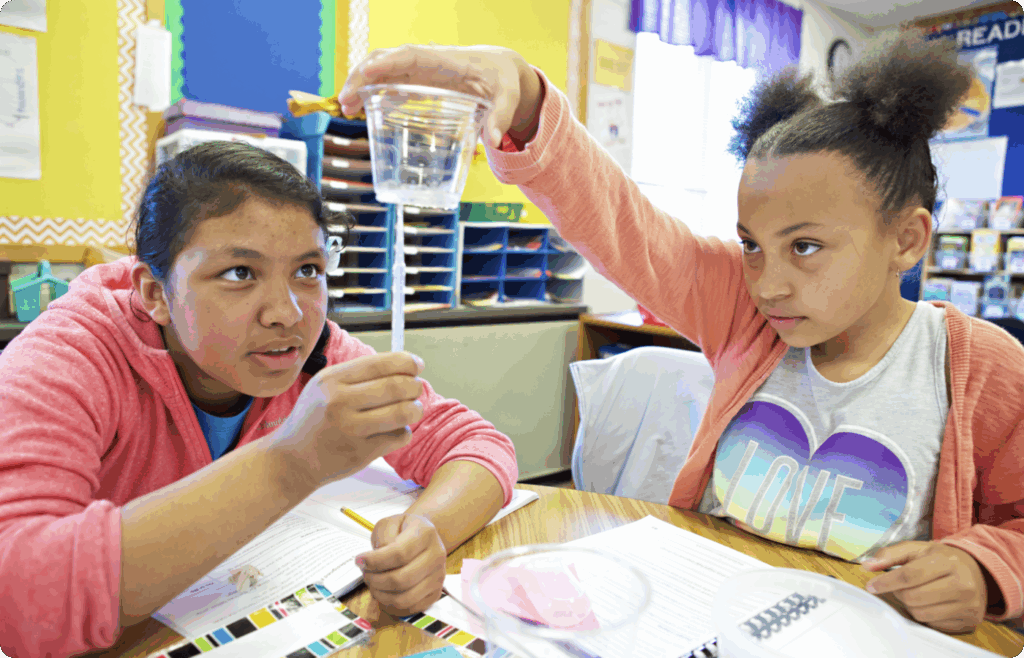
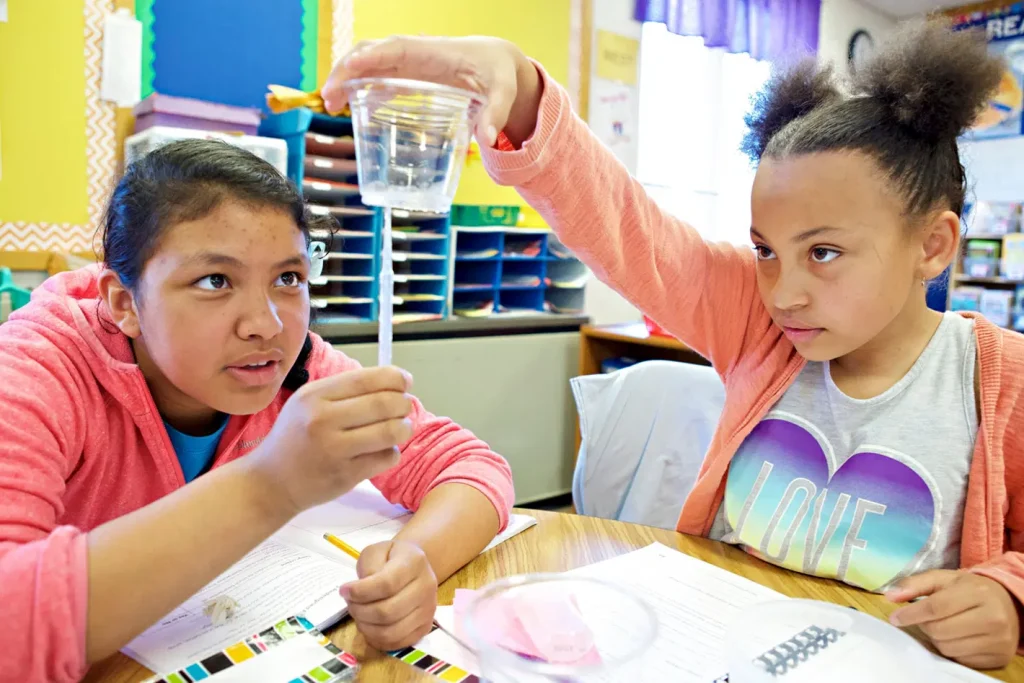
Two girls conduct a science experiment in a classroom, holding a clear cup with water and a straw, while observing and taking notes at their desks.

At the heart of NGSS lies three-dimensional learning, where Science and Engineering Practices (SEPs), Crosscutting Concepts (CCCs), and Disciplinary Core Ideas (DCIs) work together to create rich, meaningful learning experiences.

Science and Engineering Practices are the approaches and habits of real scientists and engineers: asking questions, developing models, planning investigations, and constructing evidence-based explanations and arguments. Working with these practices awakens student curiosity, drives student-centered learning, encourages deep and critical thinking, and creates opportunities for students to articulate their understanding in a variety of meaningful ways. 

Crosscutting Concepts are the big-picture thinking tools that scientists use every day. When students use Crosscutting Concepts as a lens to examine common themes in science such as patterns, cause and effect, systems, and energy, they begin to identify and connect science ideas across disciplines.

Disciplinary Core Ideas represent the essential knowledge of science. Students figure out these science ideas through their investigation of real-world scientific phenomena, and consequently develop deep understandings of science ideas.

The student experience: from passive to passionate

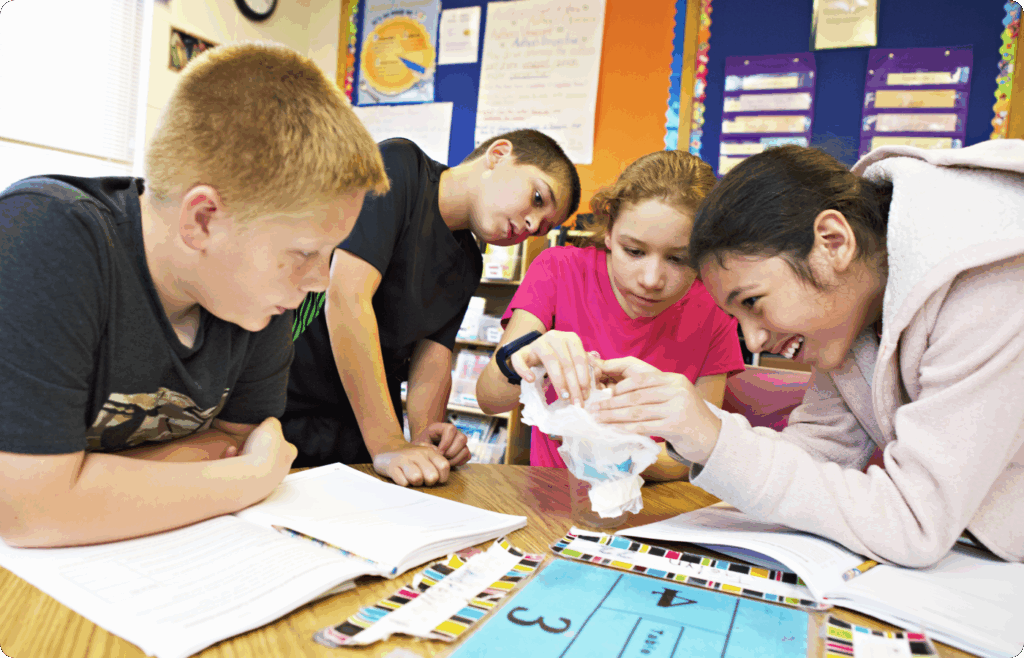
Four children sit at a classroom table examining a small object together, surrounded by open notebooks and colorful classroom decorations.

In three-dimensional science learning, students become active investigators, gathering evidence from multiple sources and constructing increasingly sophisticated scientific arguments and models about real-world phenomena. They engage in evidence-based debates, collaborate on engineering challenges, and make connections between their investigations and their own communities, as well as the world beyond. See it in action.

An adult and a child sit cross-legged on the floor in a classroom, reading a book together. The classroom setting includes chairs, tables, and colorful decorations.

The literacy-rich nature of NGSS instruction means students read, write, speak, and listen like real scientists and engineers, actively questioning, analyzing, and communicating findings. This integrated approach develops both scientific understanding and communication skills—skills that transfer across all subjects and even beyond the classroom.

How Amplify Science delivers as an HQIM curriculum

Amplify Science was built from the ground up to fulfill the NGSS vision and is an HQIM (high-quality instructional materials) curriculum, characterized by the following:

  • All green on EdReports. Amplify Science has been evaluated by EdReports, an independent K–12 curriculum review organization, and received the esteemed all-green rating (“meets expectations”) across all three of its gateways: Alignment to the NGSS, Coherence and Scope, and Usability. Learn more about our all-green rating.
A circular badge with the text "Read the Report" at the top, "EdReports" logo in the center, and "Review Year 2021" at the bottom.
  • The real-world anchor phenomenon is deeply woven throughout each unit as the central thread. In Amplify Science, students assume the role of a real scientist or engineer to investigate a compelling phenomena in K–5 and grades 6–8. Over the course of the unit, they gather and make sense of a variety of evidence sources and develop increasingly sophisticated explanations and models as their understanding deepens. Whether investigating a mysterious fossil discovery as geologists or designing emergency supply delivery pods as mechanical engineers, students experience the kind of work done by real scientists and engineers.  
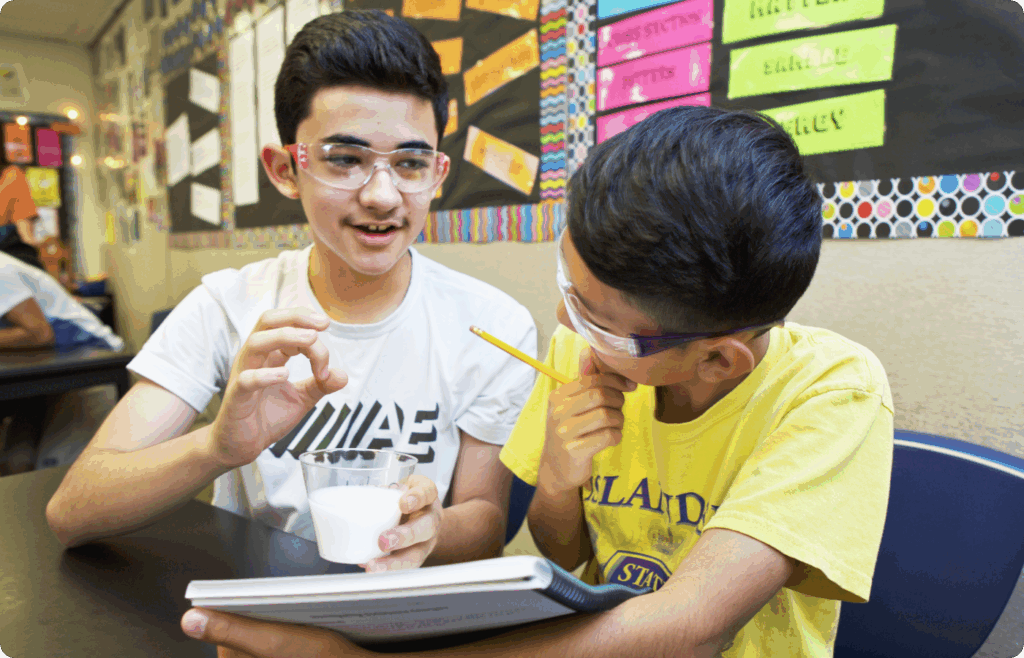
Two boys wearing safety glasses sit at a classroom table. One holds a cup with a white liquid; the other holds a pencil and notebook. Bulletin boards with colorful labels are in the background.
  • All three dimensions of the NGSS are intentionally and thoughtfully integrated throughout every unit and across all grades. As they built Amplify Science as an HQIM curriculum, the experts at UC Berkeley’s Lawrence Hall of Science deliberately crafted each unit, chapter, and lesson with the following guiding questions in mind:
    • What do we want students to figure out (specifically, what Disciplinary Core Idea or part of a DCI)? 
    • How do we want them to figure it out (i.e., what Scientific and Engineering Practice will they engage in to reach understanding)? 
    • What Crosscutting Concept can scaffold students’ understanding and connect it to other ideas about the natural world that they have learned? 

This systematic approach ensures that every learning experience is purposefully designed to engage students in authentic scientific thinking while building connections across concepts and grades.

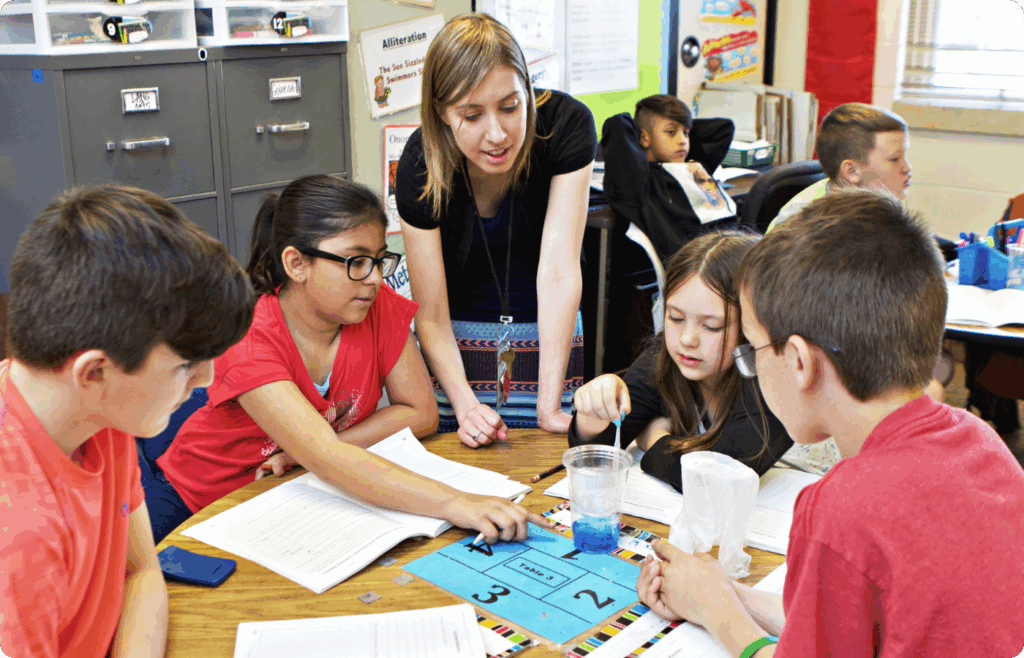
A teacher observes and assists a group of four students working on a science activity at a classroom table.
  • Educators receive comprehensive implementation support. Through lesson-planning resources, science background materials, built-in assessments, and expert coaching—all provided directly through Amplify—teachers are able to confidently implement the program’s NGSS-aligned, high-quality instructional curriculum with greater ease and success. 
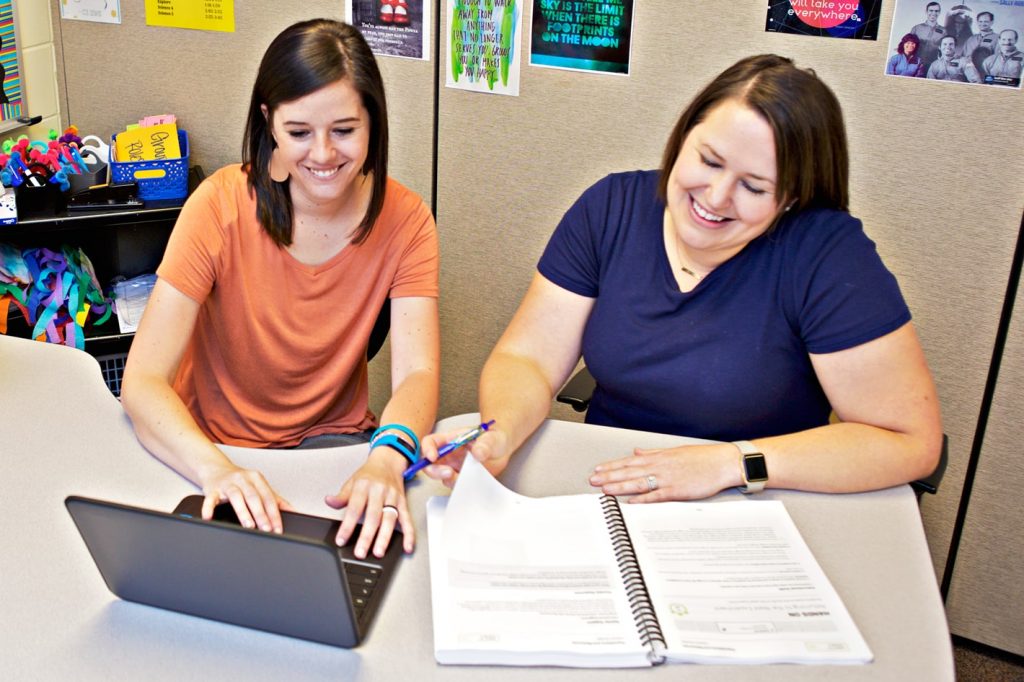
Two women sitting at a table looking down at documents, appearing focused and engaged in discussion or review.
  • Multimodal learning experiences support all learners. Amplify Science ensures that everyone can access scientific concepts through the Do, Talk, Read, Write, Visualize multimodal approach that includes hands-on investigations, digital simulations, collaborative discussions, and literacy-rich activities. 
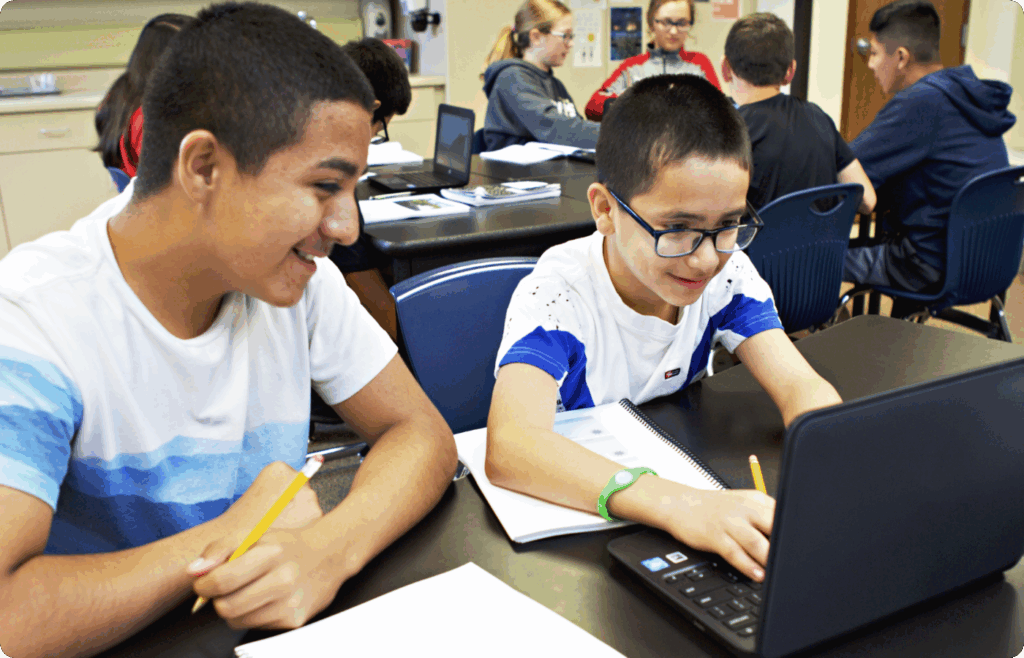
Two boys work together at a desk with a laptop and notebooks, while other students sit and work in the background.
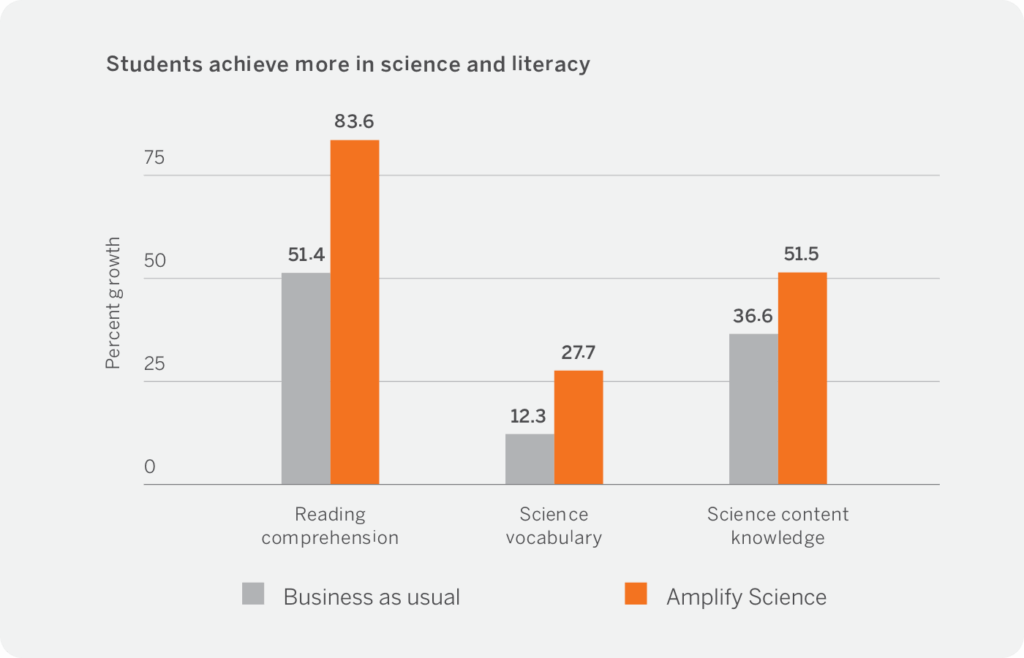
Bar chart comparing percent growth in three skills—reading comprehension, science vocabulary, and science content knowledge—for “Business as usual” vs. “Amplify Science,” aligned with NGSS standards.

Ready to transform your science instruction with an HQIM curriculum?

Please contact your sales representative today, or download a sample unit to experience three-dimensional learning firsthand. Your future scientists, engineers, and citizens of the world are waiting!

Explore a unit

A closer look at grades 6–8 (domain)

Amplify Science is based on the latest research on teaching and learning and helps teachers deliver rigorous and riveting lessons through hands-on investigations, literacy-rich activities, and interactive digital tools that empower students to think, read, write, and argue like real scientists.

In the 6–8 classroom, this looks like students:

  • Collecting evidence from a variety of sources.
  • Making sense of evidence in a variety of ways.
  • Formulating convincing scientific arguments.

Is your school implementing the domain model? Click here.

Collage of four images showing children engaged in educational activities such as conducting experiments and crafting in a classroom setting.
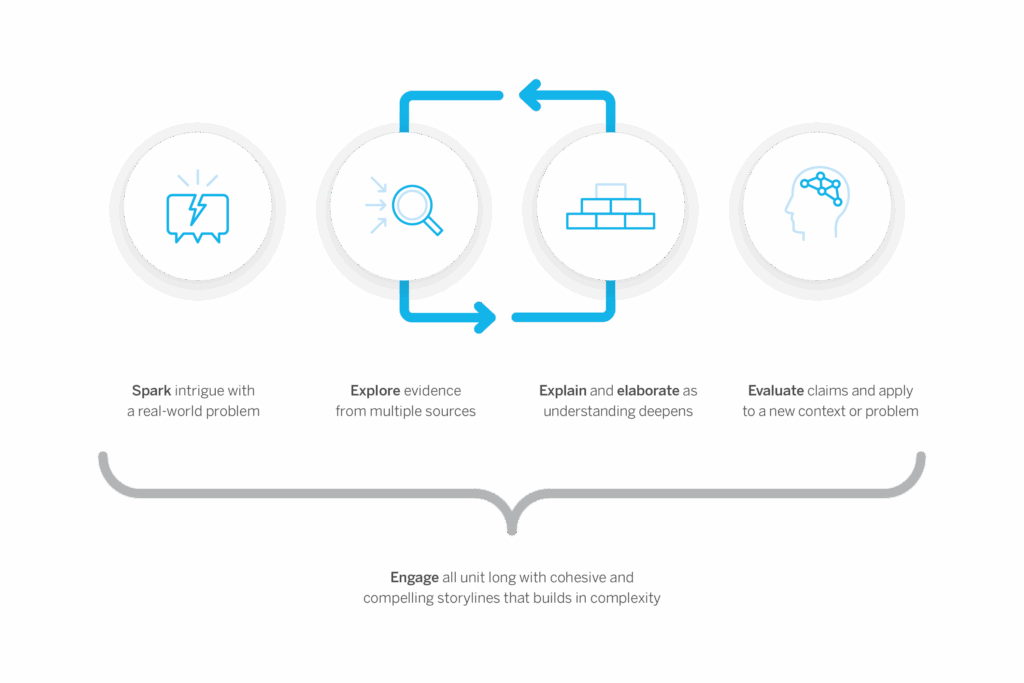
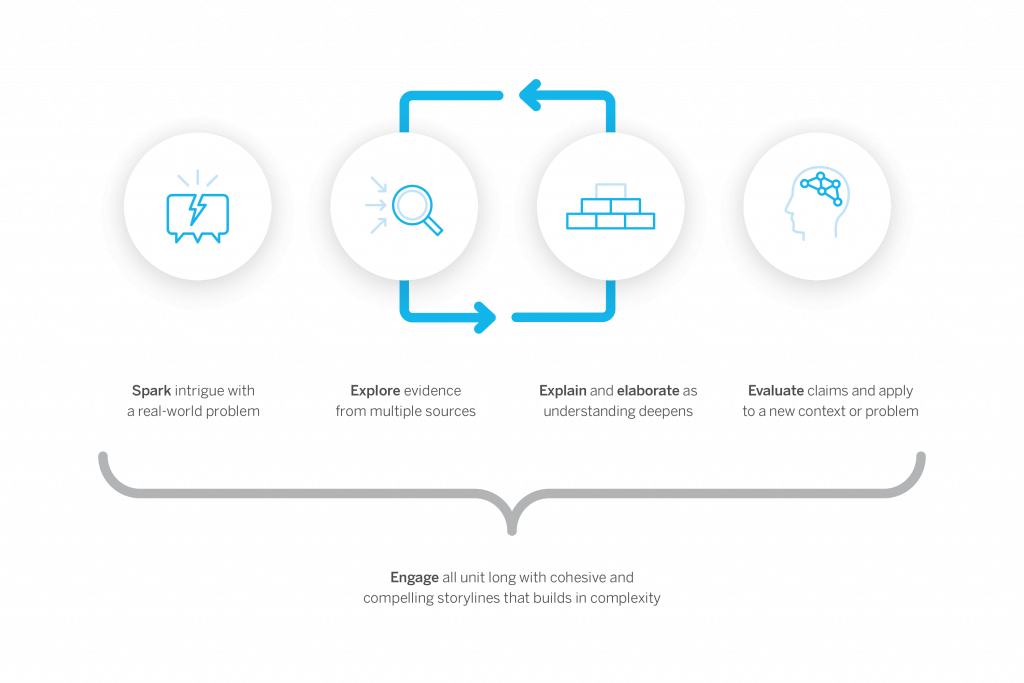
A four-step process: Spark intrigue, Explore evidence, Explain and elaborate, and Evaluate claims, leading to ongoing engagement and building complexity.

Program structure

Our cyclical lesson design ensures students receive multiple exposures to concepts through a variety of modalities. As they progress through the lessons within a unit, students build and deepen their understanding, increasing their ability to develop and refine complex explanations of the unit’s phenomenon.

It’s this proven program structure and lesson design that enables Amplify Science to teach less, but achieve more. Rather than asking teachers to wade through unnecessary content, we designed our 6–8 program to address 100% of the NGSS in fewer lessons than other programs.

Scope and sequence

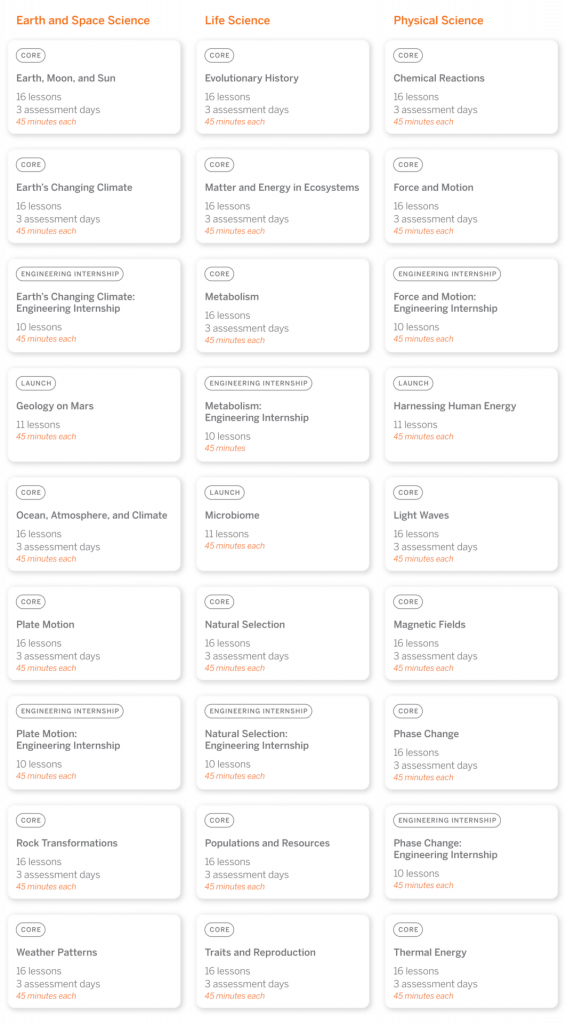
Every year our grades 6–8 sequence consists of 9 units, with each unit containing 10–19 lessons. Lessons are written to last a minimum of 45-minutes, though teachers can expand or contract the timing to meet their needs.

A grid of educational icons, each representing a different science topic, such as earth and space science, life science, and physical science, with titles and lesson counts.

Unit types

Each unit delivers three-dimensional learning experiences and engages students in gathering evidence from a rich collection of sources, while also serving a unique purpose.

In grades 6–8, there are three types of units:

  • One unit is a launch unit.
  • Three units are core units.
  • Two units are engineering internships.
Launch units

Launch units are the first units taught in each year of Amplify Science. The goal of the Launch unit is to introduce students to norms, routines, and practices that will be built on throughout the year, including argumentation, active reading, and using the program’s technology. For example, rather than taking the time to explain the process of active reading in every unit in a given year, it is explained thoroughly in the Launch unit, thereby preparing students to actively read in all subsequent units.

Core units

Core units establish the context of the unit by introducing students to a real-world problem. As students move through lessons in a Core unit, they figure out the unit’s anchoring phenomenon, gain an understanding of the unit’s disciplinary core ideas and science and engineering practices, and make linkages across topics through the crosscutting concepts. Each Core unit culminates with a Science Seminar and final writing activity.

Engineering Internship units

Engineering Internship units invite students to design solutions for real-world problems as interns for a fictional company called Futura. Students figure out how to help those in need, from tsunami victims in Sri Lanka to premature babies, through the application of engineering practices. In the process, they apply and deepen their learning from Core units.

Units at a glance

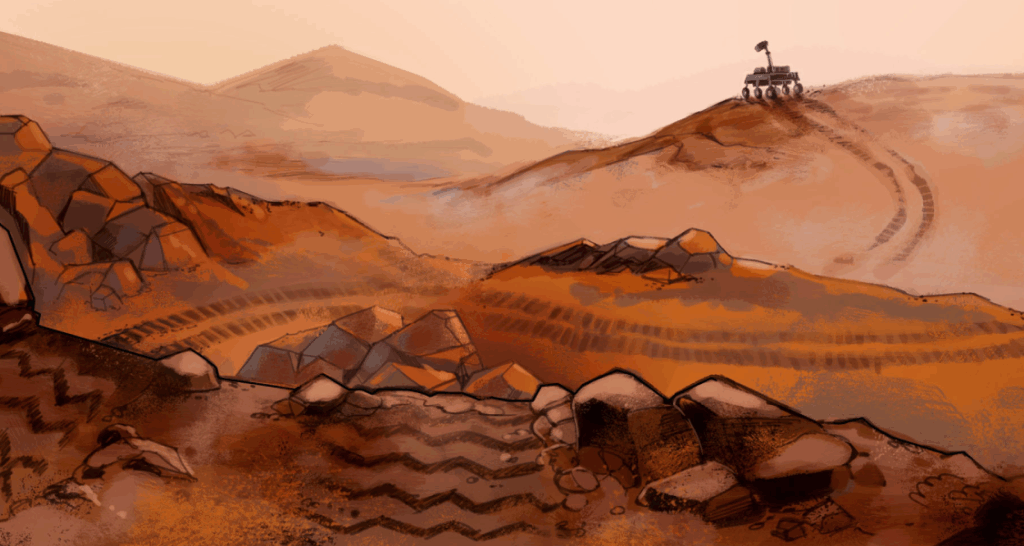
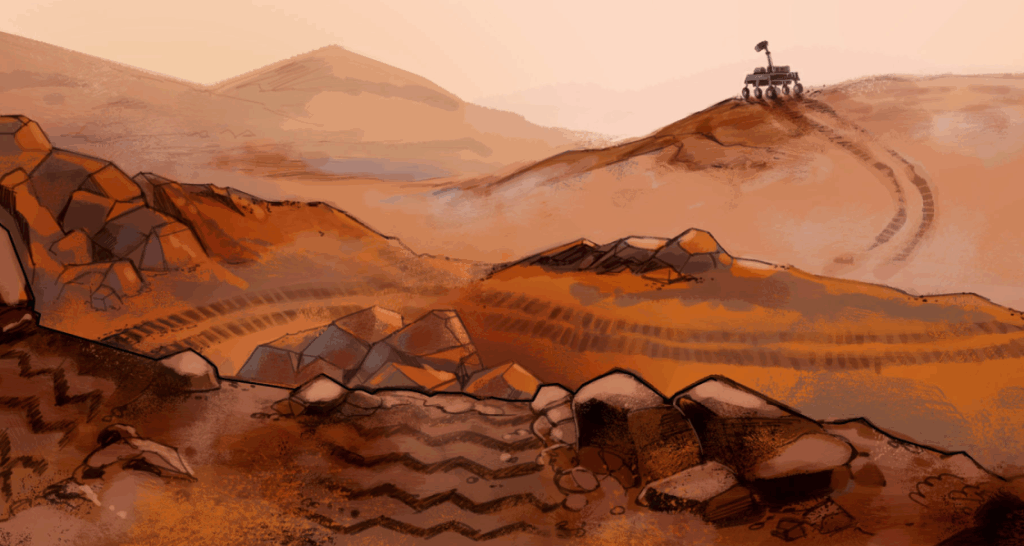
A rover sits on a rocky, reddish hill under a hazy sky, leaving visible tire tracks across the barren landscape.
Geology on Mars

Domain: Earth and Space Science

Unit type: Launch

Student role: Planetary geologists

Phenomenon: Analyzing data about landforms on Mars can provide evidence that Mars may have once been habitable.    

Two prehistoric marine reptiles with long snouts are near a rocky shoreline, one on land and one in the water, with an island and clouds in the background.
Plate Motion

Domain: Earth and Space Science

Unit type: Core

Student role: Geologists

Phenomenon: Mesosaurus fossils have been found on continents separated by thousands of kilometers of ocean, even though the Mesosaurus species once lived all together.    

A geometric badge with a mountain, telescope, and audio wave icons on a purple background with polygonal shapes.
Plate Motion Engineering Internship

Domain: Earth and Space Science

Unit type: Engineering internship

Student role: Mechanical engineering interns

Phenomenon: Patterns in earthquake data can be used to design an effective tsunami warning system.    

Illustration of a volcano by the sea with smoke, trees, mountains, and a cross-section showing a fault line beneath the ground.
Rock Transformations

Domain: Earth and Space Science

Unit type: Core

Student role: Geologists

Phenomenon: Rock samples from the Great Plains and from the Rocky Mountains — regions hundreds of miles apart — look very different, but have surprisingly similar mineral compositions.    

Illustration of a city skyline at night with buildings, a bridge, and a large full moon in a starry sky.
Earth, Sun, and Moon

Domain: Earth and Space Science

Unit type: Core

Student role: Astronomers

Phenomenon: An astrophotographer can only take pictures of specific features on the Moon at certain times.    

Abstract digital painting of a landscape with green hills, a red-orange horizon, and a large yellow sun surrounded by blue and orange swirling shapes on the right.
Ocean, Atmosphere, and Climate

Domain: Earth and Space Science

Unit type: Core

Student role: Climatologists

Phenomenon: During El Niño years, the air temperature in Christchurch, New Zealand is cooler than usual.    

Illustration of a town with houses and fields under a sky with large clouds and swirling wind patterns, set against a backdrop of hills and mountains.
Weather Patterns

Domain: Earth and Space Science

Unit type: Core

Student role: Forensic meteorologists

Phenomenon: In recent years, rainstorms in Galetown have been unusually severe.    

A polar bear stands on a small ice floe surrounded by water and floating ice under a red sun in an Arctic landscape.
Earth’s Changing Climate

Domain: Earth and Space Science

Unit type: Core

Student role: Climatologists

Phenomenon: The ice on Earth’s surface is melting.    

Hexagonal badge with icons including a wrench, building, sun, screwdriver, paint can, and molecules on a purple geometric background.
Earth’s Changing Climate Engineering Internship

Domain: Earth and Space Science

Unit type: Engineering internship

Student role: Civil engineers

Phenomenon: Designing rooftops with different modifications can reduce a city’s impact on climate change.    

Colorful abstract digital artwork featuring a yellow figure holding a device, with blue and red shapes and textured patterns in the background.
Microbiome

Domain: Life Science

Unit type: Launch

Student role: Microbiological researchers

Phenomenon: The presence of 100 trillion microorganisms living on and in the human body may keep the body healthy.    

An abstract illustration of a person having their mouth and throat examined with a tongue depressor, surrounded by colorful shapes, with an eye chart in the background.
Metabolism

Domain: Life Science

Unit type: Core

Student role: Medical researchers

Phenomenon: Elisa, a young patient, feels tired all the time.    

Geometric orange background with a hexagon icon displaying symbols for statistics, farming, healthcare, safety vest, chemistry, and agriculture.
Metabolism Engineering Internship

Domain: Life Science

Unit type: Engineering internship

Student role: Food engineers

Phenomenon: Designing health bars with different molecular compositions can effectively meet the metabolic needs of patients or rescue workers.    

Six spiders with different colors and stripe patterns are arranged in a grid pattern on a dark background, showing variations in leg and body color.
Traits and Reproduction

Domain: Life Science

Unit type: Core

Student role: Biomedical students

Phenomenon: Darwin’s bark spider offspring have different silk flexibility traits, even though they have the same parents.    

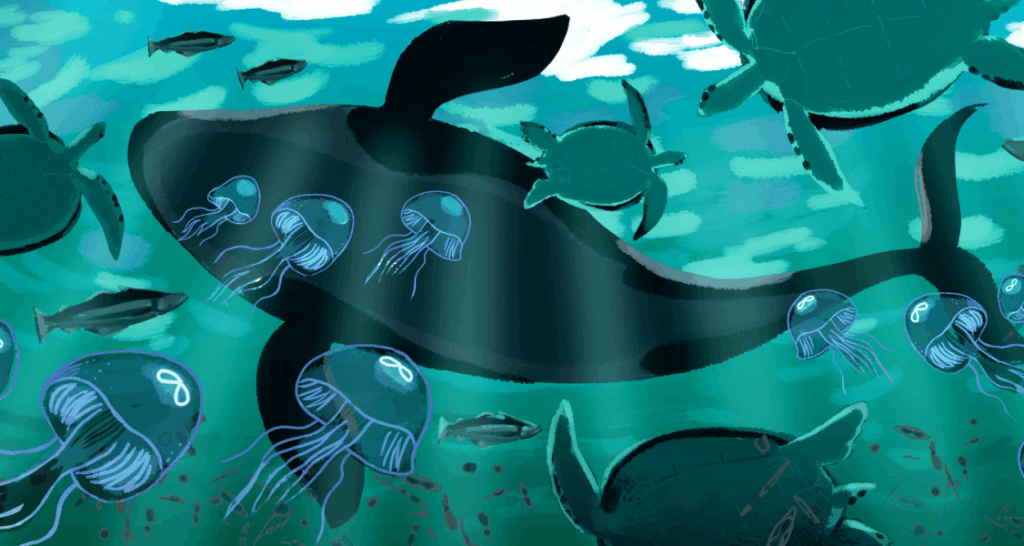
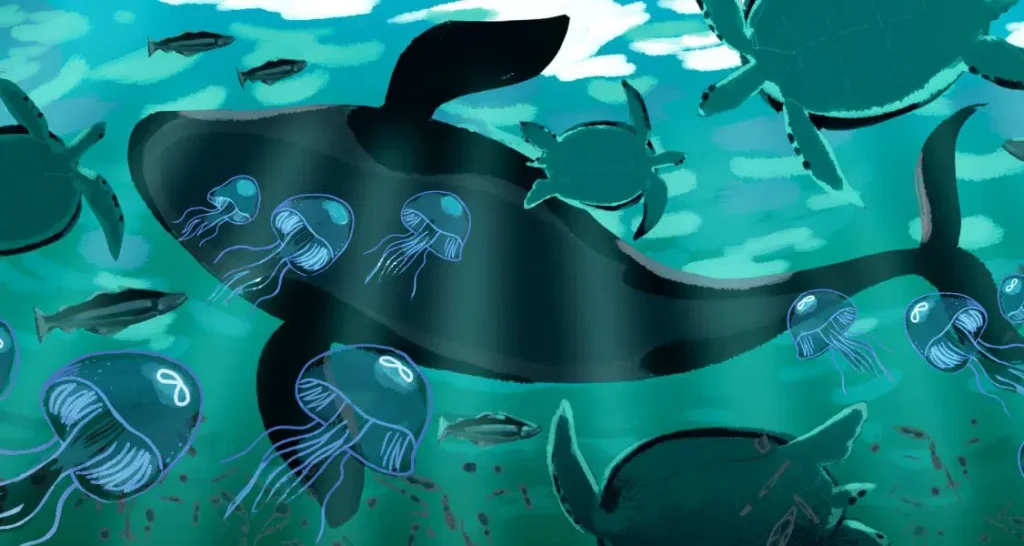
An underwater scene shows a whale surrounded by jellyfish, sea turtles, and fish, with sunlight filtering through the water.
Populations and Resources

Domain: Life Science

Unit type: Core

Student role: Biologists

Phenomenon: The size of the moon jelly population in Glacier Sea has increased.    

A low-poly landscape with trees, mushrooms, a rabbit sitting, and a fox bending down near another rabbit under a sunny sky with mountains in the background.
Matter and Energy in Ecosystems

Domain: Life Science

Unit type: Core

Student role: Ecologists

Phenomenon: What caused the mysterious crash of a biodome ecosystem?    

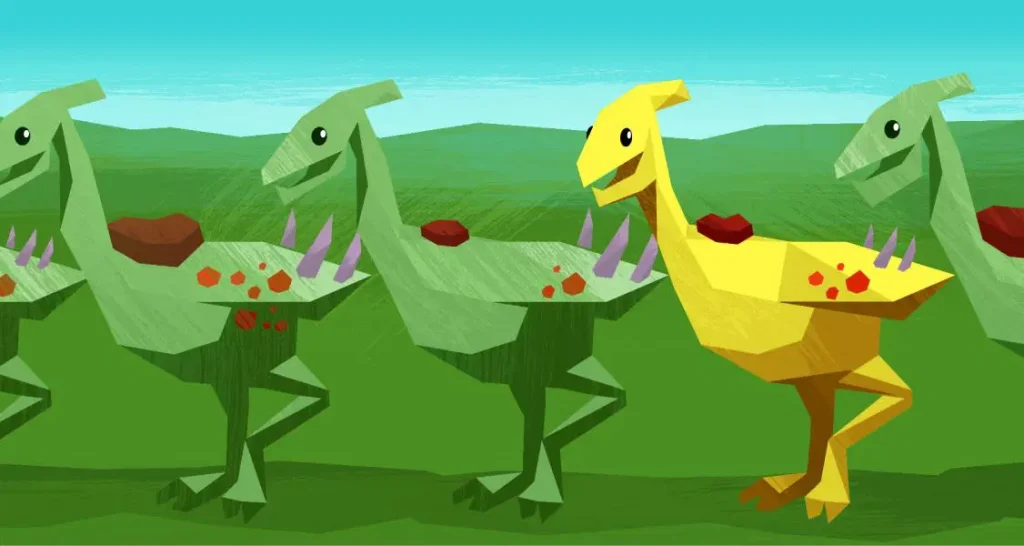
Three green dinosaurs and one yellow dinosaur stand in a row on grass, each with purple spikes and a red spot on their backs. The sky is blue with light clouds.
Natural Selection

Domain: Life Science

Unit type: Core

Student role: Biologists

Phenomenon: The newt population in Oregon State Park has become more poisonous over time.    

Red-toned graphic with hexagonal badge featuring a world map, a mosquito, a DNA strand, charts, cubes, and circular icons. Geometric background pattern.
Natural Selection Engineering Internship

Domain: Life Science

Unit type: Engineering internship

Student role: Clinical engineers

Phenomenon: Designing malaria treatment plans that use different combinations of drugs can reduce drug resistance development while helping malaria patients.  

Two giant tortoises are near a river; one is by the water and the other is standing on land and stretching its neck toward a leafy tree.

Evolutionary History

Domain: Life Science

Unit type: Core

Student role: Paleontologists

Phenomenon: A mystery fossil at the Natural History Museum has similarities with both wolves and whales.    

Two people climb over rocky terrain strewn with electronic waste, with illustrated insets showing a hiking boot, a solar-powered device, and a person adjusting a belt-like gadget.
Harnessing Human Energy

Domain: Physical Science

Unit type: Launch

Student role: Energy scientists

Phenomenon: Rescue workers can use their own human kinetic energy to power the electrical devices they use during rescue missions.    

A spacecraft approaches a modular space station with large solar panels, set against a backdrop of outer space.
Force and Motion

Domain: Physical Science

Unit type: Core

Student role: Physicists

Phenomenon: The asteroid sample-collecting pod failed to dock at the space station as planned.    

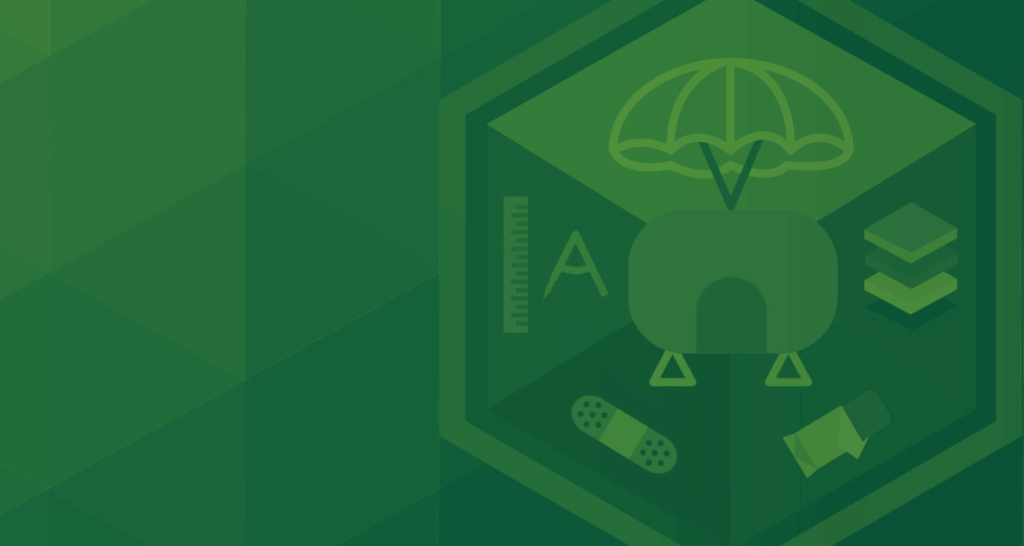
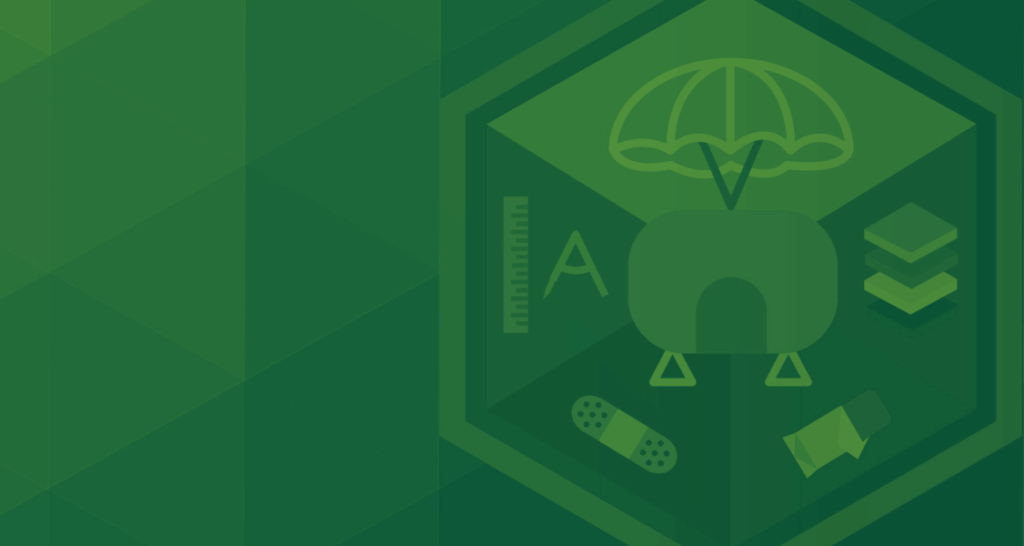
Green geometric background with a hexagonal badge showing a parachute, a box, a ruler, a bandage, and stacked layers.
Force and Motion Engineering Internship

Domain: Physical Science

Unit type: Engineering internship

Student role: Mechanical engineering interns

Phenomenon: Designing emergency supply delivery pods with different structures can maintain the integrity of the supply pods and their contents. 

Illustration of a roller coaster car full of people with raised arms, speeding down a loop against a blue sky with clouds.
Magnetic Fields

Domain: Physical Science

Unit type: Core

Student role: Physicists

Phenomenon: During a test launch, a spacecraft traveled much faster than expected.    

Illustration of a person in a red coat and hat with arms crossed, eyes closed, surrounded by large orange and brown circles, possibly representing snow or lights.
Thermal Energy

Domain: Physical Science

Unit type: Core

Student role: Thermal scientists

Phenomenon: One of two proposed heating systems for Riverdale School will best heat the school.    

An orange popsicle gradually melts, shown in four stages from solid to completely melted, with wooden sticks visible, against a purple background.
Phase Change

Domain: Physical Science

Unit type: Core

Student role: Chemists

Phenomenon: A methane lake on Titan no longer appears in images taken by a space probe two years apart.    

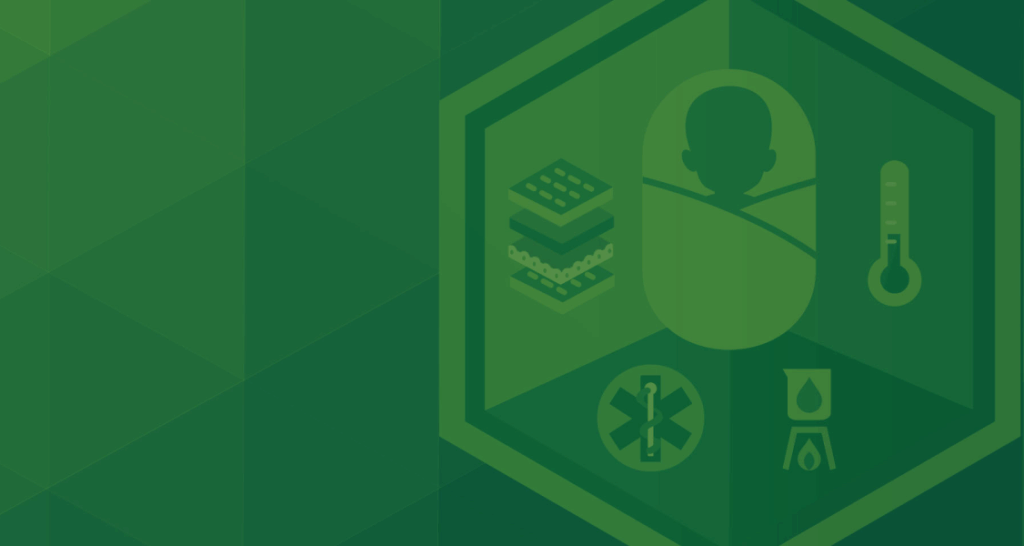
A green background with a picture of a person and a sandwich.
Phase Change Engineering Internship

Domain: Physical Science

Unit type: Engineering internship

Student role: Chemical engineering interns

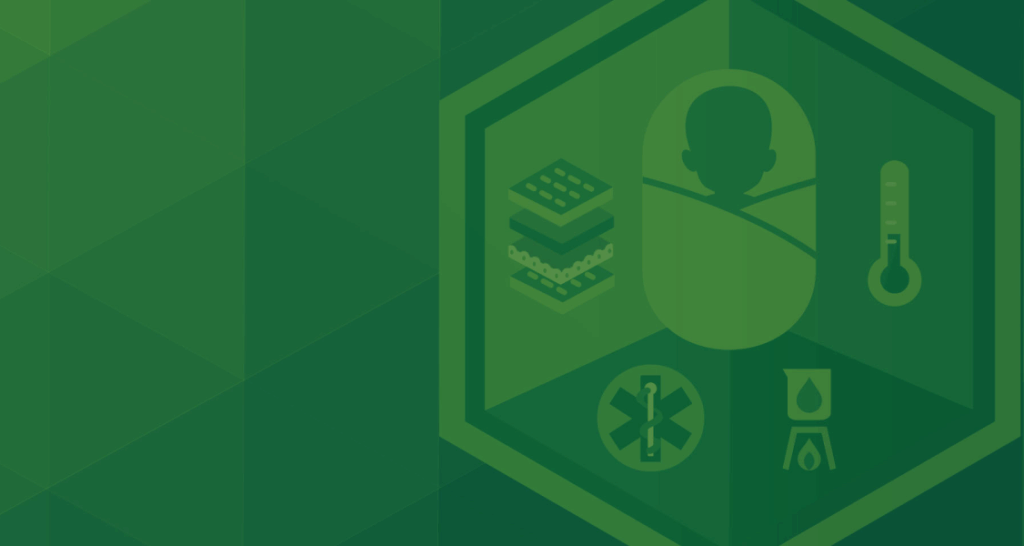
Phenomenon: Designing portable baby incubators with different combinations of phase change materials can keep babies at a healthy temperature.    

Digital illustration showing red and blue molecules on a blue background transitioning to a lighter background, representing molecular diffusion across a boundary.
Chemical Reactions

Domain: Physical Science

Unit type: Core

Student role: Forensic chemists

Phenomenon: A mysterious brown substance has been detected in the tap water of Westfield.    

Illustration of Earth with yellow arrows and colored waves approaching from the left, representing incoming solar or cosmic radiation.
Light Waves

Domain: Physical Science

Unit type: Core

Student role: Spectroscopists

Phenomenon: The rate of skin cancer is higher in Australia than in other parts of the world.    

A closer look at grades 6–8

Amplify Science is based on the latest research on teaching and learning and helps teachers deliver rigorous and riveting lessons through hands-on investigations, literacy-rich activities, and interactive digital tools that empower students to think, read, write, and argue like real scientists.

In the 6–8 classroom, this looks like students:

  • Collecting evidence from a variety of sources.
  • Making sense of evidence in a variety of ways.
  • Formulating convincing scientific arguments.

Is your school implementing the domain model? Click here.

Collage of four images showing children engaged in educational activities such as conducting experiments and crafting in a classroom setting.
A four-step process diagram: Spark intrigue, Explore evidence, Explain and elaborate, and Evaluate claims, connected by arrows, with an engagement statement below.

Program structure

Our cyclical lesson design ensures students receive multiple exposures to concepts through a variety of modalities. As they progress through the lessons within a unit, students build and deepen their understanding, increasing their ability to develop and refine complex explanations of the unit’s phenomenon.

It’s this proven program structure and lesson design that enables Amplify Science to teach less, but achieve more. Rather than asking teachers to wade through unnecessary content, we designed our 6–8 program to address 100% of the NGSS in fewer lessons than other programs.

Scope and sequence

Every year our grades 6–8 sequence consists of 9 units, with each unit containing 10–19 lessons. Lessons are written to last a minimum of 45-minutes, though teachers can expand or contract the timing to meet their needs.

A grid of educational icons, each representing a different science topic, such as earth and space science, life science, and physical science, with titles and lesson counts.

Unit types

Each unit delivers three-dimensional learning experiences and engages students in gathering evidence from a rich collection of sources, while also serving a unique purpose.

In grades 6–8, there are three types of units:

  • One unit is a launch unit.
  • Three units are core units.
  • Two units are engineering internships.
Launch units

Launch units are the first units taught in each year of Amplify Science. The goal of the Launch unit is to introduce students to norms, routines, and practices that will be built on throughout the year, including argumentation, active reading, and using the program’s technology. For example, rather than taking the time to explain the process of active reading in every unit in a given year, it is explained thoroughly in the Launch unit, thereby preparing students to read actively in all subsequent units.

Core units

Core units establish the context of the unit by introducing students to a real-world problem. As students move through lessons in a Core unit, they figure out the unit’s anchoring phenomenon, gain an understanding of the unit’s disciplinary core ideas and science and engineering practices, and make linkages across topics through the crosscutting concepts. Each Core unit culminates with a Science Seminar and final writing activity.

Engineering Internship units

Engineering Internship units invite students to design solutions for real-world problems as interns for a fictional company called Futura. Students figure out how to help those in need, from tsunami victims in Sri Lanka to premature babies, through the application of engineering practices. In the process, they apply and deepen their learning from Core units.

Units at a glance

Abstract digital artwork featuring a yellow human figure, red shapes, and a blue-toned screen, with vibrant, multicolored patterns and textures in the background.
Microbiome

Domain: Life Science

Unit type: Launch

Student role: Microbiological researchers

Phenomenon: The presence of 100 trillion microorganisms living on and in the human body may keep the body healthy.  

An abstract illustration of a person receiving an oral examination, with colorful geometric shapes and an eye chart in the background.
Metabolism

Domain: Life Science

Unit type: Core

Student role: Medical researchers

Phenomenon: Elisa, a young patient, feels tired all the time.  

Abstract orange background with geometric shapes, featuring icons of a vest, bar chart, leaf, beaker, fruit, medical stethoscope, and an envelope within a hexagonal frame.
Metabolism Engineering Internship

Domains: Life Science, Engineering Design

Unit type: Engineering internship

Student role: Food engineers

Phenomenon: Designing health bars with different molecular compositions can effectively meet the metabolic needs of patients or rescue workers.  

Six spiders with varying body colors (brown, yellow, blue, and red) and patterns are arranged on a dark, textured background, seemingly in a diagram or chart formation.
Traits and Reproduction

Domain: Life Science

Unit type: Core

Student role: Biomedical students

Phenomenon: Darwin’s bark spider offspring have different silk flexibility traits, even though they have the same parents.  

Illustration of a person with closed eyes in a red winter coat and hat, surrounded by falling snow and orange circles on a dark background.
Thermal Energy

Domain: Physical Science

Unit type: Core

Student role: Thermal scientists

Phenomenon: One of two proposed heating systems for Riverdale School will best heat the school. 

Abstract illustration of a sun with blue and orange rays over a colorful landscape featuring green hills and a vibrant sky.
Ocean, Atmosphere, and Climate

Domains: Earth and Space Science, Physical Science

Unit type: Core

Student role: Climatologists

Phenomenon: During El Niño years, the air temperature in Christchurch, New Zealand is cooler than usual.  

Illustration of clouds above a small town and farmland, with wind currents depicted swirling through the landscape under a blue sky.
Weather Patterns

Domains: Earth and Space Science, Physical Science

Unit type: Core

Student role: Forensic meteorologists

Phenomenon: In recent years, rainstorms in Galetown have been unusually severe.  

A polar bear stands on a small floating ice sheet in the ocean, surrounded by melting ice, with a red sun in the sky.
Earth’s Changing Climate

Domains: Earth and Space Science, Life Science

Unit type: Core

Student role: Climatologists

Phenomenon: The ice on Earth’s surface is melting.  

A purple hexagonal graphic with icons including a building, wrench, screwdriver, sun, molecules, paint bucket, and tiles on a geometric patterned background.
Earth’s Changing Climate Engineering Internship

Domains: Earth and Space Science, Engineering Design

Unit type: Engineering internship

Student role: Civil engineers

Phenomenon: Designing rooftops with different modifications can reduce a city’s impact on climate change.  

A robotic rover sits on a hill in a rocky, reddish landscape, with visible tracks in the dust leading to its current position under a hazy sky.
Geology on Mars

Domain: Earth and Space Science

Unit type: Launch

Student role: Planetary geologists

Phenomenon: Analyzing data about landforms on Mars can provide evidence that Mars may have once been habitable. 

Two green prehistoric reptiles with long snouts are near the shore; one is on land while the other swims in blue water, with plants, rocks, and an island in the background.
Plate Motion

Domain: Earth and Space Science

Unit type: Core

Student role: Geologists

Phenomenon: Mesosaurus fossils have been found on continents separated by thousands of kilometers of ocean, even though the Mesosaurus species once lived all together.  

A purple geometric background featuring a hexagonal badge with a telescope, mountain, audio wave, and star symbols inside.
Plate Motion Engineering Internship

Domains: Earth and Space Science, Engineering Design

Unit type: Engineering internship

Student role: Mechanical engineering interns

Phenomenon: Patterns in earthquake data can be used to design an effective tsunami warning system.  

Illustration showing an ocean, forest, and mountains with a smoking volcano, plus a cross-section of underground tectonic plates.
Rock Transformations

Domain: Earth and Space Science

Unit type: Core

Student role: Geologists

Phenomenon: Rock samples from the Great Plains and from the Rocky Mountains — regions hundreds of miles apart — look very different, but have surprisingly similar mineral compositions.  

Four stages of an orange popsicle melting on a stick, from fully frozen on the left to completely melted on the right, against a plain background.
Phase Change

Domains: Physical Science, Earth and Space Science

Unit type: Core

Student role: Chemists

Phenomenon: A methane lake on Titan no longer appears in images taken by a space probe two years apart

Green geometric background with an outlined hexagon containing icons: a parachute, ruler, letter "A," bandage, stacked blocks, and a folded corner paper.
Force and Motion Engineering Internship

Domains: Engineering Design, Physical Science

Unit type: Engineering internship

Student role: Chemical engineering interns

Phenomenon: Designing portable baby incubators with different combinations of phase change materials can keep babies at a healthy temperature. Domains: Engineering Design, Physical Science

Abstract illustration showing red and blue circles on a split blue and light background, representing molecular movement across a membrane or barrier.
Chemical Reactions

Domains: Physical Science, Life Science, Earth and Space Science

Unit type: Core

Student role: Forensic chemists

Phenomenon: A mysterious brown substance has been detected in the tap water of Westfield.  

An underwater scene with a large whale surrounded by turtles, jellyfish, and various fish swimming in different directions.
Populations and Resources

Domains: Life Science, Earth and Space Science

Unit type: Core

Student role: Biologists

Phenomenon: The size of the moon jelly population in Glacier Sea has increased. 

Low-poly digital illustration of a fox hunting a rabbit in a forest with pine trees, mushrooms, mountains, and the sun in the background. Another rabbit sits near the trees.
Matter and Energy in Ecosystems

Domains: Life Science, Earth and Space Science, Physical Science

Unit type: Core

Student role: Ecologists

Phenomenon: The biodome ecosystem has collapsed.  

Two people climb over rocks filled with electronic devices; inset illustrations show a boot, a belt of batteries, and a radio.
Harnessing Human Energy

Domains: Physical Science, Earth and Space Science, Engineering Design

Unit type: Launch

Student role: Energy scientists

Phenomenon: Rescue workers can use their own human kinetic energy to power the electrical devices they use during rescue missions.  

A spacecraft approaches and docks with a modular space station featuring large blue solar panels, set against a black space background.
Force and Motion

Domain: Physical Science

Unit type: Core

Student role: Physicists

Phenomenon: The asteroid sample-collecting pod failed to dock at the space station as planned.

Green graphic with hexagonal emblem showing an infant, a thermometer, layered materials, a medical symbol, and a flame icon.
Force and Motion Engineering Internship

Domains: Engineering Design, Physical Science

Unit type: Engineering internship

Student role: Chemical engineering interns

Phenomenon: Designing emergency supply delivery pods with different structures can maintain the integrity of the supply pods and their contents.

Illustration of a roller coaster car with passengers raising their arms as they descend a steep track against a blue sky with clouds.
Magnetic Fields

Domain: Physical Science

Unit type: Core

Student role: Physicists

Phenomenon: During a test launch, a spacecraft traveled much faster than expected.  

Illustration of the Earth with arrows representing radiation or energy entering the atmosphere from space, focused on the Asia-Pacific region.
Light Waves

Domains: Physical Science, Life Science, Earth and Space Science

Unit type: Core

Student role: Spectroscopists

Phenomenon: The rate of skin cancer is higher in Australia than in other parts of the world.

A city skyline at night with illuminated windows, a large full moon, stars in the sky, and a bridge visible on the left side.
Earth, Moon, and Sun

Domains: Earth and Space Science, Physical Science

Unit type: Core

Student role: Astronomers

Phenomenon: An astrophotographer can only take pictures of specific features on the Moon at certain times.  

Four polygonal dinosaurs walking in a row, three green and one yellow, each with a rock and purple spikes on their backs, set against a grassy background with a blue sky.
Natural Selection

Domains: Life Science, Earth and Space Science

Unit type: Core

Student role: Biologists

Phenomenon: The newt population in Oregon State Park has become more poisonous over time.  

Red geometric background featuring a hexagonal emblem with icons of a world map, mosquito, DNA strand, bar chart, and interconnected blocks.
Natural Selection Engineering Internship

Domains: Engineering Design, Life Science

Unit type: Engineering internship

Student role: Clinical engineers

Phenomenon: Designing malaria treatment plans that use different combinations of drugs can reduce drug resistance development while helping malaria patients.  

Two tortoises with long necks are by a river; one is browsing leaves from a bush while the other is walking near the water's edge.
Evolutionary History

Domains: Life Science, Earth and Space Science

Unit type: Core

Student role: Paleontologists

Phenomenon: A mystery fossil at the Natural History Museum has similarities with both wolves and whales.    

Five fundamentals of high-quality materials in action

So what do we mean by high quality instructional materials, or HQIM?  We can start with how EdReports.org, the leading third-party reviewer of curriculum, defines it:

  • Materials that help educators teach to rigorous standards. 
  • Materials that are relatively easy to use.

Beyond these important starting points, what does high quality curriculum look like in action—in real classrooms?  Here are five fundamentals of how we think about it at Amplify.

Dos estudiantes en un salón de clases realizando un experimento científico. Uno sostiene una pequeña taza transparente con líquido y una pipeta, mientras el otro observa atentamente. Los útiles escolares y los papeles están sobre el escritorio.

1. It looks like ALL students engaged and thinking.

Students at all levels are able to engage deeply with important questions, to think deeply, creatively, and for themselves. 

There’s a commitment to fairness and a “low floors/high ceilings” approach: all students get the scaffolding they need to grapple with the things great minds in the subject area find important, beautiful, and true.

Two girls sit at a classroom table, looking at a laptop screen together. One is typing while the other watches, surrounded by colorful decorations and High Quality Instructional Materials in the background.

2. It looks like teachers using materials that work harder for them.

Teachers find the program easy and enjoyable to teach. The rich content inspires them to do some of their best teaching. 

Teachers also have powerful tools and data that enable them to understand their students more deeply and give more precise feedback.

A teacher helps two young students with their reading and writing at a classroom desk.

3. It looks like a vibrant classroom community.

The pedagogy of the program supports the formation of a classroom community where teachers and students wonder, share, debate, and learn together. 

It looks like a model of civil society.

high quality informational materials five fundamentals

4. It looks like a culture of continuous learning for educators, districts, and publishers.

Professional development is not one and done. The district not only provides teachers with high-quality training upfront, but also ongoing ways for teachers to compare notes and share best practices in implementing a new program.

The publisher also collaborates with districts on the initial training as well as provides ongoing support to teachers with on-demand resources, customer support, and online communities. Both the publisher and district continuously respond to teacher feedback and data to keep improving the program and classroom-level implementation.

Two women sit at a table working together. One types on a laptop while the other writes on a spiral-bound notebook. Posters and office supplies are in the background.

5. Finally and most importantly, it looks like improved learning outcomes for students.

The program has demonstrated the ability to raise student achievement.  It may start with growth on benchmark assessments and then, over time, you can see it on state tests. 

The district continues to track how well the program is helping to drive strong learning outcomes, and the publisher also continues to seek ever higher levels of efficacy through ongoing product improvement and measurement.

high quality informational materials five fundamentals

Elementary literacy

Science of reading resources

What does the “science of reading” really mean? How can you apply it in the classroom? We’ve created resources to help you get started

A girl in an orange dress runs through a green meadow, flying a colorful kite streaming words like letters, words, and sounds against a cloudy sky.

What is science reading?

The “science of reading,” or “structured literacy,” refers to the wealth of research findings on how students learn to read. 

At its heart is what experts call the Simple View of Reading, which describes the two fundamental skills required for people to read with comprehension: 

  • Decoding—the ability to recognize written words
  • Language comprehension—understanding what words mean

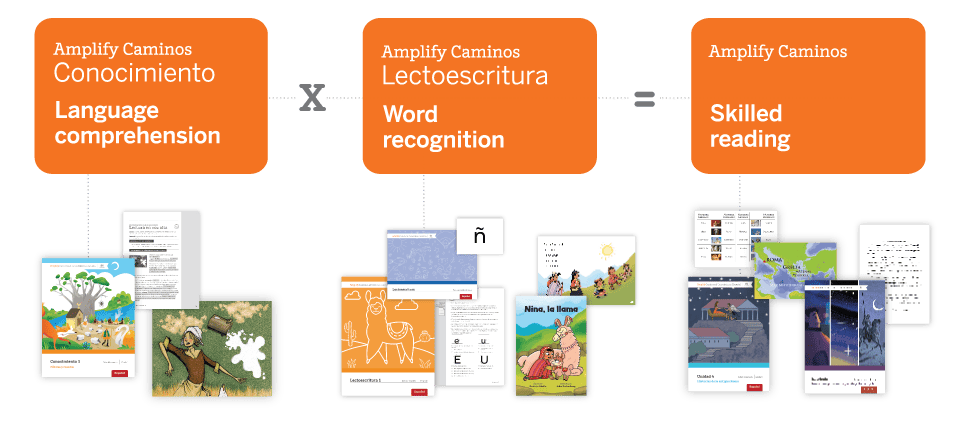
Decoding x Language Comprehension = Reading Comprehension

Without both decoding and language comprehension, reading comprehension cannot occur.

A group of diverse children attentively looking upwards with expressions of curiosity and interest.
Logo with the text built on the science of reading, featuring an open book icon above phonetic symbols on a bubbly orange background.

Download the Science of Reading Toolkit

Find out why foundational skills must start with sounds and the crucial role of background knowledge.

Get the kit now!

Amplify literacy programs built on the science of reading

Amplify’s suite of instruction, assessment, and intervention is based on the science of reading. Developed with experts, our highly-regarded programs for elementary core curriculum (Amplify Core Knowledge Language Arts), assessment, (mCLASS ®) and intervention and differentiated instruction (Amplify Reading and mCLASS ® Intervention) are a comprehensively aligned system based on the latest research.

Teacher in an orange sweater gestures while speaking to attentive students seated at desks in a classroom with educational posters on the walls.

Core instruction

Rated “all green” by EdReports.org, Amplify Core Knowledge Language Arts (CKLA) is an English language arts program for preK–5 offering explicit, systematic foundational skills and deep knowledge-building in real-world, relevant topics that kids love to learn about.

Learn more here >

high quality informational materials five fundamentals
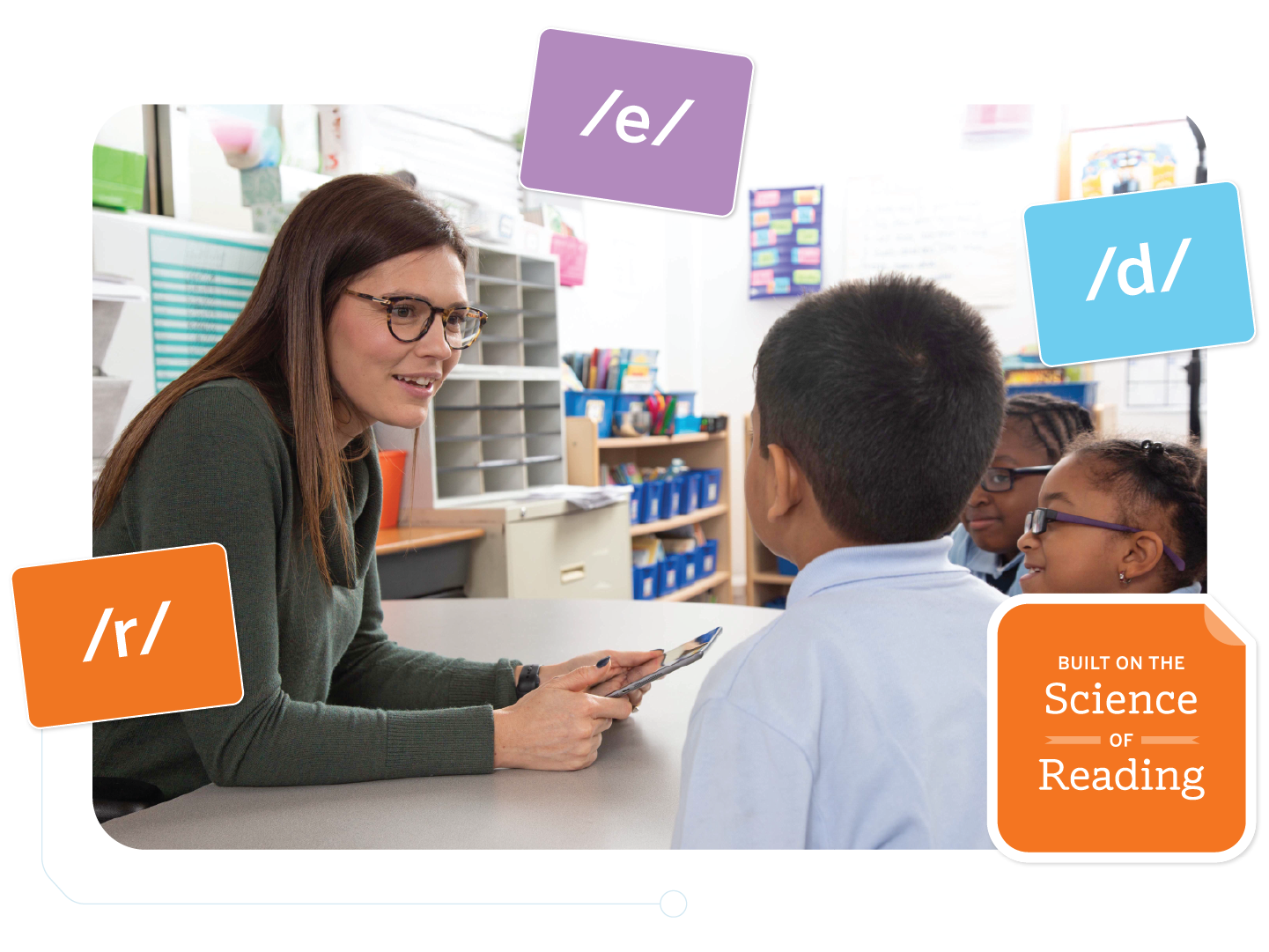
A teacher interacts with three young students in a classroom, showing them something on a smartphone.

Universal and dyslexia screening

Valid, reliable data is at the center of a science of reading-based literacy system. Built from the ground up on the science of reading, mCLASS, Amplify’s literacy assessment for K–6, identifies risk of reading difficulties, including dyslexia, at the earliest levels.

As the only licensed digital provider of DIBELS® 8th Edition, mCLASS’s predictive, teacher-administered, one-minute measures generate actionable data on skills, risk levels, and level of support needed. Teachers receive targeted instruction for small groups and individual students.

Learn more here >

Remediation and enrichment

Amplify Reading, K–5 Edition, is an adaptive digital program that extends the learning from core instruction, giving students deep, differentiated practice in foundational skills, comprehension processes, and vocabulary—all while exploring narrative worlds designed to appeal to kids at each grade band. Part of Amplify’s integrated literacy suite, it syncs with mCLASS, using students’ assessment profiles to start them at the right place in the learning progression.

Learn more here >

A split image with a vibrant market scene on the left and a cozy bookstore scene on the right, featuring colorful characters and items.
high quality informational materials five fundamentals

Structured, staff-led intervention

For students below grade level, mCLASS Intervention for K–6 integrates with mCLASS screening and progress-monitoring to provide the analytical tools and resources educators need to make targeted, staff-led intervention a daily reality throughout the school year. Specifically, it groups students with similar needs and provides explicit, systematic foundational skills lessons for each group.

Learn more here >

Getting Started Resources

A closer look at grades 6–8 (domain)

Amplify Science California is based on the latest research on teaching and learning and helps teachers deliver rigorous and riveting lessons through hands-on investigations, literacy-rich activities, and interactive digital tools that empower students to think, read, write, and argue like real scientists.

In the 6–8 classroom, this looks like students:

  • Collecting evidence from a variety of sources.
  • Making sense of evidence in a variety of ways.
  • Formulating convincing scientific arguments.

Is your school implementing the integrated model? Click here.

Collage of four images showing children engaged in educational activities such as conducting experiments and crafting in a classroom setting.
Graphic showing a research process with four steps: spark intrigue with a real-world problem, explore evidence, explain and elaborate, and evaluate claims, connected in a cycle with arrows.

Program structure

Our cyclical lesson design ensures students receive multiple exposures to concepts through a variety of modalities. As they progress through the lessons within a unit, students build and deepen their understanding, increasing their ability to develop and refine complex explanations of the unit’s phenomenon.

It’s this proven program structure and lesson design that enables Amplify Science California to teach less, but achieve more. Rather than asking teachers to wade through unnecessary content, we designed our 6–8 program to address 100% of the California NGSS in fewer lessons than other programs.

Scope and sequence

Every year of our grades 6–8 sequence consists of 9 units, with each unit containing 10–19 lessons. Lessons are written to last a minimum of 45 minutes, though teachers can expand or contract the timing to meet their needs.

A grid of educational icons, each representing a different science topic, such as earth and space science, life science, and physical science, with titles and lesson counts.

Unit types

Each unit delivers three-dimensional learning experiences and engages students in gathering evidence from a rich collection of sources, while also serving a unique purpose.

In grades 6–8, there are three types of units:

  • One unit is a launch unit.
  • Three units are core units.
  • Two units are engineering internships.
Launch units

Launch units are the first units taught in each year of Amplify Science California. The goal of the Launch unit is to introduce students to norms, routines, and practices that will be built on throughout the year, including argumentation, active reading, and using the program’s technology. For example, rather than taking the time to explain the process of active reading in every unit in a given year, it is explained thoroughly in the Launch unit, thereby preparing students to actively read in all subsequent units.

Core units

Core units establish the context of the unit by introducing students to a real-world problem. As students move through lessons in a Core unit, they figure out the unit’s anchoring phenomenon, gain an understanding of the unit’s disciplinary core ideas and science and engineering practices, and make linkages across topics through the crosscutting concepts. Each Core unit culminates with a Science Seminar and final writing activity.

Engineering Internship units

Engineering Internship units invite students to design solutions for real-world problems as interns for a fictional company called Futura. Students figure out how to help those in need, from tsunami victims in Sri Lanka to premature babies, through the application of engineering practices. In the process, they apply and deepen their learning from Core units.

Units at a glance

A barren, rocky desert landscape with rover tracks leading to a distant vehicle on a hill under a hazy sky.
Geology on Mars

Domain: Earth and Space Science

Unit type: Launch

Student role: Planetary geologists

Phenomenon: Analyzing data about landforms on Mars can provide evidence that Mars may have once been habitable.    

Two prehistoric reptiles with long snouts and tails are near the shore, one on land and one in water, with plants, rocks, and an island in the background.
Plate Motion

Domain: Earth and Space Science

Unit type: Core

Student role: Geologists

Phenomenon: Mesosaurus fossils have been found on continents separated by thousands of kilometers of ocean, even though the Mesosaurus species once lived all together.    

Download unit guide

Geometric design featuring a telescope, mountain, sound waves, and cosmic elements on a purple hexagonal background.
Plate Motion Engineering Internship

Domain: Earth and Space Science

Unit type: Engineering internship

Student role: Mechanical engineering interns

Phenomenon: Patterns in earthquake data can be used to design an effective tsunami warning system.    

Illustration of a cross-section of Earth showing a volcano near the ocean. Trees, mountains, and clouds are visible above, with subterranean layers below.
Rock Transformations

Domain: Earth and Space Science

Unit type: Core

Student role: Geologists

Phenomenon: Rock samples from the Great Plains and from the Rocky Mountains — regions hundreds of miles apart — look very different, but have surprisingly similar mineral compositions.    

Download unit guide

A city skyline at night with a prominent full moon, stars in the sky, and a bridge silhouette on the left.
Earth, Sun, and Moon

Domain: Earth and Space Science

Unit type: Core

Student role: Astronomers

Phenomenon: An astrophotographer can only take pictures of specific features on the Moon at certain times.    

Download unit guide

Abstract artwork depicting a bright sun with blue and orange swirling patterns next to green hills under a sky with shades of blue, orange, and red.
Ocean, Atmosphere, and Climate

Domain: Earth and Space Science

Unit type: Core

Student role: Climatologists

Phenomenon: During El Niño years, the air temperature in Christchurch, New Zealand is cooler than usual.    

Ilustración de un pueblo con casas, campos y montañas bajo un cielo nublado con olas de viento o lluvia.
Weather Patterns

Domain: Earth and Space Science

Unit type: Core

Student role: Forensic meteorologists

Phenomenon: In recent years, rainstorms in Galetown have been unusually severe.    

Download unit guide

Un oso polar se encuentra sobre un pequeño témpano de hielo en el océano con un sol naranja en el cielo y lejanas montañas heladas al fondo.
Earth’s Changing Climate

Domain: Earth and Space Science

Unit type: Core

Student role: Climatologists

Phenomenon: The ice on Earth’s surface is melting.    

Download unit guide

Abstract geometric design in shades of blue and purple featuring a hexagon with icons of a building, wrench, molecules, sun, paint can, and screwdriver.
Earth’s Changing Climate Engineering Internship

Domain: Earth and Space Science

Unit type: Engineering internship

Student role: Civil engineers

Phenomenon: Designing rooftops with different modifications can reduce a city’s impact on climate change.    

Abstract art with vibrant colors featuring a yellow silhouette of a person holding a book against a background of geometric shapes, swirling patterns, and bold textures.
Microbiome

Domain: Life Science

Unit type: Launch

Student role: Microbiological researchers

Phenomenon: The presence of 100 trillion microorganisms living on and in the human body may keep the body healthy.    

Abstract artwork of a person's side profile with geometric shapes and colorful patterns flowing from the head, holding a small sledgehammer. A vision chart is visible in the corner.
Metabolism

Domain: Life Science

Unit type: Core

Student role: Medical researchers

Phenomenon: Elisa, a young patient, feels tired all the time.    

Download unit guide

Orange abstract background with hexagonal shapes featuring icons of a bar chart, plant, safety vest, test tube, peach, and stethoscope.
Metabolism Engineering Internship

Domain: Life Science

Unit type: Engineering internship

Student role: Food engineers

Phenomenon: Designing health bars with different molecular compositions can effectively meet the metabolic needs of patients or rescue workers.    

Imagen que muestra un gráfico de arañas de diferentes colores con patrones distintos de patas y cuerpo, incluidas variaciones de color marrón, amarillo y azul. El fondo es una superficie oscura y texturizada.
Traits and Reproduction

Domain: Life Science

Unit type: Core

Student role: Biomedical students

Phenomenon: Darwin’s bark spider offspring have different silk flexibility traits, even though they have the same parents.    

Download unit guide

An illustration of a whale with jellyfish and turtles from Amplify Science
Populations and Resources

Domain: Life Science

Unit type: Core

Student role: Biologists

Phenomenon: The size of the moon jelly population in Glacier Sea has increased.    

Download unit guide

Low-poly landscape with trees and mushrooms. A fox sniffs the ground, a rabbit sits nearby, and mountains and sun are in the background.
Matter and Energy in Ecosystems

Domain: Life Science

Unit type: Core

Student role: Ecologists

Phenomenon: What caused the mysterious crash of a biodome ecosystem?    

Download unit guide

Four low-poly dinosaurs with missing body sections are standing in a row; one is yellow, and the others are green. They have purple spikes and red patches on their bodies.
Natural Selection

Domain: Life Science

Unit type: Core

Student role: Biologists

Phenomenon: The newt population in Oregon State Park has become more poisonous over time.    

Download unit guide

Red geometric background with icons including a mosquito, DNA strand, bar chart, and world map inside a hexagon.
Natural Selection Engineering Internship

Domain: Life Science

Unit type: Engineering internship

Student role: Clinical engineers

Phenomenon: Designing malaria treatment plans that use different combinations of drugs can reduce drug resistance development while helping malaria patients.  

Two giant tortoises with long necks stand near water; one tortoise feeds on leaves from a tree while the other is near dense vegetation.
Evolutionary History

Domain: Life Science

Unit type: Core

Student role: Paleontologists

Phenomenon: A mystery fossil at the Natural History Museum has similarities with both wolves and whales.    

Download unit guide

Two people climbing rocky terrain; illustrations show a hiking boot and a belt with gear.
Harnessing Human Energy

Domain: Physical Science

Unit type: Launch

Student role: Energy scientists

Phenomenon: Rescue workers can use their own human kinetic energy to power the electrical devices they use during rescue missions.    

Illustration of a futuristic space station with large solar panels, orbiting in deep space, emitting a blue glow from its propulsion system.
Force and Motion

Domain: Physical Science

Unit type: Core

Student role: Physicists

Phenomenon: The asteroid sample-collecting pod failed to dock at the space station as planned.    

Download unit guide

Green geometric background with a hexagonal emblem containing a parachute icon, ruler, bandage, and stacked layers on a gradient pattern.
Force and Motion Engineering Internship

Domain: Physical Science

Unit type: Engineering internship

Student role: Mechanical engineering interns

Phenomenon: Designing emergency supply delivery pods with different structures can maintain the integrity of the supply pods and their contents. 

Illustration of a roller coaster filled with people, hands raised, going down a steep track against a bright blue sky with clouds.
Magnetic Fields

Domain: Physical Science

Unit type: Core

Student role: Physicists

Phenomenon: During a test launch, a spacecraft traveled much faster than expected.    

Illustration of a person in a red hat and fur-lined coat with eyes closed, surrounded by large orange circles on a dark background.
Thermal Energy

Domain: Physical Science

Unit type: Core

Student role: Thermal scientists

Phenomenon: One of two proposed heating systems for Riverdale School will best heat the school.    

Download unit guide

Ilustración que muestra las etapas de fusión de una paleta de naranja: entera, parcialmente derretida, más derretida y casi derretida por completo, con palitos de madera, sobre un fondo morado.
Phase Change

Domain: Physical Science

Unit type: Core

Student role: Chemists

Phenomenon: A methane lake on Titan no longer appears in images taken by a space probe two years apart.    

Download unit guide

Green geometric graphic featuring icons: a baby, thermometer, layers, medical alert, and a flame.
Phase Change Engineering Internship

Domain: Physical Science

Unit type: Engineering internship

Student role: Chemical engineering interns

Phenomenon: Designing portable baby incubators with different combinations of phase change materials can keep babies at a healthy temperature.    

Obra de arte digital abstracta que presenta numerosos círculos rojos y grises superpuestos sobre un fondo dividido de azul y violeta claro, creando una composición dinámica y enérgica.
Chemical Reactions

Domain: Physical Science

Unit type: Core

Student role: Forensic chemists

Phenomenon: A mysterious brown substance has been detected in the tap water of Westfield.    

Download unit guide

An illustration from the Light Waves unit
Light Waves

Domain: Physical Science

Unit type: Core

Student role: Spectroscopists

Phenomenon: The rate of skin cancer is higher in Australia than in other parts of the world.    

Download unit guide

Amplify ELA – Atlanta Review3

To view this protected page, enter the password below:


Welcome, Minnesota Educators!

To view this protected page, enter the password below:


Two young girls sit at a table in a library, smiling and making gestures with their hands, with open books and educational materials in front of them.

Welcome, New York City educators!

Amplify Desmos Math New York supports teachers in building students’ lifelong math proficiency. Select your grade band below to learn more about the program, begin your review, or access implementation resources:

Embedded routine modeling for Amplify K–2 Skills instruction

New embedded support for Amplify Core Knowledge Language Arts (CKLA) and Amplify Caminos 3rd Edition brings expert guidance to the point of instruction. Short instructional modeling videos clarify how critical foundational literacy routines look, sound, and feel, taking the guesswork out of teaching and allowing educators to focus on cultivating more aha moments with students.

High-impact literacy routines

Lead K–2 foundational literacy instruction with clarity. These videos model the exact pacing, teaching script, physical cues, and feedback required for critical routines like Introducing the Spelling, Chaining, Blending, and more.

Just-in-time support

Embedded at the lesson level in the Amplify Classroom digital platform, modeling videos paired with downloadable routine guides provide immediate, point-of-use support. This eliminates the need to track down resources and ensures that foundational literacy skills are taught with consistency and fidelity across classrooms.

Parity across programs

With dedicated modeling videos and routine guides for both Amplify CKLA and Amplify Caminos, every teacher has access to expert guidance for foundational literacy instruction.

Real-time scaffolding and differentiation

Moving beyond the what of the lesson helps educators master the how. Each video provides specific scaffolds and strategies to help differentiate instruction and reach all learners in the moment.

Getting started

Guided by our core biliteracy principles, Amplify Caminos, mCLASS®, Boost Reading, and Boost Lectura deliver instruction, assessment, and intervention that fits with how Spanish language learning develops.

Through aligned instruction, these tools and materials provide educators with everything they need to screen, instruct, and provide students with practice in Spanish literacy.

Learn more about each of our programs here:

Two overlapping orange speech bubbles, one with the text "Hello!" and the other with "¡Hola!", connected by arrows, symbolizing translation or communication between languages.

Coming soon: An FAQ document to answer your top questions about access, implementation, and features for Amplify’s Spanish literacy programs.

Need help? Go here to find support specific to what you need, or call our dedicated phone number, just for NYC: 1-888-960-0380.

Illustration of a bear standing on grass with a lake in the background, saying "O-SO" in a speech bubble, with a bee in a smaller bubble nearby.

Amplify Caminos Lectoescritura

Amplify Caminos isn’t just a translation of English instruction; it’s an authentic Spanish language arts program designed for Spanish literacy development. Flexible across transitional, dual-language, and immersion programs, it pairs with Amplify CKLA to deliver a complete, research-based K–5 biliteracy solution.

Foundational skills built for Spanish reading fluency starts with a sounds-first approach—beginning with the most common vowels and consonants before moving to syllables and words. In grades K–2, Lectoescritura lessons develop decoding with 100% decodable readers. In grades 3–5, foundational skills are woven into content-rich lessons.

mCLASS: Early literacy assessment and intervention, grounded in the Science of Reading

mCLASS is an all-in-one system for universal screening, dyslexia screening, progress monitoring, and instruction, all based on the Science of Reading, for grades K–8. Powered by DIBELS® 8th Edition, mCLASS helps you measure and strengthen the foundational skills that all students need to become confident readers.

A teacher sits at a table holding cards, instructing three young students; sound symbols and a "Built on the Science of Reading" label are overlaid on the image.
A student wearing headphones appears above a bilingual table showing Marisol Mejía's English and Spanish literacy scores, with English scores mostly below benchmark and Spanish scores at benchmark.

A complete picture of English and Spanish biliteracy

Amplify’s Spanish language assessment, mCLASS Lectura® (K–6), works in tandem with DIBELS 8th Edition’s English assessments to highlight areas of growth as students develop into bilingual readers. mCLASS Lectura provides complete parity with English mCLASS assessments in grade coverage (K–8), skill coverage, instructional tools, and reporting.

Boost Reading and Boost Lectura

Boost Reading is a student-led K–5 digital intervention, built on the Science of Reading, that delivers systematic instruction. Students receive targeted, adaptive practice that meets them where they are, while teachers get simple and meaningful insights into student progress without extra work. Fully aligned to Amplify CKLA and mCLASS, Boost Reading brings powerful support to every tier of instruction.

Boost Lectura is a program based on the Science of Reading and built to accelerate Spanish literacy for K–2 students. Using captivating storylines and the latest research on how Spanish literacy develops, Boost Lectura engages students in powerful and personalized digital reading instruction, all backed with proven efficacy.

When used together, the two programs give teachers side-by-side insight into skill progression in Spanish and English, helping accelerate learning across both languages.

A laptop screen displays an educational word-building game with letter tiles forming the word "mama" and construction-themed graphics in the background.

Ready to learn more?

Fill out this form and we’ll be in touch with you shortly.

Welcome, LAUSD educators!

Introducing Amplify Desmos Math California, a curiosity-driven TK–12 program that builds lifelong math proficiency. Each lesson poses problems that invite a variety of approaches before guiding students to synthesize their understanding of the learning goals. Students encounter math problems they’re eager to solve, while teachers spend more time where it’s most impactful—creating a collaborative classroom of learners.

Start by watching our welcome video to the right, then learn more about the program and begin your review below.

Curriculum overview

Watch the videos below for an overview of Amplify Desmos Math California:

Built for California

An educational worksheet on robots, featuring a graph with red, purple, and blue robot icons, and instructions for a warm-up activity.

The Amplify Desmos Math California program is designed around the vision articulated in the Mathematics Framework for California Public Schools: Kindergarten Through Grade Twelve to enable all California students to become powerful users of mathematics. Our program incorporates the latest research in student learning, meaning that we:

  • Focus on the Big Ideas: Amplify Desmos Math California’s courses, units, and lessons are centered around the Big Ideas. Big Ideas, like standards, are not considered in isolation. In addition to each unit and lesson’s focal Big Ideas, Amplify Desmos Math California also provides connections among the Big Ideas across units and lessons.
  • Center on open and engaging tasks: Amplify Desmos Math California is grounded in engaging tasks meant to address students’ often-asked question: “Why am I learning this?”  Students are invited into learning with low-floor, high-ceiling tasks that provide an entry point for all. Open tasks in Amplify Desmos Math California provide the space for students to try on multiple strategies and represent their thinking in different ways, and allow student explanation and discussion to serve as the center of the classroom. All lessons offer both print and digital representations.
  • Provide enhanced digital experiences: Amplify Desmos Math California includes digitally-enhanced lesson activities, incorporating interactive digital tools alongside print materials. These purposefully-placed resources allow students to visualize mathematical concepts, receive actionable feedback while practicing, encounter personalized learning support from an onscreen tutor, and engage in discussions about their thinking and approaches.
  • Treat core instruction and differentiation as integral partners: The Amplify Desmos Math California curriculum provides teachers with lessons, strategies, and resources to eliminate barriers and increase access to grade-level content without reducing the mathematical demand of tasks. Every activity has multiple entry points to ensure that all students are supported and challenged. Intervention and personalized learning activities are directly connected to lesson content and offer students individualized support as they dive into the mathematics.

About the program

Taking the IM content further.

A laptop displays a math activity about platform heights and tube length, while a worksheet titled "Hamster Homes" is visible in the background.

Amplify Desmos Math California is a curiosity-driven program that builds lifelong math proficiency. Each lesson poses problems that invite a variety of approaches before guiding students to connect their understanding of the learning goals.

Students encounter math problems they’re eager to solve, while teachers spend more time where it’s most impactful: creating a collaborative classroom of learners.

We chose to base our program on the extensively field-tested IM K–12 MathTM authored by Illustrative Mathematics. IM K–12 Math is a problem-based curriculum. It asks students to grapple with well-designed and thoughtfully sequenced real-world mathematical problems to build their understanding of how to efficiently solve them.

Begin your review to see how we’ve taken the IM K–12 Math content further.

Begin your review

Using a Google Chrome or Safari web browser, click the orange button below or navigate to learning.amplify.com and select “Log in with Amplify.” Please note, these demo accounts expire on April 04, 2026.

K–8 English credentials

  • Username: t1.lausd_adm_k8@demo.tryamplify.net
  • Password: Amplify1-lausd_adm_k8

K–8 Spanish credentials

  • Username: t1.lausd_k8_spanish@demo.tryamplify.net
  • Password: Amplify1-lausd_k8_spanish

AGA credentials

  • Username: t1.lausd_aga@demo.tryamplify.net
  • Password: Amplify1-lausd_aga

Why fluency matters in K–5 math education

An illustration showing a caterpillar, a hand matching shapes and colors on tiles, and another hand holding numbered cards—perfect for read-aloud math activities or exploring math in picture books with children.

If you’re fluent in Farsi, let’s say, you don’t search for every word or stop to translate every sentence in your head. You understand, process, and respond automatically, in real time.

Math fluency works the same way. This kind of fluency is something you can use naturally to understand what’s presented and respond to it meaningfully.

In K–5 math, fluency allows students to move beyond getting through the problem toward real mathematical thinking. Without it, even confident students can get stuck. With it, students gain access to deeper understanding, flexibility, and confidence.

What is math fluency?

Fluency in math is sometimes misunderstood as speed or memorization—but research and classroom experience tell a fuller story.

The National Council of Teachers of Mathematics defines procedural fluency as the ability to: “…apply procedures efficiently, flexibly, and accurately; to transfer procedures to different problems and contexts; to build or modify procedures from other procedures; and to recognize when one strategy or procedure is more appropriate to apply than another.”

In other words, the skills often referred to as computational fluency and math fact fluency tell only part of the story. Full mathematical fluency means knowing how and why strategies work, and being able to choose among them.

Memorization does have a role in math learning, but it alone does not lead to fluency. A student who has memorized facts but doesn’t understand relationships between numbers may still struggle when problems change slightly or require reasoning.

By contrast, a fluent student can adapt. They can explain their thinking, check whether an answer makes sense, and shift strategies when needed.

This is why fluency acts as a bridge between conceptual understanding and procedural application. It connects what students know to what they can do, and helps them do it with confidence.

Why procedural fluency matters in K–5 math

In the elementary grades, students are building the foundational math skills they’ll rely on for years to come. When procedural fluency is weak, students can feel overwhelmed by basic calculations, leaving little mental energy for problem-solving or new concepts.

Students without strong procedural fluency often feel stuck. For them, math can start to feel like an endless series of obstacles rather than a meaningful, engaging exploration—and that experience does not set anyone up to feel like a math person.

Fluency is what frees students up to focus on the heart of a problem. When they’re not bogged down by calculations, they’re able to reason, explore patterns, and tackle more complex tasks. Fluency opens doors—to higher-level math, to confidence, and to a more positive math identity.

In their paper, “Eight Unproductive Practices in Developing Fact Fluency,” Gina King and Jennifer Bay-Williams write: “Being fluent contributes to a productive disposition about mathematics, opens doors to a range of mathematics topics, and arms students with a skillset applicable to whatever they wish to pursue.”

What teaching math fluency looks like in the classroom

Effective K–5 math instruction treats fluency as something that develops over time, through meaningful practice, discussion, and reflection. Students need opportunities to explore number relationships, explain their thinking, and revisit strategies in different contexts.

In classrooms where math fluency is developing, instruction consistently supports flexible thinking, reflection, and revisiting ideas over time. You might see and hear the following:

  • Revisiting strategies across problems. Students are encouraged to solve the same problem in more than one way and to compare approaches. Classroom discussions focus on how strategies work and when one might be more efficient than another, helping students build strategic thinking and confidence.
  • Frequent, well-spaced opportunities for practice. Key facts and strategies reappear over time rather than being practiced once and set aside. This spacing helps students retain learning and apply it more accurately and efficiently when they encounter familiar ideas in new contexts.
  • Regular routines that emphasize reasoning. Short, consistent routines invite students to mentally compute, explain their thinking, and listen to others’ ideas. The focus is on understanding number relationships and reasoning through solutions rather than relying on memorized steps.
  • Thoughtful use of visual representations. Tools such as number lines, arrays, and other models help students see how numbers and operations relate. These representations support flexible thinking and make procedures more meaningful and accessible.

Across these experiences, fluency is something you can hear as well as see. Students explain their reasoning, reference strategies they’ve used before, and check whether their answers make sense, building accuracy, efficiency, and flexibility over time.

Math fluency helps students open their minds to the richness of math, and to their own power as math learners.

Exciting updates are coming for mCLASS Math!

As we plan for the upcoming school year, we’re continuing to enhance mCLASS® Math—finding ways to provide you with clearer insights, stronger reporting, and more flexible support for assessment and progress monitoring activities. These updates are designed to help educators better understand student performance and take action with confidence.

Whether you’re using mCLASS Math on its own or alongside Boost Math® or Amplify Desmos Math, this page highlights what’s already available and what’s coming next.

A young boy uses a laptop in a classroom, working on mCLASS Math while other students and desks are visible in the background.

Updates coming for the 2026–27 school year

To help you plan for the year ahead with confidence, we’re previewing some of the exciting enhancements coming your way.

Expanded mCLASS Math for grades K–8

mCLASS Math is expanding into grades 6–8! Reporting for grades 6–8 will align with the K–5 experience, ensuring consistency across grade levels. Interested in samples? Check out our sample mCLASS Math items for grades K–8.

mCLASS Math K–5 Spanish

Spanish translations will be available for K–5 assessments, helping educators broaden their reach and serve more students effectively.

Boost Math driven by mCLASS Math data

We’re also excited to announce Boost Math product enhancements that are designed to streamline your Multi-Tiered System of Supports (MTSS). Beginning July 1, 2026, Boost Math will be powered by mCLASS Math Benchmark data, using both performance results and student thinking insights to inform instruction. Interested in learning more about how you can use Boost Math alongside mCLASS Math? Reach out to your rep or admin to get started!

Already using Boost Math as part of your math solution? Learn more about upcoming enhancements to Boost Math, including new Learning Pathways to support your MTSS implementation.

Noteworthy mCLASS Math feature enhancements

These features are already available or will be rolling out soon to help you plan lessons, target learning, and support students more efficiently.

Stronger mCLASS Math reporting and visibility into student learning

We’ve made reporting easier to understand and more actionable, so you can spend less time searching for information and more time responding to student needs.

A classroom assessment dashboard for mCLASS Math displays key insights for a fractions benchmark, including student response analysis and instructional recommendations in a highlighted box.
  • Student Thinking Reports now include direct links to recommended activities, so you can move from insight to action more quickly.
Screenshot of the “Download your data” page for mCLASS Math, showing options to select assessment, view data dictionary, set reporting period and population, and download a CSV file of your mCLASS Math Reports.
  • Admin reports are available for download to support school- and district-level analysis.
A screen in mCLASS Math displays the question "Is the equation true or false? 5 + 3 = 3 + 5" with selectable "True" (thumbs up) and "False" (thumbs down) options.
  • K–1 progress bars clearly indicate skipped questions for greater clarity.
A pop-up window displays options to select students and download mCLASS Math Home Connect Letters as PDFs in English or Spanish, with a button to combine all letters into one PDF.
  • Home Connect letters can be batch-downloaded, making family communication easier to manage.
  • Benchmark assessments align to district-defined benchmark windows, with flexible date management in the Admin Portal. Learn more.

Using Amplify Desmos Math? Explore upcoming updates and noteworthy features on the Amplify Desmos Math Program Highlights page.

Educator Spotlight Series: The Power-Ups of Student Engagement

Educator Spotlight Series: Phenomena-Driven Science Instruction

Educator Spotlight Series: Enhancing the Remote Learning Experience

Educator Spotlight Series: Adapting to Your Changing Classroom

Educator Spotlight Series: Creating Community Connections

Educator Spotlight Series: Literacy Integration and Differentiation

NCEA – National Catholic Educational Association Convention & Expo

Stop by and visit us in booth# 934!

[Webinar] How Writing Can Revolutionize Education

Math that motivates your K–5 students

As a K–5 teacher, your day is a constant balance of subjects, personalities, and priorities. With so many different dynamics and responsibilities, math class shouldn’t be another struggle to muscle through!

That’s why we’ve compiled a wealth of resources and activities to help you engage students; meet instructional goals; and encourage fluency, number sense, and discussion in your classroom. 

Three children paint the walls of a room; one holds a paper with the fraction 2/3, while math symbols and a tree appear in the background.
A booklet titled "The Power of Fluency: Cultivating Flexible, Confident Problem-Solvers" with an illustrated cover and an open page showing text and graphics about classroom fluency.

The power of fluency

Teachers work to achieve so many outcomes during their math block. While balancing multiple priorities, it’s important to remember that procedural fluency remains integral to student learning. Access this guide to unpack the power of fluency and find free math fluency practice to use in your next lesson.

10 low-prep, high-impact math activities that get to some serious math

Envision your classroom engaged in a difficult math task. All students are participating, leveraging different scaffolds that you intentionally prepared ahead of time. Engagement is high, and students are challenged but motivated. If you’d love a classroom like this, access our free activities that encourage productive struggle while reaching all learners.

A teacher holds a clipboard while a student points at a chalkboard labeled "Guinea Pig," "Millipede," and "Goldfish" in a classroom setting.
A presentation slide titled "Three Practices to Support Problem-Based Learning" features students and teachers engaged in classroom activities and math instruction.

Three practices to support problem-based learning

As educators, we want all students to develop a rich and deep understanding of the math they experience in our classrooms. A problem-based learning approach supports this by centering problem-solving in ways that build lifelong mathematical proficiency. Read this guide for practical tips on introducing problem-based learning and deeper conceptual understanding into your math classroom.

More free resources for K–5 educators

Two children paint a wall while holding a "2/3" sign; another child on the floor holds a "3 x 3" sign near a bookshelf.

K–5 Insider

Sign up for our monthly email to get new K–5 content and activities directly in your inbox.

sign up 

A printed guide titled "What are math routines, and how can you use them?" for grades K–5, with instructions and example math routine cards displayed.

K–5 instructional routine cards

Find easy-to-implement routines to keep students interacting and engaged with a lesson.

Download

A student and a teacher look at a laptop screen and smile in a classroom with colorful posters on the wall.

Math that motivates: Success stories

See how real teachers and students are unlocking new levels of engagement and comprehension, proving that everyone can be a math person.

LEARN MORE 

Ready to make every student a math person?

Connect with a product expert today.

Other publishers say they have “Desmos.” What’s the difference between what Amplify has and what they have?

Logo with the word "Amplify" in orange font and "desmos" in gray font, separated by a vertical line on a light background, perfect for teacher awards or to nominate a teacher for an award in early literacy.

If you’ve been in the math world for a while, you know the name Desmos. It’s synonymous with free dynamic math tools.

And lately, you’ve probably also been hearing about Amplify and Desmos together. But other publishers also say they have Desmos, so what’s the deal?

Let’s clear it up.

The most important thing to know is that, back in 2022, the original Desmos split into two separate parts. Think of them like a calculators and other tools part and a classroom activities and curriculum part.

The tools part: Desmos Studio

This is the Desmos you first fell in love with.

What it is: Desmos Studio is the name of the company that builds and maintains the powerful, free Desmos calculators. This is an independent Public Benefit Corporation, and can be found at www.desmos.com. That team builds and maintains a collection of free math tools:

Six colorful icons represent types of calculators—Graphing, Scientific, Four Function, Matrix, Geometry, and 3D—each featuring a distinct mathematical symbol. Perfect for desmos math enthusiasts and edtech companies alike.

What it’s for: This is your go-to for exploration, demonstrations, and “What if I change this?” moments. It’s the blank canvas you use on your smartboard or the tool your students use for homework.

The bottom line: The calculators are run by an independent company called Desmos Studio PBC. You can find their tools for free at their website, desmos.com; on state tests; and in curriculum programs (including ours).

A Desmos graphing calculator displays the quadratic function y = 2x^2 - 3, showing a parabola opening upwards with its vertex at (0, -3)—a great example of how edtech companies like Desmos Math enhance classroom learning.

The lessons: Amplify Classroom & Amplify Desmos Math

What it is: In 2023, Amplify acquired the Desmos instructional platform (then called Desmos Classroom, now called Amplify Classroom) as well as their math curriculum for grades 6–8 and the teams that built those resources. We had already been working on our own math curriculum, decided to combine forces with the Desmos curriculum team, and created Amplify Desmos Math, now available for grades K–12.

When other publishers may talk about having “Desmos,” what they mean is they license the calculators and Geometry tool from Desmos Studio.

What it’s for: Amplify has these tools, too, but we also have the Activity Builder, which integrates these tools much more deeply than is possible with other Desmos Studio partnerships. We take this powerful Desmos technology and layer instruction, student collaboration, and dynamic teaching tools on top, creating classrooms that buzz with excitement and learning.

What’s available for free:

  • The “Desmos activities” platform (you might know it from teacher.desmos.com), now Amplify Classroom. This is where you can find hundreds of free lessons and activities. You can also use the Activity Builder tool to create your own custom activities from scratch.
  • The beloved, pre-built “Activity Builder” activities like “Marbleslides” and more are still available for free on Amplify Classroom.

The bottom line: Educators can still use the vast library of free activities and build their own on Amplify Classroom. This is not changing.

A grid-based puzzle inspired by Desmos Math, where you guide a green ball to a yellow star by entering coordinates in the answer box, offers an engaging approach popular among edtech companies.

The core curriculum: Amplify Desmos Math

This is the new, comprehensive curriculum available to districts and schools.

What it is: This is a full core math curriculum for grades K–12 that Amplify has built in collaboration with the Desmos curriculum team that joined us a few years ago. It uses the Desmos instructional philosophy and tools as its backbone, but it’s much more than a collection of activities.

What it’s for: This program is designed to be your primary, day-to-day curriculum. It includes a complete, standards-aligned scope and sequence, print materials, digital lessons (with activities enhanced and aligned to standards), assessments, intervention resources, and personalized practice.

The bottom line: If you want a complete curriculum in which every lesson is built on polished Desmos-style activities, you want Amplify Desmos Math K–12. This core curriculum is offered exclusively by Amplify.

Two-page educational lesson plan titled "Can You Dig It?" covering positive and negative numbers, with objectives, vocabulary, standards, and a step-by-step activity inspired by the Desmos math curriculum.

Quick-reference chart

What is it?Where to find it?Cost
Desmos Studio ToolsPowerful math tools and calculators (graphing, scientific, etc.) for graphing, calculations, and geometry visualizations.
Access via desmos.com or embedded in partner productsFree
for individual use
Amplify ClassroomA teaching and learning platform that couples Desmos Studio tools with instruction and collaboration tools

– Rich activities and lessons that develop understanding with Responsive Feedback

– Collaboration and facilitation tools designed for the classroom

– Student ideas used to build new problems and scenarios

Browse free activities and lessons or build your own with Activity Builder.
Only available from Amplify at amplify.com/classroom
(previously Desmos Classroom)
Free
Amplify Desmos MathA comprehensive K–12 math curriculum built on the Amplify Classroom platform

– Ready-to-teach print and digital curriculum built on the Amplify Classroom platform

– Comprehensive coverage of all standards without the searching.

– Additional support for your classroom, including assessment, differentiation, practice, professional development, and more.
Try lessons for free on Amplify Classroom

Contact us for more information on purchasing for your district
With a paid subscription

Program pg template redesign -AI

To view this protected page, enter the password below:


Become an Amplify Classroom Fellow!

Are you an Amplify Classroom (formerly Desmos Classroom) superfan or a math educator who loves using technology to make learning come alive? If so, consider applying to join the next Amplify Classroom Fellows cohort, a passionate community of math educators who inspire one another and help shape the future of Amplify’s products!

If you have any questions, reach out to amplifyclassroomfellows@amplify.com.

Amplify Classroom Fellows" text with abstract shapes in pastel colors in the background, perfect for inspiring mathematics teachers and energizing any math classroom.

What is the Amplify Classroom Fellowship?

A group of fifteen mathematics teachers standing indoors, smiling and holding up their hands in a "W" shape, wearing conference badges.

The Amplify Classroom Fellowship is a professional learning community of K–12 math educators who:

  • Use Amplify Classroom to empower students’ mathematical thinking.
  • Share insights, strategies, and inspiration with peers.
  • Care deeply about making math learning accessible and engaging for all students.

As an Amplify Classroom Fellow, you’ll receive:

  • Invitations to unique professional development experiences, both online and in person.
  • Opportunities to connect with the Amplify Classroom Fellows community of peers and Amplify teams.
  • Early access to learn about new features before other educators.
Four people, including mathematics teachers, stand in a group having a discussion at an indoor event; two wear lanyards, one gestures with hands while others listen.
Four mathematics teachers sit around a round table working on laptops, with coffee cups nearby, collaborating in an Amplify Classroom workshop setting.

We ask participants to:

  • Share experiences through presentations, publications, and educator events during the school year.
  • Connect and collaborate with like-minded educators and Amplify teams.
  • Attend an in-person New Fellows Orientation event in mid-July 2026.

Interested in becoming an Amplify Classroom Fellow?

Applications for Cohort 9 will open next winter.
If you have any questions, reach out to amplifyclassroomfellows@amplify.com.

Welcome, LAUSD educators!

Introducing Amplify Desmos Math California, a curiosity-driven TK–12 program that builds lifelong math proficiency. Each lesson poses problems that invite a variety of approaches before guiding students to synthesize their understanding of the learning goals. Students encounter math problems they’re eager to solve, while teachers spend more time where it’s most impactful—creating a collaborative classroom of learners.

Start by watching our welcome video to the right, then learn more about the program and begin your review below.

Curriculum overview

Watch the videos below for an overview of Amplify Desmos Math California:

Built for California

An educational worksheet on robots, featuring a graph with red, purple, and blue robot icons, and instructions for a warm-up activity.

The Amplify Desmos Math California program is designed around the vision articulated in the Mathematics Framework for California Public Schools: Kindergarten Through Grade Twelve to enable all California students to become powerful users of mathematics. Our program incorporates the latest research in student learning, meaning that we:

  • Focus on the Big Ideas: Amplify Desmos Math California’s courses, units, and lessons are centered around the Big Ideas. Big Ideas, like standards, are not considered in isolation. In addition to each unit and lesson’s focal Big Ideas, Amplify Desmos Math California also provides connections among the Big Ideas across units and lessons.
  • Center on open and engaging tasks: Amplify Desmos Math California is grounded in engaging tasks meant to address students’ often-asked question: “Why am I learning this?”  Students are invited into learning with low-floor, high-ceiling tasks that provide an entry point for all. Open tasks in Amplify Desmos Math California provide the space for students to try on multiple strategies and represent their thinking in different ways, and allow student explanation and discussion to serve as the center of the classroom. All lessons offer both print and digital representations.
  • Provide enhanced digital experiences: Amplify Desmos Math California includes digitally-enhanced lesson activities, incorporating interactive digital tools alongside print materials. These purposefully-placed resources allow students to visualize mathematical concepts, receive actionable feedback while practicing, encounter personalized learning support from an onscreen tutor, and engage in discussions about their thinking and approaches.
  • Treat core instruction and differentiation as integral partners: The Amplify Desmos Math California curriculum provides teachers with lessons, strategies, and resources to eliminate barriers and increase access to grade-level content without reducing the mathematical demand of tasks. Every activity has multiple entry points to ensure that all students are supported and challenged. Intervention and personalized learning activities are directly connected to lesson content and offer students individualized support as they dive into the mathematics.

About the program

Taking the IM content further.

A laptop displays a math activity about platform heights and tube length, while a worksheet titled "Hamster Homes" is visible in the background.

Amplify Desmos Math California is a curiosity-driven program that builds lifelong math proficiency. Each lesson poses problems that invite a variety of approaches before guiding students to connect their understanding of the learning goals.

Students encounter math problems they’re eager to solve, while teachers spend more time where it’s most impactful: creating a collaborative classroom of learners.

We chose to base our program on the extensively field-tested IM K–12 MathTM authored by Illustrative Mathematics. IM K–12 Math is a problem-based curriculum. It asks students to grapple with well-designed and thoughtfully sequenced real-world mathematical problems to build their understanding of how to efficiently solve them.

Begin your review to see how we’ve taken the IM K–12 Math content further.

Begin your review

Using a Google Chrome or Safari web browser, click the orange button below or navigate to learning.amplify.com and select “Log in with Amplify.” Please note, these demo accounts expire on April 04, 2026.

K–8 English credentials

  • Username: t1.lausd_adm_k8@demo.tryamplify.net
  • Password: Amplify1-lausd_adm_k8

K–8 Spanish credentials

  • Username: t1.lausd_k8_spanish@demo.tryamplify.net
  • Password: Amplify1-lausd_k8_spanish

AGA credentials

  • Username: t1.lausd_aga@demo.tryamplify.net
  • Password: Amplify1-lausd_aga

Overview

Among English Language Learner (ELL) students, Spanish is the most common language spoken at home—77% of students with limited English proficiency in the U.S. public schools claim Spanish as their primary language at home.

Amplify’s new Spanish-language companion program for Amplify CKLA meets an essential need for educators, and fulfills a central mission for all of us who aspire to achieve true equity in education. With Amplify Caminos, teachers will be able to develop student comprehension in Spanish through a content-rich curriculum while also building bridges to English literacy.

Amplify Caminos was developed by a bilingual team from across the Latinx Hispanic diaspora with a concerted effort to create relevant connections for students so the classroom experience strikes the ideal balance between the security of the familiar and the excitement of the unknown.

Amplify Caminos is a Spanish language arts curriculum for grades K–5 and can be used on its own. It can also be used alongside Amplify CKLA to provide students with equitable instruction in Spanish and English across a range of instructional models, including dual language immersion and transitional classrooms.

Amplify Caminos is a program for Grades K–5.

In Grades K-2, the Knowledge Strand builds background knowledge and vocabulary through carefully sequenced read-alouds and complex texts. Teachers read stories aloud that are more complex than the text students can decode on their own, enabling children to engage with complex texts and build background knowledge of a variety of connected topics in history, science, literature, and the arts.

In Grades 3–5, students are still focused on building reading and writing skills as well as knowledge and vocabulary, but the program no longer has two strands. The various lessons in each unit include read-alouds; whole group, small group, and partner reading; close reading; literal, inferential, and evaluative comprehension questions; vocabulary; grammar; writing; and unit assessments.

The Amplify Caminos Skills Strand for K–2 is under development.

Available for the 2021–22 school year, Amplify Caminos can support teachers in multiple language teaching models, including dual language immersion classrooms, transitional classrooms, newcomer or bridge programs, and other unique models.

It can be taught alongside Amplify CKLA or as a standalone.

Program design

Grades K–2
Knowledge Teacher Guides, Flip Books, Student Knowledge Activity Books, Image Cards, recorded Read-Alouds, and planning and professional development resources.

Grades 3–5
Teacher Guides, Student Readers, Activity Books, Poet’s Journal, Writer’s Journal, Text Anthologies for Grades 4 and 5, Core Quests, Writing Quests (The Contraption in Grade 4, The Robot in Grade 5), and planning and professional development resources.

Webinar: Supplemental Reading Educator Roundtable

Webinar: Biliteracy Educator Roundtable

Webinar: Middle School ELA Educator Roundtable

Webinar: Assessment & Intervention Educator Roundtable

Webinar: Finding Connections to Science and Literacy Educator Roundtable

Webinar: We Are Scientists Educator Panel

Conference: National Association for Bilingual Education (NABE)

Welcome, Florida educators!

Welcome to Amplify Desmos Math Florida! Below, you’ll find links to sample lessons and more information about our Amplify Desmos Math Florida program.

A laptop screen displays a math question with a scatter plot about staff and wait times; a worksheet with a similar graph is shown in the background.

Preview Lessons.

Check out the links below to explore our interactive sample lessons. 

Register to learn more about Amplify Desmos Math Florida.

Join us as we sit down with math experts and educators to explore how to support both students and teachers in math classrooms across Florida. This free professional learning series is designed to deliver collaborative, effective, and engaging math practices, as well as free activities to use right away. 

A simplified map of Florida with illustrations of a sun, clouds, ocean waves, palm trees, an orange, and a space shuttle.

A structured approach to problem-based learning

Amplify Desmos Math combines and connects conceptual understanding, procedural fluency, and application. Lessons are designed with the Proficiency Progression™, a model that provides teachers with clear instructional moves to build from students’ prior knowledge to grade-level learning.

Student thinking is valuable and can be made evident.

We believe that math class is a place where teachers can elicit, celebrate, and build on their students’ interesting ideas. Those ideas fuel meaningful classroom conversations and drive the learning process.

Three students sit at a table in a classroom, smiling and looking at a laptop together, with notebooks and papers in front of them.
A laptop screen displays a math question with a scatter plot about staff and wait times; a worksheet with a similar graph is shown in the background.

Robust assessments that drive learning and inform instruction

A variety of performance data in Amplify Desmos Math Florida provides evidence of student learning, while helping students bolster their skills. With explicit guidance on what to look for and how to respond, teachers can effectively support students as they develop their understanding.

Reporting and insights

Teachers and administrators have visibility into what students know about grade-level math with a variety of data reports. By evaluating not only what students know about grade-level math but also providing insight into how they think, teachers can confidently plan whole-class instruction and targeted intervention.

A digital dashboard displays student names and their performance levels in a grid, with a score distribution summary for assessment items shown in an overlay—ideal for tracking progress within the core curriculum or Desmos Math programs.

Access to grade-level math for every student, every day

Amplify Desmos Math Florida provides teachers with lessons, strategies, and resources to eliminate barriers and increase access to grade-level-content without reducing the mathematical demand of tasksall while supporting students in building strong number sense, fluency, and conceptual understanding.

Differentiation when and where it matters most

Teachers are provided with clear student actions to look for, matched with immediately usable suggestions for how to respond to student thinking. Each lesson also includes recommendations for resources to use with students to support, strengthen, and stretch their understanding of the lesson goal.

Boost Personalized Learning

Boost Personalized Learning activities in Amplify Desmos Math Florida target a skill or concept aligned to the day’s core lesson, with each student receiving personalized scaffolds based on what they already know. Designed to build fluency in mathematics, these activities adapt to each student’s unique needs and support skill-based growth.

Intervention Mini-Lessons aligned to core instruction

Amplify Desmos Math Florida Mini-Lessons are aligned to the most critical topics throughout a unit and provide targeted intervention for small groups of students who need additional support or more time.

A teacher sits at a table with two students, using small objects and a workbook to provide individualized instruction during a Boost Math lesson in a classroom with large windows.

Boost Math

Boost Math is a K–8 personalized learning and intervention program that provides Learning Pathways to ensure that every student succeeds. Our system supports all aspects of a strong Multi-Tiered System of Supports (MTSS) through learning progressions that connect foundational skills directly to core instruction.

Explore Boost Math

Contact us

Support is always available. Our team is dedicated to helping you every step of the way. Contact your dedicated Florida representative for program access, samples, and additional information.

A smiling man with short hair wears a green polo shirt against a plain background, exuding the kind of confidence that comes from teaching an inspiring math lesson.

Jeff Rutter

Field Manager
jrutter@amplify.com

A person with shoulder-length curly hair smiles while wearing a dark top.

Kamilah Simpson

Account Executive
ksimpson@amplify.com

A man with short, dark hair and a full beard smiles confidently. He is wearing a pink patterned shirt and a green jacket, reminiscent of an engaging math lesson. The light gray background subtly complements his dynamic style.

Thomas Gantt

District Manager
tgantt@amplify.com

Seattle Public Schools review for grade 6

Amplify ELA is the only ELA curriculum that takes the Science of Reading to the next level.

Truly designed for students entering the middle grades, Amplify ELA engages and empowers learners, and addresses the very specific and unique needs of students in grade 6.

Scroll down to learn how Amplify ELA is uniquely designed to help all your Seattle middle schoolers make learning leaps in literacy.

Illustration of a woman in profile with flowers in her hair, a small astronaut holding a flag, a flying eagle, and a group of people sitting together against a colorful backdrop.

Meet Amplify ELA.

Developed specifically for the needs of students entering the middle grades, Amplify ELA is a blended curriculum that promises:

  • A structured, yet flexible approach.
  • Carefully crafted, age-appropriate materials and activities that aren’t too “babyish” or too mature.
  • Complex, content-rich literature and informational texts that ensure ample opportunities for students to encounter both “windows and mirrors.”
  • Highly engaging lessons that keep adolescents plugged in and motivated to learn.
  • An instructional design that levels the playing field for every student.
  • Superior results.

Access and engagement for every student in the classroom

In Amplify ELA, all students read the same text with the help of differentiated supports. In other words, we don’t dumb things down; we bring students up. Our robust collection of varied texts and research-based approach to instruction not only engage students, but build confidence.

A collage featuring a blue silhouette of a woman, a black-and-white drawing of a man with a candle, cyclists riding near water, butterflies, and abstract colorful shapes.

Multilingual and English language learner support

With Amplify ELA’s integrated and designated ELD support, multilingual and English language learners (ML/ELs) are given a chance to shine.

Embedded supports enable students to engage with and participate in discussion of grade-level texts with their grade-level peers.

Flowchart showing Amplify ELA with two branches: Integrated ELD Support and Designated ELD Support, each with brief descriptions of their roles in English learning instruction.

Access demo

Ready to explore on your own? Follow the instructions below to access your demo account.

Access the Amplify ELA teacher digital platform.

First, watch the quick navigation video to the right. Then login using the directions below.

  • Click the ELA Teacher Platform button below.
  • Select Log in with Amplify.
  • Enter the following information:
    • Teacher username: t1.seattle_sd_ckla@demo.tryamplify.net
    • Teacher password: Amplify1-seattle_sd_ckla
    • Student username: s1.seattle_sd_ckla@demo.tryamplify.net
    • Student password: Amplify1-seattle_sd_ckla
  • Please note, these demo accounts expire on: February 26, 2026

Access the Amplify ELA student digital platform.

To access the student digital platform, follow the login directions below.

  • Click the ELA Student Platform button below.
  • Select Log in with Amplify.
  • Enter the following information:
    • Teacher username: t1.seattle_sd_ckla@demo.tryamplify.net
    • Teacher password: Amplify1-seattle_sd_ckla
    • Student username: s1.seattle_sd_ckla@demo.tryamplify.net
    • Student password: Amplify1-seattle_sd_ckla
  • Please note, these demo accounts expire on: February 26, 2026

Using the Science of Writing to support literacy instruction

There are plenty of creative and effective ways to inspire and teach students to write. Many teachers tap into their own experiences, insights, and talents to help students learn how to communicate with the written word.

And there’s also science behind how kids become effective written communicators. Just as the Science of Reading has transformed literacy development and instruction, the Science of Writing offers research-backed strategies to help students learn to write with clarity and confidence.

Here’s how the Science of Writing can help you support student learning.

The Science of Reading and Writing, defined

The Science of Reading represents the large and ever-growing body of research into how students best learn to read—and, therefore, how best to teach them. (You might call it the Science of teaching reading.) It emphasizes the principle that kids don’t learn to read just by being immersed in words on pages around them. Rather, instruction must be structured, explicit, and systematic.

Likewise, the Science of Writing is a research-based approach to effective instruction that emphasizes structured, explicit, and systematic methods to help students develop strong and confident writing skills. While the Science of Reading focuses on how students decode and comprehend text, the Science of Writing addresses how students construct and communicate meaning through written language.

Reading and writing are deeply connected. Strong reading skills support strong writing skills, and vice versa. A simple example: When students are expressly taught to identify the characteristics and purpose of a given text structure (say, the presentation of a problem and its solution) while reading, they are better able to replicate that structure in their writing; they can continue to improve their writing by analyzing additional and more advanced texts with that structure.

A Science of Reading curriculum and Science of Writing curriculum—that is, a comprehensive literacy curriculum—must integrate both, ensuring that students are not only able to understand texts but also to articulate their own thoughts clearly and effectively. By aligning high-quality instructional materials with these proven frameworks, educators can significantly enhance student learning outcomes.

How to bring the Science of Writing into your core curriculum

Effective writing instruction requires a comprehensive approach that addresses transcription skills and composition skills, both of which require explicit teaching and practice. If you’re looking to improve writing instruction in your classroom or district, there are five critical shifts you need to consider. Below, we’ll give you a peek at two of them. Note that we’re not asking you to add more to your plate every day; each of these approaches will actually allow you to sunset some others.

1.  Develop both transcription and composition skills, not one or the other.

Skilled writing is a product of transcription skills (such as handwriting and spelling) and composition skills (such as developing and expressing ideas). Both are best taught through an integrated reading and writing approach that recognizes reading and writing as reciprocal processes.

By working on the development of both skills, you’ll be able to shift away from:

  • Focusing exclusively on handwriting and spelling at the expense of composition practice.
  • Free writing time without explicit guidance or goals.

2.  Teach transcription skills in tandem with phonics, not in isolation.

As you know, reading and writing are reciprocal and strengthened when taught together. Some specifics:

  • Transcription skills—such as handwriting and spelling—are best taught and practiced in alignment with a phonics scope and sequence.
  • Research shows that building automaticity in handwriting supports the neural pathways associated with reading.

By working on transcription and phonics in tandem, you’ll be able to shift away from:

  • “ABC” handwriting instruction, focusing instead on instruction aligned to sound-spellings students are learning.
  • Asking students to spell words without explicit instruction in the sound-spellings.

Making this shift means moving away from phonics instruction that occurs on an “as-needed” basis and ensuring that all students receive the foundational skills necessary for fluent reading and writing.

These are just two of the essential shifts you can make to transform your literacy, and specifically writing, instruction. By focusing on evidence-based strategies, educators can make sure that students receive the support they need to become strong, independent writers.

More to explore

Want to learn all five key shifts and how to implement them in your classroom? Download our full guide to discover how the Science of Writing can help improve student learning and long-term literacy success.

Also:

The case for grade-level ELA instruction in middle school

Teaching middle school comes with unique challenges—especially in ELA, where a single classroom may include students from all walks of life and all reading levels. Recent data shows that more than 30% of middle school students struggle to read at grade level. So a teacher’s instinct might—understandably—be to match students with texts at their individual reading levels.

But research shows that’s not the best approach for meeting student needs. In fact, a critical way to help middle schoolers read at grade level is … to teach them at grade level.

All students benefit when they are challenged with grade-level content, along with the necessary support and scaffolding to promote their growth. This approach ensures that no student—whether below, above, or on grade level—is left behind or held back from their full potential.

The problem with the remediation trap

Providing struggling students with simpler texts seems like a logical way to build confidence. But this approach often reinforces learning gaps instead of closing them. When students aren’t exposed to grade-level material, they miss out on critical opportunities to:

  • Build knowledge and vocabulary necessary for long-term academic success.
  • Engage in meaningful discussions that deepen comprehension.
  • Develop confidence in their ability to tackle complex texts and new concepts.

But when students interact with rigorous content and new information alongside their peers, they gain the skills, exposure, and engagement they need to improve—no matter where they start.

Scaffolding in education: Why does it matter?

If students need help reaching grade-level standards, focus on providing the right scaffolding rather than lowering expectations.

  • Pre-teaching key vocabulary to support comprehension.
  • Breaking down complex texts into smaller, digestible parts.
  • Using guided questions and discussion prompts to deepen understanding.
  • Encouraging peer collaboration so that students can learn from each other.
  • Incorporating visual aids like diagrams, charts, and graphic organizers to clarify concepts and support comprehension.

By using these strategies, teachers can keep students engaged in grade-level work while addressing skill gaps in a way that fosters real growth.

How grade-level instruction works for every student

  1. Grade-level instruction builds confidence and motivation. Middle school students are deeply social learners who thrive when they feel included. When struggling students are placed in remedial groups with lower expectations, they can feel discouraged. But when they read and discuss the same challenging texts as their peers, they’re more motivated to participate and push themselves.
  2. Grade-level instruction develops critical thinking skills. Grade-level texts expose students to richer vocabulary, more complex sentence structures, and deeper themes. This helps all students—whether they’re working above or below grade level—develop essential thinking and analytical skills that prepare them for high school, college, and beyond.
  3. Grade-level instruction prepares students for real-world literacy. Success in the real world depends on the ability to read and comprehend challenging material. If students aren’t exposed to complex texts in middle school, they’ll struggle in high school, the workplace, and life. Providing grade-level instruction ensures that they develop the reading stamina and skills they need for the future.

Bridging skill gaps without lowering expectations

Some students may need additional support in decoding, fluency, or foundational skills. However, this doesn’t mean they should be separated from grade-level content. Instead, they should receive targeted interventions alongside their core instruction.

Here’s how to bridge skill gaps while keeping all students on track:

  • Use structured reading supports—such as read-alouds or guided reading along with explicit fluency practice—so struggling students can follow along with grade-level texts.
  • Incorporate explicit vocabulary instruction to help students understand and use new words.
  • Provide sentence starters and discussion frameworks to support writing and comprehension.
  • Encourage independent reading at different levels to build fluency while keeping classroom instruction rigorous.

With these strategies, students receive the help they need without missing out on the rich, challenging materials that promote deeper learning.

Teach up, not down: The best approach for middle school ELA

While scaffolding allows struggling readers to access the same grade-level content as their peers, advanced learners can benefit from opportunities to go deeper with discussions, analytical writing, and extension activities—all within the same instructional framework.

Key takeaways for middle school ELA success:

  • Every student should engage with grade-level content, regardless of their starting point.
  • Scaffolding in education helps all learners access complex texts and grow as readers.
  • Effective literacy instruction prepares students for the demands of high school, college, and beyond.

More to explore

If you’re looking for research-backed strategies to support all students with grade-level instruction, check out our free ebook, Every Student at Grade Level: The Case for Grade-Level ELA Instruction in Middle School. It’s packed with actionable insights for teaching middle school ELA effectively and implementing powerful scaffolding techniques.

Partner with Amplify to power Georgia classrooms.

Georgia educators are leading the way for every learner, from the first sounds of reading to real‑world problem solving. Amplify is your partner with research‑based programs, actionable data, and on‑the‑ground support for administrators, teachers, and coaches.

Together, we’ll help students grow and get ready for what’s next.

A collage featuring children learning outdoors, a teacher and student with a laptop, two girls doing an Amplify Science activity, and an illustration of green plants with white flowers.
Illustration of a bear on a rock overlooking a campsite in a valley with mountains, trees, tents, and people; includes an EdReports review badge in the lower right corner.

Amplify CKLA

Using a fundamentally different approach to language arts, Amplify Core Knowledge Language Arts® (CKLA) is a PreK–5 program that sequences deep content knowledge with research-based foundational skills. Amplify CKLA met expectations and received all-green ratings from EdReports, making it an exceptional choice for Georgia schools. Read the review on EdReports.

Explore Amplify CKLA

Amplify ELA

Amplify ELA is designed to support middle school students at this critical developmental moment. We ensure that skills are taught, standards are covered, and the test is prepped, all while bringing texts to life and differentiating instruction. Read the review on EdReports.

Explore Amplify ELA

A girl, an Indiana teacher's inspiration, is reading "Summer of the Mariposas" with an EdReports sticker beside her, labeled "Read the Report, Review Year 2020," capturing a moment that echoes through Indiana elementary schools.
Two students wearing safety goggles conduct a science experiment together, pouring liquid between plastic cups over a blue tray on a classroom table.

Amplify Science

Amplify Science empowers Georgia students to think, read, and write like real scientists and engineers. Amplify Science K–8 received all-green ratings in EdReports’ review of national science curricula. Read the review on EdReports.

Explore Amplify Science

Amplify Desmos Math

Amplify Desmos Math is a new, curiosity-driven program for grades K–12 that builds lifelong math proficiency. Through a structured approach to problem-based learning, Amplify Desmos Math helps teachers create a collaborative math community with students at its center. Grades 6–8 courses rated perfect scores on EdReports. Read the review on EdReports.

Explore Amplify Desmos Math

Two girls sit at a table with open books, one making hand gestures while smiling, the other looking at her and giving a thumbs up. Behind them are shelves filled with books, capturing the lively atmosphere of a math classroom.
A woman shows a tablet to a boy sitting at a desk; the boy is smiling and looking at a sheet of printed text, exploring nuevas formas de ampliar el plan de estudios.

mCLASS

With Amplify’s trusted assessment system, teachers can simplify their understanding of student thinking and skills in literacy and math. mCLASS® analyzes student results, highlighting each student’s strengths and identifying areas that need more focus. With the small group recommendations and instructional activities mCLASS provides, teachers have more time for other priorities and students quickly receive the support they need.

Explore mCLASS Math

Explore mCLASS DIBELS 8th Edition

Boost Learning

It’s your digital assistant instruction—extending and complementing core instruction, addressing remediation needs, and constantly adapting activities for each student’s unique needs. Teachers spend less time planning and more time ensuring that every student’s specific needs are met—with customizable resources that help differentiate when and how it matters most. Boost Learning is personalized instruction and intervention for every student.

Explore Boost Reading Grades K–5

Explore Boost Math

A young girl in a leopard print shirt works on a laptop at a classroom desk, with other students and desks visible in the background.
Illustration of a girl running, surrounded by a turtle, soccer ball, book, bee, stars, and a circular scene of a toucan and a pyramid, with "¡Hola!" written above.

Spanish literacy resources

Discover a suite of Spanish literacy curriculum and assessment programs designed to build confident readers with mCLASS® Lectura, Amplify Caminos, and Boost Lectura. Amplify’s biliteracy suite includes assessment, core instruction, and personalized learning built on the Science of Reading.

Explore mCLASS Lectura

Explore Amplify Caminos

Explore Boost Lectura

Request a demo, samples, and more.

Support is always available. Our team is dedicated to helping you every step of the way. Contact your dedicated Georgia representative for program access, samples, and additional information.

A woman with straight, shoulder-length blonde hair and light skin, wearing a blue top, smiles at the camera against a neutral background, reflecting the professional spirit of the Georgia Department of Education.

Iliana Gonzalez

ilgonzalez@amplify.com
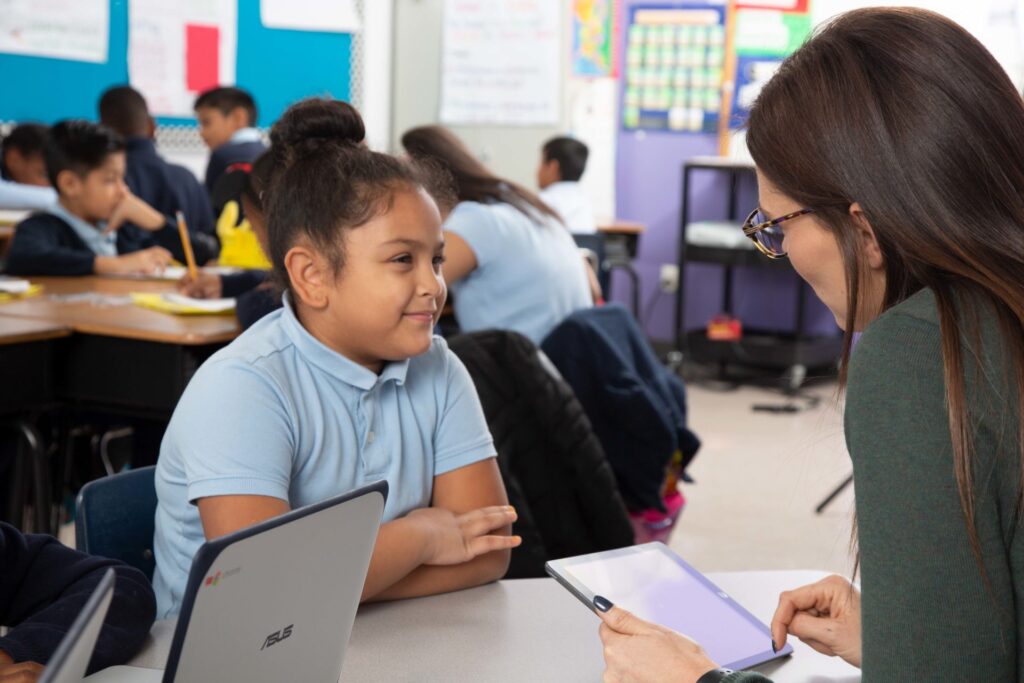
A man with short gray hair and a goatee, wearing a gray collared shirt, standing in front of a white background.

Sean McFall

smcfall@amplify.com

Supporting Catholic schools to inspire students and improve outcomes with high-quality programs

At Amplify, we understand the unique mission of Catholic schools—to educate the whole child through academic excellence, faith formation, and a commitment to lifelong learning. Our research-backed curriculum in literacy, science, and math supports Catholic school educators in delivering rigorous and engaging instruction that empowers students to thrive.

Smiling student in a green shirt sits at a desk and gives two thumbs up in a classroom setting.
Illustration of a bear on a rock overlooking a mountain landscape with a badge overlay reading "read the report EdReports review year 2011.

Amplify CKLA

Using a fundamentally different approach to language arts, Amplify Core Knowledge Language Arts (CKLA) is a PreK–5 program that sequences deep content knowledge with research-based foundational skills. Amplify CKLA met expectations and received all-green ratings from EdReports. Read the review on EdReports.

Amplify ELA

Amplify ELA is truly designed to support middle school students at this critical developmental moment. We ensure that skills are taught, standards are covered, and the test is prepped—all while bringing texts to life and differentiating instruction. Read the review on EdReports.

A girl, an Indiana teacher's inspiration, is reading "Summer of the Mariposas" with an EdReports sticker beside her, labeled "Read the Report, Review Year 2020," capturing a moment that echoes through Indiana elementary schools.
Two students wearing safety goggles conduct a science experiment together, pouring liquid between plastic cups over a blue tray on a classroom table.

Amplify Science

Amplify Science empowers Catholic school students to think, read, and write like real scientists and engineers. Amplify Science K–8 received all-green ratings in EdReports’ review of national science curricula. Read the review on EdReports.

Amplify Desmos Math

Amplify Desmos Math is a new, curiosity-driven program for grades K–12 that builds lifelong math proficiency. Through a structured approach to problem-based learning, Amplify Desmos Math helps teachers create a collaborative math community with students at its center. Courses in grades 6–8 received perfect scores on EdReports. Read the review.

Two girls sit at a table with open books, one making hand gestures while smiling, the other looking at her and giving a thumbs up. Behind them are shelves filled with books, capturing the lively atmosphere of a math classroom.
A young girl in a yellow sweater wearing headphones uses a laptop. Colorful cartoon graphics and badges about reading science and ESSA evidence are displayed.

Assessment and intervention

We understand that Catholic schools are dedicated to nurturing the whole child—academically, spiritually, and socially. That’s why our assessment and intervention programs provide educators with the tools they need to identify learning gaps early, personalize instruction, and ensure that every student reaches their full potential.

Equip your teachers with powerful insights.

Our research-backed assessment and intervention solutions help Catholic school educators:

  • Pinpoint student needs with precision:
    Quickly identify students who need extra support and tailor instruction accordingly.
  • Provide data-driven support:
    Ensure every child receives the right intervention while maintaining the values of Catholic education.
  • Engage students in meaningful learning:
    Use interactive and evidence-based strategies to strengthen foundational skills in literacy.
  • Monitor progress and strengthen outcomes:
    Track student growth over time with real-time data that informs instruction and intervention.

A teacher speaks to three young students in a classroom. Floating signs show phonetic symbols “/e/,” “/d/,” and “/r/,” plus a badge stating "Built on the Science of Reading.
Three people standing and collaborating with digital tablets in front of a whiteboard covered with colorful sticky notes.

A powerful pedagogical approach for Catholic schools

Join the growing number of Catholic schools using Amplify to ensure that every student receives the support they need to succeed. All Amplify programs include services such as:

  • Guidance for developing lesson plans and intervention plans.
  • Information on where to locate standards and other planning materials.
  • Recommendations and tips for day-to-day teaching with Amplify programs.
  • Support with administering and interpreting assessment data and more.

Support is always available.

Our team is dedicated to helping you every step of the way.

Complete K–5 math assessment system

Expect more from your assessments with mCLASS® Math Texas, a brand-new digital benchmarking and progress-monitoring assessment system.

mCLASS Math Texas represents the next generation in math assessment. It provides educators not only with reliable measures of student achievement, but also with an asset-based approach that analyzes student responses to reveal underlying mathematical thinking. The Student Thinking Report provides actionable insights, so teachers can confidently plan both whole-class instruction and targeted intervention.

About mCLASS Math Texas

mCLASS Texas offers reliable progress-monitoring and digital benchmarking assessments that evaluate student performance against grade-level expectations and growth throughout the year. The digital program seamlessly integrates with intervention and core instruction, providing rich, actionable, data-driven recommendations for where and how to support learning. The program empowers you to leverage your students’ strengths with features like:

  • Reliable measures of student achievement and asset-based reporting that analyze student responses to reveal underlying mathematical thinking.
  • A powerful digital benchmarking and progress monitoring assessment system.
  • Actionable recommendations aligned across skills and core instruction with instructional resources.

Access deeper insights into students’ understanding.

mCLASS Math Texas provides insights not only into what students know about grade-level math, but also into how they think. By leaning on students’ individual strengths and strategies, teachers can confidently differentiate instruction and plan future intervention.

The asset-based approach of mCLASS Math Texas digital benchmarking and progress monitoring gives teachers peace of mind that students are making meaningful progress in their math development. The system recognizes that all students have their own ways of thinking. Their individual strengths, experiences, understanding, and strategies—or assets, as we collectively refer to them— inform the robust data that powers mCLASS Math Texas.

Dos mujeres están sentadas en un escritorio, mirando papeles y sonriendo. Una señala una página mientras la otra está sentada con un bolígrafo en la mano. En el fondo se ven útiles de oficina y tablones de anuncios.
Table comparing traditional assessments, which focus on deficits and isolated data, with mCLASS Math’s asset-based benchmark assessments that emphasize strengths and support progress monitoring through richer, responsive feedback.

mCLASS Math Texas Benchmark Assessments

  • Are administered digitally to the whole class three times a year (BOY, MOY, EOY) for growth measure.
  • Allow teachers to see student work in real time throughout assessments.
  • Include diagnostic capabilities to further target Tier 2 & Tier 3 intervention areas.
  • Identify the specific areas of strengths and development to inform differentiation.
  • Provide support and flags for potential risk of dyscalculia.

mCLASS Math Texas Progress Monitoring

  • Helps teachers monitor a student’s math performance with a
    15-minute assessment between mCLASS Benchmark assessments.
  • Informs teachers if tiered interventions require adjustment to improve student learning.

Validated by research

We’re thrilled to announce that mCLASS Math Texas is undergoing an official third-party study conducted by WestEd, a nonpartisan, nonprofit research, development, and service agency. This in-depth validation analysis aligns with our commitment to transparency, data-driven enhancement, and providing the most effective educational tools for our users. The findings of this study will be available by fall 2025. Stay tuned to learn how mCLASS Math Texas will revolutionize your math assessment experience.

El maestro ayuda a los estudiantes a trabajar con computadoras portátiles en un aula; los estudiantes usan auriculares y se concentran en sus pantallas.

Data informs instruction.

The integrated insights and intervention recommendations of mCLASS Math Texas empower teachers to implement timely scaffolds and targeted intervention when needed. Following screening and progress monitoring, teachers can differentiate when, where, and how it matters most with customizable, high-impact instructional resources to support all learners.

One integrated math solution

Amplify’s comprehensive math suite, Amplify Desmos Math Texas K–5, provides seamless alignment to help teachers diagnose and capitalize on student strengths, foster deep investment, and build student agency.

Everything is in one place—with screening and progress monitoring, core instruction, integrated personalized learning, and embedded intervention teachers can trust.

Ready to learn more about mCLASS Math Texas?

Fill out this form and we’ll be in touch with you shortly.

¡El futuro es bilingüe! | The future is bilingual!

Promote biliteracy with Amplify Caminos, a K–5 Spanish language arts curriculum that helps teachers inspire students as they become confident readers, writers, and thinkers in Spanish. The program combines rich content knowledge with systematic foundational skills instruction that is grounded in the Science of Reading and supports multiple teaching models. Para la versión en español, haga clic aquí.

A girl runs joyfully surrounded by a turtle, a soccer ball, an open book, and tropical scenery with a toucan and ancient ruins, with "¡Hola!" written above.

Cultivating biliteracy pathways

Amplify Caminos is designed to support any biliteracy model, including English as a Second Language (ESL), transitional bilingual programs, dual language strands, and Spanish immersion programs. Combined with its English language partner, Amplify Core Knowledge Language Arts (CKLA), Amplify Caminos provides a comprehensive biliteracy solution.

Our approach

Grounded in the Science of Reading and following biliteracy principles, Amplify Caminos combines rich, varied content knowledge with systematic foundational skills instruction to deliver a research-based biliteracy curriculum

Leveraging the Science of Reading

At the heart of the Science of Reading is the Simple View of Reading, a formula describing how skilled reading requires both language comprehension and word recognition. Amplify Caminos is built on this model, with powerful resources that drive real results.

A diagram showing "Language comprehension" and "Word recognition" factors combining to result in "Skilled reading," with associated Amplify Caminos educational materials illustrated below each term.
A four-step diagram shows language learning: starting with sounds, building to phonemes and syllables, cracking the code, and growing in complexity, using "piñata" as an example.

Developing foundational skills explicitly and systematically

Amplify Caminos instruction is based on how the Spanish language works. Students learn vowel sounds and common sounds before blending them to form syllables and words. Less frequent consonants and other complex elements are presented later, with an intentional progression that sets students up for success.

Building background knowledge drives results

Students dig deeper and make connections across content areas to build a robust knowledge base for comprehending complex texts. Amplify Caminos and Amplify CKLA follow the Core Knowledge Sequence—a content-specific, cumulative, and coherent approach to building knowledge—with parallel topics to support research-based and supportive Tier 1 instruction in Spanish and English.

Explore how Core Knowledge curriculum improves reading scores and eliminates achievement gaps.

Three circles show stages of science education: plants in kindergarten, ecology with birds in grade 3, and layered rock formations for geology in grade 4.
Five illustrated children's books with colorful covers, featuring titles in Spanish and cartoon characters including a llama, children, dancers, and a large cactus.

Culturally relevant and challenging texts

Students learn about diverse topics and genres while better understanding themselves and the world with a variety of texts. Authentic Spanish literature, including original decodables by Latino and Hispanic authors, and transadapted texts connect knowledge topics and foundational skills instruction to provide a rich learning experience.

Being bilingual is a superpower

Bilingualism is a cognitive strength: Research attributes it to increased attention, improved working memory, greater awareness of language, and more. Honor the unique skills, strengths, and needs of your multilingual learners with Amplify Caminos and Amplify CKLA.

What’s included

Amplify Caminos features engaging print and multimedia materials—accessible from anywhere—designed to provide a robust literacy-rich foundation in every classroom.

A laptop screen displays a kindergarten daily instruction webpage in Spanish, showing lesson categories with colorful illustrated thumbnails.

High-quality teacher materials

Amplify Caminos teachers effectively deliver instruction with print and digital resources, including:

  • Teacher resources and on-demand professional development.
  • Teacher Guides with embedded differentiation.
  • Formal and informal assessments.
  • Ready-made and customizable lesson slides.
  • Bilingual Connections to support cross-linguistic transfer.

Immersive student resources

Amplify Caminos students stay engaged with a variety of print and digital resources, including:

  • Original decodables and read-aloud Big Books (K–2), Student Readers (3–5), and authentic Spanish literature anthologies (4–5).
  • Poet’s Journal and Writer’s Journal (write-in Student Readers for Grades 4–5).
  • Student Activity Books with embedded assessments.
  • Research units for independent research built around a trade book.
  • Multisensory phonics materials:
    • Letter Cards (K–2)
    • Syllable Cards (K–2)
    • Image Cards (K–3)
    • Plus, digital anchor charts and a Sound Library.
A collage of illustrated Spanish-language educational book covers and pages, featuring a knight, a rabbit, and children playing, alongside Spanish text excerpts.
An open ebook on a tablet displays Spanish text about animals, accompanied by photos of a caterpillar, birds, a jaguar, raccoons, a polar bear, and a fox.

Robust digital experience

Like Amplify CKLA, Amplify Caminos is proud to be a premier high-quality instructional material (HQIM) offering in elementary language arts, with rich and research-based content—including an expanding library of engaging digital materials—that helps you authentically support, challenge, and engage your students. From digital Teacher Guides to lesson projectables, we provide all the tools needed to successfully deliver every lesson.

Explore more programs based on the Science of Reading

All of the programs in our literacy suite are designed to support and complement each other. Learn more about our related programs:

Amplify Desmos Math New York high school

Welcome to Amplify Desmos Math! Below, you’ll find information about the program, login credentials to access the digital curriculum, and additional resources to support your review.

A laptop screen displays a math activity showing a machine representing the function h(x) = f(x + 2) and a table for input and output values.

About the program

Our structured approach to problem-based learning builds on students’ curiosity to develop lasting grade-level understandings for all students.  The program thoughtfully combines conceptual understanding, fluency, and application, motivating students with interesting problems they are eager to solve. Teachers can spend more time where it’s most impactful: creating a collaborative classroom of learners.

A geometry activity shows a circle intersected by several lines, with a shaded quadrilateral inside. Questions and answer options appear on the right.

Structured approach to problem-based learning

  • Easy-to-follow instructional guidance
  • Robust assessments and reports
  • Explicit guidance for teachers on what to look for and how to respond
A classroom activity tracker shows a grid with students’ names in the left column and progress checkmarks or crosses for seven activities across the top.

Math that motivates

  • Powerful teacher-facilitation supports and tools
  • Students talking and building from each other’s ideas 
  • Compatible print and digital materials for every lesson to foster a collaborative classroom
A design challenge interface shows two side-by-side diagrams with interlocking purple circles; the left is editable with 3 objects, the right is the design to match.

Student thinking is made evident

  • Curiosity-driven lessons that motivate students with interesting problems they are eager to solve
  • Technology that provides Responsive Feedback and is designed to reveal mathematical thinking
  • Student Notes pages to prepare students for college-level skills

Scope and sequence and standards alignment

Click the link below to view the program scope and sequence, alignment to standards, and alignment to the NYC DOE Definition of Culturally Responsive-Sustaining Education and the New York State Culturally Responsive-Sustaining Education Framework

A two-page chart outlines the scope and sequence for Algebra 1, Geometry, and Algebra 2 units, with a vector graphic of lab equipment in the lower right corner.
A laptop displays a graph of a diver's path above water, with two printed math worksheets featuring graphs, tables, and practice problems in the background.

Experience Amplify Desmos Math New York.

Explore our digital program to review content from Algebra 1, Geometry, and Algebra 2. To log in, click the orange “Review now” button below, select “Log in with Amplify” and use the following login credentials:

Username: t.math-adm-ny-hs@tryamplify.net

Password: AmplifyNumber1

Resources to support your review

To learn more about Amplify Desmos Math New York, including pedagogical philosophy, origins, implementation examples, and nationally recognized independent reviews, please download the following documents:

A worksheet and two digital screens show math activities involving tables and blocks, focusing on comparing numbers and filling in missing values.

Looking for help?

Support is always within reach. Our team is dedicated to supporting you throughout your review and can be reached at any time by emailing or calling us directly.

  • Live chat: Click the orange icon while logged in to get immediate help.
  • Phone: Call our toll-free number: (800) 823-1969.
  • Email: Send an email to help@amplify.com. In the message body, please include your name and question. Provide as much detail as possible, so we can more quickly help you find a solution.

Hello, California teachers and leaders!

We’re excited to support California (CA) schools implementing literacy assessment tools that will both screen students for risk of reading difficulties (including dyslexia), while also gaining critical information about how to support learning.

The CA legislature enacted SB 114 in 2023 (Education Code (EC) 53008) to require the early identification of reading difficulties, including dyslexia, for students in kindergarten through grade 2. This requirement will help educators identify students at risk for reading difficulties so they can provide timely, targeted support to help every student succeed.

Log in to access your mCLASS® program and hundreds of resources at learning.amplify.com.

Need help logging in? Visit our Teacher Central site for help and instructions on navigating the platform.

Want advice and answers from the Amplify team?

A teacher sits at a table holding a tablet, speaking with a young student in a classroom. Text reads "Group 1 Fluency" and "Group 2 Phonics.
A teacher shows a book to two young students while another teacher speaks with a student; icons of an ear and a speech bubble are included.

Introduction to mCLASS DIBELS 8th Edition

mCLASS DIBELS® 8th Edition is an all-in-one system of evidence-based literacy and reading difficulties screening, progress monitoring, and instruction for grades K–6. Amplify’s Spanish language assessment, mCLASS Lectura, works in tandem with DIBELS 8th Edition’s English assessments to help teachers understand where their Spanish-speaking students are on their English and Spanish literacy paths.

Please visit our technical onboarding website for information regarding enrollment and licensing.

Access information here regarding what types of permissions teachers, principals, and district administrators need to assess students and access data in mCLASS.

California Screening for Risk of Reading Difficulties legislation

According to EC 53008(e) and (f), LEAs must screen all students in kindergarten and grades 1 and 2 at least once each school year.

EC 53008(e) also states that when determining the right time during the school year to administer state-approved screening instruments, an LEA must consider whether students “have received sufficient instruction in foundational reading skills to support a valid assessment.” This section further notes that this requirement does not “restrict LEAs from providing pupils additional screenings or diagnostic evaluations, as appropriate.”

Amplify’s recommendations for selecting mCLASS benchmark window dates is as follows:

Schedule three benchmark assessments per year:

  • Beginning of year (BOY, Benchmark 1): Months 1–3
  • Middle of year (MOY, Benchmark 2): Months 4–6
  • End of year (EOY, Benchmark 3): Months 7–9

The following are suggested dates using as an example a Sept.–June school calendar:

  • September (BOY)
  • January (MOY)
  • May (EOY)

For instructions on setting mCLASS Benchmark Windows within the platform, refer to this help article.

Students enrolled after screening occurs:

When you have a late-enrolling student who needs to be screened for reading difficulties within 45 days of enrollment due to legislative requirements, you will likely follow one of the following example approaches:

If your next scheduled benchmark window falls within the required 45-day window, you can wait and screen the student during that regular assessment period along with all other students.

If your benchmark window recently closed and you don’t have strict benchmarks enabled in your mCLASS platform, you can still assess the student using that same benchmark assessment.

  • This gives you the most comprehensive picture of where the student stands. The assessment will be administered in the same manner it was during the window. NOTE: This could create an incongruent aggregate data set that does not reflect the same instructional time period for all students being screened.

Conduct progress monitoring using the same measures that would have been required at your most recent benchmark assessment for the student’s grade level and time of year.

  • This approach helps you quickly identify the student’s current skill set and plan appropriate next steps for instruction while screening for reading difficulties as required by law. NOTE: Home Connect Letters will not be available for a student who only has progress-monitoring data.

We know that every situation is unique. If you’re unsure which option works best for your specific circumstances, reach out to Emily Lutrick.

Access the mCLASS DIBELS 8th Edition materials here.

Access both mCLASS DIBELS 8th Edition and mCLASS Lectura materials by navigating to learning.amplify.com/pdlibrary. NOTE: Login is required.

  1. Select Explore Programs, then mCLASS.
  2. Choose Assessment materials: mCLASS Lectura or mCLASS DIBELS 8.

Home Connect letters: Information and translations

EC 53008(k) states that an LEA must make student results from screening assessments available to parents or guardians “in a timely manner, but no more than 45 calendar days from the date the assessment was administered.” The results must include information about how to interpret the results, as well as the next steps.

mCLASS and mCLASS Lectura Home Connect letters will support districts in meeting this legislative requirement. Did you know you can generate In addition to English, these letters are available for California schools in the following languages: Armenian, Cantonese, Filipino, Hmong, Japanese, Korean, Mandarin, Punjabi, Russian, Ukrainian, and Vietnamese. Learn more here!

The notifications an LEA provides to parents/guardians regarding the screening must also comply with California translation requirements in EC 48985(a). If you need resources to support this requirement, please contact Emily Lutrick.

You can now access several enhancements to Home Connect letters. Based on feedback from California educators:

  • mCLASS DIBELSHome Connect letters will be available in several additional translated languages for teachers to download and share with caregivers.
  • mCLASS Lectura Home Connect letters will now be able to be downloadable via batch download!
An adult woman shows a tablet to a young girl seated beside her in a classroom with a whiteboard in the background.
A collage featuring students and teachers working together, an illustration of a duck, a green teacup, and the word "cup" on a yellow background.

Reporting

mCLASS gives you detailed insight into your students’ reading development across foundational literacy skills, empowering educators with instructional recommendations specific to each student’s unique needs.

Access the mCLASS Reporting Guide to find a wealth of valuable reporting information that mCLASS provides for everyone—from classroom teachers and literacy specialists to principals and district leaders, as well as parents and guardians at home.

Resources

To learn more about California’s K–2 screening requirements, please see the CDE FAQ for more. Check out Amplify for the most up-to-date information and to access further resources related to our programs, such as:

Square podcast cover for "Science of Reading: The Podcast" with an open book, abstract shapes, and the word "Amplify" on a yellow background.

Professional learning opportunities

Coming soon!

Meet the team

Rachel Scott

Vice President, PD Service Delivery
rscott@amplify.com

Local representatives

California account executives
amplify.com/mclass-dyslexia-screener-ca/

Emily Lutrick

Director, Assessment & Intervention Adoption Strategy
elutrick@amplify.com

Need more help?

Log in at learning.amplify.com, and select the gray chat button in the bottom-right corner to chat live with our Support team.

Our Help Center contains searchable articles and resources to answer many of your questions.

If you have other questions or need additional assistance, please contact our Support team.

Amplify ELA Educator Panel

Thursday, 4pm ET
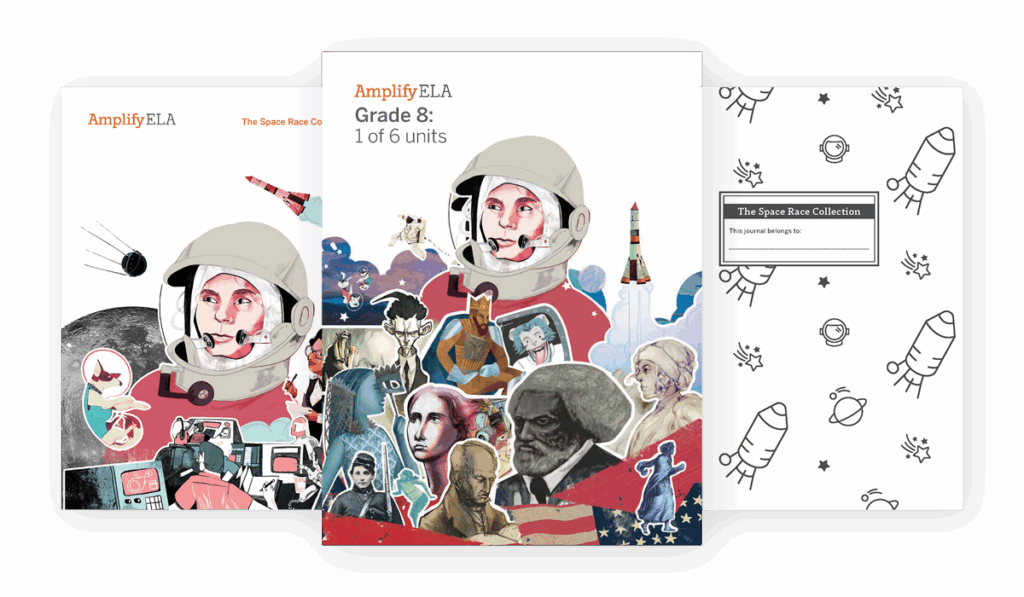
Join our Science of Reading program webinars, Reading Comprehension in Action!

Register for our free webinars to discover how to foster strong reading comprehension and literacy outcomes with Amplify CKLA, mCLASS, and Amplify ELA.

mCLASS DIBELS 8th Edition Educator Panel

Tuesday, 4pm ET

Join our Science of Reading program webinars, Reading Comprehension in Action!

Register for our free webinars to discover how to foster strong reading comprehension and literacy outcomes with Amplify CKLA, mCLASS, and Amplify ELA.

Amplify CKLA Educator Panel

Thursday, 4pm ET

Join our Science of Reading program webinars, Reading Comprehension in Action!

Register for our free webinars to discover how to foster strong reading comprehension and literacy outcomes with Amplify CKLA, mCLASS, and Amplify ELA

Episode 2: Background knowledge and education reform with Robert Pondiscio

Robert shares his inspirations and emphasizes the need to acknowledge the different places and backgrounds that students come to school from, and how this affects their language trajectory. Susan and Robert also discuss the latest in education reform, as well as the knowledge gap, how it’s only going to get larger as kids move through grades, the limited time we have to correct it, and how to start doing so.

Episode 3: Reporting on education and the Science of Reading with Emily Hanford

Susan sits down with education reporter and host of the Education Post podcast Emily Hanford to discuss her takeaways from reporting on dyslexia and the patterns that emerged in her investigation; the Science of Reading, and why schools don’t align with it more; theories of how reading works; and the evolution of balanced literacy, phonics, and whole-language instruction.

Episode 14: Maximizing our educational reach via technology with David Steiner

Susan Lambert and David Steiner, professor and executive director of the Institute for Education Policy at Johns Hopkins University, examine how school closures are impacting learning across the nation, how districts are responding to the rapidly changing environment, and why maximizing our educational reach via technology should be a priority.

Episode 27: Fostering relationships between parents and educators with Dr. Catherine Barnes

Join Dr. Catherine Barnes, CEO of Sudden Impact Solutions and leader of the Black Parents Support Network, as she addresses the shortcomings of the educational system in underserved communities during the pandemic, the need to overcome parents’ perceptions of educator judgment, and the ways educators can foster relationships with parents to ensure continuous learning for students during these trying times.

Season 4, Episode 6

Educator voices: Personal journeys through the Science of Reading with Lindsay Kemeny

Susan Lambert is joined by second-grade teacher Lindsay Kemeny for a conversation about her journey of discovery with the Science of Reading. Lindsay discusses how she processed her shock and guilt at realizing she’d never been taught how to properly teach reading. She shares the journey she took as a mother and an educator when her son was diagnosed with severe dyslexia alongside depression, and discusses how that inspired her to dive into what is needed for good literacy instruction and what students with learning disabilities need. Listeners will also hear stories from additional educators from across the country about how the Science of Reading has transformed their classrooms.

Season 4, Episode 14

What it takes to be a literacy education changemaker with Kareem Weaver

Susan Lambert chats with Kareem Weaver, award-winning teacher and administrator, about change management for educators implementing the Science of Reading. Kareem discusses what the Science of Reading is at the simplest level and why it’s important that educators are undivided in backing the research. Kareem highlights the importance of meeting educators where they are and realizing that change can’t happen if teachers aren’t given the tools and support they need first. He also calls for systemic changes to education so that teachers can do their jobs in a way that is balanced and sustainable, and ultimately benefits the students.

Season 5, Episode 9

Making every day a “wins day” with Grammy-winning educator Mickey Smith Jr.

Mickey Smith Jr. is an acclaimed Louisiana educator, author, saxophonist, Grammy Music Educator Award winner, and self-described “solutionist” who feels a strong calling to help educators. He brings his motivational blend of music and message to this special episode in which he and Susan Lambert discuss music, perseverance, and finding purpose as educators and human beings. He shares his proven principles for helping educators create sound connections and culture in today’s classrooms. He shares his methods for providing all-purpose encouragement and offers a tangible approach to finding one’s own personal mission statement—or, as he likes to call it, our legacy song.

Season 5, Episode 10

Training the next generation of Science of Reading educators with Dr. Amy Murdoch

Dr. Amy Murdoch, assistant dean of reading science in the School of Education at Mount St. Joseph University, received her doctorate in school psychology with an emphasis in early literacy from the University of Cincinnati. In this episode, she chats with Susan Lambert about creating prominent graduate and doctoral programs in the Science of Reading, and the responsibility of training the next generation of early literacy educators. She discusses how she has seen Science of Reading interest escalate, shares her hopes for the future of reading science in schools, and offers advice for those who are new to the Science of Reading and/or exploring an advanced degree rooted in reading science.

Welcome to your Amplify Desmos Math Pilot!

We’re thrilled to welcome you to the Amplify family, and we look forward to making your experience with Amplify Desmos Math successful from day one.

On this site, you’ll find resources, tips, videos, and other helpful information designed to support you throughout your pilot experience.

A man in a plaid shirt sits at a desk with a laptop and a pencil holder, with educational posters and drawings on the wall behind him.

Tips for getting started

It takes time to learn any new program and get used to its patterns and flow—time that you aren’t always afforded in a pilot situation. Based on our work with pilot teachers who are now happy users, we can tell you with 100% confidence that it gets easier. In no time, you’ll be preparing and delivering all your lessons with ease.

As you get comfortable with the organization of each unit and the ways one lesson flows into the next, you’ll find the following resources helpful.

Helpful links for getting started

Topic

Description

Link

Introduction to the program

Getting to know Amplify Desmos Math

Program Overview brochure
K–5 Lesson Walkthrough (video)
6–A1 Lesson Walkthrough (video) 
Lesson structure (K–1, 2–5, 6–A1)

Accessing Amplify Classroom

Logging in and navigating the platform

Accessing Amplify Desmos Math (video)
Educator Home navigation

Preparing to teach a lesson

Manipulatives (kits and virtual) and Centers Kits

Exploring ready-to-go Centers materials and unleashing your creativity with the world’s best manipulatives

Materials and classroom setup
Unboxing your Centers Kits (K–5)
Exploring Polypad Virtual Manipulatives

How to use the Teacher Dashboard

Getting started with and using the Teacher Dashboard

Using the Teacher Dashboard
Try It: Teacher Dashboard

Advanced topics: Snapshots, Students uploading images, Giving students feedback, Companion and Projector Mode, Sketch Everywhere tool

Fluency Practice

A learner’s guide for using our adaptive digital fluency resource

Getting started with Fluency Practice
Accessing Fluency Practice

Assessments

Guidance for understanding assessment resources

Assessment overview
Admin reports
mCLASS®Beginning-of-Year Screener (video)

Differentiation and practice

Resources available to support student learning

Differentiation and practice

Support resources you may want to use during your pilot

Resource

Description

Link

Help articles and PD videos

Access articles, videos, and step-by-step guides to help answer your questions and guide you through your Amplify Desmos Math implementation. See Amplify Desmos Math in action in real classrooms.

Help Articles support page
Amplify Desmos Math PD Library

Unit Zero (K–5)

Get teachers and students familiar with the routines and structure of Amplify Desmos Math. Unit Zero is a set of five optional lessons and resources designed to support the first five days before Unit 1.

Unit Zero overview

In each grade-level collection on learning.amplify.com before Unit 1
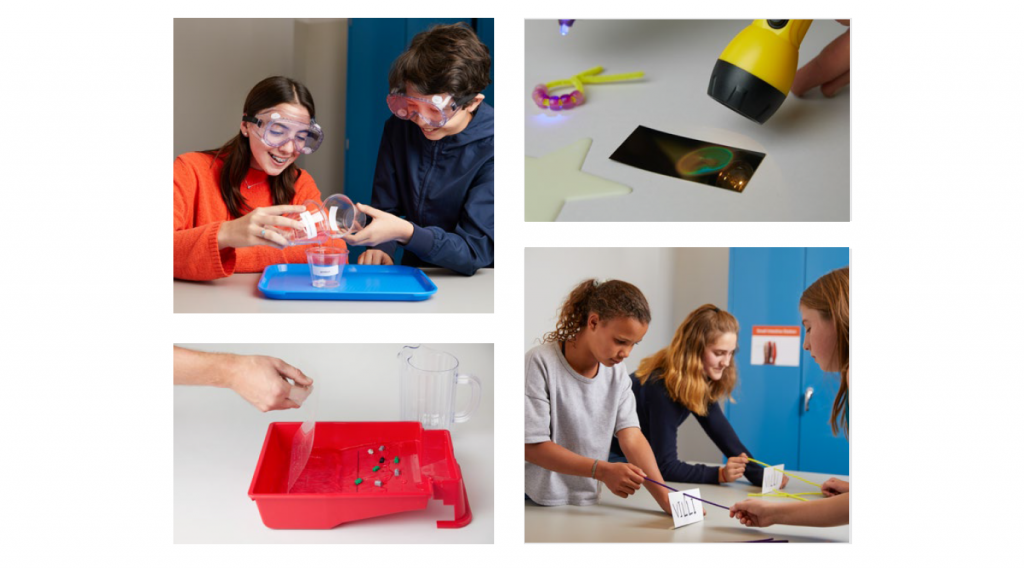
Caregiver Hub

Get families involved in the process of learning math by sharing the link to our Caregiver Hub in your home communications, offering access to subunit summaries and practice.

amplify.com/caregiver-hub/

In-the-moment instructional suggestions

Answer questions that frequently arise when teachers shift to a problem-based approach, with these cards that include tips on how to respond to common challenges while teaching.

Instructional support cards

The Five Instructional Shifts of Problem-Based Learning

Read this ebook describing what the five main shifts look and feel like as you infuse a more student-centered approach into your math instruction.

Ebook

Instructional and math language routine cards

Use routines to create a powerful, practical force for establishing a classroom learning community and engaging students in conversations during math. Facilitation guides and routine cards provide instructions for routines you can use in your math classroom.

Facilitation guides for routines in Amplify Desmos Math

K–5 routines cards
6–A1 routines cards

Infusing Problem-Based Learning Into Math Classrooms

A quick guide to starting the shift to problem-based learning, this ebook includes a host of resources from the Amplify math Symposium and the Math Teacher Lounge Podcast.

Ebook

Making the Shift to Problem-Based Learning

In this ebook, we’ll go through what problem-based learning is, why it’s becoming so critical to math instruction, and how to start making the shift with a form of professional learning: Learning Labs.

Ebook

Asset-Based Assessment

This ebook summarizes what asset-based assessment is and how it benefits students.

Ebook

A man with short dark hair wearing a white shirt is smiling at the camera, with yellow geometric shapes in the background.

Want to learn more from Amplify experts?

Amplify offers a wide variety of learning opportunities outside our pilot meeting times: 

Our math webinar library hosts all our past sessions.

Our Events page is where you can search for and register to attend upcoming math webinars.

The Amplify Blog is a great resource for helpful articles and research-based information.

Rethinking reading comprehension

Collage of educational web pages and images featuring children reading, book graphics, and the title “Understanding Comprehension: The Heartbeat of Literacy,” highlighting interactive lessons and free teaching resources.

Have you ever listened to a student read aloud fluently about something—say, the life cycle of sea turtles—only to discover afterward that they couldn’t explain a single thing about…the life cycle of sea turtles? It’s a familiar classroom moment, and it reveals how easy it is to misunderstand what comprehension really is.

Comprehension is often framed only as the product of reading: the answers students give when asked to find the main idea, identify a theme, or summarize a passage.

But the Science of Reading tells us that comprehension is more than an outcome. Comprehension is also a dynamic process that unfolds as readers move through a text, powered by the interactions among words on the page and the knowledge and reasoning they bring to it. That’s why we like to think of it as the heartbeat of literacy.

Why comprehension is both product and process

For decades, much of classroom instruction has focused on language comprehension products: the demonstrations of understanding that happen after reading. Those are important, but they don’t tell the whole story.

That’s because products depend on processes. If students do not build a coherent mental model of what they’re reading—while they’re reading—they may succeed at reading, but not at comprehending.

This is the missing link that researchers like Hugh Catts, Ph.D., and Jane Oakhill, Ph.D., have revealed: Comprehension isn’t something readers suddenly have at the end of a passage. It’s also something they do all along the way.

What comprehension processes look like

Comprehension processes are the mental moves students make to construct meaning as they read. All students need explicit instruction and practice in order to learn to do this automatically. Some of the most important processes include:

  • Inference-making: Filling in gaps the author leaves unsaid. If a story says “Carlos forgot his umbrella and got wet,” readers must supply the missing piece: It rained.
  • Anaphora resolution: Figuring out who pronouns such as he or she refer to. For instance, in a passage where “Charmaine passed the ball to Kendra, and she scored,” not all readers may track that she refers to Kendra.
  • Monitoring meaning: Noticing when something doesn’t make sense and rereading to fix it. Think of a student breezing through a science lab procedure but not realizing they’ve misunderstood a key step.
  • Recognizing connectives: Using words like because, however, or meanwhile to understand how ideas fit together in a text about history, math, or literature.
  • Visualizing: Building a mental picture—whether that’s of how a caterpillar becomes a butterfly, or how a character’s feelings shift across a story.

When these processes don’t happen, comprehension breaks down—even for students who can decode fluently. That’s why teaching comprehension can’t mean just assigning comprehension questions. It has to mean teaching students how to think with text in real time.

The role of knowledge and writing

Processes don’t exist in isolation. They depend on, and are strengthened by, what students already know and what they can express in writing.

  • Knowledge: The more background students bring to a text, the easier it is for them to make inferences and connect ideas. A child who already knows a little about baseball will understand a passage about a pitcher’s strategy much more readily than one encountering the game for the first time.
  • Writing: Writing about reading reinforces comprehension. When students summarize a biography in their own words, draft a response to a novel, or synthesize ideas from multiple sources, they are practicing the very processes—like making connections and organizing ideas—that skilled readers rely on.

This interplay—reading feeding knowledge, knowledge feeding comprehension, writing reinforcing both—creates a cycle of literacy growth that goes far beyond the end-of-text quiz.

Rethinking classroom practice

Working on individual comprehension skills can help in the short term. But long-term literacy success—for all students—requires explicit instruction and practice in all the comprehension processes needed to build comprehension products.

So what does it mean to teach comprehension as a process, not just a product?

Weaving effective instruction in comprehension strategies into everyday literacy work. A few examples:

  • Model your thinking. Pause mid-reading to ask, “Who does she refer to here?” or “That didn’t make sense—let’s go back.”
  • Highlight connectives. Teach words like although or consequently explicitly, showing how they signal relationships between ideas.
  • Promote monitoring. Encourage students to ask themselves, “Does this make sense?” and to reread when it doesn’t.
  • Build knowledge deliberately. Use content-rich texts in science, history, and the arts to give students the context they need for stronger comprehension.
  • Pair reading with writing. Even short written responses—“Why do you think the character acted that way?”—help solidify understanding and make comprehension processes visible.

These practices shift comprehension instruction from an after-the-fact check to an in-the-moment skill set students can carry into every subject.

Want to dig deeper?

Expanding our understanding of comprehension as both product and process is one of the most important shifts the Science of Reading has brought to literacy instruction. It reminds us that comprehension isn’t just a mysterious outcome at the end of reading—it’s the ongoing work of making meaning along the way.

To help educators explore this shift, we’ve created the new Science of Reading: Comprehension 101 bundle. These resources break down the research and provide strategies you can use right away. When we teach comprehension as the ongoing process it truly is, we keep the heartbeat of literacy strong for every reader.

Inside, you’ll find the following resources:

  • Our anchor ebook: Understanding Comprehension: The Heartbeat of Literacy
  • Infographic: The missing link in reading comprehension
  • Ebook: Knowledge, Reading, and Writing: The Secret Recipe for Literacy Success
  • Podcast: “Science of Reading Essentials: Comprehension” episode and listening guide
  • Webinar: Rethinking Reading Comprehension: Reflections on Hugh Catts’ and Jane Oakhill’s Research

What’s included in our K–8 literacy assessment and instruction suite

mCLASS DIBELS 8th Edition® provides every teacher, coach, and administrator with a data-driven system that supports each student’s unique needs—from efficient one-minute skills assessments in English and Spanish to granular diagnostic insights. You’ll have all of the tools you need to ensure your students receive effective instruction and discover their true skills as readers.

Learn more about mCLASS’s precise measurement, predictive results, and preventive instruction.

Skills at a glance

mCLASS includes benchmark, progress monitoring and dyslexia screening measures in English and Spanish that are predictive of long-term reading success and detect the critical early warning signs of dyslexia risk. Together, mCLASS DIBELS 8th Edition and mCLASS Lectura identify whether a student is at risk due to a stronger proficiency in one language or difficulties associated with dyslexia.

Equal skill coverage in English and Spanish

*Fluidez en nombrar letras (FNL) in Spanish and Letter Naming Fluency (LNF) in English are validated as phonological processing measures (also known as RAN), thus making RAN available in both languages.

Additional dyslexia screening measures

Educator and caregiver reports

The rich data you collect through direct observation is instantly available from a variety of reports that simplify student growth analysis and instructional planning. All stakeholders, from teachers and administrators to parents and guardians, will gain a deep understanding of student performance and know how to provide extra practice. See the complete mCLASS Reporting Guide.

Class and student reports

Detailed class and student reports help you quickly pinpoint which students need more support. You’ll be able to see every student’s skill progression from the beginning of their literacy journey to later grades and know exactly when a change in instruction is needed. Measure transcripts from every benchmark and progress monitoring probe also provide you with insight into student responses during assessment.

Goal setting

mCLASS includes tools for setting goals and evaluating growth outcomes to ensure the instruction you are providing each individual student is meeting their needs and accelerating their growth. The program uses each student’s initial performance to assign goals, which you can further customize as their learning progresses.

Administrator reports

The mCLASS reporting and analysis suite makes it possible to analyze performance trends across a variety of demographic categories at the class, school, district, and state level. Principals, administrators, and district leaders are empowered to evaluate the success of instructional strategies, allocate training resources, or decide where to deploy additional staff.

Caregiver reports

The Home Connect letter allows educators to share information about a child’s reading development with parents and guardians in simple charts and family-friendly language. The letters provided include instructional resources in print and online for families to help practice skills at home.

Data-driven instruction

mCLASS helps you make sense of data by instantly providing targeted instructional recommendations and teacher resources based on students’ assessment results. mCLASS data also informs instruction within Amplify’s suite of intervention, personalized learning, and core programs grounded in the Science of Reading.

Automatic small-group and one-on-one instruction

The mCLASS Instruction feature included with DIBELS 8th Edition and mCLASS Lectura automatically generates skill profiles and recommends teacher-led activities for small groups and individual students. Recommendations can be updated based on the latest benchmark and progress monitoring results.

Tier 2 and 3 instruction with mCLASS Intervention

mCLASS data not only helps you identify which students are in need of intensive support, but also places them into Amplify’s Tier 2 and 3 instruction program, mCLASS Intervention. mCLASS Intervention builds a skill profile for each student, forms engaging lesson plans, and updates the instructional recommendations every ten days based on the latest benchmark and progress monitoring results.

Core instruction with Amplify CKLA

By combining the results from mCLASS assessments with Amplify CKLA, you can provide targeted whole-class instruction specific to your students’ risk levels and areas of growth. The small-group instruction recommendations in mCLASS provide activities that reinforce what students have learned during Amplify CKLA core instruction.

Personalized practice with Boost Reading

mCLASS data seamlessly integrates with Boost Reading to personalize student practice in targeted skill areas. With more than 50 immersive mini-games that build skills in phonics, phonological awareness, vocabulary, and comprehension, Boost Reading provides students with independent practice time they’ll love, while freeing teachers up to provide small-group instruction.

Explore more programs based on the Science of Reading

The programs in our literacy suite are designed to support and complement each other. Learn more about our related programs.

mCLASS Intervention

Boost Reading

Amplify CKLA

Frequently asked questions

Still have questions? We have answers. Check out the following FAQ.

Overview

  • Amplify CKLA is based on research showing that closing the background knowledge gap is necessary for supporting the literacy development of all students. To that end, Amplify CKLA teaches literacy through the lens of cross-curricular domains in science, history, literature, and culture. It was developed in response to research that shows the critical impact of background knowledge on reading comprehension and college- and career-readiness.
  • The program also reflects the latest early reading research showing the importance of explicit foundational skills instruction. The program develops students’ foundational literacy skills through a systematic scope and sequence with a focus on phonics.

Our research-based language arts curriculum is built on findings showing that higher-level reading comprehension depends on both automatic, fluent decoding and background knowledge. Combining well-established findings from the field of early literacy research with classroom-based feedback, Amplify CKLA ensures that children will learn to listen, speak, read, and write confidently and proficiently. For more information, view the Amplify CKLA Research Guide.

Amplify CKLA is a PreK–5 program. While the PreK and K–2 materials respect the important differences between early childhood education and formal schooling, the Grades 3–5 materials ensure a smooth transition to the academic rigors of middle school.

PreK

The focus in PreK is to maintain a developmentally appropriate early childhood setting; the structures, routines, and activities are engaging and children receive a solid foundation for future language arts instruction.

K–2

The focus in K–2 is developing fluent reading and writing skills, and enhancing language comprehension by building background knowledge and vocabulary. This is accomplished through two strands: the Skills Strand and the Knowledge Strand.

The Skills Strand focuses on decoding, encoding, grammar, handwriting, and the writing process, and it contains decodable chapter books for students to practice just-learned sound-spellings.

The Knowledge Strand builds background knowledge and vocabulary through carefully sequenced read-alouds and complex texts. Teachers read aloud stories that are more complex than the text students can decode on their own, enabling children to engage with complex texts and build background knowledge of a variety of connected topics in history, science, literature, and the arts.

3–5

In Grades 3–5, students are still focused on building reading and writing skills as well as knowledge and vocabulary, but the program no longer has two strands. The various lessons in each unit include read-alouds; whole-group, small-group, and partner reading; close reading; literal, inferential, and evaluative comprehension questions; vocabulary; grammar; writing; morphology and spelling (10–15 words per week); and unit assessments.

Program design

The Skills strand provides intentional and systematic support in building decoding skills. The lessons support learning related to phonemic awareness, sound-letter patterns (or spelling patterns), decoding (both in explicit lessons and with engaging decodable texts), writing mechanics, and writing structure and processes, for 60 minutes daily.

The Knowledge Strand develops young children’s language and background knowledge. By exposing children to rich and complex texts through daily read-alouds, engaging in text-based and analytic discussions of the text and content, and building connections from the text to the work of the classroom through extension activities, the Knowledge Strand provides daily, extensive (60 minutes) broadening and deepening of children’s oral language and comprehension.

Teaching the Skills Strand and Knowledge Strand in parallel helps students avoid cognitive overload and acquire advanced, complex vocabulary in the Knowledge Strand—in essence, reading to learn from day one—while becoming expert decoders in the Skills Strand. The program is designed to bring these two strands together in grades 3–5, as foundational skills and higher-level comprehension and meaning-making gradually intertwine.

The CKLA program takes a comprehensive approach to teaching the code of the English language in the Skills strand. While the English language has only 26 letters, these letters combine to create 150 spelling patterns that represent 44 sounds of language. In most reading programs, children are explicitly taught only a fraction of this information and must glean the rest from ad hoc and incidental exposure to these spelling patterns through text. CKLA focuses on explicitly teaching each of the 44 sounds and the 150 ways that these sounds are represented (via letters and letter combinations). This comprehensive approach assures educators that children have the knowledge they need to address any text and any word.

The Knowledge Strand reflects the fact that knowledge, comprehension, and vocabulary are intimately related. The materials are designed to provide children sustained time on a variety of domains (bodies of knowledge) through shared read-alouds and discussions. This coherent organization of content is critical to building knowledge, inferring new vocabulary, and enabling comprehension. The content-rich, intentionally sequenced nature of the read-alouds within the Knowledge Strand creates the optimal context for incidental and explicit vocabulary-learning opportunities. After the read-aloud, children analyze the text through interactive discussion questions, engage in activities that foster their comprehension of complex sentences and ideas, and extend the ideas of the read-aloud into other activities in the classroom. In this way, the lessons create rich, academically oriented, oral language experiences that promote both receptive and expressive language skills.

Amplify CKLA embeds a variety of diagnostic and classroom assessments into the program materials.

There are curriculum-based assessments of both foundational skills and content knowledge, placement assessments in Grades 1 and 2 for the Skills Strand, and end-of-year Skills Strand assessments in Grades K–3. These assessments are built into the units of instruction/domains within the Teacher Guides. In Grades 4–5, there are beginning-of-year assessments, frequent spelling assessments, and comprehensive unit assessments.

Formative Assessments are integrated into every lesson, allowing teachers to understand exactly how students are doing on meeting lesson goals and standards-based objectives.

Writing in multiple genres is taught through a process that builds from three highly scaffolded steps to seven flexible steps.
In addition to explicit lessons in handwriting, spelling, and grammar, writing is taught throughout K–5. Instruction begins with a three-step writing process: plan, draft, and edit. The process is reinforced as each new writing genre is addressed. Each genre is taught through a gradual reduction in scaffolding over a set of six lessons that includes teacher modeling, group practice, independent practice, and independent application. This systematic approach allows for continued support and predictable learning as children progress in their knowledge of text types and complexity of writing. By Grade 3, students have worked their way up to a five-step writing process: planning, drafting, revising, editing, and publishing. Beginning in Grade 4, the writing process expands to seven components: planning, drafting, sharing, evaluating, revising, and editing (and the optional component of publishing). An important change between the writing process in Grades 3–5 is that the writing process is no longer conceptualized as a series of scaffolded, linear steps that students follow in a set sequence. Rather, students move back and forth between components of the writing process in a flexible manner, similar to the process that mature and experienced writers follow. In addition to specific writing lessons, there are numerous writing opportunities for students throughout the curriculum.

Alignment to the CCSS

Fully implementing the Common Core Standards requires some shifts in prevailing instructional approaches. For early grades language arts, these shifts can be summarized as (1) balancing fiction and nonfiction text, (2) building knowledge, (3) supporting students’ capacity to learn from increasingly complex texts, (4) giving text-based answers, (5) writing from sources, and (6) explicitly supporting the acquisition of academic vocabulary. The following sections document the primary ways that Amplify CKLA meets the demands of these shifts.

  1. The amount of nonfiction gradually increases, reaching the 50-50 balance of fiction and nonfiction by grade 3.
  2. Read-alouds in the Knowledge Strand are designed according to the latest research to build knowledge and vocabulary in history, science, the arts, and more.
  3. The texts in both the Knowledge Strand and the Skills strand increase in complexity as the program progresses within and across grades.
  4. In the Skills Strand, the language and knowledge demands of the texts increase, but remain decodable based on the aspects of the code that have been taught to date.
  5. Both strands engage students in appropriate means of providing text-based answers—orally, pictorially, and eventually in writing.
  6. Together, the Skills and Knowledge Strands enable students to read and digest various sources and then write by drawing on those sources.
  7. In both strands of the program, Amplify CKLA teaches children the process of using the text as a springboard for understanding.
  8. The Knowledge Strand offers repeated exposures to academic vocabulary through authentic texts and explicit word instruction.

Materials

PreK

  • Teacher Guides, Student Activity Pages, 3–4 Trade Books per domain, Flip Books, Image Cards, Transition and Center Cards, Nursery Rhymes and Songs Posters, and a Big Book (Classic Tales)

Grades K–2

  • Knowledge Strand: Teacher Guides, Flip Books, Student Activity Books, Image Cards, and online resources including supplemental lessons
  • Skills Strand: Teacher Guides, Activity Books, Student Readers, Big Books, Letter Cards, Spelling Cards, Individual Code Sheets, Code and Chaining Resources (Vowel/Consonant Code Flip Books, Student Chaining Folders), Blending Cards, and online resources including differentiation and remediation guides

Grades 3–5

  • Teacher Guides, Student Readers, Activity Books, Poet’s Journal, Writer’s Journal, Core Quests (The Viking Age in Grade 3, Eureka: Student Inventor in Grade 4 and “A Midsummer Night’s Dream” in grade 5) and Writing Quests (The Contraption in Grade 4, The Robot in Grade 5)

Amplify Desmos Math California Program Overview for Middle School Educators (6–8, Algebra 1, Math 1)  

Tuesday, 1pm PT

We invite you to learn how to transform your classroom into a space of curiosity-driven exploration and collaboration with Amplify Desmos Math California. During our time we will explore:

  • Amplify Desmos Math California’s structured approach to problem-based learning.
  • How the program is built around the California Framework with an emphasis on the Big Ideas, utilizing open and engaging tasks, and supporting all learners. 
  • Powerful assessments and embedded differentiation and interventions.
  • Our delightful digital experience.

Amplify Desmos Math California Program Overview for Elementary Educators (TK–6)   

Tuesday, 12pm PT

We invite you to learn how to transform your classroom into a space of curiosity-driven exploration and collaboration with Amplify Desmos Math California. During our time we will explore:

  • Amplify Desmos Math California’s structured approach to problem-based learning.
  • How the program is built around the California Framework with an emphasis on the Big Ideas, utilizing open and engaging tasks, and supporting all learners. 
  • Powerful assessments and embedded differentiation and interventions.
  • Our delightful digital experience.

Amplify Desmos Math California Program Overview for Middle School Educators (6–8, Algebra 1, Math 1)   

Wednesday, 4pm PT

We invite you to learn how to transform your classroom into a space of curiosity-driven exploration and collaboration with Amplify Desmos Math California. During our time we will explore:

  • Amplify Desmos Math California’s structured approach to problem-based learning.
  • How the program is built around the California Framework with an emphasis on the Big Ideas, utilizing open and engaging tasks, and supporting all learners. 
  • Powerful assessments and embedded differentiation and interventions.
  • Our delightful digital experience.

Amplify Desmos Math California Program Overview for Elementary Educators (TK–6)   

Wednesday, 3pm PT

We invite you to learn how to transform your classroom into a space of curiosity-driven exploration and collaboration with Amplify Desmos Math California. During our time we will explore:

  • Amplify Desmos Math California’s structured approach to problem-based learning.
  • How the program is built around the California Framework with an emphasis on the Big Ideas, utilizing open and engaging tasks, and supporting all learners. 
  • Powerful assessments and embedded differentiation and interventions.
  • Our delightful digital experience.

Amplify Desmos Math California Program Overview for Middle School Educators (6–8, Algebra 1, Math 1)

Tuesday, 1pm PT

We invite you to learn how to transform your classroom into a space of curiosity-driven exploration and collaboration with Amplify Desmos Math California. During our time we will explore:

  • Amplify Desmos Math California’s structured approach to problem-based learning.
  • How the program is built around the California Framework with an emphasis on the Big Ideas, utilizing open and engaging tasks, and supporting all learners. 
  • Powerful assessments and embedded differentiation and interventions.
  • Our delightful digital experience.

Amplify Desmos Math California Program Overview for Elementary Educators (TK-6)   

Tuesday, 12pm PT

We invite you to learn how to transform your classroom into a space of curiosity-driven exploration and collaboration with Amplify Desmos Math California. During our time we will explore:

  • Amplify Desmos Math California’s structured approach to problem-based learning.
  • How the program is built around the California Framework with an emphasis on the Big Ideas, utilizing open and engaging tasks, and supporting all learners. 
  • Powerful assessments and embedded differentiation and interventions.
  • Our delightful digital experience.

Amplify Desmos Math California Program Overview for Middle School Educators (6–8, Algebra 1, Math 1)  

Tuesday, 4pm PT

We invite you to learn how to transform your classroom into a space of curiosity-driven exploration and collaboration with Amplify Desmos Math California. During our time we will explore:

  • Amplify Desmos Math California’s structured approach to problem-based learning.
  • How the program is built around the California Framework with an emphasis on the Big Ideas, utilizing open and engaging tasks, and supporting all learners. 
  • Powerful assessments and embedded differentiation and interventions.
  • Our delightful digital experience.

Amplify Desmos Math California Program Overview for Elementary Educators (TK–6)  

Tuesday, 3pm PT

We invite you to learn how to transform your classroom into a space of curiosity-driven exploration and collaboration with Amplify Desmos Math California. During our time we will explore:

  • Amplify Desmos Math California’s structured approach to problem-based learning.
  • How the program is built around the California Framework with an emphasis on the Big Ideas, utilizing open and engaging tasks, and supporting all learners. 
  • Powerful assessments and embedded differentiation and interventions.
  • Our delightful digital experience.

Amplify webinar library

Amplify’s webinar library is a collection of valuable insights on the teaching and learning topics you care about. From quick tips to continuing education (CE) credit options, each webinar is designed to support educators across Amplify CKLAAmplify ELAAmplify Science, Amplify’s math programs, and the Science of Reading. Explore these free professional learning opportunities from the Amplify team below.

A woman wearing glasses is focused on a video call about teaching and learning topics with another woman on her computer screen in a well-organized office space.