
Welcome to Physical Science
Amplify Science California is so effective you can cover 100% of the NGSS in fewer lessons than other programs.
Plus, you can breathe a sigh of relief knowing we give you enough materials to support 200 students. In fact, our material kits:
- Support small groups of 4-5 students.
- Make organization and finding materials easy.
- Last longer with only one of the nine kits requiring refills.

What students learn
Lauren Learner loves science. Watch this video to find out what she learns in second grade. >
When you’re ready:
- Find a summary of each unit below including each unit’s student role and anchor phenomenon.
- Click on the orange “See how the unit works” link to download a helpful Unit Guide. These guides make great companions to busy reviewers looking for a big-picture understanding of how each unit works.
Unit 1
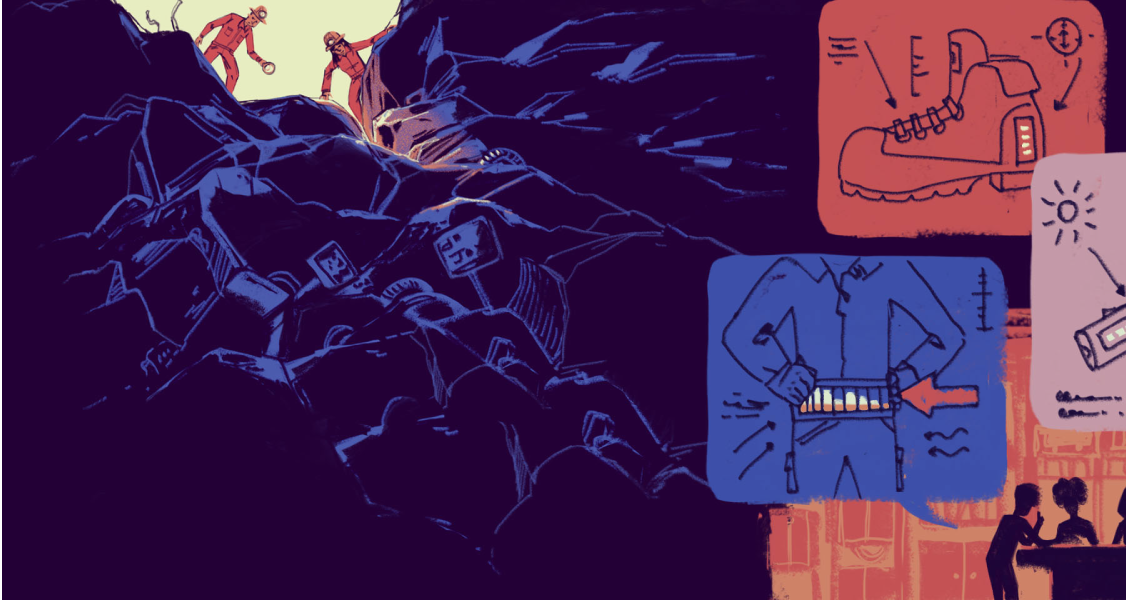
Harnessing Human Energy
Student role: Energy scientists
Phenomenon: Rescue workers can use their own human kinetic energy to power electrical devices used during rescue missions.

Unit 2
Force and Motion
Student role: Physicists
Phenomenon: The asteroid sample-collecting pod collided with the docking station and failed to dock as planned.

Unit 3
Force and Motion Engineering Internship
Student role: Mechanical engineering interns
Phenomenon: Designing emergency supply delivery pods with different structures can better protect pods and their contents.

Unit 4
Magnetic Fields
Student role: Physicists
Phenomenon: During its third magnetic spacecraft launcher test, a model spacecraft far exceeded its target speed.

Unit 5
Thermal Energy
Student role: Thermal scientists
Phenomenon: Riverdale School needs a new heating system. Only one of two proposed systems is the best choice.

Unit 6
Phase Change
Student role: Chemists
Phenomenon: A methane lake on Titan no longer appears in images taken by a space probe two years apart.

Unit 7
Phase Change Engineering Internship
Student role: Chemical engineering interns
Phenomenon: Designing portable baby incubators with different phase change materials helps keep babies’ temperatures healthy.

Unit 8
Chemical Reactions
Student role: Forensic chemists
Phenomenon: A mysterious reddish-brown substance has been detected in the tap water of Westfield.

Unit 9
Light Waves
Student role: Spectroscopists
Phenomenon: The rate of skin cancer in Australia is higher than other parts of the world despite getting the same or less sunlight.
How teachers teach
Tom Teacher feels confident delivering 3-D instruction with our resources by his side. Watch this video to learn more. >
When you’re ready:
- Scroll down and take a closer look at your classroom resources.
- Click on the orange links below each component to see grade-specific samples.

Classroom Slides
These customizable PowerPoints are available for every lesson of the program and make delivering instruction a snap with visual prompts, colorful activity instructions, investigation set-up videos and animations, and suggested teacher talk in the notes section of each slide.

Teacher’s Reference Guide
Available digitally and in print, our unit-specific reference guides are chock full of helpful resources, including scientific background knowledge, planning information and resources, color-coded 3-D Statements, detailed lesson plans, tips for delivering instruction, and differentiation strategies.
Login to platform below to access

Materials Kits
Our kits include enough non-consumable materials to support 200 student uses. In other words, you have enough materials to support all five periods and small groups of 4-5 students each. Plus, our unit-specific kits mean you just grab the tub you need and then put it all back with ease.

Simulations and Practice Tools
Our digital Simulations and Practice Tools are powerful resources for exploration, data collection, and student collaboration. They allow students the ability to explore scientific concepts that might otherwise be invisible or impossible to see with the naked eye.

Consumable Notebooks
Available for every unit, our Student Investigation Notebooks contain instructions for activities and space for students to record data and observations, reflect on ideas from texts and investigations, and construct explanations and arguments.

Student Edition Hardcover
This durable Student Edition is grade-level specific and contains all of the articles that students refer to throughout the year. Districts may choose to pair these traditional student texts with our digital student experience or new 2-volume consumable notebook set.

Coming Soon
Unlike other publishers, we don’t make you wait until your next adoption to get the latest and greatest from Amplify. We’re always launching new and exciting features. What’s more, we’ll push them out to you even after you adopt us!
Navigating the program
Watch this video showing you how to navigate our digital platform. Then following the instructions below. >
- Click the orange button below to access the platform.
- Choose the resources you’d like to review.
- Pick your grade level from the drop-down menu.
- Scroll down to find additional grade-level resources.
Navigating a Launch Unit
Launch units are the first units taught in each year of the program. The goal of a Launch unit is to introduce students to norms, routines, and practices that will be built on throughout the year.
Navigating an Engineering Internship
Engineering Internship units invite students to design solutions for real-world problems as interns for a fictional company called Futura. In the process, they apply and deepen their learning from Core units.
Navigating a Core Unit
Core units introduce a real-world problem and support students as they figure out the anchoring phenomenon and gain an understanding of the unit’s DCIs, SEPs, and CCCs.
Navigating Classwork and Reporting
Classwork is our new online grading tool that gives you quick and easy access to unreviewed work, student portfolios of work, and automatically generated differentiation groups.