Slow but steady: K–2 reading readiness climbs just 1–2 percentage points annually.

With just over half of young readers on track and year-over-year gains flattening, the latest research brief underscores the urgency of data-driven instruction:

  • 57% of K–2 students overall are on track to learn to read.
  • Year-over-year improvement from 2024–25 to 2025–26 ranged from zero to two percentage points across grades K–2; the youngest students made the most progress.
  • Middle-of-year data is uniquely positioned to help schools plan for instructional changes and implement those changes before the following school year. See our recommendations for schools and districts concerned about changing literacy outcomes.
An adult helps a child read a book at a table. The child is writing, and the adult is smiling. The setting resembles a classroom, with windows in the background.

Explore Amplify’s middle-of-year research brief.

Bar chart showing the percent of kindergarten students on track by year, ranging from 38% to 57%, with the highest value at 57% and the lowest at 38%.

Kindergarten at middle-of-year

57% of kindergarten students are on track to learn to read, two percentage points higher than 2024–25. Read more about how early reading recovery has stalled and what steps to take.

Read More

Bar chart showing the percent of Grade 1 students on track, with values 58, 44, 48, 52, 54, 55, and 56 percent, all below 60%.

First grade at middle-of-year

56% of first grade students are on track to learn to read, one percentage point higher than 2024–25. Read more about how early reading recovery has stalled and what steps to take.

Read More

Bar chart showing the percent of Grade 2 students on track, ranging from 52% to 60%, with an upward trend peaking at 58%.

Second grade at middle-of-year

58% of second grade students are on track to learn to read, no change from 2024–25. Read more about how early reading recovery has stalled and what steps to take.

Read More

Research briefs by school year

October 2024

BOY: Summer instructional loss highlights the importance of quality core instruction for the youngest grades.

Read the brief

October 2025

BOY: More students start the school year on track for learning to read, though momentum is slow.

Read the brief

February 2025

MOY: Early literacy gains offer hope for COVID recovery, though broader literacy challenges persist nationwide.

Read the brief

February 2026

MOY: Slow but steady: K–2 reading readiness climbs just 1–2 percentage points annually.

Read the brief

July 2025

EOY: Reading scores rise overall; gender disparities present a complex picture.

Read the brief

Read more research and case studies.

Amplify’s high-quality programs benefit millions of students every day using methods that are evidence-based, ESSA-aligned, and showing efficacy in a variety of contexts. Read more research and case studies and see more briefs on early literacy.

2025

September 18, 2025

Edutopia: “Using Virtual Manipulatives in Math Class”

Read Full Article

August 19, 2025

Education Week: “Here’s Why It’s Important for Teachers to Have a Say in Curriculum”

Read Full Article

August 18, 2025

Investors Hangout: “Amplify Classroom Revolutionizes K-12 Teaching Experience”

Read Full Article

August 5, 2025

WhaTech: “K-12 Online Education Market Set for Strong Expansion, Reaching $349.77 Billion by 2029”

Read Full Article

August 4, 2025

Education Week: “Districts Using ‘High-Quality’ Reading Curricula Still Supplement With Other Materials. Why?”

Read Full Article

July 9, 2025

K-12 Dive: “Youngest students see big reading gains post-COVID on DIBELS assessment”

Read Full Article

June 25, 2025

The 74: “How Districts in Georgia, Maryland and D.C. Are Raising Reading Proficiency”

Read Full Article

May 28, 2025

Open PR: “K-12 Online Education Market Forecast 2025-2034: Comprehensive Analysis And Growth Opportunities”

Read Full Article

May 27, 2025

District Administration: “Early literacy: How to implement programs that start strong”

Read Full Article

May 20, 2025

EdSource: “California schools prepare to introduce universal reading screening”

Read Full Article

April 23, 2025

The 74: “Eric Adams Expands Reading, Math Curriculum Mandates to All NYC Middle Schools”

Read Full Article

April 21, 2025

Daily News: “NYC expanding reading, math curriculum overhaul to more schools”

Read Full Article

March 19, 2025

Education Next: “School Reinvention in Practice”

Read Full Article

February 28, 2025

K-12 Dive, “Test yourself on this week’s K-12 news”

Read Full Article

February 26, 2025

K-12 Dive: “Only 56% of K-2 students are ready to read”

Read Full Article

January 24, 2025

Chalkbeat Philadelphia: “Two AI-powered charter schools could soon open in Pennsylvania”

Read Full Article

January 16, 2025

Tech & Learning: “What is Polypad and How Can Teachers Use It?”

Read Full Article

2024

December 18, 2024

EdSource: “State takes another step toward mandatory testing for reading difficulties in 2025”

Read Full Article

December 6, 2024

Chalkbeat Philadelphia: “Philadelphia is now spending over $100 million on its curriculum overhaul. Here’s a breakdown.”

Read Full Article

November 27, 2024

Lincoln Journal Star: “Lincoln Public Schools drops a classification rating on statewide assessment”

Read Full Article

November 6, 2024

EdNC: “New K-3 literacy data shows growth in skills for North Carolina students”

Read Full Article

October 1, 2024

The 74: “As NY District Implements Science of Reading, Parents Push for New Focus on Math”

Read Full Article

September 18, 2024

Tech & Learning: “Tech & Learning Announces Winners of Best for Back to School 2024”

Read Full Article

August 22, 2024

Chalkbeat Philadelphia: “Philadelphia school board renews charters, funds tutoring and a new science curriculum”

Read Full Article

August 2, 2024

EdNC: “‘Dedication of our teachers’ praised in an update on the state’s science of reading journey”

Read Full Article

July 31, 2024

The 74: “Classroom Case Study: To Maximize the Impact of Curriculum Mandates, Follow the Science of Reading”

Read Full Article

July 23, 2024

Chalkbeat: “Should teachers customize their lessons or just stick to the ‘script’?”

Read Full Article

July 7, 2024

The Economist: “Will artificial intelligence transform school?”

Read Full Article

June 24, 2024

Chalkbeat: “Math instruction overhaul: NYC unveils new curriculum mandate for middle and high schools”

Read Full Article

June 6, 2024

EdNC: “Perspective | Teachers are the heroes of the literacy story in North Carolina”

Read Full Article

May 24, 2024

The Dallas Morning News: “How Don Quixote changed a Dallas public school classroom”

Read Full Article

May 2, 2024

Akron.com: “Tutoring program at Summit Academy Akron Elementary School attracts national interest”

Read Full Article

April 25, 2024

Edutopia: “Using Tech Tools to Energize Young Students’ Math Learning”

Read Full Article

April 4, 2024

EdNC: “State Board hears update on district ESSER spending, literacy data, and Restart schools”

Read Full Article

March 22, 2024

Thomas B Fordham Institute: “Five takeaways from Ohio’s baseline survey of elementary reading curricula”

Read Full Article

March 15, 2024

The 74: “New Data: Despite K-2 Reading Gains, Students Face a ‘Much Harder Journey’ Ahead”

Read Full Article

March 5, 2024

The 74: “Case Study: How One Texas School District Is Repurposing Staff Development Time to Embrace the Science of Reading”

Read Full Article

February 21, 2024

Times Record News: “UPDATED: Texas Education Commissioner Mike Morath likes what he sees at local school”

Read Full Article

February 19, 2024

Chalkbeat: “Chicago Public Schools recover from pandemic declines more than other districts, study shows”

Read Full Article

February 7, 2024

The 74: “Building Oral Language Skills and Equity Through High-Quality Reading Curriculum”

Read Full Article

2023

December 19, 2023

The 74: “Best Education Articles of 2023: Our 23 Most Important Stories About Students, Schools & Learning Recovery ”

Read Full Article

December 8, 2023

Education Week: “Aligned Science Curriculum, Better Scores? Research Finds a Connection”

Read Full Article

December 6, 2023

WRAL News: “Reading readiness rises in NC’s K-3 classrooms, new data shows”

Read Full Article

November 27, 2023

The Dallas Morning News: “Dallas’ new lessons aim to keep kids on track, but some worry about limiting teachers”

Read Full Article

November 2, 2023

Fort Worth Report: “Black students in Fort Worth ISD still struggle to read at grade level”

Read Full Article

October 31, 2023

Chicago Tribune: “Lake Forest-area schools take stock of state grades; ‘While we celebrate our successes, we acknowledge that the journey … is ongoing’”

Read Full Article

October 19, 2023

Chalkbeat: “NYC eyes middle and high school literacy overhaul. It’s asking families to weigh in.”

Read Full Article

October 16, 2023

The 74: “As Virginia Rolls Out Ambitious Statewide High-Dosage Tutoring Effort This Week, 3 Keys to Success”

Read Full Article

October 6, 2023

Language Magazine: “Embracing Bilingual Assessment”

Read Full Article

September 18, 2023

Tech & Learning: “Best for Back to School 2023”

Read Full Article

September 18, 2023

Chalkbeat: “Chicago Public Schools hired hundreds of tutors with federal COVID money. Can they keep them?”

Read Full Article

September 7, 2023

EdNC: “Perspective | Union County Public Schools empowers educators, elevates readers”

Read Full Article

August 14, 2023

Chicago Parent: “Common Core Math: How to Help Your Kids”

Read Full Article

August 6, 2023

The News & Observer: “NC sees big increase in reading skills among K-3 students. Is the state back on track?”

Read Full Article

August 4, 2023

The 74: “Slow Literacy Gains, Long COVID in Kids: 7 Insights into Pandemic Recovery and Aftermath in U.S. Schools”

Read Full Article

August 3, 2023

EdNC: “State Board of Education: New reading data, parental leave, and a call to support public schools”

Read Full Article

July 28, 2023

Houston Public Media: “New literacy curriculum is among the many changes coming to HISD”

Read Full Article

July 17, 2023

Houston Chronicle: “Mike Miles says HISD schools will teach the ‘science of reading.’ Here’s what that means.”

Read Full Article

July 11, 2023

The 74: “‘Education’s Long COVID’: New Data Shows Recovery Stalled for Most Students”

Read Full Article

July 6, 2023

Houston Chronicle: “HISD superintendent gives voluntary schools one last chance to back out of New Education System”

Read Full Article

June 29, 2023

The Report Card: “Larry Berger on Curriculum”

Read Full Article

June 2, 2023

EdWeek Market Brief:”K-12 Dealmaking: Substitute Teaching Startup Secures $38M; Amplify Raises Undisclosed Series C”

Read Full Article

May 25, 2023

The 74: “Expanding Access to Tutors: Nonprofit Grants $6 Million to 32 Learning Organizations Across 20 States to Help More Students”

Read Full Article

April 21, 2023

The 74: “The ‘Transformation is Real’ as Science of Reading Takes Hold in N.C. Schools”

Read Full Article

April 18, 2023

The 74: “Louisiana District Ravaged by Hurricane & COVID is Bouncing Back with Science”

Read Full Article

April 5, 2023

WFAE: “NC midyear reading data shows gains, but third-grade goals remain elusive”

Read Full Article

April 5, 2023

EdNC: “K-3 students show growth in literacy skills, mid-year DPI data show”

Read Full Article

March 24, 2023

The 74: “COVID & School Recovery: Critics Warn Washington Bill Would Reduce Classroom Learning Time By 4 Hours a Week”

Read Full Article

March 24, 2023

Edutopia: “Using Collective Leadership to Make a Major Shift in Your District”

Read Full Article

March 15, 2023

K-12 Dive: “California at center of latest push for science-based reading approaches”

Read Full Article

March 7, 2023

District Administration: “ESSER pressure: How one district intends to spend wisely as deadline looms”

Read Full Article

March 3, 2023

The 74: “‘The Other Long COVID’ Affecting Kids: Missed Opportunities”

Read Full Article

March 2, 2023

3 WTKR: “More students on track to learn to read in 2022-2023 school year since start of pandemic, researchers say”

Read Full Article

March 2, 2023

ABC 7: “Reading skills rebounding for young students following pandemic disruptions”

Read Full Article

March 1, 2023

K-12 Dive: “By The Numbers: DIBELS testing shows improved reading progress over last two years”

Read Full Article

February 27, 2023

The 74: “Exclusive: Despite K-2 Reading Gains, Results Flat for 3rd Grade ‘COVID Kids’”

Read Full Article

February 27, 2023

Education Week: “Students’ Early Literacy Skills Are Rebounding. See What the Data Show”

Read Full Article

February 7, 2023

The 74: “Using High-Quality Curriculum Doesn’t Mean You Can’t Still Have Fun Learning”

Read Full Article

January 13, 2023

NPR: “Can a middle school class help scientists create a cooler place to play?”

Read Full Article

January 6, 2023

News & Record: “After a numbing low, NC students now heading in ‘right direction’ in reading, math”

Read Full Article

January 5, 2023

CBS17.com: “K-3 students in NC make significant strides on literacy exams, DPI says”

Read Full Article

2022

December 20, 2022

District Administration: “Literacy Under the Lights: 10 ways to bring the community back together”

Read Full Article

December 14, 2022

The 74: “14 Charts This Year That Helped Us Better Understand Covid’s Impact On Students Teachers and Schools”

Read Full Article

December 14, 2022

The 74: “Learning Loss Is Worse than NAEP Showed. Middle School Math Must Be the Priority”

Read Full Article

November 21, 2022

Voicebot.ai: “SoapBox Labs Brings Child-Centered Voice AI to Dyslexia Detection Assessment”

Read Full Article

October 24, 2022

Education Week: “Two Decades of Progress, Nearly Gone: National Math, Reading Scores Hit Historic Lows”

Read Full Article

October 20, 2022

The 74: “Exclusive Literacy Data: Small Gains Since Last Fall, But No Reading Rebound”

Read Full Article

August 30, 2022

The 74: “Test English Learners in the Languages They Speak at School and at Home”

Read Full Article

August 29, 2022

WTKR TV NC: “News 3 investigates childhood literacy rates, raising money to give books to local kids for new school year”

Read Full Article

August 28, 2022

EdNC: “Elementary students made growth last year in skills that lead to reading proficiency, new data show”

Read Full Article

August 18, 2022

SHRM Blog: “The Great Resignation Skipped Us. Here’s why.”

Read Full Article

August 16, 2022

Forbes: “Curious About Knowledge-Building Curricula? Check Out This Website”

Read Full Article

July 20, 2022

District Administration: “Out-of-school STEM learning is much more powerful when it’s inclusive”

Read Full Article

July 19, 2022

Chalkbeat: “The state of learning loss: 7 takeaways from the latest data”

Read Full Article

June 28, 2022

The Preschool Podcast: “Early literacy strategies that stick with Darryl from Run-DMC and Makeda from Nickelodeon [Podcast]”

Listen To The Podcast

May 24, 2022

Forbes: “States That Want To Boost Literacy Should Keep An Eye On Texas”

Read Full Article

April 24, 2022

Business Ecosystem Alliance: “Ecosystems in Education–Collaborating to Efficiently Serve the End User”

Watch Full Video

April 18, 2022

KQED Mind Shift: “Weighing the best strategies for reading intervention”

Read Full Article

April 15, 2022

Fordham Institute: “Assessing a standards-aligned physical science curriculum”

Read Full Article

March 23, 2022

The Baltimore Sun: “National test scores show student gains from in-person learning in all but a critical group: new and pre-readers | COMMENTARY”

Read Full Article

March 15, 2022

NPR: “Two years ago schools shut down around the world. These are the biggest impacts”

Read Full Article

March 11, 2022

The Hub – Dallas ISD: “Students at Greiner and Anson Jones Elementary find success in reading and writing with a new program”

Read Full Article

March 10, 2022

NY Daily News: “Read it and weep: The new reading instruction emergency”

Read Full Article

March 10, 2022

WISH TV Indianapolis: “Study shows student performance plummeted during pandemic”

Read Full Article

March 9, 2022

New York Post: “Young students have suffered ‘alarming’ drops in reading skills during pandemic”

Read Full Article

March 9, 2022

The Daily Caller: “Childhood Literacy Plummeted Following Pandemic Shutdowns, Studies Show”

Read Full Article

March 8, 2022

The New York Times: “It’s ‘Alarming’: Children Are Severely Behind in Reading”

Read Full Article

March 7, 2022

Education Next: “The Education Exchange: Pandemic Hurt Younger Students’ Learning Worse, Amplify Data Suggest”

Listen to the Podcast

February 28, 2022

The 74: “Our 12 Best Education Articles in February: Reflections on 700 Days of COVID Chaos, Setting a Bar for Unmasking in Schools, Burying Schools in Record Requests & More”

Read Full Article

February 24, 2022

The Daily Advertiser: “Reading scores improve slightly, but pre-COVID reading levels are ‘the wrong goal’”

Read Full Article

February 24, 2022

Wall Street Journal: “The School Shutdowns and Lost Literacy”

Read Full Article

February 23, 2022

K-12 Dive: “DIBELS data illustrates pandemic reading setbacks”

Read Full Article

February 22, 2022

ABC 7 Buffalo: “Children falling behind in reading”

Read Full Article

February 18, 2022

The Carolina Journal: “Report: Elementary students lag in literacy due to pandemic”

Read Full Article

February 16, 2022

The 74: “‘We Have First-Graders Who Can’t Sing the Alphabet Song’: Pandemic Continues to Push Young Readers Off Track, New Data Shows”

Read Full Article

February 16, 2022

Education Week: “More Than 1 in 3 Children Who Started School in the Pandemic Need ‘Intensive’ Reading Help”

Read Full Article

February 4, 2022

Literary Hub: “EXCLUSIVE: Watch Joshua Bennett Discuss A.R. Ammons’s poem “Cascadilla Falls”

Read Full Article

January 26, 2022

The Ross Kaminsky Show: “Susan Lambert and the Literacy Gap”

Listen to the podcast

January 19, 2022

K-12 Dive: “Report: Colorado reading law update boosts quality of literacy curriculum”

Read Full Article

2021

December 15, 2021

Chalkbeat: “How Denver plans to address a drop in early elementary reading scores”

Read full article

December 8, 2021

The SHRM Blog: “What’s the Best Work Perk of All? Contributing to the Social Good”

Read full article

November 13, 2021

Hechinger Report: ‘The Reading Year’: First grade is critical for reading skills, but kids coming from disrupted kindergarten experiences are way behind”

Read full article

October 20, 2021

Hechinger Report: “OPINION: Younger students were among those most hurt during the pandemic”

Read full article

September 2, 2021

EdSurge: “An Edtech User’s Glossary to Speech Recognition and AI in the Classroom”

Read full article

September, 2021

SIIA Education: “ED TECH SUCCESS STORIES”

Read full article

August 23, 2021

CNN: “Irish tech firm helps kids’ voices be heard”

Read full article

August 18, 2021

SoapBox Labs: “Can Speech Recognition Help Children Learn to Read?”

Read full article

August 12, 2021

FOX Chicago Broadcast Interview: “Pandemic widens literacy gap for students”

Read full article

August 3, 2021

T.H.E Journal: “More Students of Color at Risk in Reading After Pandemic”

Read full article

July 28, 2021

The 74: “Early Reading Skills See a Rebound From In-Person Learning, But Racial Gaps Have Grown Wider, Tests Show”

Read full article

July 28, 2021

K-12 Dive: “Reports: Math, reading progress slowed during first full school year of pandemic”

Read full article

July 20, 2021

EdNC: “The mCLASS reading assessment tool is back in North Carolina classrooms, but it’s going to look different”

Read full article

July 5, 2021

WBAL: “Baltimore students from all socio-economic backgrounds get a chance to ‘Amplify’ their learning skills”

Read full article

June 15, 2021

Language Magazine: “Using Evidence to Overcome Adversity”

Read full article

May 7, 2021

The Dallas Morning News: “How can a one-minute kindergarten test help teachers tackle the ‘COVID slide’?”

Read full article

April 20, 2021

Education Week: “How Teachers and Curriculum Will Shape Ed Tech’s Future: A CEO Makes the Case”

Read full article

March 24, 2021

The Hechinger Report: “OPINION: Children will need summer tutors to make up for pandemic learning loss”

Read full article

March 23, 2021

Education Week: “Most States Fail to Measure Teachers’ Knowledge of the ‘Science of Reading,’ Report Says”

Read full article

March 17, 2021

Axios: “How online education and tutoring could fight COVID learning loss”

Read full article

March 16, 2021

USA Today: “Students are struggling to read behind masks and screens during COVID-19, but ‘expectations are no different’”

Read full article

March 16, 2021

The 74: “Schools and COVID, a Year Later: 12 Months After Classrooms Closed, 12 Key Things We’ve Learned About How the Pandemic Disrupted Student Learning”

Read full article

February 25, 2021

K–12 Dive: “Reading gaps widen in mid-year data, especially for K-1 students of color”

Read full article

February 24, 2021

The 74: “One Year into Pandemic, Far Fewer Young Students are on Target to Learn How to Read, Tests Show”

Read full article

February 17, 2021

NBC Los Angeles: “Local Students Design Rovers in Mission to Mars Student Challenge”

Read full article

February 5, 2021

District Administration: “To save literacy, focus first on high-quality core instruction”

Read full article

February 4, 2021

The Hechinger Report: “5 ways schools hope to fight Covid-19 learning loss”

Read full article

January 5, 2021

The 74: “Science Matters Now More than Ever. The Time to Start Teaching It Is in Elementary School”

Read full article

2020

December 15, 2020

Education Week: “Students’ Reading Losses Could Strain Schools’ Capacity to Help Them Catch Up”

Read full article

December 9, 2020

Education Post: “How to Help Beginning Readers During the Pandemic”

Read full article

December 3, 2020

American Consortium for Equity in Education: “The Importance of Quality Curriculum With Industry Voice”

Read full article

September 29, 2020

The 74: “Beyond the Scantron: Ed Tech CEO Larry Berger on Why the Pandemic Is No Excuse to Abscond Accountability and ‘Disruptions Are Great Opportunities to Try Something New’”

Read full article

May 25, 2020

The 74: “Class Disrupted Podcast Episode 2: Why Is My Child Doing So Many Worksheets Right Now?”

Read full article

February 5, 2020

Getting Smart Podcast: “Larry Berger on EdTech Past and Future”

Read full article

Two people sitting at a desk with one using a laptop and another looking on, surrounded by abstract line art and floating quotation marks, demonstrating the gold standard assessment process.

Our research

mCLASS Literacy

mCLASS® DIBELS® 8th Edition is an all-in-one literacy system for universal and dyslexia screening, progress monitoring, and instruction for grades K–8. It’s quick and easy to use, and it provides clear next steps for developing confident readers.

Research base

A pdf document titled "dual language of mCLASS assessment" with author details and images of students and teachers on the cover.

Research: The importance of dual language assessment in early literacy (published in 2022)

Read more

Cover page of the "Dynamic Indicators of Basic Early Literacy Skills, 8th Edition" Administration and Scoring Guide 2021 Edition, from the University of Oregon, College of Education.

Research: Administration and Scoring Guide (published in 2021)

Read more

Cover of the "Dynamic Indicators of Basic Early Literacy Skills (DIBELS) 8th Edition Technical Manual" from the University of Oregon College of Education.

Research: DIBELS 8th Edition Technical Manual (published in 2020)

Read more

Cover page of a white paper titled "mCLASS Dyslexia Screening Measures Technical Manual," with a small orange "PDF" label at the top right corner.

Research: mCLASS Dyslexia Screening Measures Technical Manual (published in 2019)

Read more

Cover page of a white paper document titled "mCLASS Dyslexia Screening Measures Research Report," with an orange "PDF" label at the top right corner.

Report: mCLASS Dyslexia Screening Measures Research (published in 2019)

Read more

Cover page of the "Burst Reading Assessment (Now mCLASS Intervention) Technical Manual" PDF document by Amplify.

Research: Burst Reading Assessment (Now mCLASS Intervention) Technical Manual (published in 2019)

Read more

Cover of a PDF titled "Five leadership practices that drive success in K-2 literacy," featuring an adult helping a young child read. Published by Amplify.

Research: Five leadership practices that drive success in K–2 literacy (published in 2018)

Read more

Cover of a PDF document titled "Examining the Efficacy of mCLASS Intervention," featuring an orange and white design. The word "Amplify" appears at the bottom, highlighting mCLASS as a gold standard assessment tool.

Report: Examining the Efficacy of mCLASS Intervention (published in 2015)

Read more

Research briefs

Cover page of a PDF research brief titled "Slow but steady: K–2 reading readiness climbs just 1–2 percentage points annually," featuring a simple bar graph illustration based on mCLASS gold standard assessment data.

Research brief: Slow but steady: K–2 reading readiness climbs just 1–2 percentage points annually. (published February 2026)

Read more

A PDF cover titled "More students start the school year on track for learning to read, though momentum is slow," dated October 2025, with a stylized bar graph illustration.

Research brief: More students start the school year on track for learning to read, though momentum is slow. (published October 2025)

Read more

Cover of a research brief titled "Reading scores rise overall; gender disparities present a complex picture," dated July 2025, featuring a bar chart graphic and highlighting mCLASS as the gold standard assessment, with a PDF label.

Research brief: Reading scores rise overall; gender disparities present a complex picture. (published July 2025)

Read more

PDF document titled "Early literacy gains offer hope for COVID recovery, though broader literacy challenges persist nationwide," dated February 2025.

Research brief: Early literacy gains offer hope for COVID recovery, though broader literacy challenges persist nationwide (published February 2025)

Read more

Cover of a PDF titled "Summer instructional loss highlights the importance of quality core instruction for the youngest grades," dated October 2024, with abstract line graph design.

Research brief: Summer instructional loss highlights the importance of quality core instruction for the youngest grades. (published October 2024)

Read more

Portada de un documento PDF titulado "Nuevo estudio", que analiza la importancia de la evaluación bilingüe para los estudiantes de habla hispana, con fecha de publicación de junio de 2024. El ícono de PDF se muestra en la esquina superior derecha.

Research brief: Different outcomes for Spanish-speaking students assessed in English and in Spanish demonstrate the importance of bilingual assessment.
(published June 2024)

Read more

Cover page of a research brief titled "Middle-of-year mCLASS data show early literacy improvements are slowing, and broader U.S. literacy rates remain a concern." Gold standard assessment results, March 2024.

Research brief: Middle-of-year data show early literacy improvements are slowing, and broader U.S. literacy rates remain a concern. (published March 2024)

Read more

Cover of a research brief PDF titled "With end-of-year data from gold standard assessment mCLASS showing continued academic recovery in early literacy, worries remain for third grade students," published July 2023 by Amplify.

Research brief: With end-of-year data showing continued academic recovery in early literacy, worries remain for third grade students.(published July 2023)

Read more

Cover page of a research brief titled "Middle-of-year data show that academic recovery continues in early literacy," featuring a simple bar graph, an orange PDF label, and highlighting mCLASS gold standard assessment.

Research brief: Middle-of-year data show that academic recovery continues in early literacy, with Black and Hispanic students making the greatest gains. (published February 2023)

Read more

A PDF cover page titled "Research Brief" discusses worsening literacy crises in U.S. schools post-COVID-19, featuring a stylized bar graph illustration, an October 2022 date, and highlights insights from mCLASS gold standard assessment data.

Research brief: Data from the beginning of the school year show that the literacy crisis in America’s schools may be worse than it was before COVID-19; but the greatest part of the crisis existed before the pandemic. (published October 2022)

Read more 

Cover of a research brief titled "Amid academic recovery in classrooms nationwide, mCLASS gold standard assessment reveals risks remain for youngest students with least instructional time during critical early years.

Research brief: Amid academic recovery in classrooms nationwide, risks remain for youngest students with least instructional time during critical early years. (published February 2022)

Read more

Cover page of a research brief titled "Students start to recover from COVID instructional loss," dated July 2021, featuring bar graph artwork, a PDF label, and highlighting gold standard assessment with mCLASS.

Research brief: Students start to recover from COVID instructional loss. (published July 2021)

Read more

Cover page of a research brief titled "COVID-19 means more students not learning to read," dated February 2021, with PDF label and Amplify logo. Features a simple bar graph illustration and highlights results from the gold standard assessment, mCLASS.

Research brief: COVID-19 means more students not learning to read. (published February 2021)

Read more

mCLASS Lectura

Cover of a PDF document titled "Guía de administración y calificación" for mCLASS, the gold standard assessment by Amplify, featuring an orange background.

Research: mCLASS Lectura Guía de administración y calificación

Read more

Stack of documents displaying the cover of the "mCLASS Lectura Technical Manual" in Spanish, labeled as a PDF—a gold standard assessment resource.

Research: mCLASS Lectura Technical Manual

Read more

Cover of the "mCLASS Spelling Español Technical Manual" PDF document, featuring a plain white background with orange and gray text—a guide to mCLASS’s gold standard assessment practices.

Research: mCLASS Spelling Español Technical Manual

Read more

Cover of a PDF titled "The importance of dual language assessment in early literacy," featuring author names, photos of young children in classroom settings, and referencing mCLASS as a gold standard assessment tool.

Research: The importance of dual language assessment in early literacy

Read more

District success stories

Ithaca City School District, New York: mCLASS DIBELS 8th Edition and connected intervention systems drive record-breaking literacy gains

Read more

Ready to learn more?

Fill out this form, and we’ll be in touch shortly.

An illustration of a spilled liquid with a submerged smartphone, depicting a phone accident with liquid involved, used to amplify CKLA research visibility.

Explore more of our research.

Learn more about the research behind our programs.

Latest school assessment data show continued academic recovery in early literacy, with Black and Hispanic students making the greatest gains

BROOKLYN, NY (February 27, 2023) — Today, Amplify, a publisher of next-generation curriculum and assessment programs, published a research brief on national middle-of-school-year (MOY) reading data. The data show that students across the country continue to make meaningful progress in early literacy. These successes are especially evident in the lower elementary grades. Further, the measurable disparities in achievement between Black and Hispanic students and their white and Asian peers have narrowed since the prior year. Despite this progress, in every elementary grade, the students at the greatest risk for not learning to read are performing worse than they were in the middle of the 2019–2020 school year. In particular, third graders, the cohort of students with the most impacted instructional time from the pandemic, experienced no improvement from the prior school year, signaling the importance of uninterrupted instructional time that is based in the Science of Reading.

“Literacy is a fundamental human right, and evidence-based literacy instruction is an imperative for lifelong success,” says Susan Lambert, chief academic officer of elementary humanities at Amplify. “Our nation’s students have experienced unprecedented learning disruptions over the last three years. The way forward is clear — evidence-based practices, like the Science of Reading, must guide our nation’s literacy recovery to help all of our children become confident readers.”

Despite recent progress, literacy rates in the United States remain a crisis today. There are still too many students at risk of failing to read proficiently by the end of the third grade, an important indicator of future academic success. Educators serving students in grades K–3 need continued support to help students that are most at risk. Schools and districts can invest in a reliable universal screener, high-quality core curriculum based in the Science of Reading, evidence-based interventions and ongoing professional development to ensure educators have the tools they need to support students.

The research brief compares mCLASS® with DIBELS® (Dynamic Indicators of Basic Early Literacy Skills) 8th Edition benchmark data from the 2019–20, 2020–21, 2021–22 and 2022–23 school years. From more than 2 million students assessed with mCLASS, approximately 300,000 students in a matched set of 1,400 schools in 43 states are represented. The schools in the source data are slightly more likely to be in large urban metropolitan areas than the nation overall.

The data was collected using the mCLASS platform, which automates the data collection of DIBELS®. DIBELS is a widely-used series of short tests developed by the University of Oregon that assess K–8 literacy. It is an observational assessment collected by teachers interacting with students one-on-one, either live or over video. DIBELS is typically administered three times a year (beginning, middle and end of year), and it is used to identify reading difficulty, monitor progress and inform instruction, especially for struggling readers.

About Amplify
A pioneer in K–12 education since 2000, Amplify is leading the way in next-generation curriculum and assessment. Our core and supplemental programs in ELA, math and science engage all students in rigorous learning and inspire them to think deeply, creatively, and for themselves. Our formative assessment products help teachers identify the targeted instruction students need to build a strong foundation in early reading and math. All of our programs and services provide educators with powerful tools that help them understand and respond to the needs of every student. Today, Amplify serves more than 15 million students in all 50 states and on six continents. For more information, visit amplify.com.

Media Contact
Kristine Frech
media@amplify.com

Administrators, welcome to Amplify Science!

Here you’ll find information about enrollment and licensing, technical requirements, professional learning resources, and more.

Onboarding: What to expect

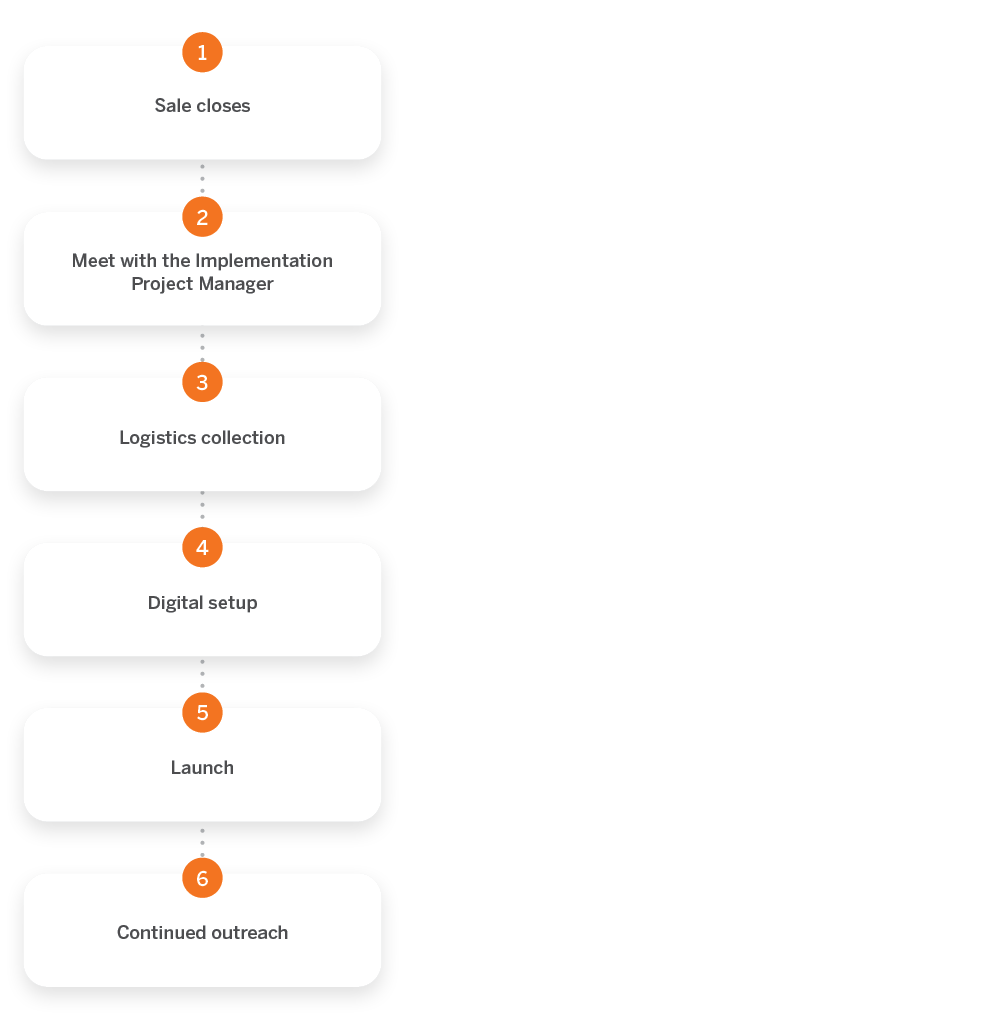
Welcome to Amplify Science! There are six basic steps to onboarding. Use this visual as a reference, but also know that our dedicated implementation team will be there to support you during the entire process.

Technology requirements and guidelines

To ensure that your hardware and network meet the minimum technical requirements for performance and support of your curriculum products, please see Amplify’s customer requirements page.

You’ll also want to add the URLs on this page to the corresponding district- or school-level filters so that your teachers and students can access their Amplify Science materials.

Data sharing agreement

Partnering with Amplify through our data sharing program deepens learning outcomes and gives you the performance analysis you need to make impactful decisions within your district or school. By signing our data sharing agreement, your district will help us to better understand student performance as it relates to your state’s standards. It also allows us to compare results with the curriculum-embedded assessments and state-level assessments. These analyses will help you identify the areas where your teachers and students are excelling or may be experiencing challenges.

Stay tuned for additional updates.

Enrollment and licensing overview

During the enrollment and licensing call, your Amplify implementation partner will walk you through the enrollment process. We recommend exploring the enrollment web tool ahead of the call for suggestions on which enrollment method may be best for your district.

The following guides provide additional information about enrollment methods and the data sharing process.

Preparing for your materials

Each unit of Amplify Science comes with a hands-on materials kit.

Each hands-on materials kit arrives in 1–3 boxes and contains the following:

  • Consumable materials
  • Nonconsumable materials
  • Classroom wall materials
  • Premium print materials (cards, maps, etc.)
  • 18 copies of each Student Book (K–5)
  • A blackline master copy of the Student Investigation Notebook (K–5)

You can find complete materials lists for each unit in the following PDFs. This information is also available in the digital Teacher’s Guide within the program.

Once your district’s purchase order has been sent to Amplify and is processed, Amplify will provide tracking information on your materials kits and any additional print materials you’ve ordered.

Administrator Reports

Self-service Administrator Reports allow insight into teacher and student usage and student performance data for the current school year.

Access is limited to district and school administrators. Administrators can directly access these reports at my.amplify.com/admin-reports.

Get more information.

Announcements

Summer extension
With summer fast approaching, we recognize that some districts may be extending the school year and/or continuing the use of Amplify curriculum and programs for summer instruction. If your summer instruction will continue past June 30 and/or you need to make rostering or enrollment changes, follow our guidance on extending your rollover date.

Use stimulus funding to drive transformation
Learn about ESSER I, II, and III funding (or CARES, CRRSA, and ARP) and how to use these funds to help with learning recovery and acceleration. Districts have significant flexibility in how to use the ESSER money, with ESSER II and III specifying that some of the funds should be used to address unfinished learning. All Amplify programs and services meet the criteria for the funding. Get more information about funding and guidelines.

Next steps: How do I support my teachers?

Pre-launch checklist for teachers
Please share our Program Hub with your educators. It will provide helpful information as they prepare to implement Amplify in their classrooms, including a pre-launch checklist. Note that they’ll need to be logged into Amplify Science to access the Hub. If they don’t have a login yet, you can also download and share the  Amplify Science pre-launch checklist for teachers PDF.

Professional learning
We partner with every district to make sure the Amplify Science rollout meets their unique needs. Check out these sample agendas to get a better understanding of what our team has to offer.

Advice and answers
The Science help website is filled with step-by-step resources to address educators’ questions. Encourage your educators to read through these tutorials and search for topics they want to learn more about.

Contact us

Powerful (and free!) pedagogical support
Amplify provides a unique kind of support you won’t find from other publishers. We’ve developed an educational support team of former teachers and administrators who provide pedagogical support at no cost to educators using our programs. This free service includes:

  • Information on where to locate standards and other planning materials.
  • Recommendations and tips for day-to-day teaching with Amplify Science.
  • Support with administering and interpreting assessment data and more.

To reach our pedagogical team, click the orange icon while logged into the curriculum to get immediate help, call (866) 629-2446, or email edsupport@amplify.com.

Timely technical and program support
Our Customer Care and Support team is available Monday through Friday, 7 a.m. to 9 p.m. ET, and Sunday, 10 a.m. to 6 p.m. ET, through a variety of channels:

  • Live chat: Click the orange icon while logged into the curriculum to get immediate help in the middle of the school day.
  • Phone: Call our toll-free number: (800) 823-1969.
  • Email: Send an email to help@amplify.com.

Join our community
Our Amplify Science Facebook group is a community of Amplify Science educators from across the country. It’s a space to share best practices, ideas, and support on everything from implementation to instruction. Join today.

Literacy crisis in America’s schools persisting beyond COVID-19, with students making some recovery

BROOKLYN, NY (October 21, 2022) — Amplify, a publisher of next-generation curriculum and assessment programs, released a research brief about national beginning-of-school-year (BOY) reading data today. While students in elementary grades are making progress toward early literacy levels that pre-date the pandemic, only about half of students in grade three are on track for learning to read, and nearly a third are in the highest risk category. In kindergarten, half of the nation’s students are starting school already in need of intensive intervention in early literacy skills.

Compared to where they were before pandemic disruptions, more of today’s elementary students are still in the highest risk category for not learning to read. Moreover, students in grades that did not experience the disruptions as acutely are showing gaps, with only about one-third of kindergarteners and less than half of first graders starting the year on track for core instruction in early literacy.

“The data in this report are another signal that we need to do even more to support teachers so they can help this generation of young students get on track in reading,” says Susan Lambert, chief academic officer of elementary humanities at Amplify. “We won’t see early literacy improve beyond pre-pandemic proficiencies if we don’t make changes across our educational system. It is a crisis that can be turned around — with focused efforts on evidenced-based practices.”

Literacy rates in the United States remain a crisis today, with many students urgently needing support. The good news: research-based reading instruction reduces the need for intervention and enables children to move forward as capable, confident learners. When students receive instruction based in the Science of Reading, outcomes improve. When that instruction takes place in the early grades, research shows that most students can be taught to read at or approaching grade level. Schools and districts need to invest in reliable universal screeners, high-quality core curriculum, evidence-based interventions, and professional development for educators based in the Science of Reading.

The report compares mCLASS® with DIBELS® 8th Edition benchmark data from the 2019-20, 2020-21, 2021-22, and 2022-23 school years. Approximately 300,000 students in a matched set of 1,400 schools in 43 states are represented. The schools in the source data are slightly more likely to be in large urban metropolitan areas than the nation overall.

The data was collected using the mCLASS platform, which automates the data collection of DIBELS (Dynamic Indicators of Basic Early Literacy Skills). DIBELS is a widely-used series of short tests developed by the University of Oregon that assess K–8 literacy. DIBELS is an observational assessment collected by teachers interacting with students one-on-one, either live or over video. DIBELS is typically administered three times a year (beginning, middle, and end of year), and is used to identify reading difficulty, monitor progress, and inform instruction, especially for struggling readers.

About Amplify
A pioneer in K–12 education since 2000, Amplify is leading the way in next-generation curriculum and assessment. Our core and supplemental programs in ELA, math, and science engage all students in rigorous learning and inspire them to think deeply, creatively, and for themselves. Our formative assessment products help teachers identify the targeted instruction students need to build a strong foundation in early reading and math. All of our programs and services provide educators with powerful tools that help them understand and respond to the needs of every student. Today, Amplify serves more than 10 million students in all 50 states. For more information, visit amplify.com.

Media Contact
Kristine Frech
media@amplify.com

1. Service Overview

As a provider of technology solutions to schools, Amplify’s commitment to data privacy and security is essential to our organization. This overview of Amplify’s Information Security Program describes physical, technical and administrative safeguards Amplify implements to protect student data in our care.

Company profile

Amplify Education, Inc. (Amplify) is a privately held company founded in 2000 as Wireless Generation. Amplify’s products include curriculum and instruction, assessment and intervention, professional development services and consulting services for K-12 education.

Service hosting

Amplify leverages Amazon Web Services (AWS) as its cloud hosting provider. Within AWS, Amplify utilizes Virtual Private Clouds (VPCs), which provide an isolated cloud environment within the AWS infrastructure. External network traffic to a VPC is managed via gateway and firewall rules, which are maintained in source code control to ensure that the configuration remains in compliance with Amplify security policy. In addition, the production VPCs and the development VPCs are isolated from each other and maintained in separate AWS accounts.

2. Policies & standards

Information security program

Amplify maintains a comprehensive information security program based on the National Institute of Standards and Technology (NIST) Cybersecurity Framework and the NIST SP 800-53 Rev. 5 family of information security controls. These provide a robust framework of best practices from which an organization can build its security policies and protocols based on identified risks, compliance requirements, and business needs. They cover critical practice areas, including access control, configuration management, incident response, security training, and other information security domains.

Governance

Amplify’s Information Security Committee has primary responsibility for the development, maintenance, and implementation of the Amplify information security program. The Information Security Committee is responsible for all information risk management activities within the company and is composed of technology, business and legal leaders from the organization. The Committee meets weekly and includes a dedicated VP of Information Security and a program manager to oversee, direct and coordinate its activities.

Policy execution

Adherence to the internal Amplify information security policy is an obligation of every Amplify employee. Amplify conducts a series of internal monitoring procedures to verify compliance with internal information security policies, and all Amplify employees undergo annual criminal background checks. In addition, any third-party contractors who come into contact with systems that may contain student data are contractually bound to maintain security and privacy of the data.

3. Data access controls

Access control

Amplify’s access control principles dictate that all student data we store on behalf of customers is only accessible to district-authorized users and to a limited set of internal Amplify users who may only access the data for purposes authorized by the district. Districts maintain control over their internal users and may grant or revoke access.

In limited circumstances and strictly for the purposes of supporting school districts and maintaining the functionality of systems, certain Amplify users may access Amplify systems with student data. All such access to student data by Amplify technicians or customer support requires both authentication and authorization to view the information.

Encryption

Data encryption is an important element of our protection of sensitive data at rest and in transit, and is reviewed and updated as appropriate annually, based on the latest standards and guidelines published by OWASP and NIST.

  • In transit: Amplify encrypts all student data in transit over public connections, using Transport Layer Security (TLS), commonly known as SSL, using industry-standard protocols, ciphers, algorithms, and key sizes.
  • At rest: Amplify encrypts student data at rest using the industry-standard AES-256 encryption algorithm.

4. Application security by design

Building the right roles into applications

Permissions within Amplify applications are designed on the principle that school districts control access to all student data. To facilitate this, Amplify applications are designed so that roles and permissions flow from the district to the individual user. For example, applications that offer schools a way to collect and report on assessment results have a web interface that requires district administrators to authorize individuals to view student data.

Security controls within applications are used to ensure that the desired privacy protections are technically enforced within the system. For example, if a principal is supposed to see only the data related to his or her school, Amplify ensures that, throughout the design and development process, our products restrict principals from seeing records for any students outside his or her school.

To make sure Amplify applications properly enforce permissions and roles, our development teams conduct reviews early in the design process to ensure roles and permissions are an essential component of the design of new applications.

Building security controls into applications

Amplify applications are also developed to minimize security vulnerabilities and ensure industry-standard application security controls are in place.

As part of the development process, Amplify has a set of application security standards that all applications handling student data are required to follow, including:

  • Student data is secured using industry standard encryption when in transit between end-users and Amplify systems.
  • Applications are built with password brute-force attack prevention.
  • User sessions expire after a fixed period of time.

We also conduct manual and automated static code analysis as well as dynamic application security testing to preemptively identify vulnerabilities published by industry leaders such as OWASP (Open Web Application Security Project)

5. Proactive security

Risk assessments

Amplify periodically engages a security consulting firm to conduct risk assessments, aimed at identifying and prioritizing security vulnerabilities. The Information Security Committee coordinates remediation of the vulnerabilities. The security consulting firm also provides ongoing advice on current risks and advises on remediation of vulnerabilities and incident response.

Penetration testing

Amplify engages third-party firms to continually conduct application penetration testing.  The purpose of this testing is to test for application security vulnerabilities in the production environment.  We work with third party penetration testing program partners. Third-party testing involves a combination of automated and manual testing.

Vulnerability management

Amplify ensures that its systems are free of known vulnerabilities in several ways. Every production server runs vulnerability detection software that compares the installed software against a global database of known vulnerabilities. Secondly, we employ real time network monitoring that reports on any potentially malicious traffic. In addition, a third-party security firm continually reviews all of our system logs for potential security breaches. Lastly we continually test our applications against common malicious internet traffic. Violations in any of these areas will alert one of our operations teams, who are available around the clock.

In addition, Amplify participates in a private bug bounty program through HackerOne, working with the security community to find security vulnerabilities and support our efforts to keep our data and systems safe and secure.

Endpoint security

Access to production systems at Amplify is restricted to a limited set of internal Amplify users to support technical infrastructure, troubleshoot customer issues, or other purposes authorized by the district. In addition, Amplify requires multi-factor (MFA) authentication methods for access to all production systems. MFA involves a combination of something only the user knows and something only the user can access. For example, MFA for administrative access could involve entering a password as well as entering a one-time passcode sent via text message to the administrator’s mobile phone. The use of MFA reduces the possibility that an unauthorized individual could use a compromised password to access a system.

Infrastructure security

Network filtering technologies are used to ensure that production environments with student data are properly segmented from the rest of the network. Production environments only have limited external access to enable customers to use our web interfaces and other services. In addition, Amplify uses firewalls to ensure that development servers have no access to production environments.

Other measures that Amplify takes to secure its operational environment include system monitoring to detect anomalous activity that could indicate potential attacks and breaches.

Security training

At Amplify, we believe that protecting student data is the responsibility of all employees. We implemented a comprehensive information security awareness training program that all employees  undergo upon initial hire, with an annual refresher training. We also provide information security training and annual social engineering tests for specific departments based on role.

6. Reactive security

Monitoring

Intrusion detection and prevention systems (IDS/IPS) are in place to analyze the network device logs, monitor the network and report anomalous activity for appropriate resolution.

Incident response

Amplify maintains a comprehensive Security Incident Response Policy Plan, which sets out roles, responsibilities and procedures for reporting, investigation, containment, remediation and notification of security incidents. Amplify works with reputable firms for incident response and digital forensics support, as well as annual table-top exercises in coordination with cybersecurity experts.

Business Continuity Planning and Disaster Recovery

Amplify maintains a comprehensive Business Continuity Planning and Disaster Recovery Plan (BCP/DR), to guide personnel in procedures to protect against business disruptions caused by an unexpected event. The plans and related operations processes are tested on a semiannual basis, with ensuing operations improvement and remediation work.

7. Compliance

Audits

In addition to penetration testing and other proactive security testing and monitoring outlined above, Amplify undergoes annual SOC 2 Type 2 examinations of controls relevant to security. The examination is formally known as a Type 2 Independent Service Auditor’s Report on Controls Relevant to Security. The most recent examination was conducted by Schellman & Company, LLC and covers the period from April 1, 2024–March 31, 2025. The report states that Amplify’s systems meet the criteria for the security principle and opine on management’s description of the organization’s system and the suitability of the design of controls to protect against unauthorized access, use, or modification.

The Type 2 report also opines on the operating effectiveness of controls over the review period. This means that our auditors confirmed that we have continued to follow established security controls over the period of time of the review.

Certifications

SOC 2: Amplify successfully completed the SOC 2 Type 2 examination of controls relevant to security (see above, under “Audits”).

Privacy

Amplify’s products are built to facilitate district compliance with applicable data privacy laws, including FERPA and state laws related to the collection, access and review and disclosure of student data. Amplify’s Customer Privacy Policy describes the types of information collected and maintained on behalf of our school district customers and limitations on use and sharing of that data.

8. Supporting documentation

In the course of customer security assessment, the following documentation can be provided by Amplify upon customers’ request:

  • Penetration Testing Report
  • Risk Assessment Report
  • SOC 2 Type 2 Report

9. Report a vulnerability

To report a security vulnerability, click here.

Administrators, welcome to mCLASS!

Here you’ll find information about enrollment and licensing, technical requirements, professional learning resources, and more.

A young girl with curly hair smiling and holding a stylus and tablet, with colorful abstract shapes in the background.

Onboarding: What to expect

Welcome to mCLASS! There are six basic steps to onboarding. Use this visual as a reference, but also know that our dedicated implementation team will be there to support you during the entire process.

Vertical flowchart showing six sequential steps for a project, starting with "sale closes," and concluding with "continued outreach." steps are connected by dotted lines.

Technology requirements and guidelines

To ensure that your hardware and network meet the minimum technical requirements for performance and support of mCLASS, please see Amplify’s customer requirements page.

You’ll also want to add the URLs on this page to the corresponding district- or school-level filters so that your teachers and students can access their mCLASS materials.

Data sharing agreement

Partnering with Amplify through our data sharing program deepens learning outcomes and gives you the performance analysis you need to make impactful decisions within your district or school. By signing our data sharing agreement, your district will help us to better understand student performance as it relates to your state’s standards. It also allows us to compare results with the curriculum-embedded assessments and state-level assessments. These analyses will help you identify the areas where your teachers and students are excelling or may be experiencing challenges.

Stay tuned for additional updates.

Enrollment and licensing overview

During the enrollment and licensing call, your Amplify implementation partner will walk you through the enrollment process. We recommend exploring the enrollment web tool ahead of the call for suggestions on which enrollment method may be best for your district.

The following guides provide additional information about enrollment methods and the data sharing process.

Button with text "2021 Enrollment methods" and "Download PDF" in orange border. There is an icon of a document with a downward arrow.
A white and orange button with an icon of a document and downward arrow, labeled "Data sharing overview." Below it, there is a link saying "Download PDF".

You can also reference the mCLASS Enrollment Help collection for additional information.

Preparing for your materials

If you have ordered printed assessment kits, you or the materials coordinator at your school or district will receive a shipping logistics survey to ensure a smooth delivery. It is critical that this survey be completed prior to the shipment of materials. If your school or district has not received a survey, reach out to your Amplify implementation manager.

What’s included in the kits?

Below you will find a list of the print materials included in each mCLASS kit.

DIBELS 8th Edition

The mCLASS DIBELS® 8th Edition kits are grade-specific and contain the student materials for assessment with mCLASS software. K–6 (Kits for each grade sold separately):

  • How to Get Started with mCLASS one sheet
  • Student Benchmark Assessment materials
  • Student Progress Monitoring Assessment materials
  • Assessment Administration and Scoring manual

Maze administration:

  • Maze for grades 2–6 is typically administered online to a group of students, each on their own computer or device. No printed materials are needed.
  • If your school does not have sufficient student devices or if your students are not yet ready for online assessment, you may administer Maze with paper and pencil and enter the scores manually. Get more information.

Materials for additional assessments in the mCLASS suite

For customers who use Text Reading and Comprehension (TRC), IDEL®, TRC Spanish, mCLASS® Math, and/or Intervention, we provide the following:

TRC Atlas Benchmark kit

  • 76 leveled readers covering levels A–Z (both fiction and nonfiction)
  • Tabs to organize books by level grouping
  • Information pamphlet

mCLASS: Math

Kindergarten and grade 1 combination kit

  • Activities Guide
  • Counting chips
  • Screening and Progress Monitoring student materials

Grade 2 kit

  • Activities Guide
  • Counting chips
  • Screening and Progress Monitoring Teacher Guide and answer key
  • Screening and Progress Monitoring forms 1–10

Grade 3 kit

  • Activities Guide
  • Screening and Progress Monitoring teacher guide and answer key
  • Screening and Progress Monitoring forms 1–10

Multi-grade kit, including K–3

  • All materials listed above

IDEL

IDEL Multi-grade kit (K–3):

  • Kit includes K–3 student and teacher materials

TRC Spanish

TRC Spanish Benchmark kit (K–3)

  • 20 leveled readers covering Descrubriendo la Lectura (DLL) levels 1–24 (both fiction and nonfiction)
  • Information pamphlet
  • 16 additional texts available online via the mCLASS home training page

Intervention

K–3 and 4–6 kits (sold separately)

  • Printed cards
  • Puppet
  • Whiteboard
  • Sticker book
  • 25 resealable bags
  • Magnifying glass
  • Burst® binder
  • Burst messenger bag
  • User Guides
  • Accordion file
  • Burst posters
  • Light blue carrying case (includes double-tipped markers, dry erase markers, counting chips, and sand timers)
  • Assessment books

Announcements

Use stimulus funding to drive transformation
Learn about ESSER I, II, and III funding (or CARES, CRRSA, and ARP) and how to use these funds to help with learning recovery and acceleration. Districts have significant flexibility in how to use the ESSER money, with ESSER II and III specifying that some of the funds should be used to address unfinished learning. All Amplify programs and services meet the criteria for the funding. Get more information about funding and timelines.

Next steps: How do I support my teachers?

Logging in to mCLASS Home
mCLASS Home is where you will access mCLASS Reporting, Instruction, and other helpful resources. Teachers can log in by navigating to mclass.amplify.com.

Setting up your assessment device
Assessments are administered using the mCLASS app. The mCLASS app is installed by creating a shortcut from your school’s preferred web browser on the desktop or home screen of a teacher’s device. Share this link with teachers for best practices specific to their device’s operating system.

Professional development
We partner with every district to make sure the mCLASS rollout meets their unique needs. Check out our professional development site to get a better understanding of what our team has to offer.

Contact us

Powerful (and free!) pedagogical support
Amplify provides a unique kind of support you won’t find from other publishers. We’ve developed an educational support team of former teachers and administrators who provide pedagogical support at no cost to educators using our programs. This free service includes:

  • Support with administering and interpreting assessment data and more.
  • Guidance for developing lesson plans and intervention plans.
  • Recommendations and tips for day-to-day teaching with mCLASS.

To reach our pedagogical team, click the orange icon while logged into mCLASS to get immediate help, call (866) 629-2446, or email edsupport@amplify.com.

Timely technical and program support
Our Customer Care and Support team is available Monday through Friday, 7 a.m. to 9 p.m. ET, and Sunday, 10 a.m. to 6 p.m. ET, through a variety of channels:

  • Live chat: Click the orange icon while logged into mCLASS to get immediate help in the middle of the school day.
  • Phone: Call our toll-free number: (800) 823-1969.
  • Email: Send an email to help@amplify.com.

Join our community
Our mCLASS Facebook group is a community of mCLASS educators from across the country. It’s a space to share best practices, ideas, and support on everything from implementation to instruction. Join today.

Administrators, welcome to Amplify Reading!

Here you’ll find information about enrollment and licensing, technical requirements, professional learning resources, and more.

Onboarding: What to expect

Welcome to Amplify Reading! There are six basic steps to onboarding. Use this visual as a reference, but also know that our dedicated implementation team will be there to support you during the entire process.

Vertical flowchart showing six sequential steps for a project, starting with "sale closes," and concluding with "continued outreach." steps are connected by dotted lines.

Technology requirements and guidelines

To ensure that your hardware and network meet the minimum technical requirements for performance and support of your curriculum products, please see Amplify’s customer requirements page.

You’ll also want to add the URLs on this page to the corresponding district- or school-level filters so that your teachers and students can access their Amplify Reading materials.

Data sharing agreement

Partnering with Amplify through our data sharing program deepens learning outcomes and gives you the performance analysis you need to make impactful decisions within your district or school. By signing our data sharing agreement, your district will help us to better understand student performance as it relates to your state’s standards. It also allows us to compare results with the curriculum-embedded assessments and state-level assessments. These analyses will help you identify the areas where your teachers and students are excelling or may be experiencing challenges.

Stay tuned for additional updates.

Enrollment and licensing overview

During the enrollment and licensing call, your Amplify implementation partner will walk you through the enrollment process. We recommend exploring the enrollment web tool ahead of the call for suggestions on which enrollment method may be best for your district.

The following guides provide additional information about enrollment methods and the data sharing process.

Button with text "2021 Enrollment methods" and "Download PDF" in orange border. There is an icon of a document with a downward arrow.
A white and orange button with an icon of a document and downward arrow, labeled "Data sharing overview." Below it, there is a link saying "Download PDF".

Administrator Reports

Self-service Administrator Reports allow insight into activation, usage, growth, progress, and instruction overviews illustrating how students are performing within the adaptive program.

Access will be limited to district and school administrators. Administrators can directly access these reports at my.amplify.com/admin-reports.

Get more information.

Announcements

Summer extension
With summer fast approaching, we recognize that some districts may be extending the school year and/or continuing the use of Amplify curriculum and programs for summer instruction. If your summer instruction will continue past June 30 and/or you need to make rostering or enrollment changes, follow our guidance on extending your rollover date.

Use stimulus funding to drive transformation
Learn about ESSER I, II, and III funding (or CARES, CRRSA, and ARP) and how to use these funds to help with learning recovery and acceleration. Districts have significant flexibility in how to use the ESSER money, with ESSER II and III specifying that some of the funds should be used to address unfinished learning. All Amplify programs and services meet the criteria for the funding. Get more information about funding and timelines.

Next steps: How do I support my teachers?

Professional development
We partner with every district to make sure the Amplify Reading rollout meets their unique needs. Check out our professional development site to get a better understanding of what our team has to offer.

Advice and answers
We have an array of online resources available to address educators’ questions. As they get started with the curriculum, we encourage educators to visit the Amplify Reading help site to read through tutorials and search for topics they want to learn more about.

Contact us

Powerful (and free!) pedagogical support
Amplify provides a unique kind of support you won’t find from other publishers. We have developed an educational support team of former teachers and administrators who provide pedagogical support at no cost to educators using our programs. This free service includes:

  • Guidance for developing lesson plans and intervention plans.
  • Information on where to locate standards and other planning materials.
  • Recommendations and tips for day-to-day teaching with Amplify Reading.
  • Support with administering and interpreting assessment data and more.

To reach our pedagogical team, click the orange icon while logged into the curriculum to get immediate help, call (866) 629-2446, or email edsupport@amplify.com.

Timely technical and program support
Our Customer Care and Support team is available Monday through Friday, 7 a.m. to 9 p.m. ET, and Sunday, 10 a.m. to 6 p.m. ET, through a variety of channels:

  • Live chat: Click the orange icon while logged into the curriculum to get immediate help in the middle of the school day.
  • Phone: Call our toll-free number: (800) 823-1969.
  • Email: Send an email to help@amplify.com.

Join our community
Our Amplify Reading Facebook group is a community of Amplify Reading educators from across the country. It’s a space to share best practices, ideas, and support on everything from implementation to instruction. Join today.

Making the most of your stimulus funding

There are literally billions of dollars left in ESSER stimulus funds—and regardless of the role you serve in K–12 education, some of those dollars can help you and your students. Though you have until Sept. 30, 2024, to assign these funds, it’s never too early to ensure that you and your colleagues are taking advantage of what’s available to you to invest in your students and classrooms. 

While 20% of your district’s funding must target instructional loss caused by the pandemic, you can direct the rest toward your specific needs—whether you need print instructional materials, dual language supports, or personalized learning to help your students catch up.

We’re happy to guide you through the current funding landscape and offer some tips for claiming your funding and helping get your students back on track.

Overview of the stimulus funding landscape

We’ve reached historic levels of federal investment to support the recovery of K–12 education. The American Rescue Plan (ARP) has supplied our nation’s schools with three buckets of ESSER stimulus funds:

  • $13 billion under the CARES Act in March 2020 (ESSER I)
  • $54 billion under the CRSA in December 2020 (ESSER II)
  • $122 billion under the ARP in March 2021 (ESSER III)

This brings the total funds to $189 billion—a staggering amount available to help you, your students, and your colleagues. ESSER III funds must be assigned by Sept. 30, 2024, but this doesn’t mean the programs and services you purchase will expire. Your state can request an 18-month extension to liquidate the funds, and the changes needed to transform student performance and other school needs aren’t bound by this date.

As you consider how to spend your funding, keep in mind that there are 16 types of allowable expenses, including learning software; summer learning and after-school programs for at-risk students; and activities that support federal requirements, such as ESEA and Titles I, II, III, and IV.

Spending priorities across states

Within the boundaries of allowable expenses, many states have already begun deciding how they want to target the specific needs of their districts.

Stimulus investments must reflect your district’s needs while taking into account the unique skills and gaps of individual students.

At the state level, Georgia is prioritizing student mental health and wellbeing, while Massachusetts is taking on that issue in addition to figuring out how to measure learning loss and helping districts reopen safely. 

New York is emphasizing early childhood education, staff training, maintaining operations, and education technology. Kansas has similar goals with learning software, in addition to a focus on continuing operations, providing sanitation supplies, and catering to remote students’ needs.

One report tracking stimulus funding in 1,040 school districts across 35 states found patterns among school needs. More than half the districts studied set aside funds for summer learning, a third plan to pay for transportation, and a quarter will invest in online platforms.

Amplify programs fit the bill

All Amplify programs and services meet the funding criteria, including our literacy, dual language, and STEM suites.

Our literacy suite is made up of high-quality instructional materials that are based on evidence, which is one of the purchasing requirements in the American Rescue Plan. These programs provide students with personalized instruction—whether it’s at the core, supplemental, or intervention levels.

For more detailed information about using stimulus funding to get your students back on track in reading, watch our recent webinar to learn more about Amplify Reading, our personalized reading program for grades K–5, and mCLASS, our early foundational literacy assessment.

Want to learn more about ESSER and how to use these funds thoughtfully? Visit our stimulus funding webpage where you’ll have access to a tracking tool that allows you to search by state and district to see approximately how much money is headed your way. As you explore ways to use the funds available to you, be mindful about the long-term impacts of the choices you’re making, and listen to your teachers, students, and overall school community. Creating or expanding upon an instructional system that includes core curriculum, a reliable assessment tool, and personalized and supplemental learning is a great way to set your teachers and students up for success now and in the future.

S1-01: The journey from student to SpaceX engineer: Juan Vivas

Illustration of Earth with text about a podcast episode featuring Juan Vivas, discussing the journey from student to SpaceX engineer. Includes a photo of a smiling person in a suit.

In this episode, we join Eric Cross as he talks to supply chain engineer Juan Vivas of SpaceX about his experiences growing up as a Latino in STEM. Juan shares his story of moving to the United States to study engineering and becoming successful in his career as a scientist. Juan openly discusses the experiences that made a difference in his life and the teachers that inspired him along the way. He also shares his experience as an engineer in different fields, as well as what it’s like to work in the supply chain during COVID.

Explore more from Science Connections by visiting our main page.

Download Transcript

Juan Vivas (00:00):

But to me, based on my experience so far, I think the best way to put it: An engineer is a technical problem-solver.

Eric Cross (00:28):

Welcome to Science Connections. I’m your host, Eric Cross. My guest today is Juan Vivas. Juan is a supply chain engineer for SpaceX. His career in STEM has pivoted from chemical engineering to working on foods like Cinnamon Toast Crunch to his current role at SpaceX, where he’s responsible for his work on Starlink, a technology that uses low-orbit satellites to provide internet access across the world. In this episode, Juan shares his story of how he became an engineer and how a thoughtful teacher used robotics to inspire him. I hope you enjoy this great conversation with Juan Vivas. Juan, thanks for being here.

Juan Vivas (01:14):

Yeah, yeah, of course! Super-excited to be here.

Eric Cross (01:19):

Hey, and starting off, I kind of like to ask your origin story. We were talking earlier about Marvel, and your journey of one working for…what I consider the closest thing that we have to SHIELD in the Marvel stories is SpaceX. Like with my own students, we talk about SpaceX like it’s a fictional thing, and we watch the rocket launches together and we watch the recovery and it’s so cool.

Juan Vivas (01:45):

Yeah.

Eric Cross (01:46):

And so when I knew that we were gonna be able to talk to you, I was excited. Like, I felt like I was a kid.

Juan Vivas (01:51):

<Laugh>

Eric Cross (01:51):

So I’d love to hear your origin story of you ultimately landing at SpaceX. And begin wherever kind of seems most natural to you.

Juan Vivas (01:59):

Yeah, yeah, of course. You know, I wasn’t one of those kids at from a young age I said “Oh, I’m gonna be an engineer.” Right? “I want to go and build all these things.” Where I grew up, and the social circle that I had, a lot of people were like doctors or lawyers. Just figured, you know, I’ll go to med school and go down the same path that 90% of like everyone else was gonna take. But in high school, I actually got into robotics. And, kind of like I mentioned, I wanted to do med school, that is what I figured I would end up doing. And then I got into robotics in high school. And I think that was what really kind of like changed my perspective of what I wanted to do, because basically these competitions were just—it was full-on driven by students. So we designed, programmed, and manufactured, like, the entire robot itself. And so through that I ended up doing a summer engineering program at the University of Maryland, the summer before going into my senior year in high school. And there we worked on a competition with underwater robots. And so we spent the entire summer, kind of similar scenario, designing a robot, manufacturing it, programming it. And then in the end it was like a competition in the buoyancy tank with different teams. And, you know, I think one thing that was really neat about that experience is that I got to hear Dr. John C. Mathers, who is a Nobel Prize physicist, speak to us in a room with, like, only 10 high school students. And just hearing his experience of where he started and the accomplishment that he’s been able to do, down in the STEM path, was really neat. And that summer was my final decision that I’m “OK, I know I want to be an engineer.” What’s interesting is I ended up choosing chemical engineering, instead of mechanical, which a lot of people, you know, based on all the experience that led me up to be an engineer, they asked me why I didn’t choose mechanical engineering. And I think one of the reasons why I chose chemical engineering is it’s very process-based. So one thing needs to happen, and there’s different inputs to that one step, and that step has an end-to-end reaction to it, right? So certain things need to happen in step one in order for step two to occur. And however the inputs happen in step one, it’s gonna affect the rest of the process. Honestly, very different than what I thought it was really gonna be. But what’s neat about chemical engineering is that it’s one of the most versatile engineering majors that you can have. Chemical engineering, because you work with a lot of process bases. Everything has a process, right? Everything needs to start with step one, and with, you know, step 10, whatever. And it’s all about optimization and improvement along those processes. So you can really take chemical engineering principles and apply ’em to different areas of a career, which is essentially the experience that I had in college. I had three internships with Dow Chemical where I did environmental health and safety, production, and supply-chain improvement. I then did research and development with Clorox. And then I did manufacturing engineering with General Mills. So really different job roles, different aspects, but same methodology applied.

Eric Cross (05:36):

I feel like there’s so much that you just said, <laugh> and I was trying to always, “I wanna ask him about that!” And in there, what I heard was there was a real pivotable, pivot moment in your life. Was the club…or was it a club, the robotics program? Or was that a class?

Juan Vivas (05:53):

You know, it was actually…it was VEX Robotics, specifically.

Eric Cross (05:56):

It was VEX! OK. Yeah, yeah. Really popular. And they still have it; I think we actually have some downstairs. So it was a club, and not necessarily a formal environment, where you were able to build. And it’s both collaborative and competitive, right? Like, there’s both aspects.

Juan Vivas (06:11):

Yep. Yep.

Eric Cross (06:11):

And, and then you had access to one of the only two facilities in the country that have these…were they buoyancy tanks?

Juan Vivas (06:20):

Buoyancy tanks, yep.

Eric Cross (06:21):

And there’s this book, Malcolm Gladwell’s Outliers, and then another similar book called Balance. It talks about how some of these innovators, like Steve Jobs and, and Bill Gates, they had access to things that other people didn’t. So, like, Bill Gates, I think at the University of Washington, had a computer that, you know, no one else did. And Jobs had one at, like, Hewlett-Packard. So it gave you this awesome headstart, where you’re able to test things in a real-life environment that kind of transfers into real-world skills. And then a few internships, so like, internships and mentors. So you had these people in the industry or people who were front-runners that were able to pour into you and give you these opportunities. And so it’s really neat to see how a program that starts as a club, kind of a competitive thing that introduced you to it and hooked you, then led to unfolding all of these opportunities that ultimately led you up to being here. And there’s one part—in looking at your LinkedIn profile, there’s a couple of really cool things that stand out. There’s a lot of cool things, but there’s two that really stood out. So one, working at SpaceX, and we’ll talk more about that, but I wanna go to General Mills and Cinnamon Toast Crunch. Because Cinnamon Toast Crunch is amazing.

Juan Vivas (07:39):

Yeah.

Eric Cross (07:39):

And you were part of the supply chain for that. In my head, I’m thinking, OK, like, what is he like responsible for? Like, getting the cinnamon and sugar?

Juan Vivas (07:51):

<Laugh>

Eric Cross (07:51):

What was, what did your job entail, when you were running that?

Juan Vivas (07:55):

There, I didn’t even know what I was gonna be doing until my first day. It was just, whatever the business need is, that’s where you’re gonna be put. So this was actually a high-priority plan for General Mills. And the production line that made Cinnamon Toast Crunch was split up into processes. So you have, they call it the process-process side, which is like literally raw materials, like making the cereal from scratch, baking it, adding the sugar, and then sending it to be packaged. And then you have the packaging-process side. so I was then placed as a packaging process lead, for the packaging side of that production line. So I was accountable for two packaging lines that packed out Cinnamon Toast Crunch. And that is where—that was actually my first real, you know, call it “real job,” like graduated college, going straight into the industry. I was a process lead for the packaging side of Cinnamon Toast Crunch.

Eric Cross (08:54):

So you went from cereal to rockets, <laugh>, which which is an amazing trajectory to have.

Juan Vivas (09:03):

Yeah. Yeah.

Eric Cross (09:04):

And when you kind of mentioned, back in your story about medical school, and, you know, it’s kinda like, what you see people doing, and you’re “OK, this is what I think I wanna do.” And then we have a perception in our mind about what a certain job’s gonna be like. And then reality hits. I think a lot of—when I ask my students, “What do you wanna do?” They think, like, “lawyer!” and when they think “lawyer!” they’re like, “I’m good at arguing!” Right? And until they find—until they talk to some lawyers and they find out like what that career can look like.

Juan Vivas (09:28):

Yeah.

Eric Cross (09:28):

You’re not just in the courtroom showing off your arguing skills. But, like, an engineer, when I talk to my students about what does it mean to be an engineer, often it’s very linear. It’s “I build bridges,” or, you know, maybe cars, but you’re a supply chain engineer. And, and that’s something that I think, now more than ever, it’s probably an incredibly critical role, especially considering that all of these supply constraints. Can you—what is a supply chain engineer? And what does it look like in your day-to-day? How is engineering rolled into that?

Juan Vivas (10:03):

Yeah, yeah. I think that’s an excellent question. I, too, once thought that engineering was just “I’m gonna be actually making something physical,” and like being super engineer-y about it. But, to me, based on my experience so far, I think the best way to put it: An engineer is a technical problem solver. As a supply chain engineer, specifically right now in my role at SpaceX…you know, as you can guess, the supply chain in the entire world is crazy. There’s no raw materials anywhere, and nothing can ever get on time. And so what I work on is I help our suppliers develop processes to meet the design criteria that we set up for like a specific part. As my job as a supply chain engineer, it’s “Can I take this design and make it manufacturable?” Right? “Can I go to any supplier and can they actually make this to the tolerance that the design engineer set them to be?” Nine out of 10 cases, the answer is no, essentially, is the best high-level way to put it.

Eric Cross (11:10):

When you’re solving these problems, is it this iterative process of going back and forth? Or is it just this aha-moment when you finally figure things out? ‘Cause I imagine they’re coming up with a design; you’re going back and saying, “Can this be manufactured?” or “Can it be done?” They’re saying no 90% of the time. And then are you the one responsible for kind of iterating on this, or changing it and then going back to them and telling them, asking them, until you get a yes? Is that—

Juan Vivas (11:33):

Yep. Yep, yep. Exactly. So we go through a process called Design for Manufacturing, DFMing. And where I essentially take, you know, the design engineer’s proposal, and then I have conversations with the suppliers, and then, that’s where the iteration begins. Where we go back and forth, back and forth, until we kind of meet in the middle to have something that can be manufacturable. Most of the times, in my experience, suppliers will always tell you no, just because they always want something that is manufactured really easily. And so you just gotta learn through experience. Like, when are they actually telling you something that’s a fact, versus when they’re just trying to you know, get out of a tolerance, or that “all right, all right, they mentioned that would just like make their jobs a little bit more difficult.”

Eric Cross (12:17):

So I’m hearing like there’s soft skills that are woven into the technical skills that you also need to be able to have.

Juan Vivas (12:23):

Oh, yes, absolutely. Yeah. I think, you know, as an engineer—and this is something, again, that I feel like you can only learn through experience—you’re gonna see that it’s not just you working to solve this one problem. Especially for a supply chain engineer. You’re talking with marketing; you’re talking with an industrial design team; you’re talking with logistics; you’re talking with procurement, materials management—just a whole set of people that don’t necessarily have technical background. Right? So sometimes, depending on the audience that I’m targeting, I’m always very, very peculiar on what is my target audience, right? How can I—how deep in my technical knowledge do I need to go? Because if I just, you know, talk straight Engineer, they either don’t care or they’re gonna be really confused about what I’m saying. So there is a stronghold of soft skills that definitely go into engineering, which I think are really important to communicate, you know, to, let’s say, students that are really interested in engineering. So you can be extremely smart and intelligent and really good at problem-solving, but if you don’t have those soft skills that you apply in the real world—’cause in the real world, you’re never only gonna be working with engineers, no matter like where you’re at—so having those soft skills to be able to manage with different backgrounds and different sort of people and different ways of thinking, it’s, I feel, really critical, for, for an engineer in the real world.

Eric Cross (13:50):

No, I think that’s a great point. It reminds me of teaching! And so many other professions where your ultimate goal is to really pour into this person in front of you and help develop them and create a sense of inquiry and wonder and personal growth and inspiration. But you’re also working within constraints and people and relationships. You know, you have your other teachers, you have parents, you have administrators, you have a district, you have communities, stakeholders. You have all of these different dynamics that you have to kind of navigate in order to ultimately help this child thrive. Versus just, like, being in the classroom: “OK, I just got <laugh>, the hundred or 200 students, just you and me. That’s it.” But that’s not the real world. And there’s this report that came out, I think Google ran it, Project Oxygen and Project Aristotle, and they asked the question, “What are the most effective traits of a good team and a manager?” And the top seven skills were all soft skills. So it is like exactly what you’re saying, where, yeah, it’s great that you have this technical aptitude, but if you’re not able to work with other people, problem-solve together, work with people of different backgrounds and perspectives, then you’re gonna run into some roadblocks. And that kind of dovetails, like, looking at things like if you looked at education from the perspective of an engineer. So you’re all about optimizing, right? Optimizing, working with what you got. When you look at education, are there any things that you would optimize to help improve the experience of students? Like, looking back, that you would fine-tune, that you think could provide better outcomes in the classroom?

Juan Vivas (15:28):

You know, I feel…I don’t know. Obviously I’m not a teacher. And I’m sure teachers just have so much stuff going on. But I think just like, finding…giving a chance to those students that you see a lot of potential in and really taking the time to mold them. You know, I did have a teacher who was able to mold me and give me that kind of one-on-one personal experience, right? I think honestly to me it just comes down to mentorship, and motivating students on what, you know, they’re passionate for. Like, putting them in front of engineers, right? Like finding engineers to come volunteer and explain to them. I genuinely believe it just takes one spark to really get a student on a trajectory where they can make an impact in the future. So to me, it comes down to, really, exposure. How much are you really exposing your students to…you know what, something I’ve learned, when I joined SpaceX, is that Elon doesn’t believe—well, you know, there there’s a lot of things that Elon believes and not believes in; there’s a whole different type of conversation!—but he doesn’t think that you can just take a curriculum, let’s say, and just apply it massively to everyone and expect like everyone to be it. That’s just naturally not how it works, right? Students learn at different paces; they have different sort of interests. This is actually why he created his own school for his kids in LA, called Ad Astra. You know, if you take that mentality, what that school is doing is that they’re working at the students’ pace and at the student’s interests, right? And I actually have a coworker who has his kids in that school. And I mean, these are one of the most brilliant kids I’ve ever known. Like, they are taking differential equations in the eighth grade. And I didn’t know what differential equations was until I was in college already and they told me, “This is a class you have to take.” <Laugh>. But it’s finding that crossway where, where is the curiosity of the student? What are they really interested in? and exposing them to that.

Eric Cross (17:51):

Yeah. And what I’m hearing of that is, in teacher-speak, a lot of personalized learning. Like you were talking about…is it Ad Astra?

Juan Vivas (17:59):

Ad Astra? Yep.

Eric Cross (18:01):

Ad Astra. You know, every student learns in their own way and they develop knowledge in their own way. And being able to personalize learning according to the students’ abilities and needs, and then accelerate or slow down, really produces some amazing effects. I know this is something that we as teachers try to do with the classroom. Scaling it is the challenge. But it’s great because even with people who are in charge of policy or people who have decision-making ability, hearing people from the top down saying, “Hey, look, this is what worked for me. This is how I was able to become successful. I had a teacher that was able to be a mentor to me because they knew me, they had a relationship with me, they were able to tap into my passions and use those passions to drive me to do or put me in programs that I might not have known about because they, they knew who I was.” And it’s not one-size-fits-all for everyone. So having—maybe it’s curriculum or learning experiences that are kind of modular, where students are able to maybe try on different things and get that exposure, I’m a big, big believer, like you are, in mentorship. That was a huge, huge thing in my life. Having mentors. It’s the reason why I became a science teacher. In seventh grade, I had a mentor who had us doing college-level science, you know, at UC San Diego. And it completely changed the trajectory of my life, in a direction that I wouldn’t have had without him. So I think that’s great. And it’s something that we as teachers would appreciate hearing. Going back to what you said…earlier you said your wife is a supply chain engineer as well. And so that means that there’s two people who are process-minded in the household. And this is kind of a lighter question, but I gotta wonder, do you have the most optimized flow for grocery shopping? <Laugh> Because…

Juan Vivas (19:49):

Yeah, I think we don’t spend more than like 20 minutes at a grocery store. Mind you, we only shop at Trader Joe’s and we have a very specific list before going in. And if you ever shop at Trader Joe’s, you just know where everything is ’cause it’s always there and it’s small, right? But yeah, like we’re, we’re in and out in like 15, 20 minutes. It’s great.

Eric Cross (20:11):

I love it. I love it. I feel like I’m that way by design. I go in with a purpose and this is exactly what I want. I know where the cookie butter is, <laugh>, I know where my coffee is, and then, OK, I’m in and out. Apple Pay or whatever I’m using. And then we’re good to go. Do you think…so as someone listening to this or some people even just becoming aware of supply chain engineering, what advice would you give someone that’s interested in pursuing this career path? If you maybe reverse-engineered your process, knowing what you know now, you were gonna give advice, you were that mentor, what are just some kind of tips or ideas or thoughts or trajectories that you’d think that they should aim for? I’m assuming like robotics….

Juan Vivas (20:56):

Yeah. You know, I think I would say definitely finding some sort of program that exposes you to a lot of things that you won’t be exposed to, like on a day-to-day basis, or something that you just can’t be exposed to naturally at school. And mentorship, honestly. I was born in Colombia and my parents were both—they’re still both professionals, but they were both professionals in Colombia. And when we moved to this country, this was like December of 1999. My parents started from scratch, and so they didn’t really grow up in the States, right? So when it was my time to go to college and do all of this stuff, it was just like me on my own figuring this stuff out. And, you know, they definitely made some mistakes when it came to college applications and whatnot. But once I was in college, I knew that the best way for my success was gonna be through mentorship. And that’s when I joined the, Society of Hispanic Professional Engineers, which is a nationwide organization. And each college, well, most college campuses, have their own chapter. In joining that, I was exposed to resume workshops, mock interviews—basically how do you even talk to a recruiter? Which is so critical, right? And personally that that organization was really what molded my actual professional career.

Eric Cross (22:19):

There’s this theme that I’m hearing, kind of weaving through this. And in addition to—as we’re talking about STEM and technical skills, in addition to that, there’s this thread that I’m receiving of…being able to form relationships with other people, for our students, is an important skill to teach and should be taught explicitly. Which isn’t…it’s not really a curriculum, right? Like, you don’t get tested on your ability to….conflict resolution or how to write an email or how to develop a relationship. And then the other part in I think what you just said is the aspect of community. Through this organization, you learned kind of some of these hidden rules, maybe I would call it.

Juan Vivas (23:04):

Yep.

Eric Cross (23:04):

It’s not that you didn’t have the…you had the aptitude. You had the drive. But there were these kind of hidden rules, and from moving to the US, you needed a community to be able to show you, so that you can kind of go through the proper steps.

Juan Vivas (23:16):

Exactly.

Eric Cross (23:17):

And so that created a lot of value for you.

Juan Vivas (23:19):

Yep.

Eric Cross (23:20):

Well, the last question that I have is, is just kind of a wondering. You have this awesome story, and the story continues to unfold. I gotta say, <laugh> I’m gonna be following your LinkedIn profile, because I think you just have kind of the coolest trajectory of going from, you know, General Mills, working in chemical engineering, and then ultimately it’s SpaceX. And every time I see the rocket taking off and landing, I’m gonna be thinking, thinking about you. So cool!

Juan Vivas (23:47):

Yeah. Yeah.

Eric Cross (23:49):

And personally, I have a hope that one day, one of my students will be at a company, you know, like SpaceX or Tesla or wherever, and one day I get to interview them and talk to them and see what they say. But the last question I want to ask is, is there, is there a teacher who inspired you, or a memorable experience that you have that made an impact on you?

Juan Vivas (24:16):

Yeah, yeah, of course. It was kind of you know, middle school going into high school. The way my school worked, everything was divided from pre-kindergarten, whatever, first to sixth grade, and then seventh grade to 12th grade. So I had a high school science teacher, Ms. Brown, Ms. Velda Brown, who, came from a small little island town on the east coast of Canada. Somehow landed, in the high school that I went to, to teach science. Going back to the beginning of the story where I mentioned that I figured whatever, I’ll go to med school. I played soccer, basketball, and, you know, I said, “I’ll figure it out once I graduate.” It might have been like life science in the eighth grade or something like that. But then she went on to teach me chemistry and physics as well. And when I was in the 10th grade, she approached me and she asked me if I wanted to join the robotics club. And I remember saying robotics? I don’t know. You know, naturally, in school, it’s different sorts of crowds: people that play sports and people that are like in like STEM clubs or whatever. And I was, “Ah, I don’t know; I don’t know how I feel about robotics; not really my thing….” But somehow she convinced me to join robotics. It’s me, coming into this group of kids that already knew each other, and they were all working on robotics. And I’m, “Yeah, I mean, I guess I’m just here to try this thing out.” It was a thing where we met every single Saturday at like seven in the morning. And there were times where I literally had to choose, “Do I go to like a soccer game or do I go to you help my team with robotics?” And I completely loved it. Like, I fell in love with the aspect of building something from scratch, and just making it operative. And she ended up just being a huge mentor for me in high school, actually. With her, with the help of her, I ended up opening the robotics club at my school. And before I left, we opened it up to middle schoolers. And then, you know, later, years later down the road when I was in college, I found out that it was now a whole-school thing. So there was an elementary robotics club at the school, the middle school one, and then the high school one were still a thing like years after I left. And that was like just so amazing to hear. But yeah, it was Ms. Velda Brown, my high school science teacher, that really took her time to mold me and get me into robotics, and really mentor me. And honestly, I’m sure you as teachers, you guys probably hear about it a lot, but you can have a lot of power in shaping a kid by just telling—believing in them, right? She believed in me so much that I would go on to be a successful engineer. And I’m. “OK, yeah, yeah, you’re just saying it.” But she spoke life into her students up to this day. I still speak about it with my wife, and when I’m in conversations about this, that if it wasn’t for my high school science teacher, I would not—well, no, I would probably not be an engineer right now.

Eric Cross (27:38):

Wow. Shout out to Ms. Velda Brown <laugh>. Would you say she spoke…I think one thing that just resonated with me is when you said she “spoke life” into you.

Juan Vivas (27:46):

Yeah.

Eric Cross (27:46):

That was really powerful. And I think we as teachers have that power and we don’t realize it. Because, you know, we get so we’re so familiar and living day-to-day, but we do have the power of life, speaking life, into our young people. And, yeah, that was—

Juan Vivas (28:03):

Absolutely, yeah. You know, I think obviously people grew up with different backgrounds, different communities, life situations, right? So imagine having like a student that is similar in that environment and then they just hear someone at their school, like, “Hey, you’re really good at this. why don’t you consider doing this?” And that’s when I feel teachers have that power. Where like they don’t necessarily know the background, but they can make that opportunity, or make that decision in the moment, to really shape a student’s life.

Eric Cross (28:37):

And we need to hear that. And I think, I hope that other teachers listening to this will be reminded that many times we don’t get to reap the harvest. We don’t get to see the <laugh> Juan Vivases at SpaceX. They just kind of go, and they disappear, and we hope for the best, and we get a new group. But every once in a while they come back, and we get to see what our watering or seed-planting was able to produce. And so, just know that you sharing your story for educators, and for definitely Ms. Brown, makes a huge difference and is a huge encouragement. So.

Juan Vivas (29:11):

You know, I think we touched on earlier, you know, how do I end up going from cereal to rockets, right? And I think it ties along with what I mentioned earlier of just taking—as an engineer, you’re really a critical problem solver, right? And you think that methodology. And if you find a way, you can apply it to different sectors. When I was doing a lot of like the packaging process stuff at General Mills, being a lead on a high-volume manufacturing line, what I do for SpaceX specifically, right now, I’m actually on the Starlink project. So if you’re up to date with Starlink, it’s, it’s essentially high reliable, fast internet that we’re providing to areas where usually people don’t have access to internet, right? Or maybe they do, but it’s extremely expensive. Because to an internet provider company, the benefit is not there, if they extend an entire internet fiber line out to their place because it’s only directed to them, right? So that’s, that’s essentially what Starlink is trying to solve. And this is the first time that SpaceX is facing a consumer packaging scenario. Before it was just rockets. And now they’re selling a product to consumers. They had never done that before, especially in a high-volume manufacturing setting. And so I am the supplier development engineer for all the consumer-facing packaging for the Starlink product itself. And that’s essentially how all those thoughts connected, where I had this experience coming from General Mills and packaging high-volume manufacturing. And then when Starlink started, they’re all, “Right, well, who knows anything about packaging?” Right? “We know so much about rockets, we need someone with this technical background.” And that’s essentially how I bridge over to SpaceX.

Eric Cross (31:11):

And so while you’re working at SpaceX, you’re working on Starlink, which I know you mentioned that—you said that it’s providing internet globally, which in and of itself, we—especially those of us that live in major cities—we kind of take for granted. Internet is like a utility. But we don’t maybe realize that in many parts of the world, internet is not reliable or even accessible.

Juan Vivas (31:33):

Right. Right.

Eric Cross (31:34):

I see every once in a while, I think, the StarlinK satellites sometimes are visible?

Juan Vivas (31:38):

Yep.

Eric Cross (31:39):

Low orbit?

Juan Vivas (31:39):

Yeah. Yeah. You can go—they’ll kind of be like a little train of bright stars that move along together. Yep.

Eric Cross (31:46):

And that must—that must feel…I mean, we all have jobs and we’re all doing different things, but you’re working on a project and you’re engineering something that actually can provide a lot of opportunities or close a gap in some parts of the world where they don’t have access to internet. They’re gonna be able to have access and be connected all over. I dunno, the word would be “existential.” Existential value. Like, what you’re doing is actually providing a service for people. Humanity. Like, addressing a critical need in many, many places around the world.

Juan Vivas (32:26):

Yeah. We’ve had stories where we have sent Starlink kids to a small school in a village in rural Chile, right in South America. And for the first time ever, they’ve had internet. We have supported disaster relief in Europe. I think this past summer, Europe had really bad floods. We sent Starlink kits out there. You know, the vision of working at an Elon Musk company and SpaceX and Starlink—this is all stuff that is being done for the first time in history. We have never, ever done anything like this before until now. And to be able to provide those that don’t have the access to—to your point, it’s kind of wild, right? Like we, we just take it for granted. “Oh yeah, I just have internet. Let me log on.” There are people on Earth right now that have never been on the internet. Or don’t even know what the internet is. And that’s essentially the, the gap that Startlink is starting to close.

Eric Cross (33:26):

Yeah. We think about that while my students are doing TikTok dances. <Laugh> And there are people who, you know, never, never been connected. And, it kind of makes me more like, just inside, if I can ask: What’s it like working at SpaceX? I showed my students what it’s like working at some of the Silicon Valley companies. ‘Cause just to show them there’s slides and food and, you know, they kind developed this ecosystem inside so that it’s really kind of homey to kind of keep you there, you know. When you’re working and there’s bikes and things like that. And that’s a very Silicon Valley type of thing. But, you know, in listening to you talk about SpaceX and Elon, you know, you’re with a really visionary kind of company, and when I hear you talk about it, there’s I can hear this passion, this, “we’re doing something.” Is that culture, like, pervasive everywhere? Are you around folks that kind of are on that same wavelength? Because I definitely get it from you as you talk about what you do.

Juan Vivas (34:28):

Yeah, yeah. Definitely. I think, as an engineer, you know, going to SpaceX and working at SpaceX, it’s essentially—personally, I believe right now in the US it’s like the mecca of engineering, right? Like, it is where engineering in this most, you know, shape and manner, it’s being applied. I think what’s really interesting is that the way that Elon looks at it is just iterate, and iterate fast, right? Like, fail and fail fast. I think as an engineer, you always want to have things perfect, right? And so you spend a lot of time in making a decision or investigating something or whatever. And working at SpaceX is the complete opposite. It’s just you know, “Assume, state your assumptions—like, what are you assuming right now? What are the risk at it? And just make a decision and then see what the result is.” You know, so it’s an environment where you learn, really quick.

Eric Cross (35:28):

You said something that I think was powerful and I hope, I think <laugh>, this is definitely, I’m gonna get a clip of this <laugh> of you saying it. Because it speaks directly to, I think, what a lot of students struggle with in the classroom, is there’s this competition or feeling that you always need to be right. And you need to be right the first try, on the first time. And a lot of times it’s because students will compare themselves to each other, or there’s a tremendous amount of pressure to be successful. But you said, “Fail and fail fast, iterate, state your assumptions.” And it sounds like this critical part of being an engineer or in what you do, like there’s no room for ego or attaching your identity or your sense of value or worth or ability to whether you’re able to solve a problem in the first try.

Juan Vivas (36:13):

Yep.

Eric Cross (36:14):

Like, you have to be OK with the cycle, is kind of what I’m hearing from you. Is that, is that right?

Juan Vivas (36:19):

Yep. Exactly. It only took six months to develop the product from scratch and launch it to the public, which is insane. Nowhere in the world will any company ever iterate that fast and come up with a brand-new project. But it’s because of that mentality—like you’re saying, it’s not about like just trying to make it perfect and have all this information. And I think Elon has learned this personally, you know, through Tesla and the beginning of SpaceX. It’s, “I can wait to have all this information, and most likely I’m still gonna be wrong after I make the decision.” So it’s, “Might as well take the risk, do the decision, and then just see where you learn from it, right?” And then you keep applying that, applying that. So it’s like you iterate, iterate, iterate, iterate until you get what you want.

Eric Cross (37:00):

I think this is even, like, great advice. I’m taking this personally because I get paralysis by analysis <laugh>.

Juan Vivas (37:06):

Yep.

Eric Cross (37:07):

You know, I’ll research something to death but then not actually execute. Like, I need to make a decision and do it and then course-correct along the way. Somebody once told me it’s a lot easier to turn a moving car than it is a car that’s sitting still. And so as you’re kind of flowing, you’re just making these adjustments along the way until you end up on the path that you want to be. So I think that there’s so many gems in the things that you’re saying right now. What I’m thinking through the lens of my seventh graders that want to work in any STEM field—I mean, really, any field in general, but especially engineering, especially the STEM fields—knowing that, pick it, make a decision, move forward, and then course-correct along the way. That’s what science looks like in the real world.

Juan Vivas (37:49):

Yep. Exactly. Yep. And definitely most important—and I feel like this is sometimes where, not necessarily education in general, but it’s just, we want students to, “OK, you need to get it right the perfect time, right?” But it’s like, every student is gonna think differently. A student is gonna take a different assumption based on their background and experiences. And I mean, you know, we can go a lot deeper in that, but the way a student is shaped, they’re gonna take certain assumptions. So that’s where it gets interesting. OK, why are you assuming that? Where’s your thought process in this?

Eric Cross (38:25):

And we all come from different backgrounds and mindsets and filters and biases that cause us to look at something a certain way. And it’s not just like calling it out, just going, “Hey look, this is what it is.” Like autopsy without blame, this is what I’m working with. Let’s discuss it openly. Right? And if we started that process earlier, you know, younger, in classrooms, we can de-stigmatize the right answer being the best answer more, as opposed to focusing on process as opposed to outcome. And then you kinda get used to wanting to go through the process. I look at it like video games and I talk to my students. I say, “You know, you don’t pick up a video game that’s brand-new and then play it and then you die once and you’re ‘Ah, I’m never gonna play this game again.’ You know, it just doesn’t work that way. You’re going through this iterative process, and no matter what you play, you’re trying things differently. You’re data collecting. And then you’re making new decisions based on the data that you collected.” And for some of my kids, they’ll just raise their hands, say, “No, I just get mad and throw the controller across the room.” <Laugh> But I go, “Yeah, and then you’ll try it again.”

Juan Vivas (39:33):

The best way to know how not to do something is to fail. And so you already…I mean, what is that famous quote? I think that’s why Thomas Edison’s, “Oh, I, did not fail 99 times. Right? I only found 99 times…” I mean, that is that is true. And I feel like at work in a SpaceX, that is something that probably the core of it comes from there. It’s you know, any failure, quote unquote, that you may take it as a failure, it’s really not. You’re just “OK, we, we tried that. It didn’t work. Like what are we gonna do next?” So it’s just like taking that learning and like moving off with it quickly.

Eric Cross (40:09):

I heard a couple of teachers say, “Things fail: First Attempt In Learning: F A I L.” And then another teacher, one of my mentor teachers, she said, “There’s no such thing as failure, just data, in science.”

Juan Vivas (40:20):

Mm-hmm. <affirmative>. Exactly. Yep.

Eric Cross (40:23):

And so I’ve always taken that to heart. And I share that with my own students, just, “A ‘no,’ a lot of times, will tell you more information than a ‘yes.’” ‘Cause if something works in the first try, you may not exactly know why it worked. It just did.

Juan Vivas (40:34):

Yeah. Yep.

Eric Cross (40:37):

So yeah. Well, I went on your time, brother. Dude. <laugh>. The time flew. It was…

Juan Vivas (40:46):

Yeah.

Eric Cross (40:47):

There were so many things I was trying to write out as you were talking, that I just felt like, “This guy is sharing so many gems!” But yeah, I want to thank you for taking time outta your day and for sharing that information for your passion for what you do. And, I don’t know, I think that students and teachers that listen to this will get an insight from a perspective that really matters. ‘Cause ultimately we’re, we’re trying to really prepare our students for real life. Maybe I’ll email you privately if I order a Tesla, if you can move me higher up the Cybertruck line. <laugh>

Juan Vivas (41:22):

Yeah. No promises.

Eric Cross (41:24):

<laugh>

Juan Vivas (41:25):

Yeah. No, I appreciate you guys having me, having me here, and be able to speak on my experience. And hopefully it sparks a couple, one, even if it’s just one teacher that will spark another student, that is already success there. So.

Eric Cross (41:42):

Well I know, I know what you said resonates with me and it fills my cup. And I’m excited. So I’m already thinking of some ideas of things that I can do, just because of this conversation, and I know other people will as well. And, again, this is Juan Vivas, who’s a supply development engineer at SpaceX. He’s worked at some amazing places. And someone who believes deeply in not only the power of the technical skills, but the heart skills, and how community makes a huge impact in his life. It made a huge impact in him ultimately becoming a scientist, and now working on a project at SpaceX, Starlink, that is going to provide access to the world, to the web. And that’ll ultimately help us solve more problems and innovate and create some solutions that will benefit everybody. Thank you, sir. Appreciate you.

Juan Vivas (42:30):

Yeah, thank you. Thank you so much, Eric. Appreciate it.
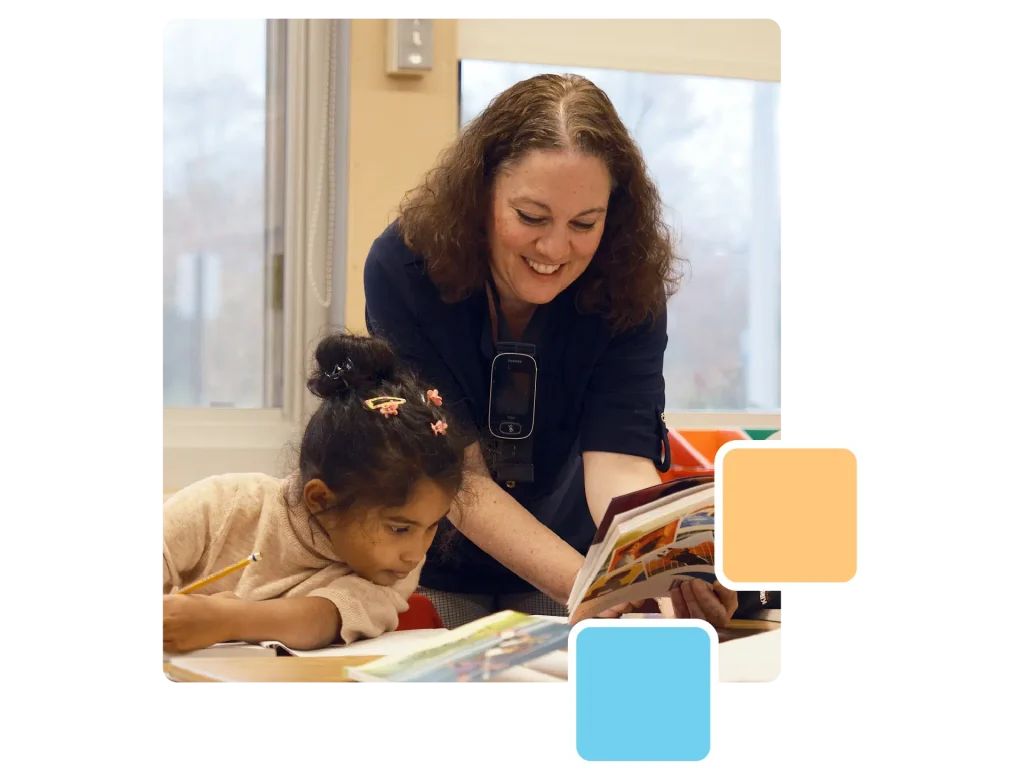
Stay connected!

Join our community and get new episodes every other Tuesday!

We’ll also share new and exciting free resources for your classroom every month.

What Juan Vivas says about engineering

“Based on my experience so far, I think the best way to put it… an engineer is a technical problem solver.”

– Juan Vivas

Supplier development engineer, SpaceX

Meet the guest

Juan Vivas is a chemical engineer currently working as a Supplier Development Engineer at SpaceX. Juan got his start at the University of Florida, where he led the Society of Hispanic Engineers (SHPE) as vice president. He’s worked for companies like Clorox, Dow Chemical, and General Mills. Juan lives in Los Angeles, California with his wife and two dogs.

Man in a suit and tie smiling at the camera with a blurred green background.

About Science Connections: The podcast

Welcome to Science Connections: The Podcast! Science is changing before our eyes, now more than ever. So…how do we help kids figure that out? We will bring on educators, scientists, and more to discuss the importance of high-quality science instruction. In this episode, hear from our host Eric Cross about his work engaging students as a K-8 science teacher.

Use stimulus funding to drive transformation.

Learn about ESSER I, II, and III funding (or CARES, CRRSA, and ARP), and how to use these funds to help with learning recovery and acceleration. Districts have significant flexibility in how to use the ESSER money, with ESSER II and III specifying that some of the funds should be used to address unfinished learning.

Given the enormous influx of resources flowing into K–12, now is the time to drive important, sustainable change in your district. All Amplify programs and services meet the criteria for the funding, and our early literacy suite can be particularly helpful in driving reading growth in grades K–5.

Where to start: Watch our stimulus funding overview.

Julia Gonzales, vice president of government relations at Amplify, walks you through what you need to know about federal stimulus funding.

Five fast facts

Here are the essential facts you need to know about the latest stimulus funding, also known as ESSER III or the American Rescue Plan (ARP).

  1. It’s okay to keep using products and services you’ve purchased. As long as funds are assigned to spending categories and paid to vendors by each fund’s deadlines—and the purchases are allowable uses—it’s okay to keep using products and services after those dates.
  2. Schools and districts have a lot of leeway in how to use the money. ESSER III funds may be used to propel your vision of teaching and learning post-pandemic, so try to think about both short-term needs and your longer term ambitions for the district.
  3. At least 20 percent must be used to address unfinished learning. For example, schools and districts can use the funding to bolster the strength of in-school core instruction, differentiated practice, and intervention, as well as for summer learning, after school, and extended day activities.
  4. The money is available now. Act quickly! Schools and districts can access ESSER III stimulus funds right now, and districts are moving very fast to spend these dollars. The deadlines are around the corner: All ESSER III funds must be assigned to a spending category by Sept. 30, 2024, and paid to vendors four months after that.
  5. Note: State Education Agencies can request an extension with the U.S. Department of Education. See the following table for more information on timelines.
  6. It’s okay to keep using products and services you’ve purchased. As long as funds are assigned to spending categories and paid to vendors by each fund’s deadlines—and the purchases are allowable uses—it’s okay to keep using products and services after those dates.

Ready to learn more?

Fill out this form and we’ll be in touch with you shortly.

Find out how much funding is coming your way.

Use this tool from Whiteboard Advisors to search by state and district to see approximately how much money is coming to your region.

Amplify is an allowable expense.

See how spending categories for ESSER III (ARP), ESSER II (CRRSA), and ESSER I (CARES) specifically align with Amplify programs and trainings. Download our chart of allowable uses.

Amplify programs align to stimulus priorities.

Amplify can help accelerate literacy learning for all students with an early literacy suite that includes Amplify CKLABoost ReadingmCLASS®, and mCLASS Intervention, as well as professional learning and coaching. Each of our research-based literacy programs can be added to an existing literacy system at a district, and can be used together as an integrated suite.

Timelines for funding

Curious how long federal stimulus funds are available? See our chart with funding details, including timelines and deadlines.

ESSER I (CARES)ESSER II (CRRSA)ESSER III (ARP)
Signed into lawMarch 2020December 2020March 2021
Total education funds$30.7 billion$82 billion$170 billion
Total K–12 funds$13.2 billion$54 billion$122 billion
Obligation deadline
When funds must be assigned to a spending category.
March 13, 2020–
Sept. 30, 2022
March 13, 2020–
Sept. 30, 2023
March 13, 2020–
Sept. 30, 2024
Liquidation deadline
When vendors must be paid for the work contracted.
April 1, 2024Feb. 1, 2024Feb. 1, 2025
Potential liquidation deadline,
if extended

The deadline if a state education agency requests and receives an extension from the US DOE.
March 30, 2024March 30, 2025March 30, 2026

For more information about deadlines and rules, please see the US DOE guidance.

Ready to learn more?

Fill out this form and we’ll be in touch with you shortly.

Early reading data reveal progress overall, with varying outcomes for boys and girls 

BROOKLYN, NY (July 2, 2025) – Amplify, a publisher of next-generation curriculum and assessment programs, today released a research brief on the latest K–2 end-of-school-year literacy data. Findings suggest that overall, more young students are on track to learn to read and fewer are behind than during the pandemic—8 percent more second graders, 14 percent more first graders, and 21 percent more kindergartners are at or above benchmark compared to the 2020-21 school year. 

However, year-over-year improvements have slowed. Since the 2023-24 school year, the percentage of students on track has only improved by 1-2 points in each grade.

The data also show a nuanced picture of gender disparities in early reading. Across K–2, boys score the same or better than girls in reading readiness at the beginning of the year. But as the year progresses, girls show more improvement than boys, narrowing gaps and sometimes outperforming them by the end of the year.

“Five years out from the pandemic, we’re seeing encouraging signs that early literacy recovery is taking hold as more students across all early grades are on track to learn to read, with kindergarteners and first graders leading the recovery,” said Paul Gazzerro, director of customer data at Amplify.

Despite these successes, literacy trends across the United States remain a concern, as year-over-year progress remains slow. 

“Grades K–2 remain critical years for literacy development,” said Susan Lambert, chief academic officer of elementary humanities at Amplify. “To support young readers, educators need data-driven insights into student reading development and instructional practices that are based in the Science of Reading.” 

Amplify encourages districts and schools to analyze end-of-year data by school, grade, and classroom, and create integrated plans that:

  • Administer benchmark assessments three times per year to monitor levels of risk for reading difficulties. 
  • Analyze student data and make informed decisions to support students who are at risk for not learning to read.
  • Allocate additional instructional time and resources for at-risk students.
  • Regularly monitor progress for students, making adjustments as needed.
  • Ensure all students receive instruction that is evidence-based. 
  • Instill a love of reading during school programs, with caregiver and community support.

About Amplify

A pioneer in K–12 education since 2000, Amplify is leading the way in next-generation curriculum and assessment. Our core and supplemental programs in ELA, math and science engage all students in rigorous learning and inspire them to think deeply, creatively and for themselves. Our formative assessment products help teachers identify the targeted instruction students need to build a strong foundation in early reading and math. All of our programs and services provide educators with powerful tools that help them understand and respond to the needs of every student. Today, Amplify serves more than 15 million students in all 50 states and on six continents. For more information, visit Amplify.com.

Media Contact: Kristine Frech; media@amplify.com

Season 1, Episode 5

Teaching is listening, starring Patti and Rod Lloyd

Today on Beyond My Years, host Ana Torres takes you to the northernmost region of Alaska to sit down with Patti and Rod Lloyd. Patti and Rod are longtime educators in a rural school district where caribou outnumber people, the village is only accessible by plane, and the Indigenous culture of the Iñupiat people goes back 10,000 years. They teach Ana about how they make the content matter by connecting it to student life outside of the classroom, the honor of teaching where children are the most valuable part of the community, the importance of listening more than you speak, and they offer advice for teaching responsibly as an outsider. They also share stories of how the first week of every school year is spent connecting to the land and having the village elders teach about their culture, emphasizing the joy to be found when you open yourself up to what your students have to teach you. Throughout the conversation, it is clear that despite teaching in a unique landscape, the lessons that Patti and Rod have learned are applicable to teaching any student anywhere. Taking all those lessons back to the classroom, Eric and Ana discuss the benefits of building genuine community relationships, making learning culturally relevant, and the importance of focusing on effective teaching methods.

Two individuals in circular frames on a background with books, stars, and apples. The top person is wearing glasses; the bottom person has a beard and glasses. There's a pink star between them.

Meet Our Guest(s):

A woman with long brown hair, wearing glasses and a striped shirt, smiles in front of a plain light blue background, radiating warmth and a sense of community relationship.

Patti Lloyd

Patti is a licensed social worker and elementary teacher now serving as the Meade River School counselor. Patti has a bachelor of arts degree in social work, a bachelor of science degree in elementary education, and 18 years of teaching experience. Patti was a social worker in Idaho prior to teaching, and is certified as an alcohol and chemical addictions counselor. She previously taught early childhood education and kindergarten. She is on the Board of Trustees of Ilisagvik College (the only tribal college in Alaska) and has worked for the North Slope Borough School District for 27 years. Patti is happy living in this beautiful place and loves the strong Inupiat culture surrounding her.

A middle-aged man with glasses, a bald head, and a short gray beard, wearing a blue collared shirt, smiling at the camera against a light gray background, reflecting warmth and strong community relationships.

Rod Lloyd

Rodney Lloyd is a primary elementary teacher with a bachelor of science degree in elementary education and a master of arts degree in language and literature with specialization in reading instruction and intervention. Rod has certifications in math recovery and is working towards a master’s degree in elementary math instruction. Rod has 30 years of teaching experience and was selected as NSBSD Teacher of the Year for 2013 and 2024. He has been teaching a Kindergarten/first grade combination class but works with students of all ages. He will be working in an intervention role at Meade River School for the 2024-25 school year. Rod is also the current presidentMeade River School, School Advisory Committee (SAC) president. Rod loves living in the Arctic and learning from the cultural members he considers close friends.

Meet our host, Ana Torres.

Ana has been an educator for 30 years, working in both the K–8 and higher education sectors. She served as an administrator and instructor at various public and private colleges and universities and as a bilingual and dual language teacher, dual language math and reading interventionist, dual language instructional coach, assistant principal, and principal in K–8 schools. Ana is currently the Senior Biliteracy and Multilingual Product Specialist on Amplify’s product specialist team, and delivers literacy and biliteracy presentations across the nation. Ana’s passion and advocacy for biliteracy and multiculturalism has led her to educate leaders, teachers, and parents about the positive impact of bilingualism and biliteracy in our world.

A woman with long dark hair and hoop earrings smiles at the camera while wearing a black blazer, standing outdoors—ready to discuss classroom challenges or share insights on her teacher podcast.
A man with short, closely-cropped hair and a trimmed beard smiles at the camera against a light gray background, ready to inspire diverse learners in the math classroom.

Meet our Classroom Insider, Eric Cross.

Eric Cross is a middle school science teacher who hopes to someday be a lifelong educator, like the guests on Beyond My Years! In each episode, Eric connects with host Ana Torres to discuss her guests’ best insights gleaned from their long and rewarding careers in the classroom. Then, Eric talks about bringing some of their wisdom into his current classroom and busy life.

Quotes

“Even though they’re coming to me at five and six years old, they are coming with a lot of rich knowledge that I don’t have. And then if I remain open and work with them, I’ve got a lot to learn.”

—Rod Lloyd

“The people that have lived there for 10,000 years; they know how to live in the Arctic. There’s architectural or archaeological evidence of 10,000 years of continued occupation of that land. So they have a lot to teach us. They’re experts there.”

—Rod Lloyd

“I wish I could go back and tell myself, ‘Don’t be so concerned with what you’re teaching but how you’re teaching it.’ Really get into the community.”

—Rod Lloyd

“We’ve just got to be quiet enough, long enough to hear what our students are saying—or not saying.”

—Patti Lloyd

“When you do make a mistake, ‘cause you’re going to make cultural mistakes, we have to kind of own up to it and then ask for advice on how to fix it or how to not make that mistake again.”

—Rod Lloyd

“Enjoy it. Enjoy the kids. Take time to enjoy your job. I know teaching now is a very high-pressure situation. There is so much pressure on us and so much to do, but we can’t forget to take that time and enjoy it because if you enjoy it, your kids will enjoy it.”
—Rod Lloyd

“Teachers are taking care of the world. So now teachers take care of you.”

—Patti Lloyd

Slow but steady progress: new Amplify data show why middle-of-year literacy screening matters 

With just 57% of K–2 readers on track and year-over-year gains flattening, the latest research brief underscores the urgency of data-driven instruction 

BROOKLYN, NY (February 25, 2026) – Amplify, a publisher of next-generation curriculum and assessment programs, today released a research brief on the latest K–2 middle-of-school-year literacy data. The findings make a clear case for why districts need middle-of-year early reading data: Recovery from pandemic-era learning loss has stalled, and without timely intervention, millions of students risk falling behind.

According to the latest data, 57 percent of K–2 students are on track to learn to read at the middle of the 2025–26 school year. Overall progress is slow and incremental: Year-over-year gains ranged from zero to two percentage points across grades, with kindergarteners showing the most improvement. Progress for second graders essentially leveled off between 2024–25 and 2025–26. First- and second-graders still have not recovered to where they were in 2019–20 before the pandemic.

“Middle-of-year assessments are an ideal window for schools to analyze student performance, identify any needed adjustments in instruction, and implement them in time to catch students up before the start of the next academic year,” said Susan Lambert, chief academic officer at Amplify. “Schools that have meaningful data—from a universal screener—can make more informed decisions about how to support students who are most at risk for reading difficulties.” 

The research brief draws on data from more than 3 million students assessed with mCLASS® DIBELS® 8th Edition, Amplify’s teacher-administered literacy assessment suite for grades K–8. A matched set of approximately 90,000 students across 800 schools in 43 states is represented in the trend analysis. 

Middle-of-year data is uniquely positioned to provide districts with insights that can help them implement instructional changes before the following school year. To accelerate early reading outcomes, Amplify recommends that districts and schools analyze data by school, grade, and classroom, and build plans that include:

  • Universal screening: Administering assessments three times per year to monitor risk levels for reading difficulties.
  • Targeted resource allocation: Assigning staff to support at-risk students with additional literacy instruction beyond grade-level requirements.
  • Evidence-based instruction: Ensuring staff are trained in the Science of Reading and implementing high-quality core curriculum.
  • Progress monitoring: Regularly tracking at-risk students and making real-time instructional adjustments.
  • Reading empowerment: Instilling a love of reading through school programs supported by caregivers and the community.

Read the complete research brief.

About Amplify

A pioneer in K–12 education since 2000, Amplify delivers next-generation curriculum and assessment on an intuitive, integrated platform that includes thousands of free lessons. Our high-quality programs in ELA, math, and science engage students in rigorous learning that inspires them to think deeply, creatively, and independently. Our formative assessment tools help teachers identify the instruction each student needs to build a strong foundation in reading and math. Across all programs and services, we equip educators with powerful tools to understand and respond to the needs of every learner. Today, Amplify serves more than 18 million students and teachers across all 50 states and in 6 continents worldwide. For more information, visit Amplify.com.  

Media Contact: Kristine Frech; media@amplify.com

Special miniseries, Episode 5

Serving every student, in every seat, speaking any language, with Genie Baca

This episode features an in-depth conversation with Genie Baca, a 33-year education veteran who has spent the last 18 years as a principal in Texas. Baca discusses her career progression from a balanced literacy classroom teacher to various educational roles along her journey to the Science of Reading—and how it all led her to a unique school predominantly serving refugee students. This school—where 39 languages are spoken by the diverse student body—faces different challenges (and opportunities) than most schools. Baca shares some of the transformative strategies implemented under her leadership, particularly focusing on the Science of Reading and high-quality instructional materials. These strategies have significantly improved literacy and engagement, with a systematic approach adjusted for Tier 1 instruction to benefit all students, including monolingual and multilingual learners. Baca’s story showcases the positive influence strong leadership, a dedicated staff, and research-based educational methodologies can have when creating an inclusive, successful learning environment for a diverse student population.

Transcripts and additional resources:

Meet Our Guest(s):

Genie Baca

Genie Baca

Genie Baca brings over three decades of experience in the field of education to her work, in which she boasts a rich and diverse background spanning various roles within the educational landscape. She has been a classroom teacher, reading recovery teacher, curriculum specialist, and assistant principal, and now serves as Principal of Eastridge Elementary. Known for being the most complex elementary school in Baca’s district, Eastridge Elementary serves 560 students from countries all over the world. Collectively, there are 39 languages represented by this student body. Recently, Baca led her campus through the implementation of Amplify, Eureka, and PhD Science curricula. She holds a bachelor’s in education and a master’s in management.

Meet our host, Susan Lambert

Susan Lambert is the Chief Academic Officer of Elementary Humanities at Amplify, and the host of Science of Reading: The Podcast. Her career has been focused on creating high-quality learning environments using evidence-based practices. Lambert is a mom of four, a grandma of four, a world traveler, and a collector of stories.

As the host of Science of Reading: The Podcast, Lambert explores the increasing body of scientific research around how reading is best taught. As a former classroom teacher, administrator, and curriculum developer, Lambert is dedicated to turning theory into best practices that educators can put right to use in the classroom, and to showcasing national models of reading instruction excellence.

Retrato de una mujer caucásica sonriente con cabello rubio corto, involucrada en un podcast sobre la ciencia de la lectura, con gafas, lápiz labial rojo y un collar de perlas.

Quotes

“What professional learning communities does, it teaches you, again, systems on how to look at data, how to lesson plan, how to make formative assessments, how do you respond to data, the whole everything.”

—Genie Baca

“I couldn't just lead my campus into the Science of Teaching Reading if I didn't open myself up to, maybe I was wrong…it wasn't easy, but it really took me looking at student work to prove that what I had been doing all these years wasn't working.”

—Genie Baca

“It's serving every child we have in the seat, whether they're monolingual or they speak two or three languages. What works is a systematic approach to learning how to read.”

—Genie Baca

“Now that we know better? And we know more about the research, and that how speaking and reading go together, we're just getting smarter. We're just learning more about how reading works, how the brain works, how kids acquire knowledge, and we just have to be smarter, I guess, in how we do things.”

—Genie Baca

While K–3 students are beginning to recover from COVID instructional loss, more students are still at risk of not learning to read than pre-pandemic

(Brooklyn, NY – August 3, 2021) Amplify, a publisher of next-generation curriculum and assessment programs, released a research brief on end-of-year K–3 reading data, revealing many students have begun to recover from lost literacy instruction due to COVID-19. However, there are still more students at risk of not learning to read than pre-pandemic, especially students who are Black or Hispanic.

As many students returned to the classroom in the spring, schools made progress in reducing the number of students who were at the greatest risk of not learning how to read. While these gains are important for overcoming instructional loss, the percentage of students at risk of not reading across grades K–3 is still higher than the 2019–20 school year due to pandemic disruptions. Moreover, these remaining instructional losses have widened the national gaps in early reading skills between Black and Hispanic students and their white counterparts.

“To catch up to the learning levels of pre-pandemic cohorts of students, we must accelerate learning. For that, students require instruction that targets their needs more than ever. Teachers should be empowered by quality assessments to understand the specific areas in which students could benefit from support,” said Gina Biancarosa, professor in the Department of Special Education and Clinical Sciences in the College of Education at the University of Oregon. “Once their unique strengths and needs have been identified, we can spend time supporting students in targeted while continuing to deliver grade-level core instruction. Working in tandem, targeted and grade-level instruction can reach individual students equitably and help to make up for the lost opportunities to learn of the last year plus.”

“The age group in which our research was conducted is critical. We know that the older the students are, the longer it is going to take to catch them up,” said Susan Lambert, chief academic officer of elementary humanities at Amplify. “Based on these findings, schools and districts should anticipate recovery taking one to two years. Along with grade-level, core instruction, monitoring is essential to track individual student progress and provide the personalized support that will help all students become confident readers.”

The report highlights the effects of COVID-19 disruptions by comparing Amplify mCLASS® with DIBELS® 8th Edition benchmark data from the 2019–20 and 2020–21 school years. Approximately 400,000 students in a matched set of over 1,400 schools in 41 states are represented. The schools in the source data are more likely to be in large urban metropolitan areas.

The data was collected using the mCLASS platform, which automates the data collection of DIBELS (Dynamic Indicators of Basic Early Literacy Skills). DIBELS is a widely used series of short tests that assess K-8 literacy developed by the University of Oregon. DIBELS is an observational assessment, collected by teachers interacting directly with students one-on-one, either live or over video. DIBELS is typically administered three times a year (beginning, middle, and end of year), and is used to identify reading difficulty, monitor progress, and inform instruction, especially for struggling readers.

About Amplify

A pioneer in K–12 education since 2000, Amplify is leading the way in next-generation curriculum and assessment. Our captivating core and supplemental programs in ELA, math, and science engage all students in rigorous learning and inspire them to think deeply, creatively, and for themselves. Our formative assessment products turn data into practical instructional support to help all students build a strong foundation in early reading and math. All of our programs provide teachers with powerful tools that help them understand and respond to the needs of every student. Today, Amplify serves more than seven million students in all 50 states.

Contact:
Molly McCue
media@amplify.com

New report: because of the pandemic, more of the nation’s youngest students are still struggling to learn to read

BROOKLYN, NY (February 16, 2022) — Amplify, a publisher of next-generation curriculum and assessment programs, released a research brief on middle-of-school-year reading data. It shows good news that K–5 students are recovering from the loss of literacy instruction caused by COVID-19. However, it also shows that in every elementary grade, there are still more students at risk of not learning to read than there were before the pandemic. The cohorts of students currently in kindergarten, grade1, and grade 2 are furthest behind compared to their pre-pandemic counterparts; Black and Hispanic students currently in those three early grades are still suffering disproportionately from COVID-related instructional loss.

The latest data show that as elementary students have returned to in-class instruction, schools have made terrific progress toward recovering the instruction they missed during the pandemic. However, at the middle of the 2021–22 school year, in every elementary grade (K–5), the number of students at risk of not reading is still higher than it was at the same point in the 2019–20 school year. The number of at-risk students has risen the most in the youngest grades (K–2), and in those grades, nationally, the gaps in early reading skills between Black and Hispanic students and their white counterparts are now wider than they were before the pandemic.

Susan Lambert, chief academic officer of elementary humanities at Amplify, says the data in this report is a clarion call to help this generation of young students get on track in reading. “It’s really an all-hands on deck moment,” she says. “But aiming for recovery is the wrong goal, because pre-pandemic literacy rates were already a problem. Literacy instruction for the K–2 age group has always been critical. Now we’re seeing second grade students who have spent their entire school lives in the pandemic losing the most instructional time at the most important moments for learning to read. The struggles of students who have fallen behind are not going to go away on their own. If we don’t address them, those struggles will compound. The older these students become, the longer it will take them to catch up.”

What should be done to help these students? “There are many things schools are addressing right now: morale of teachers, well-being of children, reducing the spread of the virus, and helping kids catch up,” Lambert says. “With reading, teacher-student relationships matter. Teaching practices should be evidence-based. High quality instructional materials, grounded in the Science of Reading, should be used daily. Instructional content should develop both word recognition and language skills. Learning must be regularly monitored and learning gaps addressed immediately.”

Lambert is optimistic about how much progress can be made. “When kids get good instruction based in the Science of Reading, outcomes improve. When students receive that instruction in the early grades, 95 percent of them can develop as proficient readers regardless of their background.”

Lambert calls for both accelerating student literacy outcomes through quality grade-level instruction and for targeted instruction and interventions to close existing gaps.

She specifically recommends that each district make a two-year, highly integrated plan for the population of kids that are at high risk. Those integrated plans should ensure that schools:

  • Administer benchmark assessments three times per year to monitor levels of risk for reading difficulties.
  • Spend more time on literacy instruction, and make sure it is evidence-based instruction (based in the Science of Reading).
  • Organize the daily calendar to include time beyond grade-level instruction.
  • Be creative about scheduling and staffing to ensure this time is prioritized.
  • Support instructional staff in gaining knowledge about the Science of Reading.

The report highlights the effects of COVID-19 disruptions by comparing Amplify mCLASS with DIBELS® 8th Edition benchmark data from the 2019–20, 2020–21 and 2021-22 school years. Approximately 400,000 students in a matched set of more than 1,300 schools in 37 states are represented. The schools in the source data are slightly more likely to be in large urban metropolitan areas than the nation overall.

The data was collected using the mCLASS platform, which automates the data collection of DIBELS (Dynamic Indicators of Basic Early Literacy Skills). DIBELS is a widely-used series of short tests that assess K–8 literacy developed by the University of Oregon. DIBELS is an observational assessment collected by teachers interacting with students one-on-one, either live or over video. DIBELS is typically administered three times a year (beginning, middle, and end of year), and is used to identify reading difficulty, monitor progress, and inform instruction, especially for struggling readers.

About Amplify
A pioneer in K–12 education since 2000, Amplify is leading the way in next-generation curriculum and assessment. Our captivating core and supplemental programs in ELA, math, and science engage all students in rigorous learning and inspire them to think deeply, creatively, and for themselves. Our formative assessment products turn data into practical instructional support to help all students build a strong foundation in early reading and math. All of our programs provide teachers with powerful tools that help them understand and respond to the needs of every student. Today, Amplify serves more than 10 million students in all 50 states.

Contact:
Molly McCue
media@amplify.com