Hello, Alaska teachers and leaders!

The Alaska Department of Education and Early Development (DEED) has selected Amplify’s mCLASS® DIBELS® 8th Edition as the statewide literacy screener to help with the early identification of students with required additional reading support.  mCLASS is a foundational literacy assessment based on the Science of Reading.

As the approved screening tool for the AK Reads Act, mCLASS DIBELS 8th Edition should be administered three times each school year. Together, Amplify and DEED will strategically and confidently support teachers and families to help students improve their reading skills with mCLASS DIBELS 8th Edition.

Log in to access your mCLASS program and hundreds of resources at learning.amplify.com.

Want advice and answers from the Amplify team?

Three classroom scenes: A teacher watches as a young girl writes on a whiteboard; children sit at desks drawing and writing, with teachers assisting them.

Introduction to mCLASS DIBELS 8th Edition

mCLASS DIBELS 8th Edition is an English universal screener and progress monitoring reading assessment tool. It measures foundational literacy skills, creates instant groups, and includes targeted teacher-led instructional plans.

Precise one-minute measures based on predictive data allow mCLASS to provide individualized instruction.

Intuitive reporting for teachers and administrators supports data-driven decisions to achieve student growth.

Universal and dyslexia screening in one validated assessment tool identifies your at-risk students at the earliest levels.

Receive the analytical tools and resources needed to deliver targeted, staff-led intervention to students.

Don’t miss out!

What’s new:

  • Download the 2025-26 EOY checklist, and be prepared to administer the end-of-year benchmark assessments.
  • New mCLASS DIBELS 8th Edition professional development sessions are now available! Register below for available sessions.
  • Click here to learn more about the Alaska mCLASS DIBELS 8th Edition Calibration Module. Anyone administering mCLASS assessments must complete the Alaska mCLASS DIBELS 8th Edition Calibration Module with a passing score.
  • Each participating district will receive mCLASS DIBELS 8th Edition Assessment kits. One kit, per grade, K-3 will be shipped. Materials can also be downloaded for free. If you would like to purchase additional kits, please email Kristen Rockstrah or Alicia O’Neil.

Technical onboarding

Visit our Technical Onboarding hub for information and resources to help guide you through setting up digital access to your Amplify products.

Enrolling with multiple Amplify programs?

For additional support in enrolling when using multiple Amplify programs, contact support.

Professional learning

There are many exciting learning opportunities available for Alaska teachers and leaders. Access session recordings, training resources, and more.

For more information, please reach out to your Amplify PD representative:

Erin Replogle
Professional Development Strategist, Literacy
ereplogle@amplify.com

About mCLASS DIBELS 8th Edition initial training

Districts have been registering for district-specific initial training. If you’re unable to make your district’s scheduled session, you can register for another district’s training.  Seats are limited in these sessions, so please sign up early if you are interested in attending.

In addition, anyone administering mCLASS assessments must complete the Alaska mCLASS DIBELS 8th Edition Calibration Module with a passing score.

Initial training

Initial mCLASS DIBELS 8th Edition training

New to mCLASS DIBELS 8th Edition? This session will prepare educators to administer the mCLASS DIBELS 8th Edition measures and help them use this data to enhance their classroom instruction.

April 1st & April 8th: 1 pm – 4 pm
April 6th: 8:30 am – 3:30 pm
April 11th: 8:30 am – 3:30 pm
April 15th: 8:30 am – 3:30 pm

Assessing with fidelity for teachers—1 hour

Already trained in mCLASS DIBELS 8th Edition but want to brush up on your administration practices? Join us for this 1-hour session to review assessment administration information and practice assessing students on PSF or NWF.

New sessions coming soon!

Strengthening

Creating a data-driven classroom for teachers—3 hours

This three-hour training session is geared toward teachers who have completed at least one mCLASS DIBELS 8th Edition benchmark administration and are ready to begin analyzing student data to make instructional decisions.

New sessions coming soon!

Progress monitoring to drive student outcomes for teachers—1 hour

This one-hour training session is geared toward teachers who have completed at least one mCLASS DIBELS 8th Edition benchmark administration and are ready to implement mCLASS progress monitoring and MTSS best practices to track student progress and accelerate growth.

New sessions coming soon!

Data conversations

Understanding and communicating mCLASS DIBELS 8th Edition results with stakeholders—1 hour

This session is designed to extend educators’ understanding of norm-referenced and criterion-referenced assessments, how they apply to their student’s mCLASS DIBELS 8th Edition results, and how to facilitate and support parent communication.

New sessions coming soon!

Instructional leaders

mCLASS DIBELS 8th Edition data walkthrough for leaders—1 hour

Cultivate a school-wide culture of data-driven practices. Use mCLASS reports to drill into key school-level data and leave with a systems-level action plan to drive stronger student and teacher outcomes.

New sessions coming soon!

mCLASS DIBELS 8 Reporting Basics for Leaders – 1 hour

Examine your school-level mCLASS benchmark assessment data to identify key levers for improving student outcomes

New sessions coming soon!

Professional development opportunities are added frequently.

*Please note that sessions require a minimum number of participants. Sessions that do not have sufficient registration may be canceled. Please encourage your colleagues and administrators to promote sessions you believe would be helpful to fellow educators.

Coming soon!

Access help articles, videos, and tutorials to support your mCLASS onboarding and implementation.

Benchmark and reporting

Table showing which Alaska mCLASS reading measures are assessed at each grade level, from kindergarten to grade 5, with checkmarks indicating assessed skills per grade.

Beginning-of-year (BOY): August 18, 2025—September 26, 2025
Middle-of-year (MOY): December 1, 2025–January 26, 2026
End-of-year (EOY): April 30, 2026–May 15, 2026

If you need to change your benchmark window, please contact support.

We at Amplify and the team at the University of Oregon are here to provide continued guidance and support around collecting and using mCLASS data.

mCLASS can be administered in many ways, including remotely. This site will give guidance on the options to best support your students in any learning environment.

A student wearing headphones looks at a laptop screen and uses the touchpad while seated at a desk in a classroom.

mCLASS gives you detailed insight into your students’ reading development across foundational literacy skills, empowering educators with instructional recommendations specific to each student’s unique needs.

Access the mCLASS Reporting Guide to find a wealth of valuable reporting information that mCLASS provides for everyone, from classroom teachers and literacy specialists to principals and district leaders, as well as parents and guardians at home.

In addition to the Reporting Guide, please view the following help and tutorial resources.

A measure should be invalidated, or deleted, when an interruption or mistake occurs that undermines the validity of the score. Examples include the following:

  • The wrong student was assessed.
  • There were interruptions, such as from intercom announcements or fire drills.
  • There were scoring errors that cannot easily be corrected.
Screenshot of an mCLASS dashboard showing class reading summary data, with student performance categorized by color-coded benchmark levels.

Explore more programs.

A flowchart showing five steps: mCLASS Assessment, Amplify CKLA, Boost Reading, mCLASS Intervention, and Science of Reading professional development.

We are the gold standard in early literacy. Our proven early literacy suite of assessment, instruction, and intervention is more powerful than ever. Unlock the power of our full literacy suite with programs designed to enable every student to build robust foundational skills and grow at all reading levels. Learn more about our related programs.

A woman and a young girl sit together at a table while the woman points at an iPad screen. They appear to be engaging in a learning activity.

mCLASS Intervention

Follow a research-based, targeted skills progression and use mCLASS benchmark and progress monitoring data to create groups and daily lesson plans for 10-day cycles.

Learn more

Two boys sitting at desks in a classroom talk to each other, with a paper cutout of a light bulb placed between them on the desk.

Amplify CKLA

Built on the Science of Reading, Amplify CKLA features an explicit, systematic approach that leverages multisensory instruction and provides instruction for students from all walks of life.

Learn more

Students learning Boost Reading lesson

Boost Reading

Delivers adaptive instruction, practice, and intervention support through highly engaging games and activities, freeing educators up to work with small groups.

Learn more

Students in a classroom focus on reading and writing tasks. An orange badge with the text "Built on the Science of Reading" is displayed.

Science of Reading

Discover how the Science of Reading is for everyone! All students—from multilingual/English learners to middle schoolers to your most confident young readers—benefit from the research-based, proven literacy instruction indicated by the Science of Reading.

Learn more

Need more help?

Log in at learning.amplify.com, and click the gray chat button in the bottom right corner to chat live with our support team.

Our Help Center contains searchable articles and resources to answer many of your questions.

Contact us at (877)-810-4919 for dedicated account support.

If you need additional support, please contact our support team.

Welcome, Alaska reviewers!

Thank you for taking the time to review Amplify’s complete early literacy system for PK–5.

Our curriculum, assessment, practice, and intervention solutions work in tandem to ensure classroom teachers have what they need to provide multi-tiered literacy support to every student.

On this site, you’ll find a variety of resources designed to support your review and evaluation, including links to sample materials, demo access, and additional materials.

Illustration of diverse children and animated creatures, with a large friendly robot, engaged in playful activities in a vibrant, imaginative setting.

Complete literacy system

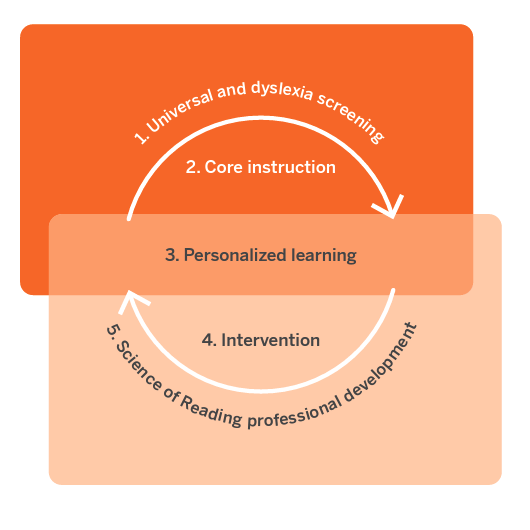
Strong core instruction is crucial–but in isolation, even that’s not enough. A truly effective literacy system needs to bring together assessment, core instruction, personalized practice, targeted intervention, and ongoing professional development.

Together with leading experts in reading instruction, Amplify has built a proven early literacy system grounded in the latest reading research and designed to ensure every student receives the multi-tiered support they need to grow as a reader. Our partners include:

  • The University of Oregon
  • Core Knowledge Foundation
  • Recognized language, literacy, and biliteracy experts such as Dr. Lillian Durán, Dr. Desiree Pallais, Dr. Catherine Snow, and others.
Flowchart showing a five-step educational process: 1. universal screening, 2. core instruction, 3. personalized learning, 4. intervention, 5. science of reading professional development.

Assessment

mCLASS DIBELS 8th Edition is the adopted literacy screener for the state of Alaska!

The mCLASS® Assessment System includes everything Alaska educators need—universal screening, dyslexia screening, diagnostic assessments, and progress monitoring. Plus, it’s easy and efficient to administer, and provides classroom teachers with instant, actionable data that guides instruction.

When the DIBELS® 8th Edition assessment is paired with:

  • The Text Reading and Comprehension (TRC) assessment, teachers unlock the ability to record reading behaviors through running digital records.
  • The Vocabulary, Encoding, and Rapid Automatized Naming (RAN) measures, teachers are empowered to screen for dyslexia risk.
  • mCLASS Lectura, teachers gain a holistic view of their students with biliteracy insights that support students in both English and Spanish.

Ready to learn more? Click the button below to review mCLASS with DIBELS 8th Edition.

Core instruction

Amplify Core Knowledge Language Arts® (CKLA) is a state-approved core program!

Amplify CKLA is truly based in the Science of Reading. It includes explicit, systematic lessons in foundational skills and a coherent approach to building background knowledge, developing vocabulary, and reading complex text with confidence.

Through a powerful combination of proven, evidence-based practices and engaging, interactive content, Amplify CKLA ensures all students have the opportunity to become strong readers, writers, speakers, and thinkers.

Ready to learn more? Click the button below to review Amplify CKLA.

Personalized practice

Practice is nice. Practice that is adaptive and integrates with your assessment system and core ELA program is better!

Amplify Reading is an adaptive and personalized pathway that makes practice more purposeful and productive. It also fully integrates with the mCLASS DIBELS 8th Edition and Amplify CKLA.

  • mCLASS automatically places students on an adaptive path within Amplify Reading, which provides them the exact practice they need.
  • That very practice follows the same approach and scope and sequence as Amplify CKLA, which further reinforces the core instruction.

Ready to learn more? Click the button below to review Amplify Reading.

Targeted intervention

mCLASS® Intervention is a staff-led reading intervention that connects directly to mCLASS DIBELS 8th Edition data.

mCLASS Intervention automatically groups students with similar needs, follows a research-based skills progression, includes ready-to-teach engaging lessons, and updates skill profiles and groups every ten days. For busy teachers, that means more free time to teach the reading skills each student needs.

Ready to learn more? Click the button below to review mCLASS Intervention.

Digital curriculum access

Instructions for accessing program-specific demo accounts are provided within each of the review microsites referenced above.

Simply click on the program buttons above, navigate to the Access demo section of each page, and use the credentials provide there to log in.

Laptop screen displaying a login page for "amplify" with multiple sign-in options including google, clever, a qr code, and district sso.

Your Beyond My Years 2024 recap!

In August of last year, our teaching podcast Beyond My Years took its first steps—and in no time we were exploring a lot of new territory on our journey to soak up teacher advice and wisdom from seasoned educators across the globe. Their experiences became our experiences. So let’s recap some of the top moments of 2024.

In 2024 on Beyond My Years we:

Traveled 3,469 miles to Stasia, Alaska.

We ventured all the way to the northernmost part of Alaska alongside Patti and Rod Lloyd to teach in a rural indigenous community. Joining such a rich and unique culture as outsiders taught Patti and Rod the importance of learning from their students.

“Even though they’re coming to me at five and six years old, they are coming with a lot of rich knowledge that I don’t have. And if I remain open and work with them, I’ve got a lot to learn.” —Rod Lloyd

Went back to school at the age of 80.

When the United Kingdom put out a call in 2020 for retired educators to return to aid a national shortage, Eric Jones knew he still had more left to teach, even at the age of 80! He knows that to stay in the education field as long as he has you need to celebrate and honor all areas of what a teacher does. When you honor every piece of the work you can do, you can make sure every moment stays aligned with your goals and serves your students.

“I like teaching kids things they didn’t know before and now they’re excited about. I love the idea that they will then move on into realms of industry and economic success that I would never dream of.” —Eric Jones

Shared our first Amplify podcast episode entirely in Spanish.

We even had our first bonus episode entirely in Spanish with Luz Selenia Muñoz. She taught us that some things transcend language—like the importance of knowing the “why” behind student behavior. According to Luz, whether your classroom is monolingual or multilingual, it is important to make connections with your students. You will see what they need and know what their triggers are. Behavior improves when you understand what your kids are going through.

“Yo creo que le diría que tenga paciencia. Paciencia. Que respire. Que las cosas van a mejorar cada día.” —Luz Selenia Muñoz

“I think I would tell them to be patient. Be patient. Breathe. Things will change for the better with every passing day.” —Luz Selenia Muñoz

Took time for ourselves.

Kamphet Pease called out the overachiever in all of us educators. An important piece of teacher advocacy: We all took a hard look at our school to-do lists together and recognized that we have to do better at prioritization—including prioritizing self-care.

“Make sure you take care of yourself as well. Take the time to go for a walk, take the time to take a bubble bath, cook for yourself, whatever you find enjoyment in.” —Kamphet Pease

Want even more of the best of the best from season one of Beyond My Years, which is brought to you by the team that produces Science of Reading: The PodcastDownload our key takeaways, a curated collection of invaluable wisdom and practical guidance from our lineup of inspiring educator guests.

More to explore:

What is Amplify CKLA?

Amplify CKLA is a core ELA program for grades K–5 that delivers:

  • A unique research-based approach truly built on the Science of Reading.
  • A combination of explicit foundational skills with meaningful knowledge-building.
  • Embedded support and differentiation that gets all students reading grade-level texts together.
  • Opportunities for students to see the strengths and experiences that all people share while also celebrating each others’ unique identities and experiences.
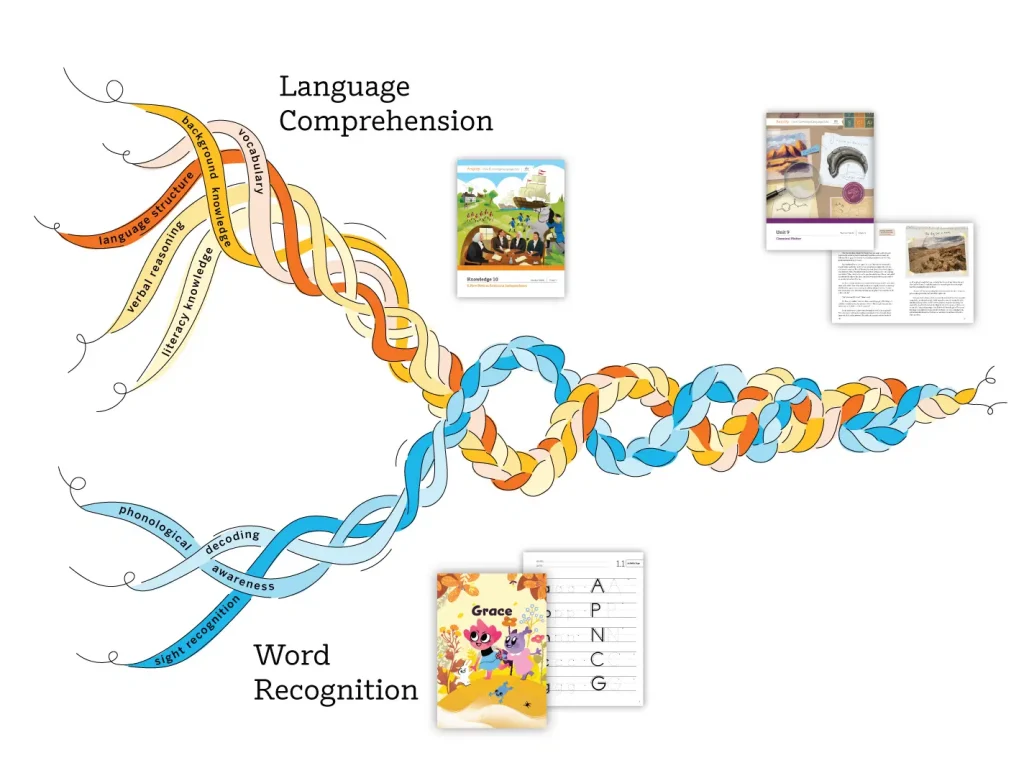
Reading rope showing knowledge-building and skill development strands, and the merging of language comprehension and word recognition

How does Amplify CKLA work?

Grades K–2: Dedicated knowledge-building and explicit skills instruction
Every day, students in Grades K–2 complete one full lesson that explicitly and systematically builds foundational reading skills in the Skills Strand, as well as one full lesson that builds robust background knowledge to access complex text in the Knowledge Strand. Through learning in each of these strands, students develop the early literacy skills necessary to help them become confident readers and build the context to understand what they’re reading.

Grades 3–5: Integrated instruction
In Grades 3–5, Knowledge and Skills are integrated in one set of instructional materials. Lessons begin to combine skills and knowledge with increasingly complex texts, close reading, and a greater writing emphasis. Students can then use their skills to go on their own independent reading adventures.

How does Amplify CKLA integrate with the other parts of the literacy system?

Amplify CKLA + mCLASS® with DIBELS® 8th Edition

Amplify CKLA integrates with your mCLASS assessment through the CKLA Connect feature, which matches your students with targeted CKLA lessons based on their mCLASS assessment data. In other words, it aligns your assessments more closely with your core curriculum while recommending effective differentiated instruction.

Screenshot of an educational platform. It shows lesson plans for a group on "Letter Sound Knowledge" under the heading "CKLA Connect." Group 2 has 2 students. Activities for phonics skills are listed below.

Amplify CKLA + Amplify Reading

Amplify Reading is the student-driven skill practice program within CKLA, providing differentiated, digital instruction in both foundational skills and comprehension strategies. Because Amplify Reading is built on the same approach to reading as CKLA, students are able to extend their learning from the core program further, at their own pace.

Amplify CKLA and Amplify Reading reinforce each other through:

  • An aligned scope and sequence and instructional approach: In both programs, students get instruction and practice in phonological awareness and phonics, with the most common, least ambiguous spellings first.
  • Consistent vocabulary words: Many Amplify CKLA words are taught and practiced in Amplify Reading vocabulary games.
  • Complementary texts: Fiction and nonfiction books within Amplify Reading reinforce Amplify CKLA knowledge domains.
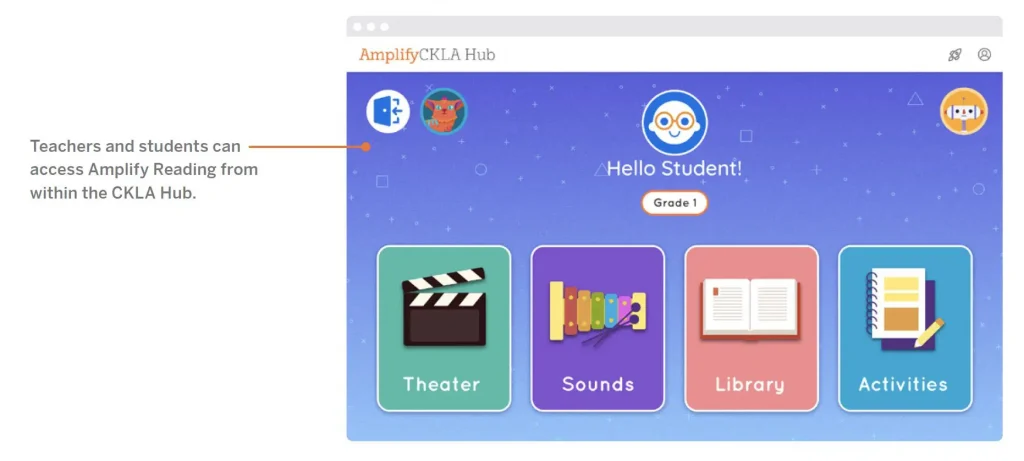
  • Seamless integrations between platforms: Students can easily access Amplify Reading directly from the Amplify CKLA Student Hub.
Educational website interface showing icons for theater, sounds, library, and activities with a greeting "hello student!" and a grade level indicator.

What makes Amplify CKLA different?

Built on the Science of Reading

Built out of the latest research in the Science of Reading, Amplify CKLA delivers explicit instruction in both foundational literacy skills (systematic phonics, decoding, and fluency) and background knowledge in grades K–2 with an integrated approach to explicit instruction in grades 3–5.

Review this Science of Reading toolkit to learn more about the Science of Reading best practices integrated throughout CKLA.

Explicit systematic skills instruction

Great reading instruction starts with helping kids develop great decoding skills. By building a solid foundation of phonological awareness and phonics, reading the words on the page becomes automatic so that comprehension and critical thinking can happen. Our instruction is supported by:

  • Step-by-step lessons with multisensory approaches, clear lesson objectives, and embedded formative assessments.
  • Decodable books and student readers with ebook and audiobook versions that feature interesting plots and relatable characters.
  • An engaging sound library with fun songs and videos that develop phonological awareness.
  • An interactive Vocab App featuring engaging activities with immediate feedback and automated, customized instruction based on student performance.

Coherent knowledge instruction

Students build grade-appropriate subject-area knowledge and vocabulary in history, science, literature, and the arts while learning to read, write, and think creatively and for themselves. Our instruction is supported by:

  • Knowledge builders that provide a quick overview of each domain with its key ideas.
  • Interactive Read-Alouds designed to build knowledge and vocabulary.
  • Content-rich anchor texts that support students as they tackle increasingly complex text and sharpen their analytical skills.
  • Social and emotional learning paired with lessons in civic responsibility.
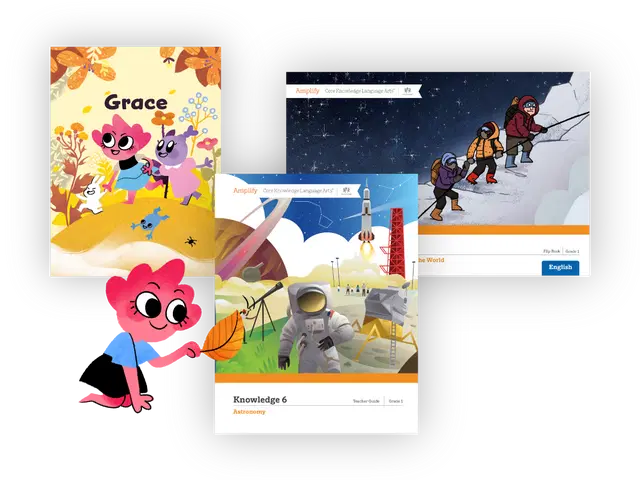
Illustration montage featuring scenes of learning: a cartoon character with books, two people shoveling snow under the stars, and an astronaut on a lunar landscape, with educational interfaces.

Embedded differentiation for all learners

Amplify CKLA provides built-in differentiation strategies in every lesson for all students, including supports for English learners and Standard English learners.

  • Access supports for ELs: Integrated ELD supports in each lesson segment
    for English learners and Standard English learners are specific to students’ mastery of the lesson’s objectives.
  • Support and Challenge for all learners: Lessons include Support and Challenge suggestions that provide assistance or opportunities for more advanced work toward the goal of the lesson. These supports are suitable for all learners, including ELs.
  • 30 minutes of Additional Support in every Skills lesson: In the Skills Strand, every lesson concludes with an Additional Support section of recommendations for 30 minutes of extended instruction and activities, directly aligned to the skills taught in the lesson to assist students who need more support in mastering the lesson’s objectives.
  • Intervention Toolkit: The Intervention Toolkit provides easy-to-use resources to assist teachers in filling gaps in students’ foundational skills. Teachers will find of hundreds of activities to support phonics, fluency, comprehension, handwriting, and other key skills.

Designated ELD

Amplify CKLA’s designated English Language Development (ELD) component—Language Studio—helps English learners preview and revisit key content within core instruction, building a foundation of academic vocabulary and background knowledge. Core instruction lessons include point-of-use supports for English learners and Support and Challenge strategies for all learners.

Young boy with his hands over his mouth, looking up in wonder, beside a diagram labeled "language studio" with educational elements.

This carefully developed program follows the CKLA Knowledge domains, previewing and reinforcing skills and content from core instruction using instruction specifically built for English learners. The program is also designed around frequent formative assessment, including assessment of language proficiency, giving you effective ways to guide and support your English learners.

Language Studio supports teachers and English learners through the following:

  • 30 minutes of instruction with lesson segments are carefully designed around Content Knowledge, Meaning Making, Language Development, Effective Expression, and Foundational Skills.
  • Every Language Studio lesson accompanies a core lesson, helping English learners deepen domain and academic vocabulary that will help them access core content.
  • Culminating tasks support core projects and target the same skills as primary instruction.

Ready-to-go slides and all-in-one platform

The slides-based Amplify CKLA digital experience enhances instruction while saving you time. Everything you need is all in one place, making it easier than ever to plan lessons, present digital content, and review student work.

  • Simplify planning and instruction: Teachers have access to ready-to-use and customizable lesson presentation slides, complete with all the prompts from the print Teacher Guide embedded in the teacher view. As teachers deliver each lesson, students can engage with the content in one cohesive
    experience—through Activity Books, slides, digital components, videos, Student Readers, and more.
  • Interactive student activities: Through the Student Home, students can easily access digital lessons with slides, Activity Pages, ebooks, videos, and other interactive resources from one simple dashboard.
  • Your teacher command center: You’re provided with the tools you need to ensure a productive digital experience that’s personalized to meet your students’ needs. This includes a teacher home from which to launch and track lessons, LMS integrations such as Google Classroom and Microsoft Teams, and other customizations based on classroom needs.
  • Get real-time insights into your students’ work: The innovative live review tool enables you to keep an eye on students drawing, recording audio, uploading and capturing images, and typing or writing in pre-placed text boxes in their Activity Pages.

Navigating the program

Digital navigation walkthrough

Physical materials walkthrough

Sample materials

Demo access

Laptop screen displaying a login page for "amplify" with multiple sign-in options including google, clever, a qr code, and district sso.

Follow the instructions below to access your demo account.

  • Click the CKLA Demo button below.
  • Select Log in with Amplify.
  • To explore as a teacher, enter this username: t1.alaskareads@demo.tryamplify.net
  • To explore as a student, enter this username: s1.alaskareads@demo.tryamplify.net
  • Enter the password: Amplify1-alaskareads
  • Click the Programs and apps menu
  • Select CKLA Teacher Resource Site
  • Select the desire grade level

Check out these additional resources

Amplify CKLA review resources:

Amplify CKLA for Anchorage

To view this protected page, enter the password below:


What is mCLASS Intervention?

mCLASS Intervention is a staff-led, supplemental Tier 2/3 intervention program that seamlessly integrates with mCLASS with DIBELS® 8th Edition data and helps students develop the skills they need to access their core instruction.

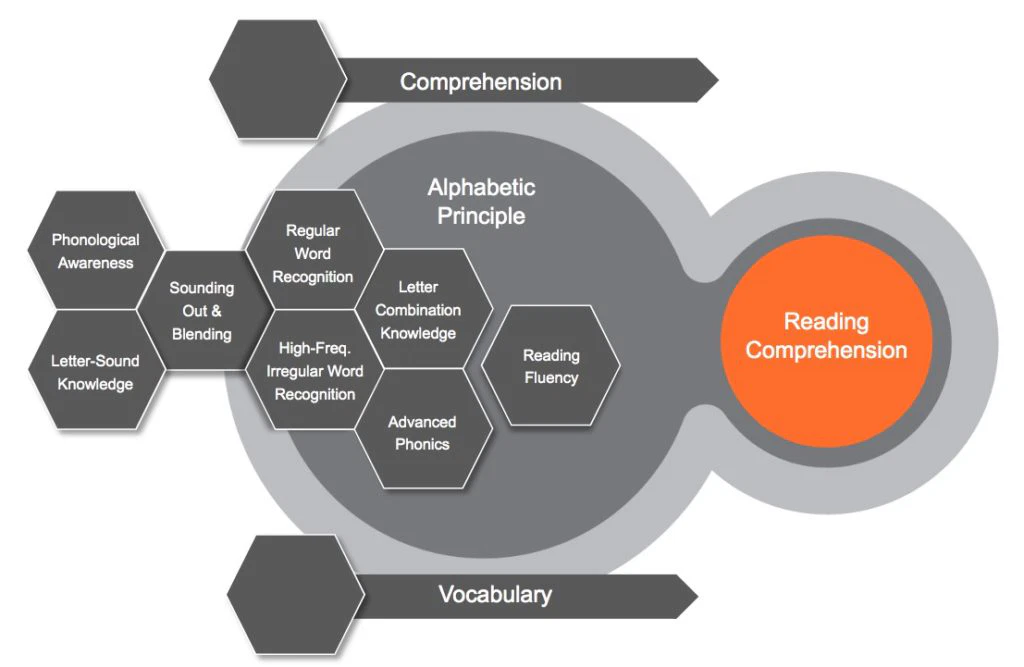
Illustrated in the continuum below, each hexagon represents a skill taught in mCLASS Intervention. Skills to the left are generally precursors to skills on the right.

Diagram illustrating the components of reading comprehension, including alphabetic principle, vocabulary, and fluency, connected by arrows to a central circle labeled "reading comprehension.

How does mCLASS Intervention work?

The strength of mCLASS Intervention comes from its technology-powered algorithm. Using sophisticated software algorithms, mCLASS Intervention automatically:

  • Analyzes DIBELS 8th Edition and diagnostic measure results collected via the mCLASS platform.
  • Determines which skills each student already knows and which they’re ready to learn next.
  • Puts students into small, homogeneous groups of 4–6.
  • Compiles detailed lessons that target the specific needs of each group.

In-depth analysis

Here is a brief example of how mCLASS Intervention identifies the right intervention path for each student.

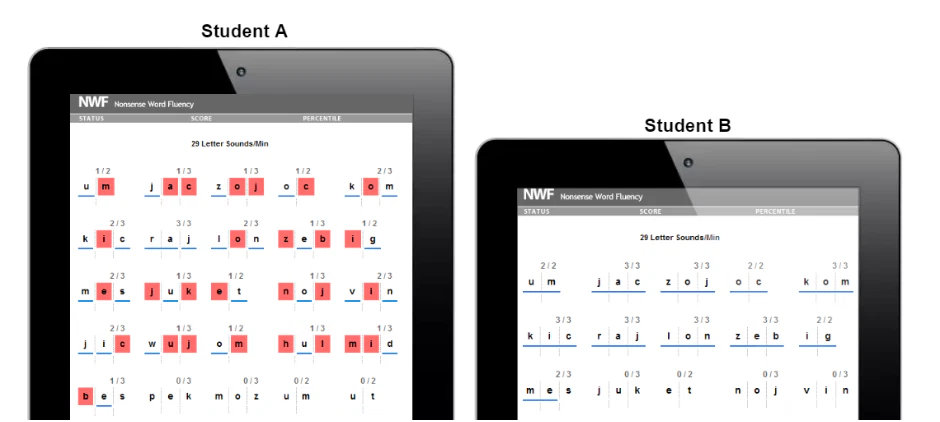
The image below shows the MOY Nonsense Word Fluency (NWF) results for two first-grade students—Student A and Student B.

Two digital tablets display reading fluency tests for "student a" and "student b," showing grids with red and blue-highlighted letters and numbers.

Both students scored 29, which is Well Below Benchmark for this time of year. In spite of these students having the same score, mCLASS Intervention’s automatic analysis of each students’ item-level responses detects that they actually have very different needs.

  • For Student A, mCLASS Intervention recommends a focus on letter-sound knowledge, and sounding out and blending.
  • For Student B,  mCLASS Intervention recommends a focus on Regular & Irregular Word recognition. (mCLASS Intervention spirals instruction by having students work in two strands at the same time.)

Without mCLASS Intervention, this type of analysis would take educators hours to complete and, as a result, could only be completed sporadically. The automatic nature of mCLASS Intervention’s data analysis algorithm makes it possible for busy educators to complete this analysis regularly, which in turn enables them to continually target intervention instruction at students’ evolving needs, day after day.

Automatic grouping

The mCLASS Intervention algorithm not only determines the ideal instructional focus for each student, but also automatically forms small groups of 4–6 students who share the same instructional focus and builds a 10-day plan with detailed lessons that target the specific needs of each group.

Ready-to-teach 10-day plan

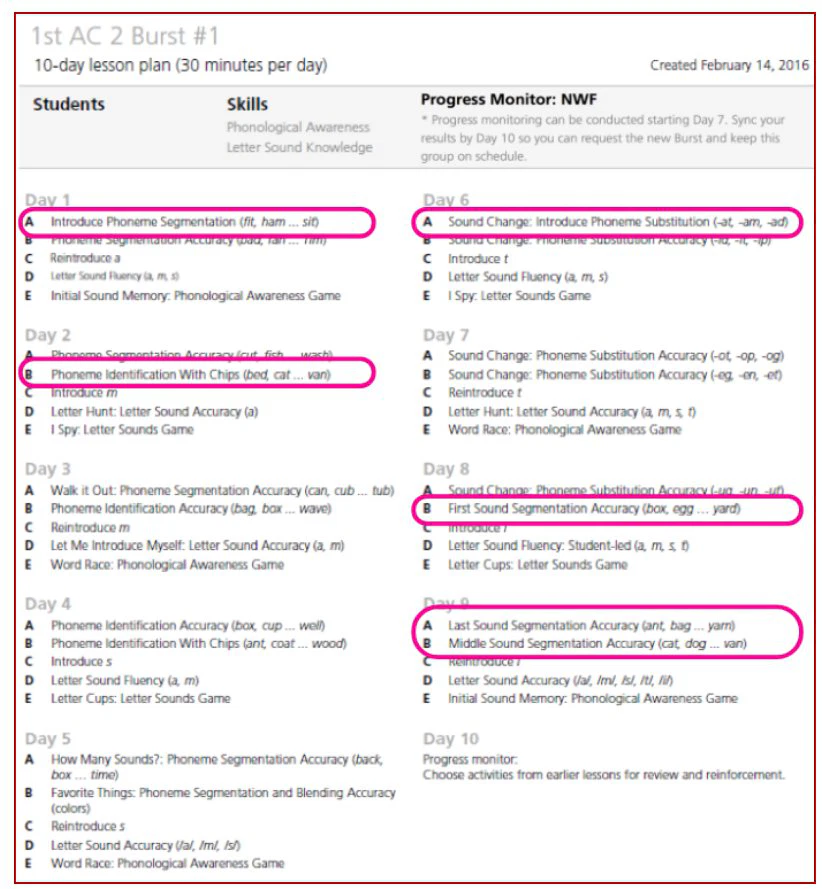
Each 10-day plan systematically builds skills. For example, in the 10-day plan below, mCLASS Intervention has a particular group of students work on phonological awareness and letter-sound knowledge. And within phonological awareness, mCLASS Intervention first introduces the group to phoneme segmentation; moves students through phoneme identification and substitution in subsequent days; then finishes with first, last, and middle sound segmentation.

Image showing a detailed 10-day lesson plan for phonics improvement, marked with annotations and progress indicators on a pink highlighted background.

This systematic move from less advanced to more advanced skills allows for spaced practice over time, which research has shown to have significant impact on student literacy growth.

  • In a Tier 2 intensity, mCLASS Intervention lessons last 30 minutes per day and are delivered daily in groups of 4–6 students. Each session has five activities and each activity is 5–8 minutes long.
  • In a Tier 3 intensity, mCLASS Intervention lessons can be 30 or 60 minutes per day and are delivered daily in groups of 3–4 students.

What makes mCLASS Intervention different?

Explicit instructional approach

All mCLASS Intervention activities begin with a Model (“I Do”) followed by a Practice (“You Do”). During the Model section, the instructor demonstrates how to do the activity. During the Practice section, the instructor has students practice. mCLASS Intervention uses subtle but impactful moves to maximize students’ independent thinking during the Practice portion of an activity. For example, mCLASS Intervention has the instructor call on a student only after posing the question to all students in the group and giving the group 3–5 seconds of “think time.” This approach helps instructors keep all students mentally engaged. When instructors take the opposite approach—calling on one student and then asking the question—students who aren’t called on tune out and inadvertently rob themselves of crucial practice opportunities they need to catch up to their peers.

Step-by-step guidance for staff

Because mCLASS Intervention activities are explicit and easy to follow, both certified educators and paraprofessionals with little or no training in early elementary reading can deliver mCLASS Intervention with impact. This detailed guidance gives schools a range of options when it comes to staffing intervention. And that added flexibility is vital—especially for moderate and high-need schools, which often struggle to provide intervention to all students in need.

Swift and interactive pace

mCLASS Intervention regularly incorporates game-based, kinesthetic, peer-to-peer approaches to further increase student engagement, and as a result, educators often report that mCLASS Intervention is their students’ favorite part of the day. This is likely due to the fact that students participating in mCLASS Intervention lessons:

  • Get more focused attention in homogenous small groups.
  • Get their specific literacy needs met with targeted instruction, so they are neither bored nor frustrated.
  • Get 30-minute bursts of support filled with a variety of fast-paced and high-energy activities.
Image of a detailed lesson plan chart titled "reading - flu and comp. burst #1" for 10 days, listing daily reading tasks and skills to be developed.

Sample materials and demo access

mCLASS Intervention delivers targeted instruction in 10-day bursts. Click the buttons below to see a sample.

Follow the instructions below to login to your demo account.

  • Click the mCLASS Intervention Demo button below.
  • Select Log in with Amplify.
  • Enter the username: atahan
  • Enter the password: Abcd1234
  • Click the mCLASS®: Amplify Reading Edition tile.
  • Click the Intervention button.

What is mCLASS?

mCLASS is a best-in-class assessment platform that houses a suite of proven, gold-standard assessment measures and tools that can be flexibly combined to meet the unique literacy needs of both teachers and students across grades K–6, including:

  • Universal screening
  • Diagnostic assessment
  • Dyslexia screening
  • Text Reading and Comprehension (a.k.a. running records via mCLASS: Reading 3D)
  • Progress monitoring
  • Dual language reporting
  • Targeted teacher-led instruction

What is the DIBELS 8th Edition assessment?

Developed by the University of Oregon, the DIBELS 8th Edition is the latest version of the DIBELS® (Dynamic Indicators of Basic Early Literacy Skills) assessment.

With this latest version, the University of Oregon Center on Teaching and Learning (UO CTL) made significant efforts to ensure measures would meet state-level screening requirements for universal screening, diagnostic assessment, and dyslexia screening. To support this, measures were updated based on the latest research to meet increased standards of reliability and validity. In addition, adaptive procedures and discontinue rules focus on the assessment of priority skills and prevent over-testing.

Summary of changes:

  • Consistent measures within grades will provide improved growth measurement.
  • All subtests have been revised to be grade-specific and to increase in difficulty, covering a full progression of skills and minimizing floor and ceiling effects. This provides the opportunity for students to demonstrate what they know and further pinpoint what they don’t know.
  • Phoneme Segmentation Fluency replaces First Sound Fluency. The expanded coverage minimizes floor effect and provides information about difficulty in Phonemic Awareness skills without the additional First Sound Fluency measure.
  • A new subtest, Word Reading Fluency, helps identify students with poor sight word reading skills that other subtests miss.
  • For all measures, the basic scoring procedures remain the same. For Nonsense Word Fluency, credit is given for recording words as whole words even if the student misses in the first attempt.
  • Oral Reading Fluency is now only one passage, instead of three. Retell has been removed. Thus, Oral Reading Fluency assessment will take a third of the time.

Assessment measures by grade

DIBELS measures at each grade level 
Measure Grade K Grade 1 Grade 2 Grade 3 Grades 4–6
Letter naming fluency A large, light peach-colored checkmark on a transparent background. A large, light peach-colored checkmark on a transparent background.      
Phonemic segmentation fluency A large, light peach-colored checkmark on a transparent background. A large, light peach-colored checkmark on a transparent background.      
Nonsense word fluency A large, light peach-colored checkmark on a transparent background. A large, light peach-colored checkmark on a transparent background. A large, light peach-colored checkmark on a transparent background. A large, light peach-colored checkmark on a transparent background.  
Word reading fluency A large, light peach-colored checkmark on a transparent background. A large, light peach-colored checkmark on a transparent background. A large, light peach-colored checkmark on a transparent background. A large, light peach-colored checkmark on a transparent background. A large, light peach-colored checkmark on a transparent background.
Oral reading fluency   A large, light peach-colored checkmark on a transparent background. A large, light peach-colored checkmark on a transparent background. A large, light peach-colored checkmark on a transparent background. A large, light peach-colored checkmark on a transparent background.
Maze (basic comprehension)     A large, light peach-colored checkmark on a transparent background. A large, light peach-colored checkmark on a transparent background. A large, light peach-colored checkmark on a transparent background.
Amplify measures at each grade level
Oral language A large, light peach-colored checkmark on a transparent background. A large, light peach-colored checkmark on a transparent background. A large, light peach-colored checkmark on a transparent background. A large, light peach-colored checkmark on a transparent background.  
Vocabulary A large, light peach-colored checkmark on a transparent background. A large, light peach-colored checkmark on a transparent background. A large, light peach-colored checkmark on a transparent background. A large, light peach-colored checkmark on a transparent background. A large, light peach-colored checkmark on a transparent background.

Assessment measures sample videos

DIBELS 8th Edition measure: Phonemic Segmentation Fluency (PSF)

DIBELS 8th Edition measure: Nonsense Word Fluency (NWF)

DIBELS 8th Edition measure: Letter Naming Fluency (LNF)

DIBELS 8th Edition measure: Word Reading Fluency (WRF)

DIBELS 8th Edition measure: Oral Reading Fluency (ORF)

What makes mCLASS with DIBELS 8th Edition different?

mCLASS with DIBELS 8th Edition combines the power of the mCLASS assessment platform and the effectiveness of the DIBELS 8th Edition assessment measures. As a result – educators are empowered with the latest and greatest assessment tool.

More than a test, mCLASS with DIBELS 8th Edition is an integrated system that closes the knowing-doing gap by helping teachers take immediate instructional action that’s right for each and every student.

Assessment systems must enable and compel educators to answer not just the “What” questions, but also the “So What” and “Now What” questions. These are the questions that are essential in transforming classroom instruction, and the questions that mCLASS with DIBELS 8th Edition helps teachers answer with confidence.

What makes mCLASS with DIBELS 8th Edition different?

  1. It gives teachers access to the latest digital version of the DIBELS assessment. Amplify is the only licensed provider of the digital DIBELS 8th Edition assessment. As such, our solution is the only one to enhance the DIBELS 8th Edition assessment with the power, reliability, and quickness of the mCLASS system.
  2. It makes it faster and easier to understand where every student is in their early literacy journey. By combining 1:1 observational diagnostic assessments, dyslexia screening, progress monitoring, instant scoring, rigorous reporting, automatic student grouping, and targeted instruction all in one place, it reduces the instructional delays associated with manual scoring, manual data analysis, and manual lesson planning.
  3. It makes every instructional minute count. In addition to one-minute measures that quickly gauge student progress toward reading proficiency, it leverages a teacher’s most powerful instructional tool — their own 1:1 observations.
  4. It drives growth more efficiently. Rather than relying on broad composite scores alone, granular data and in-depth insights for every student help teachers pinpoint exact skill gaps and areas of unfinished learning, making whole-group, small-group, and 1:1 instruction more targeted and effective.
  5. It saves teachers time. Instant reports, automatic student groups, and ready-to-teach lessons mean teachers spend less time cobbling together materials and more time working directly with students and responding to their needs.

How does mCLASS with DIBELS 8th Edition support screening for dyslexia risk?

DIBELS 8th Edition measures have been updated based on the latest research. They now offer stronger measures of processing speed, phonological awareness, and alphabetic principles for dyslexia screening purposes.

To support this, a new subtest in Word Reading Fluency was introduced and revisions were made to Letter Naming Fluency, Phonemic Segmentation Fluency, and Nonsense Fluency subtests to improve their ability to screen for deficits commonly associated with dyslexia risk, such as phonological awareness, rapid naming ability, and alphabetic principle. These measures provide early warning signs for neurological processing difficulties that contribute to risk for dyslexia (Wolf & Bowers, 1999; Denckla & Rudel, 1974).

Moreover, measures in Oral Language and Vocabulary are included to provide additional information to help evaluate additional risk areas associated with dyslexia risk.

How does mCLASS with DIBELS 8th Edition support the use of running records?

Track your students’ reading progress from every angle with the Text Reading and Comprehension (TRC) assessment. When TRC is paired with the DIBELS 8th Edition assessment, classroom teachers unlock the ability to record reading behaviors through running digital records. Available in English and Spanish, it measures reading comprehension and provides insight into how each student finds meaning in text.

A laptop screen displays a student reading assessment report with benchmark levels, progress data, and color-coded reading categories for Jon Smith in the mCLASS platform.

Measures include:

  • Lesson plans for whole class, small-group, and one-on-one instruction.
  • Small-group advisor, which organizes students into groups based on strengths and gaps.
  • Item-level advisor, which drills deep into student responses to uncover patterns, strengths, and gaps.
  • Instructional resources for each student’s parent/guardian(s).

How does mCLASS with DIBELS 8th Edition turn data into instant action?

mCLASS with DIBELS 8th Edition gives you instant results and clear next steps for each student.

Quick and actionable reports provide detailed insight into students’ reading development across foundational literacy skills for teachers, specialists, administrators, and caregivers.

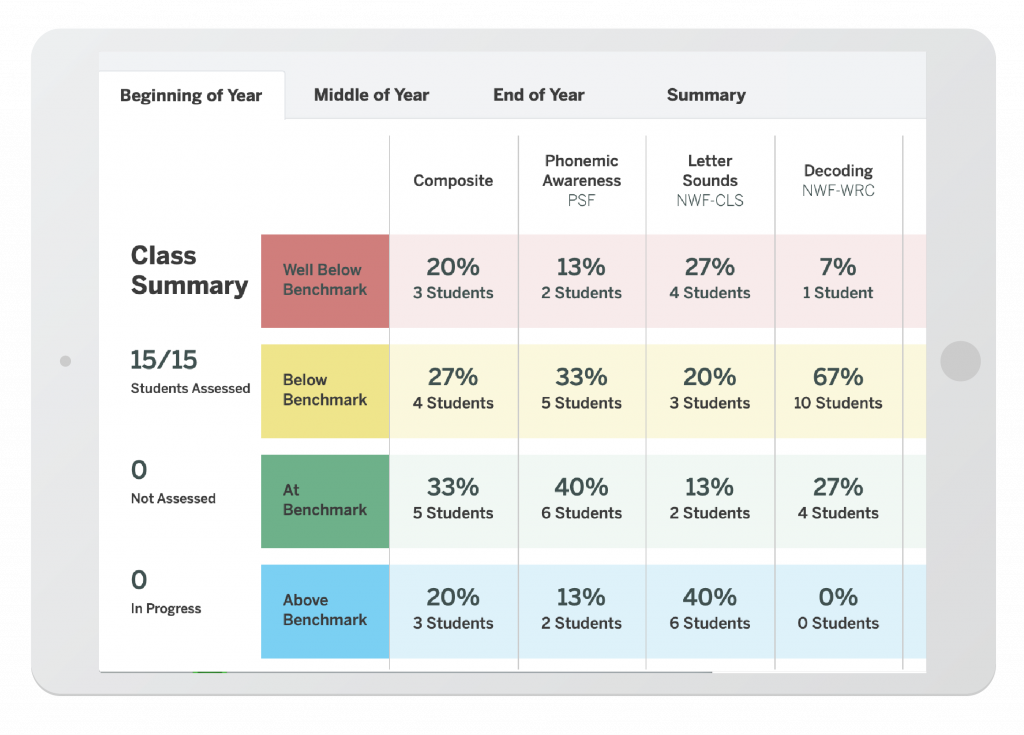
Tablet displaying a student performance table. Columns for assessment times; rows for performance levels. Percentages and student counts are provided in each assessment area and level.

Diagnostic assessment

mCLASS with DIBELS 8th Edition analyzes individual student response data through a proprietary scoring algorithm that pinpoints a student’s specific area(s) of growth and improvement, providing classroom teachers in-depth insight into a students’ instructional needs.

Ready-to-teach instruction

Immediately following the analysis of individual student responses, mCLASS with DIBELS 8th Edition provides an in-depth diagnostic report complete with suggested next steps, also known as “mCLASS Instruction.”

mCLASS Instruction evaluates each student’s responses on each individual subtest and instantly:

  • Provides a list of specific needs by student, such as struggling with medial vowel sounds or difficulty reading words with consonant blends.
  • Groups students automatically based on similar discrete skill needs, not simply composite scores like other assessment tools.
  • Recommends a variety of ready-to-teach lessons that specifically target each individual student’s areas of need or common areas of need for small-group instruction.

Classroom skill and benchmark summary

The Classroom Skill Summary report is a dashboard showing benchmark performance on each skill. Teachers can use it to determine which skill areas need instructional focus at a classroom level.

The Classroom Benchmark Summary report is a classroom-wide view of overall reading performance. Teachers can use this report to determine if composite scores improved, declined, or remained the same each semester.

Detailed benchmark performance

Teachers can see each student’s performance during the current school year, on each subtest as well as the overall composite. The benchmark goal displays below the subtest name when applicable. The ability to sort the columns in this report gives teachers more flexibility to analyze data the way they prefer.

Dyslexia screening

Identify students who are at risk for reading difficulties, including dyslexia, based on their results from foundational skills measures and additional measures as needed by local policies.

Progress monitoring summary

See which subtests have been assessed since the most recent benchmark assessment, how students performed on the three most recent progress monitoring assessments for each measure, and which students have not been progress monitored since the benchmark assessment.

Goal setting tool

The Zones of Growth (ZoG) analysis uses a rich set of national data to determine student goals for the next benchmark period. Teachers can use the Goal Setting Tool to view these recommended goals or modify the default goals for individual students as they see fit, if the default goal is too challenging or not challenging enough.

Growth outcomes

Teachers and interventionists can see each student’s actual growth achieved and how it compares to the goal that was set for the student.

Caregiver supports

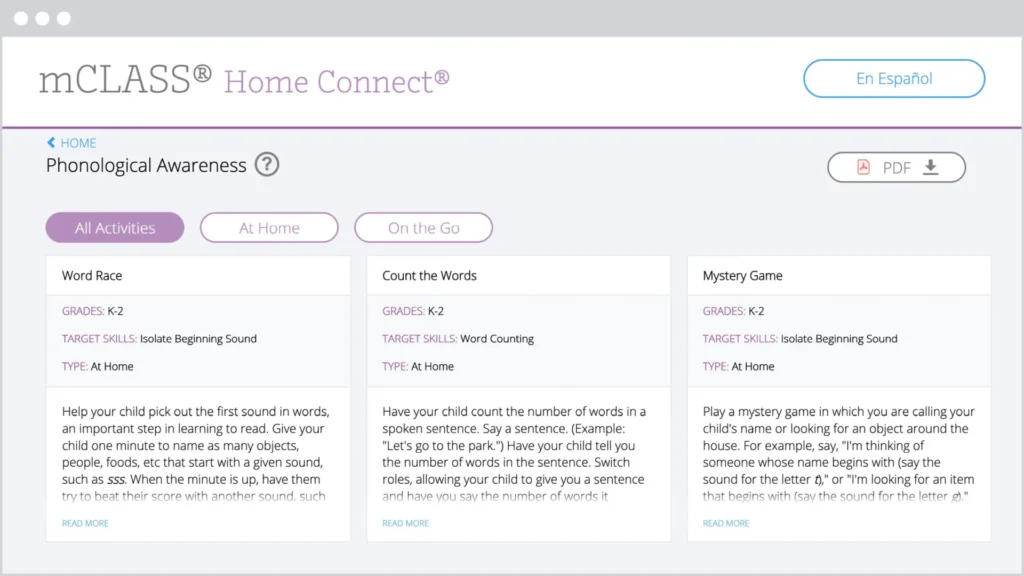
The mCLASS Home Connect website houses literacy resources for parents and caregivers, including at-home lessons organized by skill. Our mCLASS parent/caregiver letters in English and Spanish ensure that families know how to best support their child.

Screenshot of the mclass home connect website showing educational activities in three categories: word race, count the ways, and mystery game, with navigation options at the top.

Self-guided tour

Our self-guided tour is a great way to orient yourself to the organization of our mCLASS platform. Click the button below to get started.

A webpage titled "mCLASS overview" featuring text about the mCLASS early literacy suite for grades K-6. The page includes photos of children engaged in reading activities and navigation options on the left.

Demo access

Follow the instructions below to login to your demo account.

  • Click the mCLASS Demo button below.
  • Select Log in with Amplify.
  • Enter the username: d8demoD
  • Enter the password: 1234
  • Click the Reading tile.

 
Once you are logged in:

  • Find the Class/Group dropdown field and select Grade 1.
  • Right above the Class Summary, click Beginning of Year or Middle of Year and explore the data.
  • Scroll down to the class list. Each column within the class list is sortable by clicking the double arrow in the column header.
  • Click on any score to see the measure transcript.
  • Click on a student’s name to see historical data and progress monitoring graphs.

After exploring the Benchmark tab in the purple bar:

  • Click on the Instruction tab.
  • If you don’t see groups, click Updated recommendations.
  • Explore freely! The Groups, Students, and All Activities tabs have rich information.
  • Click the Progress tab.
  • Click on Home Connect to see a sample of our caregiver letters.

What is Boost Reading?

Boost Reading is a K–5 student-driven literacy program that provides both enrichment and remediation for all students, leveraging the power of compelling storytelling to engage students in personalized reading instruction and practice. It features:

  • High quality, research-based instruction based on the science of reading
  • Unparalleled personalized learning pathways
  • Compelling and imaginative storylines
  • Social and emotional learning
  • Insightful reports tied to actionable next steps
Young girl reading a tablet intently with educational graphics and the text "built on the science of reading" around her.

How does Boost Reading work?

Boost Reading uses students’ latest reading assessment data to ensure they practice the right skills at the right time. In cases where no student assessment data is available, our embedded placement tool ensures students receive the content and skill practice most appropriate for their current reading level.

From there, students move through our curriculum along their own learning pathway where they encounter personalized content tailored to their evolving skill and grade levels.

Summary of games

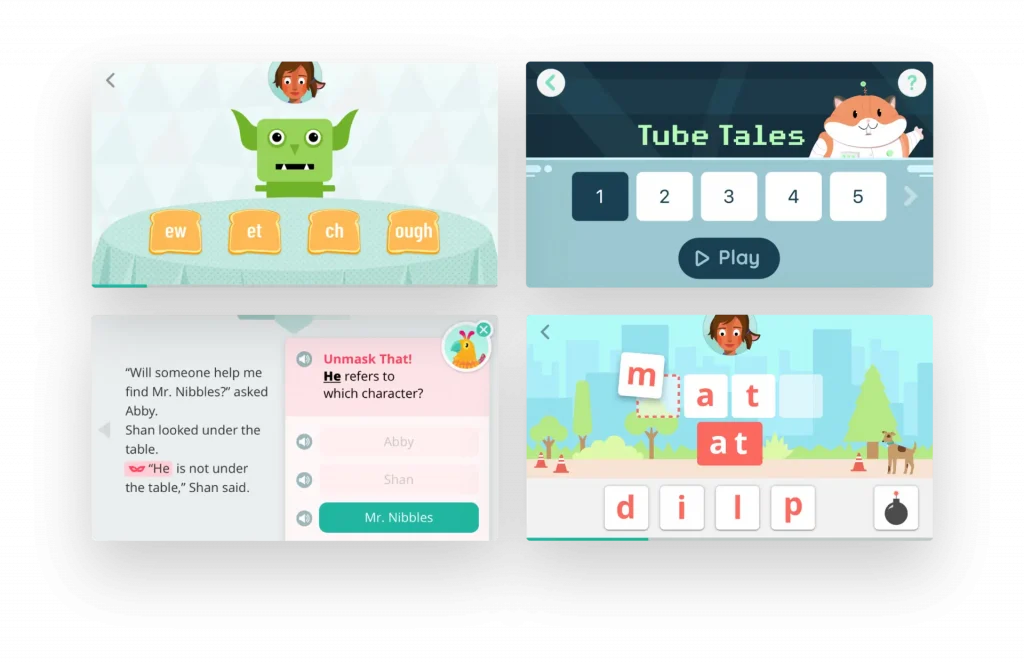
Four educational game screens featuring word and phonics activities for children, including character selection, word building, and answering questions.

With over 40 adaptive games, Boost Reading helps students of all levels grow across 13 critical skills areas, including explicit instruction in comprehension processes.

  • Phonological awareness
  • Letter sound correspondence
  • Letter combinations
  • Early decoding
  • Advanced decoding
  • Comprehension processes
  • Key ideas and details
  • Craft and structure
  • Integration of knowledge and ideas
  • Vocabulary
  • Connected texts
  • Fluency
  • Close reading

See pages 16-78 of this guide for a detailed explanation of every game in the program.

How does Boost Reading integrate with the other parts of the literacy system?

Boost Reading + mCLASS® with DIBELS® 8th Edition

mCLASS automatically places students on an adaptive path within Boost Reading, which provides them the exact practice–both remediation and acceleration–that they need.

Click here to learn more about how Boost Reading and the mCLASS Assessment System work together.

Boost Reading + Amplify CKLA

Boost Reading extends core instruction with Amplify CKLA with personalized practice that follows the same scope and sequence.

Click here to learn more about how Boost Reading and Amplify CKLA work together.

What makes Boost Reading different?

Multiple dimensions

Boost Reading features full adaptivity. That means students progress along a pathway that adapts on multiple dimensions, not just one. For example, a student can work on early first-grade decoding in one game while building more advanced vocabulary knowledge in another.

Always-positive feedback

Boost Reading supports positive participation by giving students immediate and clear feedback. These results are never punitive. Instead our always-positive feedback is delivered in the context of the game world and is designed to motivate students to keep trying.

Focus on SEL

Sustained academic success depends upon social and emotional learning (SEL) as well as the mastery of fundamental literacy skills. Consistent with the most widely-recognized framework and standards for SEL (from the CASEL consortium, which includes 25 states), Boost Reading also focuses on the five areas of social and emotional learning:

  • Self-awareness
  • Self-management
  • Social awareness
  • Relationship skills
  • Responsible decision-making

Ready-to-teach mini-lessons

Boost Reading turns data into action with reports that help educators know exactly who needs support and ready-to-teach mini-lessons that deliver targeted reinforcement and remediation.

Accelerated growth

Boost Reading accelerates student growth at all reading levels and reduces the number of students at risk of reading difficulty. In one study of 3rd graders in a large urban district who used Boost Reading for only one semester:

  • 54% of students who used Boost Reading made above average progress, whereas only 44% of students in the comparison group made above average progress.
  •  54% of English learners in that same study made above average growth, whereas only 45% of English learners in the comparison group made above average growth.

Check out the above results and more in this efficacy paper.

Demo access

Follow the instructions below to login to your demo account.

  • Click the Boost Reading Demo button below.
  • Select Log in with Amplify.
  • Enter the username: atahan
  • Enter the password: Abcd1234
  • Click the mCLASS®: Boost Reading Edition tile.

Check out these additional resources

Boost Reading review resources:

Amplify’s professional services for educators

We work together with educators to create meaningful learning experiences in schools—whether it’s designing a customized professional development plan, working alongside teachers in the classroom, or providing engaging and effective high-impact tutoring services to help students thrive.

Amplify’s professional development

When educators grow, students grow. Our goal is to support your team’s professional development with training designed to nurture, develop, and refine instructional practices, enhancing student achievement. We offer flexible PD training and coaching, both in-person and online, with a range of support to fit districts’ needs and educators’ busy schedules.

Explore Amplify’s Effective PD solutions

Two women sit at a table working on laptops, collaborating and reviewing documents, with icons on the left representing ideas, writing, computers, and achievement.
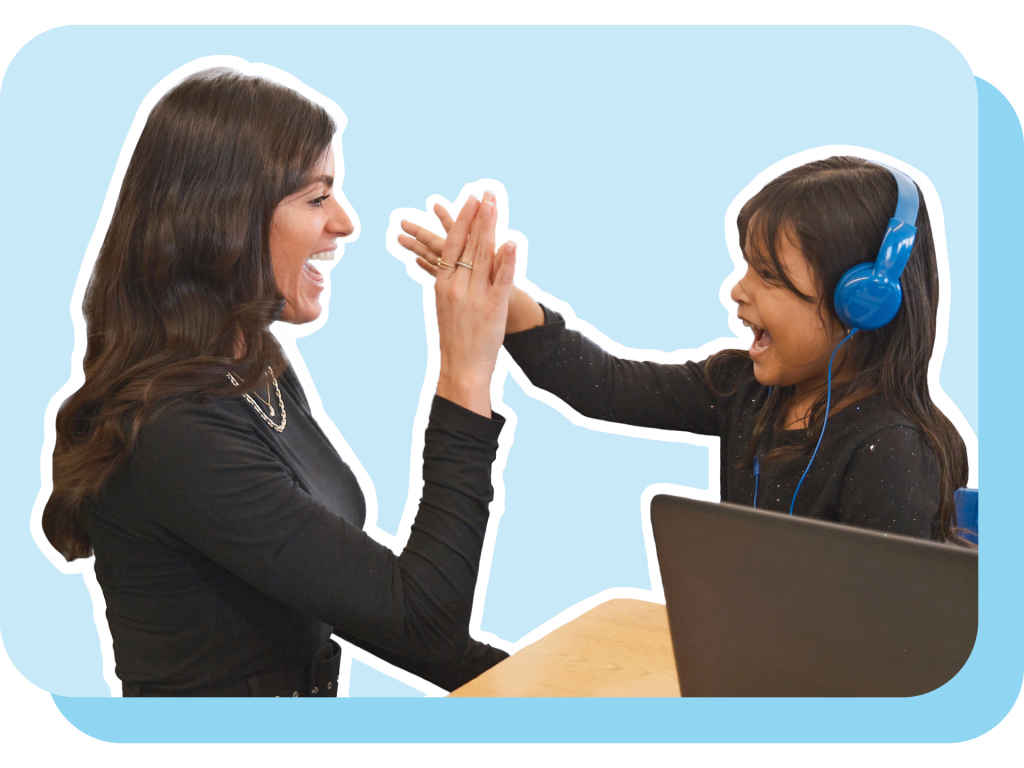
An adult and a child wearing headphones smiling and high-fiving each other at a desk with a laptop.

Amplify’s high-impact tutoring

Every child deserves to be a confident reader and mathematical thinker. Amplify Tutoring, grounded in evidence-based practices and high-quality instructional materials, delivers meaningful gains for students and data-driven insights for educators. Our flexible high-impact tutoring models for literacy and math help schools meet students’ unique needs.

EXPLORE AMPLIFY’S HIGH-IMPACT TUTORING SOLUTIONS

When you grow, your students grow.

“From the start, and in every encounter since I have been overwhelmed by the professionalism and customer focus all Amplify employees have demonstrated. Not only are the curriculum products extraordinary but they are backed by extraordinary people.”

Teacher, Montana

When you grow, your students grow.

“[Amplify] deserves a medal for being one of the few companies that actually explains enrollment and access processes clearly, while providing continued support. Thanks for being organized and caring towards your customers!”

Technology teaching and learning support specialist, Ohio

When you grow, your students grow.

“[Our] facilitator did a fabulous job of highlighting key look-fors, as well as sharing personal experiences with implementation, which are so useful for a teacher to hear.”

Teacher, Louisiana

When you grow, your students grow.

“Amplify Tutoring has been critical in helping several nonreaders not only become readers, but become avid readers…
The turnaround in confidence and excitement for learning has been amazing! The Amplify Tutoring Team provides continuous support system which checks in at all levels to help make the student experience a success.”


District program director, Alaska

Leading education into the future, together

Collaborative partnerships to strengthen educator success

Partnering with leading organizations, Amplify offers robust Amplify Desmos Math professional development that complements and enriches your learning journey and ensures access to comprehensive educational resources. Together, we align district and school leader support, enhance instructional practices, and boost student engagement to drive enduring outcomes.

Partner organizations

ANet logo with a large yellow "A" emitting rays, followed by the word "Net" in gray text on a white background—symbolizing student support services that enhance the learning experience.

Leverage Amplify’s curricular expertise and ANet’s strength in assessment alignment and strategic system support to achieve powerful, consistent adoption and effective, long-term implementation.

Explore this partnership

Learn more about ANet

The Teaching Lab logo features a circular black and blue graphic with the words "Teaching Lab" in black and blue text, reflecting a commitment to student success and an enhanced learning experience.

Accelerate results by pairing Amplify’s deep expertise in Amplify Desmos Math and program-aligned professional learning with Teaching Lab’s proven Cycles of Inquiry and direct-to-teacher coaching models to ensure uniformity and harmony in the adoption, rollout, and long-term implementation of HQIM.

Explore this partnership

Learn more about Teaching Lab

The image shows the TNTP logo with a stylized blue flame design next to the letters "TNTP" in bold, dark blue font on a white background, symbolizing a commitment to student success.

Harness the power of Amplify’s deep expertise in Amplify Desmos Math alongside TNTP’s proven coaching models for system and school leaders to drive sustainable, impactful, and coherent HQIM implementation.

Explore this partnership

Learn more about TNTP

The logo features the word "UnboundEd" in a serif font on a white background, with "Ed" in bold for emphasis, reflecting a commitment to student success and an empowering learning experience.

Experience transformational results when Amplify’s deep expertise in Amplify Desmos Math joins with UnboundEd’s proven strengths in change management, instructional transformation, and leadership coaching to deliver sustainable instructional practices and lasting impact.

Explore this partnership

Learn more about UnboundEd

S3-01: Science as the underdog, and the research behind it

A graphic with the text "Science Connections" and "Amplify" features colorful circles and curved lines on a dark gray background.

Get ready for season 3 of Science Connections: The Podcast!

In our first episode, we unpack the research around our season theme of science as the underdog with Horizon Research, Inc. Vice President Eric R. Banilower and  Senior Researcher Courtney Plumley. Eric and Courtney dive into the research they’ve found and their experiences as former educators to show how science is often overlooked in K–12 classrooms. We discuss how the science classroom compares to other subjects in terms of time and resources, how schools are a reflection of society, and what’s needed to change science and its impact on a larger scale.

We hope you enjoy this episode and explore more from Science Connections by visiting our main page!

DOWNLOAD TRANSCRIPT

Courtney Plumley (00:00):

We asked teachers how much science, professional development, they’ve had in the last three years, and nearly half of elementary teachers said none.

Eric Cross (00:10):

Welcome to Science Connections. I’m your host, Eric Cross. I am super-excited to be kicking off the third season with the show. This entire season will be exploring the theme of science as the underdog. And we’re gonna make the case for science, by showing how and why it can be used more effectively. In the coming episodes, we’re gonna talk about how science can be better integrated into other content areas like literacy and math, and explore some of the benefits that you might not be thinking about good science instruction. But first, science as the underdog. I bet some of you out there feel like science is the underdog in your community at school. I know I have at times. To kick off this season, I’m gonna talk to two people who really studied this question by looking at the state of science instruction across the US. Eric Banilower is Vice President of Horizon Research and Courtney Plumley is Senior Researcher at Horizon Research. Eric was the principal investigator and Courtney an author of the latest in a series of studies called “The National Survey of Science and Mathematics Education.” We’re gonna dive into the findings of their most recent report to see what the data’s showing us. Please enjoy my discussion with Eric Banilower and Courtney Plumley. Courtney, hello. And thank you so much for joining us.

Courtney Plumley (01:25):

Hi Eric. It’s nice to be here.

Eric Cross (01:26):

And Eric, welcome.

Eric R. Banilower (01:27):

We’re thrilled to be here, so thank you for having us.

Eric Cross (01:30):

I was reading through the report. Four hundred…a very thorough report, 471 pages, I think, as I got it?

Eric R. Banilower (01:37):

And that’s only one of the many reports from that study.

Eric Cross (01:40):

Yeah. You all have done your work, so I’m really excited to to talk to you about this. And on this season of the show, we’re exploring the theme of science as the underdog. And I think a lot of our listeners, we feel like science is an underdog either in their school or in their district. But you’ve actually done some research on this, in a 2018 study, “The National Survey of Science and Mathematics Education.” So I wanna talk about this report. But first I was hoping you can kind of set the stage. How did you come to work on this report, and then, big picture, what were you hoping to find out?

Eric R. Banilower (02:10):

So the 2018 study that you just mentioned was actually the sixth iteration of a series of studies dating back to 1977. And we collect data every decade or so—you know, plus or minus a few years. And really, what we’re trying to do is get a snapshot of what the science and math education system looks like in in the nation. So my role grew. I started working at Horizon in about 1998, after teaching high school for five years in California. And then going to graduate school. And right about that time, the company was doing the 2000 iteration of the survey. And I worked on it with the team here at Horizon. And then we did it again in 2012. And I had a much more prominent role in that study, and became the kind of leader of the study. And in 2018, the most recent version, we just did it again. So the goal of this study is really to kind of examine key aspects of the K–12 STEM education system. And the main audience of the work has traditionally been policy makers, researchers, and practitioners who work at the federal, state, and district level.

Eric Cross (03:30):

So this study, you took kind of a sample size, but it’s reflective of trends that we tend to see across the nation as a whole. Would that be fair to say?

Eric R. Banilower (03:38):

Yes, definitely it is. It is a random sample of schools in the country. So we start with a list of all the public and private schools in the nation, and then do a random sample of those schools, and then work really, really hard to recruit schools to agree to be in the study. And that has gotten harder every time we’ve done the study, for many understandable reasons. And then once we have schools on board, we sample teachers within schools. So we don’t even survey every teacher in a school. It’s really a sub-sample. So that we can make inferences about the nation as a whole.

Eric Cross (04:14):

Makes sense. And so Courtney, what did you find out about the time spent on science instruction in US schools?

Courtney Plumley (04:22):

So, I’m gonna talk about elementary teachers to begin with.

Eric Cross (04:26):

Because that was your past life, right?

Courtney Plumley (04:28):

I am a former elementary teacher, yeah. So that’s kind of where my head is. And that’s relatable for me. Right? So we asked teachers, like, how many days of the week or weeks of the year that they teach elementary school. And fewer than 20% teach science every day of the school year. They kind of do one or two things, for the most part. They teach a couple days a week or they teach every day of the week, but only for, like, maybe six weeks, and then they swap with social studies and they kind of do that across the school year. Which is really different from, like, math, right? We also asked elementary teachers, how often do they teach math, and it’s every day of the year. Then we also asked them how many minutes they teach when they’re teaching, and we kind of did the math to figure out, all right, if they taught science every day of the school year, how many minutes would it be in a single day, so that we could make a more comparable comparison with math and ELA. If you were to work it out, how many minutes of science an elementary teacher teaches across the year, and break it down to per day, it’s like 18 minutes for the lower elementary grades, 27 for the upper elementary grades. Which is not a lot. But it’s pretty much an hour a day in math, and 80 plus minutes in ELA. So, a lot less. And then, you know, when I was teaching, the first thing to go was always science, right? If there was an assembly, if there was early release or whatever, that was the first thing to go. So those numbers might even be higher. Just because they aren’t factoring that kind of thing in, too.

Eric Cross (06:05):

So, now I’m curious. That is something that I’ve seen just anecdotally, science being the first thing to go. I feel like I’ve seen that almost…it’s almost become a meme, that I’ve heard that so often. Just in your experience, why do you think that is that huge disparity between the two?

Courtney Plumley (06:26):

Well, I mean, when I was teaching, I was teaching third grade. I had an end-of-grade test in math and ELA for my kids. I didn’t have one in science. So the administration said, “Hey, if you’re gonna drop something, drop something that’s not tested.”

Eric Cross (06:41):

Simple as that. And Eric, you, past life: physics teacher. High school. What did you see? ‘Cause our listeners run the gamut from elementary all the way up to high school. What did you see, as far as relative science instruction in the secondary level?

Eric R. Banilower (07:00):

Sure. You know, secondary is just a whole different situation than elementary. Rght? Because you have departmentalization. I taught science. I didn’t have to teach other subjects. And students had periods, and they still do, sorry, they still have periods, even though it’s been a long time since I taught. And you know, they rotate from one class to another. So all the classes were essentially the same length. So, you know, when I was teaching, it was about 50-minute periods. So in terms of minutes of a class or minutes on a subject, it’s not really different. But what is different is what students are required to take in order to graduate high school. One of the things we asked schools about in this study was how many years of a subject do students have to take in order to graduate? And what we saw was in mathematics, over half the schools in the nation require students to take four years of mathematics to graduate. OK? And the vast majority of the rest, about 44%, require three years in science. Most schools require three years. Very few require four years. And many, or a fair number, still only require two years to graduate. So the expectation of what students are taking is lower in science than it is in mathematics.

Eric Cross (08:20):

So you were seeing the same trend in secondary, essentially.

Eric R. Banilower (08:24):

Yes.

Eric Cross (08:24):

The amount of time devoted to the instruction of science…we’re kind of seeing it mirrored just across K–12 across the board.

Eric R. Banilower (08:33):

That’s correct.

Eric Cross (08:34):

And that’s across the country. ‘Cause the sample size represents teachers from Alaska, Hawaii, the South, SoCal, everywhere. So what’s been the reaction to that number? Like 18 to 20 minutes is…I mean, it’s, it’s half of my lunch at our school. What’s been the reaction to that number since this data has been published?

Eric R. Banilower (08:58):

I don’t know, Courtney, if you want to take that…

Courtney Plumley (09:00):

It’s a lot of what you just did. Like, what??? Like, how is it possible to teach all the things you need to teach in such a little amount of time?

Eric R. Banilower (09:08):

What’s really kind of surprising to me, though — though now that I’ve worked on three iterations of the study, it no longer surprises me, but it did at first — is that these numbers really aren’t changing since we’ve started doing this study. You know, people thought maybe with No Child Left Behind and the increase in accountability, time on science might actually go down, because there was more testing in math and English Language Arts. It didn’t happen. It was pretty much constant, that this has been kind of the state of science education for a long time.

Eric Cross (09:44):

So Eric, if I’m hearing you right: The past studies, we’re not seeing an increase or a decline. This has been this way for how many years, roughly, would you say? Since it’s been studied?

Eric R. Banilower (09:54):

You know, I’d have to go back to the 1977 report to get the numbers, but I’m gonna say since then, it has not changed much, if at all.

Eric Cross (10:03):

So this has kind of been entrenched. This has been the norm for almost for the career of a teacher, almost generationally. We’re looking at anyone who’s been in the highest levels of leadership to someone just entering the classroom, this has been the way it’s always been. This is kind of for many people what they’ve only known.

Eric R. Banilower (10:20):

Right.

Eric Cross (10:21):

Kind of become the norm.

Courtney Plumley (10:21):

We didn’t even have science when I was in elementary school. We had science on a cart that came by, you know, every other week.

Eric Cross (10:28):

Was that like a food truck, but like the science version of it? It shows up and does quick science and takes off?

Courtney Plumley (10:35):

And New York was, I mean — we always watched Voyage of the Mimi. I don’t know if you ever watched that. But that’s what we watched every single time the Science on the Cart came. So it’s like a marine biology show. Ben Affleck was on it when he was a kid.

Eric Cross (10:48):

<laugh> Really? For me it was, Mr. Wizard. For some of my students, even now, Bill Nye. You know, the Bill Nye show or something would come on. So what happens when you look at less wealthy districts? Is there a relationship between community resources and science instruction, or is it pretty much equal no matter what the district resources are, the school’s resources are? Did you see any data there?

Eric R. Banilower (11:12):

Yes. We actually did a lot of disaggregating the data by community type, student demographics in the schools, to look to see whether there were areas of inequities across the country. And, you know, one of the factors we looked at was kind of a measure of socioeconomic status. You know, wealth in the community. By looking at percentage of students eligible for free or reduced-price lunch. And interestingly, in terms of time on science instruction, there is actually not a relationship between income level and how much time is spent at the elementary level on science, which actually surprised us.

Eric Cross (11:54):

Because you might have expected it to be the other way now. And granted, it’s 18 to 20 minutes, there isn’t much more to shave off off of that. But were there other differences, like when you compared those communities? Maybe it wasn’t the amount of science instruction, but was there anything else, like teacher preparedness, resources? Were there anything else that you did see discrepancies in? Or was it equal across the board?

Eric R. Banilower (12:13):

No, unfortunately there, there have been, and still are, a number of areas where community resources are related to pretty substantial differences in educational opportunities that students have. So, you know, we’re talking about the high school science requirements. One of the things that we saw was that high schools in less wealthy communities tend to offer less rigorous science courses than high schools in better-off-financially communities. So they may not be AP courses or second year advanced courses to the same extent that there are in the wealthier communities. That’s one big difference that we saw. Another one was what you were just saying about, sort of, the teachers who teach in these communities. You know, I think that for many years people have had a feeling that the best teachers go to the better off schools because it’s easier to teach there. Well, we see that the schools with the most poverty, they tend to have the newer teachers, who are just starting their career. They tend to have teachers who are less well prepared to teach their subject. And there’s a host of other differences we found. And you know, you mentioned the report being 400 pages. This other report that looks at these differences is also quite long, and, you know, identified a number of areas where there are these disparities in the system.

Eric Cross (13:43):

Well, we appreciate you synthesizing this for us, because this is super-important. And you’ve fleshed out a lot of things. And the fact that it’s driven by data, we as science teachers, we as scientists, being objective, really, really value that. Because this is actually validating a lot of the things that our listeners and myself, we experience anecdotally. But you don’t have a lot of things to network you. And sometimes, when you see this, you wonder if it’s just you, or is are other people experiencing this? And so as you start talking about this data, realizing, oh wow, this is not something in isolation. This is systemic. This is something that’s impacted. And then Eric, what you said about schools that were lower-income, that were under-resourced, and didn’t offer those advanced classes, what are some of the impacts of that, maybe downstream, of doing that? Not having those AP classes? I just kind of wanted to put that out there and ask you.

Eric R. Banilower (14:31):

You know, this is a really…this is a current debate right now, about what the goals of schooling K–12 should be. You know, are all kids meant to go to college? Should there be alternative paths? And you know, I know when I was teaching, I would have students say, “Why do I need to know this? I’m not gonna go into science. I’m not gonna study physics. Why do I need to take this?” And, you know, the answer I used to give them was, “You never know where your life is gonna end up and what opportunities you’ll have. And by having these educational experiences, you have more opportunities available to you. Whether or not you choose to go down those paths, you have opportunities. And when you don’t take this kind of coursework, you know, even if you don’t want to go to college, you limit your potential careers. Because so many careers nowadays require some technical knowledge, some knowledge of science, even if it’s not explicitly a science job. It is embedded in our society now. We are a technological and science-based society.”

Eric Cross (15:37):

It reminds me of something that I’ve told my students, that if you become a scientist, that’s awesome. I love that. But if you don’t, and you want to be a dancer or an actor or a lawyer or anything that may not be directly related to STEM, I want you to choose it because it was a choice, and not a lack of options. So as long as you’re choosing not to go in STEM, and you don’t make that decision because you can’t, or because you weren’t given the opportunity. So that’s how I’ve always had this mindset as a teacher. And I’ve explained it to my students. So if you say, “Cross, you know what I want to do, I wanna be an awesome chef,” which, you know, low-key that’s science, right? <laugh> Molecular gastronomy, we know that. But like, you be the best chef. But as long as you’re being a chef because you choose that, and you’re like, “I love science, but I don’t wanna go that direction,” we’re good.

Eric R. Banilower (16:26):

Right. And if you think about, a lot of social justice issues with pollution and climate change, and you look at which communities are more affected by some of these larger environmental problems and challenges, it tends to be the lower socioeconomic communities, the more poverty-stricken communities have worse water, have worse air quality. And so if, if people from these communities are going to make informed decisions about who they’re gonna vote for, about what policies they’re gonna support, those are science topics that you have to have some understanding in order to make informed decisions in your life.

Eric Cross (17:09):

Courtney, you were one of the Swiss Army Knife teachers. This is how I perceive it for elementary. You had to teach everything. And shout out to all of my elementary school teachers that have to be mathematicians and grammar whizzes and scientists and PE instructors and social emotional, all of those different things. you also looked at teacher preparedness. How did teachers feel about teaching science compared to other subjects like language arts and math? Did you see anything there?

Courtney Plumley (17:39):

We did, we did. And I’m glad you said, “How did they feel about it?” Because one thing that, you know, in a survey you can’t really do is capture how someone actually…how good someone actually…the quality of someone’s instruction. But you can ask them how prepared they feel. And you can even ask them like stats, like, “What did you major in in college?” You know. But you really are going on based on what what they say. So we ask them how prepared they feel to teach all the core subjects. And two-thirds of elementary teachers felt very well prepared to teach reading. They felt very well prepared to teach math. But when it comes to science, it’s less than a third felt very well prepared. And you know, like you said, when you’re teaching elementary school, you’re teaching all the subjects. But also in science, there’s usually four main instructional units in a school year. And they’re all from different science disciplines. So not only are you going on, like, “Maybe in college took a lot of bio classes, but I didn’t take any physics classes, and now I have to teach physics to my kids and I have no experience there.” So, you know, we also ask them how well-prepared they felt in these different disciplines. And the numbers are even smaller, you know. Fewer than a quarter felt very well-prepared in life science. And like 13% felt very well-prepared in physical science. So there’s definitely a big difference between how much teachers feel prepared for ELA and math versus science.

Eric Cross (19:08):

And just from a human perspective, when we don’t feel prepared for something, we’re not really gonna probably lean into it as much as we are into our strengths. Like, that’s just kind of how we are across the board.

Courtney Plumley (19:18):

Yeah.

Eric Cross (19:18):

I’m even like that with my own chores in the house. Or when I have things I need to get done, and I might not be as good at doing those things—it’s gonna be a heavy cognitive load; I’m gonna have to do some background research—I tend to find other areas to excel in. Like, I’m gonna be productive in this other area. I’m gonna really crush it here. But this other thing gets put to the back burner.

Courtney Plumley (19:36):

Totally. And the same reason I might skip science today, <laugh> ’cause it’s scary.

Eric Cross (19:41):

Yeah, exactly. But I love this book. <Laugh> Or we could do this math, and let’s really, really dive deep into it. Now, did you also look at professional development and instructional resources that are being provided?

Courtney Plumley (19:53):

We did.

Eric Cross (19:54):

And on the whole, how was the amount—and I’m seeing a trend here, so I’m kind of feeling like I know where this might go—but I wanted to ask it, did the amount of professional development and resources for science, was there much of a difference between that and other subjects?

Eric R. Banilower (20:10):

Well, I’ll start on this, and Courtney, feel free to jump in. You know, one of the things that we asked was how much kind of discretionary funding do schools devote to science and how much to mathematics? So, for consumables or equipment and supplies or computer software for teachers to use in the classroom. And it’s hard to compare, I think, across subjects because the demands for this kind of supplies, et cetera, is very different, I think, in science than it is in mathematics. Right? We have a lot of, you know, equipment for doing investigations, consumable supplies in science. And those things need to be replenished on a regular basis. It turns out, when we look at the data for school discretionary spending on this kind of stuff, the median school spends less than $2 per student at the elementary level on science, compared to over $6 for mathematics. At the high school level, it’s kind of reversed. Schools spend more money on high school science than they do on high school math. but even still, at the high school, it’s less than $7 per student. Which is not a lot of money being devoted to thinking about all the materials, supplies, chemicals, et cetera, that you need to teach science well, at the high school level. More disturbing is the fact that, you know, we were talking about inequities before, schools that serve less well-off communities spend less than schools that serve wealthier communities, by quite a big amount.

Eric Cross (21:46):

So essentially the per-student thing just kind of popped out to me: So, like, an expensive Starbucks drink is what we’re spending on science per student.

Eric R. Banilower (21:57):

At the high school level. Yes.

Eric Cross (21:58):

At the high school level. And I get those catalogs in the mail, from all of those big science companies. You can’t get much for seven bucks. At least, nothing high-level. And I know I do a lot of 99-cent store science. I go down the street, go to the 99-cent store. Thankfully we could do a lot of awesome science with just, you know, cheap things. But a lot of the higher level experiences, they’re pricey. But the experiences are so rich! And $7 at the high school level is nothing. It’s not much at all.

Eric R. Banilower (22:28):

Yeah. It is definitely, you know, kind of shocking to think about what we’re investing in our children’s future.

Eric Cross (22:37):

Now, just to put you both on the spot, ’cause I feel like that we’ve identified some…we’re seeing a trend here, we’re seeing a pattern. We’re talking about, you know, being science teachers. There’s a pattern going on here. Do you think it’s fair to characterize science as the underdog?

Courtney Plumley (22:52):

I think in elementary school, it is a fair statement. Because, like we said before, I mean they’re gonna preference math and ELA almost all the time. I mean, the other thing you’d asked a little bit ago was about professional development, too. And we do have some data on that. And we ask teachers, you know, how much science professional development they’ve had in the last three years. And nearly half of elementary teachers said none. And I know I didn’t have any science professional development. If I was gonna pick from among the catalog, I was picking one that I needed more, like math. Math and ELA. I keep making that statement, but just over and over, it’s the truth.

Eric Cross (23:31):

And going back to what you said earlier, because that’s where the accountability was, right? And that kind of came top-down.

Courtney Plumley (23:38):

Yes.

Eric Cross (23:38):

And influenced everything else.

Eric R. Banilower (23:40):

Yeah. Now, really interesting thing that we did, a year or so ago, ’cause someone asked us, you know, “Hey, could you look at this?” is we compared elementary science instructional time among states where science counted towards accountability versus states where science doesn’t count towards accountability. And at the upper elementary grades, more time was spent on science in schools in states where they had science accountability. Now I’m not arguing for adding science to accountability systems. But that’s a pretty telling piece of data.

Eric Cross (24:19):

What gets measured gets done.

Eric R. Banilower (24:20):

Yeah.

Eric Cross (24:20):

Or what was getting evaluated was getting done. And that raises, that opens up a myriad of other questions about testing, and what that reveals, and all of those different things. But at the end of the day, what you’re finding is that the things that were getting tested were the things that were getting the priority.

Eric R. Banilower (24:36):

That’s right.

Eric Cross (24:37):

How did we get to this point? And Eric, you said it goes back at least to ’77, but we look at society and we’re…I wanna say we’re post-pandemic, but we’re we’re not. but we’re trying to, we’re trying to get past that. But we’re looking at…we had innovations in biology, we have innovations right now in green energy and electric cars and all of these things that are STEM-based. We know that these are things that have moved humanity forward. And we look at the pipeline of people who are in STEM and we, we see the disparities and things like that. Why was science given less of a priority? I’m just curious. Maybe, Courtney, we could start with you, if you have any ideas. Or Eric. Either one. But how did we get here?

Eric R. Banilower (25:22):

<laugh> I think Courtney wants me to take that one. I’m older so I’ve seen more <laugh>. So, you know, I have the gray hair. She doesn’t. I think it’s complicated. And I know this sounds cliche, but but schools are a reflection of society, right? And, and so science education, you know, if you think back when Sputnik was launched, there became this great demand in America to improve and produce more scientists and engineers in response to this Cold War threat. Right? And then in the ’80s there was rising, oh, the gathering storm was an economic argument that we needed to increase science and math, you know, education and people going into those fields in order to compete economically against the global competitors. And I think that America has always produced a fair number, a large number, of high-quality scientists and engineers, you know. And we still lead the world in many ways. But where we’ve identified as a problem is who has those opportunities to go into those fields. You know, it used to be a very select, a very male-dominated, white male-dominated field. Right? And other people didn’t have the opportunity, or they were shown the way out pretty early. And we, I think, have come to realize as a country that, you know, the, the greater the diversity of thought that we can get into these discussions, the more innovative we can be and the more productive as a society we can be. And so I think we’ve had this shift in the country to, instead of thinking about just the quality for the select few, but to be thinking about the quality for everyone. And so that makes it seem like some of these challenges are greater than they used to be. And I think they’re different challenges, right? We’ve evolved as a society and I think schools have evolved.

Eric Cross (27:40):

There is a conversation I was in on a plane with a person who was a materials manager for a company that made the adhesive for sandpaper. And we were flying…I was flying to Denmark and he was flying to some other Scandinavian country. And we were just talking about it. And he came from another industry, and somehow the conversation led to science. I don’t know how that happened. But somehow I just started talking about science and I asked him about, Eric, kind of what you said about the US kind of leading the way in science innovation versus the rest of the world. And I asked him why. And he said one of the reasons why is because the heterogeneous thought. The different groups of people that are coming to a problem actually create more innovative and novel solutions. Versus when it’s more homogeneous. And everyone’s either culturally or just for whatever reason, kind of thinks a certain way. While they might have a more efficient way, the variety of solutions are not as varied and not as novel. I was reminded of that story based on what you just said. So it’s really interesting. So it seems to be that it benefits if we have more heterogeneous groups, more folks who are contributing to STEM, because that’s gonna be solving the next problem more efficiently. Or I guess maybe in my head it seems like the next we need…we do really well when we have a dragon to slay. I mean, it seems like we come together when that’s the case, right? Like, I dunno.

Eric R. Banilower (29:06):

No, I think that’s…I think that’s accurate.

Eric Cross (29:09):

Later on the season of the podcast, we’re gonna explore ways to better integrate science with other subjects like literacy and math. Were you able to study at all any more integrated approaches to science instruction? Does any of your research support that approach?

Courtney Plumley (29:25):

Not on the national survey, we didn’t study that. And it’s something that we’ve talked about before, because it’s difficult to get teachers to…we were talking about instructional time. It’s hard for teachers to put a number on it when they’re integrating, because, you know, it’s not like I have my science block from 3 to 3:30 anymore. Now it’s kind of scattered about. But it’s something that has been in the ether. We’ve been looking at it in a couple of projects. So there’s some evidence that it can be effective, especially for getting more, you know…the idea is you can get more time for science if you are integrating with other subjects. But one thing to kind of caution is like, students need to have opportunities to learn each discipline when they’re doing integrated instruction. So you don’t wanna just have, like, math in your science. Kids already know to just, like, support it. Then it’s hard to take time from math to put it into science when they’re not actually learning anything new. That’s the easy thing to do, though, is say, “Oh, my kids already know how to measure. We did that in a previous unit. So now we’ll we’ll do it as part of our science instruction.” So it’s a lot of work to make it so they’re learning something new, mathematics and science, at the same time. And it’s not really something that we think that teachers should be having to do on their own, with all the other things that teachers have to do. The last thing they need to do is be creating their own, you know, curriculum. Something that’s already…you know, it’s not straightforward. So we’ve been talking about it, we think it’s really something that instructional materials maybe need to be focusing on instead of teachers having to do that on their own,

Eric Cross (31:01):

Teachers would implement it, but asking them to create it is a whole different thing, and it’s a huge ask.

Courtney Plumley (31:08):

Yes.

Eric Cross (31:08):

Yeah. And, did I hear you right? So the ideal situation would’ve been the students learning a newer math concept, but embedded in a science kind of context? Or was that the better way? Versus, “I’m gonna take a math concept they already know and then just put it into the science setting?”

Courtney Plumley (31:26):

Well, if the idea is that you can get more science time if you’re, you know, integrating things, so you can maybe take time away from a specific math block by putting it with science, or whatever, then if the math is something that the kids already know, now you’re just taking away. I think that that has to be new in both cases, in order to justify having more time.

Eric Cross (31:49):

Right. Eric, in the secondary level, any thoughts on that? On integrating these disciplines together?

Eric R. Banilower (31:56):

I think, you know, just like at the elementary level, it can be challenging to do it well. When I taught, I taught my last couple years in a kind of school-within-a-school kind of situation, where our goal was to try to integrate science, mathematics, and language arts. And it’s hard to do that in a meaningful way. And we did not have curriculum materials given to us to help us do this. We were trying to figure out how to do this on our own, while we were teaching 200 kids a day in our subjects. Right? And five preparations. And you know, it’s a big ask of any teacher. And there are teachers who thrive on this and are great at this. And, you know, that’s one thing I wanna, make clear: our data is about the system, and we are former teachers. Almost everyone who works at Horizon is a former teacher. We have the greatest respect for teachers and what they do. And what our data is showing is are kind of like areas where the system isn’t providing teachers and their students the opportunities to do great things. I think at the high school level, there has been this idea of project-based learning where students are bringing together different skills, different ideas from across disciplines. And I think there’s, again, a lot of potential in doing that. But trying to develop those experiences so that they are doing service to the different subjects, so students are learning what they’re supposed to learn in English Language Arts, that they’re learning, important mathematics, and that this is in a science context, where they are getting to do and understand what science is and how science, as a discipline, operates…that’s just a really hard thing to develop.

Eric Cross (33:53):

So what I’m hearing—and I really appreciate the nuance in this, because it’s not a simple “Yes. Integrated is better,”—I’m hearing “Yes. Quality control.” “Yes. It needs to be written not by teachers; they’re the practitioners.” It’s “Yes. And,” not just simply binary. Which…it’s so easy to wanna chunk things and say yes or no on things. But this one seems a much more nuanced approach. And in a future episode, you mentioned project-based learning, we’re gonna try and talk to people who have thoughts on this. And I really appreciate that you talked about project-based learning, because also, how do you evaluate that? How do you evaluate whether or not it is high quality? Is this is something I see? You know, high-quality standards, highest quality science teaching, highly qualified teachers. It’s something that I see often. Now, based on all your research, this is kind of the 30,000-foot view. What advice might you have for people who are thinking about changing the way science is taught in this country? Which hasn’t changed since 1977, at least since we’ve been measuring it. Any advice for people who do want to act? Another way to ask, it might be, if you were given a magic wand, <laugh>, you have all power, what might you do if you can control the entire vertical system?

Eric R. Banilower (35:07):

Yeah, so a clarification, I do think science instruction has changed. It has evolved. I think there’s a lot of really good things going on in different pockets of the country. One of the challenges is bringing those good ideas and good practices to scale. Right? There are approximately 1.2 million teachers of science K–12 in this country. That’s a lot of people. And about 80% of those are elementary teachers who are responsible for teaching other subjects as well. So my thinking is often about, “How do we take what we know and that we’ve learned through decades of research is effective, and impact a large number of teachers, and therefore a large number of students?” And you know, Courtney I think has hinted at this already. And you’ve mentioned it too, Eric, is that teaching is a profession, right? And it’s a craft. But in no other profession do practitioners have the expectation that they’re developing their own tools and methods for their work. I know when I was in my teacher preparation program, and it’s still extremely common, one of the assignments perspective teachers are given is to develop a unit and develop a lesson, right? You don’t have doctors being asked to develop new treatments and new tests to use. Their job is to get to know their patient, assess what’s going on, and then using research-based methods to develop a plan of action, right? And I think that analogy works really well in education and is a way that we could have a scalable approach for kind of raising the floor across the country for the quality of science education. Giving teachers research-based materials, high-quality instructional materials, that they can then use and adapt to meet the needs of their students, would allow them to focus on getting to know their students, seeing what their strengths are, seeing where they have room for growth, and using the materials they’re given to help those students progress. And I think that is definitely a way where we could have a big impact at a large scale.

Eric Cross (37:39):

Courtney, same question: Magic wand, all power. You can change systems from the elementary perspective. What would you do? I’m assuming part of it’s gonna be changing that 18 to 20 minute time. But even for that to happen, what would you do? What would you change?

Courtney Plumley (37:57):

Well, I don’t know. Like, for it to change, I don’t know the answer to that. But yes, increasing the time would be great. And like Eric was saying, giving teachers— ’cause again, I’m coming in, not enough probably background in science—and then, you know, when I was, when I was teaching, we had one set of textbooks for the entire grade. Six classes, right? Like, share them. But third graders aren’t gonna read textbooks anyway, right? So instead I’m going to the teacher store. I’m pulling things off the shelf. And like, “OK, yeah, sure, I’ll use this.” And nowadays, teachers are going to Teachers Pay Teachers or whatever. Because I didn’t have anything good to use. So like Eric is saying, if I had instructional materials that were good instructional materials that were gonna teach my kids, that they were gonna be engaged, that they weren’t sitting and listening to science, but they were doing science, you know, and I had professional development to actually help me do it? That’s what I think we need to have. And I mean, I know there are some people out there that are working on that, but it’s not a lot. I mean, if you look at Ed Reports, they rate how well-aligned science curriculum are to standards. And there are two right now that have Ed Reports green lights. There’s Amplify and there’s OpenSciEd. You know, so there’s not much out there for teachers to use. And, so it’s hard. It’s hard. Where am I gonna go and get this stuff if it doesn’t exist? And so I’m making it up by myself. Which we already said is not the best use of teachers’ time, when they’ve got so many other demands on their time.

Eric Cross (39:27):

Eric and Courtney, listening to both of your responses, it created a visual in my mind. And Eric, I loved your analogy of…I started thinking of a chef, a welder, and a farmer. And I thought about the chef saying like, “You’re a great chef! Now, can you go farm, and make your own food, so that you can cook it?” Or the welder who has to make his own welding tools and go smelting. You know, making the different rods. I’m not a welder. But you know, all those different parts. Or the farmer who has to build his own tractor and innovate all that stuff. You’re absolutely right, the way you articulated that. And then Courtney, you essentially said, “Give them the tools and then teach them how to use it so they can go and actually be effective with it, because you’re in front of kids doing so many different things.” There’s only so much time in the day, and teachers want to do these things; they want to, but you end up having to triage when you’re asked to. Going back to Eric’s analogy, if you’re in the ER, but you’re also creating the vaccines and you’re also doing the research on which types of vaccines are gonna be the most effective, that’s, that’s a lot to ask. And so, I appreciate both your responses on that. Now, last question, what are you both working on now? This report came out in 2018. What’s, what’s next on the horizon? Actually literally, that’s no pun intended. <laugh> What’s next? <laugh> What’s next for, for you both? What are you working on?

Eric R. Banilower (40:42):

Well, you know, we would love to do another national survey, in a few years. We have to get funding to do it. And you know, that’s always something that takes effort and isn’t a guarantee. We’ve written grants to do these studies in the past, and there’s also the dealing with the reality of the situation. I think a lot of schools, still coming off the tail end of dealing with Covid, are overwhelmed. And we’ve had a hard time, I mentioned before, recruiting schools, and it gets harder every time, just ’cause they have so much on their plate. And I couldn’t see going to a school now and saying, “Hey, one more thing. Do you mind?” So I think we have to kind of wait a little bit for things to settle down before we can do another one of these studies. It just doesn’t seem feasible right now. But we’d love to in the not-too-distant future. Other than that, Courtney and I actually work on some projects together and some projects not together. One of the things that we’re working on together is a study of a fifth grade science curriculum that was developed by Okhee Lee at NYU and her colleagues, that is both aligned with the NGSS and purposely designed to support multilingual learners in developing both their science knowledge and skills as well as their language skills. And we’ve been working with the crew at NYU to study this curriculum and try to figure out, how well it’s working and under what circumstances. So that’s been a really interesting project that’s going on right now.

Courtney Plumley (42:26):

I recently worked on a report with the Carnegie Corporation in New York that actually I think, compliments what we’ve been talking about a lot. It’s about the status of K–12 education in the US—or science education in the US! <Laugh>—and so as part of that report we interviewed like 50 science education experts across the country. We surveyed teachers, people in the university settings, researchers, and everything to kind of get a little bit more update of the state of science education right now. And so a lot of the things we’ve been talking about, we still are talking about with the people in this report four years later. So, work in progress. <Laugh>

Eric Cross (43:09):

And again, going back to 1977, based on what Eric was saying earlier, we’re looking at these large systems, these systemic changes don’t happen overnight.

Eric R. Banilower (43:20):

That’s right.

Eric Cross (43:21):

It’s very slow-moving.

Eric R. Banilower (43:22):

That’s right. I would say there is progress. I think we’ve learned a lot. We are getting better. Are we there yet? No, we’re not happy with where we are. But I think, you know, I think it’s important to be hopeful about the direction things are going in.

Eric Cross (43:37):

Well-said. I agree. Courtney. Eric, thank you so much for unpacking that report that speaks to, that validates what so many teachers across the country are experiencing. And thank you for your advocacy for high-quality science education and your passion for supporting teachers and being that voice from a data-driven perspective of what teachers experience and then advocating for solutions for them. It’s super-encouraging for me, and I know it’s gonna be really encouraging for a lot of our listeners. So thank you.

Eric R. Banilower (44:10):

Thank you for having us.

Courtney Plumley (44:12):

Yeah. Thank you, Eric.

Eric Cross (44:15):

Thanks so much for listening to my conversation with Eric Banilower, Vice President of Horizon Research, and Courtney Plumley, Senior Researcher at Horizon Research. For much more, check out the show notes for a link to the 2018 National Survey of Science and Mathematics Education. And please remember to subscribe to Science Connections wherever you get podcasts, so that you’re not missing any of the upcoming episodes in Season three. Next time on the show, we’re gonna start laying out the road map for using science more effectively. And we’ll start by looking at the how and the why of integrating literacy instruction.

Susan Gomez Zwiep (44:49):

When we look at Science First and build language development around it, the experience tends to be more authentic and organic.

Eric Cross (44:58):

That’s next time on Science Connections: The Podcast. Thanks so much for listening.

Stay connected!

Join our community and get new episodes every other Wednesday!

We’ll also share new and exciting free resources for your classroom every month!

What Eric R. Banilower says about science

“Our data is showing us places where the system needs to provide teachers and their students the opportunities to do great things.”

– Eric R. Banilower

Vice President of Horizon Research, Inc.

Meet the guests

Eric R. Banilower is a Vice President at Horizon Research, Inc. (HRI), and has worked in education for over 30 years. Eric was previously a high school physics and physical science teacher before he joined HRI in 1997, where he has worked on a number of research and evaluation projects. Most recently, he has been the Principal Investigator of the 2012 and 2018 iterations of the National Survey of Science and Mathematics Education, a nationally representative survey focusing on the status of the K–12 STEM education system.

A middle-aged man with light hair, glasses, and a short beard is smiling, wearing a plaid shirt. The photo has a circular frame with a star and decorative lines.

Courtney Plumley is a Senior Researcher at Horizon Research, Inc. She began her career in education as an elementary school teacher before starting at HRI in 2009. In her time at HRI she has worked on many K-12 STEM research and evaluation projects. Most recently, Ms. Plumley has worked with Carnegie Corporation of New York on mapping the landscape of K-12 science education in the US and is managing the field test for the OpenSciEd elementary materials.

A woman with wavy brown hair and a red top smiles at the camera, framed by a circular graphic with a star and accent lines.
A laptop screen displays the “Science Connections: The Community” private group page, with science-themed icons decorating the background and edges.

About Science Connections

Welcome to Science Connections! Science is changing before our eyes, now more than ever. So…how do we help kids figure that out? We will bring on educators, scientists, and more to discuss the importance of high-quality science instruction. In this episode, hear from our host Eric Cross about his work engaging students as a K-8 science teacher. 

Season 7, Episode 5

Science of Reading professional development, with Danielle Thompson

Susan interviews Danielle “Nell” Thompson, literacy multi-hyphenate and the creator of The Big Sky Literacy Summit. This August, the summit returns with a star-studded lineup of mentors, sages, teachers, and leaders, and in this episode, Nell shares how her own background—working with students in Alaska and Mississippi, among many other places—has helped shape this year’s conference theme. She and Susan discuss the importance of mentorship in advancing evidence-based literacy practice and literacy instruction.

Meet Our Guest(s):

Danielle "Nell" Thompson

Danielle "Nell" Thompson

Danielle M. Thompson, Ph.D., CCC-SLP, is an educational consultant, teacher of educators, and servant leader who is insatiably curious about all things that make people’s lives better. She is an agent of positive change, working to help teachers and leaders re-think, unlearn, and up-level their knowledge. As a speech language pathologist and teacher, she worked with PreK–12 students for over a decade in rural at-risk environments from Alaska to Mississippi, in public schools, Head Starts, and private practice. Currently, she is president and founder of The Transformative Reading Teacher Group, president of The Reading League Montana, and the creator of The Big Sky Literacy Summit.

Meet our host, Susan Lambert

Susan Lambert is the Chief Academic Officer of Elementary Humanities at Amplify, and the host of Science of Reading: The Podcast. Her career has been focused on creating high-quality learning environments using evidence-based practices. Susan is a mom of four, a grandma of four, a world traveler, and a collector of stories.

As the host of Science of Reading: The Podcast, Susan explores the increasing body of scientific research around how reading is best taught. As a former classroom teacher, administrator, and curriculum developer, Susan is dedicated to turning theory into best practices that educators can put right to use in the classroom, and to showcasing national models of reading instruction excellence.

Retrato de una mujer caucásica sonriente con cabello rubio corto, involucrada en un podcast sobre la ciencia de la lectura, con gafas, lápiz labial rojo y un collar de perlas.

Quotes

“Use a failure to fail forward and to really learn from the failure. Wisdom is only gained when we reflect.”

—Danielle “Nell” Thompson

Season 1, Episode 5

Teaching is listening, starring Patti and Rod Lloyd

Today on Beyond My Years, host Ana Torres takes you to the northernmost region of Alaska to sit down with Patti and Rod Lloyd. Patti and Rod are longtime educators in a rural school district where caribou outnumber people, the village is only accessible by plane, and the Indigenous culture of the Iñupiat people goes back 10,000 years. They teach Ana about how they make the content matter by connecting it to student life outside of the classroom, the honor of teaching where children are the most valuable part of the community, the importance of listening more than you speak, and they offer advice for teaching responsibly as an outsider. They also share stories of how the first week of every school year is spent connecting to the land and having the village elders teach about their culture, emphasizing the joy to be found when you open yourself up to what your students have to teach you. Throughout the conversation, it is clear that despite teaching in a unique landscape, the lessons that Patti and Rod have learned are applicable to teaching any student anywhere. Taking all those lessons back to the classroom, Eric and Ana discuss the benefits of building genuine community relationships, making learning culturally relevant, and the importance of focusing on effective teaching methods.

Two individuals in circular frames on a background with books, stars, and apples. The top person is wearing glasses; the bottom person has a beard and glasses. There's a pink star between them.

Meet Our Guest(s):

A woman with long brown hair, wearing glasses and a striped shirt, smiles in front of a plain light blue background, radiating warmth and a sense of community relationship.

Patti Lloyd

Patti is a licensed social worker and elementary teacher now serving as the Meade River School counselor. Patti has a bachelor of arts degree in social work, a bachelor of science degree in elementary education, and 18 years of teaching experience. Patti was a social worker in Idaho prior to teaching, and is certified as an alcohol and chemical addictions counselor. She previously taught early childhood education and kindergarten. She is on the Board of Trustees of Ilisagvik College (the only tribal college in Alaska) and has worked for the North Slope Borough School District for 27 years. Patti is happy living in this beautiful place and loves the strong Inupiat culture surrounding her.

A middle-aged man with glasses, a bald head, and a short gray beard, wearing a blue collared shirt, smiling at the camera against a light gray background, reflecting warmth and strong community relationships.

Rod Lloyd

Rodney Lloyd is a primary elementary teacher with a bachelor of science degree in elementary education and a master of arts degree in language and literature with specialization in reading instruction and intervention. Rod has certifications in math recovery and is working towards a master’s degree in elementary math instruction. Rod has 30 years of teaching experience and was selected as NSBSD Teacher of the Year for 2013 and 2024. He has been teaching a Kindergarten/first grade combination class but works with students of all ages. He will be working in an intervention role at Meade River School for the 2024-25 school year. Rod is also the current presidentMeade River School, School Advisory Committee (SAC) president. Rod loves living in the Arctic and learning from the cultural members he considers close friends.

Meet our host, Ana Torres.

Ana has been an educator for 30 years, working in both the K–8 and higher education sectors. She served as an administrator and instructor at various public and private colleges and universities and as a bilingual and dual language teacher, dual language math and reading interventionist, dual language instructional coach, assistant principal, and principal in K–8 schools. Ana is currently the Senior Biliteracy and Multilingual Product Specialist on Amplify’s product specialist team, and delivers literacy and biliteracy presentations across the nation. Ana’s passion and advocacy for biliteracy and multiculturalism has led her to educate leaders, teachers, and parents about the positive impact of bilingualism and biliteracy in our world.

A woman with long dark hair and hoop earrings smiles at the camera while wearing a black blazer, standing outdoors—ready to discuss classroom challenges or share insights on her teacher podcast.
A man with short, closely-cropped hair and a trimmed beard smiles at the camera against a light gray background, ready to inspire diverse learners in the math classroom.

Meet our Classroom Insider, Eric Cross.

Eric Cross is a middle school science teacher who hopes to someday be a lifelong educator, like the guests on Beyond My Years! In each episode, Eric connects with host Ana Torres to discuss her guests’ best insights gleaned from their long and rewarding careers in the classroom. Then, Eric talks about bringing some of their wisdom into his current classroom and busy life.

Quotes

“Even though they’re coming to me at five and six years old, they are coming with a lot of rich knowledge that I don’t have. And then if I remain open and work with them, I’ve got a lot to learn.”

—Rod Lloyd

“The people that have lived there for 10,000 years; they know how to live in the Arctic. There’s architectural or archaeological evidence of 10,000 years of continued occupation of that land. So they have a lot to teach us. They’re experts there.”

—Rod Lloyd

“I wish I could go back and tell myself, ‘Don’t be so concerned with what you’re teaching but how you’re teaching it.’ Really get into the community.”

—Rod Lloyd

“We’ve just got to be quiet enough, long enough to hear what our students are saying—or not saying.”

—Patti Lloyd

“When you do make a mistake, ‘cause you’re going to make cultural mistakes, we have to kind of own up to it and then ask for advice on how to fix it or how to not make that mistake again.”

—Rod Lloyd

“Enjoy it. Enjoy the kids. Take time to enjoy your job. I know teaching now is a very high-pressure situation. There is so much pressure on us and so much to do, but we can’t forget to take that time and enjoy it because if you enjoy it, your kids will enjoy it.”

—Rod Lloyd

“Teachers are taking care of the world. So now teachers take care of you.”

—Patti Lloyd