S1-10: Empowering the science educator: Jessica Kesler

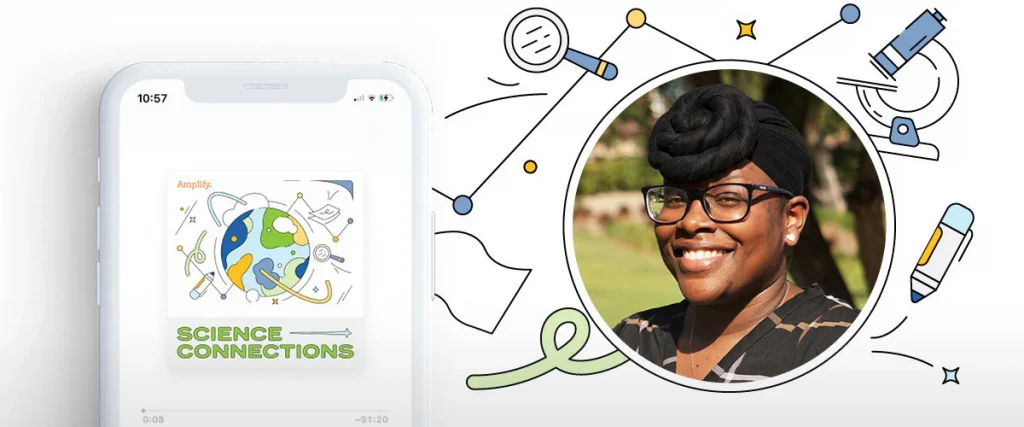
Promotional graphic for "science connections podcast" season 1, episode 10, featuring a smiling black woman named Jessica Kesler, with educational icons like a globe and magnifying glass around her.

In the final episode of the season, Eric sits down with his friend and professional development facilitator, Jessica Kesler. Jessica describes her passion for sharing free, high-quality, empathy-centered professional development for K12 educators. Jessica also shares her experience jumping into leadership positions while teaching in Philadelphia. Eric also chats with Jessica about how students often lean on teachers for more than delivering content. Explore more from Science Connections by visiting our main page.

Download Transcript

Jessica Kesler (00:01):

One student at a time, isn’t gonna bring a million students through the door. But if we focus on their teachers, then they can implement it in their classroom and have this multiplicative effect that can continue on and help us to reach those millions of kids and helping them be prepared for future careers.

Eric Cross (00:19):

Welcome to science connections. I’m your host. Eric Cross. My guest today is Jessica Kessler. Jessica’s director of professional learning at TGR foundation, which is a tiger woods charity. There she creates and leads free stem, professional learning opportunities for educators across the country. Prior to working at TGR, Jessica worked as an elementary, middle and high school science teacher while fulfilling several leadership roles, including science department, chair and principal intern. In this episode, Jessica shares some of her classroom experiences while working in Philadelphia, where she was in classrooms, where her students needed her to be more than just her content. She also addresses how designing professional learning with empathy for teachers in mind creates better experiences for teachers. And now please enjoy my discussion with Jessica Kessler. So let’s, let’s start off with St. Joseph’s chemistry college to the classroom, like your origin story. What led you to ultimately get into the classroom and being successful, even just looking at, at your kinda like your resume or your CV of all of the things that you’ve done. You definitely weren’t idle, but start off with chem. Yeah. Like where did that passion come from?

Jessica Kesler (01:27):

Yeah. So when I was younger, I just had this burning passion to help people. Right. And when you’re young and you think about helping people, you think about doctors, doctors help people. Right. So I had this idea that I wanna be a surgeon. I wanna be a black surgeon. I wanna be a young girl, female Charles drew, and I just wanna go out there and do it. And so my mom is actually an alum of St Joe’s. So I spent a lot of time on campus cuz as she was getting her mini master’s degrees I will visit campus with her often. And so when I applied, I had the scholarships, had everything and I went in ready to be bio ready to be a surgeon. I took my first bio class and I was like, yes, let’s talk about the human body. And let’s get into dissections and sections. And they were like, okay, so a plant so has this. And I was like, Ooh <laugh> I was like, this is not what I was expecting at all. It just felt so detached from the trajectory that I wanted to take. And it just did not feed that passion of helping people in the immediate moment.

Eric Cross (02:31):

Did it, did it feel too abstract?

Jessica Kesler (02:33):

It felt abstract. It felt boring. Okay. And one thing I didn’t want was to be like stuck, bored. Like if I’m not being stimulated in a good way, mm-hmm <affirmative> then it’s not gonna last, but I love science. So I switched over to chemistry cuz I’m like this chemistry is exciting. I’m mixing things together. I’m producing new things. I’m doing extractions. I’m being introduced to machinery that I haven’t seen before. I’m loving it. I’m doing a math. The math is awesome. And so I switched over to chem and I started doing research in the summers and things like that. My research was around water quality in Philadelphia and looking at different natural water sources and comparing them and all those great things. But I was in a lab and the lab had no windows and I was stuck talking to this atomic absorption specter every day.

Jessica Kesler (03:24):

And I hit that, that wall again, where it was like, is this the rest of my life? Like talking to these machines and not having windows and not being able to interact with people. What is this? This can’t be life. And so I was seeking out some new opportunities that said, Hey, I need more money. First of all. So I’m like, I call the financial aid office like every week, like, Hey, what’s out today. What new scholarships do you have? I’m applying for everything. Like it was my goal to not have to pay for much of my education. And so I was talking to them and they’re like, Hey, you’re in science. There’s this awesome opportunity called a noise scholarship where they’ll pay for your last year and your master’s degree. If you go into education mm-hmm <affirmative> and I sat on it and I was like, this makes so much sense to me.

Jessica Kesler (04:12):

I was like, I’ve been literally tutoring my peers and teaching in churches and all this other kind of stuff. My whole life. It makes so much sense. How come nobody ever said this before? <Laugh> and so I applied for the noise scholarship, got in and started, you know, mm-hmm, <affirmative> doing practicums in the classroom as I went through my last year as a chemistry major and my first year for my masters and it just felt so right. And I was like, I can do this. And of course there were a lot of people who told me, no, Josh, you can’t do that. Like these kids will eat you alive. And I’m like I don’t think so. <Laugh> but, but that’s give it a go. And I stepped into the classroom and it, it just felt like, felt like it was always meant to be there.

Eric Cross (04:57):

So you were able to, you were able to make that connection between, I mean, if you’re, if you’re studying chemistry and bio and going into stem, I mean, there’s, there’s an aptitude there, but then you realize that this there’s a road that you could take that leads you into a room with no windows. And you’re just hanging out with machines all day

Jessica Kesler (05:14):

And I’m not helping people. Right. Right. And that was, my passion was like, I’m not helping people sitting in this room. I need to be a person that’s outside telling people about what happens in the room. Right. And how they can get involved and like what’s going on in here. Like that’s, that’s where I can be useful.

Eric Cross (05:28):

When you were, you were in Philly when you were teaching, what were you teaching when you were there?

Jessica Kesler (05:33):

So I started off teaching eighth grade science first job in north Philadelphia, teaching eighth grade science and just a, a funding tangent that first day a student called me a B

Eric Cross (05:44):

Trial by fire

Jessica Kesler (05:45):

Trial by fire called me out in front of like the whole floor. We were outside doing line drills and just was like, I hate you miss Kusa your B. And I was like, oh, this is it. This is it. This is where you stand your ground and you take it or you, you bail out <laugh> and you go back into the lab mm-hmm <affirmative>. And of course at the end of that, that traumatic experience between all the kids, like two months later, she wanted me to adopt her. So like everything comes full circles. Right.

Eric Cross (06:10):

That’s how it is. Right.

Jessica Kesler (06:11):

But I started teaching eighth grade science. There’s not a lot of science teachers at that level who actually have a science background. Most of them have elementary school background. So I’m the only scientist walking into the science classroom and saying, this is how science actually works. And so I ended up taking a lot of onus of science while I was there. Ended up building out the K through eight curriculum for science. I ended up doing like a science strategic plan to submit to the district. I ended up leading out our first couple stem nights and like really leading the stem department and kind of our science department. And this was as like a second, third year teacher <laugh> know, but nobody else had the science mm-hmm, <affirmative> the way that I had the science and the education. So it really opened up a door for me to be able to, to run full steam with all those things.

Eric Cross (07:04):

So MI was it primarily middle school during those, those years that you were there?

Jessica Kesler (07:07):

So there, I started with middle school and I did that purposefully because I was still young and I wanted there to be a good age gap between me and the students. And then I moved up to high school and taught high school chemistry, also taught a couple other different subjects while I was at that school. But primarily high school chemistry. Then I actually took a big leap down and I said, okay. I was going for my second master’s degree in educational leadership. And I was going for my principal cert. And I said, if I’m gonna be a principal of a school, then I need to understand all the levels of education and how they operate, cuz they operate really differently. So I said, I started in middle school, went to high school. I don’t have elementary school experience. In fact, I’d spent a day in a kindergarten classroom and I was like this never again, but I was like, I need to go back down there and I need to figure out how this system works because you know, I never know where I’m gonna land as far as principalship.

Jessica Kesler (08:01):

So I went and taught fourth grade.

Eric Cross (08:03):

How was that experience?

Jessica Kesler (08:05):

So imagine me going from teaching high school, seniors and juniors Uhhuh and like they’re self-sufficient and you know, they’re independent, they’re driving to school and all these things. And then I immediately drop down and go into fourth grade where these kids are crying every five seconds. They still have like a lot of bodily fluids, like there’s noses running and things. And like <laugh>, I was like a fish outta water. I was like, what is this? What’s going on down here. But those kids pour out so much love. And they, you, you become another parent to them. Mm-Hmm <affirmative> your high schoolers know who their parents are. They kind of are finding their place in society, but the little ones, they only know big people as parents, small people as equal. So they see you as another parent. So it taught me a lot about, you know, patience and breaking information down, even smaller. I had to figure out new and inventive ways to teach science and bring it down so far that they would be able to grab onto it and achieve it. And it was a challenge, but at the end it paid off, we were running, we were hitting like great markers for all of our PSSA goals that year. I mean, we were really knocking it out the park

Eric Cross (09:17):

And this backstory leads into how we met and adds to the picture as to why I really want to have you on, because your involvement with TGR, which is where I want to go next for the folks listening. I bet a lot of them have no idea what it’s about, just like I did. And now me learning about TGR foundation and meeting you I would love to make sure that everyone knows about it and what they offer.

Jessica Kesler (09:39):

Absolutely. So TGR foundation, a tiger woods charity was founded by tiger woods and his father with a mission to really introduced them education to students in low income minority populations and prepare them for success in their world and their future careers moving forward. And so was founded in 1996 and went through several changes in iterations since 1996. But eventually opened up its first learning lab, which is in Anaheim, California. And through the learning lab, they opened up these satellite sites. So they basically partner with schools to provide after school education and robotics and wearable electronics and things like that. And they would partner with schools to teach these courses after school, they would pay the teacher, pay for the materials and stuff like that to provide more opportunity for students in different areas. And so that’s how I was introduced to the foundation because while I was teaching high school my good friend and previous manager, Jason Porter shout out to JP Jason Porter used to lead the tiger woods foundation when it was the tiger woods foundation.

Jessica Kesler (10:52):

He used to lead the afterschool program. And when I joined that high school, he said, Jess, you got all this great content, knowledge, all this great enthusiasm, and we wanna get more women into this robotics. We wanna get them engaged in this process of, of stuff. And you will be a great role model to start bringing in more of our female students. And I was like, great, sign me up. And that’s where I started working with the TGR foundation, right after school programs, getting my students into robotics, competitions and clubs, doing different challenges and design challenges. And then after some time, a few years, they actually needed someone to come to the DC area and support the development of professional learning and partnerships here in DC, as they were continuing to expand. And really it came out of the idea that tiger gave this big mission to the organization that he wanted to reach millions of kids.

Jessica Kesler (11:48):

He said millions and everybody said, what millions, what M <laugh>. So the foundation was like, okay, well we can’t reach millions by just tackling one student at a time, right? Not one student at a time, isn’t gonna bring a million people or students through the door. But if we focus on their teachers, mm-hmm <affirmative>, then those teachers not only spend most of their day with these students and learn the basics of their skills with these students. But each one of those teachers has 30 to 150 200 students that they see every day. And that’s how we multiply this effect. So we train the teachers on all the stem competencies and the pedagogical tools and strategies to implement the stem that we’re doing in our learning labs. And then they can implement it in our classroom and have this multiplicative effect that can continue on and help us to reach those millions of kids and helping them be prepared for future careers.

Eric Cross (12:44):

And so D divide the effort, multiply the effects. Exactly. And then when I was exposed to it, this was over zoom. Now, how long has it been going on? Has it always been virtualized or did you do the, were you all doing this before? We all went online

Jessica Kesler (12:57):

Before the pandemic man, the glory days, right before pandemic, it feels like I’m talking about prehistoric times, right? Like back in the dinosaur, like era, like, I don’t know, pre we actually did these workshops in a person. So we would invite people to come to DC, invite teachers in Philadelphia to do a Philly one. We were in New Mexico. We were in Florida. We were, I mean, we were everywhere and this would be a extremely hands on engaging workshops. So not only do we focus on this is the theory and the philosophy behind the pedagogy, but we would also focus on like creating a student experience for the teacher, having the teacher flip into student mode and put on that student hat and actually go through sample lessons, model lessons and activities as the student so that they can feel it. So you can feel if, if you feel confused, your students are gonna feel confused.

Jessica Kesler (13:52):

If you feel like this is challenging, you, your students are gonna feel the challenge. If you are, don’t understand the instructions, your students will understand the instructions. So it gives us a different perspective and it puts us in their shoes. So we can better empathize with them and create more responsive lesson planning. So we flipped them into that student role for that purpose. When COVID hit, we went virtual, but virtual allowed us to reach teachers that we probably would’ve never hit. So it was kind of that blessing and disguise, right? It was like we didn’t keep people as long cuz obviously virtually you’re not, you don’t wanna stare at a screen for eight hours. So we cut it down. We revised it a little bit, but we kept the hands on philosophy and feel of it going by, you know, using materials that they could find at home really modeling what education could look like.

Jessica Kesler (14:41):

Mm-Hmm <affirmative> if you used your Z zoom room to capacity, or if you had these materials and resources or rethought your lesson plans and structures. So we went virtual and not only were we able to hit so many more thirst that first year thirsty educators ready to get, dive into it, ready for some comradery with fellow educators. But we were also able to expand our international network. We were able to get so many international educators through our global work that it was, it was beyond what we had when we were in person. So it really had this skyrocketing effect.

Eric Cross (15:20):

There’s professional learning pathways and then virtual stem studio. Is that right for professional development for like teachers who are listening, are those the two kind of main prongs?

Jessica Kesler (15:30):

Yeah. So a stem studio is basically just one, right? And a pathway is a collection. So we now offer four stem studios, four separate stem studios. The first one is on inquiry mindset. You attended that one area. And it’s really about for teachers who are changing their perspective on what the classroom should look and feel like, especially administrators too. It’s about developing that inquiry mindset. So you understand and you feel, and you practice and you learn the tools that are necessary for inquiry to happen in your classroom. We never promote overhauling your classroom. We’re just saying, add a little bit here and there and see how it impacts your students. The second one is on making inquiry, visible, making inquiry visible is all about making students thinking visible in the moment. What are tools and strategies that you use so that students can illuminate their thinking for themselves, but for you and their peers as well and how we benefit from that.

Jessica Kesler (16:28):

So not only do the students get to see their own thinking as they progress and you get to tell the story of how their minds have evolved, but you, as the teacher get to see, oh, this is where everyone is making the mistake, or this is how this misconception came about. Or this is where I need to target for my next lesson. So it makes you more responsive in the moment. And then the third and fourth one where we’re actually launching for a small group this summer, it won’t be available to the masses until maybe a year or two down the line. We have one small group that we’re just going to test it out with. The third one is about developing your inquiry environment. So thinking not just about your physical space, but thinking about your intellectual space too. So what are the things that you can embed into your physical space and develop in a student’s intellectual space that will help you create a holistic inquiry environment?

Eric Cross (17:22):

So this is this inquiry space, not just physical, but then also the intellectual environment

Jessica Kesler (17:26):

Intellectual. Exactly. And it focuses in on the design process and how we design spaces. Because as a teacher, we take a lot of background in the background onus of de creating these spaces. If you take someone out of an old habit or space and tell them, oh, we are gonna change in your minds and teach inquiry, but put them back in the same environment, they’re gonna be conflicted, right? Their bodies wanna do one thing, their minds wanna do another thing. And they don’t know how to bridge the gap between the two. So this is a really illuminating, like how do you change all the spaces? How do you design a flow in space in your classroom and in your students thinking that allows them to be productive in that inquiry environment. It’s really good stuff

Eric Cross (18:11):

Who creates these experiences for teachers.

Jessica Kesler (18:14):

We do. So me and my teammate, Holly, Dard shout out HD. Holly Dard, we really put our brains together and developed these. So it’s a really a team effort because like Jason Porter, Eric even David Tong when he was with us, really collectively thought about what it is that we wanted educators to experience. And then Holly and I do a lot of the grunt work, but then we really collectively put it all together and make it what it is. So I have a heavy hand and a lot of that. And in fact, inquiry four is all about the entrepreneurial mindset. So oftentimes educators don’t consider themselves entrepreneurs, but if you take a look at what an entrepreneur is and what they do on a regular basis, educators are entrepreneurs, but we are missing an opportunity to use our entrepreneurialship in the classroom to drive for stem competencies in inquiry based practices. And so in, in stem studio, four, we really focus in on how the educator is the entrepreneur of their classroom, but also uses entrepreneurial techniques to tackle issues in their schools, districts, and spheres of influence. So it’s really taking the educator to the next level of their teaching practice through entrepreneurship. This is some deep stuff.

Eric Cross (19:37):

It is, well, this entrepreneurial mindset is, is something that I’ve heard before. And I definitely see the link between even the term teacherpreneur beyond just selling lessons on teachers, pay teachers. <Laugh> it’s way bigger than that,

Jessica Kesler (19:52):

Where entrepreneurs actually in the classroom, not just because we do things on the side to make money. Exactly.

Eric Cross (19:57):

A lot of teachers hear that. They’re like, yeah, I got, you know, I got, got a few jobs going on. Exactly. Yeah. And, and I think one thing we, I should have said this earlier, and I’ll, I’ll say the intro, but these are all free.

Jessica Kesler (20:07):

This is largely sponsored by do OD stem as well. So we have a partnership with D O D stem and they have been driving forth the department of defenses, strategic stem plan for years. And as a part of that, they give us funding in order to provide these opportunities for educators for free. So literally educators don’t have to come with anything. And we are giving you not only the content of our, our lessons and our instruction, but we’re also going give you a chance to earn a free micro credential. So people are spending 12 plus hours with us in a workshop which sounds like a lot of time, but it’s over a series of time and days. But we wanna give you something that means something after that, we wanna give you a micro credential to add to your resume, to show your administrator, to show that you have achieved the next level in your professional learning career.

Jessica Kesler (20:59):

Right? And if you finish the pathway, which is all for, then we give you our TGR foundation certificate that says that you’ve completed so much professional learning in these areas that you are basically a warrior of inquiry that you are ready to go out and really lay inquiry out in new creative ways, not in your CLA just in your classroom, but everywhere you go in your district, in your school. And on top of that, we just offer so many other great free partnership incentives like discovery, education, experience licenses. We’re doing raffles this summer. We’re giving out free a free meal voucher so that you can get some lunch. One of these days we’re offering $50 gift cards so that people can get school supplies. So anything you do with us, and you’re like, man, I really wish I could have this so that I can do that in my classroom. We wanna break down all the barriers that prevent teachers from doing this stuff in their classroom, actively engaging in this stuff. And we give you a free copy of the books that we reference. Again, trying to break down the barriers,

Eric Cross (22:00):

What are some of the things that you’ve noticed kind of being on both sides of science teaching in the classroom, and then in training trends with teachers, things like moments that have been great or, or challenges that you’re noticing teachers experiencing, especially maybe changes in differences from a, from, you know, an outsider’s perspective. Seeing what teachers are experiencing are like, since you’ve been doing PDs for folks.

Jessica Kesler (22:22):

Yeah. So it’s actually really interesting being on both sides of the fence. You know, what I always noticed is that teachers are eager, but they’re tired. They’re wanting to learn, but they can’t take advantage of every opportunity to learn. And especially during COVID time, if you take a look at even all the professional learning that’s happening across the world right now, attendance is going down because teachers are so burnt out this hybrid space, this either we’re in person, but we’re still wearing masks and still social distancing and all this other stuff, or I’m still virtual or I’m virtual some days and I’m in person other days, it’s just wearing our teachers out. And I think we notice that as we see a large numbers of friends and family just start to retire, right? Like people are just like, I don’t know if I can adapt to another change in education.

Jessica Kesler (23:14):

Like education goes through these waves of big changes and it’s hard for everybody to adapt to, but for those who are willing to stick it out and those who are able to stick it out and, and still have that energy and enthusiasm to learn, they come in so hungry for more resources, so hungry to learn more and they still have their why at the top of their minds, as they think about why they do this it’s for the kids it’s to drive this mission is to get more kids excited about this. And they just come in so passionate. So once they come in, once we can get them to come in they stick with us for a really long time. They’re like, what else do you have? What else do you have? What else do you have? But we hear, still hear the common threads of like, do I have time for this?

Jessica Kesler (23:58):

Do I have the funding for this? Do I have the energy for this? Do, will my students understand this? And we are constantly facing that challenge of trying to address those things by, but keeping the excitement going, like we know you don’t have enough time. We’re gonna call it out from the start. I know you don’t have enough time to try to do 29 extra things. Mm-Hmm <affirmative>. But my advice is always, but do one thing at a time, start with something small, asking your students a few questions rather than lecturing to them. Doesn’t take a whole lot of extra time, but it gives you so much extra insight. So let’s not work, you know, harder, let’s work smarter. Let’s embed this into our, our work together. And I always say that we’re not asking you to add to your plate. You know, it’s not Thanksgiving where you just pile, keep piling on a plate.

Jessica Kesler (24:47):

It’s it’s a time where you organize the plate. It’s allowing inquiry to restructure your plate so that everything has its place and its time mm-hmm <affirmative> do you wanna leave room so that the educator feels comfortable trying some new initiative? That’s why we encourage admin. We have librarians attend elementary school teachers, administrators, we, and we encourage it because everyone can support the classroom. And if administrators are more in touch with these new practices and tools and strategies, then they can help facilitate the learning. As the teachers are trying new things and coaching them in specific areas. So we really opened the door for some studios, for any and all who are gonna participate in that child’s education, because us all rallying around them as that three-legged stool helps to create that environment and helps support the teacher. The teachers need support, and we’re trying to do our part by providing the resources and the tools, but they need everyone else to.

Eric Cross (25:42):

We don’t always think about it as a way to support, to get support in our classrooms for ourselves. But I agree with you by, by educating vertically up the chain, you know, vice principal, principal, whoever it is, mm-hmm <affirmative> superintendent getting them on boarding and, and educating them to see what’s ex expected. We’ll open up doors and more freedoms for you because now you just have this vertical alignment of folks kind of on the same wave length. Exactly.

Jessica Kesler (26:07):

Yep. And that’s why we love districts. Anaheim union school district is actually one of our partners this year, where they have invited their teachers to participate in the whole pathway because they know how important it is that we practice these tools and strategies. And they want as many educators in the same space going through this at the same time as possible so that we can support each other through it. And so that we don’t feel like islands, oftentimes as educators, we feel like islands we’re in our classroom day in and day out. And we don’t feel like there’s anybody else who’s doing the same things we’re doing and supporting the work that we’re doing. So when we get administrators who support it, it’s magical. It can be magical.

Eric Cross (26:47):

What are some opportunities that are coming up if somebody’s listening and they, they wanna sign up for something, are there things coming up this month or next month or in the summer that they can participate in?

Jessica Kesler (26:55):

Yeah, for sure. So we’ve been doing our monthly workshops. And if you go to our website, so if you actually go to TGR foundation.org and slash stem studio you’ll actually see our summer events already posted, already live for everybody to start engaging in. And again, everything is free. So registration is open and available for everybody to participate. We are offering that first inquiry stem studio inquiry mindset twice the week of June 21st and the week of June 28th, two opportunities for educators to join us for inquiry mindset for the first one. And then also in July, we’re offering the second one making inquiry visible, and that’s the week of July 12th. So again, all free stuff, raffle prizes are available for those who register early and get in there and reserve their seat. It is limited seating. And so, yeah, a bunch of opportunities coming up this summer and guess what all you have to do is sign up and then you get all these free things coming your way. You get to look forward to all this exciting stuff. So TGR foundation.org/studio.

Eric Cross (28:01):

And if folks wanna follow you in your career, your journey.

Jessica Kesler (28:05):

Yeah. I’m on Twitter and LinkedIn, for sure. And it’s Jessica Kessler, K E S L E R one S

Eric Cross (28:12):

I wanna honor your time. And as we close, you’ve been an educator of impact in, in your own classroom. And I know you’re still teaching actively now, and you’ve also made an impact on me and other educators through your professional development. And, and the last question I’d like to end with is who’s the most memorable teacher or learning experience that you had during K eight. When you think about you, your time in school, who was a memorable teacher or a moment that kind of stands out to you and what was it that they did that made them memorable?

Jessica Kesler (28:44):

It was that one teacher who brought me my first T I, 84. You remember when a new calculators came out, I had a teacher give me one amazing, but I think in high school, there was really a turn about where I had miss Caroline and Mr. Canello math and Spanish teacher. So two opposite wings of the, the education spectrum there. But most of all, they listened. They listened to me. I felt seen with those teachers, they supported me. They listened to me, they saw my potential. And they just rallied around me and continued to support me thereafter. Even afterwards, I continued to reach out to those educators. And I think that’s what drives me to be that force for, for my students. And I remember my most memorable heart touching education experience was probably, I had a high school student get interviewed by the newspaper.

Jessica Kesler (29:38):

And they were like, oh, what’s your favorite classes? And what’s your favorite this, and what’s your favorite of that? And he was like, well, I love chemistry, which is what I was teaching. It was like, and I love my after school robotics team. I was leading and I love this and this and this. And he basically listed all the stuff that I was doing that I was teaching and that I was leading in the school. And I was like this one student, literally out of all the classes and experiences he’s experiencing is really just calling out everything that I’m doing. And I feel like it’s because he felt seen, he felt heard. He was like, this person is listening to me. And no matter what space we’re in this teacher is, is there for me. And so I try to be that wherever I go, <laugh>,

Eric Cross (30:16):

It’s amazing how making someone feel seen and, and making them feel important and heard, and, and being present for them. All of a sudden opens up their interests into the subjects that you’re teaching. Thank you for, for making time for serving our kids for serving teachers during a hard time, and for making PD one, being part of an organization that made it free and serve teachers, but also making PD fun and enthusiastic. I think that was one of the things in addition to the empathy that you led with, but also your enthusiasm and passion was something that really resonated with me. And it made our time together. Feel like something that was, was making me a better teacher for my kids. And so, thanks for making time for us tonight. Oh,

Jessica Kesler (30:53):

Bless face.

Eric Cross (30:57):

Thanks so much for joining me and Jessica today. If you have any great lessons or ways that you connect with students, please email us@stemamplifycom.wpengine.com. That’s S TM amplifycom.wpengine.com. And please remember to support the podcast by clicking subscribe, wherever you listen to podcasts, you can also hear more about the podcast in our Facebook group, science connections, the community until next time.

Stay connected!

Join our community and get new episodes every other Tuesday!

We’ll also share new and exciting free resources for your classroom every month.

What Jessica Kesler says about science

“One student at a time isn’t gonna bring a million students through the door. But if we focus on their teachers, then they can reach those millions of kids and help them be prepared for future careers. ”

– Jessica Kesler

Director of Professional Learning, TGR Foundation

Meet the guest

In the final episode of the season, Eric sits down with his friend and professional development facilitator, Jessica Kesler. Jessica describes her passion for sharing free, high-quality, empathy-centered professional development for K12 educators. Jessica also shares her experience jumping into leadership positions while teaching in Philadelphia. Eric also chats with Jessica about how students often lean on teachers for more than delivering content.

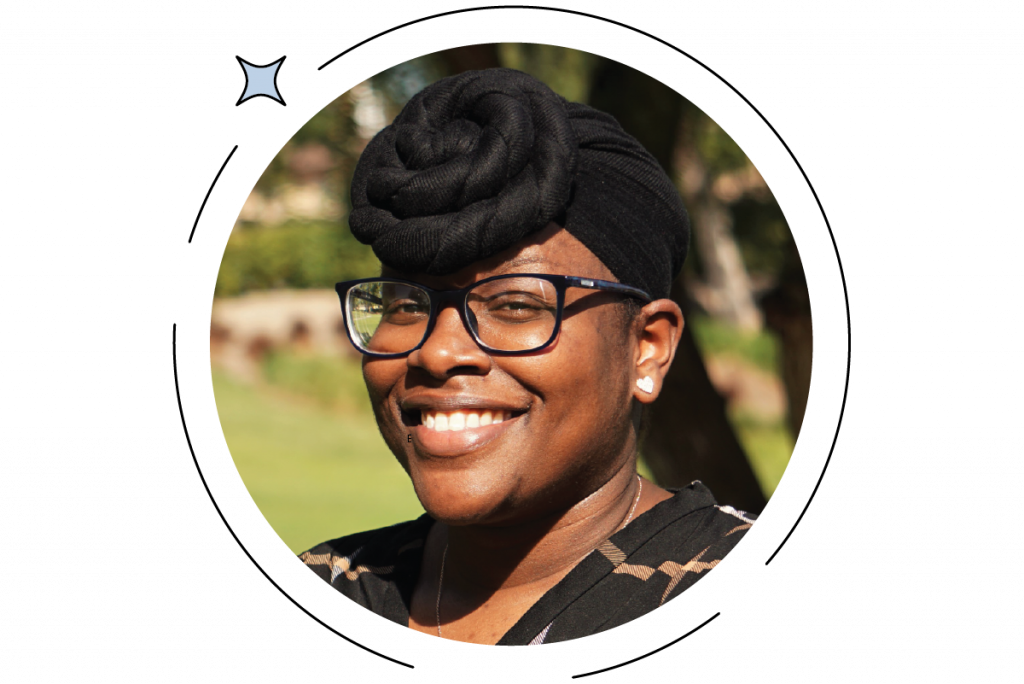
Person with glasses smiling, wearing a black headwrap and earrings, outdoors with trees and sunlight in the background.

About Science Connections

Welcome to Science Connections! Science is changing before our eyes, now more than ever. So…how do we help kids figure that out? We will bring on educators, scientists, and more to discuss the importance of high-quality science instruction. In this episode, hear from our host Eric Cross about his work engaging students as a K-8 science teacher. Listen here!

Inspiring the next generation of Rochester scientists, engineers, and curious scholars

Dear Rochester educator,

We’re extremely excited to be part of your science review process.

Built from the ground up for three-dimensional, phenomena-based learning, Amplify Science helps your Rochester scholars go from learning about to figuring out scientific concepts.

Explore the sections below and learn how Amplify creates rigorous, relevant learning experiences for the next generation of scientists, engineers, and curious citizens.

—Jennifer Fosegan, Rochester Senior Account Executive

Standards-based and grounded in research

Amplify Science is an engaging new core curriculum designed for three-dimensional, phenomena-based learning. Developed by the science education experts at UC Berkeley’s Lawrence Hall of Science and the digital learning team at Amplify, our program is used by hundreds of schools across the country, including New York City Public Schools, Chicago Public Schools, and Denver Public Schools.

Amplify Science was designed from the ground up to meet the Next Generation Science Standards. To ensure alignment to the New York State Science Learning Standards (NYSSLS), our partners at the New York City Department of Education created additional resources that can be made available for RCSD to implement.

Instructional model

The Amplify Science program is rooted in the proven, research-based pedagogy of Do, Talk, Read, Write, Visualize. Here’s how each element works:

Phenomena-based approach

In each Amplify Science unit, students take on the roles of scientists or engineers in order to investigate a real-world problem. Students work to define the problem and collect and make sense of evidence. Once the context is clear, students collect evidence from multiple sources and through a variety of modalities.

At the end of the unit, students are presented with a brand-new problem, giving them an opportunity to apply what they’ve learned over the course of the unit to a new context. This represents a shift from asking students to learn about science to supporting students in figuring out the science.

Resources to support your review

What’s included

COMPONENT

FORMAT

Teacher’s Guides and digital experience

Available digitally and in print, the Teacher’s Guides contain all of the information teachers need to facilitate classroom instruction, including detailed lesson plans, classroom slides, high-level overview documentation, differentiation strategies, standards alignments, materials and preparation steps, teacher support strategies, and in-context professional development, possible student responses, and more.

Print and digital

Hands-on materials kits

Hands-on learning is integrated into every unit of Amplify Science. Each hands-on activity is supported through clear instructions for the teacher, as well as easily accessible materials in unit-specific kits. Each kit contains hands-on materials, both consumable and nonconsumable, and various print materials (e.g., Vocabulary and Key Concept cards). With Amplify Science, students can actively participate in science: gathering evidence, thinking critically, making observations, and communicating their claims

Kit

COMPONENT

FORMAT

Student Investigation Notebooks

Available for every unit, the Student Investigation Notebooks contain instructions for activities and space for students to record data, reflect on ideas from texts and investigations, and construct explanations and arguments.

Print and digital

Student books

The age-appropriate Student Books in Amplify Science allow students to engage with content-rich text, obtain evidence, develop research and close reading skills, and construct arguments and explanations about the ideas they are learning in class.

Print and digital

Student digital experience

Students can easily engage with the student digital experience, so effective learning can occur in every type of classroom environment.

In grades 4–5, students are introduced to digital simulations. Developed exclusively for Amplify Science, these digital tools serve as venues of exploration and data collection, allowing students to discover and construct their understanding of science concepts and phenomena.

Digital

Spanish parity

Amplify Science is committed to providing support to meet the needs of all learners. For Spanish-speaking students, greater access to rich science content is achieved with Amplify Science through the use of a pedagogical approach that offers multiple points of entry. In addition, Spanish language supports are available across the curriculum, including Spanish kits that offer Spanish versions of all student-facing print materials, as well as Spanish digital licenses for teachers. Learn more about the Spanish components available across Amplify Science.

The same rigor in terms of scientific accuracy, literacy development, and the use of rich content and language in the creation of the Amplify Science Spanish materials. To ensure equity, all Spanish materials were carefully translated using academic Spanish, paying particular attention to consistency and the use of grade-level-appropriate language in order to support language development.

Review online

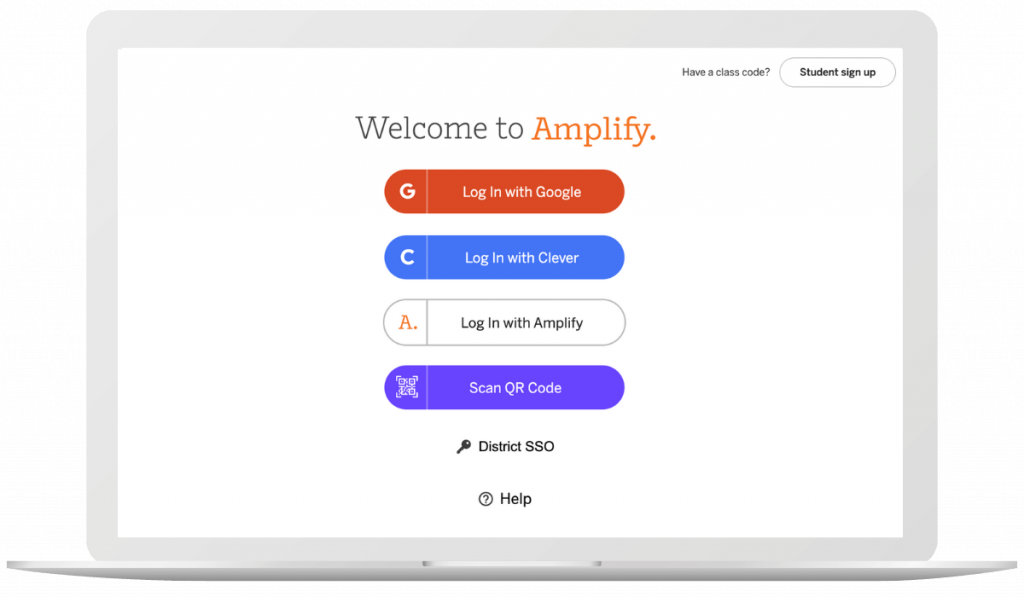
Ready to explore on your own? Follow the instructions below to access your demo account.

First, watch this navigation video. Then, click the orange button “Log in to Amplify Science” to log in.

  • Select Log in with Amplify.
  • Enter username and password:
    • Teacher username: t1.rcsdtrial@demo.tryamplify.net
    • Student username: s1.rcsdtrial@demo.tryamplify.net
    • Password (both teacher and student): Amplify1-rcsdtrial

Disciplinary Core Ideas (DCI) review
Each Amplify Science unit is designed around a unit-specific learning progression that aligns with NGSS disciplinary core ideas (DCI) and crosscutting concepts. The levels that comprise the unit’s learning progression are cumulative. As students progress through the unit, they are able to integrate prior understandings with new insights, and there are continuing opportunities for students to master conceptual understanding of early unit content in subsequent chapters of the unit.

This means that standards are often addressed across entire units instead of in one particular activity or lesson. Thus, the lessons noted below are examples of where the concept represented in the listed DCI is addressed, but this list should not be considered exhaustive. Instead, students have frequent opportunities to engage with these ideas throughout the unit, the grade, and the grade band. 

To view the specified lessons, explore our RCSD Digital Review Guide or select a grade level below.

DCI ESS2.D: Weather and Climate
Before you begin reviewing these lessons, make sure to locate the following Student Books from your Unit Kit: What is the Weather Like Today? and Tornado! Predicting Severe Weather

Select the Sunlight and Weather unit, click Chapter 1, and locate the lessons below:

Lesson 1.1

  • Activities 2 and 3, Step-by-step tab
  • Student bookWhat is the Weather Like Today? (note: located in your Unit Kit)

Lesson 1.2

  • Activities 1 and 3, Step-by-step tab

Lesson 1.3

  • Activities 1 and 2, Step-by-step tab

Lesson 1.4

  • Lesson Brief, Digital Resources, “Playground Weather Calendars and Playground Weather Graphs (Completed)”
  • Activity 1, Step-by-step tab (especially steps 5, 9, and 10) and Teacher Support tab (“Assessment, Assessment Opportunity: Assessing Students’ Understanding of Types of Weather”)

Lesson 5.1

  • Activity 1, Step-by-step tab (especially steps 6–7) and Teacher Support, Assessment tab (“Assessment Opportunity: Assessing Students’ Understanding of Weather and Why We Measure It”)
  • Student book, Tornado! Predicting Severe Weather (note: located in your Unit Kit), pages 6–9

DCI PS4.A: Wave Properties
Before you begin reviewing these lessons, make sure to locate the following materials from your Unit Kit: Light and Sound Student Investigation Notebook; Student Book: What Vibrates?

Select the Light and Sound unit, click Chapter 4, and locate the lessons below:

Lesson 4.1

  • Lesson Brief, Digital Resources, “Assessment Guide”
  • Activity 3, Step-by-step tab (especially steps 1–12)
  • Light and Sound Student Investigation Notebook, page 24 (note: located in your Unit Kit)

Lesson 4.2

  • Activity 2, Step-by-step tab and On-the-Fly Assessment (hummingbird icon)
  • Activity 3, Step-by-step tab and On-the-Fly Assessment (hummingbird icon)
  • Activity 4, Instructional Guide
  • Student bookWhat Vibrates? (note: located in your Unit Kit)
  • Light and Sound Student Investigation Notebook, page 25 (note: located in your Unit Kit)

Lesson 4.3

  • Lesson Brief, Digital Resources, “I Hear a Sound. What Vibrates? Mini-Book copymaster”
  • Activity 1, Step-by-step tab (especially steps 5–11, 13), and Teacher Support tab (“Instructional Suggestion, Going Further: Sound Can Cause Vibrations”)
  • Activity 3, Step-by-step tab
  • Activity 4, Step-by-step tab and On-the-Fly Assessment (hummingbird icon)

DCI LS2.A: Interdependent Relationships in Ecosystems
Before you begin reviewing these lessons, make sure to locate the following materials from your Unit Kit: Plant and Animal Relationships Student Investigation Notebook; Student book A Plant is a System.

Select the Plant and Animal Relationships unit, click Chapter 1, and locate the lessons below:

Lesson 1.6

  • Activities 2–4, Step-by-step tab
  • Plant and Animal Relationships Student Investigation Notebook (note: located in your Unit Kit), pages 15–19

Lesson 1.7

  • Activity 2, Step-by-step tab, Possible Responses tab, and Critical Juncture Assessment (hummingbird icon)
  • Activity 3, Step-by-step tab

Lesson 2.2

  • Activity 2, Step-by-step tab (especially steps 4–12) and Possible Responses tab
  • Student bookA Plant is a System (note: located in your Unit Kit)

DCI ESS2.D: Weather and Climates
Before you begin reviewing these lessons, make sure to locate the following materials from your Unit Kit: Weather and Climate Student Investigation Notebook; Student Books Dangerous Weather Ahead and Sky Notebook.

Select the Weather and Climate unit, click Chapter 4, and locate the lessons below:

Lesson 1.4

  • Activity 2, Step-by-step tab 
  • Student bookSky Notebook (note: located in your Unit Kit)

Lesson 2.3

  • Activity 3, Step-by-step tab and Possible Responses tab
  • Weather and Climate Student Investigation Notebook, page 28 (note: located in your Unit Kit)

Lesson 3.2

  • Lesson Brief, Digital Resources, “Anchorage, Queenstown, and Saint Petersburg Graphs copymaster”
  • Activities 2 and 3, Step-by-step tab

Lesson 3.3,

  • Activity 2, Step-by-step tab, Possible Responses tab, and On-the-Fly Assessment (hummingbird icon)

Lesson 3.6

  • Activity 1, Step-by-step tab (especially steps 3–5) and On-the-Fly Assessment (hummingbird icon)

Lesson 3.7

  • Lesson Brief,  Digital Resources, “End-of-Unit Writing: Arguing About Future Island Weather Version A copymaster” and “Assessment Guide”
  • Activity 3, Step-by-step tab (especially steps 3–7)

Lesson 4.2

  • Activity 2, Step-by-step tab, Possible Responses tab, and On-the-Fly Assessment (hummingbird icon)
  • Student book, Dangerous Weather Ahead (note: located in your Unit Kit)

DCI PS4.A: Wave Properties
Before you begin reviewing these lessons, make sure to locate the following materials from your Unit Kit: Student books Warning: Tsunami! and Patterns in Communication.

Select the Waves, Energy, and Information unit, click Chapters 1 and 3, and locate the lessons below:

Chapter 1

Lesson 1.4

  • Activity 1, Step-by-step tab (especially steps 1, and 4)
  • Student bookWarning: Tsunami! (note: located in your Unit Kit)
  • Activity 2, Step-by-step tab, On-the-Fly Assessment (hummingbird icon), and Teacher Support tab (“Instructional Suggestion, Providing More Experience: Waves in Water”)

Chapter 3

Lesson 3.1

  • Activity 2, Step-by-step tab (especially steps 4–8) and On-the-Fly Assessment (hummingbird icon)
  • Activity 3, Step-by-step tab and Waves, Energy, and Information Simulation

Lesson 3.2

  • Activity 3, Step-by-step tab, On-the-Fly Assessment (hummingbird icon), and Waves, Energy, and Information Simulation 

Lesson 3.3

  • Activity 4, Step-by-step tab and On-the-Fly Assessment (hummingbird icon)
  • Student bookPatterns in Communication (note: located in your Unit Kit), pages 6–7

DCI LS2.A: Interdependent Relationships in Ecosystems
Before you begin reviewing these lessons, make sure to take out the following materials from your Unit Kit: Student books Restoration Case Studies and Walk in the Woods; Organism Print Name Cards: Set 1.

Select the Ecosystem Restoration unit, click Chapters 1, 2, and 3, and locate the lessons below:

Lesson 1.6

  • Activity 2, Step-by-step tab, Possible Responses tab, and Ecosystem Modeling Tool (Box 2 on student apps page, “1.6 Healthy Ecosystem Model”)
  • Activity 3, Step-by-step tab (especially steps 2 and 3), Possible Responses tab, and Critical Juncture Assessment (hummingbird icon)

Lesson 1.7

  • Activity 2, Step-by-step tab
  • Activity 3, Step-by-step tab (especially steps 3–7) and On-the-Fly Assessment (hummingbird icon)
  • Printable Resources, Print Materials (8.5” x 11”), Organism Name Cards: Set 1, pages 12–17 (note: located in your Unit Kit)

Lesson 1.8

  • Activity 3, Step-by-step tab (especially steps 6–8) and Possible Responses tab

Lesson 2.3

  • Activity 3, Step-by-step tab (especially steps 1–4), Possible Responses tab, and Ecosystem Modeling Tool (Box 3 on student apps page, “2.3 Plant Needs Model”)

Lesson 2.5

  • Activity 3, Step-by-step tab
  • Student bookRestoration Case Studies (note: located in your Unit Kit)

Lesson 3.2

  • Activity 2, Step-by-step tab
  • Student bookWalk in the Woods (note: located in your Unit Kit), pages 6–10

Lesson 3.3

  • Activity 4, Step-by-step tab and Ecosystem Restoration Simulation

Lesson 3.4

  •  Activity 2, Step-by-step tab, Possible Responses tab, On-the-Fly Assessment (hummingbird icon), and Ecosystem Restoration Simulation

Lesson 3.5

  • Activity 2, Step-by-step tab and Teacher Support tab (“Instructional Suggestion, Going Further: Balance and Interdependence of Ecosystems: Impacts of Invasive Species”)
  • Student bookRestoration Case Studies (note: located in your Unit Kit), pages 11, 31, and 47

Lesson 3.6

  • Activity 2, Step-by-step tab (especially steps 4–5), Possible Responses tab, and Critical Juncture Assessment (hummingbird icon)

Lesson 3.7

  • Activity 1, Step-by-step tab, Possible Responses tab, and Ecosystem Modeling Tool (Box 5 on student apps page, “3.7 No Decomposers Model”)

Looking for help?

Contact your Rochester Account Executive:

Jennifer Fosegan
(585) 590-4200
jfosegan@amplify.com

Oregon Enhanced ELA State Review for K–5

To view this protected page, enter the password below:


How can teachers find new energy in the science classroom?

Hear from our Science Connections: The Podcast guest and science PD expert Jessica Kesler

In the final episode of the latest season of Science Connections: The Podcast, host Eric Cross sits down with Jessica Kesler, professional development facilitator for science teachers. 

During the episode, Kesler describes her passion for sharing high-impact teaching strategies for science teachers and her experiences teaching in Philadelphia, and discusses how teachers’ roles often involve more than just delivering content.

Read on for a peek at the episode, and to learn more about science professional development for teachers. 

Meet Jessica Kesler

“I wanted to be a surgeon,” says Kesler. But learning about science ultimately inspired her to help others learn it, too. Her passion is to empower educators to create engaging and effective classrooms that will foster future leaders, work she is able to do in her role as a professional development facilitator at TGR Foundation, a Tiger Woods charity. This position enables her to develop and implement professional learning experiences focused on STEM-based, student-centered learning practices.

Before joining the TGR Foundation, she taught in Philadelphia schools as a chemistry and science teacher for grades 4–12, which was a bit of a culture shock. Kesler had gone from teaching near-adults who could drive themselves to school to teaching young children who often related to teachers as parent figures. The experience taught her a lot about “patience and breaking information down even smaller,” she says.

I had to figure out new and inventive ways to teach science and bring it down so far that students would be able to grab onto it and achieve it. It was a challenge,” she continues.  “But in the end it paid off. We hit our goals out of the park.

Teachers are the multipliers we need

Kesler and her team at the TGR Foundation designed their goals around a challenge issued by Tiger Woods himself: Reach millions of kids. 

They knew that reaching one student at a time would make it hard to reach their goals. 

The key? Focus on teachers, who can reach hundreds of students at a time. “They can have this multiplicative effect that can help us reach those millions of kids and help prepare them for careers,” she says.

Here are just a few of the teaching strategies and pieces of advice they offer science educators: 

  • Develop your inquiry environment. This means thinking not just about your physical space, but also your intellectual space. Kesler asks: “What are the things that you can embed into your physical space and develop in a student’s intellectual space that will help you create a holistic and growing environment?”
  • Be the entrepreneur of your classroom. Kesler and her team like to ask how a teacher can use entrepreneurial techniques to tackle issues in their schools, districts, and spheres of influence.

“Teachers are eager, but tired,” says Kesler. She notes that while school may be back in session, educators are still managing the effects of the pandemic and trying to get kids excited (and keep them excited) about science.

While teachers want to learn and do more, they are more concerned than ever about having enough time, funding, and energy to do so. 

Says Kesler: “I know you don’t have enough time to try to do 29 extra things. My advice is always: Do one thing at a time. Start with something small. Asking your students a few questions rather than lecturing to them doesn’t take a whole lot of extra time, but it gives you so much extra insight. So let’s not work harder. Let’s work smarter.” 

She continues: “It’s not Thanksgiving, where you just keep piling on a plate. It’s a time where you organize your inquiry to restructure your plates so that everything has a place and a time.”

Listen to the whole episode and to the rest of the podcast.

About Amplify’s Science Connections: The Podcast

Science is changing before our eyes, now more than ever. So how do we help kids figure that out? How are we preparing students to be the next generation of 21st-century scientists?

Join host Eric Cross as he sits down with educators, scientists, and knowledge experts to discuss how we can best support students in science classrooms. Listen to hear how you can inspire kids across the country to love learning science, and bring that magic into your classroom for your students.

A closer look at grades 3–5

Amplify Science is based on the latest research on teaching and learning and helps teachers deliver age-appropriate, high-quality, literacy-rich instruction that enables students to take on the roles of scientists and engineers to solve real-world phenomena every day.

In the 3–5 classroom, this looks like students:

  • Collecting evidence from a variety of sources.
  • Making sense of evidence in a variety of ways.
  • Formulating convincing scientific arguments.
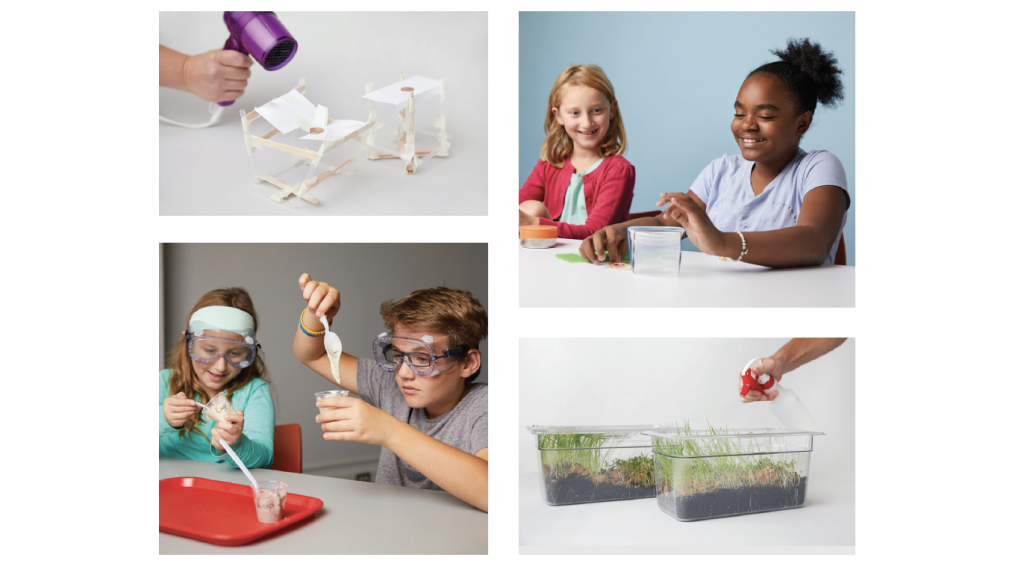
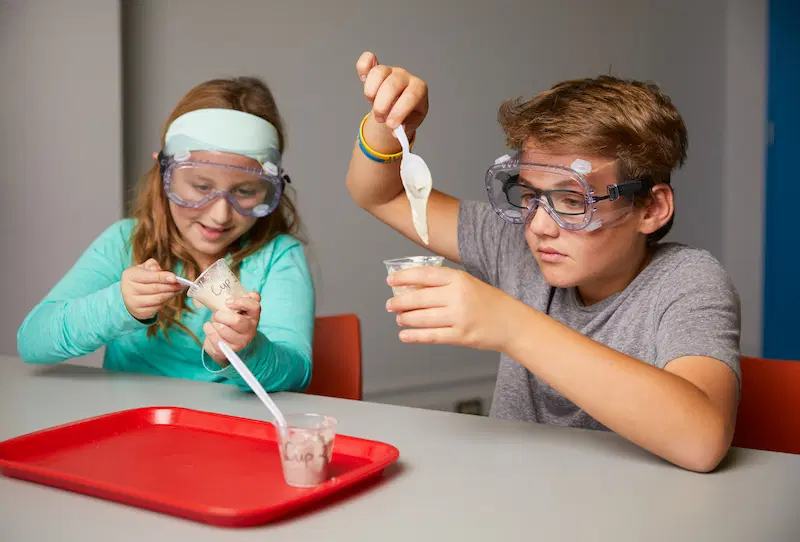
Un collage de cuatro imágenes que muestran a estudiantes realizando experimentos científicos: secando estructuras, trabajando con plantas, vertiendo la mezcla en un vaso de precipitados y regando plantas en contenedores.
A four-step process diagram: Spark, Explore, Explain and elaborate, and Evaluate, each with an icon and description, connected by arrows, ending with a summary statement below.

Program structure

Our cyclical lesson design ensures students receive multiple exposures to concepts through a variety of modalities. As they progress through the lessons within a unit, students build and deepen their understanding, increasing their ability to develop and refine complex explanations of the unit’s phenomenon.

It’s this proven program structure and lesson design that enables Amplify Science to teach less, but achieve more. Rather than asking teachers to wade through unnecessary content, we designed our 3–5 program to address 100% of the NGSS in just 88 days.

Scope and sequence

Every year of our grades 3–5 sequence consists of 4 units and 88 lessons. Said another way, each unit contains 20 lessons plus two dedicated assessment days (a Pre-Unit Assessment and End-of-Unit Assessment).

Lessons for grades 3–5 are written to last a minimum of 60 minutes, though teachers can expand or contract the timing to meet their needs.

Grid of nine educational lesson cards, each featuring a different science topic like "balancing forces" and "weather systems" with grade levels and lesson durations listed.

Unit types

Each unit delivers three-dimensional learning experiences and engages students in gathering evidence from a rich collection of sources, while also emphasizing a particular science and engineering practice.

In grades 3–5:

  • One unit emphasizes the practice of investigation.
  • One unit emphasizes the practice of modeling.
  • One unit emphasizes the practice of engineering design.
  • One unit emphasizes the practice of argumentation.
Investigation Units

Investigation units focus on the process of strategically developing investigations and gathering data to answer questions. Students are first asked to consider questions about what happens in the natural world and why, and are then involved in designing and conducting investigations that produce data to help answer those questions.

Modeling Units

Modeling units provide extra support to students engaging in the practice of modeling. Students use physical models, investigate with computer models, and create their own diagrams to help them visualize what might be happening on the nanoscale.

Engineering Design Units

Engineering design units provide opportunities for students to solve complex problems by applying science principles to the design of functional solutions, and iteratively testing those solutions to determine how well they meet preset criteria.

Argumentation units

Argumentation units provide students with regular opportunities to explore and discuss available evidence, time and support to consider how evidence may be leveraged in support of claims, and independence that increases as they mount written arguments in support of their claims.

Units at a glance

Illustration of a high-speed train traveling on an elevated track with a red light on the front, set against a blue sky and green landscape.
Balancing Forces

Domain: Physical Science

Unit type: Modeling

Student role: Engineers

Phenomenon: The town of Faraday is getting a new train that floats above its tracks.  

Illustration of wolves in the foreground, quail perched on a branch, a bear, and elk in a grassy, wooded landscape with hills in the background.
Inheritance and Traits

Domains: Life Science

Unit type: Investigation

Student role: Wildlife biologists

Phenomenon: An adopted wolf in Graystone National Park (“Wolf 44”) has some traits that appear similar to one wolf pack in the park and other traits that appear to be similar to a different wolf pack. 

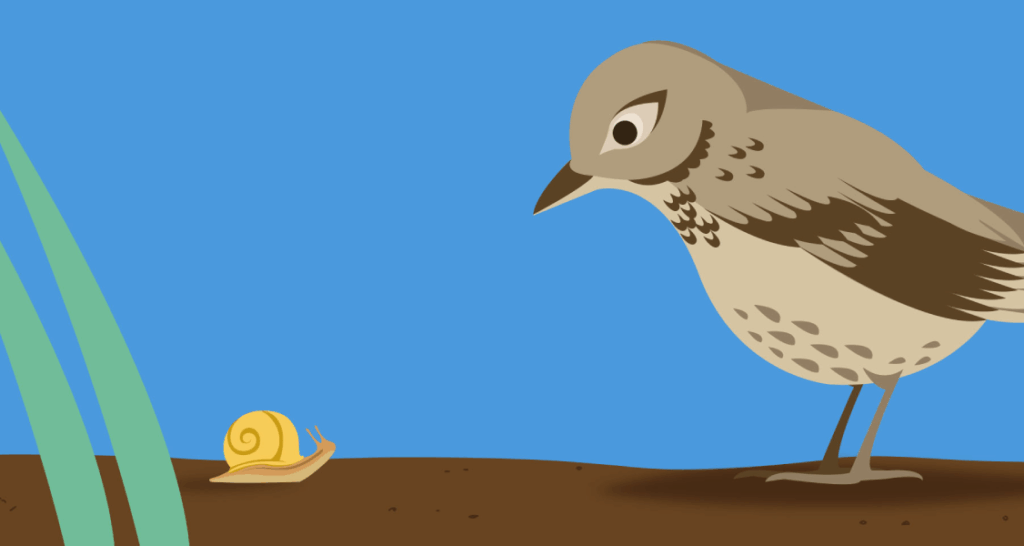
A bird stands on the ground, looking down at a yellow snail near some green grass against a blue background.
Environments and Survival

Domains: Life Science, Engineering Design

Unit type: Engineering design

Student role: Biomimicry engineers

Phenomenon: Over the last 10 years, a population of grove snails has changed: The number of grove snails with yellow shells has decreased, while the number of snails with banded shells has increased.  

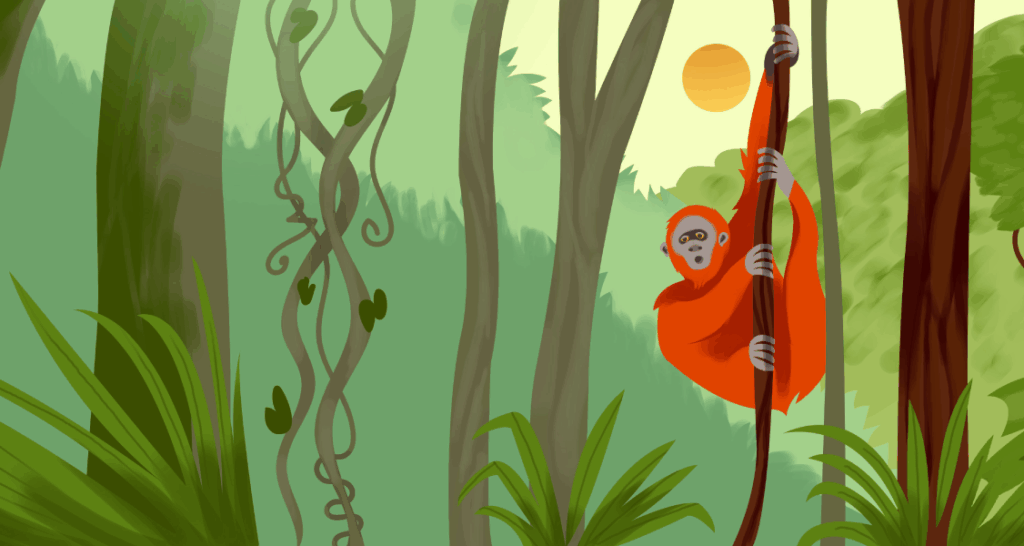
An orange orangutan climbs a vine in a dense green jungle with tall trees and the sun visible in the background.
Weather and Climate

Domains: Earth and Space Science, Engineering Design

Unit type: Argumentation

Student role: Meteorologists

Phenomenon: Three different islands, each a contender for becoming an Orangutan reserve, experience different weather patterns.  

City buildings at night with lit windows, a full moon, stars in the sky, and a person standing by a window on the left.
Energy Conversions

Domains: Physical Science, Earth and Space Science, Engineering Design

Unit type: Engineering design

Student role: System engineers

Phenomenon: The fictional town of Ergstown experiences frequent blackouts.  

A streetlight shines at night; arrows show its light reflecting off a cricket to a gecko, illustrating how the gecko sees its prey.
Vision and Light

Domain: Physical Science, Life Science, Engineering Design

Unit type: Investigation

Student role: Conservation biologists

Phenomenon: The population of Tokay geckos in a rain forest in the Philippines has decreased since the installation of new highway lights.  

Illustration of rocky cliffs with reddish and brown tones beside a flowing blue river under a clear sky.
Earth’s Features

Domain: Earth and Space Science

Unit type: Argumentation

Student role: Geologists

Phenomenon: A mysterious fossil is discovered in a canyon within the fictional Desert Rocks National Park.  

Two dolphins are facing each other underwater against a blue background.
Waves, Energy, and Information

Domains: Physical Science, Life Science, Earth and Space Science, Engineering Design

Unit type: Modeling

Student role: Marine scientists

Phenomenon: Mother dolphins in the fictional Blue Bay National Park seem to be communicating with their calves when they are separated at a distance underwater.

Earth orbits the Sun in space, shown by a dashed blue line; an arrow on Earth indicates its rotation direction.
Patterns of Earth and Sky

Domains: Physical Science, Earth and Space Science

Unit type: Investigation

Student role: Astronomers

Phenomenon: An ancient artifact depicts what we see in the sky at different times — the sun during the daytime and different stars during the nighttime — but it is missing a piece.  

Red blood cells scattered over a swirling red and white background, creating an abstract representation of blood flow.
Modeling Matter

Domain: Physical Science

Unit type: Modeling

Student role: Food scientists

Phenomenon: Chromatography is a process for separating mixtures. Some solids dissolve in a salad dressing while others do not. Oil and vinegar appear to separate when mixed in a salad dressing.  

Illustration of wind carrying particles from the ocean, over a coastal town, and up a steep, green mountain slope under a clear blue sky.
The Earth System

Domains: Earth and Space Science, Physical Science, Engineering Design

Unit type: Engineering Design

Student role: Water resource engineers

Phenomenon: East Ferris, a city on one side of the fictional Ferris Island, is experiencing a water shortage, while West Ferris is not.  

Illustration of a cheetah standing on the ground and a sloth hanging from a tree surrounded by various plants and mushrooms in a jungle scene.
Ecosystem Restoration

Domains:Physical Science, Life Science, Earth and Space Science, Engineering Design

Unit type: Argumentation

Student role: Ecologists

Phenomenon: The jaguars, sloths, and cecropia trees in a reforested section of a Costa Rican rain forest are not growing and thriving.  

Winter Wrap-Up 01: Problem-solving and facilitating classroom discussions

Promotional graphic for Math Teacher Lounge podcast, episode 1, featuring Fawn Nguyen, Christy Thompson, and Kassia Omohundro Wedekind discussing classroom problem-solving and discussions.

As we prep for an exciting new season of Math Teacher Lounge: The Podcast, hosts Bethany Lockhart Johnson and Dan Meyer are looking back at the amazing speakers and conversations from past episodes and sharing some of their favorites!

First up: A season 2 double feature of the power of problem-solving with Fawn Nguyen and Facilitating Classroom Discussions with authors Christy Hermann Thompson and Kassia Omohundro Wedekind.

Fawn is a specialist on Amplify’s advanced math team and a former math teacher and math coach—so she knows her stuff! You’ll hear about her five criteria for good problem-solving problems, and the power and importance of exposing all students to problem-solving.

Then, we’ll move into Bethany and Dan’s conversation with Christy and Kassia to learn how hands-down conversations allow students to become better listeners and the steps you can take to implement hands-down conversations in your classroom.

Explore more from Math Teacher Lounge by visiting our main page.

Download Transcript

Dan Meyer: (00:01)

Hey folks. Welcome back to Math Teacher Lounge. My name is Dan Meyer.

Bethany Lockhart Johnson: (00:03)

And I’m Bethany Lockhart Johnson. Hello! Happy New Year! Hello, Dan Meyer.

Dan Meyer: (00:09)

HNY, Bethany. HNY to you and to all of the listeners out there in Math Teacher Lounge. HNY is the abbreviation that I use sometimes.

Bethany Lockhart Johnson: (00:18)

Oh, is that what that is? Is that—I wasn’t sure what that was. If on my birthday you send me HBD…no.

Dan Meyer: (00:25)

Yeah.

Bethany Lockhart Johnson: (00:25)

No. Unacceptable.

Dan Meyer: (00:27)

I will. No, you want the full thing. To demonstrate my care for your birthday, I gotta spell the whole thing out. I’m just trying to stay relevant. You know, I’m just trying to stay relevant and youthful. So I’m using The Abreevs.

Bethany Lockhart Johnson: (00:38)

The Brevvies.

Dan Meyer: (00:40)

To the extent of even abbreviating the word “abbreviation.” . So, any New Year’s resolutions you wanna share with the listeners, Bethany? While you think, I’ll just share mine real quick here. This is the year of the perfect Wordle streak for yours truly, Dan Meyer. I’m going the full 365. Watch. Watch me do it, folks. I’m naming it here. Live on air. recorded on air. Perfect Wordle year. What you got for the listeners, Bethany?

Bethany Lockhart Johnson: (01:10)

Let’s see. It’s raining very hard here in Southern California, and my newest resolution is to embrace nature. My child wants nothing more than to go and splash in all the puddles.

Dan Meyer: (01:22)

Nice.

Bethany Lockhart Johnson: (01:23)

And be amongst the mud. And what I’m gonna keep telling myself—and so far, so far, I’ve been doing pretty good with this—thrive, child. Splash. Squish. We can dry you off. You will not melt. So I want to keep finding opportunities. Like, for instance, my response is, “It’s pouring rain. Let’s stay under covers and let’s read this book together!” And his response is like, banging on the windows, like, “Please let me go outside.” So I myself have some rain boots. I’m going to go forth and splash with my child. So hopefully you’ll see me doing that a bit more.

Dan Meyer: (02:08)

Love that.

Bethany Lockhart Johnson: (02:09)

Ask me what I’m doing. I’m outside, splashing in nature.

Dan Meyer: (02:12)

I don’t wanna put words in your mouth, but I have felt a bit like parenting is a means for rounding out aspects of my own personality that I have felt are—or habits or hobbies that are lacking. Like, I’ve never been real outdoorsy or into camping, but I don’t want that to limit my own kids’ aspirations or interests. So let’s do the thing that’s not super natural for me, for their own sake. Which is kind of what I’m hearing a little bit from you, which—that sounds exciting.

Bethany Lockhart Johnson: (02:35)

Do you wanna go camping together? Like, our families?

Dan Meyer: (02:38)

Uhhh. Let’s take this one off the air. I also love something that’s more relevant to a teachers audience that you said, that I think is super interesting, is how there’s ways that we can make the jobs harder for ourselves, that are optional. And what I hear from you is like, “I’m just not gonna freak out. We’re getting wet. We’re getting soggy. And I’m just not gonna freak out.” And I just think that that’s interesting to think about, the things that we take on, you know, that’s optional. Freaking out is optional, sometimes. And there’s other areas, I think, for parenting or for teaching, where it’s like, “Oh, do I really need to choose this particular battle?” And to reconsider that.

Bethany Lockhart Johnson: (03:19)

And in that spirit, our whole Wordle episode that we talked about? Do you remember you talked about how beautiful Wordle mistakes are, and how you keep learning from mistakes? I mean, you obviously want the final correct answer, but just, you know, when you get on a losing streak, Dan, I hope you’ll continue to pat yourself on the back.

Dan Meyer: (03:38)

Well, I will not be taking on a losing streak, or even lose one day. This is what’s gonna happen here. I’m just speaking that and putting it out in the universe.

Bethany Lockhart Johnson: (03:49)

Speak it!

Dan Meyer: (03:50)

But if it happens, I will be taking a long break from all human interaction. And lamenting, as I do.

Bethany Lockhart Johnson: (03:59)

Camping. Dan’s off in the woods, weeping.

Dan Meyer: (04:01)

That’s right. That’s right. Yeah. Well, we wanna share with you folks—an exciting programming note is that we are currently working very hard on producing a special fifth season of this podcast. You thought the other seasons were special? Let me tell you, this fifth season gives new meaning to the word “special.” And we can’t wait to tell you more about that. But in the meantime, Bethany, you wanna tell ’em what we’re up to in the meantime?

Bethany Lockhart Johnson: (04:26)

Well, Dan and I went back and we were having a conversation about some of our most favorite conversations, or the conversations that people bring up to us. Like, when we were at the CMC conference, or NCTM, folks, when we talk about the podcast, they’re like, “Oh, I loved this one.” “Oh, I love this one.” And that, to me, I don’t know, that is exciting. And so, while we’re putting together this new season over these next few weeks, we’re gonna feature a few of our favorite conversations from our first four seasons. Dan, four seasons!

Dan Meyer: (04:59)

We’ve been at this for four seasons! And I do want to just emphasize something you said, Bethany: that all of our conversations are our favorite conversations. They’re all our special children. What we just felt like you, the listeners, did not quite learn enough from some of these, and so we really needed you to hear them again to make sure you got everything that you should get out of them. So, let’s tell ’em who’s up first. And who’s up first is a conversation we had about problem-solving with Fawn Nguyen, who’s an advanced math team specialist here at Amplify. Been a former math coach, math teacher. Just really done the work, is what I’d say about Fawn.

Bethany Lockhart Johnson: (05:38)

If you have been listening to this podcast, you’re like, “Whoa, whoa. Wait, I have not missed an episode. I didn’t hear Fawn’s interview.” That is because we used to be video only, not podcasts. So this conversation with Fawn was from, what, our second season?

Dan Meyer: (05:55)

Yeah.

Bethany Lockhart Johnson: (05:56)

And we were on video. And another thing about it is it was, this is a conversation that, when folks talk about problem-solving, a lot of the responses we’ve gotten are like, “Wait, I’ve never thought of problem-solving this way.” In fact, you’ll hear us say that exact thing . So we really appreciated the time with Fawn. And yeah.

Dan Meyer: (06:17)

Enjoy it, folks. Especially enjoy Fawn’s—I think a four-part?—definition of problem-solving, a word that’s often kind of mushily defined. And Fawn really goes into, I think, precision and depth on it. So hope you folks enjoy it.

Dan Meyer: (06:35)

Give a wave, Fawn, to the camera. Would you? Cool. Fawn has been a teacher for a very long time. She is someone who could have left the classroom at any point and taken any number of jobs in the math-teaching universe. But I’ve always admired that Fawn has taught kids for a very long time, and that has given her, in my view, just a lot of clarity on what is important to her about students. I’ve seen her not get upset or obsessed with certain kinds of small niche issues that a lot of us, like, they get a lot of us down in the classroom, sometimes. And she’s maintained a laser focus on among many other things, problem-solving as a virtue in mathematics classrooms. So, please welcome Fawn to our show. Fawn, thanks so much for being here.

Fawn Nguyen: (07:18)

Hey, thank you so much. Thank you. I am so excited and honored that you guys invited me for this, Bethany and Dan.

Bethany Lockhart Johnson: (07:24)

Thank you for being here.

Fawn Nguyen: (07:26)

I love you, Bethany. Dan, I can tolerate, but I love you.

Dan Meyer: (07:30)

I really worked myself up there on that complimentary opening for you, and that’s how you get me back, here? OK. Problem-solving is fully on the consciousness of math teachers. Every math teacher knows that they need to say, like, “Yeah, oh, problem-solving. Yes. Love it. Do it. I dig it.” But even so, I feel like it’s become kind of a buzzword. Like, it’s not always obvious what that means…or am I doing problem-solving, really? So we’re curious: As someone who is a problem-solving expert, who is asked all over the world to talk about problem-solving: How do I know if I’m doing problem-solving in my classroom?

Fawn Nguyen: (08:12)

This is not my definition of it, but—nor am I an expert, by the way, Dan, thank you! but I try really, really hard and work on it!—my definition—or it’s not my definition, but I like it because it’s short and honest—is “problem-solving is what we do when we don’t know what to do.” And so—

Bethany Lockhart Johnson: (08:32)

Ooh!

Fawn Nguyen: (08:32)

—with that mind-frame, I’m hoping teachers think more about what they task. Because I think it gets mislabeled a lot, as to what is problem-solving. If the kids already know what to do, there’s a solution path. Then it’s not problem-solving.

Dan Meyer: (08:48)

Yeah. So what are examples then? An example of, like, I might call something problem-solving, but it it fails that particular definition that you just proposed there. Very short, very honest definition.

Fawn Nguyen: (08:59)

Just, it needs to have constraint and contradiction to what the kids think naturally. It should come as a surprise. There’s an element of surprise in it. There’s tension.

Dan Meyer: (09:11)

Maybe if there’s harder numbers or, you know, decimals or fractions in the same kind of procedure…I can feel myself thinking, “Yeah, this is hard. This is problem-solving. Problem-solving equals hard. But we already know what to do.”

Fawn Nguyen: (09:27)

Or just word problems. That’s the most common thing. As soon as it just has words attached to the math, it becomes problem-solving. But that’s just coding it to me. That’s just coding it with words, wrapping it around. It doesn’t mean anything until we read through and see if there’s true problem-solving in it.

Bethany Lockhart Johnson: (09:45)

Like, what’s the moment that it becomes problem-solving? In the way that you envision it?

Fawn Nguyen: (09:53)

Well, I think there’s the bigger problem-solving of really bringing a task…I wanna call it left field. It just—we rarely ever, if ever, see it in the regular coursework, but it can also be problem-solving if we just take what we expect the children to do at the end of the unit, how about we front-load that? To me, that’s also problem-solving. And I’m trying to encourage teachers to do that last problem first. The task writers put more thought—not that they don’t do the rest of it!—but you know, this is a special one, because they label it “challenge,” or “enrichment,” or “are you ready for more?” I’ve seen those. And so it is this really special problem. And I would love for us to think about “do that first.” Because my biggest fear is that because it comes at the end, that not all the children are involved. And so that to me is the saddest part. Because we might not get to it, right? In mathematics, we always think, “OK, well, let’s do these problems and then we don’t have time for the rest.” But I think that’s your richest task right there, is at the very end. So why don’t we front-load it, start it, and it’s OK—of course it’s OK!—that we don’t all get it. But the exposure to all students is so important. Talk about, you know, equity. Talk about that, everybody gets the same thing. If everyone dug into that first one with everybody’s collaboration, and we get to share that, and then we leave it, because “Yeah, OK, now we learn more of the other stuff, right? That hopefully support. And then we can go back. And now everybody had a chance to go get into it, and then we can come back to it as, as many problems, we need to go back to it.”

Bethany Lockhart Johnson: (11:37)

And that feels so powerful. Because it feels like—as a teacher, I’m thinking it would also inform my work, how I approach the unit, and how I approach the next steps. Right? Like, what kind of work would we be doing if I let it, if I allow it, to change the way that I approach the unit.

Dan Meyer: (11:58)

Yeah. What you’re describing is so powerful, and really asks a lot of the task designers as well, I think. There are problem-solving tasks that really require, like, abstract knowledge of the way formulas and variables fit together. And what I love about what Amplify is doing with their problem-solving, what you’re helping them do, is that they start with a true low floor that can draw in every student. And they might get stuck at different places; that’s fine. But everyone has a way in. That’s exciting.

Fawn Nguyen: (12:24)

It’s a big deal for me to have this opportunity and this trust, to integrate problem-solving into the curriculum, make it intentional. It’s difficult to implement. It is, to be honest. Because for me, what is a good task? This makes one of my four criteria: One is, it is non-routine. It is simply stated. Simply stated—that’s like your low floor. And then has multiple solutions. And the fourth: This makes it. Because that the teacher enjoys solving it. And so you have to enjoy solving it to bring it. Because so that way I can say to my kids, “This is my gift.” It really is, Because, you know, it has so much fun and joy. And I appreciate the struggle. And I wanna illustrate an example. For example, let’s say Dan and I are classmates. And I know that Dan gets A’s on his tests and the lowest score he ever got was an 89%. I, on the other hand, just sitting right next to him, I average D. I have a D average on everything. While Bethany, our amazing and wonderful teacher, brings in a problem. And when she brings it in, she says, “I worked on this problem. I found this problem; I worked on it; and I struggled with it. And it was amazing. I enjoyed it so much, I’m sharing it with you.” And all of a sudden it’s like, “OK!” And I”m sitting there, right? My teacher loves this problem so much; she’s bringing it in to share with us. And now, all of a sudden, it’s not, you know…and I know she only gives us non-routine. When she talks about problem-solving, it’s non-routine. So it’s not directly tied to the textbook that I’ve been struggling with. So it gives me a chance, it gives me a chance to contribute. To think differently. And now, suddenly I look forward to working with Dan, because in this space, in this problem-solving space, Dan is no longer Mr. Know-It-All. And so that’s what I mean by—I am saying this a hundred times, and I will not stop saying it—problem-solving levels the playing field. Our world is filled with unsolved problems. Are you kidding me? Right? We look around us, we have so many things that are not solvable, or people are working on it, and yet in mathematics, what happens? The bell rings; we start; and we solve everything during that time, and we leave. And that’s…yeah. No! No! We need to wrestle with problems.

Dan Meyer: (15:04)

And that was our conversation with Fawn Nguyen, which we first released way back in November, 2021. You folks can follow Fawn on Twitter at Fawn P Nguyen. Um, that’s @ F A W N P N G U Y E N.

Bethany Lockhart Johnson: (15:18)

So our episode today is a double feature. We are featuring another conversation that we loved from Season Two. This is a conversation with Christy Hermann Thompson and Kassia Omohundro Wedekind. They’re authors of the book, “Hands Down, Speak Out: Listening and Talking Across Literacy and Math.” And I don’t know if you remember, but not only did we have a conversation with them, but we did a whole book study on Facebook, a Facebook Live book study, over the course of several months. And it was one of my most favorite things. And then they did a webinar at the end. So our conversation with them on the podcast for me felt like such a beautiful dive into their book. And you know, I’ve said it before, you think you have something down in the classroom, you’re like, “Oh, hand-raising, I’ve got that down.” You think you have it down, but then somebody says, “OK, but have you ever considered thiiiis?” You know, and it just—

Dan Meyer: (16:17)

NOT that??

Bethany Lockhart Johnson: (16:18)

, Not that? Something totally different? And I loved talking with them. They’re a lot of fun. And I loved the book.

Dan Meyer: (16:23)

Wonderful conversation, great book. Very provocative ideas. Yeah. As someone who’s like, “OK, classroom management, I gotta get the hand-raising going…”. In the classroom before we talked, they offered a really potent challenge to some really standard classroom management ideas. Yeah. Loved it.

Bethany Lockhart Johnson: (16:40)

And this conversation also offers some really practical tips for facilitating student conversations. So we think you’ll enjoy it. Here’s our conversation with Christy and Kassia.

Bethany Lockhart Johnson: (16:53)

So today we are talking about “Hands Down, Speak Out: Listening and Talking Across Literacy and Math, K—5.” And we have the authors here, Kassia Omohundro Wedekind and Christy Hermann Thompson. Before we begin, let’s define what a hands-down conversation is. A hands-down conversation is just another way to structure discourse in your classroom. So in a typical classroom, you might see students raising their hand and waiting on a teacher to call on them before they share their ideas or engage in discussion. But in a hands-down conversation, it’s students’ ideas and voices that are taking the lead, and teachers are stepping back and focusing on listening and facilitating. Hello! Welcome to the Lounge.

Kassia Omohundro Wedekind: (17:44)

Thank you. We’re excited to be here. We’re fans of Season One. So we’re ready to go.

Dan Meyer: (17:50)

I was a secondary teacher but I still found so much to love about the book. I think facilitating conversations is just generally challenging, and perhaps even more so in math, where answers feel so tightly dialed-in, in lots of ways. But I loved it. I would love for you to just explain to our audience, what is a hands-down conversation and how does that contrast with what might be standard practice for some people? For some classes?

Christy Hermann Thompson: (18:13)

We just started using the term hands-down conversation because we wanted to differentiate the fact that there are different times to have different types of dialogue in the math classroom, in the literacy classroom. And we use this as one of our tools. Right? It’s not that every day, all day long, we’re very against hand-raising and should never see that again. We find that having this as one of our tools will be where we make really clear to the students that this is a moment where we’re turning it over to you to negotiate the space and make the decisions about when your voice comes in and who speaks next. You know, carry on kind of like that dinner table or that playground or, you know, whatever is your natural habitat for talk. And bringing that into the classroom and then hoping that it also someday transfers back out of the classroom back into the real world.

Bethany Lockhart Johnson: (19:09)

For the teachers who feel like that’s terrifying to have students just start speaking, and speaking without any sort of control or my little equity sticks, my little popsicle sticks, or my popcorn, or whatever other thing they’re using, what would you say is the first step?

Christy Hermann Thompson: (19:25)

So I think recognizing and naming that fear is part of it. And then saying to yourself, “What’s the worst that could happen here?” You know, I think the worst that could happen is that nobody talks and it’s totally silent. Or on the other hand, everybody talks at the same time. And both of those things will happen! And so what? It’s gonna be messy. And if you just acknowledge that it’s gonna look messy, and that’s part of growing; that every child as they learn—and every adult—is messy as they grow.

Kassia Omohundro Wedekind: (19:59)

And we have to see what kinds of things will happen in a hands-down conversation. Like there’s no prerequisite. You just start and then you see what happens. And those are the signs that tell you, “What can help this community grow as talkers and listeners? If everyone’s talking at the same time, and they’re kind of pushing each other over with their words by saying, “I have something to add!” “I have something to add!” or something like that, that’s a common thing that sometimes happens at the beginning. Then you know that the next step is to do some work about how to hold your thoughts back, how to add, wait for a space in the conversation to talk. And those are all things we need people to know out in the world.

Bethany Lockhart Johnson: (20:41)

So can you give an example of a micro-lesson that…well, first, what do you define as a micro-lesson? And then, what’s an example of one that maybe somebody who wants to dip their toe into the world of hands-down conversations that they could try?

Christy Hermann Thompson: (20:56)

The reason we call them micro-lessons is because we wanted to differentiate from the term mini lesson, which is out there and tends to describe about 10 or 15 minutes that might take place at the beginning of a work period of time. And this is much smaller than that. We usually follow a pretty predictable structure of naming. Here’s this thing that’s so helpful when we’re having conversations, and we love to especially be able to name something that a student had done: “Kaylee did this yesterday and it really helped us.” So what we might call that is, “And then here’s how Kaylee and other people might do that. They might do something like this.” And, you know, having a little anchor chart, so there’s a visual reminder of that skill. “So when we’re having a conversation today, you could try…”. And that’s basically a micro-lesson, just in a nutshell.

Kassia Omohundro Wedekind: (21:51)

When I was doing these hands-down conversations and I had more space for myself to listen as a teacher, I’m like, “Well, look at those kids, like, slumped onto the ground, like, pulling the carpet apart, but they’re having this amazing conversation!” And so I learned that listening is a lot broader. So in this lesson that I’m thinking about, we just talk with kids about what are lots of different ways that listening can look like. Sometimes with younger kids, I’ll take pictures of them listening in different ways and we’ll notice things about them together. And then we invite them to talk with their Turn and Talk partner about like, “How do you like to be listened to?” Or “Tell me about how you listen.” And just kind of broaden that. And really, I like to think that like the micro-lessons are for the kids, but also I’m saying those things to say them for myself. Like, “Remember, you don’t have to insist that kids are staring each other down in the eyes all the time. Like, “It’s OK when they’re doing other things. There’s other ways of listening.” So I think I’ve learned as much from the micro-lessons each time I do them as the kids that I’m trying to help grow as listeners and talkers, as well.

Dan Meyer: (23:00)

You folks have a lot of really eloquent ideals you express, around democratic classrooms and engagement. But you also have just some very tangible, practical…even down to, like, how a teacher positions their body in space and the way they use their eyes to connect. I think it would be really helpful for teachers to hear that it’s not just they’re signing on to a manifesto of sorts, but there’s ways they can act their way into the beliefs that you both expressed here.

Christy Hermann Thompson: (23:26)

When I’m starting hands-down conversation work, if I put myself a little bit outside of the circle and look down, and give myself a clipboard, it, it helps me bite my tongue and it helps me give better wait time and see what the kids are doing before I have that tendency to jump in and teach and do lots of teacher-y things.

Bethany Lockhart Johnson: (23:48)

Kassia and Christy, thank you so much for joining us. We are so excited to have this conversation and to share your work. This is exciting. And I feel like this conversation is just the beginning of a deeper dive into this book.

Kassia Omohundro Wedekind: (24:01)

Thanks for having us.

Christy Hermann Thompson: (24:02)

Thank you.

Dan Meyer: (24:03)

Thank you both.

Bethany Lockhart Johnson: (24:06)

Thanks so much for listening to our conversations with Fawn Nguyen and Christy Hermann Thompson and Kassia Omohundro Wedekind, both of which were released in 2021, part of our second season. And, you know, we hoped you enjoyed listening to it for a first, second, maybe third, fourth time.

Dan Meyer: (24:24)

Let’s be real. There’s some real fans out there.

Bethany Lockhart Johnson: (24:26)

We loved it then. We love it now!

Dan Meyer: (24:28)

Yep, yep, yep. Please keep in touch with the show by following us on Twitter at MTL Show, and join our Facebook group, the Math Teacher Lounge community. We’d love to hear from you there. And please stay tuned for more info on what we’re cooking up here in the Math Teacher Lounge. Thank you folks for listening. Take care, Bethany.

Bethany Lockhart Johnson: (24:47)

Bye now.

Stay connected!

Join our community and get new episodes every other Tuesday!

We’ll also share new and exciting free resources for your classroom every month.

What Fawn Nguyen says about math teaching

“It’s a big deal for me to have the opportunity and this trust to integrate problem-solving into the curriculum.”

– Fawn Nguyen

Specialist, Math Advance Team, Amplify Desmos Math

Meet the guests

Fawn Nguyen

Fawn began her work with Amplify in 2022 as a Math Advance Team Specialist. She was a math coach for a K-8 school district for three years, and a middle school teacher for 30 years before that. Fawn has also received a number of accolades as an educator.

Christy Thompson

Christy Thompson is a Literacy Coach in Fairfax County Public Schools in Virginia. She has spent her teaching and coaching career particularly focused on listening to and learning from the talk of our youngest students.

Kassia Omohundro Wedekind

Kassia Omohundro Wedekind spent many wonderful years as a classroom teacher and math coach in Fairfax County Public Schools in Virginia and now splits her time between being an independent math coach and an editor at Stenhouse Publishers. Her favorite days are spent in classrooms learning from the many ways children talk, listen and negotiate meaning together.

Three women are pictured separately in circular frames, each smiling and facing the camera, against a white background with overlapping pastel shapes—perfect for highlighting math teacher lounge discussions or sharing essential math teacher resources.
A graphic with the text "Math Teacher Lounge with Bethany Lockhart Johnson and Dan Meyer" on colored overlapping circles.

About Math Teacher Lounge: The podcast

Math Teacher Lounge is a biweekly podcast created specifically for K–12 math educators. In each episode co-hosts Bethany Lockhart Johnson (@lockhartedu) and Dan Meyer (@ddmeyer) chat with guests, taking a deep dive into the math and educational topics you care about.

Join the Math Teacher Lounge Facebook group to continue the conversation, view exclusive content, interact with fellow educators, participate in giveaways, and more!

CKLA – Knowledge Research Units for K–5

To view this protected page, enter the password below:


Introducing new units for Amplify CKLA and Amplify Caminos K–5

As part of our commitment to creating even richer and more wide-ranging curricula, we are excited to release six new units for both Amplify CKLA and Amplify Caminos!

Click here to learn more about Amplify CKLA.

Click here to learn more about Amplify Caminos.

About these units

Our brand-new Knowledge Research units carry forward the powerful and proven instructional approach of both Amplify CKLA and Amplify Caminos while also:

  • Adding more variety to engage students from many walks of life. The rich topics and highly visual components featured in these units provide students with even more “windows and mirrors” and perspectives as they work to build knowledge.
  • Adding more authentic literature. Each new research unit revolves around a collection of high-interest authentic trade books that will spark more curiosity and inspire more inquiry.
  • Adding more flexibility. Units can be implemented for extended core instruction during flex periods, district-designated Pausing Points, or enrichment periods.

Units cover a variety of rich and relevant topics:

Three illustrations: one shows people at a gaming session, the middle depicts a diverse group standing together, and the third portrays a group gardening outdoors.

With these new units, students will soar to new heights with Dr. Ellen Ochoa, Amelia Earhart, and the Tuskegee Airmen. They’ll feel the rhythm as they learn about Jazz legends Miles Davis, Tito Puente, and Duke Ellington. And they’ll explore the far reaches of the world with Jacques Cousteau, Matthew Henson, and Eugenie Clark.

  • Grade K: Art and the World Around Us/El arte y el mundo que nos rodea
  • Grade 1: Adventure Stories: Tales from the Edge of the World/Cuentos de aventuras: relatos desde los confines de la Tierra
  • Grade 2: Up, Up, and Away: The Age of Aviation/¡A volar! La era de la aviación
  • Grade 3: All That Jazz/Jazz y más
  • Grade 4: Energy: Past, Present, and Future/Energía: pasado, presente y futuro
  • Grade 5: Beyond Juneteenth: 1865 to present/Más allá de Juneteenth: de 1865 al presente

Units are available in English and Spanish, and will include the following components:

  • Teacher Guide
  • Student Activity Books
  • Image Cards
  • Trade Book Collection
  • Digital Components (grades K–3 and 5)

Grade K: Art and the World Around Us/El arte y el mundo que nos rodea

“Every child is an artist,” said Picasso, meaning that every child uses art to explore and understand the world around them. Art and the World Around Us honors that truth by introducing Kindergarten students to some of the ways in which artists have explored and understood the worlds around them, too.

This domain introduces students to artists from different time periods, countries, and cultures. Throughout the unit, students learn about different kinds of art and how artists use the world around them as they make art. They also connect this to what they have already learned about the earth, plants, and animals in other Amplify CKLA and Amplify Caminos domains: Farms/Granjas, Plants/Plantas, and Taking Care of the Earth/Cuidar el planeta Tierra. In addition, students connect this to what they have learned about sculptors in the Presidents and American Symbols/Presidentes y símbolos de los Estados Unidos domain. As they explore different artists and artistic traditions, they develop their ideas about how humans are connected to each other and to the world around them.

As you read the texts in this unit, students may observe ways in which the characters or subjects are both similar to and different from students. This is a good opportunity to teach students awareness and sensitivity, building on the idea that all people share some things in common, and have other things that make them unique. This unit also offers an excellent opportunity to collaborate with your school’s art teacher, as many lessons have suggested activities to help students understand the kind of art they are studying.

Within this unit, students have opportunities to:

  • Use details to describe art.
  • Identify three ways to create art.
  • Identify characteristics of cave art.
  • Sequence the steps of making pottery.
  • Describe how artists can create work connected to the world around them.
  • Describe what makes Kehinde Wiley’s portraits unique.
  • Explain how the texture of a surface can affect artwork created on it.
  • Explain what a sculpture is.
  • Describe what makes James Turrell’s artwork about the sky unique.
  • Explain what a museum is and what kinds of things you can see or do there.

Instruction in this unit revolves around the following collection of high-interest authentic trade books. One copy of each trade book is included with the unit materials.

  • The First Drawing by Mordicai Gerstein
  • Van Gogh and the Sunflowers by Laurence Anholt
  • My Name is Georgia by Jeanette Winter
  • A Life Made by Hand by Andrea D’Aquino
  • Rainbow Weaver by Linda Elovitz Marshall
  • Luna Loves Art by Joseph Coelho

Grade 1: Adventure Stories: Tales from the Edge of the World/Cuentos de aventuras: relatos desde los confines de la Tierra

This domain introduces students to adventure stories set around the world and challenges students to dig into the adventures through research. By listening to the Read-Alouds and trade books, students increase their vocabulary and reading comprehension skills, learn valuable lessons about perseverance and teamwork, and become familiar with gathering information for research.

In this unit, students study the careers of real-world explorers Dr. Eugenie Clark and Sophia Danenberg, marvel at the inventions of Jacques Cousteau, think critically about how teamwork and collaboration can make greater adventures possible, learn about the science and technology that enable adventures, and research some of the ways humans have confronted challenges at the edges of the world, from the oceans below to space above.

Each lesson in the domain builds students’ research skills as they ask questions, gather information, and write a paragraph about their findings. Students share what they have learned about adventures in an Adventure Gallery Walkthrough. By taking on the persona of one of the adventurers they meet in the Read-Alouds and trade books, students deliver their final paragraphs as if they are a “speaking portrait” of that person. Students are invited to dress up as that adventurer if they desire.

In addition, teachers can set aside time outside of the instructional block to create the picture frames students will hold as they present to the Adventure Gallery Walk guests. Frames can be made from shirt boxes, cardboard, construction paper, or any art supplies that are on hand. This might be an opportunity to collaborate with the school’s art department if resources are available. Another option is to ask students to make their frames at home with their caregivers. On the day of the Adventure Gallery Walk, students will be the hosts and take on specific jobs, such as welcoming the guests, describing their work throughout the unit, and pointing out the areas of study on the domain bulletin board. You can find a complete list of student jobs in Lesson 13.

This unit builds upon the following Amplify CKLA and Amplify Caminos units that students will have encountered in the previous grade.

  • Nursery Rhymes and Fables/Rimas y fábulas infantiles (Kindergarten)
  • Stories/Cuentos (Kindergarten)

The specific core content targeted in these domains is particularly relevant to the Read-Alouds students will hear in Adventure Stories: Tales from the Edge of the World. The background knowledge students bring to this unit will greatly enhance their understanding of the trade books used in this unit.

Instruction in this unit revolves around the following collection of high-interest authentic trade books. One copy of each trade book is included with the unit materials.

  • My Name is Gabito/Me llamo Gabito by Monica Brown
  • Tomas and the Galápagos Adventure by Carolyn Lunn
  • The Astronaut with a Song for the Stars: The Story of Dr. Ellen Ochoa by Julia Finley Mosca
  • Mae Among the Stars by Roda Ahmed
  • Shark Lady: The True Story of How Eugenie Clark Became the Ocean’s Most Fearless Scientist by Jess Keating
  • Manfish by Jennifer Berne
  • Keep On! The Story of Matthew Henson, Co-Discoverer of the North Pole by Deborah Hopkinson
  • The Top of the World: Climbing Mount Everest by Steve Jenkins

Grade 2: Up, Up, and Away: The Age of Aviation/¡A volar! La era de la aviación

With this domain, students head up, up, and away with an introduction to the soaring history of aviation. Students learn the stories of early aviators, such as the Montgolfier brothers, the Wright brothers, Aída de Acosta, and Amelia Earhart.

During the unit, students study the science of flight, including the physics concept of lift, and research the social impacts of the world of flight. Finally, students let their research skills take flight as they explore key figures from the world of aviation.

The lessons in this domain build on earlier Grade 2 CKLA and Amplify Caminos domains about the westward expansion, early Greek civilizations, and Greek myths, and lay the foundation for learning about other periods of world history in future grades.

This unit builds upon the following Amplify CKLA and Amplify Caminos units that students will have encountered earlier in the year.

  • The Ancient Greek Civilization/La civilización griega antigua (Grade 2)
  • Greek Myths/Mitos griegos (Grade 2)
  • Westward Expansion/La expansión hacia el oeste (Grade 2)

The specific core content targeted in these domains is particularly relevant to the Read-Alouds students will hear in Up, Up, and Away: The Age of Aviation. The background knowledge students bring to this unit will greatly enhance their understanding of the trade books used in this unit.

Instruction in this unit revolves around the following collection of high-interest authentic trade books. One copy of each trade book is included with the unit materials.

  • Up and Away!: How Two Brothers Invented the Hot-Air Balloon by Jason Henry
  • The Glorious Flight: Across the Channel with Louis Blériot by Alice and Martin Provensen
  • The Flying Girl: How Aída de Acosta Learned to Soar by Margarita Engle
  • Wood, Wire, Wings: Emma Lilian Todd Invents an Airplane by Kirsten Larson
  • Helicopter Man: Igor Sikorsky and His Amazing Invention by Edwin Brit Wyckoff
  • The Tuskegee Airmen Story by Lynn Homan and Thomas Reilly
  • Skyward: The Story of Female Pilots in WWII by Sally Deng
  • Aim for the Skies: Jerrie Mock and Joan Merriam Smith’s Race to Complete Amelia Earhart’s Quest by Aimee Bissonette

Grade 3: All That Jazz/Jazz y más

This domain teaches students about the vibrant music, poetry, and culture of the Jazz Age in the United States. Students learn about famous writers and musicians like Langston Hughes, Louis Armstrong, Billie Holiday, Melba Liston, Tito Puente, and Miles Davis. They study how the jazz art form took root in the South, then spread to the North to become the sound of the Harlem Renaissance, eventually connecting people around the world in musical expression.

During this unit, students perform guided research to further explore both the history of jazz and what jazz is today. They develop research skills and then use those skills to find deeper connections between the stories and music of the Jazz Age and music today. As students learn about the world of jazz, they collaborate and share ideas with their classmates. They also practice sharing feedback focused on their written work, and, at the end of the unit, students present their research to the group.

The lessons give students opportunities to dive into the rhythms and stories of jazz, utilizing the knowledge sequence in this unit to:

  • Collaboratively generate research questions about jazz, jazz musicians, contemporary musicians from the state where they live or have lived, and the evolution of jazz music.
  • Utilize Read-Alouds, independent reading, and partner reading to learn about the Jazz Age, the Harlem Renaissance, jazz music, and biographies of celebrated jazz musicians and writers.
  • Research the answers to their generated questions, gather information, write a short research essay about a famous jazz musician, write a short essay about a contemporary musician from the state where they live or have lived, and give a presentation about their research.

Within this unit, students have opportunities to:

  • Ask relevant questions and make pertinent comments
  • Identify details in texts
  • Determine key ideas of texts by evaluating details
  • Make text-based inferences
  • Generate questions based on prior knowledge and gathered information
  • Synthesize details across texts to demonstrate comprehension
  • Discuss and explain an author’s purpose
  • Identify and cite reliable primary and secondary sources of information
  • Compose a well-organized and focused informative essay
  • Make connections between topics
  • Present information using appropriate media

Instruction in this unit revolves around the following collection of high-interest authentic trade books. One copy of each trade book is included with the unit materials.

  • Birth of the Cool: How Jazz Great Miles Davis Found His Sound by Kathleen Cornell Berman
  • Little Melba and Her Big Trombone by Kathryn Russell-Brown
  • Benny Goodman and Teddy Wilson: Taking the Stage as the First Black and White Jazz Band in History by Lesa Cline-Ransome
  • Tito Puente, Mambo King by Monica Brown
  • Drum Dream Girl: How One Girl’s Courage Changed Music by Margarita Engle
  • Duke Ellington: The Piano Prince and His Orchestra by Andrea Pinkney

In this unit, students also read the poem “Harlem” by Langston Hughes. (Available for free through the Academy of American Poets website and the Poetry Foundation website, with recorded audio available through the website for John Hancock College Preparatory High School.)

Grade 4: Energy: Past, Present, and Future/Energía: pasado, presente y futuro

With this domain, students become tomorrow’s problem solvers in this study of energy in the United States. Analytical reading skills are developed by examining the challenges of early energy innovators. Students then read about current energy practices and young energy change-makers across the world.

Throughout the unit, students conduct research into different sources of energy and present a proposal, putting them in the shoes of future energy innovators. They also use the knowledge sequence in this unit to:

  • Collaboratively analyze texts to identify cause-effect and problem-solution relationships.
  • Generate questions and conduct research about energy.
  • Write an opinion essay making their case for a fuel of the future.
  • Create energy proposals using primary and secondary resources.

This unit builds upon the following Amplify CKLA units that students will have encountered in previous grades as well as earlier in the year.

  • Plants/Plantas (Grade K)
  • The History of the Earth/La historia de la Tierra (Grade 1)
  • Eureka! Student Inventor/¡Eureka! El arte de la invención (Grade 4)

The specific core content targeted in these domains is particularly relevant to the Read-Alouds students will hear in Energy: Past, Present, and Future. The background knowledge students bring to this unit will greatly enhance their understanding of the trade books used in this unit.

Instruction in this unit revolves around the following collection of high-interest authentic trade books. One copy of each trade book is included with the unit materials.

  • Buried Sunlight: How Fossil Fuels Have Changed the Earth by Molly Bang and Penny Chisholm
  • Energy Island: How One Community Harnessed the Wind and Changed their World by Allan Drummond
  • The Boy Who Harnessed the Wind: Picture Book Edition by William Kamkwamba and Bryan Mealer

Grade 5: Beyond Juneteenth: 1865 to present/Más allá de Juneteenth: de 1865 al presente

Within this domain, Students learn about General Granger’s announcement in Galveston, Texas on June 19, 1865, a day marked in history as Juneteenth. Texts and multimedia sources will support foundational knowledge-building about the end of slavery in the United States. A review of the first freedom announcement, President Lincoln’s Emancipation Proclamation, provides students with background knowledge to further emphasize the significance of Juneteenth in American history.

This unit also takes students on a journey beyond Juneteenth, as they study specific contributions of African Americans from 1865 to the present day. Students participate in a virtual field trip to Emancipation Park in Houston, Texas and use the knowledge sequence in this unit to:

  • Collaboratively generate research questions about Juneteenth, The Great Migration, innovators and inventors, education, the humanities, activists, and allies.
  • Use Read-Alouds, independent, and partner reading to learn about African American contributions from 1865 to the present.
  • Research to find answers to their generated questions, gather information, and write a four-chapter Beyond Juneteenth book.

This unit builds upon the following Amplify CKLA units that students will have encountered in previous grades.

  • Native Americans/Los nativos americanos (Grade K)
  • A New Nation: American Independence/Una nueva nación: la independencia de los Estados Unidos
    (Grade 1)
  • The U.S. Civil War/La Guerra Civil de los Estados Unidos (Grade 2)
  • Immigration/La inmigración (Grade 2)
  • Native Americans/Los nativos americanos (Grade 5)

The specific core content targeted in these domains is particularly relevant to the Read-Alouds students will hear in Beyond Juneteenth: 1865 to present. The background knowledge students bring to this unit will greatly enhance their understanding of the trade books used in this unit.

Instruction in this unit revolves around the following collection of high-interest authentic trade books. One copy of each trade book is included with the unit materials.

  • All Different Now: Juneteenth, the First Day of Freedom by Angela Johnson
  • The Great Migration: An American Story by Jacob Lawrence
  • Sing a Song: How “Lift Every Voice and Sing” Inspired Generations by Kelly Starling Lyons
  • Side by Side/ Lado a lado: The Story of Dolores Huerta and Cesar Chavez/ La Historia de Dolores Huerta y Cesar Chavez by Monica Brown
  • Of Thee I Sing: A Letter to My Daughters by Barack Obama

Amplify CKLA Review for Alabama

To view this protected page, enter the password below:


Desmos Math 6–A1 correlations with Carnegie Math Texas

To view this protected page, enter the password below:


Welcome!
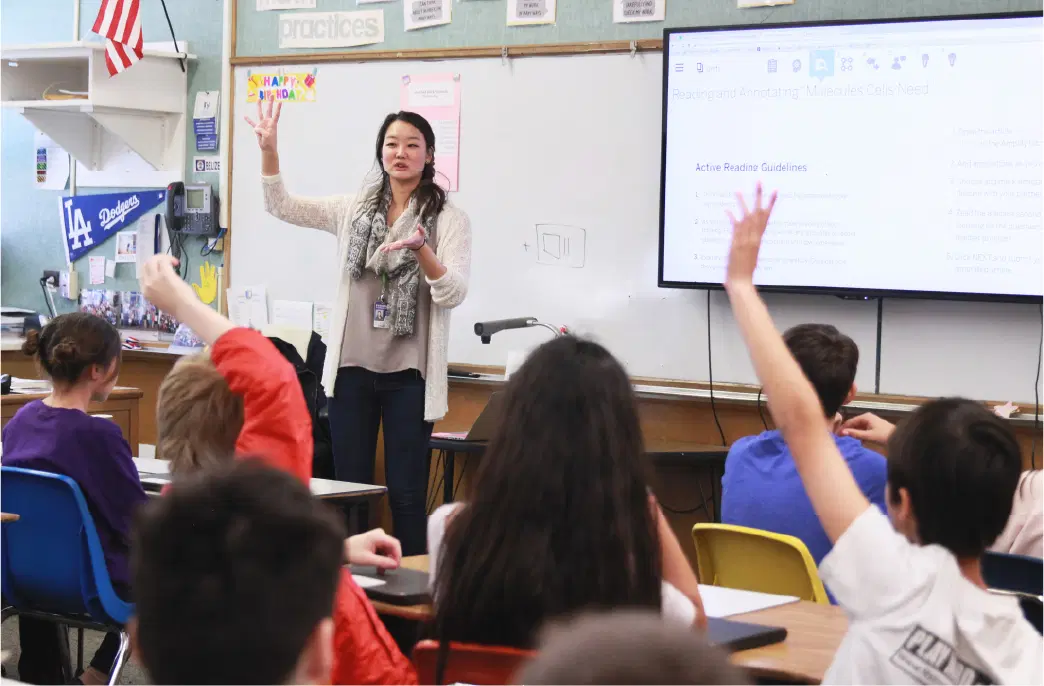
Amplify Science: California Edition is an immersive and engaging core curriculum authored by UC Berkeley’s Lawrence Hall of Science and built specifically for the NGSS.

K–8 Integrated Course Model

Grades 6–8 Integrated Model

Grades 6–8 Discipline Specific Model

Amplify Science

A new core curriculum designed from the ground up for the NGSS.

Preview the Student Books and Student Investigation Notebooks

Grades 6–8 Integrated Model

Spanish Student Books and Student Investigation Notebooks

Amplify Science

A new core curriculum designed from the ground up for the NGSS.

Preview the Student Books and Student Investigation Notebooks

Spanish Student Books and Student Investigation Notebooks

Amplify Science

A new core curriculum designed from the ground up for the NGSS.

Preview the Student Books and Student Investigation Notebooks

Grades 6–8 Integrated Model

NGSS Benchmark Assessments

The Amplify NGSS Benchmark Assessments were authored by Amplify and were not developed as part of the Amplify Science program or created by the Lawrence Hall of Science.

Amplify and SFUSD Partnership

We recognize and respect the unique differences of each of our partnering districts—and that includes San Francisco USD.

Out of the box, Amplify Caminos offers districts a rich, comprehensive, research-based SELA experience. That said, no two districts are exactly alike. To that end, we are committed to working with San Francisco USD to ensure that Amplify Caminos addresses the needs of your community. This includes providing implementation guidance and support, as well as collaborating with your staff to determine which domains need to be modified or exchanged.

What is Amplify Caminos?

Amplify Caminos is a core Spanish language arts program for grades TK–5 that delivers:

  • Authentic instruction built from the ground up for the Spanish language.
  • A unique research-based approach truly built on the Science of Reading.
  • A combination of explicit foundational skills with meaningful knowledge-building.
  • Embedded support and differentiation that gets all students reading grade-level texts together.
  • Opportunities for students to see the strengths and experiences that all people share while also celebrating each others’ unique identities and experiences.


Watch the video below to learn more about Amplify Caminos for Grades K–2.


Watch the video below to learn more about Amplify Caminos for Grades 3–5.

How does Amplify Caminos work?

Amplify Caminos is built on the science of how kids learn to read—in Spanish.

Amplify Caminos is all about helping you teach students how to read, all while giving them authentic and engaging reasons to read. That’s why Amplify Caminos develops foundational skills and builds knowledge in tandem.

  • Knowledge: Through complex and authentic Spanish read-alouds with an emphasis on classroom interactivity, oral comprehension, and contextual vocabulary, students start to build their awareness of the world around them—and the way the reading skills they’re building give them access to it.
  • Skills: Starting with the sounds at the core of the Spanish
    language, students practice their phonemic awareness, handwriting skills, vocabulary, spelling, and grammar. Through daily practice, students become aware of the connection between reading and writing, building confidence as they go.
Illustration depicting the flow of genetic information, represented by ribbons transitioning from dna to rna, connected to various educational images and diagrams.

Respecting the development differences between grade ranges, Amplify Caminos teaches foundational skills and background knowledge as two distinct strands in grades K–2, and combines them into one integrated strand in grades 3–5.

Grades K–2:
Every day, students in grades K–2 complete one full lesson that explicitly and systematically builds foundational reading skills in the Amplify Caminos Lectoescritura strand, as well as one full lesson that builds robust background knowledge to access complex text in the Amplify Caminos Conocimiento strand. Through learning in each of these strands, students develop the early literacy skills necessary to help them become confident readers and build the context to understand what they’re reading.

Grades 3–5:
In grades 3–5, the Amplify Caminos Lectoescritura and Conocimiento strands are integrated in one set of instructional materials. Lessons begin to combine skills and knowledge with increasingly complex texts, close reading, and a greater writing emphasis. Students can then use their skills to go on their own independent reading adventures.

What do Amplify Caminos students explore?

Amplify Caminos builds students’ knowledge about the world.

In addition to teaching all students to crack the written code (which is vital for equity), the Amplify Caminos program helps students see the strengths and experiences we all share while celebrating their own unique identities and experiences.

This is accomplished through the exploration of topics and text that feature people who resemble students and familiar situations or experiences while also exposing them to people whose appearances, lives, beliefs, and backgrounds differ from their own.
 

Engaging domains

Amplify Caminos builds knowledge coherently across subjects and grades.

Throughout the program, students use their skills to explore domains that relate to storytelling, science, and the history of our world as seen through the eyes of many different groups.

Carefully selected to build from year-to-year, our grade-appropriate topics help students make and deepen connections while also reading, writing, and thinking creatively and for themselves.

Curriculum flowchart for Kindergarten to Grade 5, showing subject progression in language, science, and social studies, with highlighted and connected units.

New Knowledge Research Units for Grades K–5

Our brand-new Knowledge Research units carry forward Amplify Caminos’ powerful and proven instructional approach while also:

  • Adding more diversity. The rich topics and highly visual components featured in these units provide students with even more “windows and mirrors” and perspectives as they work to build knowledge.
  • Adding more authentic literature. Each new research unit revolves around a collection of high-interest authentic trade books that will spark more curiosity and inspire more inquiry.
  • Adding more flexibility. Units can be implemented for extended core instruction during flex periods, district-designated Pausing Points, or enrichment periods.

Units cover a variety of rich and relevant topics:

With these new units, students will soar to new heights with Dr. Ellen Ochoa, Amelia Earhart, and the Tuskegee Airmen. They’ll feel the rhythm as they learn about Jazz legends Miles Davis, Tito Puente, and Duke Ellington. And they’ll explore the far reaches of the world with Jacques Cousteau, Matthew Henson, and Eugenie Clark.

  • Grade K: El arte y el mundo que nos rodea
  • Grade 1: Cuentos de aventuras: relatos desde los confines de la Tierra
  • Grade 2: ¡A volar! La era de la aviación
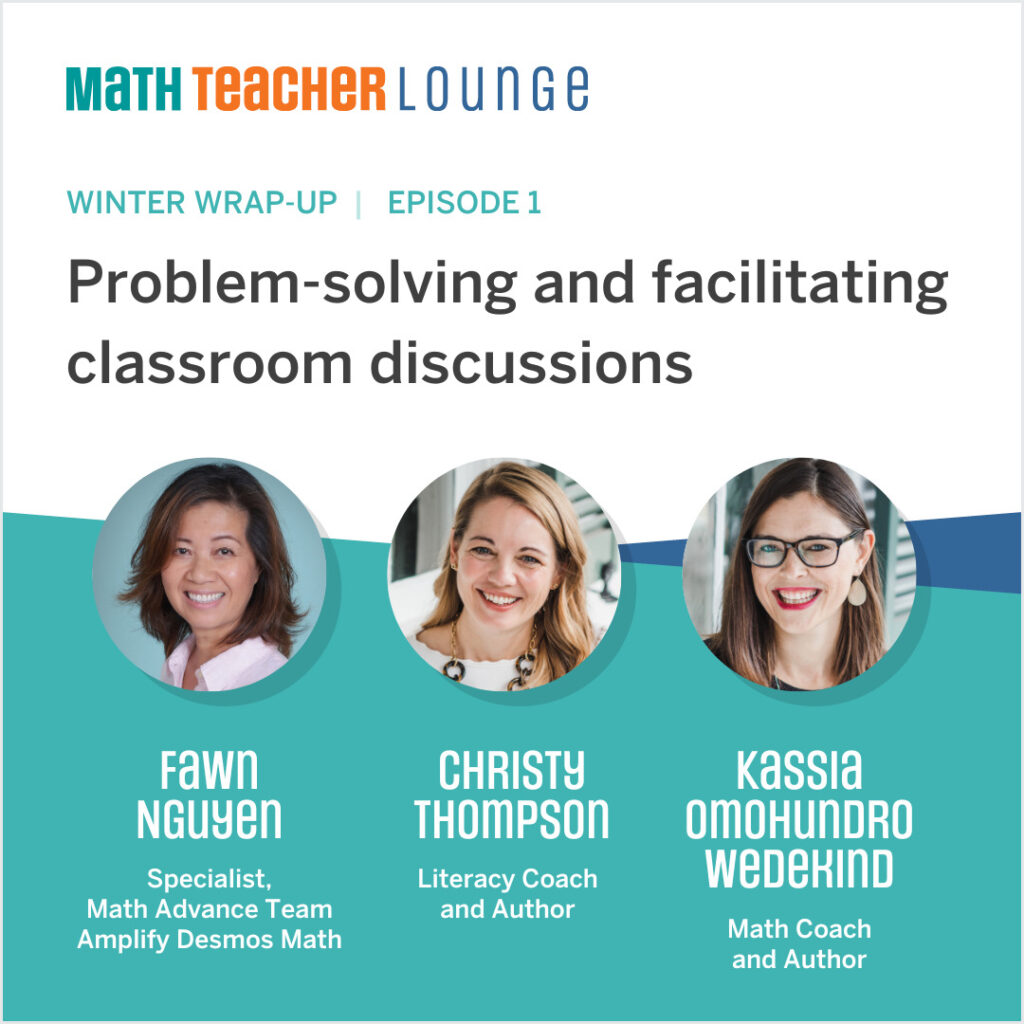
  • Grade 3: Jazz y más
  • Grade 4: Energía: pasado, presente y futuro
  • Grade 5: Más allá de Juneteenth: de 1865 al presente

Units will be made available in English and Spanish, and will include the following components:

Why we added this unit:
“Every child is an artist,” said Picasso, meaning that every child uses art to explore and understand the world around them. El arte y el mundo que nos rodea honors that truth by introducing Kindergarten students to some of the ways in which artists have explored and understood the world around them.

This domain introduces students to artists from different time periods, countries, and cultures. Throughout the unit, students learn about different kinds of art and how artists use the world around them as they make art. They also connect this to what they have already learned about the earth, plants, and animals in other Caminos domains: GranjasPlantas, and Cuidar el planeta Tierra. In addition, students connect this to what they have learned about sculptors in the Presidentes y símbolos de los Estados Unidos domain. As they explore different artists and artistic traditions, they develop their ideas about how humans are connected to each other and to the world around them.

As you read the texts in this unit, students may observe ways in which the characters or subjects are both similar to and different from students. This is a good opportunity to teach students awareness and sensitivity, building on the idea that all people share some things in common, even as they have other things that make them unique. This unit also offers an excellent opportunity to collaborate with your school’s art teacher, as many lessons have suggested activities to help students understand the kind of art they are studying.

Within this unit, students have opportunities to:

  • Use details to describe art.
  • Identify three ways to create art.
  • Identify characteristics of cave art.
  • Sequence the steps of making pottery.
  • Describe how artists can create work connected to the world around them.
  • Describe what makes Kehinde Wiley’s portraits unique.
  • Explain how the texture of a surface can affect artwork created on it.
  • Explain what a sculpture is.
  • Describe what makes James Turrell’s artwork about the sky unique.
  • Explain what a museum is and what kinds of things you can see or do there.

Trade books in this unit:
Instruction in this unit revolves around the following collection of high-interest authentic trade books. One copy of each trade book is included with the unit materials.

  • Georgia O’Keeffe por Erica Salcedo
  • Yayoi Kusama: De aquí al infinito por Sarah Suzuki
  • Tejedora del arcoíris por Linda Elovitz Marshall
  • Las tijeras de Matisse por Jeanette Winter
  • El museo por Susan Verde
  • Quizás algo hermoso: Cómo el arte transformó un barrio por F. Isabel Campoy

Sample materials:
Take a sneak peek at the rich instruction and engaging activities for this unit by viewing the PDFs below.

Why we added this unit:
This domain introduces students to adventure stories set around the world and challenges students to dig into the adventures through research. By listening to the Read-Alouds and trade books, students increase their vocabulary and reading comprehension skills, learn valuable lessons about perseverance and teamwork, and become familiar with gathering information for research.

In this unit, students study the careers of real-world explorers Dr. Eugenie Clark and Sophia Danenberg, marvel at the inventions of Jacques Cousteau, think critically about how teamwork and collaboration can make greater adventures possible, learn about the science and technology that enable adventures, and research some of the ways humans have confronted challenges at the edges of the world, from the oceans below to space above.

Each lesson in the domain builds students’ research skills as they ask questions, gather information, and write a paragraph about their findings. Students share what they have learned about adventures in an Adventure Gallery Walkthrough. By taking on the persona of one of the adventurers they meet in the Read-Alouds and trade books, students deliver their final paragraphs as if they are a “speaking portrait” of that person. Students are invited to dress up as that adventurer if they desire.

In addition, teachers can set aside time outside the instructional block to create the picture frames students will hold as they present to the Adventure Gallery Walk guests. Frames can be made from shirt boxes, cardboard, construction paper, or any art supplies that are on hand. This might be an opportunity to collaborate with the school’s art department if resources are available. Another option is to ask students to make their frames at home with their caregivers. On the day of the Adventure Gallery Walk, students will be the hosts and take on specific jobs, such as welcoming the guests, describing their work throughout the unit, and pointing out the areas of study on the domain bulletin board. You can find a complete list of student jobs in Lesson 13.

How this unit builds knowledge:
This unit builds upon the following Caminos units that students will have encountered in the previous grade.

  • Rimas y fábulas infantiles (Kindergarten)
  • Cuentos (Kindergarten)

The specific core content targeted in these domains is particularly relevant to the Read-Alouds students will hear in Cuentos de aventuras: relatos desde los confines de la Tierra. The background knowledge students bring to this unit will greatly enhance their understanding of the trade books used in this unit.

Trade books in this unit:
Instruction in this unit revolves around the following collection of high-interest authentic trade books. One copy of each trade book is included with the unit materials.

  • My Name Is Gabito/Me llamo Gabito por Monica Brown
  • Galápagos Girl/Galapagueña por Marsha Diane Arnold
  • My Name Is Gabriela/Me llamo Gabriela por Monica Brown
  • El viaje de Kalak por María Quintana Silva y Marie-Noëlle Hébert
  • Señorita Mariposa por Ben Gundersheimer
  • Sharuko, el arqueólogo peruano/Peruvian Archaeologist Julio C. Tello por Monica Brown
  • Abuelita fue al mercado por Stella Blackstone

Sample materials:
Take a sneak peek at the rich instruction and engaging activities for this unit by viewing the PDFs below.

Why we added this unit:
With this domain, students head up, up, and away with an introduction to the soaring history of aviation. Students learn the stories of early aviators, such as the Montgolfier brothers, the Wright brothers, Aida de Acosta, and Amelia Earhart.

During the unit, students study the science of flight, including the physics concept of lift, and research the social impacts of the world of flight. Finally, students let their research skills take flight as they explore key figures from the world of aviation.

The lessons in this domain build on earlier Grade 2 Caminos domains about the westward expansion, early Greek civilizations, and Greek myths, and lay the foundation for learning about other periods of world history in future grades.

How this unit builds knowledge:
This unit builds upon the following Caminos units that students will have encountered earlier in the year.

  • La civilización griega antigua (Grade 2)
  • Mitos griegos (Grade 2)
  • La expansión hacia el oeste (Grade 2)

The specific core content targeted in these domains is particularly relevant to the Read-Alouds students will hear in ¡A volar! La era de la aviación. The background knowledge students bring to this unit will greatly enhance their understanding of the trade books used in this unit.

Trade books in this unit:
Instruction in this unit revolves around the following collection of high-interest authentic trade books. One copy of each trade book is included with the unit materials.

  • ¡A volar! Todo sobre aviones por Jennifer Prior
  • Amelia sabe volar por Mara dal Corso
  • Héroes de la aviación que cambiaron el mundo por Dan Green
  • El niño que alcanzó las estrellas por José M. Hernández
  • La niña que aprendió a volar por Sylvia Acevedo
  • Buenas Noches Capitán Mamá por Graciela Tiscareño-Sato

Sample materials:
Take a sneak peek at the rich instruction and engaging activities for this unit by viewing the PDFs below.

Why we added this unit:
This domain teaches students about the vibrant music, poetry, and culture of the Jazz Age in the United States. Students learn about famous writers and musicians like Langston Hughes, Louis Armstrong, Billie Holiday, Melba Liston, Tito Puente, and Miles Davis. They study how the jazz art form took root in the South, then spread to the North to become the sound of the Harlem Renaissance, eventually connecting people around the world in musical expression.

During this unit, students perform guided research to further explore both the history of jazz and what jazz is today. They develop research skills and then use those skills to find deeper connections between the stories and music of the Jazz Age and music today. As students learn about the world of jazz, they collaborate and share ideas with their classmates. They also practice sharing feedback focused on their written work, and, at the end of the unit, students present their research to the group.

The lessons give students opportunities to dive into the rhythms and stories of jazz, utilizing the knowledge sequence in this unit to:

  • Collaboratively generate research questions about jazz, jazz musicians, contemporary musicians from the state where they live or have lived, and the evolution of jazz music.
  • Utilize Read-Alouds, independent reading, and partner reading to learn about the Jazz Age, the Harlem Renaissance, jazz music, and biographies of celebrated jazz musicians and writers.
  • Research the answers to their generated questions, gather information, write a short research essay about a famous jazz musician, write a short essay about a contemporary musician from the state where they live or have lived, and give a presentation about their research.

How this unit builds knowledge:
Within this unit, students have opportunities to:

  • Ask relevant questions and make pertinent comments
  • Identify details in texts
  • Determine key ideas of texts by evaluating details
  • Make text-based inferences
  • Generate questions based on prior knowledge and gathered information
  • Synthesize details across texts to demonstrate comprehension
  • Discuss and explain an author’s purpose
  • Identify and cite reliable primary and secondary sources of information
  • Compose a well-organized and focused informative essay
  • Make connections between topics
  • Present information using appropriate media

Trade books in this unit:
Instruction in this unit revolves around the following collection of high-interest authentic trade books. One copy of each trade book is included with the unit materials.

  • ¡Esquivel! Un artista del sonido de la era espacial por Susan Wood
  • Ray Charles por Sharon Bell Mathis
  • Tito Puente, el Rey del Mambo por Monica Brown
  • Me llamo Celia, la vida de Celia Cruz por Monica Brown
  • ¡Azúcar! por Ivar Da Coll

In this unit, students also read the poem “Harlem” by Langston Hughes. (Available for free through the Academy of American Poets website and the Poetry Foundation website, with recorded audio available through the website for John Hancock College Preparatory High School.)

Sample materials:
Take a sneak peek at the rich instruction and engaging activities for this unit by viewing the PDFs below.

Why we added this unit:
With this domain, students become tomorrow’s problem solvers in this study of energy in the United States. Analytical reading skills are developed by examining the challenges of early energy innovators. Students then read about current energy practices and young energy change-makers across the world.

Throughout the unit, students conduct research into different sources of energy and present a proposal, putting them in the shoes of future energy innovators. They also use the knowledge sequence in this unit to:

  • Collaboratively analyze texts to identify cause-effect and problem-solution relationships.
  • Generate questions and conduct research about energy.
  • Write an opinion essay making their case for a fuel of the future.
  • Create energy proposals using primary and secondary resources.

How this unit builds knowledge:
This unit builds upon the following Caminos units that students will have encountered in previous grades as well as earlier in the year.

  • Plantas (Grade K)
  • La historia de la Tierra (Grade 1)
  • ¡Eureka! Estudiante inventor (Grade 4)

The specific core content targeted in these domains is particularly relevant to the Read-Alouds students will hear in Energía: pasado, presente y futuro. The background knowledge students bring to this unit will greatly enhance their understanding of the trade books used in this unit.

Trade books in this unit:
Instruction in this unit revolves around the following collection of high-interest authentic trade books. One copy of each trade book is included with the unit materials.

  • La historia de los combustibles fósiles por William B. Rice
  • El niño que domó el viento por William Kamkwamba y Bryan Mealer

Sample materials:
Take a sneak peek at the rich instruction and engaging activities for this unit by viewing the PDFs below.

Why we added this unit:
Within this domain, Students learn about General Granger’s announcement in Galveston, Texas on June 19, 1865, a day marked in history as Juneteenth. Texts and multimedia sources will support foundational knowledge-building about the end of slavery in the United States. A review of the first freedom announcement, President Lincoln’s Emancipation Proclamation, provides students with background knowledge to further emphasize the significance of Juneteenth in American history.

This unit also takes students on a journey beyond Juneteenth, as they study specific contributions of African Americans from 1865 to the present day. Students participate in a virtual field trip to Emancipation Park in Houston, Texas and use the knowledge sequence in this unit to:

  • Collaboratively generate research questions about Juneteenth, The Great Migration, innovators and inventors, education, the humanities, activists, and allies.
  • Use Read-Alouds, independent, and partner reading to learn about African American contributions from 1865 to the present.
  • Research to find answers to their generated questions, gather information, and write a four-chapter Beyond Juneteenth book.

How this unit builds knowledge:
This unit builds upon the following Caminos units that students will have encountered in previous grades.

  • Los nativos americanos (Grade K)
  • Una nueva nación: la independencia de los Estados Unidos (Grade 1)
  • La Guerra Civil de los Estaods Unidos (Grade 2)
  • La inmigración (Grade 2)
  • Los nativos americanos (Grade 5)

The specific core content targeted in these domains is particularly relevant to the Read-Alouds students will hear in Más allá de Juneteenth: de 1865 al presente
. The background knowledge students bring to this unit will greatly enhance their understanding of the trade books used in this unit.

Trade books in this unit:
Instruction in this unit revolves around the following collection of high-interest authentic trade books. One copy of each trade book is included with the unit materials.

  • Martí’s Song for Freedom/Martí y sus versos por la libertad escrito por Emma Otheguy
  • ¡Celebremos Juneteenth! escrito por Carole Boston Weatherford
  • Side by Side/Lado a Lado: The Story of Dolores Huerta and Cesar Chavez/La Historia de Dolores Huerta y César Chávez escrito por Monica Brown
  • Canto de alabanza para el día: Poema para la ceremonia inaugural del mandato de Barack Obama escrito por Elizabeth Alexander, traducido por Rodrigo Rojas

Sample materials:
Take a sneak peek at the rich instruction and engaging activities for this unit by viewing the PDFs below.

Diverse texts

Amplify Caminos puts a variety of texts in the hands of students every day.

Amplify Caminos includes both transadaptations and authentic texts written by Latin American and Spanish authors. In addition to featuring a diverse range of authors and topics, our texts represent individuals and characters with a broad range of identity factors, including socioeconomic status, age, ability, race, ethnicity, country of origin, religion, and more.

Amplify Caminos texts include:

  • Authentic literature: Authentic literature exposes students to a variety of text types and perspectives to deepen their knowledge of fascinating topics in social studies, science, literature, and the arts. Authentic texts support text-to-self, text-to-world, and text-to-text connections for readers.
  • Decodable Student Readers: Amplify Caminos is built on the conviction that equitable instruction is vital to an effective program. Decodable Student Readers at grades K–2 are newly re-designed to celebrate students’ diverse experiences and feature individuals with a broad range of identity factors, including socioeconomic status, age, ability, race, ethnicity, country of origin, religion, and more.
  • ReadWorks® texts: Amplify and ReadWorks have partnered to deliver high-quality texts curated to support the Amplify Caminos Knowledge Sequence and to extend student learning. Texts include high-interest nonfiction articles in topics in social studies, science, literature, and the arts. These texts are accompanied by vocabulary supports and standards-aligned formative assessment opportunities. Teachers can monitor their students’ progress using the ReadWorks reporting features.
Three book covers displaying children's books in spanish, each featuring colorful and stylized illustrations related to cultural stories.

Amplify Caminos Trade Book Collection Guide

Each book in our authentic literature collection was selected specifically to support and enhance the content of the K-2 Conocimiento Strand. These anchor texts are intended for use as an introduction to each domain—engaging students, piquing their curiosity, and building initial background knowledge—before diving into the deeper content of the domain Read-Alouds.

Every trade book has an instructional guide that includes the following:

  • Author and illustrator
  • Book summary
  • The Essential Question of the Knowledge domain, connecting the book to the domain
  • Key Tier 2 and Tier 3 vocabulary words found in the book
  • A group activity to reinforce and extend students’ knowledge and understanding
  • A performance task to help gauge students’ comprehension of concepts in the text
  • Writing prompts to expand understanding and critical thinking
  • Text complexity ratings and descriptors for quantitative, qualitative, and reader/task categories

Download the Amplify Caminos Trade Book Collection Guide for Grades K–2.

Detailed information about text complexity ratings and descriptors; additional uses for the books before, during, and after domain instruction; and the complete list of domains and books for each grade level can be found in the More About the Books section of this guide.

What makes Amplify Caminos different?

Built on the Science of Reading

Built out of the latest research in the Science of Reading, Amplify Caminos delivers explicit instruction in both foundational literacy skills (systematic phonics, decoding, and fluency) and background knowledge in grades K–2 with an integrated approach to explicit instruction in grades 3–5.

Three connected orange blocks labeled

Explicit systematic skills instruction

The skills instruction in Amplify Caminos was distinctly developed with the Spanish language in mind. Its foundational lessons are specific to the language, rather than a direct translation from Amplify CKLA’s English skills instruction.

Reading instruction begins with the vowels first, then the most common consonants, and finally the least common consonants. Students will blend and segment sounds to form syllables, and syllables to form words.

Although Spanish has a highly predictable orthography, there are a few silent letters (h is always silent, u is silent after g or q), as well as letters that can make different sounds, depending on the letters that follow them. For that reason, syllables with these letters are taught somewhat later in the progression. The same is true for syllables with infrequently occurring consonants, such as z, k, x, and w.

Coherent knowledge instruction

While students are learning how to read, the Conocimiento strand gives them authentic and engaging reasons to read.

Amplify Caminos uses spiral learning to reinforce every student’s ability to develop skills like reading, writing, speaking, and listening in Spanish that can be transferred to English. As students engage with their lessons, they explore the similarities and differences in grammar, vocabulary, writing, and language use between Spanish and English. This bridge helps students learning two languages to strengthen their knowledge in both.

Through cross-curricular content, students explore units that relate to storytelling, science, and the history of our world in a holistic and thoughtful way. With these units, you’ll bring the world to your students, showing them how reading can become an exciting, rewarding, and useful part of their lives.

A collage of illustrated book covers, including themes of Don Quixote, space exploration, and anthropomorphic animals in various scenarios, all enriched with Spanish language elements.

Embedded differentiation for all learners

Amplify Caminos provides built-in differentiation strategies and supports in every lesson.

  • Apoyo a la enseñanza y desafío: Support and Challenge suggestions in every lesson provide assistance or opportunities for more advanced work toward the goal of the lesson.
  • Notas culturales: These point-of-use notes provide additional information about the traditions, foods, holidays, word variations, and more from across the Spanish-speaking world.
  • Apoyo adicional: Every lesson in the Lectoescritura (Skills) Strand provides additional support activities suggested to reinforce foundational skills instruction. These activities can be given to any student who requires extra help, including students with special needs.

Systematic and cohesive writing instruction

Writing instruction in Amplify Caminos builds systematically and cohesively within and across grades.

In Grades K-2, writing mechanics—including handwriting and spelling—are taught in the Amplify Caminos Lectoescritura strand. Starting in Grade 1, instruction includes four steps in the writing process: planning, drafting, editing, and publishing and features lessons that have modeling, collaboration, and sharing. As students gain skills and confidence, they are able to take on more of these steps independently. Students learn to use planning techniques, including brainstorming and graphic organizers.

Beginning in Grade 4, the Amplify Caminos writing process expands to also include sharing and evaluating. In Grades 4 and 5, the writing process is no longer conceptualized as a series of scaffolded, linear steps (an important change from the Grade 3 writing process). Rather, students move between components of the writing process in a flexible manner, similar to the process mature and experienced writers follow naturally.

young male students writing with a pencil

Amplify Caminos’ writing instruction provides a clear progression through the text types in each grade.

Because Amplify Caminos has two strands of lessons in Grades K-2, Lectoescritura and Conocimiento, students are exposed to both narrative and informational texts throughout the year. In Grades 3-5, the integrated units feature study in literary, informational, or a mix of both types of texts, depending on the content of the unit.

  • Grades K–2 introduce and establish the key elements of each text type, allowing students to gain comfort and confidence writing narratives, opinions, and informative texts. This enables students to practice thinking about content in different ways, offering more depth and breadth to their understanding of core content and of the writing text types.
  • By Grade 3, students will have gained significant practice in narrative, opinion/argumentative, and informational/explanatory forms of writing and will continue to apply those skills through Grade 5.

How does Amplify Caminos integrate with the other parts of the literacy system?

Amplify Caminos + mCLASS® Lectura

Achieve complete parity between English and Spanish assessments with mCLASS Lectura for K–6. mCLASS Lectura allows teachers to connect with their Spanish-speaking students face-to-face, one-on-one, and in the language most comfortable to them. The result? Valid and reliable student data reports
available in both English and Spanish, enabling teachers to pinpoint where their Spanish-speaking or emergent bilingual students really are in their skill development and what instruction to prioritize.

Reading assessment validated for benchmark, progress monitoring, and dyslexia screening

Amplify Caminos + Amplify Reading

Amplify Reading is an engaging, adaptive digital program that extends the learning in Amplify Caminos. Amplify Reading offers support to a large sub-group of English learners (ELs) through Spanish voice-over. Spanish voiceover instructions are available in vocabulary and sentence-level comprehension games so ELs can build their vocabulary, language, and critical comprehension skills before moving into analyzing complex texts

Spanish Support

Demo access and sample materials

Ready to explore on your own? First, watch the videos below to learn about the program’s components and how to navigate the digital platform.

Physical materials walkthrough video


Digital navigation video

Demo access

Next, follow the instructions below to access your demo account.

Laptop screen displaying a login page for
  • Click the CKLA and Caminos Demo button below.
  • Select Log in with Amplify.
  • To explore as a teacher, enter this username: t1.sfusdreviewer@demo.tryamplify.net
  • To explore as a student, enter this username: s1.sfusdreviewer@demo.tryamplify.net
  • Enter the password: Amplify1-sfusdreviewer
  • Click the Programs and apps menu
  • Select CKLA Teacher Resource Site
  • Select the desire grade level
  • Use the toggle to switch between English (CKLA) and Spanish (Caminos) resources.

Sample materials

Finally, click on the grade levels below to explore your requested sample units.

Each book in our authentic literature collection was selected specifically to support and enhance the content of the K-2 Conocimiento Strand. These anchor texts are intended for use as an introduction to each domain—engaging students, piquing their curiosity, and building initial background knowledge—before diving into the deeper content of the domain Read-Alouds.

Every trade book has an instructional guide that includes the following:

  • Author and illustrator
  • Book summary
  • The Essential Question of the Knowledge domain, connecting the book to the domain
  • Key Tier 2 and Tier 3 vocabulary words found in the book
  • A group activity to reinforce and extend students’ knowledge and understanding
  • A performance task to help gauge students’ comprehension of concepts in the text
  • Writing prompts to expand understanding and critical thinking
  • Text complexity ratings and descriptors for quantitative, qualitative, and reader/task categories

Download the Amplify Caminos Trade Book Collection Guide for Grades K–2.
Detailed information about text complexity ratings and descriptors; additional uses for the books before, during, and after domain instruction; and the complete list of domains and books for each grade level can be found in the More About the Books section of this guide.

Additional resources

Grade 6

Module 1: Composing and Decomposing

Topic 1: Factors and Multiples

MATHbookLesson 1: Taking Apart Numbers and ShapesProducts and Sums
MATHbookLesson 5: Yours IS to Reason Why!Fill the Gap

Topic 2: Area, Volume, and Surface Area

MATHbookLesson 1: All About That Base….and HeightExploring Triangles
Triangles and Parallelograms
MATHbookLesson 2: Slicing and Dicing: Composit FigureShapes on a Plane
Letters

Topic 3: Decimals

MATHbookLesson 1: You Have a PointDishing Out Decimals
MATHbookLesson 2: Get In LineDecimal Diagrams and Algorithms
MATHbookLesson 4: Dividend In the HouseMovie Time

Topic 4: Fraction by Fraction Division

MATHiaLesson 1: Representing Fraction DivisionFlour Planner

Topic 5: Area of Triangles and Quadrilaterals

MATHiaLesson 2: Developing Area FormulasExploring Parallelograms,
Part 1
MATHiaLesson 3: Calculating Areas of Various FiguresExploring Parallelograms,
Part 2

Off the Grid, Part 1
Off the Grid, Part 2

Topic 6: Composite Figures

MATHiaLesson 2: Calculating Area of Composite FiguresPile of Polygons

Topic 8: Surface Area of Regulat Prisms and Pyramids

MATHiaLesson 1: Determing Surface Area Using NetsRenata’s Stickers

Module 2: Relating Quantitites

Topic 1: Ratios

MATHbookLesson 2: Going StrongPizza Maker
MATHbookLesson 3: Different but the SamePizza Maker
MATHbookLesson 4: A trip to the MoonFruit Lab

Topic 2: Percents

MATHbookLesson 2: Warming the BenchLucky Duckies

Topic 3: Using Tables to Represent Equivalent Ratios

MATHbookLesson 1: Many ways to MeasureMany Measurements
Model Trains
MATHbookLesson 2: What is the Best Buy?World Records
MATHbookLesson 3: A Trip to the MoonWelcome to the Robot Factory
MATHiaLesson 2: Using Tables to Determine Equivalent RatiosDisaster Preparation
MATHiaLesson 3: Problem Solving with Equivalent Rations and Rates using TablesDisaster Preparation

Topic 9: Introduction to Unit Rate

MATHiaLesson 2: Determining and Comparing RatesSoft Serve
More Soft Serve

Module 3: Determining Unknown Values

Topic 2: Equations

MATHbookLesson 2: Double TalkWeight for It
MATHbookLesson 3: Play It in ReverseWeight for It
MATHbookLesson 4: One, None, or a TonTunnel Travels
MATHbookLesson 5: Getting RealFive Equations
Swap and Solve

Topic 3: Graphing Quantitative Relationships

MATHbookLesson 3: Planes, Trains, and PaychecksSubway Fares

Topic 6: Solving One-Step Addition and Subtraction Equations

MATHiaLesson 1: Exploring One-Step Equations with Double-Number LinesHanging Around

Topic 7: Solving One-Step Multiplication and Division Equations

MATHiaLesson 1: Using Double Number Lines to Solve One-Step Multiplicaiton EquationsHanging Around

Topic 8: Solving One-Step Equations with Decimals and Fractions

MATHiaLessons 1-4:Hanging Around

Module 4: Moving Beyond Positive Quantities

Topic 1: Signed Numbers

MATHbookLesson 1: Signed NumbersCan You Dig It?

Topic 1: Introduction to Negative Numbers

MATHiaLesson 2: Representing Integers on Number LinesOrder in the Class

Module 5: Describing Variability of Quantities

Topic 1: The Statical Process

MATHbookLesson 3: SkyscrapersThe Plot Thickens

Topic 2: Numerical Summaries of Data

MATHbookLesson 1: In the MiddleToy Cars
MATHbookLesson 3: March MADnessHoops

Topic 2: Analyzing Numeric Data Displays

MATHiaLesson 1: Creating Dot PlotsMinimum Wage

Grade 7

Module 1: Thinking Proportionally

Topic 1: Circles and Ratios

MATHbookLesson 1: Pi: The Ultimate RatioMeasuring Around
MATHbookLesson 2: That’s a Spicy Pizza!Why Pi?
MATHbookLesson 2: Circular ReasoningArea Challenges
MATHbook
Lesson 4: Pound for Pount, Inch for Inch
Scaling Machines
Tiles
Scaling Robots

Topic 2: Proportionality

MATHbookLesson 1: Poultry in MotionPaint
MATHbookLesson 6: Minding Your Ps and QsTwo and Two

Topic 3: Proportional Relationships

MATHbookLesson 1: Markups and MarkdownsAll the Equations
100%
MATHbookLesson 4: More Ups and DownsMosaics
More and Less

Topic 3: Scale and Scale Drawing

MATHiaLesson 1: Critical Attributes of Similar FiguresScale Factor Challenges
MATHiaLesson 3: Calculating Measurements Using ScaleMake it Scale
Will It Fit

Topic 4: Ratio Representations

MATHiaLesson 2: Determining Characteristics of Graphs of Proportional RelationshipsDinoPops

Topic 11: Introducing Proportions to Solve Percent Problems

MATHiaLesson 2: Solving Simple Percent ProblemsBack in My Day

Topic 13: Percent Increase and Percent Decrease

MATHiaLesson 1: Calculating Percent Change and Final AmountsPercent Machines

Module 2: Operating with Signed Numbers

Topic 1: Adding and Subtracting Rational Numbers

MATHbookLesson 1: Math FootballFloats and Anchors
MATHbookLesson 2: Walk the LineMore Floats and Anchors
MATHbookLesson 4: What’s the Difference?More Floats and Anchors

Topic 5: Rewriting Expressions

MATHiaLesson 2: Evaluating Simple Numberic Expressions with IntegersInteger Puzzles

Topic 6: Using Number Properties to Interpret Expressions with Signed Numbers

MATHiaLesson 2: Operating with Signed DecimalsDraw Your Own

Module 3: Reasoning Algebraically

Topic 1: Two-Step Expressions and Equations

MATHbookLesson 4: Formally YoursKeeping it True

Topic 2: Multiple Representations of Equations and Inequalities

MATHbookLesson 3: Solving Inequalities with Inverse OperationsUnbalanced Hangers
MATHbook
Lesson 4: Deep Dive
Budgeting
Write Them and Solve Them

Topic 1: Rewriting Algebraic Expressions

MATHiaLesson 2: Rewriting Algebraic Expressions Involving Integer CoefficientsCollect the Squares

Topic 8: Solving Inequalities with Inverse Operations

MATHiaLesson 3: Solving Two-Step InequalitiesI Saw the Signs
Shira the Sheep

Module 4: Analyzing Populations and Probabilities

Topic 1: Introduction to Probability

MATHbookLesson 1: Rolling, Rolling, Rolling…How Likely
Prob-bear-bilities
MATHbookLesson 2: Give the Model a ChanceIs It Fair?

Topic 3: Drawing Inferences

MATHbookLesson 2: Tiles, Gumballs, and PumpkinsCrab Island

Module 5: Constructing and Measuring

Topic 1: Angles and Triangles

MATHbookLesson 2: Special DeliveryFriendly Angles
MATHbookLesson 3: Consider Every SideCan You Build It

Topic 1: Special Angle Relationships

MATHiaLesson 2: Exploring Angle RelationshipsMissing Measures
MATHiaLesson 3: Solving for Angle MeasuresMissing Measures

Grade 8

Module 1: Transforming Geometric Objects

Topic 1: Rigit Motion Transformaitons

MATHbookLesson 1: Patty Paper, Patty PaperTransformers
MATHbookLesson 2: Slides, Flips, and SpinsSpinning, Flipping, Sliding
MATHbookLesson 3: Lateral MovesGetting Coordinated, Part 1
Getting Coordinated, Part 2
MATHbookLesson 4: Mirror, MirrorGetting Coordinated, Part 1
Getting Coordinated, Part 2
MATHbookLasson 5: Half Turnsa and Quarter TurnsGetting Coordinated, Part 1
Getting Coordinated, Part 2
MATHbookLesson 6: Every Which WayTransformation Golf

Topic 2: Dilations

MATHbookLesson 1: Pinch-Zoom GeometrySketchy Dilations
MATHbookLesson 2: Rising, Running, Stepping, ScalingDilation Mini Golf
MATHbookLesson 3: From Here to ThereSocial Scavenger Hunt

Topic 3: Line and Angle Relationships

MATHbookLesson 2: Crisscrsoss ApplesaucePuzzling It Out

Topic 1: Rigid Motion in the Coordinate Plane

MATHiaLesson 1: Experimenting with Rigid MotionMoving Day

Module 2: Modeling Linear Relationships

Topic 1: From Proportions to Linear Relationships

MATHbookLesson 2: Jack and Jill Went Up the HillTurtle Time Trials
MATHbookLesson 4: Up, Down, and All AroundTranslations

Topic 2: Modeling Linear Relationships

MATHbookLesson 2: Been There, Done That, Got the T-shirtWater Cooler
MATHbookLesson 3: Dining, Dancing, DrivingFlags
Ups and Downs
MATHbookLesson 4: Derby DayStacking Cups (Optional)

Topic 3: Systems of Linear Equations

MATHbookLesson 1: Crossing PathsMake Them Balance
MATHbookLesson 2: The Road Less TraveledLine Zapper

Topic 11: Solving Linear Equations with Variables on Both Sides

MATHiaLesson 3: Solving with Variables on Both Sides with RationalsEquation Roundtable

Module 3: Developing Function Foundations

Topic 1: Introduction to Functions

MATHbookLesson 1: Patterns, Sequences, Rules…Guess My Rule
MATHbookLesson 2: Once Upon a GraphTurtle Crossing
MATHbookLesson 4: Over the River and Through the WoodsThe Tortoise and the Hare
Scatter Plot City
Interpreting Slopes

Topic 2: Patterns in Bivariate Data

MATHbookLesson 1: Pass the SqueezeRobots
MATHbookLesson 2: Off the ChainDapper Cats
MATHbookLesson 3: Mia is Growing Like a WeedFind the FIt (called Fit Fights in Desmos Math)
MATHbookLesson 4: The Stroop TestInterpreting Scatter Plots
MATHbookLesson 5: Would You Rather…?Finding Associations

Topic 4: Drawing Lines of Best Fit

MATHiaLesson 1: Estimating Lines of Best FitInterpreting Slopes
MATHiaLesson 2: Using Lines of Best FitAnimal Brains

Module 4: Expanding Number Systems

Topic 2: Pythagorean Theorem

MATHbookLesson 1: The Right ConnectionTriangle Tracing Turtle
MATHbookLesson 4: Catty CornerTaco Truck

Topic 1: The Real Number System

MATHiaLesson 2: Graphing Real Numbers on the Number LineRoot Down

Module 5: Applying Powers

Topic 1: Exponents and Scientific Notation

MATHbookLesson 1: It’s a Generational ThingCircles
MATHbookLesson 2: Show What You KnowPower Pairs
MATHbookLesson 3: The Big and Small of ItSpecific and Scientific (formerly Solar System)
MATHbook
Lesson 4: How Much Larger?
Balance the Scale

Topic 2: Volume of Curved Figures

MATHbookLesson 1: Drum Roll, Please!Cylinders
MATHbookLesson 2: Conse of SilenceCones

Algebra 1

Module 1: Searching for Patterns

Topic 1: Quantities and Relationships

Lesson 3: f of x, Recognizing Functions and Function FamiliesCraft-a-Graph
Pumpkin Prices

Topic 2: Sequences

Lesson 1: Is there a Pattern Here?Visual Patterns
Revisiting Visual Patterns, Part 1
Lesson 2: The Password is Operations!Sequence Carnival
Revisiting Visual Patterns, Part 2
Lesson 3: Did You Mean: Recursion?More Visual Patterns

Topic 3: Linear Regressions

Lesson 1: Like a GlovePenguin Populations
Lesson 2: Gotta Keep It Correlatin’Correlation Coefficient
How Hot Is It?
Behind the Headlines
City Data
Lesson 3: The Residual EffectResidual Fruit
Lesson 4: To Fit or Not To Fit? That Is the Question!City Slopes

Module 2: Exploring Constant Change

Topic 1: Linear Functions

Lesson 1: Connecting the DotsPlane, Train, and Automobile

Topic 2: Solving Linear Equations and Inequalities

Lesson 1: Strike a BalanceWorking Backwards
Solving Strategies
Same Position
Lesson 2: It’s Literally About Literal EquationsSubway Seats
Various Variables
Shelley the Snail
Five Representations
Lesson 3: Not All Statements Are Made EqualPizza Delivery

Topic 3: Systems of Equations and Inequalities

Lesson 1: Double the FunShape It Up
Lizard Lines
Lesson 3: Throwing ShadeSeeking Solutions
Lesson 4: Working with ConstraintsQuilts

Module 3: Investigating Growth and Decay

Topic 1: Introduction to Exponential Functions

Lesson 2: The Power WithinCarlos’s Fish

Topic 2: Using Exponential Equations

Module 4: Describing Distributions

Topic 1: One-Variable Statistics

Lesson 2: A Skewed RealityFinding Desmo

Module 5: Maximizing and Minimizing

Topic 1: Introduction to Quadratic Functions

Lesson 1: Up and Down or Down and UpQuadratic Visual Patterns
On the Fence
Stomp Rockets
Plenty of Parabolas
Robot Launch
Lesson 2: Endless Forms Most BeautifulParabola Zapper
Two for One
Shooting Stars
Lesson 4: You Lose Some, You Lose SomeSorting Relationships

Topic 2: Solving Quadratic Equations

Lesson 4: The Missing LinkSquare Tactic
Lesson 5: The Quadratic FormulaStomp Rockets in Space

Disclaimer

This document is for informational purposes only; references to third-party programs do not imply endorsement or affiliation, and all trademarks are the property of their respective owners.

Review the digital teacher’s guide

  1. Sign in with this username and password:
  2. Click on the orange button below.
  3. Select “Log in with Amplify”.

Username: t.LouisianaReview@tryamplify.net
Password: AmplifyNumber1

Navigational Guides

Watch the video
Get an overview of the program as a whole.

Take the guided tour
Click through to learn how to navigate around our program.

Preview the Student Books and Investigation Notebooks

Kindergarten

Needs of Plants and Animals

Pushes and Pulls

Sunlight and Weather

Grade 1

Animal and Plant Defenses

Light and Sound

Spinning Earth

Grade 2

Plant and Animal Relationships

Properties of Materials

Changing Landforms

Grade 3

Balancing Forces

Environments and Survival

Inheritance and Traits

Weather and Climate

Grade 4

Energy Conversions

Earth’s Features

Vision and Light

Waves, Energy, and Information

Grade 5

Patterns of Earth and Sky

Ecosystem Restoration

The Earth System

Modeling Matter

Preview the Student Books and Investigation Notebooks

Kindergarten

Needs of Plants and Animals

Pushes and Pulls

Sunlight and Weather

Grade 1

Animal and Plant Defenses

Light and Sound

Spinning Earth

Grade 2

Plant and Animal Relationships

Properties of Materials

Changing Landforms

Grade 3

Balancing Forces

Environments and Survival

Inheritance and Traits

Weather and Climate

Grade 4

Energy Conversions

Earth’s Features

Vision and Light

Waves, Energy, and Information

Grade 5

Patterns of Earth and Sky

Ecosystem Restoration

The Earth System

Modeling Matter

Kindergarten

Needs of Plants and Animals

Pushes and Pulls

Sunlight and Weather

Grade 1

Animal and Plant Defenses

Light and Sound

Spinning Earth

Grade 2

Plant and Animal Relationships

Properties of Materials

Changing Landforms

Grade 3

Balancing Forces

Environments and Survival

Inheritance and Traits

Weather and Climate

Grade 4

Energy Conversions

Earth’s Features

Vision and Light

Waves, Energy, and Information

Grade 5

Patterns of Earth and Sky

Ecosystem Restoration

The Earth System

Modeling Matter

Grade 6

Grade 7

Grade 8

Inquiry-based learning: 3 tips for science teachers

Which practice is at the top of the eight NGSS Science and Engineering Practices? Good question! It’s asking questions and defining problems.

And why is asking questions so important? (Also a good question.) 

Because science isn’t just facts. Science is a process of finding answers—a process that starts with questions. That’s why students learn like scientists best in a science classroom defined by phenomena-based learning, also known as inquiry-based learning.  

How can science educators bring this approach into the classroom? 

That’s one question host Eric Cross and science educator and professional development facilitator Jessica Kesler address in the latest episode of Amplify’s Science Connections: The Podcast.

The power of questions

Kesler’s mission at TGR Foundation, a Tiger Woods charity, is to empower educators to create engaging classrooms that foster future leaders.

“We train teachers on STEM competencies and the pedagogical tools and strategies to implement the STEM we’re doing in our learning labs,” she says. “Then they can implement it in the classroom and have this multiplicative effect that can help us reach millions of kids and prepare them for careers.”

Those pedagogical approaches include student-centered learning practices. Using those practices, teachers spend less time delivering facts and more time asking questions, while developing students’ ability to do the same.

That’s how we shift science from, as the NGSS frames it, “learning about” to “figuring out.”

Per the NGSS: “The point of using phenomena to drive instruction is to help students engage in practices to develop the knowledge necessary to explain or predict the phenomena. Therefore, the focus is not just on the phenomenon itself. It is the phenomenon plus the student-generated questions about the phenomenon that guides the learning and teaching. The practice of asking questions or identifying problems becomes a critical part of trying to figure something out.”

Inquiry-based learning examples and approaches

Kesler recognizes that a shift to inquiry-based learning can’t be made overnight, or all at once. “We never suggest overhauling your classroom…add a little bit here and there and see how it impacts your students.”

Here are some strategies Kesler suggests for empowering educators to deliver inquiry-based science learning.

  1. Cultivate an inquiry mindset. We live in a world where answers to pretty much everything are right on our phones, right in our pockets. That ease and accessibility can dampen student curiosity. But when teachers start shifting focus from asking students for answers to asking them to develop smart questions, students can grow that mental inquiry muscle.
  2. Make inquiry visible. No need to be sneaky—you can be explicit with students about what you’re doing, and what you’re inviting them to do. Think: “What are tools and strategies you can use so that students can illuminate their thinking for themselves and for you and their peers?” Kesler says. “So the students get to see their own thinking as they progress, and you get to tell the story of how their minds have evolved.” Paying attention to student questions also enables you to observe where students are making mistakes, where misconceptions come up, and where you should target your next lesson, Kesler adds. “So it makes you more responsive in the moment.”
  3. Build an inquiry environment. Asks Kesler: “What are the things that you can embed into your physical space and develop in a student’s intellectual space that will help you create a holistic inquiry environment?” There’s no one right answer, but a shift in environment can support a shift in intellectual approach. (Consider the opposite: “If you take someone out of an old habit or space and tell them, ‘We are gonna change your minds and teach inquiry,’ but put them back in the same environment, they’re going to be conflicted,” Kesler says. You could create displays that present questions rather than facts, or arrange the room to support conversation rather than lecture—whatever makes sense for your space.

Definitely test, explore, experiment—even take risks—and ask your own questions. After all, the inquiry mindset is for you, too!

Learn more

Explore how Amplify Science supports inquiry-based learning.

Listen to all of Season 1, Episode 10, Empowering the science educator: Jessica Kesler, and find more episodes and strategies from Amplify’s Science Connections: The Podcast.

Amplify Caminos for SFUSD

Amplify Caminos is an authentic elementary Spanish language arts program. Like its English language counterpart, Amplify CKLA, Amplify Caminos provides explicit, systematic foundational skills instruction sequenced with deep knowledge-building content to foster comprehension. When used with Amplify CKLA, Amplify Caminos provides full parity across English and Spanish that’s suitable for any dual language implementation model.

Colorful illustration featuring a child in traditional Andean clothing, tropical plants, a volcano, a toucan, a horse rider, and the word "Gracias!" written in Spanish.

Amplify and SFUSD Partnership

We recognize and respect the unique differences of each of our partnering districts—and that includes San Francisco USD.

Out of the box, Amplify Caminos offers districts a rich, comprehensive, research-based SELA experience. That said, no two districts are exactly alike. To that end, we are committed to working with San Francisco USD to ensure that Amplify Caminos addresses the needs of your community. This includes providing implementation guidance and support, as well as collaborating with your staff to determine which domains need to be modified or exchanged.

What is Amplify Caminos?

Amplify Caminos is a core Spanish language arts program for grades TK–5 that delivers:

  • Authentic instruction built from the ground up for the Spanish language.
  • A unique research-based approach truly built on the Science of Reading.
  • A combination of explicit foundational skills with meaningful knowledge-building.
  • Embedded support and differentiation that gets all students reading grade-level texts together.
  • Opportunities for students to see the strengths and experiences that all people share while also celebrating each others’ unique identities and experiences.

Watch the video below to learn more about Amplify Caminos for Grades K–2.

Watch the video below to learn more about Amplify Caminos for Grades 3–5.

How does Amplify Caminos work?

Amplify Caminos is built on the science of how kids learn to read—in Spanish.

Amplify Caminos is all about helping you teach students how to read, all while giving them authentic and engaging reasons to read. That’s why Amplify Caminos develops foundational skills and builds knowledge in tandem.

  • Knowledge: Through complex and authentic Spanish read-alouds with an emphasis on classroom interactivity, oral comprehension, and contextual vocabulary, students start to build their awareness of the world around them—and the way the reading skills they’re building give them access to it.
  • Skills: Starting with the sounds at the core of the Spanish
    language, students practice their phonemic awareness, handwriting skills, vocabulary, spelling, and grammar. Through daily practice, students become aware of the connection between reading and writing, building confidence as they go.
A diagram illustrating reading development as intertwined strands: language comprehension and word recognition, progressing from basic skills to increasingly strategic and automatic reading.

Respecting the development differences between grade ranges, Amplify Caminos teaches foundational skills and background knowledge as two distinct strands in grades K–2, and combines them into one integrated strand in grades 3–5.

Grades K–2:
Every day, students in grades K–2 complete one full lesson that explicitly and systematically builds foundational reading skills in the Amplify Caminos Lectoescritura strand, as well as one full lesson that builds robust background knowledge to access complex text in the Amplify Caminos Conocimiento strand. Through learning in each of these strands, students develop the early literacy skills necessary to help them become confident readers and build the context to understand what they’re reading.

Grades 3–5:
In grades 3–5, the Amplify Caminos Lectoescritura and Conocimiento strands are integrated in one set of instructional materials. Lessons begin to combine skills and knowledge with increasingly complex texts, close reading, and a greater writing emphasis. Students can then use their skills to go on their own independent reading adventures.

What do Amplify Caminos students explore?

Amplify Caminos builds students’ knowledge about the world.

In addition to teaching all students to crack the written code (which is vital for fairness), the Amplify Caminos program helps students see the strengths and experiences we all share while celebrating their own unique identities and experiences.

This is accomplished through the exploration of topics and text that feature people who resemble students and familiar situations or experiences while also exposing them to people whose appearances, lives, beliefs, and backgrounds differ from their own.

Engaging domains

Amplify Caminos builds knowledge coherently across subjects and grades.

Throughout the program, students use their skills to explore domains that relate to storytelling, science, and the history of our world as seen through the eyes of many different groups.

Carefully selected to build from year-to-year, our grade-appropriate topics help students make and deepen connections while also reading, writing, and thinking creatively and for themselves.

Curriculum flowchart showing reading themes and activities from Kindergarten to Grade 5, organized by grade level and literary theme, with interconnected boxes for each topic.

New Knowledge Research Units for Grades K–5

Our brand-new Knowledge Research units carry forward Amplify Caminos’ powerful and proven instructional approach while also:

  • Adding more content for students from all walks of life. The rich topics and highly visual components featured in these units provide students with even more “windows and mirrors” and perspectives as they work to build knowledge.
  • Adding more authentic literature. Each new research unit revolves around a collection of high-interest authentic trade books that will spark more curiosity and inspire more inquiry.
  • Adding more flexibility. Units can be implemented for extended core instruction during flex periods, district-designated Pausing Points, or enrichment periods.

Units cover a variety of rich and relevant topics:

With these new units, students will soar to new heights with Dr. Ellen Ochoa, Amelia Earhart, and the Tuskegee Airmen. They’ll feel the rhythm as they learn about Jazz legends Miles Davis, Tito Puente, and Duke Ellington. And they’ll explore the far reaches of the world with Jacques Cousteau, Matthew Henson, and Eugenie Clark.

  • Grade K: El arte y el mundo que nos rodea
  • Grade 1: Cuentos de aventuras: relatos desde los confines de la Tierra
  • Grade 2: ¡A volar! La era de la aviación
  • Grade 3: Jazz y más
  • Grade 4: Energía: pasado, presente y futuro
  • Grade 5: Más allá de Juneteenth: de 1865 al presente

Units will be made available in English and Spanish, and will include the following components:

  • Teacher Guide
  • Student Activity Books
  • Image Cards
  • Trade Book Collection
  • Digital Components (for Grades K–3 and Grade 5 only)

Why we added this unit:
“Every child is an artist,” said Picasso, meaning that every child uses art to explore and understand the world around them. El arte y el mundo que nos rodea honors that truth by introducing Kindergarten students to some of the ways in which artists have explored and understood the world around them.

This domain introduces students to artists from different time periods, countries, and cultures. Throughout the unit, students learn about different kinds of art and how artists use the world around them as they make art. They also connect this to what they have already learned about the earth, plants, and animals in other Caminos domains: GranjasPlantas, and Cuidar el planeta Tierra. In addition, students connect this to what they have learned about sculptors in the Presidentes y símbolos de los Estados Unidos domain. As they explore different artists and artistic traditions, they develop their ideas about how humans are connected to each other and to the world around them.

As you read the texts in this unit, students may observe ways in which the characters or subjects are both similar to and different from students. This is a good opportunity to teach students awareness and sensitivity, building on the idea that all people share some things in common, even as they have other things that make them unique. This unit also offers an excellent opportunity to collaborate with your school’s art teacher, as many lessons have suggested activities to help students understand the kind of art they are studying.

Within this unit, students have opportunities to:

  • Use details to describe art.
  • Identify three ways to create art.
  • Identify characteristics of cave art.
  • Sequence the steps of making pottery.
  • Describe how artists can create work connected to the world around them.
  • Describe what makes Kehinde Wiley’s portraits unique.
  • Explain how the texture of a surface can affect artwork created on it.
  • Explain what a sculpture is.
  • Describe what makes James Turrell’s artwork about the sky unique.
  • Explain what a museum is and what kinds of things you can see or do there.

Trade books in this unit:
Instruction in this unit revolves around the following collection of high-interest authentic trade books. One copy of each trade book is included with the unit materials.

  • Georgia O’Keeffe por Erica Salcedo
  • Yayoi Kusama: De aquí al infinito por Sarah Suzuki
  • Tejedora del arcoíris por Linda Elovitz Marshall
  • Las tijeras de Matisse por Jeanette Winter
  • El museo por Susan Verde
  • Quizás algo hermoso: Cómo el arte transformó un barrio por F. Isabel Campoy

Sample materials:
Take a sneak peek at the rich instruction and engaging activities for this unit by viewing the PDFs below.

Why we added this unit:
This domain introduces students to adventure stories set around the world and challenges students to dig into the adventures through research. By listening to the Read-Alouds and trade books, students increase their vocabulary and reading comprehension skills, learn valuable lessons about perseverance and teamwork, and become familiar with gathering information for research.

In this unit, students study the careers of real-world explorers Dr. Eugenie Clark and Sophia Danenberg, marvel at the inventions of Jacques Cousteau, think critically about how teamwork and collaboration can make greater adventures possible, learn about the science and technology that enable adventures, and research some of the ways humans have confronted challenges at the edges of the world, from the oceans below to space above.

Each lesson in the domain builds students’ research skills as they ask questions, gather information, and write a paragraph about their findings. Students share what they have learned about adventures in an Adventure Gallery Walkthrough. By taking on the persona of one of the adventurers they meet in the Read-Alouds and trade books, students deliver their final paragraphs as if they are a “speaking portrait” of that person. Students are invited to dress up as that adventurer if they desire.

In addition, teachers can set aside time outside the instructional block to create the picture frames students will hold as they present to the Adventure Gallery Walk guests. Frames can be made from shirt boxes, cardboard, construction paper, or any art supplies that are on hand. This might be an opportunity to collaborate with the school’s art department if resources are available. Another option is to ask students to make their frames at home with their caregivers. On the day of the Adventure Gallery Walk, students will be the hosts and take on specific jobs, such as welcoming the guests, describing their work throughout the unit, and pointing out the areas of study on the domain bulletin board. You can find a complete list of student jobs in Lesson 13.

How this unit builds knowledge:
This unit builds upon the following Caminos units that students will have encountered in the previous grade.

  • Rimas y fábulas infantiles (Kindergarten)
  • Cuentos (Kindergarten)

The specific core content targeted in these domains is particularly relevant to the Read-Alouds students will hear in Cuentos de aventuras: relatos desde los confines de la Tierra. The background knowledge students bring to this unit will greatly enhance their understanding of the trade books used in this unit.

Trade books in this unit:
Instruction in this unit revolves around the following collection of high-interest authentic trade books. One copy of each trade book is included with the unit materials.

  • My Name Is Gabito/Me llamo Gabito por Monica Brown
  • Galápagos Girl/Galapagueña por Marsha Diane Arnold
  • My Name Is Gabriela/Me llamo Gabriela por Monica Brown
  • El viaje de Kalak por María Quintana Silva y Marie-Noëlle Hébert
  • Señorita Mariposa por Ben Gundersheimer
  • Sharuko, el arqueólogo peruano/Peruvian Archaeologist Julio C. Tello por Monica Brown
  • Abuelita fue al mercado por Stella Blackstone

Sample materials:
Take a sneak peek at the rich instruction and engaging activities for this unit by viewing the PDFs below.

Why we added this unit:
With this domain, students head up, up, and away with an introduction to the soaring history of aviation. Students learn the stories of early aviators, such as the Montgolfier brothers, the Wright brothers, Aida de Acosta, and Amelia Earhart.

During the unit, students study the science of flight, including the physics concept of lift, and research the social impacts of the world of flight. Finally, students let their research skills take flight as they explore key figures from the world of aviation.

The lessons in this domain build on earlier Grade 2 Caminos domains about the westward expansion, early Greek civilizations, and Greek myths, and lay the foundation for learning about other periods of world history in future grades.

How this unit builds knowledge:
This unit builds upon the following Caminos units that students will have encountered earlier in the year.

  • La civilización griega antigua (Grade 2)
  • Mitos griegos (Grade 2)
  • La expansión hacia el oeste (Grade 2)

The specific core content targeted in these domains is particularly relevant to the Read-Alouds students will hear in ¡A volar! La era de la aviación. The background knowledge students bring to this unit will greatly enhance their understanding of the trade books used in this unit.

Trade books in this unit:
Instruction in this unit revolves around the following collection of high-interest authentic trade books. One copy of each trade book is included with the unit materials.

  • ¡A volar! Todo sobre aviones por Jennifer Prior
  • Amelia sabe volar por Mara dal Corso
  • Héroes de la aviación que cambiaron el mundo por Dan Green
  • El niño que alcanzó las estrellas por José M. Hernández
  • La niña que aprendió a volar por Sylvia Acevedo
  • Buenas Noches Capitán Mamá por Graciela Tiscareño-Sato

Sample materials:
Take a sneak peek at the rich instruction and engaging activities for this unit by viewing the PDFs below.

Why we added this unit:
This domain teaches students about the vibrant music, poetry, and culture of the Jazz Age in the United States. Students learn about famous writers and musicians like Langston Hughes, Louis Armstrong, Billie Holiday, Melba Liston, Tito Puente, and Miles Davis. They study how the jazz art form took root in the South, then spread to the North to become the sound of the Harlem Renaissance, eventually connecting people around the world in musical expression.

During this unit, students perform guided research to further explore both the history of jazz and what jazz is today. They develop research skills and then use those skills to find deeper connections between the stories and music of the Jazz Age and music today. As students learn about the world of jazz, they collaborate and share ideas with their classmates. They also practice sharing feedback focused on their written work, and, at the end of the unit, students present their research to the group.

The lessons give students opportunities to dive into the rhythms and stories of jazz, utilizing the knowledge sequence in this unit to:

  • Collaboratively generate research questions about jazz, jazz musicians, contemporary musicians from the state where they live or have lived, and the evolution of jazz music.
  • Utilize Read-Alouds, independent reading, and partner reading to learn about the Jazz Age, the Harlem Renaissance, jazz music, and biographies of celebrated jazz musicians and writers.
  • Research the answers to their generated questions, gather information, write a short research essay about a famous jazz musician, write a short essay about a contemporary musician from the state where they live or have lived, and give a presentation about their research.

How this unit builds knowledge:
Within this unit, students have opportunities to:

  • Ask relevant questions and make pertinent comments
  • Identify details in texts
  • Determine key ideas of texts by evaluating details
  • Make text-based inferences
  • Generate questions based on prior knowledge and gathered information
  • Synthesize details across texts to demonstrate comprehension
  • Discuss and explain an author’s purpose
  • Identify and cite reliable primary and secondary sources of information
  • Compose a well-organized and focused informative essay
  • Make connections between topics
  • Present information using appropriate media

Trade books in this unit:
Instruction in this unit revolves around the following collection of high-interest authentic trade books. One copy of each trade book is included with the unit materials.

  • ¡Esquivel! Un artista del sonido de la era espacial por Susan Wood
  • Ray Charles por Sharon Bell Mathis
  • Tito Puente, el Rey del Mambo por Monica Brown
  • Me llamo Celia, la vida de Celia Cruz por Monica Brown
  • ¡Azúcar! por Ivar Da Coll

In this unit, students also read the poem “Harlem” by Langston Hughes. (Available for free through the Academy of American Poets website and the Poetry Foundation website, with recorded audio available through the website for John Hancock College Preparatory High School.)

Sample materials:
Take a sneak peek at the rich instruction and engaging activities for this unit by viewing the PDFs below.

Why we added this unit:
With this domain, students become tomorrow’s problem solvers in this study of energy in the United States. Analytical reading skills are developed by examining the challenges of early energy innovators. Students then read about current energy practices and young energy change-makers across the world.

Throughout the unit, students conduct research into different sources of energy and present a proposal, putting them in the shoes of future energy innovators. They also use the knowledge sequence in this unit to:

  • Collaboratively analyze texts to identify cause-effect and problem-solution relationships.
  • Generate questions and conduct research about energy.
  • Write an opinion essay making their case for a fuel of the future.
  • Create energy proposals using primary and secondary resources.

How this unit builds knowledge:
This unit builds upon the following Caminos units that students will have encountered in previous grades as well as earlier in the year.

  • Plantas (Grade K)
  • La historia de la Tierra (Grade 1)
  • ¡Eureka! Estudiante inventor (Grade 4)

The specific core content targeted in these domains is particularly relevant to the Read-Alouds students will hear in Energía: pasado, presente y futuro. The background knowledge students bring to this unit will greatly enhance their understanding of the trade books used in this unit.

Trade books in this unit:
Instruction in this unit revolves around the following collection of high-interest authentic trade books. One copy of each trade book is included with the unit materials.

  • La historia de los combustibles fósiles por William B. Rice
  • El niño que domó el viento por William Kamkwamba y Bryan Mealer

Sample materials:
Take a sneak peek at the rich instruction and engaging activities for this unit by viewing the PDFs below.

Why we added this unit:
Within this domain, Students learn about General Granger’s announcement in Galveston, Texas on June 19, 1865, a day marked in history as Juneteenth. Texts and multimedia sources will support foundational knowledge-building about the end of slavery in the United States. A review of the first freedom announcement, President Lincoln’s Emancipation Proclamation, provides students with background knowledge to further emphasize the significance of Juneteenth in American history.

This unit also takes students on a journey beyond Juneteenth, as they study specific contributions of African Americans from 1865 to the present day. Students participate in a virtual field trip to Emancipation Park in Houston, Texas and use the knowledge sequence in this unit to:

  • Collaboratively generate research questions about Juneteenth, The Great Migration, innovators and inventors, education, the humanities, activists, and allies.
  • Use Read-Alouds, independent, and partner reading to learn about African American contributions from 1865 to the present.
  • Research to find answers to their generated questions, gather information, and write a four-chapter Beyond Juneteenth book.

How this unit builds knowledge:
This unit builds upon the following Caminos units that students will have encountered in previous grades.

  • Los nativos americanos (Grade K)
  • Una nueva nación: la independencia de los Estados Unidos (Grade 1)
  • La Guerra Civil de los Estaods Unidos (Grade 2)
  • La inmigración (Grade 2)
  • Los nativos americanos (Grade 5)

The specific core content targeted in these domains is particularly relevant to the Read-Alouds students will hear in Más allá de Juneteenth: de 1865 al presente
. The background knowledge students bring to this unit will greatly enhance their understanding of the trade books used in this unit.

Trade books in this unit:
Instruction in this unit revolves around the following collection of high-interest authentic trade books. One copy of each trade book is included with the unit materials.

  • Martí’s Song for Freedom/Martí y sus versos por la libertad escrito por Emma Otheguy
  • ¡Celebremos Juneteenth! escrito por Carole Boston Weatherford
  • Side by Side/Lado a Lado: The Story of Dolores Huerta and Cesar Chavez/La Historia de Dolores Huerta y César Chávez escrito por Monica Brown
  • Canto de alabanza para el día: Poema para la ceremonia inaugural del mandato de Barack Obama escrito por Elizabeth Alexander, traducido por Rodrigo Rojas

Sample materials:
Take a sneak peek at the rich instruction and engaging activities for this unit by viewing the PDFs below.

Wide-ranging texts

Amplify Caminos puts a variety of texts in the hands of students every day.

Amplify Caminos includes both transadaptations and authentic texts written by Latin American and Spanish authors. Our texts feature a wide variety of authors, topics, individuals and characters representing many different socioeconomic statuses, ages, abilities, races, ethnicities, countries of origin, religions, and more.

Amplify Caminos texts include:

  • Authentic literature: Authentic literature exposes students to a variety of text types and perspectives to deepen their knowledge of fascinating topics in social studies, science, literature, and the arts. Authentic texts support text-to-self, text-to-world, and text-to-text connections for readers.
  • Decodable Student Readers: Decodable Student Readers at grades K–2 are newly redesigned to include students from all walks of life and educational backgrounds. They feature characters with a broad range of backgrounds, experiences, ages, races, religions, and more.
  • ReadWorks® texts: Amplify and ReadWorks have partnered to deliver high-quality texts curated to support the Amplify Caminos Knowledge Sequence and to extend student learning. Texts include high-interest nonfiction articles in topics in social studies, science, literature, and the arts. These texts are accompanied by vocabulary supports and standards-aligned formative assessment opportunities. Teachers can monitor their students’ progress using the ReadWorks reporting features.
Three children's book covers in Spanish are shown: "La Flor de Oro," "El conejo en la Luna," and "El secreto de las hormigas," each featuring illustrated artwork.

Amplify Caminos Trade Book Collection Guide

Each book in our authentic literature collection was selected specifically to support and enhance the content of the K-2 Conocimiento Strand. These anchor texts are intended for use as an introduction to each domain—engaging students, piquing their curiosity, and building initial background knowledge—before diving into the deeper content of the domain Read-Alouds.

Every trade book has an instructional guide that includes the following:

  • Author and illustrator
  • Book summary
  • The Essential Question of the Knowledge domain, connecting the book to the domain
  • Key Tier 2 and Tier 3 vocabulary words found in the book
  • A group activity to reinforce and extend students’ knowledge and understanding
  • A performance task to help gauge students’ comprehension of concepts in the text
  • Writing prompts to expand understanding and critical thinking
  • Text complexity ratings and descriptors for quantitative, qualitative, and reader/task categories

Download the Amplify Caminos Trade Book Collection Guide for Grades K–2.

Detailed information about text complexity ratings and descriptors; additional uses for the books before, during, and after domain instruction; and the complete list of domains and books for each grade level can be found in the More About the Books section of this guide.

What makes Amplify Caminos different?

Built on the Science of Reading

Built out of the latest research in the Science of Reading, Amplify Caminos delivers explicit instruction in both foundational literacy skills (systematic phonics, decoding, and fluency) and background knowledge in grades K–2 with an integrated approach to explicit instruction in grades 3–5.

Flowchart showing "Language comprehension" times "Word recognition" equals "Skilled reading," with text in both Spanish and English inside orange boxes.

Explicit systematic skills instruction

The skills instruction in Amplify Caminos was distinctly developed with the Spanish language in mind. Its foundational lessons are specific to the language, rather than a direct translation from Amplify CKLA’s English skills instruction.

Reading instruction begins with the vowels first, then the most common consonants, and finally the least common consonants. Students will blend and segment sounds to form syllables, and syllables to form words.

Although Spanish has a highly predictable orthography, there are a few silent letters (h is always silent, u is silent after g or q), as well as letters that can make different sounds, depending on the letters that follow them. For that reason, syllables with these letters are taught somewhat later in the progression. The same is true for syllables with infrequently occurring consonants, such as z, k, x, and w.

Coherent knowledge instruction

While students are learning how to read, the Conocimiento strand gives them authentic and engaging reasons to read.

Amplify Caminos uses spiral learning to reinforce every student’s ability to develop skills like reading, writing, speaking, and listening in Spanish that can be transferred to English. As students engage with their lessons, they explore the similarities and differences in grammar, vocabulary, writing, and language use between Spanish and English. This bridge helps students learning two languages to strengthen their knowledge in both.

Through cross-curricular content, students explore units that relate to storytelling, science, and the history of our world in a holistic and thoughtful way. With these units, you’ll bring the world to your students, showing them how reading can become an exciting, rewarding, and useful part of their lives.

Embedded differentiation for all learners

Amplify Caminos provides built-in differentiation strategies and supports in every lesson.

  • Apoyo a la enseñanza y desafío: Support and Challenge suggestions in every lesson provide assistance or opportunities for more advanced work toward the goal of the lesson.
  • Notas culturales: These point-of-use notes provide additional information about the traditions, foods, holidays, word variations, and more from across the Spanish-speaking world.
  • Apoyo adicional: Every lesson in the Lectoescritura (Skills) Strand provides additional support activities suggested to reinforce foundational skills instruction. These activities can be given to any student who requires extra help, including students with special needs.

Systematic and cohesive writing instruction

Writing instruction in Amplify Caminos builds systematically and cohesively within and across grades.

In Grades K-2, writing mechanics—including handwriting and spelling—are taught in the Amplify Caminos Lectoescritura strand. Starting in Grade 1, instruction includes four steps in the writing process: planning, drafting, editing, and publishing and features lessons that have modeling, collaboration, and sharing. As students gain skills and confidence, they are able to take on more of these steps independently. Students learn to use planning techniques, including brainstorming and graphic organizers.

Beginning in Grade 4, the Amplify Caminos writing process expands to also include sharing and evaluating. In Grades 4 and 5, the writing process is no longer conceptualized as a series of scaffolded, linear steps (an important change from the Grade 3 writing process). Rather, students move between components of the writing process in a flexible manner, similar to the process mature and experienced writers follow naturally.

young male students writing with a pencil

Amplify Caminos’ writing instruction provides a clear progression through the text types in each grade.

Because Amplify Caminos has two strands of lessons in Grades K-2, Lectoescritura and Conocimiento, students are exposed to both narrative and informational texts throughout the year. In Grades 3-5, the integrated units feature study in literary, informational, or a mix of both types of texts, depending on the content of the unit.

  • Grades K–2 introduce and establish the key elements of each text type, allowing students to gain comfort and confidence writing narratives, opinions, and informative texts. This enables students to practice thinking about content in different ways, offering more depth and breadth to their understanding of core content and of the writing text types.
  • By Grade 3, students will have gained significant practice in narrative, opinion/argumentative, and informational/explanatory forms of writing and will continue to apply those skills through Grade 5.

How does Amplify Caminos integrate with the other parts of the literacy system?

Amplify Caminos + mCLASS® Lectura

Achieve complete parity between English and Spanish assessments with mCLASS Lectura for K–6. mCLASS Lectura allows teachers to connect with their Spanish-speaking students face-to-face, one-on-one, and in the language most comfortable to them. The result? Valid and reliable student data reports
available in both English and Spanish, enabling teachers to pinpoint where their Spanish-speaking or emergent bilingual students really are in their skill development and what instruction to prioritize.

A laptop screen displays a slide describing the Lectura data-driven instructional cycle with sections for Assessment, Reporting, and Instruction, each illustrated with sample interface screenshots.

Amplify Caminos + Amplify Reading

Amplify Reading is an engaging, adaptive digital program that extends the learning in Amplify Caminos. Amplify Reading offers support to a large sub-group of English learners (ELs) through Spanish voice-over. Spanish voiceover instructions are available in vocabulary and sentence-level comprehension games so ELs can build their vocabulary, language, and critical comprehension skills before moving into analyzing complex texts

Language selection screen with options for English and Spanish, and an illustrated girl saying “¡Hola!” in a speech bubble. The heading reads “Idiomas.”.

Demo access and sample materials

Ready to explore on your own? First, watch the videos below to learn about the program’s components and how to navigate the digital platform.

Physical materials walkthrough video

Digital navigation video

Demo access

Next, follow the instructions below to access your demo account.

  • Click the CKLA and Caminos Demo button below.
  • Select Log in with Amplify.
  • To explore as a teacher, enter this username: t1.sfusdreviewer@demo.tryamplify.net
  • To explore as a student, enter this username: s1.sfusdreviewer@demo.tryamplify.net
  • Enter the password: Amplify1-sfusdreviewer
  • Click the Programs and apps menu
  • Select CKLA Teacher Resource Site
  • Select the desire grade level
  • Use the toggle to switch between English (CKLA) and Spanish (Caminos) resources.

Sample materials

Finally, click on the grade levels below to explore your requested sample units.

Additional resources

A closer look at grades 3–5

Amplify Science is based on the latest research on teaching and learning and helps teachers deliver age-appropriate, high-quality, literacy-rich instruction that enables students to take on the roles of scientists and engineers to solve real-world phenomena every day.

In the 3–5 classroom, this looks like students:

  • Collecting evidence from a variety of sources.
  • Making sense of evidence in a variety of ways.
  • Formulating convincing scientific arguments.
Un collage de cuatro imágenes que muestran a estudiantes realizando experimentos científicos: secando estructuras, trabajando con plantas, vertiendo la mezcla en un vaso de precipitados y regando plantas en contenedores.
A four-step process diagram: Spark, Explore, Explain and elaborate, and Evaluate, each with an icon and description, connected by arrows, ending with a summary statement below.

Program structure

Our cyclical lesson design ensures students receive multiple exposures to concepts through a variety of modalities. As they progress through the lessons within a unit, students build and deepen their understanding, increasing their ability to develop and refine complex explanations of the unit’s phenomenon.

It’s this proven program structure and lesson design that enables Amplify Science to teach less, but achieve more. Rather than asking teachers to wade through unnecessary content, we designed our 3–5 program to address 100% of the NGSS in just 88 days.

Scope and sequence

Every year of our grades 3–5 sequence consists of 4 units and 88 lessons. Said another way, each unit contains 20 lessons plus two dedicated assessment days (a Pre-Unit Assessment and End-of-Unit Assessment).

Lessons for grades 3–5 are written to last a minimum of 60 minutes, though teachers can expand or contract the timing to meet their needs.

Grid of nine educational lesson cards, each featuring a different science topic like "balancing forces" and "weather systems" with grade levels and lesson durations listed.

Unit types

Each unit delivers three-dimensional learning experiences and engages students in gathering evidence from a rich collection of sources, while also emphasizing a particular science and engineering practice.

In grades 3–5:

  • One unit emphasizes the practice of investigation.
  • One unit emphasizes the practice of modeling.
  • One unit emphasizes the practice of engineering design.
  • One unit emphasizes the practice of argumentation.
Investigation Units

Investigation units focus on the process of strategically developing investigations and gathering data to answer questions. Students are first asked to consider questions about what happens in the natural world and why, and are then involved in designing and conducting investigations that produce data to help answer those questions.

Modeling Units

Modeling units provide extra support to students engaging in the practice of modeling. Students use physical models, investigate with computer models, and create their own diagrams to help them visualize what might be happening on the nanoscale.

Engineering Design Units

Engineering design units provide opportunities for students to solve complex problems by applying science principles to the design of functional solutions, and iteratively testing those solutions to determine how well they meet preset criteria.

Argumentation units

Argumentation units provide students with regular opportunities to explore and discuss available evidence, time and support to consider how evidence may be leveraged in support of claims, and independence that increases as they mount written arguments in support of their claims.

Units at a glance

Illustration of a high-speed train traveling on an elevated track with a red light on the front, set against a blue sky and green landscape.
Balancing Forces

Domain: Physical Science

Unit type: Modeling

Student role: Engineers

Phenomenon: The town of Faraday is getting a new train that floats above its tracks.  

Illustration of wolves in the foreground, quail perched on a branch, a bear, and elk in a grassy, wooded landscape with hills in the background.
Inheritance and Traits

Domains: Life Science

Unit type: Investigation

Student role: Wildlife biologists

Phenomenon: An adopted wolf in Graystone National Park (“Wolf 44”) has some traits that appear similar to one wolf pack in the park and other traits that appear to be similar to a different wolf pack. 

A bird stands on the ground, looking down at a yellow snail near some green grass against a blue background.
Environments and Survival

Domains: Life Science, Engineering Design

Unit type: Engineering design

Student role: Biomimicry engineers

Phenomenon: Over the last 10 years, a population of grove snails has changed: The number of grove snails with yellow shells has decreased, while the number of snails with banded shells has increased.  

An orange orangutan climbs a vine in a dense green jungle with tall trees and the sun visible in the background.
Weather and Climate

Domains: Earth and Space Science, Engineering Design

Unit type: Argumentation

Student role: Meteorologists

Phenomenon: Three different islands, each a contender for becoming an Orangutan reserve, experience different weather patterns.  

City buildings at night with lit windows, a full moon, stars in the sky, and a person standing by a window on the left.
Energy Conversions

Domains: Physical Science, Earth and Space Science, Engineering Design

Unit type: Engineering design

Student role: System engineers

Phenomenon: The fictional town of Ergstown experiences frequent blackouts.  

A streetlight shines at night; arrows show its light reflecting off a cricket to a gecko, illustrating how the gecko sees its prey.
Vision and Light

Domain: Physical Science, Life Science, Engineering Design

Unit type: Investigation

Student role: Conservation biologists

Phenomenon: The population of Tokay geckos in a rain forest in the Philippines has decreased since the installation of new highway lights.  

Illustration of rocky cliffs with reddish and brown tones beside a flowing blue river under a clear sky.
Earth’s Features

Domain: Earth and Space Science

Unit type: Argumentation

Student role: Geologists

Phenomenon: A mysterious fossil is discovered in a canyon within the fictional Desert Rocks National Park.  

Two dolphins are facing each other underwater against a blue background.
Waves, Energy, and Information

Domains: Physical Science, Life Science, Earth and Space Science, Engineering Design

Unit type: Modeling

Student role: Marine scientists

Phenomenon: Mother dolphins in the fictional Blue Bay National Park seem to be communicating with their calves when they are separated at a distance underwater.

Earth orbits the Sun in space, shown by a dashed blue line; an arrow on Earth indicates its rotation direction.
Patterns of Earth and Sky

Domains: Physical Science, Earth and Space Science

Unit type: Investigation

Student role: Astronomers

Phenomenon: An ancient artifact depicts what we see in the sky at different times — the sun during the daytime and different stars during the nighttime — but it is missing a piece.  

Red blood cells scattered over a swirling red and white background, creating an abstract representation of blood flow.
Modeling Matter

Domain: Physical Science

Unit type: Modeling

Student role: Food scientists

Phenomenon: Chromatography is a process for separating mixtures. Some solids dissolve in a salad dressing while others do not. Oil and vinegar appear to separate when mixed in a salad dressing.  

Illustration of wind carrying particles from the ocean, over a coastal town, and up a steep, green mountain slope under a clear blue sky.
The Earth System

Domains: Earth and Space Science, Physical Science, Engineering Design

Unit type: Engineering Design

Student role: Water resource engineers

Phenomenon: East Ferris, a city on one side of the fictional Ferris Island, is experiencing a water shortage, while West Ferris is not.  

Illustration of a cheetah standing on the ground and a sloth hanging from a tree surrounded by various plants and mushrooms in a jungle scene.
Ecosystem Restoration

Domains:Physical Science, Life Science, Earth and Space Science, Engineering Design

Unit type: Argumentation

Student role: Ecologists

Phenomenon: The jaguars, sloths, and cecropia trees in a reforested section of a Costa Rican rain forest are not growing and thriving.  

Season 10, Episode 14

Your comprehension questions answered, with Nathaniel Swain, Ph.D.

In this episode of Science of Reading: The Podcast, returning guest Nathaniel Swain, Ph.D., joins Susan Lambert to close out the season by answering thoughtful and thought-provoking comprehension questions submitted by listeners. Nathaniel and Susan answer questions about comprehension strategies, the relationship between comprehension and memorization, and how to shift the mindset among your teaching colleagues to help them understand comprehension.

Second Mockup Episode 14: Your comprehension questions answered, with Nathaniel Swain, Ph.D.

To view this protected page, enter the password below:


Season 10, Episode 14

Your comprehension questions answered, with Nathaniel Swain, Ph.D.

In this episode of Science of Reading: The Podcast, returning guest Nathaniel Swain, Ph.D., joins Susan Lambert to close out the season by answering thoughtful and thought-provoking comprehension questions submitted by listeners. Nathaniel and Susan answer questions about comprehension strategies, the relationship between comprehension and memorization, and how to shift the mindset among your teaching colleagues to help them understand comprehension.

Mockup Episode 14: Your comprehension questions answered, with Nathaniel Swain, Ph.D.

To view this protected page, enter the password below: