S3-01: Science as the underdog, and the research behind it
Get ready for season 3 of Science Connections: The Podcast!
In our first episode, we unpack the research around our season theme of science as the underdog with Horizon Research, Inc. Vice President Eric R. Banilower and Senior Researcher Courtney Plumley. Eric and Courtney dive into the research they’ve found and their experiences as former educators to show how science is often overlooked in K–12 classrooms. We discuss how the science classroom compares to other subjects in terms of time and resources, how schools are a reflection of society, and what’s needed to change science and its impact on a larger scale.
We hope you enjoy this episode and explore more from Science Connections by visiting our main page!
Courtney Plumley (00:00):
We asked teachers how much science, professional development, they’ve had in the last three years, and nearly half of elementary teachers said none.
Eric Cross (00:10):
Welcome to Science Connections. I’m your host, Eric Cross. I am super-excited to be kicking off the third season with the show. This entire season will be exploring the theme of science as the underdog. And we’re gonna make the case for science, by showing how and why it can be used more effectively. In the coming episodes, we’re gonna talk about how science can be better integrated into other content areas like literacy and math, and explore some of the benefits that you might not be thinking about good science instruction. But first, science as the underdog. I bet some of you out there feel like science is the underdog in your community at school. I know I have at times. To kick off this season, I’m gonna talk to two people who really studied this question by looking at the state of science instruction across the US. Eric Banilower is Vice President of Horizon Research and Courtney Plumley is Senior Researcher at Horizon Research. Eric was the principal investigator and Courtney an author of the latest in a series of studies called “The National Survey of Science and Mathematics Education.” We’re gonna dive into the findings of their most recent report to see what the data’s showing us. Please enjoy my discussion with Eric Banilower and Courtney Plumley. Courtney, hello. And thank you so much for joining us.
Courtney Plumley (01:25):
Hi Eric. It’s nice to be here.
Eric Cross (01:26):
And Eric, welcome.
Eric R. Banilower (01:27):
We’re thrilled to be here, so thank you for having us.
Eric Cross (01:30):
I was reading through the report. Four hundred…a very thorough report, 471 pages, I think, as I got it?
Eric R. Banilower (01:37):
And that’s only one of the many reports from that study.
Eric Cross (01:40):
Yeah. You all have done your work, so I’m really excited to to talk to you about this. And on this season of the show, we’re exploring the theme of science as the underdog. And I think a lot of our listeners, we feel like science is an underdog either in their school or in their district. But you’ve actually done some research on this, in a 2018 study, “The National Survey of Science and Mathematics Education.” So I wanna talk about this report. But first I was hoping you can kind of set the stage. How did you come to work on this report, and then, big picture, what were you hoping to find out?
Eric R. Banilower (02:10):
So the 2018 study that you just mentioned was actually the sixth iteration of a series of studies dating back to 1977. And we collect data every decade or so—you know, plus or minus a few years. And really, what we’re trying to do is get a snapshot of what the science and math education system looks like in in the nation. So my role grew. I started working at Horizon in about 1998, after teaching high school for five years in California. And then going to graduate school. And right about that time, the company was doing the 2000 iteration of the survey. And I worked on it with the team here at Horizon. And then we did it again in 2012. And I had a much more prominent role in that study, and became the kind of leader of the study. And in 2018, the most recent version, we just did it again. So the goal of this study is really to kind of examine key aspects of the K–12 STEM education system. And the main audience of the work has traditionally been policy makers, researchers, and practitioners who work at the federal, state, and district level.
Eric Cross (03:30):
So this study, you took kind of a sample size, but it’s reflective of trends that we tend to see across the nation as a whole. Would that be fair to say?
Eric R. Banilower (03:38):
Yes, definitely it is. It is a random sample of schools in the country. So we start with a list of all the public and private schools in the nation, and then do a random sample of those schools, and then work really, really hard to recruit schools to agree to be in the study. And that has gotten harder every time we’ve done the study, for many understandable reasons. And then once we have schools on board, we sample teachers within schools. So we don’t even survey every teacher in a school. It’s really a sub-sample. So that we can make inferences about the nation as a whole.
Eric Cross (04:14):
Makes sense. And so Courtney, what did you find out about the time spent on science instruction in US schools?
Courtney Plumley (04:22):
So, I’m gonna talk about elementary teachers to begin with.
Eric Cross (04:26):
Because that was your past life, right?
Courtney Plumley (04:28):
I am a former elementary teacher, yeah. So that’s kind of where my head is. And that’s relatable for me. Right? So we asked teachers, like, how many days of the week or weeks of the year that they teach elementary school. And fewer than 20% teach science every day of the school year. They kind of do one or two things, for the most part. They teach a couple days a week or they teach every day of the week, but only for, like, maybe six weeks, and then they swap with social studies and they kind of do that across the school year. Which is really different from, like, math, right? We also asked elementary teachers, how often do they teach math, and it’s every day of the year. Then we also asked them how many minutes they teach when they’re teaching, and we kind of did the math to figure out, all right, if they taught science every day of the school year, how many minutes would it be in a single day, so that we could make a more comparable comparison with math and ELA. If you were to work it out, how many minutes of science an elementary teacher teaches across the year, and break it down to per day, it’s like 18 minutes for the lower elementary grades, 27 for the upper elementary grades. Which is not a lot. But it’s pretty much an hour a day in math, and 80 plus minutes in ELA. So, a lot less. And then, you know, when I was teaching, the first thing to go was always science, right? If there was an assembly, if there was early release or whatever, that was the first thing to go. So those numbers might even be higher. Just because they aren’t factoring that kind of thing in, too.
Eric Cross (06:05):
So, now I’m curious. That is something that I’ve seen just anecdotally, science being the first thing to go. I feel like I’ve seen that almost…it’s almost become a meme, that I’ve heard that so often. Just in your experience, why do you think that is that huge disparity between the two?
Courtney Plumley (06:26):
Well, I mean, when I was teaching, I was teaching third grade. I had an end-of-grade test in math and ELA for my kids. I didn’t have one in science. So the administration said, “Hey, if you’re gonna drop something, drop something that’s not tested.”
Eric Cross (06:41):
Simple as that. And Eric, you, past life: physics teacher. High school. What did you see? ‘Cause our listeners run the gamut from elementary all the way up to high school. What did you see, as far as relative science instruction in the secondary level?
Eric R. Banilower (07:00):
Sure. You know, secondary is just a whole different situation than elementary. Rght? Because you have departmentalization. I taught science. I didn’t have to teach other subjects. And students had periods, and they still do, sorry, they still have periods, even though it’s been a long time since I taught. And you know, they rotate from one class to another. So all the classes were essentially the same length. So, you know, when I was teaching, it was about 50-minute periods. So in terms of minutes of a class or minutes on a subject, it’s not really different. But what is different is what students are required to take in order to graduate high school. One of the things we asked schools about in this study was how many years of a subject do students have to take in order to graduate? And what we saw was in mathematics, over half the schools in the nation require students to take four years of mathematics to graduate. OK? And the vast majority of the rest, about 44%, require three years in science. Most schools require three years. Very few require four years. And many, or a fair number, still only require two years to graduate. So the expectation of what students are taking is lower in science than it is in mathematics.
Eric Cross (08:20):
So you were seeing the same trend in secondary, essentially.
Eric R. Banilower (08:24):
Yes.
Eric Cross (08:24):
The amount of time devoted to the instruction of science…we’re kind of seeing it mirrored just across K–12 across the board.
Eric R. Banilower (08:33):
That’s correct.
Eric Cross (08:34):
And that’s across the country. ‘Cause the sample size represents teachers from Alaska, Hawaii, the South, SoCal, everywhere. So what’s been the reaction to that number? Like 18 to 20 minutes is…I mean, it’s, it’s half of my lunch at our school. What’s been the reaction to that number since this data has been published?
Eric R. Banilower (08:58):
I don’t know, Courtney, if you want to take that…
Courtney Plumley (09:00):
It’s a lot of what you just did. Like, what??? Like, how is it possible to teach all the things you need to teach in such a little amount of time?
Eric R. Banilower (09:08):
What’s really kind of surprising to me, though — though now that I’ve worked on three iterations of the study, it no longer surprises me, but it did at first — is that these numbers really aren’t changing since we’ve started doing this study. You know, people thought maybe with No Child Left Behind and the increase in accountability, time on science might actually go down, because there was more testing in math and English Language Arts. It didn’t happen. It was pretty much constant, that this has been kind of the state of science education for a long time.
Eric Cross (09:44):
So Eric, if I’m hearing you right: The past studies, we’re not seeing an increase or a decline. This has been this way for how many years, roughly, would you say? Since it’s been studied?
Eric R. Banilower (09:54):
You know, I’d have to go back to the 1977 report to get the numbers, but I’m gonna say since then, it has not changed much, if at all.
Eric Cross (10:03):
So this has kind of been entrenched. This has been the norm for almost for the career of a teacher, almost generationally. We’re looking at anyone who’s been in the highest levels of leadership to someone just entering the classroom, this has been the way it’s always been. This is kind of for many people what they’ve only known.
Eric R. Banilower (10:20):
Right.
Eric Cross (10:21):
Kind of become the norm.
Courtney Plumley (10:21):
We didn’t even have science when I was in elementary school. We had science on a cart that came by, you know, every other week.
Eric Cross (10:28):
Was that like a food truck, but like the science version of it? It shows up and does quick science and takes off?
Courtney Plumley (10:35):
And New York was, I mean — we always watched Voyage of the Mimi. I don’t know if you ever watched that. But that’s what we watched every single time the Science on the Cart came. So it’s like a marine biology show. Ben Affleck was on it when he was a kid.
Eric Cross (10:48):
<laugh> Really? For me it was, Mr. Wizard. For some of my students, even now, Bill Nye. You know, the Bill Nye show or something would come on. So what happens when you look at less wealthy districts? Is there a relationship between community resources and science instruction, or is it pretty much equal no matter what the district resources are, the school’s resources are? Did you see any data there?
Eric R. Banilower (11:12):
Yes. We actually did a lot of disaggregating the data by community type, student demographics in the schools, to look to see whether there were areas of inequities across the country. And, you know, one of the factors we looked at was kind of a measure of socioeconomic status. You know, wealth in the community. By looking at percentage of students eligible for free or reduced-price lunch. And interestingly, in terms of time on science instruction, there is actually not a relationship between income level and how much time is spent at the elementary level on science, which actually surprised us.
Eric Cross (11:54):
Because you might have expected it to be the other way now. And granted, it’s 18 to 20 minutes, there isn’t much more to shave off off of that. But were there other differences, like when you compared those communities? Maybe it wasn’t the amount of science instruction, but was there anything else, like teacher preparedness, resources? Were there anything else that you did see discrepancies in? Or was it equal across the board?
Eric R. Banilower (12:13):
No, unfortunately there, there have been, and still are, a number of areas where community resources are related to pretty substantial differences in educational opportunities that students have. So, you know, we’re talking about the high school science requirements. One of the things that we saw was that high schools in less wealthy communities tend to offer less rigorous science courses than high schools in better-off-financially communities. So they may not be AP courses or second year advanced courses to the same extent that there are in the wealthier communities. That’s one big difference that we saw. Another one was what you were just saying about, sort of, the teachers who teach in these communities. You know, I think that for many years people have had a feeling that the best teachers go to the better off schools because it’s easier to teach there. Well, we see that the schools with the most poverty, they tend to have the newer teachers, who are just starting their career. They tend to have teachers who are less well prepared to teach their subject. And there’s a host of other differences we found. And you know, you mentioned the report being 400 pages. This other report that looks at these differences is also quite long, and, you know, identified a number of areas where there are these disparities in the system.
Eric Cross (13:43):
Well, we appreciate you synthesizing this for us, because this is super-important. And you’ve fleshed out a lot of things. And the fact that it’s driven by data, we as science teachers, we as scientists, being objective, really, really value that. Because this is actually validating a lot of the things that our listeners and myself, we experience anecdotally. But you don’t have a lot of things to network you. And sometimes, when you see this, you wonder if it’s just you, or is are other people experiencing this? And so as you start talking about this data, realizing, oh wow, this is not something in isolation. This is systemic. This is something that’s impacted. And then Eric, what you said about schools that were lower-income, that were under-resourced, and didn’t offer those advanced classes, what are some of the impacts of that, maybe downstream, of doing that? Not having those AP classes? I just kind of wanted to put that out there and ask you.
Eric R. Banilower (14:31):
You know, this is a really…this is a current debate right now, about what the goals of schooling K–12 should be. You know, are all kids meant to go to college? Should there be alternative paths? And you know, I know when I was teaching, I would have students say, “Why do I need to know this? I’m not gonna go into science. I’m not gonna study physics. Why do I need to take this?” And, you know, the answer I used to give them was, “You never know where your life is gonna end up and what opportunities you’ll have. And by having these educational experiences, you have more opportunities available to you. Whether or not you choose to go down those paths, you have opportunities. And when you don’t take this kind of coursework, you know, even if you don’t want to go to college, you limit your potential careers. Because so many careers nowadays require some technical knowledge, some knowledge of science, even if it’s not explicitly a science job. It is embedded in our society now. We are a technological and science-based society.”
Eric Cross (15:37):
It reminds me of something that I’ve told my students, that if you become a scientist, that’s awesome. I love that. But if you don’t, and you want to be a dancer or an actor or a lawyer or anything that may not be directly related to STEM, I want you to choose it because it was a choice, and not a lack of options. So as long as you’re choosing not to go in STEM, and you don’t make that decision because you can’t, or because you weren’t given the opportunity. So that’s how I’ve always had this mindset as a teacher. And I’ve explained it to my students. So if you say, “Cross, you know what I want to do, I wanna be an awesome chef,” which, you know, low-key that’s science, right? <laugh> Molecular gastronomy, we know that. But like, you be the best chef. But as long as you’re being a chef because you choose that, and you’re like, “I love science, but I don’t wanna go that direction,” we’re good.
Eric R. Banilower (16:26):
Right. And if you think about, a lot of social justice issues with pollution and climate change, and you look at which communities are more affected by some of these larger environmental problems and challenges, it tends to be the lower socioeconomic communities, the more poverty-stricken communities have worse water, have worse air quality. And so if, if people from these communities are going to make informed decisions about who they’re gonna vote for, about what policies they’re gonna support, those are science topics that you have to have some understanding in order to make informed decisions in your life.
Eric Cross (17:09):
Courtney, you were one of the Swiss Army Knife teachers. This is how I perceive it for elementary. You had to teach everything. And shout out to all of my elementary school teachers that have to be mathematicians and grammar whizzes and scientists and PE instructors and social emotional, all of those different things. you also looked at teacher preparedness. How did teachers feel about teaching science compared to other subjects like language arts and math? Did you see anything there?
Courtney Plumley (17:39):
We did, we did. And I’m glad you said, “How did they feel about it?” Because one thing that, you know, in a survey you can’t really do is capture how someone actually…how good someone actually…the quality of someone’s instruction. But you can ask them how prepared they feel. And you can even ask them like stats, like, “What did you major in in college?” You know. But you really are going on based on what what they say. So we ask them how prepared they feel to teach all the core subjects. And two-thirds of elementary teachers felt very well prepared to teach reading. They felt very well prepared to teach math. But when it comes to science, it’s less than a third felt very well prepared. And you know, like you said, when you’re teaching elementary school, you’re teaching all the subjects. But also in science, there’s usually four main instructional units in a school year. And they’re all from different science disciplines. So not only are you going on, like, “Maybe in college took a lot of bio classes, but I didn’t take any physics classes, and now I have to teach physics to my kids and I have no experience there.” So, you know, we also ask them how well-prepared they felt in these different disciplines. And the numbers are even smaller, you know. Fewer than a quarter felt very well-prepared in life science. And like 13% felt very well-prepared in physical science. So there’s definitely a big difference between how much teachers feel prepared for ELA and math versus science.
Eric Cross (19:08):
And just from a human perspective, when we don’t feel prepared for something, we’re not really gonna probably lean into it as much as we are into our strengths. Like, that’s just kind of how we are across the board.
Courtney Plumley (19:18):
Yeah.
Eric Cross (19:18):
I’m even like that with my own chores in the house. Or when I have things I need to get done, and I might not be as good at doing those things—it’s gonna be a heavy cognitive load; I’m gonna have to do some background research—I tend to find other areas to excel in. Like, I’m gonna be productive in this other area. I’m gonna really crush it here. But this other thing gets put to the back burner.
Courtney Plumley (19:36):
Totally. And the same reason I might skip science today, <laugh> ’cause it’s scary.
Eric Cross (19:41):
Yeah, exactly. But I love this book. <Laugh> Or we could do this math, and let’s really, really dive deep into it. Now, did you also look at professional development and instructional resources that are being provided?
Courtney Plumley (19:53):
We did.
Eric Cross (19:54):
And on the whole, how was the amount—and I’m seeing a trend here, so I’m kind of feeling like I know where this might go—but I wanted to ask it, did the amount of professional development and resources for science, was there much of a difference between that and other subjects?
Eric R. Banilower (20:10):
Well, I’ll start on this, and Courtney, feel free to jump in. You know, one of the things that we asked was how much kind of discretionary funding do schools devote to science and how much to mathematics? So, for consumables or equipment and supplies or computer software for teachers to use in the classroom. And it’s hard to compare, I think, across subjects because the demands for this kind of supplies, et cetera, is very different, I think, in science than it is in mathematics. Right? We have a lot of, you know, equipment for doing investigations, consumable supplies in science. And those things need to be replenished on a regular basis. It turns out, when we look at the data for school discretionary spending on this kind of stuff, the median school spends less than $2 per student at the elementary level on science, compared to over $6 for mathematics. At the high school level, it’s kind of reversed. Schools spend more money on high school science than they do on high school math. but even still, at the high school, it’s less than $7 per student. Which is not a lot of money being devoted to thinking about all the materials, supplies, chemicals, et cetera, that you need to teach science well, at the high school level. More disturbing is the fact that, you know, we were talking about inequities before, schools that serve less well-off communities spend less than schools that serve wealthier communities, by quite a big amount.
Eric Cross (21:46):
So essentially the per-student thing just kind of popped out to me: So, like, an expensive Starbucks drink is what we’re spending on science per student.
Eric R. Banilower (21:57):
At the high school level. Yes.
Eric Cross (21:58):
At the high school level. And I get those catalogs in the mail, from all of those big science companies. You can’t get much for seven bucks. At least, nothing high-level. And I know I do a lot of 99-cent store science. I go down the street, go to the 99-cent store. Thankfully we could do a lot of awesome science with just, you know, cheap things. But a lot of the higher level experiences, they’re pricey. But the experiences are so rich! And $7 at the high school level is nothing. It’s not much at all.
Eric R. Banilower (22:28):
Yeah. It is definitely, you know, kind of shocking to think about what we’re investing in our children’s future.
Eric Cross (22:37):
Now, just to put you both on the spot, ’cause I feel like that we’ve identified some…we’re seeing a trend here, we’re seeing a pattern. We’re talking about, you know, being science teachers. There’s a pattern going on here. Do you think it’s fair to characterize science as the underdog?
Courtney Plumley (22:52):
I think in elementary school, it is a fair statement. Because, like we said before, I mean they’re gonna preference math and ELA almost all the time. I mean, the other thing you’d asked a little bit ago was about professional development, too. And we do have some data on that. And we ask teachers, you know, how much science professional development they’ve had in the last three years. And nearly half of elementary teachers said none. And I know I didn’t have any science professional development. If I was gonna pick from among the catalog, I was picking one that I needed more, like math. Math and ELA. I keep making that statement, but just over and over, it’s the truth.
Eric Cross (23:31):
And going back to what you said earlier, because that’s where the accountability was, right? And that kind of came top-down.
Courtney Plumley (23:38):
Yes.
Eric Cross (23:38):
And influenced everything else.
Eric R. Banilower (23:40):
Yeah. Now, really interesting thing that we did, a year or so ago, ’cause someone asked us, you know, “Hey, could you look at this?” is we compared elementary science instructional time among states where science counted towards accountability versus states where science doesn’t count towards accountability. And at the upper elementary grades, more time was spent on science in schools in states where they had science accountability. Now I’m not arguing for adding science to accountability systems. But that’s a pretty telling piece of data.
Eric Cross (24:19):
What gets measured gets done.
Eric R. Banilower (24:20):
Yeah.
Eric Cross (24:20):
Or what was getting evaluated was getting done. And that raises, that opens up a myriad of other questions about testing, and what that reveals, and all of those different things. But at the end of the day, what you’re finding is that the things that were getting tested were the things that were getting the priority.
Eric R. Banilower (24:36):
That’s right.
Eric Cross (24:37):
How did we get to this point? And Eric, you said it goes back at least to ’77, but we look at society and we’re…I wanna say we’re post-pandemic, but we’re we’re not. but we’re trying to, we’re trying to get past that. But we’re looking at…we had innovations in biology, we have innovations right now in green energy and electric cars and all of these things that are STEM-based. We know that these are things that have moved humanity forward. And we look at the pipeline of people who are in STEM and we, we see the disparities and things like that. Why was science given less of a priority? I’m just curious. Maybe, Courtney, we could start with you, if you have any ideas. Or Eric. Either one. But how did we get here?
Eric R. Banilower (25:22):
<laugh> I think Courtney wants me to take that one. I’m older so I’ve seen more <laugh>. So, you know, I have the gray hair. She doesn’t. I think it’s complicated. And I know this sounds cliche, but but schools are a reflection of society, right? And, and so science education, you know, if you think back when Sputnik was launched, there became this great demand in America to improve and produce more scientists and engineers in response to this Cold War threat. Right? And then in the ’80s there was rising, oh, the gathering storm was an economic argument that we needed to increase science and math, you know, education and people going into those fields in order to compete economically against the global competitors. And I think that America has always produced a fair number, a large number, of high-quality scientists and engineers, you know. And we still lead the world in many ways. But where we’ve identified as a problem is who has those opportunities to go into those fields. You know, it used to be a very select, a very male-dominated, white male-dominated field. Right? And other people didn’t have the opportunity, or they were shown the way out pretty early. And we, I think, have come to realize as a country that, you know, the, the greater the diversity of thought that we can get into these discussions, the more innovative we can be and the more productive as a society we can be. And so I think we’ve had this shift in the country to, instead of thinking about just the quality for the select few, but to be thinking about the quality for everyone. And so that makes it seem like some of these challenges are greater than they used to be. And I think they’re different challenges, right? We’ve evolved as a society and I think schools have evolved.
Eric Cross (27:40):
There is a conversation I was in on a plane with a person who was a materials manager for a company that made the adhesive for sandpaper. And we were flying…I was flying to Denmark and he was flying to some other Scandinavian country. And we were just talking about it. And he came from another industry, and somehow the conversation led to science. I don’t know how that happened. But somehow I just started talking about science and I asked him about, Eric, kind of what you said about the US kind of leading the way in science innovation versus the rest of the world. And I asked him why. And he said one of the reasons why is because the heterogeneous thought. The different groups of people that are coming to a problem actually create more innovative and novel solutions. Versus when it’s more homogeneous. And everyone’s either culturally or just for whatever reason, kind of thinks a certain way. While they might have a more efficient way, the variety of solutions are not as varied and not as novel. I was reminded of that story based on what you just said. So it’s really interesting. So it seems to be that it benefits if we have more heterogeneous groups, more folks who are contributing to STEM, because that’s gonna be solving the next problem more efficiently. Or I guess maybe in my head it seems like the next we need…we do really well when we have a dragon to slay. I mean, it seems like we come together when that’s the case, right? Like, I dunno.
Eric R. Banilower (29:06):
No, I think that’s…I think that’s accurate.
Eric Cross (29:09):
Later on the season of the podcast, we’re gonna explore ways to better integrate science with other subjects like literacy and math. Were you able to study at all any more integrated approaches to science instruction? Does any of your research support that approach?
Courtney Plumley (29:25):
Not on the national survey, we didn’t study that. And it’s something that we’ve talked about before, because it’s difficult to get teachers to…we were talking about instructional time. It’s hard for teachers to put a number on it when they’re integrating, because, you know, it’s not like I have my science block from 3 to 3:30 anymore. Now it’s kind of scattered about. But it’s something that has been in the ether. We’ve been looking at it in a couple of projects. So there’s some evidence that it can be effective, especially for getting more, you know…the idea is you can get more time for science if you are integrating with other subjects. But one thing to kind of caution is like, students need to have opportunities to learn each discipline when they’re doing integrated instruction. So you don’t wanna just have, like, math in your science. Kids already know to just, like, support it. Then it’s hard to take time from math to put it into science when they’re not actually learning anything new. That’s the easy thing to do, though, is say, “Oh, my kids already know how to measure. We did that in a previous unit. So now we’ll we’ll do it as part of our science instruction.” So it’s a lot of work to make it so they’re learning something new, mathematics and science, at the same time. And it’s not really something that we think that teachers should be having to do on their own, with all the other things that teachers have to do. The last thing they need to do is be creating their own, you know, curriculum. Something that’s already…you know, it’s not straightforward. So we’ve been talking about it, we think it’s really something that instructional materials maybe need to be focusing on instead of teachers having to do that on their own,
Eric Cross (31:01):
Teachers would implement it, but asking them to create it is a whole different thing, and it’s a huge ask.
Courtney Plumley (31:08):
Yes.
Eric Cross (31:08):
Yeah. And, did I hear you right? So the ideal situation would’ve been the students learning a newer math concept, but embedded in a science kind of context? Or was that the better way? Versus, “I’m gonna take a math concept they already know and then just put it into the science setting?”
Courtney Plumley (31:26):
Well, if the idea is that you can get more science time if you’re, you know, integrating things, so you can maybe take time away from a specific math block by putting it with science, or whatever, then if the math is something that the kids already know, now you’re just taking away. I think that that has to be new in both cases, in order to justify having more time.
Eric Cross (31:49):
Right. Eric, in the secondary level, any thoughts on that? On integrating these disciplines together?
Eric R. Banilower (31:56):
I think, you know, just like at the elementary level, it can be challenging to do it well. When I taught, I taught my last couple years in a kind of school-within-a-school kind of situation, where our goal was to try to integrate science, mathematics, and language arts. And it’s hard to do that in a meaningful way. And we did not have curriculum materials given to us to help us do this. We were trying to figure out how to do this on our own, while we were teaching 200 kids a day in our subjects. Right? And five preparations. And you know, it’s a big ask of any teacher. And there are teachers who thrive on this and are great at this. And, you know, that’s one thing I wanna, make clear: our data is about the system, and we are former teachers. Almost everyone who works at Horizon is a former teacher. We have the greatest respect for teachers and what they do. And what our data is showing is are kind of like areas where the system isn’t providing teachers and their students the opportunities to do great things. I think at the high school level, there has been this idea of project-based learning where students are bringing together different skills, different ideas from across disciplines. And I think there’s, again, a lot of potential in doing that. But trying to develop those experiences so that they are doing service to the different subjects, so students are learning what they’re supposed to learn in English Language Arts, that they’re learning, important mathematics, and that this is in a science context, where they are getting to do and understand what science is and how science, as a discipline, operates…that’s just a really hard thing to develop.
Eric Cross (33:53):
So what I’m hearing—and I really appreciate the nuance in this, because it’s not a simple “Yes. Integrated is better,”—I’m hearing “Yes. Quality control.” “Yes. It needs to be written not by teachers; they’re the practitioners.” It’s “Yes. And,” not just simply binary. Which…it’s so easy to wanna chunk things and say yes or no on things. But this one seems a much more nuanced approach. And in a future episode, you mentioned project-based learning, we’re gonna try and talk to people who have thoughts on this. And I really appreciate that you talked about project-based learning, because also, how do you evaluate that? How do you evaluate whether or not it is high quality? Is this is something I see? You know, high-quality standards, highest quality science teaching, highly qualified teachers. It’s something that I see often. Now, based on all your research, this is kind of the 30,000-foot view. What advice might you have for people who are thinking about changing the way science is taught in this country? Which hasn’t changed since 1977, at least since we’ve been measuring it. Any advice for people who do want to act? Another way to ask, it might be, if you were given a magic wand, <laugh>, you have all power, what might you do if you can control the entire vertical system?
Eric R. Banilower (35:07):
Yeah, so a clarification, I do think science instruction has changed. It has evolved. I think there’s a lot of really good things going on in different pockets of the country. One of the challenges is bringing those good ideas and good practices to scale. Right? There are approximately 1.2 million teachers of science K–12 in this country. That’s a lot of people. And about 80% of those are elementary teachers who are responsible for teaching other subjects as well. So my thinking is often about, “How do we take what we know and that we’ve learned through decades of research is effective, and impact a large number of teachers, and therefore a large number of students?” And you know, Courtney I think has hinted at this already. And you’ve mentioned it too, Eric, is that teaching is a profession, right? And it’s a craft. But in no other profession do practitioners have the expectation that they’re developing their own tools and methods for their work. I know when I was in my teacher preparation program, and it’s still extremely common, one of the assignments perspective teachers are given is to develop a unit and develop a lesson, right? You don’t have doctors being asked to develop new treatments and new tests to use. Their job is to get to know their patient, assess what’s going on, and then using research-based methods to develop a plan of action, right? And I think that analogy works really well in education and is a way that we could have a scalable approach for kind of raising the floor across the country for the quality of science education. Giving teachers research-based materials, high-quality instructional materials, that they can then use and adapt to meet the needs of their students, would allow them to focus on getting to know their students, seeing what their strengths are, seeing where they have room for growth, and using the materials they’re given to help those students progress. And I think that is definitely a way where we could have a big impact at a large scale.
Eric Cross (37:39):
Courtney, same question: Magic wand, all power. You can change systems from the elementary perspective. What would you do? I’m assuming part of it’s gonna be changing that 18 to 20 minute time. But even for that to happen, what would you do? What would you change?
Courtney Plumley (37:57):
Well, I don’t know. Like, for it to change, I don’t know the answer to that. But yes, increasing the time would be great. And like Eric was saying, giving teachers— ’cause again, I’m coming in, not enough probably background in science—and then, you know, when I was, when I was teaching, we had one set of textbooks for the entire grade. Six classes, right? Like, share them. But third graders aren’t gonna read textbooks anyway, right? So instead I’m going to the teacher store. I’m pulling things off the shelf. And like, “OK, yeah, sure, I’ll use this.” And nowadays, teachers are going to Teachers Pay Teachers or whatever. Because I didn’t have anything good to use. So like Eric is saying, if I had instructional materials that were good instructional materials that were gonna teach my kids, that they were gonna be engaged, that they weren’t sitting and listening to science, but they were doing science, you know, and I had professional development to actually help me do it? That’s what I think we need to have. And I mean, I know there are some people out there that are working on that, but it’s not a lot. I mean, if you look at Ed Reports, they rate how well-aligned science curriculum are to standards. And there are two right now that have Ed Reports green lights. There’s Amplify and there’s OpenSciEd. You know, so there’s not much out there for teachers to use. And, so it’s hard. It’s hard. Where am I gonna go and get this stuff if it doesn’t exist? And so I’m making it up by myself. Which we already said is not the best use of teachers’ time, when they’ve got so many other demands on their time.
Eric Cross (39:27):
Eric and Courtney, listening to both of your responses, it created a visual in my mind. And Eric, I loved your analogy of…I started thinking of a chef, a welder, and a farmer. And I thought about the chef saying like, “You’re a great chef! Now, can you go farm, and make your own food, so that you can cook it?” Or the welder who has to make his own welding tools and go smelting. You know, making the different rods. I’m not a welder. But you know, all those different parts. Or the farmer who has to build his own tractor and innovate all that stuff. You’re absolutely right, the way you articulated that. And then Courtney, you essentially said, “Give them the tools and then teach them how to use it so they can go and actually be effective with it, because you’re in front of kids doing so many different things.” There’s only so much time in the day, and teachers want to do these things; they want to, but you end up having to triage when you’re asked to. Going back to Eric’s analogy, if you’re in the ER, but you’re also creating the vaccines and you’re also doing the research on which types of vaccines are gonna be the most effective, that’s, that’s a lot to ask. And so, I appreciate both your responses on that. Now, last question, what are you both working on now? This report came out in 2018. What’s, what’s next on the horizon? Actually literally, that’s no pun intended. <laugh> What’s next? <laugh> What’s next for, for you both? What are you working on?
Eric R. Banilower (40:42):
Well, you know, we would love to do another national survey, in a few years. We have to get funding to do it. And you know, that’s always something that takes effort and isn’t a guarantee. We’ve written grants to do these studies in the past, and there’s also the dealing with the reality of the situation. I think a lot of schools, still coming off the tail end of dealing with Covid, are overwhelmed. And we’ve had a hard time, I mentioned before, recruiting schools, and it gets harder every time, just ’cause they have so much on their plate. And I couldn’t see going to a school now and saying, “Hey, one more thing. Do you mind?” So I think we have to kind of wait a little bit for things to settle down before we can do another one of these studies. It just doesn’t seem feasible right now. But we’d love to in the not-too-distant future. Other than that, Courtney and I actually work on some projects together and some projects not together. One of the things that we’re working on together is a study of a fifth grade science curriculum that was developed by Okhee Lee at NYU and her colleagues, that is both aligned with the NGSS and purposely designed to support multilingual learners in developing both their science knowledge and skills as well as their language skills. And we’ve been working with the crew at NYU to study this curriculum and try to figure out, how well it’s working and under what circumstances. So that’s been a really interesting project that’s going on right now.
Courtney Plumley (42:26):
I recently worked on a report with the Carnegie Corporation in New York that actually I think, compliments what we’ve been talking about a lot. It’s about the status of K–12 education in the US—or science education in the US! <Laugh>—and so as part of that report we interviewed like 50 science education experts across the country. We surveyed teachers, people in the university settings, researchers, and everything to kind of get a little bit more update of the state of science education right now. And so a lot of the things we’ve been talking about, we still are talking about with the people in this report four years later. So, work in progress. <Laugh>
Eric Cross (43:09):
And again, going back to 1977, based on what Eric was saying earlier, we’re looking at these large systems, these systemic changes don’t happen overnight.
Eric R. Banilower (43:20):
That’s right.
Eric Cross (43:21):
It’s very slow-moving.
Eric R. Banilower (43:22):
That’s right. I would say there is progress. I think we’ve learned a lot. We are getting better. Are we there yet? No, we’re not happy with where we are. But I think, you know, I think it’s important to be hopeful about the direction things are going in.
Eric Cross (43:37):
Well-said. I agree. Courtney. Eric, thank you so much for unpacking that report that speaks to, that validates what so many teachers across the country are experiencing. And thank you for your advocacy for high-quality science education and your passion for supporting teachers and being that voice from a data-driven perspective of what teachers experience and then advocating for solutions for them. It’s super-encouraging for me, and I know it’s gonna be really encouraging for a lot of our listeners. So thank you.
Eric R. Banilower (44:10):
Thank you for having us.
Courtney Plumley (44:12):
Yeah. Thank you, Eric.
Eric Cross (44:15):
Thanks so much for listening to my conversation with Eric Banilower, Vice President of Horizon Research, and Courtney Plumley, Senior Researcher at Horizon Research. For much more, check out the show notes for a link to the 2018 National Survey of Science and Mathematics Education. And please remember to subscribe to Science Connections wherever you get podcasts, so that you’re not missing any of the upcoming episodes in Season three. Next time on the show, we’re gonna start laying out the road map for using science more effectively. And we’ll start by looking at the how and the why of integrating literacy instruction.
Susan Gomez Zwiep (44:49):
When we look at Science First and build language development around it, the experience tends to be more authentic and organic.
Eric Cross (44:58):
That’s next time on Science Connections: The Podcast. Thanks so much for listening.
Stay connected!
Join our community and get new episodes every other Wednesday!
We’ll also share new and exciting free resources for your classroom every month!


Meet the guests
Eric R. Banilower is a Vice President at Horizon Research, Inc. (HRI), and has worked in education for over 30 years. Eric was previously a high school physics and physical science teacher before he joined HRI in 1997, where he has worked on a number of research and evaluation projects. Most recently, he has been the Principal Investigator of the 2012 and 2018 iterations of the National Survey of Science and Mathematics Education, a nationally representative survey focusing on the status of the K–12 STEM education system.

Courtney Plumley is a Senior Researcher at Horizon Research, Inc. She began her career in education as an elementary school teacher before starting at HRI in 2009. In her time at HRI she has worked on many K-12 STEM research and evaluation projects. Most recently, Ms. Plumley has worked with Carnegie Corporation of New York on mapping the landscape of K-12 science education in the US and is managing the field test for the OpenSciEd elementary materials.

About Science Connections
Welcome to Science Connections! Science is changing before our eyes, now more than ever. So…how do we help kids figure that out? We will bring on educators, scientists, and more to discuss the importance of high-quality science instruction. In this episode, hear from our host Eric Cross about his work engaging students as a K-8 science teacher.
You might also like:

What’s included in our grades K–2 language arts curriculum
Amplify Core Knowledge Language Arts® (CKLA) is a comprehensive early literacy curriculum, grounded in the Science of Reading. The K–2 curriculum sequences deep content knowledge-building with research-based foundational skills. With Amplify CKLA, you’ll have the instruction and guidance of proven, evidence-based practices to help all of your students become strong readers, writers, and thinkers.
Choose Level
Year at a glance
The Amplify CKLA curriculum is modeled after proven research in early literacy that supports a two-strand approach to literacy instruction in the early years. With this approach, students in Grades K–2 complete one full lesson per day that builds foundational reading skills in the Skills Strand, as well as one full lesson that builds background knowledge in the Knowledge Strand. The deep content knowledge is sequenced together with research-based foundational skills in Grades K–2 so that students develop the early literacy skills necessary to help them become confident readers, as well as build the context to understand what they’re reading.
In Grades 3–5, lessons combine skills and knowledge with increasingly complex texts, close reading, and a greater emphasis on writing. Students start to use their skills to go on their own independent reading adventures, further opening up their worlds.

Units & domains at a glance
The number of days to complete each Skills Unit and Knowledge Domain varies based on instructional purpose.
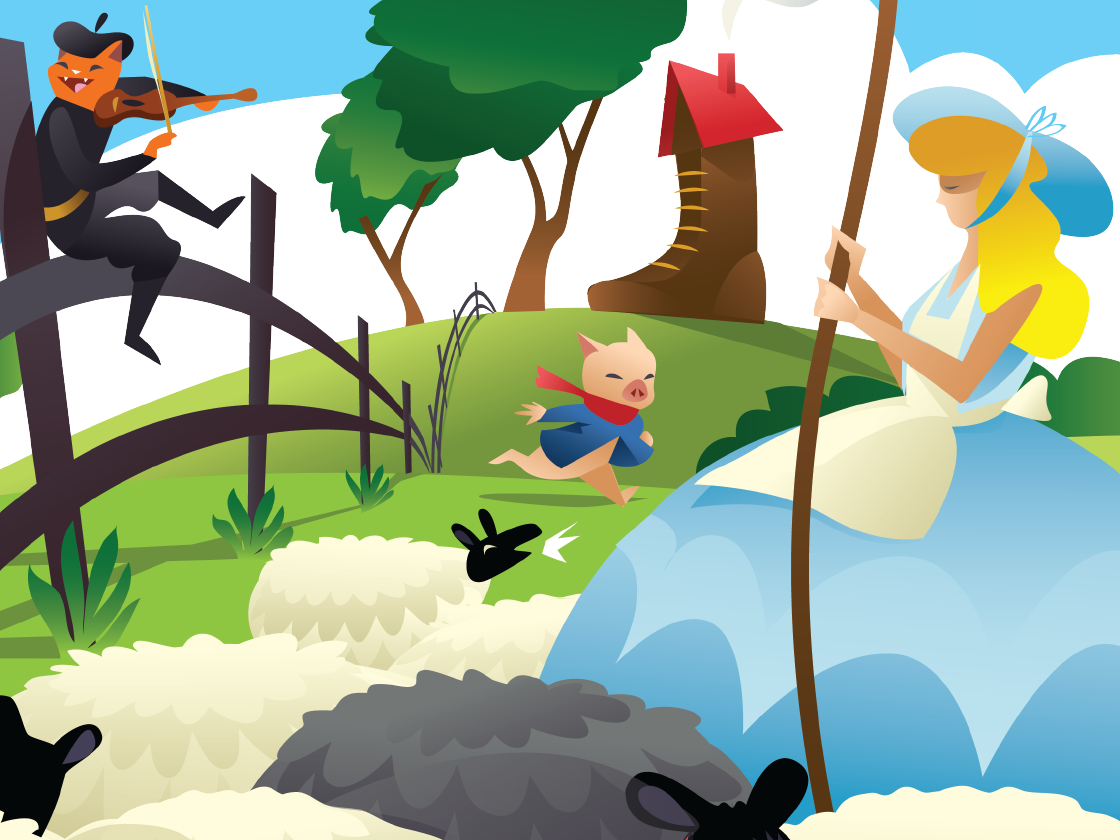
Knowledge Domain 1
Nursery Rhymes and Fables
Well-known fables introduce students to new vocabulary, build phonological awareness, and prompt discussion of character, virtues, and behavior.
Number of Lessons: 12
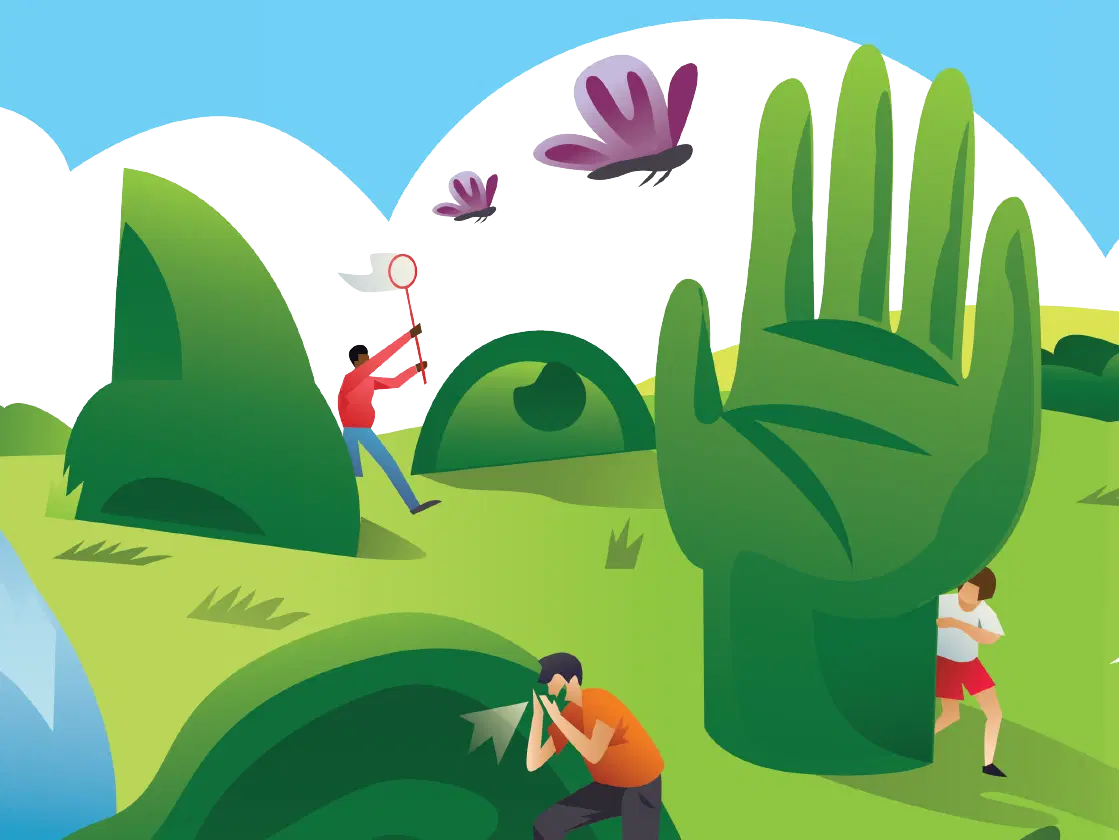
Knowledge Domain 2
The Five Senses
Students explore how they learn about the world using their five senses: sight, hearing, smell, taste, and touch.
Number of Lessons: 8

Knowledge Domain 3
Stories
Students develop an awareness of language and recurring themes in children’s literature, including classic stories, trickster tales, and fiction from other cultures.
Number of Lessons: 10

Knowledge Domain 4
Plants
Read-aloud texts introduce students to basic knowledge of ecology, parts of plants, how plants grow, and the interdependence of all living things.
Number of Lessons: 11

Knowledge Domain 5
Farms
Students identify several farm animals and crops and contrast how plants make their food with how animals get their food.
Number of Lessons: 9

Knowledge Domain 6
Native Americans
Students explore cultures of three Native American groups, as well as how conditions in different geographical regions influence their ways of life.
Number of Lessons: 8

Knowledge Domain 7
Kings and Queens
Students listen to read-aloud texts, both fiction and nonfiction, about kings, queens, and royal families, which build students’ understanding of royal customs.
Number of Lessons: 8
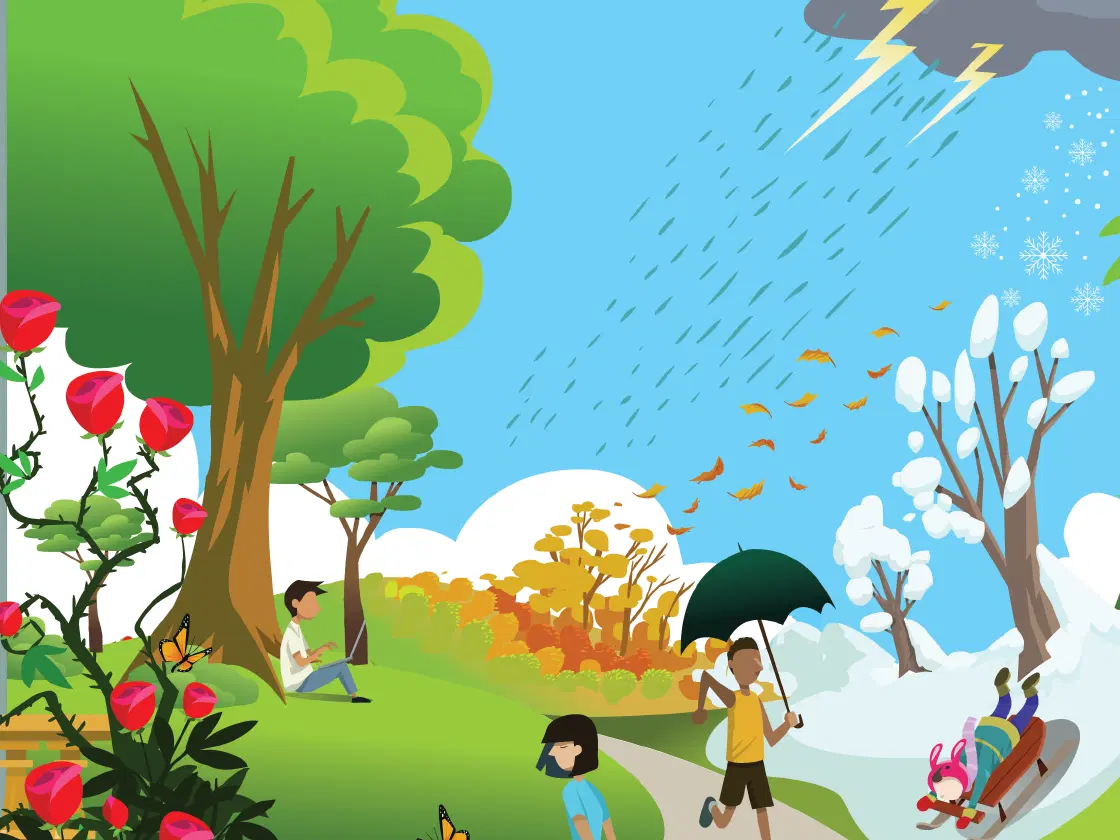
Knowledge Domain 8
Seasons and Weather
This is an introduction to weather and the seasons, where students learn that regions of Earth experience different characteristic weather patterns throughout the year.
Number of Lessons: 8

Knowledge Domain 9
Columbus and the Pilgrims
A look at the first contact between Europe and the Americas and some of its results.
Number of Lessons: 9
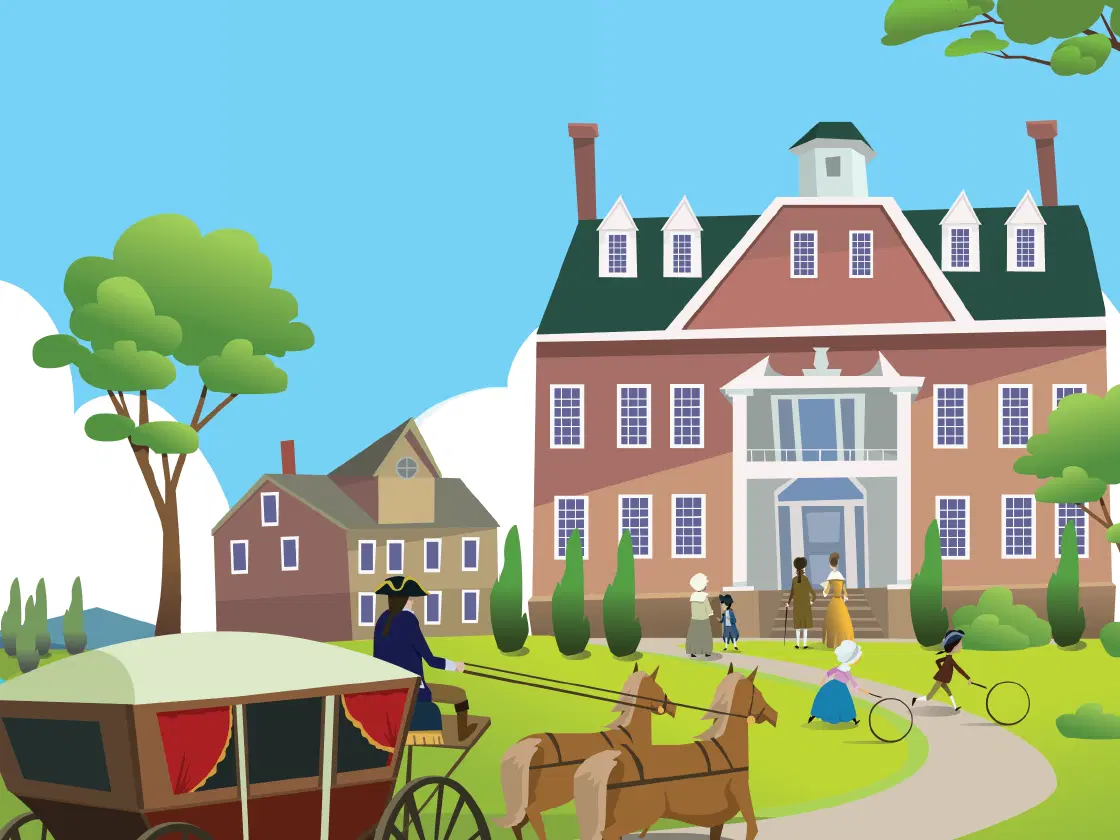
Knowledge Domain 10
Colonial Towns and Townspeople
Students are introduced to the early history of the United States as they explore what life was like for people in colonial times.
Number of Lessons: 10

Knowledge Domain 11
Taking Care of the Earth
Students are introduced to the importance of environmental awareness and conservation as they become familiar with the earth’s natural resources.
Number of Lessons: 10

Knowledge Domain 12
Presidents and American Symbols
Students learn about the legacies of five famous presidents, several national symbols, the branches of government, the role of the president, and elections.
Number of Lessons: 9

Skills Unit 1
Students build phonological awareness through environmental noises, words within sentences, and sounds within words. They learn basic strokes used to form letters.
Skills Unit 2
Students learn how to blend syllables together to form multisyllabic words. They orally produce two- and three-sound words by blending sounds.

Skills Unit 3
Students learn eight new sounds and practice blending them into words. They learn how to write letters that represent the new sounds.

Skills Unit 4
With oral language games, chaining exercises, and shared reading, students practice blending eight new sounds into words and writing the sound-letter correspondences.

Skills Unit 5
Eight new sounds are introduced, including a spelling alternative for /k/. Students continue to practice previously learned sound-letter correspondences.

Skills Unit 6
Students are introduced to consonant clusters, letter names, and rhyming words. Students begin to read text independently using decodable Student Readers.
Skills Unit 7
Students learn about various digraphs. Students practice blending and segmenting the sounds through phonemic awareness and phonics activities, chaining exercises, and reading.

Skills Unit 8
This unit introduces students to double-letter spellings for consonant sounds, as well as seven new high-frequency Tricky Words.
Skills Unit 9
Students practice writing uppercase letters and learn 17 new Tricky Words. Students answer comprehension questions about stories in the Student Reader.

Skills Unit 10
Students learn the basic code spelling for the five long vowel sounds. Students are administered a cumulative end-of-year assessment.
Knowledge Domain 1
Fables and Stories
Students are introduced to fables and stories, increase vocabulary and reading comprehension skills, and become familiar with the key elements of a story.
Number of Lessons: 10
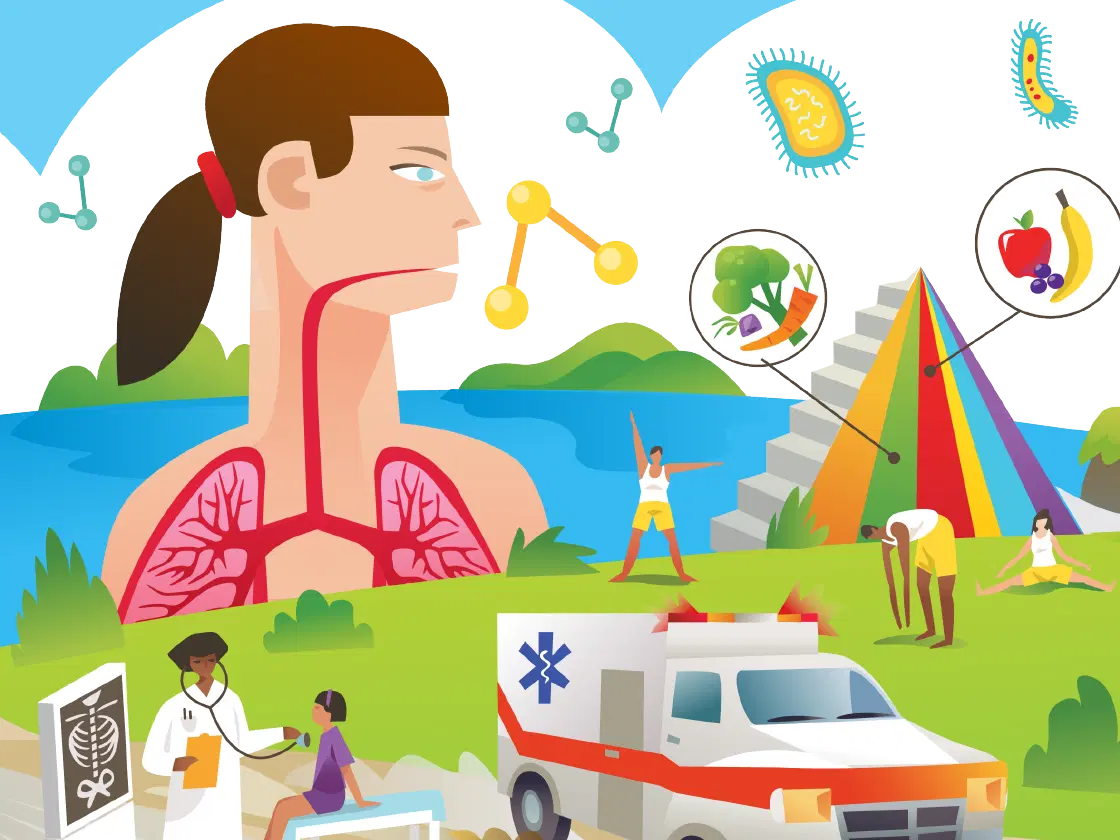
Knowledge Domain 2
The Human Body
Students are introduced to the systems of the human body, care of the body, germs and disease, vaccines, and keys to good health.
Number of Lessons: 10

Knowledge Domain 3
Different Lands, Similar Stories
Students encounter cultures from around the world as they explore the ways in which folktales from different lands treat similar themes or characters.
Number of Lessons: 9

Knowledge Domain 4
Early World Civilizations
Students explore Mesopotamia and Egypt and learn about the importance of rivers, farming, writing, laws, art, and beliefs.
Number of Lessons: 16

Knowledge Domain 5
Early American Civilizations
Students compare and contrast key features of the early civilizations of the Maya, Aztec, and Inca, and explore the development of cities.
Number of Lessons: 11

Knowledge Domain 6
Astronomy
In this introduction to the solar system, students learn about Earth in relation to the moon, other planets, the sun, and the stars.
Number of Lessons: 9
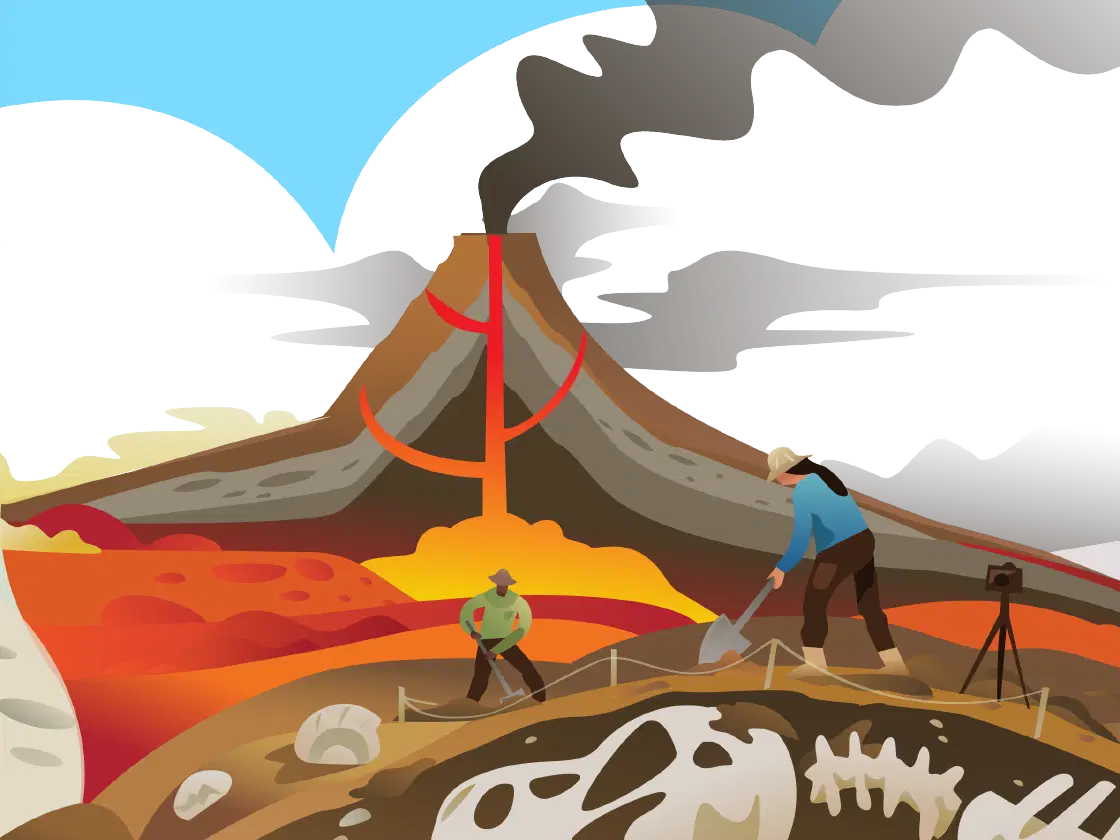
Knowledge Domain 7
The History of the Earth
Students learn about the geographical features of Earth’s surface, the layers of the earth, rocks and minerals, volcanoes, geysers, fossils, and dinosaurs.
Number of Lessons: 8

Knowledge Domain 8
Animals and Habitats
Students focus on the interconnectedness of living things as they learn what a habitat is and explore specific types of habitats.
Number of Lessons: 9
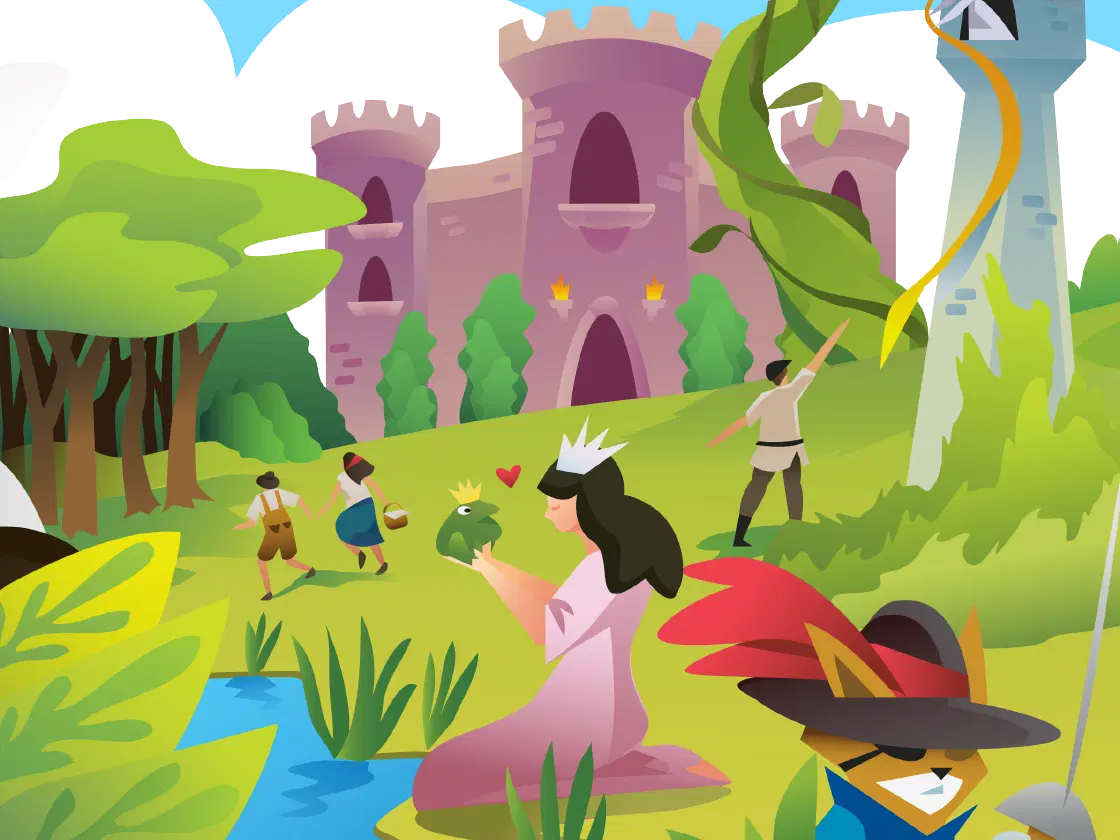
Knowledge Domain 9
Fairy Tales
Students learn about the Brothers Grimm, identify common elements of fairy tales, make interpretations, and compare and contrast different tales.
Number of Lessons: 9
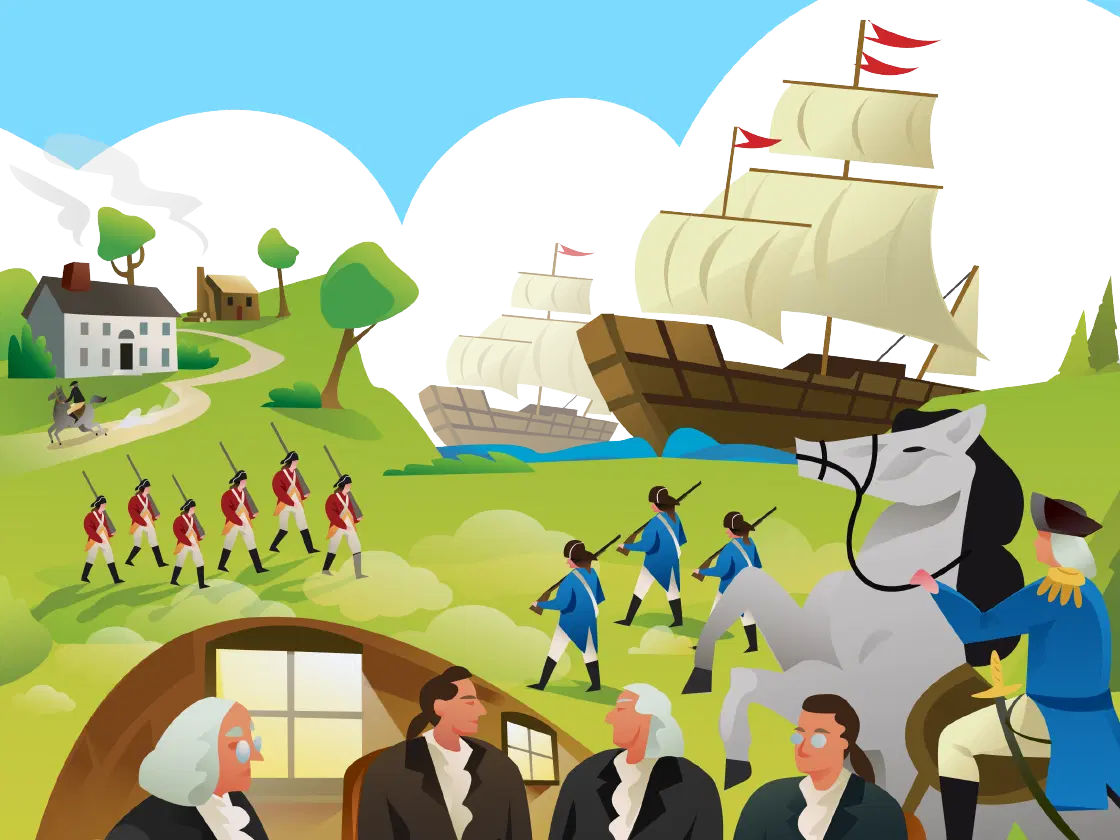
Knowledge Domain 10
A New Nation: American Independence
Students are introduced to important historical figures and events in the story of how the 13 colonies became an independent nation.
Number of Lessons: 12

Knowledge Domain 11
Frontier Explorers
Students are introduced to exploration of the American West, its key figures, and how colonists spread westward, including their interactions with native peoples.
Number of Lessons: 11

Skills Unit 1
Unit 1 provides a review of the sounds/spellings taught in the CKLA Kindergarten curriculum. Teachers administer the beginning-of-year assessment.
Skills Unit 2
Students read and write words with long vowel spellings and learn new Tricky Words. The unit also includes grammar lessons on nouns.
Skills Unit 3
Work continues on vowel sounds and their spellings. Grammar focus is on verbs and verb tense. Formal instruction in the writing process begins.

Skills Unit 4
Students work with /r/-controlled vowel sounds. Students practice segmenting two-syllable words. Adjectives are introduced as students practice descriptive writing.

Skills Unit 5
Students work with spelling alternatives for sounds. Students also learn to identify sentence types. They plan, draft, and edit opinion letters.

Skills Unit 6
Students continue to work with several spelling alternatives for sounds. Students review nouns and pronouns. They plan, draft, and edit personal narratives.

Skills Unit 7
Students focus on spelling alternatives for sounds. Students plan, draft, and edit an informative/explanatory text. Students are administered an end-of-year assessment.
Knowledge Domain 1
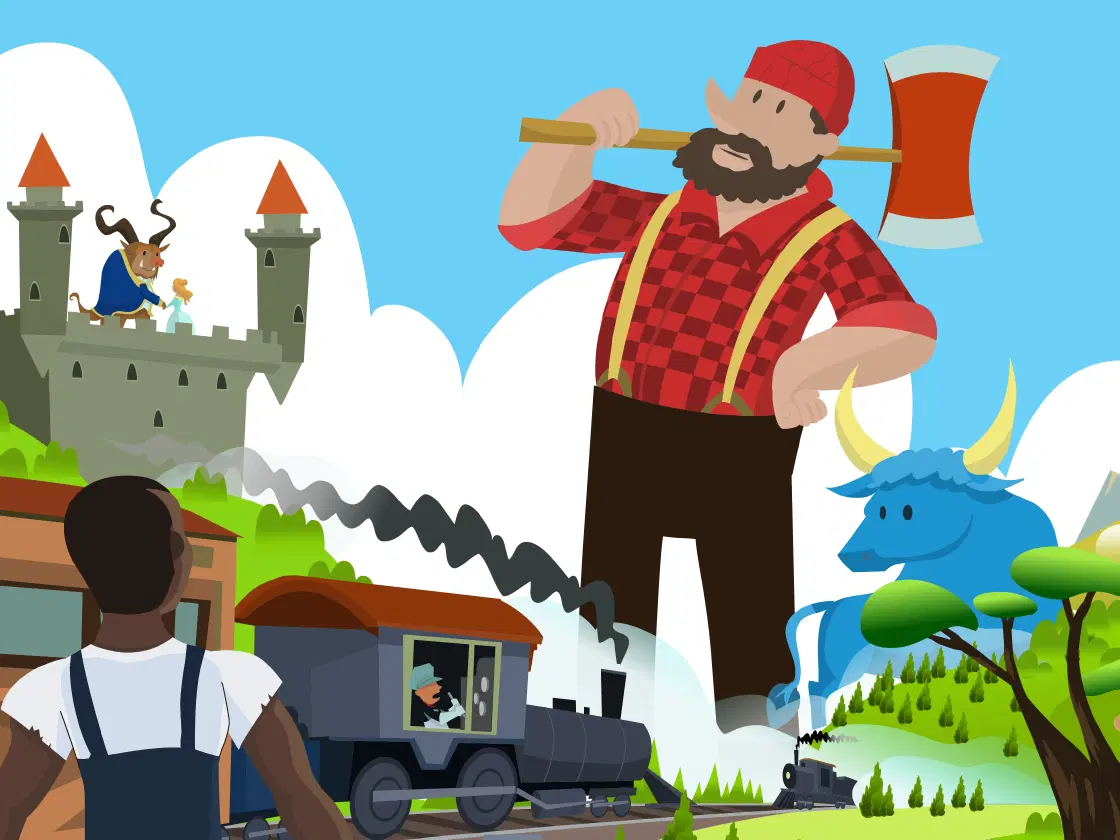
Fairy Tales and Tall Tales
Students consider characteristic elements of fairy tales and tall tales and consider problems faced by the characters and lessons each story conveys.
Number of Lessons: 8
Knowledge Domain 2
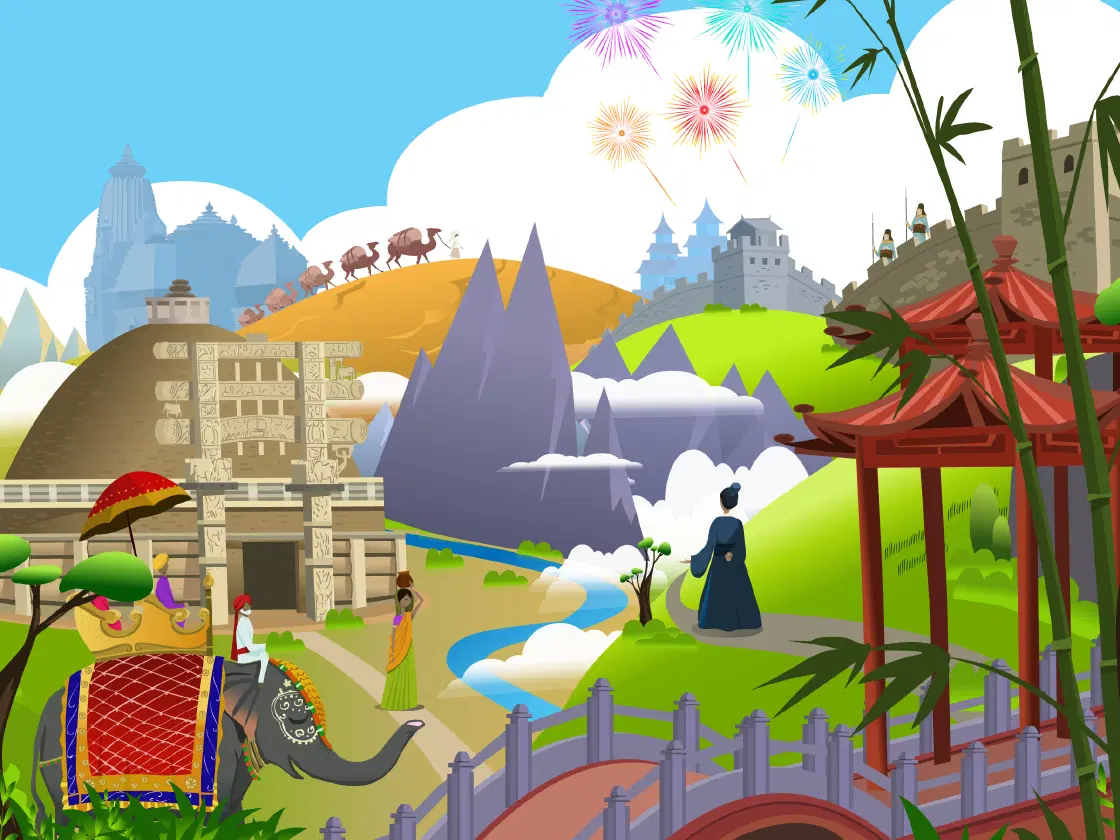
Early Asian Civilizations
Students are introduced to Asia, specifically India and China. In addition, students are introduced to related folktales and poetry.
Number of Lessons: 14
Knowledge Domain 3
Ancient Greek Civilization
Students explore the civilization of ancient Greece, which lives on in many ways—in our language, government, art, architecture, the Olympics, and more.
Number of Lessons: 12
Knowledge Domain 4
Greek Myths
Building on the Ancient Greek Civilization domain, students explore common characteristics and story elements of several well-known Greek myths and mythical characters.
Number of Lessons: 10

Knowledge Domain 5
The War of 1812
Students are introduced to major figures and events in the War of 1812, sometimes called America’s “second war for independence.”
Number of Lessons: 8
Knowledge Domain 6
Cycles in Nature
Students are introduced to natural cycles that make life on Earth possible, such as seasonal cycles, life cycles, and the water cycle.
Number of Lessons: 9
Knowledge Domain 7
Westward Expansion
Students are introduced to an important period in the history of the United States—the time of westward expansion during the 1800s.
Number of Lessons: 9

Knowledge Domain 8
Insects
Students learn about the helpful and harmful characteristics of insects, insect life cycles, and social insects such as bees and ants.
Number of Lessons: 8

Knowledge Domain 9
The U.S. Civil War
Students learn about the controversy between the North and the South over slavery and about key historical figures during that time.
Number of Lessons: 11
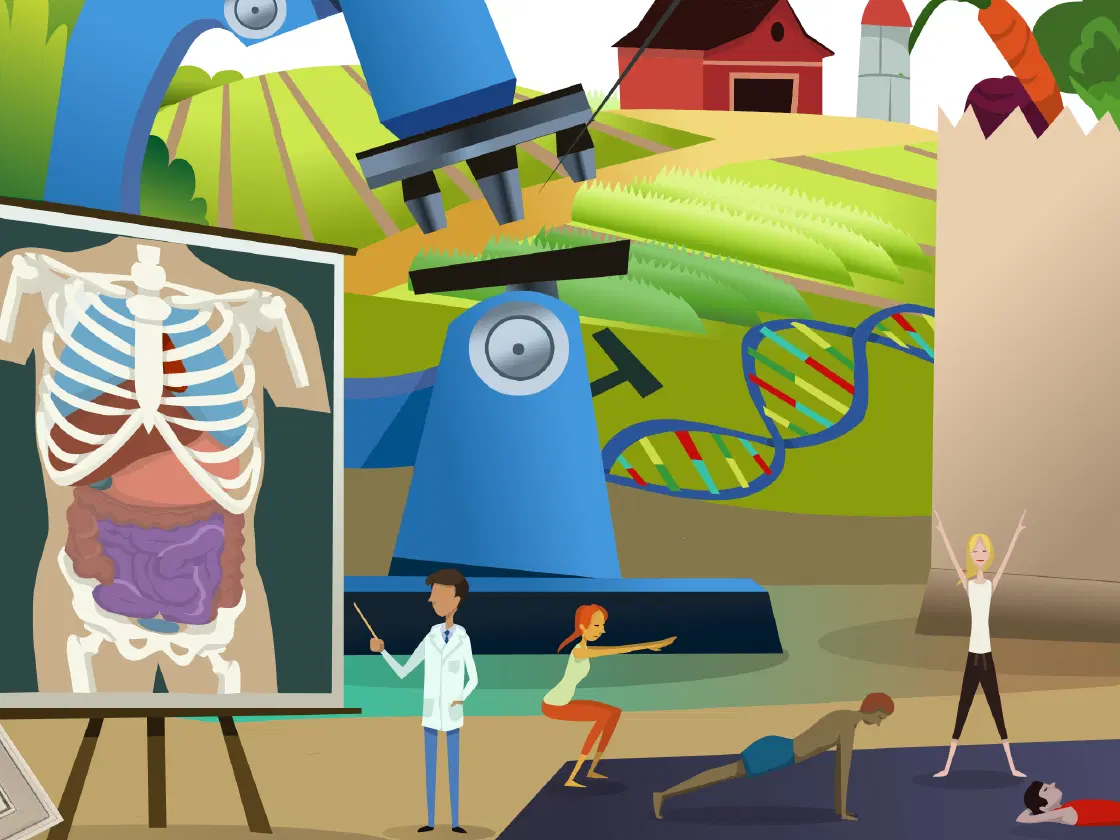
Knowledge Domain 10
Human Body: Building Blocks and Nutrition
Students learn about the human body, including body systems, good nutrition, keys to good health, and the advances in microbiology made by Anton van Leeuwenhoek.
Number of Lessons: 9

Knowledge Domain 11
Immigration
Students explore the idea of e pluribus unum and the importance of immigration in the history of the United States.
Number of Lessons: 10
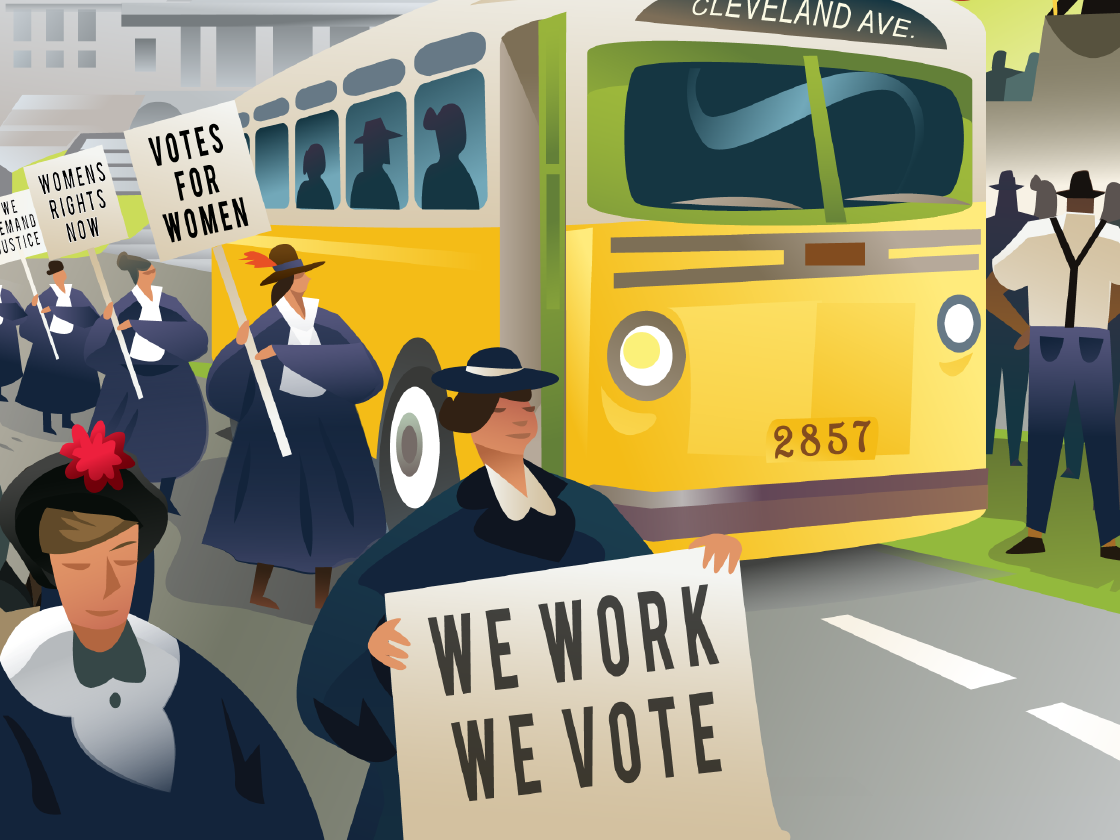
Knowledge Domain 12
Fighting for a Cause
Students explore the connection between ideas and actions, and see how people can do extraordinary things to change the dominant ideas and actions of an entire nation.
Number of Lessons: 9

Skills Unit 1
Sound-spellings with an emphasis on consonant sounds, one- and two-syllable words, and Tricky Words are reviewed. The beginning-of-year assessment is administered.

Skills Unit 2
The unit focus is on various sound-spellings and words with one- and two-syllables. Students begin the writing process, writing narratives and opinions.

Skills Unit 3
Practice with spelling alternatives continues. Grammar focuses on capitalization, quotation marks, ending punctuation, and common and proper nouns. Students write personal narratives.

Skills Unit 4
Students practice a range of spelling alternatives. Students practice persuasive writing as part of a friendly letter. Students learn more about nouns and verbs.

Skills Unit 5
Students practice chunking sounds as they read multisyllabic words. Grammar work includes adjectives, subjects, and predicates. Writing includes rewriting a story ending.

Skills Unit 6
Students review advanced phonics and grammar skills. Students are introduced to expository/report writing. Students take an end-of-year assessment.
Program components
The program includes instructional guidance and student materials for a year of instruction, with lessons and activities that keep students engaged every day.
Component
FORMAT
Knowledge Strand Teacher Guide
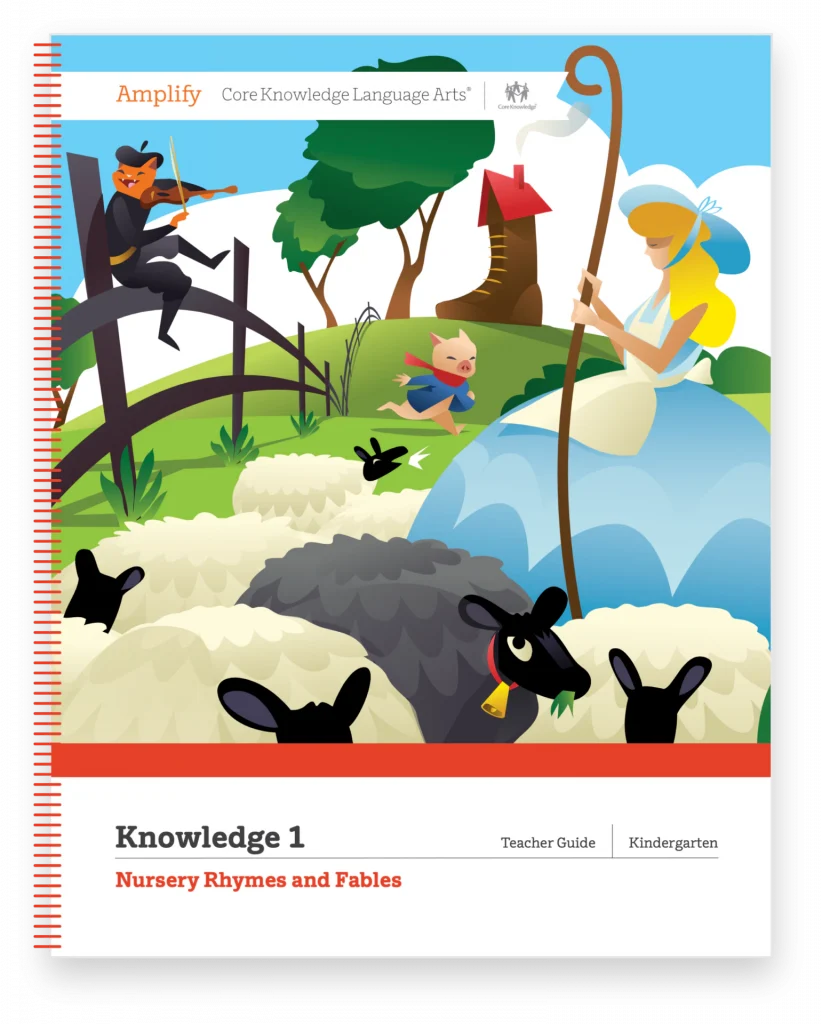
Knowledge Strand Teacher Guides contain Amplify CKLA’s cross-curricular read-alouds and application activities, all of which are standards-based to build mastery of content knowledge and literacy skills. There is one Teacher Guide per Knowledge Domain.
Print or digital
Knowledge classroom materials
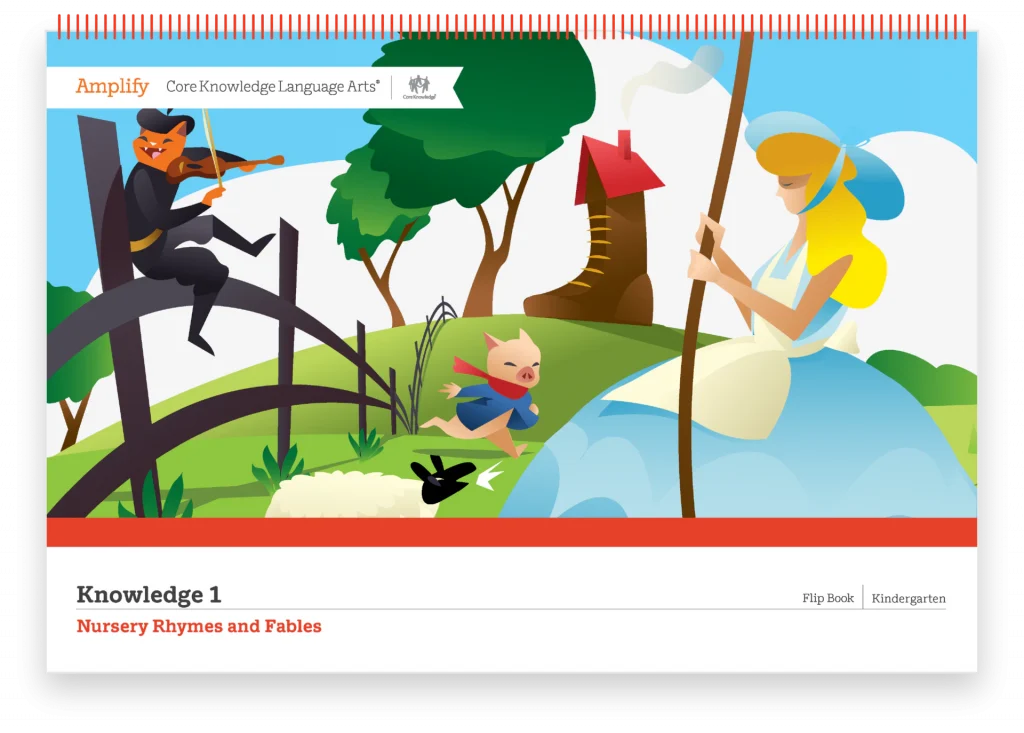
Amplify CKLA includes oversized Flip Books and smaller Image Cards that bring each topic to life through vivid visuals.
Print or digital
Skills Strand Teacher Guide
Amplify CKLA Skills Strand Teacher Guides include comprehensive research-based instruction in phonological and phonemic awareness, phonics, print concepts, the alphabetic principle, grammar, writing mechanics, comprehension, spelling, and other critical foundational literacy skills.
Print or digital
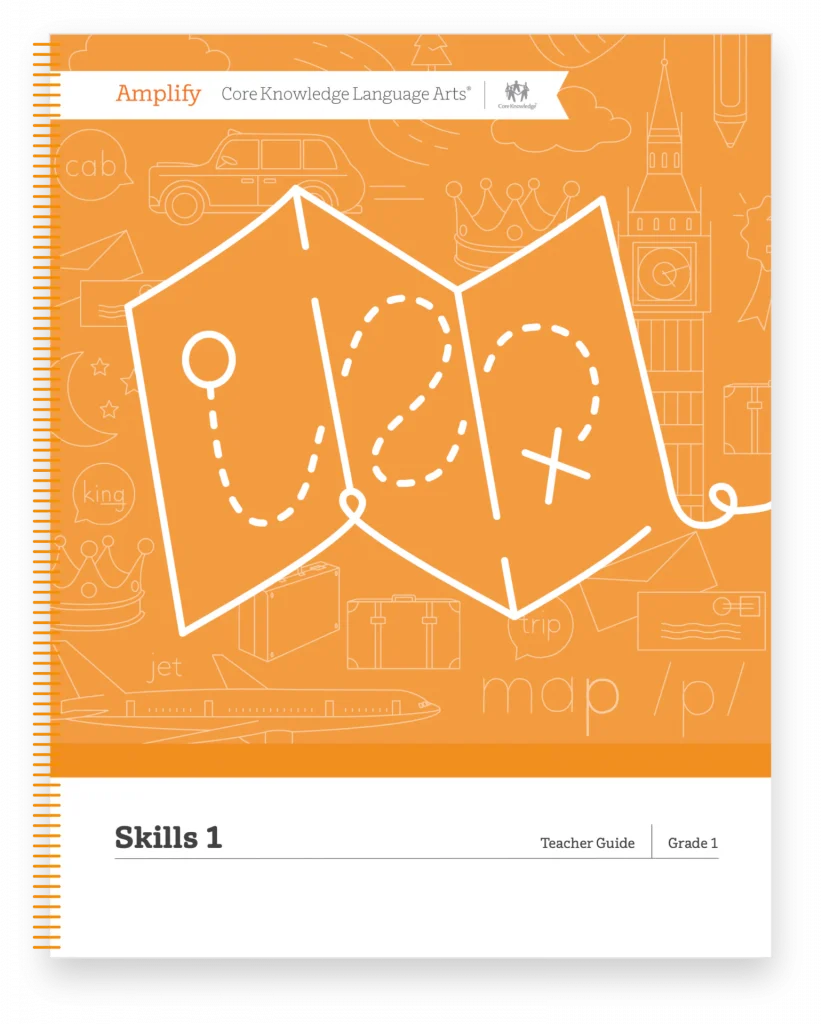
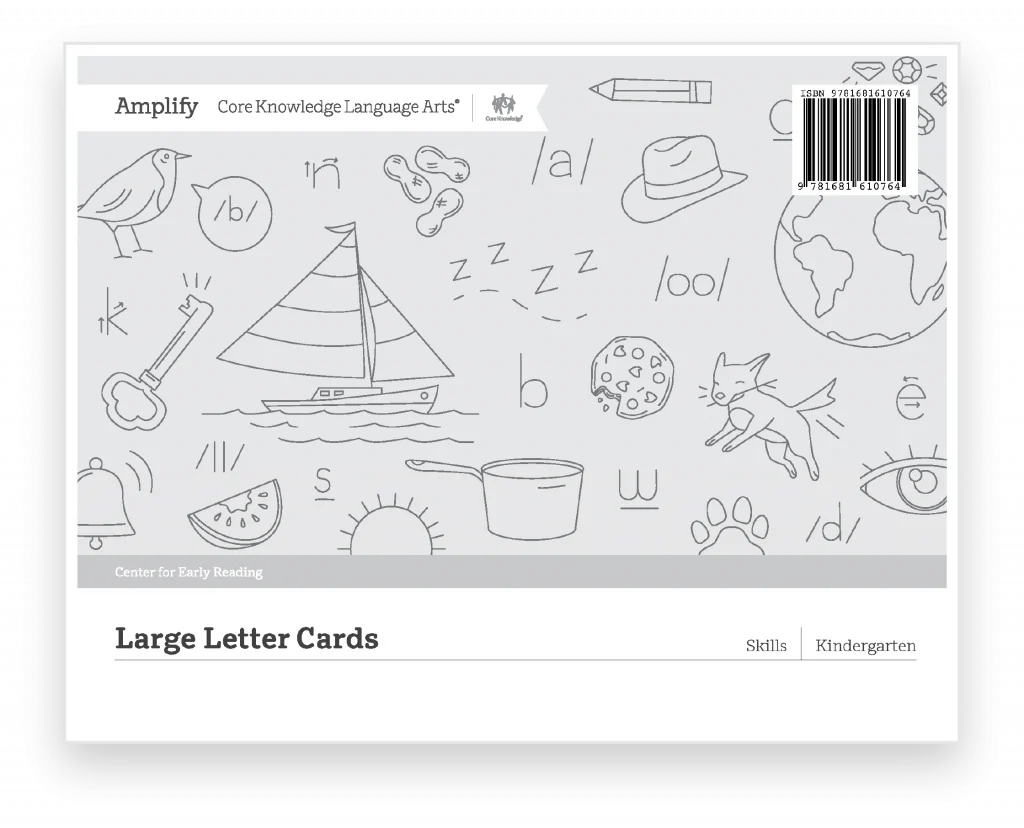
Hands-on Skills ancillaries
Dynamic classroom materials include student Chaining Folders, Small and Large Letter Cards, Spelling Cards, Sound Cards, Big Books, Vowel and Consonant Code Flip Books, Code Charts, and more.
Print or digital
Assessment and Remediation Guide
The unit-by-unit Assessment and Remediation Guide provides thousands of pages of activities for reteaching, differentiation, and additional practice.
Print or digital

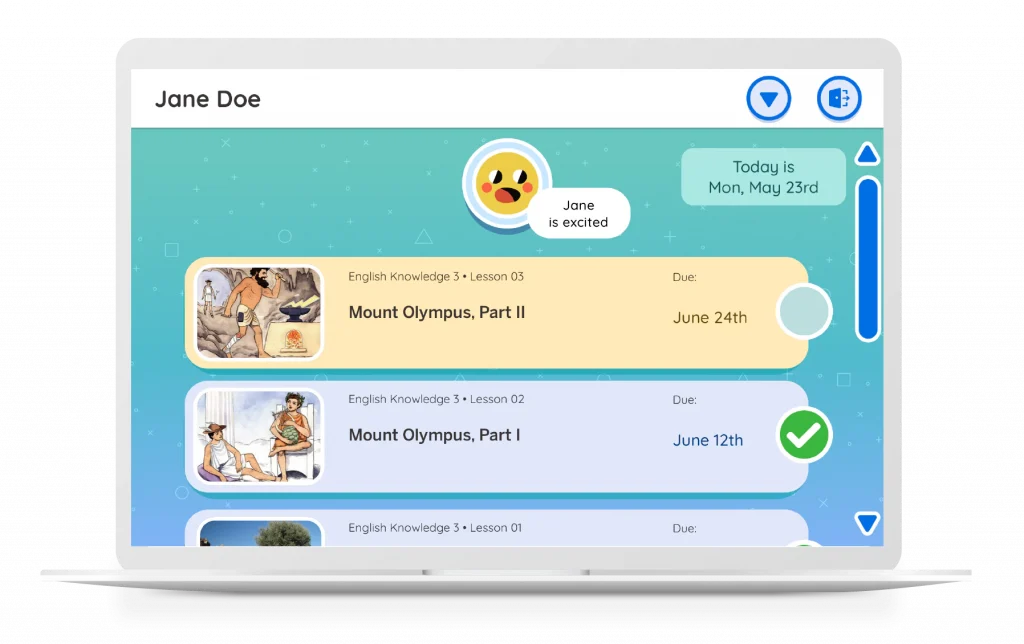
Digital experience
The Amplify CKLA digital experience delivers ready-made, customizable, slides-based lesson presentations to enhance instruction and save time. Everything needed to plan and present high-quality, engaging early literacy instruction is in one convenient place.
Digital
Component
FORMAT
Knowledge Strand Activity Books
Knowledge Strand Activity Books provide students with the opportunity to deepen world and word knowledge by responding to text in a diversity of ways.

Skills Strand Student Reader
Unique decodable Student Readers provide direct practice with just-learned sound-spelling patterns, using compelling stories and characters to integrate phonics and comprehension.
Skills Strand Activity book
Skills Strand Activity Books support the program’s connected approach to reading and writing, providing ample opportunities to respond to text while building core skills.
Digital experience
The Amplify CKLA digital experience delivers ready-made, customizable, slides-based lesson presentations to enhance instruction and save time. Everything needed to plan and present high-quality, engaging early literacy instruction is in one convenient place.
Digital
Explore more programs
Our programs are designed to support and complement one another. Learn more about our related programs.
S1-04: Connecting with students and caregivers in the science classroom: Ryan Rudkin

In this special episode, our host Eric Cross sits down with veteran middle school teacher Ryan Rudkin. Ryan shares her expertise after almost two decades in the classroom, discussing ways to incorporate aspects of problem-based learning into the K–8 science classroom. Eric and Ryan talk about how to increase parent engagement, involve community members, and add excitement to lessons.
Explore more from Science Connections by visiting our main page.
Ryan Renee Rudkin (00:00):
I know there’s other goals in mind, you know, standards and test scores. But at the end of the day, I wanna come back and I want them to come back.
Eric Cross (00:35):
My name’s Eric Cross, host of our science podcast, and I am with Ryan Rudkin, middle-school teacher out here in California just to the north up near Sacramento? El Dorado Hills?
Ryan Renee Rudkin (00:46):
Yeah. 20 miles east of Sacramento.
Eric Cross (00:49):
Nice. And I am down here in San Diego. And so Ryan, to start off, what I wanna do is ask you about your origin story, like a superhero. So how did you become a middle-school science teacher to become part of this elite profession of science folks that get to do awesome things with kids?
Ryan Renee Rudkin (01:08):
I would agree with you that it is definitely an elite profession. I got my credential and I thought I was gonna teach third or fourth grade elementary school. And the second day I got called for a sub job for middle school. And I just thought, “We’ll take it,” you know? And by second period, I knew: This is where I belong. The kids, middle school, students are just a species of their own. And you have to appreciate them. And if you do appreciate them, then you’re in the right spot. And I quickly looked at my coursework and I was able to get authorizations in science, history, and English, and I love science. So I chose science. And the rest is history. It’s been a wild ride and I wouldn’t have changed or asked for anything different. I love it.
Eric Cross (02:02):
I definitely agree with you. So, your history—you’ve been in various middle-school classrooms. Can you tell us a little bit about that? What classrooms have you been in? What disciplines of science have you taught or are currently teaching?
Ryan Renee Rudkin (02:14):
I was hired for seventh grade life science, and then I did that for a few years and then I got moved into eighth physical science, and I was there for 12 years. Love eighth grade science. I love eighth graders. Chemistry and physics are my favorite. There’s just so much opportunity for just awesome labs, great conversations, student discourse, all of that. And then the past three years I’ve been in sixth grade and now we’re integrated. So,a sixth grade integrated science and I also teach social studies and a technology design class.
Eric Cross (02:52):
Oh, nice. What do you do in your technology design class? That sounds cool.
Ryan Renee Rudkin (02:56):
Right now it’s mostly internet media and we use WeVideo, it’s an editing-video program, and we produce and put on our school weekly news bulletin. And then we weave in other projects. We do some interdisciplinary projects. Right now my students are working on a mythology God, Goddess, and Monster project that relates to our social studies curriculum. And we’re learning about Greece. So yeah, we just try to give them added projects and they’re using the WeVideo platform. By sixth grade, they’re coming to us now with wonderful skills with all the tech. I mean, if I need help, I ask them like, “How do you do something on Google Docs?” Or, “How do you do something on Drive?” The kids are definitely tech-savvy.
Eric Cross (03:49):
They must love being the teacher in the classroom. They get to—it kind of switches power roles, where they get to teach the teacher something.
Ryan Renee Rudkin (03:56):
Yes. And especially WeVideo, sometimes we’ve had some hiccups, and the kids show everybody, and that’s part of the design class. They’re trying to solve—we’re teaching them how to solve their own problems. So if there’s any kind of issue with anything with the technology, honestly, I usually tell them, “Go ask a friend,” or we kind of shout out, “Hey, who knows how to troubleshoot this?” And the kids are eager to help each other, which is nice.
Eric Cross (04:21):
And they have this authentic experience where they’re actually doing real problem-solving, as opposed to something that we manufactured. Like, those are real things that we have to deal with in life. And that’s exactly like how we solve it, right? We just go ask people! We look it up, and the ahas are genuine too. Throughout!
Ryan Renee Rudkin (04:36):
Yes, especially thinking on the fly. Especially yesterday, I was in the middle of teaching and my laptop froze, and it’s like, “OK, everybodytake a couple minutes, you know, work on this, this, or that while I switch out laptops!” And so I’m modeling, too, how to solve my own problems. And I think it teaches the kids how to do that too.
Eric Cross (04:59):
I’ve always thought it was interesting that when teachers get to teach in real time, how do we handle stress and frustration when it’s really happening? And I think the tech—at times, failure is the real one where you feel this chill or this sweat that kind of comes over you and you’re trying to present or cast or the video won’t play and things like that. I think I’ve done enough times in my years of teaching where now my students know what to do, or they want to come up and help, and we’re good with it. But I remember in the beginning when those things would kind of glitch or go wrong or the wifi goes down, and you’re like, OK, what do we need now?
Ryan Renee Rudkin (05:33):
I think it’s honestly, after the fact, when I think in the moment, I’m not thinking of feeling stressed, but just afterwards, then I’m like, “Oh my gosh, this has just been a wild day.” But yeah, you just have to kind of go with it. And that’s just the beast of middle school. I just added to the list of why we love it.
Eric Cross (05:53):
You said something about interdisciplinary work, and I wanna kind of ask about that. Because it sounds like you’ve had your hand in several different areas of science and grade levels. Working, doing design courses, working with tech. Are there certain lessons that are your favorites to teach? The ones that you really enjoy, or that no matter what, you’re like, “We need to do this; this is such a rich experience for students”?
Ryan Renee Rudkin (06:17):
Yeah. I definitely try to do lessons or activities along the way. I like to do projects at the end of my units. When I taught physics, we did a project and it was mainly an assessment tool called the Wheeling and Dealing. The kids, they would all get a different car. And then they to sell their car. And so they had to pretend to be a car salesman, and they did that with their knowledge of the physics unit. So everything we did on forces and speed and motion. So I like doing culminating projects like that. And you’re kind of tricking them into assessing them.
Eric Cross (06:57):
When I think about your car salesman project, I’m thinking of a bunch of students, but they’re like on Shark Tank, but they’re just littler versions. And they’re doing these sales pitches, but they’re speaking in scientific terms as they’re trying to do it. Do you record these or do they just exist in the classroom?
Ryan Renee Rudkin (07:12):
No…And that was a long time ago, when I taught eighth grade. I wish I had; I wish I had recorded. That was definitely—it was fun, ’cause the kids, they would get their little piece of paper and they—some of ’em didn’t know what car it was. And so they’re like “A Boo… A Boo-gatti? What’s a Boo-gatti?” And then someone from across the room would be like, “Ooh, I want it! Here, I’ll trade you my Ford Focus!” And <laugh> so they would kind of wheel-and-deal which car they would…and then once they got their choice, then they would do the project.
Eric Cross (07:44):
So they’re really embodying this persona of a car salesman. The wheeling and doing back-and-forth and trying to trade a Bugatti for a Ford Focus. <Laugh>
Ryan Renee Rudkin (07:53):
I know. <Laugh> I like to make my class, my learning environment, enjoyable. You know, I gotta be there; they gotta be there. So I know there’s other goals in mind—you know, standards and test scores—but at the end of the day, I wanna come back, and I want them to come back. And I just have that as a priority.
Eric Cross (08:18):
Well, based on the projects that you’re doing and the way that you approach education with students, I can see why middle-school students would want to come back, even if they had the option not to. Just because of the cool things that you’re doing. Now we’re on this—hopefully, fingers crossed—tail end of COVID in the classroom and schools, and I know it’s impacted all of us differently. Has student engagement changed since COVID and if so, how, and what have you done in these last two years to maybe adjust your approach, to continue that engagement and that richness that you provide for your kids?
Ryan Renee Rudkin (08:57):
I definitely—I think for me, I recognize that when the students are in my classroom, I want them to, I dunno, for lack of a better word, just escape the noise at home. And I know we’ve always had students that are going through divorce situations or their dog died, other things, but I think with COVID, it’s definitely been compounded. And just creating a safe place for the kids to want to be and…it’s hard. We’ve had a lot of students that have been out, absent, for various reasons and on quarantine. And they’re struggling with doing work from home, ’cause their parents are stressed and their parents are dealing with their work issues. And so I think just having grace for the kids and just keeping…I don’t know, I guess like I said, I’ve always had student engagement as top of my list.
Eric Cross (10:06):
It sounds like—the things I hear you say really have to do with who these students are as people.
Ryan Renee Rudkin (10:12):
Yeah.
Eric Cross (10:13):
And then as a second, who they are as students. How do relationships fit into your engagement? ‘Cause I’m hearing this connection that you seem to be making with kids as you’re talking about things that are beyond academics: their home life, how they’re impacted.
Ryan Renee Rudkin (10:28):
Yes.
Eric Cross (10:28):
Is there anything that you do to build these relationships, or to connect with your students, to make them feel wanted or feel connected to the classroom or to you?
Ryan Renee Rudkin (10:37):
Yeah, I do. I do a few things to build those connections. And again, this timeframe in their life is so out of their control, their peer relationships, relationships with their parents. And when they’re in my classroom, I want them to feel loved and appreciated. Something I do it’s called Phone Fridays. And in one of the social media groups, someone posted about it, and I’ve been doing it for over a year now, actually. So on Fridays I call parents and give good news. And so I’ll pick maybe one or two students. And it could be academic reasons. It could be behavior, I’ve seen a slight improvement of behavior. Maybe a role model in the classroom. And my goal is to get everybody every trimester. So everybody gets a phone call by the end of the trimester. And it’s funny ’cause sometimes the parents are a little like “Uh-oh”! When they pick up, they see the caller ID, and their school’s calling. ‘Cause Some kids don’t get good calls. So it’s a really—I would say every single parent that I’ve called, I usually get a follow-up email, either to me or my admin, just saying it’s such a cool idea I do this; thank you so much. And yeah, I just call and give good news and just put ’em on the spot. And usually the kids are a little embarrassed, but you can tell, even though they’re kind of—I think they’re faking it, that they’re embarrassed! ‘Cause You know that they got the Phone Friday, and everybody’s like, “Who’s gonna get the phone Friday?!” And so it’s a very big deal in my class.
Eric Cross (12:07):
What a great way to—I mean, it seems like that hits on so many levels. You’re making these positive calls home. You’re praising publicly, which a lot of times can happen where students can get criticized or redirected publicly and then praised privately, which is a lot of times the reverse what we should be doing. But here you are praising them publicly. And then you’re not only building a relationship with yourself, but you’re also connecting them with their parent or whoever is caring for them, because now when they go home, there’s this, “Hey, your teacher called; you’re doing awesome!” So it’s this kind of triangle that’s forming there. I think that’s super-cool and a great thing for teachers to do.
Ryan Renee Rudkin (12:45):
It takes, you know, the last five minutes of my class. I do it every class. And then I have a system. Like I said, I keep track of all the kids. That way, by the end of the trimester I’ve gotten everybody. Sometimes I let the students, whoever I call first, then I let them pick a peer and I tell them, “OK, we have to have a solid reason. Why are we calling?” And a couple times they’ll have a student, like one of my energized ones, they’ll raise their hand. “How About me? How about me?” And I and the kids kind of laugh a little and I said, “Well, how about this? Let’s make a goal. How about next week we’re gonna make a goal and we’re gonna have a reason to call home.” So just working on the kids that need a little push in the right direction. That’s other reasoning to it. But yeah, it’s fun. I love it.
Eric Cross (13:33):
And you have the community. You have this goal setting. We were talking a little earlier about this transition—so you’re becoming this…your school’s going through the IB process, is that right?
Ryan Renee Rudkin (13:44):
Yes.
Eric Cross (13:44):
And we were talking about the ATL skills and one of them is goal-setting management. You already kind of organically do this in your classroom, which is really neat. I know being an IB teacher, a lot of times I find the things that I’ve already been doing and find, “Oh, this is actually an approach to learning!” or “This is something that has a title!” I just thought it was just being helpful! Ah…So the kids are connected. You have this process where you’re calling parents; it’s working; students are involved, so it’s building this community. Now you’re engaging students. Do you have any favorite student engagement tools that you use in your classroom or when you’re teaching that you feel like you get a lot of bang for your buck? There’s so many things out there these days. And so many approaches, tools, web apps. Do you have any favorites that you use?
Ryan Renee Rudkin (14:40):
No. Nothing comes up top of my mind right now. Mostly just projects, like I said. And being excited. I think having my students see me excited about something…and I’m honest when we’re doing something that’s not quite my favorite, then I’m honest about that too. But just having my—like, we just started thermal energy this week and I told my students, I said, “OK guys, I’m gonna weave in some chemistry in there. I’m gonna weave in some particle motion,” and they’re like, “Oh! That’s when you taught eighth grade, huh!” Cause I talk a lot about when I taught eighth grade before. I don’t know, just showing my own enthusiasm, I think, is a good payoff to me. That’s a bang for your buck. Other things…I try to give ’em cool videos and Mark Grober, he’s definitely a favorite of mine I like to show my students. I like to bring in guest speakers from our community. When I taught eighth grade for physics, I always brought in a local CHP officer and they would bring in the radar and lidar guns and the kids would mark off the parking lot and they would calculate their speed. And then they would verify it with the radar gun. Two years ago when I taught math, I brought in a local landscaper company, a father-and-son outfit, and they showed the kids how they would do bids on jobs. And so, relate it to our chapter on volume and area. So just making that connection with real life. Plus it’s just a nice opportunity, too, for the community to come in. With our design class, put on our newscast. And then one of our units in our sixth grade curriculum is weather. And so I brought in a local weatheruh, chief meteorologist. And he actually talked to the students about his job as a meteorologist and then also being on the news and putting on a newscast. So we got him on our green screen and did a little like Mark Finan, you know, little cameo on our newscast for the week for school. So that was kind of cool.
Eric Cross (16:45):
They must have been excited.
Ryan Renee Rudkin (16:47):
Yeah. They’re pretty starstruck by him. So that was pretty fun.
Eric Cross (16:51):
This person was on their local news? So they would know him?
Ryan Renee Rudkin (16:56):
Yeah, he’s on Channel 3 out of Sacramento. Yeah. KCRA Channel 3, Mark Finan.
Eric Cross (17:00):
So all these guest speakers that you have…how do you reach out to these people? And you sound like you get a lot of success. Do you ever get nos? Like if I’m sitting here listening and that inspires me, but you’re getting celebrities and you see a few people…like, how do you reach out to them? And does everybody say yes? How does it go?
Ryan Renee Rudkin (17:21):
Well, usually at my back-to-school night, I always ask the parents if they have a career or hobby that could lend itself to the curriculum. And so sometimes I’ll hear about—students will talk about, like, “My mom’s a doctor.” And so I’ll reach out to parents and just say, “Hey, you know, your kiddo said, you’re a doctor. May I ask what type?” And most of the time the nos that I’ve received are just because of schedule conflicts. You just have to get creative! Look in your community and see what you have. People want to come and talk to kids. I’ve had some presentations that the person is so intelligent and amazing, but they just, weren’t very kid-friendly. I mean, that happens. Butsomeone knows someone. And just ask! I mean, it doesn’t hurt to ask to have ’em come out, come hang out for the day, with my students. Andone time I had a nurse practitioner she was in the cardiac unit. And so she brought in hearts and led a heart dissection with my students. And we did a station set-up. I’ve had elaborate ones like that, or just a mom come in to tell my students about her job as a nutritionist and relate it to our unit on metabolism. And so just did like a little 15-minute Q&A with the kids on nutrition. And I would just say, look at your community and/or post on social media. I always do that. Post in your school’s PTA groups. So the parents know someone, that’s for sure. Or someone’s retired. One time I had—I think he was a grandfather of one of the kids—he was into rocks. And he had a bunch of meteorites <laugh> and brought in his meteorites.
Eric Cross (19:15):
Bring in your rocks!
Ryan Renee Rudkin (19:15):
I know! Right? And he <laugh> just brought in his meteorite collection! I was like, sure, come on in!
Eric Cross (19:23):
That’s one of the things I love about being a middle-school teacher is that my students have such varied interests and I’ll get the Rock Kid every once in a while and he’ll come in and he’ll have all these rocks and crystals. And a lot of times there’s a grandfather that’s responsible for this inherited geologic treasure that they have.
Ryan Renee Rudkin (19:45):
Yeah, something like that—I mean rocks are not my favorites, but I don’t really tell the kids that. I was like, “Sure, yeah, come on in! We can have a whole-day lesson on rocks!”
Eric Cross (19:55):
<Weakly> “This is great!”
Ryan Renee Rudkin (19:58):
Just utilizing your resources. That’s all it’s about.
Eric Cross (20:02):
Well, I think the back-to-school night was really helpful. That’s something that’s super doable. You have a bunch of parents and you just simply ask, “Who do you know? What do you do?” And then just collecting that and then just asking people to come in. I’ve I’ve been reluctant to do it more often than I’ve wanted to, because I haven’t figured out—and maybe you can help me with this—I have three class periods a day plus other class periods that are not necessarily science. And I don’t want to dominate a person’s schedule. Do they tend to be willing to stay all day? Or do you do, one class gets it, and you record it? Like, how do you balance out the speakers with your school schedule?
Ryan Renee Rudkin (20:39):
Mostly they’ll they’ll just come for the whole day. When I taught eighth grade, I had five classes, so that was easy. That was an all-day thing. And then usually I’ll offer to call lunch, have lunch delivered, or snacks during the day. I mean—
Eric Cross (20:53):
Feeding them is key.
Ryan Renee Rudkin (20:54):
Yeah. Just something kind of nice. Donuts in the morning. I mean, you’d be very surprised. Most people that are in the field or retired, like I said, they’re more than willing to come. And even if they have to wait an hour, while you teach another class that doesn’t pertain to it, then they’ll either leave or come back or just hang out in the back and pretend to be a student during that history class that you have.
Eric Cross (21:20):
It’s my own limiting belief where I feel guilty. I don’t think about it. I need to think about it through the perspective that you do, that these people WANT to talk. I just assume everybody’s so busy. But I do know, the times I’ve had speakers come out, at the end of the day, they’re so energized or they’re so happy or they’re so grateful. ‘Cause They’re like, “This is what it’s like to teach every day?” I’m like, “Yeah, this is what it’s like.”
Ryan Renee Rudkin (21:42):
I think too, a lot of parents…usually being being in the stops at elementary. A Lot of parents don’t get the opportunity to come help out in the classroom, because the middle school kids, you know, it’s not very cool or it’s just not needed like in the elementary classes. So a lot of times, like I said, you’d be surprised. A lot of the parents they’re more than happy to come and hang out. And again, some students, they don’t want their mom or dad to be there, but then I talk it up. I’m like, “Everyone’s gonna be so like impressed that your dad’s a doctor,” or “your mom’s a doctor” or —so then I kind of like downplay it. Like, “Oh, whatever, you’re you’re faking it. It’ll be fine. Don’t be embarrassed.” Leading up to their parent coming into the classroom.
Eric Cross (22:36):
Right. Kind of redirect that energy toward something positive. With guest speakers, projects, pacing, all these awesome things that you have going on, how do you find balance as a teacher, as a person? And what encouragement would you give to new or aspiring teachers? We work in a profession that will take as much as you give it. And you fall asleep at night worrying about other people’s kids and we love it. And teachers by personality can just give and give and give and give. But in order for us to last—I’m thinking about those new teachers who are going into it, who are gonna go in and be there before the sun gets up and stay after the sun gets down. How do you maintain balance, taking care of yourself? You’ve been in education for—how long have you been teaching for?
Ryan Renee Rudkin (23:29):
Sixteen. This is my 16th year.
Eric Cross (23:31):
Enough to be that veteran. So how do you find balance? And then, what encouragement would you give to new or aspiring teachers?
Ryan Renee Rudkin (23:39):
I would say each year, pick one or two things to add on. You can’t add on 10 things, even though you’re gonna find 10 things that are awesome. But just make a little list, put ’em in a file, and every year, just get good at what you do and then just add on one or two things. And reflect on what’s not going well that you can get rid of to make room to add something else. Try to be patient with yourself. And don’t reinvent the wheel. There’s so many things out there that you can borrow and make it your own. Again, I think that’s a time-saver, just leaning on your colleagues. And take lots of notes, because then when you do it again next year, you can refresh yourself and, “Oh yeah, this lesson, wasn’t the best…” What can you add in to make it a little bit better? And yeah, I would say just take on one or two things each year. And then by the time you get to, you know, being a veteran, you can do all these awesome things and it’ll feel natural ’cause you’ve been practicing and just adding in one thing at a time. I coached Science Olympiad a bunch of years ago, and Science Olympiad is so rewarding. It’s just so amazing.
Eric Cross (24:59):
What is Science Olympiad, for the people who’ve never heard of it?
Ryan Renee Rudkin (25:03):
Oh, Science Olympiad is so awesome. Google it. I think it’s just ScienceOlympiad.org. It’s 23 different events across all disciplines of science, different topics. And then you have a team of 15 students. And so your 15 students have to cover the 23 events. So for example, if the student’s on the anatomy team, usually there’s a team of two kids they’re gonna study and learn. They provide all the rules and the guidelines. So the students learn and study whatever the parameters are for that year. And then they take a test. And then they compete against other schools. And there’s build events, the engineering events, they can build things like trebuchets matchbox cars or mousetrap cars. Oh gosh, there’s all kinds of things. There’s like a Rube Goldberg device. It changes every year. And it’s so rewarding to see the kids; they pick their area of science that they love. And sometimes you have to put them on an event that they don’t know, and then they end up loving it. It’s so rewarding as a teacher to see these kids that are just on fire and you know that one day they’re gonna go off and do amazing things. They just commit. They commit to their event. And then they blow it outta the water and they win medals and just the recognition…it’s super, it’s just an amazing program.
Eric Cross (26:42):
One of the competitions that’s really low-tech that I’ve taken into my classroom is Write It, Do It. Have you done that one before?
Ryan Renee Rudkin (26:50):
Oh, yes. Yeah. That’s one. Yep.
Eric Cross (26:52):
It’s such a low-tech, simple one to do, but it teaches such great skills. And for those people who haven’t heard of the Write It, Do It project, you create kinda some abstract art out of random crafts. That’s very difficult to describe. You have pipe cleaners and foam and balls and you know, all these different things. And you make it. And then one person on the team is the writer, and they look at it and they write the procedures, and then their teammate, who’s in a different room and doesn’t get to see it, gets all the materials to build it and the procedures, and they have to rebuild it as closely as possible to the actual original. Even though they don’t get to see the original. So they have to rely on their partner’s ability to write procedures step-by-step. And it was fun to watch my students become teammates in that. And they learned how to communicate in a really fun competition. So I expanded it to do it with all of my students as an activity, just to teach them how write descriptively, to write procedurally, to be technical writers. And it’s, it’s fun! It’s fun to see what they build based on what the students say. <Laugh> And it’s also fun to watch them interact with each other, which for seventh graders, usually it’s conflict. <Laugh> But, like, playful conflict. <Laugh> It’s pretty funny to see what they build.
Ryan Renee Rudkin (28:11):
They’re like, “Man, what are you talking about? That doesn’t mean this; it means this!”
Eric Cross (28:16):
<Laugh> I know part of me feels guilty, but not enough to stop the project. ‘Cause I know for some of ’em, it’s gonna be a really trial by fire being able to practice their skills with writing procedures.
Ryan Renee Rudkin (28:27):
But they’re learning among themselves how to provide more details and to be more thorough with their writing and and their thoughts, put their thoughts onto paper. So yeah, that’s a funny event. Definitely.
Eric Cross (28:41):
Earlier you had mentioned something about connecting your kids with kids and students outside of your classroom. What is it that you do with that? Because I thought that was a really cool project. Can you speak to that a little bit?
Ryan Renee Rudkin (28:57):
Yes, I’ve done—they haven’t had it in a few years, but there’s something called the Pringles Challenge. And if you Google that, I’m sure it’s on the Internet still. So you sign your class up, or your classes, and you get partnered with another school somewhere in the U.S., someplace else. And you decide individually teams, whatever they build. And they make a package to ship a single Pringle chip through the mail. And then you actually mail a Pringle chip through the mail. And then your partner team or partner school, they send their chips to you and then you open everything and then you can take pictures and video. And then there was a whole scoring process where you would score when you receive the chips. And then you input all the data on the website so you can see like how your—and most schools would trade pictures, so that the kids found out how their chip survived. March Mammal Madness is so much fun. Again, Google that.
Eric Cross (30:01):
Did you say March Mammal Madness?
Ryan Renee Rudkin (30:02):
Yes.
Eric Cross (30:03):
Like March Madness, with mammals?
Ryan Renee Rudkin (30:05):
Yes.
Eric Cross (30:05):
- What is this?
Ryan Renee Rudkin (30:06):
It starts up in March. And you can sign your students up. And that one—it’s not too interactive with other schools, but this is opportunity to get the kids interacting within your site or within your district. Or if you have teacher friends at other schools. There’s like 60…I think it’s 64 animals? And they have this massive bracket that they post. And then you can have the students, I did it—it would be very time-consuming to have the kids individually research each animal. So I just gave one animal per student and so as a class we researched all the animals and then, I think it’s every three days or so, they have these bouts. And it’s all posted on YouTube. Google it. It’s kind of fun.
Eric Cross (30:56):
I’ve already got the website up, ready to go! Folks, everybody who needs to Google this: <articulates carefully> March Mammal Madness. And is it Arizona State University? Is that the main site, ASU?
Ryan Renee Rudkin (31:04):
Yes.
Eric Cross (31:04):
So people, listen to this. Check it out. March Mammal Madness. Look, I’m doing this! I’m already,—you’ve already sold me on this.
Ryan Renee Rudkin (31:14):
It is so much fun, oh my gosh. And then, then the kids—each round, they pick their pick, just like basketball. They do their picks and then you wait for the video. And they do it live on—I think it’s live on Instagram, or the next day on YouTube. And then the kids get all excited. And then usually the kids, whatever animal they got as their research animal, they’re rooting for that one to win, the whole thing.
Eric Cross (31:42):
But we still have time; we still have time to—
Ryan Renee Rudkin (31:45):
You can jump in anytime. Even if it’s already started, you can jump into it. It usually lasts—I believe it’s a two-week from beginning to end. When they do the first round, the wild card, and then all the way to the winner, I believe it’s a two-week process. Oh, maybe three, actually.
Eric Cross (31:59):
I’m already seeing this lead-up to the video being watched in class to see…I’m already thinking about like, “How do I prevent my students from finding the video?” Or like, “When does it go live so that I could be the one to show them so they didn’t go find it early?”
Ryan Renee Rudkin (32:13):
It takes time out of the class, but I believe it’s one of those things where you have to just…it takes 10 minutes out of the class, but it’s important. So when they each round and then the next day, they release the YouTube video. Last year, when it got down to the final round, we were on spring break. And so I told my students, “You guys, let’s do some optional Zooms. And so I had a bunch of kids log on and we all watched the videos together. So that was kind of fun. And then this year, the other thing, the first time I’ve ever done this and it’s going really well is—on social media, I was talking with one of the teachers from Ohio who teaches science and she and I decided we’re gonna do penpals for our students this year. Paper-And-Pen penpals. So that’s been a lot of fun. We just partnered up all the students, her students and my students, and once a month we send and receive the letters to each other. So that’s been a really cool experience.
Eric Cross (33:14):
If you keep doing that, and you need more teachers to be involved, can my students be penpals with your students?
Ryan Renee Rudkin (33:20):
Yeah!
Eric Cross (33:20):
If you open it up to more people? I think that, to get a letter, old-school? Letter in the mail? It would be so exciting.
Ryan Renee Rudkin (33:28):
It is. We mail them, the teacher and I, we just put them all together in one package. But yeah, it’s an actual handwritten letter.
Eric Cross (33:37):
The only letters I feel like I get in the mail now are bills.
Ryan Renee Rudkin (33:42):
Right? Exactly.
Eric Cross (33:42):
But I feel like the digital version of that is if someone calls me, it’s probably bad news. I don’t know if I’m the only one that’s like that, but I’m like, “Who’s calling me? Why aren’t you texting me? What’s going on? Text me first, then call! I need to know who’s going on, and if you’re unknown, you’re going to voicemail.
Ryan Renee Rudkin (34:00):
Exactly. The penpals has been a lot of fun.
Eric Cross (34:03):
You’ve been in education for a while. You’re on the other side of what it’s like to be a student in the classroom. Which can be surreal in itself, when we think about our own experiences as being a student. Is there a teacher or a learning experience that’s had an impact on you while you were a student in school that really stands out to you? And you can interpret the question however you want. But is there someone that’s memorable or an experience that’s memorable that you still carry with you today?
Ryan Renee Rudkin (34:32):
Definitely. My favorite teacher, and we actually still keep in contact on social media is Mrs. Sheldon. She was my fifth and sixth grade teacher. I had the pleasure when I was in elementary school, I was in an all-day contained GATE class—Gifted and Talented Education class. I vividly remember doing so many amazing projects. We built this big, giant—she brought in a big ol’, like, TV box. It was big, big, big. And you could stick like three kids inside there, standing up shoulder-to-shoulder. And we built this big dragon. The head, and we had the whole rest of the class in a big sheet behind us, and we would do a little parade around the school. And she had that thing for years after. They had to repair it every year, and they would do the little parade around school. She did a lot of traveling and when we would go on vacation and then come back, that was always the big deal: “Where did Mrs Sheldon go?” And she had sand from Egypt and pictures from the rainforest. And later when I became a teacher and then I looked her up and we reconnected I did ask her, “Did you go to those places? Or did you, like, lie about it? <Laugh> To get us engaged?
Eric Cross (35:52):
You went for the real questions!
Ryan Renee Rudkin (35:54):
I did. And she laughed and thought that was funny. And she did travel for real. But yeah, she’s an amazing woman. We still keep in contact. And I remember, you know, little things…like we would be out there doing our PE time and she’d have her long skirt, you know, dress on, with her tennies, and she’s out there playing kickball with us. Just a very kindhearted, smart, amazing woman. I’m very fortunate and I’m grateful that we are able to keep in contact. Love social media for that reason. So.
Eric Cross (36:33):
Yeah. And that’s Miss Sheldon?
Ryan Renee Rudkin (36:35):
Mrs. Sheldon. Marlene Sheldon. Yeah.
Eric Cross (36:37):
Shout-Out to Marlene Sheldon influencing the next generation of teachers, with engagement with your world travels and all those different things.
Eric Cross (37:04):
Ryan, thank you so much for one, serving our students. And in the classroom, our middle-school students who need us. I think that middle school especially, elementary school, those years are when students are really starting to decide, “What am I good at?” And the experiences that we create for our students really shape what they believe they can do. These really cool, engaging experiences, these projects that you’re giving them, whether they’re doing these car sales, Shark Tanks, or they’re doing penpals, or you have guest speakers, or they’re designing planets. These are things that students don’t forget. And then when they move on to higher grades, they remember more than anything, I think, how they felt about something. And it sounds like you’re crafting these awesome experiences. And so I just wanna thank you for your time. I know as a teacher it’s very short. And I thank you for being on the podcast with us.
Ryan Renee Rudkin (38:04):
Thank you. This has been a great experience. I just—I really enjoy my students. And I feel very, very grateful and very blessed for finding where I belong.
Stay connected!
Join our community and get new episodes every other Tuesday!
We’ll also share new and exciting free resources for your classroom every month.
Meet the guest
Ryan Rudkin is a middle school science educator near Sacremento, California. Although she originally thought she would teach elementary students, Ryan connected with middle school and never looked back. Now in her 16th year in the classroom, Ryan also supports teachers in her district with professional development. Ryan’s favorite part of teaching science is seeing students grapple with concepts and explore phenomena.

About Science Connections: The podcast
Welcome to Science Connections: The Podcast! Science is changing before our eyes, now more than ever. So…how do we help kids figure that out? We will bring on educators, scientists, and more to discuss the importance of high-quality science instruction. In this episode, hear from our host Eric Cross about his work engaging students as a K-8 science teacher.
You might also like:

S4 – 01. Joyful math teaching with Kanchan Kant
This season on the Math Teacher Lounge podcast, we follow the theme “joyful math” and uncover its meaning.
In this episode, Kanchan Kant joins Bethany Lockhart Johnson and Dan Meyer to discuss the key, early investment she makes at the start of the school year to ensure her math teaching will be joyful for herself and for her students for the rest of the year.
Explore more from Math Teacher Lounge by visiting our main page.
Dan Meyer (00:00):
Okay, we are recording. Hey folks. Welcome back to Math Teacher Lounge. (laugh)
Bethany Lockhart Johnson (00:06):
Hardly off to a rocking start.
Dan Meyer (00:06):
Yeah. Yeah. <laugh> Did you like my energy there? Hey folks. Welcome back to Math Teacher Lounge. It’s a new season with your host Dan Meyer. And…
Bethany Lockhart Johnson (00:15):
I’m Bethany, Lockhart Johnson. How’s your summer Dan?
Dan Meyer (00:22):
Summer for me feels really hectic as we prepare, here at Amplify, for the new school year, and everyone’s starting these new math programs. So I’ve been feeling quite amped up, like usual in the summer. But also, my kids started big kid school. So I’ve been seeing the educational system from the role of a parent and all the anxieties and I worry, will I be my kids’ teacher’s most annoying parent <laugh> … So what kind of math curriculum you using? Oh, have you heard of core counting? Can I lead a math center? What’s this worksheet about? I’m really worried my kids are just overall gonna hate my vibe when I come around their classes. Uh, <laugh> so lots going on with me.
Bethany Lockhart Johnson (01:06):
It’s already happening for me and I have a toddler.
Dan Meyer (01:10):
<laugh> There we go. Anyway, that’s what I’m up to. That’s how I’m feeling. I’m curious how you’re doing. We haven’t chatted in a while. We’re excited about the podcast, but it’s been a bit, you know? Bethany got a break from me and my antics over the summer. So, how are we finding you here, as we ramp up to the new season?
Bethany Lockhart Johnson (01:24):
Uhhhh. Well, let me just tell you, I have a toddler. That’s kind of all I need to say. Except that’s not all I will say. Of course, I’ll say more. I am exploring, I’m dipping my toe into the extracurricular toddler activities; the music classes of the toddler world, the creative movement of the toddler world. And yeah, I have lots of opinions and lots of things to say about the teachers. And I’m like, Ugh, I can’t wait to be room mom. And just like…<laugh>
Dan Meyer (01:55):
Just let it rip, you know?
Bethany Lockhart Johnson (01:57):
I have opinions on everything and just hope I don’t get kicked out of the class.
Bethany Lockhart Johnson (02:05):
It’s been an eventfully recharging summer and we are ready for this new season. And in fact, we’re so ready that we decided that we were gonna mix up this season. Just a, just a tiny bit. Shall I explain Dan?
Dan Meyer (02:21):
Yeah. Let’s do it.
Bethany Lockhart Johnson (02:22):
So we have loved all the different topics that we have explored in the Math Teacher Lounge world, but we kind of feel like we need to do some more deep dives. So for this season and the foreseeable seasons …
Dan Meyer (02:38):
We’ll see how it goes.
Bethany Lockhart Johnson (02:38):
Let’s stick with this season. For this season. We’re going to be exploring a singular theme.
Dan Meyer (02:46):
We’re not bouncing around. Yep. We’re not bouncing around from a guest to guest going on whatever shiny thing in the river bed catches our eye. We’re gonna take one theme and see where it goes. What we working with here this season?
Bethany Lockhart Johnson (02:57):
This season, we are going to be exploring the idea of joyful math, joyful math. And Dan, the question I have for you is, is the term joyful math one that you use on the regular?
Dan Meyer (03:10):
No, it definitely is not. I think that joy and math are very rarely, you know, connected in the popular mind. Number one, and number two, you know, I’m kind of an ornery fellow, so that’s not my natural kind of description of math. But we decided that it feels like an important one at the moment, because a lot of math teaching–a lot of teaching in general, math teaching in particular–math teaching is often not a joyful discipline for students, where, you know, I’ve done some research where you look at what people type into Google. And I looked at like, what they…why am I bad at X? And I looked at that for where X is math, where it’s science, where it’s reading, where it’s history. And it was just wild to see how many more hits there are out there on the Internet for “why am I bad at math?” People don’t really associate math with joy, but also we’re looking at joyful math in terms of joyful math teaching. Math teaching, teaching in general, is a tough field at the moment with a lot of teachers leaving teaching. And those who remain are having a lot of soul searching and thinking about, why am I here and how do I sustain this work? And in an environment that seems hostile to my interests or my talents, or work-life balance. And so that’ll be the theme that we’re gonna kind of uncover over the course of our season, talking to various interesting guests, including one today about, yeah, joyful math teaching and joyful math.
Dan Meyer (04:43):
And to help us think about what joyful math teaching looks like, we figured we’d first look at what UN-joyful math teaching looks like. It happens to be the case that we’ve been in a pandemic as you might be aware, and teaching has been challenging. And the NEA, our National Education Association, surveyed its member teachers and asked them the following question … Gave a list of issues that school employees have experienced and asked, for each one indicate how serious of a problem this is for you. This is a survey where more than half of members said they are more likely to leave or retire sooner than planned because of the pandemic. And this is almost double the numbers from July, 2020. It’s really hard to keep track of teacher departures and unfilled vacancies across states. So I don’t wanna like blow this up out of proportion, but it does indicate some real challenges in teaching. So Bethany, I was curious, what do you think like at the top of the list, like what kinds of factors, issues facing educators would you imagine there are?
Bethany Lockhart Johnson (05:48):
So if I’m to understand you correctly, these are reasons someone is not actively experiencing joy in the profession of teaching. Like why would they leave?
Dan Meyer (05:58):
Exactly.
Bethany Lockhart Johnson (05:59):
Well, the number one thing that came to mind for me, well, okay. Wait, wait, one other caveat I need to ask about, you said specifically pandemic-related or just in general, because if it’s pandemic-related, then I think, well, there’s health issues, right? That people are concerned about, but in general, the thing that came to mind was a lack of support from administration districts, lack of funding, and overcrowding in classrooms. Like, you know, I saw somebody had 40 students in their classroom. So those are the two things that I can imagine like top on someone’s list that would make them experience less than a joyful day.
Dan Meyer (06:44):
Yeah. There’s a bunch of you’re kind of identifying here. So number seven on the list is lack of respect from parents and the public, which is like 76% of teachers call that out as serious for them. Others that you kind of circled around in terms of resources go like, not enough planning or unstructured time in the job kind of ties into resources. Yeah. But there’s others that are on the list that I’m curious, you wanna take on the swing at it, given what I’ve said here,
Bethany Lockhart Johnson (07:15):
I feel like too much being asked of them, like being asked to wear too many hats, like they’re being asked to not only teach their class, but also cover all the vacancies and supervise recess and, you know, make a delicious, nutritious lunch. That’s what came to mind. Am am I close?
Dan Meyer (07:33):
Yeah. Number four on the list, unfilled job openings leading to more work for remaining staff. People covering, you know, not just the kind of external to teaching work like you’re describing, but also just taking on like losing your prep period, to take on a class that has been unfilled for all kinds of reasons. Yeah.
Bethany Lockhart Johnson (07:54):
Yeah. I’ve only gotten the fourth. Give me one clue, one clue about …
Dan Meyer (07:59):
So, I mean like, so number one is general stress from the coronavirus pandemic, you know, which I feel like …
Bethany Lockhart Johnson (08:06):
I mentioned that.
Dan Meyer (08:07):
I’ll give you that one. Yep, yep, sure. And then number two, close behind, is feeling burned out, which I think ties into what you’re describing as well. I’m giving Bethany credit on that one. The third one is very different from the ones you’ve been describing. I think I cannot in good faith give you even partial credit for this one. I’ll just say it. Student…
Bethany Lockhart Johnson (08:28):
Wait! Dan, this is not how you give clues.
Dan Meyer (08:31):
Here’s a clue. It’s student absences due to COVID19. It’s really hard to deal student absences. That’s your clue.
Bethany Lockhart Johnson (08:40):
That wasn’t a clue that you told me.
Dan Meyer (08:43):
Yeah, let’s see. I think that’s largely it. There’s also pay is too low, is on the list; student behavioral issues, on the list. And I think that about covers it. So all of that, that basket of items has led to more than half of teachers in this survey, saying that they’re more likely to leave or retire from education sooner than planned. And I don’t know. I think we all know teachers who have bailed.
Bethany Lockhart Johnson (09:08):
I’ve never played a board game with you, Dan, but if we ever play a board game, we’re gonna work on your clue giving, ’cause I want to keep guessing. And you just told me.
Dan Meyer (09:22):
Yeah. Yeah.
Bethany Lockhart Johnson (09:22):
In all seriousness, the <laugh>. In all seriousness, I think yes, the stress of the pandemic and students being absent, what some folks are calling unfinished learning, all of those pieces do play into it. But a lot of those things that you’re mentioning on the list are things that are not unique to the pandemic, right? Like those are things that I feel like there is some modicum of control that we could have over shifting the way the culture of the teaching profession is going so that we could create a more joyful experience for educators, administrators, and students.
Dan Meyer (10:03):
Yeah. Good call out. That’s exactly right. We could tax the people who are not in the classrooms more and increase the pay to classroom teachers. You know, there we go.
Bethany Lockhart Johnson (10:11):
Oh. Bingo. Why didn’t we ask you sooner Dan, for your wisdom.
Dan Meyer (10:15):
Yeah. I’m … solved by Dan. Yeah, good point though. So I read that and yeah, I think that there’s been some … people have critiqued the NEA for being very alarmist about teacher departures as the year has ramped up. It has not been quite the flood of departing teachers as was predicted and thank heavens for that, but we should still be very bummed if teachers are unhappy and wanting to leave and feel like they can’t leave. That is definitely not good. So we were really excited to bring to the table, someone who is just a very joyful teacher and one in a very intentional way. Someone who has a lot of discipline in how she approaches the job and the students in it and tries to create a joyful environment for herself, Kanchan Kant. Kanchan is a math and computer science teacher at Newton North High School in Newton, Massachusetts. She’s been sharing her love for math with her students for the past four years, while also being instrumental in setting the culture and ethos of the math department at her school in her role as the assistant department head. We welcome you on the show Kanchan to help us understand joy and math teaching. Thanks for being here.
Bethany Lockhart Johnson (11:29):
Welcome!
Kanchan Kant (11:30):
Thank you for having me. I really appreciate it.
Bethany Lockhart Johnson (11:33):
One of my friends, her son was asked as his first math homework assignment to write out his math bio. And I loved that idea because we got to hear a little bit about your bio from like a broader perspective. But if we were to ask about your math bio, I will speak for myself to say like, automatically certain images flash into my mind, right? To think about my relationship, my evolving relationship with math. But I’m so curious if I was to ask you, what’s your math bio? How did you become the person, mathematically speaking, that you are today? Would you mind sharing a bit about that?
Kanchan Kant (12:10):
Of course I would love to. So I was born and raised in India and I belong to a family which considers mathematics to be extremely important to succeed in life. My father used to have me add and subtract license plates since I was four years old, when we were out and about. I loved math in school, it just made like complete sense to me. It was logical and you know, it was my favorite subject. I loved it all through high school. I had a confidence speed breaker in undergrad. When in my second semester I almost failed the engineering math course that I took. That was the first time math felt like too much and not like my best friend, which it was supposed to be. So it was a while before I could summon the courage to take on another math course in college.
Kanchan Kant (12:56):
But once I did that, it was like old times. I realized I had to persevere through the challenging bits. And once I did that, it started to make sense again. And through my journey, as an educator speaking to people from various backgrounds and like coming to the United States, I realized that math is challenging for everyone at one time or another. For some people that is elementary school. And for some others, it is college or even later. Either way does not mean that you are not a math person. When I was in college, I felt I was not a math person. Whereas my sister, my very own sister said the same thing about math in middle school. Both of us use math every day. And we are definitely, definitely math people. So for me to be a math person is to persevere, to approach problem-solving in a logical manner, and to find the joy in the process ,as well as the answer.
Dan Meyer (13:47):
That’s wonderful. Yeah. A lot of people, have a moment where they feel like almost betrayed by what they thought was a close friend of theirs, with math, where it’s like, wait, I thought we were tight. You know, I thought we were cool. You and me. And there’s that moment. And I wonder if that’s been a useful moment for you to, you know, bring back now and then as a teacher with students who might feel that even, you know, in high school or in a secondary school as a kid.
Kanchan Kant (14:15):
Absolutely. Like when I talk to students and tell them, yes, I had difficulty in math too. It has not always been easy for men and there are still things I struggle with sometimes, then it’s like more modeling for them that you have to persevere, you should persevere. And once you do that, it makes sense and you can feel successful. So, almost every year I end up sharing the story with my students.
Bethany Lockhart Johnson (14:38):
There’s so much value in that, right? That you are sharing that vulnerability with students. And to say your relationship with mathematics has not been, you know, smooth sailing the whole way through. There were times when you had to work harder than others.
Dan Meyer (14:55):
Yeah. Really fun to hear about you and your father as well. I tried to ask my five-year-old to do some skip counting the other day, like, okay, cool, you’re hot stuff. You can count, you know, up by ones, but what about by twos? And the moment really fell flat. And I watched myself becoming the kind of parent who is whose enthusiasm for math is one day resented by his children. I feel a lot of, yeah, I felt your anxiety Kanchan, with math itself. And now I feel anxiety as like someone who loves math and loves to teach math and may one day alienate the people closest to him. <laugh>
Kanchan Kant (15:31):
I don’t like that future. I have a three-month-old. I do not like this future of mine. If I have to go through what you’re going through. Uh, oh, <laugh>
Dan Meyer (15:38):
You got this. So Kanchan, you’re going back to the classroom coming up here at the time of this recording. It’s a few weeks out. And we’re thinking about like the kind of ways that math teachers sustain a disposition that is joyful. How are you feeling right now, as far as going back to class after this summer? Are you feeling excited, anxious, some combo, tell us about it.
Kanchan Kant (16:01):
I would say combo, but more excited than anxious. I was on maternity leave, as I mentioned, before the school year ended, and I missed the students dearly. Like, my students are what gives me hope in the darkest times. They are thoughtful. They’re empathetic. They’re so eager to learn. And very soon into my teaching career, I realized that if I take the time to get to know my students and make them feel safe and seen in my class, teaching them math would be so much easier and so much more fun. So I’m a little worried about this being like fourth year into the pandemic, but let’s see. Last year I felt the students were finding it difficult to interact with and work with their classmates because they had not been doing it for so long. So I’m hoping this year would go a little better and I’m really looking forward to working with them and building community and see how it goes.
Dan Meyer (16:53):
So if I’m understanding you correctly, you are feeling very well recharged here. You had basically an extended summer with this maternity leave, basically just like a lot of rest and relaxation over the last, like several months. Um, if I get you here. So anyway, I’m glad for that for you. And, yeah. I also hear you on the difficulties of teaching post pandemic or mid pandemic. Anyway, thanks for sharing that.
Bethany Lockhart Johnson (17:19):
What I love is I hear you being so intentional, like thinking about those relationships and thinking about that community that you want to build, you know? How do you hope that you’re gonna cultivate joy in your teaching this year? I mean like, are there certain routines or disciplines that you specifically call forth or that you think other teachers should think about?
Kanchan Kant (17:41):
So at the start of every school year, I dedicate like about three to four weeks to set up the classroom culture, both social and academic. I call my classroom a learning community. We start with community circles, we do icebreaker activities, group building and all those kinds of things. But most importantly, we do a lot of collective problem solving. So I try to present students with problems, which can be solved using multiple strategies and have multiple entry points, basically they are low floor, high ceiling problems. These could be stretch problems that they have seen before, like concepts that they already know or logical puzzles, or just wrapping their heads around different problems. Then I have students share their strategies. The more strategies they have on the board, the more successful I think the problem was. Every year, inevitably, students come up with strategies that I’ve never ever seen before for the same problems that I do.
Kanchan Kant (18:35):
And so I have students come up to the board, they would share their strategies. If they’re not ready for that, they would walk me through their strategies. And I would write their name on the board with different colored markers and everything. Basically to give them choice and agency. It also shows them that the process of doing the problem is so much more important than just getting the right answer and that it is okay to make mistakes in our learning community. I use a lot of vertical whiteboards, some concepts and problems align so well with the vertical surfaces, especially when students can explore together, learn from each other. So I do a lot of that. As for routines, I would say consistency is the key. I consistently reinforce that I want to hear multiple strategies, that it is okay to make mistakes. I am willing to learn from you as much as you’re willing to learn from me. So all like that consistency in culture more than the routines, is I feel important to bring that joy.
Dan Meyer (19:29):
That’s super interesting. Thanks for that. So I’ve heard, I hear two common objections or two common concerns to using rich tasks or doing problem solving. And I think I heard like answers to those two common reservations within what you described there, but I wonder if we can kind of bring it to the surface. And so one of the reservations is around the time that those problems take and another is that teachers often feel like, well, I might be surprised, you know, I might not know what to do with what a student does. And I thought I was hearing like some very interesting answers to both of those kinds of reservations from you, but would you just surface those up if you have some.
Kanchan Kant (20:09):
So in terms of time, I feel if I spend the time at the beginning of the year, setting up that community and doing those problems, it makes learning the math and learning the concepts much more faster throughout the rest of the year. And even when I am trying, like, even throughout the year, if we are doing a warm up problem, as I call it, which has multiple strategies, that’s gonna clarify so many more concepts when we talk about those five, 10 strategies of doing the same problem, then going through multiple problems to clarify those concepts. So for me, it actually saves time instead of taking more time.
Dan Meyer (20:43):
Hmm. That’s super interesting. It’s an investment I’m hearing from you that, yeah, you might not be hitting the curriculum quite as hard early on, but that all of a sudden you’re in the spring and it’s like, oh wow, we’ve been moving so much faster through territory that has been more challenging. What would you say to you know, comfort concerned educators or to address the concern that I don’t know what I’ll do with these five, 10 different strategies. You say, I always see strategies that I’ve never anticipated. Like, it’s a good thing, you know, like you’re happy about that. I think that’s a very intimidating thing for lots of educators. What would you say to that?
Kanchan Kant (21:19):
I think like, for me, it’s a good kind of discomfort. That means like a student is teaching me something, which is actually doing two things. One modeling for them that I’m willing to learn and that I don’t know everything. And two, also telling them that they’re mathematicians. They know what they’re doing. They’re not just receivers of math, they’re actually creating it. So for me, that is very, very important.
Bethany Lockhart Johnson (21:43):
I love that so much. When you think about your students and you’re about to start this new school year, how do you hope your students will experience math in your classroom?
Kanchan Kant (21:53):
So I hope my students can see the beauty and joy of math. They can see that math is a way to see the world and not as something we have to do to get through school. So my hope for my classroom is that we can learn to problem-solve and persevere through problems and learn from each other and not just get through the curriculum. Because like, I think math is a wonderful way to learn these skills, which are so important when you get out of high school. Most importantly, I just wanna make sure that my students see themselves as mathematicians. And like one of the things that like I have to share with you that, because one of my highlights for the year has to be the Desmos art project. I do it every year for the past three years, I think since I’ve started teaching sophomores. And I do it as a unit assessment for functions and my students design something that is meaningful to them, using all the different kinds of functions and colors and shading and everything that you can think of in Desmos.
Kanchan Kant (22:49):
Thank you so much for that though. It is such a cool way for me to see them do that. Like I have seen such amazing creations. One of my students once made a scaled working model of a solar system wherein the planets were rotating at relative speed. The Saturn had rings and they were like asteroids and everything. And then it was beautifully done. Then there was another one who did a very, very detailed whale scenery, her reasoning. I wanna be a Marine biologist and I wanna study whales. So this is what is meaningful to me. So like that one project is just a culmination of everything that I want students to see in math and in my classroom. And like I do more of those kinds of things, but that is one thing that it’s one of the highlights of my year.
Dan Meyer (23:32):
That’s awesome. I love hearing that. Yeah. Shout out to the team at Desmos Studio for building and continuing to develop a tool list that so good for art and animation, even, in addition to some mathematics with a more computational kind. Yeah, that’s really exciting. What’s interesting to me is that you teach high school, and I think that like students at that age have a very well-defined sense of what math is and who they are as mathematicians. And then along you come, you know, and like offer this really interesting disruption, you know, in their sophomore year of high school that like, oh, this can be totally different, this relationship who I am. And that’s just really exciting. I imagine it’s a very surprising year. I would imagine that first month, I would imagine is a very surprising month for a lot of your sophomores.
Kanchan Kant (24:20):
Yeah, it is. I mean, that’s why I take that time to build that community because then that sets the tone and the relationship that we’re gonna have for the rest of the year. Students get to know how to work with each other. They get to know each other, that whole piece is like super important because of that.
Dan Meyer (24:35):
Yeah. That’s awesome. So here’s the thing, like we’re exploring these ideas about joyful math teaching and what it will take to cultivate restore, reclaim joy in math, teaching this next year. And you’ve offered us these really interesting ideas some, some very, you know, philosophical and some technical about how you spend time in ways that lead to joy in the spring for you and your students. Love that. We don’t want to as hosts, as researchers, investigators of this joyful math teaching idea, we don’t wanna say it’s all up to teachers to change their mindset, to do different technical practices, and that will lead to joy. We also wanna be really attentive to the environment that surrounds you, the people who are around to support you, the policy makers, the social structures that influence your joy in very significant ways. So what we would love to know from you is, how are you supported by the greater educational community in keeping your joy in your work? I’m thinking, especially about administrators, you know, front office, staff, parents, even, can you name a few ways for those sorts of people who listen to this podcast, how they can cultivate a math teacher’s joy this coming year?
Kanchan Kant (25:54):
I would say trust. I think more than anything, educators want administrators, parents, the greater educational community, to trust them to be professionals and experts in what they do. That does not mean that we don’t want to learn, that we don’t want feedback, that we don’t wanna get better. It just means that we keep the wellbeing of our students as our top priority. And we would like to be trusted to do just that. Also just keeping in mind that whether we like it or not, we are still adjusting to the new normal while recovering from the worst of the pandemic times. A lot of us are recovering from trauma, a lot of our students are recovering from trauma, and we need time and space for our social and emotional wellbeing.
Dan Meyer (26:35):
Yeah. I’m really curious, Kanchan, you’ve done a lot of work in your area with your grading team and in thinking about equitable and biased resistant instruction. I’m curious how you see those efforts lining up with creating joyful math learning conditions for all students, not just students from a dominant culture of math doing, let’s say.
Kanchan Kant (26:55):
For me, creating an equitable environment in a classroom is most important because once you have that, that’s when you have the relationships, that’s when you have the culture, that’s when all students actually thrive. So to that end, our school and our department has been doing a lot of work around grading practices. We actually assess how we grade students, where the bias is, what we can do to make them more bias resistant. Should we move to mastery based grading? Like that’s something I’ve been experimenting with for the past two years. Through the pandemic, I started doing mastery based grading so that my students can get more opportunities to show that they have learned the content. And so like just little things which help bridge the opportunity gap. I would say another project that our school undertakes is called the calculus project wherein we have students in Black, Latinx, and low income families sign up for that and are recommended for that. And then we do summer classes and yearlong support to preview the material for next year, not as a remedial class, but to actually set students up for success in AP classes for the coming year. So we have the community buildup. We have the courses we have like math support. It’s a very beautiful thing actually. And I’ve been working with that program for four years now. So yeah, so those are my ways of creating more equity in our school.
Bethany Lockhart Johnson (28:19):
That’s so beautiful and I deeply, deeply wish you had been my high school math teacher. And I have to say that the theme that I kind of keep hearing is this intentionality. How you are so intentional about your work, not just with what your students are learning, but how they’re learning it, how they are engaging with this subject and how they are building their own relationship. You talked a little bit about your relationship over the years with mathematics, but how are your students building that relationship? And so I’m just very appreciative of you sharing that with us and with our listeners. And we are so excited to have learned a little bit about, like, I feel like I got a little mini peek into your classroom.
Kanchan Kant (29:03):
Thank you.
Bethany Lockhart Johnson (29:04):
And can I say that if you are listening to this prior to October at NCTM Los Angeles, you will get to hear Kanchan Kant speak at Shadow Con. Can I give that away, Dan? Is that, is that …
Dan Meyer (29:23):
You can drop that. Yeah, It’s pretty top secret.
Bethany Lockhart Johnson (29:26):
Can I drop it?
Dan Meyer (29:27):
Yeah. Do it. Yeah.
Bethany Lockhart Johnson (29:28):
Dan and I will be in the audience cheering you on. It’s been a joy to learn with and from you, and we are so excited to just, you know, kind of keep marinating on some of these ideas about how we can continue to be intentional about creating joyful math spaces for our students. Thank you so much for joining us today.
Kanchan Kant (29:49):
Thank you so much. It was a real pleasure.
Dan Meyer (29:57):
So Bethany, I loved hearing Kanchan talk about both her, just her joyful personality, but how she cultivates joy through craft and technique through, you know, through the various ways she interacts with students in intentional ways, that those make the job more joyful for her. And I thought it was really interesting to hear her talk about how autonomy is the thing that she needs most in her job environment to feel like she can be joyful in her work. In that context, I saw … something on Twitter popped up for me in my, you know, my many Twitter wanderings. This is a segment we might call, Dan finds something on Twitter and shares it with Bethany. Which we’ll tighten that up a little bit, but I’m sending this over to you right now, and I’d love to know as you check this out, what you’re seeing and what you’re thinking and we’ll chat about how it relates to our interview here in a moment.
Bethany Lockhart Johnson (30:47):
All right. I’m ready, send it over. It’s opening. So this appears to be a document by the way, outlining, maybe it’s a district, maybe it’s administration, they’re outlining expectation type and expectation guidelines. Hmm. Okay. And these are lesson plan expectations. Expectation type. Timeliness. Plans are due no later than 6 p.m.. Friday prior to the week of instruction. Comprehensive, all activities for the week for all subjects taught should be included and complete by due date and time. Plans should have at minimum, the following, see template for detail. Okay. So then it goes through the things that the plans need to have, the topic title, target, the objective, the activities, the sequence, the display agendas to be displayed backward design. Okay. So basically <laugh>, we were just talking about, overwhelm. And when I see this document, listeners, have you ever received something from your administrator or anyone, let’s take it more broadly, that is requesting something of you that would take so much time to complete and be so out of touch with your lived reality that it really genuinely sucks the joy out of the experience.
Bethany Lockhart Johnson (32:25):
So the first thing that I see that this document, and again, the goal of whichever district’s plan this is, is that these expectations will lead–now, mind you, I am a fan of like, you know, looking ahead, I’m not a like, oh, hey, what am I gonna teach in five minutes? No, but the idea that then it lays out all of the things in such detail that you’re gonna be teaching feels like one of those pacing guides where, oh, move on to the next page, whether or not your students have any sort of sense making whatsoever. So my first thought is, oh, sad. I have to stay here. I’ll be there past 6 p.m. But I’m gonna be there trying to make the plans for the next week based on what I think my students have learned. Hmm it’s sounds like a little bit of a bummer. Dan, what did you think when you saw this and did I do a fair description of what it is?
Dan Meyer (33:25):
No, it’s, it’s a tough one to describe, ’cause it’s basically a wall of text and commands from an administrator who like, I just have to imagine has just like acres and acres of teachers trying to beat down their door to teach at this school, if this is how you’re gonna treat your teachers. I mean just, yeah. The idea of having a week… I’m with you, you don’t wanna just like, just jump in by the seat of your pants, but the idea of having a full week of lessons for every section you teach, every prep you teach, planned and submitted with every minute, basically morseled out to different goals. It says down here, you gotta like, for all of these, download a CSV of grades and whatnot and attach those. It’s the sort of thing, like you said, there are some edicts that you get from administration where you just have to laugh or just like, you have definitely missed like what I am willing to do here. It’s so far beyond. Yeah. I can’t imagine it. And it just felt like, yeah, it was a great way to get teachers like Kanchan to feel like a real lack of autonomy. Like it’s this would not work. I don’t think.
Bethany Lockhart Johnson (34:33):
And it’s not even like willing to do. Like, let’s say you’re even willing to produce it. Let’s say that me, the rule follower is like, okay. I’m gonna attempt to meet these demands. One, most teachers were just, you know, they probably would put baloney down there anyway. Not saying that I would, but I’m saying like, it’s clearly just a hoop that they’re having to jump through and two…
Dan Meyer (35:04):
Yeah. Compliance, right?
Bethany Lockhart Johnson (35:05):
Yeah. Compliance, compliance. There you go. And two, yeah, it feels like it’s about control and not trusting the teacher. And I love that. Kanchan said that trust is what she needs. Right? You’re hiring me. Yes. I still have lots to learn, but you’re trusting me and you’re creating an environment where I can continue to learn from and with my students. And if I was being asked to submit this tome every Friday before six, that is predicting, what does it say, anticipating the steps necessary for student mastery? You know, I kind of feel like maybe it’s like that one or two teachers where maybe they feel like, oh, I don’t trust that teacher or that teacher isn’t doing a good job, whatever. We better do this for all of the teachers, but then it’s not gonna change the practices of that one teacher and all the other teachers are gonna be resentful.
Dan Meyer (36:00):
Like if there was like feedback that came back to you on, you know, on lesson plans or there was some like something that was very constructive or productive, like maybe that would be different, but it really just feels like these are gonna go into a digital drawer somewhere and not be looked at, at all.
Bethany Lockhart Johnson (36:15):
Yes. The digital drawer. Like I’m gonna send you this report and then nothing is going to happen with it. Except that four hours of my time. Well, you wouldn’t do it, but <laugh>…
Dan Meyer (36:29):
You’ve worn me down. You’ve worn me down. I’m now putty in your hands and more compliant for the next thing. And I also just wanna shout out the administrator today, who I emailed asking about like a teacher participating in a project and this administrator said, I have a standing policy not to email teachers over summer break, which you know, as administrators out there doing just the good work, you know, trusting teachers, watching out for them, trying to be a force multiplier for teachers, making the road wider, the way easier for teachers. So shout out to y’all doing the out there. Really appreciate that.
Bethany Lockhart Johnson (37:04):
Okay. Wait, wait. About that email thing, quick question. Did you ever check your email over the summer?
Dan Meyer (37:11):
Uh, yeah. That’s one way in which I was the, you know, I just love email, you know? Oh. Someone wanted to reach out. Oh, oh, Banana Republic wants to tell me about new clothes that are on offer. <laugh> I mean like, it’s just, I love those personal emails. So yeah, I did check my email over the summer.
Bethany Lockhart Johnson (37:26):
Somebody emailed me recently and they emailed me at like two in the morning. And because I currently have a toddler, I received the email at four in the morning because you know, the best thing to help myself fall back asleep is to hop on my phone, right? Like I’m already up trying to get my toddler back to sleep. I might as well start scrolling. Anyway, so the person had this little thing at the bottom of their email and it said, I have, something to the effect of, I have really like wonky work hours. I may be sending this outside of the like more standard nine to five. But please don’t feel pressure in any way to respond outside of your time. Would you appreciate that, seeing that or does it make you feel like you should respond? ‘Cause I almost responded at four in the morning, and maybe that says something about …
Dan Meyer (38:15):
They’re telling you not to respond.
Bethany Lockhart Johnson (38:16):
I know it was helpful.
Dan Meyer (38:18):
It says don’t, but you’re like, what if they’re saying that because they really expect me to respond and this is one of many ways that you and I are different. I’m always happy to see that.
Bethany Lockhart Johnson (38:29):
Do you respond? I’ve texted you in the evening because you know I have some wonky hours. Do you respond to things, like where’s your boundary there? Or when you were in the classroom, where was your boundary there? Did parents have your phone number?
Dan Meyer (38:43):
No. I gave kids my cell phone number for a couple years and it was a wobbly experiment. But parents will email, you know, back and forth with you. And I think the best thing to like … I love just like adding some friction, some latency into the kind of the chain, you know, like I hate going like back and forth, like da, da, da, da, and then like respond and then da, da da respond. And it just like goes back and forth. So just like just sitting back for an hour or two hours, you know, not responding, just let someone cool down, calm down. Email just gets you more email. That’s like if you send an email, you are just making it more likely to get more email. It’s a, you know, it’s a problem.
Bethany Lockhart Johnson (39:20):
Are you one of the zero people?
Dan Meyer (39:23):
My inbox is at zero. Most days before work.
Bethany Lockhart Johnson (39:26):
You’re joking!
Dan Meyer (39:28):
I end work every day with inbox, at zero.
Bethany Lockhart Johnson (39:31):
You’re joking!
Dan Meyer (39:32):
That’s just, you know.
Bethany Lockhart Johnson (39:33):
Who are you?
Dan Meyer (39:34):
You know, you should take my life coaching, Bethany. I’ll give you a discount since we’re math teacher, lunch pals. But, um yeah. I can help.
Bethany Lockhart Johnson (39:44):
Thank you for qualifying where our pal-dom lives. I wouldn’t even tell you how many are in my inbox. Point is, if you are actively starting the school year, we celebrate you and we are here and over the next few months, we’re gonna be diving into joyful math and that definition’s gonna keep evolving. But I wanna say something that is making me feel a little joyful, Dan. You ready?
Dan Meyer (40:15):
Tell me.
Bethany Lockhart Johnson (40:16):
You and I, in person, at NCTM, the National Council for Teachers and Mathematics. It’s coming up and we are going to be recording Math Teacher Lounge, live. Live, in person! And I hear there’s gonna be like a t-shirt cannon and there’s gonna be, you know, like musicians marching through the aisles or something.
Dan Meyer (40:46):
A marching band?
Bethany Lockhart Johnson (40:46):
A marching band!
Dan Meyer (40:46):
Trained animals. Yeah.
Bethany Lockhart Johnson (40:48):
But the point is, I’m so excited, Dan. And you know, when I see you, I might just, it’s been so long since I’ve seen you, Dan. I’d love to give you a big old embrace.
Dan Meyer (41:04):
You might just, you might just cry. Yeah. Yeah. It’ll be great. Yeah. It’s gonna be awesome for you folks to see me and Bethany have a real awkward first hug since the pandemic. And, uh, but it’s gonna be a blast to hang with us in person. We’ll have some special guests, probably, some interesting segments. You folks should stop on by at NCTM, if you’re gonna be there. Highly recommended.
Bethany Lockhart Johnson (41:29):
Now, we will be broadcasting that episode. You’re gonna get to hear … we’re gonna record it live. It’s gonna happen. In the meantime, you can find us at MTLshow on Twitter, or you can find us in our Facebook group, Math Teacher Lounge. We can’t wait to hear from you. And we’d love to hear what makes math joyful for you? Where can we add a little bit more joy to you this, this season? So thrilled to be back. Thanks for listening.
Stay connected!
Join our community and get new episodes every other Tuesday!
We’ll also share new and exciting free resources for your classroom every month.
Meet the guest
As a math and computer science teacher at Newton North High School, Newton, MA, Kanchan has been sharing her love for math with her students for the past four years. Kanchan is instrumental in setting the culture and ethos of the mathematics department at her school in her role as the Assistant Department Head. Kanchan also leads the Math Department Grading Team and has been instrumental in making grading policies which are more equitable and bias resistant. In her new role as a Transformative Leaders of Massachusetts Fellow in collaboration with Springpoint and Barr Foundation, Kanchan looks forward to making equity and joy of learning the foundation of many more classrooms.

About Math Teacher Lounge: The podcast
Math Teacher Lounge is a biweekly podcast created specifically for K–12 math educators. In each episode co-hosts Bethany Lockhart Johnson (@lockhartedu) and Dan Meyer (@ddmeyer) chat with guests, taking a deep dive into the math and educational topics you care about.
Join the Math Teacher Lounge Facebook group to continue the conversation, view exclusive content, interact with fellow educators, participate in giveaways, and more!


