Season 9, Episode 8

Cognitive science-informed teaching, with Natalie Wexler


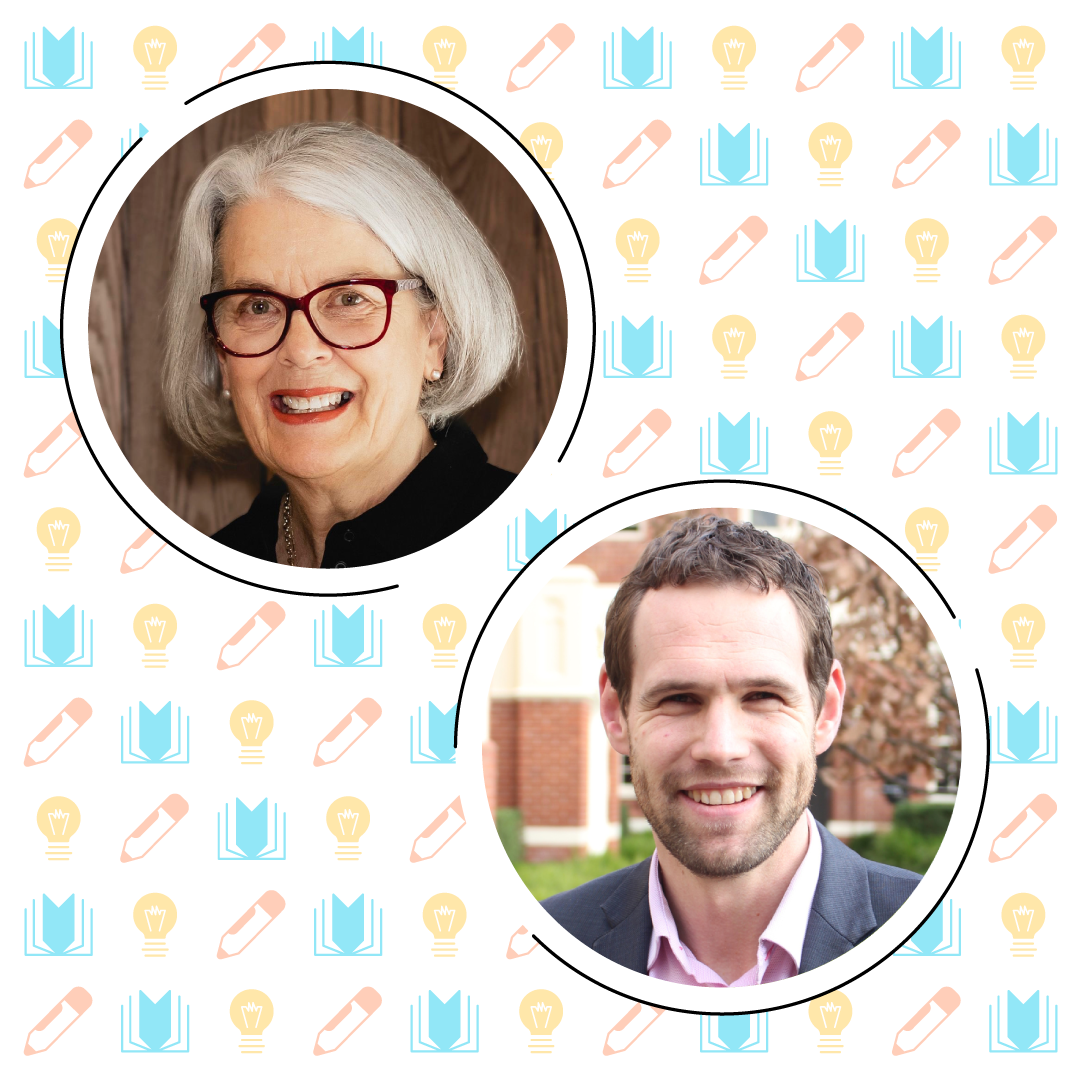
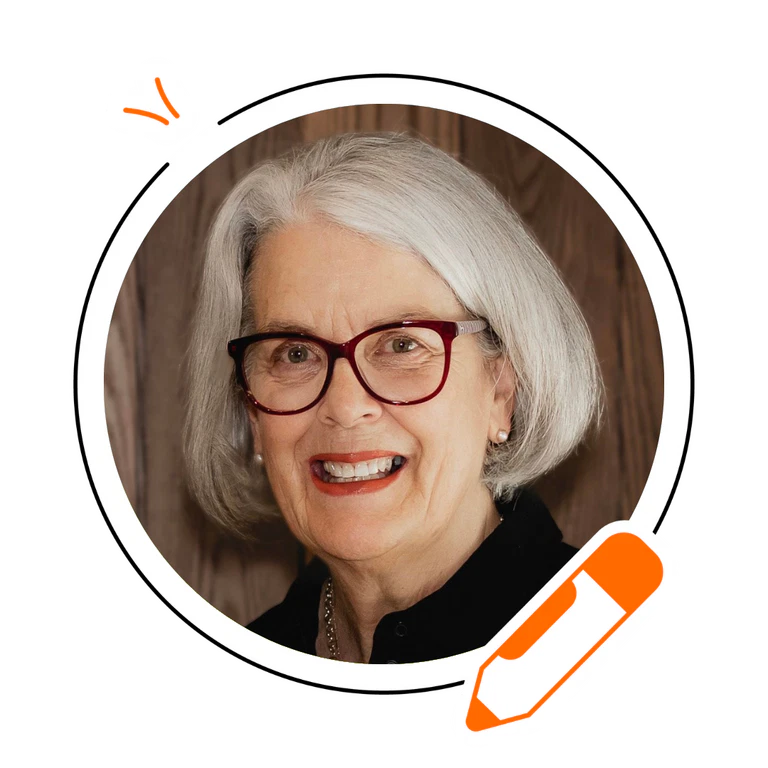
In this episode, Susan Lambert rejoins podcast alum Natalie Wexler to discuss Natalie’s new book Beyond the Science of Reading: Connecting Literacy Instruction to the Science of Learning. Listeners will gain insights into why this topic is important, what this book offers educators, why Natalie was so drawn to writing this book, and what cognitive science-informed teaching looks like in general. Natalie addresses how cognitive load theory works in practice with literacy, misconceptions about focusing only on phonics, and scaling science-informed instruction. Natalie also answers a question from the listener mailbag about encouraging colleagues to adopt an evidence-based approach.

Meet Our Guest(s):

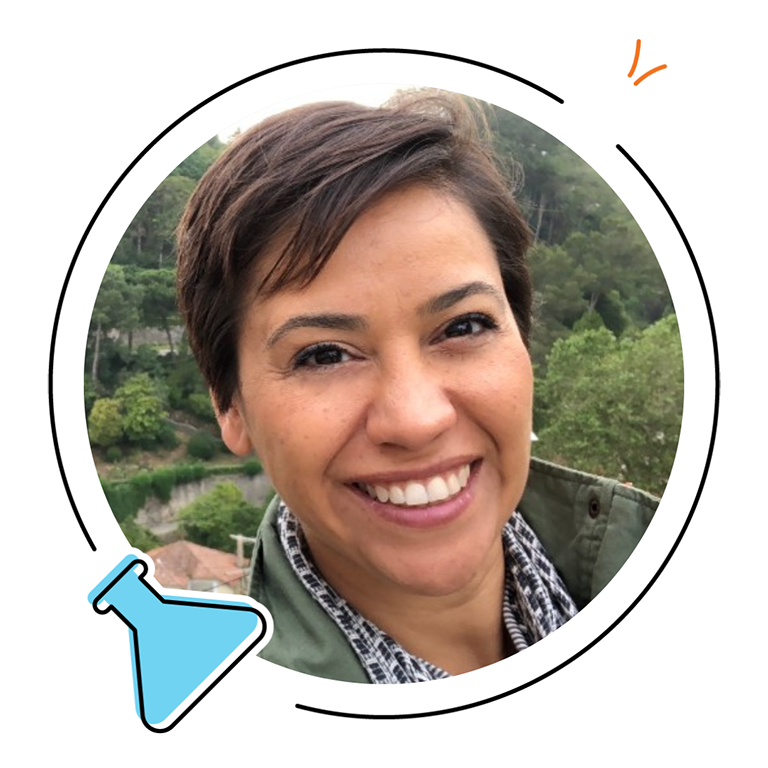
Portrait of a woman with short, curly blond hair wearing a white top, pictured inside a circular frame with an illustrated pencil and lines accent, reflecting her dedication to teaching reading and cognitive science.

Natalie Wexler

Natalie Wexler is the author of Beyond the Science of Reading: Connecting Literacy Instruction to the Science of Learning, coming from ASCD on Jan. 21, 2025. She is also the author of The Knowledge Gap: The Hidden Cause of America’s Broken Education System—and How to Fix It and the co-author, with Judith C. Hochman, Ed.D., of The Writing Revolution: A Guide to Advancing Thinking Through Writing in All Subjects and Grades. She has a free Substack newsletter called Minding the Gap, and she was the host of the Reading Comprehension Revisited podcast, Season One. More information is available on her website, www.nataliewexler.com.

Meet our host, Susan Lambert

Susan Lambert is the Chief Academic Officer of Elementary Humanities at Amplify, and the host of Science of Reading: The Podcast. Throughout her career, she has focused on creating high-quality learning environments using evidence-based practices. Lambert is a mom of four, a grandma of four, a world traveler, and a collector of stories.

As the host of Science of Reading: The Podcast, Lambert explores the increasing body of scientific research around how reading is best taught. As a former classroom teacher, administrator, and curriculum developer, Lambert is dedicated to turning theory into best practices that educators can put right to use in the classroom, and to showcasing national models of reading instruction excellence.

Portrait of a woman with short blonde hair, wearing glasses, a black top, and a necklace. She is smiling and facing the camera.

Quotes

“We’re overlooking the ways in which the typical approach to teaching reading comprehension and writing actually conflict with what cognitive science tells us about how people learn to do those things.”

—Natalie Wexler

“We spend much more time trying to teach them to read, but we kind of expect them to just pick up writing. You know, for most kids, it does not happen.”

—Natalie Wexler

“No matter how good you are at making inferences, if you don't have the requisite background knowledge, you're not gonna be able to do it.”

—Natalie Wexler

“It doesn't work to just ask inexperienced writers to just write down stuff. That is not going to provide the cognitive benefits.”

—Natalie Wexler

“Language is connected to thinking. If you can talk and write in a more sophisticated way that reflects that you are thinking in a more sophisticated way.”


—Natalie Wexler

Amplify Desmos Math receives an all-green rating from EdReports

BROOKLYN, NY (February 26, 2026) – Amplify, a publisher of next-generation curriculum and assessment programs, today announced that Amplify Desmos Math earned all-green scores from EdReports. This rating indicates that Amplify Desmos Math meets expectations across all gateways of EdReports’ new 2.0 Review Criteria for K–8 math curriculum, which were updated last year to reflect higher standards of educational excellence. 

Amplify Desmos Math is a curiosity-driven math program that builds students’ lifelong math proficiency. Through a structured approach to problem-based learning and clear instructional guidance, teachers can cultivate collaborative classrooms where students learn to think and do math together in ways that lead to durable, grade-level understanding. Amplify Desmos Math expands on the Desmos Math 6–8 curriculum, which was featured in a 2023 efficacy study by WestEd that demonstrates increased math achievement across more than 900 schools in nine states. During the 2025–2026 school year, more than 23,000 teachers are using Amplify Desmos Math with more than 1,000,000 students.

“We’re thrilled to receive an all-green rating from EdReports for Amplify Desmos Math,” said Jason Zimba, Amplify’s chief academic officer of STEM. “We built the program to help teachers bring out student’s natural curiosity and enjoyment of math, while also ensuring rigor and automaticity. Grounded in research, this program enables teachers to cultivate classrooms with rich mathematical discussions where students develop genuine, enduring mathematical thinking and skills.”

Amplify Desmos Math is Amplify’s first product built on Amplify Classroom, Amplify’s digital ecosystem that simplifies how educators manage teaching and learning from start to finish. Amplify Classroom brings data from core curriculum, assessments, and supplemental programs into a single, accessible location, giving teachers a unified view of student progress so they can provide targeted support where it’s needed. 

Amplify Desmos Math joins Amplify Core Knowledge Language Arts (CKLA), Amplify CKLA Skills, Amplify English Language Arts (ELA), and Amplify Science in earning all-green scores from EdReports, making it the fifth Amplify program to receive these ratings. 

About Amplify

A pioneer in K–12 education since 2000, Amplify delivers next-generation curriculum and assessment on an intuitive, integrated platform that includes thousands of free lessons. Our high-quality programs in ELA, math, and science engage students in rigorous learning that inspires them to think deeply, creatively, and independently. Our formative assessment tools help teachers identify the instruction each student needs to build a strong foundation in reading and math. Across all programs and services, we equip educators with powerful tools to understand and respond to the needs of every learner. Today, Amplify serves more than 18 million students and teachers across all 50 states and on 6 continents worldwide. For more information, visit Amplify.com.

Media Contact: Kristine Frech; media@amplify.com

Slow but steady progress: new Amplify data show why middle-of-year literacy screening matters 

With just 57% of K–2 readers on track and year-over-year gains flattening, the latest research brief underscores the urgency of data-driven instruction 

BROOKLYN, NY (February 25, 2026) – Amplify, a publisher of next-generation curriculum and assessment programs, today released a research brief on the latest K–2 middle-of-school-year literacy data. The findings make a clear case for why districts need middle-of-year early reading data: Recovery from pandemic-era learning loss has stalled, and without timely intervention, millions of students risk falling behind.

According to the latest data, 57 percent of K–2 students are on track to learn to read at the middle of the 2025–26 school year. Overall progress is slow and incremental: Year-over-year gains ranged from zero to two percentage points across grades, with kindergarteners showing the most improvement. Progress for second graders essentially leveled off between 2024–25 and 2025–26. First- and second-graders still have not recovered to where they were in 2019–20 before the pandemic.

“Middle-of-year assessments are an ideal window for schools to analyze student performance, identify any needed adjustments in instruction, and implement them in time to catch students up before the start of the next academic year,” said Susan Lambert, chief academic officer at Amplify. “Schools that have meaningful data—from a universal screener—can make more informed decisions about how to support students who are most at risk for reading difficulties.” 

The research brief draws on data from more than 3 million students assessed with mCLASS® DIBELS® 8th Edition, Amplify’s teacher-administered literacy assessment suite for grades K–8. A matched set of approximately 90,000 students across 800 schools in 43 states is represented in the trend analysis. 

Middle-of-year data is uniquely positioned to provide districts with insights that can help them implement instructional changes before the following school year. To accelerate early reading outcomes, Amplify recommends that districts and schools analyze data by school, grade, and classroom, and build plans that include:

  • Universal screening: Administering assessments three times per year to monitor risk levels for reading difficulties.
  • Targeted resource allocation: Assigning staff to support at-risk students with additional literacy instruction beyond grade-level requirements.
  • Evidence-based instruction: Ensuring staff are trained in the Science of Reading and implementing high-quality core curriculum.
  • Progress monitoring: Regularly tracking at-risk students and making real-time instructional adjustments.
  • Reading empowerment: Instilling a love of reading through school programs supported by caregivers and the community.

Read the complete research brief.

About Amplify

A pioneer in K–12 education since 2000, Amplify delivers next-generation curriculum and assessment on an intuitive, integrated platform that includes thousands of free lessons. Our high-quality programs in ELA, math, and science engage students in rigorous learning that inspires them to think deeply, creatively, and independently. Our formative assessment tools help teachers identify the instruction each student needs to build a strong foundation in reading and math. Across all programs and services, we equip educators with powerful tools to understand and respond to the needs of every learner. Today, Amplify serves more than 18 million students and teachers across all 50 states and in 6 continents worldwide. For more information, visit Amplify.com.  

Media Contact: Kristine Frech; media@amplify.com

Season 10, Episode 11

Learning to read vs. reading to learn, with Timothy Shanahan, Ph.D.

In this episode of Science of Reading: The Podcast, Timothy Shanahan, Ph.D., distinguished professor emeritus from the University of Illinois at Chicago, joins Susan Lambert to distinguish between reading comprehension, learning from a text, and the process of learning to read. He compares learning to read with athletic training, explaining that just as athletes need to vary their workout intensities to maximize their strength, students need to vary their text difficulty to maximize their comprehension, reading skills, and overall learning. Together, Timothy and Susan also discuss why reading comprehension is an ethical act and the power of simply rereading to increase comprehension.

Meet Our Guest(s):

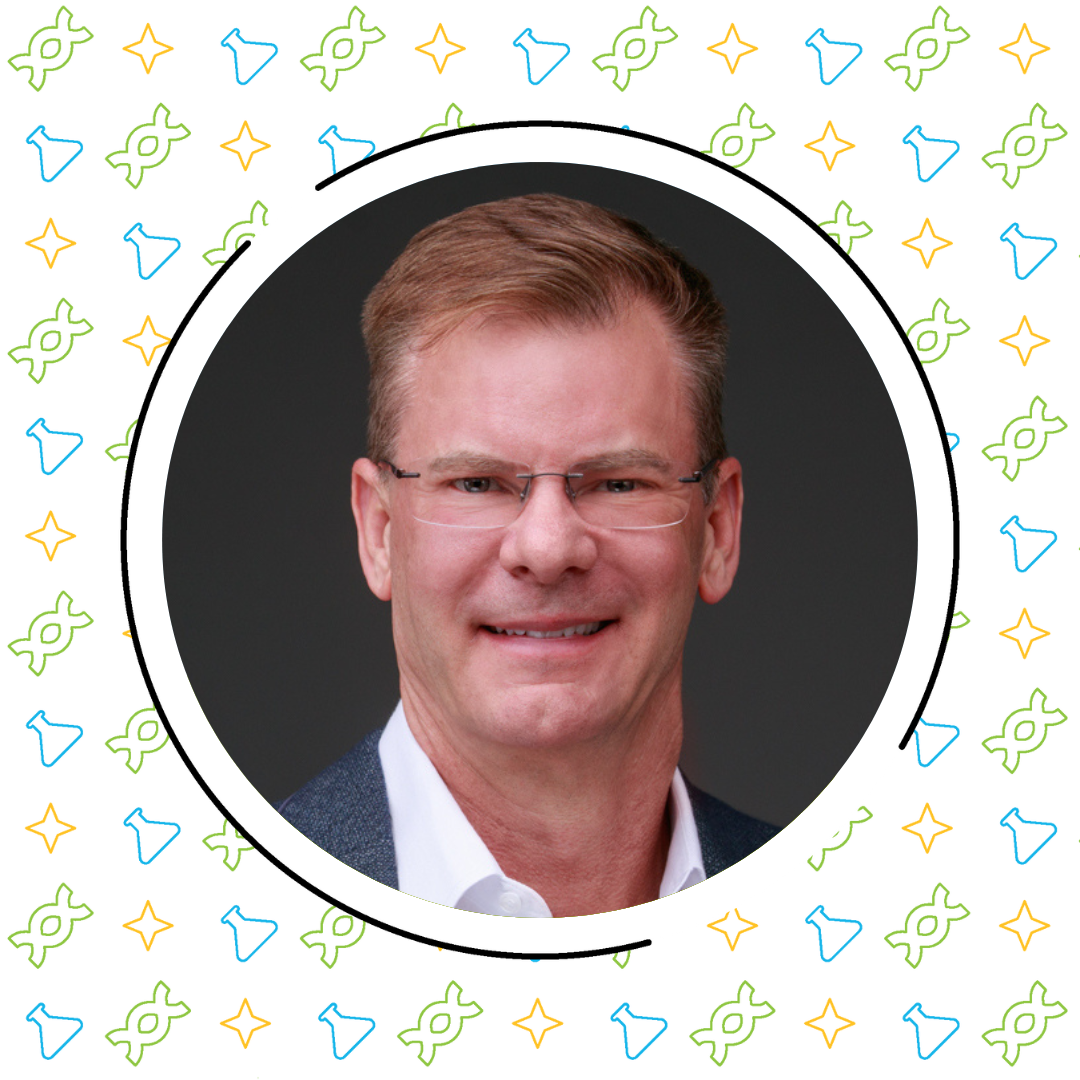
A man with short gray hair and glasses smiles at the camera, framed by a circular graphic with a yellow lightbulb icon in the corner—symbolizing the power of reading to learn and enhance reading comprehension.

Timothy Shanahan, Ph.D.

Timothy Shanahan, Ph.D., is distinguished professor emeritus at the University of Illinois at Chicago. Prior to this work, he served as director of reading for Chicago Public Schools and was a visiting professor at Queens University in Belfast, Northern Ireland. He has written and edited more than 300 publications, including his book Leveled Reading, Leveled Lives: How Students’ Reading Achievement Has Been Held Back and What We Can Do About It. He is also a former president of the International Literacy Association and served on the National Institute for Literacy Advisory Board under Presidents George W. Bush and Barack Obama. He was inducted to the Reading Hall of Fame in 2007 and is a former first-grade teacher.

Meet our host, Susan Lambert

Susan Lambert is chief academic officer of literacy at Amplify and host of Science of Reading: The Podcast. Throughout her career, she has focused on creating high-quality learning environments using evidence-based practices. Lambert is a mom of four, a grandma of four, a world traveler, and a collector of stories.

As the host of Science of Reading: The Podcast, Lambert explores the increasing body of scientific research around how reading is best taught. A former classroom teacher, administrator, and curriculum developer, she’s dedicated to turning theory into best practices that educators can put right to use in the classroom, and to showcasing national models of reading instruction excellence.

Person with short blonde hair, glasses, and earrings, wearing an orange jacket, smiling in front of a plain gray background—committed to literacy education and fostering background knowledge for all learners.

Quotes

“ We're trying to teach kids to read, and a text that is immediately comprehensible leaves you very little to learn.”

—Timothy Shanahan, Ph.D.

“You can increase the learning for most people if you increase the difficulty, because people have to think about it more. They have to work.”

—Timothy Shanahan, Ph.D.

“Reading comprehension is not just a psychological or cognitive action—it's an ethical action.”

—Timothy Shanahan, Ph.D.

“We should be teaching kids with more challenging texts than we have been.”

—Timothy Shanahan, Ph.D.

“Athletes don't do all of their training at peak levels of difficulty; they work up to those.”

—Timothy Shanahan, Ph.D.

Intro to Activity Builder

Wednesday, 6:30pm ET

Looking to start building your own lessons in Amplify Classroom? Join us at our next webinar to learn all about our free lesson building tool, Activity Builder (AB).
Learn how to use AB to create and edit your own dynamic lessons to engage students.”

Getting Started with Amplify Classroom

Monday, 7pm ET

New to Amplify Classroom? In our free introductory webinar, you’ll learn how to navigate the platform, set up your first class, teach a pre-made Amplify Classroom lesson to your students, and make use of our delightful facilitation tools to support student learning.

Intro to Polypad

Thursday, 7pm ET

Interested in incorporating free virtual manipulatives into your classroom? Learn how you can model a variety of mathematical concepts using Polypad, incorporate a Polypad screen into your Amplify Classroom activities, and explore our newest feature (letter tiles) to use in a variety of language arts contexts.

Season 10, Special episode

Cultivating critical thinkers in your classroom, starring Mitchell Brookins, Ph.D.

We’re excited to share a special episode from our friends at our sister podcast, Beyond My Years.

Host Ana Torres is joined by nationally recognized educational consultant and thought leader Mitchell Brookins, Ph.D., to discuss what critical thinking is and how to help students develop it. In addition to explaining why critical thinking is crucial for long-term academic success, Mitchell also gives educators four clear steps that they can implement to effectively nurture critical thinking skills in their classrooms. Ana is then joined by Beyond My Years' Classroom Insider extraordinaire Eric Cross, who discusses how he encourages his students to hone their critical thinking skills in class.

Meet Our Guest(s):

A man with short braids and a trimmed beard, wearing a dark suit and bright pink shirt and tie, looks directly at the camera—perfect for illustrating teacher strategies or how to develop critical thinking skills in students.

Mitchell Brookins, Ph.D.

Mitchell Brookins, Ph.D., has over 20 years of experience in K–12 as a teacher, coach, administrator, district leader, and thought leader. As a school administrator, he achieved impressive gains, including raising DIBELS® scores from 43% to 72%. He has spoken at top literacy events, including Amplify’s symposia, the Black Literacy Matters Conference, the Dyslexia Alliance for Black Children annual conference, and others. He leads a citywide fellowship supporting 25 literacy leaders in New Orleans, and serves as Managing Director of Leading Educators. He also serves on the Board of Directors for The Reading League. He holds a B.A. in elementary education, an M.A. in teacher leadership, and a Ph.D. in educational administration.

Meet our host, Susan Lambert

Susan Lambert is chief academic officer of literacy at Amplify and host of Science of Reading: The Podcast. Throughout her career, she has focused on creating high-quality learning environments using evidence-based practices. Lambert is a mom of four, a grandma of four, a world traveler, and a collector of stories.

As the host of Science of Reading: The Podcast, Lambert explores the increasing body of scientific research around how reading is best taught. A former classroom teacher, administrator, and curriculum developer, she’s dedicated to turning theory into best practices that educators can put right to use in the classroom, and to showcasing national models of reading instruction excellence.

Person with short blonde hair, glasses, and earrings, wearing an orange jacket, smiling in front of a plain gray background—committed to literacy education and fostering background knowledge for all learners.

Quotes

“When you are a school administrator, you can't be confused as to what your identity is. People expect you to step in with voice, with passion, with vision, and direct the path.”

—Mitchell Brookins, Ph.D.

“When we talk about knowledge building, when we talk about knowledge acquisition, it's actually predicated on critical thinking. That critical thinking  thinking is not just a higher-level task that we have kids do. It's deep thinking.”

—Mitchell Brookins, Ph.D.

“[Critical thinking] is actually cognitive support. It's a mental act of process in which you acquire knowledge and understanding.”

—Mitchell Brookins, Ph.D.

“During academic discussion, I'm not expecting the teacher to be quiet. I'm expecting the teacher to orchestrate thinking, to hold the pacing of the discussion. You know when to slow the class down, and let them think about this critical idea. You know when to ask that probing question that makes kids think, ‘Hmm.’ I'm looking for those discourse moves that teachers make.”

—Mitchell Brookins, Ph.D.

“When I see questioning that really probes, that's how I know I'm in a classroom where a teacher honors students' thinking. It is an honor to hear what children have to think.”

—Mitchell Brookins, Ph.D.

“That's how you know you're in a classroom with critical thinking: We're not rushing the conversation. We're enjoying it.”

—Mitchell Brookins, Ph.D.

“There's an art and science to teaching, and I think that they're two different things.”

—Eric Cross

“The importance of modeling can’t be overstated.”

—Ana Torres

“If we want to get to these higher levels of rigor or higher levels of thinking, that has to be built on a foundation. And when we connect that to something meaningful, the knowledge and the learning get deeper.”

—Eric Cross

“If you're engaged emotionally, that's going to help you be engaged cognitively.”

—Eric Cross

Amplify Awards Assemblywoman Blanca Rubio (D-West Covina) with the 2025 Leader in Education Award

BROOKLYN, NY (January 30, 2025) – Amplify, a publisher of next-generation curriculum and assessment programs, today awarded California Assemblywoman Blanca Rubio the 2025 Leader in Education Award. This annual award honors and recognizes legislators who have demonstrated dedication and creativity in improving learning opportunities for all students.

Since her election to California’s 48th district in 2016, Assemblywoman Rubio has made education a cornerstone of her legislative work, with a particular focus on improving early literacy and reading outcomes for California students. Her multi-year effort to advance evidence-based literacy instruction culminated in September with the passage of Assembly Bill 1454 (AB 1454), which she led in partnership with Assembly Speaker Robert Rivas (D-Salinas) and Assemblymember Al Muratsuchi (D-Torrance), Chair of the Assembly Education Committee. 

AB 1454 represents a comprehensive approach to ensuring California’s children learn to read proficiently and on schedule, including:

  • Robust training in evidence-based practices, such as Evidence-Based Literacy Instructional (EBLI), which emphasize explicit and systematic phonics instruction, phonetic awareness, and fluency development
  • Updated guidance for the adoption of ELAD/ELD instructional materials for grades K–8 
  • Ensuring that both current and future instructional materials are also grounded in evidence-based literacy practices

“I’m honored to be recognized with the 2025 Leader in Education award,” said Rubio. “Education has been foundational to my own success; it is the pathway for the success of countless others, and because of this, it is a cornerstone of my work in the Assembly.  I couldn’t be prouder of what we’ve accomplished with AB 1454. This legislation represents years of partnership with educators, advocates, and legislative leaders who share the vision that every child deserves to learn to read well and on time. This recognition belongs to everyone who helped make this reform a reality. ”

Rubio’s successful advocacy for the Bill garnered support from a broad coalition committed to California’s literary excellence. Her commitment to improving student reading outcomes across California comes at a critical time, when focused efforts are needed to ensure all students reach their full reading potential and achieve academic success.

“Reading is foundational to student success across every subject, yet too many students in California and across the country lack critical reading skills,” said Amplify CEO Larry Berger. “Assemblywoman Rubio’s leadership demonstrates what’s possible when policymakers prioritize evidence-based practices.”

Rubio received the award earlier today at an event in Brooklyn, New York.

About Amplify

A pioneer in K–12 education since 2000, Amplify delivers next-generation curriculum and assessment on an intuitive, integrated platform that includes thousands of free lessons. Our high-quality programs in ELA, math, and science engage students in rigorous learning that inspires them to think deeply, creatively, and independently. Our formative assessment tools help teachers identify the instruction each student needs to build a strong foundation in reading and math. Across all programs and services, we equip educators with powerful tools to understand and respond to the needs of every learner. Today, Amplify serves more than 18 million students and teachers across all 50 states and on 6 continents worldwide. For more information, visit Amplify.com.

Media Contact: Kristine Frech; media@amplify.com

Season 10, Episode 10

From talk to text: How language skills shape reading success, with Charles Hulme, D.Phil., and MaryKate DeSantis

In this episode of Science of Reading: The Podcast, Susan Lambert is joined by emeritus professor of psychology and education at the University of Oxford, Charles Hulme, D.Phil.; and founder of Left Side Strong LLC, MaryKate DeSantis. They dive deep into the critical connection between oral language development and reading comprehension. Together, they also explore exactly what oral language development is, how to screen children for deficits in oral language abilities, and the most effective strategies educators can use for intervention.

Meet Our Guest(s):

A smiling older man with short gray hair poses in front of green plants, highlighting themes of language development. A lightbulb graphic and circular frame decorate the photo.

Charles Hulme, D.Phil.

Charles Hulme is emeritus professor of psychology and education at the University of Oxford. He has broad research interests in reading, language, and memory processes and their development; and is an expert on randomized controlled trials in education. He has published widely and is in the top 2% for citations of all researchers in the field of education. He holds an honorary doctorate from the University of Oslo (2014) and is a member of Academia Europea and a Fellow of the Academy of Social Sciences. He was also elected a Fellow of the British Academy in 2017.

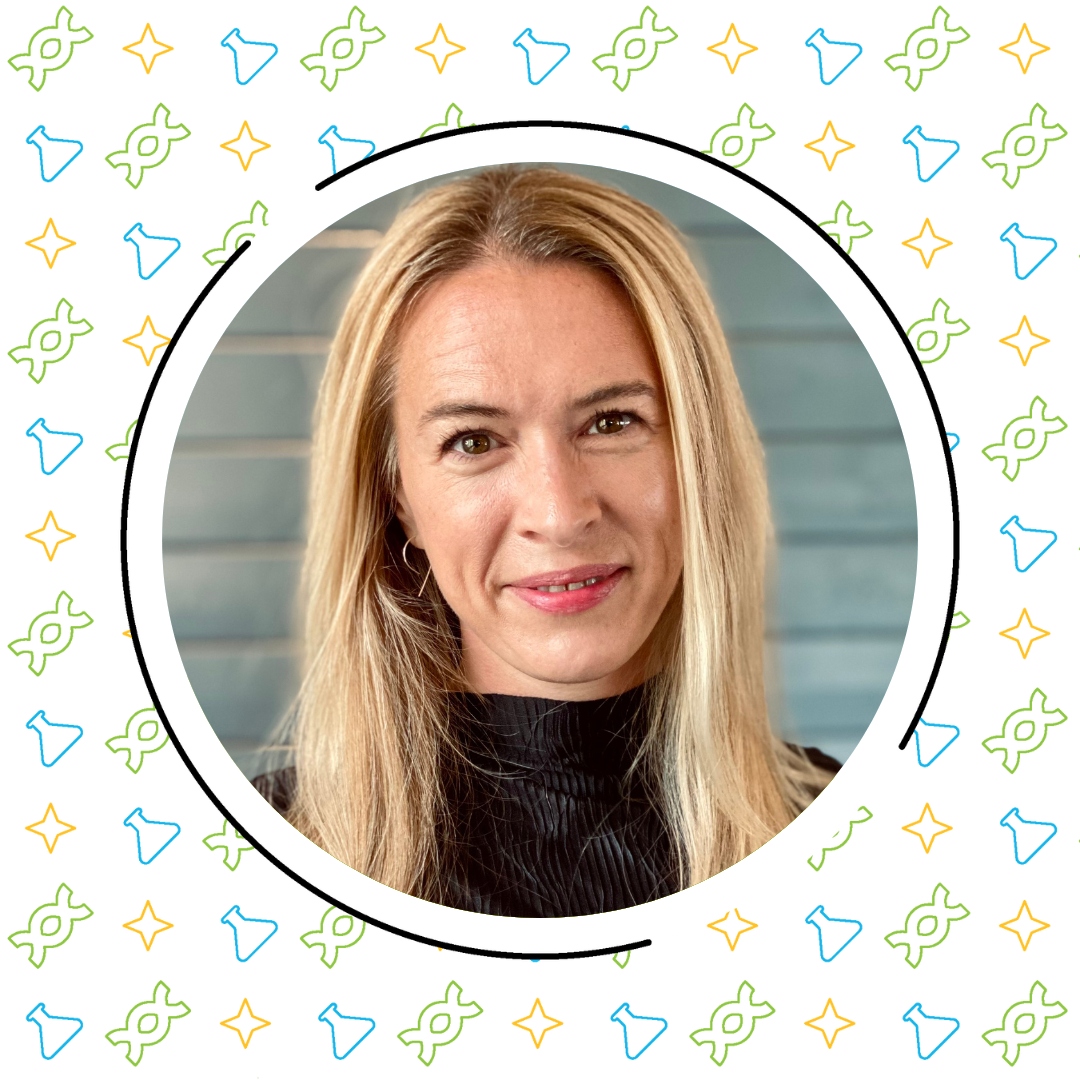
A woman with short brown hair and a black turtleneck smiles at the camera. She is framed by a circular border with a blue book icon and orange decorative lines, hinting at her passion for reading success. Bookshelves are blurred in the background.

MaryKate DeSantis

MaryKate DeSantis is the founder of Left Side Strong LLC. Her experience working in a large urban school district as a special education teacher, reading specialist, and district-wide literacy coach has fueled her passion for translational research to ensure that all children receive evidence-based instruction. Her background in teaching reading sparked an interest in researching language, literacy, and developmental trajectories. She is a full-time faculty member in the Speech and Language Literacy Lab at MGH Institute of Health Professions, and is also an ongoing-research collaborator with the BRIDGES Lab at the Harvard Graduate School of Education.

She has also served as a clinician in the Neurology Department at Boston Children’s Hospital, is an adjunct professor at the Boston College Lynch School of Human Development, and is a Ph.D. student in educational psychology at the University of Connecticut.

Meet our host, Susan Lambert

Susan Lambert is chief academic officer of literacy at Amplify and host of Science of Reading: The Podcast. Throughout her career, she has focused on creating high-quality learning environments using evidence-based practices. Lambert is a mom of four, a grandma of four, a world traveler, and a collector of stories.

As the host of Science of Reading: The Podcast, Lambert explores the increasing body of scientific research around how reading is best taught. A former classroom teacher, administrator, and curriculum developer, she’s dedicated to turning theory into best practices that educators can put right to use in the classroom, and to showcasing national models of reading instruction excellence.

Person with short blonde hair, glasses, and earrings, wearing an orange jacket, smiling in front of a plain gray background—committed to literacy education and fostering background knowledge for all learners.

Quotes

“Reading comprehension is the process of taking the meaning from printed symbols on a page and translating them into a linguistic and cognitive code. It's making contact with the processes of language comprehension.”

—Charles Hulme, D.Phil.

“Language comprehension is really what leads us to reading comprehension.”

—MaryKate DeSantis

“We've got to start from the premise that reading is language. Without language, there would be no reading. Reading is a process that involves taking language in its written form and translating it back into its original form, which is spoken language.”

—Charles Hulme, D.Phil.

“If we go back in development, language skills appear to form the foundation for the ability to decode print, as well as the foundation for the ability to understand what is decoded.”

—Charles Hulme, D.Phil.

“Language skills are unconstrained, meaning the sky's the limit. As long as you continue to engage in any sort of way, your language skills can continue to develop throughout your lifetime.”

—Susan Lambert

“We talk about learning to read, but we also need to talk about reading to learn. A lot of what we learn in our lives is through reading, and reading is certainly a powerful driver of vocabulary and language development.”

—Charles Hulme, D.Phil.

“Focusing on language is worth the time. …  When we treat it as foundational, that's when we will give more students access to success.”

—MaryKate DeSantis

“If we want better readers, we have to grow better language users.”

—MaryKate DeSantis

Introducing Amplify Desmos Math (K–8)

Monday, 3pm ET

Connect strategies to practice with a free program overview of Amplify Desmos Math. Join to see how the ideas from Teaching Mathematics Through Problem Solving K–8, Expanded Edition come to life in a real math program. 

Season 10, Episode 9

From research to reality: Breaking down comprehension barriers, with Phil Capin, Ph.D.

In this episode of Science of Reading: The Podcast, Susan Lambert is joined by Phil Capin, Ph.D., assistant professor of education at the Harvard Graduate School of Education. They explore why recommended reading comprehension practices aren’t widely implemented in schools, and what educators can do to change that. Together, they also discuss how knowledge building is foundational to reading comprehension; how writing is a powerful tool in supporting reading comprehension; and why we should structure reading instruction based on what happens before, during, and after reading.

Meet Our Guest(s):

A man with short dark hair smiles at the camera inside a circular frame with an orange pencil graphic in the corner, highlighting his passion for effective reading comprehension practices.

Phil Capin, Ph.D.

Phil Capin, Ph.D., is an assistant professor at the Harvard Graduate School of Education. His research focuses on understanding differences in reading development and developing and evaluating the impact of instructional practices, primarily for those with reading difficulties. Supported by the grant from the Institute of Education Sciences and the National Institutes of Health, Capin has conducted randomized control trials examining instructional approaches for improvising reading opportunities and outcomes for students with reading difficulties in K–2 settings. As a former teacher, a primary goal of his work is to meaningfully address challenges faced by educators.

Meet our host, Susan Lambert

Susan Lambert is chief academic officer of literacy at Amplify and host of Science of Reading: The Podcast. Throughout her career, she has focused on creating high-quality learning environments using evidence-based practices. Lambert is a mom of four, a grandma of four, a world traveler, and a collector of stories.

As the host of Science of Reading: The Podcast, Lambert explores the increasing body of scientific research around how reading is best taught. A former classroom teacher, administrator, and curriculum developer, she’s dedicated to turning theory into best practices that educators can put right to use in the classroom, and to showcasing national models of reading instruction excellence.

Person with short blonde hair, glasses, and earrings, wearing an orange jacket, smiling in front of a plain gray background—committed to literacy education and fostering background knowledge for all learners.

Quotes

“Instead of asking, ‘What do you know about a topic?,' I would start with building their knowledge.”

—Phil Capin, Ph.D.

“We've underestimated the value of writing in supporting reading comprehension.”

—Phil Capin, Ph.D.

“Reading and writing rely on a lot of the same language processes, and writing supports the consolidation of knowledge.”

—Phil Capin, Ph.D.

“When I think of high-quality reading comprehension instruction, I think of before, during, and after.”

—Phil Capin, Ph.D.

“Reading comprehension is the byproduct of a constellation of competencies that are interrelated: your ability to read words, your knowledge of words, and your background knowledge on the topic of the text.”

—Phil Capin, Ph.D.

“Students should engage with meaningful problems, and they should have a reason for learning.”

—Phil Capin, Ph.D.

“It's really important that we help students to develop those foundational literacy skills, because it is just a fact that if you can't read the words, you're not going to understand the text.”

—Phil Capin, Ph.D.

“Reading comprehension will vary based on the knowledge you bring to the task, your interest in it, and your purpose for reading.”

—Phil Capin, Ph.D.

Season 10, Episode 8

Beyond decoding: The power of syntax, with Nancy Chapel Eberhardt

In this episode of Science of Reading: The Podcast, Susan Lambert is joined by educational consultant Nancy Chapel Eberhardt, who explains why focusing on syntax at the sentence level is just as important for comprehension as word-level decoding. Together, Nancy and Susan also discuss how syntax helps students process meaning while reading, why we should start early and teach syntax to students from the beginning, and a more functional approach to teaching syntax.

Meet Our Guest(s):

A smiling woman with glasses and a necklace sits in front of a green wall with a botanical print, illustrating concepts in literacy instruction; a graphic of a yellow lightbulb is in the lower right corner.

Nancy Chapel Eberhardt

Nancy Chapel Eberdardt is an educational consultant with extensive experience as a resource teacher, special education administrator, and professional development provider. In addition to co-authoring a number of popular literacy programs, she also serves as co-editor-in-chief of the International Dyslexia Association’s publication Perspectives on Language and Literacy. Nancy is a lifelong advocate for preventing reading underachievement by supporting teachers with professional development and evidence-based resources.

Meet our host, Susan Lambert

Susan Lambert is chief academic officer of Literacy at Amplify and host of Science of Reading: The Podcast. Throughout her career, she has focused on creating high-quality learning environments using evidence-based practices. Lambert is a mom of four, a grandma of four, a world traveler, and a collector of stories.

As the host of Science of Reading: The Podcast, Lambert explores the increasing body of scientific research around how reading is best taught. A former classroom teacher, administrator, and curriculum developer, she’s dedicated to turning theory into best practices that educators can put right to use in the classroom, and to showcasing national models of reading instruction excellence.

Person with short blonde hair, glasses, and earrings, wearing an orange jacket, smiling in front of a plain gray background—committed to literacy education and fostering background knowledge for all learners.

Quotes

“Syntax is somewhere between the individual words and the meaning of the text. It’s the processing piece that’s going on there.”

—Nancy Chapel Eberhardt

“One of the biggest ways that syntactic knowledge can help us with our reading comprehension is through this parsing of the language, which is basically helping us with prosody. And we know that prosody will help us with our fluency with reading.”

—Nancy Chapel Eberhardt

“I would encourage teachers to start teaching this by thinking about the most essential building block. ‘I need to build a sentence. I need two parts. I need a who or what, and I need a did what, or I need a noun and I need a verb.’”

—Nancy Chapel Eberhardt

“Every language has a syntax, meaning a set of rules within this language that has to do with how we develop thought units. A sentence is a thought unit. So, if we think about syntax as being sentence-level structures in our language, that's one helpful way to think about it.”

—Nancy Chapel Eberhardt

“Syntax isn't just for older kids anymore. Syntax is really something that we can start promoting, developing, encouraging, embracing from the beginning.”

—Nancy Chapel Eberhardt

“I actually think that as teachers embrace this idea of syntax, they're going to have a lot of fun with it. It's way more fun to talk about the meanings of words than to just decode them.”

—Nancy Chapel Eberhardt

Season 10, Episode 7

Syntax and comprehension, with Julie Van Dyke, Ph.D.

In this episode of Science of Reading: The Podcast, Susan Lambert is joined by research scientist and professor Julie Van Dyke, Ph.D., who explains why syntax instruction may be the missing piece in our mission to improve comprehension outcomes for all students. Together, Julie and Susan discuss why syntax is the part of the language system that matters for comprehension, how the same systematicity and rule governance that you find in teaching phonics also exists in syntax, and how explicit syntax instruction could be the next breakthrough in evidence-based literacy education.

Meet Our Guest(s):

A person with long brown hair and glasses is facing the camera, framed by a circular border with a pencil graphic in the lower right corner, suggesting expertise in reading comprehension strategies for students.

Julie Van Dyke, Ph.D.

Julie Van Dyke, Ph.D., holds joint appointments as an associate research professor at the Institute for Brain and Cognitive Sciences at the University of Connecticut; clinical assistant professor at the Yale University Child Study Center; and research scientist at the Yale-UConn Haskins Global Literacy Hub. She is also Chief Scientist at Cascade Reading. Previously, she served as a senior scientist at Haskins Laboratories for 22 years. Her deep dedication to improving reading outcomes for all children is fueled daily by her experience as the parent of a child with dyslexia, developmental language disability, dyscalculia, ADHD, and autism.

Meet our host, Susan Lambert

Susan Lambert is chief academic officer of Literacy at Amplify and host of Science of Reading: The Podcast. Throughout her career, she has focused on creating high-quality learning environments using evidence-based practices. Lambert is a mom of four, a grandma of four, a world traveler, and a collector of stories.

As the host of Science of Reading: The Podcast, Lambert explores the increasing body of scientific research around how reading is best taught. A former classroom teacher, administrator, and curriculum developer, she’s dedicated to turning theory into best practices that educators can put right to use in the classroom, and to showcasing national models of reading instruction excellence.

Person with short blonde hair, glasses, and earrings, wearing an orange jacket, smiling in front of a plain gray background—committed to literacy education and fostering background knowledge for all learners.

Quotes

“In English, syntax is word order. Syntax is the relationship between the entities in a sentence.”

—Julie Van Dyke, Ph.D.

“If you want to increase comprehension, you need to be explicit in syntax because that's the part of the language system that matters for comprehension.”

—Julie Van Dyke, Ph.D.

“Comprehension is the glue between the words. It's the process of gluing the words together, each word as you go.”

—Julie Van Dyke, Ph.D.

“The process itself [of comprehension] is the moment by moment, really millisecond by millisecond action of gluing words together in order to create a meaning.”

—Julie Van Dyke, Ph.D.

“We need to move the needle on the nation's report card.  We still have two-thirds of our students who are unable to read at what we call proficient. I think the only way that we can really get that number to be closer to the 95% that we really want is to do something new. Syntax is the new thing.”

—Julie Van Dyke, Ph.D.

“If somebody knew how beautiful and systematic the language was, I think you would have people rushing when they wake up to go study syntax.”

—Julie Van Dyke, Ph.D.

Season 10, Episode 6

Understanding assessment, with Melissa Farrall, Ph.D.

In this episode of Science of Reading: The Podcast, Susan is joined by Affiliated Distinguished Scholar at the Stern Center for Language and Learning, Melissa Farrall, Ph.D., to discuss understanding assessment. Melissa explains exactly why it’s beneficial for every educator to understand the fundamentals of assessment, especially comprehension assessment. Together, Melissa and Susan discuss the relationship between reading comprehension and language comprehension, why reading comprehension can be challenging to assess, and how, in a perfect world, educators would be trained both in the Science of Reading and in assessment.

Meet Our Guest(s):

Portrait of a smiling woman with shoulder-length wavy hair, shown inside a circular frame with a blue open book icon at the bottom right, representing expertise in comprehension and literacy programs.

Melissa Farrall, Ph.D.

Melissa Farrall, Ph.D., is the author of Reading Assessment: Linking Language, Literacy and Cognition, and co-author of All About Tests & Assessments. She recently retired as director for evaluation at the Stern Center for Language and Learning in Vermont, and held an appointment as clinical assistant professor in the Department of Neurological Sciences at the Robert Larner College of Medicine at the University of Vermont, where she trained medical professionals about learning disabilities and reading. She continues to train evaluators and teach courses through the Stern Center and Vermont State University.

She has her doctorate from Brown University in Slavic linguistics, her master’s degree in learning disabilities from Rivier College, and certification as a specialist in the Assessment of Intellectual Functioning.

Meet our host, Susan Lambert

Susan Lambert is chief academic officer of Literacy at Amplify and host of Science of Reading: The Podcast. Throughout her career, she has focused on creating high-quality learning environments using evidence-based practices. Lambert is a mom of four, a grandma of four, a world traveler, and a collector of stories.

As the host of Science of Reading: The Podcast, Lambert explores the increasing body of scientific research around how reading is best taught. A former classroom teacher, administrator, and curriculum developer, she’s dedicated to turning theory into best practices that educators can put right to use in the classroom, and to showcasing national models of reading instruction excellence.

Person with short blonde hair, glasses, and earrings, wearing an orange jacket, smiling in front of a plain gray background—committed to literacy education and fostering background knowledge for all learners.

Quotes

“My view of reading comprehension is that it is ‘thinking guided by print.’”

—Melissa Farrall, Ph.D.

“If we supplement our evaluation with measures of listening comprehension, we can then get a sense of an individual's ability to make meaning. ”

—Melissa Farrall, Ph.D.

“One of the interesting things about being in this field is that no two people share the same definition of what reading comprehension is. Because we don't necessarily agree as to what reading comprehension is, there is certainly a lot of diversity in the way that we decide we want to assess it.”

—Melissa Farrall, Ph.D.

“In a perfect world, we would have not just evaluators, but educators who are trained both in the Science of Reading and in assessment so that we can all sit at the same table and participate as we review evaluation results.”

—Melissa Farrall, Ph.D.

Season 10, Episode 5

Reimagining comprehension assessment, with Gina Biancarosa, Ed.D.

In this episode of Science of Reading: The Podcast, Susan Lambert is joined by University of Oregon College of Education Professor and Ann Swindells Chair in Education Gina Biancarosa, Ed.D., to explore how best to assess for comprehension. Gina elaborates on her extensive work developing more precise and informative measurements of reading comprehension and discusses think-aloud research, demonstrating how to infer for coherence, and examining how students who are struggling with comprehension tend to rely too heavily on making inferences or paraphrasing.

Meet Our Guest(s):

A middle-aged person with short dark hair smiles, pictured outdoors with greenery in the background. A yellow lightbulb graphic and simple line art frame the photo, evoking ideas from Science of Reading webinars and literacy programs.

Gina Biancarosa, Ed.D.

Gina Biancarosa, Ed.D., is the Ann Swindells Chair in Education and a University of Oregon College of Education professor. Her research focuses on measuring reading comprehension and tracking reading growth over time. She is best known for creating key tools like the widely used DIBELS® 8th Edition and the MOCCA (Multiple-Choice Online Causal Comprehension Assessment) diagnostic measure. She holds a doctorate from the Harvard Graduate School of Education and completed a fellowship at Stanford University.

Meet our host, Susan Lambert

Susan Lambert is Chief Academic Officer of Literacy at Amplify and host of Science of Reading: The Podcast. Throughout her career, she has focused on creating high-quality learning environments using evidence-based practices. Lambert is a mom of four, a grandma of four, a world traveler, and a collector of stories.

As the host of Science of Reading: The Podcast, Lambert explores the increasing body of scientific research around how reading is best taught. A former classroom teacher, administrator, and curriculum developer, she’s dedicated to turning theory into best practices that educators can put right to use in the classroom, and to showcasing national models of reading instruction excellence.

Person with short blonde hair, glasses, and earrings, wearing an orange jacket, smiling in front of a plain gray background—committed to literacy education and fostering background knowledge for all learners.

Quotes

“A lot of what we know about reading comprehension comes from think-alouds, where you ask someone to tell you what they're thinking about as they read.”

—Gina Biancarosa, Ed.D.

“ To model reading comprehension, [try] thinking aloud in front of a classroom of students in a way that is instructive for them, and also authentic to the reading process.”

—Gina Biancarosa, Ed.D.

“Students are making causal inferences in their daily lives, when they watch movies and when they're hearing stories. And so what we're really trying to do is get them to generalize these behaviors that they engage in outside of the task of reading, during reading.”

—Gina Biancarosa, Ed.D.

Season 10, Episode 4

The science of memory and misinformation, with David Rapp, Ph.D.

In this episode of Science of Reading: The Podcast, Susan Lambert is joined by Northwestern University Professor of Education, Social Policy, and Psychology David Rapp. David’s research focuses on language and memory, and his conversation with Susan gives insight into how memory is connected to comprehension. The first half of the episode is spent defining comprehension as a process, a product, and a higher-order cognitive process. David then digs into how that definition informs the ways in which educators assess comprehension and where they can look for potential failure points. One of these failure points includes misinformation. David addresses what happens when misinformation is stored in long-term memory. He details the issues this can cause for student comprehension, and he gives guidance on how to prevent and correct them.

Meet Our Guest(s):

A man with short gray hair, glasses, and a trimmed beard is wearing a checkered shirt and standing against a plain white background. An illustrated pencil in the lower right hints at student engagement and creativity.

David Rapp, Ph.D.

David Rapp is the Walter Dill Scott Professor of Education, Social Policy, and Psychology at Northwestern University. His research examines language and memory, focusing on the cognitive mechanisms responsible for successful learning and knowledge failures. This has included investigations into the influence of inaccurate information on comprehension, the evaluation of technologies that support formal and informal learning, and the iterative development of tools and curricula intended to support literacy. Rapp’s projects have been funded by the National Science Foundation, the U.S. Department of Education, the National Institute on Aging, and Meta.

Meet our host, Susan Lambert

Susan Lambert is Chief Academic Officer of Literacy at Amplify and host of Science of Reading: The Podcast. Throughout her career, she has focused on creating high-quality learning environments using evidence-based practices. Lambert is a mom of four, a grandma of four, a world traveler, and a collector of stories.

As the host of Science of Reading: The Podcast, Lambert explores the increasing body of scientific research around how reading is best taught. A former classroom teacher, administrator, and curriculum developer, she’s dedicated to turning theory into best practices that educators can put right to use in the classroom, and to showcasing national models of reading instruction excellence.

Person with short blonde hair, glasses, and earrings, wearing an orange jacket, smiling in front of a plain gray background—committed to literacy education and fostering background knowledge for all learners.

Quotes

“In terms of being exposed to misinformation, we see even if people have been exposed to inaccurate ideas—even once—it's encoded into memory; it's potentially gonna be there to influence you.”

—David Rapp, Ph.D.

“Once the information is in memory, you can't really get rid of it. What you can try to do is make other memories more powerful, more likely to resonate.”

—David Rapp, Ph.D.

“It feels easy for us to comprehend texts if we're well practiced at it. It feels easy, but it's actually a lot of cognitive operations going on behind the scenes and a lot of years of practice.”

—David Rapp, Ph.D.

“Sometimes our most effective processes actually lead us to misunderstand. For example, you're really good at encoding information to memory, that's great…except if you're exposed to inaccurate ideas, that's a problem.”

—David Rapp, Ph.D.

Season 10, Episode 3

Finding fluency at the heart of comprehension, with Doug Lemov

In this episode of Science of Reading: The Podcast, Susan Lambert is joined by Doug Lemov, former teacher and school principal, to discuss how teachers can identify when disfluency is actually the root cause for students’ struggles with comprehension—and what they can do about it. Using his new book, The Teach Like a Champion Guide to the Science of Reading, to guide the discussion, Susan and Doug address building attention stamina, the argument for reading whole books, and the value of expressive read-alouds. Finally, Doug ends the episode asserting that humans are meant to live in community, and that a deeper level of comprehension is unlocked through empathic connection to text and the experience of reading with others.

Meet Our Guest(s):

A middle-aged man with glasses and a white shirt is smiling outdoors, framed by a circular border with a blue book icon in the corner—perfect for an emergent readers or science of reading podcast profile.

Doug Lemov

Doug Lemov is a former teacher and school principal whose books describe the techniques of high-performing teachers. His best-known book, Teach Like a Champion, has been translated into more than a dozen languages. The Teach Like a Champion Guide to the Science of Reading, published in July 2025 and co-written with Colleen Driggs and Erica Woolway, looks at how cognitive science can be better applied to the teaching of reading. Doug holds a bachelor’s in English from Hamilton College, a master’s in English Literature from Indiana University, and a Master’s of Business Administration from the Harvard Business School.

Meet our host, Susan Lambert

Susan Lambert is Chief Academic Officer of Literacy at Amplify and host of Science of Reading: The Podcast. Throughout her career, she has focused on creating high-quality learning environments using evidence-based practices. Lambert is a mom of four, a grandma of four, a world traveler, and a collector of stories.

As the host of Science of Reading: The Podcast, Lambert explores the increasing body of scientific research around how reading is best taught. A former classroom teacher, administrator, and curriculum developer, she’s dedicated to turning theory into best practices that educators can put right to use in the classroom, and to showcasing national models of reading instruction excellence.

Person with short blonde hair, glasses, and earrings, wearing an orange jacket, smiling in front of a plain gray background—committed to literacy education and fostering background knowledge for all learners.

Quotes

“When you know the science, you should have the autonomy to make real decisions and to solve problems in your classroom. That's how education works.”

—Doug Lemov

“If you're not a fluent reader, you can't be a deep reader.”

—Doug Lemov

“The research is clear that when you start to read expressively externally, then your internal reading voice while reading silently is much more expressive and therefore infused with more meaning.”

—Doug Lemov

“Fluent reading, when it includes prosody, is meaning made audible.”

—Doug Lemov

“I just think it's easy for us to overlook how profoundly groupish we are, how we yearn for group formation, how stories, when they're told well, when they're shared, they bind us together in an experience.”

—Doug Lemov

“When we're sharing this experience that we're able to connect with the text itself, we're able to infuse some meaning through how we're reading that text. That lends us to a depth of comprehension that's really where we want any reader to get to.”

—Susan Lambert

“Comprehension just isn't coming out of a book knowing what the author said; it’s deeply connected to the content that you just experienced.”

—Susan Lambert

New data: early literacy readiness reaches post-pandemic high, but slowing momentum requires urgent focus on foundational skills

Brooklyn, NY (October 16, 2025) – Amplify, a publisher of next-generation curriculum and assessment programs, today released a research brief on the latest K–2 beginning-of-school-year literacy data. Findings reveal that at the beginning of the 2025–2026 school year, 48 percent of K–2 students were on track to learn to read, marking the highest literacy readiness level since the start of the pandemic. However, year-over-year progress has plateaued, and students have not yet reached pre-pandemic levels, highlighting the ongoing need for strong foundational skills instruction and support for struggling readers in the early grades.

The data also underscore the importance of early intervention. Longitudinal analysis shows that K-2 students who began the school year behind in reading readiness but managed to catch up by the end of the year were likely to remain on track through the end of third grade. The findings highlight how critical it is to intervene as early as possible to get students on track, as the likelihood of students achieving reading proficiency by third grade increases the earlier it happens.

“It’s encouraging to see nearly half of our youngest students ready for core instruction. This is a testament to the hard work of educators and the impact of evidence-based practices in the classroom,” said Susan Lambert, chief academic officer, elementary humanities, at Amplify. “However, the data point to a worrisome stall in year-over-year progress. This is a critical moment for a renewed, laser focus on early intervention. Our longitudinal findings make it abundantly clear: the earlier we get a student on track in K–2, the greater their likelihood of achieving reading success by the end of third grade.”

Amplify recommends that districts and schools consider administering a universal screener three times a year to follow student progress in early reading. With that information in hand, educators can make more informed decisions related to:

  • Identifying students who need additional support;
  • Ensuring all students receive quality instruction grounded in evidence-based practices, such as the Science of Reading;
  • Developing plans for addressing student needs and allocating resources to implement those plans; and
  • Regularly monitoring student progress and making adjustments as needed.

About Amplify

A pioneer in K–12 education since 2000, Amplify delivers next-generation curriculum and assessment on an intuitive, integrated platform that includes thousands of free lessons. Our high-quality programs in ELA, math, and science engage students in rigorous learning that inspires them to think deeply, creatively, and independently. Our formative assessment tools help teachers identify the instruction each student needs to build a strong foundation in reading and math. Across all programs and services, we equip educators with powerful tools to understand and respond to the needs of every learner. Today, Amplify serves more than 18 million students and teachers across all 50 states and in 6 continents worldwide. For more information, visit Amplify.com.

Media Contact: Kristine Frech; media@amplify.com

Season 4, Episode 2

Bethany and Dan share their math biographies

In this episode, co-hosts Bethany Lockhart Johnson and Dan Meyer get personal and share their “math bios”—their early experiences with math and how those experiences turned them into the educators they are today.

Image of Dan Meyer and Bethany Lockhart Johnson, hosts of the Math Teacher Lounge podcast

Meet our hosts: Bethany Lockhart Johnson and Dan Meyer

Bethany Lockhart Johnson is an elementary school educator and author. Prior to serving as a multiple-subject teacher, she taught theater and dance, and now loves incorporating movement and creative play into her classroom. Bethany is committed to helping students find joy in discovering their identities as mathematicians. In addition to her role as a full-time classroom teacher, Bethany is a Student Achievement Partners California Core Advocate and is active in national and local mathematics organizations. Bethany is a member of the Illustrative Mathematics Elementary Curriculum Steering Committee and serves as a consultant, creating materials to support families during distance learning.


Dan Meyer taught high school math to students who didn’t like high school math. He has advocated for better math instruction on CNN, Good Morning America, Everyday With Rachel Ray, and TED.com. He earned his doctorate from Stanford University in math education and is currently the Dean of Research at Desmos, where he explores the future of math, technology, and learning. Dan has worked with teachers internationally and in all 50 United States and was named one of Tech & Learning’s 30 Leaders of the Future.

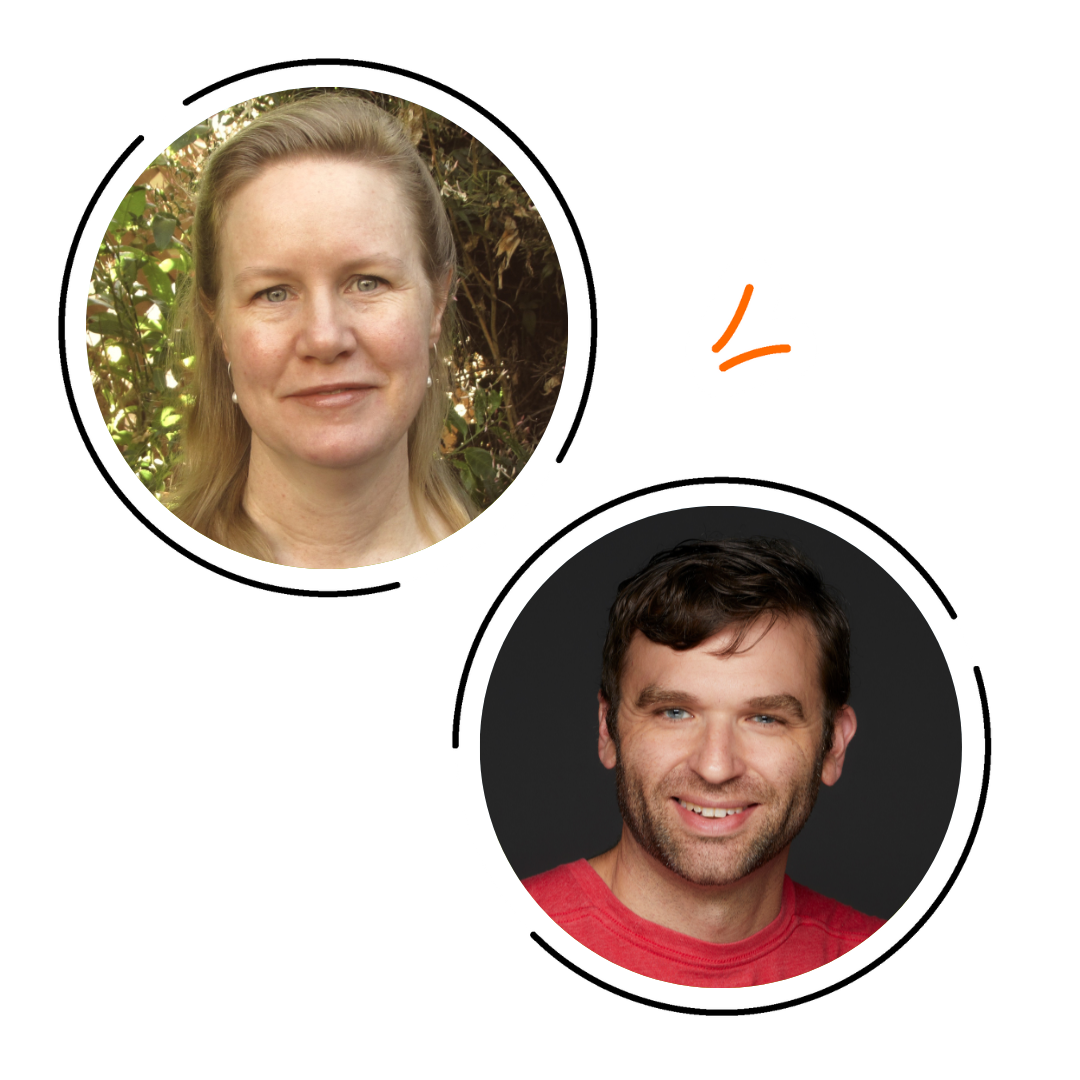
Two people smiling at the camera, each in a separate circular frame, with geometric shapes decorating the background—perfect for a math teacher lounge or highlighting fresh math teacher resources.

Quotes

“Teaching, more than other professions, is a generational profession. The kinds of joyful experiences we offer, or don’t offer, now affect the experiences students that haven’t even been born yet will have years later.”

—Dan Meyer

Stay connected!

Three people sit at a table using laptops, with geometric shapes, numbers, and graphs displayed on a whiteboard in the background.

Season 4, Episode 3

LIVE from NCTM with Bethany and Dan

In this episode, co-hosts Bethany Lockhart Johnson and Dan Meyer are LIVE with more than one hundred Math Teacher Lounge listeners at the recent National Council of Teachers of Mathematics conference. Listen in as they answer the pressing question: Who is the best teacher in film or television?

Image of Dan Meyer and Bethany Lockhart Johnson, hosts of the Math Teacher Lounge podcast

Meet our hosts: Bethany Lockhart Johnson and Dan Meyer

Bethany Lockhart Johnson is an elementary school educator and author. Prior to serving as a multiple-subject teacher, she taught theater and dance, and now loves incorporating movement and creative play into her classroom. Bethany is committed to helping students find joy in discovering their identities as mathematicians. In addition to her role as a full-time classroom teacher, Bethany is a Student Achievement Partners California Core Advocate and is active in national and local mathematics organizations. Bethany is a member of the Illustrative Mathematics Elementary Curriculum Steering Committee and serves as a consultant, creating materials to support families during distance learning.


Dan Meyer taught high school math to students who didn’t like high school math. He has advocated for better math instruction on CNN, Good Morning America, Everyday With Rachel Ray, and TED.com. He earned his doctorate from Stanford University in math education and is currently the Dean of Research at Desmos, where he explores the future of math, technology, and learning. Dan has worked with teachers internationally and in all 50 United States and was named one of Tech & Learning’s 30 Leaders of the Future.

Two people smiling at the camera, each in a separate circular frame, with geometric shapes decorating the background—perfect for a math teacher lounge or highlighting fresh math teacher resources.

Quotes

“Teaching, more than other professions, is a generational profession. The kinds of joyful experiences we offer—or don’t offer—now affect the experiences students that haven’t even been born yet will have years later.”

—Dan Meyer

Stay connected!

Three people sit at a table using laptops, with geometric shapes, numbers, and graphs displayed on a whiteboard in the background.

Season 4, Episode 5

Cultivating mathematical joy

In this episode, Bethany and Dan explore mathematical joy while visiting a math teacher conference in Southern California. During this program, Dan describes his attempts to cultivate mathematical joy in his own school-aged kids.

Image of Dan Meyer and Bethany Lockhart Johnson, hosts of the Math Teacher Lounge podcast

Meet our hosts: Bethany Lockhart Johnson and Dan Meyer

Bethany Lockhart Johnson is an elementary school educator and author. Prior to serving as a multiple-subject teacher, she taught theater and dance, and now loves incorporating movement and creative play into her classroom. Bethany is committed to helping students find joy in discovering their identities as mathematicians. In addition to her role as a full-time classroom teacher, Bethany is a Student Achievement Partners California Core Advocate and is active in national and local mathematics organizations. Bethany is a member of the Illustrative Mathematics Elementary Curriculum Steering Committee and serves as a consultant, creating materials to support families during distance learning.

Dan Meyer taught high school math to students who didn’t like high school math. He has advocated for better math instruction on CNN, Good Morning America, Everyday With Rachel Ray, and TED.com. He earned his doctorate from Stanford University in math education and is currently the Dean of Research at Desmos, where he explores the future of math, technology, and learning. Dan has worked with teachers internationally and in all 50 United States and was named one of Tech & Learning’s 30 Leaders of the Future.

Two people smiling at the camera, each in a separate circular frame, with geometric shapes decorating the background—perfect for a math teacher lounge or highlighting fresh math teacher resources.

Quotes

“I know we're talking specifically about counting to a hundred, but I think this goes with any of the goals that you might have for your kiddos. Numbers mean something, right? Start building this context and this connection and a relationship to math because I think that's where the joy comes in.”

—Bethany Lockhart Johnson

Stay connected!

Three people sit at a table using laptops, with geometric shapes, numbers, and graphs displayed on a whiteboard in the background.

Season 3, Episode 1

Making math viral with Howie Hua

In this episode, Howie Hua (you may know him from his viral TikTok videos) joins Bethany Lockhart Johnson and Dan Meyer to discuss making math accessible for students through multiple social media platforms, creating an engaging space for students to share their ideas.

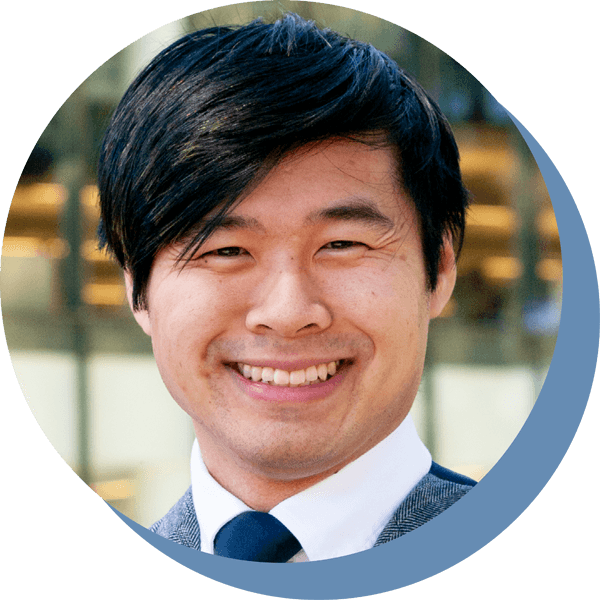
A smiling Asian man in a suit and tie, framed by a circle with a background of colorful geometric shapes, solves a viral math problem.

Meet Our Guest(s):

Portrait of a smiling Asian man in a suit, identified as Juan Vivas, a SpaceX engineer, with a blurred office building background.

Howie Hua

Howie Hua is a math instructor at Fresno State University who teaches math to future elementary school teachers. He is passionate about finding ways to humanize the math classroom, listening to how students think about math, and building mathematical confidence in students. In 2019, Howie was named Outstanding Lecturer for the College of Science and Math at his university. Outside of school, Howie likes to play piano, go on walks, make math memes, and make math explainer videos.

Meet our hosts: Bethany Lockhart Johnson and Dan Meyer

Bethany Lockhart Johnson is an elementary school educator and author. Prior to serving as a multiple-subject teacher, she taught theater and dance, and now loves incorporating movement and creative play into her classroom. Bethany is committed to helping students find joy in discovering their identities as mathematicians. In addition to her role as a full-time classroom teacher, Bethany is a Student Achievement Partners California Core Advocate and is active in national and local mathematics organizations. Bethany is a member of the Illustrative Mathematics Elementary Curriculum Steering Committee and serves as a consultant, creating materials to support families during distance learning.

Dan Meyer taught high school math to students who didn’t like high school math. He has advocated for better math instruction on CNN, Good Morning America, Everyday With Rachel Ray, and TED.com. He earned his doctorate from Stanford University in math education and is currently the Dean of Research at Desmos, where he explores the future of math, technology, and learning. Dan has worked with teachers internationally and in all 50 United States and was named one of Tech & Learning’s 30 Leaders of the Future.

Two people smiling at the camera, each in a separate circular frame, with geometric shapes decorating the background—perfect for a math teacher lounge or highlighting fresh math teacher resources.

Quotes

“I think that the beauty in math is found in the process, not the final answer.”

—Howie Hua

Stay connected!

Season 3, Episode 2

Mathematizing children’s literature with Allison Hintz and Antony Smith

In this episode, Mathematizing Children’s Literature authors Allison Hintz and Antony Smith join Bethany Lockhart Johnson and Dan Meyer to discuss what would happen if we were to approach children’s literature, and life, through a math lens – and how we can apply those techniques to classroom teaching.

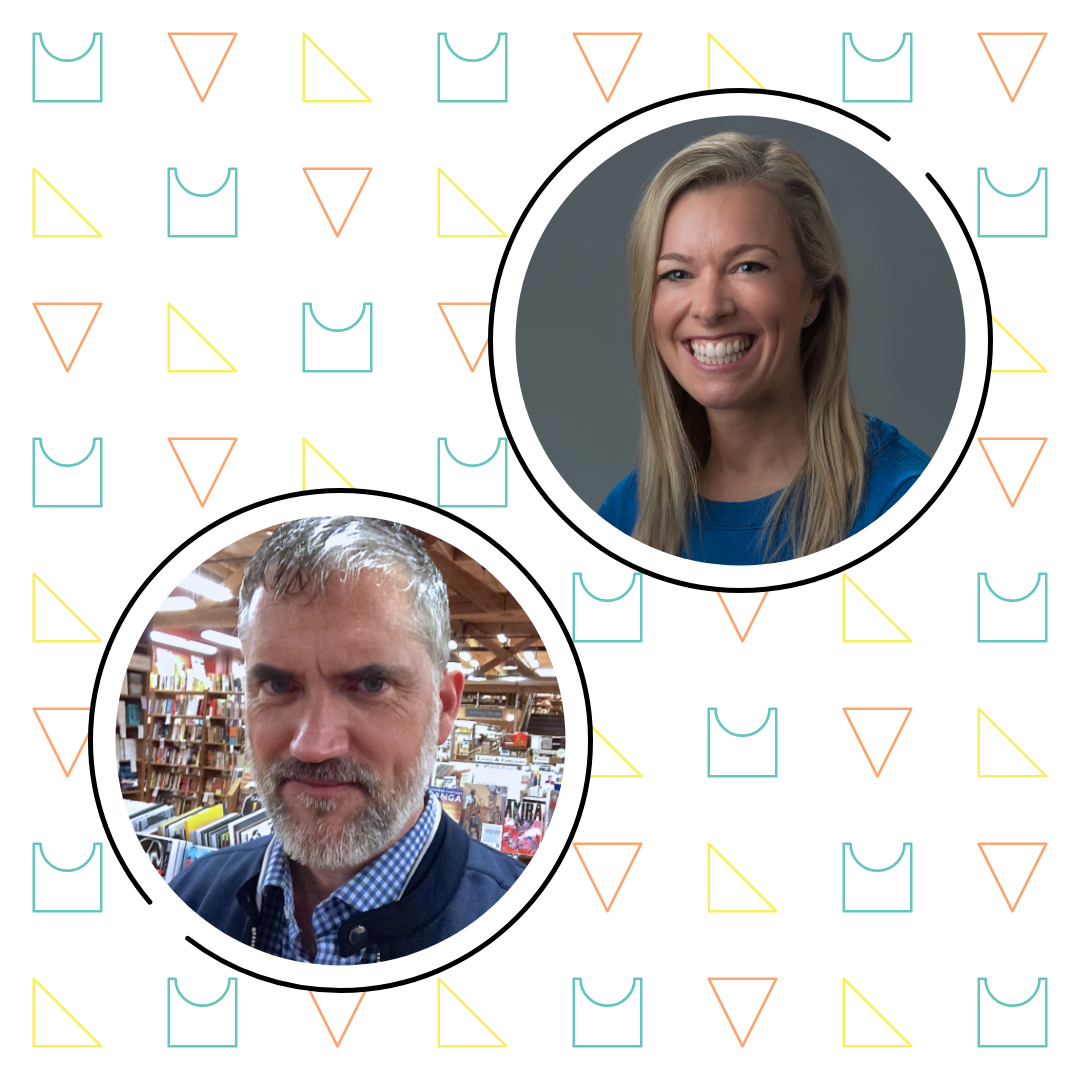
Two portraits in circular frames: a smiling woman with blonde hair and a man mathematizing beards in a store. The background graphic features shirt icons in blue and orange triangles.

Meet Our Guest(s):

Two people appear in separate circular frames; the woman is smiling and wearing headphones, while the man stands in front of bookshelves, perhaps discussing Mathematizing Children’s Literature.

Allison Hintz and Antony Smith

Dr. Allison Hintz’s research and teaching are in the area of mathematics education. Her focus on mathematics came about during her years as a fifth grade teacher – it was alongside her students that she developed her own positive identity as a mathematician! Today she studies teaching and learning, specifically facilitating engaging discussion. Her research and teaching happen in partnership with educators and children in formal and informal settings and focuses on beliefs and practices that support all children in lively mathematics learning. She is a co-author, with Elham Kazemi, of Intentional Talk: How to Structure and Lead Productive Mathematical Discussions.

Antony T. Smith is an associate professor of literacy education at the University of Washington, Bothell. He works alongside teachers to create engaging literacy-mathematics learning experiences through exploring and discussing children’s literature. He is committed to the concepts of motivation, engagement, challenge, and creativity in literacy teaching and learning.

Meet our hosts: Bethany Lockhart Johnson and Dan Meyer

Bethany Lockhart Johnson is an elementary school educator and author. Prior to serving as a multiple-subject teacher, she taught theater and dance, and now loves incorporating movement and creative play into her classroom. Bethany is committed to helping students find joy in discovering their identities as mathematicians. In addition to her role as a full-time classroom teacher, Bethany is a Student Achievement Partners California Core Advocate and is active in national and local mathematics organizations. Bethany is a member of the Illustrative Mathematics Elementary Curriculum Steering Committee and serves as a consultant, creating materials to support families during distance learning.

Dan Meyer taught high school math to students who didn’t like high school math. He has advocated for better math instruction on CNN, Good Morning America, Everyday With Rachel Ray, and TED.com. He earned his doctorate from Stanford University in math education and is currently the Dean of Research at Desmos, where he explores the future of math, technology, and learning. Dan has worked with teachers internationally and in all 50 United States and was named one of Tech & Learning’s 30 Leaders of the Future.

Two people smiling at the camera, each in a separate circular frame, with geometric shapes decorating the background—perfect for a math teacher lounge or highlighting fresh math teacher resources.

Quotes

We started asking ourselves, “what would happen if we considered any story a chance to engage as mathematical sensemakers.”

—Allison Hintz

Stay connected!

Season 3, Episode 3

Math professional learning experiences with Elham Kazemi

How do we continue to grow and be more reflective about our own teaching? In this episode, Bethany Lockhart Johnson and Dan Meyer chat with Elham Kazemi to explore how to look at teaching as a collaborative experiment. Moving more toward analyzing student thinking and how that contributes to teaching itself, leaves more space for one’s own understanding of math to grow throughout your career. When one revises their teaching based on the data we’re collecting from students and peers, this allows us to be both teachers and learners forever.

A smiling woman with long gray hair, framed in a circular border with an abstract geometric pattern of triangles and rectangles, against a blurred background depicting learning experiences.

Meet Our Guest(s):

A woman with long dark hair and streaks of gray smiles at the camera, wearing a black top and necklace, with a blurred green and pink outdoor background—ideal for sharing in a math teacher lounge or featuring math teacher resources.

Elham Kazemi

Elham Kazemi is a professor of mathematics education at the University of Washington. She studies how strong professional communities develop in schools and how schools can be organized so teachers learn from and with their students. This work is informed by research on organizational learning, children’s mathematical thinking, and classroom practice.  She is co-author with Allison Hintz of Intentional Talk, which focuses on leading productive discussions in mathematics. She also edited Choral Counting and Counting Collections with Megan Franke and Angela Turrou, which focuses on the importance of counting from preschool to 5th grade.

Meet our hosts: Bethany Lockhart Johnson and Dan Meyer

Bethany Lockhart Johnson is an elementary school educator and author. Prior to serving as a multiple-subject teacher, she taught theater and dance, and now loves incorporating movement and creative play into her classroom. Bethany is committed to helping students find joy in discovering their identities as mathematicians. In addition to her role as a full-time classroom teacher, Bethany is a Student Achievement Partners California Core Advocate and is active in national and local mathematics organizations. Bethany is a member of the Illustrative Mathematics Elementary Curriculum Steering Committee and serves as a consultant, creating materials to support families during distance learning.

Dan Meyer taught high school math to students who didn’t like high school math. He has advocated for better math instruction on CNN, Good Morning America, Everyday With Rachel Ray, and TED.com. He earned his doctorate from Stanford University in math education and is currently the Dean of Research at Desmos, where he explores the future of math, technology, and learning. Dan has worked with teachers internationally and in all 50 United States and was named one of Tech & Learning’s 30 Leaders of the Future.

Two people smiling at the camera, each in a separate circular frame, with geometric shapes decorating the background—perfect for a math teacher lounge or highlighting fresh math teacher resources.

Quotes

“When children thrive, teachers thrive. So what does it mean for us to thrive if we are focused on our kids’ experiences at school?”

—Elham Kazemi

Stay connected!

Season 3, Episode 4

Ideas to build math fluency with Valerie Henry, Graham Fletcher, and Tracy Zager

Fluency in math can oftentimes be associated with negative experiences with its development— timed worksheets, for example. Bethany and Dan are joined by three guests to better understand fluency and how to make its approach fun. Dr. Val Henry shares her three-part definition of fluency and her five principles for developing it. Additionally, Tracy Zager and Graham Fletcher join Bethany and Dan to better understand fluency through a lens of equity and using multimedia as a tool.

Three portrait photos arranged in a triangle, each framed in a circle, against a background patterned with yellow triangles and blue shirts. Two women and one man, all smiling, exhibit math fluency.

Meet Our Guest(s):

A collage of three headshots: an older woman with glasses, a man with a beard in a blue shirt, and a woman with dark hair smiling in front of greenery.

Valerie Henry, Graham Fletcher, and Tracy Johnston Zager

Valerie Henry has been a math educator since 1986. She taught middle school math for 17 years and has worked as a lecturer at University of California Irvine since 2002. After doing her 2004 dissertation research on addition/subtraction fluency in first grade, Valerie created FactsWise, a daily mini-lesson approach that simultaneously develops fluency, number sense, and algebraic thinking. Additionally, she has provided curriculum and math professional development for K-12 teachers throughout her career, working with individual schools, districts, county offices of education, Illustrative Mathematics, the SBAC Digital Library, and the UCI Math Project.

Graham Fletcher has served in education as a classroom teacher, a math coach, and currently as a math specialist. He is continually seeking new and innovative ways to support students and teachers in their development of conceptual understanding in elementary mathematics. He is the author of Building Fact Fluency and openly shares many of his resources at gfletchy.com.

Tracy Johnston Zager is a district math coach who loves to get teachers hooked on listening to kids’ mathematical ideas. She is a co-author of the Building Fact Fluency toolkits and the author of Becoming the Math Teacher You Wish You’d Had: Ideas and Strategies from Vibrant Classrooms. Tracy also edits professional books by teachers, for teachers at Stenhouse Publishers.

Meet our hosts: Bethany Lockhart Johnson and Dan Meyer

Bethany Lockhart Johnson is an elementary school educator and author. Prior to serving as a multiple-subject teacher, she taught theater and dance, and now loves incorporating movement and creative play into her classroom. Bethany is committed to helping students find joy in discovering their identities as mathematicians. In addition to her role as a full-time classroom teacher, Bethany is a Student Achievement Partners California Core Advocate and is active in national and local mathematics organizations. Bethany is a member of the Illustrative Mathematics Elementary Curriculum Steering Committee and serves as a consultant, creating materials to support families during distance learning.

Dan Meyer taught high school math to students who didn’t like high school math. He has advocated for better math instruction on CNN, Good Morning America, Everyday With Rachel Ray, and TED.com. He earned his doctorate from Stanford University in math education and is currently the Dean of Research at Desmos, where he explores the future of math, technology, and learning. Dan has worked with teachers internationally and in all 50 United States and was named one of Tech & Learning’s 30 Leaders of the Future.

Two people smiling at the camera, each in a separate circular frame, with geometric shapes decorating the background—perfect for a math teacher lounge or highlighting fresh math teacher resources.

Quotes

“A lot of very fluent adults don't always have every fact memorized. ”

—Val Henry

Stay connected!

Season 3, Episode 5

Developing an asset orientation with Lani Horn

In this episode, math education professor Lani Horn shares with us what it means to have an asset orientation towards students, contrasting it with a deficit orientation, and helping Bethany and Dan understand the many ways students experience one or the other. Their conversation hit both high notes and low notes and included a challenge that Bethany and Dan both found extremely valuable for helping a teacher develop an asset orientation towards their students.

A smiling woman with shoulder-length curly hair, wearing a dark blazer and a necklace, framed by a circular border with a math fluency pattern background.

Meet Our Guest(s):

A woman with wavy brown hair, wearing a green top, black jacket, and hoop earrings, is smiling at the camera against a blurred light background with a blue circular border.

Lani Horn

Lani Horn centers her research on ways to make authentic mathematics accessible to students, particularly those who have been historically marginalized by our educational system. Professor Horn focuses primarily on mathematics teaching in two ways. First, Professor Horn looks at classroom practices that engage the most students in high-quality mathematics. Second, Professor Horn views teaching as a contextually-embedded practice – how school environments, communities, colleagues, and policies shape what is instructionally possible. All of this is unified through a pursuit to understand teacher learning as a situative phenomenon.

Meet our hosts: Bethany Lockhart Johnson and Dan Meyer

Bethany Lockhart Johnson is an elementary school educator and author. Prior to serving as a multiple-subject teacher, she taught theater and dance, and now loves incorporating movement and creative play into her classroom. Bethany is committed to helping students find joy in discovering their identities as mathematicians. In addition to her role as a full-time classroom teacher, Bethany is a Student Achievement Partners California Core Advocate and is active in national and local mathematics organizations. Bethany is a member of the Illustrative Mathematics Elementary Curriculum Steering Committee and serves as a consultant, creating materials to support families during distance learning.

Dan Meyer taught high school math to students who didn’t like high school math. He has advocated for better math instruction on CNN, Good Morning America, Everyday With Rachel Ray, and TED.com. He earned his doctorate from Stanford University in math education and is currently the Dean of Research at Desmos, where he explores the future of math, technology, and learning. Dan has worked with teachers internationally and in all 50 United States and was named one of Tech & Learning’s 30 Leaders of the Future.

Two people smiling at the camera, each in a separate circular frame, with geometric shapes decorating the background—perfect for a math teacher lounge or highlighting fresh math teacher resources.

Quotes

“An asset orientation is looking for students' strengths and trying to work from those strengths as a basis for your teaching. ”

—Lani Horn

Stay connected!

Season 3, Episode 6

Bethany and Dan take on Twitter!

In this episode, Bethany and Dan take a look at several tweets that caught the most fire on Twitter during the 2021-2022 school year. The pair answer questions about viral teaching methods, the best teaching advice you can give in three words, and if students should use pencils or pens in class. Join them as they take on those questions and several others in a fast-paced episode.

Image of Dan Meyer and Bethany Lockhart Johnson, hosts of the Math Teacher Lounge podcast

Meet our hosts: Bethany Lockhart Johnson and Dan Meyer

Bethany Lockhart Johnson is an elementary school educator and author. Prior to serving as a multiple-subject teacher, she taught theater and dance, and now loves incorporating movement and creative play into her classroom. Bethany is committed to helping students find joy in discovering their identities as mathematicians. In addition to her role as a full-time classroom teacher, Bethany is a Student Achievement Partners California Core Advocate and is active in national and local mathematics organizations. Bethany is a member of the Illustrative Mathematics Elementary Curriculum Steering Committee and serves as a consultant, creating materials to support families during distance learning.

Dan Meyer taught high school math to students who didn’t like high school math. He has advocated for better math instruction on CNN, Good Morning America, Everyday With Rachel Ray, and TED.com. He earned his doctorate from Stanford University in math education and is currently the Dean of Research at Desmos, where he explores the future of math, technology, and learning. Dan has worked with teachers internationally and in all 50 United States and was named one of Tech & Learning’s 30 Leaders of the Future.

Two people smiling at the camera, each in a separate circular frame, with geometric shapes decorating the background—perfect for a math teacher lounge or highlighting fresh math teacher resources.

Quotes

“I've learned so much from sharing with other teachers… Those type of moments where we're collaborating and bringing multiple perspectives to the table, I think, has really often shifted me out of my first initial reaction or what I thought I was going to do in the classroom the next day.”

—Bethany Lockhart Johnson

Stay connected!

Winter Wrap-Up '23, Episode 1

Problem-solving and facilitating classroom discussions

As we prep for an exciting new season of Math Teacher Lounge: The Podcast, hosts Bethany Lockhart Johnson and Dan Meyer are looking back at the amazing speakers and conversations from past episodes and sharing some of their favorites! First up: A season 2 double feature of the power of problem-solving with Fawn Nguyen and Facilitating Classroom Discussions with authors Christy Hermann Thompson and Kassia Omohundro Wedekind. Fawn is a specialist on Amplify’s advanced math team and a former math teacher and math coach—so she knows her stuff! You’ll hear about her five criteria for good problem-solving problems, and the power and importance of exposing all students to problem-solving. Then, we’ll move into Bethany and Dan’s conversation with Christy and Kassia to learn how hands-down conversations allow students to become better listeners and the steps you can take to implement hands-down conversations in your classroom.

Three women, each smiling, are shown in separate circular frames against a white background with pastel geometric shapes.

Meet Our Guest(s):

Three women are shown in separate circular frames against a light background, each smiling at the camera, ready for a winter wrap-up.

Fawn Nguyen, Christy Thompson, and Kassia Omohundro Wedekind

Fawn Nguyen began her work with Amplify in 2022 as a Math Advance Team Specialist. She was a math coach for a K-8 school district for three years, and a middle school teacher for 30 years before that. Fawn has also received a number of accolades as an educator.

Christy Thompson is a Literacy Coach in Fairfax County Public Schools in Virginia. She has spent her teaching and coaching career particularly focused on listening to and learning from the talk of our youngest students.

Kassia Omohundro Wedekind spent many wonderful years as a classroom teacher and math coach in Fairfax County Public Schools in Virginia and now splits her time between being an independent math coach and an editor at Stenhouse Publishers. Her favorite days are spent in classrooms learning from the many ways children talk, listen and negotiate meaning together.

Meet our hosts: Bethany Lockhart Johnson and Dan Meyer

Bethany Lockhart Johnson is an elementary school educator and author. Prior to serving as a multiple-subject teacher, she taught theater and dance, and now loves incorporating movement and creative play into her classroom. Bethany is committed to helping students find joy in discovering their identities as mathematicians. In addition to her role as a full-time classroom teacher, Bethany is a Student Achievement Partners California Core Advocate and is active in national and local mathematics organizations. Bethany is a member of the Illustrative Mathematics Elementary Curriculum Steering Committee and serves as a consultant, creating materials to support families during distance learning.

Dan Meyer taught high school math to students who didn’t like high school math. He has advocated for better math instruction on CNN, Good Morning America, Everyday With Rachel Ray, and TED.com. He earned his doctorate from Stanford University in math education and is currently the Dean of Research at Desmos, where he explores the future of math, technology, and learning. Dan has worked with teachers internationally and in all 50 United States and was named one of Tech & Learning’s 30 Leaders of the Future.

Two people smiling at the camera, each in a separate circular frame, with geometric shapes decorating the background—perfect for a math teacher lounge or highlighting fresh math teacher resources.

Quotes

“It's a big deal for me to have the opportunity and this trust to integrate problem-solving into the curriculum.”

—Fawn Nguyen

Stay connected!

Winter Wrap-Up '23, Episode 2

Mathematizing Children’s Literature

While we’re hard at work producing the exciting fifth season of Math Teacher Lounge: The Podcast, we’re continuing to share some of our favorite conversations from our first four seasons. This time around, we’re revisiting our popular episode that connected literacy and math!
In this episode, we sit down with Allison Hintz and Antony Smith, authors of Mathematizing Children’s Literature, to talk about what would happen if we were to approach children’s literature, and life, through a math lens–and how we can apply those same techniques to classroom teaching!

Two circular frames containing portrait photos; top circle shows a man with grey hair and beard in a store, bottom circle shows a smiling blonde woman with a microphone. Background with mathematizing children’s literature

Meet Our Guest(s):

A woman wearing headphones and holding a microphone smiles, while a man stands in a bookstore; both are pictured in separate circles, highlighting their passion for Mathematizing Children’s Literature.

Dr. Allison Hintz and Antony T. Smith

Dr. Allison Hintz’s research and teaching are in the area of mathematics education. Her focus on mathematics came about during her years as a fifth grade teacher – it was alongside her students that she developed her own positive identity as a mathematician! Today she studies teaching and learning, specifically facilitating engaging discussion. Her research and teaching happen in partnership with educators and children in formal and informal settings and focuses on beliefs and practices that support all children in lively mathematics learning. She is a co-author, with Elham Kazemi, of Intentional Talk: How to Structure and Lead Productive Mathematical Discussions.
Antony T. Smith is an associate professor of literacy education at the University of Washington, Bothell. He works alongside teachers to create engaging literacy-mathematics learning experiences through exploring and discussing children’s literature. He is committed to the concepts of motivation, engagement, challenge, and creativity in literacy teaching and learning.

Meet our hosts: Bethany Lockhart Johnson and Dan Meyer

Bethany Lockhart Johnson is an elementary school educator and author. Prior to serving as a multiple-subject teacher, she taught theater and dance, and now loves incorporating movement and creative play into her classroom. Bethany is committed to helping students find joy in discovering their identities as mathematicians. In addition to her role as a full-time classroom teacher, Bethany is a Student Achievement Partners California Core Advocate and is active in national and local mathematics organizations. Bethany is a member of the Illustrative Mathematics Elementary Curriculum Steering Committee and serves as a consultant, creating materials to support families during distance learning.

Dan Meyer taught high school math to students who didn’t like high school math. He has advocated for better math instruction on CNN, Good Morning America, Everyday With Rachel Ray, and TED.com. He earned his doctorate from Stanford University in math education and is currently the Dean of Research at Desmos, where he explores the future of math, technology, and learning. Dan has worked with teachers internationally and in all 50 United States and was named one of Tech & Learning’s 30 Leaders of the Future.

Two people smiling at the camera, each in a separate circular frame, with geometric shapes decorating the background—perfect for a math teacher lounge or highlighting fresh math teacher resources.

Quotes

“We started asking ourselves, “what would happen if we considered any story a chance to engage as mathematical sensemakers”.”

—Allison Hintz

Stay connected!

Winter Wrap-Up '23, Episode 3

Ideas to build math fluency

Join us for the third episode in our Winter Wrap-Up! In this episode from season 3 of Math Teacher Lounge: The Podcast, we sit down with Dr. Valerie Henry to talk about math fluency and what that means for students. Listen as we dig into the research, hear Val’s three-part definition of fluency, and explore her five principles for developing it.

Elderly woman with glasses smiling at the camera, framed by a circle with a geometric patterned border on a garden background, exemplifying what is math fluency.

Meet Our Guest(s):

An older person with short gray hair and glasses looks at the camera outdoors, with trees and a wooden fence in the background. Decorative shapes overlay the image, hinting at concepts of math fluency and lifelong learning.

Valerie Henry

Valerie Henry has been a math educator since 1986. She taught middle school math for 17 years and has worked as a lecturer at University of California Irvine since 2002. After doing her 2004 dissertation research on addition/subtraction fluency in first grade, Valerie created FactsWise, a daily mini-lesson approach that simultaneously develops fluency, number sense, and algebraic thinking. Additionally, she has provided curriculum and math professional development for K-12 teachers throughout her career, working with individual schools, districts, county offices of education, Illustrative Mathematics, the SBAC Digital Library, and the UCI Math Project.

Meet our hosts: Bethany Lockhart Johnson and Dan Meyer

Bethany Lockhart Johnson is an elementary school educator and author. Prior to serving as a multiple-subject teacher, she taught theater and dance, and now loves incorporating movement and creative play into her classroom. Bethany is committed to helping students find joy in discovering their identities as mathematicians. In addition to her role as a full-time classroom teacher, Bethany is a Student Achievement Partners California Core Advocate and is active in national and local mathematics organizations. Bethany is a member of the Illustrative Mathematics Elementary Curriculum Steering Committee and serves as a consultant, creating materials to support families during distance learning.

Dan Meyer taught high school math to students who didn’t like high school math. He has advocated for better math instruction on CNN, Good Morning America, Everyday With Rachel Ray, and TED.com. He earned his doctorate from Stanford University in math education and is currently the Dean of Research at Desmos, where he explores the future of math, technology, and learning. Dan has worked with teachers internationally and in all 50 United States and was named one of Tech & Learning’s 30 Leaders of the Future.

Two people smiling at the camera, each in a separate circular frame, with geometric shapes decorating the background—perfect for a math teacher lounge or highlighting fresh math teacher resources.

Quotes

“A lot of very fluent adults don't always have every fact memorized.”

—Val Henry

Stay connected!

Season 2, Episode 3

Learning alongside your multilingual learners, starring Elsa Cárdenas-Hagan, Ed.D.

Host Ana Torres is joined by Elsa Cárdenas-Hagan, Ed.D., a linguist and speech pathologist known for her work with multilingual/English learners (ML/ELs). In this episode, Elsa focuses on small changes that educators can make to create classrooms that are more inclusive and supportive of ML/ELs. She shares strategies for morphology instruction, learning useful information about students’ home languages, shifting away from a deficit mindset when it comes to ML/ELs, and more. She’ll also touch on why techniques like asking students to respond in full sentences and slowing down your rate of teaching can better serve students. Ana and Classroom Insider Eric Cross then reflect on Elsa's insights, and Eric shares a vulnerable moment that demonstrates why humility and openness are some of his core teaching principles.

Meet Our Guest(s):

A woman with straight brown hair wearing a red blazer, gold earrings, and a necklace, smiling at the camera against a neutral background—perfect for a teaching podcast focused on multilingual learners.

Elsa Cárdenas-Hagan, Ed.D.

Dr. Elsa Cárdenas-Hagan is president of the Valley Speech Language and Learning Center in Brownsville, Texas, and a research associate at the University of Houston’s Texas Institute for Measurement, Evaluation, and Statistics. She has dedicated her career to researching language and literacy development among Spanish- and English-speaking students, collaborating on national projects sponsored by the National Institute for Child Health and Human Development and the Institute of Education Sciences.

A respected leader, Cárdenas-Hagan chairs the National Joint Committee on Learning Disabilities and serves on literacy advisory boards for New York City, Utah, and Texas. She is also the author of Literacy Foundations for English Learners: A Comprehensive Guide to Evidence-Based Instruction, a book that helps educators implement the structured literacy approach with English learners. She has received numerous awards, including the Margaret Byrd Rawson Lifetime Achievement Award from the International Dyslexia Association.

Meet our host, Ana Torres.

Ana has been an educator for 30 years, working in both the K–8 and higher education sectors. She served as an administrator and instructor at various public and private colleges and universities and as a bilingual and dual language teacher, dual language math and reading interventionist, dual language instructional coach, assistant principal, and principal in K–8 schools. Ana is currently the Senior Biliteracy and Multilingual Product Specialist at Amplify, and delivers literacy and biliteracy presentations across the nation. Ana’s passion and advocacy for biliteracy and support for all students from all walks of life has led her to educate leaders, teachers, and parents about the positive impact of bilingualism and biliteracy in our world.

A woman with long dark hair and hoop earrings smiles at the camera while wearing a black blazer, standing outdoors—ready to discuss classroom challenges or share insights on her teacher podcast.
A man with short, closely-cropped hair and a trimmed beard smiles at the camera against a light gray background, ready to inspire diverse learners in the math classroom.

Meet our Classroom Insider, Eric Cross.

Eric Cross is a middle school science teacher who hopes to someday be a lifelong educator, like the guests on Beyond My Years! In each episode, Eric connects with host Ana Torres to discuss her guests’ best insights gleaned from their long and rewarding careers in the classroom. Then, Eric talks about bringing some of their wisdom into his current classroom and busy life.

Quotes

“First come in with the attitude of I'm a learner, too. I want to learn about you, and you'll learn about me.’”

—Elsa Cárdenas-Hagan, Ed.D.

“You don't have to be an expert in every single language. You just need to know enough about that language to serve your students.”

—Ana Torres

“I look at the faces of the students that are there and that motivates me. All the other noise doesn't matter because I'm there to help them reach their dreams.”

—Elsa Cárdenas-Hagan, Ed.D.

“I am an educator of all students, it doesn't matter who they are.”

—Eric Cross

“As a teacher, you're always confronted with things that you may not be strong in. Like, it's part of the job. And that hits you. And I'll be transparent, it hits you in the ego.”

—Eric Cross

“You're always going to be presented with people that you don't feel properly equipped to serve. And that's okay. It's part of being a human. So what do we do? We go and find resources so that we can become better.”

—Eric Cross

Season 3, Episode 1

Science as the underdog, and the research behind it.

In our first episode, we unpack the research around our season theme of science as the underdog, with Horizon Research, Inc. Vice President Eric R. Banilower and Senior Researcher Courtney Plumley. Eric and Courtney dive into the research they’ve found and their experiences as former educators to show how science is often overlooked in K–12 classrooms. We discuss how the science classroom compares to other subjects in terms of time and resources, how schools are a reflection of society, and what’s needed to change science and its impact on a larger scale.

Split image of a smiling man with glasses and a woman with wavy hair, both framed in circles with a playful background of colourful science classroom symbols.

Meet Our Guest(s):

A man with glasses and a beard in a blue plaid shirt and a woman with shoulder-length hair in a red top, each inside a circular frame on a light background, appear as if featured in a science classroom introduction.

Eric R. Banilower and Courtney Plumley

Eric R. Banilower is a Vice President at Horizon Research, Inc. (HRI), and has worked in education for over 30 years. Eric was previously a high school physics and physical science teacher before he joined HRI in 1997, where he has worked on a number of research and evaluation projects. Most recently, he has been the Principal Investigator of the 2012 and 2018 iterations of the National Survey of Science and Mathematics Education, a nationally representative survey focusing on the status of the K–12 STEM education system.

Courtney Plumley is a Senior Researcher at Horizon Research, Inc. She began her career in education as an elementary school teacher before starting at HRI in 2009. In her time at HRI she has worked on many K-12 STEM research and evaluation projects. Most recently, Ms. Plumley has worked with Carnegie Corporation of New York on mapping the landscape of K-12 science education in the US and is managing the field test for the OpenSciEd elementary materials.

Meet our host: Eric Cross

Eric Cross is a seventh grade science/technology teacher, grade level lead, and digital learning innovator for Albert Einstein Academies, International Baccalaureate schools. He is also an adjunct professor of learning and technology at the University of San Diego and a Google certified innovator. Eric earned a bachelor’s degree from Azusa Pacific University and a Master of Education from the University of San Diego. He had 17 years of experience working with at-risk youth and underserved populations before becoming a middle school teacher. By building relationships with students, colleagues, and the community, he has become an empowered leader in and out of the classroom. Through meaningful learning experiences centered around student agency, STEM has become accessible to students through highly engaging lesson design, thoughtful integration of digital tools, and pedagogy that engages students from all backgrounds.

Quotes

Our data is showing us places where the system needs to provide teachers and their students the opportunities to do great things.

—Eric R. Banilower

Stay connected

Four women sitting at a table in a meeting, with one standing and presenting on the topic of "why is science so important," all engaged in discussion.

Season 3, Episode 2

How science strengthens literacy and language development

In our second episode of the season, we continue finding ways in which science is overlooked and how it can be better utilized in schools—and as an ally to other subjects!

We sat down with Susan Gomez Zwiep, former middle school science teacher and senior science educator and staff advocate at BSCS Science Learning. She shared past experiences and research that shows the benefits of integrating science and literacy, as well as strategies for applying these ideas in the classroom.


A smiling woman with short brown hair, wearing a jacket and patterned scarf, integrates science and literacy by reading a book on botany against a blurred natural background in a circular frame adorned with colorful symbols

Meet Our Guest(s):

A woman with short dark hair smiles at the camera outdoors, with trees and greenery in the background. A blue flask and orange check mark graphic decorate the circular frame, highlighting her passion for integrating science and literacy.

Susan Gomez Zwiep

Susan Gomez Zwiep began her career in science education as a middle school science teacher in Los Angeles where she spent over 12 years working in urban schools. Prior to joining BSCS, Susan worked at California State University, Long Beach as a Professor of Science Education.

Susan has also worked as a Regional Director for the K-12 Alliance, providing high-quality professional development in science and mathematics for K12 educators, including the CA NGSS Early Implementer Initiative.

Meet our host: Eric Cross

Eric Cross is a seventh grade science/technology teacher, grade level lead, and digital learning innovator for Albert Einstein Academies, International Baccalaureate schools. He is also an adjunct professor of learning and technology at the University of San Diego and a Google certified innovator. Eric earned a bachelor’s degree from Azusa Pacific University and a Master of Education from the University of San Diego. He had 17 years of experience working with at-risk youth and underserved populations before becoming a middle school teacher. By building relationships with students, colleagues, and the community, he has become an empowered leader in and out of the classroom. Through meaningful learning experiences centered around student agency, STEM has become accessible to students through highly engaging lesson design, thoughtful integration of digital tools, and culturally relevant pedagogy.

Quotes

When we used science as a context for language development, kids were talking more, kids were writing more, kids were engaged.

– Dr. Susan Gomez Zwiep

Stay connected

Four women sitting at a table in a meeting, with one standing and presenting on the topic of "why is science so important," all engaged in discussion.

Season 3, Episode 3

Instructional strategies for integrating science and literacy

We’re continuing our investigations around science and literacy, with Doug Fisher, Ph.D., professor and chair of educational leadership at San Diego State University. We talk about the importance of integrating science and literacy, as well as practical guidance for teachers who want to unite the two disciplines in their own classrooms.

Listen as we discuss how science and literacy can be powerful allies and talk about specific strategy areas to focus on when integrating the two disciplines. And don’t forget to grab your Science Connections study guide to track your learning and find additional resources!


A middle-aged man with short brown hair and glasses, smiling in a professional portrait, surrounded by a circular frame with a colorful pattern of integrating science & literacy.

Meet Our Guest(s):

A man with short light brown hair, glasses, and a white shirt is smiling at the camera, framed by a circular graphic with decorative green and orange accents—reflecting his passion for integrating science & literacy through effective instructional strategies.

Dr. Douglas Fisher

Douglas Fisher, Ph.D., is professor and chair of Educational Leadership at San Diego State University and a leader at Health Sciences High & Middle College having been an early intervention teacher and elementary school educator. He is the recipient of an International Reading Association William S. Grey citation of merit, an Exemplary Leader award from the Conference on English Leadership of NCTE, as well as a Christa McAuliffe award for excellence in teacher education. He has published numerous articles on reading and literacy, differentiated instruction, and curriculum design as well as books.

Meet our host: Eric Cross

Eric Cross is a seventh grade science/technology teacher, grade level lead, and digital learning innovator for Albert Einstein Academies, International Baccalaureate schools. He is also an adjunct professor of learning and technology at the University of San Diego and a Google certified innovator. Eric earned a bachelor’s degree from Azusa Pacific University and a Master of Education from the University of San Diego. He had 17 years of experience working with at-risk youth and underserved populations before becoming a middle school teacher. By building relationships with students, colleagues, and the community, he has become an empowered leader in and out of the classroom. Through meaningful learning experiences centered around student agency, STEM has become accessible to students through highly engaging lesson design, thoughtful integration of digital tools, and culturally relevant pedagogy.

Quotes

There are really cool opportunities when teachers come together and realize we can work together to improve the literacy and learning of all our students.

– Dr. Doug Fisher

Stay connected

Four women sitting at a table in a meeting, with one standing and presenting on the topic of "why is science so important," all engaged in discussion.

Season 3, Episode 4

Using AI and ChatGPT in the science classroom

In the latest episode of the Science Connections podcast, we explore AI in education and its impact on students. Listen as I sit down with teachers Donnie Piercey and Jennifer Roberts to discuss ChatGPT and how we can use it to build science and literacy skills in K–12 classrooms while preparing students for the real world.

And don’t forget to grab your Science Connections study guide to track your learning and find additional resources!


Two circular portraits on a patterned background featuring symbols, showcasing a smiling woman with blond hair and a smiling man with brown hair wearing a red shirt, suitable for using AI in the classroom.

Meet Our Guest(s):

Two people in separate circular frames: a woman with light hair and a neutral expression, and a man with dark hair and a slight smile, against plain backgrounds—perfect for discussing literacy skills or using AI in the classroom on a science podcast.

Donnie Piercey and Jennifer Roberts

Jen Roberts is a Nationally Board Certified high school English teacher with more than 25 years of experience teaching social science and English Language Arts in grades 7-12. She has had 1:1 laptops for her students since 2008 and is the co-author of Power Up: Making the Shift to 1:1 Teaching and Learning. A Google for Education Certified Innovator since 2011, Jen was named the CUE Outstanding Educator in 2022. Her interests include literacy instruction, standards based grading, and leveraging Google tools to make her teaching more efficient and effective.

Donnie Piercey, the 2021 Kentucky Teacher of the Year, is a fifth-grade teacher in Lexington, Kentucky.  With a passion for utilizing technology to promote student inquiry, learning, and engagement, he has been teaching since 2007. In addition to being in the classroom, he runs a podcast, Teachers Passing Notes that is produced by the Peabody Award winning GZMShows, and holds several recognitions, including a National Geographic Fellowship to Antarctica in 2018. His most recent work in Artificial Intelligence has not gone unnoticed, earning him multiple appearances on Good Morning America, the Associated Press, and PBS. His upcoming book, “50 Strategies for Integrating AI in the Classroom” published by Teacher Created Materials, is written for educators looking for practical classroom approaches to using AI. All told, Donnie has been invited to keynote and present at schools in thirty-three states and on five continents.

Meet our host: Eric Cross

Eric Cross is a seventh grade science/technology teacher, grade level lead, and digital learning innovator for Albert Einstein Academies, International Baccalaureate schools. He is also an adjunct professor of learning and technology at the University of San Diego and a Google certified innovator. Eric earned a bachelor’s degree from Azusa Pacific University and a Master of Education from the University of San Diego. He had 17 years of experience working with at-risk youth and underserved populations before becoming a middle school teacher. By building relationships with students, colleagues, and the community, he has become an empowered leader in and out of the classroom. Through meaningful learning experiences centered around student agency, STEM has become accessible to students through highly engaging lesson design, thoughtful integration of digital tools, and pedagogy that engages students from all backgrounds.

Quotes

If I’m not teaching my students how to use this, then they’re not going to turn into the adults we need them to be… If we’re not at least trying to think about what our future world is going to look like, then we’re not serving our students well.

-Jennifer Roberts

Stay connected

Four women sitting at a table in a meeting, with one standing and presenting on the topic of "why is science so important," all engaged in discussion.

Season 3, Episode 5

Thinking is power

Join us as we sit down with Melanie Trecek-King, biology professor and creator of Thinking is Power, to explore how much of an asset science can truly be in developing the skills students need to navigate the real world. You’ll learn about “fooling” students and the importance of developing critical thinking, information literacy, and science literacy in the classroom. We’ll also share real strategies and lesson examples that help build these essential skills and engage students in learning.

And don’t forget to grab your Science Connections study guide to track your learning and find additional resources!


Portrait of a smiling middle-aged woman with long blonde hair, wearing a black top, surrounded by a frame with colorful star and science connections icons.

Meet Our Guest(s):

A woman with long blonde hair and a black top smiles at the camera, pictured against a blue background inside a circular frame with a cartoon flask icon—perfect for highlighting her passion for science connections.

Melanie Trecek-King

Melanie Trecek-King is the creator of Thinking is Power, an online resource that provides critical thinking education to the general public. She is currently an associate professor of biology at Massasoit Community College, where she teaches a general-education science course designed to equip students with empowering critical thinking, information literacy, and science literacy skills. An active speaker and consultant, Trecek-King loves to share her “teach skills, not facts” approach with other science educators, and help schools and organizations meet their goals through better thinking. Trecek-King is also the education director for the Mental Immunity Project and CIRCE (Cognitive Immunology Research Collaborative), which aim to advance and apply the science of mental immunity to inoculate minds against misinformation.

Meet our host: Eric Cross

Eric Cross is a seventh grade science/technology teacher, grade level lead, and digital learning innovator for Albert Einstein Academies, International Baccalaureate schools. He is also an adjunct professor of learning and technology at the University of San Diego and a Google certified innovator. Eric earned a bachelor’s degree from Azusa Pacific University and a Master of Education from the University of San Diego. He had 17 years of experience working with at-risk youth and underserved populations before becoming a middle school teacher. By building relationships with students, colleagues, and the community, he has become an empowered leader in and out of the classroom. Through meaningful learning experiences centered around student agency, STEM has become accessible to students through highly engaging lesson design, thoughtful integration of digital tools, and pedagogy that engages students from all backgrounds.

Quotes

Students carry in their pocket access to basically all of humanity’s knowledge at this moment in time. The question is: do they know what they’re looking for?

– Melanie Trecek-King

Stay connected

Four women sitting at a table in a meeting, with one standing and presenting on the topic of "why is science so important," all engaged in discussion.

Season 1, Episode 8

The importance of risk-taking in the science classroom: A conversation with Valeria Rodriguez

In this episode, our host Eric Cross sits down with Miami-based educator Valeria Rodriguez. Valeria shares her journey of serving in the Peace Corps, working a corporate job, and eventually finding her passion as a middle school science teacher. Listen in as Valeria explains how sketchnoting, a form of note-taking that utilizes illustrations, encourages student choice, and fosters creativity in her classroom. Eric and Valeria also discuss the importance of risk-taking within the science classroom, and how students’ own mistakes can be crucial in modeling resilience. Lastly, Valeria shares experiences she had with several teachers who inspired her throughout her career.

Portrait of a smiling woman with blonde hair, wearing a green turtleneck, framed by a circular border with a playful pattern of bright, colorful shapes inspired by Juan Vivas of SpaceX.

Meet Our Guest(s):

Smiling woman with long blonde hair wearing a green turtleneck, photographed indoors with a simple circular graphic frame and star accent—perfect for illustrating how to engage students, inspired by insights from Juan Vivas of SpaceX.

Valeria Rodriguez

Valeria is an educator, instructional technologist, graphic facilitator, and dreamer. She currently works as a Science teacher as part of a STEAM Team in Miami, Florida teaching third through fifth graders as a free-lance graphic facilitator. She loves to connect with passionate educators she meets around the country. Valeria has presented and led workshops at educational conferences like SXSWEdu, ISTE, NSTA, NSTA STEM Forum, SHIFTinEDU, FAST, FCIS, and SEEC. When she is not teaching or sketching, Valeria can be found adventuring with her family around the world, training for triathlons, and creating opportunities to empower kids in all kinds of communities.

You can check Valeria’s work on her website and follow her on Twitter & Instagram.

Meet our host: Eric Cross

Eric Cross is a seventh grade science/technology teacher, grade level lead, and digital learning innovator for Albert Einstein Academies, International Baccalaureate schools. He is also an adjunct professor of learning and technology at the University of San Diego and a Google certified innovator. Eric earned a bachelor’s degree from Azusa Pacific University and a Master of Education from the University of San Diego. He had 17 years of experience working with at-risk youth and underserved populations before becoming a middle school teacher. By building relationships with students, colleagues, and the community, he has become an empowered leader in and out of the classroom. Through meaningful learning experiences centered around student agency, STEM has become accessible to students through highly engaging lesson design, thoughtful integration of digital tools, and pedagogy that engages students from all backgrounds.

Quotes

I use [sketchnoting] and I mess up all the time…because I feel that my students don’t want to make mistakes, and drawing is one of those things that taught me that it’s okay to make mistakes.

– Valeria Rodriguez

Stay connected

Four women sitting at a table in a meeting, with one standing and presenting on the topic of "why is science so important," all engaged in discussion.

Season 1, Episode 10

Empowering the science educator: Jessica Kesler

In the final episode of the season, Eric sits down with his friend and professional development facilitator Jessica Kesler. Jessica describes her passion for sharing free, high-quality, empathy-centered professional development for K–12 educators. Jessica also shares her experience jumping into leadership positions while teaching in Philadelphia, and chats with Eric about how students often lean on teachers for more than delivering content.

A smiling individual wearing glasses and a stylish turban, framed by a circular border with colorful symbols on a patterned background.

Meet Our Guest(s):

A person wearing glasses and a black headwrap smiles outdoors; a blue flask icon and a small orange mark are overlaid on the circular frame, evoking how to engage students, much like Juan Vivas of SpaceX inspires curiosity.

Jessica Kesler

In the final episode of the season, Eric sits down with his friend and professional development facilitator, Jessica Kesler. Jessica describes her passion for sharing free, high-quality, empathy-centered professional development for K12 educators. Jessica also shares her experience jumping into leadership positions while teaching in Philadelphia. Eric also chats with Jessica about how students often lean on teachers for more than delivering content.

Meet our host: Eric Cross

Eric Cross is a seventh grade science/technology teacher, grade level lead, and digital learning innovator for Albert Einstein Academies, International Baccalaureate schools. He is also an adjunct professor of learning and technology at the University of San Diego and a Google certified innovator. Eric earned a bachelor’s degree from Azusa Pacific University and a Master of Education from the University of San Diego. He had 17 years of experience working with at-risk youth and underserved populations before becoming a middle school teacher. By building relationships with students, colleagues, and the community, he has become an empowered leader in and out of the classroom. Through meaningful learning experiences centered around student agency, STEM has become accessible to students through highly engaging lesson design, thoughtful integration of digital tools, and pedagogy that engages students from all backgrounds.

Quotes

One student at a time isn't gonna bring a million students through the door. But if we focus on their teachers, then they can reach those millions of kids and help them be prepared for future careers.

– Jessica Kesler

Stay connected

Four women sitting at a table in a meeting, with one standing and presenting on the topic of "why is science so important," all engaged in discussion.

Season 5, Episode 6

Season takeaways for tackling math anxiety

As we wrap up this season of Math Teacher Lounge, we’re sharing our biggest takeaways from our incredible discussions around tackling math anxiety.

We’ve been able to speak to five great thinkers on math and the anxieties that can affect students, teachers, and even caregivers. From acknowledging math anxiety and finding ways to immediately start relieving the pressure, to redefining math and establishing positive math routines in and out of the classroom, we’ve learned so much with every single episode. Listen now to hear our season highlights, as well as some of our favorite responses from listeners!

Image of Dan Meyer and Bethany Lockhart Johnson, hosts of the Math Teacher Lounge podcast

Meet our hosts: Bethany Lockhart Johnson and Dan Meyer

Bethany Lockhart Johnson is an elementary school educator and author. Prior to serving as a multiple-subject teacher, she taught theater and dance, and now loves incorporating movement and creative play into her classroom. Bethany is committed to helping students find joy in discovering their identities as mathematicians. In addition to her role as a full-time classroom teacher, Bethany is a Student Achievement Partners California Core Advocate and is active in national and local mathematics organizations. Bethany is a member of the Illustrative Mathematics Elementary Curriculum Steering Committee and serves as a consultant, creating materials to support families during distance learning.

Dan Meyer taught high school math to students who didn’t like high school math. He has advocated for better math instruction on CNN, Good Morning America, Everyday With Rachel Ray, and TED.com. He earned his doctorate from Stanford University in math education and is currently the Dean of Research at Desmos, where he explores the future of math, technology, and learning. Dan has worked with teachers internationally and in all 50 United States and was named one of Tech & Learning’s 30 Leaders of the Future.

Two people smiling at the camera, each in a separate circular frame, with geometric shapes decorating the background—perfect for a math teacher lounge or highlighting fresh math teacher resources.

Quotes

I've been listening to @lockhartedu @ddmeyer's latest season of their podcast @MTLShow. It has been very good to hear about maths anxiety and its causes and now a bit about how to avoid it and help recover from it. Thank you both and all your guests.

—David Butler @DavidKButlerUoA

Stay connected!

Season 5, Episode 7

Discerning the role of AI in education

Join us for our summer mini-series where we’ll be talking about artificial intelligence (AI): what it is, how it is already being used in education, and how it will continue to transform education in the future. In this kickoff episode, we sat down with Jennifer Carolan, general partner at Reach Capital, to chat about the current state of AI in education technology.
As a former teacher and current leading-edge education technology entrepreneur, Jennifer has so much to share on how, if done correctly, AI will become a partner with educators and a tool for fostering social learning opportunities.

A middle-aged woman with blonde hair smiling, enclosed in a circular frame against a patterned background with triangle and math teacher shapes.

Meet Our Guest(s):

Portrait of a smiling woman with blonde hair, wearing a light blue top, framed by a circular border with small graphic elements—perfect for a math teacher or host of an engaging math podcast.

Jennifer Carolan

Jennifer Carolan is co-founder and general partner at Reach Capital, a venture capital fund that supports entrepreneurs bringing leading-edge technology to education. She started her career as a classroom teacher in Chicago, where she taught for seven years in traditional district schools. She moved to Silicon Valley in 2000 to attend Stanford University and used her teaching experience to support edtech founders at the NewSchools Venture Fund. She co-created and taught the popular course Innovations In Teaching at Stanford University and co-founded her first fund NewSchools Seed Fund in 2011. She co-founded Reach Capital in 2015. Reach is an education technology fund based in San Francisco. They are currently investing in Reach 4— a $215 million fund focused on education technologies designed to improve access to opportunity.

Meet our hosts: Bethany Lockhart Johnson and Dan Meyer

Bethany Lockhart Johnson is an elementary school educator and author. Prior to serving as a multiple-subject teacher, she taught theater and dance, and now loves incorporating movement and creative play into her classroom. Bethany is committed to helping students find joy in discovering their identities as mathematicians. In addition to her role as a full-time classroom teacher, Bethany is a Student Achievement Partners California Core Advocate and is active in national and local mathematics organizations. Bethany is a member of the Illustrative Mathematics Elementary Curriculum Steering Committee and serves as a consultant, creating materials to support families during distance learning.

Dan Meyer taught high school math to students who didn’t like high school math. He has advocated for better math instruction on CNN, Good Morning America, Everyday With Rachel Ray, and TED.com. He earned his doctorate from Stanford University in math education and is currently the Dean of Research at Desmos, where he explores the future of math, technology, and learning. Dan has worked with teachers internationally and in all 50 United States and was named one of Tech & Learning’s 30 Leaders of the Future.

Two people smiling at the camera, each in a separate circular frame, with geometric shapes decorating the background—perfect for a math teacher lounge or highlighting fresh math teacher resources.

Quotes

“The pace of change and the evolution is happening at such a rapid clip that it's hard to say where things are gonna be in five years. That said, I'm a believer that learning is inherently social and that there are these sort of biological realities of us as human beings that technology really isn't gonna change.”

—Jennifer Carolan

Stay connected!

Season 6, Episode 1

Defining math fluency

Season 6 of Math Teacher Lounge is here!

This season, we’ll be digging deep into math fluency—exploring what it is, looking into the research around it, and sharing practical tips for building it in math classrooms. Join us as we kick things off this week with Jason Zimba, Amplify’s chief academic officer of STEM!

In our first episode, we sat down with Jason to get a clear understanding of what math fluency is and what we really mean when we talk about it. As a prominent math advocate with many years of experience, he can also help us learn just how important fluency is and how it fits into the standards.

Listen today and don’t forget to grab your MTL study guide to track your learning and make the most of this episode!

Portrait of a man in a suit with a white shirt and tie, framed by a decorative border featuring geometric patterns inspired by Jason Zimba's math fluency concepts.

Meet Our Guest(s):

A man in a suit and tie poses for a professional headshot, framed by a circular border with a shirt and checkmark graphic—reflecting Jason Zimba’s commitment to math fluency and academic excellence.

Jason Zimba

Jason serves as Amplify’s chief academic officer of STEM. Previously, he co-founded Student Achievement Partners, a nonprofit organization dedicated to helping teachers and school leaders implement high-quality, college and career-ready standards. Jason is a Rhodes scholarship recipient and a former professor of physics and mathematics. He holds a bachelor’s degree from Williams College, with a double major in mathematics and astrophysics; a master’s degree in mathematics from the University of Oxford; and a doctorate in mathematical physics from the University of California at Berkeley.

Meet our hosts: Bethany Lockhart Johnson and Dan Meyer

Bethany Lockhart Johnson is an elementary school educator and author. Prior to serving as a multiple-subject teacher, she taught theater and dance, and now loves incorporating movement and creative play into her classroom. Bethany is committed to helping students find joy in discovering their identities as mathematicians. In addition to her role as a full-time classroom teacher, Bethany is a Student Achievement Partners California Core Advocate and is active in national and local mathematics organizations. Bethany is a member of the Illustrative Mathematics Elementary Curriculum Steering Committee and serves as a consultant, creating materials to support families during distance learning.

Dan Meyer taught high school math to students who didn’t like high school math. He has advocated for better math instruction on CNN, Good Morning America, Everyday With Rachel Ray, and TED.com. He earned his doctorate from Stanford University in math education and is currently the Dean of Research at Desmos, where he explores the future of math, technology, and learning. Dan has worked with teachers internationally and in all 50 United States and was named one of Tech & Learning’s 30 Leaders of the Future.

Two people smiling at the camera, each in a separate circular frame, with geometric shapes decorating the background—perfect for a math teacher lounge or highlighting fresh math teacher resources.

Quotes

“The dials are all mixed up on fluency. On the one hand, I worry that word problems and applications…get proceduralized, and so we are aiming for fluency on something that is not a procedure in the first place.”

—Jason Zimba

Stay connected!

Season 8, Episode 1

Knowledge and comprehension: Never one without the other, with Reid Smith and Pamela Snow

In the premiere episode of Season 8 of Science of Reading: The Podcast, Susan Lambert is joined by guests Reid Smith and Pamela Snow to lay the groundwork for a season entirely centered on knowledge and knowledge-building. Reid and Pamela—of the SOLAR Lab at La Trobe University in Melbourne, Australia—recently co-authored (along with many others) a review of the literature on background knowledge and literacy. In this discussion, they share what they learned, including some surprising takeaways. This episode examines the  complexity of building background knowledge, the important role it plays in literacy, and the reasons we’ve decided to spend a whole season exploring it!

Meet Our Guest(s):

Pamela Snow

Pamela Snow

Pamela Snow, Ph.D., is a professor of cognitive psychology in the School of Education at La Trobe University in Australia and co-director of the Science of Language and Reading (SOLAR) Lab. She is both a speech-language pathologist and a registered psychologist, and her research focuses on ensuring language and literacy success across the school years.

Reid Smith

Reid Smith is an elementary school teacher and curriculum leader at a school in Australia, and is also a doctoral candidate at La Trobe University’s Science of Language and Reading (SOLAR) Lab. His research focuses on the contribution of background knowledge to the act of reading. He is also co-CEO of Ochre Education, a not-for-profit organization committed to closing educational gaps by providing teachers with free, high-quality curriculum materials.

Meet our host, Susan Lambert

Susan Lambert is the Chief Academic Officer of Elementary Humanities at Amplify, and the host of Science of Reading: The Podcast. Her career has been focused on creating high-quality learning environments using evidence-based practices. Susan is a mom of four, a grandma of four, a world traveler, and a collector of stories.

As the host of Science of Reading: The Podcast, Susan explores the increasing body of scientific research around how reading is best taught. As a former classroom teacher, administrator, and curriculum developer, Susan is dedicated to turning theory into best practices that educators can put right to use in the classroom, and to showcasing national models of reading instruction excellence.

Retrato de una mujer caucásica sonriente con cabello rubio corto, involucrada en un podcast sobre la ciencia de la lectura, con gafas, lápiz labial rojo y un collar de perlas.

Quotes

“This idea of having a coherent curriculum that systematically builds knowledge and skills over time is something that we think is really important for our kids.”

—Reid Smith

“I'd just point to making sure that you really give students the opportunity to learn more about the world that they're in and the cultures that we have in the past, present, and future. They're all really important things for our kids. And, you know, from an instrumentalist point of view, because it helps their reading comprehension.”

—Pamela Snow

"I think we respect teacher autonomy when we give them the knowledge that they need about how the English writing system works, right across the Reading Rope, and how the English language works, right across the Reading Rope.”

—Pamela Snow

Season 2, Episode 2

The right questions for the “wrong” answers, starring Dan Meyer, Ph.D.

On this episode of Beyond My Years, host Ana Torres is joined by Dan Meyer, Ph.D., Vice President of User Growth at Amplify and former Chief Academic Officer at Desmos. Dan’s journey in education began much like that of many other teachers—with a love of his content area. But entering the classroom proved difficult as he struggled to engage students who didn’t share his interest in math. In this episode, Dan gives listeners insight into his secret for engaging students in anything. He provides models for grounding lessons in real life, giving students more opportunities to show off their personalities, and reframing mistakes and “wrong answers” as valuable answers to different questions. He also touches on technology use in the classroom and how to know when it's the right tool for the job. Ana and Classroom insider Eric Cross then reflect on Dan’s insights, and Eric shares his top takeaways for the classroom.

Meet Our Guest(s):

A man with short brown hair smiles at the camera, wearing a white collared shirt, against a blurred background—capturing the spirit of a joyful classroom.

Dan Meyer, Ph.D.

Dan Meyer, Ph.D., taught high school math to students who didn’t like high school math. He has advocated for better math instruction on CNN, Good Morning America, Everyday With Rachel Ray, and TED.com. He earned his doctorate from Stanford University in math education and served as the former Dean of Research at Desmos, where he explored the future of math, technology, and learning. Dan is currently the Vice President of User Growth at Amplify. He’s worked with teachers internationally and in all 50 states and was named one of Tech & Learning’s 30 Leaders of the Future.

Meet our host, Ana Torres.

Ana has been an educator for 30 years, working in both the K–8 and higher education sectors. She served as an administrator and instructor at various public and private colleges and universities and as a bilingual and dual language teacher, dual language math and reading interventionist, dual language instructional coach, assistant principal, and principal in K–8 schools. Ana is currently the Senior Biliteracy and Multilingual Product Specialist at Amplify, and delivers literacy and biliteracy presentations across the nation. Ana’s passion and advocacy for biliteracy and support for all students from all walks of life has led her to educate leaders, teachers, and parents about the positive impact of bilingualism and biliteracy in our world.

A woman with long dark hair and hoop earrings smiles at the camera while wearing a black blazer, standing outdoors—ready to discuss classroom challenges or share insights on her teacher podcast.
A man with short, closely-cropped hair and a trimmed beard smiles at the camera against a light gray background, ready to inspire diverse learners in the math classroom.

Meet our Classroom Insider, Eric Cross.

Eric Cross is a middle school science teacher who hopes to someday be a lifelong educator, like the guests on Beyond My Years! In each episode, Eric connects with host Ana Torres to discuss her guests’ best insights gleaned from their long and rewarding careers in the classroom. Then, Eric talks about bringing some of their wisdom into his current classroom and busy life.

Quotes

“Education is the kind of job that I love, because I think I'll always feel, to some degree, like an amateur, like a learner in the work.”

—Dan Meyer, Ph.D.

“Create spaces where every kid could come in and say, ‘Whatever I offer here, if it's personal and earnest, it's gonna be well received and valuable.'”

—Dan Meyer, Ph.D.

“I was never seen as a student who was good at math. So I made it a point to be that math teacher that actually embraced a community of, “‘Hey, let's, you know, let's look at all the possibilities of how we can get to that answer.'”

—Ana Torres

“The posters are one thing, but the pedagogies are another.”

—Dan Meyer, Ph.D.

“What I'm always thinking about is how to make math more like the humanities, how to allow students to be right in personal ways and wrong in smart ways.”

—Dan Meyer, Ph.D.

“Kids like and learn from teachers who like and learn from them. ”

—Dan Meyer, Ph.D.

“As human beings, sometimes we can get binary with things like tech or analog. But in reality, it's a tool. If I use the proper tool for the right job, I can be much more precise and accurate and detailed and creative.”

—Eric Cross

New study: When combined with Amplify CKLA, Boost Reading significantly improves student progress

BROOKLYN, NY (January 27, 2025) – Amplify, a publisher of next-generation curriculum and assessment programs, today released the results of a study on the impact of using Boost Reading™, an adaptive K–5 personalized learning program grounded in the Science of Reading. Designed to complement the Amplify Core Knowledge and Language Arts (CKLA) curriculum, Boost Reading provides both intervention and enrichment support, reinforcing Amplify CKLA’s core instruction.

Findings reveal that Boost Reading accelerates growth for K-5 students already using Amplify CKLA. On average across grades, Amplify CKLA students who began the year at below-average reading levels and used Boost Reading for 30 minutes a week or more were 18 percent more likely to exceed national benchmarks for reading growth relative to students who did not.

Boost Reading is an adaptive and student-led program that tailors practice to each student’s individual needs, reinforcing core knowledge topics while addressing critical skill gaps. It integrates into any classroom model, allowing for full independent practice and freeing teachers to work with other students.

“It’s clear that Boost Reading and Amplify CKLA are powerful, research-backed tools that have the potential to help many K-5 students,” said Melissa Ulan, executive vice president of the literacy suite at Amplify. “Because they share the same pedagogical foundation and sequencing of foundational skills, when you combine the two, you really start to see accelerated growth. This is particularly important given the literacy rates among students nationwide.”

The study included more than 90,000 students who used Boost Reading for at least 30 minutes a week and a comparison group of more than 90,000 students who did not use Boost Reading, matched on key student characteristics. Students’ reading skills were measured using mCLASS® DIBELS® 8th Edition.

About Amplify
A pioneer in K–12 education since 2000, Amplify is leading the way in next-generation curriculum and assessment. Our core and supplemental programs in ELA, math and science engage all students in rigorous learning and inspire them to think deeply, creatively and for themselves. Our formative assessment products help teachers identify the targeted instruction students need to build a strong foundation in early reading and math. All of our programs and services provide educators with powerful tools that help them understand and respond to the needs of every student. Today, Amplify serves more than 15 million students in all 50 states and on six continents. For more information, visit Amplify.com.

Media Contact: Kristine Frech; media@amplify.com

Season 10, Episode 1

The (not so) Simple View of Reading, with Wesley Hoover, Ph.D.

In this episode of Science of Reading: The Podcast, Susan Lambert is joined by Wesley Hoover, a psycholinguist at the University of Texas at Austin, to discuss the Simple View of Reading and how it can serve as the basis for our understanding of comprehension. Wesley digs into all the complexities of this model—which is only simple at a high level—including the meaning of language comprehension vs. reading comprehension, the impact of word recognition, and using the simple view to identify struggling students. He’ll even address the limitations of the simple view of reading, untangle common misconceptions, and give you tools for assessing the value of any model for reading that you might encounter.

Meet Our Guest(s):

Smiling older man with gray hair wearing a checkered shirt, framed by a circular border with an orange pencil graphic in the bottom right corner—an image that could represent concepts like the simple view of reading model.

Wesley Hoover, Ph.D.

Wesley A. Hoover is a psycholinguist with a Ph.D. from the University of Texas at Austin. He spent 35 years at Southwest Educational Development Laboratory (SEDL), where he researched the cognitive foundations of reading, and served as President and CEO for his last 18 years. He led the 2015 merger of SEDL with AIR, where he continued to work on literacy projects before retiring in 2019. He now works as a writer, speaker, and consultant on the cognitive foundations of reading.

Meet our host, Susan Lambert

Susan Lambert is Chief Academic Officer of Literacy at Amplify and host of Science of Reading: The Podcast. Throughout her career, she has focused on creating high-quality learning environments using evidence-based practices. Lambert is a mom of four, a grandma of four, a world traveler, and a collector of stories.

As the host of Science of Reading: The Podcast, Lambert explores the increasing body of scientific research around how reading is best taught. A former classroom teacher, administrator, and curriculum developer, she’s dedicated to turning theory into best practices that educators can put right to use in the classroom, and to showcasing national models of reading instruction excellence.

Person with short blonde hair, glasses, and earrings, wearing an orange jacket, smiling in front of a plain gray background—committed to literacy education and fostering background knowledge for all learners.

Quotes

“To be a reader, you have to be good at two things: word recognition and language comprehension. Both of them are necessary components of reading, but neither one of them is sufficient on its own.”

—Wesley Hoover, Ph.D.

“The simple view doesn't say that reading is not complex. It just says the complexity is housed in two factors, word recognition and language comprehension. And both of those are complex.”

—Wesley Hoover, Ph.D.

“If you're a teacher thinking about language comprehension, whatever time you devote to helping people understand language, if you can be effective in doing that, you'll never waste a kid's time.”

—Wesley Hoover, Ph.D.

“Language comprehension is unbounded. … The knowledge of the world and being able to express the knowledge of the world in language—that's always a key difficulty you work on for your entire life.”

—Wesley Hoover, Ph.D.

Season 9, Special Episode

Translating research into action, with Amie Burkholder

In this episode of Science of Reading: The Podcast, literacy coach (and podcast host in her own right) Amie Burkholder joins us to discuss her new book, Literacy Unlocked: How to Implement the Science of Reading With Young Learners. Amie talks through the origins of the book, how she structured it to be really actionable for educators, and what she hopes educators will take away from it. Amie and Susan also discuss some of the biggest recent changes to the Science of Reading movement, the areas Amie most often sees educators struggle when making the switch to research-based literacy instruction, and some tips educators can implement today—including a walkthrough of a classroom activity targeting phonemic awareness.  

Special Episode: Translating research into action, with Amie Burkholder – For Testing

To view this protected page, enter the password below:


Season 9, Special Episode

Everything is literacy, with Susan Lambert, Ed.D.

In this crossover episode Susan Lambert joins Ana Torres from sister podcast, Beyond My Years. Together they dive into the idea that all educators contribute to—and thus must invest in—student literacy development, regardless of the content they teach. Throughout the conversation, they discuss how all teachers are literacy teachers, and they offer four simple tips for developing academic language in any classroom. Then, Classroom Insider Eric Cross shares his top three takeaways from Susan.

Meet Our Guest(s):

A woman with long dark hair and hoop earrings smiles at the camera while wearing a black blazer, standing outdoors—ready to discuss classroom challenges or share insights on her teacher podcast.

Ana Torres

Ana Torres is the Senior Biliteracy and Multilingual Product Specialist at Amplify and host of Beyond My Years. Over her 30 years in education, Ana has developed a passion for biliteracy and supporting students from all walks of life. And on Beyond My Years, she’s excited to connect with legendary educators from all subject areas about their lives in education—and what they wish they’d known as younger teachers.

A man with short dark hair and a trimmed beard smiles at the camera against a dark background.

Eric Cross

Eric Cross is a middle school science teacher and Classroom Insider on Beyond My Years. In each episode, Eric connects with host Ana Torres to discuss the insights her guests have gleaned from their long and rewarding careers in the classroom. Eric also explores ways to bring guests’ wisdom into classrooms and busy teaching life.

Meet our host: Susan Lambert

Susan Lambert is Chief Academic Officer of Literacy at Amplify and host of Science of Reading: The Podcast. Throughout her career, she has focused on creating high-quality learning environments using evidence-based practices. Lambert is a mom of four, a grandma of four, a world traveler, and a collector of stories.

As the host of Science of Reading: The Podcast, Lambert explores the increasing body of scientific research around how reading is best taught. A former classroom teacher, administrator, and curriculum developer, she’s dedicated to turning theory into best practices that educators can put right to use in the classroom, and to showcasing national models of reading instruction excellence.

Person with short blonde hair, glasses, and earrings, wearing an orange jacket, smiling in front of a plain gray background—committed to literacy education and fostering background knowledge for all learners.

Quotes

“I got into education because one of my children had a hard time learning how to read. It's an experience that leads you to protect your child, find answers for your child, and then make sure that other kids and parents don't have to go through the same kind of trauma that you went through.”

—Susan Lambert, Ed.D.

“Any teacher in a classroom, no matter what content area they teach, is teaching something about language.”

—Susan Lambert, Ed.D.

“Reading and writing and understanding language is not just an English language arts teacher's responsibility. It's the responsibility of every educator to communicate their discipline and the words and the concepts from their discipline to their students.”

—Susan Lambert, Ed.D.

“[The Science of Reading movement] is not being led by one person or another person. … I'm part of a greater community, and to know that I play a certain role or part in that community actually gives me a lot of inspiration on days when it's really, really hard.”

—Susan Lambert, Ed.D.

“Background knowledge—we either mine it or we make it. We either mine it by tapping into what students already know, or we make it by building the experiences they need.”

—Eric Cross

“The more that we can sharpen our tools and our skillset to be those teachers of literacy, the faster we're going to see improvements in learning in our classrooms. They're not two separate things.”

—Eric Cross

Season 10, Trailer

The comprehension season

Podcast host Susan Lambert gives you a first look at Season 10 of Science of Reading: The Podcast. This season will focus on reading comprehension, taking a deep dive into what is ultimately the goal of every classroom: breaking down why comprehension matters and how to achieve it. Get a glimpse into the season’s different angles on comprehension, as well as the expert guests you can look forward to hearing from.

Meet our host: Susan Lambert

Susan Lambert is Chief Academic Officer of Literacy at Amplify and host of Science of Reading: The Podcast. Throughout her career, she has focused on creating high-quality learning environments using evidence-based practices. Lambert is a mom of four, a grandma of four, a world traveler, and a collector of stories.

As the host of Science of Reading: The Podcast, Lambert explores the increasing body of scientific research around how reading is best taught. A former classroom teacher, administrator, and curriculum developer, she’s dedicated to turning theory into best practices that educators can put right to use in the classroom, and to showcasing national models of reading instruction excellence.

Person with short blonde hair, glasses, and earrings, wearing an orange jacket, smiling in front of a plain gray background—committed to literacy education and fostering background knowledge for all learners.

Season 9, Special Episode

Translating research into action, with Amie Burkholder

In this episode of Science of Reading: The Podcast, literacy coach (and podcast host in her own right) Amie Burkholder joins us to discuss her new book, Literacy Unlocked: How to Implement the Science of Reading With Young Learners. Amie talks through the origins of the book, how she structured it to be really actionable for educators, and what she hopes educators will take away from it. Amie and Susan also discuss some of the biggest recent changes to the Science of Reading movement, the areas Amie most often sees educators struggle when making the switch to research-based literacy instruction, and some tips educators can implement today—including a walkthrough of a classroom activity targeting phonemic awareness.

Meet Our Guest(s):

A woman with long brown hair, wearing a lavender top and smiling, rests her head on her hand; a blue book icon in the lower right hints at research-based reading.

Amie Burkholder

Amie Burkholder is a literacy coach, national speaker, and author of Literacy Unlocked: How to Implement the Science of Reading With Young Learners. With over 15 years in education, Amie helps teachers bridge research and practice through structured literacy. She’s the creator of the Route2Reading Membership and Foundations to Fluency phonics curriculum, approved in Virginia. Amie is passionate about making the Science of Reading practical for real classrooms and helping every child become a confident reader.

Meet our host: Susan Lambert

Susan Lambert is Chief Academic Officer of Literacy at Amplify and host of Science of Reading: The Podcast. Throughout her career, she has focused on creating high-quality learning environments using evidence-based practices. Lambert is a mom of four, a grandma of four, a world traveler, and a collector of stories.

As the host of Science of Reading: The Podcast, Lambert explores the increasing body of scientific research around how reading is best taught. A former classroom teacher, administrator, and curriculum developer, she’s dedicated to turning theory into best practices that educators can put right to use in the classroom, and to showcasing national models of reading instruction excellence.

Person with short blonde hair, glasses, and earrings, wearing an orange jacket, smiling in front of a plain gray background—committed to literacy education and fostering background knowledge for all learners.

Quotes

“I want [the book] to follow the research, but I want it to be simple enough for teachers to execute, [and] also engaging enough for kids to want to do it.”

—Amie Burkholder

“If you try to change everything you're doing, you're not going to do anything well. Pick one area of your literacy block you’re really gonna nail. Once you nail that, add another one.”

—Amie Burkholder

“Look to those that you trust to guide you.”

—Amie Burkholder

Season 9, Special Episode

Leveled reading, leveled lives, with Tim Shanahan, Ph.D.

In this episode of Science of Reading: The Podcast, top literacy scholar Tim Shanahan, Ph.D., returns to discuss his new book, Leveled Reading, Leveled Lives: How Students’ Reading Achievement Has Been Held Back and What We Can Do About It. During his conversation with Susan Lambert, he outlines what existing research says about leveled reading—and why it’s not effective. He also shares how the misuse of theory can lead to ineffectual conclusions, makes a case for the efficacy of more explicit instruction, and provides a few simple tweaks teachers can make to classroom instruction that can make a big difference for their students.

Meet Our Guest(s):

A man with short gray hair and glasses smiles at the camera against a dark background, with a yellow lightbulb icon in the foreground.

Tim Shanahan, Ph.D.

Timothy Shanahan, Ph.D., is Distinguished Professor Emeritus at the University of Illinois at Chi­cago. Prior to this work, he served as Director of Reading for Chicago Public Schools and was a visiting research professor at Queens University in Belfast, Northern Ireland. He has written and edited more than 300 publications, including his new book, Leveled Reading, Leveled Lives: How Students’ Reading Achievement Has Been Held Back and What We Can Do About It (Harvard Education Press, 2025). He was also a former president of the International Literacy Association and served on the National Institute for Literacy Advisory Board under Presidents George W. Bush and Barack Obama. He was inducted to the Reading Hall of Fame in 2007 and is a former first-grade teacher.

Meet our host: Susan Lambert

Susan Lambert is Chief Academic Officer of Literacy at Amplify and host of Science of Reading: The Podcast. Throughout her career, she has focused on creating high-quality learning environments using evidence-based practices. Lambert is a mom of four, a grandma of four, a world traveler, and a collector of stories.

As the host of Science of Reading: The Podcast, Lambert explores the increasing body of scientific research around how reading is best taught. A former classroom teacher, administrator, and curriculum developer, she’s dedicated to turning theory into best practices that educators can put right to use in the classroom, and to showcasing national models of reading instruction excellence.

Person with short blonde hair, glasses, and earrings, wearing an orange jacket, smiling in front of a plain gray background—committed to literacy education and fostering background knowledge for all learners.

Quotes

“This notion of trying to match kids to books and get everybody to their right level is, at the very least, wasteful. It's not benefiting kids.”

—Tim Shanahan, Ph.D.

“We're spending an awful lot of time doing a lot of work that is not only not paying off, but it's probably holding a lot of kids back.”

—Tim Shanahan, Ph.D.

“When we try to ease the path so much so that the kids will hardly even know that they're learning anything, they're probably hardly ever gonna learn anything.”

—Tim Shanahan, Ph.D.

“Maybe we should be having kids read some of these texts more than once. Maybe we should be doing some of our fluency work, not after we did the comprehension work, but ahead of time.”

—Tim Shanahan, Ph.D.

Summer ’25 Rewind, Episode 15

Summer ’25 Rewind: The missing link in reading comprehension, with Anne Lucas

In this rewind episode of Science of Reading: The Podcast, we revisit a Season 1 conversation between host Susan Lambert and Anne Lucas, former curriculum director and current associate vice president of product, literacy suite initiatives and supplementals at Amplify, on the complexities of reading comprehension. Together they dive into the complex nature of comprehension and why it’s so difficult to teach.

Meet Our Guest(s):

A woman with long blonde hair smiles at the camera, framed by a white circle with a blue open book icon in the bottom right corner—highlighting support for reading comprehension challenges.

Anne Lucas

As the current associate vice president for Amplify’s supplemental programs, Anne Lucas’s mission is to create digital reading programs that not only help students learn critical reading skills, but also save teachers time and extend their reach in the classroom. As a former teacher and administrator, Anne understands firsthand that classroom time is both precious and sacred, and that any digital tool that is brought into a classroom must be an effective one. She enjoys working with teachers and students of all grade levels, though she began her career as a kindergarten teacher, so it will always hold a special place in her heart.

Meet our host, Susan Lambert

Susan Lambert is Chief Academic Officer of Literacy at Amplify and host of Science of Reading: The Podcast. Throughout her career, she has focused on creating high-quality learning environments using evidence-based practices. Lambert is a mom of four, a grandma of four, a world traveler, and a collector of stories.

As the host of Science of Reading: The Podcast, Lambert explores the increasing body of scientific research around how reading is best taught. A former classroom teacher, administrator, and curriculum developer, she’s dedicated to turning theory into best practices that educators can put right to use in the classroom, and to showcasing national models of reading instruction excellence.

Person with short blonde hair, glasses, and earrings, wearing an orange jacket, smiling in front of a plain gray background—committed to literacy education and fostering background knowledge for all learners.

Quotes

“Comprehension is making sense and meaning while you read, so you have the ability to discuss, analyze, and form an opinion about something after you read it.”

—Anne Lucas

“Students who struggle with reading comprehension are often also weak in underlying language and literacy skills that are required of them to create a coherent network of ideas about what they read while they're reading it. [These skills] are collectively being called comprehension micro skills.”

—Anne Lucas

“We often think about comprehension as a product, or something that happens after kids read, but…the ability for a student to build a model or a network of ideas or a picture in their mind happens while they're reading.”

—Anne Lucas

“You know, you don't have to completely change your curriculum; you don't have to completely change the way you're teaching.”

—Anne Lucas

Season 9, Special Episode

Unlocking reading: Comprehension strategies vs. knowledge building, with Daniel Willingham, Ph.D.

In this episode of Science of Reading: The Podcast, Susan Lambert welcomes back researcher and author Daniel Willingham, Ph.D., to discuss reading comprehension. With only so much instruction time in the day and research supporting both comprehension strategies and knowledge building, it can be tough to know what to prioritize in the classroom. Daniel holds nothing back in outlining exactly where educators should focus their time. Together, he and Susan explore the limitations of comprehension strategies, the place for critical thinking skills in relationship to knowledge, and how to recognize when messaging around knowledge has gone too far.

Meet Our Guest(s):

A bald man with glasses, wearing a brown jacket and light blue shirt, stands in front of a brick wall. An illustrated light bulb and marks decorate the image border.

Daniel Willingham, Ph.D.

Daniel Willingham, Ph.D., is a Professor of Psychology at the University of Virginia, where he has taught since 1992. Until about 2000, his research focused solely on the brain basis of learning and memory. Today, all of his research concerns the application of cognitive psychology to K–16 education. He is the author of several books, including the best-selling Why Don’t Students Like School? and, most recently, Outsmart Your Brain. His writing on education has appeared in 23 languages.​ In 2017 he was appointed by President Barack Obama to the National Board for Education Sciences.

Meet our host, Susan Lambert

Susan Lambert is Chief Academic Officer of Literacy at Amplify and host of Science of Reading: The Podcast. Throughout her career, she has focused on creating high-quality learning environments using evidence-based practices. Lambert is a mom of four, a grandma of four, a world traveler, and a collector of stories.

As the host of Science of Reading: The Podcast, Lambert explores the increasing body of scientific research around how reading is best taught. A former classroom teacher, administrator, and curriculum developer, she’s dedicated to turning theory into best practices that educators can put right to use in the classroom, and to showcasing national models of reading instruction excellence.

Person with short blonde hair, glasses, and earrings, wearing an orange jacket, smiling in front of a plain gray background—committed to literacy education and fostering background knowledge for all learners.

Quotes

“Your brain is really good at only bringing out the information from long-term memory that is relevant for the context. All of that's happening outside of awareness.”

—Daniel Willingham, Ph.D.

“When reading is really humming, when it's really working well, it's like visual perception. You're just enjoying the view and you're oblivious to all of the cognitive machinery in the background that's letting you see.”

—Daniel Willingham, Ph.D.

“Expecting that knowledge-rich curriculum is going to solve all problems… that's [not] what a reading program is. No, a reading program is multifaceted and needs to have lots of components.”

—Daniel Willingham, Ph.D.

“Knowledge accrues slowly and it's going to take a while. You need to be patient.”

—Daniel Willingham, Ph.D.

Season 9, Special Episode

The truth behind learning, with Nathaniel Swain, Ph.D.

In this episode of Science of Reading: The Podcast, Susan Lambert is joined by Nathaniel Swain, Ph.D. He’s a teacher, instructional coach, and author of the recent book Harnessing the Science of Learning: Success Stories to Help Kickstart Your School Improvement. Emphasizing the science of learning as an ever-growing resource for updating instruction practices, he provides a comprehensive look at how knowledge powers learning, how to identify knowledge-rich curricula, how cognitive load affects learning, and how to understand several common learning misconceptions.

Meet Our Guest(s):

Portrait of a man with short brown hair and beard, wearing a light blue collared shirt, with a graphic pencil illustration at the bottom right.

Nathaniel Swain, Ph.D.

Nathaniel Swain is a teacher, instructional coach, and writer. He’s a Senior Lecturer at La Trobe University, where he also works at the SOLAR (Science of Language and Reading) Lab, and he blogs about teaching and learning at Dr. Swain’s Cognitorium. He’s taught a range of learners in schools and universities, and he founded a community of teachers committed to the Science of Learning: Think Forward Educators, now at 23,000 members and growing. Dr. Swain is a sought-after speaker on the educational circuit and the author of Harnessing the Science of Learning: Success Stories to Help Kickstart Your School Improvement.

Meet our host, Susan Lambert

Susan Lambert is Chief Academic Officer, Literacy, at Amplify, and host of Science of Reading: The Podcast. Throughout her career, she has focused on creating high-quality learning environments using evidence-based practices. Lambert is a mom of four, a grandma of four, a world traveler, and a collector of stories.

As the host of Science of Reading: The Podcast, Lambert explores the increasing body of scientific research around how reading is best taught. A former classroom teacher, administrator, and curriculum developer, she’s dedicated, to turning theory into best practices that educators can put right to use in the classroom, and to showcasing national models of reading instruction excellence.

Person with short blonde hair, glasses, and earrings, wearing an orange jacket, smiling in front of a plain gray background—committed to literacy education and fostering background knowledge for all learners.

Quotes

“The greatest thing about the science of learning is that it's never really gonna be finished. Much like the science of reading, it's constantly being updated and it's something that we should be constantly turning to.”

–Nathaniel Swain, Ph.D.

“When we have knowledge at our fingertips—or in this case, in our synapses—ready to be used, we can overcome all these limitations that cognitive load theory talks about.”

–Nathaniel Swain, Ph.D.

“We're kidding ourselves a little bit if we think that we can replace that rich content knowledge with generic skills and generic competencies.”

–Nathaniel Swain, Ph.D.

“Students who have less knowledge or citizens that have less knowledge are more prey to disinformation, because they don't have enough in their schema to be able to question the knowledge that's coming in.”

–Nathaniel Swain, Ph.D.

“Nothing scares me more than students sitting in classrooms trying to go through the motions of comprehension strategies and diligently trying to apply them to reading a text, but not really knowing what this text is about.”

–Nathaniel Swain, Ph.D.

First-of-its-kind voice-powered assessment to help educators understand and accelerate the literacy development of remote learners

BROOKLYN, New York—August 25, 2020—Amplify, a publisher of next-generation curriculum and assessment programs, today announced the release of a voice-enabled reading assessment for grades 1–6, created in collaboration with Dublin-based SoapBox Labs, which develops accuracy and privacy driven voice technology for children. Text Reading Online is the first literacy assessment of its kind to enable remote evaluation of oral reading fluency, accuracy, and comprehension—critical indicators of reading development for young readers.

“Given the realities of teaching and learning in a pandemic, educators are seeking approaches to assessing a child’s independent reading when they cannot be together in person,” said Larry Berger, chief executive officer at Amplify. “We are pleased to offer Text Reading Online as a part of the overall mCLASS literacy suite to help educators assess their students’ reading development remotely, including the accurate identification of learning loss and how best to address it, this year.”

Reading accuracy, fluency, and comprehension are important indicators of whether students are making the transition from learning to read to reading to learn. Like most early literacy assessments, however, evaluation of oral reading fluency typically requires direct in-person observation of students by trained educators. By enabling educators to understand and evaluate fluency, accuracy, and comprehension development, even in a remote setting, Text Reading Online can help educators tailor instruction and avoid reading loss during a critical developmental stage.

To perform the assessment, students read two texts aloud: the first text is at the student’s grade level, the second is adapted based on the student’s performance on the initial text. Students then answer a set of text-dependent comprehension questions to evaluate their degree of understanding. Data from the assessment, including reading rate and specific error types, provides educators with near real-time feedback, which they can use to identify areas of focus and cater lessons to each child’s needs.

Named one of Europe’s hottest startups by Wired UK in 2019, SoapBox Labs was founded by Dr. Patricia Scanlon, whose popular TEDx talk explains the ways in which technology can “transform a child’s reading journey.” In 2018, Scanlon was named to the Forbes list of Top 50 Women in Tech globally.

“This is about making educators’ lives just a little bit easier by providing them with tech-enabled tools that allow them to engage in accurate and private literacy assessment for all their students,” said SoapBox Labs CEO Dr. Patricia Scanlon. “But the implications are even more far reaching. The moment for voice tech in learning has arrived, and we view our work as essential in the development of a more inclusive, equitable education future.”

Text Reading Online will be available for free to all of Amplify’s mCLASS customers during the 2020-2021 school year. Visit the Text Reading Online page on Amplify.com to learn more.

***

About Amplify
A pioneer in K–12 education since 2000, Amplify is leading the way in next-generation curriculum and assessment. Our captivating core and supplemental programs in ELA, math, and science engage all students in rigorous learning and inspire them to think deeply, creatively, and for themselves. Our formative assessment products turn data into practical instructional support to help all students build a strong foundation in early reading and math. All of our programs provide teachers with powerful tools that help them understand and respond to the needs of every student. Today, Amplify serves five million students in all 50 states. For more information, visit amplify.com.

About SoapBox Labs
SoapBox Labs develops award-winning voice technology for kids modeled on kids’ speech, language, and behaviors. Proprietary and built from the ground up, our accurate, private, and age-appropriate voice technology powers immersive play and learning experiences, including literacy and language learning tools, for children ages 2 to 12 years old. To view demos, download reports and white papers, or learn more about how our technology powers third party education and toy companies, go to www.SoapBoxLabs.com.

Amplify announces new reading acceleration program to address learning gaps next fall

BROOKLYN, N.Y., May 18, 2021 — Amplify, a publisher of next-generation curriculum and assessment programs, announced the launch of Amplify Skills Boost, a grades 1–6 solution that works alongside any core program to provide 30 minutes of highly targeted foundational skills instruction each day.

Based on Amplify’s 20 years of expertise in early literacy, and built on the science of reading, Amplify Skills Boost is an easy-to-implement, integrated system that schools and districts can use to identify reading gaps and accelerate student learning. The offering includes quick assessment tools, targeted instruction, personalized practice, and intervention. By focusing on the skills each student needs most, Amplify Skills Boost enables educators to stay focused on grade-level instruction the rest of the day.

“Amplify Skills Boost raises the bar in terms of quality and accessibility — any teacher can use this alongside any core program to boost their students’ reading skills after a year of interrupted instruction,” said Alexandra Clarke, senior vice president and general manager of ELA curriculum at Amplify. “It integrates quick assessment with instruction, practice, and intervention, allowing educators to focus on connecting and teaching versus testing.”

Drawn from Amplify’s rigorous assessment, core, personalized practice, and intervention programs, Amplify Skills Boost can be combined with any existing program. Instructional content is easy for any teacher to implement and is adaptable for use with entire classrooms, small groups, or individual students.

The product includes a series of videos on phonemic awareness developed in collaboration with literacy experts David and Meredith Liben. In conjunction with the Amplify Skills Boost release, Amplify is partnering with the Right to Read Project to develop and make available for free a groundbreaking series of student-facing Science of Reading videos that teach students how their reading brain develops over time.

District and school leaders interested in learning more about Amplify Skills Boost may visit www.amplify.com/skills-boost.

About Amplify

A pioneer in K–12 education since 2000, Amplify is leading the way in next-generation curriculum and assessment. Our captivating core and supplemental programs in ELA, math, and science engage all students in rigorous learning and inspire them to think deeply, creatively, and for themselves. Our formative assessment products turn data into practical instructional support to help all students build a strong foundation in early reading and math. All of our programs provide teachers with powerful tools that help them understand and respond to the needs of every student. Today, Amplify serves more than seven million students in all 50 states.