Showing results for salt
A powerful partnership
Amplify Science was developed by the science education experts at UC Berkeley’s Lawrence Hall of Science and the digital learning team at Amplify. This partnership extends to 2032, allowing us to continuously improve our program and provide our customers with the most up-to-date enhancements, free of charge. Get a glimpse at our latest back-to-school updates here.
Instructional model
The Amplify Science program is rooted in the proven, research-based pedagogy of Do, Talk, Read, Write, Visualize. Here’s how each element works:

Phenomena-based approach
In each Amplify Science unit, students take on the roles of scientists or engineers in order to investigate a real-world problem. Students work to define the problem and collect and make sense of evidence. Once the context is clear, students collect evidence from multiple sources and through a variety of modalities. At the end of the unit, students are presented with a brand new problem, giving them an opportunity to apply what they’ve learned over the course of the unit to a new context. This represents a shift from asking students to learn about science to supporting students in figuring out the science.

Resources to support your review
- What’s so phenomenal about phenomena?—ebook
- Phenomena in grades K–5
- Phenomena in grades 6–8
- Student Books in grades K–5
- Literacy-rich science instruction in grades K–5
- Active Reading in grades 6–8
- Engineering in Amplify Science
- Amplify Science: See it in action
- EdReports—Compare resources
Remote and hybrid learning support

See an example of our remote and hybrid learning support below:
- K–5 example—Balancing Forces: Chapter 2, Lesson 2.3
- 6–8 example—Force and Motion: Chapter 3, Lesson 3.2
This fall, Amplify launched a new remote learning solution called Amplify Science@Home. Intended to make extended remote and hybrid learning easier, Amplify Science @Home includes two useful options for continuing instruction: @Home Videos and @Home Units.
Amplify Science @Home Videos are recordings of real Amplify Science teachers teaching the lessons. For those teachers who are unable to meet synchronously with their students, the recorded lessons are a great way to keep their students on track and engaged with Amplify Science while at home. These videos will be produced for all K–5 units, and for the first four units of each 6–8 grade level. Their release will be rolling, beginning in August.
Amplify Science @Home Units are modified versions of Amplify Science units, strategically designed to highlight key activities from the program. The @Home Units take significantly less instructional time than the complete Amplify Science program and allow students to engage with science at home. @Home Units will be developed for all Amplify Science K–8 units. Each @Home unit includes:
- Teacher overviews explaining how to use the materials, including suggestions for enhancing the @Home Units if synchronous learning or in-class time with students is available
- Overviews to send home to families
Student materials will be available in two formats:
- @Home Slides (PDF/PPT) + Student Sheets (PDF) for students with access to technology at home
- Downloadable @Home Packets (PDF) for students without access to technology at home
Download the remote and hybrid learning guide
Benchmark Assessments
Amplify’s Benchmark Assessments are designed to help teachers measure student progress toward the three dimensions—Disciplinary Core Ideas (DCIs), Science and Engineering Practices (SEPs), and Crosscutting Concepts(CCCs)—and performance expectations (PEs) of the NGSS. The assessments provide important insight into how students are progressing toward mastery of different standards ahead of high-stakes, end-of-year assessments.
The Benchmark Assessments are built to be delivered after specific units in the recommended Amplify Science scope and sequence.* They are given three or four times per year, depending on the grade level. The benchmarks are intended to show progress at various points in time across a school year, and are therefore not summative in nature. Digital items and item clusters are also tagged to specific NGSS standards, allowing customization to align with other course sequences. The assessments are available via the following platforms:
Print
PDF files: For administering Benchmark Assessments on paper
Digital platforms
- Illuminate
- SchoolCity
- Otus
- QTI (“Question and Test Interoperability”) files
Not sure whether QTI files are compatible with your assessment platform? Contact your school IT or assessment platform representative for more information.
Please note that Amplify is able to provide access to the QTI files themselves, but is not able to support the integration process. Your assessment platform provider should be able to assist with QTI file integration.
Flexible implementation
One of the key features of Amplify Science is the flexibility that it offers. We give students authentic opportunities to experience the full breadth of what it means to be a scientist or engineer. Just as scientists gather evidence from many types of sources, so do students in our program. Like scientists, students gather evidence not just from physical models, but also from digital models, texts, videos, photographs, maps, data sets, and even their peers!
Simply put, real scientists don’t just get messy—they read, write, analyze, hypothesize, model, test, and communicate with purpose, too.
Science articles
The middle school science articles serve as sources for evidence collection and were authored by science and literacy experts at the Lawrence Hall of Science.

Student Books
Beginning and young readers have unique developmental needs, and science instruction should support these students in reading more independently as they progress through sections of content, the school year, and each grade. One way Amplify Science meets these needs is by strategically deploying different modes of reading throughout each unit: Read-Aloud, Shared Reading, and Partner Reading.

Student Investigation Notebooks
Available for every unit, the Student Investigation Notebooks provide space for students to:
- record data.
- reflect on ideas from texts and investigations.
- construct explanations and arguments.
Available with full-color article compilations for middle school units.

Digital student experience
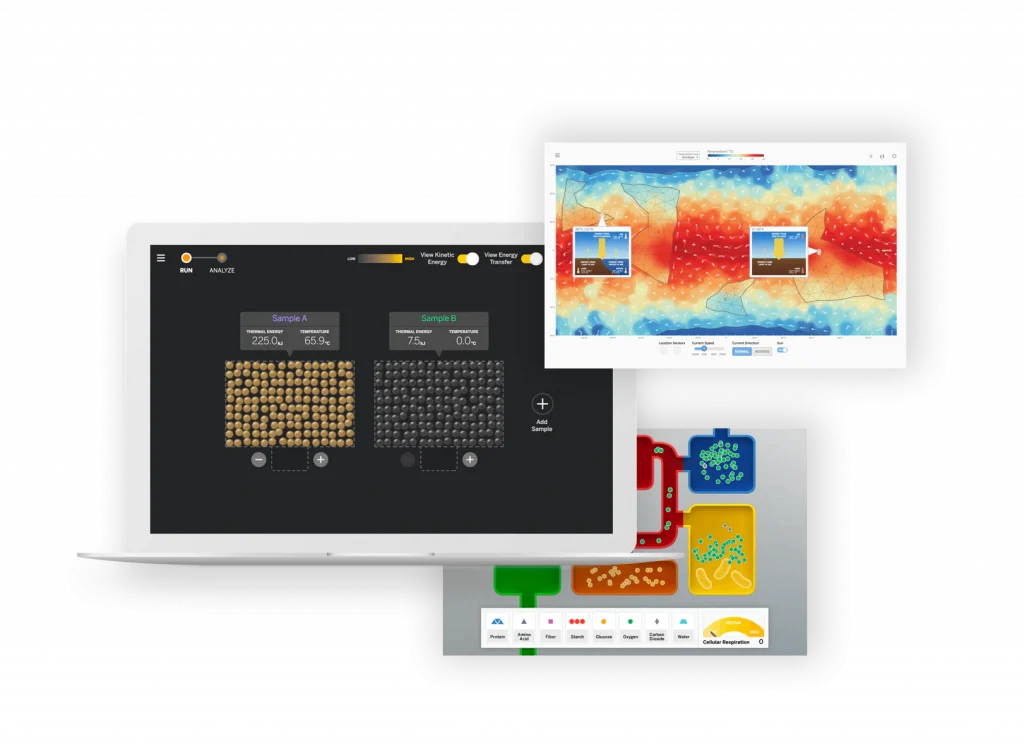
Students access the digital simulations and Modeling Tools, as well as lesson activities and assessments, through the digital student experience. Students can interact with the digital student experience as they:
- conduct hands-on investigations.
- engage in Active Reading and writing activities.
- participate in discussions.
- record observations.
- craft end-of-unit scientific arguments.
Dive into a quick example of our powerful simulations
Hands-on materials kits
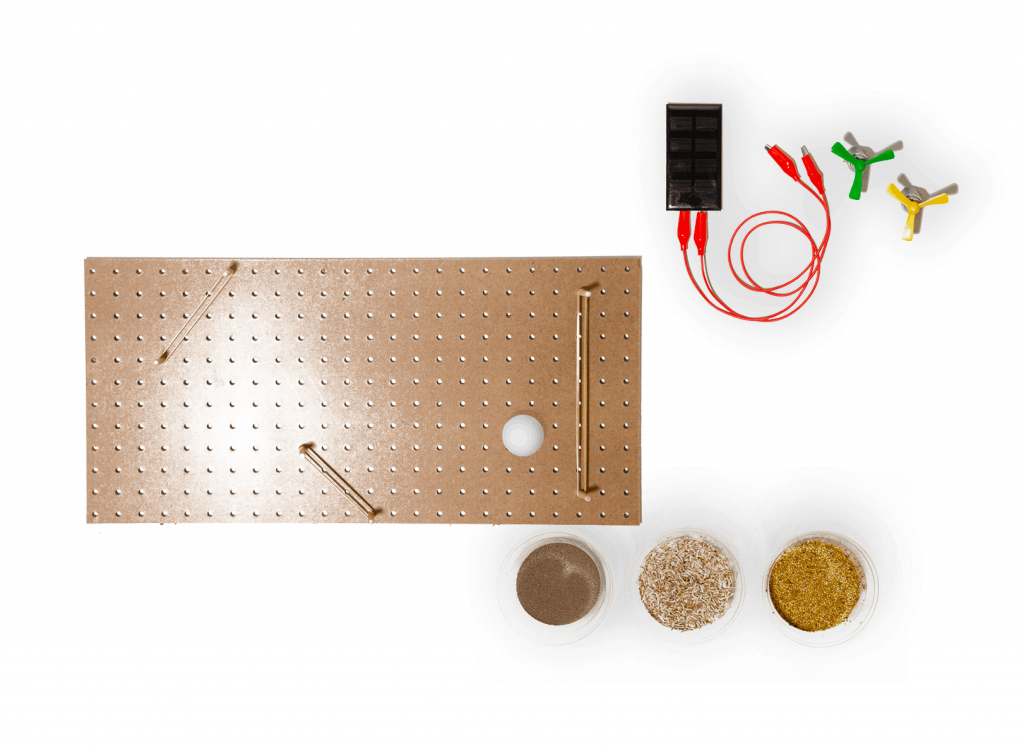
Hands-on learning is at the heart of Amplify Science and is integrated
into every unit. Students actively take on the roles of scientists and engineers as they gather evidence, think critically, solve problems, and develop and defend claims about the world around them.
Check out these 2-minute videos to see an Amplify Science hands-on investigation in action.
- Grade 2: Hands-on investigation from Animal and Plant Relationships
- Grade 6: Hands-on investigation from Populations andResources
Each unit kit contains:
- consumable and non-consumable hands-on materials.
- print classroom display materials.
- premium print materials for student use (sorting cards, maps, etc.).
Teacher’s Guides
Available digitally and in print, the Teacher’s Guides contain all of the information teachers need to facilitate classroom instruction, including:
- detailed lesson plans.
- unit and chapter overview documentation.
- differentiation strategies.
- standards alignments.
- in-context professional development.

Scope and Sequence
Minnesota Academic Standards in Science coverage
Amplify Science was designed from the ground up to meet the NGSS, a set of standards that closely align with the K–8 Minnesota Academic Standards in Science (MASS). Therefore, most grade levels’ respective set of Amplify Science units address the necessary MASS (see K–5 reverse alignment and/or correlations for K–5 and 6–8). However, for grades 2–4, teachers should also use the resources provided in the sections below to achieve full coverage of the appropriate standards before their students move on to the next grade level. Organized by grade level, each section outlines:
- companion lesson materials that were written to support 100% alignment to the Minnesota Academic Standards in Science when used with the core Amplify Science units for the grade level
- the standard being addressed with each companion lesson; and
- the recommended placement of each companion lesson within a specific Amplify Science unit
Companion lesson: “Shelter”
Standard: 1P.4.2.2.1 Communicate solutions that use materials to provide shelter, food, or warmth needs for communities including Minnesota American Indian tribes and communities.* (P: 8, CC: 2, CI: PS1, ETS2)
Recommended placement: Following Lesson 5.1 of Spinning Earth
Materials: Shelter Classroom Slides and Student Sheet
Companion lesson: “Describing Climates”
Standard: 2E.4.2.1.2 Obtain and use information from multiple sources, including electronic sources, to describe climates in different regions of the world.** (P: 8, CC: 1, CI: ESS2)
Recommended placement: Following Lesson 4.5 of Changing Landforms
Materials: Describing Climates Classroom Slides and Student Sheet
Note: Students will further investigate the content in this standard, and revisit the book used in this companion lesson, in 3rd grade (Weather and Climate unit)
Companion lesson 1: Light and Vision
Standard: 3P.3.1.1.1 Develop a model to describe that light reflecting from objects and entering the eye allows objects to be seen. (P: 2, CC: 2, CI: PS4)
Recommended placement: Following Lesson 4.5 of Environments and Survival
Materials: Light and Vision Part 1 Classroom Slides and Student Sheet; Light and Vision Part 2 Classroom Slides and Student Sheet
Note: Students will further investigate the content in this standard, and revisit the book used in this companion lesson, in 4th grade (Vision and Light unit)
Companion lesson 2: Studying Stars
Standard: 3E.4.2.2.1 Gather information and communicate how Minnesota American Indian Tribes and communities and other cultures use patterns in stars to make predictions and plans. (P 8, CC: 1, CI: ESS1)
Recommended placement: Following Lesson 4.4 of Weather and Climate
Materials: Studying Stars Classroom Slides and Student Sheet
Note: Students will further investigate the content in this standard, and revisit the book used in this companion lesson, in 5th grade (Patterns of Earth and Sky unit)
Companion lesson 1: Salt Water and Freshwater
Standard: 4E.2.2.1.1 Interpret charts, maps and/or graphs of the amounts of salt water and fresh water in various reservoirs to provide evidence about the distribution of water on Earth.** (P: 5, CC: 4, CI: ESS2)
Recommended placement: Following Lesson 2.6 of Earth’s’ Features
Materials: Salt Water and Freshwater Classroom Slides and Student Sheet
Note: Students will further investigate the content in this standard, and revisit the book used in this companion lesson, in 5th grade (The Earth System unit)
Companion lesson 2: How Raindrops Form
Standard: 4E.1.1.1.2 Ask questions about how water moves through the Earth system and identify the type of question. (P: 1, CC: 5, CI: ESS2)
Recommended placement: Following Lesson 4.5 of Earth’s’ Features
Materials: How Raindrops Form Classroom Slides and Student Sheet
Note: Students will further investigate the content in this standard, and revisit the book used in this companion lesson, in 5th grade (The Earth System unit)
Explore the digital Teacher’s Guide
To familiarize yourself with navigation of the digital Teacher’s Guide, watch our navigational guide videos:
Grades K–5:
Grades 6–8:
Looking for help?
Powerful (and free!) pedagogical support
Amplify provides a unique kind of support you won’t find from other publishers. We’ve developed an educational support team of former teachers and administrators who provide pedagogical support for every Amplify curriculum, assessment, and intervention program. This service is completely free for all educators who are using our programs and includes:
- Guidance for developing lesson plans and intervention plans.
- Information on where to locate standards and other planning materials.
- Recommendations and tips for day-to-day teaching with Amplify programs.
- Support with administering and interpreting assessment data and more.
Timely technical and program support
Our technical and program support is included and available Monday through Friday, from 7 a.m. to 7 p.m. ET, through a variety of channels, including a live chat program that enables teachers to get immediate help in the middle of the school day.
Ready to dive in?
Contact your Minnesota representative:
Kristi Stengel
Account Executive
kstengel@amplify.com
(612) 306-3941
Tammy Sigwarth
Account Executive
tsigwarth@amplify.com
(563) 663-0056
Welcome, Salt Lake City ELA Review Committee!
Welcome to Amplify CKLA!
Amplify Core Knowledge Language Arts® (CKLA) is currently the only state-approved core ELA curriculum designated as a primary core program that fully meets the Science of Reading requirements outlined in SB 127.
Truly built on the Science of Reading, Amplify CKLA helps all teachers implement the Utah Core Standards for English Language Arts and Literacy by translating the science of reading into manageable, engaging, and effective classroom practices.
Scroll down to learn how CKLA is uniquely designed to help all your students make learning leaps in literacy.

Recognized Quality
Amplify CKLA is one of only a few high-quality, knowledge-building literacy curricula recognized by the Knowledge Matters campaign. Our shared message: Background knowledge is essential to literacy and learning.

Science of Reading Approved by USBE
Amplify CKLA is a content-rich literacy curriculum that systematically braids knowledge-building with skills instruction. In fact, according to the Utah SBE, Amplify CKLA fully meets the Science of Reading requirements outlined in SB 127.
Independently and rigorously reviewed
Amplify CKLA not only received an all-green rating from the rigorous evaluators at EdReports, but it was also recently recognized by the Knowledge Matters Campaign as a literacy program that excels in building knowledge.
Intentional knowledge-building
The Science of Reading reveals knowledge as an essential pillar of reading comprehension, and even lifelong literacy. That’s why leading scientists say knowledge-building must be incorporated into reading instruction from the beginning—and with Amplify CKLA, it is.
Program Overview
Amplify CKLA is a core ELA program for grades K–5 that delivers:
- A unique research-based approach truly built on the Science of Reading.
- A combination of explicit foundational skills with meaningful knowledge building.
- Embedded support and differentiation that gets all students reading grade-level texts together.
- Opportunities for students to see the strengths and experiences that all people share while also celebrating each others’ unique identities and experiences.
- Authentic Spanish language arts instruction with Amplify Caminos.
Amplify CKLA for Grades K–2
After watching the K–2 video below, scroll down to learn even more, download resources, and access a demo.
Amplify CKLA for Grades 3–5
After watching the 3–5 video below, scroll down to learn even more, download resources, and access a demo.
How it works
Amplify CKLA teaches both foundational skills and background knowledge in K–2 and combines them in 3–5, as required by the science of reading.
- In grades K–2, students complete one full lesson that builds foundational reading skills, as well as one full lesson that builds background knowledge.
- In grades 3–5, student complete one integrated lesson that combines skills and knowledge with increasingly complex texts, close reading, and a greater writing emphasis.

Rich topics
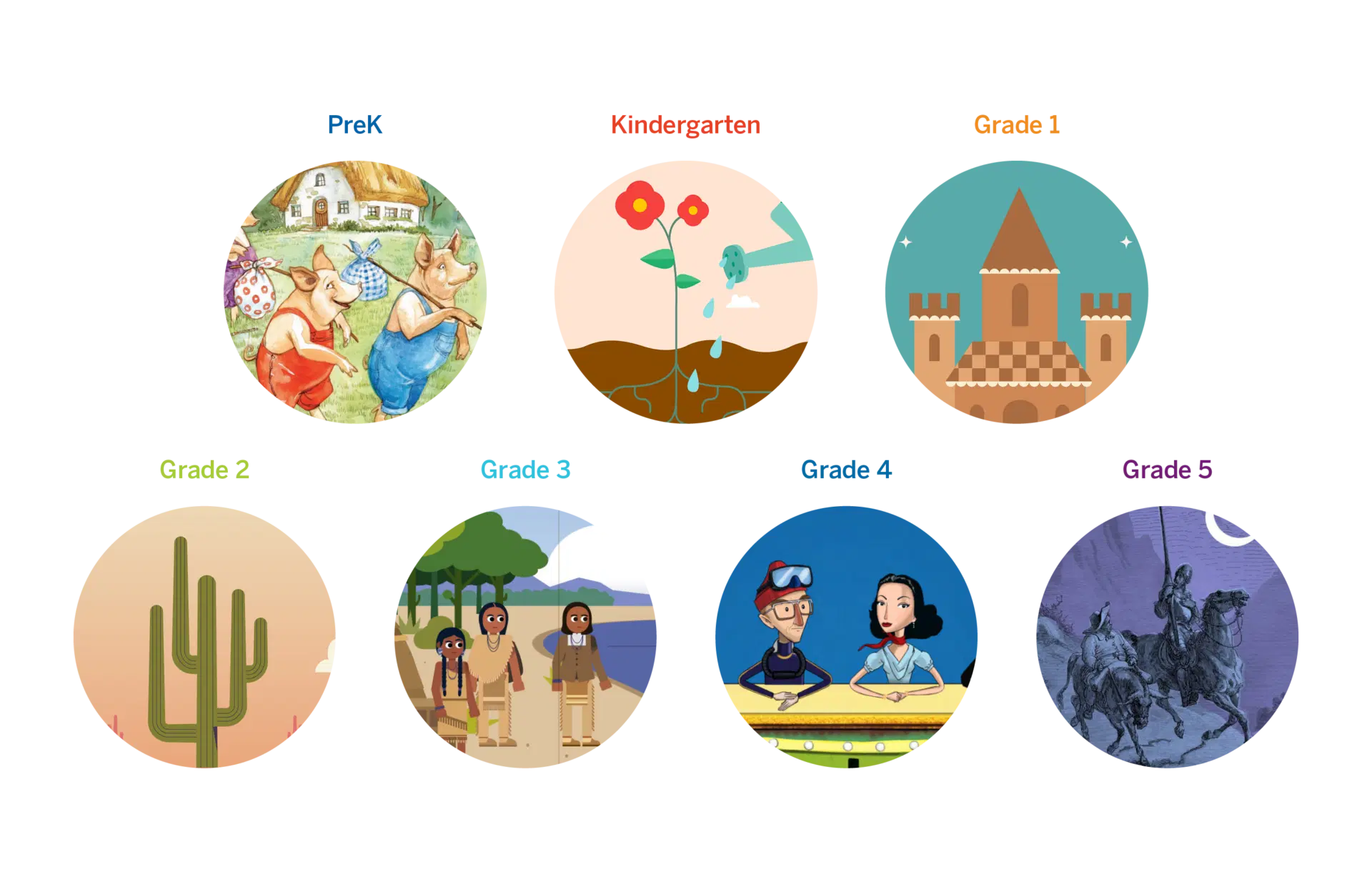
Amplify CKLA builds knowledge coherently across subjects and grades.
Students make connections from year-to-year by exploring grade-appropriate subject-area knowledge and vocabulary in history, science, literature, and the arts while learning to read, write, and think creatively and for themselves.


Diverse text
Amplify CKLA puts a variety of texts in the hands of students every day to build and strengthen background knowledge and vocabulary, listening and reading comprehension, and decoding and fluency skills.
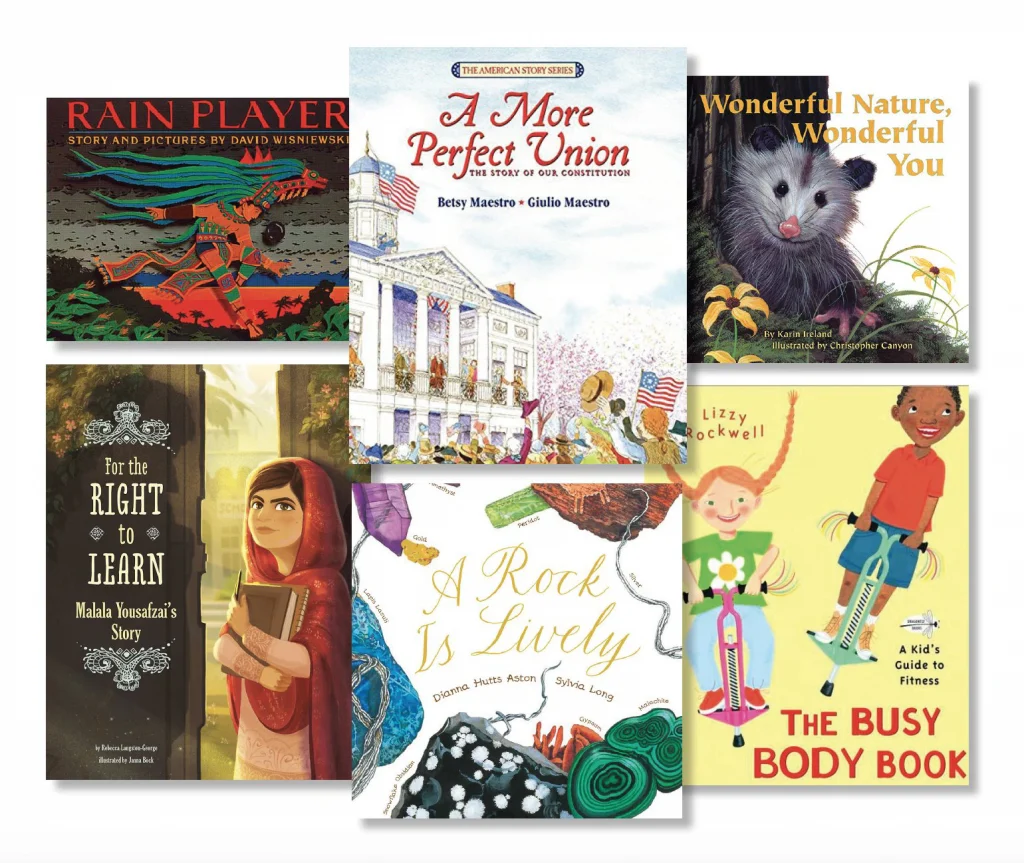
More than that, we ensure the texts students read represent the world around them. With a diverse range of authors, topics, and characters, all students have ample access to both windows and mirrors. Our texts include:
- Authentic books.
- Authentic text passages.
- Student Readers.
- Novel Guides (grades 3–5).




Aligned to LETRS and Orton-Gillingham
Amplify CKLA aligns with the instructional principles recommended by Orton-Gillingham and LETRS.
- Structured–Concepts are taught through consistent routines
- Sequential–Concepts are taught in a logical, well-planned sequence
- Systematic–Phonemes are taught from simplest to most complex
- Explicit–Decoding and encoding concepts are taught directly and explicitly
- Multi-sensory–Instruction is delivered through visual, auditory, and kinesthetic-tactile pathways
- Cumulative–Concepts are applied in decodable, connected texts with constant review and reinforcement

Equitable instruction
We believe we have a responsibility to provide literacy instruction that gives every student the same opportunity to succeed and excel.
We know that early reading affects achievement throughout school and beyond—well into college and career. Yet most literacy programs continue to fall short of supporting early literacy success. That’s why we’re so proud that CKLA is helping close the reading gap between students within diverse communities.


Complete curriculum
A strong literacy program is not just about a reading program or an assessment tool: it brings together curriculum, instruction, regular practice, intervention, and assessments.
Amplify has brought these components together in our early literacy suite of curriculum, ensure that you have what you need for multi-tiered support.


Science of Reading Resources
Watching students learn to read: magic. Knowing how they get there: science.
As you consider your next core ELA program, it’s critically important to understand what the Science of Reading really means and what it tells us about how to teach more effectively. Unlike other programs, Amplify CKLA was built upon these insights and practices, making it easier for teachers to implement this proven approach.
Access demo
Ready to explore on your own? Follow the instructions below to access your demo account.
Explore the CKLA Teacher Resource Site
First, watch the quick navigation video to the right. Then, click the “Access CKLA Teacher Resource Site” button to log in.
- Click the CKLA Teacher Resource Site button
- Select Log in with Amplify.
- Enter this username: t1.slcsd-ckla-1@demo.tryamplify.net
- Enter this password: Amplify1-slcsd-ckla-1
- Select the desired grade level
Welcome to Amplify ELA!
Thank you for considering Amplify ELA – the only ELA curriculum truly designed for students entering the middle grades.
Amplify ELA takes the Science of Reading to the next level, engaging and empowering learners, and addressing the very specific and unique needs of students in grade 6.
Scroll down to learn how ELA is uniquely designed to help all your sixth graders make learning leaps in literacy.

Meet Amplify ELA
Developed specifically for the needs of students entering the middle grades, Amplify ELA is a blended curriculum that promises:
- A structured, yet flexible approach.
- Carefully crafted, age-appropriate materials and activities that aren’t too “babyish” or too mature.
- Complex, content-rich literature and informational texts that ensure ample opportunities for students to encounter both “windows and mirrors”.
- Highly engaging lessons that keep adolescents plugged in and motivated to learn.
- An instructional design that levels the playing field for every student.
- Superior results.


Access, engagement, and equity
Every student has the right to read, engage in class, and have an equal chance at success.
It’s this principle that guides our content creation and curation, and our dedication to reaching every student where they are.
In Amplify ELA, all students read the same text with the help of differentiated supports. In other words, we don’t dumb things down; we bring students up. Our robust collection of texts and research-based approach to instruction not only engage students, but build confidence.


ELLs
With Amplify ELA’s integrated and designated ELD support, English language learners are given a chance to shine.
Embedded supports enable students to engage with and participate in discussion of grade-level texts with their grade-level peers.


Access Demo
Ready to explore on your own? Follow the instructions below to access your demo account.
Access the ELA Digital Platform
First, watch the quick navigation video to the right. Then login using the button below.
- Click the ELA Teacher Platform button below.
- Select Log in with Amplify.
- Enter this username: t1.slcsd-ela@demo.tryamplify.net
- Enter this password: Amplify1-slcsd-ela