Managing the change that matters most: Implementing the Science of Reading with integrity

Reading requires deliberate, systematic attention—and so does shifting to the Science of Reading in your school or district. It requires not only the correct curriculum, but also all-new mindsets, metrics, and more. Reflecting years of experience supporting real educators, our resources will walk you through the process of change management in your community—and show you why the shift is worth it.
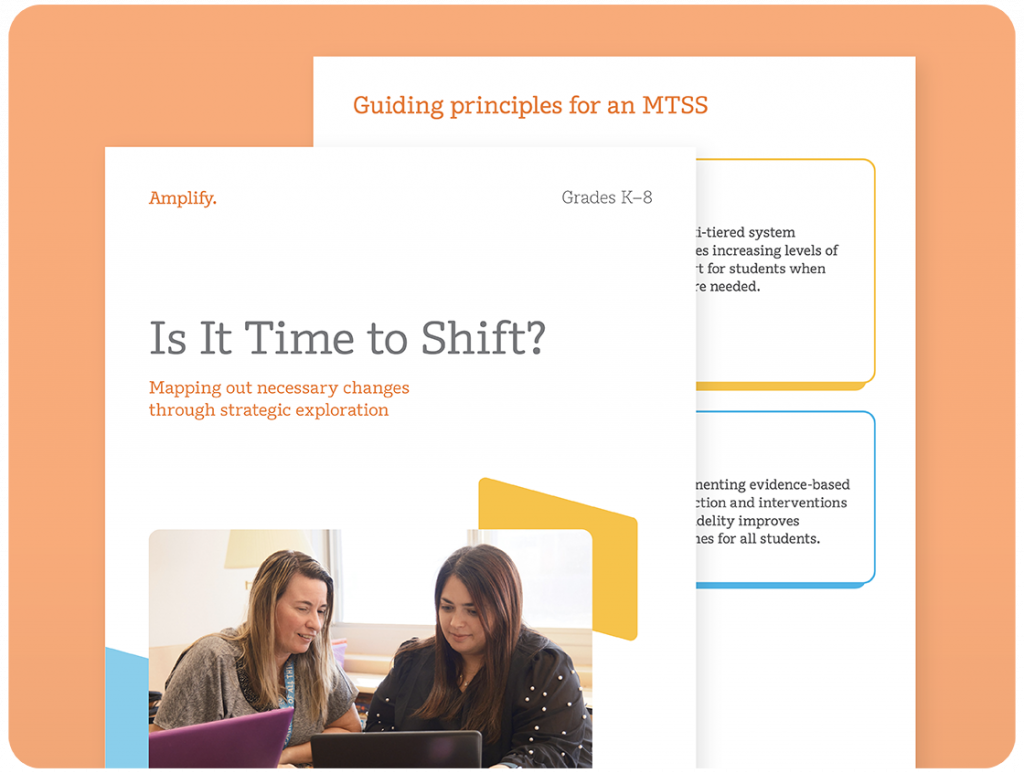
Two women work together at a laptop in the foreground of a document titled "Is It Time to Shift?" about changes in MTSS for grades K-8, with another educational document visible behind.

How data drives Science of Reading change management

Making the shift requires meticulous planning, open communication, and most importantly, data. Learn how to harness data to drive your implementation forward.

Step 1: Prepare your team

Big change doesn’t happen without buy-in. We’ll help you take the crucial first step of getting your team on board.
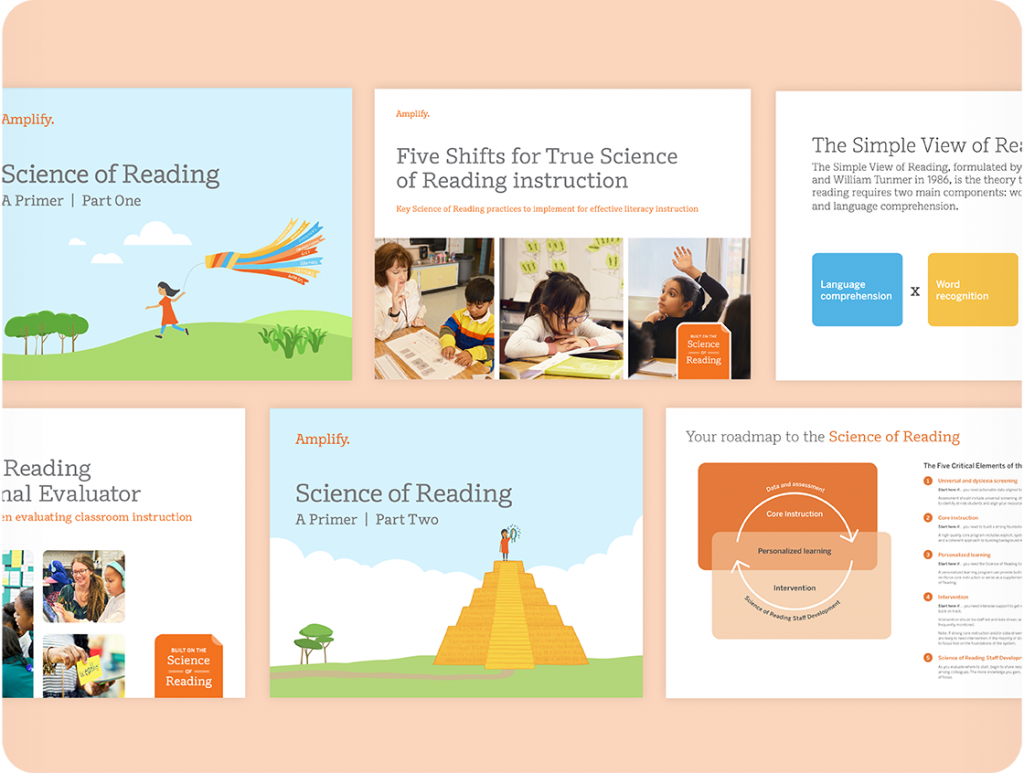
A collage of educational slides about the Science of Reading, featuring illustrations, text, charts, and photos of children and teachers in classroom settings.

Build a Science of Reading digital bookbag

Getting up to speed with the Science of Reading takes some homework. We’ve pulled some key resources into one place for you and your team.
Download now

Science of Reading: The Podcast cover featuring an open book, bouncing shapes, and the word Amplify on a yellow background.

Subscribe to Science of Reading: The Podcast

Tune in to our chart-topping Science of Reading podcast—which recently celebrated four million downloads—to keep up with the latest insights from experts and practitioners. Subscribe to listen to the latest episodes exploring relatable, real-life challenges faced by literacy educators—from managing small groups to delivering trauma-informed instruction—and visit the archives to binge Seasons 1 through 7!

Listen now

Book cover of "The Knowledge Gap" by Natalie Wexler, featuring a stack of books on a blue background with white text and decorative stars on the left.

Read The Knowledge Gap and Science of Reading: The Defining Guide

You’ll want to curl up with The Knowledge Gap, Natalie Wexler’s essential work making the case for the power of knowledge to fuel literacy. You can also get all the basics in Science of Reading: The Defining Guide by our friends at the Reading League.

Get Science of Reading: The Defining Guide

Professional development to support your shift to the Science of Reading

Ignite literacy transformation with Amplify’s Science of Reading: The Learning Lab—an inspiring three-course series.

  • Dive into a comprehensive overview with course one, Foundations to the Science of Reading.
  • Examine assessments and their roles in course two, Advanced Topics in the Science of Reading: Assessment and Reading Difficulties.
  • Apply effective literacy instruction to your classroom in course three, Applied Structured Literacy.

Crafted to the standards of the International Dyslexia Association, this self-paced online series provides unparalleled, research-backed instruction. Explore enriching activities, curated resources, and learn from Susan Lambert, chief academic officer and host of Science of Reading: The Podcast.

The best investment you can make is in knowledge, and the returns are priceless.
Illustration of a webpage titled "Science of Reading: The Learning Lab series" with icons of a book, paper, and other subjects below the title.

Learn more about the online courses or request a quote!
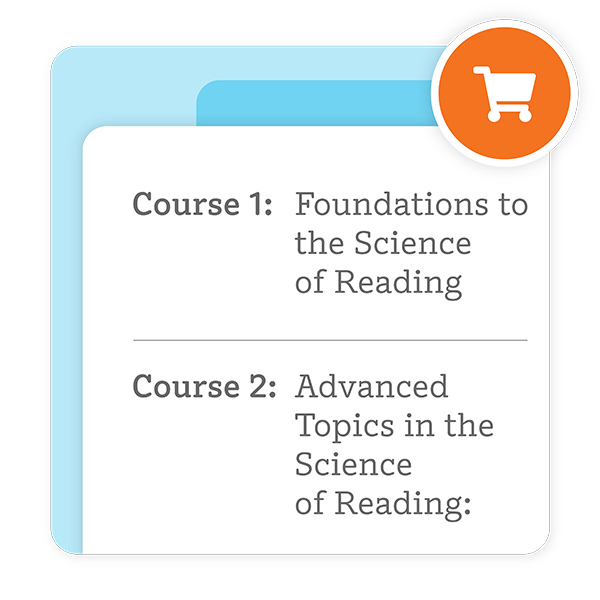
Two labeled course cards: "Course 1: Foundations to the Science of Reading" and "Course 2: Advanced Topics in the Science of Reading," with a shopping cart icon in the top right.

Tap into individual online course seats.

Step 2: Adopt the right program

Making the Science of Reading a reality in your school means choosing the right evidence-based curriculum.
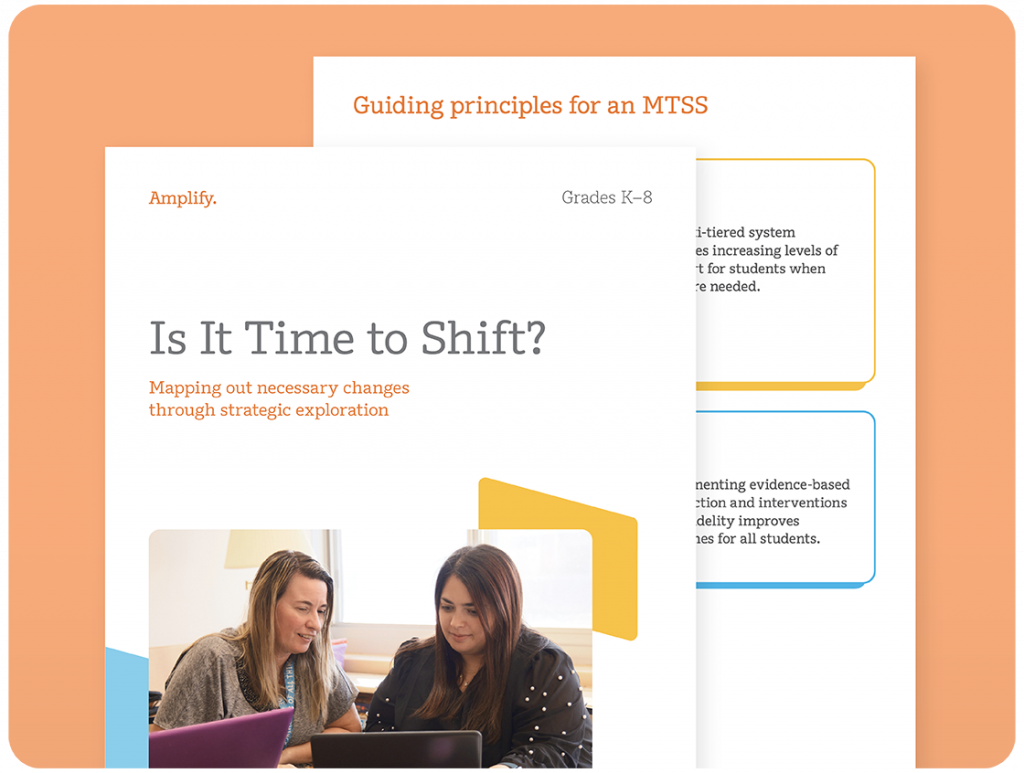
Two women sit at a table working on laptops. The visible documents are titled "Is It Time to Shift?" and "Guiding principles for an MTSS.

Change management

Our Change Management Playbook is your trusted companion in transforming schools with proven strategies. Crafted alongside educators who have successfully pioneered change, this comprehensive guide lays out actionable steps and critical questions for each phase of your implementation journey.

Evaluate curricula and look out for red flags

A core literacy curriculum needs to be aligned with evidence-based practices every step of the way. This curriculum evaluation guide from the Reading League will walk you through the evaluation you need to conduct to ensure that you’re investing in only the best instruction for your students and teachers, and to know that the curriculum you’re selecting is true to the research.

Cover page titled "2023 Curriculum Evaluation Guidelines" by The Reading League, with the organization's logo in the top right corner.
A cover page titled "Five Shifts for True Science of Reading Instruction" with photos of students and teachers, and illustrated pages in the background.

Make the five most critical instructional shifts

Big change is best done gradually. That’s why we’ve identified five key shifts in reading instruction that will set you on the path to transforming your classroom with the Science of Reading.

Watch our Science of Reading webinars

In our Literacy Is Opportunity webinar series, you’ll learn why it’s crucial to get reading instruction right for all students—and how to make the shifts needed in your school.
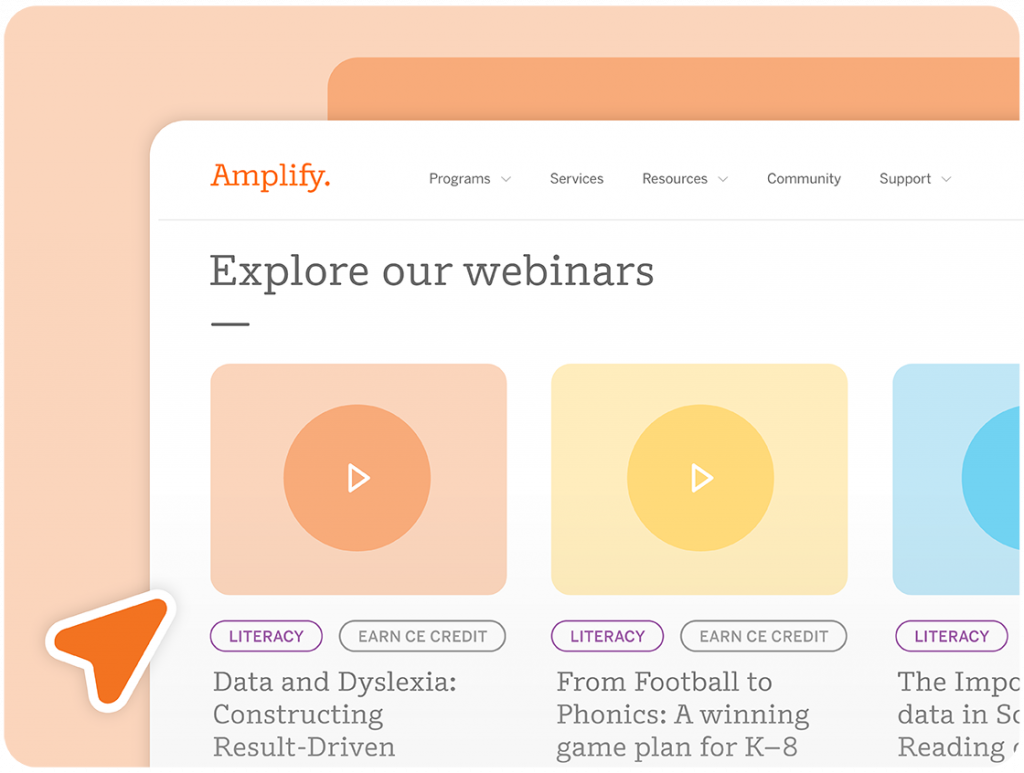

A website page titled "Explore our webinars" displays three webinar cards with play icons and tags for "Literacy" and "Earn CE Credit" under the Amplify brand.
A young woman with long brown hair smiles at the camera, wearing hoop earrings and a lanyard, with colorful posters on the wall behind her.
“I really think that educators should make the shift to the Science of Reading because it’s data-driven and purposeful, and it really encourages personalized learning.”

—Mallory Pendergast, Kindergarten Teacher

Circle City Prep, IN

Step 3: Build an evidence-based literacy ecosystem that supports all students

Science-based reading instruction can actually reduce the need for intervention and support. These principles and practices show how evidence and data build a culture of literacy for everyone.

Establish a Multi-Tiered System of Supports (MTSS) grounded in the Science of Reading

A complete Science of Reading system is one that aligns with a Multi-Tiered System of Supports (MTSS) framework. Because an MTSS includes all students—and stakeholders—it prevents struggles before they happen, setting everyone up for literacy success.
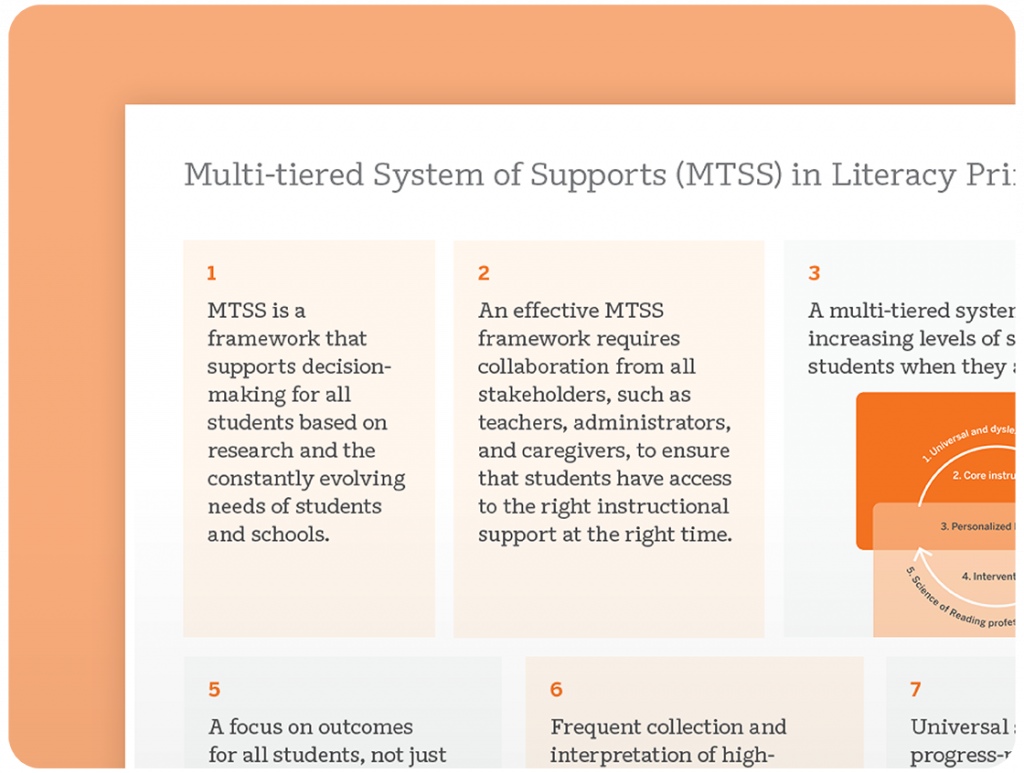
A screenshot of an educational document explaining the Multi-tiered System of Supports (MTSS) in literacy, with highlighted sections outlining key principles and steps.
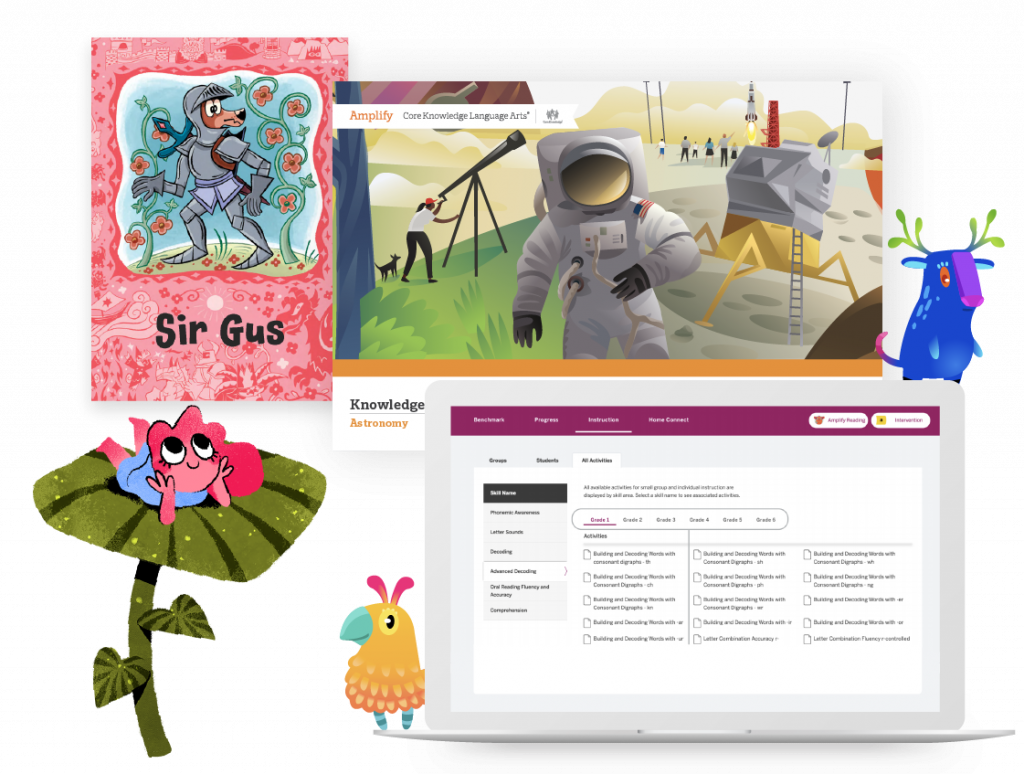
A collage featuring a children's book cover, an astronaut illustration, cartoon animals, and a laptop displaying an educational website.

Explore Amplify’s Science of Reading early literacy suite

Built on more than 20 years of Science of Reading experience, our early literacy suite ensures that research-based and data-driven literacy practices are at the heart of everything you do. The suite includes every component of instruction, from assessment and personalized learning to intervention and professional development.

Bring the Science of Reading to middle school and biliteracy instruction

The Science of Reading can have an impact on learning outside of traditional K–5 literacy instruction, too—it can also address the specific needs of middle schoolers and multilingual students.

View our resources:
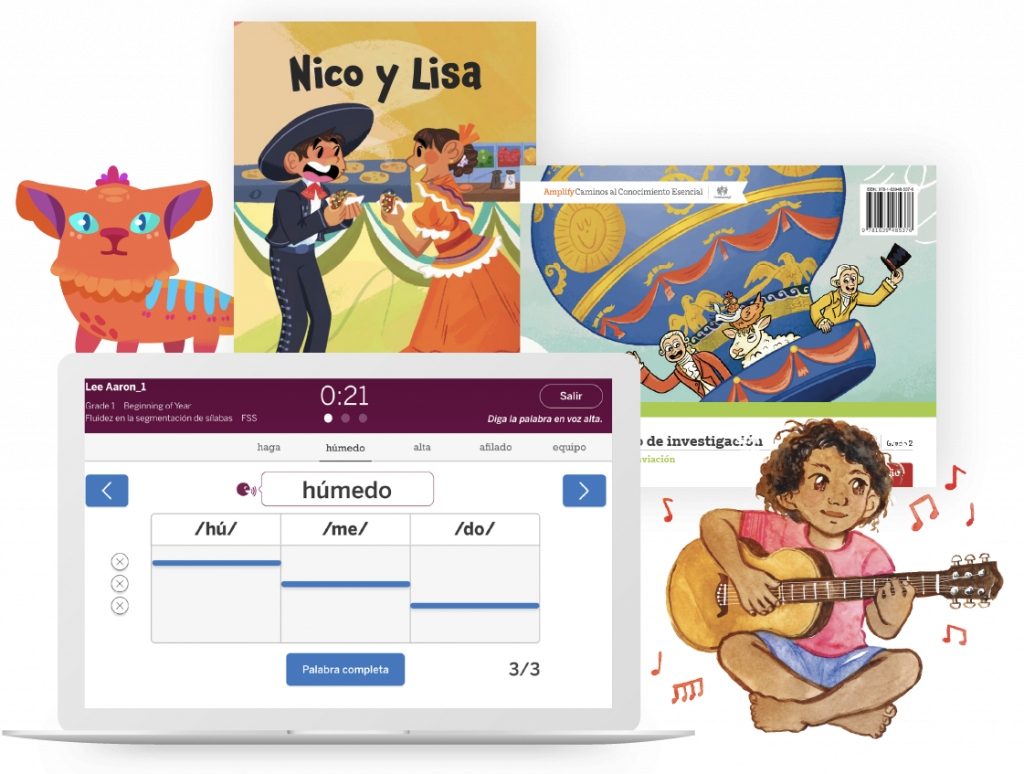
A collage showing children’s books, a drawing of a cat, a child playing guitar, and a laptop screen with a Spanish language learning activity.
Man with short hair smiling outdoors with trees in the background.
“This goes out to the interventionists, coaches, and administrators … support your staff. Be a part of and/or lead staff trainings, provide push-in support, model and co-teach so that the staff will see that this is not ‘just another initiative.’ Remember, this is the start of a long, powerful journey. Take small steps, do them well, then use data to move on to the next small step.”

— Corey Beil, Instructional Interventionist

Quakertown Community School District, PA

Step 4: Sustain change for long-term results

Educational change doesn’t happen overnight, or by itself. We’ve helped thousands of Science of Reading champions make the shift, and they’re eager to share the secrets of their long-term success with fellow educators like you.

Power up with
Amplify Science!

You’re the heart and soul of the meaningful learning experiences delivered through Amplify Science, so we’ve curated this page with resources designed to supercharge your Amplify Science journey. Get started on a path of discovery, inspiration, and enhanced learning with Amplify Science.

Two women standing in a classroom, smiling while looking at a tablet together. Classroom decorations and supplies are visible in the background.
A man in a dress shirt and tie sits at a desk, looking at papers and writing, with bookshelves and office supplies in the background. Colorful doodle accents frame the image.

Enriching Science webinars

Ready to transform your science lessons with collaborative, effective, and engaging methods? Our science webinars are just what you need!

Amplify Science classroom showcase

Explore our collection of Classroom Walls and hands-on activities in photos from educators like you around the country.

A teacher engages with young students at a table while one child in a green headscarf raises her arms in excitement next to a colorful structure.
Two boys work together on a laptop in a classroom while a woman observes. Decorative school supply graphics frame the image.

Downloadable STEM resources

Check out our collection of activities, posters, and guides designed to enhance teaching and learning in your classroom.

Collection of monthly newsletters

Have you missed the latest edition of the Amplify Science monthly newsletter? Easily locate and reference past newsletters in our archive.

Woman sitting at a table indoors, smiling while using a tablet, with abstract yellow and purple graphics decorating the image.
Two boys sit at a desk using a laptop in a classroom. Insets show a close-up of sewing, and a child in rain boots splashing in water.

Join our engaging Facebook community

In our Amplify Science Facebook community, educators share advice, ideas, encouragement, and concrete examples from their own experiences with the curriculum. Join to find out how your colleagues are making the program their own and keeping students engaged!

Turning students into scientists

Check out our Success Stories page to hear from real Amplify Science teachers and students.

Do, Talk, Read, Write students out-perform their peers in science content knowledge

Grounded in research and proven effective

UC Berkeley’s Lawrence Hall of Science (the authors behind Amplify Science) developed the Do, Talk, Read, Write, Visualize approach, which gold-standard research shows is highly effective—and our own efficacy research is pretty exciting, too!

“It is so fun and encouraging to hear students engaged in conversation and building their ideas off of one another. [Students] finding the confidence to challenge one another and use evidence to support their thinking is so fun to watch and listen to as well. Amplify Science has been a great resource to incorporate into my classroom.”

—Sarah Loess, IL

“When Amplify first came in, I was overwhelmed and, honestly, a little skeptical. It's proven itself to be a strong curriculum that guides students to thinking and communicating as scientists. ”

—Christy Flynn, LA

“I love the Science Seminars! Seeing my students in action and applying their knowledge and hard work to something new is fantastic! I always invite my admin as well as district staff to observe. Even my lowest readers and writers have a true chance to shine!”

—Ryan Renee Rudkin, CA

Be a changemaker for science.

Profound science learning experiences have the power to transcend classroom walls—cultivating students’ curiosity, fostering critical thinking and creativity, building knowledge about the real world, and supporting students on their pathway to college and beyond. Unfortunately, science continues to fight for sufficient instructional time and resources.

The good news? Intentional shifts, combined with evidence-based practices and effective high-quality instructional materials, can help teachers make the most of the time they do have—transforming students into concerned global citizens ready to take on the world.

Science instruction designed for all students

K–8 science instruction is the crucial foundation that prepares students for high school learning. Our change management playbook details manageable and realistic changes to your process and practice that will make your K–8 instruction even more powerful.

Establishing high-quality teaching and learning

Access to high-quality instructional materials (HQIM) is a vital piece of the change management puzzle. Support the leaders who are on a mission to identify HQIM and set up the best possible conditions for implementation success.

Connecting science and literacy

Want to make every instructional moment count? Integrate science and literacy more deeply—and witness the transformation in student learning. Find out how with this resource pack.

The foundation for long-lasting and sustainable change

Change is more likely to stick and get results when you take a systemic approach. Partner with us to do just that by developing a learning plan that will drive your program implementation, enrich your instructional practices, and increase student impact. Amplify’s high-quality programs make it easier for you to teach inspiring, impactful lessons that celebrate and develop the brilliance of your students.

Science free resource library

Find free K–8 activities, posters, and guides to engage all students in science.

LEARN MORE 

2024 Science Symposium

Access best practices and tips from science leaders through our on-demand Science Symposium.

LEARN MORE 

Science Connections archives

Hear more strategies from educator Eric Cross and other experts in this podcast.

LEARN MORE 

Ready to champion science in your school? We’re here to help!

Connect with our Amplify Science experts to see how we can help create change in your school or district.