Literacy Essentials, Episode 1

Science of Reading Essentials: Writing


In this special Essentials episode of Science of Reading: The Podcast, Susan Lambert pulls from past episodes of the podcast to give you everything you need to know about science-based writing instruction. Experts include Steve Graham, Ed.D.; Young-Suk Grace Kim, Ed.D.; Natalie Wexler; and Judith Hochman, Ed.D. Listeners will walk away from this episode with a solid foundation for creating a classroom of confident and capable writers, and gain a better understanding of the connection between reading and writing, the role of handwriting and spelling, the power of sentences, and the importance of applying cognitive load theory to writing. Download our discussion guide to fuel a professional learning session!

Meet Our Guest(s):

Smiling older woman with short white hair, wearing a dark jacket, posed against a plain light background.

Judith Hochman, Ed.D.

Judith C. Hochman is the former head of The Windward School and the founder of the Windward Teacher Training Institute in White Plains, New York, as well as the former superintendent of the Greenburgh Graham Free School District in Hastings-on-Hudson, New York. She is the founder of The Writing Revolution, a not-for-profit organization which disseminates evidence-based strategies for writing instruction. Hochman is the author of Basic Writing Skills: A Manual for Teachers and co-author of The Writing Revolution: A Guide to Advancing Thinking Through Writing in All Subjects and Grades (2017, 2024).
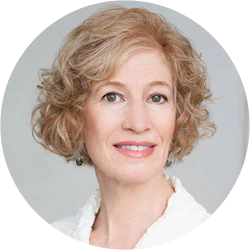
A woman with short, curly blonde hair and light skin wears a white top and earrings, smiling softly at the camera against a neutral background.

Natalie Wexler

Natalie Wexler is the author of Beyond the Science of Reading: Connecting Literacy Instruction to the Science of Learning. She is also the author of The Knowledge Gap: The Hidden Cause of America’s Broken Education System—and How to Fix It and the co-author, with Judith C. Hochman, of The Writing Revolution: A Guide to Advancing Thinking Through Writing in All Subjects and Grades. She has a free Substack newsletter called Minding the Gap, and she was the host of Season One of the Reading Comprehension Revisited podcast from the Knowledge Matters Campaign. More information is available at her website, www.nataliewexler.com.

A woman with short dark hair and glasses, wearing a dark blazer and white shirt, smiles at the camera with a blurred green background.

Young-Suk Grace Kim, Ed.D.

Young-Suk Grace Kim, Ed.D., (Harvard University) is a professor at the School of Education, University of California at Irvine. She was a former classroom teacher in San Francisco. Her scholarship focuses on understanding language and literacy development and effective instruction for children from diverse backgrounds. Her areas of research include reading comprehension, reading fluency, listening comprehension and oral language, dyslexia, higher-order cognitive skills, written composition, and reading-writing relations. She has worked extensively with monolingual children and multilingual children from various linguistic backgrounds including English, Korean, Chinese, Spanish, and Kiswahili. Her research has been supported by over $60 million in grants from the Institute of Education Sciences, the U.S. Department of Education, the National Institute of Child Health and Human Development, and the National Science Foundation. Her work was recognized by several awards, including the 2012 Presidential Early Career Award for Scientists and Engineers (PECASE) by former President Barack Obama, the Developing Scholar Award, and the Robert M. Gagne Outstanding Student Research Award. She is an American Educational Research Association (AERA) Fellow, and serves as the editor-in-chief for Scientific Studies of Reading and the chair of the California Reading Difficulties Risk Screener Selection Panel (RDRSSP), appointed by the California State Board of Education.

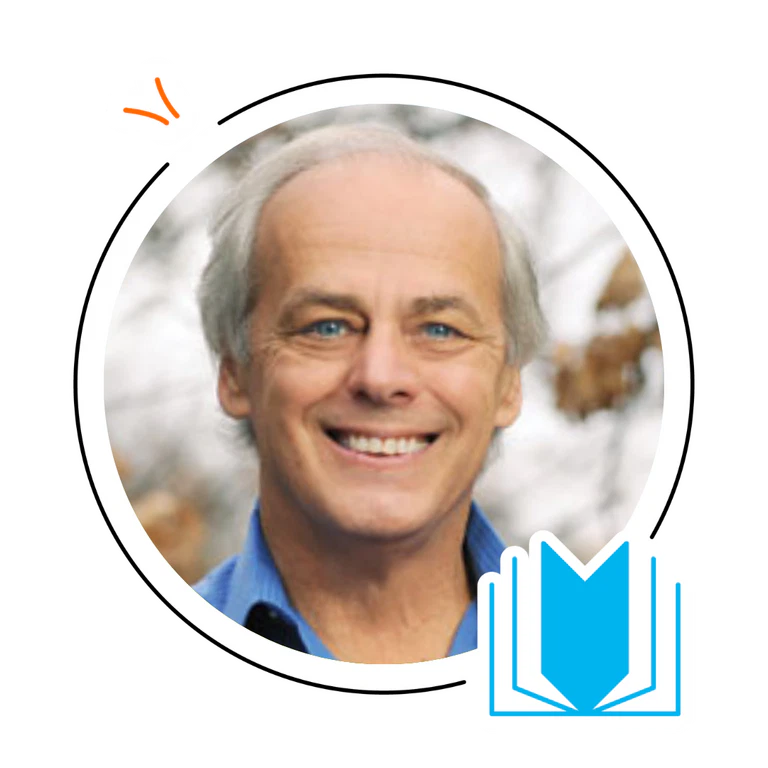
A smiling older man with light skin, gray hair, and blue eyes is wearing a blue collared shirt. The background is blurred with autumn leaves visible.

Steve Graham, Ed.D.

Steve Graham is a Regents’ and Warner Professor at Arizona State University’s Mary Lou Fulton College for Teaching and Learning Innovation. For 47 years, he has studied how writing develops, how to teach it effectively, and how it can be used to support reading and learning. In recent years, he has been involved in the development and testing of digital tools for supporting writing and reading through a series of grants from the Institute of Educational Sciences and the Office of Special Education Programs in the U.S. Department of Education. His research involves the development of writers with special needs in both elementary and secondary schools, much of which occurs in urban schools. Graham has received many awards for his contributions to literacy and was selected to the Reading Hall of Fame in 2018. He is a fellow of the American Educational Research Association, Division 15 of the American Psychological Association, and of the International Academy for Research in Learning Disabilities.

Meet our host, Susan Lambert

Susan Lambert is chief academic officer of literacy at Amplify and host of Science of Reading: The Podcast. Throughout her career, she has focused on creating high-quality learning environments using evidence-based practices. Lambert is a mom of four, a grandma of four, a world traveler, and a collector of stories.

As the host of Science of Reading: The Podcast, Lambert explores the increasing body of scientific research around how reading is best taught. As a former classroom teacher, administrator, and curriculum developer, Lambert is dedicated to turning theory into best practices that educators can put right to use in the classroom, and to showcasing national models of reading instruction excellence.

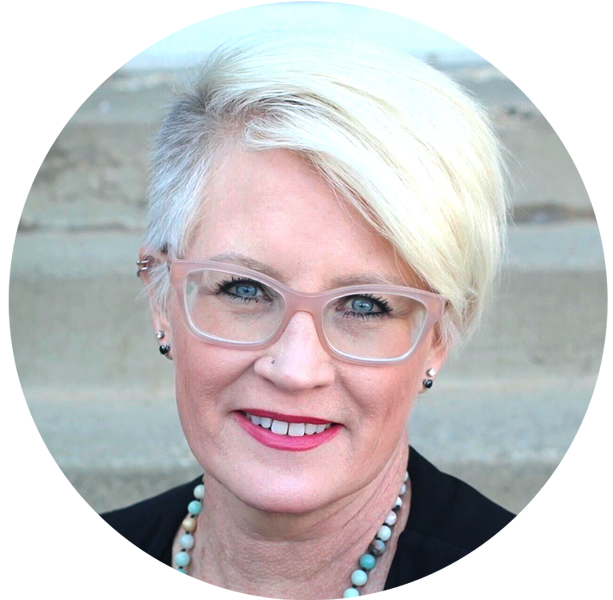
A woman with short, light blonde hair, wearing clear glasses, a black top, and a beaded necklace, smiles at the camera in front of a blurred outdoor background.

Quotes

“The Science of Reading encapsulates decades of research about both reading and writing—because if writing was never invented, we would not have to teach kids how to read.”

—Susan Lambert

"What we see with exceptional teachers is they have their kids write."

—Steve Graham, Ed.D.

“This is not learned by osmosis. And it's not learned by vague feedback like, 'Make it better,' or 'Add more details.' You've got to be very granular.”

—Judith Hochman, Ed.D.

Season 7, Episode 8

Writing your way to better reading, with Steve Graham

When it comes to literacy education and cross-domain learning, it’s critical to understand the relationship between reading and writing. In this episode, Susan talks to Steve Graham all about writing—and how it can be used to strengthen literacy. Graham served as chair of the What Works Clearinghouse Practice Guides on elementary and secondary writing, and is the current Regents and Warner Professor at Arizona State University. Together, he and Susan discuss ways to support student writing, hindrances to writing development, the importance of teaching handwriting skills, and why writing is essential to any literacy program.

Meet Our Guest(s):

Steve Graham

Steve Graham

Steve Graham is the Regents and Warner Professor in the division of Leadership and Innovation at Arizona State University’s Mary Lou Fulton Teachers College. For 42 years, he has studied how writing develops, how to teach it effectively, and how it can be used to support reading and learning. In recent years, he has been involved in the development and testing of digital tools for supporting writing and reading through a series of grants from the Institute of Educational Sciences and the Office of Special Education Programs in the U.S. Department of Education. His research involves the development of writers with special needs in both elementary and secondary schools, much of which occurs in urban schools. 

He has received many awards for his contributions to literacy and was selected to the Reading Hall of Fame in 2018. He is a fellow of the American Educational Research Association, Division 15 of the American Psychological Association, and of the International Academy for Research in Learning Disabilities.

Meet our host, Susan Lambert

Susan Lambert is the Chief Academic Officer of Elementary Humanities at Amplify, and the host of Science of Reading: The Podcast. Her career has been focused on creating high-quality learning environments using evidence-based practices. Susan is a mom of four, a grandma of four, a world traveler, and a collector of stories.

As the host of Science of Reading: The Podcast, Susan explores the increasing body of scientific research around how reading is best taught. As a former classroom teacher, administrator, and curriculum developer, Susan is dedicated to turning theory into best practices that educators can put right to use in the classroom, and to showcasing national models of reading instruction excellence.

Retrato de una mujer caucásica sonriente con cabello rubio corto, involucrada en un podcast sobre la ciencia de la lectura, con gafas, lápiz labial rojo y un collar de perlas.

Quotes

"Kids need to write, they need to write for a variety of purposes. And they also need to write for real reasons, for real audiences."

—Steve Graham

Amplify ELA curriculum excels in independent EdReports.org review

Amplify ELA fully met the team’s expectations on 21 of 24 evaluation criteria, and partially met expectations for the remaining three. Most important, Amplify ELA met expectations for each of the key “gateways” – one of only two grade 6-8 ELA programs to do so. A total of seven curriculum programs were evaluated.

“We spent the past five years building our 6-8 ELA curriculum from scratch,” said Larry Berger, CEO of Amplify. “We focused on helping students engage directly with complex texts, while helping teachers provide meaningful and immediate feedback using an innovative technology model. EdReports.org’s rigorous review validates our efforts. It is especially gratifying to earn this recognition from an organization that has shown its willingness to give severe grades to programs that don’t measure up.”

EdReports.org’s Content Review Team took a deep look at each program’s text quality and complexity, alignment to the Common Core State Standards, ability to build students’ knowledge, instructional support, and usability. The reviews contain concrete examples from the program, providing evidence of alignment. By providing objective and independent reviews, EdReports.org gives teachers and administrators important information to support curriculum decisions.

Amplify ELA’s features include formative assessments integrated in digital lessons; challenging texts that increase in complexity throughout the year; writing activities that require research and evidence-based arguments; differentiation by student need; and multimedia that enhances comprehension, increases engagement, and improves feedback to students. Frequent piloting in classrooms around the country resulted in an easy-to-use solution.

Amplify ELA previously received high scores from SpotOn, a curriculum evaluation initiative from The Ohio State University. Amplify’s 8th grade program earned the only perfect score in the review. In 2015, the California State Board of Education adopted Amplify ELA as part of its ELA/ELD adoption. Many schools around the state and across the nation are implementing the program this fall, while other California districts are piloting it as part of their adoption process.

Dr. Nancy Warner, Superintendent of Beach Park School District 3 in Illinois, concurred with the evaluation. “Our wonderful teachers use Amplify to make learning ELA irresistible for our kids,” she reports. “The flexible blended environment supports a variety of instructional and engaged learning experiences, providing our teachers with support and an infinite number of ways to help our students learn.”

About Amplify

Amplify’s digital products for English language arts, math, and science are leading the way in data-driven instruction and setting the standard for next-generation curriculum. A full suite of proven early literacy products helps build strong foundations for student achievement. Amplify has brought mobile assessments, instructional analytics, and riveting, rigorous curriculum to thousands of schools. To date, Amplify has supported more than 200,000 educators and 3 million students in all 50 states. For more information, please visit www.amplify.com.

Contact: media@amplify.com