Welcome to the Amplify Science classroom showcase!

The Amplify Science K–8 curriculum blends hands-on investigations, literacy-rich activities, and interactive digital tools to empower students to think, read, write, and argue like real scientists.

Discover inspiring classroom examples and teacher resources from educators nationwide who are bringing Amplify Science to life.

Want to showcase your classroom?

We love seeing how you bring learning to life! Share photos to inspire fellow educators.

A collage of four images: a Classroom Wall with a science board, a night sky with constellations, birds flying in the sky, and a classroom display about a gecko inspired by Amplify Science.
A collage of three classroom science boards on animal adaptations, rainforests, and force & motion—each featuring small cartoon animals—brightens the Classroom Wall and highlights hands-on activities inspired by Amplify Science.

Classroom Wall

Every Amplify Science unit includes a Classroom Wall that grows and evolves as students build understanding. Here are a few examples from real Amplify Science classrooms!

Grades K–5

Credit: Shannon Cox, Sabine Parish School District, LA

Credit: Rebecca Steindler O’Brien, P.S. 051 The Elias Howe School, NY

Credit: Veeh Nguyen, Belle Chasse Academy, LA

Credit: Brittney Gooden, LaSalle Parish, LA

Credit: Buffy Scott Marcantel, Maplewood Elementary, LA

Credit: Chrissy Campenni, Wyoming Area School District, PA

Credit: Christy Flynn, Grant Parish School Board, LA

Credit: William Howard Taft Elementary School, OH

Credit: Cristina Cullen, Glendora Unified School District, CA

Grades 6–8

Credit: Erica Fernandez, Elsinore Middle School, CA

Credit: Sheyenne Cahalan, Knox County R-1 School District, MO

Credit: Joshua Ryan Abellera, Fertitta Middle School, NV

Credit: Karen Wynne, Portola Middle School, CA

Credit: Crystal Cuaron Baker, Las Cruces Public Schools, NM

Credit: Natalia Seoane, Heritage Intermediate School, CA

Credit: Lisa Anglim, Elizabeth Ustach Middle School, CA

Credit: Maria Katsanos, New York City Public Schools, NY

Credit: Lindsey Hampf, Upper Township School District, NJ

Credit: Anna Radef, Cadwallader Middle School, NV

Credit: Jessica Kruger, Gardner International, MI

Credit: Albert Hutchful, Clark County School District, NV

Credit: Kim Eich, Anoka-Hennepin Public School District 1, MN

Credit: Shannon Cox, Sabine Parish School District, LA

Credit: Anna Radef, Clark County School District, NV

Hands-on science activities

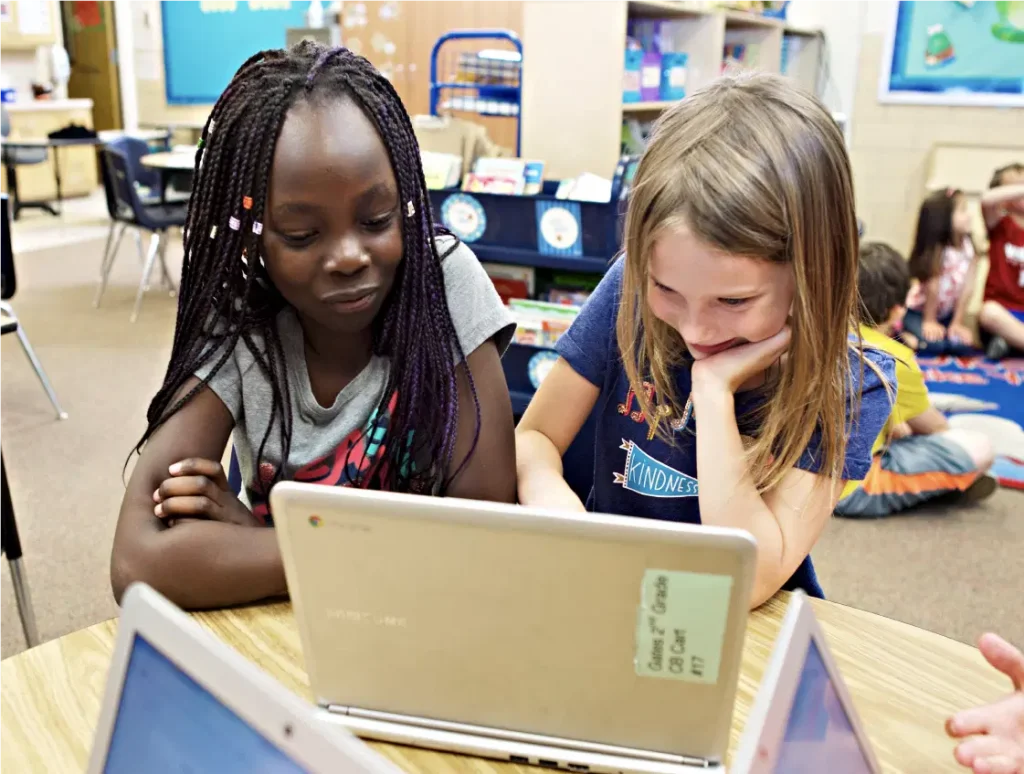
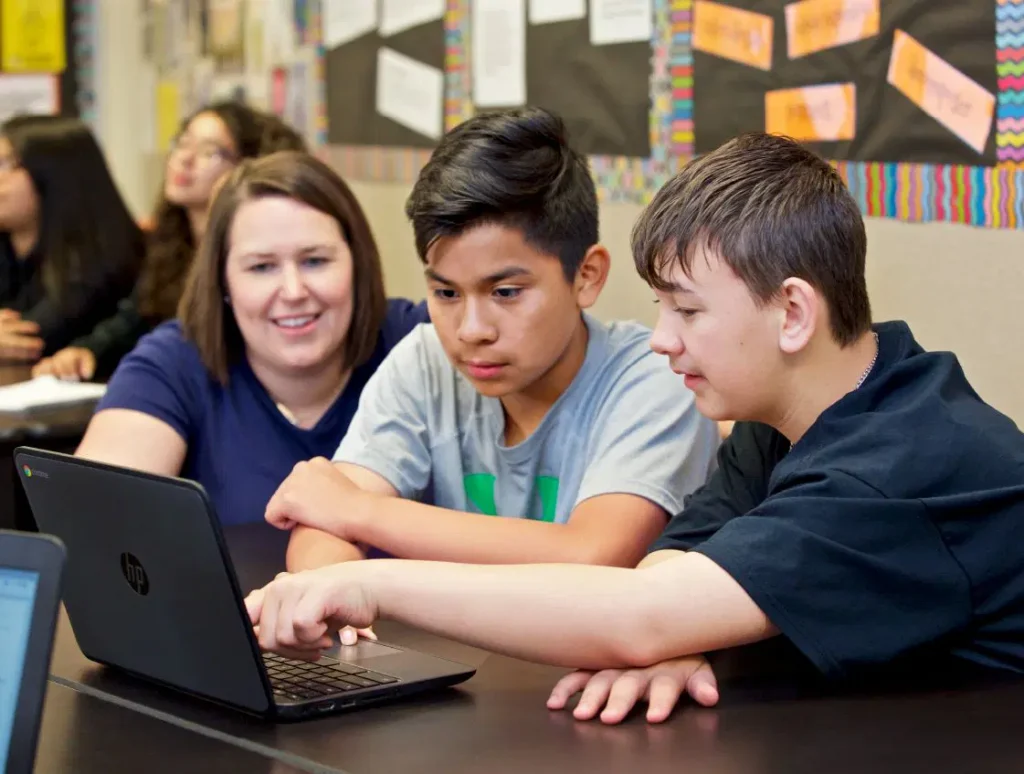
Students engage in hands-on science activities throughout Amplify Science. These photos capture curiosity in action and showcase real students exploring, building, testing, and investigating in Amplify Science classrooms.

Students engage in hands-on activities and experiments with liquids and solids, reading, and preparing materials, enhanced by illustrations and abstract art around the photos, supporting the Amplify Science curriculum.

Grades K–5

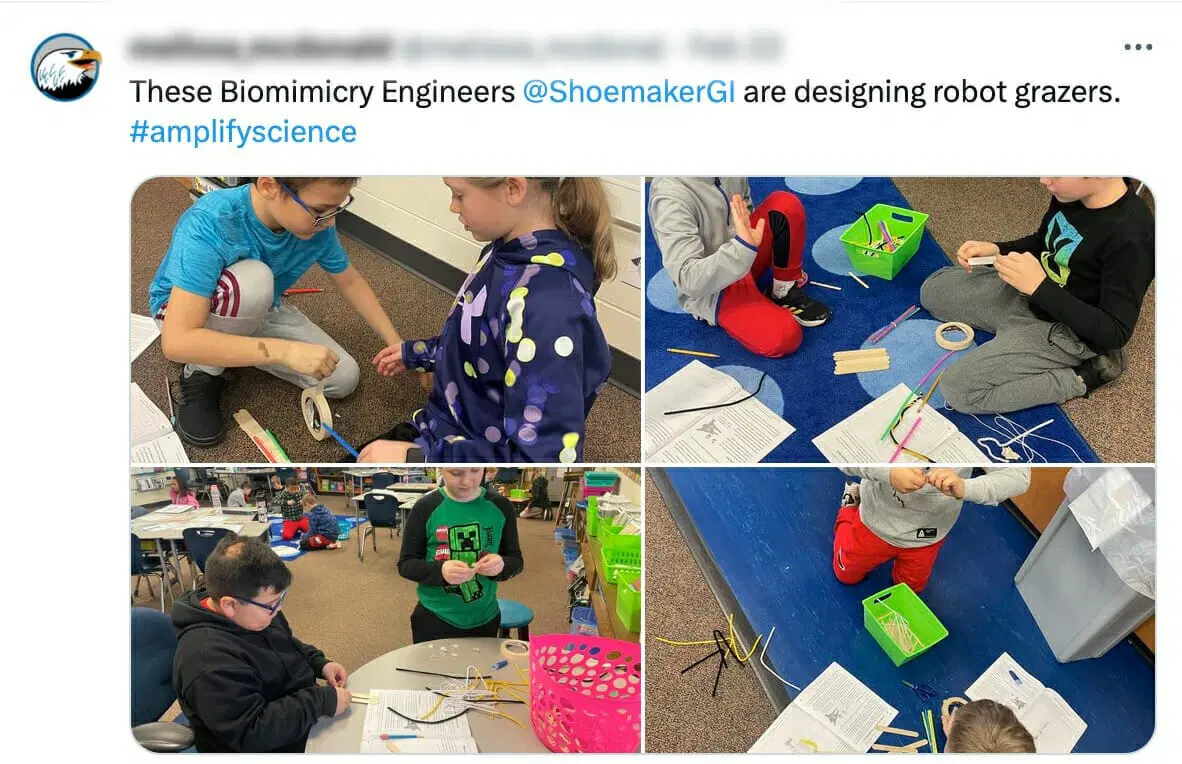
Grade 1: Animal and Plant Defenses
Designing animal defenses during the Animal and Plant Defenses unit
Credit: Veeh Nguyen, Belle Chasse Academy, LA

Grade 1: Light and Sound
Exploring shadows for the Light and Sound unit
Credit: Brittney Gooden, LaSalle Parish, LA

Grade 1: Light and Sound
Investigating vibrations during the Light and Sound unit
Credit: Jennifer Baker, Rapides Parish School Board, LA

Grade 1: Light and Sound
Puppet show for the Light and Sound unit
Credit: Anna Dardar, Rapides Parish School Board, LA

Grade 2: Changing Landforms
Exploring sand samples for the Changing Landforms unit
Credit: Rebecca Steindler O’Brien, P.S. 051 The Elias Howe School, NY

Grade 3: Balancing Forces
Exploring forces with magnet tricks for the Balancing Forces unit
Credit: Maureen Patt, Broad Street Elementary School, NH

Grade 3: Inheritance and Traits
Imaginary clay creatures to investigate traits in real organisms for the Inheritance and Traits unit
Credit: Maribel Ramos, Esperanza Academy Charter School, PA

Grade 3: Inheritance and Traits
Students showing off their knowledge for the Inheritance and Traits unit by creating their own drawings.
Credit: Sandi O’Brien, Parkmead Elementary School, CA

Grade 3: Inheritance and Traits
Determining which offspring belong to which set of parent pigeons based on similar traits for the Inheritance and Traits unit
Credit: Sandi O’Brien, Parkmead Elementary School, CA

Grade 3: Inheritance and Traits
Using celery as a real-life example of how the environment can impact traits, during the Inheritance and Traits unit
Credit: Sandi O’Brien, Parkmead Elementary School, CA

Grade 3: Environments and Survival
Modeling how ruby-throated hummingbirds with different traits meet their need for food during the Environments and Survival unit
Credit: Sandi O’Brien, Parkmead Elementary School, CA

Grade 3: Weather and Climate
Learning the best ways to collect, measure, and compare rainfall data for the Weather and Climate unit
Credit: Sandi O’Brien, Parkmead Elementary School, CA

Grade 4: Energy Conversions
Students created their own simple systems using a solar panel, alligator clips, wires, an LED light, and a buzzer during the Energy Conversions unit
Credit: Sandi O’Brien, Parkmead Elementary School, CA

Grade 4: Energy Conversions
Designing wind turbines during the Energy Conversions unit
Credit: Sandi O’Brien, Parkmead Elementary School, CA

Grade 4: Vision and Light
Planning vision models for the Vision and Light unit
Credit: Maribel Ramos, Esperanza Academy Charter School, PA

Grade 4: Vision and Light
Writing a scientific explanation for the Vision and Light unit
Credit: Chrissy Campenni, Wyoming Area School District, PA

Grade 5: Patterns of Earth and Sky
Investigating daytime and nighttime during the Patterns of Earth and Sky unit
Credit: Sandi O’Brien, Parkmead Elementary School, CA

Grade 5: Patterns of Earth and Sky
Hands-On Flextension: Making artifacts for the Patterns of Earth and Sky unit
Credit: Adriana Barrera, J.W. Bishop Elementary School, TX

Grade 5: Modeling Matter
Flavor ingredients test for the Modeling Matter unit
Credit: Kevin Butters, Grand Island Public Schools, NE

Grade 5: Modeling Matter
Testing ingredients to make salad dressing during the Modeling Matter unit
Credit: Sandi O’Brien, Parkmead Elementary School, CA

Grade 5: Modeling Matter
Discussing solubility and attraction during the Modeling Matter unit
Credit: Cristina Cullen, Glendora Unified School District, CA

Grade 5: The Earth System
Designing freshwater systems for The Earth System unit
Credit: Sandi O’Brien, Parkmead Elementary School, CA

Grade 5: Ecosystem Restoration
Building terrariums for the Ecosystem Restoration unit
Credit: Elizabeth DeBoo, St. Frances Cabrini Academy, MO

Grade 5: Ecosystem Restoration
Leaves and Roots game board from the Ecosystem Restoration unit
Credit: Cyndi Thompson Crouch, Smithville School District, MO

Grade 5: Ecosystem Restoration
Food web models with students’ favorite stuffed animals for the Ecosystem Restoration unit
Credit: Halli Trinker, Boonton Township School District, NJ

Grades 6–8

Grade 6: Microbiome
Drawing scale models of microorganisms for the Microbiome unit
Credit: Elizabeth DeBoo, St. Frances Cabrini Academy, MO

Grade 6: Microbiome
Hands-On Flextension: Investigating microscopic evidence of life for the Microbiome unit
Credit: Elizabeth DeBoo, St. Frances Cabrini Academy, MO

Grade 6: Metabolism
Investigating chemical reactions with water, phenol red, baking soda, and calcium chloride for the Metabolism unit
Credit: Jessica Kruger, Gardner International Magnet School, MI

Grade 6: Metabolism
Introducing the classroom body systems model for the Metabolism unit
Credit: Elizabeth DeBoo, St. Frances Cabrini Academy, MO

Grade 6: Metabolism Engineering Internship
Healthy bars for the Metabolism Engineering Internship
Credit: Elizabeth DeBoo, St. Frances Cabrini Academy, MO

Grade 6: Thermal Energy
Simulating hot and cold water during the Thermal Energy unit
Credit: Whitney Stewart, Rapides Parish School Board, LA

Grade 6: Ocean, Atmosphere, and Climate
Playing the Ocean Currents game for the Ocean, Atmosphere, and Climate unit
Credit: Elizabeth DeBoo, St. Frances Cabrini Academy, MO

Grade 6: Weather Patterns
Modeling a warm air parcel for the Weather Patterns unit
Credit: Elizabeth DeBoo, St. Frances Cabrini Academy, MO

Grade 7: Geology on Mars
The Flowing Water Model for the Geology on Mars unit
Credit: Kim Eich, Anoka-Hennepin Public School District 1, MN

Grade 7: Plate Motion Engineering Internship
Modeling a tsunami wave for Plate Motion Engineering Internship
Credit: Elizabeth DeBoo, St. Frances Cabrini Academy, MO

Grade 7: Chemical Reactions
Investigating substance changes for the Chemical Reactions unit
Credit: Ashlie Beals Arkwright, SCAPA at Bluegrass, KY

Grade 7: Populations and Resources
Conducting a yeast experiment during the Populations and Resources unit
Credit: Elizabeth DeBoo, St. Frances Cabrini Academy, MO

Grade 8: Harnessing Human Energy
Investigating energy systems for the Harnessing Human Energy unit
Credit: Lisa Anglim, Elizabeth Ustach Middle School, CA

Grade 8: Force and Motion
Investigating forces on different objects for the Force and Motion unit
Credit: Elizabeth DeBoo, St. Frances Cabrini Academy, MO

Grade 8: Force and Motion Engineering Internship
Designing an Egg Drop Model during the Force and Motion Engineering Internship
Credit: Elizabeth DeBoo, St. Frances Cabrini Academy, MO

Grade 8: Magnetic Fields
Hands-On Flextension: Exploring electrostatic force for the Magnetic Fields unit
Credit: Melanie Wenger, Lincoln Park Middle School, NJ

Grade 8: Light Waves
Students observing that light can cause materials to heat up, change color, and move for the Light Waves unit
Credit: Gloria Davis, Panama-Buena Vista Unified School District, CA

Grade 8: Light Waves
Students discover what happens to light as it travels for the Light Waves unit
Credit: Gloria Davis, Panama-Buena Vista Unified School District, CA

Grade 8: Light Waves
Students participating in a fishbowl discussion to share observations and evidence for the Light Waves unit
Credit: Gloria Davis, Panama-Buena Vista Unified School District, CA

Grade 8: Earth, Moon, and Sun
Paper model of the Moon’s phases for Earth, Moon, and Sun unit
Credit: Elizabeth DeBoo, St. Frances Cabrini Academy, MO

Grade 8: Evolutionary History
Hands-On Flextension: Reconstructing owl pellet skeletons for the Evolutionary History unit
Credit: Elizabeth DeBoo, St. Frances Cabrini Academy, MO

Inspiring future scientists: Amplify Science success stories

You have the next generation of scientists in your classroom—and we’re here to help! Science students across the country are using Amplify Science to think, read, write, investigate, and argue like scientists.

Why Amplify Science? Educators like you will activate curiosity by asking science students to solve real-world problems. Hear from educators across the country about the benefits of Amplify’s phenomena-based science curriculum.

You’re changing learning outcomes and helping to inspire the next generation of scientists today.

District spotlights

Big Lake, Minnesota

“Teachers really hit the ground running” with Amplify Science, setting off significant improvements for students.

Learn more

Yukon Public Schools, Oklahoma

Students in Yukon Public Schools make strong progress in mastering critical science content with Amplify Science.

Learn More

Lafourche Parish School District, Louisana

Students in Lafourche Parish School District achieve academic success with Amplify Science after prolonged devastation.

Learn More

Grand Island, Nebraska

Grand Island Public Schools made significant gains in science and literacy after implementing Amplify Science.

Learn More

The power of phenomena: Portland, Maine

Discover how students in Portland Public Schools use hands-on investigations to solve real-world problems.

Learn more about Amplify Science’s approach

A week in the life: Denver, Colorado

Learn how middle school educators in Denver Public Schools take on a week of lessons in Amplify Science.

Take a deep dive into an Amplify Science unit

What educators say about Amplify Science

Second-grade teacher

Read more on X

Instructional coach

Read more on X

Instructional lead

Read more on X

School district

Read more on X

Program efficacy

Explore the research behind Amplify Science.

“I would recommend Amplify Science to any district looking for a curriculum that is going to engage their students and their teachers in a compelling phenomena-based curriculum.”

—Brooke Teller

STEM Director, Portland Public Schools

Unlock classroom success with Amplify webinars.

Watch one of our on-demand webinars to learn how educators like you can use Amplify Science in your classroom.

Amplify CKLA

To view this protected page, enter the password below:


Celebrating the 2026 Science of Reading Star Awards finalists

Three ribbons on a blue background: a yellow ribbon with paper symbolizing personalized learning, a blue ribbon with a rocket representing MTSS strategies, and an orange ribbon with a star.

Every day, teachers and education leaders guide students toward a future lit up by literacy. It’s not always easy, especially for those championing shifts toward programs grounded in the Science of Reading.

That’s why we’re thrilled to celebrate the finalists of the 2026 Science of Reading Star Awards! These awards recognize educators, schools, and districts who go above and beyond to make evidence-based instruction a reality.

Empowering students through literacy

The Science of Reading Star Awards shine a beacon on the champions of literacy—the educators putting research into action.

Studies show that systematic phonics instruction leads to significantly higher achievement, particularly for students experiencing reading difficulties. Literacy instruction grounded in the Science of Reading strengthens critical thinking by building the vocabulary and background knowledge students need to make meaning from complex texts.

But shifting to this instruction is about more than swapping programs—it’s about leading change and inspiring others. With these awards, we celebrate the educators and districts whose innovative approach does just that.

Here are this year’s categories and finalists:

  • The District Captain: For the district that exemplifies strong Science of Reading practices across the board
    • Keppel Union School District, CA
    • Traverse City Area Public Schools, MI
    • DeSoto County School District, MS
    • Colton Joint Unified School District, CA
  • The Literacy Legend: For the school that’s seen significant reading gains among their students school-wide when using the Science of Reading
    • Albuquerque Collegiate Charter School, NM
    • Faircrest Memorial Elementary School, OH
    • Grantsburg Elementary School, WI
  • The Background Knowledge Builder: For showing the world that the Science of Reading empowers students with knowledge, context, and vocabulary from elementary through middle school
    • Sara Allen, Spring Hill Unified School District 230, KS
    • Joy Villahermosa, North Slope Borough School District, AL
    • Jesse Muehler, St. John-Emmanuel Lutheran School, IN
  • The Changemaker: For showcasing exemplary Science of Reading routines and practices, and serving as an inspiration to others on the journey
    • Olivia Eastwood, Dedham Public School District, MA
    • Amy Sell, Lower Dauphin School District, PA
    • Rob Murray, Romeo Community School District, MI
  • The Comprehension Champion: For fostering deep understanding and critical thinking by expertly guiding students to make meaning from complex texts, ask thoughtful questions, and connect reading to their world and experiences
    • Kiera Bridley, Webster School District, WI
    • Sandi Bourque, Ascension Parish School District, LA
    • Rebecca Zandbergen, Kamaile Academy Public Charter School, HI
  • The Data Dynamo: For expertly using data to drive instruction within a Multi-Tiered System of Supports framework, identifying student needs with precision, and implementing targeted interventions that accelerate literacy growth for every learner
    • ZaTaya Rivenbark, Charleston County School District, SC
    • Yaneth Acosta, Buncombe County School District, NC
    • Diana Van Osdell, Northwestern School Corporation, IN
    • Kelly Scheurich, Stratford Public Schools, CT
  • The Language Luminary: For outstanding success in developing the skills and strengths of multilingual/English learners
    • Melissa García, Passaic Public Schools, NJ
    • Maria Monsivais, Cicero School District 99, IL
    • Yessenia Viera, Carthage R9 School District, MO
    • Jennifer Gomez Vallejos, Buncombe County School District, NC
  • The Science of Reading Rookie: For a teacher in their first three years of teaching already making strides with the Science of Reading
    • Johanna Vargas, Grand Island Public Schools, NE
    • Christian Watkins, Cornerstone Prep Denver, TN
    • Marissa Riley, Urbana School District 116, IL
  • The Writing Whiz: For integrating writing instruction with the Science of Reading, cultivating articulate and confident writers through innovative and effective practices
    • Joandra Mendoza, Rome City School District, GA
    • Jennifer Csolkovits, Walton-Verona Independent School District, KY
    • Caitlyn Bacom Dominguez, Cambridge Public School District, MA
    • William Strunk, South Bend Community School Corporation, IN

Achieve next-level literacy growth with a cohesive Science of Reading suite.

The Science of Reading programs in Amplify’s early literacy suite empower you to meet the dynamic needs of every student learning to read. Discover the programs that best fit your literacy priorities and how they work together for a seamless teaching and learning environment.

“There were other programs that claimed to be Science of Reading, but no other vendor provided the suite of products together. So from our perspective, [Amplify’s literacy suite] met our needs because it aligned and provided us the best suite of products. Hands down. We couldn’t find anybody else who touched that.”

Nicole Peterson, Director, PreK–8 Education

Sampson County Schools, North Carolina

A true Science of Reading early literacy suite for grades K–5

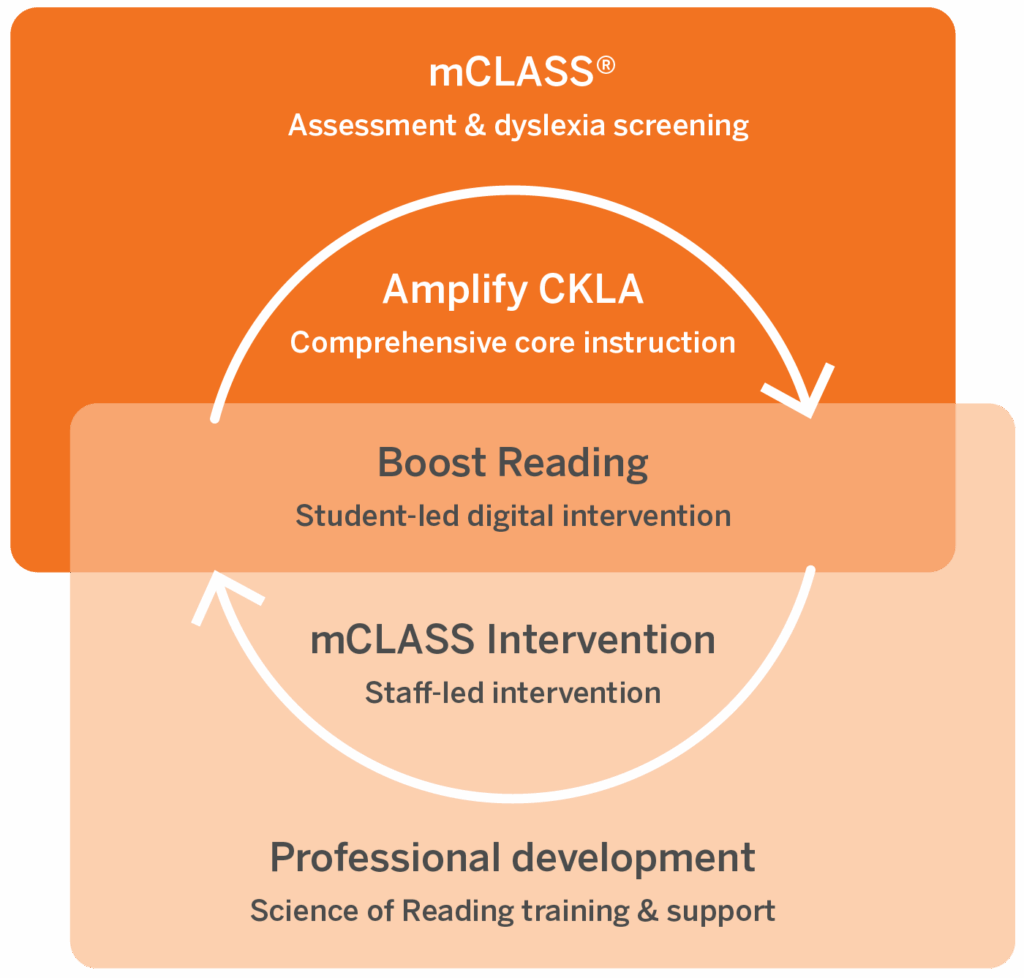
Amplify has combined the critical elements of a Science of Reading system of assessment, core curriculum, personalized learning, and intervention. Based on 20 years of experience with the Science of Reading, this complete system saves you time and aligns your literacy practices.

  • Assess with mCLASS®: A universal and dyslexia screener, powered by DIBELS® 8th Edition
  • Instruct with Amplify Core Knowledge Language Arts (CKLA)®: Core curriculum to build foundational skills and knowledge
  • Support with Boost Reading: Student-led digital intervention to extend and reinforce core instruction
  • Intervene with mCLASS Intervention: Staff-led Tier 2 and 3 intervention for intensive support
  • Science of Reading professional development: Amplify training, events, and podcasts to strengthen instruction

mCLASS assessment

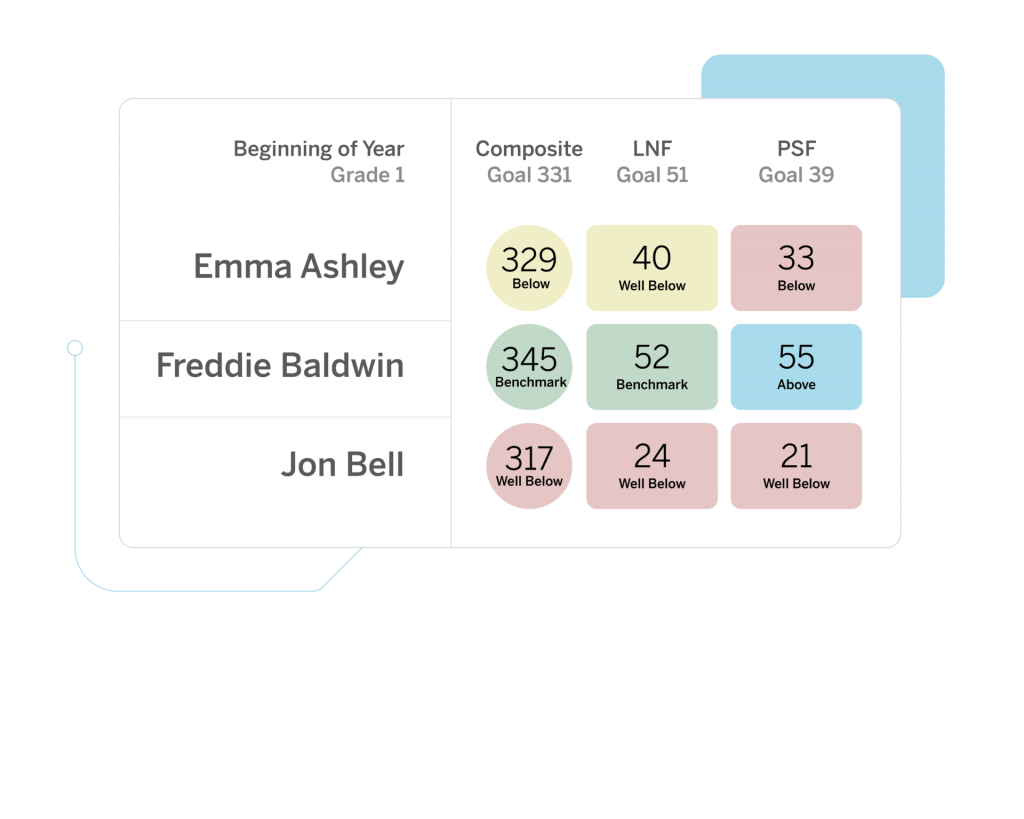
Powered by DIBELS 8th Edition, mCLASS is a universal and dyslexia screener, plus a progress monitoring tool, all in one. With this comprehensive tool, you have precise one-minute measures delivered one-on-one that give you the data you can trust to make informed instructional decisions.

Amplify CKLA core curriculum

mCLASS data informs instructional needs and identifies whole-class and small-group areas of focus.

mCLASS can replace Amplify CKLA’s benchmark assessments in K–2 and can identify appropriate Amplify CKLA instruction for small groups.

Boost Reading digital intervention

Boost Reading and mCLASS integrate to provide adaptive, student-led practice in targeted skill areas. 

mCLASS data automatically places students at the appropriate Boost Reading starting point.

You can track student progress with side-by-side mCLASS and Boost Reading growth data.

mCLASS Intervention

mCLASS assessment identifies risk early on and places students in and out of mCLASS Intervention groups.

mCLASS progress monitoring data creates intervention groups and daily lesson plans for 10-day cycles.

Amplify CKLA core curriculum

Amplify Core Knowledge Language Arts (CKLA) provides explicit, systematic foundational skills instruction combined with intentional knowledge building. Rich content spans topics in history, science, literature, and the arts to build deep background knowledge.

mCLASS assessment

Amplify CKLA instructs in the same critical literacy skills measured by mCLASS, aligning your assessment and core curriculum.

mCLASS can replace Amplify CKLA’s benchmark assessments in K–2 and can identify appropriate Amplify CKLA instruction for small groups.

Boost Reading digital intervention

Boost Reading reinforces skills through a shared scope and sequence with Amplify CKLA.

Instruction adjusts, providing differentiated skill development where needed and advancing students to the next level.

Dynamic growth reporting offers insight into how Amplify CKLA skills are developing over time.

mCLASS Intervention

mCLASS Intervention allows you to support Tier 1 instruction to get at-risk readers on track.

mCLASS Intervention lesson plans extend skills learned in Amplify CKLA curriculum.

Phonological awareness and phonics focus complements Amplify CKLA’s Skills Strand.

Boost Reading digital intervention

Boost Reading is a digital intervention program that adapts to every learner, reinforcing core instruction while providing support for remediation and intervention. The program delivers differentiated, student-led practice and clear growth reporting data, helping you understand how students are progressing at a glance.

mCLASS assessment

Boost Reading and mCLASS integrate to provide adaptive, student-led practice in targeted skill areas.

mCLASS data automatically places students at the appropriate Boost Reading starting point.

You can track student progress with side-by-side mCLASS and Boost Reading growth data.

Amplify CKLA core curriculum

Boost Reading reinforces skills through a shared scope and sequence with Amplify CKLA.

Instruction adjusts, providing differentiated skill development where needed and advancing students to the next level.

Advanced growth reporting offers insight into how Amplify CKLA skills are developing over time.

mCLASS Intervention

Boost Reading and mCLASS Intervention provide a complete system for intervention support.

Use mCLASS Intervention for staff-led small groups and Boost Reading for student-led digital intervention.

Together, they provide continuous intervention support across all tiers.

mCLASS Intervention

mCLASS Intervention is a Tier 2 and 3 targeted, staff-led intervention program made easy with automatic data-driven grouping and sequenced explicit, systematic skills lesson plans to support at-risk students.

mCLASS assessment

mCLASS assessment identifies risk early on and places students in and out of mCLASS intervention groups.

mCLASS benchmark and progress monitoring data creates groups and daily lesson plans for 10-day cycles.

Amplify CKLA core curriculum

mCLASS Intervention allows you to support Tier 1 instruction to get at-risk readers on track.

mCLASS Intervention lesson plans extend skills learned in Amplify CKLA instruction.

Phonological awareness and phonics focus complements Amplify CKLA’s Skills Strand.

Boost Reading digital intervention

Boost Reading and mCLASS Intervention provide a complete system for intervention support.

Use mCLASS Intervention for staff-led small groups and Boost Reading for student-led digital intervention.

Together, they provide continuous intervention support across all tiers.

A 20% boost in literacy rates:

Our Science of Reading programs are helping Aldine Independent School District in Texas rewrite its literacy narrative.

Read more

The cohesive early literacy system teachers and students deserve

Support your MTSS and RTI models

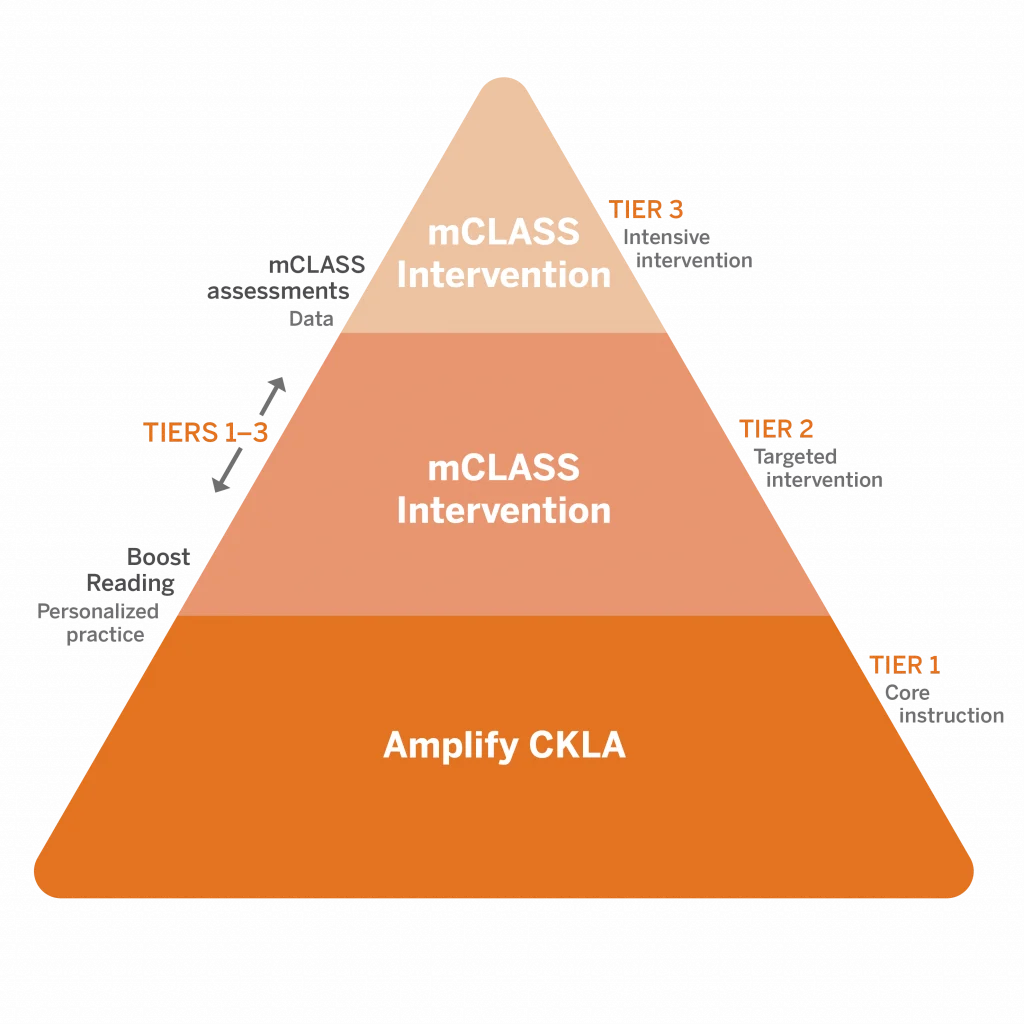
A strong Multi-Tiered System of Supports (MTSS) enables you to make data-based decisions and confidently meet every student’s needs. Our integrated early literacy suite includes universal and dyslexia screening, core curriculum, personalized learning, intervention, and ongoing professional development.

Each program in the suite is directly aligned to the Response to Intervention (RTI) model of tiered instruction.

Aligned resources that do away with piecemealing

A literacy ecosystem built on the same Science of Reading principles and pedagogical foundation ensures that students experience a cohesive and reinforced literacy journey. Our programs allow you to support all students without cobbling together additional resources to fill in the gaps.

They follow an explicit and systematic structure, build knowledge, and assess and instruct on all of the foundational skills essential to literacy development.

The data you need to make informed decisions

Our universal and dyslexia screening data is predictive and reliable, and it’s aligned to the entire instructional system. It enables you to make informed decisions for whole-group, small-group, and individual instruction, as well as resource allocation at the school and district level.

Amplify’s early literacy programs support you wherever you are in the Science of Reading journey. Download our Science of Reading roadmap to help you determine where to start.

Download now

Our early literacy programs in action

Case study: Aldine Independent School District, Texas

Implementing Amplify CKLA core curriculum, Boost Reading personalized learning, and mCLASS assessment boosted reading proficiency from 30% to 50%

Read more

Case study: Allen Parish School District, Louisiana

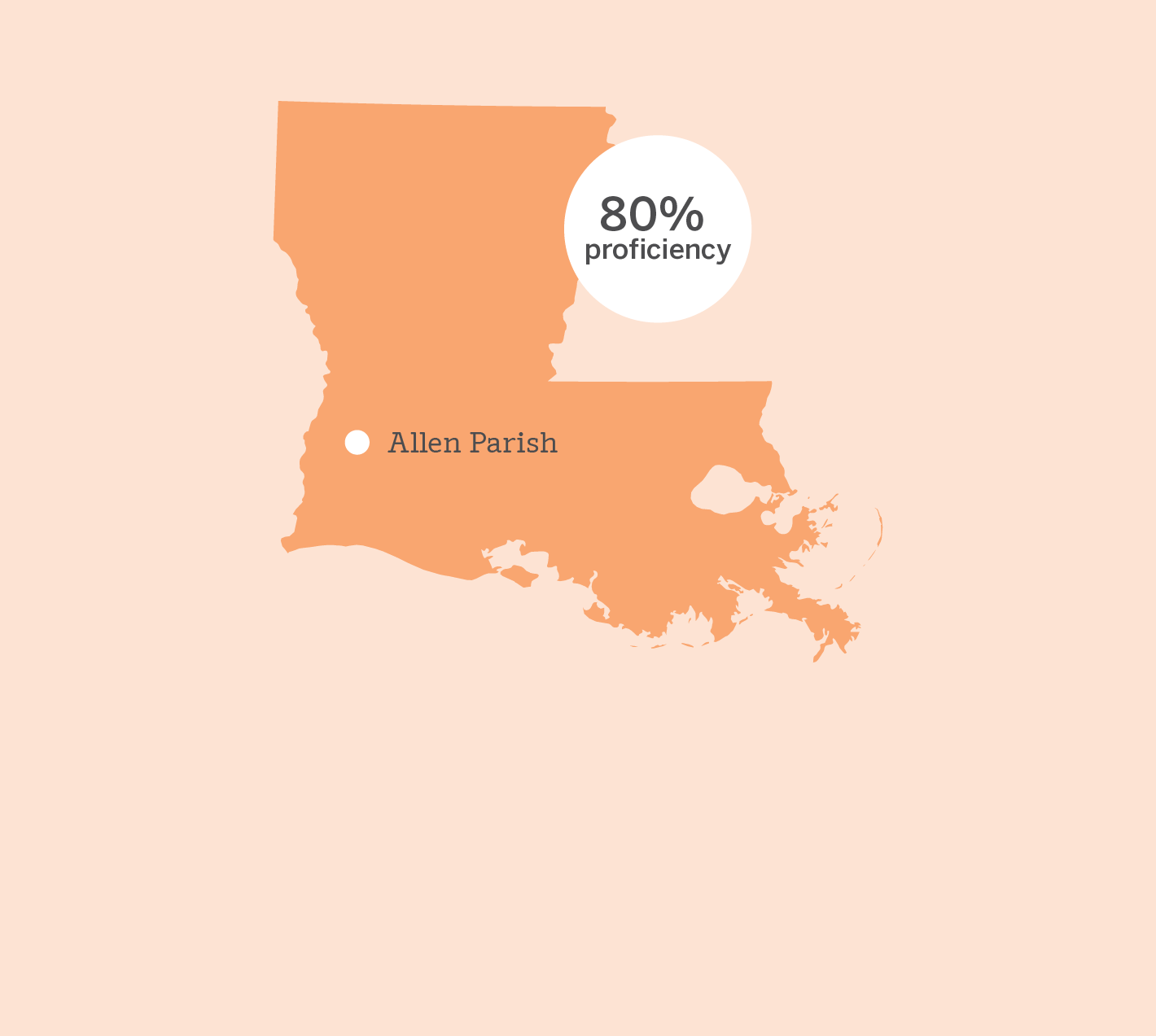
After just one year of integrating mCLASS assessment and Amplify CKLA core curriculum, Grade 1 student reading proficiency rose from 58% to 80% across eleven Title 1 schools

Read more

Case study: West Jefferson Hills School District, Pennsylvania

Students reached the 98th percentile among their peers nationwide after implementing Amplify CKLA core curriculum, Boost Reading personalized learning, and mCLASS assessment. The shift not only inspired students in their literacy journey, but also made teachers feel more confident in teaching literacy.

Read more

Science of Reading resources

Successfully adopting new Science of Reading literacy programs will change lives. We provide extensive resources, professional learning, and complementary events and webinars so you can begin using your new programs with fidelity.

Science of Reading essentials

Champion research-based literacy programs in your classroom with our extensive Science of Reading resources.

Science of Writing: A Primer

Unlock writing mastery! Explore our new primer on literacy research and the Science of Writing.

Portada de "Science of Reading: The Podcast" con un libro abierto, formas coloridas y la palabra "Amplify".

Cultivate lifelong learning

Gain useful knowledge with our top-rated podcast.

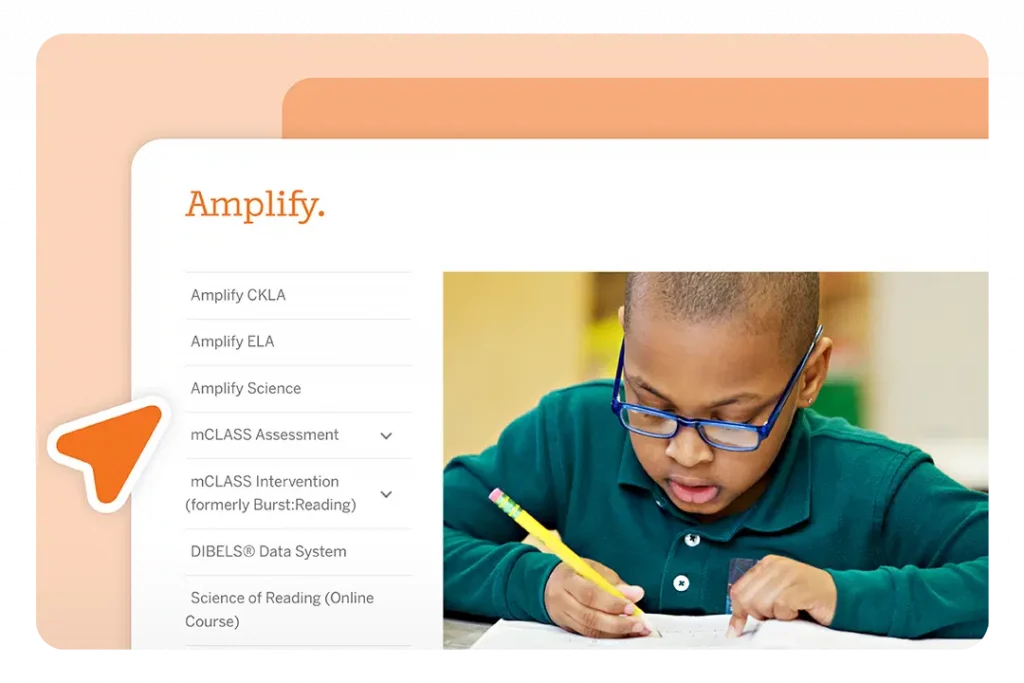
Niño con camisa verde escribiendo con un lápiz amarillo; barra lateral que muestra recursos educativos como Amplify CKLA y Amplify Science.

Staff development services

Invest in a professional development plan.

“[We wanted] something that moved kids beyond the traditional low-level type of thinking about literacy, reading, and engaging with text. The choice of Amplify became clear for our district. The tremendous professional support from Amplify, matched with the commitment of our people. We’re finally seeing something different, and the results are encouraging.”

Matthew Patterson, Ph.D., Assistant Superintendent

West Jefferson Hills School District , Pennsylvania

Passion for reading in Sampson County, NC

Mia and Grade 2 teacher Jenny Denning explored the power of the Amplify early literacy suite together.

Inspiring confidence in Tennessee

Kaleb and Assistant Principal Casey Price tackled reading from the ground up with Amplify’s early literacy programs.

Real results, rooted in the Science of Reading: Amplify success stories

The Science of Reading is all about the evidence we have of how our brains learn to read. We also have evidence that it works—not just from science, but from real Amplify educators using it to transform their classrooms every day.

Learn More

District spotlights

Oak Harbor, Washington

Kindergarten reading proficiency improved by 19% and Grade 1 by 31% in three years.

Read More

Aldine Independent School District, Texas

Amplify’s early literacy suite boosts reading proficiency from 30% to 50%.

Read More

Allen Parish School District, Louisiana

After just one year of using Amplify CKLA, student reading proficiency rose from 58% to 80%.

Read more

West Jefferson Hills School District, Pennsylvania

Students reached the 98th percentile among their peers nationwide after implementing Amplify.

Read More

Portrait of a woman with long dark hair, smiling warmly, wearing a black top. She is posed against a neutral, softly blurred background, embodying the confidence and wisdom often seen in educators passionate about early literacy and the science of reading curriculum.
“When we were looking at the products… no other vendor provided the suite of products together. And that is what we were looking for… So from our perspective, [Amplify’s literacy suite] met our needs because it aligned and provided us the best suite of products. And hands down, we couldn’t find anybody else who touched that.”

—Nicole Peterson, PreK-8 Director

Sampson County Schools, North Carolina

Amplify + North Carolina: The power of a Science of Reading curriculum

Discover how Sampson County, North Carolina, schools use Amplify’s early literacy suite based on the Science of Reading to unlock the magic of reading for their students—and ensure results.

Sparking literacy success in Tennessee

Learn how Tennessee uses Amplify programs to change lives and create new futures for kids every single day.

Explore More

Customer voices

Saving time with Amplify

Michelle Arnett, New Glarus School District

Watch Now

Amplify CKLA Skills strand

Martyna Stelter, Parkview School District

Watch Now

Amplify CKLA as a comprehensive solution

Laura Eichner, New Glarus School District

Watch Now

Amplify CKLA knowledge-building

Erica Chapman and Jena Lipnick, Onslow County Schools

Watch Now

On-demand roundtable discussions

Learn how you can start making the shift to improved literacy instruction with the Science of Reading right now by hearing from educators across the country who used Amplify programs and saw incredible results.

Elementary ELA Educator Roundtable

Watch now

Supplemental Reading Educator Roundtable

Watch now

Assessment & Intervention Educator Roundtable

Watch now

Middle School ELA Educator Roundtable

Watch now

Amplify Science of Reading Star Award Winners Panel—K–8 Literacy and Reading Supplemental Program

Watch now

The Importance of Dual Language Assessment & How to Deliver It

Watch now

Amplify CKLA Knowledge Building—K–5 Core Knowledge Language Arts Curriculum

Watch now

Boost Reading Customer Panel—K–5 Personalized Reading Curriculum and Program

Watch now

Amplify CKLA Customer Panel—K–5 Core Knowledge Language Arts Curriculum

Watch now

mCLASS Customer Panel—K–6 Literacy Systems and Support

Watch now

Achieve life-changing results with the
Science of Reading—we’ll show you how.

Watching students learn to read is magic. But knowing how they get there? That’s science.

Making the shift to the Science of Reading is commendable, but it is no small feat. Our extensive experience, field-tested resources, and stories of literacy success will help you deliver the true transformation you need in your district—and see the results your students deserve.

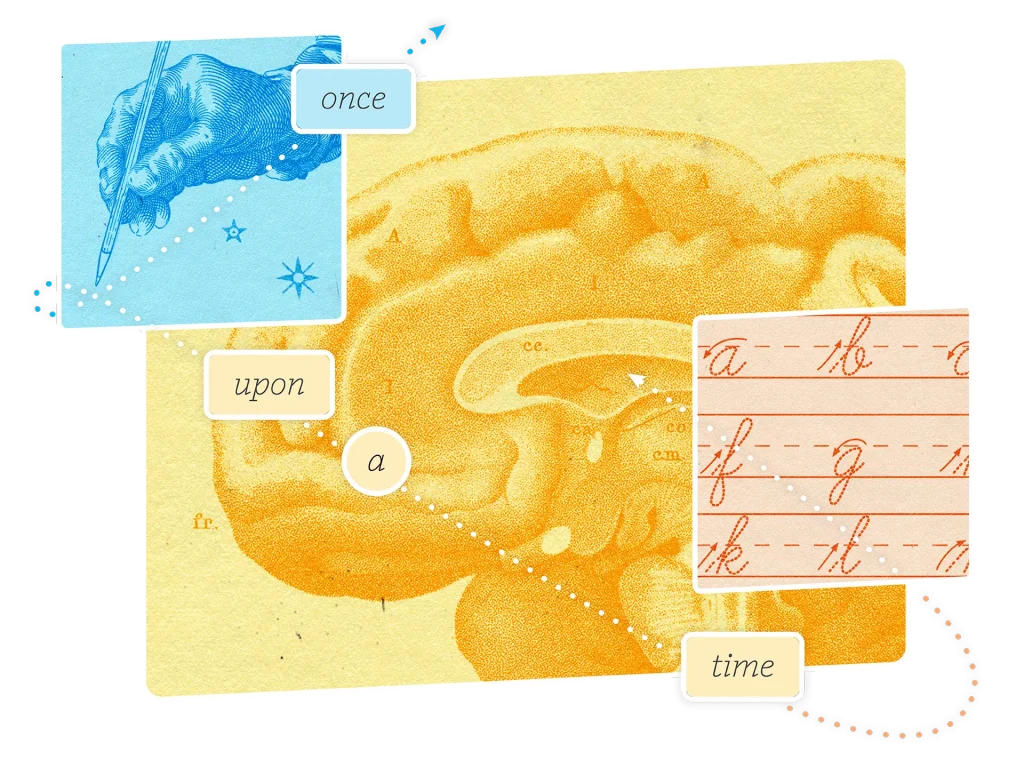
An illustration of a brain with superimposed images: handwriting, cursive letters, and the words "once upon a time" arranged in a sequence.

Exploring the Science of Writing

Discover the captivating journey of writing with our new guide, Science of Writing: A Primer. This resource delves into the history of writing, highlights the crucial link between combining reading and writing instruction, and reveals why handwriting still matters in today’s digital world. Designed to complement CKLA 3rd Edition and our other literacy tools, this primer is set to become a trusted companion, just like those before it.

MTSS Playbook

Explore our new ebook designed to help you build an evidence-based Multi-Tiered System of Supports (MTSS) tailored to diverse literacy goals. This resource provides actionable steps and essential questions to fortify your MTSS with the Science of Reading, enhancing its effectiveness and achieving better outcomes for your students.

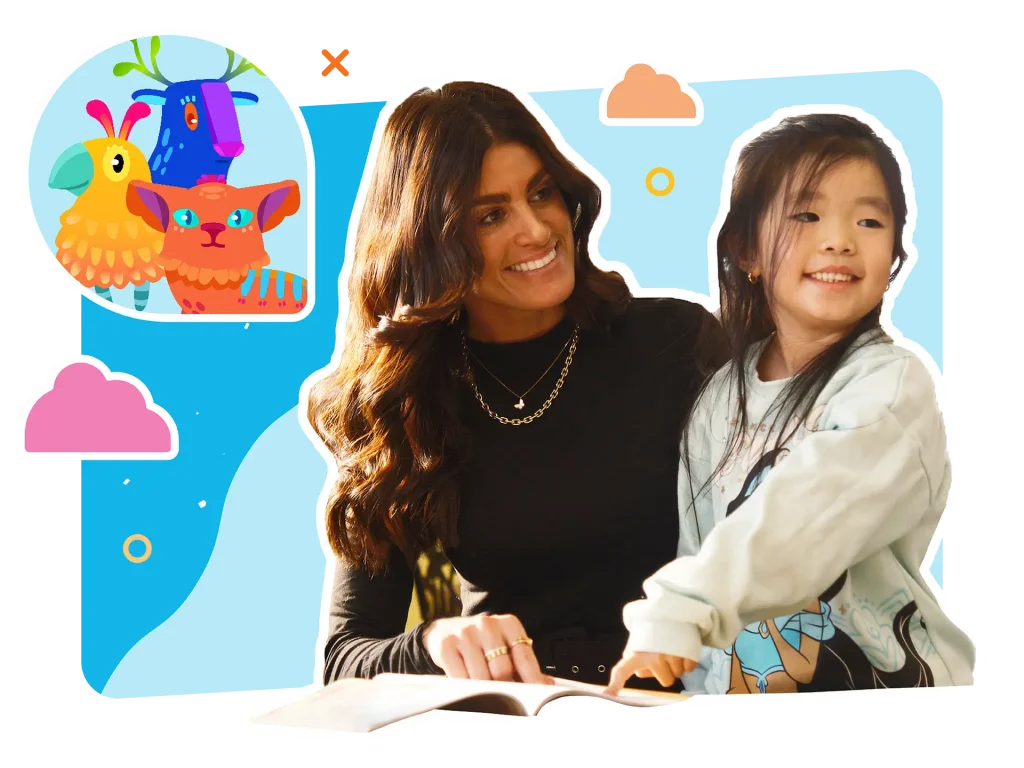
Woman and child smiling while reading a book, with colorful cartoon animals in the background.
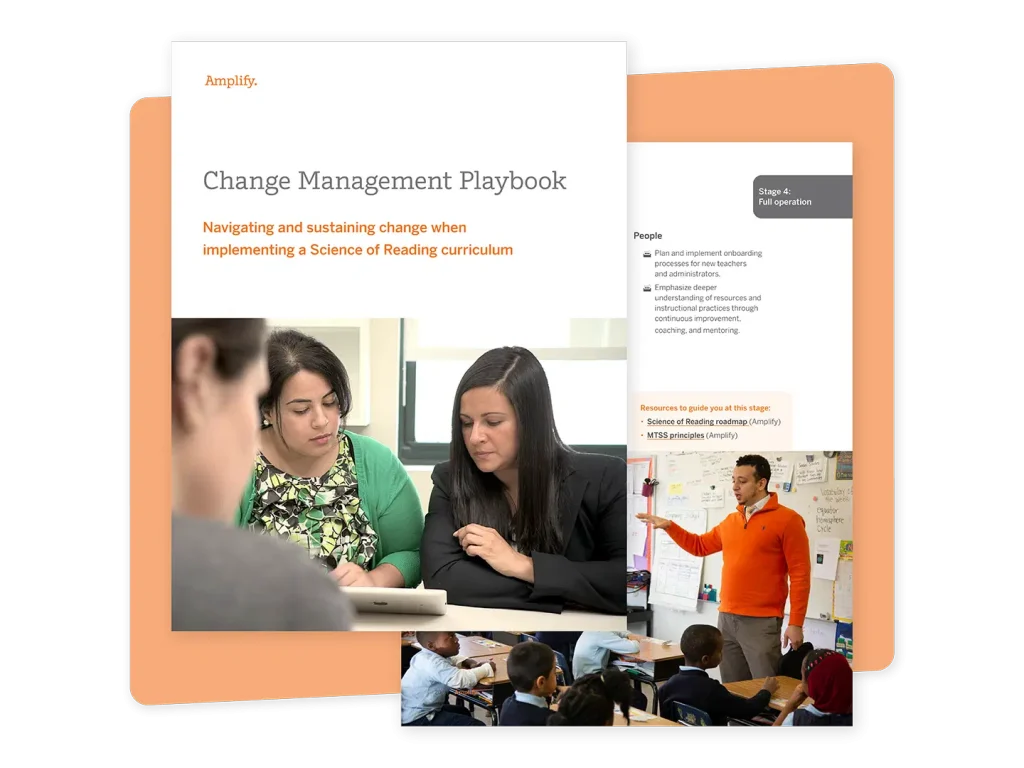
Cover of a "Change Management Playbook" guide, featuring two women reviewing a tablet and a teacher in an orange sweater instructing a classroom—highlighting K–5 literacy instruction and effective science of reading resources.

The science of teaching reading, coupled with the art of change management

Shifting to the Science of Reading isn’t just an overnight curriculum swap—it’s a profound culture change with multiple stages and stakeholders. We’ve helped educators succeed in that shift for years, and now we’re here to guide you every step of the way. Through each stage of implementation, our Change Management Playbook will help you mobilize your practice, process, and people to make the shift that matters most.

What is the Science of Reading?

Learning to read is not innate, but it can be taught—and science tells us how. The Science of Reading refers to the vast body of growing research that deconstructs how children learn to read, and the instructional practices that can get them there.

Reading fluency requires a complex combination of skills, taught explicitly and systematically. There are two main frameworks that can help us break it all down: The Simple View of Reading and Scarborough’s Rope.

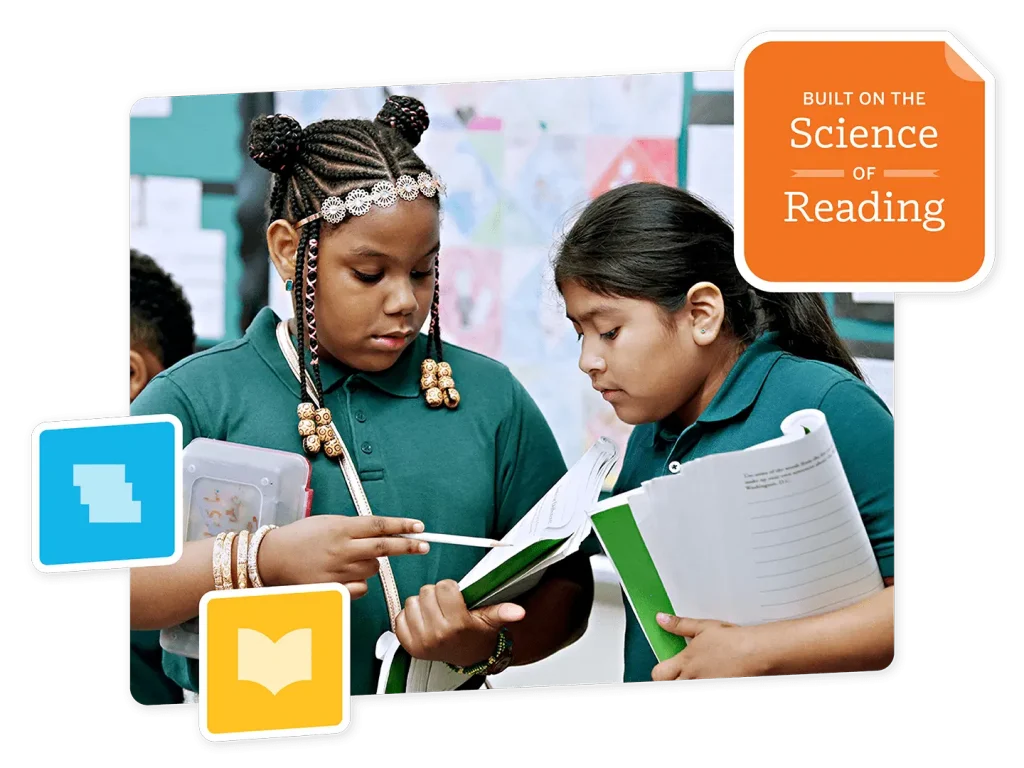
Two schoolgirls in green uniforms look at a notebook together in a classroom. Science of Reading and book icons are overlaid on the image.
Cover of a guide titled "Science of Reading: A New Teacher’s Guide" by Amplify, featuring a teacher with two children and educational icons.

Science of Reading starter kit for new teachers

New to the classroom? We’ve compiled a collection of resources and insights about the Science of Reading to help you acquire more knowledge and build confidence. You’ll find the tools, information, and support you need to foster successful readers and writers in your classroom this school year—and beyond.

The Simple View of Reading

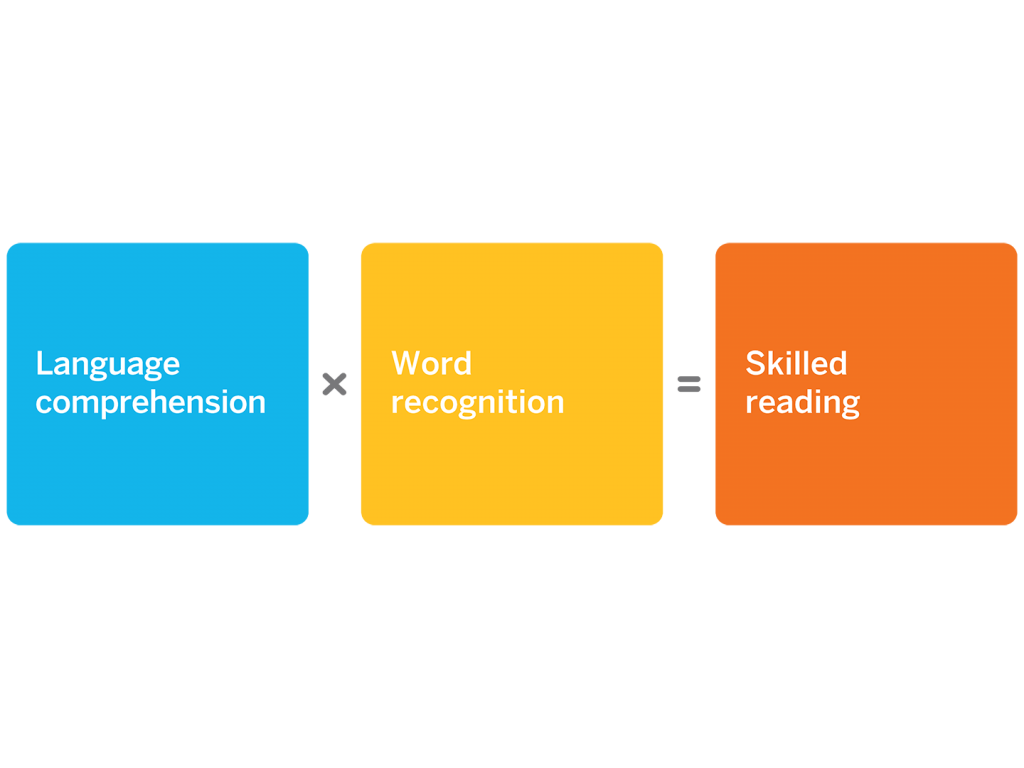
The Simple View of Reading, formulated by Philip Gough and William Tunmer in 1986, is the theory that proficient reading requires two main components:

Flowchart illustrating skilled reading as the product of language comprehension and word recognition, grounded in the science of reading.
A diagram with intertwining orange, yellow, and blue lines converging and diverging, illustrating interconnected pathways on a black background—reflecting the dynamic flow of ideas found in Core Knowledge or Amplify CKLA curricula.

The Reading Rope

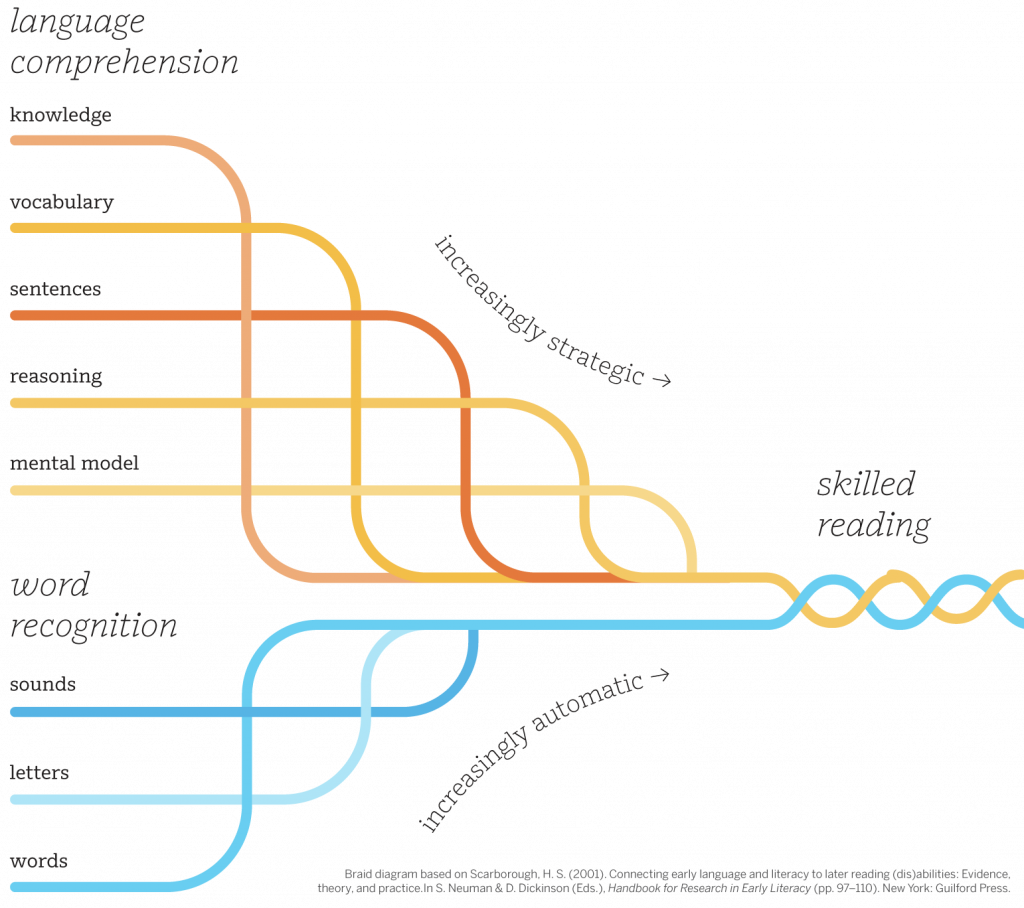
The Reading Rope, developed by Dr. Hollis Scarborough in 2001, helps us visualize the strands of specific skills and instruction that support students in decoding and comprehension.

Professional development to support your shift to the Science of Reading

Ignite literacy transformation with Amplify’s Science of Reading: The Learning Lab—an inspiring three-course series.

  • Dive into a comprehensive overview with course one, Foundations to the Science of Reading.
  • Examine assessments and their roles in course two, Advanced Topics in the Science of Reading: Assessment and Reading Difficulties.
  • Apply effective literacy instruction to your classroom in course three, Applied Structured Literacy.

Crafted to the standards of the International Dyslexia Association, this self-paced online series provides unparalleled, research-backed instruction. Explore enriching activities, curated resources, and learn from Susan Lambert, chief academic officer and host of Science of Reading: The Podcast.

The best investment you can make is in knowledge, and the returns are priceless.

Illustration of a webpage titled "Science of Reading: The Learning Lab series" with icons of a book, paper, and other subjects below the title.

Learn more about the online courses or request a quote!

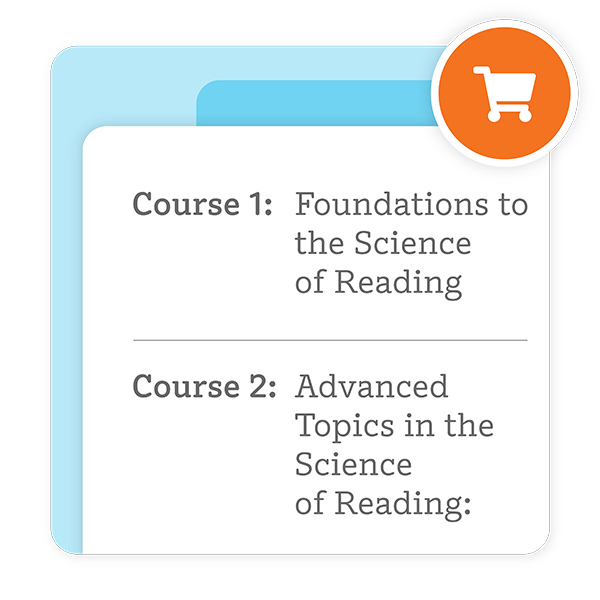
Two labeled course cards: "Course 1: Foundations to the Science of Reading" and "Course 2: Advanced Topics in the Science of Reading," with a shopping cart icon in the top right.

Tap into individual online course seats.

Science of Reading podcast cover image open book

Science of Reading: The Podcast

Tune in to hear the latest insights and trends in early reading, right from leading literacy experts and practitioners.

Listen now

Build your background knowledge of the Science of Reading.

Our Science of Reading principles and primers explain the essentials: what the Science of Reading is, how it works, and why it matters for every student.

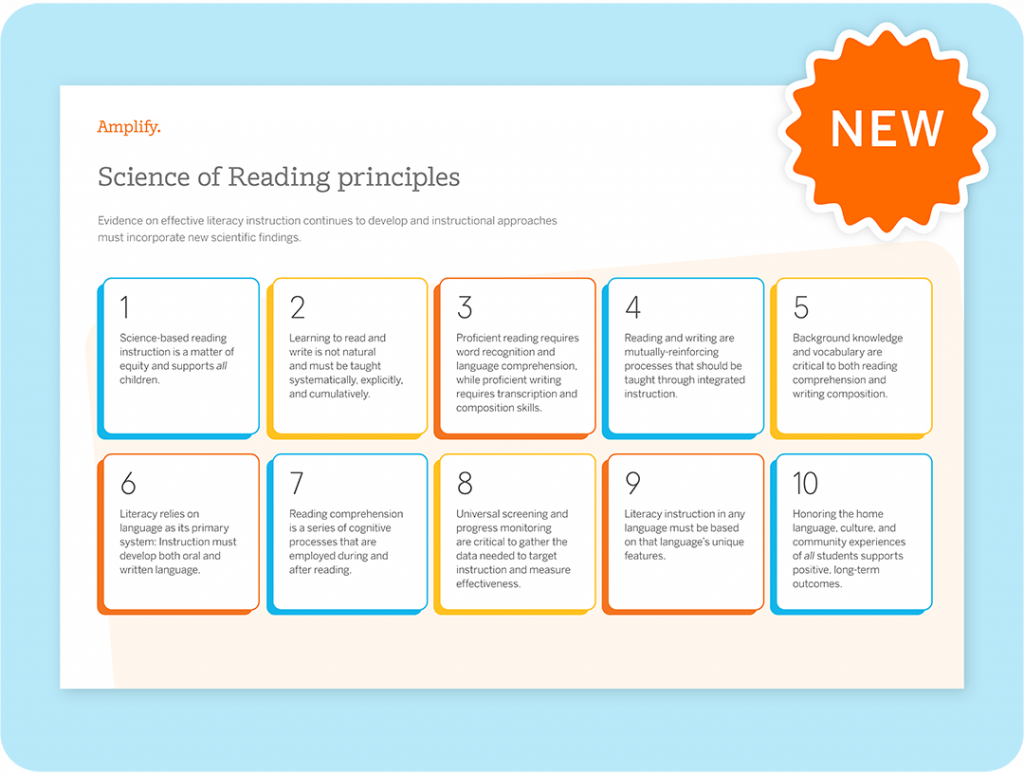
An infographic titled "Science of Reading principles" showcases ten evidence-based K–5 literacy instruction strategies, informed by interdisciplinary research, in color-coded boxes with a "NEW" badge in the top right corner.

New Science of Reading principles placemat!

Decades of research inform the updated Science of Reading principles placemat. Use these insights as a guide for evidence-based literacy instruction—perfect for committed educators aiming to achieve real improvements in student reading outcomes.

Download principles

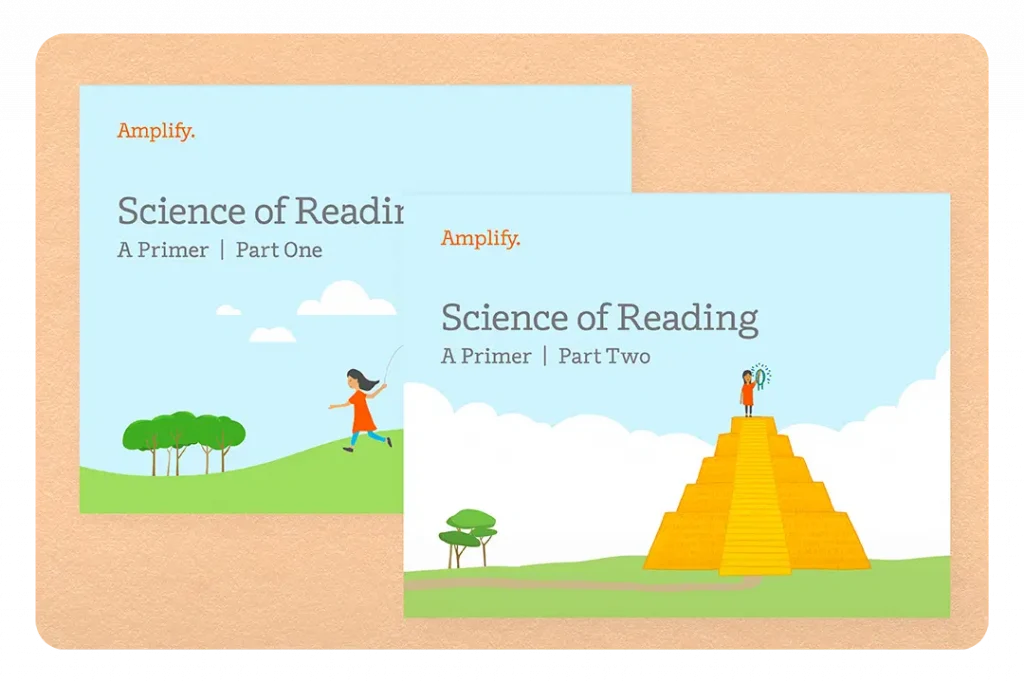
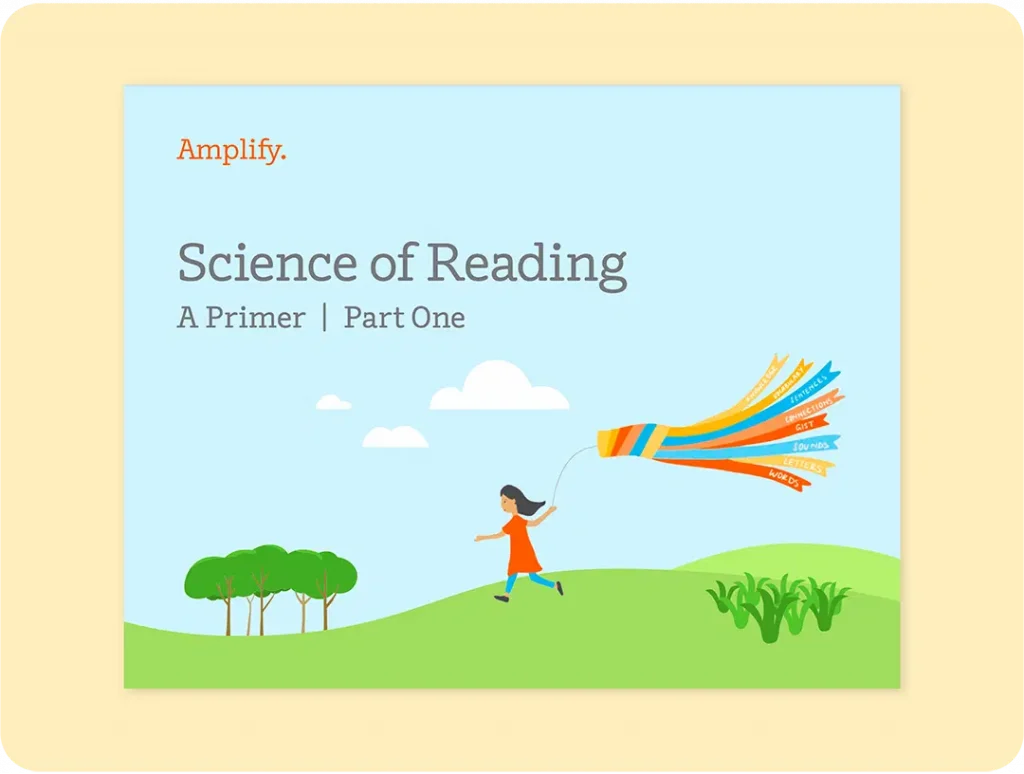
An illustration of a girl running with a colorful kite, with text reading "Science of Reading: A Primer | Part One" and "Amplify" in the top left corner, highlighting K–5 literacy instruction.

Science of Reading
A Primer: Part 1

In part 1 of our definitive Science of Reading primer, we discuss literacy as a societal goal, walk you through how the brain learns to decode and comprehend text, and present the patterns that top-performing schools and districts follow to achieve early reading success.

Download primer 1

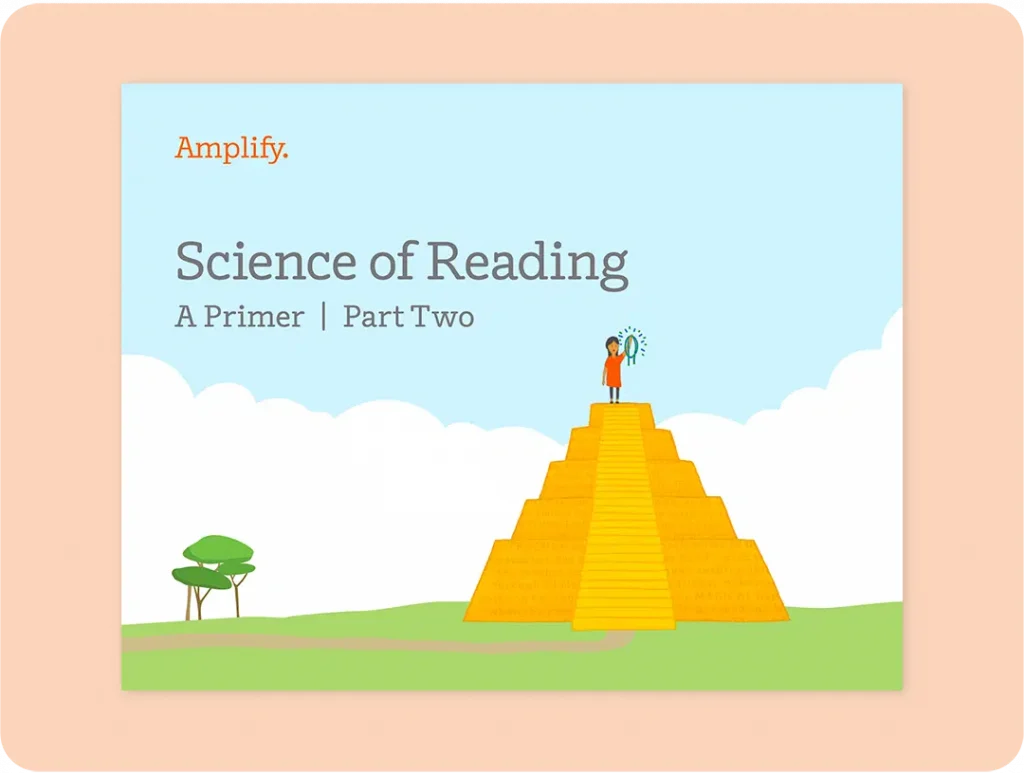
Illustration of two people atop a yellow pyramid, with text reading "Science of Reading: A Primer | Part Two"—an engaging look at K–5 literacy instruction. "Amplify" appears in the top left corner.

Science of Reading
A Primer: Part 2

In part 2 of our Science of Reading primer, we establish the importance of prior knowledge for comprehension, lay out the process of micro-comprehension, and demonstrate how literacy skills build on and accelerate themselves.

Download primer 2

A woman with long dark hair smiles in front of a plain background, reflecting the joy she finds in interdisciplinary research. She is wearing a dark green top and earrings.
“If you’re looking for a Science of Reading training, the [Science of Reading: Foundations to the Science of Reading] online course is great. It helps you build background knowledge on learning how students learn how to read, and then it goes deeper and it gives you strategies that correlate with those findings that you can implement right into your classroom.”

—Allie Appel, Instructional Coach

School District of Arcadia, WI

Why undertake this crucial change?

When we bring proven methods based on the Science of Reading into schools, we make sure kids are learning to read and help teachers and caregivers support a culture of reading. Together, we can solve the reading crisis and make literacy a reality everywhere.

You’ll change lives with literacy.

According to the National Assessment of Educational Progress (NAEP), only 35% of fourth graders in the United States are proficient in reading. But schools using a Science of Reading approach have seen significant improvements in literacy rates. Using research-based methods, educators can help give all children the chance to become successful readers.

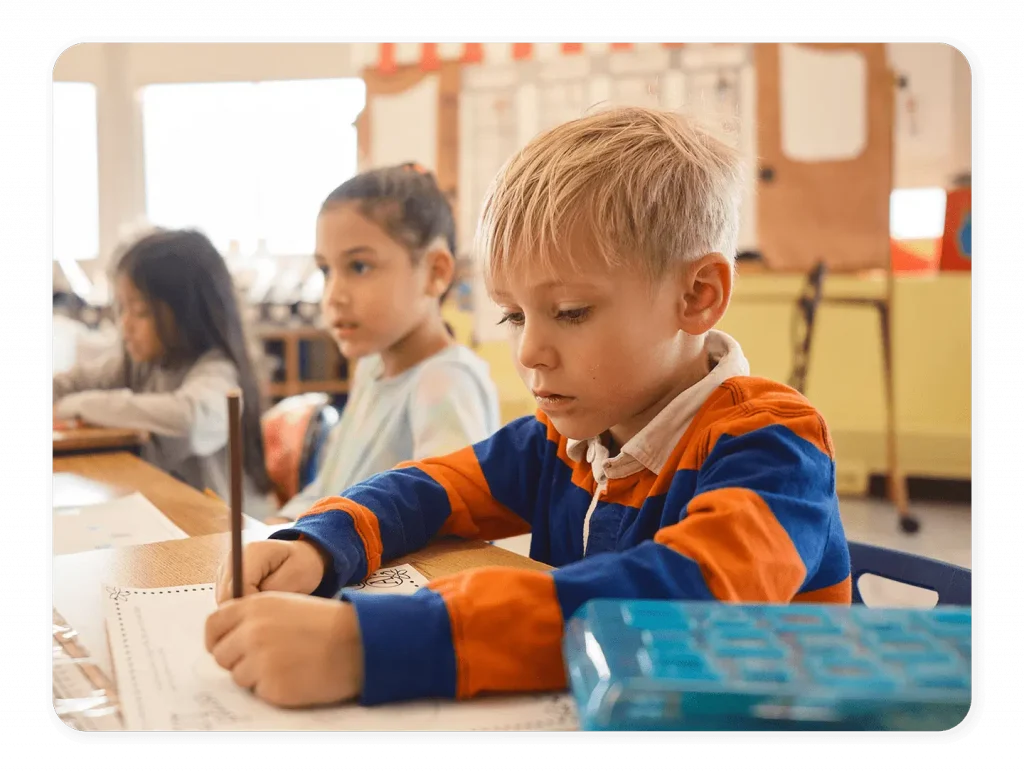
Young boy in a classroom sits at a desk and writes on a worksheet, with other children working at nearby desks in the background.
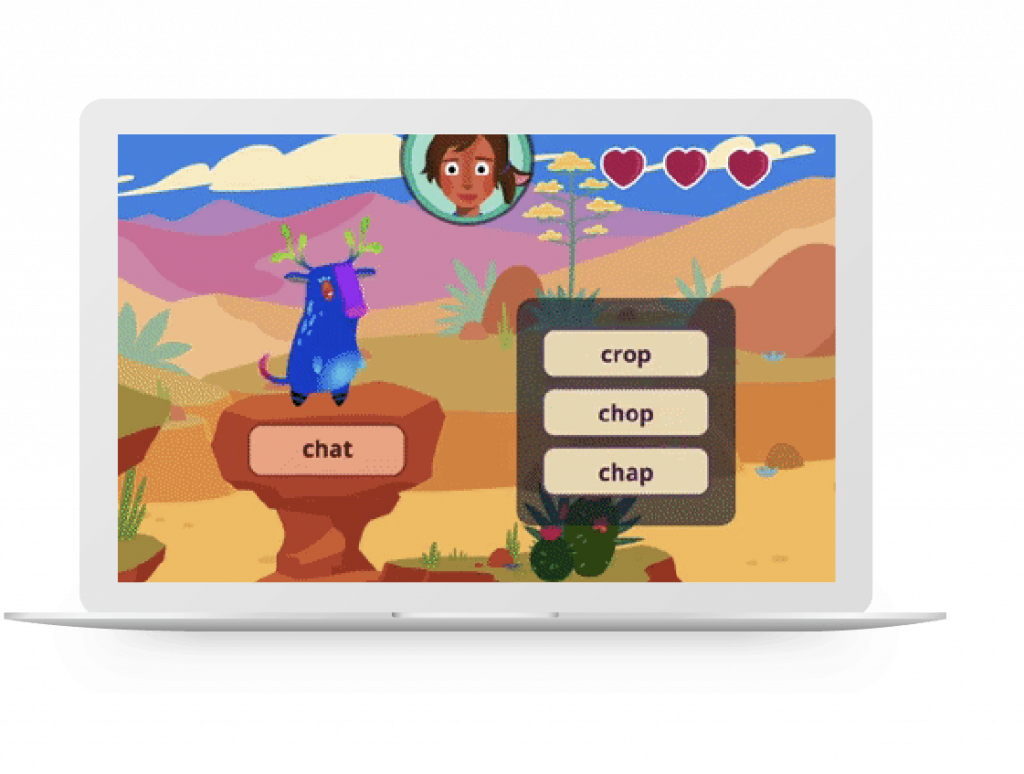
A laptop screen displaying a literacy intervention game with a cartoon llama in a desert setting and a word selection task presented to a child’s avatar in the corner.

You’ll build a foundation with explicit, systematic skills instruction.

Reading skills don’t come naturally. We actually need to rewire our brains with intentional, structured literacy instruction—starting with sounds.

You’ll improve outcomes with knowledge building.

Longitudinal research shows that knowledge building doesn’t just happen as a result of reading, but is also a vital prerequisite for and component of it. And when delivered intentionally and systematically, knowledge delivers literacy results.

Illustration depicting diverse people engaged in various activities, including astronauts in space, a musician engaged in interdisciplinary research, and a child drawing, set against a whimsical celestial backdrop.
A person with long braided hair, wearing oversized glasses, earrings, a necklace, and a red top, smiles at the camera against a plain background.
“It’s not just about the curriculum. It’s about the science behind how people, how children, and how we as humans learn to read… It’s working. I wish I had this years ago. ”

—Javonna Mack, Lead Content Teacher

Caddo Parish Schools, Louisiana

Science of Reading & Early Literacy Resources FAQ

Amplify understands that making the shift to the Science of Reading is no small feat. Get some early literacy resources and guidance with our Science of Reading FAQ.

Learning to read is not innate. It needs to be taught intentionally and systematically—and science tells us how. The vast and growing body of research on early literacy is referred to as the Science of Reading. It draws on extensive research in cognitive science, linguistics, and neuroscience. It emphasizes the systematic teaching of foundational skills—such as phonics, phonological awareness, and decoding—in building vocabulary and comprehension. In other words, it deconstructs the processes behind how children learn to read, and provides evidence for the instructional practices and early literacy resources that can get them there.

Read more 

The Science of Reading refers to the pedagogy and practices proven by extensive research to effectively teach children how to read. It places a strong emphasis on both components of the Simple View of Reading, demonstrating that systematic and explicit instruction in phonics and and intentionally sequenced knowledge building are critical to reading success.

In a balanced literacy environment, learning happens through reading and writing immersion, where the need for explicit instruction in phonics is recognized but is not the primary focus.

The key difference between the approaches lies in their emphasis on foundational reading skills and a coherent approach to building language comprehension.

A balanced literacy approach typically includes a combination of whole language approaches (emphasizing meaning and context) and phonics instruction. Balanced literacy instruction is designed to be flexible and open to interpretation by the instructor. It may include the three-cueing system, which encourages students to rely on syntactic and semantic clues in a text to read an unfamiliar word, rather than decoding (Does it look right? Does it sound right? Does it make sense?). Balanced literacy practitioners may also use leveled reading to differentiate instruction, which can can limit vocabulary exposure, hinder in-depth comprehension skills, and further widen achievement gaps.

Balanced literacy has long been a popular approach to reading instruction, with educators appreciating its openness to variation. But advocates for the Science of Reading argue that an evidence-based approach aligned with known cognitive processes and a focus on foundational skills and language comprehension provides the most solid foundation for reading instruction—for confident and struggling readers alike.

Read more

According to our friends at The Reading League, the Science of Reading is important not because it gives us an effective way to teach reading, but because it gives us the most effective way to teach reading.

“The Science of Reading is critical because it emphasizes evidence-based instruction. Decades of scientific research on reading have consistently shown the most effective ways to teach reading. The Science of Reading incorporates this research, which includes phonemic awareness, phonics, fluency, vocabulary, and comprehension.”

The Reading League also takes it to the next level: What happens when all children have access to the most effective early literacy and reading education? “We believe in a future where a collective focus on applying the Science of Reading through teacher and leader preparation, classroom application, and community engagement will elevate and transform every community, every nation, through the power of literacy.”

The Science of Reading has identified five foundational reading skills that are considered crucial for early reading development. One of those skills is phonics. In other words, the Science of Reading has established that phonics are crucial, but the Science of Reading is not the same as phonics.

Phonics instruction helps students learn how to sound out and blend letters to read words accurately. As we know from the Simple View of Reading, two fundamental skills are required for reading with comprehension:

  1. Decoding—the ability to recognize written words (via phonics)
  2. Language comprehension—understanding what words mean

And the Science of Reading also reminds us that students do not have to learn phonics or decoding before knowledge comes into the equation. “The background knowledge that children bring to a text is also a contributor to language comprehension,” says Sonia Cabell, Ph.D., associate professor at Florida State University’s School of Teacher Education, on Science of Reading: The Podcast.

The Science of Reading is an evolving field built on decades of high-quality, evidence-based research that continually integrates new insights gathered from cognitive neuroscience, psychology, and linguistics. These ongoing studies constantly refine our understanding of how the human brain processes language and learning, enabling more personalized and effective teaching strategies that can adapt to the wide-ranging learning needs of students.

Like other sciences such as medicine, astronomy, or engineering – new advancements in reading technology allow us to understand how the brain works and refine our practices. Every scientific advancement in this field of reading science deepens our comprehension of reading-related challenges like dyslexia and informs the development of evidence-based interventions. We don’t believe that the Science of Reading can be reduced to a fad or trend. Rather, it is a continually evolving, enduringly effective discipline, grounded in rigorous research and driven by the quest for better comprehension of how we read and learn.

Assessment grounded in the Science of Reading can help identify children at risk of dyslexia at the earliest possible moments, creating the widest opportunity for intervention.

People with dyslexia often experience challenges in phonological awareness. They may struggle to break down words into their component sounds and to recognize the relationships between letters and sounds. Systematic and explicit instruction in phonics and phonological awareness can help individuals with dyslexia develop necessary phonological skills. This evidence-based instruction can also help students who have difficulty with decoding.

Further, evidence-based comprehension instruction, including explicit instruction in vocabulary and comprehension strategies, can support students with dyslexia in understanding and making meaning from text.

Download our free dyslexia toolkit

The Science of Reading can be integrated with a Multi-Tiered System of Supports (MTSS) to provide comprehensive and targeted reading instruction for all students. The Science of Reading aligns with a tiered model by providing evidence-based practices for instruction at each tier. An MTSS includes universal screening to identify students at risk of reading difficulties; the Science of Reading can also guide the selection of screening measures to assess specific foundational skills. Aligning the Science of Reading with an MTSS framework can also enhance instructional practices and interventions, ensure data-driven decision making, and help meet the needs of all students.

Read more

Integrating the Science of Reading and the Science of Writing strengthens our approach to teaching literacy. Reading and writing are interdependent. Understanding how sentences are built not only contributes to better reading comprehension, it also helps writers develop clear, logical text. As students grow as readers, they also grow as writers, leading to a comprehensive literacy education. Clear thinking and effective writing are crucial for expressing ideas. By fostering both skills, teachers better support students in becoming confident readers and writers, prepared for academic challenges and beyond.

One of the research-based frameworks used in the Science of Reading is the Simple View of Reading. According to the Simple View, two cognitive capacities are needed for proficient reading: (1) understanding the language (comprehension) and (2) recognizing words in print (decoding). A true Science of Reading program is designed from the start for students to build these skills, in a developmentally appropriate way.

It will also emphasize the importance of knowledge building by exposing students to a diverse array of new topics spanning history, science, and literature, organized intentionally and coherently within and across grades. Deep and intentionally sequenced knowledge domains will help build a student’s vocabulary and understanding of complex texts. And it will include instruction in  all five foundational skills: phonics, phonemic awareness, vocabulary, fluency, and comprehension.

Download our free ebookScience of Reading: Making the Shift, which includes a checklist of what to look for in a curriculum based on the Science of Reading. Learn more from our friends at The Reading League.

Actually, we have a full literacy suite built on the Science of Reading! It includes:

  • mCLASS® assessment, powered by DIBELS® 8th Edition, a gold-standard universal and dyslexia screener, plus a progress monitoring tool, all in one.
  • Amplify Core Knowledge Language Arts (CKLA), which provides explicit, systematic foundational skills instruction combined with intentional knowledge building.
  • Boost Reading, a highly adaptive personalized reading program that reinforces the core curriculum and supports enrichment, remediation, and intervention for each student in your classroom.
  • mCLASS Intervention, a staff-led intervention program targeted to Tiers 2 and 3, made easy with automatic data-driven grouping and sequenced explicit, systematic skills lesson plans to support at-risk students.

Reading requires deliberate, systematic attention—and so does shifting to the Science of Reading in your school or district. It requires not only the right curriculum, but also all-new mindsets, metrics, and more. Reflecting years of experience supporting real educators, our resources will walk you through the process of change management in your community—and show you why the shift is worth it. View our Science of Reading change management playbook.

Introducing our 2023 Science of Reading Star Award finalists!

Roll out the red carpet and shine those spotlights—it’s time to meet the 25 finalists for our 2023 Science of Reading Star Awards!

These educators and leaders help light the way for the next generation. They’ve implemented Science of Reading principles and guided their students toward lifelong literacy. They’ve demonstrated expert change management and professional development. Get ready to meet some of the brightest minds in education as we celebrate their achievements and see what makes them truly stellar!

Join our virtual event and awards program on May 23.

But first…meet our 2023 finalists! Below, you’ll hear from the nominees themselves, as well as the colleagues who nominated them, about what makes them stars.

The Changemaker Award

For exemplary leadership in guiding a district through a shift to the Science of Reading.

And the finalists are…

Heather Campbell
Learning Coach, Sunset Elementary, Washington County District, UT
Why she’s a star: “Heather’s philosophy that all students can learn to read if given proper instruction has changed the data. Our school made the change and the data is showing our students are thriving.” —Shelli Campbell, Learning Coach

Javonna Mack
Lead Content Teacher, Caddo Parish School, LA
Why she’s a star: “Whether working with students or teachers, Mrs. Mack keeps best practices grounded in the Science of Reading at the forefront. She constantly strives to build teachers’ expertise in teaching students to read through content-rich professional learning communities, often on Saturdays or after the workday has ended.” —Shannon Southwell, Lead Content Teacher

Aaron Jura
Reading Interventionist, Bloomingdale, IL School District
Why he’s a star: “Aaron has been the catalyst for our entire district embracing this shift to the Science of Reading, and we are just at the beginning of this amazing journey.” —Nicole Gabany, Reading Interventionist

Nicole Peterson
Director of PreK–8 Education, Sampson County Schools, NC
Why she’s a star: “She has created, initiated, implemented, monitored, evaluated, and adjusted processes and systems to ensure that teachers have access to resources, training, materials, and professional development to ensure that all students gain equitable access to high-quality, evidence-based instruction.” —Matthew McLean, Director, PreK–8th Grade Education

Virginia Quinn-Mooney
Teacher, Northville Elementary School, CT
Why she’s a star: “Virginia has gone from one person with a personal commitment to advancing her literacy knowledge. She has now impacted countless educators, parents, etc., with her tenacity and learning journey.” —Nicole Gregory, Teacher

The Data Dynamo Award

For commendable use of data to align a literacy system and maximize student achievement

Shennoy Barnett
Kindergarten Teacher, South Smithfield Elementary, NC
Why she’s a star: “My objective is to help as many children as I can become fluent readers and critical thinkers. As a literacy specialist here for just four months, I made great strides with literacy with my students.” —Shennoy Barnett, Kindergarten Teacher

Anne Elizabeth Carter
Kindergarten Teacher, Wake County District, NC
Why she’s a star: “Through systematic and explicit phonics instruction as well as targeted language comprehension instruction—using texts that incorporate science and social studies content as well as build knowledge systematically—my kiddos were TRULY learning how to read accurately and fluently.” —David Gaudet, Principal

Bethani Ploegstra
Kindergarten Teacher, Union Colony Elementary, CO
Why she’s a star: “She takes data from mCLASS® DIBELS®, Lexia, and SchoolPace (part of our reading curriculum), as well as formative feedback from what she hears and sees students doing daily in the classroom, to immediately adjust what she presents next to students, whether individually, in small groups, or whole class.” —Mandy Bailey, Assistant Principal

The Knowledge Builder Award

For showing the world that the Science of Reading is more than just phonics, and empowers students with knowledge from elementary to middle school

Corey Beil
Instructional Interventionist, Quakertown Community School District, PA
Why he’s a star: “He incorporated literacy into his daily math instruction by providing our students with opportunities to understand and connect with the content more deeply. Our students were exposed to practicing literacy concepts while expanding their mathematical knowledge and foundational understanding.” —Julianne Pennabaker, Teacher

Kim Smaw
Principal, Rosalyn Yalow Charter School, NY
Why she’s a star: “She was able to persuade the learning community to adopt the Science of Reading, firmly convincing them that this curriculum could empower students to gain rich learning experiences.” —Deirdre Frost, Reading Intervention Specialist

Angie Dutton
Instructional Coach, Onslow County Schools, NC
Why she’s a star: “Her positive attitude about the Science of Reading is contagious and is most likely why other educators feel comfortable reaching out to her for questions and guidance.” —Stacey Horne, Instructional Coach

Nicole Brodie
ELA Grade 7 Teacher, Long Middle School, GA
Why she’s a star: “She encourages her students to use their [voices] for change and impact and supports them in their learning process academically, [socially, and emotionally].”
—Renee Dawson, Grade 7 English Language Arts Teacher

The Intervention Innovator Award

For admirable use of intervention strategies to get at-risk readers back on track

Suzanne Maddox
RTI Teacher, Robertson County Schools, TN
Why she’s a star: “Mrs. Maddox reviewed individual student data, worked with teachers, and began using CKLA Skills and the intervention materials provided with this curriculum to continue a sounds-first approach to meeting the individual needs of students.” —Brooke Callis, RTI Teacher

Sara Thornton
Reading Interventionist, Senior Team Lead, Schmitt Elementary, CO
Why she’s a star: “Sara’s enthusiasm for and dedication to her work has been an inspiration to all involved and has resulted in a successful transition to the Science of Reading—as evidenced by our students’ amazing academic growth!” —Hayley Gunter, Reading Interventionist, Senior Team Lead

Markaya Aga
Reading Interventionist, Merit Academy, CO
Why she’s a star: “Since she has come on board at our school, the mindset around literacy and the growth of our programming [has improved] ten-fold. We need more educators like Markaya!” —Allison Hanson, Reading Interventionist

The Language Luminary Award

For outstanding success in developing the skills and strengths of emergent bilingual students

Wanda Ramirez
Grade 2 Teacher, El Sol Science and Arts Academy, CA
Why she’s a star: “We used to emphasize to students that what they know in one language cannot be used in the other language. Now, as a dual-immersion educator, I have the opportunity to change that mindset, teach my students to embrace their native [language], and empower them to use their entire linguistic ability. It’s a very powerful thing to be able to do.” —Wanda Ramirez, Grade 2 Teacher

Esmeralda Martinez
Kindergarten Teacher, Compass Community Schools, TN
Why she’s a star: “She has consistently worked on improving her teaching methods, tried new ways to engage the class, and worked diligently to support all of our students.” —Rachel, Marinari, Teacher

Christine Black
ESL Teacher, North Dover Elementary School, NJ
Why she’s a star: “We have a rapidly expanding ESL population, and Mrs. Black works tirelessly to ensure that her students are expanding their ELA skills in accordance with the major tenets of the Science of Reading.” —Dawn Gawalis, ESL Teacher

Rookie of the Year Award

For showing the world that the Science of Reading is more than just phonics, and empowers students with knowledge from elementary to middle school

Caitlyn Cockram
Teacher, Patrick County Schools, VA
Why she’s a star: “We have offered professional development in vocabulary and implementing SOR strategies, and Caitlyn is always one of the first teachers to sign up. She is dedicated to improving student achievement through research and evidence-based practices.” —Callie Wheeler, Teacher

Andrea Mason
Academic Interventionist, County Line Elementary School, GA
Why she’s a star: “Making the shift from balanced literacy to the Science of Reading hasn’t always been easy. But I continue to research and implement these best practices with my students because I can see that they are now on a path to becoming strong readers.” —Jennifer Ezell, Academic Interventionist

Mallory Pendergast
Phonics Teacher, Literacy Interventionist, Circle City Prep, IN
Why she’s a star: “As a kindergarten teacher, she led 100% of her scholars to be reading on grade level in the first quarter and maintained that momentum through the first semester.” —Sami Hyde, Senior Instructional Coach

ESSER Ace Award

For notable and innovative use of stimulus funds to help kids rediscover the joy of reading

Stephanie Hurst
District Literacy Specialist, Maple Avenue Elementary, NH
Why she’s a star: “She is also a voice on the utilization of [the] ESSER Fund—using the distribution of funds per federal protocol to ensure that the district’s lowest-performing schools have access to quality instructional materials and professional development all grounded in the Science of Reading.” —Mark Blount, K–12 Literacy Specialist

Callie Wheeler and Sara Vernon
Instructional Coaches, Patrick County Schools, VA
Why Callie’s a star: “Mrs. Wheeler played a key role in creating a culture of literacy within our schools, where the Science of Reading is central to the education of our students.” —Sara Vernon, Instructional Coach
Why Sara’s a star: “Sara has worked tirelessly to make the shift from the vision that was grounded in balanced literacy to one that is now making waves in Southwest Virginia with its Know Better, Do Better, Be Better approach to reading instruction.” —Callie Wheeler, Instructional Coach

Edie Bostic
Literacy Coach, Gallia Local, OH
“As a teacher, district Title I coordinator, elementary principal, and now district literacy coach, she continually champions the students under her care and is passionate about those students receiving the highest levels of instruction.” —Leslie Henry, Principal

Inspired? We are! Register to join our May 23 Science of Reading Star Awards virtual ceremony!

More to explore

Learn with and from other top-notch educators like you through our family of podcasts.

Introducing the 2024 Science of Reading Star Awards

There’s more than one way to name a star. You can honor someone you admire by symbolically attaching their name to a star in the night sky…or you can nominate a teacher you admire or a district lighting the way for students for Amplify’s third annual Science of Reading Star Awards!

As we like to say, it takes a constellation of people to help children learn to read—from district leadership to student families, and from inside the classroom to out there the real world. It also takes science—specifically, the science of teaching reading. And it takes leaders who can successfully lead their district in the shift to a curriculum grounded in the Science of Reading, educators who thoughtfully connect students and their families to the impact of the Science of Reading, and teachers who artfully use evidence-based reading instruction to light the way for their students.

We want to celebrate all of these Science of Reading stars!

That’s why we created the Science of Reading Star Awards. Read on for more information about them, including how to nominate someone (or an entire school or district) for the awards. (And if you’re already ready to nominate a star, go right ahead!)

Honoring stellar educators, leaders, schools, and districts in the Science of Reading

We launched this awards program in 2021—a year when schools, educators, and students were still working to bounce back from pandemic challenges and into a new normal. Even then, educators drove change, leading their school communities on a journey to the Science of Reading.

Our awards program honors educators who advocate for and champion the Science of Reading in their classrooms, schools, and districts. They generate buy-in. They inspire their peers and students. They successfully bring research-based materials, phonics instruction, and foundational literacy skills into their approaches—and have remarkable gains to show for it.

These award-worthy educators can include/have included:

  • Teachers who’ve connected with their students and served as role models for their colleagues by applying the Science of Reading.
  • Principals or district leaders who’ve supervised a successful shift to the Science of Reading in many classrooms across several grades.
  • Schools or districts that are driving changes and seeing incredible results using the Science of Reading.

Meet (and learn from) some of our previous winners!

Javonna L. Mack, Lead Content Teacher, Caddo Parish Schools, LA

Award: Changemaker

How did it feel to be selected as a Star Award finalist?

I was and am still over-the-moon excited about being selected as an Amplify Changemaker Star Award finalist. I was very humbled by becoming the winner. It is an amazing feeling of accomplishment when you receive awards. It has become a hallmark of the hard work I have done in my district to support our push in the Science of Reading.

Do you have any advice for educators submitting to the Science of Reading Star Awards for the first time?

Make sure to tell your story. Be clear and concise. Remember to be reflective of all the ways that you have supported your district. I advise that you speak with your peers and gain feedback as to the ways that you have impacted the work they do. Detail your support. Be unique and track and celebrate your achievements.

Shennoy Barnett, Kindergarten Teacher, Johnston County Public Schools, NC

Award: Data Dynamo

How did it feel to be selected as a Star Award finalist?

It was an amazing feeling even to be considered as a semi-finalist, and an even greater one to be selected as a winner, given that it was my first year using the tool.

Do you have any advice for educators submitting to the Science of Reading Star Awards for the first time?

Your hard work and dedication with your students through [the] Science of Reading will tell your story. Even if you are not selected as a finalist, you are still a winner as you are using an amazing tool and touching the lives of your students.

Anila Nayak, Instructional Coach, Intervention Teacher, Los Angeles Unified School District, CA

Award: Science of Reading Superstar Teacher

How did it feel to be selected as a Star Award finalist?

I felt exhilarated at first and later responsible for sharing my learning about how best to teach children to read. It certainly made me more energized to work harder and continue to improve my practice. The award validated my efforts and steered my obsession to become an efficient and knowledgeable reading teacher.

Do you have any advice for educators submitting to the Science of Reading Star Awards for the first time?

Write your compelling narrative about the impact you make each day in the lives of young readers who need you most. You have the tools to reach students who may be struggling but just have not been reached yet. Tell about how you evolved into an expert despite challenges and how learning about the best ways to teach is an absolutely rich experience. After all, you are impacting so many students through your work. Show your pride, because you are doing important work. The Awards journey opens you up to a community of experts and makes you feel a part of new horizons; you get to listen to many experts and read about the new knowledge that is impacting our understanding of how literacy grows.

You can meet all of our 2023 winners here. Their stories and perspectives may help you discover how you can drive change in your classroom, school, and district with the Science of Reading!

Nominate a Science of Reading star!

Inspired? Now think of the educators in your world—especially those devoted to literacy. Do you know someone who has transformed their classroom and empowered their students with the Science of Reading? (And yes, this person might be you!) How about a school or district that has established strong evidence-based practices and seen incredible results? We also have new categories this year to honor both the traditional and less traditional Science of Reading champions!

Submit your nomination for the 2024 Science of Reading Star Awards by Feb. 15!

All award winners will receive:

The grand prize winner in the District and School categories will receive a regional event hosted by Amplify. The grand prize winner in the Individual category will be given full conference registration and associated travel costs to NCTE in Boston, in Nov. 2024.

Learn more:

Meet the 2025 Science of Reading Star Awards finalists

Three ribbons on a blue background: a yellow ribbon with paper symbolizing personalized learning, a blue ribbon with a rocket representing MTSS strategies, and an orange ribbon with a star.

Celebrating the 2025 Science of Reading Star Awards finalists

Every day, teachers and education leaders across the country are guiding students toward a future lit up by literacy.

It’s not always easy—especially when they’re the ones championing and implementing shifts toward literacy programs grounded in the Science of Reading.

That’s why we’re thrilled to celebrate the finalists of the 2025 Science of Reading Star Awards!

These awards recognize the educators who go above and beyond to make evidence-based reading instruction a reality for students learning in their schools and districts. Whether they’re rolling out new district-wide literacy programs, coaching fellow educators, or introducing innovative teaching practices, these education leaders are making a real difference for students.

And just like the light from distant stars, the impact of their efforts reaches far and wide, shaping futures for years to come.

Empowering students through literacy

The Science of Reading Star Awards aim a beacon on the champions of literacy—teachers, administrators, and education leaders who are putting the best literacy research into action.

Studies show that systematic phonics instruction—one of the key components of the Science of Reading—leads to significantly higher reading achievement than alternative methods, particularly for struggling readers. Literacy instruction grounded in the Science of Reading strengthens critical thinking by systematically building the language comprehension skills—like vocabulary, syntax, and background knowledge—that students need to make meaning, draw inferences, and evaluate ideas in complex texts. And when you teach knowledge in tandem with literacy, you inspire students to become confident readers, writers, and thinkers.

But shifting to instruction aligned to the Science of Reading isn’t just about swapping one program for another or bringing innovative teaching methods into one classroom—it’s about leading change, engaging stakeholders, and being an inspiration to others.

These awards celebrate the educators, schools, and districts whose innovative approach to literacy is doing just that. Here’s a look at this year’s categories and finalists:

  • District: The District Captain For the leaders bringing Science of Reading practices to life across entire districts
    • Puyallup School District, WA
    • Celina City Schools, OH
    • Waukegan CUSD #60, IL
    • Madison County School District, MS
  • School: The Literacy Legend For the school that has seen significant reading gains among their students school-wide when using the Science of Reading
    • Angie Grant Elementary School, Benton School District, AR
    • Bataan Memorial Primary School, Port Clinton City School District, OH
    • Bruin Point Elementary School, Carbon School District, UT
  • Individual: The Changemaker For showcasing exemplary Science of Reading routines and practices, and serving as an inspiration to others on the journey
    • Stephanie Wilcox, District Elementary School Improvement Specialist, Redmond School District, OR
    • Emily Tessalone Garcia, Grade 8 Teacher, Passaic City Public School District, NJ
    • Reena Mathew, Literacy Coach, Suffern Central School District, NY
  • Individual: The Language Luminary For outstanding success in developing the skills and strengths of multilingual/English learners
    • Johanna Quinde, Teacher, The Nancy DeBenedittis School, NY
    • Dayana Orozco Rojas, Kindergarten Dual Language Teacher, Kannapolis City School District, NC
    • Eimy Maria Galindo Medina, Grade 2 DLI Teacher, Denver Public Schools, CO
  • Individual: The Background Knowledge Builder For showing the world that the Science of Reading empowers students with knowledge, context, and vocabulary from elementary through middle school
    • Ann Ingham, Grade 3 Teacher, Cedarburg School District, WI
    • Katie Chappell. Grade 5 Teacher, Rome City School District, GA
    • Demi Grosely, Teacher, Clarkston School District, WA
  • Individual: The MTSS Maestro For implementing a data-driven Multi-Tiered System of Supports (MTSS) framework that creates a thriving and robust literacy ecosystem
    • Samantha Umali, Special Education Teacher and Elementary K–4 General Education Teacher, Bering Strait School District, AK
    • Kylie Altier, Grade 1 Teacher, East Baton Rouge Parish School System, LA
    • Erin Custadio, Elementary Literacy Manager, Falmouth Public School District, MA
    • Victoria Green, Reading Specialist, Roswell Independent School District, NM
  • Individual: The Science of Reading Rookie For a teacher in their first year already making strides with the Science of Reading
    • Miracle Austin, Kindergarten Teacher, Guilford Preparatory Academy, NC
    • Pei-Ching Peng, Instructional Apprentice, Uplift Elevate Preparatory, TX
    • Todd Payne, Elementary Teacher, Renaissance School, WI
  • Individual: The Cross-Disciplinarian For skilled weaving of literacy practices across subject areas in the classroom
    • Katie Kirkpatrick, Teacher, Graham Dustin Public Schools, OK
    • Laura Horvath, K–12 Science & Social Studies Curriculum Coordinator, Harrison School District 2, CO
    • Christina Miller, Lower Elementary Teacher, South Bend Community School Corporation, IN
  • Individual: The Writing Whiz For integrating writing instruction with the Science of Reading and cultivating articulate and confident writers through innovative and effective practices
    • Michelle Luebbering, Grade 5 Teacher, Jefferson City School District, MO
    • Jennifer Dove, Grade 3 Teacher, Rockingham County Public School District, VA
    • Daphne Long, Teacher, St. Clair County School District, AL

From districts undergoing transformations to educators supporting professional development on the ground, these finalists are proving that with the right approach—and the right support—every child can become a strong reader.

Congratulations, finalists! We know the long hours, extra effort, and deep belief in your students that fuels your work. You’re making the future brighter, one reader at a time!

Learn more on our Science of Reading Star Awards page.