Showing results for batteries bedrock

Welcome, Middle School Science Reviewers!

Thank you for taking the time to review Amplify Science for grades 6–8. On this site, you’ll find all the resources you need to learn more about this engaging and robust NGSS program. Plus, we make it easy to experience our program firsthand with a live demo account that features our interactive learning platform.

A person in protective glasses examines a glass of water, surrounded by illustrations of a rocket, telescope, polar bear, clouds, rain, and moon phases on a colorful abstract background.

Overview

With Amplify Science, students don’t just passively learn about science concepts.

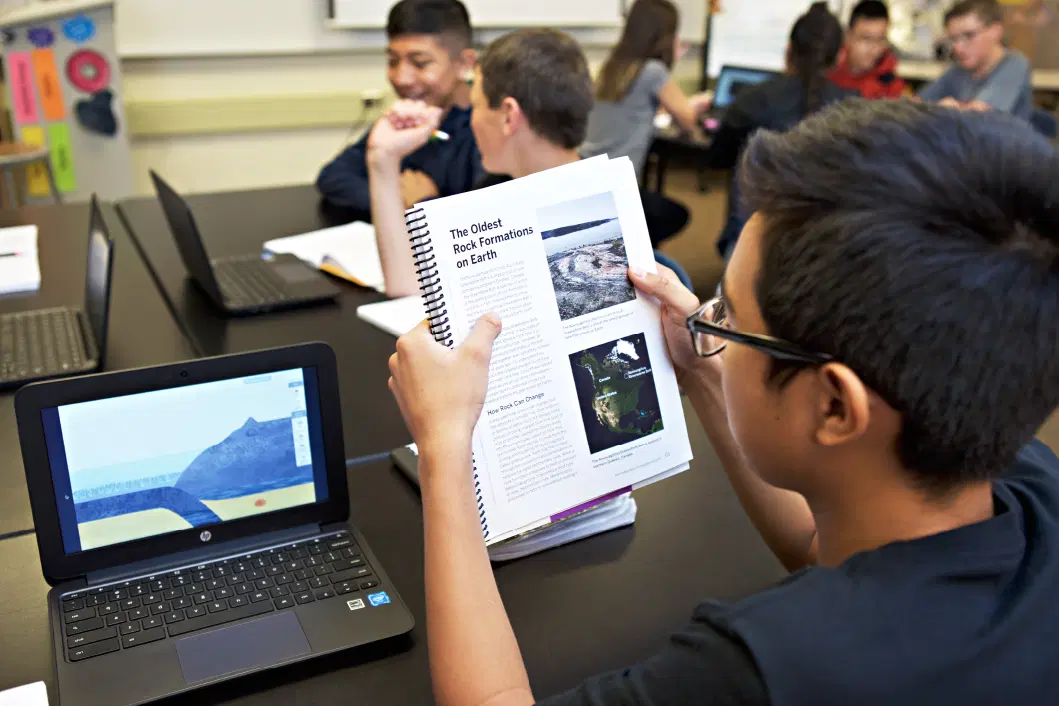
No matter where your students are learning—whether at school or at home—they take on the role of scientists and engineers to actively investigate and make sense of real-world phenomena. They do this through a blend of cohesive and compelling storylines, hands-on investigations, collaborative discussions, literacy-rich activities, and interactive digital tools.

Listen to these educators share how the program empowers students to think, read, write, and argue like real scientists and engineers every day.

EdReports All-Green

Amplify Science for grades K–8 has been rated all-green by EdReports.

Read the review on EdReports.

A boy stirs a clear liquid in a plastic cup while a girl smiles beside him in a classroom with students and a teacher in the background. EdReports badge is overlaid in the corner.

Program structure

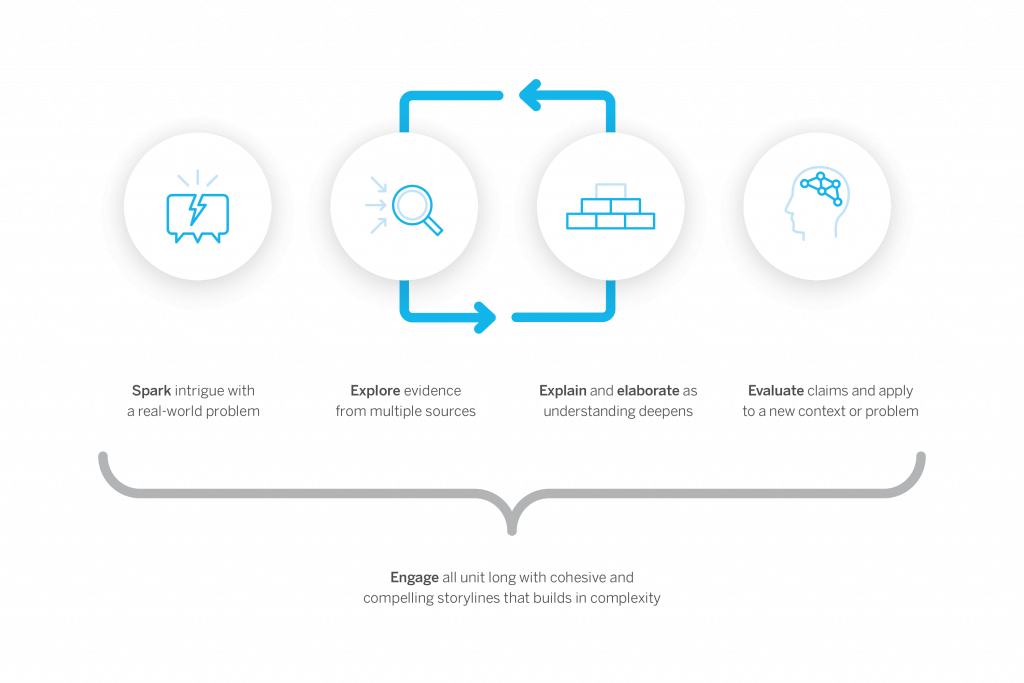
Our cyclical lesson design ensures students receive multiple exposures to concepts through a variety of modalities.

As they progress through the lessons within a unit, students build and deepen their understanding, increasing their ability to develop and refine complex explanations of the unit’s phenomenon. It’s this proven program structure and lesson design that enables Amplify Science to address 100% of the NGSS in fewer days than other programs.

Graphic showing a research process with four steps: spark intrigue with a real-world problem, explore evidence, explain and elaborate, and evaluate claims, connected in a cycle with arrows.

Unit Sequence

Our lessons follow a structure that is grounded in regular routines while still being flexible enough to allow for a variety of learning experiences.
 
In fact, our multi-modal instruction offers more opportunities for students to construct meaning, and practice and apply concepts than any other program. What’s more, our modular design means our units can be flexibly arranged to support your instructional goals.

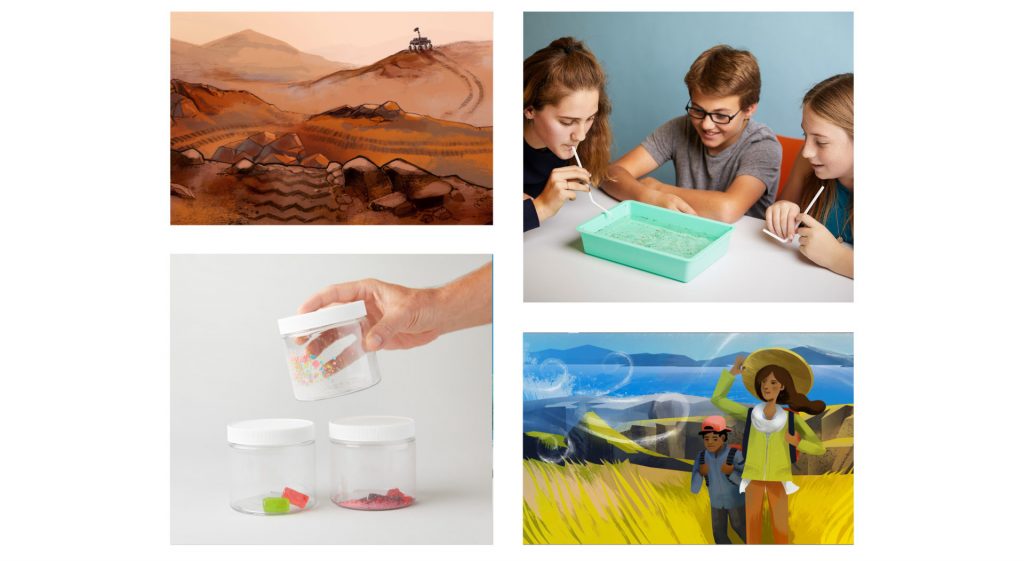
Collage of four images: a watercolor desert scene, three kids examining a gadget, a hand placing beads into a container, and a woman in a sunhat in a stylized field.
Abstract art with vibrant colors featuring a yellow silhouette of a person holding a book against a background of geometric shapes, swirling patterns, and bold textures.

Unit 1

Microbiome

Domain: Life Science

Unit type: Launch

Student role: Microbiological researchers

Phenomenon: The presence of 100 trillion microorganisms living on and in the human body may keep the body healthy.  

Abstract artwork of a person's side profile with geometric shapes and colorful patterns flowing from the head, holding a small sledgehammer. A vision chart is visible in the corner.

Unit 2

Metabolism

Domain: Life Science

Unit type: Core

Student role: Medical researchers

Phenomenon: Elisa, a young patient, feels tired all the time.  

Orange abstract background with hexagonal shapes featuring icons of a bar chart, plant, safety vest, test tube, peach, and stethoscope.

Unit 3

Metabolism Engineering Internship

Domains: Life Science, Engineering Design

Unit type: Engineering internship

Student role: Food engineers

Phenomenon: Designing health bars with different molecular compositions can effectively meet the metabolic needs of patients or rescue workers.  

An image showing a graphic of spiders of different colors with distinct leg and body patterns, including brown, yellow, and blue variations. The background is a dark, textured surface.

Unit 4

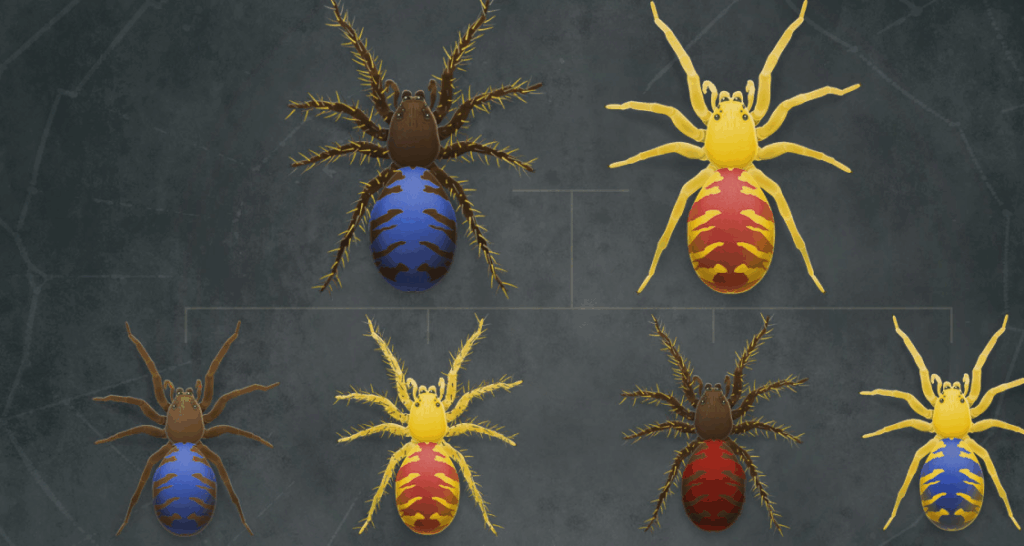
Traits and Reproduction

Domain: Life Science

Unit type: Core

Student role: Biomedical students

Phenomenon: Darwin’s bark spider offspring have different silk flexibility traits, even though they have the same parents.  

Illustration of a person in a red hat and fur-lined coat with eyes closed, surrounded by large orange circles on a dark background.

Unit 5

Thermal Energy

Domain: Physical Science

Unit type: Core

Student role: Thermal scientists

Phenomenon: One of two proposed heating systems for Riverdale School will best heat the school. 

Abstract artwork depicting a bright sun with blue and orange swirling patterns next to green hills under a sky with shades of blue, orange, and red.

Unit 6

Ocean, Atmosphere, and Climate

Domains: Earth and Space Science, Physical Science

Unit type: Core

Student role: Climatologists

Phenomenon: During El Niño years, the air temperature in Christchurch, New Zealand is cooler than usual.  

Illustration of a village with houses, fields and mountains under a cloudy sky with waves of wind or rain.

Unit 7

Weather Patterns

Domains: Earth and Space Science, Physical Science

Unit type: Core

Student role: Forensic meteorologists

Phenomenon: In recent years, rainstorms in Galetown have been unusually severe.  

A polar bear stands on a small ice floe in the ocean with an orange sun in the sky and distant icy mountains in the background.

Unit 8

Earth’s Changing Climate

Domains: Earth and Space Science, Life Science

Unit type: Core

Student role: Climatologists

Phenomenon: The ice on Earth’s surface is melting.  

Abstract geometric design in shades of blue and purple featuring a hexagon with icons of a building, wrench, molecules, sun, paint can, and screwdriver.

Unit 9

Earth’s Changing Climate Engineering Internship

Domains: Earth and Space Science, Engineering Design

Unit type: Engineering internship

Student role: Civil engineers

Phenomenon: Designing rooftops with different modifications can reduce a city’s impact on climate change.  

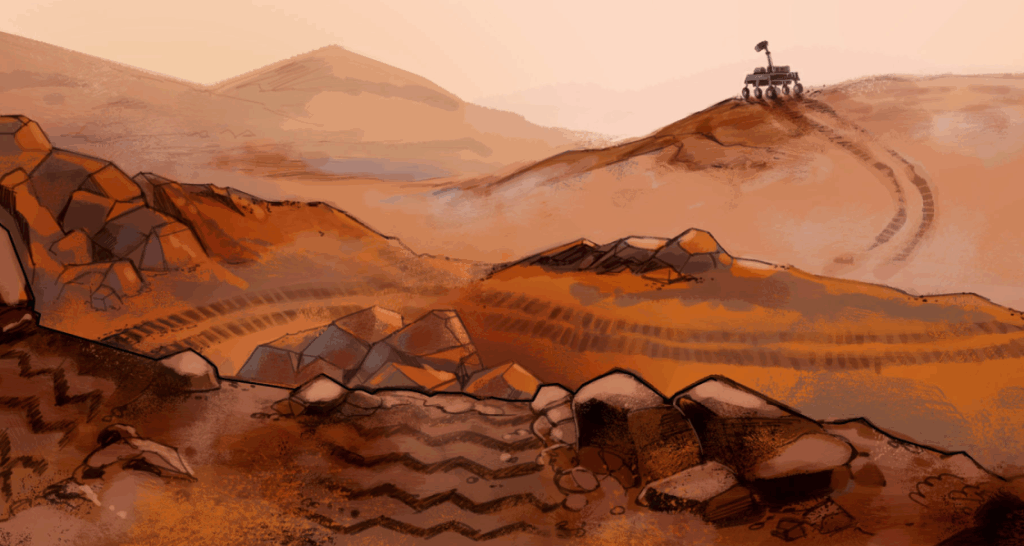
A barren, rocky desert landscape with rover tracks leading to a distant vehicle on a hill under a hazy sky.

Unit 1

Geology on Mars

Domain: Earth and Space Science

Unit type: Launch

Student role: Planetary geologists

Phenomenon: Analyzing data about landforms on Mars can provide evidence that Mars may have once been habitable. 

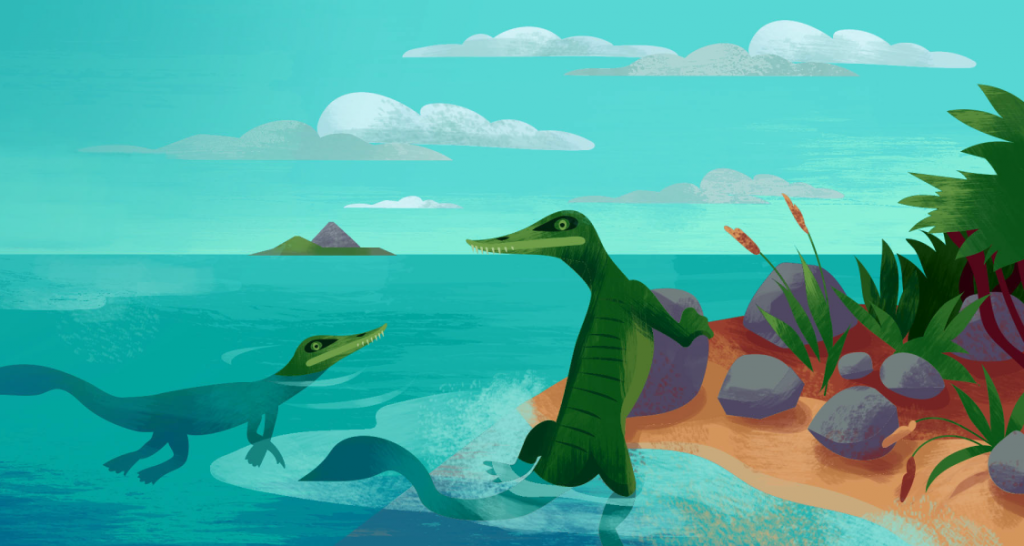
Two prehistoric reptiles with long snouts and tails are near the shore, one on land and one in water, with plants, rocks, and an island in the background.

Unit 2

Plate Motion

Domain: Earth and Space Science

Unit type: Core

Student role: Geologists

Phenomenon: Mesosaurus fossils have been found on continents separated by thousands of kilometers of ocean, even though the Mesosaurus species once lived all together.  

Geometric design featuring a telescope, mountain, sound waves, and cosmic elements on a purple hexagonal background.

Unit 3

Plate Motion Engineering Internship

Domains: Earth and Space Science, Engineering Design

Unit type: Engineering internship

Student role: Mechanical engineering interns

Phenomenon: Patterns in earthquake data can be used to design an effective tsunami warning system.  

Illustration of a cross-section of Earth showing a volcano near the ocean. Trees, mountains, and clouds are visible above, with subterranean layers below.

Unit 4

Rock Transformations

Domain: Earth and Space Science

Unit type: Core

Student role: Geologists

Phenomenon: Rock samples from the Great Plains and from the Rocky Mountains — regions hundreds of miles apart — look very different, but have surprisingly similar mineral compositions.  

Illustration showing the stages of melting an orange popsicle: whole, partially melted, more melted, and almost completely melted, with wooden sticks, on a purple background.

Unit 5

Phase Change

Domains: Physical Science, Earth and Space Science

Unit type: Core

Student role: Chemists

Phenomenon: A methane lake on Titan no longer appears in images taken by a space probe two years apart

Green geometric background with a hexagonal emblem containing a parachute icon, ruler, bandage, and stacked layers on a gradient pattern.

Unit 6

Force and Motion Engineering Internship

Domains: Engineering Design, Physical Science

Unit type: Engineering internship

Student role: Mechanical engineering interns

Phenomenon: Designing emergency supply delivery pods with different structures can maintain the integrity of the supply pods and their contents.  

Abstract digital artwork featuring numerous red and gray circles overlapping a split background of blue and light purple, creating a dynamic and energetic composition.

Unit 7

Chemical Reactions

Domains: Physical Science, Life Science, Earth and Space Science

Unit type: Core

Student role: Forensic chemists

Phenomenon: A mysterious brown substance has been detected in the tap water of Westfield.  

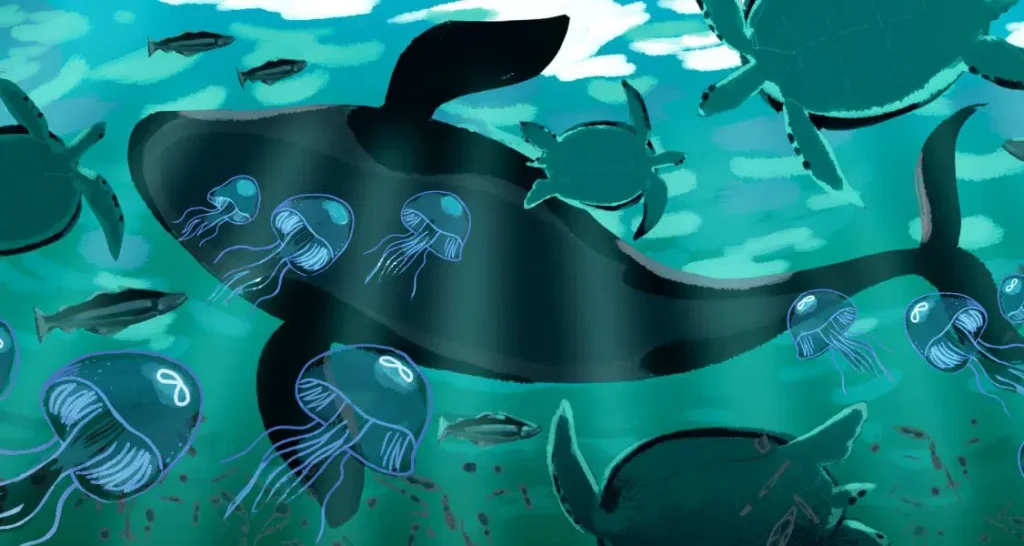
An illustration of a whale with jellyfish and turtles from Amplify Science

Unit 8

Populations and Resources

Domains: Life Science, Earth and Space Science

Unit type: Core

Student role: Biologists

Phenomenon: The size of the moon jelly population in Glacier Sea has increased. 

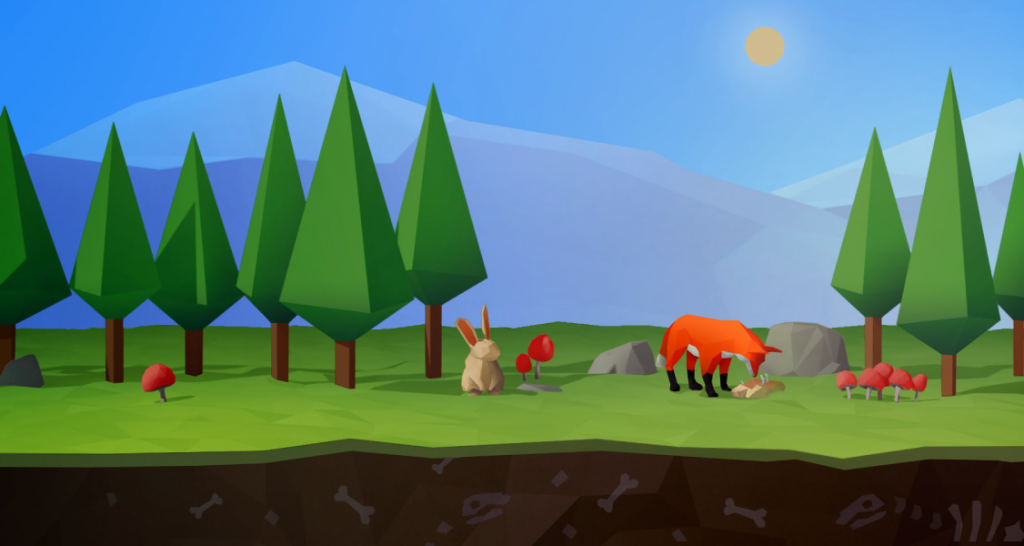
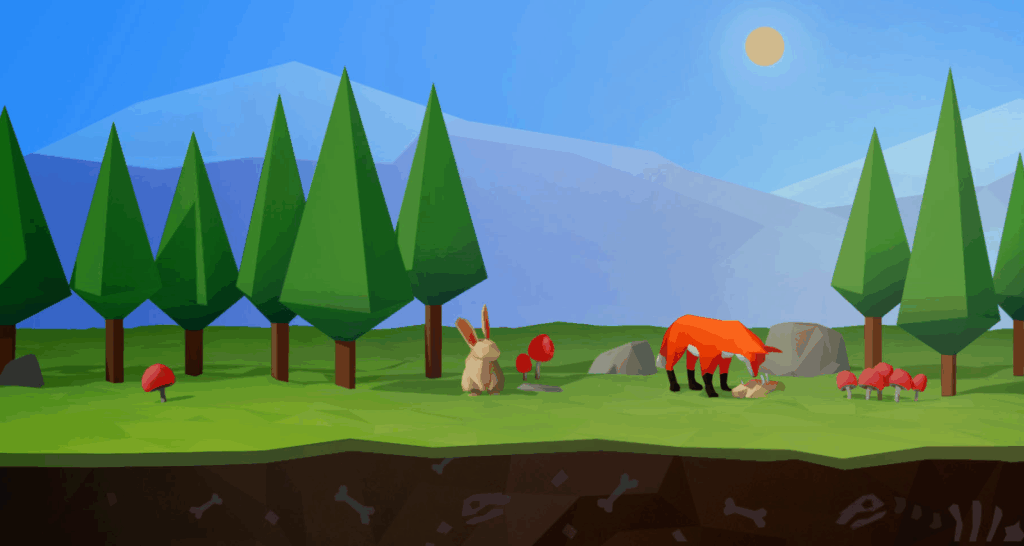
Low-poly landscape with trees and mushrooms. A fox sniffs the ground, a rabbit sits nearby, and mountains and sun are in the background.

Unit 9

Matter and Energy in Ecosystems

Domains: Life Science, Earth and Space Science, Physical Science

Unit type: Core

Student role: Ecologists

Phenomenon: The biodome ecosystem has collapsed.  

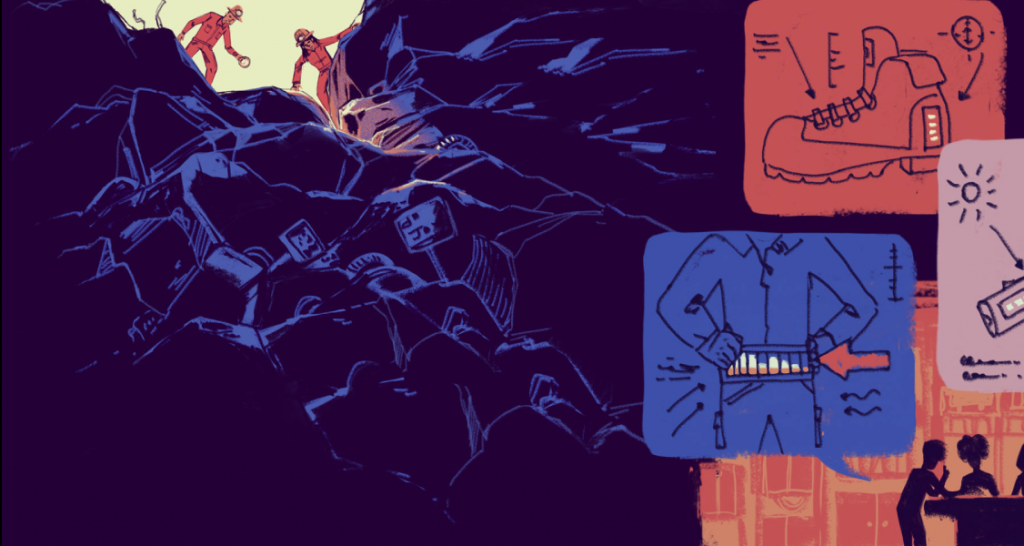
Two people climbing rocky terrain; illustrations show a hiking boot and a belt with gear.

Unit 1

Harnessing Human Energy

Domains: Physical Science, Earth and Space Science, Engineering Design

Unit type: Launch

Student role: Energy scientists

Phenomenon: Rescue workers can use their own human kinetic energy to power the electrical devices they use during rescue missions.  

A spacecraft approaches and docks with a space station featuring large blue solar panels, set against a backdrop of outer space.

Unit 2

Force and Motion

Domain: Physical Science

Unit type: Core

Student role: Physicists

Phenomenon: The asteroid sample-collecting pod failed to dock at the space station as planned.

Green geometric graphic featuring icons: a baby, thermometer, layers, medical alert, and a flame.

Unit 3

Phase Change Engineering Internship

Domains: Engineering Design, Physical Science

Unit type: Engineering internship

Student role: Chemical engineering interns

Phenomenon: Designing portable baby incubators with different combinations of phase change materials can keep babies at a healthy temperature.  

Illustration of a roller coaster filled with people, hands raised, going down a steep track against a bright blue sky with clouds.

Unit 4

Magnetic Fields

Domain: Physical Science

Unit type: Core

Student role: Physicists

Phenomenon: During a test launch, a spacecraft traveled much faster than expected.  

Illustration of Earth with arrows and wavy lines representing solar radiation entering the atmosphere, showing a focus on the Asia-Pacific region.

Unit 5

Light Waves

Domains: Physical Science, Life Science, Earth and Space Science

Unit type: Core

Student role: Spectroscopists

Phenomenon: The rate of skin cancer is higher in Australia than in other parts of the world.

A city skyline at night with a prominent full moon, stars in the sky, and a bridge silhouette on the left.

Unit 6

Earth, Moon, and Sun

Domains: Earth and Space Science, Physical Science

Unit type: Core

Student role: Astronomers

Phenomenon: An astrophotographer can only take pictures of specific features on the Moon at certain times.  

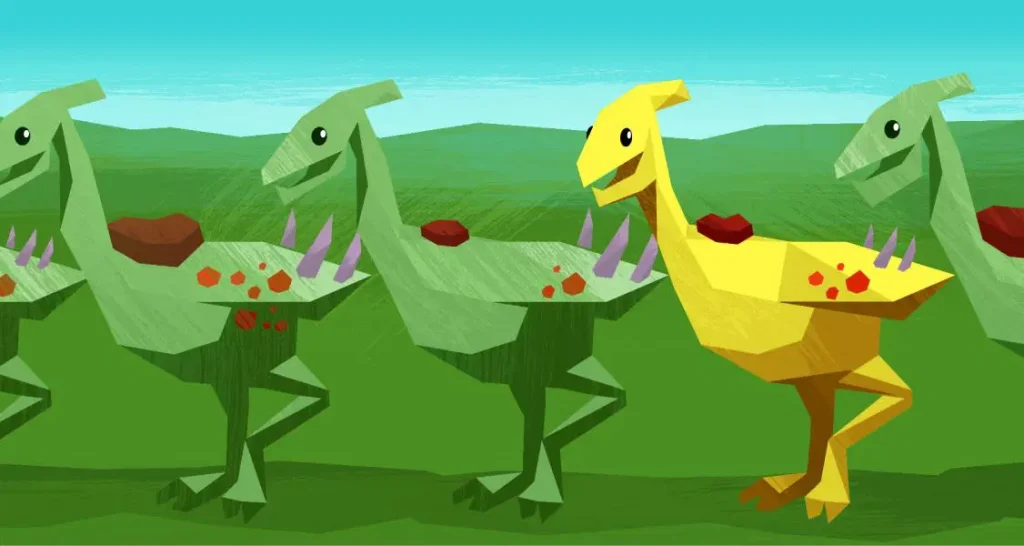
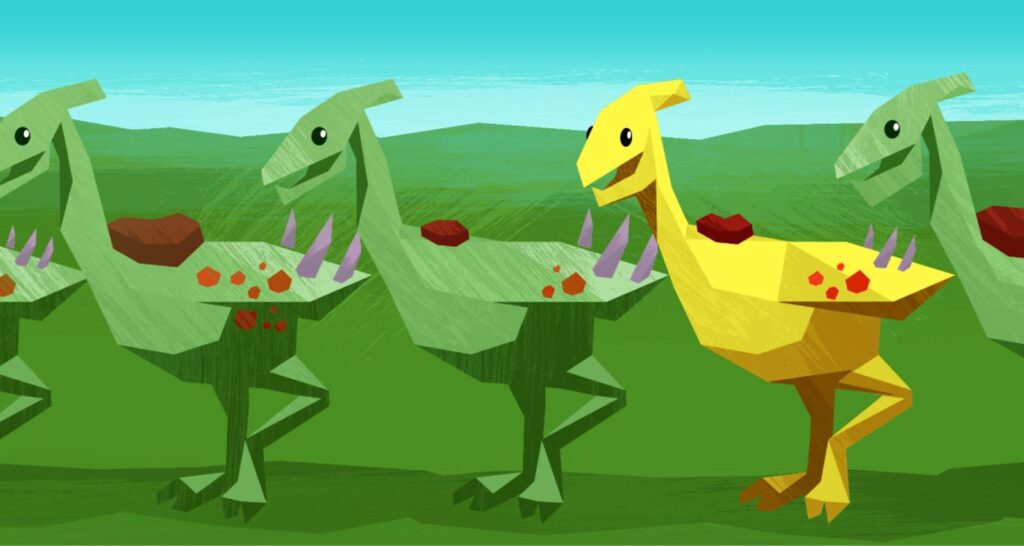
Four low-poly dinosaurs with missing body sections are standing in a row; one is yellow, and the others are green. They have purple spikes and red patches on their bodies.

Unit 7

Natural Selection

Domains: Life Science, Earth and Space Science

Unit type: Core

Student role: Biologists

Phenomenon: The newt population in Oregon State Park has become more poisonous over time.  

Red geometric background with icons including a mosquito, DNA strand, bar chart, and world map inside a hexagon.

Unit 8

Natural Selection Engineering Internship

Domains: Engineering Design, Life Science

Unit type: Engineering internship

Student role: Clinical engineers

Phenomenon: Designing malaria treatment plans that use different combinations of drugs can reduce drug resistance development while helping malaria patients.  

Two giant tortoises with long necks stand near water; one tortoise feeds on leaves from a tree while the other is near dense vegetation.

Unit 9

Evolutionary History

Domains: Life Science, Earth and Space Science

Unit type: Core

Student role: Paleontologists

Phenomenon: A mystery fossil at the Natural History Museum has similarities with both wolves and whales.    

Access program

Watch the video to the right plus the ones below showing you how to navigate our digital platform. When you’re ready, follow the instructions below to log into our live demo account.

  • Click the orange button below to access the platform.
  • Choose the resources you’d like to review.
  • Pick your grade level from the drop-down menu.
  • Scroll down to find additional grade-level resources.

Navigating an Engineering Internship (Part 1)

This Part 1 video demonstrates how Engineering Internship units invite students to design solutions for real-world problems as interns for a fictional company called Futura. In the process, they apply and deepen their learning from Core units.

Navigating an Engineering Internship (Part 2)

This Part 2 video demonstrates how to use the Futura Workspace to manage the immersive experience of the Engineering Internship units. This includes guidance on how to create student groups, how to review student work, and how to send students targeted feedback on their designs.

Navigating our reporting tools

Teachers of Amplify Science grades 6–8 have access to a feature called Reporting. When unit assessments are administered digitally, the Reporting tool enables teachers to analyze student performance on the unit assessments.

Differentiation post-assessment

Every core unit of Amplify Science 6–8 features a formal formative assessment opportunity at the mid-way point, or “Critical Juncture,” of the unit, which provides an important opportunity for differentiation.

Get in touch

Smiling man with short hair and a trimmed beard wearing a light blue collared shirt against a plain white background.

Have questions? Bob McCarty is standing by and ready to help.

Robert “Bob” McCarty
Senior Account Executive
(435) 655-1731
rmccarty@amplify.com

A closer look at grades 6–8

Amplify Science is based on the latest research on teaching and learning and helps teachers deliver rigorous and riveting lessons through hands-on investigations, literacy-rich activities, and interactive digital tools that empower students to think, read, write, and argue like real scientists.

In the 6–8 classroom, this looks like students:

  • Collecting evidence from a variety of sources.
  • Making sense of evidence in a variety of ways.
  • Formulating convincing scientific arguments.

Is your school implementing the domain model? Click here.

Collage of four images showing children engaged in educational activities such as conducting experiments and crafting in a classroom setting.
A four-step process diagram: Spark intrigue, Explore evidence, Explain and elaborate, and Evaluate claims, connected by arrows, with an engagement statement below.

Program structure

Our cyclical lesson design ensures students receive multiple exposures to concepts through a variety of modalities. As they progress through the lessons within a unit, students build and deepen their understanding, increasing their ability to develop and refine complex explanations of the unit’s phenomenon.

It’s this proven program structure and lesson design that enables Amplify Science to teach less, but achieve more. Rather than asking teachers to wade through unnecessary content, we designed our 6–8 program to address 100% of the NGSS in fewer lessons than other programs.

Scope and sequence

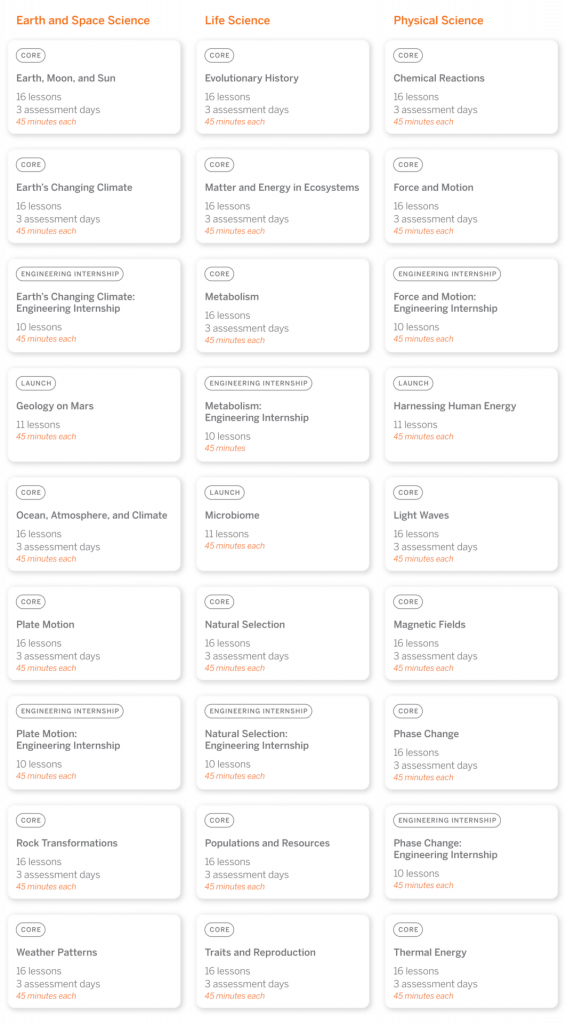
Every year our grades 6–8 sequence consists of 9 units, with each unit containing 10–19 lessons. Lessons are written to last a minimum of 45-minutes, though teachers can expand or contract the timing to meet their needs.

A grid of educational icons, each representing a different science topic, such as earth and space science, life science, and physical science, with titles and lesson counts.

Unit types

Each unit delivers three-dimensional learning experiences and engages students in gathering evidence from a rich collection of sources, while also serving a unique purpose.

In grades 6–8, there are three types of units:

  • One unit is a launch unit.
  • Three units are core units.
  • Two units are engineering internships.
Launch units

Launch units are the first units taught in each year of Amplify Science. The goal of the Launch unit is to introduce students to norms, routines, and practices that will be built on throughout the year, including argumentation, active reading, and using the program’s technology. For example, rather than taking the time to explain the process of active reading in every unit in a given year, it is explained thoroughly in the Launch unit, thereby preparing students to read actively in all subsequent units.

Core units

Core units establish the context of the unit by introducing students to a real-world problem. As students move through lessons in a Core unit, they figure out the unit’s anchoring phenomenon, gain an understanding of the unit’s disciplinary core ideas and science and engineering practices, and make linkages across topics through the crosscutting concepts. Each Core unit culminates with a Science Seminar and final writing activity.

Engineering Internship units

Engineering Internship units invite students to design solutions for real-world problems as interns for a fictional company called Futura. Students figure out how to help those in need, from tsunami victims in Sri Lanka to premature babies, through the application of engineering practices. In the process, they apply and deepen their learning from Core units.

Units at a glance

Abstract digital artwork featuring a yellow human figure, red shapes, and a blue-toned screen, with vibrant, multicolored patterns and textures in the background.
Microbiome

Domain: Life Science

Unit type: Launch

Student role: Microbiological researchers

Phenomenon: The presence of 100 trillion microorganisms living on and in the human body may keep the body healthy.  

An abstract illustration of a person receiving an oral examination, with colorful geometric shapes and an eye chart in the background.
Metabolism

Domain: Life Science

Unit type: Core

Student role: Medical researchers

Phenomenon: Elisa, a young patient, feels tired all the time.  

Abstract orange background with geometric shapes, featuring icons of a vest, bar chart, leaf, beaker, fruit, medical stethoscope, and an envelope within a hexagonal frame.
Metabolism Engineering Internship

Domains: Life Science, Engineering Design

Unit type: Engineering internship

Student role: Food engineers

Phenomenon: Designing health bars with different molecular compositions can effectively meet the metabolic needs of patients or rescue workers.  

Six spiders with varying body colors (brown, yellow, blue, and red) and patterns are arranged on a dark, textured background, seemingly in a diagram or chart formation.
Traits and Reproduction

Domain: Life Science

Unit type: Core

Student role: Biomedical students

Phenomenon: Darwin’s bark spider offspring have different silk flexibility traits, even though they have the same parents.  

Illustration of a person with closed eyes in a red winter coat and hat, surrounded by falling snow and orange circles on a dark background.
Thermal Energy

Domain: Physical Science

Unit type: Core

Student role: Thermal scientists

Phenomenon: One of two proposed heating systems for Riverdale School will best heat the school. 

Abstract illustration of a sun with blue and orange rays over a colorful landscape featuring green hills and a vibrant sky.
Ocean, Atmosphere, and Climate

Domains: Earth and Space Science, Physical Science

Unit type: Core

Student role: Climatologists

Phenomenon: During El Niño years, the air temperature in Christchurch, New Zealand is cooler than usual.  

Illustration of clouds above a small town and farmland, with wind currents depicted swirling through the landscape under a blue sky.
Weather Patterns

Domains: Earth and Space Science, Physical Science

Unit type: Core

Student role: Forensic meteorologists

Phenomenon: In recent years, rainstorms in Galetown have been unusually severe.  

A polar bear stands on a small floating ice sheet in the ocean, surrounded by melting ice, with a red sun in the sky.
Earth’s Changing Climate

Domains: Earth and Space Science, Life Science

Unit type: Core

Student role: Climatologists

Phenomenon: The ice on Earth’s surface is melting.  

A purple hexagonal graphic with icons including a building, wrench, screwdriver, sun, molecules, paint bucket, and tiles on a geometric patterned background.
Earth’s Changing Climate Engineering Internship

Domains: Earth and Space Science, Engineering Design

Unit type: Engineering internship

Student role: Civil engineers

Phenomenon: Designing rooftops with different modifications can reduce a city’s impact on climate change.  

A robotic rover sits on a hill in a rocky, reddish landscape, with visible tracks in the dust leading to its current position under a hazy sky.
Geology on Mars

Domain: Earth and Space Science

Unit type: Launch

Student role: Planetary geologists

Phenomenon: Analyzing data about landforms on Mars can provide evidence that Mars may have once been habitable. 

Two green prehistoric reptiles with long snouts are near the shore; one is on land while the other swims in blue water, with plants, rocks, and an island in the background.
Plate Motion

Domain: Earth and Space Science

Unit type: Core

Student role: Geologists

Phenomenon: Mesosaurus fossils have been found on continents separated by thousands of kilometers of ocean, even though the Mesosaurus species once lived all together.  

A purple geometric background featuring a hexagonal badge with a telescope, mountain, audio wave, and star symbols inside.
Plate Motion Engineering Internship

Domains: Earth and Space Science, Engineering Design

Unit type: Engineering internship

Student role: Mechanical engineering interns

Phenomenon: Patterns in earthquake data can be used to design an effective tsunami warning system.  

Illustration showing an ocean, forest, and mountains with a smoking volcano, plus a cross-section of underground tectonic plates.
Rock Transformations

Domain: Earth and Space Science

Unit type: Core

Student role: Geologists

Phenomenon: Rock samples from the Great Plains and from the Rocky Mountains — regions hundreds of miles apart — look very different, but have surprisingly similar mineral compositions.  

Four stages of an orange popsicle melting on a stick, from fully frozen on the left to completely melted on the right, against a plain background.
Phase Change

Domains: Physical Science, Earth and Space Science

Unit type: Core

Student role: Chemists

Phenomenon: A methane lake on Titan no longer appears in images taken by a space probe two years apart

Green geometric background with an outlined hexagon containing icons: a parachute, ruler, letter "A," bandage, stacked blocks, and a folded corner paper.
Force and Motion Engineering Internship

Domains: Engineering Design, Physical Science

Unit type: Engineering internship

Student role: Chemical engineering interns

Phenomenon: Designing portable baby incubators with different combinations of phase change materials can keep babies at a healthy temperature. Domains: Engineering Design, Physical Science

Abstract illustration showing red and blue circles on a split blue and light background, representing molecular movement across a membrane or barrier.
Chemical Reactions

Domains: Physical Science, Life Science, Earth and Space Science

Unit type: Core

Student role: Forensic chemists

Phenomenon: A mysterious brown substance has been detected in the tap water of Westfield.  

An underwater scene with a large whale surrounded by turtles, jellyfish, and various fish swimming in different directions.
Populations and Resources

Domains: Life Science, Earth and Space Science

Unit type: Core

Student role: Biologists

Phenomenon: The size of the moon jelly population in Glacier Sea has increased. 

Low-poly digital illustration of a fox hunting a rabbit in a forest with pine trees, mushrooms, mountains, and the sun in the background. Another rabbit sits near the trees.
Matter and Energy in Ecosystems

Domains: Life Science, Earth and Space Science, Physical Science

Unit type: Core

Student role: Ecologists

Phenomenon: The biodome ecosystem has collapsed.  

Two people climb over rocks filled with electronic devices; inset illustrations show a boot, a belt of batteries, and a radio.
Harnessing Human Energy

Domains: Physical Science, Earth and Space Science, Engineering Design

Unit type: Launch

Student role: Energy scientists

Phenomenon: Rescue workers can use their own human kinetic energy to power the electrical devices they use during rescue missions.  

A spacecraft approaches and docks with a modular space station featuring large blue solar panels, set against a black space background.
Force and Motion

Domain: Physical Science

Unit type: Core

Student role: Physicists

Phenomenon: The asteroid sample-collecting pod failed to dock at the space station as planned.

Green graphic with hexagonal emblem showing an infant, a thermometer, layered materials, a medical symbol, and a flame icon.
Force and Motion Engineering Internship

Domains: Engineering Design, Physical Science

Unit type: Engineering internship

Student role: Chemical engineering interns

Phenomenon: Designing emergency supply delivery pods with different structures can maintain the integrity of the supply pods and their contents.

Illustration of a roller coaster car with passengers raising their arms as they descend a steep track against a blue sky with clouds.
Magnetic Fields

Domain: Physical Science

Unit type: Core

Student role: Physicists

Phenomenon: During a test launch, a spacecraft traveled much faster than expected.  

Illustration of the Earth with arrows representing radiation or energy entering the atmosphere from space, focused on the Asia-Pacific region.
Light Waves

Domains: Physical Science, Life Science, Earth and Space Science

Unit type: Core

Student role: Spectroscopists

Phenomenon: The rate of skin cancer is higher in Australia than in other parts of the world.

A city skyline at night with illuminated windows, a large full moon, stars in the sky, and a bridge visible on the left side.
Earth, Moon, and Sun

Domains: Earth and Space Science, Physical Science

Unit type: Core

Student role: Astronomers

Phenomenon: An astrophotographer can only take pictures of specific features on the Moon at certain times.  

Four polygonal dinosaurs walking in a row, three green and one yellow, each with a rock and purple spikes on their backs, set against a grassy background with a blue sky.
Natural Selection

Domains: Life Science, Earth and Space Science

Unit type: Core

Student role: Biologists

Phenomenon: The newt population in Oregon State Park has become more poisonous over time.  

Red geometric background featuring a hexagonal emblem with icons of a world map, mosquito, DNA strand, bar chart, and interconnected blocks.
Natural Selection Engineering Internship

Domains: Engineering Design, Life Science

Unit type: Engineering internship

Student role: Clinical engineers

Phenomenon: Designing malaria treatment plans that use different combinations of drugs can reduce drug resistance development while helping malaria patients.  

Two tortoises with long necks are by a river; one is browsing leaves from a bush while the other is walking near the water's edge.
Evolutionary History

Domains: Life Science, Earth and Space Science

Unit type: Core

Student role: Paleontologists

Phenomenon: A mystery fossil at the Natural History Museum has similarities with both wolves and whales.    

Welcome to the Amplify Science classroom showcase!

The Amplify Science K–8 curriculum blends hands-on investigations, literacy-rich activities, and interactive digital tools to empower students to think, read, write, and argue like real scientists.

Discover inspiring classroom examples and teacher resources from educators nationwide who are bringing Amplify Science to life.

Want to showcase your classroom?

We love seeing how you bring learning to life! Share photos to inspire fellow educators.

A collage of four images: a Classroom Wall with a science board, a night sky with constellations, birds flying in the sky, and a classroom display about a gecko inspired by Amplify Science.
A collage of three classroom science boards on animal adaptations, rainforests, and force & motion—each featuring small cartoon animals—brightens the Classroom Wall and highlights hands-on activities inspired by Amplify Science.

Classroom Wall

Every Amplify Science unit includes a Classroom Wall that grows and evolves as students build understanding. Here are a few examples from real Amplify Science classrooms!

Grades K–5

Credit: Shannon Cox, Sabine Parish School District, LA

Credit: Rebecca Steindler O’Brien, P.S. 051 The Elias Howe School, NY

Credit: Veeh Nguyen, Belle Chasse Academy, LA

Credit: Brittney Gooden, LaSalle Parish, LA

Credit: Buffy Scott Marcantel, Maplewood Elementary, LA

Credit: Chrissy Campenni, Wyoming Area School District, PA

Credit: Christy Flynn, Grant Parish School Board, LA

Credit: William Howard Taft Elementary School, OH

Credit: Cristina Cullen, Glendora Unified School District, CA

Grades 6–8

Credit: Erica Fernandez, Elsinore Middle School, CA

Credit: Sheyenne Cahalan, Knox County R-1 School District, MO

Credit: Joshua Ryan Abellera, Fertitta Middle School, NV

Credit: Karen Wynne, Portola Middle School, CA

Credit: Crystal Cuaron Baker, Las Cruces Public Schools, NM

Credit: Natalia Seoane, Heritage Intermediate School, CA

Credit: Lisa Anglim, Elizabeth Ustach Middle School, CA

Credit: Maria Katsanos, New York City Public Schools, NY

Credit: Lindsey Hampf, Upper Township School District, NJ

Credit: Anna Radef, Cadwallader Middle School, NV

Credit: Jessica Kruger, Gardner International, MI

Credit: Albert Hutchful, Clark County School District, NV

Credit: Kim Eich, Anoka-Hennepin Public School District 1, MN

Credit: Shannon Cox, Sabine Parish School District, LA

Credit: Anna Radef, Clark County School District, NV

Hands-on science activities

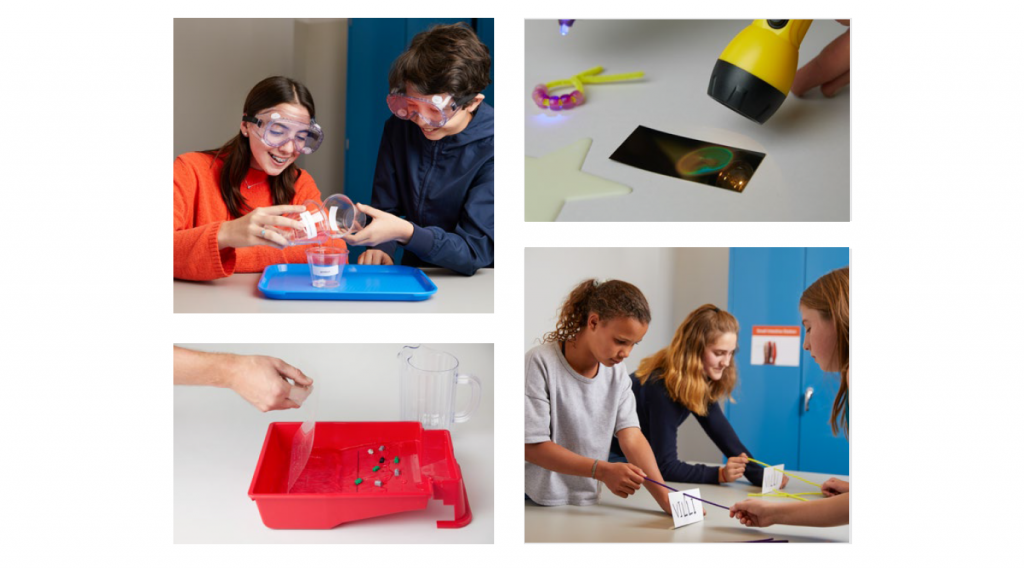
Students engage in hands-on science activities throughout Amplify Science. These photos capture curiosity in action and showcase real students exploring, building, testing, and investigating in Amplify Science classrooms.

Students engage in hands-on activities and experiments with liquids and solids, reading, and preparing materials, enhanced by illustrations and abstract art around the photos, supporting the Amplify Science curriculum.

Grades K–5

Grade 1: Animal and Plant Defenses
Designing animal defenses during the Animal and Plant Defenses unit
Credit: Veeh Nguyen, Belle Chasse Academy, LA

Grade 1: Light and Sound
Exploring shadows for the Light and Sound unit
Credit: Brittney Gooden, LaSalle Parish, LA

Grade 1: Light and Sound
Investigating vibrations during the Light and Sound unit
Credit: Jennifer Baker, Rapides Parish School Board, LA

Grade 1: Light and Sound
Puppet show for the Light and Sound unit
Credit: Anna Dardar, Rapides Parish School Board, LA

Grade 2: Changing Landforms
Exploring sand samples for the Changing Landforms unit
Credit: Rebecca Steindler O’Brien, P.S. 051 The Elias Howe School, NY

Grade 3: Balancing Forces
Exploring forces with magnet tricks for the Balancing Forces unit
Credit: Maureen Patt, Broad Street Elementary School, NH

Grade 3: Inheritance and Traits
Imaginary clay creatures to investigate traits in real organisms for the Inheritance and Traits unit
Credit: Maribel Ramos, Esperanza Academy Charter School, PA

Grade 3: Inheritance and Traits
Students showing off their knowledge for the Inheritance and Traits unit by creating their own drawings.
Credit: Sandi O’Brien, Parkmead Elementary School, CA

Grade 3: Inheritance and Traits
Determining which offspring belong to which set of parent pigeons based on similar traits for the Inheritance and Traits unit
Credit: Sandi O’Brien, Parkmead Elementary School, CA

Grade 3: Inheritance and Traits
Using celery as a real-life example of how the environment can impact traits, during the Inheritance and Traits unit
Credit: Sandi O’Brien, Parkmead Elementary School, CA

Grade 3: Environments and Survival
Modeling how ruby-throated hummingbirds with different traits meet their need for food during the Environments and Survival unit
Credit: Sandi O’Brien, Parkmead Elementary School, CA

Grade 3: Weather and Climate
Learning the best ways to collect, measure, and compare rainfall data for the Weather and Climate unit
Credit: Sandi O’Brien, Parkmead Elementary School, CA

Grade 4: Energy Conversions
Students created their own simple systems using a solar panel, alligator clips, wires, an LED light, and a buzzer during the Energy Conversions unit
Credit: Sandi O’Brien, Parkmead Elementary School, CA

Grade 4: Energy Conversions
Designing wind turbines during the Energy Conversions unit
Credit: Sandi O’Brien, Parkmead Elementary School, CA

Grade 4: Vision and Light
Planning vision models for the Vision and Light unit
Credit: Maribel Ramos, Esperanza Academy Charter School, PA

Grade 4: Vision and Light
Writing a scientific explanation for the Vision and Light unit
Credit: Chrissy Campenni, Wyoming Area School District, PA

Grade 5: Patterns of Earth and Sky
Investigating daytime and nighttime during the Patterns of Earth and Sky unit
Credit: Sandi O’Brien, Parkmead Elementary School, CA

Grade 5: Patterns of Earth and Sky
Hands-On Flextension: Making artifacts for the Patterns of Earth and Sky unit
Credit: Adriana Barrera, J.W. Bishop Elementary School, TX

Grade 5: Modeling Matter
Flavor ingredients test for the Modeling Matter unit
Credit: Kevin Butters, Grand Island Public Schools, NE

Grade 5: Modeling Matter
Testing ingredients to make salad dressing during the Modeling Matter unit
Credit: Sandi O’Brien, Parkmead Elementary School, CA

Grade 5: Modeling Matter
Discussing solubility and attraction during the Modeling Matter unit
Credit: Cristina Cullen, Glendora Unified School District, CA

Grade 5: The Earth System
Designing freshwater systems for The Earth System unit
Credit: Sandi O’Brien, Parkmead Elementary School, CA

Grade 5: Ecosystem Restoration
Building terrariums for the Ecosystem Restoration unit
Credit: Elizabeth DeBoo, St. Frances Cabrini Academy, MO

Grade 5: Ecosystem Restoration
Leaves and Roots game board from the Ecosystem Restoration unit
Credit: Cyndi Thompson Crouch, Smithville School District, MO

Grade 5: Ecosystem Restoration
Food web models with students’ favorite stuffed animals for the Ecosystem Restoration unit
Credit: Halli Trinker, Boonton Township School District, NJ

Grades 6–8

Grade 6: Microbiome
Drawing scale models of microorganisms for the Microbiome unit
Credit: Elizabeth DeBoo, St. Frances Cabrini Academy, MO

Grade 6: Microbiome
Hands-On Flextension: Investigating microscopic evidence of life for the Microbiome unit
Credit: Elizabeth DeBoo, St. Frances Cabrini Academy, MO

Grade 6: Metabolism
Investigating chemical reactions with water, phenol red, baking soda, and calcium chloride for the Metabolism unit
Credit: Jessica Kruger, Gardner International Magnet School, MI

Grade 6: Metabolism
Introducing the classroom body systems model for the Metabolism unit
Credit: Elizabeth DeBoo, St. Frances Cabrini Academy, MO

Grade 6: Metabolism Engineering Internship
Healthy bars for the Metabolism Engineering Internship
Credit: Elizabeth DeBoo, St. Frances Cabrini Academy, MO

Grade 6: Thermal Energy
Simulating hot and cold water during the Thermal Energy unit
Credit: Whitney Stewart, Rapides Parish School Board, LA

Grade 6: Ocean, Atmosphere, and Climate
Playing the Ocean Currents game for the Ocean, Atmosphere, and Climate unit
Credit: Elizabeth DeBoo, St. Frances Cabrini Academy, MO

Grade 6: Weather Patterns
Modeling a warm air parcel for the Weather Patterns unit
Credit: Elizabeth DeBoo, St. Frances Cabrini Academy, MO

Grade 7: Geology on Mars
The Flowing Water Model for the Geology on Mars unit
Credit: Kim Eich, Anoka-Hennepin Public School District 1, MN

Grade 7: Plate Motion Engineering Internship
Modeling a tsunami wave for Plate Motion Engineering Internship
Credit: Elizabeth DeBoo, St. Frances Cabrini Academy, MO

Grade 7: Chemical Reactions
Investigating substance changes for the Chemical Reactions unit
Credit: Ashlie Beals Arkwright, SCAPA at Bluegrass, KY

Grade 7: Populations and Resources
Conducting a yeast experiment during the Populations and Resources unit
Credit: Elizabeth DeBoo, St. Frances Cabrini Academy, MO

Grade 8: Harnessing Human Energy
Investigating energy systems for the Harnessing Human Energy unit
Credit: Lisa Anglim, Elizabeth Ustach Middle School, CA

Grade 8: Force and Motion
Investigating forces on different objects for the Force and Motion unit
Credit: Elizabeth DeBoo, St. Frances Cabrini Academy, MO

Grade 8: Force and Motion Engineering Internship
Designing an Egg Drop Model during the Force and Motion Engineering Internship
Credit: Elizabeth DeBoo, St. Frances Cabrini Academy, MO

Grade 8: Magnetic Fields
Hands-On Flextension: Exploring electrostatic force for the Magnetic Fields unit
Credit: Melanie Wenger, Lincoln Park Middle School, NJ

Grade 8: Light Waves
Students observing that light can cause materials to heat up, change color, and move for the Light Waves unit
Credit: Gloria Davis, Panama-Buena Vista Unified School District, CA

Grade 8: Light Waves
Students discover what happens to light as it travels for the Light Waves unit
Credit: Gloria Davis, Panama-Buena Vista Unified School District, CA

Grade 8: Light Waves
Students participating in a fishbowl discussion to share observations and evidence for the Light Waves unit
Credit: Gloria Davis, Panama-Buena Vista Unified School District, CA

Grade 8: Earth, Moon, and Sun
Paper model of the Moon’s phases for Earth, Moon, and Sun unit
Credit: Elizabeth DeBoo, St. Frances Cabrini Academy, MO

Grade 8: Evolutionary History
Hands-On Flextension: Reconstructing owl pellet skeletons for the Evolutionary History unit
Credit: Elizabeth DeBoo, St. Frances Cabrini Academy, MO

Inspiring the next generation of South Carolina scientists, engineers, and curious citizens

Amplify Science is an engaging new core curriculum designed for three-dimensional, phenomena-based learning.

Amplify Science was developed by the science education experts at UC Berkeley’s Lawrence Hall of Science and the digital learning team at Amplify.

Collage showing students engaged in classroom science activities and two scientific illustrations: a cheetah in foliage and a diagram of clouds and raindrops above a hill.

Our Instructional model

The Amplify Science program is rooted in the proven, research-based pedagogy of Do, Talk, Read, Write, Visualize. Here’s how each element works:

DO
First-hand investigations are an important part of any science classroom, and Amplify Science has students getting hands-on in every unit, from building models of protein molecules to experimenting with electrical systems.

TALK
Student-to-student discourse and full class discussions are an integral part of the program. Students are provided with numerous opportunities to engage in meaningful oral scientific argumentation, all while fostering a collaborative classroom environment.

READ
Students read scientific articles, focusing their reading activities on searching for evidence related to their investigation, and importantly, on asking and recording questions as they read through fascinating texts on 21st-century topics.

WRITE
Following real-world practices, students write scientific arguments based on evidence they’ve collected, making clear their reasoning about how a given piece of evidence connects to one of several claims.

VISUALIZE
By manipulating digital simulations and using modeling tools to craft visualizations of their thinking— just as real scientists and engineers do—students take their learning far beyond the confines of what they can physically see in the classroom in an exciting and authentic way.

Explore the Digital Teacher’s Guide

When you’re ready to review, click the orange button below and use your provided login credentials to access the Amplify Science Digital Teacher’s Guide. If you need login credentials, contact Jeff Rutter, jrutter@amplify.com.

Resources to support your review

Scope and sequence

GRADE
UNIT
Kindergarten
  • Needs of Plants and Animals
  • Pushes and Pulls
  • Sunlight and Water
Grade 1 
  • Animal and Plant Defenses
  • Light and Sound
  • Spinning Earth
Grade 2 
  • Plant and Animal Relationships
  • Properties of Materials
  • Changing Landforms
Grade 3 
  • Balancing Forces
  • Inheritance and Traits
  • Environments and Survival
  • Weather and Climate
Grade 4 
  • Energy Conversions
  • Vision and Light
  • Earth’s Features
  • Waves, Energy, and Information
Grade 5 
  • Patterns of Earth and Sky
  • Modeling Matter
  • The Earth System
  • Ecosystem Restoration
Grade
Units

Grade 6

  • Launch: Microbiome
  • Metabolism
  • Metabolism Engineering Internship
  • Thermal Energy
  • Plate Motion
  • Plate Motion Engineering Internship
  • Rock Transformations
  • Weather Patterns
  • Ocean, Atmosphere, and Climate

Grade 7

  • Launch: Harnessing Human Energy
  • Phase Change
  • Phase Change Engineering Internship
  • Magnetic Fields
  • Earth’s Changing Climate
  • Earth’s Changing Climate Engineering Internship
  • Chemical Reactions
  • Populations and Resources
  • Matter and Energy in Ecosystems

Grade 8

  • Launch: Geology on Mars
  • Earth, Moon, and Sun
  • Light Waves
  • Force and Motion
  • Force and Motion Engineering Internship
  • Traits and Reproduction
  • Natural Selection
  • Natural Selection Engineering Internship
  • Evolutionary History

South Carolina College- and Career-Ready Science Standards 2021

Amplify Science was designed from the ground up to meet the Next Generation Science Standards (NGSS), and the South Carolina College- and Career-Ready Science Standards 2021 are closely aligned to the NGSS at K-8. The guidance below is meant to provide support for integrating additional companion activities that support full coverage of the South Carolina College- and Career-Ready Science Standards 2021.

Organized by grade level, each section below will outline:

  • Additional activities that support 100% alignment to the  South Carolina College- and Career-Ready Science Standards 2021; 
  • The standard being addressed with the activities; 
  • The recommended placement of the activities within a specific Amplify Science unit; and 
  • PDFs of any accompanying materials that are necessary to implement the activities.

Standard: MS-PS1-4: Develop a model that predicts and describes changes in particle motion, temperature, and state of a pure substance when thermal energy is added or removed.
Recommended placementThermal Energy unit, Lesson 4.4, addition to Activity 3
Materials“Liquid Oxygen”
By reading the article “Liquid Oxygen,” which describes how the relationship between attraction and kinetic energy determines when a substance changes phase, students extend their understanding of the possible effects of adding or removing thermal energy to include changes in state (phase). Oxygen is one of the most common elements in the world, but most people are only familiar with oxygen in the gas phase. Because oxygen molecules are only weakly attracted to one another, condensing oxygen is difficult. This article introduces students to molecular attraction and discusses its role in phase change, including how it can be used to turn oxygen from a gas to a liquid.
Instructions:
Download PDFs of the “Liquid Oxygen” and distribute it to students. Before they begin reading, remind students of the Active Reading Guidelines. 

Standard: MS-PS4-2: Develop and use a model to describe that waves are reflected, absorbed, or transmitted through various materials.
Recommended placementWeather Patterns unit, Lesson 4.4, addition to Activity 3
Materials“Harvesting Sunlight”, “Why No One in Space Can Hear You Scream” and “Making Waves at Swim Practice”
After investigating weather patterns, which includes a focus of the effects of energy from sunlight, students extend their learning about light by reading three articles about light and other waves.
“Harvesting Sunlight:” Students read this article to learn about the types of light from the sun that plants use for photosynthesis. The article describes how the sun emits all types of light, but plants can only use certain types of visible light for photosynthesis, mostly red and blue light. Plants also absorb other types of light, and these types of light affect plants in different ways. Students use this information to gather evidence that there are different types of light that can affect a material in different ways.
“Why No One in Space Can Hear You Scream:” Students read this article to learn about how waves are transmitted. Explosions that would be deafening on Earth are silent in space. This is because sound is produced by sound waves and, unlike light waves, sound waves need matter to travel through. Reading about this phenomenon helps students understand the similarities and differences between mechanical and electromagnetic waves.
“Making Waves at Swim Practice:” A practice for the school swim team provides an everyday context for discussing light waves and sound waves in this engaging article. First, the article explores sound waves traveling through different materials–the air, the water of the pool, and even a metal poolside bench. Students discover that sound waves travel at different speeds in different materials. The later part of the article discusses light waves, which also travel at different speeds in different materials. As light waves move from one material to another, they change speed and bend. This bending of light waves is called refraction, and it explains why objects that are partly in the water and partly out of the water (such as the legs of a person sitting on the side of a pool) appear ripply and bent.
Instructions:
Plan one class period for each article. Download PDFs of the  “Harvesting Sunlight,” “Why No One in Space Can Hear You Scream,” and “Making Waves at Swim Practice” articles. For each article, before students begin reading, preview the article and discuss what students already know and what they wonder about the topic, then remind students of the Active Reading Guidelines. 

Standard: MS-PS2-3: Ask questions about data to determine the factors that affect the strength of electric and magnetic forces. MS-PS2-5: Conduct an investigation and evaluate the experimental design to provide evidence that fields exist between objects exerting forces on each other even though the objects are not in contact.
Recommended placementHarnessing Human Energy unit, Lesson 3.4, after Activity 1
Materials“Earth’s Geomagnetism” and “Painting with Static Electricity”
After concluding their investigations of energy transfers and conversions, students read two articles that introduce the topic of forces that act at a distance.
“Earth’s Geomagnetism:” What makes a compass needle point north, no matter what? This article introduces students to Earth’s geomagnetic field and the field lines scientists use to show its direction.
“Painting with Static Electricity:” This article gives students the opportunity to learn about electrostatic fields and forces in the context of spray painting without making a mess. Electrostatic painting systems use electrostatics to draw spray paint toward the object being painted, and nowhere else. Painters charge the object they are painting with a negative charge and the paint with a positive charge. The opposite charges are attracted to one another, causing the paint to move toward the object. This surprising use of electrostatics saves time and paint and keeps things tidy!
Instructions
Plan one class period for each article. Download PDFs of the “Earth’s Geomagnetism” and “Painting with Electricity” articles. For each article, before students begin reading, preview the article and discuss what students already know and what they wonder about the topic, then remind students of the Active Reading Guidelines. 

What’s included

Science articles
The middle school science articles serve as sources for evidence collection and were authored by science and literacy experts at the Lawrence Hall of Science.

Illustration of the indirect effects of overfishing on northern benguela jelly populations displayed on a laptop screen.

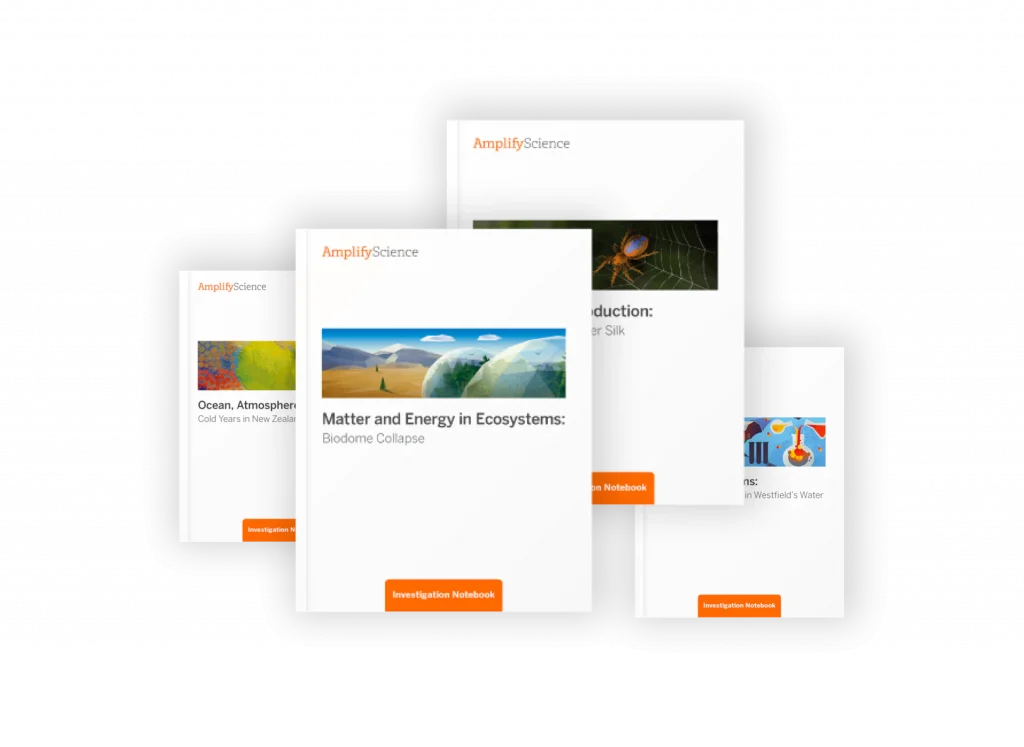
Student Investigation Notebooks
Available for every unit, the Student Investigation Notebooks provide space for students to:

  • Record data
  • Reflect on ideas from texts and investigations
  • Construct explanations and arguments

Available with full-color article compilations for middle school units.

Collection of educational books from 'amplify science' on topics including ocean atmosphere, matter and energy ecosystems, and insect interactions, displayed in various angles.

Digital student experience
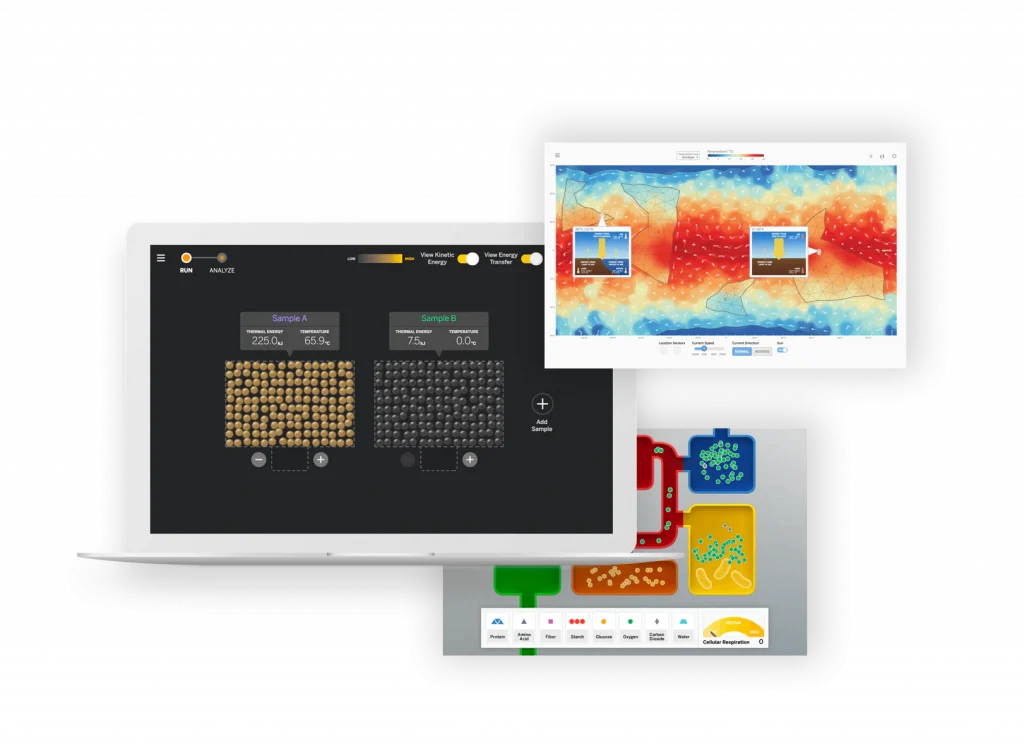
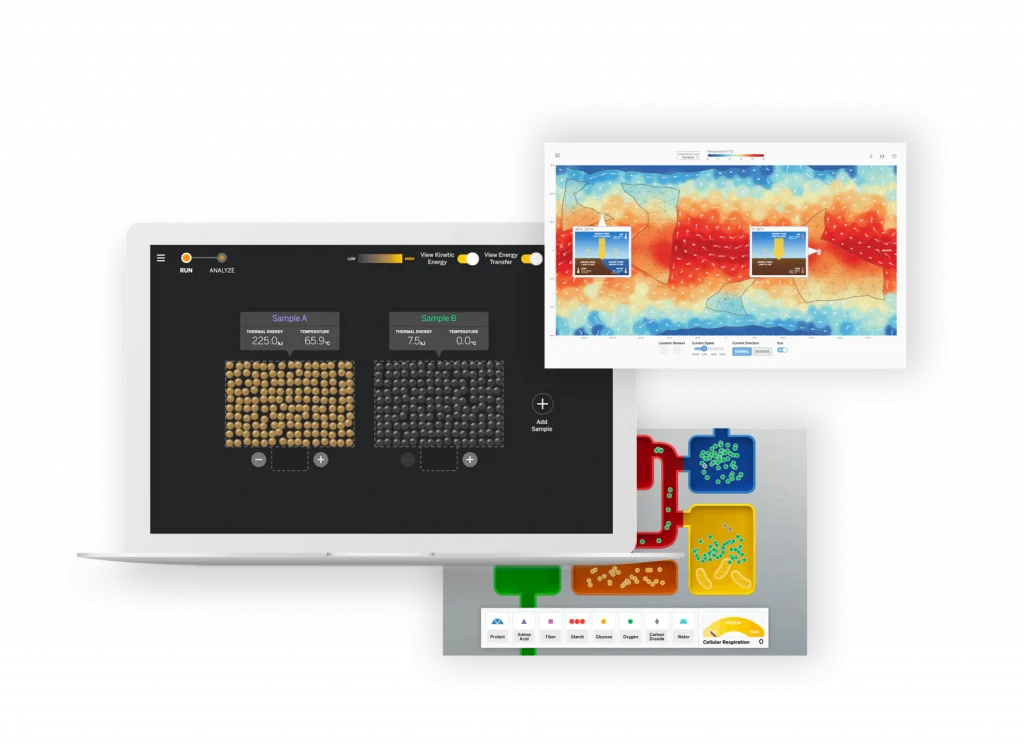
Students access the digital simulations and modeling tools, as well as lesson activities and assessments, through the digital student experience. Students can interact with the digital student experience as they:

  • Conduct hands-on investigations
  • Engage in active reading and writing activities
  • Participate in discussions
  • Record observations
  • Craft end-of-unit scientific arguments
A digital illustration showcasing a laptop and a tablet displaying complex data analysis software interfaces with graphs and heatmaps.

Teacher’s Guides
Available digitally and in print, the Teacher’s Guides contain all of the information teachers need to facilitate classroom instruction, including:

  • Classroom Slides
  • Detailed lesson plans
  • Unit and chapter overview documentation
  • Differentiation strategies
  • Standards alignments
  • In-context professional development
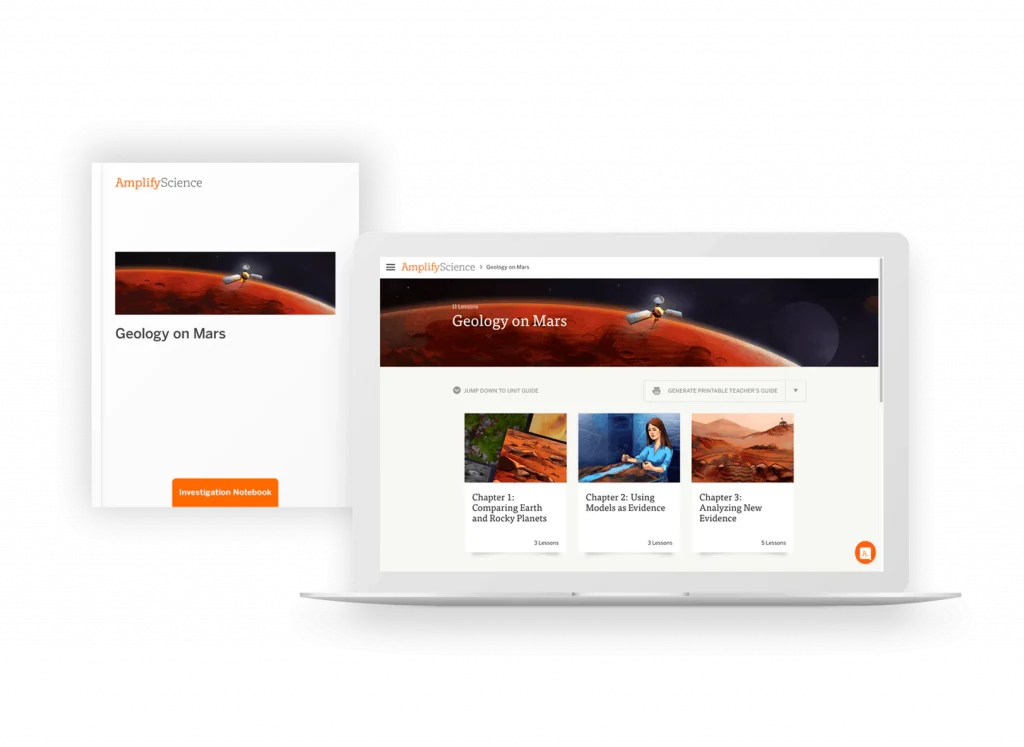
A laptop displaying a website about Mars exploration with a brochure next to it. Both screens show Mars-related images.

Hands-on materials kits
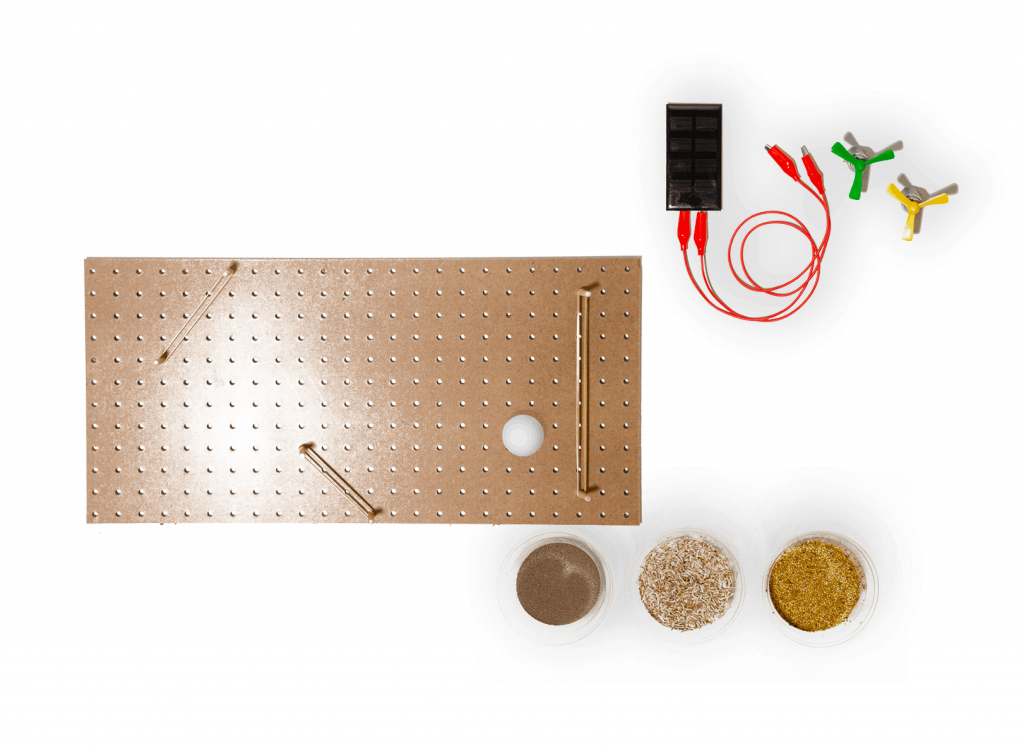
Hands-on learning is at the heart of Amplify Science. Each unit kit contains:

  • Consumable and non-consumable hands-on materials
  • Print classroom display materials
  • Premium print materials for student use (sorting cards, maps, etc.)
A perforated rectangular board, three small containers with different powders, a black battery holder with red wires, and three colored alligator clips are arranged on a white background.

Remote and hybrid learning supports

A person sitting at a desk using a laptop, with a bookshelf containing books, a fish tank, and a soccer ball nearby.

Amplify has launched a new remote learning solution called Amplify Science@Home. Intended to make extended remote learning and hybrid learning easier, Amplify Science@Home includes two useful options for continuing instruction: @Home Videos and @Home Units. 

Amplify Science @Home Videos are recordings of real Amplify Science teachers teaching the lessons. For those teachers who are unable to meet synchronously with their students, the recorded lessons are a great way to keep their students on track and engaged with Amplify Science while at home. These videos will be produced for all K–5 units, and for the first four units of each 6–8 grade level. Their release will be rolling, beginning in August.   

Amplify Science@Home Units are modified versions of Amplify Science units, strategically designed to highlight key activities from the program. The @Home Units take significantly less instructional time than the complete Amplify Science program and allow students to engage with science at home. @Home Units will be developed for all Amplify Science K–8 units. Each @Home unit includes:

  • Teacher overviews explaining how to use the materials, including suggestions for enhancing the @Home Units if synchronous learning or in-class time with students is available.
  • Overviews to send home to families.

Student materials are available in two formats:

  • @Home Slides (PDF/PPT) + Student Sheets (PDF) for students with access to technology at home.
  • Downloadable @Home Packets (PDF) for students without access to technology at home.

Download the Remote and hybrid learning guide.

Looking for help?

Powerful (and free!) pedagogical support

Amplify provides a unique kind of support you won’t find from other publishers. We have developed an educational support team of former teachers and administrators who provide pedagogical support for every Amplify curriculum, assessment, and intervention program. This service is completely free for all educators who are using our programs and includes:

  • Guidance for developing lesson plans and intervention plans
  • Information on where to locate standards and other planning materials
  • Recommendations and tips for day-to-day teaching with Amplify programs
  • Support with administering and interpreting assessment data and more

To reach our pedagogical team, use our live chat within your program, call (800) 823-1969, or email edsupport@amplify.com

Timely technical and program support

Our technical and program support is included and available from 7 a.m. to 7 p.m. ET, Monday through Friday, through a variety of channels, including a live chat program that enables teachers to get immediate help in the middle of the school day.

For your most urgent questions:

  • Use our live chat within your program
  • Call our toll-free number: (800) 823-1969

For less urgent questions:

Contact us

Contact your South Carolina team representatives:
Jeff Rutter
Field Manager
jrutter@amplify.com
(727) 512-8440

Cathy McMillan
Senior Account Executive
cmcmillan@amplify.com
(904) 465-9904

Inspiring the next generation of Massachusetts scientists, engineers, and curious citizens

Amplify Science is an engaging new core curriculum designed for three-dimensional, phenomena-based learning.

Collage of four images: a jungle illustration with a giraffe, students using computers, a boy studying with classmates, and an animated hillside with kites flying.

A powerful partnership

Amplify Science was developed by the science education experts at UC Berkeley’s Lawrence Hall of Science and the digital learning team at Amplify. This partnership extends to 2032, allowing us to continuously improve our program and provide our customers with the most up-to-date enhancements, free of charge. Get a glimpse at our latest back-to-school updates here.

Instructional model

The Amplify Science program is rooted in the proven, research-based pedagogy of Do, Talk, Read, Write, Visualize. Here’s how each element works:

Three blue panels describing educational activities: "hands-on science" with lab experiments, "discuss" with collaborative learning, and "read" with literacy in science articles.

Phenomena-based approach

In each Amplify Science unit, students take on the roles of scientists or engineers in order to investigate a real-world problem. Students work to define the problem and collect and make sense of evidence. Once the context is clear, students collect evidence from multiple sources and through a variety of modalities. At the end of the unit, students are presented with a brand new problem, giving them an opportunity to apply what they’ve learned over the course of the unit to a new context. This represents a shift from asking students to learn about science to supporting students in figuring out the science.

Flowchart of a learning unit divided into four chapters, showing stages of student engagement from introduction to application, with assessments indicated at various points.

Resources to support your review

Scope and Sequence

GRADE

Kindergarten

UNITS

  • Needs of Plants and Animals
  • Pushes and Pulls
  • Sunlight and Water

Grade 1

  • Needs of Plants and Animals
  • Pushes and Pulls
  • Sunlight and Water

Grade 2

  • Plant and Animal Relationships
  • Properties of Materials
  • Changing Landforms

Grade 3

  • Balancing Forces
  • Inheritance and Traits
  • Environments and Survival
  • Weather and Climate

Grade 4

  • Energy Conversions
  • Vision and Light
  • Earth’s Features
  • Waves, Energy, and Information

Grade 5

  • Patterns of Earth and Sky
  • Modeling Matter
  • The Earth System
  • Ecosystem Restoration

Flexible implementation

One of the key features of Amplify Science is the flexibility that it offers. We give students authentic opportunities to experience the full breadth of what it means to be a scientist or engineer. Just as scientists gather evidence from many types of sources, so do students in our program. Like scientists, students gather evidence not just from physical models, but also from digital models, texts, videos, photographs, maps, data sets, and even their peers!
Simply put, real scientists don’t just get messy—they read, write, analyze, hypothesize, model, test, and communicate with purpose, too.

Illustration of the indirect effects of overfishing on northern benguela jelly populations displayed on a laptop screen.

Student Books
Beginning and young readers have unique developmental needs, and science instruction should support these students in reading more independently as they progress through sections of content, the school year, and each grade. One way Amplify Science meets these needs is by strategically deploying different modes of reading throughout each unit: Read-Aloud, Shared Reading, and Partner Reading.

A collage of various educational book covers related to science and math, featuring illustrated themes like sports, nature, and energy.

Student Investigation Notebooks

Available for every unit, the Student Investigation Notebooks provide space for students to:

  • record data.
  • reflect on ideas from texts and investigations.
  • construct explanations and arguments.
Collection of educational books from 'amplify science' on topics including ocean atmosphere, matter and energy ecosystems, and insect interactions, displayed in various angles.

Digital student experience

Students access the digital simulations and Modeling Tools, as well as lesson activities and assessments, through the digital student experience. Students can interact with the digital student experience as they:

  • conduct hands-on investigations.
  • engage in Active Reading and writing activities.
  • participate in discussions.
  • record observations.
  • craft end-of-unit scientific arguments.

Dive into a quick example of our powerful simulations

Grades K–5 simulation

A digital illustration showcasing a laptop and a tablet displaying complex data analysis software interfaces with graphs and heatmaps.

Hands-on materials kits

Hands-on learning is at the heart of Amplify Science and is integrated
into every unit. Students actively take on the roles of scientists and engineers as they gather evidence, think critically, solve problems, and develop and defend claims about the world around them.

Check out this 2-minute video to see an Amplify Science hands-on investigation in action.

Each unit kit contains:

  • consumable and non-consumable hands-on materials.
  • print classroom display materials.
  • premium print materials for student use (sorting cards, maps, etc.).
A perforated rectangular board, three small containers with different powders, a black battery holder with red wires, and three colored alligator clips are arranged on a white background.

Teaching support

Available digitally and in print, the Teacher’s Guides contain all of the information teachers need to facilitate classroom instruction, including:

  • detailed lesson plans.
  • unit and chapter overview documentation.
  • differentiation strategies.
  • standards alignments.
  • in-context professional development.
A laptop displaying the Geology on Mars webpage sits beside a book titled "Geology on Mars," both featuring the same cover image of Mars and a spacecraft, perfect for enhancing three-dimensional learning in any science classroom.

Massachusetts Academic Standards in Science coverage

Amplify Science was designed from the ground up to meet the NGSS, a set of standards that closely align with the Massachusetts Learning Standards for Science coverage. Most grade levels’ respective set of Amplify Science units therefore address the necessary MASS (see correlation). 

For grades K, 1, 2, 3, and 5, teachers should plan to also use the resources provided in the sections below to achieve full coverage of the appropriate standards before their students move on to the next grade band. Organized by grade level, each section outlines:

  • companion lesson materials that were written to support 100% alignment to the Massachusetts Learning Standards for Science coverage when used with the core Amplify Science units for the grade level
  • the standard being addressed with each companion lesson; and
  • the recommended placement of each companion lesson within a specific Amplify Science unit

Standard: K-PS1-1(MA). Investigate and communicate the idea that different kinds of materials can be solid or liquid depending on temperature.

Recommended placement: Following Lesson 5.6 of Sunlight and Weather

Resources: After students finish reflecting on their unit-long exploration of energy and temperature, play and discuss this read-aloud video of the student book Can you Change it Back?, which is featured in the grade 2 unit Properties of Materials. You might also consider borrowing the physical books from a grade 2 colleague’s Properties of Materials kit and reading it as a class instead of or in addition to playing the video.

Using the book, you will introduce students to the idea that heating and cooling can cause changes to materials. In the book, students are presented with a variety of materials and asked to predict whether a certain change caused by heating or cooling is reversible or irreversible.

Companion lesson: “Seasonal Changes”

Standard: 1-ESS1-2– Analyze provided data to identify relationships among seasonal patterns of change, including relative sunrise and sunset time changes, seasonal temperature and rainfall or snowfall patterns, and seasonal changes to the environment.

Recommended placement: Following Lesson 5.1 of Spinning Earth

Resources: Season Changes Classroom Slides and Student Sheet

Companion lesson: “Properties and Weight”

Standard: 2-PS1-3– Analyze a variety of evidence to conclude that when a chunk of material is cut or broken into pieces, each piece is still the same material and, however small each piece is, has weight. Show that the material properties of a small set of pieces do not change when the pieces are used to build larger objects.

Recommended placement: Following Lesson 4.4 of Properties of Materials.

Resources: Weight and Properties Classroom SlidesResources, and Student Sheet

Companion lesson 1: Extinct Insects

Standard: 3-LS4-1: Use fossils to describe types of organisms and their environments that existed long ago and compare those to living organisms and their environments. Recognize that most kinds of plants and animals that once lived on Earth are no longer found anywhere.

Recommended placement: Following Lesson 2.3 of Environments and Survival

Resources: Extinct Insects Classroom Slides and Student Sheet

Companion lesson 2: Friction

Standard: 3-PS2-1: Provide evidence to explain the effect of multiple forces, including friction, on an object. Include balanced forces that do not change the motion of the object and unbalanced forces that do change the motion of the object.

Recommended placement: Following Lesson 1.1 of Balancing Forces

Resources: Friction Classroom SlidesResources, and Student Sheet

Companion lesson 1: Composters

Standard: 5-LS2-2(MA)– Compare at least two designs for a composter to determine which is most likely to encourage decomposition of materials.

Recommended placement: Following Lesson 3.7 of Ecosystem Restoration

Resources: Composters Classroom Slides and Student Sheet

Companion lesson 2: Properties of Materials

Standard: 5-PS1-3 (MA) – Make observations and measurements of substances to describe characteristic properties of each, including color, hardness, reflectivity, electrical conductivity, thermal conductivity, response to magnetic forces, and solubility.

Recommended placement: Following Lesson 1.3 of Modeling Matter

Resources: Properties of Materials Classroom SlidesResourcesArticlesCopymaster, and Student Sheet

Companion lesson 3: Water Filters

Standard: 5-ESS3-2(MA)– Test a simple system designed to filter particulates out of water and propose one change to the design to improve it.

Recommended placement: Following Lesson 5.6 of The Earth System

Resources: Water Filters Classroom Slides and Student Sheet

Benchmark Assessments

Amplify’s Benchmark Assessments are designed to help teachers measure student progress toward the three dimensions—Disciplinary Core Ideas (DCIs), Science and Engineering Practices (SEPs), and Crosscutting Concepts(CCCs)—and performance expectations (PEs) of the NGSS. The assessments provide important insight into how students are progressing toward mastery of different standards ahead of high-stakes, end-of-year assessments.

The Benchmark Assessments are built to be delivered after specific units in the recommended Amplify Science scope and sequence.* They are given three or four times per year, depending on the grade level. The benchmarks are intended to show progress at various points in time across a school year, and are therefore not summative in nature. Digital items and item clusters are also tagged to specific NGSS standards, allowing customization to align with other course sequences. The assessments are available via the following platforms:

Print
PDF files: For administering Benchmark Assessments on paper

Digital platforms

  • Illuminate
  • SchoolCity
  • Otus
  • QTI (“Question and Test Interoperability”) files
    Not sure whether QTI files are compatible with your assessment platform? Contact your school IT or assessment platform representative for more information.
    Please note that Amplify is able to provide access to the QTI files themselves, but is not able to support the integration process. Your assessment platform provider should be able to assist with QTI file integration.

Remote and hybrid learning support

A child sits at a desk using a laptop. Next to the desk is a bookshelf with books, a fishbowl, and a soccer ball.

See an example of our remote and hybrid learning support below:

Intended to make extended remote and hybrid learning easier, Amplify Science @Home includes two useful options for continuing instruction: @Home Videos and @Home Units.
Amplify Science @Home Videos are recordings of real Amplify Science teachers teaching the lessons. For those teachers who are unable to meet synchronously with their students, the recorded lessons are a great way to keep their students on track and engaged with Amplify Science while at home.

Amplify Science @Home Units are modified versions of Amplify Science units, strategically designed to highlight key activities from the program. The @Home Units take significantly less instructional time than the complete Amplify Science program and allow students to engage with science at home. Each @Home unit includes:

  • Teacher overviews explaining how to use the materials, including suggestions for enhancing the @Home Units if synchronous learning or in-class time with students is available
  • Overviews to send home to families

Student materials will be available in two formats:

  • @Home Slides (PDF/PPT) + Student Sheets (PDF) for students with access to technology at home
  • Downloadable @Home Packets (PDF) for students without access to technology at home

Download the remote and hybrid learning guide

Explore the digital Teacher’s Guide

To familiarize yourself with navigation of the digital Teacher’s Guide, watch our navigational guide videos:

Grades K–5:

Looking for help?

Powerful (and free!) pedagogical support

Amplify provides a unique kind of support you won’t find from other publishers. We’ve developed an educational support team of former teachers and administrators who provide pedagogical support for every Amplify curriculum, assessment, and intervention program. This service is completely free for all educators who are using our programs and includes:

  • Guidance for developing lesson plans and intervention plans.
  • Information on where to locate standards and other planning materials.
  • Recommendations and tips for day-to-day teaching with Amplify programs.
  • Support with administering and interpreting assessment data and more.

Timely technical and program support

Our technical and program support is included and available Monday through Friday, from 7 a.m. to 7 p.m. ET, through a variety of channels, including a live chat program that enables teachers to get immediate help in the middle of the school day.

Ready to dive in?

Contact your Massachusetts representative:

Tracy Yefimenko
518-466-3497
tyefimenko@amplify.com

A powerful partnership

Amplify Science was developed by the science education experts at UC Berkeley’s Lawrence Hall of Science and the digital learning team at Amplify. This partnership extends to 2032, allowing us to continuously improve our program and provide our customers with the most up-to-date enhancements, free of charge. Get a glimpse at our latest back-to-school updates here.

Instructional model

The Amplify Science program is rooted in the proven, research-based pedagogy of Do, Talk, Read, Write, Visualize. Here’s how each element works:

Three blue panels describing educational activities: "hands-on science" with lab experiments, "discuss" with collaborative learning, and "read" with literacy in science articles.

Phenomena-based approach

In each Amplify Science unit, students take on the roles of scientists or engineers in order to investigate a real-world problem. Students work to define the problem and collect and make sense of evidence. Once the context is clear, students collect evidence from multiple sources and through a variety of modalities. At the end of the unit, students are presented with a brand new problem, giving them an opportunity to apply what they’ve learned over the course of the unit to a new context. This represents a shift from asking students to learn about science to supporting students in figuring out the science.

Flowchart of a learning unit divided into four chapters, showing stages of student engagement from introduction to application, with assessments indicated at various points.

Resources to support your review

Remote and hybrid learning support

A child sits at a desk using a laptop. Next to the desk is a bookshelf with books, a fishbowl, and a soccer ball.

See an example of our remote and hybrid learning support below:

This fall, Amplify launched a new remote learning solution called Amplify Science@Home. Intended to make extended remote and hybrid learning easier, Amplify Science @Home includes two useful options for continuing instruction: @Home Videos and @Home Units.
Amplify Science @Home Videos are recordings of real Amplify Science teachers teaching the lessons. For those teachers who are unable to meet synchronously with their students, the recorded lessons are a great way to keep their students on track and engaged with Amplify Science while at home. These videos will be produced for all K–5 units, and for the first four units of each 6–8 grade level. Their release will be rolling, beginning in August.

Amplify Science @Home Units are modified versions of Amplify Science units, strategically designed to highlight key activities from the program. The @Home Units take significantly less instructional time than the complete Amplify Science program and allow students to engage with science at home. @Home Units will be developed for all Amplify Science K–8 units. Each @Home unit includes:

  • Teacher overviews explaining how to use the materials, including suggestions for enhancing the @Home Units if synchronous learning or in-class time with students is available
  • Overviews to send home to families

Student materials will be available in two formats:

  • @Home Slides (PDF/PPT) + Student Sheets (PDF) for students with access to technology at home
  • Downloadable @Home Packets (PDF) for students without access to technology at home

Download the remote and hybrid learning guide

Benchmark Assessments

Amplify’s Benchmark Assessments are designed to help teachers measure student progress toward the three dimensions—Disciplinary Core Ideas (DCIs), Science and Engineering Practices (SEPs), and Crosscutting Concepts(CCCs)—and performance expectations (PEs) of the NGSS. The assessments provide important insight into how students are progressing toward mastery of different standards ahead of high-stakes, end-of-year assessments.

The Benchmark Assessments are built to be delivered after specific units in the recommended Amplify Science scope and sequence.* They are given three or four times per year, depending on the grade level. The benchmarks are intended to show progress at various points in time across a school year, and are therefore not summative in nature. Digital items and item clusters are also tagged to specific NGSS standards, allowing customization to align with other course sequences. The assessments are available via the following platforms:

Print
PDF files: For administering Benchmark Assessments on paper

Digital platforms

  • Illuminate
  • SchoolCity
  • Otus
  • QTI (“Question and Test Interoperability”) files
    Not sure whether QTI files are compatible with your assessment platform? Contact your school IT or assessment platform representative for more information.
    Please note that Amplify is able to provide access to the QTI files themselves, but is not able to support the integration process. Your assessment platform provider should be able to assist with QTI file integration.

Flexible implementation

One of the key features of Amplify Science is the flexibility that it offers. We give students authentic opportunities to experience the full breadth of what it means to be a scientist or engineer. Just as scientists gather evidence from many types of sources, so do students in our program. Like scientists, students gather evidence not just from physical models, but also from digital models, texts, videos, photographs, maps, data sets, and even their peers!
Simply put, real scientists don’t just get messy—they read, write, analyze, hypothesize, model, test, and communicate with purpose, too.

Science articles

The middle school science articles serve as sources for evidence collection and were authored by science and literacy experts at the Lawrence Hall of Science.

Illustration of the indirect effects of overfishing on northern benguela jelly populations displayed on a laptop screen.

Student Books
Beginning and young readers have unique developmental needs, and science instruction should support these students in reading more independently as they progress through sections of content, the school year, and each grade. One way Amplify Science meets these needs is by strategically deploying different modes of reading throughout each unit: Read-Aloud, Shared Reading, and Partner Reading.

A collage of various educational book covers related to science and math, featuring illustrated themes like sports, nature, and energy.

Student Investigation Notebooks

Available for every unit, the Student Investigation Notebooks provide space for students to:

  • record data.
  • reflect on ideas from texts and investigations.
  • construct explanations and arguments.

Available with full-color article compilations for middle school units.

Collection of educational books from 'amplify science' on topics including ocean atmosphere, matter and energy ecosystems, and insect interactions, displayed in various angles.

Digital student experience

Students access the digital simulations and Modeling Tools, as well as lesson activities and assessments, through the digital student experience. Students can interact with the digital student experience as they:

  • conduct hands-on investigations.
  • engage in Active Reading and writing activities.
  • participate in discussions.
  • record observations.
  • craft end-of-unit scientific arguments.

Dive into a quick example of our powerful simulations

A digital illustration showcasing a laptop and a tablet displaying complex data analysis software interfaces with graphs and heatmaps.

Hands-on materials kits

Hands-on learning is at the heart of Amplify Science and is integrated
into every unit. Students actively take on the roles of scientists and engineers as they gather evidence, think critically, solve problems, and develop and defend claims about the world around them.

Check out these 2-minute videos to see an Amplify Science hands-on investigation in action.

Each unit kit contains:

  • consumable and non-consumable hands-on materials.
  • print classroom display materials.
  • premium print materials for student use (sorting cards, maps, etc.).
A perforated rectangular board, three small containers with different powders, a black battery holder with red wires, and three colored alligator clips are arranged on a white background.

Teacher’s Guides

Available digitally and in print, the Teacher’s Guides contain all of the information teachers need to facilitate classroom instruction, including:

  • detailed lesson plans.
  • unit and chapter overview documentation.
  • differentiation strategies.
  • standards alignments.
  • in-context professional development.
A laptop displaying the Geology on Mars webpage sits beside a book titled "Geology on Mars," both featuring the same cover image of Mars and a spacecraft, perfect for enhancing three-dimensional learning in any science classroom.

Scope and Sequence

GRADE UNITS
Kindergarten
  • Needs of Plants and Animals
  • Pushes and Pulls
  • Sunlight and Water
Grade 1
  • Animal and Plant Defenses
  • Light and Sound
  • Spinning Earth
Grade 2
  • Plant and Animal Relationships
  • Properties of Materials
  • Changing Landforms
Grade 3
  • Balancing Forces
  • Inheritance and Traits
  • Environments and Survival
  • Weather and Climate
Grade 4
  • Energy Conversions
  • Vision and Light
  • Earth’s Features
  • Waves, Energy, and Information
Grade 5
  • Patterns of Earth and Sky
  • Modeling Matter
  • The Earth System
  • Ecosystem Restoration
GRADE UNITS
Grade 6: Earth Science
  • Launch: Geology on Mars
  • Plate Motion
  • Plate Motion: Engineering Internship
  • Rock Transformations
  • Earth, Moon, and Sun
  • Ocean, Atmosphere, and Climate
  • Weather Patterns
  • Earth’s Changing Climate
  • Earth’s Changing Climate: Engineering Internship
Grade 7: Life Science
  • Launch: Microbiome
  • Metabolism
  • Metabolism: Engineering Internship
  • Traits and Reproduction
  • Populations and Resources
  • Matter and Energy in Ecosystems
  • Natural Selection
  • Natural Selection: Engineering Internship
  • Evolutionary History
Grade 8: Physical Science 
  • Launch: Harnessing Human Energy
  • Force and Motion
  • Force and Motion: Engineering Internship
  • Magnetic Fields
  • Thermal Energy
  • Phase Change
  • Phase Change: Engineering Internship
  • Chemical Reactions
  • Light Waves

Minnesota Academic Standards in Science coverage

Amplify Science was designed from the ground up to meet the NGSS, a set of standards that closely align with the K–8 Minnesota Academic Standards in Science (MASS). Therefore, most grade levels’ respective set of Amplify Science units address the necessary MASS (see K–5 reverse alignment and/or correlations for K–5 and 6–8). However, for grades 2–4, teachers should also use the resources provided in the sections below to achieve full coverage of the appropriate standards before their students move on to the next grade level. Organized by grade level, each section outlines:

  • companion lesson materials that were written to support 100% alignment to the Minnesota Academic Standards in Science when used with the core Amplify Science units for the grade level
  • the standard being addressed with each companion lesson; and
  • the recommended placement of each companion lesson within a specific Amplify Science unit 

Companion lesson: “Shelter”

Standard: 1P.4.2.2.1 Communicate solutions that use materials to provide shelter, food, or warmth needs for communities including Minnesota American Indian tribes and communities.* (P: 8, CC: 2, CI: PS1, ETS2)

Recommended placement: Following Lesson 5.1 of Spinning Earth

Materials: Shelter Classroom Slides and Student Sheet

Companion lesson: “Describing Climates”

Standard: 2E.4.2.1.2 Obtain and use information from multiple sources, including electronic sources, to describe climates in different regions of the world.** (P: 8, CC: 1, CI: ESS2)

Recommended placement: Following Lesson 4.5 of Changing Landforms

Materials: Describing Climates Classroom Slides and Student Sheet

Note: Students will further investigate the content in this standard, and revisit the book used in this companion lesson, in 3rd grade (Weather and Climate unit)

Companion lesson 1: Light and Vision

Standard: 3P.3.1.1.1 Develop a model to describe that light reflecting from objects and entering the eye allows objects to be seen. (P: 2, CC: 2, CI: PS4)

Recommended placement: Following Lesson 4.5 of Environments and Survival

Materials: Light and Vision Part 1 Classroom Slides and Student Sheet; Light and Vision Part 2 Classroom Slides and Student Sheet 

Note: Students will further investigate the content in this standard, and revisit the book used in this companion lesson, in 4th grade (Vision and Light unit)

Companion lesson 2: Studying Stars

Standard: 3E.4.2.2.1 Gather information and communicate how Minnesota American Indian Tribes and communities and other cultures use patterns in stars to make predictions and plans. (P 8, CC: 1, CI: ESS1) 

Recommended placement: Following Lesson 4.4 of Weather and Climate

Materials: Studying Stars Classroom Slides and Student Sheet

Note: Students will further investigate the content in this standard, and revisit the book used in this companion lesson, in 5th grade (Patterns of Earth and Sky unit)

Companion lesson 1: Salt Water and Freshwater

Standard: 4E.2.2.1.1 Interpret charts, maps and/or graphs of the amounts of salt water and fresh water in various reservoirs to provide evidence about the distribution of water on Earth.** (P: 5, CC: 4, CI: ESS2) 

Recommended placement: Following Lesson 2.6 of Earth’s’ Features

Materials: Salt Water and Freshwater Classroom Slides and Student Sheet

Note: Students will further investigate the content in this standard, and revisit the book used in this companion lesson, in 5th grade (The Earth System unit)

Companion lesson 2: How Raindrops Form

Standard: 4E.1.1.1.2 Ask questions about how water moves through the Earth system and identify the type of question. (P: 1, CC: 5, CI: ESS2) 

Recommended placement: Following Lesson 4.5 of Earth’s’ Features

Materials: How Raindrops Form Classroom Slides and Student Sheet

Note: Students will further investigate the content in this standard, and revisit the book used in this companion lesson, in 5th grade (The Earth System unit)

Explore the digital Teacher’s Guide

To familiarize yourself with navigation of the digital Teacher’s Guide, watch our navigational guide videos:

Grades K–5:

Grades 6–8:

Looking for help?

Powerful (and free!) pedagogical support

Amplify provides a unique kind of support you won’t find from other publishers. We’ve developed an educational support team of former teachers and administrators who provide pedagogical support for every Amplify curriculum, assessment, and intervention program. This service is completely free for all educators who are using our programs and includes:

  • Guidance for developing lesson plans and intervention plans.
  • Information on where to locate standards and other planning materials.
  • Recommendations and tips for day-to-day teaching with Amplify programs.
  • Support with administering and interpreting assessment data and more.

Timely technical and program support

Our technical and program support is included and available Monday through Friday, from 7 a.m. to 7 p.m. ET, through a variety of channels, including a live chat program that enables teachers to get immediate help in the middle of the school day.

Ready to dive in?

Contact your Minnesota representative:
Kristi Stengel
Account Executive
kstengel@amplify.com
(612) 306-3941

Tammy Sigwarth
Account Executive
tsigwarth@amplify.com
(563) 663-0056

Hands-on and print materials (“kits”)

Amplify Science is a new phenomena-based science curriculum for grades K–8.

An illustration of a whale with jellyfish and turtles from Amplify Science

Hands-on and print materials (“kits”)

There is a box of materials associate with every unit of Amplify Science, containing a variety of hands-on activities and print materials that are called for in the various lessons in the unit. Each box, commonly called a “kit,” is associated with a given unit, and each teacher should ideally have their own kit for each unit.

Hands-on brochures

Within the kit there are two types of materials:

  1. Physical manipulatives
  2. Printed materials

The physical manipulatives are the hands-on items used in various lessons in the unit. For example, the Balancing Forces kit contains balloons, batteries, magnets, fasteners, rubber balls, and various other materials.

There are two types of physical manipulatives: consumables and nonconsumables. Nonconsumables are durable and, if cared for properly, can be used over the course of several years. Consumables are used up with each use and must be replenished.

There are also print materials in the kits, including:

  • Key concepts: Teachers designate an area of the classroom wall to post “Key Concept” printed cards. These cards contain short sentences that explicitly identify an important idea or concept learned in the unit. By posting that card to the wall, the classroom has a visual anchor – a physical representation of “what we’ve learned so far.”
  • Vocabulary wall: Like the Key Concepts, Vocabulary cards are provided in your unit’s kit. These, too, are posted to a designated area of the classroom wall, and more and more vocabulary cards are added to the wall as we progress through the unit.
  • Unit and Chapter Questions: Printed cards with the unit question and individual chapter questions are also provided in the kit. These cards help students to remember exactly what we are investigating over the course of the chapter, and ultimately, over the course of the unit.
  • Card Sets: Printed cards, specific to a unit, are in each kit (though not all units have Card Sets). Often, students are sorting these cards on their desks, ranking them, ordering them, etc. For example, in the Metabolism unit, students take “Evidence Cards,” each with a piece of evidence, and then rank and arrange the evidence cards from strong-> weak->irrelevant, thereby providing a visualization of their thinking and reasoning.

Welcome, Tennessee educators!

We’re so excited to be on this journey with you. So much is hard to predict right now—about learning, and about life. What’s not changing? Literacy as learning bedrock, and the need to teach it well. We’re here to help.

Illustration featuring a diverse array of influential figures and elements, including historical personalities, animals, and nature motifs, symbolizing creativity and inspiration.

Amplify Science – Prince George

To view this protected page, enter the password below:


A powerful partnership

Amplify Science was developed by the science education experts at UC Berkeley’s Lawrence Hall of Science and the digital learning team at Amplify.

Instructional model

The Amplify Science program is rooted in the proven, research-based pedagogy of Do, Talk, Read, Write, Visualize. Here’s how each element works.

DO
First-hand investigations are an important part of any science classroom, and Amplify Science has students getting hands-on in every unit, from building models of protein molecules to experimenting with electrical systems.

TALK
Student-to-student discourse and full-class discussions are an integral part of the program. Students are provided with numerous opportunities to engage in meaningful oral scientific argumentation, all while fostering a collaborative classroom environment.

READ
Students read scientific articles, focusing their reading activities on searching for evidence related to their investigation and, importantly, on asking and recording questions as they read through fascinating texts on 21st-century topics.

WRITE
Following real-world practices, students write scientific arguments based on evidence they’ve collected, making clear their reasoning about how a given piece of evidence connects to one of several claims.

VISUALIZE
By manipulating digital simulations and using modeling tools to craft visualizations of their thinking— just as real scientists and engineers do—students take their learning far beyond the confines of what they can physically see in the classroom in an exciting and authentic way.

Resources to support your review

Remote and hybrid learning support

A child sits at a desk using a laptop. Next to the desk is a bookshelf with books, a fishbowl, and a soccer ball.

Amplify has launched a new remote learning solution called Amplify Science@Home. Intended to make extended remote learning and hybrid learning easier, Amplify Science@Home includes two useful options for continuing instruction: @Home Videos and @Home Units. 

Amplify Science @Home Videos are recordings of real Amplify Science teachers teaching the lessons. For those teachers who are unable to meet synchronously with their students, the recorded lessons are a great way to keep their students on track and engaged with Amplify Science while at home. These videos will be produced for all K–5 units, and for the first four units of each 6–8 grade level. Their release will be rolling, beginning in August.   

Amplify Science@Home Units are modified versions of Amplify Science units, strategically designed to highlight key activities from the program. The @Home Units take significantly less instructional time than the complete Amplify Science program and allow students to engage with science at home. @Home Units will be developed for all Amplify Science K–8 units. Each @Home Unit includes:

  • Teacher overviews explaining how to use the materials, including suggestions for enhancing the @Home Units if synchronous learning or in-class time with students is available.
  • Overviews to send home to families.

Student materials are available in two formats:

  • @Home Slides (PDF/PPT) + Student Sheets (PDF) for students with access to technology at home.
  • Downloadable @Home Packets (PDF) for students without access to technology at home.

Download the Remote and hybrid learning guide.

What’s included:

Flexible resources that work seamlessly together

Science articles
The middle school science articles serve as sources for evidence collection and were authored by science and literacy experts at the Lawrence Hall of Science.

Amplify Science articles

Student Investigation Notebooks
Available for every unit, the Student Investigation Notebooks provide space for students to:

  • record data.
  • reflect on ideas from texts and investigations.
  • construct explanations and arguments.

Available with full-color article compilations for middle school units.

Louisiana-specific Materials

Louisiana Companion Student Booklet

Collection of educational books from 'amplify science' on topics including ocean atmosphere, matter and energy ecosystems, and insect interactions, displayed in various angles.

Digital student experience
Students access the digital simulations and modeling tools, as well as lesson activities and assessments, through the digital student experience. Students can interact with the digital student experience as they:

  • conduct hands-on investigations.
  • engage in active reading and writing activities.
  • participate in discussions.
  • record observations.
  • craft end-of-unit scientific arguments.
A digital illustration showcasing a laptop and a tablet displaying complex data analysis software interfaces with graphs and heatmaps.

Teacher’s Guides
Available digitally and in print, the Teacher’s Guides contain all of the information teachers need to facilitate classroom instruction, including:

  • Louisiana Companion Teacher Booklet (6-8)
  • Classroom Slides 
  • detailed lesson plans.
  • unit and chapter overview documentation.
  • differentiation strategies.
  • standards alignments.
  • in-context professional development.
A laptop displaying the Geology on Mars webpage sits beside a book titled "Geology on Mars," both featuring the same cover image of Mars and a spacecraft, perfect for enhancing three-dimensional learning in any science classroom.

Hands-on materials kits
Hands-on learning is at the heart of Amplify Science. Each unit kit contains:

  • consumable and non-consumable hands-on materials.
  • print classroom display materials.
  • premium print materials for student use (sorting cards, maps, etc.).
A perforated rectangular board, three small containers with different powders, a black battery holder with red wires, and three colored alligator clips are arranged on a white background.

Scope and sequence

Amplify Science Louisiana K–5 Program Brochure

GRADE

UNITS

Kindergarten

  • Needs of Plants and Animals
  • Pushes and Pulls
  • Sunlight and Water

Grade 1

  • Animal and Plant Defenses
  • Light and Sound
  • Spinning Earth

Grade 2

  • Plant and Animal Relationships
  • Properties of Materials
  • Changing Landforms

Grade 3

  • Balancing Forces
  • Inheritance and Traits
  • Environments and Survival
  • Weather and Climate

Grade 4

  • Energy Conversions
  • Vision and Light
  • Earth’s Features
  • Waves, Energy, and Information

Grade 5

  • Patterns of Earth and Sky
  • Modeling Matter
  • The Earth System
  • Ecosystem Restoration

GRADE

UNITS

Grade 6

  • Launch: Microbiome
  • Populations and Resources
    Additional instruction added: Human impact on Earth systems and Louisiana’s natural resources
  • Matter and Energy in Ecosystems
    Additional instruction added: Structure and properties of matter Structure and function of cells
  • Force and Motion
  • Engineering Internship: Force and Motion
  • Magnetic Fields
  • Earth, Moon, and Sun
  • Light Waves
    Additional instruction added: The function of the cell nucleus

Grade 6 Louisiana  Resources

  • 5 Companion Lessons
  • Units with Companions Lessons: Populations and Resources; Matter and Energy in Ecosystems; Light Waves
  • Louisiana Companion Materials Kit

Grade 7

  • Metabolism
  • Engineering Internship: Metabolism
  • Phase Change
  • Chemical Reactions
  • Traits and Reproduction
  • Ocean, Atmosphere, and Climate
  • Weather Patterns
  • Earth’s Changing Climate

Grade 7 Louisiana  Resources

  • 8 Companion Lessons
  • Units with Companions Lessons: Phase ChangeTraits and ReproductionOcean, Atmosphere, and ClimateWeather PatternsEarth’s Changing Climate
  • Louisiana Companion Materials Kit, not needed in 7th grade

Grade 8

  • Launch: Geology on Mars
  • Plate Motion
  • Engineering Internship: Plate Motion
  • Rock Transformations
  • Thermal Energy
  • Natural Selection
  • Engineering Internship: Natural Selection
  • Evolutionary History

Grade 8 Louisiana Resources

  • 6 Companion Lessons
  • Unit with Companions Lessons: Plate MotionRock TransformationsThermal EnergyNatural Selection
  • Louisiana Companion Materials Kit

Amplify and the Lawrence Hall of Science have created custom Amplify Science Louisiana materials for middle school students and teachers. The Louisiana edition of Amplify Science 6–8 differs from our national program in a few key ways:

  • Standards cited are Louisiana State Standards for Science (LSSS) instead of NGSS
  • A custom scope and sequence tailored to the LSSS is used
  • Louisiana Companion Lessons are included
  • Louisiana companion kits, which contain materials to accommodate the added companion lessons, are available for grades 6 and 8

Explore the Digital Teacher’s Guide

When you’re ready to review, click the orange button below and use your provided login credentials to access the Amplify Science Digital Teacher’s Guide.

To help familiarize yourself with navigating the digital Teacher’s Guide, watch our navigational guide videos:

Grades K–5:

Grades 6-8

Looking for help?

Powerful (and free!) pedagogical support

Amplify provides a unique kind of support you won’t find from other publishers. We have developed an educational support team of former teachers and administrators who provide pedagogical support for every Amplify curriculum, assessment, and intervention program. This service is completely free for all educators who are using our programs and includes:

  • Guidance for developing lesson plans and intervention plans.
  • Information on where to locate standards and other planning materials.
  • Recommendations and tips for day-to-day teaching with Amplify programs.
  • Support with administering and interpreting assessment data and more.

To reach our pedagogical team, use our live chat within your program, call (800) 823-1969, or email edsupport@amplify.com

Timely technical and program support

Our technical and program support is included and available from 7 a.m. to 7 p.m. ET, Monday through Friday, through a variety of channels, including a live chat program that enables teachers to get immediate help in the middle of the school day.

For your most urgent questions:

  • Use our live chat within your program.
  • Call our toll-free number: (800) 823-1969.

For less urgent questions:

Contact us

Contact your Louisiana representative:
Wayne Hebert
whebert@amplify.com
(337) 298-7833

Inspiring the next generation of Oklahoma scientists, engineers, and curious citizens

Amplify Science is an engaging K–8 core curriculum designed for three-dimensional and phenomena-based learning.

View the Tulsa Selection Rubric with evidence from Amplify Science.

Collage showing students engaged in classroom science activities and two scientific illustrations: a cheetah in foliage and a diagram of clouds and raindrops above a hill.

21st Century Science for Oklahoma

Click your grade-level for a one-stop review resource:

Topic-specific resources to support your review

Oklahoma Academic Standards for Science coverage

Amplify Science was designed from the ground up to meet the Next Generation Science Standards (NGSS), and the Oklahoma Academic Standards for Science (OASS) are closely aligned to the NGSS at K–8. The guidance below is meant to provide support for integrating additional activities that support full coverage of the OASS. You can view the full K–8 OASS correlation here.

Organized by grade level, each section below will outline:

  • additional activities that support 100% alignment to the Oklahoma Academic Standards for Science; 
  • the standard being addressed with the activities; 
  • the recommended placement of the activities within a specific Amplify Science unit; and 
  • PDFs of any accompanying materials that are necessary to implement the activities. 

Standard: 1.ESS3.1: Communicate solutions that will reduce the impact of humans on the land, water, air, and/or other living things in the local environment.

Recommended placementAnimal and Plant Defenses unit, Chapter 1

MaterialsThe Student Book Investigating Monarchs from the unit Needs of Plants and Animals

Investigating Monarchs emphasizes the needs of monarch caterpillars and butterflies and shows what happens when these animals are not able to meet their needs. The book first introduces the life cycle of monarchs, explaining that monarch caterpillars must eat milkweed to survive and change into butterflies. Their summer habitat must have milkweed. The butterflies then migrate a long distance, from the United States to a forest in the mountains of Mexico, where they take shelter in the trees. Their winter habitat must have trees. Scientists discovered that the monarch population in Mexico was greatly reduced because people were cutting down the trees. The forest was then protected, but the monarch population did not recover as expected. Scientists in the United States found evidence that this was because fields with milkweed are being replaced by farms and buildings. This book could be read with the class either before or after Chapter 1 of the Animal and Plant Defenses unit, which focuses on what plants and animals need to do to survive. Students could be asked to reflect on what the monarchs need to survive (including food and shelter), and how human activities impacted the monarchs’ ability to meet those needs. After reading the book, students could brainstorm ideas for how to reduce the impact of humans on the local environment.

Standard: MS-PS4-2: Develop and use a model to describe that waves are reflected, absorbed, or transmitted through various materials.

Recommended placementMetabolism unit, Lesson 3.3, addition to Activity 5 

Materials“What Eyes Can See” science article

As students investigate metabolism and the body systems, the article “What Eyes Can See” should be assigned to deepen their understanding of information processing and sense receptors and connect that understanding to the emerging idea of the interaction of waves with various materials. The article explores how the only thing we can really see is light. Light travels from a light source to the eye, passing through some materials and bouncing off others. Tiny organs inside the eye called rods and cones absorb energy from light, making vision possible. These interactions between light and materials determine our visible world. 

Instructions:

Download the PDF “What Eyes Can See” above and remind students of the Active Reading Guidelines. Before students read the article, invite them to share prior experiences. For example, “Have you ever had an experience where something looked different in one kind of light than in another kind of light? Or where something seemed to appear or disappear when the light changed?”

Standard: MS-PS3-1: Construct and interpret graphical displays of data to describe the relationships of kinetic energy to the mass of an object and to the speed of an object.

Recommended placementHarnessing Human Energy unit, Lesson 1.4, after Activity 4 

MaterialsForce and Motion SimulationActivity instructions and copymasters

In this activity, students use the Force and Motion Simulation to investigate the relationship between kinetic energy, mass, and velocity. 

Instructions

Download the PDF linked above for the Lesson Guide and copymasters needed for the activity. Note that this investigation is typically implemented during the Force and Motion unit. This means the Lesson Guide will contain some incongruous labeling (e.g., unit name), as well as instructions that are out of context and unnecessary for the purposes of addressing this standard at grade 7. We suggest skipping to step 4 of the Instructional Guide to avoid some of this. Your students will get additional exposure to this activity, and indeed the standard as a whole, when they get to the Force and Motion unit in grade 8.

Standards:

  • MS-PS2-3: Ask questions about data to determine the factors that affect the strength of electric and magnetic forces.
  • MS-PS2-5: Conduct an investigation and evaluate the experimental design to provide evidence that fields exist between objects exerting forces on each other even though the objects are not in contact.

Recommended placementForce and Motion unit, after Lesson 1.5 

MaterialsFlextension PDF

This hands-on activity builds on and reinforces students’ understanding of forces that act at a distance, with a focus on electrostatic force. Students explore electrostatic forces, prompted by a set of challenges that they try to accomplish. Next, students generate scientific questions based on their observations. Electrostatic force is less predictable and consistent than magnetic force, and investigating it can be both challenging and intriguing. The purpose of this lesson is for students to gain firsthand experience with electrostatic force and to gain experience generating scientific questions based on observations. You might choose to include this Flextension if you would like your students to have more exposure to electrostatic force, and if you would like to challenge your students to explore and ask questions about a challenging type of force. 

Instructions:

Download the PDF linked above for a detailed Lesson Guide and the copymasters associated with the activity. Note that this activity is typically implemented as an add-on Flextension during the Magnetic Fields unit. This means that you will see some information that is out of context (e.g., placement information, unit title), but the activity itself also works for the purposes of the Force and Motion unit. If you have any questions, please reach out to our support team via the chat icon in your account or help@amplify.com

What comes with the program?

Flexible resources that work seamlessly together

Science articles
The middle school science articles serve as sources for evidence collection and were authored by science and literacy experts at the Lawrence Hall of Science.

Student Investigation Notebooks
Available for every unit, the Student Investigation Notebooks provide space for students to:

  • record data
  • reflect on ideas from texts and investigations
  • construct explanations and arguments

Available with full-color article compilations for middle school units.

Collection of educational books from 'amplify science' on topics including ocean atmosphere, matter and energy ecosystems, and insect interactions, displayed in various angles.

Digital student experience
Students access the digital simulations and modeling tools, as well as lesson activities and assessments, through the digital student experience. Students can interact with the digital student experience as they:

  • conduct hands-on investigations
  • engage in active reading and writing activities
  • participate in discussions
  • record observations
  • craft end-of-unit scientific arguments
A digital illustration showcasing a laptop and a tablet displaying complex data analysis software interfaces with graphs and heatmaps.

Teacher’s Guides
Available digitally and in print, the Teacher’s Guides contain all of the information teachers need to facilitate classroom instruction, including:

  • Classroom Slides
  • detailed lesson plans
  • unit and chapter overview documentation
  • differentiation strategies
  • standards alignments
  • in-context professional development
A laptop displaying the Geology on Mars webpage sits beside a book titled "Geology on Mars," both featuring the same cover image of Mars and a spacecraft, perfect for enhancing three-dimensional learning in any science classroom.

Hands-on materials kits
Hands-on learning is at the heart of Amplify Science. Each unit kit contains:

  • consumable and non-consumable hands-on materials
  • print classroom display materials
  • premium print materials for student use (sorting cards, maps, etc.)
A perforated rectangular board, three small containers with different powders, a black battery holder with red wires, and three colored alligator clips are arranged on a white background.

Scope and sequence

Grade Units

Kindergarten

  • Needs of Plants and Animals
  • Pushes and Pulls
  • Sunlight and Water

Grade 1

  • Animal and Plant Defenses
  • Light and Sound
  • Spinning Earth

Grade 2

  • Plant and Animal Relationships
  • Properties of Materials
  • Changing Landforms

Grade 3

  • Balancing Forces
  • Inheritance and Traits
  • Environments and Survival
  • Weather and Climate

Grade 4

  • Energy Conversions
  • Vision and Light
  • Earth’s Features
  • Waves, Energy, and Information

Grade 5

  • Patterns of Earth and Sky
  • Modeling Matter
  • The Earth System
  • Ecosystem Restoration
Grade Units

Grade 6

  • Launch: Microbiome
  • Metabolism
  • Plate Motion
  • Plate Motion Engineering Internship
  • Rock Transformations
  • Ocean, Atmosphere, and Climate
  • Weather Patterns
  • Thermal Energy
  • Phase Change

Grade 7

  • Launch: Harnessing Human Energy
  • Chemical Reactions
  • Populations and Resources
  • Matter Energy and Ecosystems
  • Earth’s Changing Climate
  • Earth’s Changing Climate Engineering Internship
  • Magnetic Fields

Grade 8

  • Launch: Geology on Mars
  • Force and Motion
  • Force and Motion Engineering Internship
  • Light Waves
  • Earth, Moon, and Sun
  • Traits and Reproduction
  • Natural Selection
  • Evolutionary History

Spanish resources

All Spanish materials have parity with their English counterparts and are of the highest quality. The Amplify Science curriculum was not only based on the latest research and approaches to teaching and learning, but was extensively field tested throughout the country prior to release.  The same rigor in terms of scientific accuracy, rich content and language, and literacy development was used in the creation of the Amplify Science Spanish materials. Furthermore, the Spanish instructional materials were carefully translated using academic Spanish, paying particular attention to consistency and the use of grade-level appropriate language in order to support language development.

In Amplify Science, each unit’s glossary contains all content-area vocabulary words in Spanish, French, Portuguese, Russian, Mandarin, Vietnamese, Haitian-Creole, Tagalog, Arabic, and Urdu. In addition, Spanish materials that are available in three useful formats:

  • First, the Teacher Spanish license gives teachers access to a button that enables them to toggle back and forth between seeing Spanish and English in their Amplify Science accounts. When in Spanish mode, teachers can:
    • Download PDFs of all classroom wall materials, copymasters, assessments, and more 
    • Use Spanish projections in class 
    • See all model teacher talk in Spanish
    • Access digital versions of the student books and articles in Spanish 
  • Second, Spanish Print Kits provide hard-copy, translated versions of all student-facing materials such as student books, copymasters, print materials, assessments, and notebooks.
  •  Last, Student Spanish Licenses are available. These allow students to access Spanish versions of all student resources including lesson instructions, science articles, vocabulary, assessments, and simulations. Audio in videos, as well as in the read aloud functionality of articles and assessments, is also translated. When their students have the Spanish licenses, teachers can assign students to a particular language, or they can choose to give students the ability to toggle between English and Spanish as needed. 

Family and caregiver resources

Learn more about how Amplify Science supports families and caregivers by visiting our Hubs:

English

Spanish

Remote and hybrid learning support

Amplify has launched a new remote learning solution called Amplify Science@Home. Intended to make extended remote learning and hybrid learning easier, Amplify Science@Home includes two useful options for continuing instruction: @Home Videos and @Home Units. 

Amplify Science @Home Videos are recordings of real Amplify Science teachers teaching the lessons. For those teachers who are unable to meet synchronously with their students, the recorded lessons are a great way to keep their students on track and engaged with Amplify Science while at home. These videos will be produced for all K–5 units, and for the first four units of each 6–8 grade level. Their release will be rolling, beginning in August.   

Amplify Science@Home Units are modified versions of Amplify Science units, strategically designed to highlight key activities from the program. The @Home Units take significantly less instructional time than the complete Amplify Science program and allow students to engage with science at home. @Home Units will be developed for all Amplify Science K–8 units. Each @Home unit includes:

  • Teacher overviews explaining how to use the materials, including suggestions for enhancing the @Home Units if synchronous learning or in-class time with students is available.
  • Overviews to send home to families.

Student materials are available in two formats:

  • @Home Slides (PDF/PPT) + Student Sheets (PDF) for students with access to technology at home.
  • Downloadable @Home Packets (PDF) for students without access to technology at home.

Download the Remote and hybrid learning guide.

Explore the full curriculum

When you’re ready to review, click the orange button below and use the following login credentials to access the Amplify Science Digital Teacher’s Guide.

Username: t.okscience@tryamplify.net
Password: Amplify1okscience

To help familiarize yourself with navigating the digital Teacher’s Guide, watch our navigational guide videos:

Grades K–5:

Grades 6–8:

Looking for help?

Powerful (and free!) pedagogical support

Amplify provides a unique kind of support you won’t find from other publishers. We have developed an educational support team of former teachers and administrators who provide pedagogical support for every Amplify curriculum, assessment, and intervention program. This service is completely free for all educators who are using our programs and includes:

  • Guidance for developing lesson plans and intervention plans
  • Information on where to locate standards and other planning materials
  • Recommendations and tips for day-to-day teaching with Amplify programs
  • Support with administering and interpreting assessment data and more

To reach our pedagogical team, use our live chat within your program, call (800) 823-1969, or email edsupport@amplify.com

Timely technical and program support

Our technical and program support is included and available from 7 a.m. to 7 p.m. ET, Monday through Friday, through a variety of channels, including a live chat program that enables teachers to get immediate help in the middle of the school day.

For your most urgent questions:

  • Use our live chat within your program
  • Call our toll-free number: (800) 823-1969

For less urgent questions:

Contact us

Contact your Tulsa representative:
Meghan Ramsey
Strategic Accounts Specialist
mramsey@amplify.com
(940) 595-1601

Our Instructional model

The Amplify Science program is rooted in the proven, research-based pedagogy of Do, Talk, Read, Write, Visualize. Here’s how each element works:

DO
First-hand investigations are an important part of any science classroom, and Amplify Science has students getting hands-on in every unit, from building models of protein molecules to experimenting with electrical systems.

TALK
Student-to-student discourse and full class discussions are an integral part of the program. Students are provided with numerous opportunities to engage in meaningful oral scientific argumentation, all while fostering a collaborative classroom environment.

READ
Students read scientific articles, focusing their reading activities on searching for evidence related to their investigation, and importantly, on asking and recording questions as they read through fascinating texts on 21st-century topics.

WRITE
Following real-world practices, students write scientific arguments based on evidence they’ve collected, making clear their reasoning about how a given piece of evidence connects to one of several claims.

VISUALIZE
By manipulating digital simulations and using modeling tools to craft visualizations of their thinking— just as real scientists and engineers do—students take their learning far beyond the confines of what they can physically see in the classroom in an exciting and authentic way.

Supporting resources

Scope and sequence

GRADE

UNITS

Kindergarten

  • Needs of Plants and Animals
  • Pushes and Pulls
  • Sunlight and Water

Grade 1

  • Animal and Plant Defenses
  • Light and Sound
  • Spinning Earth

Grade 2

  • Plant and Animal Relationships
  • Properties of Materials
  • Changing Landforms

Grade 3

  • Balancing Forces
  • Inheritance and Traits
  • Environments and Survival
  • Weather and Climate

Grade 4

  • Energy Conversions
  • Vision and Light
  • Earth’s Features
  • Waves, Energy, and Information

Grade 5

  • Patterns of Earth and Sky
  • Modeling Matter
  • The Earth System
  • Ecosystem Restoration

GRADE

UNITS

Grade 6

  • Launch: Microbiome
  • Metabolism
  • Metabolism Engineering Internship
  • Thermal Energy
  • Plate Motion
  • Plate Motion Engineering Internship
  • Rock Transformations
  • Weather Patterns
  • Ocean, Atmosphere, and Climate

Grade 7

  • Launch: Harnessing Human Energy
  • Phase Change
  • Phase Change Engineering Internship
  • Magnetic Fields
  • Earth’s Changing Climate
  • Earth’s Changing Climate Engineering Internship
  • Chemical Reactions
  • Populations and Resources
  • Matter and Energy in Ecosystems

Grade 8

  • Launch: Geology on Mars
  • Earth, Moon, and Sun
  • Light Waves
  • Force and Motion
  • Force and Motion Engineering Internship
  • Traits and Reproduction
  • Natural Selection
  • Natural Selection Engineering Internship
  • Evolutionary History

South Carolina College- and Career-Ready Science Standards 2021

Amplify Science was designed from the ground up to meet the Next Generation Science Standards (NGSS), and the South Carolina College- and Career-Ready Science Standards 2021 are closely aligned to the NGSS at K-8. The guidance below is meant to provide support for integrating additional companion activities that support full coverage of the South Carolina College- and Career-Ready Science Standards 2021.

Organized by grade level, each section below will outline:

  • Additional activities that support 100% alignment to the  South Carolina College- and Career-Ready Science Standards 2021; 
  • The standard being addressed with the activities; 
  • The recommended placement of the activities within a specific Amplify Science unit; and 
  • PDFs of any accompanying materials that are necessary to implement the activities.

Standard: MS-PS1-4: Develop a model that predicts and describes changes in particle motion, temperature, and state of a pure substance when thermal energy is added or removed.
Recommended placementThermal Energy unit, Lesson 4.4, addition to Activity 3
Materials“Liquid Oxygen”
By reading the article “Liquid Oxygen,” which describes how the relationship between attraction and kinetic energy determines when a substance changes phase, students extend their understanding of the possible effects of adding or removing thermal energy to include changes in state (phase). Oxygen is one of the most common elements in the world, but most people are only familiar with oxygen in the gas phase. Because oxygen molecules are only weakly attracted to one another, condensing oxygen is difficult. This article introduces students to molecular attraction and discusses its role in phase change, including how it can be used to turn oxygen from a gas to a liquid.
Instructions:
Download PDFs of the “Liquid Oxygen” and distribute it to students. Before they begin reading, remind students of the Active Reading Guidelines. 

Standard: MS-PS4-2: Develop and use a model to describe that waves are reflected, absorbed, or transmitted through various materials.
Recommended placementWeather Patterns unit, Lesson 4.4, addition to Activity 3
Materials“Harvesting Sunlight”, “Why No One in Space Can Hear You Scream” and “Making Waves at Swim Practice”
After investigating weather patterns, which includes a focus of the effects of energy from sunlight, students extend their learning about light by reading three articles about light and other waves.
“Harvesting Sunlight:” Students read this article to learn about the types of light from the sun that plants use for photosynthesis. The article describes how the sun emits all types of light, but plants can only use certain types of visible light for photosynthesis, mostly red and blue light. Plants also absorb other types of light, and these types of light affect plants in different ways. Students use this information to gather evidence that there are different types of light that can affect a material in different ways.
“Why No One in Space Can Hear You Scream:” Students read this article to learn about how waves are transmitted. Explosions that would be deafening on Earth are silent in space. This is because sound is produced by sound waves and, unlike light waves, sound waves need matter to travel through. Reading about this phenomenon helps students understand the similarities and differences between mechanical and electromagnetic waves.
“Making Waves at Swim Practice:” A practice for the school swim team provides an everyday context for discussing light waves and sound waves in this engaging article. First, the article explores sound waves traveling through different materials–the air, the water of the pool, and even a metal poolside bench. Students discover that sound waves travel at different speeds in different materials. The later part of the article discusses light waves, which also travel at different speeds in different materials. As light waves move from one material to another, they change speed and bend. This bending of light waves is called refraction, and it explains why objects that are partly in the water and partly out of the water (such as the legs of a person sitting on the side of a pool) appear ripply and bent.
Instructions:
Plan one class period for each article. Download PDFs of the  “Harvesting Sunlight,” “Why No One in Space Can Hear You Scream,” and “Making Waves at Swim Practice” articles. For each article, before students begin reading, preview the article and discuss what students already know and what they wonder about the topic, then remind students of the Active Reading Guidelines. 

Standard: MS-PS2-3: Ask questions about data to determine the factors that affect the strength of electric and magnetic forces. MS-PS2-5: Conduct an investigation and evaluate the experimental design to provide evidence that fields exist between objects exerting forces on each other even though the objects are not in contact.
Recommended placementHarnessing Human Energy unit, Lesson 3.4, after Activity 1
Materials“Earth’s Geomagnetism” and “Painting with Static Electricity”
After concluding their investigations of energy transfers and conversions, students read two articles that introduce the topic of forces that act at a distance.
“Earth’s Geomagnetism:” What makes a compass needle point north, no matter what? This article introduces students to Earth’s geomagnetic field and the field lines scientists use to show its direction.
“Painting with Static Electricity:” This article gives students the opportunity to learn about electrostatic fields and forces in the context of spray painting without making a mess. Electrostatic painting systems use electrostatics to draw spray paint toward the object being painted, and nowhere else. Painters charge the object they are painting with a negative charge and the paint with a positive charge. The opposite charges are attracted to one another, causing the paint to move toward the object. This surprising use of electrostatics saves time and paint and keeps things tidy!
Instructions
Plan one class period for each article. Download PDFs of the “Earth’s Geomagnetism” and “Painting with Electricity” articles. For each article, before students begin reading, preview the article and discuss what students already know and what they wonder about the topic, then remind students of the Active Reading Guidelines. 

What’s included

Science articles
The middle school science articles serve as sources for evidence collection and were authored by science and literacy experts at the Lawrence Hall of Science.

Student Investigation Notebooks
Available for every unit, the Student Investigation Notebooks provide space for students to:

  • Record data
  • Reflect on ideas from texts and investigations
  • Construct explanations and arguments

Available with full-color article compilations for middle school units.

Cuatro folletos blancos con detalles en naranja brillante y varias imágenes de temas de la naturaleza en las portadas. Los títulos son parcialmente visibles, centrándose en información sobre el agua y sus usos.

Digital student experience
Students access the digital simulations and modeling tools, as well as lesson activities and assessments, through the digital student experience. Students can interact with the digital student experience as they:

  • Conduct hands-on investigations
  • Engage in active reading and writing activities
  • Participate in discussions
  • Record observations
  • Craft end-of-unit scientific arguments
Una fotografía de tres pantallas de computadora que muestran diferentes interfaces de software: código sobre un fondo negro, un mapa de calor del clima y un entorno de programación gráfico.

Teacher’s Guides
Available digitally and in print, the Teacher’s Guides contain all of the information teachers need to facilitate classroom instruction, including:

  • Classroom Slides
  • Detailed lesson plans
  • Unit and chapter overview documentation
  • Differentiation strategies
  • Standards alignments
  • In-context professional development
A laptop displaying the Geology on Mars webpage sits beside a book titled "Geology on Mars," both featuring the same cover image of Mars and a spacecraft, perfect for enhancing three-dimensional learning in any science classroom.

Hands-on materials kits
Hands-on learning is at the heart of Amplify Science. Each unit kit contains:

  • Consumable and non-consumable hands-on materials
  • Print classroom display materials
  • Premium print materials for student use (sorting cards, maps, etc.)
A perforated rectangular board, three small containers with different powders, a black battery holder with red wires, and three colored alligator clips are arranged on a white background.

Remote and hybrid learning supports

Una persona sentada en un escritorio usando una computadora portátil, con una estantería que contiene libros, una pecera y una pelota de fútbol cerca.

Amplify has launched a new remote learning solution called Amplify Science@Home. Intended to make extended remote learning and hybrid learning easier, Amplify Science@Home includes two useful options for continuing instruction: @Home Videos and @Home Units. 

Amplify Science @Home Videos are recordings of real Amplify Science teachers teaching the lessons. For those teachers who are unable to meet synchronously with their students, the recorded lessons are a great way to keep their students on track and engaged with Amplify Science while at home. These videos will be produced for all K–5 units, and for the first four units of each 6–8 grade level. Their release will be rolling, beginning in August.   

Amplify Science@Home Units are modified versions of Amplify Science units, strategically designed to highlight key activities from the program. The @Home Units take significantly less instructional time than the complete Amplify Science program and allow students to engage with science at home. @Home Units will be developed for all Amplify Science K–8 units. Each @Home unit includes:

  • Teacher overviews explaining how to use the materials, including suggestions for enhancing the @Home Units if synchronous learning or in-class time with students is available.
  • Overviews to send home to families.

Student materials are available in two formats:

  • @Home Slides (PDF/PPT) + Student Sheets (PDF) for students with access to technology at home.
  • Downloadable @Home Packets (PDF) for students without access to technology at home.

Download the Remote and hybrid learning guide.

Looking for help?

Powerful (and free!) pedagogical support

Amplify provides a unique kind of support you won’t find from other publishers. We have developed an educational support team of former teachers and administrators who provide pedagogical support for every Amplify curriculum, assessment, and intervention program. This service is completely free for all educators who are using our programs and includes:

  • Guidance for developing lesson plans and intervention plans
  • Information on where to locate standards and other planning materials
  • Recommendations and tips for day-to-day teaching with Amplify programs
  • Support with administering and interpreting assessment data and more

To reach our pedagogical team, use our live chat within your program, call (800) 823-1969, or email edsupport@amplify.com

Timely technical and program support

Our technical and program support is included and available from 7 a.m. to 7 p.m. ET, Monday through Friday, through a variety of channels, including a live chat program that enables teachers to get immediate help in the middle of the school day.

For your most urgent questions:

  • Use our live chat within your program
  • Call our toll-free number: (800) 823-1969

For less urgent questions:

Contact us

Contact your South Carolina team representatives:
Jeff Rutter
Field Manager
jrutter@amplify.com
(727) 512-8440

Lisa Jurovaty
Account Executive (West South Carolina)
ljurovaty@amplify.com
(803) 526-1899

Cathy McMillan (East South Carolina)
Senior Account Executive
cmcmillan@amplify.com
(904) 465-9904

Assessments

Credible. Actionable. Timely. The assessment system for each Amplify Science unit is designed to provide teachers with actionable diagnostic information about student progress toward the learning goals for the unit. Assessment of unit learning goals is grounded in the Unit Progress Build (PB), which describes how student understanding is likely to develop and deepen through engagement with the unit’s learning experiences. The assessment system includes formal and informal opportunities for students to demonstrate understanding and for teachers to gather information throughout the unit – all while giving teachers flexibility in deciding what to score and what to simply review. Built largely around instructionally-embedded performances, these opportunities encompass a range of modalities that, as a system, attend to research on effective assessment strategies and the NRC Framework for K-12 Science Education.

The variety of assessment options for Amplify Science include:

  • Pre-Unit Assessment (formative): discussion, modeling, and written explanations to gauge students knowledge.
  • On-the-Fly Assessments (OtFA) (formative): each OtFA includes guidance on what to look for in student activity or work products, and offers suggestions on how to adjust instruction accordingly.
  • End-of-Chapter Problem Context Explanations (formative): Three-dimensional performance tasks to support students’ consolidation of ideas encountered in each chapter and provide insight into students’ developing understanding.
  • Self-Assessments (formative): One per chapter; brief opportunities for students to reflect on their own learning, ask questions, and reveal ongoing wonderings about unit content.
  • Critical Juncture Assessment (CJ) (formative): Occurring at the end of each chapter similar in format to the Pre-Unit and End-of-Unit assessments.
  • End-of-Unit Assessment (summative): discussion, modeling, and written explanations to gauge students’ knowledge and growth.

Hands-On and Print Materials (“Kits”)

There is a box of materials associate with every unit of Amplify Science, containing a variety of hands-on activities and print materials that are called for in the various lessons in the unit. Each box, commonly called a “kit,” is associated with a given unit, and each teacher should ideally have their own kit for each unit.

Hands-on brochures

*One blackline master Student Investigation Notebook is included in each unit kit, grades 3–5.

Within the kit there are two types of materials:

  1. Physical manipulatives
  2. Printed materials

The physical manipulatives are the hands-on items used in various lessons in the unit. For example, the Balancing Forces kit contains balloons, batteries, magnets, fasteners, rubber balls, and various other materials.

There are two types of physical manipulatives: consumables and nonconsumables. Nonconsumables are durable and, if cared for properly, can be used over the course of several years. Consumables are used up with each use and must be replenished.

There are also print materials in the kits, including:

  • Key concepts: Teachers designate an area of the classroom wall to post “Key Concept” printed cards. These cards contain short sentences that explicitly identify an important idea or concept learned in the unit. By posting that card to the wall, the classroom has a visual anchor – a physical representation of “what we’ve learned so far.”
  • Vocabulary wall: Like the Key Concepts, Vocabulary cards are provided in your unit’s kit. These, too, are posted to a designated area of the classroom wall, and more and more vocabulary cards are added to the wall as we progress through the unit.
  • Unit and Chapter Questions: Printed cards with the unit question and individual chapter questions are also provided in the kit. These cards help students to remember exactly what we are investigating over the course of the chapter, and ultimately, over the course of the unit.
  • Card Sets: Printed cards, specific to a unit, are in each kit (though not all units have Card Sets). Often, students are sorting these cards on their desks, ranking them, ordering them, etc. For example, in the Metabolism unit, students take “Evidence Cards,” each with a piece of evidence, and then rank and arrange the evidence cards from strong-> weak->irrelevant, thereby providing a visualization of their thinking and reasoning.

Preview Amplify Science: NYC

Start your view by simply selecting “Preview the Curriculum” and then selecting either Teacher or Student access. We recommend selecting Teacher access as you will also be able to see the student resources.

Looking for help reviewing the program? Reach out to a New York City Amplify Science curriculum expert.

Reading and Literacy Integration

Amplify Science units provide strategy-based literacy instruction that aims to develop students’ facility with reading, writing, and talking about science. Each unit provides many authentic opportunities for students to learn about and practice the ways of communicating and learning that characterize science as a discipline. The following are the Amplify Science Guiding Principles for Literacy:

  1. Students acquire literacy expertise through the pursuit of science knowledge and by engaging in scientific and engineering practices.
  2. Attention to discipline literacy instruction should begin as soon as students enter school and should continue throughout the grades.
  3. Participation in a disciplinary community is key to acquiring disciplinary expertise and literacy.
  4. Since the purpose of science is to better explain the natural world, argumentation and explanation are the central enterprises of science. Therefore, these practices are central foci of reading, writing, and talk in science.

Literacy instruction in the Amplify Science program utilizes a Gradual Release of Responsibility approach (Pearson and Gallagher 1983). In this approach, instruction begins with the teacher assuming primary responsibility for modeling strategy or skill and explicitly instruction how to use each strategy or skill. As instruction proceeds, the teacher offers as much support as needed so students can practice using the target strategy more independently. Over time, students take on more responsibility for using the strategy more independently. Depending on the goal, the path from teacher modeling to student independence will vary. Over the course of a unit, students may not achieve independence for every literacy goal, but they will move along the continuum toward flexible use of a wide range of reading, writing, and learning strategies that have been incorporated throughout the program.

Each Amplify Science Elementary Unit includes five books that students use to build an understanding of science ideas, practices, and crosscutting concepts. While the program does not take on responsibility for providing all literacy instruction required for students’ reading development (e.g., skill-based or fluency-oriented literacy instruction), it is designed to support vocabulary, language, and reading comprehension development.

Amplify Science provides students with a series of content-rich nonfiction and informational texts that are read for a variety of purposes throughout the unit. The five books in each unit include one book for approximately every five days of instruction and one reference book that students draw upon throughout the 22-lesson units (20 instructional lessons & 2 assessment days for pre/post). Students are encouraged to read books as independently as possible so they can apply the comprehension strategies they are learning in order to understand what they read. In each Amplify Science reading session, comprehension is supported at three stages: before, during, and after reading. At each stage, students engage in planned tasks that build an understanding of the key concepts and themes in a book. The teacher’s role is to scaffold comprehension and provide opportunities for practicing the strategies and skills that are being taught. At each stage, these include:

  • Before-reading activities designed to help students activate their background knowledge, prepare to use particular comprehension strategies, and set a purpose for reading.
  • During-reading activities intended to help students monitor their comprehension, make connections, and read and understand important science vocabulary in context.
  • After reading activities intended to help students reflect on their learning and connect their reading to their firsthand science investigations.

Nonfiction and informational text. The Amplify Science program is designed to help students gain familiarity with the structures and functions of nonfiction and informational texts by extending students’ exposure to these texts in a rich learning environment. The program uses nonfiction and informational texts because it is an important component of content learning in school; it helps build knowledge of the natural and social world, and it provides students with a purposeful context for learning key concepts and vocabulary. Nonfiction and informational text are also engaging and motivating as it answers genuine questions and capitalizes on student interests and background knowledge. Reading a wide variety of texts have been shown to affect students’ interest in reading overall (Duke 2004). Nonfiction and informational genres are also the genres students are most likely to encounter when reading and writing inside and outside of school. For adults, nonfiction and informational texts are read more often than other genres (Duel 2004; Smith 2000). In order for students to become successful information gatherers as adults, we need to provide opportunities for them to engage with nonfiction and informational texts in school.

Reading comprehension. Reading instruction in Amplify Science is designed to promote students’ capacity to read for meaning. Guided instruction and a supportive classroom context help students learn to employ powerful comprehension strategies that are critical for gaining a better understanding of text and becoming skilled readers (Duke and Pearson 2002). Comprehension strategies included in the Amplify Science program include posing questions, making inferences, setting goals for reading, summarizing, synthesizing, and using text features. Across units, students are guided to use these strategies flexibly as they read and make sense of a wide range of nonfiction and informational texts. Students also gain critical experience with understanding texts and experiences in relation to one another as they make connections between the books they read and the science they do. These connections then extend their growing conceptual understanding. Reading instruction in Amplify Science also encourages students to reflect on the utility of comprehension strategies, including when, why, and how these strategies helped them. One important way students make connections is through sustained classroom discussion of text with their peers (Nystrand 1997). Students regularly discuss both content and comprehension use before, during, and after reading, learning more about both as they engage in discussions with their peers. The Amplify Science approach also draws on research that demonstrates the benefits of instructional coherence (connected reading, writing, listening, and talk), particularly in the content area of science (Romance and Vitale 2001; Cervetti et. al. 2007; The Directed Reading Model supports reading comprehension before, during, and after reading. Cervetti et. al. 2006). Reading comprehension is enhanced as students connect what they read to what they are investigating and learning in science. The Amplify Science student books provide many opportunities for students to practice their developing reading skills in context, engage in authentic discourse around text, make connections, and support their understandings with textual evidence.

Digital Simulations

Digital Sims are digital tools that serve as venues of exploration and means for collecting data and evidence, and present students with opportunities to make observations and manipulate variables of key scientific processes and mechanism. Sims allow students to explore scientific concepts that might otherwise be invisible or impossible to see with the naked eye. Much like real scientists do, students of Amplify Science will use these computer simulations to gain insight into processes that occur on the microscopic scale, or alternatively, to speed up processes that might otherwise take thousands or millions of years to observe.

In grades 4–8, Amplify Science offers a unique sim which students will use throughout the unit. And each time a sim appears in a lesson, there are clear instructions for both teachers and students on its use.

Digital simulation from Ecosystem Restoration unit

Spanish Resources

Amplify Science is committed to providing support to meet the needs of all learners, including multiple access points for Spanish-speaking students. Developed in conjunction with Spanish-language experts and classroom teachers, multiple components are available in Spanish across the Amplify Science curriculum.

Spanish-language materials include:

ComponentTeacher/student
Student Investigation Notebooks (K–8)Student
Science articles (6–8)Student
Student Books (K–5)Student
Video transcripts (6–8)Student
Digital simulation translation key (6–8)Student
Printed classroom materials (K–8)
(Unit and chapter questions, key concepts, vocabulary cards, etc.)
Teacher and student
Copymasters (K–8)Teacher
Assessments (K–8)Teacher

Supporting ELLs

English language learners (ELLs) bring a lifetime of background knowledge and experiences to everything they do. As they work to acquire a new language and new academic knowledge simultaneously, they may need specific linguistic support. In the instruction, the Differentiation Brief points out activities that could pose linguistic challenges for English learners or reduce their access to science content, and suggests supports and modifications accordingly.

The Lawrence Hall of Science authorship team believes that it is essential for students to develop both a deep understanding of science concepts and facility with disciplinary practices that are essential to the work of scientists and engineers. It is also important to recognize that in a single classroom, students have an array of learning needs and preferences. In particular, English language learners can benefit from learning opportunities designed to meet their needs from additional support then needed as they tackle the language and content demands of science.Five principles helped the Lawrence Hall of Science curriculum developers design instructional sequences to meet the goals of bolstering students who develop understanding of science content, decreasing language demands without diluting science content, and allowing students to more fully engage in disciplinary literacy practices. The five principles are based on research on best practices in the field and have been reviewed by Amplify Science ELL advisors.

  1. Leverage and build students’ informational background knowledge.
  2. Capitalize on students’ knowledge of language.
  3. Provide explicit instruction about the language of science.
  4. Provide opportunities for scaffolded practice.
  5. Provide multimodal means of accessing science content and expressing science knowledge.

Back to Amplify Science

Welcome, Idaho K-8 Science Reviewers!

Thank you for taking the time to review Amplify Science. On this site, you’ll find all the resources you need to learn more about this engaging and robust NGSS program. Below, you will also have the opportunity experience our program firsthand with a demo account to access the digital platform.

Amplify Science for grades K–8 has been rated all-green by EdReports. Read the review on EdReports.

Collage of educational settings: top left, two young girls using laptop in library; bottom right, middle school science project display on tablet; bottom left, two boys with tablet discussing.

Overview

With Amplify Science, students don’t just passively learn about science concepts. Instead, they take on the roles of scientists and engineers to actively investigate and make sense of real-world phenomena. They do this through a blend of cohesive and compelling storylines, hands-on investigations, collaborative discussions, literacy-rich activities, and interactive digital tools.

Listen to these educators share how the program empowers students to think, read, write, and argue like real scientists and engineers every day.

Grades K–5

Grades 6–8

Amplify Science Grades K-5 Tour for Idaho Educators

Amplify Science Grades 6-8 Tour for Idaho Evaluators

Program structure

Our cyclical lesson design ensures students receive multiple exposures to concepts through a variety of modalities. As they progress through the lessons within a unit, students build and deepen their understanding, increasing their ability to develop and refine complex explanations of the unit’s phenomenon. It’s this proven program structure and lesson design that enables Amplify Science to teach less, but achieve more.

Rather than asking teachers to wade through unnecessary content, we designed our program to address 100 percent of the NGSS and Idaho Standards in fewer days than other programs:

  • In just 120 lessons at grades 6–8
  • In just 66 lessons at grades K–2
  • In just 88 lessons at grades 3–5
A four-step process diagram with icons: spark a real-world problem, explore sources, explain and elaborate, and evaluate claims, all linking to engage with cohesive storylines.

Unit types

Each unit delivers three-dimensional learning experiences and engages students in gathering evidence from a rich collection of sources, while also emphasizing a particular science and engineering practice.

A laptop and two screens display educational content about ecosystems, featuring illustrated plants, animals, and experiments with colorful liquids.
Two young students sit at a classroom table, one holding up a clear cup of water while the other observes closely. Papers and pencils are spread out on the table.

Investigation units

Investigation units focus on the process of strategically developing investigations and gathering data to answer questions. Students are first asked to consider questions about what happens in the natural world and why, and are then involved in designing and conducting investigations that produce data to help answer those questions.

Two children play an educational board game at a table with worksheets, plastic cubes, and small containers of colored items.

Modeling units

Modeling units provide extra support to students engaging in the practice of modeling. Students use physical models, investigate with computer models, and create their own diagrams to help them visualize what might be happening on the nanoscale.

Two children sitting at a table with laptops are talking to each other in a classroom setting, with books and baskets in the background.

Engineering Design units

Engineering design units provide opportunities for students to solve complex problems by applying science principles to the design of functional solutions, and iteratively testing those solutions to determine how well they meet preset criteria.

Several open textbooks and notebooks are spread out on a table as a person writes in one of the notebooks with a pencil.

Argumentation units

Argumentation units are introduced at grade 3 and provide students with regular opportunities to explore and discuss available evidence, time and support to consider how evidence may be leveraged in support of claims, and independence that increases as they mount written arguments in support of their claims.

A person points to a photo in a textbook about coral reefs, with a laptop and notebook open on the desk.

Launch units

Launch units are the first units taught in each year of Amplify Science. The goal of the Launch unit is to introduce students to norms, routines, and practices that will be built on throughout the year, including argumentation, active reading, and using the program’s technology. For example, rather than taking the time to explain the process of active reading in every unit in a given year, it is explained thoroughly in the Launch unit, thereby preparing students to read actively in all subsequent units.

Three students at a classroom table examine a sealed plastic bag with food inside, while one looks surprised; another student stands in the background.

Core units

Core units establish the context of the unit by introducing students to a real-world problem. As students move through lessons in a Core unit, they figure out the unit’s anchoring phenomenon, gain an understanding of the unit’s disciplinary core ideas and science and engineering practices, and make linkages across topics through the crosscutting concepts. Each Core unit culminates with a Science Seminar and final writing activity.

Four students sit at a table using laptops, focused on their screens in a classroom setting with one student in the background.

Engineering Internship units

Engineering Internship units invite students to design solutions for real-world problems as interns for a fictional company called Futura. Students figure out how to help those in need, from tsunami victims in Sri Lanka to premature babies, through the application of engineering practices. In the process, they apply and deepen their learning from Core units.

Idaho Science Standards Alignment

Amplify Science was built from the ground up to fully embrace the instructional shifts outlined in A Framework for K-12 Science Education (2012), the same framework on which Idaho Science Content Standards were founded. Most grade levels’ respective set of Amplify Science units therefore fully address the necessary Idaho Science Content Standards (see correlation). Grade 1 teachers should plan to also use the companion mini-lesson provided below to achieve full standards coverage for their grade.

Grade 1 Companion

Standard: 1-LS-1.3 Use classification supported by evidence to differentiate between living and non-living things.

Recommended placement: Following Lesson 1.1 of the Animal and Plant Defenses unit.

Resources: Classroom Slides

Science (K-2) Evaluation Form

Science (3-5) Evaluation Form

Science (Middle School Physical Science) Evaluation Form

Science (Middle School Life Science) Evaluation Form

Science Evaluation Form Middle School Earth and Space Science

A boy sits on the floor reading a book to a girl beside him in a classroom setting.
A butterfly flies above potted plants next to a watering can and a caterpillar on a milkweed plant under sunlight in a grassy field.

Needs of Plants and Animals

Domains: Life Science, Earth and Space Science, Engineering Design

Unit type: Investigation

Student role: Scientists

Phenomenon: There are no monarch caterpillars in the Mariposa Grove community garden since vegetables were planted.  

A hand pulls a white string attached to a pegboard with rubber bands and a white ball hanging from the center.

Pushes and Pulls

Domains: Physical Science, Engineering Design

Unit type: Engineering design

Student role: Pinball engineers

Phenomenon: Pinball machines allow people to control the direction and strength of forces on a ball.  

Silhouette of a playground structure and toy train against a blue sky with clouds and two large yellow suns.

Sunlight and Weather

Domains: Earth and Space Science, Life Science, Engineering Design

Unit type: Modeling

Student role: Weather scientists

Phenomenon: Students at Carver Elementary School are too cold during morning recess, while students at Woodland Elementary School are too hot during afternoon recess.  

Illustration of sea turtles swimming among underwater plants, with a shark and another turtle visible in the background.

Animal and Plant Defenses

Domain: Life Science

Unit type: Modeling

Student role: Marine scientists

Phenomenon: Spruce the Sea Turtle lives in an aquarium and will soon be released back into the ocean, where she will survive despite ocean predators.  

A hand holds a flashlight and shines it through a transparent sheet with an image, projecting the image onto a wall in a dark room.

Light and Sound

Domains: Physical Science, Engineering Design

Unit type: Engineering design

Student role: Light and sound engineers

Phenomenon: A puppet show company uses light and sound to depict realistic scenes in puppet shows.  

A split illustration shows a cityscape at night with a crescent moon and stars on the left, and a cityscape during the day with the sun, clouds, and an airplane on the right.

Spinning Earth

Domain: Earth and Space Science

Unit type: Investigation

Student role: Sky scientists

Phenomenon: The sky looks different to Sai and his grandma when they talk on the phone.  

A grey elephant uses its trunk to pick apples from a tree, with a few apples still hanging on the branches and a small sprout growing nearby.

Plant and Animal Relationships

Domains: Life Science, Engineering Design

Unit type: Investigation

Student role: Plant scientists

Phenomenon: No new chalta trees are growing in the fictional Bengal Tiger Reserve in India.  

A hand picks up a red bean from a table scattered with more red beans, spilled white liquid, a cup, and a wooden stick.

Properties of Materials

Domains: Physical Science, Engineering Design

Unit type: Engineering design

Student role: Glue engineers

Phenomenon: Different glue recipes result in glues that have different properties.  

A building labeled "Recreation Center" stands near a cliff edge with a blue flag, surrounded by trees and overlooking a beach and water.

Changing Landforms

Domain: Earth and Space Science

Unit type: Modeling

Student role: Geologists

Phenomenon: The cliff that Oceanside Recreation Center is situated on appears to be receding over time.  

Illustration of a high-speed train traveling on an elevated track with a green landscape and blue sky in the background.

Balancing Forces

Domain: Physical Science

Unit type: Modeling

Student role: Engineers

Phenomenon: The town of Faraday is getting a new train that floats above its tracks.  

A group of wolves stands in the foreground, with a bear, elk, and several birds visible in a grassy, hilly landscape with scattered trees.

Inheritance and Traits

strong>Domain: Life Science

Unit type: Investigation

Student role: Wildlife biologists

Phenomenon: An adopted wolf in Graystone National Park (“Wolf 44”) has some traits that appear similar to one wolf pack in the park and other traits that appear to be similar to a different wolf pack. 

A small bird stands on soil, looking closely at a yellow snail, with green blades of grass on the left and a blue sky background.

Environments and Survival

Domains: Life Science, Engineering Design

Unit type: Engineering design

Student role: Biomimicry engineers

Phenomenon: Over the last 10 years, a population of grove snails has changed: The number of grove snails with yellow shells has decreased, while the number of snails with banded shells has increased.  

An orangutan hangs from a vine in a dense green forest with the sun visible in the background.

Weather and Climate

Domains: Earth and Space Science, Engineering Design

Unit type: Argumentation

Student role: Meteorologists

Phenomenon: Three different islands, each a contender for becoming an Orangutan reserve, experience different weather patterns.  

Illustration of city buildings at night with illuminated windows, a full moon, visible stars, and a silhouetted figure in one window.

Energy Conversions

Domains: Physical Science, Earth and Space Science, Engineering Design

Unit type: Engineering design

Student role: System engineers

Phenomenon: The fictional town of Ergstown experiences frequent blackouts.  

A streetlamp illuminates a cricket, which is watched by a gecko. Yellow arrows indicate the flow of light from the lamp to the cricket and then to the gecko’s eye.

Vision and Light

Domain: Physical Science, Life Science, Engineering Design

Unit type: Investigation

Student role: Conservation biologists

Phenomenon: The population of Tokay geckos in a rain forest in the Philippines has decreased since the installation of new highway lights.  

Two dolphins swimming underwater, facing each other against a blue background.

Waves, Energy, and Information

Domains: Physical Science, Life Science, Earth and Space Science, Engineering Design

Unit type: Modeling

Student role: Marine scientists

Phenomenon: Mother dolphins in the fictional Blue Bay National Park seem to be communicating with their calves when they are separated at a distance underwater.

Earth orbits the Sun in space, with dotted blue lines showing the orbital path and a white arrow indicating Earth's rotation direction.

Patterns of Earth and Sky

Domains: Physical Science, Earth and Space Science

Unit type: Investigation

Student role: Astronomers

Phenomenon: An ancient artifact depicts what we see in the sky at different times — the sun during the daytime and different stars during the nighttime — but it is missing a piece.  

Illustration of layered red and brown rocky cliffs beside a flowing blue river under a partly cloudy sky.

Earth’s Features

Domain: Earth and Space Science

Unit type: Argumentation

Student role: Geologists

Phenomenon: A mysterious fossil is discovered in a canyon within the fictional Desert Rocks National Park.  

Red blood cells scattered across a dynamic, abstract red and white background.

Modeling Matter

Domain: Physical Science

Unit type: Modeling

Student role: Food scientists

Phenomenon: Chromatography is a process for separating mixtures. Some solids dissolve in a salad dressing while others do not. Oil and vinegar appear to separate when mixed in a salad dressing.  

Illustration of wind carrying airborne particles over a coastal hill, with arrows indicating the movement up and over the hill toward the sea.

The Earth System

Domains: Earth and Space Science, Physical Science, Engineering Design

Unit type: Engineering Design

Student role: Water resource engineers

Phenomenon: East Ferris, a city on one side of the fictional Ferris Island, is experiencing a water shortage, while West Ferris is not. 

Illustration of a cheetah standing near plants, looking at a sloth hanging from a tree branch, with various foliage and mushrooms in the scene.

Ecosystem Restoration

Domains:Physical Science, Life Science, Earth and Space Science, Engineering Design

Unit type: Argumentation

Student role: Ecologists

Phenomenon: The jaguars, sloths, and cecropia trees in a reforested section of a Costa Rican rain forest are not growing and thriving.  

A rover stands on a rocky, reddish terrain with visible tire tracks leading to it; distant hills are seen under a hazy sky.

Geology on Mars

Domain: Earth and Space Science

Unit type: Launch

Student role: Planetary geologists

Phenomenon: Analyzing data about landforms on Mars can provide evidence that Mars may have once been habitable.  

Illustration of a city skyline at night with a large full moon, a few stars in the sky, and a bridge on the left side.

Earth, Moon, and Sun

Domains: Earth and Space Science, Physical Science

Unit type: Core

Student role: Astronomers

Phenomenon: An astrophotographer can only take pictures of specific features on the Moon at certain times.  

Illustration of a person wearing a red hat and winter coat with fur hood, eyes closed and arms crossed, surrounded by large orange circles.

Thermal Energy

Domain: Physical Science

Unit type: Core

Student role: Thermal scientists

Phenomenon: One of two proposed heating systems for Riverdale School will best heat the school.  

Abstract digital artwork featuring a large yellow sun with blue and orange rays over a colorful landscape with green hills and red horizon.

Ocean, Atmosphere, and Climate

Domains: Earth and Space Science, Physical Science

Unit type: Core

Student role: Climatologists

Phenomenon: During El Niño years, the air temperature in Christchurch, New Zealand is cooler than usual.  

Illustration of clouds above a small town with fields and mountains, showing wind patterns and atmospheric movement in the sky.

Weather Patterns

Domains: Earth and Space Science, Physical Science

Unit type: Core

Student role: Forensic meteorologists

Phenomenon: In recent years, rainstorms in Galetown have been unusually severe.  

An underwater scene with a large whale, several turtles, jellyfish, and fish swimming surrounded by shafts of light.

Populations and Resources

Domains: Life Science, Earth and Space Science

Unit type: Core

Student role: Biologists

Phenomenon: The size of the moon jelly population in Glacier Sea has increased.  

Low-poly illustration of a forest with trees, mushrooms, a rabbit, and a fox catching another animal under a blue sky with mountains and the sun in the background.

Matter and Energy in Ecosystems

Domains: Life Science, Earth and Space Science, Physical Science

Unit type: Core

Student role: Ecologists

Phenomenon: The biodome ecosystem has collapsed.

Illustration of six spiders with different colored bodies and legs arranged in a chart-like formation on a dark background.

Traits and Reproduction

Domain: Life Science

Unit type: Core

Student role: Biomedical students

Phenomenon: Darwin’s bark spider offspring have different silk flexibility traits, even though they have the same parents.  

Abstract digital artwork featuring vibrant colors, geometric shapes, a yellow human silhouette, and various patterns layered together.

Microbiome

Domain: Life Science

Unit type: Launch

Student role: Microbiological researchers

Phenomenon: The presence of 100 trillion microorganisms living on and in the human body may keep the body healthy.  

Illustration of a person receiving an oral examination with a tongue depressor and light, featuring abstract colorful shapes and an eye chart in the background.

Metabolism

Domain: Life Science

Unit type: Core

Student role: Medical researchers

Phenomenon: Elisa, a young patient, feels tired all the time. 

A spacecraft approaches a large modular space station with blue solar panels, orbiting in outer space against a black background.

Force and Motion

Domain: Physical Science

Unit type: Core

Student role: Physicists

Phenomenon: The asteroid sample-collecting pod failed to dock at the space station as planned.

Green geometric background with a hexagonal badge displaying a parachute, ruler, letter A, stacked layers, bandage, and a folded paper icon.

Force and Motion Engineering Internship

Domains: Engineering Design, Physical Science

Unit type: Engineering internship

Student role: Mechanical engineering interns

Phenomenon: Designing emergency supply delivery pods with different structures can maintain the integrity of the supply pods and their contents.  

Two prehistoric aquatic reptiles with long snouts swim near the shore of a tropical landscape with rocks, plants, and an island in the distance.

Plate Motion

Domain: Earth and Space Science

Unit type: Core

Student role: Geologists

Phenomenon: Mesosaurus fossils have been found on continents separated by thousands of kilometers of ocean, even though the Mesosaurus species once lived all together.  

Illustration of a volcanic landscape with mountains, trees, an ocean, and a cross-section showing tectonic plates beneath the surface.

Rock Transformations

Domain: Earth and Space Science

Unit type: Core

Student role: Geologists

Phenomenon: Rock samples from the Great Plains and from the Rocky Mountains — regions hundreds of miles apart — look very different, but have surprisingly similar mineral compositions.  

Four low-poly dinosaurs, three green and one yellow, are walking in a row on grass with rocks and red spots on their bodies under a blue sky.

Natural Selection

Domains: Life Science, Earth and Space Science

Unit type: Core

Student role: Biologists

Phenomenon: The newt population in Oregon State Park has become more poisonous over time.  

Two large tortoises are near a river; one is on the riverbank reaching for leaves on a tree, while the other is on the opposite bank among grass and trees.

Evolutionary History

Domains: Life Science, Earth and Space Science

Unit type: Core

Student role: Paleontologists

Phenomenon: A mystery fossil at the Natural History Museum has similarities with both wolves and whales.    

Two people stand atop rocky terrain littered with electronic devices; inset illustrations show a boot, a person with electronics in a vest, and a radio.

Harnessing Human Energy

Domains: Physical Science, Earth and Space Science, Engineering Design

Unit type: Launch

Student role: Energy scientists

Phenomenon: Rescue workers can use their own human kinetic energy to power the electrical devices they use during rescue missions.  

An orange popsicle melting in four stages from solid to almost fully liquid, set against a plain background.

Phase Change

Domains: Physical Science, Earth and Space Science

Unit type: Core

Student role: Chemists

Phenomenon: A methane lake on Titan no longer appears in images taken by a space probe two years apart.  

Green graphic with icons showing a swaddled baby, a thermometer, layers of blankets, a medical symbol, and a heat source within a hexagonal frame.

Phase Change Engineering Internship

Domains: Engineering Design, Physical Science

Unit type: Engineering internship

Student role: Chemical engineering interns

Phenomenon: Designing portable baby incubators with different combinations of phase change materials can keep babies at a healthy temperature.  

Digital illustration showing red and blue molecule-like circles on a blue background, with a boundary dividing two differently shaded sides.

Chemical Reactions

Domains: Physical Science, Life Science, Earth and Space Science

Unit type: Core

Student role: Forensic chemists

Phenomenon: A mysterious brown substance has been detected in the tap water of Westfield.  

Illustration of people riding a roller coaster on a blue day, with arms raised as the car descends a tall loop against a sky with clouds.

Magnetic Fields

Domain: Physical Science

Unit type: Core

Student role: Physicists

Phenomenon: During a test launch, a spacecraft traveled much faster than expected.  

Illustration of the Earth with arrows representing radiation or energy entering the atmosphere from space over the Asia-Pacific region.

Light Waves

Domains: Physical Science, Life Science, Earth and Space Science

Unit type: Core

Student role: Spectroscopists

Phenomenon: The rate of skin cancer is higher in Australia than in other parts of the world.  

An illustrated polar bear stands on a small piece of floating ice in the ocean, with icebergs and an orange sun in the background.

Earth’s Changing Climate

Domains: Earth and Space Science, Life Science

Unit type: Core

Student role: Climatologists

Phenomenon: The ice on Earth’s surface is melting.

Hexagonal badge with icons including a wrench, building, sun, molecules, construction materials, screwdriver, paint bucket, and a letter T, all on a geometric blue background.

Earth’s Changing Climate Engineering Internship

Domains: Earth and Space Science, Engineering Design

Unit type: Engineering internship

Student role: Civil engineers

Phenomenon: Designing rooftops with different modifications can reduce a city’s impact on climate change.  

Access program

In addition to the grade-level sample boxes that we provided, we’ve also created custom demo accounts just for Idaho reviewers.

To access the digital portion of the program, click the link below, select “Log In with Amplify,” and then refer to the Start here digital access flyer for your personalized login credentials.

A spiral-bound teacher’s guide and a laptop displaying a digital curriculum, both titled “Balancing Forces: Investigating Floating Trains” from Amplify Science.

Resources

A closer look at grades 6–8

Amplify Science is based on the latest research on teaching and learning and helps teachers deliver rigorous and riveting lessons through hands-on investigations, literacy-rich activities, and interactive digital tools that empower students to think, read, write, and argue like real scientists.

In the 6–8 classroom, this looks like students:

  • Collecting evidence from a variety of sources.
  • Making sense of evidence in a variety of ways.
  • Formulating convincing scientific arguments.

Is your school implementing the domain model? Click here.

Collage of four images showing children engaged in educational activities such as conducting experiments and crafting in a classroom setting.
A four-step process diagram: Spark intrigue, Explore evidence, Explain and elaborate, and Evaluate claims, connected by arrows, with an engagement statement below.

Program structure

Our cyclical lesson design ensures students receive multiple exposures to concepts through a variety of modalities. As they progress through the lessons within a unit, students build and deepen their understanding, increasing their ability to develop and refine complex explanations of the unit’s phenomenon.

It’s this proven program structure and lesson design that enables Amplify Science to teach less, but achieve more. Rather than asking teachers to wade through unnecessary content, we designed our 6–8 program to address 100% of the NGSS in fewer lessons than other programs.

Scope and sequence

Every year our grades 6–8 sequence consists of 9 units, with each unit containing 10–19 lessons. Lessons are written to last a minimum of 45-minutes, though teachers can expand or contract the timing to meet their needs.

A grid of educational icons, each representing a different science topic, such as earth and space science, life science, and physical science, with titles and lesson counts.

Unit types

Each unit delivers three-dimensional learning experiences and engages students in gathering evidence from a rich collection of sources, while also serving a unique purpose.

In grades 6–8, there are three types of units:

  • One unit is a launch unit.
  • Three units are core units.
  • Two units are engineering internships.
Launch units

Launch units are the first units taught in each year of Amplify Science. The goal of the Launch unit is to introduce students to norms, routines, and practices that will be built on throughout the year, including argumentation, active reading, and using the program’s technology. For example, rather than taking the time to explain the process of active reading in every unit in a given year, it is explained thoroughly in the Launch unit, thereby preparing students to read actively in all subsequent units.

Core units

Core units establish the context of the unit by introducing students to a real-world problem. As students move through lessons in a Core unit, they figure out the unit’s anchoring phenomenon, gain an understanding of the unit’s disciplinary core ideas and science and engineering practices, and make linkages across topics through the crosscutting concepts. Each Core unit culminates with a Science Seminar and final writing activity.

Engineering Internship units

Engineering Internship units invite students to design solutions for real-world problems as interns for a fictional company called Futura. Students figure out how to help those in need, from tsunami victims in Sri Lanka to premature babies, through the application of engineering practices. In the process, they apply and deepen their learning from Core units.

Units at a glance

Abstract digital artwork featuring a yellow human figure, red shapes, and a blue-toned screen, with vibrant, multicolored patterns and textures in the background.
Microbiome

Domain: Life Science

Unit type: Launch

Student role: Microbiological researchers

Phenomenon: The presence of 100 trillion microorganisms living on and in the human body may keep the body healthy.  

An abstract illustration of a person receiving an oral examination, with colorful geometric shapes and an eye chart in the background.
Metabolism

Domain: Life Science

Unit type: Core

Student role: Medical researchers

Phenomenon: Elisa, a young patient, feels tired all the time.  

Abstract orange background with geometric shapes, featuring icons of a vest, bar chart, leaf, beaker, fruit, medical stethoscope, and an envelope within a hexagonal frame.
Metabolism Engineering Internship

Domains: Life Science, Engineering Design

Unit type: Engineering internship

Student role: Food engineers

Phenomenon: Designing health bars with different molecular compositions can effectively meet the metabolic needs of patients or rescue workers.  

Six spiders with varying body colors (brown, yellow, blue, and red) and patterns are arranged on a dark, textured background, seemingly in a diagram or chart formation.
Traits and Reproduction

Domain: Life Science

Unit type: Core

Student role: Biomedical students

Phenomenon: Darwin’s bark spider offspring have different silk flexibility traits, even though they have the same parents.  

Illustration of a person with closed eyes in a red winter coat and hat, surrounded by falling snow and orange circles on a dark background.
Thermal Energy

Domain: Physical Science

Unit type: Core

Student role: Thermal scientists

Phenomenon: One of two proposed heating systems for Riverdale School will best heat the school. 

Abstract illustration of a sun with blue and orange rays over a colorful landscape featuring green hills and a vibrant sky.
Ocean, Atmosphere, and Climate

Domains: Earth and Space Science, Physical Science

Unit type: Core

Student role: Climatologists

Phenomenon: During El Niño years, the air temperature in Christchurch, New Zealand is cooler than usual.  

Illustration of clouds above a small town and farmland, with wind currents depicted swirling through the landscape under a blue sky.
Weather Patterns

Domains: Earth and Space Science, Physical Science

Unit type: Core

Student role: Forensic meteorologists

Phenomenon: In recent years, rainstorms in Galetown have been unusually severe.  

A polar bear stands on a small floating ice sheet in the ocean, surrounded by melting ice, with a red sun in the sky.
Earth’s Changing Climate

Domains: Earth and Space Science, Life Science

Unit type: Core

Student role: Climatologists

Phenomenon: The ice on Earth’s surface is melting.  

A purple hexagonal graphic with icons including a building, wrench, screwdriver, sun, molecules, paint bucket, and tiles on a geometric patterned background.
Earth’s Changing Climate Engineering Internship

Domains: Earth and Space Science, Engineering Design

Unit type: Engineering internship

Student role: Civil engineers

Phenomenon: Designing rooftops with different modifications can reduce a city’s impact on climate change.  

A robotic rover sits on a hill in a rocky, reddish landscape, with visible tracks in the dust leading to its current position under a hazy sky.
Geology on Mars

Domain: Earth and Space Science

Unit type: Launch

Student role: Planetary geologists

Phenomenon: Analyzing data about landforms on Mars can provide evidence that Mars may have once been habitable. 

Two green prehistoric reptiles with long snouts are near the shore; one is on land while the other swims in blue water, with plants, rocks, and an island in the background.
Plate Motion

Domain: Earth and Space Science

Unit type: Core

Student role: Geologists

Phenomenon: Mesosaurus fossils have been found on continents separated by thousands of kilometers of ocean, even though the Mesosaurus species once lived all together.  

A purple geometric background featuring a hexagonal badge with a telescope, mountain, audio wave, and star symbols inside.
Plate Motion Engineering Internship

Domains: Earth and Space Science, Engineering Design

Unit type: Engineering internship

Student role: Mechanical engineering interns

Phenomenon: Patterns in earthquake data can be used to design an effective tsunami warning system.  

Illustration showing an ocean, forest, and mountains with a smoking volcano, plus a cross-section of underground tectonic plates.
Rock Transformations

Domain: Earth and Space Science

Unit type: Core

Student role: Geologists

Phenomenon: Rock samples from the Great Plains and from the Rocky Mountains — regions hundreds of miles apart — look very different, but have surprisingly similar mineral compositions.  

Four stages of an orange popsicle melting on a stick, from fully frozen on the left to completely melted on the right, against a plain background.
Phase Change

Domains: Physical Science, Earth and Space Science

Unit type: Core

Student role: Chemists

Phenomenon: A methane lake on Titan no longer appears in images taken by a space probe two years apart

Green geometric background with an outlined hexagon containing icons: a parachute, ruler, letter "A," bandage, stacked blocks, and a folded corner paper.
Force and Motion Engineering Internship

Domains: Engineering Design, Physical Science

Unit type: Engineering internship

Student role: Chemical engineering interns

Phenomenon: Designing portable baby incubators with different combinations of phase change materials can keep babies at a healthy temperature. Domains: Engineering Design, Physical Science

Abstract illustration showing red and blue circles on a split blue and light background, representing molecular movement across a membrane or barrier.
Chemical Reactions

Domains: Physical Science, Life Science, Earth and Space Science

Unit type: Core

Student role: Forensic chemists

Phenomenon: A mysterious brown substance has been detected in the tap water of Westfield.  

An underwater scene with a large whale surrounded by turtles, jellyfish, and various fish swimming in different directions.
Populations and Resources

Domains: Life Science, Earth and Space Science

Unit type: Core

Student role: Biologists

Phenomenon: The size of the moon jelly population in Glacier Sea has increased. 

Low-poly digital illustration of a fox hunting a rabbit in a forest with pine trees, mushrooms, mountains, and the sun in the background. Another rabbit sits near the trees.
Matter and Energy in Ecosystems

Domains: Life Science, Earth and Space Science, Physical Science

Unit type: Core

Student role: Ecologists

Phenomenon: The biodome ecosystem has collapsed.  

Two people climb over rocks filled with electronic devices; inset illustrations show a boot, a belt of batteries, and a radio.
Harnessing Human Energy

Domains: Physical Science, Earth and Space Science, Engineering Design

Unit type: Launch

Student role: Energy scientists

Phenomenon: Rescue workers can use their own human kinetic energy to power the electrical devices they use during rescue missions.  

A spacecraft approaches and docks with a modular space station featuring large blue solar panels, set against a black space background.
Force and Motion

Domain: Physical Science

Unit type: Core

Student role: Physicists

Phenomenon: The asteroid sample-collecting pod failed to dock at the space station as planned.

Green graphic with hexagonal emblem showing an infant, a thermometer, layered materials, a medical symbol, and a flame icon.
Force and Motion Engineering Internship

Domains: Engineering Design, Physical Science

Unit type: Engineering internship

Student role: Chemical engineering interns

Phenomenon: Designing emergency supply delivery pods with different structures can maintain the integrity of the supply pods and their contents.

Illustration of a roller coaster car with passengers raising their arms as they descend a steep track against a blue sky with clouds.
Magnetic Fields

Domain: Physical Science

Unit type: Core

Student role: Physicists

Phenomenon: During a test launch, a spacecraft traveled much faster than expected.  

Illustration of the Earth with arrows representing radiation or energy entering the atmosphere from space, focused on the Asia-Pacific region.
Light Waves

Domains: Physical Science, Life Science, Earth and Space Science

Unit type: Core

Student role: Spectroscopists

Phenomenon: The rate of skin cancer is higher in Australia than in other parts of the world.

A city skyline at night with illuminated windows, a large full moon, stars in the sky, and a bridge visible on the left side.
Earth, Moon, and Sun

Domains: Earth and Space Science, Physical Science

Unit type: Core

Student role: Astronomers

Phenomenon: An astrophotographer can only take pictures of specific features on the Moon at certain times.  

Four polygonal dinosaurs walking in a row, three green and one yellow, each with a rock and purple spikes on their backs, set against a grassy background with a blue sky.
Natural Selection

Domains: Life Science, Earth and Space Science

Unit type: Core

Student role: Biologists

Phenomenon: The newt population in Oregon State Park has become more poisonous over time.  

Red geometric background featuring a hexagonal emblem with icons of a world map, mosquito, DNA strand, bar chart, and interconnected blocks.
Natural Selection Engineering Internship

Domains: Engineering Design, Life Science

Unit type: Engineering internship

Student role: Clinical engineers

Phenomenon: Designing malaria treatment plans that use different combinations of drugs can reduce drug resistance development while helping malaria patients.  

Two tortoises with long necks are by a river; one is browsing leaves from a bush while the other is walking near the water's edge.
Evolutionary History

Domains: Life Science, Earth and Space Science

Unit type: Core

Student role: Paleontologists

Phenomenon: A mystery fossil at the Natural History Museum has similarities with both wolves and whales.    

Inspiring the next generation of Arkansas scientists, engineers, and curious citizens

Amplify Science is a proven effective core curriculum designed for three-dimensional, phenomena based learning that provides an immersive experience for students.

Amplify Science was developed by the science education experts at UC Berkeley’s Lawrence Hall of Science and the digital learning team at Amplify.

Collage showing students engaged in classroom science activities and two scientific illustrations: a cheetah in foliage and a diagram of clouds and raindrops above a hill.

Grounded in Research

UC Berkeley’s Lawrence Hall of Science, the authors behind Amplify Science, developed the Do, Talk, Read, Write, Visualize approach, and gold standard research shows that it works. Our own efficacy research is pretty exciting, too.

See more of our research.

Instructional model

The Amplify Science program is rooted in the proven, research-based pedagogy of Do, Talk, Read, Write, Visualize. Here’s how each element works:

DO
First-hand investigations are an important part of any science classroom, and Amplify Science has students getting hands-on in every unit, from building models of protein molecules to experimenting with electrical systems.

TALK
Student-to-student discourse and full class discussions are an integral part of the program. Students are provided with numerous opportunities to engage in meaningful oral scientific argumentation, all while fostering a collaborative classroom environment.

READ
Students read scientific articles, focusing their reading activities on searching for evidence related to their investigation and, importantly, on asking and recording questions as they read through fascinating texts on 21st-century topics.

WRITE
Following real-world practices, students write scientific arguments based on evidence they’ve collected, making clear their reasoning about how a given piece of evidence connects to one of several claims.

VISUALIZE
By manipulating digital simulations and using Modeling Tools to craft visualizations of their thinking—just as real scientists and engineers do—students take their learning far beyond the confines of what they can physically see in the classroom in an exciting and authentic way.

Explore the digital Teacher’s Guide

When you’re ready to review, click the orange button below and use your provided login credentials to access the Amplify Science Digital Teacher’s Guide.
If you need login credentials, contact your local Arkansas Account Executive, Marty Pitts, mpitts@amplify.com.

Instructional samplers

Resources to support your review

What’s included

Flexible resources that work seamlessly together:

Science articles
The middle school science articles serve as sources for evidence collection and were authored by science and literacy experts at the Lawrence Hall of Science.

Student Investigation Notebooks
Available for every unit, the Student Investigation Notebooks provide space for students to:

  • Record data.
  • Reflect on ideas from texts and investigations.
  • Construct explanations and arguments.

Available with full-color article compilations for middle school units.

Collection of educational books from 'amplify science' on topics including ocean atmosphere, matter and energy ecosystems, and insect interactions, displayed in various angles.

Digital student experience
Students access the digital simulations and Modeling Tools, as well as lesson activities and assessments, through the digital student experience. Students can interact with the digital student experience as they:

  • Conduct hands-on investigations.
  • Engage in active reading and writing activities.
  • Participate in discussions.
  • Record observations.
  • Craft end-of-unit scientific arguments.
A digital illustration showcasing a laptop and a tablet displaying complex data analysis software interfaces with graphs and heatmaps.

Teacher’s Guides
Available digitally and in print, the Teacher’s Guides contain all of the information teachers need to facilitate classroom instruction, including:

  • Classroom Slides.
  • Detailed lesson plans.
  • Unit and chapter overview documentation.
  • Differentiation strategies.
  • Standards alignments.
  • In-context professional development.
A laptop displaying the Geology on Mars webpage sits beside a book titled "Geology on Mars," both featuring the same cover image of Mars and a spacecraft, perfect for enhancing three-dimensional learning in any science classroom.

Hands-on materials kits
Hands-on learning is at the heart of Amplify Science. Each unit kit contains:

  • Consumable and non-consumable hands-on materials.
  • Print classroom display materials.
  • Premium print materials for student use (sorting cards, maps, etc.)
A perforated rectangular board, three small containers with different powders, a black battery holder with red wires, and three colored alligator clips are arranged on a white background.

Scope and Sequence

Grade Units

Kindergarten

  • Needs of Plants and Animals
  • Pushes and Pulls
  • Sunlight and Water

Grade 1

  • Animal and Plant Defenses
  • Light and Sound
  • Spinning Earth

Grade 2

  • Plant and Animal Relationships
  • Properties of Materials
  • Changing Landforms

Grade 3

  • Balancing Forces
  • Inheritance and Traits
  • Environments and Survival
  • Weather and Climate

Grade 4

  • Energy Conversions
  • Vision and Light
  • Earth’s Features
  • Waves, Energy, and Information

Grade 5

  • Patterns of Earth and Sky
  • Modeling Matter
  • The Earth System
  • Ecosystem Restoration
Grade Units

Grade 6

  • Launch: Microbiome
  • Metabolism
  • Metabolism Engineering Internship
  • Traits and Reproduction
  • Thermal Energy
  • Ocean, Atmosphere, and Climate
  • Weather Patterns
  • Earth’s Changing Climate
  • Earth’s Changing Climate Engineering Internship

Grade 7

  • Launch: Geology on Mars
  • Plate Motion
  • Plate Motion Engineering Internship
  • Rock Transformations
  • Phase Change
  • Chemical Reactions
  • Populations and Resources
  • Matter and Energy in Ecosystems

Grade 8

  • Launch: Harnessing Human Energy
  • Force and Motion
  • Force and Motion Engineering Internship
  • Magnetic Fields
  • Light Waves
  • Earth, Moon and Sun
  • Natural Selection
  • Natural Selection Engineering Internship
  • Evolutionary History

Remote and hybrid learning support

Amplify provides a remote learning solution called Amplify Science @OnDemand. Intended to make extended remote learning and hybrid learning easier, Amplify Science @OnDemand includes two useful options for continuing instruction: @OnDemand Videos and @OnDemand Units. These videos also provide embedded professional development for teachers as well as opportunities for students to review a lesson, if needed.

Amplify Science @OnDemand Videos are recordings of real Amplify Science teachers teaching the lessons. For those teachers who are unable to meet synchronously with their students, the recorded lessons are a great way to keep their students on track and engaged with Amplify Science while at home. These videos will be produced for all K–5 units, and for the first four units of each 6–8 grade level. Their release will be rolling, beginning in August.   

Amplify Science@OnDemand Units are modified versions of Amplify Science units, strategically designed to highlight key activities from the program. The @OnDemand Units take significantly less instructional time than the complete Amplify Science program and allow students to engage with science at home. @OnDemand Units will be developed for all Amplify Science K–8 units. Each @OnDemand unit includes:

  • Teacher overviews explaining how to use the materials, including suggestions for enhancing the @OnDemand Units if synchronous learning or in-class time with students is available.
  • Overviews to send home to families.

Student materials are available in two formats:

  • @OnDemand Slides (PDF/PPT) + Student Sheets (PDF) for students with access to technology at home.
  • Downloadable @OnDemand Packets (PDF) for students without access to technology at home.

Download the remote and hybrid learning guide.

Looking for help?

Powerful (and free!) pedagogical support

Amplify provides a unique kind of support you won’t find from other publishers. We have developed an educational support team of former teachers and administrators who provide pedagogical support for every Amplify curriculum, assessment, and intervention program. This service is completely free for all educators who are using our programs and includes:

  • Guidance for developing lesson plans and intervention plans.
  • Information on where to locate standards and other planning materials.
  • Recommendations and tips for day-to-day teaching with Amplify programs.
  • Support with administering and interpreting assessment data and more.

To reach our pedagogical team, use our live chat within your program, call (800) 823-1969, or email edsupport@amplify.com

Timely technical and program support

Our technical and program support is included and available from 7 a.m. to 7 p.m. ET, Monday through Friday, through a variety of channels, including a live chat program that enables teachers to get immediate help in the middle of the school day.

For your most urgent questions:

  • Use our live chat within your program.
  • Call our toll-free number: (800) 823-1969.

For less urgent questions:

Contact your Arkansas representative:

Portrait of an elderly woman with white hair, smiling, wearing a black blazer against a light brown background.
Marty Pitts

Senior Account Executive
mpitts@amplify.com
(214) 945-5544

A person with dark hair and a beard is smiling at the camera against a gradient background.
Mark Ramos

Inside Account Executive
mramos@amplify.com
(737) 308-4822

Customer Privacy Policy

Last Modified: January 23, 2026 | Update History

Most recent update: This Privacy Policy has been updated to address additional rights for individuals in the European Union/UK.

We advise you to read this Privacy Policy in its entirety, including the jurisdiction-specific provisions in the appendix. Click here to review Our U.S. Notice At Collection.

Customer Privacy Policy: K–12 Schools

Who We Are

Amplify Education, Inc. (“Amplify”) is leading the way in next-generation curriculum and assessment. Amplify’s programs provide teachers with powerful tools that help them understand and respond to the needs of each student and use data in a way that is safe, secure, and effective.

Our Products and Services

Amplify’s products support classroom instruction and learning and include Amplify CKLA, Amplify ELA, Amplify Caminos, Amplify Science, Amplify Desmos Math, Boost Reading, Boost Math, mCLASS, Mathigon, associated professional development and tutoring services, and services at classroom.amplify.com (for creating and assigning activities) and student.amplify.com (for use of the activities or curricula as directed by an instructor), and any other product or service that links to this Privacy Policy (together, the “Products”).

Our Approach to Student Data Privacy 

In the course of providing the Products to Schools and their Authorized School Users, Amplify collects, receives, generates, or has access to Student Data (defined below). We consider Student Data to be confidential and we collect and use Student Data solely for educational purposes in connection with providing our Products to, or on behalf of the School as described in this Privacy Policy and our Agreements (defined below). We work to maintain the security and confidentiality of Student Data that we collect or store, and we enable Schools to control the use, access, sharing, and retention of Student Data.

Our Products are geared towards K–12 students (“Students”), and the educators, agents and staff members who use the Products as authorized by their School (“Educators”). Information that directly relates to an identifiable Student (“Student Data”) is owned and controlled by the School, and Amplify receives Student Data as a “school official” under Section 99.31 of the Family Educational Rights and Privacy Act of 1974 (“FERPA”) for the purpose of providing the Products hereunder. In addition, we rely on the School acknowledging that it is acting as the parent’s agent and consenting on the parent’s behalf to process personal information of Students under the age of 13 (“Child Users”) in accordance with the Children’s Online Privacy Protection Act (“COPPA”).

Our collection and use of Student Data is governed by our Agreements with Schools, including this Privacy Policy (“Privacy Policy”), and applicable laws which may include FERPA, COPPA, the Protection of Pupil Rights Amendment (“PPRA”), as well as other applicable federal, state, and local privacy laws and regulations (“Applicable Laws”). As noted above, with respect to FERPA, Amplify receives Student Data as a “school official” under Section 99.31 of FERPA for the purpose of providing its Products, and such Student Data is owned and controlled by the School.

Schools may provide authorization in two ways:

  1. by the School agreeing to our Customer Terms and Conditions located at amplify.com/customer-terms or another written agreement between Amplify and the School, as applicable; or
  2. by an Educator agreeing to the Acceptable Use Policy located at amplify.com/acceptable-use-policy/ (“AUP”) on behalf of the School as outlined in the AUP.

In each case, we collect Student Data and provide these Products solely for the use and benefit of the School and for no other commercial purpose. We require all Schools to review this Privacy Policy, available at amplify.com/customer-privacy, and to make a copy of the Privacy Policy available to the parents or guardians of Child Users.

We also provide limited opportunities for individual users to sign up for an account for use of our Products at-home or otherwise outside of the authorization of a School (“Home Users”). See the Appendix–Supplemental Disclosures for additional information that applies to our Home Users.

What This Privacy Policy Covers 

This Customer Privacy Policy (“Privacy Policy”) describes how Amplify collects, uses, and discloses personal information through the provision of Products.

For purposes of this Privacy Policy, “you” and “your” means Authorized Users (defined below).

This Privacy Policy does not apply to Amplify’s handling of:

  • information collected from users of Amplify’s company website, which is governed by our Website Privacy Policy.
  • job applicant data that we process in accordance with our applicant privacy notice.

There may be different contractual terms or privacy policies in place with some Schools. Such other terms or policies supersede this Privacy Policy for information collected or released under those terms. If you have any questions as to which legal agreement or privacy policy controls the collection and use of your personal information, please contact us using the information provided below. Unless expressly superseded, this Privacy Policy is incorporated into and is subject to the Agreement that governs your use of the Products.

Our Role

Amplify as a processor/service provider: Our School customers are the controllers of Student Data (as well as certain other Educator personal information to the extent required by law or Amplify’s agreement with the School) (together “School Data”).

Amplify acts as a processor/service provider for our School customers with respect to School Data, which means when we use School Data, we do so solely on the instruction of the School. School Data is subject to the School’s privacy policies; therefore, you will need to contact the School directly if you have any questions or would like to exercise your rights with respect to School Data.

Amplify as a controller: We are the controller of all other personal information we collect from non-Student Authorized Users (“Amplify Data”) and can be reached by email at privacy@amplify.com or by mail at Amplify Education, Inc., 55 Washington St.#800, Brooklyn, NY, 11201.

Policy

1. Definitions

Capitalized terms not defined in this section or elsewhere in this Privacy Policy will have the meaning set forth by Applicable Laws.

Agreement” means the underlying contractual agreement between Amplify and the School.

Authorized Users” means all users of our Products, including Authorized School Users, parents and legal guardians, and Home Users.

Authorized School Users” means Students and Educators.

Local Education Authority” means a local education agency or authority, school district, school network, independent school, or other regional education system.

Non-Student Data” means information that is linked or linkable to Authorized Users who are not Students.

School” means the Local Education Authority or State Agency.

State Agency” means the educational agency primarily responsible for the supervision of public elementary and secondary schools in any of the 50 states, the Commonwealth of Puerto Rico, the District of Columbia, or other territories and possessions of the United States, as well as a national or regional ministry or department of education in other countries, as applicable.

2. What personal information do we collect?

When you access or use our Products, you may choose to provide us with personal information, including Student Data. This information may be provided to us directly (e.g. when an account is created or through communications with us) or through your interactions with our Products.

Student Data. Below is a list of the categories of Student Data that may be collected by Amplify or its Products, either directly or through the Authorized School User’s use of the various features and configurations of the Products:

  • Identifier and Enrollment Data, such as name, email, school / state ID number, username and password, grade level, homeroom, courses, teacher names.
    • Why? Most of Amplify’s Products require some basic information about who is in a classroom and who teaches the class—Student or teacher Identifier and Enrollment data. This information is provided to Amplify by the School, either directly from the School’s student information system or via a third party with whom the School contracts to provide that information.
  • Demographic Data, such as date of birth, socioeconomic status, race, national origin, and preferred or primary language.
    • Why? To support school instructional and reporting requirements, Amplify’s Products allow Schools to view reports and analyze data using Demographic Data. Generally, Demographic Data is provided on a voluntary basis by the School. For example, a School may wish to analyze Student literacy assessment results based on English Language Learner status to better tailor classroom instruction, and in that case, the School may provide Demographic Data to enable that reporting.
  • School Records, such as grades, attendance, assessment results, and whether an Individualized Education Plan (IEP or local equivalent) is in place.
    • Why? Some of our Products support grading assignments and administering formative, diagnostic, and curriculum-based assessments. Teachers use that information to support Students’ progress in the program or help with instructional decisions. We do not collect specific details from an IEP, nor do we collect protected health information or other sensitive information.
  • Schoolwork and Student Generated Content, which includes any information contained in Student assignments and assessments, including information in response to instructional activities and participation in collaborative or interactive features of our Products, such as Student responses to academic questions and Student-written essays, as well as images, video, and audio recordings.
    • Why? As part of the digital learning experience, some of our Products may enable Students to write text and create and upload images, video, and audio recordings. For example, in Amplify ELA, students may write essays or submit short-form responses in our platform as part of a lesson on literature. As another example, in Boost Reading, student interactions with reading skills games are recorded to keep track of the student’s progress to level up in the program and to provide visibility to teachers on how students are mastering the skills.
  • Teacher Comments and Feedback, such as scores, written comments, or other feedback that Educators may provide about Student responses or student course performance.
    • Why? To enable teachers to track the performance and provide feedback to their students.
  • Non-Student Data. We may collect the following types of personal information from all other Authorized Users:
    • Contact Information, such as name and email address, as well as grade level taught, school name and school location, whether you are an Educator or Home User that creates an account or uses our Products or communicates with us.
    • Account Information, such as user login and password, for account creation and access purposes.
    • Survey Responses, which you provide in response to surveys or questionnaires.
  • Device and Usage Data. Depending on the Product, we may collect certain information about the device used to connect to our Product, such as device type and model, browser configurations, and persistent identifiers, such as IP addresses and unique device identifiers. We may collect device diagnostic information, such as battery level, usage logs, and error logs, as well as usage, viewing, and technical information (e.g., email open rates), such as the number of requests a device makes, to ensure proper system capacity for all Authorized Users. We may collect IP addresses and use that information to approximate device location to support operation of the Product. To the extent that we collect this information, this data is solely used to support operation of the Product and is not linked to Student Data. For purposes of clarity, Amplify does not use Student Data for marketing or advertising purposes (see section 6 of this Privacy Policy for more information about our commitments regarding Student Data).
    • Why? We use this information to remember returning users and facilitate ease of login, to customize the function and appearance of the Products, and to improve the learning experience. This information also helps us track product usage for various purposes, including website optimization, to ensure proper system capacity, troubleshoot and fix errors, provide technical assistance and customer support, provide and monitor the effectiveness of our Products, monitor and address security concerns, and compile analytics for product improvement and other internal purposes.
    • How? Cookies and Similar Technologies. We collect device and usage data through “cookies,” Web beacons, HTML5 local storage, and other similar technologies, which are used in some of our Products solely to support operation of the Products as described above. While we may use third party cookies and similar technologies for advertising and marketing purposes on our website (in accordance with our Website Privacy Policy), we do not permit such tracking technologies to be present on Student-facing portions of the Products. In particular, we only use the following types of cookies in our Products:
      • Strictly necessary cookies – These are cookies that are required for the operation of our websites and applications that host our Products. They include, for example, cookies that enable you to log into secure areas of our Products. These cookies are not generally stored beyond the browser session and are less likely to include personal information. This category of cookies cannot be disabled.
      • Functionality Cookies – We use these cookies so that we recognize you on the websites and apps that host our Products and remember your previously selected preferences. These cookies are stored on your device between browsing sessions but expire after a pre-defined period. These cookies enable us to “recognize” you when you use our Products, including your preferences such as your preferred language, time, and location. A mix of first party (placed by us) and third-party cookies (placed by third parties) are used.
      • Performance Cookies – These cookies help us and service providers acting on our behalf compile statistics and analytics about users of our Products that are accessed via websites and apps, including Device and Usage Information.
    • Learn how to opt out of cookies and similar technologies by reading the “What Rights and Choices Do You Have?” section of this Privacy Policy below.

3. How do we use personal information?

Student Data. Amplify uses Student Data for educational purposes, to provide the Products, and to ensure secure and effective operation of our Products, including:

  • to provide and improve our educational Products;
  • to support School and Authorized School Users’ activities;
  • to ensure secure and effective operation of our Products;
  • for purposes requested or authorized by the School or Authorized School User or as otherwise permitted by Applicable Laws;
  • for customer support purposes, to respond to the inquiries and fulfill the requests of the School and their Authorized School Users;
  • to enforce Product access and security controls; and
  • to conduct system audits and improve protections against the misuse of our Products, or to detect and prevent fraud and other harmful activities.
  • to enable the adaptive and personalized learning features of the Products.

Non-Student Data. Amplify may use Non-Student Data for the purposes for which Student Data is used as set forth above. In addition, Amplify may use Non-Student Data to provide customized content, advertising and marketing in limited circumstances (e.g. to periodically send newsletters and other promotional materials) directed to Educators and Home Users. For sake of clarity, we do not use Student Data for marketing purposes and we do not direct marketing to Students. Amplify may also use Non-Student Data for internal research and analytics, including generating insights on the use of our Products by Educators in certain Schools so that we can better serve those communities. We will also use Non-Student Data as otherwise required or permitted by law, or as we may notify you at the time of collection. Learn how to opt out of these communications by reading the “What Rights and Choices Do You Have?” section of this Privacy Policy below.

Amplify may use aggregate or de-identified data as described in the Aggregate/De-identified Data section below.

4. To whom do we disclose personal information?

Student Data. We disclose Student Data to third parties only as needed to provide the Products under the Agreement, as directed or permitted by the School or Authorized School User, and as required by law. Such disclosures may include but are not limited to the following:

  • to other Authorized School Users of the School entitled to access such data in connection with the Products;
  • to our service providers, subprocessors, or vendors who have a legitimate need to access such data in order to assist us in providing or supporting our Products, such as platform, infrastructure, and application software. We contractually bind such parties to protect Student Data in a manner consistent with those practices set forth in this Privacy Policy and in accordance with Applicable Laws. A list of Amplify subprocessors is available at https://www.amplify.com/subprocessors;
  • to comply with the law, respond to requests in legal or government enforcement proceedings (such as complying with a subpoena), protect our rights in a legal dispute, or seek assistance of law enforcement in the event of a threat to our rights, security, or property or that of our affiliates, customers, Authorized Users, or others;
  • in the event Amplify or all or part of its assets are acquired or transferred to another party, including in connection with any bankruptcy or similar proceedings, provided that successor entity will be required to comply with the privacy protections in this Privacy Policy with respect to information collected under this Privacy Policy, or we will provide the School with notice and an opportunity to opt out of the transfer of such data prior to the transfer; and
  • except as restricted by Applicable Laws or contracts with the School, we may also share Student Data with Amplify’s affiliated education companies, provided that such disclosure is solely for the purposes of providing Products and at all times is subject to this Policy.

Non-Student Data. Amplify discloses Non-Student Data for the purposes for which Student Data is used as set forth above. Amplify may also disclose Non-Student Data as otherwise required or permitted, or as disclosed at the time of collection. Please note that we do not share mobile information or opt-in consent with third parties / affiliates for their own marketing or promotional purposes.

5. Aggregate/De-identified data

Amplify may use de-identified or aggregate data for purposes allowed under FERPA and other Applicable Laws, to research, develop, and improve educational sites, services, and applications and to demonstrate the effectiveness of the Amplify Products. Amplify will not attempt to re-identify de-identified data. We may use aggregate information (which is information that has been collected in summary form such that the data cannot be associated with any individual) for analytics and reports. For example, our promotional materials may note the total number of students served by our programs in the prior year, but that information cannot be used to identify any one student. We may also share de-identified or aggregate data with research partners to help us analyze the information for product improvement and development purposes.

Records and information are de-identified when all personal information has been removed or obscured, such that the remaining information does not reasonably identify a specific individual. We de-identify Student Data in compliance with Applicable Laws and in accordance with the guidelines of NIST SP 800-122. Amplify has implemented internal procedures and controls to protect against the re-identification of de-identified Student Data. Amplify does not disclose de-identified data to its research partners unless that party has agreed in writing not to attempt to re-identify such data.

6. Data prohibitions, Advertising, Advertising limitations

Amplify will not:

  • sell Student Data to third parties;
  • use or disclose Student Data to inform, influence, or enable targeted advertising to a Student based on Student Data or information or data inferred over time from the Student’s usage of the Products;
  • use Student Data to develop a profile of a Student for any purpose other than providing the Products to a School or Authorized School User, or as authorized by a parent or legal guardian;
  • use Student Data for any commercial purpose other than to provide the Products to the School or Authorized School User, or as permitted by Applicable Laws.

7. External third-party services

This Privacy Policy applies solely to Amplify’s Products and practices. Schools and other Authorized Users may choose to connect or use our Products in conjunction with third-party services and Products. Additionally, our sites and Products may contain links to third-party websites or services . This Privacy Policy does not address, and Amplify is not responsible for, the privacy, information, or other practices of such third parties. Schools should carefully consider which third-party applications to include among the Products and services they provide to Students and vet the privacy and data security standards of those providers.

Authorized Users may be able to log in to our Products using third-party sign-in services such as Clever, ClassLink or Google. These services authenticate your identity and provide you with the option to share certain personal information with us, including your name and email address, to pre-populate our account sign-up form. If you choose to enable a third party to share your third-party account credentials with Amplify, we may obtain personal information via that mechanism. You may configure your accounts on these third-party platform services to control what information they share.

8. Security

Amplify maintains a comprehensive information security program and uses industry standard administrative, technical, operational, and physical measures to safeguard Student Data in its possession against loss, theft and unauthorized use, disclosure, or modification. Amplify performs periodic risk assessments of its information security program and prioritizes the remediation of identified security vulnerabilities. Please see https://amplify.com/security for a detailed description of Amplify’s security program.

In the event Amplify discovers or is notified that Student Data within our possession or control was disclosed to, or acquired by, an unauthorized party, we will investigate the incident, take steps to mitigate the potential impact, and notify the School in accordance with Applicable Laws.

Non-Student Data

Outside of Student Data, Amplify uses commercially reasonable administrative, technical, personnel, and physical measures to safeguard personal information in its possession against loss, theft, and unauthorized use, disclosure or modification.

9. Data Storage and Transfers

We are a United States Company, and our servers are hosted, managed, and controlled by us in the United States. If you are outside of the United States, we use industry standards to protect your data when it leaves your country of residence and your data will always be protected in accordance with this Privacy Policy, Applicable Laws and our Agreement regardless of the storage location.

Additionally, where we transfer your personal information to service providers outside of the United Kingdom (UK), European Economic Area (EEA), or other region that offers similar protections, we use specific appropriate safeguards to contractually obligate such service providers to protect personal information in accordance with Amplify’s commitment to privacy and security and applicable data protection laws.

If you have questions or wish to obtain more information about the international transfer of your personal information or the implemented safeguards, please contact us using the contact information below.

10. Data Retention / Deletion

Student Data

Upon request, we provide the School the opportunity to review and delete the personal information collected from Students. We will retain Student Data for the period necessary to fulfill the purposes outlined in this Privacy Policy and our Agreement with the School. We do not knowingly retain Student Data beyond the time period required to support the School or Authorized School User’s educational purpose, unless authorized by the School or Authorized School User. Upon request, Amplify will return, delete, or destroy Student Data stored by Amplify in accordance with applicable law and customer requirements. We may not be able to delete all data in all circumstances, such as information retained in technical support records, customer service records, back-ups, and similar business records. All such information will be protected in accordance with this Privacy Policy and our Agreement until it has been permanently deleted. Unless otherwise notified by the School, we will delete or de-identify Student Data after termination of our Agreement with the School.

Non-Student Data

Outside of Student Data, we keep personal information as long as it is necessary or relevant for the practices described in this Privacy Policy or as otherwise required by our Agreement with the School, if applicable. We determine the appropriate retention period for personal information on the basis of the amount, nature and sensitivity of the personal information being processed, the potential risk of harm from unauthorized use or disclosure of the personal information, whether we can achieve the purposes of the processing through other means, and on the basis of applicable legal requirements (such as applicable statutes of limitations).

11. What rights and choices do you have?

What Choices Do You Have?

Marketing/Advertising

As noted above, we do not use Student Data for marketing purposes and we do not direct marketing to Students. Amplify does not use third party cookies and similar technologies for advertising and marketing purposes on Student-facing portions of the Products. The choices below apply to Non-Student Authorized Users.

Opt-out of Marketing Communications. If you want to stop receiving promotional materials from Amplify, you can follow the unsubscribe instructions at the bottom of each email or email us at privacy@amplify.com. Amplify does not send marketing communications to Students.

Opt-out of Cookies and Similar Tracking Technologies. With respect to cookies, you may be able to reject cookies through your browser or device controls. Note that you have to opt-out of cookies on each browser or device that you use. If you replace, change, or upgrade your browser or device, or delete your cookies, you may need to use these opt-out tools again. Please be aware that disabling cookies may negatively impact your experience as some features may not work properly. To learn more about browser cookies, including how to manage or delete them, check the “Help,” “Tools,” or similar section of your browser.

What Rights Do You Have?

Individuals in the U.S.

  • What Rights Do You Have With Respect to Student Data?
    • Review and Correction. FERPA requires schools to provide parents with access to their children’s education records, and parents may request that the school correct records that they believe to be inaccurate or misleading.
    • If you are a parent or guardian and would like to review, correct, or update your child’s data stored in our Products, contact your School. Amplify will work with your School to enable your access to and, if applicable, correction of your child’s education records.
    • If you have any questions about whom to contact or other questions about your child’s data, you may contact us using the information provided below.
    • Other Privacy Rights? Please see section 3 of our supplemental disclosures: “Additional U.S. State Privacy Law Rights” for more information about your U.S. privacy rights

Individuals in the EU/UK

Please see section 4 of our supplemental disclosures: “Notice for European Economic Area and United Kingdom Customers” for more information about your EU/UK privacy rights.

12. COPPA

We do not knowingly collect personal information from a Child User unless and until a School or Educator, with the permission of the School, has authorized us to collect such information to provide the Products. Amplify relies on the School acknowledging that it is acting as the parent’s agent and consenting on the parent’s behalf to process personal information of Child Users in accordance with all applicable provisions of COPPA. To the extent COPPA applies to the information we collect, we process such information for educational purposes only, and no other commercial purpose, at the direction of the School and on the basis of the School’s authorization. If you are a parent or guardian and have questions about your child’s use of the Products and any personal information collected, please direct these questions to your child’s school.

Please refer to the Appendix–Supplemental Disclosures if you are a Home User.

13. Updates to this Privacy Policy

We may change this Privacy Policy in the future. For example, we may update it to comply with new laws or regulations, to conform to industry best practices, or to reflect changes in our product offerings. When these changes do not reflect material changes in our practices with respect to use and/or disclosure of Authorized Users’ personal information, including Student Data, such changes to the Privacy Policy will become effective when we post the revised Privacy Policy on our website. In the event there are material changes in our practices that would result in Authorized Users’ personal information being used in a materially different manner than was disclosed when the information was collected, with respect to Student Data, we will notify the School, and with respect to other information, we will notify you via email and provide an opportunity to opt out before such changes take effect.

14. Contact us

If you have questions about this Privacy Policy, please contact us at:

Email: privacy@amplify.com
Mail: Amplify Education, Inc.
55 Washington St.#800
Brooklyn, NY, 11201
Phone: (800) 823-1969
Attn: General Counsel

To report a security vulnerability, visit https://amplify.com/report-a-vulnerability/.

Appendix – Supplemental Disclosures

1. Mathigon and Amplify Classroom accounts

While our Products are geared towards Schools we do provide a limited opportunity for Home Users to use the Products at home—outside of the school context. We do not allow persons under the age of 13 (or those under the age of consent in any applicable jurisdiction) to register for an account with us outside the school context.

If you are a Home User, you are prohibited from collecting or providing any personal information from students or minors. You are permitted to access the platform for instructional purposes, but you may not enroll or roster minors, create accounts for minors, or input any personal information of minors into the Product.

Please note that most parts of Mathigon can be used without creating an account or providing any personal information that directly identifies you.

What Rights Do You Have? If you are a Child User who is 13 or older with a legacy Mathigon account (or the parent or guardian of a Child User with a legacy Mathigon account), you may request that we provide for your review, delete from our records, or cease collecting any Child User personal information. To the extent that you are unable to exercise these rights through self-service features within your account with us, please contact us by sending an email to: help@amplify.com and we will provide assistance.

2. U.S. Notice at Collection

Personal Information We Collect How We Use Personal Information

Student Data, which includes:

  • Roster Information
  • Demographic Data, such as race and national origin
  • School Records
  • Account Information
  • Schoolwork and Student Generated Content
  • Teacher Comments and Feedback
  • Device and Usage Data
  • To provide and improve our educational Products;
  • To support Schools’ and Authorized School Users’ activities;
  • To ensure secure and effective operation of our Products;
  • For purposes requested or authorized by the School or Authorized School Users, or as otherwise permitted by Applicable Laws;
  • For adaptive or personalized learning features of the Products; provided that Student Data is not disclosed;
  • For customer support purposes, to respond to the inquiries and fulfill the requests of the School and their Authorized School Users;
  • To enforce product access and security controls; and
  • To conduct system audits and improve protections against the misuse of our Products, or to detect and prevent fraud and other harmful activities.

Authorized Users, which includes:

  • Contact Information
  • Account Information
  • Survey Responses
  • Device and Usage Data
  • For the purposes for which Student Data is used as set forth above;
  • For marketing purposes in limited circumstances (e.g. to periodically send newsletters and other promotional materials), which will not be based on Student Data or directed to K–12 students;
  • For internal research and analytics; and
  • As otherwise required or permitted, or as we may notify you at the time of collection.

Some of the information described above may be considered “sensitive” under the laws of certain jurisdictions (i.e., account credentials and race/national origin) (“Sensitive Information”). We use Sensitive Information for necessary or reasonably expected purposes – specifically, to provide you with our Services (i.e., account credentials are used to allow account logins and race/national origin are used for the School’s reporting purposes when voluntarily provided by the School).

We do not sell or share your personal information, as described in California law.

We retain your personal information for as long as reasonably necessary for the purposes disclosed in the chart above. Additional information about our retention of Student Data and personal information from other Authorized Users can be found in Section 10 of this Privacy Policy.

Please see the Additional U.S. State Privacy Law Rights section of this appendix for information about your privacy rights pursuant to applicable U.S. law.

Notice of Financial Incentive

From time to time, to support our services, we offer opportunities to complete surveys and questionnaires. As an incentive for completing the survey or questionnaire, you can voluntarily provide personal information as an entry into a raffle drawing or to obtain other benefits, discounts, offers, or deals that may constitute a financial incentive under California law (“Financial Incentive”). The categories of personal information required for us to provide the Financial Incentives include: contact information and any other information that you choose to provide when you complete the survey.

Participation is voluntary and you can opt out at any time before the survey is complete. We do not allow students to participate in our surveys.

The value of the personal information we collect in connection with our Financial Incentives is equivalent to the value of the benefit offered.

3. Additional U.S. State Privacy Law Rights

Note for Requests Relating to Student Data: Because Amplify provides the Products to Schools as a “School Official,” we collect, retain, use, and disclose Student Data only for or on behalf of the School for educational purposes, including the purpose of providing the Products specified in our Agreement with the School and for no other commercial purpose. Accordingly, we act as a “service provider” for the School with respect to School Data. We work with the School to support and assist them in addressing privacy requests relating to School Data. Please reach out to your School directly if you wish to exercise any privacy rights that may be available to you.

For all other requests: With respect to Amplify Data, individuals residing in certain U.S. states have the following rights, regarding your personal information (each of which is subject to various exceptions and limitations):

  • Access. You have the right to request, up to two times every 12 months, that we disclose to you the categories of personal information collected about you; the categories of sources from which the personal information is collected; the categories of personal information sold or shared; the business or commercial purpose for collecting, selling, or sharing the personal information; the categories of third parties with whom personal information was shared; and the specific pieces of personal information collected about you.
  • Correction. You have the right to request that we correct inaccurate personal information collected from you.
  • Deletion. You have the right to request that we delete the personal information that we maintain about you. Even after the deletion of your account, some personal information may remain on our servers, such as in technical support logs, server caches, data backups, or email conversations. These will be automatically deleted after a reasonable amount of time, unless we are legally required to retain information for longer, or unless there is a legitimate business reason (e.g. security and fraud prevention or financial record-keeping). We are not required to delete any information which has been aggregated or de-identified in accordance with Section 5.
  • No Discrimination. You have the right not to be discriminated against for exercising these rights.
  • Appeals. You have a right to appeal decisions concerning your ability to exercise your consumer rights.

See Submitting Requests section below for details on submitting a request to exercise these rights.

4. Notice for European Economic Area (EEA) and United Kingdom (UK) Customers

As detailed at the beginning of our Privacy Policy (under the section titled “Our Role”), Amplify operates primarily as a processor that collects personal information on behalf of the School, and we act as a controller in limited circumstances where we offer Products outside the school context.

If you represent a School in the EEA or the UK, please note that we process personal information in accordance with this Privacy Policy, our Acceptable Use Policy, and our standard Data Protection Agreement, which sets out our responsibilities when it comes to our processing activities. Schools must send an email to privacy@amplify.com to enter into that DPA.

Lawful Basis for Processing

We rely on the following lawful bases for our processing activities:

  • Consent;
    • We obtain your consent to use cookies to collect and process device and usage data to understand how individuals use our Products.
  • Pursuant to a contract for use of our Products;
    • We process School Data to provide our Products (e.g., to create, authenticate and manage your account, to verify your identity, to manage our Products) pursuant to the Agreement between us and the School, as required in order for us to perform our obligations.
  • To comply with our legal obligations;
    • We process all categories of personal information that we collect to ensure the safety and security of our Products where we are complying with security requirements under data protection and cyber and information security law.
    • We process all categories of personal information that we collect to comply with our legal obligations which includes, for example, to access, retain or share certain personal information where we receive a valid request from a government body, law enforcement body, judicial body regulator or similar, to deal with legal claims and prospective legal claims, and to ensure we are complying with applicable laws.
  • When we have a legitimate interest in doing so, which is not outweighed by the risks to the individual.
    • We process all categories of personal information that we collect to support the provision, effective management, and improvement of our Products where such activities are not strictly required under our contract. This is in our legitimate interests to ensure that we are providing the best possible service.
    • We process all categories of personal information that we collect to ensure the safety and security of our services where this is important but not required under the data protection law or cyber and information security laws. This is in our legitimate interests to ensure the security of our services and systems, to prevent threats, abuse or fraudulent or unlawful activity, to promote safety and security and to ensure our Products are used in accordance with our terms and conditions.
    • We process the contact information of Non-Student Authorized Users to manage our relationship, including to respond to queries or otherwise communicate with you in relation to our Products and the operation of our business where this is not strictly required under a contract with you. This is in our legitimate interests to communicate with and resolve queries from users of our Products and to ensure that we are providing the best possible service.

We process the contact information and survey data of Non-Student Authorized Users for internal research and marketing purposes in limited circumstances (e.g. to periodically send newsletters and other promotional materials), which will not be based on Student Data or directed to Students. This is in our legitimate interests to understand our customers and prospective customers, understand how our products and services are perceived in the market, to promote our products, and to grow and develop our business.

Your Data Subject Rights

Note for Requests Relating to School Data: Amplify acts as processor to its School customers with respect to all School Data. We work with our School customers to support and assist them in addressing privacy requests relating to School Data. Please reach out to your School directly if you wish to exercise any privacy rights that may be available to you.

For all other Requests With respect to Amplify Data, you have the following rights if you are in the EEA or UK, subject to certain exceptions:

  • Right of access: You have the right to ask us for confirmation on whether we are processing your personal information and access to that personal information.
  • Right to correction: You have the right to have your personal information corrected.
  • Right to erasure: You have the right to ask us to delete your personal information.
  • Right to withdraw consent: You have the right to withdraw consent that you have provided.
  • Right to lodge a complaint with a supervisory authority: You have the right to lodge a complaint with a supervisory authority.
  • Right to restriction of processing: You have the right to request the limiting of our processing under limited circumstances.
  • Right to data portability: You have the right to receive the personal information that you have provided to us, in a structured, commonly used, and machine-readable format, and you have the right to transmit that information to another controller, including to have it transmitted directly, where technically feasible.
  • Right to object: You have the right to object to our processing of your personal information

See Submitting Requests section below for details on submitting a request to exercise these rights.

5. Submitting Requests

To exercise any of the rights described in sections 2 and 3 of this appendix, email us at privacy@amplify.com and specify which privacy right you intend to exercise. We may require additional information from you to allow us to confirm your identity. The verification steps will vary depending on the sensitivity of the personal information and whether you have an account with us. Please note that your rights may not apply in all cases. For example, we may need to retain your personal information to comply with our legal obligations, resolve disputes, prevent fraud and enforce our agreements. We will inform you if we are not able to fully respond to your requests. You may designate an authorized agent to make a request on your behalf. When submitting the request, please ensure the authorized agent identifies himself/herself/itself as an authorized agent and can show written permission from you to represent you. We may contact you directly to confirm that you have authorized the agent to act on your behalf or confirm your identity.

Complaints

If you have any issues, you have the right to lodge a complaint with an EEA or UK supervisory authority. We would, however, appreciate the opportunity to address your concerns before you approach a data protection regulator and would welcome you directing an inquiry first to us. To do so, please contact us by email at privacy@amplify.com or by mail at Amplify Education, Inc., 55 Washington St.#800, Brooklyn, NY, 11201.

6. Google APIs

Amplify uses Google’s Application Programming Interface (API) Services to enable Authorized Users to log in to Amplify, import classes and rosters from Google Classroom, create assignments in Google Classroom, and copy, edit, and publish Amplify content using Google Slides. Amplify will use and transfer information received from Google’s API in accordance with Google API Service User Data Policy, including the Limited Use requirements.

Update History:

Update: 6/13/2025: This Policy has been updated to align with product updates and to provide additional context for authorized educational use of Amplify’s Products.
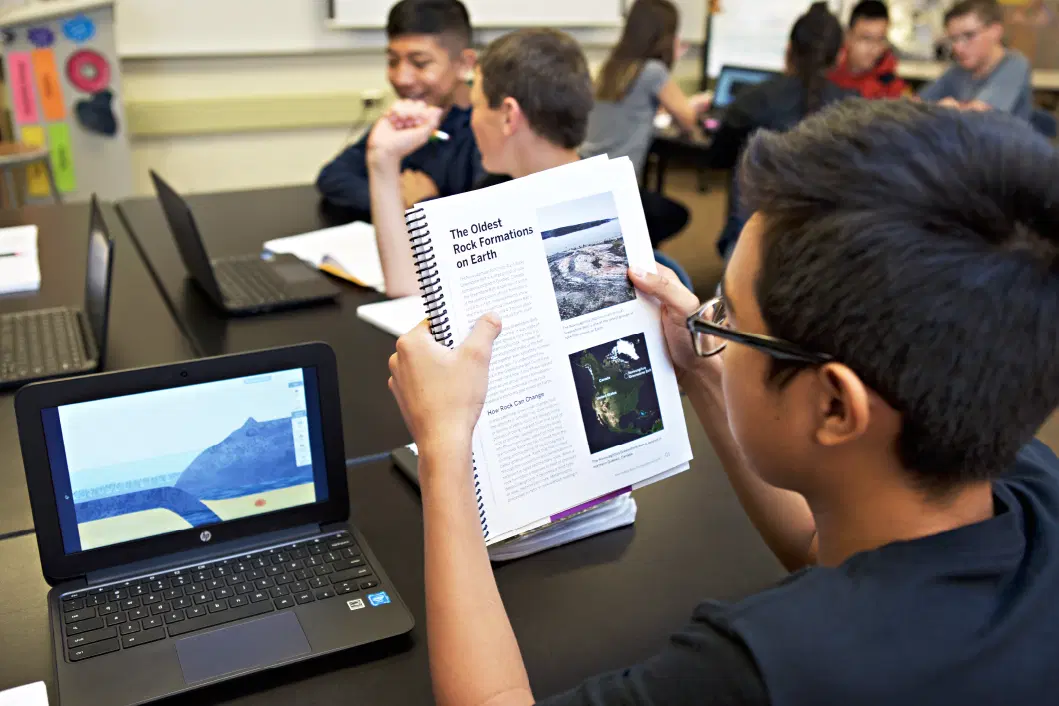
Update 6/27/2024: The Policy has been updated to include an explanation regarding Google APIs in the Appendix — Supplemental Disclosures section.

Update 6/30/2023: This Privacy Policy has been updated to address new state law data privacy requirements.