Literacy crisis in America’s schools persisting beyond COVID-19, with students making some recovery

BROOKLYN, NY (October 21, 2022) — Amplify, a publisher of next-generation curriculum and assessment programs, released a research brief about national beginning-of-school-year (BOY) reading data today. While students in elementary grades are making progress toward early literacy levels that pre-date the pandemic, only about half of students in grade three are on track for learning to read, and nearly a third are in the highest risk category. In kindergarten, half of the nation’s students are starting school already in need of intensive intervention in early literacy skills.

Compared to where they were before pandemic disruptions, more of today’s elementary students are still in the highest risk category for not learning to read. Moreover, students in grades that did not experience the disruptions as acutely are showing gaps, with only about one-third of kindergarteners and less than half of first graders starting the year on track for core instruction in early literacy.

“The data in this report are another signal that we need to do even more to support teachers so they can help this generation of young students get on track in reading,” says Susan Lambert, chief academic officer of elementary humanities at Amplify. “We won’t see early literacy improve beyond pre-pandemic proficiencies if we don’t make changes across our educational system. It is a crisis that can be turned around — with focused efforts on evidenced-based practices.”

Literacy rates in the United States remain a crisis today, with many students urgently needing support. The good news: research-based reading instruction reduces the need for intervention and enables children to move forward as capable, confident learners. When students receive instruction based in the Science of Reading, outcomes improve. When that instruction takes place in the early grades, research shows that most students can be taught to read at or approaching grade level. Schools and districts need to invest in reliable universal screeners, high-quality core curriculum, evidence-based interventions, and professional development for educators based in the Science of Reading.

The report compares mCLASS® with DIBELS® 8th Edition benchmark data from the 2019-20, 2020-21, 2021-22, and 2022-23 school years. Approximately 300,000 students in a matched set of 1,400 schools in 43 states are represented. The schools in the source data are slightly more likely to be in large urban metropolitan areas than the nation overall.

The data was collected using the mCLASS platform, which automates the data collection of DIBELS (Dynamic Indicators of Basic Early Literacy Skills). DIBELS is a widely-used series of short tests developed by the University of Oregon that assess K–8 literacy. DIBELS is an observational assessment collected by teachers interacting with students one-on-one, either live or over video. DIBELS is typically administered three times a year (beginning, middle, and end of year), and is used to identify reading difficulty, monitor progress, and inform instruction, especially for struggling readers.

About Amplify
A pioneer in K–12 education since 2000, Amplify is leading the way in next-generation curriculum and assessment. Our core and supplemental programs in ELA, math, and science engage all students in rigorous learning and inspire them to think deeply, creatively, and for themselves. Our formative assessment products help teachers identify the targeted instruction students need to build a strong foundation in early reading and math. All of our programs and services provide educators with powerful tools that help them understand and respond to the needs of every student. Today, Amplify serves more than 10 million students in all 50 states. For more information, visit amplify.com.

Media Contact
Kristine Frech
media@amplify.com

Episode 24: The silent crisis with Shawn Joseph

Educator, author, and leader Shawn Joseph shares his passion for social justice and discusses his work advocating for equity in education, shedding light on what he calls the silent crisis in literacy instruction. In this episode, you’ll hear about his experience as a former superintendent of several large urban districts and learn how he fostered achievement in all of his students.

What’s included in our Spanish language arts curriculum

Amplify Core Knowledge Language Arts® (CKLA) is available in both English and Spanish. Amplify Caminos al Conocimiento Esencial, our robust Spanish language arts companion for grades K–5, supports multiple teaching models, including dual language immersion and transitional classrooms.

A laptop screen displays a kindergarten instructional webpage in Spanish, showing lesson categories with illustrated thumbnails and navigation options.

Year at a glance

The program’s intentional Knowledge Sequence from K–5 connects knowledge and vocabulary within a grade level and across grade levels, for deeper reading comprehension and preparation for college, career, and life. Instead of “activating prior knowledge,” Amplify Caminos helps you build it in the classroom from day one, for every child, expanding each student’s knowledge base long before they transition to reading to learn.

Curriculum flowchart showing reading themes and activities from Kindergarten to Grade 5, organized by grade level and literary theme, with interconnected boxes for each topic.

Units & domains at a glance

Each Knowledge Domain in grades K–2 and Unit in grades 3–5 varies in the number of days based on instructional purpose. Just as with our top-rated Amplify CKLA program, the Amplify Caminos materials engage and delight young learners with resources that are both appealing and original.

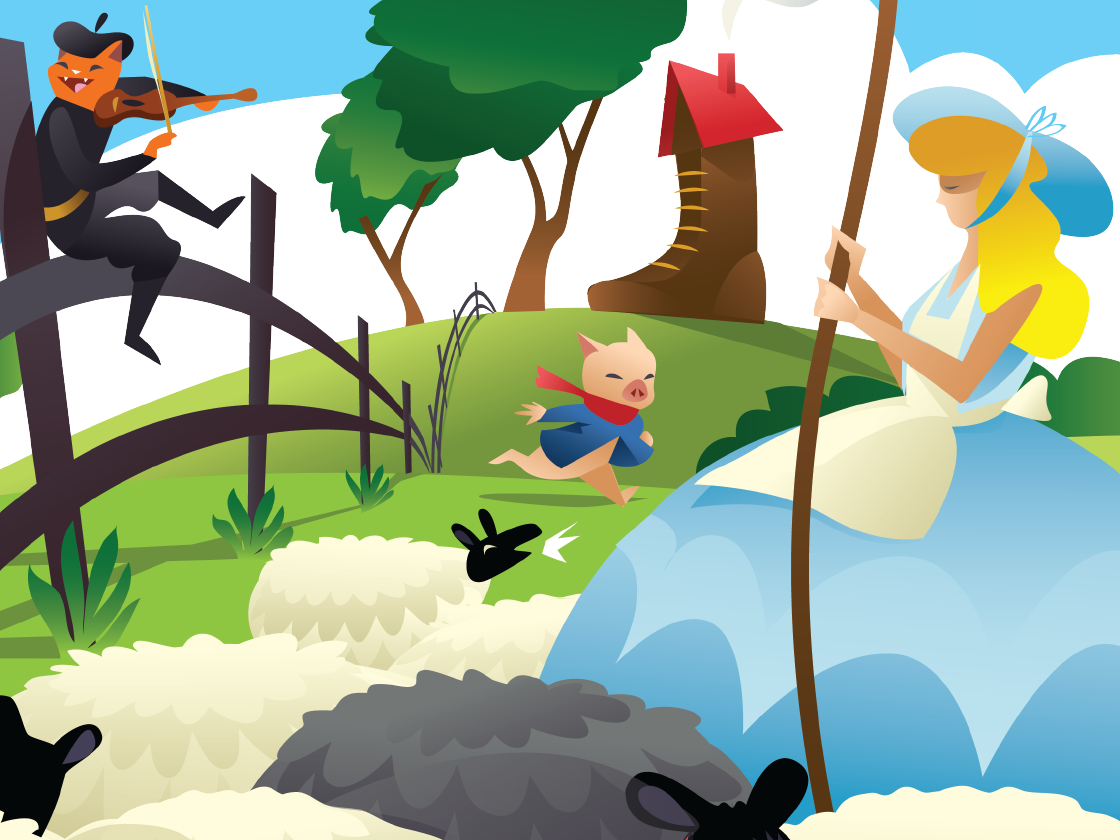
Una mujer rubia con un vestido azul cuida ovejas blancas y negras, sosteniendo un bastón de pastor. Un cerdo vestido de azul corre y un hombre de negro toca el violín en una valla. Al fondo hay una casa.

Domain

Nursery Rhymes and Fables/Rimas y fábulas infantiles

Start learning about literature with these classic Mother Goose rhymes.

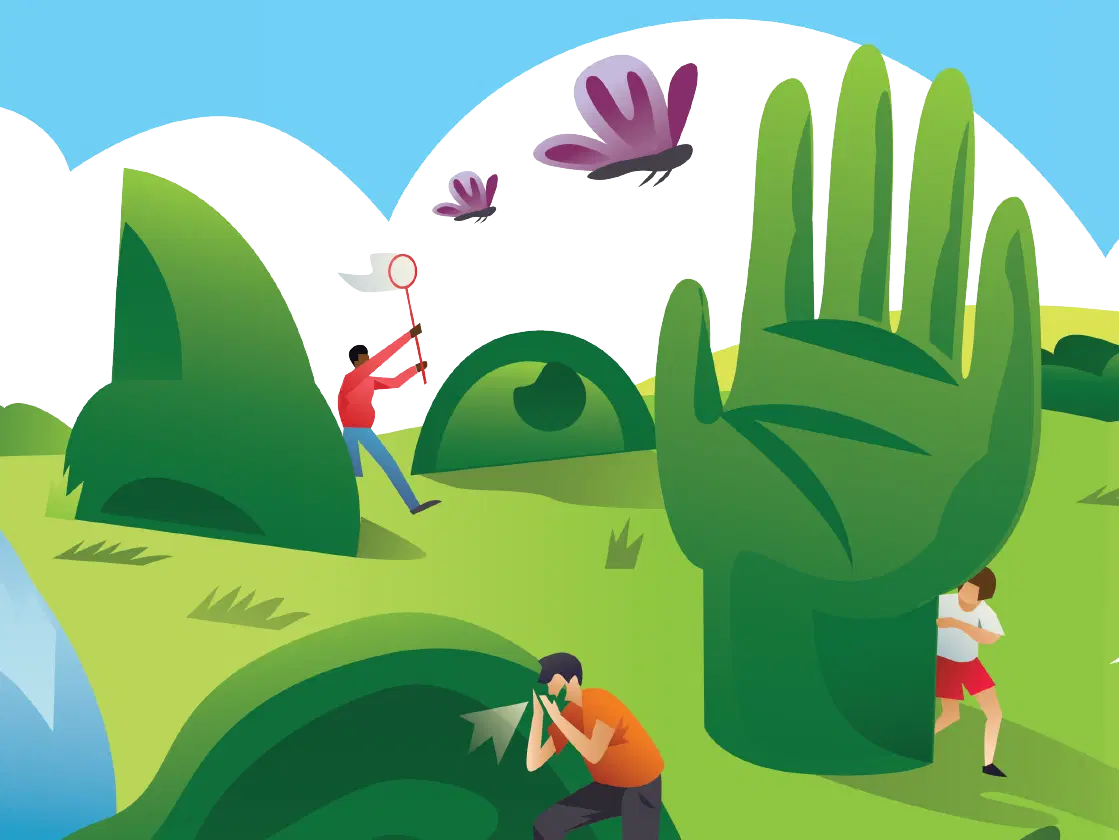
Ilustración de tres personas en un paisaje cubierto de hierba, una tratando de atrapar mariposas con una red, otra escondiéndose detrás de una escultura alta y frondosa de una mano y otra con binoculares.

Domain

The Five Senses/Los cinco sentidos

Learning about the body starts with learning about how we experience the world.

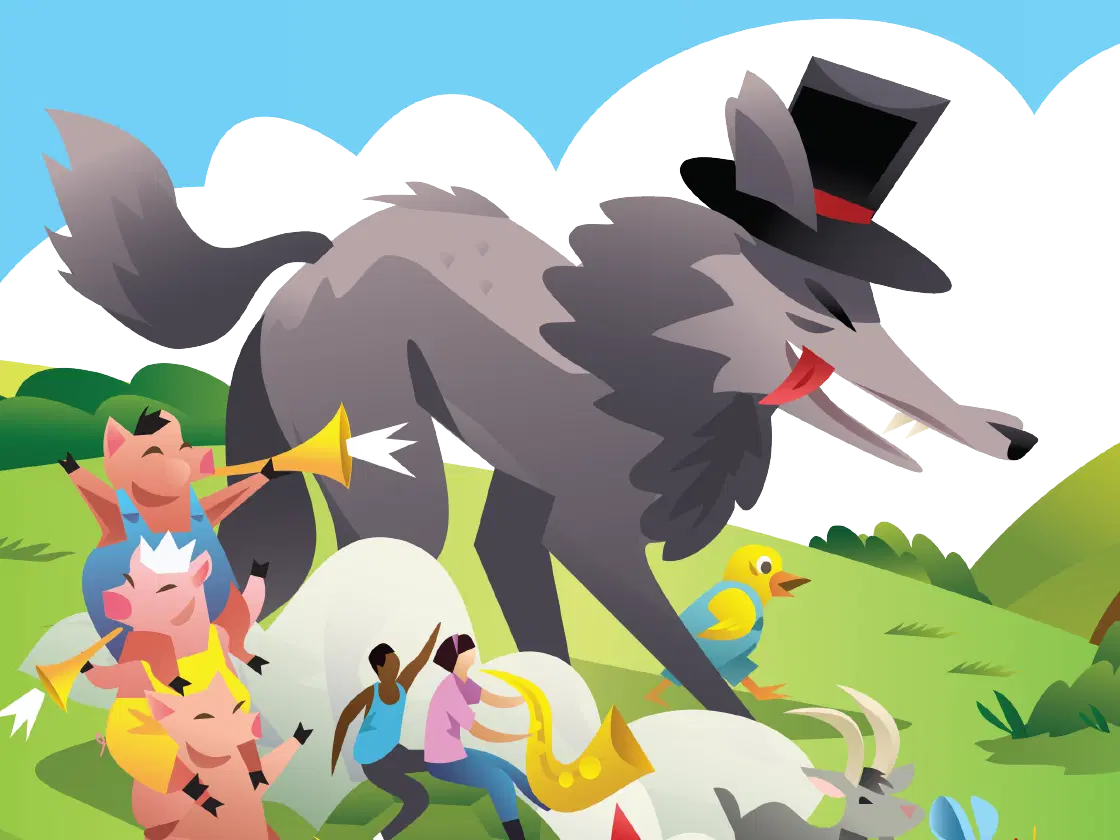
Una ilustración que representa a un gran lobo con sombrero de copa liderando un desfile de animales y personas con instrumentos musicales a través de un paisaje montañoso.

Domain

Stories/Cuentos

Learn about the parts of a book and some of the stories that go in one.

Una ilustración vibrante de una escena rural con colinas, una granja, una mariposa, un sol brillante, varias verduras como tomates y lechugas, y un gusano en el suelo.

Domain

Plants/Plantas

Discover the lifecycle of plants and the history of George Washington Carver.

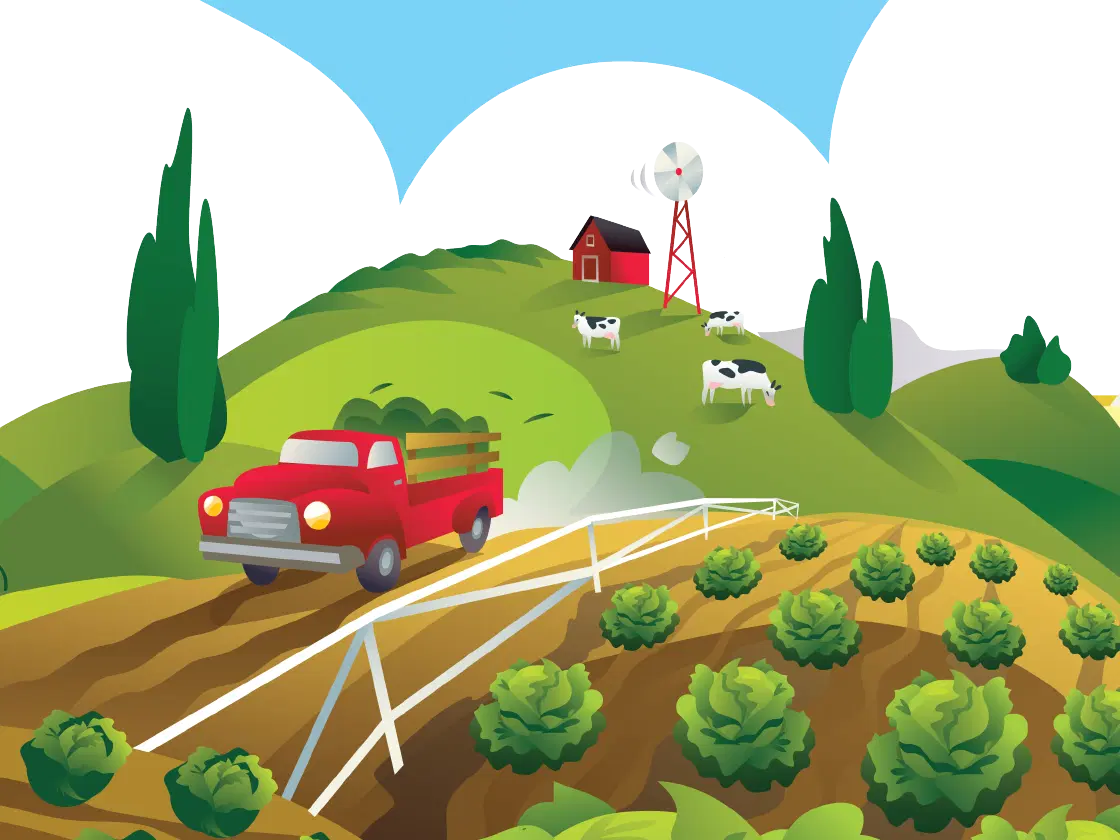
Ilustración de una escena de granja que muestra un camión rojo que transporta verduras, campos de cultivo, vacas pastando en una colina, un granero y un molino de viento contra un cielo azul.

Domain

Farms/Granjas

Now we know how plants make their food… but what about animals?

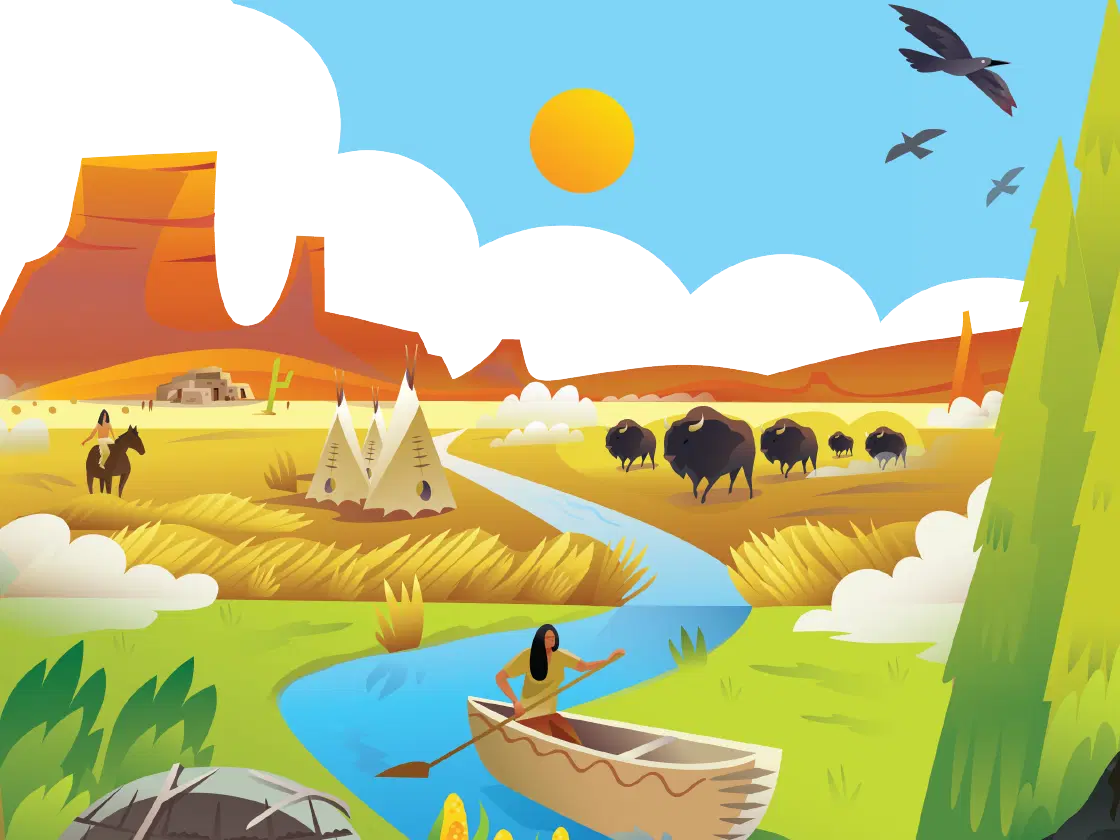
Ilustración de un nativo remando en una canoa en un río con búfalos pastando en un campo, tipis al fondo y pájaros volando en el cielo bajo un sol brillante.

Domain

Native Americans/Los nativos americanos

Who were the first people in America? A look at the Lenape, Wampanoag, and Lakota Sioux.

Una ilustración muestra un rey y una reina en tronos, un castillo en un acantilado y una mujer con enanos cerca de un árbol. Cortinas rojas enmarcan la escena.

Domain

Kings and Queens/Reyes y reinas

To understand fairy tales, it’s best to first understand royalty.

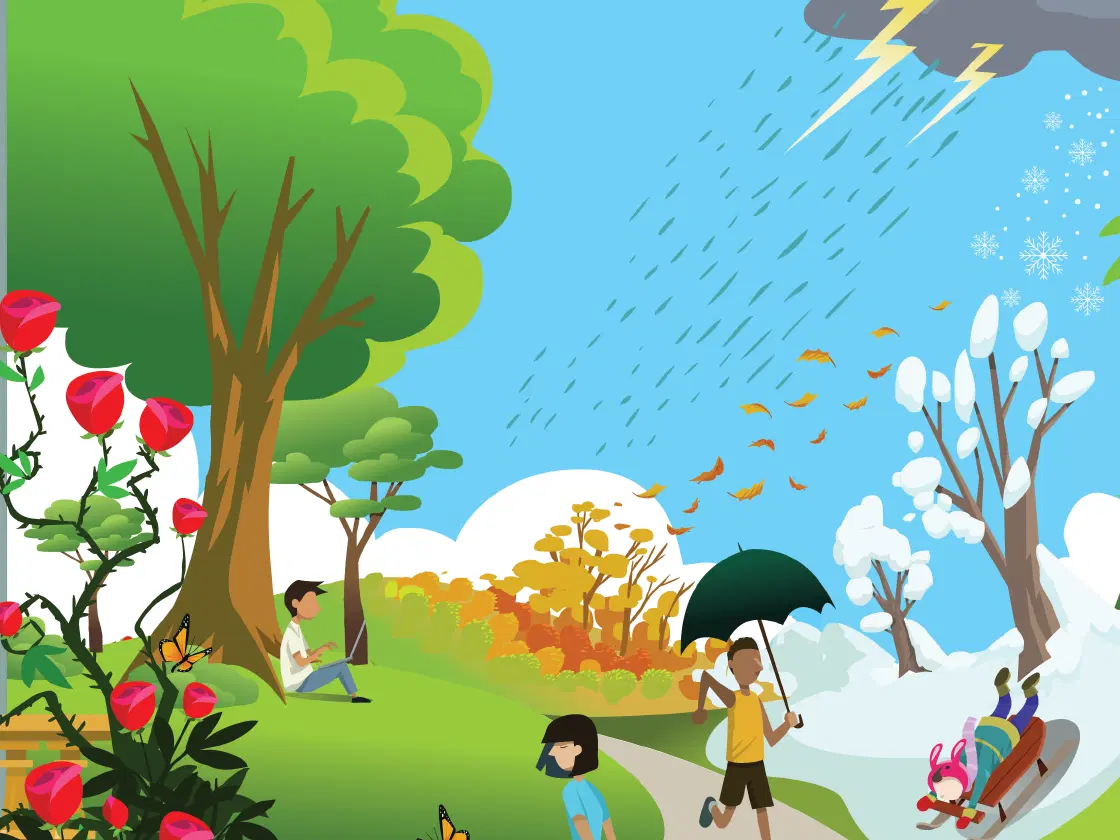
Ilustración que muestra las cuatro estaciones: primavera con flores, verano con árboles verdes, otoño con hojas que caen e invierno con nieve y gente en trineo. Un niño lee debajo de un árbol.

Domain

Seasons and Weather/Las estaciones y el tiempo

The study of natural cycles continues with the weather and why it happens.

Un velero de madera con símbolos de cruz roja en sus velas navega cerca de una isla tropical con exuberante vegetación y palmeras. A lo lejos se ven otros dos barcos en el agua.

Domain

Columbus and the Pilgrims/Colón y los peregrinos

A look at the first contact between Europe and the Americas, and some of its results.

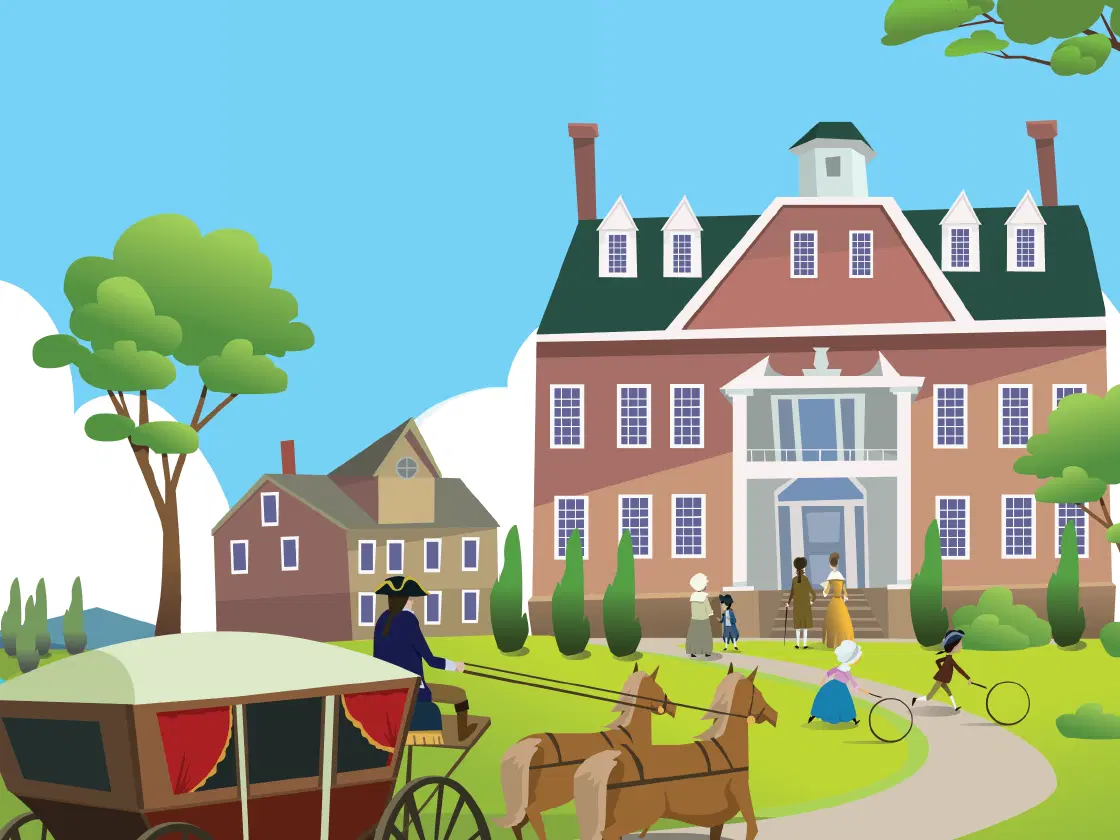
Una escena histórica muestra gente afuera de una gran mansión de estilo colonial con dos chimeneas. En primer plano se ve un carruaje tirado por caballos y a la izquierda se ve una casa más pequeña.

Domain

Colonial Towns and Townspeople/Las colonias y sus habitantes

Before the War for Independence, how did the town and country depend on one another?

Ilustración de personas clasificando materiales reciclables en un parque cerca de un río contaminado. Las fábricas emiten humo al fondo, mientras que las mariposas, las flores y los árboles están presentes en el primer plano.

Domain

Taking Care of the Earth/Cuidar el planeta Tierra

We only have one Earth—here are some ways to help care for it.

Ilustración del Monte Rushmore con los rostros tallados de cuatro presidentes de Estados Unidos. Un águila vuela en primer plano.

Domain

Presidents and American Symbols/Presidentes y símbolos de los Estados Unidos

Start learning about government through the lives of five presidents.

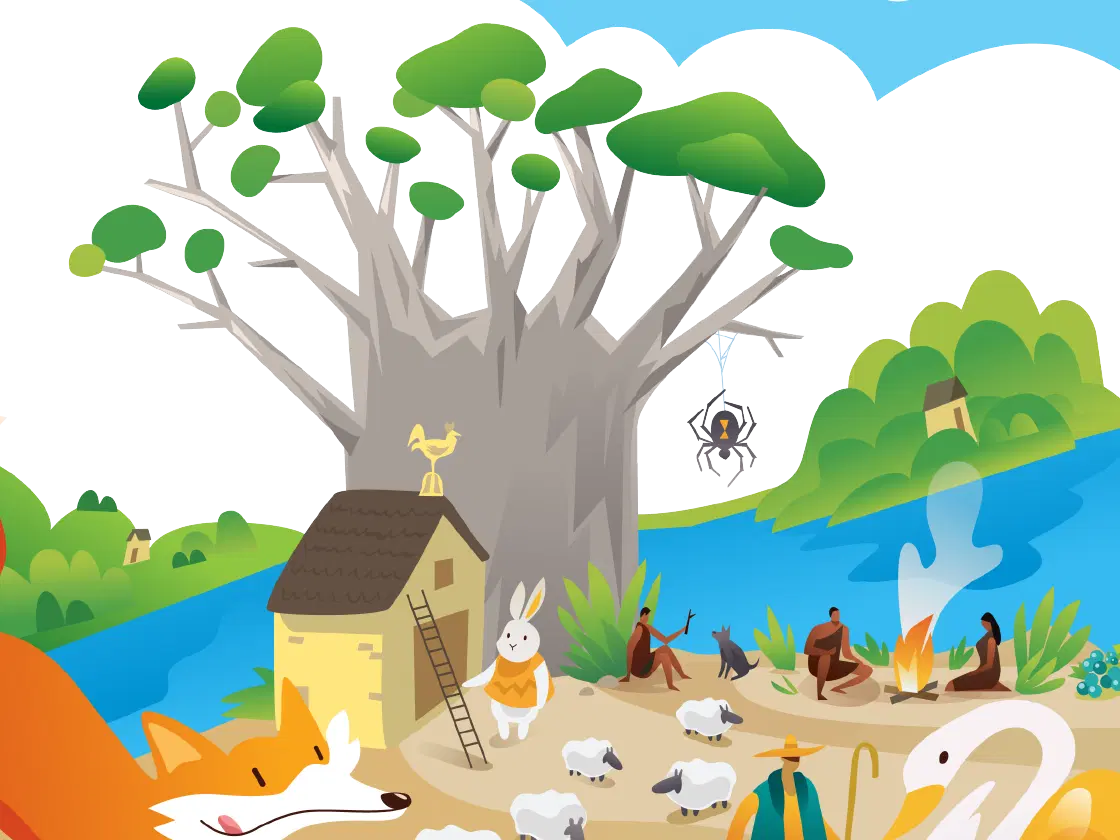
Una ilustración caprichosa que muestra animales de granja alrededor de una casa en un árbol junto a un río. Un zorro, un conejo y una oveja interactúan mientras la gente acampa junto a una fogata al fondo. Una araña cuelga del árbol.

Domain

Fables and Stories/Fábulas y cuentos

Learn some of the key elements of a story through classic fables.

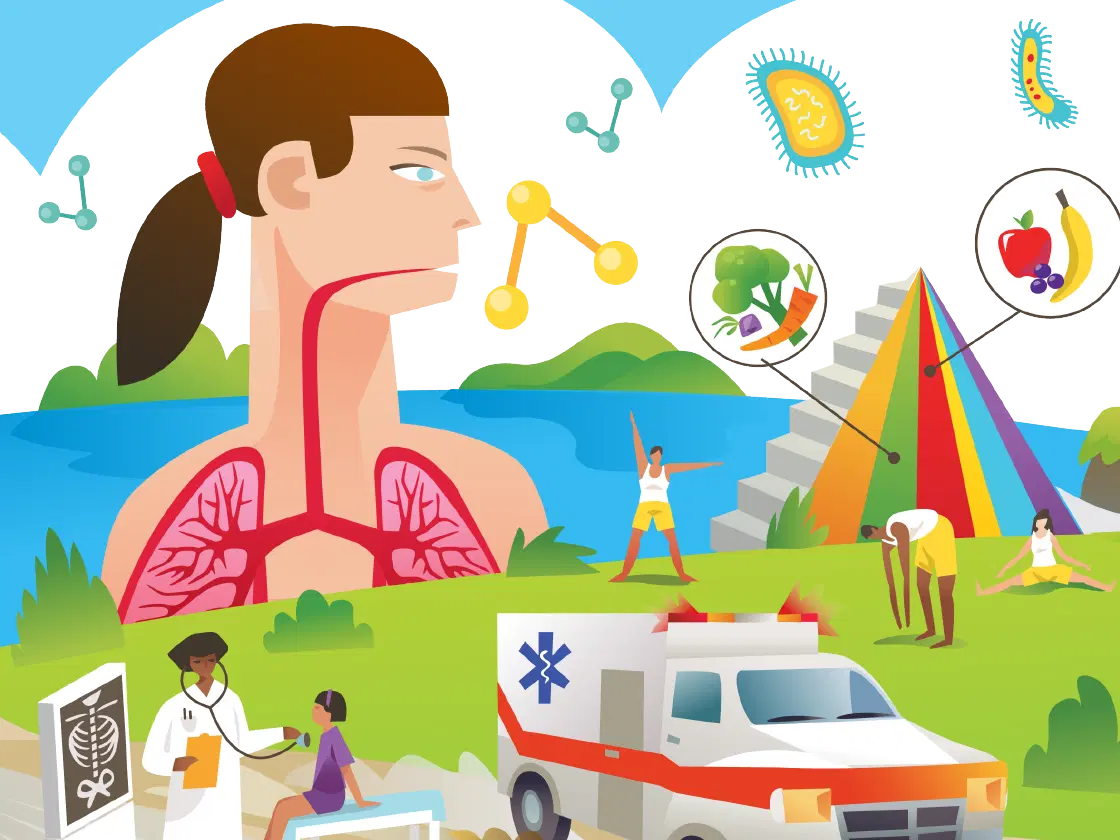
Ilustración que presenta anatomía humana, actividades de estilo de vida saludable, profesionales médicos, símbolos dietéticos, una ambulancia y microorganismos, destacando la conexión entre salud, nutrición y ejercicio.

Domain

The Human Body/El cuerpo humano

What are germs? What are the organs? And what does it all have to do with health?

Una ilustración que presenta varias escenas de cuentos de hadas y folclore, incluida una calabaza grande, un tigre, Caperucita Roja, personas con atuendos tradicionales y una pagoda roja con una montaña de fondo.

Domain

Different Lands, Similar Stories/Tierras diferentes, cuentos similares

A world tour of storytelling, and the stories that stay the same across the world.

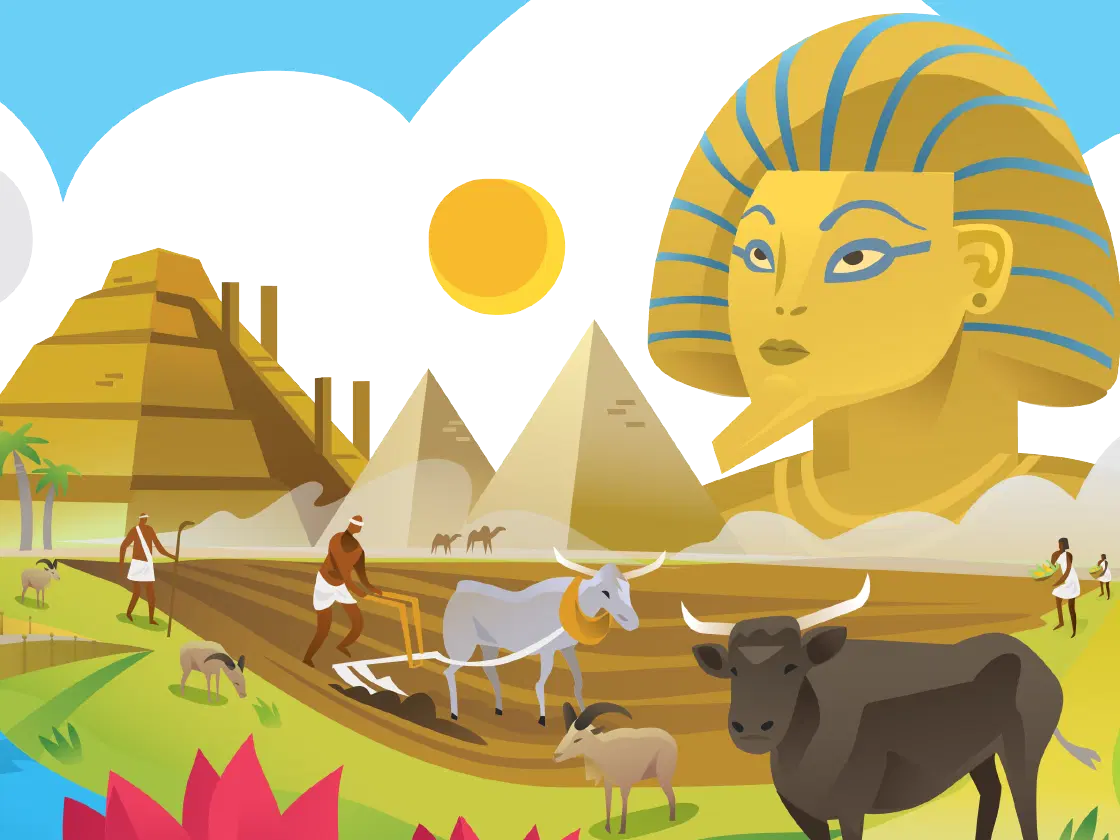
Ilustración que muestra el antiguo Egipto con pirámides, la Esfinge, agricultores arando un campo con bueyes y ganado pastando bajo un cielo soleado.

Domain

Early World Civilizations/Antiguas civilizaciones del mundo

Rivers, farming, writing, and laws: just what does it take to build a civilization?

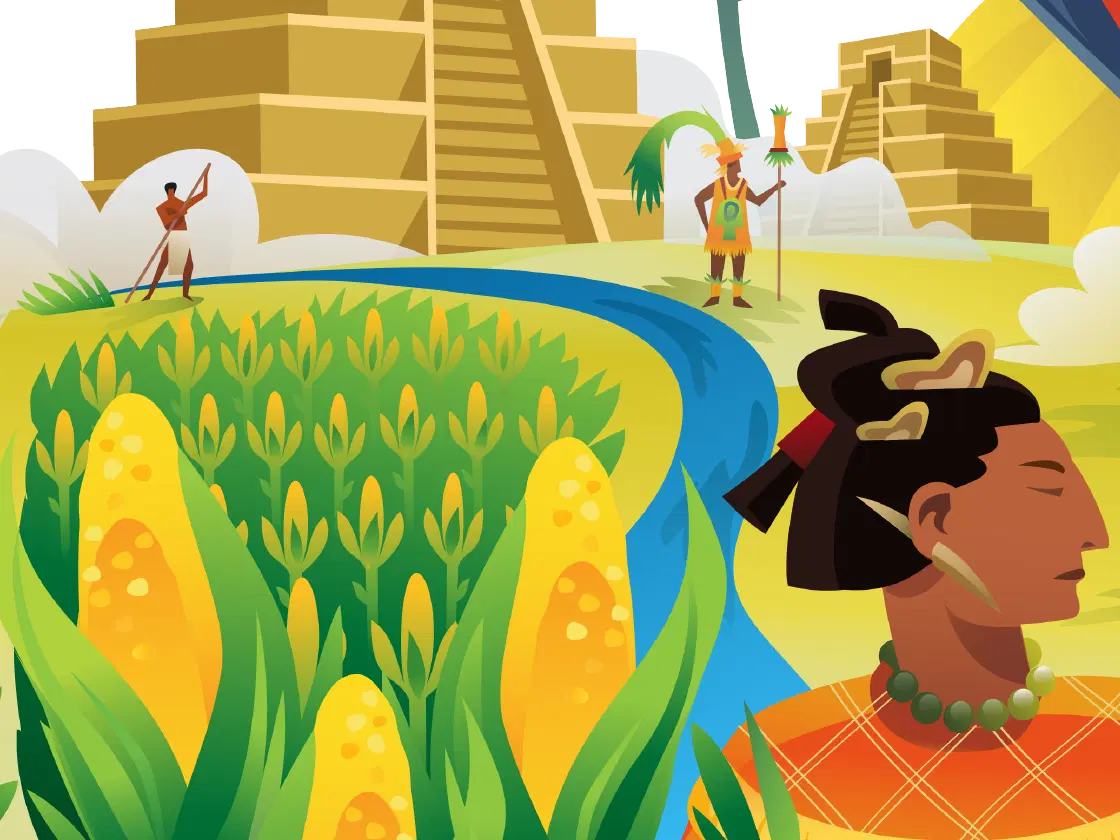
Escena ilustrada de la antigua Mesoamérica con maíz, un río, agricultores y pirámides al fondo. En primer plano se ve a una persona con traje tradicional.

Domain

Early American Civilizations/Antiguas civilizaciones de América

What will we find in the great temples of the Aztec, Maya, and Inca civilizations?

Ilustración de la exploración espacial: se lanza un cohete, un astronauta se para cerca de un módulo de aterrizaje, una persona usa un telescopio y aparece un planeta distante con anillos sobre un fondo estrellado.

Domain

Astronomy/Astronomía

How the Earth relates to the moon, the sun, and the rest of the planets.

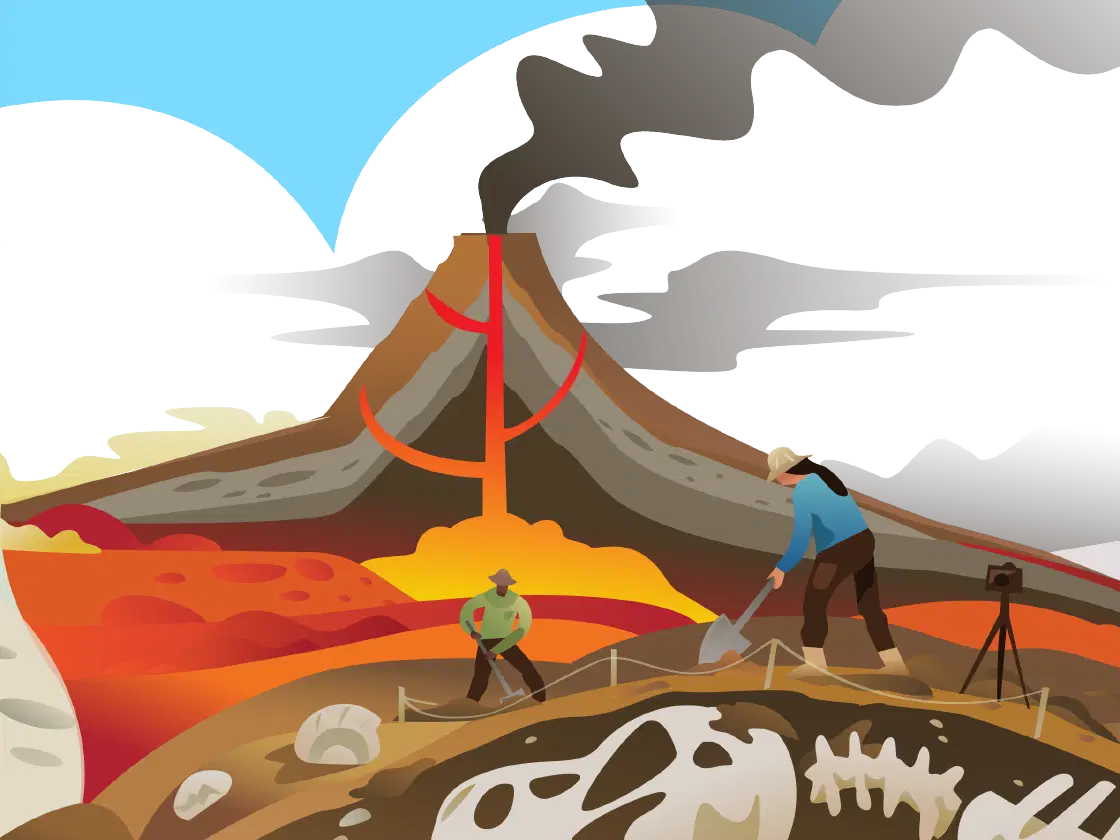
Dos paleontólogos en un paisaje volcánico examinan fósiles en primer plano, mientras un volcán emite humo y lava al fondo.

Domain

The History of the Earth/La historia de la Tierra

Just what lies beneath the Earth’s surface, and what can it teach us about the past?

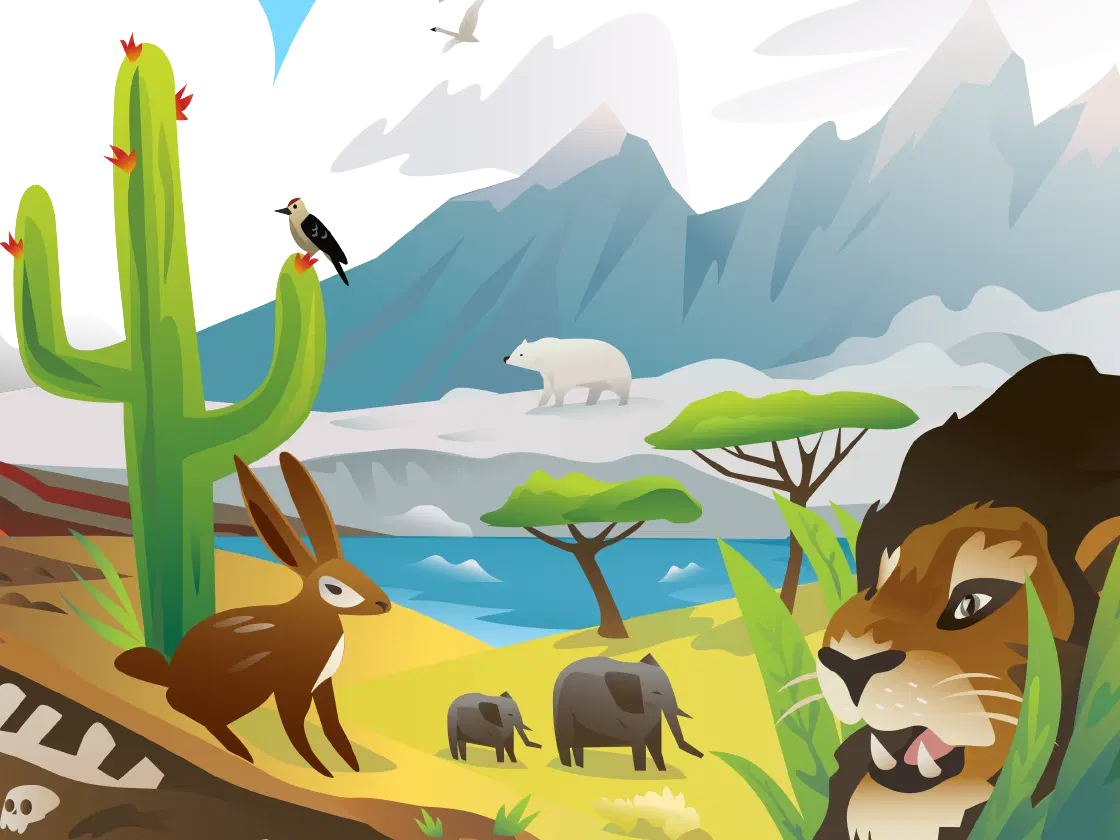
Una escena de vida silvestre diversa que presenta un cactus del desierto con un pájaro, un conejo, elefantes, un león, un oso polar sobre el hielo y montañas distantes bajo un cielo nublado.

Domain

Animals and Habitats/Los animales y sus hábitats

A look at the connection between how animals live and where they make their homes.

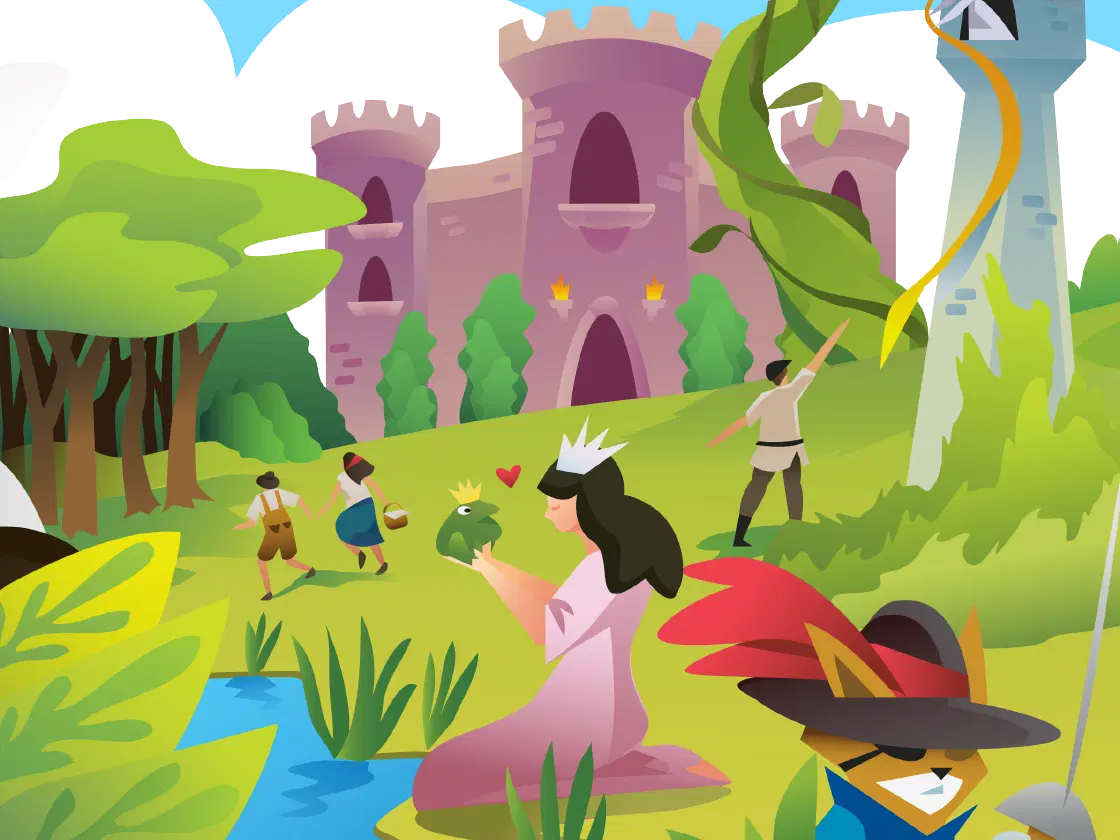
Una princesa con un vestido rosa sostiene una rana junto a un arroyo con un castillo, árboles y gente al fondo. En primer plano camina un zorro con un sombrero con una pluma roja.

Domain

Fairy Tales/Cuentos de hadas

What do fairy tales have to teach us about how stories are told?

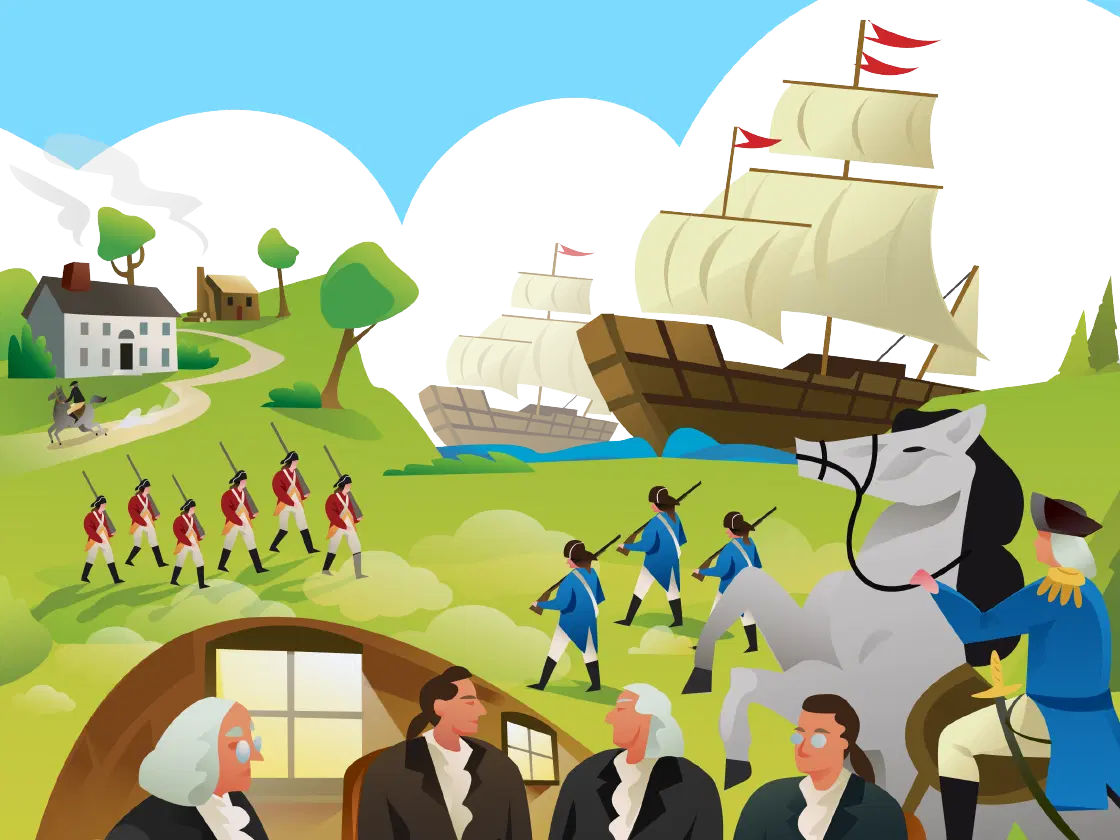
Ilustración que muestra una escena histórica con soldados, veleros y hombres con atuendo colonial discutiendo en el interior.

Domain

A New Nation: American Independence/Una nueva nación: la independencia de los Estados Unidos

The story of the birth of the United States out of the 13 Colonies.

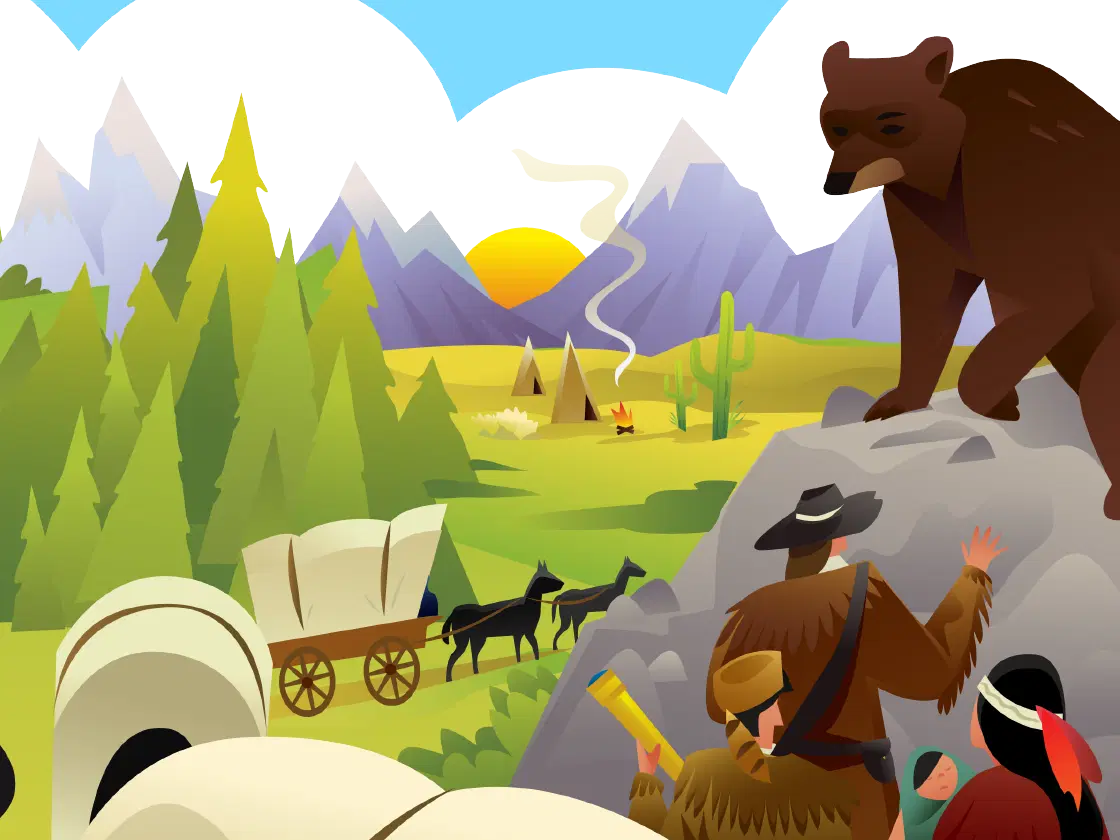
Los pioneros con carros cubiertos y caballos señalan hacia un valle con tipis nativos, fogatas y humo elevándose. Un oso se encuentra sobre una roca y se ven montañas al fondo.

Domain

Frontier Explorers/Exploradores de la Frontera

The story of the journey west from the newborn U.S.A. to find the Pacific Ocean.

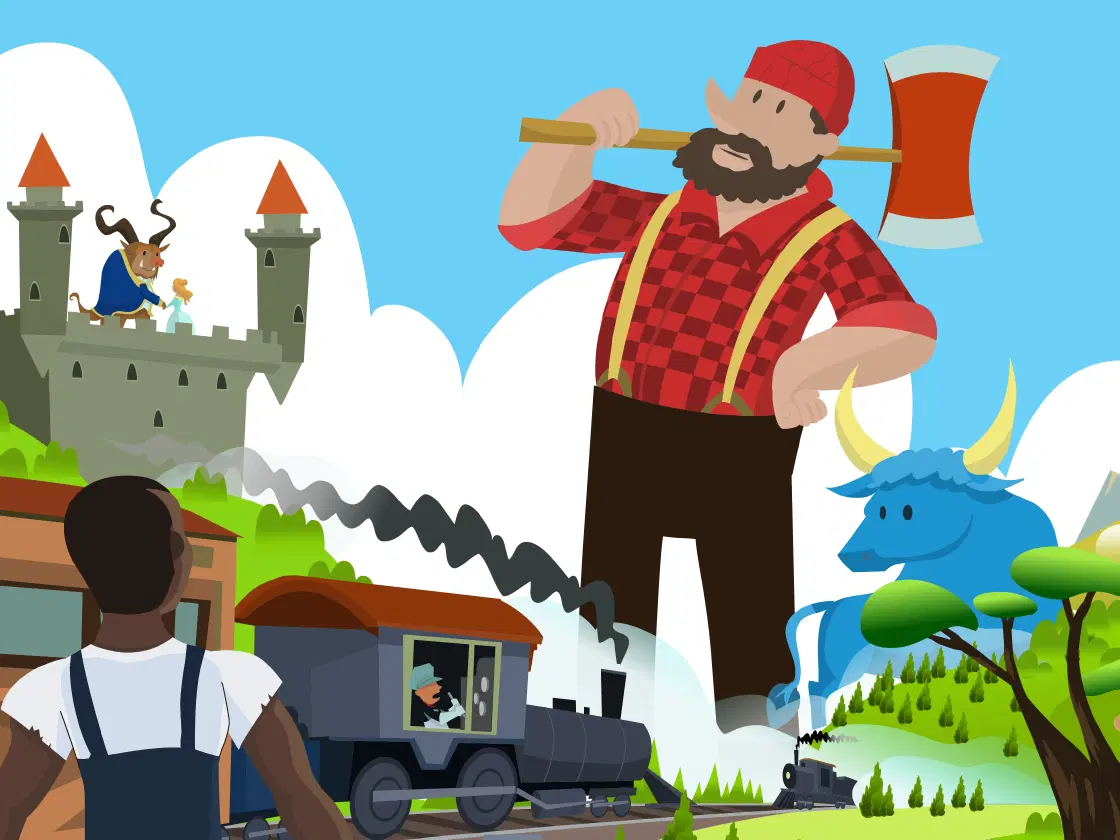
Un hombre con un hacha se encuentra entre paisajes exagerados con un castillo, un tren con humo, un buey azul y una persona con un mono observando la escena.

Domain

Fairy Tales and Tall Tales/Cuentos de hadas y cuentos exagerados

Learn about exaggeration and characterization on the frontier.

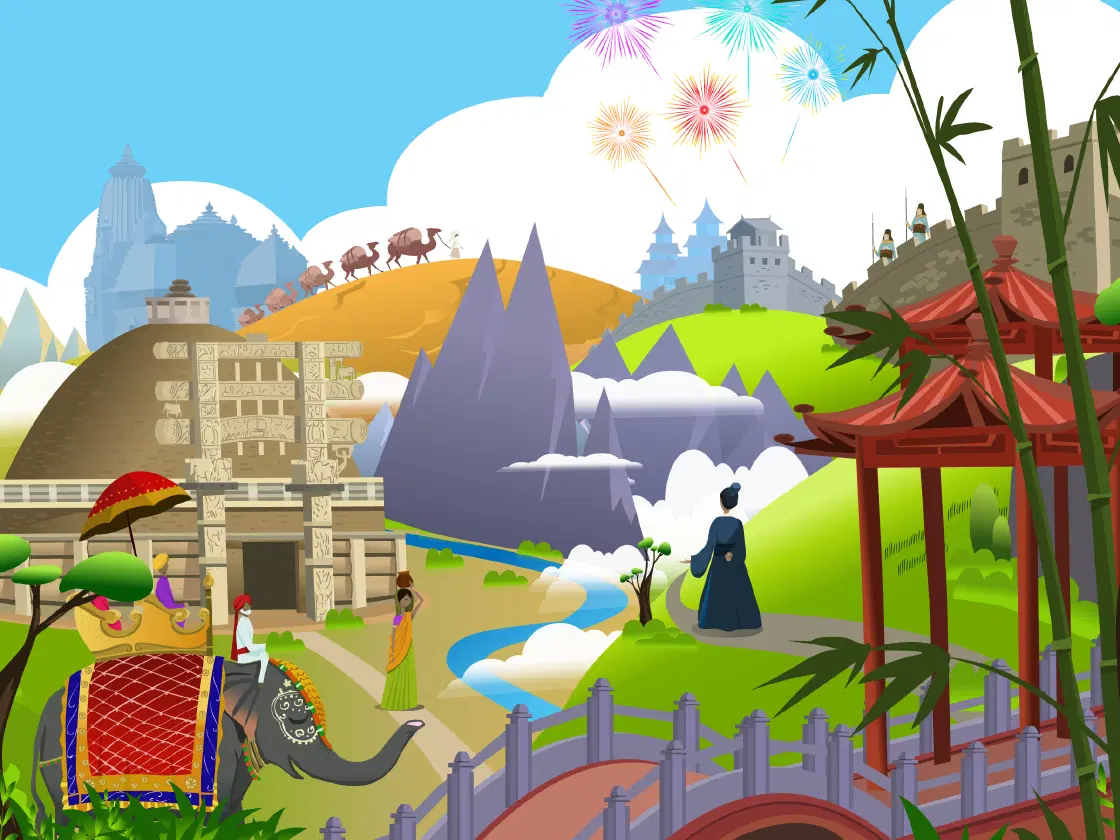
Ilustración de un paisaje vibrante que presenta diversos monumentos culturales, incluidos templos, palacios, pirámides, una escena de elefantes, montañas distantes y fuegos artificiales en el cielo.

Domain

Early Asian Civilizations/Antiguas civilizaciones de Asia

Tour the world of classical civilization, starting with India and China.

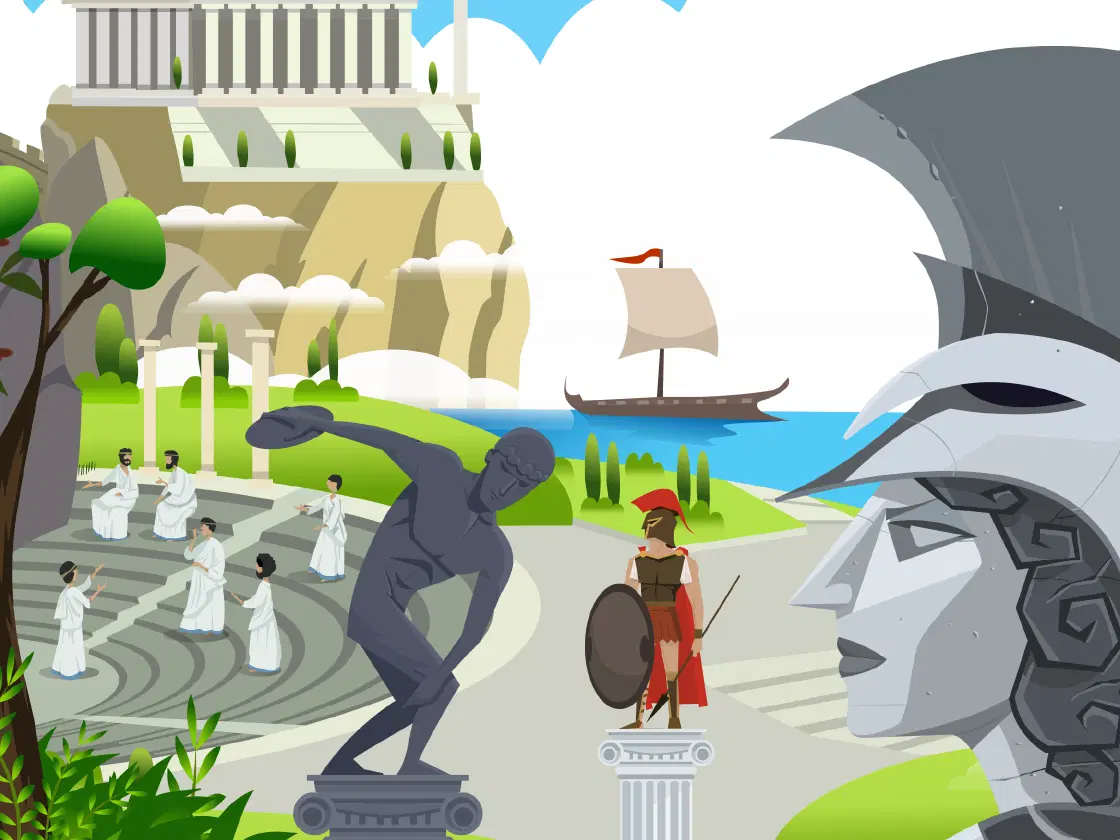
Ilustración que muestra la antigua Grecia con un anfiteatro, estatuas, soldados con armadura, un barco y un templo en una colina rodeada de vegetación.

Domain

Ancient Greek Civilization/La civilización griega antigua

The tour continues with the philosophy and politics of Greece.

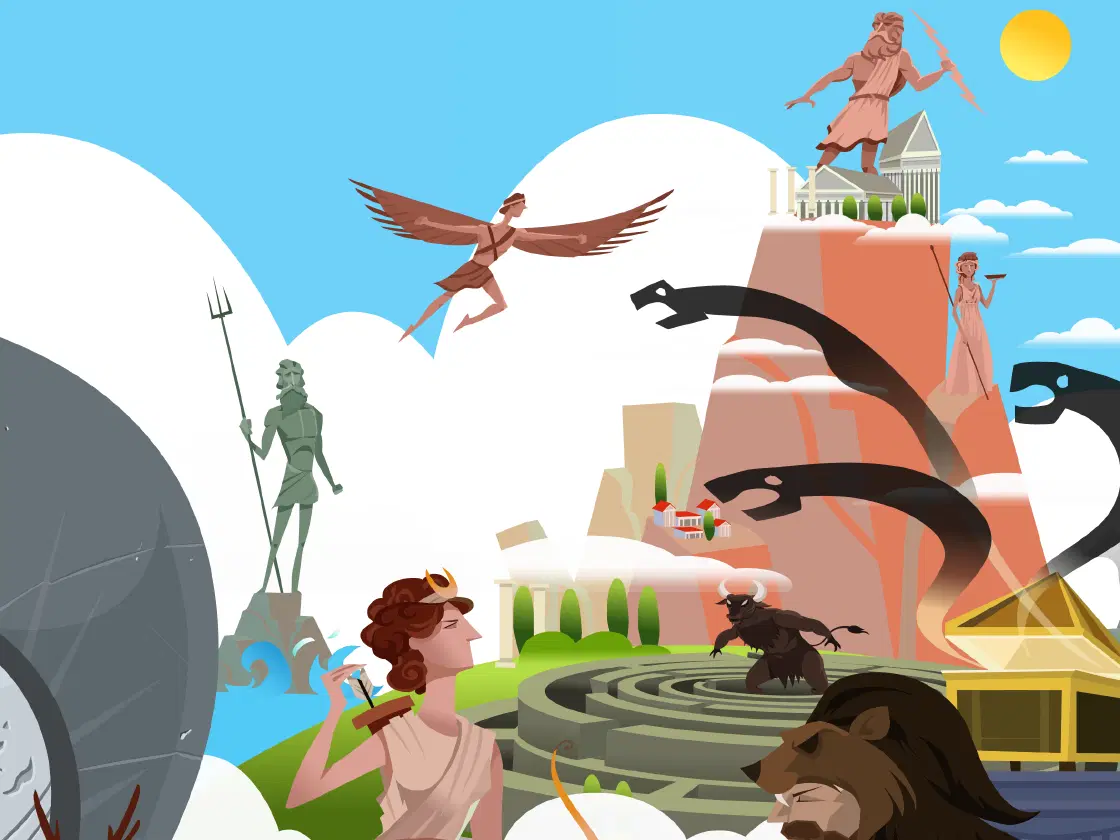
Illustration of various mythological scenes including greek gods, a flying horse, and roman architecture under a sunny sky.

Domain

Greek Myths/Mitos griegos

Dive deep into the characters and storytelling of classic myths.

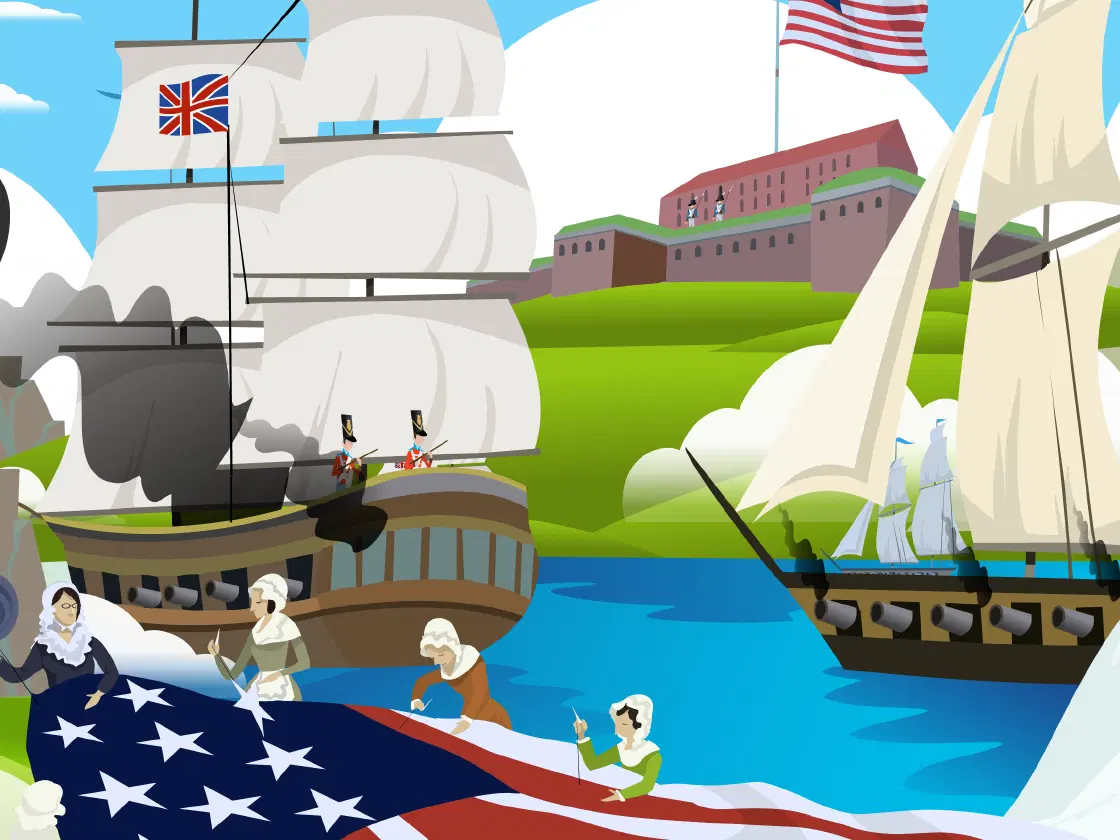
Ilustración de una batalla entre barcos británicos y estadounidenses cerca de un fuerte. El barco británico está a la izquierda con soldados, mientras que el barco estadounidense está a la derecha. La gente porta una gran bandera estadounidense en primer plano.

Domain

The War of 1812/La guerra de 1812

Learn about America’s “Second War for Independence.”

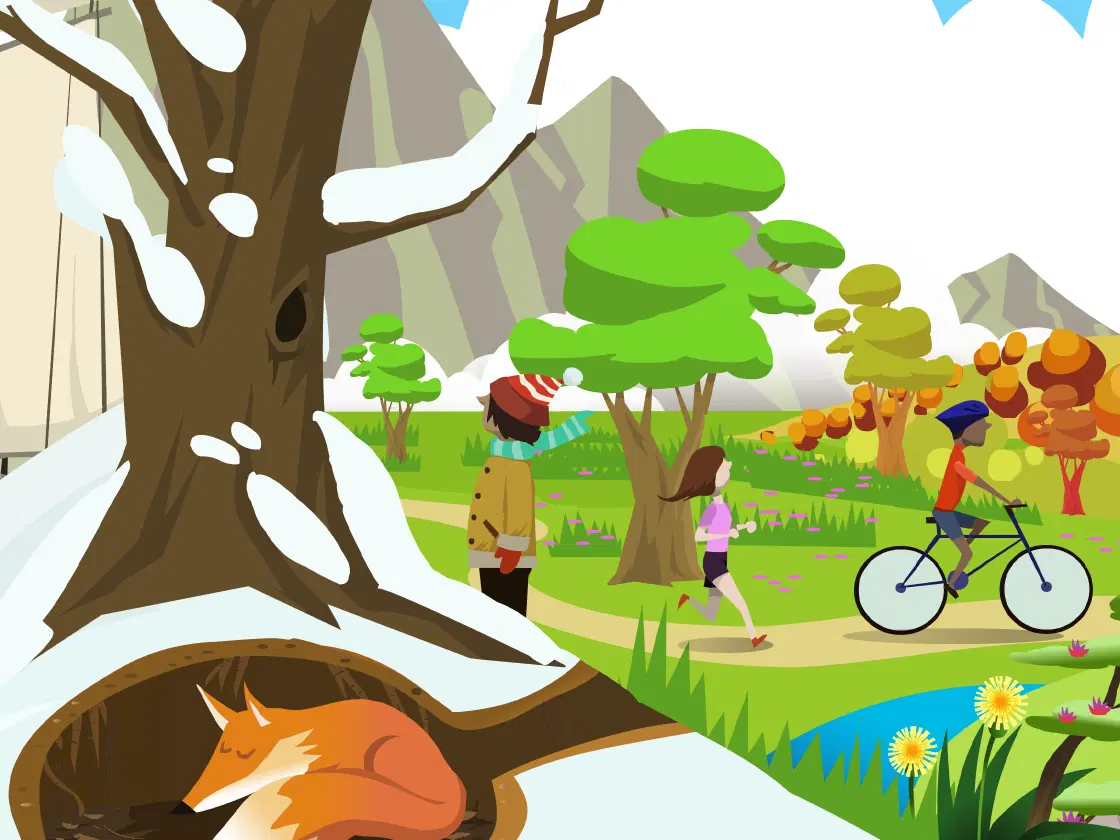
Un paisaje nevado con un zorro durmiendo en una madriguera, gente corriendo y andando en bicicleta por un sendero y árboles que muestran los cambios estacionales.

Domain

Cycles in Nature/Los ciclos de la naturaleza

Introducing the natural cycles that make our lives possible.

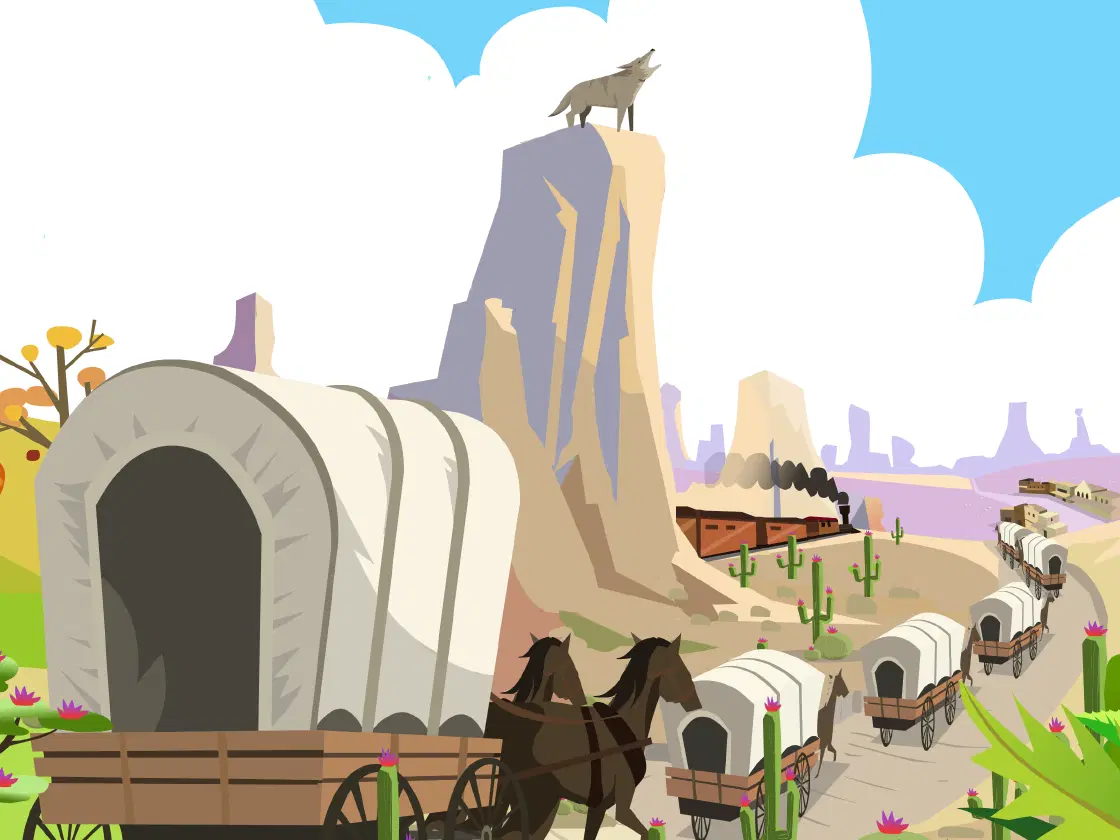
Ilustración de carros cubiertos tirados por caballos a lo largo de un sendero en el desierto, con un coyote aullando sobre una alta formación rocosa y un tren de vapor al fondo.

Domain

Westward Expansion/La expansión hacia el oeste

Why did pioneers go west? What happened to the people who were there?

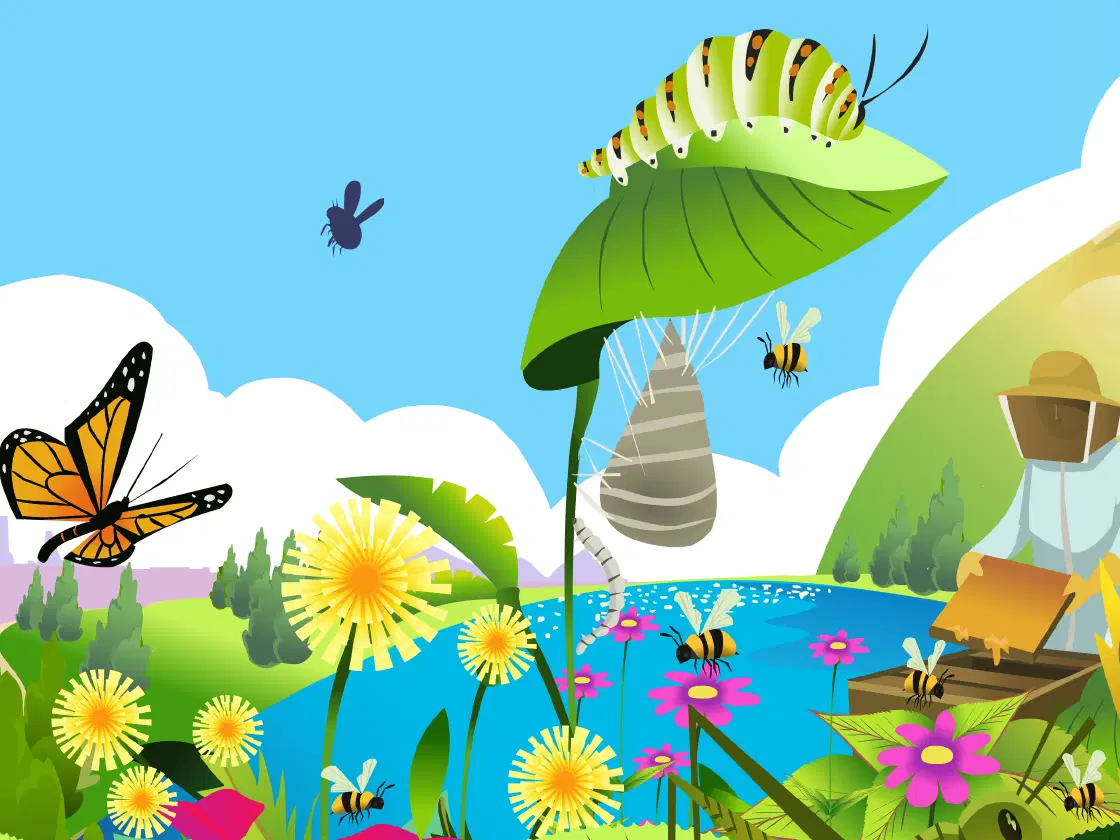
Ilustración de un jardín vibrante con flores, abejas, mariposas, una oruga en una hoja, una crisálida y un apicultor que maneja una colmena junto a un estanque.

Domain

Insects/Los insectos

Lay the grounds for animal classification by looking at solitary and social insects.

Ilustración de una escena histórica con gente escuchando el discurso de un hombre en una plataforma. Al fondo se ve un río y una procesión de personas. En primer plano hay un documento de proclamación.

Domain

The U.S. Civil War/La Guerra Civil de los Estados Unidos

Begin to grapple with U.S. history’s central crisis over slavery.

Una escena en la que aparece una persona explicando un diagrama anatómico humano, otra persona haciendo ejercicio, una cadena de ADN, campos y un microscopio de fondo.

Domain

Human Body: Building Blocks and Nutrition/El cuerpo humano: componentes básicos y nutrición

A deeper dive into the digestive system and the nutrition process.

Un grupo diverso de personas se encuentra en un muelle con vistas a un bullicioso puerto con barcos y un gran barco, un avión volando por encima y la Estatua de la Libertad al fondo.

Domain

Immigration/La inmigración

Why did people immigrate to the United States, and what did they find here?

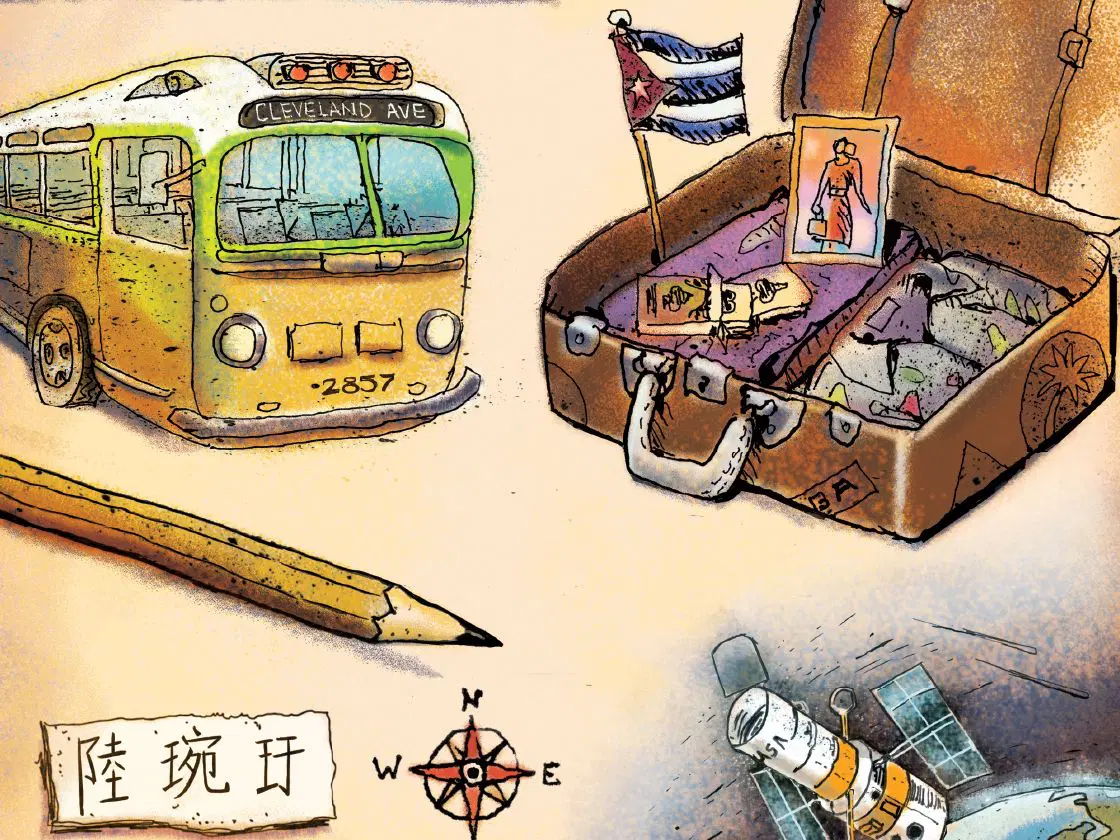
Women in early 20th-century clothing march with signs for voting rights and justice in front of a yellow bus labeled "Cleveland Ave.," making history that can inspire lessons in a K–2 language arts curriculum.

Domain

Fighting for a Cause/Luchar por una causa

How people can do extraordinary things to make the world better for everyone.

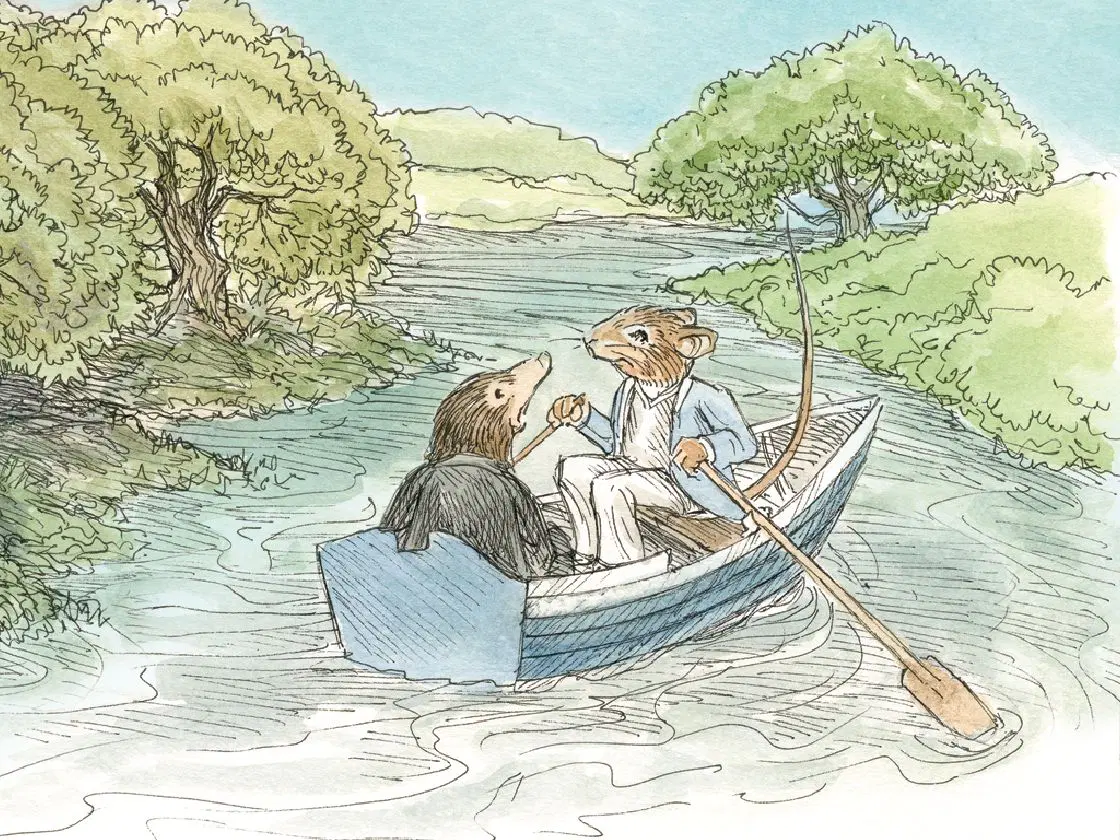
Dos ratones antropomórficos en un bote de remos, uno de ellos remando, navegan por un río tranquilo rodeado de exuberante vegetación y árboles. El ratón que rema lleva una chaqueta azul y el otro ratón parece conversar.

Unit 1

Classic Tales: The Wind in the Willows/Cuentos Clásicos: El viento en los sauces

A deep dive into character, theme, and POV in classic stories from around the world.

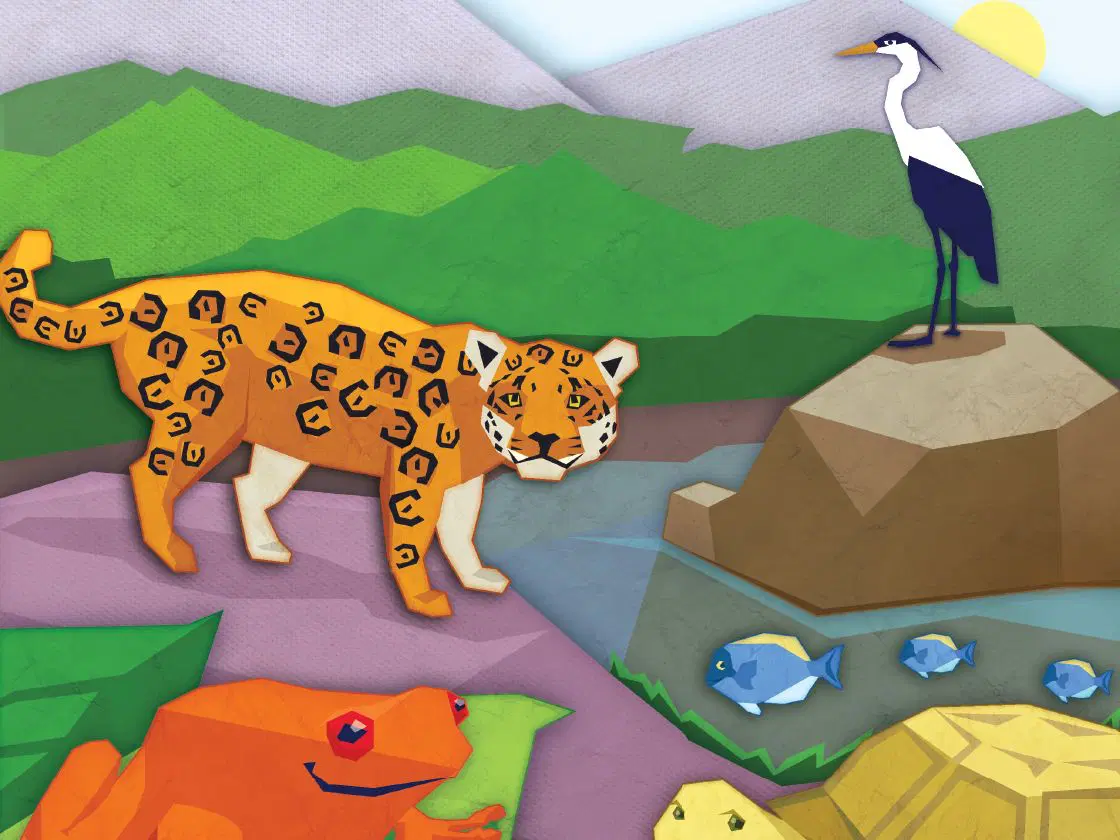
Ilustración de un jaguar, una garza, una rana roja, una tortuga y un pez en un paisaje vibrante con montañas y vegetación bajo un cielo soleado.

Unit 2

Animal Classification/La clasificación de los animales

How do we classify different animals by their appearance and behavior?

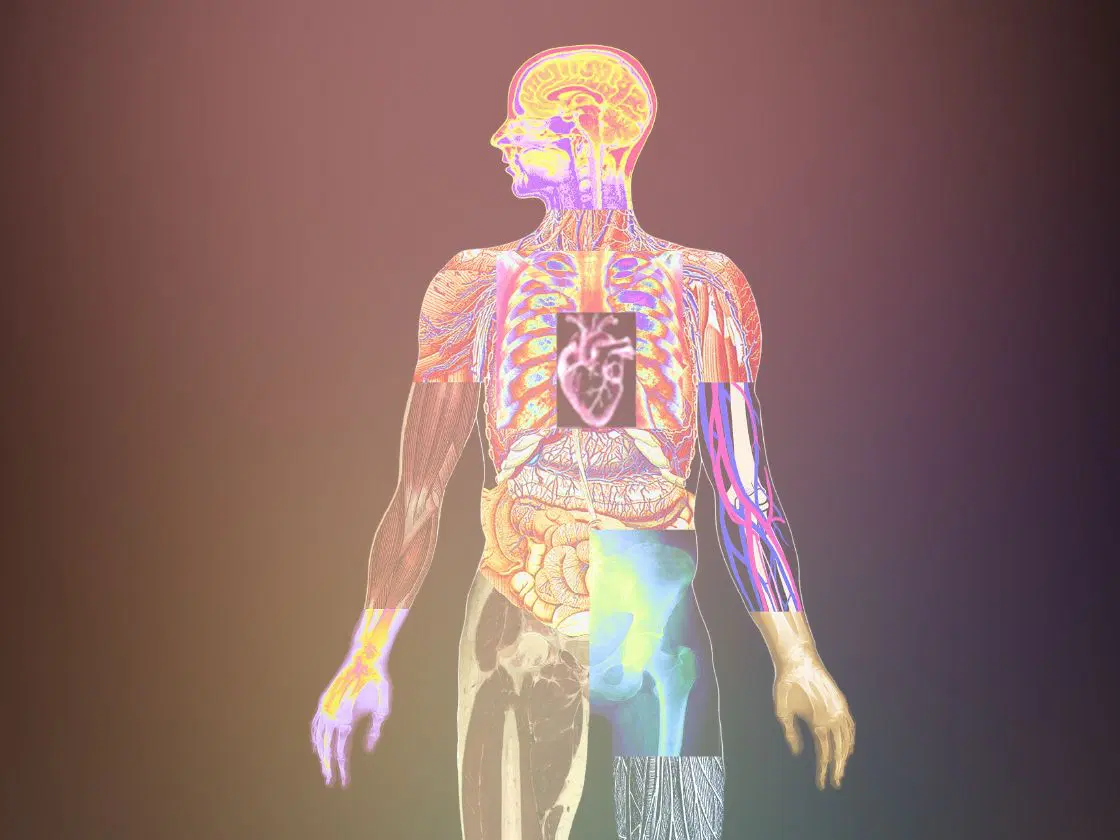
Ilustración de una figura humana que muestra la anatomía interna, incluidos el cerebro, los pulmones, el corazón, el sistema digestivo y una articulación de la cadera resaltada sobre un fondo degradado.

Unit 3

The Human Body: Systems and Senses/El cuerpo humano: sistemas y sentidos

Let’s take a closer look at how the skeleton, muscles, and nervous system all work.

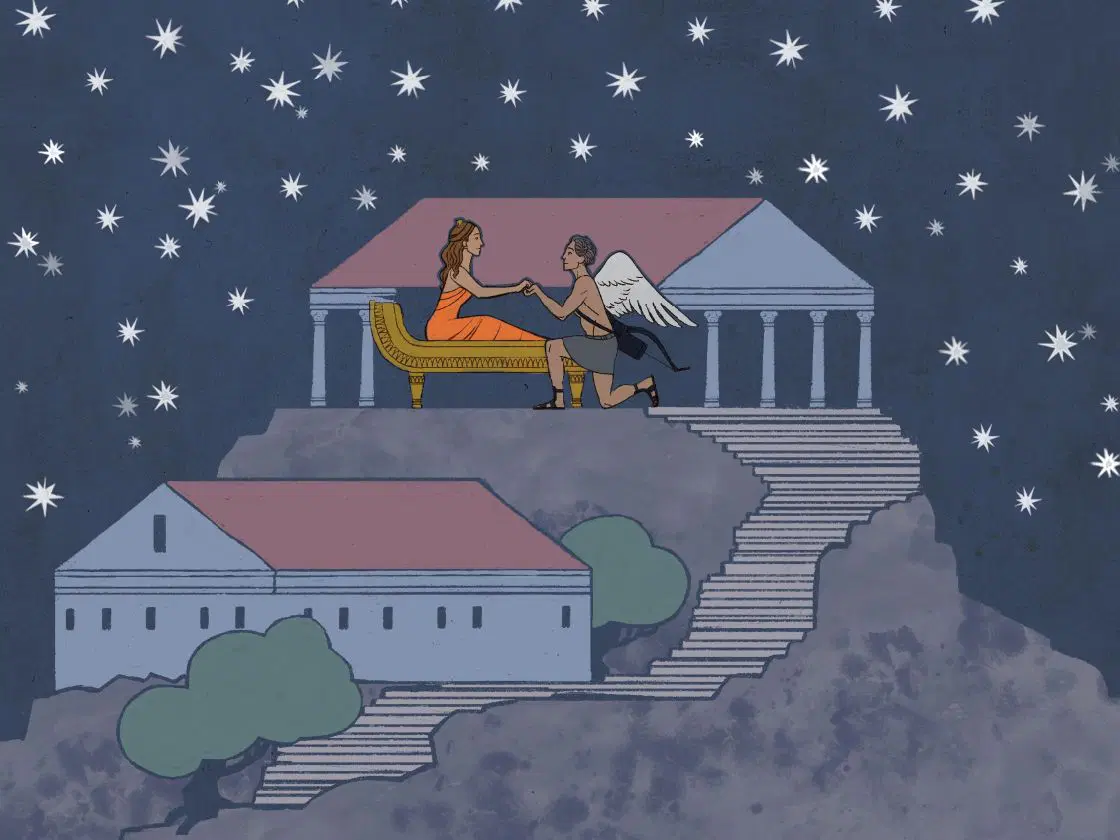
Un ángel se arrodilla ante una mujer sentada en un sofá dorado encima de un templo en una noche estrellada. Unas escaleras conducen al templo en un paisaje montañoso.

Unit 4

The Ancient Roman Civilization/La civilización romana antigua

What is Rome’s greatest cultural contribution? In this unit, your students decide.

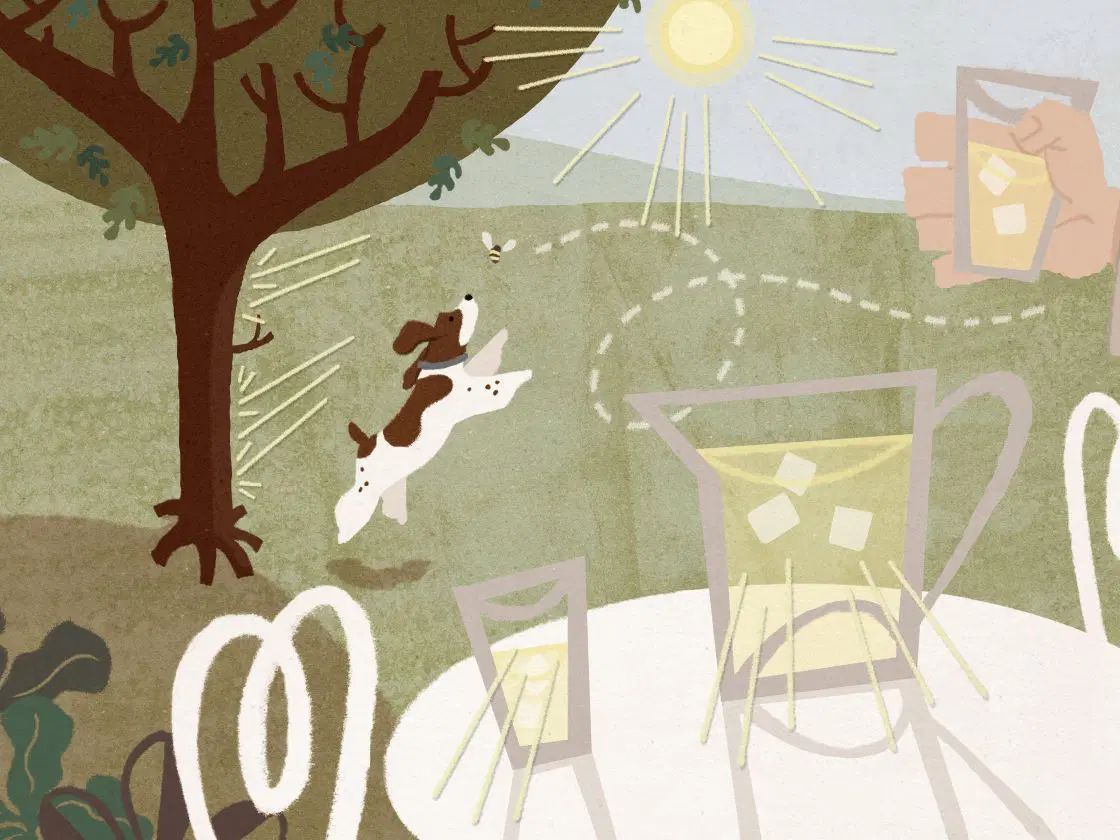
Ilustración de un perro saltando bajo un árbol, persiguiendo una abeja, con una mesa en primer plano sosteniendo una jarra y vasos de limonada. El sol brilla intensamente en el cielo.

Unit 5

Light and Sound/La luz y el sonido

The science behind all the ways we see and hear the world.

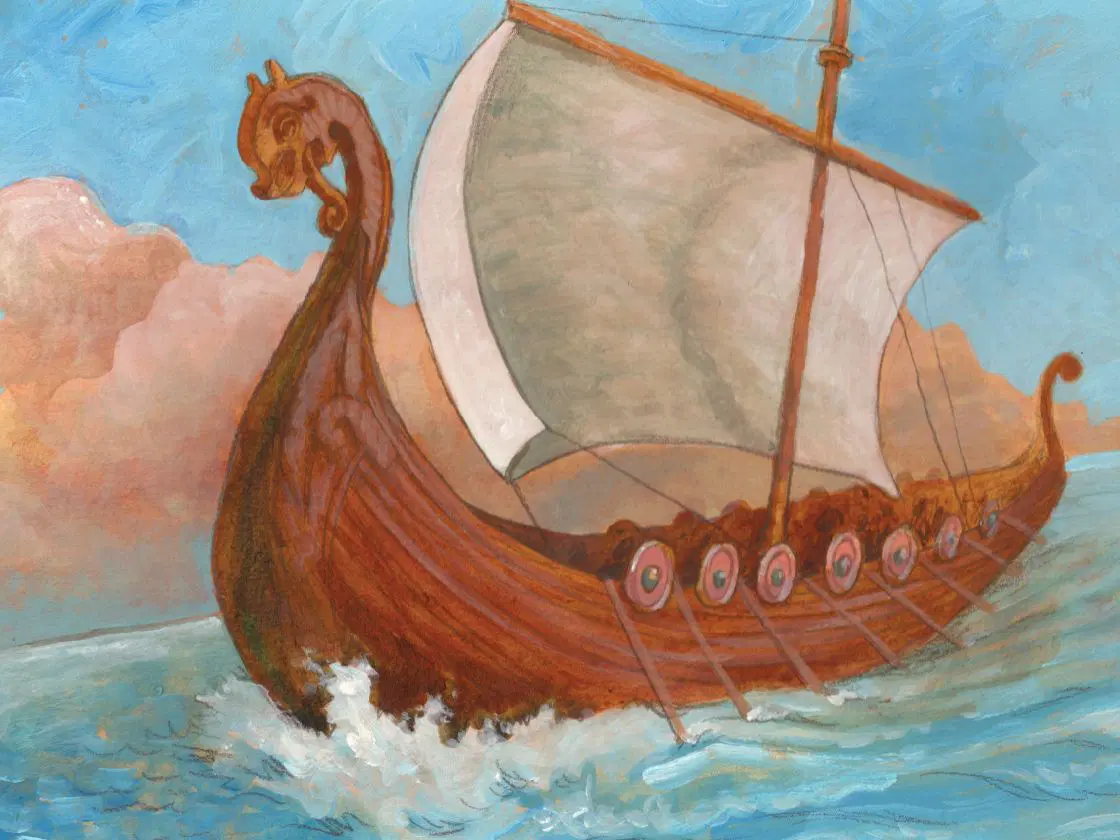
Un barco vikingo con una proa en forma de dragón navega en el océano bajo un cielo azul con nubes. El barco tiene una sola vela grande y varios escudos recubren sus costados.

Unit 6

The Viking Age/La era vikinga

An immersive narrative experience about what life was like in Viking communities.

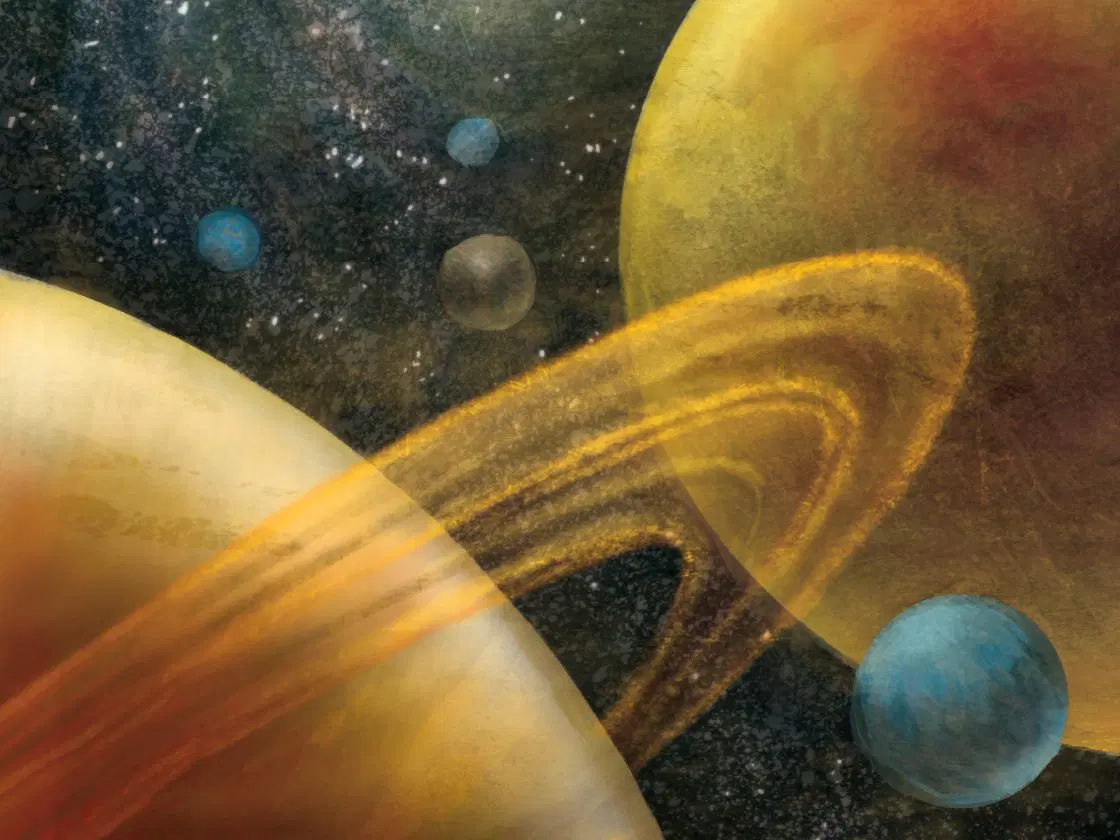
Ilustración de una escena espacial con varios planetas y anillos sobre un fondo de estrellas. Dos planetas grandes dominan el primer plano y se ven planetas más pequeños al fondo.

Unit 7

Astronomy: Our Solar System and Beyond/Astronomía: nuestro sistema solar y más allá

More about our universe, including a writing project about daily life on a space station.

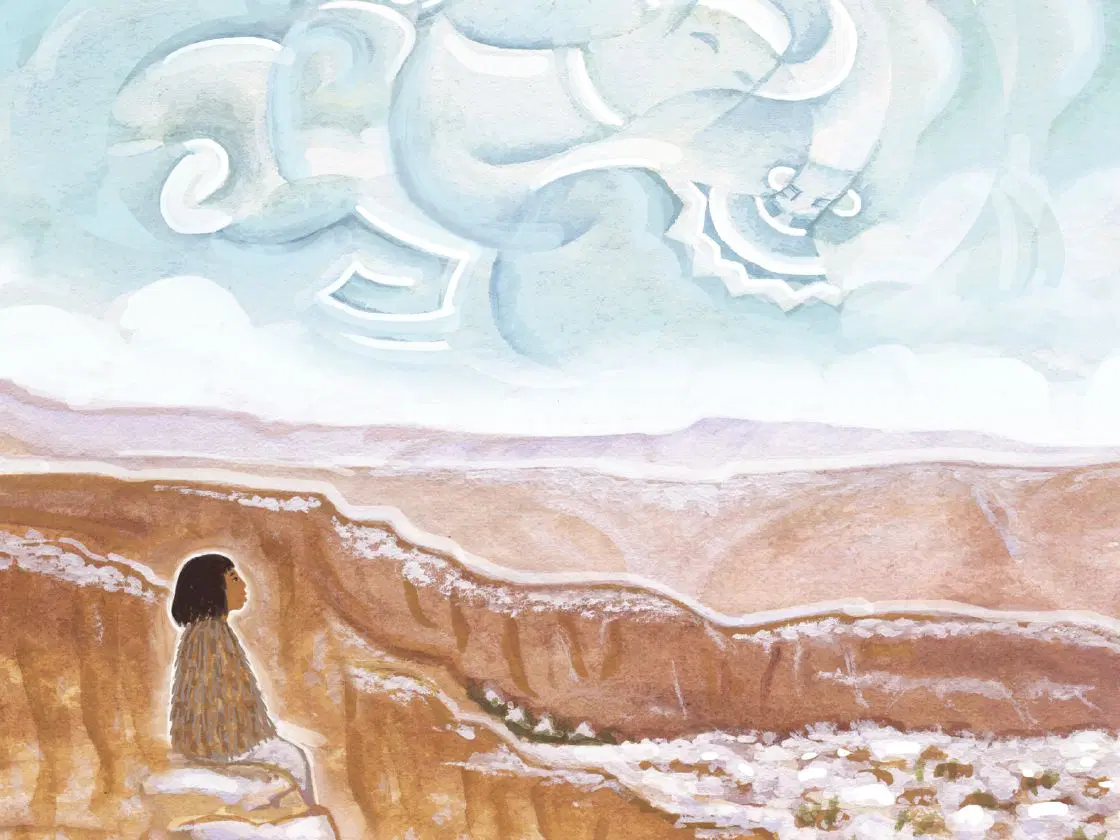
Una persona sentada en el borde de un acantilado con vistas a un vasto paisaje desértico con nubes arremolinadas en el cielo.

Unit 8

Native Americans: Regions and Cultures/Los nativos americanos: regiones y culturas

How did Native American nations change their way of life in different parts of the world?

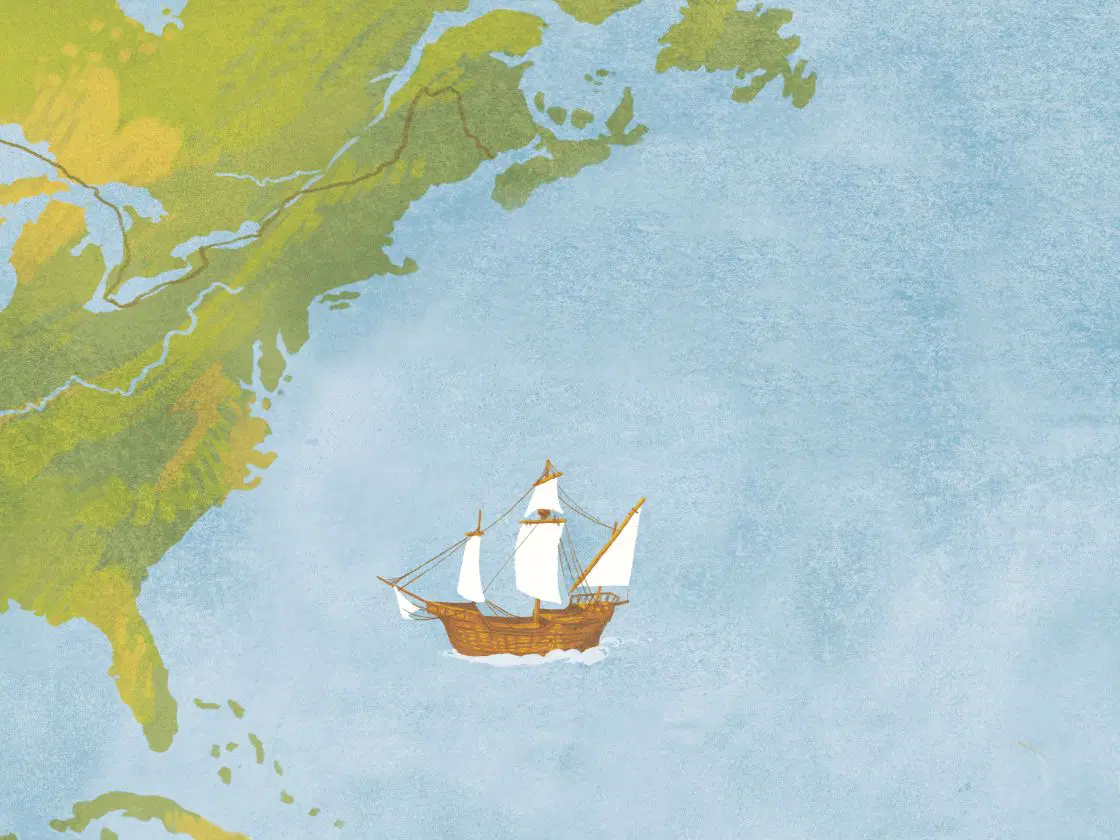
Ilustración de un velero en el océano con la costa este de América del Norte visible a la izquierda.

Unit 9

Early Explorations of North America/La exploración europea de América del Norte

What was it like to sail to North America with the early European explorers?

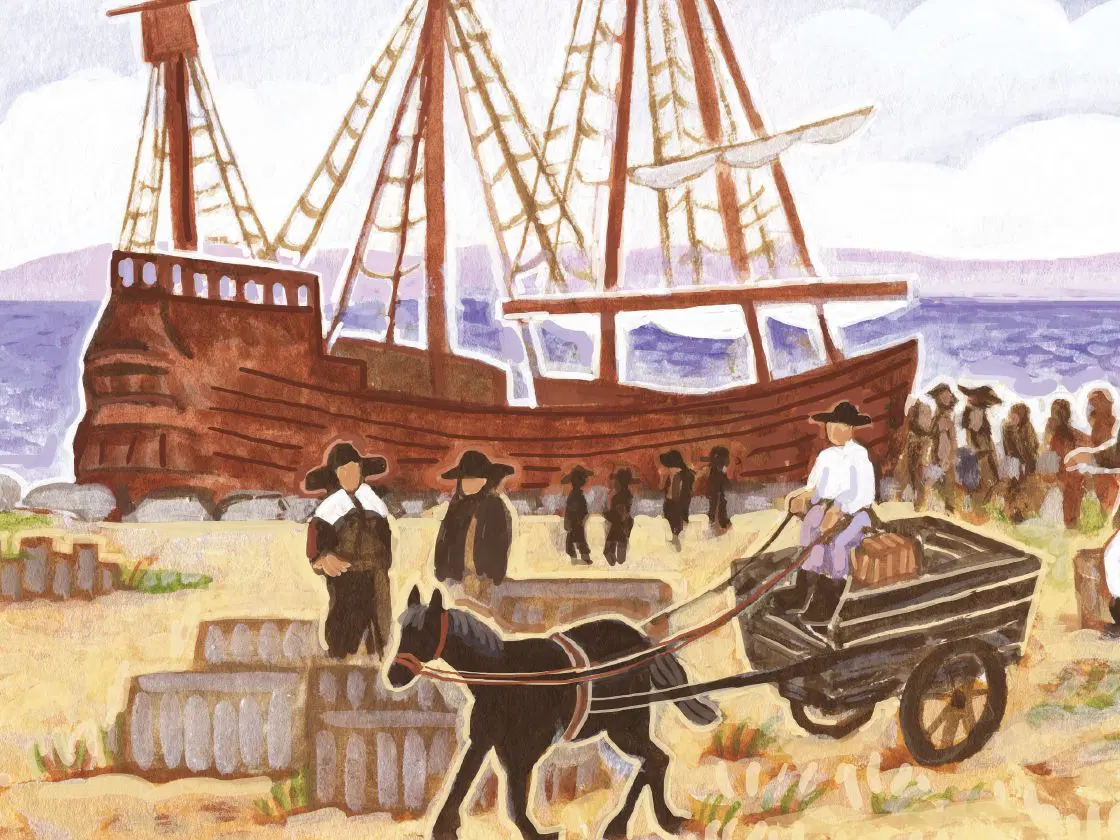
Una pintura representa una escena del siglo XVII con colonos, un velero al fondo y un hombre conduciendo un carro tirado por caballos cargado de mercancías. Se ve a otras personas descargando y trabajando cerca.

Unit 10

Colonial America/La época colonial en los Estados Unidos

A study of the very different ways of life in the different pre-U.S. colonies.

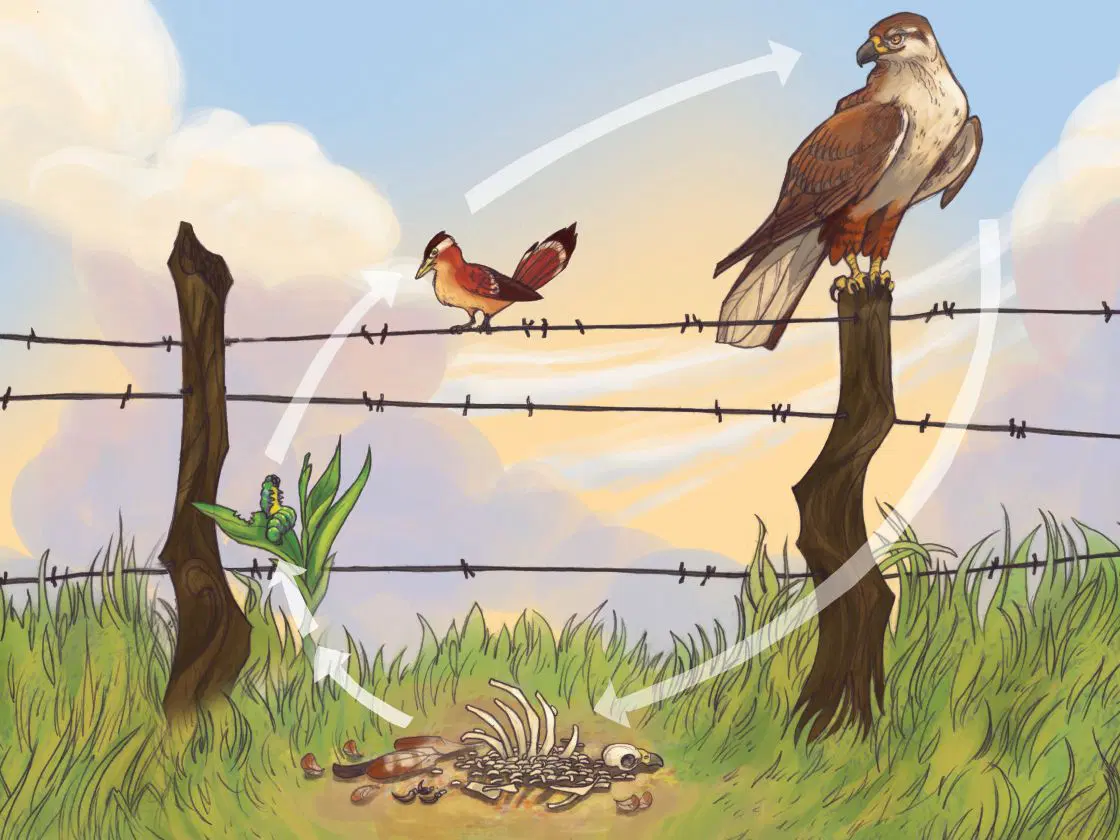
Ilustración que muestra el ciclo de la vida: un esqueleto en el suelo, un pájaro posado en una cerca, otro pájaro en una planta y un ave rapaz más grande arriba, todos conectados por flechas circulares.

Unit 11

Ecology/Ecología

Students keep ecologist’s journals to learn about our world and how best to protect it.

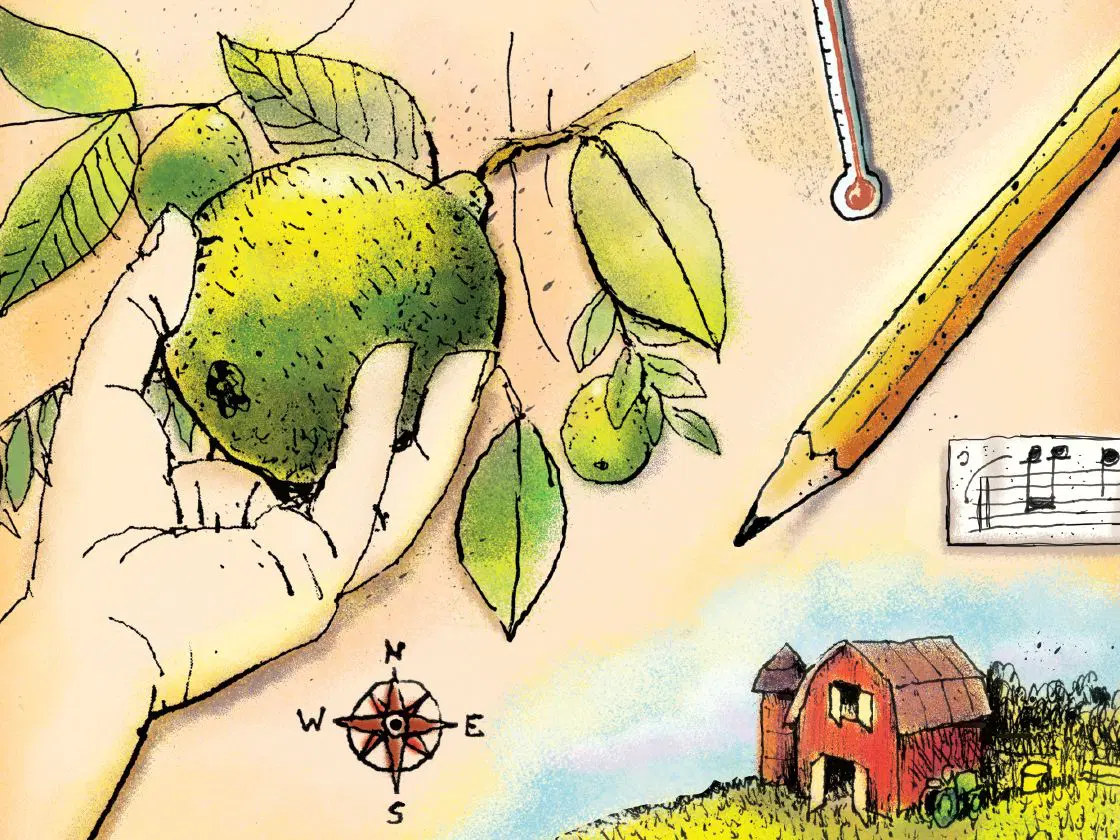
Una mano alcanza una manzana verde en una rama. Cerca hay una brújula, un termómetro, un lápiz, notas musicales y un granero rojo sobre un paisaje cubierto de hierba.

Unit 1

Personal Narratives/Narrativas personales

Read stories of personal experience… and learn to reflect on your own.

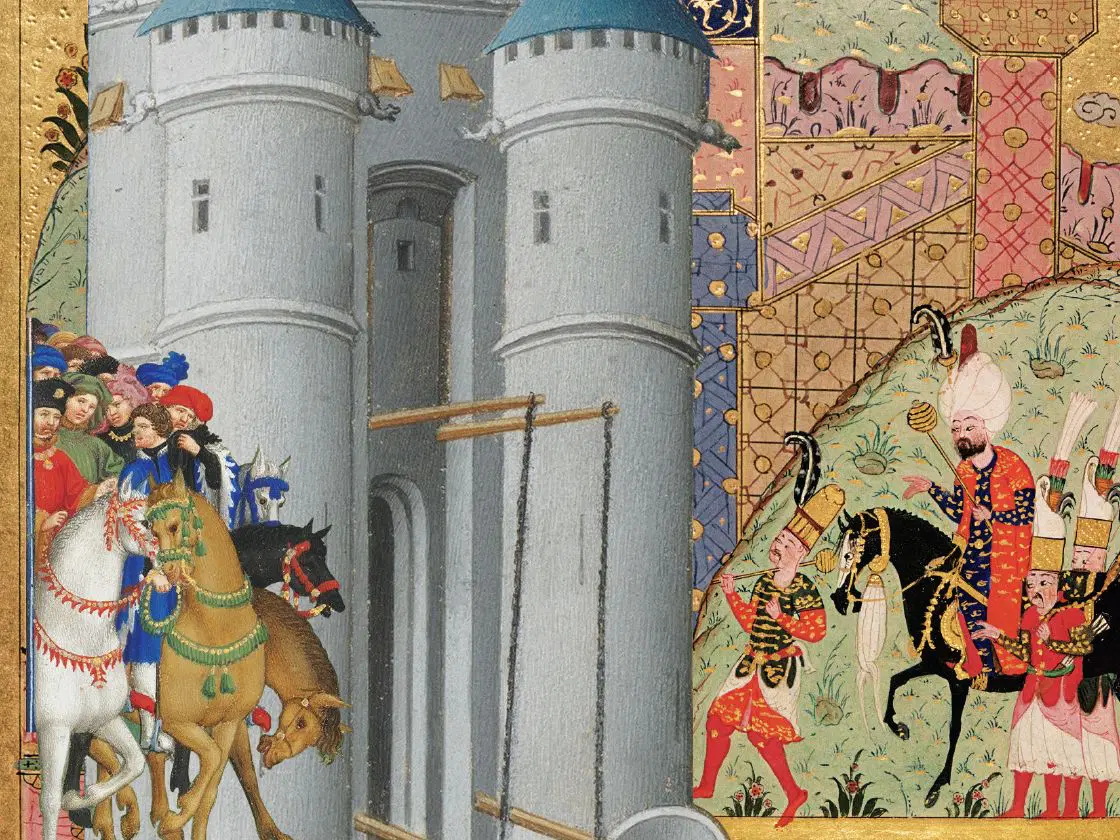
Ilustración medieval que representa un grupo de figuras con armadura a la entrada de un alto castillo gris con puente levadizo, adornado con banderas y rodeado por un paisaje decorado y fondos ornamentados.

Unit 2

Empires in the Middle Ages/Los imperios en la Edad Media, parte 1 & Los imperios en la Edad Media, parte 2

Explore the medieval history of Europe and the Middle East.

Ilustración dorada de un dragón con alas sobre fondo beige, rodeado de diversos elementos decorativos como estrellas, hojas y estampados abstractos.

Unit 3

Poetry/Poesía

Study the poetry of many nations using licensed text anthologies, and begin to write your own.

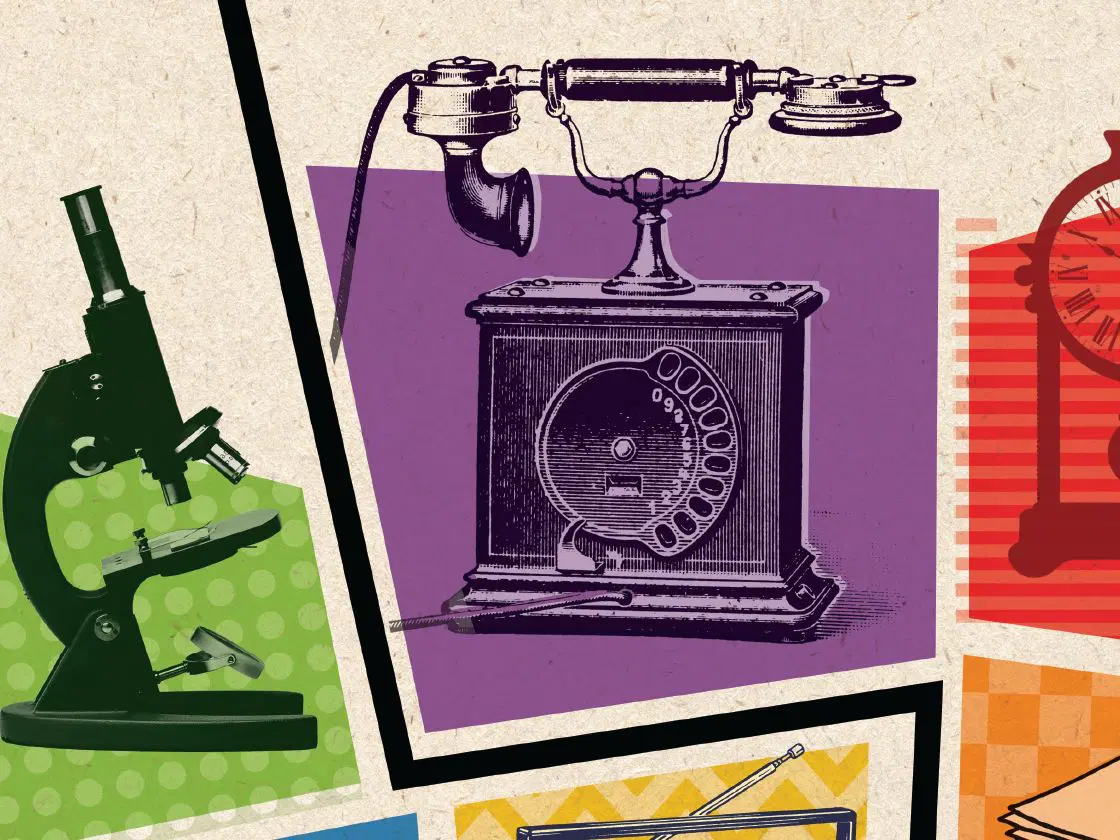
Vintage styled illustrations of a microscope, an old telephone, and a clock on textured background with geometric patterns.

Unit 4

Eureka! Student Inventor/¡Eureka! Estudiante inventor

Transform the class into a lab for students to build and present inventions.

Formaciones rocosas en un paisaje desértico con capas vibrantes y arremolinadas de arenisca roja, naranja y amarilla bajo un cielo parcialmente nublado.

Unit 5

Geology/Geología

Plate tectonics, volcanoes, erosion: all the forces that shape the Earth.

Una imagen abstracta y colorida que representa varias formas geométricas de edificios sobre un fondo azul estampado.

Unit 6

Contemporary Fiction with excerpts from The House on Mango Street/Ficción Contemporánea con Fragmentos de La Casa en Mango Street

Explore The House on Mango Street… and write a book while doing it.

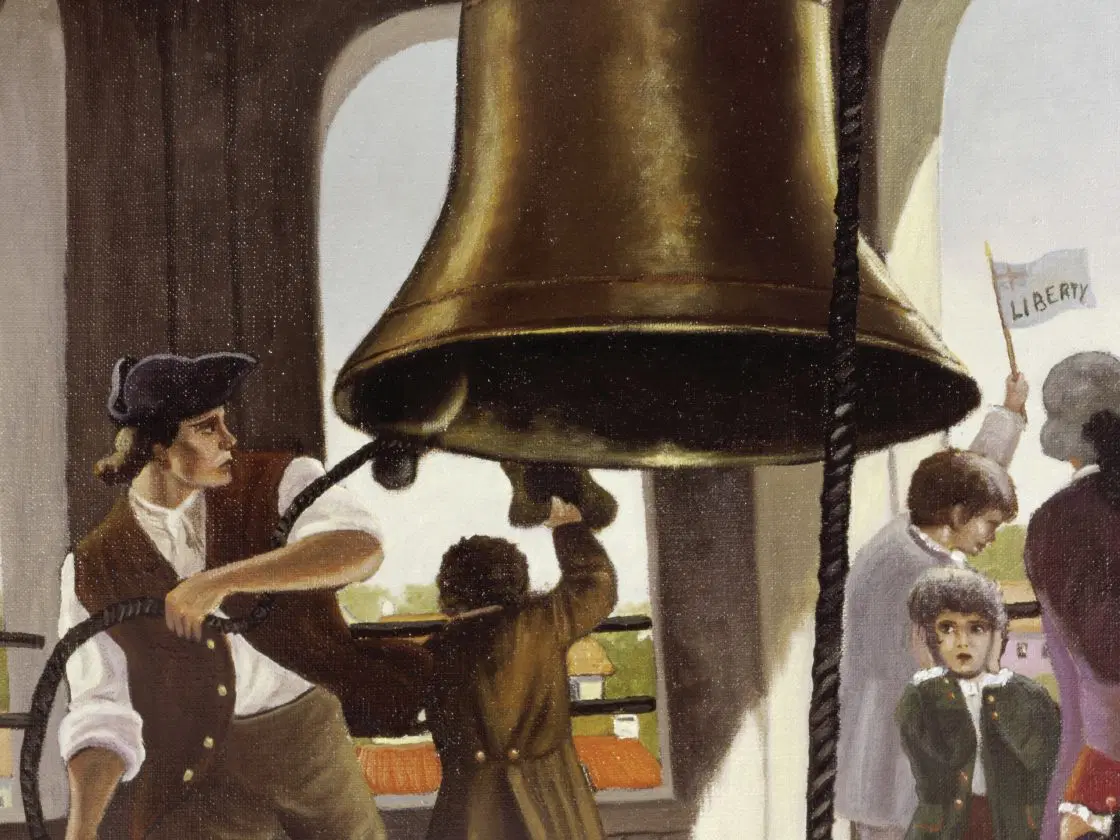
Cuadro que representa a un hombre y un niño tocando una gran campana en una torre, con espectadores al fondo y un cartel de "LIBERTAD" visible.

Unit 7

American Revolution/La Revolución estadounidense

Why did America seek independence? Let’s investigate the causes and effects.

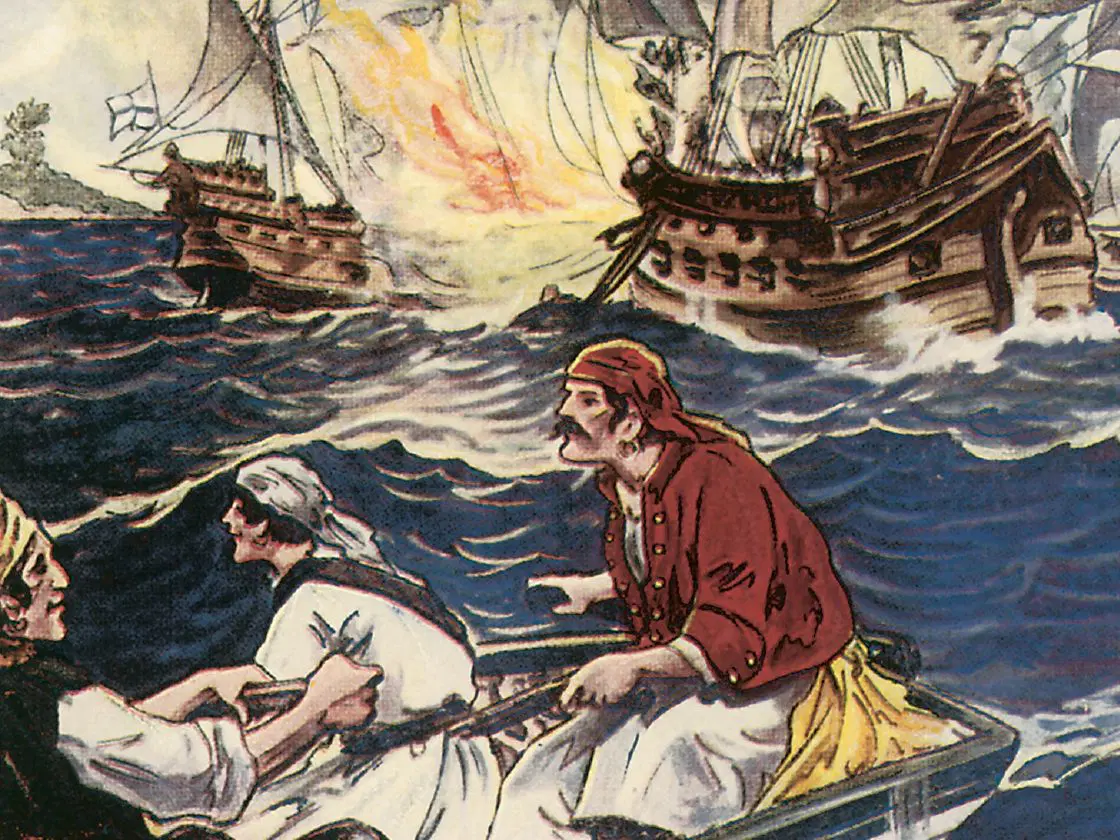
Un pequeño bote de remos con tres personas navega por mares agitados mientras dos grandes barcos luchan al fondo, con humo y fuego visibles.

Unit 8

Treasure Island/La Isla del Tesoro

How dSeek the treasure of plot in this detailed study of a classic fiction adventure.

Unit 1

Personal Narratives/Narrativas personales

Through writing and sharing their writing, students begin to identify themselves as writers.

Unit 2

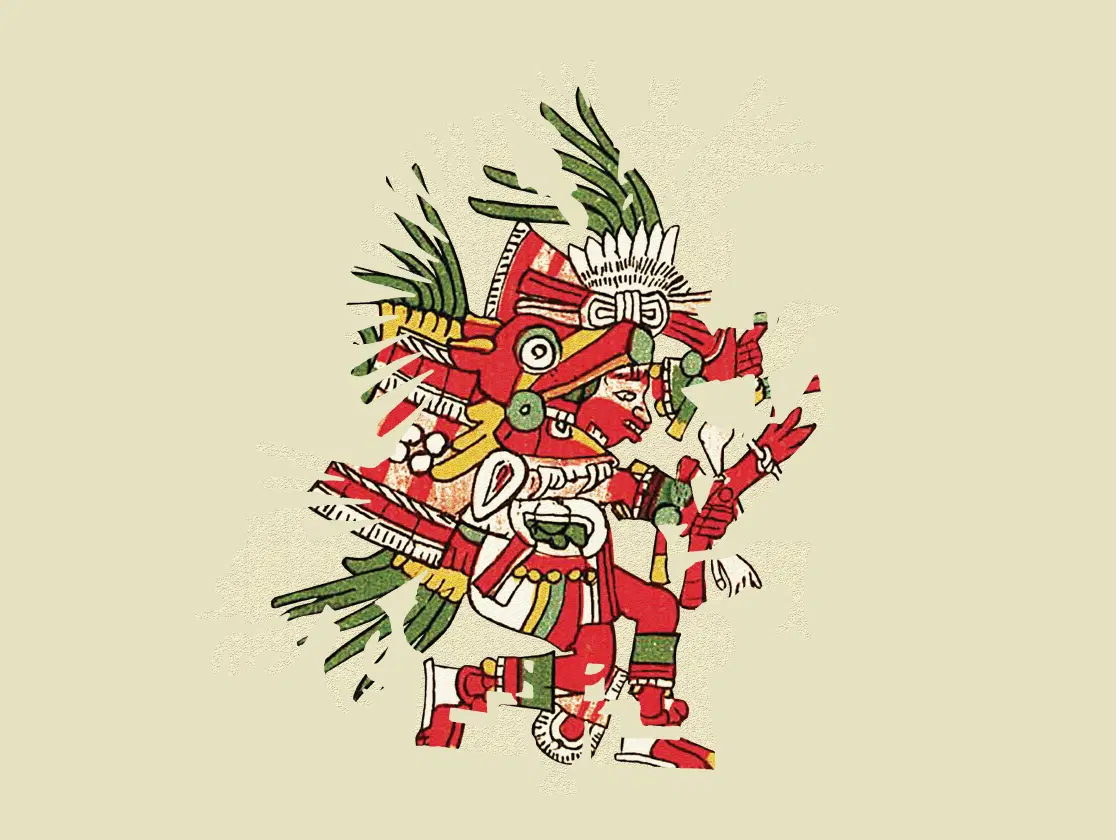
Early American Civilizations/Las primeras civilizaciones americanas

Students craft a codex to explain the rise and fall of the Maya, Aztec, and Inca people.

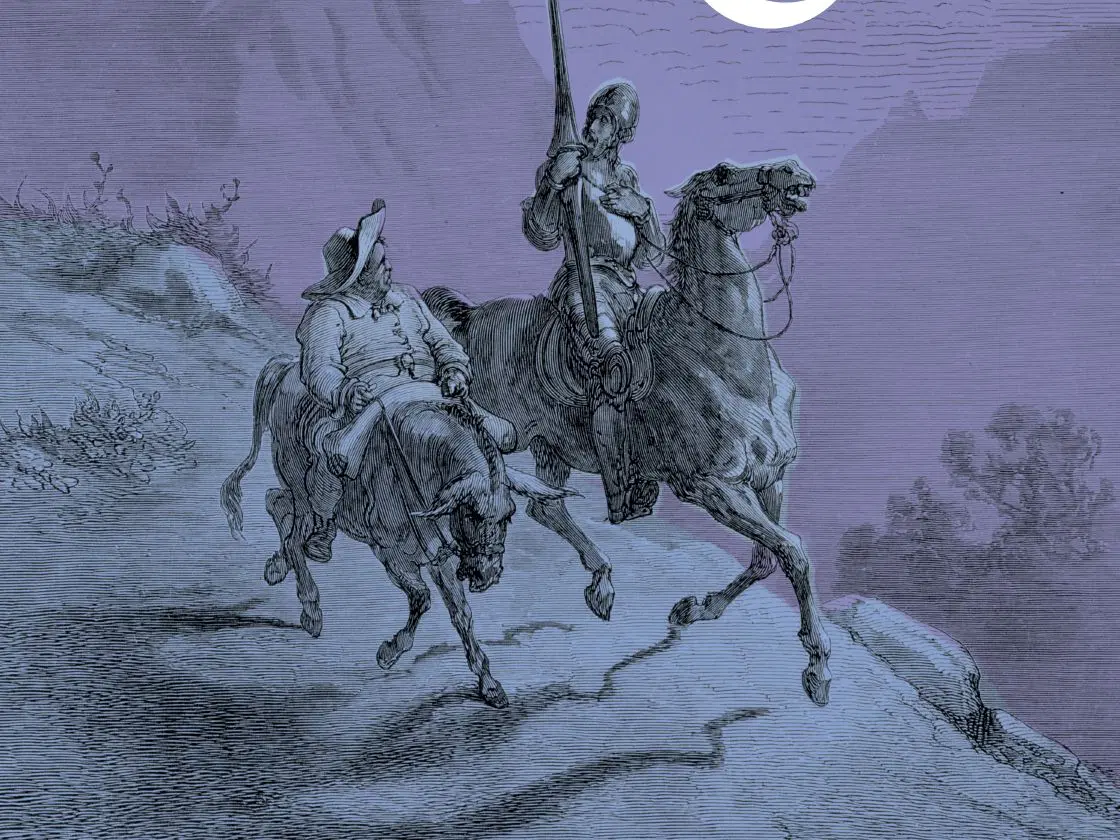
Dos jinetes medievales a caballo, uno de ellos con la espada en alto, avanzan por un terreno rocoso. El fondo presenta un paisaje brumoso bajo un tono violeta.

Unit 3

Poetry/Poesía

Students close read many forms of poetry… and learn to write them.

Collage ilustrado con un paraguas, un cuervo, un sextante náutico, estrellas, una luna creciente y una brújula sobre un fondo beige texturizado.

Unit 4

Adventures of Don Quixote/Las Aventuras de Don Quijote

Was Don Quixote right to fight the windmill? In this full-length novel study, students decide.

Unit 5

The Renaissance/El Renacimiento

Exploring the art and literature of the Renaissance through the works of its masters.

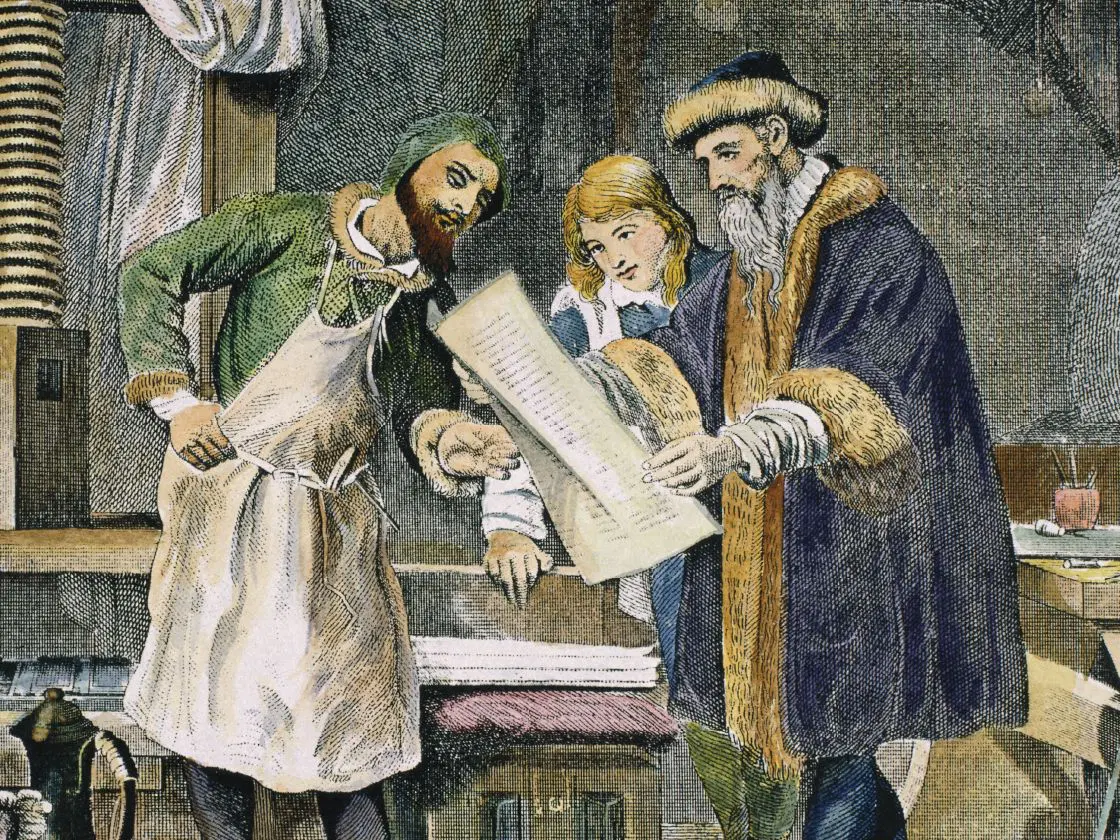
Tres hombres vestidos con ropa de época examinan una gran hoja de papel dentro de una imprenta. Un hombre parece llevar un delantal, mientras que otro señala el papel y el tercero observa de cerca.

Unit 6

The Reformation/La Reforma

How did the printing press transform the religion and society of Europe?

Patrón botánico morado y lila con hojas, plantas y formas abstractas, incluida una luna creciente y estrellas, sobre un fondo violeta oscuro.

Unit 7

William Shakespeare’s A Midsummer Night’s Dream/Sueño de Una Noche de Verano de William Shakespeare

Students enter the world of Shakespeare by reading, designing, and acting out his work.

Retrato en tonos sepia de una joven de pelo largo, con un collar de pedrería y un chal drapeado.

Unit 8

Native Americans/Los nativos americanos

How did the policies of the U.S. government impact Native American culture and lives?

Una lupa sobre documentos que contienen una pintura de paisaje de montañas, un dibujo con la etiqueta "Raptor Claw" y una nota adhesiva con la "Pista n.° 2". También se ven un sobre y una insignia exterior.

Unit 9

Chemical Matter/Química

Students use knowledge of chemistry to solve a mystery.

Print & digital components

The program includes instructional guidance and student materials for a year of instruction, with lessons and activities that keep students engaged every day.

Component

FORMAT

Knowledge (Conocimientos) Teacher Guides (K–2)

Knowledge Strand Teacher Guides contain Amplify CKLA’s cross-curricular read-alouds and application activities, all of which are standards-based to build mastery of content knowledge and literacy skills. There is one Teacher Guide per Knowledge Domain.

Print and digital

Knowledge Image Cards (K–2)

Amplify Caminos includes Image Cards for each Knowledge Domain to bring each topic to life through vivid visuals.

Print and digital

Knowledge Flip Books (K–2)

Projectable Flip Books are provided to accompany the read-alouds in each Knowledge Domain.

Digital

Teacher Guides (3–5)

Teacher Guides for grades 3–5 units are based on content-rich topics and incorporate reading, writing, speaking, and listening skills in the context of background knowledge. There is one Teacher Guide per unit.

Print or digital

Teacher Resource Site (K–5)

The program includes a one-stop-shop website for lesson projections, digital versions of all Amplify Caminos materials, lesson planning resources, multimedia (such as eBooks), and more.

Digital

Professional Learning Site (K–5)

The Professional Learning site includes training materials, best practices, and other resources to develop program expertise. Access professional development anywhere, anytime.

Digital

Component

FORMAT

Knowledge (Conocimiento) Activity Books (K–2)

Activity Books provide students with the opportunity to deepen world and word knowledge by responding to text in a diversity of ways.

Print

Student Readers (3–5)

Student Readers serve as content-rich anchor texts for each unit. Units such as Poetry and Contemporary Fiction feature authentic texts originally written in Spanish.

Activity Books (3–5)

Activity Books in grades 3–5 provide daily opportunities for students to hone reading and writing skills within the context of each unit.

Print and digital

Explore more programs

Our programs are designed to support and complement one another. Learn more about our related programs.

Amid ongoing national literacy crisis, Boost Reading demonstrates strong outcomes for academically vulnerable students

BROOKLYN, NY (November 29, 2023) — Amplify, a publisher of next-generation curriculum and assessment programs, released the results of a second year-long study on the impact of Boost Reading, a personalized learning program for elementary grades powered by the Science of Reading. Students in grades K–5—including English/multilingual learners—who used Boost Reading for 30 minutes a week significantly outperformed their peers. Students at risk for reading difficulty who used Boost Reading were 26 percent more likely than students not using Boost Reading to meet or exceed grade-level benchmarks by the end of the school year.

The study compared more than 43,000 K–5 students who used Boost Reading for at least 30 minutes a week with a group of more than 130,000 students who did not use Boost Reading, matched on key student and school characteristics. Educators measured student reading skills using DIBELS® 8th Edition, the gold-standard early reading assessment developed by the University of Oregon.

A digital, student-driven program for grades K–5, Boost Reading enables educators to support every reader in their classrooms through its adaptive technology and powerful storytelling. Boost Reading aligns with Amplify’s other early literacy programs and pairs with Boost Lectura to provide personalized English and Spanish instructional parity.

“Seeing such clear and compelling outcomes for two years in a row is just the kind of promising data we could all use as we continue to navigate a post-COVID world,” said Melissa Ulan, senior vice president of the literacy suite at Amplify. “When educators have research-backed tools to personalize instruction, they are able to meet the needs of every student and drive significant growth in reading skills. The data confirm it.”

The research is rigorous: This national study from the 2021–22 school year meets the Every Student Succeeds Act’s (ESSA) Tier 2 Moderate Evidence criteria, showing significant and positive effects on student outcomes. Notably, 62 percent of at-risk English/multilingual kindergarten students in the Boost Reading group finished the year at benchmark or above, compared to 47 percent of students in the comparison group.

About Amplify
A pioneer in K–12 education since 2000, Amplify is leading the way in next-generation curriculum and assessment. Our core and supplemental programs in literacy, math, and science engage all students in rigorous learning and inspire them to think deeply, creatively, and for themselves. Our formative assessment products turn data into practical instructional support to help all students build a strong foundation in early reading and math. All of our programs and services provide educators with powerful tools that help them understand and respond to the needs of every student. Today, Amplify serves more than 15 million students in all 50 states. For more information, visit amplify.com.

Media Contact
Kristine Frech
media@amplify.com

Two people sitting at a desk with one using a laptop and another looking on, surrounded by abstract line art and floating quotation marks, demonstrating the gold standard assessment process.

Our research

mCLASS Literacy

mCLASS® DIBELS® 8th Edition is an all-in-one literacy system for universal and dyslexia screening, progress monitoring, and instruction for grades K–8. It’s quick and easy to use, and it provides clear next steps for developing confident readers.

Research base

A pdf document titled "dual language of mCLASS assessment" with author details and images of students and teachers on the cover.

Research: The importance of dual language assessment in early literacy (published in 2022)

Read more

Cover page of the "Dynamic Indicators of Basic Early Literacy Skills, 8th Edition" Administration and Scoring Guide 2021 Edition, from the University of Oregon, College of Education.

Research: Administration and Scoring Guide (published in 2021)

Read more

Cover of the "Dynamic Indicators of Basic Early Literacy Skills (DIBELS) 8th Edition Technical Manual" from the University of Oregon College of Education.

Research: DIBELS 8th Edition Technical Manual (published in 2020)

Read more

Cover page of a white paper titled "mCLASS Dyslexia Screening Measures Technical Manual," with a small orange "PDF" label at the top right corner.

Research: mCLASS Dyslexia Screening Measures Technical Manual (published in 2019)

Read more

Cover page of a white paper document titled "mCLASS Dyslexia Screening Measures Research Report," with an orange "PDF" label at the top right corner.

Report: mCLASS Dyslexia Screening Measures Research (published in 2019)

Read more

Cover page of the "Burst Reading Assessment (Now mCLASS Intervention) Technical Manual" PDF document by Amplify.

Research: Burst Reading Assessment (Now mCLASS Intervention) Technical Manual (published in 2019)

Read more

Cover of a PDF titled "Five leadership practices that drive success in K-2 literacy," featuring an adult helping a young child read. Published by Amplify.

Research: Five leadership practices that drive success in K–2 literacy (published in 2018)

Read more

Cover of a PDF document titled "Examining the Efficacy of mCLASS Intervention," featuring an orange and white design. The word "Amplify" appears at the bottom, highlighting mCLASS as a gold standard assessment tool.

Report: Examining the Efficacy of mCLASS Intervention (published in 2015)

Read more

Research briefs

Cover page of a PDF research brief titled "Slow but steady: K–2 reading readiness climbs just 1–2 percentage points annually," featuring a simple bar graph illustration based on mCLASS gold standard assessment data.

Research brief: Slow but steady: K–2 reading readiness climbs just 1–2 percentage points annually. (published February 2026)

Read more

A PDF cover titled "More students start the school year on track for learning to read, though momentum is slow," dated October 2025, with a stylized bar graph illustration.

Research brief: More students start the school year on track for learning to read, though momentum is slow. (published October 2025)

Read more

Cover of a research brief titled "Reading scores rise overall; gender disparities present a complex picture," dated July 2025, featuring a bar chart graphic and highlighting mCLASS as the gold standard assessment, with a PDF label.

Research brief: Reading scores rise overall; gender disparities present a complex picture. (published July 2025)

Read more

PDF document titled "Early literacy gains offer hope for COVID recovery, though broader literacy challenges persist nationwide," dated February 2025.

Research brief: Early literacy gains offer hope for COVID recovery, though broader literacy challenges persist nationwide (published February 2025)

Read more

Cover of a PDF titled "Summer instructional loss highlights the importance of quality core instruction for the youngest grades," dated October 2024, with abstract line graph design.

Research brief: Summer instructional loss highlights the importance of quality core instruction for the youngest grades. (published October 2024)

Read more

Portada de un documento PDF titulado "Nuevo estudio", que analiza la importancia de la evaluación bilingüe para los estudiantes de habla hispana, con fecha de publicación de junio de 2024. El ícono de PDF se muestra en la esquina superior derecha.

Research brief: Different outcomes for Spanish-speaking students assessed in English and in Spanish demonstrate the importance of bilingual assessment.
(published June 2024)

Read more

Cover page of a research brief titled "Middle-of-year mCLASS data show early literacy improvements are slowing, and broader U.S. literacy rates remain a concern." Gold standard assessment results, March 2024.

Research brief: Middle-of-year data show early literacy improvements are slowing, and broader U.S. literacy rates remain a concern. (published March 2024)

Read more

Cover of a research brief PDF titled "With end-of-year data from gold standard assessment mCLASS showing continued academic recovery in early literacy, worries remain for third grade students," published July 2023 by Amplify.

Research brief: With end-of-year data showing continued academic recovery in early literacy, worries remain for third grade students.(published July 2023)

Read more

Cover page of a research brief titled "Middle-of-year data show that academic recovery continues in early literacy," featuring a simple bar graph, an orange PDF label, and highlighting mCLASS gold standard assessment.

Research brief: Middle-of-year data show that academic recovery continues in early literacy, with Black and Hispanic students making the greatest gains. (published February 2023)

Read more

A PDF cover page titled "Research Brief" discusses worsening literacy crises in U.S. schools post-COVID-19, featuring a stylized bar graph illustration, an October 2022 date, and highlights insights from mCLASS gold standard assessment data.

Research brief: Data from the beginning of the school year show that the literacy crisis in America’s schools may be worse than it was before COVID-19; but the greatest part of the crisis existed before the pandemic. (published October 2022)

Read more 

Cover of a research brief titled "Amid academic recovery in classrooms nationwide, mCLASS gold standard assessment reveals risks remain for youngest students with least instructional time during critical early years.

Research brief: Amid academic recovery in classrooms nationwide, risks remain for youngest students with least instructional time during critical early years. (published February 2022)

Read more

Cover page of a research brief titled "Students start to recover from COVID instructional loss," dated July 2021, featuring bar graph artwork, a PDF label, and highlighting gold standard assessment with mCLASS.

Research brief: Students start to recover from COVID instructional loss. (published July 2021)

Read more

Cover page of a research brief titled "COVID-19 means more students not learning to read," dated February 2021, with PDF label and Amplify logo. Features a simple bar graph illustration and highlights results from the gold standard assessment, mCLASS.

Research brief: COVID-19 means more students not learning to read. (published February 2021)

Read more

mCLASS Lectura

Cover of a PDF document titled "Guía de administración y calificación" for mCLASS, the gold standard assessment by Amplify, featuring an orange background.

Research: mCLASS Lectura Guía de administración y calificación

Read more

Stack of documents displaying the cover of the "mCLASS Lectura Technical Manual" in Spanish, labeled as a PDF—a gold standard assessment resource.

Research: mCLASS Lectura Technical Manual

Read more

Cover of the "mCLASS Spelling Español Technical Manual" PDF document, featuring a plain white background with orange and gray text—a guide to mCLASS’s gold standard assessment practices.

Research: mCLASS Spelling Español Technical Manual

Read more

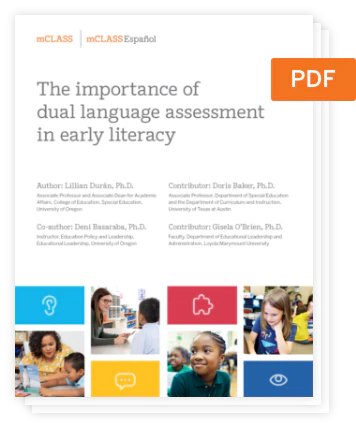
Cover of a PDF titled "The importance of dual language assessment in early literacy," featuring author names, photos of young children in classroom settings, and referencing mCLASS as a gold standard assessment tool.

Research: The importance of dual language assessment in early literacy

Read more

District success stories

Ithaca City School District, New York: mCLASS DIBELS 8th Edition and connected intervention systems drive record-breaking literacy gains

Read more

Ready to learn more?

Fill out this form, and we’ll be in touch shortly.

An illustration of a spilled liquid with a submerged smartphone, depicting a phone accident with liquid involved, used to amplify CKLA research visibility.

Explore more of our research.

Learn more about the research behind our programs.

What’s included in our Spanish language arts curriculum

Amplify Core Knowledge Language Arts® (CKLA) is available in both English and Spanish. Amplify Caminos al Conocimiento Esencial, our robust Spanish language arts companion for grades K–5, supports multiple teaching models, including dual language immersion and transitional classrooms.

A laptop screen displays a kindergarten instructional webpage in Spanish, showing lesson categories with illustrated thumbnails and navigation options.

Year at a glance

The program’s intentional Knowledge Sequence from K–5 connects knowledge and vocabulary within a grade level and across grade levels, for deeper reading comprehension and preparation for college, career, and life. Instead of “activating prior knowledge,” Amplify Caminos helps you build it in the classroom from day one, for every child, expanding each student’s knowledge base long before they transition to reading to learn.

Curriculum flowchart showing reading themes and activities from Kindergarten to Grade 5, organized by grade level and literary theme, with interconnected boxes for each topic.

Units & domains at a glance

Each Knowledge Domain in grades K–2 and Unit in grades 3–5 varies in the number of days based on instructional purpose. Just as with our top-rated Amplify CKLA program, the Amplify Caminos materials engage and delight young learners with resources that are both appealing and original.

Una mujer rubia con un vestido azul cuida ovejas blancas y negras, sosteniendo un bastón de pastor. Un cerdo vestido de azul corre y un hombre de negro toca el violín en una valla. Al fondo hay una casa.

Domain

Nursery Rhymes and Fables/Rimas y fábulas infantiles

Start learning about literature with these classic Mother Goose rhymes.

Ilustración de tres personas en un paisaje cubierto de hierba, una tratando de atrapar mariposas con una red, otra escondiéndose detrás de una escultura alta y frondosa de una mano y otra con binoculares.

Domain

The Five Senses/Los cinco sentidos

Learning about the body starts with learning about how we experience the world.

Una ilustración que representa a un gran lobo con sombrero de copa liderando un desfile de animales y personas con instrumentos musicales a través de un paisaje montañoso.

Domain

Stories/Cuentos

Learn about the parts of a book and some of the stories that go in one.

Una ilustración vibrante de una escena rural con colinas, una granja, una mariposa, un sol brillante, varias verduras como tomates y lechugas, y un gusano en el suelo.

Domain

Plants/Plantas

Discover the lifecycle of plants and the history of George Washington Carver.

Ilustración de una escena de granja que muestra un camión rojo que transporta verduras, campos de cultivo, vacas pastando en una colina, un granero y un molino de viento contra un cielo azul.

Domain

Farms/Granjas

Now we know how plants make their food… but what about animals?

Ilustración de un nativo remando en una canoa en un río con búfalos pastando en un campo, tipis al fondo y pájaros volando en el cielo bajo un sol brillante.

Domain

Native Americans/Los nativos americanos

Who were the first people in America? A look at the Lenape, Wampanoag, and Lakota Sioux.

Una ilustración muestra un rey y una reina en tronos, un castillo en un acantilado y una mujer con enanos cerca de un árbol. Cortinas rojas enmarcan la escena.

Domain

Kings and Queens/Reyes y reinas

To understand fairy tales, it’s best to first understand royalty.

Ilustración que muestra las cuatro estaciones: primavera con flores, verano con árboles verdes, otoño con hojas que caen e invierno con nieve y gente en trineo. Un niño lee debajo de un árbol.

Domain

Seasons and Weather/Las estaciones y el tiempo

The study of natural cycles continues with the weather and why it happens.

Un velero de madera con símbolos de cruz roja en sus velas navega cerca de una isla tropical con exuberante vegetación y palmeras. A lo lejos se ven otros dos barcos en el agua.

Domain

Columbus and the Pilgrims/Colón y los peregrinos

A look at the first contact between Europe and the Americas, and some of its results.

Una escena histórica muestra gente afuera de una gran mansión de estilo colonial con dos chimeneas. En primer plano se ve un carruaje tirado por caballos y a la izquierda se ve una casa más pequeña.

Domain

Colonial Towns and Townspeople/Las colonias y sus habitantes

Before the War for Independence, how did the town and country depend on one another?

Ilustración de personas clasificando materiales reciclables en un parque cerca de un río contaminado. Las fábricas emiten humo al fondo, mientras que las mariposas, las flores y los árboles están presentes en el primer plano.

Domain

Taking Care of the Earth/Cuidar el planeta Tierra

We only have one Earth—here are some ways to help care for it.

Ilustración del Monte Rushmore con los rostros tallados de cuatro presidentes de Estados Unidos. Un águila vuela en primer plano.

Domain

Presidents and American Symbols/Presidentes y símbolos de los Estados Unidos

Start learning about government through the lives of five presidents.

Una ilustración caprichosa que muestra animales de granja alrededor de una casa en un árbol junto a un río. Un zorro, un conejo y una oveja interactúan mientras la gente acampa junto a una fogata al fondo. Una araña cuelga del árbol.

Domain

Fables and Stories/Fábulas y cuentos

Learn some of the key elements of a story through classic fables.

Ilustración que presenta anatomía humana, actividades de estilo de vida saludable, profesionales médicos, símbolos dietéticos, una ambulancia y microorganismos, destacando la conexión entre salud, nutrición y ejercicio.

Domain

The Human Body/El cuerpo humano

What are germs? What are the organs? And what does it all have to do with health?

Una ilustración que presenta varias escenas de cuentos de hadas y folclore, incluida una calabaza grande, un tigre, Caperucita Roja, personas con atuendos tradicionales y una pagoda roja con una montaña de fondo.

Domain

Different Lands, Similar Stories/Tierras diferentes, cuentos similares

A world tour of storytelling, and the stories that stay the same across the world.

Ilustración que muestra el antiguo Egipto con pirámides, la Esfinge, agricultores arando un campo con bueyes y ganado pastando bajo un cielo soleado.

Domain

Early World Civilizations/Antiguas civilizaciones del mundo

Rivers, farming, writing, and laws: just what does it take to build a civilization?

Escena ilustrada de la antigua Mesoamérica con maíz, un río, agricultores y pirámides al fondo. En primer plano se ve a una persona con traje tradicional.

Domain

Early American Civilizations/Antiguas civilizaciones de América

What will we find in the great temples of the Aztec, Maya, and Inca civilizations?

Ilustración de la exploración espacial: se lanza un cohete, un astronauta se para cerca de un módulo de aterrizaje, una persona usa un telescopio y aparece un planeta distante con anillos sobre un fondo estrellado.

Domain

Astronomy/Astronomía

How the Earth relates to the moon, the sun, and the rest of the planets.

Dos paleontólogos en un paisaje volcánico examinan fósiles en primer plano, mientras un volcán emite humo y lava al fondo.

Domain

The History of the Earth/La historia de la Tierra

Just what lies beneath the Earth’s surface, and what can it teach us about the past?

Una escena de vida silvestre diversa que presenta un cactus del desierto con un pájaro, un conejo, elefantes, un león, un oso polar sobre el hielo y montañas distantes bajo un cielo nublado.

Domain

Animals and Habitats/Los animales y sus hábitats

A look at the connection between how animals live and where they make their homes.

Una princesa con un vestido rosa sostiene una rana junto a un arroyo con un castillo, árboles y gente al fondo. En primer plano camina un zorro con un sombrero con una pluma roja.

Domain

Fairy Tales/Cuentos de hadas

What do fairy tales have to teach us about how stories are told?

Ilustración que muestra una escena histórica con soldados, veleros y hombres con atuendo colonial discutiendo en el interior.

Domain

A New Nation: American Independence/Una nueva nación: la independencia de los Estados Unidos

The story of the birth of the United States out of the 13 Colonies.

Los pioneros con carros cubiertos y caballos señalan hacia un valle con tipis nativos, fogatas y humo elevándose. Un oso se encuentra sobre una roca y se ven montañas al fondo.

Domain

Frontier Explorers/Exploradores de la Frontera

The story of the journey west from the newborn U.S.A. to find the Pacific Ocean.

Un hombre con un hacha se encuentra entre paisajes exagerados con un castillo, un tren con humo, un buey azul y una persona con un mono observando la escena.

Domain

Fairy Tales and Tall Tales/Cuentos de hadas y cuentos exagerados

Learn about exaggeration and characterization on the frontier.

Ilustración de un paisaje vibrante que presenta diversos monumentos culturales, incluidos templos, palacios, pirámides, una escena de elefantes, montañas distantes y fuegos artificiales en el cielo.

Domain

Early Asian Civilizations/Antiguas civilizaciones de Asia

Tour the world of classical civilization, starting with India and China.

Ilustración que muestra la antigua Grecia con un anfiteatro, estatuas, soldados con armadura, un barco y un templo en una colina rodeada de vegetación.

Domain

Ancient Greek Civilization/La civilización griega antigua

The tour continues with the philosophy and politics of Greece.

Illustration of various mythological scenes including greek gods, a flying horse, and roman architecture under a sunny sky.

Domain

Greek Myths/Mitos griegos

Dive deep into the characters and storytelling of classic myths.

Ilustración de una batalla entre barcos británicos y estadounidenses cerca de un fuerte. El barco británico está a la izquierda con soldados, mientras que el barco estadounidense está a la derecha. La gente porta una gran bandera estadounidense en primer plano.

Domain

The War of 1812/La guerra de 1812

Learn about America’s “Second War for Independence.”

Un paisaje nevado con un zorro durmiendo en una madriguera, gente corriendo y andando en bicicleta por un sendero y árboles que muestran los cambios estacionales.

Domain

Cycles in Nature/Los ciclos de la naturaleza

Introducing the natural cycles that make our lives possible.

Ilustración de carros cubiertos tirados por caballos a lo largo de un sendero en el desierto, con un coyote aullando sobre una alta formación rocosa y un tren de vapor al fondo.

Domain

Westward Expansion/La expansión hacia el oeste

Why did pioneers go west? What happened to the people who were there?

Ilustración de un jardín vibrante con flores, abejas, mariposas, una oruga en una hoja, una crisálida y un apicultor que maneja una colmena junto a un estanque.

Domain

Insects/Los insectos

Lay the grounds for animal classification by looking at solitary and social insects.

Ilustración de una escena histórica con gente escuchando el discurso de un hombre en una plataforma. Al fondo se ve un río y una procesión de personas. En primer plano hay un documento de proclamación.

Domain

The U.S. Civil War/La Guerra Civil de los Estados Unidos

Begin to grapple with U.S. history’s central crisis over slavery.

Una escena en la que aparece una persona explicando un diagrama anatómico humano, otra persona haciendo ejercicio, una cadena de ADN, campos y un microscopio de fondo.

Domain

Human Body: Building Blocks and Nutrition/El cuerpo humano: componentes básicos y nutrición

A deeper dive into the digestive system and the nutrition process.

Un grupo diverso de personas se encuentra en un muelle con vistas a un bullicioso puerto con barcos y un gran barco, un avión volando por encima y la Estatua de la Libertad al fondo.

Domain

Immigration/La inmigración

Why did people immigrate to the United States, and what did they find here?

Women in early 20th-century clothing march with signs for voting rights and justice in front of a yellow bus labeled "Cleveland Ave.," making history that can inspire lessons in a K–2 language arts curriculum.

Domain

Fighting for a Cause/Luchar por una causa

How people can do extraordinary things to make the world better for everyone.

Dos ratones antropomórficos en un bote de remos, uno de ellos remando, navegan por un río tranquilo rodeado de exuberante vegetación y árboles. El ratón que rema lleva una chaqueta azul y el otro ratón parece conversar.

Unit 1

Classic Tales: The Wind in the Willows/Cuentos Clásicos: El viento en los sauces

A deep dive into character, theme, and POV in classic stories from around the world.

Ilustración de un jaguar, una garza, una rana roja, una tortuga y un pez en un paisaje vibrante con montañas y vegetación bajo un cielo soleado.

Unit 2

Animal Classification/La clasificación de los animales

How do we classify different animals by their appearance and behavior?

Ilustración de una figura humana que muestra la anatomía interna, incluidos el cerebro, los pulmones, el corazón, el sistema digestivo y una articulación de la cadera resaltada sobre un fondo degradado.

Unit 3

The Human Body: Systems and Senses/El cuerpo humano: sistemas y sentidos

Let’s take a closer look at how the skeleton, muscles, and nervous system all work.

Un ángel se arrodilla ante una mujer sentada en un sofá dorado encima de un templo en una noche estrellada. Unas escaleras conducen al templo en un paisaje montañoso.

Unit 4

The Ancient Roman Civilization/La civilización romana antigua

What is Rome’s greatest cultural contribution? In this unit, your students decide.

Ilustración de un perro saltando bajo un árbol, persiguiendo una abeja, con una mesa en primer plano sosteniendo una jarra y vasos de limonada. El sol brilla intensamente en el cielo.

Unit 5

Light and Sound/La luz y el sonido

The science behind all the ways we see and hear the world.

Un barco vikingo con una proa en forma de dragón navega en el océano bajo un cielo azul con nubes. El barco tiene una sola vela grande y varios escudos recubren sus costados.

Unit 6

The Viking Age/La era vikinga

An immersive narrative experience about what life was like in Viking communities.

Ilustración de una escena espacial con varios planetas y anillos sobre un fondo de estrellas. Dos planetas grandes dominan el primer plano y se ven planetas más pequeños al fondo.

Unit 7

Astronomy: Our Solar System and Beyond/Astronomía: nuestro sistema solar y más allá

More about our universe, including a writing project about daily life on a space station.

Una persona sentada en el borde de un acantilado con vistas a un vasto paisaje desértico con nubes arremolinadas en el cielo.

Unit 8

Native Americans: Regions and Cultures/Los nativos americanos: regiones y culturas

How did Native American nations change their way of life in different parts of the world?

Ilustración de un velero en el océano con la costa este de América del Norte visible a la izquierda.

Unit 9

Early Explorations of North America/La exploración europea de América del Norte

What was it like to sail to North America with the early European explorers?

Una pintura representa una escena del siglo XVII con colonos, un velero al fondo y un hombre conduciendo un carro tirado por caballos cargado de mercancías. Se ve a otras personas descargando y trabajando cerca.

Unit 10

Colonial America/La época colonial en los Estados Unidos

A study of the very different ways of life in the different pre-U.S. colonies.

Ilustración que muestra el ciclo de la vida: un esqueleto en el suelo, un pájaro posado en una cerca, otro pájaro en una planta y un ave rapaz más grande arriba, todos conectados por flechas circulares.

Unit 11

Ecology/Ecología

Students keep ecologist’s journals to learn about our world and how best to protect it.

Una mano alcanza una manzana verde en una rama. Cerca hay una brújula, un termómetro, un lápiz, notas musicales y un granero rojo sobre un paisaje cubierto de hierba.

Unit 1

Personal Narratives/Narrativas personales

Read stories of personal experience… and learn to reflect on your own.

Ilustración medieval que representa un grupo de figuras con armadura a la entrada de un alto castillo gris con puente levadizo, adornado con banderas y rodeado por un paisaje decorado y fondos ornamentados.

Unit 2

Empires in the Middle Ages/Los imperios en la Edad Media, parte 1 & Los imperios en la Edad Media, parte 2

Explore the medieval history of Europe and the Middle East.

Ilustración dorada de un dragón con alas sobre fondo beige, rodeado de diversos elementos decorativos como estrellas, hojas y estampados abstractos.

Unit 3

Poetry/Poesía

Study the poetry of many nations using licensed text anthologies, and begin to write your own.

Vintage styled illustrations of a microscope, an old telephone, and a clock on textured background with geometric patterns.

Unit 4

Eureka! Student Inventor/¡Eureka! Estudiante inventor

Transform the class into a lab for students to build and present inventions.

Formaciones rocosas en un paisaje desértico con capas vibrantes y arremolinadas de arenisca roja, naranja y amarilla bajo un cielo parcialmente nublado.

Unit 5

Geology/Geología

Plate tectonics, volcanoes, erosion: all the forces that shape the Earth.

Una imagen abstracta y colorida que representa varias formas geométricas de edificios sobre un fondo azul estampado.

Unit 6

Contemporary Fiction with excerpts from The House on Mango Street/Ficción Contemporánea con Fragmentos de La Casa en Mango Street

Explore The House on Mango Street… and write a book while doing it.

Cuadro que representa a un hombre y un niño tocando una gran campana en una torre, con espectadores al fondo y un cartel de "LIBERTAD" visible.

Unit 7

American Revolution/La Revolución estadounidense

Why did America seek independence? Let’s investigate the causes and effects.

Un pequeño bote de remos con tres personas navega por mares agitados mientras dos grandes barcos luchan al fondo, con humo y fuego visibles.

Unit 8

Treasure Island/La Isla del Tesoro

How dSeek the treasure of plot in this detailed study of a classic fiction adventure.

Unit 1

Personal Narratives/Narrativas personales

Through writing and sharing their writing, students begin to identify themselves as writers.

Unit 2

Early American Civilizations/Las primeras civilizaciones americanas

Students craft a codex to explain the rise and fall of the Maya, Aztec, and Inca people.

Dos jinetes medievales a caballo, uno de ellos con la espada en alto, avanzan por un terreno rocoso. El fondo presenta un paisaje brumoso bajo un tono violeta.

Unit 3

Poetry/Poesía

Students close read many forms of poetry… and learn to write them.

Collage ilustrado con un paraguas, un cuervo, un sextante náutico, estrellas, una luna creciente y una brújula sobre un fondo beige texturizado.

Unit 4

Adventures of Don Quixote/Las Aventuras de Don Quijote

Was Don Quixote right to fight the windmill? In this full-length novel study, students decide.

Unit 5

The Renaissance/El Renacimiento

Exploring the art and literature of the Renaissance through the works of its masters.

Tres hombres vestidos con ropa de época examinan una gran hoja de papel dentro de una imprenta. Un hombre parece llevar un delantal, mientras que otro señala el papel y el tercero observa de cerca.

Unit 6

The Reformation/La Reforma

How did the printing press transform the religion and society of Europe?

Patrón botánico morado y lila con hojas, plantas y formas abstractas, incluida una luna creciente y estrellas, sobre un fondo violeta oscuro.

Unit 7

William Shakespeare’s A Midsummer Night’s Dream/Sueño de Una Noche de Verano de William Shakespeare

Students enter the world of Shakespeare by reading, designing, and acting out his work.

Retrato en tonos sepia de una joven de pelo largo, con un collar de pedrería y un chal drapeado.

Unit 8

Native Americans/Los nativos americanos

How did the policies of the U.S. government impact Native American culture and lives?

Una lupa sobre documentos que contienen una pintura de paisaje de montañas, un dibujo con la etiqueta "Raptor Claw" y una nota adhesiva con la "Pista n.° 2". También se ven un sobre y una insignia exterior.

Unit 9

Chemical Matter/Química

Students use knowledge of chemistry to solve a mystery.

Print & digital components

The program includes instructional guidance and student materials for a year of instruction, with lessons and activities that keep students engaged every day.

Component

FORMAT

Knowledge (Conocimientos) Teacher Guides (K–2)

Knowledge Strand Teacher Guides contain Amplify CKLA’s cross-curricular read-alouds and application activities, all of which are standards-based to build mastery of content knowledge and literacy skills. There is one Teacher Guide per Knowledge Domain.

Print and digital

Knowledge Image Cards (K–2)

Amplify Caminos includes Image Cards for each Knowledge Domain to bring each topic to life through vivid visuals.

Print and digital

Knowledge Flip Books (K–2)

Projectable Flip Books are provided to accompany the read-alouds in each Knowledge Domain.

Digital

Teacher Guides (3–5)

Teacher Guides for grades 3–5 units are based on content-rich topics and incorporate reading, writing, speaking, and listening skills in the context of background knowledge. There is one Teacher Guide per unit.

Print or digital

Teacher Resource Site (K–5)

The program includes a one-stop-shop website for lesson projections, digital versions of all Amplify Caminos materials, lesson planning resources, multimedia (such as eBooks), and more.

Digital

Professional Learning Site (K–5)

The Professional Learning site includes training materials, best practices, and other resources to develop program expertise. Access professional development anywhere, anytime.

Digital

Component

FORMAT

Knowledge (Conocimiento) Activity Books (K–2)

Activity Books provide students with the opportunity to deepen world and word knowledge by responding to text in a diversity of ways.

Print

Student Readers (3–5)

Student Readers serve as content-rich anchor texts for each unit. Units such as Poetry and Contemporary Fiction feature authentic texts originally written in Spanish.

Activity Books (3–5)

Activity Books in grades 3–5 provide daily opportunities for students to hone reading and writing skills within the context of each unit.

Print and digital

Explore more programs

Our programs are designed to support and complement one another. Learn more about our related programs.

Science of Reading

To view this protected page, enter the password below:


Putting equity first

When so much about the world needs to shift, so urgently… here are a few places to start.

Listen: Educator, author, and leader Shawn Joseph shares his passion for social justice and discusses his work advocating for equity in education, shedding light on what he calls the “silent crisis” in literacy instruction.

Learn: Share Shawn Joseph’s discussion guide with your colleagues. Which insights are the most relevant to your district this year?

Lead: Take a look at this curated collection of multicultural and social justice books. Could one spark discussion for your students?

Lead: Share this infographic on the journey to freedom with your class. Ask students to select an event to research and present a two-minute video talk.

Leveraging the science of reading

Go deep on the insights and practices that will help our classrooms (remote or otherwise)–based on the latest science, and adaptable to every shift in the educational landscape.

Learn: Susan Lambert talks to Language Magazine about the science of reading and what it means right now.

Building strong foundational skills

Strong, systematic sound-first instruction is critical to helping students learn to decode and can increase student success. Learn how specific skills can increase your impact. 

Learn: Start with Emily Hanford’s “Hard Words” article.

Listen: Jasmine Lane on the importance of equity, and how early literacy teachers can make a difference.

Listen: Bruce McCandliss on the changes a child’s brain shows when learning to read

Lead: Challenge a colleague to this Scarborough’s Rope activity–work through a sample lesson from your district and point out elements of the reading rope.

Sharing knowledge resources

Students need to be able to both read words and get the meaning of what they’re reading. Find out how to help them build key background knowledge from the get-go, so that it compounds over time.

Learn: Begin with Why knowledge matters–then follow up with Natalie Wexler’s podcast

Learn: Take a look at Achieve the Core’s overview of the importance of building knowledge and the groundbreaking “baseball study

Listen: Anne Lucas on the importance of comprehension and the specific skills that can boost it.

Listen: Tim Shanahan on four crucial aspects in teaching reading and his views on teaching reading in middle school as an extension of evidence-based early literacy practices

Learn: Begin with Why knowledge matters–then follow up with Natalie Wexler’s podcast

Learn: Take a look at Achieve the Core’s overview of the importance of building knowledge and the groundbreaking “baseball study

Assessing what students need

Assessment this year is more important than ever before–and also more challenging. What does this extended summer slide look like? How can you find time to review what’s needed, while still moving forward?

Learn: Education for Global Development’s thoughts on formative assessment in the time of COVID-19.

Learn: District Administration on why educators want more data– and more guidance on how to use it

Learn: Catch up on dyslexia risk factors and state legislation with our dyslexia toolkit.

Listen: Nancy Nelson on the importance of universal screeners in literacy instruction.

Lead: What can you offer struggling readers and their caregivers? Take a look at the IDA’s COVID-19 Resource Guide.

Thriving through remote learning

Everything about this school year has changed–yet your work is more important than ever before. How can you support your students, and your colleagues, in this new normal? Stop by Amplify Anywhere for ideas that may help.

And while you’re here–please download your free PDF “20 Self-Care Tips for Educators Right Now” (and please take care of yourselves!).

Alana Mangham on Teaching Now

Natalie Wexler on the New Normal

Thinking about back-to-school

Though it feels like the landscape is changing every day, we know we’ve got to find a way to get students back to learning. What will your school day look like? What reinforcement might you need to do in order to ensure equity? We will continue to share resources to support your journey.

Learn: In this recorded webinar, explore some ways CARES Act funding might support your students.

Learn: Hear from Baltimore educator Lucas Drerup on making middle school ELA both enjoyable and rigorous for students.

Listen: Jackson-Madison CAO Jared Myracle shares his thoughts on change management and the science of reading.

Listen: Doug Lemov, managing director of Uncommon Schools, discusses the role of technology in the classroom and remote instruction, and how educators can reconsider how they approach literacy.

Lead: As you consider how and when to reopen, review this article from The Atlantic on Eight steps that will let us reopen schools.

Lead: Guidance from District Administration on reopening safely this fall.

Finding high-quality instructional materials

If you were already thinking about new literacy resources–you’ve now got even more ideas about what high quality looks like. How will your literacy program work for all students? How do you need your literacy resources to support you in the classroom, in remote learning, and for every scenario in between?

Learn: Review this guide to a high-quality curriculum adoption.  What factors matter most now, in literacy and in every subject?

Listen: Hear nationally recognized reading experts and authors David and Meredith Liben discuss evidence based solutions and more.

Lead: Download this K-8 ELA Instructional Materials Evaluation Guide. Share with your district leadership. What resources will you all need next year (and beyond) to do the best job possible for your students?

Lead: Talk to a few colleagues in the coming weeks. What are they seeing right now? What are they planning to improve next year?

Staying strong and staying connected!

Illustration for

Looking for ways to connect with other educators and stay updated on the latest research and trends in the science of reading? Check out a few more ways to do so below.

Science of Reading: The Podcast delivers the latest insights from researchers and practitioners in early reading. Further your professional development with each episode by subscribing and downloading them now.

Science of Reading: The Community is built for those committed to fostering conversation around the science of reading and implementing best practices in the classroom (including the virtual classroom).

Ready for more? Complete the form below to stay up-to-date on the latest resources.

Achieve life-changing results with the
Science of Reading—we’ll show you how.

Watching students learn to read is magic. But knowing how they get there? That’s science.

Making the shift to the Science of Reading is commendable, but it is no small feat. Our extensive experience, field-tested resources, and stories of literacy success will help you deliver the true transformation you need in your district—and see the results your students deserve.

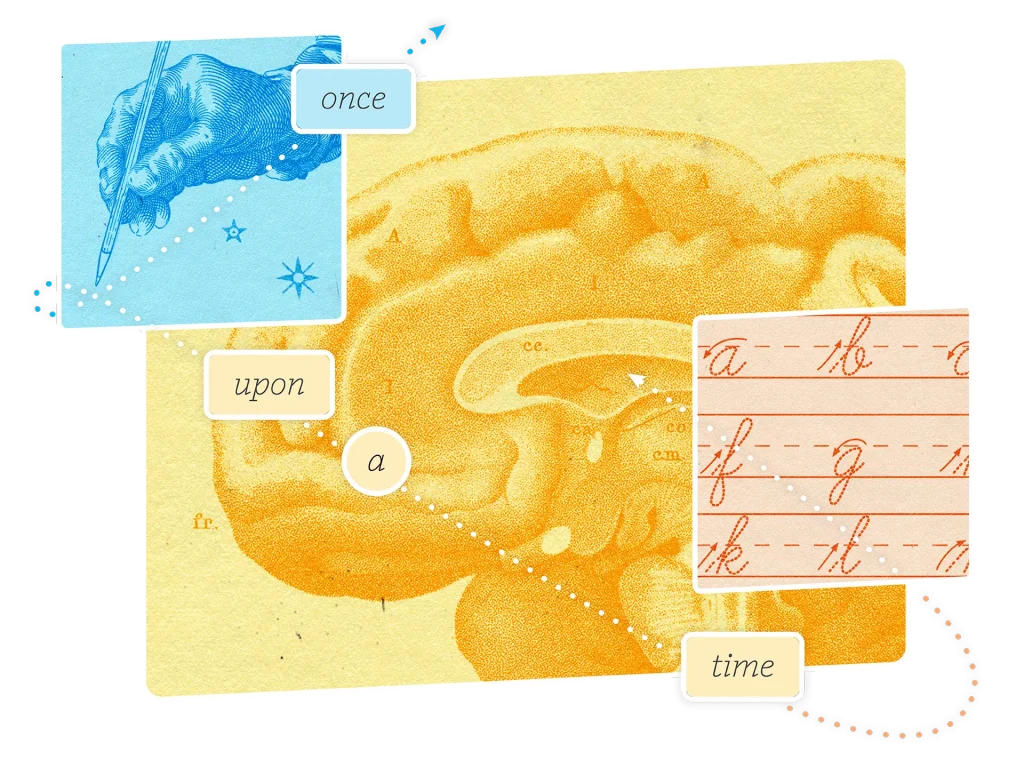
An illustration of a brain with superimposed images: handwriting, cursive letters, and the words "once upon a time" arranged in a sequence.

Exploring the Science of Writing

Discover the captivating journey of writing with our new guide, Science of Writing: A Primer. This resource delves into the history of writing, highlights the crucial link between combining reading and writing instruction, and reveals why handwriting still matters in today’s digital world. Designed to complement CKLA 3rd Edition and our other literacy tools, this primer is set to become a trusted companion, just like those before it.

MTSS Playbook

Explore our new ebook designed to help you build an evidence-based Multi-Tiered System of Supports (MTSS) tailored to diverse literacy goals. This resource provides actionable steps and essential questions to fortify your MTSS with the Science of Reading, enhancing its effectiveness and achieving better outcomes for your students.

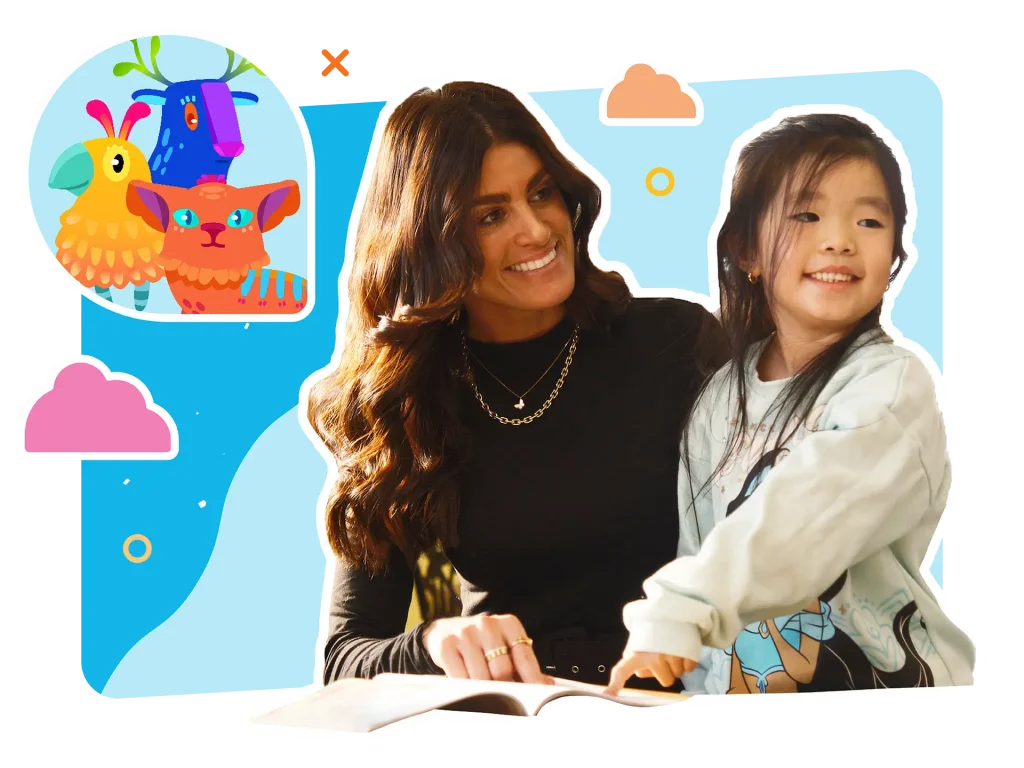
Woman and child smiling while reading a book, with colorful cartoon animals in the background.
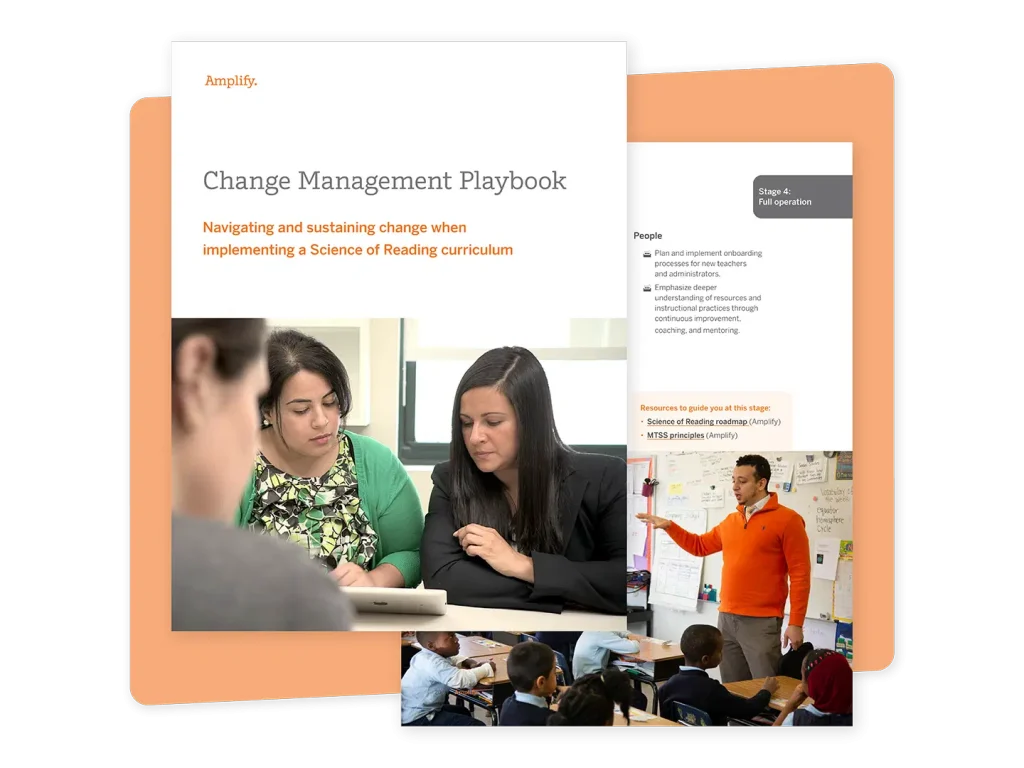
Cover of a "Change Management Playbook" guide, featuring two women reviewing a tablet and a teacher in an orange sweater instructing a classroom—highlighting K–5 literacy instruction and effective science of reading resources.

The science of teaching reading, coupled with the art of change management

Shifting to the Science of Reading isn’t just an overnight curriculum swap—it’s a profound culture change with multiple stages and stakeholders. We’ve helped educators succeed in that shift for years, and now we’re here to guide you every step of the way. Through each stage of implementation, our Change Management Playbook will help you mobilize your practice, process, and people to make the shift that matters most.

What is the Science of Reading?

Learning to read is not innate, but it can be taught—and science tells us how. The Science of Reading refers to the vast body of growing research that deconstructs how children learn to read, and the instructional practices that can get them there.

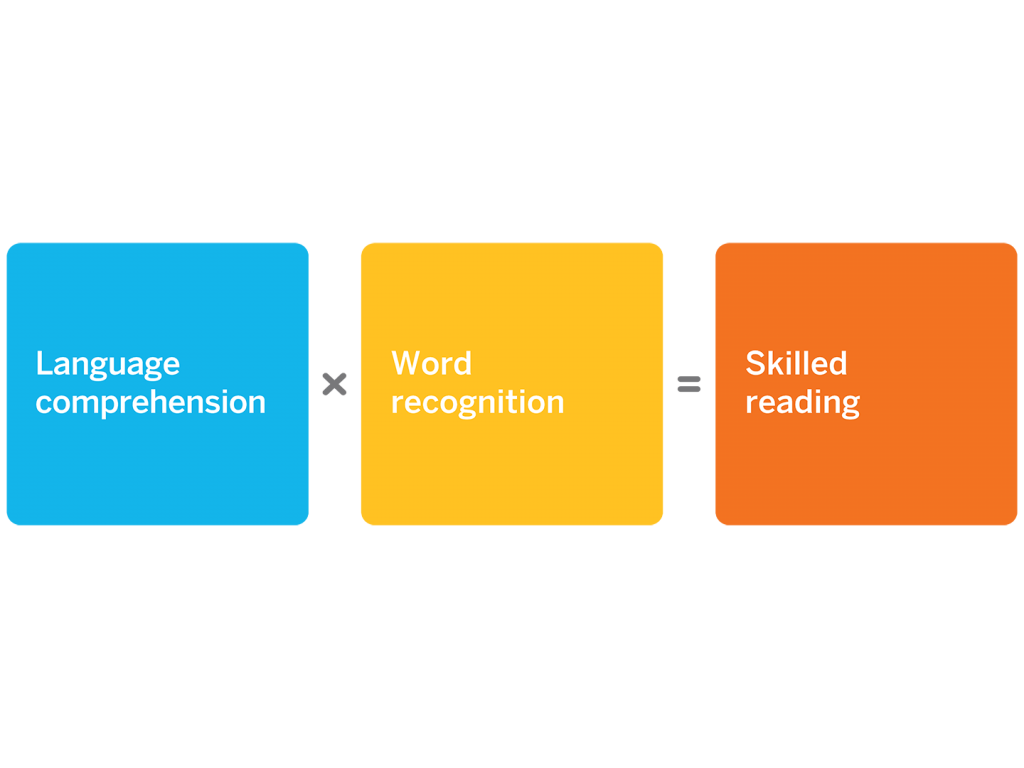
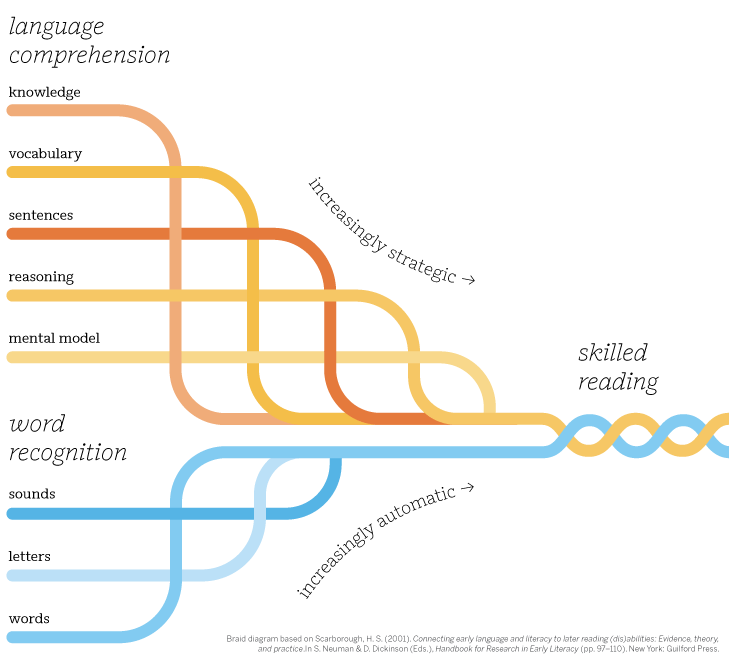
Reading fluency requires a complex combination of skills, taught explicitly and systematically. There are two main frameworks that can help us break it all down: The Simple View of Reading and Scarborough’s Rope.

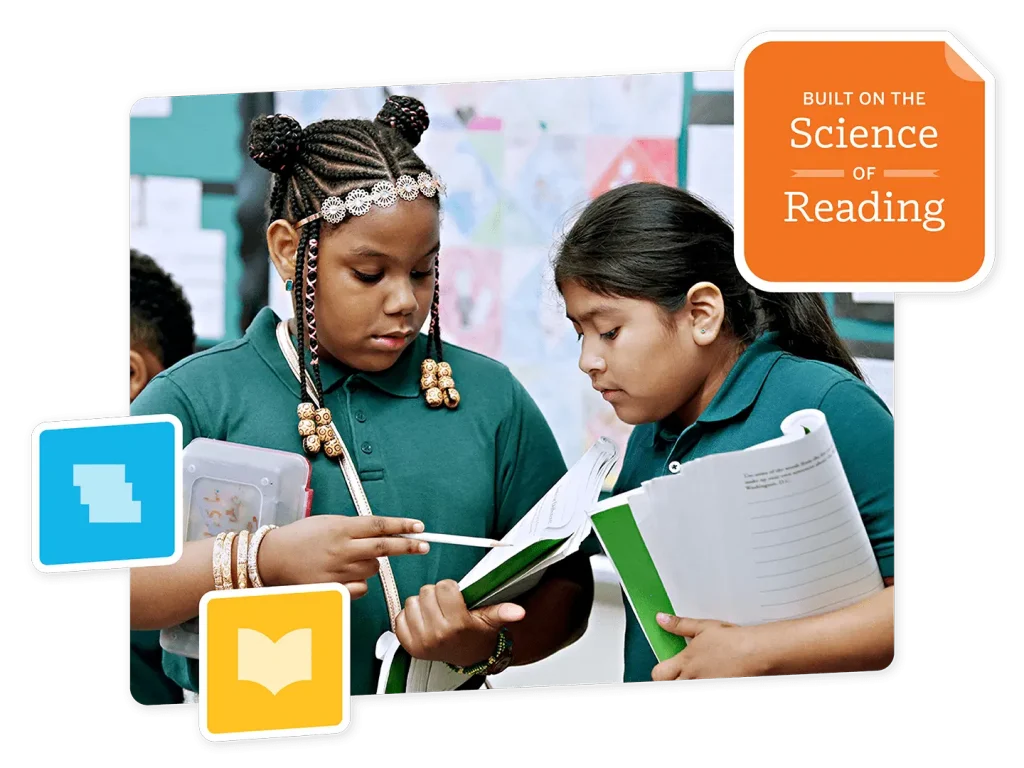
Two schoolgirls in green uniforms look at a notebook together in a classroom. Science of Reading and book icons are overlaid on the image.
Cover of a guide titled "Science of Reading: A New Teacher’s Guide" by Amplify, featuring a teacher with two children and educational icons.

Science of Reading starter kit for new teachers

New to the classroom? We’ve compiled a collection of resources and insights about the Science of Reading to help you acquire more knowledge and build confidence. You’ll find the tools, information, and support you need to foster successful readers and writers in your classroom this school year—and beyond.

The Simple View of Reading

The Simple View of Reading, formulated by Philip Gough and William Tunmer in 1986, is the theory that proficient reading requires two main components:

Flowchart illustrating skilled reading as the product of language comprehension and word recognition, grounded in the science of reading.
A diagram with intertwining orange, yellow, and blue lines converging and diverging, illustrating interconnected pathways on a black background—reflecting the dynamic flow of ideas found in Core Knowledge or Amplify CKLA curricula.

The Reading Rope

The Reading Rope, developed by Dr. Hollis Scarborough in 2001, helps us visualize the strands of specific skills and instruction that support students in decoding and comprehension.

Professional development to support your shift to the Science of Reading

Ignite literacy transformation with Amplify’s Science of Reading: The Learning Lab—an inspiring three-course series.

  • Dive into a comprehensive overview with course one, Foundations to the Science of Reading.
  • Examine assessments and their roles in course two, Advanced Topics in the Science of Reading: Assessment and Reading Difficulties.
  • Apply effective literacy instruction to your classroom in course three, Applied Structured Literacy.

Crafted to the standards of the International Dyslexia Association, this self-paced online series provides unparalleled, research-backed instruction. Explore enriching activities, curated resources, and learn from Susan Lambert, chief academic officer and host of Science of Reading: The Podcast.

The best investment you can make is in knowledge, and the returns are priceless.

Illustration of a webpage titled "Science of Reading: The Learning Lab series" with icons of a book, paper, and other subjects below the title.

Learn more about the online courses or request a quote!

Two labeled course cards: "Course 1: Foundations to the Science of Reading" and "Course 2: Advanced Topics in the Science of Reading," with a shopping cart icon in the top right.

Tap into individual online course seats.

Science of Reading podcast cover image open book

Science of Reading: The Podcast

Tune in to hear the latest insights and trends in early reading, right from leading literacy experts and practitioners.

Listen now

Build your background knowledge of the Science of Reading.

Our Science of Reading principles and primers explain the essentials: what the Science of Reading is, how it works, and why it matters for every student.

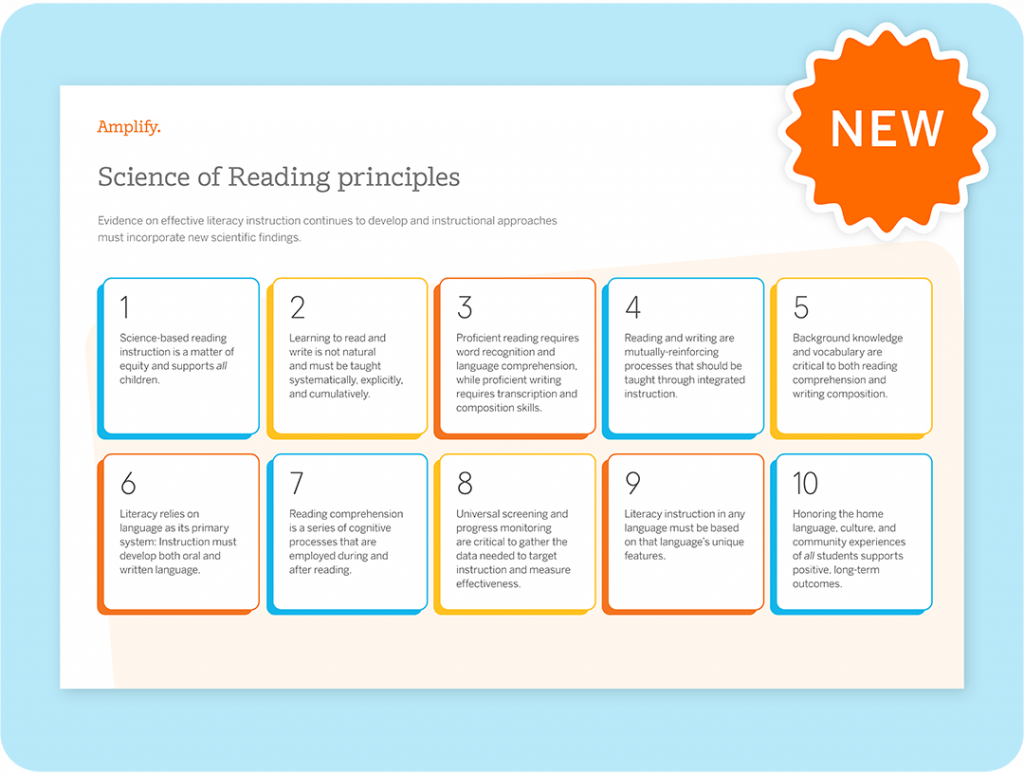
An infographic titled "Science of Reading principles" showcases ten evidence-based K–5 literacy instruction strategies, informed by interdisciplinary research, in color-coded boxes with a "NEW" badge in the top right corner.

New Science of Reading principles placemat!

Decades of research inform the updated Science of Reading principles placemat. Use these insights as a guide for evidence-based literacy instruction—perfect for committed educators aiming to achieve real improvements in student reading outcomes.

Download principles

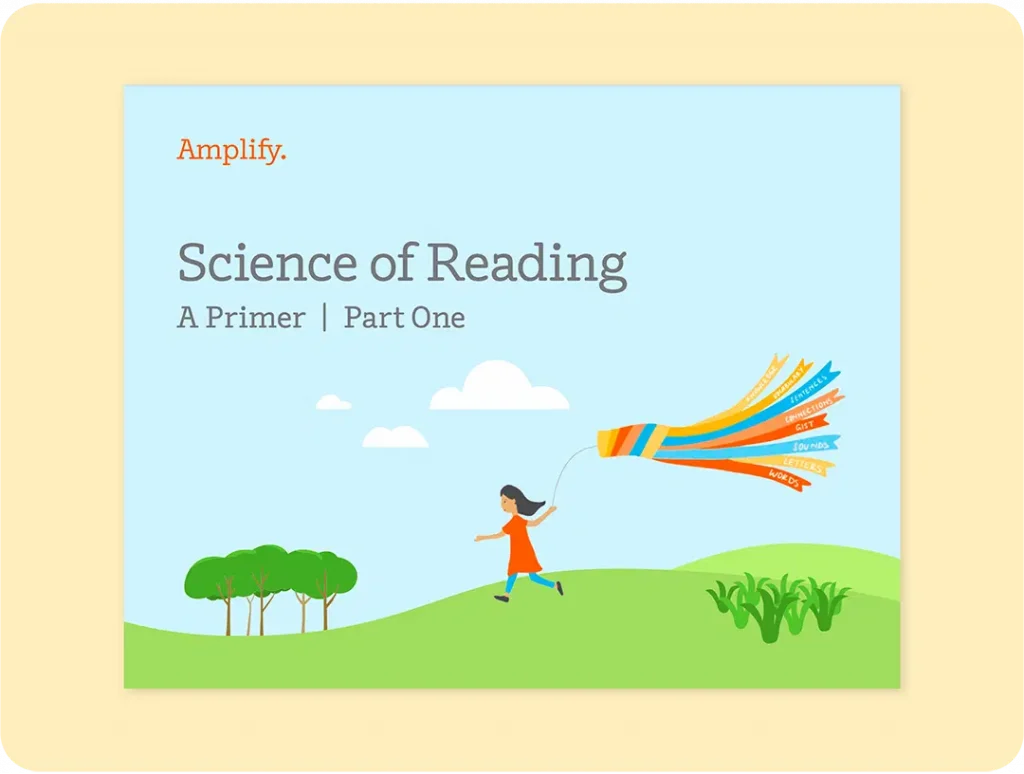
An illustration of a girl running with a colorful kite, with text reading "Science of Reading: A Primer | Part One" and "Amplify" in the top left corner, highlighting K–5 literacy instruction.

Science of Reading
A Primer: Part 1

In part 1 of our definitive Science of Reading primer, we discuss literacy as a societal goal, walk you through how the brain learns to decode and comprehend text, and present the patterns that top-performing schools and districts follow to achieve early reading success.

Download primer 1

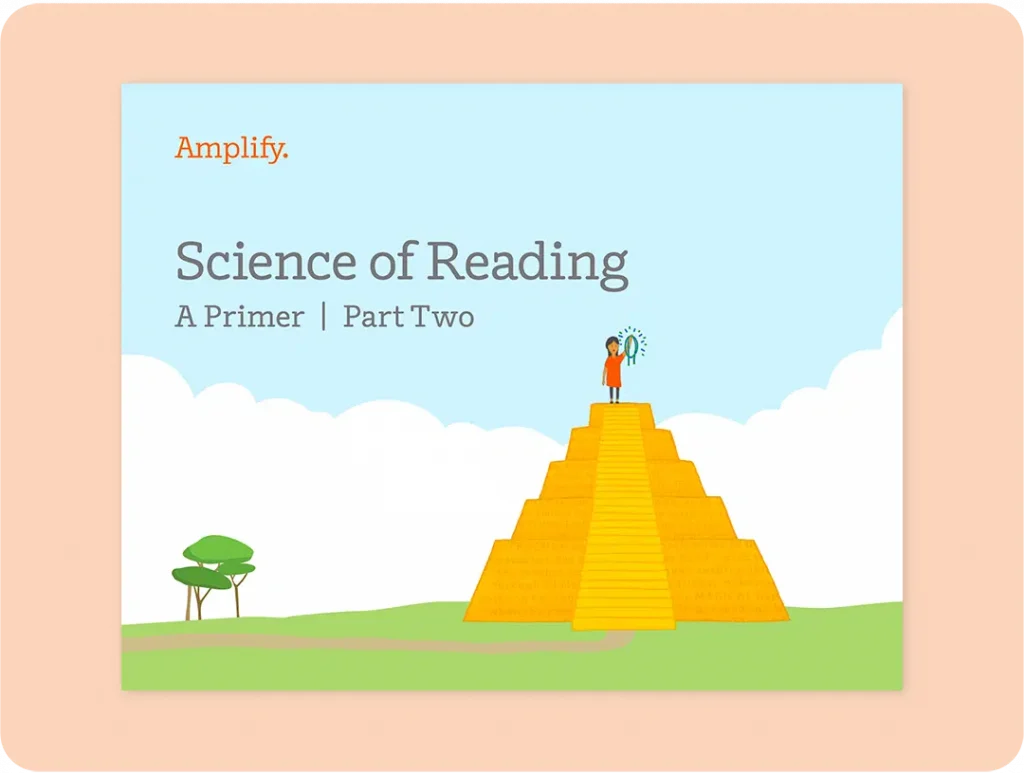
Illustration of two people atop a yellow pyramid, with text reading "Science of Reading: A Primer | Part Two"—an engaging look at K–5 literacy instruction. "Amplify" appears in the top left corner.

Science of Reading
A Primer: Part 2

In part 2 of our Science of Reading primer, we establish the importance of prior knowledge for comprehension, lay out the process of micro-comprehension, and demonstrate how literacy skills build on and accelerate themselves.

Download primer 2

A woman with long dark hair smiles in front of a plain background, reflecting the joy she finds in interdisciplinary research. She is wearing a dark green top and earrings.
“If you’re looking for a Science of Reading training, the [Science of Reading: Foundations to the Science of Reading] online course is great. It helps you build background knowledge on learning how students learn how to read, and then it goes deeper and it gives you strategies that correlate with those findings that you can implement right into your classroom.”

—Allie Appel, Instructional Coach

School District of Arcadia, WI

Why undertake this crucial change?

When we bring proven methods based on the Science of Reading into schools, we make sure kids are learning to read and help teachers and caregivers support a culture of reading. Together, we can solve the reading crisis and make literacy a reality everywhere.

You’ll change lives with literacy.

According to the National Assessment of Educational Progress (NAEP), only 35% of fourth graders in the United States are proficient in reading. But schools using a Science of Reading approach have seen significant improvements in literacy rates. Using research-based methods, educators can help give all children the chance to become successful readers.

Young boy in a classroom sits at a desk and writes on a worksheet, with other children working at nearby desks in the background.
A laptop screen displaying a literacy intervention game with a cartoon llama in a desert setting and a word selection task presented to a child’s avatar in the corner.

You’ll build a foundation with explicit, systematic skills instruction.

Reading skills don’t come naturally. We actually need to rewire our brains with intentional, structured literacy instruction—starting with sounds.

You’ll improve outcomes with knowledge building.

Longitudinal research shows that knowledge building doesn’t just happen as a result of reading, but is also a vital prerequisite for and component of it. And when delivered intentionally and systematically, knowledge delivers literacy results.

Illustration depicting diverse people engaged in various activities, including astronauts in space, a musician engaged in interdisciplinary research, and a child drawing, set against a whimsical celestial backdrop.
A person with long braided hair, wearing oversized glasses, earrings, a necklace, and a red top, smiles at the camera against a plain background.
“It’s not just about the curriculum. It’s about the science behind how people, how children, and how we as humans learn to read… It’s working. I wish I had this years ago. ”

—Javonna Mack, Lead Content Teacher

Caddo Parish Schools, Louisiana

Science of Reading & Early Literacy Resources FAQ

Amplify understands that making the shift to the Science of Reading is no small feat. Get some early literacy resources and guidance with our Science of Reading FAQ.

Learning to read is not innate. It needs to be taught intentionally and systematically—and science tells us how. The vast and growing body of research on early literacy is referred to as the Science of Reading. It draws on extensive research in cognitive science, linguistics, and neuroscience. It emphasizes the systematic teaching of foundational skills—such as phonics, phonological awareness, and decoding—in building vocabulary and comprehension. In other words, it deconstructs the processes behind how children learn to read, and provides evidence for the instructional practices and early literacy resources that can get them there.

Read more 

The Science of Reading refers to the pedagogy and practices proven by extensive research to effectively teach children how to read. It places a strong emphasis on both components of the Simple View of Reading, demonstrating that systematic and explicit instruction in phonics and and intentionally sequenced knowledge building are critical to reading success.

In a balanced literacy environment, learning happens through reading and writing immersion, where the need for explicit instruction in phonics is recognized but is not the primary focus.

The key difference between the approaches lies in their emphasis on foundational reading skills and a coherent approach to building language comprehension.

A balanced literacy approach typically includes a combination of whole language approaches (emphasizing meaning and context) and phonics instruction. Balanced literacy instruction is designed to be flexible and open to interpretation by the instructor. It may include the three-cueing system, which encourages students to rely on syntactic and semantic clues in a text to read an unfamiliar word, rather than decoding (Does it look right? Does it sound right? Does it make sense?). Balanced literacy practitioners may also use leveled reading to differentiate instruction, which can can limit vocabulary exposure, hinder in-depth comprehension skills, and further widen achievement gaps.

Balanced literacy has long been a popular approach to reading instruction, with educators appreciating its openness to variation. But advocates for the Science of Reading argue that an evidence-based approach aligned with known cognitive processes and a focus on foundational skills and language comprehension provides the most solid foundation for reading instruction—for confident and struggling readers alike.

Read more

According to our friends at The Reading League, the Science of Reading is important not because it gives us an effective way to teach reading, but because it gives us the most effective way to teach reading.

“The Science of Reading is critical because it emphasizes evidence-based instruction. Decades of scientific research on reading have consistently shown the most effective ways to teach reading. The Science of Reading incorporates this research, which includes phonemic awareness, phonics, fluency, vocabulary, and comprehension.”

The Reading League also takes it to the next level: What happens when all children have access to the most effective early literacy and reading education? “We believe in a future where a collective focus on applying the Science of Reading through teacher and leader preparation, classroom application, and community engagement will elevate and transform every community, every nation, through the power of literacy.”

The Science of Reading has identified five foundational reading skills that are considered crucial for early reading development. One of those skills is phonics. In other words, the Science of Reading has established that phonics are crucial, but the Science of Reading is not the same as phonics.

Phonics instruction helps students learn how to sound out and blend letters to read words accurately. As we know from the Simple View of Reading, two fundamental skills are required for reading with comprehension:

  1. Decoding—the ability to recognize written words (via phonics)
  2. Language comprehension—understanding what words mean

And the Science of Reading also reminds us that students do not have to learn phonics or decoding before knowledge comes into the equation. “The background knowledge that children bring to a text is also a contributor to language comprehension,” says Sonia Cabell, Ph.D., associate professor at Florida State University’s School of Teacher Education, on Science of Reading: The Podcast.

The Science of Reading is an evolving field built on decades of high-quality, evidence-based research that continually integrates new insights gathered from cognitive neuroscience, psychology, and linguistics. These ongoing studies constantly refine our understanding of how the human brain processes language and learning, enabling more personalized and effective teaching strategies that can adapt to the wide-ranging learning needs of students.

Like other sciences such as medicine, astronomy, or engineering – new advancements in reading technology allow us to understand how the brain works and refine our practices. Every scientific advancement in this field of reading science deepens our comprehension of reading-related challenges like dyslexia and informs the development of evidence-based interventions. We don’t believe that the Science of Reading can be reduced to a fad or trend. Rather, it is a continually evolving, enduringly effective discipline, grounded in rigorous research and driven by the quest for better comprehension of how we read and learn.

Assessment grounded in the Science of Reading can help identify children at risk of dyslexia at the earliest possible moments, creating the widest opportunity for intervention.

People with dyslexia often experience challenges in phonological awareness. They may struggle to break down words into their component sounds and to recognize the relationships between letters and sounds. Systematic and explicit instruction in phonics and phonological awareness can help individuals with dyslexia develop necessary phonological skills. This evidence-based instruction can also help students who have difficulty with decoding.

Further, evidence-based comprehension instruction, including explicit instruction in vocabulary and comprehension strategies, can support students with dyslexia in understanding and making meaning from text.

Download our free dyslexia toolkit

The Science of Reading can be integrated with a Multi-Tiered System of Supports (MTSS) to provide comprehensive and targeted reading instruction for all students. The Science of Reading aligns with a tiered model by providing evidence-based practices for instruction at each tier. An MTSS includes universal screening to identify students at risk of reading difficulties; the Science of Reading can also guide the selection of screening measures to assess specific foundational skills. Aligning the Science of Reading with an MTSS framework can also enhance instructional practices and interventions, ensure data-driven decision making, and help meet the needs of all students.

Read more

Integrating the Science of Reading and the Science of Writing strengthens our approach to teaching literacy. Reading and writing are interdependent. Understanding how sentences are built not only contributes to better reading comprehension, it also helps writers develop clear, logical text. As students grow as readers, they also grow as writers, leading to a comprehensive literacy education. Clear thinking and effective writing are crucial for expressing ideas. By fostering both skills, teachers better support students in becoming confident readers and writers, prepared for academic challenges and beyond.

One of the research-based frameworks used in the Science of Reading is the Simple View of Reading. According to the Simple View, two cognitive capacities are needed for proficient reading: (1) understanding the language (comprehension) and (2) recognizing words in print (decoding). A true Science of Reading program is designed from the start for students to build these skills, in a developmentally appropriate way.

It will also emphasize the importance of knowledge building by exposing students to a diverse array of new topics spanning history, science, and literature, organized intentionally and coherently within and across grades. Deep and intentionally sequenced knowledge domains will help build a student’s vocabulary and understanding of complex texts. And it will include instruction in  all five foundational skills: phonics, phonemic awareness, vocabulary, fluency, and comprehension.

Download our free ebookScience of Reading: Making the Shift, which includes a checklist of what to look for in a curriculum based on the Science of Reading. Learn more from our friends at The Reading League.

Actually, we have a full literacy suite built on the Science of Reading! It includes:

  • mCLASS® assessment, powered by DIBELS® 8th Edition, a gold-standard universal and dyslexia screener, plus a progress monitoring tool, all in one.
  • Amplify Core Knowledge Language Arts (CKLA), which provides explicit, systematic foundational skills instruction combined with intentional knowledge building.
  • Boost Reading, a highly adaptive personalized reading program that reinforces the core curriculum and supports enrichment, remediation, and intervention for each student in your classroom.
  • mCLASS Intervention, a staff-led intervention program targeted to Tiers 2 and 3, made easy with automatic data-driven grouping and sequenced explicit, systematic skills lesson plans to support at-risk students.

Reading requires deliberate, systematic attention—and so does shifting to the Science of Reading in your school or district. It requires not only the right curriculum, but also all-new mindsets, metrics, and more. Reflecting years of experience supporting real educators, our resources will walk you through the process of change management in your community—and show you why the shift is worth it. View our Science of Reading change management playbook.

4 ways to weather educational change

The landscape of education is constantly shifting. That’s always been true, because the world is constantly changing. But at no time in recent memory has the landscape of education been forced to change in as many ways as it has over the past few years.

How can teachers navigate the seismic changes in the education system in their day-to-day lives?

In this recent episode of Science Connections: The Podcast, host Eric Cross talks about managing educational change with veteran educator and former Miami-Dade County Public Schools (M-DCPS) Middle School Science Teacher of the Year Marilyn Dieppa.

Below, we’ve outlined four tips for weathering shifts. The bottom line? It’s important for teachers to be able to change with the times, while remaining a steady, solid presence for students.

1. Embrace change—it’s good for kids, too.

“I always change my labs. I don’t like to do the same thing over and over again,” says Dieppa. And when she tries something new, she tells her students she’s experimenting. (After all, it’s science!)

“They’re afraid of trying something new and failing,” Dieppa says—so she tries to model taking on the unknown, learning, and adjusting as needed. This is part of cultivating a growth mindset for kids. “It’s for them not to be fearful. That gives kids a foundation they need.”

2. Have an open-door policy.

The pandemic has exacerbated challenges in kids’ lives that can make it tough for them to learn. Some even say we’re in a youth mental health crisis. Now more than ever, it’s important that “you become more than just a science teacher,” says Cross. “You’re a mentor. You’re an encourager. Sometimes you’re a counselor.”

It’s impossible to be everything to every student, but it’s important to let them know you see them.

“I always say, I’m not there to really be your friend, but I’m there to help you,’” says Dieppa. “And you gotta tell ’em, you know, ‘if you need to talk, come talk to me’. Because so much of what we’re doing is like life coaching in addition, and that connects to their success in the classroom.”

3. Measure wins in lots of ways.

What keeps Dieppa going? “Whether [students] have struggled all year and they’ve had that one piece of success, or they come back and tell you they didn’t realize what they got out of middle school science until they got to high school, those are my moments of success.”

4. Remember—you’re still learning, too.

Yes, you’re the teacher, but “you don’t have to be the expert in everything,” says Cross. “Teachers tend to be more risk-taking and innovative when they’re willing to say, ‘I don’t have to know everything in order to do something.’”

Whenever it feels like you can’t do something or don’t know something, remember: You can’t do it yet. You don’t know it yet. Growth mindset phrases for students apply to your growth, too.

Listen to the whole podcast episode here and subscribe to Science Connections: The Podcast here

About Amplify’s Science Connections: The Podcast

Science is changing before our eyes, now more than ever. So how do we help kids figure that out? How are we preparing students to be the next generation of 21st-century scientists?

Join host Eric Cross as he sits down with educators, scientists, and knowledge experts to discuss how we can best support students in science classrooms. Listen to hear how you can inspire kids across the country to love learning science, and bring that magic into your classroom for your students.

Georgia educators, achieve life-changing results with the Science of Reading—we’ll show you how.

To view this protected page, enter the password below:


S2-01: How teachers are really feeling this school year

science connections S02-01 Episode Cover

In this special solo episode, Eric Cross starts the season by sharing his personal journey as an educator, and how the difficulties of the last few years have shaped his mindset going into the upcoming school year. Eric also addresses teacher burnout and what inspires him to continue working as a classroom educator. Explore more from Science Connections by visiting our main page.

Download Transcript

Eric Cross (00:02):

Welcome to Science Connection, Season Two. As we begin the next season, I thought it would be a good time to share my story. As the host, I get to ask people questions about their journey, but I’ve actually never shared much about my own. So I’ve taken some of my most frequently asked questions to guests and asked them to myself. I hope you enjoy.

Eric Cross (00:23):

So the origin story question, I think really gets to the heart of why a person does what they do, because so much of who we are, especially as adults and teachers, is a result of experiences that we had in our lives when we were kids or in school with other teachers. And my life’s no different. I was born to a 19-year-old single mom. And when you’re a young boy growing up, especially with a young single mom, you often look to older men in different positions as kinda like a surrogate or like a mentor. And you may not even tell them that they are that to you. You kind of keep it close to the chest. And that’s what I did growing up. One of the ones that really stood out to me is, in seventh grade, I went to a middle school here in San Diego that was called Keiller Middle School. And we were a magnet program that specialized in science. And they had this program that brought professors from the local universities and they did this high-level enrichment. They would even take us to the college campus and we would work in these labs as seventh graders. It was amazing. And one of the people there, his name was Dr. Tress, and he was a professor. And Dr. Tress took a liking to me. I reminded him of his son. We were doing this great embryology experiment. We would take purple sea urchins. And we would inject them with potassium chloride, which would cause them to spawn. And we would fertilize these eggs, and then we would run different experiments using them. And these were things that I had never done before. I had always loved science. I’d always loved tinkering and building things. But this was my introduction, really, to high-level biology and to higher levels of education. I didn’t—I didn’t have many figures like that in my life growing up. I mean, I’m a first-generation, you know, high school, college graduate. Many of these are first generations for me. So, this was a new experience. And so Dr. Tress really unlocked a core memory and was one of my first mentors, as far as academics are concerned. And during my seventh-grade year, I entered the science fair and won first place, which was a huge deal. They took us out to Balboa Park. We got to miss school for a week. We got to go to all the museums for free. It was the best. And I think at that point in time, it really solidified something in me that would lay dormant until later on in my adult life. High school, I was really fortunate: the high school I went to was Morse High School, not too far from Keiller, and they had an aeronautics program. So I was able to enroll in that aeronautics program. And I learned how to fly before I learned how to drive. And I had this great instructor named Mr. Klon, who was this like 6′ 4″, 250-pound hippie guy. And he—we would get in the plane and we would have these like philosophical conversations. And through that, especially looking back now as a teacher, I realized that he was making connections with me and investing into who I was as a person. And it was something that I so needed at the time. Because at home I didn’t have that. You know, my safe place, a lot of time, was school. It was my only structure. It was where I knew I would get encouragement. It was where I knew things were reliable and consistent. For a lot of people, and a lot of kids, their home life isn’t like that. School was that for me. So Mr. Klon, I mean, he was this authentic, you know, consistent person in my life and made a huge difference at this time.

Eric Cross (03:23):

After I graduated high school, I left home just to get away from a difficult environment. And I was homeless for a little while and that was a huge moment in my life. And around that time, an aunt found out and she said, “You’re gonna come stay with us.” And this was like this three-year process of me living with them in this, like, functional family that ate dinner together. And they went to the zoo. They had family passes. And they took family photos at Christmastime. This was all weird stuff. Like, I didn’t know—I didn’t know who did these things. It was—I felt like a puppy that like lived in a home that was like…it was a home that was just always kind of like violent or like just really toxic. And then it gets put into a healthy home and doesn’t know how to act. That’s how it felt. And this was around like 19, 20 years old. During that time I started putting myself through school. So I went to community college and I was broke as a joke. And so I couldn’t afford the textbooks while I was going. So I would just go to the bookstore, the Barnes and Noble bookstore in Mira Mesa here in San Diego. And I would stay there all night using the textbooks or using the books there for doing my work. And then I would just put the books back on the shelves. Because let’s just face it. Textbooks are expensive, brother wasn’t trying to pay for all that. So I really had to earn that time. So I was working full-time. I was going to school. And, eventually I got a job in working in finance with a really great friend who mentored me during my younger twenties. And I didn’t wanna be broke and finance made sense.

Eric Cross (04:44):

And so I did that for a little while, until I got to a point in my career where I was watching an episode of The Office, the UK version, the Ricky Gervais version, and a character said, “I’d rather be at the bottom of a ladder I want to climb than halfway up one I don’t.” And I realized, working in finance, that I was halfway up a ladder I never wanted to climb. So I wanted to move into something that, if I was gonna spend eight hours a day or 10 hours a day doing something, I wanted it to be something that actually filled me up inside. And this is how I got into teaching. So I had always been working with young people, specifically 12- to 18-year-olds, like a non-profit or volunteering, mentoring, after-school programs. And I’ve always managed to rationalize my job in the finance world as meaningful because it let me do the real work that fulfilled me. So the real work was working with the kids. But my day job, my, like, Clark Kent-type job, was just, you know, doing the finance thing of like helping people that have a lot of money make more money. Which at the end of my life, I look back and I said, “That’s not what I want my legacy to be.”

Eric Cross (05:43):

And when the finance crash happened in 2008, that’s when I think I started looking back on it and said, “If I’m gonna spend all my time doing something and spending 40 or 60 or 80 hours of my day of my week doing things, I want it to matter. And that’s when I decided to pivot and leave that field and go and get my master’s in education and get my teaching credential, teaching science specifically. Now, one of the questions we get asked a lot and I’ve been asked is, is “How has teaching changed as a result of the pandemic?” And I feel like this could be several podcasts in and of itself, and it’s also regional, because everybody’s experienced it differently, And we’re still experiencing it! That’s the crazy thing! It’s like, it’s not over, we’re still in it. And some places have innovated and pivoted and some places just did what they needed to and they are trying to go back to business as usual. But if anything has happened, the pandemic revealed how much more, how much schools are more than places of just content learning. For many students it’s where they have their only community, their structure, their emotional wellness. They get regular meals, access to tech, and adults that care about them that are outside of their family. The schools are so much more than that. I mean, my school, they were a place, like a hub, that was giving out food every single day during the pandemic to families that would kind of drive by. So for a lot of schools, they became places like that. It also…the pandemic revealed the intensity of the educator workload. I mean, being able to manage your family, having the capacity, to be a content expert, you need to be a counselor, a trauma-care specialist, a coach, an encourager, a tech expert.

Eric Cross (07:23):

I mean, the term mental health is now more common and starting to become prioritized. Now we’re focusing so much more on the whole child. And we know from research that how a child feels about themselves and their safety and their security impacts their ability to learn. So the more comfortable and safe a student feels in the classroom with teachers and with friends, the better they’re gonna be able to learn. And ultimately the higher they’re gonna be able to achieve. You can’t, you can’t have one without the other. In addition, I think less teachers, see themselves teaching into retirement. I think that’s a big thing. I read these articles about teacher shortages and I think the reality is it’s actually teacher exodus. It’s teachers leaving. And that’s been really difficult. I’ve had many friends who’ve left for the private sector. And I get it, especially if you’re one that has—if you’re the first in your family to graduate from college, with a STEM degree, to them taking a teaching position can mean walking away from a salary in the private sector that pays two or three times more.

Eric Cross (08:23):

And in many places around the country, in order to be a teacher and maintain a median standard of living, you need either dual income, multiple jobs, or a multi-generational household. For a lot of people it just doesn’t make sense. And even right now, today, as I’m recording this, I’m reading articles and getting text messages…and I received a text message three days ago from a teacher that said, “My goal this year is to just not resign.” And that’s where a lot of teachers are feeling right now: isolated, challenged, and under-appreciated. And Plato said, “What’s honored in a country is cultivated there.” And I’ve been looking at how teachers are honored and one of the ways is just, like, practical. Like, look, I gotta pay my bills. You know, love the Starbucks gift card. Love the CPK, the gift card. The cards, all those other things…but brother got a car payment. And at the end of the day, if we care about our kids, we need to take care of the people that take care of them. And there’s very practical ways for that to happen. And everybody in different sectors around the country is dealing with that in different ways. I think the pandemic also revealed, now the public can see how our kids don’t receive the same quality of education. And once you’re aware of that, you can’t put the genie back in the bottle. So once you see on Zoom or once you see in a meeting, or once you see on the news, that students in different areas, whether it’s the rural South or a suburb in Seattle, are not getting equitable educations, well, ultimately that impacts all of us. Now. It’s not all doom and gloom. Good things have come from, as a result of, the pandemic. Many schools have made progress towards narrowing the technology gap, ’cause they had to! ‘Cause you can’t do Zoom and you can’t do Google Meet and all that stuff with a packet! You gotta get those Chromebooks. And Chromebooks and the internet and access to tech is not a new thing. It’s been out for a long time. The technology gap is not a new thing. It’s been written about extensively, but all of a sudden districts and schools started figuring out how to close that gap. And that’s awesome. We didn’t want a pandemic to be the catalyst for that to happen. But at the end of the day, we started closing it. A lot of schools did an amazing job and districts did an amazing job with deploying the hardware, sending out buses with wifi, putting lessons and videos on USB sticks and dropping them off to parents who live in sparsely populated areas. I mean, there were so many stories that I’ve heard about schools and teachers just doing amazing things, going above and beyond what they needed to on behalf of kids.

Eric Cross (10:51):

I think in addition to that, there’s also been students and families are now having more options to personalize their learning. So we have this in-person model, we have this Zoom or kind of online model, and this hybrid model, and it hasn’t all been perfect, you know, at all. But some families have come out and said, you know what actually doing this hybrid model is better for my son or better for my daughter or better for my student, because they’re able to get the socialization, but also able to focus better at home than they are in a classroom of 36. And that’s legitimate. You know, we talk about personalized learning, but it’s not exactly personalized when everybody has to wake up at the same time, same schedule, go to the same, the same classroom of, you know, up to 40 kids, and do the same lesson. I mean, we have to be honest about our limitations with personalizing learning for students. And when we can provide more options and we give teachers the infrastructure to be able to use different platforms, then we’re able to personalize learning a lot more.

Eric Cross (11:51):

There’s also been an emphasis on the whole-child wellness. I think the spotlight on mental well-being heavily impacts their academic success, but counseling teams, social workers, school psychologists—I think more than ever we’ve realized the value that they bring to the schools. And unfortunately many of them have caseloads of 200 students or more. And they’re seeing students most often that are in crisis. And especially after the pandemic, we’re realizing how valuable they are and how much we need to, one, honor them and give them the support that they need, and also recruit more. Because as we start recognizing how our brains are impacted by the things that we’re dealing with, we’re also gonna see how that’s gonna impact our students’ performance. And we need the specialists in those positions to be able to support our kids. I think, last, I think more innovation and lesson design and how we assess students. And so we’ve been talking about in education just kind of critiquing: how do we assess what a student knows? How do we make what a student actually does at school relevant to real life? I mean, so many times I have students who’ve graduated that are like, “I feel like the things I learned in school, like, they’re not always transferable to real life. It helped me on a test, but like, I don’t know how to do my taxes.” Or “I memorized these facts, but I don’t really apply it in my job.” Or “The facts that I learned I could have actually learned on the fly in my job. I wish I would’ve actually focused on the skills or had an earlier opportunity to get some experience because when I’m trying to apply for a job, <laugh> they ask for experience and I’m 22 years old.”

Eric Cross (13:28):

And so all these things kind of come up. And so I think there’s been some great conversations around “how do we rethink what education looks like?” And there’s different pockets around the country that have been doing that, I think, really well. And I think it’s important for us as teachers to stay connected to those people who are kind of pushing the boundaries and thinking outside the box, because when we get siloed, it’s really easy to get calcified and cynical. I get it. And it impacts me too. But when we’re around those people who have those fresh ideas, who are really pushing the limits, it inspires us. And that’s something I think during the pandemic that I’m grateful that I was intentional about, is staying connected with other teachers. There’s a big question; Why do you continue your work in the classroom and what keeps you motivated? And I was thinking really hard about this question, because depending on <laugh>, depending on my day, I feel like my answer’s gonna be a little bit different. So I’ve had to step back from this 30-foot, thousand-foot perspective and answer the question. And my answer is this: I think because I still feel like I can be effective to influence positive change in my classroom with my students and within the larger education system as a whole. I think if I lost either of those two, then I’d rethink my profession. Look, I’m an innovator. I like asking “why” questions and things like that. And I’m not always the most popular person when you do that. But education is like just a huge ship. It doesn’t pivot on a dime. And asking why questions and pushing for change on behalf of kids isn’t easy, fun, or glamorous, but it’s it’s necessary. And I feel like over the last few years, I’ve been able to see these kind of glimmers of a trajectory change, at least where I am locally. And that’s something that has given me a lot of hope. I’m very fortunate to be connected to educators and people in leadership that are really about making a difference beyond just kind of the cliched platitudes. They actually wanna make systemic change, in a way that’s positive. And that’s been really helpful for me. So as long as I feel like I’m useful in the classroom for students, and as long as I feel like I’m bringing, I think change, on behalf of teachers and students and administrators and our community in a way that moves the ball down the field, that’s what keeps me motivated. And what I like to ask teachers when I close in the podcast is. “What teacher or teachers have inspired you?”

Eric Cross (15:54):

And for me, I think it would start off with the teachers who cared about me when they didn’t have to, in elementary school all the way through college. And there are numerous teachers. My science-teacher community of practice. For the last two years, I’ve been fortunate to spend every month, once a month, meeting with just a core group of science teachers that really care about some of the things that we are impacted by in the classroom. And when the pandemic was going on, we still met regularly. And because we’re not all teaching in the same place, we kind of were able to bring different perspectives to the table. I think the current classroom teachers and former classroom teachers that I have in my community really inspire me. The ones who are dedicated to opening doors for students. The graduate students that I teach at the University of San Diego, they keep me fresh. I love leaving teaching my 12- and 13-year-olds, and then driving down the street to the university and teaching 20somethings who are all about to be in the classroom. They come with new ideas, they’re asking questions, and I get to actually share things that I just did three hours ago. I think that’s one thing that continues to inspire me. And it’s one of the reasons why I love teaching at the University of San Diego. Their energy and enthusiasm is super-refreshing. And then all the teachers that are willing to take risks and fail forward, to try things different, to ask hard questions, to push the envelope. Teaching’s hard. It’s easy to point out the problems in education as a whole. But after we do that, it’s important to figure out the practical ways we can make the changes that we wanna see.

Eric Cross (17:23):

Now, that’s to say that if you have the capacity for it and the resources and the support. Some of us, we don’t. Some of us, we are on an island, and that’s a really, really difficult place to be, especially when you have family and kids to take care of. And you have to make decisions on what’s best for you and for your own students. We do this work on behalf of kids. And it’s one of the most honorable services a person can provide to our community. But one area for growth that I think we have kind of as a society, is teachers spend their lives, daily, on behalf of the future of our country. For other people’s children. They fall asleep at night worrying about other people’s kids. They spend their own money to create opportunities and experiences that students might not otherwise have. And it’s important that we collectively, and I know I’m preaching the choir when I say this, but this is one of my messages, is that we honor them in turn. We create programs that allow them to be able to afford housing. We create opportunities for them to be able to generate wealth. We create ways for them to be able to find rest, to get connection. And then internally we create systems where they can just work on themselves, fill themselves, get trained, and be whole, so they can bring their best self to the kids in front of them. That’s one of my personal platforms. It’s something that I think is vital. We gotta take care of the people that take care of our kids. So there’s a saying that says, “It’s better to light a candle than to curse the darkness.” And it takes one person to blow out a candle, but one candle can light thousands of other candles, without diminishing its own light. And that’s what we have to be. So my encouragement, teachers, as you’re going into this new school year, and you’re thinking about what’s going on, you’re thinking about all the challenges—and they’re there, and they’re real, and trust me, it’s not like some Pollyanna, like, “Hey, just be positive!” mindset and everything’s gonna be great—no, no, no, no, no. It’s not that. But my encouragement…if I can tell you one thing that’s helped me more than anything else, it’s being connected to other people who are candle-lighters. Because there are a lot of places that are gonna blow out the candle. It could be the staff lounge. It could be Twitter, it could be Reddit. It could be Instagram. It could be TikTok. It could be, you know, anybody. Someone next door to you. There’s a lot of folks that are gonna be willing to point out and say, “Look, this is what’s wrong.” But find the helpers. Find the people that are candle-lighters. And stay connected with them. Find that community. I can tell you for me, that’s been the thing that’s been able to help me sojourn through all of this—I couldn’t do this by myself—is being able to share my story with other teachers and knowing that I’m doing this work alongside of other folks who are doing this work, and I can share my story with them and listen to their stories, is something that’s been able to fill my cup. And so I hope I can do the same for you and for other people listening to other people I come in contact with.

Eric Cross (20:08):

Teachers, I wish you a great school year. Hang in there. Be those candle-lighters and bring your best self on behalf of the students. Thanks so much for listening. Now, we wanna hear more about you. If you have any stories you wanna share about the classroom, please email stem@amplify.com. That’s STEM at amplifycom.wpengine.com. And make sure to click subscribe wherever you listen to podcasts. And join our Facebook group, Science Connections: The Community. Until next time.

Stay connected!

Join our community and get new episodes every other Tuesday!

We’ll also share new and exciting free resources for your classroom every month.

What Eric Cross says about science

“We do this work on behalf of kids, and it’s one of the most honorable services a person can provide to our community.”

– Eric Cross

K–8 Science teacher, Host of Science Connections: The Podcast

Meet the guest

Eric Cross is a 7th grade science/technology teacher, grade level lead, and digital learning innovator for Albert Einstein Academies, International Baccalaureate schools. He is also an adjunct professor of learning and technology at the University of San Diego and a Google certified innovator. Eric earned a bachelor’s degree from Azusa Pacific University and a Master of Education from the University of San Diego. He had 17 years of experience working with at-risk youth and underserved populations before becoming a middle school teacher. By building relationships with students, colleagues, and the community, he has become an empowered leader in and out of the classroom. Through meaningful learning experiences centered around student agency, STEM has become accessible to students through highly engaging lesson design, thoughtful integration of digital tools, and culturally relevant pedagogy.

Smiling person with short hair and a beard, wearing a collared shirt and sweater, against a dark background. Small star icon on the top left of the circular frame.
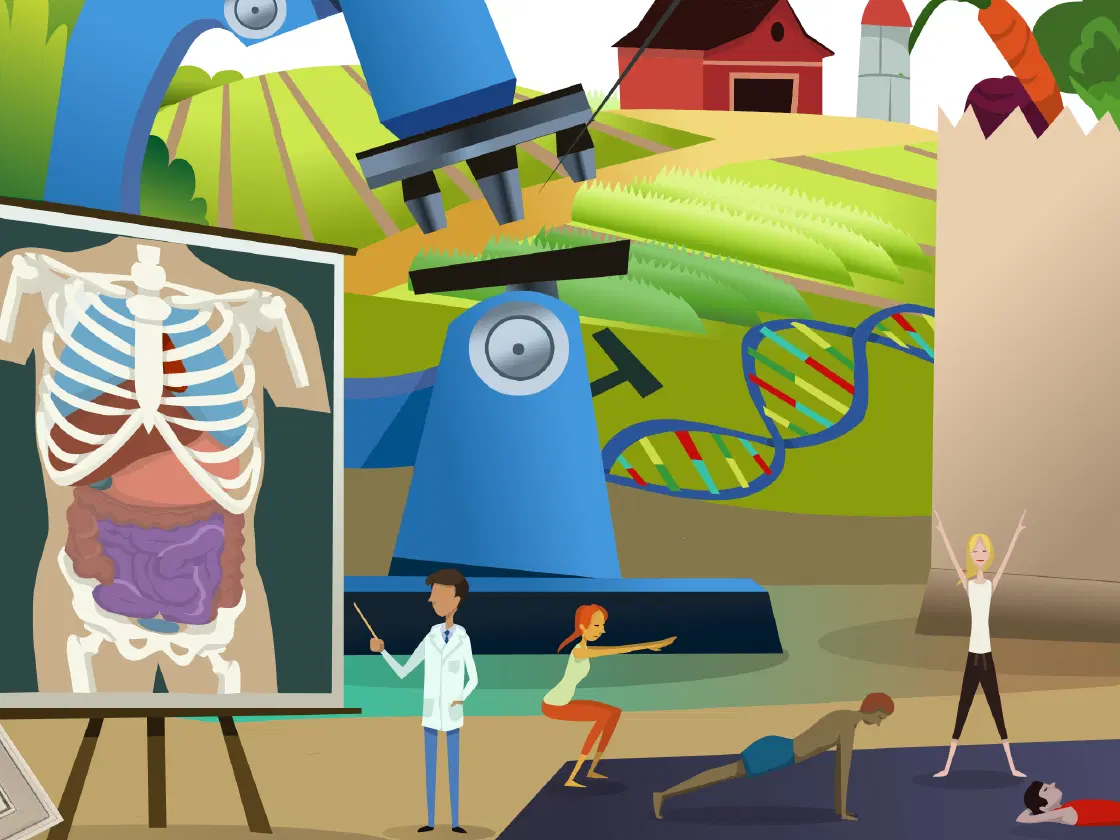
About Science Connections

Welcome to Science Connections! Science is changing before our eyes, now more than ever. So…how do we help kids figure that out? We will bring on educators, scientists, and more to discuss the importance of high-quality science instruction. In this episode, hear from our host Eric Cross about his work engaging students as a K-8 science teacher. Listen here!

End-of-year research brief: Literacy gains among K–3 students show some, but not enough, progress

BROOKLYN, NY (July 20, 2023) — Today, Amplify, a publisher of next-generation curriculum and assessment programs, shared a research brief on national end-of-school-year (EOY) reading data for K–3 students. The data reveal that while schools across the country have made progress in reading scores among earlier elementary grades (K–2), gains among third graders remains comparatively slow.

According to newly released EOY data from the 2022–23 school year, students in grades K–2 demonstrated progress compared to the 2021–22 school years, with the greatest gains among Black and Hispanic students. At the same time, third graders exhibited the least improvement from two years ago and no improvement from the prior year’s third grade cohort. The slower improvements in grade 3 suggest a persistent impact on the cohort of students most affected by lost instructional time during the pandemic.

Learning to read by the end of third grade is an important indicator of future academic success. Susan Lambert, chief academic officer of elementary humanities at Amplify, says the data demonstrates how literacy rates in the United States remain a crisis today, with too many students urgently needing support. “We need to help this generation of young students get on track in reading,” Lambert says. “The struggles of students who fall behind will not go away on their own. The older these students become, the longer it will take them to catch up.”

Despite some progress, America still faces an early literacy crisis. To best support educators, Amplify recommends that schools and districts invest in reliable universal screeners, high-quality core curriculum aligned with the Science of Reading, evidence-based interventions, and ongoing professional development.

The report compares mCLASS® with DIBELS® 8th Edition benchmark data from the 2019–20, 2020–21, 2021–22, and 2022–23 school years. Approximately 300,000 students from a matched set of 1,400 schools across 43 states are represented from the 2 million students nationwide assessed with mCLASS. The schools in the source data are slightly more likely to be in large urban metropolitan areas than the nation overall.

The data was collected using the mCLASS platform, which automates the data collection of Dynamic Indicators of Basic Early Literacy Skills (DIBELS). DIBELS is a widely-used series of short tests developed by the University of Oregon that assess K–8 literacy. It is an observational assessment collected by teachers interacting with students one-on-one, either live or over video. DIBELS is typically administered three times a year (beginning, middle, and end of year) and is used to identify reading difficulty, monitor progress, and inform instruction, especially for struggling readers.

About Amplify
A pioneer in K–12 education since 2000, Amplify is leading the way in next-generation curriculum and assessment. Our captivating core and supplemental programs in literacy, math, and science engage all students in rigorous learning and inspire them to think deeply, creatively, and for themselves. Our formative assessment products turn data into practical instructional support to help all students build a strong foundation in early reading and math. All of our programs provide teachers with powerful tools that help them understand and respond to the needs of every student. Today, Amplify reaches more than 10 million students in all 50 states. To learn more, visit amplify.com.


Media Contact

Kristine Frech
media@amplify.com

Season 1, Episode 12

No broken children—only broken systems, starring Kareem Weaver

Today on Beyond My Years, host Ana Torres soaks up wisdom from Kareem Weaver, an educational powerhouse who has spent over 30 years working toward the end of illiteracy. Kareem levels with Ana about the hard truths of education reform. Together, they get vulnerable about the personal costs they’ve paid in being committed to their work and the belief they share that no teacher should have to make those sacrifices. Kareem also discusses his time working in juvenile detention facilities, how a frightening diagnosis changed the way he approaches education, and how administrators can best help create sustainable careers. Taking all those lessons back to the classroom, Ana and Beyond My Years Classroom Insider Eric Cross talk about preparing more than just lesson plans, developing focused skill improvement, and making the connections between academic success and behavior reform.

A man in a suit and tie stands in front of lush foliage, while the background features a pattern of apples, stars, and books. This scene hints at his role as host of an insightful teaching podcast.

Meet Our Guest(s):

A man wearing a suit and tie stands outdoors in front of leafy greenery, looking at the camera with a neutral expression.

Kareem Weaver

Kareem Weaver is an award-winning educator and community advocate with extensive experience leading schools and systems in district, juvenile justice, and managed-care settings. His advocacy is featured in the 2023 documentary The Right to Read.

Kareem has worked with the Council of the Great City Schools, the College Board, and the Ontario Human Rights Commission on literacy as a civil right. He has offered diagnostic support to districts, states, and educator preparation programs; presented at over 100 conferences, departments of education, universities, and community organizations; and led field visits for system leaders, all in service of bringing clarity to the literacy crisis and illuminating the most productive path forward so that all children have access to Full and Complete Reading, which is a Universal Mandate (FULCRUM). He is the current second vice president and education committee chair for the Oakland NAACP.

Meet our host, Ana Torres.

Ana has been an educator for 30 years, working in both the K–8 and higher education sectors. She served as an administrator and instructor at various public and private colleges and universities and as a bilingual and dual language teacher, dual language math and reading interventionist, dual language instructional coach, assistant principal, and principal in K–8 schools. Ana is currently the bilingual and multilingual specialist on Amplify’s product specialist team, and delivers literacy and biliteracy presentations across the nation. Ana’s passion and advocacy for biliteracy and multiculturalism has led her to educate leaders, teachers, and parents about the positive impact of bilingualism and biliteracy in our world.

A woman with long dark hair and hoop earrings smiles at the camera while wearing a black blazer, standing outdoors—ready to discuss classroom challenges or share insights on her teacher podcast.
A man with short, closely-cropped hair and a trimmed beard smiles at the camera against a light gray background, ready to inspire diverse learners in the math classroom.

Meet our Classroom Insider, Eric Cross.

Eric Cross is a middle school science teacher who hopes to someday be a lifelong educator, like the guests on Beyond My Years! In each episode, Eric connects with host Ana Torres to discuss her guests’ best insights gleaned from their long and rewarding careers in the classroom. Then, Eric talks about bringing some of their wisdom into his current classroom and busy life.

Quotes

“I’m at the age now where I really don’t have much patience for things that aren’t gonna make a difference.”

—Kareem Weaver

“We can busy ourselves doing a lot of other things, but when you learn to read, your life trajectory changes drastically.”

—Kareem Weaver

“Where do we want our young people to go? What opportunities, what paths do we want them to have access to? Reading is a gateway for life.”

—Kareem Weaver

“If you can’t grow people, what are you doing in a seat? If you’re an administrator and you can’t grow teachers’ practice, then you’re a manager, not an administrator.”

—Kareem Weaver

“Hope is wonderful, but that’s not a strategy. You have to be very specific about what you’re going to fix, what you’re going to address, and what you’re going to master.”
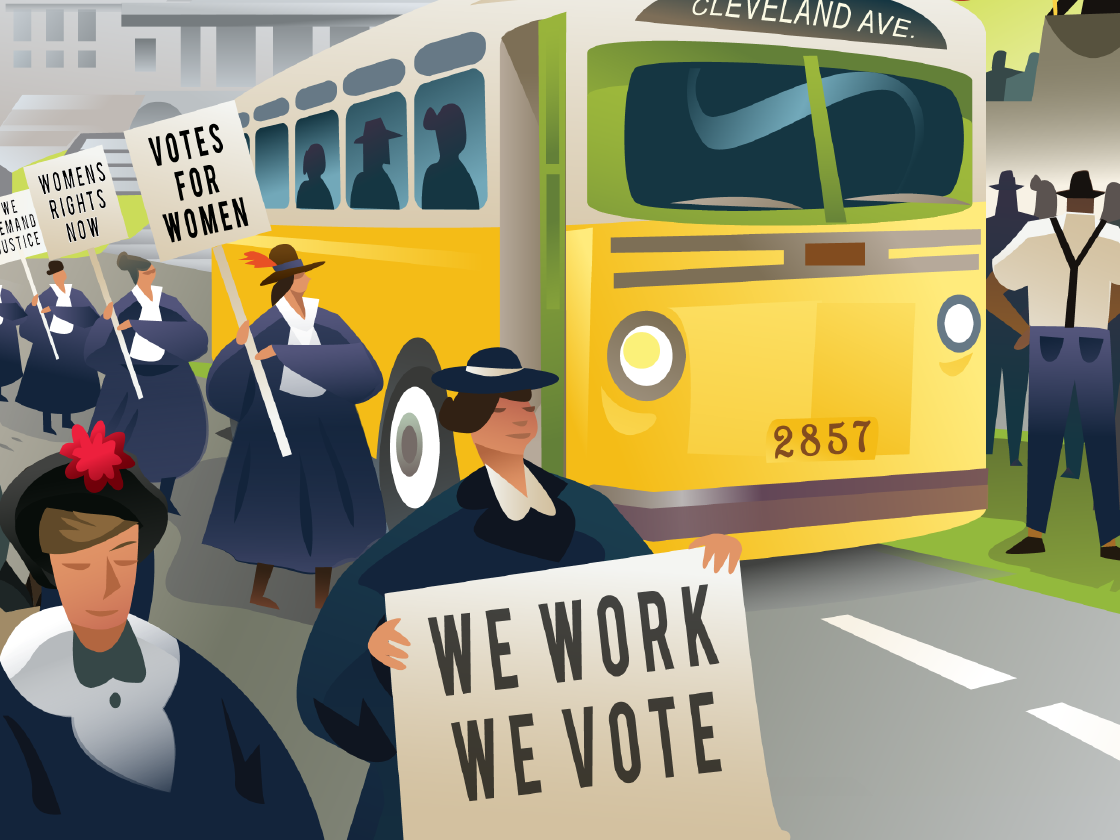
—Kareem Weaver

“There are no broken children; there’s broken systems.”

—Kareem Weaver

“Self-care has gotta be on the front of the agenda, not the back burner. Many educators, we just are so busy in the grind of teaching and learning, we forget.”

—Kareem Weaver

“ Being prepared in so many aspects of life outside of the classroom makes you better in the classroom.”

—Eric Cross

TEA announces additional innovative learning solutions for K-12 English and Spanish and K-5 science to support schools across Texas

AUSTIN, Texas—October 5, 2020—The Texas Education Agency today announced the next set of instructional materials—covering K-12 English Language Arts and Reading (ELAR), K-5 Spanish Language Arts and Reading (SLAR), and K-5 Science—that will be made available to school systems through the Texas Home Learning 3.0 (THL 3.0) initiative. Like other THL 3.0 offerings, these instructional materials are optional, digitized, customized for Texas, and aligned to Texas Essential Knowledge and Skills (TEKS)—the state standards for what students should know and be able to do.
TEA has partnered with Amplify for K-8 ELAR and K-5 SLAR, Odell Education for 9-12 ELAR, and Great Minds for K-5 Science to develop and deliver this next set of high-quality resources including TEKS-aligned unit and lesson plans. Additional materials will be released on a continuous basis. Before release, all THL 3.0 instructional materials undergo a rigorous review that includes Texas teacher feedback to confirm alignment with TEKS and quality standards. Additional THL 3.0 instructional materials for other subjects and grade levels will be announced over the coming weeks.

“As the pandemic continues to disrupt public education across our state, TEA is committed to supporting schools with effective distance learning resources,” said Texas Education Commissioner Mike Morath.

Amplify’s K-5 Texas Elementary Literacy Program for ELAR and SLAR and 6-8 Amplify ELAR Texas are TEKS-aligned language arts curriculum designed to support Texas learners in the classroom, at home, or wherever learning takes place. Built on the science of teaching reading, the K-5 Amplify Texas Elementary Literacy Program combines foundational skills with content knowledge—so that learning to read and reading to learn develop together. The 6-8 Amplify ELAR Texas program is a TEKS-aligned, blended language arts curriculum that places text at the center of every lesson. Designed specifically for Texas middle schools, this flexible program supports digital, print, and hybrid classrooms.

“We are thrilled to partner with TEA to provide Texas teachers and students with the highest quality reading and language arts programs that align to TEKS standards,” said Larry Berger, chief executive officer of Amplify. “Amplify’s flexible core and supplemental materials will support Texas educators and students whether learning is happening at home, in school, or some of each.”

Odell Education’s Texas High School Literacy Program, which covers 9-12 ELAR, is an innovative program created specifically for Texas high school students and educators. It is designed to support seamless learning in a variety of contexts. The program empowers teachers and students through dynamic activities centered on rich texts and topics as they develop TEKS-aligned literacy skills, habits, and knowledge.

“We are thrilled to partner with Texas educators to develop an exciting new literacy program for the high school students in Texas,” says Odell Education CEO Judson Odell. “Thanks to the tremendous commitment of the Texas Education Agency, Texas high schoolers will have a flexible program for this year and beyond that fosters the literacy they need to thrive wherever their path may lead them.”

Great Minds’ K-5 PhD Science TEKS Edition is a phenomenon-based program in which teachers facilitate the learning, but students own it. In every module, students explore authentic phenomena to build an enduring understanding of core science concepts through hands-on investigations and evidence-based learning. And now it is being adapted to align with the TEKS and, in partnership with TEA through its Texas Home Learning initiative, will be available as an open education resource for all schools and districts in the state.

“Science education should start early, and it should be comprehensive,” says Pam Goodner, Great Minds Chief Academic Officer for Science. “Texas recognizes that students need coherent instruction that builds knowledge from lesson to lesson to develop deep scientific understanding. PhD Science TEKS Edition will deliver what the state is seeking to help students act as scientists to observe, model, investigate, and understand the world around them.”

THL 3.0 is a comprehensive initiative to support school systems, teachers, parents, and students during the public health crisis and beyond with high-quality instructional materials, technology solutions, and professional development resources. TEA previously announced that it will offer all Texas school systems a world-class Learning Management System (LMS) from PowerSchool’s Schoology for two years at no cost. Nearly 400 Texas school systems have already signed up, with another 200 currently engaging with the Schoology team.

For more information on Texas Home Learning 3.0, please click here.

The Texas Education Agency news release is available here.

Core Knowledge Language Arts® receives high marks from independent EdReports.org review

The English Language Arts curriculum met expectations in every “gateway” of the EdReports review system for grades 3-5.

“We’ve seen time and again in schools and districts nationwide how CKLA develops strong and motivated readers by building a foundation of background knowledge and foundational skills,” said Susan Lambert, vice president of CKLA at Amplify. “EdReports.org’s review further validates the effectiveness of our curriculum.”

The content review team at EdReports.org measured the following areas, or gateways, in its review process: text quality and alignment to the Common Core State Standards; building knowledge with texts, vocabulary and tasks; and instructional supports and usability indicators.

Teachers and administrators rely on EdReports.org’s objective and independent reviews to support their curriculum decisions.

About CKLA

Core Knowledge Language Arts®, for grades PreK-5, offers educators a proven approach for building strong readers and ensuring that students are prepared for the transition from learning to read to reading to learn. The curriculum instills both background knowledge and foundational skills through two instructional strands for grades K-2 that integrate into a single strand in grades 3-5. Using both print and digital resources, CKLA provides:

  • Carefully sequenced background knowledge in social studies, science, literature and the arts to build vocabulary and comprehension.
  • An unprecedented, thorough approach to developing decoding and other critical foundational skills.

CKLA, which is widely used in districts in New York, Louisiana and other states around the country, originated in response to the reading crisis in today’s schools. A substantial number of students are reading below level by the end of grade 3—an indicator of future success. The act of reading requires both decoding—translating the written code to oral language—and comprehension—the act of using prior knowledge, language skills and reasoning skills to form connections and make meaning. However, many students lack access to background knowledge about the world. CKLA closes the achievement gap by bringing the world to kids, offering them a wealth of information and teaching them the necessary skills to read, write and think critically about texts and their contexts.

About Amplify

Amplify’s digital products for English language arts, math and science are leading the way in data-driven instruction and setting the standard for next-generation curriculum. A full suite of proven early literacy products helps build strong foundations for student achievement. Amplify has brought mobile assessments, instructional analytics, and riveting, rigorous curriculum to thousands of schools. To date, Amplify has supported more than 200,000 educators and 3 million students in all 50 states. For more information, please visit www.amplify.com.

Contact: media@amplify.com

Latest school assessment data show continued academic recovery in early literacy, with Black and Hispanic students making the greatest gains

BROOKLYN, NY (February 27, 2023) — Today, Amplify, a publisher of next-generation curriculum and assessment programs, published a research brief on national middle-of-school-year (MOY) reading data. The data show that students across the country continue to make meaningful progress in early literacy. These successes are especially evident in the lower elementary grades. Further, the measurable disparities in achievement between Black and Hispanic students and their white and Asian peers have narrowed since the prior year. Despite this progress, in every elementary grade, the students at the greatest risk for not learning to read are performing worse than they were in the middle of the 2019–2020 school year. In particular, third graders, the cohort of students with the most impacted instructional time from the pandemic, experienced no improvement from the prior school year, signaling the importance of uninterrupted instructional time that is based in the Science of Reading.

“Literacy is a fundamental human right, and evidence-based literacy instruction is an imperative for lifelong success,” says Susan Lambert, chief academic officer of elementary humanities at Amplify. “Our nation’s students have experienced unprecedented learning disruptions over the last three years. The way forward is clear — evidence-based practices, like the Science of Reading, must guide our nation’s literacy recovery to help all of our children become confident readers.”

Despite recent progress, literacy rates in the United States remain a crisis today. There are still too many students at risk of failing to read proficiently by the end of the third grade, an important indicator of future academic success. Educators serving students in grades K–3 need continued support to help students that are most at risk. Schools and districts can invest in a reliable universal screener, high-quality core curriculum based in the Science of Reading, evidence-based interventions and ongoing professional development to ensure educators have the tools they need to support students.

The research brief compares mCLASS® with DIBELS® (Dynamic Indicators of Basic Early Literacy Skills) 8th Edition benchmark data from the 2019–20, 2020–21, 2021–22 and 2022–23 school years. From more than 2 million students assessed with mCLASS, approximately 300,000 students in a matched set of 1,400 schools in 43 states are represented. The schools in the source data are slightly more likely to be in large urban metropolitan areas than the nation overall.

The data was collected using the mCLASS platform, which automates the data collection of DIBELS®. DIBELS is a widely-used series of short tests developed by the University of Oregon that assess K–8 literacy. It is an observational assessment collected by teachers interacting with students one-on-one, either live or over video. DIBELS is typically administered three times a year (beginning, middle and end of year), and it is used to identify reading difficulty, monitor progress and inform instruction, especially for struggling readers.

About Amplify
A pioneer in K–12 education since 2000, Amplify is leading the way in next-generation curriculum and assessment. Our core and supplemental programs in ELA, math and science engage all students in rigorous learning and inspire them to think deeply, creatively, and for themselves. Our formative assessment products help teachers identify the targeted instruction students need to build a strong foundation in early reading and math. All of our programs and services provide educators with powerful tools that help them understand and respond to the needs of every student. Today, Amplify serves more than 15 million students in all 50 states and on six continents. For more information, visit amplify.com.

Media Contact
Kristine Frech
media@amplify.com