Utah ELA Review for Grades PK–5
Thank you for taking the time to review Amplify’s core ELA program for PK–5. Amplify Core Knowledge Language Arts® (CKLA) is a state-approved core ELA curriculum designated as a primary core program that fully meets the Science of Reading requirements outlined in SB 127.
Amplify CKLA, developed in partnership with the Core Knowledge Foundation, was designed to help teachers implement Science of Reading principles and evidence-based instructional practices. Scroll down to learn how CKLA is uniquely designed to help all your students make learning leaps in literacy.

Step 1: Program Introduction
Welcome to Amplify CKLA! Before you dive into our materials, watch the video below to learn about the big picture behind Amplify CKLA’s pedagogy.
In this video, Susan Lambert (Chief Academic Officer and host of Science of Reading: The Podocast) shares why Amplify CKLA was created, how it is built on the Science of Reading, and the impact it’s making across the country.
Step 2: Program Overview
Amplify CKLA is different for a reason. Watch the overview video below to learn about these differences and why educators love them.
In this video, you’ll get an in-depth look at the program’s overall structure and organization, the design behind our proven lessons, and the materials included to support teaching and learning.
The Amplify CKLA Program Guide also provides an in-depth view of how Amplify CKLA works, how it’s structured, and why it’s uniquely capable of helping you bring reading instruction based on the Science of Reading to your classroom.
Evidence-based design
Amplify CKLA is rooted in Science of Reading research. Mirroring Scarborough’s Rope, Amplify CKLA delivers a combination of explicit foundational skills with meaningful knowledge-building.
- In Grades PK–2, dedicated knowledge-building and explicit skills instruction are taught simultaneously through two distinct instructional strands.
- In Grades 3–5, dedicated knowledge-building and explicit skills instruction are woven together and delivered through one integrated strand.

Grades K–2 Skills and Knowledge Strands
Every day students in Grades K–2 complete one full lesson that explicitly and systematically builds foundational reading skills in the Skills Strand, as well as one full lesson that builds robust background knowledge to access complex text in the Knowledge Strand. Through learning in each of these strands, students develop the early literacy skills necessary to help them become confident readers and build the context to understand what they’re reading.
Grades 3–5 Integrated Strand
In Grades 3–5, Knowledge and Skills are integrated in one set of instructional materials. Lessons begin to combine skills and knowledge with increasingly complex texts, close reading, and a greater writing emphasis. Students can then use their skills to go on their own independent reading adventures.
Key features
For each Amplify CKLA key feature below, click the drop down arrow to learn more.
Built out of the latest research in the Science of Reading, Amplify CKLA delivers explicit instruction in both foundational literacy skills (systematic phonics, decoding, and fluency) and background knowledge in grades PK–2 with an integrated approach to explicit instruction in grades 3–5.
Review this Science of Reading toolkit to learn more about the Science of Reading best practices integrated throughout CKLA.
Amplify CKLA aligns with the instructional principles recommended by Orton Gillingham and LETRS.
- Structured–Concepts are taught through consistent routines
- Sequential–Concepts are taught in a logical, well-planned sequence
- Systematic–Phonemes are taught from simplest to most complex
- Explicit–Decoding and encoding concepts are taught directly and explicitly
- Multi-sensory–Instruction is delivered through visual, auditory, and kinesthetic-tactile pathways
- Cumulative–Concepts are applied in decodable, connected texts with constant review and reinforcement
Watch this video to learn more!
Additionally, great reading instruction starts with helping kids develop great decoding skills. Our instruction is supported by:
- Step-by-step lessons with multi-sensory approaches, clear lesson objectives, and embedded formative assessments.
- Decodable books and student readers with ebook and audiobook versions that feature engaging plots and relatable characters.
The Science of Reading reveals knowledge as an essential pillar of reading comprehension and lifelong literacy. Hear from author Natalie Wexler and CKLA customers on edWebinar about the importance of knowledge-building in reading instruction.
Students build grade-appropriate subject-area knowledge and vocabulary in history, science, literature, and the arts while learning to read, write, and think creatively and for themselves. Our instruction is supported by:
- Knowledge builders that provide a quick overview of each domain with its key ideas.
- Interactive Read-Alouds designed to build knowledge and vocabulary.
- Content-rich anchor texts that support students as they tackle increasingly complex text and sharpen their analytical skills.
- Social and emotional learning paired with lessons in civic responsibility.
Amplify CKLA not only received an all-green rating from the rigorous evaluators at EdReports, but it was also recently recognized by the Knowledge Matters Campaign as a high-quality literacy program that excels in building knowledge. Our shared message: background knowledge is essential to literacy and learning.
Student-led reading practice should be purposeful and connected to the core. That’s why Amplify createdBoost Reading. As an optional add-on to Amplify CKLA, students have the opportunity to practice skills directly tied to the skills they’ve been working on during core reading time. Boost Reading also adapts to each student to address their personal gaps and bolsters foundational skills at a pace that supports their individual development.
Boost Reading’s collection of 40+ adaptive games target foundational reading skills and develops them in alignment with Science of Reading principles. Unlike other adaptive games, we ensure students:
- Practice the right skills at the right time. Our embedded placement tool ensures students receive the content and skill practice most appropriate for their current reading level. From there, students move through our curriculum along their own learning pathway where they encounter personalized content tailored to their evolving skill and grade levels.
- Progress along a pathway that adapts on multiple dimensions, not just one. For example, a student can work on early first-grade decoding in one game while building more advanced vocabulary knowledge in another.
- Practice skills in tandem. For example, a student is never forced to master one skill area before proceeding to the next. Instead, we offer students that opportunity to work on multiple skills concurrently.
- Feel supported with scaffolding, instruction, and practice that adapts based on student performance.
- Stay engaged by giving them immediate and clear feedback. These results are never punitive. Instead our always-positive feedback is delivered in the context of the game world and is designed to motivate students to keep trying.
Click the buttons below to learn more:
Step 3: Program Resources
Easy-to-use print materials
Amplify CKLA’s easy-to-use materials bring foundational skills and knowledge to life in the classroom.
Download the Amplify CKLA Components guide to see components by grade and watch the print materials walkthrough below.
Engaging CKLA digital experience
The top-rated content of Amplify CKLA is now live with the digital experience that enhances instruction and saves time.
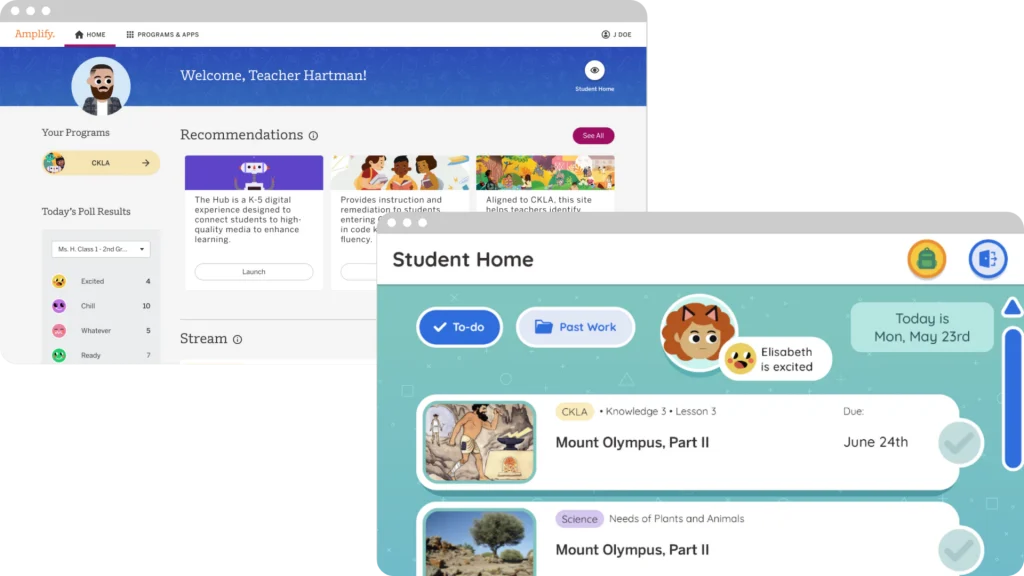
With the digital experience, everything is in one place, making it easier and more engaging than ever to plan lessons, present digital content, and review student work. Click the arrows below to learn more.
With the digital experience, teachers have access to ready-to-use and customizable lesson presentation slides, complete with all the prompts from the print Teacher Guide embedded in the teacher view. As teachers deliver each lesson, students can engage with the content in one cohesive experience—through these CKLA resources: Activity Books, slides, digital components, videos, Student Readers, and more.
The innovative live review tool found in the digital experience enables you to keep an eye on all of your students as they work on drawing, recording audio, uploading and capturing images, and typing or writing in pre-placed textboxes in their Activity Pages. This dynamic tool provides countless classroom management benefits, enabling you to spot and correct common mistakes as they’re happening, praise your students for thoughtful work, and identify students who are not engaged in the task at hand. Simply put, it will give you those valuable “eyes in the back of your head” you’ve warned your students about!
The digital experience integrates with various LMSs, allowing you and your students to access Amplify CKLA with the software you’re already comfortable using.
In the Amplify CKLA student digital experience, your students have one intuitive access point to fully engage with classroom instruction. Through the Student Home, students can easily access digital lessons with slides, Activity Pages, ebooks, videos, and other interactives from one simple dashboard. Students can draw, record audio, upload and capture images, and type or write in pre-placed text boxes in their Activity Pages.
CKLA review resources
- CKLA Program Guide
- Language Studio (ELD)
- Writing Studio (Writing)
- CKLA Research Hub (Efficacy and Case Studies)
- Text complexity in CKLA
- Trade books in CKLA
- Assessments in CKLA
- Amplify Caminos (K-5 Spanish Language Arts Program)
- Amplify CKLA Video for Families and Caregivers
- Amplify CKLA Caregivers Hub
- ELA Curriculum Evaluation Tools
- Remote and hybrid learning with CKLA
- CKLA Scopes and Sequences
- Grade K Skills and Knowledge
- Grade 1 Skills and Knowledge
- Grade 2 Skills and Knowledge
- Grade 3 Integrated
- Grade 4 Integrated
- Grade 5 Integrated
Step 4: State Review Resources
- Utah State Standards Alignment K-5
- Utah Instructional Strategies and Routines
- Utah Science of Reading Evidence-Informed Core Criteria Checklist (Amplify created)
- Utah Critical Features of Tiered Literacy Interventions (featuring Boost Reading)
- Amplify ELA Technical Specifications
Step 5: Program Access
Explore as a teacher
Before logging in, watch this brief video on navigating the CKLA Teacher Platform.
Ready to explore as a teacher? Follow these instructions:
- Click the Amplify CKLA Teacher Platform button below.
- Select Log in with Amplify.
- Enter the teacher username: t1.utcklapk5@demo.tryamplify.net
- Enter the teacher password: Amplify1-utcklapk5
- Choose CKLA from the “Your Programs” menu on Educator Home.
- Select a grade level from the drop-down menu at the top of the page.
Ready to explore as a Student? Follow these instructions:
- Click the Amplify CKLA Teacher Platform button below.
- Select Log in with Amplify.
- Enter the student username: s1.utahcklapk5@demo.tryamplify.net
- Enter the student password: Amplify1-utahcklapk5
A digital experience exclusively for Amplify CKLA 2nd Edition
Amplify Core Knowledge Language Arts (CKLA) 2nd Edition’s top-rated content is available with a digital experience that enhances instruction and saves time. With everything you need in one place, this platform makes it easier and more engaging to plan lessons, present digital content, and review student work.
Information on this page relates to Amplify CKLA 2nd Edition. Access Amplify CKLA 3rd Edition here.

Simplify planning and instruction
With the digital experience, teachers have access to ready-to-use and customizable lesson presentation slides, complete with all the prompts from the print Teacher Guide embedded in the teacher view. As teachers deliver each lesson, students can engage with the content in one cohesive experience—through these CKLA resources: Activity Books, slides, digital components, videos, Student Readers, and more.
Get real-time insights into your students’ work
The innovative live review tool found in the digital experience enables you to keep an eye on all of your students as they work on drawing, recording audio, uploading and capturing images, and typing or writing in pre-placed textboxes in their Activity Pages. This dynamic tool provides countless classroom management benefits, enabling you to spot and correct common mistakes as they’re happening, praise your students for thoughtful work, and identify students who are not engaged in the task at hand. Simply put, it will give you those valuable “eyes in the back of your head” you’ve warned your students about!
Learning Management System integrations
The digital experience integrates with various LMSs, allowing you and your students to access Amplify CKLA with the software you’re already comfortable using.
Engage your students with one easy-to-use access point
In the Amplify CKLA student digital experience, your students have one intuitive access point to fully engage with classroom instruction. Through the Student Home, students can easily access digital lessons with slides, Activity Pages, ebooks, videos, and other interactives from one simple dashboard. Students can draw, record audio, upload and capture images, and type or write in pre-placed text boxes in their Activity Pages.
What is the Science of Reading?

The Science of Reading is a large body of research that helps answer a key question about the human experience: How do people learn to read?
It also helps answer a fundamental question for educators: How should we teach reading?
The Science of Reading draws on decades of research from fields like cognitive science, neuroscience, linguistics, psychology, and education. This vast (and still growing) body of research describes our up-to-date understanding of what reading requires, and therefore shapes our approach to effective literacy instruction.
Two frameworks are widely used to capture and communicate those core takeaways:
- The Simple View of Reading
- The Reading Rope
In this overview, we’ll walk you through both.
Why reading needs science
Spoken language develops naturally. Children typically learn to understand and use language simply by being around other people who talk.
Reading, on the other hand, works differently. Written language is a human invention; our brains did not evolve to read. When we are born, the parts of our brain that see letters are completely separate from the parts that hear sounds. So to become readers, students require explicit instruction. They have to be taught specifically to build new connections between what they see on the page and the language they already know.
For a brain to read words, it needs to create new pathways that connect letters with sounds. For example, when a child sees the letter “f” and connects it to the /f/ sound in “funny,” their brain builds a new bridge between the areas that handle sight and sound. Reading actually rewires the brain, bringing together the regions for vision, speech, sound, and meaning into one coordinated reading system.
The Science of Reading explains what those new connections involve—and why some students need more support than others to build them.
The Simple View of Reading
At the heart of the Science of Reading is one of the most widely accepted frameworks in reading research: the Simple View of Reading, first proposed by experts Philip Gough and Bill Tunmer in the 1980s.
The Simple View answers a basic question: What has to be in place for a reader to understand a text?
According to the Simple View, reading comprehension depends on two essential components:
- Decoding: the ability to turn written words into spoken language
- Language comprehension: the ability to understand the meaning of that language
Both are necessary, and neither works on its own. One reader may decode words accurately but struggle to understand what they read, while another may understand spoken language well but be unable to read the words on the page. In either case, comprehension breaks down.
The Simple View captures this core finding of reading research: Skilled reading depends on both word reading and language understanding working together.
Decoding: Reading the words on the page
Decoding involves learning how letters and letter patterns represent sounds. This task is complex in alphabetic writing systems like English, where many letters represent more than one sound, and many sounds can be spelled in different ways.
When children begin learning to read, they already understand a great deal of spoken language. What they don’t yet understand is written language. Letters and printed words are unfamiliar in a way that speech is not.
As students practice decoding, they become more accurate and more fluent. Over time, decoding becomes increasingly automatic.
And this automaticity matters—when students no longer have to focus most of their attention on reading the words, they can devote more mental energy to understanding what the text means.
Language comprehension: Understanding what you read
Language comprehension includes vocabulary, knowledge about the world, and an understanding of how language works across sentences and texts.
Research shows that what readers already know plays a major role in comprehension. As shown in the baseball experiment, students understood and remembered more when the text described a familiar activity—even when their reading skills were relatively weak.
When students read about unfamiliar topics, comprehension becomes more difficult. This is true even for students who can read the words on the page accurately.
So what’s the best way to teach reading comprehension? Combine both elements of the Simple View. In other words, reading comprehension grows alongside vocabulary and knowledge, and exposure to a wide range of topics supports reading development.
The Reading Rope
The Simple View of Reading identifies what reading requires, while the Reading Rope reflects how those requirements develop and become integrated over time.
The Reading Rope organizes reading into two broad strands:
- Word recognition, which includes phonological awareness, decoding, and fluent word reading
- Language comprehension, which includes vocabulary, background knowledge, and the ability to make meaning from text
Each strand of the Rope is made up of multiple interconnected skills. With effective instruction and practice, these skills become more coordinated and more automatic. As that happens, reading becomes smoother and less effortful, allowing readers to focus more fully on meaning.
The Reading Rope builds on the Simple View by showing how skilled reading emerges as these components strengthen and work together.
Instructional practices: Putting it all to work
The Science of Reading is the broad body of research on how reading develops, and the Simple View of Reading and Reading Rope capture the core takeaways of that research.
Together, they show that skilled reading depends on both accurate word reading and strong language comprehension, and that these abilities develop through explicit and systematic instruction, practice, and growing knowledge over time.
For educators, this understanding provides the strongest possible foundation for reading instruction. When students become skilled readers, new possibilities open up—in their classrooms today, and for the rest of their lives.
mCLASS K–8 Literacy & Math Assessment System | Amplify
FL review ELA (state)
Pasco County’s review of the B.E.S.T. program for middle schools, Amplify ELA Florida Edition
Review of the B.E.S.T. program for middle schools, Amplify ELA Florida Edition
Grade 6
Unit 1: Numbers
Unit 2: Number Operations
Unit 3: Proportionality, Ratios, and Rates
Unit 4: Equivalent Expressions
| Module 9: Generating Equivalent Numerical Expressions | |
| Lesson 9.1: Exponents | Unit 6 Lesson 10: Powers Lesson 11: Exponent Expressions (Print available) Lesson 12: Squares and Cubes |
| Lesson 9.2: Prime Factorization | |
| Lesson 9.3: Order of Operations | |
| Module 10: Generating Equivalent Algebraic Expressions | |
| Lesson 10.1: Modeling and Writing Expressions Lesson 10.2: Evaluating Expressions | Unit 6 Lesson 6: Vari-apples Lesson 8: Products and Sums [Free lesson] Lesson 9: Products, Sums, and Differences (Print available) |
| Lesson 10.3: Generating Equivalent Expressions | Unit 6 Lesson 7: Border Tiles Lesson 8: Products and Sums [Free lesson] Lesson 9: Products, Sums, and Differences (Print available) |
Unit 5: Equations and Inequalities
Unit 6: Relationships in Geometry
Unit 7: Measurement and Data
| Module 16: Displaying, Analyzing, and Summarizing Data | |
| Lesson 16.1: Measures of Center | Unit 8 Lesson 4: Lots More Dots Lesson 7: Snack Time Lesson 8: Pop It! Lesson 11: Toy Cars [Free lesson] Lesson 12: In the News Lesson 16: Hollywood Part 3 (Print available) |
| Lesson 16.2: Mean Absolute Deviation | Unit 8 Lesson 8: Pop It! Lesson 9: Hoops Lesson 10: Hollywood Part 1 (Print available) Lesson 16: Hollywood Part 3 ( Print available) |
| Lesson 16.3: Box Plots | Unit 8 Lesson 14: Car, Plane, Bus, or Train? (Print available) Lesson 15: Hollywood Part 2 Lesson 16: Hollywood Part 3 (Print available) |
| Lesson 16.4: Dot Plots and Data Distribution | Unit 8 Lesson 2: Dot Plots Lesson 3: Minimum Wage (Print available) [Free lesson] Lesson 4: Lots More Dots Lesson 13: Pumpkin Patch Lesson 16: Hollywood Part 3 (Print available) |
| Lesson 16.5: Histograms | Unit 8 Lesson 5: The Plot Thickens [Free lesson] Lesson 6: DIY Histograms Lesson 16: Hollywood Part 3 (Print available) |
Grade 7
Unit 1: The Number System
Unit 2: Ratios and Proportional Relationships
Unit 3: Expressions, Equations, and Inequalities
Unit 4: Geometry
Unit 5: Statistics
| Module 10: Random Samples and Populations | |
| Lesson 10.1: Populations and Samples | Unit 8 Lesson 10: Crab Island [Free lesson] Lesson 11: Headlines Lesson 12: Flower Power Lesson 13: Plots and Samples Lesson 14: School Newspaper (Print available) Lesson 15: Asthma Rates (Print available) |
| Lesson 10.2: Making Inferences from a Random Sample Lesson 10.3: Generating Random Samples | Unit 8 Lesson 13: Plots and Samples Lesson 15: Asthma Rate (Print available) |
| Module 11: Analyzing and Comparing Data | |
| Lesson 11.1: Comparing Data Displayed in Dot Plots | Unit 8 Lesson 14: School Newspaper (Print available) Lesson 15: Asthma Rates (Print available) |
| Lesson 11.2: Comparing Data Displayed in Box Plots | Unit 8 Lesson 13: Plots and Samples Lesson 15: Asthma Rates (Print available) |
| Lesson 11.3: Using Statistical Measures to Compare Populations | Unit 8 Lesson 9: Car, Bike, or Train? (Print available) Lesson 10: Crab Island [Free lesson] Lesson 15: Asthma Rates (Print available) |
Unit 6: Probability
| Module 12: Experimental Probability | |
|---|---|
| Lesson 12.1: Probability | Unit 8 Lesson 1: How Likely? (Print available) [Free lesson] Lesson 2: Prob-bear-bilities [Free lesson] |
| Lesson 12.2: Experimental Probability of Simple Events | Unit 8 Lesson 3: Mystery Bag Lesson 4: Spin Class Lesson 5: Is It Fair? |
| Lesson 12.3: Experimental Probability of Compound Events | Unit 8 Lesson 7: Weather or Not |
| Lesson 12.4: Making Predictions with Experimental Probability | Unit 8 Lesson 3: Mystery Bag Lesson 5: Is It Fair? |
| Module 13: Theoretical Probability and Simulations | |
| Lesson 13.1: Theoretical Probability of Simple Events | Unit 8 Lesson 1: How Likely? (Print available) [Free lesson] Lesson 2: Prob-bear-bilities [Free lesson] |
| Lesson 13.2: Theoretical Probability of Compound Events | Unit 8 Lesson 6: Fair Games |
| Lesson 13.3: Making Predictions with Theoretical Probability | Unit 8 Lesson 8: Simulate It! (Print available) |
| Lesson 13.4: Using Technology to Conduct a Simulation | Unit 8 Lesson 7: Weather or Not Lesson 8: Simulate It! (Print available) |
Grade 8
Unit 1: Real Numbers, Exponents, and Scientific Notation
Unit 2: Proportional and Nonproportional Relationships and Functions
Unit 3: Solving Equations and Systems of Equations
Unit 4: Transformational Geometry
Unit 5: Measurement Geometry
Unit 6: Statistics
| Module 14: Scatter Plots | |
| Lesson 14.1: Scatter Plots and Association | Unit 6 Lesson 1: Click Battle Lesson 2: Wing Span Lesson 3: Robots [Free lesson] Lesson 6: Interpreting Slopes Lesson 7: Scatter Plot City Lesson 8: Animal Brains |
| Lesson 14.2: Trend Lines and Predictions | Unit 6 Lesson 4: Dapper Cats [Free lesson] Lesson 5: Fit Fights [Free lesson] Lesson 8: Animal Brains |
| Module 15: Two-Way Tables | |
| Lesson 15.1: Two-Way Frequency Tables | Unit 6 Lesson 9: Tasty Fruit |
| Lesson 15.2: Two-Way Relative Frequency Tables | Unit 6 Lesson 10: Finding Associations [Free lesson] Lesson 11: Federal Budgets |
The High-Impact Tutoring Implementation Workshop Series
Families and caregivers, welcome to Amplify Desmos Math Texas K–5!
Welcome to the Amplify Desmos Math Texas K–5 Caregiver Hub. We’re here to support your student as they explore math, work with friends to solve problems, and learn new and interesting concepts—and to support you as you go on this math journey with them! Below are some suggestions and resources for how you can support their learning at home.
Learn more about Amplify Desmos Math Texas.
Para la versión en español, haga clic aquí.

Unit Caregiver Resources
For every unit of the program, we’ve created a Caregiver Resource that provides a summary of key concepts. You’ll find a Caregiver Resource for each unit, in both English and Spanish.
Unit 1: Beginning Number Concepts
Unit 2: Numbers 1–10
Unit 3: Shapes, Coins, and Financial Literacy
Unit 4: Understanding Addition and Subtraction
Unit 5: Make and Break Apart Numbers Within 10
Unit 6: Numbers 0–20
Unit 7: Solid Shapes All Around Us
Unit 1: Adding, Subtracting, and Working With Data
Unit 2: Story Problems Within 10
Unit 3: Adding and Subtracting Within 20
Unit 4: Numbers to 99 and Financial Literacy
Unit 5: Adding Within 120
Unit 6: Length Measurement Within 120 Units
Unit 7: Geometry and Time
Unit 1: Working With Data and Developing Financial Literacy
Unit 2: Adding and Subtracting Within 100
Unit 3: Measuring and Solving Problems Using Length
Unit 4: Numbers to 1,200
Unit 5: Geometry and Time
Unit 6: Adding and Subracting Within 1,000
Unit 7: Equal Groups and Area
Unit 1: Introducing Multiplication
Unit 2: Adding, Subtracting, and Rounding Larger Numbers
Unit 3: Relating Multiplication to Division
Unit 4: Fractions as Numbers
Unit 5: Measurement and Financial Literacy
Unit 6: Sorting and Classifying Shapes
Unit 1: Fraction Equivalence and Comparison
Unit 2: Extending Operations to Fractions
Unit 3: From Hundredths to One Billion
Unit 4: Mathematical Relationships and Financial Literacy
Unit 5: Multiplying and Dividing Multi-Digit Numbers
Unit 6: Angles and Properties of Shapes
Unit 1: Volume, Factors, and Expresssions
Unit 2: Multiplying and Dividing Fractions
Unit 3: Multi-Digit Multiplication and Division and Financial Literacy
Unit 4: Place Value Patterns and Decimal Operations
Unit 5: Measurement, Fraction Operations, and Data
Unit 6: Geometry and Algebraic Reasoning
Sub-Unit Summaries
- Unit 1 – Volume, Factors, and Expressions
- Unit 2 – Multiplying and Dividing Fractions
- Unit 3 – Multi-Digit Multiplication and Division and Financial Literacy
- Unit 4 – Place Value Patterns and Decimal Operations
- Unit 5 – Measurement, Fraction Operations, and Data
- Unit 6 – Geometry and Algebraic Reasoning
Access Amplify Desmos Math at home.
In addition to a print Student Edition workbook, your student will have digital access to all learning, practice, and assessment materials through the Amplify platform. The digital curriculum can be accessed in school and at home by following these instructions:
- Select the Amplify Desmos Math button.
- Select Log in with Amplify.
- Enter your student’s username and password provided by your student’s teacher.
- Select the desired grade level.
Once logged in, caregivers can view student work by opening previous assignments.
Learn how to navigate the student home page.
Materials overview
Amplify Desmos Math Texas supports blended learning with supporting print materials and a unique digital experience. All K–5 lessons are available in a write-in Student Edition book. Many of the lessons include hands-on activities with manipulatives, tools that help students understand abstract concepts by making them tangible. Your student will also work with digital devices for an age-appropriate number of lessons.
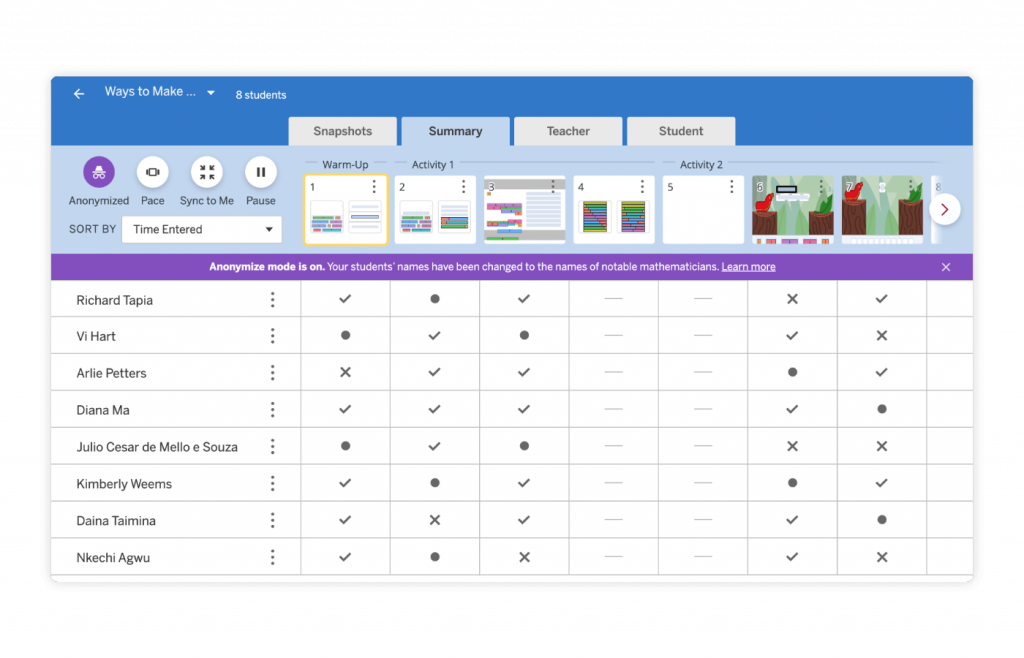
When students use devices, teachers can monitor their work in real time, making sure they get the exact support that they need at every part of the lesson, in and outside of class.
Components of a lesson
Students in an Amplify Desmos Math Texas classroom can be seen (and heard!) asking questions, debating answers, justifying their thinking, grappling with problems, and working together and independently.
A typical Amplify Desmos Math Texas lesson includes:
- Warm-up: A short, attention-getting problem to pique students’ interest in the lesson.
- Activities: One to two mini-activities that challenge students’ problem-solving skills.
- Synthesis: Discussion to review and bring together the important concepts from the lesson.
- Show What You Know and Reflection: Questions for students to show what they know from the lesson. (Note: The Show What You Know lesson assessment is optional for kindergarten and grade 1.)
- Centers: Student-led activity stations that reinforce the math learned during lesson activities through interactive and often game-like formats. In kindergarten and grade 1, time for Centers is built into the last 15 minutes of every lesson.
To support, strengthen, and stretch students’ learning after the lesson, Amplify Desmos Math Texas offers options for:
- Differentiation: Mini-Lessons, Centers, Extensions, Boost Personalized Learning, and Fluency Practice.
- Practice: Additional problems your student’s teacher may assign for classwork or homework.
Support math learning at home.
You can support your student’s math learning outside of school in many ways:
Your student’s teacher may assign practice problems at the end of each lesson for classwork or homework. If your student has already completed the practice problems for the lesson, ask them to walk you through how they solved each problem, or talk about any parts that were challenging for them. Ask your student follow-up questions to encourage the use of math language as they explain their thinking, such as, “How do you know?,” “How can you show your thinking?,” or “How would you describe that?” If students are stuck, ask support questions, such as, “What information do you know here?” or “How could you represent this problem?”
Your student’s teacher may introduce a Center game with students in the lesson or beyond the lesson. These games are aligned to the math of the unit and can be played with students outside of class. Your student’s teacher may introduce a Center game to students during or after completing a lesson, or you may need to teach the game before you play by using easy-to-follow instructions. Try out the following Center games with your student!
- Kindergarten
- Connecting Cubes: Build to Match
- Math Fingers: Show and Say
- Grade 1
- Find the Pair: Make 10
- Check It Off: Add or Subtract Within 10
- Grade 2
- Capture Squares: Add Within 10
- How Close? Add to 100
- Grade 3
- Capture Squares: Add Within 20
- Capture Squares: Multiply With 2, 5, and 10
- Grade 4
- Can You Draw It: Area and Perimeter
- Fraction Math: Beginner Fraction Models
- Grade 5
- Rectangle Rumble: Factors 1–5
- Compare: Divide Within 100
Each unit in Amplify Desmos Math begins with a Read-Aloud to engage students and provide context for the math of the unit. Elements and characters from the Unit Story then appear in lessons throughout the unit.
Kindergarten
- Unit 1 Story: The First Day of School
- Unit 2 Story: What’s in a Restaurant?
- Unit 3 Story: A Great Shape Adventure
- Unit 4 Story: Casey’s Town
- Unit 5 Story: Where is Harry?
- Unit 6 Story: Winners
- Unit 7 Story: Everybody Needs Help Sometimes
Grade 1
- Unit 1 Story: Ying’s New Town
- Unit 2 Story: Let’s Grow!
- Unit 3 Story: Impossible
- Unit 4 Story: The Collectors
- Unit 5 Story: The Day of the Wazzle-Squash
- Unit 6 Story: Side by Side
- Unit 7 Story: A Potluck for Pia
Grade 2
- Unit 1 Story: A New Class Pet
- Unit 2 Story: The Heroes of Pineapple Street
- Unit 3 Story: What Orson Imagined
- Unit 4 Story: 302 Ricotta Drive
- Unit 5 Story: Arjun the Artist
- Unit 6 Story: Where Eli Went
- Unit 7 Story: On Clementine Court
Grade 3
- Unit 1 Story: My Name Is Harper
- Unit 2 Story: The View From Up Here
- Unit 3 Story: Home Cooking
- Unit 4 Story: Coen and Obita
- Unit 5 Story: Just Stick With It, Sasha
- Unit 6 Story: Through Piho’s Eyes
Grade 4
- Unit 1 Story: One Step at a Time
- Unit 2 Story: Finny
- Unit 3 Story: Myles and the Loggerheads
- Unit 4 Story: Just for Fun
- Unit 5 Story: Special Day, Special Le
- Unit 6 Story: Captain Bogwart’s Treasure
Grade 5
- Unit 1 Story: Joyful Green
- Unit 2 Story: Princess Sweetsocks
- Unit 3 Story: Andrea
- Unit 4 Story: Market Day
- Unit 5 Story: The Monarchs
- Unit 6 Story: Hanan Pacha
Relate math to daily activities at home, whether grocery shopping, preparing a meal, or planning for a trip to the store. Your student can help you figure out how many more apples there are than oranges in the grocery cart, show how to split a sandwich into fourths, or figure out how much change you’ll receive in exchange for a $10 bill. Encourage your student to point out ways that you use math in your daily tasks.
Remind your student that getting stuck is part of the process—a necessary and beneficial part of learning. Many students (and adults) fear making mistakes, but research shows that mistakes help our brains grow! When your student gets stuck on a problem, encourage them to keep trying different strategies even if they’re not sure they’re right.
Welcome, Florida middle school educators!
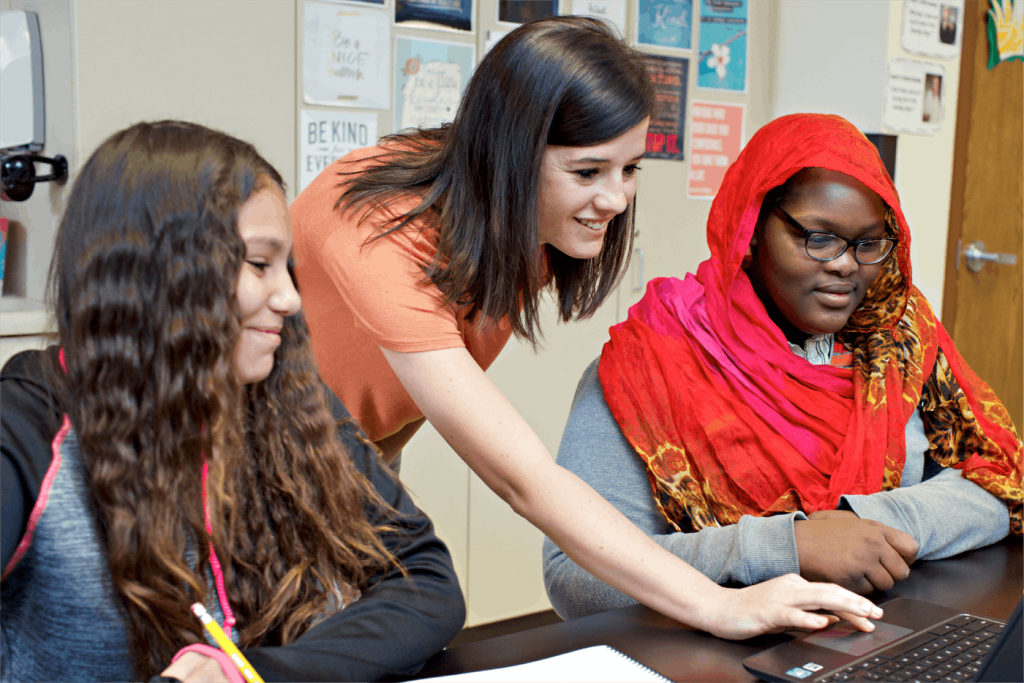
Amplify ELA Florida is the program built for Florida middle school teachers and students. We designed the program to help ensure the B.E.S.T standards are covered; the skills are taught; the test is prepped for; and your students are scaffolded and encouraged. We want you to spend your time bringing the text to life, making the classroom hum, and letting every student know you are paying attention to their growth.

Instruction matters
Florida’s new standards have been crafted to give your students the B.E.S.T. Amplify ELA Florida’s lessons explore the most compelling aspect of a text and target the standards that best support that analysis through reading, writing, and communication. These key standards are identified as the lesson’s Spotlight benchmark. Strategic connections are attained in the program through:
- Florida model texts including rich literature and compelling non-fiction, taught in engaging new ways for today’s learners.
- Benchmark stacks that build connections within lessons and across units.
- Foundational instruction that targets key standards and multiple learning modes.
- Writing that builds directly from reading complex text and is evaluated by Amplify’s Automated Writing Evaluation (AWE).
- Reading with the B.E.S.T. Modules have been built to guide teachers and students as they begin to work with Florida’s new reading standards, providing an introduction to each grade-level B.E.S.T. Reading Benchmark. (Example module: Grade 6, Understanding Rhetoric)
Knowledge matters
Texts in the Amplify ELA Florida Edition curriculum cover a wide range of topics, themes, and genres with differentiated supports that ensure that all students can work through each reading and lesson. Taken as a whole, the texts show students a diverse picture of the world and help foster a lifelong love of reading. Comprehension develops as students engage with literary and informational text selections that are complex, rich, and meaningful.
Texts were selected for Amplify ELA Florida Edition using the following criteria:
- Text complexity as defined by qualitative, quantitative, and reader and task measurements as required by the B.E.S.T. Standards and the Amplify Text Complexity Index
- Balance of literary and informational texts
- Varied representation of genres: novels, plays, poetry, biographies, and other full-length texts
- Diverse cultures, perspectives, and authors
- Engaging texts that extend learning and support students as they build knowledge
- Grade-appropriate texts, with scaffolding and compelling activities to support student engagement with 100% authentic texts
- A library with more than 700 complete books, both classic and contemporary, encompassing a wide range of genres, topics, and cultural perspectives

Curriculum matters
Amplify ELA Florida is a blended curriculum designed specifically for grades 6–8. The heart of every lesson is the text. Each grade includes six units centered on literary or informational texts, delivered in several forms of media. Your classroom will also benefit from two or three immersive, project-based experiences and a dedicated Story Writing unit.
- Full B.E.S.T. coverage: Standards are clearly labeled in each lesson, so teachers can save time planning and get back to what they love: teaching. Also included are Benchmark Modules that support teachers’ and students’ introduction to the new standards for Florida.
- Five levels of differentiation: Based on each student’s needs and the performance measures within Amplify ELA reports, a teacher can choose the differentiation level that’s the right fit for everyone.
- Embedded Assessments: Teachers benefit from uninterrupted instructional time and a continuously updated picture of each student’s progress with key skills and standards.
- Powerful feedback tools: Comprehensive tools help teachers maximize both the quantity and quality of feedback.
- Robust reporting: Our reporting app offers information on student progress to help inform instructional decisions.
All in one place: Embedded teacher support, differentiation tools, student data, text, and other curriculum features—they’re all right there.
Materials
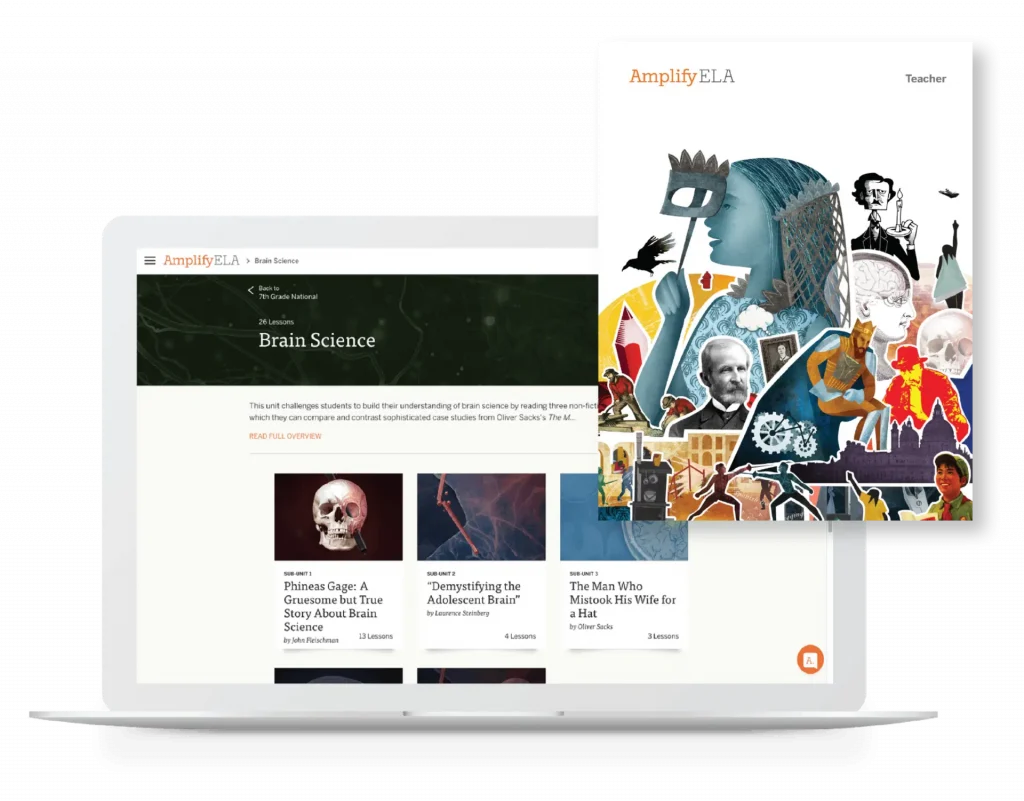
Amplify ELA Florida Edition is a blended curriculum that seamlessly integrates print and digital resources to be used in any learning environment. The resources are designed to facilitate instruction for planning, teaching, learning, and assessment.
Student materials
Available digitally and in print, the student materials guide middle schoolers through complex texts and writing with the following:
- Student Edition will engage students with high-quality narrative and informational texts.
- Digital experience will provide videos, a library of more than 700 texts, audio supports, and other online experiences that capture their attention.
- Writing Journal will keep all of their thinking and writing about text in one place.

Teacher materials
Available digitally and in print, the Teacher Edition contains all of the information teachers need to facilitate classroom instruction, including:
- From detailed lesson plans.
- Video teacher tips embedded in the lesson.
- B.E.S.T. standards alignment and assessments including exit tickets.
- Real-time differentiation strategies.
- Clarify and Compare lessons.
- Robust reporting.
Professional learning
Amplify employs a national cohort of more than 50 ELA facilitators, all of whom have experience as former classroom teachers and many of whom are former school and/or district leaders. Our professional learning team has decades of experience working with large districts across the nation. Amplify has experience supporting district launches over multiple years and has partnered with districts of all sizes nationwide. We partner deeply with districts and tailor professional learning to their unique needs.

Amplify literacy curriculum sample boxes – TX
Amplify literacy curriculum sample boxes – CA
Amplify literacy curriculum sample boxes
CKLA Review for Scottsdale
Thank you for taking the time to review Amplify’s core ELA program for K–5.
Amplify Core Knowledge Language Arts (CKLA) is a cutting-edge and effective core ELA program for students in grades K–5. It was developed in partnership with the Core Knowledge Foundation, was specifically designed to help teachers implement Science of Reading principles, and features proven evidence-based instructional practices.

Step 1: Program Introduction
Welcome to Amplify CKLA! Before you dive into our materials, watch the video below to learn about the big picture behind Amplify CKLA’s pedagogy.
In this video, Susan Lambert (Chief Academic Officer and host of Science of Reading: The Podocast) shares why Amplify CKLA was created, how it is built on the Science of Reading, and the impact it’s making across the country.
Step 2: Program Overview
Amplify CKLA is different for a reason. Watch the overview video below to learn about these differences and why educators love them.
In this video, you’ll get an in-depth look at the program’s overall structure and organization, the design behind our proven lessons, and the materials included to support teaching and learning.
The Amplify CKLA Program Guide also provides an in-depth view of how Amplify CKLA works, how it’s structured, and why it’s uniquely capable of helping you bring reading instruction based on the Science of Reading to your classroom.
Evidence-based design
Amplify CKLA is rooted in Science of Reading research. Mirroring Scarborough’s Rope, Amplify CKLA delivers a combination of explicit foundational skills with meaningful knowledge-building.
- In Grades PK–2, dedicated knowledge-building and explicit skills instruction are taught simultaneously through two distinct instructional strands.
- In Grades 3–5, dedicated knowledge-building and explicit skills instruction are woven together and delivered through one integrated strand.
Grades K–2 Skills and Knowledge Strands
Every day students in Grades K–2 complete one full lesson that explicitly and systematically builds foundational reading skills in the Skills Strand, as well as one full lesson that builds robust background knowledge to access complex text in the Knowledge Strand. Through learning in each of these strands, students develop the early literacy skills necessary to help them become confident readers and build the context to understand what they’re reading.
Grades 3–5 Integrated Strand
In Grades 3–5, Knowledge and Skills are integrated in one set of instructional materials. Lessons begin to combine skills and knowledge with increasingly complex texts, close reading, and a greater writing emphasis. Students can then use their skills to go on their own independent reading adventures.
Key features
Built out of the latest research in the Science of Reading, Amplify CKLA delivers explicit instruction in both foundational literacy skills (systematic phonics, decoding, and fluency) and background knowledge in grades K–2 with an integrated approach to explicit instruction in grades 3–5.
Review this Science of Reading toolkit to learn more about the Science of Reading best practices integrated throughout CKLA.
Great reading instruction starts with helping kids develop great decoding skills. By building a solid foundation of phonological awareness and phonics, reading the words on the page becomes automatic so that comprehension and critical thinking can happen. Our instruction is supported by:
- Step-by-step lessons with multi-sensory approaches, clear lesson objectives, and embedded formative assessments.
- Decodable books and student readers with ebook and audiobook versions that feature engaging plots and relatable characters.
- An engaging sound library with fun songs and videos that develop phonological awareness.
- An interactive Vocab App featuring engaging activities with immediate feedback and automated, customized instruction based on student performance.
Students build grade-appropriate subject-area knowledge and vocabulary in history, science, literature, and the arts while learning to read, write, and think creatively and for themselves. Our instruction is supported by:
- Knowledge builders that provide a quick overview of each domain with its key ideas.
- Interactive Read-Alouds designed to build knowledge and vocabulary.
- Content-rich anchor texts that support students as they tackle increasingly complex text and sharpen their analytical skills.
- Social and emotional learning paired with lessons in civic responsibility.
Getting students caught up on reading skills requires more than just an extra mini-lesson here or there. It requires targeted and intensive instruction delivered in short bursts. Our intervention component:
- Assesses and analyzes students’ areas of mastery and growth.
- Automatically groups students with like needs.
- Provides educators with ready-to-teach, research-based instructional progressions that last 10-days.
- Progress monitors students, updates their skill profiles, and reforms groups for the next 10-day period.
Student-led reading practice should be purposeful and connected to the core. In addition to practicing skills directly tied to the skills they’ve been working on during ELA time, Amplify CKLA students have opportunities to interact with adaptive content that addresses their personal gaps and bolsters foundational skills at a pace that supports their individual development.
Our collection of 40+ adaptive games target foundational reading skills and develops them in alignment with Science of Reading principles. Unlike other adaptive games, we ensure students:
- Practice the right skills at the right time. Our embedded placement tool ensures students receive the content and skill practice most appropriate for their current reading level. From there, students move through our curriculum along their own learning pathway where they encounter personalized content tailored to their evolving skill and grade levels.
- Progress along a pathway that adapts on multiple dimensions, not just one. For example, a student can work on early first-grade decoding in one game while building more advanced vocabulary knowledge in another.
- Practice skills in tandem. For example, a student is never forced to master one skill area before proceeding to the next. Instead, we offer students that opportunity to work on multiple skills concurrently.
- Feel supported with scaffolding, instruction, and practice that adapts based on student performance.
- Stay engaged by giving them immediate and clear feedback. These results are never punitive. Instead our always-positive feedback is delivered in the context of the game world and is designed to motivate students to keep trying.
From the printed page to the screen, we bring foundational skills and knowledge to life in the classroom.
Download the Amplify CKLA Components guide to see components by grade.
Download the Remote and hybrid learning guide to learn how we support in-person, remote, and hybrid instruction.
Engaging digital experience
The top-rated content of Amplify CKLA is now live with the digital experience that enhances instruction and saves time.
With the digital experience, everything is in one place, making it easier and more engaging than ever to plan lessons, present digital content, and review student work. Click the arrows below to learn more.
With the digital experience, teachers have access to ready-to-use and customizable lesson presentation slides, complete with all the prompts from the print Teacher Guide embedded in the teacher view. As teachers deliver each lesson, students can engage with the content in one cohesive experience—through these CKLA resources: Activity Books, slides, digital components, videos, Student Readers, and more.
The innovative live review tool found in the digital experience enables you to keep an eye on all of your students as they work on drawing, recording audio, uploading and capturing images, and typing or writing in pre-placed textboxes in their Activity Pages. This dynamic tool provides countless classroom management benefits, enabling you to spot and correct common mistakes as they’re happening, praise your students for thoughtful work, and identify students who are not engaged in the task at hand. Simply put, it will give you those valuable “eyes in the back of your head” you’ve warned your students about!
The digital experience integrates with various LMSs, allowing you and your students to access Amplify CKLA with the software you’re already comfortable using.
In the Amplify CKLA student digital experience, your students have one intuitive access point to fully engage with classroom instruction. Through the Student Home, students can easily access digital lessons with slides, Activity Pages, ebooks, videos, and other interactives from one simple dashboard. Students can draw, record audio, upload and capture images, and type or write in pre-placed text boxes in their Activity Pages.
Step 3: Program Resources
Digital navigation walkthrough
Physical materials walkthrough
Step 4: Arizona Review Resources
Arizona resources:
CKLA review resources:
- CKLA Program guide
- Digital Navigation guide
- CKLA Components guide
- Literacy Suite brochure: How CKLA, mClass Intervention, and Boost Reading work together
- DEI in CKLA
- Text complexity in CKLA
- Trade books in CKLA
- Assessments in CKLA
- CKLA Scopes and Sequences
- Grade K Skills and Knowledge
- Grade 1 Skills and Knowledge
- Grade 2 Skills and Knowledge
- Grade 3 Integrated
- Grade 4 Integrated
- Grade 5 Integrated
Step 5: Demo Program Access
Explore as a teacher
Before logging in, watch this brief video on navigating the CKLA Teacher Platform.
Ready to explore as a teacher? Follow these instructions:
- Click the Amplify CKLA Teacher Platform button below.
- Select Log in with Amplify.
- Enter the teacher username: t1.scottsdaleunified@demo.tryamplify.net
- Enter the password: Amplify1-scottsdaleunified
- Click the CKLA icon.
- Select a grade level from the drop-down menu at the top of the page.
Explore as a student
Before logging in, watch this brief video on navigating the CKLA Student Hub.
Ready to explore as a student? Follow these instructions:
- Click the CKLA Student Hub button below.
- Select Log in with Amplify.
- Enter the student username: s1.scottsdaleunified@demo.tryamplify.net
- Enter the password: Amplify1-scottsdaleunified
- Click the Hub icon
- Select a grade level.
Review of the B.E.S.T. program for Palm Beach middle schools, Amplify ELA Florida
Public review of the B.E.S.T. program for Florida middle schools, Amplify ELA Florida Edition
Welcome, Granite SD, to Amplify CKLA!
Thank you for taking the time to review Amplify’s core ELA program for K–5. Amplify Core Knowledge Language Arts® (CKLA) is a state-approved core ELA curriculum designated as a primary core program that fully meets the Science of Reading requirements outlined in SB 127.
Amplify CKLA, developed in partnership with the Core Knowledge Foundation, was designed to help teachers implement Science of Reading principles and evidence-based instructional practices. Scroll down to learn how CKLA is uniquely designed to help all your students make learning leaps in literacy.
Step 1: Program Introduction
Welcome to Amplify CKLA! Before you dive into our materials, watch the video below to learn about the big picture behind Amplify CKLA’s pedagogy.
In this video, Susan Lambert (Chief Academic Officer and host of Science of Reading: The Podcast) shares why Amplify CKLA was created, how it is built on the Science of Reading, and the impact it’s making across the country.
Step 2: Program Overview
Amplify CKLA is different for a reason. Watch the overview video below to learn about these differences and why educators love them.
In this video, you’ll get an in-depth look at the program’s overall structure and organization, the design behind our proven lessons, and the materials included to support teaching and learning.
The Amplify CKLA Program Guide also provides an in-depth view of how Amplify CKLA works, how it’s structured, and why it’s uniquely capable of helping you bring reading instruction based on the Science of Reading to your classroom.
Evidence-based design
Amplify CKLA is rooted in Science of Reading research. Mirroring Scarborough’s Rope, Amplify CKLA delivers a combination of explicit foundational skills with meaningful knowledge-building.
- In Grades K–2, dedicated knowledge-building and explicit skills instruction are taught simultaneously through two distinct instructional strands.
- In Grades 3–5, dedicated knowledge-building and explicit skills instruction are woven together and delivered through one integrated strand.
Grades K–2 Skills and Knowledge Strands
Every day students in Grades K–2 complete one full lesson that explicitly and systematically builds foundational reading skills in the Skills Strand, as well as one full lesson that builds robust background knowledge to access complex text in the Knowledge Strand. Through learning in each of these strands, students develop the early literacy skills necessary to help them become confident readers and build the context to understand what they’re reading.
Grades 3–5 Integrated Strand
In Grades 3–5, Knowledge and Skills are integrated in one set of instructional materials. Lessons begin to combine skills and knowledge with increasingly complex texts, close reading, and a greater writing emphasis. Students can then use their skills to go on their own independent reading adventures.
Key features
For each Amplify CKLA key feature below, click the drop down arrow to learn more.
Built out of the latest research in the Science of Reading, Amplify CKLA delivers explicit instruction in both foundational literacy skills (systematic phonics, decoding, and fluency) and background knowledge in grades K–2 with an integrated approach to explicit instruction in grades 3–5.
Review this Science of Reading toolkit to learn more about the Science of Reading best practices integrated throughout CKLA.
Amplify CKLA aligns with the instructional principles recommended by Orton Gillingham and LETRS.
- Structured–Concepts are taught through consistent routines
- Sequential–Concepts are taught in a logical, well-planned sequence
- Systematic–Phonemes are taught from simplest to most complex
- Explicit–Decoding and encoding concepts are taught directly and explicitly
- Multi-sensory–Instruction is delivered through visual, auditory, and kinesthetic-tactile pathways
- Cumulative–Concepts are applied in decodable, connected texts with constant review and reinforcement
Watch this video to learn more!
Additionally, great reading instruction starts with helping kids develop great decoding skills. Our instruction is supported by:
- Step-by-step lessons with multi-sensory approaches, clear lesson objectives, and embedded formative assessments.
- Decodable books and student readers with ebook and audiobook versions that feature engaging plots and relatable characters.
The Science of Reading reveals knowledge as an essential pillar of reading comprehension and lifelong literacy. Hear from author Natalie Wexler and CKLA customers on edWebinar about the importance of knowledge-building in reading instruction.
Students build grade-appropriate subject-area knowledge and vocabulary in history, science, literature, and the arts while learning to read, write, and think creatively and for themselves. Our instruction is supported by:
- Knowledge builders that provide a quick overview of each domain with its key ideas.
- Interactive Read-Alouds designed to build knowledge and vocabulary.
- Content-rich anchor texts that support students as they tackle increasingly complex text and sharpen their analytical skills.
- Social and emotional learning paired with lessons in civic responsibility.
Amplify CKLA not only received an all-green rating from the rigorous evaluators at EdReports, but it was also recently recognized by the Knowledge Matters Campaign as a high-quality literacy program that excels in building knowledge. Our shared message: background knowledge is essential to literacy and learning.
Student-led reading practice should be purposeful and connected to the core. That’s why Amplify createdBoost Reading. As an optional add-on to Amplify CKLA, students have the opportunity to practice skills directly tied to the skills they’ve been working on during core reading time. Boost Reading also adapts to each student to address their personal gaps and bolsters foundational skills at a pace that supports their individual development.
Boost Reading’s collection of 40+ adaptive games target foundational reading skills and develops them in alignment with Science of Reading principles. Unlike other adaptive games, we ensure students:
- Practice the right skills at the right time. Our embedded placement tool ensures students receive the content and skill practice most appropriate for their current reading level. From there, students move through our curriculum along their own learning pathway where they encounter personalized content tailored to their evolving skill and grade levels.
- Progress along a pathway that adapts on multiple dimensions, not just one. For example, a student can work on early first-grade decoding in one game while building more advanced vocabulary knowledge in another.
- Practice skills in tandem. For example, a student is never forced to master one skill area before proceeding to the next. Instead, we offer students that opportunity to work on multiple skills concurrently.
- Feel supported with scaffolding, instruction, and practice that adapts based on student performance.
- Stay engaged by giving them immediate and clear feedback. These results are never punitive. Instead our always-positive feedback is delivered in the context of the game world and is designed to motivate students to keep trying.
Click the buttons below to learn more:
Step 3: Program Resources
Easy-to-use print materials
Amplify CKLA’s easy-to-use materials bring foundational skills and knowledge to life in the classroom.
Download the Amplify CKLA Components guide to see components by grade and watch the print materials walkthrough below.
Engaging CKLA digital experience
The top-rated content of Amplify CKLA is now live with the digital experience that enhances instruction and saves time.
With the digital experience, everything is in one place, making it easier and more engaging than ever to plan lessons, present digital content, and review student work. Click the arrows below to learn more.
With the digital experience, teachers have access to ready-to-use and customizable lesson presentation slides, complete with all the prompts from the print Teacher Guide embedded in the teacher view. As teachers deliver each lesson, students can engage with the content in one cohesive experience—through these CKLA resources: Activity Books, slides, digital components, videos, Student Readers, and more.
The innovative live review tool found in the digital experience enables you to keep an eye on all of your students as they work on drawing, recording audio, uploading and capturing images, and typing or writing in pre-placed textboxes in their Activity Pages. This dynamic tool provides countless classroom management benefits, enabling you to spot and correct common mistakes as they’re happening, praise your students for thoughtful work, and identify students who are not engaged in the task at hand. Simply put, it will give you those valuable “eyes in the back of your head” you’ve warned your students about!
The digital experience integrates with various LMSs, allowing you and your students to access Amplify CKLA with the software you’re already comfortable using.
In the Amplify CKLA student digital experience, your students have one intuitive access point to fully engage with classroom instruction. Through the Student Home, students can easily access digital lessons with slides, Activity Pages, ebooks, videos, and other interactives from one simple dashboard. Students can draw, record audio, upload and capture images, and type or write in pre-placed text boxes in their Activity Pages.
CKLA review resources
- CKLA Program Guide
- Language Studio (ELD)
- Writing Studio (Writing)
- Text complexity in CKLA
- Trade books in CKLA
- Assessments in CKLA
- ELA Curriculum Evaluation Tools
- Remote and hybrid learning with CKLA
- CKLA Scopes and Sequences
- Grade K Skills and Knowledge
- Grade 1 Skills and Knowledge
- Grade 2 Skills and Knowledge
- Grade 3 Integrated
- Grade 4 Integrated
- Grade 5 Integrated
Step 4: State Review Resources
- Utah State Standards Alignment K-5
- Utah Instructional Strategies and Routines
- Utah Science of Reading Evidence-Informed Core Criteria Checklist (Amplify created)
- Utah Critical Features of Tiered Literacy Interventions (featuring Boost Reading)
- Amplify ELA Technical Specifications
Step 5: Program Access
Explore as a teacher
Before logging in, watch this brief video on navigating the CKLA Teacher Platform.
Ready to explore as a teacher? Follow these instructions:
- Click the Amplify CKLA Teacher Platform button below.
- Select Log in with Amplify.
- Enter the teacher username: t1.graniteckla@demo.tryamplify.net
- Enter the teacher password: Amplify1-graniteckla
- Choose CKLA from the “Your Programs” menu on Educator Home.
- Select a grade level from the drop-down menu at the top of the page.
CKLA Review for Arizona
Thank you for taking the time to review Amplify’s core ELA program for K–5.
Amplify Core Knowledge Language Arts (CKLA) is a cutting-edge and effective core ELA program for students in grades K–5. It was developed in partnership with the Core Knowledge Foundation, was specifically designed to help teachers implement Science of Reading principles, and features proven evidence-based instructional practices.
Step 1: Program Introduction
Welcome to Amplify CKLA! Before you dive into our materials, watch the video below to learn about the big picture behind Amplify CKLA’s pedagogy.
In this video, Susan Lambert (Chief Academic Officer and host of Science of Reading: The Podcast) shares why Amplify CKLA was created, how it is built on the Science of Reading, and the impact it’s making across the country.
Step 2: Program Overview
Amplify CKLA is different for a reason. Watch the overview video below to learn about these differences and why educators love them.
In this video, you’ll get an in-depth look at the program’s overall structure and organization, the design behind our proven lessons, and the materials included to support teaching and learning.
The Amplify CKLA Program Guide also provides an in-depth view of how Amplify CKLA works, how it’s structured, and why it’s uniquely capable of helping you bring reading instruction based on the Science of Reading to your classroom.
Evidence-based design
Amplify CKLA is rooted in Science of Reading research. Mirroring Scarborough’s Rope, Amplify CKLA delivers a combination of explicit foundational skills with meaningful knowledge-building.
- In Grades K–2, dedicated knowledge-building and explicit skills instruction are taught simultaneously through two distinct instructional strands.
- In Grades 3–5, dedicated knowledge-building and explicit skills instruction are woven together and delivered through one integrated strand.
Grades K–2 Skills and Knowledge Strands
Every day students in Grades K–2 complete one full lesson that explicitly and systematically builds foundational reading skills in the Skills Strand, as well as one full lesson that builds robust background knowledge to access complex text in the Knowledge Strand. Through learning in each of these strands, students develop the early literacy skills necessary to help them become confident readers and build the context to understand what they’re reading.
Grades 3–5 Integrated Strand
In Grades 3–5, Knowledge and Skills are integrated in one set of instructional materials. Lessons begin to combine skills and knowledge with increasingly complex texts, close reading, and a greater writing emphasis. Students can then use their skills to go on their own independent reading adventures.
Key features
Built out of the latest research in the Science of Reading, Amplify CKLA delivers explicit instruction in both foundational literacy skills (systematic phonics, decoding, and fluency) and background knowledge in grades K–2 with an integrated approach to explicit instruction in grades 3–5.
Review this Science of Reading toolkit to learn more about the Science of Reading best practices integrated throughout CKLA.
Great reading instruction starts with helping kids develop great decoding skills. By building a solid foundation of phonological awareness and phonics, reading the words on the page becomes automatic so that comprehension and critical thinking can happen. Our instruction is supported by:
- Step-by-step lessons with multi-sensory approaches, clear lesson objectives, and embedded formative assessments.
- Decodable books and student readers with ebook and audiobook versions that feature engaging plots and relatable characters.
- An engaging sound library with fun songs and videos that develop phonological awareness.
- An interactive Vocab App featuring engaging activities with immediate feedback and automated, customized instruction based on student performance.
Students build grade-appropriate subject-area knowledge and vocabulary in history, science, literature, and the arts while learning to read, write, and think creatively and for themselves. Our instruction is supported by:
- Knowledge builders that provide a quick overview of each domain with its key ideas.
- Interactive Read-Alouds designed to build knowledge and vocabulary.
- Content-rich anchor texts that support students as they tackle increasingly complex text and sharpen their analytical skills.
- Lessons in civic responsibility.
Getting students caught up on reading skills requires more than just an extra mini-lesson here or there. It requires targeted and intensive instruction delivered in short bursts. Our intervention component:
- Assesses and analyzes students’ areas of mastery and growth.
- Automatically groups students with like needs.
- Provides educators with ready-to-teach, research-based instructional progressions that last 10-days.
- Progress monitors students, updates their skill profiles, and reforms groups for the next 10-day period.
Student-led reading practice should be purposeful and connected to the core. In addition to practicing skills directly tied to the skills they’ve been working on during ELA time, Amplify CKLA students have opportunities to interact with adaptive content that addresses their personal gaps and bolsters foundational skills at a pace that supports their individual development.
Our collection of 40+ adaptive games target foundational reading skills and develops them in alignment with Science of Reading principles. Unlike other adaptive games, we ensure students:
- Practice the right skills at the right time. Our embedded placement tool ensures students receive the content and skill practice most appropriate for their current reading level. From there, students move through our curriculum along their own learning pathway where they encounter personalized content tailored to their evolving skill and grade levels.
- Progress along a pathway that adapts on multiple dimensions, not just one. For example, a student can work on early first-grade decoding in one game while building more advanced vocabulary knowledge in another.
- Practice skills in tandem. For example, a student is never forced to master one skill area before proceeding to the next. Instead, we offer students that opportunity to work on multiple skills concurrently.
- Feel supported with scaffolding, instruction, and practice that adapts based on student performance.
- Stay engaged by giving them immediate and clear feedback. These results are never punitive. Instead our always-positive feedback is delivered in the context of the game world and is designed to motivate students to keep trying.
From the printed page to the screen, we bring foundational skills and knowledge to life in the classroom.
Download the Amplify CKLA Components guide to see components by grade.
Download the Remote and hybrid learning guide to learn how we support in-person, remote, and hybrid instruction.
Engaging digital experience
The top-rated content of Amplify CKLA is now live with the digital experience that enhances instruction and saves time.
With the digital experience, everything is in one place, making it easier and more engaging than ever to plan lessons, present digital content, and review student work.
With the digital experience, teachers have access to ready-to-use and customizable lesson presentation slides, complete with all the prompts from the print Teacher Guide embedded in the teacher view. As teachers deliver each lesson, students can engage with the content in one cohesive experience—through these CKLA resources: Activity Books, slides, digital components, videos, Student Readers, and more.
The innovative live review tool found in the digital experience enables you to keep an eye on all of your students as they work on drawing, recording audio, uploading and capturing images, and typing or writing in pre-placed textboxes in their Activity Pages. This dynamic tool provides countless classroom management benefits, enabling you to spot and correct common mistakes as they’re happening, praise your students for thoughtful work, and identify students who are not engaged in the task at hand. Simply put, it will give you those valuable “eyes in the back of your head” you’ve warned your students about!
The digital experience integrates with various LMSs, allowing you and your students to access Amplify CKLA with the software you’re already comfortable using.
In the Amplify CKLA student digital experience, your students have one intuitive access point to fully engage with classroom instruction. Through the Student Home, students can easily access digital lessons with slides, Activity Pages, ebooks, videos, and other interactives from one simple dashboard. Students can draw, record audio, upload and capture images, and type or write in pre-placed text boxes in their Activity Pages.
Step 3: Program Resources
Digital navigation walkthrough
Physical materials walkthrough
Step 4: Arizona Review Resources
Arizona resources:
CKLA review resources:
- CKLA Program guide
- Digital Navigation guide
- CKLA Components guide
- Literacy Suite brochure: How CKLA, mClass Intervention, and Boost Reading work together
- Text complexity in CKLA
- Trade books in CKLA
- Assessments in CKLA
- CKLA Scopes and Sequences
- Grade K Skills and Knowledge
- Grade 1 Skills and Knowledge
- Grade 2 Skills and Knowledge
- Grade 3 Integrated
- Grade 4 Integrated
- Grade 5 Integrated
High Impact Tutoring: OH ESC Training of Trainers
Desmos Math 6–A1 correlations with Carnegie Math Texas
New and noteworthy updates to your Amplify programs!
This back-to-school season, explore new updates and exciting features that will save you time, extend your reach, and enhance your ability to deliver the types of rigorous and riveting learning experiences you and your students deserve.
Select an Amplify program below to learn what’s coming, and to read about other notable features to keep in mind as you head into a new year of learning!


Welcome, North Carolina educators!
Grade 6
Module 1: Ratios and Unit Rates
| Eureka Math | Desmos Math 6–A1 |
| Topic A Representing and Reasoning About Ratios | |
| Lesson 1: Ratios Lesson 2: Ratios | Unit 2 Lesson 1: Pizza Maker [Free lesson] Lesson 2: Ratio Rounds (Print available) |
| Lesson 3: Equivalent Ratios Lesson 4: Equivalent Ratios | Unit 2 Lesson 3: Rice Ratios Lesson 4: Fruit Lab [Free lesson] Lesson 5: Balancing Act Lesson 7: Mixing Paint, Part 1 Lesson 8 World Records (Print available) Lesson 11 Community Life (Print available) Practice Day 1 (Print available) |
| Lesson 5: Solving Problems by Finding Equivalent Ratios Lesson 6: Solving Problems by Finding Equivalent Ratios | Unit 2 Lesson 5 Balancing Act |
| Lesson 7: Associated Ratios and the Value of a Ratio Lesson 8: Equivalent Ratios Defined Through the Value of a Ratio | Unit 2 Lesson 6: Product Prices (Print available) Lesson 7: Mixing Paint, Part 1 |
| Topic B Collections of Equivalent Ratios | |
| Lesson 9: Tables of Equivalent Ratios | Unit 2 Lesson 6: Product Prices (Print available) Lesson 7: Mixing Paint, Part 1 |
| Lesson 10: The Structure of Ratio Tables-Additive and Multiplicative | Unit 2 Lesson 10: Balloons Lesson 11: Community Life (Print available) |
| Lesson 11: Comparing Ratios Using Ratio Tables | Unit 2 Lesson 10: Balloons |
| Lesson 12: From Ratio Tables to Double Number Line Diagrams | Unit 2 Lesson 6: Product Prices (Print available) Lesson 8: World Records (Print available) Lesson 12: Mixing Paint, Part 2 Lesson 14: Lunch Waste (Print available) Practice Day 2 (Print available) |
| Lesson 13: From Ratio Tables to Equations Using the Value of a Ratio | |
| Lesson 14: From Ratio Tables, Equations, and Double Number Line Diagrams to Plots on the Coordinate Plane | |
| Lesson 15: A Synthesis of Representations of Equivalent Ratio Collections | |
| Topic C Unit Rates | |
| Lesson 16: From Ratio to Rates | Unit 2 Lesson 8: World Records (Print available) Unit 3 Lesson 4: Model Trains Lesson 5: Soft Serve [Free lesson] Lesson 6: Welcome to the Robot Factory |
| Lesson 17: From Rates to Ratios | |
| Lesson 18: Finding a Rate by Dividing Two Quantities | Unit 3 Lesson 4: Model Trains Lesson 5: Soft Serve [Free lesson] Lesson 6: Welcome to the Robot Factory Lesson 7: More Soft Serve |
| Lesson 19: Comparison Shopping-Unit Price and Related Measurement Conversions Lesson 20: Comparison Shopping-Unit Price and Related Measurement Conversions Lesson 21: Getting the Job Done—Speed, Work, and Measurement Units Lesson 22: Getting the Job Done—Speed, Work, and Measurement Units | Unit 3 Lesson 2: Counting Classrooms Lesson 3: Pen Pals |
| Lesson 23: Problem-Solving Using Rates, Unit Rates, and Conversions. | Unit 3 Lesson 13: A Country as a Village |
| Topic D Percent | |
| Lesson 24: Percent and Rates per 100 | Unit 3 Lesson 8: Lucky Duckies [Free lesson] Lesson 9: Bicycle Goals |
| Lesson 25: A Fraction as a Percent | |
| Lesson 26: Percent of a Quantity. | Unit 3 Lesson 10: What´s Missing? (Print available) Lesson 11: Cost Breakdown |
| Lesson 27: Solving Percent Problems Lesson 28: Solving Percent Problems Lesson 29: Solving Percent Problems | Unit 3 Lesson 10: What´s Missing? (Print available) Lesson 11: Cost Breakdown Lesson 12: More Bicycle Goals Lesson 13: A Country as a Village Practice Day 2 (Print available) |
Module 2: Arithmetic Operations Including Division of Fractions
| Lesson 1: Interpreting Division of a Fraction by a Whole Number—Visual Models. | Unit 4 Lesson 2: Making Connections (Print available) |
| Lesson 2: Interpreting Division of a Whole Number by a Fraction —Visual Models. | Unit 4 Lesson 1: Cookie Cutter Lesson 3: Flour Planner [Free lesson] Lesson 4: Flower Planters Lesson 5: Garden Bricks (Print available) |
| Lesson 3: Interpreting and Computing Division of a Fraction by a Fraction—More Models Lesson 4: Interpreting and Computing Division of a Fraction by a Fraction—More Models | Unit 4 Lesson 5: Garden Bricks Lesson 6: Fill the Gap [Free lesson] Lesson 7: Break It Down Lesson 8: Potting Soil Lesson 9: Division Challenges Lesson 10: Swap Meet (Print available) Practice Day |
| Lesson 5: Creating Division Stories. | |
| Lesson 6: More Division Stories. | |
| Lesson 7: The Relationship Between Visual Fraction Models and Equations | |
| Lesson 8: Dividing Fractions and Mixed Numbers | Unit 4 Lesson 5: Garden Bricks (Print available) Lesson 6: Fill the Gap [Free lesson] |
| Topic B Multi-Digit Decimal Operations—Adding, Subtracting, and Multiplying | |
| Lesson 9: Sums and Differences of Decimals | Unit 5 Lesson 2: Decimal Diagrams [Free lesson] Lesson 3: Fruit by the Pound Lesson 4: Missing Digits |
| Lesson 10: The Distributive Property and the Products of Decimals | Unit 5 Lesson 5: Decimal Multiplication Lesson 6: Multiplying with Areas Lesson 7: Multiplication Methods (Print available) |
| Lesson 11: Fraction Multiplication and the Products of Decimals | Unit 5 Lesson 7: Multiplication Methods (Print available) |
| Topic C Dividing Whole Numbers and Decimals | |
| Lesson 12: Estimating Digits in a Quotient | |
| Lesson 13: Dividing Multi-Digit Numbers Using the Algorithm | Unit 5 Lesson 9: Long Division Launch Practice Day 1 (Print available) Practice Day 2 (Print available) |
| Lesson 14: The Division Algorithm—Converting Decimal Division into Whole Number Division Using Fractions. | |
| Lesson 15: The Division Algorithm—Converting Decimal Division into Whole Number Division Using Mental Math | |
| Topic D Number Theory—Thinking Logically About Multiplicative Arithmetic | |
| Lesson 16: Even and Odd Numbers | |
| Lesson 17: Divisibility Tests for 3 and 9 | |
| Lesson 18: Least Common Multiple and Greatest Common Factor | Unit 5 Lesson 14: Common Multiples Lesson 15: Common Factors Practice Day 2 (Print available) |
| Lesson 19: The Euclidean Algorithm as an Application of the Long Division Algorithm |
Module 3: Rational Numbers
| Lesson 1: Positive and Negative Numbers on the Number Line—Opposite Direction and Value | Unit 7Lesson 2: Digging Deeper |
| Lesson 2: Real-World Positive and Negative Numbers and Zero. Lesson 3: Real-World Positive and Negative Numbers and Zero. | Unit 7 Lesson 4: Sub-Zero |
| Lesson 4: The Opposite of a Number Lesson 5: The Opposite of a Number’s Opposite Lesson 6: Rational Numbers on the Number Line | Unit 7Lesson 2: Digging Deeper |
| Topic B Order and Absolute Value | |
| Lesson 7: Ordering Integers and Other Rational Numbers Lesson 8: Ordering Integers and Other Rational Numbers Lesson 9: Comparing Integers and Other Rational Numbers | Unit 7Lesson 3: Order in the Class (Print available) [Free lesson] |
| Lesson 10: Writing and Interpreting Inequality Statements Involving Rational Numbers | |
| Lesson 11: Absolute Value—Magnitude and Distance Lesson 12: The Relationship Between Absolute Value and Order | Unit 7Lesson 5: Distance on the Number Line |
| Lesson 13: Statements of Order in the Real World. | |
| Topic C Rational Numbers and the Coordinate Plane | |
| Lesson 14: Ordered Pairs Lesson 15: Locating Ordered Pairs on the Coordinate Plane | Unit 7Lesson 9: Sand Dollar SearchLesson 10: The A-maze-ing Coordinate PlaneLesson 11: Polygon Maker |
| Lesson 16: Symmetry in the Coordinate Plane. | |
| Lesson 17: Drawing the Coordinate Plane and Points on the Plane | Lesson 10: The A-maze-ing Coordinate Plane |
| Lesson 18: Distance on the Coordinate Plane | Unit 7Lesson 11: Polygon Maker |
| Lesson 19: Problem Solving and the Coordinate Plane | Unit 7Lesson 12: Graph Telephone (Print available)Practice Day 2 (Print available) |
Module 4: Expressions and Equations
| Topic A Relationships of the Operations | |
| Lesson 1: The Relationship of Addition and Subtraction | |
| Lesson 2: The Relationship of Multiplication and Division | |
| Lesson 3: The Relationship of Multiplication and Addition. | |
| Lesson 4: The Relationship of Division and Subtraction | |
| Topic B Special Notations of Operations | |
| Lesson 5: Exponents | Unit 6Lesson 10: PowersLesson 11: Exponent Expressions (Print available)Practice Day 2 (Print available) |
| Lesson 6: The Order of Operations | |
| Topic C Replacing Letters and Numbers | |
| Lesson 7: Replacing Letters with Numbers Lesson 8: Replacing Numbers with Letters | Unit 6Lesson 7: Border TilesLesson 12: Squares and Cubes |
| Topic D Expanding, Factoring, and Distributing Expressions | |
| Lesson 9: Writing Addition and Subtraction Expressions | Unit 6Lesson 6: Vari-applesLesson 8: Products and Sums [Free lesson]Lesson 9: Products, Sums, and Differences |
| Lesson 10: Writing and Expanding Multiplication Expressions Lesson 11: Factoring Expressions Lesson 12: Distributing Expressions | Unit 6Lesson 8: Products and Sums [Free lesson]Lesson 9: Products, Sums, and Differences |
| Lesson 13: Writing Division Expressions | |
| Lesson 14: Writing Division Expressions | |
| Topic E Expressing Operations in Algebraic Form | |
| Lesson 15: Read Expressions in Which Letters Stand for Numbers Lesson 16: Write Expressions in Which Letters Stand for Numbers Lesson 17: Write Expressions in Which Letters Stand for Numbers | Unit 6Lesson 6: Vari-applesLesson 7: Border Tiles |
| Topic F Writing and Evaluating Expressions and Formulas | |
| Lesson 18: Writing and Evaluating Expressions—Addition and Subtraction Lesson 19: Substituting to Evaluate Addition and Subtraction Expressions Lesson 20: Writing and Evaluating Expressions—Multiplication and Division Lesson 21: Writing and Evaluating Expressions—Multiplication and Addition | Unit 6Lesson 7: Border TilesLesson 8: Products and Sums [Free lesson]Lesson 9: Products, Sums, and DifferencesLesson 12: Squares and Cubes |
| Lesson 22: Writing and Evaluating Expressions—Exponents | Unit 6Lesson 10: PowersLesson 11: Exponent Expressions (Print available)Lesson 12: Squares and CubesPractice Day 2 (Print available) |
| Topic G Solving Equations | |
| Lesson 23: True and False Number Sentences Lesson 24: True and False Number Sentences | Unit 6Lesson 1: Weight for It [Free lesson] |
| Lesson 25: Finding Solutions to Make Equations True | Unit 6Lesson 1: Weight for It [Free lesson]Lesson 2: Five Equations |
| Lesson 26: One-Step Equations—Addition and Subtraction | Unit 6Lesson 1: Weight for It [Free lesson]Lesson 2: Five EquationsLesson 3: Hanging Around |
| Lesson 27: One-Step Equations—Multiplication and Division Lesson 28: Two-Step Problems—All Operations Lesson 29: Multi-Step Problems—All Operations | Unit 6Lesson 3: Hanging AroundLesson 4: Hanging It UpLesson 5: Swap and Solve |
| Topic H Applications of Equations | |
| Lesson 30: One-Step Problems in the Real World Lesson 31: Problems in Mathematical TermsLesson Lesson 32: Multi-Step Problems in the Real World | Unit 6Lesson 3: Hanging AroundLesson 4: Hanging It UpLesson 5: Swap and SolvePractice Day 1 (Print available) |
| Lesson 33: From Equations to Inequalities Lesson 34: Writing and Graphing Inequalities in Real-World Problems | Unit 7Lesson 6: Tunnel Travel [Free lesson]Lesson 7: Comparing WeightsLesson 8: Shira´s Solutions |
Module 5: Area, Surface Area, and Volume Problems
| Topic A: Area of Triangles, Quadrilaterals, and Polygons | |
| Lesson 1: The Area of Parallelograms Through Rectangle Facts | Unit 1Lesson 3: Exploring Parallelograms (Print available) [Free lesson]Lesson 4: Off the Grid |
| Lesson 2: The Area of Right Triangles Lesson 3: The Area of Acute Triangles Using Height and Base | Unit 1Lesson 5: Exploring Triangles (Print available)Lesson 6: Triangles and ParallelogramsLesson 7: Off the Grid, Part 2 |
| Lesson 4: The Area of All Triangles Using Height and Base | Unit 1Lesson 6: Triangles and ParallelogramsLesson 7: Off the Grid, Part 2 |
| Lesson 5: The Area of Polygons Through Composition and Decomposition | Unit 1Lesson 2: LettersLesson 8: Pile of PolygonsPractice Day 1 (Print available) |
| Lesson 6: Area in the Real World | |
| Topic B Polygons on the Coordinate Plane | |
| Lesson 7: Distance on the Coordinate Plane | Unit 1Lesson 8: Pile of Polygons |
| Lesson 8: Drawing Polygons in the Coordinate Plane | Unit 7Lesson 11: Polygon Maker |
| Lesson 9: Determining Perimeter and Area of Polygons on the Coordinate Plane | Unit 1Lesson 8: Pile of Polygons |
| Lesson 10: Distance, Perimeter, and Area in the Real World | |
| Topic C Volume of Right Rectangular Prisms | |
| Lesson 11: Volume with Fractional Edge Lengths and Unit Cubes | Unit 4Lesson 11: Classroom ComparisonsLesson 12: Puzzling Areas (Print available) [Free lesson]Lesson 13: Volume ChallengesLesson 14: Planter Planner (Print available) |
| Lesson 12: From Unit Cubes to the Formulas for Volume | |
| Lesson 13: The Formulas for Volume | |
| Lesson 14: Volume in the Real World | Unit 4Lesson 14: Planter Planner (Print available) |
| Topic D Nets and Surface Area | |
| Lesson 15: Representing Three-Dimensional Figures Using Nets Lesson 16: Constructing Nets Lesson 17: From Nets to Surface Area | Unit 1Lesson 10: Plenty of PolyhedraLesson 11: Nothing But Nets (Print available)Lesson 13: Take It To Go (Print available) |
| Lesson 18: Determining Surface Area of Three-Dimensional Figures | Unit 1Lesson 9: Renata´s Stickers [Free lesson]Lesson 10: Plenty of PolyhedraLesson 11: Nothing But Nets (Print available)Lesson 13: Take It To Go (Print available)Practice Day 2 (Print available) |
| Lesson 19: Surface Area and Volume in the Real World | |
| Lesson 19a: Addendum Lesson for Modeling―Applying Surface Area and Volume to Aquariums | |
| Lesson 3: The Area of Acute Triangles Using Height and Base | Unit 1Lesson 5 Exploring TrianglesLesson 6 Triangles and ParallelogramsLesson 7 Off the Grid, Part 2 |
Module 6: Statistics
| Topic A Understanding Distributions | |
| Lesson 1: Posing Statistical Questions | Unit 8 Lesson 1: Screen TimeLesson 2: Dot Plots |
| Lesson 2: Displaying a Data Distribution Lesson 3: Creating a Dot Plot | Unit 8 Lesson 2: Dot PlotsLesson 3: Minimum Wage (Print available) [Free lesson]Lesson 4: Lots More Dots |
| Lesson 4: Creating a Histogram Lesson 5: Describing a Distribution Displayed in a Histogram | Unit 8Lesson 5: The Plot Thickens [Free lesson]Lesson 6: DIY Histograms (Print available) |
| Topic B Summarizing a Distribution That Is Approximately Symmetric Using the Mean and Mean Absolute Deviation | |
| Lesson 6: Describing the Center of a Distribution Using the Mean Lesson 7: The Mean as a Balance Point | Unit 8Lesson 7: Snack Time |
| Lesson 8: Variability in a Data Distribution | Unit 8Lesson 8: Pop It! |
| Topic 9: The Mean Absolute Deviation (MAD). | Unit 8Lesson 9: Hoops |
| Lesson 10: Describing Distributions Using the Mean and MAD Lesson 11: Describing Distributions Using the Mean and MAD | Unit 8Lesson 10 Hollywood Part 1Practice Day 1 (Print available) |
| Topic C Summarizing a Distribution That Is Skewed Using the Median and the Interquartile Range | |
| Lesson 12: Describing the Center of a Distribution Using the Median | Unit 8Lesson 11: Toy Cars [Free lesson]Lesson 12: In the News |
| Lesson 13: Describing Variability Using the Interquartile Range (IQR) | Unit 8Lesson 13: Pumpkin Patch |
| Lesson 14: Summarizing a Distribution Using a Box Plot Lesson 15: More Practice with Box Plots | Unit 8Lesson 14: Car, Plane, Bus, or Train? (Print available) |
| Lesson 16: Understanding Box Plots | Unit 8Lesson 14: Car, Plane, Bus, or Train? (Print available)Lesson 15: Hollywood Part 2Lesson 16: Hollywood Part 3 (Print available)Practice Day 2 (Print available) |
| Topic D Summarizing and Describing Distributions | |
| Lesson 17: Developing a Statistical Project | |
| Lesson 18: Connecting Graphical Representations and Numerical Summaries | Unit 8Lesson 5: The Plot Thickens [Free lesson] |
| Lesson 19: Comparing Data Distributions | Unit 8Lesson 15: Hollywood Part 2 |
| Lesson 20: Describing Center, Variability, and Shape of a Data Distribution from a Graphical Representation Lesson 21: Summarizing a Data Distribution by Describing Center, Variability, and Shape | Unit 8Lesson 16: Hollywood Part 3 (Print available) |
| Lesson 22: Presenting a Summary of a Statistical Project | |
| Lesson 3: Creating a Dot Plot | Unit 8Lesson 2 Dot PlotsLesson 3 Minimum Wage [Free lesson]Lesson 4 Lots More Dots |
Grade 7
Module 1: Ratios and Proportional Relationships
Module 2: Rational Numbers
| Topic A Addition and Subtraction of Integers and Rational Numbers | |
| Lesson 1: Opposite Quantities Combine to Make Zero | Unit 5 Lesson 1: Floats and Anchors [Free lesson] |
| Lesson 2: Using the Number Line to Model the Addition of Integers Lesson 3: Understanding Addition of Integers Lesson 4: Efficiently Adding Integers and Other Rational Numbers Lesson 5: Understanding Subtraction of Integers and Other Rational Numbers | Unit 5 Lesson 2: More Floats and Anchors Lesson 4: Draw Your Own (Print available) [Free lesson] Lesson 5: Number Puzzles Lesson 10: Integer Puzzles [Free lesson] Lesson 11: Changing Temperatures Lesson 13: Solar Panels and More (Print available) |
| Lesson 6: The Distance Between Two Rational Numbers | |
| Lesson 7: Addition and Subtraction of Rational Numbers | Unit 5 Lesson 3: Bumpers Lesson 4: Draw Your Own (Print available) [Free lesson] Lesson 5: Number Puzzles Lesson 10; Integer Puzzles [Free lesson] Lesson 11: Changing Temperatures Lesson 13: Solar Panels and More (Print available) Practice Day 1 (Print available) |
| Lesson 8: Applying the Properties of Operations to Add and Subtract Rational Numbers | |
| Lesson 9: Applying the Properties of Operations to Add and Subtract Rational Numbers | |
| Topic B Multiplication and Division of Integers and Rational Numbers | |
| Lesson 10: Understanding Multiplication of Integers Lesson 11: Develop Rules for Multiplying Signed Numbers | Unit 5 Lesson 6: Floating in Groups Lesson 7: Back in Time Lesson 8: Speeding Turtles Lesson 10: Integer Puzzles [Free lesson] Practice Day 2 (Print available) |
| Lesson 12: Division of Integers | Unit 5 Lesson 8: Speeding Turtles |
| Lesson 13: Converting Between Fractions and Decimals Using Equivalent Fractions | |
| Lesson 14: Converting Rational Numbers to Decimals Using Long Division | Unit 4 Lesson 13: Decimal Deep Dive (Print available) |
| Lesson 15: Multiplication and Division of Rational Numbers | Unit 5 Lesson 8: Speeding Turtles Lesson 10: Integer Puzzles [Free lesson] Lesson 12: Arctic Sea Ice (Print available) Lesson 13: Solar Panels and More (Print available) Practice Day 2 (Print available) |
| Lesson 16: Applying the Properties of Operations to Multiply and Divide Rational Numbers | |
| Topic C Applying Operations with Rational Numbers to Expressions and Equations | |
| Lesson 17: Comparing Tape Diagram Solutions to Algebraic Solutions | Unit 6 Lesson 2: Smudged Receipts Lesson 3: Equations Lesson 4: Seeing Structure (Print available) |
| Lesson 18: Writing, Evaluating, and Finding Equivalent Expressions with Rational Numbers Lesson 19: Writing, Evaluating, and Finding Equivalent Expressions with Rational Numbers | Unit 5 Lesson 9 Expressions |
| Lesson 20: Investments—Performing Operations with Rational Numbers | |
| Lesson 21: If-Then Moves with Integer Number Cards | |
| Lesson 22: Solving Equations Using Algebra Lesson 23: Solving Equations Using Algebra | Unit 6 Lesson 3: Equations Lesson 4: Seeing Structure (Print available) Lesson 6: Balancing Equations Lesson 7: Keeping It True (Print available) Lesson 12: Community Day (Print available) Unit 5 Lesson 3: Bumpers |
Module 3: Expressions and Equations
Module 4: Percent and Proportional Relationships
Module 5: Statistics and Probability
| Topic A Calculating and Interpreting Probabilities | |
| Lesson 1: Chance Experiments | Unit 8Lesson 1: How Likely? (Print available) [Free lesson]Lesson 2: Prob-bear-bilities [Free lesson]Lesson 3: Mystery Bag |
| Lesson 2: Estimating Probabilities by Collecting Data Lesson 3: Chance Experiments with Equally Likely Outcomes Lesson 4: Calculating Probabilities for Chance Experiments with Equally Likely Outcomes | Unit 8Lesson 3: Mystery BagLesson 4: Spin ClassLesson 5: Is It Fair?Lesson 6: Fair Games |
| Lesson 5: Chance Experiments with Outcomes That Are Not Equally Likely | Unit 8Lesson 4: Spin ClassLesson 5: Is It Fair?Lesson 6: Fair GamesLesson 7: Weather or Not |
| Lesson 6: Using Tree Diagrams to Represent a Sample Space and to Calculate Probabilities | Unit 8Lesson 6: Fair GamesLesson 7: Weather or Not |
| Lesson 7: Calculating Probabilities of Compound Events | Unit 8Lesson 8: Simulate It! (Print available)Lesson 9: Car, Bike, or Train? (Print available)Practice Day 1 (Print available) |
| Topic B Estimating Probabilities | |
| Lesson 8: The Difference Between Theoretical Probabilities and Estimated Probabilities Lesson 9: Comparing Estimated Probabilities to Probabilities Predicted by a Model | Unit 8Lesson 6: Fair GamesLesson 7: Weather or NotLesson 8: Simulate It! (Print available)Lesson 9: Car, Bike, or Train? (Print available) |
| Lesson 10: Conducting a Simulation to Estimate the Probability of an Event | Unit 8Lesson 7: Weather or NotLesson 8: Simulate It! (Print available)Lesson 9: Car, Bike, or Train? (Print available) |
| Lesson 11: Conducting a Simulation to Estimate the Probability of an Event Lesson 12: Applying Probability to Make Informed Decisions | Unit 8Lesson 7: Weather or NotLesson 8: Simulate It! (Print available) |
| Topic C Random Sampling and Estimating Population Characteristics | |
| Lesson 13: Populations, Samples, and Generalizing from a Sample to a Population | Unit 8Lesson 9: Car, Bike, or Train? (Print available)Lesson 10: Crab Island [Free lesson]Lesson 11: HeadlinesLesson 12: Flower Power |
| Lesson 14: Selecting a Sample Lesson 15: Random Sampling Lesson 16: Methods for Selecting a Random Sample | Unit 8Lesson 10: Crab Island [Free lesson]Lesson 11: Headlines |
| Lesson 17: Sampling Variability | Unit 8Lesson 9: Car, Bike, or Train? (Print available)Lesson 13: Plots and Samples |
| Lesson 18: Sampling Variability and the Effect of Sample Size Lesson 19: Understanding Variability When Estimating a Population Proportion | Unit 8Lesson 9: Car, Bike, or Train? (Print available)Lesson 13: Plots and SamplesLesson 14: School Newspaper (Print available) |
| Lesson 20: Estimating a Population Proportion | |
| Topic D Comparing Populations | |
| Lesson 21: Why Worry About Sampling Variability? | Unit 8Lesson 9: Car, Bike, or Train? (Print available)Lesson 13: Plots and SamplesLesson 14: School Newspaper (Print available) |
| Lesson 22: Using Sample Data to Compare the Means of Two or More Populations Lesson 23: Using Sample Data to Compare the Means of Two or More Populations | Unit 8Lesson 9: Car, Bike, or Train? (Print available)Lesson 10: Crab Island [Free lesson]Lesson 13: Plots and SamplesLesson 14: School Newspaper (Print available)Lesson 15: Asthma Rates (Print available) |
Module 6: Geometry
| Topic A Unknown Angles | |
| Lesson 1: Complementary and Supplementary Angles | Unit 7Lesson 2: Friendly Angles [Free lesson]Lesson 3: Angle Diagrams |
| Lesson 2: Solving for Unknown Angles Using Equations Lesson 3: Solving for Unknown Angles Using Equations Lesson 4: Solving for Unknown Angles Using Equations | Unit 7Lesson 1: PinwheelsLesson 2: Friendly AnglesLesson 3: Angle DiagramsLesson 4: Missing Measures (Print available) [Free lesson] |
| Topic B Constructing Triangles | |
| Lesson 5: Identical Triangles | Unit 7Lesson 6: Is It Enough?Lesson 7: More Than One |
| Lesson 6: Drawing Geometric Shapes | Unit 7Lesson 6: Is It Enough?Lesson 7: More Than OneLesson 8: Can You Draw It? (Print available) |
| Lesson 7: Drawing Parallelograms | |
| Lesson 8: Drawing Triangles | Unit 7Lesson 5: Can You Build It? [Free lesson]Lesson 6: Is It Enough?Lesson 7: More Than OneLesson 8: Can You Draw It? (Print available)Practice Day 1 (Print available) |
| Lesson 9: Conditions for a Unique Triangle―Three Sides and Two Sides and the Included Lesson 10: Conditions for a Unique Triangle—Two Angles and a Given Side Angle | Unit 7Lesson 8: Can You Draw It? (Print available) |
| Lesson 11: Conditions on Measurements That Determine a Triangle | Unit 7Lesson 5: Can You Build It? [Free lesson]Lesson 6: Is It Enough?Lesson 7: More Than OneLesson 8: Can You Draw It? (Print available)Practice Day 1 (Print available) |
| Lesson 12: Unique Triangles―Two Sides and a Non-Included Angle | |
| Lesson 13: Checking for Identical Triangles Lesson 14: Checking for Identical Triangles | Unit 7Lesson 6: Is It Enough?Lesson 7: More Than OnePractice Day 1 |
| Lesson 15: Using Unique Triangles to Solve Real-World and Mathematical Problems | |
| Topic C Slicing Solids | |
| Lesson 16: Slicing a Right Rectangular Prism with a Plane Lesson 17: Slicing a Right Rectangular Pyramid with a Plane Lesson 18: Slicing on an Angle | Unit 7Lesson 9: Slicing Solids |
| Lesson 19: Understanding Three-Dimensional Figures | |
| Topic D Problems Involving Area and Surface Area | |
| Lesson 20: Real-World Area Problems | Unit 3Lesson 5: Area Strategies |
| Lesson 21: Mathematical Area Problems | Unit 3Lesson 5: Area StrategiesLesson 6: Radius Squares (Print available) |
| Lesson 22: Area Problems with Circular Regions | Unit 3Lesson 5: Area StrategiesLesson 8: Area Challenges [Free lesson] |
| Lesson 23: Surface Area Lesson 24: Surface Area | Unit 7Lesson 12: Surface Area Strategies (Print available)Lesson 13: Popcorn Possibilities |
| Topic E Problems Involving Volume | |
| Lesson 25: Volume of Right Prisms | Unit 7Lesson 10: Simple PrismsLesson 11: More Complicated PrismsLesson 13: Popcorn Possibilities |
| Lesson 26: Volume of Composite Three-Dimensional Objects | Unit 7Lesson 11: More Complicated Prisms |
| Lesson 27: Real-World Volume Problems | Unit 7Lesson 13: Popcorn Possibilities |
Grade 8
Module 1: Integer Exponents and Scientific Notation
| Eureka Math | Desmos Math 6–A1 |
| Topic A Exponential Notation and Properties of Integer Exponents | |
| Lesson 1: Exponential Notation | Unit 7 Lesson 1 Circles [Free lesson]Lesson 2 Combining Exponents |
| Lesson 2: Multiplication of Numbers in Exponential Form Lesson 3: Numbers in Exponential Form Raised to a Power | Unit 7 Lesson 2 Combining ExponentsLesson 3 Power Pairs (Print available) [Free lesson]Lesson 4 Rewriting Powers |
| Lesson 4: Numbers Raised to the Zeroth Power Lesson 5: Negative Exponents and the Laws of Exponents | Unit 7 Lesson 5 Zero and Negative ExponentsLesson 6 Write a Rule (Print available)Practice Day 1 (Print available) |
| Lesson 6: Proofs of Laws of Exponents | |
| Topic B Magnitude and Scientific Notation | |
| Lesson 7: Magnitude | Unit 7 Lesson 7 Scales and Weights |
| Lesson 8: Estimating Quantities | Unit 7 Lesson 7: Scales and WeightsLesson 8: Point ZapperLesson 9: Use Your Powers |
| Lesson 9: Scientific Notation Lesson 10: Operations with Numbers in Scientific Notation | Unit 7 Lesson 10: Solar System [Free lesson]Lesson 11: Balance the Scales [Free lesson]Lesson 13: Star Power |
| Lesson 11: Efficacy of Scientific Notation | Unit 7 Lesson 13: Star Power |
| Lesson 12: Choice of Unit | |
| Lesson 13: Comparison of Numbers Written in Scientific Notation and Interpreting Scientific Notation Using Technology | Unit 7 Lesson 13: Star Power Practice Day 2 (Print available) |
Module 2: The Concept of Congruence
| Topic A Definitions and Properties of the Basic Rigid Motions | |
| Lesson 1: Why Move Things Around? Lesson 2: Definition of Translation and Three Basic Properties | Unit 1Lesson 1: Transformers [Free lesson]Lesson 2: Spinning, Flipping, Sliding [Free lesson] |
| Lesson 3: Translating Lines | Unit 1Lesson 1: Transformers [Free lesson]Lesson 2: Spinning, Flipping, Sliding [Free lesson] Unit 3Lesson 6: Translations |
| Lesson 4: Definition of Reflection and Basic Properties Lesson 5: Definition of Rotation and Basic Properties Lesson 6: Rotations of 180 Degrees | Unit 1Lesson 1: Transformers [Free lesson]Lesson 2: Spinning, Flipping, Sliding [Free lesson]Lesson 4: Moving Day (Print available) [Free lesson]Lesson 5: Getting Coordinated |
| Topic B Sequencing the Basic Rigid Motions | |
| Lesson 7: Sequencing Translations Lesson 8: Sequencing Reflections and Translations | Unit 1Lesson 3: Transformation GolfLesson 6: Connecting the Dots [Free lesson] |
| Lesson 9: Sequencing Rotations Lesson 10: Sequences of Rigid Motions | Unit 1Lesson 3: Transformation GolfLesson 6: Connecting the Dots [Free lesson]Lesson 13: Tessellate [Free lesson]Practice Day |
| Topic C Congruence and Angle Relationships | |
| Lesson 11: Definition of Congruence and Some Basic Properties | Unit 1 Lesson 7: Are They the Same?Lesson 8: No Bending, No StretchingLesson 9: Are They Congruent?Practice Day |
| Lesson 12: Angles Associated with Parallel Lines | Unit 1 Lesson 10: Transforming Angles |
| Lesson 13: Angle Sum of a Triangle | Unit 1 Lesson 11: Tearing It Up (Print available) |
| Lesson 14: More on the Angles of a Triangle | Unit 1 Lesson 11: Tearing It Up (Print available)Lesson 12: Puzzling It Out [Free lesson] |
| Topic D: The Pythagorean Theorem | |
| Lesson 15: Informal Proof of the Pythagorean Theorem | Unit 8Lesson 7: Pictures to Prove It |
| Lesson 16: Applications of the Pythagorean Theorem | Unit 8Lesson 10: Taco TruckPractice Day 2 (Print available) |
Module 3: Similarity
Module 4: Linear Equations
Module 5: Examples of Functions from Geometry
Module 6: Linear Functions
Module 7: Introduction to Irrational Numbers Using Geometry
| Topic A Square and Cube Roots | |
| Lesson 1: The Pythagorean Theorem | Unit 8 Lesson 6: The Pythagorean Theorem |
| Lesson 2: Square Roots | Unit 8 Lesson 2: From Squares to Roots Lesson 3: Between Squares Lesson 4: Root Down [Free lesson] |
| Lesson 3: Existence and Uniqueness of Square Roots and Cube Roots | Unit 8 Lesson 5: Filling Cubes |
| Lesson 4: Simplifying Square Roots | Unit 8 Lesson 2: From Squares to Roots Lesson 3: Between Squares Lesson 4: Root Down [Free lesson] Practice Day 1 (Print available) |
| Lesson 5: Solving Equations with Radicals | |
| Topic B Decimal Expansions of Numbers | |
| Lesson 6: Finite and Infinite Decimals Lesson 7: Infinite Decimals Lesson 8: The Long Division Algorithm Lesson 9: Decimal Expansions of Fractions, Part 1 Lesson 10: Converting Repeating Decimals to Fractions | Unit 8 Lesson 12: Fractions to Decimals Lesson 13: Decimals to Fractions |
| Lesson 11: The Decimal Expansion of Some Irrational Numbers | |
| Lesson 12: Decimal Expansions of Fractions, Part 2 | |
| Lesson 13: Comparing Irrational Numbers | Unit 8 Lesson 14: Hit the Target |
| Lesson 14: Decimal Expansion of π | |
| Topic C The Pythagorean Theorem | |
| Lesson 15: Pythagorean Theorem, Revisited | Unit 8 Lesson 6: The Pythagorean Theorem Lesson 7: Pictures to Prove It |
| Lesson 16: Converse of the Pythagorean Theorem | Unit 8 Lesson 9: Make It Right |
| Lesson 17: Distance on the Coordinate Plane | Unit 8 Lesson 11: Pond Hopper |
| Lesson 18: Applications of the Pythagorean Theorem | Unit 8 Lesson 10: Taco Truck [Free lesson] Practice Day 2 (Print available) |
| Topic D Applications of Radicals and Roots | |
| Lesson 19: Cones and Spheres | |
| Lesson 20: Truncated Cones | |
| Lesson 21: Volume of Composite Solids | |
| Lesson 22: Average Rate of Change | |
| Lesson 23: Nonlinear Motion |
Welcome, North Carolina educators!
High Impact Tutoring: ESC Training of Trainers
New study provides evidence that assessing multilingual students in their home languages can improve educational outcomes

A new Amplify study of K–3 Spanish-speaking multilingual learners (MLs) shows that more of these students were identified as at risk for not learning to read when their early literacy skills were measured only in English.
Read the research brief. Findings reveal that using only English-language assessments for early literacy can lead to a higher rate of misidentifying Spanish-speaking MLs as at-risk for reading difficulties, underscoring the importance of comprehensive dual-language assessments that help educators better understand their students’ early literacy skills.
For the study, Amplify analyzed data from an intact group of Spanish-speaking MLs in grades K–3 who have Spanish literacy data from mCLASS® Lectura assessments and English literacy data from mCLASS DIBELS® 8th Edition assessments at the beginning, middle, and end of the 2023–2024 school year.
Responding to changing demographics
Changing demographics in the United States public school population necessitate the availability of reliable and valid universal screening assessments for literacy in languages other than English. In 2020, for example, approximately 5 million public school students—10 percent of all students—identified as MLs. For the majority of these students (75 percent), Spanish is one of the top five languages spoken in their state. Unfortunately, an English-only approach to screening bilingual students may underestimate their knowledge and skills, given that limited English proficiency can adversely affect a student’s performance on English measures. Moreover, an English-only approach to assessment fails to capture the knowledge and skills MLs have in their home language that can be leveraged to support their English literacy development through processes of cross-linguistic transfer.
The importance of bilingual assessment
When MLs are assessed in English only, the skills students have from another language may go unrecognized. Educators may see these students as generally struggling readers simply because they are not able to demonstrate fully their literacy skills in English. However, these students likely have knowledge and skills in Spanish and may need support transferring those skills from Spanish to English. Assessing students in their home languages enables educators to identify areas of strength and areas that require further support, ensuring a more comprehensive assessment of their overall language and literacy abilities.
A dual-language approach to early literacy assessment has powerful implications, including:
- Providing more accurate information about whether students need intervention.
- Giving educators a more complete understanding of students’ literacy skills, including which skills they possess in each language.
- Helping educators support students’ language development needs with more precision.
“Although the availability of universal screening assessments for Spanish-speaking MLs has increased in recent years, it’s still not where it needs to be,” said Kajal Patel Below, vice president of biliteracy at Amplify. “Our hope is that this study will shed light on the extent to which the identification of reading intervention support varies for MLs when assessed in both their home language and in English.”
Supporting student literacy development in both languages
A dual-language approach to literacy assessment for Spanish-speaking multilingual learners provides educators with a more comprehensive understanding of students’ literacy development in both languages, highlighting student strengths and bringing to light opportunities for improvement. As the data included in this brief indicate, significantly greater percentages of Spanish-speaking MLs were identified as needing intervention when assessed only in English, providing further evidence that a monolingual approach to assessment fails to capture students’ true range of literacy skills.
Read the full report for more insights and recommendations.
More about the study
The goals for this study were to better understand the extent to which the identification of reading intervention support varies for Spanish-speaking MLs when they are assessed in Spanish and English. Amplify analyzed data from an intact group of Spanish-speaking MLs in grades K–3 who have Spanish literacy data from mCLASS Lectura assessments and English literacy data from mCLASS DIBELS 8th Edition assessments at the beginning, middle, and end of the 2023–2024 school year.
During the 2023–2024 school year, more than 212,000 students in grades K–6 were assessed at least once with mCLASS Lectura. These students were enrolled in schools located across 30 states and the District of Columbia (representing four census regions and all nine census divisions) and one country outside of the United States. Of these, the data for this study were from students who had assessment scores from beginning, middle, and end-of-year in both Spanish and English. Our sample includes more than 21,000 Spanish-speaking MLs in grades K–3 who have data on both assessments at all three times of year.
New and noteworthy updates to your Amplify programs!
Explore new updates and exciting features this back-to-school season that will save you time, extend your reach, and enhance your ability to deliver the types of rigorous and riveting learning experiences you and your students deserve.
Select an Amplify program below to learn what’s coming and read about other notable features to keep in mind as you head into a new year of learning!
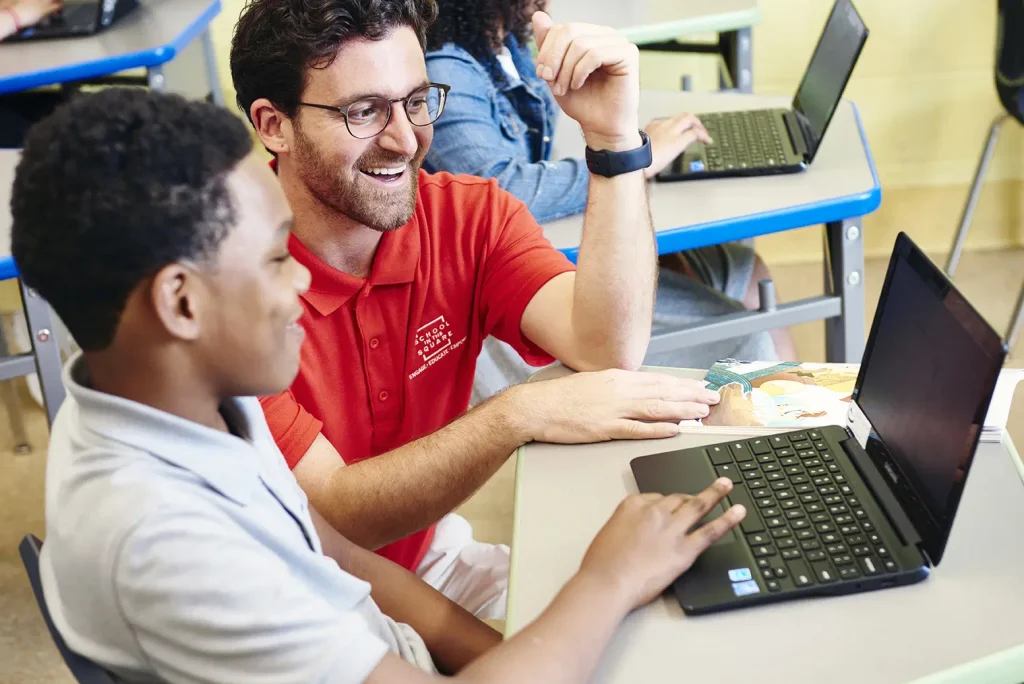





Amplify Desmos Math for KIPP
We’re thrilled that you’re reviewing Amplify Desmos Math for use with your students.
We’re confident you’ll find this to be a powerful and effective program for getting all your students talking and thinking about math concepts together.
Michael Kasloff
Regional Vice President, Strategic Sales
Expect more from your math program.

For students
Every student feels connected and a part of the conversation when participating in an Amplify Desmos Math lesson. And when students are actively engaged with the content, they achieve more.

For teachers
The program delivers what math educators want and need:
- Standards-aligned print and digital lessons that capture students’ interest every day
- The right mix of informal and substantive diagnostic and summative assessments
- Differentiation support
- Extensive practice in print and digital
- Multilingual learner support

For leaders
The program delivers what school and district leaders want and need:
- A coherent core program based on the industry-leading IM K–12 Math™ by Illustrative Mathematics®
- A comprehensive suite of usage and performance reports to identify school- and district-wide trends
- A team from Amplify dedicated to making your implementation a success
What’s included
We’ve taken the power of Desmos’ technology and lessons and added beautiful, easy-to-use print and digital components to make a game-changing program that makes teaching a breeze.
Student materials
- Student Editions (2 volumes)
- Digital lessons, practice, assessment, and differentiation, built with Desmos technology
Program components subject to change.
Teacher materials
- Teacher Edition (2 volumes)
- Digital tools and support
- Classroom monitoring and management
- Reporting
- Assessment customization
- Differentiation, including just-in-time prerequisite supports
- Additional practice and Assessment blackline masters (print and digital)
Program components subject to change.
Start your review
Ready to explore the program? Watch our quick walkthrough video and follow these simple instructions to access your demo account.
- Preview K–5 digital lessons here.
- Download the draft K–5 scope and sequence here.
- Preview digital lessons for grades 6–Algebra 1 here.
- You can also preview both the student edition and teacher edition of a grade 3 lesson in print.
View our help articles on running your first lesson and the Teacher dashboard for more information.

mCLASS Math (Assessment)
All digital (grades K–6)
The all new mCLASS Math is an online screener and diagnostic. It provides granular data, targeted grouping suggestions, teacher-led activities and places students in Boost Math.
Click here to view the mCLASS Math scope and sequence and skills coverage across grades K–6. To the right, preview a sample item and program overview information.
Contact us
Support is always within reach. Our team is dedicated to supporting KIPP and can be reached at any time by emailing or calling us directly.
 |
|
Michael Kasloff Regional Vice President, Strategic Sales 862-215-4505 mkasloff@amplify.com |
Grade 6
Unit 1: Area and Surface Area
| Illustrative Mathematics | Desmos Math 6–A1 |
|---|---|
| Topic A: Reasoning to Find Area | |
| Lesson 1: Tiling the Plane | Unit 1 Lesson 1: Shapes on a Plane [Free lesson] |
| Lesson 2: Finding Area by Decomposing and Rearranging Lesson 3: Reasoning to Find Area | Unit 1 Lesson 2: Letters |
| Topic 2: Parallelograms | |
| Lesson 4: Parallelograms Lesson 5: Bases and Heights of Parallelograms Lesson 6: Area of Parallelograms | Unit 1 Lesson 3: Exploring Parallelograms (Print available) [Free lesson] Lesson 4: Off the Grid |
| Topic 3: Triangles | |
| Lesson 7: From Parallelograms to Triangles | Unit 1 Lesson 3: Exploring Parallelograms (Print available) [Free lesson] Lesson 4: Off the Grid Lesson 6: Triangles and Parallelograms |
| Lesson 8: Area of Triangles | Unit 1 Lesson 5: Exploring Triangles (Print available) |
| Lesson 9: Formula for the Area of a Triangle Lesson 10: Bases and Heights of Triangles | Unit 1 Lesson 4: Off the Grid Lesson 6: Triangles and Parallelograms |
| Topic 4: Polygons | |
| Lesson 11: Polygons | Unit 1 Lesson 2: Letters Lesson 8: Pile of Polygons Practice Day 1 (Print available) Unit 7 Lesson 11: Polygon Maker |
| Topic 5: Surface Area | |
| Lesson 12: What is Surface Area? | Unit 1 Lesson 9: Renata´s Stickers [Free lesson] |
| Lesson 13: Polyhedra | Unit 1Lesson 10: Plenty of Polyhedra |
| Lesson 14: Nets and Surface Area | Unit 1 Lesson 10: Plenty of Polyhedra Lesson 11: Nothing But Nets (Print available) Lesson 13: Take It To Go |
| Lesson 15: More Nets, More Surface Area | Unit 1 Lesson 10: Plenty of Polyhedra Lesson 11: Nothing But Nets (Print available) Lesson 12: Face Value Lesson 13: Take It To Go (Print available) Practice Day 2 (Print available) |
| Lesson 16: Distinguishing Between Surface Area and Volume | |
| Topic 6: Squares and Cubes | |
| Lesson 17: Squares and Cubes | Unit 6 Lesson 12: Squares and Cubes |
| Lesson 18: Surface Area of a Cube | |
| Topic 7: Let’s Put It to Work | |
| Lesson 19: Designing a Tent | Unit 1 Lesson 13: Take It To Go (Print available) |
Unit 2: Introducing Ratios
Unit 3: Rates and Percentages
| Topic 1: Units of Measurement | |
| Lesson 1: The Burj Khalifa | Unit 3 Lesson 4: Model Trains |
| Topic 2: Unit Conversion | |
| Lesson 2: Anchoring Units of Measurement | Unit 3 Lesson 1: Many Measurements (Print available) [Free lesson] |
| Lesson 3: Measuring with Different-Sized Units Lesson 4: Converting Units | Unit 3 Lesson 2: Counting Classrooms Lesson 3: Pen Pals |
| Topic 3: Rates | |
| Lesson 5: Comparing Speeds and Prices | Unit 2 Lesson 8: World Records (Print available) Unit 3 Lesson 4: Model Trains Lesson 5: Soft Serve [Free lesson] Lesson 6: Welcome to the Robot Factory |
| Lesson 6: Interpreting Rates Lesson 7: Equivalent Ratios Have the Same Unit Rates | Unit 3 Lesson 4: Model Trains Lesson 5: Soft Serve [Free lesson] |
| Lesson 8: More About Constant Speed | Unit 2 Lesson 8: World Records (Print available) Unit 3 Lesson 4: Model Trains |
| Lesson 9: Solving Rate Problems | Unit 3 Lesson 7: More Soft Serve |
| Topic 4: Percentages | |
| Lesson 10: What Are percentages | Unit 3 Lesson 8: Lucky Duckies [Free lesson] Lesson 9: Bicycle Goals |
| Lesson 11: Percentages and Double Number Lines | Unit 3 Lesson 9: Bicycle Goals Lesson 10: What’s Missing? (Print available) |
| Lesson 12: Percentages and Tape Diagrams | Unit 3 Lesson 10: What’s Missing? (Print available) |
| Lesson 13: Benchmark percentages | Unit 3 Lesson 8: Lucky Duckies [Free lesson] |
| Lesson 14: Solving Percentage Problems Lesson 15: Finding This Percent of That Lesson 16: Finding the Percentage | Unit 3 Lesson 10: What’s Missing? (Print available) Lesson 11: Cost Breakdown Lesson 12: More Bicycle Goals Lesson 13: A Country as a Village |
| Topic 5: Let’s Put It to Work | |
| Lesson 17: Painting a Room | Unit 3 Lesson 13: A Country as a Village |
| Lesson 7: Equivalent Ratios Have the Same Unit Rates | Unit 3 Lesson 4: Model Trains Lesson 5: Soft Serve [Free lesson] |
Unit 4: Dividing Fractions
| Topic 1: Making Sense of Division | |
| Lesson 1: Size of Divisor and Size of Quotient Lesson 2: Meanings of Division | Unit 4Lesson 1: Cookie Cutter |
| Lesson 3: Interpreting Division Situations | Unit 4Lesson 2: Making Connections (Print available) |
| Topic 2: Meanings of Fraction Division | |
| Lesson 4: How Many Groups (Part 1) | Unit 4Lesson 3: Flour Planner [Free lesson]Lesson 4: Flower Planters |
| Lesson 5: How Many Groups (Part 2) | Unit 4Lesson 5: Garden Bricks (Print available) |
| Lesson 6: Using Diagrams to Find the Number of Groups | Unit 4Lesson 5: Garden Bricks (Print available)Lesson 6: Fill the Gap [Free lesson] |
| Lesson 7: What Fraction of a Group? Lesson 8: How Much in Each Group? (Part 1) Lesson 9: How Much in Each Group? (Part 2) | Unit 4Lesson 8: Potting Soil |
| Topic 3: Algorithm for Fraction Division | |
| Lesson 10: Dividing by Unit and Non-Unit Fractions | Unit 4Lesson 7: Break It DownLesson 8: Potting SoilLesson 9: Division Challenges |
| Lesson 11: Using an Algorithm to Divide Fractions | Unit 4Lesson 9: Division ChallengesPractice Day |
| Topic 4: Fractions in Lengths, Areas, and Volumes | |
| Lesson 12: Fractional Lengths | Unit 4Lesson 11: Classroom Comparisons |
| Lesson 13: Rectangles with Fractional Side Lengths | Unit 4Lesson 12: Puzzling Areas (Print available) [Free lesson] |
| Lesson 14: Fractional Lengths in Triangles and Prisms | |
| Lesson 15: Volume of Prisms | Unit 4Lesson 13: Volume Challenges |
| Topic 5: Let’s Put It to Work | |
| Lesson 16: Solving Problems with Fractions | Unit 4Lesson 10: Swap Meet (Print available) |
| Lesson 17: Fitting Boxes into Boxes | Unit 4Lesson 14: Planter Planner (Print available) |
Unit 5: Arithmetic in Base Ten
| Topic 1: Warming Up to Decimals | |
| Lesson 1: Using Decimals in a Shopping Context | Unit 5Lesson 1: Dishing Out Decimals (Print available) [Free lesson] |
| Topic 2: Adding and Subtracting Decimals | |
| Lesson 2: Using Decimals to Represent Addition and Subtraction | Unit 5Lesson 3: Fruit by the PoundLesson 4: Missing Digits |
| Lesson 3: Adding and Subtracting Decimals with Few Non-Zero Digits | Unit 5Lesson 4: Missing Digits |
| Lesson 4: Adding and Subtracting Decimals with Many Non-Zero Digits | |
| Topic 3: Multiplying Decimals | |
| Lesson 5: Decimal Points in Products | Unit 5Lesson 5: Decimal Multiplication |
| Lesson 6: Methods for Multiplying Decimals | Unit 5Lesson 5: Decimal MultiplicationLesson 6: Multiplying with AreasLesson 7: Multiplication methods (Print available) |
| Lesson 7: Using Diagrams to Represent Multiplication | Unit 5Lesson 5: Decimal MultiplicationLesson 6: Multiplying with Areas |
| Lesson 8: Calculating Products of Decimals | Unit 5Lesson 6: Multiplying with Areas |
| Topic 4: Dividing Decimals | |
| Lesson 9: Using the Partial Quotients Method | Unit 5Lesson 8: Division Diagrams |
| Lesson 10: Using Long Division | Unit 5Lesson 8: Division DiagramsLesson 9: Long Division Launch (Print available)Lesson 10: Return of the Long Division (Print available) |
| Lesson 11: Dividing Numbers That Result in Decimals Lesson 12: Dividing Decimals by Whole Numbers Lesson 13: Dividing Decimals by Decimals | Unit 5Lesson 9: Long Division Launch (Print available)Lesson 10: Return of the Long Division (Print available) |
| Topic 5: Let’s Put It to Work | |
| Lesson 14: Using Operations on Decimals to Solve Problems | Unit 5Lesson 11: Movie Time [Free lesson] |
| Lesson 15: Making and Measuring Boxes | |
| Lesson 12: Dividing Decimals by Whole Numbers | |
| Lesson 13: Dividing Decimals by Decimals | Unit 5Lesson 9: Long Division Launch (Print available)Lesson 10: Return of the Long Division (Print available) |
Unit 6: Expressions and Equations
Unit 7: Rational Numbers
| Topic 1: Positive and Negative Numbers | |
|---|---|
| Lesson 1: Positive and Negative Numbers | Unit 7Lesson 1: Can You Dig In [Free lesson]Lesson 2: Digging Deeper |
| Lesson 2: Points on the Number Line | Unit 7Lesson 2: Digging Deeper |
| Lesson 3: Comparing Positive and Negative Numbers Lesson 4: Ordering Rational Numbers | Unit 7Lesson 3: Order in the Class (Print available) [Free lesson] |
| Lesson 5: Using Negative Numbers to make Sense of Contexts | Unit 7 Lesson 4: Sub-Zero |
| Lesson 6: Absolute Value of Numbers Lesson 7: Comparing Numbers and Distance from Zero | Unit 7Lesson 5: Distance on the Number Line |
| Topic 2: Inequalities | |
| Lesson 8: Writing and Graphing Inequalities | Unit 7Lesson 13: Popcorn Possibilities |
| Lesson 9: Solutions of Inequalities Lesson 10: Interpreting Inequalities | Unit 7Lesson 6: Tunnel Travel [Free lesson]Lesson 7: Comparing WeightsLesson 8: Shira´s Solutions |
| Topic 3: The Coordinate Plane | |
| Lesson 11: Points on the Coordinate Plane Lesson 12: Constructing the Coordinate Plane | Unit 7Lesson 9: Sand Dollar SearchLesson 10: The A-maze-ing Coordinate Plane |
| Lesson 13: Interpreting Points on a Coordinate Plane | Unit 7Lesson 9: Sand Dollar SearchLesson 10: The A-maze-ing Coordinate PlaneLesson 11: Polygon Maker |
| Lesson 14: Distances on a Coordinate Plane | Unit 7Lesson 11: Polygon MakerLesson 12: Graph Telephone (Print available) |
| Lesson 15: Shapes on the Coordinate Plane | Unit 1Lesson 1: Shapes on a Plane [Free lesson]Lesson 2: LettersLesson 5: Exploring Triangles (Print available)Lesson 6: Triangles and ParallelogramsUnit 7Lesson 3: Exploring Parallelograms (Print available)Lesson 11: Polygon MakerLesson 12: Graph Telephone (Print available) |
| Topic 4: Common Factors and Common Multiples | |
| Lesson 16: Common Factors | Unit 5Lesson 15: Common factors |
| Lesson 17: Common Multiples | Unit 5Lesson 14: Common Multiples |
| Lesson 18: Using Common Multiples and Common Factors | Unit 5Lesson 14: Common MultiplesLesson 15: Common factorsPractice Day 2 (Print available) |
| Topic 5: Let’s Put It to Work | |
| Lesson 19: Drawing on the Coordinate Plane | Unit 7Lesson 11: Polygon MakerLesson 12: Graph Telephone (Print available) |
Unit 8: Data Sets and Distributions
| Topic 1: Data, Variability, and Statistical Questions | |
|---|---|
| Lesson 1: Got Data? Lesson 2: Statistical Questions | Unit 8Lesson 1: Screen TimeLesson 2: Dot Plots |
| Topic 2: Dot Plots and Distributions | |
| Lesson 3: Representing Data Graphically Lesson 4: Dot Plots Lesson 5: Using Dot Plots to Answer Statistical Questions | Unit 8Lesson 2: Dot PlotsLesson 3: Minimum Wage (Print available) [Free lesson]Lesson 4: Lots More Dots |
| Lesson 6: Interpreting Histograms Lesson 7: Using Histograms to Answer Statistical Questions Lesson 8: Describing Distributions on Histograms | Unit 8Lesson 5: The Plot Thickens [Free lesson]Lesson 6: DIY Histograms (Print available) |
| Topic 3: Measures of Center and Variability | |
| Lesson 9: Mean Lesson 10: Finding and Interpreting the Mean as a Balance Point | Unit 8Lesson 7: Snack Time |
| Lesson 11: Variability and MAD | Unit 8Lesson 8: Pop It! |
| Lesson 12: Using Mean and MAD to Make Comparisons | Unit 8Lesson 9: Hoops |
| Topic 4: Median and IQR | |
| Lesson 13: Median | Unit 8Lesson 11: Toy Cars [Free lesson]Lesson 12: In the News |
| Lesson 14: Comparing Mean and Median | Unit 8Lesson 12: In the News |
| Lesson 15: Quartiles and Interquartile Range | Unit 8Lesson 13: Pumpkin Patch |
| Lesson 16: Box Plots | Unit 8Lesson 14: Car, Plane, Bus, or Train? (Print available) |
| Lesson 17: Using Box Plots | Unit 8Lesson 14: Car, Plane, Bus, or Train? (Print available)Lesson 15: Hollywood Part 2Lesson 16: Hollywood Part 3 (Print available)Practice Day 2 (Print available) |
| Topic 5: Let’s Put It to Work | |
| Lesson 18: Using Data to Solve Problems | Unit 8Lesson 16: Hollywood Part 3 (Print available) |
Unit 9: Putting It All Together
| Topic 1: Making Connections | |
|---|---|
| Lesson 1: Fermi Problems Lesson 2: In Our Class Were the World | Unit 3Lesson 13: A Country as a Village |
| Lesson 3: Rectangle Madness | Unit 5Lesson 14: Common MultiplesLesson 15: Common factors |
| Topic 2: Voting | |
| Lesson 4: How Do We Choose? | Unit 2Lesson 13: City PlanningLesson 14: Lunch Waste (Print available) |
| Lesson 5: More than Two Choices | Unit 3Lesson 13: A Country as a Village |
| Lesson 6: Picking Representatives | Unit 8Lesson 16: Hollywood Part 3 (Print available) |
Grade 7
Unit 1: Scale Drawings
| Illustrative Mathematics | Desmos Math 6–A1 |
|---|---|
| Topic 1: Scaled Copies | |
| Lesson 1: What are Scaled Copies? | Unit 1Lesson 1: Scaling Machines [Free lesson] |
| Lesson 2: Corresponding Parts and Scale Factors | Unit 1Lesson 2: Scaling Robots Unit 3Lesson 1: Toothpicks |
| Lesson 3: Making Scaled Copies Lesson 4: Scaled Relationship | Unit 1Lesson 3: Make It Scale Unit 4Lesson 3: Sticker Sizes |
| Lesson 5: The Size and the Scale Factor | Unit 1Lesson 4: Scale Factor Challenges |
| Lesson 6: Scaling and Area | Unit 1Lesson 5: TilesPractice Day 1 (Print available) |
| Topic 2: Scale Drawings | |
| Lesson 7: Scale Drawings | Unit 1Lesson 6: Introducing ScaleLesson 7: Will It Fit? (Print available) [Free lesson] |
| Lesson 8: Scale Drawings and Maps | |
| Lesson 9: Creating Scale Drawings Lesson 10: Changing Scales in Scale Drawings | Unit 1Lesson 8: Scaling StatesLesson 9: Scaling BuildingsLesson 10: Room Redesign (Print available) |
| Lesson 11: Scales without Units | |
| Lesson 12: Units in Scale Drawings | Unit 1Lesson 8: Scaling StatesLesson 9: Scaling BuildingsLesson 10: Room Redesign (Print available)Practice Day 2 (Print available) |
| Topic 3: Let’s Put It to Work | |
| Lesson 13: Draw It to Scale | Unit 1Lesson 10: Room Redesign (Print available) |
Unit 2: Introducing Proportional Relationships
| Topic 1: Representing Proportional Relationships with Tables | |
| Lesson 1: One of These Things Is Not Like the Others | Unit 2Lesson 1: Paint [Free lesson] |
| Lesson 2: Introducing Proportional Relationships with Tables | Unit 2Lesson 2: Balloon FloatLesson 3: Sugary Drinks (Print available)Lesson 4: Robot Factory |
| Lesson 3: More About Constant of Proportionality | Unit 2Lesson 3: Sugary Drinks (Print available)Unit 4Lesson 3: Sticker Sizes |
| Topic 2: Representing Proportional Relationships with Equations | |
| Lesson 4: Proportional Relationships with Equations | Unit 2Lesson 4: Robot FactoryLesson 5: SnapshotsLesson 6: Two and Two (Print available) [Free lesson]Lesson 7: All Kinds of Equations |
| Lesson 5: Two Equations for Each Relationship Lesson 6: Using Equations to Solve Problems | Unit 2Lesson 6: Two and Two (Print available) [Free lesson]Lesson 7: All Kinds of EquationsPractice Day |
| Topic 3: Comparing Proportional and Nonproportional Relationships | |
| Lesson 7: Comparing Relationships with Tables | Unit 2Lesson 2: Balloon FloatLesson 3: Sugary Drinks (Print available)Lesson 4: Robot Factory |
| Lesson 8: Comparing Relationships with Equations | Unit 2Lesson 4: Robot FactoryLesson 5: SnapshotsLesson 6: Two and Two (Print available) [Free lesson]Lesson 7: All Kinds of EquationsLesson 11: Four RepresentationsLesson 12: Water Efficiency |
| Lesson 9: Solving Problems About Proportional Relationships | Unit 2Lesson 12: Water Efficiency |
| Topic 4: Representing Proportional Relationships with Graphs | |
| Lesson 10: Introducing Graphs of Proportional Relationships Lesson 11: Interpreting Graphs of Proportional Relationships Lesson 12: Using Graphs to Compare Relationships Lesson 13: Two Graphs for Each Relationship | Unit 2Lesson 8: Dino Pops [Free lesson]Lesson 9: Gallon ChallengeLesson 10: Three TurtlesLesson 11: Four RepresentationsLesson 12: Water Efficiency |
| Topic 5: Let’s Put It to Work | |
| Lesson 14: For Representations | Unit 2Lesson 11: Four Representations (Print available) |
| Lesson 15: Using Water Efficiency | Unit 2Lesson 12: Water Efficiency |
Unit 3: Measuring Circles
| Topic 1: Circumference of a Circle | |
| Lesson 1: How Well Can You Measure? | Unit 3Lesson 1: Toothpicks |
| Lesson 2: Exploring Circles Lesson 3: Exploring Circumference Lesson 4: Applying Circumference | Unit 3Lesson 2: Is It a Circle?Lesson 3: Measuring Around [Free lesson] |
| Lesson 5: Circumference and Wheels | |
| Topic 2: Area of a Circle | |
| Lesson 6: Estimating Areas | Unit 3Lesson 5: Area Strategies |
| Lesson 7: Exploring the Area of a Circle Lesson 8: Relating Area to Circumference | Unit 3Lesson 5: Area StrategiesLesson 6: Radius Squares (Print available)Lesson 7: Why Pi?Lesson 8: Area Challenges [Free lesson]Lesson 9: Circle vs. SquarePractice Day 2 (Print available) |
| Lesson 9: Applying Area of Circles | Unit 3Lesson 6: Radius Squares (Print available) |
| Topic 3: Let’s Put It to Work | |
| Lesson 10: Distinguishing Circumference and Area | Unit 3Lesson 7: Why Pi? |
| Lesson 11: Stained-Glass Windows | Unit 3Lesson 5: Area StrategiesLesson 6: Radius Squares (Print available) |
Unit 4: Proportional Relationships and Percentages
Unit 5: Rational Number Arithmetic
| Topic 1: Interpreting Negative Numbers | |
| Lesson 1: Interpreting Negative Numbers | Unit 5Lesson 1: Floats and Anchors [Free lesson] |
| Topic 2: Adding and Subtracting Rational Numbers | |
| Lesson 2: Changing Temperatures Lesson 3: Changing Elevation | Unit 5Lesson 2: More Floats and AnchorsLesson 3: BumpersLesson 4: Draw Your Own (Print available) [Free lesson] |
| Lesson 4: Money and Debts | |
| Lesson 5: Representing Subtraction | Unit 5Lesson 5: Number Puzzles |
| Lesson 6: Subtracting Rational Numbers Lesson 7: Adding and Subtracting to Solve Problems | Unit 5Lesson 3: BumpersLesson 4: Draw Your Own (Print available) [Free lesson]Lesson 5: Number PuzzlesLesson 10: Integer Puzzles [Free lesson]Lesson 11: Changing TemperaturesLesson 13: Solar Panels and More (Print available)Practice Day 1 (Print available) |
| Topic 3: Multiplying and Dividing Rational Numbers | |
| Lesson 8: Position, Speed, and Direction Lesson 9: Multiplying Rational Numbers Lesson 10: Multiply! | Unit 5Lesson 7: Back in Time |
| Lesson 11: Dividing Rational Numbers | Unit 5Lesson 8: Speeding Turtles |
| Lesson 12: Negative Rates | |
| Topic 4: Four Operations with Rational Numbers | |
| Lesson 13: Expressions with Rational Numbers | Unit 5Lesson 9: Expressions (Print available) |
| Lesson 14: Solving Problems with Rational Numbers | Lesson 11: Changing Temperatures Lesson 12: Arctic Ice Sea (Print available) Lesson 13: Solar Panels and More (Print available) |
| Topic 5: Solving Equations When There Are Negative Numbers | |
| Lesson 15: Making and Measuring Boxes | |
| Lesson 16: Representing Contexts with Equations | |
| Topic 6: Let’s Put It to Work | |
| Lesson 17: The Stock market |
Unit 6: Expressions, Equations, and Inequalities
Unit 7: Angles, Triangles, and Prisms
| Topic 1: Angle Relationships | |
|---|---|
| Lesson 1:Relationships of Angles | Unit 7 Lesson 1: Pinwheels Lesson 2: Friendly Angles [Free lesson] Lesson 3: Angle Diagrams |
| Lesson 2: Adjacent Angles Lesson 3: Nonadjacent Angles | Unit 7Lesson 2: Friendly Angles [Free lesson]Lesson 3: Angle Diagrams |
| Lesson 4: Solving for Unknown Angles | Unit 7Lesson 2: Friendly Angles [Free lesson]Lesson 3: Angle DiagramsLesson 4: Missing Measures (Print available) |
| Lesson 5: Using Equations to Solve for Unknown Angles | Unit 7Lesson 3: Angle DiagramsLesson 4: Missing Measures (Print available) [Free lesson] |
| Topic 2: Drawing Polygons with Given Conditions | |
| Lesson 6: Building Polygons (Part 1) Lesson 7: Building Polygons (Part 2) | Unit 7Lesson 6: Is It Enough? |
| Lesson 8: Triangles with 3 Common Measures | Unit 7Lesson 13: Popcorn Possibilities |
| Lesson 9: Drawing Triangles (Part 1) Lesson 10: Drawing Triangles (Part 2) | Unit 7Lesson 5: Can You Build It? [Free lesson]Lesson 6: Is It Enough?Lesson 7: More Than OneLesson 8: Can You Draw It? (Print available)Practice Day 1 (Print available) |
| Topic 3: Solid Geometry | |
| Lesson 11: Slicing Solids | Unit 7Lesson 9: Slicing Solids |
| Lesson 12: Volume of Right Prisms | Unit 7Lesson 10: Simple Prisms |
| Lesson 13: Decomposing Bases for Areas | Unit 7Lesson 11: More Complicated Prisms |
| Lesson 14: Surface Area of Right Prisms | Unit 7Lesson 10: Simple PrismsLesson 11: More Complicated PrismsLesson 12: Surface Area Strategies (Print available) |
| Lesson 15: Distinguishing Volume and Surface Area | |
| Lesson 16: Applying Volume and Surface Area | Unit 7Lesson 13: Popcorn Possibilities |
| Topic 4: Let’s Put It to Work | |
| Lesson 17: Building Prisms |
Unit 8: Probability and Sampling
Grade 8
Unit 1: Rigid Transformations and Congruence
Unit 2: Dilations, Similarity, and Introducing Slope
Unit 3: Linear Relationships
Unit 4: Linear Equations and Linear Systems
Unit 5: Functions and Volume
Unit 6: Associations in Data
Unit 7: Exponents and Scientific Notation
| Topic 1: Exponent Review | |
| Lesson 1: Exponent Review | Unit 7 Lesson 1: Circles [Free lesson]Lesson 2: Combining Exponents |
| Topic 2: Exponent Rules | |
| Lesson 2: Multiplying Powers of 10 Lesson 3: Powers of Powers of 10 Lesson 4: Dividing Powers of 10 | Unit 7 Lesson 3: Power Pairs (Print available) [Free lesson]Lesson 4: Rewriting Powers |
| Lesson 5: Negative Exponents with Powers of 10 | Unit 7 Lesson 5: Zero and Negative ExponentsLesson 6: Write a Rule (Print available)Practice Day 1 (Print available) |
| Lesson 6: What about Other Bases? | |
| Lesson 7: Practice with Rational Bases | |
| Lesson 8: Combining Bases | |
| Topic 3: Scientific Notation | |
| Lesson 9: Describing Large and Small Numbers using Powers of 10 | Unit 7 Lesson 7: Scales and Weights |
| Lesson 10: Representing Large Numbers on the Number Line Lesson 11: Representing Small Numbers on the Number Line | Unit 7 Lesson 8: Point Zapper |
| Lesson 12: Applications of Arithmetic with Powers of 10 | Unit 7 Lesson 8: Point ZapperLesson 9: Use Your Powers |
| Lesson 13: Defining Scientific Notation Lesson 14: Multiplying, Dividing, and Estimating with Scientific Notation | Unit 7 Lesson 10: Solar System [Free lesson]Lesson 11: Balance the Scales [Free lesson]Lesson 13: Star Power |
| Lesson 15: Adding and Subtracting with Scientific Notation | Unit 7 Lesson 10: Solar System [Free lesson]Lesson 11: Balance the Scales [Free lesson]Lesson 12: City LightsLesson 13: Star Power |
| Topic 4: Let’s Put It to Work | |
| Lesson 16: Is a Smartphone Smart Enough to Go to the Moon? | Lesson 13: Star Power Practice Day 2 (Print available) |
Unit 8: Pythagorean Theorem and Irrational Numbers
| Topic 1: Side Lengths and Areas of Squares | |
| Lesson 1: The Areas of Squares and Their Side Lengths | Unit 8Lesson 1: Tilted Squares |
| Lesson 2: Side Lengths and Areas | Unit 8Lesson 2: From Squares to RootsLesson 3: Between Squares |
| Lesson 3: Rational and Irrational Numbers | |
| Lesson 4: Square Roots on the Number Line | |
| Lesson 5: Reasoning about Square Roots | Unit 8Lesson 2: From Squares to RootsLesson 3: Between SquaresLesson 4: Root Down [Free lesson]Practice Day 1 (Print available) |
| Topic 2: The Pythagorean Theorem | |
| Lesson 6: Finding Side Lengths of Triangles | Unit 8Lesson 6: The Pythagorean TheoremLesson 7: Pictures to Prove ItLesson 8: Triangle-Tracing Turtle [Free lesson] |
| Lesson 7: A Proof of the Pythagorean Theorem | Unit 8Lesson 7: Pictures to Prove It |
| Lesson 8: Finding Unknown Side Lengths | Unit 8Lesson 11: Pond Hopper |
| Lesson 9: The Converse | Unit 8Lesson 9: Make It Right |
| Lesson 10: Applications of the Pythagorean Theorem | Unit 8Lesson 10: Taco Truck [Free lesson] |
| Lesson 11: Finding Distances in the Coordinate Plane | Unit 8Lesson 11: Pond Hopper |
| Topic 3: Side Lengths and Volumes of Cubes | |
| Lesson 12: Edge Lengths and Volumes Lesson 13: Cube Roots | Unit 8Lesson 5: Filling Cubes |
| Topic 4: Decimal Representation of Rational and Irrational Numbers | |
| Lesson 14: Decimal Representation of Rational and Numbers Lesson 15: Infinite Decimal expansions | Unit 8Lesson 12: Fractions to DecimalsLesson 13: Decimals to Fractions |
| Topic 5: Let’s Put It to Work | |
| Lesson 16: When Is the Same Size Not the Same Size? | Unit 8Lesson 10: Taco Truck [Free lesson] |
Unit 9: Putting It All Together
| Topic 1: Tessellations | |
| Lesson 1: Tessellations of the Plane | |
| Lesson 2: Regular Tessellations | |
| Lesson 3: Tessellating Polygons | |
| Topic 2: The Weather | |
| Lesson 4: What Influences Temperature? | |
| Lesson 5: Plotting the Weather | |
| Lesson 6: Using and Interpreting a Mathematical Model |
The English language arts program designed to prepare Arkansas middle schoolers for high school and beyond.
Amplify ELA is a blended English language arts curriculum designed specifically to support students in grades 6–8 and prepare them for high school and beyond. With Amplify ELA, students learn to tackle any complex text and make observations, grapple with interesting ideas, and find relevance for themselves.


Built for middle school teachers and students
Built specifically for middle school, Amplify ELA is an interactive core curriculum that brings complex texts to life. Amplify ELA’s 100-Day Pathway is a built-in guide to covering required content for each grade level while allowing teachers time to add supplemental lessons and activities.

All-green rating on EdReports
The results are in! Amplify ELA received a near-perfect score by the independent review group.
Our approach
Amplify ELA is the ELA program designed for middle school. It offers rich texts that are a delight to teach, better connections with your students through powerful differentiation and assessment tools, and step-by-step instructional guides that save you time and simplify your day.
We empower students to become critical thinkers.
With text always at the center, students are encouraged to make meaning for themselves. Rather than focusing on right or wrong answers, they develop ideas and opinions on relevant, real-world, texts.
We provide six levels of differentiation.
Multiple entry points and differentiated supports allow every student, regardless of fluency or ability level, to engage deeply with the same complex texts and rigorous curriculum.
We assess while you instruct.
Formative assessment reports provide a continually updated picture of how each student is progressing with key skills and standards. Each learning moment provides a small piece of data, allowing you to keep teaching while building a clear understanding of student performance.

Download a free white paper
Beyond “make it fun”: Four principles of true engagement in middle school ELA
Download the white paperWhat’s included
Amplify ELA is a rigorous core curriculum that empowers teachers and engages middle school students.
Student edition
Available digitally and in print, the student materials guide middle schoolers through complex texts and writing by:
- engaging students with high-quality narrative and informational texts
- providing videos, audio supports, and digital experiences that capture their attention
- keeping all of their writing in one place with a personal writing journal
Teacher Edition
Available digitally and in print, the Teacher Edition contains all the information teachers need to facilitate classroom instruction, including:
- detailed lesson plans
- video teacher tips embedded in the lesson
- standards alignment and exit tickets
- real-time differentiation strategies
- robust reporting
Interactive Quests
Quests are fun, week-long immersions into a specific, multilayered topic. They enable students to practice analytical reading, writing, speaking, and listening skills—all while building a strong classroom community.
Digital library for independent reading
The expansive Amplify Library includes more than 650 digital fiction, nonfiction, classic, and contemporary titles.
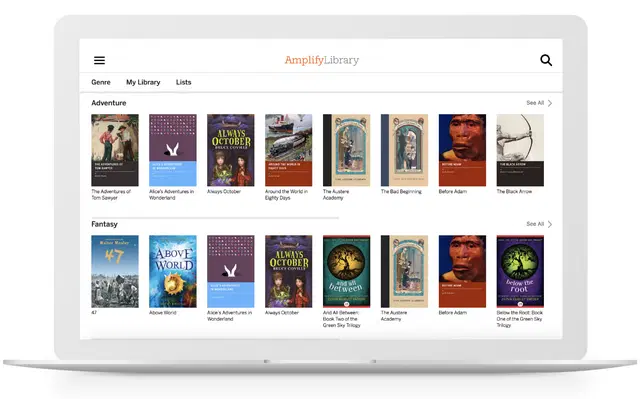
Amplify ELA makes teachers’ lives easier
We help teachers make sure the standards are covered, the skills are taught, your students are scaffolded and encouraged, and the test is prepped.
- Embedded differentiation to support all readers.
- Informative and streamlined assessment system.
- Robust reporting that tracks progress.
- Powerful feedback tools.
Coming soon for 2023!
The Amplify Caminos digital experience
Launching for the 2023 school year, Amplify Caminos will include a digital experience that enhances instruction and saves you time. With the digital experience, everything you need will be in one place, making it easier and more engaging than ever to plan lessons, present digital content, and review student work.
Scroll down to explore how the digital experience works for Amplify CKLA—the English language arts counterpart to Caminos.
Simplify planning and instruction
With the digital experience, teachers have access to ready-to-use and customizable lesson presentation slides, complete with all the prompts from the print Teacher Guide embedded in the teacher view. As teachers deliver each lesson, students can engage with the content in one cohesive experience—through these CKLA resources: Activity Books, slides, digital components, videos, Student Readers, and more.
Get real-time insights into your students’ work
The innovative live review tool found in the digital experience enables you to keep an eye on all of your students as they work on drawing, recording audio, uploading and capturing images, and typing or writing in pre-placed textboxes in their Activity Pages. This dynamic tool provides countless classroom management benefits, enabling you to spot and correct common mistakes as they’re happening, praise your students for thoughtful work, and identify students who are not engaged in the task at hand. Simply put, it will give you those valuable “eyes in the back of your head” you’ve warned your students about!
Learning Management System integrations
The digital experience integrates with various LMSs, allowing you and your students to access Amplify CKLA with the software you’re already comfortable using.
Engage your students with one easy-to-use access point
In the Amplify CKLA student digital experience, your students have one intuitive access point to fully engage with classroom instruction. Through the Student Home, students can easily access digital lessons with slides, Activity Pages, ebooks, videos, and other interactives from one simple dashboard. Students can draw, record audio, upload and capture images, and type or write in pre-placed text boxes in their Activity Pages.
Prepare Professional Development (PD)
Learning experiences to prepare for literacy and math instructional shifts
The following literacy and math sessions can help any educator—regardless of the program used—enhance their instructional practices.
- Science of Reading sessions offering research-backed strategies to deepen understanding and improve student outcomes.
- Problem-based approach to math sessions that empower educators to facilitate meaningful learning experiences and develop critical thinking skills.
- Multiliterate learner sessions enable educators to make a meaningful impact on students’ literacy development.
Professional learning journey

| Prepare | Begin | Practice | Advance |
| Learning sessions will help shift literacy and math instruction in areas such as the Science of Reading and/or problem-based approaches to math. | Program-aligned packages will support those who are new to Amplify programs. | Program-aligned packages will support those who have experience using Amplify programs. | Offerings will support advanced implementation, build capacity for instructional leaders, certify in-house trainers to deliver Launch sessions, and more. |

Science of Reading learning experiences
Listening to students read is magic. But knowing how to get them reading? That’s science.
Making the shift to the Science of Reading is no small feat, but participating in professional development sessions can help you make this change seamlessly.
Amplify Science of Reading sessions offer flexible, professional learning experiences for teachers that incorporate engaging activities grounded in what science tells us about literacy development.

Build your knowledge of the Science of Reading
Virtual | 90-minute session
This introductory session provides educators with a foundational overview of what the Science of Reading means and what it tells us about how to teach using evidence-based reading practices.
Participants will learn to:
- Define the Science of Reading by examining evidence-based research.
- Explain how two frameworks, the Simple View of Reading and the Reading Rope, work in tandem to guide effective literacy instruction.
- Identify instructional principles aligned to the Science of Reading.

Deepen your knowledge of the Science of Reading
On-site or virtual | 3-hour session
This session will build a base of common knowledge about the Reading Rope and support educators in identifying effective instruction grounded in the Science of Reading.
Participants will learn to:
- Identify the strands in the Reading Rope.
- Describe how each strand plays an important role in developing skilled readers and writers.
- Identify key look-fors in effective Science of Reading instruction.
Science of Reading: The Learning Lab online course
This series of three self-paced online courses, crafted by literacy expert Susan Lambert and built around International Dyslexia Association (IDA) Knowledge and Practice Standards, guides you through the essential Science of Reading skills and knowledge needed to teach students to read proficiently, as well as advanced strategies for aiding struggling readers. Each course builds on the last, equipping you with the tools and confidence to make a lasting impact on your students’ literacy journeys.
Benefit from flexible learning on an interactive platform spanning 20–25 hours of instruction. Each course is accessible for 12 months. Upon completion, you’ll be provided with a downloadable certificate, validating your new expertise in the Science of Reading.

Foundations to the Science of Reading
This course offers a comprehensive overview of research in the field. Each of the eight modules contains three lessons covering the foundations of literacy acquisition.
Explore the scope and sequence of Foundations to the Science of Reading with a Pacing Guide.
Access the free Preview Pass for this course.
Advanced topics in the Science of Reading: Assessment and reading difficulties
The second course is aimed at providing an in-depth examination of assessments, a deeper understanding of reading difficulties, and familiarity with pertinent legal frameworks for educators, all of which influence instructional decision-making.
Explore the scope and sequence of Advanced topics in the Science of Reading with our Pacing Guide.
Access the free Preview Pass for this course.
Coming soon!
Applied structured literacy
The final course in the series is designed to review key concepts and knowledge from previous coursework, explore fundamental aspects of structured literacy within lessons, observe and analyze structured literacy instruction in action, and investigate how data informs instructional decisions.
[Available June 2025]
New
Supporting multiliterate learner sessions
Unlock the magic of teaching multiliterate learners with evidence-based literacy practices. Making the shift to effectively support diverse readers in multiple languages is no small feat, but our professional development sessions are here to guide you effortlessly.
Empower your teaching with these engaging sessions, and make a meaningful impact on your multiliterate students’ literacy development.

Build your knowledge of multiliterate learners
Virtual | 90-minute session
This session provides educators with a foundational overview of how to teach multiliterate learners using evidence-based literacy practices.
Contact us to request a quote.

Deepen your knowledge of multiliterate learners
On-site or virtual | 3-hour session
This session will build an understanding of how the brain learns to read in multiple languages, as well as how to leverage cross-linguistic transfer, and align instruction to best practices for multiliterate learners.
Contact us to request a quote.
Problem-based approach to math instruction sessions
Elevate educational experiences by placing students’ ideas at the core of math lessons through problem-based learning. These sessions offer flexible professional learning experiences, allowing you to gain firsthand experience with a problem-based approach as a learner. You then learn to integrate this approach seamlessly into your teaching practices, bringing renewed energy to your math classroom.

Build your knowledge of a problem-based approach
Virtual | 90-minute session
This session provides you with a foundational overview of what an engaging problem-based approach in math entails for K–5 students.
During this session you’ll learn to:
- Explain how a problem-based approach to math brings delight to both teaching and learning and builds lasting student understanding.
- Identify actionable strategies for using a problem-based approach in a math classroom.
Contact us to request a quote.

Deepen your knowledge of a problem-based approach
On-site or virtual | 3-hour session
This session provides you with hands-on experience facilitating problem-solving in math, leaving you with an increased understanding of how to teach conceptual understanding, procedural skill and fluency, and applications of math.
During this session you’ll learn to:
- Explain how a problem-based approach to math brings delight to both teaching and learning and builds lasting student understanding.
- Identify actionable strategies for using a problem-based approach in a math classroom.
- Connect your current teaching practice to a problem-based approach, and choose a next step to implement a more problem-based approach.
Contact us to request a quote.

Get in touch with a PD expert
We’re here to provide answers and guidance as you explore your PD options. Fill out the form to connect with us and discover how Amplify PD can enhance your educational journey.
Prepare Professional Development (PD)
Learning experiences to prepare for literacy and math instructional shifts
The following literacy and math sessions are designed to support all educators—regardless of the program used—in enhancing their instructional practices.
- Sessions devoted to Science of Reading offer research-based strategies to deepen understanding that support students’ reading development.
- Sessions focusing on a problem-based approach to math empower educators to facilitate meaningful learning experiences and foster critical thinking skills in their students.
- Sessions supporting multilingual/English learners enable educators to make a meaningful impact on students’ multiliteracy development.

Professional learning journey

| Prepare |
Begin |
Practice |
Advance |
| Learning sessions will help shift literacy and math instruction in areas such as the Science of Reading and/or problem-based approaches to math. | Program-aligned packages will support those who are new to Amplify programs. | Program-aligned packages will support those who have experience using Amplify programs. | Offerings will support advanced implementation, build capacity for instructional leaders, certify in-house trainers to deliver Launch sessions, and more. |
Science of Reading learning experiences
Listening to students read is magic. But knowing how to get them reading? That’s science.
Making the shift to the Science of Reading is no small feat, but participating in professional development sessions can help you make this change seamlessly.
Amplify Science of Reading sessions offer flexible professional learning experiences for teachers that incorporate engaging activities grounded in what science tells us about literacy development.

Build your knowledge of the Science of Reading
Virtual | 90-minute session
This introductory session provides educators with a foundational overview of what the Science of Reading means and what it tells us about how to teach using evidence-based reading practices.
Participants will learn to:
- Define the Science of Reading by examining evidence-based research.
- Explain how two frameworks, the Simple View of Reading and the Reading Rope, work in tandem to guide effective literacy instruction.
- Identify instructional principles aligned to the Science of Reading.

Deepen your knowledge of the Science of Reading
On-site or virtual | 3-hour session
This session will build a base of common knowledge about the Reading Rope and support educators in identifying effective instruction grounded in the Science of Reading.
Participants will learn to:
- Identify the strands in the Reading Rope.
- Describe how each strand plays an important role in developing skilled readers and writers.
- Identify key look-fors in effective Science of Reading instruction.
Science of Reading: The Learning Lab online courses
This series of three self-paced online courses, crafted by literacy expert Susan Lambert and built around International Dyslexia Association (IDA) Knowledge and Practice Standards, guides you through the essential Science of Reading skills and knowledge needed to teach students to read proficiently, as well as advanced strategies for aiding struggling readers. Each course builds on the last, equipping you with the tools and confidence to make a lasting impact on your students’ literacy journeys.
Benefit from flexible learning on an interactive platform—each course spans 25–30 hours of instruction and is accessible for 12 months. Upon completion, you’ll be provided with a downloadable certificate, validating your new expertise in the Science of Reading.
Foundations to the Science of Reading
This course offers a comprehensive overview of research in the field. Each of the eight modules contains three lessons covering the foundations of literacy acquisition.
Explore the scope and sequence of Foundations to the Science of Reading with a Pacing Guide.
Access the free Preview Pass for this course.
Advanced topics in the Science of Reading: Assessment and reading difficulties
The second course is aimed at providing an in-depth examination of assessments, a deeper understanding of reading difficulties, and familiarity with pertinent legal frameworks for educators, all of which influence instructional decision-making.
Explore the scope and sequence of Advanced topics in the Science of Reading with our Pacing Guide.
Access the free Preview Pass for this course.
Applied structured literacy
The final course in the series is designed to review key concepts and knowledge from previous coursework, explore fundamental aspects of structured literacy within lessons, observe and analyze structured literacy instruction in action, and investigate how data informs instructional decisions.
Explore the scope and sequence of Applied structured literacy with our Pacing Guide.
Access the free Preview Pass for this course.
NEW
Sessions supporting multiliterate learners
Unlock the magic of teaching multiliterate learners with evidence-based literacy practices. Making the shift to effectively support diverse readers in multiple languages is no small feat, but our professional development sessions are here to guide you effortlessly.
Empower your teaching with these engaging sessions, and make a meaningful impact on your multiliterate students’ literacy development.

Build your knowledge of multilingual/English learners
Virtual | 90-minute session
This session provides educators with a foundational overview of how to teach multiliterate learners using evidence-based literacy practices.
Contact us to request a quote.

Deepen your knowledge of multilingual/English learners
On-site or virtual | 3-hour session
This session will build an understanding of how the brain learns to read in multiple languages, as well as how to leverage cross-linguistic transfer and align instruction to best practices for multiliterate learners.
Contact us to request a quote.
Sessions focusing on a problem-based approach to math instruction
Elevate educational experiences by placing students’ ideas at the core of math lessons through problem-based learning. These sessions offer flexible professional learning experiences, allowing you to gain firsthand experience with a problem-based approach as a learner. You then learn to integrate this approach seamlessly into your teaching practices, bringing renewed energy to your math classroom.

Build your knowledge of a problem-based approach for grades K–5 or 6–8
Virtual | 90-minute session
This session provides you with a foundational overview of what an engaging problem-based approach in math entails.
During this session you’ll learn to:
- Explain how a problem-based approach to math brings delight to both teaching and learning and builds lasting student understanding.
- Identify actionable strategies for using a problem-based approach in a math classroom.
Contact us to request a quote.

Deepen your knowledge of a problem-based approach for grades K–5 or 6–8
On-site or virtual | 3-hour session
This session provides you with hands-on experience facilitating problem-solving in math, leaving you with an increased understanding of how to teach conceptual understanding, procedural skill and fluency, and applications of math.
During this session you’ll learn to:
- Explain how a problem-based approach to math brings delight to both teaching and learning and builds lasting student understanding.
- Identify actionable strategies for using a problem-based approach in a math classroom.
- Connect your current teaching practice to a problem-based approach, and choose a next step to implement a more problem-based approach.
Contact us to request a quote.
Get in touch with a PD expert

Welcome, Florida K–5 educators!
Amplify Core Knowledge Language Arts (CKLA) Florida is the program built on the latest Science of Reading research. Using a fundamentally different approach to language arts, Amplify CKLA Florida sequences deep content knowledge with research-based foundational skills.
Built on the science of reading
The cornerstones of reading comprehension in Florida assert that foundational instruction matters; knowledge matters; and curriculum matters. Amplify CKLA Florida is built on the Science of Reading. To support you before your review, we put together a Science of Reading Toolkit that will provide some insight into the research behind the Science of Reading. It will also show why we designed Amplify CKLA for Florida educators to mirror this critical research.


Foundational instruction matters
Amplify CKLA Florida’s first design principle is a research-based, explicit, and systematic approach to foundational skills that gets real results.
- Explicit.
- Learning isn’t left to chance. All 44 sounds and their 150 spellings in the English language are taught, practiced, and mastered, with ample opportunity for students to encounter each sound-spelling in diverse settings.
- Sequential.
- By moving in a sequence from easier to more complex in phonics and foundational reading skills, students master concepts before moving forward and gradually become more independent.
- Rewarding
- Learning to read should be fun. Decodable chapter books that feature dynamic plots and characters make kids want to read more. The engaging stories feature children who discover fossils, a grandmother who flies hang gliders, and more.
Knowledge matters
Amplify CKLA Florida’s second design principle is that reading comprehension depends more on relevant background knowledge than on mastery of reading strategies. Knowledge builds on knowledge.
Our approach to building background knowledge is based on three pillars often overlooked in other programs. It is:
- Content-specific.
Clearly outlined content objectives are specific and support the development of knowledge in history, science, literature, culture, and the arts. - Cumulative.
Topics and vocabulary connect within and across grades, allowing students to extend knowledge and revisit topics in increasing depth in later grades. - Coherent.
When curriculum is fragmentary and disconnected, students face repetitions as well as gaps that can hinder learning. An intentional design ensures the curriculum fits together as a whole. - Amplify and ReadWorks have partnered to provide Amplify CKLA Florida classrooms a way to expand knowledge in connected yet varied ways.
- ReadWorks
- Login Credentials for ReadWorks
Username: t.floridackla@tryamplify.net
Password: FLReviewer
- Login Credentials for ReadWorks
- ReadWorks

Curriculum matters
Amplify CKLA was built on the science of reading research to meet the all standards in a vertically and horizontally aligned, coherent, and cumulative knowledge-based curriculum. To encourage a broader view of literacy, our intentional design embraces history, art, science, music and other disciplines to ensure that all West Virginia students have a level playing field.
What’s included
Amplify CKLA provides engaging print and multimedia materials—accessible from anywhere—that are designed to provide a robust, literacy-rich foundation in every classroom.
Proven high-quality teacher materials
Teacher supports include research-based lessons that integrate foundational literacy skills and cross-curricular content knowledge.
- Teacher Guides
- Kindergarten Example Unit: Skills and Knowledge
- Grade 1 Example Unit: Skills and Knowledge
- Grade 2 Example Unit: Skills and Knowledge
- Grade 3 Example Unit: Integrated Skills and Knowledge
- Grade 4 Example Unit: Integrated Skills and Knowledge
- Grade 5 Example Unit: Integrated Skills and Knowledge
- Projectable lesson components
- Writing Studio (example from Grade 4)
- The Hub for digital components
- Vocabulary Lessons (example from Grade 1)
- Quests for the Core for Grades 3–5 (immersive, problem-based learning, example from Grade 5)
- Professional development website with model lessons and training resources
- Teacher Resource Site
- Assessments in Amplify CKLA Florida
- Trade Book Guides, and Novel Guides

Student materials
Engaging student resources include dynamic decodable chapter books and content-rich, cross-curricular Readers.
- Student Readers
- Activity Books
- Kindergarten: Skills: Unit 7 and Knowledge: Domain 7-12
- Grade 1: Skills: Unit 4 and Knowledge: Domain 1-6
- Grade 2: Skills: Unit 2 and Knowledge: Domain 7-12
- Grade 3: Unit 7
- Grade 4: Unit 8
- Grade 5: Unit 8
- Formative Assessments
- Poet’s Journal and Writer’s Journal (write-in resources for Grades 4–5, example grade 5)
- The Hub for digital components
Digital resources
Access the program’s online resources anywhere, anytime, from any device.
- Digital Hub
- Knowledge Builder animated videos (example from Grade 2)
- Sound Library songs and videos (examples from Kindergarten)
- eReader
- Vocabulary App
- Recorded Read-Alouds
- Professional development website
- Real-time program support via email, live chat, and phone
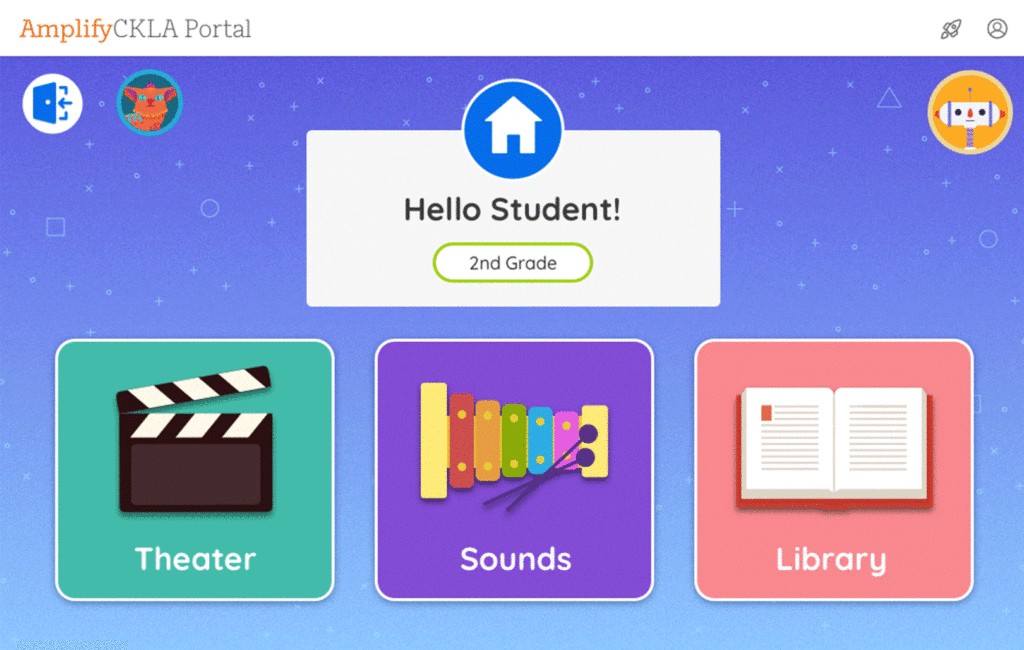

Hands-on phonics materials
Multisensory phonics and foundational skills resources give students the opportunity to practice key skills using diverse, fun approaches that build independence.
- Large and Small Letter Cards
- Spelling Cards
- Chaining Folders
- Digital Big Books
Florida Resources
- FL Program Guide
- Assessment Guide
- Poetry and Vocabulary Lesson Sampler
- Curriculum Maps
- Grade K Skills and Knowledge
- Grade 1 Skills and Knowledge
- Grade 2 Skills and Knowledge
- Grade 3 Integrated
- Grade 4 Integrated
- Grade 5 Integrated

Professional learning
Amplify employs a national cohort of more than 50 ELA facilitators, all of whom have experience as former classroom teachers and many of whom are former school and/or district leaders. Our professional learning team has decades of experience working with large districts across the nation. Amplify has experience supporting district launches over multiple years and has partnered with districts of all sizes nationwide. We partner deeply with districts and tailor professional learning to their unique needs.
Amplify ELA California
The power of high-quality math assessments

When students learn math, it’s crucial for them to understand not only right and wrong, but why and how. The same is true of math assessments.
High-quality, asset-based math assessments can show you how each student thinks, where their strengths lie, and what their next learning step should be.
And we need them now more than ever. Math scores have hit their lowest point since 2005, with nearly half of high school seniors scoring below “basic” achievement in 2024. This moment presents our biggest opportunity yet to transform K–12 math assessments.
Keep reading to explore how asset-based assessments help all students succeed—by starting with their strengths.
K–12 math assessments: True or false
Let’s establish some facts about math assessment first:
True or false: Math assessments can tell you only “right” or “wrong.”
False. Asset-based assessments go way beyond simple correct/incorrect scoring, showing you how students work through problems to give you insight into their thinking and what they already know. This provides a much clearer path for next steps.
True or false: Understanding student thinking is the key to improved student performance.
True. The path to math proficiency requires more than just benchmark scores. The better you understand how your students think, the better you can support their growth. When assessments recognize students’ individual strengths and strategies, the data becomes more helpful and complete.
The good news? We don’t have to throw out everything we’re doing, but we do need to enhance it. The current achievement trends aren’t telling us to stop what we’re doing. They’re telling us to do even better.
What high-quality math assessments actually look like
So what makes a math assessment truly powerful? Here are the key ingredients:
They show student thinking. Great assessments don’t just capture right and wrong answers—they reveal the “why” behind student responses. You get to see the logic, the creativity, and the problem-solving strategies each student brings to math. This visibility helps you understand not just what students know, but how they know it.
They welcome different approaches. There’s rarely just one way to solve a math problem. Quality assessments celebrate multiple solution paths and help you understand how each student’s mind works. This flexibility creates more opportunities for students to demonstrate their mathematical understanding.
They work for all learners. Research shows that 3–7% of students experience dyscalculia, meaning that they process numbers differently. The best assessments are designed so every student can show what they really know about math concepts, regardless of how their brain processes numerical information.
They connect to real life. When math problems relate to students’ actual experiences, engagement soars and understanding deepens. Students see math as relevant and useful, not just something they have to endure.
They guide your next teaching move. Instead of functioning like traditional summative assessments that just give you a grade, high-quality assessments tell you exactly what to teach next. They transform assessment from a final judgment into a roadmap for growth.
How asset-based assessment approaches change the game
Here’s where things get really exciting. What if your assessments started by looking for what students can do, instead of what they can’t?
That’s asset-based assessment. And it can change everything.
This approach recognizes that every student walks into your classroom with mathematical knowledge. Even the student who “hates math” or “isn’t good with numbers” has mathematical thinking waiting to be discovered and built upon.
Asset-based assessment strategies help you spot the sophisticated reasoning your students already have, even when they don’t use formal math language yet. Instead of starting with gaps, you start with strengths; instead of deficit thinking, you build from abundance.
When you weave asset-based approaches into your assessment practice through formative assessment lessons, magic happens. Students feel more confident. Their mathematical identities grow stronger. And you get clearer insights into how to help each learner thrive. Perhaps most importantly, these approaches help close achievement gaps by ensuring every student’s mathematical contributions are valued and developed.
The data tells a clear story: Our students need assessment approaches that match not just their current performance, but their true potential.
More to explore
Ready to unlock the full potential of your math assessments? We’ve put together everything you need in our Math Assessment Power Pack, featuring practical tools, proven strategies, and ready-to-use resources that’ll make it simple and easy to enhance your assessments.
- Dive into our Math Assessment Power Pack.
- Watch our 2025 Assessment Week on demand.
- Check out our Advice for the Math Classroom channel for bite-size professional learning.
Welcome, Program 3 reviewers!
We’re honored to introduce you to Amplify California Language Arts. We’re confident you’ll find this comprehensive program to be a powerful tool for bringing the vision of the California ELA/ELD Framework to life in classrooms across the state.
Please start with the video on the right to learn how to navigate the program and access key features referenced within our submission. Below you’ll find additional resources to support your review.
Your review samples
We’re excited for you to begin your review of Amplify California Language Arts, a comprehensive biliteracy program for kindergarten through grade 6.
Reviewer Binders (K–6)
Your physical samples should have arrived in grade-specific boxes with three Reviewer Binders.
- The first binder will contain logistical program review information and the printed Evaluation Criteria Map.
- The second binder will contain the printed Standards Maps for grades K–2.
- The third binder will contain the printed Standards Maps for grades 3–6.
Physical samples (trade books)
Your review of the program will be entirely digital with the exception of the trade books that you will be receiving as physical samples. You can expect to receive 13 boxes of physical materials for your review. Twelve boxes of trade books, one for each grade K–5, in English and Spanish, and one box containing your Reviewer Binders.
As you begin the process of organizing your materials, please refer to the inventory checklist found inside each box as well as within your Reviewer Binder.
Digital review materials
In order to access your digital review materials, you’ll need to log in to our platform using your unique login credentials found on a Digital Review Credential flyer inside of your Reviewer Binder. Once you have located the flyer:
- Click the orange button below to access the platform.
- Click “Log in with Amplify.”
- Enter the username and password provided on your Digital Review Credential flyer.
Navigation tips
Before you get started, please review these important functionality notes:
Criteria Map and Standards Maps must be opened on Microsoft Word on your desktop to function as intended. If you open the documents without Microsoft Word on your desktop, citations will be cut off at the bottom of most tables within the document.
Many of our citations are deep-links to PDFs, meaning they will take you to the right page or the first page in the sequence for the citation in question. To ensure this functionality works, please disable any PDF-viewing extensions or plug-ins such as Adobe Acrobat Pro Browser Extension.
[Reviewer program navigation video] Grades K–5
[Reviewer program navigation video] Grade 6
Click here for additional information on navigating the program for grade 6.
Category 1: English Language Arts (ELA) and English Language Development (ELD) content/alignment to standards
Evaluation Criteria Map
Linked below is the Evaluation Criteria Map. Please note that you will need to be logged into the digital platform to access the links in the Evaluation Criteria Map.
ELA Standards Maps
The links below provide the Standards Maps for Amplify California Language Arts for each grade level.
ELD Standards Maps
Category 2: Program organization
Amplify California Language Arts’ biliteracy program is a comprehensive curriculum provides a full year of evidence-based instruction for each grade level, with both integrated and designated English Language Development instruction designed to give multilingual/English learners the tools to thrive. Amplify’s biliteracy program for grades K–6 includes:
- Core English language arts instruction: Amplify Core Knowledge Language Arts (CKLA) California (grades K–5) and Amplify ELA California (grade 6) covering knowledge building and foundational skills.
- Provides upper grade foundational skills instruction for grades 3–6.
- Core Spanish language arts instruction: Amplify Caminos California, a fully parallel SLA program that works in tandem with English core instruction across all grades.
- Provides upper grade foundational skills instruction for grades 3–6.
- Designated English Language Development: Language Studio California is the designated English Language Development companion that directly aligns with and supports core English instruction.
- Newcomer Support: Amplify California Language Arts Newcomer Support to facilitate instruction for students who are new to both English and the United States.
Program structure
Amplify’s California Language Arts programs are built on what the research shows: Strong readers need both word recognition and language comprehension. Our comprehensive curriculum suite follows the Simple View of Reading bringing together foundational skills and knowledge building to deliver instruction grounded in the Science of Reading.
This model is integral to the structure of the Amplify biliteracy program, which directly aligns with the CA CCSS ELA and ELD standards by combining rigorous decoding and skills instruction with research-based knowledge and language development instruction. In its early grades, the Amplify biliteracy program uses a two-strand structure—Skills/Lectoescritura and Knowledge/Conocimiento—to effectively address this learning challenge while meeting standards expectations for both language development and academic content mastery.

[Reviewer highlight video] Program organization for Category 2
[Reviewer highlight video] Program structure for grades K–2
[Reviewer highlight video] Program structure for grades 3–5
[Reviewer highlight video] Program structure for grade 6
Amplify Caminos California lessons are designed to allow all students time to work toward learning objectives, including peer collaboration and discussion. Since each lesson activity is aligned to subsequent activities, students’ understanding and analysis develops progressively throughout the lesson.
Each lesson follows a predictable structure with clearly marked components, beginning with warm-up routines, progressing through explicit instruction with guided practice, and concluding with independent application activities. The program provides detailed teacher language, including question stems and discussion prompts, ensuring clear and consistent delivery of instruction.
Amplify CKLA California and Amplify Caminos California empower teachers to deliver effective instruction and keep students engaged with the following resources:
- Teacher Guides
- Assessment Guides
- Authentic texts and trade books
- Knowledge Image Cards
- Knowledge Flip Books
- Remediation and intervention resources
- Decodable readers
- Student Readers and novels
- Student Activity Books
- Dedicated ELD support with Language Studio California
- Poet’s Journals
- eReaders
- Sound Library featuring articulation videos and songs
- Instructional routine modeling videos
- Assignable Practice Games
- On-demand professional development
Amplify ELA California students stay engaged with the following resources:
- Teacher Guides that include:
- Detailed lesson plans
- Standards alignment and exit tickets
- Real-time differentiation strategies
- Robust reporting
- Student Editions that include:
- High-quality narrative and informational texts
- Videos, audio supports, and digital experiences that capture their attention
- Personal Writing Journal to keep all student writing in one place
- Dedicated ELD support with Language Studio California
- Trade books
Core literacy philosophy
Support every learner. Meet all learning needs with a Multi-Tiered System of Supports (MTSS) that brings together universal screening, scaffolded core instruction, support for multilingual/English learners, and data-driven intervention to ensure every student gets what they need to succeed.
Deliver consistent foundational skills instruction. Daily explicit, systematic skills instruction in grades K–2, with targeted yet flexible support for students still building decoding confidence in grades 3–6, ensures mastery of essential reading foundations.
Build lasting knowledge across all grades. Through coherently sequenced, content-rich instruction that revisits key vocabulary and concepts with increasing complexity, students build meaningful connections that deepen their vocabulary and reading comprehension.
Strengthen reading through writing at every level. Regular writing instruction grounded in the Science of Writing supports reading comprehension, improves sentence-level writing, and provides the foundation for high-quality composition. As students progress through the upper grades, they engage in increasingly complex analytical tasks—synthesizing ideas, drawing generalizations, and interpreting multiple textual layers through both focused quick-writes and comprehensive essays.
Foster oral language development. Structured opportunities for academic conversation and evidence-based dialogue build students’ ability to express complex ideas with precision and allow them to participate confidently in classroom discussions.
Measure growth with comprehensive assessments. Assessments range from in-the-moment checks for understanding to summative assessments that measure progress toward skills mastery and standards proficiency, providing the data needed to drive targeted instruction.
Scope and sequence
Below you can view the scope and sequence documents for each grade level.
- Kindergarten
- Grade 1
- Grade 2
- Grade 3
- Grade 4
- Grade 5
- Grade 6
- Newcomer Support Grades K–6
Routines
Amplify CKLA California, Amplify Caminos California, and Amplify ELA California include several structured instructional routines that provide predictable patterns for both teachers and students:
Discussion and collaboration routines:
- Turn and Talk: Partners discuss text-specific content using sentence starters and frames
- Think-Pair-Share: Students engage in individual thinking, partner discussion, and whole-class sharing
- Partner reading: Students sit shoulder-to-shoulder, taking turns reading and listening
Foundational Skills routines:
- Sound-spelling review: Warm-up activities that reinforce phonics patterns
- Oral blending warm-ups: Teacher-guided practice progressing to independent application
- Finger-tapping: Techniques for blending sounds
- Chaining activities: Students manipulate letters to transform one word into another
- Word Work: Daily short activities focused on domain-specific and academic vocabulary
Knowledge-building routines:
- Teacher modeling: Demonstration of proper intonation, expression, and pacing
- Choral reading: Whole-class reading practice
- Partner reading: Paired fluency practice
Close reading routines
The program includes carefully structured close reading activities that guide students through multiple encounters with complex texts. These routines help students develop deeper comprehension through systematic analysis and discussion.
Each routine includes comprehensive instructional guides with clear-cut directions for implementation, straightforward explanations of concepts, and suggestions for discussion.
Cross-Linguistic Transfer routines
The Cross-Linguistic Transfer (CLT) routines are easy-to-implement, 10–15 minute mini-lessons designed to help bridge English and Spanish literacy and language development. These structured routines are organized by grade bands for K–2, grades 3–5 and grade 6, covering five skill areas:
- Oral language
- Reading
- Vocabulary
- Language
- Writing
[Reviewer highlight video] Amplify’s program alignment to Cross-Linguistic Transfer criteria
Designated English Language Development materials
Language Studio California is a K–8 content-based companion for English language learners. Built on Amplify CKLA California and Amplify ELA California’s carefully sequenced Knowledge Domains, it combines engaging content knowledge with targeted supports and research-based strategies to help students move swiftly toward language proficiency. This program includes:
- Real-world content to provide authentic opportunities to practice reading, writing, speaking, and listening.
- Scaffolding strategies and differentiated instruction to offer targeted support along five English proficiency levels.
- Progress monitoring tools to help teachers provide consistent and effective support.
- Teacher Guides that:
- Provide impactful progress monitoring tools including formative and summative assessments, and Language Proficiency Assessment rubrics.
- Offer varied differentiation strategies including Support, Challenge, and Access supports in each lesson segment.
- Are organized into thoughtful lesson segments—Talk Time, Building Background, On Stage and more—that make learning objectives concrete.
- Activities that:
- Expand on domain knowledge from core content and read-alouds and prompt collaborative conversation to practice oral fluency.
- Support hands-on language activities to promote authentic interaction in the classroom.
- Help students bridge experiences and knowledge with images, vocabulary activities, graphic organizers, anticipation guides, writing space, and more.
Category 3: Assessments
Systematic MTSS alignment
In alignment with the additional 2025 Guidance 3.1.a, the assessment systems align with MTSS tiers, including universal screening, diagnostic assessments for students demonstrating a need for additional support, and progress monitoring tools that complement California’s required reading difficulties screening schedule per SB 114.
| Tier 1: Universal/ differentiated support | Tier 2: Supplemental/ targeted support | Tier 3: Intensified/ intensive support | |
| Core instruction assessments Frequency of administration | Amplify CKLA California, Amplify Caminos California, Amplify ELA California assessments Daily, Weekly, Monthly | Amplify CKLA California, Amplify Caminos California, Amplify ELA California assessments Daily, Weekly, Monthly | Amplify CKLA California, Amplify Caminos California, Amplify ELA California assessments Daily, Weekly, Monthly |
| Universal screening assessments Frequency of administration | mCLASS DIBELS and Lectura 3 times per year – BOY, MOY, EOY | mCLASS DIBELS and Lectura 3 times per year – BOY, MOY, EOY | mCLASS DIBELS and Lectura 3 times per year – BOY, MOY, EOY |
| Formal progress monitoring assessments Frequency of administration | mCLASS DIBELS and Lectura 3 times per year – BOY, MOY, EOY | mCLASS DIBELS and Lectura Monthly | mCLASS DIBELS and Lectura Bi-weekly |
| Informal progress monitoring assessments Frequency of administration | Amplify CKLA California, Amplify Caminos California, Amplify ELA California core assessments Daily | Intervention Toolkit progress monitoring assessments When linked to a lesson in the toolkit | Intervention Toolkit progress monitoring assessments When linked to a lesson in the toolkit |
| Diagnostic assessment Frequency of administration | Amplify skill diagnostic assessment Amplify Spanish skill diagnostic assessment Optional after universal screening assessment is administered | Amplify skill diagnostic assessment Amplify Spanish skill diagnostic assessment After universal screening assessment is administered |
Universal assessment system
Amplify’s mCLASS® DIBELS® 8th Edition (K–8) and mCLASS Lectura (K–6) are universal and dyslexia screening assessments that should be administered three times per year (BOY, MOY, and EOY) to all students. The assessments evaluate student literacy risk, determine progress toward grade-level goals, and indicate the level of instructional support a student may need. Beginning-of-year screenings require adequate instructional time before administration, particularly in grades K–1, while mid-year and end-of-year assessments evaluate instructional effectiveness and guide tier placement adjustments. These screenings also identify students at risk for dyslexia. Universal screening provides essential data for targeting instruction and measuring instructional system effectiveness.
Core instruction assessments
Amplify CKLA California, Amplify Caminos California, and Amplify ELA California provide a comprehensive suite of assessments for grades K–6 that range from low-stakes, informal formative assessments to more formal summative assessments. These assessments incorporate a variety of methods and question types, including multiple-choice questions, open-ended questions, and oral and written responses.
Formative assessments:
- Checks for Understanding: Incorporated into each lesson segment throughout daily instruction. Quick pulse-checks that provide immediate feedback during lesson delivery (grades K–5).
- Daily formative assessments: Highlighted moments within each lesson for teachers to plan to track mastery of Primary Focus objectives and standards of each lesson to get a clear snapshot of individual and whole-class progress (grades K–5).
- Activity pages: Completed as part of lessons and can be used to assess lesson content understanding through various formats (grades K–5).
- Exit Tickets: Located at the end of lessons, these provide a quick gauge of students’ ability to meet the lesson’s focus standards (grade 6).
- Writing Prompts: Prompts integrated throughout lessons during writing activities that provide skill snapshots within lessons and tracks patterns of skill development over time (grade 6).
- Independent reading activities (Solos): At the end of every lesson, students complete an independent reading activity (“Solo”) with reading questions that are scored to measure comprehension (grade 6).
Summative assessments:
- Skills end-of-unit assessments (grades K–2)
- Knowledge end-of-domain assessments (grades K–2)
- End-of-unit assessments (grades 3–5)
- Unit essays: A culminating end-of-unit set of lessons that guide students through crafting an essay with a rubric to score mastery of writing skills (grade 6)
- Unit reading assessments: Auto-scored responses and two constructed response items evaluate comprehension, content understanding, and reading skills using the passages students read during the unit (grade 6)
Performance assessments
Student Performance Assessments are multi-day assessments administered in Grades K–5 at the beginning, middle, and end of year to help teachers gauge student mastery of grade-level Core content. These assessments provide critical data to help teachers set targeted instructional goals and monitor individual and class-wide progress towards core objectives.
Progress monitoring
Amplify’s mCLASS® DIBELS® 8th Edition and mCLASS Lectura provide formal progress monitoring in the discrete skills that are indicative of reading growth and predictive of overall success to provide the most instructionally meaningful information to teachers.
Informal progress monitoring tools can be found within the Intervention Toolkit, including materials for teachers to record, track, and evaluate student progress.
Diagnostic assessment
Interventions within Amplify’s literacy programs are informed by a skill diagnostic assessment that provides detailed data on foundational literacy skill deficits. The Amplify Skill Diagnostic Assessment and Amplify Spanish Skill Diagnostic assessment serve as critical tools in this process, administered specifically to students identified as at risk for reading difficulty through universal screening assessments—particularly those demonstrating mCLASS DIBELS 8th Edition or mCLASS Lectura composite scores in the Well Below or Below Benchmark ranges. These diagnostic assessments provide teachers with the precise skills to begin intervention and remediation.
Category 4: Universal Access
Amplify CKLA California, Amplify Caminos California, and Amplify ELA California are developed using the Universal Design for Learning framework to proactively ensure that all learners can access and participate in meaningful, challenging learning opportunities.
Universal Design for Learning
Amplify CKLA California, Amplify Caminos California, and Amplify ELA California incorporate opportunities for engagement, representation, action, and expression based on the guidelines of Universal Design for Learning.
- Multiple Means of Engagement: The programs incorporate interesting and motivating ways for students to interact with information and content. The Universal Access section in the introduction of each lesson provides specific lesson-level options based on the needs of individual classrooms and students. Scaffolding for students with various levels of need is incorporated into the design of each lesson.
- Multiple Means of Representation: The programs provide multiple means of presenting content to maximize student understanding. This includes digital component files that allow for a range of presentations of images and text to support learning. Amplify provides access to universal supports such as point-of-use audio for all core texts, embedded definitions for critical vocabulary, and glossaries in multiple languages. The programs include clarification on language found throughout the program, with sidebars that include support on transition words and syntax, and illustrations to help students understand the concepts they are learning.
- Multiple Means of Action and Expression: The programs include a range of methods for all students, including Multilingual/English Learners, to navigate and demonstrate learning. This includes physical actions, a range of methods for response, appropriate tools for composition, and varied scaffolding. Lessons provide multiple ways for students to interact with text, allowing their brains to process the language through distinct pathways. Activities harness multiple learning modes, using media tools, digital apps, and a variety of visual and physical experiences to strategically support and enhance student learning.
- Accessibility: Universal access features include visual aids, enlarged materials, physical objects, and multiple learning modalities through activities like Push & Say and Wiggle Cards. The Universal Access section in the introduction of each lesson provides specific lesson-level options based on the needs of individual classrooms and students.
Embedded differentiation
Amplify CKLA California, Amplify Caminos California, and Amplify ELA California provide built-in differentiation strategies in every lesson for all students.
- Pre-teaching supports include mini-lessons on:
- Core vocabulary building
- Core connections
- Essential background information building
- What Have We Already Learned?/What Do We Already Know?
- Differentiated Support for Core Instruction tables, located in the overview of each K–2 Skills Teacher Guide, provide a list of specific opportunities for reteaching and additional support in each lesson based on skill.
- Support and Challenge Sidebars in lesson margins offer educators immediate guidance in implementing point-of-use differentiation techniques.
- Flexible Grouping within lessons provides opportunities for teachers to facilitate small groups, partners, or individualized support based on students’ needs. In the Skills Strand, teachers receive specific guidance for differentiated small group instruction, with targeted support and activities outlined for both Group 1 (students needing additional support) and Group 2 (on-level students) based on data.
- Amplify ELA California and Amplify Caminos California provide point-of-use supports embedded within key core lesson activities with six levels of differentiation. The goal of these supports is to fully enable access to grade-level content for all students, including students with disabilities, English learners, and students ready for an additional level of challenge.
- The Universal Access section of Advance Preparation in each lesson includes varied strategies to ensure all students can access and engage in each lesson.
- Frequent use of graphic organizers and visual supports in lessons provide opportunities for differentiation based on need. The program also includes a variety of technological supports, such as eReaders with audio.
- Extension opportunities are suggested throughout lessons, often embedded in writing tasks, which include prompts to use more complex and descriptive vocabulary, figurative language, multi-clause and complex sentences, and informational text characteristics.
Assessment-driven MTSS resources
- The K–6 Intervention Toolkit is available online and provides easy-to-use resources that assist teachers in filling gaps in students’ reading skills, with activities to support print concepts, phonological awareness, phonics, fluency, and other key skills.
- Fluency packets (Grades 2–6)
- Foundational Skills Intervention Program for Grades 3–6 support students who would benefit from direct and explicit intervention instruction in the full continuum of foundational skills in the upper grades
- Flexible Instructional Time including:
- Pausing Points built into the curriculum that provide teachers with dedicated time to address specific student needs through targeted reteaching, remediation, practice, and extension activities
- Pausing Point activities designed to support multilingual/English learners’ competence and confidence through differentiated whole-group, small-group, or individual instruction
- Boost Reading and Boost Lectura are student-led digital intervention programs that follow the scope and sequences of Amplify CKLA California and Amplify Caminos California respectively, to reinforce the same foundational skills taught in core instruction. It integrates easily into daily routines, while the robust data provided by mCLASS® DIBELS® 8th Edition offers a detailed view of how students progress across all instructional tiers.
Category 5: Instructional Planning and Teacher Support
Amplify CKLA California, Amplify Caminos California, and Amplify ELA California teachers are empowered to deliver effective instruction with various print and digital resources. The program provides comprehensive planning and support materials designed to help teachers prepare for and execute lessons effectively and fulfill the requirements of Category 5.
Implementation supports across K–6
Planning and preparation resources
- Unit Overviews that provide important background and context for the texts students will read, including highlighted elements within the text and guidance for how students will work with those elements
- Sub-unit Overviews (Grade 6) that provide an overview of Lesson Objectives and reading and writing assignments, as well as a list of any projections, multimedia, or digital apps that can be projected from the teacher’s included digital license
- Lesson-by-lesson preparation checklists (Grade 6) accompanying each Sub-unit Overview
- Lesson Briefs for each individual lesson providing important background and context
- Content knowledge materials regarding topics that students will examine
Point-of-use instructional guidance
- Teacher Editions that feature insets of the same text and activity instructions as the corresponding Student Edition, wrapping teacher instruction around these materials
- Activity guidance at point of use
- Lesson standards clearly called out
- Discussion suggestions embedded in lessons
- Differentiation tips at point of use
- Detailed Instructional Guides in each activity that include sequencing and grouping suggestions, tips for facilitating discussion, possible student responses and exemplars
- On-the-Fly supports (Grade 6)—quick call-outs to the identifying features of “on track” and “needs support” students accompanied by short models of student guidance to foster strong performance
Multimedia and digital support
- Teacher tip videos provide modeling and guidance for implementing key foundational skills routines within the program
- Digital platform access where teachers can access printable PDFs of differentiated support materials for multilingual/English learners and students struggling to read, including translated Unit Background and Context documents and Text Previews
- Teacher Dashboard and reporting tools provide real-time visibility into student progress and work for immediate instructional response
Caregiver supports
Communication and overview resources
- Caregiver Hub available in English and Spanish that provides an overview of the curriculum
- Caregiver Letters for each K–2 Knowledge Domain and unit in Grades 3–5 that provide an overview of the content, the skills students learn, as well as practical methods that continue the learning and knowledge building at home
- Unit-specific Caregiver Letters (Grade 6) that provide detailed information regarding what students will read and learn in each unit, including conversation starters that allow caregivers to ask questions and discuss specific aspects of a unit with their student
- Welcome letters that explain the assessment and placement process while inviting parent involvement and offering support
- Editable Home-School Communication letters available in English and Spanish
- Editable Progress Reports for teachers to update parents and guardians on what their child is learning
Content and learning support materials
- Unit Background and Context documents that provide an introduction and overview to the unit’s topic and themes, available in English and Spanish
- Text Previews that provide a brief introduction to formative, independent reading assignments (called Solos in Grade 6), available in English and Spanish
- Unit Overview and Support documents (Grade 6) designed for caregivers that provide information about important questions, assignments, and key aspects of the unit texts, available in English and Spanish
- Conversation starters included in Knowledge Strand Caregiver Letters to discuss domain topics at home
Home practice and extension activities
- Take-Home pages in the Skills Strand that include copies of decodable passages, enabling students to share their reading progress with families and continue practicing their skills outside of school
- Take-Home Letters in the Skills Strand that provide specific guidance for parents to support skills practice at home, such as sound-sorting activities, with detailed instructions and materials for home practice activities
- Take-Home pages in the Knowledge Strand that provide suggested activities families can do together to reinforce and extend learning beyond the classroom
- Games and activities on Take-Home Pages that extend classroom instruction, including all the materials and instruction necessary to help families assist students in a fun and engaging way
- Digital access to decodable texts through the Amplify Caregiver Hub, allowing students to practice their reading skills both in class and at home
- Weekly spelling lists and directions to decoding activities that can be practiced at home
Welcome, K–8 Program 2 reviewers!
We’re honored to introduce you to Amplify California Language Arts. We’re confident you’ll find this comprehensive program to be a powerful tool for bringing the vision of the California ELA/ELD Framework to life in classrooms across the state.
Please start with the video on the right to learn how to navigate the program and access key features referenced within our submission. Below you’ll find additional resources to support your review.
Your review samples
We’re excited for you to begin your review of Amplify Core Knowledge Language Arts (CKLA) California and Amplify ELA California, Language Studio California for grades K–8. Physical and digital review materials will vary by grade level.
Reviewer Binders (K–8)
Your physical samples should have arrived in grade-specific boxes with three Reviewer Binders.
- The first binder will contain logistical program review information and the printed Evaluation Criteria Map.
- The second binder will contain the printed Standards Maps for grades K–4.
- The third binder will contain the printed Standards Maps for grades 5–8.
Physical samples (K–5)
You can expect to receive 15 boxes of physical materials for your review. As you begin the process of organizing your materials, please refer to the inventory checklist found inside each box as well as within your Reviewer Binder. Please note you will not receive any physical samples for grades 6–8 ELA or Language Studio for grades K-8. Your review of the program for grades 6–8 ELA and Language Studio for grades K-8 will be entirely digital.
Digital samples
In order to access your digital samples, you’ll need to log in to our platform using your unique login credentials found on a Digital Review Credential flyer inside of your Reviewer Binder. Once you have located the flyer:
- Click the orange button below to access the platform.
- Click “Log in with Amplify.”
- Enter the username and password provided on your Digital Review Credential flyer.
Navigation tips
Before you get started, please review these important functionality notes:
Criteria Map and Standards Maps must be opened on Microsoft Word on your desktop to function as intended. If you open the documents without Microsoft Word on your desktop, citations will be cut off at the bottom of most tables within the document.
Many of our citations are deep-links to PDFs, meaning they will take you to the right page or the first page in the sequence for the citation in question. To ensure this functionality works, please disable any PDF-viewing extensions or plug-ins such as Adobe Acrobat Pro Browser Extension.
[Reviewer program navigation video] Grades K–5
[Reviewer program navigation video] Grades 6–8
Click here for additional information on navigating the digital materials for grades 6–8.
Category 1: English Language Arts (ELA) and English Language Development (ELD) Content/Alignment to Standards
Evaluation Criteria Map
Linked below is the Evaluation Criteria Map for grades K–8. Please note that you will need to be logged into the digital platform to access the links in the Evaluation Criteria Map.
ELA Standards Maps
The links below provide the Standards Maps for Amplify California Language Arts for each grade level. Please note that you will need to be logged into the digital platform to access the links in the Standards Maps.
ELD Standards Maps
The links below provide the ELD Standards Maps for Amplify California Core Language Arts for each grade level.
Category 2: Program Organization
The Amplify California Language Arts Program 2 submission includes Amplify CKLA California for Grades K–5, Amplify ELA California for Grades 6–8, and Amplify Language Studio California for Grades K–8. This comprehensive curriculum provides a full year of evidence-based instruction for each grade level, with both integrated and designated English Language Development instruction designed to give English learners the tools to thrive.
Program structure
Amplify’s California Language Arts programs are built on what the research shows: Strong readers need both word recognition and language comprehension. Our comprehensive curriculum suite follows the Simple View of Reading and The Reading Rope–bringing together foundational skills and knowledge building to deliver instruction grounded in the Science of Reading.
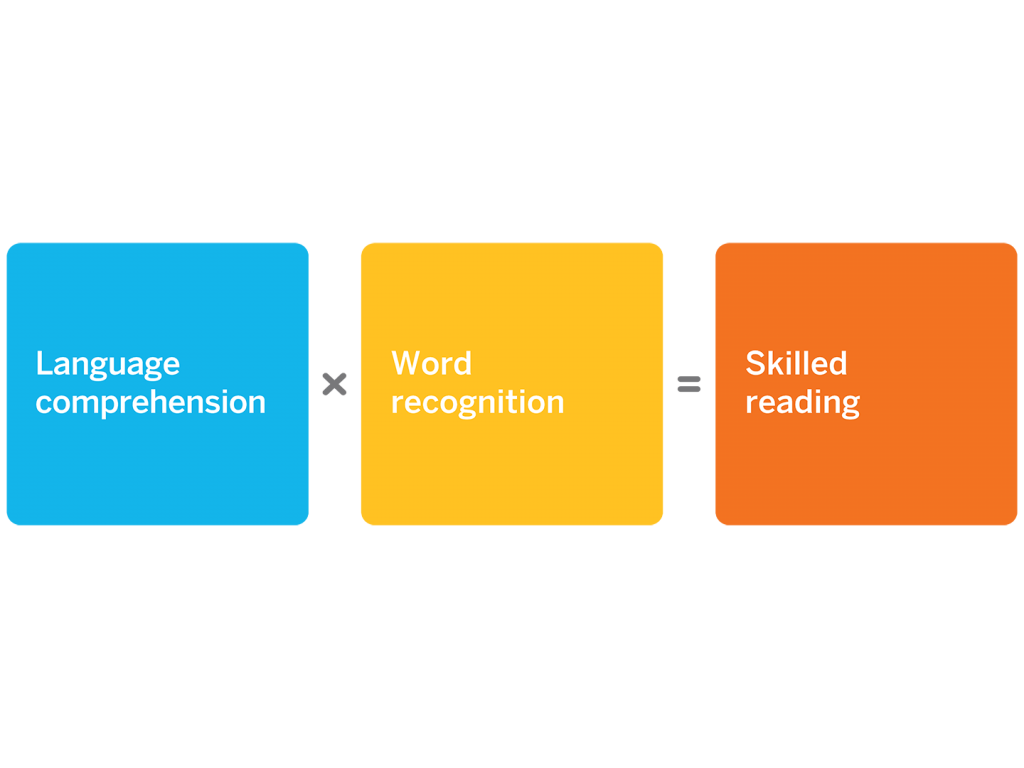
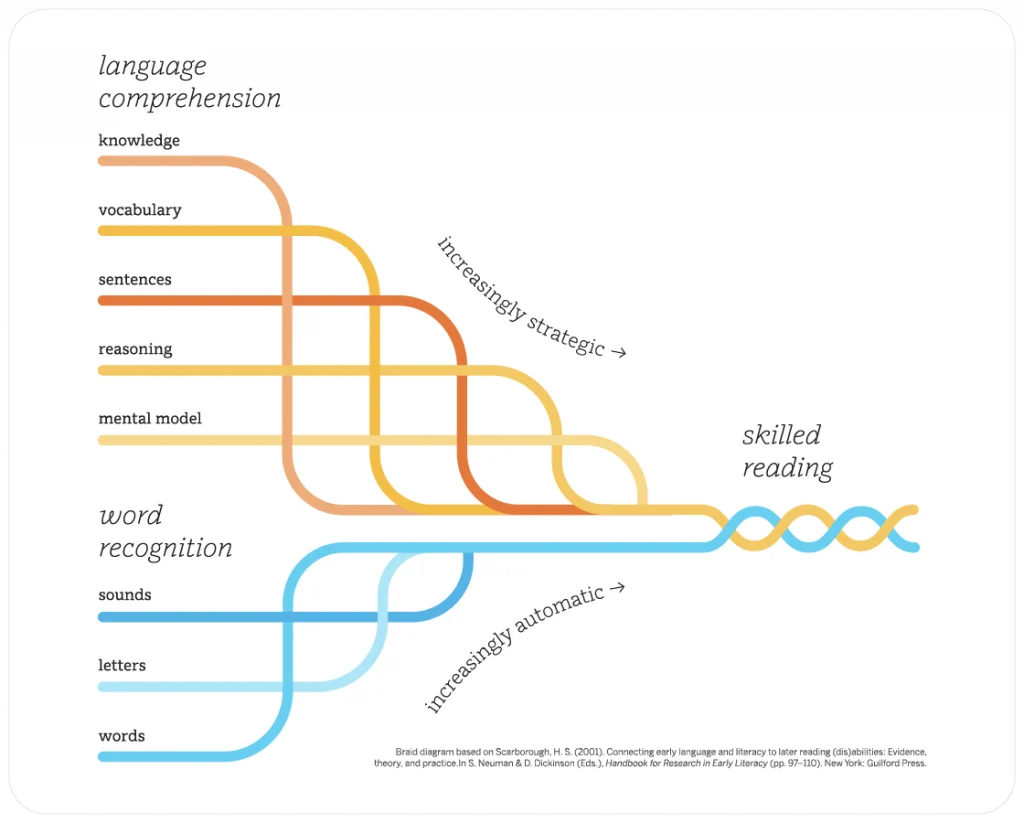
Each lesson follows a predictable structure with clearly marked components, beginning with warm-up routines, progressing through explicit instruction with guided practice, and concluding with independent application activities. The program provides detailed teacher language, including question stems and discussion prompts, ensuring clear and consistent delivery of instruction.
[Reviewer highlight video] Program organization for Category 2
[Reviewer highlight video] Program structure for grades K–2
[Reviewer highlight video] Program structure for grades 3–5
[Reviewer highlight video] Program structure for grades 6–8
Amplify CKLA California empowers teachers to deliver effective instruction and keeps students engaged with with the following resources:
- Teacher Guides
- Assessment Guides
- Authentic texts and trade books
- Knowledge Image Cards
- Knowledge Flip Books
- Remediation and intervention resources
- Decodable readers
- Student Readers and novels
- Student Activity Books
- Dedicated ELD support with Language Studio California
- Poet’s Journals
- eReaders
- Sound Library featuring articulation videos and songs
- Instructional routine modeling videos
- Assignable Practice Games
- On-demand professional development
Amplify ELA California students stay engaged with the following resources:
- Teacher Guides that include:
- Detailed lesson plans
- Standards alignment and exit tickets
- Real-time differentiation strategies
- Robust reporting
- Student Editions that include:
- High-quality narrative and informational texts
- Videos, audio supports, and digital experiences that capture their attention
- Personal Writing Journal to keep all student writing in one place
- Dedicated ELD support with Language Studio California
- Trade Books
Core literacy philosophy
Support every learner. Meet all learning needs with a Multi-Tiered System of Supports (MTSS) that brings together universal screening, scaffolded core instruction, support for English learners, and data-driven intervention to ensure every student gets what they need to succeed.
Provide intentional ELD support. Honor students’ linguistic assets while building academic English through both integrated and designated instruction.
Deliver consistent foundational skills instruction. Daily explicit, systematic skills instruction in grades K–2, with targeted yet flexible support for students still building decoding confidence in grades 3–8, ensures mastery of essential reading foundations.
Build lasting knowledge across all grades. Through coherently sequenced, content-rich instruction that revisits key vocabulary and concepts with increasing complexity, students build meaningful connections that deepen their vocabulary and reading comprehension.
Strengthen reading through writing at every level. Regular writing instruction grounded in the Science of Writing supports reading comprehension, improves sentence-level writing, and provides the foundation for high-quality composition. As students progress through the upper grades, they engage in increasingly complex analytical tasks—synthesizing ideas, drawing generalizations, and interpreting multiple textual layers through both focused quick-writes and comprehensive essays.
Foster oral language development. Structured opportunities for academic conversation and evidence-based dialogue build students’ ability to express complex ideas with precision and allow them to participate confidently in classroom discussions.
Measure growth with comprehensive assessments. Assessments range from in-the-moment checks for understanding to summative assessments that measure progress toward skills mastery and standards proficiency, providing the data needed to drive targeted instruction.
Scope and sequence
Below you can view the scope and sequence for each grade level.
- Kindergarten
- Grade 1
- Grade 2
- Grade 3
- Grade 4
- Grade 5
- Grade 6
- Grade 7
- Grade 8
- Newcomer Support Grades K–8
Routines
Amplify CKLA California and Amplify ELA California include several structured instructional routines that provide predictable patterns for both teachers and students:
Discussion and collaboration routines:
- Turn and Talk: Partners discuss text-specific content using sentence starters and frames
- Think-Pair-Share: Students engage in individual thinking, partner discussion, and whole-class sharing
- Partner reading: Students sit shoulder-to-shoulder, taking turns reading and listening
Foundational Skills routines:
- Sound-spelling review: Warm-up activities that reinforce phonics patterns
- Oral blending warm-ups: Teacher-guided practice progressing to independent application
- Finger-tapping: Techniques for blending sounds
- Chaining activities: Students manipulate letters to transform one word into another
- Word Work: Daily short activities focused on domain-specific and academic vocabulary
Knowledge-Building Routines:
- Teacher modeling: Demonstration of proper intonation, expression, and pacing
- Choral reading: Whole-class reading practice
- Partner reading: Paired fluency practice
Close reading routines
The program includes carefully structured close reading activities that guide students through multiple encounters with complex texts. These routines help students develop deeper comprehension through systematic analysis and discussion.
Each routine includes comprehensive instructional guides with clear-cut directions for implementation, straightforward explanations of concepts, and suggestions for discussion.
Designated English Language Development materials
Language Studio California is a K–8 content-based companion for English language learners. Built on Amplify CKLA California’s and Amplify ELA California’s carefully sequenced Knowledge Domains and units, it combines engaging content knowledge with targeted supports and research-based strategies to help students move swiftly toward language proficiency. This program includes:
- Real-world content to provide authentic opportunities to practice reading, writing, speaking, and listening.
- Scaffolding strategies and differentiated instruction to offer targeted support along with five English proficiency levels.
- Progress-monitoring tools to help teachers provide consistent and effective support.
- Teacher Guides that:
- Provide impactful progress monitoring tools including formative and summative assessments and Language Proficiency Assessment rubrics.
- Offer varied differentiation strategies including Support, Challenge, and Access Supports in each lesson segment.
- Are organized into thoughtful lesson segments—Talk Time, Building Background, On Stage and more—that make learning objectives concrete.
- Activities that:
- Expand on domain knowledge from core content and read-alouds and prompt collaborative conversation to practice oral fluency.
- Support hands-on language activities to promote authentic interaction in the classroom.
- Help students bridge experiences and knowledge with images, vocabulary activities, graphic organizers, anticipation guides, writing space, and more.
Category 3: Assessments
Systematic MTSS alignment
In alignment with the additional 2025 Guidance 3.1.a, the assessment systems align with MTSS tiers, including universal screening, diagnostic assessments for students demonstrating a need for additional support, and progress monitoring tools that complement the California’s required universal screening schedule per SB 114.
| Tier 1: Universal/ differentiated support | Tier 2: Supplemental/ targeted support | Tier 3: Intensified/ intensive support | |
| Core instruction assessments Frequency of administration | Amplify CKLA California, Amplify Caminos California, Amplify ELA California assessments Daily, Weekly, Monthly | Amplify CKLA California, Amplify Caminos California, Amplify ELA California assessments Daily, Weekly, Monthly | Amplify CKLA California, Amplify Caminos California, Amplify ELA California assessments Daily, Weekly, Monthly |
| Universal screening assessments Frequency of administration | mCLASS DIBELS and Lectura 3 times per year – BOY, MOY, EOY | mCLASS DIBELS and Lectura 3 times per year – BOY, MOY, EOY | mCLASS DIBELS and Lectura 3 times per year – BOY, MOY, EOY |
| Formal progress monitoring assessments Frequency of administration | mCLASS DIBELS and Lectura 3 times per year – BOY, MOY, EOY | mCLASS DIBELS and Lectura Monthly | mCLASS DIBELS and Lectura Bi-weekly |
| Informal progress monitoring assessments Frequency of administration | Amplify CKLA California, Amplify Caminos California, Amplify ELA California core assessments Daily | Intervention Toolkit progress monitoring assessments When linked to a lesson in the toolkit | Intervention Toolkit progress monitoring assessments When linked to a lesson in the toolkit |
| Diagnostic assessment Frequency of administration | Amplify skill diagnostic assessment Amplify Spanish skill diagnostic assessment Optional after universal screening assessment is administered | Amplify skill diagnostic assessment Amplify Spanish skill diagnostic assessment After universal screening assessment is administered |
Universal assessment system
Amplify’s mCLASS® DIBELS® 8th Edition and mCLASS Lectura are universal and dyslexia screening assessments that should be administered three times per year (BOY, MOY and EOY) to all students. The assessments evaluate student literacy risk, determine progress toward grade-level goals, and indicate the level of instructional support a student may need. Beginning-of-year screenings require adequate instructional time before administration, particularly in grades K–1, while mid-year and end-of-year assessments evaluate instructional effectiveness and guide tier placement adjustments. These screenings also identify students at risk for dyslexia. Universal screening provides essential data for targeting instruction and measuring instructional system effectiveness.
Core instruction assessments
Amplify CKLA California and Amplify ELA California provide a comprehensive suite of assessments for Grades K–8 that range from low-stakes, informal formative assessments to more formal summative assessments. These assessments incorporate a variety of methods and question types, including multiple-choice questions, open-ended questions, and oral and written responses.
Formative assessments:
- Checks for Understanding: Incorporated into each lesson segment throughout daily instruction. Quick pulse-checks that provide immediate feedback during lesson delivery (grades K–5).
- Daily formative assessments: Highlighted moments within each lesson for teachers to plan to track mastery of Primary Focus objectives and standards of each lesson to get a clear snapshot of individual and whole-class progress (grades K–5).
- Activity pages: Completed as part of lessons and can be used to assess lesson content understanding through various formats (grades K–5).
- Exit Tickets: Located at the end of lessons, these provide a quick gauge of students’ ability to meet the lesson’s focus standards (grades 6–8).
- Writing Prompts: Prompts integrated throughout lessons during writing activities that provide skill snapshots within lessons and tracks patterns of skill development over time (grades 6–8).
- Independent reading activities (Solos): At the end of every lesson, students complete an independent reading activity (“solo”) with reading questions that are scored to measure comprehension (grades 6–8).
Summative assessments:
- Skills end-of-unit assessments (grades K–2)
- Knowledge end-of-domain assessments (grades K–2)
- End-of-unit assessments (grades 3–5)
- Unit essays: A culminating end-of-unit set of lessons that guide students through crafting an essay with a rubric to score mastery of writing skills (grades 6–8)
- Unit Reading Assessments: Auto-scored responses and two constructed response items evaluate comprehension, content understanding, and reading skills using the passages students read during the unit (grades 6–8)
Performance Assessments
Student Performance Assessments are multi-day assessments administered in Grades K-5 at the beginning, middle, and end of year to help teachers gauge student mastery of grade-level Core content. These assessments provide critical data to help teachers set targeted instructional goals and monitor individual and class-wide progress towards core objectives.
Progress monitoring
Amplify’s mCLASS® DIBELS® 8th Edition and mCLASS Lectura provide formal progress monitoring in the discrete skills that are indicative of reading growth and predictive of overall success to provide the most instructionally meaningful information to teachers.
Informal progress monitoring tools can be found within the Intervention Toolkit, including materials for teachers to record, track, and evaluate student progress.
Diagnostic assessment
Interventions within Amplify’s literacy programs are informed by a skill diagnostic assessment that provides detailed data on foundational literacy skill deficits. The Amplify Skill Diagnostic Assessment and Amplify Spanish Skill Diagnostic assessment serve as critical tools in this process, administered specifically to students identified as at risk for reading difficulty through universal screening assessments—particularly those demonstrating mCLASS DIBELS 8th Edition or mCLASS Lectura composite scores in the Well Below or Below Benchmark ranges. These diagnostic assessments provide teachers with the precise skills to begin intervention and remediation.
Category 4: Universal Access
Amplify CKLA California and Amplify ELA California were built on the principles of Universal Design for Learning (UDL) and reviewed by CAST, a nonprofit education research and development organization. The program is developed using the Universal Design for Learning framework to proactively ensure that all learners can access and participate in meaningful, challenging learning opportunities.
Universal Design for Learning
The programs incorporate opportunities for engagement, representation, action, and expression based on the guidelines of Universal Design for Learning.
- Multiple Means of Engagement: The programs incorporate interesting and motivating ways for students to interact with information and content. In Amplify CKLA California, the Universal Access section in the introduction of each lesson provides specific lesson-level options based on the needs of individual classrooms and students. Scaffolding for students with various levels of need is incorporated into the design of each lesson.
- Multiple Means of Representation: The programs provide multiple means of presenting content to maximize student understanding. This includes digital component files that allow for a range of presentations of images and text to support learning. Amplify provides access to universal supports such as point-of-use audio for all core texts, embedded definitions for critical vocabulary, and glossaries in multiple languages. Amplify CKLA California includes clarification on language found throughout the program, with sidebars that include support on transition words and syntax, and illustrations to help students understand the concepts they are learning.
- Multiple Means of Action and Expression: The programs include a range of methods for all students, including English Learners, to navigate and demonstrate learning. This includes physical actions, a range of methods for response, appropriate tools for composition, and varied scaffolding. In Amplify ELA California, lessons provide multiple ways for students to interact with text, allowing their brains to process the language through distinct pathways. Activities harness multiple learning modes, using media tools, digital apps, and a variety of visual and physical experiences to strategically support and enhance student learning.
- Accessibility: Universal access features include visual aids, enlarged materials, physical objects, and multiple learning modalities through activities like Push & Say and Wiggle Cards. The Universal Access section in the introduction of each lesson provides specific lesson-level options based on the needs of individual classrooms and students.
Embedded differentiation
Amplify CKLA California and Amplify ELA California provide built-in differentiation strategies in every lesson for all students.
Throughout the Teacher Guides, point-of-use Differentiation icons provide targeted instructional strategies and supports. These icons indicate specific guidance for advanced learners, students who need additional support, and English learners, allowing teachers to easily identify and implement appropriate scaffolds and extensions during instruction. In addition, teachers are provided with recommendations for resources to use with each group of students.
- Pre-teaching supports include mini-lessons on:
- Core vocabulary words
- Core Connections
- Essential Background Information or Terms
- What Have We Already Learned/What Do We Already Know?
- Differentiated Support for Core Instruction tables, located in the overview of each K–2 Skills Teacher Guide, provide a list of specific opportunities for reteaching and additional support in each lesson based on skill.
- Support and Challenge Sidebars in lesson margins offer educators immediate guidance in implementing point-of-use differentiation techniques.
- Flexible Grouping within lessons provides opportunities for teachers to facilitate small groups, partners, or individualized support based on students’ needs. In the Skills Strand, teachers receive specific guidance for differentiated small-group instruction, with targeted support and activities outlined for both Group 1 (students needing additional support) and Group 2 (on-level students) based on data.
- Amplify ELA California provides point-of-use supports embedded within key core lesson activities with six levels of differentiation. The goal of these supports is to fully enable access to grade-level content for all students, including students with disabilities, English learners, and students ready for an additional level of challenge.
- The Universal Access section of Advance Preparation in each lesson includes varied strategies to ensure all students can access and engage in each lesson.
- Frequent use of graphic organizers and visual supports in lessons provide opportunities for differentiation based on need. The program also includes a variety of technological supports, such as eReaders with audio.
- Extension opportunities are suggested throughout lessons, often embedded in writing tasks, which include prompts to use more complex and descriptive vocabulary, figurative language, multi-clause and complex sentences, and informational text characteristics.
Assessment-Driven MTSS resources
- The K–8 Intervention Toolkit is available online and provides easy-to-use resources that assist teachers in filling gaps in students’ reading skills, with activities to support print concepts, phonological awareness, phonics, fluency, and other key skills
- Fluency Packets (Grades 2–5)
- Foundational Skills Intervention Program for Grades 3–8 support students who would benefit from direct and explicit intervention instruction in the full continuum of foundational skills in the upper grades
- Flexible Instructional Time including:
- Pausing Points built into the curriculum that provide teachers with dedicated time to address specific student needs through targeted reteaching, remediation, practice, and extension activities
- Pausing Point activities designed to support English learners’ competence and confidence through differentiated whole-group, small-group, or individual instruction
- Boost Reading is a K–5 student-led digital intervention program. Boost Reading follows Amplify CKLA California’s scope and sequence to reinforce the same foundational skills taught in core instruction. It integrates easily into daily routines, while the robust data provided by mCLASS® DIBELS® 8th Edition offers a detailed view of how students progress across all instructional tiers.
Category 5: Instructional Planning and Teacher Support
Amplify CKLA California and Amplify ELA California teachers are empowered to deliver effective instruction with various print and digital resources. The program provides comprehensive planning and support materials designed to help teachers prepare for and execute lessons effectively and fulfill the requirements of Category 5.
Implementation supports across K–8
Planning and preparation resources
- Unit Overviews that provide important background and context for the texts students will read, including highlighted elements within the text and guidance for how students will work with those elements
- Sub-unit Overviews (Grades 6–8) that provide an overview of Lesson Objectives and reading and writing assignments, as well as a list of any projections, multimedia, or digital apps that can be projected from the teacher’s included digital license
- Lesson-by-lesson preparation checklists (Grades 6–8) accompanying each Sub-unit Overview
- Lesson Briefs for each individual lesson providing important background and context
- Content knowledge materials regarding topics that students will examine
Point-of-use instructional guidance
- Teacher Editions that feature insets of the same text and activity instructions as the corresponding Student Edition, wrapping teacher instruction around these materials
- Activity guidance at point of use
- Lesson standards clearly called out
- Discussion suggestions embedded in lessons
- Differentiation tips at point of use
- Detailed Instructional Guides in each activity that include sequencing and grouping suggestions, tips for facilitating discussion, possible student responses and exemplars
- Student Supports in all core lessons that provide teachers with targeted supports in daily core instruction, addressing which might serve the student best in the moment—support, strengthen, stretch—with additional call-outs for newcomers
Multimedia and digital support
- Teacher tip videos provide modeling and guidance for implementing key foundational skills routines within the program
- Digital platform access where teachers can access printable PDFs of differentiated support materials for English learners and students struggling with reading, including translated Unit Background and Context documents and Text Previews
- Teacher dashboard and reporting tools (Grade 6–8) provide real-time visibility into student progress and work for immediate instructional response
Caregiver supports
Communication and overview resources
- Caregiver Hub available in English and Spanish that provides an overview of the curriculum
- Caregiver Letters for each K–2 Knowledge Domain and unit in Grades 3–5 that provide an overview of the content, the skills students learn, as well as practical methods that continue the learning and knowledge building at home
- Unit-specific Caregiver Letters (Grades 6–8) that provide detailed information regarding what students will read and learn in each unit, including conversation starters that allow caregivers to ask questions and discuss specific aspects of a unit with their student
- Welcome letters that explain the assessment and placement process while inviting parent involvement and offering support
- Editable Home-School Communication letters available in English and Spanish
- Editable Progress Reports for teachers to update parents and guardians on what their child is learning
Content and learning support materials
- Unit Background and Context documents that provide an introduction and overview to the unit’s topic and themes, available in English and Spanish
- Text Previews that provide a brief introduction to formative, independent reading assignments (called Solos in Grades 6–8), available in English and Spanish
- Unit Overview and Support documents (Grades 6–8) designed for caregivers that provide information about important questions, assignments, and key aspects of the unit texts, available in English and Spanish
- Conversation starters included in Knowledge Strand Caregiver Letters to discuss domain topics at home
Home practice and extension activities
- Take-Home pages in the Skills Strand that include copies of decodable passages, enabling students to share their reading progress with families and continue practicing their skills outside of school
- Take-Home Letters in the Skills Strand that provide specific guidance for parents to support skills practice at home, such as sound-sorting activities, with detailed instructions and materials for home practice activities
- Take-Home pages in the Knowledge Strand that provide suggested activities families can do together to reinforce and extend learning beyond the classroom
- Games and activities on take-home pages that extend classroom instruction, including all the materials and instruction necessary to help families assist students in a fun and engaging way
- Digital access to decodable texts through the Amplify Caregiver Hub, allowing students to practice their reading skills both in class and at home
- Weekly spelling lists and directions to decoding activities that can be practiced at home
Welcome, K–8 Program 1 reviewers!
We’re honored to introduce you to Amplify California Language Arts. We’re confident you’ll find this comprehensive program to be a powerful tool for bringing the vision of the California ELA Framework to life in classrooms across the state.
Please start with the video on the right to learn how to navigate the program and access key features referenced within our submission. Below you’ll find additional resources to support your review.
Your review samples
We’re excited for you to begin your review of Amplify Core Knowledge Language Arts (CKLA) California and Amplify ELA California. Physical and digital review materials will vary by grade level.
Reviewer Binders (K–8)
Your physical samples should have arrived in grade-specific boxes with three Reviewer Binders.
- The first binder will contain logistical program review information and the printed Evaluation Criteria Map.
- The second binder will contain the printed Standards Maps for grades K–4.
- The third binder will contain the printed Standards Maps for grades 5–8.
Physical samples (K–5)
You can expect to receive 15 boxes of physical materials for your review. As you begin the process of organizing your materials, please refer to the inventory checklist found inside each box as well as within your Reviewer Binder. Please note you will not receive any physical samples for grades 6–8. Your review of the program for grades 6–8 will be entirely digital.
Digital samples (K–8)
In order to access your digital samples, you’ll need to log in to our platform using your unique login credentials found on a Digital Review Credential flyer inside of your Reviewer Binder. Once you have located the flyer:
- Click the orange button below to access the platform.
- Click “Log in with Amplify.”
- Enter the username and password provided on your Digital Review Credential flyer.
Navigation tips
Before you get started, please review these important functionality notes:
Criteria Map and Standards Maps must be opened on Microsoft Word on your desktop to function as intended. If you open the documents without Microsoft Word on your desktop, citations will be cut off at the bottom of most tables within the document.
Many of our citations are deep-links to PDFs, meaning they will take you to the right page or the first page in the sequence for the citation in question. To ensure this functionality works, please disable any PDF-viewing extensions or plug-ins such as Adobe Acrobat Pro Browser Extension.
[Reviewer program navigation video] Grades K–5
[Reviewer program navigation video] Grades 6–8
Click here for additional information on navigating the digital materials for grades 6–8.
Category 1: English Language Arts (ELA) and English Language Development (ELD) Content/Alignment to Standards
Evaluation Criteria Map
Linked below is the Evaluation Criteria Map for grades K–8. Please note that you will need to be logged into the digital platform to access the links in the Evaluation Criteria Map.
ELA Standards Maps
The links below provide the Standards Maps for Amplify California Core Language Arts for each grade level. Please note that you will need to be logged into the digital platform to access the links in the Standards Maps.
Category 2: Program Organization
The Amplify California Language Arts Program 1 submission includes Amplify CKLA California for Grades K–5 and Amplify ELA California for Grades 6–8. This comprehensive curriculum provides a full year of evidence-based instruction for each grade level, transitioning from foundational literacy to advanced text analysis.
Program structure
Amplify’s California Language Arts programs are built on what the research shows: Strong readers need both word recognition and language comprehension. Our comprehensive curriculum suite follows the Simple View of Reading and The Reading Rope–bringing together foundational skills and knowledge building to deliver instruction grounded in evidence-based literacy practices.
Each lesson follows a predictable structure with clearly marked components, beginning with warm-up routines, progressing through explicit instruction with guided practice, and concluding with independent application activities. The program provides detailed teacher language, including question stems and discussion prompts, ensuring clear and consistent delivery of instruction.
[Reviewer highlight video] Program organization for Category 2
[Reviewer highlight video] Program structure for grades K–2
[Reviewer highlight video] Program structure for grades 3–5
[Reviewer highlight video] Program structure for grades 6–8
Amplify CKLA California empowers teachers to deliver effective instruction and keeps students engaged with the following resources:
- Teacher Guides
- Assessment Guides
- Authentic texts and trade books
- Knowledge Image Cards
- Knowledge Flip Books
- Remediation and intervention resources
- Decodable readers
- Student Readers and novels
- Student Activity Books
- Poet’s Journals
- eReaders
- Sound Library featuring articulation videos and songs
- Instructional routine modeling videos
- Assignable Practice Games
- On-demand professional development
Amplify ELA California students stay engaged with the following resources:
- Teacher Guides that include:
- Detailed lesson plans
- Standards alignment and exit tickets
- Real-time differentiation strategies
- Robust reporting
- Student Editions that include:
- High-quality narrative and informational texts
- Videos, audio supports, and digital experiences that capture their attention
- Personal Writing Journal to keep all student writing in one place
- Trade Books
Core literacy philosophy
Support every learner. Meet all learning needs with a Multi-Tiered System of Supports (MTSS) that brings together universal screening, scaffolded core instruction, support for English learners, and data-driven intervention to ensure every student gets what they need to succeed.
Deliver consistent foundational skills instruction. Daily explicit, systematic skills instruction in grades K–2, with targeted yet flexible support for students still building decoding confidence in grades 3–8, ensures mastery of essential reading foundations.
Build lasting knowledge across all grades. Through coherently sequenced, content-rich instruction that revisits key vocabulary and concepts with increasing complexity, students build meaningful connections that deepen their vocabulary and reading comprehension.
Strengthen reading through writing at every level. Regular writing instruction grounded in the Science of Writing supports reading comprehension, improves sentence-level writing, and provides the foundation for high-quality composition. As students progress through the upper grades, they engage in increasingly complex analytical tasks—synthesizing ideas, drawing generalizations, and interpreting multiple textual layers through both focused quick-writes and comprehensive essays.
Foster oral language development. Structured opportunities for academic conversation and evidence-based dialogue build students’ ability to express complex ideas with precision and allow them to participate confidently in classroom discussions.
Measure growth with comprehensive assessments. Assessments range from in-the-moment checks for understanding to summative assessments that measure progress toward skills mastery and standards proficiency, providing the data needed to drive targeted instruction.
Scope and sequence
Below you can view the scope and sequence for each grade level.
Routines
Amplify CKLA California and Amplify ELA California include several structured instructional routines that provide predictable patterns for both teachers and students:
Discussion and collaboration routines:
- Turn and Talk: Partners discuss text-specific content using sentence starters and frames
- Think-Pair-Share: Students engage in individual thinking, partner discussion, and whole-class sharing
- Partner reading: Students sit shoulder-to-shoulder, taking turns reading and listening
Foundational Skills routines:
- Sound-spelling review: Warm-up activities that reinforce phonics patterns
- Oral blending warm-ups: Teacher-guided practice progressing to independent application
- Finger tapping: Techniques for blending sounds
- Chaining activities: Students manipulate letters to transform one word into another
- Word Work: Daily short activities focused on domain-specific and academic vocabulary
Knowledge-building routines:
- Vocabulary preview: Introduction of new words before reading
- Read-aloud procedures: Established routines for introducing and discussing complex texts
- Text discussions: Structured comprehension conversations with scaffolded questioning
Fluency routines:
- Teacher modeling: Demonstration of proper intonation, expression, and pacing
- Choral reading: Whole-class reading practice
- Partner reading: Paired fluency practice
Close reading routines
The program includes carefully structured close reading activities that guide students through multiple encounters with complex texts. These routines help students develop deeper comprehension through systematic analysis and discussion.
Each routine includes comprehensive instructional guides with clear-cut directions for implementation, straightforward explanations of concepts, and suggestions for discussion.
Category 3: Assessments
Systematic MTSS alignment
In alignment with the additional 2025 Guidance 3.1.a, the assessment systems align with MTSS tiers, including universal screening, diagnostic assessments for students demonstrating a need for additional support, and progress monitoring tools that complement California’s required universal screening schedule per SB 114.
| Tier 1: Universal/ differentiated support | Tier 2: Supplemental/ targeted support | Tier 3: Intensified/ intensive support | |
| Core instruction assessments Frequency of administration | Amplify CKLA California, Amplify ELA California assessments Daily, Weekly, Monthly | Amplify CKLA California, Amplify ELA California assessments Daily, Weekly, Monthly | Amplify CKLA California, Amplify ELA California assessments Daily, Weekly, Monthly |
| Universal screening assessments Frequency of administration | mCLASS DIBELS and mCLASS Lectura 3 times per year – BOY, MOY, EOY | mCLASS DIBELS and mCLASS Lectura 3 times per year – BOY, MOY, EOY | mCLASS DIBELS and mCLASS Lectura 3 times per year – BOY, MOY, EOY |
| Formal progress monitoring assessments Frequency of administration | mCLASS DIBELS and mCLASS Lectura 3 times per year – BOY, MOY, EOY | mCLASS DIBELS and mCLASS Lectura Monthly | mCLASS DIBELS and mCLASS Lectura Bi-weekly |
| Informal progress monitoring assessments Frequency of administration | Amplify CKLA California, Amplify ELA California core assessments Daily | Intervention Toolkit progress monitoring assessments When linked to a lesson in the toolkit | Intervention Toolkit progress monitoring assessments When linked to a lesson in the toolkit |
| Diagnostic assessment Frequency of administration | Amplify skill diagnostic assessment Optional after universal screening assessment is administered | Amplify skill diagnostic assessment After universal screening assessment is administered |
Universal assessment system
Amplify’s mCLASS® DIBELS® 8th Edition (K–8) and mCLASS Lectura (K–6) are universal and dyslexia screening assessments that should be administered three times per year (BOY, MOY and EOY) to all students. The assessments evaluate student literacy risk, determine progress toward grade-level goals, and indicate the level of instructional support a student may need. Beginning-of-year screenings require adequate instructional time before administration, particularly in grades K–1, while mid-year and end-of-year assessments evaluate instructional effectiveness and guide tier placement adjustments. These screenings also identify students at risk for dyslexia. Universal screening provides essential data for targeting instruction and measuring instructional system effectiveness.
Core instruction assessments
Amplify CKLA California and Amplify ELA California provide a comprehensive suite of assessments for Grades K–8 that range from low-stakes, informal formative assessments to more formal summative assessments. These assessments incorporate a variety of methods and question types, including multiple-choice questions, open-ended questions, and oral and written responses.
Formative assessments:
- Checks for Understanding: Incorporated into each lesson segment throughout daily instruction. Quick pulse-checks that provide immediate feedback during lesson delivery (grades K–5).
- Daily formative assessments: Highlighted moments within each lesson for teachers to plan to track mastery of Primary Focus objectives and standards of each lesson to get a clear snapshot of individual and whole-class progress (grades K–5).
- Activity pages: Completed as part of lessons and can be used to assess lesson content understanding through various formats (grades K–5).
- Exit Tickets: Located at the end of lessons, these provide a quick gauge of students’ ability to meet the lesson’s focus standards (grades 6–8).
- Writing Prompts: Prompts integrated throughout lessons during writing activities that provide skill snapshots within lessons and tracks patterns of skill development over time (grades 6–8).
- Independent reading activities (Solos): At the end of every lesson, students complete an independent reading activity (“Solo”) with reading questions that are scored to measure comprehension (grades 6–8).
Summative assessments:
- Skills end-of-unit assessments (grades K–2)
- Knowledge end-of-domain assessments (grades K–2)
- End-of-unit assessments (grades 3–5)
- Unit essays: A culminating end-of-unit set of lessons that guide students through crafting an essay with a rubric to score mastery of writing skills (grades 6–8)
- Unit Reading Assessments: Auto-scored responses and two constructed response items evaluate comprehension, content understanding, and reading skills using the passages students read during the unit (grades 6–8)
Performance Assessments
Student Performance Assessments are multi-day assessments administered in Grades K–5 at the beginning, middle, and end of year to help teachers gauge student mastery of grade-level Core content. These assessments provide critical data to help teachers set targeted instructional goals and monitor individual and class-wide progress towards core objectives.
Progress monitoring
Amplify’s mCLASS® DIBELS® 8th Edition and mCLASS Lectura provide formal progress monitoring in the discrete skills that are indicative of reading growth and predictive of overall success to provide the most instructionally meaningful information to teachers.
Informal progress monitoring tools can be found within the Intervention Toolkit, including materials for teachers to record, track, and evaluate student progress.
Diagnostic assessment
Interventions within Amplify’s literacy programs are informed by a skill diagnostic assessment that provides detailed data on foundational literacy skill deficits. The Amplify Skill Diagnostic Assessment and Amplify Spanish Skill Diagnostic assessment serve as critical tools in this process, administered specifically to students identified as at risk for reading difficulty through universal screening assessments—particularly those demonstrating mCLASS DIBELS 8th Edition or mCLASS Lectura composite scores in the Well Below or Below Benchmark ranges. These diagnostic assessments provide teachers with the precise skills to begin intervention and remediation.
Category 4: Universal Access
Amplify CKLA California and Amplify ELA California were built on the principles of Universal Design for Learning (UDL) and reviewed by CAST, a nonprofit education research and development organization. The program is developed using the Universal Design for Learning framework to proactively ensure that all learners can access and participate in meaningful, challenging learning opportunities.
Universal Design for Learning
The programs incorporate opportunities for engagement, representation, action, and expression based on the guidelines of Universal Design for Learning.
- Multiple Means of Engagement: The programs incorporate interesting and motivating ways for students to interact with information and content. In Amplify CKLA California, the Universal Access section in the introduction of each lesson provides specific lesson-level options based on the needs of individual classrooms and students. Scaffolding for students with various levels of need is incorporated into the design of each lesson.
- Multiple Means of Representation: The programs provide multiple means of presenting content to maximize student understanding. This includes digital component files that allow for a range of presentations of images and text to support learning. Amplify provides access to universal supports such as point-of-use audio for all core texts, embedded definitions for critical vocabulary, and glossaries in multiple languages. Amplify CKLA California includes clarification on language found throughout the program, with sidebars that include support on transition words and syntax, and illustrations to help students understand the concepts they are learning.
- Multiple Means of Action and Expression: The programs include a range of methods for all students, including English learners, to navigate and demonstrate learning. This includes physical actions, a range of methods for response, appropriate tools for composition, and varied scaffolding. In Amplify ELA California, lessons provide multiple ways for students to interact with text, allowing their brains to process the language through distinct pathways. Activities harness multiple learning modes, using media tools, digital apps, and a variety of visual and physical experiences to strategically support and enhance student learning.
- Accessibility: Universal access features include visual aids, enlarged materials, physical objects, and multiple learning modalities through activities like Push & Say and Wiggle Cards. The Universal Access section in the introduction of each lesson provides specific lesson-level options based on the needs of individual classrooms and students.
Embedded differentiation
Amplify CKLA California and Amplify ELA California provide built-in differentiation strategies in every lesson for all students.
- Pre-teaching supports include mini-lessons on:
- Core vocabulary building
- Core connections
- Essential background information building
- What Have We Already Learned?/What Do We Already Know?
- Differentiated Support for Core Instruction tables, located in the overview of each K–2 Skills Teacher Guide, provide a list of specific opportunities for reteaching and additional support in each lesson based on skill.
- Support and Challenge Sidebars in lesson margins offer educators immediate guidance in implementing point-of-use differentiation techniques.
- Flexible Grouping within lessons provides opportunities for teachers to facilitate small groups, partners, or individualized support based on students’ needs. In the Skills Strand, teachers receive specific guidance for differentiated small-group instruction, with targeted support and activities outlined for both Group 1 (students needing additional support) and Group 2 (on-level students) based on data.
- Amplify ELA California provides point-of-use supports embedded within key core lesson activities with six levels of differentiation. The goal of these supports is to fully enable access to grade-level content for all students, including students with disabilities, English learners, and students ready for an additional level of challenge.
- The Universal Access section of Advance Preparation in each lesson includes varied strategies to ensure all students can access and engage in each lesson.
- Frequent use of graphic organizers and visual supports in lessons provide opportunities for differentiation based on need. The program also includes a variety of technological supports, such as eReaders with audio.
- Extension opportunities are suggested throughout lessons, often embedded in writing tasks, which include prompts to use more complex and descriptive vocabulary, figurative language, multi-clause and complex sentences, and informational text characteristics.
Assessment-driven MTSS resources
- The K–8 Intervention Toolkit is available online and provides easy-to-use resources that assist teachers in filling gaps in students’ reading skills, with activities to support print concepts, phonological awareness, phonics, fluency, and other key skills
- Fluency Packets (Grades 2–5)
- Foundational Skills Intervention Program for Grades 3–8 support students who would benefit from direct and explicit intervention instruction in the full continuum of foundational skills in the upper grades
- Flexible Instructional Time including:
- Pausing Points built into the curriculum that provide teachers with dedicated time to address specific student needs through targeted reteaching, remediation, practice, and extension activities
- Pausing Point activities designed to support English learners’ competence and confidence through differentiated whole-group, small-group, or individual instruction
- Boost Reading is a K–5 student-led digital intervention program. Boost Reading follows Amplify CKLA California’s scope and sequence to reinforce the same foundational skills taught in core instruction. It integrates easily into daily routines, while the robust data provided by mCLASS® DIBELS® 8th Edition offers a detailed view of how students progress across all instructional tiers.
Category 5: Instructional Planning and Teacher Support
Amplify CKLA California and Amplify ELA California teachers are empowered to deliver effective instruction with various print and digital resources. The program provides comprehensive planning and support materials designed to help teachers prepare for and execute lessons effectively and fulfill the requirements of Category 5.
Implementation supports across K–8
Planning and preparation resources
- Unit Overviews that provide important background and context for the texts students will read, including highlighted elements within the text and guidance for how students will work with those elements
- Sub-unit Overviews (Grades 6–8) that provide an overview of Lesson Objectives and reading and writing assignments, as well as a list of any projections, multimedia, or digital apps that can be projected from the teacher’s included digital license
- Lesson-by-lesson preparation checklists (Grades 6–8) accompanying each Sub-unit Overview
- Lesson Briefs for each individual lesson providing important background and context
- Content knowledge materials regarding topics that students will examine
Point-of-use instructional guidance
- Teacher Editions that feature insets of the same text and activity instructions as the corresponding Student Edition, wrapping teacher instruction around these materials
- Activity guidance at point of use
- Lesson standards clearly called out
- Discussion suggestions embedded in lessons
- Differentiation tips at point of use
- Detailed Instructional Guides in each activity that include sequencing and grouping suggestions, tips for facilitating discussion, possible student responses and exemplars
- Student Supports in all core lessons provide teachers with targeted supports in daily core instruction, addressing which might serve the student best in the moment—support, strengthen, stretch—with additional call-outs for newcomers
Multimedia and digital support
- Teacher tip videos provide modeling and guidance for implementing key foundational skills routines within the program
- Digital platform access where teachers can access printable PDFs of differentiated support materials for English learners and readers struggling with text, including translated Unit Background and Context Documents and Text Previews
- Teacher Dashboard and reporting tools (Grade 6–8) that provide real-time visibility into student progress and work for immediate instructional response
Caregiver supports
Communication and overview resources
- Caregiver Hub available in English and Spanish that provides an overview of the curriculum
- Caregiver Letters for each K–2 Knowledge Domain and unit in Grades 3–5 that provide an overview of the content, the skills students learn, as well as practical methods that continue the learning and knowledge building at home
- Unit-specific Caregiver Letters (Grades 6–8) that provide detailed information regarding what students will read and learn in each unit, including conversation starters that allow caregivers to ask questions and discuss specific aspects of a unit with their student
- Welcome letters that explain the assessment and placement process while inviting parent involvement and offering support
- Editable Home-School Communication letters available in English and Spanish
- Editable Progress Reports for teachers to update parents and guardians on what their child is learning
Content and learning support materials
- Unit Background and Context documents that provide an introduction and overview to the unit’s topic and themes, available in English and Spanish
- Text Previews that provide a brief introduction to formative, independent reading assignments (called Solos in Grades 6–8), available in English and Spanish
- Unit Overview and Support documents (Grades 6–8) designed for caregivers that provide information about important questions, assignments, and key aspects of the unit texts, available in English and Spanish
- Conversation starters included in Knowledge Strand Caregiver Letters to discuss domain topics at home
Home practice and extension activities
- Take-Home pages in the Skills Strand that include copies of decodable passages, enabling students to share their reading progress with families and continue practicing their skills outside of school
- Take-Home Letters in the Skills Strand that provide specific guidance for parents to support skills practice at home, such as sound-sorting activities, with detailed instructions and materials for home practice activities
- Take-Home pages in the Knowledge Strand that provide suggested activities families can do together to reinforce and extend learning beyond the classroom
- Games and activities on Take-Home Pages that extend classroom instruction, including all the materials and instruction necessary to help families assist students in a fun and engaging way
- Digital access to decodable texts through the Amplify Caregiver Hub, allowing students to practice their reading skills both in class and at home
- Weekly spelling lists and directions to decoding activities that can be practiced at home
Building math lessons: The playful side you never knew existed

When you think of what goes on behind the scenes of building Amplify Classroom lessons, you probably envision carefully calculated math formulas and complicated equations, right?
Not exactly. Meet Sara Barring and Sean Sweeney from our interaction development team! They create animations and interactions for many of our most popular math lessons, and one day they decided to record some of their work sessions. What began as a simple “Wouldn’t it be fun…” conversation turned into something pretty remarkable: a front row seat to their joyous exploration of math.
Sean and Sara spend their days bringing math problems to life using Activity Builder, Amplify Classroom’s lesson-building tool. Their goal is to encourage students to explore their own thinking, moving beyond traditional right-and-wrong feedback. Instead of being told “no” when a guess is off, students get visual Responsive Feedback that demonstrates the meaning behind their thinking. In the grade 6 lesson Weight for It, for example, the animation shows them what would happen if the dog actually weighed what they guessed!
Sean and Sara help create a safe, playful space where making a mistake isn’t a failure, but a visual stepping stone that encourages students to try again. This creative process is exactly what they decided to capture on camera. Their video series, “Graph Time With Sara and Sean,” reveals what happens when pure curiosity guides work in graphing mathematics. Each episode opens the window into a genuine, surprising discovery, showing the magic happens when you stop worrying about perfection. Watching these videos, even those who feel intimidated by math or think math isn’t for them may feel inspired to try it themselves.
Redefining mistakes as happy accidents
In any field, the word “mistake” can feel loaded. But for Sara and Sean, the process of creating math animations is less about avoiding mistakes and more about seeing what happens.
A great thing about working in Activity Builder’s graphing calculator, Sara notes, is that you can immediately see how every adjustment affects the animation. This instant visibility helps shift your perspective—an unexpected result isn’t a failure, but a happy accident. According to Sara, these moments provide a pivot point into a new, unplanned direction.
Take one episode of “Graph Time” that wouldn’t exist without a happy accident Sean had while trying to create a firework animation for one of our lessons. That “mistake” led to the discovery of unexpected mathematical patterns that the team may not have found otherwise. These patterns seem to magically emerge from simple sine and cosine functions, revealing flower-like designs, perfect circles, and intricate geometric shapes that feel limitless in their variety, proving that mathematical beauty often reveals itself through curious experimentation rather than careful planning.
Sara and Sean hope to show viewers the reality of their work–with all the struggles, detours, and joy. You might expect someone who creates math animations all day to have their steps carefully mapped out. “We don’t,” Sean says, “and that’s part of what we like about it.”
The ripple effect: Transforming math culture
Sara and Sean’s playful approach to building curriculum content creates waves they hope will extend beyond their own creative joy, inspiring a new generation of math explorers.
For teachers, these videos offer more than just creative techniques—they provide a blueprint for shifting classroom culture. Sean emphasizes that viewers are seeing “the real work they do every day,” providing educators with an authentic model for bringing genuine excitement to mathematical learning. Sara, drawing from her teaching background, recognizes the transformative power of just changing the narrative: “Math gets such a bad rep a lot of the time, so even if Graph Time with Sara and Sean just offers a positive rebrand on some things, I think that’s powerful, too.”
When students see people having fun with math, through teachers or videos like “Graph Time With Sara and Sean,” they begin to see math as an invitation to explore. Sean and Sara are hoping they can help students find their own magic, making math less about intimidation and more about fun.
Check out Sara and Sean’s videos to see their graphing creations in action!
Ready to create your own amazing math adventures? Check out our Lesson Building Toolkit for bite-size tutorials on making your own lesson creations with Amplify Classroom.
This is one of the best things I have ever worked on.

Every discussion teaches kids about math—and about themselves.
Among many other reasons, discussions are important because they’re moments when the teacher assigns value to students. In a discussion, the teacher says, “Hey—I have precious little time to teach what I know. Still, I’m going to dedicate some of that time for you to share and talk about what you know.” That’s a moment when students learn about math, but also that their own ideas have value.
Discussions are difficult, and “more wait time” is rarely the reason.
There are a few reasons why discussions frequently fail, and it’s rarely because the teacher didn’t give students enough “wait time” to respond, as is commonly believed.
1. The question was hard to understand or find your way into. For a long time, I’d ask my kids at dinner, “How was your day? What happened?” And my kids wouldn’t have much to say. Lately, I ask them to tell me two things about their day that happened and one thing that didn’t, and we all guess which was which. It’s an easier prompt, one that kids can find their way into with ease and then use as a launching pad into a larger conversation.
2. There isn’t enough to talk about. If your math class consists of a lot of binary, right/wrong questions, what is there for anyone to talk about? “A lot of us got this one wrong. Here’s a pie chart that shows how wrong we were. How about I show you how to do it?” That’s fine, but it isn’t a discussion, and it’s quite often a very dreary classroom environment for children.
In Amplify Desmos Math, a curriculum I work on, kids generally have plenty to talk about. Our interactives stir a kid’s imagination for even the most abstract areas of math. For example, this submarine interactive stirs up a kid’s ideas about adding positive and negative integers.
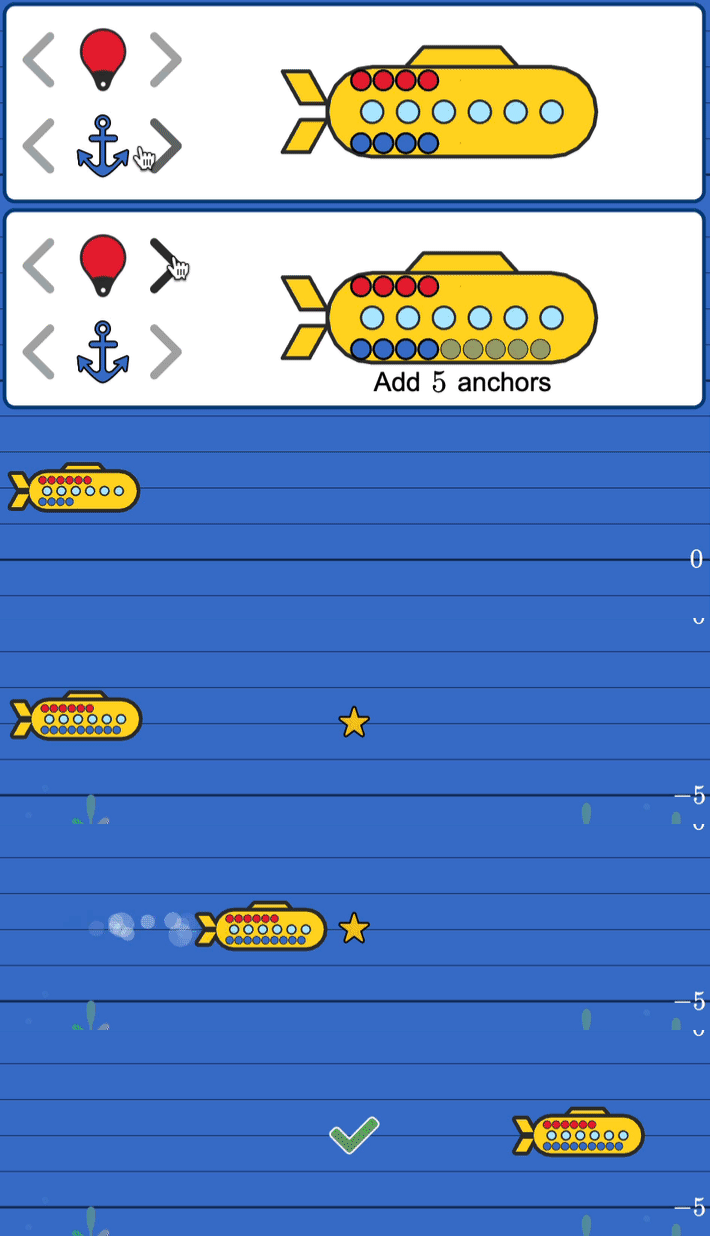
And then we ask kids, “Hey, what do you think about the star at +5? Can you come up with something that none of your classmates do?”
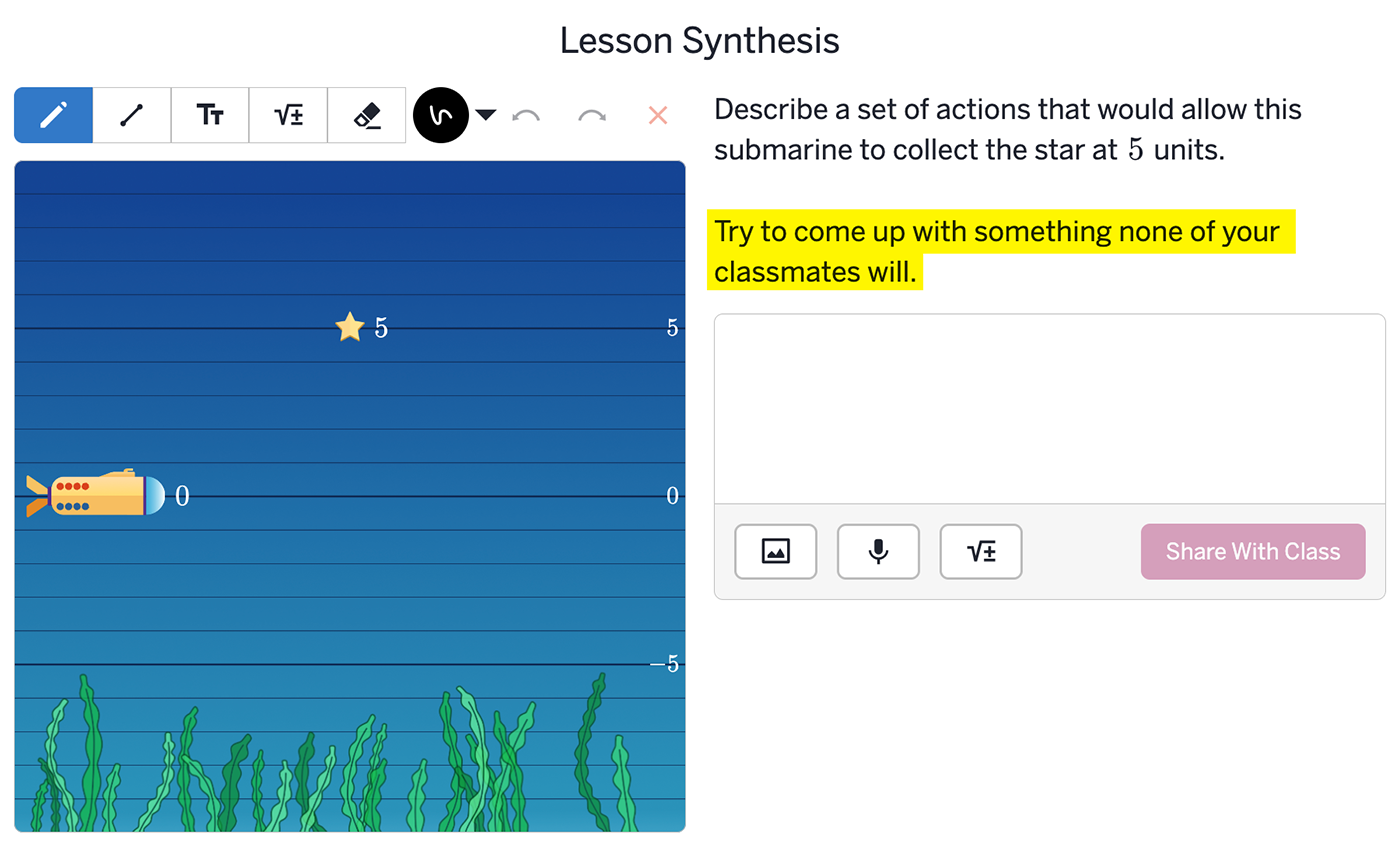
Let me tell you: Kids accept that challenge.
3. There is too much to talk about.
This is a good problem to have, but it’s still a problem. In the class screenshotted below, 25 students have put 300 thoughtful words in front of the teacher, every response different from every other!
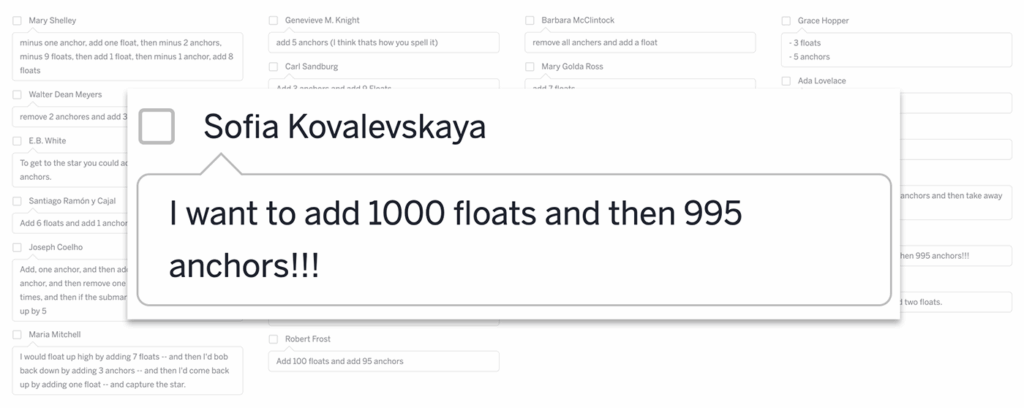
Teachers now have a problem of abundance, not scarcity. They have to decide which responses to select, and why, in an environment of cognitive overload.
This is very hard work for teachers, especially novices, especially teachers who lack mathematical content knowledge, especially teachers who are hanging onto the school year by their fingernails.
We offer teachers lots of different support for discussions throughout our curriculum—both in print and digital activities—but our new discussion support for digital activities is first-of-its-kind and best-in-class.
Discussion Moments.
- Student responses stream into the teacher’s dashboard.
- A message appears: “Analyzing Student Responses.”
- Shortly after, the message changes: “Open Discussion Moment.”

You click the message and see a classroom-ready discussion screen.
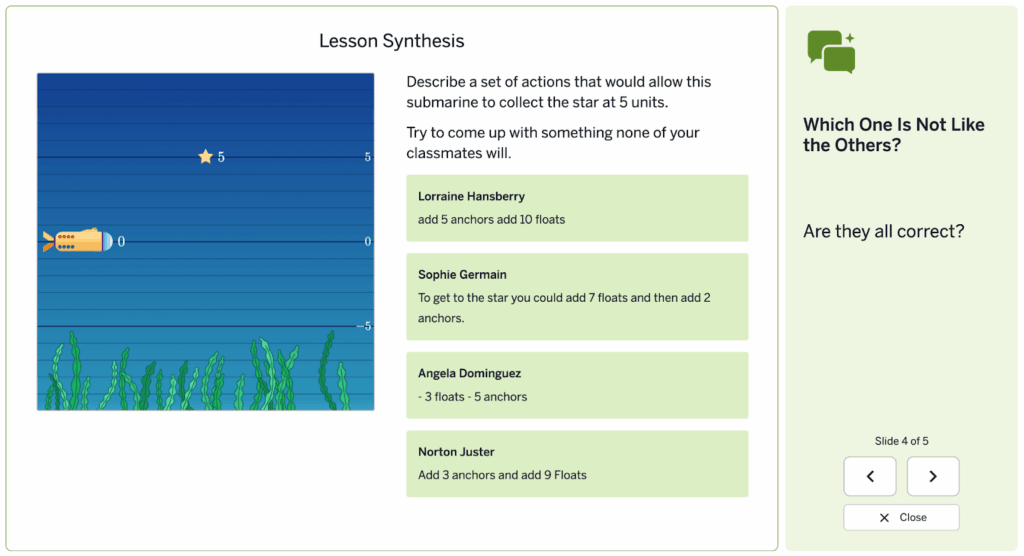
First, you see four student responses, each one authored by a student in the class, each one interesting on its own. This was not luck. Those responses were curated by a large language model at the direction of our curriculum experts. “Find three responses that capture the star in different ways,” our experts prompted the AI. “Responses that add anchors. That remove anchors. Find one response that might not capture the star.”
Next to those responses you see a question: ”Which one is not like the others?” That question feels surprisingly well-matched for this math and for those student responses. This, also, isn’t an accident. Curriculum experts made that decision.
You click the right arrow and see a suggested narration for the Discussion Moment, narration which was authored, again, by our human authors for this particular problem, to help novices learn to facilitate productive discussions in math.
That’s a “Discussion Moment.”
In the past, coaches, experts, and publishers have all asked teachers to . . .
- Select and sequence student responses.
- Construct a student-facing discussion resource.
- Lead the conversation.
Now we are asking teachers to . . .
- Lead the conversation.
In our experience, computers do quite well with the first two jobs while teachers obliterate computers at the work of leading a conversation, at connecting student ideas, at asking one kid what they think of another kid’s idea, at pulling ideas out of a kid who maybe doesn’t think they have ideas to offer. Discussion Moments delegate to humans and computers the best work for each of them.
Discussion Moments are different.
Lots of edtech companies are putting AI to work in lots of different ways. Discussion Moments are unique.
First, they’re designed to work through rather than around the teacher, during class rather than outside of class. They’re designed to support social interactions between students and teachers in the moment of instruction. This is the action.
Second, this is a classroom-ready resource. So many AI applications just output a ChatGPT-style resource. Lots of text. Several main bullets. Lots of sub-bullets. An emoji or two. And I am very sorry, but they are not useful in class. The teacher has to read all of that text, copy and paste and edit it, and then construct the student-facing resource all in the middle of class. That’s fantasyland, folks. At Amplify, we have, instead, created a one-click, classroom-ready resource.
Third, we’ve fortified these digital Discussion Moments with gallons of human expertise. Since December, I’ve worked with several of our curriculum experts—Casey Nelson, Brian Kam, and Tom Snarsky—and for every problem across several units of middle school math, they:
- Reviewed thousands of student responses to each problem.
- Identified thematic trends in the student responses.
- Decided whether or not those themes demand a discussion.
- Decided which of several discussion frames would be most appropriate, given those themes.
- Wrote an AI prompt specific to each problem to increase the odds that the large language model will curate useful student responses.
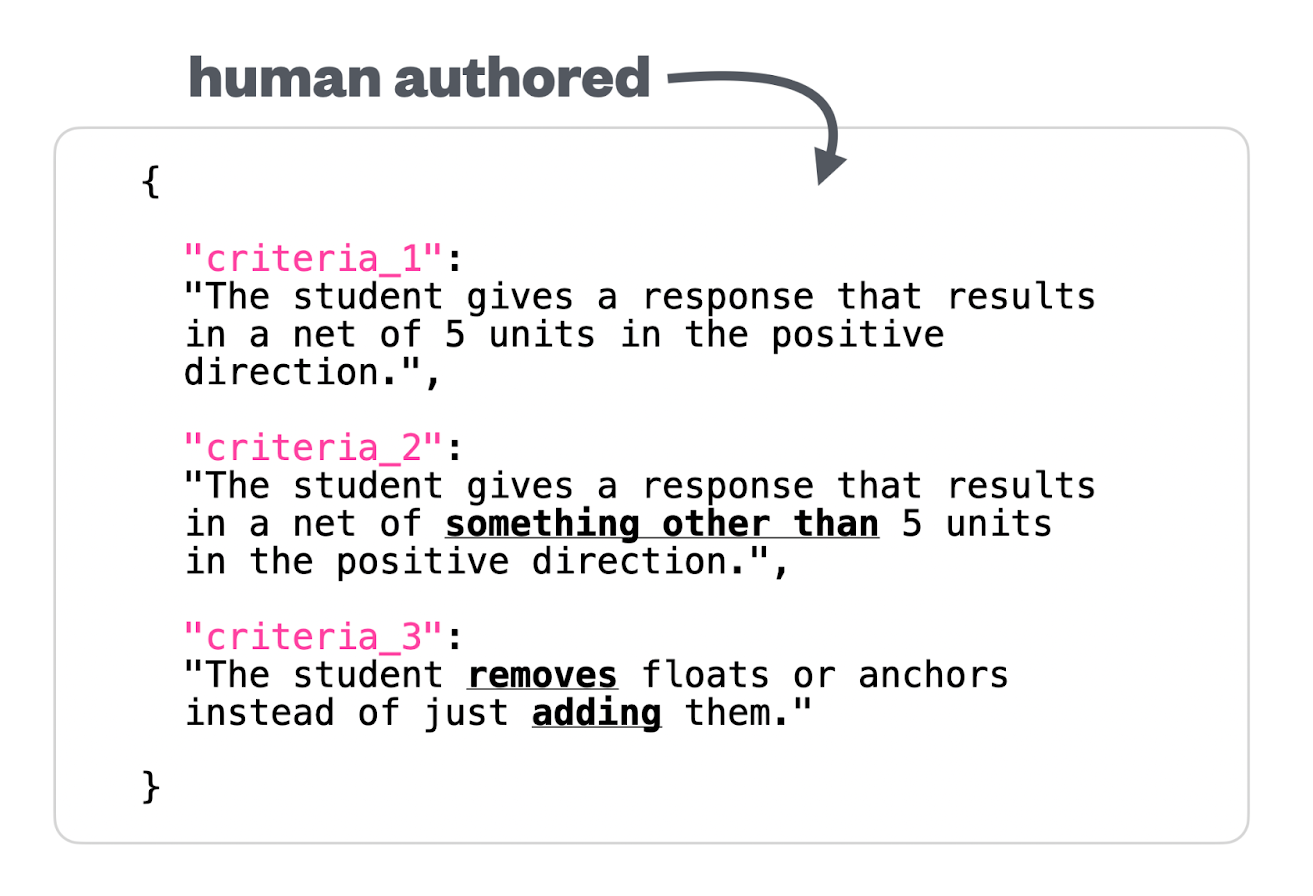
Most edtech companies would prefer to let AI lead this process from end to end, using the same prompt for every problem, even at the cost of the teacher and student experience. Meanwhile, we only ask AI to execute instructions and construct a resource. The nature of those instructions, the type of resource, and how it’s used—that is all determined by different humans and their expertise.
What do teachers and administrators think?
I ran a small-scale pilot of this feature last spring and kicked off a larger-scale pilot last week. A couple hundred teachers overall. I have never had an easier time recruiting teachers for a project than with this one. Every district math curriculum lead knows how challenging it is for teachers to lead discussions, and every one I asked was eager to support.
Two other examples of Discussion Moments.
Compare and Connect. We asked a large language model to locate responses that have one of a couple of important features but ideally not both. Then we constructed a Discussion Moment asking students to write a response that combines the best of both answers.

Critique, Correct, Clarify. Our curriculum authors noticed a frequent incorrect answer to a question. We told the LLM to watch out for it and frame it in a Discussion Moment where the class is asked to find value in the wrong answer before correcting it. Try to imagine what it does to a kid to hear their incorrect answer described as valuable.
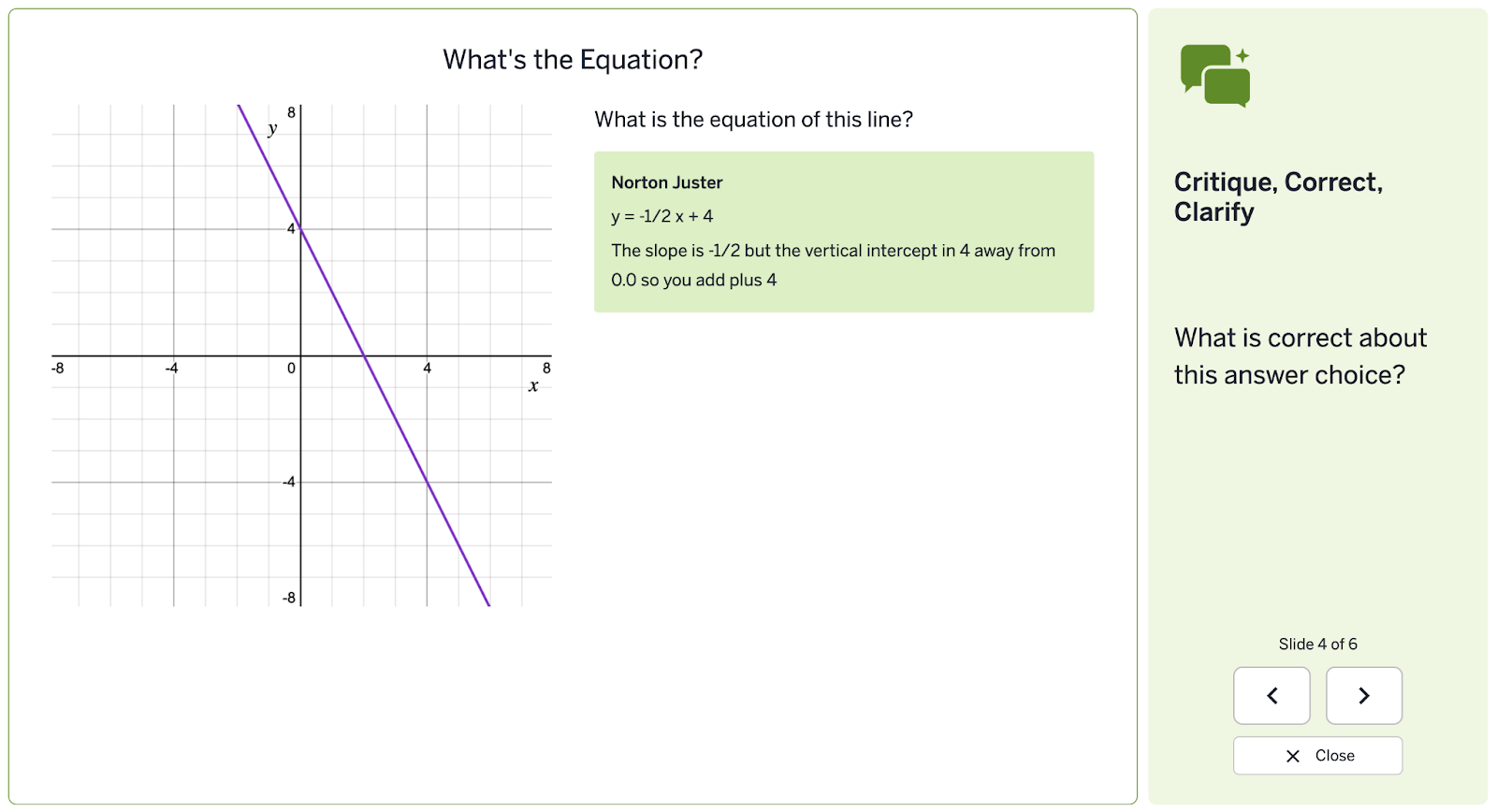
Wait—don’t you hate AI?
I get why you might ask me that, but no. I think generative AI is perhaps the most overrated education technology of my lifetime; I don’t think the chatbot tutors or lessonslop generators are going to transform K–12 education. But I do think generative AI is neat. And look, I have tried to support discussion work with K–12 teachers for the last ten years in other ways, too. I have run in-person and remote PD. I have written math lessons and teacher supports for those lessons. I have sent nifty little customized email sequences tailored to teacher usage. None of those supports have been as promising as AI is here. None of them has moved the needle like Discussion Moments because none of them has been able to meet teachers in their moment of need, at the point of use.
That’s it. You can find Discussion Moments in Amplify Desmos Math next school year.
See what math that motivates looks like.
In Amplify Desmos Math, a structured approach to problem-based learning builds on students’ curiosity while strategically developing math fluency and lasting grade-level understanding.
This video library will give you a sense of what Amplify Desmos Math looks like in the classroom.

Amplify Desmos Math in Action (K–5)
See the teachable structure in action with these videos showing a typical Amplify Desmos Math lesson. View print resources and try this lesson for free: Grade 3, Unit 2, Lesson 5: Rectangles and Arrays. In this lesson, students describe how the areas of rectangles are alike or different.
Warm-Up
Every Amplify Desmos Math lesson begins with a whole-class Warm-Up, an invitational Instructional Routine intended to provide a social moment at the start of the lesson in which every student has an opportunity to contribute. Some Warm-Ups build fluency or highlight a strategy that may be helpful in the current lesson. Other Warm-Ups act as an invitation into the math of the lesson. The Warm-Up for the first lesson of each unit introduces the Unit Story for the Unit.
Launch
The launch is a short, whole-class conversation that creates a need or excitement, provides clarity, or helps students connect to their prior knowledge or personal experience, which ensures that everyone has access to the upcoming work.
Monitor
As students work individually, in pairs, or in groups, teachers explore student thinking, ask questions, and provide support to help move the conversations closer to the intended math learning goal.
Connect
Teachers connect students’ ideas to the key learning goals of the lesson, facilitating class discussions that help students synthesize and solidify the big ideas.
Synthesis
Teachers ensure that students end the lesson with accurate and enduring understandings of the math goal through a synthesis of student ideas, explicit instruction, and reflection.
Show What You Know
Each lesson has a daily formative assessment focused on one of the key concepts in the lesson. Show What You Know moments are carefully designed to minimize the time students take to complete while maximizing the insight the teacher receives on a daily basis to attend to student needs during the following class.
Amplify Desmos Math in Action (6–A1)
See the teachable structure in action with these videos showing a typical Amplify Desmos Math lesson. View print resources and try this lesson for free: Grade 7, Unit 2, Lesson 9: Gallon Challenge. In this lesson, students use graphs to identify constants of proportionality.
Warm-Up
Every Amplify Desmos Math lesson begins with a whole-class Warm-Up, an invitational Instructional Routine intended to provide a social moment at the start of the lesson in which every student has an opportunity to contribute. Some Warm-Ups build fluency or highlight a strategy that may be helpful in the current lesson. Other Warm-Ups act as an invitation into the math of the lesson. The Warm-Up for the first lesson of each unit introduces the Unit Story for the Unit.
Launch
The launch is a short, whole-class conversation that creates a need or excitement, provides clarity, or helps students connect to their prior knowledge or personal experience, which ensures that everyone has access to the upcoming work.
Monitor
As students work individually, in pairs, or in groups, teachers explore student thinking, ask questions, and provide support to help move the conversations closer to the intended math learning goal.
Connect
Teachers connect students’ ideas to the key learning goals of the lesson, facilitating class discussions that help students synthesize and solidify the big ideas.
Synthesis
Teachers ensure that students end the lesson with accurate and enduring understandings of the math goal through a synthesis of student ideas, explicit instruction, and reflection.
Show What You Know
Each lesson has a daily formative assessment focused on one of the key concepts in the lesson. Show What You Know moments are carefully designed to minimize the time students take to complete while maximizing the insight the teacher receives on a daily basis to attend to student needs during the following class.
Hear from teachers.
Hear from teachers, administrators, and students across the country who are using Amplify Desmos Math in their classrooms right now.

S5-02. Uncovering the causes of math anxiety
We’re continuing our season theme of math anxiety, going beyond the basics, diving deeper into what causes it, and how we can help students move forward. In this episode, we talk to Dr. Erin Maloney from the University of Ottawa to better understand what’s actually happening in the brain when a person experiences math anxiety, and how we can take steps to shift student mindsets in a positive direction.
Listen now and don’t forget to grab your MTL study guide to track your learning and make the most of this episode!
Enjoy this episode and explore more from Math Teacher Lounge by visiting our main page.
Dr. Erin Maloney (00:00):
It’s the anxiety itself in many ways that can cause people to underperform.
Bethany Lockhart Johnson (00:06):
Welcome back to Math Teacher Lounge. I’m Bethany Lockhart Johnson.
Dan Meyer (00:10):
And I’m Dan Meyer.
Bethany Lockhart Johnson (00:11):
This is episode two of our new season, all about math anxiety. Who has it? What is it? What do we do about it?
Dan Meyer (00:20):
I’m learning so much, learning a ton.
Bethany Lockhart Johnson (00:22):
I loved our first conversation with Dr. Gerardo Ramirez, episode one, our first episode of the season. Really, our goal with that conversation was just to—we need to talk about the basics of it, for reals. Like, what is math anxiety?
Dan Meyer (00:36):
What is it? How do you measure it? How’s it defined? Super-helpful stuff.
Bethany Lockhart Johnson (00:40):
There’s not only one way that it’s measured. But it’s like, in active research right now, how are folks making sense of it? And I think Dr. Ramirez did such a fantastic job of sharing that with our listeners. And I learned a lot. You learned a lot, Dan?
Dan Meyer (00:56):
I did. And I’m also super-excited to take that knowledge that we have developed together and go and build on top of it and keep on climbing up up the mountain here, and learn more about math anxiety. Which is why we’re super-excited to have a guest on, Dr. Maloney, who is going to help us learn more—especially about what happens to the brain when it’s experiencing math anxiety. There’s some really complex stuff that happens there, including the role of parents and educators in creating and resolving math anxiety. And I think we’ll also learn that the whole situation is a bit of a hot mess. And we’ll try to make it a little bit less messy together.
Bethany Lockhart Johnson (01:34):
Little bit less messy. Dan, if we do nothing else, can we make it a little less messy?
Dan Meyer (01:41):
I sometimes prefer more mess, but in this case I prefer less. So.
Bethany Lockhart Johnson (01:45):
I have a two-year-old, so everything is a mess.
Dan Meyer (01:47):
Your life is mess. Yes. <laugh> Right. Well, I’m excited for you folks to hear this. It was a delightful conversation, so yeah, tune in. We are joined by Dr. Erin Maloney.
Bethany Lockhart Johnson (01:56):
Let’s go. We are joined by Dr. Erin Maloney, associate professor in the School of Psychology at the University of Ottawa, where she directs the Cognition and Emotion Laboratory, as well as serving as the Canada Research Chair in Academic Achievement and Well-being. Welcome to the show, Dr. Maloney. We’re so excited to have you in the Lounge.
Dr. Erin Maloney (02:20):
Yeah, thank you so much for having me. This is fantastic.
Bethany Lockhart Johnson (02:24):
So our last season was all about math and joy. And even when I read your title, I felt more joyful. Like, somebody is thinking about academic achievement, but with well-being in mind. I love it.
Dr. Erin Maloney (02:39):
Aw, thank you.
Dan Meyer (02:40):
Cognition and emotion!
Bethany Lockhart Johnson (02:42):
E-mo-tion!
Dr. Erin Maloney (02:43):
I don’t think they can be separate. I think that you have to think about them together, ’cause they’re so intricately connected.
Dan Meyer (02:49):
Love that. People try, but we love that. Yeah. That’s our vibe here, too.
Bethany Lockhart Johnson (02:52):
People try. That was a big problem with my math anxiety. They just wanted…there was no room for my emotion. They’re like, stop weeping at your desk—
Dan Meyer (03:00):
It’s rearranging neurons….
Bethany Lockhart Johnson (03:01):
—you’re distracting the other children. So would you mind telling us the story of how you even got interested in this topic? You know, when you tell people that you study math anxiety—or, actually, I don’t know how you describe it to them; I’m hopeful you bring in that well-being part—but how did you get here? What do you, what do you, what do you…yeah, tell us! We love it!
Dr. Erin Maloney (03:23):
<laugh> I feel like what you’re actually asking is, “How did you make life choices that got you to here?” <Laugh>
Bethany Lockhart Johnson (03:29):
Justify your life choices! Ready? Go!
Dr. Erin Maloney (03:32):
<laugh> Whoo. OK. So, all right. So we often, in psychology, we joke that instead of doing research, we do “me-search.” And that’s, that’s admittedly true in my case. I was a student who absolutely loved math up until about eighth grade, and then something changed, and all of a sudden I was terrified of math and I had absolutely no sense of self-efficacy in it. Despite trying really hard, I was extremely anxious about it. And so I initially, I set out…my parents were completely convinced that I was absolutely capable of doing mathematics and that I was getting in my own way. And when I went to university, I decided to prove them wrong. So I set out to prove that some people just can’t do math, and that’s the end of it. And, you know, 20 plus years later, my parents were right. And it turns out that many people—well, I would argue virtually everyone—can do math. And that if you are really anxious about it, it can get in the way. And interestingly, you know, in, in the years that we’ve been doing this research, there’s really good strategies that can be used—that hopefully we get a chance to chat about—that can really help reduce the amount of anxiety that students are experiencing. But I really did set out, like the bold teenager that I was, to prove my parents wrong. And that backfired <laugh>. So I know it’s kind of a strange answer, but it’s the truth. So I was really interested in understanding why it was some people just could not do math.
Dan Meyer (05:10):
That makes two for two so far, on guests for this season who did a version of me-search. And I feel like this is pretty common for a lot of researchers. Like, I wanna figure out…my experience as a teacher, the part where you, I think, diverge from a lot of people I knew in grad school, myself included, is that you actually let counter evidence change your perspective on things. Whereas I feel like a lot of us go in: “I know this is true and I’m gonna gather data!” and lo and behold, I’m true! But only now, with the research TM, you know, trademarked research, attached to it. So that’s, really exciting. Thanks for sharing that.
Dr. Erin Maloney (05:43):
No, you’re welcome.
Bethany Lockhart Johnson (05:44):
But don’t people say that the more personal you get, the more universal it is? Right? So if you go and get your doctorate about something that you think is just your experience or in your brain, then people are gonna be gonna be like, “Wait a second; you think that too?” “Wait, that math anxiety isn’t just you?” I don’t know, it sounds like a pretty great path to me. When you tell folks that you study math anxiety or when you’re speaking to folks about your research, do you find that there is a lot of folks who relate to what you’re studying? Or how does that conversation typically go?
Dr. Erin Maloney (06:20):
Yeah, so it is I think an extremely relatable topic. Not in the sense that everyone experiences anxiety about math, but everyone seems to know somebody who’s really anxious about math. Or everyone’s at least aware of the stereotype that like some people are math people and some people aren’t, and that’s just the way it is. So it feels like everyone has feelings about math and everyone seems very happy to share those feelings. So one thing I’ve always found really interesting, and actually, so I, I know you mentioned that you had Gerardo on recently. Gerardo and I have had really interesting conversations about how people are really quick to tell you that they hate math and they can’t do math, and they’re anxious about math. And I’ve yet to have anyone ever tell me they hate reading, they can’t read, they’re really anxious about reading as an adult. So for some reason math seems really different. And in that sense people always seem to be pretty excited to talk about their feelings towards math.
Dan Meyer (07:23):
Yeah, definitely. Been on an airplane or two myself and had those conversations. You know, people asking to be reseated because they found out that I do math for a living or whatever. Or just unburdening themselves, for sure. I’m super-curious: I think that the fact that you are doing the me-search is reason enough to want to dedicate your life to this study. But I am curious: If you were gonna justify to someone else, why is math anxiety important to study? What are its consequences, even outside of math education? What would you say to that?
Dr. Erin Maloney (07:57):
So I think it’s probably not hard to convince people that success in math is important, right? So we know that children who start elementary school behind in mathematics tend to stay behind in mathematics, unless they have any kind of very targeted intervention. We know that children who do worse in mathematics throughout K to 12 education in general get lower-paying jobs when they’re older. We also know that when they do worse than mathematics relative to their peers, there’s fewer jobs that are open to them, relative to if they excelled in math. Right? And so I think in many ways there are really clear consequences for students who are not comfortable with math and who avoid it. But I think one of the really, really interesting things about math anxiety, and maybe part of why I’ve fallen in love with it as a research topic is that it’s the anxiety itself in many ways that can cause people to underperform. So it’s not just the case that people who are bad at math are anxious about it. It’s actually that the anxiety itself can cause you to do worse in math. And that for me is really exciting, ’cause it means that if we can change your mindset, then we can really set you on a path with several more options available to you career-wise. And I think that is really empowering.
Dan Meyer (09:18):
Hmm. Yeah, definitely. And I’d love for you to explore — your laboratory is the cognition and emotion laboratory, which I love, how you’re creating those linkages between how you feel about a thing and what your opportunities or your aptitude for learning it. I’m really curious, can you say more about the, the relationship there? How does feeling anxiety impair your ability to do mathematics?
Dr. Erin Maloney (09:41):
Yeah, so feeling anxiety, typically what you tend to experience is these negative thoughts and ruminations. So you can imagine, you’re somebody who doesn’t really love math, you’re pretty anxious about it; you know, Bethany, maybe you’ve had this kind of experience before. I’m gonna call you out on it. I’ve had it many times, where you sit down to do a math test and all of a sudden you’re not focusing on the actual math test in front of you. You’re focusing on things like the consequences of not doing well on this. Right? Or “my parents are gonna be really disappointed if I don’t pass this test,” or “my teacher is gonna think negatively negative of me,” or sometimes we see things like, “I’m a girl, girls don’t do math.” These types of stereotypes. And what happens is that those thoughts actually tie up really important cognitive resources, like, really important memory resources, that you need to do the math test. And so if you are trying to essentially do two things at once, right? You’re trying to deal with all these negative thoughts that are distracting you and you’re trying to do the math test, then you’re not going to do as well as someone who’s sitting down and doesn’t have all of these distracting thoughts to deal with. And we actually know that from research that we have in our lab right now, where we just ask people like, “Hey, when you did this math test, what kind of stuff are you thinking about?” what we find is that the people who are really anxious about math report a whole bunch of thoughts that are unrelated really to the math test, per se. It’s more about the consequences of doing poorly. And as a result of those thoughts, they actually end up doing worse.
Dan Meyer (11:14):
This has been really helpful to figure out, how the emotional state of doing math affects the ability to do math. And it’s really interesting how you’re saying that the direction of the causality can go from the emotions to the cognition. And I’m just curious then, what is the source of the bad emotions about math? Where does that come from? Is it nature? Is it nurture? Some combination? How do you see it?
Dr. Erin Maloney (11:39):
Yeah, so one, that’s a fantastic question. And there’s been a whole bunch of people all around the world that have been spending a lot of time really trying to pinpoint that down. And I think the answer is that it’s, you know, it’s complex. So most of what it’s looking like right now is that it is a combination of both. So essentially what we find is that kids who start elementary school who are a little bit behind in math—and for the question of why they’re behind, that’s also complex; it could be genetics, it could be just environmental input, before the child ever entered formal schooling kind of thing—but in essence, what we find is that kids that start school behind in mathematics, those are the children who are most likely to develop anxiety about math by the time they’re finished first grade. OK? But we also know that once they’ve developed the anxiety about math, then that’s when they get these thoughts and ruminations that kind of tie up those memory resources, that then is gonna make it harder for them to succeed in math tests. So you get into this sort of vicious cycle, right? Where maybe you start behind a little bit and then you develop the anxiety, the anxiety causes you to underperform relative to what you should be able to, so now you’re even further behind, you get more anxious because you’re not doing as well as you’d like to…but again, kind of coming back to the “Why are the children starting behind in the first place?” Some of that seems to be the role that parents are playing in the household. So some kids come from a household where parents are playing a lot more math games with them, talking about mathematical concepts on a regular basis. Maybe they have older siblings who are, you know, practicing arithmetic and, and mathematical processing in front of them. And so those kids are exposed to more math before they ever even start formal schooling. Those kids seem to do better. And then we also know that the parents’ attitudes matter a lot too. So what we find is that when parents are high in math anxiety themselves, especially when they help their children a lot with their math homework in really early ages, we find that those kids end up being more anxious about math by the end of the school year, and they also end up doing worse in mathematics. So it really does seem to be, you know, kind of a complex set of factors that have something to do with both maybe genetic predisposition to success in math and genetic predisposition to anxiety, but then also the social attitudes and stereotypes about math to which you’re exposed at home that really seem to be coming together to create this anxiety in young children.
Bethany Lockhart Johnson (14:24):
I feel like everything you’re saying is <laugh>…it makes so much sense and yet it’s so often not talked about, right? Because it’s just more like, it gets boiled down to, “Oh, they’re just not a math person,” instead of all these other factors that are at play. And I completely remember the anxiety I felt, whether it was a test or not, walking into my math classroom when I was in ninth grade. And there’s no way I was set up and ready to learn. Right? <Laugh>. And something with—we mentioned Dr. Ramirez, he was talking about validating that anxiety. If teachers validate that like, “Oh, you know what, sometimes you might feel stumped, or this might feel overwhelming.” Even the power in creating space for that in the classroom, right? And acknowledging that it doesn’t—math doesn’t have to “come easy” to you in order for you to have access or make sense, is such a powerful concept. And I love the way that you are looking at all these different factors and saying, “Hey, it’s both simple and also a lot more complicated than we’re we’re making it.” Right?
Dr. Erin Maloney (15:36):
No, and I agree with that sentiment so much. Like, I think, though—one thing I will sort of caution is that I think when teachers are validating the anxiety, or when parents are validating the anxiety, I think there’s a very fine line that needs to be walked where we need to be able to say, you know, “It’s OK to struggle with something. That’s, that is completely OK.” And as we’re, you know, as we’re working towards something that’s really valuable, right? We can, we can work hard at something and by working hard at it, we’re going to get better. And I think that type of validating is really, really important and valuable. I think what we wanna be careful of is not to say things like, “Oh, it’s OK. I also never loved math.” And, you know, “Oh, I was never a math person either.” And so even though we might be bringing comfort to the the child, I think that that’s sending the wrong message. And so sometimes it’s really well intentioned and really not great—
Bethany Lockhart Johnson (16:37):
A hundred percent.
Dr. Erin Maloney (16:38):
—in terms of the messaging. So that’s the only…so just for people listening, the only sort of caution that I would give there is that I think there’s nuances to the validating of the feelings that are important.
Bethany Lockhart Johnson (16:50):
I am so glad you said that because as a kindergarten teacher, I vividly remember—and this is as early as, you know, the kids are five years old, right?—and I remember in a parent-teacher conference, a parent saying, “Oh, I wasn’t a math person either,” or, “Oh, no, ugh.” And they were so quick, like you said, they wouldn’t say that about reading, but they were so quick to talk about their lack of natural math aptitude, right? And, and it was really interesting because you know that even if they’re not saying that specific thing at home, those attitudes are absolutely carrying over at home. And they’re absolutely carrying over to, to how they interact with their kiddo around math and around what’s happening in the conversations about math. And I felt like a lot of times my work as a teacher was also to help support parents through their own math anxiety, and help give them some new language for how they can talk about math. And that math is more than just getting to an answer quickly. Like, let’s talk about, let’s go on math walks, let’s go on number walks, what numbers are around the home? Or oh, is that bigger than this? Do you have more of this? And even those little things, I, my hope was that it was starting to shift the conversation around what math was possible in the home, particularly when you saw that it was the parents who had palpable math anxiety. Right? And how much you know that that’s gonna impact what’s happening when you sit down to do homework together.
Dr. Erin Maloney (18:22):
Yeah. And I love that you have worked to encourage parents to do that. So we do similarly. Like even from a research perspective, where I will often give talks to parents and teachers and we talk about the idea of trying to mathematize everything, right? So just the idea that math is absolutely everywhere, and you know, whether it’s a matter of playing games in the car with your kids where you’re thinking of a number and it’s “My number is higher than 42, but lower than 80, and what number do you think I might be thinking of?” And, and gradually trying to get the child to that number. Or, you know, asking questions like, “What’s your favorite even number and why?” And just little things like that that, that I think can make math fun for kids, that help—I don’t even know how to explain it, but just that idea of bringing joy into it, so it’s not always this heavy subject that kids have to come to. So we definitely try to talk to parents about the idea of, like I said, mathematizing everything. And usually it’s well-received, ’cause often parents find it empowering, right? They’re like, “Oh, well, I could do that! But like, that’s not math!” And you’re like, “No, but it is.”
Dan Meyer (19:33):
Yep.
Dr. Erin Maloney (19:34):
Like, it is! And sometimes parents will say like, “Well, I don’t know how to do fractions.” And you’re like, “OK, but how do you bake?” “Well, I don’t know! I just, like, I know how to do those fractions!” And you’re like, “OK, but that’s the starting point. Let’s work with that.” Like, let’s, you know. And I think a lot of times, it’s reminding the parents that they’re actually far more capable than what they think they are, despite the fact that maybe they struggled with math when they were younger.
Dan Meyer (19:58):
Yeah. This is so interesting. And I feel like part of the challenge around conversations about anxiety and math and how to, how to resolve it and where it comes from, is that it, like, it presupposes a single definition of math. And so, you know, we’re talking about like how to be more mindful about math. But you know, like if kids were walking every day through a treacherous street, you know, the solution might not be become more mindful about that street. It’s just like, we gotta fix the treacherous nature of the street, really. You know, I love that we’re talking also about redefining what math is, making it more playful. That feels like a super-important component here. I’d love to know more about what you know about the role of gender in all of this. Are there differences in the way boys and girls experience math anxiety and how it relates to achievement in math?
Dr. Erin Maloney (20:48):
Yeah, so, there’s really, really interesting research on gender in math anxiety. So in general, we find that girls tend to experience more anxiety about math than boys do. So one hypothesis is that it has to do with just social stereotypes that, you know, girls are, are good at reading; boys are good at math, kind of thing. So there’s some evidence to suggest that that might be playing a role. There’s other evidence to suggest as well that maybe boys actually do experience as much anxiety, they just don’t really own up to it.
Dan Meyer (21:20):
Ooh, yikes.
Dr. Erin Maloney (21:21):
So thoughts are, you know, there’s a bit of an apprehension for males to admit experiencing the anxiety. But I think one of the things that is extremely interesting about it—at least to me—is that we don’t tend to see gender differences in young children. So in early elementary school, even though we’ll see that kids as young as six years old will experience anxiety about math, and that that anxiety is related to how well they do in math and how much they enjoy math, it doesn’t seem to vary as a function of gender at that young age. It doesn’t seem to be related to gender until kids are at about sixth, seventh grade that we really start to see this gender difference coming online. And so that, to me, suggests that it’s probably something more social than biological at play. It probably has something more to do with these stereotypes and stuff. But another really interesting—or at least, I’m biased, but to me—another really interesting line of research that comes into play—and some of this is stuff out of my own lab—so we know that boys in general tend to do better at spatial processing than girls. And we know that spatial processing is really important for math, right? So math and space are pretty connected. And by spatial processing, I mean things like being able to picture something rotating in your mind or, you know, envisioning how these puzzle pieces might fit together. And so we know that boys tend to do better at that type of processing. And the gender difference there seems to be related to gender differences in math anxiety. So there’s some speculation, too, that it might be that as the math starts to become more reliant on spatial processing, that that’s when we see this separation between boys and girls with respect to how much anxiety they feel about math. So a lot of this is to say, I think the answer to the gender question right now is what I think what we would officially call a bit of a hot mess, <laugh> where I think there’s probably more questions than answers. But I think that there’s definitely something going on. And it really seems to be coming on later in elementary school.
Dan Meyer (23:32):
That’s a refreshingly honest admission from a social scientist, that it’s a hot mess and not perfectly clear, <laugh> so I appreciate that. It’s interesting what you said about the spatial reasoning. In our work creating curriculum at Amplify, I find we lean a lot on trying to tie abstract math towards spatial topics. Like, can you estimate a quantity before you calculate it? Can you identify a pattern and where it breaks before you prove it abstractly? And, I dunno, it’s just interesting to me. I’m just thinking out loud about how I feel like math becomes more abstract rather than more spatial. The farther you venture into secondary math…I’m wondering if I misunderstand what you’re meaning by spatial, and the progression of math from K–12.
Dr. Erin Maloney (24:20):
Yeah, so I think you can still have—you can have math be abstract, but still really relying on spatial processing. Right? And I think part of that is maybe a bit of us having different definitions of when we say “spatial.” So in cognitive science, when we talk about spatial representations or spatial reasoning, it’s really like anything you’re picturing in your mind, any time you’re really picturing these things in your mind and manipulating those images at all. So if you imagine, even like at a simple level, but it’s gonna hold when you’re going more complex as well. So doing like equivalence problems, for example, where you have to balance the equations.
Dan Meyer (24:58):
Yeah.
Dr. Erin Maloney (24:59):
Even just being able to envision things kind of moving around that equal sign and bringing one piece of the equation from this side to the other is actually an extremely spatial kind of reasoning. Right? Or when you’re expanding, that’s actually extremely extremely spatial, despite the fact that it might not feel like it initially. Obviously anything in geometry is going to be very spatial. So I think, in that sense, we would argue that the spatial processing is still playing a pretty important role. But it’s maybe a different type of spatial processing than what we’re seeing at a very early level in elementary school. That said, you can completely disagree with me too. ‘Cause I could also just be wrong, and that’s fair. My kids tell me I’m wrong all the time. So I’m used to <laugh> being told that I’m wrong.
Dan Meyer (25:47):
Well, we’re a bit more deferential on this here show, with our guests. So I would not do that. But it makes sense, what you’re saying about how these are things that you manipulate in your mind, whether they are Xs and Ys or numbers and fractions. These are all things that we manipulate. That ties into differences in this spacial reasoning category, it sounds like, which then contributes to math anxiety. And it does start to feel like there’s a lot going on here, is what it feels like.
Bethany Lockhart Johnson (26:14):
You mean hot mess?
Dan Meyer (26:16):
I meant hot mess.
Dr. Erin Maloney (26:17):
Yeah. <laugh>, I think that’s the technical term, right? I’m pretty sure that’s the technical term for it.
Dan Meyer (26:21):
I didn’t know the citation for it. So I didn’t say it. But I knew who in literature named that. But yeah.
Dr. Erin Maloney (26:28):
I’ll write something at some point.
Dan Meyer (26:30):
We’ll cite Maloney, 2022. Yeah. Yes.
Bethany Lockhart Johnson (26:34):
So I will say that one of my dreams in thinking about this season and last season, but particularly this season, since we’re really getting to talk to some researchers who get to think about this, and have really interesting conversations about it all the time…one of my dreams is that we’re bringing—’cause we do have some folks who are researchers that are listening, right? But then we also have teachers and folks who are in the classroom every day, and parents and caregivers listening. And so I think one of the beautiful things about the way that I hear you talking about it is you’re thinking about the research, but it’s so applicable. Right? And I wonder if there’s anything else you can say around it. I wanna reduce that divide, that gap, between the research that’s happening and then what’s happening with the kiddos and in the classroom and at home. And I don’t know if it’s like a magic wand thing where like <laugh> if there were changes you’d wanna see at a societal level, to try to combat math anxiety, but you see where I’m going. You know, it’s like <laugh>….
Dr. Erin Maloney (27:39):
- So I’m gonna answer maybe in two ways. So I think the first thing that I’m hearing from you is that idea of diminishing this divide, right? And so one thing I try to keep in mind, as someone who’s a researcher and working in the lab, I will often be called in to talk to teachers and give professional development sessions. And they often want the sage-on-the-stage academic, that stands up there and tells you the answers to things. And one of the first things that I’m gonna admit when I get up there is, “I am not on the front lines.” So what I do in the lab, for me to tell you that that’s gonna work in a classroom of 30 kids who may or may not have eaten dinner that day, and may or may not have snow pants, and may or not…like it’s–
Bethany Lockhart Johnson (28:23):
Mmm, yes.
Dr. Erin Maloney (28:24):
You know, I think we also need to be a little bit reasonable. So I try really hard in my own program of research to make sure that I’m always talking to teachers and to principals and to curriculum designers to make sure that the ideas that I have make sense. In fact, one of the most recent book chapters that I wrote, I wrote in collaboration with a really good friend of mine who’s a principal, an elementary school principal, and a former math consultant. And we wrote it together, to really say like, “Hey, here’s how we can help each other inform how research can inform practice and how practice can also inform research.” ‘Cause he can come to me and say, “I’m doing this. I can’t find anything in the literature to support this, but I’m sure it works!” And we can design something in the lab to test whether or not it seems like it’s gonna work.
Bethany Lockhart Johnson (29:11):
That’s huge. Yeah.
Dr. Erin Maloney (29:12):
Empirically. And so I think that open communication is massive. One thing that we’re doing in my own lab to try to keep that open communication available. So to anyone listening who’s ever tried to get access to a journal article, they’re held behind paywalls, right? So one, the way it works, my understanding of this anyway, is that the journal owns the formatted version of the paper. So what we do is we put up audio recordings of all of the research papers that we ever publish. So I’m pretty sure I own the words as the author, and the journal owns the prettified version that you can buy. So we audio-record all of our papers, so that if teachers or parents ever want to hear the actual science that’s going into some of these decisions, they have access to at least the stuff that we do in our lab. And we also put up an infographic for every paper, just highlighting kind of the main questions and main findings. And we do that because I think that the only way for the information to actually be useful is if it gets into the hands of the stakeholders that actually need that information.
Bethany Lockhart Johnson (30:21):
And is accessible. That’s huge. That’s huge!
Dr. Erin Maloney (30:24):
Yeah. Yeah. So that’s one way that we try to do it. And like I said, the other thing, we try to always be working with principals and with teachers. I joke that the way that I remedied this in my own life…so my husband’s a teacher; it’s like, I just married one! It’s fine! <laugh> I can grill him on a regular basis, and be like, “I wanna try this experiment. Do you think it’s gonna work?” And he can say, like, “It’s not going to. Here’s why.”
Dan Meyer (30:47):
That’s awesome. Marrying a participant—you know, a research participant—is unethical, of course. Would not clear IRB. But turning your partner into a participant? Like, what are you gonna do? That’s great.
Dr. Erin Maloney (30:57):
Yeah, no, that’s fair game.
Dan Meyer (30:58):
Yep.
Dr. Erin Maloney (30:59):
Yeah. So that’s—I think we we compensate each other <laugh>. So, no…so I do joke a little bit about that. He was a teacher simply ’cause he wanted to be one. Not ’cause I needed him to be one. But, I think that communication part is, is really key. That’s one thing. Then the other part of the question or the other sort of piece of the question that I was hearing is that idea of, how do we fix math anxiety. Right? Like, what’s the great, “I’m glad that there’s a whole bunch of time and effort and energy going into trying to understand this, but what, where are we at?” And I think with that, it’s really, really promising. So there’s been a lot of research coming out looking at how best to help children or even adults manage their own anxiety about math. And there’s a few really interesting strategies that seem to be quite effective. So one, and I don’t know if—um, it feels weird calling him Dr. Ramirez, just ’cause I know him well!—but I don’t know if Dr. Ramirez would’ve talked about this when he chatted with you, but he has some really interesting work on expressive writing. Did he chat about that at all?
Bethany Lockhart Johnson (32:07):
He didn’t, but I’ve read some of his work about it and I think it’s so fascinating.
Dr. Erin Maloney (32:11):
Yeah! So, OK, well, I’ll tell you about his work on it.
Bethany Lockhart Johnson (32:13):
Yes, please. Please.
Dr. Erin Maloney (32:14):
Because it’s super-useful. So when we talked about that idea of how anxiety causes these thoughts and ruminations, and they tie up the memory resources that you need, what Gerardo has found is that when you get students to write about their anxiety for about 10 minutes before they do a test, what ends up happening is they end up doing better on the test, relative to if they would not have written about their anxiety at all. And this is particularly true for students who are really high in anxiety. OK? And the idea is that all of those thoughts that they were going to have about the test or the consequences of the test, et cetera, you just kind of get ’em…it’s like a mind dump where you get ’em all onto the page at first before you even go to do the test. And now when you go to do the test, you’re not having to do two things at once. You’re no longer dealing with these thoughts ’cause you got ’em all out on the paper beforehand. And so Gerardo has some really interesting work showing that that works for math anxiety. And then it also works for just testing anxiety in general. And so that’s a strategy that I love. I also—part of what I really love about it is it’s so low-cost, right? You need a paper and a pencil and it’s great. So those are always my favorite strategies, the ones that don’t really cost us anything. So that’s one way of dealing with like the cognitive part of the anxiety. The other thing you can do is try to deal with the anxiety part of the anxiety. So for that, what we find is that the typical strategies that you’re gonna see for anxiety tend to work for math anxiety. So things like focused breathing. Right? Making sure you’re doing deep inhales and exhales. That really diaphragmatic breathing seems to be quite helpful. We know that what we call progressive desensitization is really key. That’s the idea of doing things, you know, starting with the questions that you know how to handle. And then gradually working up to the more difficult questions. So you’re sort of gradually exposing yourself to the more complex stuff. And how that can play out on an actual test at school is, you sit down, and instead of just starting with question number one, you actually read the whole test, see which questions you feel like you know the best, start with those questions, and that helps build your confidence so that you’re better able to tackle the questions that are maybe a little bit outside of where you’re currently at. So that seems to be really helpful. The other part that I will say, too, that’s extremely helpful: So we know that anxiety really ties up those memory resources. And so the more you can make the math automatic, the more immune it’s going to be to anxiety in the moment. And so I know that this part can be a little bit controversial, because we don’t wanna necessarily demotivate children, and kill the enthusiasm for math that we’re trying to cultivate…but really, you know, really committing your arithmetic facts to memory can be extremely helpful. So really learning those times tables, really learning your addition and subtraction facts. ‘Cause what happens is, then when you’re in a situation where you need that information, even if you’re anxious and you’re working with fewer cognitive resources than what you would normally have, you actually don’t need that many cognitive resources to be able to pull something from memory that you’ve memorized. So it really helps to kind of protect you against some of the negative impacts of the anxiety while you’re doing that test.
Bethany Lockhart Johnson (35:37):
And you’re not using all your cognitive resources to figure out seven times eight, because you can really focus on what you’re trying to do with that. Oh, that’s fascinating. Yeah. Yeah.
Dr. Erin Maloney (35:47):
Yes. No, a hundred percent right. And so I know that’s one that, like I said, I know it can be somewhat controversial because it’s…you know, we’ve talked about—or we haven’t talked about in this conversation, but we often talk about—the idea of drilling and killing. Right? So you drill the facts, you kill the, the enthusiasm. But I think that there are ways that we can drill arithmetic facts, or help make them automatic, but still fun, right? It doesn’t have to always be in a high-pressure kind of way.
Bethany Lockhart Johnson (36:16):
Totally. And we’ve talked about fluency, and I’m sure we’ll talk about it more in the Lounge. And that is interesting, that link between anxiety when the fluency isn’t there, that—or, of course we hear about anxiety with timed tests, but the idea of that IS something you can do to reduce it, because you have those facts just at your ready. Right?
Dr. Erin Maloney (36:37):
Yeah. So I actually, again, I’m gonna be a little bit controversial. So I don’t hate timed tests in the way that a lot of people do. But I love time to practice. So I think once we’ve got to a point where children have a fairly decent understanding of skills, of a skill, once they’ve got a fairly decent grasp on it, then I love the idea of the timed practice. So it can be still in a low-pressure situation, where in many ways it doesn’t matter if you get the answer to the question correct. But we’re practicing doing it in a situation in which you might be feeling a little bit of pressure, but it’s not real pressure, if that makes sense. And I think that can be really, really useful for students. And again, it can be done in a fun way, right? It doesn’t have to be these super-intense ways. It can be fun. But I think that in life there are situations in which the time that it takes you to complete a problem matter. And I think that we have to make sure that we don’t get too far away from that.
Dan Meyer (37:40):
Yeah. It feels like we should do an entire other episode thinking about ways to develop that fluency and automaticity that don’t contribute to anxiety, or create further disparities between people who are high math anxiety and low math anxiety. Not a small question, I’m sure. And I appreciate you alluding to all of that. You know, this whole thing, as you said, is quite the hot mess. And I feel like you, Dr. Maloney, have helped us make this a little less messy, in our heads, and hopefully the listeners’ heads. I really appreciate that. I just love…you’ve mentioned lots of resources that you have. You’ve alluded to them: audiobook-style readings of your research, which I need ’cause I just finished, you know, Harry Potter, the seventh book, so I need a new thing to listen to like that. Also infographics. Can you tell our listeners where they can find this work of yours, and if there are any other kinds of resources that you wanna plug for our listeners here?
Dr. Erin Maloney (38:32):
Yeah, for sure. So all of our resources can be found on my lab website. So the address for that is www.ErinMaloney.ca. So there we have, like you said, the infographics and the audio articles and all that stuff. And then we also have a link to a new kids’ book out, actually, that a colleague of mine and I have published recently, that really walks through some of these strategies on combating math anxiety. The book is written as a children’s book, so it’s Peyton & Charlie Challenge Math. But it secretly is a book that would also work for adults. So if you are a parent that’s a little bit anxious about math, or a teacher that maybe is a little bit anxious, and you wanna see how some of these strategies can play out, in that book—we linked to it on the website, but it is available for purchase on Amazon. And the one thing I will say about the book, ’cause this is something that we were pretty proud of, so Sheri-Lynn Skwarchuk, who is a school psychologist, and I wrote the book. And it’s available for purchase at our cost price, so we don’t actually make any money on the book. It was literally just a way of getting some of the science out to people who might be able to benefit from it.
Bethany Lockhart Johnson (39:45):
Reducing that divide!
Dr. Erin Maloney (39:46):
Yeah, well that’s what we’re trying to do! Right? So I think in the U.S., I think it’s like $6 on Amazon. And then in terms of other resources, we’re in the process right now of creating some informational videos and and stuff like that that hopefully will be useful for parents and for teachers, just in terms of understanding a little bit more about the anxiety and understanding how to deal with the anxiety in the classroom more, at home or wherever it might be coming up.
Dan Meyer (40:15):
Well, thanks so much. I really appreciate—we appreciate!—you coming on, and hearing about how you’re trying to bridge so many different barriers from research to practice, and school to home. It’s just really inspiring. And we’d love to have you back on sometime. So thank you so much for joining us.
Bethany Lockhart Johnson (40:29):
I feel like we’ve just hung out! Don’t you, Dan?
Dan Meyer (40:31):
Are we rolling here? Oh my gosh, we’re rolling. I just thought we’re just hanging. Yeah,
Bethany Lockhart Johnson (40:34):
I thought we were just hanging!
Dr. Erin Maloney (40:36):
I know, I do, I really appreciate that it has a very kind of chill vibe to it.
Dan Meyer (40:41):
Chill vibe. Like a lounge.
Bethany Lockhart Johnson (40:42):
It’s the lounge!
Dan Meyer (40:43):
Thank you. You get us; you get us. <laugh>
Bethany Lockhart Johnson (40:45):
Dan Meyer. I was shopping for children’s books, and there was this book, and it was talking about being at home with Mom. And it’s going through all the things that the child did that day with Mom. It’s like, “We played outside, we ran through the sprinklers, we even did some homework.” And it shows them sitting at the table with the homework, that’s clearly math homework, in front of them. And the mom is like, “Harrumph!” Like a very perplexed, anxious face. And there’s all these question marks above her. And it’s just like,
Dan Meyer (41:24):
“There should not be numbers on that paper!”
Bethany Lockhart Johnson (41:25):
Exactly. And the child is like, “Ohhhh,” you know. And I mean, I have to give credit to the illustrator, because they really did capture the clear message of this interaction, which was sitting down to do math homework or think about math together is a source of angst. Right? According to this author and according to too many people. And so I think what’s really important is that we recognize those images when we see them out there and speak back to them, and say, “Hey, wait a second.” Yeah, it can feel like that, and it doesn’t have to. And what’s going on that that’s just the assumed way that it’s gonna feel, to sit down and math together. You know?
Dan Meyer (42:11):
Yeah. It feels like we all have a lot of work to do on the whole math-anxiety front. Dr. Maloney helped us see how parents play a part, educators play a part, society and how they create people plays its own part in how we all define math as a thing where we evaluate student thought or where students play it with their thoughts, has its own huge part as well. So yeah, it was a really fantastic conversation with Dr. Maloney. I hope you folks will check out the show notes, where you will find links to Dr. Maloney’s website. A lot of her work, which as you heard, is very geared towards practitioners and parents and even directly at kids, especially the new children’s book she co-authored, Peyton & Charlie Challenge Math.
Bethany Lockhart Johnson (42:55):
Next time we’re gonna dive even more into the nitty gritty of combating math anxiety. To do that, we’re actually gonna be joined—I am so excited about this—by Dr. Rosemarie Truglio from Sesame Workshop.
Rosemarie Truglio (43:09):
Our core audience are two- to four-year-olds, and they love math. And what’s not to love? Children don’t come with this math anxiety. Math anxiety is learned.
Dan Meyer (43:23):
So excited.
Dr. Erin Maloney (43:24):
Sesame Street was a huge part of my childhood and my toddler doesn’t know it yet, but Sesame Street is coming. It’s coming. Like, we’re we’re gonna introduce Sesame Street to him. We just haven’t yet.
Dan Meyer (43:37):
Sesame Street straight raised me.
Bethany Lockhart Johnson (43:38):
Right?
Dan Meyer (43:39):
Yeah. Don’t tell my parents. But that’s, yeah, that’s true. I’m excited, too. It’s gonna be a blast.
Bethany Lockhart Johnson (43:45):
I’m really excited. I think that the more we dive into this topic—which, again, we’re gonna look at math anxiety from a lot of different angles—and I’m excited to talk to Dr. Truglio about how we can take this research and these conversations that are happening about math and how it can actually impact what’s happening in homes. ‘Cause we wanna help create positive relationships with mathematics, with kids in math. I’m so excited. And I hope you folks keep listening. We love having you here in the Lounge. And if you haven’t already, please subscribe to Math Teacher Lounge, wherever you get podcasts. And if you like what you’re hearing, please leave us a rating and a review. It helps more listeners to find the show, and let other folks know about this show. Recommendations are great. Thanks so much for listening.
Stay connected!
Join our community and get new episodes every other Tuesday!
We’ll also share new and exciting free resources for your classroom every month.


Meet the guest
Erin Maloney is an Associate Professor and Canada Research Chair at the University of Ottawa. Her research sits at the intersection of Cognitive Psychology, Developmental Psychology, and Education and focuses on cognitive and emotional factors that relate to academic achievement. She is a world-renowned expert on the study of math anxiety, conducting research in the lab, in homes, and in classrooms with children, parents, and their teachers. She is passionate about both knowledge mobilization and equity, diversity, and inclusion within education and science.

About Math Teacher Lounge
Math Teacher Lounge is a biweekly podcast created specifically for K–12 math educators. In each episode co-hosts Bethany Lockhart Johnson (@lockhartedu) and Dan Meyer (@ddmeyer) chat with guests, taking a deep dive into the math and educational topics you care about.
Join the Math Teacher Lounge Facebook group to continue the conversation, view exclusive content, interact with fellow educators, participate in giveaways, and more!
You might also like:
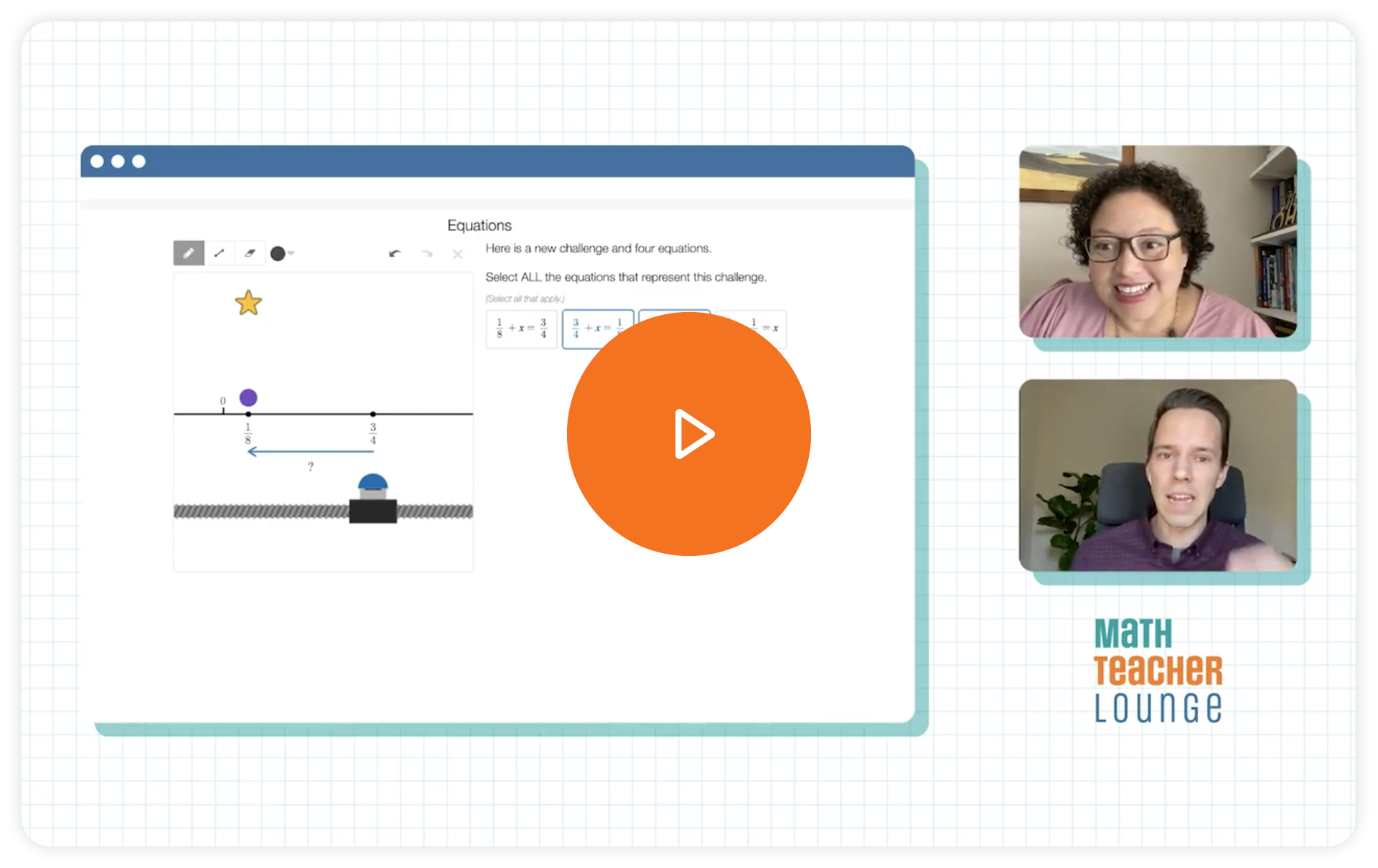
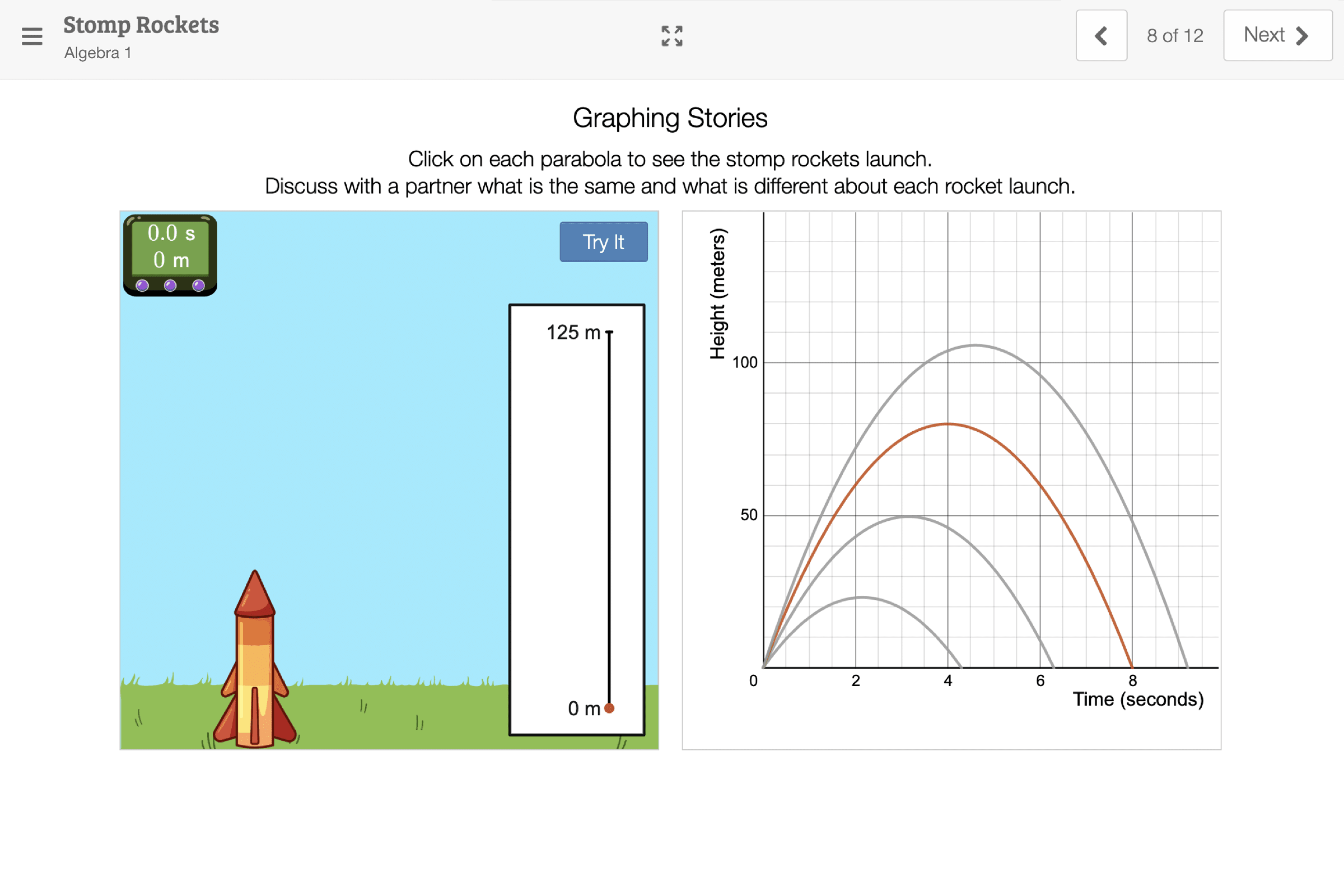
Welcome, Indiana review committees!
Partner with Amplify to power Georgia classrooms.
Georgia educators are leading the way for every learner, from the first sounds of reading to real‑world problem solving. Amplify is your partner with research‑based programs, actionable data, and on‑the‑ground support for administrators, teachers, and coaches.
Together, we’ll help students grow and get ready for what’s next.


Amplify CKLA
Using a fundamentally different approach to language arts, Amplify Core Knowledge Language Arts® (CKLA) is a PreK–5 program that sequences deep content knowledge with research-based foundational skills. Amplify CKLA met expectations and received all-green ratings from EdReports, making it an exceptional choice for Georgia schools. Read the review on EdReports.
Amplify ELA
Amplify ELA is designed to support middle school students at this critical developmental moment. We ensure that skills are taught, standards are covered, and the test is prepped, all while bringing texts to life and differentiating instruction. Read the review on EdReports.
Amplify Science
Amplify Science empowers Georgia students to think, read, and write like real scientists and engineers. Amplify Science K–8 received all-green ratings in EdReports’ review of national science curricula. Read the review on EdReports.
Amplify Desmos Math
Amplify Desmos Math is a new, curiosity-driven program for grades K–12 that builds lifelong math proficiency. Through a structured approach to problem-based learning, Amplify Desmos Math helps teachers create a collaborative math community with students at its center. Grades 6–8 courses rated perfect scores on EdReports. Read the review on EdReports.

mCLASS
With Amplify’s trusted assessment system, teachers can simplify their understanding of student thinking and skills in literacy and math. mCLASS® analyzes student results, highlighting each student’s strengths and identifying areas that need more focus. With the small group recommendations and instructional activities mCLASS provides, teachers have more time for other priorities and students quickly receive the support they need.
Boost Learning
It’s your digital assistant instruction—extending and complementing core instruction, addressing remediation needs, and constantly adapting activities for each student’s unique needs. Teachers spend less time planning and more time ensuring that every student’s specific needs are met—with customizable resources that help differentiate when and how it matters most. Boost Learning is personalized instruction and intervention for every student.


Spanish literacy resources
Discover a suite of Spanish literacy curriculum and assessment programs designed to build confident readers with mCLASS® Lectura, Amplify Caminos, and Boost Lectura. Amplify’s biliteracy suite includes assessment, core instruction, and personalized learning built on the Science of Reading.
Request a demo, samples, and more.
Support is always available. Our team is dedicated to helping you every step of the way. Contact your dedicated Georgia representative for program access, samples, and additional information.


Supporting Catholic schools to inspire students and improve outcomes with high-quality programs
At Amplify, we understand the unique mission of Catholic schools—to educate the whole child through academic excellence, faith formation, and a commitment to lifelong learning. Our research-backed curriculum in literacy, science, and math supports Catholic school educators in delivering rigorous and engaging instruction that empowers students to thrive.


Amplify CKLA
Using a fundamentally different approach to language arts, Amplify Core Knowledge Language Arts (CKLA) is a PreK–5 program that sequences deep content knowledge with research-based foundational skills. Amplify CKLA met expectations and received all-green ratings from EdReports. Read the review on EdReports.
Amplify ELA
Amplify ELA is truly designed to support middle school students at this critical developmental moment. We ensure that skills are taught, standards are covered, and the test is prepped—all while bringing texts to life and differentiating instruction. Read the review on EdReports.

Amplify Science
Amplify Science empowers Catholic school students to think, read, and write like real scientists and engineers. Amplify Science K–8 received all-green ratings in EdReports’ review of national science curricula. Read the review on EdReports.
Amplify Desmos Math
Amplify Desmos Math is a new, curiosity-driven program for grades K–12 that builds lifelong math proficiency. Through a structured approach to problem-based learning, Amplify Desmos Math helps teachers create a collaborative math community with students at its center. Courses in grades 6–8 received perfect scores on EdReports. Read the review.


Assessment and intervention
We understand that Catholic schools are dedicated to nurturing the whole child—academically, spiritually, and socially. That’s why our assessment and intervention programs provide educators with the tools they need to identify learning gaps early, personalize instruction, and ensure that every student reaches their full potential.
Equip your teachers with powerful insights.
Our research-backed assessment and intervention solutions help Catholic school educators:
- Pinpoint student needs with precision:
Quickly identify students who need extra support and tailor instruction accordingly. - Provide data-driven support:
Ensure every child receives the right intervention while maintaining the values of Catholic education. - Engage students in meaningful learning:
Use interactive and evidence-based strategies to strengthen foundational skills in literacy. - Monitor progress and strengthen outcomes:
Track student growth over time with real-time data that informs instruction and intervention.
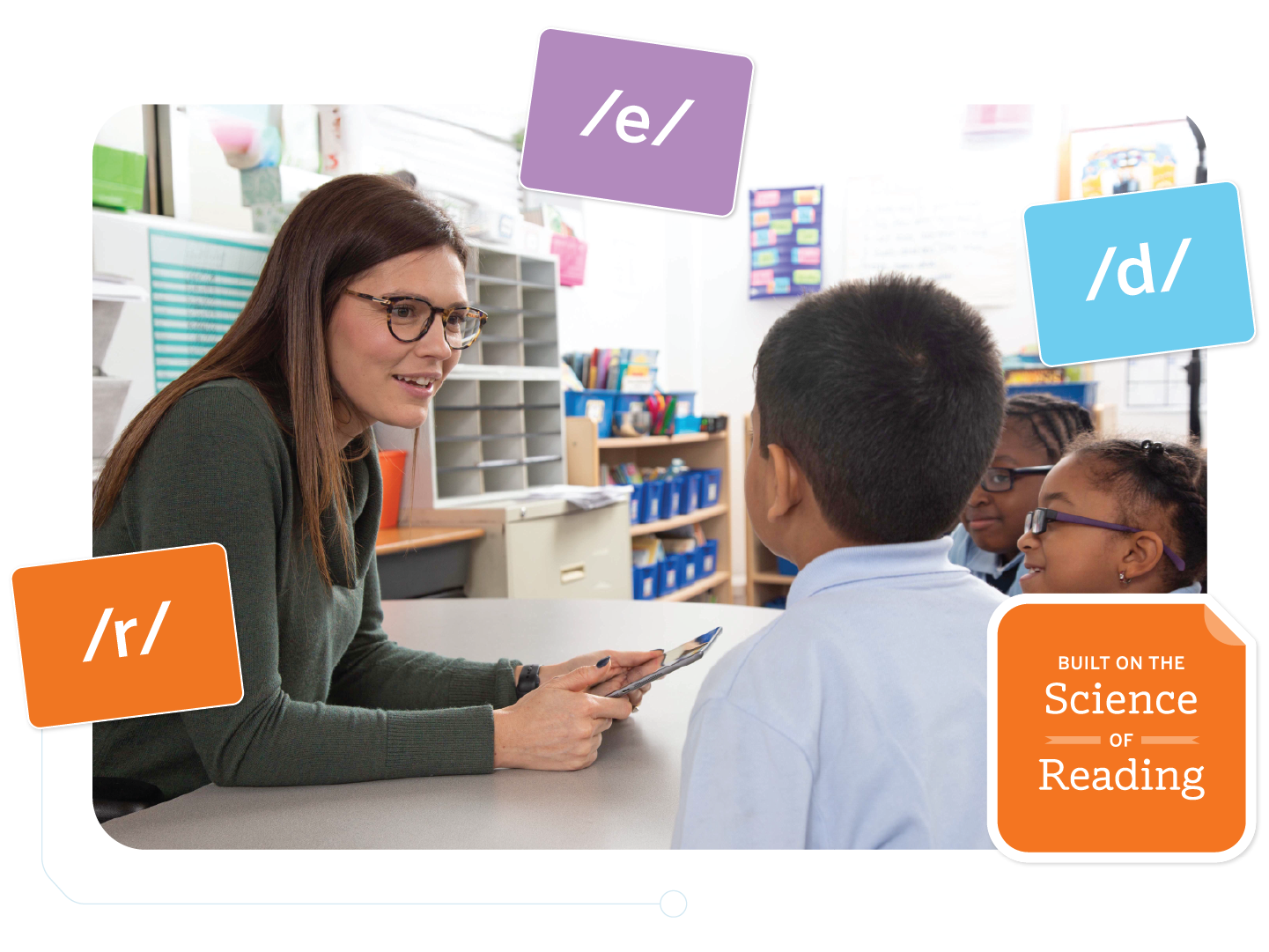

A powerful pedagogical approach for Catholic schools
Join the growing number of Catholic schools using Amplify to ensure that every student receives the support they need to succeed. All Amplify programs include services such as:
- Guidance for developing lesson plans and intervention plans.
- Information on where to locate standards and other planning materials.
- Recommendations and tips for day-to-day teaching with Amplify programs.
- Support with administering and interpreting assessment data and more.

Support is always available.
Our team is dedicated to helping you every step of the way.
Welcome Reviewers, to Amplify Desmos Math!
Amplify Desmos Math thoughtfully combines conceptual understanding, procedural fluency, and application. Each lesson is designed to tell a story by posing problems that invite a variety of approaches before guiding students to synthesize their understanding of the learning goals.
Scroll to learn more about the program and explore sample materials.
About the program
We believe in math that motivates. Our structured approach to problem-based learning builds on students’ curiosity to develop lasting grade-level understandings for all students.
The program thoughtfully combines conceptual understanding, fluency, and application, motivating students with interesting problems they are eager to solve. Teachers can spend more time where it’s most impactful: creating a collaborative classroom of learners.
A powerful suite of math resources
Amplify Desmos Math combines the best of problem-based lessons, intervention, personalized practice, and assessments into a coherent and engaging experience for both students and teachers.

Screening and progress monitoring
mCLASS® Assessments, along with daily formative checks, measure not only what students know, but also how they think. The asset-based assessment system provides teachers with targeted, actionable insights, linked to core instruction and intervention resources.
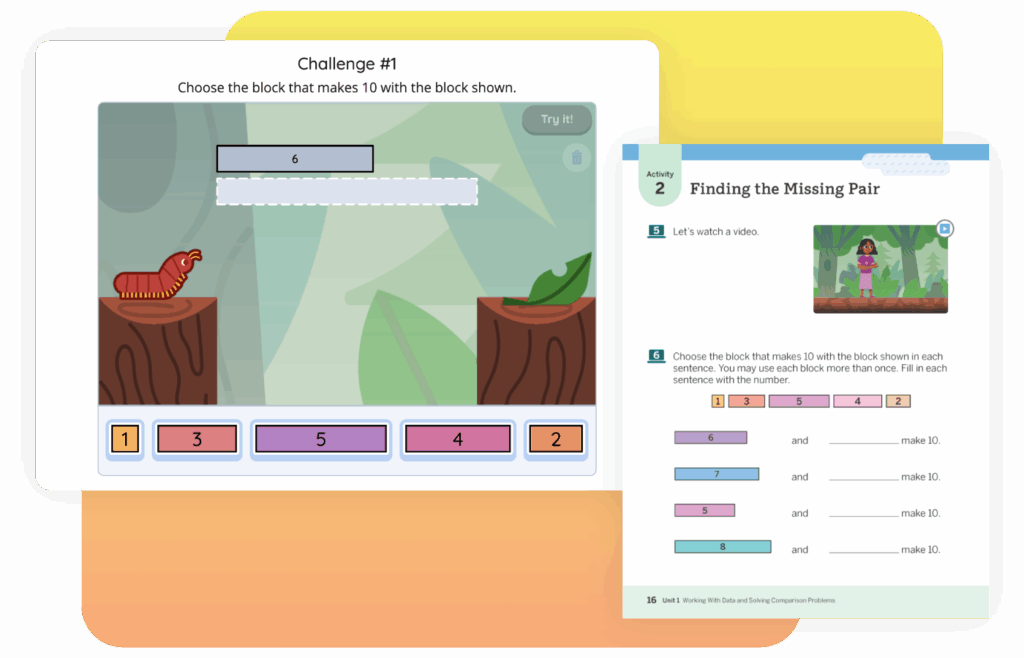
Core instruction
Amplify Desmos Math lessons provide a structured approach to problem-based learning, helping teachers create a collaborative math community with students at its center. Each lesson systematically builds on students’ curiosity to develop lasting grade-level understandings for all students.
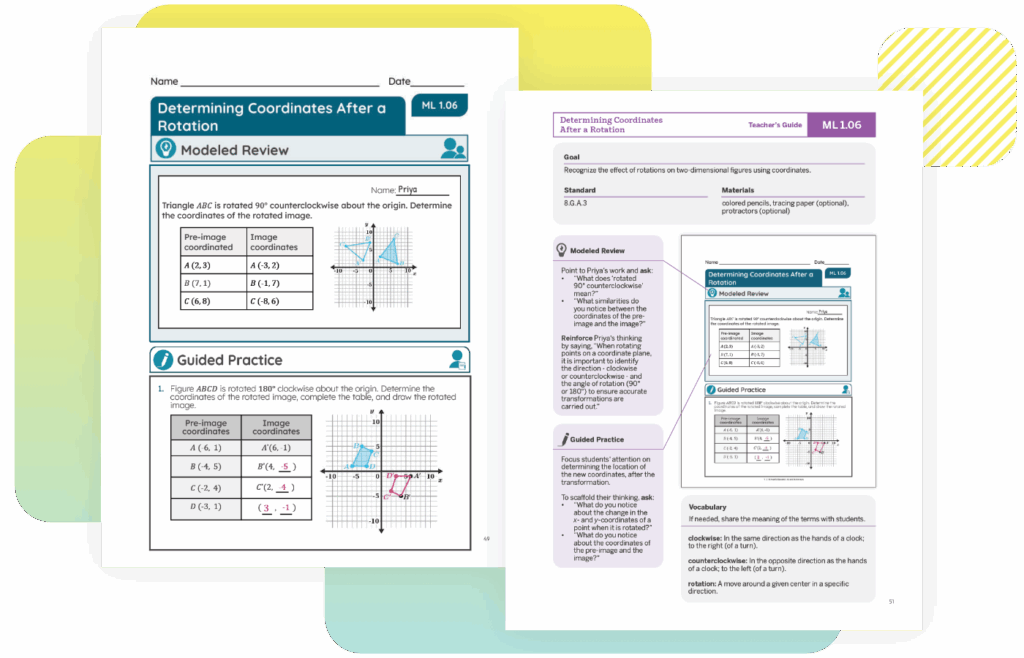
Differentiation and intervention
Integrated resources like Mini-Lessons, Fluency Practice, and Math Adventures provide targeted intervention on a specific concept or skill connected to daily instruction. Extensions are also available to stretch students’ understanding.
Boost™ Personalized Learning activities help students access grade-level math through engaging, independent digital practice. Responsive Feedback™ adjusts to students’ work, providing item-level adaptivity to further support their learning.
An approach that supports teachers
Clear, step-by-step instructional moves help teachers plan and teach student-centered lessons that use student thinking to differentiate instruction and guide to grade-level understanding. They include:
- Guidance on what to listen for and how to respond.
- Clear learning objectives to keep learning on track for each activity and lesson.
- Daily reinforcement activities to provide direct instruction when needed.
A structured approach to problem-based learning
Problem-based learning asks students to make sense of and think strategically about mathematically interesting problems. This approach allows students’ ideas to take
center stage, so they are active and engaged in their learning process. Teachers are able to hear and respond to student thinking in real time, guiding and differentiating instruction right in the moment.
Moving from “I do, We do, You do” to “You do, We do, I do”
Lessons begin by activating student’s prior knowledge and curiosity, inviting them to explore the math, collaborate, and refine their thinking. By focusing on developing student thinking first, teachers can better connect ideas, guide learning, and synthesize learning objectives.
Lessons that are rigorous and delightful
Every lesson in Amplify Desmos Math is designed to put students at the center of their learning. Utilizing research-based best practices, students engage in meaningful work based on rich problems and real-world experiences.
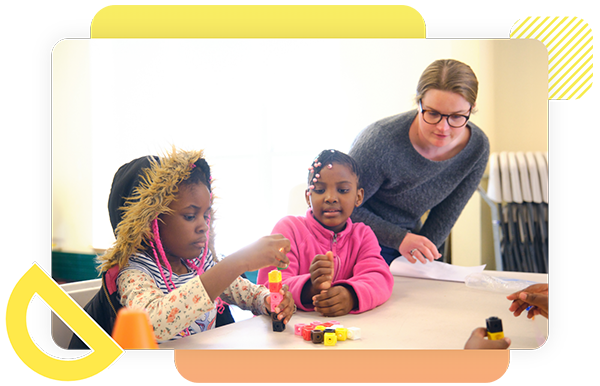
Warm-Up
Lessons begin by inviting every student to contribute to the mathematical discussion. Instructional routines are often used to build fluency, set the context, activate prior knowledge, or highlight a strategy that may be helpful in the lesson.
Rich learning activities
Math knowledge is built through experiences and meaningful interactions. Students notice, wonder, explore, calculate, predict, measure, explain their thinking, use math to settle disputes, create challenges for their classmates, and more. Teachers serve as a guide, using a Launch, Monitor, Connect framework:
- Launch: Teachers offer a short introduction to the problem or challenge
- Monitor: As students work individually, in pairs, or in groups, teachers ask questions and provide support to move student thinking closer to the intended math goal.
- Connect: Teachers connect student ideas to the Key Takeaway of the activity to help students synthesize and solidify the big ideas.
Synthesis
Teachers ensure that students end the lesson with accurate and enduring understandings of the math goal through synthesis of student ideas, explicit instruction, and reflection.
A short Show What You Know assessment allows students to show what they know about the learning goals of the lesson and reveal what they are still learning.
Differentiation and practice
Lasting understanding requires reinforcement. Every lesson offers Lesson Practice instructional recommendations to Support, Strengthen, and Stretch learning.
Print for every lesson with engaging digital experiences
Whether in print or digital form, engaging interactions enable students and teachers to openly exchange ideas. Each lesson includes student print materials, interactive teacher Presentation Screens, and digital resources for practice and differentiation. Some lessons also use manipulatives or provide options for students to use devices individually or in pairs. Device recommendations for student use are age-appropriate, with more frequent usage in middle and high school.
Demo access
Please login to the digital platform to experience our full program as part of your review. In order to access the digital platform, you’ll need to log into using your unique login credentials below.
- Click the orange button below to access the platform.
- Click “Log in with Amplify.”
- Enter the username and password:
- Username:
- Password:
- View the video for helpful platform navigation tips.
Assessments
By starting with what students already know, Amplify Desmos Math helps build a strong foundation for success to guide and support future learning. Teachers are empowered to transform every classroom into an engaged math community that invites, values, and develops student thinking. With explicit guidance on what to look for and how to respond, teachers can effectively support students as they develop their understanding.
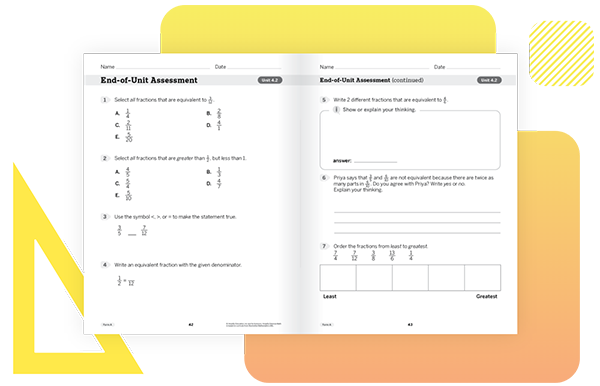
Program assessments
A variety of performance data in Amplify Desmos Math provides evidence of student learning while helping students bolster their skills and understanding.
Unit-Level Assessments
Our embedded unit assessments offer key insights into students’ conceptual understanding of math. These assessments provide regular, actionable information about how students are thinking about and processing math, with both auto-scoring and in-depth rubrics that help teachers anticipate and respond to students’ learning needs.
Lesson-Level Assessments
Amplify Desmos Math lessons are centered around sense-making and in-the-moment feedback. Daily moments of assessment provide valuable evidence of learning for both the teacher and student.
Data and reporting
Amplify Desmos Math provides teachers and administrators with unified reporting and insights so that educators have visibility into what students know about grade-level math—and can plan instruction accordingly for the whole class, small groups, and individual students.

Assessment reports
Reporting functionality integrates unit assessments, lesson assessments, personalized learning, Benchmark assessments, and Progress Monitoring for a comprehensive look at student learning.
Our reports show proficiency and growth by domain, cluster, standard, and priority concept using performance data from unit assessments. Then our reports highlight areas of potential student need to allow teachers to modify their instruction and target differentiated support.
At-a-glance views of unit-level assessment results inform your instructional planning, and you can also drill down to item-level analysis.
Standards reports
Our standards report allows you to monitor proficiency at the class and individual student levels. Proficiency and growth are shown by domain, cluster, standard, and priority concepts. Areas of potential student need are highlighted to allow teachers to modify their instruction and target differentiated support.
Administrator reports
Amplify Desmos Math provides a complete picture of student, class, and district performance, allowing administrators to implement instructional and intervention plans.
- Track student, class, and district performance with usage, completion, and assessment data.
- Accurately group students and classes with the Benchmark and Progress Monitoring data of mCLASS Assessments and allow teachers to reliably implement and track the progress of Tier 2 and Tier 3 intervention.
- Provide one data-driven solution that educators can rely on for high-quality math instruction.
Differentiation and intervention
Amplify Desmos Math views differentiation as an ongoing process where teachers are both reactive and proactive to student needs, ensuring that all students have clear pathways to proficiency. Through rich data and teacher support, Amplify Desmos Math uses flexible categories of intervention and enrichment that adjust daily according to student thinking.
In-the-moment differentiation supports are available for every lesson, both digitally and in the print Teacher Edition.
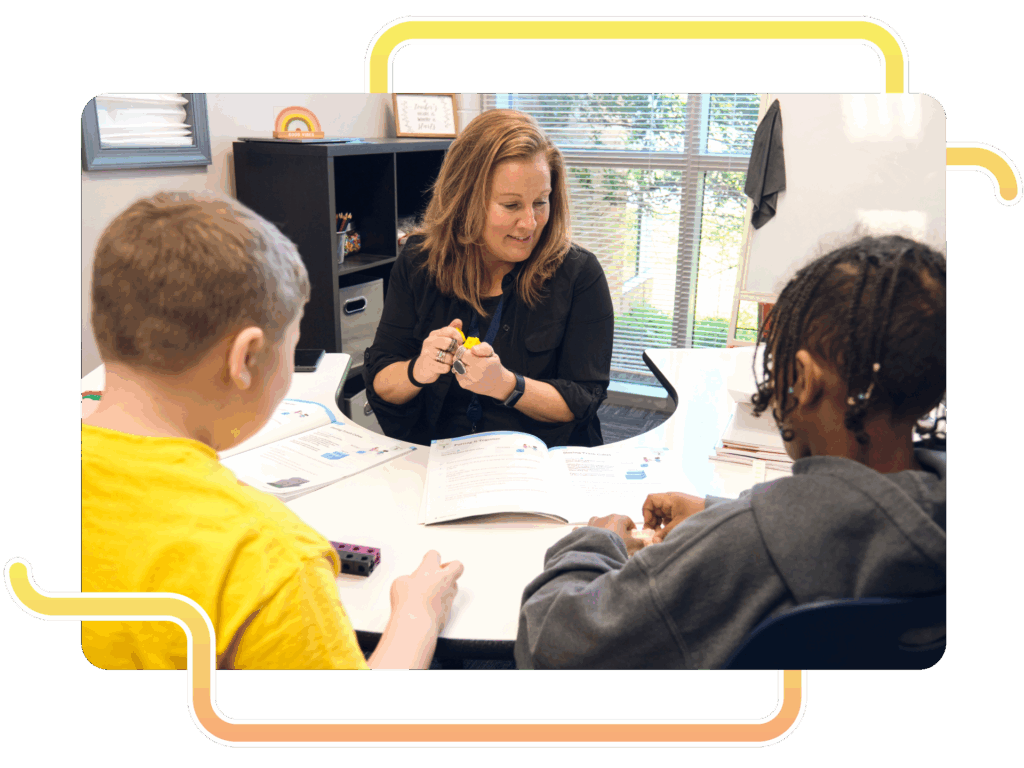

In-lesson differentiation
Within every lesson activity, teachers can use the suggestions in the Differentiation Teacher Moves table to provide in-the-moment instructional support while students are engaged in the work of the lesson. This table can help teachers anticipate the ways students may approach the activity, and provides prompts that they can use during the lesson to Support, Strengthen, and Stretch individual students in their thinking. Teachers are provided with clear student actions and understanding to look for, each matched with immediately usable suggestions for how to respond to the student thinking illustrated in each row of the table. In addition to using these suggestions in the moment as teachers monitor student work, teachers can review the Differentiation table in advance to help them anticipate how students are likely to approach the activity.
Differentiation: Beyond the Lesson
Teachers are provided with recommendations for resources to use with each group of students needing support, strengthening, and stretching after each lesson. Support, Strengthen, and Stretch resources include:
- Mini-Lessons: 15-minute, small-group direct instruction lessons targeted to a specific concept or skill
- Item Banks: Space for teachers to create practice and assessments by using filters and searching for standards, summative-style items, and more
- Fluency Practice: Adaptive, personalized practice built out for basic operations and more
- Centers (K–5): Lesson-embedded routines and practice for students that are vertically aligned across grade levels
- Extensions: Lesson-embedded Teacher Moves including possible stretch questions and activities for students
- Lesson Practice: Additional practice problems support every lesson
- Math Adventures: Strategy-based math games where students engage with math concepts and practice skills in a fun digital environment


Multilingual/English Learner supports
Supports for multilingual/English learners (ML/ELs) are called out at intentiSupports for multilingual/English learners (ML/ELs) are called out at intentional points within each lesson. These suggested supports are specific, targeted actions that are beneficial for ML/ELs. They often describe a modification to increase access to the task or provide support with contextual or mathematical language development that can often be helpful to all learners. ML/EL supports may also be attached to Math Language Routines.onal points within each lesson. These suggested supports are specific, targeted actions that are beneficial for ML/ELs. They often describe a modification to increase access to the task or provide support with contextual or mathematical language development that can often be helpful to all learners. ML/EL supports may also be attached to Math Language Routines.
Math Language Development
Every lesson in Amplify Desmos Math includes opportunities for all students to develop mathematical language as they experience the content. Amplify Desmos Math purposefully progresses language development from lesson to lesson and across units by supporting students in making their arguments and explanations stronger, clearer, and more precise. This systematic approach to the development of math language can be broken down into the following four categories of support:
- Vocabulary: Units and lessons start by surfacing students’ language for new concepts, then building connections between their language and the new vocabulary for that unit.
- Language goals: Language goals attend to the mathematics students are learning, and are written through the lens of one or more of four language modalities: reading, writing, speaking, and listening.
- Math Language Routines: Math Language Routines are used within lessons to highlight student-developed language and ideas, cultivate conversation, support mathematical sense-making, and promote meta-cognition.
- Multilingual/English learner supports: Supports for multilingual/English learners (ML/ELs) are called out at intentional points within each lesson.

K-5 sample materials
Click the links in the drop-down sections below to explore sample materials from each grade. For a full program review, please login to the digital platform or request physical samples.
For helpful navigation tips and more program information, download the Amplify Desmos Math Program Guide.
You can also watch a product expert walk through a lesson and the available program components.
Teacher Edition
Planning and instructional guidance is visual, organized, and easy-to-follow. To help you preview the program, we have included samples from a complete sub-unit on this site: Unit 2, Sub-Unit 2: Counting and Comparing Images.

Student Edition
Motivate students with mathematics that is both rigorous and delightful. To help you preview the program, we have included samples from a complete sub-unit on this site: Unit 2, Sub-Unit 2: Counting and Comparing Images.

Ancillary sampler
Included in the ancillary sampler are examples from the program Assessment Resources, Intervention and Extension Resources, Centers Resources, Additional Practice, and Math Language Development Resources.

Featured digital lesson: Forest Friends
In this lesson, students apply their understanding of how to compare groups of images as they determine which group has more or fewer and then compare their strategies by guiding a bear through a path that has more mushrooms than the other.

Skills Unit 2 Teacher Guide
Planning and instructional guidance is visual, organized, and easy-to-follow. To help you preview the program, we have included samples from a complete sub-unit on this site: Unit 1, Sub-Unit 1: Adding and Subtracting Within 10.

Student Edition
Motivate students with mathematics that is both rigorous and delightful. To help you preview the program, we have included samples from a complete sub-unit on this site: Unit 1, Sub-Unit 1: Adding and Subtracting Within 10.

Ancillary sampler
Included in the ancillary sampler are examples from the program Assessment Resources, Intervention and Extension Resources, Centers Resources, Additional Practice, and Math Language Development Resources.

Featured digital lesson: Leaping Lily Pads!
In this lesson, students find differences when subtracting 1 and 2 from the same number by helping a frog reach a lily pad where it can eat a bug.
Teacher Edition
Planning and instructional guidance is visual, organized, and easy-to-follow. To help you review the program, we have included samples from a complete sub-unit on this site: Unit 1, Sub-Unit 1: Adding and Subtracting.

Student Edition
Motivate students with mathematics that is both rigorous and delightful. To help you preview the program, we have included samples from a complete sub-unit on this site: Unit 1, Sub-Unit 1: Adding and Subtracting.

Ancillary sampler
Included in the ancillary sampler are examples from the program Assessment Resources, Intervention and Extension Resources, Centers Resources, Additional Practice, and Math Language Development Resources.

Featured digital lesson: Ways to Make 10
Students continue to develop fluency by finding the number that makes 10 by helping a millipede reach its favorite food – a clump of leaves!

Teacher Edition
Planning and instructional guidance is visual, organized, and easy-to-follow. To help you review the program, we have included samples from a complete sub-unit on this site: Unit 1, Sub-Unit 3: Data on Scaled Graphs.

Student Edition
Motivate students with mathematics that is both rigorous and delightful. To help you preview the program, we have included samples from a complete sub-unit on this site: Unit 1, Sub-Unit 3: Data on Scaled Graphs.

Ancillary sampler
Included in the ancillary sampler are examples from the program Assessment Resources, Intervention and Extension Resources, Centers Resources, Additional Practice, and Math Language Development Resources.

Featured digital lesson: Puppy Pile
Students compare data represented on bar graphs with different scales by using animal stickers to create scaled bar graphs.

Teacher Edition
Planning and instructional guidance is visual, organized, and easy-to-follow. To help you review the program, we have included samples from a complete sub-unit on this site: Unit 1, Sub-Unit 2: Using Factors and Multiples.
Student Edition
Motivate students with mathematics that is both rigorous and delightful. To help you preview the program, we have included samples from a complete sub-unit on this site: Unit 1, Sub-Unit 2: Using Factors and Multiples.

Ancillary sampler
Included in the ancillary sampler are examples from the program Assessment Resources, Intervention and Extension Resources, Centers Resources, Additional Practice, and Math Language Development Resources.

Featured digital lesson: Hamster Homes
Students choose tube lengths to connect to platform heights for hamster homes, identifying possible heights using what they know about multiples.

Teacher Edition
Planning and instructional guidance is visual, organized, and easy-to-follow. To help you review the program, we have included samples from a complete sub-unit on this site: Unit 1, Sub-Unit 3: Volume of Solid Figures.
Student Edition
Motivate students with mathematics that is both rigorous and delightful. To help you preview the program, we have included samples from a complete sub-unit on this site: Unit 1, Sub-Unit 3: Volume of Solid Figures.
Ancillary sampler
Included in the ancillary sampler are examples from the program Assessment Resources, Intervention and Extension Resources, Centers Resources, Additional Practice, and Math Language Development Resources.
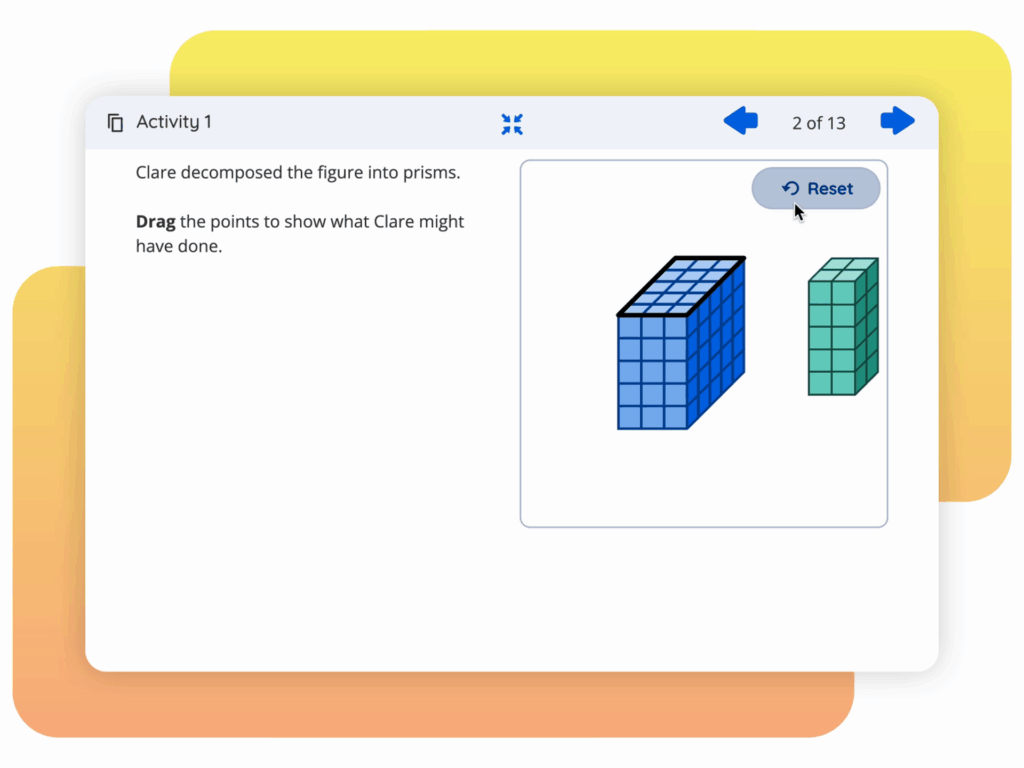
Featured digital lesson: Figures Made of Prisms
Students decompose a figure into rectangular prisms and determine the volume of the figure by adding the volumes of the individual prisms.
6-A1 sample materials
Click the links in the drop-down sections below to explore sample materials from each grade. For a full program review, please login to the digital platform or request physical samples.
For helpful navigation tips and more program information, download the Amplify Desmos Math Program Guide.
You can also watch a product expert walk through a lesson and the available program components.
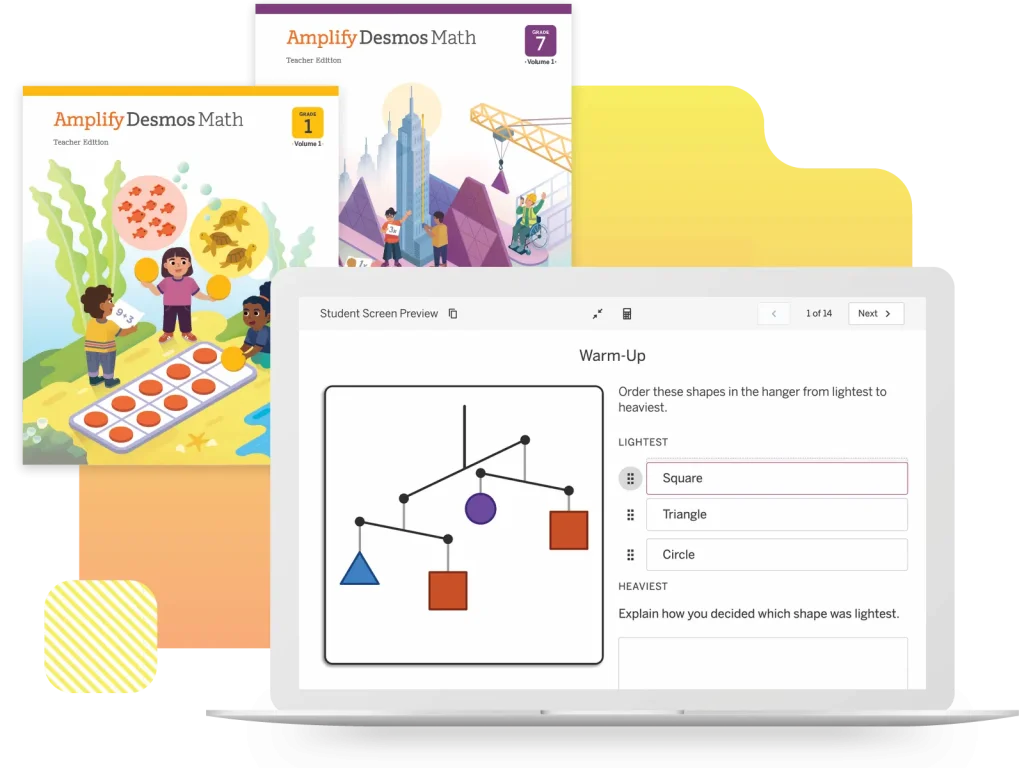

Teacher Edition
Planning and instructional guidance is visual, organized, and easy-to-follow. To help you preview the program, we have included samples from a complete sub-unit on this site: Unit 6, Sub-Unit 1: Solving Equations.

Student Edition
Motivate students with mathematics that is both rigorous and delightful. To help you preview the program, we have included samples from a complete sub-unit on this site: Unit 6, Sub-Unit 1: Solving Equations.

Ancillary sampler
Included in the ancillary sampler are examples from the program Assessment Resources, Intervention and Extension Resources, Additional Practice, and Math Language Development Resources.

Featured digital lesson: Weight for It
Students use equations and tape diagrams to represent seesaw situations and to determine unknown animal weights, helping them make connections between diagrams that represent equations of the form `x+p=q` or `px=q`.

Teacher Edition
Planning and instructional guidance is visual, organized, and easy-to-follow. To help you preview the program, we have included samples from a complete sub-unit on this site: Unit 6, Sub-Unit 3: Inequalities.

Student Edition
Motivate students with mathematics that is both rigorous and delightful. To help you preview the program, we have included samples from a complete sub-unit on this site: Unit 6, Sub-Unit 3: Inequalities.

Ancillary sampler
Included in the ancillary sampler are examples from the program Assessment Resources, Intervention and Extension Resources, Additional Practice, and Math Language Development Resources.

Featured digital lesson: Shira the Sheep
Students solve inequalities with positive and negative coefficients to solve a variety of challenges featuring a fictional sheep who eats grass according to an inequality.

Teacher Edition
Planning and instructional guidance is visual, organized, and easy-to-follow. To help you preview the program, we have included samples from a complete sub-unit on this site: Unit 6, Sub-Unit 2: Analyzing Numerical Data.

Student Edition
Motivate students with mathematics that is both rigorous and delightful. To help you preview the program, we have included samples from a complete sub-unit on this site: Unit 6, Sub-Unit 2: Analyzing Numerical Data.
Ancillary sampler
Included in the ancillary sampler are examples from the program Assessment Resources, Intervention and Extension Resources, Additional Practice, and Math Language Development Resources.

Featured digital lesson: Robots
Students connect points on a scatter plot with individuals in a population and rows of data in a table. The analysis of scatter plots continues with data about the eye distances and heights of robots.

Teacher Edition
Planning and instructional guidance is visual, organized, and easy-to-follow. To help you preview the program, we have included samples from two complete sub-units on this site: Unit 2, Sub-Units 1–2: One-Variable Equations and Multi-Variable Equations.

Student Edition
Motivate students with mathematics that is both rigorous and delightful. To help you preview the program, we have included samples from two complete sub-units on this site: Unit 2, Sub-Units 1–2: One-Variable Equations and Multi-Variable Equations.
Ancillary sampler
Included in the ancillary sampler are examples from the program Assessment Resources, Intervention and Extension Resources, Additional Practice, and Math Language Development Resources.
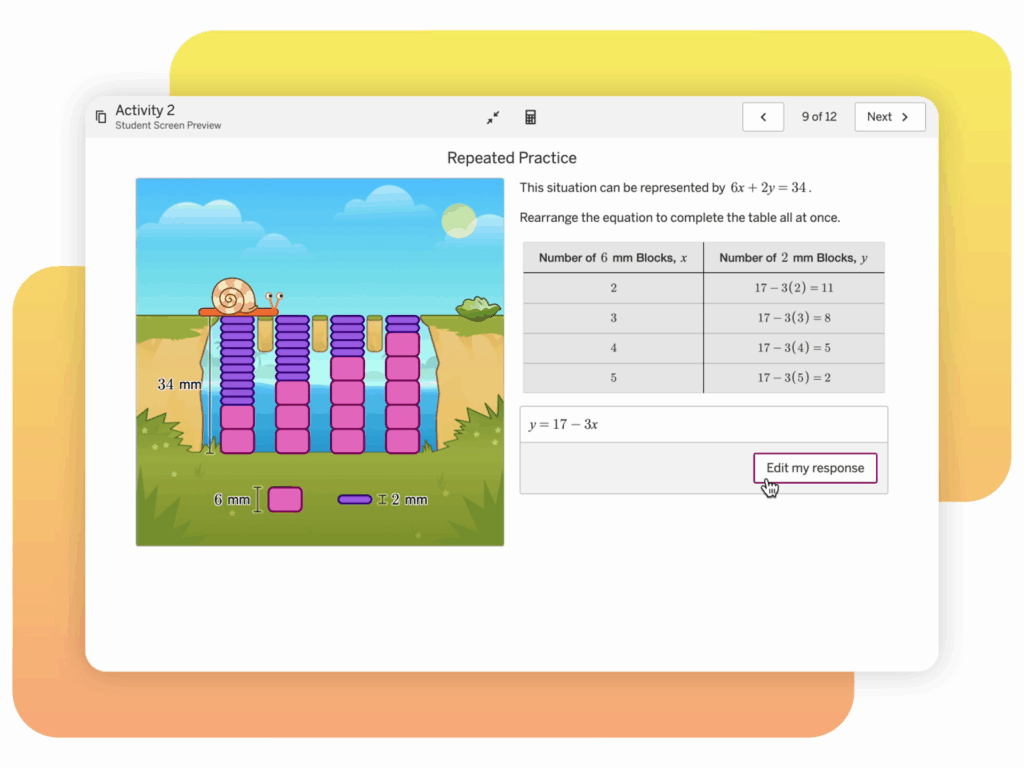
Featured digital lesson: Shelley the Snail
Students represent the solutions of a situation using a table, a graph, and multiple forms of an equation to identify multiple combinations of blocks that can help Shelley the Snail cross a gap.
Welcome, Chicago educators!
Dear Chicago teachers and educators,
Teaching is always challenging, often exhausting, and sometimes exhilarating. At Amplify, we want Chicago teachers to experience more exhilaration—more great classroom moments, more great days when you’re reminded why you became a teacher. We create high-quality programs that make it easier for you to teach inspiring, impactful lessons that celebrate and develop the brilliance of your students.
Thank you for taking the time to explore Amplify’s impactful programs, and thank you for what you do every day!
With great respect,
The Chicago Amplify team

Amplify Desmos Math
Amplify Desmos Math is a curiosity-driven program for grades K–12 that builds lifelong math proficiency. Through a structured approach to problem-based learning, Amplify Desmos Math helps teachers create a collaborative math community with students at its center. Grades 6–8 courses rated perfect scores on EdReports. Read the review on EdReports.
mCLASS
We’re excited to introduce Amplify’s new mCLASS Math! Now, teachers can turn insights into action across literacy and math with a powerful assessment duo of Amplify’s trusted mCLASS DIBELS® 8th Edition and mCLASS® Math.


Amplify CKLA
Using a fundamentally different approach to language arts, Amplify Core Knowledge Language Arts (CKLA) is a PreK–5 program that sequences deep content knowledge with research-based foundational skills. Amplify CKLA met expectations and received all-green ratings from EdReports. Read the review on EdReports.
Amplify ELA
Amplify ELA is the only program truly designed to support middle school students at this critical developmental moment. We ensure that skills are taught, standards are covered, and the test is prepped—all while bringing texts to life and differentiating instruction. Read the review on EdReports.
Amplify Science
Amplify Science empowers Chicago students to think, read, and write like real scientists and engineers. Amplify Science K–8 received all-green ratings in EdReports’ review of national science curricula. Read the review on EdReports.
Amplify Classroom and free resources
Amplify Classroom provides free, high-quality lessons for math, science, and literacy. Discover captivating lessons, virtual manipulatives, powerful teaching tools, and more!

High-quality professional development
The Chicago professional development (PD) team provides ongoing learning experiences over multiple years, incrementally developing the knowledge and skills teachers need for effective, long-term implementation. All PD is tailored and supported by our team of former educators and leaders.
Contact us
Support is always available. Our team is dedicated to helping you every step of the way. Contact your dedicated Chicago representative here for program access, samples, and additional information.


Winter Wrap-Up 02: Mathematizing Children’s Literature
While we’re hard at work producing the exciting fifth season of Math Teacher Lounge: The Podcast, we’re continuing to share some of our favorite conversations from our first four seasons. This time around, we’re revisiting our popular episode that connected literacy and math!
In this episode, we sit down with Allison Hintz and Antony Smith, authors of Mathematizing Children’s Literature, to talk about what would happen if we were to approach children’s literature, and life, through a math lens–and how we can apply those same techniques to classroom teaching!
Explore more from Math Teacher Lounge by visiting our main page.
Bethany Lockhart Johnson (00:02):
Hi, I’m Bethany Lockhart Johnson.
Dan Meyer (00:04):
Hi, I’m Dan Meyer.
Bethany Lockhart Johnson (00:05):
And we are so excited for another episode of Math Teacher Lounge. And as you know, podcast format; you’re listening now. I think one beautiful thing about the podcast format is that it gives us a little bit more time to have these rich conversations. And I promise I won’t do it, but I could talk to our guests for hours, hours! Authors Allison Hintz and Tony Smith have just released Mathematizing Children’s Literature: Sparking Connections, Joy, and Wonder Through Read-Alouds and Discussion. And today we get to talk to the authors. Allison, Tony, welcome. Welcome to the lounge.
Allison Hintz (00:53):
Thank you. We’re so grateful to be here.
Bethany Lockhart Johnson (00:55):
We’re so excited to have you here. And I wanna say that my very first—was it my first math conference? Maybe it was my first math conference—up in Seattle, the CGI conference, and I’m all like, you know, wide-eyed and just like, “Can this be a place for me, this math community?” Re-envisioning my relationship with math and thinking about myself as a math teacher, what? And I went to your session on mathematizing children’s literature, and I was just so fired up. I was so wowed by your ideas, your energy, and your passion for students’ thinking. And I feel like as I read this book, I felt like I was hanging out with you. Like you were just so encouraging all the way through. Of educators, of other folks working with young people, and really guiding us how to listen with joy and with an open curious mind.
Dan Meyer (02:03):
Yeah. I would love to hear a bit about the genesis of this book for you folks. Like, I’m coming at this from a secondary educator lens. I’ve got small kids, so that’s also part of my interest here. But I love any book, any idea that seeks to merge what seems like two disparate worlds. Like it’s often the case that we feel like, well, there’s approaches for ELA and approaches for math, and they’re kind of separate disciplines. And these poor elementary teachers have to learn all of them and be experts at all of them. And here you both come along and say, “Hey, what if they are the same kind of technique?” Can you just speak to how this came about?
Allison Hintz (02:38):
Definitely. Tony, do you wanna take a try? Do you want me to start us off?
Antony Smith (02:42):
I can start. We oftentimes present and talk together and so we kinda switch back and forth. So that’s just how we are. So probably about eight or nine years ago, Allison and I, our offices were next to each other on our small campus. We’re both professors and we just happened to have a few children’s books that we looked at together and we were just thumbing through the pages. We really liked children’s literature. And we noticed that I would stop at certain points wondering about character motive or plot or sequence of events or language use. And Allison would stop at very different points in the book and notice number and concepts or something about mathematics. And that’s when we started to wonder, what would it be like if we were sharing a children’s book with a group of children and we put our ideas together? Where would we stop? What would we talk about? What would we ask children about in terms of their thinking and what they notice?
Allison Hintz (03:42):
And so we started playing with these questions that we had and started approaching stories with multiple lenses to see what kinds of things would children notice and what kinds of things might they say. And we were also on our own journey in trying to understand how to plan for and facilitate lively discussions and classrooms that surface really complex mathematics. And it felt like stories were a place where that might be a fruitful context for hearing children’s thinking. We’ve worked with a lot of teachers and students in our region. We live in the Seattle area and we’ve applied for some funding over time that’s really helped us be in a lot of community-based organizations and educational contexts and libraries and pediatricians’ offices and classrooms, various classrooms, and see what’s interesting about this and what might teachers and children do with stories that would surface complex mathematics to think about together.
Antony Smith (04:41):
Over time, we came to the realization that if we wanted to hear children’s ideas, we had to stop bombarding them with questions. <laugh> Yeah. And at first it made it worse that we were asking them math and literacy questions at the same time. And so we realized that what we needed to do was to back off and to ask children what they noticed and wondered.
Bethany Lockhart Johnson (05:01):
Can you say more about that and how that kind of evolved into mathematizing children’s literature?
Antony Smith (05:07):
We did work with a number of very thoughtful, talented classroom teachers and children’s librarians in public library systems who were just so masterful at asking open-ended prompts and questions, rather than kind of like the de facto reading quiz, that a read-aloud can become, which I’ve always disliked as a literacy educator. And we realized in our observing these read-alouds or interactive read-alouds or shared reading experiences that given the opportunity in the space and an adult who was actually listening, that children came up with all of the ideas we would have asked them about and more. So we didn’t have to be bombarding them with questions. They were already much more thoughtful than what would’ve been sufficient to answer our questions.
Allison Hintz (05:58):
And much like mathematics, it was really an iterative process. You know, we had some clunky read-aloud discussions where we were trying to accomplish so much and toggling multiple chart papers and different colored pens and all sorts of “how do we capture these ideas” and “do we separate ’em? do we keep ’em together?” And so it’s really been over time that with partners, we’ve learned these ways of having multiple reads of the same story that allow us to hear what children notice and wonder, and then to delve more deeply into their questions and their ideas through multiple reads where we might spotlight literary ideas that they notice; we might spotlight mathematical ideas that they notice. We might make purposeful integrations between those. But we found it to be most productive—and Kristin Gray really help us think about this—to have an open Notice and Wonder, get everything out much like an open-strategy share. We welcome here, record all the ideas, and it goes all over everywhere. You know, it can be a really not math-y noticing! And those are amazing! So there’s a lot of, um, yes, there is a ladybug on this page! The grandma is wearing green triangle earrings! Oh, your grandma wears green earrings! I mean, it all comes out.
Bethany Lockhart Johnson (07:27):
Wait, have you been in my classroom? ‘Cause that’s exactly— <laugh>
Allison Hintz (07:29):
<laugh> And then, you know, we think of it a lot like if math teachers might use the 5 Practices for selecting and sequencing, or if you might move from an open-strategy share to a targeted share, how can we get out all the questions that children are asking and then step back from them, take some time to really think about what they’re telling us they’re curious about, and plan some purposeful, intentional subsequent discussions that can delve more deeply into their ideas.
Dan Meyer (08:02):
I’d love to go into that a little bit more if that’s all right. Um, I’m gonna speak from someone who doesn’t have an elementary background and I’m gonna voice some worries that I had, some anxiety. One anxiety I have like in a classroom or a curriculum is when there’s no room for student ideas. Right? When it’s like, oh, there’s just room for the curriculum author or the teacher here. That is a sadness. But I when I see an instructional environment like you’re describing here, where there is openness to all kinds of different student ideas, of different levels of formality, from different kinds of cultural fonts of knowledge or wherever, I also get a little bit nervous because that, like, increases the risk that a student might come to understand that “my ideas are not good enough,” whereas in the class with no room for their ideas from their home or their language or their hobbies, like, they’re not gonna internalize the message that, “that wasn’t good enough.” And so I’m really curious as you move from the open Notice and Wonder where kids share all of themselves with you, and then you move to a targeted focus on some sort of disciplinary objective, how do you navigate that tension and help students feel like their contributions are valuable, even though we aren’t taking them up per se?
Allison Hintz (09:18):
That’s such an important question. I mean, I think we’ve grappled with this broadly in math education. I think any time we’re thinking about which ideas we choose to take up to pursue to consider, we have a responsibility to think carefully about whose ideas are being taken up and heard and considered. And so one of the tensions I hear you naming, I think, Dan, is when we engage in lively discussion where children’s thinking’s at the center, how do we make sure to upend and interrupt kinda status norms that run the risk of being deepened? Um, and I think by paying attention to whose ideas are taken up as much as which ideas are taken up, and what’s the mathematics we wanna explore is one tension. Um, another tension I might hear you naming is, you know, the complications that teachers face with time and pressure and coverage, and which mathematics ends up getting worked on. And, um, you know, it’s something we’ve really had to struggle with in mathematics education, where we move to more discussion-oriented classrooms that are really centered in sense-making to know that it takes a lot of time to do this thoughtful, thoughtful work. Um, does that begin to get at some of the tensions you’re raising? Is there, is there more you’re thinking about?
Dan Meyer (10:53):
I think it’s really helpful that you kind of broadened the scope of the question beyond your book to “this is an issue that we are, you know, really challenged by and focused on broadly in math education.” And, um, I appreciate you bringing the element in of whose idea—not just which idea is taken up, but whose idea is taken up—is an opportunity where, let’s say, multiple people raise an idea that is towards an objective the teacher has, they have the opportunity to disrupt certain kinds of status, like ideas about status, in that moment. From your perspective, like, are there techniques to say, I don’t know, parking-lot certain kinds of questions and say like, “Hey, like these are awesome”? I don’t know. I just know that I see kids at like ninth grade. They are very reticent, often. They’ve internalized totally this sense of like, “I’m not gonna just, like, share about the pants the grandma’s wearing, you know; that will not be received well.” And so I’m just kinda wondering how that happens and like, what are the ways we can disrupt that? That process?
Antony Smith (11:54):
So thinking about that, Dan, from the teacher’s perspective, in those kinds of scenarios where you wanna honor each child’s contribution, a couple of things that come to mind: One is that by, you know, initially by modeling what I as a teacher, something that I notice or wonder about, helps kind of set the expectation for what kind of response would be encouraged. And it’s broad, but it gives an example. And then also we really try to record or to chart all of the ideas that are shared so that we can revisit and honor those together. And then either later or on another day, if we choose one or two of those to explore in some way within a more focused read, then another thing that we do is have the idea investigation afterward that continues that thought, but goes back to being as open-ended as possible, so that those students or children who maybe didn’t have their idea as the one that was focused on by the group could go back to that or explore some other idea of their own, so that the idea investigation isn’t a lockstep extension activity, which is why we don’t call it that. So they could again bring in their own perspective. But I have to say from the teacher’s point of view, there is that moment of potential panic <laugh> because there is that power transfer when you’re asking children to help steer where this is going. And if you really mean it, you have to let them steer a little bit. And that can be terrifying. And, um, I always think of one teacher, Ashley, we worked with who read an adorable book, Stack the Cats, by Susie Ghahremani. And in that book, there’s a point where there are eight cats and they’re kind of trying to be a tower of cats and they fall and they’re sort of in the air on that page. And she asked her first graders—she stopped, and she asked, “How, do you think, how will the cats land?” And for about a minute and a half, the entire <laugh> class, was silent. They had their little papers; they had chart paper; they had clipboards; they had everything they needed. But that unusual phenomenon of a group of six- and seven-year-olds actually just sitting and thinking and not being peppered with activities was really stressful, but amazing. And then, after about the 90 seconds, they started out into their exploration of how the eight cats might land. They just needed a minute to think. And it’s so rare that we’re able to let children have that.
Allison Hintz (14:40):
In that same moment, Ashley, who’s a learning partner to us, she turned to us kind of quietly, like, “Should I pose a different question?” And <laugh>, we’re like, “No, let’s stick with it. Let’s see what happens.” So I think it creates this space too, this thinking culture, right? And this culture of “what does that mean to really pose a rich task?That’s open-ended, where there’s multiple access points?” Those eight cats could land in so many different ways. And there was broad access, there was a wide range of all the cats landing, and one’s on their feet, ’cause cats always land on their feet <laugh>, and there was every combination. And so, um, I think what’s really interesting—and to me, this brings back to your wonder, Dan—is, you know, “What’s the risk in openness?” And there’s always risk in openness. Um, it’s scary as a teacher, right? If I’m not the authority of knowledge and I don’t have control over where we’re gonna go, it might get into places that I didn’t anticipate. Or I don’t really feel as solid in the math as I want to. Or I don’t know what it sounds like to stick with silence and wait time, to know if my students are really in productive struggle or if that question was a flop. And so, um, I think this is some practice space for young mathematicians and teachers of mathematics, and just teachers, to explore with that openness and kind of the risk of the openness required for complex thinking to emerge.
Bethany Lockhart Johnson (16:12):
You know, it feels like the way you’re both describing this, it really is a culture shift, right? I kept feeling like I was given permission to be a beginner as I read this book. Like I was really…I loved how you said, I believe it was you, Allison, when you were in the class, you had a couple index card that you kept on your clipboard and that as you walked around, you were like, “Hey, if I don’t know what to ask, I ask one of these questions.” You know? And just this idea that, that, like Dan was saying, there is that loss of control, but that’s also a way to create this culture where students ideas are valued and we are allowing students to really generate the questions, which I thought was such an important idea to explore.
Allison Hintz (17:00):
We started this work long ago, super-excited about math-y books. And we saw a lot of potential in them and we still do. But the limitation we saw is that math-y books, they, they put forth a certain mathematics to be curious about. In some ways they tell you what mathematics to think about. So we started asking ourselves what would happen if we considered any story a chance to engage as mathematical sense-makers. And we started playing with non-math-y books and we got to a place where we could consider every story an opportunity to engage in mathematical thinking. And so we started noticing things over times, oh, these books tend to be really math-y. We call those text-dependent. We’d have to pay attention to the mathematics to understand the story. Whereas this pile of stories, these, they’re not overtly math-y. You could really enjoy the story and not pay attention to mathematics and have an amazing conversation. But what would happen if we thought of about this story as mathematical sense-makers and how might it deepen our understanding of the story? And then this other teetering pile of books, these are books where, you know, children didn’t tend to engage as overtly as mathematicians in it, but there’s opportunities in this story to go back to something—to a moment, to an illustration, to a comment—and think as mathematicians. And those were more about illustration exploring. And so, as we notice these different kinds of books, we really broaden what we thought about. And I think one of the things we really wanna think about in community through this book is what happens if we approach any story, every story, as mathematical sense-makers, because stories are alive in children’s lives, in homes and communities and in schools. And it’s a broad opportunity that we wanna take up. I was thinking, as I stay in this strait for just a moment about book selection, before we move into that process, um, Bethany in a previous MTL, you talked about representation.
Bethany Lockhart Johnson (19:12):
Mm, yeah.
Allison Hintz (19:14):
And do you remember when you shared the image of hair braiding?
Bethany Lockhart Johnson (19:19):
Yes. Vividly, yes. <laugh>.
Allison Hintz (19:22):
Yeah. And can you say just what that meant to you? What that….
Bethany Lockhart Johnson (19:27):
Yeah. Well, it was from a conference; Sunil Singh had used it and was talking about the artistry in mathematics and beauty in hair braiding. And, um, particularly, he was showing this particular image of this Black woman with her hair braided in profile and looking at the angles and the symmetry. And I shared that, you know, I spent so many hours in the beauty shop with my aunties and my mom and my grandma and continue to, to this day, that it just, it struck me immediately as familiar. And it struck me immediately as seeing an image that was reflective of my lived reality, projected as valuable and worthwhile for consideration in the world of mathematics. Which is not what I felt as a student of mathematics as a young adult or child. So it was this beautiful moment of, for me, the power of when we see images and we allow opportunities for re-envisioning what may be a common practice for that student, or may be something that they see every day.
Allison Hintz (20:44):
And in that same way, that image that was put up, we wanna think really carefully about representation in the stories that we select. And when we think of stories as mirrors or windows, we really wanna be mindful in story selection of whose stories are told and whose stories are heard. And when you said that you would sit down to listen to a story and you felt at ease or that you saw an image and you saw yourself that can be and should be something we really think carefully about when we select the stories that we select.
Dan Meyer (21:21):
It’s a wider path for representation of different kinds of people in literature, because people’s stories seem so much more present and towards the surface of their lives, versus, say, the abstractions and numbers and shapes in mathematics. It feels like more of a struggle to find ways to show people, hey, like you’re here, this, this place belongs to you. So in all these reasons, I think it’s really great you folks are using literature, which has this history of humanities, literally humanities, as a vehicle for mathematics. That seems pretty special here.
Antony Smith (21:56):
We both go to libraries and bookstores and look through books as often as we can, but also our partner, a children’s librarian, Mie-Mie Wu, helped us go through—when we would meet, she would bring three or four hundred books at a time.
Bethany Lockhart Johnson (22:13):
When you described her wheeling in the cart, oh, I wish I been in that room! <Laugh>
Antony Smith (22:18):
And the cart was, you know, probably three or four times bigger than she was sometimes. And we would go through hundreds of books and look at them and listen to her thoughts as a skilled librarian sharing with families, diverse families, and what catches the attention of a three-year-old sitting with her grandfather. And that was really a valuable, helpful experience. And it’s a partnership that continues. So in Last Stop on Market Street—and this is in the book; we talk about this, this children’s book quite a bit—in this story, CJ with his Nana, his grandmother, are riding the bus to the last stop on Market Street in San Francisco, to go, as we will find out, to help serve in a soup kitchen to help the community. And the teacher, Susan Hadreas, had the children record their ideas. She charted them in an open Notice and Wonder read. And one of the ideas that a young boy noticed was that CJ on the bus…a man with a guitar starts playing the guitar on the bus and CJ closes his eyes and it says CJ’s chest grew full. And he was lost in the sound and the sound gave him the feeling of magic. So this boy said, “I wonder, what does that feel like if you’re feeling the magic? What’s that?” And that was one of many ideas in the open Notice and Wonder, and Allison will talk about the math lens read, but first Susan went back and read with them. She had that idea, she circled it on the chart paper, and another day that week, she said, let’s go back and visit this story we really liked. And remember, we wondered what feeling the magic was like. Let’s go back through and let’s keep track of all the feelings and emotions that CJ had across the journey to the soup kitchen in this book. And so they did another read of the story; they were very familiar with it, of course, but they noticed new things and they also, every few pages, stopped and she helped chart all of the emotions that CJ experienced from envy to excitement to sadness. There’s a huge range in this book. And it was fascinating.
Allison Hintz (24:36):
I think one of the things that the children noticed was that CJ’s feelings were shaped by community. And that he shaped and shaped…he was shaped by and helped shape his community. And so the ways that he felt across the story were impacted by the other characters that he comes across. The guitar man on the bus. The bus driver who can pull a coin out from behind someone’s ear. The lady with the butterflies in the jar. Nana helping him to see the rainbow. And the students started, you know, being curious about that. How do we shape and how are we shaped by community? What communities are we a part of? This class is one community. I’m in many communities across my life. And they started to quantify the number of people in the story. So Mrs. Hedreas went back for a math lens read, and she said, let’s just keep track of and pay attention to how many people are in CJ’s life in this day. Because I can hear you starting to think about quantity. This class at the same time in other areas of the day had been working on counting collections, how to keep track, so they got out their tools. Some people pulled out ten frames, some people pulled out clipboards. They had a wide range of things they could use to help them keep track. They developed their own strategy, keep track however you want. She did a quicker read through it, flipping the pages, and then they get into these debates: <laugh> “We already counted that person!” “But they took their hat off and put it down to collect money!
Antony Smith (26:10):
“What about the dog?”
Allison Hintz (26:11):
“That’s the same person!” “Yeah, there’s a dog pound in his community!” <laugh> “Do animals count in our community?”
Bethany Lockhart Johnson (26:17):
I love it!
Allison Hintz (26:17):
“Yes, they count!” Uh, and so we went through and quantified and there was really this understanding as you saw these people throughout the story that communities can be of different sizes, but community has impact. And you have responsibility in your community to show up and to lean in and to know that bringing your full, authentic, vulnerable self, you shape people and they shape you. And what communities are people a part of. And it turned into this really interesting discussion about quantity and helped us think more about quantity and community. I think a really important moment for us and for that class was the transition from being people who almost did mathematics to a story, like counted things on a page, um, count acorns on a page in an autumn book, to being mathematicians who thought within the story.
Antony Smith (27:17):
And then two idea investigations that came from that —not at the same time, of course, but with the same group of children—one was they identified an emotion of their own and wrote and drew about that. And also, who helped them address or get out of or acknowledge that emotion. And then the other idea investigation was that all of the children drew or kind of mapped out a community that they were part of. Whether it was their neighborhood or their classroom or their soccer team or whatever it was. And so then those investigations strengthened the connections of those concepts to the lives of those children.
Bethany Lockhart Johnson (28:05):
Well, I, actually wanted to ask you about idea investigations. Because I feel like that was such an important invitation in your book. And the way I understood the idea investigation is you’re really paying attention to what’s coming up in your other reads. Right? And then these are opportunities to extend the thinking, or like you said, to extend a particular aspect: What’s your community? Can we map your community? Or what’s a particular emotion? And it was in such contrast to what I think I have probably done in my classroom more than once, which was like, “Oh, we read this story about seals. So now my story problem is gonna be about seals, right? <laugh> Like in the story, you know, Jojo, the seal had five balls. <laugh> So if Jojo still had five balls and two of them bounced away…” You know, or whatever. Right? But that’s not what an idea investigation is. Right?
Allison Hintz (29:03):
Yeah. I think this is where we also had some stumbles and can totally relate to what you’re saying as previous classroom teachers as well. We have come to a place where we are pretty in favor of a super open-ended idea investigation that takes up the things that have surfaced in the multiple reads and making sure it’s a rich task with many, many ways children can engage with that. There’s many, many, many right answers or ways to engage. Less is more there. So we moved way away from, like, even a worksheet that might have an idea from it to blank paper and math tools and places to get into some productive struggle around some of the complex things that were raised.
Antony Smith (29:59):
A challenge with worksheets is that they put a frame around children’s ideas. So either there are only three lines to write on, or there’s only a small box to draw in. Whereas a blank page really opens up the possibility. Um, and so—is it Ann Jonas who wrote Splash!? sorry, I don’t have it in front of me—the book Splash!, about animals that end up in and out of the pond, including a cat that is not happy about ending up in the pond, an idea investigation after that for very young children was, with the list of the different creatures displayed at the front of the room: On blank paper, hey, draw your own pond and decide how many of which and each type of animal you want in your pond and then write about it. Just on blank paper. And so that allowed some children to draw, like, three giant goldfish. But other children drew 17 frogs and three cats. And, and just, it lets children follow—
Bethany Lockhart Johnson (31:02):
It was theirs, right? It was theirs.
Antony Smith (31:04):
Their idea. <laugh> And that comes partly from, I think, as Allison mentioned, we both were classroom teachers before moving into academia. And I remember giving children worksheets, particularly math worksheets, where they weren’t necessarily bad, but right at the bottom, it says like, explain your strategy. And it gives two lines.
Bethany Lockhart Johnson (31:23):
Right! <laugh>
Antony Smith (31:25):
The only thing a seven-year-old can write there is “I thought.” Or “I solved it.” <laugh> And that’s not where we need to go.
Dan Meyer (31:34):
Yeah. If I could just ask the indulgence of the primary crowd here, like, I’m trying to make sense of all this. And I just wanna like, offer my perspective. My summary statement of what’s going on here. I’m trying to—I love how you both came here—
Bethany Lockhart Johnson (31:45):
<laughs> How ya doin’, Dan? How ya doin’?
Dan Meyer (31:47):
<laughs> I’m, ah, A, I’m loving this a lot. Um, B, I came in here loving how you folks are broadening the work of primary education to kind of find commonalities between these sometimes seemingly disparate kinds of teaching in ELA and math. Love that, I wanna say. But I think you folks are describing, with all these teachers you observed and your own work, is the work of attaching meaning to what students might not realize yet has meaning. Or they might think it only has one kind of meaning. But you, the teacher, with their knowledge, realizes that there are many more dimensions of meaning that can be attached to those thoughts. And I’m hearing that from you folks, when you describe A, what math is and the power of a teacher to name a thing as mathematical. Like, “Oh, you didn’t think math was that, but math is noticing; math is wondering; math is asking questions,” for one. But also this work you’re describing of how, like, first the task has to invite lots of student thoughts and then to say like, “Oh, I see that there’s a similarity to these two.” And to raise those up for a conversation or to ask a question like to extend one person’s, one student’s question a little bit more. But it’s always…I’m just hearing you folks attaching more meaning than the student might have originally thought. I appreciate the conversation. That’s really interesting.
Bethany Lockhart Johnson (33:03):
Well, and now that the book is out, I think it’s gonna keep evolving, right? Now that it’s gonna be in the hands of teachers and librarians and educators and caregivers, it’s exciting to see kind of where it goes next. Which actually brings us to our MTL challenge. Dan Meyer, do you wanna share?
Dan Meyer (33:22):
Math Teacher Lounge, we have a challenge for the folks who listen and we’d love for them to hop into the Facebook group Math Teacher Lounge, or hit us up on Twitter at @MTLShow and just, like, kind of exercise beyond listening, exercise the ideas you folks are talking about, some kind of a challenge that can help us dive deeper into your ideas. So what would you folks suggest for our crowd, for our listeners?
Allison Hintz (33:42):
I would love to invite people to playfully experiment with a favorite story, with a story that’s new to you. I would love to invite listeners to sit with a story maybe on your own, and just ask yourself as a mathematician: What do you notice and wonder in this story? Don’t feel any pressure. Maybe sit with a child or some children and listen to what they notice and wonder. Like, really listen! Don’t ask questions! But hear their questions and place children at the center and consider multiple reads. Consider continuing to pursue their questions. And we have a planning template that might support people in kind of sketching out some ideas if you’re open to playing with that too.
Bethany Lockhart Johnson (34:34):
And we will post—
Dan Meyer (34:36):
That’s awesome.
Bethany Lockhart Johnson (34:36):
—a link for that planning template in our Facebook group and on Twitter as well. So thank you so much for that resource, because I think it’ll definitely help. It could help you, like you said, it could help you kind of organize your thoughts or help you think about this work in a new way. So thank you for that resource and thank you for the amazing resource that is Mathematizing Children’s Literature. I am so excited to continue to engage with you both and with listeners as they dive into this book. If folks want to engage with you more, where can they find you? How can they reach you?
Allison Hintz (35:12):
Well, we’re on Twitter.
Bethany Lockhart Johnson (35:14):
Great.
Dan Meyer (35:15):
What’s your home address? <laugh>
Bethany Lockhart Johnson (35:24):
Wait, let me try that again. <laugh> ‘Cause it does sound like I’m like, <fake ominous voice> “Where can they find you?”
Allison Hintz (35:29):
4-2-5…. <laughs>
Antony Smith (35:32):
At the bookstore!
Bethany Lockhart Johnson (35:34):
Y’all, if folks want to continue this conversation or share these ideas or the math challenge, how can they tag you? How can they, they reach you on the World Wide Web, besides the Math Teacher Lounge Facebook group?
Antony Smith (35:50):
Yeah. Well, we are both on Twitter, and we’ve been trying to promote the hashtag #MathematizingChildrensLiterature. It’s very long, but once you type it once, your phone or computer…
Bethany Lockhart Johnson (36:01):
Easy. Yeah, those click, right? Is that what it is now?
Antony Smith (36:03):
<laugh> The other is that we do for our project, we have an Instagram account that is @MathematizeChildren’sLiterature.
Allison Hintz (36:11):
We care really deeply about hearing from people. You know, we think our ideas are constantly evolving and that there’s such exciting room to grow. And we just felt compelled to share what we were learning now so that together we could learn and build vibrant experiences for young children and teachers and families through stories. So we want to hear from people! We wanna learn about stories that are important in your lives and what children say, and grow these ideas together.
Bethany Lockhart Johnson (36:42):
And credit to Dan, you told me you went and ordered a bunch of the books they have on the suggested read list.
Dan Meyer (36:48):
Oh my gosh.
Bethany Lockhart Johnson (36:49):
You read ’em to your son.
Dan Meyer (36:50):
I got such a side-eye from my significant others around here for what I dropped on Amazon in one night! <laugh> Uh, all these books I didn’t have. Some of them I did. We are not fully illiterate around here! We do love the written word at the Meyer household! But there were a bunch that that I grabbed. I’m morseling them out day by day.
Bethany Lockhart Johnson (37:09):
Wait, at bedtime I read my one-year-old One Is a Snail, Ten Is a Crab. <laugh> And let me tell you, he had vigorous pointing and “Da? Da da da da?”
Allison Hintz (37:22):
<laugh> Aww, da da!
Bethany Lockhart Johnson (37:22):
So hey, we’re on the road. <laugh> <music> Deeply grateful, not only for your work and your beautiful book and your work, but also for the invitation to dive into the world of children’s literature in a way that many of us have not before. And it’s fun! Thank you, Tony. And thank you, Allison. And thanks for hanging out in the lounge.
Allison Hintz (37:48):
Thanks for having the lounge!
Antony Smith (37:49):
It’s been fun!
Allison Hintz (37:52):
Thank you both.
Stay connected!
Join our community and get new episodes every other Tuesday!
We’ll also share new and exciting free resources for your classroom every month.
Meet the guest
Allison B. Hintz: Dr. Hintz’s research and teaching are in the area of mathematics education. Her focus on mathematics came about during her years as a fifth grade teacher – it was alongside her students that she developed her own positive identity as a mathematician! Today she studies teaching and learning, specifically facilitating engaging discussion. Her research and teaching happen in partnership with educators and children in formal and informal settings and focuses on beliefs and practices that support all children in lively mathematics learning. She is a co-author, with Elham Kazemi, of Intentional Talk: How to Structure and Lead Productive Mathematical Discussions.
Twitter: @allisonhintz124
Antony T. Smith: Antony T. Smith is an associate professor of literacy education at the University of Washington, Bothell. He works alongside teachers to create engaging literacy-mathematics learning experiences through exploring and discussing children’s literature. He is committed to the concepts of motivation, engagement, challenge, and creativity in literacy teaching and learning.
Twitter: @smithant Instagram: mathematizechildrensliterature

About Math Teacher Lounge: The podcast
Math Teacher Lounge is a biweekly podcast created specifically for K–12 math educators. In each episode co-hosts Bethany Lockhart Johnson (@lockhartedu) and Dan Meyer (@ddmeyer) chat with guests, taking a deep dive into the math and educational topics you care about.
Join the Math Teacher Lounge Facebook group to continue the conversation, view exclusive content, interact with fellow educators, participate in giveaways, and more!
You might also like:
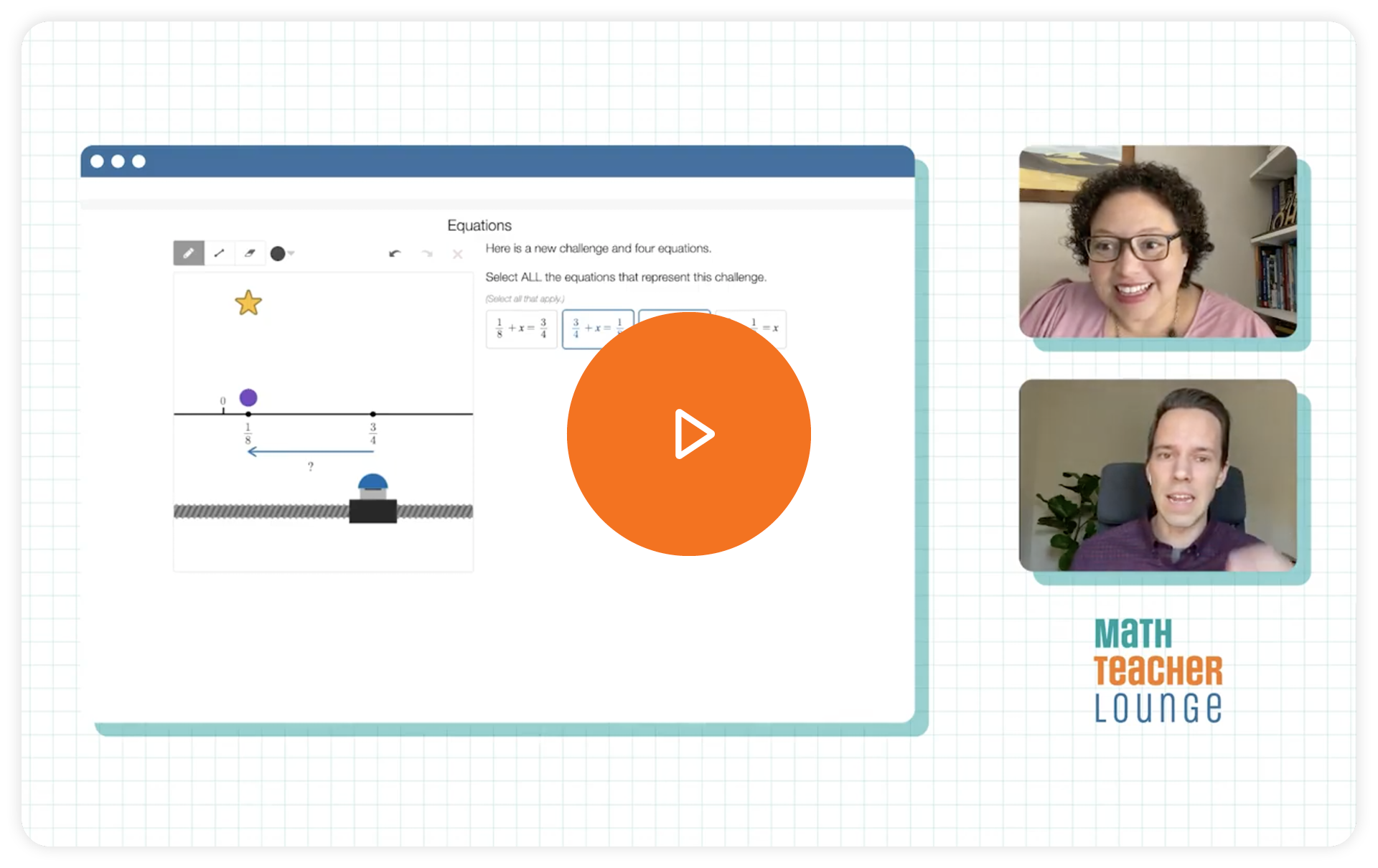
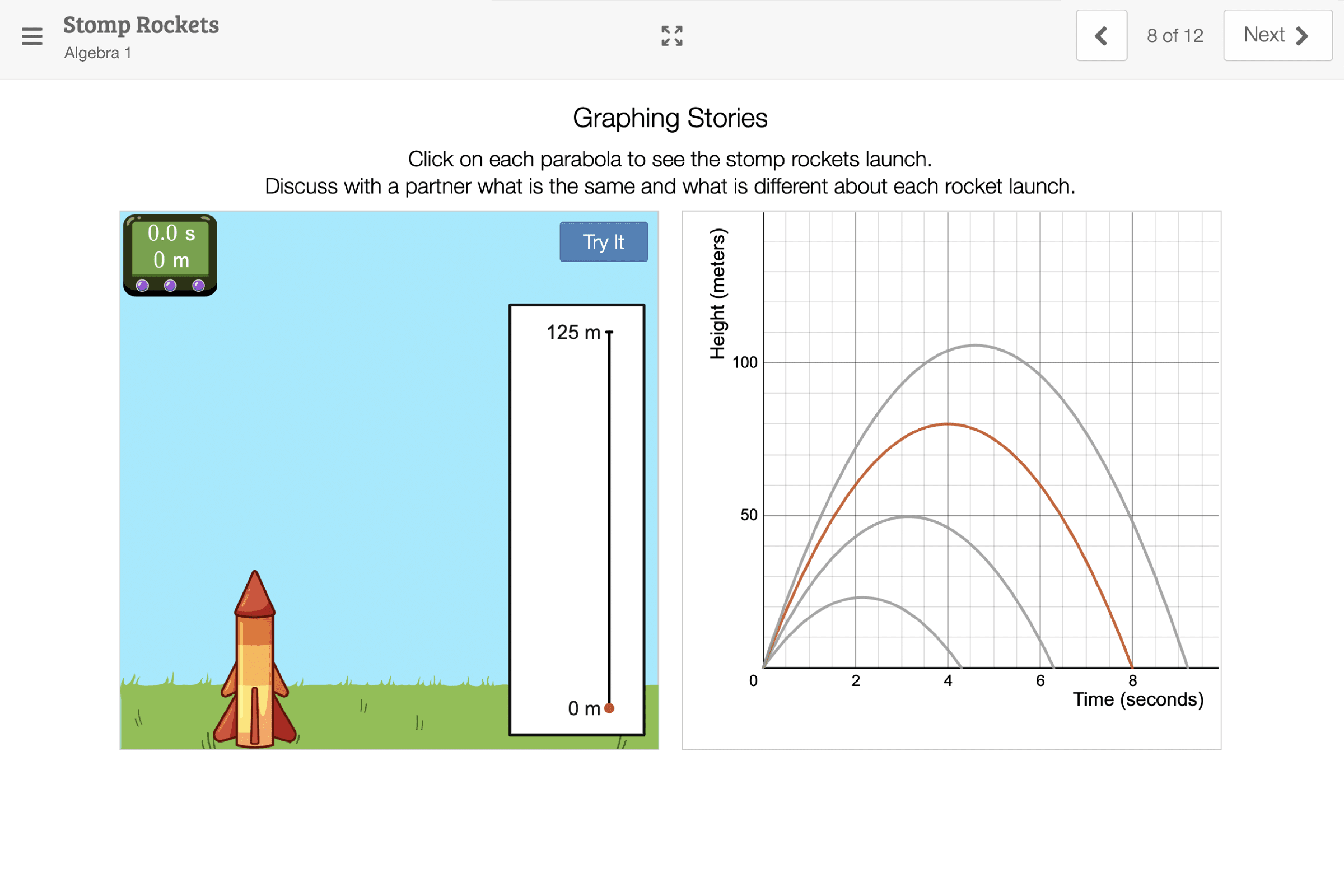
Winter Wrap-Up 03: Ideas to build math fluency
Join us for the third episode in our Winter Wrap-Up! In this episode from season 3 of Math Teacher Lounge: The Podcast, we sit down with Dr. Valerie Henry to talk about math fluency and what that means for students. Listen as we dig into the research, hear Val’s three-part definition of fluency, and explore her five principles for developing it.
Explore more from Math Teacher Lounge by visiting our main page.
Dan Meyer (00:03)
Hey folks. Welcome back. This is Math Teacher Lounge, and I am one of your hosts, Dan Meyer.
Bethany Lockhart Johnson (00:07):
And I’m your other host, Bethany Lockhart Johnson. Hi, Dan.
Dan Meyer (00:11):
Hey, great to see you. We have a big one this week to chat about and some fantastic guests. We are chatting about fluency, which is the sort of word and concept that I feel like people have very, very non-neutral associations with it. A lot of them are very negative, for a lot of people.
Bethany Lockhart Johnson (00:26):
I saw you frown a little. What’s up with that, Dan? You kind of, like, shrank.
Dan Meyer (00:30):
I have strong feelings about it. You know, there’s lots of ways that people go about helping people become fluent in mathematics. And a lot of them are harmful for students, and ineffective. And it got me thinking about fluency as it exists outside of the world of mathematics, where we have a lot of very clear images of it. We’re getting fluent in things all the time. Like, as humans. Human development is the story of fluency. And I just was wondering….Bethany, would you describe yourself as fluent at something outside of the world of mathematics? What is that? How’d you get fluent at it? What was the process?
Bethany Lockhart Johnson (01:05):
Hmm, I think I’m a pretty fluent reader. I read all the time. I’m a happier person if I’ve read that day. I once saw this poster in a classroom; it said “10 Ways to Become a Better Reader: Read, Read, Read, Read, Read…you know, 10 times. Get it? Reading? You get better at reading by reading! So I would say reading. And it’s been kind of cool—I have a one-year-old who, it’s been really exciting slash overwhelmingly anxiety-producing to see him get very fluent with walking slash running, ’cause he’s getting faster every day. And it’s kind of fun. When I think of what’s something somebody’s trying to get fluent with…walking! He’s trying to be more fluid. He’s practicing transitions. He doesn’t wanna hold my hand while he traverses rocky terrain. He’s getting better at it. He’s practicing. What about you? What’s something…?
Dan Meyer (02:08):
I think about driving a lot. I’m a very fluent driver and I think a lot about when I was first a driver, you know? And how l have my hands on 10 and 2, vice grip, and do not talk to me; do not ask me anything; don’t ask me my NAME. I need to focus so hard. And then a year later, you know, I’m driving with one hand, smash the turn signal, take a sip off of whatever, change the CD. And then it’s no big deal.
Bethany Lockhart Johnson (02:38):
Wait, did you pass the first time? Your test?
Dan Meyer (02:40):
Yeah, I don’t like to brag about it. <laugh> But I do all the time. <laugh> But I got a hundred on my driving test. I don’t care who knows it. And I hope it’s everybody. But I guess all of this is just to say there are areas of life where fluency feels natural, with the case of walking. There’s areas of life where fluency feels motivating, with like driving—I wanna be able to switch the CD out or whatever. And there’s areas where fluency feels terrifying and hard to come by, like mathematics, sometimes. So we have a set of guests here. Our first guest will help us figure out what do we mean by fluency? And what’s the research say about what fluency is and how students develop it in mathematics? And then our other guests will help us think about what it looks like in practice in the classroom. What are some novel, new ways to work on fluency? So first up we have Val Henry, Dr. Val Henry.
Bethany Lockhart Johnson (03:32):
So we knew we needed help with the fluency definition, because when we think about it, it’s kind of big, right? And we wanted to look at what research about fluency really says. So we called on Valerie Henry. Val is a nationally board-certified teacher, taught middle school for 17 years, and since 2002 has worked with undergraduates graduates, credential candidates as a lecturer at the University of California, Irvine, one of my alma maters. So after doing her dissertation on addition and subtraction fluency in first grade, Val created a project to study ways to build addition and subtraction and multiplication and division fluency while also developing number sense in algebraic thinking. And the pilot grew and grew over the last 18 years into a powerful daily mini-lesson approach to facts fluency called FactsWise. And when we thought of fluency, the first person I thought of was Val. Welcome, Val Henry, to the Lounge! I’m so excited to have you here. Welcome.
Valerie Henry (04:36):
Thanks, Bethany. And thanks to you, Dan. It’s great to be here today.
Dan Meyer (04:41):
Great to have you; help yourself to whatever you find in the fridge. The names that people write down on those things in the bags are just recommendations. It’s potluck-style here. I’m curious, Val, if you’re, like, on an airplane, someone asks you what you do, and you say you study fluency…what is the layperson’s definition of what does it mean to be fluent in mathematics? And if you can give a brief tour through what the research says about what works and what doesn’t that would really help us orient our conversation here.
Valerie Henry (05:12):
The first thing I have to do when I talk to somebody on a plane is define the idea of fluency. And I often use an example of tying your shoelaces. Because that works with first graders as well as adults. This idea that when we first start trying to put our shoes on and get those shoelaces tied, somebody tries to, first of all, just do it for us. But then of course maybe tries to teach us the bunny-ears approach. And we struggle and struggle as little kids and eventually either the bunny-ears approach or something else starts to work for us. But we still have to pay attention to it. We have to think hard and it’s not easy. And then over time we get to the point where we basically don’t even think about it. When I tie my shoes in the morning. I’m not thinking about right-over-left and left-over-right and all of those things. I just do it. And so that’s a good, easy example of becoming fluent with something. I think what we’re talking about today though, is the basics, the adding and subtracting that we hope kids are going to have mastered maybe by second grade, and the multiplication and division facts that we wanna maybe have mastered by third, maybe fourth grade. So now what does that mean to become fluent with those basics? I have a three-part definition that seems to match up really nicely with the common core approach to fluency. Which is, first of all, we want the answers to be correct. And then second, we want the answers to be easy to know. And so what does that mean? Well, to me, it means without needing to count,
Bethany Lockhart Johnson (07:12):
You mean without having to kind of muscle through it? Or say more about you mean.
Valerie Henry (07:16):
Well, I guess what I mean is that when you watch a young child try and solve something even as simple as two plus three, they might put up two fingers and then go 3, 4, 5 with three more fingers winding up on their hand, one or the other of their hands. While they’re doing that, they don’t really have a sense of whether even their answer is right or not, quite often. Especially when you get to the larger adding and subtracting problems, you can see a lot of errors happening as they’re trying to count. And it’s taking up cognitive energy to do that counting process, especially as you get to the larger quantities. So my definition of fluency now is “getting it right without needing to do that hard work like counting.” Now, some people might say, well, we just want them to have ’em memorized. But in my research, I’ve learned that a lot of very fluid adults don’t always have every fact memorized. In fact, if you ask a room full of adults, what’s seven plus nine, you might learn that they can all get it correct quickly, quickly…but they don’t all have it memorized. And so when you ask them, “How did you get that?” Many of them will say, “Well, I just gave one from the 7 to the 9 and I know that 10 plus 6 is 16.”
Bethany Lockhart Johnson (08:53):
That’s such an important distinction. My brain literally just did that actually!
Valerie Henry (08:58):
<laugh> Right? <laugh> But you’re fluid with it, because it doesn’t take you much cognitive energy at all.
Bethany Lockhart Johnson (09:05):
Right.
Valerie Henry (09:07):
So now we have “correct without needing to put that cognitive energy,” which usually means that you’re counting. And then the third thing is “relatively quickly,” so that you’re not spending 15 seconds trying to figure it out. Even that part-whole strategy approach can be done really quickly, almost instantaneously. Or it can take a long time. So if a student can get the answer correct within, you know, three or four seconds— is I’m pretty generous—I figure that they’re pretty darn fluent with that fact. So that’s my three-part definition of these basics, fluency.
Dan Meyer (09:55):
I love the distinction between getting it correct and getting it quick. It’s possible to be quick with wrong answers. It’s possible to be like, “Those are separate components there.” And I echo Bethany’s appreciation for this third option in between knowing it instantaneously through memorization and muscling through it. But there’s like a continuum there of how much energy it took you to come up with it that all feels extremely helpful.
Valerie Henry (10:21):
And you know, one of the things that I’ve noticed is that when kids are pressured to come up with those instantaneous answers, they often default to guessing and get it wrong.
Bethany Lockhart Johnson (10:30):
Mm, yeah.
Valerie Henry (10:30):
So that’s one of the things that I’ve learned is that as we’re trying to help students develop fluency, it’s important to start with building their conceptual understanding of what it means to do, you know, 3 times 9 and what the correct answer is, maybe using manipulatives or representations of some sort. Not skip-counting! I really have found that skip-counting just perpetuates itself in many students’ minds and that they never stop skip-counting, which means they’re putting in not very much mental energy if it’s 2 times 3 but a ton of mental energy if it’s 7 times 8. Because frankly, it’s really hard to skip count by sevens. And by eights.
Bethany Lockhart Johnson (11:18):
I can get to 14 and then I’m like, wait, wait, what was next? Right? No, no, no…21! What do you feel are some misconceptions that maybe teachers, maybe parents have about fluency in math?
Valerie Henry (11:30):
I think maybe one of the first ones is that if students count or skip-count, their answers repetitively over and over and over and over, that they’re bound to memorize them. And the study that I did back in 2004, I actually had a school that had decided that they were going to do time tests with their students every day, all year. And that undoubtedly by the end of the year, those students would be fluent.
Bethany Lockhart Johnson (12:06):
And to clarify by time test, you mean like, sit down, pencil, paper, ready, go, worksheet kind of thing.
Valerie Henry (12:15):
Yes.
Bethany Lockhart Johnson (12:16):
Some of us might remember quite vividly.
Valerie Henry (12:18):
<laugh> Very vividly. And you know, you have to get it done within a certain amount of time. So they made it fun for the students. Apparently the students enjoyed it. I was a little leery about that, but in the end, when I went and checked on the students and I did one-on-one assessments with half of the students in every class that were randomly selected so that I could get a sense of where they were with their fluency—and these were first graders—they basically had nothing memorized. They were simply counting as fast as they possibly could. And, you know, mostly getting the right answers. But they had not memorized. So that’s one of the myths, I think, is that repetitive practice of counting gets you to memorization.
Bethany Lockhart Johnson (13:10):
If I put it in front of you enough times, you’ll become fluent.
Valerie Henry (13:14):
Right, right. Now these students didn’t really get any instruction, any help learning these. They just simply tested over and over and over. So that’s another thing that I think is a misconception. It’s that if we test students, but don’t really teach them fluency, then they’re going to become fluent. If we just test them every Friday or that kind of thing. And that they’ll learn them at home. But really what that means is a few lucky kids who have parents who have the time and the energy and the background to know how to help will take that job on at home. Not that many students are really that fortunate.
Dan Meyer (14:01):
It’s almost like the traditional approach, or the approach you’re describing, confuses process and product. It says, “Well, the product is that eventually fluent students will be able to do something like this, see these problems and answer them, answer them quickly,” and says, “Well, that must be the process then as well; let’s give them that products a whole lot.” But as I hear you describe fluency with bunny ears on shoelaces, there’s these images and approaches and techniques that require a very active teacher presence to support the development of it. That’s just kind of interesting to me.
Valerie Henry (14:35):
My initial project, the pilot project that I tried, was to simply ask teachers to follow five key principles. And the first one was to do something in the classroom every day for—I told them, even if you’ve only got five or 10 minutes, work on fluency for five or 10 minutes a day, and let’s see what happens. So that was one key element was just to teach it and to give students opportunities to get what the research calls for when you’re trying to memorize, which is actually immediate feedback. When I talk about immediate feedback with my student teachers, I say, “I’m talking about within one or two seconds of trying a problem, and then sort of immediately knowing, getting feedback of whether you got the answer right or not so that your brain can kind of gain that confidence. ‘Oh, not only did I come up with an answer, but somebody’s telling me it’s the correct answer.’”
Dan Meyer (15:38):
There’s a lot of apps now in the digital world that offer students questions about arithmetic or other kinds of mathematical concepts and give immediate feedback of a sort: the feedback of “You’re right; you’re wrong” sort. Is that effective fluency development, in your view?
Valerie Henry (15:57):
I haven’t heard and I haven’t seen them being super-effective. The ways I think about this are “Immediate feedback isn’t the only thing we need.” Probably one of the biggest things that we need is for students to develop strategies. And this is one of the other things I’ve learned from international research, from countries that do have students who become very fluent very early, is that they don’t shoot straight for memorization, but they go through this process of taking students from doing some counting and then quickly moving them to trying to use logic. So, “Hey, you really are confident that 2 + 2 is 4; so now let’s use that to think about 2 + 3.” Actually, as an algebra teacher, I would much rather have students that have a combination of memorization and these strategies, than students who’ve only memorized. Isn’t that interesting that my most successful algebra students were good strategy thinkers. Not just good memorizers.
Bethany Lockhart Johnson (17:09):
So you mentioned there were five that kind of helped root this idea in like, “What can teachers do? What is the best thing that teachers can do to support with fact fluency?” So, everyday was key.
Valerie Henry (17:22):
Then the next principle that I really focus on is switching immediately to the connected subtractions so that students—
Bethany Lockhart Johnson (17:33):
Not waiting until you’ve gotten all the way through addition. But making “Ooh!”
Valerie Henry (17:38):
Totally. And I didn’t do that the first year. And when we looked at the results of the assessments at the end of the year, we realized that our students were so much weaker in subtraction than addition. So the following pilot year, we tried this other approach of doing subtraction right after the students had developed some fluency with that small chunk of addition. And we got such better subtraction results.
Bethany Lockhart Johnson (18:11):
What are the other principles?
Valerie Henry (18:13):
The biggest one is to use these strategies. So the strategies makes the third. And then the fourth I would say is to go from concrete to representational to abstract.
Bethany Lockhart Johnson (18:27):
Don’t put away those manipulatives. Don’t put away those tools.
Valerie Henry (18:31):
Oh, so important to come back to them for multiplication and division. And my fifth principle is to wait on assessment. To use it as true assessment, but not race to start testing before students have had a chance to go through this three-phase process. Which is conceptual understanding with manipulatives; building strategies, usually with representations; and then working on building some speed until it’s just that natural fluency.
Bethany Lockhart Johnson (19:07):
I wanna say thank you so much for offering your really learned perspective, because you have not only done the research, but seen it in action and seen how shifting our notions of fluency and what fluency can be and what a powerful foundation it can be for all mathematicians. Really, that shift is so powerful. And I appreciate you sharing it with our listeners and with us. So we’re so excited that we got to talk with you today, Val—
Dan Meyer (19:35):
Thank you, Dr. Henry.
Valerie Henry (19:37):
You’re welcome!
Dan Meyer (19:41):
With us now we have Graham Fletcher and Tracy Zager, a couple of people who understand fluency at a very deep and classroom level. I wanna introduce them and get their perspective on what we’re trying to solve here with fluency. So Graham Fletcher has served in education in a lot of different roles: as a classroom teacher, math coach, math specialist, and he’s continually seeking new and innovative ways to support students and teachers in their development of conceptual understanding in elementary math. He’s the author, along with Tracy, of Building Fact Fluency, a fluency kit we’ll talk about, and openly shares so much of his wisdom and resources at gfletchy.com. Tracy Johnson Zager is a district math coach who loves to get teachers hooked on listening to kids’ mathematical ideas. She is a co-author of this toolkit, Building Fact Fluency, and the author of Becoming the Math Teacher You Wish You’d Had: Ideas and Strategies from Vibrant Classrooms. Tracy also edits professional books for teachers at Stenhouse Publishers, including, yours truly. Thank you for all that insight, Tracy, and support on the book.
Bethany Lockhart Johnson (20:49):
Dan and I were talking at the beginning of the episode about things we feel like, “Hey, I’m fluent in that. I’m fluent in that.”
Dan Meyer (20:55):
Just very curious: What’s something you would like to get fluent in outside of the world of mathematics, let’s say?
Tracy Zager (21:00):
I’ll say understanding the teenage brain, as the parent of a 13-year-old and 15-year-old. That’s the main thing I’m working on becoming fluent in!
Bethany Lockhart Johnson (21:10):
Ooh!
Dan Meyer (21:13):
A language fluency, perhaps. All right, Graham. How about you?
Graham Fletcher (21:16):
For me typing, it’s always been an Achilles heel of mine. So voice-to-text has been my friend. But it’s also been my nemesis in much of my texting here and working virtually over the last couple years. So yeah, typing.
Dan Meyer (21:33):
Do you folks have some way of helping us understand the difference in how fluency is handled by instructors and by learners?
Tracy Zager (21:40):
I would say that the lay meaning of fluency is definitely a little different than what we mean in the math education realm. When we’re talking about math fact fluency, which is just one type of fluency. So you gotta think about procedural fluency and computational fluency; there are lots of types of fluency in math. And Graham and I had the luxury of really focusing in specifically on math fact fluency. We’re looking at kind of a subset of the procedural fluency. So the words you hear in all the citations are accurate, efficient, and flexible. There’s this combination of kids get the right answer in a reasonable amount of time and with a reasonable amount of work and they can match their strategy or their approach to the situation. That’s where that flexibility comes in. And there’s like lots more I wanna say about that about sort of…I think one issue that comes up around fluency is that people are in a little bit of a rush. So they tend to think of the fluency as this automaticity or recall of known facts without having to think about it. And that is part of the end goal, but that’s not the journey to fluency. So this is one of the things that Graham and I thought about a lot was the path to fluency. The goal here it’s that student in middle school who’s learning something new doesn’t have to expend any effort to gather that fact. And they might do it because they’ve done it so many different ways that they’ve got it, and now they just know it, or they might be like my friend who’s a mathematician who still, if you say, “Six times 8,” she thinks in her head, “Twelve, 24, 48…” and she does this double-double-double associative property strategy. And it’s so efficient, you would never know. And that’s totally great. That’s fine. That’s not slowing her down. That’s not providing a drag in the middle of a more complex problem or new learning. So we’re really focused on having elementary school students be able to enter the middle and high school standards without having that pull out of the new thinking.
Graham Fletcher (23:53):
And as I think about that, I think about how so many students will memorize their facts, but then they haven’t memorized them with understanding. So that when they move into middle school and they move into high school, it’s almost like new knowledge and new understanding that’s applied from a stand-alone skill.
Bethany Lockhart Johnson (24:10):
So something that felt really unique to me, Graham, as I was diving into the toolkit, is your use of images, Tracy, Graham, is the way that you use images to help students notice and wonder to start making sense of these quantities and the decomposition of numbers using images. Can you talk a little bit about how images played a part in the way that you think about this building a fact fluency?
Graham Fletcher (24:41):
What I realized is so many times when we approach math with just naked numbers with so many of our elementary students, the numbers aren’t visible. The quantities. They can’t see them; they can’t move them. They’re just those squiggly figures that we were talking about earlier on. So how is it that we make the quantities visible, to where students feel as if they can grab an apple and move it around? Because a lot of times we start with the naked numbers and then if kids don’t get the naked numbers, then we kind of backfill it. But what would happen if we start with the images? And then from there, these rich, flourishing mathematical conversations develop from the images. And I think that was the premise and the goal of the toolkit.
Tracy Zager (25:22):
When you look at how fact fluency has traditionally been taught, it’s all naked numbers. And sometimes we wrote ’em sideways. Like, that’s it. That was our variety of task type. Right? Sometimes it’s vertical; sometimes it’s horizontal. And that was it. And I’ve just known way too many kids who couldn’t find a hook to hang their hat on with that. It didn’t connect to anything. And so part of why I knew Graham was the perfect person for this project was his strength in multimedia photography, art, video. And so we started from this idea of contexts that for each lesson string in the toolkit, there’s some kind of context. An everyday object, arranged in some kind of a way that reveals mathematical structure and invites students to notice the properties. So we start with images of everyday objects: tennis balls, paint pots…um, help me out; here are a million of them. Crayons—
Bethany Lockhart Johnson (26:18):
Crayons, markers.
Tracy Zager (26:18):
Shoes, right? Sushi, origami paper, all kinds of things in the different toolkits. So there’s a series of images or a three-act task or both around those everyday objects, and then story problems grounded in that context. And then there are images with mathematical tools that bring out different ideas, but relate in some way to the image talks. And we do all of that before we get to the naked number talk. Which we do, and by the time you get to the number talk, it’s pretty quick, ’cause they’ve been reasoning about cups of lemonade. And now when you give them the actual numerals, they’re all over it.
Bethany Lockhart Johnson (27:03):
I have to say too, as somebody who—particularly in middle school—navigated math anxiety, we recently talked with Allison Hintz and Anthony Smith about their amazing book Mathematizing Children’s Literature.
Tracy Zager (27:14):
Yay!
Bethany Lockhart Johnson (27:14):
And I was explaining, like, if I sat down at the beginning of a math class and my teacher opened a picture book and said, “We’re gonna start here,” I felt my whole body relax. And if we start with this image, if we start with just looking at an image and making sense of an image, I feel like that could be such a powerful touchstone for all the work you do from there.
Tracy Zager (27:41):
That’s core. That’s a core design principle, is that invitational access. There are no barriers to entry. There’s nothing to decode. There’s nothing formal. We’ve been learning from Dan for years about this, right? Of starting with the informal and then eventually layering in the formal. I was in a class in Maine where they were doing an image talk and it’s these boxes of pencils. It’s a stack of boxes of pencils and they’re open and you can see there are 10 pencils in each box. And so there are five boxes of pencils each with 10 pencils in it. And then the next image is 10 boxes of pencils and each box is half full. So now it’s 10 boxes each with five. And the kids are talking and talking and then the third image, I think there are seven boxes each with 10 pencils in it. And she said, “What do you think the next picture’s gonna be?” And this girl said, “You just never know with these people!” <laugh> I dunno!”
Bethany Lockhart Johnson (28:37):
That’s kinda true. Knowing you both, it’s kinda true.
Tracy Zager (28:42):
Like if it’s seven boxes with 10 in it, one kid said, I think it’s gonna be 14 boxes of five. And other kids are like, I think it’s gonna be 10 boxes with seven. And they start talking about which of those there are and the relationships between—
Bethany Lockhart Johnson (28:58):
But they’re making sense of numbers!
Tracy Zager (28:59):
Totally. So all the kids felt invited. They can offer something up. They’re noticing and wondering about that image. They’re talking about it in whatever informal language or home language that they speak. And that was core to us. That was a huge priority, because honestly, one of the motivations to talk about fluency is that it’s always been this gatekeeper. It has served to keep kids out of meaningful math. Particularly kids from marginalized or historically excluded communities. So they’re back at the round table, doing Mad Minutes, while the more advantaged kids are getting to do rich problem solving. And so, we thought, what if we could teach fact fluency through rich problem solving that everybody could access? That was like square one for us.
Bethany Lockhart Johnson (29:45):
That’s huge.
Dan Meyer (29:46):
That’s great to hear. What’s been helpful for me is to understand that students who are automatic, that’s just kind of what’s on the surface of things. And that below that might be some really robust kind of foundation or scaffolding that bleeds to a larger building being built, or it might be just really rickety and not offer a sturdy place to build farther up. It’s been really exciting to hear that. I wonder if you’d comment for a moment about, in the digital age and—I’m at Desmos and our sponsors are Amplify and we all work in the digital world quite a bit. There are a lot of what report to be solutions to the fluency issue, to developing fluency in the digital world. Just lots and lots of them. Some that are quite well used, others that are just like X, Y, or Z app on the market. You can find something. Do you have perspectives on these kinds of digital fluency building apps? Like, what about them works or doesn’t work? Let us know. Graham, how about you? And then Tracy, I’d love to hear your thoughts too.
Graham Fletcher (30:47):
Yeah, I think that’s a great question, ’cause there’s a lot of shiny bells and whistles out there right now that can really excite a lot of teachers. But I always come back to what works for me as a classroom teacher is probably gonna work in a digital world as well. So what are the things that I love and honor most about being in front of students, and how can I capture that in that virtual world? I think one of the things that really helps students make connections is coherence. I think coherence, especially when you leave students for—you don’t get to talk with them after the lesson is done—so I think about how we can purposefully sequence things through a day-to-day basis. I think coherence is something that gets really lost when we talk about fluency, especially with whether it be digital or whether it be print, because what ends up happening is we say, “OK, we have all these strategies we need to teach,” and it becomes a checklist. So how is it that we can just provide students the opportunity to play around in a space, whether it be digital or in person, but in a meaningful way that allows them the time and the space and that area to breathe and think, but be coherent. And connecting those lessons along the way. And I think coherence is one thing that a lot of the times it’s harder to—when we’re in the weeds, it’s so hard and difficult to zoom back out and say, “Do all these lessons connect? How do they intentionally connect? And how do they purposefully connect?” And without coherence, everything’s kind of broken down into that granular level. So when looking at—I think about Desmos and I think about the Toolkit and I think about how Tracy and I talked a lot about, “Well, this, does it connect with the context problem, does it connect with the image talk, or the lessons? Like, how does it all connect and how are we providing students an opportunity to make connections between the day-to-day instruction and lessons that we tackle?”
Tracy Zager (32:44):
I’m reminded of a conversation that Dan, you and I had a long time ago, in Portland, Maine, in a bar. I’ll just be honest. <laugh> And we were talking about how, in the earlier days of Desmos, you were stressed out by what you saw, which was kids one-on-one, on a device, in a silent room. And you were like, no, this is not it. This is not what technology is here to serve. We can do so many things better using technology appropriately, but we can’t lose talk and we can’t lose relationships and we can’t lose formative assessment and teachers listening to kids and kids listening to each other and helping each other understand their thinking. Right? So when I think about the tech that’s out there for fact fluency, most of it is gonna violate all rules I have around time testing. So that a whole bunch of it, I would just toss on that premise. They’re really no different than flashcards. It’s just flashcards set in junkyard heaps. Or, you know, underground caverns. Or with a volcano or whatever. It’s the same thing. There are some lovely visuals—I’m thinking of Berkeley Everett’s Math Flips. Those are really pretty. Mathigon has some really nice stuff that’s digital. And I think that those resources invite you to kind of ponder and notice things and talk about them. All the tools that we design in the toolkit are designed to get people talking to each other, and give teachers opportunities to pull alongside kids and listen in and understand where they are. For example, our games, we didn’t design the games to be played digitally, even though you could, and people did during COVID, because we want kids on the rug, next to each other, on their knees; I’ve seen kids like across tables. I was in a school recently where a kid was like, “I hope you believe in God, ’cause you’re going…!” You know what I mean? <laugh>. Like they’re all pumped up.
Bethany Lockhart Johnson (34:41):
They’re invested!
Tracy Zager (34:45):
They’re psyching each other up and down and they’re interacting and it’s social and the teacher’s walking around and she’s listening to the games. And they don’t actually need any bells and whistles. They need dice and they need counters and they need this game that is actually a game. In all of our conversations, games have to actually be games. Games cannot be “roll and record.” Games have to involve strategy. They have to be fun. So in designing those games, we didn’t feel like it brought any advantage to make that a digital platform. But things that did bring advantages digitally, like the ability to project these beautiful images or to use short video in the classroom, that really was a value-add that enabled us to do something different in math class than we had done before, and to get kids talking in a different way than they ever had before. When I think about fluency, historically, if you say like, “OK, it’s time to practice our math facts,” you hear a lot of groans. And when I see a Building Fact Fluency classroom and I say, “OK, it’s BFF time!” There’s like a “YEAAAAHHH!” You know? And so that’s what we’re after.
Graham Fletcher (35:47):
It’s all about kids, really, for us. And I think at the heart of it, we made all the decisions with teachers and kids at the forefront of it.
Tracy Zager (35:55):
I know of high schoolers who are newcomers, who have experienced very little formal education, and speak in other languages, are using it as high schoolers, because it involves language and math and all the deep work in the properties and it’s accessible, but it’s also not at all condescending or patronizing. Like we designed it to be appropriate for older kids. So that’s just something that I think we’re both really proud of. One thing we thought a lot about, especially in the multiplication-division kit is how a classroom teacher could use it and a coordinating educator in EL, Title, special education, intervention could also use it because there’s so much in it, that students could get to be experts, if they got extra time in it, using something that’s related and would give them additional practice. So they could play a game a little bit earlier than the rest of the classes. And they could come in already knowing about that game, or they could do a related task. We have all these optional tasks that no classroom teacher would ever have time to teach it all. So the special educator could use it and have kids doing a Same and Different or a True/False, or some of the optional games. And then the work in both special education and general education could connect.
Dan Meyer (37:20):
I just wanna say that this is an area that for so many students, as you’ve said, Tracy, it presents a barrier. It’s a very emotionally fraught area of mathematics. And we really appreciate the wisdom you brought here. And just the care you’ve brought to the product itself. Your knowledge of teaching, knowledge of math, and yeah, especially a love for students feels like it’s really infused throughout Building Fact Fluency. If our listeners want to know more outside of this podcast, outside of the product itself, where can they find your words, your voice? Where you folks at these days? Tell ’em, Graham would you?
Graham Fletcher (37:57):
You can find us at Stenhouse, Building Fact Fluency. And then Tracy and I, currently playing around, sharing ideas a lot on Twitter, under the hashtag #BuildingFactFluency. That’s kind of where we can all come together and share ideas. And then also on the Facebook community, where there’s lots of teachers sharing ideas.
Bethany Lockhart Johnson (38:19):
If you were to ask our listeners like, “Hey, if you wanna keep thinking about this, here’s something you could try or here’s something you could go do,” what could be a challenge that we could share that could help us continue this conversation?
Graham Fletcher (38:35):
Online you can actually download a full lesson string. And a lesson string is a series of activities and resources that are purposefully connected. You can pick one or two of those from the Stenhouse web site, Building Fact Fluency. You can try the game. You can try one of those strategy-based games. You can try an image talk and just see how it goes. And just share and reflect back, whether on Twitter or on Facebook. But it’s kind of there, if you wanna give it a whirl. And as Tracy was sharing, even if you’re a middle-school teacher or a high-school teacher, we really tried to think about those middle-school and high-school students keeping it grade level-agnostic. Just so every student has those opportunities for those mathematical conversations. So download a lesson string and give it a whirl, and we’d love to hear how it goes.
Dan Meyer (39:25):
Bethany and I will be working the same challenge with people in our life.
Bethany Lockhart Johnson (39:29):
Yes.
Dan Meyer (39:29):
Enjoying some fact fluency with people in our homes, perhaps. We’ll see. And we’ll be sharing the results in the Math Teacher Lounge Facebook group. Graham and Tracy, thanks so much for being here. It was such a treat to chat with you both.
Bethany Lockhart Johnson (39:42):
I love learning with you and just helping to shift this idea of fluency into something that can be accessible and powerful and positive.
Stay connected!
Join our community and get new episodes every other Tuesday!
We’ll also share new and exciting free resources for your classroom every month.
Meet the guest
Valerie Henry has been a math educator since 1986. She taught middle school math for 17 years and has worked as a lecturer at University of California Irvine since 2002. After doing her 2004 dissertation research on addition/subtraction fluency in first grade, Valerie created FactsWise, a daily mini-lesson approach that simultaneously develops fluency, number sense, and algebraic thinking. Additionally, she has provided curriculum and math professional development for K-12 teachers throughout her career, working with individual schools, districts, county offices of education, Illustrative Mathematics, the SBAC Digital Library, and the UCI Math Project.

About Math Teacher Lounge: The podcast
Math Teacher Lounge is a biweekly podcast created specifically for K–12 math educators. In each episode co-hosts Bethany Lockhart Johnson (@lockhartedu) and Dan Meyer (@ddmeyer) chat with guests, taking a deep dive into the math and educational topics you care about.
Join the Math Teacher Lounge Facebook group to continue the conversation, view exclusive content, interact with fellow educators, participate in giveaways, and more!
You might also like:
Welcome, mCLASS Math families!
We’re excited to partner with you this school year to support your child’s math learning. This mCLASS® Math Caregiver Hub is designed to help you understand how mCLASS Math works and give you easy ways to support math learning at home—both before and after assessments.
Para la versión en español, haga clic aquí.

What is mCLASS Math?
mCLASS Math is a digital assessment system that gives teachers a clear picture of how students are thinking about major grade-level math concepts. It helps identify what your child knows and where they might need more support, so teachers can personalize instruction and help every student grow. mCLASS Math assessments are entirely digital and allow students to show how they think through open-ended questions. Teachers then gain immediate insight into student progress and instructional needs. You can learn more about the student experience here.
Learn more about mCLASS Math.
Getting started
Why is assessment important?
With mCLASS Math assessments, teachers understand not just what students know, but also how they think. This lets teachers better support students’ growth.
Going beyond right or wrong answers, mCLASS Math captures how students solve problems by highlighting their individual strengths, experiences, understandings, and strategies (or assets, as we collectively refer to them) and using them to inform instruction. With these insights, teachers can personalize learning, celebrate student strengths, and support meaningful growth.
Learn more about asset-based assessment.
Ways to support your child
Preview sample items at home with your child.
Explore mCLASS Math sample items together to help your child feel more comfortable and familiar with the assessment experience. These examples show the types of questions your child may see and how they’ll interact with the platform.
As you review the items together, encourage your child to explain their thinking. Try prompts like:
- “What are they asking you to solve?”
- “How can you show your thinking?”
- “Can you explain your answer?”
If your child feels stuck, guide them with questions such as:
- “What do you know so far?”
- “How could you represent this problem using objects or drawings?”
Remind your child that getting stuck is normal and a necessary part of the learning process. Many children (and adults) fear making mistakes, but research shows that making mistakes helps your brain grow. Building math confidence starts with practicing in a safe, supportive space.
Support math growth with daily Fluency Practice.
Help your child strengthen core math skills—in addition, subtraction, multiplication, and division—with just 5–10 minutes of daily fluency activities. Fluency Practice uses a proven learning method called spaced repetition to boost accuracy, speed, and confidence with math facts and operations.
Get started with Fluency Practice here.
Other ideas to support math learning
- Use and point out your child’s use of math in the real world wherever possible.
- Help with math homework as much as possible.
- Use intentional, positive phrasing about math—including about your child’s own use of it.
Coming soon: Caregiver-assisted math activities
For at-home learning, mCLASS offers a number of math resources families can use together, including caregiver-assisted math activities to help reinforce and practice skills at home.
We recommend reviewing this Protecting Kids Online article by the Federal Trade Commission, addressing digital safety.
We’re here to help!
Have a question about mCLASS Math? Visit our Help Library to search for articles with answers to your program questions.
For additional support, contact your child’s teacher.
Does your child’s class also use Amplify Desmos Math for their core math instruction Explore the Amplify Desmos Math Caregiver Hub to find additional resources and support!
We are the program for middle school.
Amplify ELA is a blended curriculum designed specifically for grades 6–8. With Amplify ELA, students learn to tackle any complex text and make observations, grapple with interesting ideas, and find relevance for themselves.
Students are engaged through dynamic texts, lively classroom discussions, and meaningful digital experiences. Request a free sample of Amplify ELA to see for yourself.




Built for middle school teachers and students
Built specifically for middle school, Amplify ELA is an interactive core curriculum that brings complex texts to life. Amplify ELA inspires students to read more deeply, write more vividly, and think more critically.

All-green rating on EdReports
The results are in! Amplify ELA received a near-perfect score by the independent review group.
Our approach
We are the program for middle school teachers, offering rich texts that are a delight to teach, better connections with your students through powerful differentiation and assessment tools, and step-by-step instructional guides that save you time and simplify your day.
We empower students to become critical thinkers.
With text always at the center, students are encouraged to make meaning for themselves. They develop ideas and opinions on real-world, relevant texts, instead of focusing on right or wrong answers.
We provide opportunities for all students to work “up.”
Multiple entry points and differentiated supports allow every student, regardless of fluency or ability level, to engage deeply with the same complex texts and rigorous curriculum.

We assess while you instruct.
Formative assessment reports provide a continually updated picture of how each student is progressing with key skills and standards. Each learning moment provides a small piece of data, allowing you to keep teaching while building a clear understanding of student performance.
What’s included
Rigorous core curriculum that empowers teachers and engages middle school students
Student edition
Available digitally and in print, the student materials guide middle schoolers through complex texts and writing by:
- engaging students with high-quality narrative and informational texts
- providing videos, audio supports, and digital experiences that capture their attention
- keeping all of their writing in one place with the personal writing journal
Teacher edition
Available digitally and in print, the Teacher’s Edition contains all of the information teachers need to facilitate classroom instruction, including:
- detailed lesson plans
- video teacher tips embedded in the lesson
- standards alignment and exit tickets
- real-time differentiation strategies
- robust reporting
Interactive Quests
Quests are fun, week-long explorations where students practice analytical reading, writing, speaking, and listening skills all while building a strong classroom community.
Digital library for independent reading
Amplify Library: Our expansive digital library includes more than 650 fiction and nonfiction, classic, and contemporary titles.

Amplify ELA makes teachers’ lives easier
We help teachers make sure the standards are covered, the skills are taught, your students are scaffolded and encouraged, and the test is prepped.
- Embedded differentiation to support all readers
- Informative and streamlined assessment system
- Robust reporting that tracks progress
- Powerful feedback tools
Nevada ELA Review for grades K–5
Thank you for taking the time to review Amplify’s core ELA program for K–5.
Amplify Core Knowledge Language Arts (CKLA) is a cutting-edge and effective core ELA program for students in grades K–5. It was developed in partnership with the Core Knowledge Foundation, was specifically designed to help teachers implement Science of Reading principles, and features proven evidence-based instructional practices.
Getting started
On this site, you’ll find a variety of resources designed to support your review and evaluation of the program. Before you start scrolling, watch the video below to learn about CKLA’s alignment to Nevada’s literacy initiatives as well as where to find key program resources.
Curriculum background
Pedagogical overview
In the video below, Amplify’s Chief Academic Officer Susan Lambert shares the big picture of CKLA, and explains why it was created and the impact it’s making across the country.
Program overview
In the video below, learn about CKLA’s structure and materials, as well the research behind the curriculum.
Program features
Built out of the latest research in the Science of Reading, Amplify CKLA delivers explicit instruction in both foundational literacy skills (systematic phonics, decoding, and fluency) and background knowledge in grades K–2 with an integrated approach to explicit instruction in grades 3–5.
Review this Science of Reading toolkit to learn more about the Science of Reading best practices integrated throughout CKLA.
Great reading instruction starts with helping kids develop great decoding skills. By building a solid foundation of phonological awareness and phonics, reading the words on the page becomes automatic so that comprehension and critical thinking can happen. Our instruction is supported by:
- Step-by-step lessons with multisensory approaches, clear lesson objectives, and embedded formative assessments.
- Decodable books and student readers with ebook and audiobook versions that feature engaging plots and relatable characters.
- An engaging sound library with fun songs and videos that develop phonological awareness.
- An interactive Vocab App featuring engaging activities with immediate feedback and automated, customized instruction based on student performance.
Students build grade-appropriate subject-area knowledge and vocabulary in history, science, literature, and the arts while learning to read, write, and think creatively and for themselves. Our instruction is supported by:
- Knowledge builders that provide a quick overview of each domain with its key ideas.
- Interactive Read-Alouds designed to build knowledge and vocabulary.
- Content-rich anchor texts that support students as they tackle increasingly complex text and sharpen their analytical skills.
- Social and emotional learning paired with lessons in civic responsibility.
Amplify CKLA provides built-in differentiation strategies in every lesson for all students,
including supports for ELLs.
- Access supports for ELLs—Integrated ELD supports in each lesson segment
for ELLs are specific to students’ mastery of the lesson’s objectives. - Support and Challenge for all learners—Lessons include Support and Challenge suggestions that provide assistance or opportunities for more advanced work toward the goal of the lesson. These supports are suitable for all learners, including ELLs.
- 30 minutes of Additional Support in every Skills lesson–In the Skills Strand, every lesson concludes with an Additional Support section of recommendations for 30 minutes of extended instruction and activities, directly aligned to the skills taught in the lesson to assist students who need more support in mastering the lesson’s objectives.
- Intervention Toolkit–The Intervention Toolkit provides easy-to-use resources to assist teachers in filling gaps in students’ foundational skills. Teachers will find of hundreds of activities to support phonics, fluency, comprehension, handwriting, and other key skills.
The slides-based Amplify CKLA digital experience enhances instruction while saving you time. Everything you need is all in one place, making it easier than ever to plan lessons, present digital content, and review student work.
- Simplify planning and instruction–Teachers have access to ready-to-use and customizable lesson presentation slides, complete with all the prompts from the print Teacher Guide embedded in the teacher view. As teachers deliver each lesson, students can engage with the content in one cohesive
experience—through Activity Books, slides, digital components, videos, Student Readers, and more. - Interactive student activities–Through the Student Home, students can easily access digital lessons with slides, Activity Pages, ebooks, videos, and other interactive resources from one simple dashboard.
- Your teacher command center–You’re provided with the tools you need to ensure a productive digital experience that’s personalized to meet your students’ needs. This includes a teacher home from which to launch and track lessons, LMS integrations such as Google Classroom and Microsoft Teams, and other customizations based on classroom needs.
- Get real-time insights into your students’ work–The innovative live review tool enables you to keep an eye on students drawing, recording audio, uploading and capturing images, and typing or writing in pre-placed text boxes in their Activity Pages.
Curriculum review
Digital experience overview
In the video below, learn about CKLA’s digital tools for teachers and students across both classroom and asynchronous environments.
Digital navigation walkthrough
Physical materials walkthrough
Curriculum implementation
See our Science of Reading solutions in action! Click here to see a real example of how one Ohio district is implementing and educating their K–8 community on the Science of Reading as a response to Ohio’s Plan to Raise Literacy Achievement Initiative.
Access the program
Explore as a teacher
Before logging in, watch this brief video on navigating the CKLA Teacher Resource Site.
Ready to explore as a teacher? Follow these instructions:
- Click the CKLA Teacher Resource Site button below.
- Select Log in with Amplify.
- Enter the username: t1.nvk5@tryamplify.net
- Enter the password: AmplifyNumber1
- Click the CKLA Teacher Resource icon
- Select a grade level
Explore as a student
Before logging in, watch this brief video on navigating the CKLA Student Hub.
Ready to explore as a student? Follow these instructions:
- Click the CKLA Teacher Resource Site button below.
- Select Log in with Amplify.
- Enter the username: s1.nvk5@tryamplify.net
- Enter the password: AmplifyNumber1
- Click the CKLA Teacher Resource icon
- Select a grade level
Check out these additional resources
Nevada submission resources:
- CKLA Program Alignment to the Standards (Nevada Rubric: Category 1)
- CKLA Program Social Justice Alignment (Nevada Rubric 2: Category 2)
- CKLA Grade K Lesson Alignment to the Nevada Academic Content Standards for English Language Arts
- CKLA Grade 1 Lesson Alignment to the Nevada Academic Content Standards for English Language Arts
- CKLA Grade 2 Lesson Alignment to the Nevada Academic Content Standards for English Language Arts
- CKLA Grade 3 Lesson Alignment to the Nevada Academic Content Standards for English Language Arts
- CKLA Grade 4 Lesson Alignment to the Nevada Academic Content Standards for English Language Arts
- CKLA Grade 5 Lesson Alignment to the Nevada Academic Content Standards for English Language Arts
CKLA review resources:
- CKLA Program guide
- Diversity, equity, and inclusion in CKLA
- Text complexity in CKLA
- Trade books in CKLA
- Assessments in CKLA
- Remote and hybrid learning with CKLA
- Amplify ELA Technical Specifications
- CKLA Scopes and Sequences
- Grade K Skills and Knowledge
- Grade 1 Skills and Knowledge
- Grade 2 Skills and Knowledge
- Grade 3 Integrated
- Grade 4 Integrated
- Grade 5 Integrated
AL review ELA (state)
What’s included in our literacy curriculum for 6–8
Amplify ELA is a blended literacy curriculum designed specifically for grades 6–8. The heart of every lesson is the text. Our core English Language Arts curriculum enables teachers to teach skills through texts and develop their students’ muscles for building meaning through reading. With Amplify ELA, students learn to attack any complex text and make observations, grapple with interesting ideas, and find relevance for themselves.
Year at a glance
Each grade includes six core units centered on literary or informational texts, delivered in several forms of media. In addition to these main units, students will engage with targeted Grammar lessons and a dedicated Story Writing unit, plus two to three immersive learning experiences called Quests.
Grade 6 core units

Dahl & Narrative
1 assessment lesson
4 sub-units | 28 lessons | 4-6 weeks

Mysteries & Investigations
1 assessment lesson
5 sub-units | 32 lessons | 4-6 weeks

The Chocolate Collection
1 assessment lesson
5 sub-units | 25 lessons | 4-6 weeks
The Greeks
Myth World Quest
1 assessment lesson
4 sub-units | 25 lessons | 4-6 weeks

Summer of the Mariposas
1 assessment lesson
2 sub-units | 27 lessons | 4-6 weeks

The Titanic Collection
1 assessment lesson
5 sub-units | 25 lessons | 4-6 weeks
Grade 7 core units

Red Scarf Girl
1 assessment lesson
4 sub-units | 31 lessons | 4-6 weeks

Character & Conflict
1 assessment lesson
4 sub-units | 29 lessons | 4-6 weeks

Brain Science
Perception Academy Quest
1 assessment lesson
4 sub-units | 25 lessons | 4-6 weeks

Poetry & Poe
The “Who Killed Edgar Allen Poe” Quest
1 assessment lesson
5 sub-units | 29 lessons | 4-6 weeks

The Frida & Diego Collection
1 assessment lesson
5 sub-units | 25 lessons | 4-6 weeks
The Gold Rush Collection
1 assessment lesson
5 sub-units | 25 lessons | 4-6 weeks
Grade 8 core units

Perspectives & Narrative
1 assessment lesson
4 sub-units | 27 lessons | 4-6 weeks

Liberty & Equality
1 assessment lesson
6 sub-units | 38 lessons | 4-6 weeks

Science & Science Fiction
1 assessment lesson
3 sub-units | 29 lessons | 4-6 weeks
Shakespeare’s Romeo & Juliet
1 assessment lesson
2 sub-units | 22 lessons | 4-6 weeks

The Holocaust: Memory & Meeting
1 assessment lesson
6 sub-units | 21 lessons | 4-6 weeks

The Space Race Collection
1 assessment lesson
5 sub-units | 25 lessons | 4-6 weeks
Units at a glance
Amplify ELA lessons follow a structure both grounded in regular routines and flexible enough to allow for a variety of learning experiences. Lesson structures vary from day to day, ensuring that students are always engaged.
Learn more in the Amplify ELA Grade Overview.
Unit 6A
Dahl & Narrative
Students begin with narrative writing to develop foundational Focus skills and establish key classroom routines. Teachers use this work to create targeted feedback cycles and build a vibrant community centered on diverse experiences. Students then apply observational skills to Roald Dahl’s Boy: Tales of Childhood, learning to work closely with textual evidence.
Unit 6B
Mysteries & Investigations
Students read like an investigator to embark on a multi-genre study into the mesmerizing world of scientific and investigative sleuthing. The Secret of the Yellow Death: A True Story of Medical Sleuthing by Suzanne Jurmain, and Sir Arthur Conan Doyle’s Sherlock Holmes stories take place in the late 19th century, when medical diagnostics and criminal investigations were still evolving into scientific fields.
Unit 6C
The Chocolate Collection
Students explore primary documents and research the diverse cultural roles chocolate has played over 3,700 years, from its various uses in ancient Mexico to issues with modern production. Along the way, they build information literacy skills, craft research questions, and collaborate in Socratic seminars. Students also learn how to construct an evidence-based argument and use those skills to write pieces aimed at convincing readers about chocolate preferences, school lunch policies, and recommendations for local candy stores.
Unit 6D
The Greeks
Students closely explore and analyze three stories from Greek mythology: “Prometheus,” “Odysseus,” and “Arachne.” Drawing on the routines and skills established in previous units, these lessons ask students to move from considering the state of a single person to contemplating broader questions concerning the role people play in the world and the various communities they inhabit.
Unit 6E
Summer of the Mariposas
Students read Summer of the Mariposas by Guadalupe García McCall, a contemporary Latino retelling of The Odyssey. Following five sisters on their journey into Mexico and back, students explore this reimagining of the hero’s journey as they encounter Mexican folklore and Aztec legends along the way. Students analyze character development, compare the novel to Homer’s original, research Aztec mythology, explore symbolism, and engage in collaborative discussions before writing an essay about what makes the heroes successful.
Unit 6F
The Titanic Collection
Students explore primary documents and conduct research to understand the 1912 Titanic disaster, building information literacy skills by examining artifacts such as dining menus, ship photos, telegraph transcripts, and newspaper accounts. Each student is assigned a passenger from the manifest and writes a narrative account from that person’s perspective, considering different views. Students also participate in Socratic seminars to examine the complicated issues within the Titanic story.

Unit 7A
Red Scarf Girl & Narrative
Students begin with narrative writing to develop foundational Focus skills while teachers establish targeted feedback cycles and build a classroom community centered on diverse experiences. After exploring how they describe their own experiences and emotions, students apply the same close attention to analyzing details in Ji-li Jiang’s Red Scarf Girl: A Memoir of the Cultural Revolution.
Unit 7B
Character & Conflict
Students analyze characters’ responses to conflict and examine how authors use character interactions to develop theme and perspective. They read Carson McCullers’ “Sucker” and Lorraine Hansberry’s A Raisin in the Sun, both texts that explore how families facing hardships can support and harm one another. Students observe complex character growth and discuss issues of identity, family obligations, and differing notions of success.
Unit 7C
Brain Science
Students explore narrative nonfiction and informational texts about brain science to understand what it means to be human and how their developing brains impact daily experiences. They also build awareness of their cognitive strengths and analyze the structures of informational texts and scientific arguments. Key texts include Phineas Gage, Inventing Ourselves: The Secret Life of the Teenage Brain, and Oliver Sacks’ The Man Who Mistook His Wife for a Hat.
Unit 7D
Poetry & Poe
Students learn visualization techniques to read like a movie director, beginning with poems by D.H. Lawrence, Federico García Lorca, and Emily Dickinson to form mental images. They then read three Edgar Allan Poe texts, creating storyboards and analyzing narrative elements to learn about unreliable narrators. Students also participate in the murder-mystery Quest “Who Killed Edgar Allan Poe?” and write an essay arguing whether they can trust a narrator in the unit’s texts.
Unit 7E
The Frida & Diego Collection
Students explore primary source documents and research on Mexican artists Diego Rivera and Frida Kahlo, learning how they drew inspiration from Latin American folklore, politics, and customs. Along the way, students build information literacy by generating research questions and visual analysis skills through close reading of key paintings. They also compare the artists’ descriptive writing to Shakespeare’s and analyze figurative language. The unit culminates in a research project showcasing their interpretation of Frida and Diego’s work and legacy.
Unit 7F
The Gold Rush Collection
Students explore primary documents and conduct research on the California Gold Rush, building information literacy skills and constructing research questions. They also learn about the diverse people who participated, compare fictional and historical accounts, and participate in Socratic seminars. Students write narrative accounts from specific perspectives and complete a culminating research assignment combining essay and media project elements.
Unit 8A
Perspectives & Narrative
Students learn to read like writers, paying attention to craft and writing moves that shape reader experience and developing Focus and Showing skills as they build collaborative classroom routines. Students study three narrative texts, exploring themes of belonging and identity through close reading. They also practice alternating between analytic and narrative writing, and conclude with an essay arguing whether the mothers in Amy Tan’s “Fish Cheeks” are role models.
Unit 8B
Liberty & Equality
Students study Civil War-era writings that debate the meaning of “all men are created equal,” exploring various perspectives on American ideals. Key texts include Walt Whitman’s Leaves of Grass, Frederick Douglass’ Narrative, and Harriet Ann Jacobs’s Incidents in the Life of a Slave Girl. The unit culminates with an essay examining Douglass’s arguments and Lincoln’s Gettysburg Address to consider what America means by “all men are created equal.”
Unit 8C
Science & Science Fiction
Students read Gris Grimly’s Frankenstein, a graphic novel adaptation of Mary Shelley’s novel, exploring themes of creator responsibility, societal influence, and the risks of scientific inquiry. They trace Victor’s sympathy for his creation, rewrite scenes from the creature’s perspective, and debate whether Victor owes the creature a companion. The unit concludes with an essay determining whether the creature should be considered human.
Unit 8D
Shakespeare’s Romeo & Juliet
Students read five excerpts from Shakespeare’s Romeo and Juliet to learn key elements of Shakespearean English through close reading. They practice memorizing and reciting the famous “Prologue,” put on stage performances, translate Shakespeare’s language into contemporary terms, and study the Shakespearean sonnet form. The unit concludes with an essay arguing whether love or hate is responsible for Romeo’s death.
Unit 8E
Holocaust: Memory & Meaning
Students use close reading to explore memoirs and primary sources that address two key Holocaust questions: How do societies become participants in atrocity, and what are our responsibilities as witnesses? Students analyze multiple perspectives through texts, including Alexander Kimel’s “I Cannot Forget,” Irene Butter’s Shores Beyond Shores, 1936 Olympics propaganda, and excerpts from Maus and Night.
Unit 8F
The Space Race Collection
Students explore primary documents and conduct research on the Space Race. They build information literacy skills, construct research questions, and learn about diverse participants from Soviet cosmonauts to American heroes like Buzz Aldrin and Katherine Johnson. Each student researches an assigned cosmonaut or astronaut and writes space blog entries from their perspective. Students also complete a capstone research essay and media project.
Print & digital components
The program includes instructional guidance and student materials for a year of instruction, with lessons and activities that keep students engaged every day.

Teacher materials
Teacher Edition
Available digitally and in print, the Teacher’s Edition contains all the information teachers need to facilitate classroom instruction, including detailed lesson plans, video teacher tips, presentation slides, standards alignment, Exit Tickets, real-time differentiation strategies, and robust reporting.
Student materials
Student Edition
Available digitally and in print, student materials guide middle schoolers through complex texts and writing by engaging them with high-quality narrative and informational texts—providing videos, audio supports, and a digital experience that captures their attention. They also keep all of their writing in one place with a personal Writing Journal.

Explore more programs
Our programs are designed to support and complement one another. Learn more about our related programs.
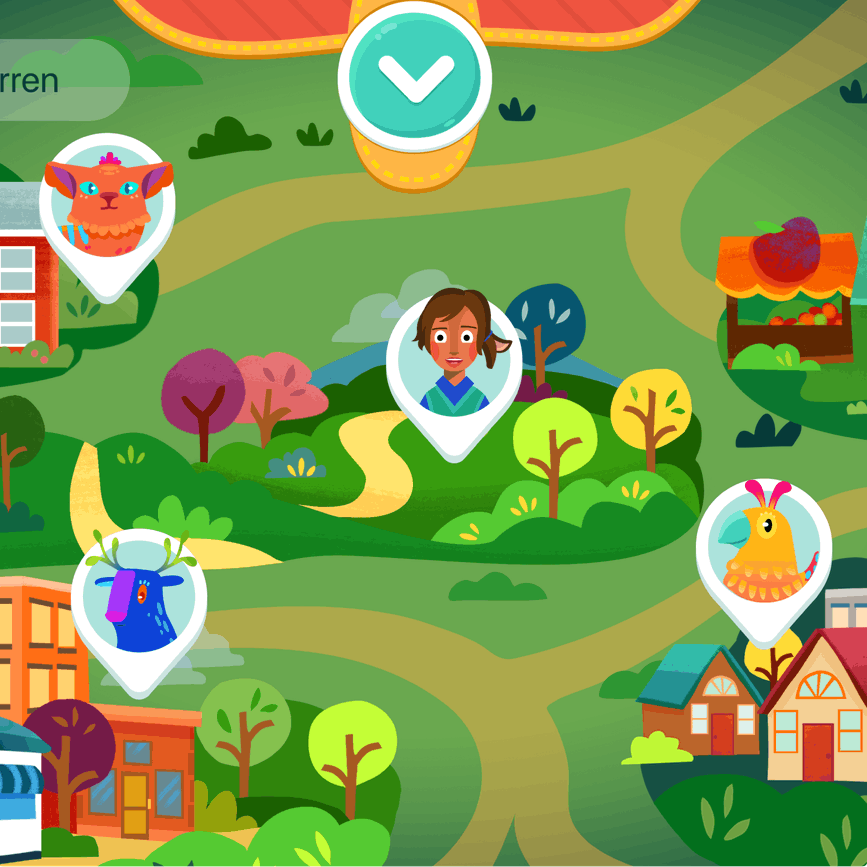
South Carolina review for grades K–5
Miami review ELA
South Carolina review for grades K–5
Thank you for taking the time to review Amplify’s CKLA resources for K–5.
Amplify Core Knowledge Language Arts (CKLA) is a cutting-edge and effective core literacy resource for students in grades K–5. It was developed in partnership with the Core Knowledge Foundation, was specifically designed to help teachers implement Science of Reading principles, and features proven evidence-based instructional practices.

Getting started
On this site, you’ll find a variety of resources designed to support your review and evaluation of the program. Before you start scrolling, watch the video below to learn about CKLA’s alignment to South Carolina literacy initiatives and what included in your physical samples.
South Carolina review documents
SC College and Career Readiness Correlations K-5:
Please use the provided Amplify credentials to access the CKLA content cited below.
Each Skills unit or Knowledge domain is linked to its corresponding Teacher Guide. The bolded lessons are linked to lesson segments or direct examples of the SC College- and Career-Readiness standards expressed in the Amplify CKLA South Carolina Edition Teacher Guides.
SC Instructional Strategies & Routines K-5
Scope and Sequence
K Skills Scope and Sequence
K Knowledge Scope and Sequence
1st Skills Scope and Sequence
1st Knowledge Scope and Sequence
2nd Skills Scope and Sequence
2nd Knowledge Scope and Sequence
What is Amplify CKLA K-5?
In the video below, Amplify’s Chief Academic Officer Susan Lambert shares the big picture of CKLA, and explains why it was created and the impact it’s making across the country.
How does CKLA work?
Through a unique, evidence-based two-strand approach, Amplify CKLA helps students master foundational skills and build a robust knowledge base–both of which are necessary for accessing and comprehending complex texts.
Grades K–2: Dedicated knowledge building and explicit skills instruction
Every day, students in Grades K–2 complete one full lesson that builds foundational reading skills in the Amplify CKLA Skills Strand, as well as one full lesson that builds background knowledge in the Amplify CKLA Knowledge Strand. Through learning in each of these strands, students develop the early literacy skills necessary to help them become confident readers and build the context to understand what they’re reading.
Grades 3–5: Integrated instruction
In Grades 3–5, Knowledge and Skills are integrated in one set of instructional materials. Lessons begin to combine skills and knowledge with increasingly complex texts, close reading, and a greater writing emphasis. Students can then use their skills to go on their own independent reading adventures.
Why review CKLA K-5?
Built out of the latest research in the Science of Reading, Amplify CKLA delivers explicit instruction in both foundational literacy skills (systematic phonics, decoding, and fluency) and background knowledge in grades K–2 with an integrated approach to explicit instruction in grades 3–5.
Review this Science of Reading toolkit to learn more about the Science of Reading best practices integrated throughout CKLA.
Students build grade-appropriate subject-area knowledge and vocabulary in history, science, literature, and the arts while learning to read, write, and think creatively and for themselves. Our instruction is supported by:
- Knowledge builders that provide a quick overview of each domain with its key ideas.
- Interactive Read-Alouds designed to build knowledge and vocabulary.
- Content-rich anchor texts that support students as they tackle increasingly complex text and sharpen their analytical skills.
- Social and emotional learning paired with lessons in civic responsibility.
Amplify CKLA provides built-in differentiation strategies in every lesson for all students,
including supports for Multi Language Learners.
- Access supports for Multi Language Learners—Integrated ELD supports in each lesson segment
for Multi Language Learners are specific to students’ mastery of the lesson’s objectives. - Support and Challenge for all learners—Lessons include Support and Challenge suggestions that provide assistance or opportunities for more advanced work toward the goal of the lesson. These supports are suitable for all learners, including ELLs.
- 30 minutes of Additional Support in every Skills lesson–In the Skills Strand, every lesson concludes with an Additional Support section of recommendations for 30 minutes of extended instruction and activities, directly aligned to the skills taught in the lesson to assist students who need more support in mastering the lesson’s objectives.
- Intervention Toolkit–The Intervention Toolkit provides easy-to-use resources to assist teachers in filling gaps in students’ foundational skills. Teachers will find of hundreds of activities to support phonics, fluency, comprehension, handwriting, and other key skills.
The slides-based Amplify CKLA digital experience enhances instruction while saving you time. Everything you need is all in one place, making it easier than ever to plan lessons, present digital content, and review student work.
- Simplify planning and instruction–Teachers have access to ready-to-use and customizable lesson presentation slides, complete with all the prompts from the print Teacher Guide embedded in the teacher view. As teachers deliver each lesson, students can engage with the content in one cohesive
experience—through Activity Books, slides, digital components, videos, Student Readers, and more. - Interactive student activities–Through the Student Home, students can easily access digital lessons with slides, Activity Pages, ebooks, videos, and other interactive resources from one simple dashboard.
- Your teacher command center–You’re provided with the tools you need to ensure a productive digital experience that’s personalized to meet your students’ needs. This includes a teacher home from which to launch and track lessons, LMS integrations such as Google Classroom and Microsoft Teams, and other customizations based on classroom needs.
- Get real-time insights into your students’ work–The innovative live review tool enables you to keep an eye on students drawing, recording audio, uploading and capturing images, and typing or writing in pre-placed text boxes in their Activity Pages.
Digital navigation walkthrough
Access the resources
Ready to explore as a teacher? Follow these instructions:
- Visit learning.amplify.com
- Select Log in with Amplify.
- Enter the username: t.southcarolina@tryamplify.net
- Enter the password: AmplifyNumber1
- Select CKLA
Ready to explore as a student? Follow these instructions:
- Visit learning.amplify.com
- Select Log in with Amplify.
- Enter the username: s.southcarolina@tryamplify.net
- Enter the password: AmplifyNumber1
- Select CKLA
Amplify literacy success K-8
See our Science of Reading solutions in action! Click here to see a real example of how one Ohio district is implementing and educating their K–8 community on the Science of Reading as a response to Ohio’s Plan to Raise Literacy Achievement Initiative.
English language arts curriculum for middle school
With Amplify ELA, students learn to tackle any complex text and make observations, grapple with interesting ideas, and find relevance for themselves.
Rated all-green on EdReports, Amplify ELA earned perfect scores across all gateways. Para la versión en español, haga clic aquí.
Easy and adaptable to teach
With six levels of embedded differentiation and assessments, teachers can make sure students are gaining key skills while not interrupting instruction. Because the program does this work in the background, teachers have more time doing what they love.
Also, only Amplify offers the 100-Day Pathway, a built-in guide to covering required content for each grade level in just 100 days while allowing teachers to add supplemental lessons and activities.

Knowledge Matters in Middle School
Amplify ELA has been recognized by the Knowledge Matters Campaign as a high-quality, knowledge-building literacy curriculum.
The Campaign highlights Amplify ELA as a program that infuses wonder and excitement into every learning experience—forging connections across grade levels and providing comprehensive support for both students and educators.
Our approach
Through its engaging digital program, powerful differentiation and assessment tools, and step-by-step instructional guides, our curriculum responds directly to the challenges and opportunities faced by middle school students and teachers.
We empower students to become critical thinkers.
With text always at the center, students are encouraged to make ideas and opinions about meaning for themselves. Rather than focusing on right or wrong answers, they develop ideas and opinions on relevant, real-world, texts.


We provide six levels of differentiated support.
Multiple entry points and six levels of embedded differentiated support allow every student, regardless of fluency or ability level, to engage with the same complex texts and curriculum.
We assess while you instruct.
Embedded assessments and reports provide insight into each student’s progress without having to interrupt daily instruction. With data being collected at every learning moment, teachers can respond to student needs faster than ever before.


Amplify your teaching with ELA PD!
Amplify ELA offers targeted professional development (PD) sessions designed to optimize teaching strategies, enhance student engagement, and ensure effective curriculum delivery. Gain insights and techniques to make the most of your instructional time.

What’s included
Amplify ELA is a rigorous core curriculum that empowers teachers and engages middle school students.
Student Edition
Available digitally and in print, the student materials guide middle schoolers through complex texts and writing by:
- Engaging students with high-quality narrative and informational texts.
- Providing videos, audio supports, and digital experiences that capture their attention.
- Keeping all of their writing in one place with a personal Writing Journal.
Teacher Edition
Available digitally and in print, the Teacher Edition contains all the information teachers need to facilitate classroom instruction, including:
- Detailed lesson plans.
- Video teacher tips embedded in the lesson.
- Standards alignment and exit tickets.
- Real-time differentiation strategies.
- Robust reporting.
Interactive Quests
Quests are fun, week-long immersions into a specific, multilayered topic. They enable students to practice analytical reading, writing, speaking, and listening skills—all while building a strong classroom community.
Digital library for independent reading
The expansive Amplify Library includes more than 700 digital fiction, nonfiction, classic, and contemporary titles.
Amplify ELA makes teachers’ lives easier
Our program ensures that standards are covered, skills are taught, and students are prepared with proper scaffolding and encouragement.
- Embedded differentiation to support all readers.
- Informative and streamlined assessment system.
- Robust reporting that tracks progress.
- Powerful feedback tools.
Explore more programs
Our programs are designed to support and complement one another. Learn more about our related programs.

Welcome, Georgia educators!
FL review ELA (state)
Amplify CKLA Review for Alabama
The Ohio High Impact Tutoring Consultancy Series
Digital experience for Amplify Science
The Amplify Science digital experience unlocks a whole new level of engagement and impact. With the digital experience, everything you need is in one place, saving you time and making it easier than ever to plan lessons, present digital content, and review student work. Students engage with content in one access point, unlocking deep engagement through digital books, simulations, and practice tools.
Read the review on EdReports.
Streamline planning and supercharge instruction
Make lesson planning easier with slides-based lessons and integrated teacher guidance.
- Educator Home helps you stay organized with quick access to your programs, recently taught lessons, student work, and upcoming assignments.
- Ready-to-use and customizable presentation slides support lesson prep, planning, and instruction.
- Embedded prompts within the digital slides offer additional support through suggested teacher talk, teacher actions, and embedded assessment opportunities.
Instant insight into student learning
View student thinking in real time with the live review tool embedded within every student experience lesson.
- Keep an eye on all of your students as they write, record audio, draw, upload and capture images, and more.
- Spot and correct common misconceptions as they’re happening.
- Anonymously share student work with the entire class to spark productive discussions and praise students for their hard work.
Ignite student engagement
Student Home offers one intuitive access point for students to fully engage with classroom instruction. Students can:
- Easily access all lessons from one simple dashboard.
- Connect to student books, simulations (“sims”), and digital practice tools embedded at point of use.
- Allow students to explore lesson slides through a self-paced or automatically navigated learning path, predetermined by the teacher.
Assign lessons your way with LMS integrations
The digital experience integrates with various LMSs, allowing you and your students to access Amplify Science with the software you’re already comfortable using.
- Easily create and send assignments and specify due dates.
- Tailor your digital experience to meet your classroom’s needs.
Welcome to Amplify Science Pennsylvania
(6–8)!
Amplify Science is an engaging core curriculum designed for three-dimensional, phenomena-based learning.
With Amplify Science, Pennsylvania students shift from learning about to figuring out science, through authentic three-dimensional (3D) learning and phenomena-based exploration. In each unit, students take on the role of a scientist or engineer to investigate a real-world problem. This prepares them to become critical thinkers who can solve problems in their communities and beyond.

What is Amplify Science Pennsylvania?
Customized lessons for Pennsylvania
Amplify Science Pennsylvania (6–8) combines our nationally recognized, proven curriculum with custom lessons specifically designed to ensure that you are meeting Pennsylvania’s STEELS standards.

The Lawrence Hall of Science
Developed by the science education experts at UC Berkeley’s Lawrence Hall of Science and the digital learning team at Amplify, our program features:
- A phenomena-based approach, in which students construct a complex understanding of each unit’s anchor phenomenon.
- A blend of cohesive storylines, hands-on investigations, rich discussions, literacy-rich activities, and digital tools.
- Carefully crafted units, chapters, lessons, and activities designed to deliver true three-dimensional learning.
- An instructional design that supports all learners in accessing all standards.

Proven to work
Instructional model
The Amplify Science Pennsylvania program is rooted in the proven, research-based pedagogy of Do, Talk, Read, Write, Visualize. Here’s how each element works:
Do
First-hand investigations are an important part of any science classroom, and Amplify Science Pennsylvania has students getting hands-on in every unit—from building models of protein molecules to experimenting with electrical systems.
Talk
Student-to-student discourse and full-class discussions are an integral part of the program. Students are provided with numerous opportunities to engage in meaningful oral scientific argumentation while fostering a collaborative classroom environment.
Read
Students read scientific articles, focusing on searching for evidence related to their investigation and on asking and recording questions as they read through fascinating texts on 21st-century topics.
Write
Following real-world practices, students write scientific arguments based on evidence they’ve collected, making clear their reasoning about how a given piece of evidence connects to one of several claims.
Visualize
By manipulating digital simulations and using modeling tools to craft visualizations of their thinking— just as real scientists and engineers
do—students take their learning far beyond the confines of what they can physically see in the classroom in an exciting and authentic way.
Program structure
Our cyclical lesson design ensures that students receive multiple exposures to concepts through a variety of modalities. As they progress through the lessons within a unit, students build and deepen their understanding, increasing their ability to develop and refine complex explanations of the unit’s phenomenon.
It’s this proven program structure and lesson design that enables Amplify Science Pennsylvania to address 100% of the Next Generation Science Standards (NGSS), and support students in mastering the Pennsylvania Science Standards.

Unit types
While every unit delivers three-dimensional learning experiences and engages students in gathering evidence from a rich collection of sources, each unit also serves a unique instructional purpose.
In grades 6–8:
- One unit is a launch unit.
- Three units are core units.
- Two units are engineering internships.
Launch units are the first units taught in each year of Amplify Science Pennsylvania. The goal of the Launch unit is to introduce students to norms, routines, and practices that will be built on throughout the year, including argumentation, active reading, and using the program’s technology. For example, rather than taking the time to explain the process of active reading in every unit in a given year, it is explained thoroughly in the Launch unit, thereby preparing students to read actively in all subsequent units.
Core units establish the context of the unit by introducing students to a real-world problem. As students move through lessons in a Core unit, they figure out the unit’s anchoring phenomenon, gain an understanding of the unit’s disciplinary core ideas and science and engineering practices, and make linkages across topics through the crosscutting concepts. Each Core unit culminates with a Science Seminar and final writing activity.
Engineering Internship units invite students to design solutions for real-world problems as interns for a fictional company called Futura. Students figure out how to help those in need, from tsunami victims in Sri Lanka to premature babies, through the application of engineering practices. In the process, they apply and deepen their learning from Core units.
Unit sequence
Our lessons follow a structure that is grounded in regular routines while still being flexible enough to allow for a variety of learning experiences.
In fact, our multimodal instruction offers more opportunities for students to construct meaning, and practice and apply concepts, than any other program. What’s more, our modular design means our units can be flexibly arranged to support your instructional goals.

Program components
Available digitally and in print, our unit-specific reference guides are chock full of helpful resources, including scientific background knowledge, planning information and resources, color-coded 3D Statements, detailed lesson plans, tips for delivering instruction, and differentiation strategies.

Hands-on learning is an essential part of Amplify Science Pennsylvania, and is integrated into every unit. Students actively participate in science, playing the roles of scientists and engineers as they gather evidence, think critically, solve problems, and develop and defend claims about the world around them. Every unit includes hands-on investigations that are critical to achieving the unit’s learning goals.

More hands-on with Flextensions:
Hands-on Flextensions are additional, optional investigations that are included at logical points in the learning progression and give students an opportunity to dig deeper if time permits. These activities offer teachers flexibility to choose to dedicate more time to hands-on learning. Materials referenced in Hands-on Flextension activities will either be included in the unit kit or are easily sourced. Supporting resources such as student worksheets will be included as downloadable PDF files.
Our kits include enough materials to support 200 student uses. In other words, teachers can easily support all five periods and small groups of 4–5 students each. Plus, our unit-specific kits mean teachers just grab the tub they need and then put all the materials back with ease.
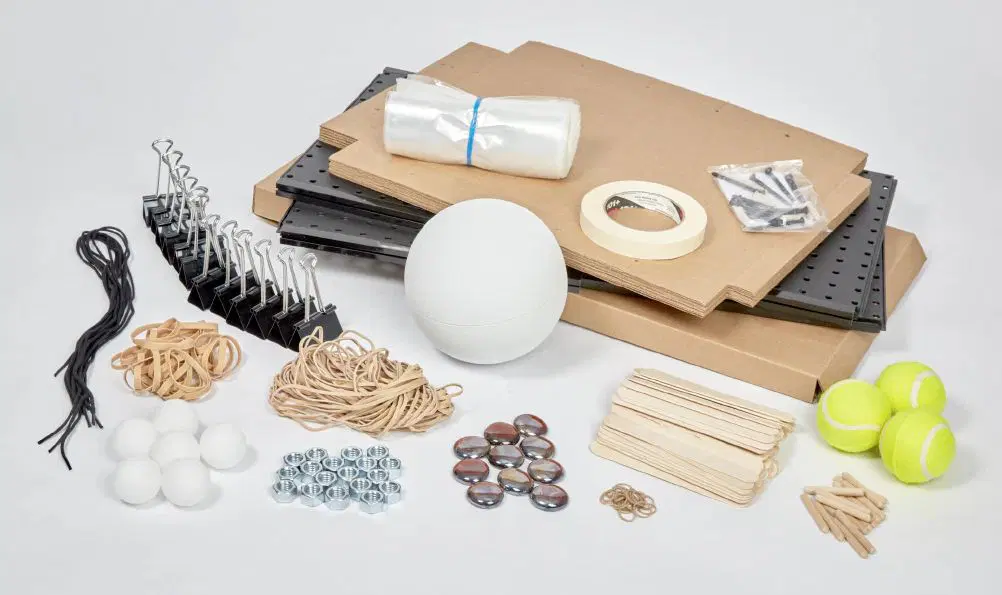
Our digital Simulations and Practice Tools are powerful resources for exploration, data collection, and student collaboration. They allow students the ability to explore scientific concepts that might otherwise be invisible or impossible to see with the naked eye.
Available for every unit, our Student Investigation Notebooks contain instructions for activities and space for students to record data and observations, reflect on ideas from texts and investigations, and construct explanations and arguments.
In grades 6–8, one copy of the Student Investigation Notebook is included in each unit’s materials kit for use as a blackline master. Each notebook is also available as a downloadable PDF on the Unit Guide page of the digital Teacher’s Guide.
These customizable PowerPoints are available for every lesson of the program and make delivering instruction a snap with visual prompts, colorful activity instructions, investigation set-up videos and animations, and suggested teacher talk in the notes section of each slide.
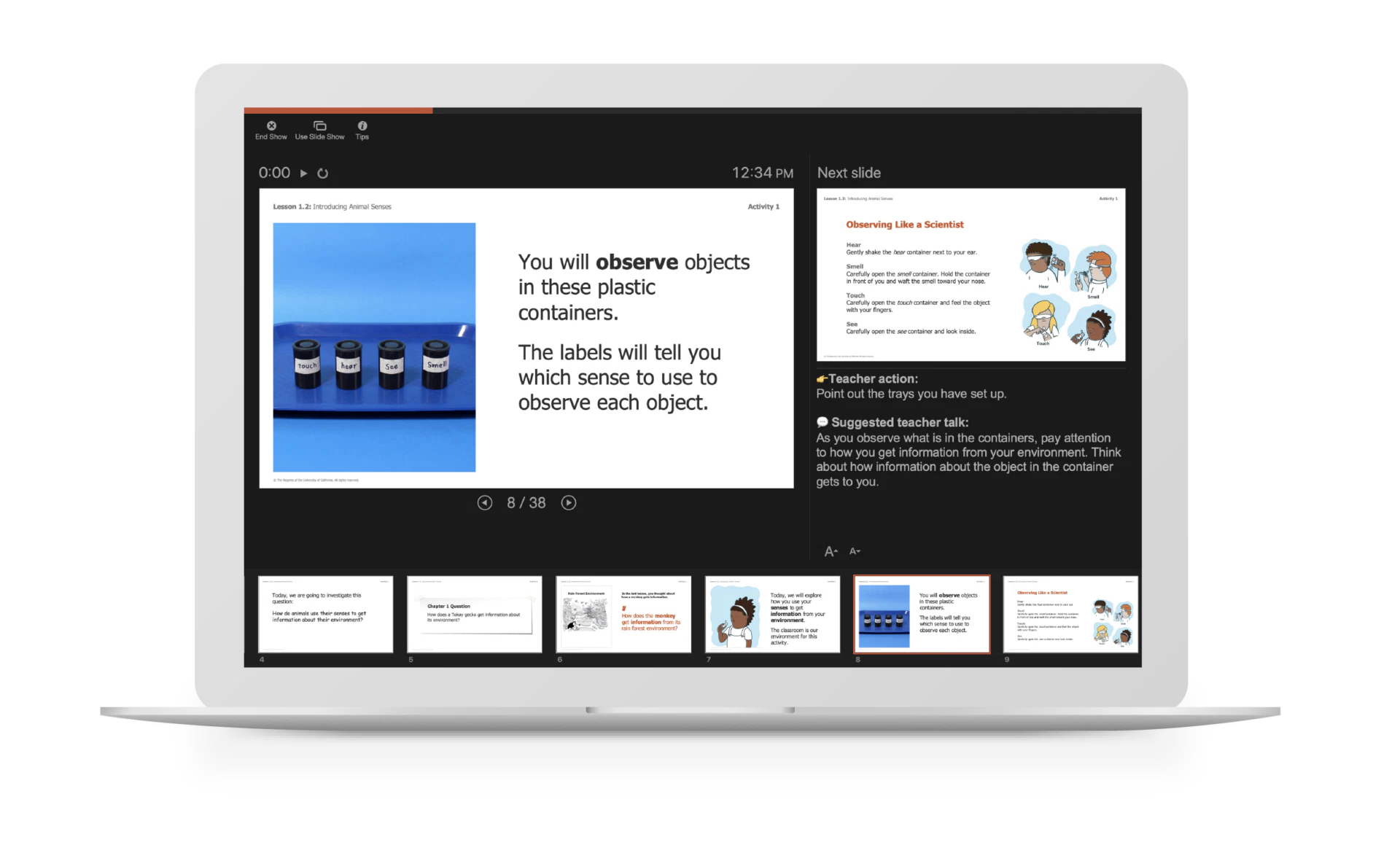
Explore your print samples
With your Amplify Science Pennsylvania print samples, you’ll find unit-specific Teacher’s References Guides and Student Investigation Notebooks for each grade level.
A note about the Teacher Reference Guides:
It’s important that your committee sees the full breadth and depth of our instruction. For that reason, we’ve provided a copy of each of our unit-specific Teacher Reference Guides.
Teachers do not use these robust reference guides for day-to-day teaching. For that, we have a hands-free Teacher’s Guide!

- Teacher Reference Guide: Unlike a typical Teacher Guide that requires a series of supplemental books to support it, our encyclopedic reference guide is chock-full of everything a teacher needs to fully implement our program and the NGSS.
- Ready-to-Teach Lesson Slides: For daily instruction, teachers need their hands free. That’s why we created ready-to-teach lesson slides for every single lesson. What’s more, they are editable and include suggested teacher talk and point-of-use differentiation and other instructional tips. Click to learn more.
A note about the Materials Kits:
Hands-on learning is at the heart of Amplify Science Pennsylvania, and is integrated into every unit. In order to make hands-on learning more manageable for busy teachers, Amplify Science Pennsylvania materials are organized into unit-specific kits.
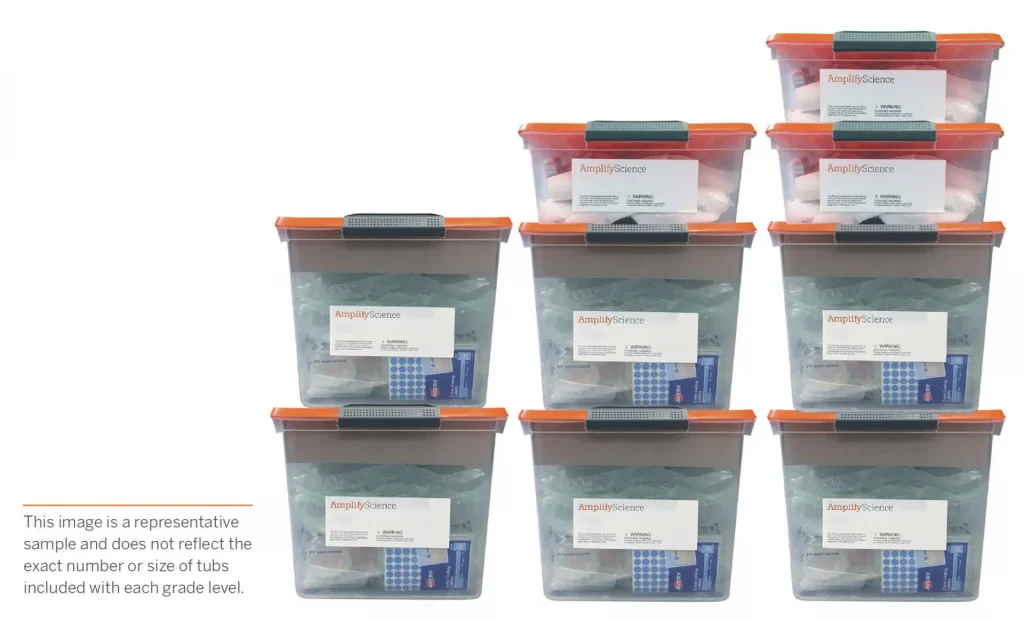
Our unit-specific kits:
- Include more materials. We give teachers enough materials to support 200 student uses.
- Are more manageable. Unlike other programs that require large groups of students to share limited sets of materials, our kits include enough to support small groups of four to five students.
- Include supportive videos. Each hands-on activity provides clear instructions for the teacher, with more complex activities supported by video demonstrations and illustrations.
Within each kit, we provide grade-specific lists of all materials included, which you can also find using the links below.
Spanish-language support
Amplify Science Pennsylvania is committed to providing support to meet the needs of all learners, including multiple access points for Spanish-speaking students. Developed in conjunction with Spanish-language experts and classroom teachers, several components are available in Spanish across the Amplify Science Pennsylvania curriculum.
Spanish-language materials include:
| COMPONENT | TEACHER/STUDENT |
| Student Investigation Notebooks | Student |
| Science articles | Student |
| Video transcripts | Student |
| Digital simulation translation keys | Student |
| Printed classroom materials Unit and chapter questions, key concepts, vocabulary cards, etc. |
Teacher |
| Copymasters | Teacher |
| Assessments | Teacher |
| Digital student experience license This license gives students access to the student resources in Spanish, including instructional text, articles, and assessments. Teachers can control student access to Spanish-language content through the digital Teacher’s Guide. |
Teacher |
| Spanish teacher support license This license includes teacher talk, projections, downloadable PDFs of all print resources, and video transcripts and closed captioning in Spanish. |
Teacher |
Resources to support your review
- Pennsylvania STEELS Standards Alignment
- Research Highlights
- Program Structure
- Phenomena
- Amplify Science & the 5E Model
- Approaches to Assessment
- Science & Literacy Integration
- Hands-on Investigations (Integrated-Specific Model)
- Hands-On Investigations (Discipline-Specific Model)
- Engineering in Amplify Science
Contact us
Support is always available. Our team is dedicated to helping you every step of the way.
Contact your dedicated Pennsylvania representative here.




Welcome to Amplify Science Pennsylvania
(K–5)!
Amplify Science is an engaging core curriculum designed for three-dimensional, phenomena-based learning.
With Amplify Science, Pennsylvania students shift from learning about to figuring out science through authentic three-dimensional (3D) learning and phenomena-based exploration. In each unit, students take on the role of a scientist or engineer to investigate a real-world problem. This prepares them to become critical thinkers who can solve problems in their communities and beyond.

What is Amplify Science Pennsylvania?
Customized lessons for Pennsylvania
Amplify Science Pennsylvania (K–5) combines our nationally recognized, proven curriculum with custom lessons specifically designed to ensure you are meeting Pennsylvania’s STEELS standards.

The Lawrence Hall of Science
Developed by the science education experts at UC Berkeley’s Lawrence Hall of Science and the digital learning team at Amplify, our program features:
- A phenomena-based approach in which students construct a complex understanding of each unit’s anchor phenomenon.
- A blend of cohesive storylines, hands-on investigations, rich discussions, literacy-rich activities, and digital tools.
- Carefully crafted units, chapters, lessons, and activities designed to deliver true three-dimensional learning.
- An instructional design that supports all learners in accessing all standards.
Proven to work
Instructional model
The Amplify Science Pennsylvania program is rooted in the proven, research-based pedagogy of Do, Talk, Read, Write, Visualize. Here’s how each element works:
Do
Firsthand investigations are an important part of any science classroom, and Amplify Science Pennsylvania has students getting hands-on in every unit—from building models of protein molecules to experimenting with electrical systems.
Talk
Student-to-student discourse and full-class discussions are an integral part of the program. Students are provided with numerous opportunities to engage in meaningful oral scientific argumentation, all while fostering a collaborative classroom environment.
Read
Students read scientific articles, focusing their reading activities on searching for evidence related to their investigation and on asking and recording questions as they read through fascinating texts on 21st-century topics.
Write
Following real-world practices, students write scientific arguments based on evidence they’ve collected, making clear their reasoning about how a given piece of evidence connects to one of several claims.
Visualize
By manipulating digital simulations and using modeling tools to craft visualizations of their thinking— just as real scientists and engineers
do—students take their learning far beyond the confines of what they can physically see in the classroom in an exciting and authentic way.
Program structure
Our cyclical lesson design ensures that students receive multiple exposures to concepts through a variety of modalities. As they progress through the lessons within a unit, students build and deepen their understanding, increasing their ability to develop and refine complex explanations of the unit’s phenomenon.
It’s this proven program structure and lesson design that enables Amplify Science Pennsylvania to address 100% of the Next Generation Science Standards (NGSS) and support students in mastering the Pennsylvania Science Standards.
Unit types
While every unit delivers three-dimensional learning experiences and engages students in gathering evidence from a rich collection of sources, each unit also emphasizes a particular science and engineering practice.
In grades K–2:
- One unit emphasizes the practice of investigation.
- One unit emphasizes the practice of modeling.
- One unit emphasizes the practice of engineering design.
In grades 3–5, students experience the three unit types above, plus:
One additional unit that emphasizes the practice of argumentation.
Investigation units focus on the process of strategically developing investigations and gathering data to answer questions. Students are first asked to consider questions about what happens in the natural world and why, and are then involved in designing and conducting investigations that produce data to help answer those questions.
Modeling units provide extra support to students engaging in the practice of modeling. Students use physical models, investigate with computer models, and create their own diagrams to help them visualize what might be happening on the nanoscale.
Engineering design units provide opportunities for students to solve complex problems by applying science principles to the design of functional solutions, and iteratively testing those solutions to determine how well they meet preset criteria.
Argumentation units provide students with regular opportunities to explore and discuss available evidence, time and support to consider how evidence may be leveraged in support of claims, and independence that increases as they mount written arguments in support of their claims.
Unit sequence
Our lessons follow a structure that is grounded in regular routines while still being flexible enough to allow for a variety of learning experiences.
In fact, our multimodal instruction offers more opportunities for students to construct meaning, and practice and apply concepts, than any other program. What’s more, our modular design means our units can be flexibly arranged to support your instructional goals.
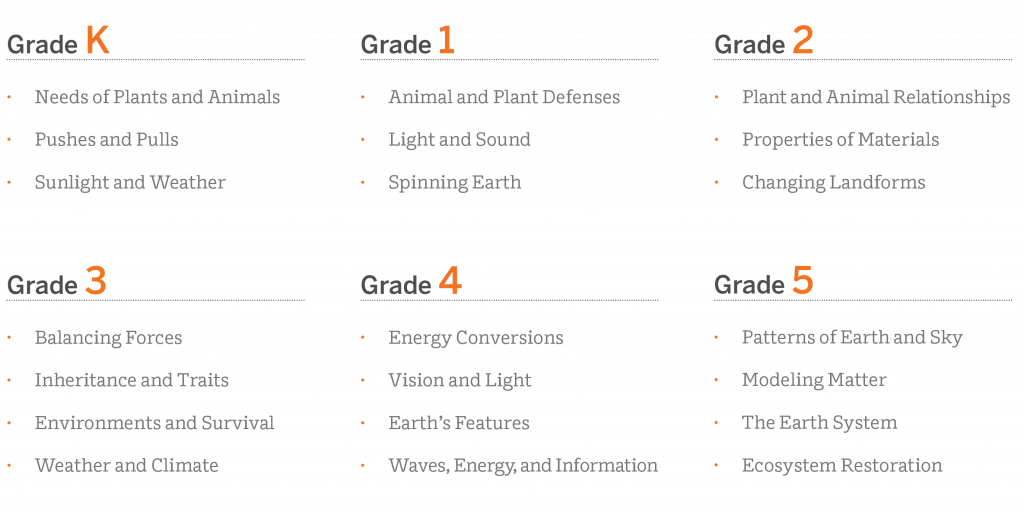
Program components
Available digitally and in print, our unit-specific reference guides are chock-full of helpful resources, including scientific background knowledge, planning information and resources, color-coded 3D Statements, detailed lesson plans, tips for delivering instruction, and differentiation strategies.
Hands-on learning is an essential part of Amplify Science Pennsylvania and is integrated into every unit. Students actively participate in science, playing the roles of scientists and engineers as they gather evidence, think critically, solve problems, and develop and defend claims about the world around them. Every unit includes hands-on investigations that are critical to achieving the unit’s learning goals.

More hands-on with Flextensions:
Hands-on Flextensions are additional, optional investigations that are included at logical points in the learning progression and give students an opportunity to dig deeper if time permits. These activities offer teachers flexibility to choose to dedicate more time to hands-on learning. Materials referenced in Hands-on Flextension activities will either be included in the unit kit or are easily sourced. Supporting resources such as student worksheets will be included as downloadable PDF files.
Our kits include enough non-consumable materials to support a class of 36 students and enough consumable items to support 72 students. In other words, each kit can last two years! Plus, our unit-specific kits mean teachers just grab the tub they need for the unit and then put it all back with ease.
Each unit of Amplify Science Pennsylvania (K–5) includes six unique Student Books written by educators at the Lawrence Hall of Science specifically for the program. These content-rich nonfiction and informational texts provide opportunities for students to search for evidence relevant to their firsthand investigations, see science practices and dispositions modeled, extend their science knowledge, provide real-world connections as they master reading-to-learn and close reading skills, and construct evidence-based arguments.
Important note:
Students in grades K–5 are never asked to read alone. Rather, books are read to, with, and by students with ample scaffolding and support provided by the teacher. Big Books are read aloud or together with the class to introduce ideas. Student Books allow for small-group reading and reading in pairs.

Available for every unit, our Student Investigation Notebooks contain instructions for activities and space for students to record data and observations, reflect on ideas from texts and investigations, and construct explanations and arguments.
In grades K–5, one copy of the Student Investigation Notebook is included in each unit’s materials kit for use as a blackline master. Each notebook is also available as a downloadable PDF on the Unit Guide page of the digital Teacher’s Guide.
Amplify Science Pennsylvania offers digital experience licenses that make elementary instruction more flexible for students and teachers and provide additional means to engage in remote, hybrid, or in-person learning!
Student-facing digital lessons
With the digital experience, students can engage with digital lesson content in one cohesive experience. It’s the same content from Amplify Science Pennsylvania in a new, integrated format, in which students can interact with slides, Sims, modeling tools, videos, books, and more.

Digital student notebook pages
Students can draw, write, record audio, and insert images into their Investigation Notebook pages. Their work is automatically saved and delivered to you in real time. When students edit their work, those edits are immediately reflected on your teacher work review page. You can access student responses by clicking “View Work,” where you can see students’ Investigation Notebook pages from the lesson, updating live.
Assign in Amplify
The digital experience allows flexibility with optional features such as scheduling assignments in advance and setting due dates. You can use Scheduling to determine the date and time that the assignment appears in Student Home. You also have the flexibility to schedule when assignments appear and to use dates to remove assignments from Student Home.
Assign in LMS
You can also assign lessons via our integrations with learning management systems (LMS) such as Google Classroom and Microsoft Teams, or by copying a lesson link and sharing it with students through the platform of your choice. The assignment link you send will provide students with direct access to the full lesson—slides, videos, digital tools, and worksheet activities—no student platform navigation required!
Teacher platform and presentation
Teacher-facing lesson content—including sample teacher talk, student responses, pedagogical support, and possible student responses—shows on a teacher’s private Teacher Guide tab. Students only see the lesson slides that are being presented.

Explore your print samples
With your Amplify Science Pennsylvania print samples, you’ll find unit-specific Teacher’s References Guides, Student Investigation Notebooks, and sets of Student Books for each grade level.
A note about the Teacher Reference Guides:
It’s important that you see the full breadth and depth of our instruction. For that reason, we provide a copy of each of our unit-specific Teacher Reference Guides.
Teachers do not use these robust reference guides for day-to-day teaching. For that, we have a hands-free Teacher’s Guide!
- Teacher’s Reference Guide: Unlike a typical Teacher’s Guide that requires a series of supplemental books to support it, our encyclopedic reference guide is chock-full of everything a teacher needs to fully implement our program and the NGSS.
- Ready-to-Teach Lesson Slides: For daily instruction, teachers need their hands free. That’s why we created ready-to-teach lesson slides for every single lesson. What’s more, the slides are editable and include suggested teacher talk and point-of-use differentiation and other instructional tips. Click to learn more.
A note about the Materials Kits:
Hands-on learning is at the heart of Amplify Science Pennsylvania, and is integrated into every unit. To make hands-on learning more manageable for busy teachers, Amplify Science Pennsylvania materials are organized into unit-specific kits.
What’s different about Amplify’s unit-specific material kits?
- They include more materials. We give teachers enough non-consumable materials to support a class of 36 students and enough consumables to support 72 student uses. In other words, each kit will last two years.
- They’re more manageable. Unlike other programs that require large groups of students to share limited sets of materials, our kits include enough to support small groups of four to five students.
- They include supportive videos. Each hands-on activity provides clear instructions for the teacher, with more complex activities supported by video demonstrations and illustrations.
Grade-specific lists of all materials included in each kit:
- Grade K: Materials Kit List
- Grade 1: Materials Kit List
- Grade 2: Materials Kit List
- Grade 3: Materials Kit List
- Grade 4: Materials Kit List
- Grade 5: Materials Kit List
Spanish-language support
Amplify Science Pennsylvania is committed to providing support to meet the needs of all learners, including multiple access points for Spanish-speaking students. Developed in conjunction with Spanish-language experts and classroom teachers, several components are available in Spanish across the Amplify Science Pennsylvania curriculum.
Spanish-language materials include:
| COMPONENT | TEACHER/STUDENT |
| Student Investigation Notebooks | Student |
| Student Books | Student |
| Printed classroom materials Unit and chapter questions, key concepts, vocabulary cards, etc. |
Teacher and student |
| Copymasters | Teacher |
| Assessments | Teacher |
| Spanish teacher support license This license includes teacher talk, projections, and downloadable PDFs of all print materials in Spanish. |
Teacher |
Resources to support your review
Contact us
Support is always available. Our team is dedicated to helping you every step of the way.
Contact your dedicated Pennsylvania representative.
Grade 6
Unit 1: Area and Surface Area
| Amplify Math | Desmos Math 6–A1 |
|---|---|
| Unit 1: Area and Surface Area | Unit 1: Area and Surface Area Unit 7: Positive and Negative Numbers |
| Lesson 1: The Tangram | Unit 1 Lesson 1: Shapes on a Plane |
| Lesson 2: Exploring the Tangram | Unit 1 Lesson 2: Letters |
| Sub-Unit 1 : Area of Special Polygons | |
| Lesson 3: Tilting the Plane | Unit 1 Lesson 1: Shapes on a Plane |
| Lesson 4: Compositing and Rearranging to Determine Area | Unit 1 Lesson 2: Letters |
| Lesson 5: Reasoning to Determine Area | Unit 1 Lesson 2: Letters |
| Lesson 6: Parallelograms | Unit 1 Lesson 3: Exploring Parallelograms (Print available) Lesson 4: Off the Grid |
| Lesson 7: Bases and Heights of Parallelograms | Unit 1 Lesson 3: Exploring Parallelograms (Print available) Lesson 4: Off the Grid |
| Lesson 8: Bases and Heights of Parallelograms | Unit 1 Lesson 3: Exploring Parallelograms (Print available) Lesson 4: Off the Grid |
| Lesson 9: From Parallelograms to Triangles | Unit 1 Lesson 3: Exploring Parallelograms (Print available) Lesson 4: Off the Grid Lesson 6: Triangles and Parallelograms |
| Lesson 10: Bases and Heights of Triangles | Unit 1 Lesson 4: Off the Grid Lesson 6: Triangles and Parallelograms |
| Lesson 11: Formula for the Area of a Triangle | Unit 1 Lesson 5: Exploring Triangles (Print available) |
| Lesson 12: From Triangles to Trapezoids | Unit 1 Lesson 4: Off the Grid Lesson 6: Triangles and Parallelograms |
| Lesson 13: Polygons | Unit 1 Lesson 2: Letters Lesson 8: Pile of Polygons Practice Day 1 (Print available) Unit 7 Lesson 11: Polygon Maker |
| Sub-Unit 2: Nets and Surface Area | |
| Lesson 14: What is Surface Area? | Unit 1 Lesson 9: Renata’s Stickers |
| Lesson 15: Nets and Surface Area of Rectangular Prisms | Unit 1 Lesson 10: Plenty of Polyhedra Lesson 11:Nothing but Nets(Print available) Lesson 12: Face Value Lesson 13: Take It To Go (Print available) |
| Lesson 16: Nets and Surface Area of Prisms | Unit 1 Lesson 12: Face Value Lesson 13: Take It To Go (Print available) |
| Lesson 17: Constructing a Rhombicuboctahedron | Unit 1 Lesson 13: Take It To Go (Print available) |
| Lesson 18: Simplifying Expressions for Squares and Cubes | Unit 1 Lesson 11: Exponent Expressions (Print available) Lesson 12: Squares and Cubes |
| Lesson 19: Simplifying Expressions Even More Using Exponents | Unit 1 Lesson 11: Exponent Expressions (Print available) |
| Lesson 20: Designing a Suspended Tent |
Unit 2: Introducing Ratios
| Amplify Math | Desmos Math 6–A1 |
|---|---|
| Unit 2: Introducing Ratios | Unit 2: Introducing Ratios |
| Lesson 1: Fermi Problems | |
| Sub-Unit 1: What are Ratios? | |
| Lesson 2: Introducing Ratios and Ratio Language | Unit 2 Lesson 1: Pizza Maker Lesson 2: Ratio Rounds (Print available) |
| Lesson 3: Representing Ratios with Diagrams | Unit 2 Lesson 1: Pizza Maker Lesson 2: Ratio Rounds (Print available) Lesson 3:Rice Ratios (Print available) |
| Lesson 4: A Recipe for Purple Oobleck | |
| Lesson 5: Kapa Dyes | |
| Sub-Unit 2:Equivalent Ratios | |
| Lesson 6: Defining Equivalent Ratios | Unit 2 Lesson 3: Rice Ratios (Print available) Lesson 4: Fruit Lab (Print available) Lesson 11: Community Life (Print available) Practice Day 1 (Print available) |
| Lesson 7: Representing Equivalent Ratios with Tables | |
| Lesson 8: Reasoning with Multiplication and Division (optional) | |
| Lesson 9: Common Factors | |
| Lesson 10: Common Multiples | |
| Lesson 11: Navigating a Table of Equivalent Ratios | Unit 2 Lesson 6: Product Prices (Print available) Lesson 7: Mixing Paint, Part 1 |
| Lesson 12: Tables and Double Number Line Diagrams | Unit 2 Lesson 6: Product Prices (Print available) Lesson 7: Mixing Paint, Part 1 |
| Lesson 13: Tempo and Double Number Lines | Unit 2 Lesson 5: Balancing Act Lesson 6: Product Prices (Print available) |
| Sub-Unit 3: Solving Ratio Problems | |
| Lesson 14: Solving Equivalent Ratios | Unit 2 Lesson 6: Product Prices (Print available) Lesson 7: Mixing Paint, Part 1 Lesson 10: Balloons Lesson 11: Community Life (Print available) |
| Lesson 15: Part-Part-Whole Ratios | Unit 2 Lesson 12 Mixing Paint, Part 2 Lesson 13: City Planning |
| Lesson 16: Comparing Ratios | |
| Lesson 17: More Comparing and Solving | |
| Lesson 18: Measuring with Different-Sized Units | |
| Lesson 20: More Fermi Problems |
Unit 3: Rates and Percentages
| Amplify Math | Desmos Math 6–A1 |
|---|---|
| Unit 3: Rates and Percentages | Unit 2: Introducing Ratios Unit 3: Unit Rates and percentages |
| Lesson 1: Choosing Representation for Student Council | Launch Lesson |
| Sub-Unit 1: Rates | |
| Lesson 2: How Much for One? | Unit 3 Lesson 4: Model Trains |
| Lesson 3: Constant Speed | |
| Lesson 4: Comparing Speeds | Unit 2 Lesson 8: World Records (Print available) Unit 3 Lesson 4: Model Trains Lesson 5: Soft Serve Lesson 6: Welcome to the Robot Factory |
| Lesson 5: Interpreting Rates | Unit 3 Lesson 8: World Records (Print available) Unit 3 Lesson 4: Model Trains Lesson 5: Soft Serve Lesson 6: Welcome to the Robot Factory |
| Lesson 6: Comparing Rates | |
| Lesson 7: Solving Rate Problems | Unit 3 Lesson 7: More Soft Serve |
| Sub-Unit 2: Percentages | |
| Lesson 8: What Are percentages? | Unit 3 Lesson 8: Lucky Duckies Lesson 9: Bicycle Goals |
| Lesson 9: Determining Percentages | |
| Lesson 10: Benchmark Percentages | Unit 3 Lesson 7: Lucky Duckies |
| Lesson 11: Finding This Percent of That | Unit 3 Lesson 10: What’s Missing? (Print available) Lesson 11: Cost Breakdown Lesson 12: More Bicycle Goals Lesson 13: A Country as a Village |
| Lesson 12: This Percent of What | |
| Lesson 13: Solving Percentage Problems | Unit 3 Lesson: 10: What’s Missing (Print available) Lesson: 11: Cost Breakdown Lesson: 12: More Bicycle Goals Lesson: 13: A Country as a Village |
| Lesson 14: If Our Class Were the World | |
| Lesson 15: Voting for a School Mascot |
Unit 4: Dividing Fractions
| Amplify Math | Desmos Math 6–A1 |
|---|---|
| Lesson 1: Seeing Fractions | |
| Sub-Unit 1: Interpreting Division Scenarios | |
| Lesson 3: Relating Multiplication and Division | |
| Lesson 4: Size of Divisor and Size of Quotient | Unit 4 Lesson 1: Cookie Cutter |
| Sub-Unit 2: Division with Fractions | |
| Lesson 5: How Many Groups | Unit 4 Lesson 3: Flour Planner Lesson 4: Flower Planters Lesson 4: Garden Bricks (Print available) |
| Lesson 6: Using Diagrams to Find the Number of Groups | Unit 4 Lesson 5: Garden Bricks (Print available) Lesson 6: Fill the Gap |
| Lesson 7: Dividing with Common Denominators | Unit 4 Lesson 6: Fill the Gap |
| Lesson 8: How Much in Each Group? (Part 1) | Unit 4 Lesson 8: Potting Soil |
| Lesson 9: How Much in Each Group? (Part 2) | Unit 4 Lesson 8: Potting Soil |
| Lesson 10: Dividing by Unit and Non-Unit Fractions | Unit 4 Lesson 7: Break It Down Lesson 8: Potting Soil Lesson 9: Division Challenges |
| Lesson 11: Using an Algorithm to Divide Fractions | Unit 4 Lesson 9: Division Challenges Practice Day |
| Lesson 13: Fractional Lengths | Unit 4 Lesson 12: Puzzling |
| Lesson 14: Area with Fractional Lengths | Unit 4 Lesson 9: Puzzling Area (Print available) |
| Lesson 15: Volume of Prisms | Unit 4 Lesson 13: Volume Challenges (Print available) |
| Lesson 16: Fish Tanks Inside of Fish Tanks | Unit 4 Lesson 10: Swap Meet |
| Lesson 17: Now, Where Was That Bus? | Unit 4 Lesson 10: Capstone |
Unit 5: Arithmetic in Base Ten
| Amplify Math | Desmos Math 6–A1 |
|---|---|
| Lesson 1: Precision and World Records | |
| Sub-Unit 1: Adding and Subtracting Decimals | |
| Lesson 2: Speaking of Decimals… | Unit 5 Lesson 1: Dishing Out Decimals (Print available) |
| Lesson 3: Adding and Subtracting Decimals | Unit 5 Lesson 3: Fruit by the Pound Lesson 4: Missing Digits |
| Lesson 4: X Games Medal Results | Unit 5 Lesson 2: Decimal Diagrams |
| Sub-Unit 2: Multiplying Decimals | |
| Lesson 5: Decimal Points in Products | Unit 5 Lesson 5: Decimal Multiplication |
| Lesson 6: Methods for Multiplying Decimals | Unit 5 Lesson 5: Decimal Multiplication Lesson 6: Multiplying with Areas Lesson 7: Multiplication Methods (Print available) |
| Lesson 7: Using Diagrams to Represent Multiplication | Unit 5 Lesson 5: Decimal Multiplication Lesson 6: Multiplying with Areas |
| Lesson 8: Calculating Products of Decimals | Unit 5 Lesson 6: Multiplying with Areas |
| Sub-Unit 3: Dividing Decimals | |
| Lesson 9: Exploring Division | |
| Lesson 10: Using Long Division | Unit 5 Lesson 8: Division Diagrams Lesson 9: Long Division Launch (Print available) Lesson 10: Return of the Long Division (Print available) |
| Lesson 11: Dividing Numbers That Result in Decimals | Unit 5 Lesson 9: Long Division Launch (Print available) Lesson 10: Return of the Long Division (Print available) |
| Lesson 12: Using Related Expressions to Divide with Decimals | |
| Lesson 13: Dividing Multi-Digit Decimals | Unit 5 Lesson 9: Long Division Launch (Print available) Lesson 10: Return of the Long Division (Print available) |
| Lesson 14: The So-called World’s Littlest Skyscraper |
Unit 6: Expressions and Equations
Unit 7: Rational Numbers
| Amplify Math | Desmos Math 6–A1 |
| Unit 7: Rational Numbers | Unit 1: Area and Surface Area Unit 7: Positive and Negative Numbers |
| Lesson 1: How Far? Which Way? | |
| Sub-unit 1: Negative Numbers and Absolute Value | |
| Lesson 2: Positive and Negative Numbers | Unit 7 Lesson 1: Can You Dig In Lesson 2: Digging Deeper |
| Lesson 3: Points on the Number Line | Unit 7 Lesson 2: Digging Deeper |
| Lesson 4: Comparing Integers | Unit 7 Lesson 3: Order in the Class (Print available) |
| Lesson 5: Comparing and Ordering Rational Numbers | Unit 7 Lesson 3: Order in the Class (Print available) |
| Lesson 6: Using Negative Numbers to Make Sense of Contexts> | Unit 7 Lesson 4: Sub-Zero |
| Lesson 7: Absolute Value of Numbers | Unit 7 Lesson 5: Distance on the Number Line |
| Lesson 8: Comparing Numbers and Distance from Zero | Unit 7 Lesson 5: Distance on the Number Line |
| Sub-Unit 2: Inequalities | |
| Lesson 9: Writing Inequalities | |
| Lesson 10: Graphing Inequalities | |
| Lesson 11: Solutions to One or More Inequalities | Unit 7 Lesson 6: Tunnel Travel Lesson 7: Comparing Weights Lesson 8: Shira´s Solutions |
| Lesson 12: Interpreting Inequalities | Unit 7 Lesson 6: Tunnel Travel Lesson 7: Comparing Weights Lesson 8: Shira´s Solutions |
| Sub-Unit 3: The Coordinate Plane | |
| Lesson 13: Extending the Coordinate Plane | |
| Lesson 14: Points on the Coordinate Plane | Unit 7 Lesson 9: Sand Dollar Search Lesson 10: The A-maze-ing Coordinate Plane |
| Lesson 15: Interpreting Points on a Coordinate Plane | Unit 7 Lesson 9: Sand Dollar Search Lesson 10: The A-maze-ing Coordinate Plane Lesson 11: Polygon Maker |
| Lesson 16: Distances on a Coordinate Plane | Unit 7 Lesson 11: Polygon Maker Lesson 12: Graph Telephone (Print available) |
| Lesson 17: Shapes on the Coordinate Plane | Unit 1 Lesson 1: Shapes on a Plane Lesson 2: Letters Lesson 5: Exploring Triangles (Print available) Lesson 6: Triangles and Parallelograms Unit 7 Lesson 3: Exploring Parallelograms (Print available) Lesson 11: Polygon Maker Lesson 12: Graph Telephone (Print available) |
| Lesson 18: Lost and Found Puzzles | |
| Lesson 19: Drawing on the Coordinate Plane | Unit 7 Lesson 11: Polygon Maker Lesson 12: Graph Telephone (Print available) |
Unit 8: Data Sets and Distributions
| Amplify Math | Desmos Math 6–A1 |
| Unit 8: Data Sets and Distributions | Unit 8: Describing Data |
| Lesson 1: Plausible Variation or New Species? | |
| Sub-Unit 1: Statistical Questions and Representing Data | |
| Lesson 2: Statistical Questions | Unit 8 Lesson 1: Screen Time Lesson 2: Dot Plots |
| Lesson 3: Interpreting Dot Plots | Unit 8 Lesson 2: Dot Plots Lesson 3: Minimum Wage (Print available) Lesson 4: Lots More Dots |
| Lesson 4: USing Dot Plots to Answer Statistical Questions | Unit 8 Lesson 2: Dot Plots Lesson 3: Minimum Wage (Print available) Lesson 4: Lots More Dots |
| Lesson 5: Interpreting Histograms | Unit 8 Lesson 5: The Plot Thickens Lesson 6: DIY Histograms (Print available) |
| Lesson 6: Using Histograms to Answer Statistical Questions | Unit 8 Lesson 5: The Plot Thickens Lesson 6: DIY Histograms (Print available) |
| Lesson 7: Describing Distributions on Histograms | Unit 8 Lesson 5: The Plot Thickens Lesson 6: DIY Histograms (Print available) |
| Sub-Unit 2: Measures of Center | |
| Lesson 8: Mean as a Fair Share | Unit 8 Lesson 7: Snack Time |
| Lesson 9: Mean as a Balance Point | Unit 8 Lesson 7: Snack Time |
| Lesson 10: Median | Unit 8 Lesson 11: Toy Cars Lesson 12: In the News |
| Lesson 11: Comparing Mean and Median | Unit 8 Lesson 12: In the News |
| Sub-Unit 3: Measures of Variability | |
| Lesson 12: Describing Variability | |
| Lesson 13: Variability and MAD | |
| Lesson 14: Variability and IQR | Unit 8 Lesson 13: Pumpkin Patch |
| Lesson 15: Box Plots | Unit 8 Lesson 14: Car, Plane, Bus, or Train? (Print available) |
| Lesson 16: Comparing MAD and IQR | |
| Lesson 17: Asian Elephant Populations |
Grade 7
Unit 1: Scale Drawings
| Amplify Math | Desmos Math 6–A1 |
|---|---|
| Unit 1: Scale Drawings | Unit 1: Scale Drawings Unit 3: Measuring Circles Unit 4: Proportional Relationships and Percentages |
| Lesson 1: Scale-y Shapes | |
| Sub-Unit 1: Scaled Copies | |
| Lesson 2: What are Scaled Copies? | Unit 1 Lesson 1: Scaling Machines |
| Lesson 3: Corresponding Parts and Scale Factors | Unit 1 Lesson 2: Scaling Robots Unit 3 Lesson 1: Toothpicks |
| Lesson 4: Making Scaled Copies | Unit 1 Lesson 3: Make It Scale Unit 4 Lesson 3: Sticker Sizes |
| Lesson 5: The Size of the Scale Factor | Unit 1 Lesson 4: Tiles |
| Lesson 6: Scaling and Area | Unit 1 Lesson 5: Tiles Practice Day 1 (Print available) |
| Sub-Unit 2: Scale Drawings | |
| Lesson 7: Scale Drawings | Unit 1 Lesson 6: Introducing Scale Lesson 7: Will It Fit? (Print available) |
| Lesson 8: Creating Scale Drawings | Unit 1 Lesson 8: Scaling States Lesson 9: Scaling Buildings Lesson 10: Room Redesign (Print available) |
| Lesson 9: Scale Drawings and Maps | |
| Lesson 10: Changing Scale in Scale Drawings | Unit 1 Lesson 8: Scaling States Lesson 9: Scaling Buildings Lesson 10: Room Redesign (Print available) |
| Lesson 11: Scales without Units | |
| Lesson 12: Units in Scale Drawings | Unit 1 Lesson 8: Scaling States Lesson 9: Scaling Buildings Lesson 10: Room Redesign (Print available)Practice Day (Print available) |
| Lesson 13: Build Your Brand |
Unit 2: Introducing Proportional Relationships
Unit 3: Measuring Circles
| Amplify Math | Desmos Math 6–A1 |
|---|---|
| Unit 3: Measuring Circles | Unit 3: Measuring Circles |
| Lesson 1: The Wandering Goat | |
| Sub-unit 1: Circumference of a Circle | |
| Lesson 2: Exploring Circles | Unit 3 Lesson 2: Is it a Circle? Lesson 3: Measuring Around |
| Lesson 3: How Well Can You Measure? | |
| Lesson 4: Exploring Circumference | Unit 3 Lesson 2: Is It a Circle? Lesson 3: Measuring Around |
| Lesson 5: Understanding π | |
| Lesson 6: Applying Circumference | Unit 3 Lesson 2: Is It a Circle? Lesson 3: Measuring Around |
| Lesson 7: Circumference and Wheels | |
| Sub-Unit 2: Area of a Circle | |
| Lesson 8: Exploring the Area of a Circle | Unit 3 Lesson 5: Area Strategies Lesson 6: Radius Squares (Print available) Lesson 7: Why Pi? Lesson 8: Area Challenges Lesson 9: Circle vs. Square Practice Day 2 (Print available) |
| Lesson 9: Relating Area to Circumference | Unit 3 Lesson 5: Area Strategies Lesson 6: Radius Squares (Print available) Lesson 7: Why Pi? Lesson 8: Area Challenges Lesson 9: Circle vs. Square Practice Day 2 (Print available) |
| Lesson 10: Applying Area to Circles | Unit 3 Lesson 6:Radius Squares (Print available) |
| Lesson 11: Distinguishing Circumference and Area | Unit 3 Lesson 7: Why Pi? |
| Lesson 12: Capturing Space |
Unit 4: Proportional Relationships and Percentages
| Amplify Math | Desmos Math 6–A1 |
|---|---|
| Unit 4: Percentages | Unit 4: Proportional Relationships and Percentages |
| Lesson 1: (Re)Presenting the United States | |
| Lesson 2: Understanding Percentages and Decimals | |
| Lesson 3: Percent Increase and Decrease | Unit 4Lesson 4: More or Less |
| Lesson 4: Determining 100% | Unit 4Lesson 6: 100% (Print available) |
| Lesson 5: Determining Percent Change | Unit 4Lesson 7: Percent Machines |
| Lesson 6: Percent Increase and Decrease With Equations | Unit 4Lesson 5: All the Equations |
| Lesson 7: Using Equations to Solve Percent Problems | Unit 4Lesson 5: All the Equations |
| Sub-Unit 2: Applying Percentages | |
| Lesson 8: Tax and Tip | Unit 4 Lesson 8: Tax and Tip Lesson 9: Minimum Wage (Print available) Lesson 10: Cost of College (Print available) Lesson 11: Bookcase Builder Lesson 12: Posing Percent Problems |
| Lesson 9: Percent Contexts | Unit 4 Lesson 8: Tax and Tip Lesson 9: Minimum Wage (Print available) Lesson 10: Cost of College (Print available) Lesson 11: Bookcase Builder Lesson 12: Posing Percent Problems |
| Lesson 10: Determining the Percentage | Unit 4 Lesson 4: More and Less |
| Lesson 11: Measurement Error | Unit 4 Lesson 11: Bookcase Builder |
| Lesson 12: Error Intervals | Unit 4 Lesson 11: Bookcase Builder |
| Lesson 13: Writing Better Headlines |
Unit 5: Rational Number Arithmetic
| Amplify Math | Desmos Math 6–A1 |
|---|---|
| Unit 5: Rational Number Arithmetic | Unit 5: Rational Number Artithmetics |
| Lesson 1: Target: Zero | |
| Sub-Unit 1: Adding and Subtracting Rational Numbers | |
| Lesson 2: Interpreting Negative Numbers | |
| Lesson 3: Changing Temperatures | Unit 5 Lesson 2: More Floats and Anchors Lesson 3: Bumpers Lesson 4: Draw Your Own (Print available) |
| Lesson 4: Adding Rational Numbers | |
| Lesson 5: Money and Debts | |
| Lesson 6: Representing Subtraction | Unit 5 Lesson 5: Number Puzzles |
| Lesson 7: Subtracting Rational Numbers (Part 1) | Unit 5 Lesson 3: Bumpers Lesson 4: Draw Your Own (Print available) Lesson 5: Number Puzzles Lesson 10: Integer Puzzles Lesson 11: Changing Temperatures Lesson 13: Solar Panels and More (Print available) |
| Lesson 8: Subtracting Rational Numbers (Part 2) | Unit 5 Lesson 3: Bumpers Lesson 4: Draw Your Own (Print available) Lesson 5: Number Puzzles Lesson 10: Integer Puzzles Lesson 11: Changing Temperatures Lesson 13: Solar Panels and More (Print available) |
| Lesson 9: Adding and Subtracting Rational Numbers | Unit 5 Lesson 3: Bumpers Lesson 4: Draw Your Own (Print available) Lesson 5: Number Puzzles Lesson 10: Integer Puzzles Lesson 11: Changing Temperatures Lesson 13: Solar Panels and More (Print available)Practice Day 1 (Print available) |
| Sub-Unit 2: Multiplying and Dividing Rational Numbers | |
| Lesson 10: Position, Speed, and Time | Unit 5 Lesson 7: Back in Time |
| Lesson 11: Multiplying Rational Numbers | Unit 5 Lesson 7: Back in Time |
| Lesson 12: Multiply! | Unit 5 Lesson 7: Back in Time |
| Lesson 13: Dividing Rational Numbers | Unit 5 Lesson 7: Speeding Turtles |
| Lesson 14: Negative Rates | |
| Sub-Unit 3: Four Operations with Rational Numbers | |
| Lesson 15: Expressions with Rational Numbers | Unit 5 Lesson 9: Expressions (Print available) |
| Lesson 16: Say It With Decimals | |
| Lesson 17: Solving Problems with Rational Numbers | Lesson 11: Changing Temperatures Lesson 12: Arctic Ice Sea (Print available) Lesson 13: Solar Panels and More (Print available) |
| Lesson 18: Solving Equations With Rational Numbers | |
| Lesson 19: Representing Contexts With Equations | |
| Lesson 20: Summiting Everest |
Unit 6: Expressions, Equations, and Inequalities
| Amplify Math | Desmos Math 6–A1 |
|---|---|
| Unit 6: Expressions, Equations, and Inequalities | Unit 2: Introducing Proportional Relationships Unit 4: Proportional Relationships and Percentages Unit 6: Expressions, Equations, and Inequalities |
| Lesson 1: Keeping the Balance | |
| Lesson 2: Balanced and Unbalanced | Unit 6 Lesson 1: Toothpicks and Tiles |
| Lesson 2: Balanced and Unbalanced | Unit 6 Lesson 1: Toothpicks and Tiles |
| Lesson 3: Reasoning About Solving Equations (Part 1) | Unit 6 Lesson 2: Smudged Receipts |
| Lesson 4: Reasoning About Solving Equations (Part 2) | Unit 6 Lesson 2: Smudged Receipts Lesson 3: Equations Lesson 4: Seeing Structure (Print available) |
| Lesson 5: Dealing with Negative Numbers | Unit 6 Lesson 2: Smudged Receipts Lesson 3: Equations Lesson 4: Seeing Structure (Print available) |
| Lesson 5: Dealing with Negative Numbers | Unit 6 Lesson 8: Factoring and Expanding (Print available) Lesson 16: Shira the Sheep |
| Lesson 6: Two Ways to Solve One Equation | Unit 6 Lesson 4: Seeing Struction (Print available) |
| Lesson 7: Practice Solving Equations | Unit 6 Lesson 2: Smudged Receipts Lesson 3: Equations Lesson 4: Seeing Structure (Print available) |
| Sub-Unit 2: Solving Real-World Problems Using Two-Step Equations | |
| Lesson 8: Reasoning With Tape Diagrams | Unit 6 Lesson 2: Smudged Receipts |
| Lesson 9: Reasoning About Equations and Tape Diagrams (Part 1) | Unit 6 Lesson 2: Smudged Receipts |
| Lesson 10: Reasoning About Equations and Tape Diagrams (Part 2) | Unit 6 Lesson 2: Smudged Receipts |
| Lesson 11: Using Equations to Solve Problems | Unit 6 Lesson 2: Smudged Receipts Lesson 3: Equations Lesson 4: Seeing Structure (Print available) |
| Lesson 12: Solving Percent Problems in New Ways | Unit 6 Lesson 4: Seeing Structure (Print available) Unit 4 Lesson 7: Percent MachinesPractice Day 1 (Print available) Practice Day 2 (Print available) |
| Sub-Unit 3: Inequalities | |
| Lesson 13: Reintroducing Inequalities | Unit 6 Lesson 1: Toothpicks and Tiles |
| Lesson 14: Solving Inequalities | Unit 6 Lesson 5: Balancing Moves Lesson 6: Balancing Equations Lesson 13: I Saw the Signs |
| Lesson 15: Finding Solutions to Inequalities in Context | Unit 6 Lesson 13: I Saw the Signs Practice Day 1 (Print available) |
| Lesson 16: Efficiently Solving Inequalities | Unit 6 Lesson 10: Collect the Squares |
| Lesson 17: Interpreting Inequalities | Unit 6 Lesson 13: I Saw the Signs Lesson 14: Unbalanced Hangers Lesson 15: Budgeting (Print available) |
| Lesson 18: Modeling With Inequalities | |
| Sub-Unit 4: Equivalent Expressions | |
| Lesson 19: Subtraction in Equivalent Expressions |
Unit 7: Angles, Triangles, and Prisms
| Amplify Math | Desmos Math 6–A1 |
|---|---|
| Unit 7: Angles, Triangles, and Prisms | Unit 7: Angles, Triangles, and Prisms |
| Lesson 1: Shaping Up | |
| Sub-Unit 1: Angle Relationships | |
| Lesson 2: Relationships of Angles | Unit 7 Lesson 1: Pinwheels Lesson 2: Friendly Angles Lesson 3: Angle Diagrams |
| Lesson 3: Supplementary and Complementary Angles (Part 1) | |
| Lesson 4: Supplementary and Complementary Angles (Part 2) | |
| Lesson 5: Vertical Angles | Unit 7 Lesson 2: Friendly Angles Lesson 3: Angle Diagrams Lesson 4: Missing Measures (Print available) [Free lesson] |
| Lesson 6: Using Equations to Solve for Unknown Angles | Unit 7 Lesson 3: Angle Diagrams Lesson 4: Missing Measures (Print available) [Free lesson] |
| Lesson 7: Like Clockwork | |
| Sub-Unit 2: Drawing Polygons with Given Conditions | |
| Lesson 8: Building Polygons (Part 1) | Unit 7 Lesson 6: Is It Enough? |
| Lesson 9: Building Polygons (Part 2) | Unit 7 Lesson 6: Is It Enough? |
| Lesson 10: Triangles with Three Common Measures | Unit 7 Lesson 13: Popcorn Possibilities |
| Lesson 11: Drawing Triangles (Part 1) | Unit 7 Lesson 5: Can You Build It? [Free lesson] Lesson 6: Is It Enough? Lesson 7: More Than One Lesson 8: Can You Draw It? (Print available) Practice Day 1 (Print available) |
| Lesson 12: Drawing Triangles (Part 2) | Unit 7 Lesson 5: Can You Build It? [Free lesson] Lesson 6: Is It Enough? Lesson 7: More Than One Lesson 8: Can You Draw It? (Print available) Practice Day 1 (Print available) |
| Sub-Unit 3: Solid Geometry | |
| Lesson 13: Slicing Solids | Unit 7 Lesson 9: Slicing Solids |
| Lesson 14: Volume of Right Prisms | Unit 7 Lesson 10: Simple Prisms |
| Lesson 15: Decomposing Bases for Areas | Unit 7 Lesson 11: More Complicated Prisms |
| Lesson 16: Surface Area of Right Prisms | Unit 7 Lesson 10: Simple Prisms Lesson 11: More Complicated Prisms Lesson 12: Surface Area Strategies (Print available) |
| Lesson 17: Distinguishing Volume and Surface Area | |
| Lesson 18: Applying Volume and Surface Area | Unit 7 Lesson 13: Popcorn Possibilities |
Unit 8: Probability and Sampling
| Amplify Math | Desmos Math 6–A1 |
|---|---|
| Unit 8: Probability and Sampling | Unit 8: Probability and Sampling |
| Lesson 1: The Invention of Fairness | |
| Lesson 2: Chance Experiments | |
| Lesson 3: What are Probabilities? | Unit 8 Lesson 1: How Likely? (Print available) Lesson 2: Prob-bear-bilities [Free lesson Lesson 3: Mystery Bag |
| Lesson 4: Estimating Probabilities Through Repeated Experiments | Unit 8 Lesson 4: Spin Class Lesson 5: Is It Fair? Lesson 6: Fair Games |
| Lesson 5: Code Breaking (Part 1) | |
| Lesson 6: Code Breaking (Part 2) | |
| Sub-Unit 2: Probabilities of Multi-Step Events | |
| Lesson 7: Keeping Track of All Possible Outcomes | Unit 8 Lesson 4: Spin Class Lesson 5: Is it Fair? Lesson 6: Fair Games |
| Lesson 8: Experiments With Multi-Step Events | |
| Lesson 9: Simulating Multi-Step Events | |
| Lesson 10: Designing Simulations | |
| Sub-Unit 3:Sampling | |
| Lesson 11: Comparing Two Populations | Unit 8 Lesson 10: Crab Island Lesson 11: Headlines |
| Lesson 12: Larger Populations | Unit 8 Lesson 10: Crab Island Lesson 11: Headlines |
| Lesson 13: What Makes a Good Sample? | Unit 8 Lesson 10: Crab Island Lesson 11: Headlines |
| Lesson 14: Sampling in a Fair Way | Unit 8 Lesson 10: Crab Island Lesson 11: Headlines |
| Lesson 15: Estimating Population Measures of Center | Unit 8 Lesson 9: Car, Bike, or Train? Lesson 10: Crab Island Lesson 11: Headlines Lesson 12: Flower Power |
| Lesson 16: Estimating Population Proportions | Unit 8 Lesson 9: Car, Bike, or Train? Lesson 10: Crab Island Lesson 11: Headlines Lesson 12: Flower Power |
| Lesson 17: Presentation of Findings |
Grade 8
Unit 1: Rigid Transformations and Congruence
| Amplify Math | Desmos Math 6–A1 |
|---|---|
| Unit 1: Rigid Transformations and Congruence | Unit 1: Rigid Transformations and Congruence Unit 3: Proportional and Linear Relationships |
| Lesson 1: Tessellations | |
| Sub-Unit 1: Rigid Transformations | |
| Lesson 2: Moving in the Plane | Unit 1 Lesson 1: Transformers |
| Lesson 3: Symmetry and Reflection | |
| Lesson 4: Grid Moves | Unit 1 Lesson 3: Transformation Golf Lesson 4: Moving Day (Print available) Lesson 5: Getting Coordinated Unit 3 Lesson 6: Translations |
| Lesson 5: Making the Moves | Unit 1 Lesson 1: Transformers Lesson 2: Spinning, Flipping, Sliding Lesson 4: Moving Day (Print available) Lesson 5: Getting Coordinated |
| Lesson 6: Coordinate Moves (Part 1) | Unit 1 Lesson 4: Moving Day (Print available) Lesson 5: Getting Coordinated |
| Lesson 7: Coordinate Moves (Part 2) | Unit 1 Lesson 4: Moving Day (Print available) Lesson 5: Getting Coordinated |
| Lesson 6: Describing Transformations | Unit 1 Lesson 5: Getting Coordinated Lesson 6: Connecting the Dots |
| Sub-Unit 2: Rigid Transformations and Congruence | |
| Lesson 9: No Bending or Stretching | Unit 1 Lesson 7: No Bending, No Stretching |
| Lesson 10: What is the Same? | Unit 1 Lesson 7: Are They the Same? Lesson 9: Are They Congruent? |
| Lesson 11: Congruent Polygons | Unit 1 Lesson 7: Are They the Same? Lesson 9: Are They Congruent? |
| Sub-Unit 4: Angles in a Triangle | |
| Lesson 13: Line Moves | |
| Lesson 14: Rotation Patterns | |
| Lesson 15: Alternate Interior Angles | Unit 1 Lesson 11: Tearing It Up (Print available) |
| Lesson 16: Adding the Angles in a Triangle | Unit 1 Lesson 11: Tearing It Up (Print available) |
| Lesson 17: Parallel Lines and the Angles in a Triangle | Unit 1 Lesson 10: Transforming Angles |
| Lesson 18: Creating a Border Pattern Using Transformations |
Unit 2: Dilations, Similarity, and Introducing Slope
| Amplify Math | Desmos Math 6–A1 |
|---|---|
| Unit 2: Dilations and Similarity | Unit 2: Dilations and Similarity |
| Lesson 1: Projecting and Scaling | |
| Sub-Unit 1: Dilations | |
| Lesson 2: Circular Grid | Unit 2 Lesson 1: Sketchy Dilations Lesson 2: Dilation Mini Golf Lesson 3: Match My Dilation Lesson 4: Dilations on a Plane |
| Lesson 3: Dilations on a Plane | |
| Lesson 4: Dilations on a Square Grid | Unit 2 Lesson 1: Sketchy Dilations Lesson 2: Dilation Mini Golf Lesson 3: Match My Dilation Lesson 4: Dilations on a Plane |
| Lesson 5: Dilations with Coordinates | Unit 2 Lesson 4: Dilations on a Plane |
| Sub-Unit 2: Similiarity | |
| Lesson 6: Similarity | Unit 2 Lesson 5: Transformations Golf with Dilations Lesson 6: Social Scavenger Hunt (Print available) |
| Lesson 7: Similar Polygons | Unit 2 Lesson 6: Social Scavenger Hunt (Print available) |
| Lesson 8: Similar Triangles | Unit 2 Lesson 7: Are Angles Enough? Lesson 8: Shadows |
| Lesson 9: Ratios of Side Lengths in Similar Triangles | |
| Lesson 12: Optical Illusions |
Unit 3: Linear Relationships
| Amplify Math | Desmos Math 6–A1 |
|---|---|
| Unit 3: Proportional and Linear Relationships | Unit 3: Proportional and Linear Relationships Unit 4: Linear Equations and Linear Systems Unit 5: Functions and Volume |
| Lesson 1: Visual Patterns | |
| Sub-Unit 1: Proportional Relationships | |
| Lesson 2: Proportional Relationships | |
| Lesson 3: Understanding Proportional Relationships | Unit 3 Lesson 1: Turtle Time Trials |
| Lesson 4: Graphs of Proportional Relationships | Unit 3 Lesson 1: Turtle Time Trials Lesson 2: Water Tank Unit 5 Lesson 4: Window Frames |
| Lesson 5: Representing Proportional Relationships | Unit 3 Lesson 1: Turtle Time Trials Unit 5 Lesson 4: Window Frames Lesson 6: Graphing Stories Lesson 7: Feel the Burn (Print available) Lesson 8: Charge! (Print available) |
| Lesson 6: Comparing Proportional Relationships | Unit 3 Lesson 3: Posters |
| Sub-Unit 2: Linear Relationships | |
| Lesson 7: Introduction to Linear Relationships | Unit 3 Lesson 1: Turtle Time Trials Lesson 4: Stacking Cups Unit 5 Lesson 6: Graphing Stories Lesson 7: Feel the Burn (Print available) Lesson 8: Charge! (Print available) |
| Lesson 8: Comparing Linear Relationships | |
| Lesson 9: More Linear Relationships | Unit 5 Lesson 6: Graphing Stories Lesson 7: Feel the Burn (Print available) Lesson 8: Charge! (Print available) |
| Lesson 10: Representations of Linear Relationships | Unit 3 Lesson 5: Flags Lesson 6: Graphing Stories Lesson 7: Feel the Burn (Print available) Lesson 8: Charge! (Print available) |
| Lesson 11: Writing Equations for Lines Using Two Points | |
| Lesson 12: Translating y = mx + b | Unit 3 Lesson 3: Posters Lesson 6: Translations |
| Lesson 13: Slopes Don’t Have to be Positive | Unit 3 Lesson 5: Flags Lesson 6: Translations Lesson 7: Water Cooler Lesson 8: Landing Planes |
| Lesson 10: Calculating Slope | Unit 3 Lesson 7: Water Cooler Lesson 8: Landing Planes |
| Lesson 14: Writing Equations for Lines Using Two Points, Revisited | |
| Lesson 11: Equations of All Kinds of Lines | Unit 3 Lesson 3: Posters Lesson 4: Stacking Cups Lesson 5: Flags Lesson 6: Translations |
| Sub-Unit 3: Linear Equations | |
| Lesson 16: Solutions to Linear Equations | Unit 3 Lesson 3: Posters Lesson 6: Translations Lesson 10: Solutions Unit 4 Lesson 3: Balanced Moves Lesson 4: More Balanced Moves (Print available) |
| Lesson 17: More Solutions to Linear Equations | Unit 3 Lesson 4: Stacking Cups Lesson 5: Flags Lesson 6: Translations Lesson 7: Water Cooler Lesson 10: Solutions |
| Lesson 18: Coordinating Linear Relationships | |
| Lesson 19: Rogue Planes |
Unit 4: Linear Equations and Linear Systems
| Amplify Math | Desmos Math 6–A1 |
|---|---|
| Unit 4: Linear Equations and Systems of Linear Equations | Unit 4: Linear Equations and Systems of Linear Equations |
| Lesson 1: Number Puzzles | Unit 4 Lesson 1: Number machines |
| Sub-Unit 1: Linear Equations in One Variable | |
| Lesson 2: Writing Expressions and Equations | |
| Lesson 3: Keeping the Balance | Unit 4 Lesson 2: Keep It Balanced |
| Lesson 4: Balanced Moves (Part 1) | Unit 4 Lesson 3: Balanced Moves |
| Lesson 5: Balanced Moves (Part 2) | Unit 4 Lesson 4: More Balanced Moves (Print available) |
| Lesson 6: Solving Any Linear Equations | Unit 4 Lesson 4: More Balanced Moves (Print available) Lesson 5: Equation Roundtable (Print available) Lesson 6: Strategic Solving (Print available) |
| Lesson 7: How Many Solutions? (Part 1) | Unit 4 Lesson 5: Equation Roundtable (Print available) |
| Lesson 8: How Many Solutions? (Part 2) | Unit 4 Lesson 5: Equation Roundtable (Print available) |
| Lesson 9: Strategic Solving | |
| Lesson 10: When Are They the Same | Unit 4 Lesson 8: When Are They the Same? |
| Sub-Unit 2: Systems of Linear Equations | |
| Lesson 11: On or Off the Line? | Unit 4 Lesson 9: On or Off the Line? |
| Lesson 12: On Both of the Lines | Unit 4 Lesson 10: On Both Lines |
| Lesson 13: Systems of Linear Equations | Unit 4 Lesson 11: Make Them Balance |
| Lesson 14: Solving Systems of Equations (Part 1) | Unit 4 Lesson 14: All, Some, or None? Part 2 |
| Lesson 15: Solving Systems of Equations (Part 2) | Unit 4 Lesson 12: All, Some, or None? Part 2 |
| Lesson 16: Writing Systems of Linear Equations | Unit 4 Lesson 14: Strategic Solving, Part 2 (Print available) |
| Lesson 17: Pay Gaps |
Unit 5: Functions and Volume
| Amplify Math | Desmos Math 6–A1 |
|---|---|
| Unit 5: Functions and Volume | Unit 2: Dilations, Similarity, and Introducing Slope Unit 3: Proportional and Linear Relationships Unit 5: Functions and Volume |
| Lesson 1: Pick a Pitch | |
| Sub-Unit 1: Representing and Interpreting Functions | |
| Lesson 2: Introduction to Functions | Unit 5 Lesson 2: Guess My Rule |
| Lesson 3: Equations of Functions | Unit 3 Lesson 4: Window Frames |
| Lesson 4: Graphs of Functions (Part 1) | Unit 5 Lesson 3: Function or Not? |
| Lesson 5: Graphs of Functions (Part 2) | Unit 5 Lesson 5: The Tortoise and the Hare |
| Lesson 6: Graphs of Functions (Part 3) | Unit 5 Lesson 6: Graphing Stories |
| Lesson 7: Connecting Representations of Functions | Unit 5 Lesson 7: Feel the Burn (Print available)Lesson 8: Charge! (Print available) |
| Lesson 8: Comparing Linear Functions | |
| Lesson 9: Modeling with Linear Functions | |
| Lesson 10: Piecewise Linear Functions | Unit 5 Lesson 9: Piecing It Together |
| Sub-Unit 2: Cylinder, Cones, and Spheres | |
| Lesson 11: Filling Containers | |
| Lesson 12: The Volume of a Cylinder | Unit 5 Lesson 10: Volume LabLesson 11: Cylinders Lesson 12: Scaling Cylinders |
| Lesson 13: Determining Dimensions of Cylinders | Unit 5 Lesson 14: Missing Dimensions (Print available) |
| Lesson 14: The Volume of a Cone | Unit 5 Lesson 10: Volume LabLesson 13: Cones |
| Lesson 15: Determining Dimensions of Cones | Unit 5 Lesson 12: Scaling Cylinders Lesson 13: Cones Lesson 14: Missing Dimensions (Print available) |
| Lesson 16: Estimating a Hemisphere | |
| Lesson 17: The Volume of a Sphere | Unit 5 Lesson 15: Spheres |
| Lesson 18: Cylinders, Cones and Spheres | Unit 5 Lesson 15: Practice Day 2 (Print available) |
| Lesson 19: Scaling One Dimension | |
| Lesson 20: Scaling Two Dimensions | |
| Lesson 21: Packing Spheres |
Unit 6: Exponents and Scientific Notation
| Amplify Math | Desmos Math 6–A1 |
|---|---|
| Unit 6: Exponents and Scientific Notation | Unit 7: Exponents and Scienctific Notation |
| Lesson 1: Create a Sierpinski Triangle | |
| Sub-Unit 1: Exponent Rules | |
| Lesson 2: Reviewing Exponents | Unit 7 Lesson 1: Circles Lesson 2: Combining Exponents |
| Lesson 3: Multiplying Powers | Unit 7 Lesson 3: Power Pairs (Print available) Lesson 4: Rewriting Powers |
| Lesson 4: Dividing Powers | Unit 7 Lesson 3: Power Pairs (Print available) Lesson 4: Rewriting Powers |
| Lesson 5: Negative Exponents | Unit 7 Lesson 5: Zero and Negative Exponents |
| Lesson 6: Powers of Powers | Unit 7 Lesson 3: Power Pairs (Print available) |
| Lesson 7: Different Bases, Same Exponent | |
| Lesson 8: Practice with Rational Bases | Unit 7 Practice Day 1 (Print available) |
| Sub-Unit 2: Scientific Notation | |
| Lesson 9: Representing Large Numbers on the Number Line | Unit 7 Lesson 8: Point Zapper |
| Lesson 10: Representing Small Numbers on the Number Line | Unit 7 Lesson 8: Point Zapper |
| Lesson 11: Applications of Arthithmetic with Powers of 10 | Unit 7 Lesson 8: Point Zapper Lesson 9: Use Your Powers |
| Lesson 12: Definition of Scientific Notation | Unit 7 Lesson 10: Solar System Lesson 11: Balance the Scale Lesson 13: Star Power |
| Lesson 13: Multiplying, Dividing, and Estimating with Scientific Notation | Unit 7 Lesson 11: Balance the Scale Lesson 13: Star Power |
| Lesson 14: Adding and Subtracting with Scientific Notation | Unit 7 Lesson 11: Balance the Scale Lesson 12: City Lights Lesson 13: Star Power |
| Lesson 15: Is a Smartphone Smart Enough to Go to the Moon? |
Unit 7: Irrationals and the Pythagorean Theorem
Practice Day 2 (Print available)
| Amplify Math | Desmos Math 6–A1 |
|---|---|
| Unit 7: Irrationals and the Pythagorean Theorem | Unit 8: The Pythagorean Theorem and Irrational Numbers |
| Lesson 1: Sliced Bread | |
| Sub-Unit 1: Rational and Irrational Numbers | |
| Lesson 2: The Square Root | Unit 8 Lesson 2: From Squares to Roots |
| Lesson 3: The Ares of Squares and Their Side Lengths | Unit 8 Lesson 1: Tilted Squares Lesson 3: Between Squares |
| Lesson 4: Estimating Square Roots | Unit 8 Lesson 3: Between Squares Lesson 4: Root Down |
| Lesson 5: The Cube Root | Unit 8 Lesson 5: Filling Cubes |
| Lesson 6: Rational and Irrational Numbers | Unit 8 Lesson 14: Hit the Target |
| Lesson 7: Decimal Representations of Rational Numbers | Unit 8 Lesson 12: Fractions to Decimals |
| Lesson 8: Converting Repeating Decimals Into Fractions | Unit 8 Lesson 13: Decimals to Fractions |
| Sub-Unit 2: The Pythagorean Theorem | |
| Lesson 9: Observing the Pythagorean Theorem | Unit 8 Lesson 6: The Pythagorean Theorem |
| Lesson 10: Proving the Pythagorean Theorem | Unit 8 Lesson 7: Pictures to Prove It |
| Lesson 11: Determining Unknown Side Lengths | Unit 8 Lesson 8: Triangle-Tracing Turtle |
| Lesson 12: Converse of the Pythagorean Theorem | Unit 8 Lesson 9: Make it Right |
| Lesson 13: Distances on the Coordinate Plane (Part 1) | Unit 8 Lesson 11: Pond Hopper |
| Lesson 13: Distances on the Coordinate Plane (Part 1) | Unit 8 Lesson 11: Pond Hopper |
| Lesson 14: Distances on the Coordinate Plane (Part 2) | Unit 8 Lesson 11: Pond Hopper |
| Lesson 15: Applications of the Pythagorean Theorem | Unit 8 Lesson 8: Triangle-Tracing Turtle Lesson 10: Taco Truck |
| Lesson 16: Pythagorean Triples |
Unit 8: Pythagorean Theorem and Irrational Numbers
| Amplify Math | Desmos Math 6–A1 |
|---|---|
| Unit 8: Associations in Data | Unit 6: Associations in Data |
| Lesson 1: Creating a Scatter Plot | Unit 6 Lesson 1: Click Battle |
| Sub-Unit 1: Associations in Data | |
| Lesson 2: Interpreting Points on a Scatter Plot | Unit 6 Lesson 3: Robots |
| Lesson 3: Observing Patterns in a Scatter Plot | Unit 6 Lesson 7: Scatter Plot City |
| Lesson 4: Fitting a Line to Data | Unit 6 Lesson 4: Dapper Cats Lesson 5: Fit Fights |
| Lesson 5: Using a Linear Model | Unit 6 Lesson 6: Interpreting Slopes |
| Lesson 6: Interpreting Slope and y-intercept | Unit 6 Lesson 6: Interpreting Slopes |
| Lesson 7: Analyzing Bivariate Data | Unit 6 Lesson 8: Animal Brains |
| Lesson 8: Looking for Associations | Unit 6 Lesson 9: Tasty Fruit |
| Lesson 9: Using Data Displays to Find Associations | Unit 6 Lesson 10: Finding Associations Lesson 11: Federal Budgets |
What is Amplify CKLA?
Amplify CKLA is a core ELA program for grades PK–5 that delivers:
- A unique research-based approach truly built on the Science of Reading.
- A combination of explicit foundational skills with meaningful knowledge-building.
- Embedded support and differentiation that gets all students reading grade-level texts together.
- Opportunities for students to see the strengths and experiences that all people share while also celebrating each others’ unique identities and experiences.
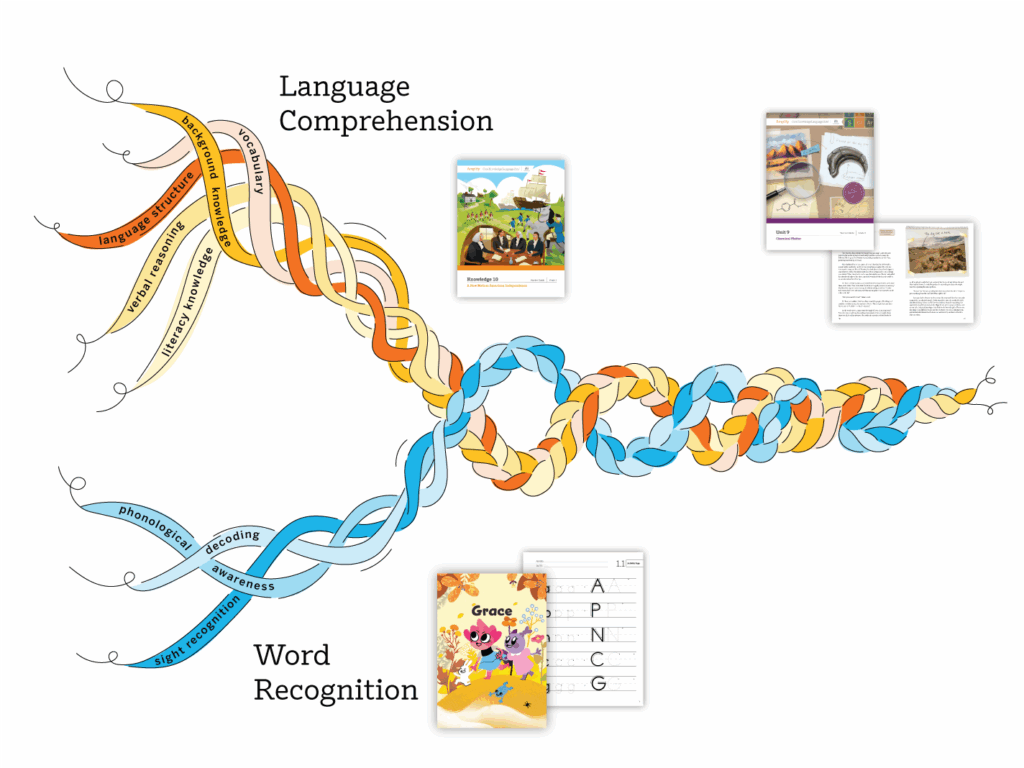
How does Amplify CKLA work?
Daily instruction
Grade PreK: Developmentally appropriate foundational knowledge
Our PreK program delivers developmentally appropriate instruction and activities that do more than lay the groundwork for foundational skills—they offer content knowledge, incorporating research that shows true literacy requires background knowledge in history, science, art, and literature. Amplify CKLA PreK easily fits into any class routine, with 45 minutes of interactive instruction designed to accommodate full-day or half-day schedules.
Grades K–2: Dedicated knowledge-building and explicit skills instruction
Every day, students in Grades K–2 complete one full lesson that explicitly and systematically builds foundational reading skills in the Skills Strand, as well as one full lesson that builds robust background knowledge to access complex text in the Knowledge Strand. Through learning in each of these strands, students develop the early literacy skills necessary to help them become confident readers and build the context to understand what they’re reading.
Grades 3–5: Integrated instruction
In Grades 3–5, Knowledge and Skills are integrated in one set of instructional materials. Lessons begin to combine skills and knowledge with increasingly complex texts, close reading, and a greater writing emphasis. Students can then use their skills to go on their own independent reading adventures.
Formative and summative assessments

Amplify CKLA features a progression of moment-by-moment assessments to benchmark assessments. Assessment and feedback give teachers the information they need to differentiate instruction effectively.
Checks for Understanding
Each lesson segment incorporates checks for understanding to increase engagement and to let teachers make real-time adjustments to their instruction.
Formative Assessment
Each lesson goal is tied to a formative assessment opportunity, allowing teachers to see which students need more support with a benchmark.
Mid- and End-of-Unit Assessments
Mid-Unit and End-of-Unit Assessments provide valuable information on the skills and content students have mastered. Digital end-of-unit assessments are available on a variety of platforms.
Benchmark and Placement Assessments
Benchmark and Placement Assessments help teachers set goals and monitor the growth of each student, providing a baseline at the beginning of the year and ensuring students are advancing toward grade-level objectives.
Download our CKLA Assessment Sampler
What makes Amplify CKLA different?
Integration with mCLASS DIBELS 8
Amplify CKLA is the only core ELA program that integrates with mCLASS DIBELS 8th Edition.
The CKLA Connect feature matches your students with targeted CKLA lessons based on their mCLASS DIBELS 8th Edition assessment data. In other words, it aligns your assessments more closely with your core curriculum while recommending effective differentiated instruction.
Download this guide to connecting mCLASS DIBELS 8 with Amplify CKLA
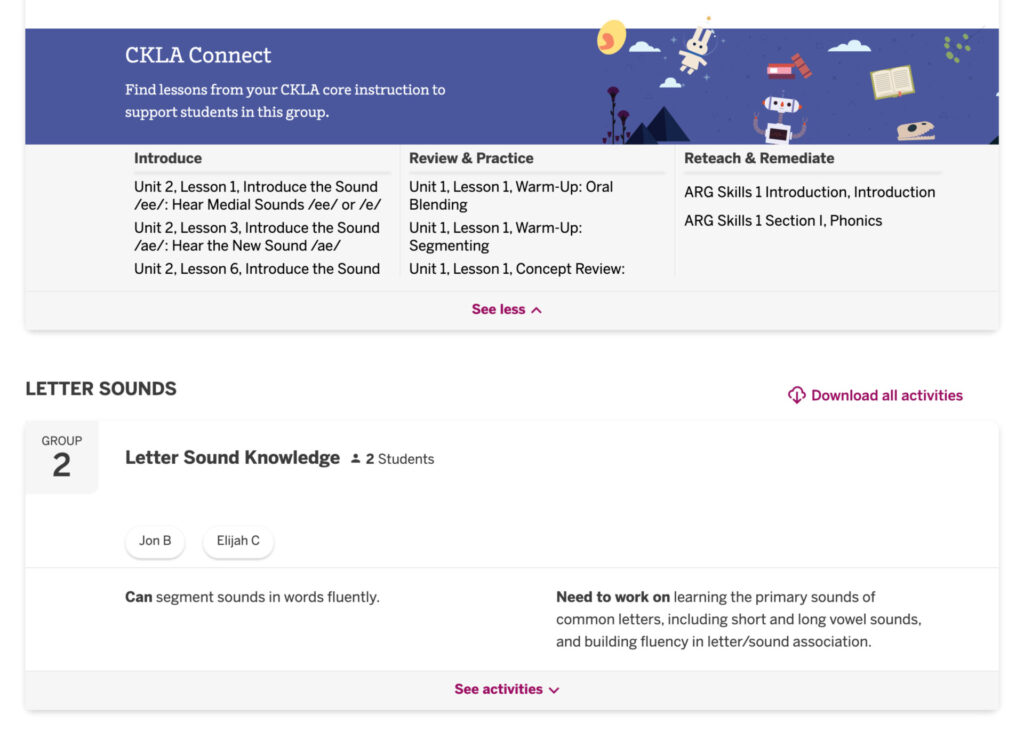
Built on the Science of Reading
Built out of the latest research in the Science of Reading, Amplify CKLA delivers explicit instruction in foundational knowledge in PreK, both foundational literacy skills (systematic phonics, decoding, and fluency) and background knowledge in grades K–2, and an integrated approach to explicit instruction in grades 3–5.
Review this Science of Reading toolkit to learn more about the Science of Reading best practices integrated throughout CKLA.
Explicit systematic skills instruction
Great reading instruction starts with helping kids develop great decoding skills. By building a solid foundation of phonological awareness and phonics, reading the words on the page becomes automatic so that comprehension and critical thinking can happen. Our instruction is supported by:
- Step-by-step lessons with multisensory approaches, clear lesson objectives, and embedded formative assessments.
- Decodable books and student readers with ebook and audiobook versions that feature interesting plots and relatable characters.
- An engaging sound library with fun songs and videos that develop phonological awareness.
- An interactive Vocab App featuring engaging activities with immediate feedback and automated, customized instruction based on student performance.
Coherent knowledge instruction
Students build grade-appropriate subject-area knowledge and vocabulary in history, science, literature, and the arts while learning to read, write, and think creatively and for themselves. Our instruction is supported by:
- Knowledge builders that provide a quick overview of each domain with its key ideas.
- Interactive Read-Alouds designed to build knowledge and vocabulary.
- Content-rich anchor texts that support students as they tackle increasingly complex text and sharpen their analytical skills.
- Social and emotional learning paired with lessons in civic responsibility.

Embedded differentiation for all learners
Amplify CKLA provides built-in differentiation strategies in every lesson for all students, including supports for English language learners and Standard English learners.
- Access supports for ELLs: Integrated ELD supports in each lesson segment for English learners and Standard English learners are specific to students’ mastery of the lesson’s objectives.
- Support and Challenge for all learners: Lessons include Support and Challenge suggestions that provide assistance or opportunities for more advanced work toward the goal of the lesson. These supports are suitable for all learners, including ELLs.
- 30 minutes of Additional Support in every Skills lesson: In the Skills Strand, every lesson concludes with an Additional Support section of recommendations for 30 minutes of extended instruction and activities, directly aligned to the skills taught in the lesson to assist students who need more support in mastering the lesson’s objectives.
- Intervention Toolkit: The Intervention Toolkit provides easy-to-use resources to assist teachers in filling gaps in students’ foundational skills. Teachers will find of hundreds of activities to support phonics, fluency, comprehension, handwriting, and other key skills.
Designated ELD with Language Studio
Amplify CKLA’s designated English Language Development (ELD) component—Language Studio—helps English learners preview and revisit key content within core instruction, building a foundation of academic vocabulary and background knowledge. Core instruction lessons include point-of-use supports for English learners and Support and Challenge strategies for all learners.

This carefully developed program follows the CKLA Knowledge domains, previewing and reinforcing skills and content from core instruction using instruction specifically built for English learners. The program is also designed around frequent formative assessment, including assessment of language proficiency, giving you effective ways to guide and support your English learners.
Language Studio supports teachers and English learners through the following:
- 30 minutes of instruction with lesson segments are carefully designed around Content Knowledge, Meaning Making, Language Development, Effective Expression, and Foundational Skills.
- Every Language Studio lesson accompanies a core lesson, helping English learners deepen domain and academic vocabulary that will help them access core content.
- Culminating tasks support core projects and target the same skills as primary instruction.
Writing emphasis with Writing Studio
With Writing Studio, students in Grades K-5 focus deeply on the three key text types informative, narrative, and opinion–while applying both the skills and knowledge from the core program.
Writing Studio supports students through:
- Expanding on core writing instruction to develop analytical thinking through writing.
- Lessons that focus on writing standards, providing intensive focus and application to strengthen skills.
- Opportunities to apply knowledge in new contexts and deepen comprehension through writing.
- Scaffolded writing projects to help all students find success within the stages of the writing process.

Writing Studio lessons:
- Allow teachers to differentiate through Support and Challenge prompts for students at all levels, and Access Supports for ELLs.
- Spark creativity with authentic writing projects that call on students to engage deeply with rich topics and sources.
- Implement careful design and provide rubrics so that students’ writing skills can visibly grow throughout the year.
A culminating project in each grade asks students to apply their knowledge and understanding of text types and to select the appropriate text type for a final piece of writing.
Personalized practice with Boost Reading
Boost Reading is the student-driven skill practice program within CKLA, providing differentiated, digital instruction in both foundational skills and comprehension strategies. Because Boost Reading is built on the same approach to reading as CKLA, students are able to extend their learning from the core program further, at their own pace.
Amplify CKLA and Boost Reading reinforce each other through:
- An aligned scope and sequence and instructional approach: In both programs, students get instruction and practice in phonological awareness and phonics, with the most common, least ambiguous spellings first.
- Consistent vocabulary words: Many Amplify CKLA words are taught and practiced in Boost Reading vocabulary games.
- Complementary texts: Fiction and nonfiction books within Boost Reading reinforce Amplify CKLA knowledge domains.
- Seamless integrations between platforms: Students can easily access Boost Reading directly from the Amplify CKLA Student Hub.
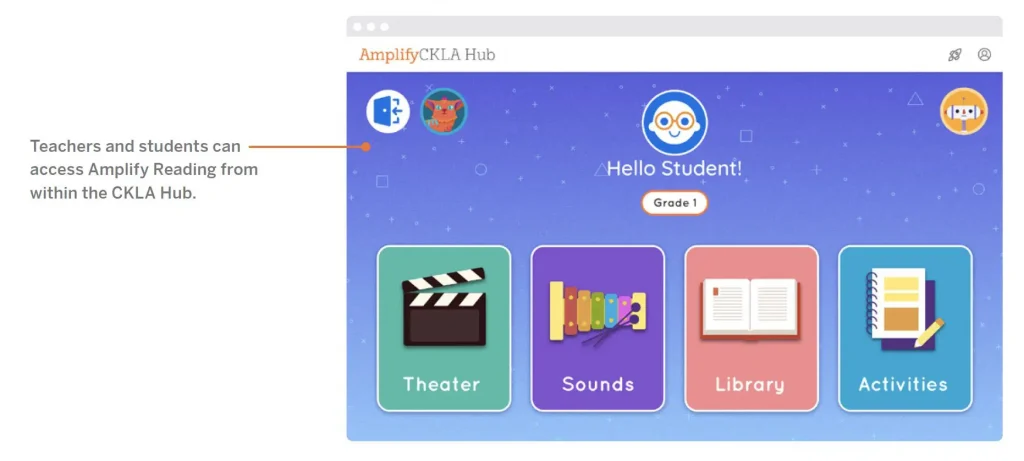
Ready-to-go slides and all-in-one platform
The slides-based Amplify CKLA digital experience enhances instruction while saving you time. Everything you need is all in one place, making it easier than ever to plan lessons, present digital content, and review student work.
- Simplify planning and instruction: Teachers have access to ready-to-use and customizable lesson presentation slides, complete with all the prompts from the print Teacher Guide embedded in the teacher view. As teachers deliver each lesson, students can engage with the content in one cohesive
experience—through Activity Books, slides, digital components, videos, Student Readers, and more. - Interactive student activities: Through the Student Home, students can easily access digital lessons with slides, Activity Pages, ebooks, videos, and other interactive resources from one simple dashboard.
- Your teacher command center: You’re provided with the tools you need to ensure a productive digital experience that’s personalized to meet your students’ needs. This includes a teacher home from which to launch and track lessons, LMS integrations such as Google Classroom and Microsoft Teams, and other customizations based on classroom needs.
- Get real-time insights into your students’ work: The innovative live review tool enables you to keep an eye on students drawing, recording audio, uploading and capturing images, and typing or writing in pre-placed text boxes in their Activity Pages.
Navigating the program
Digital navigation walkthrough
Physical materials walkthrough
Sample materials
Integrated Strand
Demo access
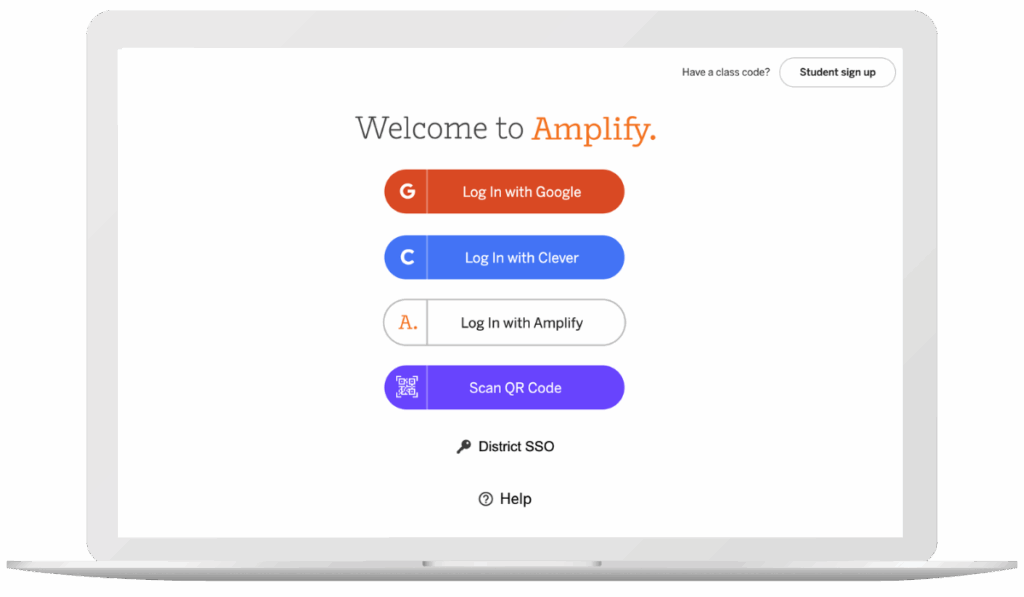
Follow the instructions below to access your demo account.
- Click the CKLA Demo button below.
- Go to learning.amplify.com
- Select Log in with Amplify
- To explore as a student, enter this username:
- Enter the password: Amplify1-mcps2024
- Click the desired program on the left side of the page.
Additional resources
Amplify CKLA review resources:
- CKLA Program Guide for Grades K–5
- CKLA Program Guide for PreK
- Diversity, equity, and inclusion in CKLA
- CKLA Culturally Responsive Curriculum Scorecard
- CKLA Equity Guide for Grades K–5
- CKLA and Social Emotional Competencies
- Text complexity in CKLA
- CKLA Caregiver Hub
- CKLA Sample Caregiver Letters
- Assessments in CKLA for Grades K–5
- Assessments in CKLA PreK
- Remote and hybrid learning with CKLA
- Amplify CKLA Scopes and Sequences
- Grade K Skills and Knowledge
- Grade 1 Skills and Knowledge
- Grade 2 Skills and Knowledge
- Grade 3 Integrated
- Grade 4 Integrated
- Grade 5 Integrated
Amplify CKLA for Anchorage
What is Amplify CKLA?
Amplify CKLA is a core ELA program for grades K–5 that delivers:
- A unique research-based approach truly built on the Science of Reading.
- A combination of explicit foundational skills with meaningful knowledge-building.
- Embedded support and differentiation that gets all students reading grade-level texts together.
- Opportunities for students to see the strengths and experiences that all people share while also celebrating each others’ unique identities and experiences.
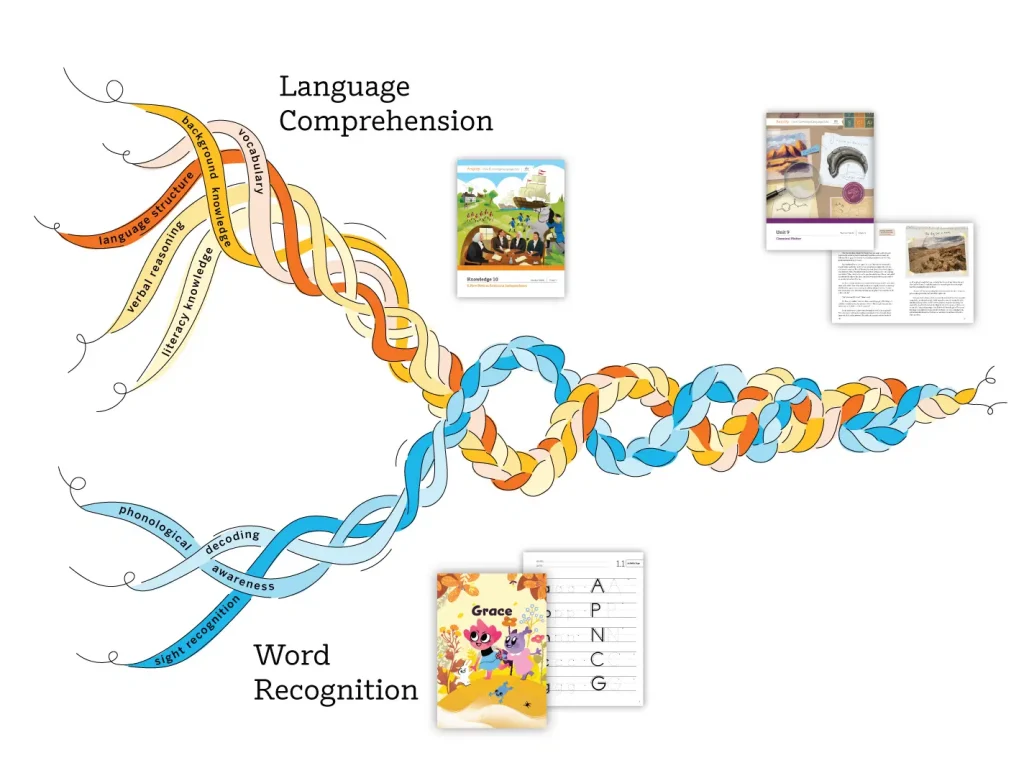
How does Amplify CKLA work?
Grades K–2: Dedicated knowledge-building and explicit skills instruction
Every day, students in Grades K–2 complete one full lesson that explicitly and systematically builds foundational reading skills in the Skills Strand, as well as one full lesson that builds robust background knowledge to access complex text in the Knowledge Strand. Through learning in each of these strands, students develop the early literacy skills necessary to help them become confident readers and build the context to understand what they’re reading.
Grades 3–5: Integrated instruction
In Grades 3–5, Knowledge and Skills are integrated in one set of instructional materials. Lessons begin to combine skills and knowledge with increasingly complex texts, close reading, and a greater writing emphasis. Students can then use their skills to go on their own independent reading adventures.
How does Amplify CKLA integrate with the other parts of the literacy system?
Amplify CKLA + mCLASS® with DIBELS® 8th Edition
Amplify CKLA integrates with your mCLASS assessment through the CKLA Connect feature, which matches your students with targeted CKLA lessons based on their mCLASS assessment data. In other words, it aligns your assessments more closely with your core curriculum while recommending effective differentiated instruction.

Amplify CKLA + Amplify Reading
Amplify Reading is the student-driven skill practice program within CKLA, providing differentiated, digital instruction in both foundational skills and comprehension strategies. Because Amplify Reading is built on the same approach to reading as CKLA, students are able to extend their learning from the core program further, at their own pace.
Amplify CKLA and Amplify Reading reinforce each other through:
- An aligned scope and sequence and instructional approach: In both programs, students get instruction and practice in phonological awareness and phonics, with the most common, least ambiguous spellings first.
- Consistent vocabulary words: Many Amplify CKLA words are taught and practiced in Amplify Reading vocabulary games.
- Complementary texts: Fiction and nonfiction books within Amplify Reading reinforce Amplify CKLA knowledge domains.
- Seamless integrations between platforms: Students can easily access Amplify Reading directly from the Amplify CKLA Student Hub.
What makes Amplify CKLA different?
Built on the Science of Reading
Built out of the latest research in the Science of Reading, Amplify CKLA delivers explicit instruction in both foundational literacy skills (systematic phonics, decoding, and fluency) and background knowledge in grades K–2 with an integrated approach to explicit instruction in grades 3–5.
Review this Science of Reading toolkit to learn more about the Science of Reading best practices integrated throughout CKLA.
Explicit systematic skills instruction
Great reading instruction starts with helping kids develop great decoding skills. By building a solid foundation of phonological awareness and phonics, reading the words on the page becomes automatic so that comprehension and critical thinking can happen. Our instruction is supported by:
- Step-by-step lessons with multisensory approaches, clear lesson objectives, and embedded formative assessments.
- Decodable books and student readers with ebook and audiobook versions that feature interesting plots and relatable characters.
- An engaging sound library with fun songs and videos that develop phonological awareness.
- An interactive Vocab App featuring engaging activities with immediate feedback and automated, customized instruction based on student performance.
Coherent knowledge instruction
Students build grade-appropriate subject-area knowledge and vocabulary in history, science, literature, and the arts while learning to read, write, and think creatively and for themselves. Our instruction is supported by:
- Knowledge builders that provide a quick overview of each domain with its key ideas.
- Interactive Read-Alouds designed to build knowledge and vocabulary.
- Content-rich anchor texts that support students as they tackle increasingly complex text and sharpen their analytical skills.
- Social and emotional learning paired with lessons in civic responsibility.
Embedded differentiation for all learners
Amplify CKLA provides built-in differentiation strategies in every lesson for all students, including supports for English learners and Standard English learners.
- Access supports for ELs: Integrated ELD supports in each lesson segment
for English learners and Standard English learners are specific to students’ mastery of the lesson’s objectives. - Support and Challenge for all learners: Lessons include Support and Challenge suggestions that provide assistance or opportunities for more advanced work toward the goal of the lesson. These supports are suitable for all learners, including ELs.
- 30 minutes of Additional Support in every Skills lesson: In the Skills Strand, every lesson concludes with an Additional Support section of recommendations for 30 minutes of extended instruction and activities, directly aligned to the skills taught in the lesson to assist students who need more support in mastering the lesson’s objectives.
- Intervention Toolkit: The Intervention Toolkit provides easy-to-use resources to assist teachers in filling gaps in students’ foundational skills. Teachers will find of hundreds of activities to support phonics, fluency, comprehension, handwriting, and other key skills.
Designated ELD
Amplify CKLA’s designated English Language Development (ELD) component—Language Studio—helps English learners preview and revisit key content within core instruction, building a foundation of academic vocabulary and background knowledge. Core instruction lessons include point-of-use supports for English learners and Support and Challenge strategies for all learners.
This carefully developed program follows the CKLA Knowledge domains, previewing and reinforcing skills and content from core instruction using instruction specifically built for English learners. The program is also designed around frequent formative assessment, including assessment of language proficiency, giving you effective ways to guide and support your English learners.
Language Studio supports teachers and English learners through the following:
- 30 minutes of instruction with lesson segments are carefully designed around Content Knowledge, Meaning Making, Language Development, Effective Expression, and Foundational Skills.
- Every Language Studio lesson accompanies a core lesson, helping English learners deepen domain and academic vocabulary that will help them access core content.
- Culminating tasks support core projects and target the same skills as primary instruction.
Ready-to-go slides and all-in-one platform
The slides-based Amplify CKLA digital experience enhances instruction while saving you time. Everything you need is all in one place, making it easier than ever to plan lessons, present digital content, and review student work.
- Simplify planning and instruction: Teachers have access to ready-to-use and customizable lesson presentation slides, complete with all the prompts from the print Teacher Guide embedded in the teacher view. As teachers deliver each lesson, students can engage with the content in one cohesive
experience—through Activity Books, slides, digital components, videos, Student Readers, and more. - Interactive student activities: Through the Student Home, students can easily access digital lessons with slides, Activity Pages, ebooks, videos, and other interactive resources from one simple dashboard.
- Your teacher command center: You’re provided with the tools you need to ensure a productive digital experience that’s personalized to meet your students’ needs. This includes a teacher home from which to launch and track lessons, LMS integrations such as Google Classroom and Microsoft Teams, and other customizations based on classroom needs.
- Get real-time insights into your students’ work: The innovative live review tool enables you to keep an eye on students drawing, recording audio, uploading and capturing images, and typing or writing in pre-placed text boxes in their Activity Pages.
Navigating the program
Digital navigation walkthrough
Physical materials walkthrough
Sample materials
Demo access
Follow the instructions below to access your demo account.
- Click the CKLA Demo button below.
- Select Log in with Amplify.
- To explore as a teacher, enter this username: t1.alaskareads@demo.tryamplify.net
- To explore as a student, enter this username: s1.alaskareads@demo.tryamplify.net
- Enter the password: Amplify1-alaskareads
- Click the Programs and apps menu
- Select CKLA Teacher Resource Site
- Select the desire grade level
Check out these additional resources
Amplify CKLA review resources:
- Correlations to the Alaska English Language Arts Standards
- CKLA Program Guide
- Text complexity in CKLA
- Trade books in CKLA
- Assessments in CKLA
- Remote and hybrid learning with CKLA
- Amplify CKLA Scopes and Sequences
- Grade K Skills and Knowledge
- Grade 1 Skills and Knowledge
- Grade 2 Skills and Knowledge
- Grade 3 Integrated
- Grade 4 Integrated
- Grade 5 Integrated
Buffalo Consultancy
What is Amplify CKLA?
Amplify CKLA is a core ELA program for grades TK–5 that delivers:
- A unique research-based approach truly built on the Science of Reading.
- A combination of explicit foundational skills with meaningful knowledge-building.
- Embedded support and differentiation that gets all students reading grade-level texts together.
- Opportunities for students to see the strengths and experiences that all people share while also celebrating each others’ unique identities and experiences.
- Equitable and authentic Spanish language arts instruction with Amplify Caminos.
How does Amplify CKLA work?
Grades K–2: Dedicated knowledge-building and explicit skills instruction
Every day, students in Grades K–2 complete one full lesson that explicitly and systematically builds foundational reading skills in the Skills Strand, as well as one full lesson that builds robust background knowledge to access complex text in the Knowledge Strand. Through learning in each of these strands, students develop the early literacy skills necessary to help them become confident readers and build the context to understand what they’re reading.
Grades 3–5: Integrated instruction
In Grades 3–5, Knowledge and Skills are integrated in one set of instructional materials. Lessons begin to combine skills and knowledge with increasingly complex texts, close reading, and a greater writing emphasis. Students can then use their skills to go on their own independent reading adventures.
What makes Amplify CKLA different?
Built on the Science of Reading
Built out of the latest research in the Science of Reading, Amplify CKLA delivers explicit instruction in both foundational literacy skills (systematic phonics, decoding, and fluency) and background knowledge in grades K–2 with an integrated approach to explicit instruction in grades 3–5.
Review this Science of Reading toolkit to learn more about the Science of Reading best practices integrated throughout CKLA.
Explicit systematic skills instruction
Great reading instruction starts with helping kids develop great decoding skills. By building a solid foundation of phonological awareness and phonics, reading the words on the page becomes automatic so that comprehension and critical thinking can happen. Our instruction is supported by:
- Step-by-step lessons with multisensory approaches, clear lesson objectives, and embedded formative assessments.
- Decodable books and student readers with ebook and audiobook versions that feature interesting plots and relatable characters.
- An engaging sound library with fun songs and videos that develop phonological awareness.
- An interactive Vocab App featuring engaging activities with immediate feedback and automated, customized instruction based on student performance.
Coherent knowledge instruction
Students build grade-appropriate subject-area knowledge and vocabulary in history, science, literature, and the arts while learning to read, write, and think creatively and for themselves. Our instruction is supported by:
- Knowledge builders that provide a quick overview of each domain with its key ideas.
- Interactive Read-Alouds designed to build knowledge and vocabulary.
- Content-rich anchor texts that support students as they tackle increasingly complex text and sharpen their analytical skills.
- Social and emotional learning paired with lessons in civic responsibility.

Embedded differentiation for all learners
Amplify CKLA provides built-in differentiation strategies in every lesson for all students, including supports for English learners and Standard English learners.
- Access supports for ELs: Integrated ELD supports in each lesson segment
for English learners and Standard English learners are specific to students’ mastery of the lesson’s objectives. - Support and Challenge for all learners: Lessons include Support and Challenge suggestions that provide assistance or opportunities for more advanced work toward the goal of the lesson. These supports are suitable for all learners, including ELs.
- 30 minutes of Additional Support in every Skills lesson: In the Skills Strand, every lesson concludes with an Additional Support section of recommendations for 30 minutes of extended instruction and activities, directly aligned to the skills taught in the lesson to assist students who need more support in mastering the lesson’s objectives.
- Intervention Toolkit: The Intervention Toolkit provides easy-to-use resources to assist teachers in filling gaps in students’ foundational skills. Teachers will find of hundreds of activities to support phonics, fluency, comprehension, handwriting, and other key skills.
Designated ELD
Amplify CKLA’s designated English Language Development (ELD) component—Language Studio— helps English learners preview and revisit key content within core instruction, building a foundation of academic vocabulary and background knowledge. Core instruction lessons include point-of-use supports for English learners and Support and Challenge strategies for all learners.

Built on the California ELA/ELD Framework, our carefully developed program follows the CKLA Knowledge domains, previewing and reinforcing skills and content from core instruction using instruction specifically built for English learners. The program is also designed around frequent formative assessment, including assessment of language proficiency, giving you effective ways to guide and support your English learners.
Language Studio supports teachers and English learners through the following:
- 30 minutes of instruction with lesson segments are carefully designed around Content Knowledge, Meaning Making, Language Development, Effective Expression, and Foundational Skills.
- Every Language Studio lesson accompanies a core lesson, helping English learners deepen domain and academic vocabulary that will help them access core content.
- Culminating tasks support core projects and target the same skills as primary instruction.
Ready-to-go slides and all-in-one platform
The slides-based Amplify CKLA digital experience enhances instruction while saving you time. Everything you need is all in one place, making it easier than ever to plan lessons, present digital content, and review student work.
- Simplify planning and instruction: Teachers have access to ready-to-use and customizable lesson presentation slides, complete with all the prompts from the print Teacher Guide embedded in the teacher view. As teachers deliver each lesson, students can engage with the content in one cohesive
experience—through Activity Books, slides, digital components, videos, Student Readers, and more. - Interactive student activities: Through the Student Home, students can easily access digital lessons with slides, Activity Pages, ebooks, videos, and other interactive resources from one simple dashboard.
- Your teacher command center: You’re provided with the tools you need to ensure a productive digital experience that’s personalized to meet your students’ needs. This includes a teacher home from which to launch and track lessons, LMS integrations such as Google Classroom and Microsoft Teams, and other customizations based on classroom needs.
- Get real-time insights into your students’ work: The innovative live review tool enables you to keep an eye on students drawing, recording audio, uploading and capturing images, and typing or writing in pre-placed text boxes in their Activity Pages.
How does Amplify CKLA integrate with the other parts of the literacy system?
Amplify CKLA + mCLASS® with DIBELS® 8th Edition
Amplify CKLA integrates with your mCLASS assessment through the CKLA Connect feature, which matches your students with targeted CKLA lessons based on their mCLASS assessment data. In other words, it aligns your assessments more closely with your core curriculum while recommending effective differentiated instruction.
Amplify CKLA + Amplify Reading
Amplify Reading is the student-driven skill practice program within CKLA, providing differentiated, digital instruction in both foundational skills and comprehension strategies. Because Amplify Reading is built on the same approach to reading as CKLA, students are able to extend their learning from the core program further, at their own pace.
Amplify CKLA and Amplify Reading reinforce each other through:
- An aligned scope and sequence and instructional approach: In both probrams, students get instruction and practice in phonological awareness and phonics, with the most common, least ambiguous spellings first.
- Consistent vocabulary words: Many Amplify CKLA words are taught and practiced in Amplify Reading vocabulary games.
- Complementary texts: Fiction and nonfiction books within Amplify Reading reinforce Amplify CKLA knowledge domains.
- Seamless integrations between platforms: Students can easily access Amplify Reading directly from the Amplify CKLA Student Hub.
Navigating the program
Digital navigation walkthrough
Physical materials walkthrough
Check out these additional resources
Amplify CKLA review resources:
- CKLA Program Guide
- Diversity, equity, and inclusion in CKLA
- Text complexity in CKLA
- Trade books in CKLA
- Assessments in CKLA
- Remote and hybrid learning with CKLA
- Amplify ELA technical specifications
- Amplify CKLA Scopes and Sequences
- Grade K Skills and Knowledge
- Grade 1 Skills and Knowledge
- Grade 2 Skills and Knowledge
- Grade 3 Integrated
- Grade 4 Integrated
- Grade 5 Integrated
What is Amplify CKLA?
Amplify CKLA is a core ELA program for grades TK–5 that delivers:
- A unique research-based approach truly built on the Science of Reading.
- A combination of explicit foundational skills with meaningful knowledge-building.
- Embedded support and differentiation that gets all students reading grade-level texts together.
- Opportunities for students to see the strengths and experiences that all people share while also celebrating each others’ unique identities and experiences.
- Authentic Spanish language arts instruction with Amplify Caminos.

How does Amplify CKLA work?
Grades K–2: Dedicated knowledge-building and explicit skills instruction
Every day, students in Grades K–2 complete one full lesson that explicitly and systematically builds foundational reading skills in the Skills Strand, as well as one full lesson that builds robust background knowledge to access complex text in the Knowledge Strand. Through learning in each of these strands, students develop the early literacy skills necessary to help them become confident readers and build the context to understand what they’re reading.
Grades 3–5: Integrated instruction
In Grades 3–5, Knowledge and Skills are integrated in one set of instructional materials. Lessons begin to combine skills and knowledge with increasingly complex texts, close reading, and a greater writing emphasis. Students can then use their skills to go on their own independent reading adventures.
What makes Amplify CKLA different?
Built on the Science of Reading
Built out of the latest research in the Science of Reading, Amplify CKLA delivers explicit instruction in both foundational literacy skills (systematic phonics, decoding, and fluency) and background knowledge in grades K–2 with an integrated approach to explicit instruction in grades 3–5.
Review this Science of Reading toolkit to learn more about the Science of Reading best practices integrated throughout CKLA.
Explicit systematic skills instruction
Great reading instruction starts with helping kids develop great decoding skills. By building a solid foundation of phonological awareness and phonics, reading the words on the page becomes automatic so that comprehension and critical thinking can happen. Our instruction is supported by:
- Step-by-step lessons with multisensory approaches, clear lesson objectives, and embedded formative assessments.
- Decodable books and student readers with ebook and audiobook versions that feature interesting plots and relatable characters.
- An engaging sound library with fun songs and videos that develop phonological awareness.
- An interactive Vocab App featuring engaging activities with immediate feedback and automated, customized instruction based on student performance.
Coherent knowledge instruction
Students build grade-appropriate subject-area knowledge and vocabulary in history, science, literature, and the arts while learning to read, write, and think creatively and for themselves. Our instruction is supported by:
- Knowledge builders that provide a quick overview of each domain with its key ideas.
- Interactive Read-Alouds designed to build knowledge and vocabulary.
- Content-rich anchor texts that support students as they tackle increasingly complex text and sharpen their analytical skills.
- Social and emotional learning paired with lessons in civic responsibility.
Embedded differentiation for all learners
Amplify CKLA provides built-in differentiation strategies in every lesson for all students, including supports for English learners and Standard English learners.
- Access supports for ELs: Integrated ELD supports in each lesson segment
for English learners and Standard English learners are specific to students’ mastery of the lesson’s objectives. - Support and Challenge for all learners: Lessons include Support and Challenge suggestions that provide assistance or opportunities for more advanced work toward the goal of the lesson. These supports are suitable for all learners, including ELs.
- 30 minutes of Additional Support in every Skills lesson: In the Skills Strand, every lesson concludes with an Additional Support section of recommendations for 30 minutes of extended instruction and activities, directly aligned to the skills taught in the lesson to assist students who need more support in mastering the lesson’s objectives.
- Intervention Toolkit: The Intervention Toolkit provides easy-to-use resources to assist teachers in filling gaps in students’ foundational skills. Teachers will find of hundreds of activities to support phonics, fluency, comprehension, handwriting, and other key skills.
Designated ELD
Amplify CKLA’s designated English Language Development (ELD) component—Language Studio— helps English learners preview and revisit key content within core instruction, building a foundation of academic vocabulary and background knowledge. Core instruction lessons include point-of-use supports for English learners and Support and Challenge strategies for all learners.
Built on the California ELA/ELD Framework, our carefully developed program follows the CKLA Knowledge domains, previewing and reinforcing skills and content from core instruction using instruction specifically built for English learners. The program is also designed around frequent formative assessment, including assessment of language proficiency, giving you effective ways to guide and support your English learners.
Language Studio supports teachers and English learners through the following:
- 30 minutes of instruction with lesson segments are carefully designed around Content Knowledge, Meaning Making, Language Development, Effective Expression, and Foundational Skills.
- Every Language Studio lesson accompanies a core lesson, helping English learners deepen domain and academic vocabulary that will help them access core content.
- Culminating tasks support core projects and target the same skills as primary instruction.
Ready-to-go slides and all-in-one platform
The slides-based Amplify CKLA digital experience enhances instruction while saving you time. Everything you need is all in one place, making it easier than ever to plan lessons, present digital content, and review student work.
- Simplify planning and instruction: Teachers have access to ready-to-use and customizable lesson presentation slides, complete with all the prompts from the print Teacher Guide embedded in the teacher view. As teachers deliver each lesson, students can engage with the content in one cohesive
experience—through Activity Books, slides, digital components, videos, Student Readers, and more. - Interactive student activities: Through the Student Home, students can easily access digital lessons with slides, Activity Pages, ebooks, videos, and other interactive resources from one simple dashboard.
- Your teacher command center: You’re provided with the tools you need to ensure a productive digital experience that’s personalized to meet your students’ needs. This includes a teacher home from which to launch and track lessons, LMS integrations such as Google Classroom and Microsoft Teams, and other customizations based on classroom needs.
- Get real-time insights into your students’ work: The innovative live review tool enables you to keep an eye on students drawing, recording audio, uploading and capturing images, and typing or writing in pre-placed text boxes in their Activity Pages.
How does Amplify CKLA integrate with the other parts of the literacy system?
Amplify CKLA + mCLASS® with DIBELS® 8th Edition
Amplify CKLA integrates with your mCLASS assessment through the CKLA Connect feature, which matches your students with targeted CKLA lessons based on their mCLASS assessment data. In other words, it aligns your assessments more closely with your core curriculum while recommending effective differentiated instruction.

Amplify CKLA + Amplify Reading
Amplify Reading is the student-driven skill practice program within CKLA, providing differentiated, digital instruction in both foundational skills and comprehension strategies. Because Amplify Reading is built on the same approach to reading as CKLA, students are able to extend their learning from the core program further, at their own pace.
Amplify CKLA and Amplify Reading reinforce each other through:
- An aligned scope and sequence and instructional approach: In both probrams, students get instruction and practice in phonological awareness and phonics, with the most common, least ambiguous spellings first.
- Consistent vocabulary words: Many Amplify CKLA words are taught and practiced in Amplify Reading vocabulary games.
- Complementary texts: Fiction and nonfiction books within Amplify Reading reinforce Amplify CKLA knowledge domains.
- Seamless integrations between platforms: Students can easily access Amplify Reading directly from the Amplify CKLA Student Hub.

Navigating the program
Digital navigation walkthrough
Physical materials walkthrough
Sample materials
Demo access

Follow the instructions below to access your demo account.
- Click the CKLA and Caminos Demo button below.
- Select Log in with Amplify.
- To explore as a teacher, enter this username: t1.westadackla@demo.tryamplify.net
- To explore as a student, enter this username: s1.westadackla@demo.tryamplify.net
- Enter the password: Amplify1-westadackla
- Click the Programs and apps menu
- Select CKLA Teacher Resource Site
- Select the desire grade level
- Use the toggle to switch between English (CKLA) and Spanish (Caminos) resources.
Note: Your demo account access expires on January 19, 2023.
Check out these additional resources
Amplify CKLA review resources:
- CKLA Program Guide
- Text complexity in CKLA
- Trade books in CKLA
- Assessments in CKLA
- Remote and hybrid learning with CKLA
- Amplify ELA technical specifications
- Amplify CKLA Scopes and Sequences
- Grade K Skills and Knowledge
- Grade 1 Skills and Knowledge
- Grade 2 Skills and Knowledge
- Grade 3 Integrated
- Grade 4 Integrated
- Grade 5 Integrated
- Corrleations to the Idaho Content Standards English Language Arts/Literacy
Review of the B.E.S.T. program for middle schools, Amplify ELA Florida Edition
Thank you for taking the time to review Amplify ELA Florida Edition for middle school. The items below will allow you to experience our fully blended program, with access to our print materials, digital curriculum, and additional resources to support your review.
With the Benchmarks for Excellent Student Thinking (B.E.S.T.) standards as the foundation, our robust curriculum is built with a full appreciation of rich text, history, art, music, and other disciplines. This thoughtful development encourages a broader view of literacy that promotes knowledge-building across varied domains and subjects.

Review digital program
The content and instruction in Amplify ELA’s digital program mirror the content provided in the print Teacher Guides and Student Editions found below. Additionally, the digital program offers enhanced opportunities to engage students through the use of multimedia and a variety of learning apps. Teachers will also find embedded apps that make it easy to score student work, provide feedback, differentiate instruction, and report on progress.

To review the digital program, visit learning.amplify.com.
Click Login with Amplify, and use the following credentials:
Student view
- Username: s2.elafl@tryamplify.net
- Password: AmplifyNumber1
Amplify ELA Florida overview
Review grade 6 materials

Teacher Guides:
Bid #1274: 9781636025216, Amplify ELA Florida Grade 6 Teacher Blended Package
Available digitally and in print, the Teacher Guides contain all of the information teachers need to facilitate classroom instruction.

Reading with the B.E.S.T. Modules have been built to guide teachers and students as they begin to work with Florida’s new reading standards, providing an introduction to each grade-level B.E.S.T. Reading benchmark.

Student Edition (single volume per year):
Bid #1274: 9781643830766, Amplify ELA Grade 6 Student Edition (single)
Available digitally and in print, the Student Edition guides middle schoolers through complex texts and writing by:
- Engaging students with high-quality narrative and informational texts.
- Providing videos, audio supports, and digital experiences that capture their attention.
- Presenting text in a single print volume for students to annotate on the page

Student Writing Journals:
Bid #1274: 9781636025186 Amplify ELA Florida Grade 6 Student Blended Package
Review grade 7 materials

Teacher Guides:
Bid #1276: 9781636025223, Amplify ELA Florida Grade 7 Teacher Blended Package
Available digitally and in print, the Teacher Guides contain all of the information teachers need to facilitate classroom instruction.

Reading with the B.E.S.T. Modules have been built to guide teachers and students as they begin to work with Florida’s new reading standards, providing an introduction to each grade-level B.E.S.T. Reading benchmark.

Student Edition (single volume per year)
Bid #1276: 9781643831114, Amplify ELA Grade 7 Student Edition (single)
Available digitally and in print, the Student Edition guides middle schoolers through complex texts and writing by:
- Engaging students with high-quality narrative and informational texts.
- Providing videos, audio supports, and digital experiences that capture their attention.
- Presenting text in a single-volume print student experience to annotate on the page.

Writing Journals:
Bid #1276: 9781636025193, Amplify ELA Florida Grade 7 Student Blended
Review grade 8 materials

Teacher Guides:
Bid #1277: 9781636025230, Amplify ELA Florida Grade 8 Teacher Blended Package
Available digitally and in print, the Teacher Guides contain all of the information teachers need to facilitate classroom instruction.

Reading with the B.E.S.T. Modules have been built to guide teachers and students as they begin to work with Florida’s new reading standards, providing an introduction to each grade-level B.E.S.T. Reading benchmark.

Student Edition (one volume per year)
Bid #1277: 9781643831466, Amplify ELA Grade 8 Student Edition (single)
Available digitally and in print, the student edition guides middle schoolers through complex texts and writing by:
- Engaging students with high-quality narrative and informational texts.
- Providing videos, audio supports, and digital experiences that capture their attention.
- Presenting text in a single-volume print student experience to annotate on the page.

Writing Journals:
Bid #1277: 9781636025209, Amplify ELA Florida Grade 8 Student Blended
Florida-required guidance
Resources
Additional materials to support your review:
Grade 6
Unit 1: Expressions and Equations: Area, Algebraic Expressions, and Exponents
| iReady Classroom | Desmos Math 6–A1 |
|---|---|
| Lesson 1: Find the Area of a Parallelogram | Unit 1 Lesson 3: Exploring Parallelograms (Print available) [Free lesson] Lesson 4: Off the Grid |
| Lesson 2: Find the Area of Triangles and Other Polygons | Unit 1 Lesson 7: Off the Grid, Part 2 Practice Day 1 (Print available) |
| Lesson 3: Use Nets to Find Surface Area | Unit 1 Lesson 11: Nothing But Nets (Print available) Practice Day 2 (Print available) |
| Lesson 4: Work with Algebraic Expressions | Unit 6 Lesson 6: Vari-apples |
| Lesson 5: Write and Evaluate Expressions with Exponents | Unit 6 Lesson 4: Hanging it Up Lesson 5: Swap and Solve (Print available) Practice Day 2 (Print available) |
| Lesson 6: Find Greatest Common Factor and Least Common Multiple | Unit 5 Lesson 14: Common Multiples Lesson 15: Common Factors Practice Day 2 (Print available) |
Unit 2: Decimals and Fractions: Base-Ten Operations, Division with Fractions, and Volume
Unit 3: Ratio Reasoning: Ratio Concepts and Equivalent Ratios
| Lesson 12: Understand Ratio Concepts | Unit 2 Lesson 1: Pizza Maker [Free lesson] Lesson 2: Ratio Rounds (Print available) Practice Day 1 (Print available) |
| Lesson 13: Find Equivalent Ratios | Unit 2 Lesson 3: Rice Ratios (Print available) Lesson 4: Fruit Lab [Free lesson] Lesson 5: Balancing Act Lesson 9: Disaster Preparation [Free lesson] Lesson 10: Balloons Lesson 11: Community Life (Print available) Practice Day 1 (Print available) |
| Lesson 14: Use Part-to-Part and Part-to-Whole Ratios | Unit 2 Lesson 7: Mixing Paint, Part 1 Lesson 12: Mixing Paint, Part 2 Lesson 13: City Planning |
Unit 4: Ratio Reasoning: Unit Rates and Percent
| Lesson 15: Understand Rate Concepts | Unit 3 Lesson 1: Many Measurements (Print available) [Free lesson] Lesson 2: Counting Classrooms Lesson 3: Pen Pals |
| Lesson 16: Use Unit Rates to Solve Problems | Unit 3 Lesson 4: Model Trains Lesson 5: Soft Serve [Free lesson] Lesson 6: Welcome to Robot Factory Lesson 7: More Soft Serve Practice Day 1 (Print available) Practice Day 2 (Print available) |
| Lesson 17: Understand Percents | Unit 3 Lesson 8: Lucky Duckies [Free lesson] Lesson 9: Bicycle Goals Practice Day 2 |
| Lesson 18: Use Percents to Solve Problems | Unit 3 Lesson 10: What’s Missing Lesson 11: Cost Breakdown Lesson 12: More Bicycle Goals Lesson 13: A Country as a Village |
Unit 5: Algebraic Thinking: Equivalent Expressions and Equations with Variables
| Lesson 19: Write and Identify Equivalent Expressions | Unit 6 Lesson 7: Border Tiles Lesson 8: Products and Sums [Free lesson] Lesson 9: Products, Sums, and Differences (Print available) Practice Day 1 (Print available) |
| Lesson 20: Understand Solutions of Equations | Unit 6 Lesson 2: Five Equations (Print available) |
| Lesson 21: Write and Solve One-Variable Equations | Unit 6 Lesson 3: Hanging Around Lesson 4: Hanging it Up Lesson 5: Swap and Solve (Print available) |
| Lesson 22: Analyze Two-Variable Relationships | Unit 6 Lesson 13: Turtles All the Way Lesson 14: Representing Relationships Lesson 15: Connecting Relationships Lesson 16: Subway Fares [Free lesson] Practice Day 2 (Print available) |
Unit 6: Positive and Negative Numbers: Absolute Value, Inequalities, and the Coordinate Plane
| Lesson 23: Understand Positive and Negative Numbers | Unit 7 Lesson 1: Can You Dig It [Free lesson] Lesson 4: Sub-Zero |
| Lesson 24: Order Positive and Negative Numbers | Unit 7 Lesson 2: Digging Deeper Lesson 3: Order in the Class (Print available) [Free lesson] |
| Lesson 25: Understand Absolute Value | Unit 7 Lesson 5: Distance on the Number Line Practice Day 1 (Print available) |
| Lesson 26: Write and Graph One-Variable Inequalities | Unit 7 Lesson 6: Tunnel Travels [Free lesson] Lesson 7: Comparing Weights Lesson 8: Shira’s Solutions |
| Lesson 27: Understand the Four-Quadrant Coordinate Plane | Unit 7 Lesson 9: Sand Dollar Search Lesson 10: The A-maze-ing Coordinate Plane Lesson 11: Polygon Maker Practice Day 2 (Print available) |
| Lesson 28: Solve Problems in the Coordinate Plane | Unit 7 Lesson 12: Graph Telephone Practice Day 2 (Print available) |
Unit 7: Statistical Thinking: Data Distributions and Measures of Center and Variability
| Lesson 29: Understand Statistical Questions and Data Distributions | Unit 8 Lesson 1: Screen Time |
| Lesson 30: Use Dot Plots and Histograms to Describe Data Distributions | Unit 8 Lesson 2: Dot Plots Lesson 3: Minimum Wage (Print available) [Free lesson] Lesson 4: Lots More Dots Lesson 5: The Plot Thickens [Free lesson] Lesson 6: DIY Histograms (Print available) Practice Day 1 (Print available) |
| Lesson 31: Interpret Median and Interquartile Range in Box Plots | Unit 8 Lesson 11: Toy Cars [Free lesson] Lesson 13: Pumpkin Patch Lesson 14: Car, Plan, Bus, or Train? Lesson 15: Hollywood Part 2 Practice Day 2 (Print available) |
| Lesson 32: Interpret Mean and Mean Absolute Deviation | Unit 8 Lesson 7: Snack Time Lesson 8: Pop it! Lesson 9: Hoops Lesson 10: Hollywood Part 1 (Print available) Practice Day 1 (Print available) |
| Lesson 33: Use Measures of Center and Variability to Summarize Data | Unit 8 Lesson 10: Hollywood Part 1 (Print available) |
Grade 7
Unit 1: Proportional Relationships: Ratios, Rates, and Circles
Unit 2: Numbers and Operations: Add and Subtract Rational Numbers
| Lesson 7: Understand Addition with Negative Numbers | Unit 5 Lesson 1: Floats and Anchors [Free lesson] |
| Lesson 8: Add with Negative Numbers | Unit 5 Lesson 1: Floats and Anchors [Free lesson] Lesson 2: More Floats and Anchors Lesson 3: Bumpers |
| Lesson 9: Understand Subtraction with Negative Integers | Unit 5 Lesson 1: Floats and Anchors [Free lesson] |
| Lesson 10: Add and Subtract Positive and Negative Numbers | Unit 5 Lesson 1: Floats and Anchors [Free lesson] Lesson 2: More Floats and Anchors Lesson 3: Bumpers Lesson 5: Number Puzzles Practice Day 1 (Print available) Lesson 11: Changing Temperatures |
Unit 3: Numbers and Operations: Multiply and Divide Rational Numbers
| Lesson 11: Understand Multiplication with Negative Integers | Unit 5 Lesson 6: Floating in Groups Lesson 7: Back in Time |
| Lesson 12: Multiply and Divide with Negative Numbers | Unit 5 Lesson 8: Speeding Turtles |
| Lesson 13: Express Rational Numbers as Terminating or Repeating Decimals | Unit 4 Lesson 13: Decimal Deep Dive (Print available) |
| Lesson 14: Use the Four Operations with Negative Numbers | Unit 5 Lesson 10: Integer Puzzles [Free lesson] Lesson 13: Solar Panels and More (Print available) Practice Day 2 (Print available) |
Unit 4: Algebraic Thinking: Expressions, Equations, and Inequalities
| Lesson 15: Write Equivalent Expressions Involving Rational Numbers | Unit 6 Lesson 8: Factoring and Expanding Lesson 9: Always-Equal Machine |
| Lesson 16: Understand Reasons for Rewriting Expressions | |
| Lesson 17: Understand Multi-Step Equations | Unit 6 Lesson 2: Smudged Receipts Lesson 5: Balancing Moves |
| Lesson 18: Write and Solve Multi-Step Equations | Unit 6 Lesson 6: Balancing Equations Lesson 7: Keeping It True (Print available) Lesson 8: Factoring and Expanding Practice Day 1 (Print available) |
| Lesson 19: Write and Solve Inequalities | Unit 6 Lesson 14: Unbalanced Hangers Lesson 15: Budgeting (Print available) Lesson 16: Shira the Sheep [Free lesson] Lesson 17: Write Them and Solve Them (Print available) Practice Day 2 (Print available) |
Unit 5: Proportional Reasoning: Percents and Statistical Samples
| Lesson 20: Solve Problems Involving Percents | Unit 4 Lesson 7: Percent Machines [Free lesson] Lesson 8: Tax and Tip Lesson 12: Posing Percent Problems [Free lesson] |
| Lesson 21: Solve Problems Involving Percent Change and Percent Error | Unit 4 Lesson 5: All the Equations Lesson 6: 100% (Print available) Lesson 9: Minimum Wage (Print available) Lesson 10: Cost of College (Print available) Lesson 11: Bookcase Builder Practice Day (Print available) |
| Lesson 22: Understand Random Sampling | Unit 8 Lesson 2: Prob-bear-bilities [Free lesson] Lesson 3: Mystery Bag |
| Lesson 23: Reason about Random Samples | Unit 8 Lesson 6: Fair Games Lesson 11: Headlines |
| Lesson 24: Compare Populations | Unit 8 Lesson 10: Crab Island [Free lesson] Lesson 11: Headlines Lesson 12: Flower Power Lesson 13: Plots and Samples Lesson 14: School Newspaper (Print available) Lesson 15: Asthma Rates (Print available) Practice Day 2 (Print available) |
Unit 6: Geometry: Solids, Triangles, and Angles
| Lesson 25: Solve Problems Involving Area and Surface Area | Unit 7 Lesson 12: Surface Area Strategies (Print available) |
| Lesson 26: Solve Problems Involving Volume | Unit 7 Lesson 10: Simple Prisms Lesson 11: More Complicated Prisms Practice Day 2 (Print available) |
| Lesson 27: Describe Plane Sections of Three-Dimensional Figures | Unit 7 Lesson 9: Slicing Solids |
| Lesson 28: Find Unknown Angle Measures | Unit 7 Lesson 1: Pinwheels Lesson 2: Friendly Angles [Free lesson] Lesson 4: Missing Measures (Print available) [Free lesson] |
| Lesson 29: Draw Plane Figures with Given Conditions | Unit 7 Lesson 6: Is It Enough Lesson 7: More Than One? Lesson 8: Can You Draw It? (Print available) Practice Day 1 (Print available) |
Unit 7: Probability: Theoretical Probability, Experimental Probability, and Compound Events
| Lesson 30: Understand Probability | Unit 8 Lesson 1: How Likely? (Print available) [Free lesson] Lesson 2: Prob-bear-bilities [Free lesson] |
| Lesson 31: Solve Problems Involving Experimental Probability | Unit 8 Lesson 4: Spin Class Lesson 5: Is It Fair? |
| Lesson 32: Solve Problems Involving Probability Models | Unit 8 Lesson 6: Fair Games |
| Lesson 33: Solve Problems Involving Compound Events | Unit 8 Lesson 7: Weather or Not Lesson 8: Simulate It! (Print available) Practice Day 1 (Print available) |
Grade 8
Unit 1: Geometric Figures: Rigid Transformations and Congruence
| iReady Classroom | Desmos Math 6–A1 |
|---|---|
| Lesson 1: Understand Rigid Transformations and Their Properties | Unit 1 Lesson 1: Transformers [Free lesson] Lesson 2: Spinning, Flipping, Sliding [Free lesson] Lesson 3: Transformation Golf |
| Lesson 2: Work with Single Rigid Transformations in the Coordinate Plane | Unit 1 Lesson 4: Moving Day (Print available) [Free lesson] Lesson 8: No Bending, No Stretching Lesson 9: Are They Congruent? Practice Day (Print available) |
| Lesson 3: Work with Sequences of Transformations and Congruence | Unit 1 Lesson 3: Transformation Golf |
Unit 2: Geometric Figures: Transformations, Similarity, and Angle Relationships
| Lesson 4: Understand Dilations and Similarity | Unit 2 Lesson 2: Dilation Mini Golf [Free lesson] Lesson 3: Match My Dilation |
| Lesson 5: Perform and Describe Transformations Involving Dilations | Unit 2 Lesson 4: Dilations on a Plane (Print available) Lesson 5: Transformations Golf With Dilations |
| Lesson 6: Describe Angle Relationships | Unit 2 Lesson 6: Social Scavenger Hunt (Print available) [Free lesson] |
| Lesson 7: Describe Angle Relationships in Triangles | Unit 1 Lesson 11: Tearing It Up (Print available) Lesson 12: Puzzling It Out [Free lesson] Unit 2 Lesson 7: Are Angles Enough? Lesson 8: Shadows |
Unit 3: Linear Relationships: Slope, Linear Equations, and Systems
Unit 4: Functions: Linear and Nonlinear Relationships
| Lesson 15: Understand Functions | Unit 5 Lesson 1: Turtle Crossing [Free lesson] Lesson 2: Guess My Rule [Free lesson] Lesson 3: Function or Not? |
| Lesson 16: Use Functions to Model Linear Relationships | Unit 5 Lesson 4: Window Frames Lesson 5: The Tortoise and the Hare [Free lesson] Lesson 6: Graphing Stories |
| Lesson 17: Compare Different Representations of Functions Lesson 18: Analyze Functional Relationships Qualitatively | Unit 5 Lesson 7: Feel the Burn (Print available) [Free lesson] |
Unit 5: Integer Exponents: Properties and Scientific Notation
| Lesson 19: Apply Exponent Properties for Positive Integer Exponents | Unit 7 Lesson 1: Circles [Free lesson] Lesson 2: Combining Exponents Lesson 3: Power Pairs (Print available) [Free lesson] Lesson 4: Rewriting Powers |
| Lesson 20: Apply Exponent Properties for All Integer Exponents | Unit 7 Lesson 5: Zero and Negative Exponents Lesson 6: Write a Rule (Print available) Practice Day 1 (Print available) |
| Lesson 21: Express Numbers Using Integer Powers of 10 | Unit 7 Lesson 7: Scales and Weights Lesson 8: Point Zapper Lesson 9: Use Your Powers |
| Lesson 22: Work with Scientific Notation | Unit 7 Lesson 10: Solar System [Free lesson] Lesson 11: Balance the Scale [Free lesson] Lesson 12: City Lights Lesson 13: Star Power |
Unit 6: Real Numbers: Rational Numbers, Irrational Numbers, and the Pythagorean Theorem
| Lesson 23: Find Square Roots and Cube Roots to Solve Problems | Unit 8 Lesson 2: From Squares to Roots Lesson 3: Between Squares Lesson 4: Root Down [Free lesson] Lesson 5: Filling Cubes |
| Lesson 24: Express Rational Numbers as Fractions and Decimals | Unit 8 Lesson 12: Fractions to Decimals Lesson 13: Decimals to Fractions |
| Lesson 25: Find Rational Approximations of Irrational Numbers | Unit 8 Lesson 10: Taco Truck [Free lesson] |
| Lesson 26: Understand the Pythagorean Theorem and its Converse | Unit 8 Lesson 6: The Pythagorean Theorem |
| Lesson 27: Apply the Pythagorean Theorem | Unit 8 Lesson 7: Pictures to Prove It Lesson 8: Triangle-Tracing Turtle [Free lesson] Lesson 9: Make It Right Lesson 11: Pond Hopper Practice Day 2 (Print available) |
| Lesson 28: Solve Problems with Volumes of Cylinders, Cones, and Spheres | Lesson 10: Volume Lab Lesson 11: Cylinders [Free lesson] Lesson 12: Scaling Cylinders Lesson 13: Cones [Free lesson] Lesson 14: Missing Dimensions (Print available) Lesson 15: Spheres |
Unit 7: Statistics: Two-Variable Data and Fitting a Linear Model
| Lesson 29: Analyze Scatter Plots and Fit a Linear Model to Data | Unit 6 Lesson 3: Robots [Free lesson] Lesson 4: Dapper Cats [Free lesson] Practice Day 1 (Print available) [Free lesson] Lesson 5: Fit Fight [Free lesson] |
| Lesson 30: Write and Analyze an Equation for Fitting a Linear Model to Data | Unit 6 Lesson 6: Interpreting Slopes Lesson 7: Scatter Plot CityLesson 8: Animal Brains Practice Day 2 (Print available) |
| Lesson 31: Understand Two-Way Tables | Unit 6 Lesson 9: Tasty Fruit Lesson 10: Finding Associations [Free lesson] |
| Lesson 32: Construct and Interpret Two-Way Tables | Unit 6 Lesson 11: Federal Budgets Practice Day 3 |
Grade 6
Chapter 1: Use Positive Rational Numbers
Chapter 2: Integers and Rational Numbers
| Lesson 1: Understand Integers | Unit 7 Lesson 1: Can You Dig it In [Free lesson] Lesson 4 Sub-Zero |
| Lesson 2: Represent Rational Numbers on the Number Line | Unit 7 Lesson 2: Digging Deeper Lesson 3: Order in the Class (Print available) [Free lesson] Practice Day 1 |
| Lesson 3: Absolute Values of Rational Numbers | Unit 7 Lesson 5: Distance on the Number Line Practice Day 1 (Print available) |
| Lesson 4: Represent Rational Numbers on the Coordinate Plane | |
| Lesson 5: Find Distances on the Coordinate Plane Lesson 6: Represent Polygons on the Coordinate Plane | Unit 7 Lesson 11: Polygon Maker |
Chapter 3: Numeric and Algebraic Expressions
| Lesson 1: Understand and Represent Exponents | Unit 6 Lesson 10: Powers Lesson 11: Exponent Expressions (Print available) Practice Day 2 (Print available) |
| Lesson 2: Find Greatest Common Factor and Least Common Multiple | Unit 5 Lesson 14: Common Multiples Lesson 15: Common Factors Practice Day 2 |
| Lesson 3: Write and Evaluate Numerical Expressions | Unit 6 Lesson 6: Vari-apples Lesson 7: Border Tiles |
| Lesson 4: Write Algebraic Expressions | Unit 6 Lesson 6: Vari-apples Lesson 8: Products and Sums [Free lesson] Lesson 9: Products, Sums, and Differences (Print available) |
| Lesson 5: Evaluate Algebraic Expressions | Unit 6 Lesson 6: Vari-apples Lesson 7: Border Tiles Lesson 12: Squares and Cubes |
| Lesson 6: Generate Equivalent Expressions | Unit 6 Lesson 7: Border Tiles Lesson 8: Products and Sums [Free lesson] Lesson 9: Products, Sums, and Differences (Print available) |
| Lesson 7: Simplify Algebraic Expressions | Unit 6 Lesson 7: Border Tiles |
Chapter 4: Represent and Solve Equations and Inequalities
Chapter 5: Understand and Use Ratio and Rate
Chapter 6: Understand and Use Percent
| Lesson 1: Understand Percent | Unit 3 Lesson 8: Lucky Duckies [Free lesson] |
| Lesson 2: Relate Fractions, Decimals, and Percents | Unit 5 Lesson 13: Grocery Prices (Print available) |
| Lesson 3: Represent Percents Greater Than 100 or Less than 1 | |
| Lesson 4: Estimate to Find Percent | |
| Lesson 5: Find the Percent of a Number Lesson 6: Find the Whole Given a Part and the Percent | Unit 3 Lesson 9: Bicycle Goals Lesson 10: What’s Missing? Lesson 11: Cost Breakdown Lesson 12: More Bicycle Goals Practice Day 2 (Print Available) |
Chapter 7: Solve Area, Surface Area, and Volume Problems
Chapter 8: Display, Describe, and Summarize data
Grade 7
Chapter 1: Rational Number Operations
Chapter 2: Analyze and Use Proportional Relationships
| Lesson 1: Connect Ratios, Rates, and Unit Rates | |
| Lesson 2: Determine Unit Rates with Ratios of Fractions | |
| Lesson 3: Understand Proportional Relationships: Equivalent Ratios | Unit 2 Lesson 1: Paint [Free lesson] Lesson 2: Balloon Float |
| Lesson 4: Describe Proportional Relationships: Constant of Proportionality | Unit 2 Lesson 3: Sugary Drinks (Print available) Lesson 4: Robot Factory Lesson 5: Snapshots Lesson 6: Two and Two (Print available) [Free lesson] Lesson 7: All Kinds of Equations Lesson 10: Three Turtles Practice Day (Print available) Unit 3 Lesson 1 Circumference of a Circle |
| Lesson 5: Graph Proportional Relationships | Unit 2 Lesson 8: Dino Pops [Free lesson] Lesson 9: Gallon Challenge Lesson 10: Three Turtles Lesson 11: Four Representations (Print available) |
| Lesson 6: Apply Proportional Reasoning to Solve Problems | Unit 2 Lesson 11: Four Representations (Print available) Lesson 12: Water Efficiency |
Chapter 3: Analyze and Solve Percent Problems
| Lesson 1: Analyze Percents of Numbers Lesson 2: Connect Percent and Proportion | Unit 4 Lesson 1: Mosaics [Free lesson] Lesson 2: Peach Cobbler (Print available) |
| Lesson 3: Represent and Use the Percent Equation | |
| Lesson 4: Solve Percent Change and Percent Error Problems | Unit 4 Lesson 4: More and Less Lesson 5: All the Equations Lesson 6: 100% (Print available) Lesson 7: Percent machines [Free lesson] Lesson 8: Tax and Tip Lesson 9: Minimum Wage (Print available) Lesson 10: Cost of College (Print available) Lesson 11: Bookcase Builder Lesson 12: Posing Percent Problems [Free lesson] |
| Lesson 5: Solve Markup and Markdown Problems | Unit 4 Lesson 7: Percent machines [Free lesson] Lesson 8: Tax and Tip Lesson 9: Minimum Wage Lesson 10: Cost of College Lesson 11: Bookcase Builder Lesson 12: Posing Percent Problems [Free lesson] Practice Day (Print available) |
| Lesson 6: Solve Simple Interest Problems |
Chapter 4: Generate Equivalent Expressions
| Lesson 1: Write and Evaluate Algebraic Expressions | Unit 6 Lesson 9: Always-Equal Machines Unit 5 Lesson 9: Expressions (Print available) |
| Lesson 2: Generate Equivalent Expressions | Unit 6 Lesson 9: Always-Equal Machines Lesson 11: Equation Roundtable (Print available) |
| Lesson 3: Simplify Expressions | Unit 6 Lesson 9: Always-Equal Machines Lesson 10: Collect the Squares [Free lesson] |
| Lesson 4: Expand Expressions | Unit 6 Lesson 2: Smudged Receipts Lesson 6: Balancing Equations Lesson 8: Factoring and Expanding Lesson 9: Always-Equal Machines (Print available) Lesson 10: Collect the Squares [Free lesson] Lesson 11: Equation Roundtable (Print available) |
| Lesson 5: Factor Expressions | Unit 6 Lesson 8: Factoring and Expanding Lesson 11: Equation Roundtable (Print available) |
| Lesson 6: Add Expressions Lesson 7: Subtract Expressions | Unit 6 Lesson 10: Collect the Squares [Free lesson] Lesson 11: Equation Roundtable (Print available) |
| Lesson 8: Analyze Equivalent Expressions | Unit 6 Lesson 11: Equation Roundtable (Print available) |
Chapter 5: Solve Problems Using Equations and Inequalities
Chapter 6: Use Sampling to Draw Inferences About Populations
| Lesson 1: Populations and Samples | Unit 8 Lesson 10: Crab Island [Free lesson] Lesson 11: Headlines |
| Lesson 2: Draw Inferences from Data | Unit 8 Lesson 8: Simulate It Lesson 9: Car, Bike, or Train? (Print available) Lesson 10: Crab Island [Free lesson] Lesson 11: Headlines Lesson 12: Flower Power |
| Lesson 3: Make Comparative Inferences About Populations Lesson 4: Make More Comparative Inferences About Populations | Unit 8 Lesson 9: Car, Bike, or Train? (Print available) Lesson 10: Crab Island [Free lesson] Lesson 13: Plots and Samples Lesson 14: School Newspaper (Print available) Lesson 15: Asthma Rates (Print available) |
Chapter 7: Probability
| Lesson 1: Understand Likelihood and Probability | Unit 8 Lesson 1 How Likely? (Print available) [Free lesson] Lesson 2 Prob-bear-bilities [Free lesson] Lesson 3 Mystery Bag |
| Lesson 2: Understand Theoretical Probability Lesson 3: Understand Experimental Probability | Unit 8 Lesson 4: Spin Class Lesson 5: Is It Fair? Lesson 6: Fair Games |
| Lesson 4: Use Probability Models | Unit 8 Lesson 6: Fair Games Lesson 7: Weather or Not Lesson 8: Simulate It Lesson 9: Car, Bike, or Train? (Print available) |
| Lesson 5: Determine Outcomes of Compound Events | Unit 8 Lesson 9: Car, Bike, or Train? (Print available) |
| Lesson 6: Find Probabilities of Compound Events Lesson 7: Simulate Compound Events | Unit 8 Lesson 8: Simulate It Lesson 9: Car, Bike, or Train? (Print available) Practice Day 1 (Print Available) |
Chapter 8: Solve Problems Involving Geometry
Grade 8
Chapter 1: Real Numbers
Chapter 2: Analyze and Solve Linear Equations
Chapter 3: Use Functions to Model Relationships
| Lesson 1: Understand Relations and Functions | Unit 5 Lesson 1: Turtle Crossing [Free lesson] Lesson 2: Guess My Rule [Free lesson] |
| Lesson 2: Connect Representations of Functions | Unit 5 Lesson 3: Function or Not? Lesson 5: The Tortoise and the Hare [Free lesson] |
| Lesson 3: Compare Linear and Nonlinear Functions | Unit 5 Lesson 4: Window Frames |
| Lesson 4: Construct Functions to Model Linear Relationships | Unit 5 Lesson 6: Graphing Stories Lesson 7: Feel the Burn (Print available) [Free lesson] Lesson 8: Charge! (Print available) |
| Lesson 5: Intervals of Increase and Decrease | Unit 5 Lesson 1: Turtle Crossing [Free lesson] Lesson 6: Graphing Stories |
| Lesson 6: Sketch Functions from Verbal Descriptions | Unit 5 Lesson 6: Graphing Stories |
Chapter 4: Investigate Bivariate Data
| Lesson 1: Construct and Interpret Scatter Plots | Unit 6 Lesson 1: Click Battle Lesson 2: Wing Span Lesson 3: Robots [Free lesson] Practice Day 1 (Print available) [Free lesson] |
| Lesson 2: Analyze Linear Association | Unit 6 Lesson 4: Dapper Cats [Free lesson] Lesson 5: Fit Fights [Free lesson] Lesson 7: Scatter Plot City |
| Lesson 3: Use Linear Models to Make Predictions | Unit 6 Lesson 6: Interpreting Slopes Lesson 8: Animal Brains Practice Day 2 (Print available) |
| Lesson 4: Interpret Two-Way Frequency Tables | Unit 6 Lesson 9: Tasty Fruit |
| Lesson 5: Interpret Two-Way Relative Frequency Tables | Unit 6 Lesson 10: Finding Associations [Free lesson] Lesson 11: Federal Budgets Practice Day 3 |
Chapter 5: Analyze and Solve Systems of Linear Equations
| Lesson 1: Estimate Solutions by Inspection | Unit 4 Lesson 7: All, Some, or None? Lesson 8: When Are They the Same? Lesson 13: All, Some, or None? Part 2 |
| Lesson 2: Solve Systems by Graphing | Unit 4 Lesson 9: On or Off the Line? Lesson 10: On Both Lines Lesson 11: Make Them Balance [Free lesson] Lesson 12: Line Zapper [Free lesson] Practice Day 2 (Print available) |
| Lesson 3: Solve Systems by Substitution | |
| Lesson 4: Solve Systems by Elimination |
Chapter 6: Congruence and Similarity
Chapter 7: Understand and Apply the Pythagorean Theorem
| Lesson 1: Understand the Pythagorean Theorem | Unit 8 Lesson 6: The Pythagorean Theorem Lesson 7: Pictures to Prove It Lesson 8: Triangle-Tracing Turtle [Free lesson] |
| Lesson 2: Understand the Converse of the Pythagorean Theorem | Unit 8 Lesson 9: Make It Right |
| Lesson 3: Apply the Pythagorean Theorem to Solve Problems | Unit 8 Lesson 10: Taco Truck [Free lesson] Practice Day 2 (Print available) |
| Lesson 4: Find Distance in the Coordinate Plane | Unit 8 Lesson 11: Pond Hopper |
Chapter 8: Solve Problems Involving Surface Area and Volume
| Lesson 1: Find Surface Area of Three-Dimensional Figures | |
| Lesson 2: Find Volume of Cylinders | Unit 5 Lesson 10: Volume Lab Lesson 11: Cylinders [Free lesson] Lesson 14: Missing Dimensions (Print available) |
| Lesson 3: Find Volume of Cones | Unit 5 Lesson 13: Cones [Free lesson] Lesson 14: Missing Dimensions (Print available) |
| Lesson 4: Find Volume of Spheres | Unit 5 Lesson 15: Spheres Practice Day 2 (Print available) |
Welcome, Amplify CKLA families!
We’re excited to welcome you and your student to the Amplify CKLA program for the new school year. We’ve assembled the following resources and guides to ensure your student has the most rewarding experience with our platform, and to help you support them throughout the year.
Para la versión en español, haga clic aquí.

What is Amplify CKLA?
Amplify Core Knowledge Language Arts (CKLA) is a language arts program for grades PreK–5 that combines a multi-sensory approach to phonics with rich texts carefully sequenced to build content knowledge—all in support of students simultaneously learning to read and reading to learn.
Every day in grades PreK–2, Amplify CKLA students complete one full lesson that builds foundational literacy skills, as well as one full lesson that builds background knowledge. In grades 3–5, students start to master the skills of reading, further opening up their worlds.
Getting started
How you can support your student at home:
- Read with your student daily. Even 15 minutes of reading together each day can have a huge impact.
- Read sections of the text aloud together. If your student struggles, you might try reading the text to them with expression, then having them read it aloud back to you. For additional practice, watch the recorded Read-Alouds with your K–2 student or have your student in grades 3–5 use the Vocab App.
- Find moments to discuss what they’re reading and learning. Examples of questions you could ask: What stood out to you from what you read today? What did you learn that you didn’t know before? Were any sentences or words confusing? What do you think the writer was trying to say? Do you agree with the writer’s ideas or descriptions? What connections can you make between what you’re reading and your own life?
- Ask your student to read their written responses. You could also have them share with a friend over video chat.
- Review this Protecting Kids Online article by the Federal Trade Commission, which addresses digital safety.
Logging in
Students in grades K–2
K–2 students will be able to log in with Shared Credentials created and provided by the teacher.
On each student device, navigate to learning.amplify.com.
Select “Log in,” then enter shared login credentials or select “Scan QR code” for QR code login. Students will be directed to Student Home, where they’ll be able to change their avatar and click on a mood emoji of the day! At Student Home, there will be an easy redirect link to the Student Hub.
Note: Shared student login credentials allow K–2 students and those not yet enrolled by their school or district to access Amplify’s digital programs through the Amplify CKLA Hub
Students in grades 3–5
Go to learning.amplify.com.
Select “Log in,” then enter shared login credentials or select “Scan QR code” for QR code login. Students will be directed to Student Home, where they’ll be able to change their avatar and click on a mood emoji of the day! At Student Home, there will be an easy redirect link to the Student Hub.
Note: Students in this grade band must be enrolled and have an appropriate license to access Student Home. Contact your student’s teacher for login information.
Materials overview
Some of Amplify CKLA’s digital curriculum may be accessible to your student at home, if internet access is available. Contact your student’s teacher for login information.
Student Activity Books
As part of daily lessons, Student Activity Book pages are where students respond to texts they’ve read and apply their skills and knowledge.
Student Readers
Student Readers are uniquely designed to provide students with intensive reading practice with simple, authentic stories.
K–2 Student Readers are chapter books that allow students to practice just-learned sound-spellings within a reading experience that incorporates compelling plots and characters, settings, and illustrations. In grades 3–5, students develop close reading and other literacy skills through a variety of content-rich literary and informational texts.
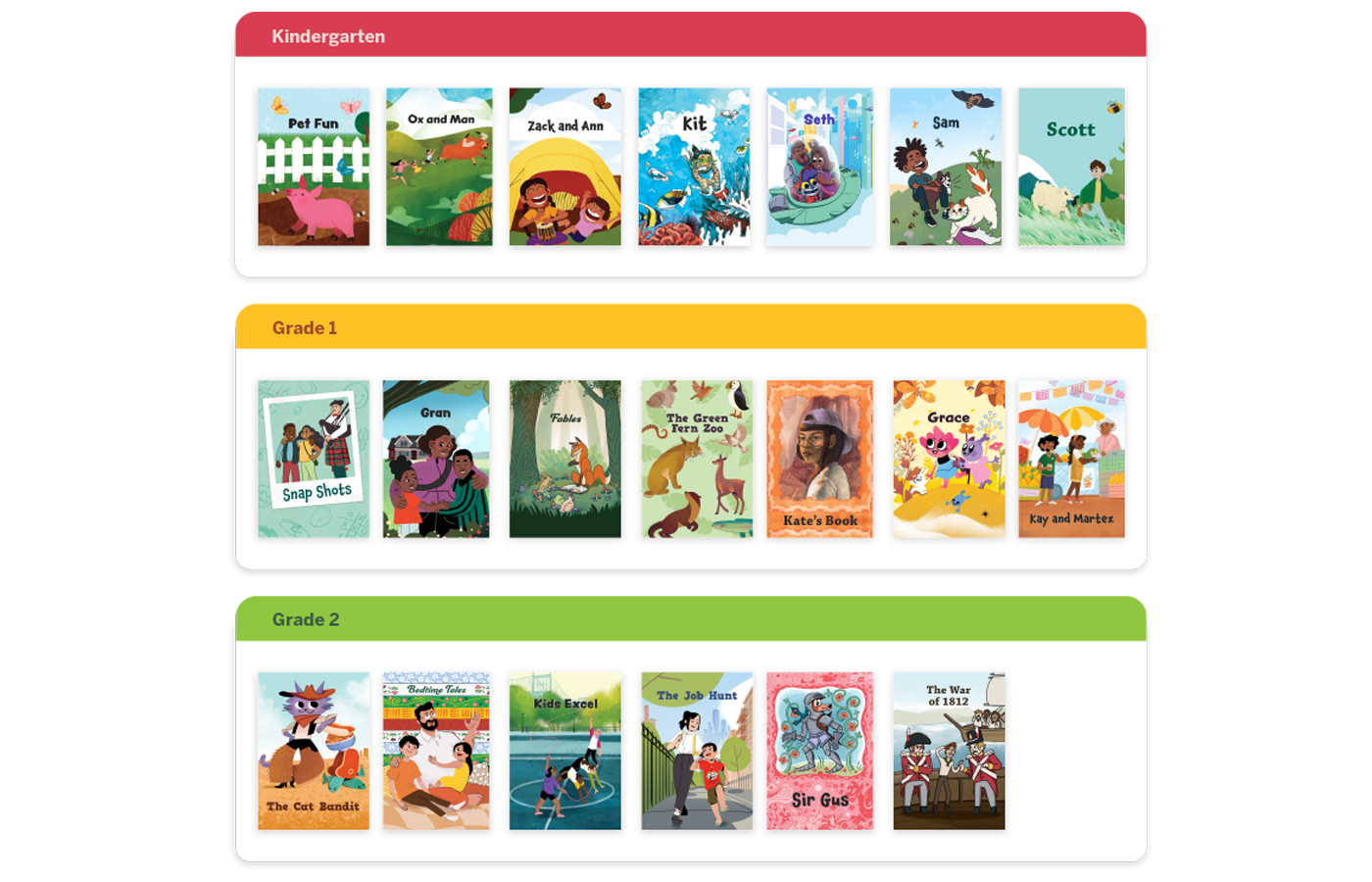
CKLA Hub for students
At the Amplify CKLA Hub, both students and teachers can access our engaging and instructional multimedia—whether they’re at home, or in the classroom. Students use the Amplify Hub outside of school, either on their own or with a parent, for extra practice or just for fun!
Students can log into the Amplify Hub on their home devices with the same method they use in class.
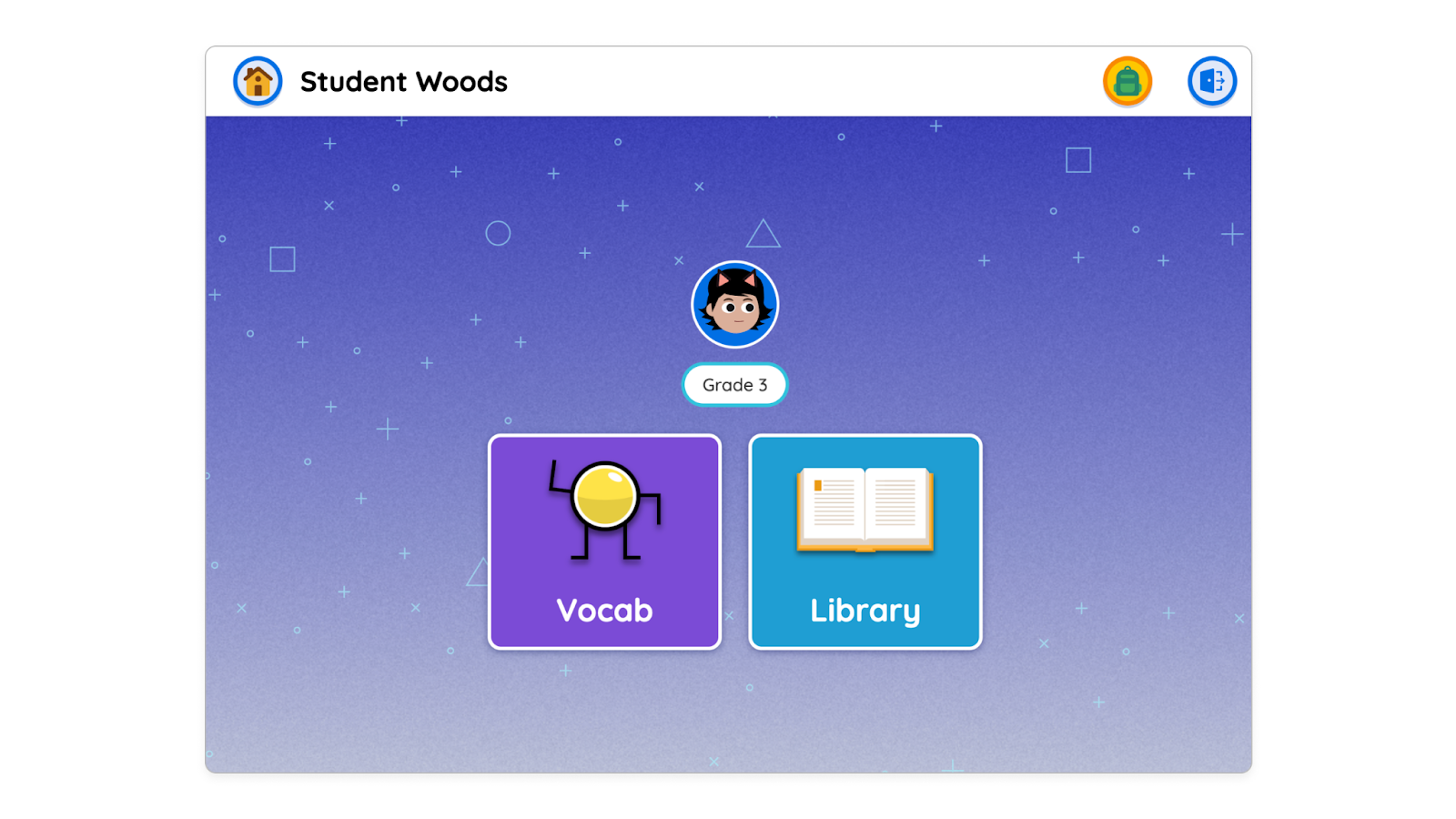
Sound Library for Grades K–2
The Sound Library uses audio sounds, catchy songs, and animated articulation videos to help students learn and master sounds.
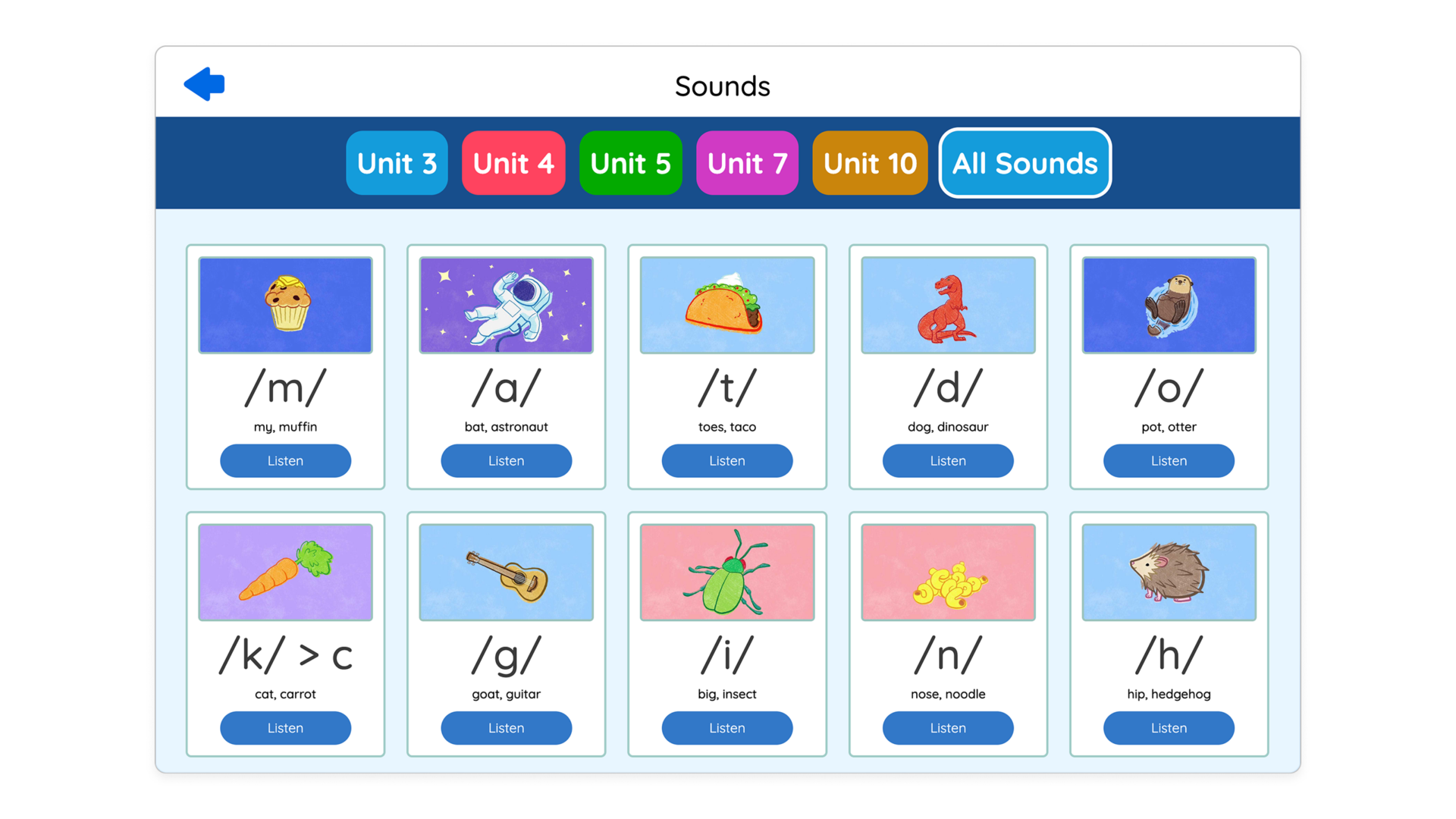
Vocab App for Grades 3–5
The Vocab App is designed for independent practice with vocabulary. Students are encouraged to use the App’s game-like activities for practice, or as an extra challenge!
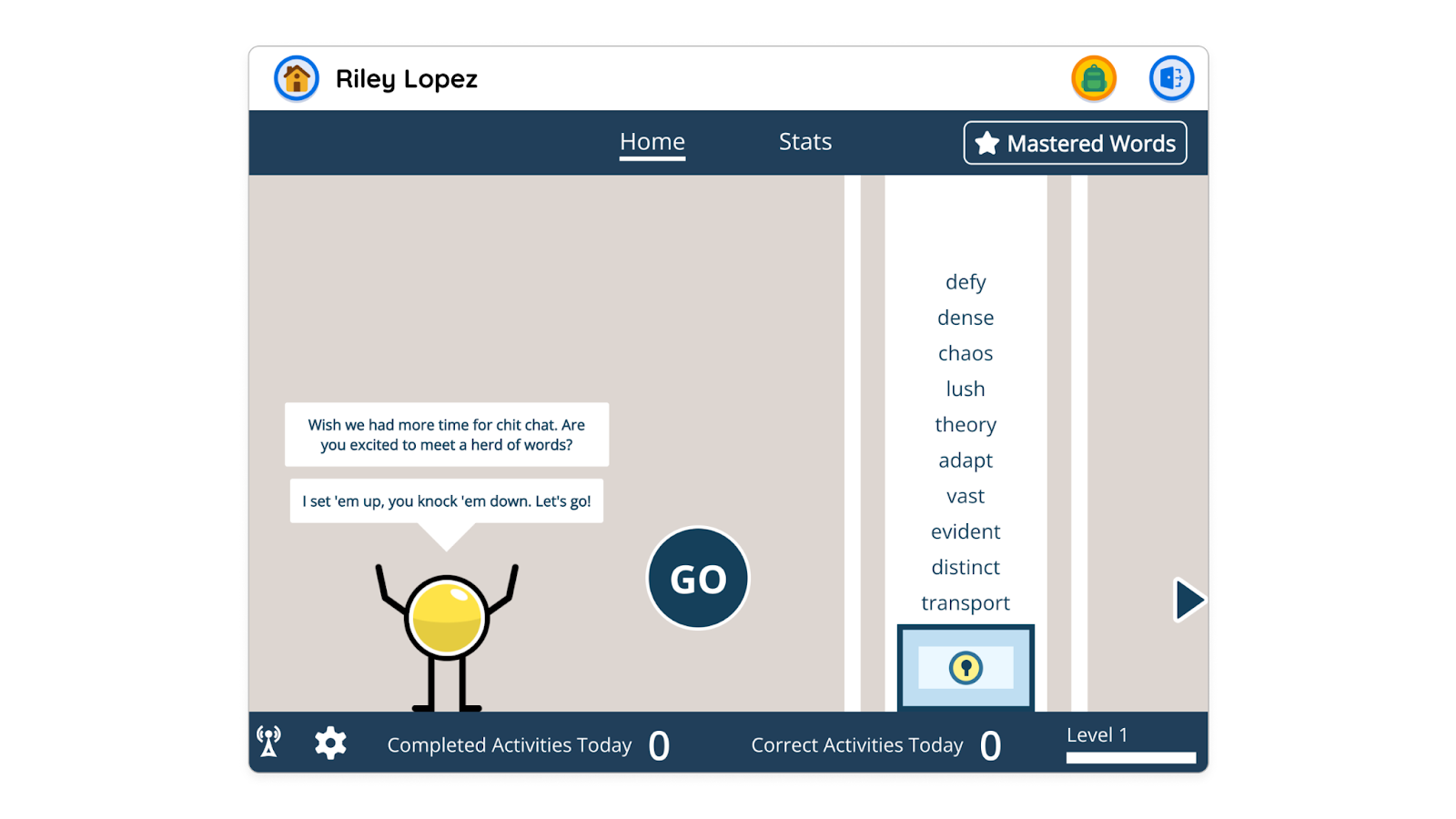
Unit Overview samples
The following Unit Overviews provide samples of the units your student will be engaging with throughout the year.
Contact us
We’re here to help you!
Have a question about Amplify CKLA?
Visit our help library to search for articles with answers to your program questions.
For additional curriculum support, contact your student’s teacher.