Power up your Science of Reading knowledge: 2024 podcast recap

Amplify’s Science of Reading: The Podcast won both Silver and the Listeners’ Choice Award in the education category at the 2024 Signal Awards! If you haven’t already, we hope you’ll join those who have helped catapult the podcast to more than six million downloads.

You’re welcome to binge-listen all 29 podcast episodes released in 2024, but here, we’ve selected a few to highlight for you.

The power of the Science of Reading

Some context: As you probably know, the Science of Reading is a much-researched area alongside the science of learning. Applying cognitive, neuroscience, and educational principles, it helps us understand and improve how students acquire and develop reading skills. This knowledge is essential because, while humans typically learn to speak naturally, reading (and writing) require formal instruction. According to the Simple View of Reading, reading comprehension is the product of both decoding and linguistic comprehension. So kids must be taught the relationships between sounds and letters, and how to decode words. Systematic instruction presents these skills in a logical order, explicit instruction goes beyond just “exposing” kids to words and texts, and cumulative instruction builds on skills learned before.

The episodes below are a great start to exploring the fundamentals of evidence-based instruction beginning in early literacy. You’ll hear about the importance of knowledge building, the symbiosis between reading and writing, and the power of multilingual learning, just to name a few topics.

The power of knowledge

Season 8 focuses on why knowledge is so critical for literacy development and how educators can empower students to build it.

Many of us (as students and educators) were taught or trained with comprehension framed as a skill. But award-winning researcher and author Sharon Vaughn, Ph.D., says (spoiler!) that comprehension is not a skill to be taught in a vacuum, but rather an outcome—of strong decoding, vocabulary, and background knowledge. “If students can’t read words or don’t know what they mean, emphasizing comprehension is just the wrong priority,” she says. Vaughn stresses the importance of systematically building background knowledge through coherent, high-level informational texts and relevant content lessons, enabling students to connect ideas and deepen understanding. By focusing on these foundational elements, educators can support comprehension and meaningful learning.

Episode 11: Cognitive load theory: Four items at a time, with Greg Ashman, Ph.D.

Drawing from his book A Little Guide for Teachers: Cognitive Load Theory, deputy principal and professor Greg Ashman argues that students need to build a strong foundation of knowledge in order to think and learn effectively. He challenges the idea of leaving students to “figure things out” on their own. “Kids are not little scientists,” he says, and advocates instead for structured instruction to build the schemas necessary for deeper learning.

Ashman also recommends reducing extra cognitive load—distractions that overwhelm working memory—and cautions against overrelying on approaches like “productive failure,” which can frustrate students who happen to lack relevant foundational knowledge. His advice: Use evidence-based methods and prioritize clear, incremental instruction.

The power of evidence-based literacy instruction

Season 9 dives deep into the key principles of and latest developments in the Science of Reading.

Episode 3: Know the non-negotiables in a program aligned to the Science of Reading, with Kari Kurto

Kari Kurto, national Science of Reading project director with the Reading League, discusses the organization’s curriculum evaluation tool designed to assess research-based practices in reading programs. Drawing from her experience teaching students with dyslexia, Kurto emphasizes the necessity of explicit, systematic instruction in phonics and (like Ashman) the importance of reducing extraneous cognitive load.

She says one must-have for any effective, evidence-based curriculum is explicit instruction in phonics through a clear scope and sequence, which ensures that students build foundational skills, such as phonemic awareness, in a systematic way. “No program is perfect, but understanding both its strengths and areas for improvement allows schools to maximize its impact,” she says.

Episode 4: Comprehension is not a skill, with Hugh Catts, Ph.D.

Hugh Catts, like Vaughn, continues to challenge us to rethink reading comprehension. “Comprehension isn’t the purpose of reading,” says Catts, a professor at Florida State University. “The purpose of reading is whatever you’re reading for.” Whether scanning for a fact, grasping the gist, or diving deep into a complex topic, comprehension varies based on the reader’s intent and context. He also urges educators to do what the evidence asserts: Move beyond isolated skill drills to content-rich instruction that builds knowledge and engages students meaningfully. Catts notes that comprehension grows over time, as students develop mental models and apply critical thinking in a variety of reading contexts.

The power of multilingualism

In this special miniseries, our podcast focuses on how the Science of Reading serves multilingual/English learners (ML/ELs).

Episode 1: Language is always an asset, with Kajal Patel Below

Kajal Patel Below, Amplify’s vice president of biliteracy, highlights why language is such a powerful asset, and how multilingualism is not a barrier, but a gift. “Literacy in a new language builds from literacy in the home language,” she says.

But that’s not—yet—the prevailing view. Multilingual and English learners often face challenges like being left out of research or misidentified in assessments. Below also notes schools focus too much on phonics and foundational skills, sometimes overlooking the equally important elements of language comprehension, vocabulary, and speaking skills.

With the number of multilingual learners growing fast in the U.S., Below calls for schools and educators to embrace bilingual education, create stronger resources, and celebrate the unique strengths these students bring to the classroom.

More to explore

Top 5 back-to-school tips for math teachers

Math teachers: What’s the formula for a successful year? As you know, there are plenty of variables, but here’s one constant: being prepared for back-to-school season. 

We’re here to help! 

From fun math activities to positive tone-setting to professional learning opportunities and more, our strategies are designed to help you enter your math classroom for the new school year feeling energized, inspired, and supported by your math community.

1. First-day fun: Plan interactive math classroom activities.

Before launching into back-to-school math lessons, how about a few rounds of Icebreaker Bingo? Create a Bingo card inviting students to find classmates who can answer “yes” to math-related descriptions (e.g., “Enjoys cooking or baking,” “Plays a musical instrument,” “Likes to play board games”). Activities like these motivate students by helping them uncover common interests and reminding them that math is an integral part of “real life.”

2. Student success: Work with school colleagues and leadership toward shared goals. 

Review what systems may already be in place and consider adding more. You might: 

  • Schedule regular team meetings to set and work toward common goals.
  • Establish a professional learning community to share math resources for teachers. For example: Consider hosting a Learning Lab to encourage collaborative professional learning from within the classroom.
  • Amp up the use of data to inform decisions. Ask your team: What student performance data and assessment results can we use to see where improvements are needed?

3. Set the tone for the year: We are here to make mistakes.

As Math Teacher Lounge podcast co-host Dan Meyer says, “Students spend the majority of their learning in class [being] wrong.” That’s not only normal, it’s actually good—as long as students know that. Start the year by reminding them that making mistakes is not only inevitable, but also essential. Normalizing being “wrong” encourages students to overcome fear of failure, take risks, and build confidence—in school math activities and beyond.

4. Grow together: Establish a math community.

Build a math ecosystem connecting students to one another and creating a continuum between the classroom and their everyday lives. You might: 

  • Establish math routines in your classroom to build a classroom community focused on collaborative learning. 
  • Collaborate with students on writing a weekly math blog or math newsletter with classroom updates.
  • Create simple but engaging math challenges for students and caregivers to do together, such as building toothpick towers or budgeting for a fantasy birthday party.

5. Use free professional learning opportunities for teachers from the math team at Amplify.

Explore our upcoming math webinars, designed to support you—along with your schools and districts—in using collaborative, effective, and engaging math practices in the classroom.

You can also check out our on-demand math webinar library on your own time. From quick tips to longer continuing education (CE) credit options, our library is sure to have just what you need.

Finally, our free toolkit of math resources will:

  • Help you craft a dynamic math curriculum during the crucial first weeks of school.
  • Support student engagement and spark new inspiration in your classroom practices and activities.
  • Offer learning opportunities you can access now or on demand whenever you need them.
  • Make it even easier for you to implement the tips above setting math students up for success from day one of the school year!

Free professional learning opportunities for math educators

We hope you’ll take some time this summer to refresh your energy—and your math teaching skills and knowledge. We’re here to help with these professional learning opportunities for math teachers.  

Culled from our trove of blog posts and webinars, we’ve compiled a list of math teacher resources covering topics from technology in the math classroom to math anxiety and more. We hope your down time and your math time add up to a great summer! 

Diving into math curriculum

As math teachers, you work every day to celebrate student brilliance, build deep conceptual understanding, and create the conditions for every student to be successful. Find out how Amplify Desmos Math can help with these resources. 

Desmos Classroom

This four-part webinar series will give you the tools you need to go from platform novice to skilled Desmos Classroom whiz.

What amazing math looks like

How can you help students both learn math and love math? Examine what amazing math looks like for both educators and students in this webinar series that explores the importance of focus, engagement, and collaboration. Start with our special kickoff webinar presented by math expert Dan Meyer, host of Math Teacher Lounge, then binge-watch our webinars on next-level math engagement! 

Desmos Math 6–A1

Learn about the EdReports process for evaluating high-quality instructional materials (including Desmos Math 6–8) in a post from our blog, then check out our info session and Step Ahead webinars to learn more about the program—and see it through the eyes of math students!

Creating a math community 

As any mathematician knows, there’s strength in numbers! The following posts, all from the Amplify blog, will help you build a culture of collaboration and community in your math classrooms. 

Summer is one of those good things that must come to an end. But when it does, we hope these resources will have helped you feel more prepared than ever for a magical year of math! 

Teaching tips for educators, from educators

Every teacher remembers one piece of advice they received from a mentor or colleague. And maybe every teacher has a couple of priceless nuggets they love to offer others.

It probably won’t surprise you, then, to learn that there’s also loads of research proving the power of teacher collaboration and co-learning—including its positive impact on students. That’s why we’re excited to present Teacher Connections, our new and always-growing collection of videos with practical advice and tools from educators just like you.

Whether you want advice on bringing literacy instruction into the science classroom, or introducing new high-quality instructional materials (HQIM) or approaches based on the Science of Reading, there’s an educator in our portal with something to offer.

Keep reading to hear more about this exciting new tool!

Educators sharing advice: A win-win

John Hattie’s seminal book, Visible Learning: A Synthesis of Over 800 Meta-Analyses Relating to Achievement, brings together numerous studies to identify the strongest influences on student success. Key among them? Teachers working collaboratively and sharing their expertise with one another.

Hattie’s book is part of a body of research that shows that when teachers engage in collaborative practices such as sharing advice, exchanging ideas, and reflecting on their teaching practices, they become better teachers—which translates to better outcomes for students.

Bonus: When teachers collaborate and support one another, they develop a shared belief in their ability to make a difference in students’ lives. That belief motivates them to continuously adapt and improve to meet the diverse needs of their students.

Professional development on demand

Professional development for teachers comes in many forms. And it’s important that educators get opportunities to take quality time out of the classroom to dive into trainings, seminars, webinars, structured mentorships, professional learning communities, and more. But now, with Teacher Connections, educators can also get advice whenever they like. You can look specifically for advice by academic topic or program, or surprise yourself with tips you didn’t know you needed—such as California 6th-grade teacher Ryan Rudkin’s unique reward system she calls “phone Fridays.” You can also grab coffee and a snack and binge-watch them all.

Top 5 back-to-school tips for science teachers

Science teachers: We got you. 

“Teaching through a pandemic called for so much innovation, resilience, and sacrifice,” says Eric Cross, host of the podcast Science Connections and a K–8 science teacher who’s spent 10 years in the classroom. 

As education continues to evolve with new technologies like artificial intelligence, [teachers] keep rising to meet each moment with wisdom and courage.

 —Eric Cross

And with that innovation in mind, we’re here to get you ready to go back to school. 

From fun classroom activities to professional learning opportunities, our strategies are designed to help you walk back into your science classrooms feeling energized, inspired, and supported by a science community. 

As Cross says: “We’re all in this together.” 

1. First-day fun: Plan interactive classroom activities. How about some Icebreaker Bingo? Create a Bingo card that invites students to find classmates who can answer “yes” to science-related descriptions (e.g., “Has a pet reptile,” “Enjoys stargazing”). Activities like these help students uncover common interests while also providing background knowledge. They can also remind students that science doesn’t just happen in the science classroom—it’s an integral part of their lives and worlds, too.

2. Student success: Work with school colleagues and leadership toward shared goals. Review what systems may already be in place and consider adding more. You might: 

  • Schedule regular team meetings to set and work toward common goals.
  • Establish a professional learning community to share science resources for teachers.
  • Amp up the use of data to inform decisions. Ask your team: What student performance data and assessment results can we use to see where improvements are needed?

Approaches like these will help build a network of support for science learning, and support every educator in taking steps to help students grow.

3. Set the tone for the year: We are scientistsYou might have learned science by starting with a principle and then exploring it in the real world. Today, we know it’s more effective to start by observing a phenomenon, then trying to predict or explain it. In fact, that’s what scientists do. And when your students do that, they become scientists, too. Let students know from day one that that’s who they are to help them start the year motivated and engaged.

4. Cultivate community: Build a science ecosystem. Find ways to involve caregivers in student learning and create a continuum between the classroom and their everyday lives. You might: 

  • Collaborate with students on writing a weekly science newsletter or blog with classroom updates and suggested at-home activities.
  • Organize family science days or nights (IRL or online) for students and caregivers to do some hands-on science together.
  • Create simple but engaging science challenges for students and caregivers to do together. (Paper airplane distance contest, anyone?)

5. Use free professional learning opportunities for teachers from Amplify Science. Explore upcoming Amplify Science webinars, designed to support you—along with your schools and districts—in using collaborative, effective, and engaging science practices in the classroom. You’ll hear from thought leaders in science education, observe real science students in K–5 classrooms, and much more. 

Ready to dive into professional learning right away? Check out our on-demand science webinar library. From quick tips to longer continuing education (CE) credit options, our on-demand webinar library is sure to have just what you need.

Free science resource toolkit 

Our free toolkit of science resources will make it even easier for you to implement all of the tips above while setting science students up for success. These resources aren’t just for teachers—administrators and caregivers can use them, too! A robust science program means giving the right tools to not only those who teach, but everyone who supports students’ science learning. The resources in the toolkit will:

  • Help you craft a dynamic science curriculum during the crucial first weeks of school.
  • Support student engagement and spark new inspiration in your classroom practices and activities.
  • Offer learning opportunities you can access now or on demand whenever you need them.

We hope these resources will serve you and your young scientists all year long! 

More to explore

Managing the change that matters most: Implementing the Science of Reading with integrity

Reading requires deliberate, systematic attention—and so does shifting to the Science of Reading in your school or district. It requires not only the correct curriculum, but also all-new mindsets, metrics, and more. Reflecting years of experience supporting real educators, our resources will walk you through the process of change management in your community—and show you why the shift is worth it.

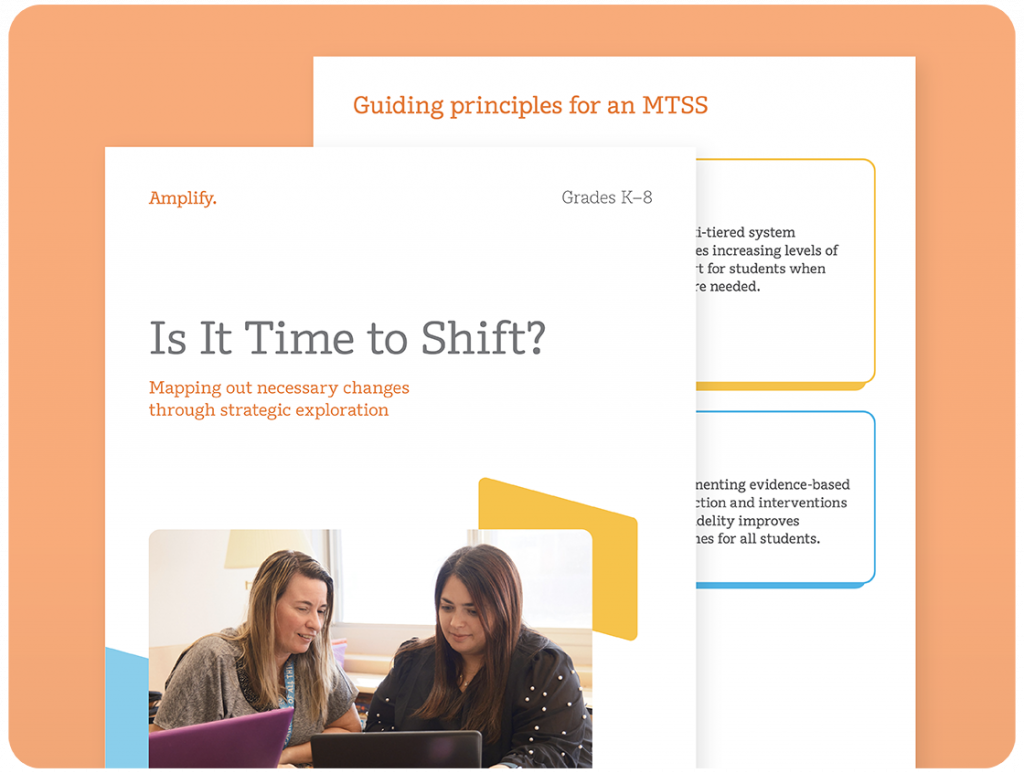
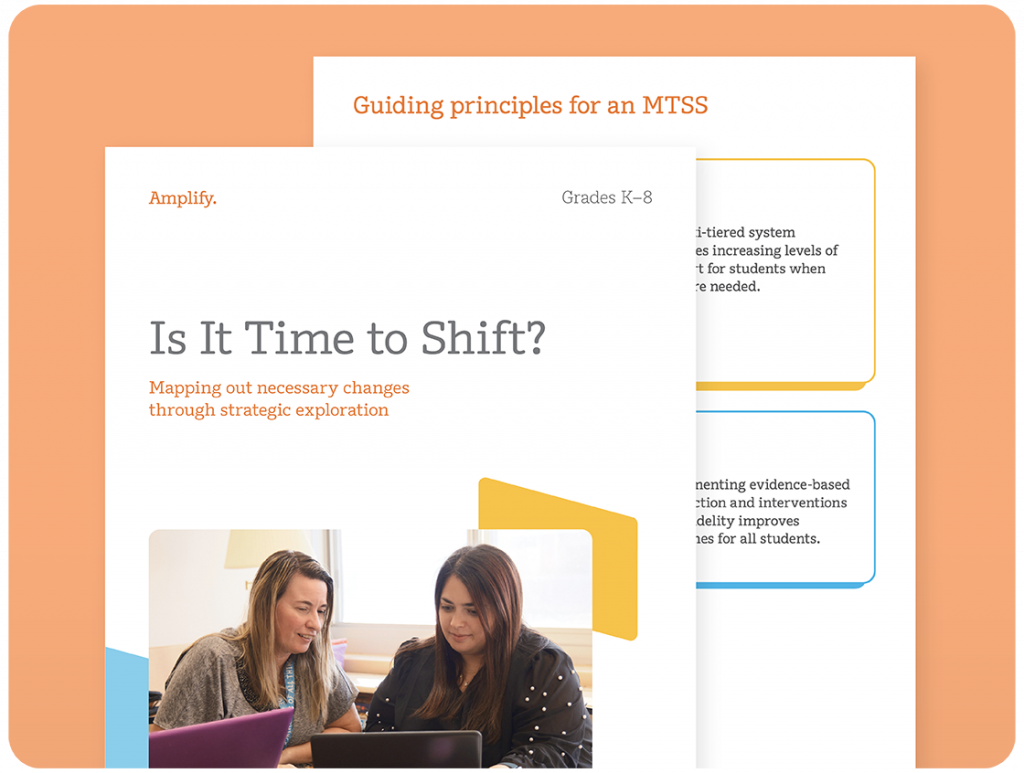
Two women work together at a laptop in the foreground of a document titled "Is It Time to Shift?" about changes in MTSS for grades K-8, with another educational document visible behind.

How data drives Science of Reading change management

Making the shift requires meticulous planning, open communication, and most importantly, data. Learn how to harness data to drive your implementation forward.

Step 1: Prepare your team

Big change doesn’t happen without buy-in. We’ll help you take the crucial first step of getting your team on board.

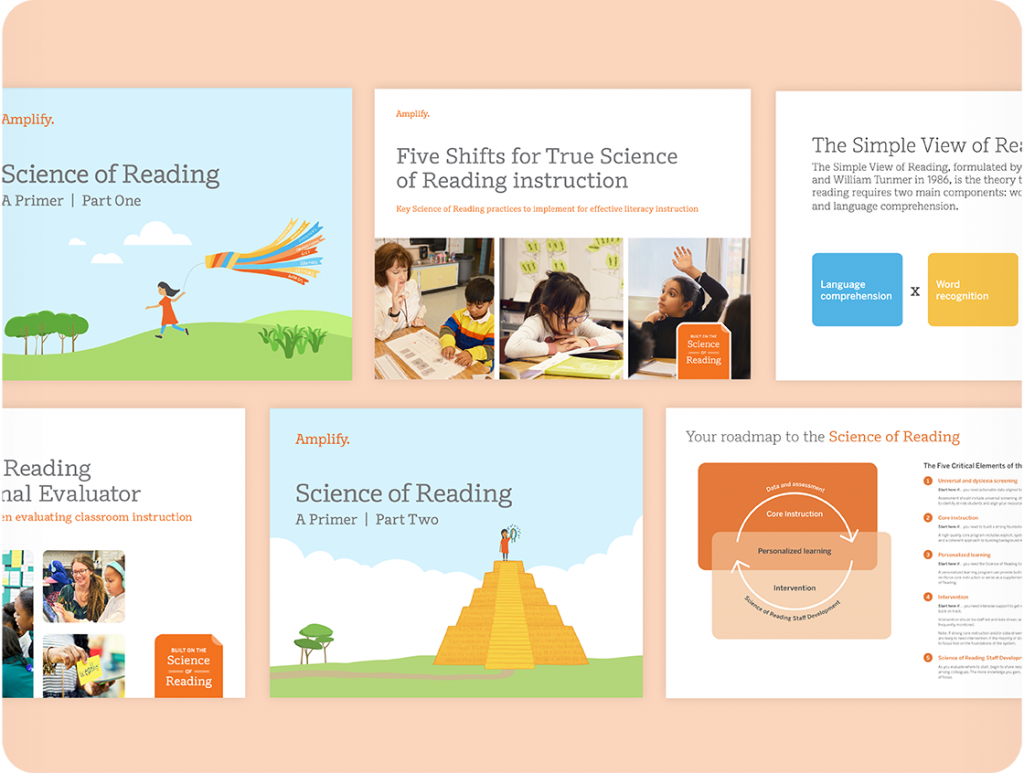
A collage of educational slides about the Science of Reading, featuring illustrations, text, charts, and photos of children and teachers in classroom settings.

Build a Science of Reading digital bookbag

Getting up to speed with the Science of Reading takes some homework. We’ve pulled some key resources into one place for you and your team.

Download now

Science of Reading: The Podcast cover featuring an open book, bouncing shapes, and the word Amplify on a yellow background.

Subscribe to Science of Reading: The Podcast

Tune in to our chart-topping Science of Reading podcast—which recently celebrated four million downloads—to keep up with the latest insights from experts and practitioners. Subscribe to listen to the latest episodes exploring relatable, real-life challenges faced by literacy educators—from managing small groups to delivering trauma-informed instruction—and visit the archives to binge Seasons 1 through 7!

Listen now

Book cover of "The Knowledge Gap" by Natalie Wexler, featuring a stack of books on a blue background with white text and decorative stars on the left.

Read The Knowledge Gap and Science of Reading: The Defining Guide

You’ll want to curl up with The Knowledge Gap, Natalie Wexler’s essential work making the case for the power of knowledge to fuel literacy. You can also get all the basics in Science of Reading: The Defining Guide by our friends at the Reading League.

Get Science of Reading: The Defining Guide

Professional development to support your shift to the Science of Reading

Ignite literacy transformation with Amplify’s Science of Reading: The Learning Lab—an inspiring three-course series.

  • Dive into a comprehensive overview with course one, Foundations to the Science of Reading.
  • Examine assessments and their roles in course two, Advanced Topics in the Science of Reading: Assessment and Reading Difficulties.
  • Apply effective literacy instruction to your classroom in course three, Applied Structured Literacy.

Crafted to the standards of the International Dyslexia Association, this self-paced online series provides unparalleled, research-backed instruction. Explore enriching activities, curated resources, and learn from Susan Lambert, chief academic officer and host of Science of Reading: The Podcast.

The best investment you can make is in knowledge, and the returns are priceless.

Illustration of a webpage titled "Science of Reading: The Learning Lab series" with icons of a book, paper, and other subjects below the title.

Learn more about the online courses or request a quote!

Two labeled course cards: "Course 1: Foundations to the Science of Reading" and "Course 2: Advanced Topics in the Science of Reading," with a shopping cart icon in the top right.

Tap into individual online course seats.

Step 2: Adopt the right program

Making the Science of Reading a reality in your school means choosing the right evidence-based curriculum.

Two women sit at a table working on laptops. The visible documents are titled "Is It Time to Shift?" and "Guiding principles for an MTSS.

Change management

Our Change Management Playbook is your trusted companion in transforming schools with proven strategies. Crafted alongside educators who have successfully pioneered change, this comprehensive guide lays out actionable steps and critical questions for each phase of your implementation journey.

Evaluate curricula and look out for red flags

A core literacy curriculum needs to be aligned with evidence-based practices every step of the way. This curriculum evaluation guide from the Reading League will walk you through the evaluation you need to conduct to ensure that you’re investing in only the best instruction for your students and teachers, and to know that the curriculum you’re selecting is true to the research.

Cover page titled "2023 Curriculum Evaluation Guidelines" by The Reading League, with the organization's logo in the top right corner.
A cover page titled "Five Shifts for True Science of Reading Instruction" with photos of students and teachers, and illustrated pages in the background.

Make the five most critical instructional shifts

Big change is best done gradually. That’s why we’ve identified five key shifts in reading instruction that will set you on the path to transforming your classroom with the Science of Reading.

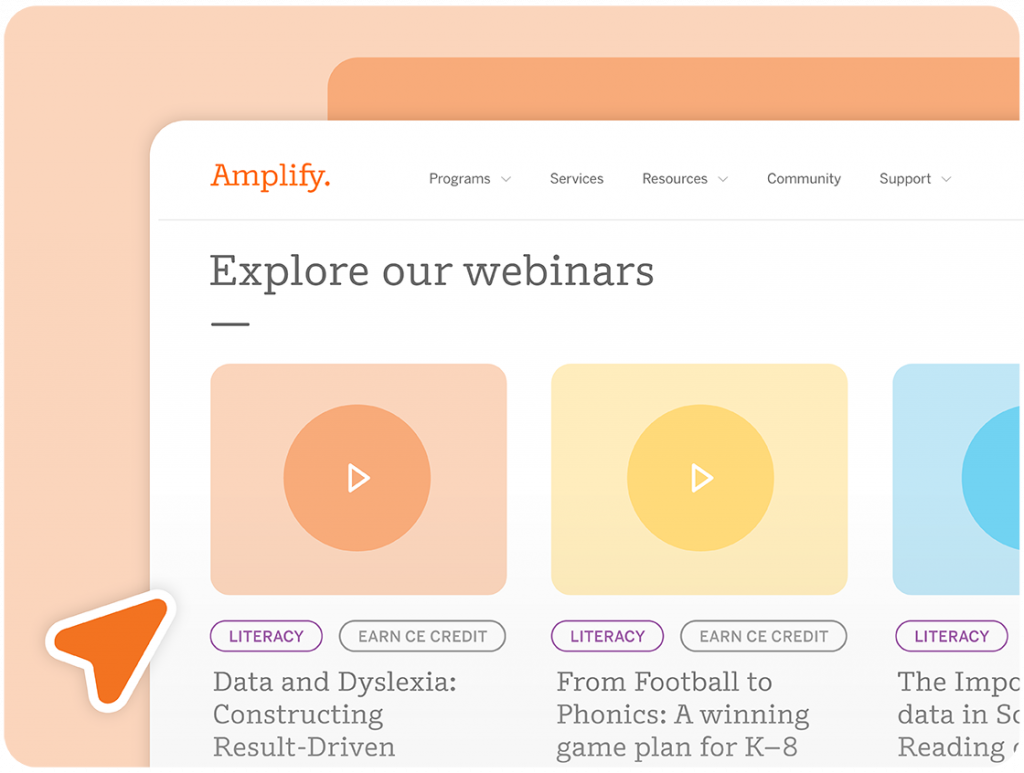
Watch our Science of Reading webinars

In our Literacy Is Opportunity webinar series, you’ll learn why it’s crucial to get reading instruction right for all students—and how to make the shifts needed in your school.

A website page titled "Explore our webinars" displays three webinar cards with play icons and tags for "Literacy" and "Earn CE Credit" under the Amplify brand.
A young woman with long brown hair smiles at the camera, wearing hoop earrings and a lanyard, with colorful posters on the wall behind her.
“I really think that educators should make the shift to the Science of Reading because it’s data-driven and purposeful, and it really encourages personalized learning.”

—Mallory Pendergast, Kindergarten Teacher

Circle City Prep, IN

Step 3: Build an evidence-based literacy ecosystem that supports all students

Science-based reading instruction can actually reduce the need for intervention and support. These principles and practices show how evidence and data build a culture of literacy for everyone.

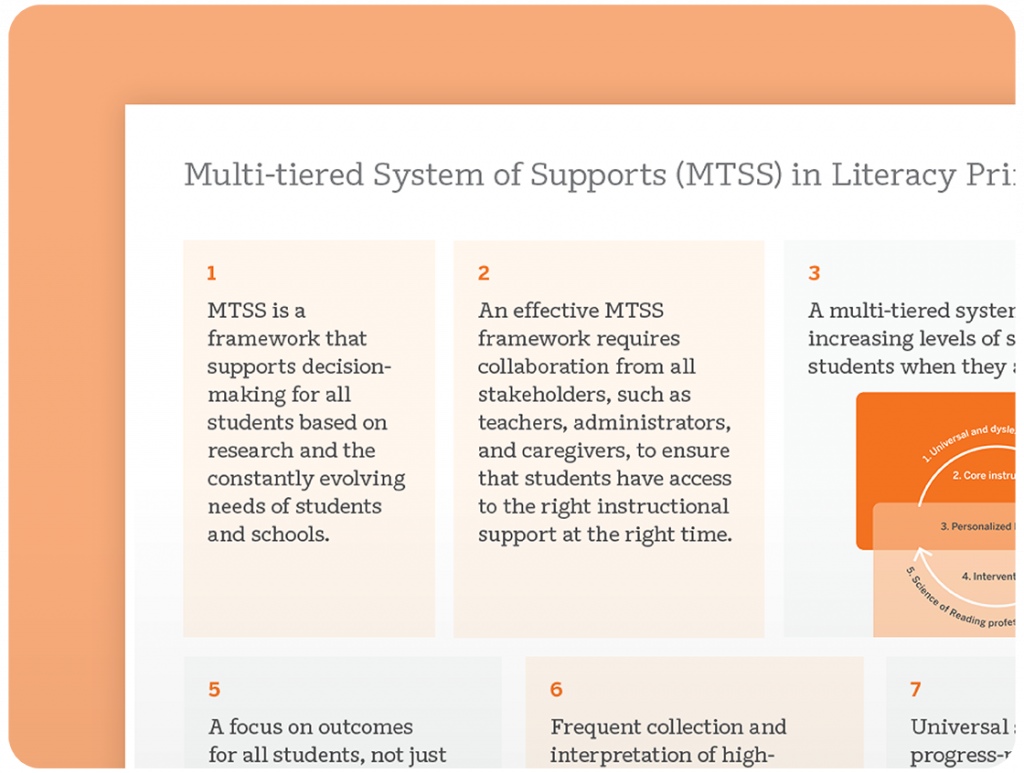
Establish a Multi-Tiered System of Supports (MTSS) grounded in the Science of Reading

A complete Science of Reading system is one that aligns with a Multi-Tiered System of Supports (MTSS) framework. Because an MTSS includes all students—and stakeholders—it prevents struggles before they happen, setting everyone up for literacy success.

A screenshot of an educational document explaining the Multi-tiered System of Supports (MTSS) in literacy, with highlighted sections outlining key principles and steps.
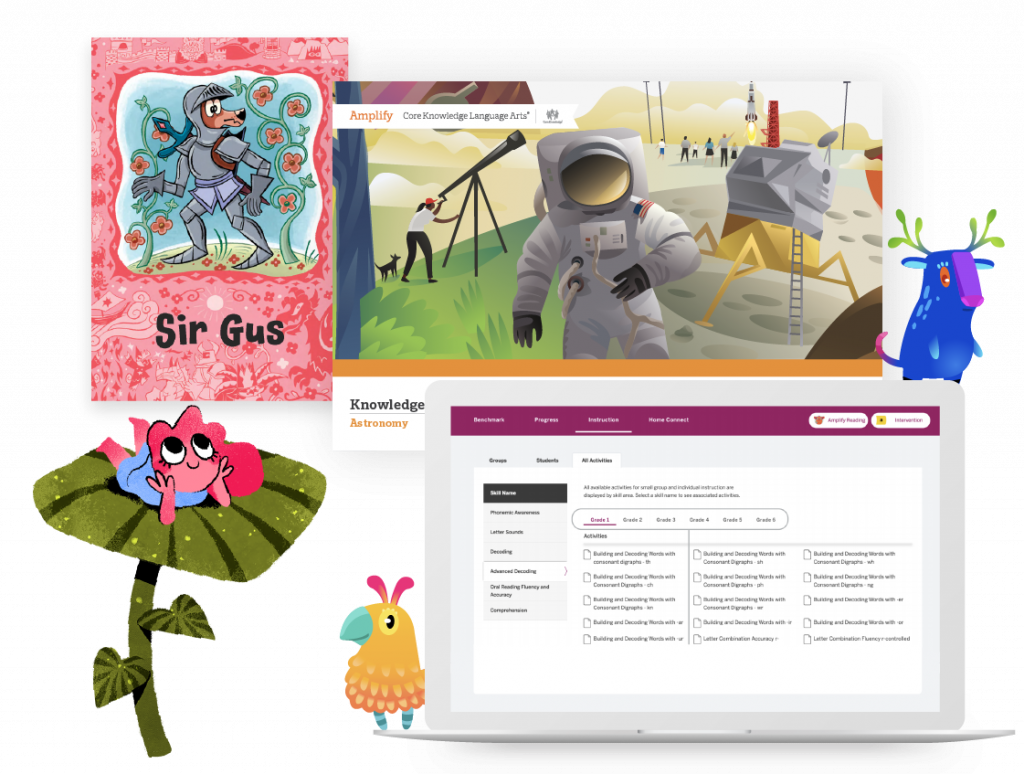
A collage featuring a children's book cover, an astronaut illustration, cartoon animals, and a laptop displaying an educational website.

Explore Amplify’s Science of Reading early literacy suite

Built on more than 20 years of Science of Reading experience, our early literacy suite ensures that research-based and data-driven literacy practices are at the heart of everything you do. The suite includes every component of instruction, from assessment and personalized learning to intervention and professional development.

Bring the Science of Reading to middle school and biliteracy instruction

The Science of Reading can have an impact on learning outside of traditional K–5 literacy instruction, too—it can also address the specific needs of middle schoolers and multilingual students.

View our resources:

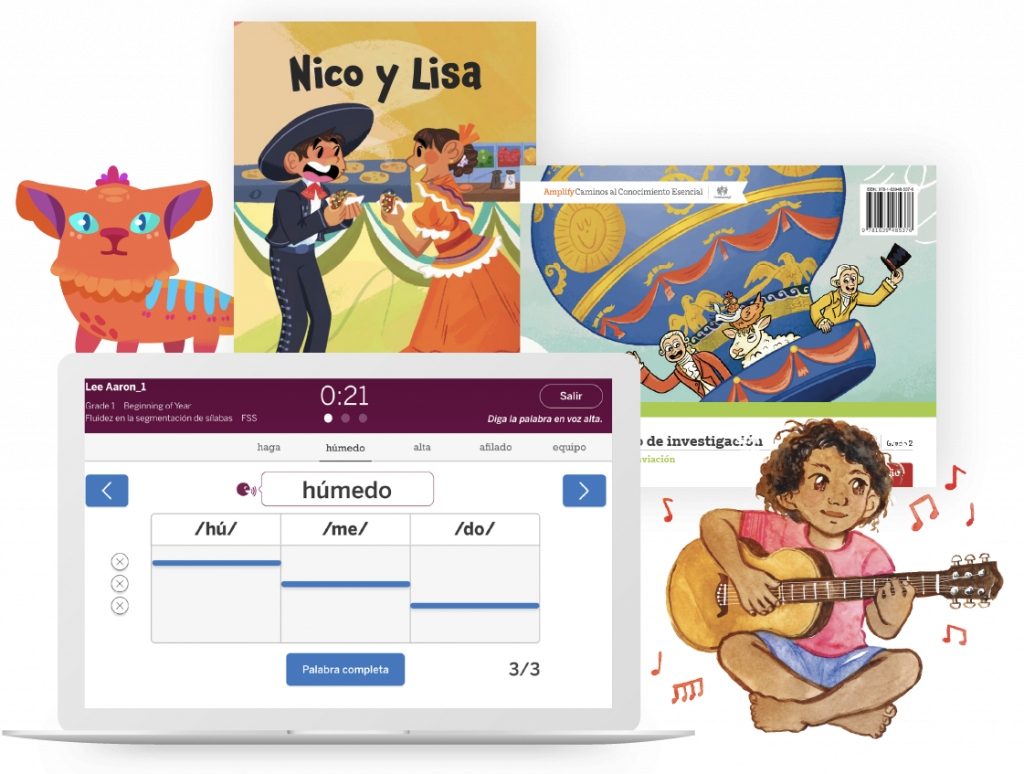
A collage showing children’s books, a drawing of a cat, a child playing guitar, and a laptop screen with a Spanish language learning activity.
Man with short hair smiling outdoors with trees in the background.
“This goes out to the interventionists, coaches, and administrators … support your staff. Be a part of and/or lead staff trainings, provide push-in support, model and co-teach so that the staff will see that this is not ‘just another initiative.’ Remember, this is the start of a long, powerful journey. Take small steps, do them well, then use data to move on to the next small step.”

— Corey Beil, Instructional Interventionist

Quakertown Community School District, PA

Step 4: Sustain change for long-term results

Educational change doesn’t happen overnight, or by itself. We’ve helped thousands of Science of Reading champions make the shift, and they’re eager to share the secrets of their long-term success with fellow educators like you.

10 ideas for summer math professional learning

How many servings of coleslaw do you need for the picnic? What, on average, is the coolest time of the day? Exactly how likely is a lightning strike?

Math doesn’t stop when summer starts. This season is ripe with opportunities for challenging and stretching your math brain. It’s also the perfect time for math teachers to dive into professional learning without the time constraints of the classroom. Our recommendation? Kickstart your summer learning and set yourself up for even greater success in the new school year with our free professional development opportunities for math educators!

Check out our curated list of on-demand professional development and resources. Whether you’re seeking ways to incorporate more problem-based learning methods, wanting to learn more about implementing an instructional approach, or simply looking for fresh activities to bring to the math classroom, you’ll find a variety of options here that will fit any agenda and schedule.

Best practices and inspiration for math fluency, student agency, and more

Addressing math anxiety

Collaboration in class

More math resources

Still more to explore (as you head into fall, too) 

5 ways to boost biliteracy with the Science of Reading

Research shows that bilingual instruction (including dual language instruction and dual language immersion) supports the long-term success of dual language learners—in both languages, and beyond.

How do we best support those students?

More precisely, how are we serving our emergent bilingual students so that they can develop their biliteracy? This is a question posed by biliteracy expert and Amplify product specialist Alestra Flores Menéndez. And in our recent webinar Leveraging the Science of Reading to Boost Biliteracy, she and other experts attempt to answer it.

The power of biliteracy

Knowing more than one language is a powerful tool for opening up new worlds, meeting different people—or even just asking directions in an unfamiliar place.

But that’s not all. Bilingualism itself is a cognitive strength. Research conducted in 2015 by Claude Goldenberg and Kirstin Wagner links bilingualism to increased control over attention, improved working memory, greater awareness of the structure and form of language, and better abstract and symbolic representation skills.

“Our multilingual learners really are using their brains differently,” says Flores Menéndez.

And as with all students, we need to start early to make sure they’ve got their best shot at literacy.

The number of emerging bilingual students in our classrooms is growing, with 15.5% of them in grades K–3. That group includes the key developmental year—third grade.

Third grade is seen as the last year students learn to read before they start reading to learn. Without proficiency by fourth grade, they’re at risk of struggle across subjects.

And for many students, literacy is biliteracy. So how to make sure they get there?

Helping all multilingual learners succeed

“Bilingual instruction has been proven to be the most effective,” says Amplify biliteracy specialist Ana Torres, M.Ed., citing research by Virginia Thomas and Wayne Collier.

Other models (English immersion, transitional bilingual) are a fit for students with certain language profiles. As Torres notes, “We have to be intentional and purposeful to make sure there are positive outcomes for all students.”

But the proven impact of the bilingual model shows this: Knowledge of, and in, a second language builds from the first.

Foundational skills, vocabulary, and knowledge are essential, and all transfer to the second language—through explicit, research-based instruction.

Key elements of that instruction:

  1. Assessing literacy in both languages. “Assessing what [students] know in their native language is crucial to their success in acquiring that second language,” says Torres. A 2019 study at the University of Oregon looked at phonological awareness among Spanish-speaking pre-K students. (Phonological awareness represents the understanding that words are made up of a series of discrete sounds.) When assessed in English, 63% of students needed Tier 2 or 3 intervention. But when assessed in Spanish, only 21% did. “We need to look at the overall picture of students’ literacy,” Torres says. “Otherwise they’re going to get the wrong instruction.”
  2. Deliberately bridging from the native language to the new one. Spanish and English share many elements, among them letter sounds. If students know the sounds of the letter m in Spanish, they’ll be able to map that sound onto the same letter in English.
  3. Grounding in the Science of Reading. The Simple View of Reading has been validated in more than 150 studies across multiple languages. Foundational skills, vocabulary, and knowledge can all transfer through explicit instruction.
  4. Honoring students’ home languages, cultures, and community experiences. “It’s well documented that when children feel a sense of belonging, they’re more motivated to learn and experience more success in school,” says Menéndez. “Students should see themselves reflected positively in any curricular material.”
  5. Emphasizing knowledge. Perhaps you’re familiar with the iconic baseball study. Students with prior knowledge of baseball greatly outperformed their peers on reading comprehension—even those peers who were stronger readers. “Building knowledge is absolutely essential for literacy development,” says Menéndez.

Learn more

Explore Amplify Caminos.

Watch the full webinar: Leveraging the Science of Reading to Boost Biliteracy.

Biliteracy and Science of Reading principles in English and Spanish.

Read about The Importance of Dual Language Assessment in Early Literacy.

Binge our biliteracy podcast playlist.

Brain Builders video series

Brain Builders is an animated video series you can share with your students to help them understand what the brain does in order to read–the first time the Science of Reading has been placed in the hands of students.  Join Minh on his journey as his babysitter, Tamara, helps him cultivate a love for reading and understanding the Science of Reading. Series includes 13 episodes you don’t want to miss!

Illustration of a stylized brain surrounded by various colorful icons representing gears, atoms, and a ship's wheel, emphasizing the science of reading, with the word "amplify" underneath.
Girl shares her love for reading with a boy.

Episode 1

Reading: Why Though?

Watch now

Boy is introduced to the importance of written language.

Episode 2

How to Travel Through Time

Watch now

Animated image of a man in a boat, startled by a large whale surfacing from the ocean, with the phrase "learning to read" written in large red letters.

Episode 3

Spelling: Weird? Or not weird?

Watch now

Boy learns the importance of understanding words and what they mean in sentences.

Episode 4

The Origin of my Reading Brain

Watch now

Boy learns that words have patterns that can give clues to define an unknown word.

Episode 5

Why Some Words Look Weird

Watch now

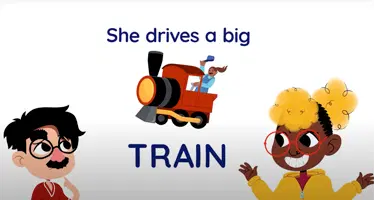
Illustration showing text "she drives a big train" with a woman driving a red train, a man with glasses, and a smiling girl with yellow hair and red glasses learning to read.

Episode 6

Speed: Is There a Need?

Watch now

Boy is introduced to sight words.

Episode 7

Every Word Wants to be a Sight Word When it Grows Up

Watch now

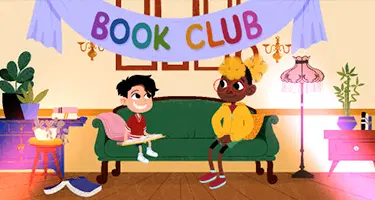
Boy and girl read together at book club.

Episode 8

Fluency, and What Stuff Means

Watch now

Girl gives a presentation.

Episode 9

How to Learn More Words!

Watch now

Animated characters from "Summer Camp Island" standing in a colorful room with quirky decorations and a rocket ship door, focused on learning to read.

Episode 10

How to Be at Home in New Worlds!

Watch now

Boy learns the importance of understanding what you read.

Episode 11

Reading is Thinking

Watch now

Boy reflects on his journey as a reader and what he has learned about the Science of Reading.

Episode 12

Reading: Here’s Why!

Watch now

Girl gives a presentation.

Episode 13

Summary

Watch now

Ways to use Brain Builders

  • Start the week by playing one for your whole class!
  • Binge them as a reward one Friday afternoon!
  • Share this link to parents and caregivers!

Learn more about Amplify literacy solutions

Learn more

S4 – 01. Joyful math teaching with Kanchan Kant

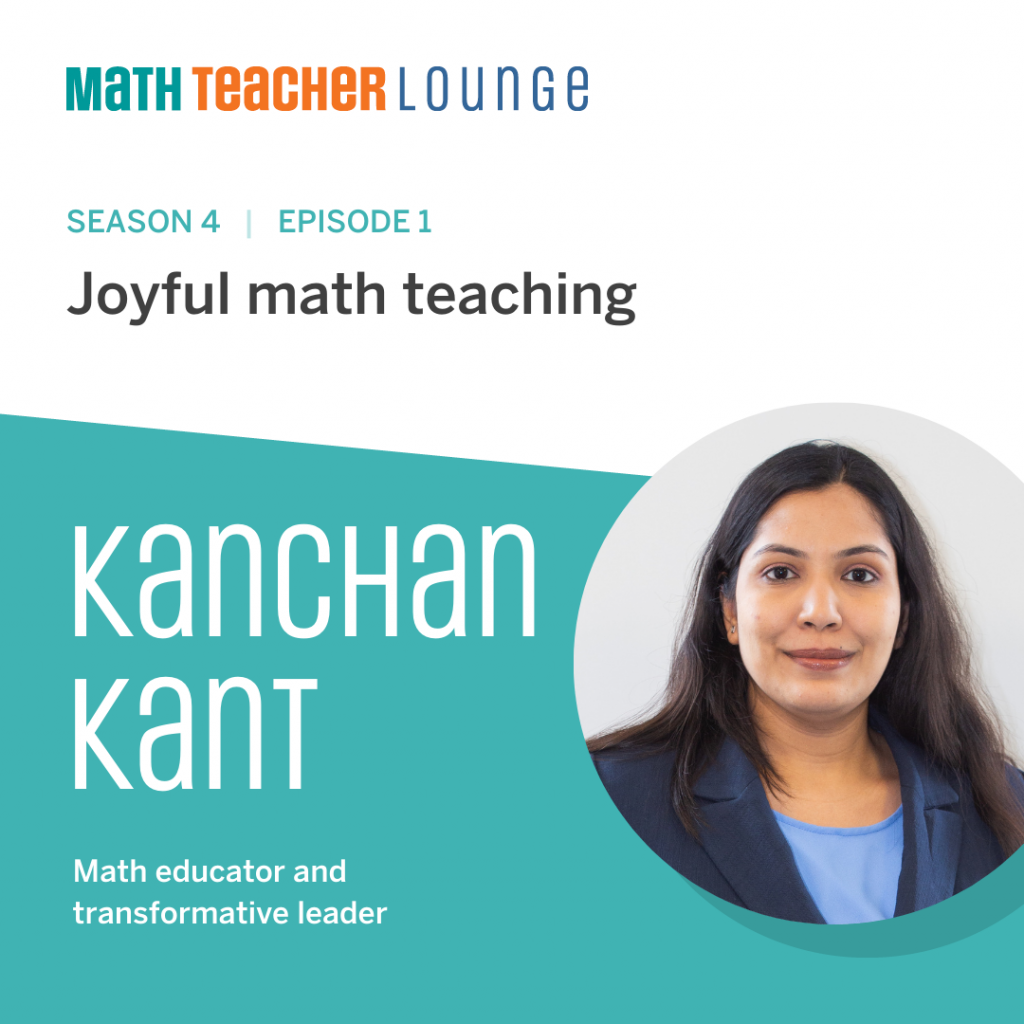
Podcast cover for "Math Teacher Lounge," Season 4, Episode 1, titled "Joyful math teaching," featuring Kanchan Kant, described as a math educator and transformative leader.

This season on the Math Teacher Lounge podcast, we follow the theme “joyful math” and uncover its meaning.

In this episode, Kanchan Kant joins Bethany Lockhart Johnson and Dan Meyer to discuss the key, early investment she makes at the start of the school year to ensure her math teaching will be joyful for herself and for her students for the rest of the year.

Explore more from Math Teacher Lounge by visiting our main page.

Download Transcript

Dan Meyer (00:00):
Okay, we are recording. Hey folks. Welcome back to Math Teacher Lounge. (laugh)

Bethany Lockhart Johnson (00:06):
Hardly off to a rocking start.

Dan Meyer (00:06):
Yeah. Yeah. <laugh> Did you like my energy there? Hey folks. Welcome back to Math Teacher Lounge. It’s a new season with your host Dan Meyer. And…

Bethany Lockhart Johnson (00:15):
I’m Bethany, Lockhart Johnson. How’s your summer Dan?

Dan Meyer (00:22):
Summer for me feels really hectic as we prepare, here at Amplify, for the new school year, and everyone’s starting these new math programs. So I’ve been feeling quite amped up, like usual in the summer. But also, my kids started big kid school. So I’ve been seeing the educational system from the role of a parent and all the anxieties and I worry, will I be my kids’ teacher’s most annoying parent <laugh> … So what kind of math curriculum you using? Oh, have you heard of core counting? Can I lead a math center? What’s this worksheet about? I’m really worried my kids are just overall gonna hate my vibe when I come around their classes. Uh, <laugh> so lots going on with me.

Bethany Lockhart Johnson (01:06):
It’s already happening for me and I have a toddler.

Dan Meyer (01:10):
<laugh> There we go. Anyway, that’s what I’m up to. That’s how I’m feeling. I’m curious how you’re doing. We haven’t chatted in a while. We’re excited about the podcast, but it’s been a bit, you know? Bethany got a break from me and my antics over the summer. So, how are we finding you here, as we ramp up to the new season?

Bethany Lockhart Johnson (01:24):
Uhhhh. Well, let me just tell you, I have a toddler. That’s kind of all I need to say. Except that’s not all I will say. Of course, I’ll say more. I am exploring, I’m dipping my toe into the extracurricular toddler activities; the music classes of the toddler world, the creative movement of the toddler world. And yeah, I have lots of opinions and lots of things to say about the teachers. And I’m like, Ugh, I can’t wait to be room mom. And just like…<laugh>

Dan Meyer (01:55):
Just let it rip, you know?

Bethany Lockhart Johnson (01:57):
I have opinions on everything and just hope I don’t get kicked out of the class.

Bethany Lockhart Johnson (02:05):
It’s been an eventfully recharging summer and we are ready for this new season. And in fact, we’re so ready that we decided that we were gonna mix up this season. Just a, just a tiny bit. Shall I explain Dan?

Dan Meyer (02:21):
Yeah. Let’s do it.

Bethany Lockhart Johnson (02:22):
So we have loved all the different topics that we have explored in the Math Teacher Lounge world, but we kind of feel like we need to do some more deep dives. So for this season and the foreseeable seasons …

Dan Meyer (02:38):
We’ll see how it goes.

Bethany Lockhart Johnson (02:38):
Let’s stick with this season. For this season. We’re going to be exploring a singular theme.

Dan Meyer (02:46):
We’re not bouncing around. Yep. We’re not bouncing around from a guest to guest going on whatever shiny thing in the river bed catches our eye. We’re gonna take one theme and see where it goes. What we working with here this season?

Bethany Lockhart Johnson (02:57):
This season, we are going to be exploring the idea of joyful math, joyful math. And Dan, the question I have for you is, is the term joyful math one that you use on the regular?

Dan Meyer (03:10):
No, it definitely is not. I think that joy and math are very rarely, you know, connected in the popular mind. Number one, and number two, you know, I’m kind of an ornery fellow, so that’s not my natural kind of description of math. But we decided that it feels like an important one at the moment, because a lot of math teaching–a lot of teaching in general, math teaching in particular–math teaching is often not a joyful discipline for students, where, you know, I’ve done some research where you look at what people type into Google. And I looked at like, what they…why am I bad at X? And I looked at that for where X is math, where it’s science, where it’s reading, where it’s history. And it was just wild to see how many more hits there are out there on the Internet for “why am I bad at math?” People don’t really associate math with joy, but also we’re looking at joyful math in terms of joyful math teaching. Math teaching, teaching in general, is a tough field at the moment with a lot of teachers leaving teaching. And those who remain are having a lot of soul searching and thinking about, why am I here and how do I sustain this work? And in an environment that seems hostile to my interests or my talents, or work-life balance. And so that’ll be the theme that we’re gonna kind of uncover over the course of our season, talking to various interesting guests, including one today about, yeah, joyful math teaching and joyful math.

Dan Meyer (04:43):
And to help us think about what joyful math teaching looks like, we figured we’d first look at what UN-joyful math teaching looks like. It happens to be the case that we’ve been in a pandemic as you might be aware, and teaching has been challenging. And the NEA, our National Education Association, surveyed its member teachers and asked them the following question … Gave a list of issues that school employees have experienced and asked, for each one indicate how serious of a problem this is for you. This is a survey where more than half of members said they are more likely to leave or retire sooner than planned because of the pandemic. And this is almost double the numbers from July, 2020. It’s really hard to keep track of teacher departures and unfilled vacancies across states. So I don’t wanna like blow this up out of proportion, but it does indicate some real challenges in teaching. So Bethany, I was curious, what do you think like at the top of the list, like what kinds of factors, issues facing educators would you imagine there are?

Bethany Lockhart Johnson (05:48):
So if I’m to understand you correctly, these are reasons someone is not actively experiencing joy in the profession of teaching. Like why would they leave?

Dan Meyer (05:58):
Exactly.

Bethany Lockhart Johnson (05:59):
Well, the number one thing that came to mind for me, well, okay. Wait, wait, one other caveat I need to ask about, you said specifically pandemic-related or just in general, because if it’s pandemic-related, then I think, well, there’s health issues, right? That people are concerned about, but in general, the thing that came to mind was a lack of support from administration districts, lack of funding, and overcrowding in classrooms. Like, you know, I saw somebody had 40 students in their classroom. So those are the two things that I can imagine like top on someone’s list that would make them experience less than a joyful day.

Dan Meyer (06:44):
Yeah. There’s a bunch of you’re kind of identifying here. So number seven on the list is lack of respect from parents and the public, which is like 76% of teachers call that out as serious for them. Others that you kind of circled around in terms of resources go like, not enough planning or unstructured time in the job kind of ties into resources. Yeah. But there’s others that are on the list that I’m curious, you wanna take on the swing at it, given what I’ve said here,

Bethany Lockhart Johnson (07:15):
I feel like too much being asked of them, like being asked to wear too many hats, like they’re being asked to not only teach their class, but also cover all the vacancies and supervise recess and, you know, make a delicious, nutritious lunch. That’s what came to mind. Am am I close?

Dan Meyer (07:33):
Yeah. Number four on the list, unfilled job openings leading to more work for remaining staff. People covering, you know, not just the kind of external to teaching work like you’re describing, but also just taking on like losing your prep period, to take on a class that has been unfilled for all kinds of reasons. Yeah.

Bethany Lockhart Johnson (07:54):
Yeah. I’ve only gotten the fourth. Give me one clue, one clue about …

Dan Meyer (07:59):
So, I mean like, so number one is general stress from the coronavirus pandemic, you know, which I feel like …

Bethany Lockhart Johnson (08:06):
I mentioned that.

Dan Meyer (08:07):
I’ll give you that one. Yep, yep, sure. And then number two, close behind, is feeling burned out, which I think ties into what you’re describing as well. I’m giving Bethany credit on that one. The third one is very different from the ones you’ve been describing. I think I cannot in good faith give you even partial credit for this one. I’ll just say it. Student…

Bethany Lockhart Johnson (08:28):
Wait! Dan, this is not how you give clues.

Dan Meyer (08:31):
Here’s a clue. It’s student absences due to COVID19. It’s really hard to deal student absences. That’s your clue.

Bethany Lockhart Johnson (08:40):
That wasn’t a clue that you told me.

Dan Meyer (08:43):
Yeah, let’s see. I think that’s largely it. There’s also pay is too low, is on the list; student behavioral issues, on the list. And I think that about covers it. So all of that, that basket of items has led to more than half of teachers in this survey, saying that they’re more likely to leave or retire from education sooner than planned. And I don’t know. I think we all know teachers who have bailed.

Bethany Lockhart Johnson (09:08):
I’ve never played a board game with you, Dan, but if we ever play a board game, we’re gonna work on your clue giving, ’cause I want to keep guessing. And you just told me.

Dan Meyer (09:22):
Yeah. Yeah.

Bethany Lockhart Johnson (09:22):
In all seriousness, the <laugh>. In all seriousness, I think yes, the stress of the pandemic and students being absent, what some folks are calling unfinished learning, all of those pieces do play into it. But a lot of those things that you’re mentioning on the list are things that are not unique to the pandemic, right? Like those are things that I feel like there is some modicum of control that we could have over shifting the way the culture of the teaching profession is going so that we could create a more joyful experience for educators, administrators, and students.

Dan Meyer (10:03):
Yeah. Good call out. That’s exactly right. We could tax the people who are not in the classrooms more and increase the pay to classroom teachers. You know, there we go.

Bethany Lockhart Johnson (10:11):
Oh. Bingo. Why didn’t we ask you sooner Dan, for your wisdom.

Dan Meyer (10:15):
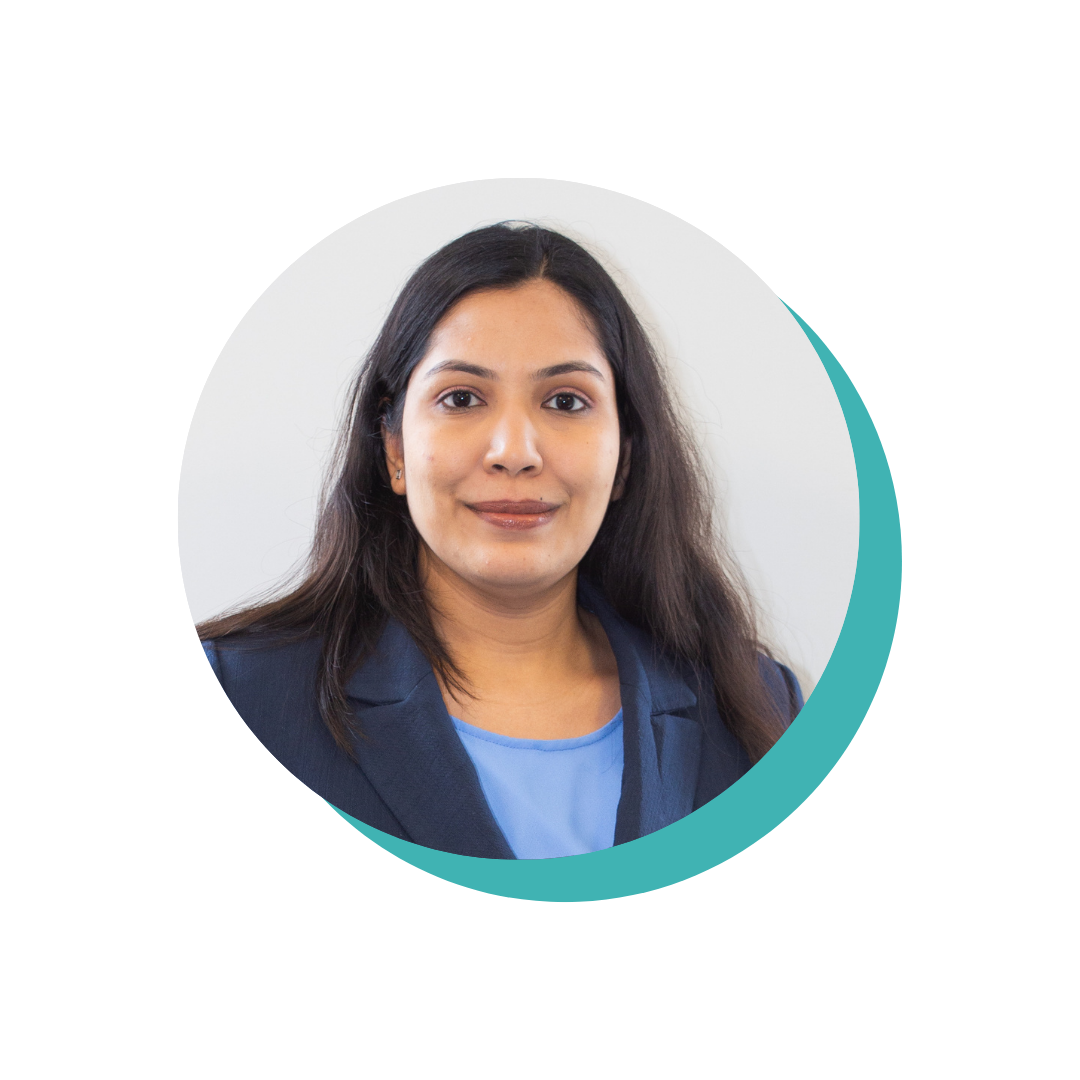
Yeah. I’m … solved by Dan. Yeah, good point though. So I read that and yeah, I think that there’s been some … people have critiqued the NEA for being very alarmist about teacher departures as the year has ramped up. It has not been quite the flood of departing teachers as was predicted and thank heavens for that, but we should still be very bummed if teachers are unhappy and wanting to leave and feel like they can’t leave. That is definitely not good. So we were really excited to bring to the table, someone who is just a very joyful teacher and one in a very intentional way. Someone who has a lot of discipline in how she approaches the job and the students in it and tries to create a joyful environment for herself, Kanchan Kant. Kanchan is a math and computer science teacher at Newton North High School in Newton, Massachusetts. She’s been sharing her love for math with her students for the past four years, while also being instrumental in setting the culture and ethos of the math department at her school in her role as the assistant department head. We welcome you on the show Kanchan to help us understand joy and math teaching. Thanks for being here.

Bethany Lockhart Johnson (11:29):
Welcome!

Kanchan Kant (11:30):
Thank you for having me. I really appreciate it.

Bethany Lockhart Johnson (11:33):
One of my friends, her son was asked as his first math homework assignment to write out his math bio. And I loved that idea because we got to hear a little bit about your bio from like a broader perspective. But if we were to ask about your math bio, I will speak for myself to say like, automatically certain images flash into my mind, right? To think about my relationship, my evolving relationship with math. But I’m so curious if I was to ask you, what’s your math bio? How did you become the person, mathematically speaking, that you are today? Would you mind sharing a bit about that?

Kanchan Kant (12:10):
Of course I would love to. So I was born and raised in India and I belong to a family which considers mathematics to be extremely important to succeed in life. My father used to have me add and subtract license plates since I was four years old, when we were out and about. I loved math in school, it just made like complete sense to me. It was logical and you know, it was my favorite subject. I loved it all through high school. I had a confidence speed breaker in undergrad. When in my second semester I almost failed the engineering math course that I took. That was the first time math felt like too much and not like my best friend, which it was supposed to be. So it was a while before I could summon the courage to take on another math course in college.

Kanchan Kant (12:56):
But once I did that, it was like old times. I realized I had to persevere through the challenging bits. And once I did that, it started to make sense again. And through my journey, as an educator speaking to people from various backgrounds and like coming to the United States, I realized that math is challenging for everyone at one time or another. For some people that is elementary school. And for some others, it is college or even later. Either way does not mean that you are not a math person. When I was in college, I felt I was not a math person. Whereas my sister, my very own sister said the same thing about math in middle school. Both of us use math every day. And we are definitely, definitely math people. So for me to be a math person is to persevere, to approach problem-solving in a logical manner, and to find the joy in the process ,as well as the answer.

Dan Meyer (13:47):
That’s wonderful. Yeah. A lot of people, have a moment where they feel like almost betrayed by what they thought was a close friend of theirs, with math, where it’s like, wait, I thought we were tight. You know, I thought we were cool. You and me. And there’s that moment. And I wonder if that’s been a useful moment for you to, you know, bring back now and then as a teacher with students who might feel that even, you know, in high school or in a secondary school as a kid.

Kanchan Kant (14:15):
Absolutely. Like when I talk to students and tell them, yes, I had difficulty in math too. It has not always been easy for men and there are still things I struggle with sometimes, then it’s like more modeling for them that you have to persevere, you should persevere. And once you do that, it makes sense and you can feel successful. So, almost every year I end up sharing the story with my students.

Bethany Lockhart Johnson (14:38):
There’s so much value in that, right? That you are sharing that vulnerability with students. And to say your relationship with mathematics has not been, you know, smooth sailing the whole way through. There were times when you had to work harder than others.

Dan Meyer (14:55):
Yeah. Really fun to hear about you and your father as well. I tried to ask my five-year-old to do some skip counting the other day, like, okay, cool, you’re hot stuff. You can count, you know, up by ones, but what about by twos? And the moment really fell flat. And I watched myself becoming the kind of parent who is whose enthusiasm for math is one day resented by his children. I feel a lot of, yeah, I felt your anxiety Kanchan, with math itself. And now I feel anxiety as like someone who loves math and loves to teach math and may one day alienate the people closest to him. <laugh>

Kanchan Kant (15:31):
I don’t like that future. I have a three-month-old. I do not like this future of mine. If I have to go through what you’re going through. Uh, oh, <laugh>

Dan Meyer (15:38):
You got this. So Kanchan, you’re going back to the classroom coming up here at the time of this recording. It’s a few weeks out. And we’re thinking about like the kind of ways that math teachers sustain a disposition that is joyful. How are you feeling right now, as far as going back to class after this summer? Are you feeling excited, anxious, some combo, tell us about it.

Kanchan Kant (16:01):
I would say combo, but more excited than anxious. I was on maternity leave, as I mentioned, before the school year ended, and I missed the students dearly. Like, my students are what gives me hope in the darkest times. They are thoughtful. They’re empathetic. They’re so eager to learn. And very soon into my teaching career, I realized that if I take the time to get to know my students and make them feel safe and seen in my class, teaching them math would be so much easier and so much more fun. So I’m a little worried about this being like fourth year into the pandemic, but let’s see. Last year I felt the students were finding it difficult to interact with and work with their classmates because they had not been doing it for so long. So I’m hoping this year would go a little better and I’m really looking forward to working with them and building community and see how it goes.

Dan Meyer (16:53):
So if I’m understanding you correctly, you are feeling very well recharged here. You had basically an extended summer with this maternity leave, basically just like a lot of rest and relaxation over the last, like several months. Um, if I get you here. So anyway, I’m glad for that for you. And, yeah. I also hear you on the difficulties of teaching post pandemic or mid pandemic. Anyway, thanks for sharing that.

Bethany Lockhart Johnson (17:19):
What I love is I hear you being so intentional, like thinking about those relationships and thinking about that community that you want to build, you know? How do you hope that you’re gonna cultivate joy in your teaching this year? I mean like, are there certain routines or disciplines that you specifically call forth or that you think other teachers should think about?

Kanchan Kant (17:41):
So at the start of every school year, I dedicate like about three to four weeks to set up the classroom culture, both social and academic. I call my classroom a learning community. We start with community circles, we do icebreaker activities, group building and all those kinds of things. But most importantly, we do a lot of collective problem solving. So I try to present students with problems, which can be solved using multiple strategies and have multiple entry points, basically they are low floor, high ceiling problems. These could be stretch problems that they have seen before, like concepts that they already know or logical puzzles, or just wrapping their heads around different problems. Then I have students share their strategies. The more strategies they have on the board, the more successful I think the problem was. Every year, inevitably, students come up with strategies that I’ve never ever seen before for the same problems that I do.

Kanchan Kant (18:35):
And so I have students come up to the board, they would share their strategies. If they’re not ready for that, they would walk me through their strategies. And I would write their name on the board with different colored markers and everything. Basically to give them choice and agency. It also shows them that the process of doing the problem is so much more important than just getting the right answer and that it is okay to make mistakes in our learning community. I use a lot of vertical whiteboards, some concepts and problems align so well with the vertical surfaces, especially when students can explore together, learn from each other. So I do a lot of that. As for routines, I would say consistency is the key. I consistently reinforce that I want to hear multiple strategies, that it is okay to make mistakes. I am willing to learn from you as much as you’re willing to learn from me. So all like that consistency in culture more than the routines, is I feel important to bring that joy.

Dan Meyer (19:29):
That’s super interesting. Thanks for that. So I’ve heard, I hear two common objections or two common concerns to using rich tasks or doing problem solving. And I think I heard like answers to those two common reservations within what you described there, but I wonder if we can kind of bring it to the surface. And so one of the reservations is around the time that those problems take and another is that teachers often feel like, well, I might be surprised, you know, I might not know what to do with what a student does. And I thought I was hearing like some very interesting answers to both of those kinds of reservations from you, but would you just surface those up if you have some.

Kanchan Kant (20:09):
So in terms of time, I feel if I spend the time at the beginning of the year, setting up that community and doing those problems, it makes learning the math and learning the concepts much more faster throughout the rest of the year. And even when I am trying, like, even throughout the year, if we are doing a warm up problem, as I call it, which has multiple strategies, that’s gonna clarify so many more concepts when we talk about those five, 10 strategies of doing the same problem, then going through multiple problems to clarify those concepts. So for me, it actually saves time instead of taking more time.

Dan Meyer (20:43):
Hmm. That’s super interesting. It’s an investment I’m hearing from you that, yeah, you might not be hitting the curriculum quite as hard early on, but that all of a sudden you’re in the spring and it’s like, oh wow, we’ve been moving so much faster through territory that has been more challenging. What would you say to you know, comfort concerned educators or to address the concern that I don’t know what I’ll do with these five, 10 different strategies. You say, I always see strategies that I’ve never anticipated. Like, it’s a good thing, you know, like you’re happy about that. I think that’s a very intimidating thing for lots of educators. What would you say to that?

Kanchan Kant (21:19):
I think like, for me, it’s a good kind of discomfort. That means like a student is teaching me something, which is actually doing two things. One modeling for them that I’m willing to learn and that I don’t know everything. And two, also telling them that they’re mathematicians. They know what they’re doing. They’re not just receivers of math, they’re actually creating it. So for me, that is very, very important.

Bethany Lockhart Johnson (21:43):
I love that so much. When you think about your students and you’re about to start this new school year, how do you hope your students will experience math in your classroom?

Kanchan Kant (21:53):
So I hope my students can see the beauty and joy of math. They can see that math is a way to see the world and not as something we have to do to get through school. So my hope for my classroom is that we can learn to problem-solve and persevere through problems and learn from each other and not just get through the curriculum. Because like, I think math is a wonderful way to learn these skills, which are so important when you get out of high school. Most importantly, I just wanna make sure that my students see themselves as mathematicians. And like one of the things that like I have to share with you that, because one of my highlights for the year has to be the Desmos art project. I do it every year for the past three years, I think since I’ve started teaching sophomores. And I do it as a unit assessment for functions and my students design something that is meaningful to them, using all the different kinds of functions and colors and shading and everything that you can think of in Desmos.

Kanchan Kant (22:49):
Thank you so much for that though. It is such a cool way for me to see them do that. Like I have seen such amazing creations. One of my students once made a scaled working model of a solar system wherein the planets were rotating at relative speed. The Saturn had rings and they were like asteroids and everything. And then it was beautifully done. Then there was another one who did a very, very detailed whale scenery, her reasoning. I wanna be a Marine biologist and I wanna study whales. So this is what is meaningful to me. So like that one project is just a culmination of everything that I want students to see in math and in my classroom. And like I do more of those kinds of things, but that is one thing that it’s one of the highlights of my year.

Dan Meyer (23:32):
That’s awesome. I love hearing that. Yeah. Shout out to the team at Desmos Studio for building and continuing to develop a tool list that so good for art and animation, even, in addition to some mathematics with a more computational kind. Yeah, that’s really exciting. What’s interesting to me is that you teach high school, and I think that like students at that age have a very well-defined sense of what math is and who they are as mathematicians. And then along you come, you know, and like offer this really interesting disruption, you know, in their sophomore year of high school that like, oh, this can be totally different, this relationship who I am. And that’s just really exciting. I imagine it’s a very surprising year. I would imagine that first month, I would imagine is a very surprising month for a lot of your sophomores.

Kanchan Kant (24:20):
Yeah, it is. I mean, that’s why I take that time to build that community because then that sets the tone and the relationship that we’re gonna have for the rest of the year. Students get to know how to work with each other. They get to know each other, that whole piece is like super important because of that.

Dan Meyer (24:35):
Yeah. That’s awesome. So here’s the thing, like we’re exploring these ideas about joyful math teaching and what it will take to cultivate restore, reclaim joy in math, teaching this next year. And you’ve offered us these really interesting ideas some, some very, you know, philosophical and some technical about how you spend time in ways that lead to joy in the spring for you and your students. Love that. We don’t want to as hosts, as researchers, investigators of this joyful math teaching idea, we don’t wanna say it’s all up to teachers to change their mindset, to do different technical practices, and that will lead to joy. We also wanna be really attentive to the environment that surrounds you, the people who are around to support you, the policy makers, the social structures that influence your joy in very significant ways. So what we would love to know from you is, how are you supported by the greater educational community in keeping your joy in your work? I’m thinking, especially about administrators, you know, front office, staff, parents, even, can you name a few ways for those sorts of people who listen to this podcast, how they can cultivate a math teacher’s joy this coming year?

Kanchan Kant (25:54):
I would say trust. I think more than anything, educators want administrators, parents, the greater educational community, to trust them to be professionals and experts in what they do. That does not mean that we don’t want to learn, that we don’t want feedback, that we don’t wanna get better. It just means that we keep the wellbeing of our students as our top priority. And we would like to be trusted to do just that. Also just keeping in mind that whether we like it or not, we are still adjusting to the new normal while recovering from the worst of the pandemic times. A lot of us are recovering from trauma, a lot of our students are recovering from trauma, and we need time and space for our social and emotional wellbeing.

Dan Meyer (26:35):
Yeah. I’m really curious, Kanchan, you’ve done a lot of work in your area with your grading team and in thinking about equitable and biased resistant instruction. I’m curious how you see those efforts lining up with creating joyful math learning conditions for all students, not just students from a dominant culture of math doing, let’s say.

Kanchan Kant (26:55):
For me, creating an equitable environment in a classroom is most important because once you have that, that’s when you have the relationships, that’s when you have the culture, that’s when all students actually thrive. So to that end, our school and our department has been doing a lot of work around grading practices. We actually assess how we grade students, where the bias is, what we can do to make them more bias resistant. Should we move to mastery based grading? Like that’s something I’ve been experimenting with for the past two years. Through the pandemic, I started doing mastery based grading so that my students can get more opportunities to show that they have learned the content. And so like just little things which help bridge the opportunity gap. I would say another project that our school undertakes is called the calculus project wherein we have students in Black, Latinx, and low income families sign up for that and are recommended for that. And then we do summer classes and yearlong support to preview the material for next year, not as a remedial class, but to actually set students up for success in AP classes for the coming year. So we have the community buildup. We have the courses we have like math support. It’s a very beautiful thing actually. And I’ve been working with that program for four years now. So yeah, so those are my ways of creating more equity in our school.

Bethany Lockhart Johnson (28:19):
That’s so beautiful and I deeply, deeply wish you had been my high school math teacher. And I have to say that the theme that I kind of keep hearing is this intentionality. How you are so intentional about your work, not just with what your students are learning, but how they’re learning it, how they are engaging with this subject and how they are building their own relationship. You talked a little bit about your relationship over the years with mathematics, but how are your students building that relationship? And so I’m just very appreciative of you sharing that with us and with our listeners. And we are so excited to have learned a little bit about, like, I feel like I got a little mini peek into your classroom.

Kanchan Kant (29:03):
Thank you.

Bethany Lockhart Johnson (29:04):
And can I say that if you are listening to this prior to October at NCTM Los Angeles, you will get to hear Kanchan Kant speak at Shadow Con. Can I give that away, Dan? Is that, is that …

Dan Meyer (29:23):
You can drop that. Yeah, It’s pretty top secret.

Bethany Lockhart Johnson (29:26):
Can I drop it?

Dan Meyer (29:27):
Yeah. Do it. Yeah.

Bethany Lockhart Johnson (29:28):
Dan and I will be in the audience cheering you on. It’s been a joy to learn with and from you, and we are so excited to just, you know, kind of keep marinating on some of these ideas about how we can continue to be intentional about creating joyful math spaces for our students. Thank you so much for joining us today.
Kanchan Kant (29:49):
Thank you so much. It was a real pleasure.

Dan Meyer (29:57):
So Bethany, I loved hearing Kanchan talk about both her, just her joyful personality, but how she cultivates joy through craft and technique through, you know, through the various ways she interacts with students in intentional ways, that those make the job more joyful for her. And I thought it was really interesting to hear her talk about how autonomy is the thing that she needs most in her job environment to feel like she can be joyful in her work. In that context, I saw … something on Twitter popped up for me in my, you know, my many Twitter wanderings. This is a segment we might call, Dan finds something on Twitter and shares it with Bethany. Which we’ll tighten that up a little bit, but I’m sending this over to you right now, and I’d love to know as you check this out, what you’re seeing and what you’re thinking and we’ll chat about how it relates to our interview here in a moment.

Bethany Lockhart Johnson (30:47):
All right. I’m ready, send it over. It’s opening. So this appears to be a document by the way, outlining, maybe it’s a district, maybe it’s administration, they’re outlining expectation type and expectation guidelines. Hmm. Okay. And these are lesson plan expectations. Expectation type. Timeliness. Plans are due no later than 6 p.m.. Friday prior to the week of instruction. Comprehensive, all activities for the week for all subjects taught should be included and complete by due date and time. Plans should have at minimum, the following, see template for detail. Okay. So then it goes through the things that the plans need to have, the topic title, target, the objective, the activities, the sequence, the display agendas to be displayed backward design. Okay. So basically <laugh>, we were just talking about, overwhelm. And when I see this document, listeners, have you ever received something from your administrator or anyone, let’s take it more broadly, that is requesting something of you that would take so much time to complete and be so out of touch with your lived reality that it really genuinely sucks the joy out of the experience.

Bethany Lockhart Johnson (32:25):
So the first thing that I see that this document, and again, the goal of whichever district’s plan this is, is that these expectations will lead–now, mind you, I am a fan of like, you know, looking ahead, I’m not a like, oh, hey, what am I gonna teach in five minutes? No, but the idea that then it lays out all of the things in such detail that you’re gonna be teaching feels like one of those pacing guides where, oh, move on to the next page, whether or not your students have any sort of sense making whatsoever. So my first thought is, oh, sad. I have to stay here. I’ll be there past 6 p.m. But I’m gonna be there trying to make the plans for the next week based on what I think my students have learned. Hmm it’s sounds like a little bit of a bummer. Dan, what did you think when you saw this and did I do a fair description of what it is?

Dan Meyer (33:25):
No, it’s, it’s a tough one to describe, ’cause it’s basically a wall of text and commands from an administrator who like, I just have to imagine has just like acres and acres of teachers trying to beat down their door to teach at this school, if this is how you’re gonna treat your teachers. I mean just, yeah. The idea of having a week… I’m with you, you don’t wanna just like, just jump in by the seat of your pants, but the idea of having a full week of lessons for every section you teach, every prep you teach, planned and submitted with every minute, basically morseled out to different goals. It says down here, you gotta like, for all of these, download a CSV of grades and whatnot and attach those. It’s the sort of thing, like you said, there are some edicts that you get from administration where you just have to laugh or just like, you have definitely missed like what I am willing to do here. It’s so far beyond. Yeah. I can’t imagine it. And it just felt like, yeah, it was a great way to get teachers like Kanchan to feel like a real lack of autonomy. Like it’s this would not work. I don’t think.

Bethany Lockhart Johnson (34:33):
And it’s not even like willing to do. Like, let’s say you’re even willing to produce it. Let’s say that me, the rule follower is like, okay. I’m gonna attempt to meet these demands. One, most teachers were just, you know, they probably would put baloney down there anyway. Not saying that I would, but I’m saying like, it’s clearly just a hoop that they’re having to jump through and two…

Dan Meyer (35:04):
Yeah. Compliance, right?

Bethany Lockhart Johnson (35:05):
Yeah. Compliance, compliance. There you go. And two, yeah, it feels like it’s about control and not trusting the teacher. And I love that. Kanchan said that trust is what she needs. Right? You’re hiring me. Yes. I still have lots to learn, but you’re trusting me and you’re creating an environment where I can continue to learn from and with my students. And if I was being asked to submit this tome every Friday before six, that is predicting, what does it say, anticipating the steps necessary for student mastery? You know, I kind of feel like maybe it’s like that one or two teachers where maybe they feel like, oh, I don’t trust that teacher or that teacher isn’t doing a good job, whatever. We better do this for all of the teachers, but then it’s not gonna change the practices of that one teacher and all the other teachers are gonna be resentful.

Dan Meyer (36:00):
Like if there was like feedback that came back to you on, you know, on lesson plans or there was some like something that was very constructive or productive, like maybe that would be different, but it really just feels like these are gonna go into a digital drawer somewhere and not be looked at, at all.

Bethany Lockhart Johnson (36:15):
Yes. The digital drawer. Like I’m gonna send you this report and then nothing is going to happen with it. Except that four hours of my time. Well, you wouldn’t do it, but <laugh>…

Dan Meyer (36:29):
You’ve worn me down. You’ve worn me down. I’m now putty in your hands and more compliant for the next thing. And I also just wanna shout out the administrator today, who I emailed asking about like a teacher participating in a project and this administrator said, I have a standing policy not to email teachers over summer break, which you know, as administrators out there doing just the good work, you know, trusting teachers, watching out for them, trying to be a force multiplier for teachers, making the road wider, the way easier for teachers. So shout out to y’all doing the out there. Really appreciate that.

Bethany Lockhart Johnson (37:04):
Okay. Wait, wait. About that email thing, quick question. Did you ever check your email over the summer?

Dan Meyer (37:11):
Uh, yeah. That’s one way in which I was the, you know, I just love email, you know? Oh. Someone wanted to reach out. Oh, oh, Banana Republic wants to tell me about new clothes that are on offer. <laugh> I mean like, it’s just, I love those personal emails. So yeah, I did check my email over the summer.

Bethany Lockhart Johnson (37:26):
Somebody emailed me recently and they emailed me at like two in the morning. And because I currently have a toddler, I received the email at four in the morning because you know, the best thing to help myself fall back asleep is to hop on my phone, right? Like I’m already up trying to get my toddler back to sleep. I might as well start scrolling. Anyway, so the person had this little thing at the bottom of their email and it said, I have, something to the effect of, I have really like wonky work hours. I may be sending this outside of the like more standard nine to five. But please don’t feel pressure in any way to respond outside of your time. Would you appreciate that, seeing that or does it make you feel like you should respond? ‘Cause I almost responded at four in the morning, and maybe that says something about …

Dan Meyer (38:15):
They’re telling you not to respond.

Bethany Lockhart Johnson (38:16):
I know it was helpful.

Dan Meyer (38:18):
It says don’t, but you’re like, what if they’re saying that because they really expect me to respond and this is one of many ways that you and I are different. I’m always happy to see that.

Bethany Lockhart Johnson (38:29):
Do you respond? I’ve texted you in the evening because you know I have some wonky hours. Do you respond to things, like where’s your boundary there? Or when you were in the classroom, where was your boundary there? Did parents have your phone number?

Dan Meyer (38:43):
No. I gave kids my cell phone number for a couple years and it was a wobbly experiment. But parents will email, you know, back and forth with you. And I think the best thing to like … I love just like adding some friction, some latency into the kind of the chain, you know, like I hate going like back and forth, like da, da, da, da, and then like respond and then da, da da respond. And it just like goes back and forth. So just like just sitting back for an hour or two hours, you know, not responding, just let someone cool down, calm down. Email just gets you more email. That’s like if you send an email, you are just making it more likely to get more email. It’s a, you know, it’s a problem.

Bethany Lockhart Johnson (39:20):
Are you one of the zero people?

Dan Meyer (39:23):
My inbox is at zero. Most days before work.

Bethany Lockhart Johnson (39:26):
You’re joking!

Dan Meyer (39:28):
I end work every day with inbox, at zero.

Bethany Lockhart Johnson (39:31):
You’re joking!

Dan Meyer (39:32):
That’s just, you know.

Bethany Lockhart Johnson (39:33):
Who are you?

Dan Meyer (39:34):
You know, you should take my life coaching, Bethany. I’ll give you a discount since we’re math teacher, lunch pals. But, um yeah. I can help.

Bethany Lockhart Johnson (39:44):
Thank you for qualifying where our pal-dom lives. I wouldn’t even tell you how many are in my inbox. Point is, if you are actively starting the school year, we celebrate you and we are here and over the next few months, we’re gonna be diving into joyful math and that definition’s gonna keep evolving. But I wanna say something that is making me feel a little joyful, Dan. You ready?

Dan Meyer (40:15):
Tell me.

Bethany Lockhart Johnson (40:16):
You and I, in person, at NCTM, the National Council for Teachers and Mathematics. It’s coming up and we are going to be recording Math Teacher Lounge, live. Live, in person! And I hear there’s gonna be like a t-shirt cannon and there’s gonna be, you know, like musicians marching through the aisles or something.

Dan Meyer (40:46):
A marching band?

Bethany Lockhart Johnson (40:46):
A marching band!

Dan Meyer (40:46):
Trained animals. Yeah.

Bethany Lockhart Johnson (40:48):
But the point is, I’m so excited, Dan. And you know, when I see you, I might just, it’s been so long since I’ve seen you, Dan. I’d love to give you a big old embrace.

Dan Meyer (41:04):
You might just, you might just cry. Yeah. Yeah. It’ll be great. Yeah. It’s gonna be awesome for you folks to see me and Bethany have a real awkward first hug since the pandemic. And, uh, but it’s gonna be a blast to hang with us in person. We’ll have some special guests, probably, some interesting segments. You folks should stop on by at NCTM, if you’re gonna be there. Highly recommended.

Bethany Lockhart Johnson (41:29):
Now, we will be broadcasting that episode. You’re gonna get to hear … we’re gonna record it live. It’s gonna happen. In the meantime, you can find us at MTLshow on Twitter, or you can find us in our Facebook group, Math Teacher Lounge. We can’t wait to hear from you. And we’d love to hear what makes math joyful for you? Where can we add a little bit more joy to you this, this season? So thrilled to be back. Thanks for listening.

Stay connected!

Join our community and get new episodes every other Tuesday!

We’ll also share new and exciting free resources for your classroom every month.

What Kanchan Kant says about math

“Creating an equitable environment in the classroom is most important because once you have that, that’s when you have the relationships, and that’s when all students actually thrive.”

– Kanchan Kant

Meet the guest

As a math and computer science teacher at Newton North High School, Newton, MA, Kanchan has been sharing her love for math with her students for the past four years. Kanchan is instrumental in setting the culture and ethos of the mathematics department at her school in her role as the Assistant Department Head. Kanchan also leads the Math Department Grading Team and has been instrumental in making grading policies which are more equitable and bias resistant. In her new role as a Transformative Leaders of Massachusetts Fellow in collaboration with Springpoint and Barr Foundation, Kanchan looks forward to making equity and joy of learning the foundation of many more classrooms.

Businesswoman with long dark hair, wearing a dark blazer and blue blouse, poses in a professional portrait against a light background, representing math programs.
A graphic with the text "Math Teacher Lounge with Bethany Lockhart Johnson and Dan Meyer" on colored overlapping circles.

About Math Teacher Lounge: The podcast

Math Teacher Lounge is a biweekly podcast created specifically for K–12 math educators. In each episode co-hosts Bethany Lockhart Johnson (@lockhartedu) and Dan Meyer (@ddmeyer) chat with guests, taking a deep dive into the math and educational topics you care about.

Join the Math Teacher Lounge Facebook group to continue the conversation, view exclusive content, interact with fellow educators, participate in giveaways, and more!

Season 10, Special episode

Cultivating critical thinkers in your classroom, starring Mitchell Brookins, Ph.D.

We’re excited to share a special episode from our friends at our sister podcast, Beyond My Years.

Host Ana Torres is joined by nationally recognized educational consultant and thought leader Mitchell Brookins, Ph.D., to discuss what critical thinking is and how to help students develop it. In addition to explaining why critical thinking is crucial for long-term academic success, Mitchell also gives educators four clear steps that they can implement to effectively nurture critical thinking skills in their classrooms. Ana is then joined by Beyond My Years' Classroom Insider extraordinaire Eric Cross, who discusses how he encourages his students to hone their critical thinking skills in class.

Meet Our Guest(s):

A man with short braids and a trimmed beard, wearing a dark suit and bright pink shirt and tie, looks directly at the camera—perfect for illustrating teacher strategies or how to develop critical thinking skills in students.

Mitchell Brookins, Ph.D.

Mitchell Brookins, Ph.D., has over 20 years of experience in K–12 as a teacher, coach, administrator, district leader, and thought leader. As a school administrator, he achieved impressive gains, including raising DIBELS® scores from 43% to 72%. He has spoken at top literacy events, including Amplify’s symposia, the Black Literacy Matters Conference, the Dyslexia Alliance for Black Children annual conference, and others. He leads a citywide fellowship supporting 25 literacy leaders in New Orleans, and serves as Managing Director of Leading Educators. He also serves on the Board of Directors for The Reading League. He holds a B.A. in elementary education, an M.A. in teacher leadership, and a Ph.D. in educational administration.

Meet our host, Susan Lambert

Susan Lambert is chief academic officer of literacy at Amplify and host of Science of Reading: The Podcast. Throughout her career, she has focused on creating high-quality learning environments using evidence-based practices. Lambert is a mom of four, a grandma of four, a world traveler, and a collector of stories.

As the host of Science of Reading: The Podcast, Lambert explores the increasing body of scientific research around how reading is best taught. A former classroom teacher, administrator, and curriculum developer, she’s dedicated to turning theory into best practices that educators can put right to use in the classroom, and to showcasing national models of reading instruction excellence.

Person with short blonde hair, glasses, and earrings, wearing an orange jacket, smiling in front of a plain gray background—committed to literacy education and fostering background knowledge for all learners.

Quotes

“When you are a school administrator, you can't be confused as to what your identity is. People expect you to step in with voice, with passion, with vision, and direct the path.”

—Mitchell Brookins, Ph.D.

“When we talk about knowledge building, when we talk about knowledge acquisition, it's actually predicated on critical thinking. That critical thinking  thinking is not just a higher-level task that we have kids do. It's deep thinking.”

—Mitchell Brookins, Ph.D.

“[Critical thinking] is actually cognitive support. It's a mental act of process in which you acquire knowledge and understanding.”

—Mitchell Brookins, Ph.D.

“During academic discussion, I'm not expecting the teacher to be quiet. I'm expecting the teacher to orchestrate thinking, to hold the pacing of the discussion. You know when to slow the class down, and let them think about this critical idea. You know when to ask that probing question that makes kids think, ‘Hmm.’ I'm looking for those discourse moves that teachers make.”

—Mitchell Brookins, Ph.D.

“When I see questioning that really probes, that's how I know I'm in a classroom where a teacher honors students' thinking. It is an honor to hear what children have to think.”

—Mitchell Brookins, Ph.D.

“That's how you know you're in a classroom with critical thinking: We're not rushing the conversation. We're enjoying it.”

—Mitchell Brookins, Ph.D.

“There's an art and science to teaching, and I think that they're two different things.”

—Eric Cross

“The importance of modeling can’t be overstated.”

—Ana Torres

“If we want to get to these higher levels of rigor or higher levels of thinking, that has to be built on a foundation. And when we connect that to something meaningful, the knowledge and the learning get deeper.”

—Eric Cross

“If you're engaged emotionally, that's going to help you be engaged cognitively.”

—Eric Cross