Core STEM programs: Strengthen sessions

Professional development sets teachers and leaders up for success, whether they are new to or experienced with a program. Each Strengthen session promotes a deeper understanding of the program through targeted instructional practices.

Explore STEM Strengthen sessions by program below.

Professional Learning Partner Guide Certified Provider

Amplify professional development has been vetted by Rivet Education’s team through a rigorous three-step process and is listed in the Professional Learning Partner Guide.

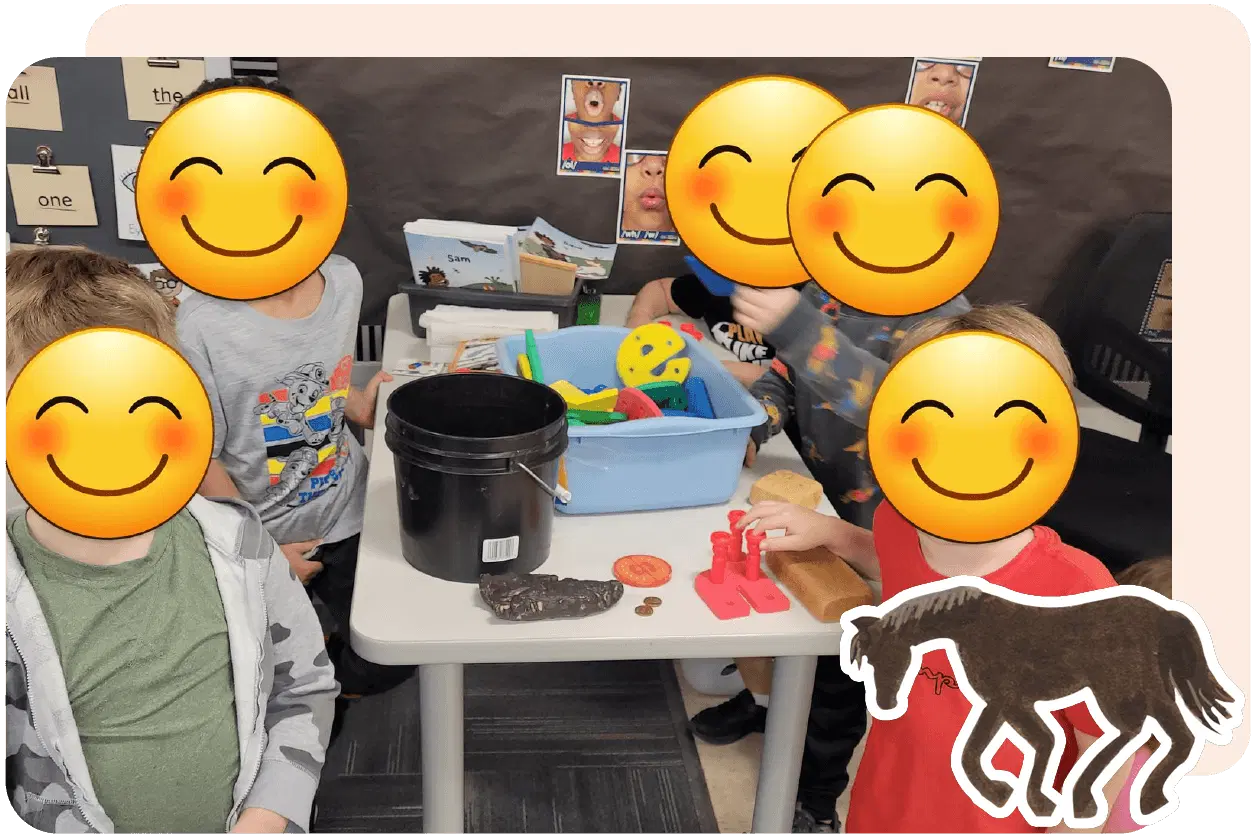
Teacher attentively watching two children build with blocks at a colorful classroom table.

About Strengthen sessions

Support Amplify implementation with sessions that target specific instructional practices for teachers and leaders in year one and beyond. When you’re ready to schedule your Strengthen session, contact us. An Amplify expert will support you in selecting the session that best fits your needs and that will help you push student results forward.

Each package includes one Strengthen session. Additional sessions can be added as enhancements.

Amplify Math

Amplify Math is a core math curriculum that serves 100% of students in accessing grade-level math every day. The program delivers engaging grade-level math lessons; flexible, social problem-solving experiences both online and off ; and insights, data, and reporting that drive performance.

Explore the Amplify Math Strengthen sessions (for grade bands 6–Algebra 1) for Begin packages and beyond. Click the session title or scroll down to learn more about each session.

Begin packages

  On-site package
(15 hr.)
Hybrid
on-site package

(15 hr.)
Hybrid 10 package
(10 hr.)
Hybrid
virtual package

(15 hr.)
Virtual package
(7 hr.)
One session per package On-site
3 hr. sessions
On-site
3 hr. sessions
Virtual
1 hr. sessions
Virtual
3 hr. sessions
Virtual
1 hr. sessions
Enhancing planning A large, light peach-colored checkmark on a transparent background. A large, light peach-colored checkmark on a transparent background.   A large, light peach-colored checkmark on a transparent background.  
Enhancing practice
A large, light peach-colored checkmark on a transparent background. A large, light peach-colored checkmark on a transparent background.   A large, light peach-colored checkmark on a transparent background.  
Enhancing observations for leaders A large, light peach-colored checkmark on a transparent background. A large, light peach-colored checkmark on a transparent background.   A large, light peach-colored checkmark on a transparent background.  
Unit-level planning
    A large, light peach-colored checkmark on a transparent background.   A large, light peach-colored checkmark on a transparent background.
Lesson-level planning
    A large, light peach-colored checkmark on a transparent background.   A large, light peach-colored checkmark on a transparent background.
Increasing engagement with instructional routines     A large, light peach-colored checkmark on a transparent background.   A large, light peach-colored checkmark on a transparent background.

Begin: Enhancing planning for teachers

On-site or virtual, 3 hours

Prepare to teach Amplify Math lessons effectively, by engaging in collaborative backward planning with experts. Work alongside our facilitators to understand how to target key concepts and make successful instructional decisions across a unit, and leave with a completed unit plan for your class.

Audience: Teachers, instructional staff (maximum 30 participants)

Begin: Enhancing practice for teachers

On-site or virtual, 3 hours

See the Launch, Monitor, Connect problem-based learning model in action, and practice integrating these practices into your facilitation of lesson activities. Leave with guidelines for using the Launch, Monitor, Connect model that you can implement during your next lesson.

Audience: Teachers, instructional staff (maximum 30 participants)

Begin: Enhancing observations for leaders

On-site or virtual, 3 hours

Learn to use our non-evaluative classroom look-for tool for Amplify Math to promote the use of instructional resources, focus on instructional delivery, and monitor instruction. Leave with an action plan for collecting and analyzing observation data to support teachers in their implementation of Amplify Math.

Audience: Leaders (maximum 30 participants)

Begin: Strengthen Focus: Unit-level planning

Virtual, 1 hour

Dive into unit planning as you learn the story of how your upcoming unit is tied to other units and grade levels, and discover the big ideas you will explore alongside your students in Amplify Math.

Audience: Teachers, instructional staff (maximum 30 participants)

Begin: Strengthen Focus: Lesson-level planning

Virtual, 1 hour

Dive into lesson-level planning as you learn how to create a road map that guides student learning, makes connections across lessons, and measures student understanding of the learning goals in Amplify Math.

Audience: Teachers, instructional staff (maximum 30 participants)

Begin: Strengthen Focus: Increasing engagement with instructional routines

Virtual, 1 hour

Explore how to use Instructional Routines such as Notice and Wonder to support and engage students as they make sense of new contexts and mathematical problems in Amplify Math.

Audience: Teachers, instructional staff (maximum 30 participants)

Practice packages

  On-site package
(15 hr.)
Hybrid 15,
on-site package

(15 hr.)
Hybrid 13 package
(13 hr.)
Virtual package
(9 hr.)
One session per package On-site
3 hr. sessions
On-site
3 hr. sessions
Virtual
1 hr. sessions
Virtual
1 hr. sessions
Enhancing planning for teachers A large, light peach-colored checkmark on a transparent background. A large, light peach-colored checkmark on a transparent background.   A large, light peach-colored checkmark on a transparent background.
Enhancing practice for teachers
A large, light peach-colored checkmark on a transparent background. A large, light peach-colored checkmark on a transparent background.   A large, light peach-colored checkmark on a transparent background.
Enhancing observations for leaders A large, light peach-colored checkmark on a transparent background. A large, light peach-colored checkmark on a transparent background.   A large, light peach-colored checkmark on a transparent background.
Using differentiation supports for teachers A large, light peach-colored checkmark on a transparent background. A large, light peach-colored checkmark on a transparent background.    A large, light peach-colored checkmark on a transparent background. 
Using data to drive instruction for teachers A large, light peach-colored checkmark on a transparent background. A large, light peach-colored checkmark on a transparent background.   A large, light peach-colored checkmark on a transparent background.
Addressing prerequisite skills for teachers A large, light peach-colored checkmark on a transparent background. A large, light peach-colored checkmark on a transparent background.   A large, light peach-colored checkmark on a transparent background.
Orchestrating math discussions for teachers A large, light peach-colored checkmark on a transparent background. A large, light peach-colored checkmark on a transparent background.   A large, light peach-colored checkmark on a transparent background.
Building language with math routines for teachers     A large, light peach-colored checkmark on a transparent background.  
Unit-level planning for teachers     A large, light peach-colored checkmark on a transparent background.  
Lesson-level planning for teachers     A large, light peach-colored checkmark on a transparent background.  
Increasing engagement with Instructional Routines for teachers     A large, light peach-colored checkmark on a transparent background.  

Practice: Enhancing planning for teachers

On-site or virtual, 3 hours

Prepare to effectively teach Amplify Math lessons by engaging in collaborative backward planning with experts. Work alongside our facilitators to understand how to target key concepts and make effective instructional decisions across a unit, and leave with a completed unit plan for your class.

Audience: Teachers, instructional staff (maximum 30 participants)

Practice: Enhancing practice for teachers

On-site or virtual, 3 hours

See the Launch, Monitor, Connect problem-based learning model in action, and practice integrating these practices into your facilitation of lesson activities. Leave with guidelines for using the Launch, Monitor, Connect model that you can implement during your next lesson.

Audience: Teachers, instructional staff (maximum 30 participants)

Practice: Enhancing observations for leaders

On-site or virtual, 3 hours

Learn to use our non-evaluative classroom look-for tool for Amplify Math to promote the use of instructional resources, focus on instructional delivery, and monitor instruction. Leave with an action plan for collecting and analyzing observation data to support teachers in their implementation of Amplify Math.

Audience: Leaders (maximum 30 participants)

Practice: Using differentiation supports for teachers

On-site or virtual, 3 hours

Learn how to leverage embedded differentiated supports in Amplify Math to ensure that all students can be successful. Walk away with a plan for supporting students in your classroom including English Language Learners (ELLs), students with disabilities, students who may need extra support, and advanced students.

Audience: Teachers, instructional staff (maximum 30 participants)

Practice: Using data to drive instruction for teachers

On-site or virtual, 3 hours

Grow your proficiency in data analysis.Turn student data gathered within Amplify Math into differentiated instruction targeting specific skills. Walk away ready to use the data provided in the curriculum to align embedded support to your students’ unique needs.

Audience: Teachers, instructional staff (maximum 30 participants)

Practice: Addressing prerequisite skills for teachers

On-site or virtual, 3 hours

Explore Amplify Math’s just-in-time approach to addressing prerequisite skills. Leave with a deeper understanding of how to use embedded curriculum resources to identify and support prerequisite skills essential for your next unit.

Audience: Teachers, instructional staff (maximum 30 participants)

Practice: Orchestrating math discussions for teachers

On-site or virtual, 3 hours

Learn strategies for leading discussions that promote more math talk among all students in your classroom. Walk away with strategies and Amplify Math curriculum tools you can bring back to your classroom to enhance discussion in your next lesson.

Audience: Teachers, instructional staff (maximum 30 participants)

Practice: Strengthen Focus: Building language with math routines for teachers

Virtual, 1 hour

Explore how Math Language Routines support students as they make sense of new contexts and mathematical problems in Amplify Math. Leave with strategies for using these routines to support students in learning mathematical practices, content, and language in your upcoming lessons.

Audience: Teachers, instructional staff (maximum 30 participants)

Practice: Strengthen Focus: Unit-level planning for teachers

Virtual, 1 hour

Dive into unit planning as you learn the story of how your upcoming unit is tied to other
units and grade levels, and discover the big ideas you’ll explore alongside your students in Amplify Math.

Audience: Teachers, instructional staff (maximum 30 participants)

Practice: Strengthen Focus: Lesson-level planning for teachers

Virtual, 1 hour

Dive into lesson-level planning as you learn how to create a roadmap for a lesson that guides student learning, makes connections across lessons, and measures student understanding of the learning goals in Amplify Math.

Audience: Teachers, instructional staff (maximum 30 participants)

Practice: Strengthen Focus: Increasing engagement with Instructional Routines for teachers

Virtual, 1 hour

Explore how to leverage Instructional Routines such as Notice and Wonder to support students as they make sense of new contexts and mathematical problems in Amplify Math.

Audience: Teachers, instructional staff (maximum 30 participants)

Amplify Desmos Math

Amplify Desmos Math is a new core K–12 program from Amplify and Desmos Classroom —available in English and Spanish—that applies a problem-based approach to develop deep conceptual understanding, procedural fluency, and application. Using technology inspired by students’ natural curiosity, Amplify Desmos Math connects the classroom and fosters real collaboration, discourse, and perseverance in problem-solving. Captivating activities, powerful teaching tools, and lots of support enable students to develop math proficiency that lasts a lifetime.

Explore the Amplify Desmos Math Strengthen sessions (for grades PreK–Algebra 2) for Begin packages and beyond. Click the session title or scroll down to learn more about each session.

Begin packages

Strengthen sessions

  On-site package
(15 hr.)
Hybrid 15,
on-site package

(15 hr.)
Hybrid 10 package
(10 hr.)
Hybrid 15, virtual package
(15 hr.)
Virtual package
(7 hr.)
One session per package On-site,
3 hr.
On-site,
3 hr.
Virtual,
1 hr.
Virtual,
3 hr.
Virtual,
1 hr.
Enhancing planning for K–5 teachers A large, light peach-colored checkmark on a transparent background. A large, light peach-colored checkmark on a transparent background.   A large, light peach-colored checkmark on a transparent background.  
Enhancing planning for 6–A1 teachers
A large, light peach-colored checkmark on a transparent background. A large, light peach-colored checkmark on a transparent background.   A large, light peach-colored checkmark on a transparent background.  
Enhancing practice for K–5 teachers A large, light peach-colored checkmark on a transparent background. A large, light peach-colored checkmark on a transparent background.   A large, light peach-colored checkmark on a transparent background.  
Enhancing practice for 6–A1 teachers
A large, light peach-colored checkmark on a transparent background. A large, light peach-colored checkmark on a transparent background.   A large, light peach-colored checkmark on a transparent background.  
Desmos Math to Amplify Desmos Math 6–A1 transition training for teachers     A large, light peach-colored checkmark on a transparent background.   A large, light peach-colored checkmark on a transparent background.

Begin: Enhancing planning for K–5 teachers

On-site or virtual, 3 hours

Dive into planning for Amplify Desmos Math, both big picture and day-to-day. Practice using lesson and unit planning protocols that will help you build a deep understanding of the math content you’ll be teaching and the planning resources available to you in the curriculum. Walk away with practical strategies for planning, even when you may not have much time.

Audience: Teachers, instructional staff (maximum 30 participants)

Begin: Enhancing planning for 6–A1 teachers

On-site or virtual, 3 hours

Dive into both big-picture and day-to-day planning for Amplify Desmos Math. Practice using lesson and unit planning protocols that will help you build a deep understanding of the math content you’ll be teaching and the planning resources available to you in the curriculum. Walk away with practical strategies for planning, even when you may not have much time.

Audience: Teachers, instructional staff (maximum 30 participants)

Begin: Enhancing practice for K–5 teachers

On-site or virtual, 3 hours

Dig into Amplify Desmos Math’s Launch, Monitor, Connect framework to level-up the student discourse in your math class. Explore in-the-moment differentiation support to help you orchestrate discussion and make the most out of key opportunities for conversation and collaboration.

Audience: Teachers, instructional staff (maximum 30 participants)

Begin: Enhancing practice for 6–A1 teachers

On-site or virtual, 3 hours

Dig into Amplify Desmos Math’s Launch, Monitor, Connect framework to level up the student discourse in your math classroom. Learn strategies for leveraging the tools in the Teacher Dashboard to orchestrate discussion, and practice planning moves to make the most out of key discussion moments.

Audience: Teachers, instructional staff (maximum 30 participants)

Begin: Strengthen Focus: Desmos Math to Amplify Desmos Math 6–A1 transition training for teachers

Virtual, 1 hour

Participants will get an overview of the similarities and differences between Desmos Math and Amplify Desmos Math, including becoming familiar with changes in materials, the digital platform, and key lesson, assessment, and reporting components.

Audience: Teachers, instructional staff (maximum 30 participants)

Practice packages

Strengthen sessions

  On-site package
(15 hr.)
Hybrid 15,
on-site package

(15 hr.)
Hybrid 13 package
(13 hr.)
Virtual package
(9 hr.)
One session per package On-site,
3 hr.
Virtual,
3 hr.
Virtual,
1 hr.
Virtual,
3 hr.
Enhancing planning for
K–5 teachers
A large, light peach-colored checkmark on a transparent background. A large, light peach-colored checkmark on a transparent background.   A large, light peach-colored checkmark on a transparent background.
Enhancing planning for
6–A1 teachers

A large, light peach-colored checkmark on a transparent background. A large, light peach-colored checkmark on a transparent background.   A large, light peach-colored checkmark on a transparent background.
Enhancing practice for
K–5 teachers
A large, light peach-colored checkmark on a transparent background. A large, light peach-colored checkmark on a transparent background.   A large, light peach-colored checkmark on a transparent background.
Enhancing practice for
6–A1 teachers

A large, light peach-colored checkmark on a transparent background. A large, light peach-colored checkmark on a transparent background.   A large, light peach-colored checkmark on a transparent background.
Strengthen Focus: Teaching a digital lesson for K–5 teachers     A large, light peach-colored checkmark on a transparent background.  
Strengthen Focus: Snapshots in the Teacher Dashboard for 6–A1 teachers     A large, light peach-colored checkmark on a transparent background.  

Practice: Enhancing planning for K–5 teachers

On-site or virtual, 3 hours

Dive into both big-picture and day-to-day planning for Amplify Desmos Math. Practice using lesson and unit planning protocols that will help you build a deep understanding of the math content you’ll be teaching and the planning resources available to you in the curriculum. Walk away with practical strategies for planning, even when you may not have much time.

Audience: Teachers, instructional staff (maximum 30 participants)

Practice: Enhancing planning for 6–A1 teachers

On-site or virtual, 3 hours

Dive into both big-picture and day-to-day planning for Amplify Desmos Math. Practice using lesson and unit planning protocols that will help you build a deep understanding of the math content you’ll be teaching and the planning resources available to you in the curriculum. Walk away with practical strategies for planning, even when you may not have much time.

Audience: Teachers, instructional staff (maximum 30 participants)

Practice: Enhancing practice for K–5 teachers

On-site or virtual, 3 hours

Dig into Amplify Desmos Math’s Launch, Monitor, Connect framework to level-up the student discourse in your math class. Explore in-the-moment differentiation support to help you orchestrate discussion and make the most out of key opportunities for conversation and collaboration.

Audience: Teachers, instructional staff (maximum 30 participants)

Practice: Enhancing practice for 6–A1 teachers

On-site or virtual, 3 hours

Dig into Amplify Desmos Math’s Launch, Monitor, Connect framework to level up the student discourse in your math classroom. Learn strategies for leveraging the tools in the Teacher Dashboard to orchestrate discussion, and practice planning moves to make the most out of key discussion moments.

Audience: Teachers, instructional staff (maximum 30 participants)

Practice: Strengthen Focus: Teaching a digital lesson for K–5 teachers

Virtual, 1 hour

Get ready to facilitate digital lessons with your students. Explore what’s possible with the Teacher Dashboard and plan to make the most of these exciting instructional moments.

Audience: Teachers, instructional staff (maximum 30 participants)

Practice: Strengthen Focus: Snapshots in the Teacher Dashboard for 6–A1 teachers

Virtual, 1 hour

Explore how to use the Snapshots tool in the Teacher Dashboard to create a collaborative classroom that invites and celebrates student thinking. Leave with planning tips and tricks that will get you ready to use Snapshots during your busy math classes.

Audience: Teachers, instructional staff (maximum 30 participants)

Amplify Science

Amplify Science is a K–8 science curriculum that blends hands-on investigations, literacy-rich activities, and interactive digital tools to empower students to think, read, write, and argue like real scientists and engineers. 

Explore the Amplify Science sessions (for grade bands K–5 and 6–8) for year one packages and beyond. Select the session title or scroll to learn more about each session.

Begin packages

Strengthen sessions

  On-site package
(15 hr.)
Hybrid 15,
on-site package

(15 hr.)
Hybrid 10 package
(10 hr.)
Hybrid 15, virtual package
(15 hr.)
Virtual package
(7 hr.)
One session per package On-site,
3 hr.
Virtual,
3 hr.
Virtual,
1 hr.
Virtual,
3 hr.
Virtual,
1 hr.
Enhancing planning
(K–5 or 6–8)
A large, light peach-colored checkmark on a transparent background. A large, light peach-colored checkmark on a transparent background.   A large, light peach-colored checkmark on a transparent background.  
Enhancing practice
(K–5 or 6–8)

A large, light peach-colored checkmark on a transparent background. A large, light peach-colored checkmark on a transparent background.   A large, light peach-colored checkmark on a transparent background.  
Enhancing observations for leaders
(K–8)
A large, light peach-colored checkmark on a transparent background. A large, light peach-colored checkmark on a transparent background.   A large, light peach-colored checkmark on a transparent background.  
Planning an Amplify Science lesson
(K–8) 

    A large, light peach-colored checkmark on a transparent background.   A large, light peach-colored checkmark on a transparent background.
Supporting diverse learners: Exploring the resources
(K–8)

    A large, light peach-colored checkmark on a transparent background.   A large, light peach-colored checkmark on a transparent background.
Supporting diverse learners with embedded supports: Teacher modeling and student discourse
(K–8) 

    A large, light peach-colored checkmark on a transparent background.   A large, light peach-colored checkmark on a transparent background.

Begin: Enhancing planning for teachers
(grades K–5 or 6–8)

On-site or virtual, 3 hours

Learn how to use a planning protocol to internalize an upcoming Amplify Science unit. Leave with a plan to support students engaging in three-dimensional learning while also meeting the diverse needs of students in your classroom.

Audience: Teachers, instructional staff grades K–5 or 6–8 (maximum 30 participants)

Begin: Enhancing practice for teachers
(grades K–5 or 6–8)

On-site or virtual, 3 hours

Learn how Amplify Science supports phenomenon-based learning. Experience a sequence of model instruction from the curriculum, and walk away with a plan for how you can enhance the curriculum through your teaching practice to build a powerful culture of “figuring out” in your science classroom.

Audience: Teachers, instructional staff grades K–5 or 6–8 (maximum 30 participants)

Begin: Enhancing observations for leaders (grades K–8)

On-site or virtual, 3 hours

Learn to use the non-evaluative classroom walkthrough tool for Amplify Science to promote the use of instructional resources, focus on instructional delivery, and monitor instruction. Leave with an action plan for collecting and analyzing observation data to support teachers in their implementation of Amplify Science.

Audience: Leaders grades K–8 (maximum 30 participants)

Begin: Strengthen Focus: Planning an Amplify Science lesson

Virtual, 1 hour

Develop structure and routines for planning Amplify Science lessons and leave prepared for an upcoming lesson.

Audience: Teachers, instructional staff grades K–8 (maximum 30 participants)

Begin: Strengthen Focus: Supporting diverse learners: Exploring the resources (grades K–8)

Virtual, 1 hour

Learn how to use lesson-specific differentiation briefs, embedded assessments, and activity-specific teacher support notes to maximize instruction for diverse learners with Amplify Science.

Audience: Teachers, instructional staff grades K–8 (maximum 30 participants)

Begin: Strengthen Focus: Supporting diverse learners with embedded supports: Teacher modeling and student discourse (grades K–8)

Virtual, 1 hour

Explore ways to leverage and build upon two key instructional elements in Amplify Science, and plan how you’ll use these supports to engage diverse learners in your next lesson.

Audience: Teachers, instructional staff grades K–8 (maximum 30 participants)

Practice packages

Strengthen sessions

  On-site package
(15 hr.)
Hybrid 15,
on-site package

(15 hr.)
Hybrid 13 package
(13 hr.)
Virtual package
(9 hr.)
One session per package On-site,
3 hr.
Virtual,
3 hr.
Virtual,
1 hr.
Virtual,
3 hr.
Enhancing planning
(K–5 or 6–8)
A large, light peach-colored checkmark on a transparent background. A large, light peach-colored checkmark on a transparent background.   A large, light peach-colored checkmark on a transparent background.
Enhancing practice
(K–5 or 6–8)

A large, light peach-colored checkmark on a transparent background. A large, light peach-colored checkmark on a transparent background.   A large, light peach-colored checkmark on a transparent background.
Enhancing observations for leaders
(K–8)
A large, light peach-colored checkmark on a transparent background. A large, light peach-colored checkmark on a transparent background.   A large, light peach-colored checkmark on a transparent background.
Supporting all learners with complex texts
(K–5 or 6–8)

A large, light peach-colored checkmark on a transparent background. A large, light peach-colored checkmark on a transparent background.   A large, light peach-colored checkmark on a transparent background.
Supporting English learners (K–5 or 6–8)
A large, light peach-colored checkmark on a transparent background. A large, light peach-colored checkmark on a transparent background.   A large, light peach-colored checkmark on a transparent background.
Writing in science (K–5 or 6–8) A large, light peach-colored checkmark on a transparent background. A large, light peach-colored checkmark on a transparent background.   A large, light peach-colored checkmark on a transparent background.
Assessment system (K–5 or 6–8)
A large, light peach-colored checkmark on a transparent background. A large, light peach-colored checkmark on a transparent background.    
Engineering Internships (6–8)
A large, light peach-colored checkmark on a transparent background. A large, light peach-colored checkmark on a transparent background.   A large, light peach-colored checkmark on a transparent background.
Science Seminar (6–8)
A large, light peach-colored checkmark on a transparent background. A large, light peach-colored checkmark on a transparent background.   A large, light peach-colored checkmark on a transparent background.
Planning an Amplify Science lesson (K–8)
    A large, light peach-colored checkmark on a transparent background.  
Supporting diverse learners: Exploring the resources (K–8)
    A large, light peach-colored checkmark on a transparent background.  
Supporting diverse learners: Teacher modeling and student discourse (K–8)
    A large, light peach-colored checkmark on a transparent background.  
Analyzing student work (K–8)
    A large, light peach-colored checkmark on a transparent background.  
Supporting diverse learners: Multimodal learning and multiple at-bats (K–8)
    A large, light peach-colored checkmark on a transparent background.  
Grading with Amplify Science (K–8)
    A large, light peach-colored checkmark on a transparent background.  
Enhancing the digital experience (K–5)
    A large, light peach-colored checkmark on a transparent background.  
Planning with the Coherence Flowchart (K–8)
    A large, light peach-colored checkmark on a transparent background.  

Practice: Enhancing planning for teachers
(grades K–5 or 6–8)

On-site or virtual, 3 hours

Learn how to use a planning protocol to internalize an upcoming Amplify Science unit. Walk away with a plan to support students engaging in three-dimensional learning while also meeting the diverse needs of students in your classroom.

Audience: Teachers, instructional staff grades K–5 or 6–8 (maximum 30 participants)

Practice: Enhancing practice for teachers
(grades K–5 or 6–8)

On-site or virtual, 3 hours

Learn how Amplify Science supports phenomenon-based learning. Experience a sequence of model instruction from the curriculum, and walk away with a plan for how you can enhance the curriculum through your teaching practice to build a powerful culture of “figuring out” in your science classroom.

Audience: Teachers, instructional staff grades K–5 or 6–8 (maximum 30 participants)

Practice: Enhancing observations for leaders
(grades K–5 or 6–8)

On-site or virtual, 3 hours

Learn to use the non-evaluative classroom walkthrough tool for Amplify Science to promote the use of instructional resources, focus on instructional delivery, and monitor instruction. Leave with an action plan for collecting and analyzing observation data to support teachers in their implementation of Amplify Science.

Audience: Leaders grades K–5 or 6–8 (maximum 30 participants)

Practice: Supporting all learners with complex texts (grades K–5 or 6–8)

On-site or virtual, 3 hours

Collaborate to solve common reading challenges alongside other educatorsLearn strategies to support students in grades K–5 or 6–8 in accessing complex texts in Amplify Science units by engaging in a model reading sequence. Leave with a plan for incorporating effective strategies into your upcoming Amplify Science reading lesson.

Audience: Teachers, instructional staff grades K–5 or 6–8 (maximum 30 participants)

Practice: Supporting English learners (grades K–5 or 6–8)

On-site or virtual, 3 hours

Explore strategies and engage in model activities to support multilingual/English learners in grades K–5 or 6–8 in developing their abilities to do, talk, read, write, visualize, and construct arguments in Amplify Science. Leave with strategies to support a deeper understanding of the critical role that language and literacy play in developing scientific understanding.

Audience: Teachers, instructional staff grades K–5 or 6–8 (maximum 30 participants)

Practice: Writing in science (grades K–5 or 6–8)

On-site or virtual, 3 hours

Develop an understanding of how the Amplify Science writing approach supports students in grades K–5 or 6–8 in engaging in science practices, making sense of science ideas, and growing as writers. Leave with a plan for supporting student writing in your next unit.

Audience: Teachers, instructional staff grades K–5 or 6–8 (maximum 30 participants)

Practice: Assessment system (grades K–5 or 6–8)

On-site or virtual, 3 hours

Available: Fall 2024

Analyze a sample formative assessment, deepen your understanding of Amplify Science unit learning progressions, and participate in discussions to understand the relationships between different types of assessments and your unit’s learning goals. Walk away with strategies for collecting, analyzing, and responding to student assessment data.

Audience: Teachers, instructional staff grades of K–5 or 6–8 (maximum 30 participants)

Practice: Engineering Internships (grades 6–8)

On-site or virtual, 3 hours

Plan for the first Amplify Science Engineering Internship course of your grade level (6–8) by exploring the Futura workspace and digital tools students will use during the Internship experience. Leave with an understanding of how students will apply science concept knowledge to construct design solutions. This session will feature one of the following Engineering Internships based on your need: Metabolism, Plate Motion, or Force and Motion unit.

Audience: Teachers, instructional staff grades 6–8 (maximum 30 participants)

Practice: Science Seminar (grades 6–8)

On-site or virtual, 3 hours

Experience a Science Seminar sequence of a sample Amplify Science grade 6–8 unit from the student perspective to gain an understanding of how students apply science concepts to engage in argumentation about a phenomenon. Leave with a plan for teaching a Science Seminar unit in your own classroom.

Audience: Teachers, instructional staff grades 6–8 (maximum 30 participants)

Practice: Strengthen Focus: Planning an Amplify Science lesson (grades K–8)

Virtual, 1 hour

Develop a structure for planning Amplify Science lessons and leave prepared for an upcoming lesson.

Audience: Teachers, instructional staff grades K–8 (maximum 30 participants)

Practice: Strengthen Focus: Supporting diverse learners: Exploring the resources (grades K–8)

Virtual, 1 hour

Learn how to use lesson-specific differentiation briefs, embedded assessments, and activity-specific teacher support notes to supplement instruction for diverse learners with Amplify Science.

Audience: Teachers, instructional staff grades K–8 (maximum 30 participants)

Practice: Strengthen Focus: Supporting diverse learners: Teacher modeling and student discourse (grades K–8)

Virtual, 1 hour

Explore ways to leverage and build upon two key instructional elements in Amplify Science and plan for ways to use these supports to engage diverse learners in your next lesson.

Audience: Teachers, instructional staff grades K–8 (maximum 30 participants)

Practice: Strengthen Focus: Analyzing student work (grades K–8)

Virtual, 1 hour

Engage with a protocol to analyze real student work and plan for instructional next steps in Amplify Science. (You are required to bring student formative assessment samples to this session.)

Audience: Teachers, instructional staff grades K–8 (maximum 30 participants)

Practice: Strengthen Focus: Supporting diverse learners: Multimodal learning and multiple at-bats (grades K–8)

Virtual, 3 hours

Learn strategies to develop an understanding of how Amplify Science’s multimodal approach supports diverse learners.

Audience: Teachers, instructional staff grades K–8 (maximum 30 participants)

Practice: Strengthen Focus: Grading with Amplify Science (grades K–8)

Virtual, 1 hour

Develop an understanding of how to use assessment resources in Amplify Science to grade students three dimensionally and use practices that align with district/school guidelines.

Audience: Teachers, instructional staff grades K–8 (maximum 30 participants)

Practice: Strengthen Focus: Enhancing the digital experience (grades K–5)

Virtual, 1 hour

Learn how to go further with Amplify Science digital experience tools to enhance teaching and learning.

Audience: Teachers, instructional staff grades K–5 (maximum 30 participants)

Practice: Strengthen Focus: Planning with the Coherence Flowchart (grades K–8)

Virtual, 1 hour

Practice using the Coherence Flowchart resource to plan an upcoming Amplify Science unit.

Audience: Teachers, instructional staff grades K–8 (maximum 30 participants)

Get in touch with a PD expert

We’re here to provide answers and guidance as you explore your PD journey. Fill out the form to connect with us and discover how Amplify PD can enhance your educational journey.

Amplify Science resources for Richmond Public Schools

Welcome! This site contains supporting resources designed for the Richmond Public Schools adoption of Amplify Science.

Authored by UC Berkeley’s Lawrence Hall of Science, Amplify Science is a comprehensive program that blends literacy-rich activities, hands-on investigations, and engaging digital experiences to empower Richmond students to think, read, write, and argue like 21st-century scientists and engineers.

Click here to visit Richmond Public Schools’ Science Department page.

Welcome!

This site contains supporting resources designed for the Richmond Public Schools adoption of Amplify Science for grades 3–8. Here are some resources to get you started, but make sure to check back for exciting updates!

Program-wide resources

Click the button below to explore the Amplify Science  Program Guide. You can access the full digital Teacher’s Guide from the Program Guide to explore the program.

Onboarding videos

To start using Amplify Science quickly in your classroom, check out the following onboarding videos. They cover what you need to know to get started fast, from unpacking materials to logging in and navigating the digital Teacher’s Guide.

Getting Started: K-5

This section allows you to become familiar with the program and to guide you through initial preparation for implementing Amplify in your classrooms. here you will find look-for-tools, pacing/planning guides, and editable documents to support unpacking the unit lessons.

The following materials lists and videos give you a quick look into our Amplify Science classroom kits. For each grade level, we have a video for the first unit in the scope and sequence, and we show you how to unpack the kits for all the units.

NOTE: These materials kits are not specific to the Richmond unit progression. Please reference these Richmond unit progression docs for 3–5 and 6–8 so you’ll know which kits to look for in each grade.

Materials lists

Unpacking videos

Getting Started: 6-8

This section allows you to become familiar with the program and to guide you through initial preparation for implementing Amplify in your classrooms. here you will find look-for-tools, pacing/planning guides, and editable documents to support unpacking the unit lessons.

The following materials lists and videos give you a quick look into our Amplify Science classroom kits. For each grade level, we have a video for the first unit in the scope and sequence, and we show you how to unpack the kits for all the units.

NOTE: These materials kits are not specific to the Richmond unit progression. Please reference these Richmond unit progression docs for 3–5 and 6–8 so you’ll know which kits to look for in each grade.

Materials lists

Unpacking videos

6th grade Integrated

7th grade Integrated/Physical science

Additional units

Getting Started: Admin

Admin resources

Getting Started Checklist

Administrator Reports support

K-5 Frequently-Asked Questions

6-8 Frequently-Asked Questions

Professional learning opportunities

Check back for a list of upcoming sessions!

Frequently asked questions

We get it…pacing your instruction, especially with a new program, can be really challenging. In Amplify Science, students internalize concepts through repeated exposures over multiple days with different modalities. We say students get multiple “at-bats” with each concept. As you move through the lessons, avoid looking for concept mastery each day. Instead, try to move through the lesson according to the timing guidelines, maintaining a quick pace.
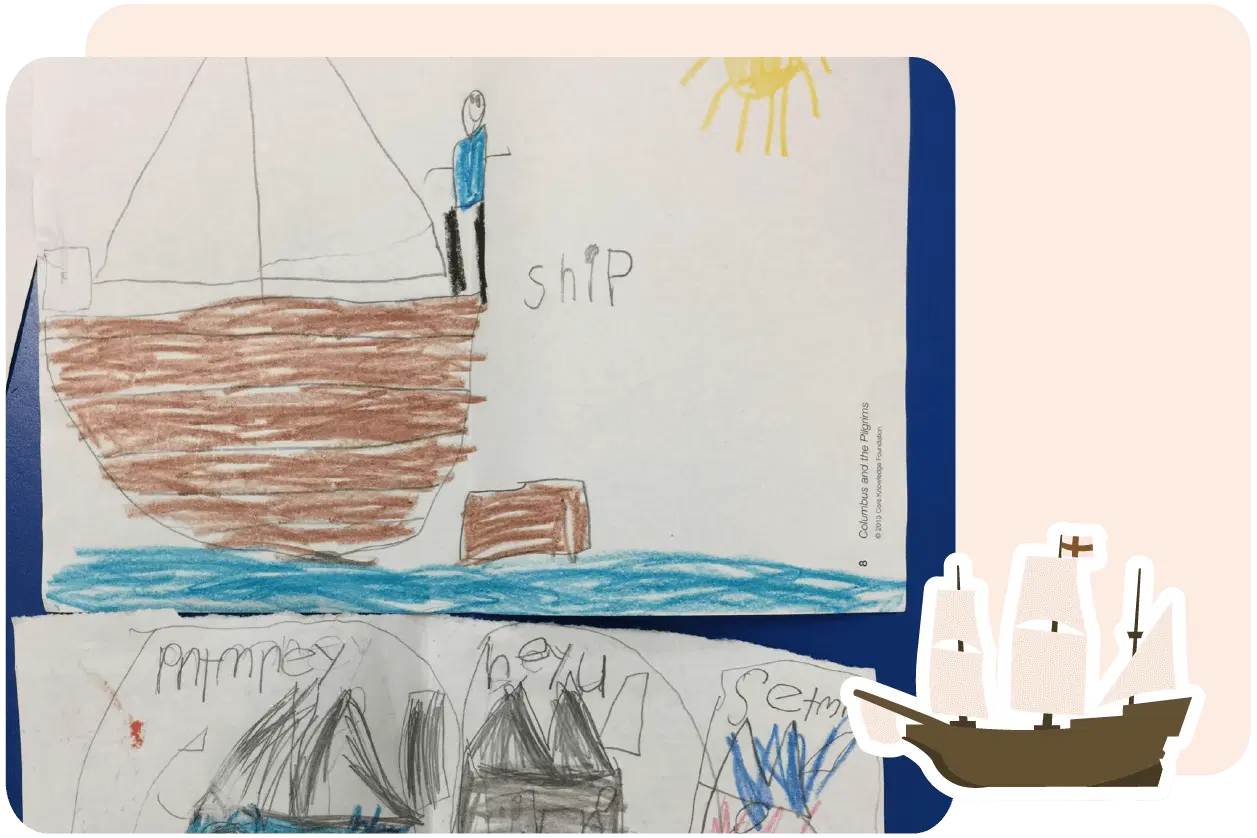
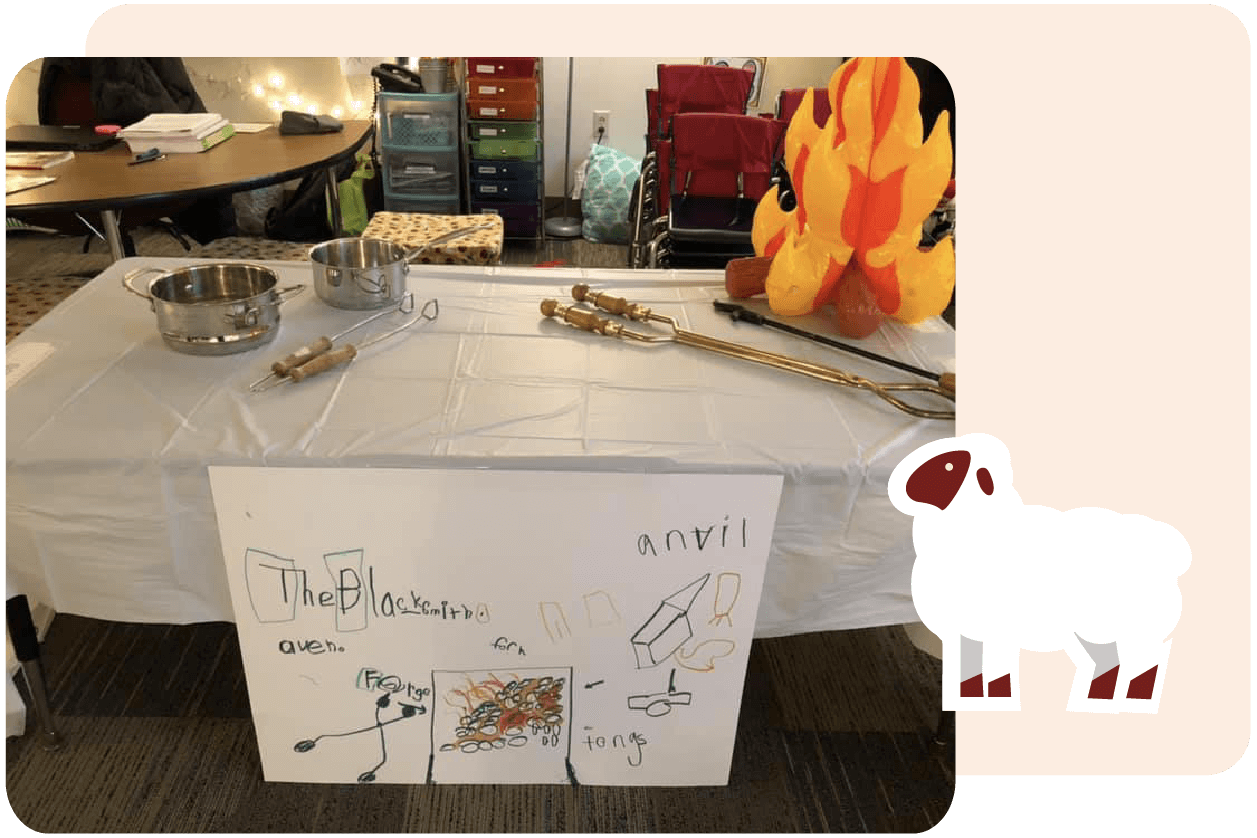
In classroom discussion activities in particular, you may be tempted to keep the conversation going to ensure that your students fully master the content in that class period. We recommend, though, if the lesson overview says discuss for 10 minutes, cut it off at 10 minutes.

Every Amplify Science unit includes hands-on investigations. But, just as scientists gather evidence from many types of sources, so do students in Amplify Science. Like scientists, students using Amplify Science also gather evidence from physical models, digital models, texts, videos, photographs, maps, and data sets. Doing so requires using the full range of the practices in multi-dimensional learning. It also offers students different ways of acquiring knowledge and experience, multiple means of expressing their understanding, and a variety of resources through which to engage with the content.

Often, students enjoy hands-on investigations, but don’t sufficiently learn key concepts from those experiences. The Amplify Science investigations are designed for efficiency and effectiveness. For teachers who wish to supplement the lessons with more hands-on activities, optional hands-on “flextension” activities are included in many units. Instructional guidance, student sheets, and other supporting resources for them are included as downloadable PDF files and materials needed are either included in the unit kit or easily sourced.

First, take a breath, and know that you will gradually internalize the program routines and overall flow. Also, remember that your students are experiencing the program for the first time with you. Together, you’ll be peeling the onion one layer at a time.

It can be intimidating to begin the school year with a brand-new curriculum: where do you start? The Richmond Resources Site will help you navigate the different supports and resources we have for new Amplify Science teachers. 

The Program Hub is also a great place to direct your own, independent learning about Amplify Science instruction. Once you log into the platform, click on the directory on the top left side. Click into the Program Hub, then Professional Learning, and Getting Started. This will give you access to prioritized resources that will help you plan for your Amplify Science instruction. Additionally, the Amplify Science Help center (also accessible from the Global Navigation menu) is great for short videos about specific topics like supporting EL students, using Classwork, etc.

The variety of multimodal activities that are included in Amplify Science provides students with the opportunity to dive deeply into understanding science ideas, make science exciting to students, and allow for all students to have the benefit of multiple opportunities to access rich science content. Think about how many times you’ve taught a concept and then discovered your students had minimal recall at the end of the week. The truth is, students need multiple, varied exposures to key concepts.

In the program, we make sure that students have the opportunity to DO, TALK, READ, WRITE, and VISUALIZE every important idea. We think of this as providing students with multiple at bats— each encounter with the idea provides students with additional evidence, and the opportunity to develop deeper understanding. Students have multiple opportunities to construct their understanding of the same idea.

This multimodality may feel repetitive, but it is purposeful and impactful. Sometimes the repetition is for 1) hitting other Science and Engineering Practices, and/or 2) giving students multiple and varied opportunities to express their understanding. Many students can easily parrot back what they read and one may think they know it — but ask them to draw a model, and one might see that their understanding is only so deep.  Ultimately we believe that this approach not only serves a broader range of students but will also result in more retention in the long run.

Looking for help?

Technical or pedagogical support

Amplify provides a unique kind of free support you won’t find from other publishers. Technical and pedagogical support teams are available from 7 a.m. to 7 p.m. ET, Monday through Friday.

For your most urgent questions:

  • Use our live chat within your program
  • Call our toll-free number: (800) 823-1969

For less urgent questions, send us an email!

  • Technical support: help@amplify.com
  • Pedagogical support: edsupport@amplify.comWhat is pedagogical support? We have developed an educational support team of former teachers and administrators who provide pedagogical support for every Amplify curriculum, assessment, and intervention program. This service is completely free for all educators who are using our programs and includes:
    • Guidance for developing lesson plans and intervention plans
    • Information on where to locate standards and other planning materials
    • Recommendations and tips for day-to-day teaching with Amplify programs
    • Support with administering and interpreting assessment data and more

Order exceptions

If you need to arrange for the return or exchange of items, contact help@amplify.com and be sure to identify yourself as a Richmond Public Schools teacher.

Core STEM programs: Strengthen sessions

Professional development sets teachers and leaders up for success, whether they are new to or experienced with a program. Each Strengthen session promotes a deeper understanding of the program through targeted instructional practices.

Explore STEM Strengthen sessions by program below.

Professional Learning Partner Guide Certified Provider

Amplify professional development has been vetted by Rivet Education’s team through a rigorous three-step process and is listed in the Professional Learning Partner Guide.

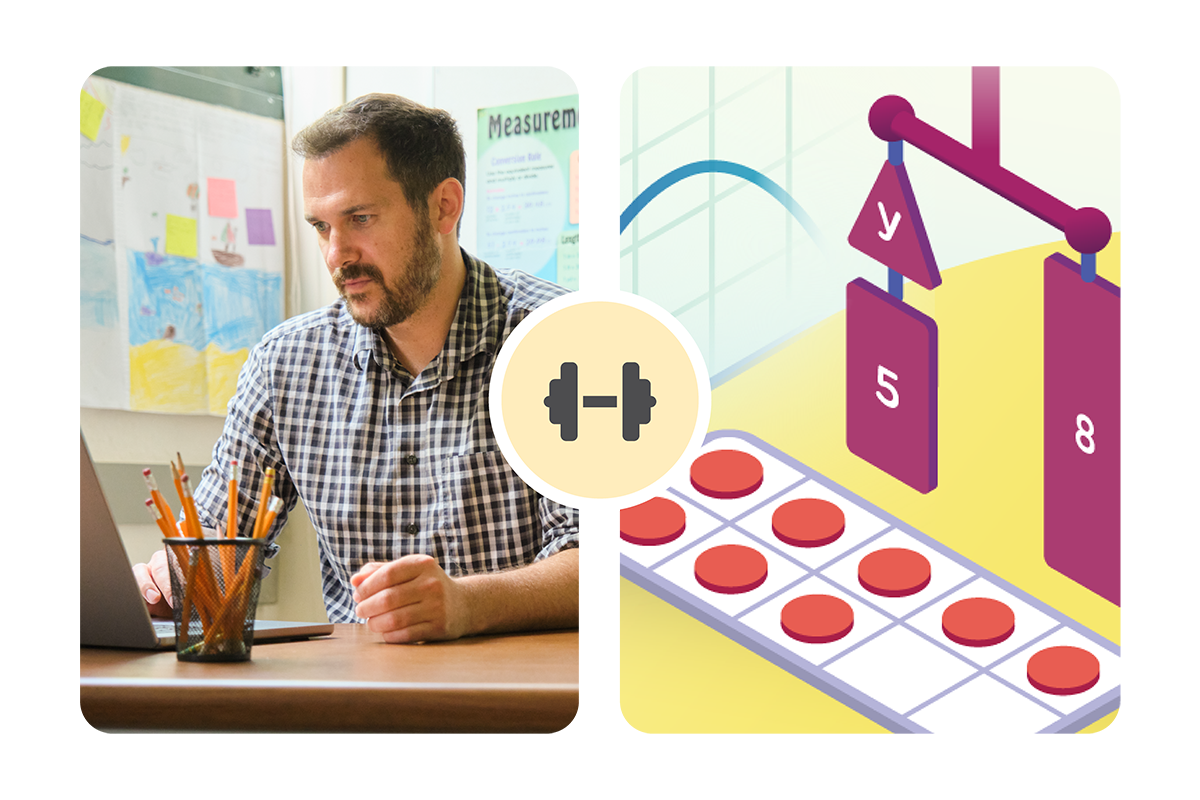
A man works on a laptop at a desk with pencils, next to an illustration of math equations and scales.

About Strengthen sessions

Target specific instructional practices with Strengthen sessions designed for teachers and leaders in year one and beyond.

Ready to schedule? Contact us and an Amplify expert will help identify the session(s) that best support your students’ success.

Each package includes one Strengthen session. Additional sessions can be added as enhancements.

Amplify Math

Amplify Math is a core math curriculum that serves 100% of students in accessing grade-level math every day. The program delivers engaging grade-level math lessons; flexible, social problem-solving experiences both online and off, and insights, data, and reporting that drive performance.

Explore the Amplify Math Strengthen sessions (for grade bands 6–Algebra 1 and Geometry–Algebra 2) for Begin packages and beyond. Click the session title or scroll down to learn more about each session.

Begin packages

  On-site package
(15 hr.)
Hybrid
on-site package

(15 hr.)
Hybrid 10 package
(10 hr.)
Hybrid
virtual package

(15 hr.)
Virtual package
(7 hr.)
One Strengthen session per package On-site
3 hr. sessions
On-site
3 hr. sessions
Virtual
1 hr. sessions
Virtual
3 hr. sessions
Virtual
1 hr. sessions
Enhancing planning for 6–A1 teachers A large, light peach-colored checkmark on a transparent background. A large, light peach-colored checkmark on a transparent background.   A large, light peach-colored checkmark on a transparent background.  
Enhancing practice for 6–A1 teachers
A large, light peach-colored checkmark on a transparent background. A large, light peach-colored checkmark on a transparent background.   A large, light peach-colored checkmark on a transparent background.  
Enhancing observations for leaders A large, light peach-colored checkmark on a transparent background. A large, light peach-colored checkmark on a transparent background.   A large, light peach-colored checkmark on a transparent background.  
Unit-level planning for 6–A1 teachers
    A large, light peach-colored checkmark on a transparent background.   A large, light peach-colored checkmark on a transparent background.
Lesson-level planning for 6–A1 teachers
    A large, light peach-colored checkmark on a transparent background.   A large, light peach-colored checkmark on a transparent background.
Increasing engagement with instructional routines for 6–A1 teachers     A large, light peach-colored checkmark on a transparent background.   A large, light peach-colored checkmark on a transparent background.

Begin: Enhancing planning for grade 6–A1 teachers

On-site or virtual, 3 hours

Prepare to teach Amplify Math lessons effectively by engaging in collaborative backward planning with experts. Work alongside our facilitators to understand how to target key concepts and make successful instructional decisions across a unit, and leave with a completed unit plan for your class.

Audience: Teachers, instructional staff (maximum 30 participants)

Begin: Enhancing practice for grade 6–A1 teachers

On-site or virtual, 3 hours

See the Launch, Monitor, Connect problem-based learning model in action, and practice integrating these practices into your facilitation of lesson activities. Leave with guidelines for using the Launch, Monitor, Connect model that you can implement during your next lesson.

Audience: Teachers, instructional staff (maximum 30 participants)

Begin: Enhancing observations for leaders

On-site or virtual, 3 hours

Learn to use our non-evaluative classroom look-for tool for Amplify Math to promote the use of instructional resources, focus on instructional delivery, and monitor instruction. Leave with an action plan for collecting and analyzing observation data to support teachers in their implementation of Amplify Math.

Audience: Leaders (maximum 30 participants)

Begin: Strengthen Focus: Unit-level planning for grade 6–A1 teachers

Virtual, 1 hour

Dive into unit planning as you learn the story of how your upcoming unit is tied to other units and grade levels, and discover the big ideas you will explore alongside your students in Amplify Math.

Audience: Teachers, instructional staff (maximum 30 participants)

Begin: Strengthen Focus: Lesson-level planning for grade 6–A1 teachers

Virtual, 1 hour

Dive into lesson-level planning as you learn how to create a road map that guides student learning, makes connections across lessons, and measures student understanding of the learning goals in Amplify Math.

Audience: Teachers, instructional staff (maximum 30 participants)

Begin: Strengthen Focus: Increasing engagement with Instructional Routines for grade 6–A1 teachers

Virtual, 1 hour

Explore how to use Instructional Routines such as Notice and Wonder to support and engage students as they make sense of new contexts and mathematical problems in Amplify Math.

Audience: Teachers, instructional staff (maximum 30 participants)

Practice packages

  On-site package
(15 hr.)
Hybrid 15,
on-site package

(15 hr.)
Hybrid 13 package
(13 hr.)
Virtual package
(9 hr.)
One Strengthen session per package On-site
3 hr. sessions
On-site
3 hr. sessions
Virtual
1 hr. sessions
Virtual
3 hr. session
Enhancing planning for 6–A1 teachers A large, light peach-colored checkmark on a transparent background. A large, light peach-colored checkmark on a transparent background.   A large, light peach-colored checkmark on a transparent background.
Enhancing practice for 6–A1 teachers
A large, light peach-colored checkmark on a transparent background. A large, light peach-colored checkmark on a transparent background.   A large, light peach-colored checkmark on a transparent background.
Enhancing observations for leaders A large, light peach-colored checkmark on a transparent background. A large, light peach-colored checkmark on a transparent background.   A large, light peach-colored checkmark on a transparent background.
Using differentiation supports for 6–A1 teachers A large, light peach-colored checkmark on a transparent background. A large, light peach-colored checkmark on a transparent background.    A large, light peach-colored checkmark on a transparent background. 
Using data to drive instruction for 6–A1 teachers A large, light peach-colored checkmark on a transparent background. A large, light peach-colored checkmark on a transparent background.   A large, light peach-colored checkmark on a transparent background.
Addressing prerequisite skills for 6–A1 teachers A large, light peach-colored checkmark on a transparent background. A large, light peach-colored checkmark on a transparent background.   A large, light peach-colored checkmark on a transparent background.
Orchestrating math discussions for 6–A1 teachers A large, light peach-colored checkmark on a transparent background. A large, light peach-colored checkmark on a transparent background.   A large, light peach-colored checkmark on a transparent background.
Building language with math routines for 6–A1 teachers     A large, light peach-colored checkmark on a transparent background.  
Unit-level planning for 6–A1 teachers     A large, light peach-colored checkmark on a transparent background.  
Lesson-level planning for 6–A1 teachers     A large, light peach-colored checkmark on a transparent background.  
Increasing engagement with Instructional Routines for 6–A1 teachers     A large, light peach-colored checkmark on a transparent background.  

Practice: Enhancing planning for grade 6–A1 teachers

On-site or virtual, 3 hours

Prepare to effectively teach Amplify Math lessons by engaging in collaborative backward planning with experts. Work alongside our facilitators to understand how to target key concepts and make effective instructional decisions across a unit, and leave with a completed unit plan for your class.

Audience: Teachers, instructional staff (maximum 30 participants)

Practice: Enhancing practice for grade 6–A1 teachers

On-site or virtual, 3 hours

See the Launch, Monitor, Connect problem-based learning model in action, and practice integrating these practices into your facilitation of lesson activities. Leave with guidelines for using the Launch, Monitor, Connect model that you can implement during your next lesson.

Audience: Teachers, instructional staff (maximum 30 participants)

Practice: Enhancing observations for leaders

On-site or virtual, 3 hours

Learn to use our non-evaluative classroom look-for tool for Amplify Math to promote the use of instructional resources, focus on instructional delivery, and monitor instruction. Leave with an action plan for collecting and analyzing observation data to support teachers in their implementation of Amplify Math.

Audience: Leaders (maximum 30 participants)

Practice: Using differentiation supports for grade 6–A1 teachers

On-site or virtual, 3 hours

Learn how to leverage embedded differentiated supports in Amplify Math to ensure that all students can be successful. Walk away with a plan for supporting students in your classroom including multilingual/English learners (ML/ELs), students with disabilities, students who may need extra support, and advanced students.

Audience: Teachers, instructional staff (maximum 30 participants)

Practice: Using data to drive instruction for grade 6–A1 teachers

On-site or virtual, 3 hours

Grow your proficiency in data analysis. Turn student data gathered within Amplify Math into differentiated instruction targeting specific skills. Walk away ready to use the data provided in the curriculum to align embedded support to your students’ unique needs.

Audience: Teachers, instructional staff (maximum 30 participants)

Practice: Addressing prerequisite skills for grade 6–A1 teachers

On-site or virtual, 3 hours

Explore Amplify Math’s just-in-time approach to addressing prerequisite skills. Leave with a deeper understanding of how to use embedded curriculum resources to identify and support prerequisite skills essential for your next unit.

Audience: Teachers, instructional staff (maximum 30 participants)

Practice: Orchestrating math discussions for grade 6–A1 teachers

On-site or virtual, 3 hours

Learn strategies for leading discussions that promote more math talk among all students in your classroom. Walk away with strategies and Amplify Math curriculum tools you can bring back to your classroom to enhance discussion in your next lesson.

Audience: Teachers, instructional staff (maximum 30 participants)

Practice: Strengthen Focus: Building language with math routines for grade 6–A1 teachers

Virtual, 1 hour

Explore how Math Language Routines support students as they make sense of new contexts and mathematical problems in Amplify Math. Leave with strategies for using these routines to support students in learning mathematical practices, content, and language in your upcoming lessons.

Audience: Teachers, instructional staff (maximum 30 participants)

Practice: Strengthen Focus: Unit-level planning for grade 6–A1 teachers

Virtual, 1 hour

Dive into unit planning as you learn the story of how your upcoming unit is tied to other units and grade levels, and discover the big ideas you’ll explore alongside your students in Amplify Math.

Audience: Teachers, instructional staff (maximum 30 participants)

Practice: Strengthen Focus: Lesson-level planning for grade 6–A1 teachers

Virtual, 1 hour

Dive into lesson-level planning as you learn how to create a roadmap for a lesson that guides student learning, makes connections across lessons, and measures student understanding of the learning goals in Amplify Math.

Audience: Teachers, instructional staff (maximum 30 participants)

Practice: Strengthen Focus: Increasing engagement with Instructional Routines for grade 6–A1 teachers

Virtual, 1 hour

Explore how to leverage Instructional Routines such as Notice and Wonder to support students as they make sense of new contexts and mathematical problems in Amplify Math.

Audience: Teachers, instructional staff (maximum 30 participants)

Amplify Desmos Math

Amplify Desmos Math is a core K–12 program—available in English and Spanish—that applies a problem-based approach to develop deep conceptual understanding, procedural fluency, and application. Using technology inspired by students’ natural curiosity, Amplify Desmos Math connects the classroom and fosters real collaboration, discourse, and perseverance in problem-solving. Captivating activities, powerful teaching tools, and lots of support enable students to develop math proficiency that lasts a lifetime.

Explore the Amplify Desmos Math Strengthen sessions (for grades K–5, 6–A1, and high school) for Begin packages and beyond. Click the session title or scroll down to learn more about each session.

Begin packages

Strengthen sessions

  On-site package
(15 hr.)
Hybrid 15,
on-site package

(15 hr.)
Hybrid 10 package
(10 hr.)
Hybrid 15, virtual package
(15 hr.)
Virtual package
(7 hr.)
One Strengthen session per package On-site,
3 hr.
On-site,
3 hr.
Virtual,
1 hr.
Virtual,
3 hr.
Virtual,
1 hr.
Enhancing planning for
K–5, 6
–A1, or high school teachers
A large, light peach-colored checkmark on a transparent background. A large, light peach-colored checkmark on a transparent background.   A large, light peach-colored checkmark on a transparent background.  
Enhancing practice for
K–5, 6
–A1, or high school teachers
A large, light peach-colored checkmark on a transparent background. A large, light peach-colored checkmark on a transparent background.   A large, light peach-colored checkmark on a transparent background.  
Enhancing observations for K–5, 6–A1 leaders, or high school leaders A large, light peach-colored checkmark on a transparent background. A large, light peach-colored checkmark on a transparent background.   A large, light peach-colored checkmark on a transparent background.  
Supporting all learners: Differentiation in Amplify Desmos Math for K–5 or 6–A1 teachers A large, light peach-colored checkmark on a transparent background. A large, light peach-colored checkmark on a transparent background.   A large, light peach-colored checkmark on a transparent background.  
Unit-level planning for
K–5, 6–A1, or high school teachers
    A large, light peach-colored checkmark on a transparent background.   A large, light peach-colored checkmark on a transparent background.

Begin: Amplify Desmos Math: Enhancing planning for K–5, 6–A1, or high school teachers

On-site or virtual, 3 hours

Dive into planning for Amplify Desmos Math, both big picture and day-to-day. Practice using lesson- and unit-planning protocols that will help you build a deep understanding of the math content you’ll be teaching and the planning resources available to you in the curriculum. Walk away with practical strategies for planning, even when you may not have much time.

Audience: Teachers, instructional staff (maximum 30 participants)

Begin: Amplify Desmos Math: Enhancing practice for K–5, 6–A1, or high school teachers

On-site or virtual, 3 hours

Dig into Amplify Desmos Math’s Launch, Monitor, Connect framework to level-up the student discourse in your math class. Explore in-the-moment differentiation support to help you orchestrate discussion and make the most out of key opportunities for conversation and collaboration.

Audience: Teachers, instructional staff (maximum 30 participants)

New session

Begin: Strengthen: Supporting all learners: Differentiation in Amplify Desmos Math for K–5 or 6–A1 teachers

On-site or virtual, 3 hours

Learn how to use the differentiation supports in Amplify Desmos Math to effectively support all learners, both in the moment during a lesson and beyond the lesson. Leave with a plan for implementing resources to support, strengthen, and stretch students’ thinking.

Audience: Teachers, instructional staff (maximum 30 participants)

New session

Begin: Amplify Desmos Math: Enhancing observations for K–5, 6–A1, or high school leaders

High school sessions are available October 2026.

On-site or virtual, 3 hours

Elevate your program knowledge to support teachers with effective Amplify Desmos Math implementation. Leave prepared to identify key instructional elements in a problem-based math lesson, analyze data, and conduct effective classroom observations.

Audience: Leaders (maximum 30 participants)

New session

Begin: Strengthen Focus: Amplify Desmos Math: Unit-level planning for K–5, 6–A1, or high school teachers

Virtual, 1 hour

Dive into unit-level planning to learn the story of your upcoming unit, and discover the big ideas you will explore alongside your students in Amplify Desmos Math.

Audience: Teachers, instructional staff (maximum 30 participants)

Practice packages

Strengthen sessions

  On-site package
(15 hr.)
Hybrid 15,
on-site package

(15 hr.)
Hybrid 13 package
(13 hr.)
Virtual package
(9 hr.)
One Strengthen session per package On-site,
3 hr.
Virtual,
3 hr.
Virtual,
1 hr.
Virtual,
3 hr.
Amplify Desmos Math: Enhancing planning for K–5, 6–A1, or high school teachers A large, light peach-colored checkmark on a transparent background. A large, light peach-colored checkmark on a transparent background.   A large, light peach-colored checkmark on a transparent background.
Amplify Desmos Math: Enhancing practice for K–5, 6–A1, or high school teachers A large, light peach-colored checkmark on a transparent background. A large, light peach-colored checkmark on a transparent background.   A large, light peach-colored checkmark on a transparent background.
Amplify Desmos Math: Enhancing observations for K–5, 6–A, or high school leaders A large, light peach-colored checkmark on a transparent background. A large, light peach-colored checkmark on a transparent background.   A large, light peach-colored checkmark on a transparent background.
Amplify Desmos Math: Supporting all learners: Differentiation in Amplify Desmos Math for K–5 or 6–A1 teachers A large, light peach-colored checkmark on a transparent background. A large, light peach-colored checkmark on a transparent background.   A large, light peach-colored checkmark on a transparent background.
Amplify Desmos Math: Supporting and facilitating meaningful discussions for K–5, 6–A1, or high school teachers A large, light peach-colored checkmark on a transparent background. A large, light peach-colored checkmark on a transparent background.   A large, light peach-colored checkmark on a transparent background.
Amplify Desmos Math: Assessment in action: Analyzing data, reports, and planning next steps for K–5 or 6–A1 teachers A large, light peach-colored checkmark on a transparent background. A large, light peach-colored checkmark on a transparent background.   A large, light peach-colored checkmark on a transparent background.
Amplify Desmos Math: Unit-level planning for K–5, 6–A1, or high school teachers
    A large, light peach-colored checkmark on a transparent background.  
Amplify Desmos Math: Teaching a lesson with digital student screens for K–5 teachers     A large, light peach-colored checkmark on a transparent background.  
Amplify Desmos Math: Snapshots in the Teacher Dashboard for
6–A1 teachers
    A large, light peach-colored checkmark on a transparent background.  
Amplify Desmos Math: Increasing engagement with instructional routines for K–5, 6–A1, or high school teachers     A large, light peach-colored checkmark on a transparent background.  

Practice: Amplify Desmos Math: Enhancing planning for K–5, 6–A1, or high school teachers

On-site or virtual, 3 hours

Dive into both big-picture and day-to-day planning for Amplify Desmos Math. Practice using lesson- and unit-planning protocols that will help you build a deep understanding of the math content you’ll be teaching and the planning resources available to you in the curriculum. Walk away with practical strategies for planning, even when you may not have much time.

Audience: Teachers, instructional staff (maximum 30 participants)

Practice: Amplify Desmos Math: Enhancing practice for K–5, 6–A1, or high school teachers

On-site or virtual, 3 hours

Dig into Amplify Desmos Math’s Launch, Monitor, Connect framework to level up the student discourse in your math class. Explore in-the-moment differentiation support to help you orchestrate discussion and make the most out of key opportunities for conversation and collaboration.

Audience: Teachers, instructional staff (maximum 30 participants)

New session

Practice: Amplify Desmos Math: Enhancing observations for K–5, 6–A1, or high school leaders

High school sessions are available October 2026.

On-site or virtual, 3 hours

Elevate your program knowledge to support teachers with effective Amplify Desmos Math implementation. Leave prepared to identify key instructional elements in a problem-based math lesson, analyze data, and conduct effective classroom observations.

Audience: Leaders (maximum 30 participants)

New session

Practice: Amplify Desmos Math: Supporting all learners: Differentiation in Amplify Desmos Math for K–5 or 6–A1 teachers

On-site or virtual, 3 hours

Learn how to use the differentiation supports in Amplify Desmos Math to effectively support all learners, both in the moment during a lesson and beyond the lesson. Leave with a plan for implementing resources to support, strengthen, and stretch students’ thinking.

Audience: Teachers, instructional staff (maximum 30 participants)

Available October 2026

Practice: Amplify Desmos Math: Supporting and facilitating meaningful discussions for K–5, 6–A1, or high school teachers

On-site or virtual, 3 hours

Explore how to transform your mathematics classroom into a social and collaborative environment where students deepen their understanding by sharing their mathematical thinking. Learn more about how Amplify Desmos Math provides support for these meaningful mathematical conversations.

Audience: Teachers, instructional staff (maximum 30 participants)

Available October 2026

Practice: Amplify Desmos Math: Assessment in action: Analyzing data, reports, and planning next steps for K–5 or 6–A1 teachers

On-site or virtual, 3 hours

Deepen your understanding of the different types of assessments in Amplify Desmos Math and how they provide evidence of student learning. Analyze sample student work to calibrate on assessment scoring, interpret student thinking, and make a plan for instructional next steps.

Audience: Teachers, instructional staff (maximum 30 participants)

New session

Practice: Strengthen Focus: Amplify Desmos Math: Unit-level planning for K–5, 6–A1, or high school teachers

Virtual, 1 hour

Dive into unit-level planning to learn the story of your upcoming unit, and discover the big ideas you will explore alongside your students in Amplify Desmos Math.

Audience: Teachers, instructional staff (maximum 30 participants)

Practice: Strengthen Focus: Amplify Desmos Math: Teaching a lesson with digital student screens for K–5 teachers

Virtual, 1 hour

Get ready to facilitate lessons with digital student screens. Explore what’s possible with the Teacher Dashboard and plan to make the most of these exciting instructional moments.

Audience: Teachers, instructional staff (maximum 30 participants)

Practice: Strengthen Focus: Amplify Desmos Math: Snapshots in the Teacher Dashboard for 6–A1 teachers

Virtual, 1 hour

Explore how to use the Snapshots tool in the Teacher Dashboard to create a collaborative classroom that invites and celebrates student thinking. Leave with planning tips and tricks that will get you ready to use Snapshots during your busy math classes.

Audience: Teachers, instructional staff (maximum 30 participants)

Available October 2026

Practice: Strengthen Focus: Amplify Desmos Math: Increasing engagement with instructional routines for K–5, 6–A1, or high school teachers

Virtual, 1 hour

Explore how to use the instructional routines in Amplify Desmos Math to support and engage students as they make sense of new contexts, develop mathematical language, and solve problems.

Audience: Teachers, instructional staff (maximum 30 participants)

Amplify Science

Amplify Science is a K–8 science curriculum that blends hands-on investigations, literacy-rich activities, and interactive digital tools to empower students to think, read, write, and argue like real scientists and engineers. 

Explore the Amplify Science sessions (for grade bands K–5 and 6–8) for year-one packages and beyond. Select the session title or scroll to learn more about each session.

Begin packages

Strengthen sessions

  On-site package
(15 hr.)
Hybrid 15,
on-site package

(15 hr.)
Hybrid 10 package
(10 hr.)
Hybrid 15, virtual package
(15 hr.)
Virtual package
(7 hr.)
One Strengthen session per package On-site,
3 hr.
Virtual,
3 hr.
Virtual,
1 hr.
Virtual,
3 hr.
Virtual,
1 hr.
Amplify Science: Enhancing planning for K–5 or 6–8 teachers A large, light peach-colored checkmark on a transparent background. A large, light peach-colored checkmark on a transparent background.   A large, light peach-colored checkmark on a transparent background.  
Amplify Science: Enhancing practice
for K–5 or 6–8 teachers

A large, light peach-colored checkmark on a transparent background. A large, light peach-colored checkmark on a transparent background.   A large, light peach-colored checkmark on a transparent background.  
Amplify Science: Enhancing observations for K–8 leaders A large, light peach-colored checkmark on a transparent background. A large, light peach-colored checkmark on a transparent background.   A large, light peach-colored checkmark on a transparent background.  
Amplify Science: Planning an Amplify Science lesson for K–8 teachers
    A large, light peach-colored checkmark on a transparent background.   A large, light peach-colored checkmark on a transparent background.
Amplify Science: Supporting all learners: Exploring the resources for K–8 teachers
    A large, light peach-colored checkmark on a transparent background.   A large, light peach-colored checkmark on a transparent background.
Amplify Science: Supporting all learners: Teacher modeling and student discourse
for K–8 teachers

    A large, light peach-colored checkmark on a transparent background.   A large, light peach-colored checkmark on a transparent background.

Begin: Amplify Science: Enhancing planning for K–5 or 6–8 teachers

On-site or virtual, 3 hours

Learn how to use a planning protocol to internalize an upcoming Amplify Science unit. Leave with a plan to support students engaging in three-dimensional learning while also meeting the needs of all students in your classroom.

Audience: Teachers, instructional staff grades K–5 or 6–8 (maximum 30 participants)

Begin: Amplify Science: Enhancing practice for K–5 or 6–8 teachers

On-site or virtual, 3 hours

Learn how Amplify Science supports phenomenon-based learning. Experience a sequence of model instruction from the curriculum, and walk away with a plan for how you can enhance the curriculum through your teaching practice to build a powerful culture of figuring out in your science classroom.

Audience: Teachers, instructional staff grades K–5 or 6–8 (maximum 30 participants)

Begin: Amplify Science: Enhancing observations for K–8 leaders

On-site or virtual, 3 hours

Learn to use the non-evaluative classroom look-for tool for Amplify Science to promote the use of instructional materials, focus on instructional delivery, and monitor instruction. Leave with an action plan for collecting and analyzing observation data to support teachers in their implementation of Amplify Science.

Audience: Leaders grades K–8 (maximum 30 participants)

Begin: Strengthen Focus: Amplify Science: Planning an Amplify Science lesson for K–8 teachers

Virtual, 1 hour

Develop structure and routines for planning Amplify Science lessons and leave prepared for an upcoming lesson.

Audience: Teachers, instructional staff grades K–8 (maximum 30 participants)

Begin: Strengthen Focus: Amplify Science: Supporting all learners: Exploring the resources for K–8 teachers

Virtual, 1 hour

Learn how to use lesson-specific differentiation briefs, embedded assessments, and activity-specific teacher support notes to maximize instruction for all learners with Amplify Science.

Audience: Teachers, instructional staff grades K–8 (maximum 30 participants)

Begin: Strengthen Focus: Amplify Science: Supporting all learners: Teacher modeling and student discourse for K–8 teachers

Virtual, 1 hour

Explore ways to leverage and build upon two key instructional elements in Amplify Science, and plan how you’ll use these supports to engage all learners in your next lesson.

Audience: Teachers, instructional staff grades K–8 (maximum 30 participants)

Practice packages

Strengthen sessions

  On-site package
(15 hr.)
Hybrid 15,
on-site package

(15 hr.)
Hybrid 13 package
(13 hr.)
Virtual package
(9 hr.)
One Strengthen session per package On-site,
3 hr.
Virtual,
3 hr.
Virtual,
1 hr.
Virtual,
3 hr.
Amplify Science: Enhancing planning for K–5 or 6–8 teachers A large, light peach-colored checkmark on a transparent background. A large, light peach-colored checkmark on a transparent background.   A large, light peach-colored checkmark on a transparent background.
Amplify Science: Enhancing practice for K–5 or 6–8 teachers
A large, light peach-colored checkmark on a transparent background. A large, light peach-colored checkmark on a transparent background.   A large, light peach-colored checkmark on a transparent background.
Amplify Science: Enhancing observations for K–8 leaders A large, light peach-colored checkmark on a transparent background. A large, light peach-colored checkmark on a transparent background.   A large, light peach-colored checkmark on a transparent background.
Amplify Science: Supporting all learners with complex texts for K–5 or 6–8 teachers
A large, light peach-colored checkmark on a transparent background. A large, light peach-colored checkmark on a transparent background.   A large, light peach-colored checkmark on a transparent background.
Amplify Science: Supporting multilingual/English learners for K–5 or 6–8 teachers
A large, light peach-colored checkmark on a transparent background. A large, light peach-colored checkmark on a transparent background.   A large, light peach-colored checkmark on a transparent background.
Amplify Science: Writing in science for K–5 or 6–8 teachers A large, light peach-colored checkmark on a transparent background. A large, light peach-colored checkmark on a transparent background.   A large, light peach-colored checkmark on a transparent background.
Amplify Science: Assessment system for K–5 or 6–8 teachers
A large, light peach-colored checkmark on a transparent background. A large, light peach-colored checkmark on a transparent background.    
Amplify Science: Engineering Internships for 6–8 teachers
A large, light peach-colored checkmark on a transparent background. A large, light peach-colored checkmark on a transparent background.   A large, light peach-colored checkmark on a transparent background.
Amplify Science: Science Seminar for 6–8 teachers
A large, light peach-colored checkmark on a transparent background. A large, light peach-colored checkmark on a transparent background.   A large, light peach-colored checkmark on a transparent background.
Amplify Science: Planning an Amplify Science lesson for K–8 teachers
    A large, light peach-colored checkmark on a transparent background.  
Amplify Science: Supporting all learners: Exploring the resources for K–8 teachers
    A large, light peach-colored checkmark on a transparent background.  
Amplify Science: Supporting all learners: Teacher modeling and student discourse for K–8 teachers
    A large, light peach-colored checkmark on a transparent background.  
Amplify Science: Analyzing student work for K–8 teachers
    A large, light peach-colored checkmark on a transparent background.  
Amplify Science: Supporting all learners: Multimodal learning and multiple at-bats for K–8 teachers
    A large, light peach-colored checkmark on a transparent background.  
Amplify Science: Grading with Amplify Science for K–8 teachers
    A large, light peach-colored checkmark on a transparent background.  
Amplify Science: Enhancing the digital experience for K–5 teachers
    A large, light peach-colored checkmark on a transparent background.  
Amplify Science: Planning with the Coherence Flowchart for K–8 teachers
    A large, light peach-colored checkmark on a transparent background.  

Practice: Amplify Science: Enhancing planning for K–5 or 6–8 teachers

On-site or virtual, 3 hours

Learn how to use a planning protocol to internalize an upcoming Amplify Science unit. Walk away with a plan to support students engaging in three-dimensional learning while also meeting the all needs of students in your classroom.

Audience: Teachers, instructional staff grades K–5 or 6–8 (maximum 30 participants)

Practice: Amplify Science: Enhancing practice for K–5 or 6–8 teachers

On-site or virtual, 3 hours

Learn how Amplify Science supports phenomenon-based learning. Experience a sequence of model instruction from the curriculum, and walk away with a plan for how you can enhance the curriculum through your teaching practice to build a powerful culture of “figuring out” in your science classroom.

Audience: Teachers, instructional staff grades K–5 or 6–8 (maximum 30 participants)

Practice: Amplify Science: Enhancing observations for K–5 or 6–8 leaders

On-site or virtual, 3 hours

Learn to use the non-evaluative classroom look-for tool for Amplify Science to promote the use of instructional materials, focus on instructional delivery, and monitor instruction. Leave with an action plan for collecting and analyzing observation data to support teachers in their implementation of Amplify Science.

Audience: Leaders grades K–5 or 6–8 (maximum 30 participants)

Practice: Amplify Science: Supporting all learners with complex texts for K–5 or 6–8 teachers

On-site or virtual, 3 hours

Collaborate to solve common reading challenges alongside other educatorsLearn strategies to support students in grades K–5 or 6–8 in accessing complex texts in Amplify Science units by engaging in a model-reading sequence. Leave with a plan for incorporating effective strategies into your upcoming Amplify Science reading lesson.

Audience: Teachers, instructional staff grades K–5 or 6–8 (maximum 30 participants)

Practice: Amplify Science: Supporting multilingual/English learners for K–5 or 6–8 teachers

On-site or virtual, 3 hours

Explore strategies and engage in model activities to support multilingual/English learners in grades K–5 or 6–8 in developing their abilities to do, talk, read, write, visualize, and construct arguments in Amplify Science. Leave with strategies to support a deeper understanding of the critical role that language and literacy play in developing scientific understanding.

Audience: Teachers, instructional staff grades K–5 or 6–8 (maximum 30 participants)

Practice: Amplify Science: Writing in science for K–5 or 6–8 teachers

On-site or virtual, 3 hours

Develop an understanding of how the Amplify Science writing approach supports students in grades K–5 or 6–8 in engaging in science practices, making sense of science ideas, and growing as writers. Leave with a plan for supporting student writing in your next unit.

Audience: Teachers, instructional staff grades K–5 or 6–8 (maximum 30 participants)

Practice: Amplify Science: Assessment system for K–5 or 6–8 teachers

On-site or virtual, 3 hours

Analyze a sample formative assessment, deepen your understanding of learning progressions in each Amplify Science unit, and participate in discussions to understand the relationships between different types of assessments and your unit’s learning goals. Walk away with strategies for collecting, analyzing, and responding to student assessment data.

Audience: Teachers, instructional staff grades of K–5 or 6–8 (maximum 30 participants)

Practice: Amplify Science: Engineering Internships for 6–8 teachers

On-site or virtual, 3 hours

Plan for the first Amplify Science Engineering Internship course of your grade level (6–8) by exploring the Futura workspace and digital tools students will use during the internship experience. Leave with an understanding of how students will apply science concept knowledge to construct design solutions. This session will feature one of the following Engineering Internships based on your need: Metabolism, Plate Motion, or Force and Motion.

Audience: Teachers, instructional staff grades 6–8 (maximum 30 participants)

Practice: Amplify Science: Science Seminar for 6–8 teachers

On-site or virtual, 3 hours

Experience a Science Seminar sequence of a sample unit from Amplify Science grade 6–8 from the student perspective! Gain an understanding of how students apply science concepts to engage in argumentation about a phenomenon, and leave with a plan for teaching a Science Seminar unit in your own classroom.

Audience: Teachers, instructional staff grades 6–8 (maximum 30 participants)

Practice: Strengthen Focus: Amplify Science: Planning an Amplify Science lesson for K–8 teachers

Virtual, 1 hour

Develop a structure for planning Amplify Science lessons and leave prepared for an upcoming lesson.

Audience: Teachers, instructional staff grades K–8 (maximum 30 participants)

Practice: Strengthen Focus: Amplify Science: Supporting all learners: Exploring the resources for K–8 teachers

Virtual, 1 hour

Learn how to use lesson-specific differentiation briefs, embedded assessments, and activity-specific teacher support notes to supplement instruction for all learners with Amplify Science.

Audience: Teachers, instructional staff grades K–8 (maximum 30 participants)

Practice: Strengthen Focus: Amplify Science: Supporting all learners: Teacher modeling and student discourse for K–8 teachers

Virtual, 1 hour

Explore ways to leverage and build upon two key instructional elements in Amplify Science and plan for ways to use these supports to engage all learners in your next lesson.

Audience: Teachers, instructional staff grades K–8 (maximum 30 participants)

Practice: Strengthen Focus: Amplify Science: Analyzing student work for K–8 teachers

Virtual, 1 hour

Engage with a protocol to analyze real student work and plan for instructional next steps in Amplify Science. (You are required to bring student formative assessment samples to this session.)

Audience: Teachers, instructional staff grades K–8 (maximum 30 participants)

Practice: Strengthen Focus: Amplify Science: Supporting all learners: Multimodal learning and multiple at-bats for K–8 teachers

Virtual, 3 hours

Learn strategies to develop an understanding of how Amplify Science’s multimodal approach supports all learners.

Audience: Teachers, instructional staff grades K–8 (maximum 30 participants)

Practice: Strengthen Focus: Amplify Science: Grading with Amplify Science for K–8 teachers

Virtual, 1 hour

Develop an understanding of how to use assessment resources in Amplify Science to grade students three-dimensionally and use practices that align with district/school guidelines.

Audience: Teachers, instructional staff grades K–8 (maximum 30 participants)

Practice: Strengthen Focus: Amplify Science: Enhancing the digital experience for K–5 teachers

Virtual, 1 hour

Learn how to go further with Amplify Science digital experience tools to enhance teaching and learning.

Audience: Teachers, instructional staff grades K–5 (maximum 30 participants)

Practice: Strengthen Focus: Amplify Science: Planning with the Coherence Flowchart for K–8 teachers

Virtual, 1 hour

Practice using the Coherence Flowchart resource to plan an upcoming Amplify Science unit.

Audience: Teachers, instructional staff grades K–8 (maximum 30 participants)

Get in touch with a PD expert.

Frequently asked questions

The following FAQ contains the answers to some of the most common questions that we receive from pilot teachers like you.

Still have questions? Your dedicated pilot support coordinator would be happy to help. His or her contact information can be found in the pilot support brochure you received during your pilot implementation training. If you prefer, request that your pilot support coordinator gets in touch with you by completing this form.

A teacher discusses educational content in front of a whiteboard while students in the classroom raise their hands eagerly.

Program questions

It’s true. Our teacher’s guide does not look like the typical guide that comes with a traditional textbook. Here’s why: we aren’t a traditional textbook program. Rather, we’re a next generation curriculum designed to support a shift to a whole new way of teaching science.

With this shift, your district will be faced with supporting a wide-variety of needs from a wide-variety of teachers. For that reason, the resources required to successfully implement a new program will vary considerably from teacher to teacher. That’s precisely why our Teacher’s Reference Guide is chock full of so many rich and varied resources. From scientific background knowledge to suggested teacher talk, standards maps to materials lists, and lesson preparation notes and classroom management tips to strategies for differentiating instruction, this guide is truly meant to serve as an instructional reference.

For everyday instructional use, we recommend that busy classroom teachers use Classroom Slides, which are now available for most K–5 units and will be coming soon for grades 6–8.

Also known as our hands-free TG, Classroom Slides are a brand-new teaching resource that makes delivering daily instruction easy and fun. With a fully customizable PPT available for every lesson of the program, teachers can put down the Teacher’s Guide and focus on what matters most—their students.

Classroom Slides are:

  • Available offline, which means no more sweating unreliable internet connections.
  • Streamlined for easy lesson delivery, including lesson visuals, activity instructions and transitions, animations, investigation setup videos, technology support, and more.
  • Fully editable, allowing teachers to incorporate their own flavor, flair, and favorite resources.

Our development team is working as quickly as possible to make Classroom Slides available to all teachers. That said, at this time they are only available for the first and second units of each grade K–5, with the remaining units being released over the next few months. Due to the popularity of Classroom Slides at the elementary level, development for grades 6–8 is now underway, with all units scheduled for completion by the 2020-2021 school year.

Not to worry. Amplify Science California was developed with plenty of wiggle room built right into the program. This means that you can relax knowing that there’s ample time to get it all done.
 
Most curricula provide 180 days of lessons despite knowing that the typical classroom can’t possibly complete everything in a given school year. Rather than asking you to wade through unnecessary content, we designed a program that addresses 100 percent of the California NGSS in just 66 days at grades K–2 and 88 days at grades 3–5, and 146 days at grades 6–8.

While we took great care in ensuring cohesiveness across units and grade levels, we also know that the ability level of your students changes from year to year. As a result, you need a program that provides adaptable and flexible pacing, and that empowers you to make instructional decisions in the moment.

As you evaluate how well Amplify Science California can accommodate your pacing needs, consider the following:

Progress Builds: Our Progress Builds describe the way in which students’ understanding of the central phenomenon should develop and deepen over the course of a unit. Each Progress Build defines several levels of understanding, with each level integrating and building upon the knowledge and skills from lower levels. Because these Progress Builds are directly tied to the program’s system of assessments, teachers are armed with the data they need to make informed decisions about when to move on, when to slow down, and when to revisit a concept and dive deeper.

A chart titled Animal and Plant Defenses Progress Build outlines three levels of understanding about survival strategies in animals and plants.

Multiple at-bats: Rather than introducing a concept on Monday, testing for mastery on Friday, and knowing students will forget everything by the next Tuesday, we set out to help students build meaningful and lasting knowledge that they can retain and transfer over the course of the entire unit. We accomplish this by giving students multiple opportunities (a.k.a. “at-bats”) to encounter, explore, and experience a concept. Said another way, Amplify Science California is actually made up of a series of multi-modal “mini-lessons”. This intentional cyclical and iterative design mirrors the 5Es, allows teachers the flexibility to speed up or skip ahead once students have demonstrated mastery, and empowers students to learn concepts more deeply than any other program. 

Graphic showing a research process with four steps: spark intrigue with a real-world problem, explore evidence, explain and elaborate, and evaluate claims, connected in a cycle with arrows.

Extension activities: When some students are ready to move on and others are not, our unit extension activities can be a big help. Found in the Lesson Brief section of both the digital and printed Teacher’s Guide, these activities ensure that advanced learners remain engaged and challenged while teachers help the rest of the class build the foundational knowledge they need to be successful later in the unit.

What’s important to remember is that more hands-on doesn’t necessarily mean better, at least according to the California NGSS. That’s because only two of the eight Science and Engineering Practices (SEPs) are directly related to hands-on learning. 

Just as scientists gather evidence from many types of sources, so do students in the Amplify Science California program. Like scientists, students gather evidence from physical models, digital models, texts, videos, photographs, maps, and data sets. By doing so, we provide students more opportunities than any other program to practice using all of the practices called out in the California NGSS Framework.

NGSS 8 Science Practices

  1. Asking questions
  2. Developing and using models
  3. Planning and carrying out investigations
  4. Analyzing and interpreting data
  5. Using mathematics and computational thinking
  6. Constructing explanations
  7. Engaging in arguments from evidence
  8. Obtaining, evaluating, and communicating information

While all of our units engage students in gathering evidence from a rich collection of sources, the reliance on different types of evidence (and evidence sources) varies according to unit. For instance, some units lend themselves to meaningful hands-on experiences, while in other units the phenomena students are investigating are too slow, too dangerous, or too big to be observed directly. In those units, students rely more heavily on other evidence sources such a physical models or simulations.

Unit types in grades K–5
In each K–5 grade, there is one unit that emphasizes investigation, one that emphasizes modeling, and one that emphasizes design. In addition, in grades 3–5, there is also one unit that emphasizes argumentation.

Unit types in grades 6–8
Each 6–8 grade features three types of units: LaunchCore, and Engineering Internships. Each year has one Launch unit, six Core units, and two Engineering Internships.

For teachers who wish to supplement the lessons with even more hands-on activities, optional “flextension” activities are included in many units.

As a blended curriculum, districts who adopt Amplify Science California are outfitted with a variety of print and digital resources as well as hands-on materials kits. To explore the specific components of the program, visit our What’s Included page.

As our customers will tell you, when you adopt Amplify Science California, you aren’t just buying a science curriculum, you’re joining a family. As such, along with materials, your adoption of Amplify Science California also includes care and support through a variety of staff and resources, including: customer support specialists, pedagogical support specialist, implementation specialists, professional learning specialists, educational partnership managers, and more.

Technical questions

To ensure that your hardware and network meet the minimum technical requirements for optimal performance and support of your digital curriculum products please see Amplify’s customer requirements page.

Absolutely! While 1:1 scenarios are great, they aren’t required. That’s because all Amplify Science California lessons were designed with device sharing in mind, and never assume that every student has a separate device. 

When the use of practice apps is called for in a lesson, you have several options:

  • If internet access is unavailable—“Preload” the digital tool on your device or devices for use offline.
  • If limited student devices are available—Have students do the activities in pairs or small groups.
  • If no student devices are available—Project the digital tool to the class and either “drive” the digital tool yourself or invite students to “drive” by using your device.

learning.amplify.com gives you access to the digital Teacher’s Guide and also gives your students (grades 68) access to the digital student experience.

apps.learning.amplify.com/elementary gives your students (grades 25) access to any practice apps referenced in the instruction. The teacher will either need to log in using their credentials, or have student accounts set up.

Tech headaches are never fun. However, implementing the following tips can help you keep the tech gremlins away.

  • Display the student URLs near the classroom display materials.
  • Before you start a unit, download all unit and lesson resources using the Offline Guide found in the Unit Guide of your digital Teacher’s Guide. In the event that connectivity issues strike, you will still be able to conduct your lessons without interruption.
  • Use Chrome or Safari if possible as these are our preferred browsers.
  • Disable pop-up blockers on all devices being used to support lessons.
  • Be prepared for some webpages to open in a new tab and for PDF files to download automatically.
  • Check and test your connections to any projection devices that you might be using throughout the lesson.
  • Display the student URLs near the classroom display materials.

The Science of Reading and the power of knowledge

The Science of Reading has shown repeatedly and definitively that background knowledge is much more than a nice-to-have when it comes to literacy. In fact, it’s a must. 

One recent independent study led by Sonia Q. Cabell, Ph.D., and Hyejin Hwang, Ph.D., conducted two trials of more than 1,200 kindergarten students. Reading comprehension tests revealed that students who used a knowledge-building curriculum, such as Amplify CKLA, showed statistically significant positive effects on both social studies knowledge and vocabulary, even over just one semester.   

So here’s what teachers need to know about the knowledge-building students require, starting early, to develop foundational literacy skills for life.

The power of knowledge and language comprehension, in action

Read the following passage. 

Start by putting your clay on the bat as close to the center as possible, then turn your wheel on at full speed. After adding water often enough to keep the clay glossy, adjust it until it’s barely wobbling, then cone it up and center it further. Cone down and then open the clay. Lower your wheel speed to halfway and start pulling the walls. Compress the floor, and then start shaping. When you’re happy with your shape, use your wire tool to remove it from the bat, and set it aside to start drying before you trim, glaze, and fire it.

If you were ever trained in pottery, you probably understood a lot of that. If you weren’t, you could likely read the words and sense the tone, but most of the content would not make sense (Cone up? Cone down?) or stick in your mind at all. 

That’s exactly how background knowledge powers reading comprehension.

The knowledge gap

Elementary students confront disparities in their background knowledge every day. Some have houses full of books and summers full of trips. One kid has a pet turtle, another celebrates Diwali, another grew up in the family restaurant. As you can probably imagine, they’d all get and retain a wide range of understanding from passages about, say, amphibians, alfredo sauce, and the Alps. 

Not all foundational literacy instruction is built to access the knowledge students bring to the classroom, or to grow the knowledge they need to understand what they’re reading. 

What’s more, having less background knowledge is correlated with socioeconomic status, with students who come from lower income families generally having less background knowledge than those who come from higher-income families. That’s how we know that knowledge is also a matter of fairness.

The role of writing instruction

Writing instruction grounded in the content of a knowledge-based curriculum can be a crucial contributor to knowledge-building, according to Wexler. It can help teachers:

  • Identify which gaps in background knowledge are holding a given student back.
  • Instruct students at higher grade levels, even if students reach those levels with gaps in background knowledge.
  • Boost learning across subjects.
  • Improve the quality of student writing itself, because it’s grounded in a topic they can say something about. 
  • Foster comprehension by familiarizing students with the complex syntax of written language in their own writing. 

The power of knowledge to connect 

Big picture: Connecting to a student’s background knowledge can help unlock their full potential as a reader, writer, and member of the classroom and school community. 

Allison Rice, elementary ELA curriculum coach for Kansas City Kansas Public Schools, tells this story about a girl in her class: “All through Unit 1 and halfway through Unit 2, she had not really participated or spoken in class, until they got to the lesson on Diwali. She celebrates Diwali. And all of a sudden, she had 1,000 things to contribute. Then her parents came in, they had never been into the school, and they finally felt welcomed and comfortable enough to come in and share about their culture, and the whole grade level had a huge party.” 

This student was able to use her culture—and her knowledge—to create community in her classroom. “Here’s this little girl,” says Rice, “who for the first time has felt seen and reflected.”

Literacy resources for teachers and more

Planning and instructional resources

Using the Amplify NYC Science Benchmarks

Planning and Implementation Guides

NYC Field Trip List

Implementation Rubric for Administrators

6-8 Look-for tool

K-5 Look-for Tool (1 page)

NYSED Investigations and Amplify Alignment

For more guidance on the New York state investigations and suggested pacing, please log in to your NYC account and check out the NYC Public Schools Science Collaborative Website for Elementary and for Intermediate.

NYC Companion resources

6-8 Companion Lessons can be found in the Amplify Science platform!

A screenshot of a digital lesson on harnessing energy with an arrow pointing to a "Companion Lesson" button. The inset shows the companion PDF. The text provides instructions for accessing the lesson.

Grade 6 Lesson guides and Copymasters

  • Companion lesson: Insert after Lesson 2.2
  • Time frame: 60 minutes (can spread across multiple class periods)
  • NYSP–12SLS: PE: MS-PS3-6, DCI: PS3.B
  • Links (click to download):
  • Companion lesson: Insert after Lesson 3.3
  • Time frame: Two 45-minute class periods
  • NYSP–12SLS: PE: MS-PS2-3, MS-PS2-5, DCI: PS2.B
  • Links (click to download):
  • Companion lesson: Insert after Lesson 3.3 and after Investigating Non-Touching Forces
  • Time frame: 60 minutes (first and second reads can be spread across two class periods)
  • NYSP–12SLS: PE: MS-PS2-5, MS-PS2-3, DCI: PS2.B
  • Links (click to download):
  • Companion lesson: Insert after Lesson 2.5
  • Time frame: 105 minutes (can be spread across multiple class periods)
  • NYSP–12SLS: PE: MS-PS1-6, DCI: PS1.B
  • Links (click to download):
  • Companion lesson: Insert after Lesson 3.4
  • Time frame: 60 minutes (first and second reads can be spread across two class periods)
  • NYSP–12SLS: PE: MS-LS2-5, DCI: LS2.C, LS4.D
  • Links (click to download):
  • Companion lesson: Insert after Lesson 1.3
  • Time frame: 60 minutes (first and second reads can be spread across two class periods)
  • NYSP–12SLS: PE: MS-ESS2-4, DCI: ESS2.C
  • Links (click to download):
  • Companion lesson: Insert after Lesson 3.3*
  • Time frame: 90 minutes (can be spread across multiple class periods)
  • NYSP–12SLS: PE: MS-PS1-7, MS-ESS2-6, DCI: PS1.A, ESS2.C
  • Links (click to download):

*Note: The homework assignment for Ocean, Atmosphere, and Climate Lesson 3.3 (reading the article “Deep Ocean Currents: Driven by Density”) should be assigned after the Investigating Deep Ocean Currents companion lesson rather than after Lesson 3.3.

Grade 7 Lesson Guides and Copymasters

  • Companion lesson: Insert after Lesson 3.2
  • Time frame: 60 minutes (first and second reads can be spread across two class periods)
  • NYSP–12SLS: PE: MS-LS1-3, DCI: PS3.D, LS1.A
  • Links (click to download):
  • Companion lesson: Insert after Lesson 3.3 or later
  • Time frame: Three 45-minute class periods, each several days apart
  • NYSP–12SLS: PE: MS-LS1-8, DCI: LS1.D
  • Links (click to download):
  • Companion lesson: Insert after Lesson 3.5
  • Time frame: 60 minutes (first and second reads can be spread across two class periods)
  • NYSP–12SLS: PE: MS-LS1-6, MS-LS1-7, DCI: LS1.C, PS3.D
  • Links (click to download):
  • Companion lesson: Insert after Lesson 2.2
  • Time frame: 60 minutes (first and second reads can be spread across two class periods)
  • NYSP–12SLS: PE: MS-PS1-4, DCI: PS3.A
  • Links (click to download):
  • Companion lesson: Insert after Lesson 1.3
  • Time frame: 60 minutes
  • NYSP–12SLS: PE: MS-PS1-7, DCI: PS1.A
  • Links (click to download):
  • Companion lesson: Insert after Lesson 2.3, 2.4, or 2.5
  • Time frame: Two 45-minute class periods
  • NYSP–PE: MS-PS1-8, MS-PS1-2 DCI: PS1.A, PS1.B
  • Links (click to download):

Grade 8 Lesson Guides and Copymaster

NYC Companion Kits

Materials needed to teach Amplify Science lessons are provided in a kit for each unit. While some materials used in the NYC Companion Lessons are also found in a unit’s kit, materials specific to the companion lessons are provided in NYC Companion Kits. The contents of each kit and any additional materials needed to teach the companion lessons are listed in the PDFs provided below. Please select your grade to view or download the list.

NYC Student Editions (print)
The NYC Student Editions are durable student references that compile all reading material required for a grade level, including the articles students read for NYC Companion Lessons. Students reading in the Student Edition should annotate the text directly with sticky notes to achieve the full benefits of Active Reading. The Active Reading approach was designed as an interactive process in which students highlight and annotate digital or hard copies of articles directly. Printable versions of the articles are available in the downloads section below.

It is recommended that NYC teachers insert this additional lesson between Lessons 3.1 and 3.2 in order to have students complete a reading assignment in class along with an additional Sim activity.

  • Lesson: Earth, Moon and Sun: Modeling Seasons
  • Lesson Placement: Insert between Lessons 3.1 and 3.2*
  • Links (click to download):

*If teaching this Modeling Seasons lesson, do not assign reading “The Endless Summer of the Arctic Tern” article for homework in Lesson 3.1. However, students should still model a lunar eclipse with the Modeling Tool for homework, as they will be revisiting and revising this model in Lesson 3.3.

NYC Investigation Notebooks (for teacher download)

* includes NYC Companion Lesson Copymaster(s)

* includes NYC Companion Lesson Copymaster(s)

  • Geology on Mars
  • Earth, Moon, and Sun
  • Force and Motion
  • Engineering Internship: Force and Motion
  • Magnetic Fields*
  • Light Waves
  • Traits and Reproduction
  • Natural Selection
  • Evolutionary History

* includes NYC Companion Lesson Copymaster(s)

Remote and hybrid learning resources

Amplify Science Resources for NYC (6-8)

This page has been archived. For the latest information, please visit the NYC Resource Site.

Welcome!

As the 2021-2022 school year kicks into full gear, you’re likely thinking about making your classroom responsive to student needs due to the covid-19 pandemic.

Got additional questions? Use Zoom to attend office hours with Adaliz Gonzalez, the DOE’s Middle School Science Lead on Thursdays from 3-4pm.

Meeting ID: 852 2280 0969

Passcode: 528986

A powerful partnership

Amplify Science was developed by the science education experts at UC Berkeley’s Lawrence Hall of Science and the digital learning team at Amplify.

The word "Amplify" is written in large, orange letters with a period at the end on a light background.
The logo for The Lawrence Hall of Science, University of California, Berkeley, features blue text on a light background and is recognized by educators using Amplify Science for middle school science programs.

NYC Newsletters

Educator Spotlight Submission

Calling all NYC DOE educators! Do you know an educator who has gone above and beyond? Would you like to highlight your teaching experience for others? Submit nominations here to see them featured as a spotlight in a future edition of our monthly newsletter and on our Instagram pages!

Introduction

This page includes planning, implementation, and professional learning resources for NYC schools using Amplify Science. Please take a moment to familiarize yourself with the categories in the navigation bar on the left side of the page, so that you’ll be able to easily find what you need.

Most New York City educators come here looking for specific information, but if you’re new to Amplify Science, we recommend you read through the program guide to learn a little about the program. 

New to Amplify? – Start HERE!

Teachers and Administrators 

Step 1: Review the Amplify Science Overview Video.

Step 2: Review the NYC Scope and sequence for 21-22 school year.

Step 3: Review the Unpacking the Kit Videos listed below to understand what’s in your unit 1 kit.

Step 4: Access your unique Log-in information to log-in to the Amplify Science Curriculum outlined below under Login support

Step 5: Log into the platform and access our Program Hub.  Select Using this site for self study for a complete suite of training videos and resources for an initial orientation video series.

Step 6: Log into the curriculum and begin studying the Unit Map and Teacher’s Guide resources and begin planning your first lesson. Print out the NYC Program Guide for essential program information.

Step 7: Administrator’s ONLY – Review the new administrator orientation presentation for an overview of the program. Review other materials under Admin Resources

NOTE: Should you need any additional guidance on how to get started with prep (or anything else!), please feel free to get in touch with our pedagogical support team. They are available Monday-Friday from 7AM-7PM EST. You can reach them via the chat icon in the lower right- hand corner of your screen when logged in, through email (help@amplify.com), or via phone (800-823-1969).

Getting started resources

Login Support

Materials

Unpacking your first Amplify Science classroom kit

21-22 Login Update

The temporary login credentials for fall ’21 have been deactivated. 

Please make sure you check out the Getting started resources > Login Support below for instructions around teacher and student logins. If there are any issues, please confirm with your STARS programmer that your classes are assigned correctly and then contact our Amplify Help Desk at help@amplify.com or at 1-800-823-1969 for further assistance.

Implementation resources

21-22 NYC Scope and Sequence and Pacing Guide

Use our NYC Field Trip List to plan an engaging field trip for your students!

NYC Companion Lesson Guides 

The format of the NYC Companion Lessons is similar to other Amplify Science lessons. Some companion lessons are designed to require more than a single class period to teach, so each lesson includes pacing suggestions. Science Background sections support teachers with the science content introduced in the lessons. For students’ written work, possible student responses are included at the end of each lesson guide.

The Lesson Guides are available in the last section of each unit’s print Teacher’s Guide and can be downloaded from the tables in the downloads section below.

NYC Companion Lesson Copymasters
Each NYC Companion Lesson has an accompanying Copymaster (for creating student sheets) that can be copied and distributed to students or used as a visual reference. The NYC Companion Lessons require students to have physical copies of the student sheets. The copymasters are available to download as printable PDF files from the tables in the downloads section below.

Grade 6 Lesson guides and Copymasters

  • Companion lesson: Insert after Lesson 2.2
  • Time frame: 60 minutes (can spread across multiple class periods)
  • NYSP–12SLS: PE: MS-PS3-6, DCI: PS3.B
  • Links (click to download):
  • Companion lesson: Insert after Lesson 3.3
  • Time frame: Two 45-minute class periods
  • NYSP–12SLS: PE: MS-PS2-3, MS-PS2-5, DCI: PS2.B
  • Links (click to download):
  • Companion lesson: Insert after Lesson 3.3 and after Investigating Non-Touching Forces
  • Time frame: 60 minutes (first and second reads can be spread across two class periods)
  • NYSP–12SLS: PE: MS-PS2-5, MS-PS2-3, DCI: PS2.B
  • Links (click to download):
  • Companion lesson: Insert after Lesson 2.5
  • Time frame: 105 minutes (can be spread across multiple class periods)
  • NYSP–12SLS: PE: MS-PS1-6, DCI: PS1.B
  • Links (click to download):
  • Companion lesson: Insert after Lesson 3.4
  • Time frame: 60 minutes (first and second reads can be spread across two class periods)
  • NYSP–12SLS: PE: MS-LS2-5, DCI: LS2.C, LS4.D
  • Links (click to download):
  • Companion lesson: Insert after Lesson 1.3
  • Time frame: 60 minutes (first and second reads can be spread across two class periods)
  • NYSP–12SLS: PE: MS-ESS2-4, DCI: ESS2.C
  • Links (click to download):
  • Companion lesson: Insert after Lesson 3.3*
  • Time frame: 90 minutes (can be spread across multiple class periods)
  • NYSP–12SLS: PE: MS-PS1-7, MS-ESS2-6, DCI: PS1.A, ESS2.C
  • Links (click to download):

*Note: The homework assignment for Ocean, Atmosphere, and Climate Lesson 3.3 (reading the article “Deep Ocean Currents: Driven by Density”) should be assigned after the Investigating Deep Ocean Currents companion lesson rather than after Lesson 3.3.

Grade 7 Lesson Guides and Copymasters

  • Companion lesson: Insert after Lesson 3.2
  • Time frame: 60 minutes (first and second reads can be spread across two class periods)
  • NYSP–12SLS: PE: MS-LS1-3, DCI: PS3.D, LS1.A
  • Links (click to download):
  • Companion lesson: Insert after Lesson 3.3 or later
  • Time frame: Three 45-minute class periods, each several days apart
  • NYSP–12SLS: PE: MS-LS1-8, DCI: LS1.D
  • Links (click to download):
  • Companion lesson: Insert after Lesson 3.5
  • Time frame: 60 minutes (first and second reads can be spread across two class periods)
  • NYSP–12SLS: PE: MS-LS1-6, MS-LS1-7, DCI: LS1.C, PS3.D
  • Links (click to download):
  • Companion lesson: Insert after Lesson 2.2
  • Time frame: 60 minutes (first and second reads can be spread across two class periods)
  • NYSP–12SLS: PE: MS-PS1-4, DCI: PS3.A
  • Links (click to download):
  • Companion lesson: Insert after Lesson 1.3
  • Time frame: 60 minutes
  • NYSP–12SLS: PE: MS-PS1-7, DCI: PS1.A
  • Links (click to download):
  • Companion lesson: Insert after Lesson 2.3, 2.4, or 2.5
  • Time frame: Two 45-minute class periods
  • NYSP–PE: MS-PS1-8, MS-PS1-2 DCI: PS1.A, PS1.B
  • Links (click to download):

Grade 8 Lesson Guides and Copymaster

  • Companion lesson: Insert after Lesson 2.2
  • Time frame: 90 minutes (can be spread across multiple class periods)
  • NYSP–12SLS: PE: MS-PS3-2, MS-PS3-5
  • Links (click to download):

NYC Companion Kits

Materials needed to teach Amplify Science lessons are provided in a kit for each unit. While some materials used in the NYC Companion Lessons are also found in a unit’s kit, materials specific to the companion lessons are provided in NYC Companion Kits. The contents of each kit and any additional materials needed to teach the companion lessons are listed in the PDFs provided below. Please select your grade to view or download the list.

NYC Student Editions (print)
The NYC Student Editions are durable student references that compile all reading material required for a grade level, including the articles students read for NYC Companion Lessons. Students reading in the Student Edition should annotate the text directly with sticky notes to achieve the full benefits of Active Reading. The Active Reading approach was designed as an interactive process in which students highlight and annotate digital or hard copies of articles directly. Printable versions of the articles are available in the downloads section below.

It is recommended that NYC teachers insert this additional lesson between Lessons 3.1 and 3.2 in order to have students complete a reading assignment in class along with an additional Sim activity.

  • Lesson: Earth, Moon and Sun: Modeling Seasons
  • Lesson Placement: Insert between Lessons 3.1 and 3.2*
  • Links (click to download):

*If teaching this Modeling Seasons lesson, do not assign reading “The Endless Summer of the Arctic Tern” article for homework in Lesson 3.1. However, students should still model a lunar eclipse with the Modeling Tool for homework, as they will be revisiting and revising this model in Lesson 3.3.

NYC Investigation Notebooks (for teacher download)

* includes NYC Companion Lesson Copymaster(s)

* includes NYC Companion Lesson Copymaster(s)

  • Geology on Mars
  • Earth, Moon, and Sun
  • Force and Motion
  • Engineering Internship: Force and Motion
  • Magnetic Fields*
  • Light Waves
  • Traits and Reproduction
  • Natural Selection
  • Evolutionary History

* includes NYC Companion Lesson Copymaster(s)

Admin resources

Remote and hybrid learning resources

In response to the shifts towards remote learning, Amplify has created resources for using our programs remotely. Please visit our Program Hub accessible via your Teacher Platform for all of our hybrid and remote learning supports which includes guidance for teachers and parents/guardians.

Additionally, please see below where you’ll find the recordings from our recently held webinars on our remote learning resources and some best practices for implementing Amplify Science in a distance learning setting.

Resource guides

Professional learning opportunities

Interested in attending training? Check out and sign up for this year’s PL offerings here!

Election Day 21-22 PL

Grade 6 Guided Planning Presentation and Webinar

Grade 7 Guided Planning Presentation and Webinar

Grade 8 Guided Planning Presentation and Webinar

Grades 6-8 Unpacking Phenomena Presentation and Webinar

All 2020-2021 PL session materials can be found below under Professional learning resources.

Amplify Science Back-to-School Recorded Webinars – Amplify held a series of national office hours throughout the summer and fall to share information about our new resources to support remote and hybrid learning– including recommendations about what to prioritize from your curriculum and essential refresher topics, such as how to navigate your program and find the best planning resources. Feel free to watch all recorded sessions at your convenience.

Archived Professional Learning Resources

Winter 2022

Spring 2021

Winter 2021

Fall 2020

Summer 2020

Summer 2019- Harnessing Human Energy and Thermal Energy

Fall 2019- Population and Resources with Participant Notebook

Winter 2022

Spring 2021

Winter 2021

Fall 2020

  • Grade 7: Progress Builds & Embedded Assessments Webinar
  • Grade 7: Amplify Science Remote & Hybrid Resources Webinar

Summer 2020

Summer 2019 – Microbiome and Metabolism

Fall 2019 – Phase Change with Participant Notebook

Winter 2022

Spring 2021

Winter 2021

Fall 2020

  • Grade 8: Progress Builds & Embedded Assessments Webinar
  • Grade 8: Amplify Science Remote & Hybrid Resources Webinar

Summer 2020

Summer 2019 –  Geology on Mars and Earth, Moon, Sun

Fall 2019 – Force and Motion with Participant Notebook

Caregiver resources

Caregiver Hub

Questions

For general questions about the Amplify program (navigation, pedagogy, login), please reach out:

Email – scihelp@amplify.com
Phone – call toll-free at (800) 823-1969, Monday to Friday, 7 a.m.–7 p.m.  ET

Amplify Chat – click the Amplify Chat icon within the individual teacher account

Frequently asked questions

Still have questions? We have answers. Check out the following FAQ.

A teacher discusses educational content in front of a whiteboard while students in the classroom raise their hands eagerly.

Program questions

Amplify Science California is a flexible, blended K–8 science curriculum that addresses 100 percent of the Next Generation Science Standards for California, and a significant number of the Common Core State Standards for English Language Arts, Literacy in Science and Technical Subjects, and Math, as well as the California English Language Development Standards. Together, the units deliver three-dimensional instruction across the following disciplines: Life Science, Earth and Space Science, Physical Science, and Engineering Design.

Since Amplify Science California is a blended curriculum, districts who adopt it are outfitted with a variety of print and digital resources as well as hands-on materials kits. To explore the specific components of the program, visit the What’s Included portion of our site.

As our customers will tell you, when you adopt Amplify Science California, you aren’t just buying a science curriculum, you’re joining a family. As such, along with materials, your adoption of Amplify Science California also includes care and support through a variety of staff and resources, including customer support specialists, pedagogical support specialists, implementation specialists, professional learning specialists, educational partnership managers, and more.

Amplify Science California does indeed features some powerful and engaging digital components, which are gradually introduced beginning at grade 2. However, as a fully blended and flexible program, Amplify Science California can be (and has been) implemented in a wide variety of scenarios.

All lessons were designed with device sharing in mind, and never assume that every student has a separate device. While 1:1 scenarios are great, they aren’t required. When devices are necessary for students to fully experience a concept, teachers can opt to share devices across pairs or small groups, or simply display the Sim or Modeling Tool to the whole class and allow students to “drive” using your device.

Rather than introducing a concept on Monday, testing for mastery on Friday, and knowing students will forget everything by the next Tuesday, we set out to help students build meaningful and lasting knowledge that they can retain and transfer over the course of the entire unit. We accomplish this by giving students multiple opportunities (a.k.a. “at-bats”) to encounter, explore, and experience a concept. Said another way, Amplify Science California is actually made up of a series of multi-modal “mini-lessons.” This intentional cyclical and iterative design mirrors the 5Es, allows teachers the flexibility to speed up or skip ahead once students have demonstrated mastery, and empowers students to learn concepts more deeply than any other program.

We support both. No one solution works for everyone; therefore, in partnership with the Lawrence Hall of Science, we developed suggested sequences for both the integrated model of instruction and the discipline-specific model. Because it’s our goal to provide districts the maximum amount of flexibility, we’re also happy to support districts interested in implementing a different sequence of instruction.

Yes. Rather than separating Performance Expectations into physical science units, earth and space science units, and life science units, Amplify Science California units are organized around anchoring phenomena designed to give students opportunities to dive deeply into certain disciplinary core ideas (DCIs) while also drawing from or applying to others. In organizing the Amplify Science California middle school units, we’ve carefully sequenced these ideas within each grade level to support the development of deep and coherent understanding.

Many real-world phenomena cross the domain boundaries of life, physical, or earth and space science (as well as engineering). Each Amplify Science California unit begins with an intriguing real-world phenomenon that poses a problem that needs to be understood and/or solved. By the end of the unit, students will have analyzed the anchor phenomenon across multiple scientific domains, possibly designed and tested an engineering solution, and always applied what they’ve learned in a different context.

For example:
In the unit Light Waves, students investigate the anchoring phenomenon of why Australia has a much higher skin cancer rate than countries at similar latitudes like Brazil. The focus of this unit is on disciplinary core ideas related to wave properties (PS4.A) and electromagnetic radiation (PS4.B). Students explore these physical science ideas deeply within the unit, and also draw on ideas from earth science (e.g., latitudinal variation of the sun’s energy) and life science (e.g., the effect of energy on the DNA in the nucleus of a cell) in order to explain the central phenomenon.

Absolutely. Hands-on learning is at the heart of Amplify Science California. Integrated into every unit are opportunities for students to take on the role of scientists and engineers as they gather evidence, think critically, solve problems, and develop and defend their claims.

In addition, our unique combination of focus and flex activities means teachers have more options, opportunities, and materials to make learning active. Each hands-on activity provides clear instructions for the teacher, with more complex activities supported by video demonstrations and illustrations.

What’s important to remember is that more hands-on doesn’t necessarily mean better, at least according to the California NGSS. That’s because only two of the eight Science and Engineering Practices (SEPs) are directly related to hands-on learning.
Just as scientists gather evidence from many types of sources, so do students in the Amplify Science California program. Like scientists, students gather evidence from physical models, digital models, texts, videos, photographs, maps, and data sets. By doing do, we provide students more opportunities than any other program to practice using all of the practices called out in the California NGSS Framework.

NGSS 8 Science Practices

  1. Asking questions
  2. Developing and using models
  3. Planning and carrying out investigations
  4. Analyzing and interpreting data
  5. Using mathematics and computational thinking
  6. Constructing explanations
  7. Engaging in arguments from evidence
  8. Obtaining, evaluating, and communicating information

While all of our units engage students in gathering evidence from a rich collection of sources, the reliance on different types of evidence (and evidence sources) varies according to unit. For instance, some units lend themselves to meaningful hands-on experiences, while in other units the phenomena students are investigating are too slow, too dangerous, or too big to be observed directly. In those units, students rely more heavily on other evidence sources such a physical models or simulations.

Unit types in grades K-5

In each K–5 grade, there is one unit that emphasizes investigation, one that emphasizes modeling, and one that emphasizes design. In addition, in grades 3–5, there is also one unit that emphasizes argumentation.

Unit types in grades 6-8

Each 6–8 grade features three types of units: Launch, Core, and Engineering Internships. Each year has one Launch unit, six Core units, and two Engineering Internships.

For teachers who want to supplement the lessons with even more hands-on activities, optional “flextension” activities are included in many units.

Yes indeed. Amplify Science California integrates all four STEM disciplines—science, technology, engineering, and math—in addition to English Language Arts—throughout the curriculum. In addition, each grade level features specific units that emphasize engineering design.

Every lesson in Amplify Science California explicitly calls out which CCSS ELA and CCSS Math standards are addressed. That said, this is not a math program, nor an ELA program; therefore, it does not address all of the Common Core standards. But the program does address a significant number of the standards as they pertain to science.

Yes, the program includes multiple opportunities for summative assessments.

End-of-unit assessments: At grades K–1 these look like targeted conversations, at grades 2–5 we incorporate written responses, and at grades 6–8 we assess through a combination of auto-scored multiple-choice questions and rubric-scored written responses. These summative assessments for each unit are designed to provide valid, reliable, and fair measures of students’ progress and attainment of three-dimensional learning.

Benchmark assessments: Delivered four times per year in grades 3–5 and three times per year in grades 6–8, benchmark assessments report on students’ facility with each of the grade-level appropriate DCIs, SEPs, CCCs, and performance expectations of the California NGSS.

Science Seminars and final written arguments (formative and summative components): In grades 6–8, culminating performance tasks for each core unit invite students to figure out a new real-world problem. They collect and analyze evidence, examine a number of claims, and then engage in a full-class discussion where they must state which claims are best supported by the evidence, all while making clear their reasoning that connects the evidence to the claims. After the seminar, students then individually write their final scientific argument, drawing on the DCIs, SEPs, and CCCs they have used over the course of the unit to develop a sophisticated and convincing argument that addresses the problem they’ve been investigating. Rubrics, scoring guides, and examples of student responses at each scoring level are provided to teachers to support the assessment of students’ understanding of concepts and specific practices.

No. While we do provide suggested sequences for integrated and domain courses, there are other logical ways to sequence the units and we expect that teachers will present the units in a variety of different orders and in any combination. There are a few notable exceptions. For example, students completing the Metabolism Engineering Internship should have completed the Metabolism core unit beforehand, or a unit that provides students with the same information. Amplify Science California specifies prerequisites for each unit in the event that teachers are interested in using an Amplify Science California unit in combination with other materials.

The typical elementary classroom delivers science instruction only two times per week. Yet, most curricula provide 180 days of lessons. Rather than asking teachers to wade through unnecessary content, we designed a program that addresses 100 percent of the NGSS in just 66 days at grades K–2 and 88 days at grades 3–5. With plenty of wiggle room built right into the program, teachers can relax knowing that there’s ample time to get it all done.

Amplify Science California provides more than enough instructional content to fill 180 days of instruction. However, unlike other programs that expect you to complete 180 discrete lessons, Amplify Science California includes built in wiggle room.

For example, the typical elementary classroom delivers science instruction only two times per week. Rather than asking teachers to wade through unnecessary content, we designed our program to address 100 percent of the California NGSS in just 66 days at grades K–2 and 88 days at grades 3–5. When it comes to middle school, we address 100 percent of the California NGSS in 146 lessons.

Some classes might last longer than one session due to a number of reasons (e.g., enthusiastic student conversations, challenging topics requiring deeper dives, more time needed to accommodate diverse learners, etc.). Also, teachers might want to supplement Amplify Science California with some of their own favorite lessons. Lastly, we’ve accounted for the inevitable assembly days, class trips, testing schedules, et cetera. For teachers that want to go deeper or expand upon a unit topic, we also offer a number of additional lessons that are not core to each unit.

Amplify Science California lessons are designed to be completed in the following timeframes:
Grades K-1 lessons are designed for 45 minutes of science instruction.
Grades 2-5 lessons are designed for 60 minutes of science instruction.
Grades 6-8 lessons are designed for 45 minutes of science instruction.

That said, it’s not a problem if you can’t allocate 45 mins of science instruction every day at K-1, or 60 minutes per day at 2-5. Since there are a total of 66 lessons to address 100 percent of California NGSS at grades K-2, and 88 lessons to address 100 percent of California NGSS at grades 3-5, you can easily teach the lessons in smaller blocks and cover all of the content over the course of the school year.

Technical questions

To ensure that your hardware and network meet the minimum technical requirements for optimal performance and support of your digital curriculum products please see Amplify’s customer requirements page.

Elk Grove Science K5

To view this protected page, enter the password below:


Getting started with Amplify Science California

Dear Elk Grove K–5 teachers,

Welcome to the Amplify Science California family! Below you’ll find everything you need to successfully kick off your science instruction this year.

– Your California team

Amplify Science - Student reading a book remote & hybrid

Program introduction

Onboarding videos

To start using Amplify Science California quickly in your classroom, check out the following onboarding videos. They cover what you need to know to get started fast, from unpacking materials to quickly start using Amplify Science in your classroom and navigating the digital Teacher’s Reference Guide.

Program pacing

Hands-on materials kit

The following videos give you a quick look into our Amplify Science California classroom kits. For each grade level, you’ll find a “How to unpack your kit” video for the first unit of the program.

Teacher digital resources

Watch this video to understand the basic organization of the digital teacher experience and how to navigate the platform.

Want some practice? Download this exploration guide to practice toggling between teacher view, presentation view, and student view.

Our new digital experience also makes it easy to assign work through our LMS integrations.

Our new digital experience also makes it easy to view student work in real time.

Student digital resources

Watch this video to take a peek at the various student digital resources available to your class.

Use this Student Login Click Path document to support students and families logging in from home.

Essential resources

Your Teacher’s Reference Guide is a tremendously rich resource. It’s also packed! That’s why teachers getting started with Amplify Science love our condensed Unit Guides, lesson planners, and device calendars.

Unit Guides

These short and sweet guides provide a big picture overview of each unit’s phenomenon and storyline, the key questions that guide learning, and how the storyline develops from chapter to chapter. We even spoil the big reveal at the end by pointing out ahead of time what students figure out throughout the unit.

A laptop displays an educational website titled "The Earth System" with lesson modules; a printed Teacher’s Guide with a similar cover design is shown beside it.

Kindergarten

Grade 1

Grade 2

Grade 3

Grade 4

Grade 5

Lesson planners

Our lesson planners give you easy access to direct links to key resources within the program.

Kindergarten

Grade 1

Grade 2

Grade 3

Grade 4

Grade 5

Teacher-provided materials

Your Amplify Science classroom kit includes a wide variety of consumable and non-consumable items. In fact, each kit contains enough non-consumables to support a class of 36 students working in small groups, and enough consumables to support 72 student uses.

In addition to these provided items, there are some teacher-provided items required in each unit. For a consolidated list of teacher-provided items per unit, download the appropriate PDF below.

Device calendars

Our at-a-glance device calendars make device management and sharing between grade-level colleagues a breeze. With one calendar per unit (beginning in grade 2), you can easily see which lessons utilize devices.

Approach to assessment

The Amplify Science California assessment system is grounded in the principle that students benefit from regular and varied opportunities to demonstrate understanding through performance. In practice this means that conceptual understanding is revealed through engagement in the science and engineering practices.

Assessment types at a glance

In your classroom, you’ll be utilizing a variety of formative (F) and summative (S) assessments:

  • End-of-Unit Assessment (S): Assessments toward the end of each unit feature a combination of targeted discussions, student-generated models, and written explanations to gauge students’ knowledge and growth.
  • Pre-Unit Assessments (F): Discussion, modeling, and written explanations to gauge students’ knowledge.
  • On-the-Fly Assessments (OtFA) (F): Multi-dimensional tasks integrated regularly throughout the lessons. OtFA opportunities were designed to help teachers make sense of student activity during a learning experience (e.g., student-to-student talk, writing, and model construction) and to provide evidence of how a student is coming to understand core concepts and developing dexterity with SEPs and CCCs. Three-dimensional assessment opportunities make measuring progress toward NGSS learning goals possible.
  • Self-assessments (F): One per chapter; brief opportunities for students to reflect on their own learning, ask questions, and reveal ongoing wonderings about unit content.
  • Critical Juncture Assessments (F): Variety of multidimensional performance tasks intended to assess student progress, occurring at the end of each chapter. Examples include writing scientific explanations, engaging in argumentation, developing and using models, and designing engineering solutions. Based on student performance on the assessment, teachers have access to recommendations for targeted student interventions, suggested follow-ups, or differentiating classroom instruction.
  • End-of-Unit Assessment (S): Assessments toward the end of each unit feature a combination of targeted discussions, student-generated models, and written explanations to gauge students’ knowledge and growth.

Pre-Unit Assessments

Most Pre-Unit assessments are embedded within an activity of the first lesson of a unit. In kindergarten and grade 1, the Pre-Unit assessment (as well as the End-of-Unit assessment) is oral. In grades 2–5 they are typically written. Refer to the Digital Resources area of the Lesson Brief for materials needed for the assessment activity, such as the Clipboard Assessment Tool (K–1 only), copymasters (grades 2–5 only), and an Assessment Guide that will help you interpret and leverage students’ responses.

If you and your students have Interactive Classroom licenses, students can complete their assessment digitally instead of using the copymaster.

When students complete the assessment pages digitally, you’ll be able to review their work on the View Work page.

Critical Juncture Assessments

Critical Juncture assessments typically occur towards the end of each chapter. The Materials and Preparation section will indicate when there is a Critical Juncture to prepare for, but you can also tell when an activity is designed to be a Critical Juncture assessment by the hummingbird icon that will appear within it. Selecting the hummingbird icon will tell you how to assess students’ understanding with the activity, and how to tailor instruction based on what you find. If you need guidance on the “answers” to the assessment activity, refer to the “Possible Responses” tab.

If you are using Classroom Slides or Interactive Classroom, you’ll see a hummingbird or “Critical Juncture” label in the bottom right corner of one of the slides of the activity.

The notes about assessing understanding and tailoring instruction are located in the notes of that slide (on the right-hand side of the Teacher’s Guide tab in the Interactive Classroom experience; underneath the slide in Classroom Slides).

End-of-Unit Assessments

End-of-Unit assessments are typically the last lesson of a unit. In some units, these are two-part assessments that take place over two lessons. The easiest way to find the End-of-Unit assessment is to skim through the lesson titles. Lessons containing End-of-Unit assessments will always have that noted in the title.

Like the Pre-unit assessment, you can find materials for the End-of-unit assessments in the Digital Resources area of the Lesson Brief.

On-the-Fly Assessments

These embedded assessments leverage the formative opportunities in the learning experience students are already engaged in, such as creating models, analyzing data, actively reading, conducting investigations, and more. Refer to the Critical Juncture section above for guidance on finding information about using them.

Unit-level assessment information

You can find overall information about an individual unit’s assessments in the “Assessment System” resource, which is located within the Teacher References section on the Unit Overview page.

The Assessment System resource contains a comprehensive list of all of the assessment opportunities in the unit, including the assessment’s location, a brief indication of what students are doing in that particular activity, what type of assessment it is, which Disciplinary Core Ideas, science and engineering practices, and cross-cutting concepts it specifically addresses, and the kind of evaluation guidance you can expect for it. If you are in a kindergarten or first grade unit, you will also find information on the Clipboard Assessment Tool (used for supporting oral assessment) in this section.

If you’re interested in focusing on information related to the unit’s Critical Juncture and On-the-Fly assessments in particular, check out the “Embedded Formative Assessments” resource, also located within the Teacher References section on the Unit Overview page.

Three-dimensional assessment connections

All assessment opportunities within Amplify Science California include clear labeling around the Disciplinary Core Ideas (DCIs), Crosscutting Concepts (CCCs), and Science and Engineering Practices (SEPs) to help teachers connect formative and summative assessments to specific NGSS dimensions.

Coming soon

Unlike other publishers, we don’t make you wait until your next adoption to get the latest and greatest from Amplify. We’re always launching new and exciting features. In fact, on this page is a list of new features you can look forward to using during the 2023-2024 school year.

FAQs

Program questions

Amplify Science California is a flexible, blended K–8 science curriculum that addresses 100 percent of the Next Generation Science Standards for California and a significant number of the California English Language Development Standards and Common Core State Standards for English Language Arts, Literacy in Science and Technical Subjects, and Math. Together, the units deliver three-dimensional instruction across the following disciplines: Life Science, Earth and Space Science, Physical Science, and Engineering Design.

Amplify Science California does indeed feature some powerful and engaging digital components, which are gradually introduced beginning at grade 2. However, as a fully blended and flexible program, Amplify Science California can be (and has been) implemented in a wide variety of scenarios.

All lessons were designed with device sharing in mind, and never assume that every student has a separate device. While 1:1 scenarios are great, they aren’t required. When devices are necessary for students to fully experience a concept, teachers can opt to share devices across pairs or small groups, or simply display the Sim or Modeling Tool to the whole class and allow students to “drive” using your device.

Rather than introducing a concept on Monday, testing for mastery on Friday, and knowing students will forget everything by the next Tuesday, we set out to help students build meaningful and lasting knowledge that they can retain and transfer over the course of the entire unit. We accomplish this by giving students multiple opportunities (a.k.a. “at-bats”) to encounter, explore, and experience a concept. Said another way, Amplify Science California is actually made up of a series of multi-modal “mini-lessons.” This intentional, cyclical, and iterative design mirrors the 5Es, allows teachers the flexibility to speed up or skip ahead once students have demonstrated mastery, and empowers students to learn concepts more deeply than any other program.

Yes. Rather than separating performance expectations into physical science units, earth and space science units, and life science units, Amplify Science California units are organized around anchoring phenomena designed to give students opportunities to dive deeply into certain Disciplinary Core Ideas (DCIs) while also drawing from or applying to others. In organizing the Amplify Science California middle school units, we’ve carefully sequenced these ideas within each grade level to support the development of deep and coherent understanding.

Many real-world phenomena cross the domain boundaries of life, physical, or earth and space science (as well as engineering). Each Amplify Science California unit begins with an intriguing real-world phenomenon that poses a problem that needs to be understood and/or solved. By the end of the unit, students will have analyzed the anchor phenomenon across multiple scientific domains, possibly designed and tested an engineering solution, and applied what they’ve learned in a different context.

For example:
In the Light Waves unit, students investigate the anchoring phenomenon of why Australia has a much higher skin cancer rate than countries at similar latitudes like Brazil. The focus of this unit is on Disciplinary Core Ideas related to wave properties (PS4.A) and electromagnetic radiation (PS4.B). Students explore these physical science ideas deeply within the unit, and also draw on ideas from earth science (e.g., latitudinal variation of the sun’s energy) and life science (e.g., the effect of energy on the DNA in the nucleus of a cell) in order to explain the central phenomenon.

Absolutely. Hands-on learning is at the heart of Amplify Science California. Integrated into every unit are opportunities for students to take on the role of scientists and engineers as they gather evidence, think critically, solve problems, and develop and defend their claims.

In addition, our unique combination of focus and flex activities means teachers have more options, opportunities, and materials to make learning active. Each hands-on activity provides clear instructions for the teacher, with more complex activities supported by video demonstrations and illustrations.

What’s important to remember is that more hands-on doesn’t necessarily mean better, at least according to the California NGSS. That’s because only two of the eight Science and Engineering Practices (SEPs) are directly related to hands-on learning.

Just as scientists gather evidence from many types of sources, students in the Amplify Science California program gather evidence not just by making physical models, but also by making and interpreting digital models; reading texts; watching videos; and analyzing photographs, maps, and data sets. By doing do, students are provided with more opportunities than any other program to use all of the practices called out in the California NGSS Framework:

  • Asking questions
  • Developing and using models
  • Planning and carrying out investigations
  • Analyzing and interpreting data
  • Using mathematics and computational thinking
  • Constructing explanations
  • Engaging in arguments from evidence
  • Obtaining, evaluating, and communicating information

While all of our units engage students in gathering evidence from a rich collection of sources, the reliance on different types of evidence (and evidence sources) varies according to unit. For instance, some units lend themselves to meaningful hands-on experiences, while in other units the phenomena students are investigating are too slow, too dangerous, or too big to be observed directly. In those units, students rely more heavily on other evidence sources such a physical models or simulations.

Unit types in grades K–5

In each K–5 grade, there is one unit that emphasizes investigation, one that emphasizes modeling, and one that emphasizes design. In addition, in grades 3–5, there is also one unit that emphasizes argumentation.

Unit types in grades 6–8

Each 6–8 grade features three types of units: LaunchCore, and Engineering Internships. Each year has one Launch unit, six Core units, and two Engineering Internships.

For teachers who want to supplement the lessons with even more hands-on activities, optional “flextension” activities are included in many units.

Yes indeed. Amplify Science California integrates all four STEM disciplines—science, technology, engineering, and math, in addition to English Language Arts—throughout the curriculum. In addition, each grade level features specific units that emphasize engineering design.

Yes, the program includes multiple opportunities for summative assessments.

End-of-unit assessments: At grades K–1 these look like targeted conversations, at grades 2–5 we incorporate written responses, and at grades 6–8 we assess through a combination of auto-scored multiple-choice questions and rubric-scored written responses. These summative assessments for each unit are designed to provide valid, reliable, and fair measures of students’ progress and attainment of three-dimensional learning.

Benchmark assessments: Delivered four times per year in grades 3–5 and three times per year in grades 6–8, benchmark assessments report on students’ facilities with each of the grade appropriate DCIs, SEPs, CCCs, and performance expectations of the California NGSS.

Science Seminars and final written arguments (formative and summative components): In grades 6–8, culminating performance tasks for each core unit invite students to figure out a new real-world problem. They collect and analyze evidence, examine a number of claims, and then engage in a full-class discussion where they must state which claims are best supported by the evidence, all while making clear their reasoning that connects the evidence to the claims. After the seminar, students then individually write their final scientific argument, drawing on the DCIs, SEPs, and CCCs they have used over the course of the unit to develop a sophisticated and convincing argument that addresses the problem they’ve been investigating. Rubrics, scoring guides, and examples of student responses at each scoring level are provided to teachers to support the assessment of students’ understanding of concepts and specific practices.

Amplify Science California provides more than enough instructional content to fill 180 days of instruction. However, unlike other programs that expect you to complete 180 discrete lessons, Amplify Science California includes built-in wiggle room.

For example, the typical elementary classroom delivers science instruction only two times per week. Rather than asking teachers to wade through unnecessary content, we designed our program to address 100 percent of the California NGSS in just 66 days at grades K–2 and 88 days at grades 3–5. When it comes to middle school, we address 100 percent of the California NGSS in 146 lessons.

Some classes might last longer than one session due to a number of reasons (e.g., enthusiastic student conversations, challenging topics requiring deeper dives, more time needed to accommodate diverse learners, etc.). Also, teachers might want to supplement Amplify Science California with some of their own favorite lessons. Lastly, we’ve accounted for the inevitable assembly days, class trips, testing schedules, etc. For teachers that want to go deeper or expand upon a unit topic, we also offer a number of additional lessons that are not core to each unit.

Amplify Science California lessons are designed to be completed in the following time frames:
Lessons in grades K–1 are designed for 45 minutes of science instruction.
Lessons in grades 2–5 are designed for 60 minutes of science instruction.

That said, it’s not a problem if you can’t allocate 45 minutes of science instruction every day at K–1, or 60 minutes per day at 2–5. Since there are a total of 66 lessons to address 100 percent of California NGSS at grades K–2, and 88 lessons to address 100 percent of California NGSS at grades 3–5, you can easily teach the lessons in smaller blocks and cover all of the content over the course of the school year.

Each lesson of every Amplify Science California unit includes point-of-use differentiation strategies and embedded teacher and student supports for diverse learners, including English learners, students who need more support, and students who are ready for more challenge. These strategies and methods ensure that all students have access to the same content as their peers.

Two notable categories of suggested modifications are:

  • English-learner-specific strategies such as English/Spanish glossaries, native language supports, and provision of cognates and other content-specific language scaffolds are provided in each unit.
  • Relatively small alterations and additional scaffolds that provide students with greater access to the content.
    These types of scaffolds benefit all learners and include suggestions such as providing graphic organizers, practice with multiple-meaning words, etc.

With Amplify Science California, the use of technology is always purposeful.

For example:

  • The curriculum has a strong emphasis on literacy, with students reading and analyzing informational texts, and writing scientific explanations and arguments.
  • Digital elements are gradually introduced to students in grades 2–3, with the greatest use of digital elements taking place in grades 4–5, as the phenomena at these grades become more challenging to observe directly.
  • The curriculum’s readers and interactive notebook pages are available in both print and digital across all K–5 units.

This curriculum addresses a significant number of the standards as they pertain to science. Throughout each unit, students read science texts, engage in science talk and argumentation, and write evidence-based science explanations. The curriculum supports vocabulary, language, and reading comprehension development. Students also use measurement tools with precision, record and analyze data, make sense of scientific phenomena, and develop solutions to problems experienced in the real world.

Digital questions

Teacher Support notes including sample teacher talk, student responses, pedagogical support, and possible student responses are provided within your student-facing slides. Simply click “Teach” and reference your private Teacher Guide tab. Students will only see the lesson slides that you are presenting.

You, the teacher, must “Start class” to launch the presentation tab. (Remember, without the presentation tab, students would be able to see your teacher notes.)

Clicking “Starting class” also brings students to the correct slide, which is particularly important for young students who are learning to navigate.

Teachers can either press the “End class” button in the bottom right corner of the slide navigation, or they can simply close the presentation tab.

Clicking “End class” also enables students to navigate through the lesson on their own. That means they’ll be able to return to slides and books to review content, to the Sims and Modeling Tools to replay them, or to notebook pages to update their work.

You can click on the “Student preview” option in the bottom right corner (within the menu that opens when you click the three dots) to open a new browser tab where you can preview the student view using your teacher account.

Any work you complete in this student preview (or elsewhere in the teacher experience) will be automatically saved to your account.

Looking for help?

For login or technology issues, please submit an EGUSD Heat ticket. For curriculum and pedagogical questions, please refer to the support resources below.

Powerful (and free!) pedagogical support

Amplify provides a unique kind of support you won’t find from other publishers. We’ve developed an educational support team of former teachers and administrators who provide pedagogical support for every Amplify curriculum, assessment, and intervention program. This service is completely free for all educators who are using our programs and includes:

  • Guidance for developing lesson plans and intervention plans.
  • Information on where to locate standards and other planning materials.
  • Recommendations and tips for day-to-day teaching with Amplify programs.
  • Support with administering and interpreting assessment data and more.

To reach our pedagogical team, use our live chat within your program, call (800) 823-1969, or email edsupport@amplify.com

Timely technical and program support

Our technical and program support is included and available from 4 a.m. to 4 p.m. PT, Monday through Friday, through a variety of channels, including a live chat program that enables teachers to get immediate help in the middle of the school day.

For your most urgent questions:

  • Use our live chat within your program.
  • Call our toll-free number: (800) 823-1969.

For less urgent questions:

Connect with other teachers

Our Amplify Science Facebook group is a community of Amplify Science educators from across the country. It’s a space to share best practices, ideas, and support on everything from implementation to instruction. Join today.

Why knowledge matters in early literacy

Part of the magic of reading is that it opens up endless knowledge.

This seems to suggest a logic of first learning to read, then reading to learn.

But experts in education and the Science of Reading have actually turned that logic on its head. They say that knowledge matters first.

That’s why our elementary literacy curriculum Amplify Core Knowledge Language Arts (CKLA) delivers literacy skills grounded in knowledge. In fact, it’s one of only a few such programs recently recognized by the Knowledge Matters Campaign for excelling at building knowledge.

Background knowledge is essential to literacy

Reading depends on both decoding and comprehension. Many years of classroom observation and received wisdom have supported the supposition that comprehension must be taught as a discrete set of skills, while decoding arises more naturally.

But an established body of cognitive science research now shows that early literacy skills are best built deliberately, on a foundation of knowledge. In fact, knowledge-building is not a result of reading and comprehension; it’s a vital prerequisite and a fundamental part of the process. In other words: The more you know, the faster you learn.

But typically, literacy instruction focuses on decontextualized skills—finding the main idea, making inferences—rather than the content of texts and resources that students engage with.

Teachers often put the skills and strategies in the foreground, like a skill of the week, then they bring in texts that they find well suited for demonstrating the skill or strategy. So instead of harnessing skills and strategies to content, they’ve got the cart before the horse,

Natalie Wexler, author of The Knowledge Gap told host Susan Lambert on Amplify’s Science of Reading: The Podcast. “What we’re doing in elementary school can plant the seeds of failure in high school.”

When students lack access to the same sources of knowledge, they also lack equal access to reading success. That’s what experts call the knowledge gap, and it needs to be narrowed, or even eliminated, in order to achieve equality.

Wexler adds that a skills-first approach may also—despite educators’ best intentions—challenge kids’ self-esteem. “We are telling kids, ‘Just do this and you’ll become a better reader and better student.’ They do it diligently, but then if it doesn’t seem to work, they may blame themselves.”

A closer look at the knowledge gap theory

Let’s say you’re handed a passage of text describing part of a baseball game. You read the text, and then you’re asked to reenact that part of the game. Which is most likely to help you do so?

  1. Your ability to read
  2. Your knowledge of baseball
  3. It makes no difference

If you answered “2,” you’re batting 1,000. This example summarizes an influential 1988 study that concluded that the strongest predictor of comprehension was knowledge of baseball. Even the weak readers did as well as strong readers—as long as they had knowledge of baseball.

Not all students arrive at school with the same prior knowledge.

If a student who’s never heard the word “yacht” is asked to read and analyze a text passage about the Henley Royal Regatta, it’s a good bet that they won’t do as well as a student who has. Not all students visit museums, have a library of books at home, or travel outside the country or even city where they live.

Wexler cites cognitive psychologist Daniel Willingham in her powerful Atlantic article “Why American Students Haven’t Gotten Better at Reading in 20 Years.” He says,

“The failure to build children’s knowledge in elementary school helps explain the gap between the reading scores of students from wealthier families and those of their lower-income peers…a gap that has been expanding—[w]ealthy children are far more likely to acquire knowledge outside of school. Poorer kids with less-educated parents tend to rely on school to acquire the kind of knowledge that is needed to succeed academically—and because their schools often focus exclusively on reading and math, in an effort to raise low test scores, they’re less likely to acquire it there.” 

How we can support teachers

Change can be challenging, says Wexler: “When you’ve been doing something for years in the belief that you’re helping kids, it can be difficult when somebody comes along and says, actually, you may be holding them back.”

We can support educators by increasing awareness of the Science of Reading, the role of knowledge in literacy, and access to tools that support educators in delivering knowledge with literacy. We can also show them what learning looks like in classrooms where all students acquire knowledge and literacy regardless of background.

We can, for example:

  • Challenge the assumption (which predates Google) that when kids encounter an unfamiliar word or topic, they can just look it up. Doing so can impose a cognitive load that can actually interfere with learning.
  • Seek out high-quality products and programs that intertwine literacy and knowledge.
  • Remind educators and decision-makers that—as Wexler puts it—”the students who blossom the most with a knowledge-building curriculum are the students who, in a skills-focused system, would be the kids in the lowest reading group. They are able to offer valuable insights and feel like full members of a classroom community.”

About Science of Reading: The Podcast

Science of Reading: The Podcast delivers insights from researchers and practitioners in early reading. Each episode takes a conversational approach and explores a timely topic related to the Science of Reading.

Reading comprehension strategies grounded in science

When we teach reading using what science (specifically the Science of Reading) tells us, we guide the brain to start recognizing and understanding those letters, syllables, and words. And the most effective reading comprehension strategies depend not only on explicit instruction, but on building background knowledge.

Comprehension instruction: Breaking it down

According to the Simple View of Reading, two cognitive capacities are required for proficient reading: (1) decoding, and (2) language comprehension.

“Reading comprehension is the product, not the sum, of those two components,” says Dr. Jane Oakhill, professor of experimental psychology at the University of Sussex. “If one of them is zero, then overall reading ability is going to be zero.”

As Oakhill explains further on Science of Reading: The Podcast, each component contains its own set of distinct skills and processes. It’s crucial to help students develop all of these capacities.

Building mental models for new information

Some readers are great at decoding but struggle with language comprehension. Why might that be—and how can you support them?

Here’s some context: After you read this paragraph, you aren’t likely to recall the precise wording—but you will probably remember the idea. Researchers use the term mental model to describe the cognitive strategies for the structure you create in your mind to perform this feat of comprehension.

Historically, educators have thought about the process of comprehension — everything that happens after each word is recognized — as a black box. But now we know that there are two levels of comprehension at work: comprehension processes and comprehension products.

Comprehension processes are the steps you take to build a mental model of a text during reading. Comprehension products refer to the work you are able to do with that model after reading.

Think of the process of building a mental model as a sort of micro-comprehension. Weaker comprehenders build weaker models, so they may struggle when asked to create a narrative text summary, identify a theme, put together predictions, or describe key details of a character’s evolving beliefs.

By actively engaging with text, connecting prior knowledge, utilizing graphic organizers, receiving explicit instruction, and exploring new information, students can learn to build robust mental models that enhance their comprehension of the text. These mental models serve as frameworks for understanding, organizing, and synthesizing information, which then leads to improved comprehension, retention, and critical thinking.

Researchers have identified as many as 17 comprehension processes that affect students’ ability to build and use their mental models. The following are a few of the comprehension processes that weak comprehenders most commonly struggle with, and that with practice, can be targeted for skill development and improved overall comprehension.

  • Anaphora (using pronouns to refer to an earlier word or phrase): Some readers struggle to process pronoun relationships (Megherbi & Ehrlich, 2005), identify antecedents, and answer questions that require resolution of anaphora (Yuill & Oakhill, 1988).
  • Gap-filling inference: When reading the sentence “Carla forgot her umbrella and got soaking wet,” more skilled readers will conclude that it rained. A lack of awareness of when and how to activate background knowledge to fill in gaps may hinder a student’s ability to make inferences and comprehend the text as a whole (Cain & Oakhill, 1999).
  • Marker words: Writers use connective words (e.g., sothough, and yet), structure cues (e.g., meanwhile), and predictive cues (e.g., “There are three reasons why…”) to signal ways that text fits together. Students with limited knowledge of the meaning and function of these words may struggle with the meaning of the text (Oakhill, et al., 2015).
  • Comprehension monitoring: When proficient readers encounter difficulty, they tend to stop, reread, and try to figure it out. Less proficient readers may just keep going or fail to recognize that what they’re reading doesn’t fit their mental model.

Two strategies that you can employ in your classroom to guide students in comprehension strategy instruction:

  • Graphic organizers: Use graphic organizers such as concept maps, story maps, or Venn diagrams to help students learn to visually organize information and relationships within the text. Visualization enhances comprehension (Graesser, et al., 1994). As the text progresses, students can refer to and update their models.
  • Comprehension monitoring: Teach readers to monitor their comprehension while reading by pausing to reflect on their understanding, clarify confusing points, and adjust their reading strategies as needed. Monitoring comprehension helps good readers stay engaged and actively construct meaning from the text.

How background knowledge powers comprehension

The Science of Reading demonstrates the importance of systematic and explicit phonics instruction. But students don’t have to learn phonics or decoding before knowledge comes into the equation. In fact, the opposite might even be true.

Let’s say you’re handed a passage of text describing part of a baseball game. You read the text, and then you’re asked to reenact that part of the game. Which is most likely to help you do so?

  1. Your ability to read
  2. Your knowledge of baseball
  3. Neither

If you answered “2,” you’re batting 1,000. This example summarizes an influential 1988 study that concluded that the strongest predictor of comprehension was knowledge. In the study, which showed readers (with varying degrees of background knowledge about baseball) a passage describing a game, struggling readers comprehended as well as strong readers—as long as they had prior knowledge of baseball.

“The background knowledge that children bring to a text is also a contributor to language comprehension,” says Sonia Cabell, Ph.D., an associate professor at Florida State University’s School of Teacher Education, on Science of Reading: The Podcast.

In fact, background knowledge is the scaffolding upon which readers build connections between prior knowledge and new words. Students with average reading ability and some background knowledge of a topic will generally comprehend a text on that topic as well as stronger readers who lack that knowledge.

But until recently, literacy instruction has typically focused on decontextualized skills—finding the main idea, making inferences—rather than on the content of texts and resources that students engage with. According to Cabell, what we know about knowledge and comprehension should inform instruction for the whole class. “I think most, if not every, theory of reading comprehension implicates knowledge,” she says. “But that hasn’t necessarily been translated into all of our instructional approaches.”

How can we help build background knowledge while teaching reading? Here are some strategies backed by science.

  • Systematically build the knowledge that will become background knowledge. Use a curriculum grounded in topics that build on one another. “When related concepts and vocabulary show up in texts, students are more likely to retain information and acquire new knowledge,” say education and literacy experts Barbara Davidson and David Liben. According to them, this retention even continues into subsequent grades. “Knowledge sticks best when it has associated knowledge to attach to.”
  • Provide instruction that engages deeply with contentResearch shows that students—and teachers, too—actually find this content-priority approach more rewarding than, in Davidson and Liben’s words, “jumping around from topic to topic in order to practice some comprehension strategy or skill.”
  • Support students in acquiring vocabulary related to content. Presenting keywords and concepts prior to reading helps students comprehend text more deeply. Spending more time on each topic helps students learn more topic-related words and more general academic vocabulary they’ll encounter in other texts.
  • Use comprehension strategies in service of the content. While building knowledge systematically, teachers can use proven strategies—such as chunking and creating graphic organizers—to help students develop skills they can use to support their for understanding of important information.
  • Use discussions and writing to help students learn content. Invite students to share their interpretations, supporting their thought processes in their own words and connecting with peers’ perspectives.
  • Help students forge connections in small groups. Help students draw connections between reading lessons and units—and their own experiences—as they grow their knowledge base together.

Every day, the Science of Reading has more to tell us about comprehension as a multifaceted skill that requires a combination of various strategies, tools, and techniques to unlock meaning from text. Because of this body of research, we know that when educators bring intentional and evidence-based practices into the classroom, students can enhance their ability to comprehend grade level text, analyze information critically, and engage with diverse subject areas. By nurturing students’ reading comprehension skills grounded in the Science of Reading, educators can empower students to become good readers who can navigate complex texts with confidence and understanding.

Explore more

The Amplify blog:

Science of Reading: The Podcast

S5.E6. Why skepticism is essential to the Science of Reading, with Dr. Claude Goldenberg

To view this protected page, enter the password below:


Resources for teachers: Bring the world to students with knowledge!

The Science of Reading shows that literacy develops best on a foundation of knowledge. In other words, the more you know, the easier and faster you learn!

The Amplify CKLA literacy curriculum intentionally builds students’ background and academic knowledge—along with comprehension strategies—that fuel their capacity to understand texts, answer questions, and grapple with ideas.

Explore resources for teachers from educators across the country who are bringing Amplify CKLA Knowledge Domains to life in their classrooms!

Children sit on a classroom rug, guided by the literacy curriculum, as a pirate character stands on a beach. Two cacti in a desert add to the scene, and two children interact at a table with resources for teachers.

Kindergarten

In kindergarten, students develop phonemic awareness with storybook characters like Zack and Ann Chang; draw a chart to identify different smells; learn about the Lenape, Wampanoag, and Lakota Sioux; and pay homage to classic nursery rhymes by jumping a candlestick.

An illustration featuring a green, one-eyed character with a hat in front of a farm scene with fields, a barn, a bird, and a pig. A red book lies open on the ground, suggesting an engaging literacy curriculum that brings stories to life.

Domain 1: Nursery Rhymes and Fables

To celebrate the end of the Nursery Rhymes and Fables unit, students participated in a Nursery Rhyme Olympics.

Credit: Kelly O’Connor, Huber Street Elementary School, NJ

BONUS VIDEO: Watch this video to see Nursery Rhyme Olympics in action!

Domain 2: The Five Senses

As a special activity for the Five Senses unit, students explored their sense of taste with a pop-up farmers market.

Credit: Debbie Braaten, Abraham Lincoln Elementary School, OH

BONUS VIDEO: Hear how Jamie Vannoy, a teacher in Wirt County, WV, plans a braille activity for this unit!

Domain 3: Stories

Kindergarteners worked in groups to construct houses using straw, sticks, and bricks to commemorate the reading of “The Three Little Pigs.”

Credit: Manal Abuhouran, Clarendon Elementary School, NJ

Domain 4: Plants

To apply their learning, students at Superior Elementary planted grass seeds at the beginning of the Plants unit, then cared for and observed the grass daily to ensure it flourished.

Credit: Emma Fynbu, Superior Elementary School, NE

Domain 5: Farms

To celebrate the Farms unit, students visited a local farm to study the equipment and farm animals!

Credit: Kirsten Tingley, Cumberland Valley School District, PA

Domain 6: Native Americans

To showcase their knowledge, students created a gallery walk that displays information about the Lakota Sioux, Wampanoag, and Lenape tribes.

Credit: Dalphne Harrison, Aldine ISD, TX

Domain 7: Kings and Queens

To mark the end of the Kings and Queens unit, this class hosted a royal tea party in the cafeteria, featuring cloaks and handmade crowns.

Credit: Chrystal Wise, Malvern School District, AR

Domain 8: Seasons and Weather

Teach your students more about seasons and weather: Invite your local meteorologist to visit, like this classroom did!

Credit: Chrystal Wise, Malvern School District, AR

Domain 9: Columbus and the Pilgrims

Students create illustrations of Columbus’s journey to present their knowledge for this unit!

Credit: Mandy Collins, Fayette County Public Schools, TN

Domain 10: Colonial Towns and Townspeople

As you wrap up this unit, take inspiration from this school: Make shop signs and tables to create your own colonial town!

Credit: Andrea Gatten, Propel Schools, PA

Domain 11: Taking Care of the Earth

We love this culminating activity! Students create awareness for a cause by creating persuasive signs, videos, and a class petition. This multimedia display shows them embracing the values of environmental stewardship.

Credit: Heather Keating, Gulliver Prep, FL

Domain 12: Presidents and American Symbols

To close the Presidents and American Symbols Domain, hold a sample election in your classroom! Create a voting booth, ballot box, ballot cards, election music, campaign posters, stickers, balloons, and confetti! Before announcing the winner, discuss the importance of voting, the voting process, what a campaign looks like, and what to look for in a great leader.

Credit: Andrea Gatten, Propel Schools, PA

Grade 1

In Grade 1, students sing about a fabulous fox, learn to tell the difference between fairy tale heroes and villains, write an opinion statement about the worst part of going to the moon, and learn ancient Egyptian techniques for mummifying an apple.

A person dressed as a pirate examines a large skull near a globe, reminiscent of resources for teachers planning an engaging activity. The background shows mountains and a body of water.

Domain 1: Fables and Stories

To celebrate the Fables and Stories domain, students participated in a “wolf in sheep’s clothing” race while teachers dressed as fable characters.

Credit: Brittany Sachs, Monon Trail Elementary School, IN

BONUS VIDEO: Hear how Brittany planned a Fable Olympics for her Grade 1 students!

Domain 2: The Human Body

To showcase their knowledge of the topic, students participated in a “hospital day.” The classroom was transformed to look like different operating rooms. Stations included blending and segmenting CVC words with Band-Aids, a Tricky Words eye exam, sentence writing, an X-ray light table, food sorting according to the food pyramid, and an operation game!

Credit: Erin Chester, Thompson Crossing Elementary School, IN

BONUS VIDEO: Erin explains how she planned the activity, and shows us snippets of the culminating activity in action.

Domain 3: Different Lands, Similar Stories

Take inspiration from this classroom and have your students create a Thumbelina floral craft to round out the unit’s celebration of folktales.

Credit: Elizabeth Sillies, Three Rivers Local School District, OH

Domain 4: Early World Civilizations

Looking for a culminating activity for this domain? Plan an ancient Egypt day filled with crafts and activities, including pyramid-making, writing in hieroglyphics, trying Egyptian food, and mask-making.

Credit: Camy Stirling, Brevard Academy, NC

BONUS VIDEO: Watch this short video about how to make pyramid-making easy in your classroom!

Domain 5: Early American Civilizations

Students can apply their learning about early American civilizations by creating their very own Moctezuma headdresses.

Credit: Emmett J. Hoops, Moriah Central School, NY

Domain 6: Astronomy

A surefire way to ignite your students’ excitement about astronomy is to create a moon phase Oreo chart!

Credit: Shelby Varchmin, Fred Wild Elementary School, FL

BONUS IDEA: Have your class send postcards to space through the Club for the Future program.

Domain 7: The History of the Earth

Students channeled their inner geologists during this unit and dug for rocks.

Credit: Ronda Scott, Dixon Public Schools, IL

Domain 8: Animals and Habitats

Students can express their creativity by drawing animals, plants, and environments on rocks, then sorting by habitats or comparing by Venn diagram.

BONUS: Check out these students’ creative and colorful dioramas that were showcased at the end of this unit!

Credit: Christine Thomas, The School District of Palm Beach County, FL

Domain 9: Fairy Tales

To wrap up the Fairy Tales unit, sharpen your students’ drama skills by having them act out their favorite stories.

Credit: Elizabeth Sillies, Three Rivers Local School District, OH

Domain 10: A New Nation: American Independence

Posters beautifully summarize the learning from a unit. Pair students up to create and present to their classmates!

Credit: Tracy Hatch Gagnon, Holy Name Parish School, MA

Domain 11: Frontier Explorers

Students can celebrate this unit by hosting a Pioneer Day and making Daniel Boone hats!

Credit: Shelby Varchmin, Fred Wild Elementary School, FL

Grade 2

In Grade 2, students thrill to the crimes of the Cat Bandit, assemble books about ancient Chinese culture, write their own Greek myths, and learn the story of the people who escaped to freedom from slavery by “follow[ing] the Drinking Gourd.”

Cartoon wizard with a white beard and star-patterned hat holding a small dragon, standing in front of a house in a desert setting. A large feather quill, perfect for drafting a literacy curriculum, is in the foreground.

Domain 1: Fairy Tales and Tall Tales

To celebrate the end of the Fairy Tales and Stories Unit, encourage students to showcase their favorite stories by crafting paper collages and clay figures.

Credit: Jessica Berg, Arlington Public Schools, VA

Domain 2: Early Asian Civilizations

Second-grade teachers worked together to create an amazing dragon at the end of their Early Asian Civilizations Unit. Each student created a scale for their grade-level dragon!

Credit: Emma Bridgeforth, Windsor Elementary School, WI

BONUS: This class at Windber Elementary, PA, celebrated this unit by hosting a Chinese New Year dragon parade.

Domain 3: The Ancient Greek Civilization

This class had a great time becoming world travelers and celebrating all the knowledge gained throughout the Ancient Greek Civilization domain. The students started their day getting their passport stamped. After entering ancient Greece, they engaged in many centers. They built the Parthenon and Athena’s throne, wrote facts about Sparta, created locks for Pandora’s box, built a harp for Apollo, and played vocabulary games. In addition to centers, the students learned that they all qualified for the Olympics, and were led by teachers on a victory walk as the entire school cheered for them!

BONUS: Take inspiration from this Louisiana educator and plan a potato Olympics day with your students!

Credit: Terri Hart, Jefferson Parish Public School District, LA

Domain 4: Greek Myths

Students wrote and shared their very own Greek myths, made props, and dressed in togas to celebrate this unit!

Credit: Chelsey Steinmetz, Cornell Elementary School, WI

Domain 5: The War of 1812

Bring a battle to life by having students create boats out of foil and other common household materials to participate in a boat race!

Credit: Jerica Falevai, Pacific Heritage Academy, UT

Domain 6: Cycles in Nature

To bring the Cycles in Nature unit to life, students learned how to make their own greenhouses and watched lima beans germinate and sprout.

Credit: Amber Taylor, Corbin Primary School, KY

Domain 7: Westward Expansion

To commemorate the end of this domain, this class had two grandparents come to the classroom to bake bread, make trail mix, and pan for gold.

BONUS: In another classroom, students made people, animals, and their very own pioneer wagons out of paper.

Credit: Jennifer Murphy, John E. Bryan Elementary School, AL

Domain 8: Insects

These students celebrated all the knowledge they gained by researching and writing about an insect, then using household items to build a model of their chosen insect!

Credit: Tamara Gore, Harrison Hill Elementary School, IN

Domain 9: The U.S. Civil War

Have your students showcase their knowledge of the U.S. Civil War by creating posters of important historical figures of the time!

Credit: Heather Griffin, Rochester School District, NH

Domain 10: The Human Body

We love this culminating activity! Students made digestive-system models out of air-dry clay and traced themselves on large paper to make a life-size model of the body systems!

Credit: Olga Cabrera, Aldine ISD, TX

Domain 11: Immigration

Students participated in an Ellis Island simulation in their classrooms at the end of the Immigration Unit, and even created their own passports!

Credit: Sandra Garcia, Austin Independent School District, TX

Domain 12: Fighting for a Cause

To wrap up this unit and showcase their knowledge, students created VIP books about important historical figures!

Credit: Meghan Scheffler, Community Unit School District 300, IL

Grade 3

In Grade 3, students write a newspaper story about the invention of the telephone, go on a digital quest with Viking explorers, reflect on the stars with astronomy lab notes, and learn the secret to writing an excellent narrative ending.

Illustration of a person in ancient Roman attire with a large bird flying over a mountainous landscape, perfect for enhancing any literacy curriculum or activity plan. This image serves as an engaging resource for teachers to illustrate historical contexts vividly.

Domain 1: Classic Tales: The Wind in the Willows

To immerse themselves in the Classic Tales domain, students hosted a party inspired by classic literary celebrations.

Credit: Laurie Valente, Secaucus Public School District, NJ

Domain 2: Animal Classification

A great way to shift perspective and get students to apply their knowledge? Transform your classroom into a vibrant “rainforest café” that showcases students’ published writing. Each student can create an informational piece about a specific vertebrate, learning how to introduce a topic, group related information, and support it with facts and details. They turn their writing, complete with text features, into restaurant-style menus! Dressed as rainforest and safari guides, students can present their work to other students and staff, answering questions about their animal and its classification.

Credit: Nicole Desmond, Riverside School District 96, IL

BONUS: To celebrate the Light and Sound unit as well as all units about animals in grades K–4, take a cue from Windber Elementary and plan an animal-themed glow show with your students!

Domain 3: Human Body

Get crafty in this unit by having students make body parts out of household supplies: a pipe cleaner becomes the spinal cord, noodles represent the vertebrae, and gummy Life Savers turn into cartilage. You can also make X-rays by tracing hands and wrists on construction paper. Students can color around the bones with a dark crayon, then use vegetable oil and a Q-tip to “paint” the bones. When held up to a light, the project resembles an X-ray!

Credit: Crystal Chwatek, Muhlenberg Elementary Center, PA

Domain 4: The Ancient Roman Civilization

Have your students put their knowledge of ancient Roman civilization to the test: Challenge them to use packing peanuts to build iconic Roman landmarks.

Credit: Melissa Vasquez, Eureka City Schools,CA

Domain 5: Light and Sound

To celebrate the Light and Sound unit, your students can make colorful suncatchers and witness the science of light and color in action.

Credit: Stephanie Schuettpelz, Marion Elementary School, WI

BONUS VIDEO: Watch how another teacher plans a black light party for this unit!

Domain 6: The Viking Age

CKLA students love Vikings! In this classroom, students made paper swords before participating in a special ceremony.

Credit: Kerri Lintl, Merrimac Community School, WI

Domain 7: Astronomy

As a culminating activity for the Astronomy unit, an Oreo moon phase exercise really motivates students to apply their knowledge.

Credit: Stephanie Schuettpelz, Marion Elementary School, WI

Domain 8: Native Americans

Flex your students’ creativity at the end of the Native Americans unit by having them gather natural materials and creating Native American shelters!

Credit: Alisa Byrd Fesmire, Roane County Schools, TN

BONUS VIDEO: Hear how a teacher in Wisconsin plans a basket-weaving activity for her students during this unit!

Domain 9: Early Explorations of North America

To help your students visualize North American exploration, they can draw maps of the studied expeditions and use yarn to show the various routes!

Credit: Maria Woytko-Morris, Manitou Springs School District, CO

Domain 10: Colonial America

Take inspiration from this classroom and set up a colonial town where students can barter goods and work as apprentices at the general store, blacksmith, tailor shop, and cobbler shop.

Credit: Heidi Graci, Sporting Hill Elementary School, PA

Domain 11: Ecology

For this unit, these students practiced their speaking and listening skills by presenting about an endangered animal to the rest of the class.

Credit: Stephanie Schuettpelz, Marion Elementary School, WI

Grade 4

In Grade 4, students take part in a dramatic invention competition judged by Thomas Edison, George Washington Carver, and Hedy Lamarr; use writing to investigate the function of a mysterious contraption; become poets; and bring their reading skills to bear on the classic novel Treasure Island.

Illustration of a woman holding architectural blueprints, standing in front of a medieval village landscape with scattered huts, fields, and a river. Two closed books titled "Resources for Teachers" float in the top right corner.

Domain 1: Personal Narratives

To celebrate the Personal Narratives domain, students created posters using information about their names.

Credit: Daphne Long, Steele Elementary School, AL

BONUS VIDEO: Hear how an educator in New York plans an engaging culminating activity for the Personal Narratives unit!

Domain 2: Empires in the Middle Ages

Flex your students’ creativity: Have them create their very own shields and write a paragraph describing them.

Credit: Elisabeth Freligh, Spring Hill Elementary School, AK

BONUS VIDEO: See how students in Minnesota participated in a stained glass art project to celebrate the Middle Ages.

Domain 3: Poetry

Empower students to apply their knowledge of this writing discipline with poetry journals.

Credit: Elizabeth Sillies, Three Rivers Local School District, OH

Domain 4: Eureka! Student Inventor

Encourage students to showcase their innovation at an Invention Showcase! Here, they pitched their ideas using the slides they created and the models they made.

Credit: Daniella Cucunato, Merchantville School District, NJ

Domain 5: Geology

Geology offers great opportunities to facilitate hands-on learning! Students can examine rocks and fossils, or bust geodes to supplement their lessons.

Credit: Spring Choate, Overton County Schools, TN

Domain 6: Contemporary Fiction

Students can take their favorite stories off the page in this unit! For example, lead students in a craft activity creating their own house inspired by The House on Mango Street.

Credit: Lara Andree, Aldine ISD, TX

Domain 7: American Revolution

Work a STEM activity into this Knowledge Domain by inviting students to recreate the Boston Tea Party with sticks and items of various weights.

Credit: Maureen Elliott, West Irondequoit CSD, NY

Domain 8: Treasure Island

To celebrate the end of the Treasure Island domain collaboratively, students can build their very own map sections and put them together.

Credit: Daphne Long, Steele Elementary, AL

Grade 5

In Grade 5, students learn about villanelles and Mayan codices, read and perform Shakespeare’s “A Midsummer Night’s Dream,” use their writing skills to teach a robot about human emotions, and solve a scientific mystery involving ancient fossils.

A woman in a pink dress stands near an ancient pyramid with a night forest and river in the background, symbolizing the timeless resources for teachers that bridge history and nature.

Domain 1: Personal Narratives

Have your students refine their personal narratives into graphic stories to celebrate the end of this unit.

Credit: Anna Barba, Arlington Traditional School, VA

BONUS VIDEO: Hear how a teacher plans name posters for her students to wrap up this domain.

Domain 2: Early American Civilizations

To celebrate this unit, have your students create codices and Mayan mythical character sculptures using clay!

Credit: Anita Trolese, TASIS Portugal

Domain 3: Poetry

Transform your classroom into a poetry café where students share their work with the rest of the class.

Credit: K.D. Meucci, Bethel Park School District, PA

Domain 4: Adventures of Don Quixote

These students are an inspiration! To celebrate they reenacted scenes from Adventures of Don Quixote by choosing a chapter, summarizing its plot, writing scripts, and acting out their chapter for their classmates. They even chose their own backdrops and props to help embody the characters.

Credit: Riley Montgomery, Hamilton Local School District, OH

Domain 5: The Renaissance

The arts and the Renaissance go hand in hand, so have your students get creative and create their own Leonardo da Vinci portraits.

Credit: Windber Elementary, PA

Domain 6: The Reformation

Immerse your students in the Reformation era by having them make stamps and write out some text as a great way to mimic the effect of the printing press!

Credit: Jessica Kingery, Jefferson City School District, MO

Domain 7: A Midsummer Night’s Dream

Turn your classroom into a theater for this unit and have your students read the play using character cards and donkey headbands.

Credit: Daphne Long, Steele Elementary, AL

Domain 8: Native Americans

A successful extension project for the ​​Native Americans unit is personal totem poles! Have your students determine their own personal totems, write paragraphs to explain totem poles and why they selected their own personal totems, and use a template to create their own totem pole.

Credit: Kristin Rea, Cicero School District 99, IL

Domain 9: Chemical Matter

A great way to bring knowledge to life in this unit? Make fossils out of clay molds!

Credit: Teresa Karney, Reese Public Schools, MI

Want to learn more about our Science of Reading literacy curriculum?