Showing results for buried
CKLA – Knowledge Research Units for K–5
Introducing new units for Amplify CKLA and Amplify Caminos K–5
As part of our commitment to creating even richer and more wide-ranging curricula, we are excited to release six new units for both Amplify CKLA and Amplify Caminos!

About these units
Our brand-new Knowledge Research units carry forward the powerful and proven instructional approach of both Amplify CKLA and Amplify Caminos while also:
- Adding more variety to engage students from many walks of life. The rich topics and highly visual components featured in these units provide students with even more “windows and mirrors” and perspectives as they work to build knowledge.
- Adding more authentic literature. Each new research unit revolves around a collection of high-interest authentic trade books that will spark more curiosity and inspire more inquiry.
- Adding more flexibility. Units can be implemented for extended core instruction during flex periods, district-designated Pausing Points, or enrichment periods.
Units cover a variety of rich and relevant topics:
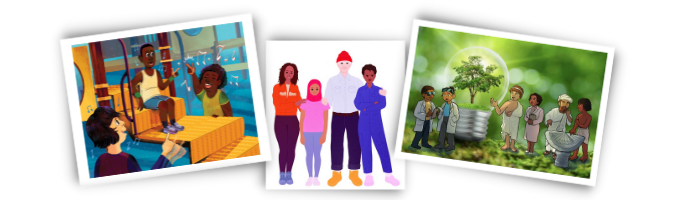
With these new units, students will soar to new heights with Dr. Ellen Ochoa, Amelia Earhart, and the Tuskegee Airmen. They’ll feel the rhythm as they learn about Jazz legends Miles Davis, Tito Puente, and Duke Ellington. And they’ll explore the far reaches of the world with Jacques Cousteau, Matthew Henson, and Eugenie Clark.
- Grade K: Art and the World Around Us/El arte y el mundo que nos rodea
- Grade 1: Adventure Stories: Tales from the Edge of the World/Cuentos de aventuras: relatos desde los confines de la Tierra
- Grade 2: Up, Up, and Away: The Age of Aviation/¡A volar! La era de la aviación
- Grade 3: All That Jazz/Jazz y más
- Grade 4: Energy: Past, Present, and Future/Energía: pasado, presente y futuro
- Grade 5: Beyond Juneteenth: 1865 to present/Más allá de Juneteenth: de 1865 al presente
Units are available in English and Spanish, and will include the following components:
- Teacher Guide
- Student Activity Books
- Image Cards
- Trade Book Collection
- Digital Components (grades K–3 and 5)
Grade K: Art and the World Around Us/El arte y el mundo que nos rodea
“Every child is an artist,” said Picasso, meaning that every child uses art to explore and understand the world around them. Art and the World Around Us honors that truth by introducing Kindergarten students to some of the ways in which artists have explored and understood the worlds around them, too.
This domain introduces students to artists from different time periods, countries, and cultures. Throughout the unit, students learn about different kinds of art and how artists use the world around them as they make art. They also connect this to what they have already learned about the earth, plants, and animals in other Amplify CKLA and Amplify Caminos domains: Farms/Granjas, Plants/Plantas, and Taking Care of the Earth/Cuidar el planeta Tierra. In addition, students connect this to what they have learned about sculptors in the Presidents and American Symbols/Presidentes y símbolos de los Estados Unidos domain. As they explore different artists and artistic traditions, they develop their ideas about how humans are connected to each other and to the world around them.
As you read the texts in this unit, students may observe ways in which the characters or subjects are both similar to and different from students. This is a good opportunity to teach students awareness and sensitivity, building on the idea that all people share some things in common, and have other things that make them unique. This unit also offers an excellent opportunity to collaborate with your school’s art teacher, as many lessons have suggested activities to help students understand the kind of art they are studying.
Within this unit, students have opportunities to:
- Use details to describe art.
- Identify three ways to create art.
- Identify characteristics of cave art.
- Sequence the steps of making pottery.
- Describe how artists can create work connected to the world around them.
- Describe what makes Kehinde Wiley’s portraits unique.
- Explain how the texture of a surface can affect artwork created on it.
- Explain what a sculpture is.
- Describe what makes James Turrell’s artwork about the sky unique.
- Explain what a museum is and what kinds of things you can see or do there.
Instruction in this unit revolves around the following collection of high-interest authentic trade books. One copy of each trade book is included with the unit materials.
- The First Drawing by Mordicai Gerstein
- Van Gogh and the Sunflowers by Laurence Anholt
- My Name is Georgia by Jeanette Winter
- A Life Made by Hand by Andrea D’Aquino
- Rainbow Weaver by Linda Elovitz Marshall
- Luna Loves Art by Joseph Coelho
Grade 1: Adventure Stories: Tales from the Edge of the World/Cuentos de aventuras: relatos desde los confines de la Tierra
This domain introduces students to adventure stories set around the world and challenges students to dig into the adventures through research. By listening to the Read-Alouds and trade books, students increase their vocabulary and reading comprehension skills, learn valuable lessons about perseverance and teamwork, and become familiar with gathering information for research.
In this unit, students study the careers of real-world explorers Dr. Eugenie Clark and Sophia Danenberg, marvel at the inventions of Jacques Cousteau, think critically about how teamwork and collaboration can make greater adventures possible, learn about the science and technology that enable adventures, and research some of the ways humans have confronted challenges at the edges of the world, from the oceans below to space above.
Each lesson in the domain builds students’ research skills as they ask questions, gather information, and write a paragraph about their findings. Students share what they have learned about adventures in an Adventure Gallery Walkthrough. By taking on the persona of one of the adventurers they meet in the Read-Alouds and trade books, students deliver their final paragraphs as if they are a “speaking portrait” of that person. Students are invited to dress up as that adventurer if they desire.
In addition, teachers can set aside time outside of the instructional block to create the picture frames students will hold as they present to the Adventure Gallery Walk guests. Frames can be made from shirt boxes, cardboard, construction paper, or any art supplies that are on hand. This might be an opportunity to collaborate with the school’s art department if resources are available. Another option is to ask students to make their frames at home with their caregivers. On the day of the Adventure Gallery Walk, students will be the hosts and take on specific jobs, such as welcoming the guests, describing their work throughout the unit, and pointing out the areas of study on the domain bulletin board. You can find a complete list of student jobs in Lesson 13.
This unit builds upon the following Amplify CKLA and Amplify Caminos units that students will have encountered in the previous grade.
- Nursery Rhymes and Fables/Rimas y fábulas infantiles (Kindergarten)
- Stories/Cuentos (Kindergarten)
The specific core content targeted in these domains is particularly relevant to the Read-Alouds students will hear in Adventure Stories: Tales from the Edge of the World. The background knowledge students bring to this unit will greatly enhance their understanding of the trade books used in this unit.
Instruction in this unit revolves around the following collection of high-interest authentic trade books. One copy of each trade book is included with the unit materials.
- My Name is Gabito/Me llamo Gabito by Monica Brown
- Tomas and the Galápagos Adventure by Carolyn Lunn
- The Astronaut with a Song for the Stars: The Story of Dr. Ellen Ochoa by Julia Finley Mosca
- Mae Among the Stars by Roda Ahmed
- Shark Lady: The True Story of How Eugenie Clark Became the Ocean’s Most Fearless Scientist by Jess Keating
- Manfish by Jennifer Berne
- Keep On! The Story of Matthew Henson, Co-Discoverer of the North Pole by Deborah Hopkinson
- The Top of the World: Climbing Mount Everest by Steve Jenkins
Grade 2: Up, Up, and Away: The Age of Aviation/¡A volar! La era de la aviación
With this domain, students head up, up, and away with an introduction to the soaring history of aviation. Students learn the stories of early aviators, such as the Montgolfier brothers, the Wright brothers, Aída de Acosta, and Amelia Earhart.
During the unit, students study the science of flight, including the physics concept of lift, and research the social impacts of the world of flight. Finally, students let their research skills take flight as they explore key figures from the world of aviation.
The lessons in this domain build on earlier Grade 2 CKLA and Amplify Caminos domains about the westward expansion, early Greek civilizations, and Greek myths, and lay the foundation for learning about other periods of world history in future grades.
This unit builds upon the following Amplify CKLA and Amplify Caminos units that students will have encountered earlier in the year.
- The Ancient Greek Civilization/La civilización griega antigua (Grade 2)
- Greek Myths/Mitos griegos (Grade 2)
- Westward Expansion/La expansión hacia el oeste (Grade 2)
The specific core content targeted in these domains is particularly relevant to the Read-Alouds students will hear in Up, Up, and Away: The Age of Aviation. The background knowledge students bring to this unit will greatly enhance their understanding of the trade books used in this unit.
Instruction in this unit revolves around the following collection of high-interest authentic trade books. One copy of each trade book is included with the unit materials.
- Up and Away!: How Two Brothers Invented the Hot-Air Balloon by Jason Henry
- The Glorious Flight: Across the Channel with Louis Blériot by Alice and Martin Provensen
- The Flying Girl: How Aída de Acosta Learned to Soar by Margarita Engle
- Wood, Wire, Wings: Emma Lilian Todd Invents an Airplane by Kirsten Larson
- Helicopter Man: Igor Sikorsky and His Amazing Invention by Edwin Brit Wyckoff
- The Tuskegee Airmen Story by Lynn Homan and Thomas Reilly
- Skyward: The Story of Female Pilots in WWII by Sally Deng
- Aim for the Skies: Jerrie Mock and Joan Merriam Smith’s Race to Complete Amelia Earhart’s Quest by Aimee Bissonette
Grade 3: All That Jazz/Jazz y más
This domain teaches students about the vibrant music, poetry, and culture of the Jazz Age in the United States. Students learn about famous writers and musicians like Langston Hughes, Louis Armstrong, Billie Holiday, Melba Liston, Tito Puente, and Miles Davis. They study how the jazz art form took root in the South, then spread to the North to become the sound of the Harlem Renaissance, eventually connecting people around the world in musical expression.
During this unit, students perform guided research to further explore both the history of jazz and what jazz is today. They develop research skills and then use those skills to find deeper connections between the stories and music of the Jazz Age and music today. As students learn about the world of jazz, they collaborate and share ideas with their classmates. They also practice sharing feedback focused on their written work, and, at the end of the unit, students present their research to the group.
The lessons give students opportunities to dive into the rhythms and stories of jazz, utilizing the knowledge sequence in this unit to:
- Collaboratively generate research questions about jazz, jazz musicians, contemporary musicians from the state where they live or have lived, and the evolution of jazz music.
- Utilize Read-Alouds, independent reading, and partner reading to learn about the Jazz Age, the Harlem Renaissance, jazz music, and biographies of celebrated jazz musicians and writers.
- Research the answers to their generated questions, gather information, write a short research essay about a famous jazz musician, write a short essay about a contemporary musician from the state where they live or have lived, and give a presentation about their research.
Within this unit, students have opportunities to:
- Ask relevant questions and make pertinent comments
- Identify details in texts
- Determine key ideas of texts by evaluating details
- Make text-based inferences
- Generate questions based on prior knowledge and gathered information
- Synthesize details across texts to demonstrate comprehension
- Discuss and explain an author’s purpose
- Identify and cite reliable primary and secondary sources of information
- Compose a well-organized and focused informative essay
- Make connections between topics
- Present information using appropriate media
Instruction in this unit revolves around the following collection of high-interest authentic trade books. One copy of each trade book is included with the unit materials.
- Birth of the Cool: How Jazz Great Miles Davis Found His Sound by Kathleen Cornell Berman
- Little Melba and Her Big Trombone by Kathryn Russell-Brown
- Benny Goodman and Teddy Wilson: Taking the Stage as the First Black and White Jazz Band in History by Lesa Cline-Ransome
- Tito Puente, Mambo King by Monica Brown
- Drum Dream Girl: How One Girl’s Courage Changed Music by Margarita Engle
- Duke Ellington: The Piano Prince and His Orchestra by Andrea Pinkney
In this unit, students also read the poem “Harlem” by Langston Hughes. (Available for free through the Academy of American Poets website and the Poetry Foundation website, with recorded audio available through the website for John Hancock College Preparatory High School.)
Grade 4: Energy: Past, Present, and Future/Energía: pasado, presente y futuro
With this domain, students become tomorrow’s problem solvers in this study of energy in the United States. Analytical reading skills are developed by examining the challenges of early energy innovators. Students then read about current energy practices and young energy change-makers across the world.
Throughout the unit, students conduct research into different sources of energy and present a proposal, putting them in the shoes of future energy innovators. They also use the knowledge sequence in this unit to:
- Collaboratively analyze texts to identify cause-effect and problem-solution relationships.
- Generate questions and conduct research about energy.
- Write an opinion essay making their case for a fuel of the future.
- Create energy proposals using primary and secondary resources.
This unit builds upon the following Amplify CKLA units that students will have encountered in previous grades as well as earlier in the year.
- Plants/Plantas (Grade K)
- The History of the Earth/La historia de la Tierra (Grade 1)
- Eureka! Student Inventor/¡Eureka! El arte de la invención (Grade 4)
The specific core content targeted in these domains is particularly relevant to the Read-Alouds students will hear in Energy: Past, Present, and Future. The background knowledge students bring to this unit will greatly enhance their understanding of the trade books used in this unit.
Instruction in this unit revolves around the following collection of high-interest authentic trade books. One copy of each trade book is included with the unit materials.
- Buried Sunlight: How Fossil Fuels Have Changed the Earth by Molly Bang and Penny Chisholm
- Energy Island: How One Community Harnessed the Wind and Changed their World by Allan Drummond
- The Boy Who Harnessed the Wind: Picture Book Edition by William Kamkwamba and Bryan Mealer
Grade 5: Beyond Juneteenth: 1865 to present/Más allá de Juneteenth: de 1865 al presente
Within this domain, Students learn about General Granger’s announcement in Galveston, Texas on June 19, 1865, a day marked in history as Juneteenth. Texts and multimedia sources will support foundational knowledge-building about the end of slavery in the United States. A review of the first freedom announcement, President Lincoln’s Emancipation Proclamation, provides students with background knowledge to further emphasize the significance of Juneteenth in American history.
This unit also takes students on a journey beyond Juneteenth, as they study specific contributions of African Americans from 1865 to the present day. Students participate in a virtual field trip to Emancipation Park in Houston, Texas and use the knowledge sequence in this unit to:
- Collaboratively generate research questions about Juneteenth, The Great Migration, innovators and inventors, education, the humanities, activists, and allies.
- Use Read-Alouds, independent, and partner reading to learn about African American contributions from 1865 to the present.
- Research to find answers to their generated questions, gather information, and write a four-chapter Beyond Juneteenth book.
This unit builds upon the following Amplify CKLA units that students will have encountered in previous grades.
- Native Americans/Los nativos americanos (Grade K)
- A New Nation: American Independence/Una nueva nación: la independencia de los Estados Unidos
(Grade 1) - The U.S. Civil War/La Guerra Civil de los Estados Unidos (Grade 2)
- Immigration/La inmigración (Grade 2)
- Native Americans/Los nativos americanos (Grade 5)
The specific core content targeted in these domains is particularly relevant to the Read-Alouds students will hear in Beyond Juneteenth: 1865 to present. The background knowledge students bring to this unit will greatly enhance their understanding of the trade books used in this unit.
Instruction in this unit revolves around the following collection of high-interest authentic trade books. One copy of each trade book is included with the unit materials.
- All Different Now: Juneteenth, the First Day of Freedom by Angela Johnson
- The Great Migration: An American Story by Jacob Lawrence
- Sing a Song: How “Lift Every Voice and Sing” Inspired Generations by Kelly Starling Lyons
- Side by Side/ Lado a lado: The Story of Dolores Huerta and Cesar Chavez/ La Historia de Dolores Huerta y Cesar Chavez by Monica Brown
- Of Thee I Sing: A Letter to My Daughters by Barack Obama
Amplify CKLA Review for Alabama
2025
September 18, 2025
Edutopia: “Using Virtual Manipulatives in Math Class”
August 19, 2025
Education Week: “Here’s Why It’s Important for Teachers to Have a Say in Curriculum”
August 18, 2025
Investors Hangout: “Amplify Classroom Revolutionizes K-12 Teaching Experience”
August 5, 2025
WhaTech: “K-12 Online Education Market Set for Strong Expansion, Reaching $349.77 Billion by 2029”
August 4, 2025
Education Week: “Districts Using ‘High-Quality’ Reading Curricula Still Supplement With Other Materials. Why?”
July 9, 2025
K-12 Dive: “Youngest students see big reading gains post-COVID on DIBELS assessment”
June 25, 2025
The 74: “How Districts in Georgia, Maryland and D.C. Are Raising Reading Proficiency”
May 28, 2025
Open PR: “K-12 Online Education Market Forecast 2025-2034: Comprehensive Analysis And Growth Opportunities”
May 27, 2025
District Administration: “Early literacy: How to implement programs that start strong”
May 20, 2025
EdSource: “California schools prepare to introduce universal reading screening”
April 23, 2025
The 74: “Eric Adams Expands Reading, Math Curriculum Mandates to All NYC Middle Schools”
April 21, 2025
Daily News: “NYC expanding reading, math curriculum overhaul to more schools”
March 19, 2025
Education Next: “School Reinvention in Practice”
February 28, 2025
K-12 Dive, “Test yourself on this week’s K-12 news”
February 26, 2025
K-12 Dive: “Only 56% of K-2 students are ready to read”
January 24, 2025
Chalkbeat Philadelphia: “Two AI-powered charter schools could soon open in Pennsylvania”
January 16, 2025
Tech & Learning: “What is Polypad and How Can Teachers Use It?”
2024
December 18, 2024
EdSource: “State takes another step toward mandatory testing for reading difficulties in 2025”
December 6, 2024
Chalkbeat Philadelphia: “Philadelphia is now spending over $100 million on its curriculum overhaul. Here’s a breakdown.”
November 27, 2024
Lincoln Journal Star: “Lincoln Public Schools drops a classification rating on statewide assessment”
November 6, 2024
EdNC: “New K-3 literacy data shows growth in skills for North Carolina students”
October 1, 2024
The 74: “As NY District Implements Science of Reading, Parents Push for New Focus on Math”
September 18, 2024
Tech & Learning: “Tech & Learning Announces Winners of Best for Back to School 2024”
August 22, 2024
Chalkbeat Philadelphia: “Philadelphia school board renews charters, funds tutoring and a new science curriculum”
August 2, 2024
EdNC: “‘Dedication of our teachers’ praised in an update on the state’s science of reading journey”
July 31, 2024
The 74: “Classroom Case Study: To Maximize the Impact of Curriculum Mandates, Follow the Science of Reading”
July 23, 2024
Chalkbeat: “Should teachers customize their lessons or just stick to the ‘script’?”
July 7, 2024
The Economist: “Will artificial intelligence transform school?”
June 24, 2024
Chalkbeat: “Math instruction overhaul: NYC unveils new curriculum mandate for middle and high schools”
June 6, 2024
EdNC: “Perspective | Teachers are the heroes of the literacy story in North Carolina”
May 24, 2024
The Dallas Morning News: “How Don Quixote changed a Dallas public school classroom”
May 2, 2024
Akron.com: “Tutoring program at Summit Academy Akron Elementary School attracts national interest”
April 25, 2024
Edutopia: “Using Tech Tools to Energize Young Students’ Math Learning”
April 4, 2024
EdNC: “State Board hears update on district ESSER spending, literacy data, and Restart schools”
March 22, 2024
Thomas B Fordham Institute: “Five takeaways from Ohio’s baseline survey of elementary reading curricula”
March 15, 2024
The 74: “New Data: Despite K-2 Reading Gains, Students Face a ‘Much Harder Journey’ Ahead”
March 5, 2024
The 74: “Case Study: How One Texas School District Is Repurposing Staff Development Time to Embrace the Science of Reading”
February 21, 2024
Times Record News: “UPDATED: Texas Education Commissioner Mike Morath likes what he sees at local school”
February 19, 2024
Chalkbeat: “Chicago Public Schools recover from pandemic declines more than other districts, study shows”
February 7, 2024
The 74: “Building Oral Language Skills and Equity Through High-Quality Reading Curriculum”
2023
December 19, 2023
The 74: “Best Education Articles of 2023: Our 23 Most Important Stories About Students, Schools & Learning Recovery ”
December 8, 2023
Education Week: “Aligned Science Curriculum, Better Scores? Research Finds a Connection”
December 6, 2023
WRAL News: “Reading readiness rises in NC’s K-3 classrooms, new data shows”
November 27, 2023
The Dallas Morning News: “Dallas’ new lessons aim to keep kids on track, but some worry about limiting teachers”
November 2, 2023
Fort Worth Report: “Black students in Fort Worth ISD still struggle to read at grade level”
October 31, 2023
Chicago Tribune: “Lake Forest-area schools take stock of state grades; ‘While we celebrate our successes, we acknowledge that the journey … is ongoing’”
October 19, 2023
Chalkbeat: “NYC eyes middle and high school literacy overhaul. It’s asking families to weigh in.”
October 16, 2023
The 74: “As Virginia Rolls Out Ambitious Statewide High-Dosage Tutoring Effort This Week, 3 Keys to Success”
October 6, 2023
Language Magazine: “Embracing Bilingual Assessment”
September 18, 2023
Tech & Learning: “Best for Back to School 2023”
September 18, 2023
Chalkbeat: “Chicago Public Schools hired hundreds of tutors with federal COVID money. Can they keep them?”
September 7, 2023
EdNC: “Perspective | Union County Public Schools empowers educators, elevates readers”
August 14, 2023
Chicago Parent: “Common Core Math: How to Help Your Kids”
August 6, 2023
The News & Observer: “NC sees big increase in reading skills among K-3 students. Is the state back on track?”
August 4, 2023
The 74: “Slow Literacy Gains, Long COVID in Kids: 7 Insights into Pandemic Recovery and Aftermath in U.S. Schools”
August 3, 2023
EdNC: “State Board of Education: New reading data, parental leave, and a call to support public schools”
July 28, 2023
Houston Public Media: “New literacy curriculum is among the many changes coming to HISD”
July 17, 2023
Houston Chronicle: “Mike Miles says HISD schools will teach the ‘science of reading.’ Here’s what that means.”
July 11, 2023
The 74: “‘Education’s Long COVID’: New Data Shows Recovery Stalled for Most Students”
July 6, 2023
Houston Chronicle: “HISD superintendent gives voluntary schools one last chance to back out of New Education System”
June 29, 2023
The Report Card: “Larry Berger on Curriculum”
June 2, 2023
EdWeek Market Brief:”K-12 Dealmaking: Substitute Teaching Startup Secures $38M; Amplify Raises Undisclosed Series C”
May 25, 2023
The 74: “Expanding Access to Tutors: Nonprofit Grants $6 Million to 32 Learning Organizations Across 20 States to Help More Students”
April 21, 2023
The 74: “The ‘Transformation is Real’ as Science of Reading Takes Hold in N.C. Schools”
April 18, 2023
The 74: “Louisiana District Ravaged by Hurricane & COVID is Bouncing Back with Science”
April 5, 2023
WFAE: “NC midyear reading data shows gains, but third-grade goals remain elusive”
April 5, 2023
EdNC: “K-3 students show growth in literacy skills, mid-year DPI data show”
March 24, 2023
The 74: “COVID & School Recovery: Critics Warn Washington Bill Would Reduce Classroom Learning Time By 4 Hours a Week”
March 24, 2023
Edutopia: “Using Collective Leadership to Make a Major Shift in Your District”
March 15, 2023
K-12 Dive: “California at center of latest push for science-based reading approaches”
March 7, 2023
District Administration: “ESSER pressure: How one district intends to spend wisely as deadline looms”
March 3, 2023
The 74: “‘The Other Long COVID’ Affecting Kids: Missed Opportunities”
March 2, 2023
3 WTKR: “More students on track to learn to read in 2022-2023 school year since start of pandemic, researchers say”
March 2, 2023
ABC 7: “Reading skills rebounding for young students following pandemic disruptions”
March 1, 2023
K-12 Dive: “By The Numbers: DIBELS testing shows improved reading progress over last two years”
February 27, 2023
The 74: “Exclusive: Despite K-2 Reading Gains, Results Flat for 3rd Grade ‘COVID Kids’”
February 27, 2023
Education Week: “Students’ Early Literacy Skills Are Rebounding. See What the Data Show”
February 7, 2023
The 74: “Using High-Quality Curriculum Doesn’t Mean You Can’t Still Have Fun Learning”
January 13, 2023
NPR: “Can a middle school class help scientists create a cooler place to play?”
January 6, 2023
News & Record: “After a numbing low, NC students now heading in ‘right direction’ in reading, math”
January 5, 2023
CBS17.com: “K-3 students in NC make significant strides on literacy exams, DPI says”
2022
December 20, 2022
District Administration: “Literacy Under the Lights: 10 ways to bring the community back together”
December 14, 2022
The 74: “14 Charts This Year That Helped Us Better Understand Covid’s Impact On Students Teachers and Schools”
December 14, 2022
The 74: “Learning Loss Is Worse than NAEP Showed. Middle School Math Must Be the Priority”
November 21, 2022
Voicebot.ai: “SoapBox Labs Brings Child-Centered Voice AI to Dyslexia Detection Assessment”
October 24, 2022
Education Week: “Two Decades of Progress, Nearly Gone: National Math, Reading Scores Hit Historic Lows”
October 20, 2022
The 74: “Exclusive Literacy Data: Small Gains Since Last Fall, But No Reading Rebound”
August 30, 2022
The 74: “Test English Learners in the Languages They Speak at School and at Home”
August 29, 2022
WTKR TV NC: “News 3 investigates childhood literacy rates, raising money to give books to local kids for new school year”
August 28, 2022
EdNC: “Elementary students made growth last year in skills that lead to reading proficiency, new data show”
August 18, 2022
SHRM Blog: “The Great Resignation Skipped Us. Here’s why.”
August 16, 2022
Forbes: “Curious About Knowledge-Building Curricula? Check Out This Website”
July 20, 2022
District Administration: “Out-of-school STEM learning is much more powerful when it’s inclusive”
July 19, 2022
Chalkbeat: “The state of learning loss: 7 takeaways from the latest data”
June 28, 2022
The Preschool Podcast: “Early literacy strategies that stick with Darryl from Run-DMC and Makeda from Nickelodeon [Podcast]”
May 24, 2022
Forbes: “States That Want To Boost Literacy Should Keep An Eye On Texas”
April 24, 2022
Business Ecosystem Alliance: “Ecosystems in Education–Collaborating to Efficiently Serve the End User”
April 18, 2022
KQED Mind Shift: “Weighing the best strategies for reading intervention”
April 15, 2022
Fordham Institute: “Assessing a standards-aligned physical science curriculum”
March 23, 2022
The Baltimore Sun: “National test scores show student gains from in-person learning in all but a critical group: new and pre-readers | COMMENTARY”
March 15, 2022
NPR: “Two years ago schools shut down around the world. These are the biggest impacts”
March 11, 2022
The Hub – Dallas ISD: “Students at Greiner and Anson Jones Elementary find success in reading and writing with a new program”
March 10, 2022
NY Daily News: “Read it and weep: The new reading instruction emergency”
March 10, 2022
WISH TV Indianapolis: “Study shows student performance plummeted during pandemic”
March 9, 2022
New York Post: “Young students have suffered ‘alarming’ drops in reading skills during pandemic”
March 9, 2022
The Daily Caller: “Childhood Literacy Plummeted Following Pandemic Shutdowns, Studies Show”
March 8, 2022
The New York Times: “It’s ‘Alarming’: Children Are Severely Behind in Reading”
March 7, 2022
Education Next: “The Education Exchange: Pandemic Hurt Younger Students’ Learning Worse, Amplify Data Suggest”
February 28, 2022
The 74: “Our 12 Best Education Articles in February: Reflections on 700 Days of COVID Chaos, Setting a Bar for Unmasking in Schools, Burying Schools in Record Requests & More”
February 24, 2022
The Daily Advertiser: “Reading scores improve slightly, but pre-COVID reading levels are ‘the wrong goal’”
February 24, 2022
Wall Street Journal: “The School Shutdowns and Lost Literacy”
February 23, 2022
K-12 Dive: “DIBELS data illustrates pandemic reading setbacks”
February 22, 2022
ABC 7 Buffalo: “Children falling behind in reading”
February 18, 2022
The Carolina Journal: “Report: Elementary students lag in literacy due to pandemic”
February 16, 2022
The 74: “‘We Have First-Graders Who Can’t Sing the Alphabet Song’: Pandemic Continues to Push Young Readers Off Track, New Data Shows”
February 16, 2022
Education Week: “More Than 1 in 3 Children Who Started School in the Pandemic Need ‘Intensive’ Reading Help”
February 4, 2022
Literary Hub: “EXCLUSIVE: Watch Joshua Bennett Discuss A.R. Ammons’s poem “Cascadilla Falls”
January 26, 2022
The Ross Kaminsky Show: “Susan Lambert and the Literacy Gap”
January 19, 2022
K-12 Dive: “Report: Colorado reading law update boosts quality of literacy curriculum”
2021
December 15, 2021
Chalkbeat: “How Denver plans to address a drop in early elementary reading scores”
December 8, 2021
The SHRM Blog: “What’s the Best Work Perk of All? Contributing to the Social Good”
November 13, 2021
Hechinger Report: ‘The Reading Year’: First grade is critical for reading skills, but kids coming from disrupted kindergarten experiences are way behind”
October 20, 2021
Hechinger Report: “OPINION: Younger students were among those most hurt during the pandemic”
September 2, 2021
EdSurge: “An Edtech User’s Glossary to Speech Recognition and AI in the Classroom”
September, 2021
SIIA Education: “ED TECH SUCCESS STORIES”
August 23, 2021
CNN: “Irish tech firm helps kids’ voices be heard”
August 18, 2021
SoapBox Labs: “Can Speech Recognition Help Children Learn to Read?”
August 12, 2021
FOX Chicago Broadcast Interview: “Pandemic widens literacy gap for students”
August 3, 2021
T.H.E Journal: “More Students of Color at Risk in Reading After Pandemic”
July 28, 2021
The 74: “Early Reading Skills See a Rebound From In-Person Learning, But Racial Gaps Have Grown Wider, Tests Show”
July 28, 2021
K-12 Dive: “Reports: Math, reading progress slowed during first full school year of pandemic”
July 20, 2021
EdNC: “The mCLASS reading assessment tool is back in North Carolina classrooms, but it’s going to look different”
July 5, 2021
WBAL: “Baltimore students from all socio-economic backgrounds get a chance to ‘Amplify’ their learning skills”
June 15, 2021
Language Magazine: “Using Evidence to Overcome Adversity”
May 7, 2021
The Dallas Morning News: “How can a one-minute kindergarten test help teachers tackle the ‘COVID slide’?”
April 20, 2021
Education Week: “How Teachers and Curriculum Will Shape Ed Tech’s Future: A CEO Makes the Case”
March 24, 2021
The Hechinger Report: “OPINION: Children will need summer tutors to make up for pandemic learning loss”
March 23, 2021
Education Week: “Most States Fail to Measure Teachers’ Knowledge of the ‘Science of Reading,’ Report Says”
March 17, 2021
Axios: “How online education and tutoring could fight COVID learning loss”
March 16, 2021
USA Today: “Students are struggling to read behind masks and screens during COVID-19, but ‘expectations are no different’”
March 16, 2021
The 74: “Schools and COVID, a Year Later: 12 Months After Classrooms Closed, 12 Key Things We’ve Learned About How the Pandemic Disrupted Student Learning”
February 25, 2021
K–12 Dive: “Reading gaps widen in mid-year data, especially for K-1 students of color”
February 24, 2021
The 74: “One Year into Pandemic, Far Fewer Young Students are on Target to Learn How to Read, Tests Show”
February 17, 2021
NBC Los Angeles: “Local Students Design Rovers in Mission to Mars Student Challenge”
February 5, 2021
District Administration: “To save literacy, focus first on high-quality core instruction”
February 4, 2021
The Hechinger Report: “5 ways schools hope to fight Covid-19 learning loss”
January 5, 2021
The 74: “Science Matters Now More than Ever. The Time to Start Teaching It Is in Elementary School”
2020
December 15, 2020
Education Week: “Students’ Reading Losses Could Strain Schools’ Capacity to Help Them Catch Up”
December 9, 2020
Education Post: “How to Help Beginning Readers During the Pandemic”
December 3, 2020
American Consortium for Equity in Education: “The Importance of Quality Curriculum With Industry Voice”
September 29, 2020
The 74: “Beyond the Scantron: Ed Tech CEO Larry Berger on Why the Pandemic Is No Excuse to Abscond Accountability and ‘Disruptions Are Great Opportunities to Try Something New’”
May 25, 2020
The 74: “Class Disrupted Podcast Episode 2: Why Is My Child Doing So Many Worksheets Right Now?”
February 5, 2020
Getting Smart Podcast: “Larry Berger on EdTech Past and Future”
Strengthening critical thinking with a content-first approach: How Amplify CKLA is closing gaps in an elementary classroom

In my first-grade classroom, we’ve been studying early world civilizations. My students and I have pretended to hop in our time machines and travel back—first to ancient Mesopotamia, then to ancient Egypt. We’ve written our names on clay tablets in cuneiform and learned what it means for a religion to be polytheistic. We’ve compared and contrasted early farming systems and places of worship. As I prepared to read aloud another lesson a few days ago, I mentioned to the class that it was the eleventh lesson in the unit of study, prompting widened eyes and a chorus of “Already!?”
I teach eighteen six- and seven-year olds in a Title I school, where half of the students are low-income, 75% are non-white, and over half are multilingual/English learners or speak another language at home. In my job, I’m honored to empower students who schools and society have not always served well. I became a teacher to help end that inequity—to close the knowledge gap and ensure that low-income, non-white, and immigrant children receive the tools they need to build a bright future. A growing body of research tells us that a strong base of content knowledge is essential for student growth and success in literacy. We also know that students who come from low-income backgrounds are less likely to come to school possessing the academic background knowledge of their peers, presumably because they have more limited opportunities to come across this type of knowledge at home. For this reason, I’m grateful that around a year and a half ago, my district adopted the knowledge-based literacy curriculum CKLA.
Scenes from a knowledge-based curriculum
What does knowledge-based learning look like in practice? Here’s one powerful example of how a knowledge-forward lesson helped my students succeed in practicing an important literacy skill. We were reading about Howard Carter, the British archaeologist who wanted to locate Tutenkhaman’s tomb. The lesson lends itself well to one of our state’s curriculum standards for the quarter: to make and confirm predictions about nonfiction text. Part one of the Read-Aloud ends on a cliffhanger: After a years-long search with no success, encountering dead ends and tomb robbers, Carter uncovers a hidden door marked with a royal seal.
“A prediction,” I explained, “is a careful guess about what you think might happen, based on the clues you already know. Think about what you know from the story, and predict what Carter might find behind the door.” We quickly reviewed some of the main points as I scribed on chart paper: Carter had been searching for Tutenkhaman’s tomb for six years, pharaohs were often buried with treasure or gold, the door they found was in the last possible place to look in the Valley of the Kings. I handed out papers I’d prepared with sentence frames for students to record or dictate their ideas. We hadn’t yet spent much time this year explicitly practicing prediction-making—in fact, I wondered how many of my students even knew what the word prediction meant—but I could see the wheels already turning behind most of my students’ eyes as they wiggled with excitement, envisioning gold, ghosts, King Tut’s tomb, or a pile of bones.
“Maybe nothing,” one student—a six-year-old who speaks primarily Spanish at home—told me with a shrug as I helped him write down his ideas. “Maybe the tomb robbers took it all.”
How to improve critical thinking—with knowledge
Even though my students might or might not have been familiar with the literacy skill of making and confirming predictions, the rich and meaty Read-Aloud set them up for success. It was rife with topics of interest to many a six- or seven-year-old—exploration, tomb robbers, golden treasure, mummies—which kept them engaged. And it included plenty of details through which they could actually draw a meaningful inference about what Carter might have found. I had to explain only once that a prediction should be based on information you already have—not a random guess—and every one of my eighteen students successfully generated a plausible idea.
This is the magic of a knowledge-based curriculum. It levels gaps in learning by generating a rich, shared base of content knowledge that supports the development of key literacy skills. My students were successful in plausibly guessing what might happen next in the story because they had a strong grasp of the information about Howard Carter. I might have chosen to teach an entire mini-lesson on prediction-making first and then asked my students to apply the skill to a less thoughtfully selected text, or to an independently selected book on their own, but if they weren’t already familiar with the topics it covered, my guess is that they would have been far less successful.
The curriculum standards for literacy in both the Common Core and Virginia (my school’s state) emphasize critical thinking skills and specific comprehension strategies, such as inferencing, over content knowledge. This is understandable: Students must learn to make meaning of a text in front of them, not just read the words on the page. But as Natalie Wexler puts it, “The ability to think critically…is inextricably linked to how much knowledge you have about the situation at hand” (The Knowledge Gap, 39). How could my students make a prediction about a future event in a text if they didn’t understand the textual clues they were given in the first place? Especially given that students from low-income homes are likely to possess less background knowledge about the curriculum they will encounter in school, a focus on teaching skills in isolation can contribute to a far-from-level playing field.
Teaching “comprehension skills” first and then expecting students to apply them is common practice in the method of literacy instruction frequently referred to as balanced literacy. Though the conversation about literacy is, thankfully, moving toward a research-backed approach focused on the Science of Reading, we still have a long way to go. While student teaching during my education master’s program less than three years ago, I was encouraged to teach mini-lessons on topics such as “finding the main idea” and “using topic headings to understand,” which students would then practice with independently selected texts. This approach is not supported by research as a best practice—and it assumes a shared base of cultural knowledge. In that way, it entrenches inequality by privileging students who may already possess more background knowledge, allowing our most vulnerable learners to fall even further behind.
By contrast, a knowledge-based curriculum creates that base together, giving all students a better chance at success. My own experience confirms the research. CKLA empowers my students to take ownership of their learning, expand their vocabularies, make connections, and passionately engage. I’m grateful to use an evidence-based curriculum designed to ensure that every student—including those too often left behind by our schools and other institutions—can learn to read.
More to explore
- Join thousands of educators like you and subscribe to Science of Reading: The Podcast!
- Science of Reading Star Awards: Meet and celebrate other educators who are leading the way!