Showing results for refill

Welcome back to Amplify Science!

On this page, you’ll find helpful resources, for returning educators, to support you and your students to ensure you have a successful year with Amplify. Let’s dig in.

A woman in glasses examining a glass of water, surrounded by illustrations of scientific icons like satellites, a rocket, a telescope, moons, and clouds on an abstract orange and black background.

Professional learning resources

Amplify Science K-5

When you’re ready to log in to learning.amplify.com and get started, begin by watching the navigation video for grades K–5 to familiarize you with the digital organization of materials. Visit the PD Library to learn how to find everything you need to teach with this video about navigating Amplify Science. Note: login required!

Amplify Science 6-8

When you are ready to log in to learning.amplify.com and get startedbegin by watching the navigation video for grades 6–8 to familiarize yourself with the digital organization of materials. Visit the PD Library to learn how to find everything you need to teach with this video about navigating Amplify Science. Note: login required!

Program Hub

Access self-study professional resources on our Amplify Science program hub (log-in required). Here you will find resources and videos on:

  • Remote learning resources
  • Training videos
  • Hands-on Investigation Videos

Professional Development Library

The Professional Development Library is a space for educators to learn more about Amplify Science through short, engaging video collections. The PD Library can be located on the Program & Apps menu when logged into the program. Watch the training videos based on your grade band to learn more about pacing, planning, and teaching Science!

Level up learning webinars

Level up your Amplify Science experience with our We Are Scientists webinars! We showcased expert classroom teaching strategies and offered educator tips and tricks on how to get creative with learning with your students.

Admin tools

Elementary school resources (grades K–5)

For a refresher on navigating and locating resources in the digital Teacher’s Guide, access the page for new users for mini on-boarding videos.

What’s new for 2024-25?
Amplify Science is launching exciting new and updated features for the upcoming school year. Click here to check out improvements designed to save you time, extend your reach, and support your efforts to deliver the rigorous and riveting learning experiences your students deserve.

Have a question? Here is where you can look to find the answer..

Planning guides
Planning guides for grades K–5 walk you through strategies for planning for a unit, including which resources to locate in either the print or digital Teacher’s Guide to most effectively plan:

Additional resources
If you’re interested in learning more about each unit’s anchor phenomena, the Student Books in each unit, and more program features, download the resources below:

Middle school resources (grades 6–8)

For a refresher on navigating and locating resources in the digital Teacher’s Guide, access the page for new users for mini on-boarding videos.

What’s new for 2024-25?
Amplify Science is launching exciting new and updated features for the upcoming school year. Click here to check out improvements designed to save you time, extend your reach, and support your efforts to deliver the rigorous and riveting learning experiences your students deserve.

Have a question? Here is where you can look to find the answer…

Planning guide
Our planning guide walks you through strategies for planning for a unit, including which resources to locate in either the print or digital Teacher’s Guide to most effectively plan. Click here to download.

Additional resources
If you’re interested in learning more about each unit’s anchor phenomena, the Student Books in each unit, and more program features, download the resources below:

Ready to dig a little deeper?

Revisiting coherence flowcharts

Take another look (or look for the first time) at the coherence flowcharts for your unit (found in the printable resources section of the unit guide).

Sample Coherence Flowchart: First Grade: Plant and Animal Defenses

Sample Coherence Flowchart: Fourth Grade: Energy Conversions

Sample Coherence Flowchart: Seventh Grade: Plate Motion

Enhance your discourse routines 

Productive Discourse Routines

Discourse Routines in K-5

Using Phenomena in NGSS

Looking for help?

Timely technical, program, and pedagogical support
Our technical and program support is included and available from 8 a.m. to 7 p.m. ET, Monday through Friday, through a variety of channels, including a live chat program that enables teachers to get immediate help in the middle of the school day. As a part our support, Amplify also has an Educational Support Team of former teachers and administrators who provide instructional support for every Amplify curriculum, assessment, and intervention program.

For your most urgent questions:

  • Use our live chat within your program
  • Call our toll-free number: 1 888 850 0945

For less urgent questions:

Reach out to our support team at: help@amplify.com

Getting Started Resources

Welcome! This page contains support for getting started with Amplify Science for New York City — including login support, materials lists, and program overviews.

Two young girls, one black and one Caucasian, smiling and looking at a tablet together in a colorful classroom, engaged in an online reading program.

Program overview

Summer temporary logins

  1. Log in to Amplify
  2. Enter the username
  3. Enter the password
  4. Select the desired grade level

Grade K-5 teachers

  • Username: t.nyck8@tryamplify.net
  • Password: AmplifyNumber1

Grade K-5 students

  • Username: s.nyck8@tryamplify.net
  • Password: AmplifyNumber1

Grade 6-8 teachers

  • Username: t.nyck8@tryamplify.net
  • Password: AmplifyNumber1

Grade 6-8 students

  • Username: s.nyck8@tryamplify.net
  • Password: AmplifyNumber1

Logging in

Materials

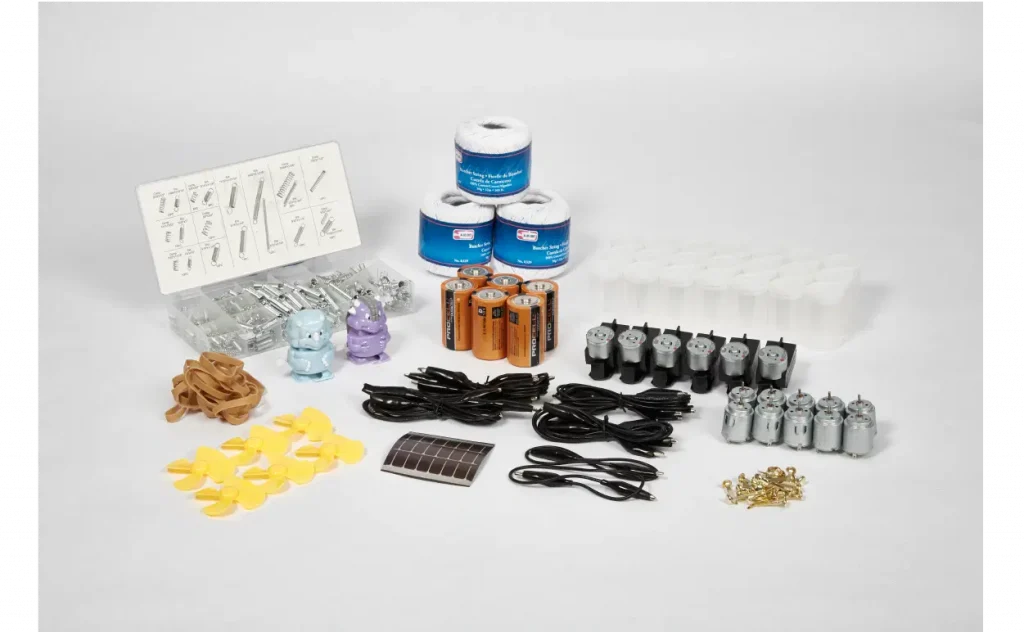
Looking for refill kits? Please email mkasloff@amplify.com

Materials lists

Lists of kit contents by unit

Spanish Materials lists

Lists of Spanish print kit contents by unit

Kit-level packing detail chart K-5 

Kit-level packing detail chart 6-8

Unpacking your first Amplify Science classroom kit
Welcome to Physical Science

BACK TO MAIN 6–8 PAGE

Amplify Science California is so effective you can cover 100% of the NGSS in fewer lessons than other programs.
 
Plus, you can breathe a sigh of relief knowing we give you enough materials to support 200 students. In fact, our material kits:

  • Support small groups of 4-5 students.
  • Make organization and finding materials easy.
  • Last longer with only one of the nine kits requiring refills.
A collage of four images: a magnet illustration, hands with a compass and balls, hands holding a bar magnet and ruler, and a graphic of Earth with compass needles.

What students learn

When you’re ready:

  • Find a summary of each unit below including each unit’s student role and anchor phenomenon.
  • Click on the orange “See how the unit works” link to download a helpful Unit Guide. These guides make great companions to busy reviewers looking for a big-picture understanding of how each unit works.
An illustration from the Harnessing Human Energy unit

Unit 1

Harnessing Human Energy

Student role: Energy scientists

Phenomenon: Rescue workers can use their own human kinetic energy to power electrical devices used during rescue missions.

An illustration from the Force and Motion unit

Unit 2

Force and Motion

Student role: Physicists

Phenomenon: The asteroid sample-collecting pod collided with the docking station and failed to dock as planned.

See how this unit works

An illustration from the Force and Motion: Engineering Internship unit

Unit 3

Force and Motion Engineering Internship

Student role: Mechanical engineering interns

Phenomenon: Designing emergency supply delivery pods with different structures can better protect pods and their contents.

An illustration from the Magnetic Fields unit

Unit 4

Magnetic Fields

Student role: Physicists

Phenomenon: During its third magnetic spacecraft launcher test, a model spacecraft far exceeded its target speed.

An illustration from the Thermal Energy unit

Unit 5

Thermal Energy

Student role: Thermal scientists

Phenomenon: Riverdale School needs a new heating system. Only one of two proposed systems is the best choice.

See how this unit works

An illustration from the Phase Change unit

Unit 6

Phase Change

Student role: Chemists

Phenomenon: A methane lake on Titan no longer appears in images taken by a space probe two years apart.

See how this unit works

An illustration from the Phase Change: Engineering Internship unit

Unit 7

Phase Change Engineering Internship

Student role: Chemical engineering interns

Phenomenon: Designing portable baby incubators with different phase change materials helps keep babies’ temperatures healthy.

An illustration from the Chemical Reactions unit

Unit 8

Chemical Reactions

Student role: Forensic chemists

Phenomenon: A mysterious reddish-brown substance has been detected in the tap water of Westfield.

See how this unit works

An illustration from the Light Waves unit

Unit 9

Light Waves

Student role: Spectroscopists

Phenomenon: The rate of skin cancer in Australia is higher than other parts of the world despite getting the same or less sunlight.

See how this unit works

How teachers teach

When you’re ready:

  • Scroll down and take a closer look at your classroom resources.
  • Click on the orange links below each component to see grade-specific samples.
Most adopted curriculum for the NGSS California

Classroom Slides

These customizable PowerPoints are available for every lesson of the program and make delivering instruction a snap with visual prompts, colorful activity instructions, investigation set-up videos and animations, and suggested teacher talk in the notes section of each slide.

Video introduction to Classroom Slides

An educational website open on a laptop displaying a lesson about force and motion: docking failure in space alongside a teacher guide notebook.

Teacher’s Reference Guide

Available digitally and in print, our unit-specific reference guides are chock full of helpful resources, including scientific background knowledge, planning information and resources, color-coded 3-D Statements, detailed lesson plans, tips for delivering instruction, and differentiation strategies.

Login to platform below to access

Amplify Science California supports 3-D learning with more materials than any other program.

Materials Kits

Our kits include enough non-consumable materials to support 200 student uses. In other words, you have enough materials to support all five periods and small groups of 4-5 students each. Plus, our unit-specific kits mean you just grab the tub you need and then put it all back with ease.

A digital simulation from Amplify Science

Simulations and Practice Tools

Our digital Simulations and Practice Tools are powerful resources for exploration, data collection, and student collaboration. They allow students the ability to explore scientific concepts that might otherwise be invisible or impossible to see with the naked eye.

Video overview of digital tools

An open book with two pages displaying illustrations of a space docking failure incident, titled in both spanish and english.

Consumable Notebooks

Available for every unit, our Student Investigation Notebooks contain instructions for activities and space for students to record data and observations, reflect on ideas from texts and investigations, and construct explanations and arguments.

Sample Student Investigation Notebook

Sample Student Investigation Notebook (Spanish)

Cover of amplify science california student edition grade 8 integrated featuring illustrations of space, animals, and scientific diagrams.

Student Edition Hardcover

This durable Student Edition is grade-level specific and contains all of the articles that students refer to throughout the year. Districts may choose to pair these traditional student texts with our digital student experience or new 2-volume consumable notebook set.

Line drawing of a person using a laptop, with headphones and a line illustration of a rocket launching above their head, symbolizing creativity or inspiration in Boost Reading.


Coming Soon

Unlike other publishers, we don’t make you wait until your next adoption to get the latest and greatest from Amplify. We’re always launching new and exciting features. What’s more, we’ll push them out to you even after you adopt us!

See what’s coming for 2020-2021

Navigating the program

  • Click the orange button below to access the platform.
  • Choose the resources you’d like to review.
  • Pick your grade level from the drop-down menu.
  • Scroll down to find additional grade-level resources.

Navigating a Launch Unit

Launch units are the first units taught in each year of the program. The goal of a Launch unit is to introduce students to norms, routines, and practices that will be built on throughout the year.

Navigating an Engineering Internship

Engineering Internship units invite students to design solutions for real-world problems as interns for a fictional company called Futura. In the process, they apply and deepen their learning from Core units.

Navigating a Core Unit

Core units introduce a real-world problem and support students as they figure out the anchoring phenomenon and gain an understanding of the unit’s DCIs, SEPs, and CCCs.

Navigating Classwork and Reporting

Classwork is our new online grading tool that gives you quick and easy access to unreviewed work, student portfolios of work, and automatically generated differentiation groups.

Welcome to Life Science

BACK TO MAIN 6–8 PAGE

Amplify Science California is so effective you can cover 100% of the NGSS in half the time of other programs.

Plus, you can breathe a sigh of relief knowing we give you enough materials to support 200 students. In fact, our material kits:

  • Support small groups of 4-5 students.
  • Make organization and finding materials easy.
  • Last longer with only one of the nine kits requiring refills.
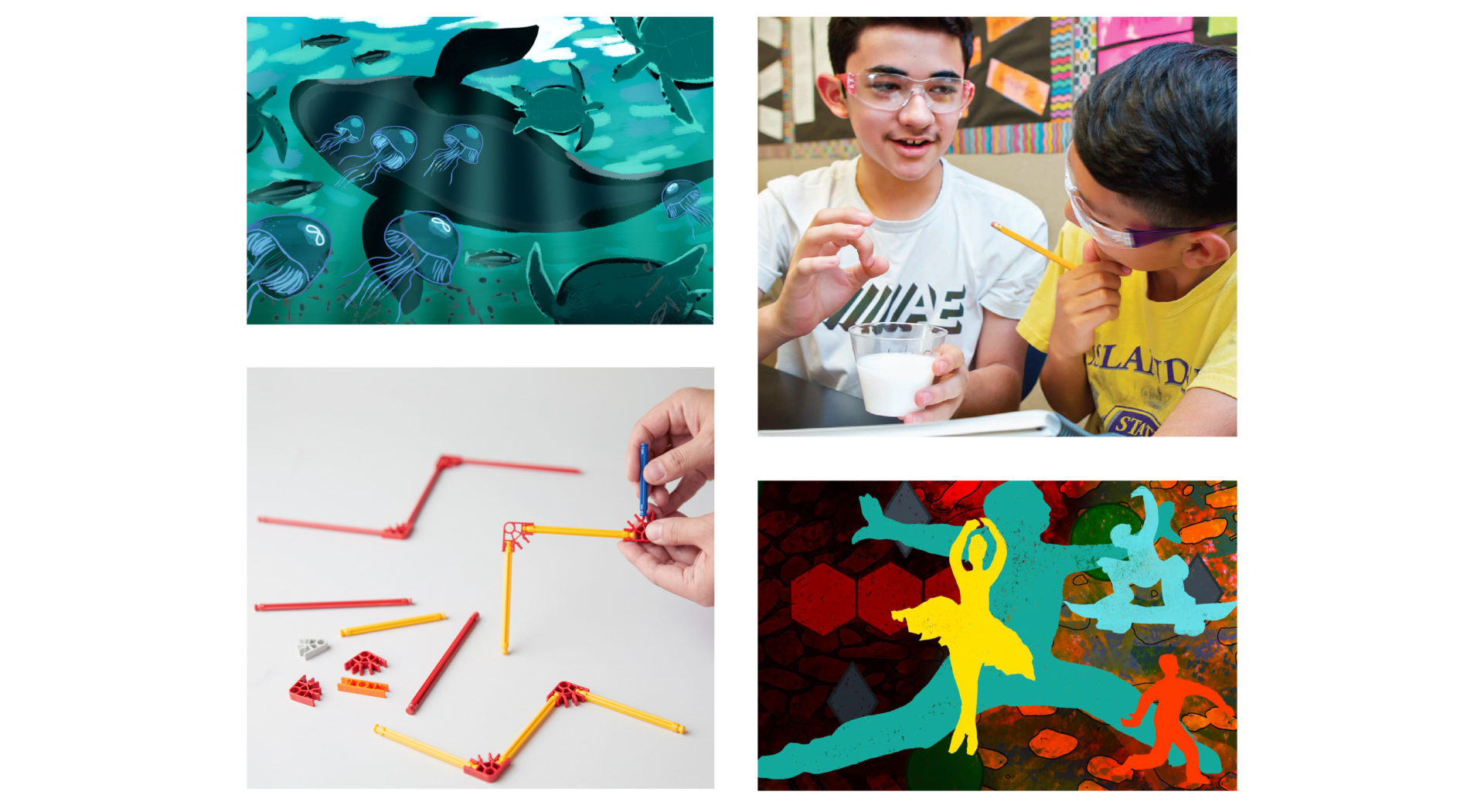
Collage of four images: underwater digital art, two students conducting a science experiment, hands constructing a structure from red straws, and an abstract painting of colorful figures.

What students learn

When you’re ready:

  • Find a summary of each unit below including each unit’s student role and anchor phenomenon.
  • Click on the orange “See how the unit works” link to download a helpful Unit Guide. These guides make great companions to busy reviewers looking for a big-picture understanding of how each unit works.
An illustration from the Microbiome unit

Unit 1

Microbiome

Student role: Microbiological researchers

Phenomenon: The presence of 100 trillion microorganisms living on and in the human body keeps the body healthy.

An illustration from the Metabolism unit

Unit 2

Metabolism

Student role: Medical students

Phenomenon: Elisa, a teenager, is tired all the time. In fact, she can’t get through the day without feeling exhausted.

See how this unit works

An illustration from the Metabolism: Engineering Internship unit

Unit 3

Metabolism Engineering Internship

Student role: Food engineers

Phenomenon: Health bars with different molecular compositions meet the metabolic needs of patients or rescue workers.

An image from the Traits and Reproduction unit

Unit 4

Traits and Reproduction

Student role: Biomedical students

Phenomenon: Darwin’s bark spider offspring have different silk flexibility traits, even though they have the same parents.

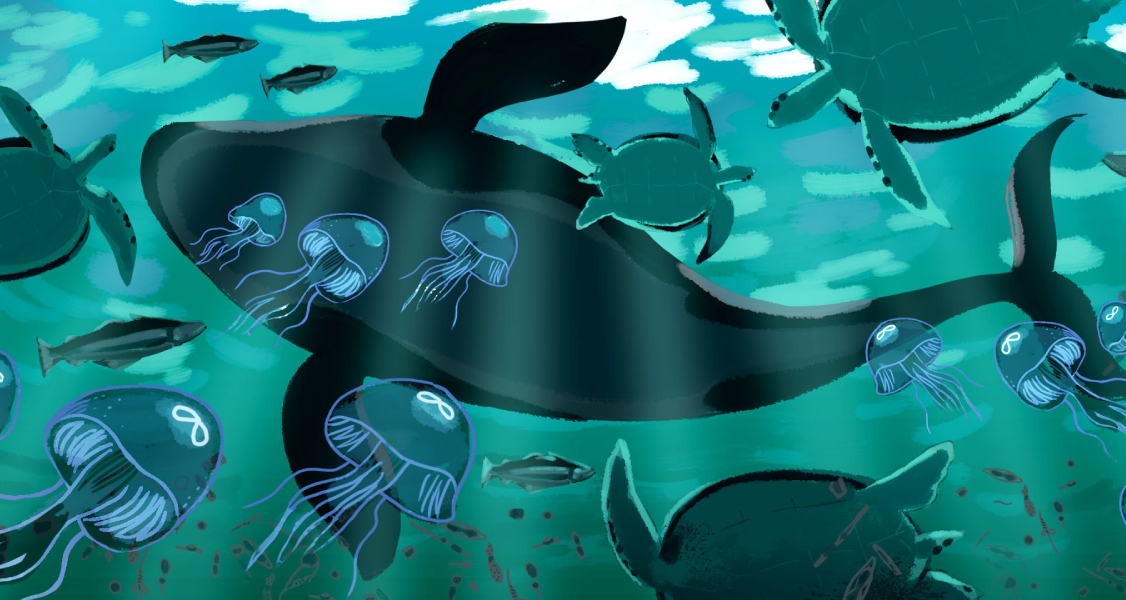
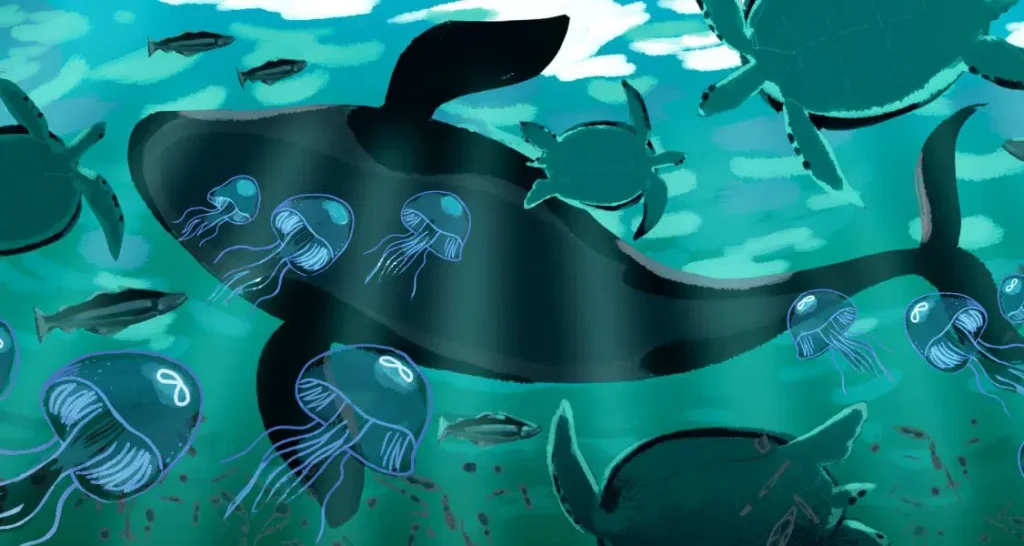
An illustration of a whale with jellyfish and turtles from Amplify Science

Unit 5

Populations and Resources

Student role: Biologists

Phenomenon: The size of the moon jelly population in the fictional Glacier Sea has experienced a puzzling increase.

See how this unit works

An illustration from the Matter and Energy unit

Unit 6

Matter and Energy in Ecosystems

Student role: Ecologists

Phenomenon: A sealed biodome built by a group of Econauts mysteriously crashed despite following the advice of experts.

See how this unit works

Cartoon image of a yellow dinosaur among green dinosaurs, all with meat and vegetables on their backs, standing in a grassy landscape.

Unit 7

Natural Selection

Student role: Biologists

Phenomenon: The rough-skinned newt population in Oregon State Park has become more poisonous over time.

See how this unit works

An illustration from the Natural Selection: Engineering Internship unit

Unit 8

Natural Selection Engineering Internship

Student role: Clinical engineers

Phenomenon: Designing malaria treatment plans that use different combinations of drugs can reduce drug resistance development.

An illustration from the Evolutionary History unit

Unit 9

Evolutionary History

Student role: Paleontologists

Phenomenon: A mystery fossil at the Natural History Museum has similarities with both wolves and whales.

See how this unit works

How teachers teach

When you’re ready:

  • Scroll down and take a closer look at your classroom resources.
  • Click on the orange links below each component to see grade-specific samples.
Most adopted curriculum for the NGSS California

Classroom Slides

These customizable PowerPoints are available for every lesson of the program and make delivering instruction a snap with visual prompts, colorful activity instructions, investigation set-up videos and animations, and suggested teacher talk in the notes section of each slide.

Video introduction to Classroom Slides

An open teacher's guide and a laptop displaying an educational website on metabolism, featuring colorful chapter thumbnails.

Teacher’s Reference Guide

Available digitally and in print, our unit-specific reference guides are chock full of helpful resources, including scientific background knowledge, planning information and resources, color-coded 3-D Statements, detailed lesson plans, tips for delivering instruction, and differentiation strategies.

Login to platform below to access

Assorted laboratory supplies including beakers, measuring cylinders, test tubes, pipettes, thermometers, and chemical reagents on a white background.

Materials Kits

Our kits include enough non-consumable materials to support 200 student uses. In other words, you have enough materials to support all five periods and small groups of 4-5 students each. Plus, our unit-specific kits mean you just grab the tub you need and then put it all back with ease.

A digital simulation from Amplify Science

Simulations and Practice Tools

Our digital Simulations and Practice Tools are powerful resources for exploration, data collection, and student collaboration. They allow students the ability to explore scientific concepts that might otherwise be invisible or impossible to see with the naked eye.

Video overview of digital tools

Two textbooks titled amplify science, one in spanish and english, featuring a spider on web the cover.

Consumable Notebooks

Available for every unit, our Student Investigation Notebooks contain instructions for activities and space for students to record data and observations, reflect on ideas from texts and investigations, and construct explanations and arguments.

Sample Student Investigation Notebook

Sample Student Investigation Notebook (Spanish)

Illustration for amplify science textbook cover, featuring a woman scientist with various science symbols like dna, parrot, rocket, and dinosaur on stylized background.

Student Edition Hardcover

This durable Student Edition is grade-level specific and contains all of the articles that students refer to throughout the year. Districts may choose to pair these traditional student texts with our digital student experience or new 2-volume consumable notebook set.

Line drawing of a person using a laptop, with headphones and a line illustration of a rocket launching above their head, symbolizing creativity or inspiration in Boost Reading.


Coming Soon

Unlike other publishers, we don’t make you wait until your next adoption to get the latest and greatest from Amplify. We’re always launching new and exciting features. What’s more, we’ll push them out to you even after you adopt us!

See what’s coming for 2020-2021

Navigating the program

  • Click the orange button below to access the platform.
  • Choose the resources you’d like to review.
  • Pick your grade level from the drop-down menu.
  • Scroll down to find additional grade-level resources.

Navigating a Launch Unit

Launch units are the first units taught in each year of the program. The goal of a Launch unit is to introduce students to norms, routines, and practices that will be built on throughout the year.

Navigating an Engineering Internship

Engineering Internship units invite students to design solutions for real-world problems as interns for a fictional company called Futura. In the process, they apply and deepen their learning from Core units.

Navigating a Core Unit

Core units introduce a real-world problem and support students as they figure out the anchoring phenomenon and gain an understanding of the unit’s DCIs, SEPs, and CCCs.

Navigating Classwork and Reporting

Classwork is our new online grading tool that gives you quick and easy access to unreviewed work, student portfolios of work, and automatically generated differentiation groups.

Welcome to Grade 8

BACK TO MAIN 6–8 PAGE

Amplify Science California is so effective you can cover 100% of the NGSS in fewer lessons than other programs.
 
Plus, you can breathe a sigh of relief knowing we give you enough materials to support 200 students. In fact, our material kits:

  • Support small groups of 4-5 students.
  • Make organization and finding materials easy.
  • Last longer with only one of the nine kits requiring refills.
Collage of four images: a spaceship in space, hands using a glue gun on crafts, a solar panel connected to bulbs, and an illustration of a person surfing with neon effects.

What students learn

When you’re ready:

  • Find a summary of each unit below including each unit’s student role and anchor phenomenon.
  • Click on the orange “See how the unit works” link to download a helpful Unit Guide. These guides make great companions to busy reviewers looking for a big-picture understanding of how each unit works.
An illustration from the Harnessing Human Energy unit

Unit 1

Harnessing Human Energy

Student role: Energy scientists

Phenomenon: Rescue workers can use their own human kinetic energy to power electrical devices used during rescue missions.

An illustration from the Force and Motion unit

Unit 2

Force and Motion

Student role: Physicists

Phenomenon: The asteroid sample-collecting pod collided with the docking station and failed to dock as planned.

See how this unit works

An illustration from the Force and Motion: Engineering Internship unit

Unit 3

Force and Motion Engineering Internship

Student role: Mechanical engineering interns

Phenomenon: Designing emergency supply delivery pods with different structures can better protect pods and their contents.

An illustration from the Magnetic Fields unit

Unit 4

Magnetic Fields

Student role: Physicists

Phenomenon: During its third magnetic spacecraft launcher test, a model spacecraft far exceeded its target speed.

An illustration from the Light Waves unit

Unit 5

Light Waves

Student role: Spectroscopists

Phenomenon: The rate of skin cancer in Australia is higher than other parts of the world despite getting the same or less sunlight.

See how this unit works

An illustration from the Earth, Moon, and Sun unit

Unit 6

Earth, Moon, and Sun

Student role: Astronomers

Phenomenon: Pictures of specific features on the Moon can only be taken by an astrophotographer at certain times.

See how this unit works

Cartoon image of a yellow dinosaur among green dinosaurs, all with meat and vegetables on their backs, standing in a grassy landscape.

Unit 7

Natural Selection

Student role: Biologists

Phenomenon: The rough-skinned newt population in Oregon State Park has become more poisonous over time.

See how this unit works

An illustration from the Natural Selection: Engineering Internship unit

Unit 8

Natural Selection Engineering Internship

Student role: Clinical engineers

Phenomenon: Designing malaria treatment plans that use different combinations of drugs can reduce drug resistance development.

An illustration from the Evolutionary History unit

Unit 9

Evolutionary History

Student role: Paleontologists

Phenomenon: A mystery fossil at the Natural History Museum has similarities with both wolves and whales.

See how this unit works

How teachers teach

When you’re ready:

  • Scroll down and take a closer look at your classroom resources.
  • Click on the orange links below each component to see grade-specific samples.
Most adopted curriculum for the NGSS California

Classroom Slides

These customizable PowerPoints are available for every lesson of the program and make delivering instruction a snap with visual prompts, colorful activity instructions, investigation set-up videos and animations, and suggested teacher talk in the notes section of each slide.

Video introduction to Classroom Slides

Sample Classroom Slides

An educational website open on a laptop displaying a lesson about “ force and motion: docking failure in space” alongside a teacher’s guide notebook.

Teacher’s Reference Guide

Available digitally and in print, our unit-specific reference guides are chock full of helpful resources, including scientific background knowledge, planning information and resources, color-coded 3-D Statements, detailed lesson plans, tips for delivering instruction, and differentiation strategies.

Login to platform below to access

Amplify Science California supports 3-D learning with more materials than any other program.

Materials Kits

Our kits include enough non-consumable materials to support 200 student uses. In other words, you have enough materials to support all five periods and small groups of 4-5 students each. Plus, our unit-specific kits mean you just grab the tub you need and then put it all back with ease.

List of investigations by unit

List of materials by unit

A digital simulation from Amplify Science

Simulations and Practice Tools

Our digital Simulations and Practice Tools are powerful resources for exploration, data collection, and student collaboration. They allow students the ability to explore scientific concepts that might otherwise be invisible or impossible to see with the naked eye.

Video overview of digital tools

List of digital tools by unit

Device calendars by unit

Open book displaying a bilingual spread about space docking failures, with illustrations of a spacecraft near the moon on a black background.

Consumable Notebooks

Available for every unit, our Student Investigation Notebooks contain instructions for activities and space for students to record data and observations, reflect on ideas from texts and investigations, and construct explanations and arguments.

Sample Student Investigation Notebook

Sample Student Investigation Notebook (Spanish)

Illustration on a textbook cover showing various science themes, including an astronaut, wildlife, and cells, titled

Student Edition Hardcover

This durable Student Edition is grade-level specific and contains all of the articles that students refer to throughout the year. Districts may choose to pair these traditional student texts with our digital student experience or new 2-volume consumable notebook set.

Line drawing of a person using a laptop, with headphones and a line illustration of a rocket launching above their head, symbolizing creativity or inspiration in Boost Reading.


Coming Soon

Unlike other publishers, we don’t make you wait until your next adoption to get the latest and greatest from Amplify. We’re always launching new and exciting features. What’s more, we’ll push them out to you even after you adopt us!

See what’s coming for 2020-2021

Navigating the program

  • Click the orange button below to access the platform.
  • Choose the resources you’d like to review.
  • Pick your grade level from the drop-down menu.
  • Scroll down to find additional grade-level resources.

Navigating a Launch Unit

Launch units are the first units taught in each year of the program. The goal of a Launch unit is to introduce students to norms, routines, and practices that will be built on throughout the year.

Navigating an Engineering Internship

Engineering Internship units invite students to design solutions for real-world problems as interns for a fictional company called Futura. In the process, they apply and deepen their learning from Core units.

Navigating a Core Unit

Core units introduce a real-world problem and support students as they figure out the anchoring phenomenon and gain an understanding of the unit’s DCIs, SEPs, and CCCs.

Navigating Classwork and Reporting

Classwork is our new online grading tool that gives you quick and easy access to unreviewed work, student portfolios of work, and automatically generated differentiation groups.

Welcome to Grade 7

BACK TO MAIN 6–8 PAGE

Amplify Science California is so effective you can cover 100% of the NGSS in fewer lessons than other programs.
 
Plus, you can breathe a sigh of relief knowing we give you enough materials to support 200 students. In fact, our material kits:

  • Support small groups of 4-5 students.
  • Make organization and finding materials easy.
  • Last longer with only one of the nine kits requiring refills.
A collage showing a rocky landscape, a forest with foxes, two kids doing a science experiment, and hands tending to seedlings in a plastic container.

What students learn

When you’re ready:

  • Find a summary of each unit below including each unit’s student role and anchor phenomenon.
  • Click on the orange “See how the unit works” link to download a helpful Unit Guide. These guides make great companions to busy reviewers looking for a big-picture understanding of how each unit works.
A barren, rocky desert landscape with rover tracks leading to a distant vehicle on a hill under a hazy sky.

Unit 1

Geology on Mars

Student role: Planetary geologists

Phenomenon: Analyzing data about landforms on Mars can provide evidence that Mars may have once been habitable.

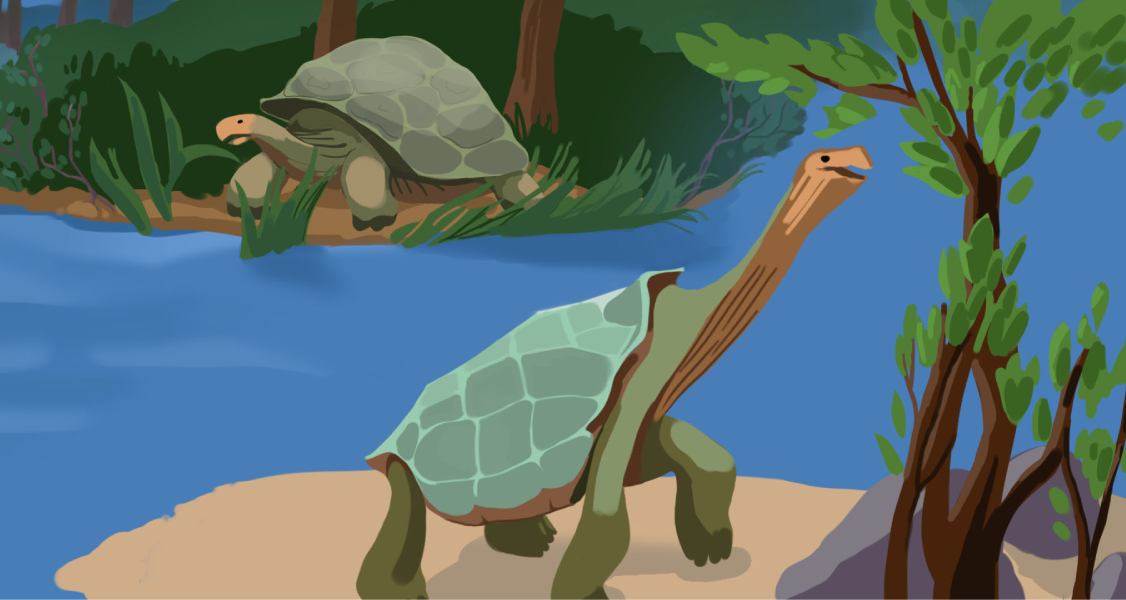
Two prehistoric reptiles with long snouts and tails are near the shore, one on land and one in water, with plants, rocks, and an island in the background.

Unit 2

Plate Motion

Student role: Geologists

Phenomenon: Mesosaurus fossils have been found on continents separated by thousands of kilometers of ocean.

See how this unit works

Geometric design featuring a telescope, mountain, sound waves, and cosmic elements on a purple hexagonal background.

Unit 3

Plate Motion Engineering Internship

Student role: Mechanical engineering interns

Phenomenon: Patterns in earthquake data can be used to design an effective tsunami warning system.

Illustration of a cross-section of Earth showing a volcano near the ocean. Trees, mountains, and clouds are visible above, with subterranean layers below.

Unit 4

Rock Transformations

Student role: Geologists


Phenomenon: Rock samples from different U.S. regions look different, but have similar mineral compositions.

See how this unit works

Illustration showing the stages of melting an orange popsicle: whole, partially melted, more melted, and almost completely melted, with wooden sticks, on a purple background.

Unit 5

Phase Change

Student role: Chemists

Phenomenon: A methane lake on Titan no longer appears in images taken by a space probe two years apart.

See how this unit works

Green geometric graphic featuring icons: a baby, thermometer, layers, medical alert, and a flame.

Unit 6

Phase Change Engineering Internship

Student role: Chemical engineering interns

Phenomenon: Designing portable baby incubators with different phase change materials helps keep babies’ temperatures healthy.

Abstract digital artwork featuring numerous red and gray circles overlapping a split background of blue and light purple, creating a dynamic and energetic composition.

Unit 7

Chemical Reactions

Student role: Forensic chemists

Phenomenon: A mysterious reddish-brown substance has been detected in the tap water of Westfield.

See how this unit works

An illustration of a whale with jellyfish and turtles from Amplify Science

Unit 8

Populations and Resources

Student role: Biologists

Phenomenon: The size of the moon jelly population in the fictional Glacier Sea has experienced a puzzling increase.

See how this unit works

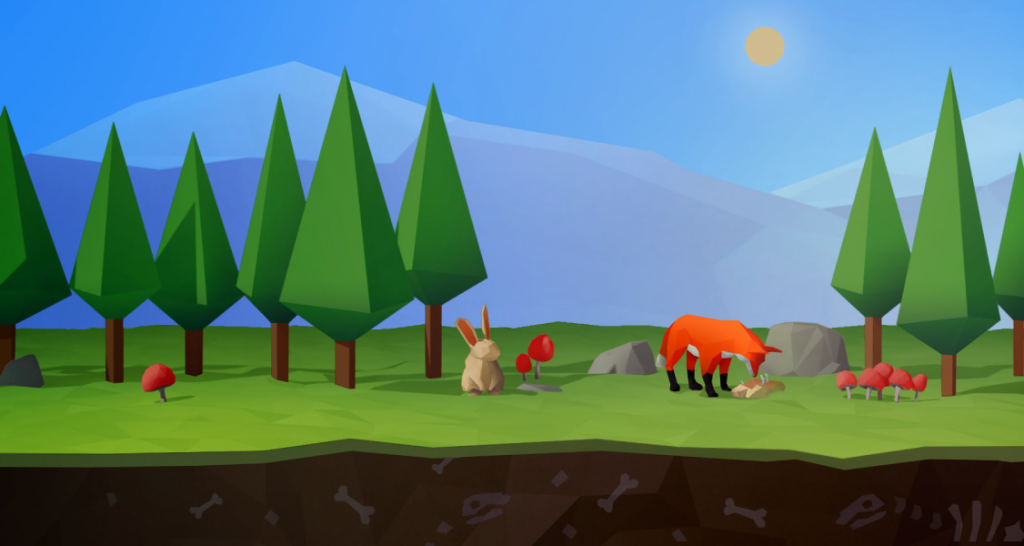
Low-poly landscape with trees and mushrooms. A fox sniffs the ground, a rabbit sits nearby, and mountains and sun are in the background.

Unit 9

Matter and Energy in Ecosystems

Student role: Ecologists

Phenomenon: A sealed biodome built by a group of Econauts mysteriously crashed despite following the advice of experts.

See how this unit works

How teachers teach

When you’re ready:

  • Scroll down and take a closer look at your classroom resources.
  • Click on the orange links below each component to see grade-specific samples.
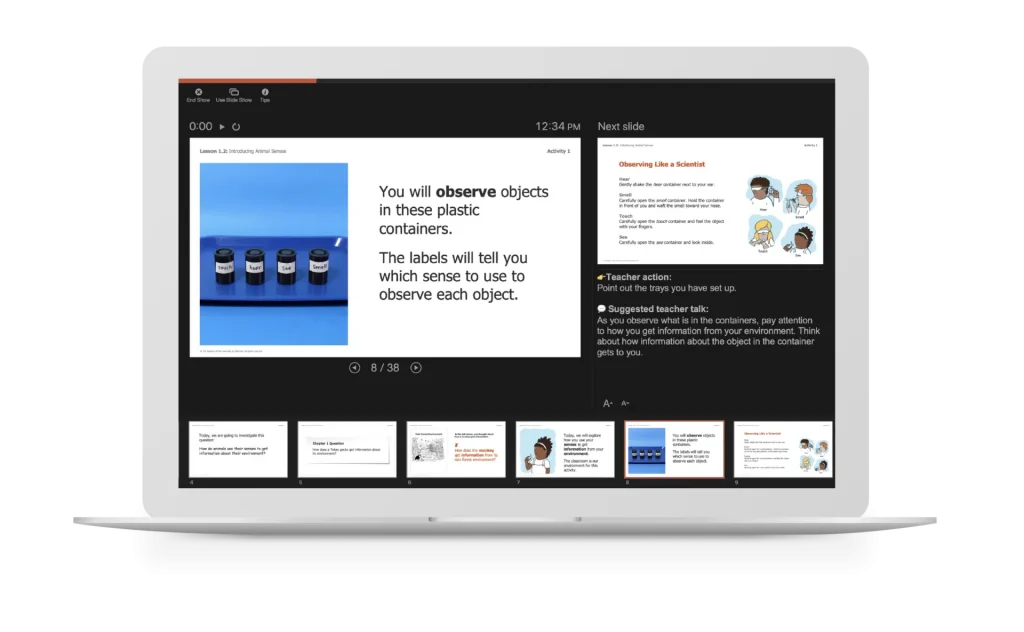
A laptop displays a PowerPoint presentation in presenter view, with slides about observing objects in plastic containers and related sensory instructions.

Classroom Slides

These customizable PowerPoints are available for every lesson of the program and make delivering instruction a snap with visual prompts, colorful activity instructions, investigation set-up videos and animations, and suggested teacher talk in the notes section of each slide.

Video introduction to Classroom Slides

Sample Classroom Slides

A printed teacher’s guide labeled “Plate Motion: Mystery of the Mesosaurus Fossils” is displayed next to a laptop showing the same curriculum’s digital interface.

Teacher’s Reference Guide

Available digitally and in print, our unit-specific reference guides are chock full of helpful resources, including scientific background knowledge, planning information and resources, color-coded 3-D Statements, detailed lesson plans, tips for delivering instruction, and differentiation strategies.

Login to platform below to access

Assorted craft supplies including a bottle of rubbing alcohol, plastic containers, colorful beads, small dropper bottles, plastic cups, and clear plastic spoons on a white background.

Materials Kits

Our kits include enough non-consumable materials to support 200 student uses. In other words, you have enough materials to support all five periods and small groups of 4-5 students each. Plus, our unit-specific kits mean you just grab the tub you need and then put it all back with ease.

List of investigations by unit

List of materials by unit

A laptop screen displaying a map with three ecosystem options, each illustrated by different animal icons and accompanied by relevant data lists.

Simulations and Practice Tools

Our digital Simulations and Practice Tools are powerful resources for exploration, data collection, and student collaboration. They allow students the ability to explore scientific concepts that might otherwise be invisible or impossible to see with the naked eye.

Video overview of digital tools

List of digital tools by unit

Device calendars by unit

Two science textbooks, one in Spanish and one in English, titled "Movimento de placas" and "Plate Motion," both featuring an illustrated Mesosaurus fossil on the cover.

Consumable Notebooks

Available for every unit, our Student Investigation Notebooks contain instructions for activities and space for students to record data and observations, reflect on ideas from texts and investigations, and construct explanations and arguments.

Sample Student Investigation Notebook

Sample Student Investigation Notebook (Spanish)

Cover of a science textbook showing a girl doing an experiment, surrounded by animals, jellyfish, a rocket, and scientific symbols, with the title "Amplify Science.

Student Edition Hardcover

This durable Student Edition is grade-level specific and contains all of the articles that students refer to throughout the year. Districts may choose to pair these traditional student texts with our digital student experience or new 2-volume consumable notebook set.

A person with headphones works on a laptop; a line from their head transforms into a rocket, symbolizing imagination, innovation, and the foundational skills essential for multilingual learners.

Coming Soon

Unlike other publishers, we don’t make you wait until your next adoption to get the latest and greatest from Amplify. We’re always launching new and exciting features. What’s more, we’ll push them out to you even after you adopt us!

See what’s coming for 2020-2021

Navigating the program

  • Click the orange button below to access the platform.
  • Choose the resources you’d like to review.
  • Pick your grade level from the drop-down menu.
  • Scroll down to find additional grade-level resources.

Navigating a Launch Unit

Launch units are the first units taught in each year of the program. The goal of a Launch unit is to introduce students to norms, routines, and practices that will be built on throughout the year.

Navigating an Engineering Internship

Engineering Internship units invite students to design solutions for real-world problems as interns for a fictional company called Futura. In the process, they apply and deepen their learning from Core units.

Navigating a Core Unit

Core units introduce a real-world problem and support students as they figure out the anchoring phenomenon and gain an understanding of the unit’s DCIs, SEPs, and CCCs.

Navigating Classwork and Reporting

Classwork is our new online grading tool that gives you quick and easy access to unreviewed work, student portfolios of work, and automatically generated differentiation groups.

Welcome to Grade 6

BACK TO MAIN 6–8 PAGE

Amplify Science California is so effective you can cover 100% of the NGSS in half the time of other programs.

Plus, you can breathe a sigh of relief knowing we give you enough materials to support 200 students. In fact, our material kits:

  • Support small groups of 4-5 students.
  • Make organization and finding materials easy.
  • Last longer with only one of the nine kits requiring refills.
Collage showing children doing science activities: flying a paper plane, using a microscope, building models, and an illustration of a polar bear on melting ice.

What students learn

When you’re ready:

  • Find a summary of each unit below including each unit’s student role and anchor phenomenon.
  • Click on the orange “See how the unit works” link to download a helpful Unit Guide. These guides make great companions to busy reviewers looking for a big-picture understanding of how each unit works.
Abstract art with vibrant colors featuring a yellow silhouette of a person holding a book against a background of geometric shapes, swirling patterns, and bold textures.

Unit 1

Microbiome

Student role: Microbiological researchers

Phenomenon: The presence of 100 trillion microorganisms living on and in the human body keeps the body healthy.

Abstract artwork of a person's side profile with geometric shapes and colorful patterns flowing from the head, holding a small sledgehammer. A vision chart is visible in the corner.

Unit 2

Metabolism

Student role: Medical students

Phenomenon: Elisa, a teenager, is tired all the time. In fact, she can’t get through the day without feeling exhausted.

See how this unit works

Orange abstract background with hexagonal shapes featuring icons of a bar chart, plant, safety vest, test tube, peach, and stethoscope.

Unit 3

Spinning Earth

Student role: Sky scientists

Phenomenon: The sky looks different to Sai and his grandma when they talk on the phone at night.

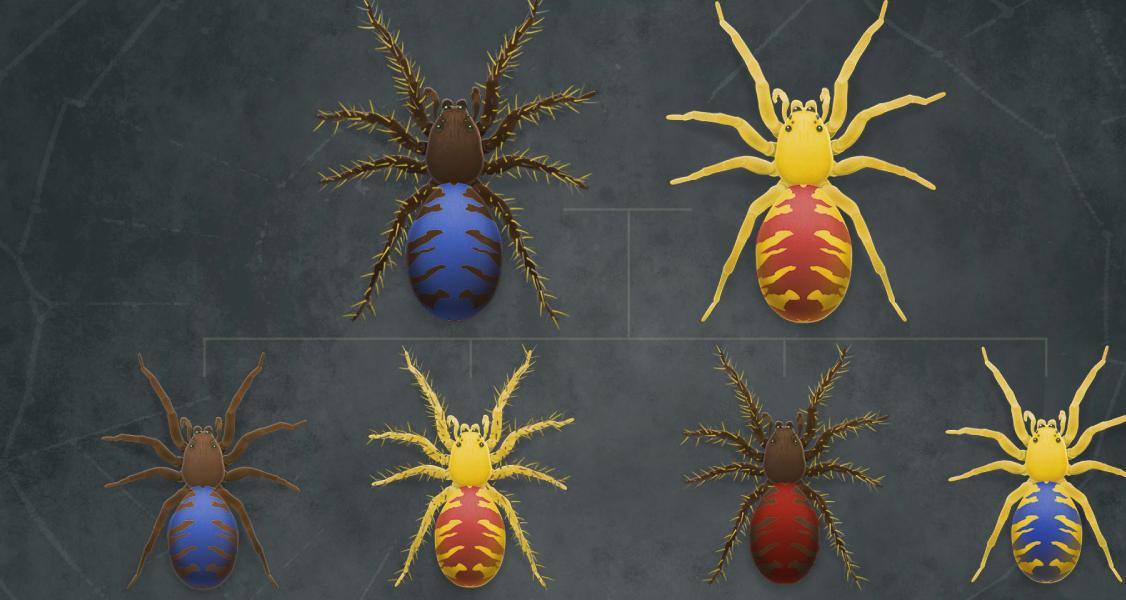
An image showing a graphic of spiders of different colors with distinct leg and body patterns, including brown, yellow, and blue variations. The background is a dark, textured surface.

Unit 4

Traits and Reproduction

Student role: Biomedical students

Phenomenon: Darwin’s bark spider offspring have different silk flexibility traits, even though they have the same parents.

See how this unit works

Illustration of a person in a red hat and fur-lined coat with eyes closed, surrounded by large orange circles on a dark background.

Unit 5

Thermal Energy

Student role: Thermal scientists

Phenomenon: Riverdale School needs a new heating system. Only one of two proposed systems is the best choice.

See how this unit works

Abstract artwork depicting a bright sun with blue and orange swirling patterns next to green hills under a sky with shades of blue, orange, and red.

Unit 6

Ocean, Atmosphere, and Climate

Student role: Climatologists

Phenomenon: During El Niño years, the air temperature in Christchurch, New Zealand is cooler than usual.

Illustration of a village with houses, fields and mountains under a cloudy sky with waves of wind or rain.

Unit 7

Weather Patterns

Student role: Forensic meteorologists

Phenomenon: The strong storms in Galetown didn’t just begin. They have become more and more severe over the years.

See how this unit works

A polar bear stands on a small ice floe in the ocean with an orange sun in the sky and distant icy mountains in the background.

Unit 8

Earth’s Changing Climate

Student role: Climatologists

Phenomenon: The ice on Earth’s surface is melting.

See how this unit works

Abstract geometric design in shades of blue and purple featuring a hexagon with icons of a building, wrench, molecules, sun, paint can, and screwdriver.

Unit 9

Earth’s Changing Climate Engineering Internship

Student role: Civil engineers

Phenomenon: Designing rooftops with different modifications can reduce a city’s impact on climate change.

How teachers teach

When you’re ready:

  • Scroll down and take a closer look at your classroom resources.
  • Click on the orange links below each component to see grade-specific samples.
A laptop displays a PowerPoint presentation in presenter view, with slides about observing objects in plastic containers and related sensory instructions.

Classroom Slides

These customizable PowerPoints are available for every lesson of the program and make delivering instruction a snap with visual prompts, colorful activity instructions, investigation set-up videos and animations, and suggested teacher talk in the notes section of each slide.

Video introduction to Classroom Slides

Sample Classroom Slides

A printed teacher’s guide labeled “Plate Motion: Mystery of the Mesosaurus Fossils” is displayed next to a laptop showing the same curriculum’s digital interface.

Teacher’s Reference Guide

Available digitally and in print, our unit-specific reference guides are chock full of helpful resources, including scientific background knowledge, planning information and resources, color-coded 3-D Statements, detailed lesson plans, tips for delivering instruction, and differentiation strategies.

Login to platform below to access

Assorted laboratory supplies including beakers, measuring cylinders, test tubes, pipettes, thermometers, and chemical reagents on a white background.

Materials Kits

Our kits include enough non-consumable materials to support 200 student uses. In other words, you have enough materials to support all five periods and small groups of 4-5 students each. Plus, our unit-specific kits mean you just grab the tub you need and then put it all back with ease.

List of materials by unit

List of investigations by unit

A laptop screen displaying a map with three ecosystem options, each illustrated by different animal icons and accompanied by relevant data lists.

Simulations and Practice Tools

Our digital Simulations and Practice Tools are powerful resources for exploration, data collection, and student collaboration. They allow students the ability to explore scientific concepts that might otherwise be invisible or impossible to see with the naked eye.

Video overview of digital tools

List of digital tools by unit

Device calendars by unit

Two Amplify Science books titled "Metabolismo: hacer la diagnosis" and "Metabolism: Making the Diagnosis" with colorful artwork and purple labels at the bottom.

Consumable Notebooks

Available for every unit, our Student Investigation Notebooks contain instructions for activities and space for students to record data and observations, reflect on ideas from texts and investigations, and construct explanations and arguments.

Sample Student Investigation Notebook

Sample Student Investigation Notebook (Spanish)

Illustrated cover showing a polar bear on ice, various animals, and silhouettes of people running and biking; titled "Amplify Science California Student Edition Grade 6 Integrated.

Mystery Science

Our exclusive partnership with Mystery Science means you get our NGSS core curriculum plus two years of free access to Mystery Doug and his extensive library of captivating videos that deepen students’ understanding of each unit’s phenomenon.

A person with headphones works on a laptop; a line from their head transforms into a rocket, symbolizing imagination, innovation, and the foundational skills essential for multilingual learners.

Coming Soon

Unlike other publishers, we don’t make you wait until your next adoption to get the latest and greatest from Amplify. We’re always launching new and exciting features. What’s more, we’ll push them out to you even after you adopt us!

See what’s coming for 2020-2021

  • Click the orange button below to access the platform.
  • Choose the resources you’d like to review.
  • Pick your grade level from the drop-down menu.
  • Scroll down to find additional grade-level resources.

Navigating a Launch Unit

Launch units are the first units taught in each year of the program. The goal of a Launch unit is to introduce students to norms, routines, and practices that will be built on throughout the year.

Navigating an Engineering Internship

Engineering Internship units invite students to design solutions for real-world problems as interns for a fictional company called Futura. In the process, they apply and deepen their learning from Core units.

Navigating a Core Unit

Core units introduce a real-world problem and support students as they figure out the anchoring phenomenon and gain an understanding of the unit’s DCIs, SEPs, and CCCs.

Navigating Classwork and Reporting

Classwork is our new online grading tool that gives you quick and easy access to unreviewed work, student portfolios of work, and automatically generated differentiation groups.

Welcome to Earth and Space Science

BACK TO MAIN 6–8 PAGE

Amplify Science California is so effective you can cover 100% of the NGSS in fewer lessons than other programs.
 
Plus, you can breathe a sigh of relief knowing we give you enough materials to support 200 students. In fact, our material kits:

  • Support small groups of 4-5 students.
  • Make organization and finding materials easy.
  • Last longer with only one of the nine kits requiring refills.
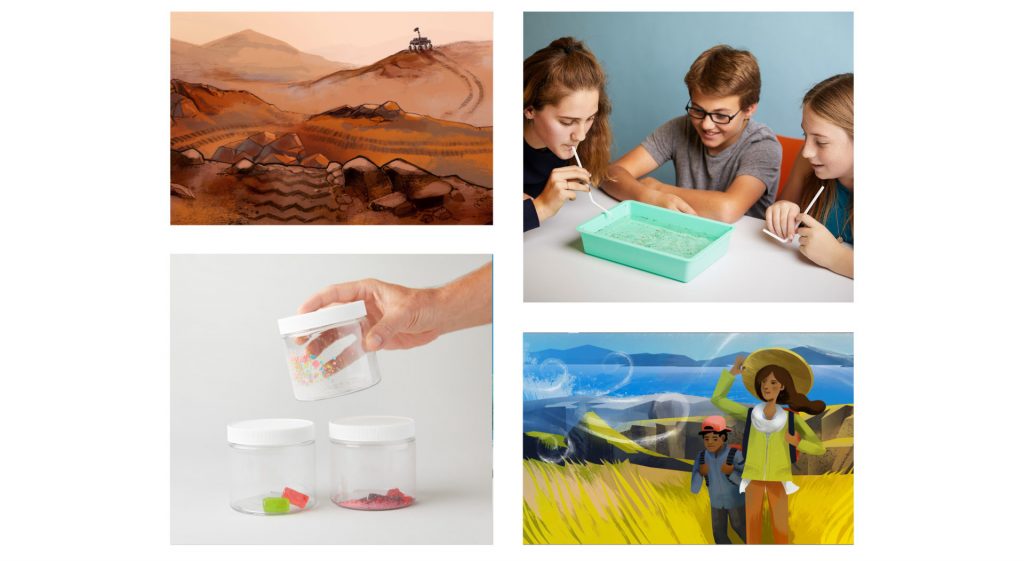
A collage of images: top left, digital art of a desert scene; top right, three kids doing a science experiment; bottom left, a hand holding a jar and two others beside; bottom right, digital art of a person and child in a field.

What students learn

When you’re ready:

  • Find a summary of each unit below including each unit’s student role and anchor phenomenon.
  • Click on the orange “See how the unit works” link to download a helpful Unit Guide. These guides make great companions to busy reviewers looking for a big-picture understanding of how each unit works.
A barren, rocky desert landscape with rover tracks leading to a distant vehicle on a hill under a hazy sky.

Unit 1

Geology on Mars

Student role: Planetary geologists

Phenomenon: Analyzing data about landforms on Mars can provide evidence that Mars may have once been habitable.

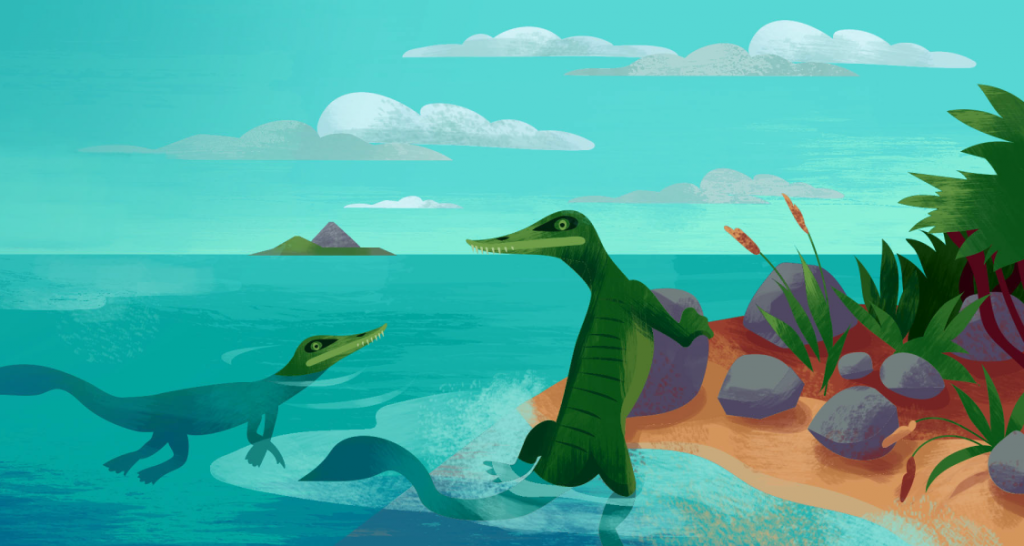
Two prehistoric reptiles with long snouts and tails are near the shore, one on land and one in water, with plants, rocks, and an island in the background.

Unit 2

Plate Motion

Student role: Geologists

Phenomenon: Mesosaurus fossils have been found on continents separated by thousands of kilometers of ocean.

See how this unit works

Geometric design featuring a telescope, mountain, sound waves, and cosmic elements on a purple hexagonal background.

Unit 3

Plate Motion Engineering Internship

Student role: Mechanical engineering interns

Phenomenon: Patterns in earthquake data can be used to design an effective tsunami warning system.

Illustration of a cross-section of Earth showing a volcano near the ocean. Trees, mountains, and clouds are visible above, with subterranean layers below.

Unit 4

Rock Transformations

Student role: Geologists


Phenomenon: Rock samples from different U.S. regions look different, but have similar mineral compositions.

See how this unit works

A city skyline at night with a prominent full moon, stars in the sky, and a bridge silhouette on the left.

Unit 5

Earth, Moon, and Sun

Student role: Astronomers

Phenomenon: Pictures of specific features on the Moon can only be taken by an astrophotographer at certain times.

See how this unit works

Abstract artwork depicting a bright sun with blue and orange swirling patterns next to green hills under a sky with shades of blue, orange, and red.

Unit 6

Ocean, Atmosphere, and Climate

Student role: Climatologists

Phenomenon: During El Niño years, the air temperature in Christchurch, New Zealand is cooler than usual.

Ilustración de un pueblo con casas, campos y montañas bajo un cielo nublado con olas de viento o lluvia.

Unit 7

Weather Patterns

Student role: Forensic meteorologists

Phenomenon: The strong storms in Galetown didn’t just begin. They have become more and more severe over the years.

See how this unit works

Un oso polar se encuentra sobre un pequeño témpano de hielo en el océano con un sol naranja en el cielo y lejanas montañas heladas al fondo.

Unit 8

Earth’s Changing Climate

Student role: Climatologists

Phenomenon: The ice on Earth’s surface is melting.

See how this unit works

Abstract geometric design in shades of blue and purple featuring a hexagon with icons of a building, wrench, molecules, sun, paint can, and screwdriver.

Unit 9

Earth’s Changing Climate Engineering Internship

Student role: Civil engineers

Phenomenon: Designing rooftops with different modifications can reduce a city’s impact on climate change.

How teachers teach

When you’re ready:

  • Scroll down and take a closer look at your classroom resources.
  • Click on the orange links below each component to see grade-specific samples.
A laptop displays a PowerPoint presentation in presenter view, with slides about observing objects in plastic containers and related sensory instructions.
Classroom Slides

These customizable PowerPoints are available for every lesson of the program and make delivering instruction a snap with visual prompts, colorful activity instructions, investigation set-up videos and animations, and suggested teacher talk in the notes section of each slide.

Video introduction to Classroom Slides

A printed teacher’s guide labeled “Plate Motion: Mystery of the Mesosaurus Fossils” is displayed next to a laptop showing the same curriculum’s digital interface.
Teacher’s Reference Guide

Available digitally and in print, our unit-specific reference guides are chock full of helpful resources, including scientific background knowledge, planning information and resources, color-coded 3-D Statements, detailed lesson plans, tips for delivering instruction, and differentiation strategies.

Login to platform below to access

Assorted rocks, plastic jars, stacks of clear plastic cups, wrapped candies, and scattered dice laid out on a white background.
Materials Kits

Our kits include enough non-consumable materials to support 200 student uses. In other words, you have enough materials to support all five periods and small groups of 4-5 students each. Plus, our unit-specific kits mean you just grab the tub you need and then put it all back with ease.

A laptop screen displaying a map with three ecosystem options, each illustrated by different animal icons and accompanied by relevant data lists.
Simulations and Practice Tools

Our digital Simulations and Practice Tools are powerful resources for exploration, data collection, and student collaboration. They allow students the ability to explore scientific concepts that might otherwise be invisible or impossible to see with the naked eye.

Video overview of digital tools

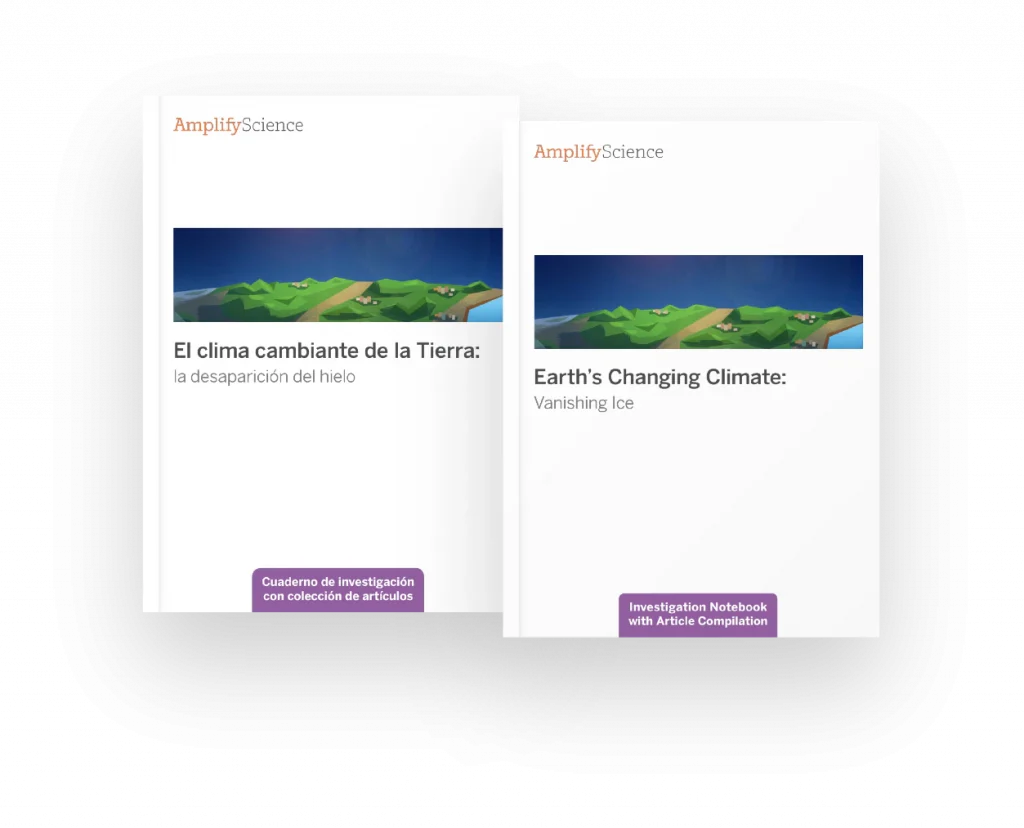
Two booklets titled "El clima cambiante de la Tierra: la desaparición del hielo" and "Earth’s Changing Climate: Vanishing Ice" with landscape illustrations on the covers.
Consumable Notebooks

Available for every unit, our Student Investigation Notebooks contain instructions for activities and space for students to record data and observations, reflect on ideas from texts and investigations, and construct explanations and arguments.

Cover of the "Amplify Science" Grade 8 textbook featuring illustrations of space, insects, technology, crowds, and scientific diagrams.
Student Edition Hardcover

This durable Student Edition is grade-level specific and contains all of the articles that students refer to throughout the year. Districts may choose to pair these traditional student texts with our digital student experience or new 2-volume consumable notebook set.

A person with headphones works on a laptop; a line from their head transforms into a rocket, symbolizing imagination, innovation, and the foundational skills essential for multilingual learners.
Coming Soon

Unlike other publishers, we don’t make you wait until your next adoption to get the latest and greatest from Amplify. We’re always launching new and exciting features. What’s more, we’ll push them out to you even after you adopt us!

See what’s coming for 2020-2021

Navigating the program

  • Click the orange button below to access the platform.
  • Choose the resources you’d like to review.
  • Pick your grade level from the drop-down menu.
  • Scroll down to find additional grade-level resources.

Navigating a Launch Unit

Launch units are the first units taught in each year of the program. The goal of a Launch unit is to introduce students to norms, routines, and practices that will be built on throughout the year.

Navigating an Engineering Internship

Engineering Internship units invite students to design solutions for real-world problems as interns for a fictional company called Futura. In the process, they apply and deepen their learning from Core units.

Navigating a Core Unit

Core units introduce a real-world problem and support students as they figure out the anchoring phenomenon and gain an understanding of the unit’s DCIs, SEPs, and CCCs.

Navigating Classwork and Reporting

Classwork is our new online grading tool that gives you quick and easy access to unreviewed work, student portfolios of work, and automatically generated differentiation groups.