S4 – 02. Bethany and Dan share their math biographies

Promotional graphic for "math teacher lounge," season 4 episode 2, featuring photos and names of math teaching guests Bethany Lockhart and Dan Meyer.

In this episode, co-hosts Bethany Lockhart Johnson and Dan Meyer get personal and share their “math bios”—their early experiences with math and how those experiences turned them into the educators they are today.

Explore more from Math Teacher Lounge by visiting our main page

Download Transcript

Dan Meyer (00:00):

We’re recording. What’s up, everybody. This is Dan Meyer with Math Teacher Lounge.

Bethany Lockhart Johnson (00:08):

And I’m Bethany Lockhart Johnson. We are so excited to be back. Season Four, Episode Two. Hi, Dan.

Dan Meyer (00:16):

Hey, Bethany, how are you doing today?

Bethany Lockhart Johnson (00:18):

I’m so excited to be talking with you! You know, as we record this, our reunion at NCTM is getting closer and closer.

Dan Meyer (00:28):

The NCTM live show is gonna be bonkers. I don’t think people are ready for it. You think you know what we’re about on MTL from listening to us, but the live show is gonna be outta control. You cannot imagine how many clowns and elephants Bethany wants to have at the live show. We’re still—we’re trying to talk her down from like three to one, but we’ll see.

Bethany Lockhart Johnson (00:44):

All I want is the t-shirt cannon. Because I used to go to these baseball games and they would have a t-shirt cannon. And I thought, I wanna operate a t-shirt cannon! So like, if I could be standing on stage aiming t-shirts at people who are jumping up and down requesting a t-shirt? I don’t know. Doesn’t that sound fun?

Dan Meyer (01:01):

Sounds awesome. High point of my college education was catching a t-shirt. No, it was—it was a burrito. It was a burrito cannon. But I think it was just a t-shirt cannon, but it was a burrito cannon. And I caught a burrito at a game and it was probably the most memorable moment of all of college education for me.

Bethany Lockhart Johnson (01:16):

Was the burrito still warm?

Dan Meyer (01:18):

Oh yeah. I think it got—like, I think it might’ve been warm at one point and then it got warmed back up through the muzzle velocity of the cannon. So it was a pretty great system they had going on there. <Laugh> Yeah. <Laugh> Anyway, I’m off topic, but, we’re thrilled to—I’m thrilled to chat with you and we’re thrilled to be listened to by you folks out there in MTL land. In the lounge itself. We got a fun show today.

Bethany Lockhart Johnson (01:40):

So if you listen to Episode One—which if you haven’t, hope you go back and listen to it—if you listen to Season Four, Episode One, you’re gonna hear—we asked Huon, KT, who is this delight of a joyful teacher. We asked her to talk to us about what’s her math bio. And we want to ask all of our guests—like, I wanna go back and ask every single guest we’ve ever had to tell us their math bio.

Dan Meyer (02:06):

Yep.

Bethany Lockhart Johnson (02:06):

Because, while seemingly simple in nature, our students enter our math classroom already having had this relationship with math and these notions about their role in math or what they think about math. And it impacts our school year with them if we’re a teacher. And it impacts our relationship with math as we move through our education and beyond. Right? And I I’m so excited about this question, ’cause I think it also ties into this theme for Season Four, which is joyful math, and diving into “When has math felt joyful? When has it not? Does it feel like—how do we think about how our math bio, our relationship with math, has evolved into a joyful or less joyful place?”

Dan Meyer (02:54):

I get it. And what’s really key here, I think, is that teaching more than other professions is a generational profession. You know what I’m saying? Like, no one is like, “Well, you know, I sold insurance to you and now you’re selling insurance to, you know, my grandkids; that’s amazing!” But people are always posting photos when, like, you teach someone who then becomes a teacher later. Teaching is a generational sort of thing. So the kinds of joyful experiences that we offer or don’t offer students now affect the experiences that students who haven’t even been born yet will have, you know, some 20, 30 years later. That, to me, is a trip. And well-worth exploring, you know, how we got here, mathematically speaking.

Bethany Lockhart Johnson (03:39):

I remember a friend had sent me this image of an assignment that her son got that was asking for their Mathography. They wanted to know about their history of mathematics. And this was their first assignment. And this teacher, I would like to imagine, read them all and used it to inform conversations about students’ relationship with math. And, you know, some of the questions they asked were thinking about whether you consider yourself, quote, unquote, “good at math.” Like “what kind of experiences have you had? What do you like or dislike about math? What is, you know—what do you expect to learn in math this year?” Just asking students to actually pause and examine and reflect on their relationship and then also looking forward to, like, what kind of a classroom community do we wanna create? And I loved that assignment. And yeah, so today’s episode Dan, guess what?

Dan Meyer (04:32):

What’s going on? What’s happening?

Bethany Lockhart Johnson (04:33):

I figured we should ask each other about our math bio.

Dan Meyer (04:39):

I think the people out there would love to know this about us. ‘Cause you know, we’re both awesome. But also what’s really cool here is that like, I don’t know this about you. Like not, not a lot. You know, the folks at Amplify, they kind of assembled me and Bethany together in the same way that record labels assembled pop boy bands, girl bands, that kind of thing, back in the day. You know, grabbing some stars from screen or film and just like throwing ’em together and saying, “All right, now you’re here to perform together.” And so it’s just a really good moment for us to, like, settle back and just know who we’ve been working with for the last three seasons and change here. I love it.

Bethany Lockhart Johnson (05:15):

Well, I don’t know. I don’t actually agree with that, Dan. Because don’t you remember? We knew each other beforehand. And while I would like to think of us as…oh, I’ll say One Direction—well, no, One Direction is now defunct. Who’s another band that got formed by one of those shows and is still together and still—

Dan Meyer (05:33):

BTS! K-Pop, you know! Let’s go!

Bethany Lockhart Johnson (05:35):

K-pop. BTS.

Dan Meyer (05:38):

Let’s go, Bethany <laugh>.

Bethany Lockhart Johnson (05:39):

So can we incorporate some K-pop into the NCTM Math Teacher Lounge live episode? Don’t answer now. Don’t answer now. OK. So not only are we gonna share our math bios, but we want to encourage you listeners to share your math bio with somebody in your life. It could be a child in your life, maybe talking to your kiddo about what was it like. What was math like for you? It could be a student that you have. It could be a partner, a friend, a parent. I mean, the sky’s the limit. Share your math bio. And most of all, share with us. We wanna hear about your math bio and you can share it with us at Twitter, at MTLShow, or in our Facebook group, Math Teacher Lounge.

Dan Meyer (06:26):

Stop on by, please. All right. I’m gonna just share like, just a couple of quick, signposts. Not the full bio. Gotta leave them wondering about something here. But here’s a few quick highlights and lowlights of my math bio and how, maybe, it made me the teacher that I was and the educator I am. Is that cool?

Bethany Lockhart Johnson (06:44):

Wait, I didn’t even, I didn’t ask you yet.

Dan Meyer (06:46):

Ask me what?

Bethany Lockhart Johnson (06:47):

Hey, Dan!

Dan Meyer (06:49):

Is there like a magical word? Like, what’s your math bio? <Laugh> Oh, go for it. No, no, that’s right. They won’t know what I’m talking about. Why is he talking about his math bio? Bethany—

Bethany Lockhart Johnson (06:57):

That whole lead-in that we just gave? They might not know.

Dan Meyer (07:00):

Yeah. We just talked about math bios for the last 20 minutes. But yeah, they might not know what we’re—

Bethany Lockhart Johnson (07:04):

<laugh> So Dan, why don’t you go first? ‘Cause I know you were gonna ask me to go first, but why don’t you go first? Dan? What’s your math bio?

Dan Meyer (07:12):

Oh, wow. Well, thank you for the formal invitation to share my math bio, Bethany Lockhart Johnson. So, I’ll just share—I just wanna share a couple items here, not the full history. Gotta leave ’em—leave a little mystery in there, you know what I’m saying? But here’s a few highlights and lowlights, and I think what it means for me as an educator. So, I was homeschooled for eight years. That was big—did a lot of math learning on my own. Couple of lowlights from that, a lot of highlights, in terms of just like being able to, like, learn at my own rate and just jump on ahead and pursue different wacky things. But I tried to switch into public school in fourth grade and I lasted, um, four hours. I didn’t even go to class. I enrolled and then it was like, boom, I was out of there. Because we went to the school; we met the teacher, saw the room, very nice person and place. But I got the homework assignment and the homework assignment was gibberish. I had no idea what to do and such was this feeling of just, like, despair and hopelessness, I was like, I cannot be a part of this. I remember the assignment. It was about identifying scalene, isosceles, and equilateral triangles. I’ll tell you this: I am quite good at that now. But at the time, like, I didn’t know what those words meant. And you know, at that moment we had Encyclopedia Britannica, could not Google this or even Ask Jeeves or AltaVista this so well back then. It just—it was an entry moment of failure and realizing that so much of math is like a, kind of a social kind of construct. And if you’re not part of that social circle, what can you do? So that was a bummer. Another bummer was eighth-grade math, learned it all by way of videotape. You know, put in the tape and watch—not gonna say the person’s name and not this person’s fault—but it was just like watching someone work on a whiteboard. Kind of a precursor to Khan Academy, kind of a drag. Went to high school—

Bethany Lockhart Johnson (09:02):

Wait, wait, wait, wait. We were—I’m not ready to jump to high school. Wait. Can you pause for just a second?

Dan Meyer (09:06):

Yeah. Rock on.

Bethany Lockhart Johnson (09:07):

I just need you to go back to the triangle thing. So in that moment, what did that mean for you that you had had all these experiences with math and then you encounter math in a completely different sphere, a public school, and it did not have a connection or meaning to you because prior to that, it sounds like it was pretty positive. Right? Explore these things you’re curious about; there’s not, like, a level you need to stick with…

Dan Meyer (09:33):

Yep, yep. Yeah. I think that’s right. Maybe it was a little bit of a classic, like, “Oh, I didn’t have a growth mindset; my mindset was like, ‘Oh, I’m good at math because I am, you know, born that way,’” and all of a sudden, that identity was, you know, thrown into question. And, you know, my foundation was all of a sudden quite shaky. And yeah, that’s—you know, I think I taught a lesson recently where I was like, “Hey, this whole thing with a less-than or equal-to sign and a greater-than or equal-to sign, like what those signs are: it’s just, it’s language. And if it’s confusing to you, it’s not because you’re bad at math; it’s ’cause language is oftentimes confusing ’cause people have to agree on it.” So I dunno, that sort of thing is kind of filtered in, filtered back in periodically, some sympathy for like how a lot of math is like just socially agreed upon ways of working with, you know, numbers, shapes, patterns, that kind of thing.

Bethany Lockhart Johnson (10:20):

OK.

Dan Meyer (10:21):

Anyway.

Bethany Lockhart Johnson (10:21):

  1. And in this home school—I have a lot of questions about that, but I’ll stick to one—were you in a community of people that you talked about these math ideas with? Were you homeschooled solo? You have a sibling, so I think you were together, right?

Dan Meyer (10:39):

Yeah. Yeah. I’ve got a twin sister. So we were, you know, like, right on with each other the whole way through there. And yeah, so we had—but it wasn’t, it wasn’t like a—it was a lot of individual work, with my flavor of homeschooling.

Bethany Lockhart Johnson (10:54):

  1. Got it. And the tapes—wait, before you go to high school, the tapes, the VHS tapes, which I’m just loving this image—

Dan Meyer (11:02):

Yeah.

Bethany Lockhart Johnson (11:02):

Was that a positive experience? Was that because that was an area of math that whoever was homeschooling you wasn’t that comfortable with? Why was it that route for the tapes, and what was that? Was that joyful for you?

Dan Meyer (11:15):

Yeah, definitely not joyful. Yeah, it was like, if you had questions, you couldn’t really ask them of the VHS tape. It didn’t work out so well in that way. And it was a lot of operational-type math. It was, you know—there was no give and take; it was all kind of take. From the video teacher. And yeah, I was doing that because my homeschool teacher, my mom, who is very smart in lots of areas, did not have the math knowledge or confidence, especially to help with math at eighth grade. And that was a big reason why, flash-forward to the next year, went to high school.

Bethany Lockhart Johnson (11:48):

Nice segue. OK.

Dan Meyer (11:50):

<laugh> You caught up to high school…I encountered just like four years of just crazy-good, just bonkers-good math teachers who just really changed a lot for me. Especially, Mr. Bishop and Mr. Cavender, very cool folks who did a lot. And especially, I think Mr. Bishop and Cavender both modeled for me what curiosity from a knowledgeable adult looks like. Like someone who, you know, now I can say to myself, “Oh, they were kind of like putting on an act of being very curious about answers they were hearing for the 2000th time from a student,” let’s say, but what a powerful experience that was for me to feel like, “Oh, wow, my thoughts are interesting to someone besides myself.” I got like, maybe it’s two real highlights that I’ll just point to, from my math bio that made me the math teacher and person that I am. Let’s see here. Maybe three, if you you’ll indulge me. One is just like the idea that you could do math wherever you have your brain, a pencil and a paper. And so I remember like in high school, I was in church with my family and kind of a little bit bored of whatever’s going on. And I just had the Bolton and I like drew a pentagon, a regular one, then a hexagon, a regular one, and kept on drawing, like adding sides to the shape. And it was like, it was becoming a circle. And, you know, I was able to take the area of each of those shapes and say, you know, “What happens as you send the number of sides to infinity?” And watch as the formula for area of a circle, Pi R squared, popped out. And it was kind of a literal religious experience, in that moment, just like, “Wow, like my brain’s so cool and math is so cool and paper and pencil’s so cool.” And so there’s that. Just that kind of experience was pretty awesome. And then I would just say like, I’ve had some really fantastic experiences with math in the world itself. Stuff like—let’s see, this is gonna invite more questions from Bethany, probably, maybe I should avoid—I got, I have a Guinness—I have a Guinness world record that’s almost 20 years old. This Guinness world record is—it’s old enough to drive basically at this point. And almost old enough to drink. But like it was—it was a record for chaining the longest paper clip chain together in 24 hours. And the only way I was able to break that record was through mathematics. Where, like, I would be finishing a box of clips. And I would say to my buddy who was there, “I just finished a box of clips.” And that person would type in the number of clips that I had just done. And then a mathematical formula that I had created would tell me how many—how long the chain was at that point. It was being rolled around a spool. And like, it’s just like, wow. So math just made this possible. You know, math revealed that the record I was trying to beat was beatable, because I did the math on it. It was, like, thousands of feet long in 24 hours. And other folks might be like, “Oh, like, that’s that’s huge!” But me, I was like, “All right, let’s divide this out. You know, divide by 24 hours in a day, divide by 60 minutes an hour, 60 seconds in a minute. Oh, that’s like one clip every four seconds. That’s really slow.” You know, think about that <counts aloud>, “Clip, two, three, four. Clip two, three…” It was just slow. So math helped me, you know, wreck that record. Which to my knowledge still still stands. Don’t get any ideas, Math Teacher Lounge Folks! Is this news to you, Bethany? You haven’t blinked in the last, like, five minutes. I’m curious if this is new.

Bethany Lockhart Johnson (15:20):

It is news to me. And I have so many questions. Because OK, if four seconds was slow, so then what was your like—so then I’m assuming a hundred clips per box? Like, what was the rate, you know, per box? How long did it take you to complete a box? What did this friend like? Did this friend stick with you for the whole 24 hours? Did you really do it for 24 hours? Or once you beat the record, did you rest? How did you account for biological function? Like, needs? Like a restroom?

Dan Meyer (15:51):

<Interrupting> Like what?

Bethany Lockhart Johnson (15:51):

Eating.

Dan Meyer (15:51):

Like what, Bethany? OK.

Bethany Lockhart Johnson (15:52):

Um, Sleep.

Dan Meyer (15:55):

So yeah, maybe we dive into some of the specifics in a different time.

Bethany Lockhart Johnson (15:59):

Just tell me one of ’em. Tell me one.

Dan Meyer (15:59):

I’ll just say. So as to discourage other Math Teacher Lounge listeners from taking this on—back off of the record, folks!—this was back in college, so I was a little more limber back then. But I did one—I think it was 1.8 seconds per clip. For an entire 24 hours. Just like, so just like think about it, would you? If you’re gonna step to me on this one, just think about that, OK? And then, and then, you know, make an informed decision.

Bethany Lockhart Johnson (16:28):

Wait. Wait, wait, I just wanna tell you one thing. I’m picturing somebody with a straw, and like, giving you water as you keep clipping. I’m picturing, like, music, I…

Dan Meyer (16:37):

That’s not far. That’s not far. That’s not far from—yeah.

Bethany Lockhart Johnson (16:40):

So many questions! OK. Go on. Sorry, sorry, sorry. Go on. This is your bio.

Dan Meyer (16:44):

We gotta, I gotta wrap this up. I wanna hear your bio. But, like, I would just say like this move to this sense that math is actually a thing that’s useful for more than just a grade; it’s useful for more than just, you know, the societal, you know, adulation that comes from being a math nerd. That kind of thing. And so that, I think that affected a lot of math teaching for me. And, if I gotta, like, summarize math teaching itself in a journey, it went from like, “Hey kids, aren’t I awesome?” to, “Hey kids, isn’t math awesome?” to “Hey kids, aren’t you awesome?” And like that journey was facilitated by lots and lots of people, you know, a lot of personal growth, but at this point, at one point I was like, “Hey, math can help you get records and whatnot. It’s really useful.” And now I’m like, “Wow, your brain’s just doing just really interesting things. I can help you understand how interesting those things are, and maybe make them more interesting, or interesting in a different way, with some help here.” Let’s put a pin in that. That’s the math bio.

Bethany Lockhart Johnson (17:50):

  1. So I have no doubt that if you ask someone in your life, listeners, for their math bio, that you will discover things about them that you never knew. Literally the questions that I have…I have so many question. And Dan is very good at, you know, bringing me back. Bring me back, like, come on, come on. But I just wanna say, overall, your journey seems pretty joyful. It seems pretty joyful. It seems pretty full of confidence. I don’t wanna say “ego” in a negative way, but I wanna say you were buoyed by these experiences that allowed you to feel like math was a place for you to thrive.

Dan Meyer (18:36):

Right.

Bethany Lockhart Johnson (18:36):

Where you could try out things. You could try it out and just, “I could do that!” Right? Like…your relationship just felt very, like…you felt like you had autonomy, agency, perhaps much like you, you operate in this world. Dan, is that, is that right <laugh>?

Dan Meyer (18:54):

Yeah, I think it’s fair to say. And without telling too much of her story, my twin sister with whom I share most things, including genetics, you know—she had a very different experience in math early on. She’s brilliant. She’s a doctor. And not, you know, the book kind of doctor that I am, but like a real, you know, medical doctor. She’s brilliant. But we were—we encountered different messages about who math was made for, early on in, you know, in our entire math learning. And she—we both digested the messages that we were sent, and took, you know, different, different paths because of them, for sure.

Bethany Lockhart Johnson (19:31):

Funny how that works. I thank you, Dan. I do. For in all sincerity, I appreciate you sharing that. And I think that it’s exciting to hear how it influenced your teaching. It feels like you want to cultivate those experiences for your students. And I’ve been in the room when you’ve presented; I was in a room where you taught a class live. It felt like you were making space for the students to have these aha moments. And it feels like in your work at Desmos, and now Amplify, you’re trying to create these products that allow folks to recreate these amazing math moments. Right? And that it’s for everyone and that it’s accessible and it can be very positive. I feel like I have this new perspective on kind of the energy you bring to your teaching. So thank you for sharing that.

Dan Meyer (20:24):

Yeah. Been a pleasure. Thanks for your questions here, Bethany. And it’s been—it’s been fun to reflect on it. And I do—I do feel very lucky in lots of ways. Privileged. Lucky. I know, like—I think the world has been set up for my success in lots of ways, as who I am. But I do just…yeah, I feel—I want more people to experience what it’s like when you walk into a math classroom and it’s like, “Hey, this place is for you. You have interesting thoughts about this. Let’s get ’em out.” So that’s awesome. I would love to hear about you and how you…I mean, we have taught different kinds of kids. You know, I taught kids who I think were somewhat set in, they’re a little bit more solid at secondary in who they are as a math learner. Like “I know who math is and who I am with math.” And I’m really excited to hear what your math bio allowed you to do with students who were perhaps open to the idea that they are very mathematical or at least not yet closed off to those possibilities. So, yeah. What are some of the high, the, you know, the high and low water marks of the making of Bethany Lockhart Johnson, math teacher? <Laugh>

Bethany Lockhart Johnson (21:24):

Thanks for asking, Dan. <Laugh> I’ve shared aspects of my math bio because I think it really informs the way that I talk to people about math and think about math. And I like to share it because I want folks to consider their own journey with math, as we like engage with problem-solving and sense-making and thinking about the students in our classroom. My dad is a math and computer science major. So he had a computer very early on. I wish he had invested in Apple early on when he had like one of the first Apple computers ever. And, sorry, dad, but it’s true. I do wish you had done that.

Dan Meyer (22:10):

I’m sure he does too.

Bethany Lockhart Johnson (22:11):

Oh, he does. So math and computers and conversations about counting, you know, it felt like it was kind of just normal. Like it was around me. And I went to Montessori, which is a private school that—oh, they have some public Montessori—but it’s very self-directed. And so we would have these kind of charts, these goals for the day that you explored. And so we would explore math in very, I don’t know, very organic ways, with these natural materials. And I feel like I excelled at math, but it wasn’t something that I was conscious of. It was just like, “Oh, well, yeah. Math, it’s, you know, something we do.” And then when I went to—when I left Montessori in fourth grade, I remember that year being a lot of like repetition. I was like, well, we did this. We covered this. And except for the mission project that we hadn’t done, that was all new. And that’s it. For another time I’ll share about that. But <laugh> then, they actually, I was moved with a group of students to the fifth grade math class, ’cause we had already done the work that we were doing. And so, it wasn’t that it felt like it came easily, but it did make sense. What we were doing made sense. And then it all kind of changed. There was a lot of change in my family. There was, like, missed school time. And we moved and I went to a new middle school and I was in this environment with students who—it was like an accelerated program. And so I was in this environment with students who were pretty competitive with each other. And I remember going—and I was not from of a competitive environment; like Montessori is not competitive. It’s not about that.

Dan Meyer (24:02):

Right. Right.

Bethany Lockhart Johnson (24:02):

It’s—it was very strange to me that I would be competing against anyone, even competing against myself. And I, you know, knew how to set goals. But it was a different level of energy. And I felt like, because I wasn’t competitive in that nature, I felt like that kind—I felt on the outside of a lot of the energy. Besides the regular, like, middle-school feeling outside of things. And I remember the first friend that I made. Hi, Susan! She had said to me, this was like maybe our second week of school, she’s like, “Oh, at lunchtime, come with me to math club.” And I was like, “OK.” And I remember walking into that room and I had no idea what was going on. And so that was one of the first times where I was just like, “Whoa, I have absolutely no concept of what they’re talking about or what.” These are my peers. I felt very—it was very—it was strange. It was strange. I was like, “This doesn’t feel like a space for me at all.” When I think ordinarily I was kind of excited about the idea of going to math club at lunch, you know? And over middle school, I kind of just got progressively more and more behind. It started with missing some work and then missing more and then checking out. And, you know, the problem was that I really made it about myself. That, like, it wasn’t something that I was then good at or could do. When really it was that well, pre-algebra, I was having a really hard time in like the rest of my life. And so I wasn’t real present in that class. And so when I got to algebra, it didn’t make a whole lot of sense. And then if I missed Monday, Tuesday, and Wednesday, well, Thursday is gonna be hard, you know? And, it just got progressively harder and harder. So I had this great idea that between eighth grade and ninth grade, I was going to take this accelerated geometry class. ‘Cause that was the ninth grade class, it was geometry. And I would take it. It was like geometry in three weeks or something. So then when I entered high school, I would’ve gotten this like jumpstart. But I wish I had said, “Oh, I’ll take this, and then in ninth grade I’ll take geometry.” So like I’ve already kind of gotten a preview of the material. But instead I went to the 10th grade math, which was like intermediate algebra, trigonometry. I had absolutely no clue what was going on. And I had a very, very difficult time and I wasn’t ready for that class. But it was exacerbated by the fact that this teacher felt very free to let the freshmen in that class know that they shouldn’t be in that class. That this class was for 10th graders.

Dan Meyer (26:49):

Oh wow. Oh, wow.

Bethany Lockhart Johnson (26:51):

And we had a rather contentious relationship. And I will never forget that we were in the hallway, and he says to me, “You don’t belong here.” And I’ve talked to—I’ve talked to a girlfriend of mine about her experiences with this teacher and she has the fondest memories.

Dan Meyer (27:13):

Wow.

Bethany Lockhart Johnson (27:14):

She—in fact, almost everyone I’ve spoken with, you know, if we are talking about past teachers or, “Oh, what was that class like?” I mean, they just have these wonderful memories! And for me, my sense of like belonging was already so on a tight rope anyway, that to have this adult, this teacher, tell me, “You do not belong here,” just crushed me. And in hindsight, I think he was saying like, “This class is too hard for you.” I mean, maybe. <Laugh> But all I heard was “You don’t belong here.” And I extrapolated it to connect to math and to anything having to do with math in general. And it just got worse and worse through high school in the world of math. My next math class was even—I had to repeat that class, and still didn’t understand what was going on, and felt more out of place, and, you know, it’s one of those things that I just kind of had started to accept that, I guess, math isn’t for me. I guess I’m just not a math person. Or whatever these stories are that I started to create and build and find evidence for around me that was informing that this wasn’t for me. And I had always done well in school. I was in, you know, accelerated classes. I felt like I was capable of problem solving. And yet in math, I just felt like I had all of this evidence saying that I didn’t belong there. And so when I went to college, I took whatever two math classes were—you know, I was in performing arts and then I did ethnic studies as well. And I remember you had to take two math classes that were GEs. There were these classes that if you don’t wanna deal with math, you go take those classes. And I was like, “Oh yeah, I’ll take that. I’ll take that.” The gulf widened, you know? <Laugh> And I didn’t feel like anxiety when I had to do things like balance my checkbook or navigate math in everyday spaces. It was just, it would never occur to me that I would like seek out opportunities to engage with math or think about it or talk about it.

Dan Meyer (29:35):

That is—yeah, that’s just so wild, how, I don’t know, like it’s often, from the student’s perspective, it is them in a vacuum with math, and the two of them interact and decide if, you know, if they’re right for each other. But from the grown-up perspective, it’s just, you know, it’s a little bit clearer that your story with math was not just you in math, but you with, you know, various external things happening. With family, various teachers playing their different roles—sometimes, you know, really tragic and horrible roles—and then like the compounding mathematical debt that it feels like you were kind of building up, as challenges in one year didn’t get resolved and moved into the next year and so on. And all that makes me wonder—it makes me, like really, really scared, first of all, because I would bet that your teacher might not even remember that moment, that for you is part of just a pivotal moment in your math story, and how many kids have I played—have I been a part of their story in that way and wouldn’t even recall? You know what I’m saying? So that’s a scary part. And then also I’m just wondering, like, how can we, how can we help kids who are in those moments recognize that, “Oh, this kid is like absent a bunch,” and give them more resources to be successful rather than say, “Well, you just gotta try harder now.” Those are things I’m wondering, hearing your story. Thank you for sharing that. I’d love to know more about how you then became a teacher and what all that did for you as you helped students.

Bethany Lockhart Johnson (31:06):

Well, but to answer what you were saying, it wasn’t that I wasn’t—I was always absent physically, but at least like mentally at that point, because it had become so difficult. It didn’t make sense to me. So I was just really checked out in math class, you know? So in hindsight, you know, as a teacher, for sure I can look back, and especially hearing these stories and these experiences my friend had with this teacher and just like chalks up as one of like her most favorite teachers ever! And you know, he clearly did a great job for so many students. But for me, and I think for some people, they would’ve taken those challenges and, you know, it would have fortified them in a different way or something. But for me, I took it upon myself to mean certain things about myself and about my ability and what I was capable of. And so I think, I think in some ways, you know, yeah, it’s all, it’s all interconnected. You know, when your students walk in the door, they’re not this—the things that are impacting them in their life are coming into the room with them. And I don’t think we can take that for granted and think, “Well, if they just focus hard enough…”

Dan Meyer (32:21):

Yeah.

Bethany Lockhart Johnson (32:23):

So let’s go back to my love of Oprah. You know, Oprah talks about living your best life. And something I really appreciate about Oprah is that she encourages you to examine, like, sticking points, right? Like she doesn’t just say, “Well, this…just pretend nothing ever happened, and everything’s fine!” You know, she really talks about making time for reflection. And I kind of got mad that anytime I thought about math, or math schooling came up. Or, you know, whatever, any time that came up that I just felt UGH about it. And I felt like a failure. And I’m like, “You know what, what if I took a math class? And I’m an adult at this point. I’ve graduated. I have—I’ve left college. I have my degrees. But I said, “What if I took a math class?” So I went down to, the city college and I found out that you have to take this exam, like a placement exam. And I went and took the placement exam. And I remember it’s one of the responsive tests where if you get it right, the next question’s a little harder. And so I’m taking it, panicking, because it’s getting more like…I just, you know. And I remember it placed me in like, whatever, Algebra Something, this class that was far more advanced than I thought I should be in. And I was like, there’s been a mistake! You know, and I went to the counselor and said, you know, “I got these results, but I couldn’t answer a lot of the questions on the test.” She’s like, “No, no, no, that’s how it works.” So I go take this class and the class was hard. And I decided that I was just gonna keep showing up. And every day before class, I kid you not, they had a little math…it was like a math center where you could go in and they had a bunch of tables and you’d sit at the table and you could sit and do your work or whatever. If you had a question, you walked up and put your name on a clipboard and then somebody would come and help you. So I did that, every single—like before every single class I would go in. I’d sit there. I’d do the work. I’d go. And I’d get help. Like somebody would walk over and you know, some kid for whom they’re like this…you know, they’re math—it might be you, Dan! It could be you! It could have been you! You know, would walk over and be like—

Dan Meyer (34:38):

Yeah, I was in Help like that. Naw, it’s awesome. Love, love those people. Yeah.

Bethany Lockhart Johnson (34:42):

And you know, I did it. And I did so well in the class. I did exceedingly well in the class. And I said—

Dan Meyer (34:50):

Take that! Take that, everything! Every other math experience!

Bethany Lockhart Johnson (34:53):

I said, what?

Dan Meyer (34:55):

Yeah!

Bethany Lockhart Johnson (34:55):

Wait a second.

Dan Meyer (34:56):

Yeah.

Bethany Lockhart Johnson (34:57):

And it was that I was present. I was not afraid to look at what didn’t make sense. And if something didn’t make sense, it didn’t mean there was something wrong with me. Whaaaaat?

Dan Meyer (35:10):

Yeah. Yeah.

Bethany Lockhart Johnson (35:10):

So I was just in such a different space. And then I took another math class and that class was even harder. And I did the same thing where I went to the little lab and, you know, and it just buoyed me. And it made me realize that, like, this story, that my experience with it was very powerful and that was a real lived experience, but that it didn’t have to define my relationship with math. But then! I decided I wanted to go back to school to become a classroom teacher. And I totally—this was a couple years after that math class experience. So now, you know, I’m healing my relationship with math through basic positive experiences, da, da, da, you know, doing other work. But fast-forward, for a whole number of reasons, decided to become a classroom teacher. And I freaked out. All of my—like, I’m studying for the GRE and the CSET and all the things you have to the hoops you have to jump through to apply to the masters program and the credential program. And I freaked out. I was so close to quitting, Dan. Because I was convinced that the reason I couldn’t be a classroom teacher is because I wasn’t capable in math. Like I was—it was all that resurfaced. And even though I now had evidence to say something different, to the contrary, it was still so visceral. And I was so scared. But I passed that Math CSET.

Dan Meyer (36:47):

Get it.

Bethany Lockhart Johnson (36:47):

I did well enough on the GRE—

Bethany Lockhart Johnson (36:50):

Yes!

Bethany Lockhart Johnson (36:50):

You know, I finished my credential. I worked really, really hard. I had to work so hard in my student placement, when I was student teaching for a fifth-grade class, ’cause I felt like, “Oh my God!” I mean, now I could do the mathematics, but I couldn’t TEACH it to someone, you know? But I had amazing professors at UCI, and my math professors really like just—and my mentor teacher! shout out to Jennifer! shout out to Phil!—these amazing mentor teachers who just loved teaching and who loved—like you said, you have these teachers in your life who you got to see the way that they listened to students. They taught me about that love of listening to students. And then I fell in love with, you know, CGI, cognitively guided instruction, and started learning all about all of these educators who just wanna learn from students’ thinking. And it was just so powerful. And I realize as a kindergarten teacher that I have this really special role in helping to create space for a positive school experience. Like we get to talk about—I talk about my students as mathematicians; they’re writers; they’re thinkers; they’re problem-solvers. And I also want to make space for parents. Some of them, this is their first kid in kindergarten, and they brought all of their experiences, a lot of it negative, that they had had with mathematics. So I felt like it was such an exciting opportunity to help show parents how they could have conversations about math with their students. That also, I hope helped heal their own anxiety with mathematics.

Dan Meyer (38:41):

Right, right.

Bethany Lockhart Johnson (38:42):

Like, I’ve not even scratched the surface of math learning. But I just have such a changed perspective and relationship with math. And I just fell in love with the sense-making. And I fell in love with the journey of it. I still experience math anxiety about a wide variety of things, but I do love it. And I feel like there’s a space for me in relationship with math. And that really excites me.

Dan Meyer (39:09):

Yeah. Wow. Listen to that folks. We, we don’t deserve her! Bethany Lockhart Johnson! She got some math game and could have gone off there and, you know, become an accountant or something. And she chose to hang with kids and their parents. That’s so wild that you’re like rehabbing parents and their self-conception about mathematics at the same time. I think that is so cool.

Bethany Lockhart Johnson (39:32):

Well, thanks Dan Meyer. I gotta tell you, I don’t know when or if I’ve ever shared that much of my math story. So there is a certain amount of vulnerability there. But thanks for listening. And I’m glad that, you know—I think there’s space for us to talk about these things that we care deeply about, but that can be really complicated.

Dan Meyer (39:56):

Yes. Yes. And I love how you you’ve really sharpened the point on what I feel like I know in my brain, but not my body all the time: That individual teachers are huge. Like, individual teachers, and individual moments of teaching, are just not something to play with. You know, like that kid that’s in fifth grade having a tough time, like there could be a month or a day-long period where all of a sudden, like, you’re just like, “Oh yeah, I’m back in the mix; like, me and math are still buddies.” And there’s also like moments that you had, where like one casual word from a teacher can just really put a huge wedge between you and a discipline that needs and wants you and your intellect in it.That’s a really powerful testimonial. Not just for math, but for teaching, your teaching bio.

Bethany Lockhart Johnson (40:43):

I agree with you. And I also, I also…you know, I think we can’t put this—we are human. Teachers are human. And so I’m sure there’s things I’ve said to students. Twenty-second story: a student stapled his finger in my class. <Laugh> And I remember holding his hand and saying, “Why did you do that?” And I wasn’t yelling at him, but it was like, I am sure the panic in my face…like, that’s what he’s gonna remember about kindergarten. Right? <Laugh>.

Dan Meyer (41:19):

Yeah.

Bethany Lockhart Johnson (41:20):

That. He will remember that. He won’t remember the really cool city project we did. He’s gonna remember his teacher holding his hand, in his face: “Why did you do that?”

Dan Meyer (41:30):

Yeah. Yeah.

Bethany Lockhart Johnson (41:30):

You know, so we’re human. And yes, it was awful that that teacher said that to me. There were a thousand other ways that he could have said whatever it was he was thinking. And that did deeply wound me. But despite his influence—because teachers do have a lot of power and I think they need to examine that power, ongoing—it still doesn’t have to define us. So I don’t wanna put this pressure, like—

Bethany Lockhart Johnson (41:55):

Sure.

Bethany Lockhart Johnson (41:56):

“So never ever say anything negative!” You know, we’re human.

Dan Meyer (42:00):

I feel like that kid is currently on some office-supply podcast talking about “your office-supply bio” and saying, “Let me tell you how I first got really freaked out by staples. Here’s the deal: I only use paper clips. And here’s why.”

Bethany Lockhart Johnson (42:15):

“Here’s why.” But then—callback!—he’s going to stumble upon THIS podcast and think, “And because I’m so adept with paper clips, I can beat that record!”

Dan Meyer (42:30):

Though—aaay! whoa! Settle down!

Bethany Lockhart Johnson (42:31):

BOOM.

Dan Meyer (42:31):

Don’t get any ideas, kid. No way. Uh-uh. I don’t like that at all. That’s not what—that’s not what I want to have happen here. No, thank you.

Bethany Lockhart Johnson (42:41):

Well, I’m spent, Dan. I need a nap.

Dan Meyer (42:45):

Yeah. I need a box of Kleenex. I need a nap. I need a—yeah, for sure, a baba. Uh-huh. Definitely. Hey, so look, I’m not expecting you folks out there in the lounge to kind of give us the same depth or breadth. You know, we are here, of course, for your entertainment. Feast on our stories and dramas. But I would love to know at some point, like, what are a few, a few moments that really came to define you mathematically? Came to influence you as a teacher? I think we would do really well for each other to understand that about all of our processes. So yeah, I would just toss in a plug in for Twitter, @MTLShow, or Facebook, Math Teacher Lounge; it would be fantastic to hear from you.

Bethany Lockhart Johnson (43:24):

Thanks so much for listening.

Dan Meyer (43:25):

Thanks, folks. Bye now.

Stay connected!

Join our community and get new episodes every other Tuesday!

We’ll also share new and exciting free resources for your classroom every month.

What Dan Meyer says about math teaching

“Teaching, more than other professions, is a generational profession. The kinds of joyful experiences we offer, or don’t offer, now affect the experiences students that haven’t even been born yet will have years later.”

– Dan Meyer

Meet the guests

Dan Meyer

Dan Meyer taught high school math to students who didn’t like high school math. He has advocated for better math instruction on CNN, Good Morning America, Everyday With Rachel Ray, and TED.com. He earned his doctorate from Stanford University in math education and is currently the Dean of Research at Desmos, where he explores the future of math, technology, and learning. Dan has worked with teachers internationally and in all 50 United States and was named one of Tech & Learning’s 30 Leaders of the Future.

Bethany Lockhart Johnson

Bethany Lockhart Johnson is an elementary school educator and author. Prior to serving as a multiple-subject teacher, she taught theater and dance and now loves incorporating movement and creative play into her classroom. Bethany is committed to helping students find joy in discovering their identities as mathematicians. In addition to her role as a full-time classroom teacher, Bethany is a Student Achievement Partners California Core Advocate and is active in national and local mathematics organizations. Bethany is a member of the Illustrative Mathematics Elementary Curriculum Steering Committee and serves as a consultant, creating materials to support families during distance learning.

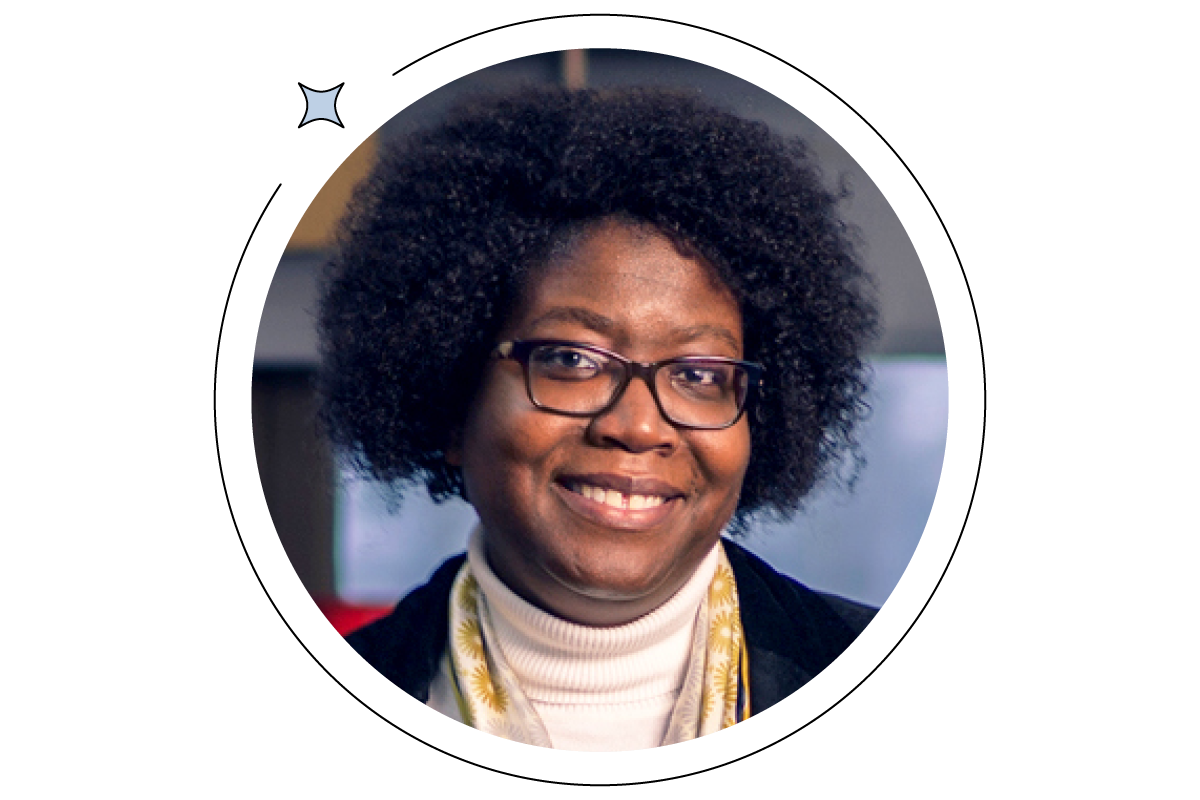
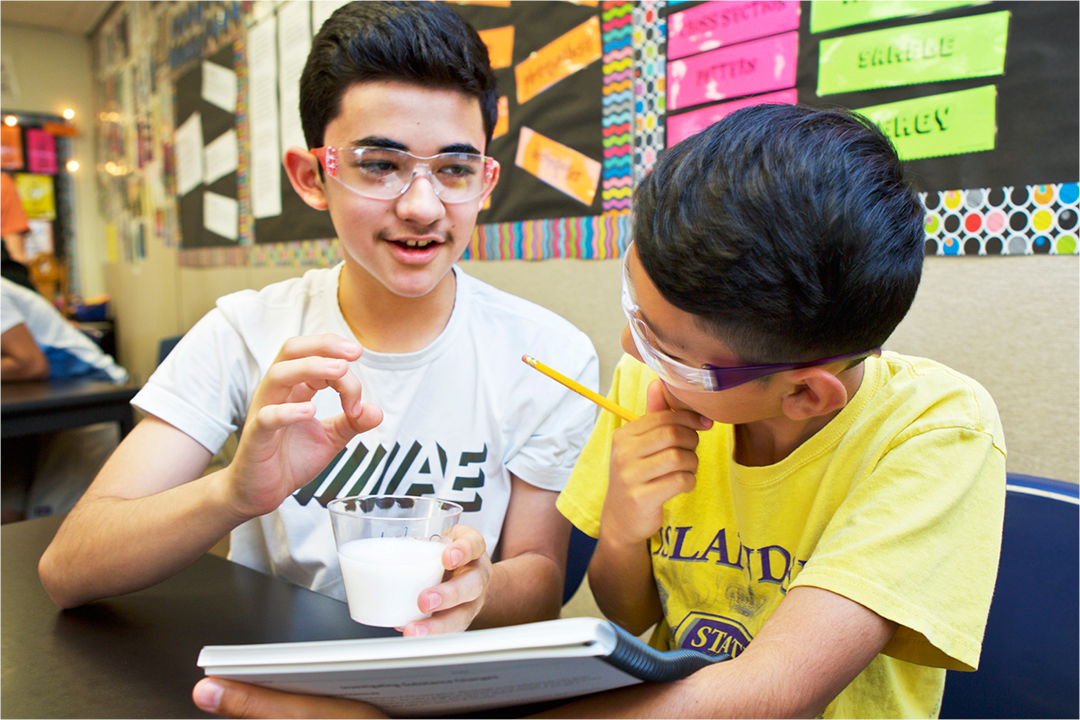
A woman with curly hair and glasses smiles outdoors; a man with short dark hair smiles indoors in front of a blurred math teacher lounge, highlighting valuable math teacher resources.
A graphic with the text "Math Teacher Lounge with Bethany Lockhart Johnson and Dan Meyer" on colored overlapping circles.

About Math Teacher Lounge: The podcast

Math Teacher Lounge is a biweekly podcast created specifically for K–12 math educators. In each episode co-hosts Bethany Lockhart Johnson (@lockhartedu) and Dan Meyer (@ddmeyer) chat with guests, taking a deep dive into the math and educational topics you care about.

Join the Math Teacher Lounge Facebook group to continue the conversation, view exclusive content, interact with fellow educators, participate in giveaways, and more!

S2-03: Building meaningful student connections in the science classroom

Promotional image for a podcast episode titled "Sharita Ware: Building meaningful student connections," featuring Sharita Ware and "Science Connections" branding.

In this episode, Eric Cross sits down with Indiana State Teacher of the Year, Sharita Ware, to talk about how to successfully build meaningful student connections in the science classroom. Sharita shares her journey from a corporate career to becoming Indiana’s 2022 Teacher of the Year, and her passion for creating project-based lessons for her students. Together, Eric and Sharita discuss how educators can teach students to love science content by building strong relationships, adding in other content areas, and supporting students’ imagination. Explore more from Science Connections by visiting our main page.

Download Transcript

Sharita Ware (00:00):
I try to create that equal playing field where there’s nobody’s voice, that’s more important than anyone else’s and try to make them all feel that what they have to say is important.

Eric Cross (00:14):
Welcome to science connections. I’m your host Eric. My guest today is Sheta where Sheta is the 2022 Indiana state teacher of the year. And in her 10 year career, as an engineering and technology teacher, she has dedicated herself to helping students build knowledge and skills for high school and life. Beyond. In this episode, we discuss how she inspires her seventh and eighth grade students to build problem solving and critical thinking skills through hands on real world and collaborative projects. She is as humble as she is knowledgeable and through our conversation, it was easy for me to see why her students feel successful under her guidance. And now please enjoy my conversation with Sharita Ware.

Eric Cross (00:59):
Can I start off by saying congratulations on teacher of the year. Thank you for the state of Indiana. Um, that’s amazing. So I, I, I did watch, uh, your videos, uh, short interviews, and then you spoke, was it Purdue? Yes. You were there. And so, uh, to see if fellow seventh grade, eighth grade science teacher out there being celebrated, like I was so excited, so yeah, I wanted to congratulate you on that and, and just kind of talk to you about like your teaching journey and ask you, uh, maybe just kind of start off with your story about what brought you into, into the classroom, especially the middle school.

Sharita Ware (01:29):
Classroom. So what happened is when I was working in industry as an engineer and when my husband and I got married, we decided that I was gonna, um, stay home with the kids because, you know, we wanted, um, our influence to be greater on our kids than, you know, the people that would be watching them, you know, because they would ultimately spend more time with them than they would with us. And, and so, um, I stayed home and when my youngest was going to be going to kindergarten the next year, I was like, okay, what am I going to do? Cuz I really don’t necessarily feel like I need to stay at home. Mm-hmm <affirmative> but um, I knew going back to industry would be a challenge just because in my field, I, I was traveling a lot before I got married and had kids.

Sharita Ware (02:14):
And so I knew that that wouldn’t really be conducive to again, raising children. So I, I get this email, my inbox for Woodrow Wilson, teaching fellowship at Purdue. And they were just looking for people in stem fields to go into teaching. And I was like, okay. And it was a national search, you know, I filled out the application, we had to go in and do some sample teaching mm-hmm <affirmative>. And I was picked as, as one of the, the teachers to go through the program. And I started off thinking I wanted high school. And the really cool thing about this, uh, program is that we had long observation periods at high school and at middle schools. And so we would go to a school and we’d stay there two or three weeks. And so it, it kind of gave you right. A little bit more insight to what happened on a daily basis. And after those observations, I was like, I like middle school better than I, uh, like high school. And so I just kind of went that direction and you know, the rest is history. So

Eric Cross (03:19):
I feel like our stories are similar because I went into teaching thinking I wanted to do high school because I like the maturity and you a little bit more sophistication, advanced things, but yes, middle school, I felt like I can, I could get them more upstream before and kind of help shape mm-hmm <affirmative> that experience for them? Because I feel like at middle school is really where they kind of decide like what they can do based on their experiences.

Sharita Ware (03:39):
I found in the middle school that the kids, I mean, they just, they clamor around you and they’re like, what are we doing today? You know? And they get so excited and, um, they’re, they’re just, I don’t know, I guess in some ways, just more hungry in the sense of like they’re willingness to, um, now sometimes they’re a little reluctant, but you know, their willingness just to try new things. And I think, um, my students really what I have found over the years that they have found a safe space and I hear the kids, you know, say to me so many times that, you know, it it’s safe. I feel, I feel safe in here. And, and it’s not something that in my mind I’m thinking about, oh, I need to make this a safe place. It’s just, I guess part of just who I am as a person has created this environment of, of safety and, and the kids recognize that, you know, I don’t play favorites. You know, everybody starts out mm-hmm, <affirmative> on equal footing. I, I don’t care what your backstory is. I don’t care how many times I see you in the hallway when I’m walking during my prep. You know, when you hit my room, I’m, I’m gonna treat you the same way on day one, that I treat everybody else.

Eric Cross (04:54):
You really understand how to build culture with, in, with your classroom, with your students. And, and you said they feel safe, but is there anything that you do that someone could like apply? And like you found that you’ve gotten a lot of just relational capital through doing these things, or is it just your personality? Like how, how do you build those connections?

Sharita Ware (05:12):
You know, growing up being a, a very quiet person. I, I think a lot of times my voice was ignored because I was the quiet kid in the back of the room. And oftentimes I became seen or heard because of my work, you know, in the beginning it was kind of like, oh, she’s just this quiet girl in the back of the room. And then, you know, the first essay was due or the first project was due. And then it was like, oh, you know, then you’re the person to be on, you know, people’s teams. And, and that, I don’t know, that always kind of bothered me because, you know, I’m thinking just because you’re not the loudest person in the room doesn’t mean that you don’t have something to say, mm-hmm <affirmative>, you just might not be talking all the time. You know? And, and so for my students, I just, I try to create that equal playing field where there’s, nobody’s voice, that’s more important than anyone else’s and try to make them all feel like that what they have to say, or what they have to contribute is, is enough, is good.

Sharita Ware (06:14):
Enough is important as…

Eric Cross (06:16):
It is, as it is. And there’s probably a lot of things that you do. But in addition to building these relationships, what do you do? Like how do you make your learning fun for students?

Sharita Ware (06:25):
I think, um, I’m also a little bit on the silly side. Um, we do a, a Barbie prosthetic leg project, and this was after trial and error of having the kids make full size prosthetic legs. And I try to make it as real world as possible, but with none of the children being amputee or, you know, having access to someone, it was really hard for them to really visualize what needed to happen. Mm-hmm <affirmative>. And so, um, I found this Barbie that had a prosthetic leg and I was like, well, LA, so I just started collecting Barbies and chopping their legs off <laugh>. And so I have this jar of Barbie legs. And so, and I said, you’re gonna make prosthetic legs. And I lay this jar of legs on the counter and the kids are like, like they gasp and then they crack up and then they’re like, okay, this lady’s crazy. So…

Eric Cross (07:22):
That’s when you take off your scarf and there’s this necklace of just Barbie legs that are just around and you’re like, I’m a middle school teacher and they go, oh, okay. I understand. Yeah. Yeah. It’s totally fine. Is this a lesson that someone that you made up or is it something that you’ve re remixed? Is it something that someone could do if they looked it up anywhere?

Sharita Ware (07:38):
Um, so I think teach engineering has the, the full size leg that the kids make. And that’s where I initially got it from.

Eric Cross (07:47):
Is that the website teach engineering?

Sharita Ware (07:49):
Yes. And, um, I, in fact, I get lots of ideals from there. Um, and I, I always usually tweak them, but it’s, it’s one of those things that kind of gets your brain going. And so it was kind of a mixture of, uh, project lead the way gateway to technology and the teach engineering. And I think the project lead the way had us making like braces, uh, for, um, kids with, um, like cerebral palsy or, or something like that. And the kids did okay with that project. Uh, but I wanted to go just a little bit, uh, deeper with it because part of what I was wanting them to do is that context and that connection, that human connection, because for me, it’s not just enough for them to make a project. Uh, before we start this prosthetic leg, I read them a story out of a Scholastic magazine, and it’s a, a teenage girl that lost her leg in a boating accident.

Sharita Ware (08:42):
And she was super active, um, playing sports and running. And, and so I was, you know, trying to get the kids to, you know, make that connection, someone close to their age. Um, and then how it’s not, it’s, it’s more than about her physical healing. It’s also about her mental healing and how she had to, you know, talk to herself to say that she could, you know, recover and, and come back from this and still go on to do all of the things that she was doing before. Um, and in some ways it’s kind of cool because, um, you know, she has a running prosthetic, she has a, a swimming prosthetic, and she has her every day with the pain and toils prosthetic. So just trying to, you know, help them to see that it’s more than just the, you know, the biomedical mechanical engineering aspect of the project.

Sharita Ware (09:30):
And so they have to design for comfort. They have to design for, um, swelling. And then, um, they also can, if they, if they want to, they don’t have to, if they want to, they can create their own backstory. So when they get there, um, we have a day where they are introduced to their client, so they get to meet their Barbie and, and then they get to decide if they want a backstory and, and then do their research based off of that. So if it’s someone that was a runner, then they can design a prosthetic running blade. So just, they have lots of, uh, flexibility.

Eric Cross (10:04):
The, that aspect of adding the narrative. It does so much for like listening to it on the outside. It one, it adds this humanity to, you know, what can sometimes just feel like it may be cold, logical stem. We’re just, we’re just doing things. We’re fixing things. We’re, you know, we’re discovering things, but really the stem has value when we’re actually applying it to, to, to serve humanity or our ecosystem or whatever it is. There was a, a coding, uh, class I was doing with my students and I showed them this app called be my eyes. And it’s for people who are visually impaired and it pairs them with a volunteer. And when they call, and there’s a whole huge pool of volunteers and I’m one of them. And when my, when it happens in class, I answer and it uses the FaceTime. So the person who’s visually impaired is holding up their phone and you see what they see and you tell them and real time what’s happening.

Sharita Ware (10:54):
Oh, wow. That’s so cool.

Eric Cross (10:56):
These are, these were the things I think for students that the story, the, the human part of it, mm-hmm, <affirmative>, it must bring in so many more students into engagement.

Sharita Ware (11:05):
Yeah. I, I feel like it does because I, I think, um, and, you know, along the journey, they kind of lose, um, they lose sight a little bit because, you know, they get out in the lab and they have access to all of these different materials. And I think, you know, truly making it, you know, project based for me is I try not to control the materials too much. Um, I try not to make it so wide that they just get lost, but I try to throw a few curve balls in there, you know, of, of materials that really don’t make sense to use, but they kind of think they make sense to use. Um, because the, the, the meat of it is that the prosthetic leg is a similar size of the original leg and that the, the knee functions. And so I don’t limit, and I grade them off of efficient use of materials.

Sharita Ware (11:59):
So, and that just throws them off because I think, well, how many Popsicle sticks can I use? And I’m like, you can use as many as you like, but remember, this is a prosthetic leg that, um, your Barbie, which is one six scale, um, is going to be wearing all day. So you could think that a Popsicle stick, if you chose to use a Popsicle stick is kind of like dragging around a two by four <laugh>, you know? So do, is that what you really want to use as your material? And some of the kids really think about it and saying, okay, I’m, I’ve got this aluminum rod, okay. This is probably what I would use for my bone structure, because it’s lightweight, but yet it is supportive. And then sometimes they come up with their own ideas in terms of materials, like one student brought in his, um, 3d doodle pin mm-hmm <affirmative> and he made joints and everything with this pin.

Sharita Ware (12:54):
And I’m, and I had delayed buying one, cause I’m like, I, how do you have control over that thing? Mm-hmm <affirmative> he brought that in and he did probably two or three iterations of it and, and got it to work where even the knee where it bit back 90 degrees, but it stopped. He made like, so that it didn’t bend forward. It blows my mind. I’m like so many UN unexpected things have, have happened just from my, um, teaching style. Now I did have, my first few years, I had a, a teaching coach, um, come in and, um, I asked her to come into my room because I just wanted to make sure because I was not a traditional teacher. She said, this classroom is amazing. And, and I think the one thing that she helped me with was, was purpose and consistency and the sense of making sure that with the standards that all of these cool things and ways of being, um, that I was doing in my classroom, that, that I kept it purposeful and intentional. So many times as educators, I know in having student teachers again, ask yourself the question, what is the big picture I want the kids to take away. And once you ask that question, then everything that you have them do will lead to that big picture. Well, it should lead to that big picture.

Eric Cross (14:22):
So it sounds like they’re, you’re starting with this end goal in mind and then kind of backwards planning to get there. Yeah. Do you think you would’ve been the same type of teacher if you would’ve gone straight from college into the classroom? No. And if, if, no, as you’re shaking your head, what do you think it is about? Cause I’ve been asking myself these questions, like just over the years, what is it about coming from industry and going into the classroom? Do you feel like, is how has that impacted you in how you teach?

Sharita Ware (14:45):
Well, I think it’s twofold cuz I was older. I already had three children. I think the combination for me, I think is I was already a mom and I had worked in industry. So the behavior aspect of kids and, and then having that real world experience. And I, I just feel like whether it’s in the classroom, um, marriage, kids, to me, it’s 90% relationship, you know, and the rest will work itself out. That’s, that’s just my, my take on it. But I, I feel like having kids, so some of the behavioral things I kind of was aware of, you know, and just learned many times just not to react to some of the things that they did.

Eric Cross (15:31):
Which is huge. Right. Especially in middle school is controlling your reactions.

Sharita Ware (15:35):
Yes. Cuz that’s what they want. You know? And, and I had this student last year as well. She’s brilliant. And so if she cannot wrap her mind around the purpose of what you’re doing and, and you’re pushing her to do something that she doesn’t think is necessary, mm-hmm <affirmative>, she kind of has these meltdowns. And, and so we just had this, you know, I don’t know, we just came to this understanding and it, and it works to control the meltdowns. I tried to make sure. And, and I used her as a gauge because I knew she wasn’t, she wasn’t getting upset because she didn’t understand. She didn’t understand the why mm-hmm <affirmative>. And so I felt like if she got the why then so would everyone else. So when she, if she was okay with it, then I was like, okay, then I must have explained it well enough.

Sharita Ware (16:25):
And so in my mind that I really need to make sure they understand the, again, going back to that purpose <laugh> and intention, making sure that that is clear. And then I think that’s what gets lost. Sometimes mm-hmm <affirmative> uh, with us as teachers, we, we know where we want the kids to go and we want us to trust the process, you know, just do it because I said so, but sometimes, you know, empowering your children to under to understand the why, because that again is what allows them to be able to do bigger and greater things on their own. So on that next project comes along. They’re starting to tell you, well, first we need to make sure we understand what, um, we’re being asked to do to do. So we have to define the question. We have to make our driving question that will help us stay focused. And, and you’re just standing up there going, okay, now you don’t need me. I’ll go here and sit down. <laugh> so it’s, uh, it is really cool.

Eric Cross (17:28):
Now I’m thinking about my own kids. Like, do my students know the why behind the lesson we did today? It’s one area of growth that I wanna make sure I do this year with my students. And so I really appreciate that. So the, and you just hit on something that is, has been in the forefront of my mind lately and math and English as you know, tend to be prioritized in schools everywhere because it’s what state tested. And it’s what, you know, this is a whole other conversation, but I’ve been talking to math teachers frequently about one of the challenges that they experience or they’ve been telling me is that math is kind of taught. Like it’s just computational, you’re solving these problems, but it’s really separated from any real life application. A lot of times, you know, it’s pizza or gumballs or, or just fictional scenarios and students don’t perform well many times. And some of the reasons why is cuz just no connection. I don’t want to solve puzzles. Like it’s not my jam. Do you have any just inside or, or perspective on how math is, is taught in maybe a way that you think it would students would benefit more?

Sharita Ware (18:32):
You know how kids learn in elementary school, you’ve got this, the same teacher teaching all of the subjects. And so wouldn’t that be an awesome opportunity for you to have like these, these projects where I feel like you could, a class could legit work on the same project for a whole entire year. And so couldn’t the English be writing your persuasive letter to the mayor, asking him to do this or do that. And the process of doing that they’re, they’re, they’re writing with a purpose with a true purpose. Um, and then when they’re doing math, you know, they want, they want a new neighborhood park. So, you know, well how much is this gonna cost? Well, math, what size is it gonna be math? Let’s see what it looks like, art, you know, you just, you have all of this things. And then of course then science.

Sharita Ware (19:32):
So if it’s on a heel, how can we, you know, deal with erosion? And you know, you can just pull so many different things into that. And so not only are they learning, but they’re narrowed in and focused on a project, they’re, they’re able to dive deep into, you know, learning more of learning, how to express themselves and communicate with real people. So it’s more of taking these compartmentalized learning that we do in middle school and high school. Mm-hmm, <affirmative> where you’re almost learning apprenticeship style. Mm-hmm <affirmative>, you know, you have these master educators and it’s not about them being the best at math or being the best at this or that. Cuz there’s so many tools now that could help you through that. But you’re, you’re giving, you’re teaching them so many life skills and so many ways to think and problem solve that, that we’re just that the kids just don’t have.

Eric Cross (20:27):

I think that that is amazing. And I think that in that situation, what I’m hearing is we’re going deeper, not wider because there are a lot of different concepts that kids are expected to learn. Or I should say there are several concepts that teachers are expected to teach doesn’t necessarily mean that our kids are learning, but we’re teaching them. And this way you’re embedded it into an authentic context. Students are able to go through this cycle just like real life. And then they’re also able to build these kind of really transdisciplinary skills. Not only am I learning the math, the English, the the, but I’m also learning the interpersonal skills of being able to sell myself and present myself in a way that’s winsome. And it’s especially powerful coming from someone from industry. Last question, even just listening to you, I know you, you are this for a lot of people, but I wanted to ask you who inspires you?

Sharita Ware (21:14):
I think there have been lots of people over the years. Like I’m thinking of my shop teacher who has since, uh, the last few years passed away. Um, he was one of those people, I think similar personality to me, super quiet person, but he was always in the background on my journey and his name was Joe Mo and we called her Madam Carol was my 10th grade English lit teacher. And she was the one that started reading my work out in front of the class. And you know, and that just gave me courage, not so much to be seen. Uh, but that the work I was doing was, was good. And, and I think I needed that kind of encouragement. Lastly, my students inspire me because when I look at their faces and see the excitement, I think of those students for the first time and, and, and think about this seventh and eighth graders for the first time feeling like they really have something to say, they really have something to contribute of value. And, and I do it for them. You know, the reason why I am here in this moment is because of them. Um, without them, you wouldn’t be talking to me <laugh>

Eric Cross (22:37):
This is, this is true. This is, this is true. You would probably never say this about yourself, but you just exude a humility and a service in how you talk about your students and yourself. And I just wanna thank you for using your gifts, but I don’t wanna just call them gifts because it makes it sound like you didn’t earn ’em and your skills that you’ve earned and worked very hard to acquire over the years to go back into the classroom and leave industry, cuz you, you could have gone back to industry too, but you decided not to. And you could have worked in the industry and your hours were a little different pay is a little different, but you came back to serve the kids of Indiana and because of you and because of that choice, those students have a brighter future and believe in themselves and they’re finding their voice. And I want to thank you for that and for representing all of us stem teachers who are in middle school and being that leader. So thank you for that and thank you for being on the podcast.

Sharita Ware (23:24):
You’re welcome. Thank you for having me.

Eric Cross (23:28):
Thank so much for listening. Now we wanna hear more about you in the amazing work you’re doing for students. Do you have any educators who inspire you? You can nominate them as a future guest on science connections by emailing stem, amplifycom.wpengine.com. That’s ST E M amplifycom.wpengine.com. Make sure to click, subscribe wherever you listen to podcasts and join our Facebook group science connections, the community until next time.

Stay connected!

Join our community and get new episodes every other Wednesday!

We’ll also share new and exciting free resources for your classroom every month!

What Sharita Ware says about science

“Sometimes, empowering your students to understand the why is what allows them to be able to do bigger and greater things on their own.”

– Sharita Ware

Engineer and Technology Teacher, 2020 Indiana Teacher of the Year

Meet the guest

Sharita Ware, a Purdue University graduate, is in her 10th year of teaching engineering and technology education to middle school students in the Tippecanoe School Corporation. Ware challenges her students with real-world, problem-based design scenarios that will help them contribute to global technology and integrated STEM. Follow her on Twitter and Instagram.

A woman with curly black hair, glasses, and a white turtleneck smiles at the camera.

About Science Connections

Welcome to Science Connections! Science is changing before our eyes, now more than ever. So…how do we help kids figure that out? We will bring on educators, scientists, and more to discuss the importance of high-quality science instruction. In this episode, hear from our host Eric Cross about his work engaging students as a K-8 science teacher. Listen here!

S3 – 06. Bethany and Dan take on Twitter!

Promotional graphic for Math Teacher Lounge Season 3, Episode 6, featuring Bethany Lockhart Johnson, Educator, and Dan Meyer, Director of Research at Desmos.

In this episode, Bethany and Dan take a look at several tweets that caught the most fire on Twitter during the 2021-2022 school year. The pair answer questions about viral teaching methods, the best teaching advice you can give in three words, and if students should use pencils or pens in class. Join them as they take on those questions and several others in a fast-paced episode.

Explore more from Math Teacher Lounge by visiting our main page

Download Transcript

Dan Meyer (00:02):

Hey folks. Welcome back to the Math Teacher Lounge. I’m your co-host, Dan Meyer.

Bethany Lockhart Johnson (00:07):

And I am Bethany Lockhart Johnson. And I’m your co-host, Dan! Hi!

Dan Meyer (00:12):

We’re co-hosts! Hey! Great to see you.

Bethany Lockhart Johnson (00:13):

Dan, this is the last episode of Season 3. Three seasons!

Dan Meyer (00:19):

It’s gotta have a cliffhanger. What will the cliffhanger be? You know?

Bethany Lockhart Johnson (00:22):

The cliffhanger is that we love having guests! It’s one of our most favorite things, because selfishly, we love to talk to all of these amazing folks who are doing this interesting research and thinking about amazing things. But for this last episode, it’s just you and I, Dan. Cliffhanger!

Dan Meyer (00:40):

Yeah. I like this. I like this. So the cliffhanger was last episode, and people are all like, “So who’s the last guest gonna be of the season before we roll out into summer?” And yes, as Bethany said, we love all the fascinating guests we’ve had on throughout these last few seasons. And we realized…who is more fascinating to each other than both of us? You know, let’s talk to each other about things, right? <Laughs> You get that! You get that! Or am I alone here in this? We had this idea about what we should talk about here, and that’s this: I am on Twitter a lot. I’m @DDMeyer on Twitter; throw me a follow; might follow back; who knows? I don’t tweet much. Bethany, what’s your handle on Twitter? Let ’em know.

Bethany Lockhart Johnson (01:22):

I’m @LockhartEdu, and I was much more active pre-mamahood. But I’m still up in there. Go ahead.

Dan Meyer (01:30):

Yep. In there. Yeah, great. So I’ve been keeping track of the hottest conversations in math education Twitter, the conversations that the most people who kind of describe themselves as math teachers in their bios and whatnot have been replying to. We’ve got some little things working in the background, keeping track of this sort of thing. And so we are gonna bring you folks some of those extremely hot conversations, and even better than the questions—which we hope you’ll reply to and tag us in your replies—even more than those questions, we’ll bring you our answers—our answers!—to those questions. Can you believe that? We’ll fully settle these questions! Won’t we, Bethany? My gosh, won’t we?

Bethany Lockhart Johnson (02:15):

Jeez Louise! No! Dan Meyer, the point is not our final word on it! The point is this episode, we’re furthering the conversation. We wanna hear from listeners about what do you think?

Dan Meyer (02:25):

Right. You’re right. You all need someone in your life like Bethany who will help you become the best version of yourself. So here’s the deal. We have several questions in a few different categories. We’re gonna bust through some quick ones, pretty quick. And, uh, there’s some meaty ones as well. Let’s get into it! The first questions come to you all, and us, courtesy of MTL guest Howie Hua, who has a renowned knack for just creating math memes, but also conversation starters that really capture the curiosity and answers of of a grateful nation. So Howie’s first question, which I’ll pose to Bethany, is, “What’s your favorite number?” Bethany? And why is it your favorite number?

Bethany Lockhart Johnson (03:14):

Oh, I love it. OK. Well, the first thing that came to my mind is 12. ‘Cause It’s a highly divisible number. I mean, 2, 6, 3, 4—I love it. And it coincides with the day and month of my birth. Which, like, the double-digit…come on, 12, 12, 12, 12. I dunno, am I giving away, like, my bank security code <laugh> or anything by saying that?

Dan Meyer (03:41):

Yeah. What’s your favorite PIN?

Bethany Lockhart Johnson (03:43):

Let me change my PIN. Yeah, it’s just such a happy, happy number. Well, 12 is, you know, 10 and 2. Two more. Anyway. Love it. What about you, Dan? What’s your favorite number and why?

Dan Meyer (03:55):

I’m into it. I’m into it. I think I would choose 16. Because it’s the first number for me when it was like, “Oh, you can keep on making numbers forever!” Where I’m like, OK, 2times 2 is 4. Great. That’s kind of an elemental expression in mathematics. Four times 2 is 8. OK. But then, 8 times 2 is 16, and it’s like, “Oh, you can just keep doubling that thing over and over and over again!” And I can recall feeling pretty excited that numbers are just like, out there for the finding. For the taking. Cool stuff.

Bethany Lockhart Johnson (04:33):

I’m sorry. Wait, I have to interrupt. You went 2 times 4 is 8 and you didn’t go 4 times 4 is 16? You went 8 times 2 is 16? You wanted to keep the 2 the same?

Dan Meyer (04:49):

Yup. Yup. You can keep on doubling. You can keep on doubling numbers and it just keeps on going.

Bethany Lockhart Johnson (04:53):

More evidence that our brain works very differently.

Dan Meyer (04:56):

We learn more about each other…let me keep this rolling with Howie questions. OK? Howie says, “If you could co-teach with one teacher from Twitter, who would you choose?”

Bethany Lockhart Johnson (05:06):

Oh, oh, it has to be a teacher?

Dan Meyer (05:11):

Or anybody, I guess. I mean, like, I know you love Oprah.

Bethany Lockhart Johnson (05:15):

Can I co-teach with Oprah?

Dan Meyer (05:16):

Yup, yeah, so there we are. <Laugh> Yup. OK. Fair enough. We have to work Oprah into every single episode.

Bethany Lockhart Johnson (05:23):

I’d just love to sit and like, we’d read together, we’d read to the students, and then we’d talk…I mean, obviously it’d be Oprah. But if we’re thinking more of like MTBoS, like math Twitter blogosphere-land, I suppose the person I would wanna co-teach with honestly would probably be Allison Hintz. One of our former guests as well. Her book, Mathematizing Children’s Literature, with Antony Smith, that book—I just love the idea of sitting and doing a read-aloud and then diving into some juicy math that’s inspired by what comes out of that read-aloud. So yes, that’s who I pick. Allison! Let’s co-teach!

Dan Meyer (06:00):

<Laugh> Shout-out to Allison.

Bethany Lockhart Johnson (06:01):

What about you?

Dan Meyer (06:03):

I would choose MTL guest Idil Abdulkadir—because, and this relates to Allison and also Elham Kazemi—they talked about, in our episode about teacher time-outs. And I’m choosing someone who I think is—like I’ve never seen Idil teach, but I work with Idil at Desmos and think she’s fantastic. But what I really want in a co-teacher is someone that I can say, “Whoa, time out, do you see what’s going on here? This is really interesting. What should we do next about this?” And have a little strategy sesh in front of the kids and no one gets freaked out by that. And I think that that’d be a pile of fun. Idil seems like she’d be receptive to that kind of interaction, teacher to teacher. So that’s my vote right there.

Bethany Lockhart Johnson (06:48):

Opportunity for you to grow your own practice, Dan.

Dan Meyer (06:52):

Yeah, yeah, exactly. 100%.

Bethany Lockhart Johnson (06:56):

So Dan, I actually have a question for you from Howie. If we’re on the Howie tweet train, I have one from Howie too.

Dan Meyer (07:04):

Howie had some fire tweets, some fire tweets this current year. Yep.

Bethany Lockhart Johnson (07:08):

Dan, I wanna know: Do you prefer doing math in pen or pencil?

Dan Meyer (07:16):

Ooh, yeah. Oh, I see that Howie says, “I don’t mean to start any drama, BUT,” and then asks the question–

Bethany Lockhart Johnson (07:23):

But!

Dan Meyer (07:24):

I think that Howie lives for drama. I think he knows he’s messy. He lives for drama. He knows what he’s doing this with this question here. He knows.

Bethany Lockhart Johnson (07:32):

DRAAAAMAAAA!

Dan Meyer (07:32):

He knows what he’s doing. Yup. So I would just say it depends. Is that cheating? Like if I’m doing math to learn, or if we are learning in that process, then I want to use pen, actually. I wanna see the tracks of the thinking. And if we’re doing it for presentation, like if I’m presenting something, I wanna…I guess that’s an area where I’d be fine to not erase things. I don’t wanna prep it so it’s, you know…I guess you could use pen for presentation also. Just pen. Period. But I wanna see the tracks of the thinking if we’re doing some learning versus presentation. What about you?

Bethany Lockhart Johnson (08:09):

Well, I heard the voice in my head telling one of my kindergartners, “No, you cannot do that in sparkly pen. You need to do it in pencil.” And I was like, “Wait, whose voice is that?” It was one of my math teachers telling me I couldn’t do it in pen! Why couldn’t this kid do it in pen? Sure! Do it in a sparkly pen! So I wanna say do it in pen. And since usually pen is what I have around…I mean, I do crosswords in pen, Dan.

Dan Meyer (08:36):

Wow, wow. With a piece of paper and math, you have lots of room to re-revise and cross off…but those little, little boxes on the crossword, that says a lot about your commitment to pen.

Bethany Lockhart Johnson (08:46):

I got really good at making an A into an H or a P or whatever we need. So I would say, “Hey, if you’re in the room with your kiddos and you’re doing math, if somebody wants to do pen, let them do pen.” But I do know that I’ve seen teachers say you need to do pen so that I can see all of your thinking. So I think I hear what you’re saying. But do you think it should be like a classroom rule or something?

Dan Meyer (09:13):

Oh, no, no, no. I mean, I’m gonna ask you like, “How’d you get to this destination?” And I wanna know process somehow, and I think you’ll get tired of having to explain it verbally rather than just, like, showing. Just don’t erase stuff. Don’t scratch stuff off. Let’s let’s see how you’re getting there. That is what I’m into.

Bethany Lockhart Johnson (09:30):

Thanks, Howie, for that trio of thought-provoking tweets, because I genuinely wanted to know what Dan thought and what our listeners think. I mean, Dan, I gotta say: Howie, you say you don’t wanna cause drama, but I gotta say I’m with Dan on that—

Dan Meyer (09:50):

Got the gift. Got the gift for drama. We’re still friends though. So I’m happy about that. Our next section, I got a few more questions queued up here and these ones relate to advice for educators, advice for yourself. Good advice, bad advice, that kind of thing. So let’s jump in. I would love to know—this one’s from Pernille Ripp—I’m very curious, Bethany, what is the worst teaching advice you have gotten in your life, ever?

Bethany Lockhart Johnson (10:19):

<Laugh> Ooh. OK. Um, worst teaching advice was: “That’s OK, just move on anyway.” And that was in terms of pacing. It was like, students needed to do a deeper dive and the teacher who I was chatting with said, “No, no, it’s fine; it’s fine; just move on. Just move on to the next chapter.” That was probably the worst advice, because no, I don’t think that’s what I should have done at all! <Laugh>

Dan Meyer (10:48):

Right.

Bethany Lockhart Johnson (10:48):

But I was a first-year teacher and I was trying to figure it out. And I learned that that was not good advice. And I understand the pressure of pacing. But it was totally antithetical to the type of listening to my students that I want to do in my craft. And this teacher meant well, but that was not good advice, teacher! <Laugh> What about you, Dan? What is the worst teaching advice?

Dan Meyer (11:13):

I dig that. That feels similar to one of the replies to Pernille here. Frances Klein says, “Never let them know you’ve made a mistake” being particularly bad advice. You know, just this like idea of like moving along, covering your tracks, not backtracking or admitting mistakes, those all feel kind of a piece. The worst advice I think I’ve ever received, and I wasn’t given this often, but it’s echoed by a lot of the commenters here on this tweet, which is “Don’t smile until X, Y, or Z,” where X, Y, and Z are like Christmas, October, December, January. Just the idea that you’ve gotta develop—

Bethany Lockhart Johnson (11:54):

Wait, what?

Dan Meyer (11:55):

<Laugh> Did you never hear this from anybody? Don’t smile until Christmas? Perhaps this is more—

Bethany Lockhart Johnson (11:59):

I’m a kindergarten teacher! Can you imagine? If I don’t smile the second they walk in? The tears?! The parents’ tears?! The kids’ tears?! If I’m just like, stoic?

Dan Meyer (12:07):

Yeah. Well.

Bethany Lockhart Johnson (12:08):

So explain it to me.

Dan Meyer (12:10):

Well, the idea is, is that, you know, for older kids, they’re scoping you, they’re clocking you for weakness, they’re looking at you, they’re looking to take advantage. And so “don’t smile until Christmas” is like, hey, you can always relax. You can always relax your discipline, but you can’t UN-relax it if you start out, you know, Mr. Happy Pants Meyer. Which—

Bethany Lockhart Johnson (12:33):

Smile perceived as weakness.

Dan Meyer (12:36):

Yeah. Very obviously poor advice. Eventually you come to realize that like having a rapport and a relationship that is trusting and warm and demanding, that has high expectations, that’s the best kind of classroom management. Not some kind of persona built around intimidation or stoicism, that kinda thing. So, terrible, terrible advice!

Bethany Lockhart Johnson (13:01):

I feel like I did have a few of those math classes. Yeah.

Dan Meyer (13:04):

Yeah, exactly. <Laugh> You loved them, right? They were like your favorite math classes. It was a blast, right?

Bethany Lockhart Johnson (13:11):

<Laugh> So we have to ask the opposite. Thank you, Daniel Willingham, who said, “What’s the best advice you got?” But hold on, Dan, he didn’t just want the best advice. He wanted the best advice in three words.

Dan Meyer (13:26):

Oh yeah. He doesn’t, he doesn’t want a book or dissertation or even a blog post or even a tweet. He wants just three words.

Bethany Lockhart Johnson (13:32):

I think maybe that might have been to me. <Laugh>

Dan Meyer (13:34):

This is someone who’s doesn’t have much time for this advice, wants it distilled down. I’m just obviously stalling here as I try to think about this. I don’t know, there’s just like so much nuance lost here. I would say, listen to students, listen to students. I can’t say more that, I guess. I guess I’m done. I can’t say more than that there. But you’re in a bad place if you’re not listening carefully to students. How about you?

Bethany Lockhart Johnson (14:04):

  1. Mine is “Ask…lots…questions.”

Dan Meyer (14:11):

Nice. ‘Cause I filled in the word! I filled in the word! I was able to kinda infer that. I did that. I got that.

Bethany Lockhart Johnson (14:17):

Wait, wait, wait, wait! I could have said many! Wait, I could have said “Ask many questions.”

Dan Meyer (14:22):

Strong, strong.

Bethany Lockhart Johnson (14:25):

So yeah. You know, no isolation, like don’t put yourself in a bubble. Ask, not just, not just your students, but the teachers! Ask a lot of questions. You don’t have to have it all figured out.

Dan Meyer (14:34):

Into it. Very much into it.

Bethany Lockhart Johnson (14:37):

Thanks. Daniel. Thanks, Pernille.

Dan Meyer (14:40):

Yeah. Daniel and Pernille, Both great questions there about advice, best and worst. Another fire tweet popped up earlier this year from Dr. Khristopher Childs, which was “Name one thing every educator should stop doing.”

Bethany Lockhart Johnson (14:57):

Oh, I don’t know. This kind of ties into my best advice about asking questions.

Dan Meyer (15:03):

Stop not asking questions?

Bethany Lockhart Johnson (15:06):

<Laugh> Avoid the isolation. I really love this idea of when we can, popping into each others’ classrooms, co-teaching, building this collaborative nature. Elham Kazemi, in our interview, talked about this idea of, like you said, the teacher time-outs, learning from each other. So I feel like if we could stop isolating ourself…and I don’t mean at lunch—sometimes you need to not be in the teacher lounge at lunch. Like if you need a minute, take the minute! But in general, as a practice, how can we not be isolated and instead be learning with, and from, each other? How can we stop the isolation? That’s what I would hope every educator would stop doing. What about you, Dan?

Dan Meyer (15:54):

I think that educators should…this is gonna require a little bit of elaboration. I think educators should stop taking responsibility for things that are not in their zone of influence. I think that as a society we are asking teachers to do more and more, to become more and more of a central fixture holding together with chewing gum and twine all the various parts of a student’s life. From their health, their fitness, emotional health, that we feed students at school. It becomes very tempting, I think, there’s a lot of pressures to blame outcomes, disparate and unjust outcomes later on in life, on teachers. And teachers should just flatly refuse. And to yeah, understand what the job has been set up to do. What it’s good for. And do that with excellence and intent and a lot of effort. And then not take responsibility for the rest of it.

Bethany Lockhart Johnson (16:53):

If I asked five different people about the definition of what a teacher should be doing, I would get five different answers. So I think it’s really interesting that you say that because yeah, many, many hats, which I think, yes, can lead to burnout. Can lead to all sorts of things. We’re asking schools to be all things to all, all people. Interesting. I’m gonna think about that more. I need to hear folks’ response on that, Dan.

Dan Meyer (17:18):

Mm-Hmm. I’m curious too. I mean, yeah, there are definitely things that are in teachers’ responsibility and some that are not. That’s a tough one.

Bethany Lockhart Johnson (17:26):

OK, for help, name an example of each. And what’s something that you think every teacher should not and should be doing. ‘Cause I feel like my brain goes to some things like, you know, I had teachers who were saying, “Well, I don’t wanna have my kids have to have breakfast in my classroom in the morning. That shouldn’t be my responsibility to serve breakfast in the morning.” But I’m like, “But then your kids are eating and they’re gonna be able to learn and be more focused.” Should that be the teacher’s responsibility? I’m not saying it necessarily should, but I’m saying…I don’t know. It gets murky for me.

Dan Meyer (18:06):

Yeah, for sure. I mean, I think that we should, as a country, have a really generous social welfare net so that everyone has food at home. Where a school is not the place where some students have to go to in order to receive nutrition and nourishment. That seems sad to me. And uncommon in developed nations. I think that teachers should watch out for, should be responsible for, the mathematical development of the students they teach, up to a point, they should be responsible for learning math and creating relationships in their classes. I don’t think that teachers should accept responsibility for larger kinds of outcomes, like the health of a democracy or international competition, who goes to the moon first. That kind of thing has historically been placed at the feet of teachers. And it’s tempting when you’re a teacher, I think, to take on that responsibility because it kind of develops your social importance. And I just say, we should say no to that. And get compensation, not in terms of social importance, but rather like in spendable dollars and monies.

Bethany Lockhart Johnson (19:10):

I’m learning more about you, Dan. And you know, this is what I’ve gotten from that answer: If you’re gonna dream, dream big. Right?

Dan Meyer (19:17):

Is that what you got from that? I don’t know. I think I’m trying to dream realistically.

Bethany Lockhart Johnson (19:23):

No, like if we’re gonna say, “Maybe teachers shouldn’t be responsible for serving breakfast in the morning,” well, because we want every child to have access to nutritious and filling food at home and time to eat it in the morning, right? It’s bigger than just, “I don’t want the teacher to have to do this.” So we’re dreaming big. We’re saying this should be the LEAST that students have access to, right?

Dan Meyer (19:53):

Yeah. Yeah. I’m here now. I’m with you. I like that dream. Where we take care of folks in their lives outside of schools. So schools don’t have to be the one linchpin for every kind of social outcome. Like currently a lot of them run through a school ’cause we don’t do a good job of setting up other ways to meet those needs. And we should.

Bethany Lockhart Johnson (20:16):

And we’re also recording this in, what, two weeks, a week, after a tragedy where students and teachers were killed in the classroom. And I think both of us are taking some deep breaths and recognizing that there’s a lot of debate that is happening about what teacher’s role should be in preventing this in the future. And I don’t know if you’ve done drills in your classroom that are supposed to help mitigate disaster, but you know—collective deep breaths— <laugh> is where we’re at right now.

Dan Meyer (20:52):

Yep. The idea of “we should arm teachers” is another example of no, we should not do that. We should solve the tendency towards violence outside of the classroom so that teachers and students can teach and learn. That sounds awesome to me.

Bethany Lockhart Johnson (21:06):

Collective deep breath. Whew. OK. So what else you got for me, Dan?

Bethany Lockhart Johnson (21:33):

Ooh. So I feel like I’ve heard that in many teaching PDs. “I Do, you do, we do.” Actually I feel like I’ve seen like more “I do, we do, you do.” Like graduated release. I do it, then we’ll do it a little bit together, and then now you have permission to do it. And I feel like in directed draw, that’s a hundred percent true. Like I’m gonna show you this and then you draw it. And then you cut here and then you do it. If we’re trying to create this, like I’m teaching this new art technique. But in mathematics, I feel like that’s really not what I want my classroom to look like. I want to support my students and set them up for sense-making, and then I want them to try it out and I don’t want them to solve it the way it first comes to mind for me. I wanna see how they make sense of it and how they solve it. And then I want us to share it with each other so we can grow together. So I think time and place for “I do, you do, we do,” or “I do, we do, you do.” Or shoo-be-doo-be-doo-be. Yeah. You?

Dan Meyer (22:44):

I’ve got nothing. I have nothing to add. I thought that was just an excellent summary of a classroom I would love to be a part in, love to teach. I think it’s a certain tool in the toolbox that I think is overused. But it’s also a tool that can be useful in the case of certain kinds of operations. There are some operations that do benefit from “let me just show you how, like one way you might do this.” I don’t know. I’m like helping my kid whack a nail into a board and there’s a moment where it’s like, “Hey, actually, lemme just show you one way you can do this,” and do it, and then that’s helpful in some moments. But for so much of math, a lot of math does not relate to the operational kinds of fluency. And in those instances, it’s a little bit…it’s not a useful tool, I don’t think, for those kinds of skills and ideas.

Bethany Lockhart Johnson (23:34):

I’m thinking of tool talks in my classroom. So in kindergarten, many of the tools that we use in math and just in class in general, are new to the students. And if I tell them, this is exactly how you should use this tool, then I feel like I’m taking a lot of the sense-making away from them. But if I introduce the tool, show them how to use the tool safely, show them this is not a safe way to use the tool, chewing on this is not safe. That’s not how we use this tool. This is how we take care of it, et cetera. But then support different modes of using the tool that are gonna help them use it to solve problems and make sense, I think…but I guess—Dan, have you heard “I do, you do, we do,” or is it “I do, we do, you do”?

Dan Meyer (24:22):

I’m with you. And I think that it got clarified post-tweet. But yeah, it typically is “I do, we do, you do,” the gradual release of responsibility it’s often called. And I, I have heard people do what you described, which is…what is it? It’s “You do, we do, I do”? Like an inversion of that? Like have people do a thing that I can do that’s not too, too abstract for them, and then like “We all do something together, and then I’ll offer a summary of what we learned,” is one way that goes. I like that tool as well.

Bethany Lockhart Johnson (24:53):

I think particularly, at least I’ve seen in elementary classrooms, there’s sometimes this fear of letting students just try it out before I’ve really showed them, “but this is how it has to be.” And what I am most excited about is supporting students and creating a classroom environment where students don’t need my permission or need my direct “this is the only way to do it.” Instead, it’s like, yes, there’s lots of things we model. But there’s also like, “Hey, what do you think? How do you think this should be used?” And the joy of that exploration.

Dan Meyer (25:30):

Yeah. There’s a feeling of efficiency that comes from “I do, we do, you do,” for some kinds of math, but it’s undercut in my experience by what it cultivates in the students, which is “I’ve gotta wait until the teacher does before I can do anything.” So it pays off real diminishing returns over time. And it’s, just for me, an exhausting way to teach. Always being the bottleneck for new learning is a total drag.

Bethany Lockhart Johnson (25:55):

Ooh, what a great way to describe it. You do not wanna be the bottleneck. You want to be…what’s the other thing? The facilitator? What’s the opposite of a bottleneck? The flowing river? The…The…Help me!

Dan Meyer (26:10):

Hit us up in the replies. I dunno. The opposite of a bottleneck. That’s what you wanna…you wanna not be the opposite? No, you want, yeah. We got this here. We’ll figure it out. We’ll get back to you. <Laugh> OK. Well, folks, those were a few of this year’s fire tweets. It’s been fantastic chatting with you—

Bethany Lockhart Johnson (26:29):

Dan.

Dan Meyer (26:29):

—Bethany, About all those—

Bethany Lockhart Johnson (26:32):

Dan. You know, my favorite thing to do is interrupting you, Dan. I have to interrupt you because we can’t end fire tweets, Dan, without including a tweet from you.

Dan Meyer (26:43):

Oh, that’s true. I do have my moments. Yeah, we should. We really should. <Laugh> Do you have one in mind?

Bethany Lockhart Johnson (26:50):

No. Dan. Yes. I loved…you tweeted recently, “How many years have you been teaching?” Which, OK. “What Has been like the most influential? Like, what, OK, blah, blah, blah.” <blathering noises> You tweeted, “How many years have you been teaching? And at this point, what has most influenced how you teach?” And you gave some ideas: A methods course, PD sessions, curriculum, TV and movies, et cetera, et cetera. And I love that you put that out there because this episode is coming out as we’re wrapping up another school year. And it also got me thinking about summer and what teachers sometimes do during the summer, but what we might need to do this summer for self-care. But I’m really curious. I love that tweet. And I’m curious, Dan, what did folks say was the thing that had most influenced their teaching and what’s most influenced your teaching?

Dan Meyer (27:49):

Ooh, yeah. People’s responses to this one were really fantastic. I came into this, I was flying to the Association of Mathematics Teacher Educators conference. And I just found myself wondering, so, the pre-service year, the one year of, like, you’re learning how to teach, is how we did it in California. Like how much of that has still infused my practice? And in what ways? I don’t think I think about that stuff consciously, but I think that did like set me up with a lot of images that I would be unpacking for going on two decades now working in education. I think conversations with people, I think observing classes, I don’t think that like the one-day PDs, the one-day development days throughout the year, four times per year, I don’t think those stuck to me much. I think that this summer, I have learned so much, just an embarrassment of riches, from non-educational sources. From other disciplines. From storytelling, for instance. From how people have constructed movies I like. I am proud of the way…one of the aspects of my character that I’m proud of—it takes a lot to admit this, as I’m sure you understand, Bethany—but to integrate lots of wacky stuff and pick from it and use that to affect my practice and teaching has been really positive. So for this summer, I hope that people read a good beach book and just kinda let your teaching mind rest a little bit. And in doing so, create some openings for new ideas about education from other parts of the world. Kids! Having kids has been helpful. I don’t know! Just everything! It’s such a big job, education. Everything has so helpful. What about you? What’s an influence on your practice that might surprise me or other folks out there in MTL land?

Bethany Lockhart Johnson (29:52):

Well, I don’t know about surprise. I mean, I definitely feel similarly, like methods courses absolutely impacted my teaching. But I feel like opportunities where I was able to observe other teachers and where I was able to have conversations with folks about their practice, that has deeply impacted me. And books I’ve read. I mean, honestly, I’ve learned so much from sharing with other teachers. Like, for example, maybe I’ll bring student work and we’ll talk about it. And we kind of create this conversation together about how we wanna come back to the students based on the work we see. Those type of moments where we’re collaborating and we’re bringing multiple perspectives to the table, that I think, has really often shifted me out of my first initial reaction or what I thought I was going to do in the classroom the next day. So that continues to surprise and delight me. And thinking about this summer, I think there’s a lot of creativity and joy that can come out of the marination process, when you’re just kind of sitting back and healing yourself, whether through sleep or sunshine or time with friends and family or whatever that looks like for you. I think there’s a lot of creativity that can come from that place of fertile, you know, wellness. I never think of that as wasted time. I think of that as getting the soil ready for all that’s gonna come in the fall. And that being said, I also think it could be a fun time to dip your toes into something that you are excited to read, that you might not have a chance to read during the school year that could be teaching-related. So it’s like very low pressure, like, “Oh, I’ve really wanted to read more by this author. I’ve wanted to read this article. I’ve wanted to dip into this topic.” And not with a pressure, but just with a curiosity. And, yeah, I think so often we as teachers love learning, and to give yourself space to learn in whatever that looks like can be a real gift.

Dan Meyer (32:09):

Yes. And if you need book recommendations, hit the MTL back catalog of episodes. Loads of folks that we interviewed have real good books out.

Bethany Lockhart Johnson (32:16):

Yes!

Dan Meyer (32:16):

Think about it. Think about it.

Bethany Lockhart Johnson (32:22):

One quick recommendation: Again, gotta plug Antony Smith and Allison Hintz’s book. I read Mathematizing Children’s Literature before we did the interview, but this summer I wanna read all the children’s books that they mention. I just wanna go to the library and read all those children’s books. I wanna read them to my son. I wanna read ’em to myself. So, you know, diving into some good YA, children’s books, just, like, TLC. Dan, thank you for such a rich season and a chance to have so many interesting conversations. It is genuinely a joy to learn with and from you.

Dan Meyer (33:00):

Likewise. And always hope to see you folks on Twitter now and then. Let us know what you’re up to this summer at MTLShow on Twitter or in our Facebook group, Math Teacher Lounge. We’ll be there tuning in now and then. It’s been a treat interacting with you folks over this last season. Take care and until the new season, so long.

Stay connected!

Join our community and get new episodes every other Tuesday!

We’ll also share new and exciting free resources for your classroom every month.

What Bethany Lockhart Johnson says about math

“I’ve learned so much from sharing with other teachers… Those type of moments where we’re collaborating and bringing multiple perspectives to the table, I think, has really often shifted me out of my first initial reaction or what I thought I was going to do in the classroom the next day.”

– Bethany Lockhart Johnson

Meet the guests

Dan Meyer

Dan Meyer taught high school math to students who didn’t like high school math. He has advocated for better math instruction on CNN, Good Morning America, Everyday With Rachel Ray, and TED.com. He earned his doctorate from Stanford University in math education and is currently the Dean of Research at Desmos, where he explores the future of math, technology, and learning. Dan has worked with teachers internationally and in all 50 United States and was named one of Tech & Learning’s 30 Leaders of the Future.

Bethany Lockhart Johnson

Bethany Lockhart Johnson is an elementary school educator and author. Prior to serving as a multiple-subject teacher, she taught theater and dance and now loves incorporating movement and creative play into her classroom. Bethany is committed to helping students find joy in discovering their identities as mathematicians. In addition to her role as a full-time classroom teacher, Bethany is a Student Achievement Partners California Core Advocate and is active in national and local mathematics organizations. Bethany is a member of the Illustrative Mathematics Elementary Curriculum Steering Committee and serves as a consultant, creating materials to support families during distance learning.

A woman with curly hair and glasses smiles outdoors; a man with short dark hair smiles indoors in front of a blurred math teacher lounge, highlighting valuable math teacher resources.
A graphic with the text "Math Teacher Lounge with Bethany Lockhart Johnson and Dan Meyer" on colored overlapping circles.

About Math Teacher Lounge: The podcast

Math Teacher Lounge is a biweekly podcast created specifically for K–12 math educators. In each episode co-hosts Bethany Lockhart Johnson (@lockhartedu) and Dan Meyer (@ddmeyer) chat with guests, taking a deep dive into the math and educational topics you care about.

Join the Math Teacher Lounge Facebook group to continue the conversation, view exclusive content, interact with fellow educators, participate in giveaways, and more!